Students learn the specific conditions (1 syllable, 1 vowel, 1 consonant) that require doubling the final consonant before adding a vowel suffix.
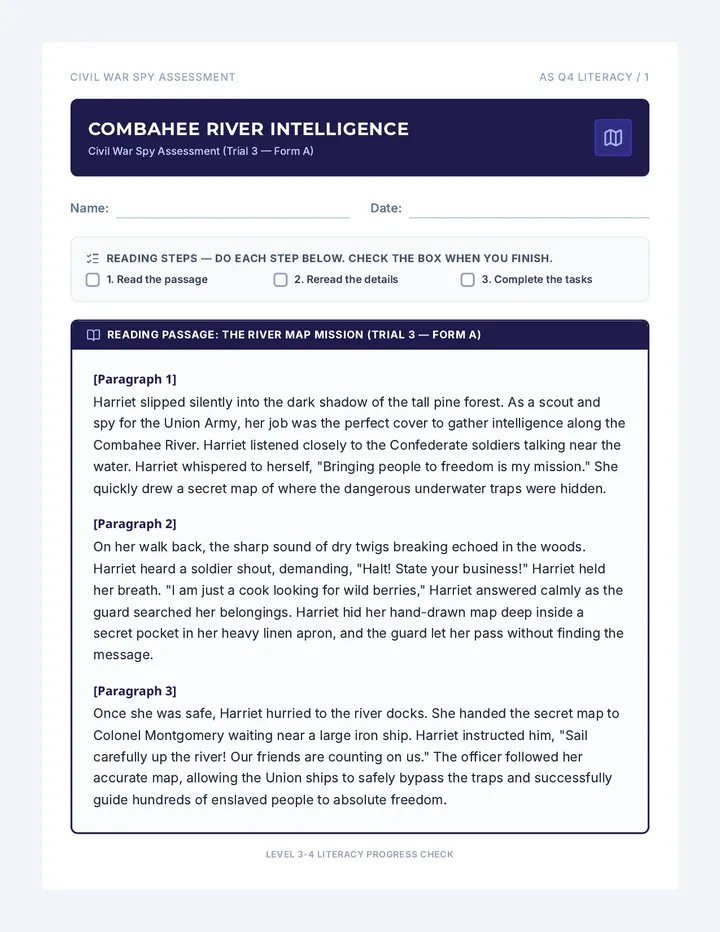
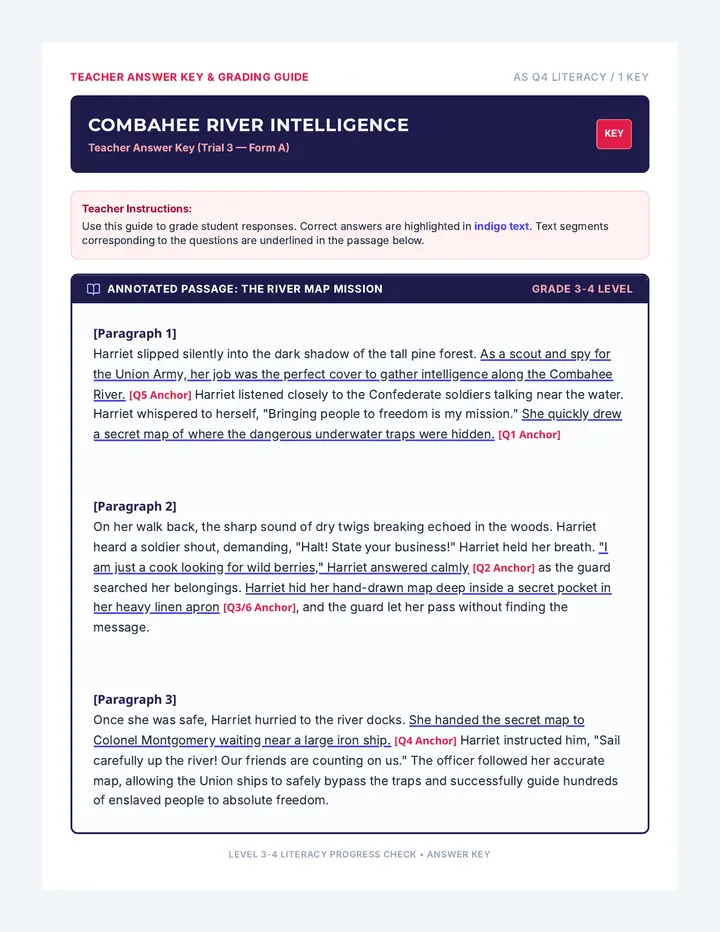
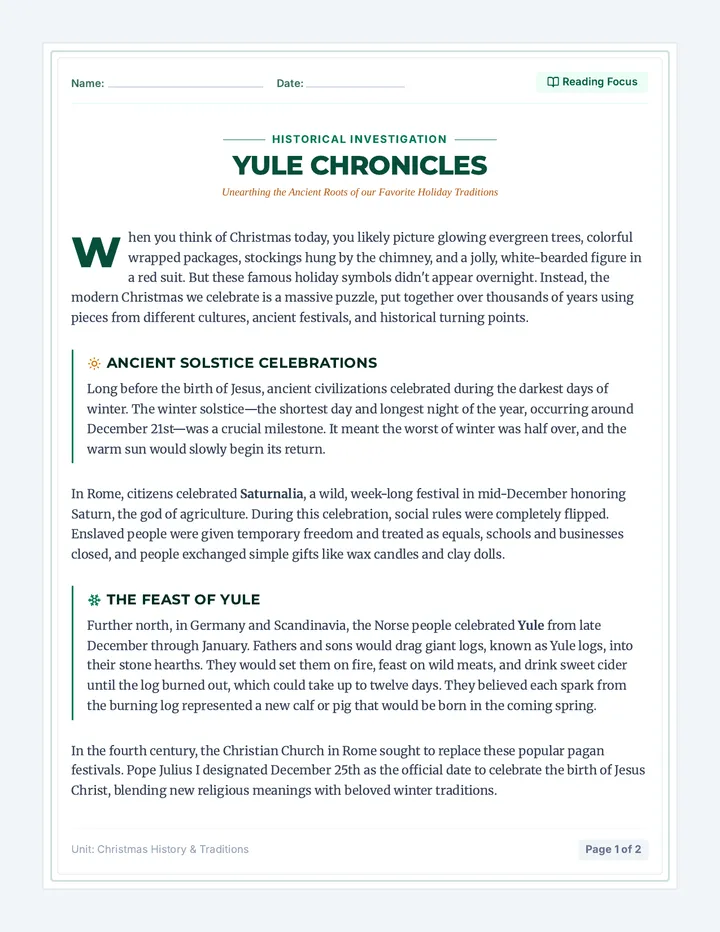
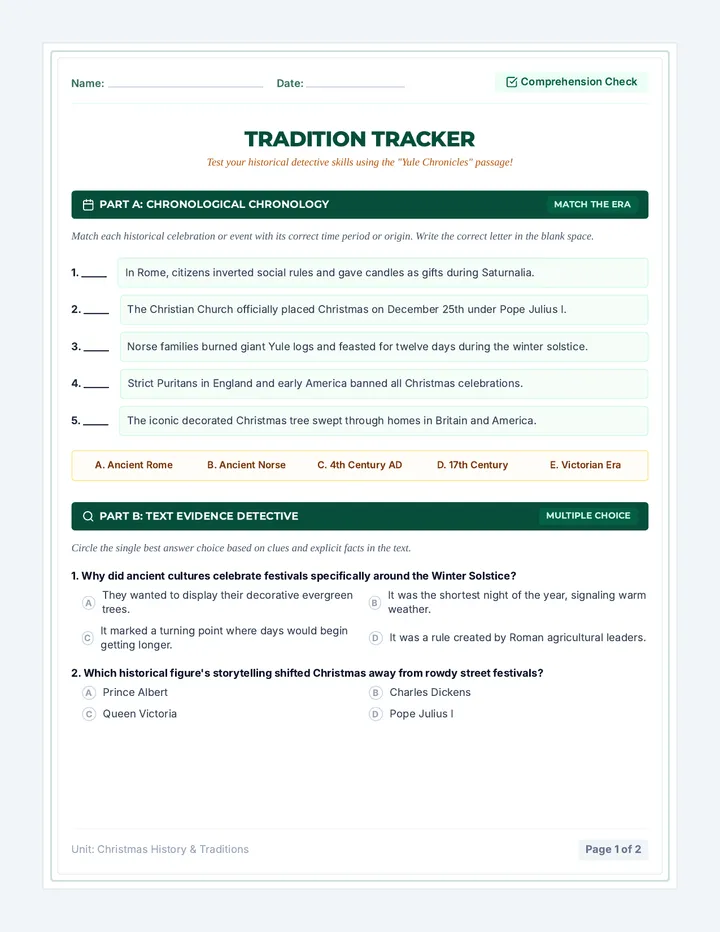
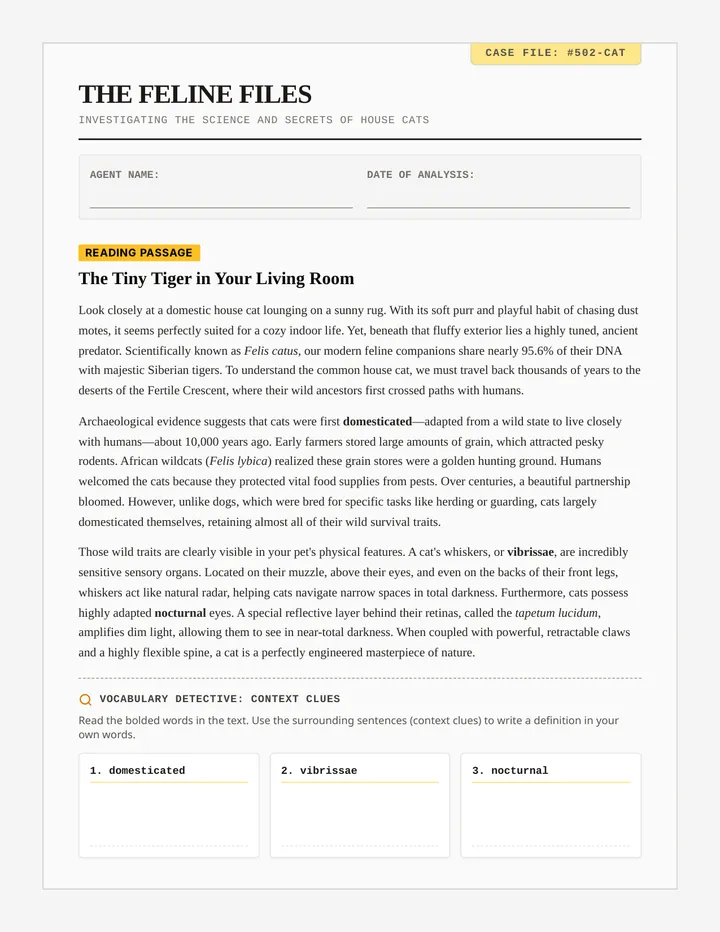
A full-length practice experience featuring an informational passage, tiered evidence-based questions, and a narrative writing task.
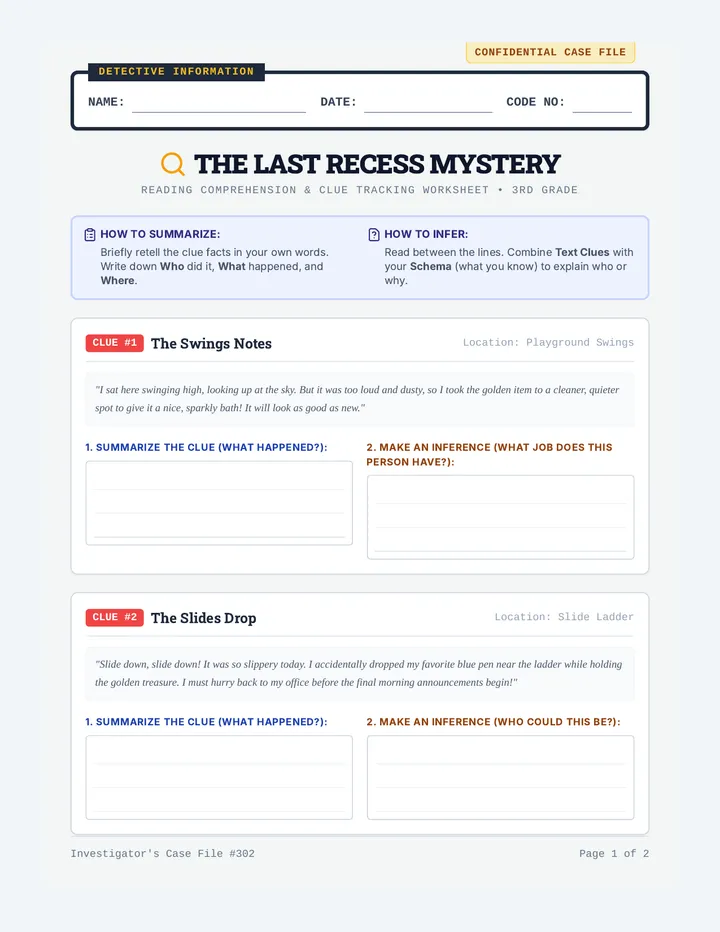
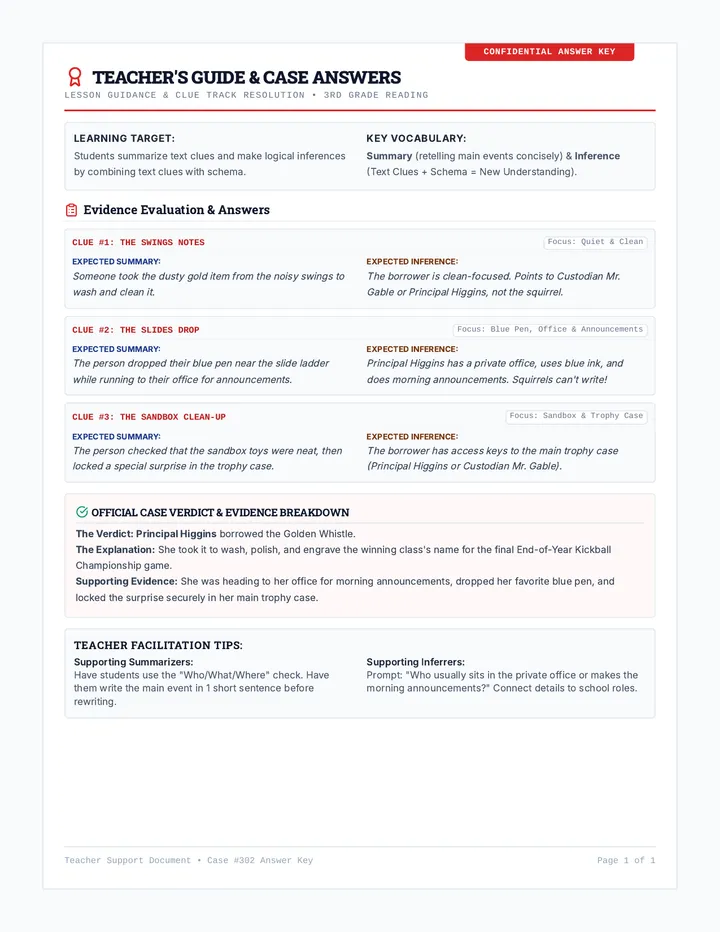
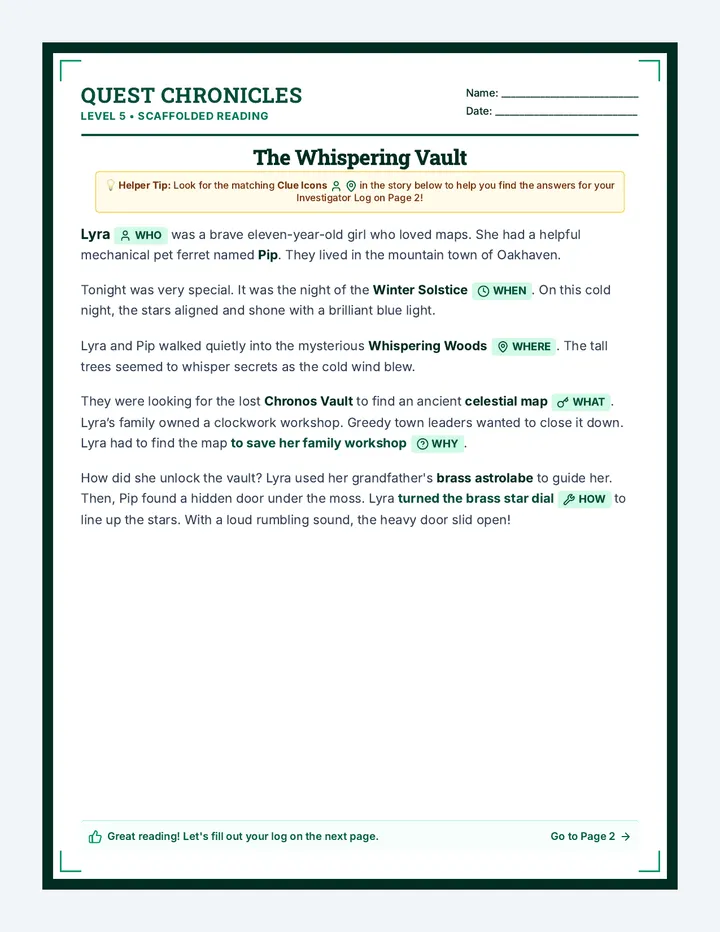
A strategy-focused guide to help students master EBSR questions and vocabulary in context through the lens of a detective's investigative blueprint.
Five days of quick ELA warm-ups to build stamina and recall for key test-taking strategies and vocabulary skills.
This lesson focuses on beginning three-letter s-blends (str, spr, scr) through a nature-themed reading passage and associated activities to build fluency, decoding skills, and spelling accuracy.
A lesson exploring the emotion of awe and descriptive language through the book 'Awe' by Chana Stiefel, designed for 3rd and 4th-grade students.
A simplified independent work packet about the myth of Orpheus and Eurydice, designed for middle school students at a second-grade reading level. The lesson explores the power of music, love, and the consequences of looking back through accessible texts and structured comprehension tasks.
In this lesson, students become 'Plot Investigators' to distinguish between a story's topic and its main idea. Using mystery-themed tools like a 3-2-1 countdown and the RACES writing strategy, students will learn to extract key evidence from fables and short stories to construct well-supported thematic statements.
A focused look at Chapter 19 of The Westing Game, exploring Crow's internal struggle, the evolving partnership between Denton and Chris, and Turtle's stock market strategy.
A self-paced Social Studies lesson for 6th grade focused on the Silk Road as an ancient global network, integrating rigorous primary source analysis and geography skills.
A full-length 8th-grade STAAR reading practice assessment, including 30 multiple-choice questions, two SCRs, and one ECR based on informational and fiction passages.
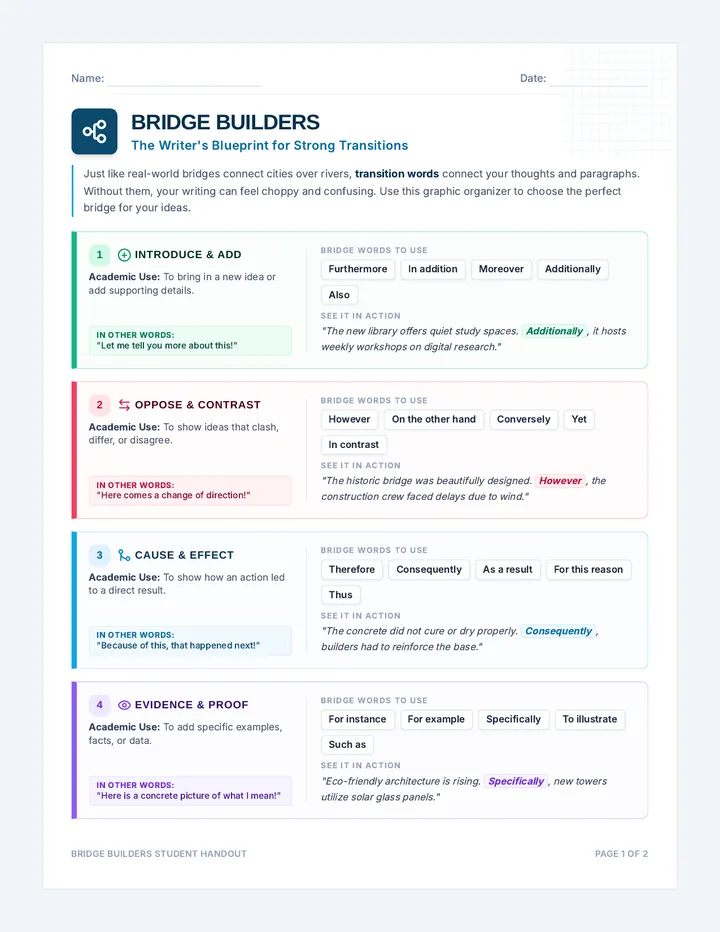
A lesson focused on teaching students how to write compelling book reviews by using specific transition phrases to connect their opinions with text-based evidence.
A rigorous informational reading and writing assignment focused on the mycorrhizal network, designed to practice SCR and ECR skills with an emphasis on organization, evidence, and sentence variety.
A Readers Theater lesson focusing on Wilson Step 5.2 concepts, including open syllable prefixes with closed and V-E base words. Students practice fluency and decoding through a robotic-themed script and word study activities.
A comprehensive lesson on identifying and fixing sentence fragments using visual supports, color-coding, and step-by-step practice tailored for neurodivergent learners.
A foundational grammar lesson focusing on sentence structure through visual scaffolds and color-coding. Students learn to identify fragments, complete sentences, and run-ons using a 'Construction' metaphor.
A lesson focused on identifying main ideas and supporting details in complex non-fiction texts, using an 'Information Architect' theme to visualize text structure.
A quick-start guide to mastering the three essential components of an argumentative essay introduction: the hook, the bridge, and the claim.
A lesson focused on identifying the main idea or theme of a story by analyzing character growth and turning it into a universal life lesson supported by evidence.
A comprehensive lesson on understanding semantic nuance and intensity through 'The Synonym Spectrum', focusing on emotions, movement, and weather vocabulary.
This lesson explores the nuances of academic verbs, teaching students to distinguish between different 'shades of meaning' to improve writing precision and tone.
A deep-dive character analysis lesson where students perform a 'Character Autopsy' using textual evidence to map internal traits and external motivations. Students function as forensic literary analysts to uncover the 'DNA' of a protagonist or antagonist.
Students learn to identify main ideas and supporting details by 'packing' only essential information into a summary suitcase, distinguishing between key points and interesting trivia.
A festive 3rd-grade reading lesson focusing on identifying cause and effect relationships through fictional Cinco de Mayo stories. Includes a mini-lesson presentation, a partner matching activity, and a teacher facilitation guide.
A high-energy station rotation review focusing on identifying theme and main idea in various text types, designed for 5th-grade MCAS preparation with a spy-themed mission.
A 50-minute lesson on the academic action verb 'Synthesize.' Students learn to combine information from multiple sources to create a new, original conclusion using the 'Laboratory Mix' method.