Lenny LearningLenny
Create
Explore
Workspace
LoginSign up
MathEnglish Language ArtsScience & EngineeringSocial StudiesGlobal LanguagesHealth & Physical EducationSpecial EducationCounseling & Life SkillsArts & CreativityESL
Lenny LearningLenny
Lenny Learning
About
Training
Pricing
Support
Contact
© 2026 Lenny Learning Inc.

Personal Safety

SequencesLessonsMaterialsVideos
  1. Health & Physical Education

Personal Safety

SequencesLessonsMaterialsVideos

Personal boundaries, emergency response protocols, and digital security measures for physical and online environments. Equips students to recognize unsafe situations, navigate conflict, and understand risks associated with trafficking, fire, and water safety.
Health & Physical EducationMovement Skills and ConceptsBody ControlLocomotor SkillsNon-Locomotor SkillsFine Motor SkillsManipulative SkillsBalance and CoordinationSpatial AwarenessMovement PatternsRhythmic Activities and DanceRhythm and TimingDance BasicsIndividual and Dual SportsGymnastics and TumblingTrack and FieldRacket SportsSelf-Defense and Martial ArtsTeam SportsCooperative GamesSportsmanshipTeam CommunicationBasketball SkillsSoccer SkillsVolleyball SkillsFootball SkillsGame StrategiesFitness and Physical ActivityCardio FitnessFlexibility and StretchingMuscular Strength and EnduranceSetting Fitness GoalsHealthy HabitsHygiene PracticesSleep and RestPhysical Activity HabitsHydrationInjury PreventionBody Awareness and Self-CareDisease PreventionHealth Decision-MakingHelp-Seeking and Self-AdvocacyMental HealthMental Health BasicsEmotional AwarenessStress ManagementCoping StrategiesMindfulness PracticesBreathing and Relaxation TechniquesMeditation BasicsResilience and PerseveranceHealthy RelationshipsSocial and Emotional SkillsHelp-Seeking and Support SystemsDigital WellbeingNutritionNutrition BasicsFood GroupsBalanced MealsHealthy Eating HabitsReading Food LabelsPersonal SafetyRecognizing Unsafe SituationsHuman and Child TraffickingStranger DangerPersonal BoundariesFire and Water SafetyEmergency ResponseConflict Resolution BasicsInternet and Social Media SafetySafe Personal RelationshipsSubstance AwarenessTobacco AwarenessAlcohol AwarenessCannabis AwarenessOpioid AwarenessStimulant AwarenessPrescription Drug AwarenessRefusing Peer PressureOutdoor and Adventure ActivitiesOutdoor Recreation SafetyHiking and OrienteeringTeam Building Activities
Recognizing Unsafe SituationsIdentifies physical and social cues that signal danger in various environments. Strengthens situational awareness and boundary-setting skills to help students navigate potential risks safely.
Human and Child TraffickingRisk factors, recruitment tactics, and grooming signs associated with exploitation. Equips students with safety strategies, boundaries, and reporting protocols to navigate digital and physical threats.
Stranger DangerDistinguishes between safe adults and strangers through situational awareness and boundary setting. Equips students with communication protocols and emergency response actions for public spaces.
Personal BoundariesIdentification of personal space, consent, and verbal boundary-setting strategies. Equips students to communicate comfort levels and recognize appropriate physical interactions in social contexts.
Fire and Water SafetyEssential fire prevention tactics, emergency escape planning, and the 'stop, drop, and roll' technique. Outlines water safety protocols including supervision, life jacket usage, and pool rules to prevent accidents.
Emergency ResponseRecognition of emergency scenarios and protocols for contacting emergency services. Develops foundational skills in first aid, fire safety, and immediate response strategies.
Conflict Resolution BasicsActive listening, 'I' statements, and negotiation techniques to navigate interpersonal disagreements. Builds empathy and de-escalation skills essential for maintaining safe environments.
Internet and Social Media SafetyStrategies for protecting personal information, identifying online risks, and navigating digital interactions responsibly. Addresses cyberbullying, privacy settings, and the long-term impact of digital footprints.
Safe Personal RelationshipsBoundary setting, consent, and identification of healthy versus unhealthy relationship dynamics. Addresses communication strategies and protocols for seeking support in unsafe situations.
No videos found
There are no videos available for this topic yet.
No videos found
There are no videos available for this topic yet.
No videos found
There are no videos available for this topic yet.
No videos found
There are no videos available for this topic yet.
No videos found
There are no videos available for this topic yet.
Video
5 Internet Safety Tips for Kids

5 Internet Safety Tips for Kids

This concise, animated video introduces five fundamental rules for staying safe online, specifically tailored for elementary-aged children. Through simple animations and clear narration, it covers critical topics including protecting personal information, stranger danger, password security, malware prevention, and how to handle uncomfortable digital interactions. The video uses approachable metaphors, such as comparing a computer virus to getting physically sick from a mystery drink, to make abstract concepts understandable for young viewers. Key themes include digital citizenship, privacy, cybersecurity basics, and communication. The video emphasizes the importance of parental guidance, encouraging children to keep passwords shared only with parents and to seek adult help if they encounter mean or strange messages. It establishes a baseline of "rules of the road" for young internet users who are beginning to explore the digital world independently. For educators, this video serves as an excellent hook or anchor for a broader unit on Digital Citizenship. Its short format makes it easy to digest, while the distinct numbering of tips allows teachers to pause and discuss each point individually. It provides a non-threatening entry point to discuss serious topics like cyberbullying and online predation, empowering students with actionable strategies rather than fear.

Common Sense MediaCommon Sense Media

44s

Video
Why Our Ears Make Wax and How It Protects Us

Why Our Ears Make Wax and How It Protects Us

This engaging episode of SciShow Kids explores the science behind earwax, scientifically known as cerumen. Host Jessi and her robot rat friend Squeaks explain what earwax is, where it comes from, and the vital role it plays in keeping our ears healthy. Through colorful animations and clear explanations, the video demystifies a bodily function that children often find "gross" but intriguing. The video breaks down the anatomy of the ear, specifically the ear canal, and uses accessible metaphors to explain how earwax acts as a self-cleaning mechanism. Key topics include the production of cerumen, how jaw movement helps move wax out of the ear, and the three main jobs of earwax: moisturizing the ear canal, removing dead skin cells, and trapping germs and dust to protect the eardrum. Ideally suited for early elementary science and health curriculums, this resource serves as excellent material for teaching body systems, hygiene, and personal safety. It directly addresses the common childhood habit of putting objects in ears, providing a scientific explanation for why ears are best left alone to clean themselves. Teachers can use this to spark discussions about how different parts of the body have specific protective functions.

SciShow KidsSciShow Kids

2mins 32s

Video
How Food Allergies and the Immune System Work

How Food Allergies and the Immune System Work

This educational video from SciShow Kids explores the science behind food allergies, using peanut allergies as a primary example to explain complex biological concepts in an age-appropriate way. Hosted by Jessi and her robot friend Squeaks, the video distinguishes between simply disliking a food and having a physical allergy to it. It introduces the concept of the immune system, explaining how this body system normally fights germs but sometimes makes a mistake by attacking safe foods like peanuts. The video breaks down the biological process of an allergic reaction, describing how the body releases chemicals to fight an imaginary attacker. It details common symptoms of allergic reactions, ranging from runny noses and itchy skin to more serious breathing difficulties. Crucially, it touches on the importance of medicine for severe reactions and emphasizes safety, teaching children why even a tiny amount of an allergen can be dangerous. For educators, this video is an excellent tool for teaching health, human biology, and social-emotional learning. It helps demystify why some students have strict dietary restrictions, fostering empathy and understanding in the classroom. It provides a clear, non-scary explanation of the immune system that serves as a foundation for understanding human biology, while also offering practical safety advice about respecting food allergies and recognizing when a friend might need help.

SciShow KidsSciShow Kids

3mins 25s

Video
Sunshine - Don't Confuse Love & Abuse - Day One

Sunshine - Don't Confuse Love & Abuse - Day One

This powerful animated short film serves as a Public Service Announcement (PSA) regarding teen dating violence. By juxtaposing the upbeat, jubilant lyrics of Katrina and the Waves' "Walking on Sunshine" with a visual narrative of a progressively abusive relationship, the video creates a stark cognitive dissonance that mirrors the confusion victims often feel. Viewers watch a young couple's relationship evolve from seemingly romantic beginnings into a nightmare of control, isolation, and intimidation. The video explores critical themes of relationship health, specifically the "Cycle of Abuse." It visually demonstrates subtle red flags that escalate over time, such as controlling what a partner wears, isolating them from friends, public humiliation, reckless driving to induce fear, and the "honeymoon phase" where abusers apologize with gifts to restart the cycle. The animation style shifts from bright, pastel colors to dark, jagged, nightmarish imagery to represent the psychological toll on the victim. For educators, this is an invaluable tool for Health and Social Emotional Learning (SEL) curriculums. It allows students to identify warning signs of abuse in a format that is engaging but emotionally resonant. It provides a safe third-party scenario for students to analyze unhealthy behaviors without needing to disclose personal experiences immediately, serving as a perfect launchpad for discussions about consent, boundaries, and how to seek help.

DayOneNYDayOneNY

2mins 46s

Video
How Your Ears Work: Hearing, Balance, and Safety

How Your Ears Work: Hearing, Balance, and Safety

This educational video provides a child-friendly introduction to the human ear, explaining its dual functions as a sense organ for hearing and a critical tool for maintaining balance. Through clear narration and relatable visuals of children playing, listening to music, and visiting the doctor, the video breaks down how ears capture sound and communicate with the brain. It emphasizes that ears are always active, processing everything from the subtle chirping of birds to the loud excitement of fireworks. A significant portion of the video focuses on health and safety, offering practical advice on how to care for ears. It explicitly warns against inserting objects like cotton swabs into the ear canal, explains the importance of drying ears after swimming to prevent infection, and highlights the need for hearing protection in loud environments. The video draws a helpful analogy between how bright lights affect eyes and how loud sounds affect ears, making the concept of noise-induced damage accessible to young learners. For educators, this resource is an excellent tool for health and science curriculums centering on the five senses and personal hygiene. It provides a natural entry point for discussing body autonomy, recognizing symptoms of illness (like earaches or muffled hearing), and understanding when to seek help from a trusted adult or doctor. The content encourages students to take an active role in protecting their own health while fostering an appreciation for the complex job their ears perform every day.

Next Generation ScienceNext Generation Science

2mins 53s

Video
Why Our Skin Burns and How to Protect It

Why Our Skin Burns and How to Protect It

In this engaging episode of SciShow Kids, host Jessi and her robot friend Squeaks explore the science behind summer safety, specifically focusing on sunburns. The video explains why humans need to protect their skin from the sun's rays, contrasting human biology with Squeaks' robotic nature. Using clear animations and simple analogies, it breaks down the biological process of how skin gets damaged and how the body's healing response creates the redness and heat associated with sunburns. The content covers key topics such as the effects of UV rays (simplified as sun rays) on skin, the body's inflammatory response (increased blood flow), and risk factors like skin tone and time of day. It provides a comprehensive guide to prevention, including wearing protective clothing, seeking shade during peak hours (10 AM - 4 PM), and the proper application of sunscreen. The video clarifies how sunscreen works by acting like a sponge or a mirror to block harmful rays. For educators, this video is an excellent resource for health and science units. It translates the abstract concept of UV radiation into concrete, relatable terms for young students. It serves as a perfect launchpad for lessons on personal health, the human body's defense systems, and practical life skills regarding safety in the environment. The clear, actionable advice empowers children to take responsibility for their own sun safety habits.

SciShow KidsSciShow Kids

3mins 1s

Video
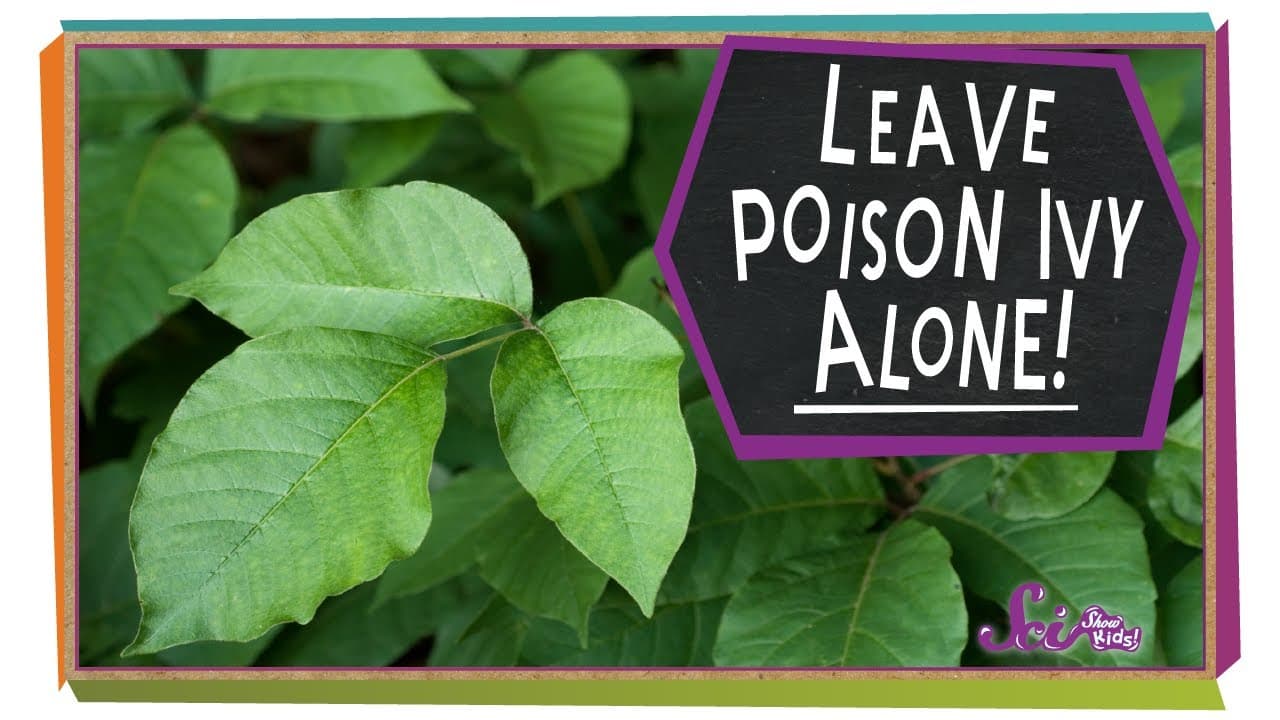
How to Identify Poison Ivy and Treat the Rash

How to Identify Poison Ivy and Treat the Rash

This educational video from SciShow Kids explores the science behind poison ivy, explaining why this common plant causes itchy rashes and how to identify it in the wild. Hosted by Jessi and her robot rat friend Squeaks, the video breaks down the biological reaction humans have to the plant's oil, clarifying the difference between a poison and an allergen. It uses simple analogies, like peanut allergies, to help young students understand how their immune system reacts to the plant. The video covers key topics including plant identification across seasons (green leaves in summer, red in fall, hairy vines in winter), the specific chemical cause of the reaction, and proper first aid treatment. It emphasizes safety through avoidance using the mnemonic "Leaves of three, let it be," while also explaining that the rash is a result of the body's confused defense system rather than a toxin. For educators, this resource is excellent for units on plant biology, human health, or outdoor safety. It demystifies a common fear for children by providing actionable knowledge on how to spot the plant and what to do if exposed. The clear visuals of the plant in different stages make it a practical tool for preparing students for nature walks, field trips, or summer break.

SciShow KidsSciShow Kids

3mins 36s

Video
Sunshine - Don't Confuse Love & Abuse - Day One

Sunshine - Don't Confuse Love & Abuse - Day One

This powerful animated short film serves as a Public Service Announcement (PSA) regarding teen dating violence. By juxtaposing the upbeat, jubilant lyrics of Katrina and the Waves' "Walking on Sunshine" with a visual narrative of a progressively abusive relationship, the video creates a stark cognitive dissonance that mirrors the confusion victims often feel. Viewers watch a young couple's relationship evolve from seemingly romantic beginnings into a nightmare of control, isolation, and intimidation. The video explores critical themes of relationship health, specifically the "Cycle of Abuse." It visually demonstrates subtle red flags that escalate over time, such as controlling what a partner wears, isolating them from friends, public humiliation, reckless driving to induce fear, and the "honeymoon phase" where abusers apologize with gifts to restart the cycle. The animation style shifts from bright, pastel colors to dark, jagged, nightmarish imagery to represent the psychological toll on the victim. For educators, this is an invaluable tool for Health and Social Emotional Learning (SEL) curriculums. It allows students to identify warning signs of abuse in a format that is engaging but emotionally resonant. It provides a safe third-party scenario for students to analyze unhealthy behaviors without needing to disclose personal experiences immediately, serving as a perfect launchpad for discussions about consent, boundaries, and how to seek help.

DayOneNYDayOneNY

2mins 46s

Video
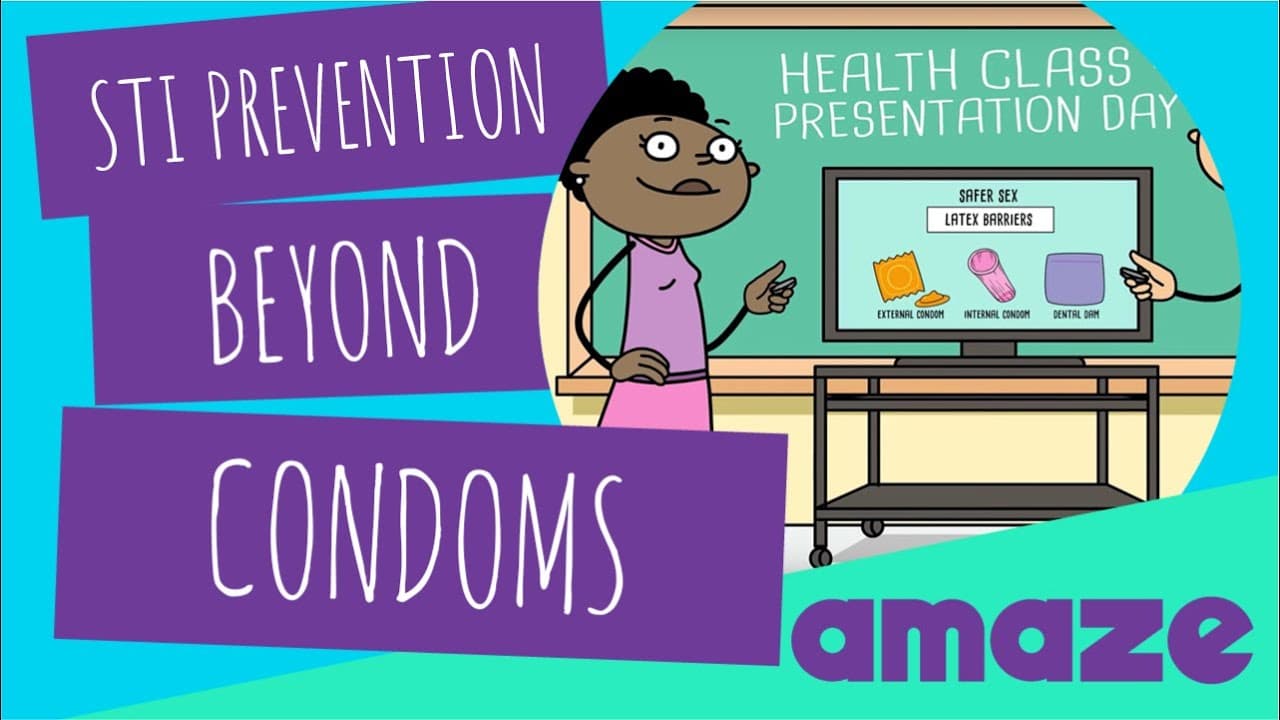
STI Prevention Beyond Condoms

STI Prevention Beyond Condoms

This animated educational video demystifies Sexually Transmitted Infections (STIs) through a student presentation scenario in a health class. The video begins by clearing up a humorous misunderstanding about what the acronym STI stands for, quickly pivoting to factual information about how these infections are transmitted through bodily fluids and sexual contact. It categorizes STIs into curable and treatable types, emphasizing that many are asymptomatic, which makes visual detection impossible. Key themes include the distinction between abstinence and safer sex practices. The video thoroughly explains that abstinence (defined here as not engaging in any sexual behavior with another person) is the only 100% effective method for prevention. It also introduces the concept of "safer sex" for those who are sexually active, which includes limiting partners, regular testing, open communication, and using barriers like external/internal condoms and dental dams. It broadens the definition of intimacy to include non-sexual affection like hugging and kissing. For educators, this resource is highly valuable because it models open communication about a sensitive topic without shame or stigma. It provides clear, actionable steps for students to protect their health, moving beyond just "wear a condom" to include comprehensive strategies like negotiation and consent. The friendly animation style helps lower student anxiety around the subject, making it an excellent primer for health units on sexual responsibility and disease prevention.

AMAZE OrgAMAZE Org

3mins 54s

Video
What Is a Splinter and How to Remove It Safely

What Is a Splinter and How to Remove It Safely

In this engaging episode of SciShow Kids, host Jessi explains the science behind a common childhood injury: the splinter. Using bright, geometric animations, the video breaks down exactly what a splinter is—defining it not just as wood, but potentially glass, metal, or plastic—and how these tiny objects get stuck in our skin. It explains why splinters hurt and details the body's biological response, including redness and swelling, which are signs that the body is fighting off potential germs. The video introduces key health concepts such as infection and hygiene in an age-appropriate way. It visually demonstrates how germs can hitch a ride on splinters like cactus thorns or rough wood, leading to infection if not treated. The narrative guides children through the importance of telling an adult when they get hurt and outlines the step-by-step process of safe removal: washing the area with soap and water, using tweezers, and applying a bandage. For educators, this video is an excellent resource for Health and Science lessons regarding personal safety, the human body, and first aid. It demystifies a painful experience that frightens many children, transforming it into a learning opportunity about biology and hygiene. It can be used to spark discussions about playground safety, the importance of wearing shoes, and why we wash cuts and scrapes to stay healthy.

SciShow KidsSciShow Kids

3mins 25s

Video
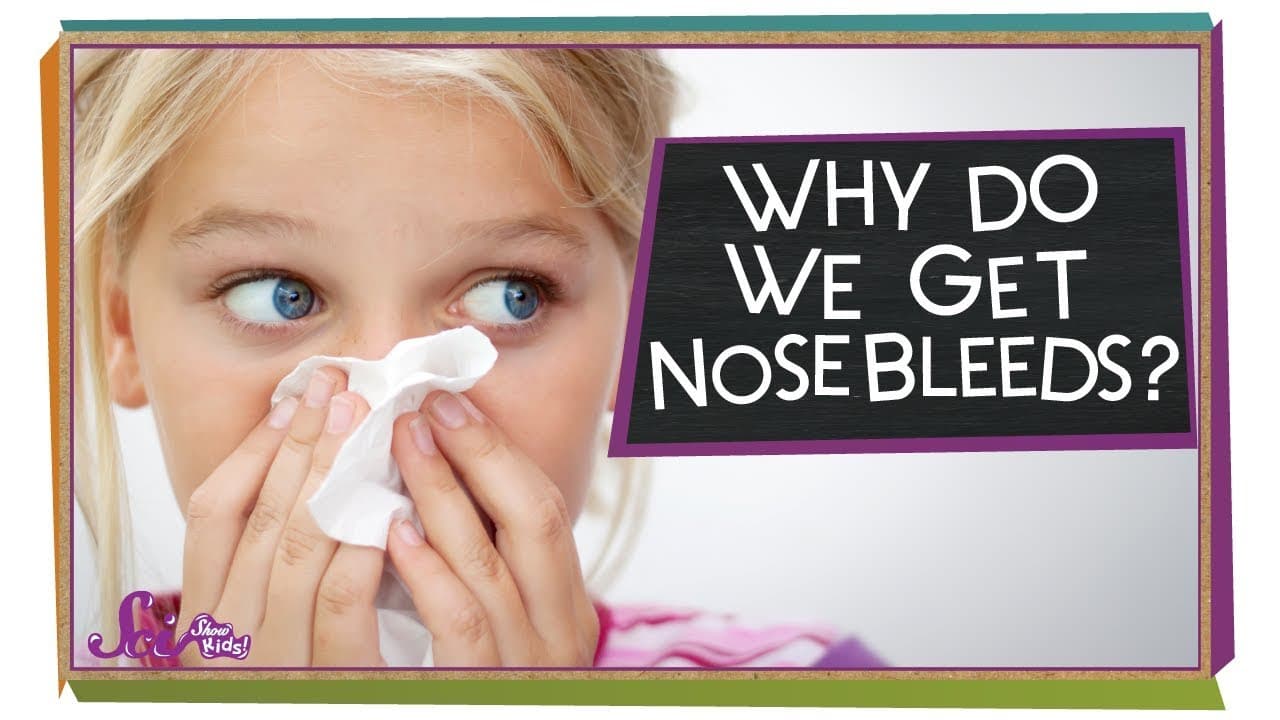
Why Nosebleeds Happen and How to Stop Them

Why Nosebleeds Happen and How to Stop Them

In this reassuring and educational episode of SciShow Kids, host Jessi and her robot rat friend Squeaks explore the science behind nosebleeds. Sparked by Jessi's recent experience with a nosebleed at the fort, the video demystifies this common but sometimes frightening occurrence. It explains the basic anatomy of the nose, specifically focusing on the delicate blood vessels located inside the nostrils, and investigates why they might break and bleed. The video covers several key themes regarding human biology and health. It details the causes of nosebleeds, ranging from environmental factors like dry, cold air to physical irritation from scratching or nose-picking. Crucially, it addresses the misconception that nosebleeds are dangerous, framing them as normal biological reactions similar to getting a small scrape on the skin. For educators and parents, this video is an excellent resource for teaching basic human anatomy and practical first aid skills. It provides clear, step-by-step instructions on how to stop a nosebleed correctly—emphasizing leaning forward rather than back—which is a vital life skill for elementary students. By explaining the 'why' and 'how' in a calm, friendly manner, the video helps reduce anxiety surrounding blood and bodily functions, empowering children to handle the situation confidently if it happens to them.

SciShow KidsSciShow Kids

4mins 21s

Video
Building Your Own Emergency Kit

Building Your Own Emergency Kit

In this engaging episode of SciShow Kids, host Jessi and her robot friend Squeaks guide young viewers through the process of building an emergency kit. Using a gentle and reassuring tone, the video defines what an emergency is—comparing it to a spilled glass of juice that simply needs to be cleaned up—and explains why being prepared helps keep us safe. The narrative focuses on preparation for natural events like floods or storms that might require staying indoors for a few days, making the concept of emergency preparedness accessible and non-threatening for children. The video systematically breaks down the essential categories of items needed in a kit: medical supplies, water, hygiene, food, power/lighting, warmth, and entertainment. It covers practical details, such as the math behind how much water to store per person, the science of why canned food lasts longer, and the importance of having non-electric light sources like flashlights. Special attention is given to hygiene items like toothbrushes and soap, which are often overlooked in basic survival lists. For educators, this video is an excellent resource for Health, Safety, and Social Studies units. It provides a concrete way to discuss safety without causing anxiety, turning the abstract concept of "preparedness" into a hands-on activity. The content naturally integrates cross-curricular skills, including mathematics (calculating necessary water supplies) and science (understanding food preservation and weather-related safety), making it a versatile tool for early elementary classrooms.

SciShow KidsSciShow Kids

4mins 52s

Video
What Happens When You Get Stitches?

What Happens When You Get Stitches?

In this reassuring episode of SciShow Kids, Jessi and her robot friend Squeaks explain the medical process of getting stitches after Squeaks injures his hand while playing tag. The video demystifies a potentially scary experience for children by breaking down exactly what happens when a cut is too deep for a regular bandage, transforming a frightening medical procedure into an understandable step-by-step process. The content covers the biological reasons for stitches (holding skin together to heal, stopping bleeding, preventing infection) and walks viewers through the doctor's visit. It explains each tool the doctor uses—from cleaning the wound to the numbing shot and the needle and thread—using clear animations and simple analogies, like comparing stitches to a "non-sticky band-aid that goes inside the skin." This video is an excellent resource for health and biology lessons in early elementary classrooms. It serves a dual purpose: teaching students about the body's healing process and infection prevention while also providing social-emotional support by alleviating fears associated with injuries and doctors. Teachers can use it to discuss safety, first aid, the role of medical professionals, and how our bodies repair themselves.

SciShow KidsSciShow Kids

3mins 25s