Complex grammar structures, idiomatic expressions, and phrasal verbs. Strengthens reading and listening comprehension while building conversational fluency for varied social and professional settings.
A comprehensive sequence for intermediate ESL graduate students focused on mastering academic lecture comprehension, identifying discourse markers, filtering digressions, and implementing effective note-taking strategies.
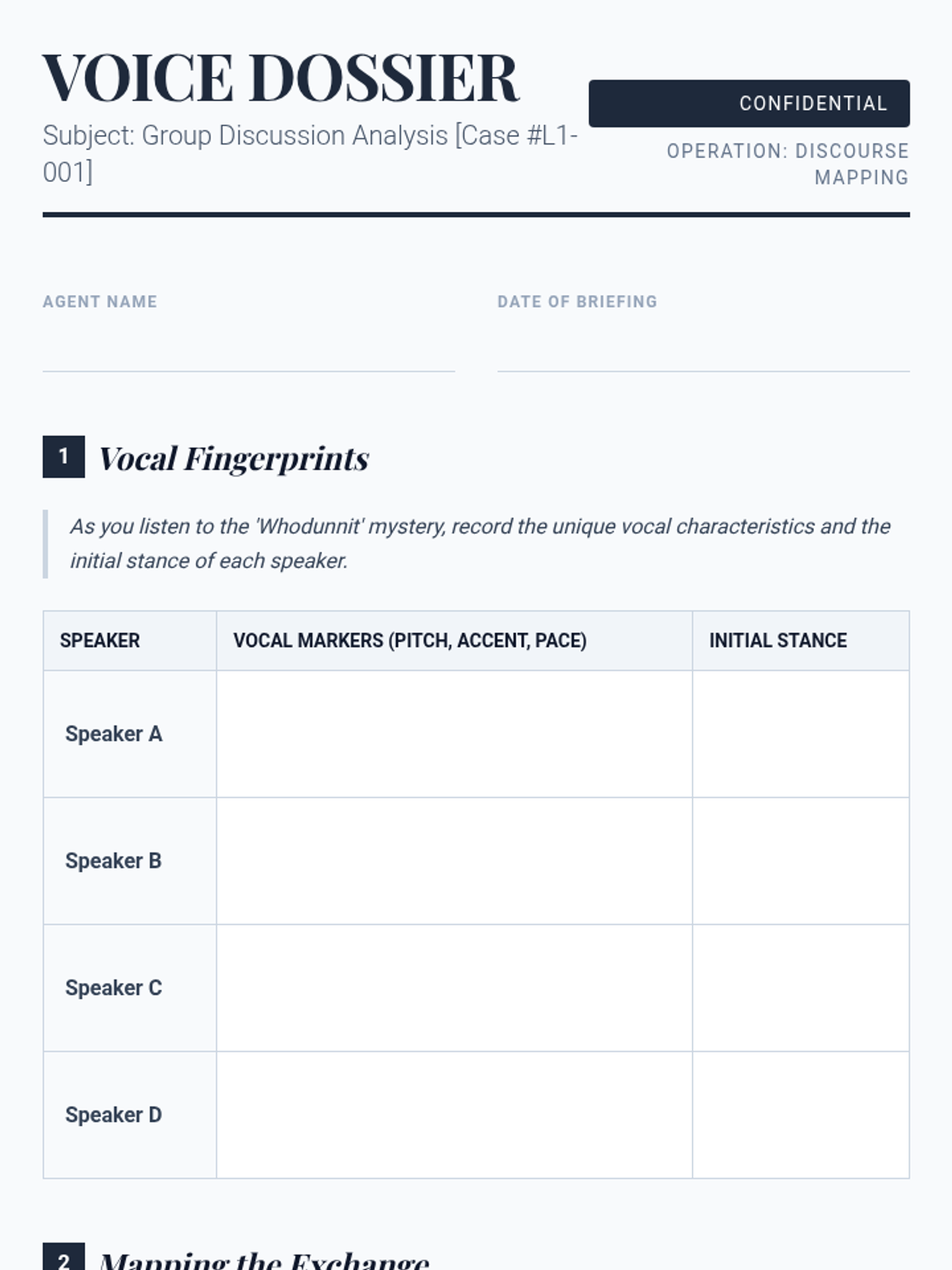
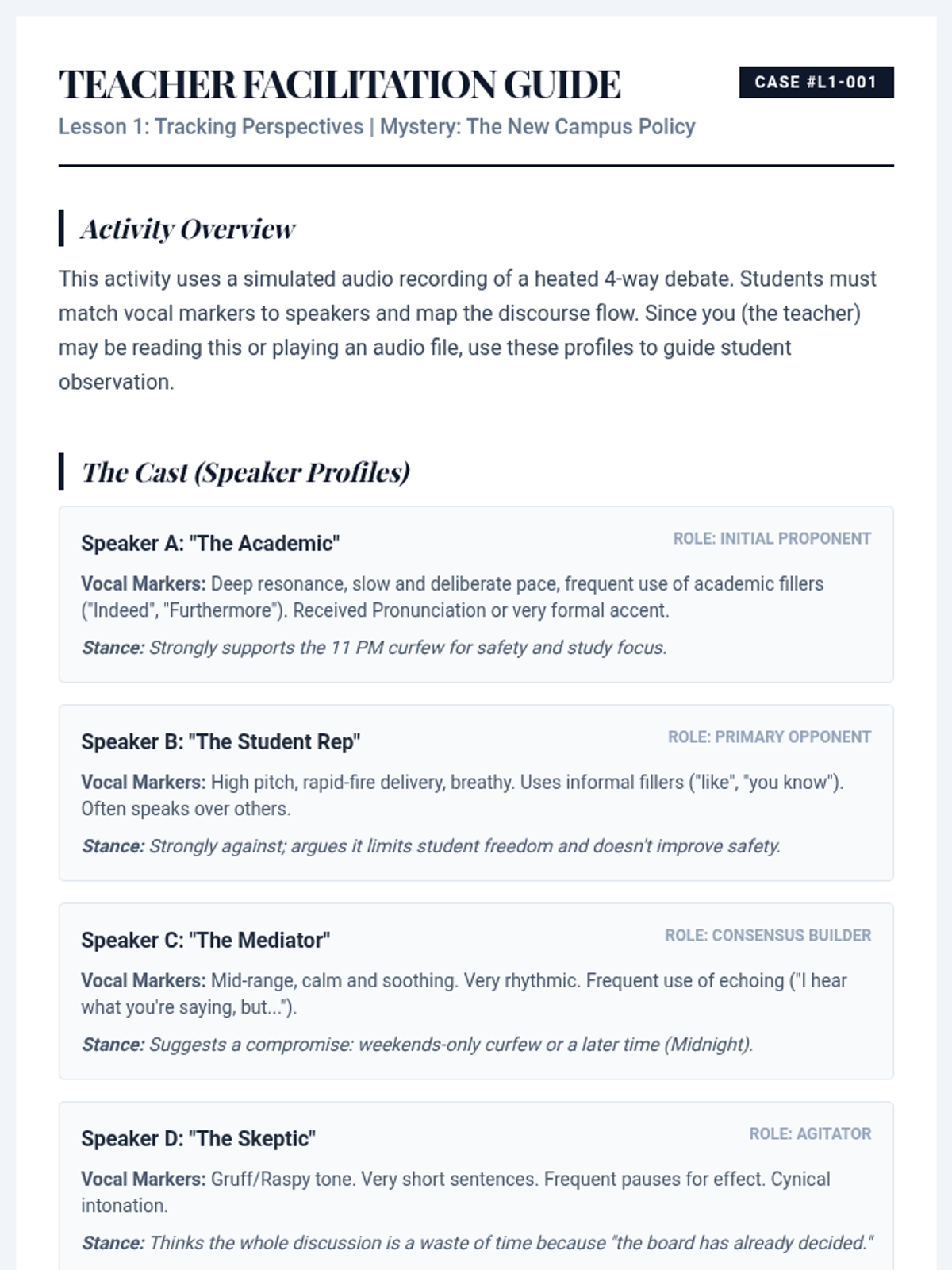
This sequence equips intermediate ESL undergraduate students with the skills to navigate complex, multi-speaker environments like seminars and debates. Students progress from basic speaker identification to tracking complex argument evolution and detecting subtle bias markers.
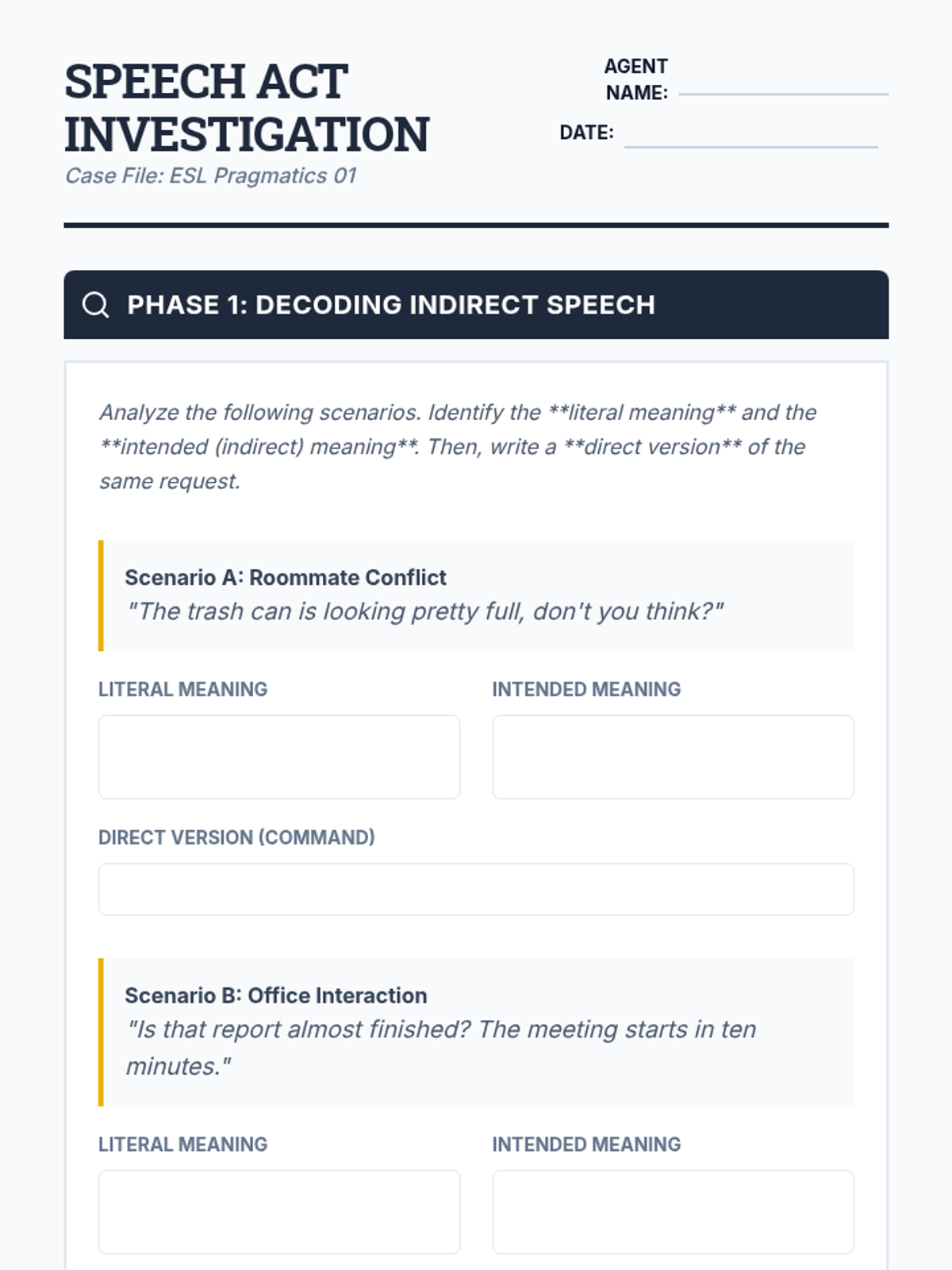
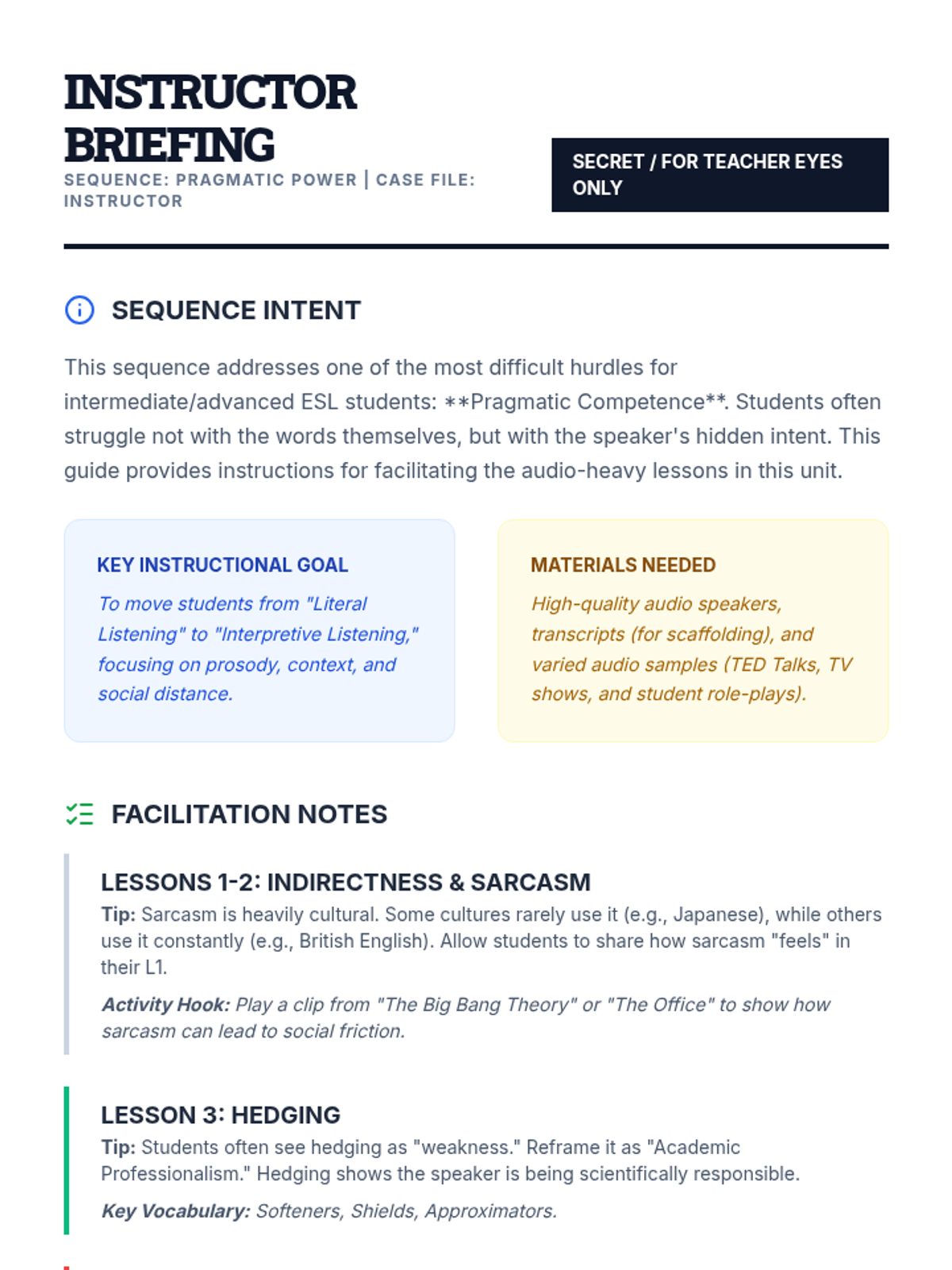
This sequence guides intermediate ESL students through the nuances of pragmatic meaning in English. Students will learn to decode indirect speech, sarcasm, hedging language, and emotional undertones in academic and social contexts to improve their listening comprehension and communicative competence.
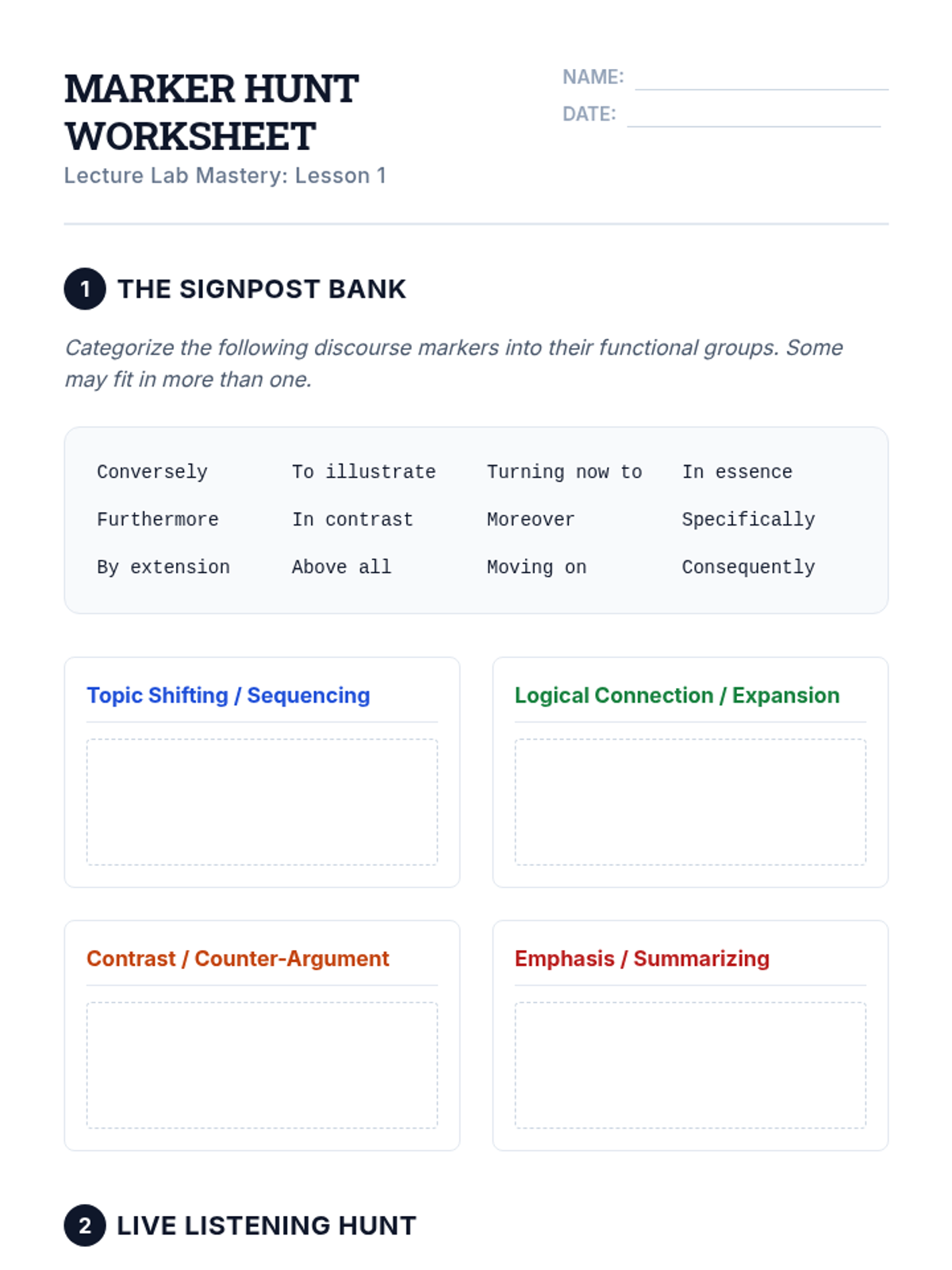
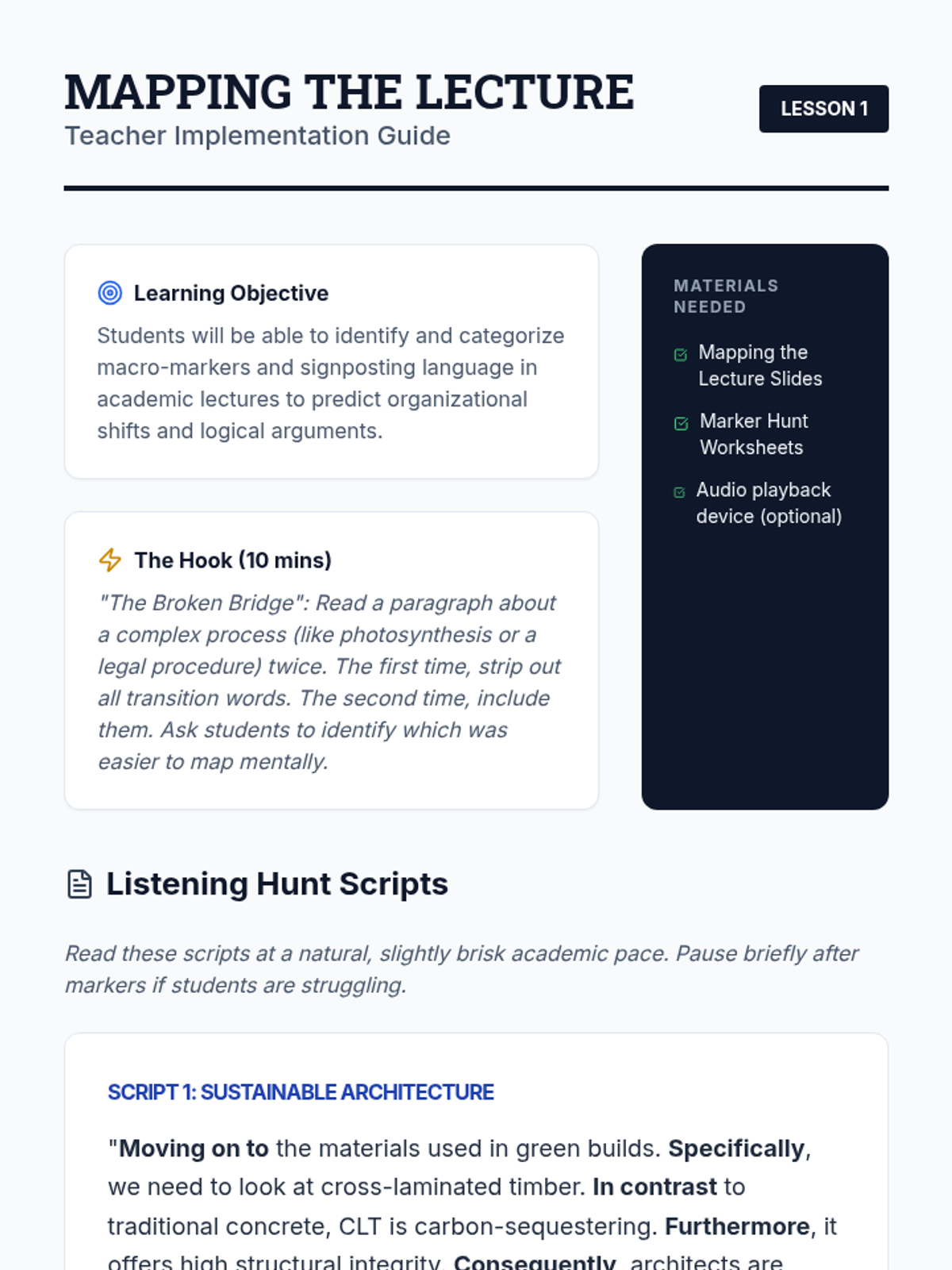
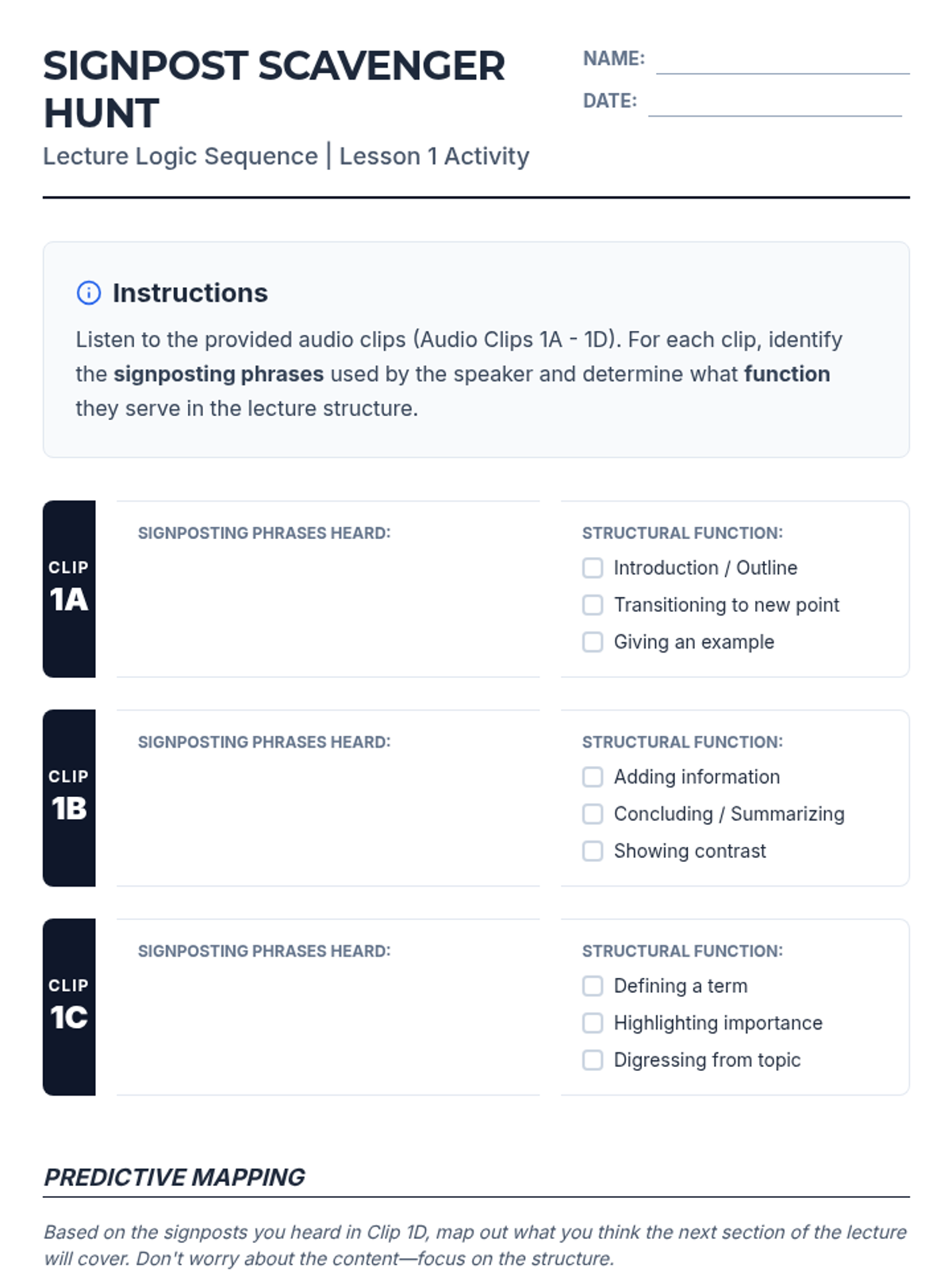
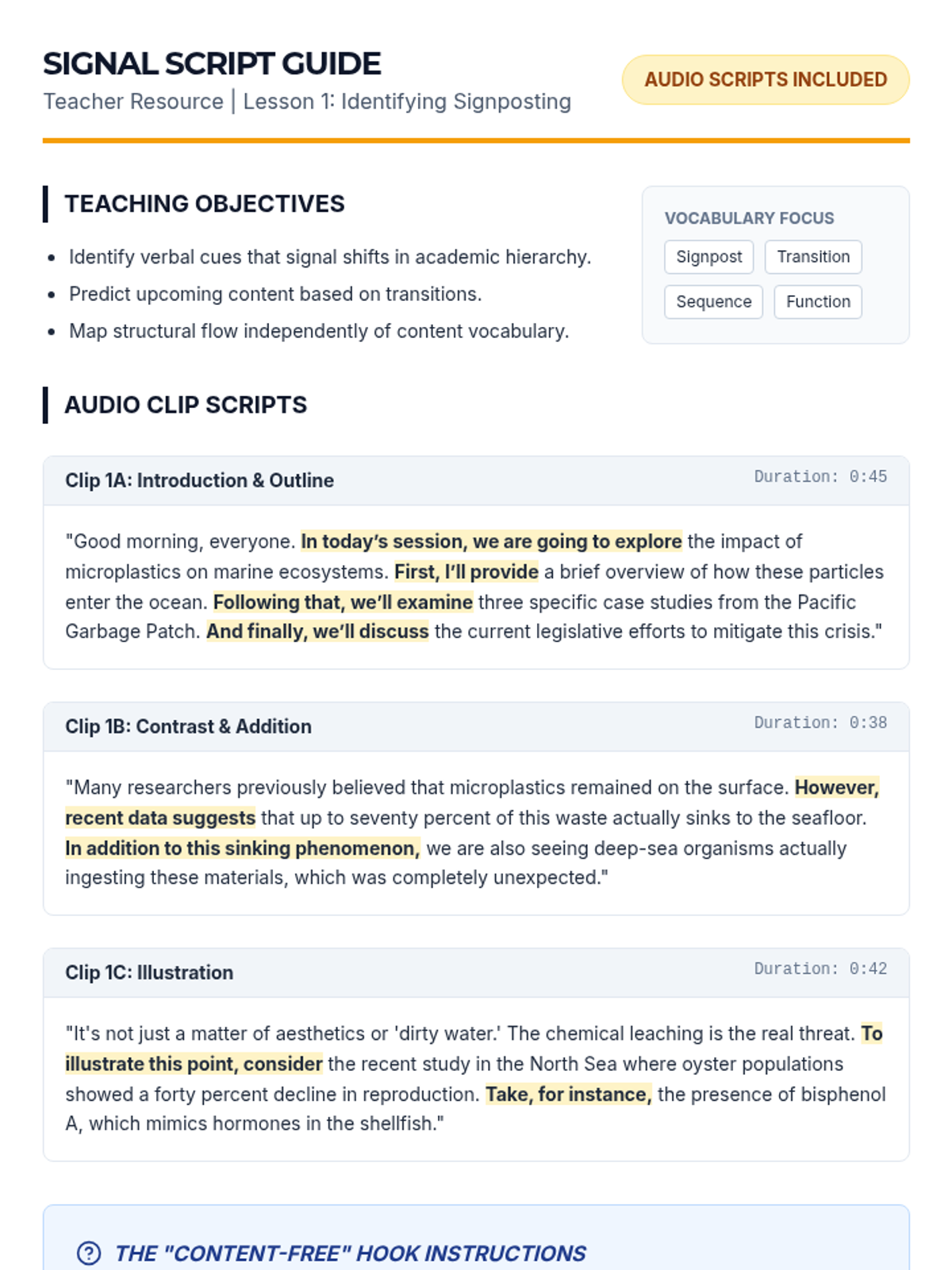
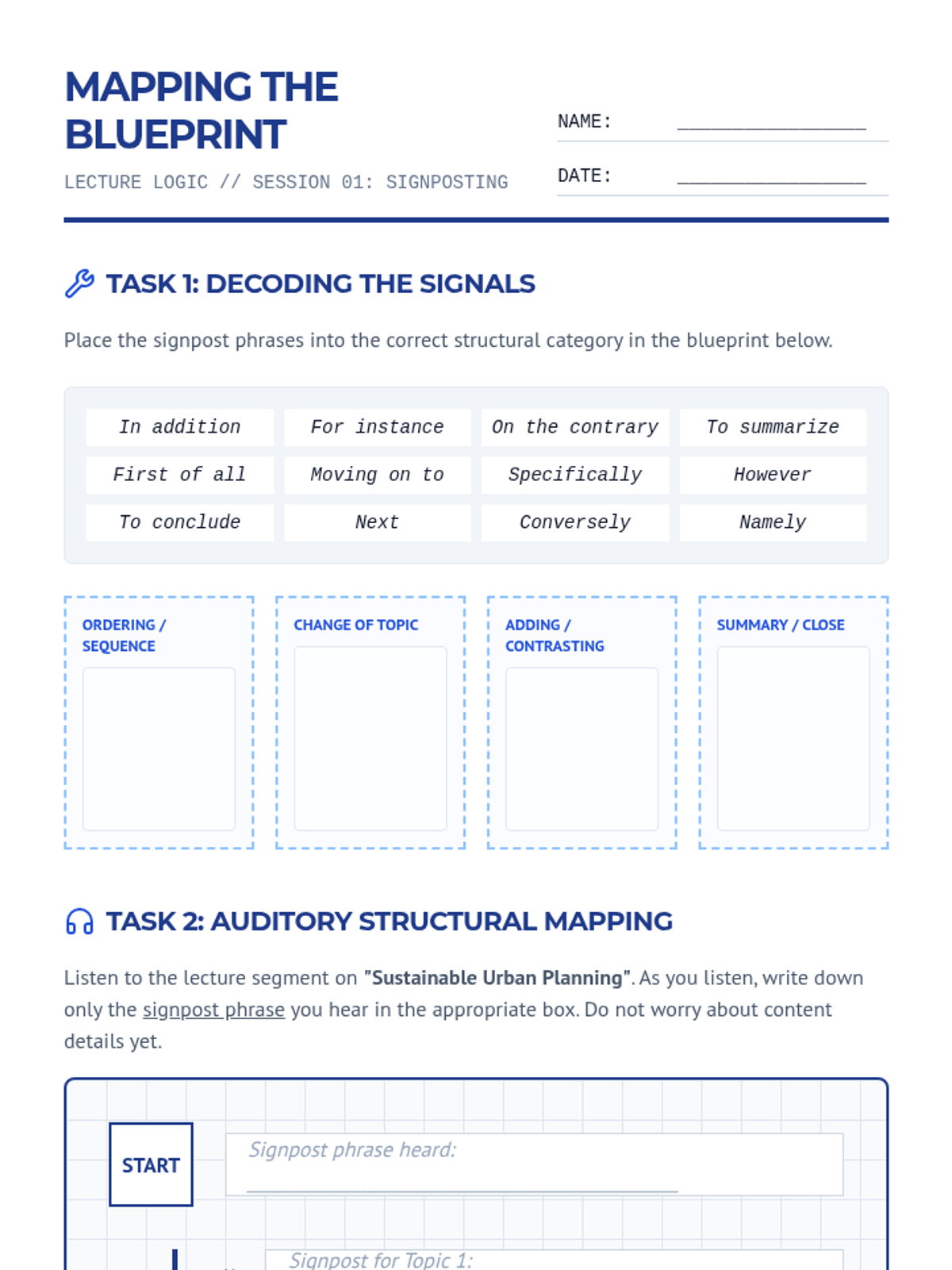
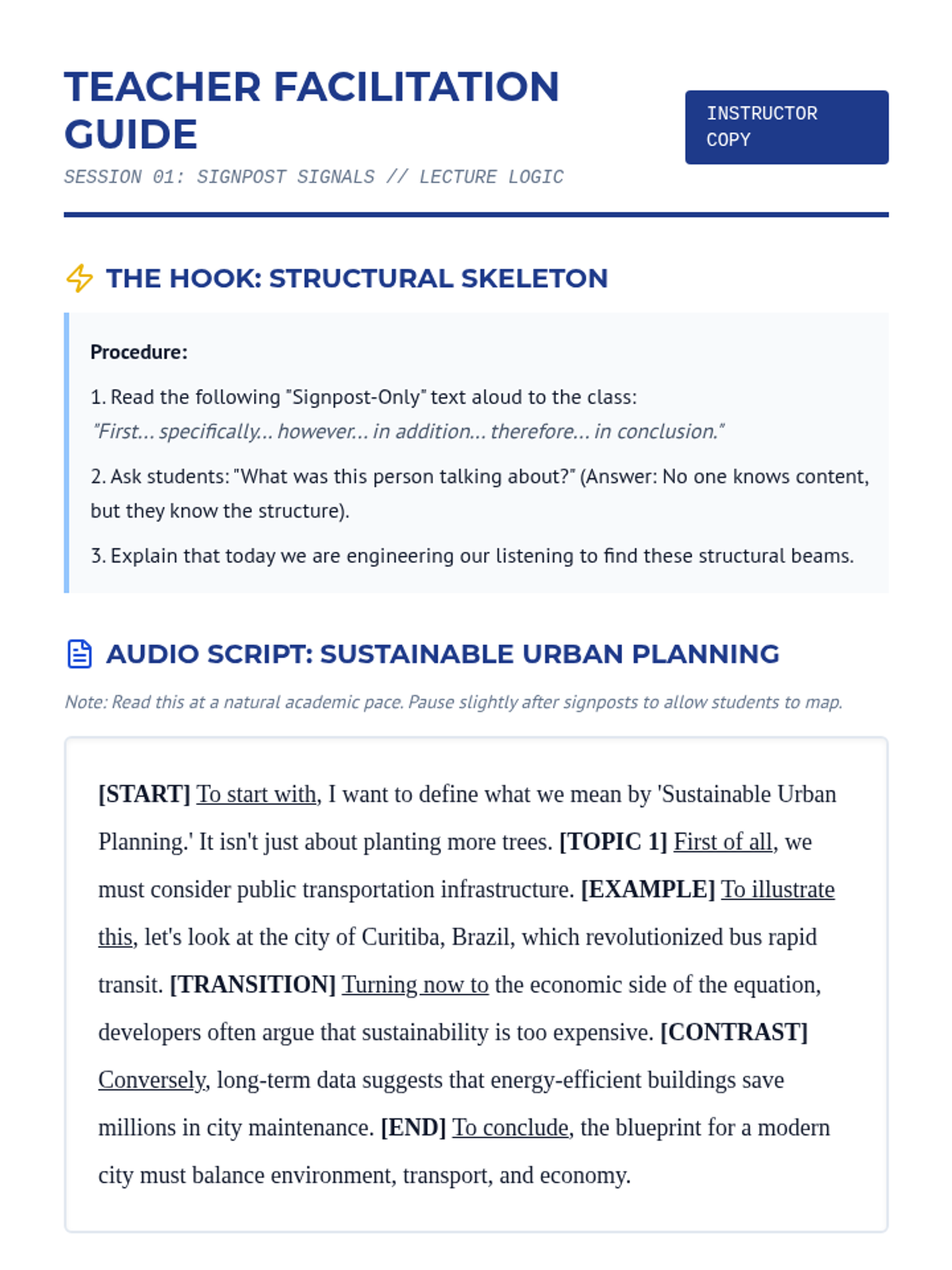
This sequence equips intermediate ESL students with the linguistic and cognitive tools needed to navigate university lectures. It covers discourse markers, hierarchy of information, identifying tangents, note-taking systems, and synthesizing long-form academic speech.
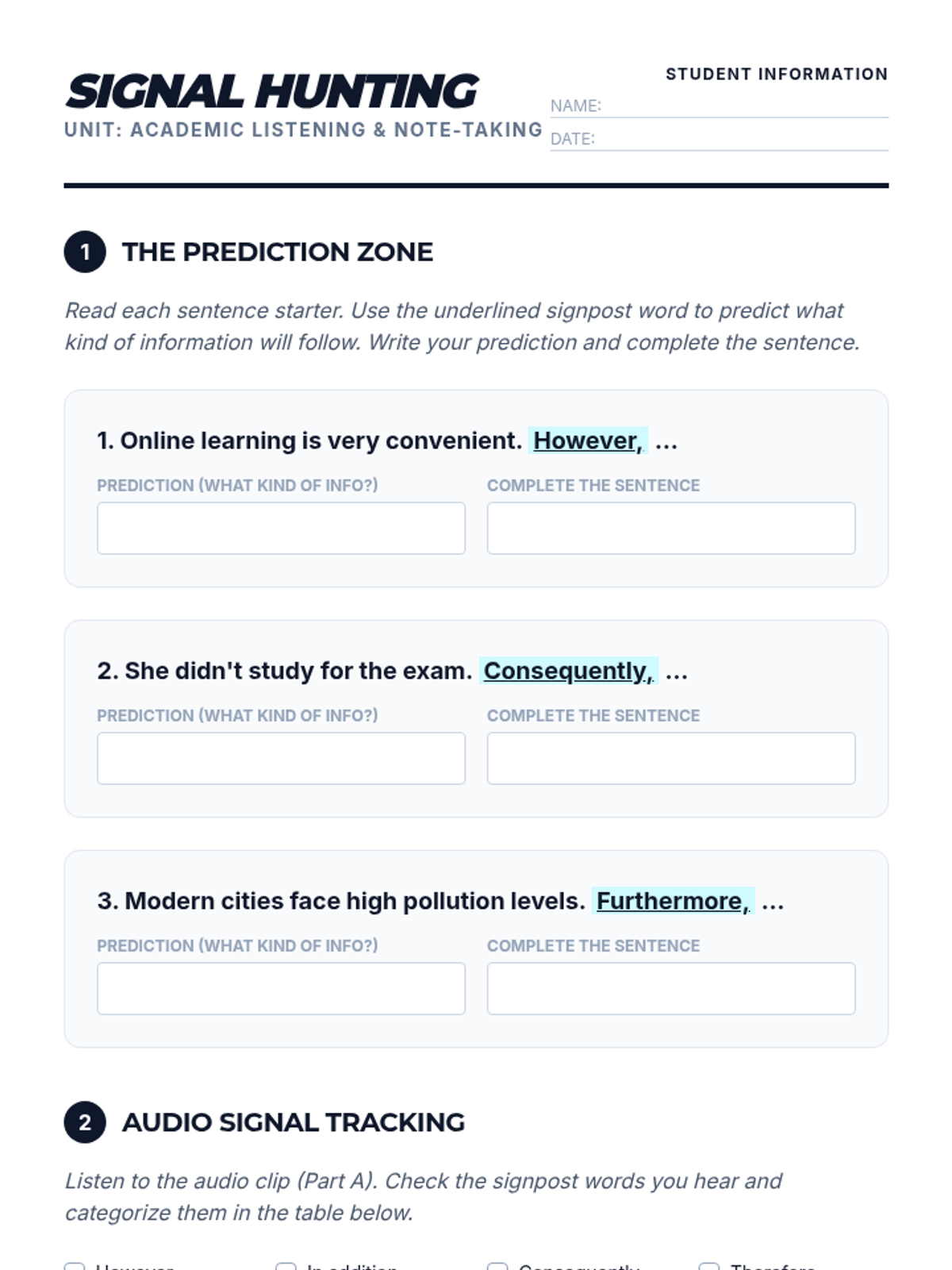
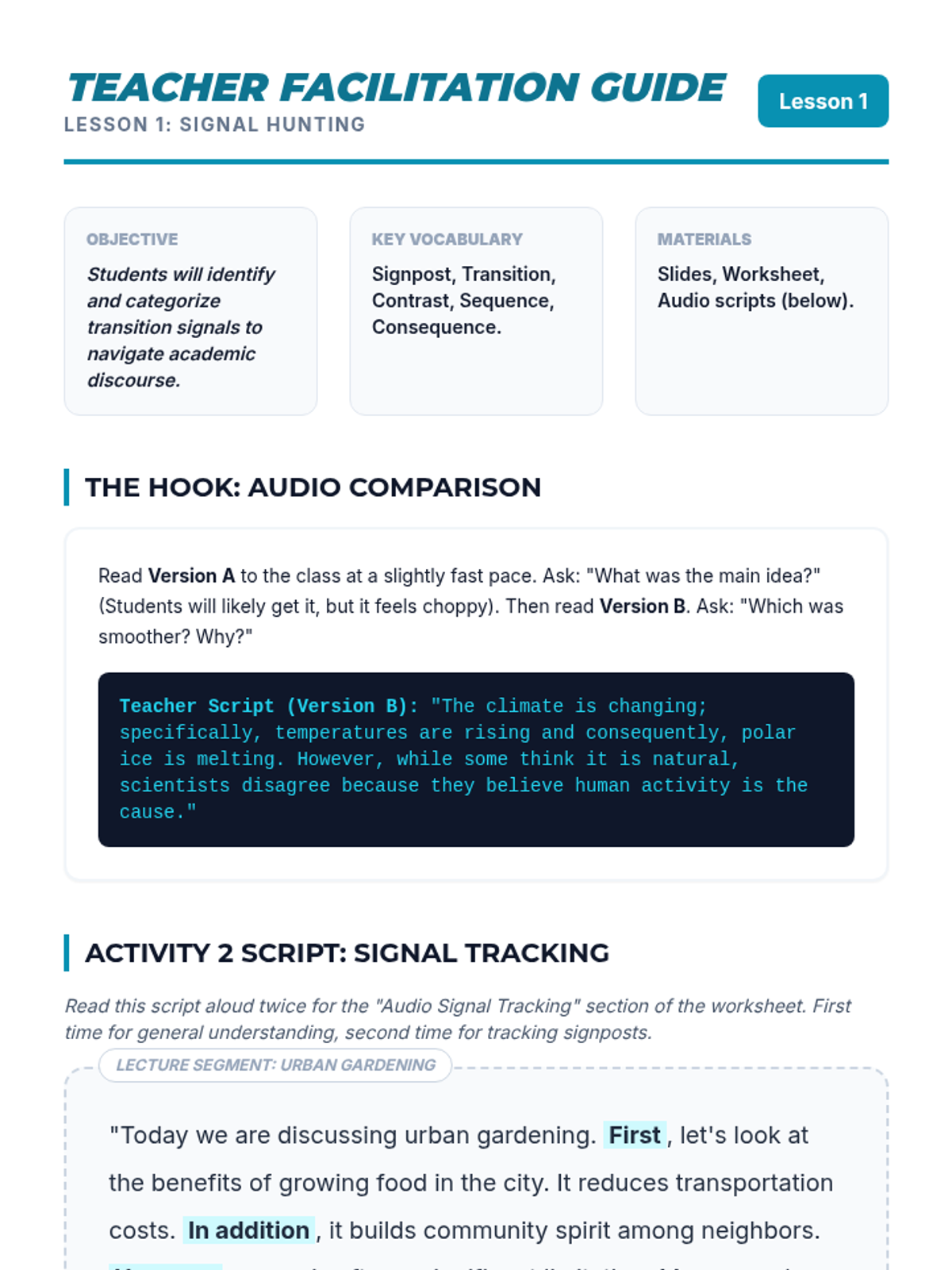
A comprehensive sequence for 10th-grade ESL students focusing on academic listening and note-taking. Students learn to identify signpost language, use the Cornell method, distinguish main ideas from supporting details, and synthesize information from lectures.
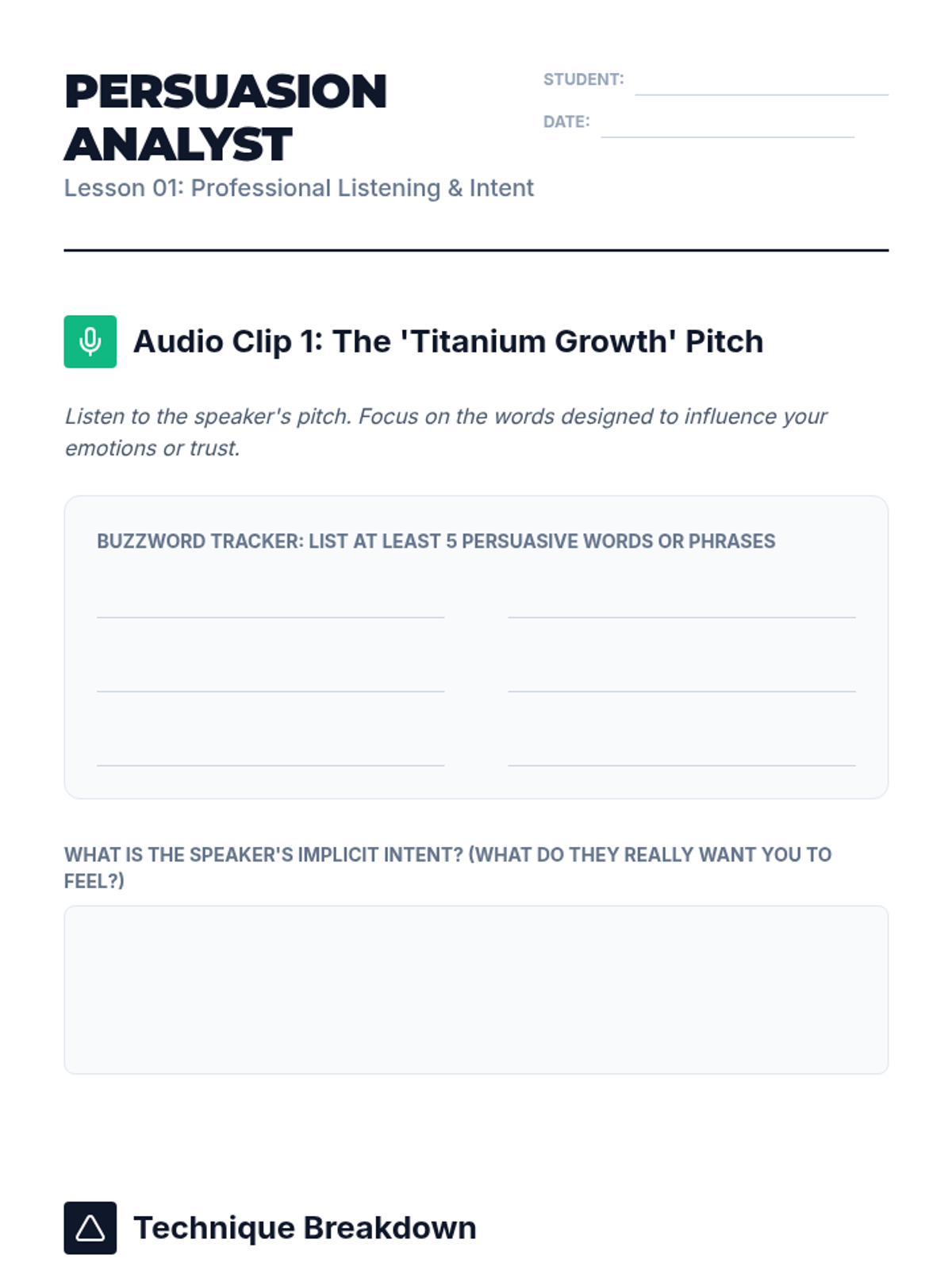
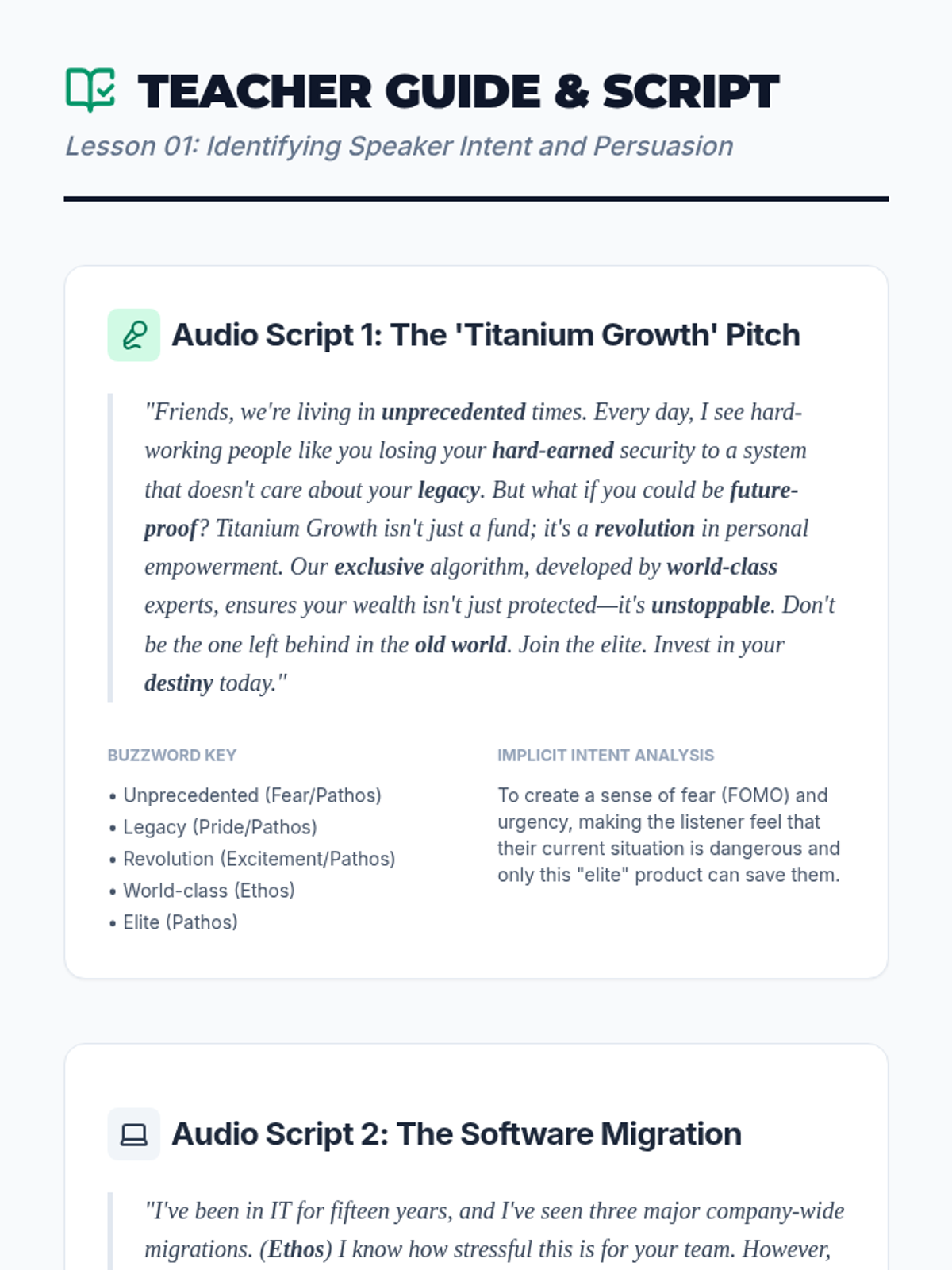
A 5-lesson sequence for 12th-grade ESL students focused on interpreting tone, intent, and implicit meaning in professional settings like job interviews and negotiations.
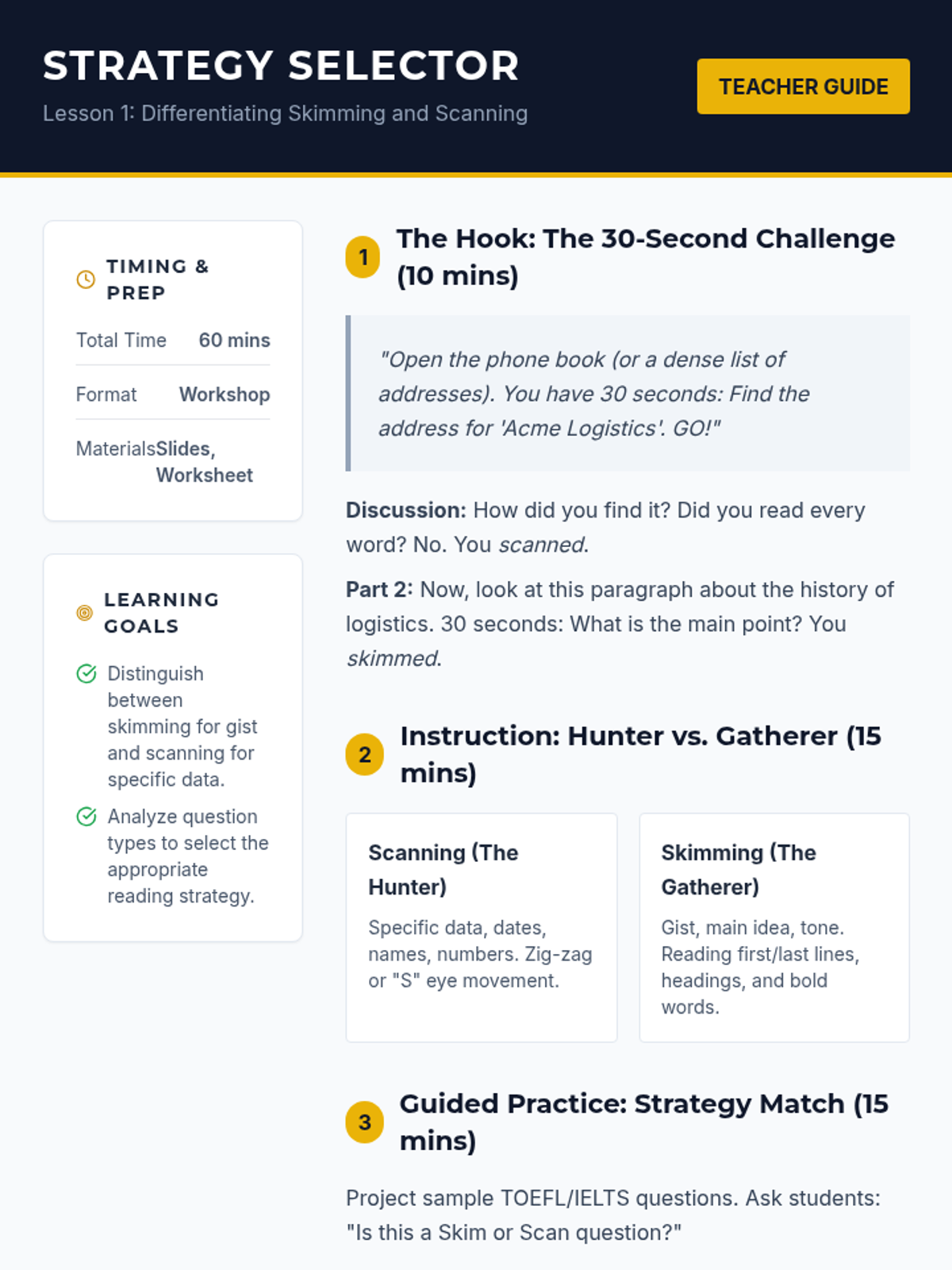
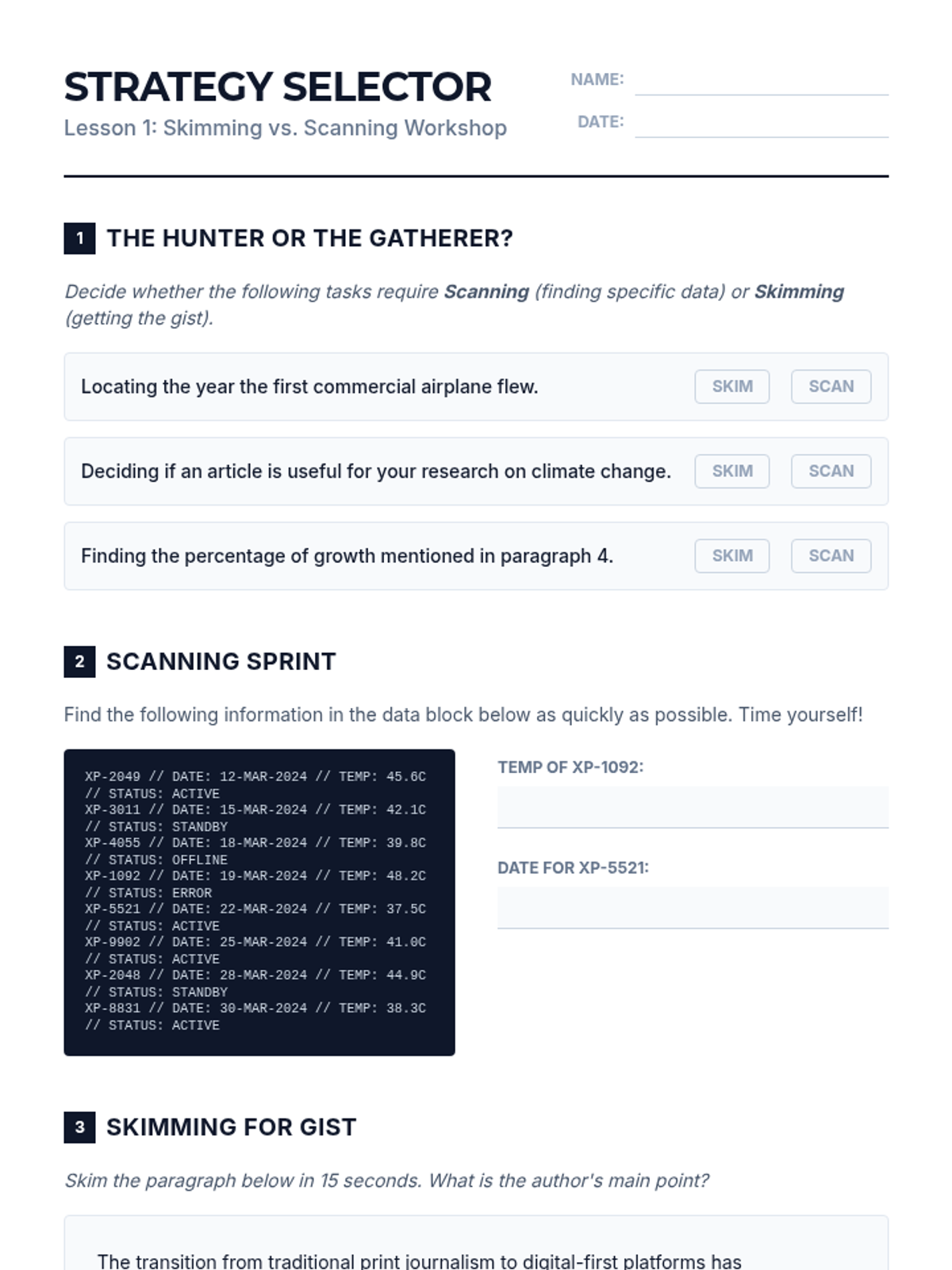
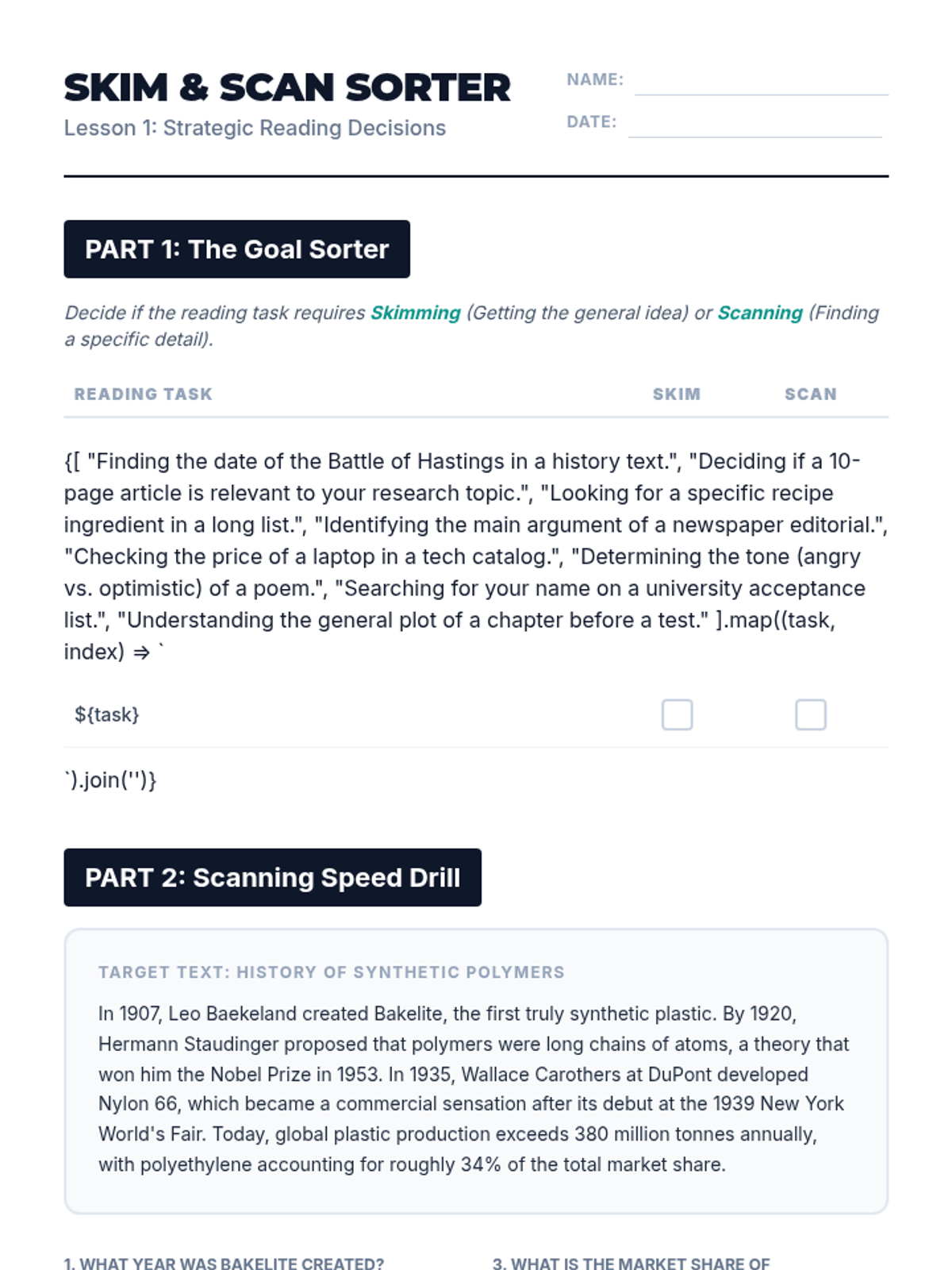
A workshop-style sequence for undergraduate ESL students to master skimming and scanning techniques for high-stakes academic exams. Students move from conceptual understanding to timed application, focusing on efficiency and accuracy in dense academic texts.
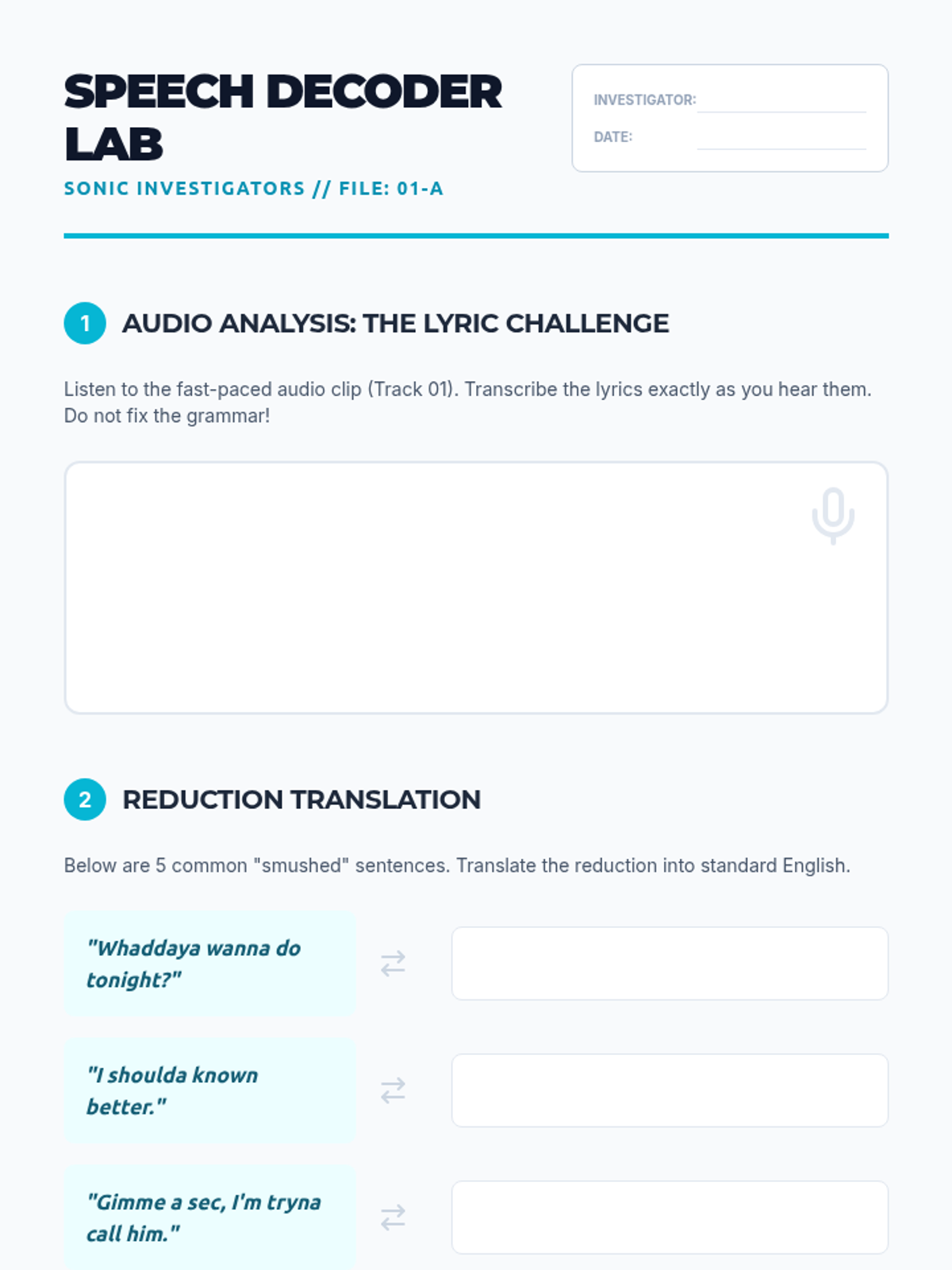
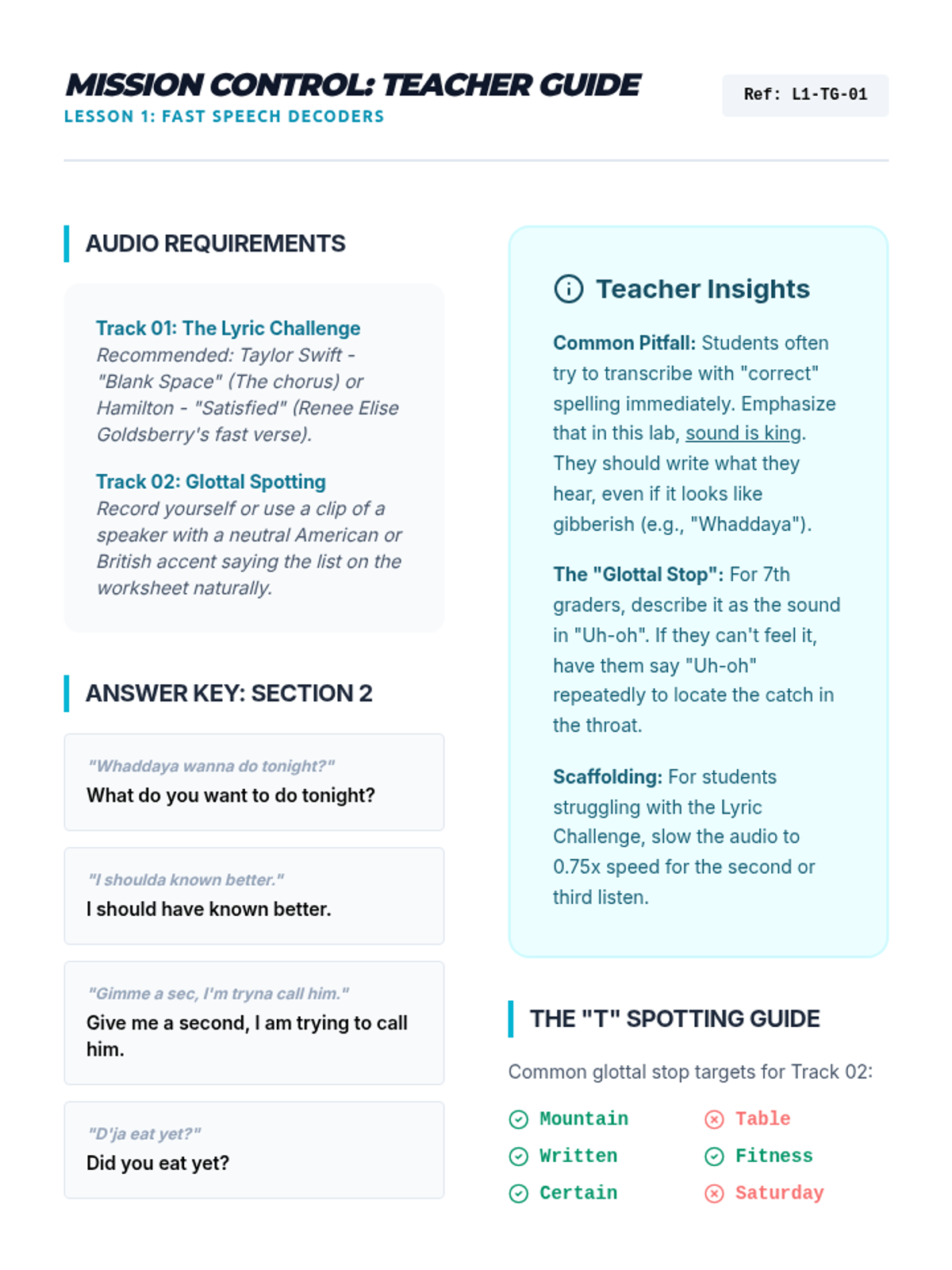
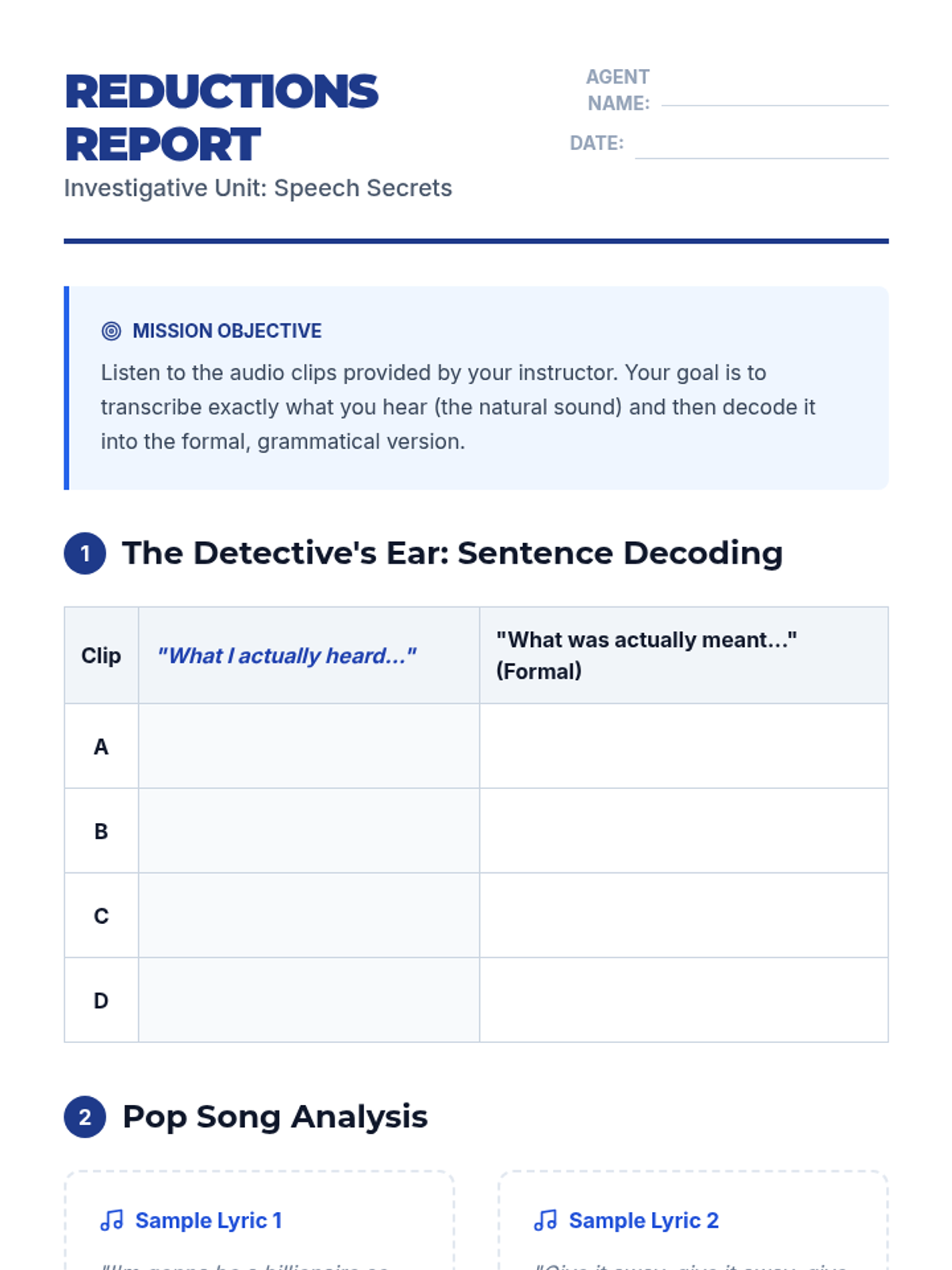
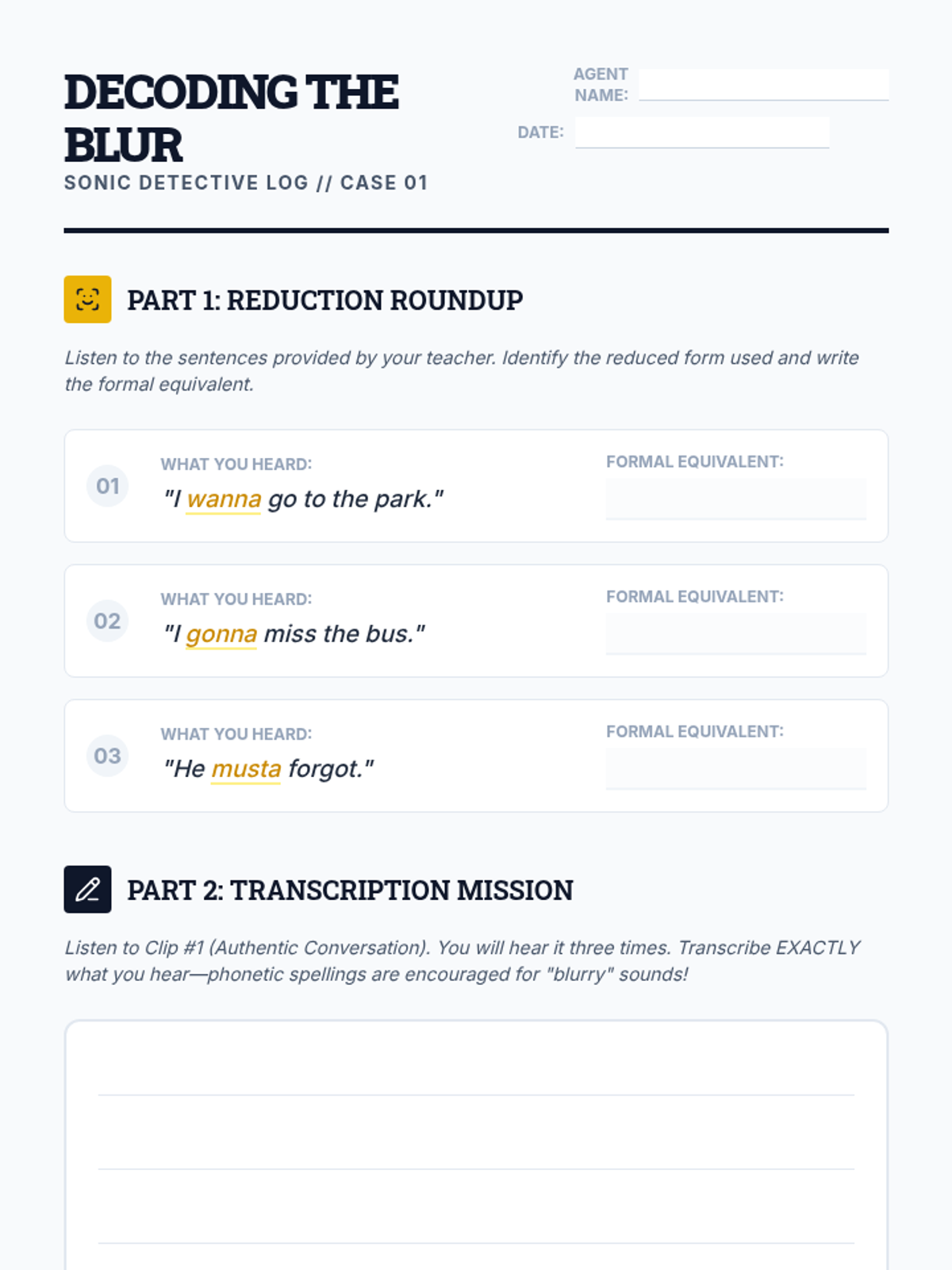
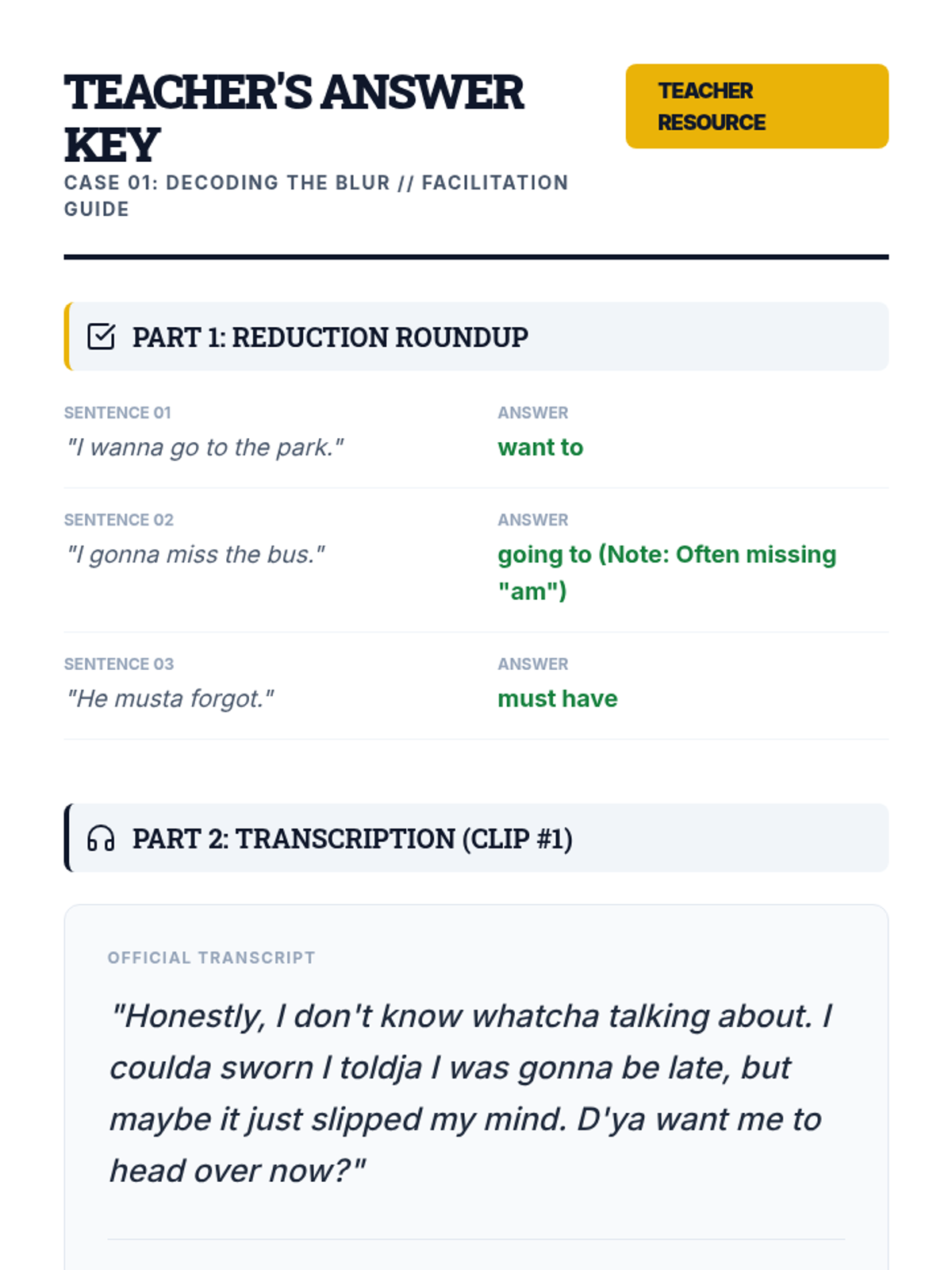
An intermediate ESL sequence focused on mastering the complexities of natural spoken English. Students explore connected speech, reductions, idioms, and prosodic features to decode meaning beyond literal definitions in authentic media contexts like podcasts and interviews.
This sequence prepares intermediate ESL students for university-level academic listening by focusing on signposting language, speaker stance, hedging, and strategic note-taking. Students will move from identifying basic transitions to synthesizing complex arguments from multiple spoken sources.
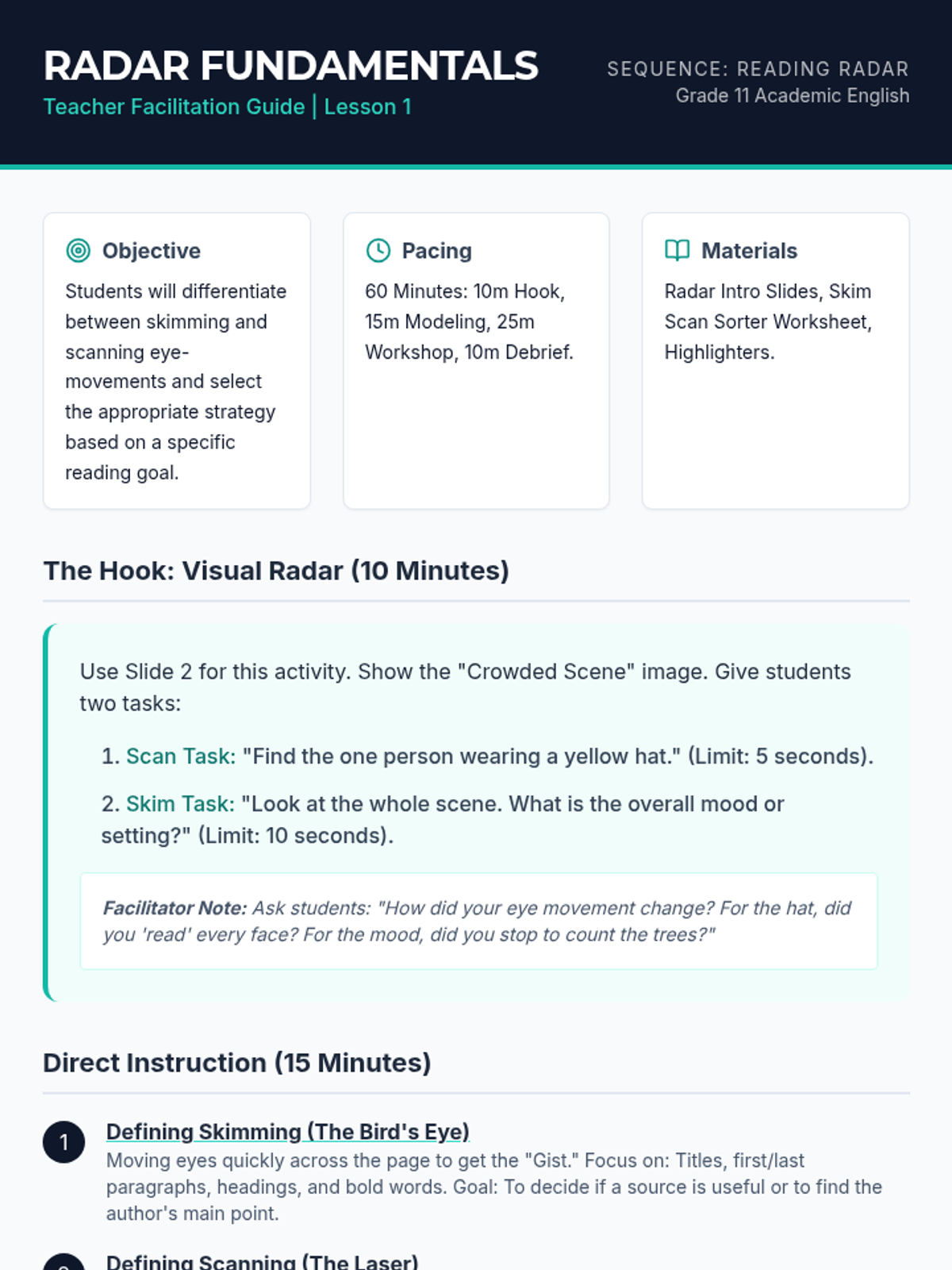
A comprehensive sequence designed for 11th-grade ESL students to master skimming and scanning techniques for academic success. Students progress from basic differentiation of reading speeds to advanced strategies for identifying tone, navigating text structures, and handling paraphrased test questions under time pressure.
An intermediate ESL sequence focused on mastering the nuances of spoken English. Students progress from decoding the mechanics of connected speech to analyzing abstract elements like sarcasm, bias, and persuasion in various audio contexts.
This sequence guides intermediate ESL students through the complexities of spoken English, moving from basic sentence stress to the nuances of sarcasm, idioms, and academic signposting. Students will develop the ability to infer speaker intent and respond appropriately in real-world scenarios.
Students explore English beyond the textbook, focusing on authentic fast-paced speech, regional dialects, and varying registers to improve real-world listening comprehension.
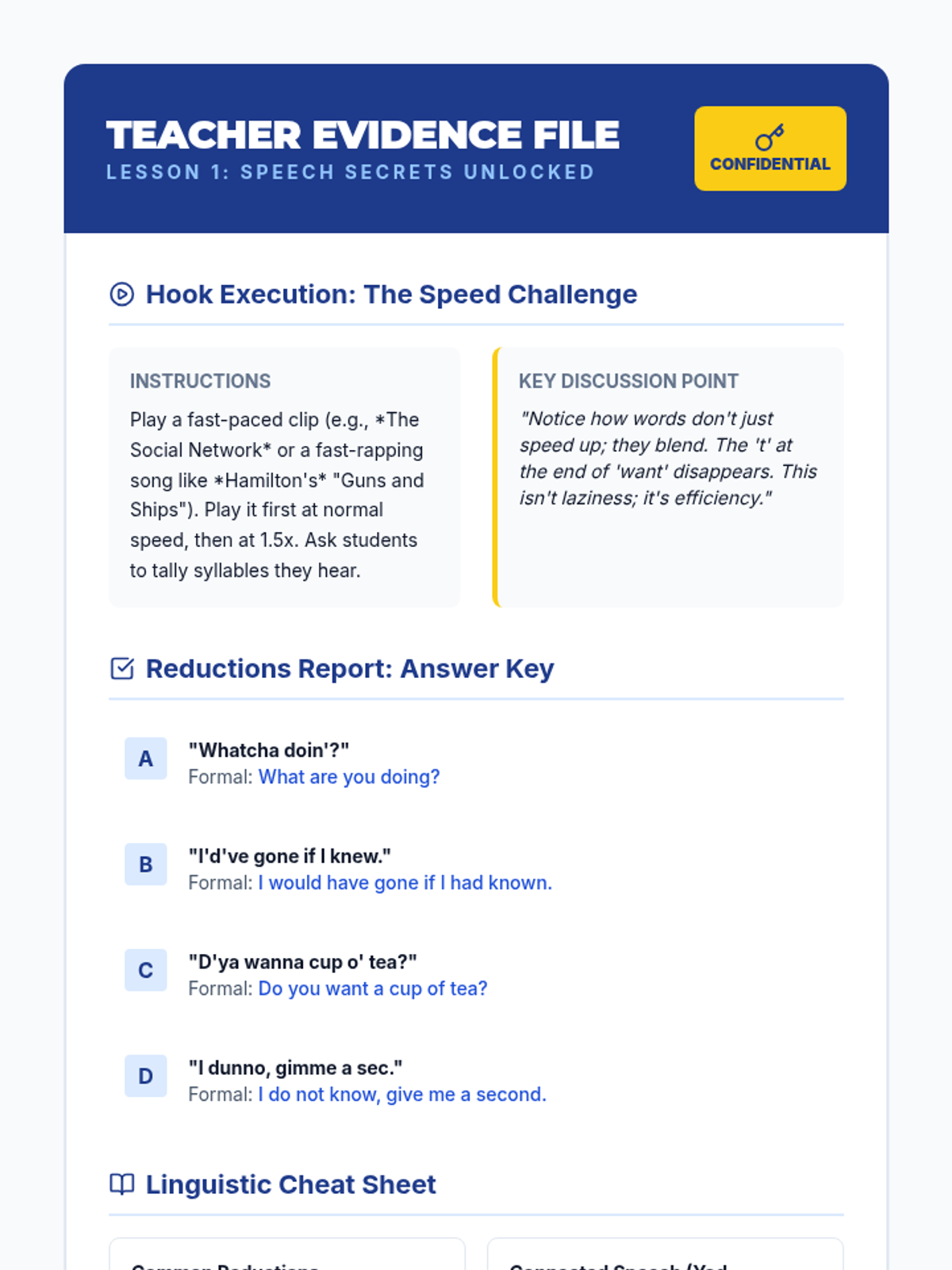
This sequence challenges students to move beyond 'textbook English' to decode the realities of natural, fast-paced speech, including regional dialects and connected speech phenomena. Students investigate how sounds change, disappear, or merge in casual conversation (assimilation and elision) and explore major English accents (American, British, Australian). Through inquiry and case studies of real-world media, students learn to navigate the variability of the English language with confidence.
This sequence addresses the challenges of understanding natural, non-standardized English in global contexts, moving beyond textbook audio to explore regional dialects, strong accents, and connected speech. Students investigate how cultural context shapes language use and practice decoding colloquialisms and slang, culminating in a simulation of diverse English varieties in a professional setting.
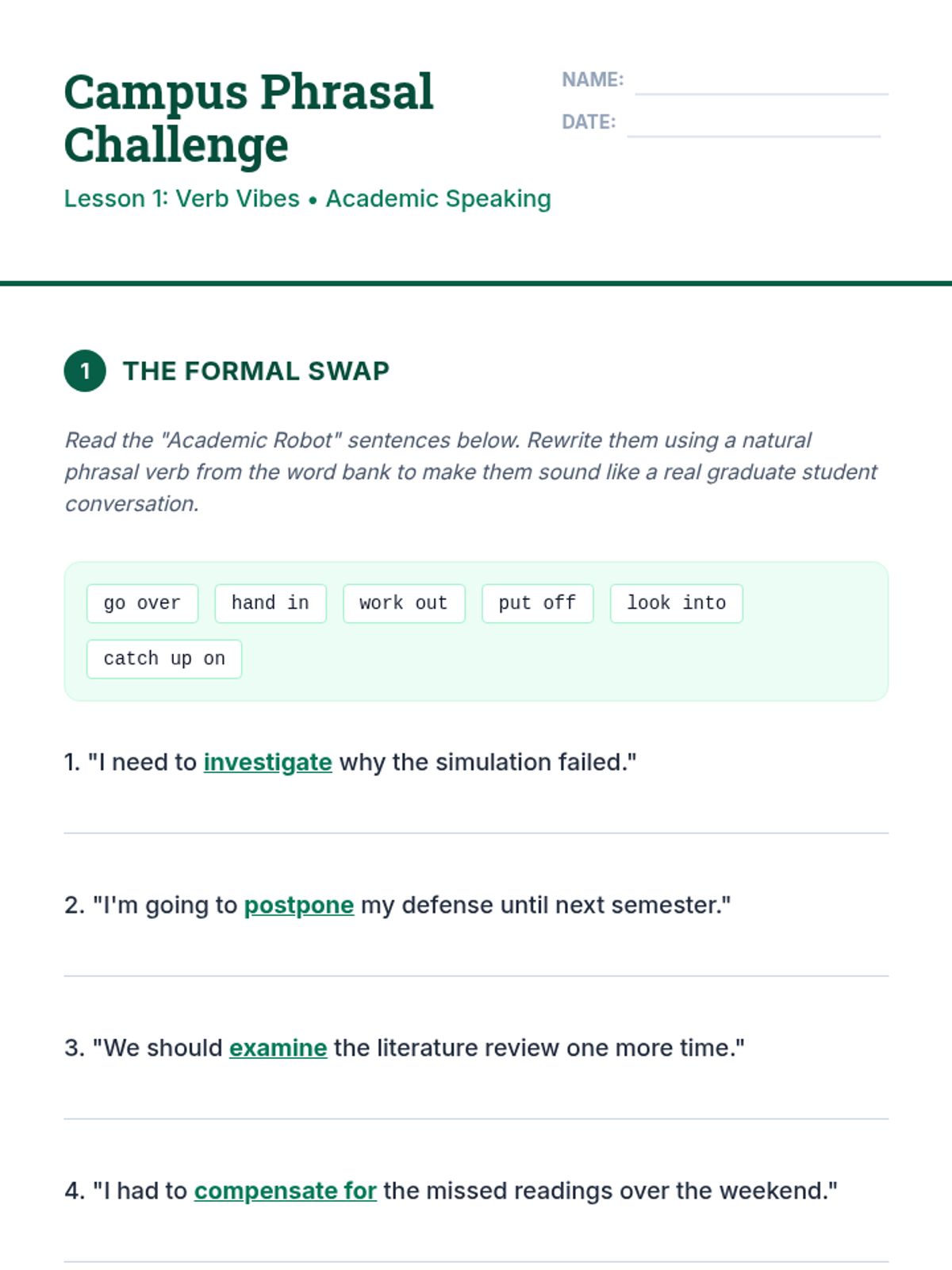
This sequence guides graduate ESL students from literal language to idiomatic fluency, focusing on phrasal verbs, workplace idioms, cultural metaphors, and informal networking rapport. Students will learn to sound more natural and culturally connected in academic and professional settings.
This advanced ESL sequence focuses on mastering natural, unscripted English. Students move beyond textbook grammar to analyze connected speech, regional dialects, and the subtle subtext of authentic media like podcasts and interviews.
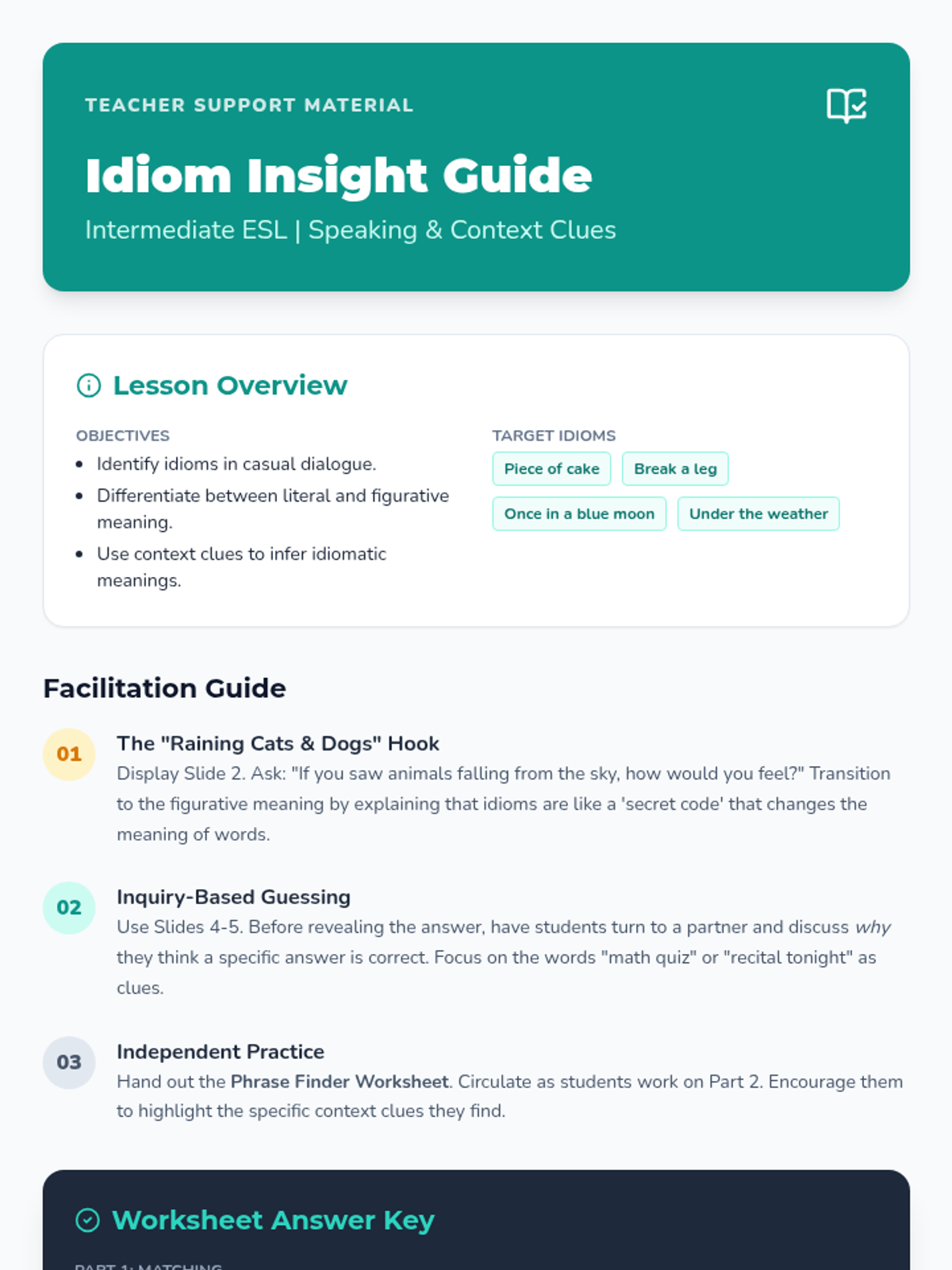
This sequence immerses intermediate ESL students in the nuances of casual English conversation, focusing on idiomatic expressions, emotional intonation, and social registers. Students transition from literal understanding to figurative fluency through inquiry, simulation, and performance.
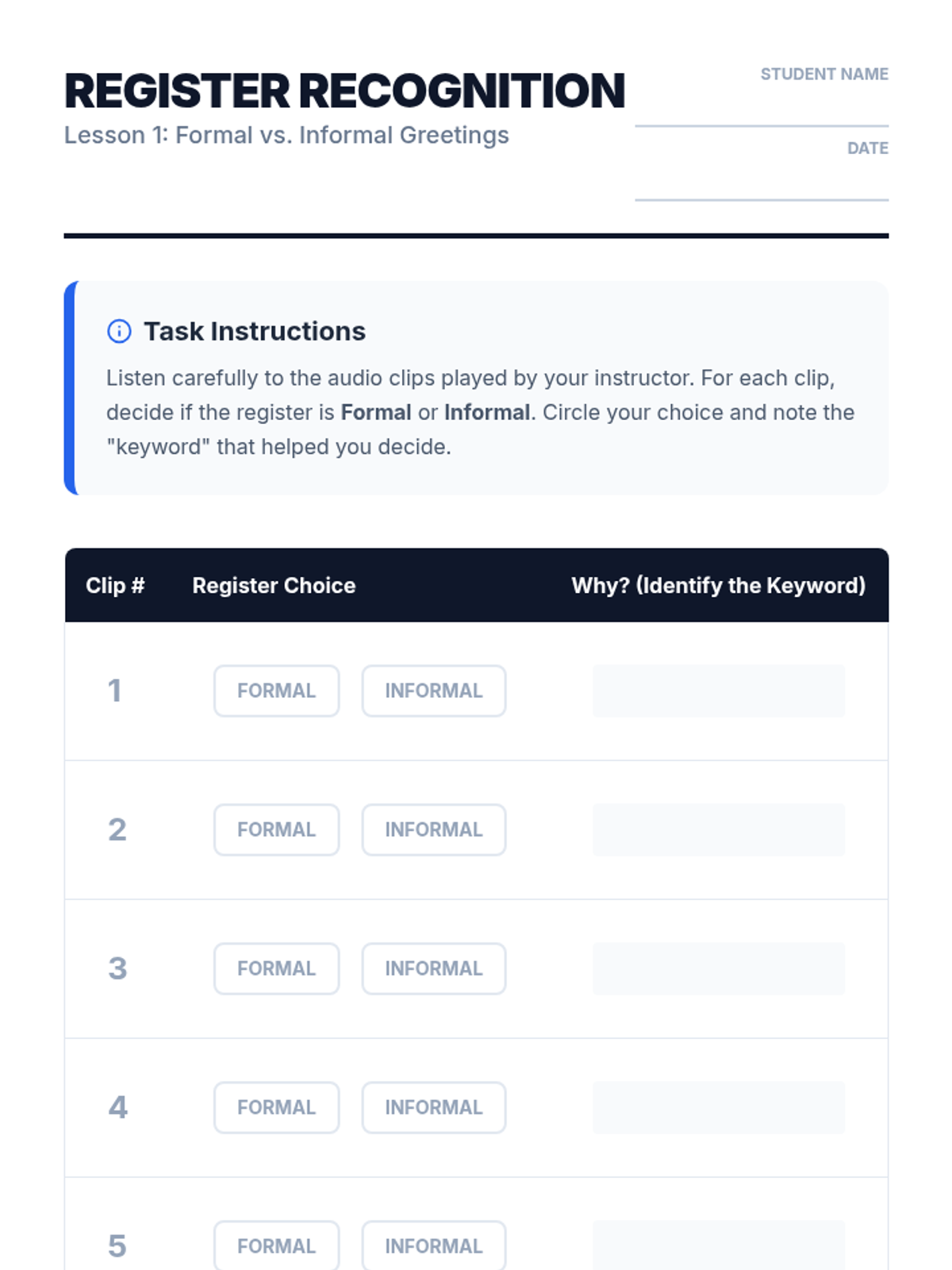
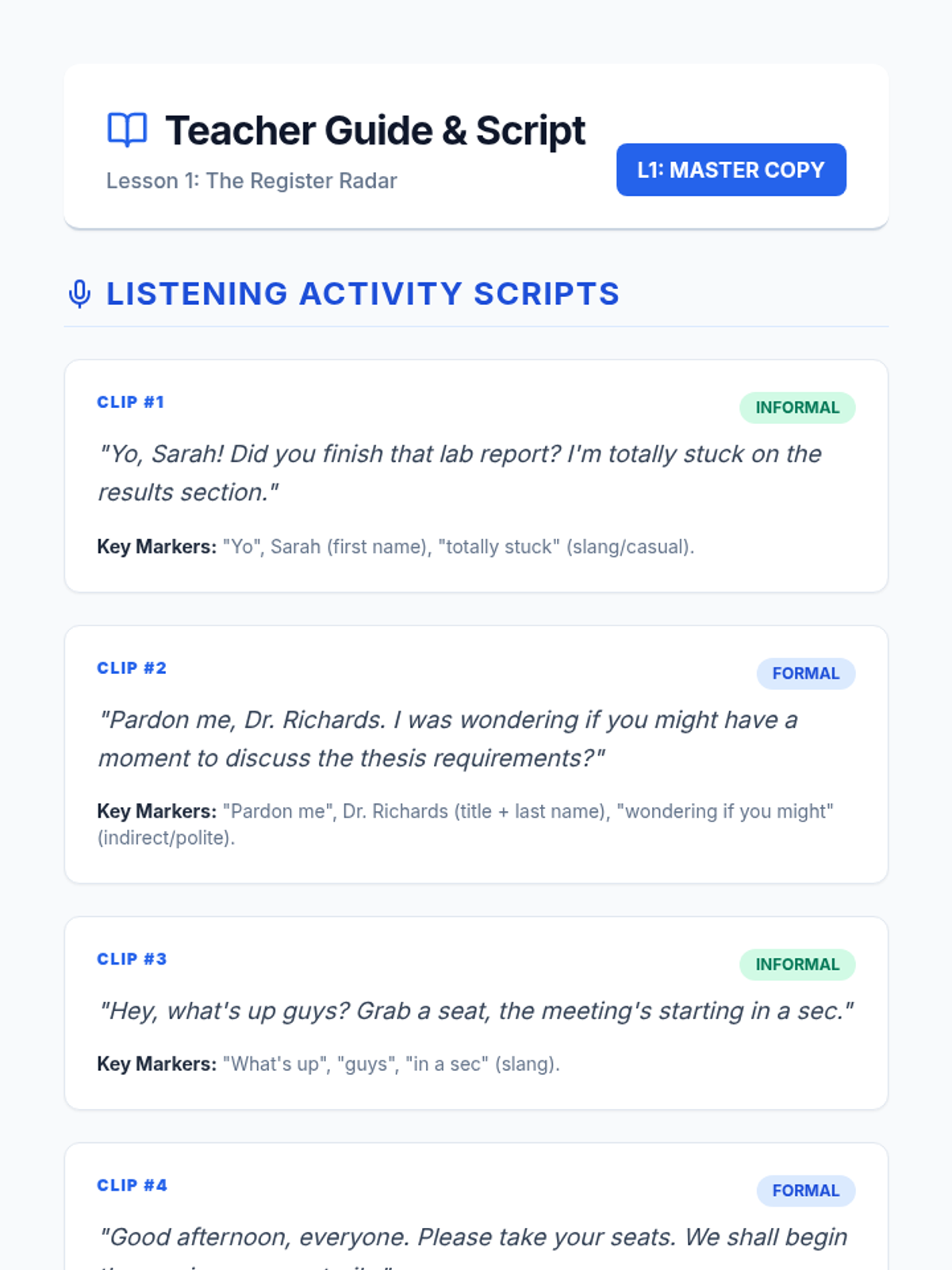
A specialized ESL listening sequence for graduate students, focusing on navigating academic registers, classroom imperatives, campus logistics, and administrative interactions. Students will develop the ability to distinguish between formal and informal tones and follow multi-step oral instructions in a university setting.
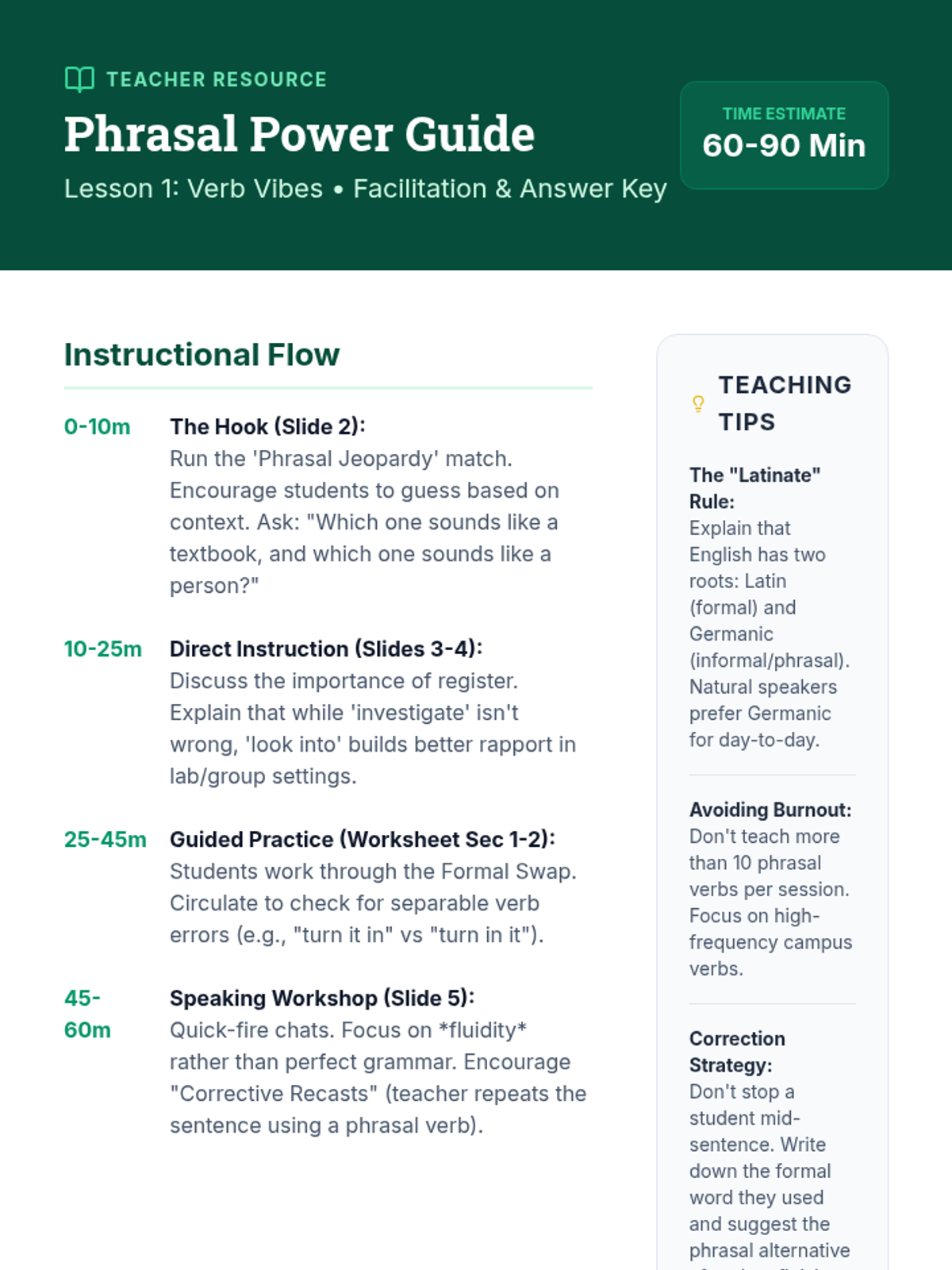
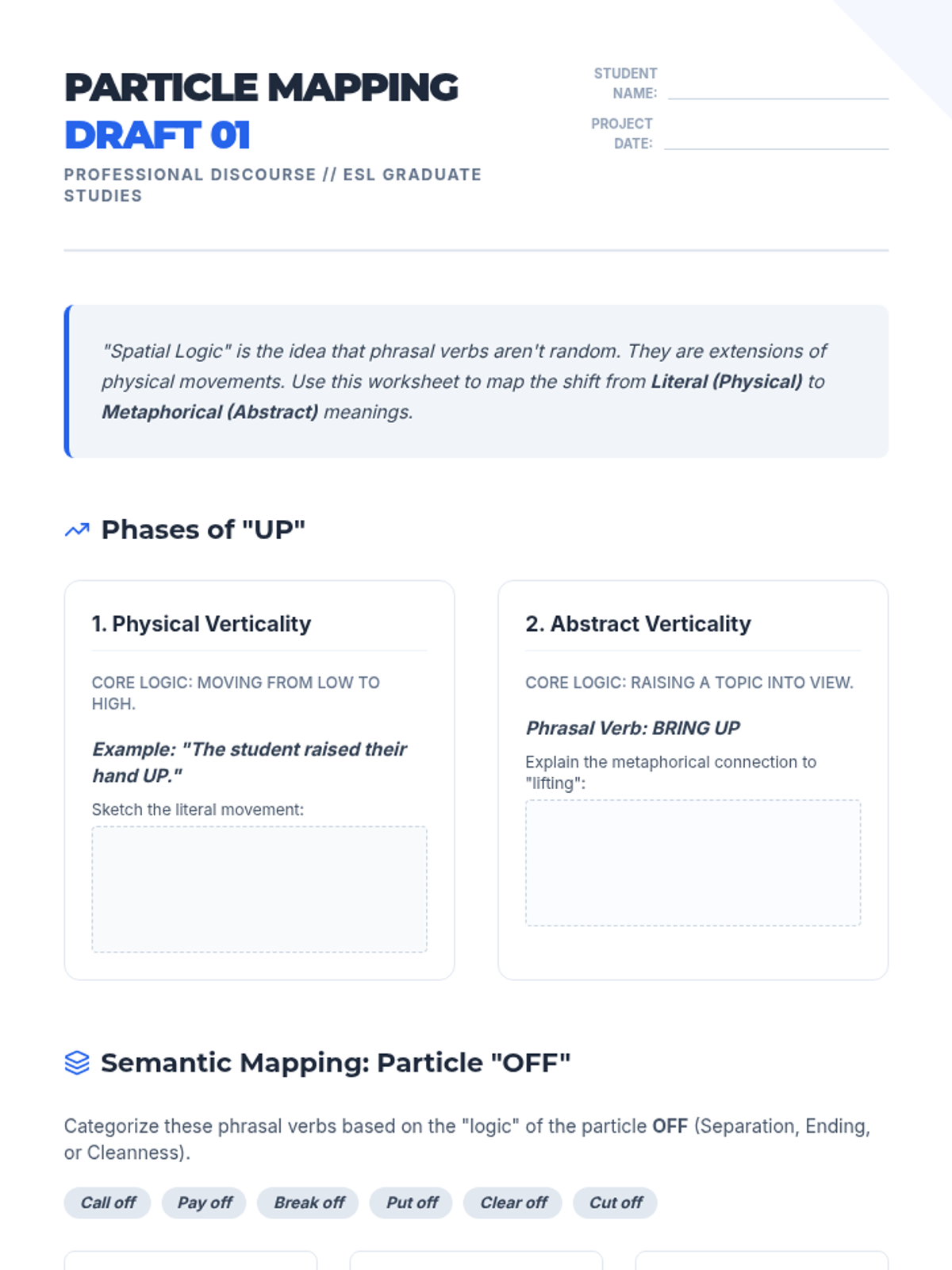
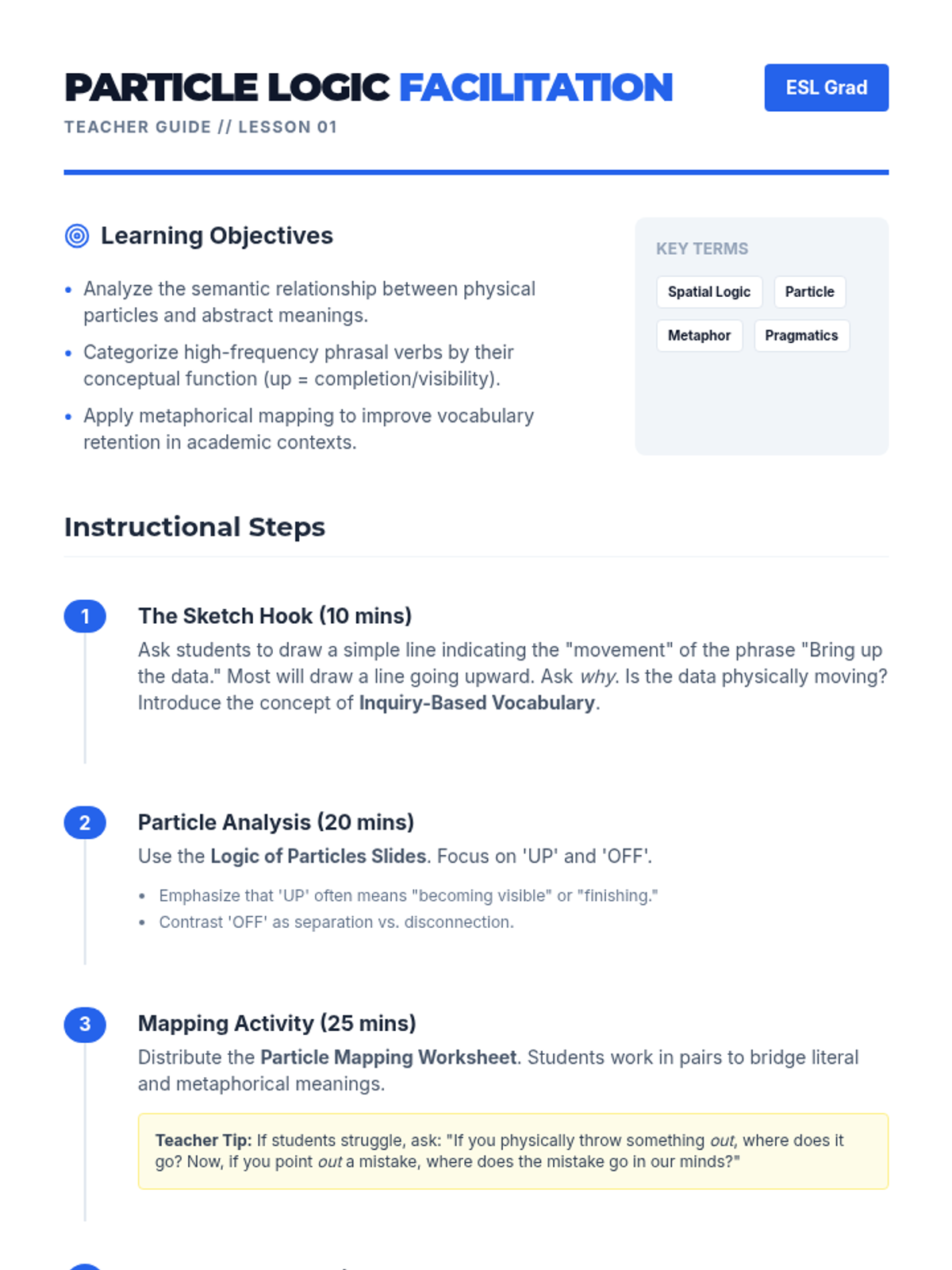
A 5-lesson sequence for intermediate ESL graduate students focused on mastering phrasal verbs and idioms for professional and academic contexts. Students move from the conceptual logic of particles to high-stakes networking simulations, focusing on register and pragmatic appropriateness.
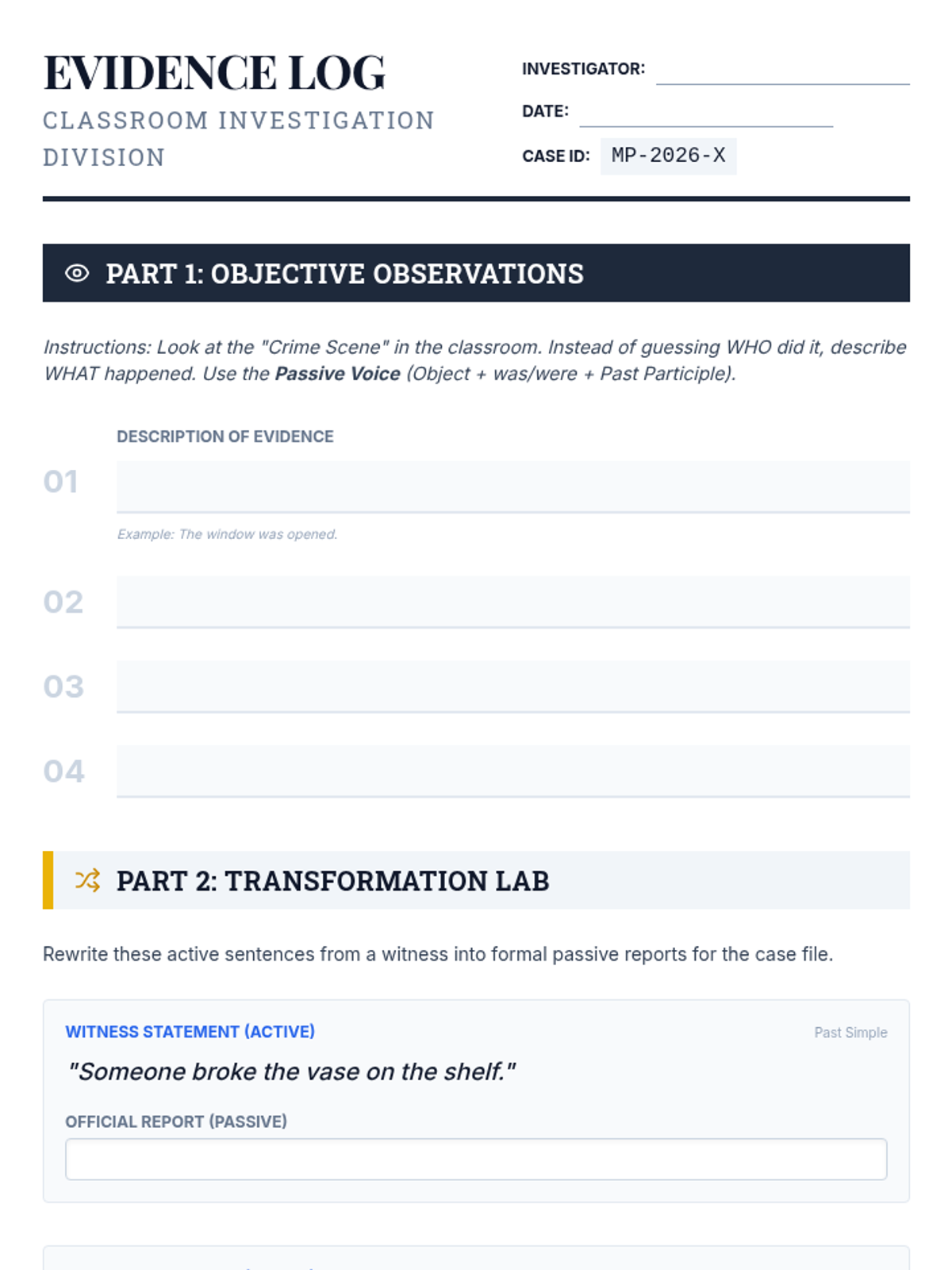
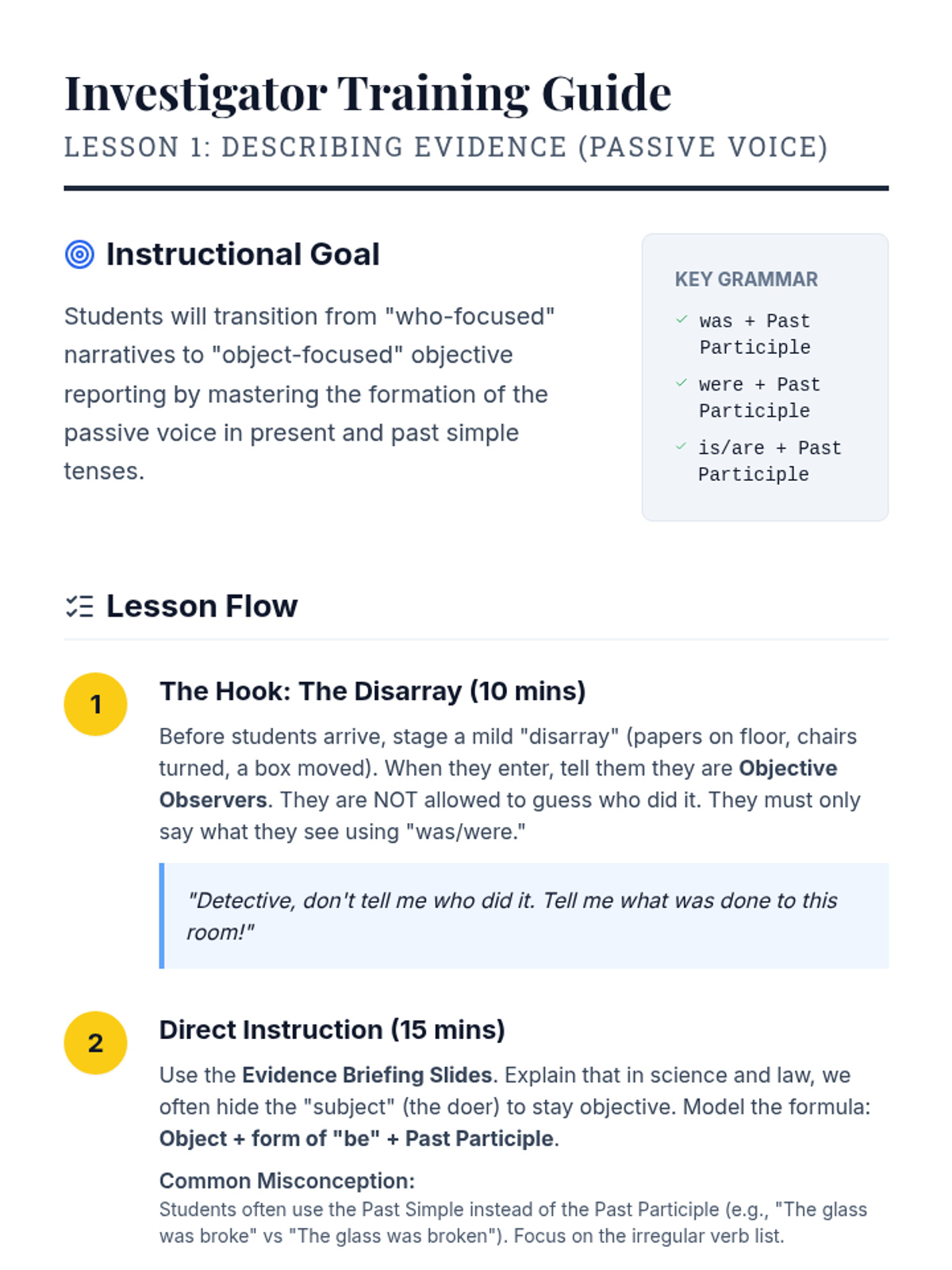
A grammar-focused ESL unit where students act as investigators to solve a classroom mystery. They master passive voice, modals of deduction, reported speech, and past perfect to write an objective case report.
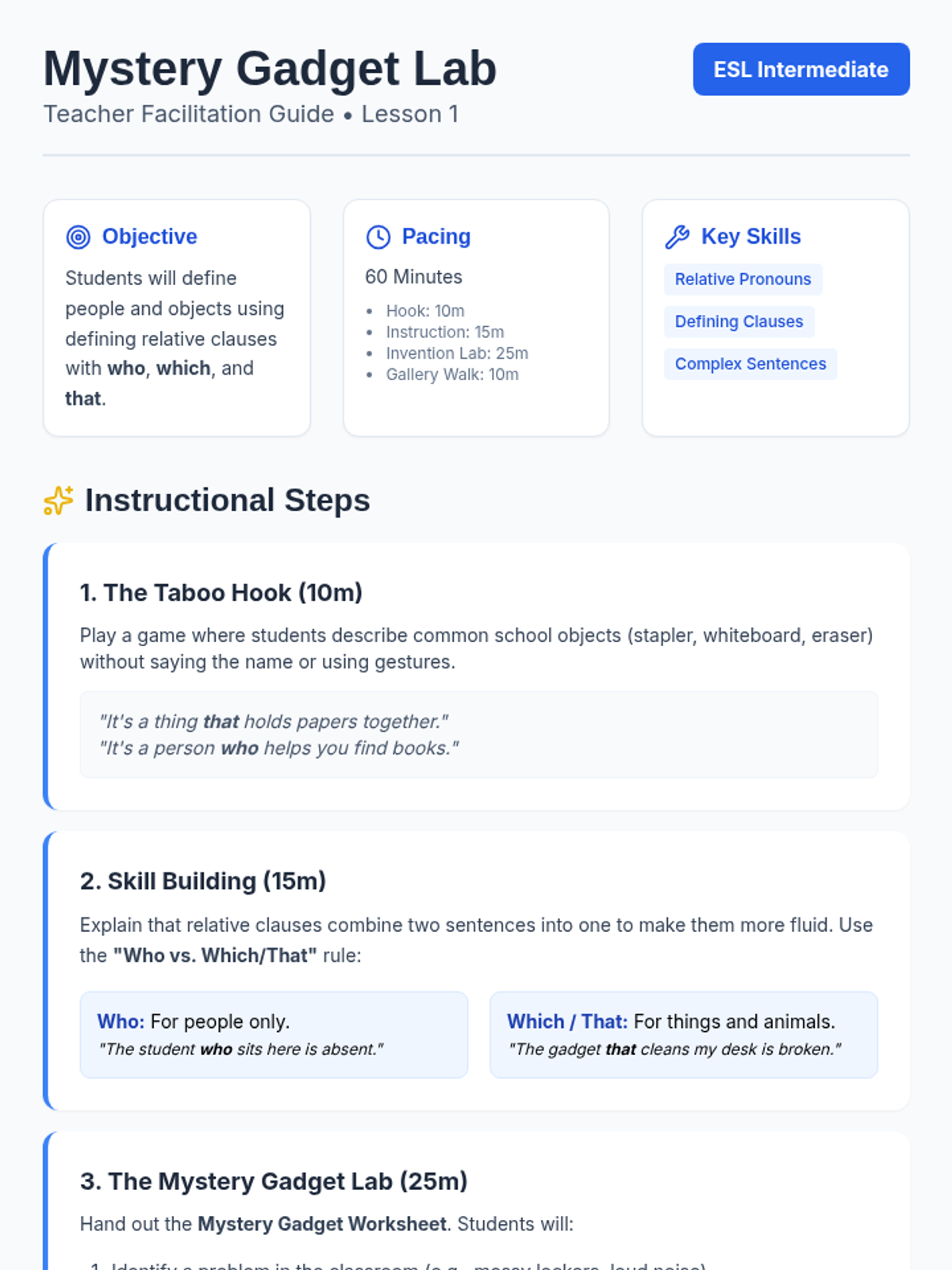
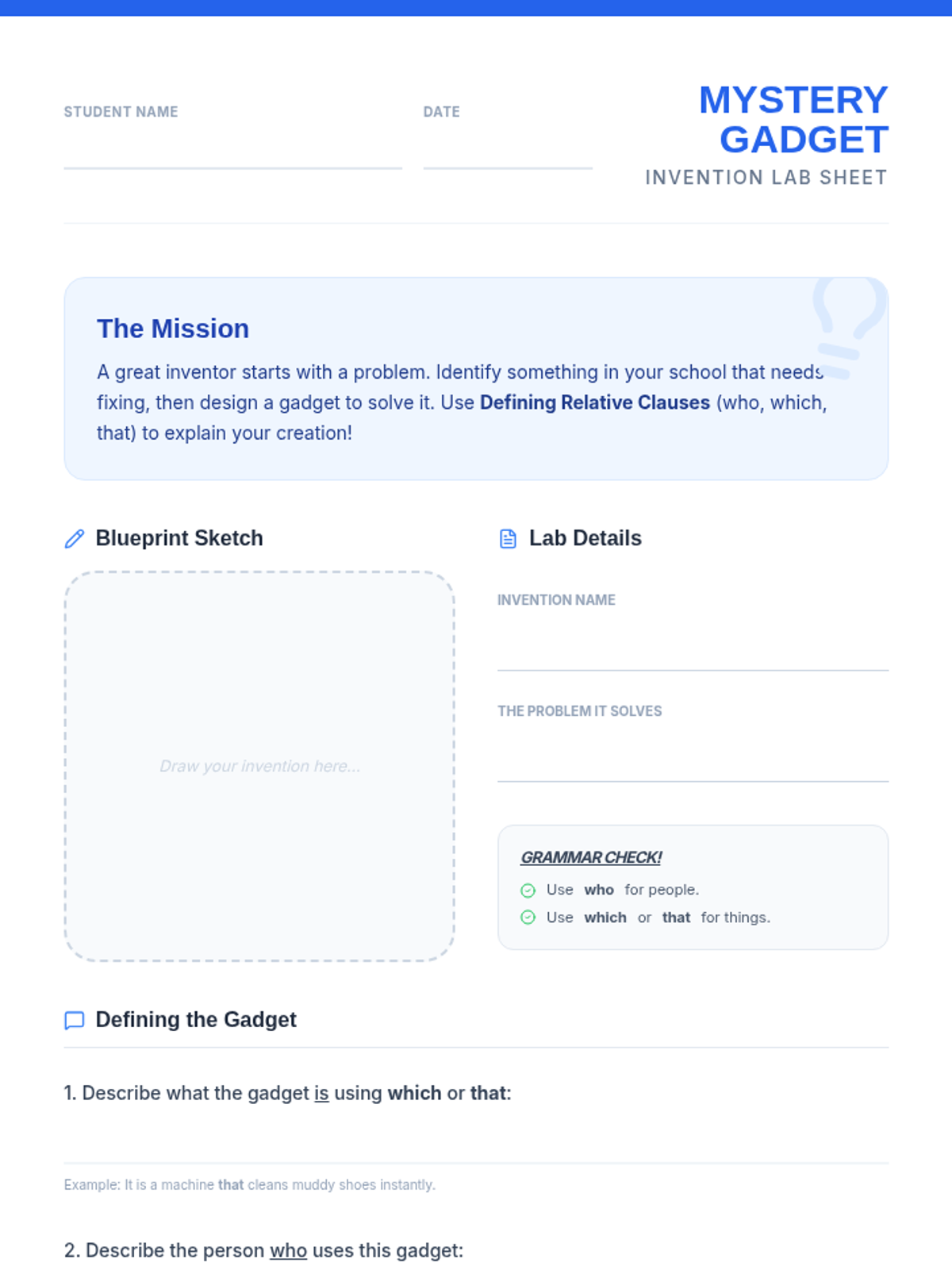
A grammar-focused ESL sequence where students use relative clauses and conditionals to design and pitch inventions for a 'School of the Future.' Students move from defining objects to predicting outcomes and hypothesizing wild improvements.
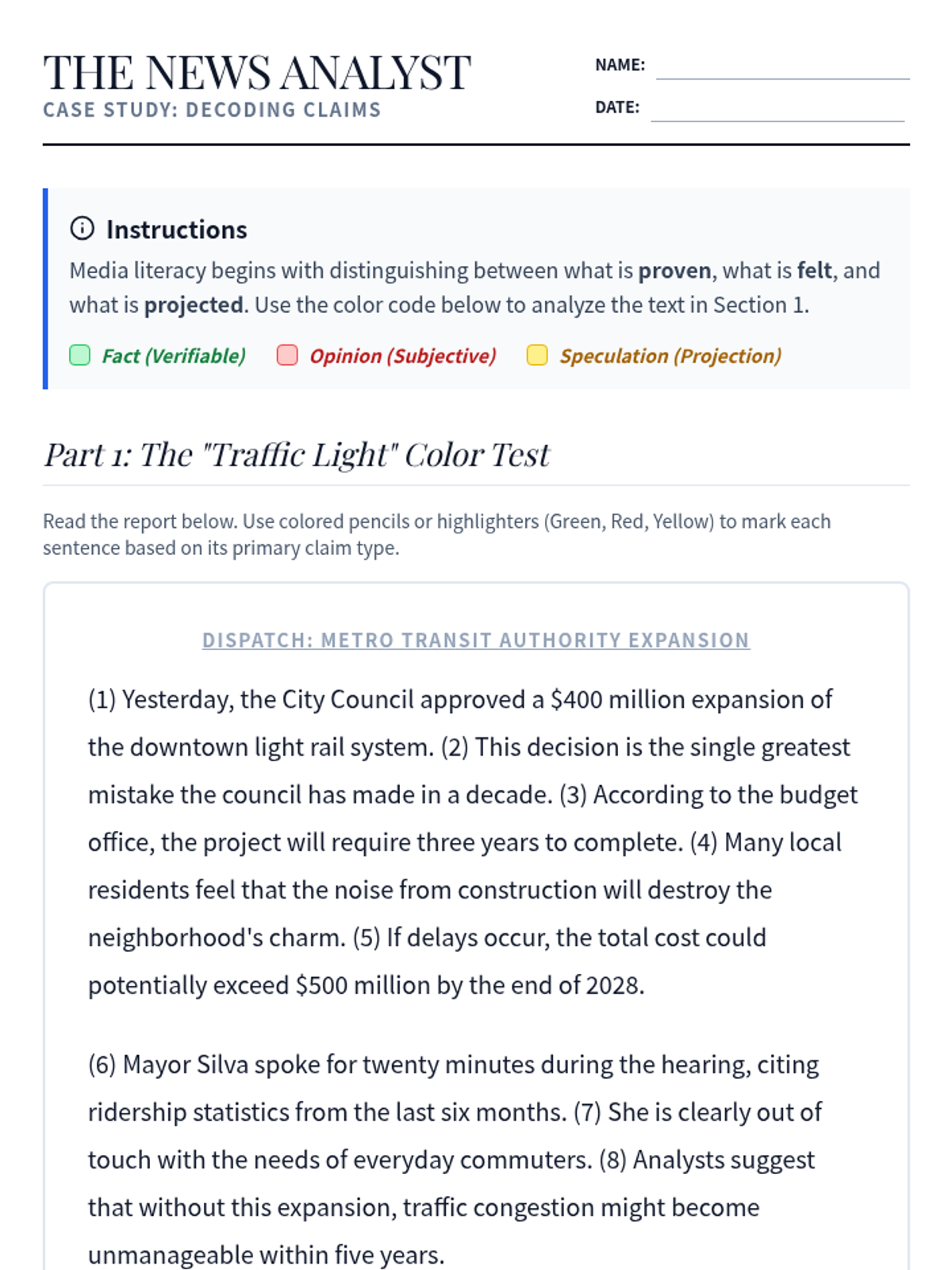
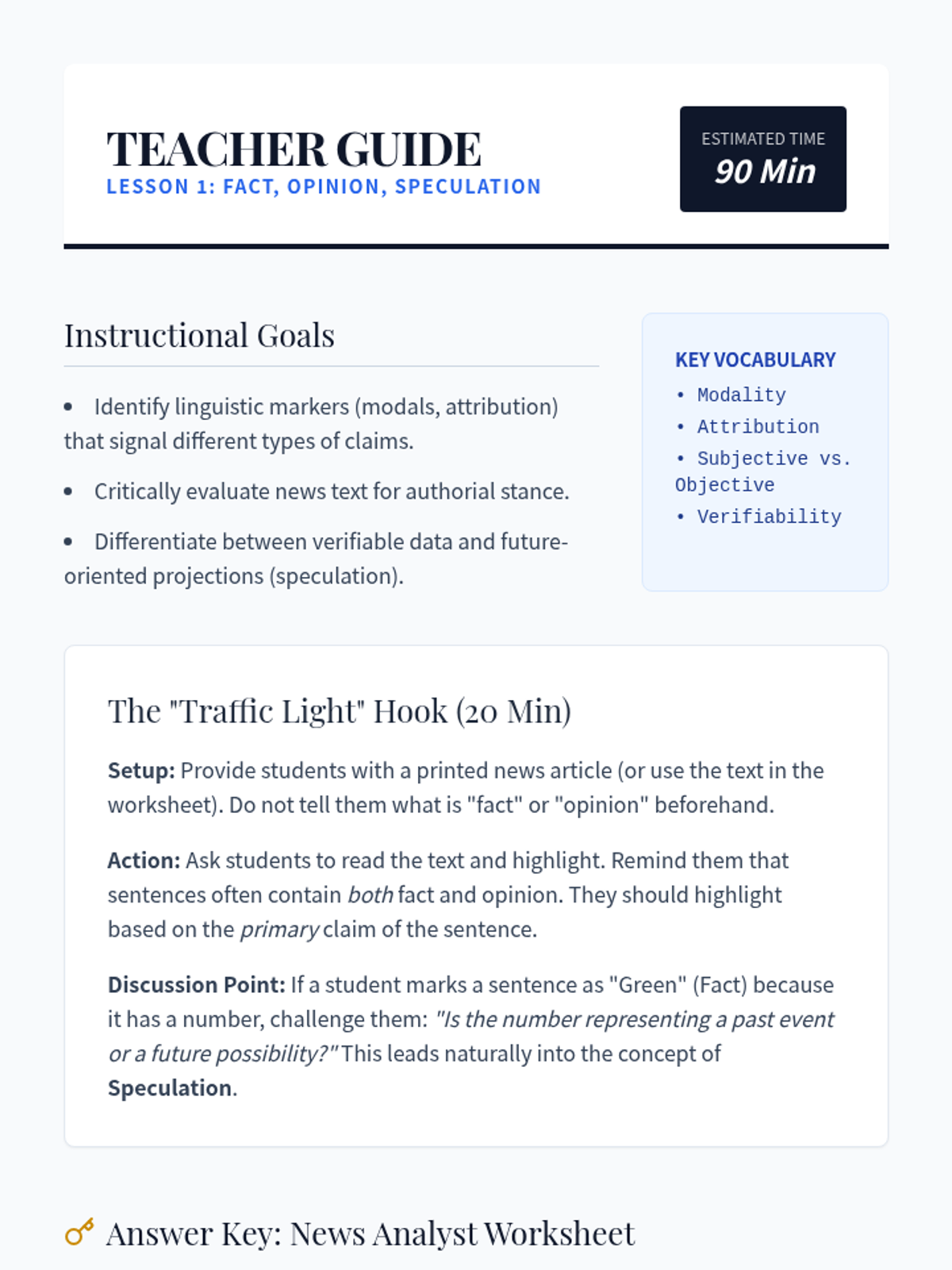
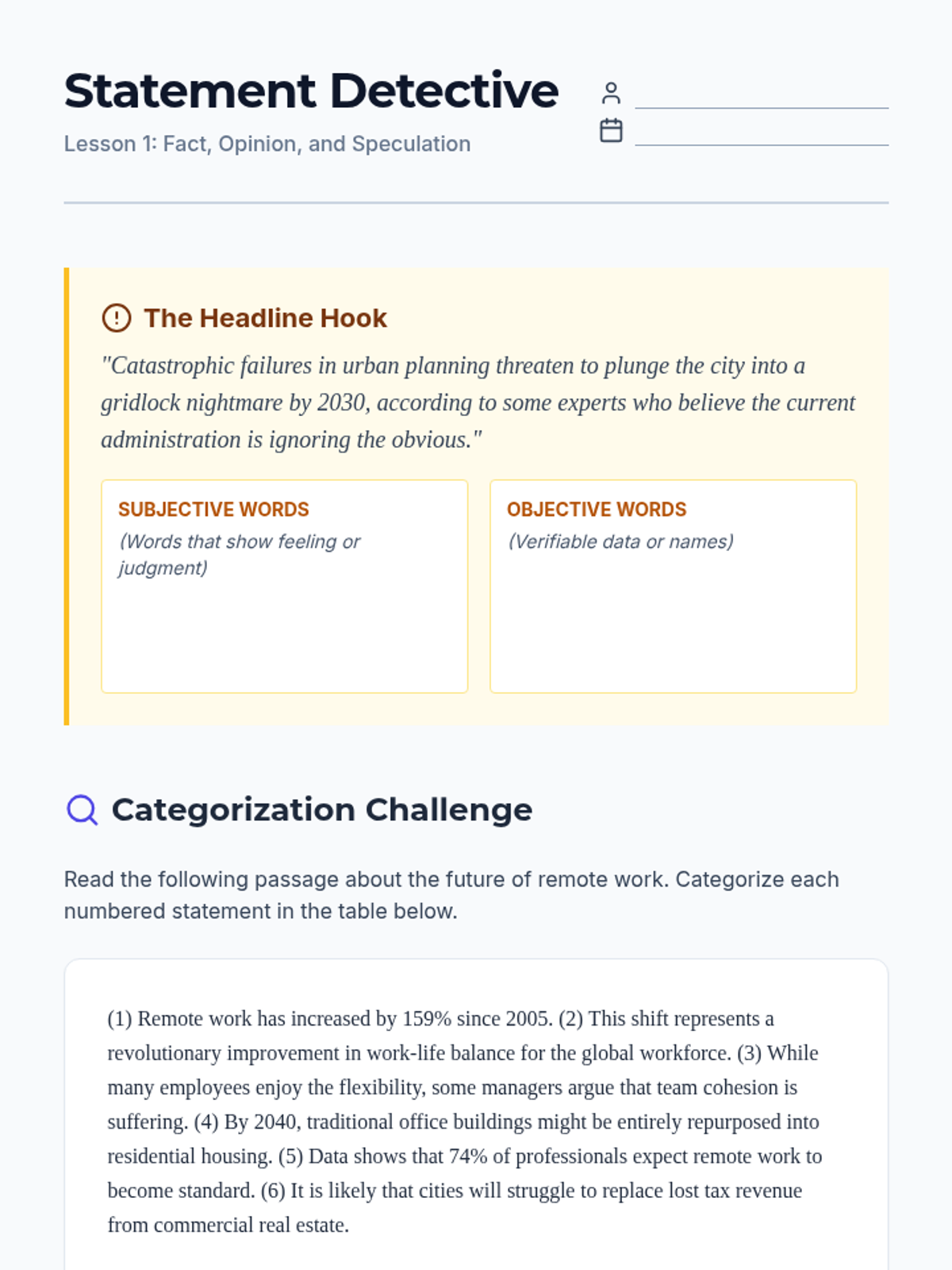
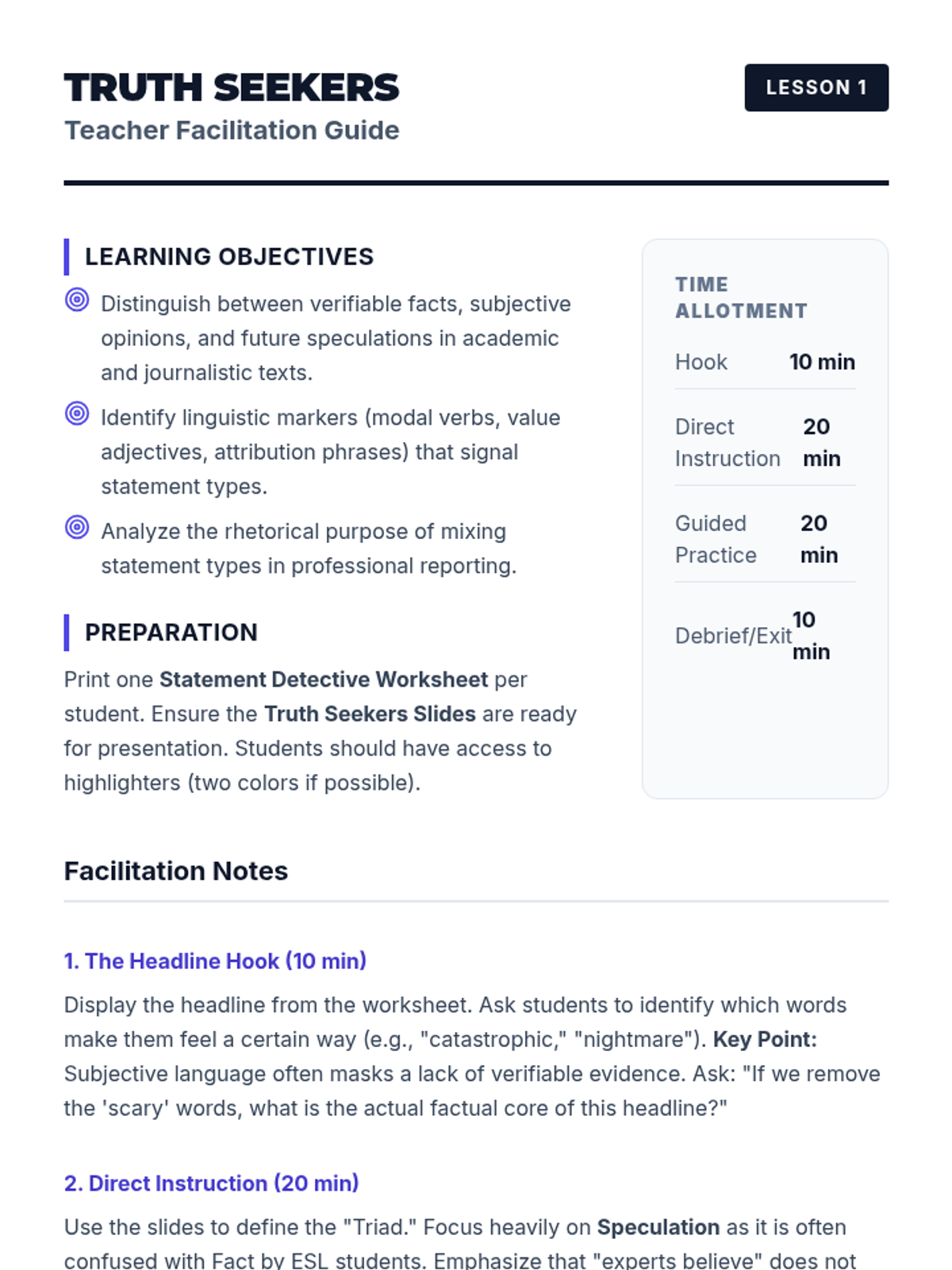
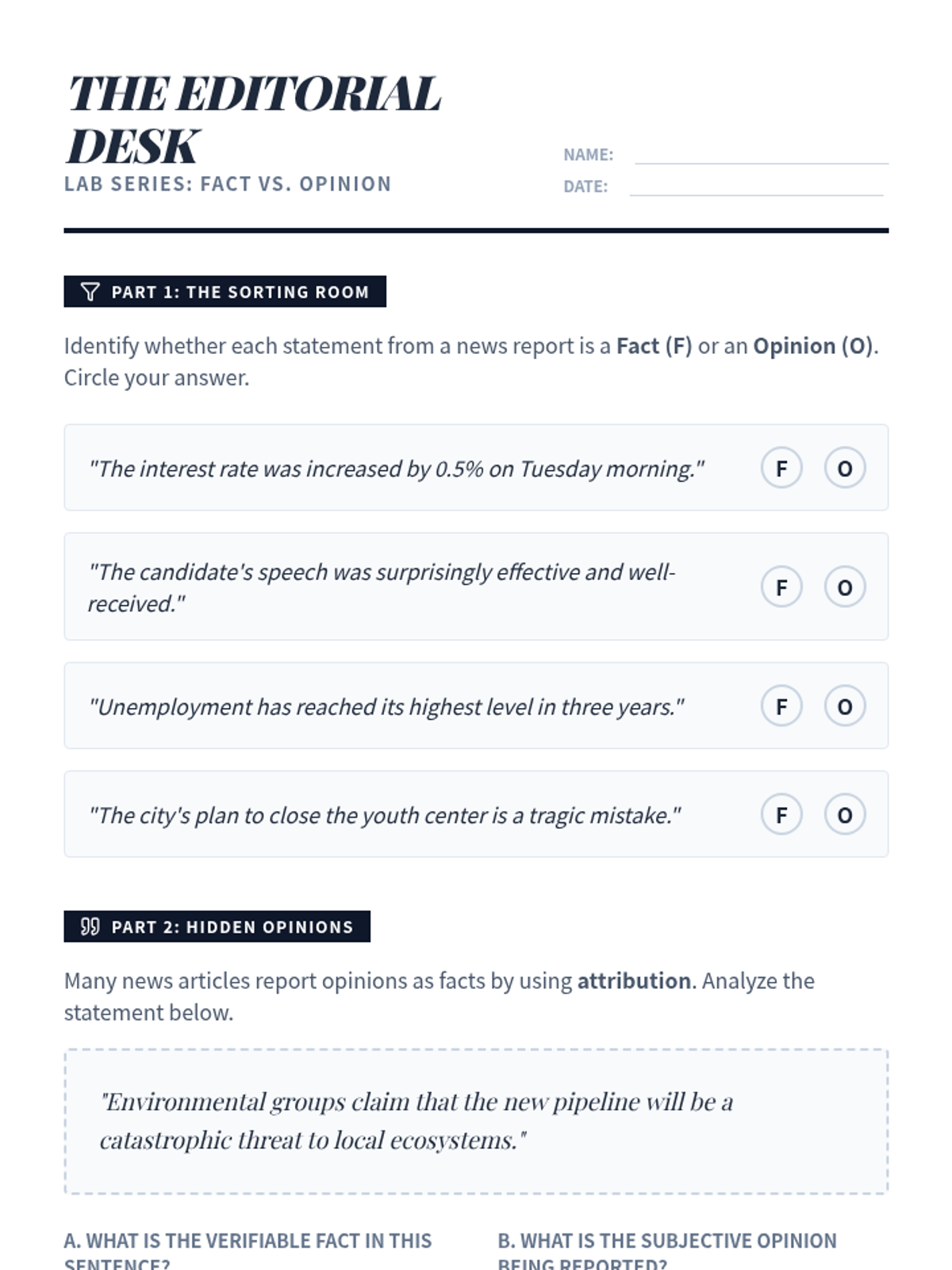
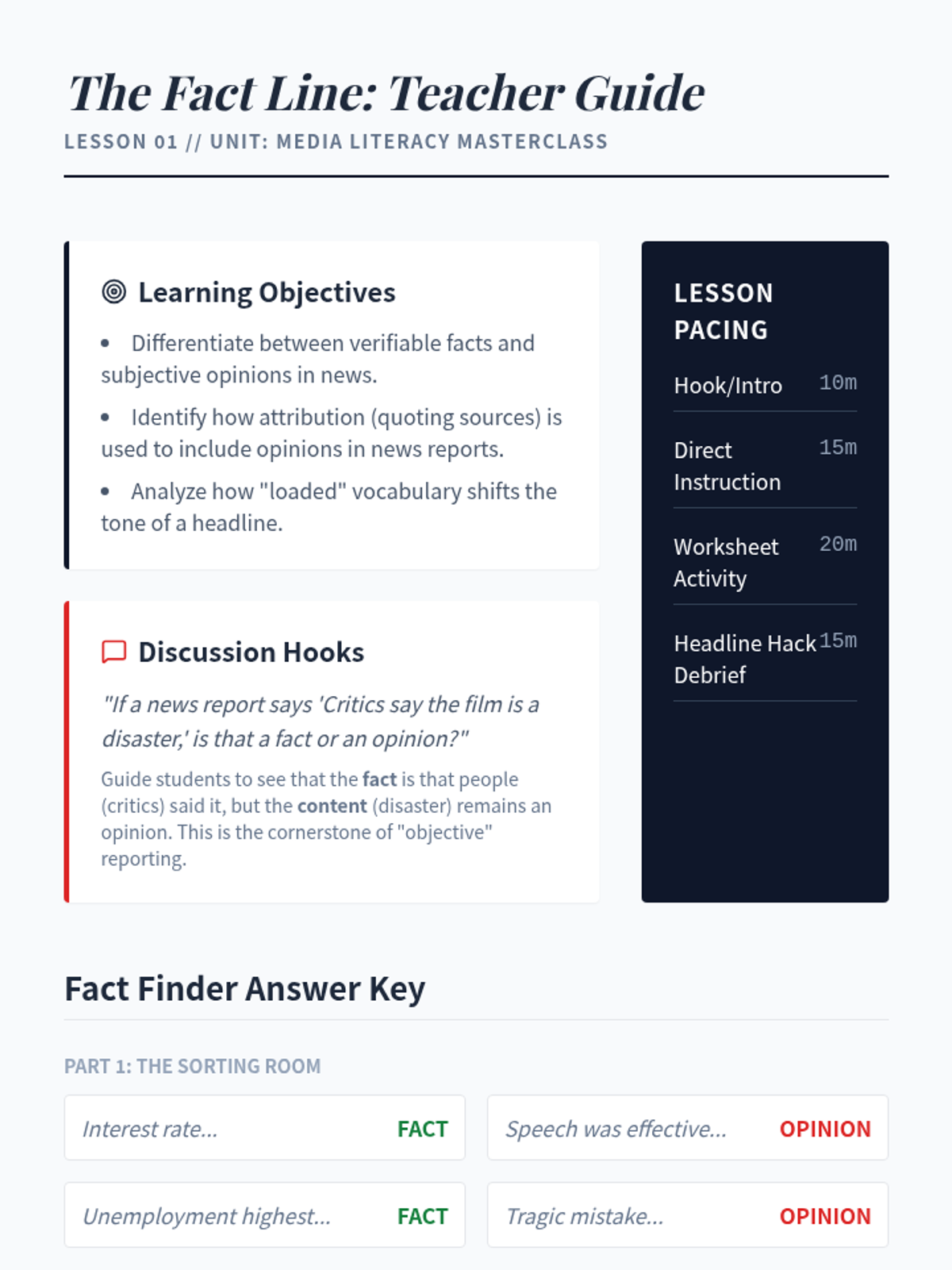
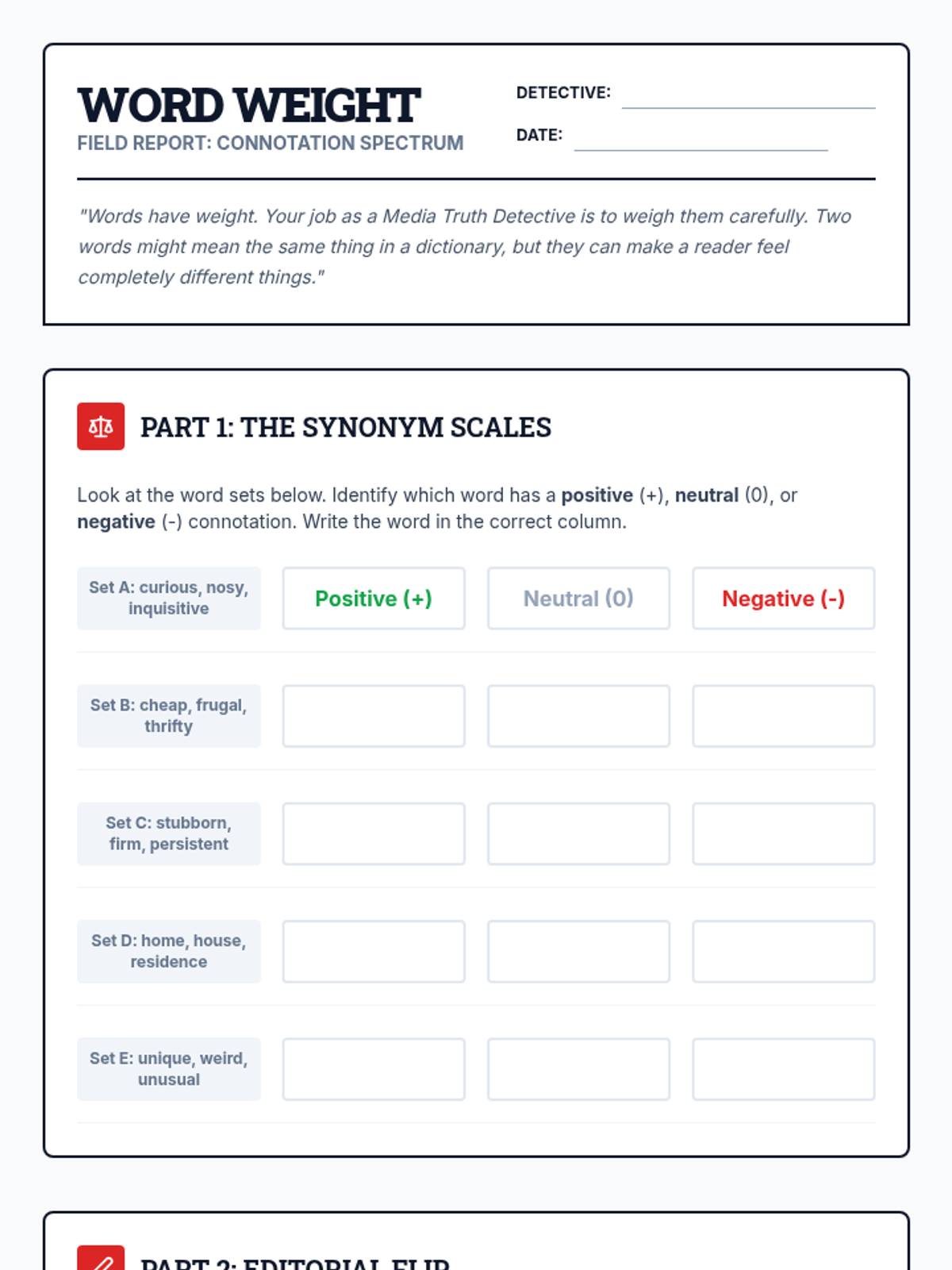
This sequence for intermediate ESL graduate students develops critical media literacy skills, focusing on the linguistic markers of fact, opinion, and speculation, the impact of connotative vocabulary, and the detection of bias and satire in complex texts.
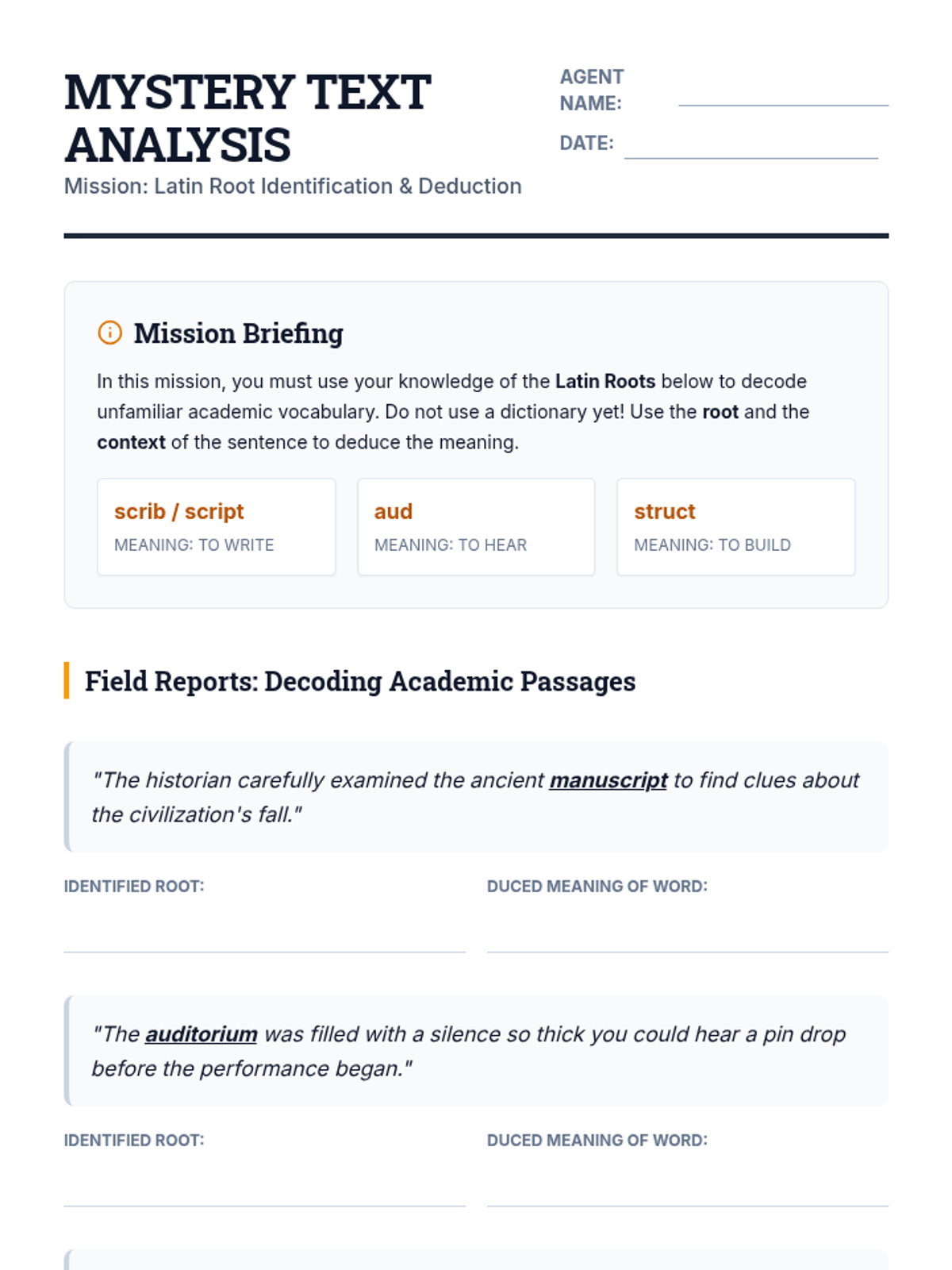
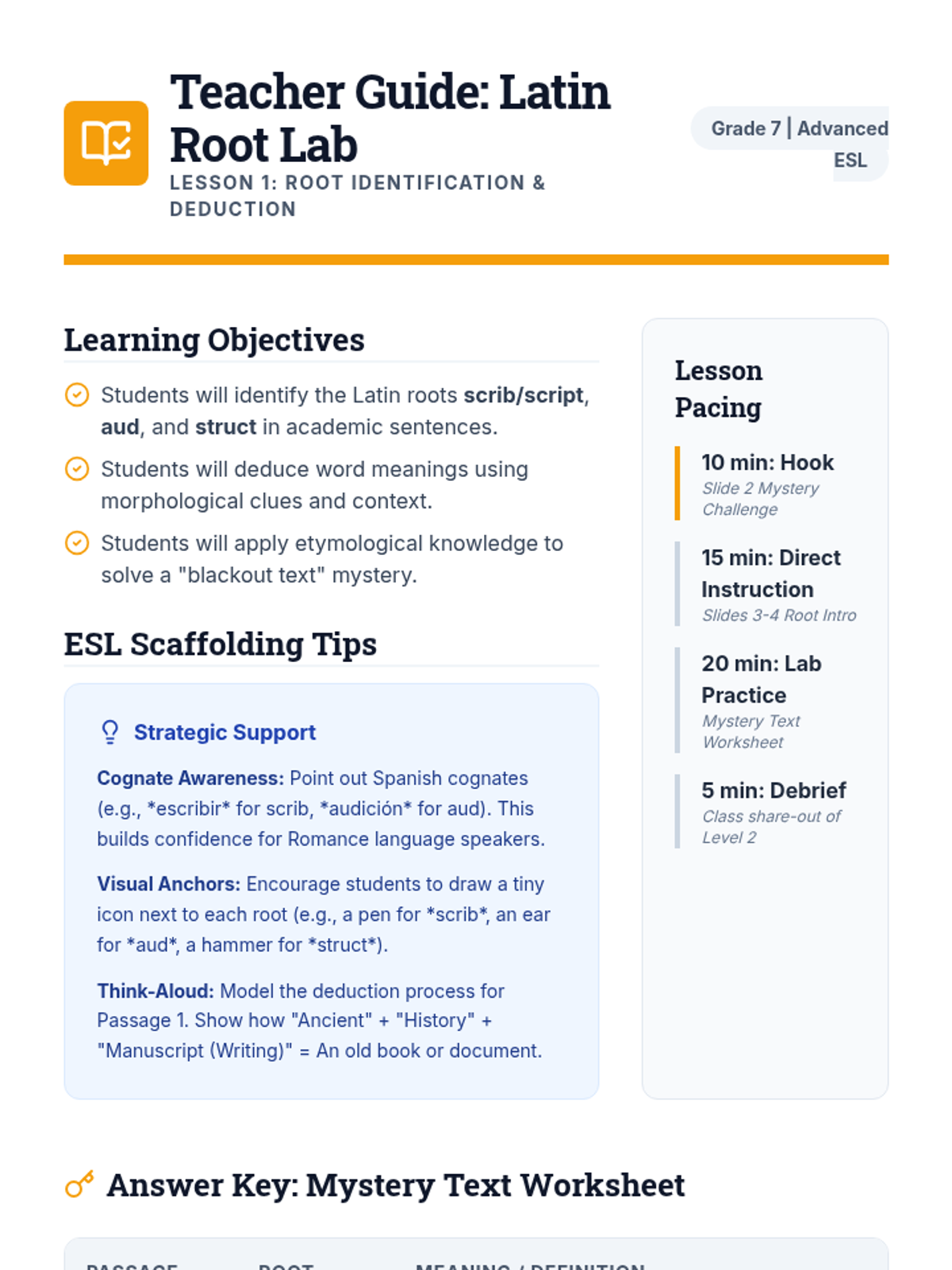
An advanced etymology sequence for 7th Grade ESL students, focusing on Latin and Greek morphemes to decode academic vocabulary across disciplines. Students progress from root identification to creating their own neologisms for modern inventions.
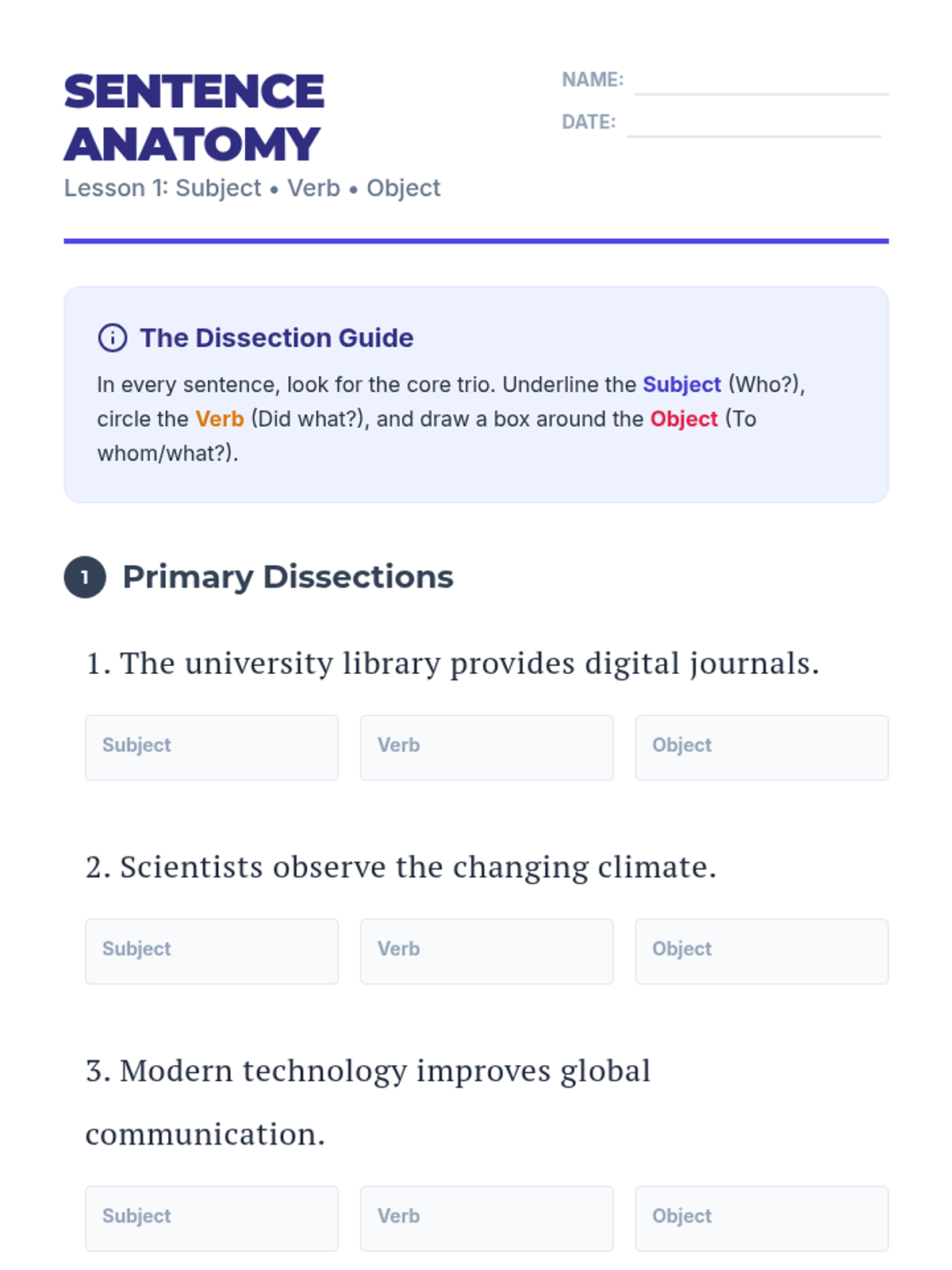
This workshop-style sequence bridges the gap between basic vocabulary and sentence comprehension for undergraduate English learners. Students analyze English sentence architecture, focusing on SVO patterns, modifiers, logical connectors, and punctuation to extract meaning from academic prose.
A comprehensive sequence for graduate ESL students focusing on critical reading, tone analysis, and identifying bias in academic and journalistic texts. Students progress from basic fact-checking to sophisticated analysis of irony and comparative source evaluation.
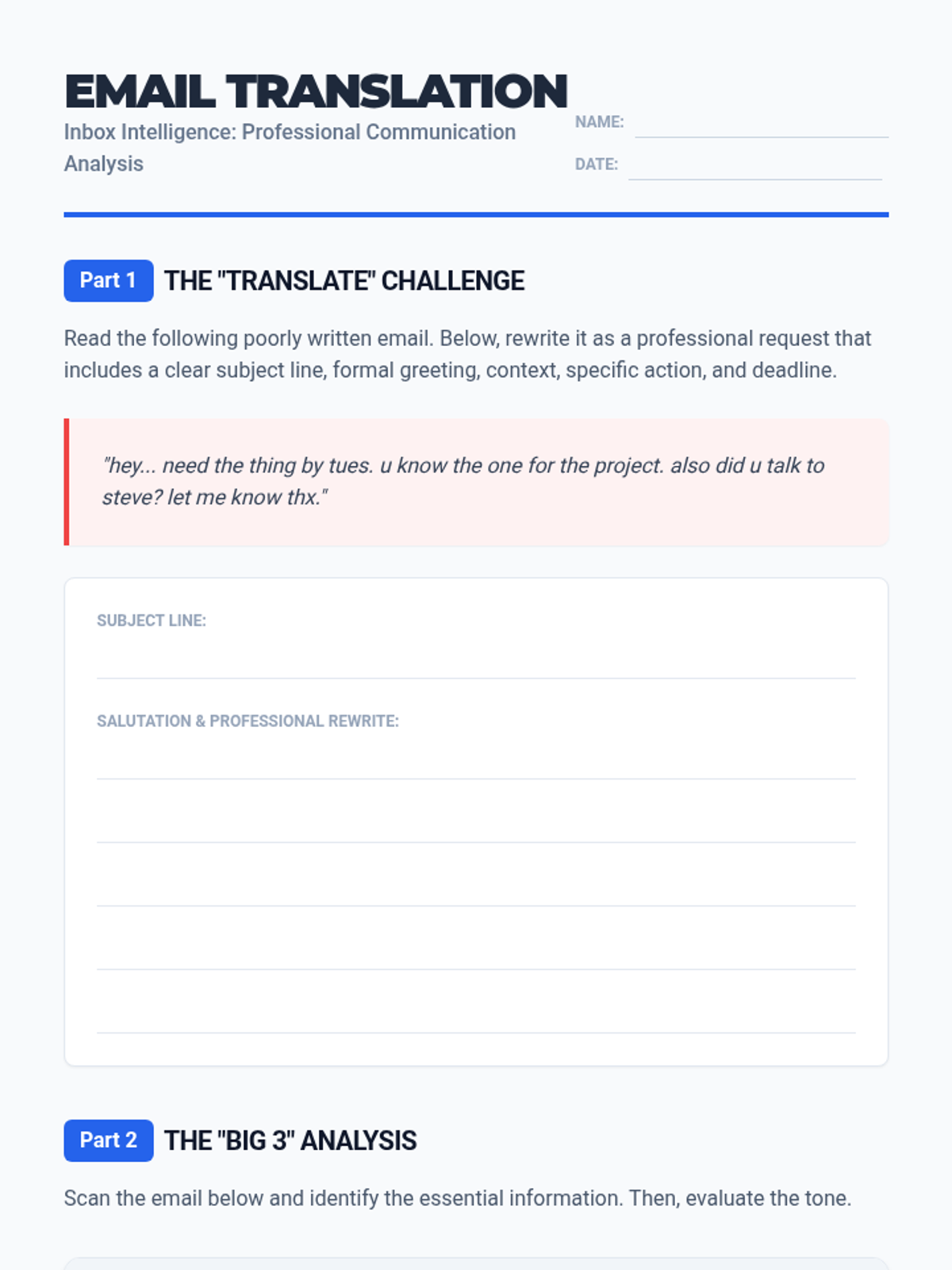
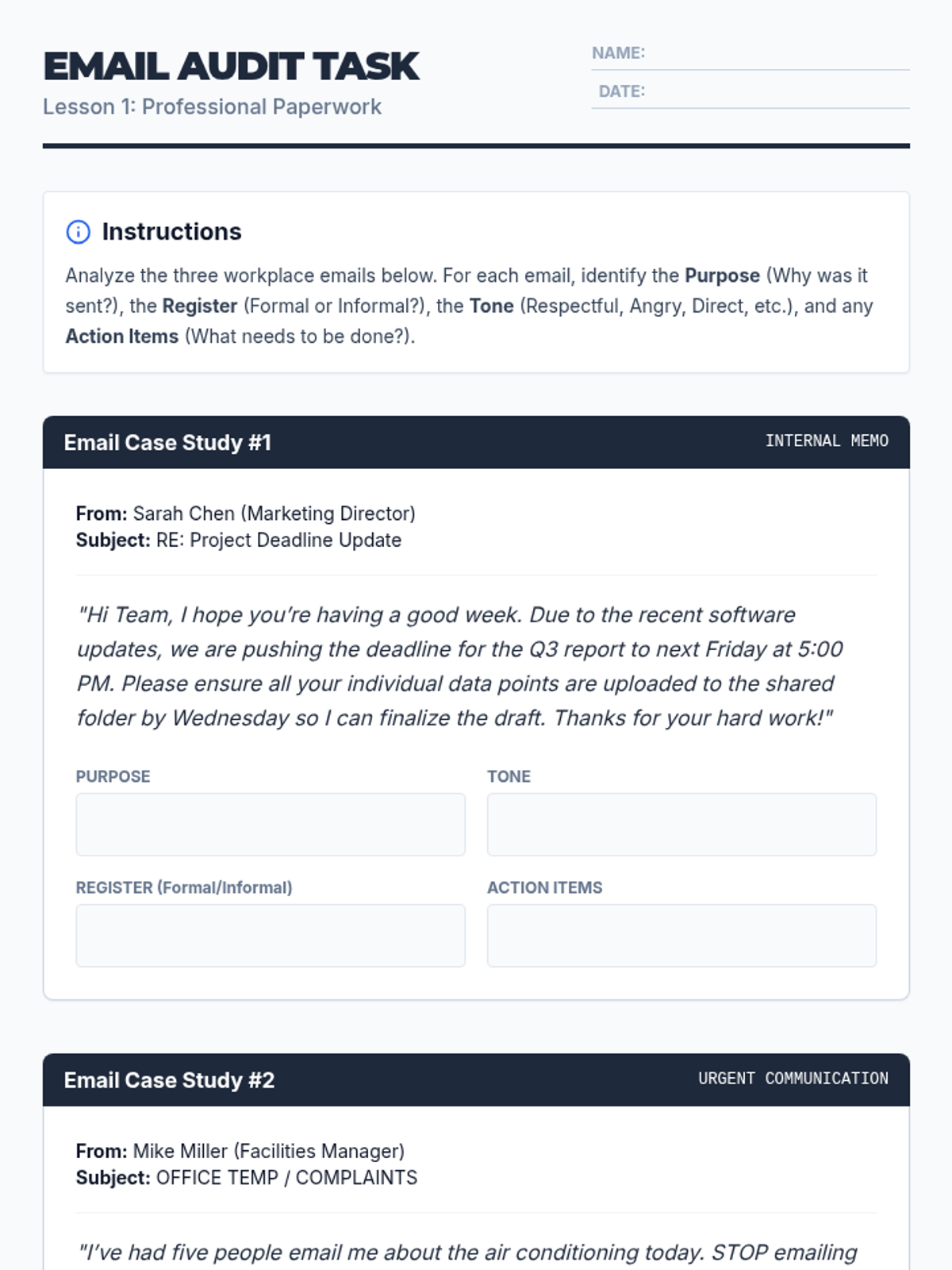
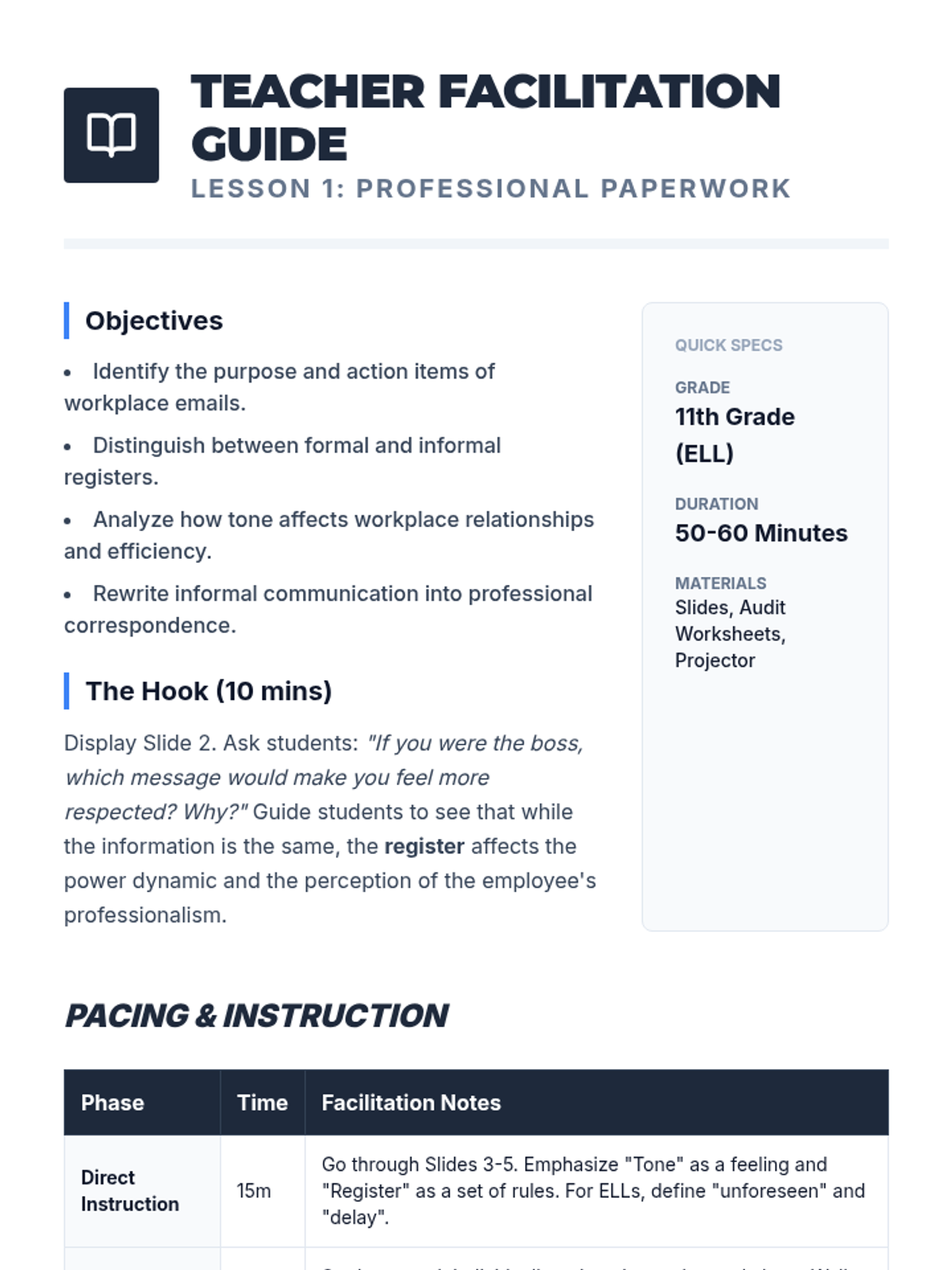
A comprehensive unit for 12th-grade English learners focusing on functional literacy for the workplace and adult life. Students learn to navigate professional emails, technical manuals, legal contracts, complex forms, and troubleshooting guides, emphasizing precision, tone, and logical application.
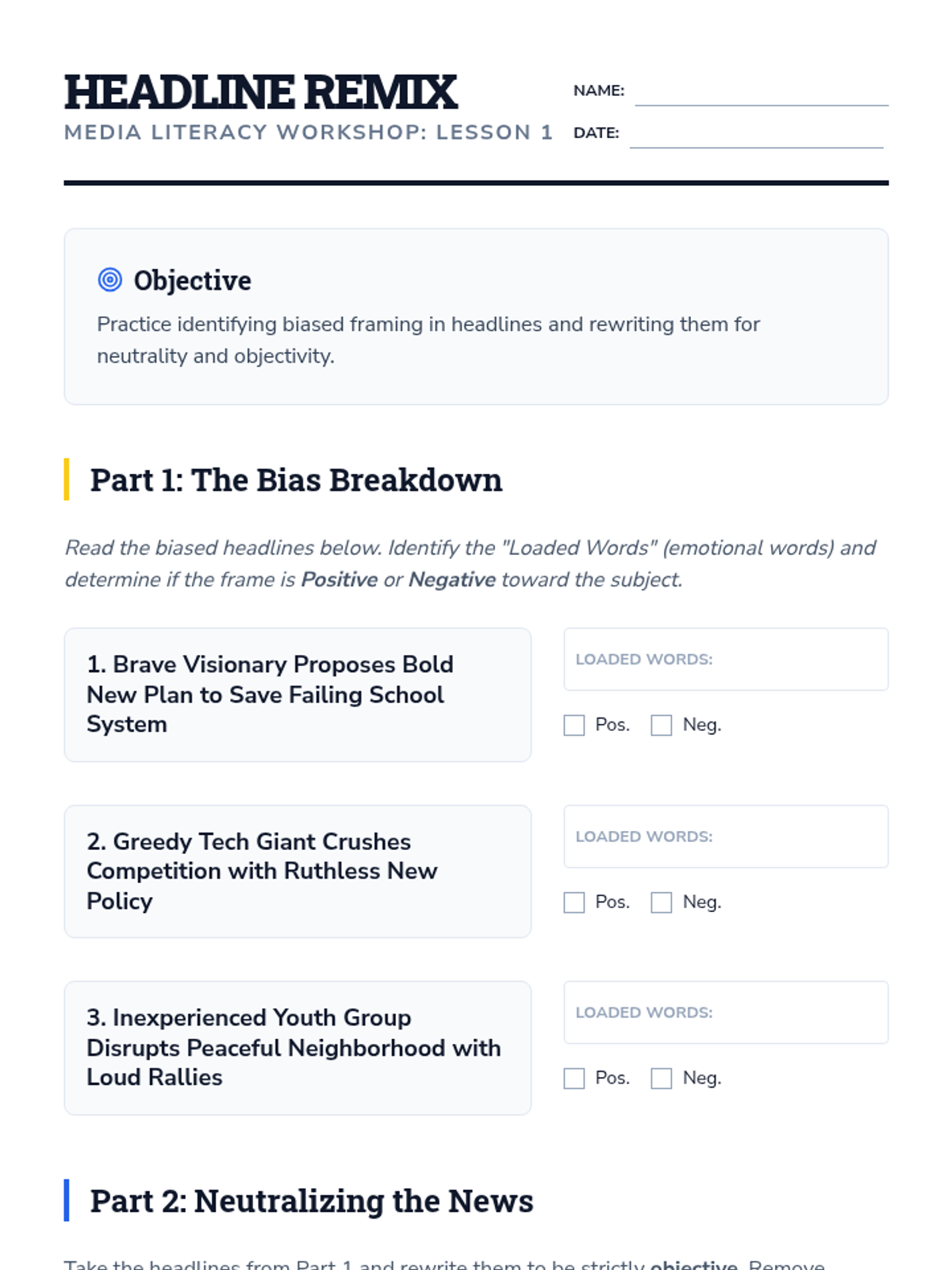
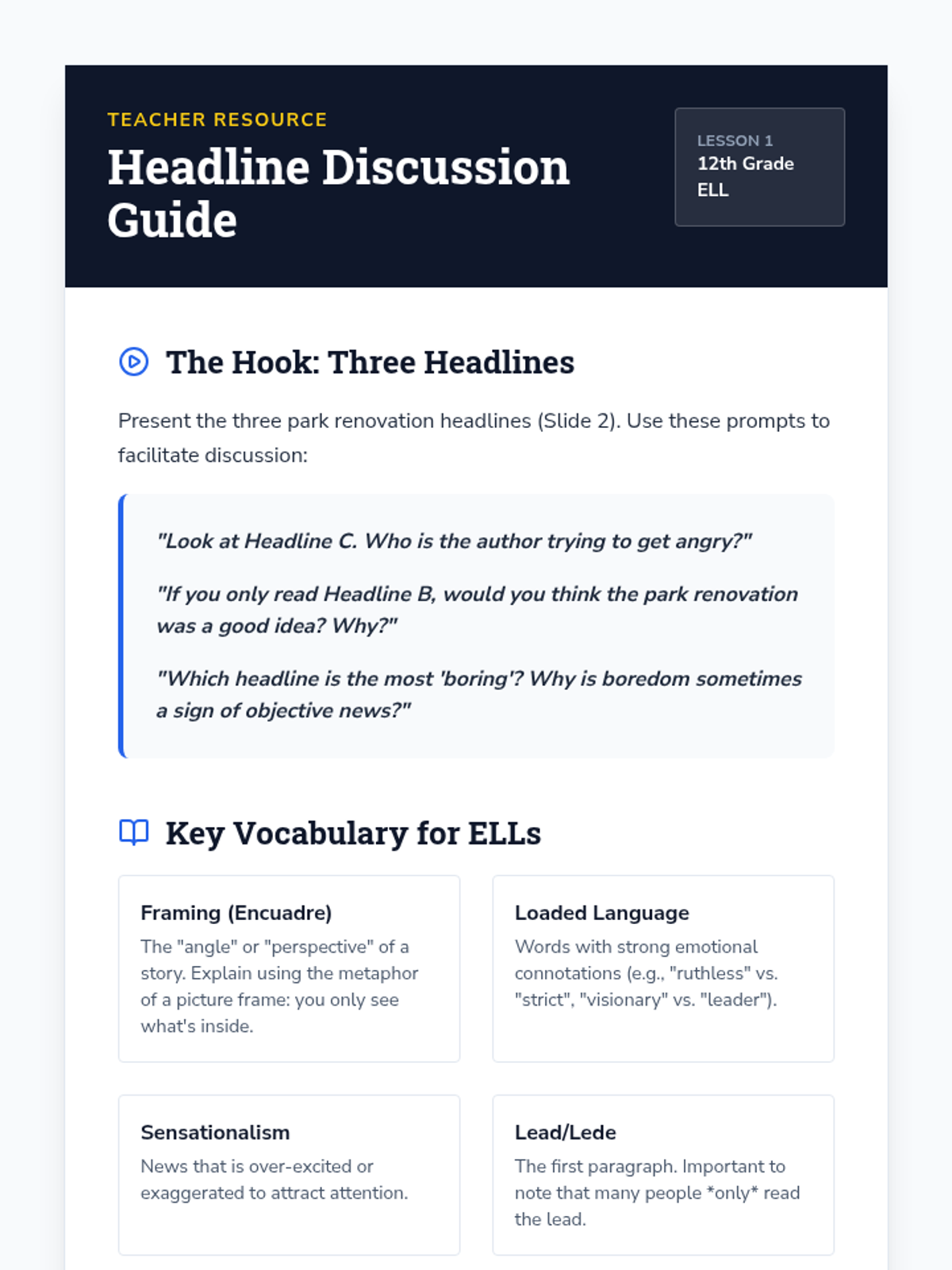
A media literacy sequence for 12th-grade ELL students focused on identifying bias, loaded language, and framing in news texts. Students progress from analyzing headlines to conducting a full comparative analysis of media coverage on current events.
A comprehensive unit for 11th grade intermediate ELL students focused on navigating and interpreting workplace documents, including emails, SOPs, manuals, job descriptions, and integrated scenarios.
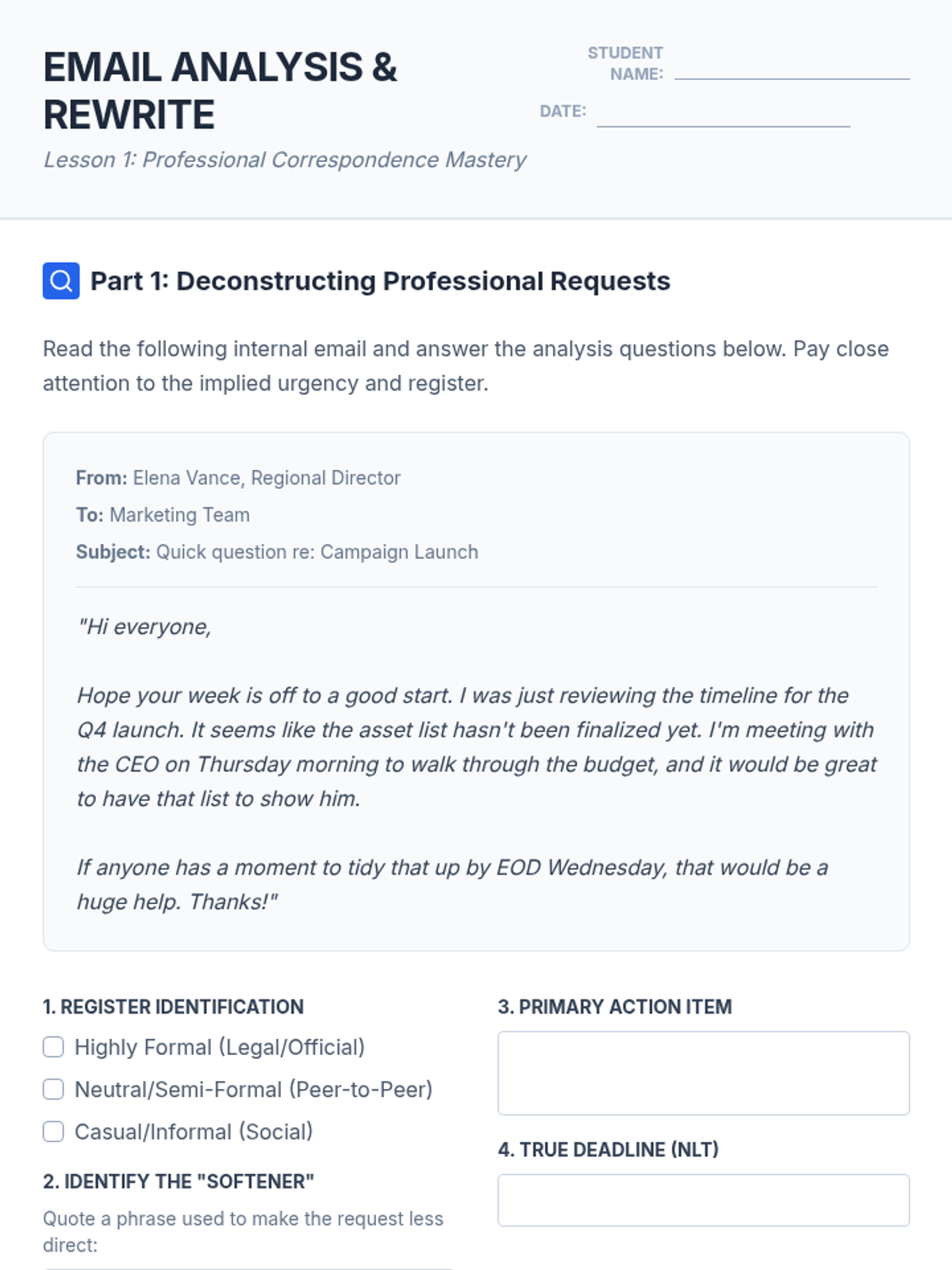
This sequence equips undergraduate ESL students with the skills to navigate high-stakes professional and technical documents. Students move from analyzing professional register in emails to decoding complex technical manuals and legal contracts, culminating in the synthesis of long-form reports into concise executive summaries.
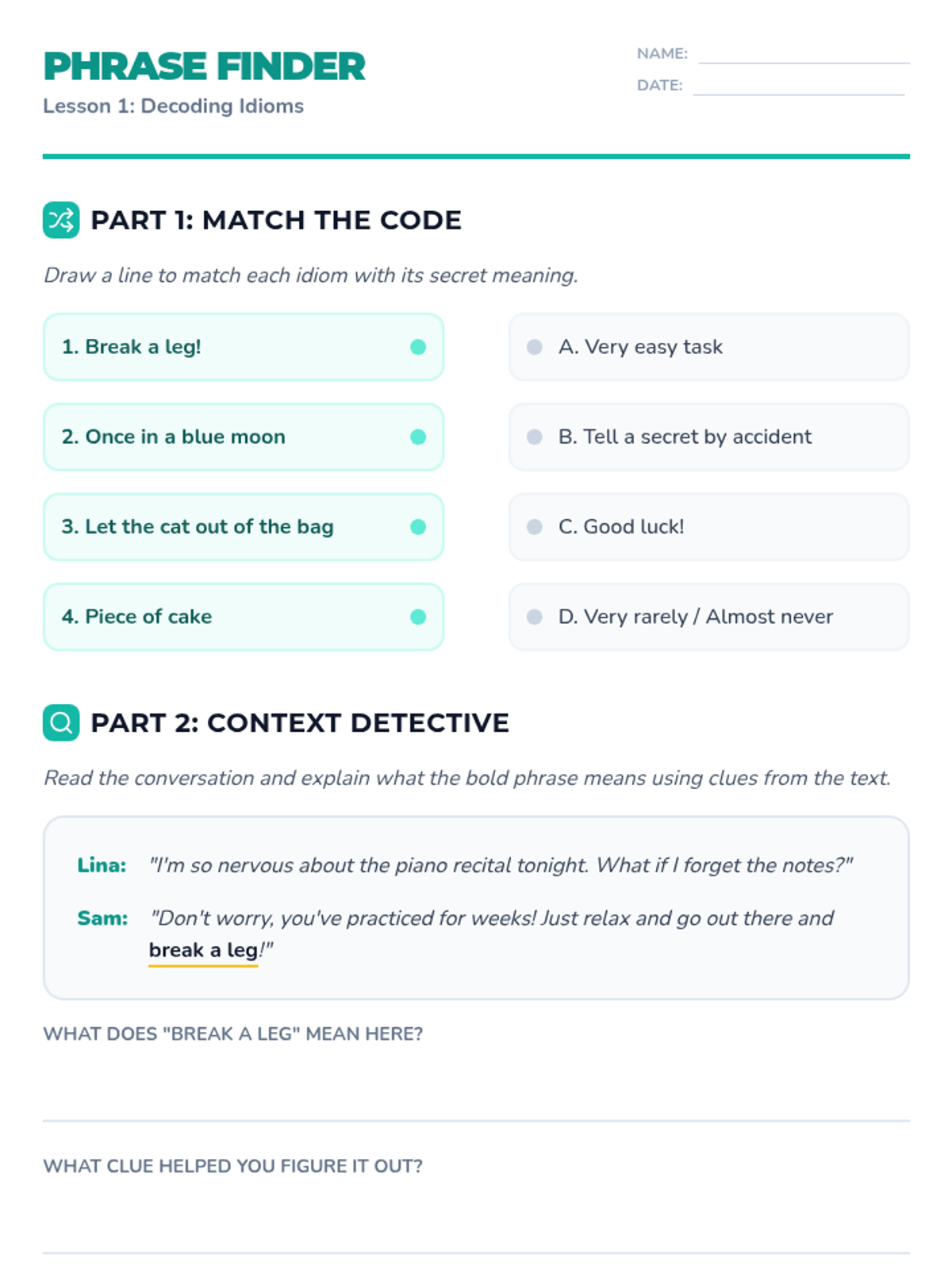
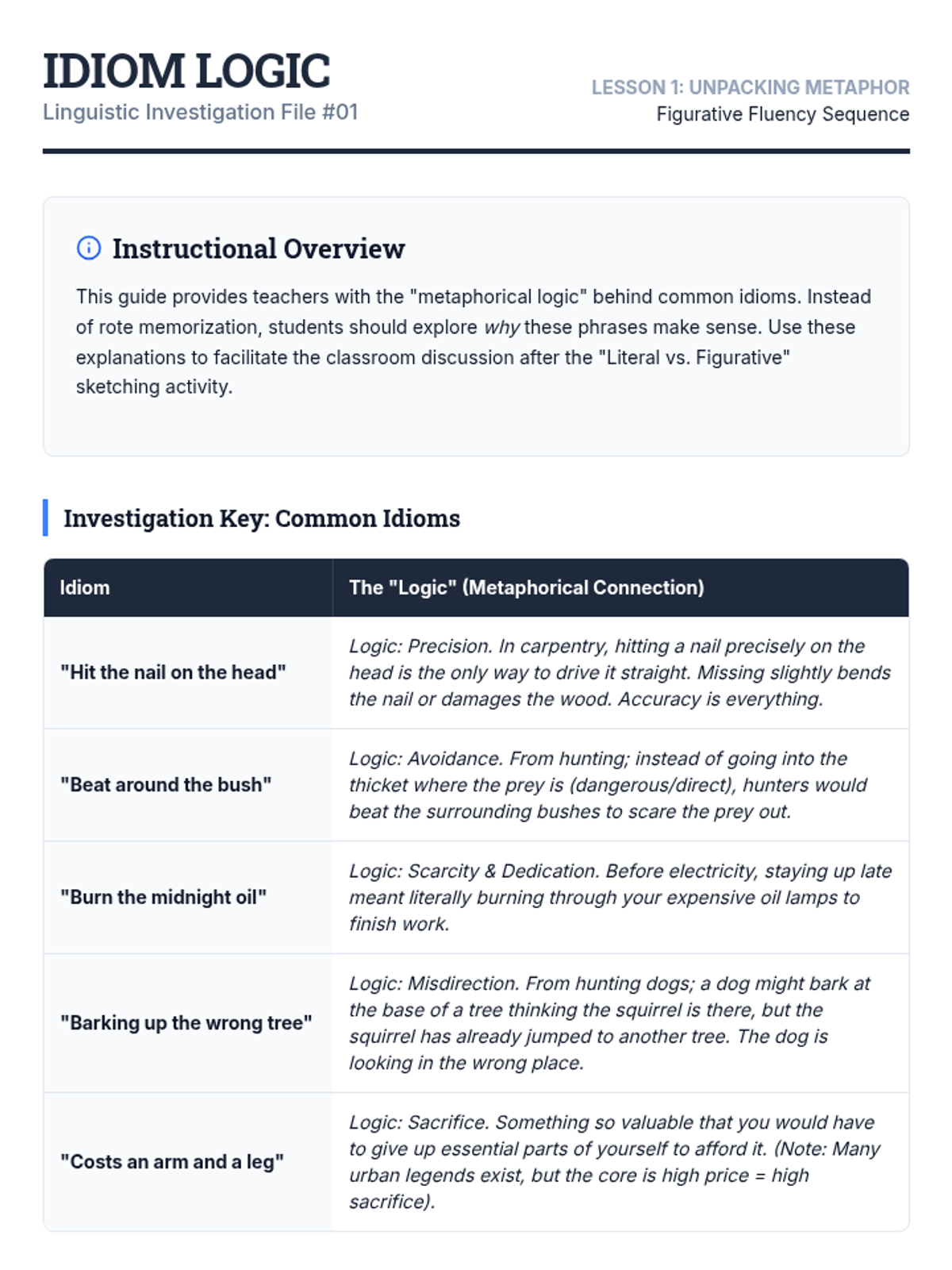
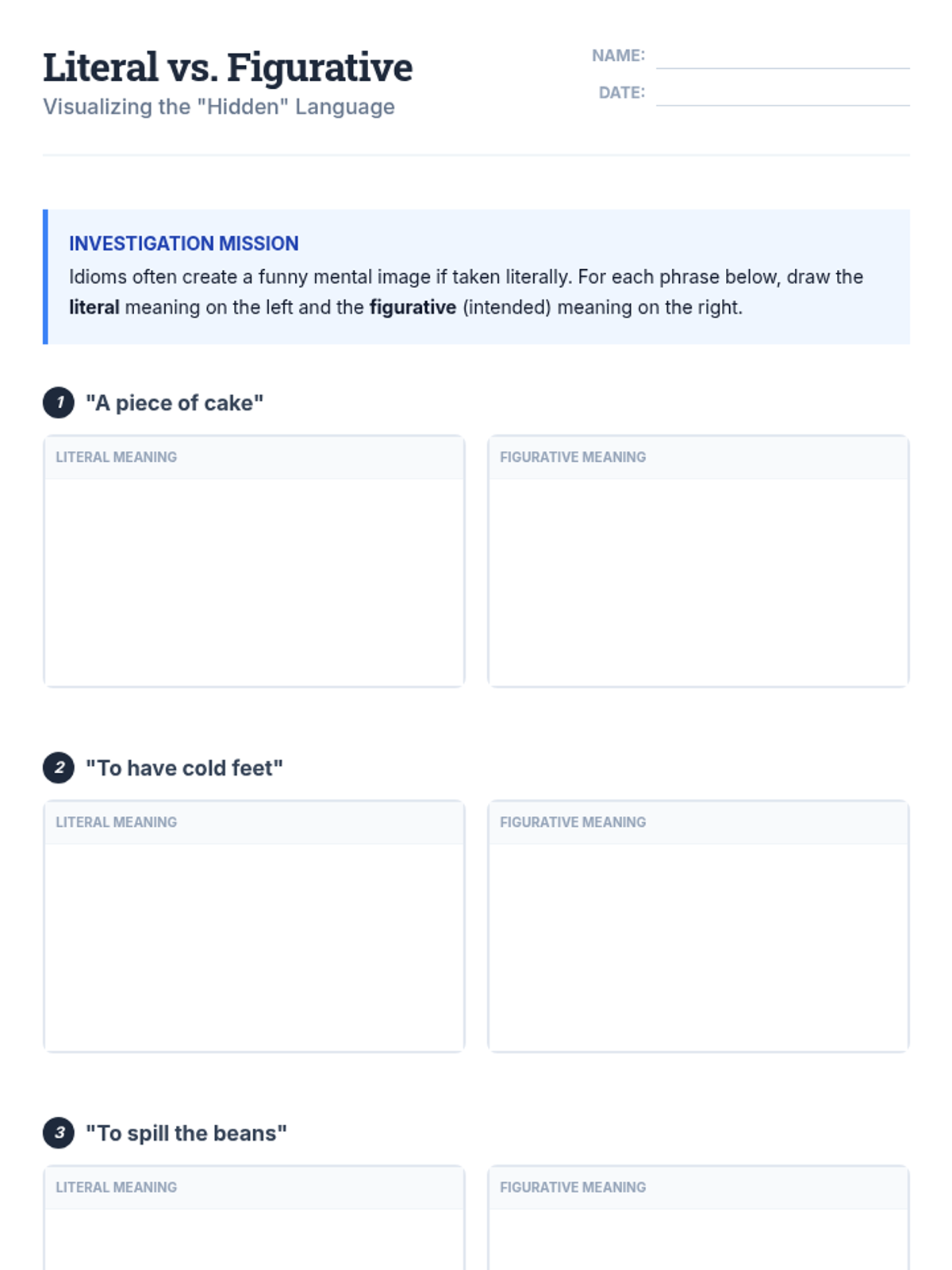
This sequence guides advanced English learners through the nuances of idiomatic and figurative language. Students explore the logic behind metaphors, master professional idioms, analyze cultural origins in sports and war, and develop oral fluency through creative performance.
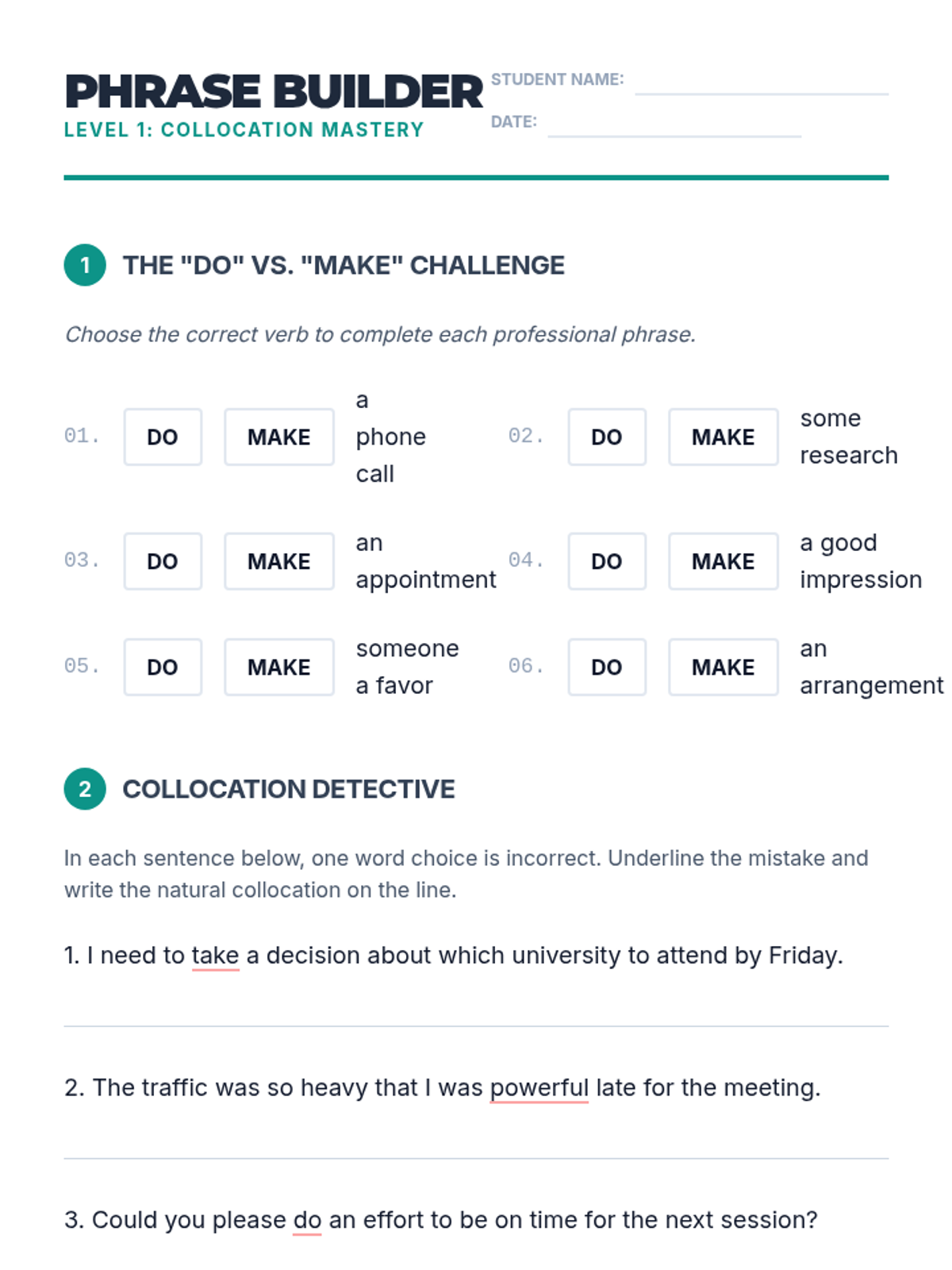
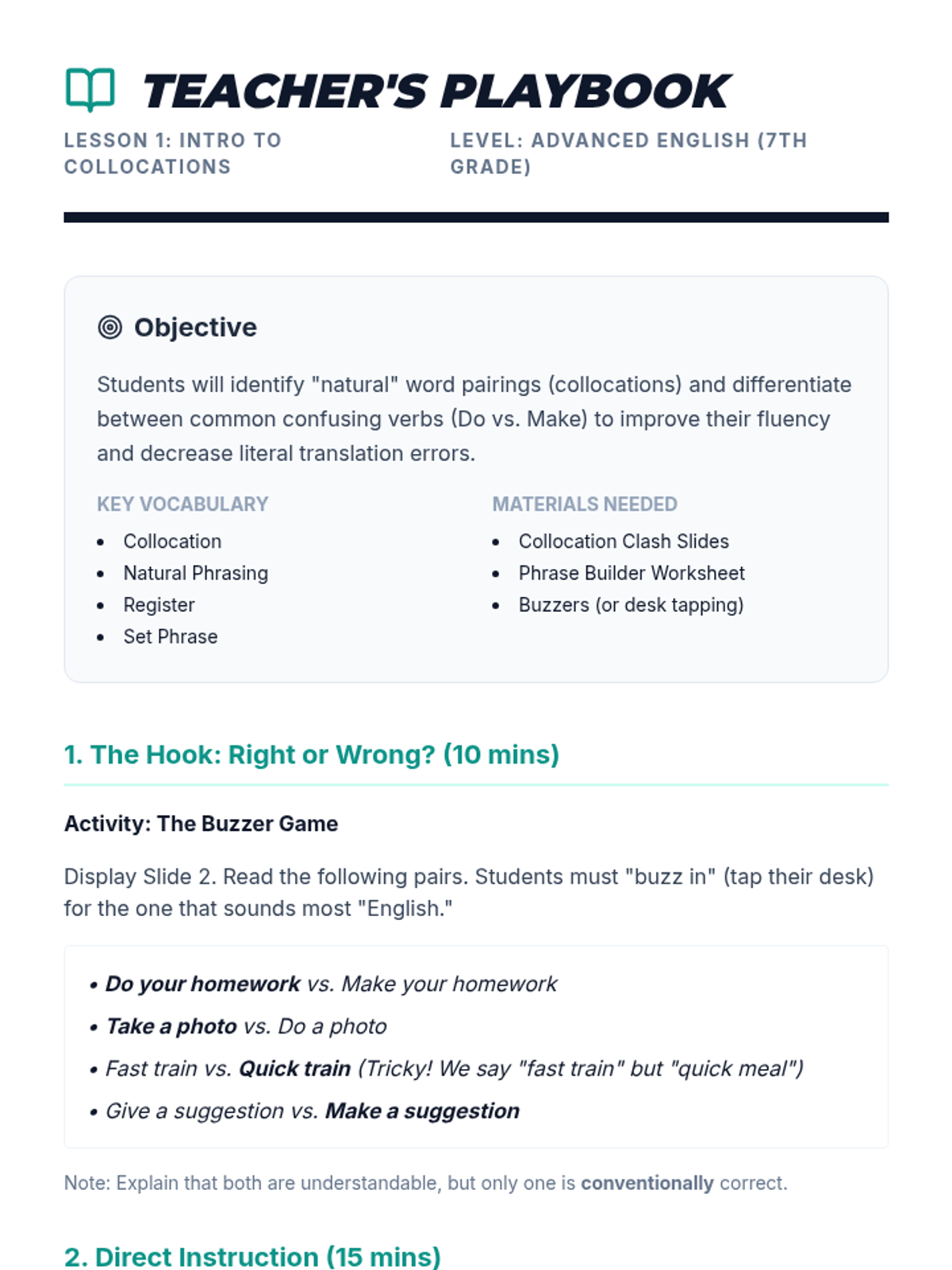
This sequence addresses the complexities of English phraseology, specifically academic collocations and professional idioms. Students move from literal translations to understanding figurative language used in business and formal environments.
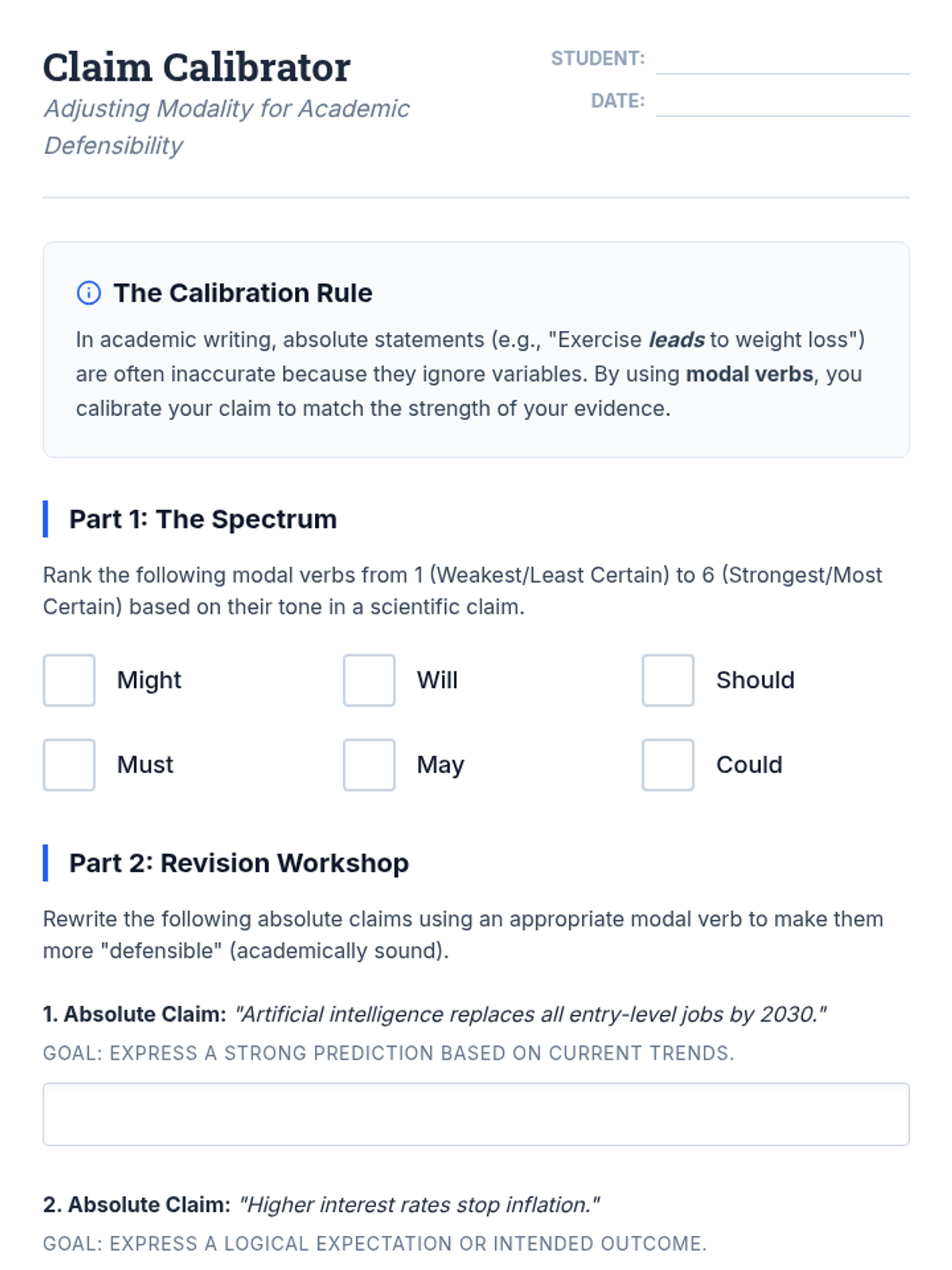
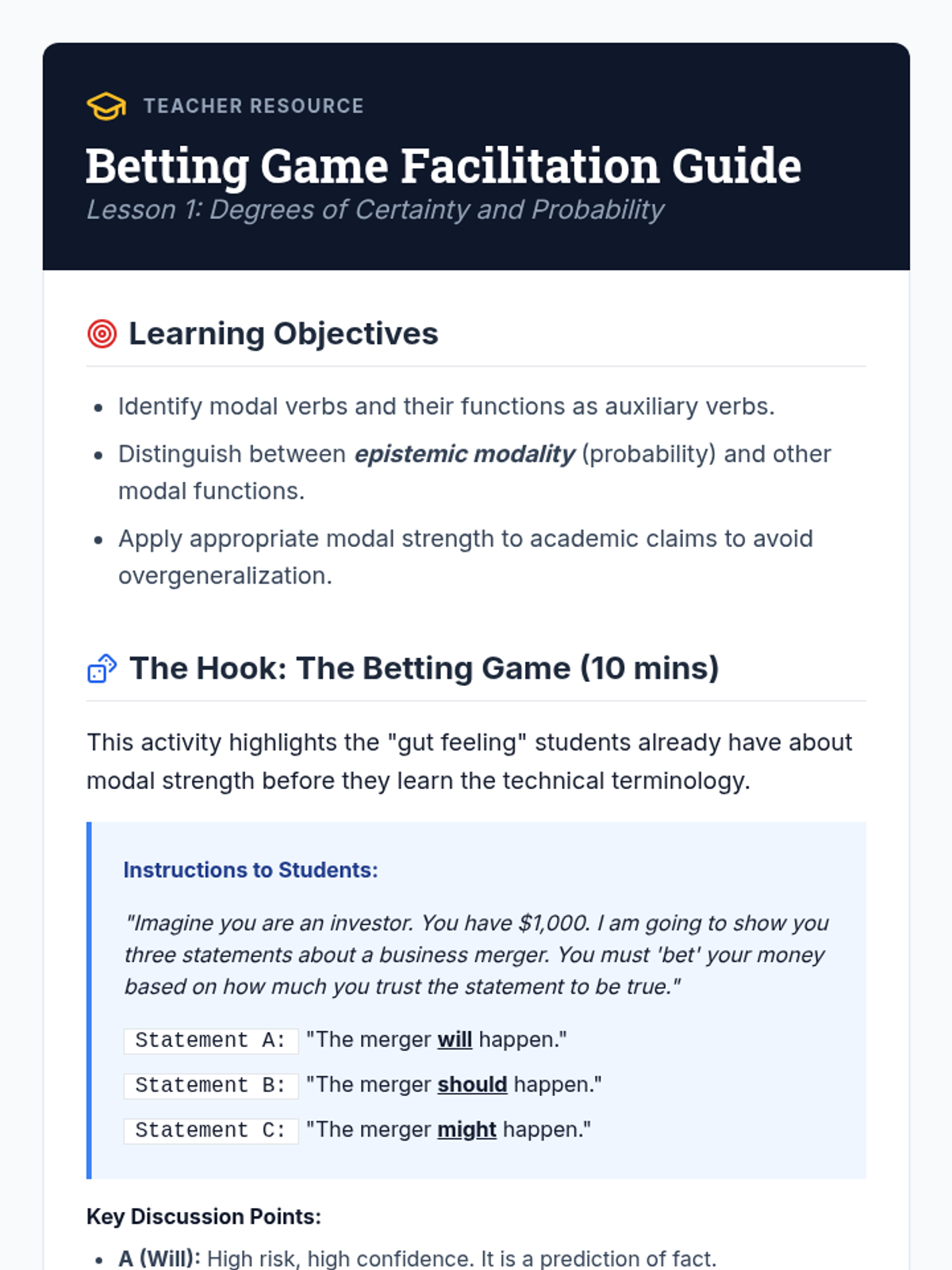
This sequence explores the function of modal verbs in establishing stance, probability, and politeness in professional and academic discourse. Students learn to 'hedge' claims, define obligations, and analyze subtext in political and scientific texts.
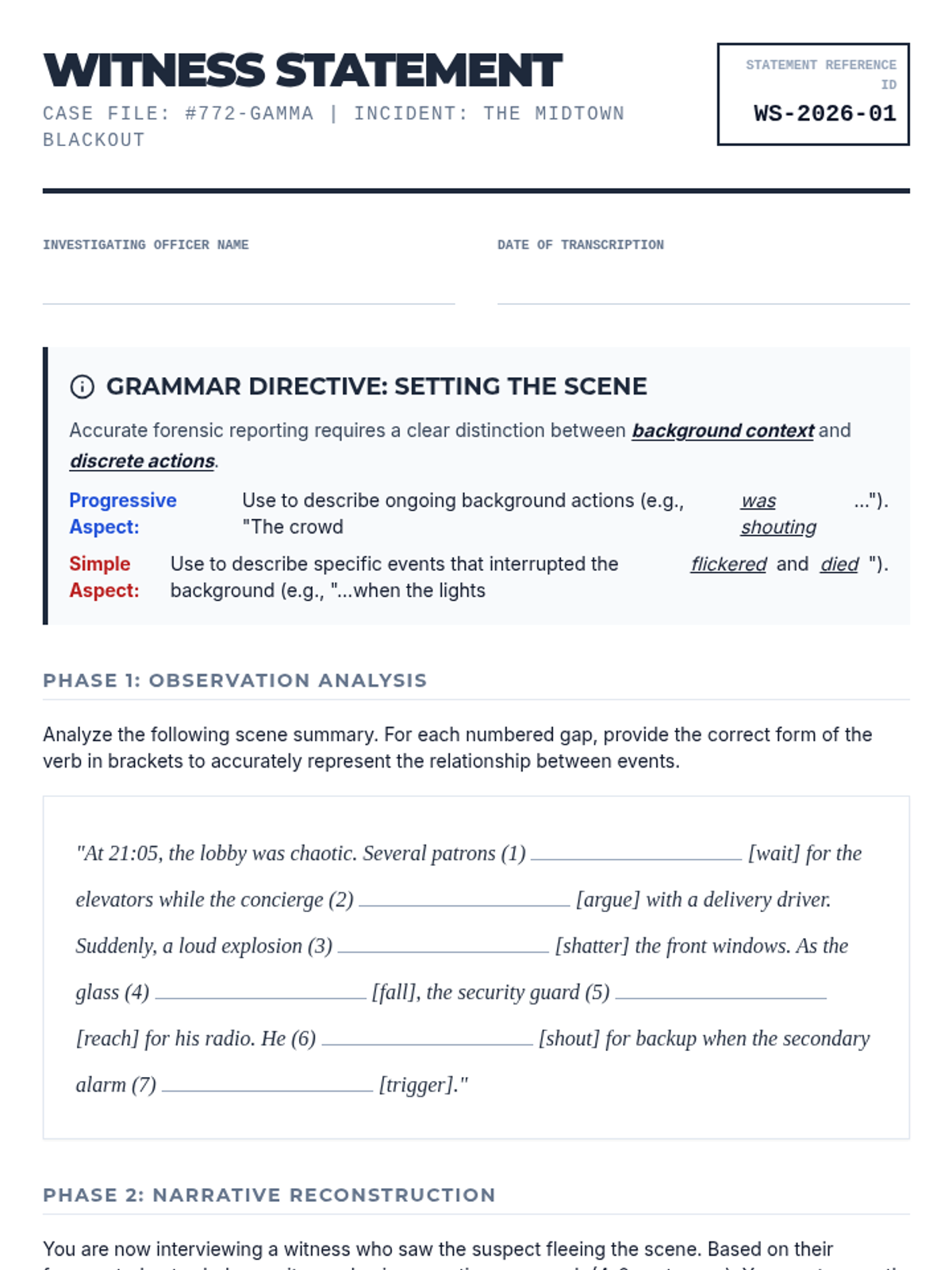
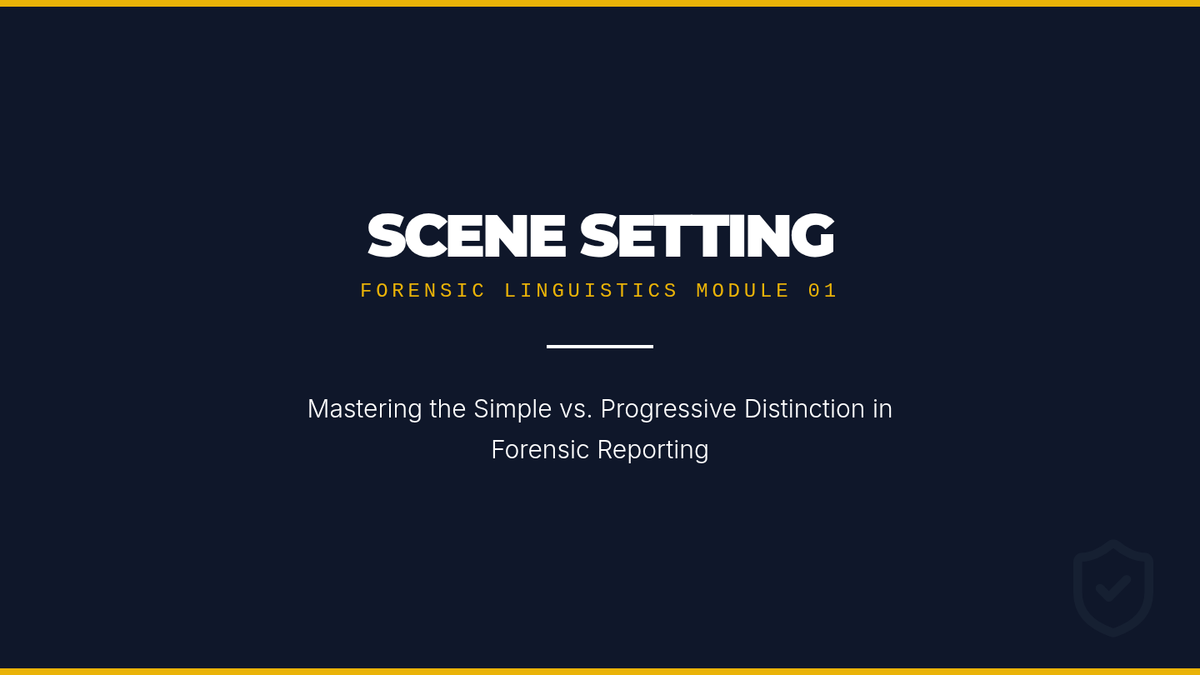
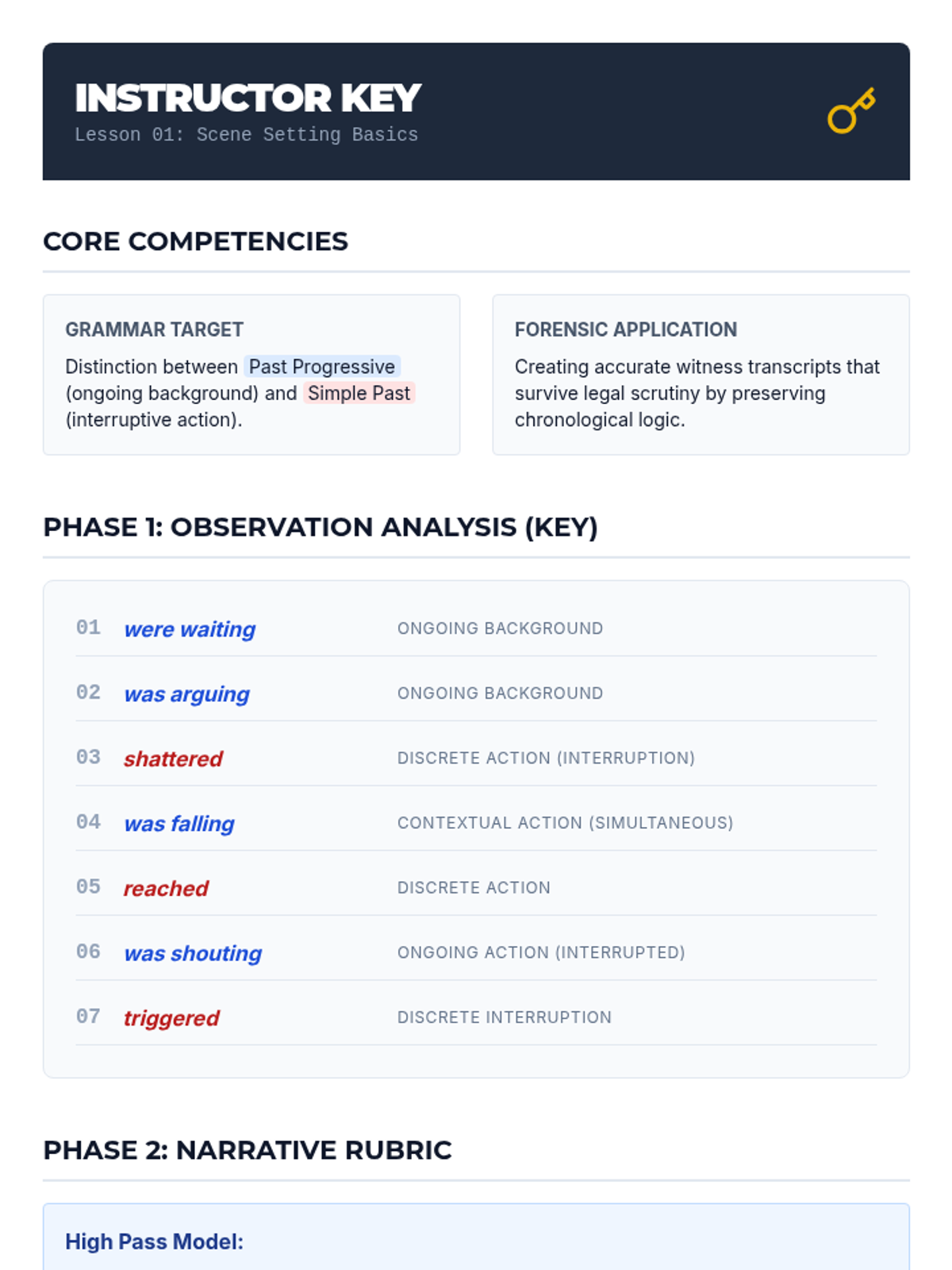
A forensic linguistics sequence for undergraduate students to master perfect and progressive verb aspects through the lens of incident reconstruction and professional writing.
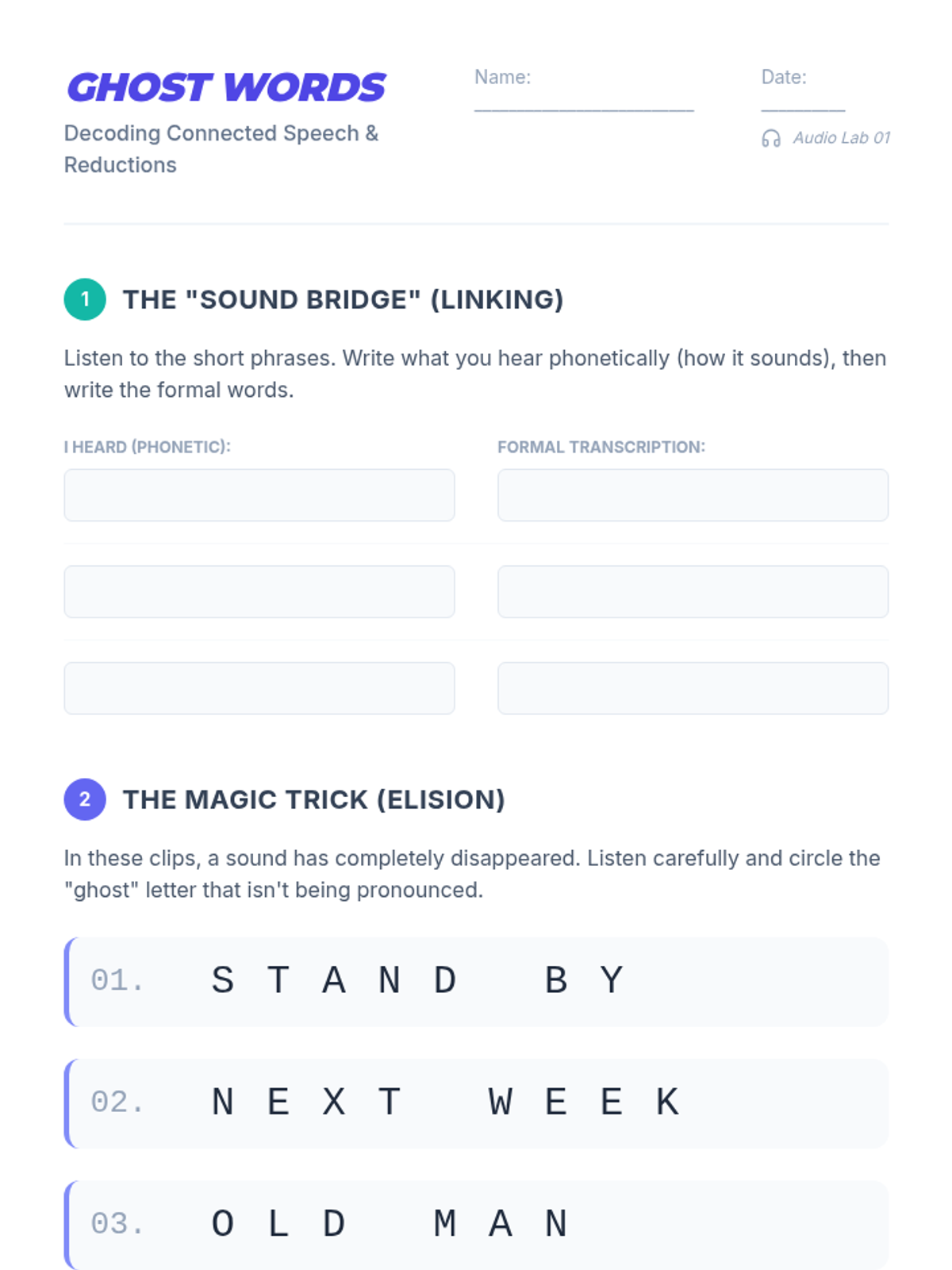
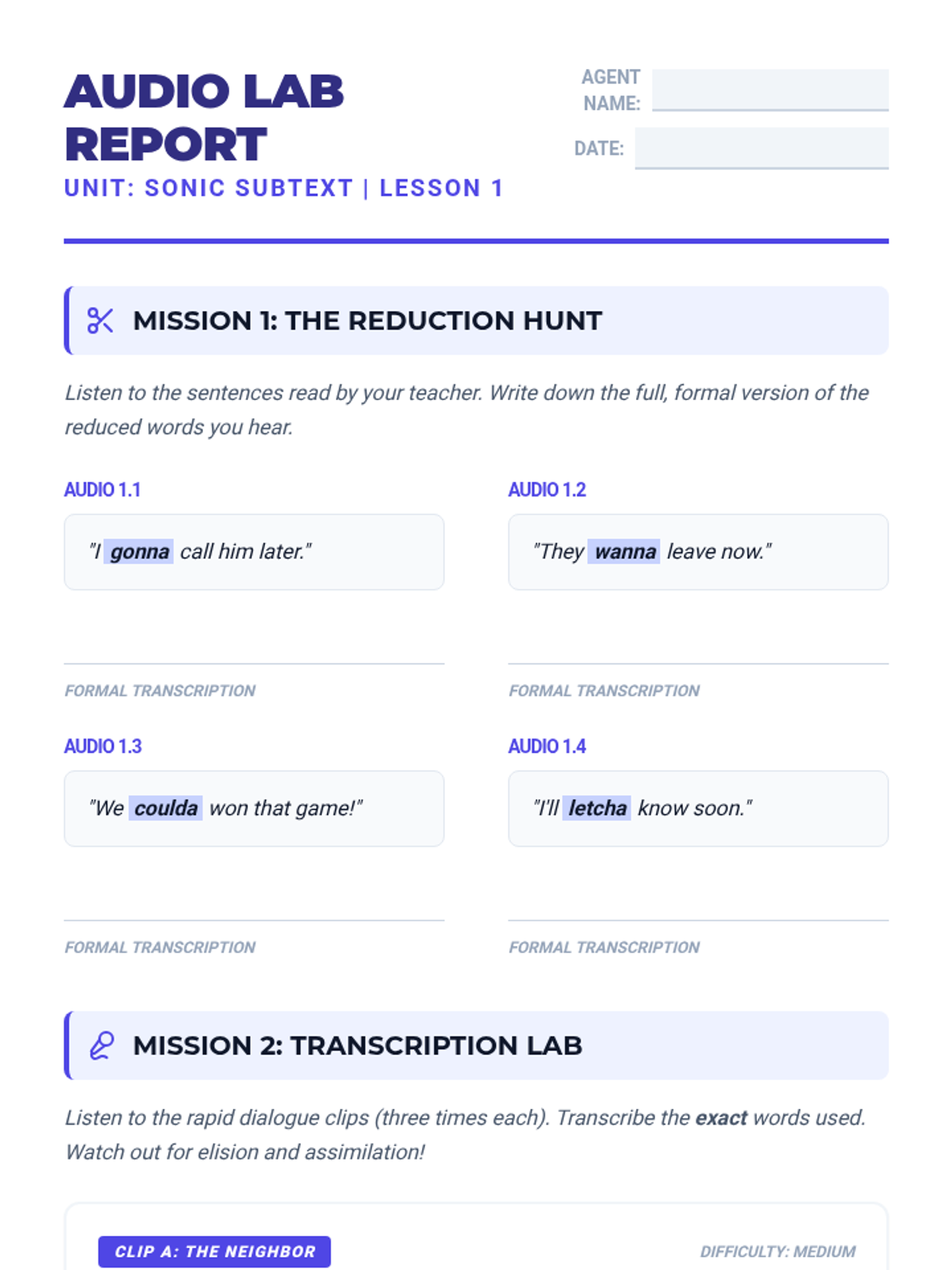
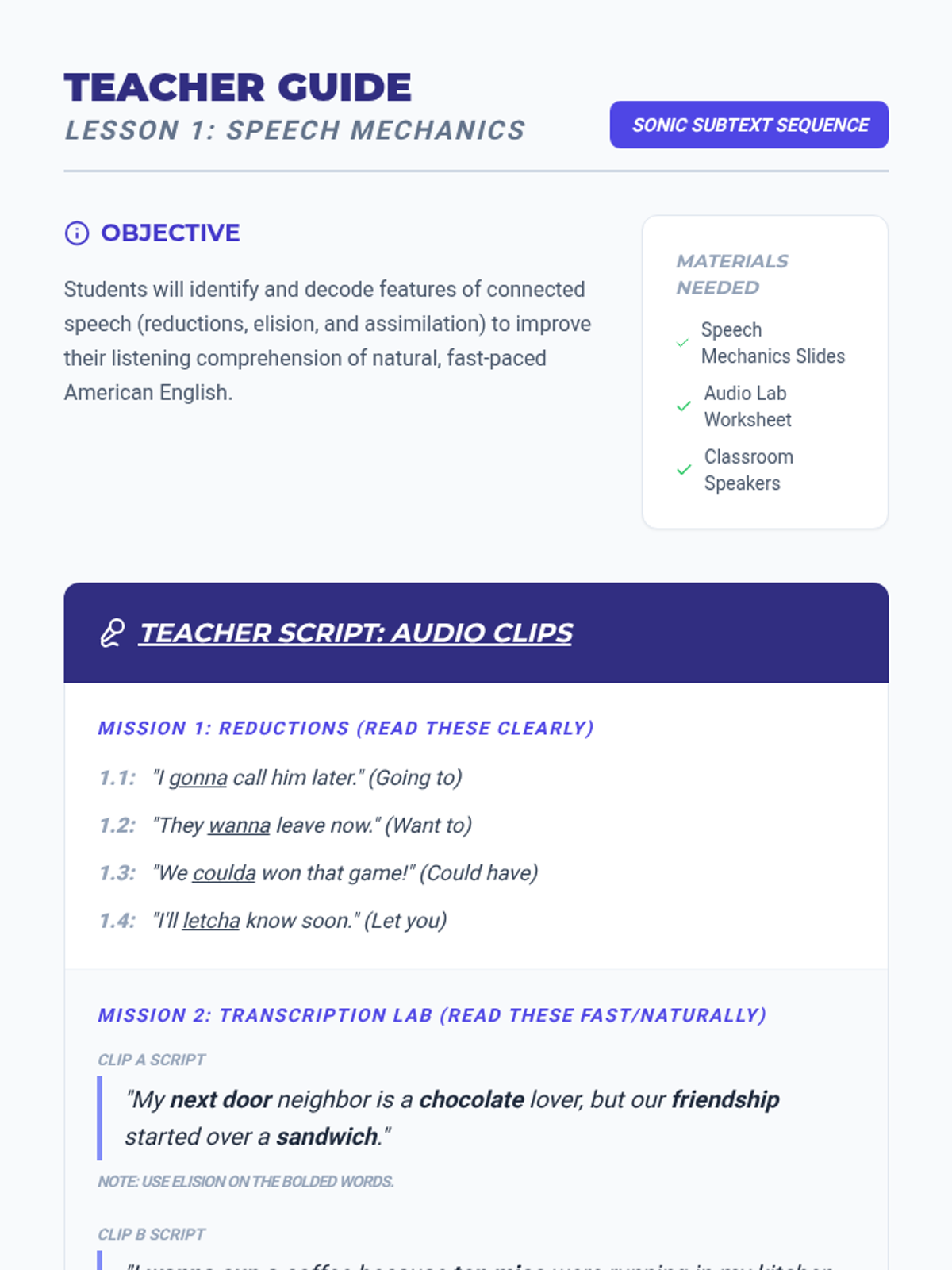
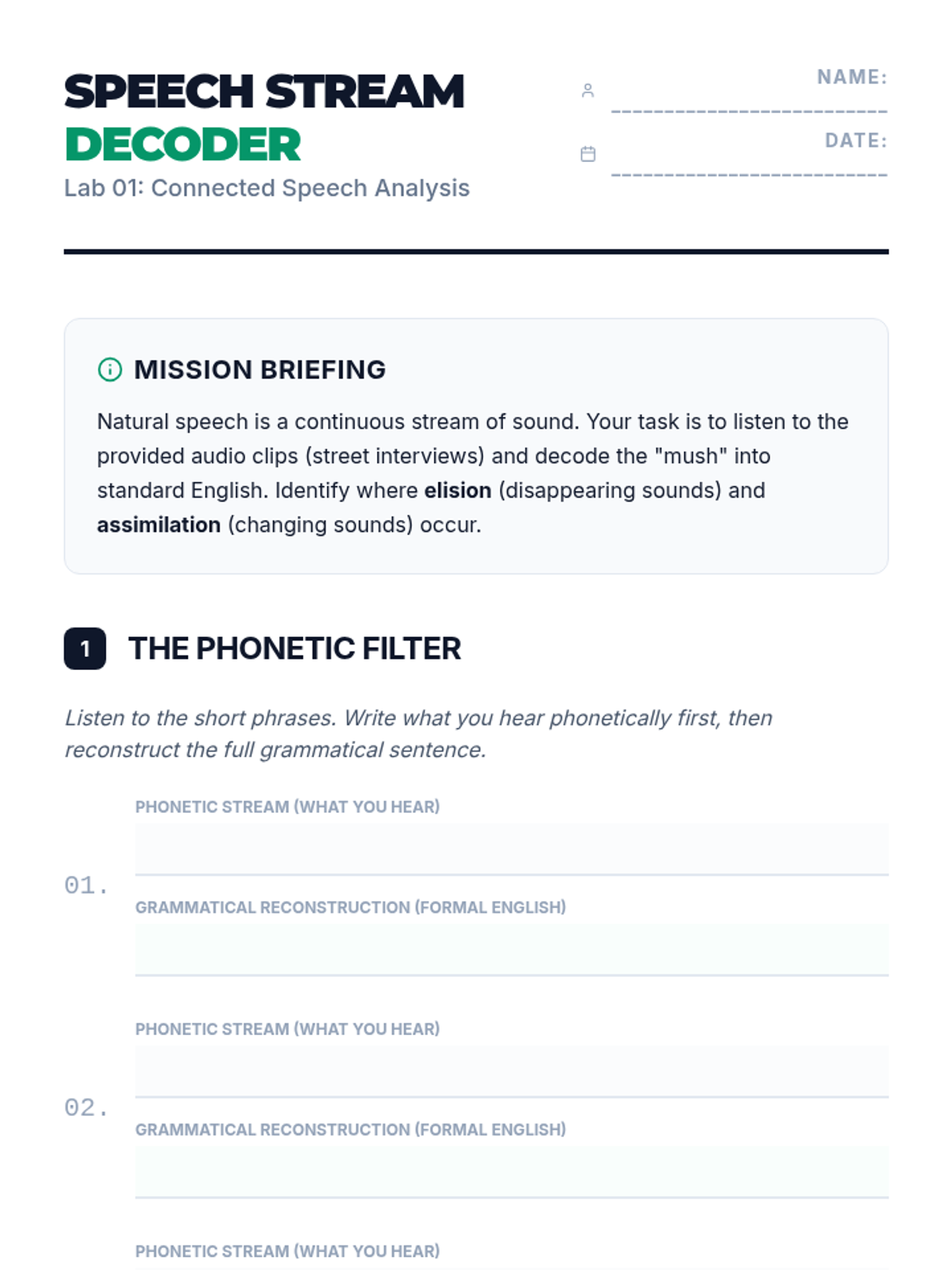
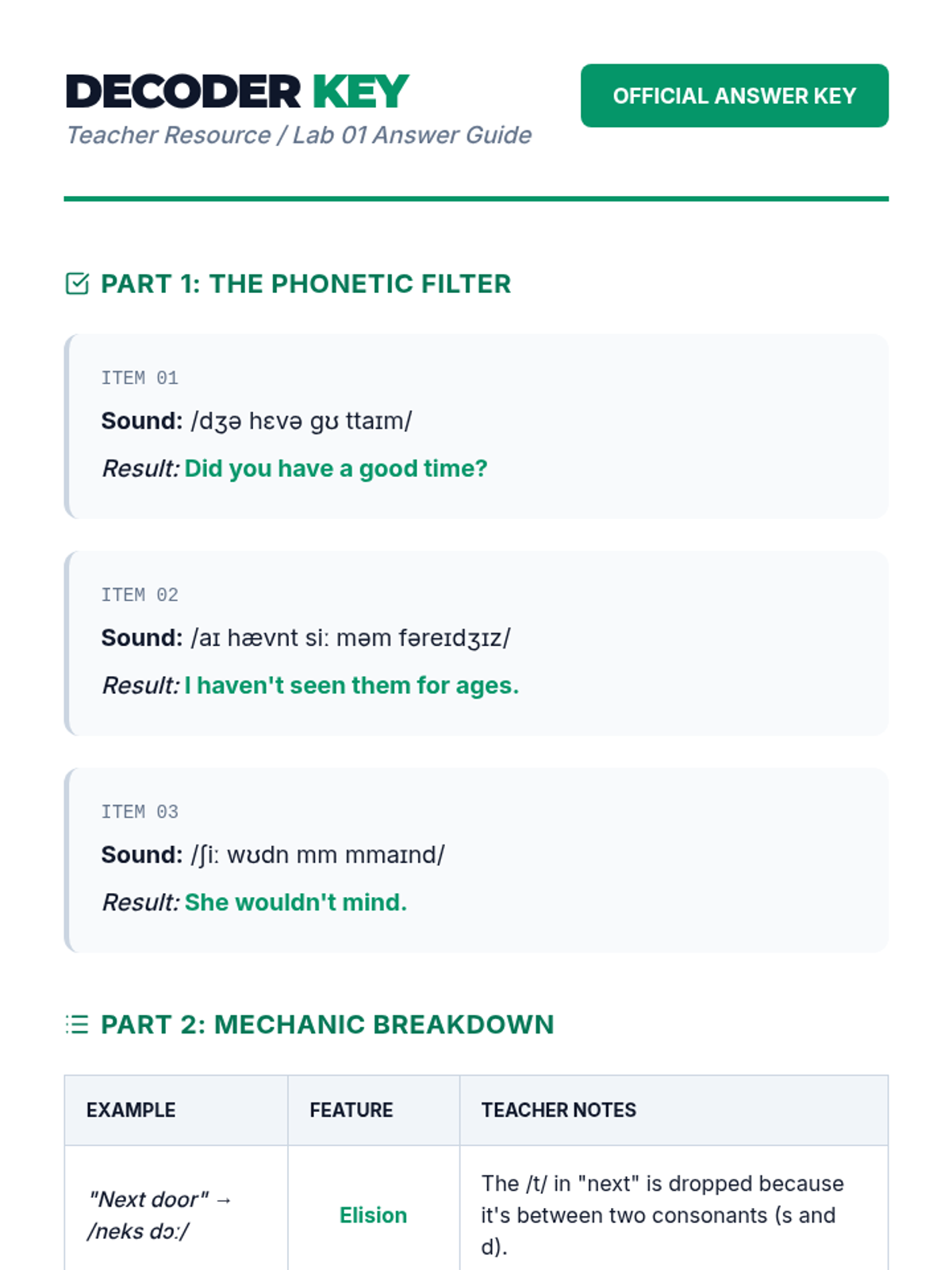
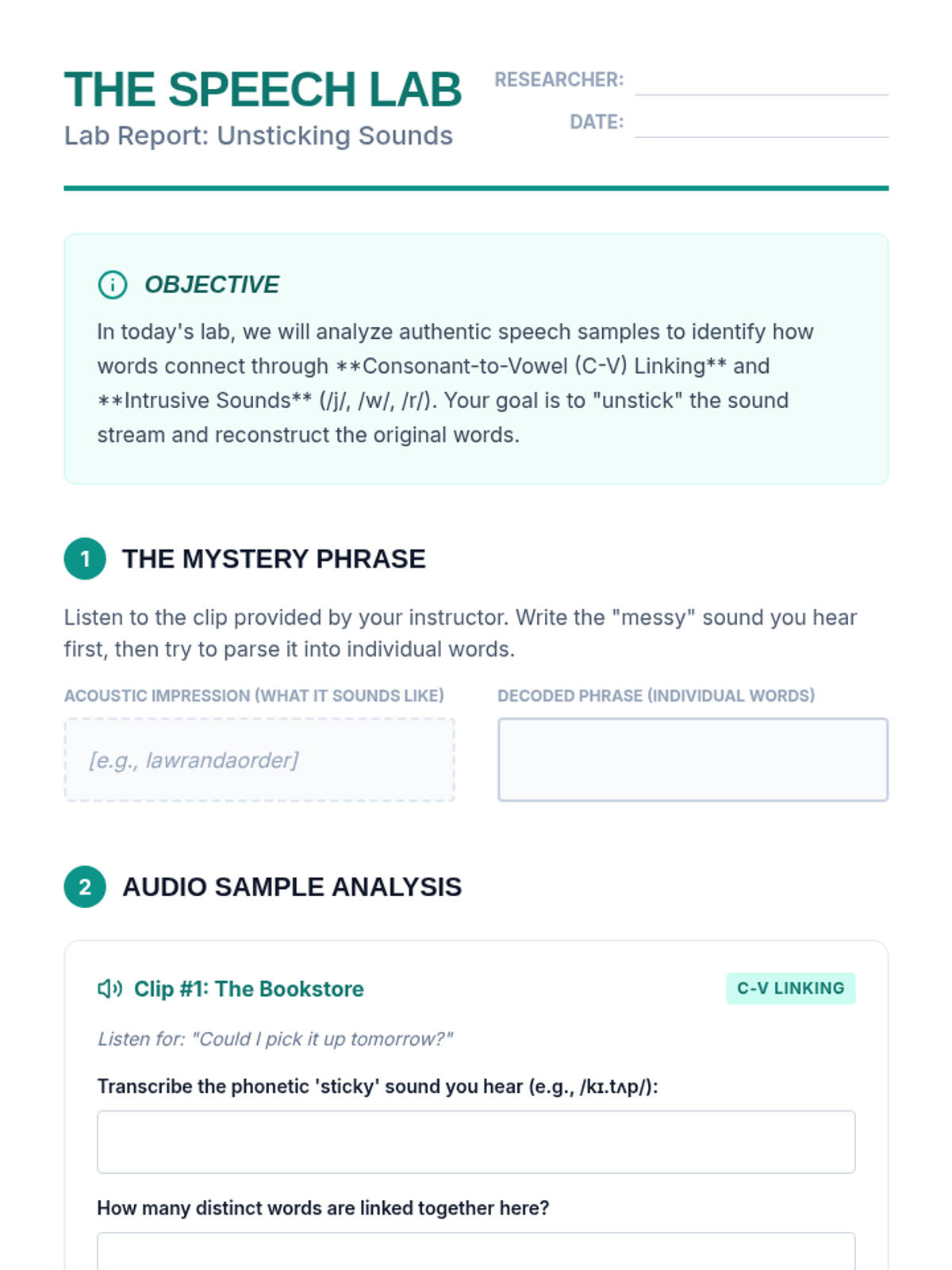
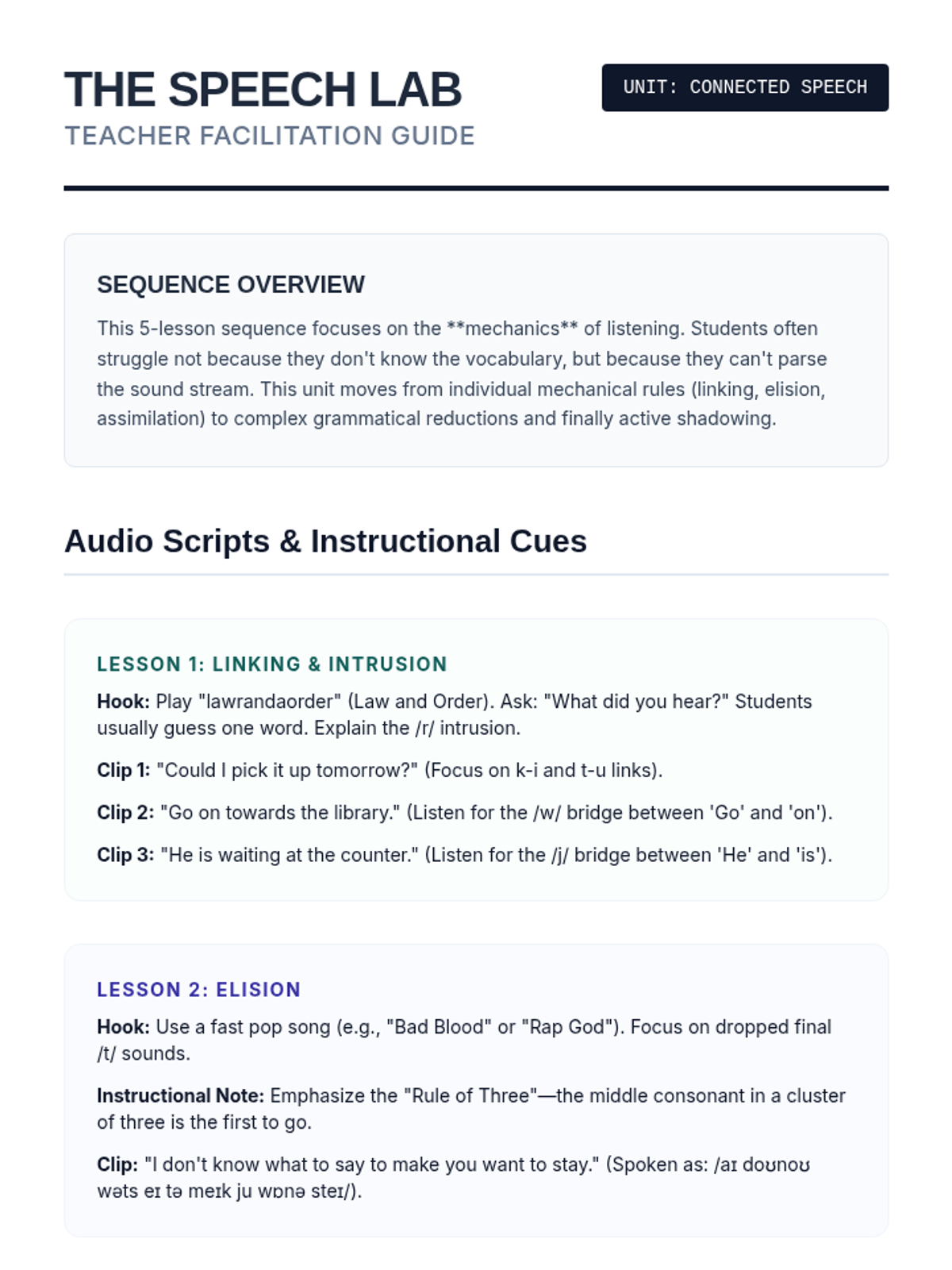
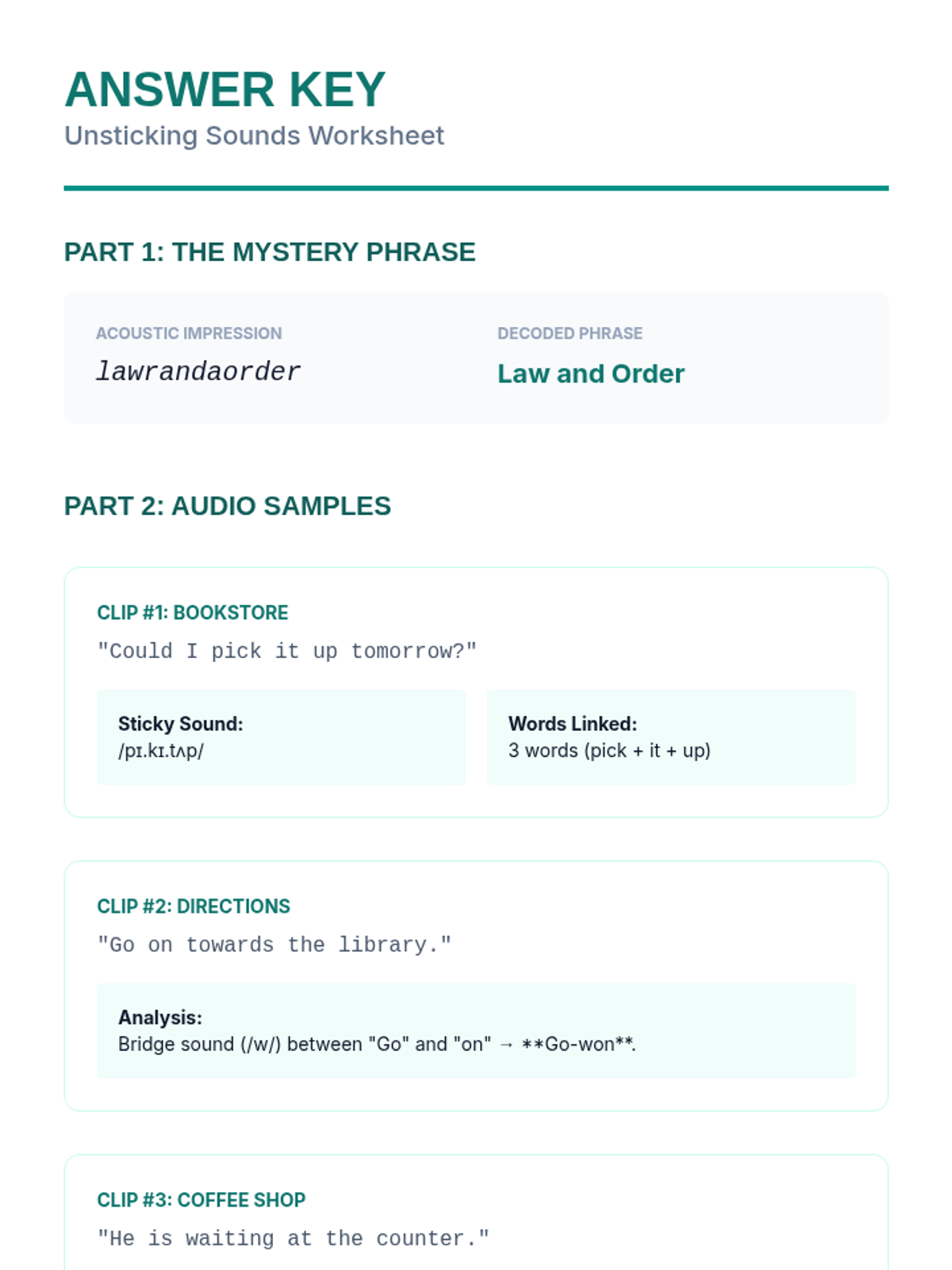
This sequence targets the mechanical difficulties of understanding natural, fast-paced English. Students explore phonological rules like linking, elision, and assimilation to decode authentic, fluid speech patterns found in campus social life.
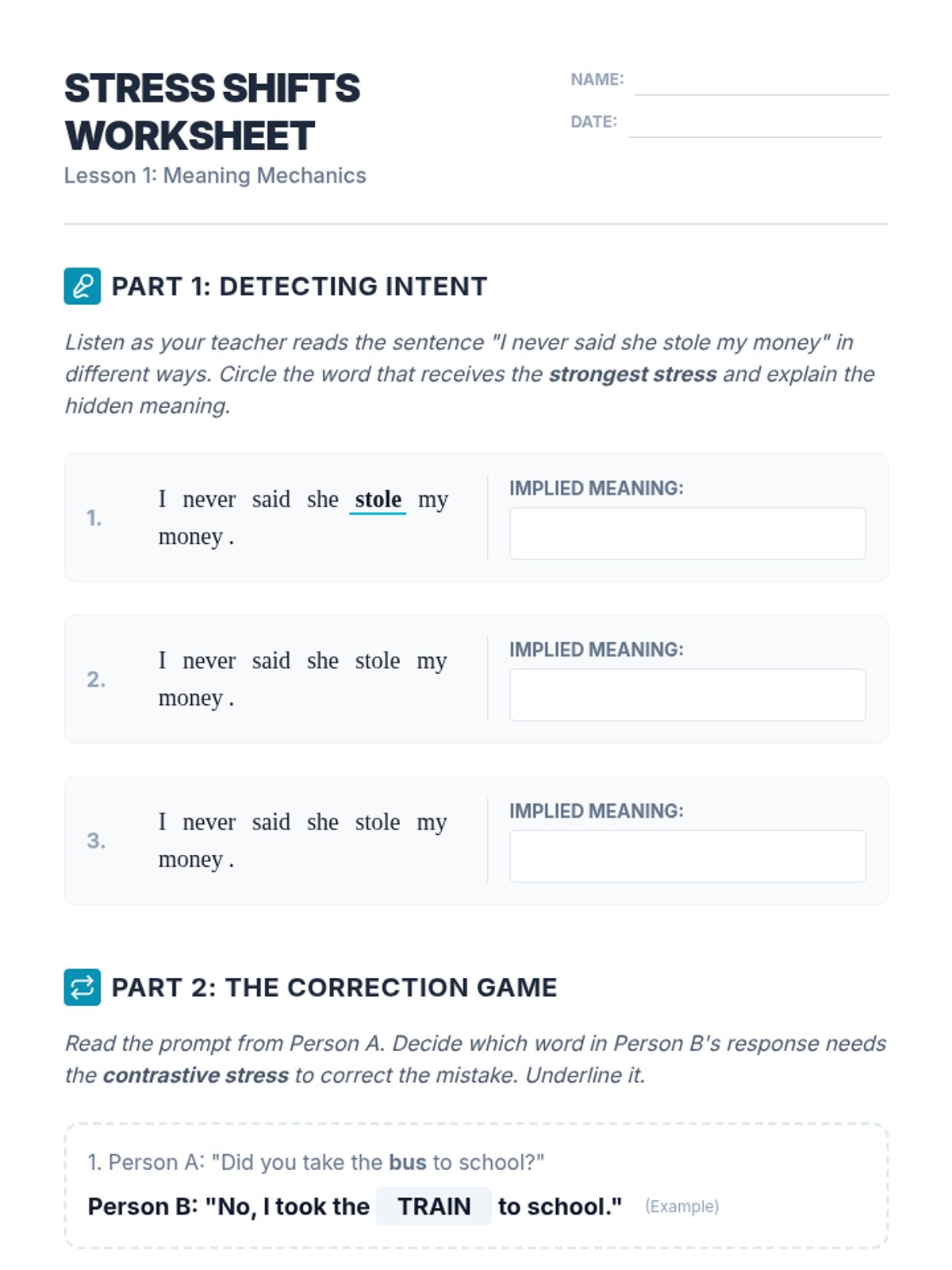
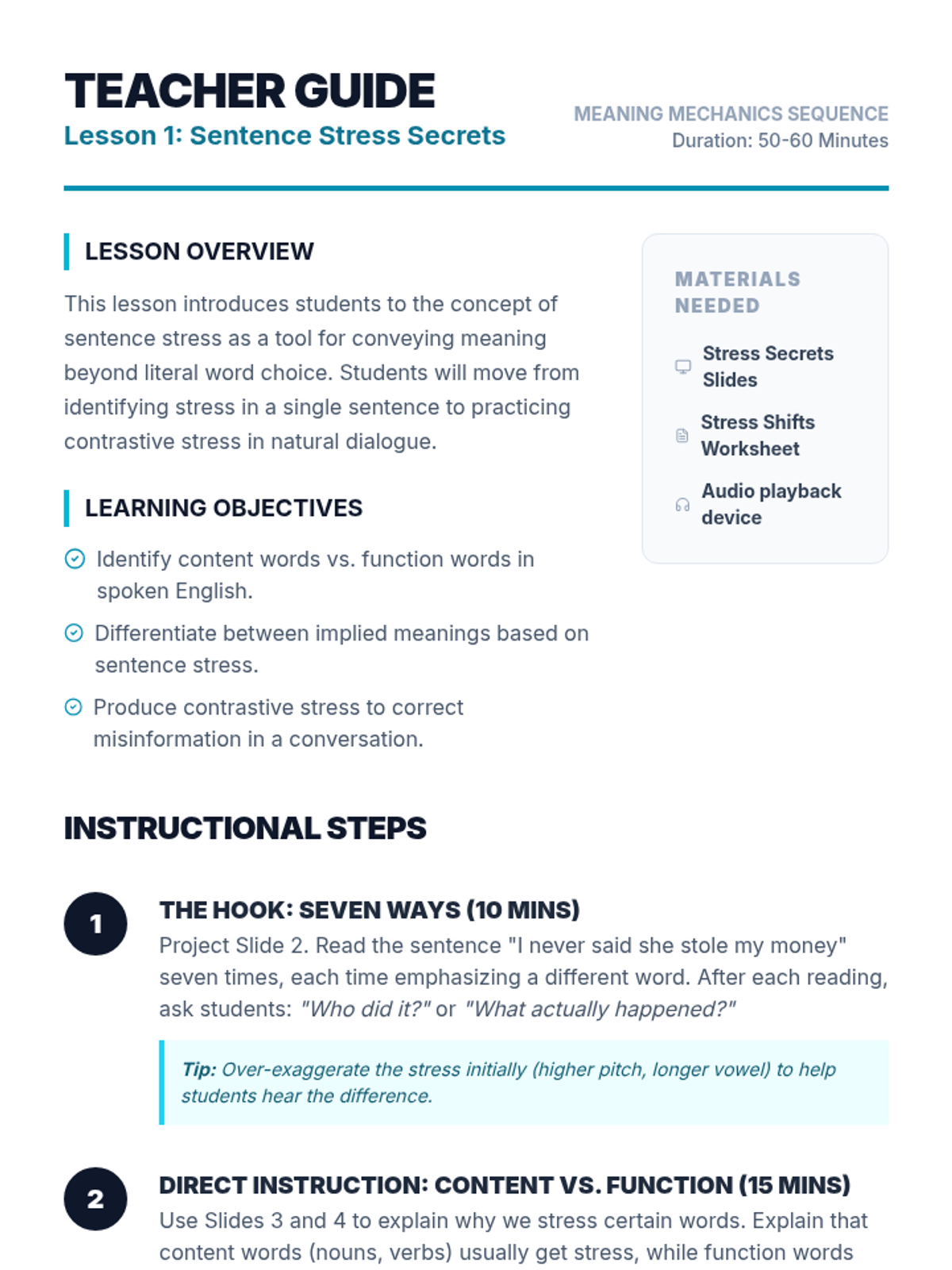
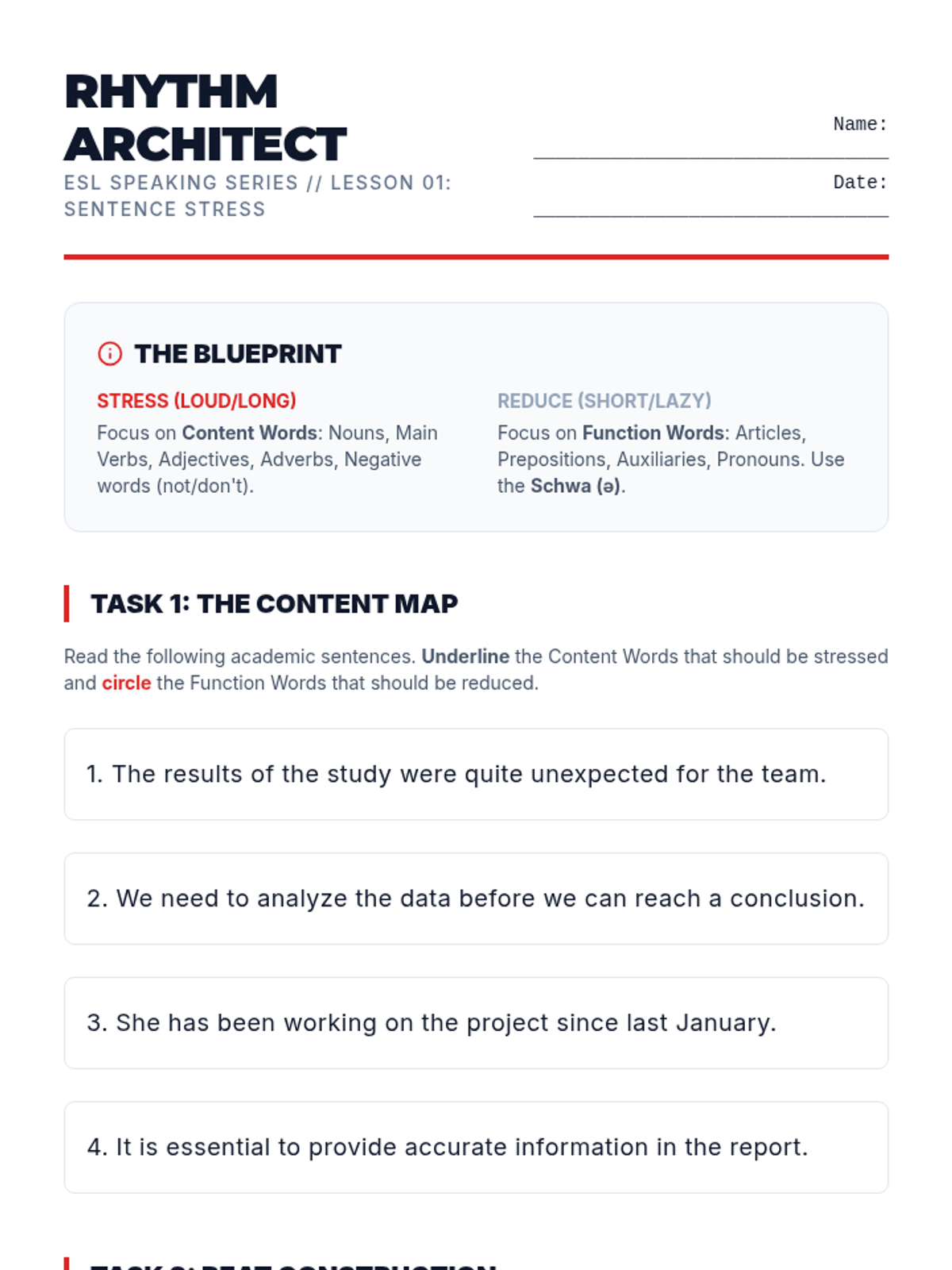
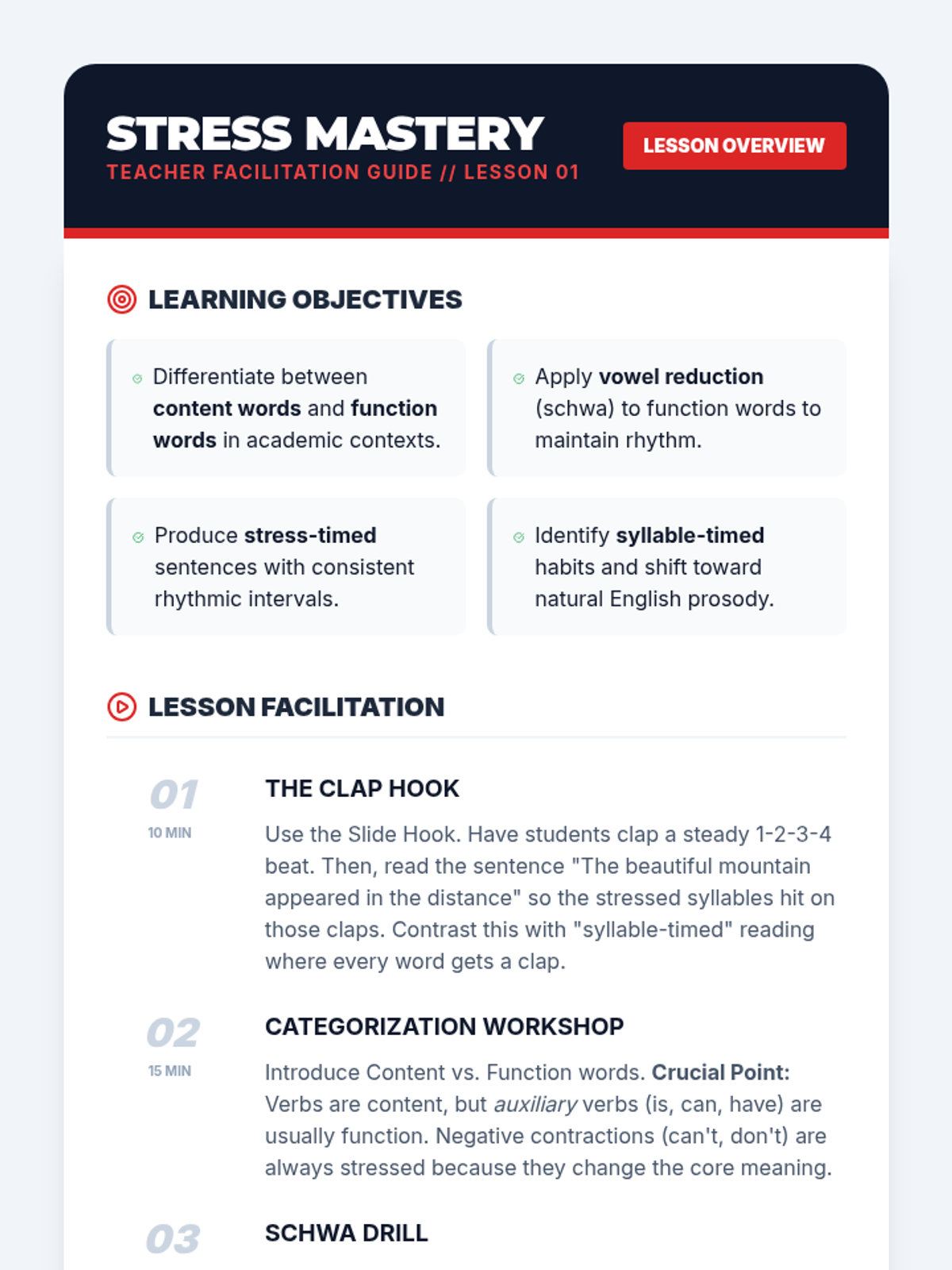
This sequence addresses the mechanical aspects of speaking that often hinder comprehensibility for intermediate graduate learners: stress, rhythm, and intonation. Students move from analyzing recorded speech to intense drilling of sentence stress, finally applying these skills to a recorded monologue to improve clarity and professional delivery.
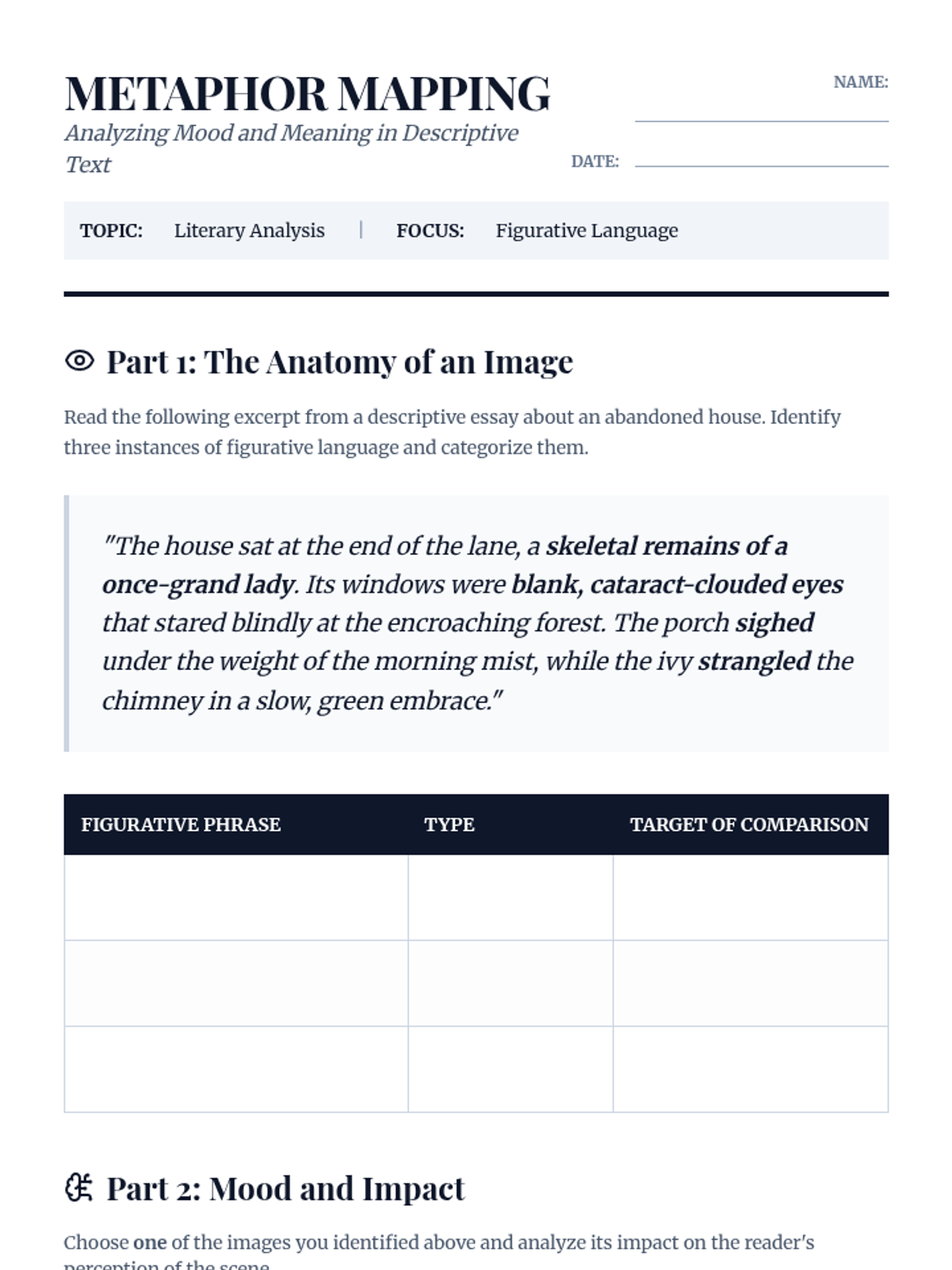
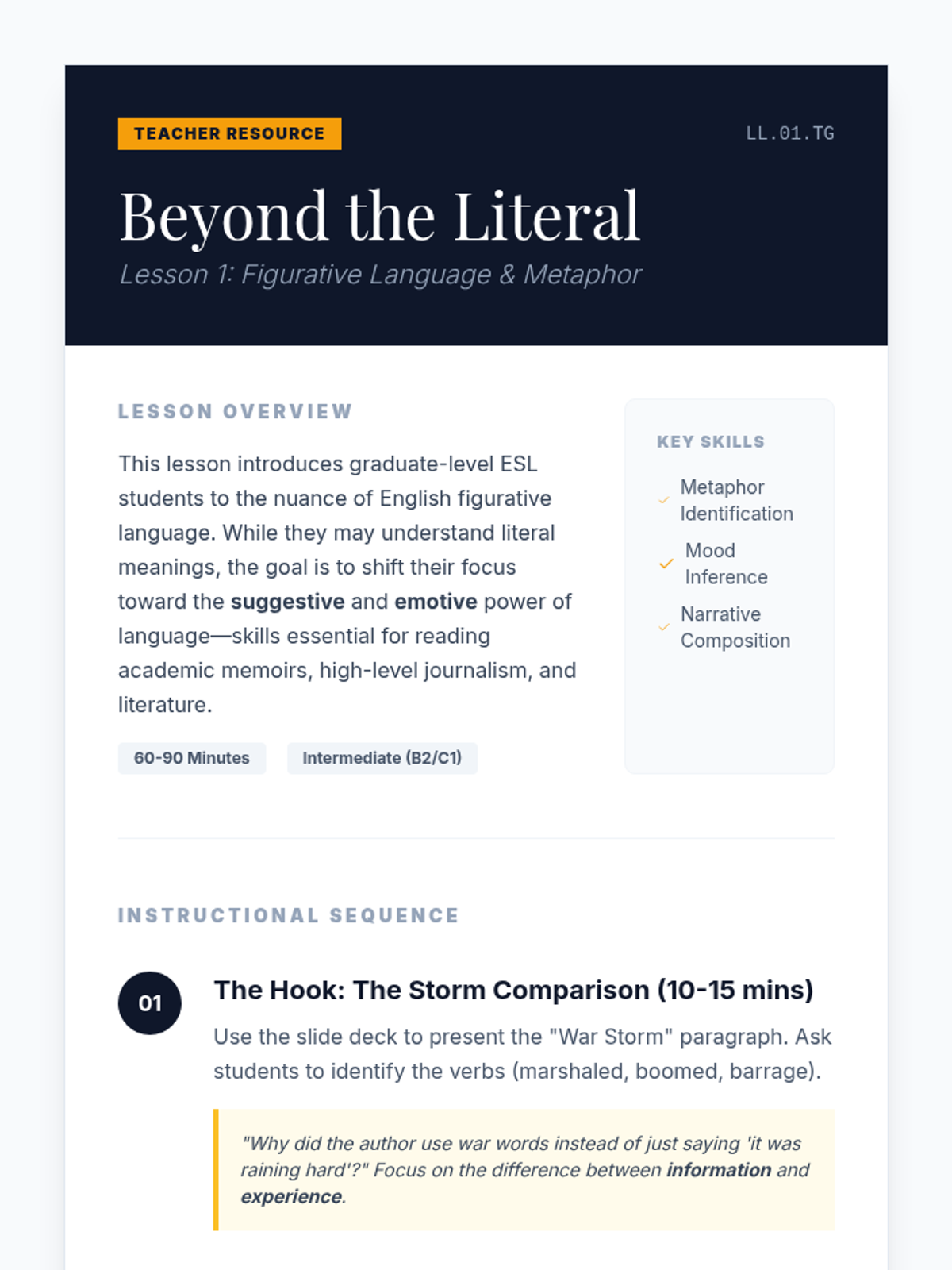
A sequence for graduate-level intermediate English learners focusing on literary analysis, cultural nuance, and deep inference through narrative non-fiction and short fiction.
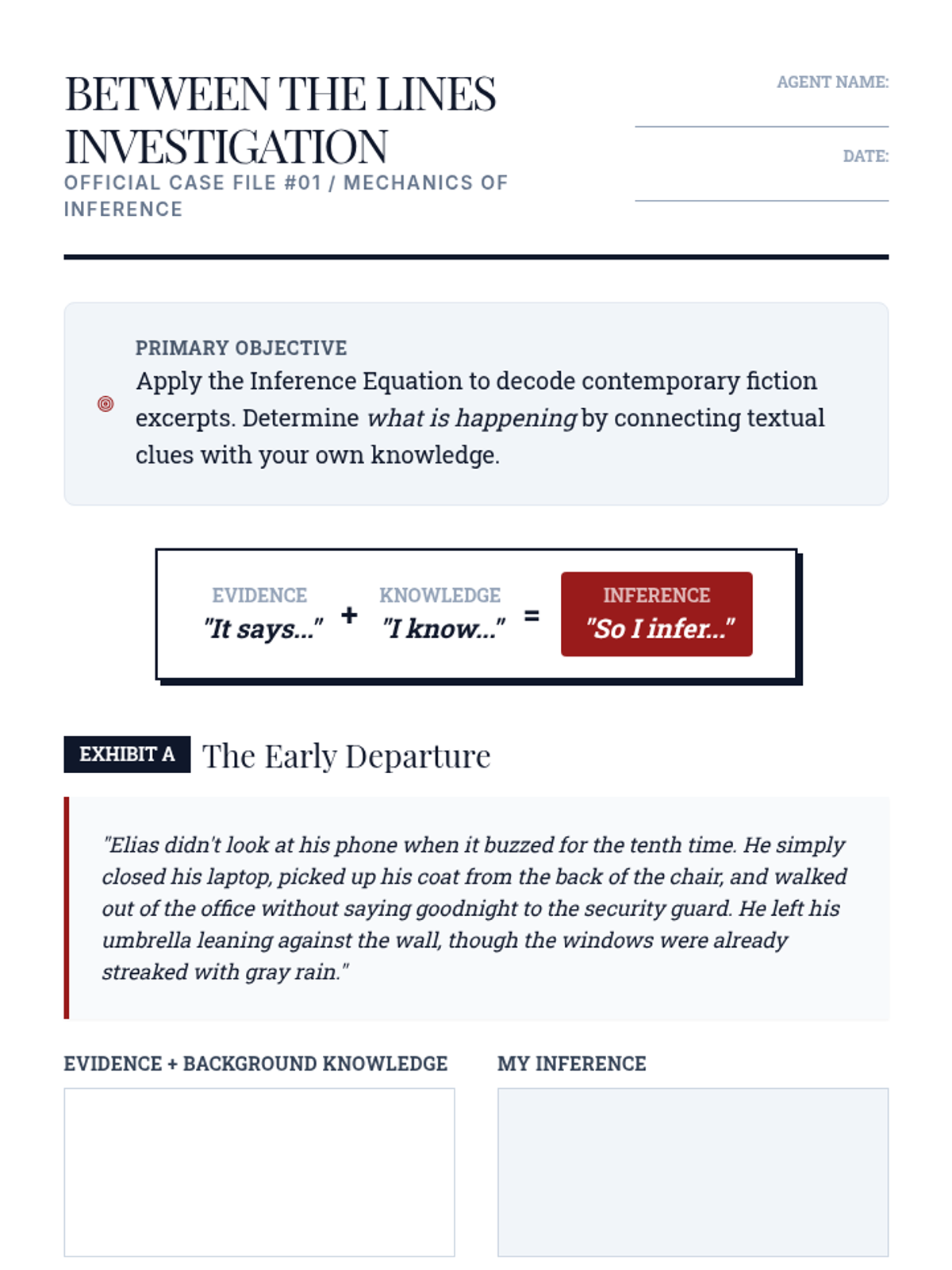
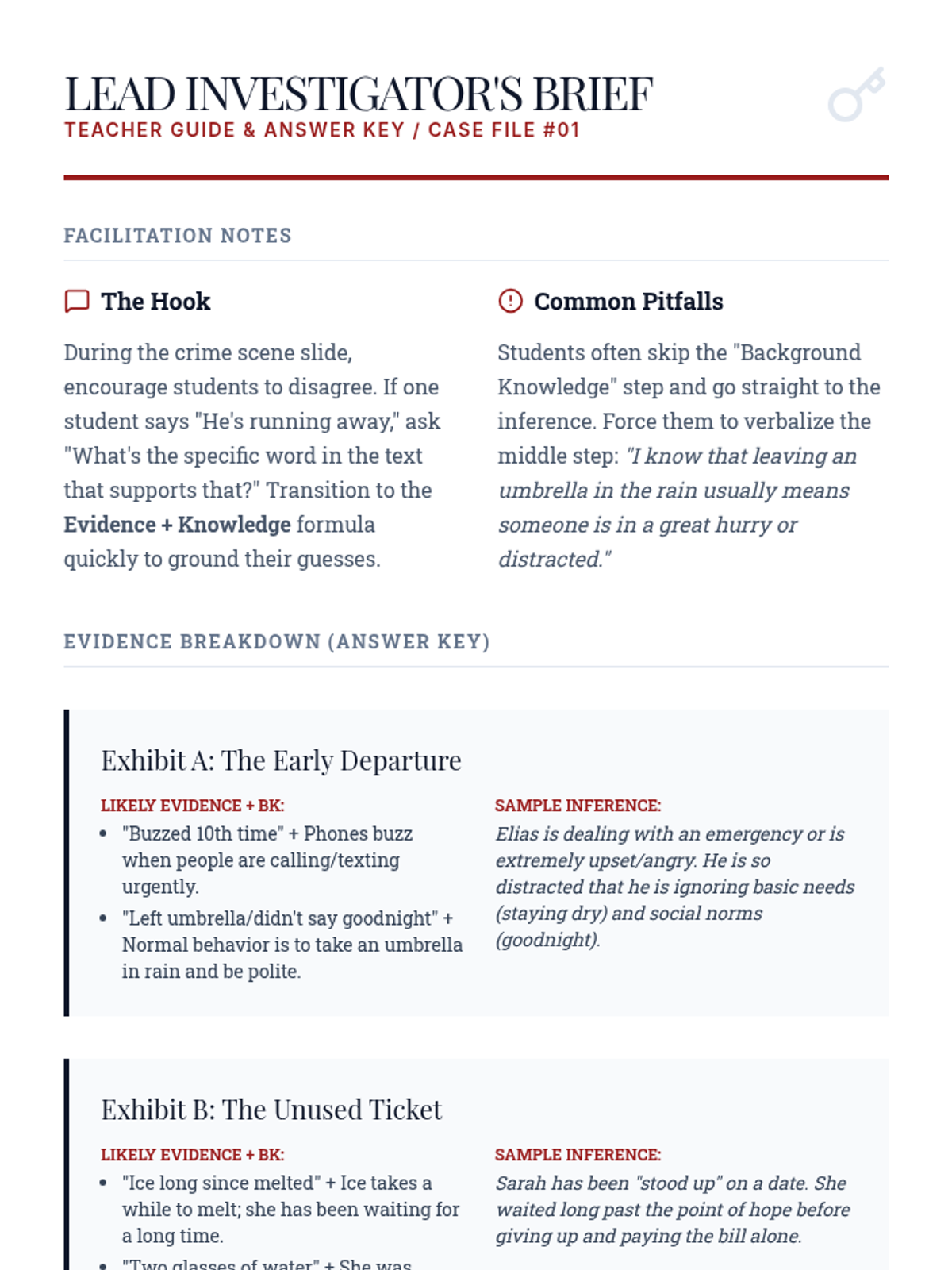
A comprehensive unit for undergraduate ESL/EFL students focusing on deep inferential comprehension in contemporary fiction, moving from basic logical deductions to complex analysis of subtext and cultural context.
A comprehensive unit for intermediate English learners focusing on critical reading of news, identifying bias, and analyzing rhetorical strategies in media. Students transition from identifying basic facts to conducting comparative analyses of international journalism.
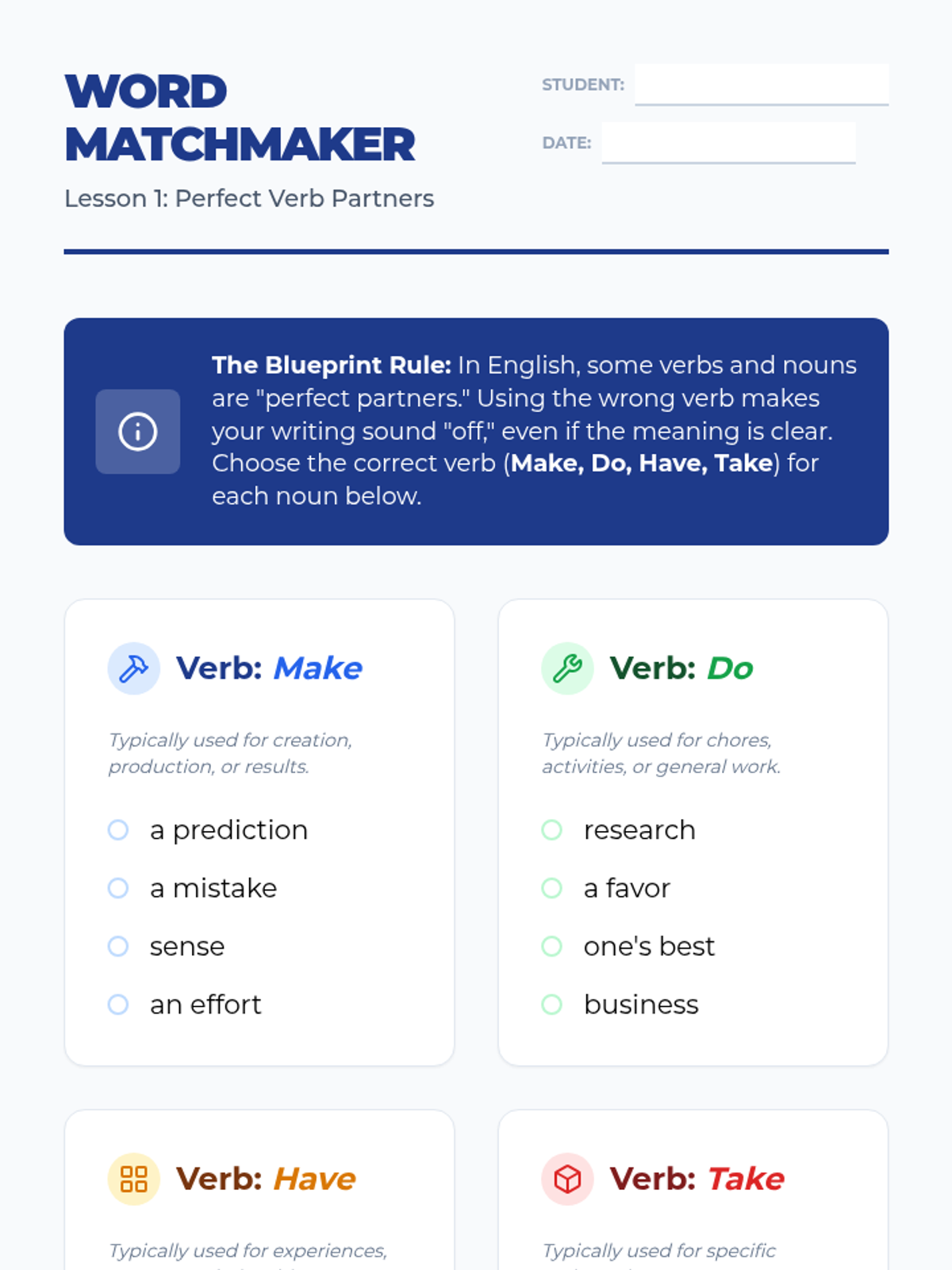
A sequence focused on academic collocations and formal register, teaching students how to use precise word pairings and code-switch for professional contexts.
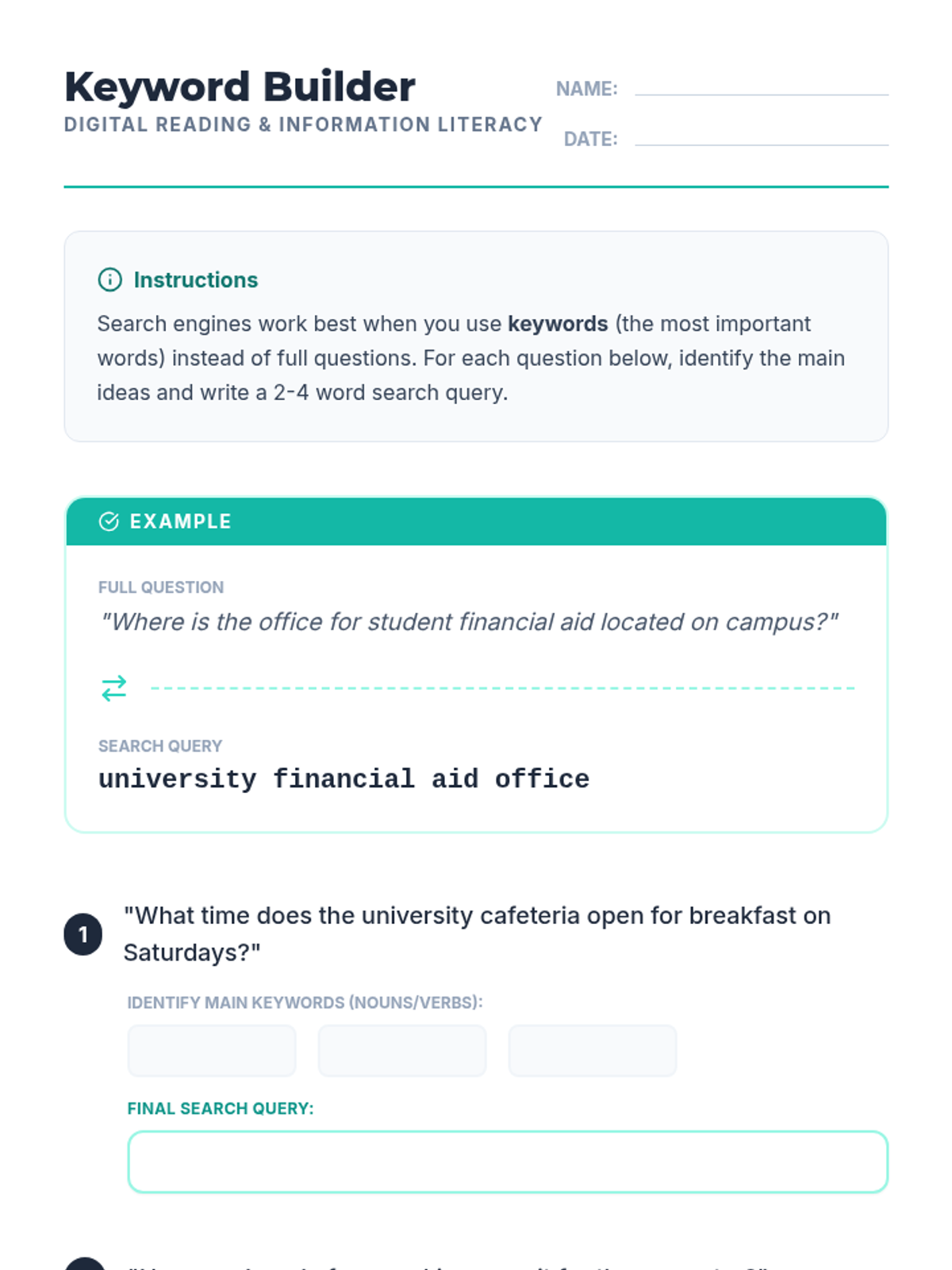
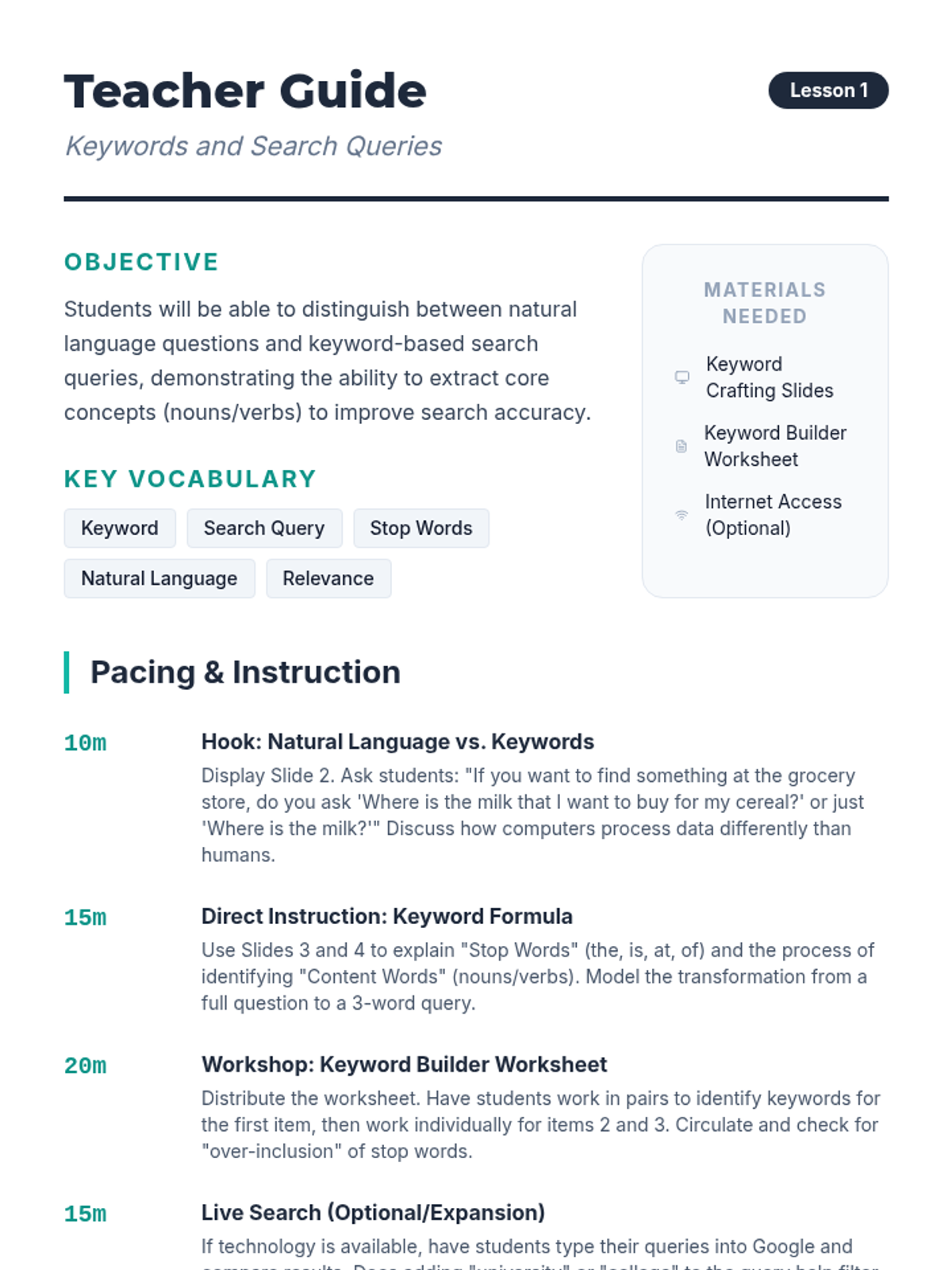
A 5-lesson sequence designed for undergraduate ELL students to develop essential digital literacy and reading skills. Students learn to formulate search queries, analyze search engine results, navigate university portals, and preview online articles, culminating in a digital research scavenger hunt.
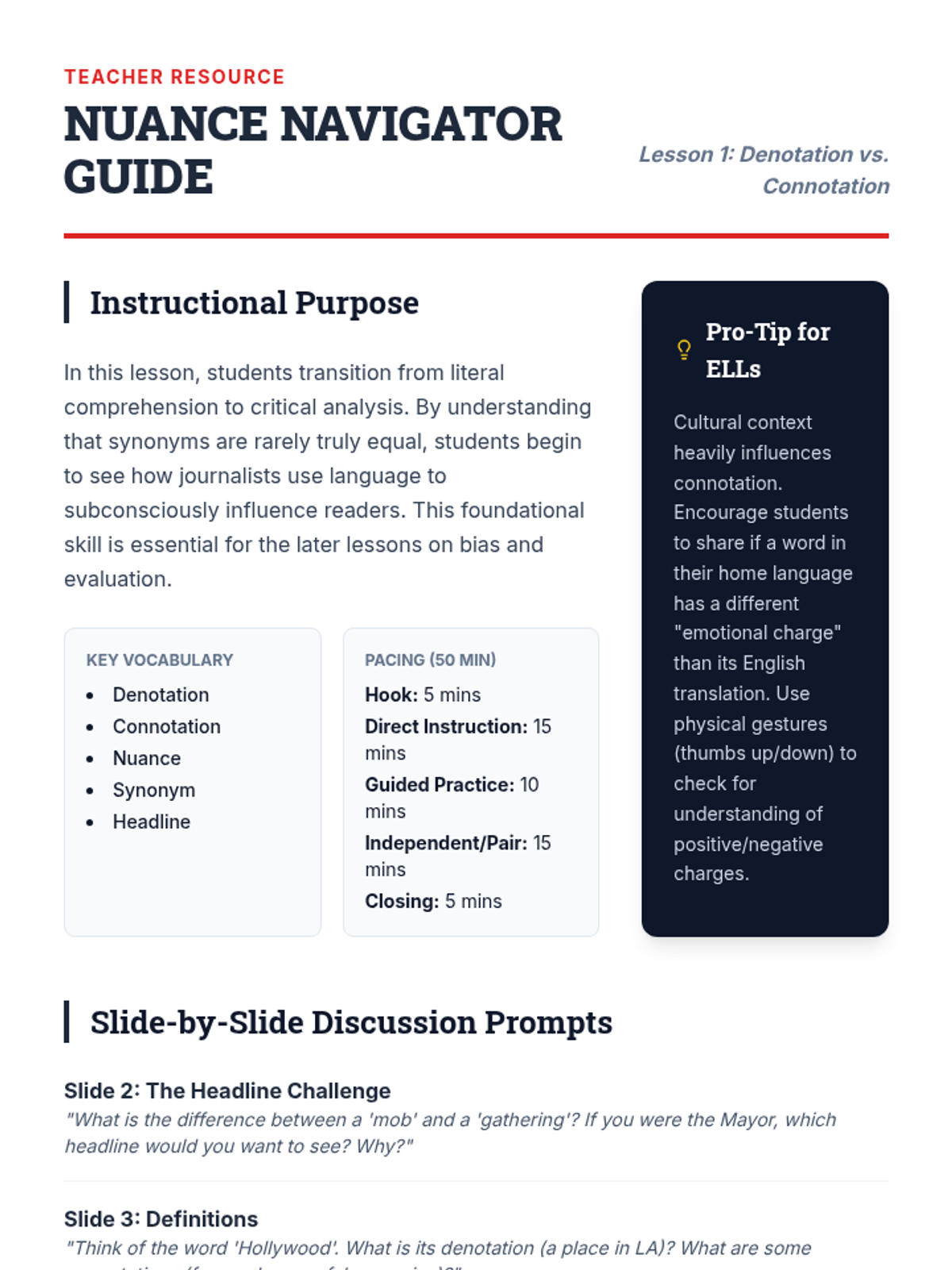
A comprehensive unit for 11th-grade Intermediate English learners focusing on media literacy. Students move from analyzing word-level nuances (connotation) to evaluating complex bias and credibility in digital news sources.
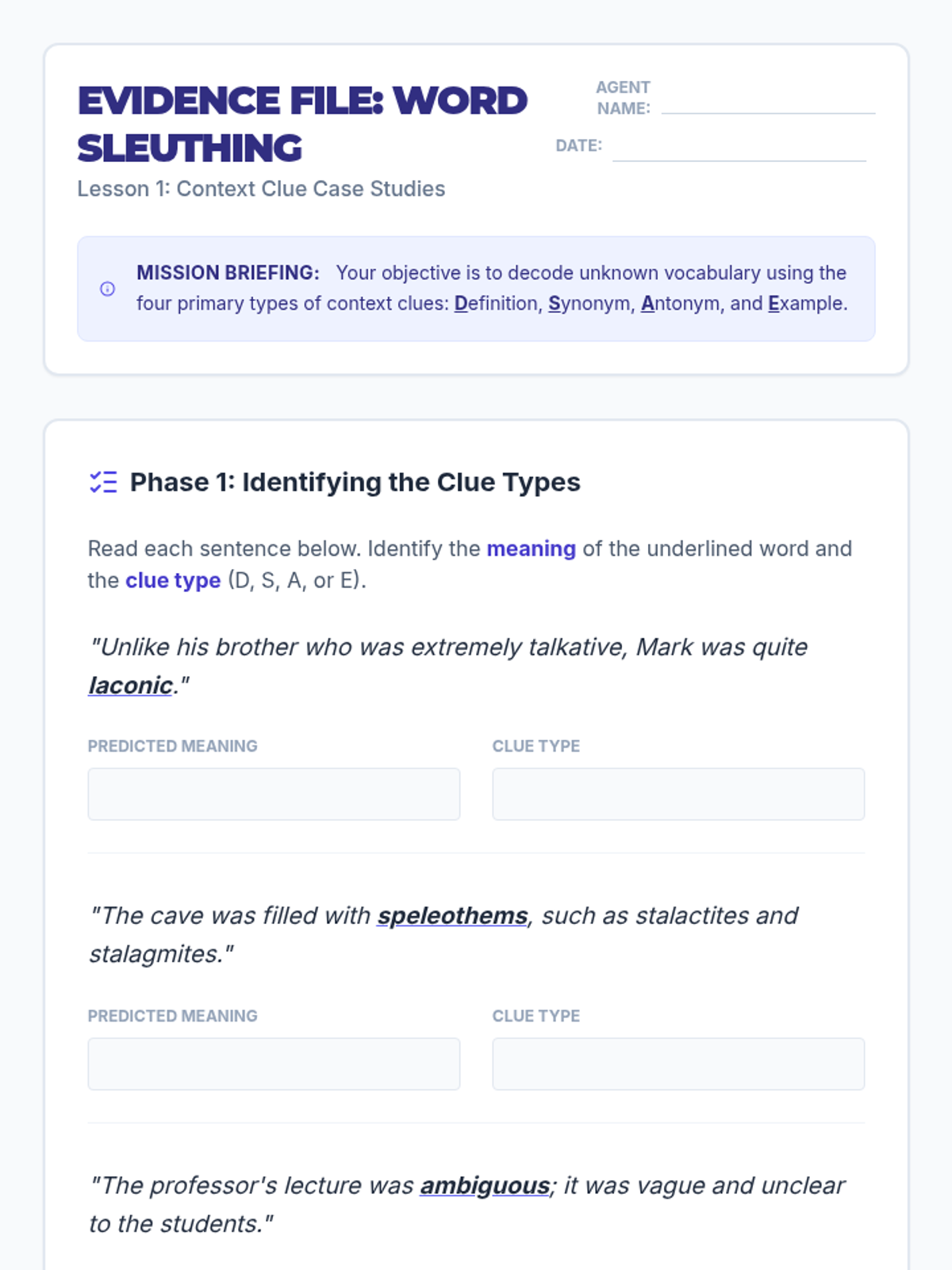
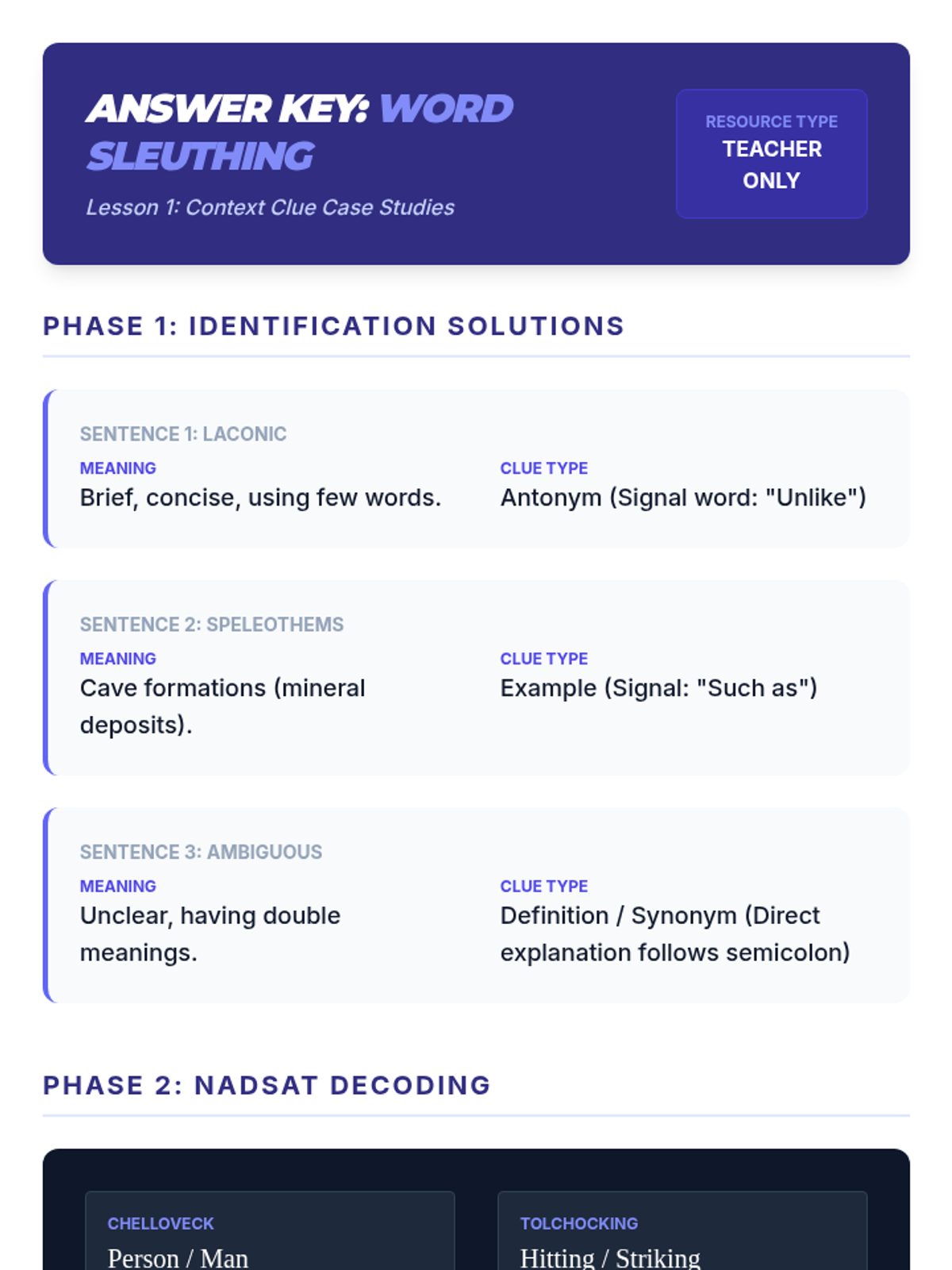
This sequence helps intermediate English learners develop independence in reading by mastering context clues, morphological analysis, polysemy, collocations, and semantic gradients. Students transition from dictionary reliance to autonomous decoding of complex academic and literary texts.
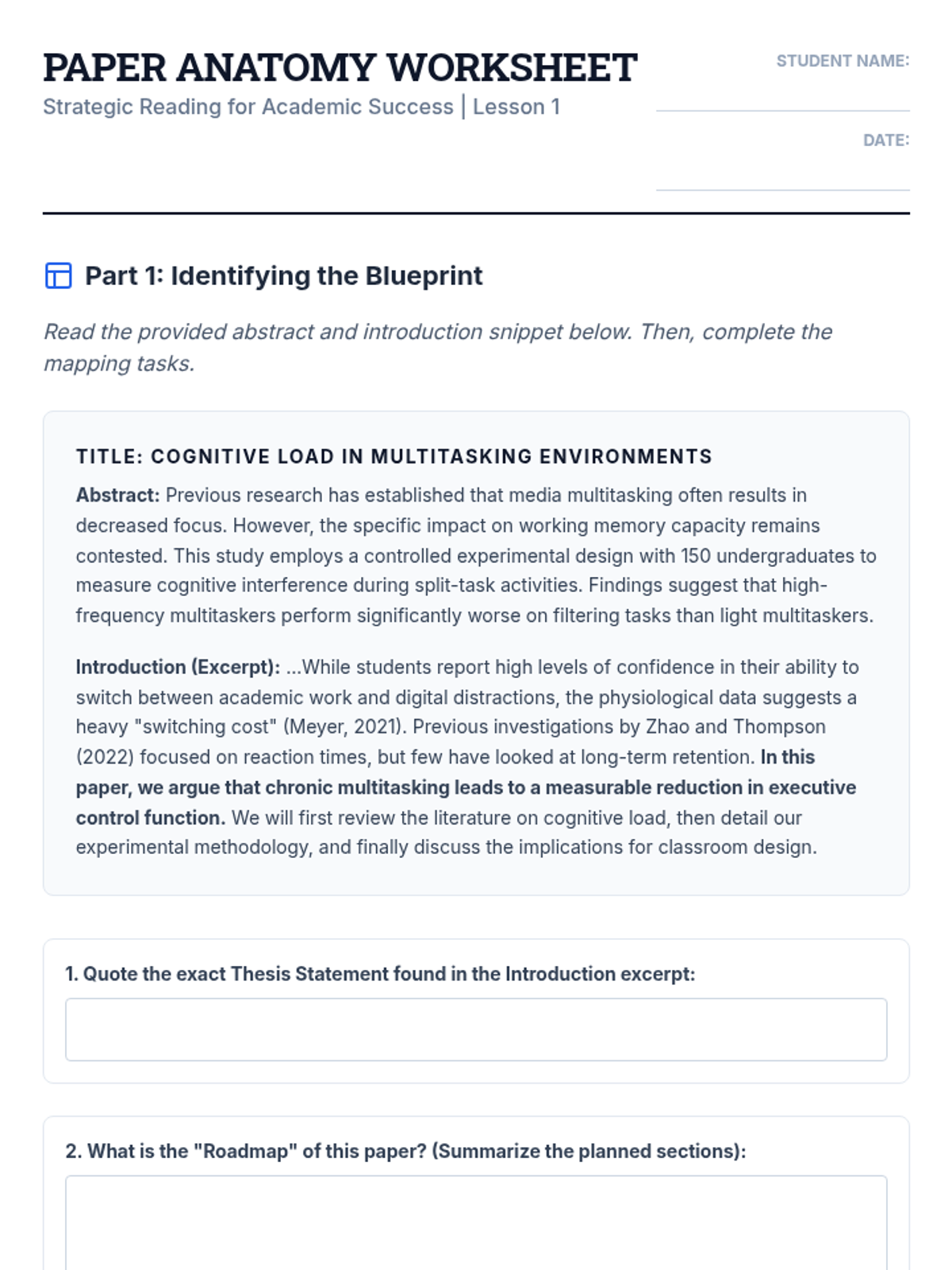
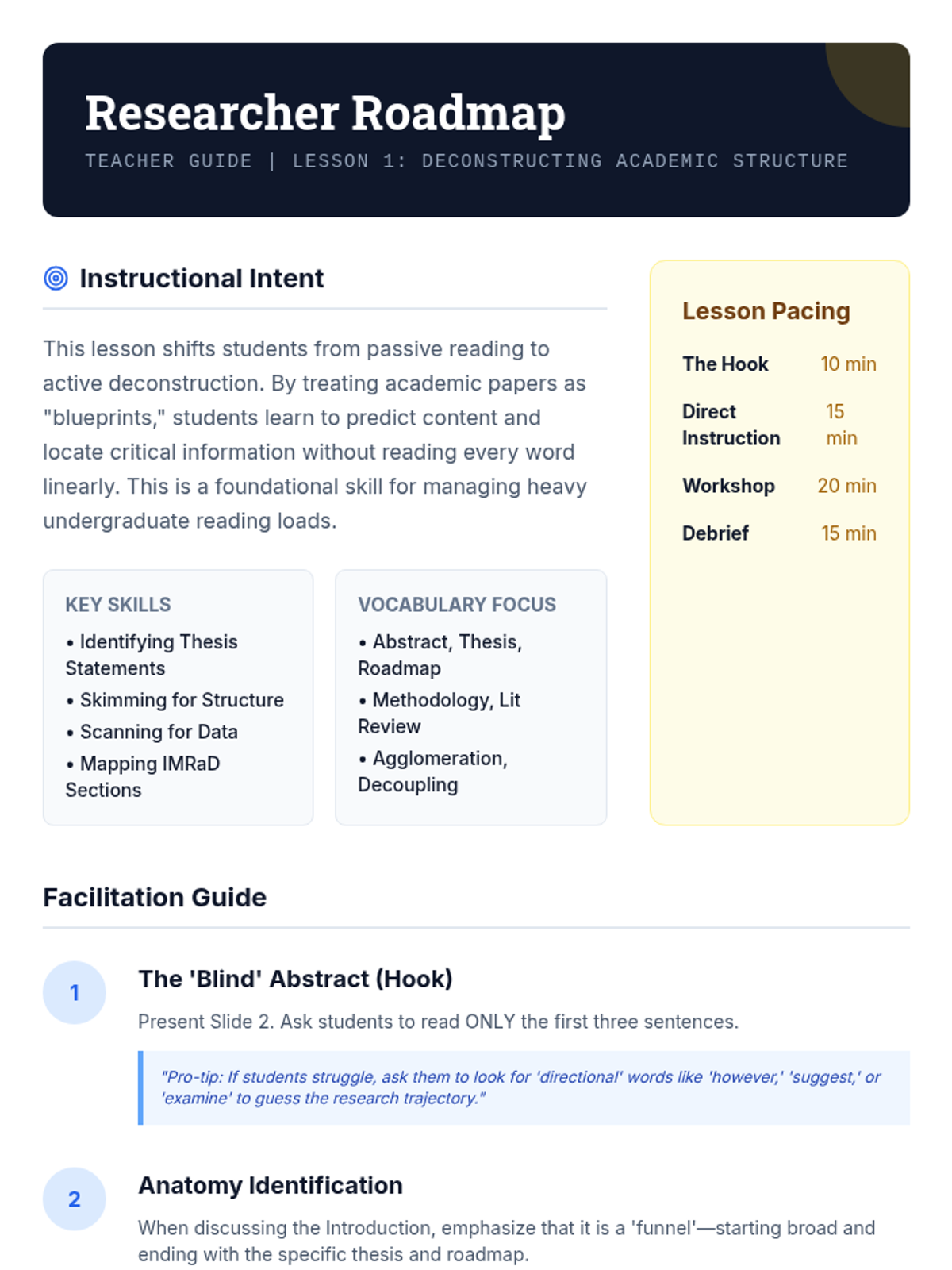
A comprehensive sequence for intermediate English learners (undergraduate level) focused on deconstructing, evaluating, and synthesizing academic texts. Students move from understanding paper structure to producing an annotated bibliography, emphasizing the Academic Word List and critical analysis.