Complex grammar structures, idiomatic expressions, and phrasal verbs. Strengthens reading and listening comprehension while building conversational fluency for varied social and professional settings.
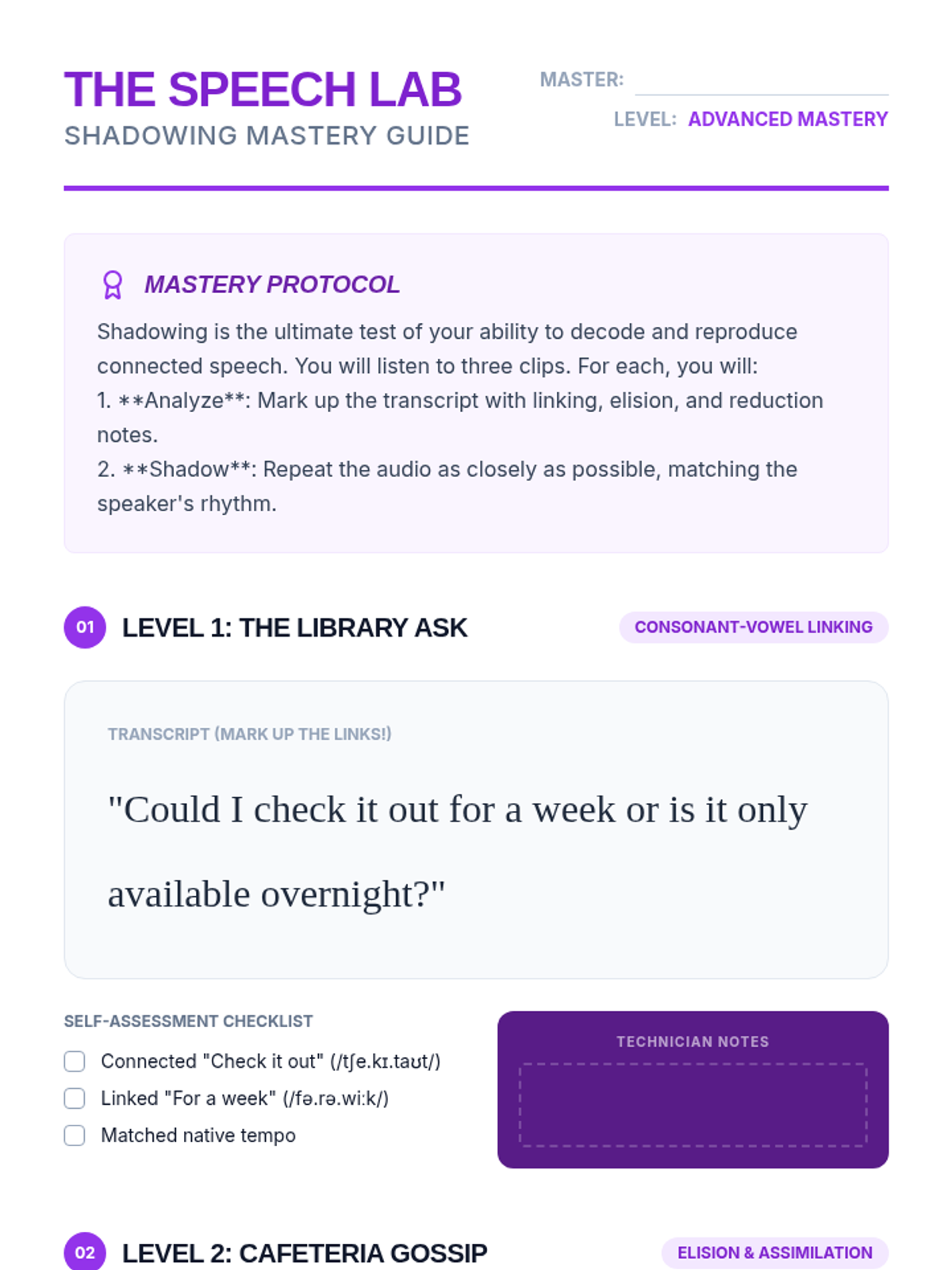
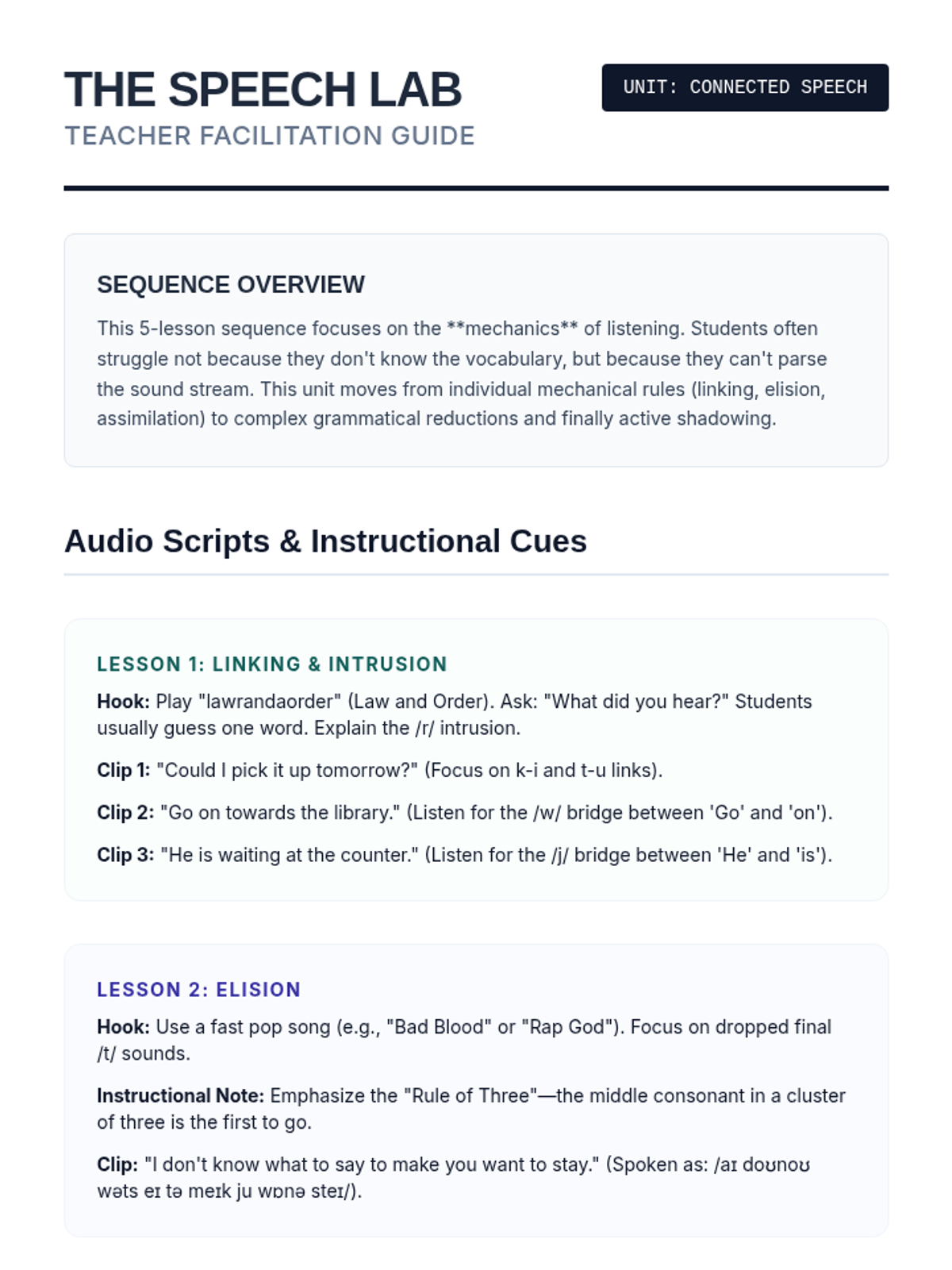
Students engage in a 'shadowing' technique, repeating audio immediately after hearing it to internalize the rhythm and flow of connected speech. This active processing reinforces their ability to predict and process sound streams.
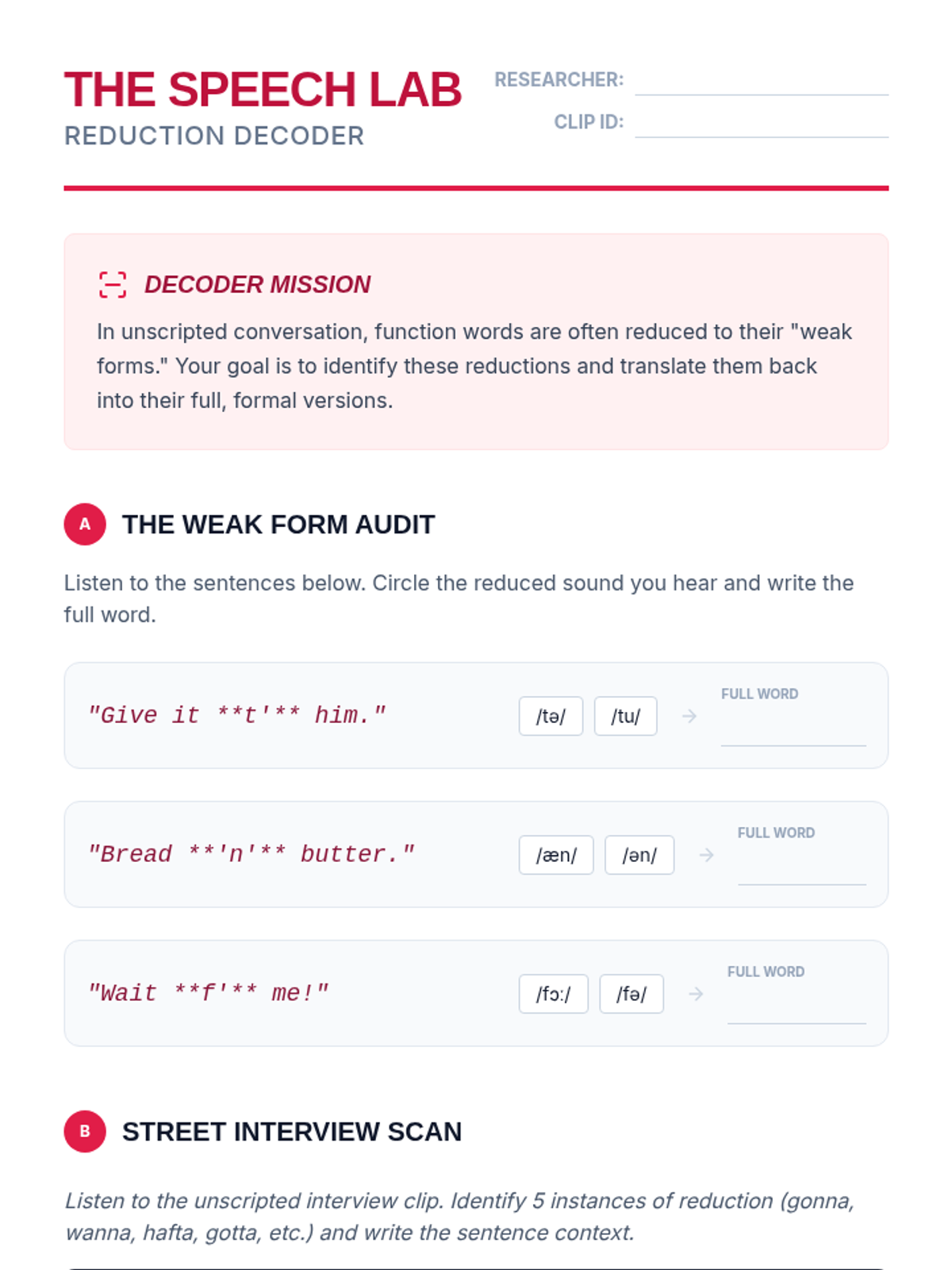
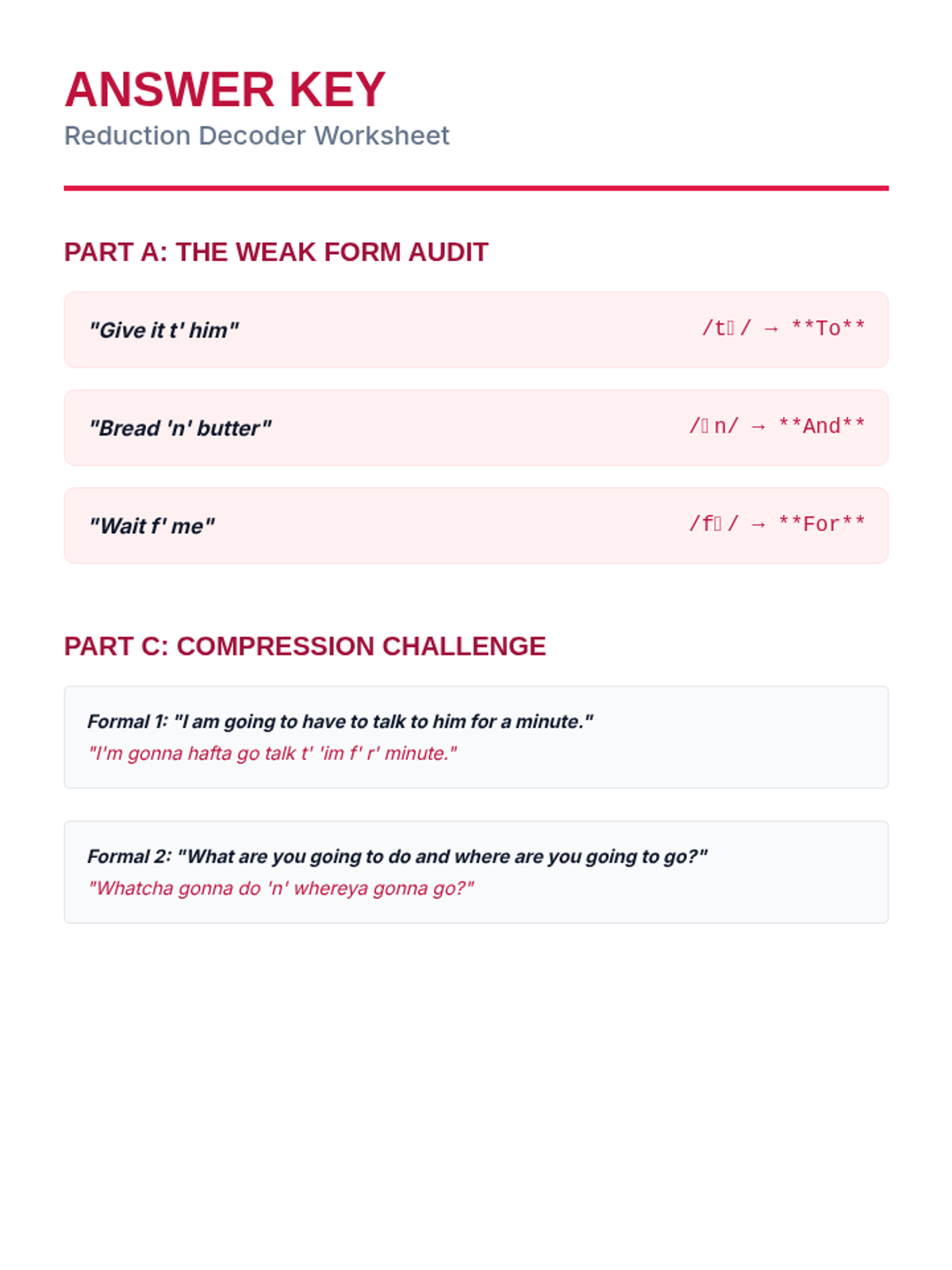
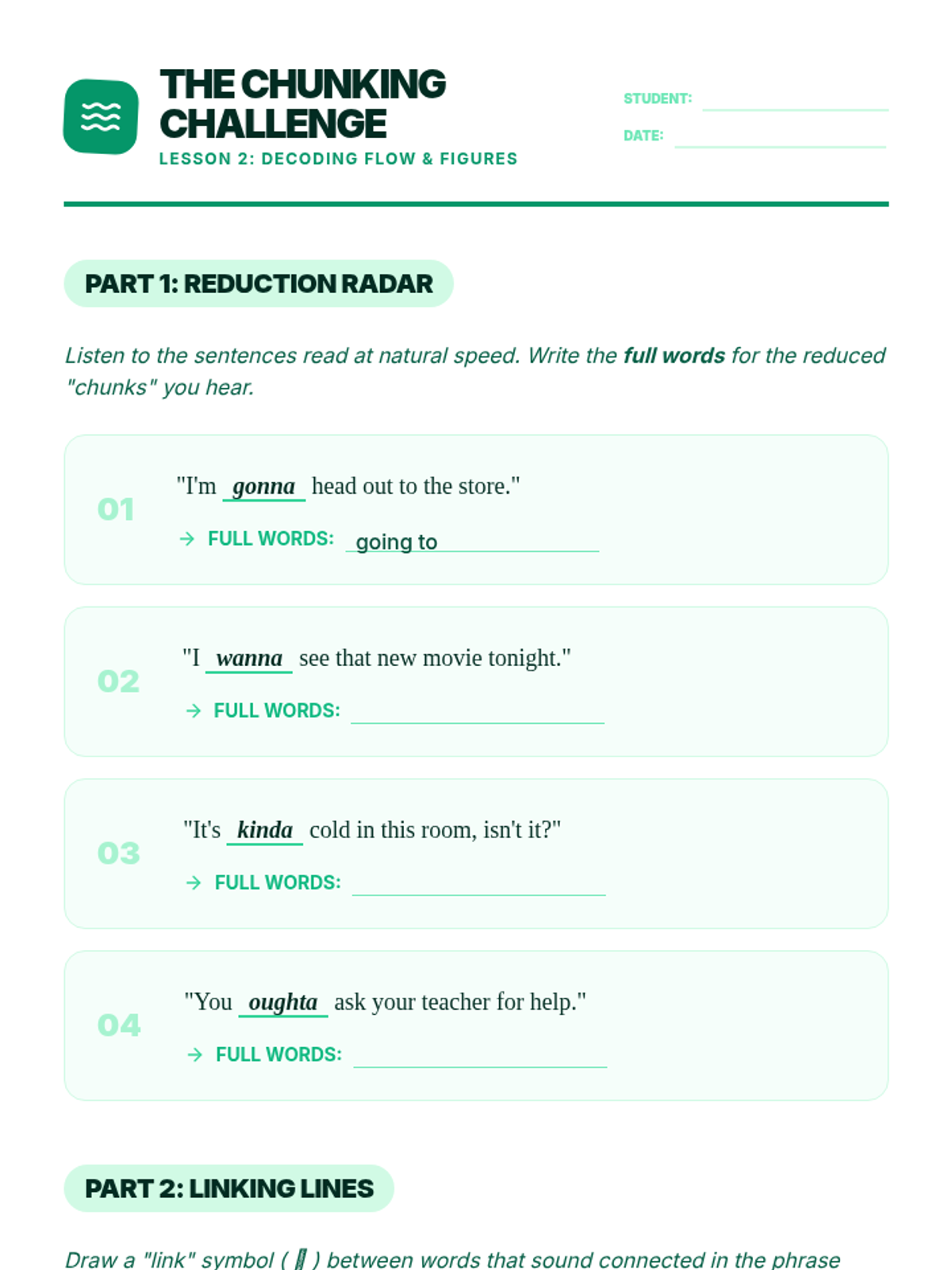
Focusing on function words, this lesson tackles common reductions like 'gonna,' 'wanna,' and weak forms of auxiliary verbs. Students analyze unscripted interviews to catch these reductions in context.
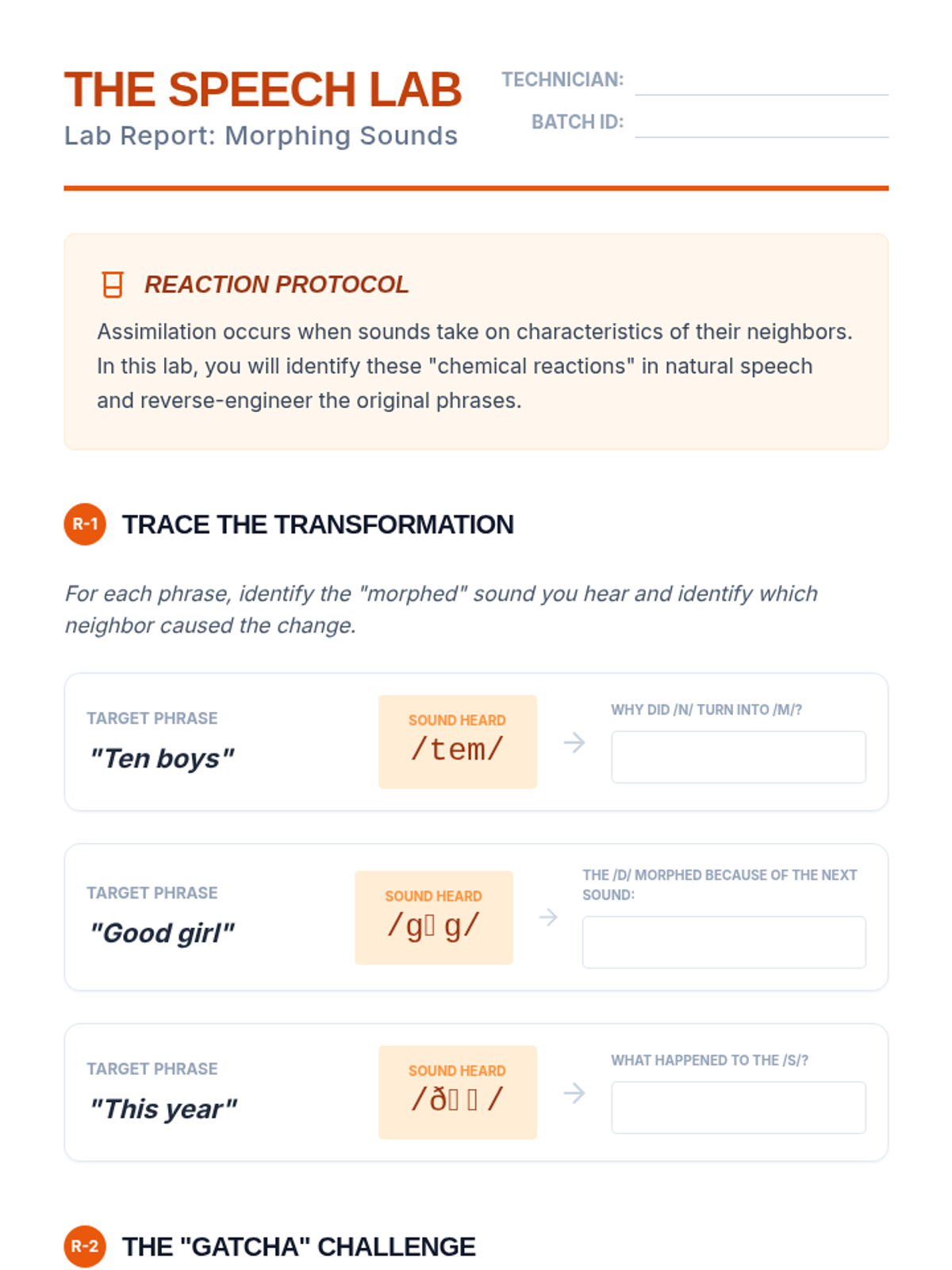
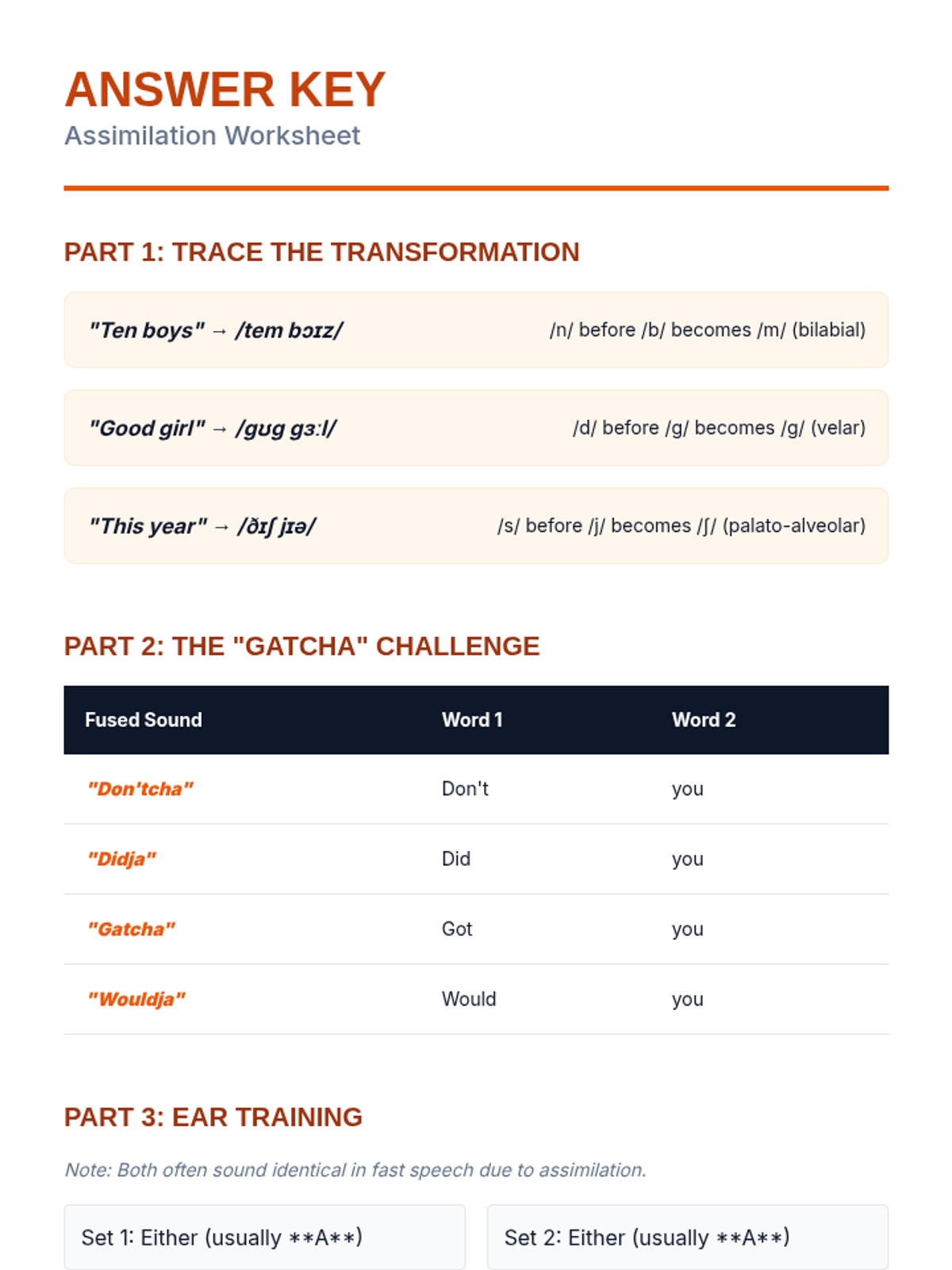
Students learn how sounds influence their neighbors (e.g., 'hand bag' becoming 'hambag'). The lesson uses minimal pair discrimination and dictation exercises to train ears to recognize words despite phonological changes.
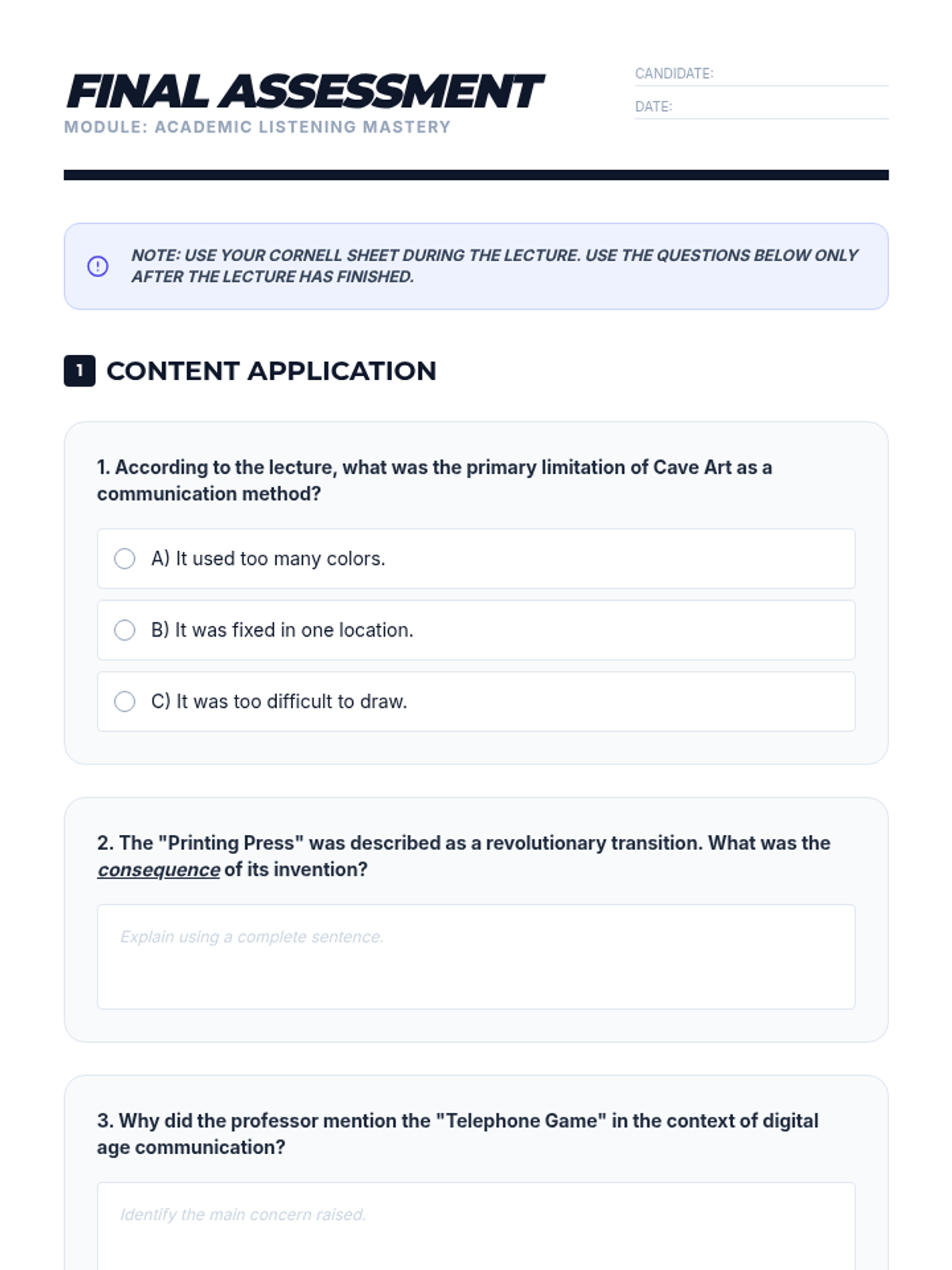
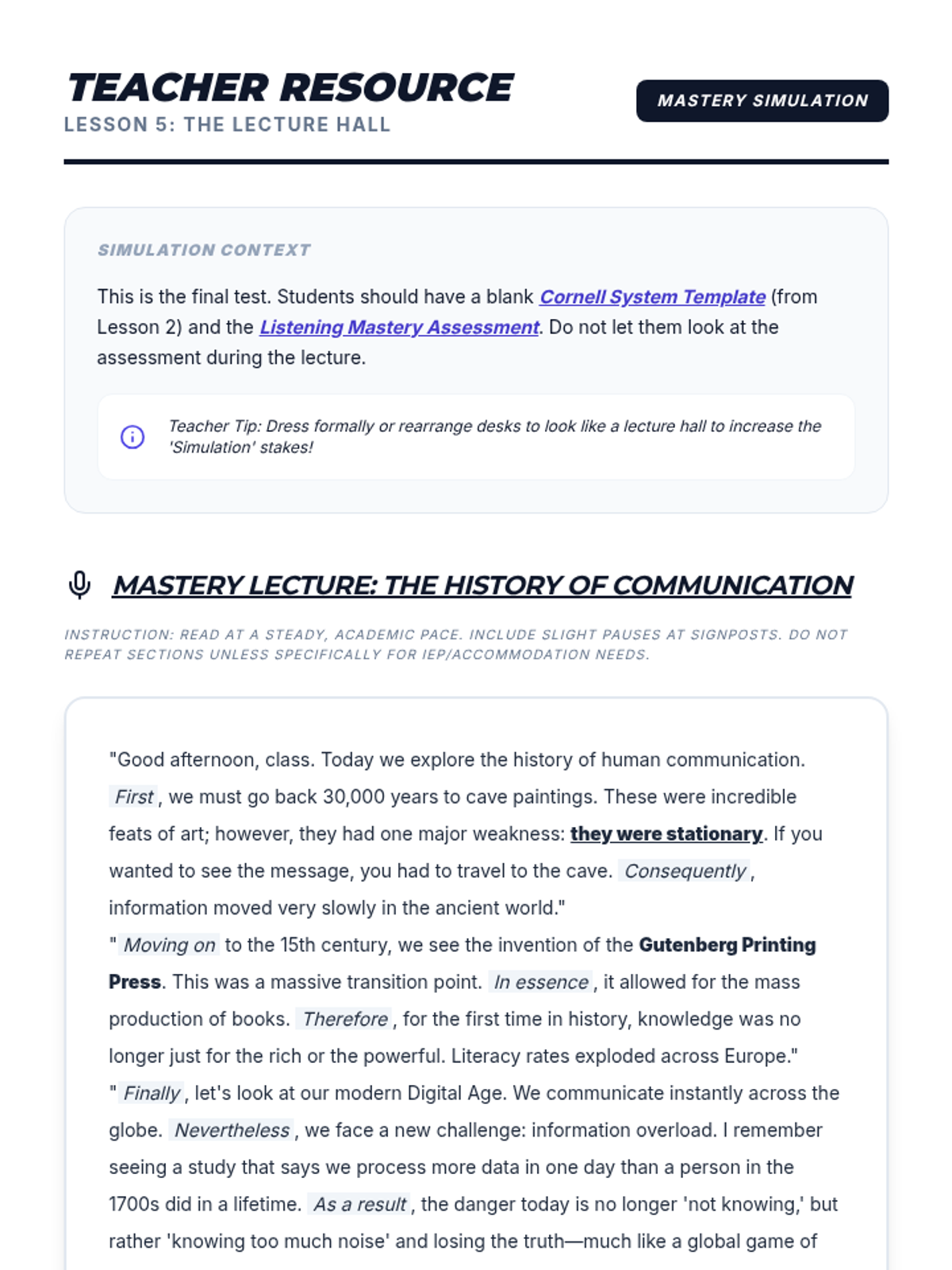
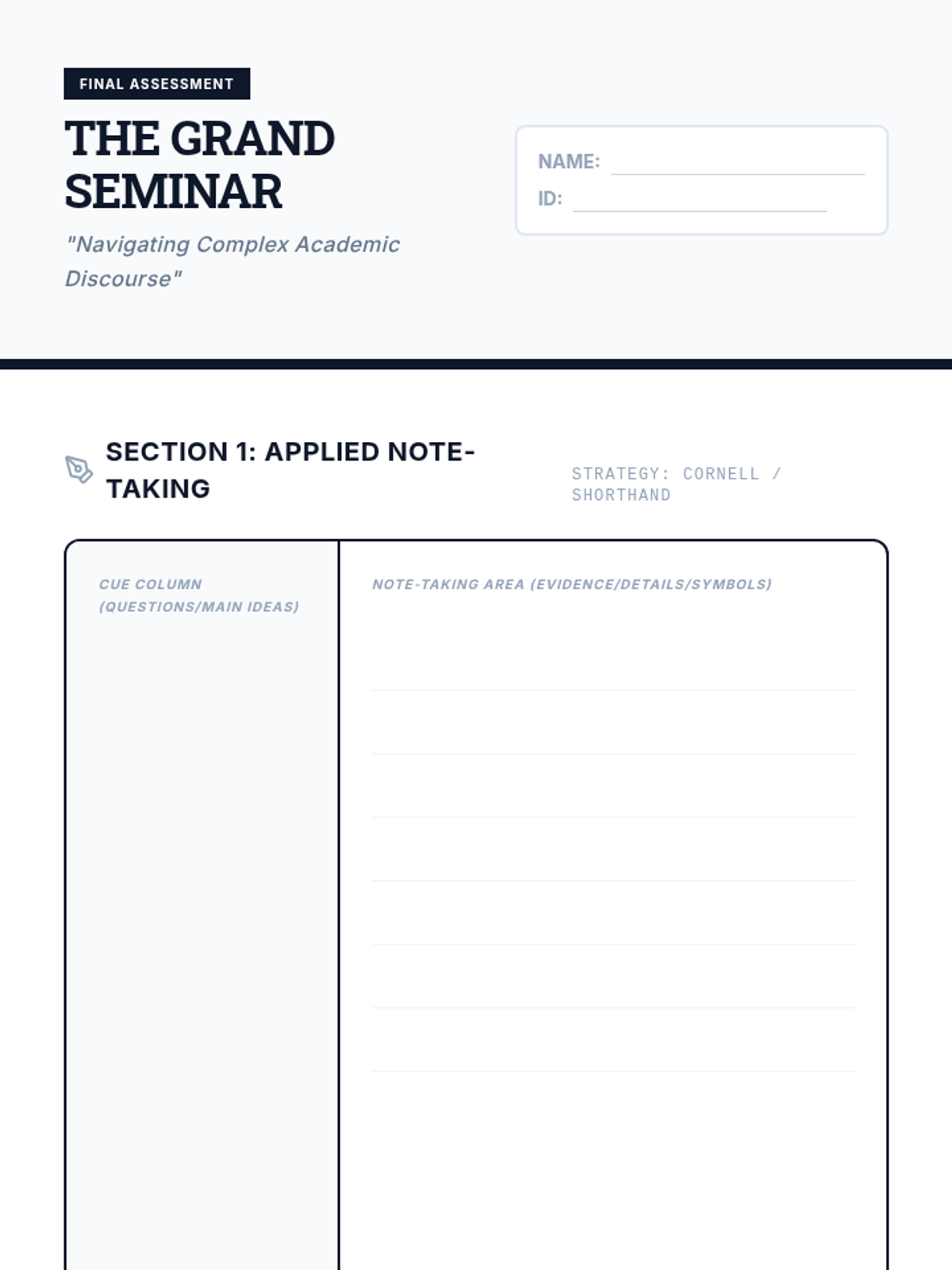
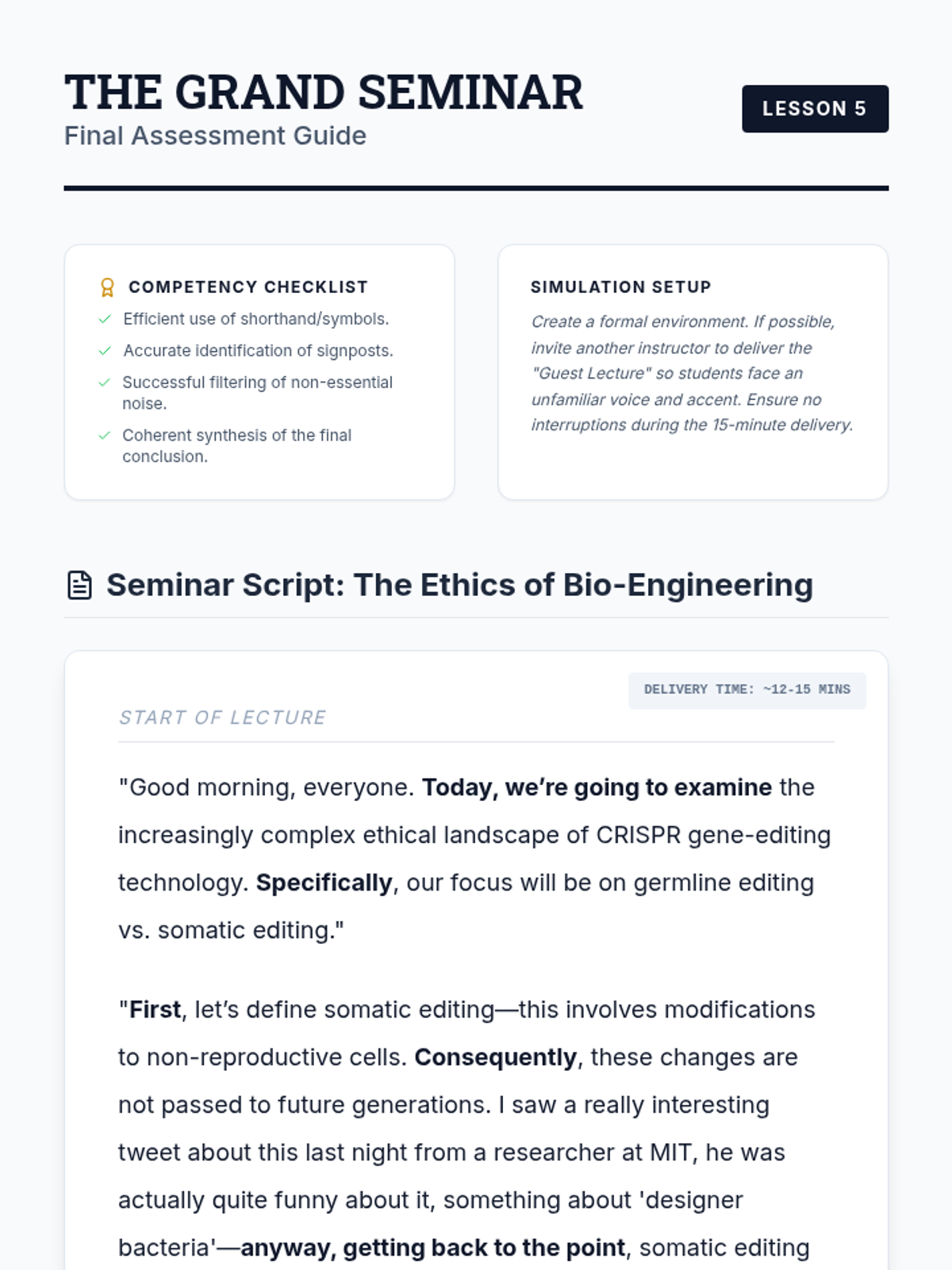
Students participate in a university-style mini-lecture simulation. They apply all learned strategies—signpost identification, Cornell note-taking, and synthesis—to capture information and complete a formal assessment.
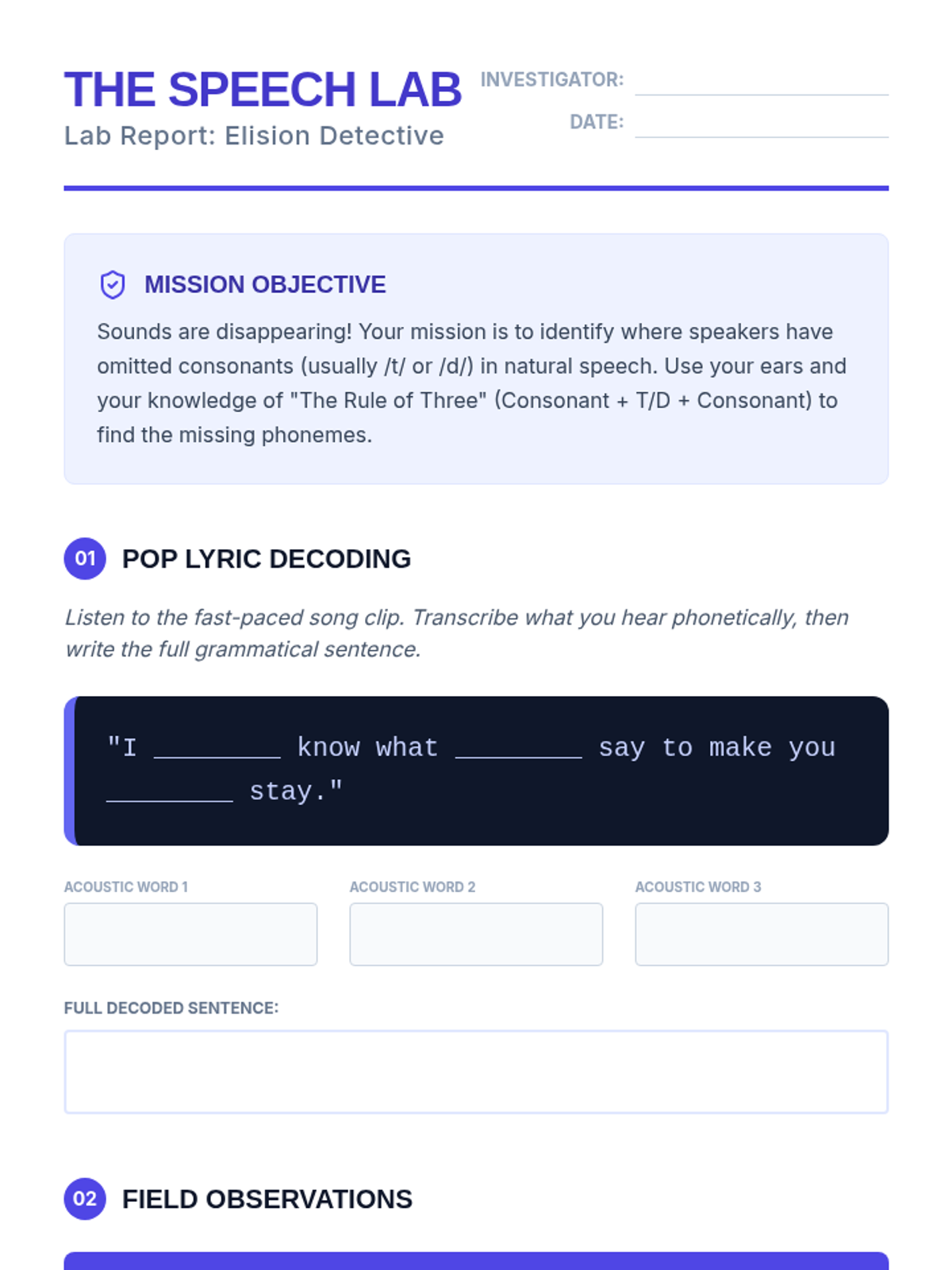
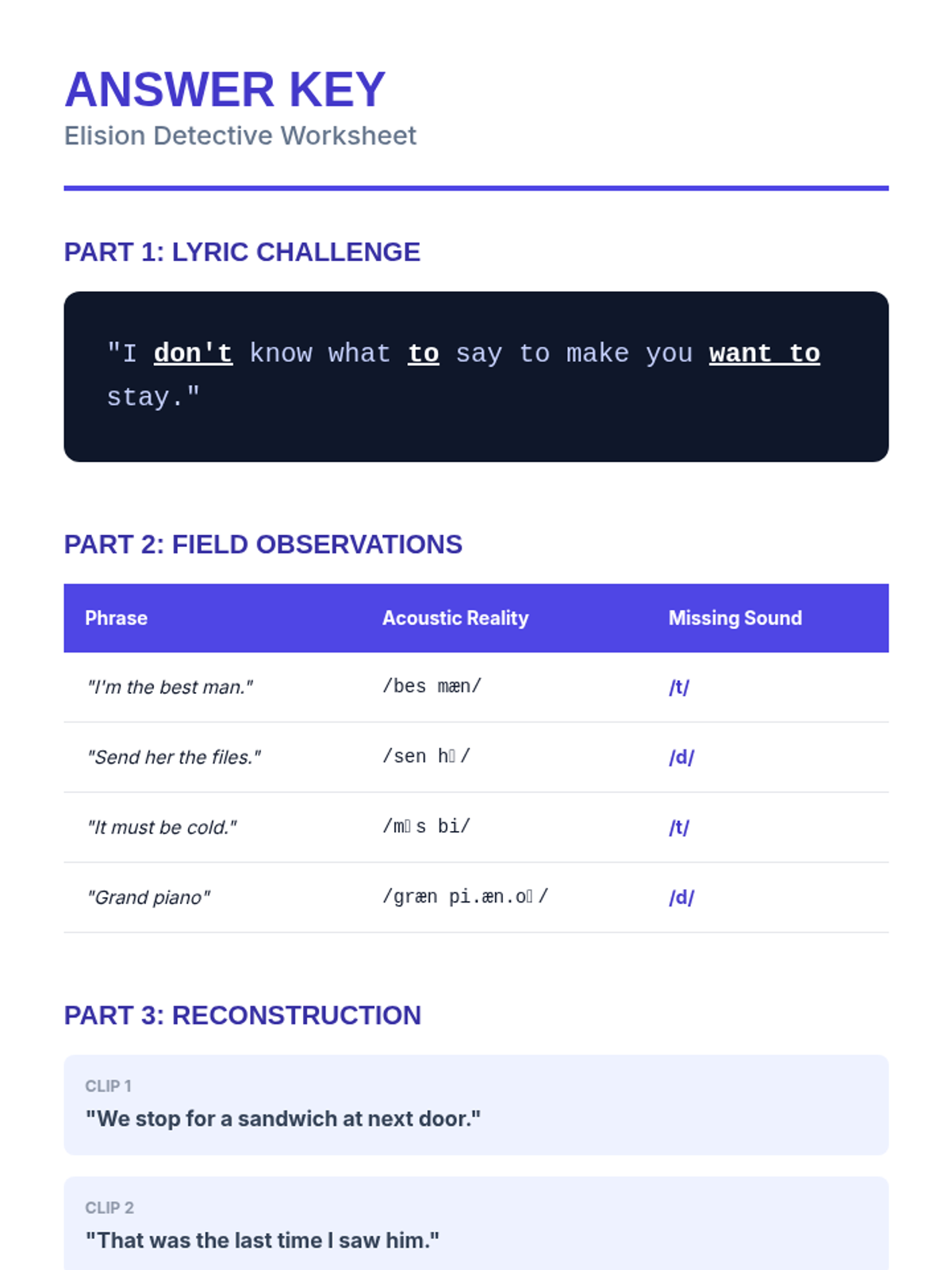
This lesson covers the phenomenon of elision, where sounds (particularly /t/ and /d/) disappear in rapid speech. Students practice listening to high-speed dialogues to identify words that have been 'swallowed' by the speaker.
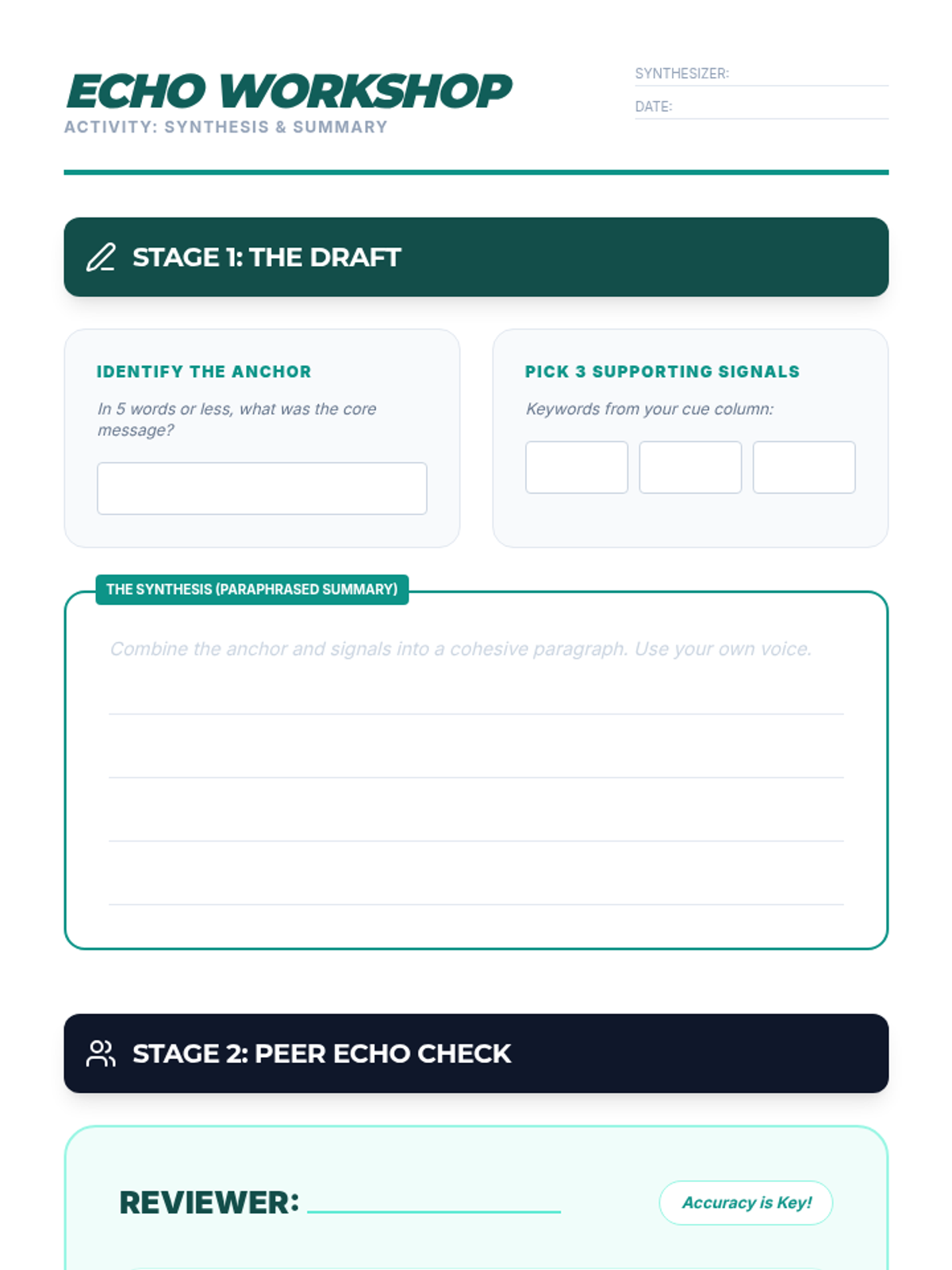
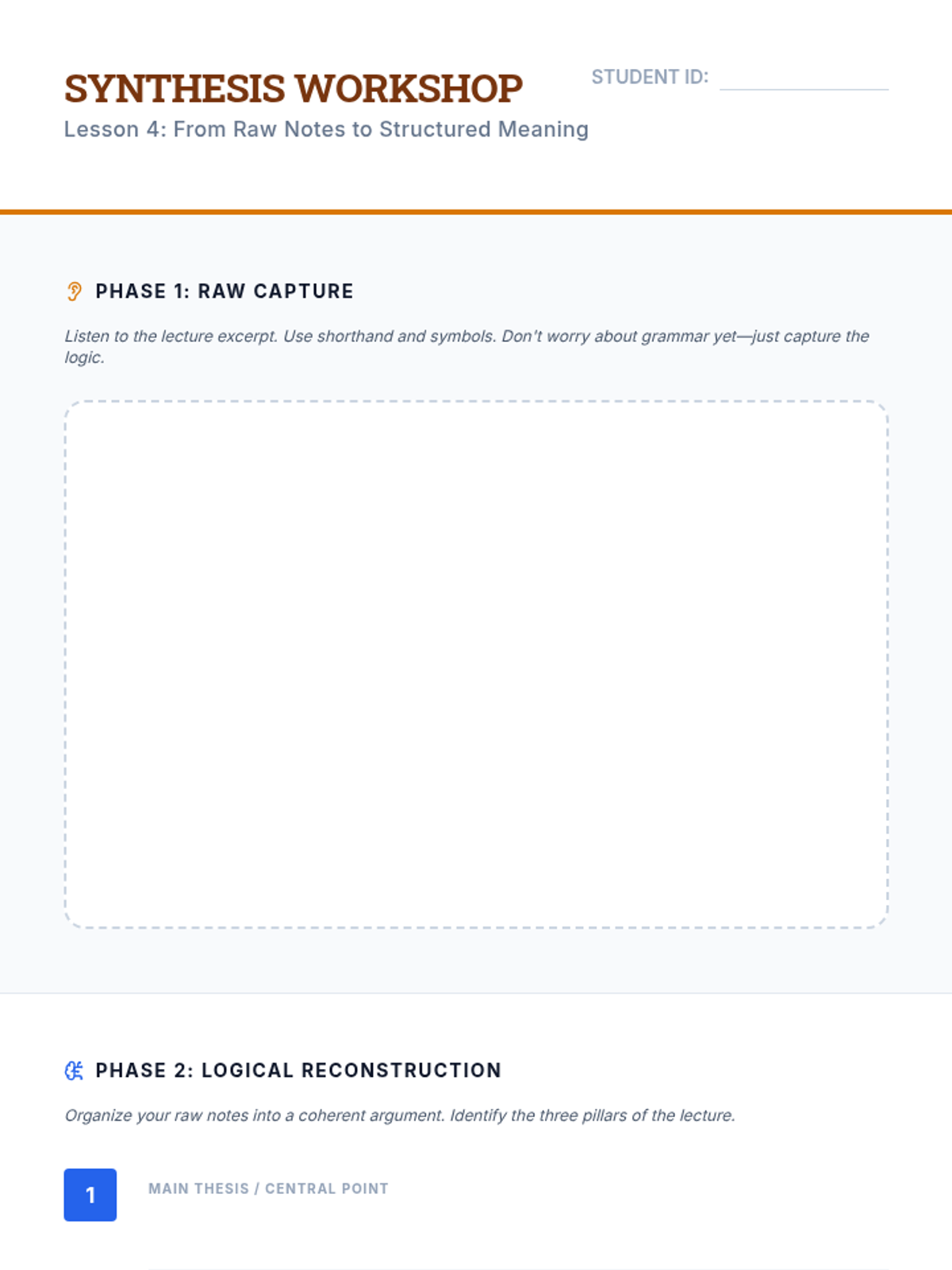
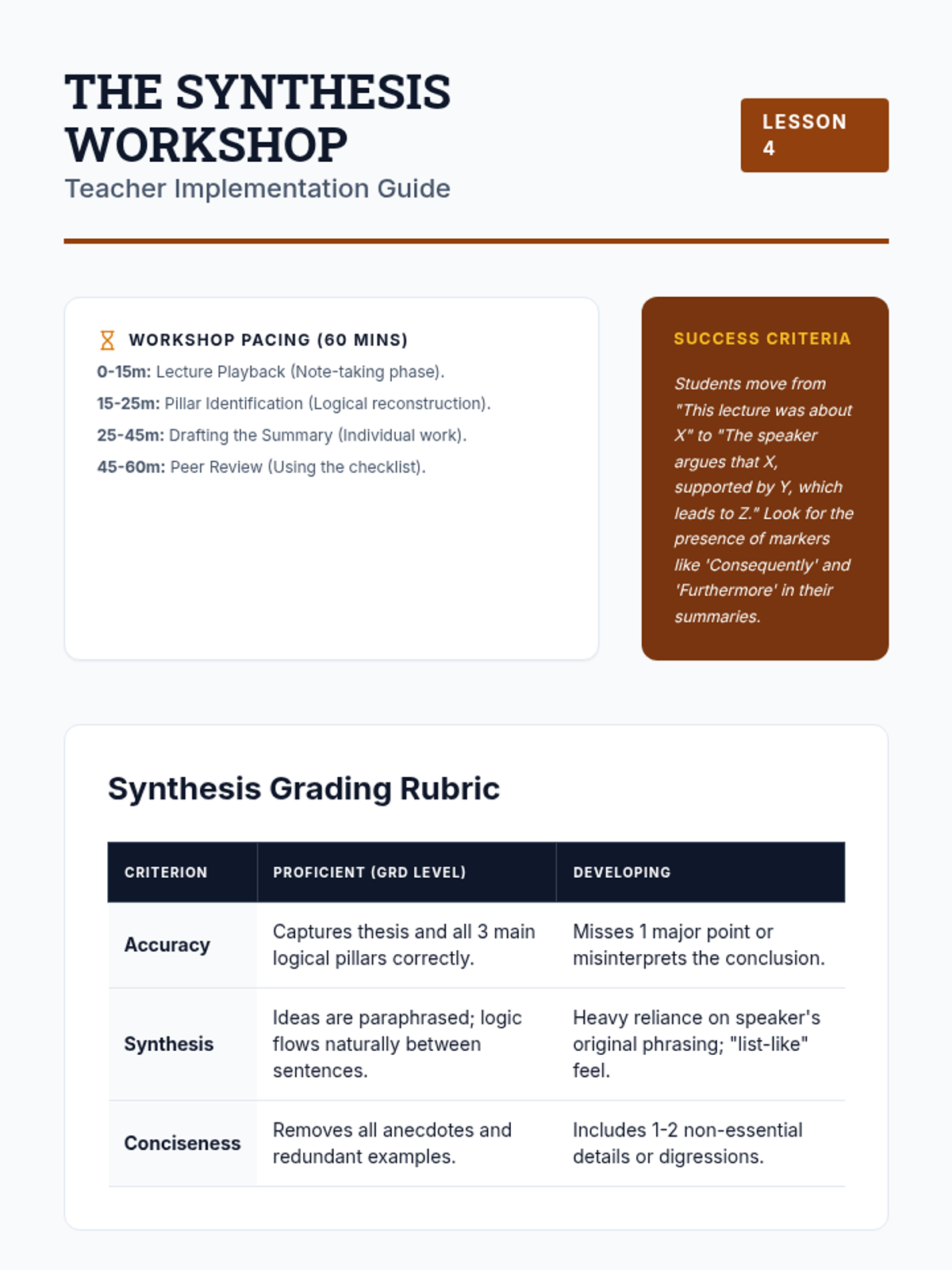
Learners practice reconstructing audio messages in their own words, focusing on paraphrasing rather than direct quotation. Peer evaluation ensures accuracy and comprehension through a synthesis-based workshop.
A culminating simulation where students apply all strategies during a mock academic lecture assessment.
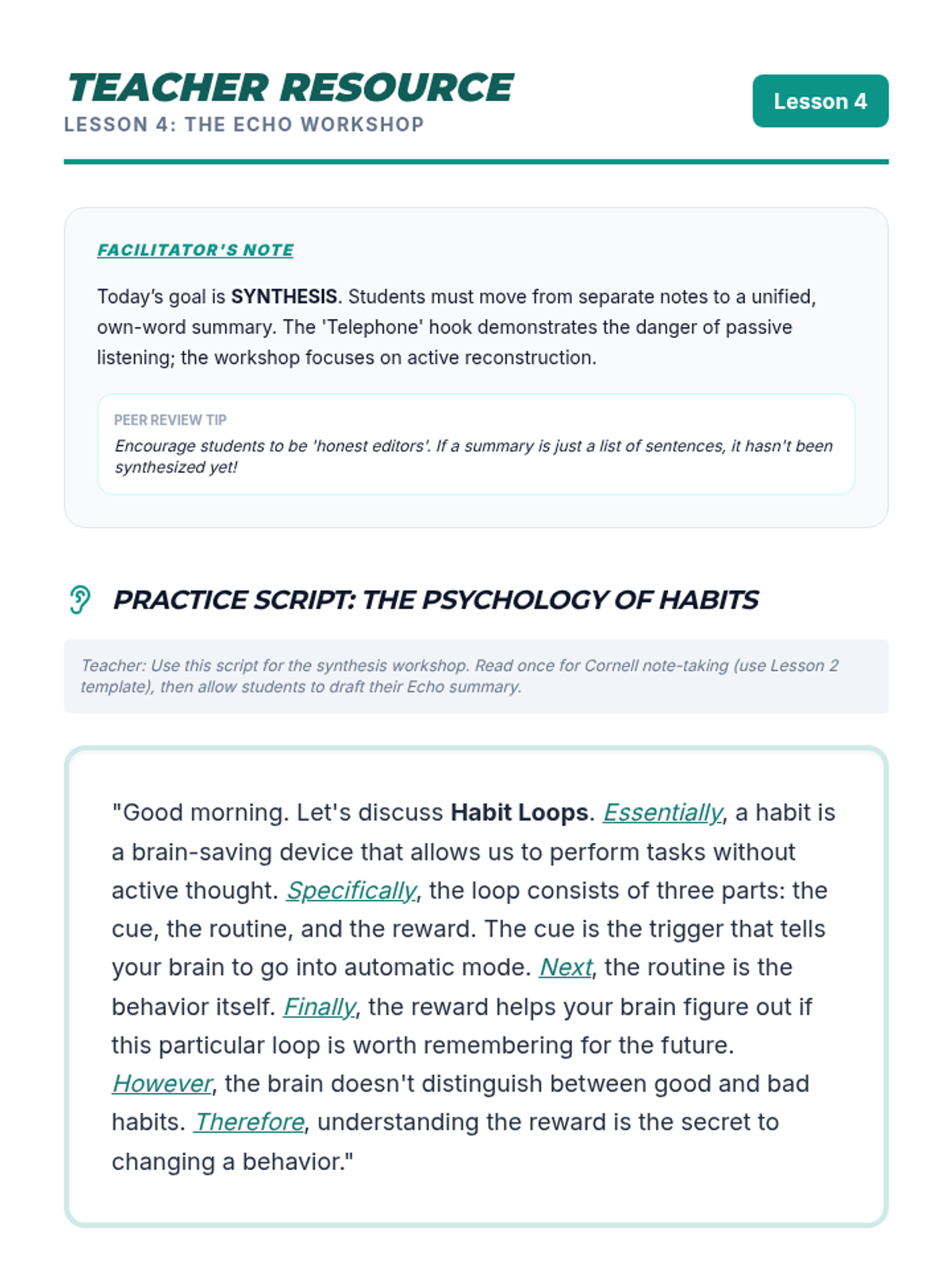
Students practice synthesizing auditory information into concise, logical summaries and paraphrasing key points.
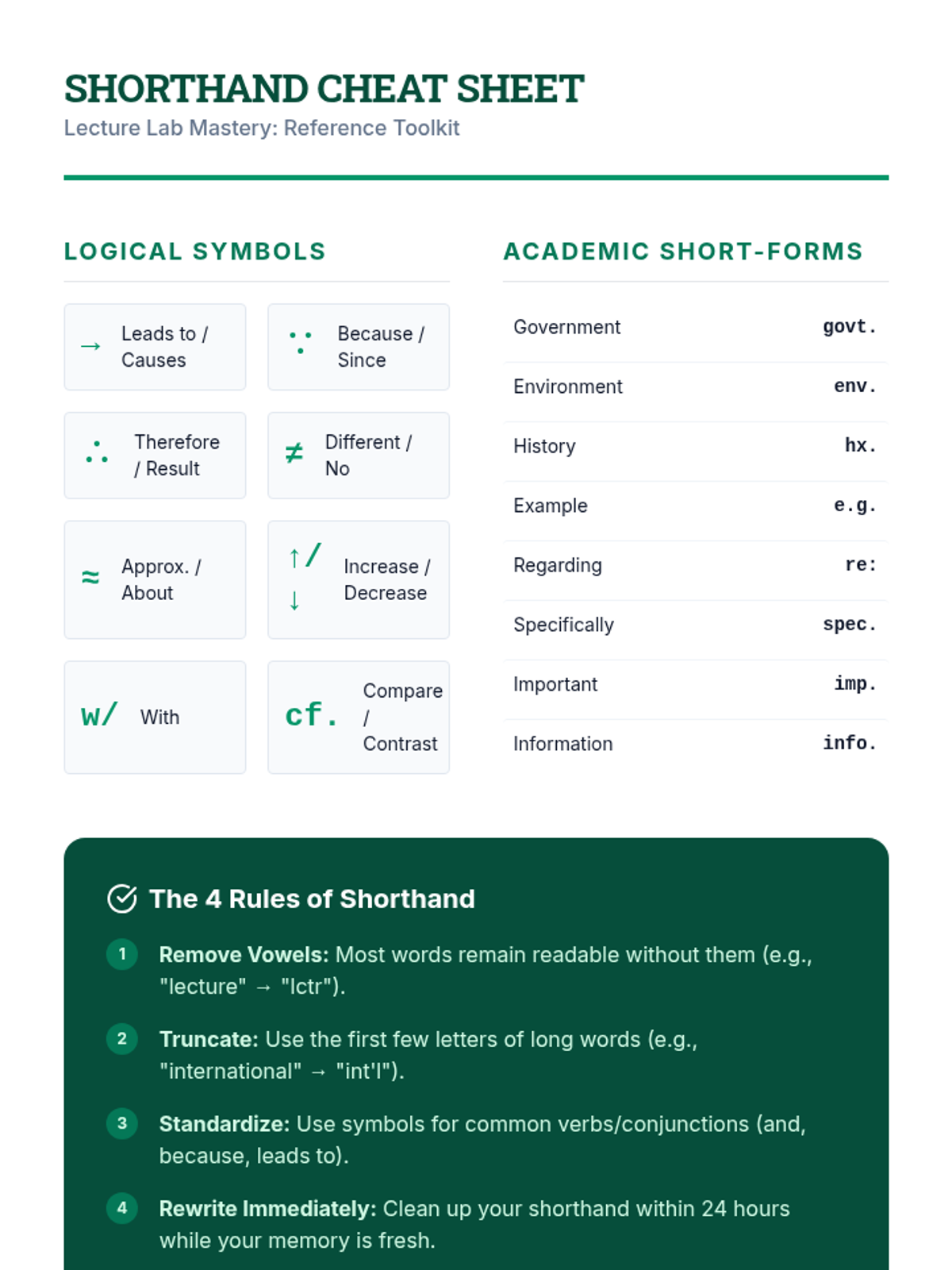
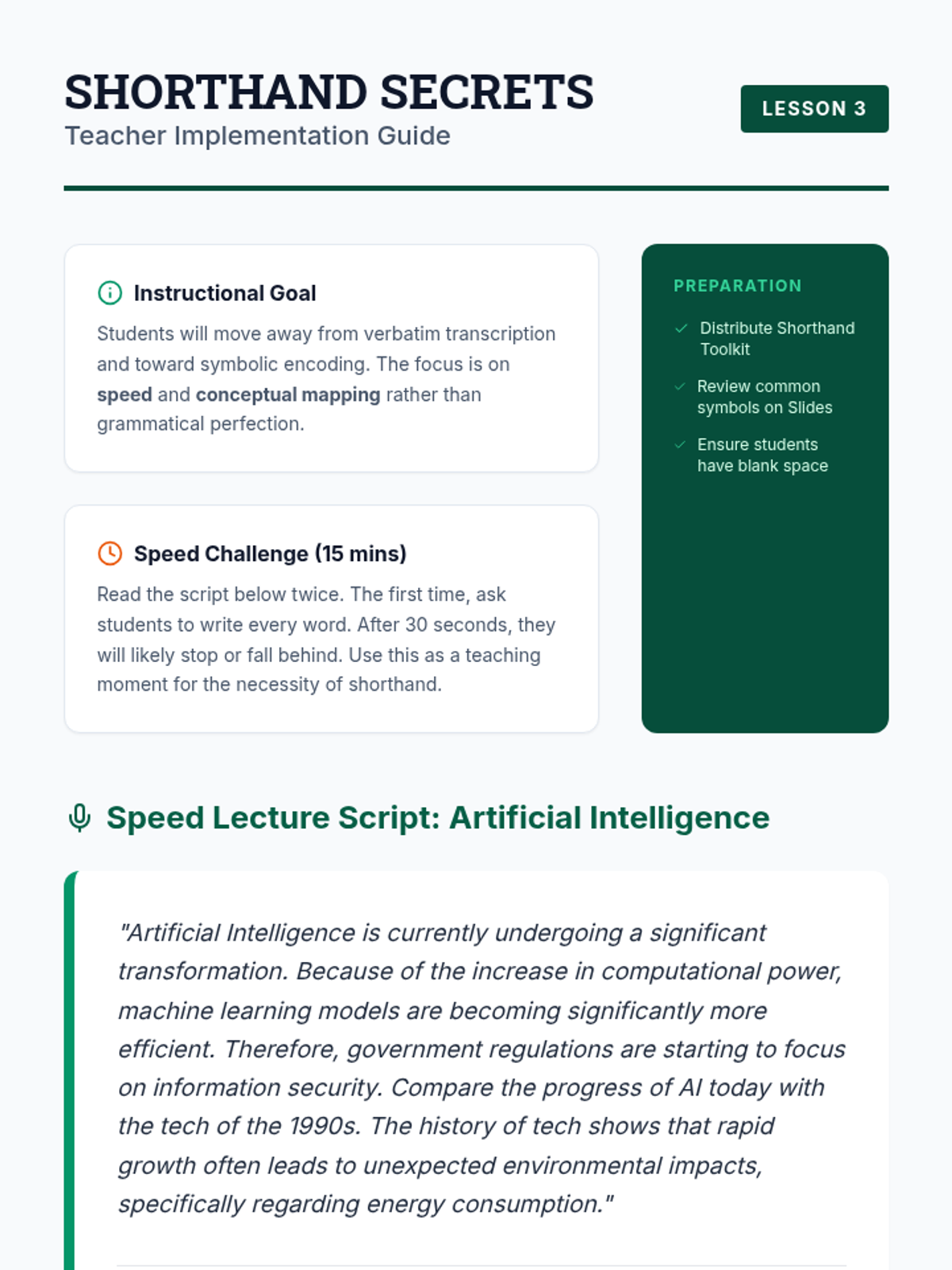
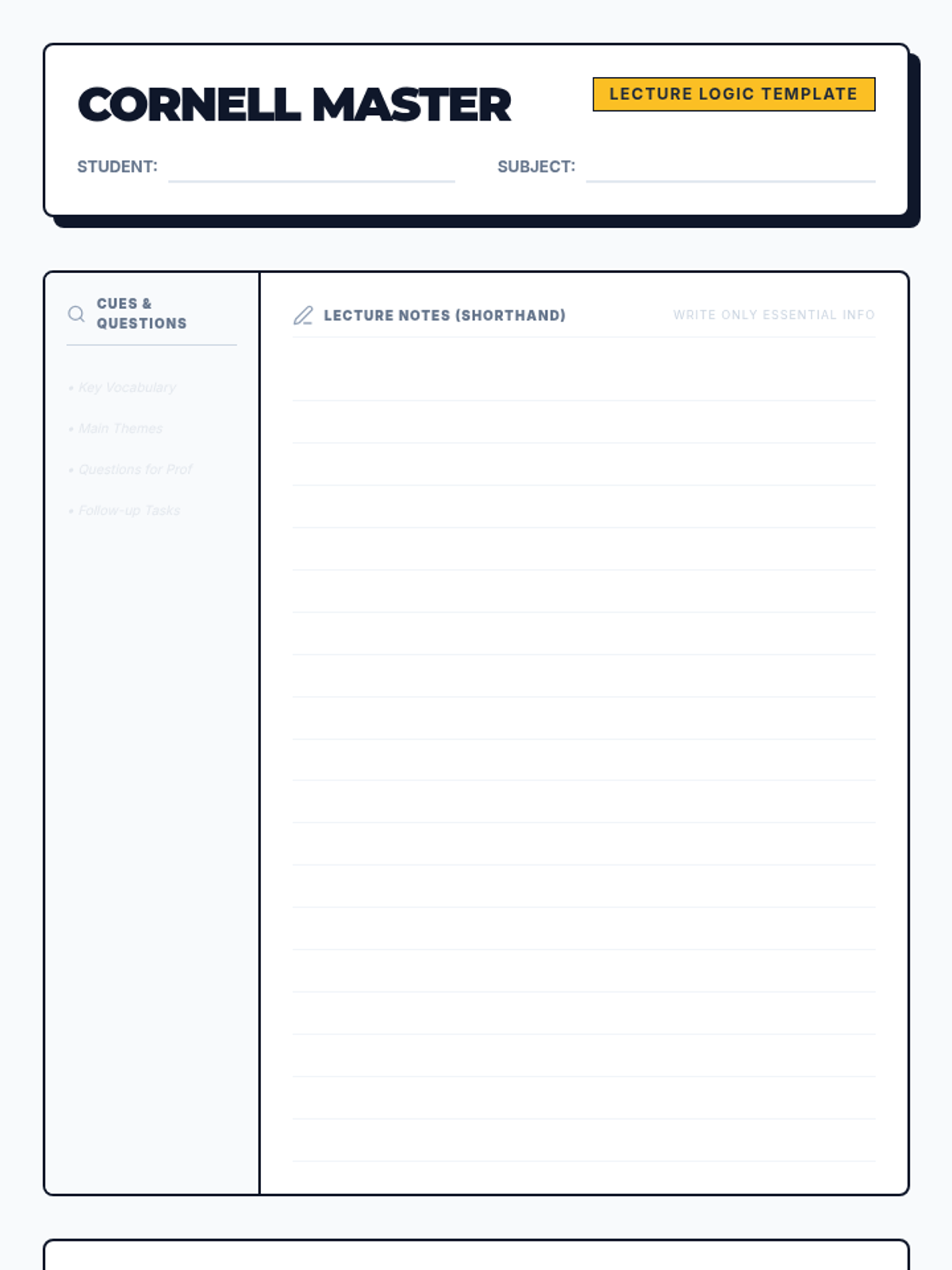
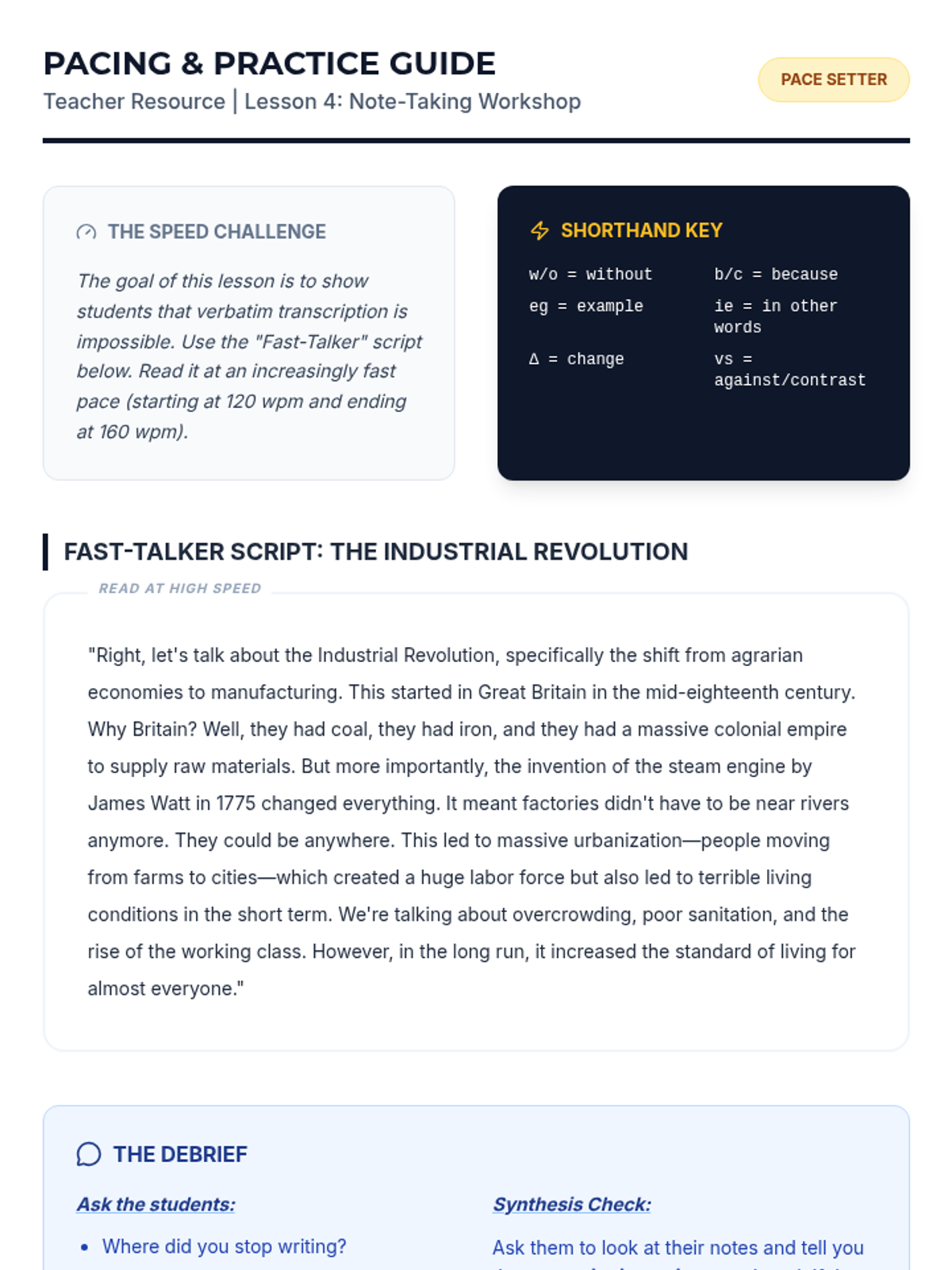
Introduction to shorthand, symbols, and the Cornell note-taking method for capturing information in real-time.
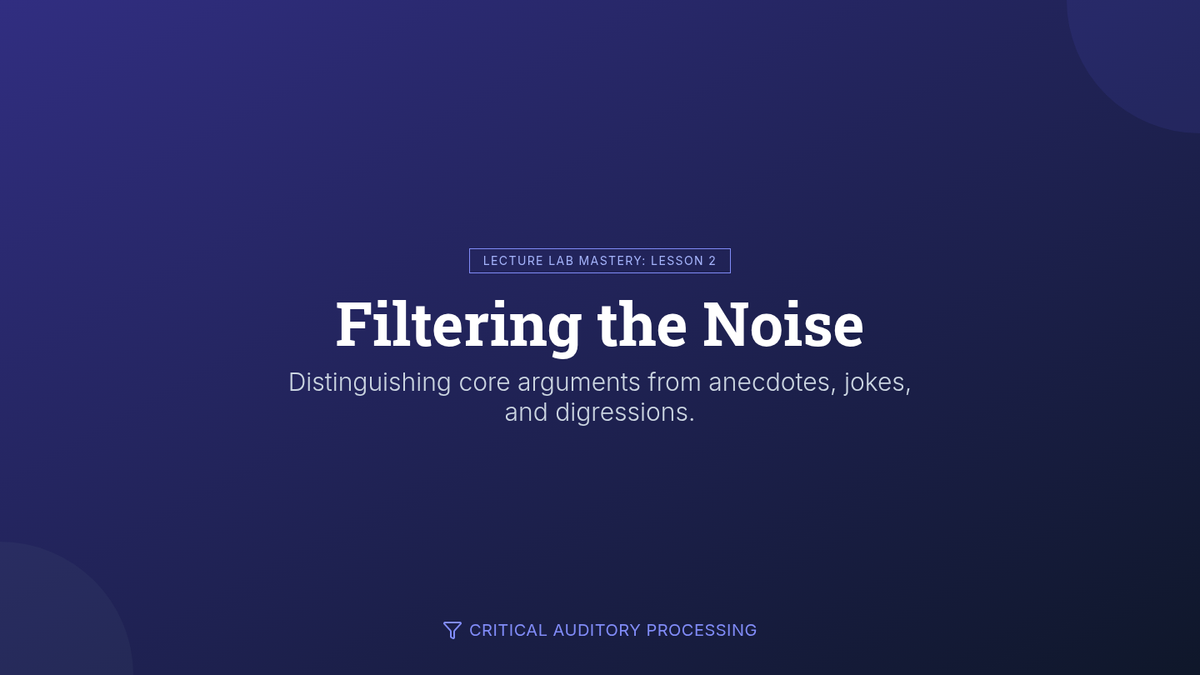
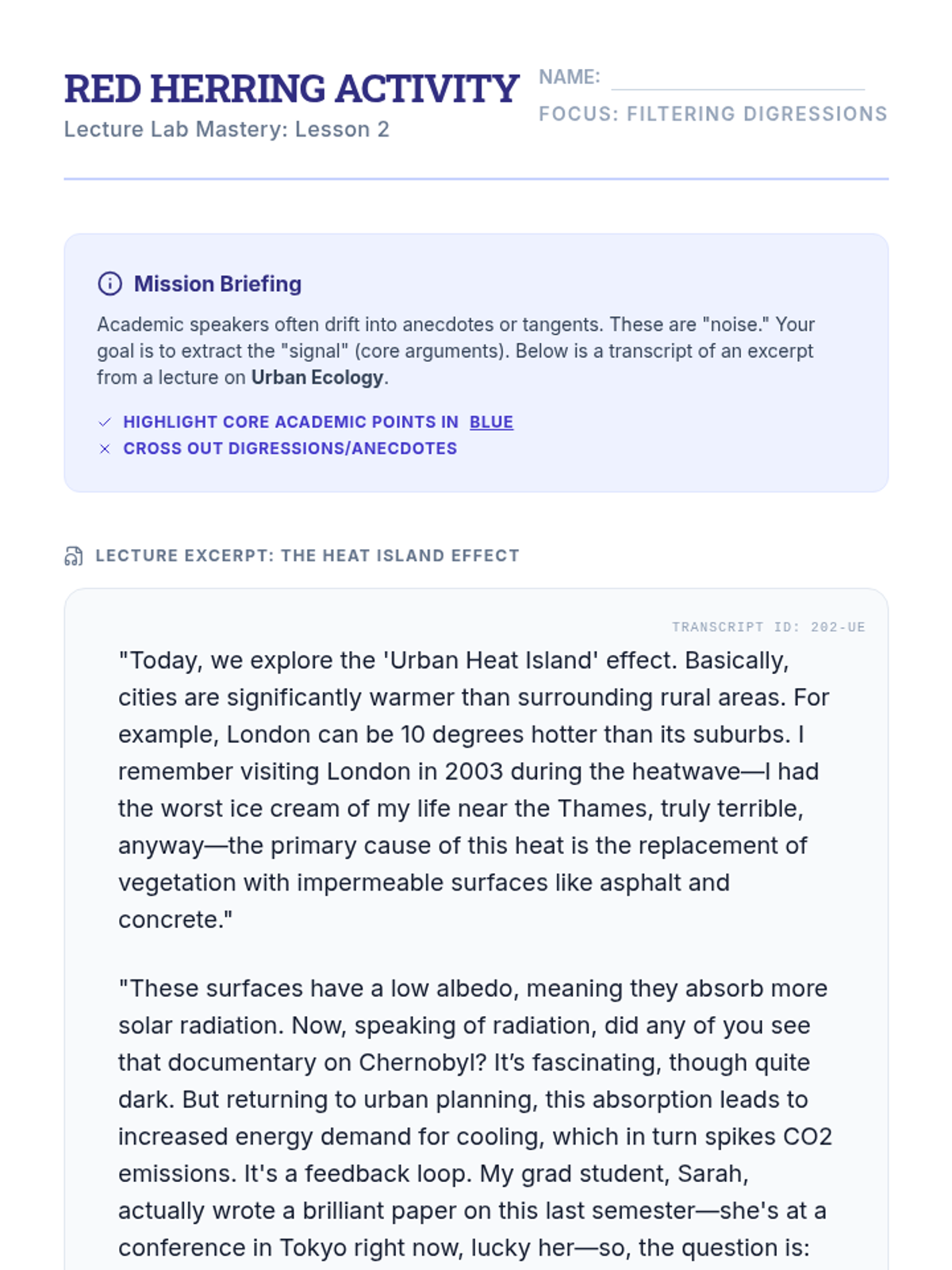
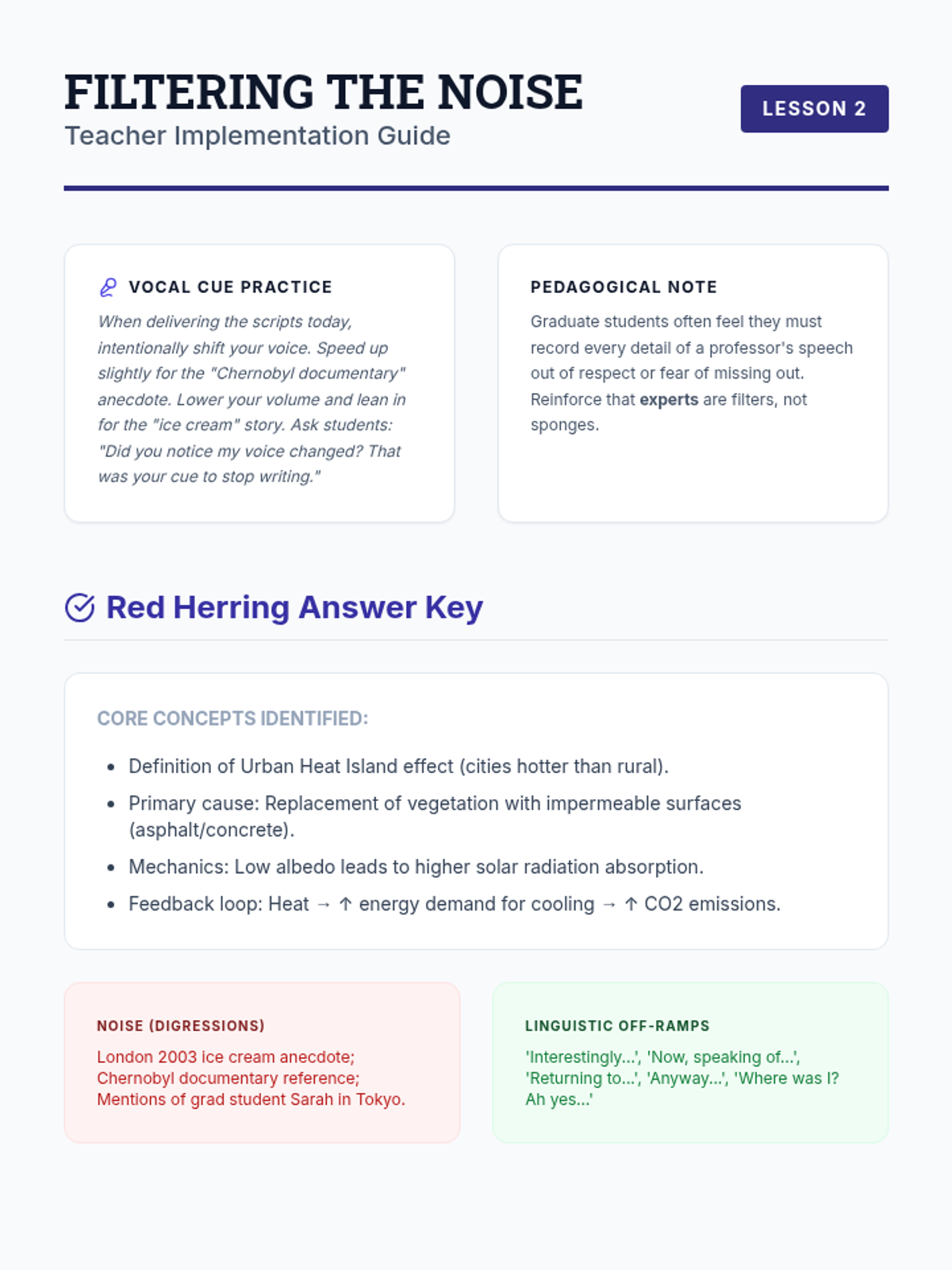
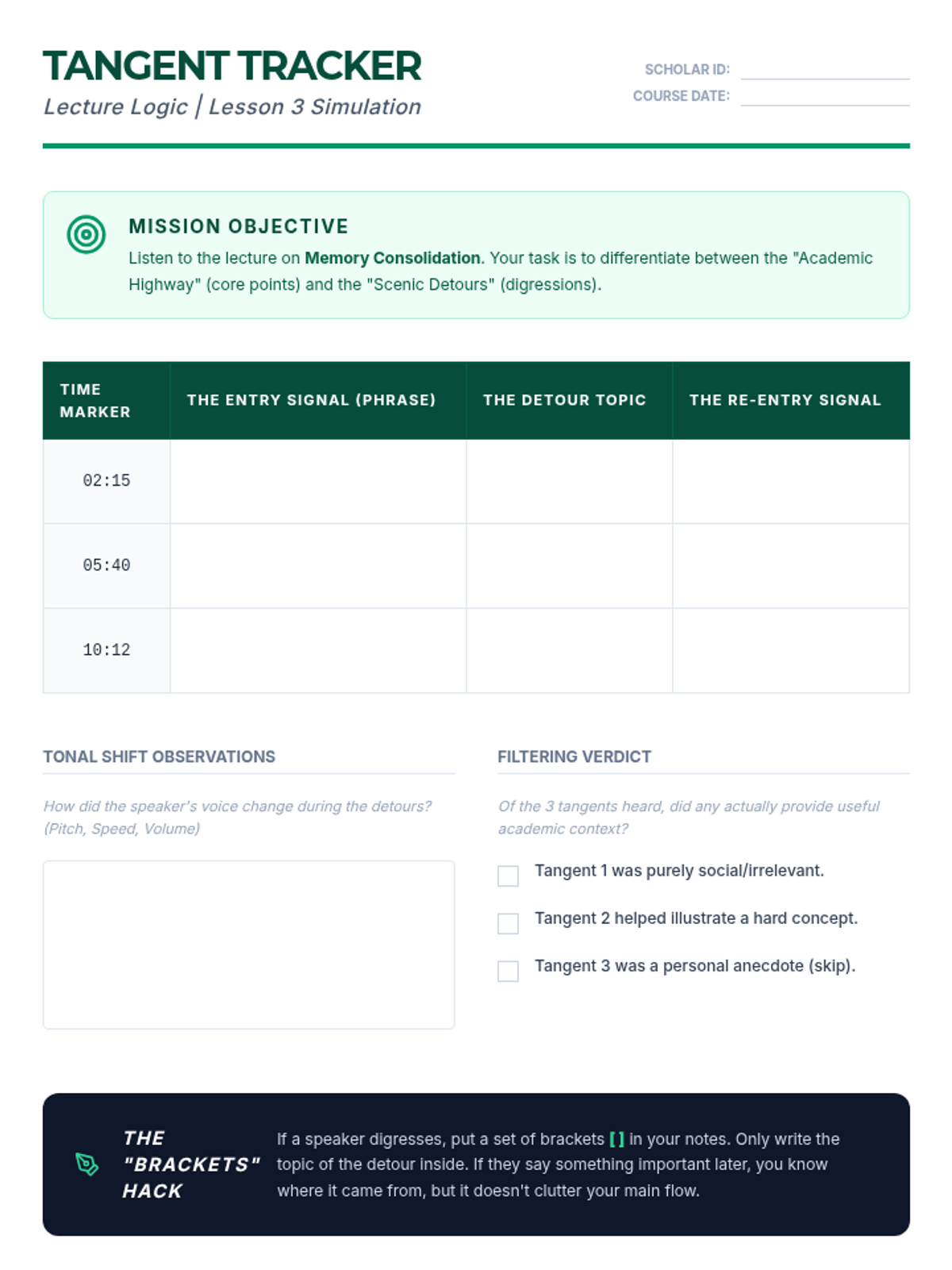
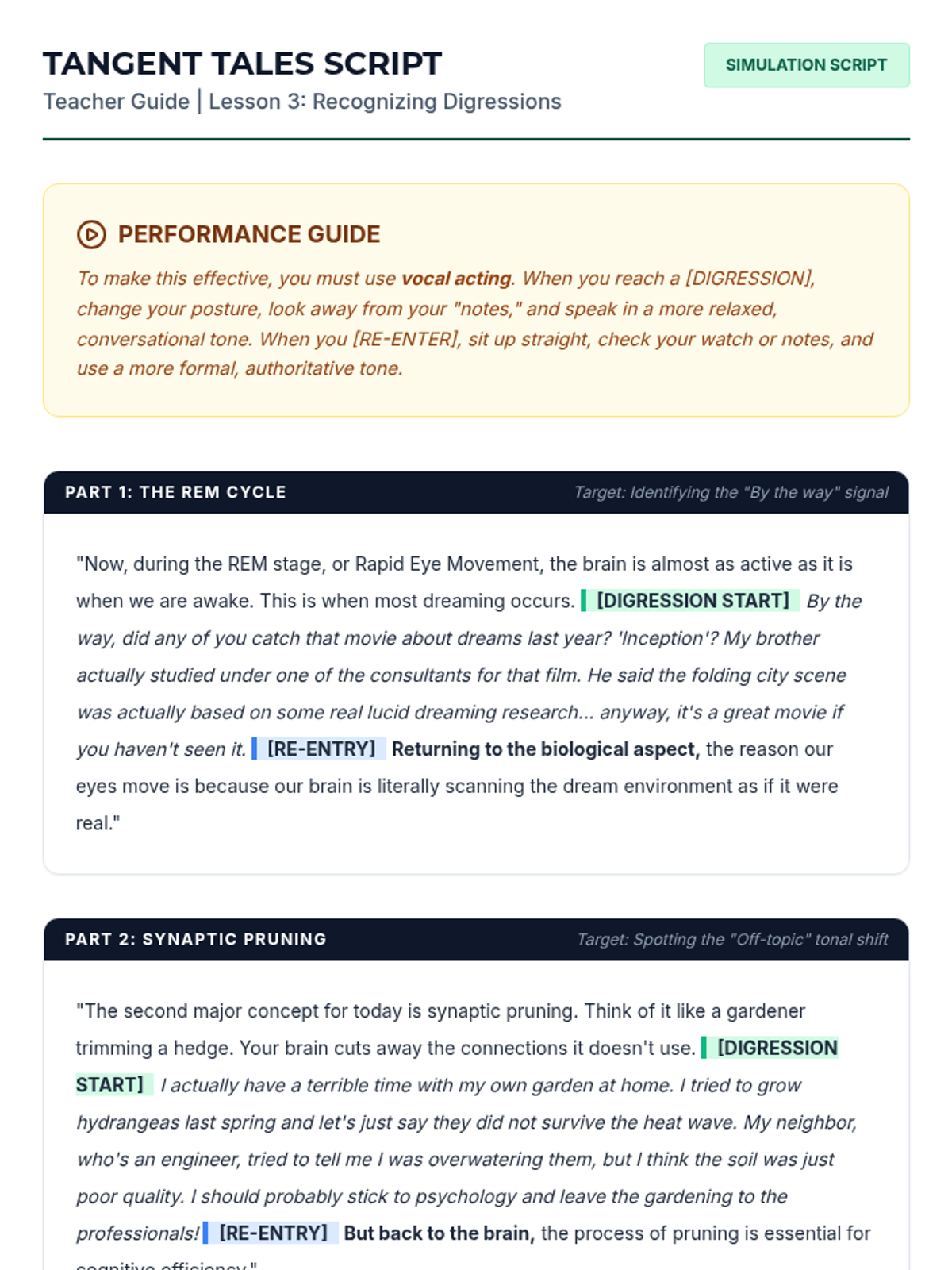
Focuses on distinguishing core academic arguments from anecdotes and digressions using linguistic and vocal cues.
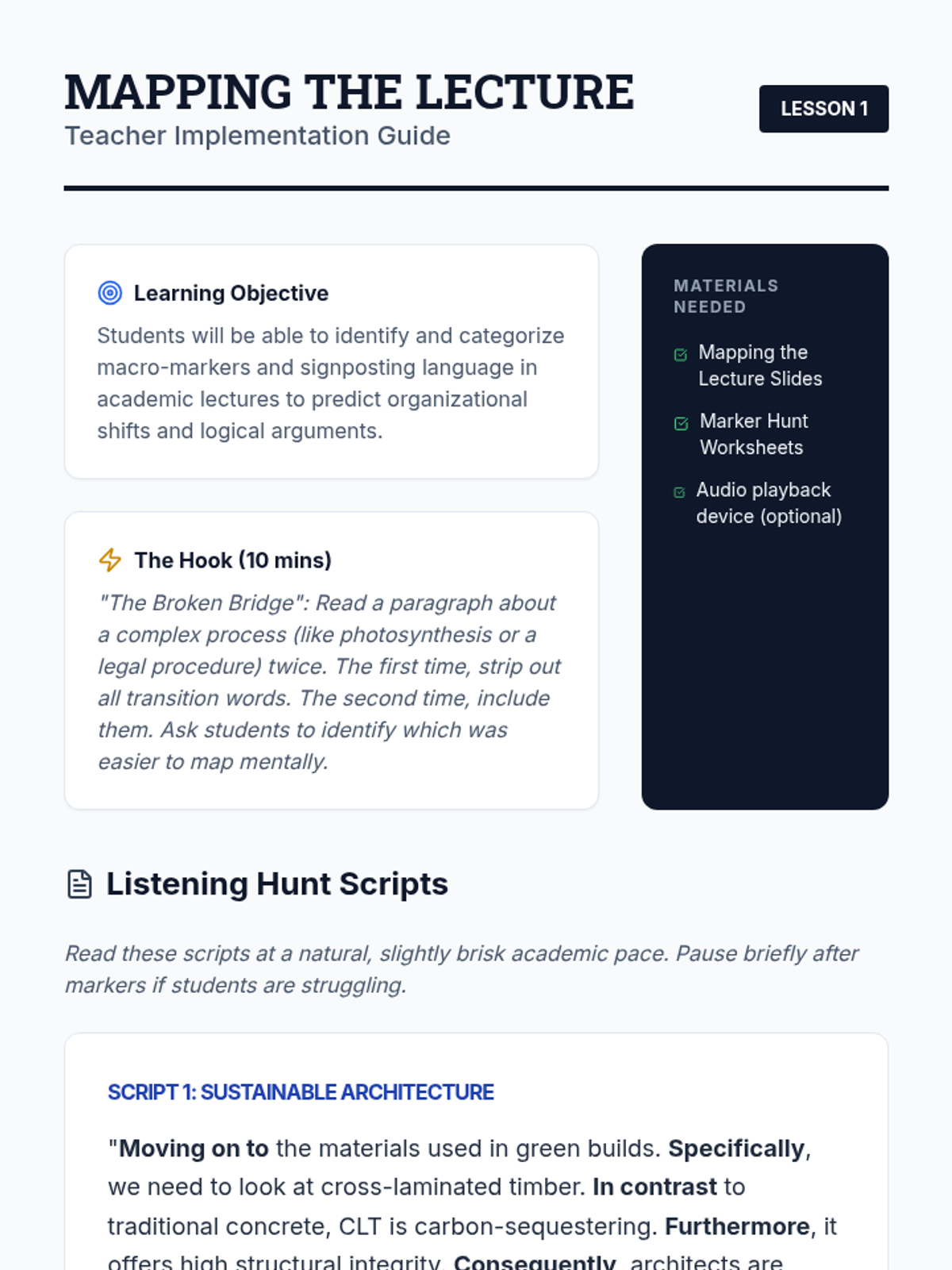
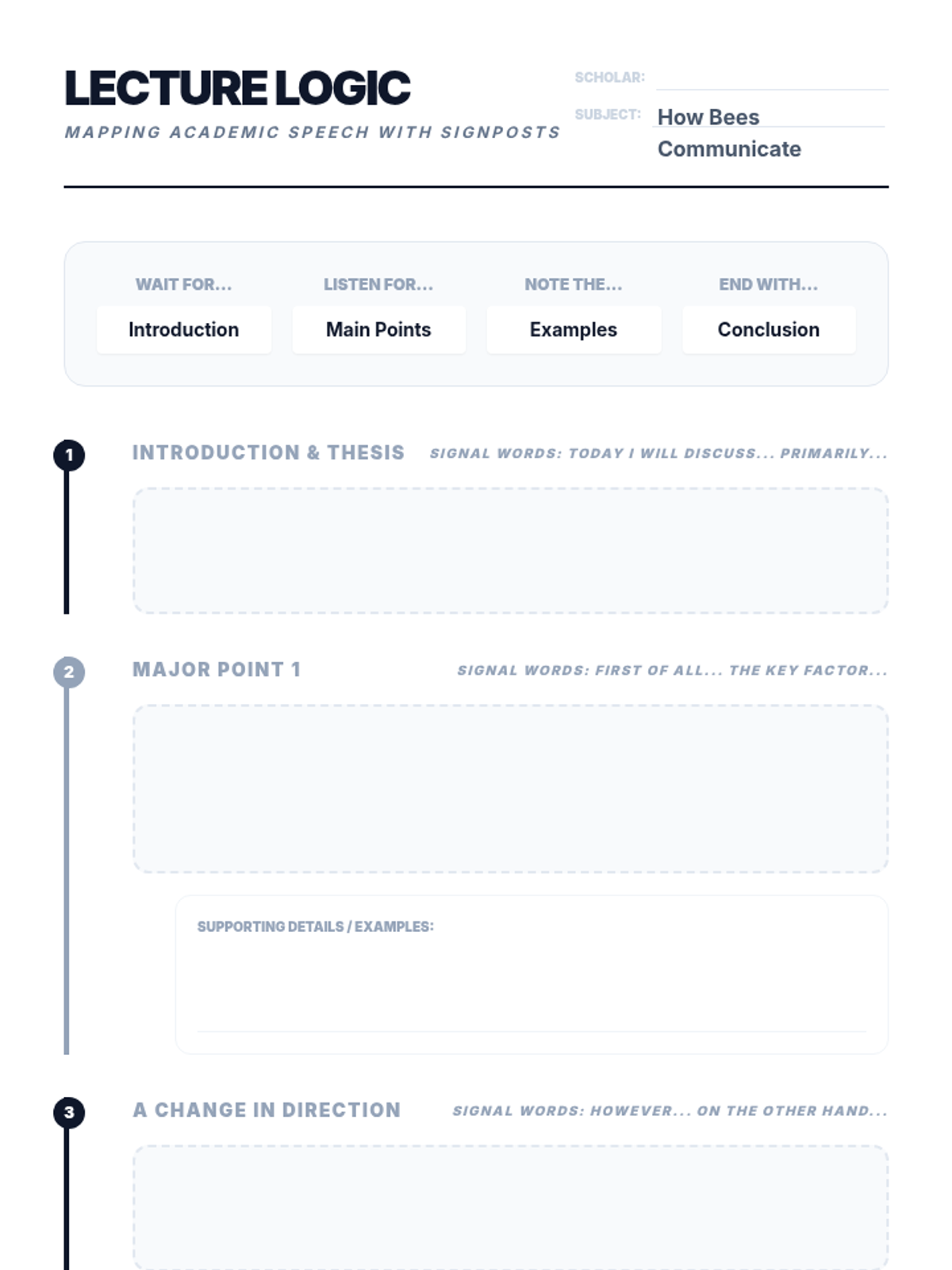
Students learn to identify macro-markers and signposting language that signal organizational structure in academic lectures.
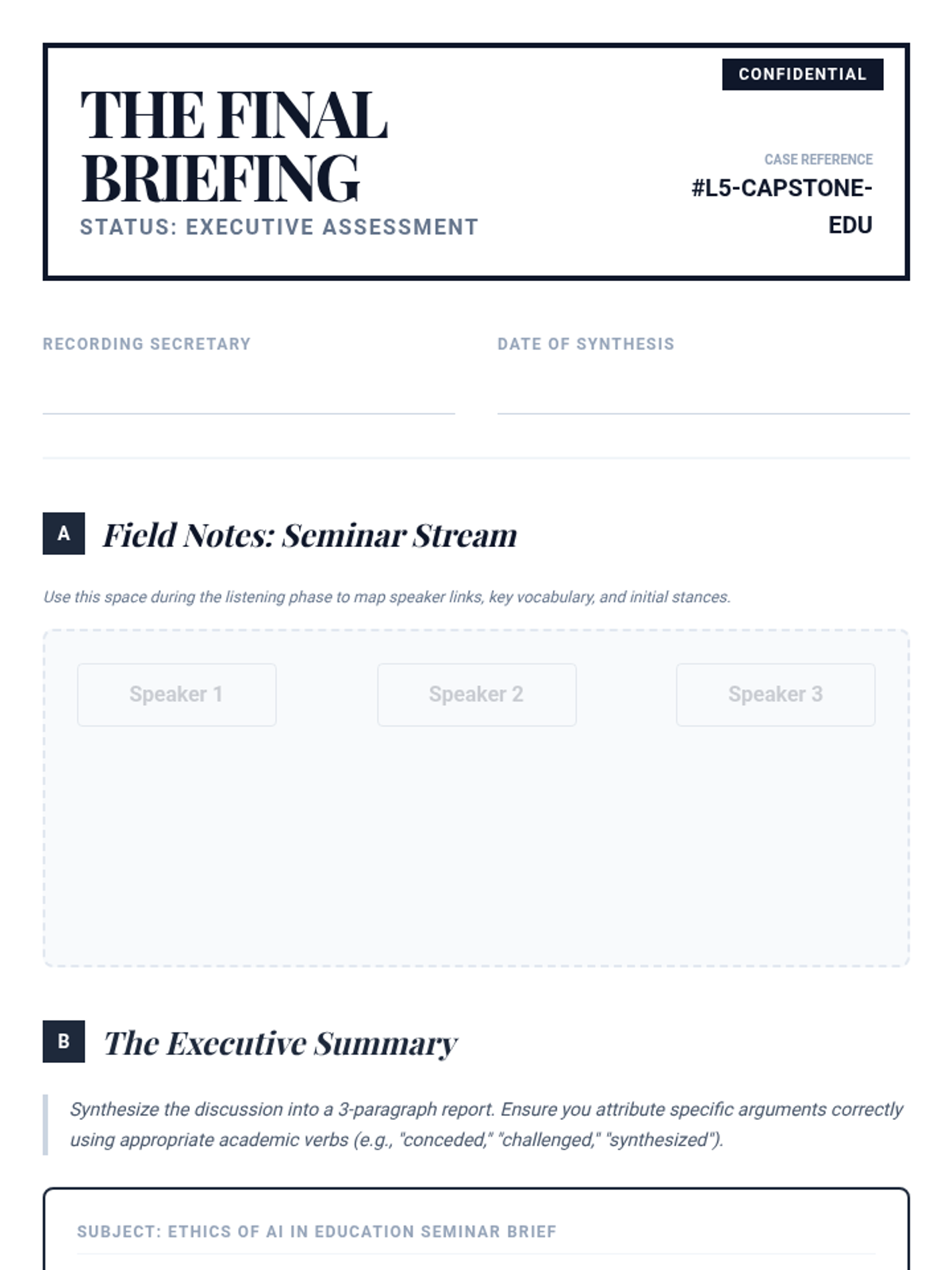
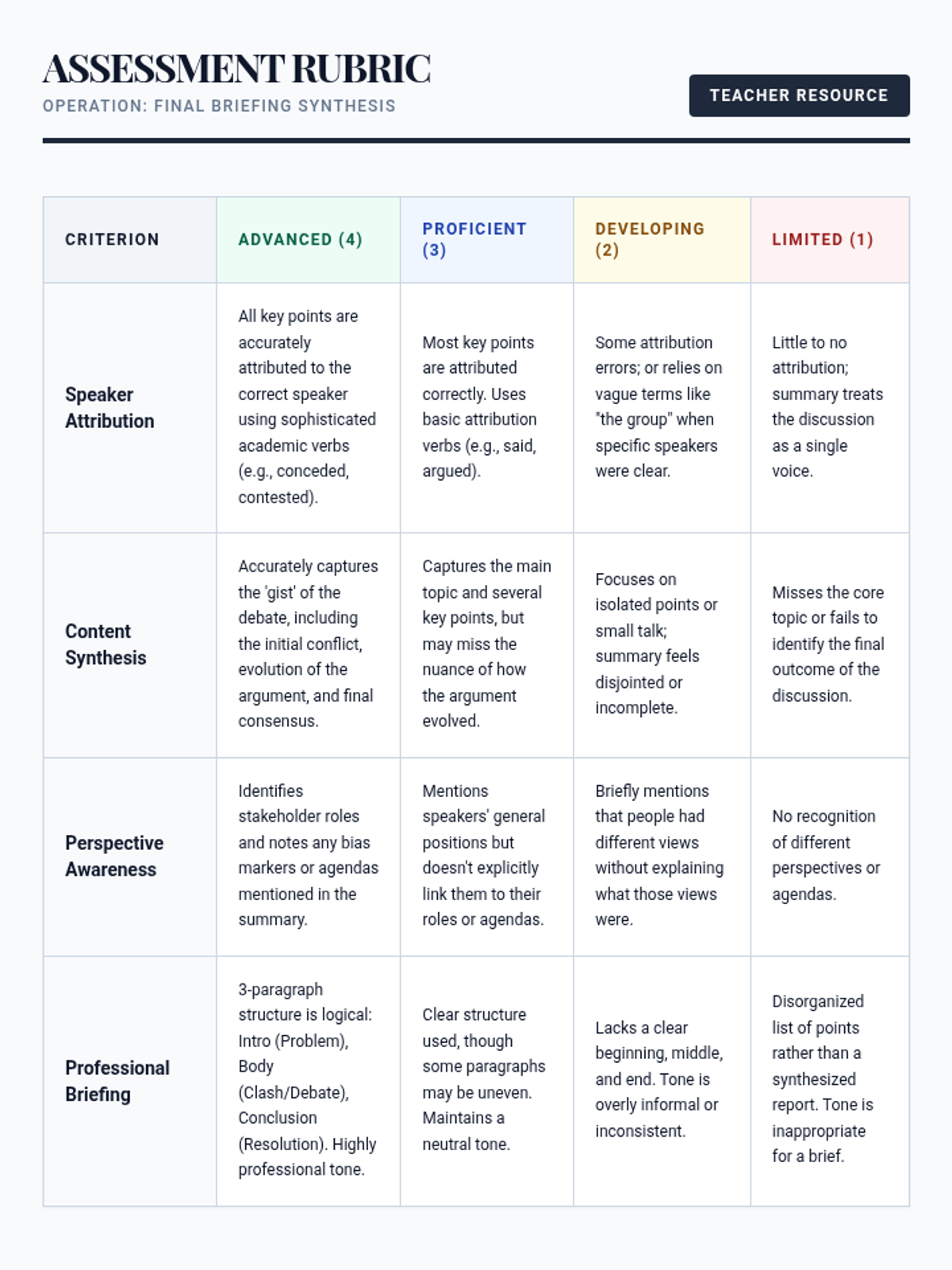
The capstone lesson where students apply all previous skills to summarize a rapid-fire seminar discussion with accurate attribution and key takeaways.
An exploration of how cultural backgrounds influence communication styles, focusing on silence, interruption, and pragmatic markers.
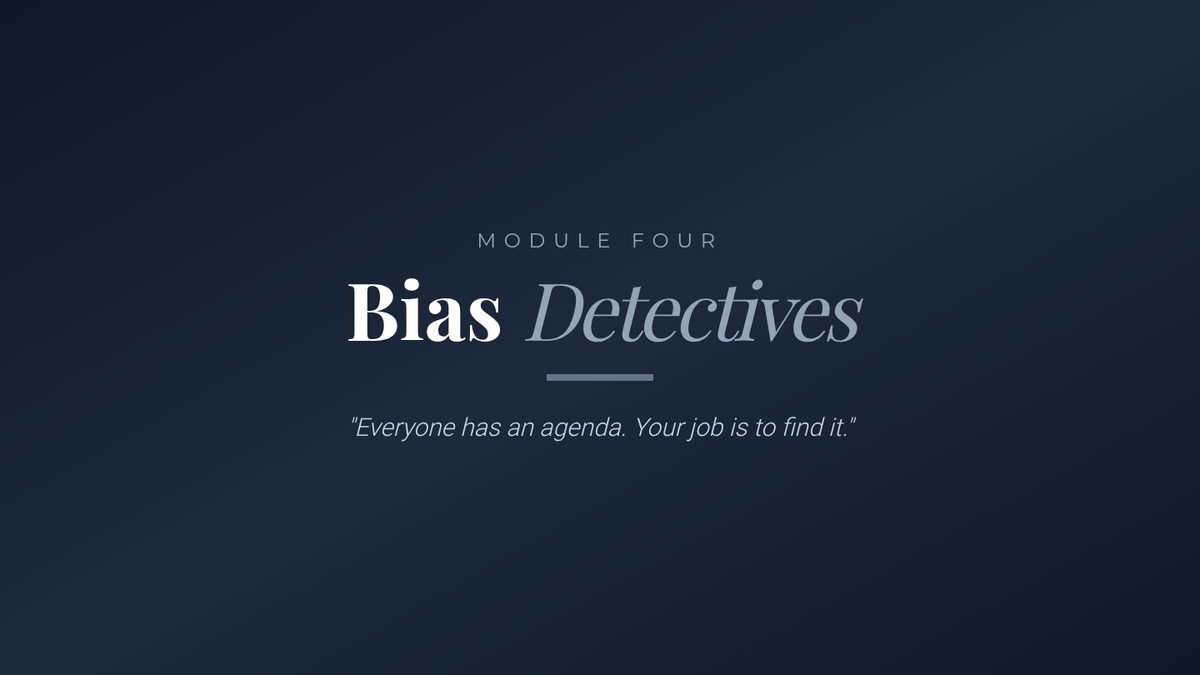
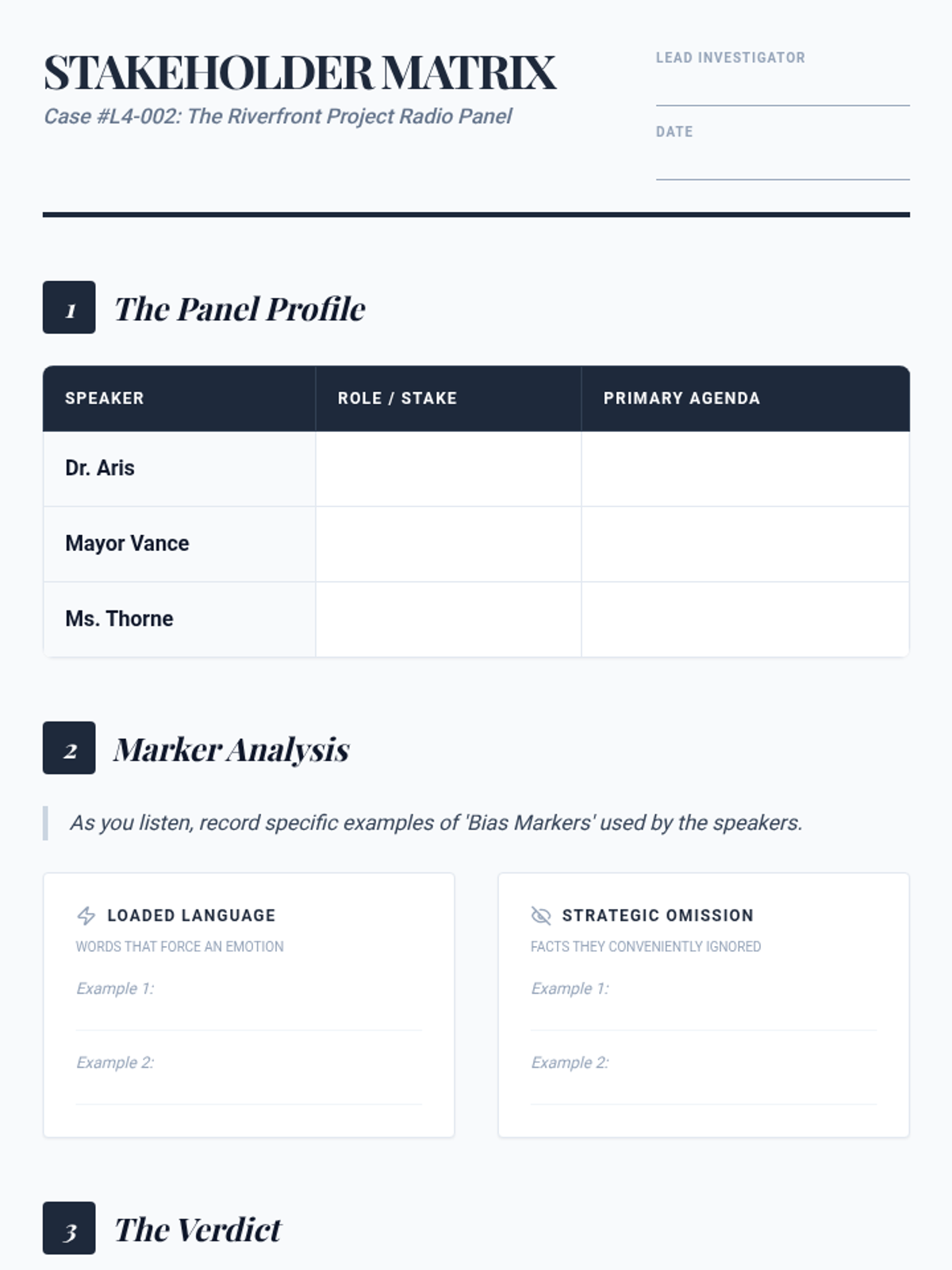
Focuses on detecting bias and underlying agendas in panel discussions by cross-referencing speaker statements and identifying stakeholder perspectives.
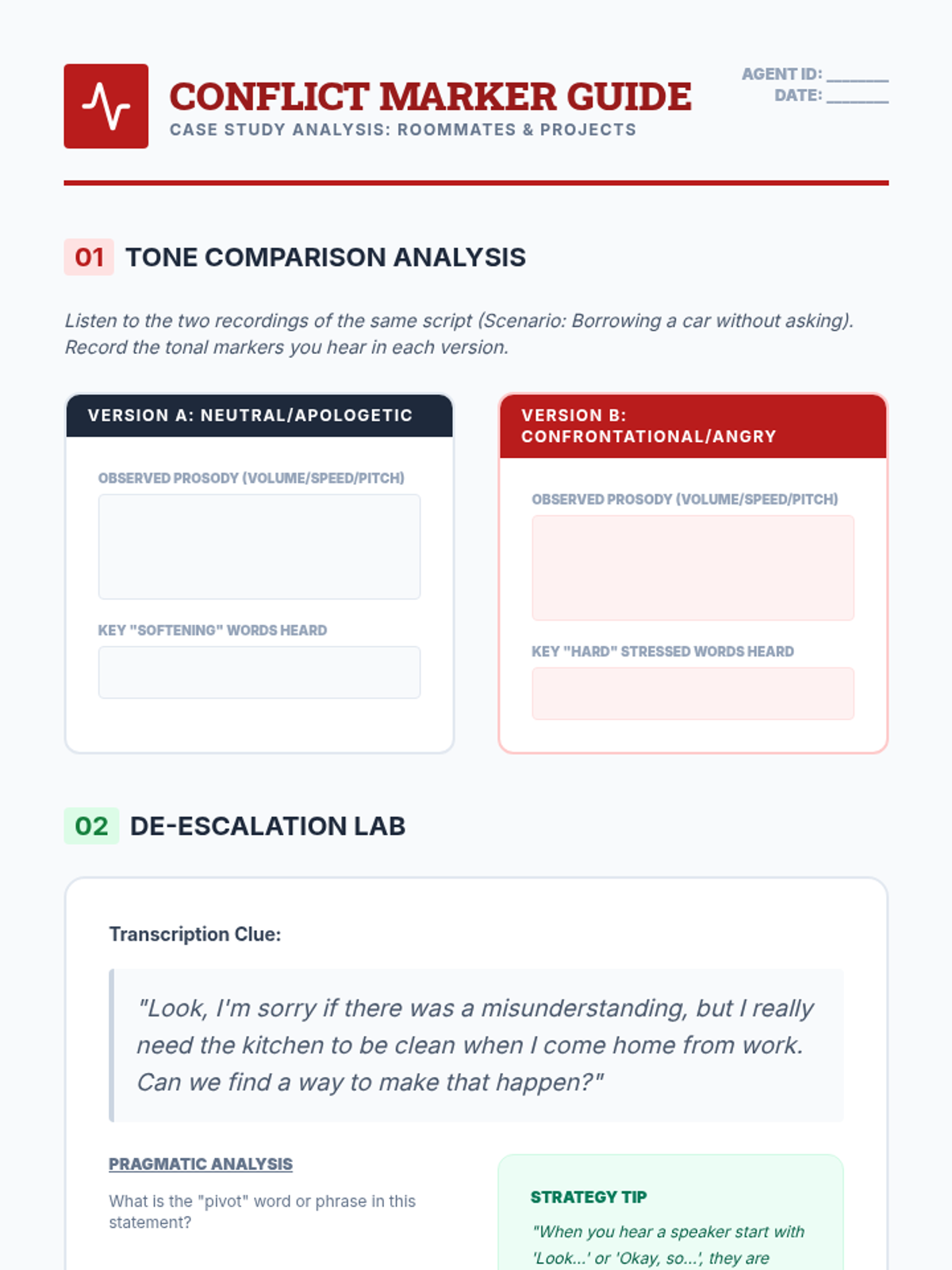
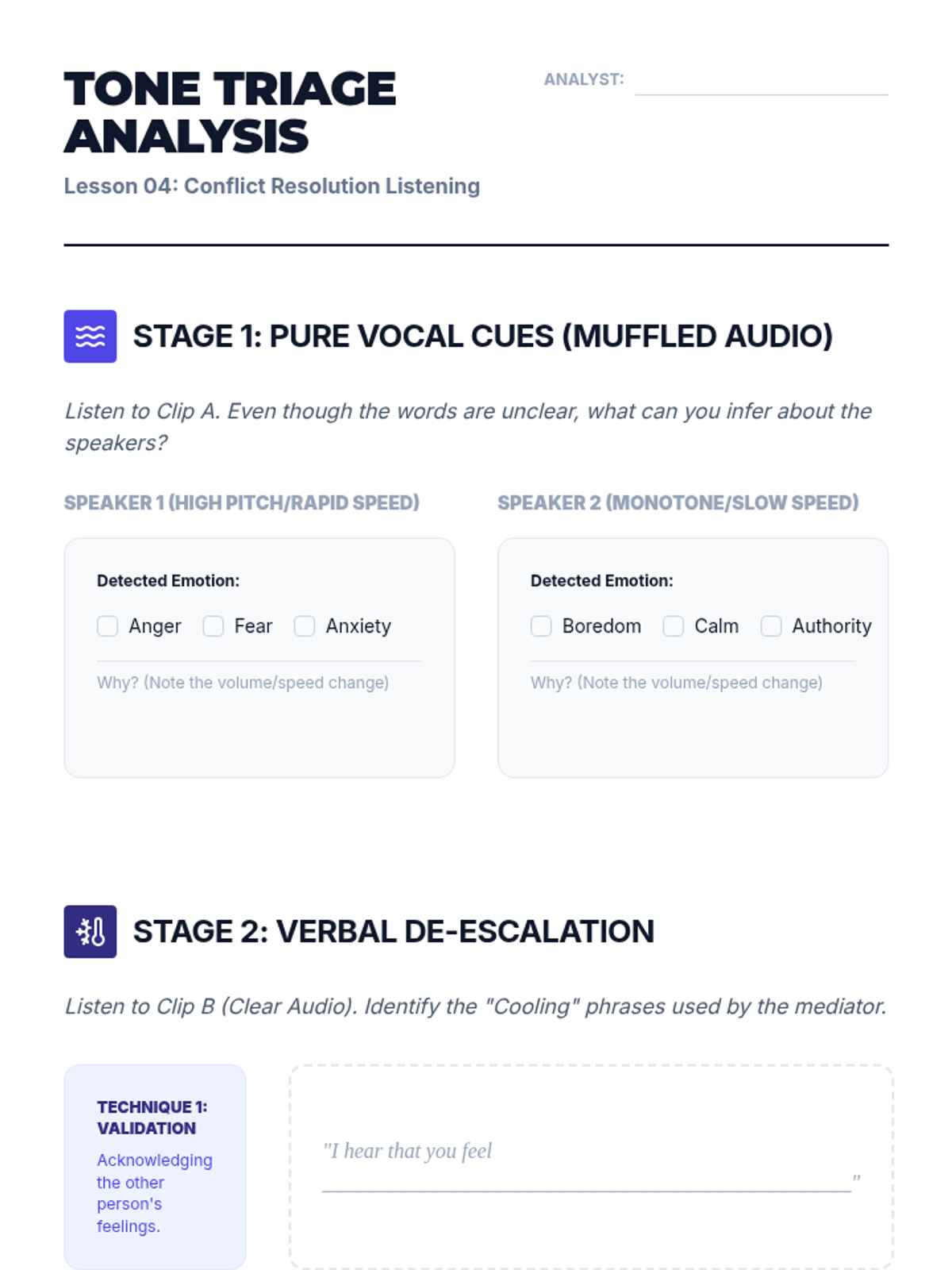
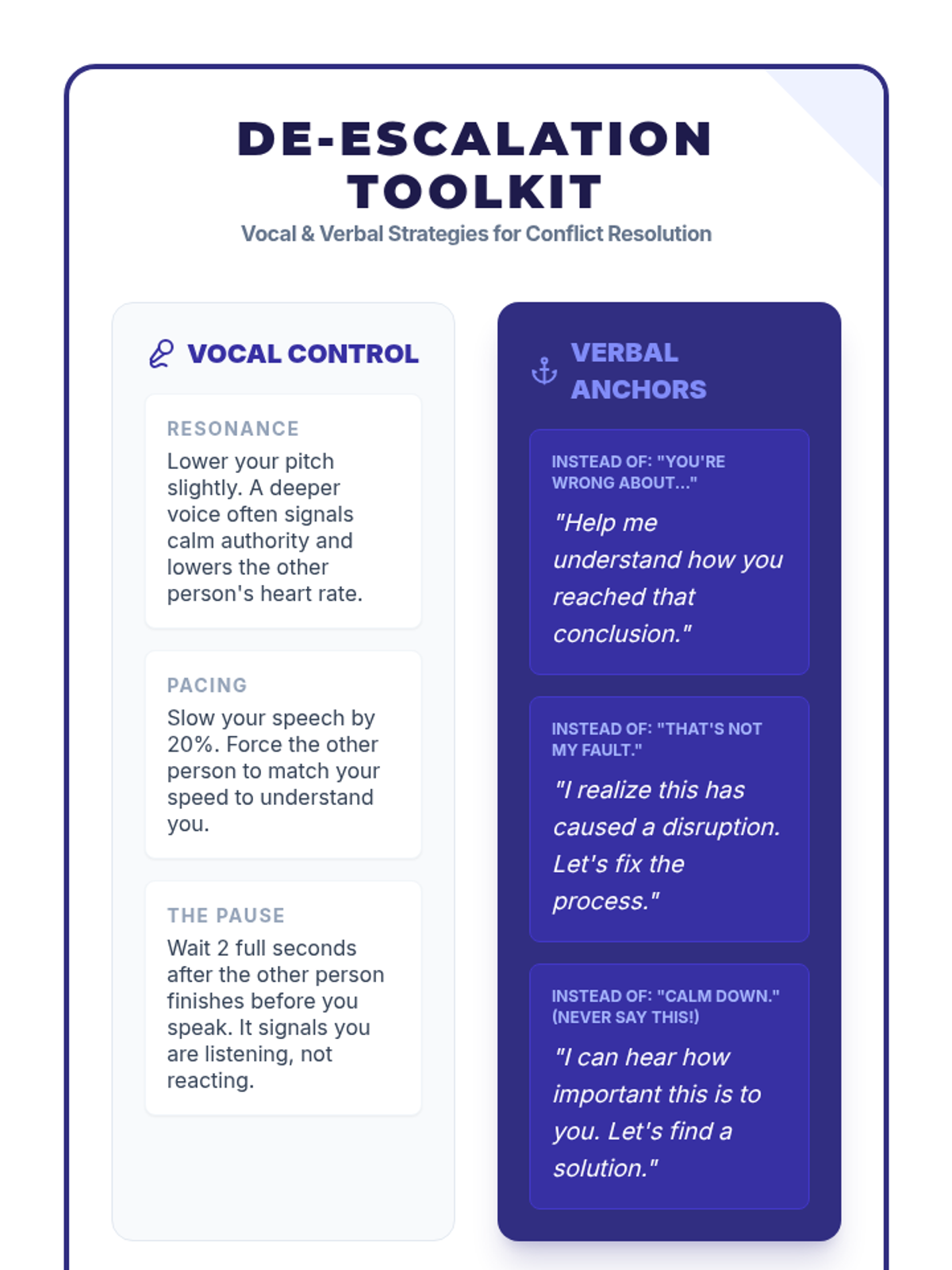
Students analyze tone in high-stakes social interactions, identifying markers of escalation, de-escalation, and negotiation in conflict scenarios.
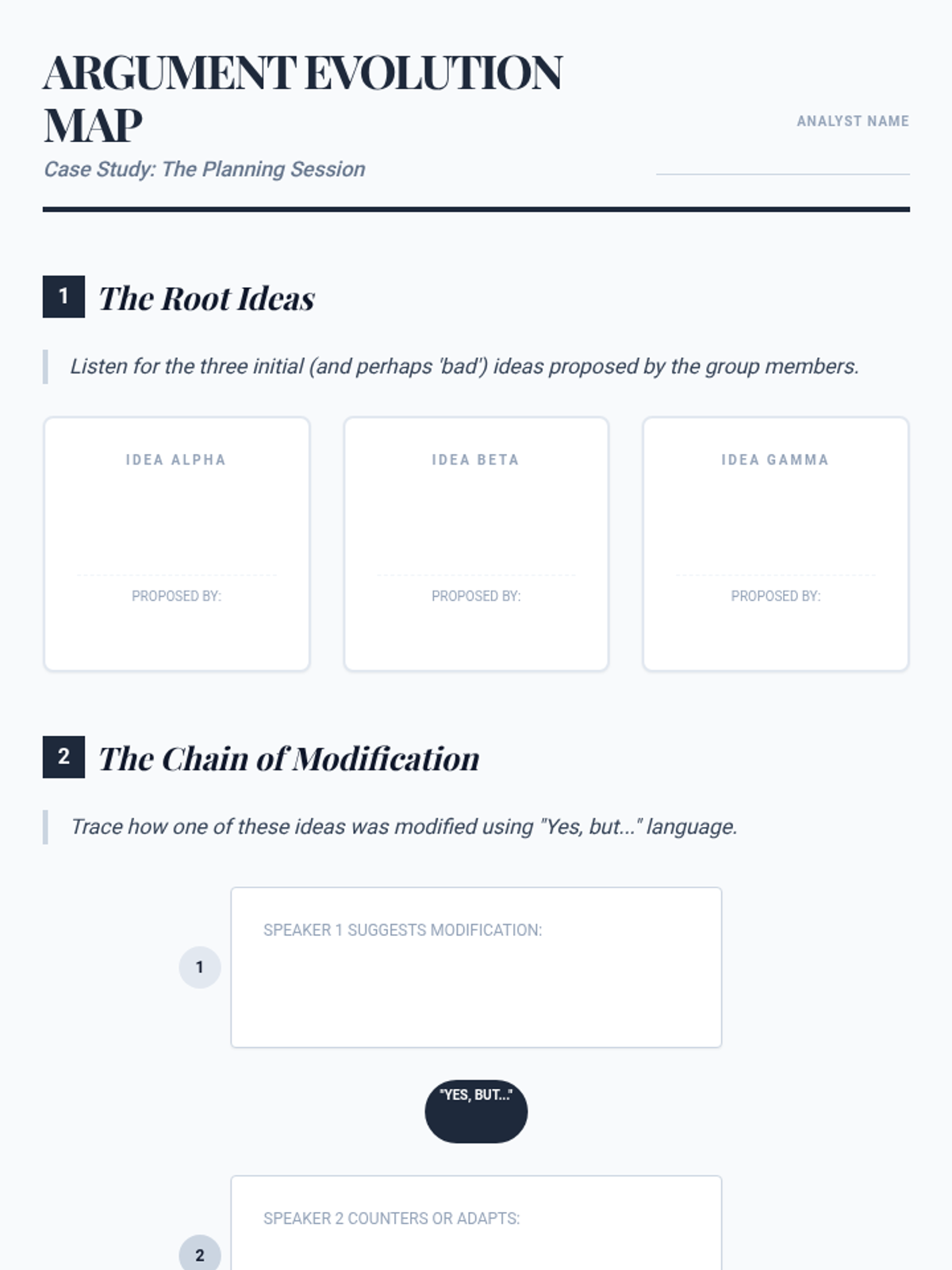
Students trace the evolution of an argument through chains of agreement, disagreement, and concession to identify how a group reaches consensus.
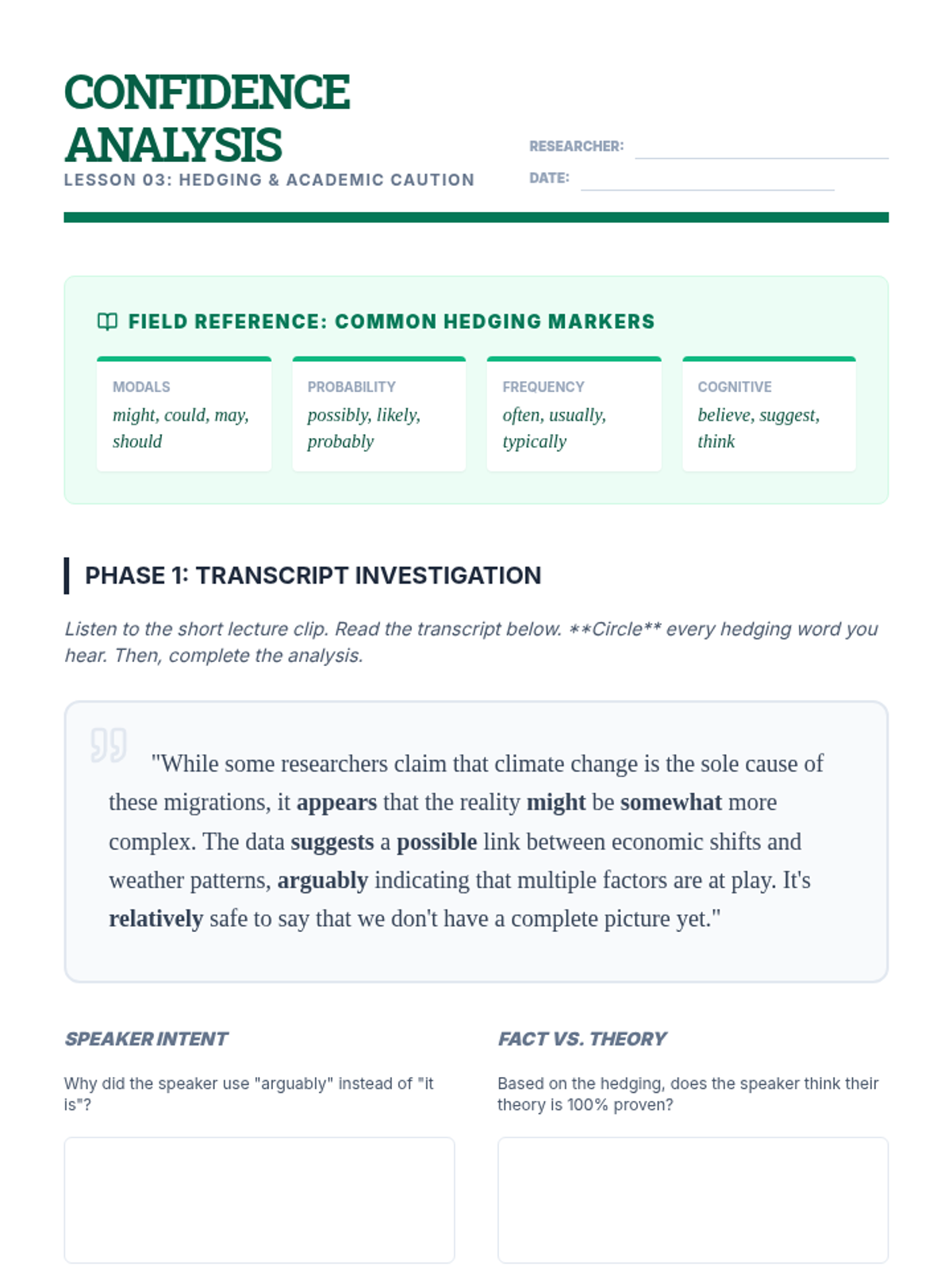
Students learn to identify hedging language (e.g., 'somewhat', 'it appears') to gauge a speaker's confidence and distinguish between facts and cautious opinions.
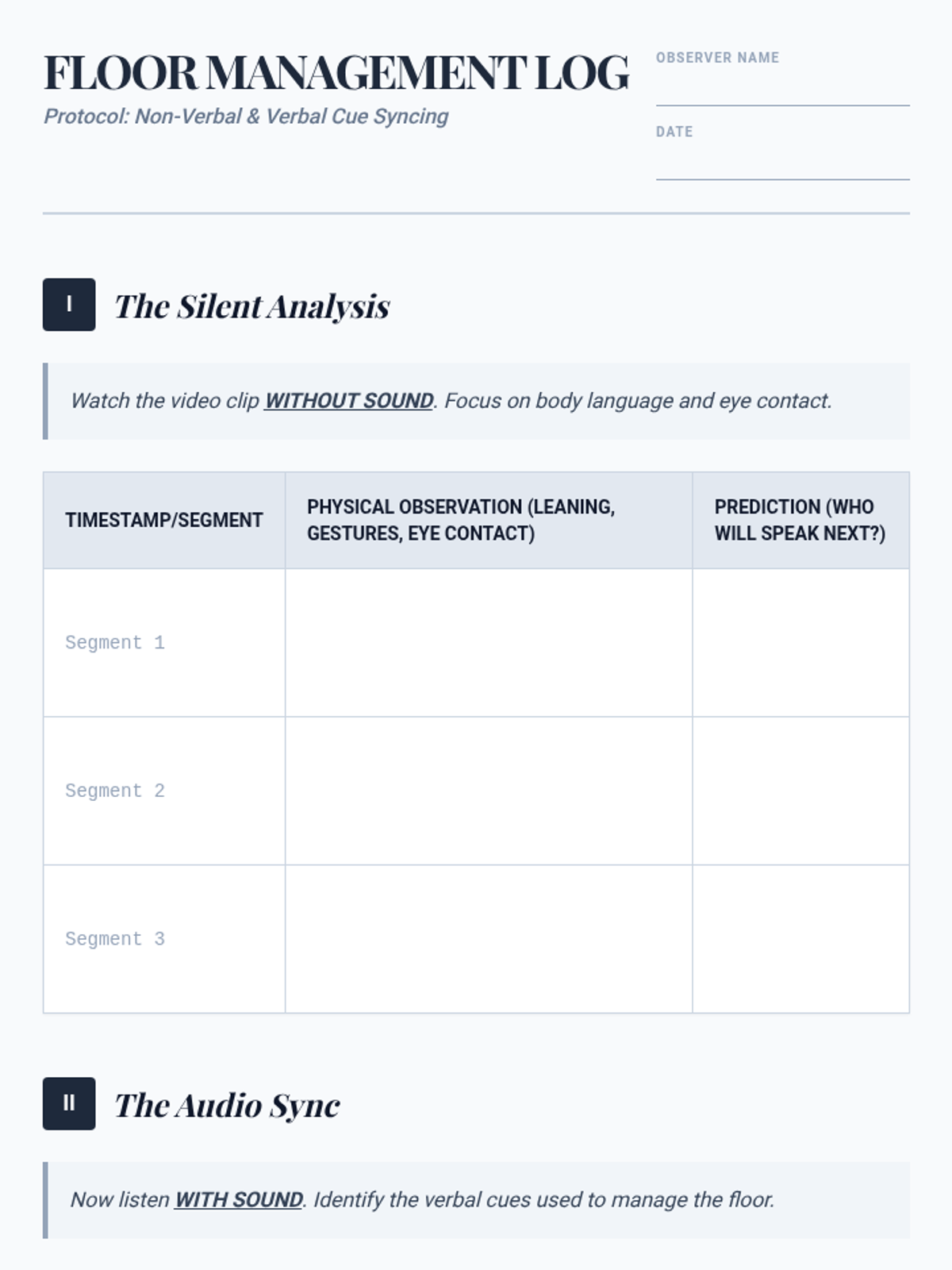
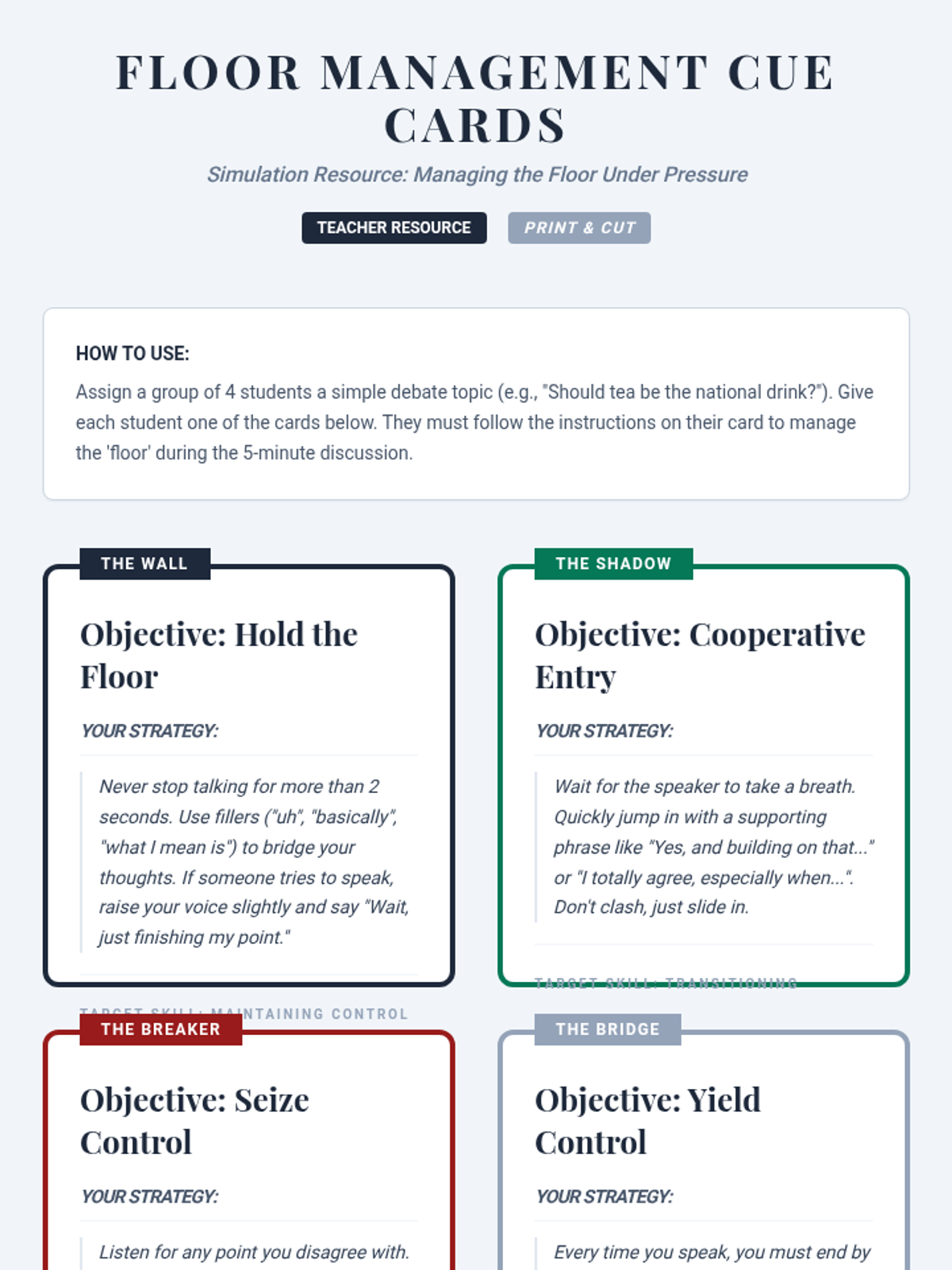
An exploration of the verbal and non-verbal signals used to manage turn-taking, interruptions, and overlapping speech in dynamic conversations.
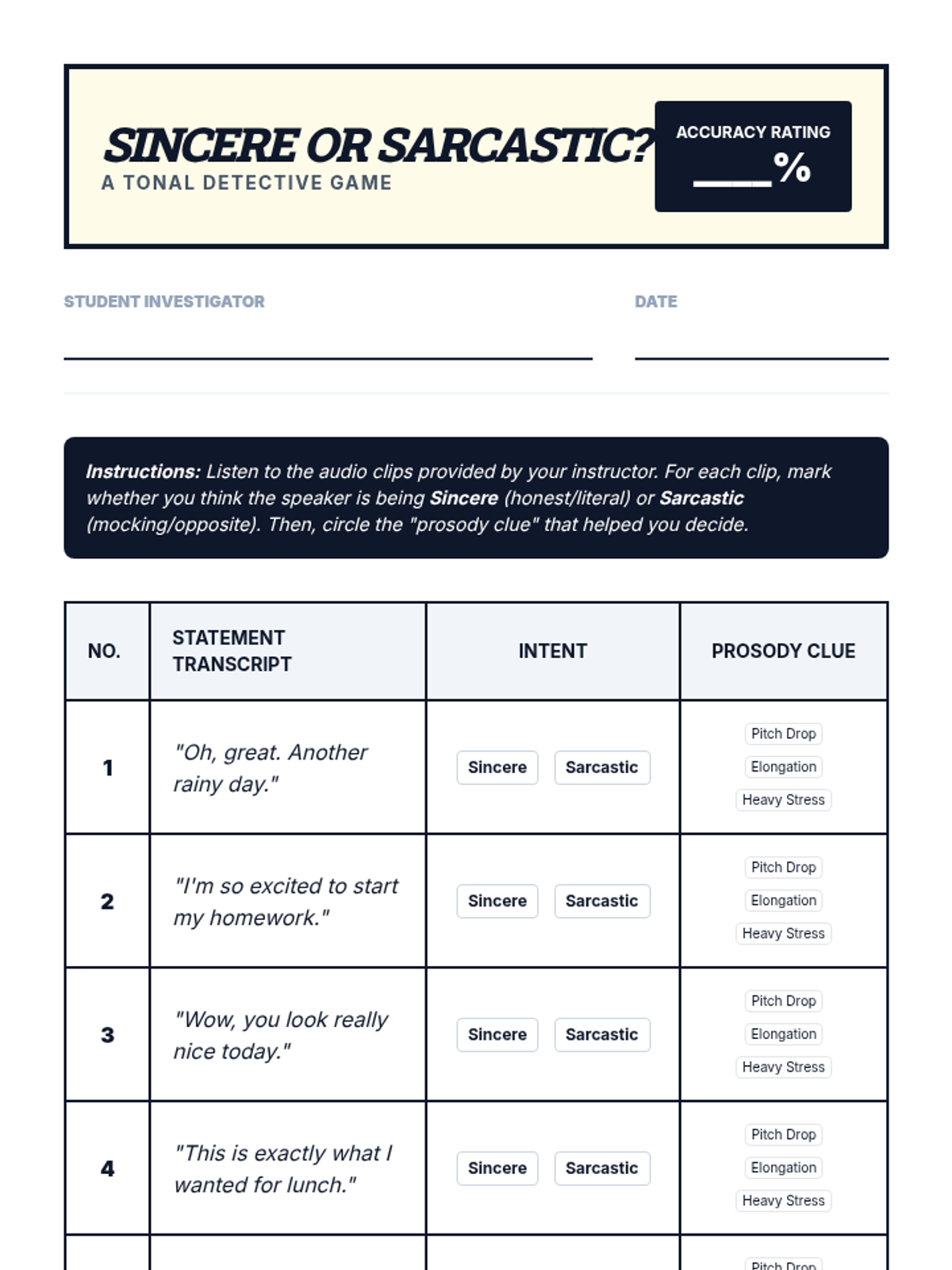
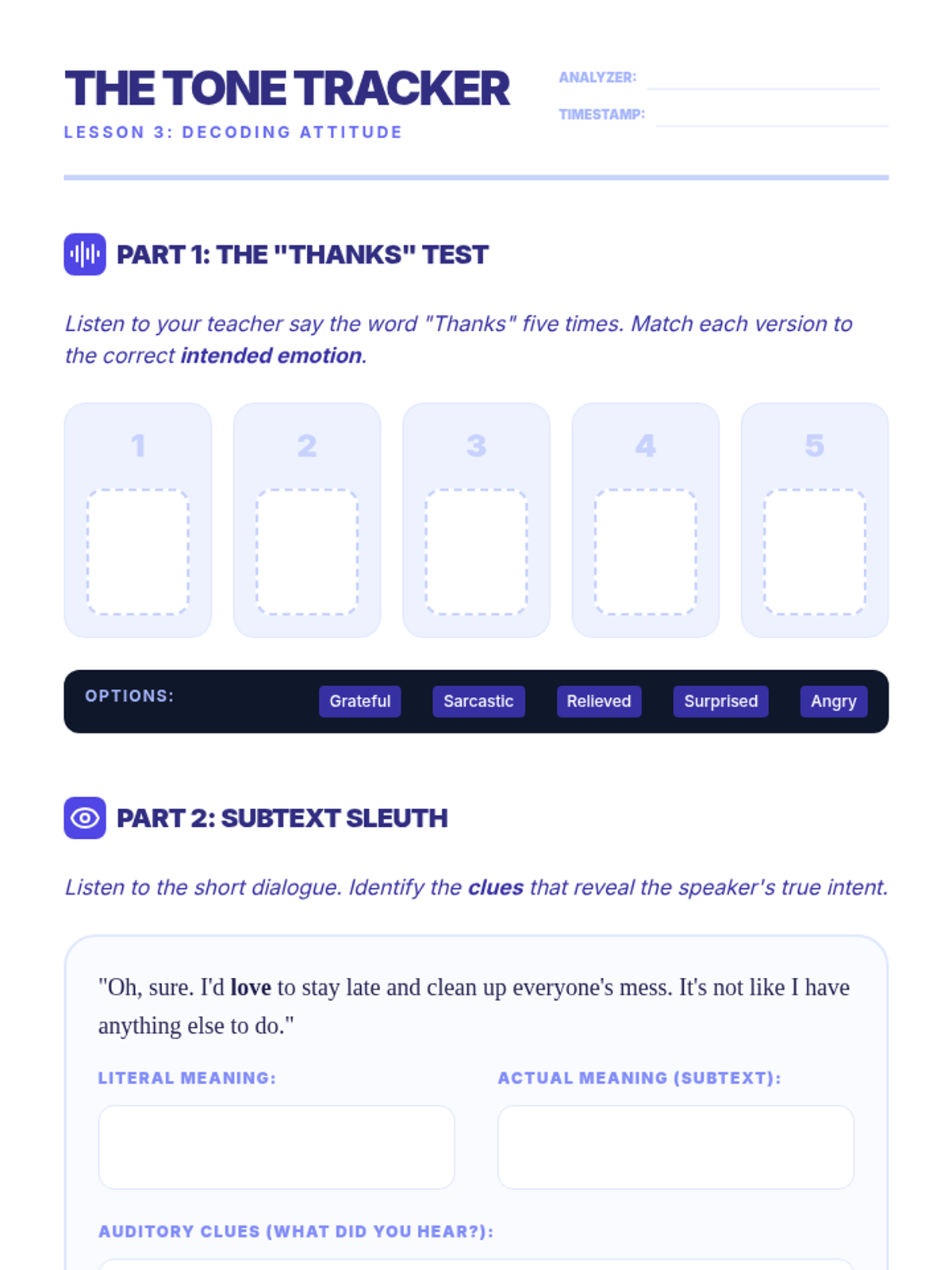
This lesson focuses on identifying sarcasm and irony through prosody, pitch, and context clues, helping students avoid literal misinterpretations.
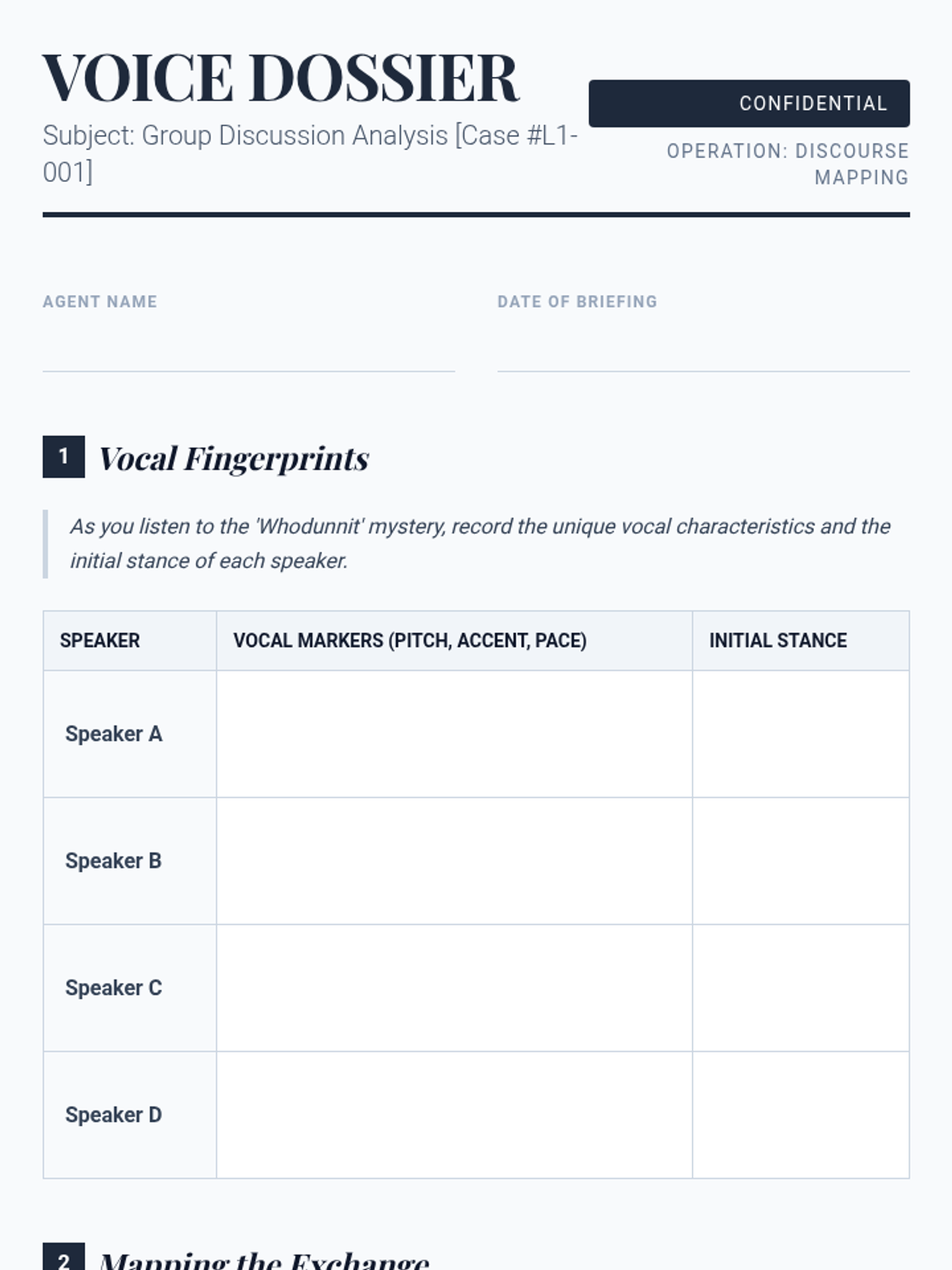
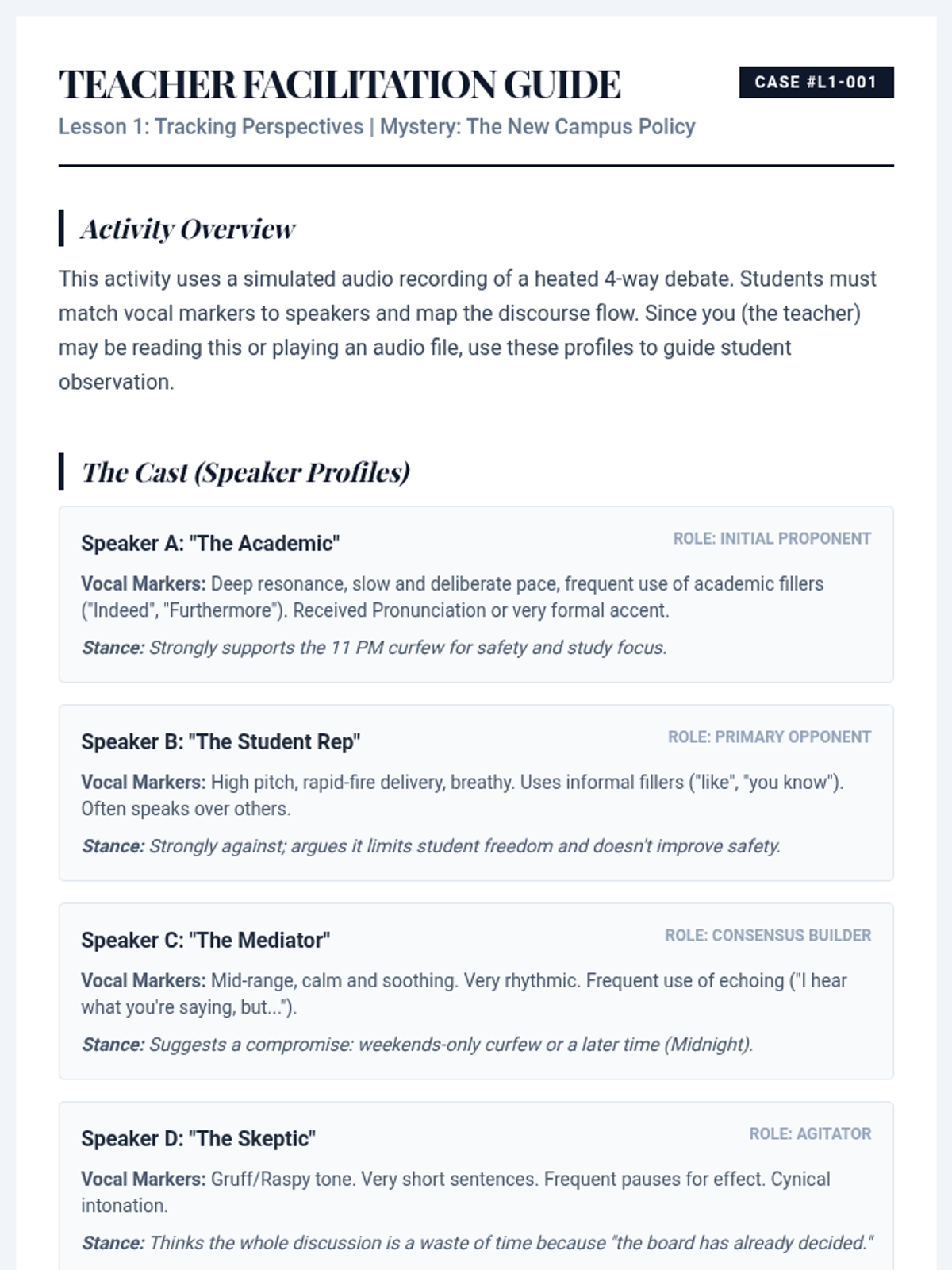
Students learn to identify different speakers by voice characteristics and track their primary stances in a group discussion using visual mapping tools.
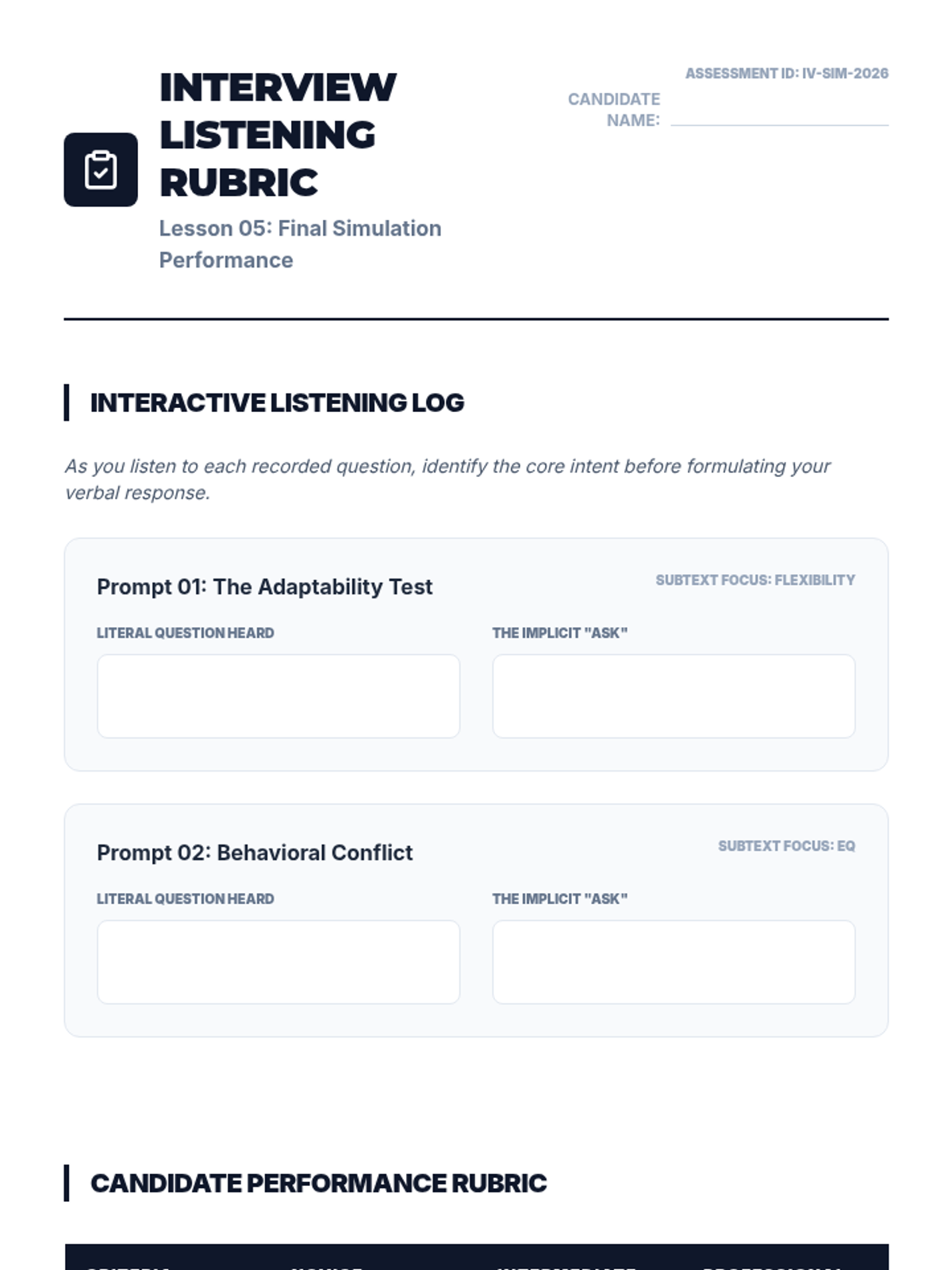
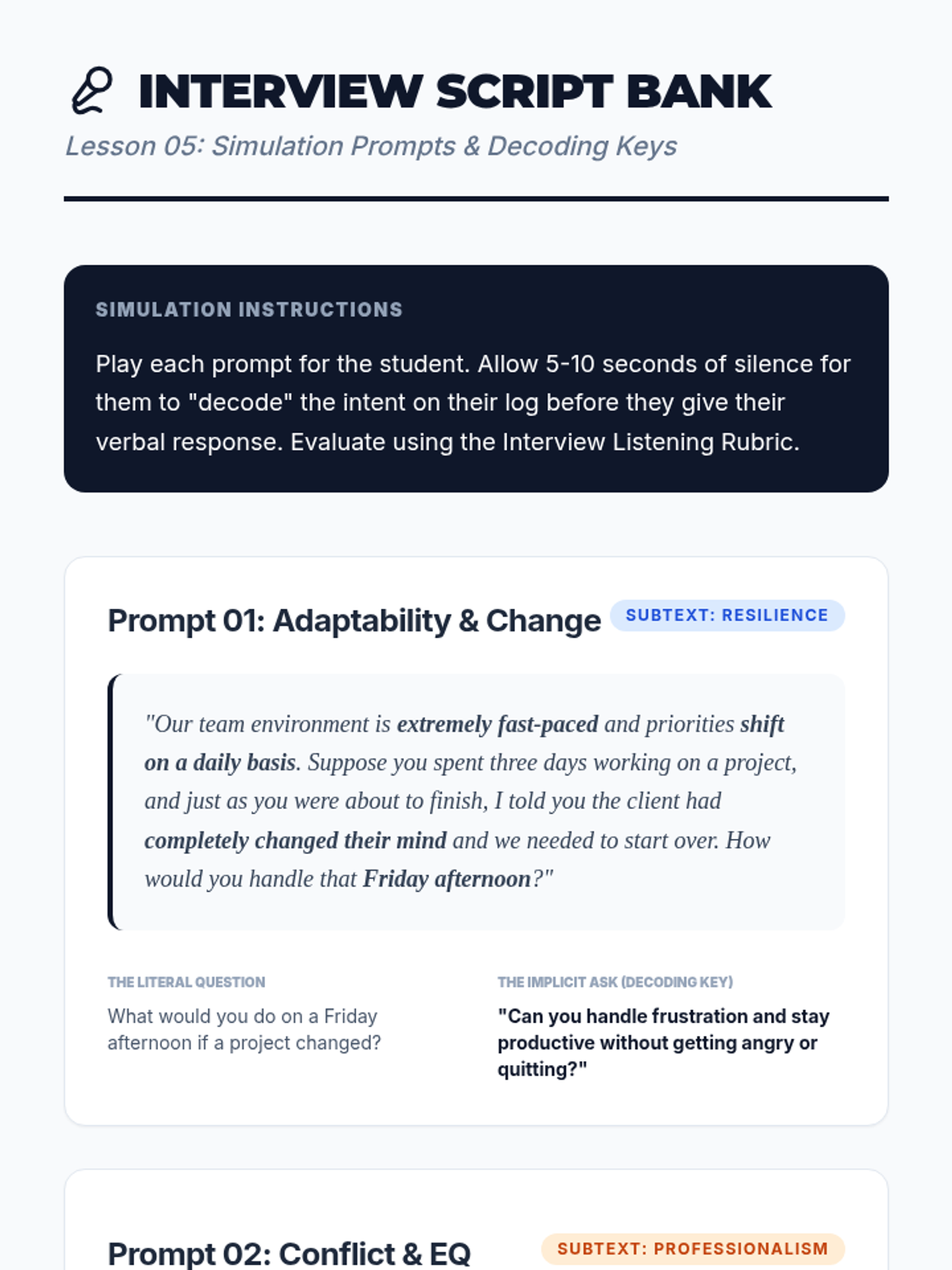
Students apply listening skills to interpret complex interview questions and behavioral prompts.
Students evaluate emotional cues and de-escalation techniques in conflict resolution scenarios.
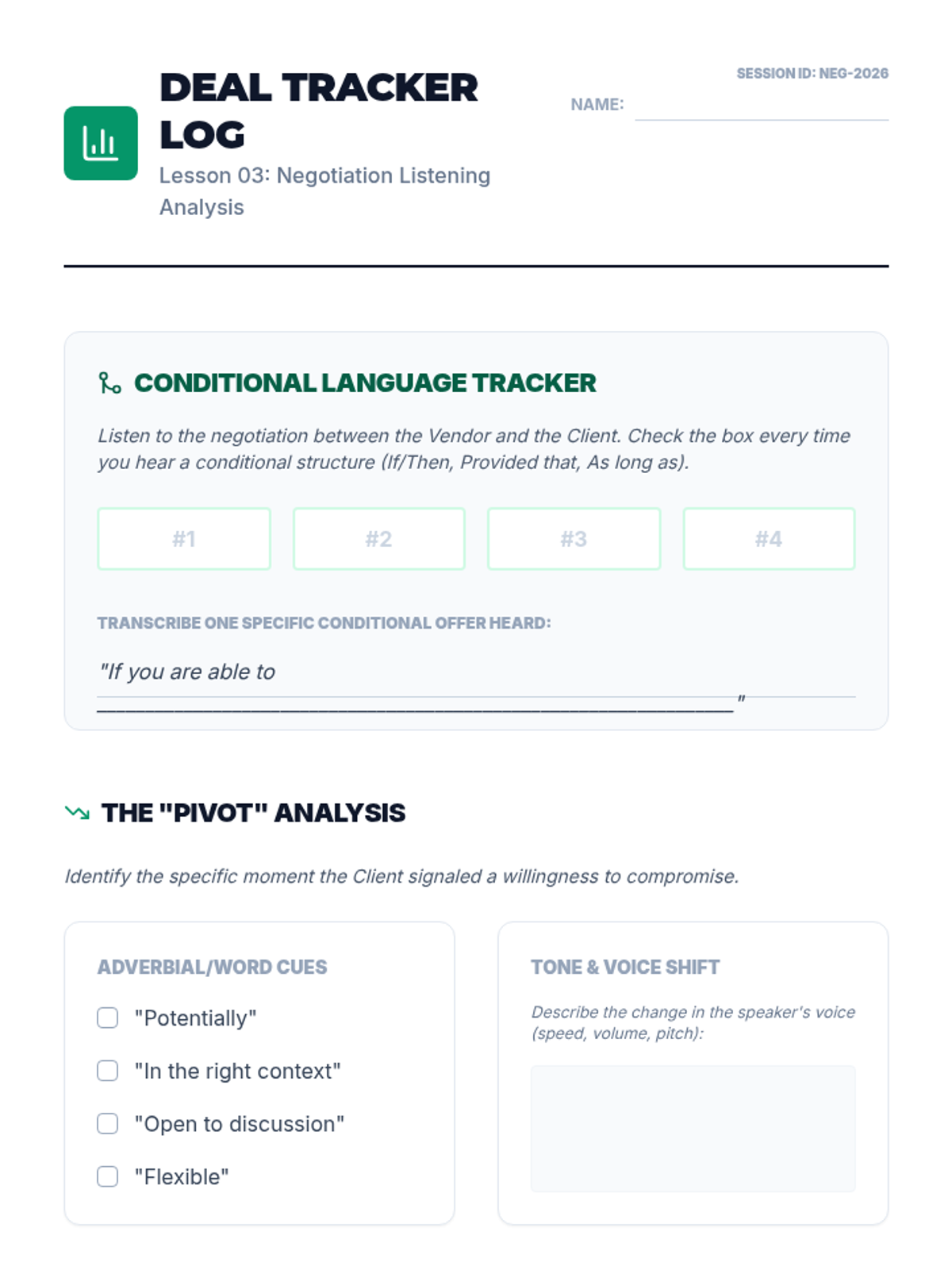
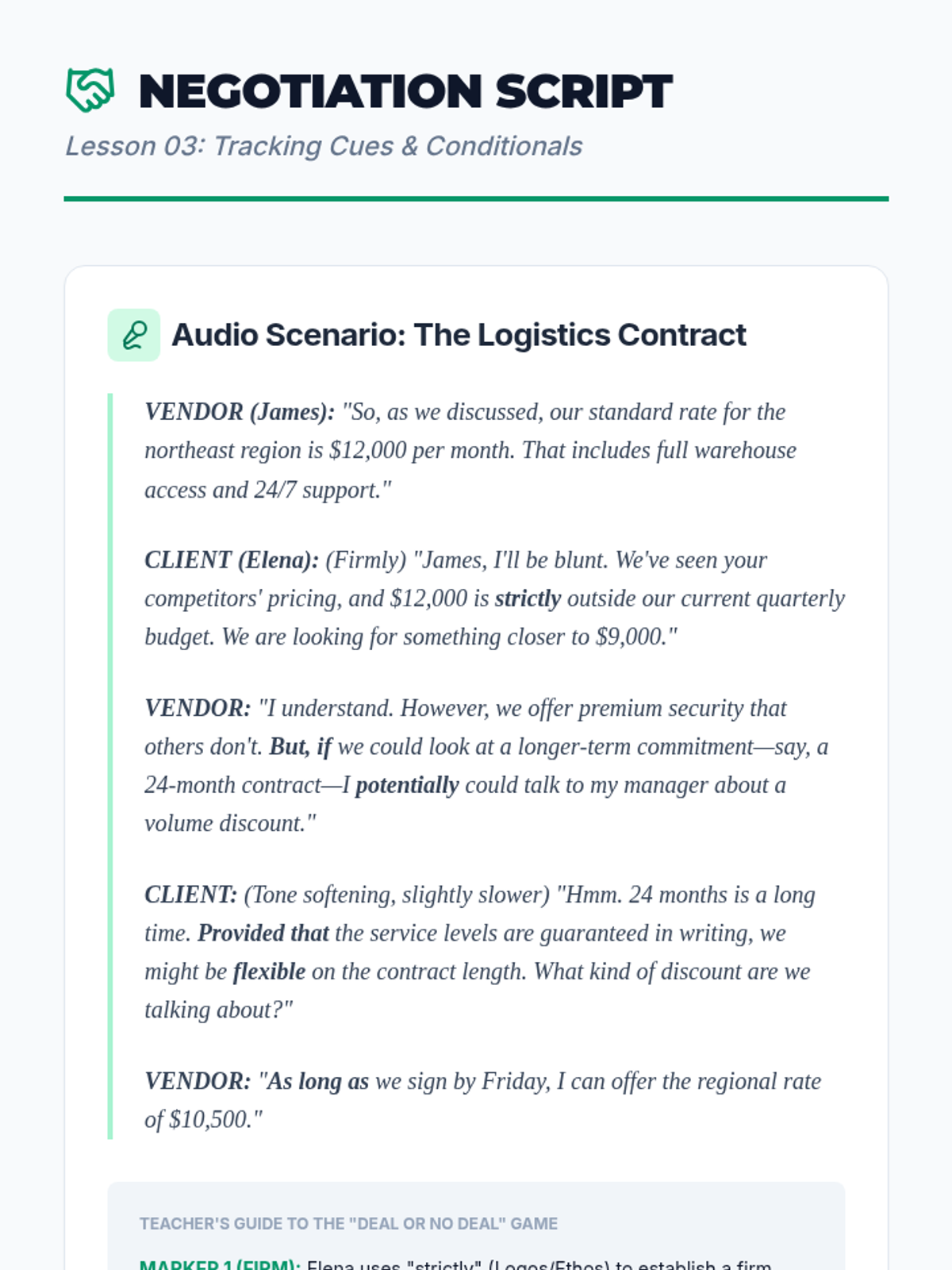
Students identify conditional language and tone shifts in negotiation simulations to spot willingness to compromise.
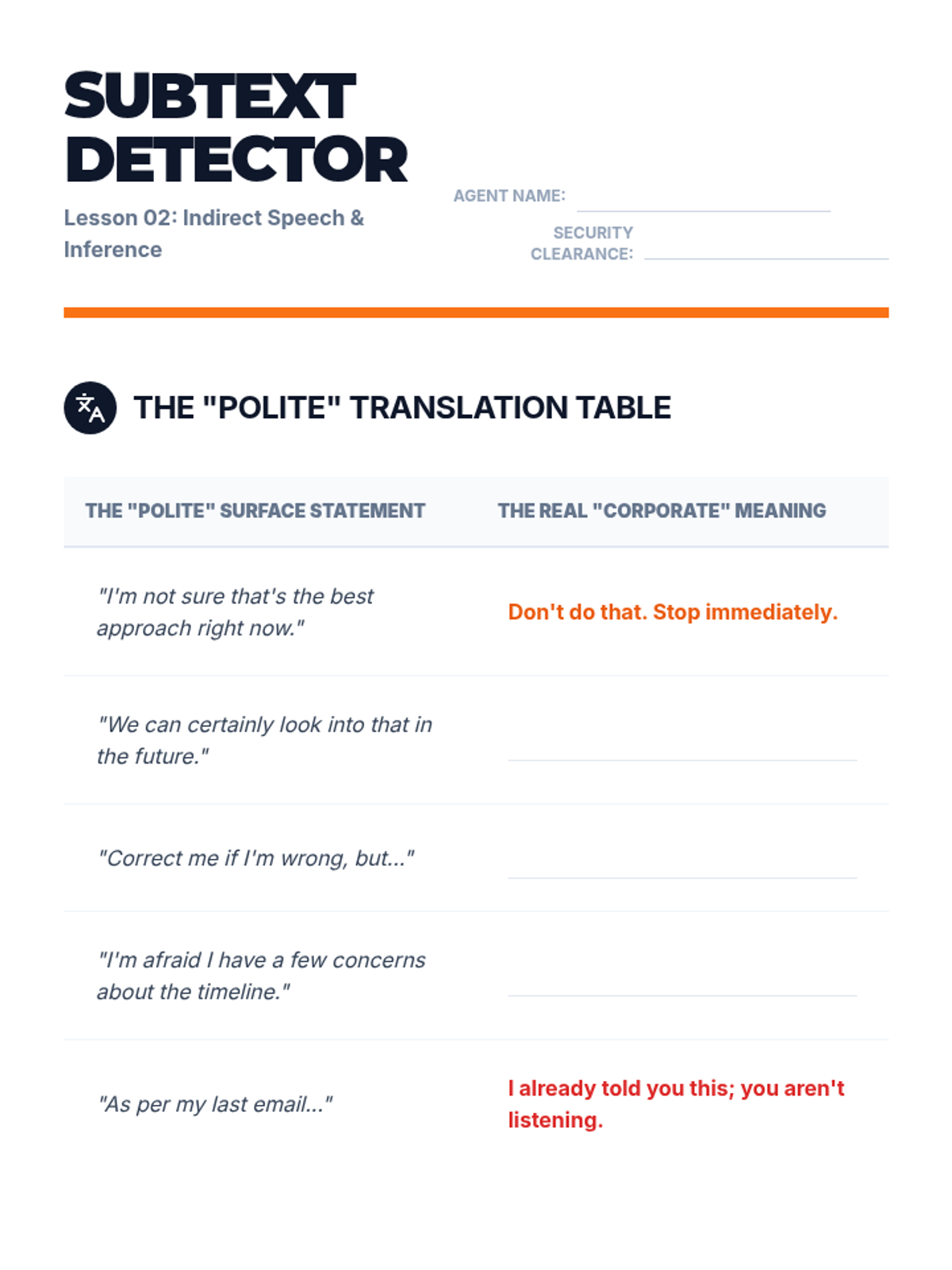
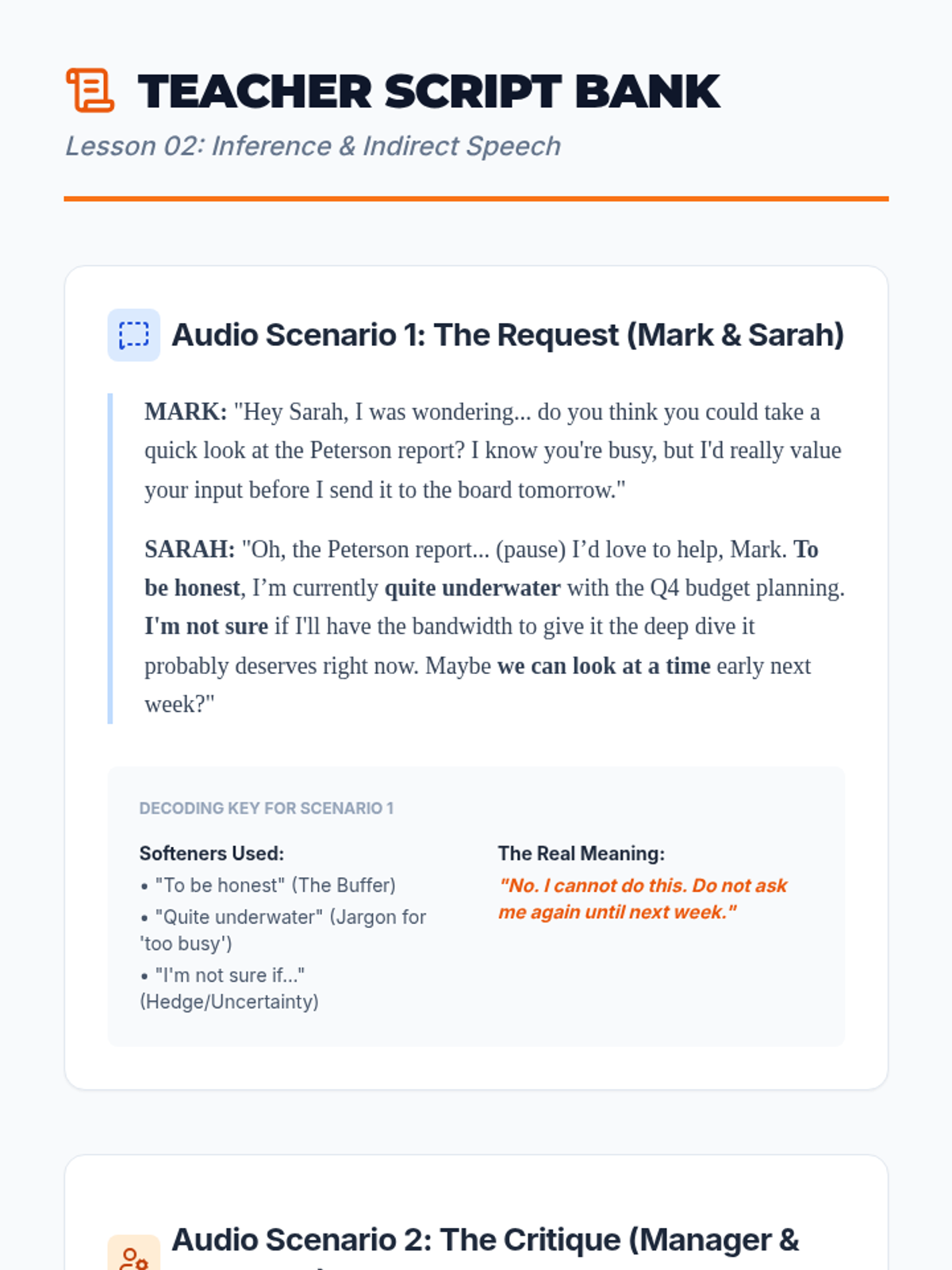
Learners decode indirect language and 'polite' workplace communication to find the underlying message.
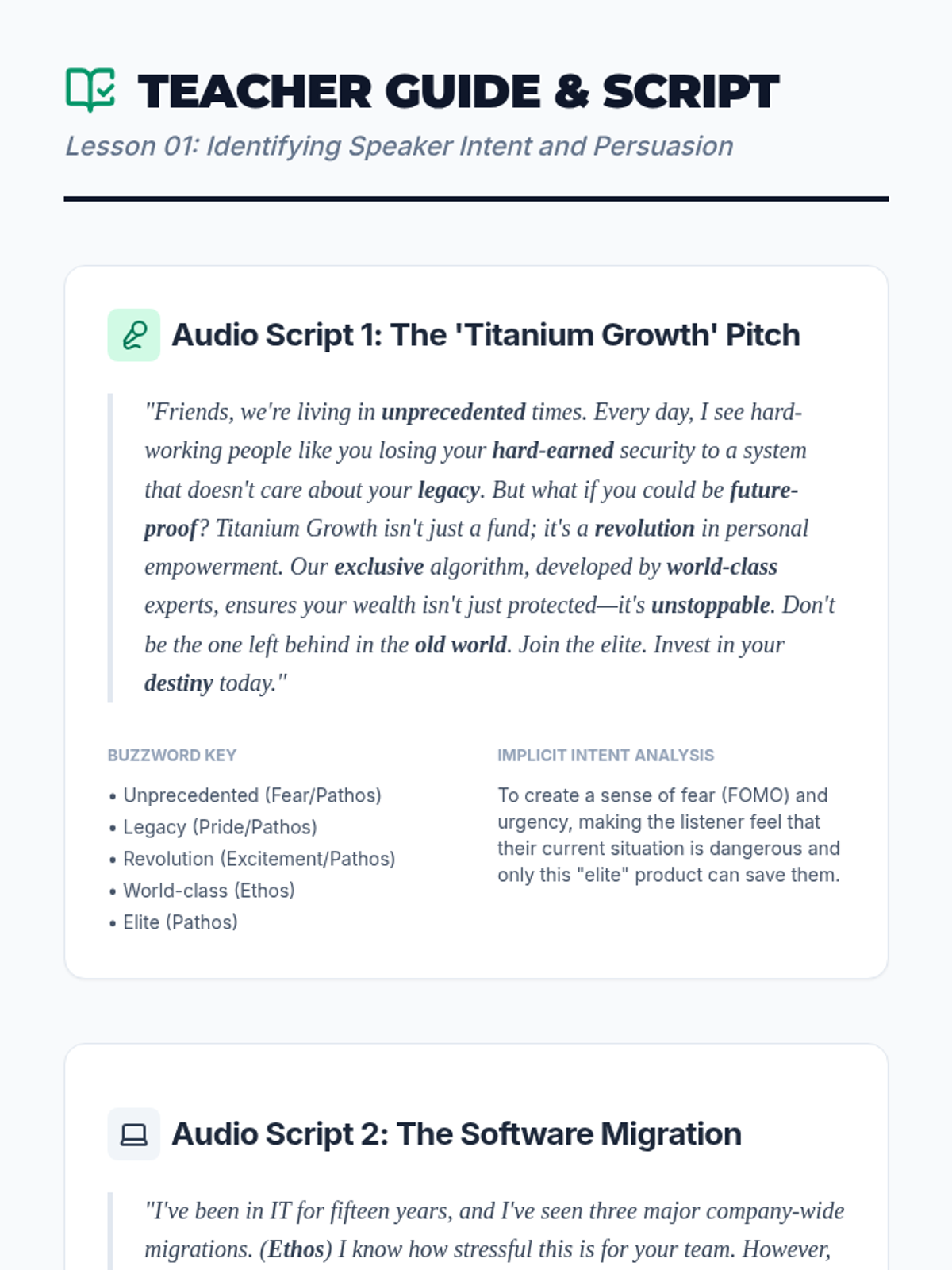
Students analyze advertisements and workplace pitches to identify speaker goals and persuasive techniques.
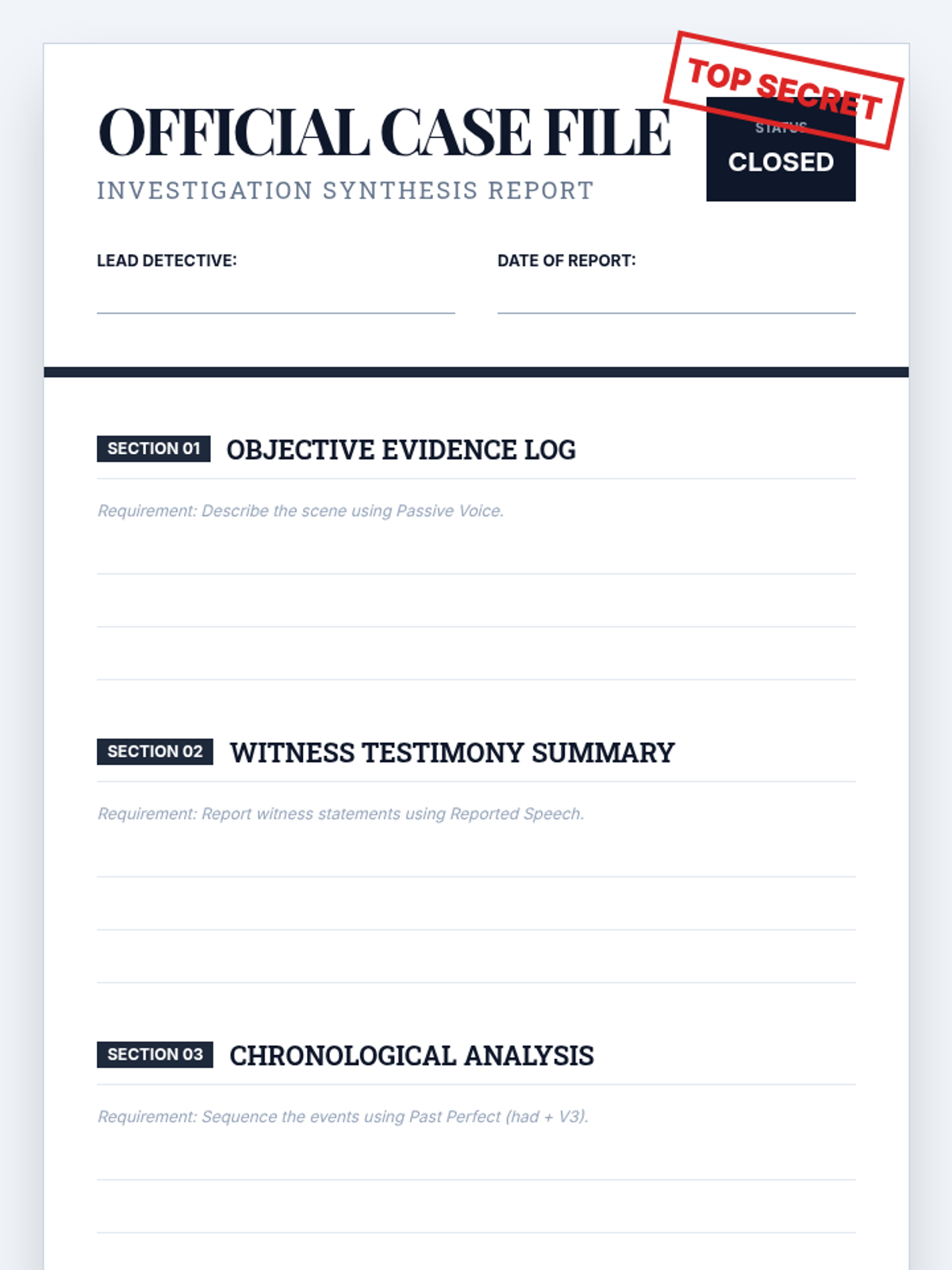
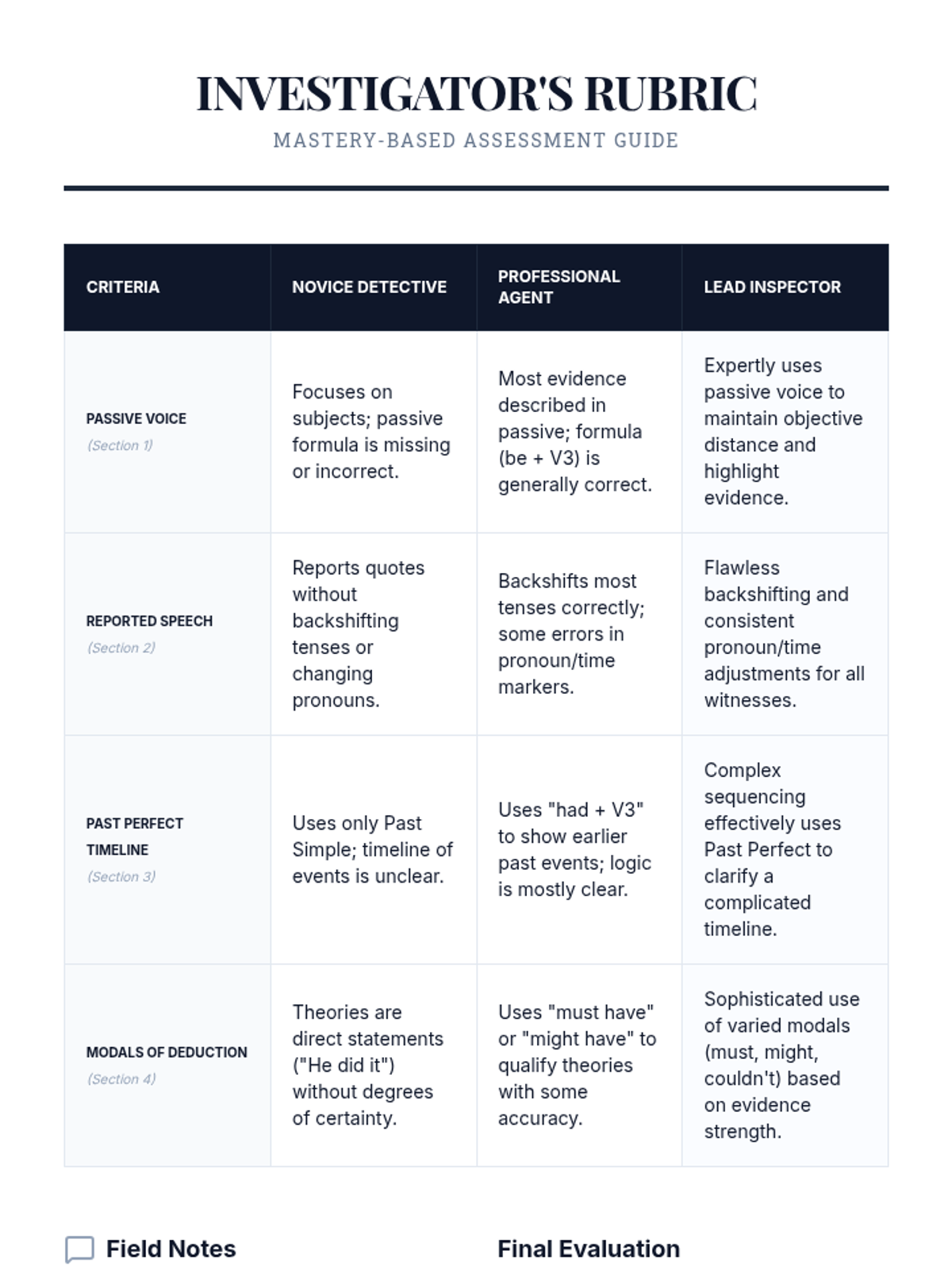
Students synthesize their skills to write a final case report. They combine passive descriptions, deductive theories, and reported testimony into a professional narrative.
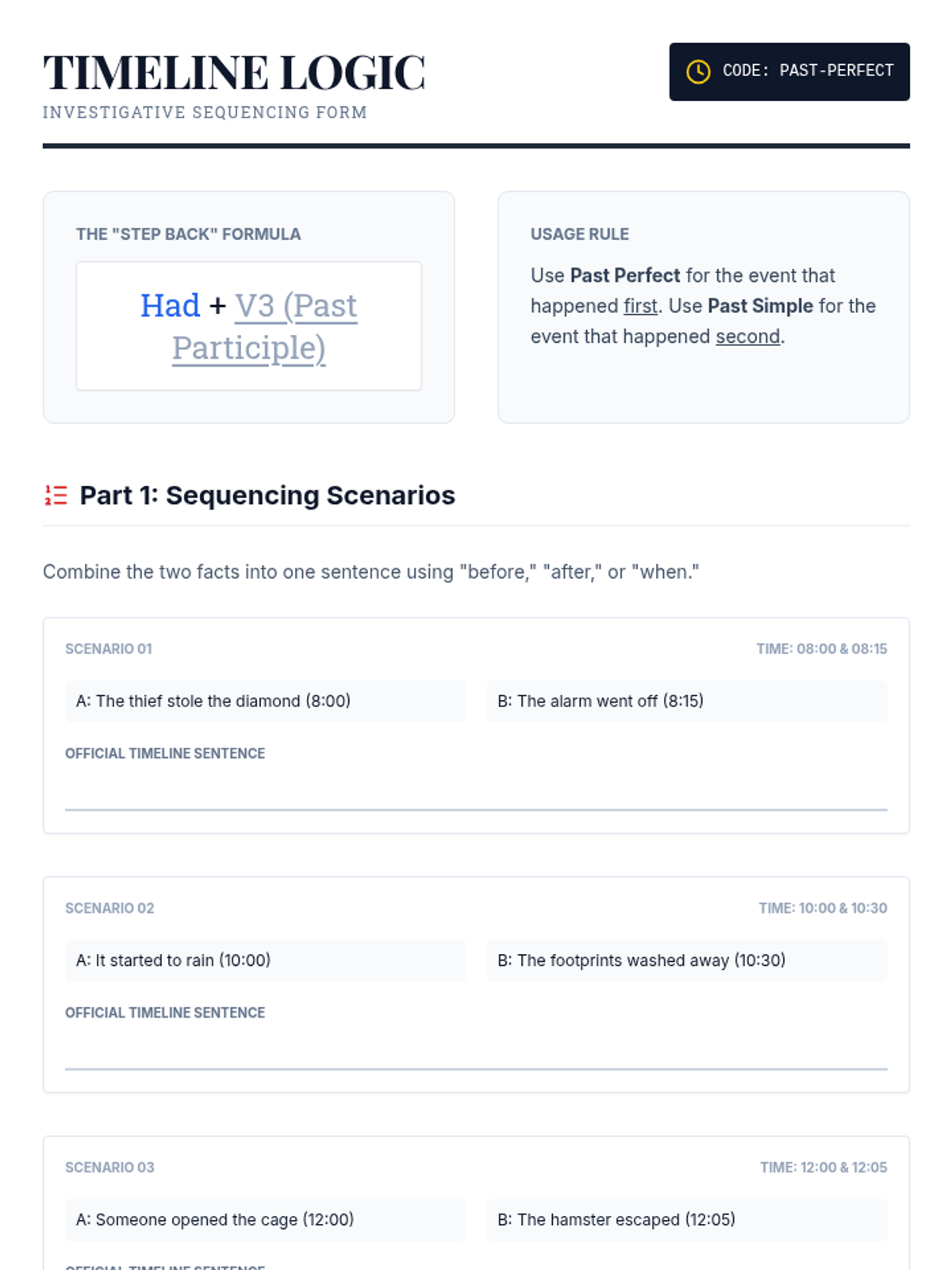
Students use the past perfect tense to sequence events in the mystery. They create timelines to distinguish between actions that happened before other past events.
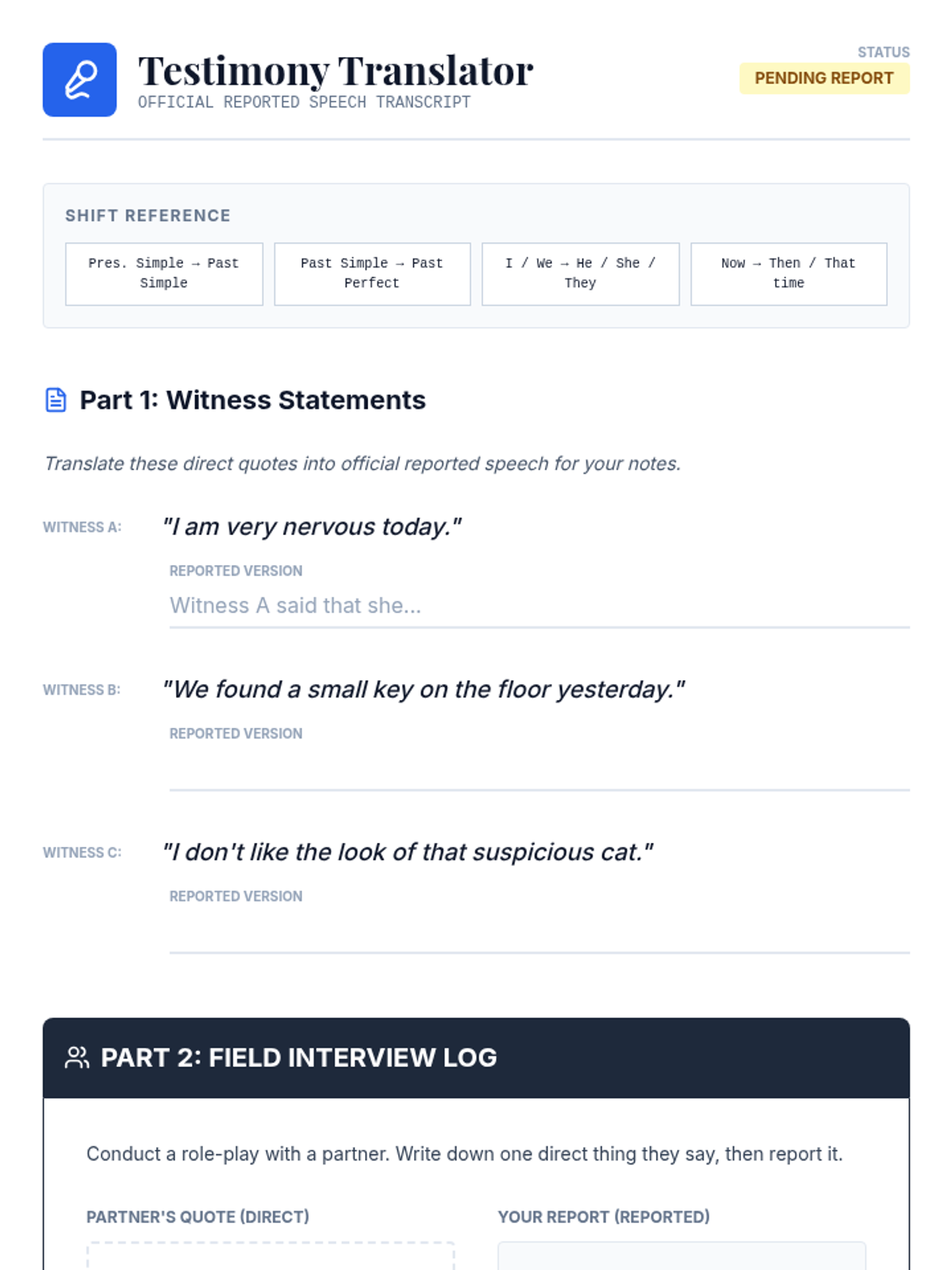
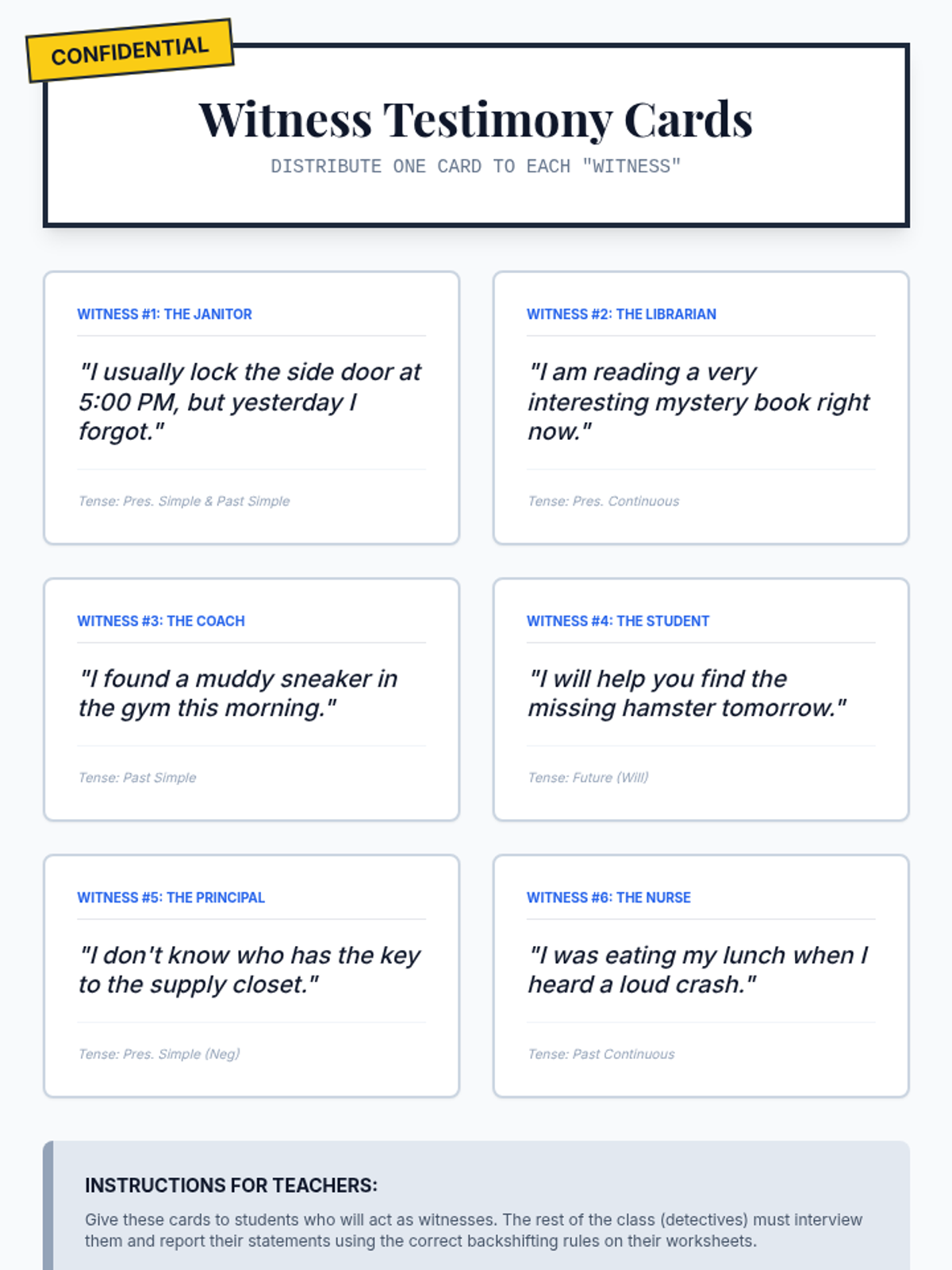
Students interview witnesses and convert direct quotes into reported speech. They practice the rules of 'backshifting' tenses and changing pronouns for accurate reporting.
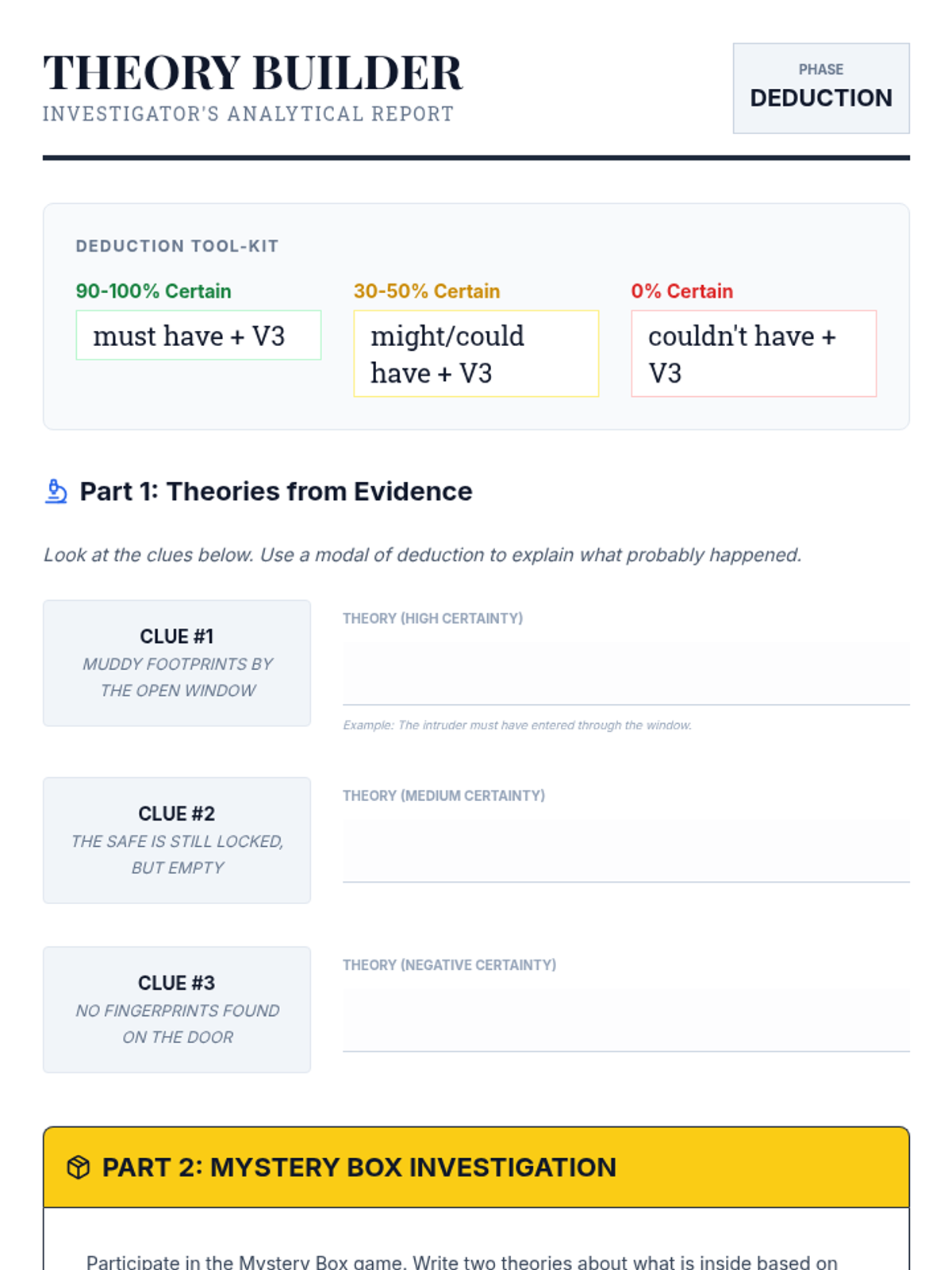
Students use modals of deduction (must have, might have, couldn't have) to formulate theories about the mystery. They learn to express different degrees of certainty based on the evidence.
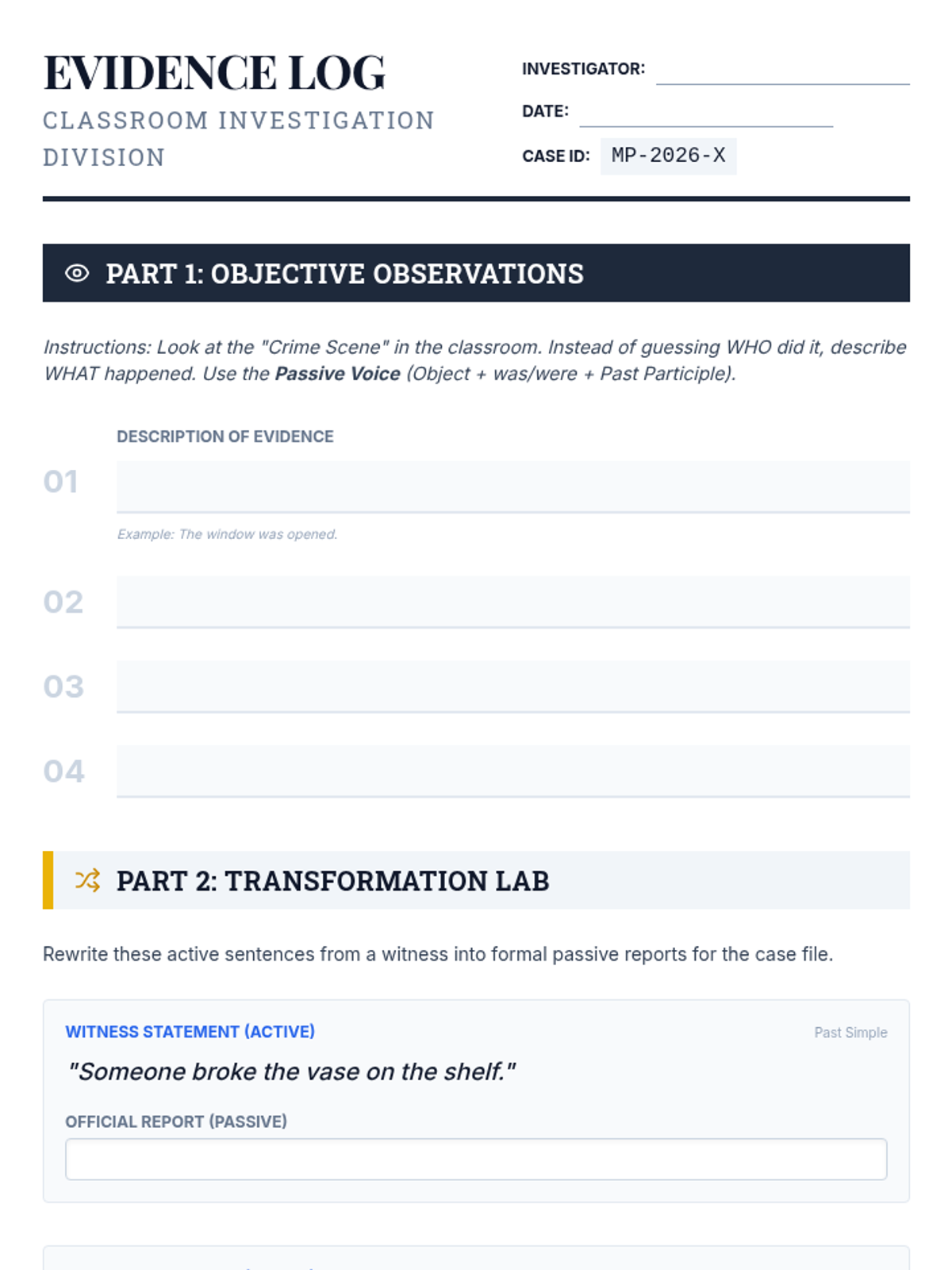
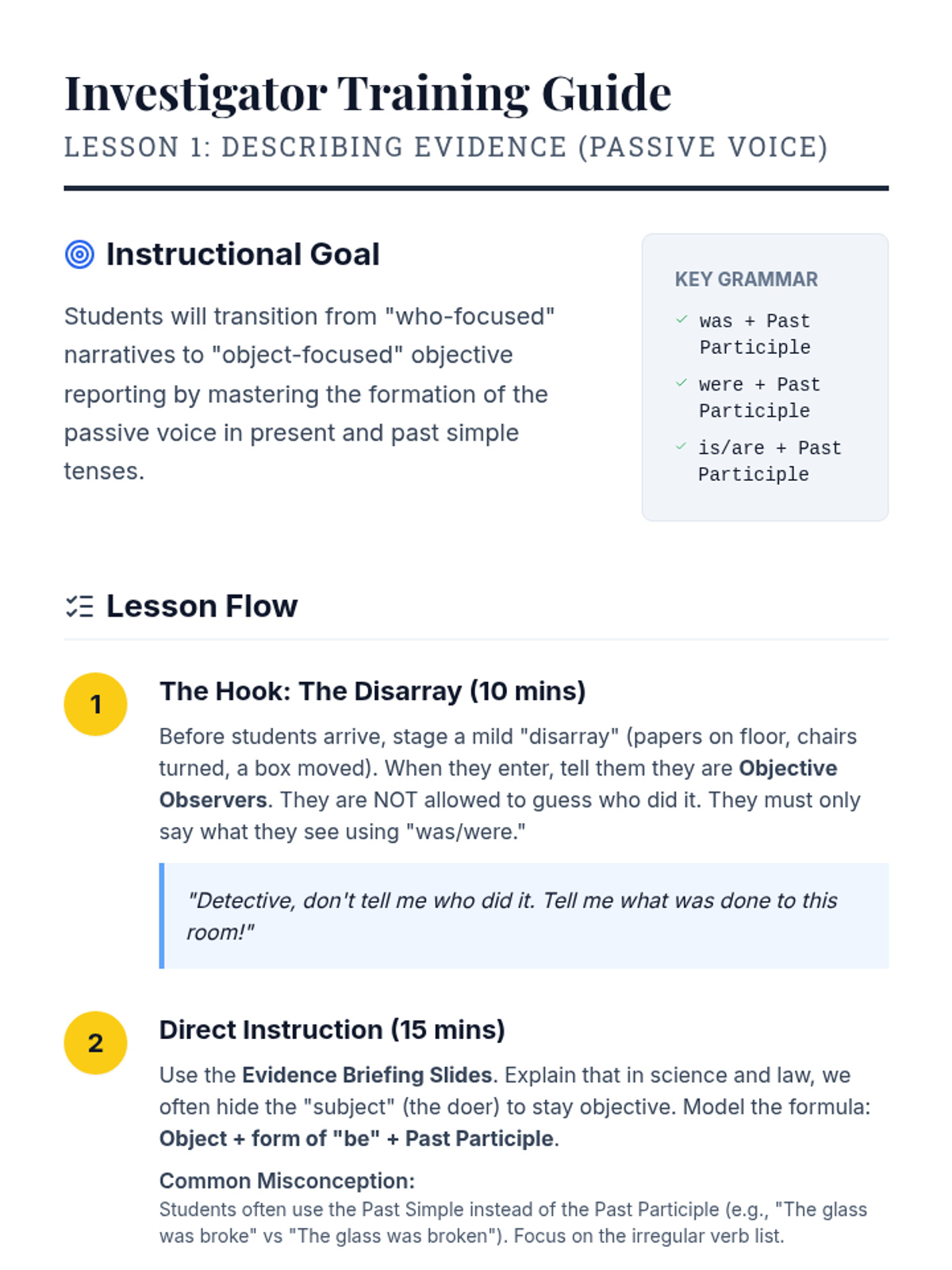
Students learn to describe evidence objectively using the passive voice, focusing on what was done rather than who did it. They analyze a staged 'crime scene' to practice transforming active sentences.
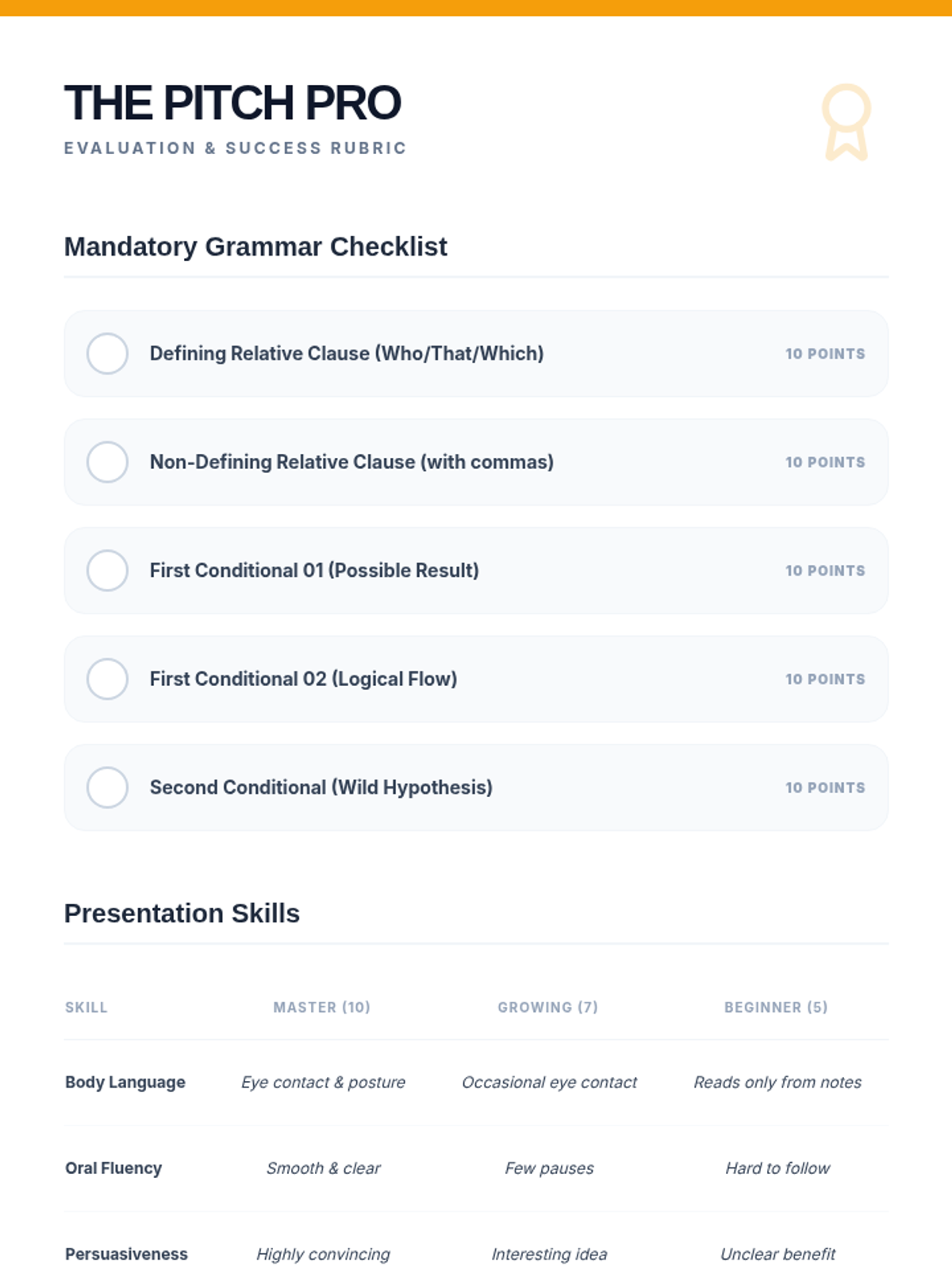
Students present their 'School of the Future' designs in a persuasive pitch, integrating all targeted grammar structures.
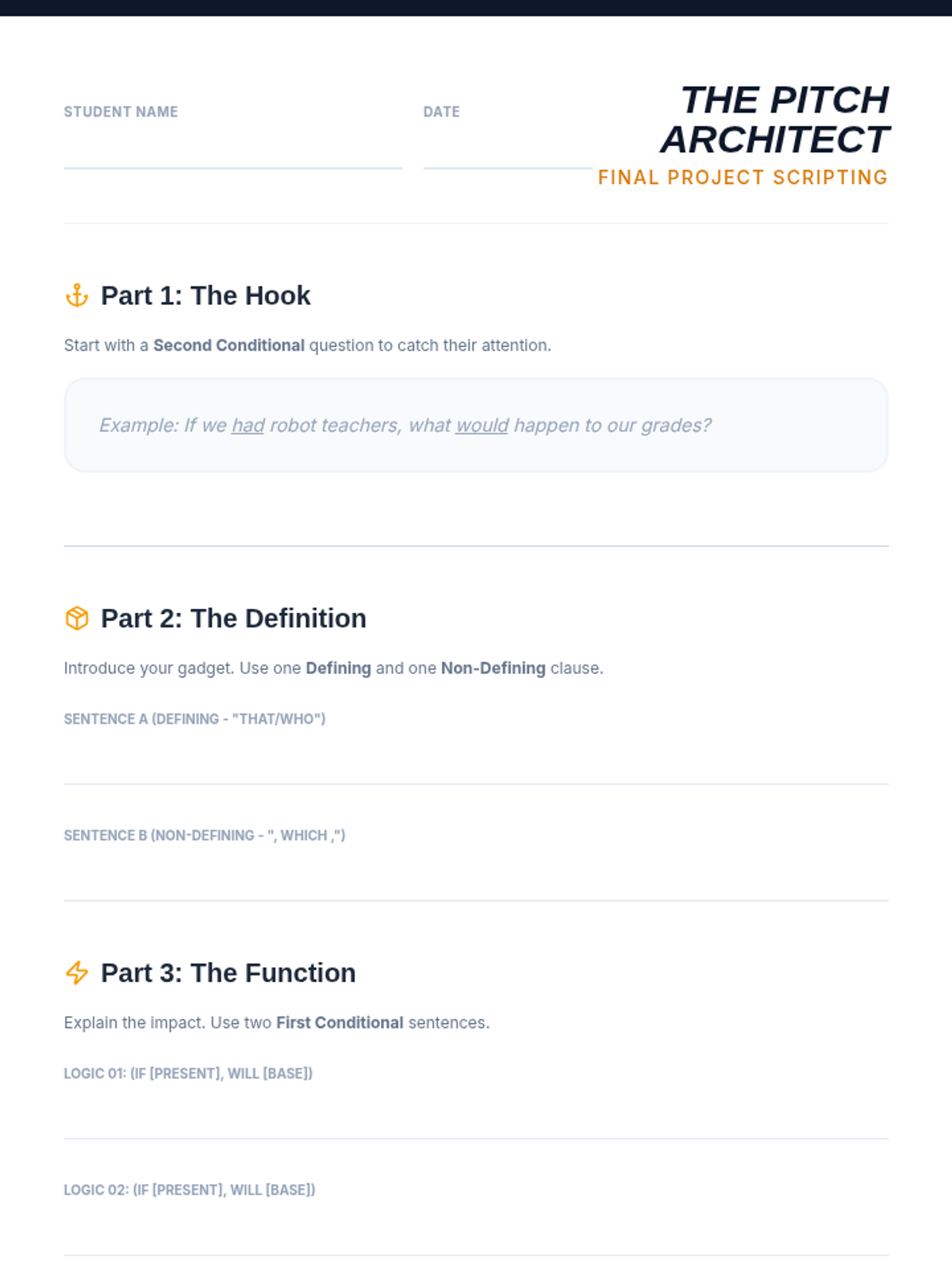
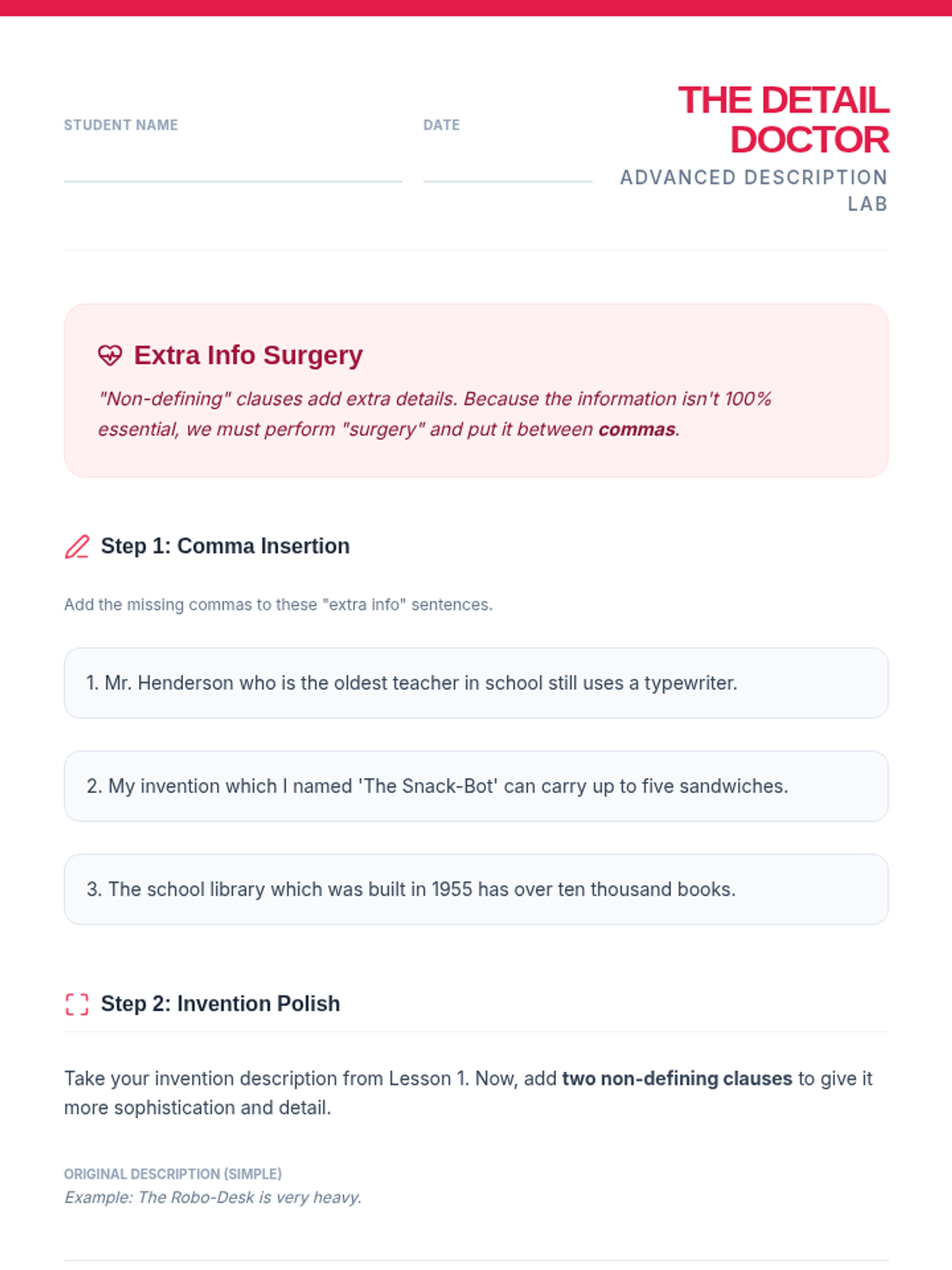
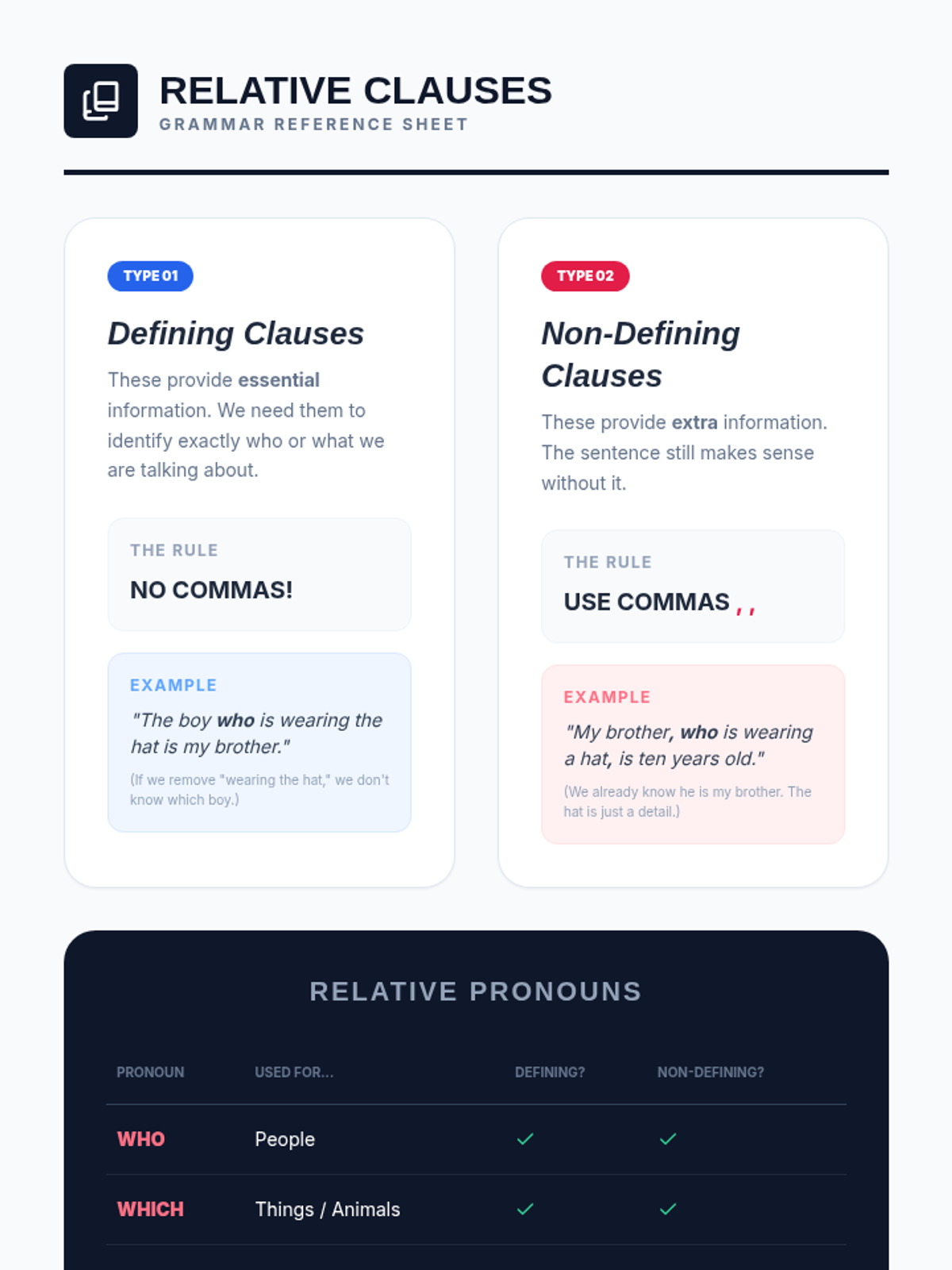
Students add sophisticated details to their invention descriptions using non-defining relative clauses and proper punctuation.
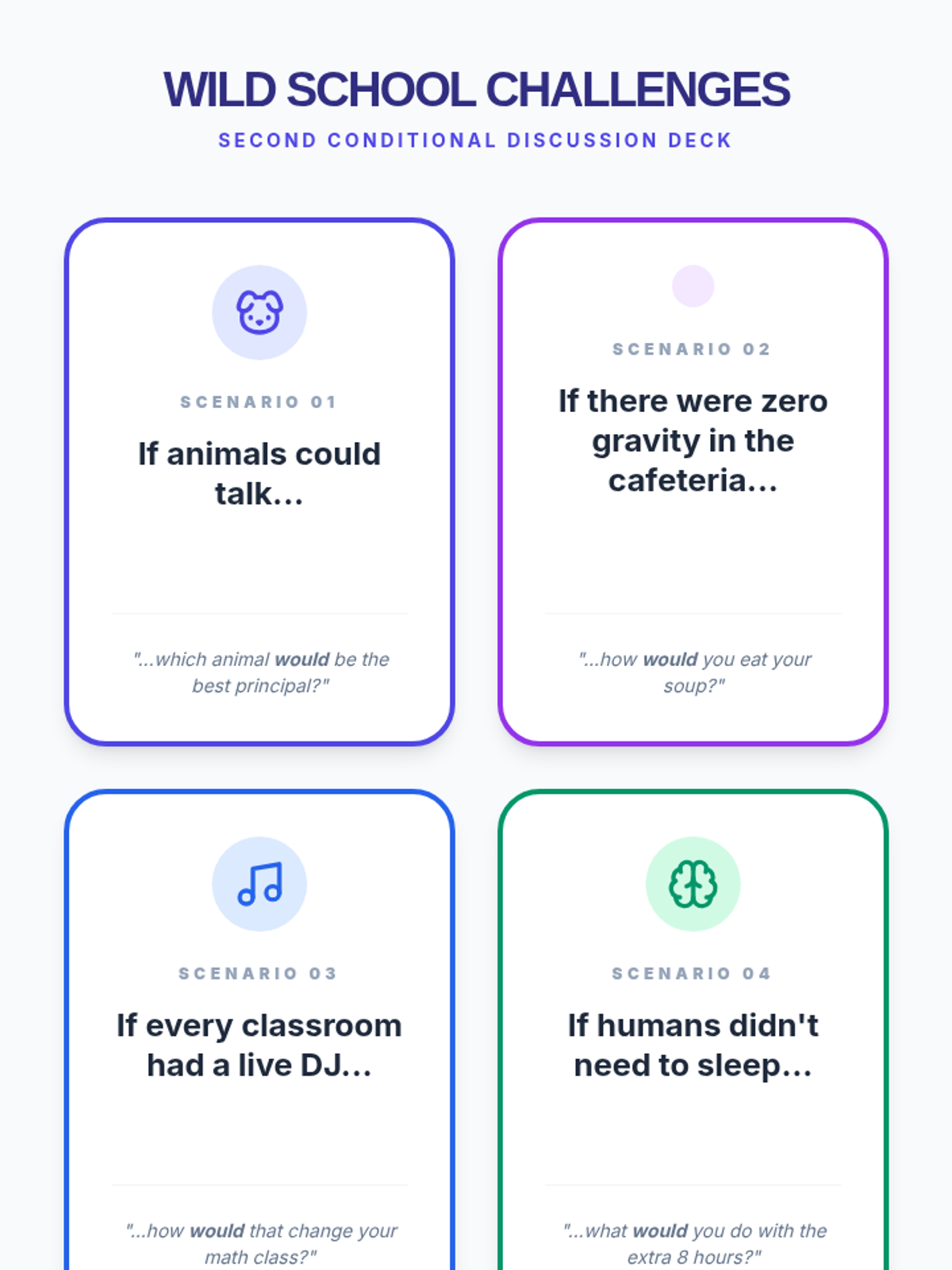
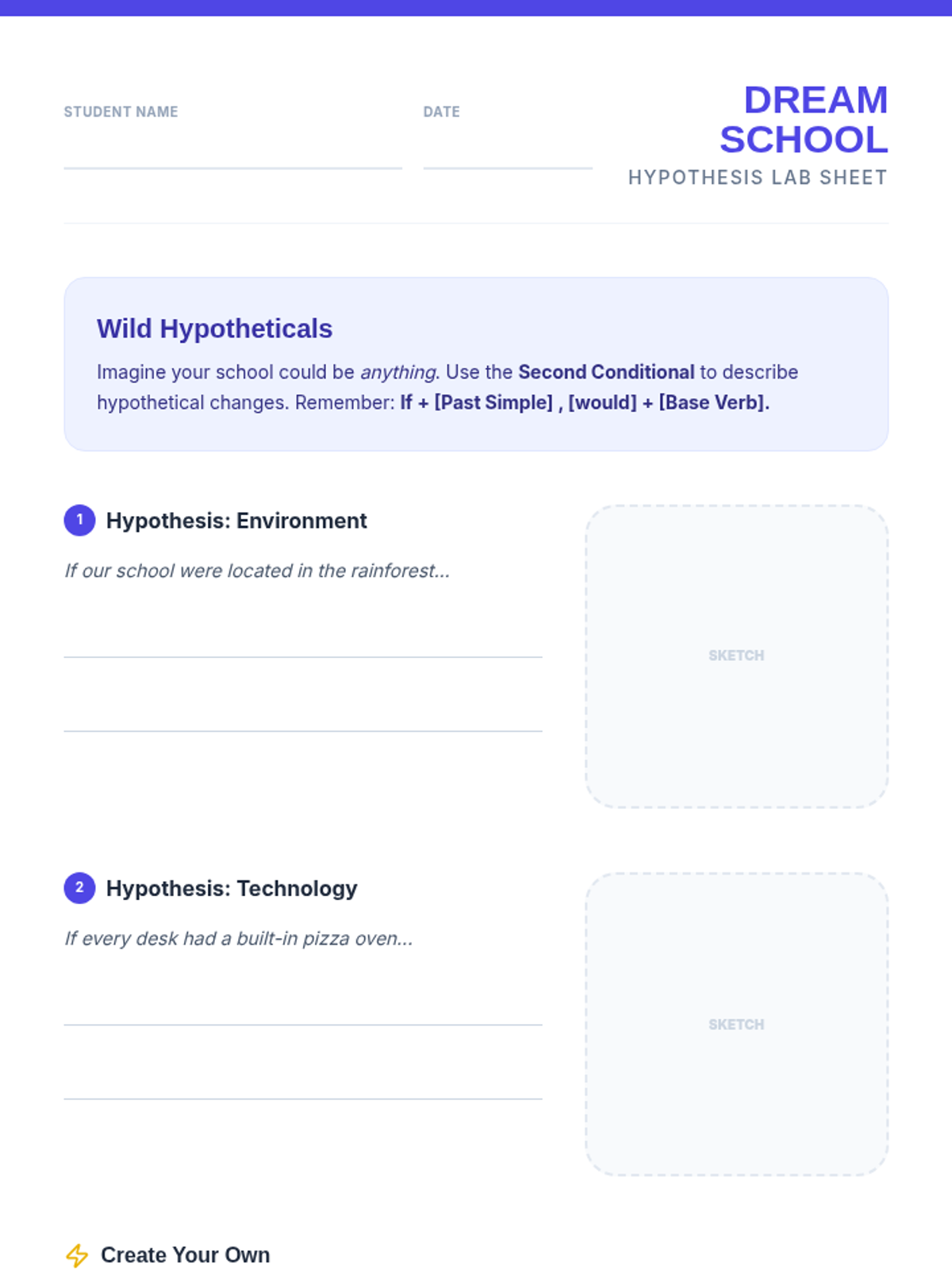
Students explore hypothetical scenarios and wild school improvements using the second conditional.
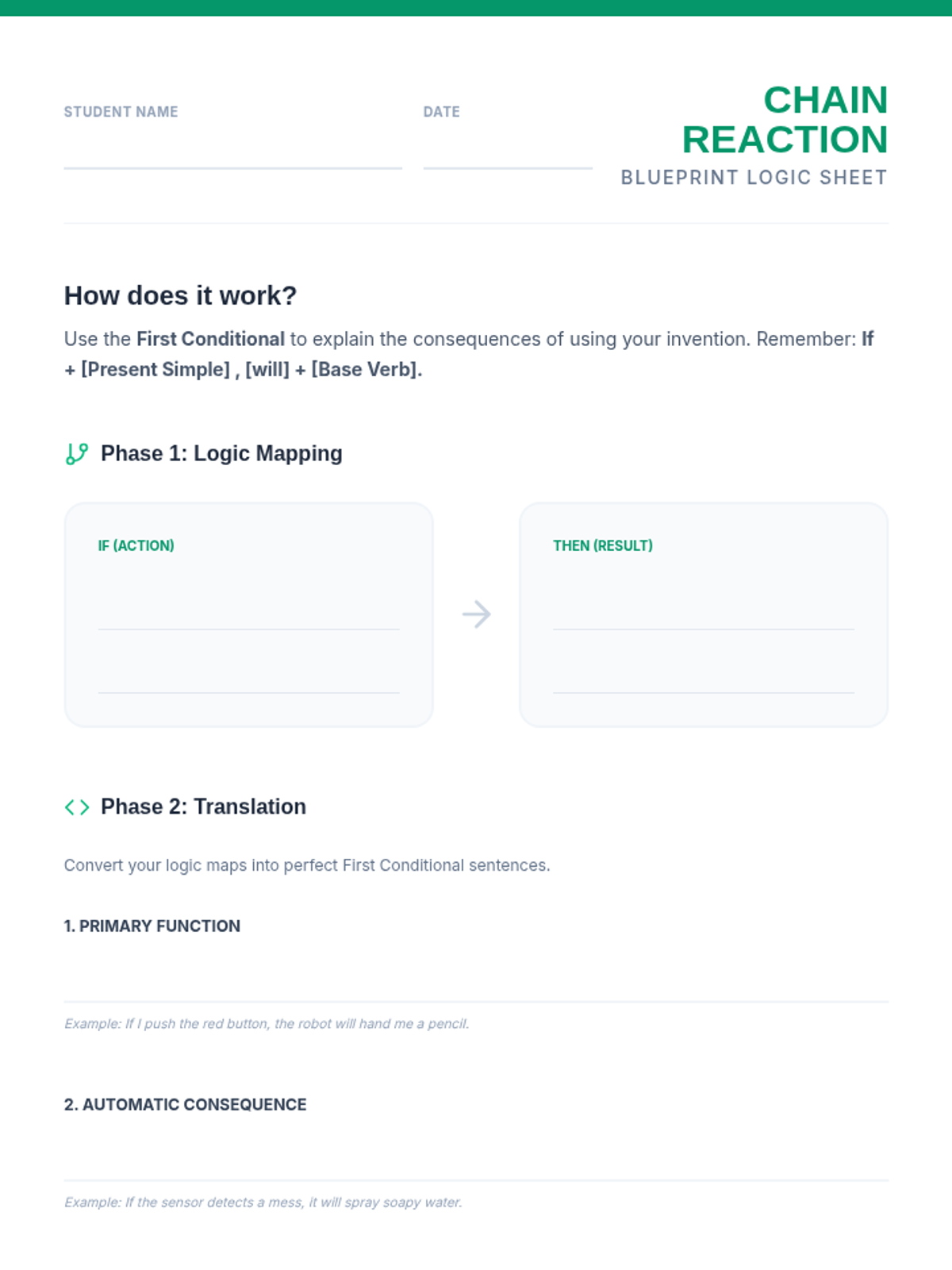
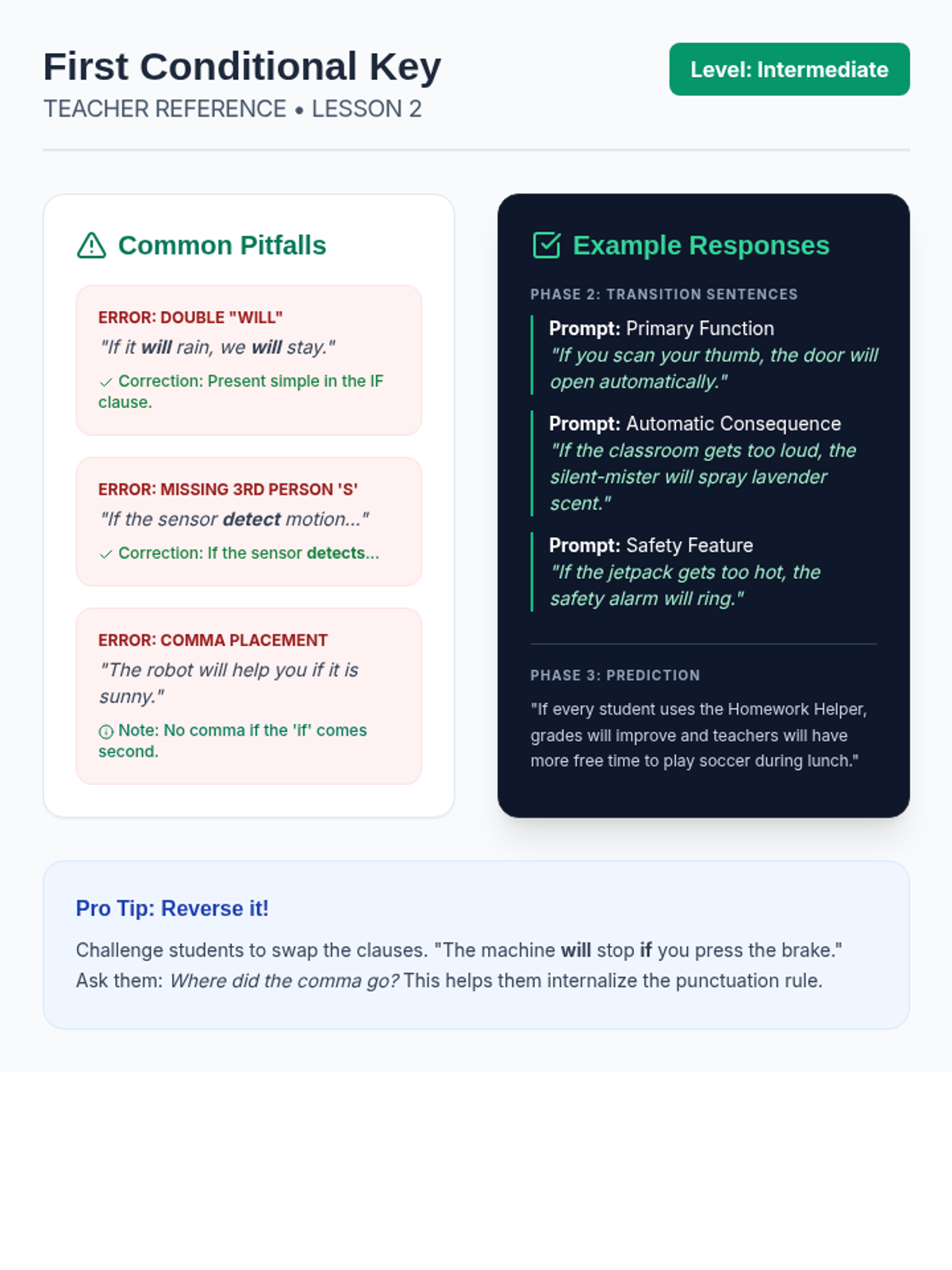
Students use the first conditional to explain how their inventions work and the real-world consequences of using them.
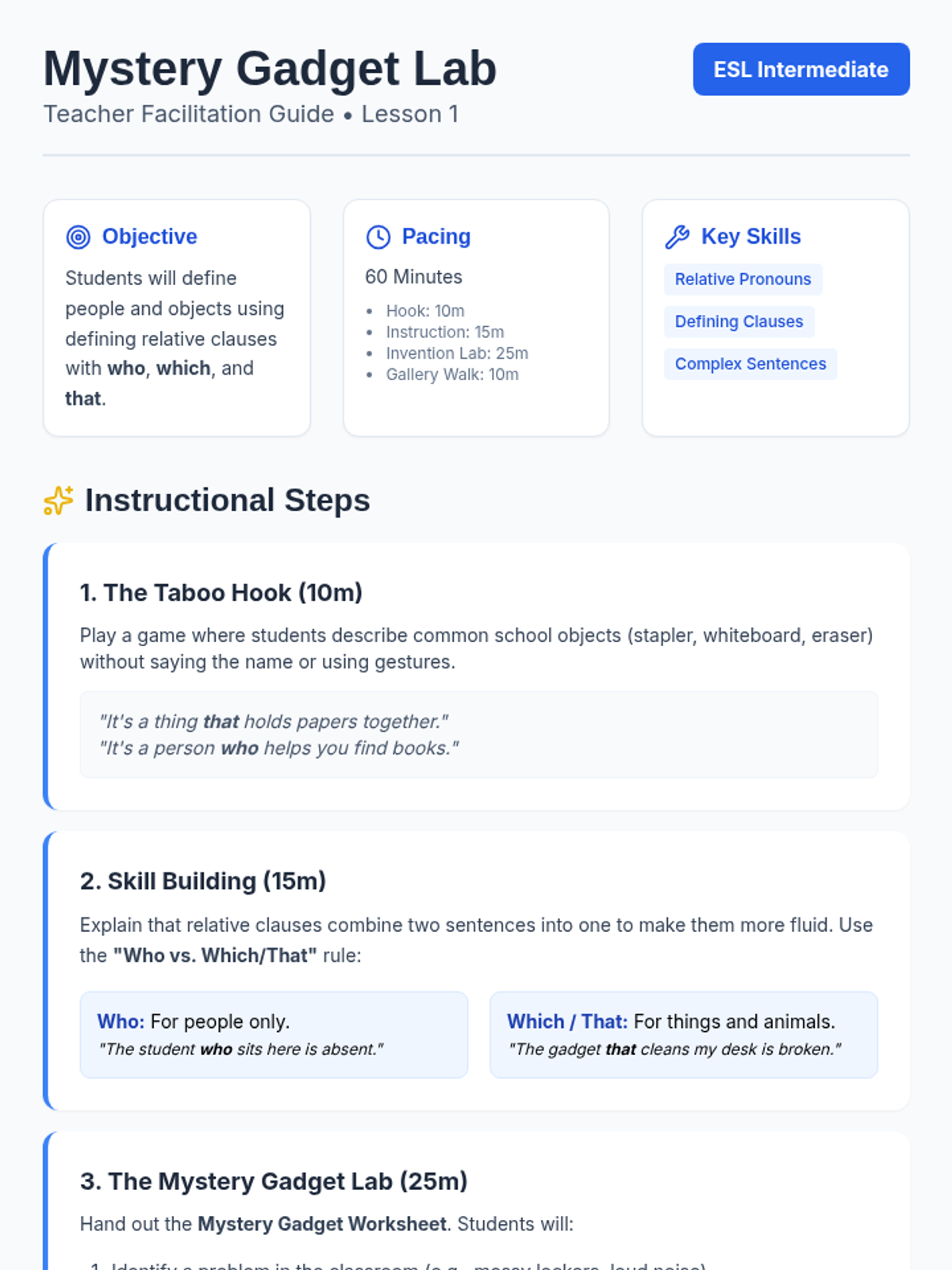
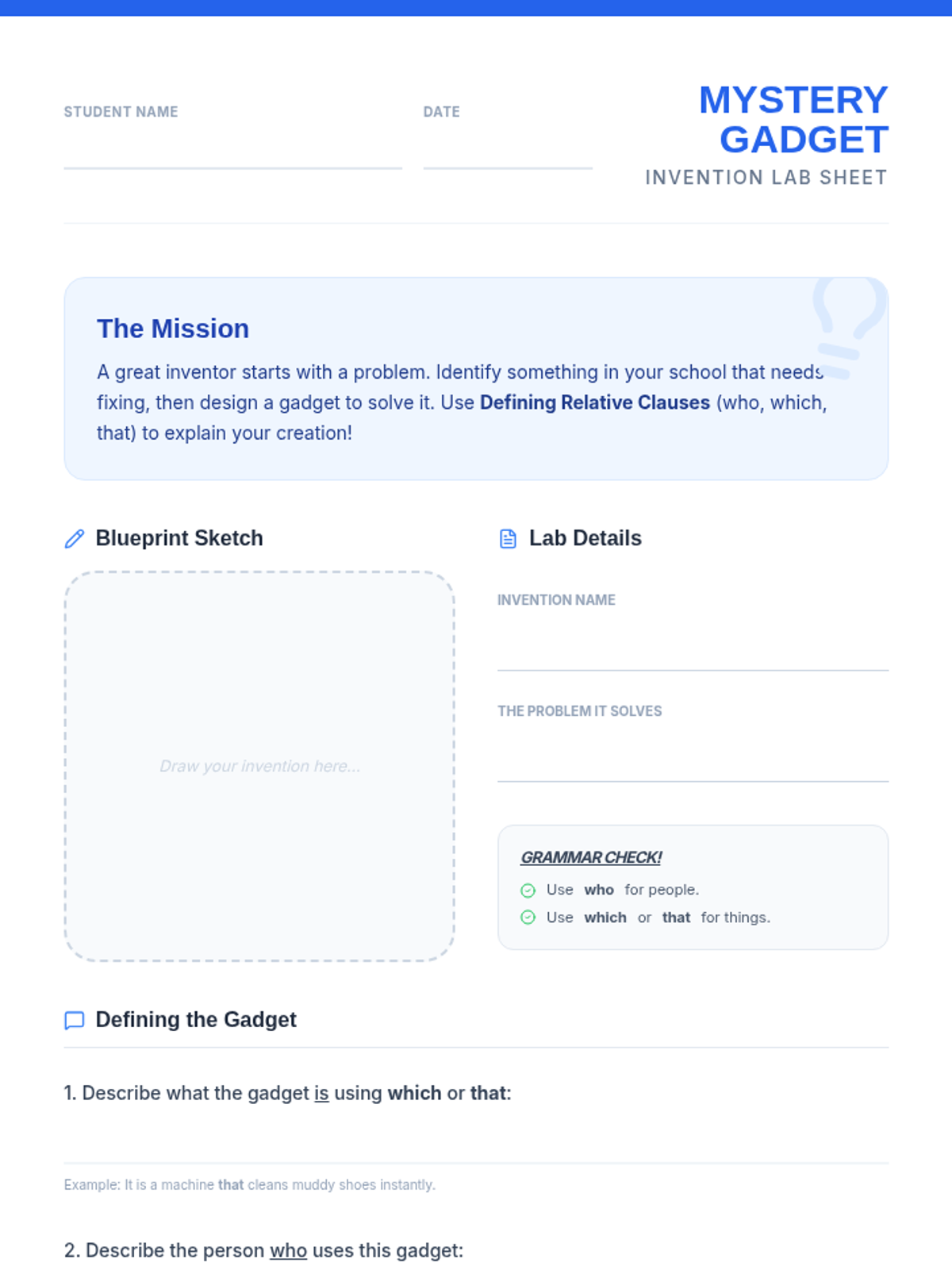
Students practice using defining relative clauses (who, which, that) to describe inventions that solve school problems.
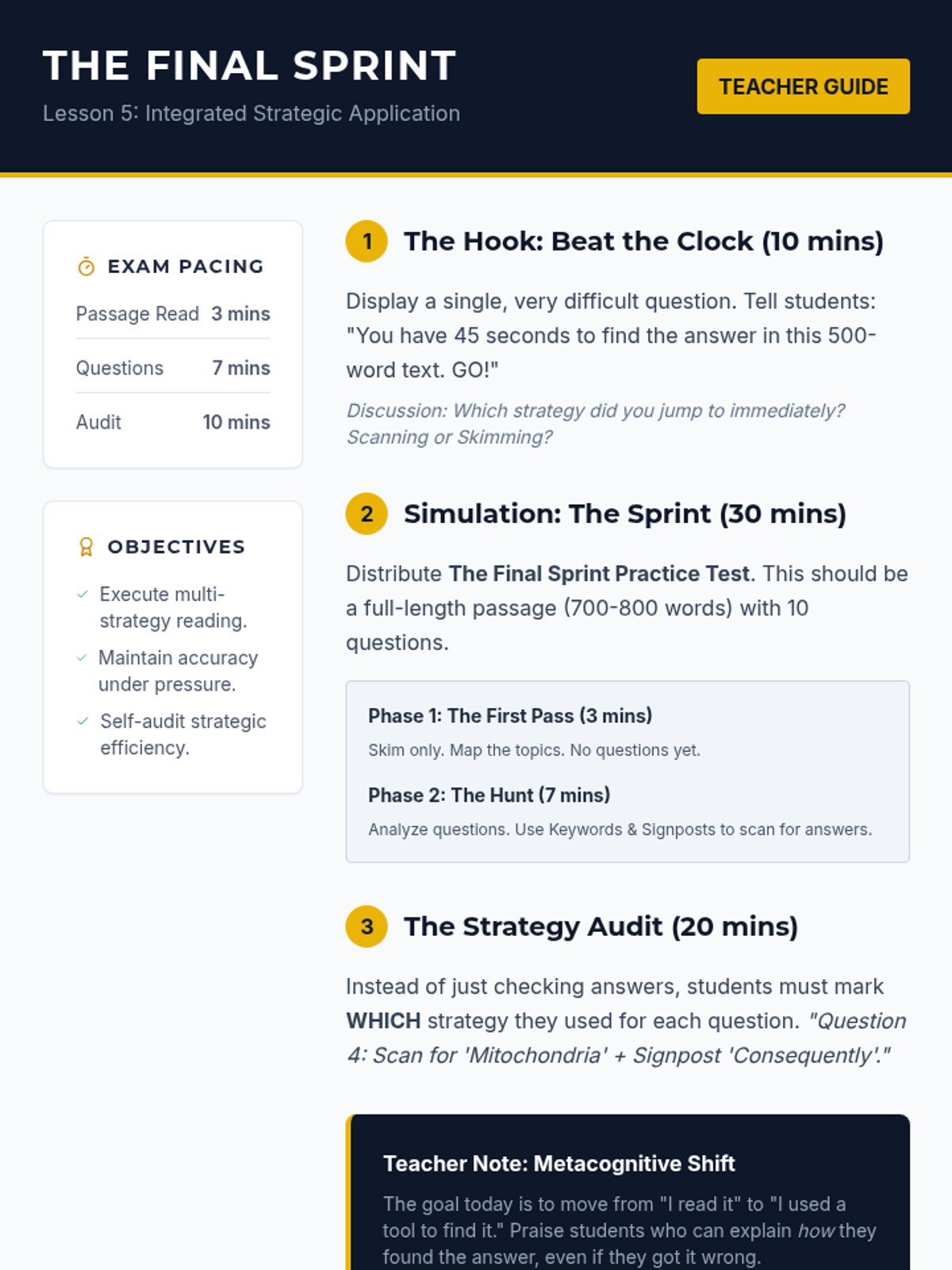
A culminating session where students apply integrated strategies to a full-length reading section under strict time constraints.
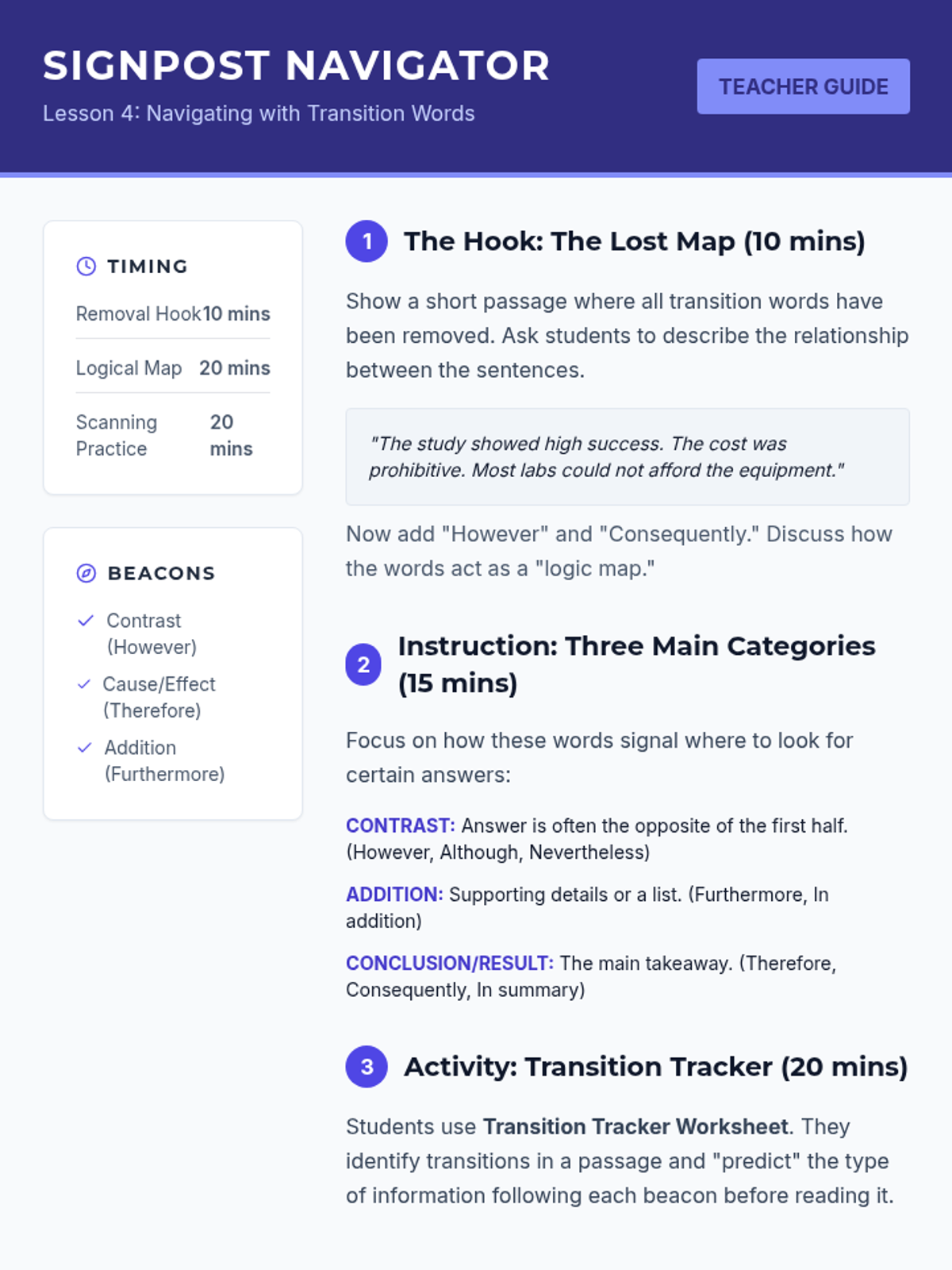
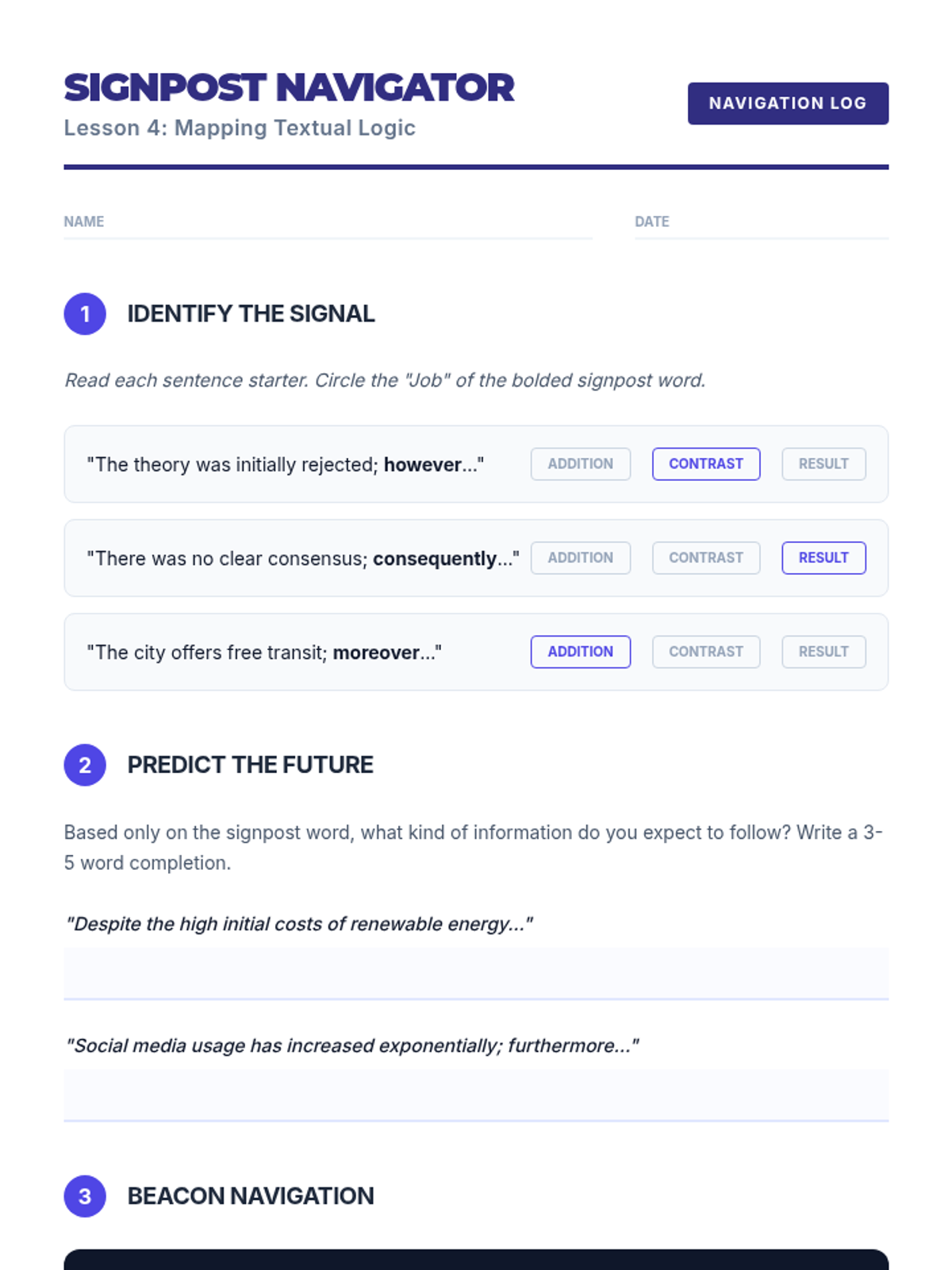
Uses transitional phrases and signpost words as navigational beacons to predict text structure and locate answers.
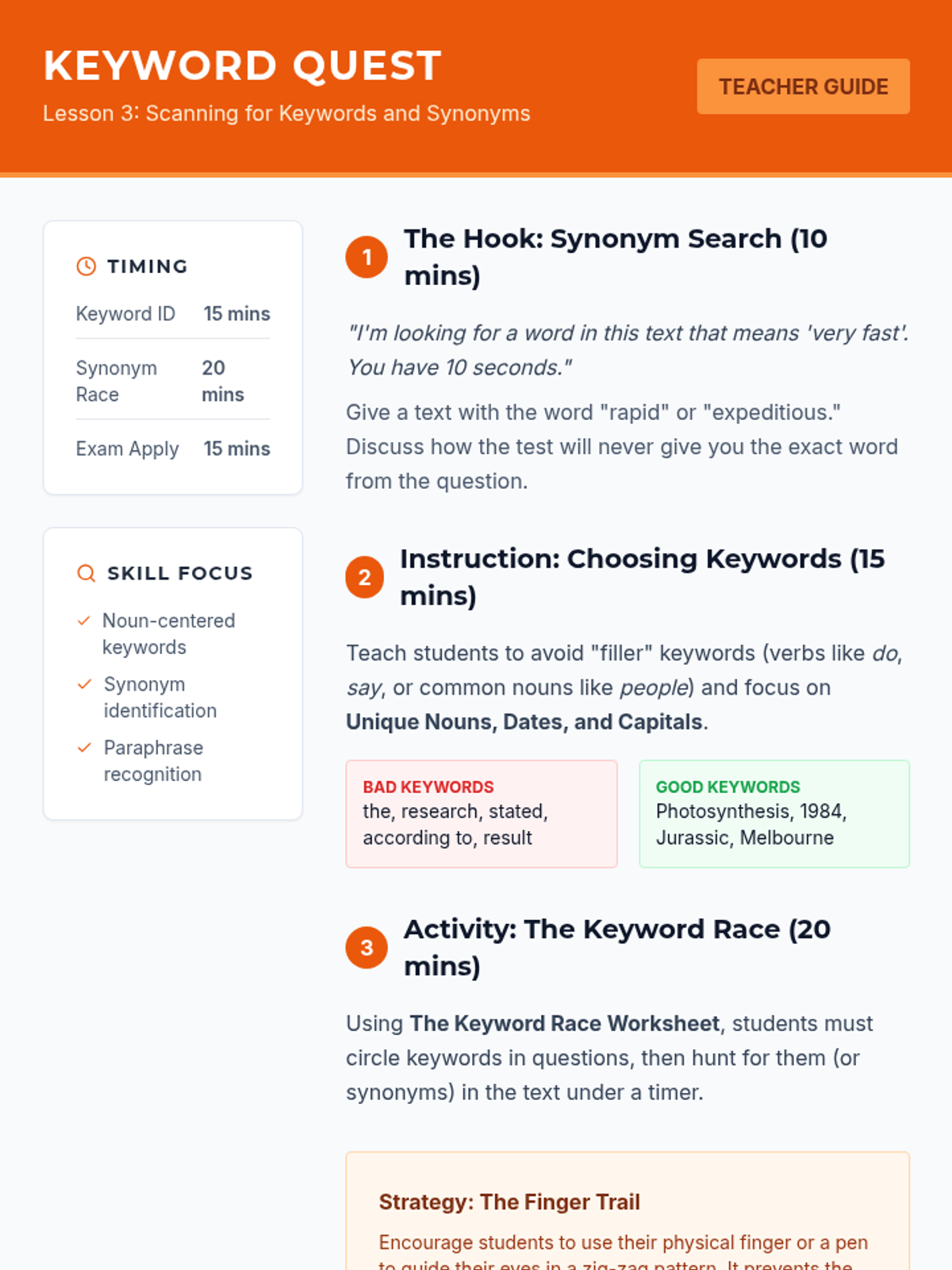
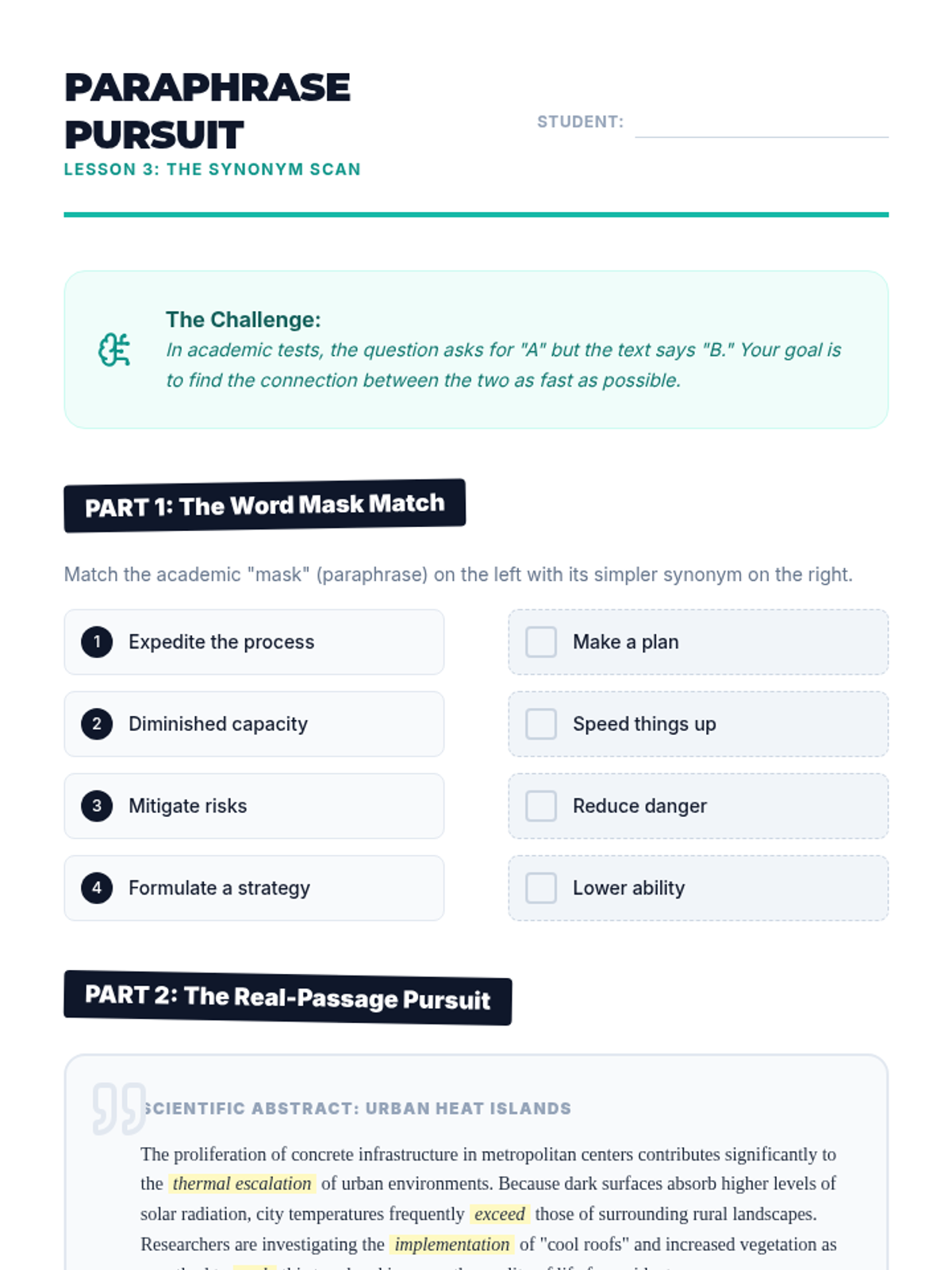
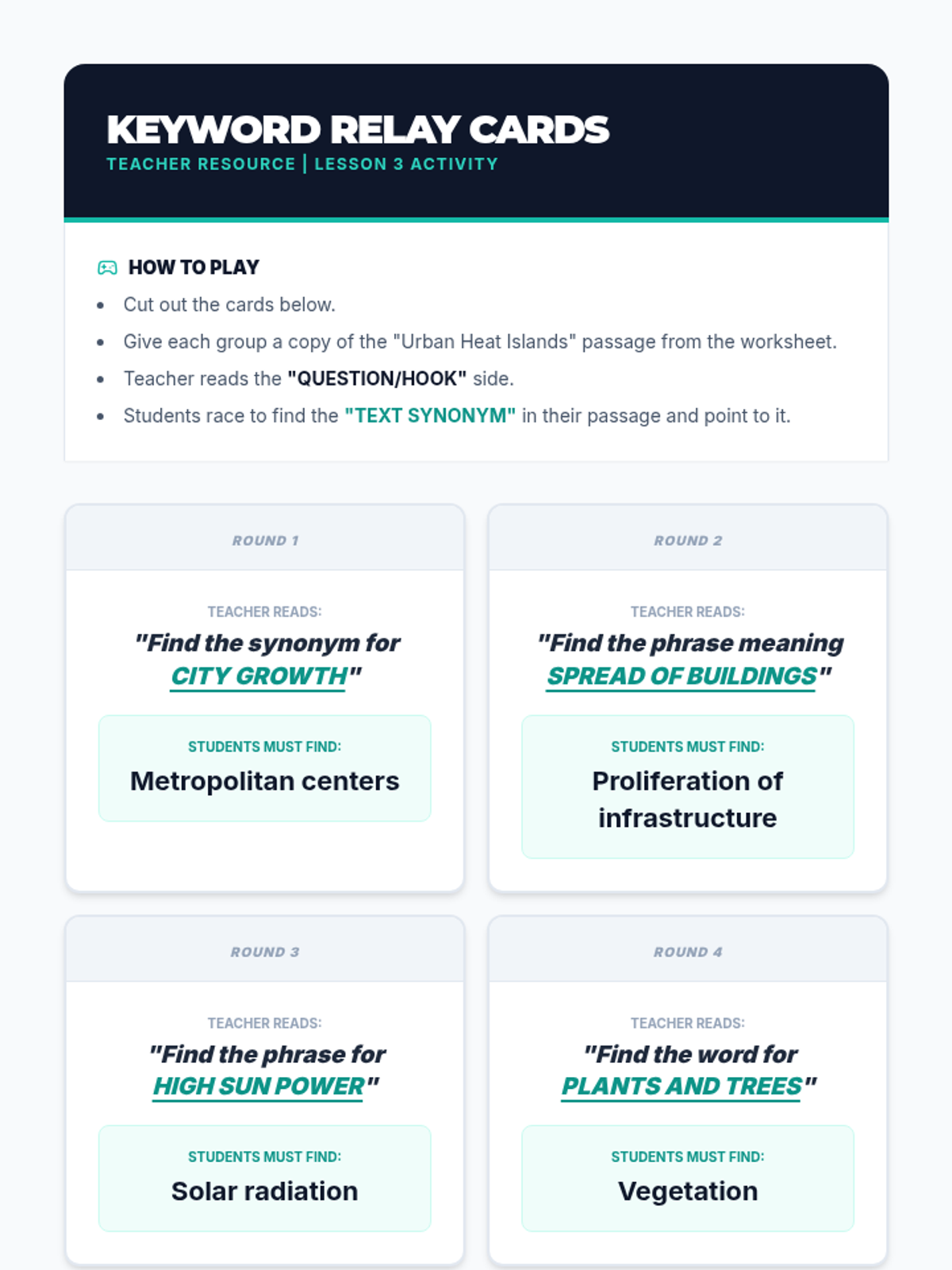
Teaches students to identify keywords in questions and locate them or their synonyms within a text, moving beyond simple word-matching.
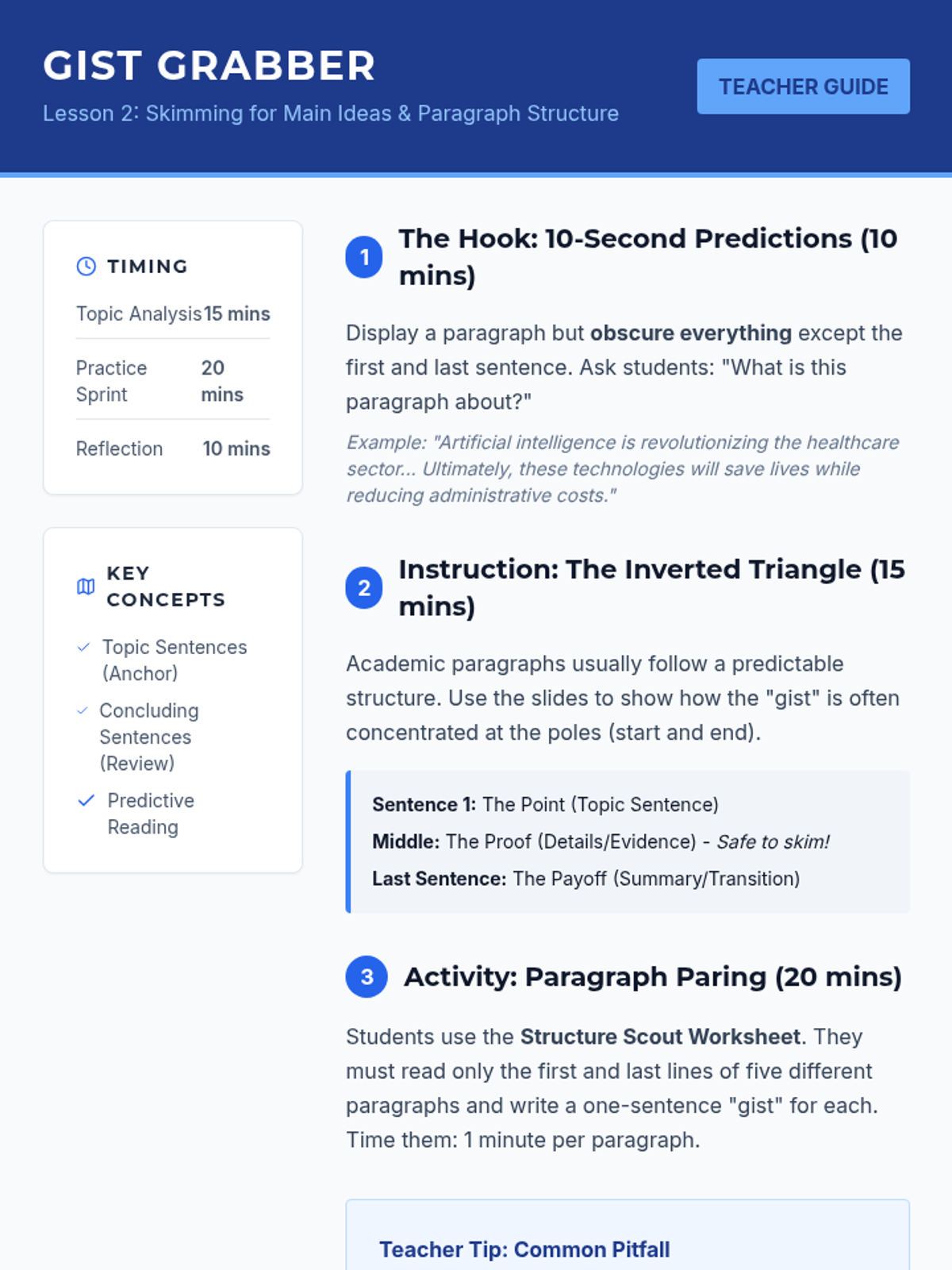
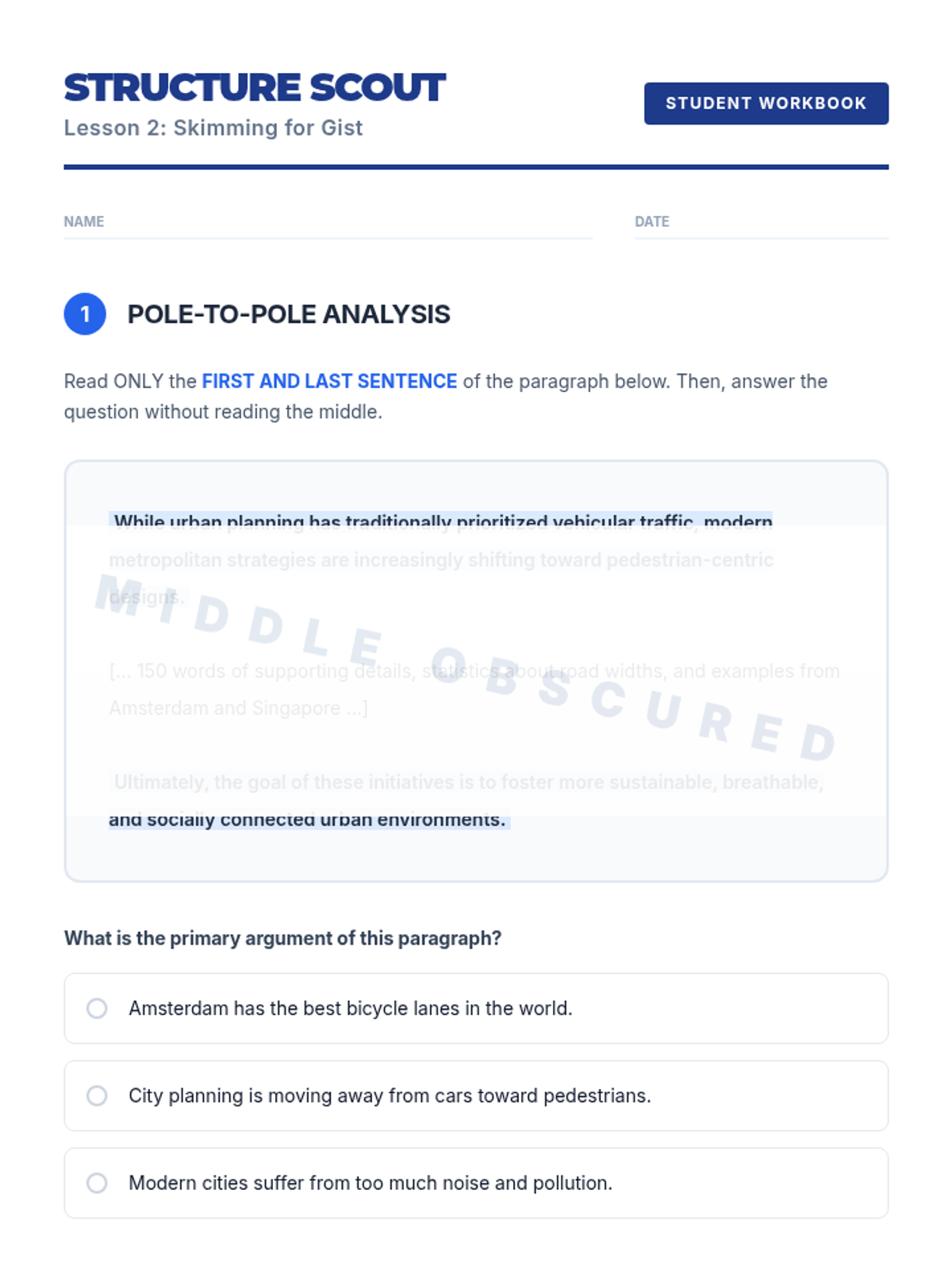
Focuses on identifying topic sentences, paragraph structure, and overall gist to quickly grasp primary arguments without reading every word.
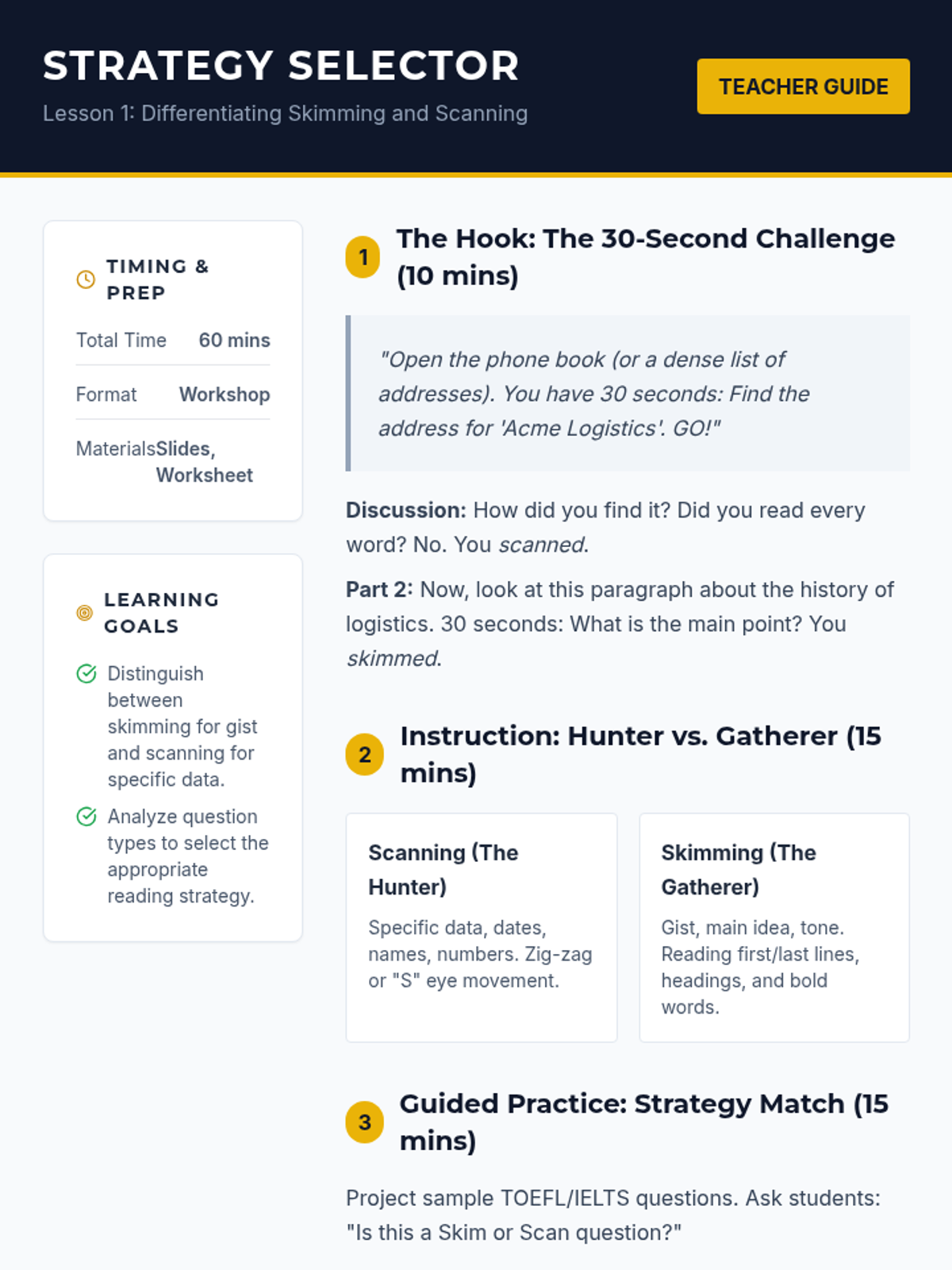
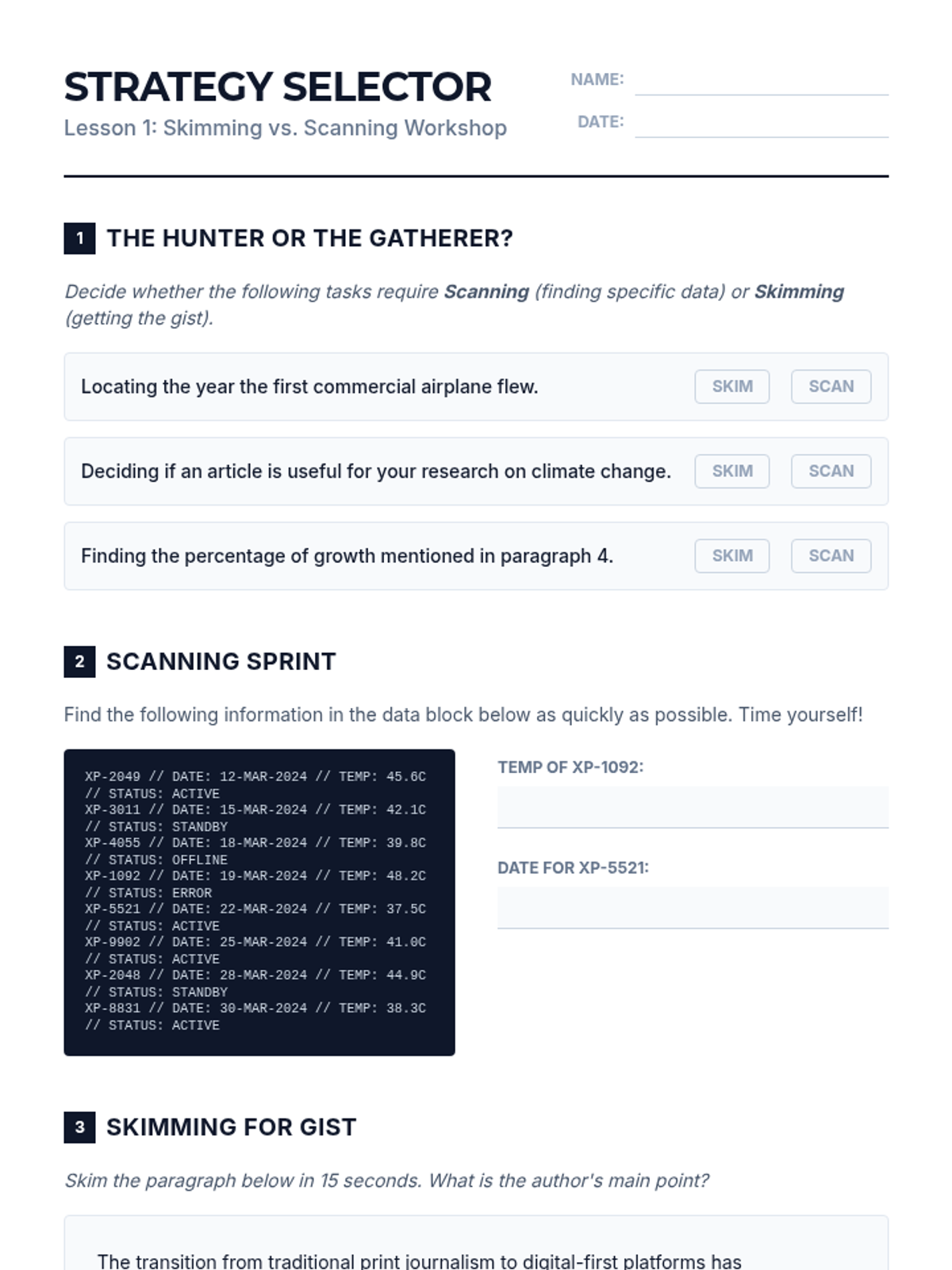
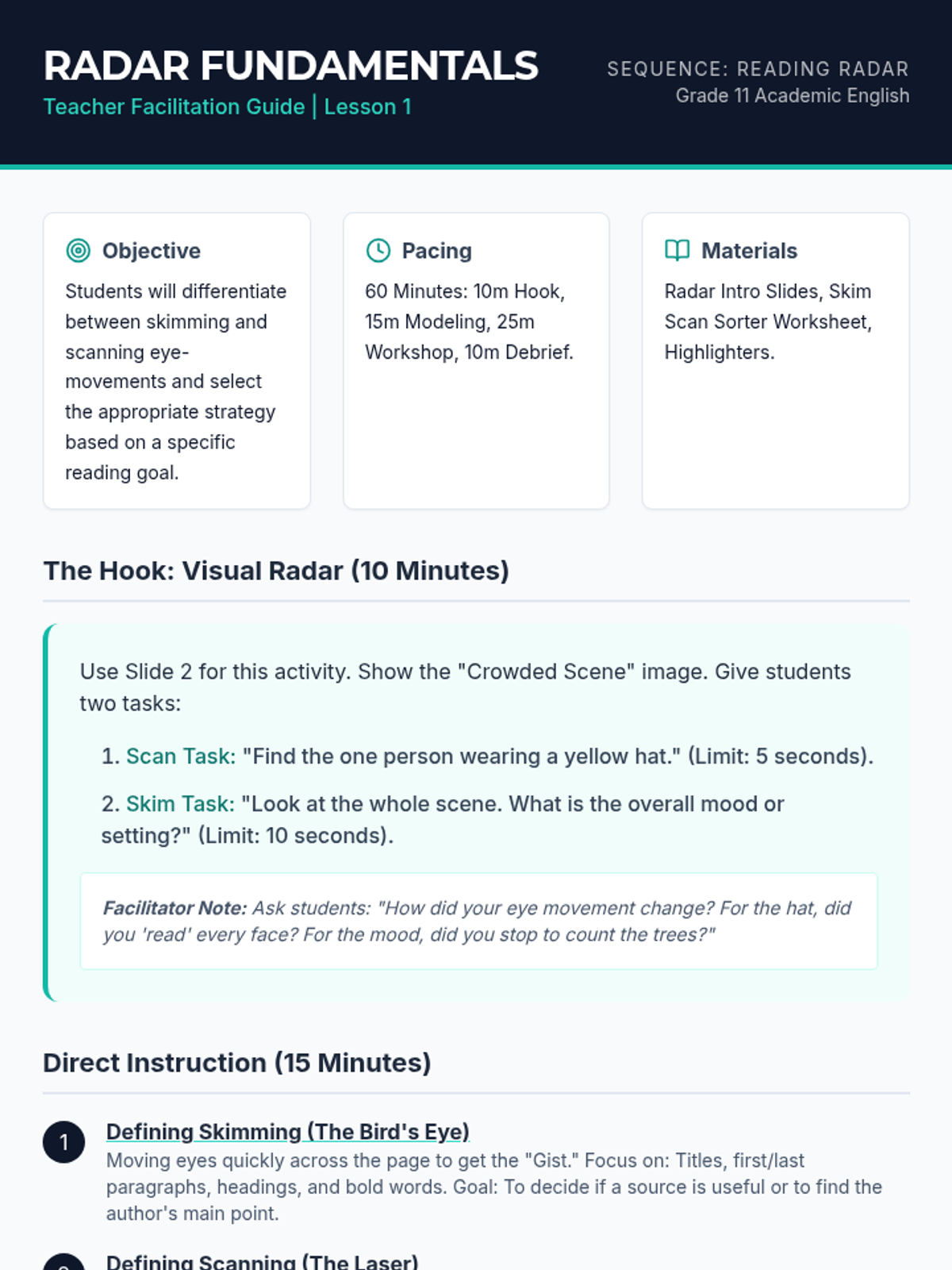
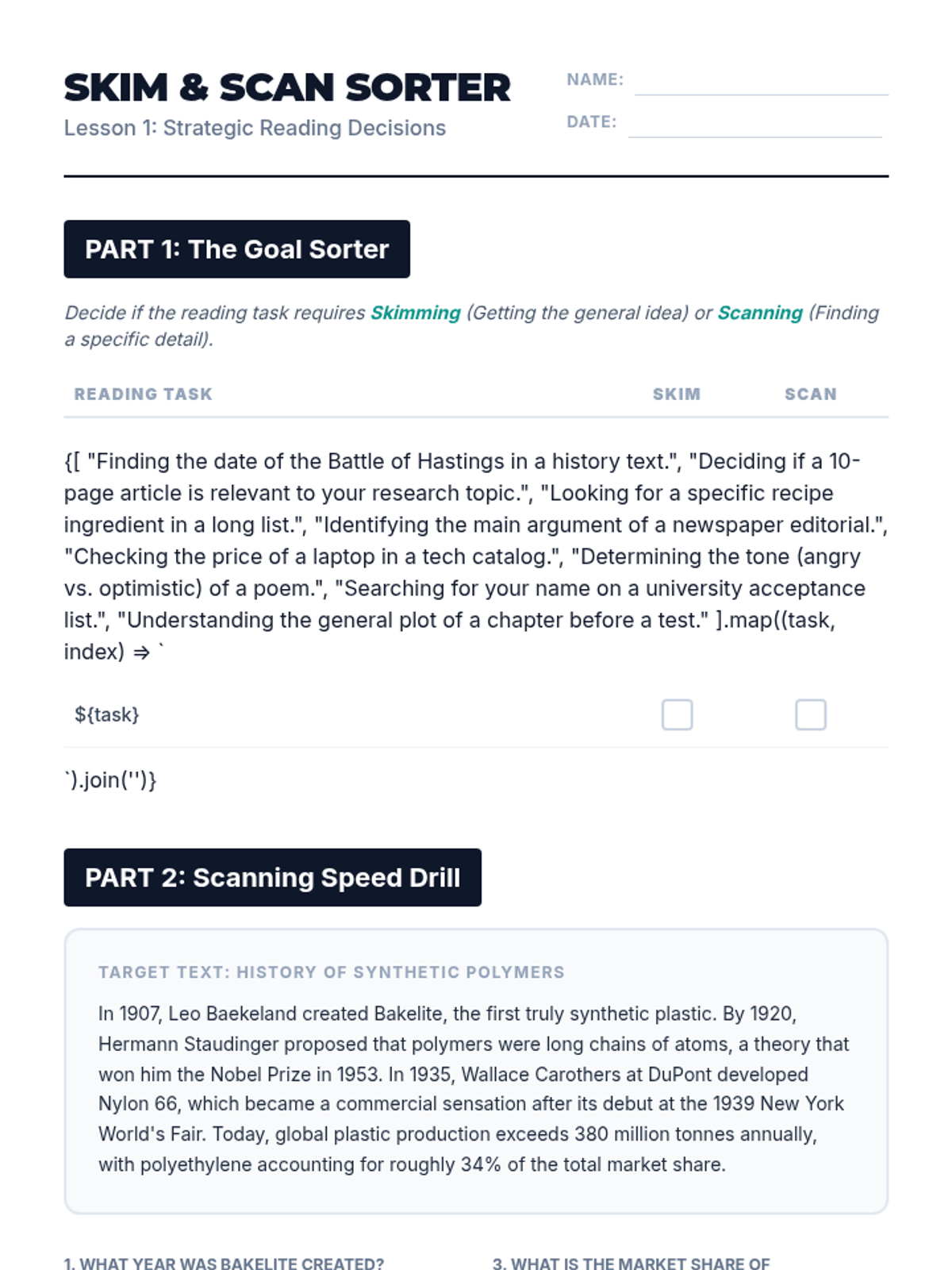
Students explore the conceptual difference between skimming (reading for main ideas) and scanning (searching for specific data) and practice strategy selection.
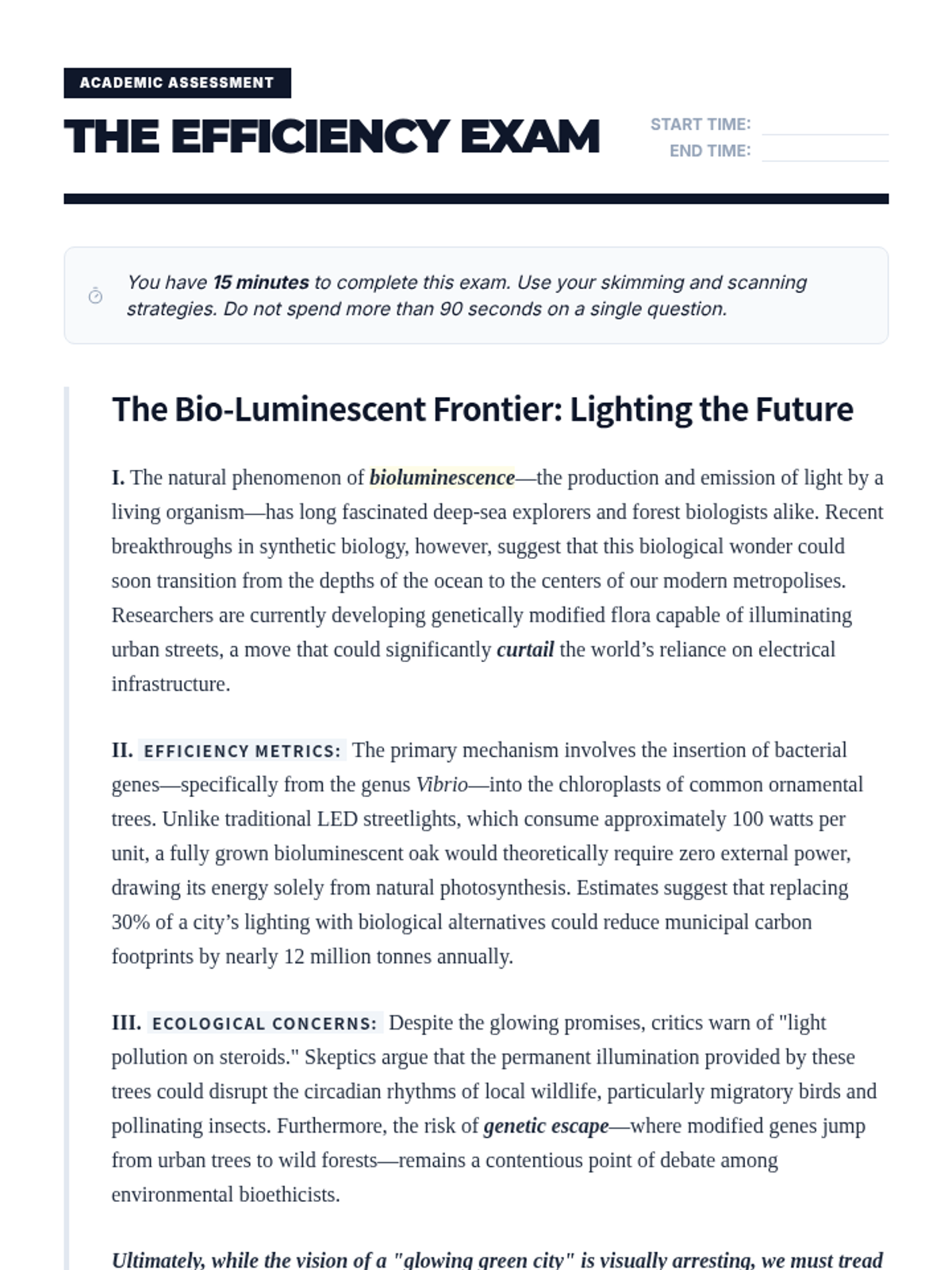
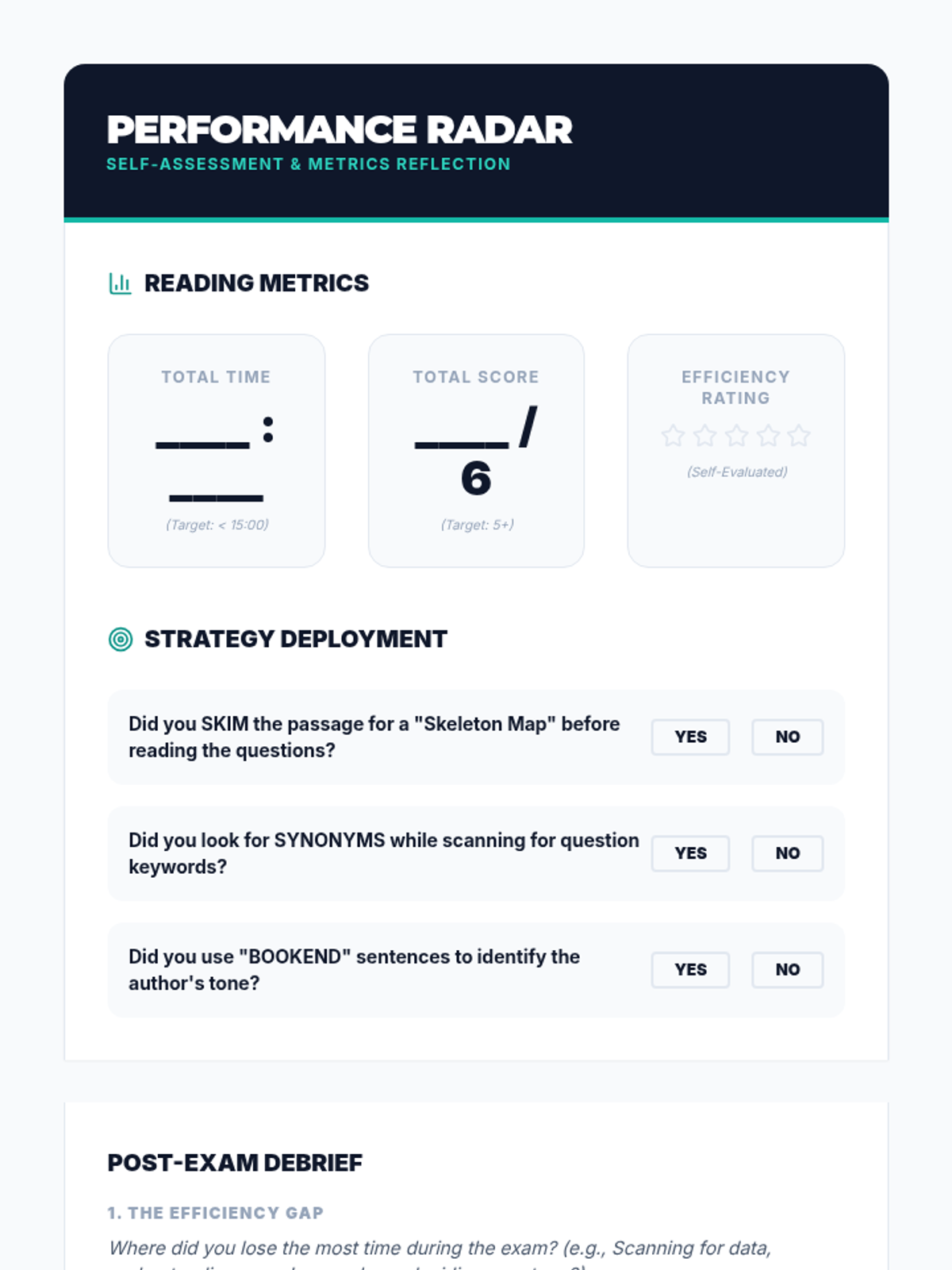
A high-stakes simulation involving timed reading drills and self-assessment of efficiency metrics.
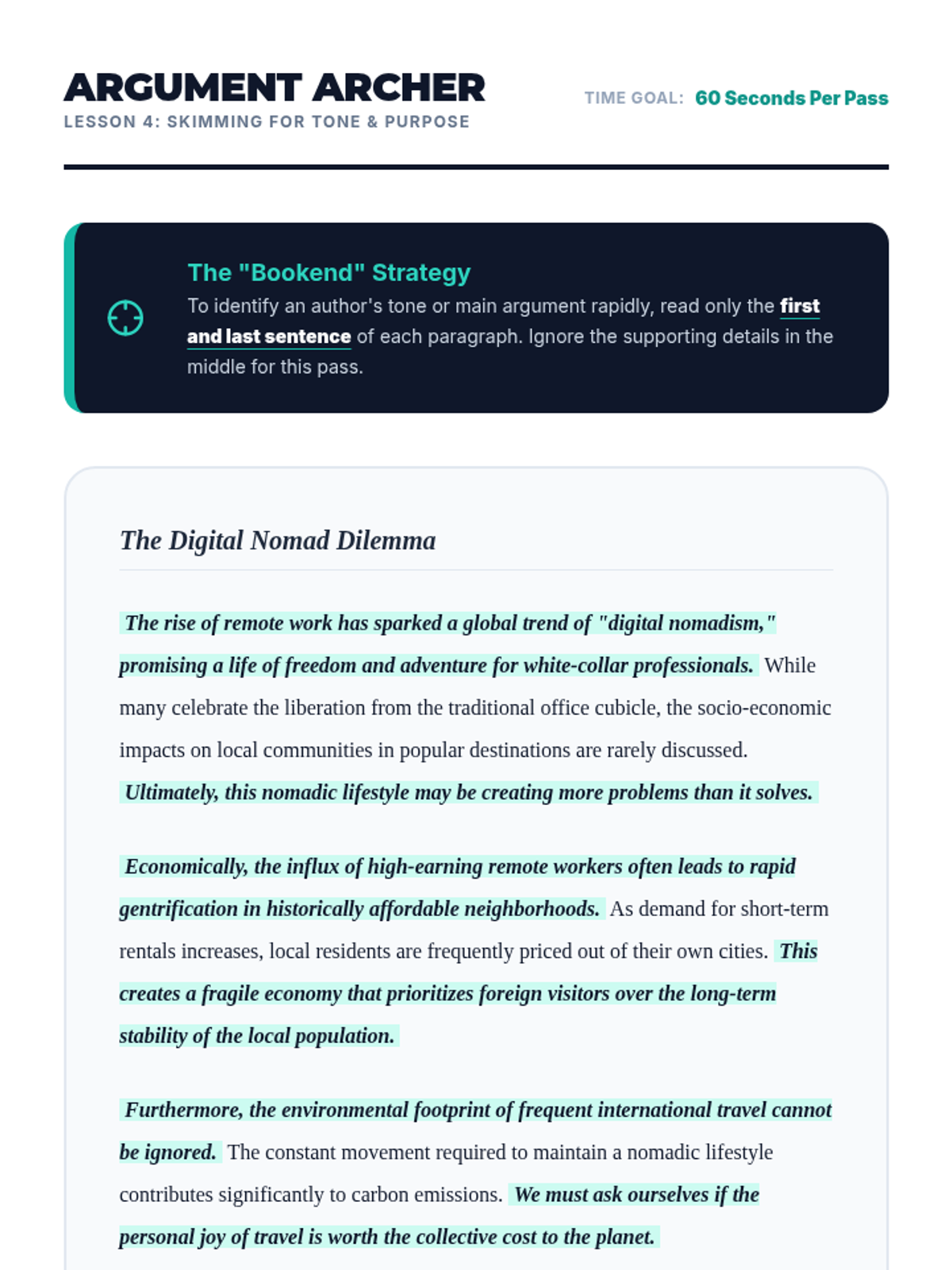
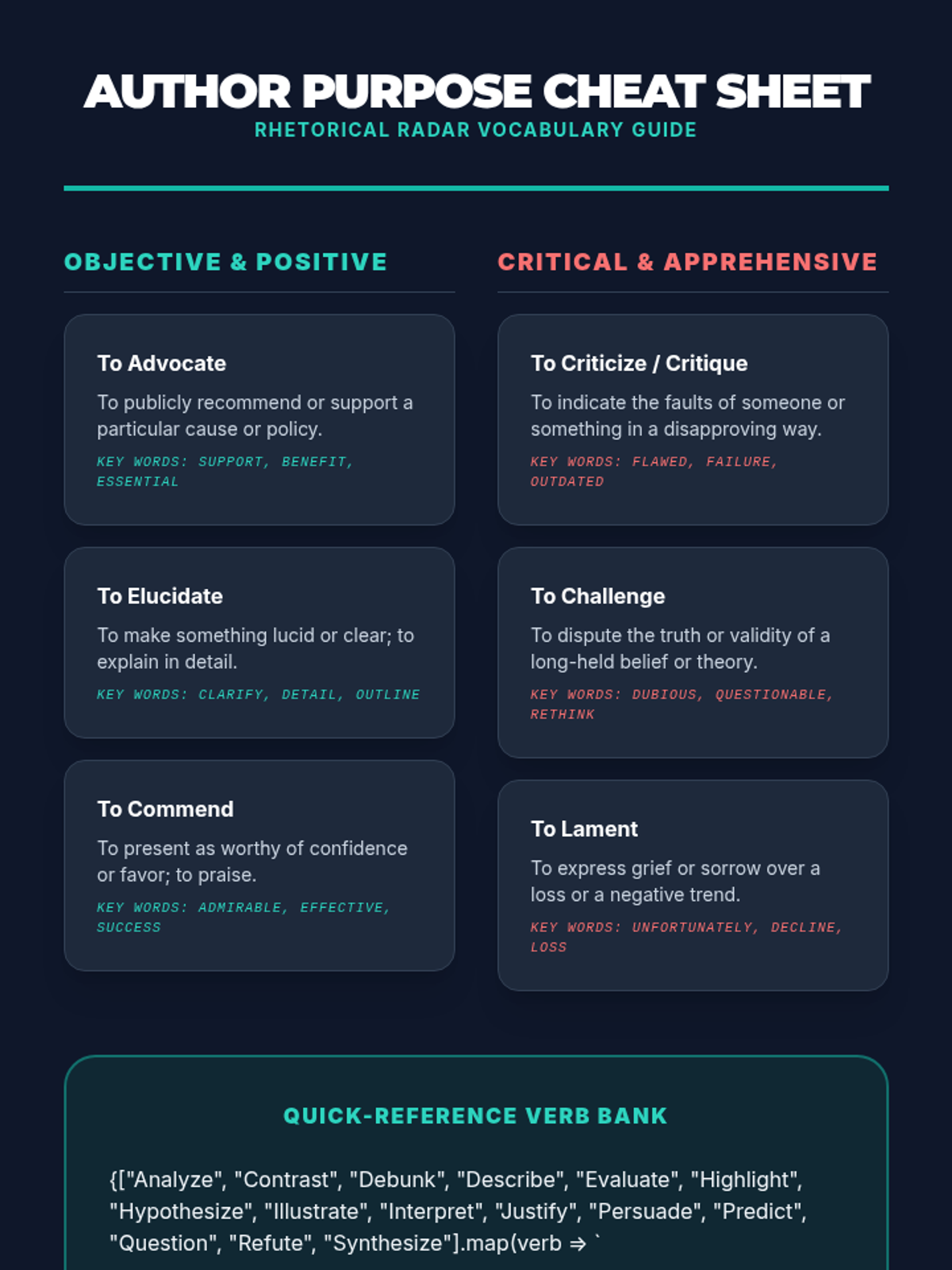
Teaches students to rapidly identify author tone, purpose, and rhetorical flow by focusing on strategic sentence positions.
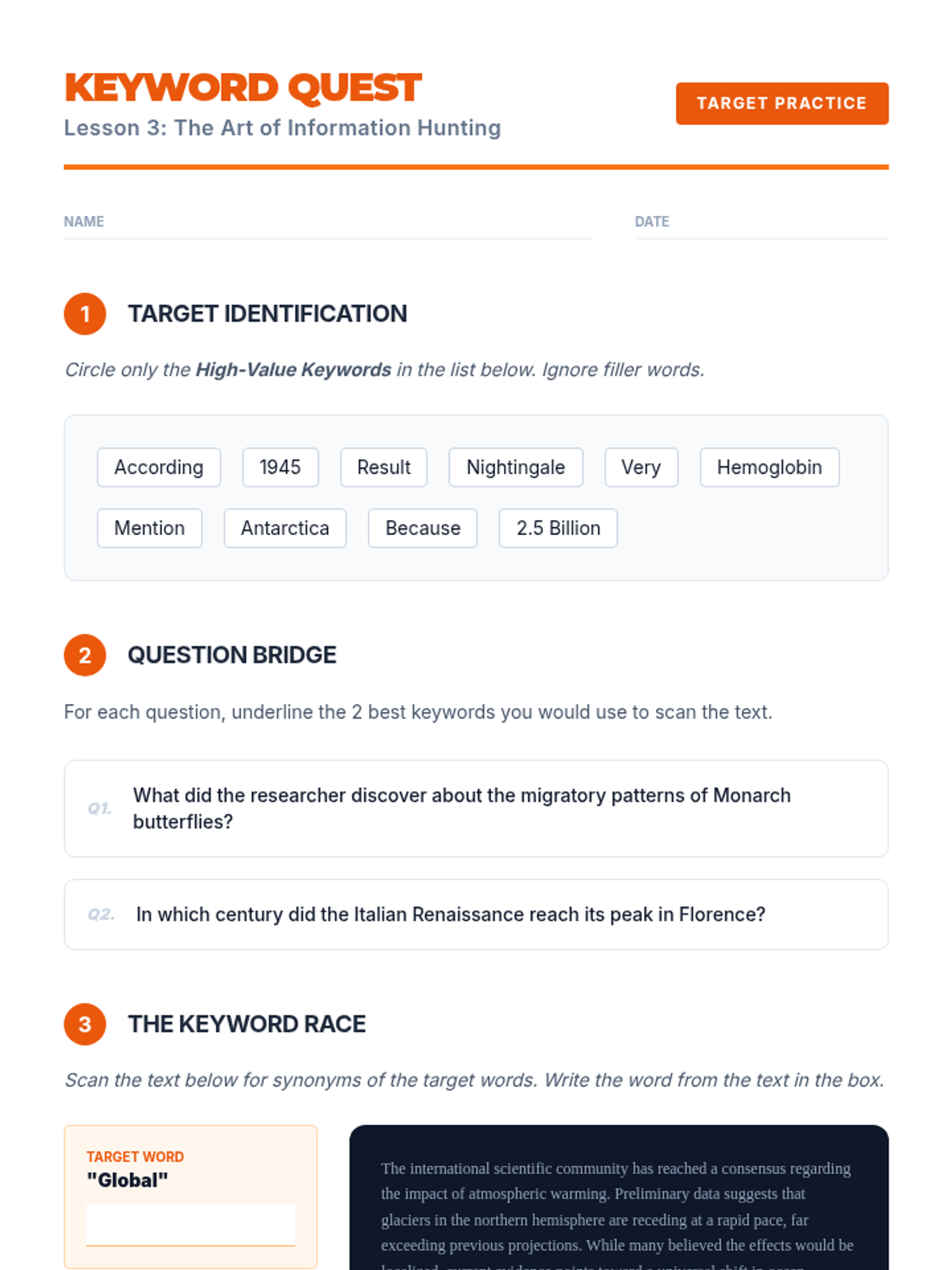
Develops the ability to scan for synonyms and paraphrases rather than exact word matches, a key skill for standardized tests.
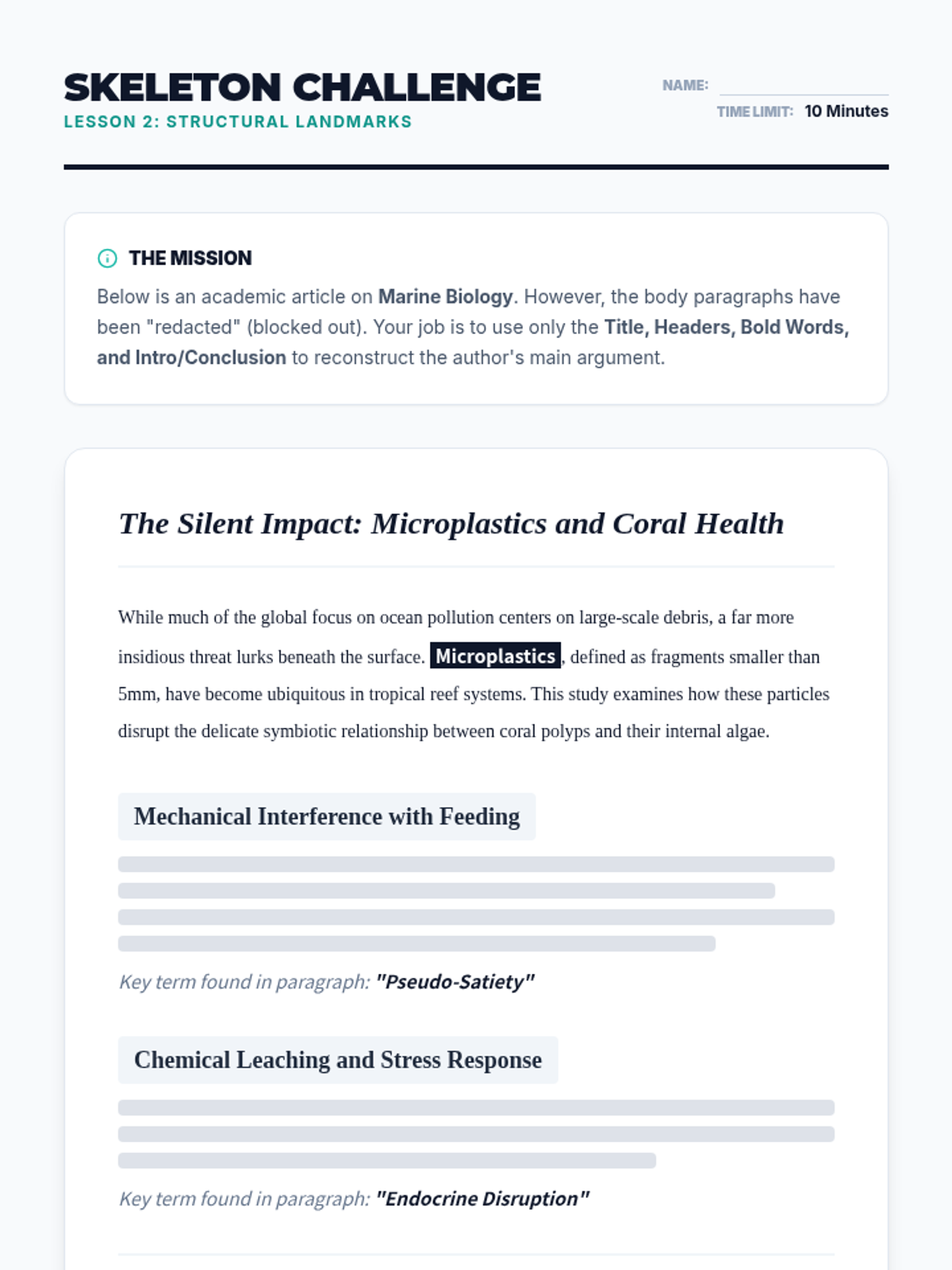
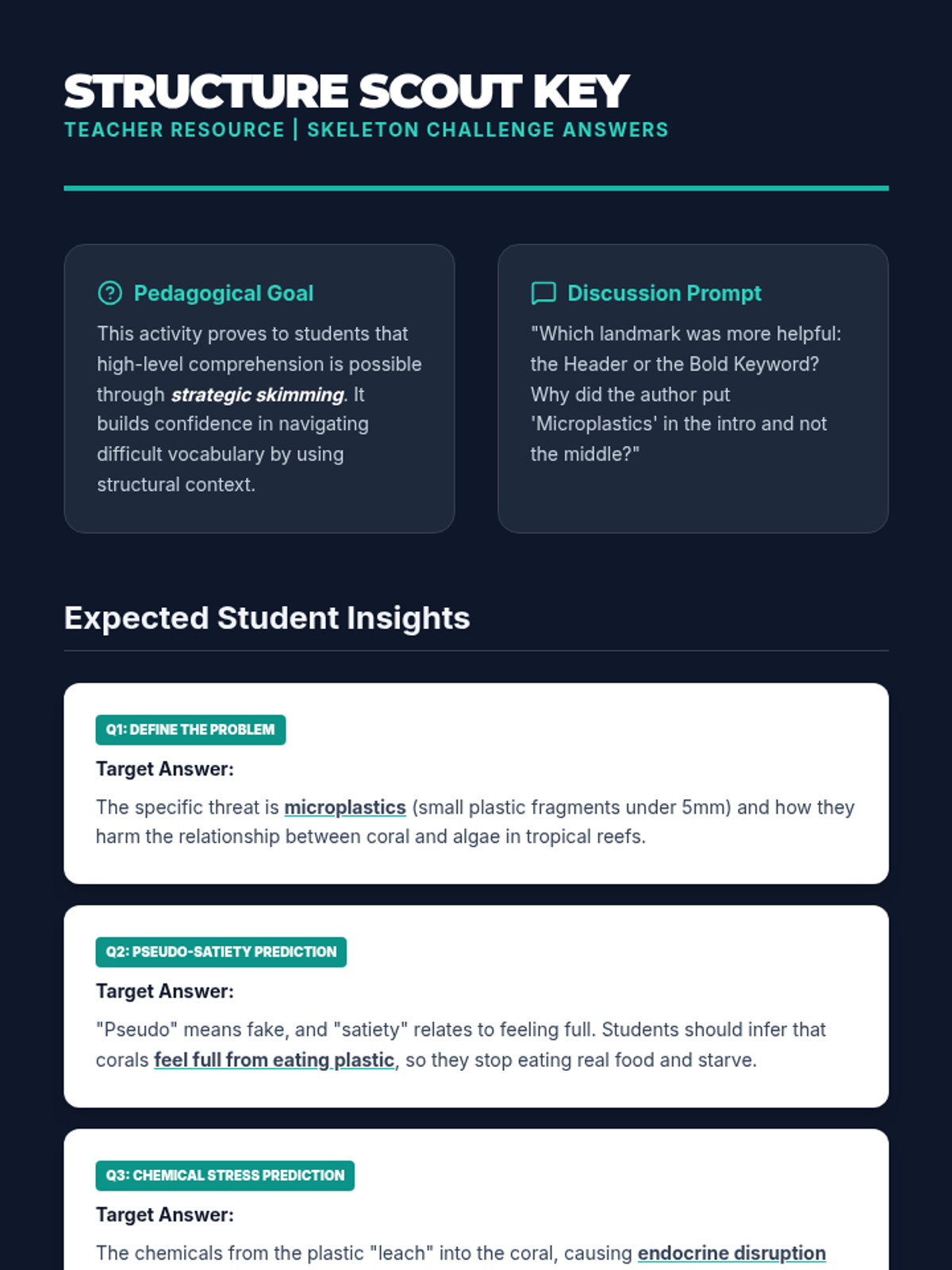
Focuses on utilizing headers, bold text, and introductory paragraphs to build a mental map of academic texts.
Students distinguish between skimming (gist) and scanning (details) through eye-movement practice and goal-setting workshops.
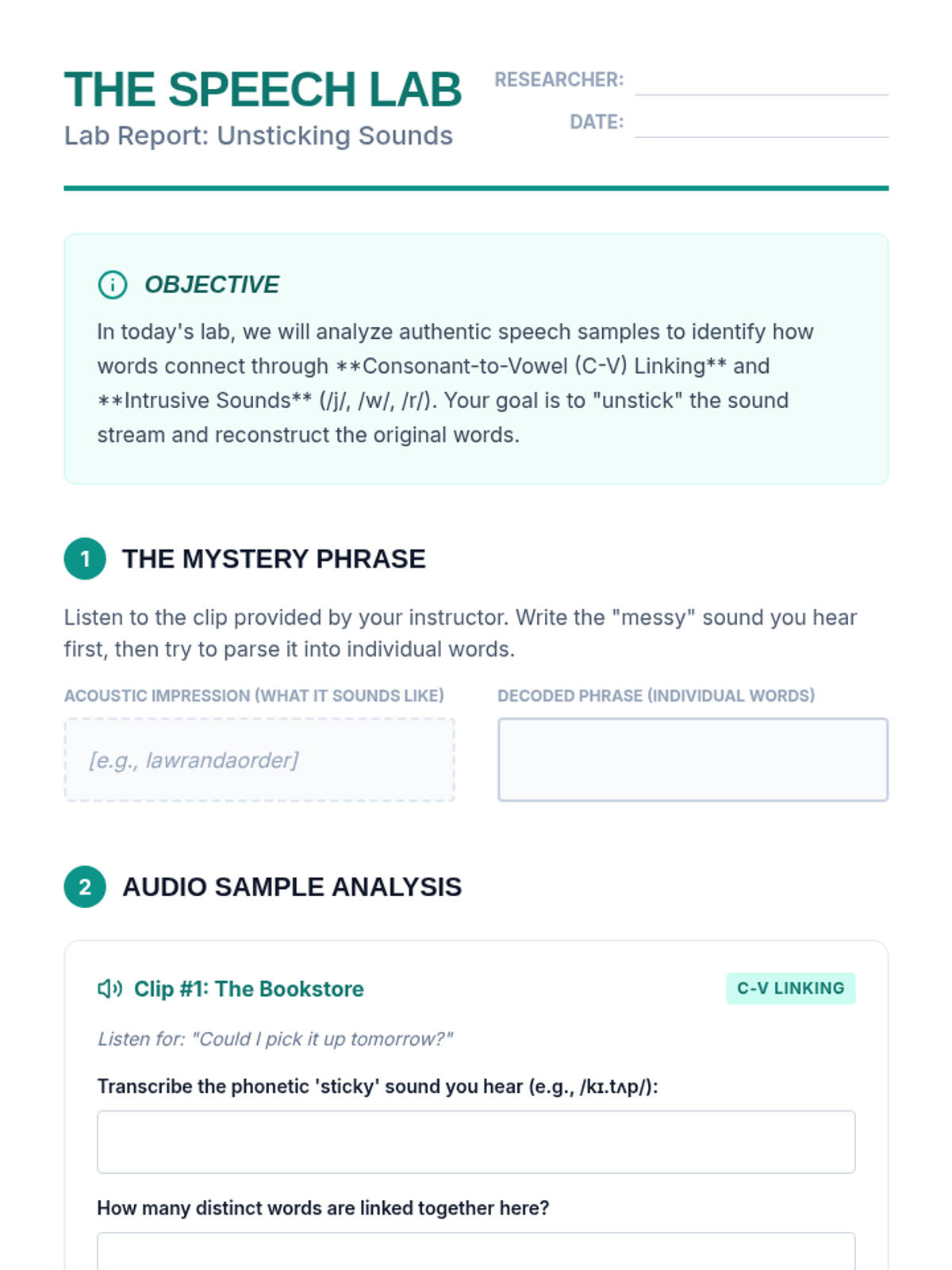
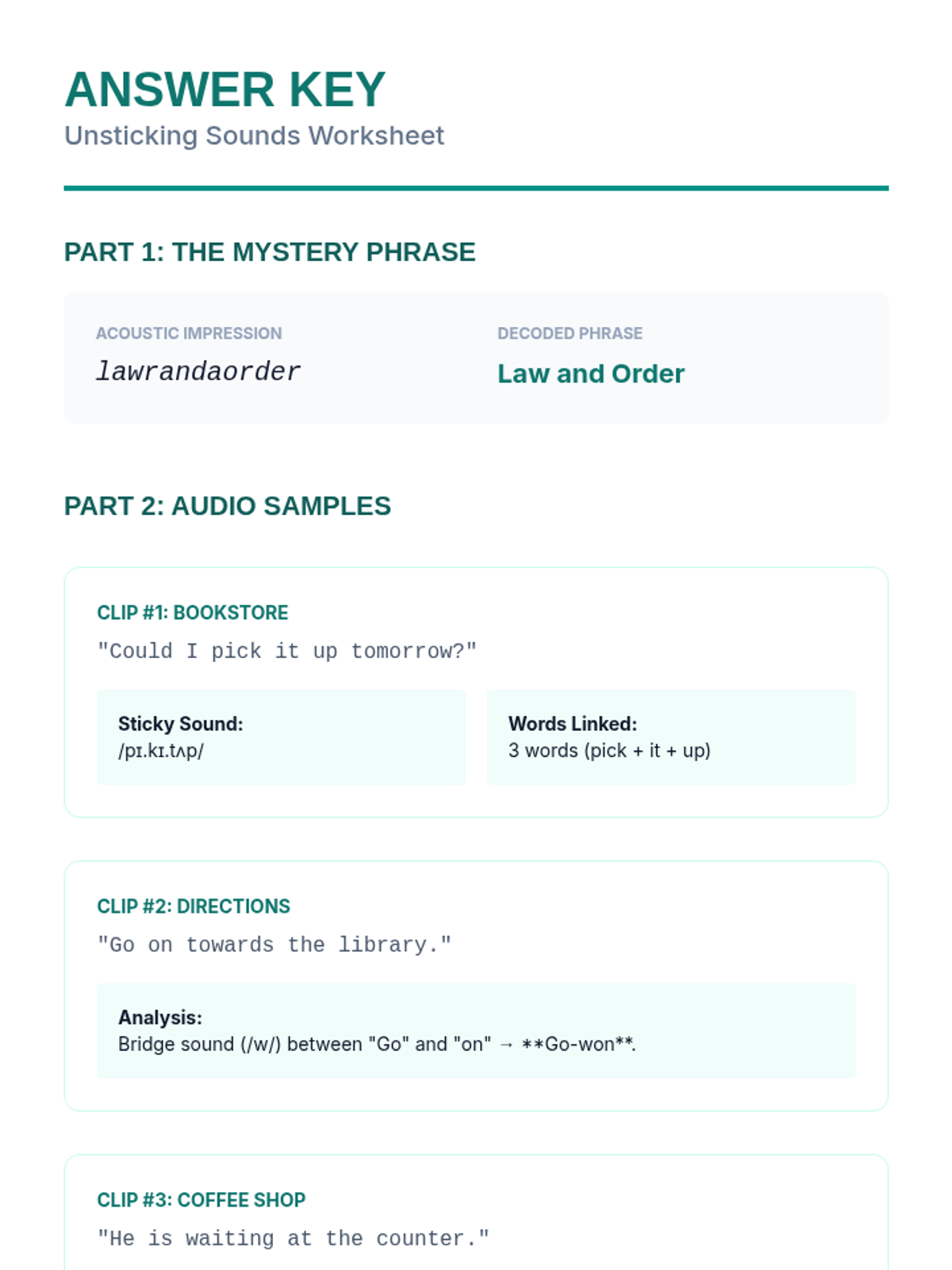
Students investigate how words flow together in natural speech, specifically focusing on consonant-vowel linking and intrusive sounds (/r/, /w/, /j/). They analyze audio samples to 'unstick' connected words.
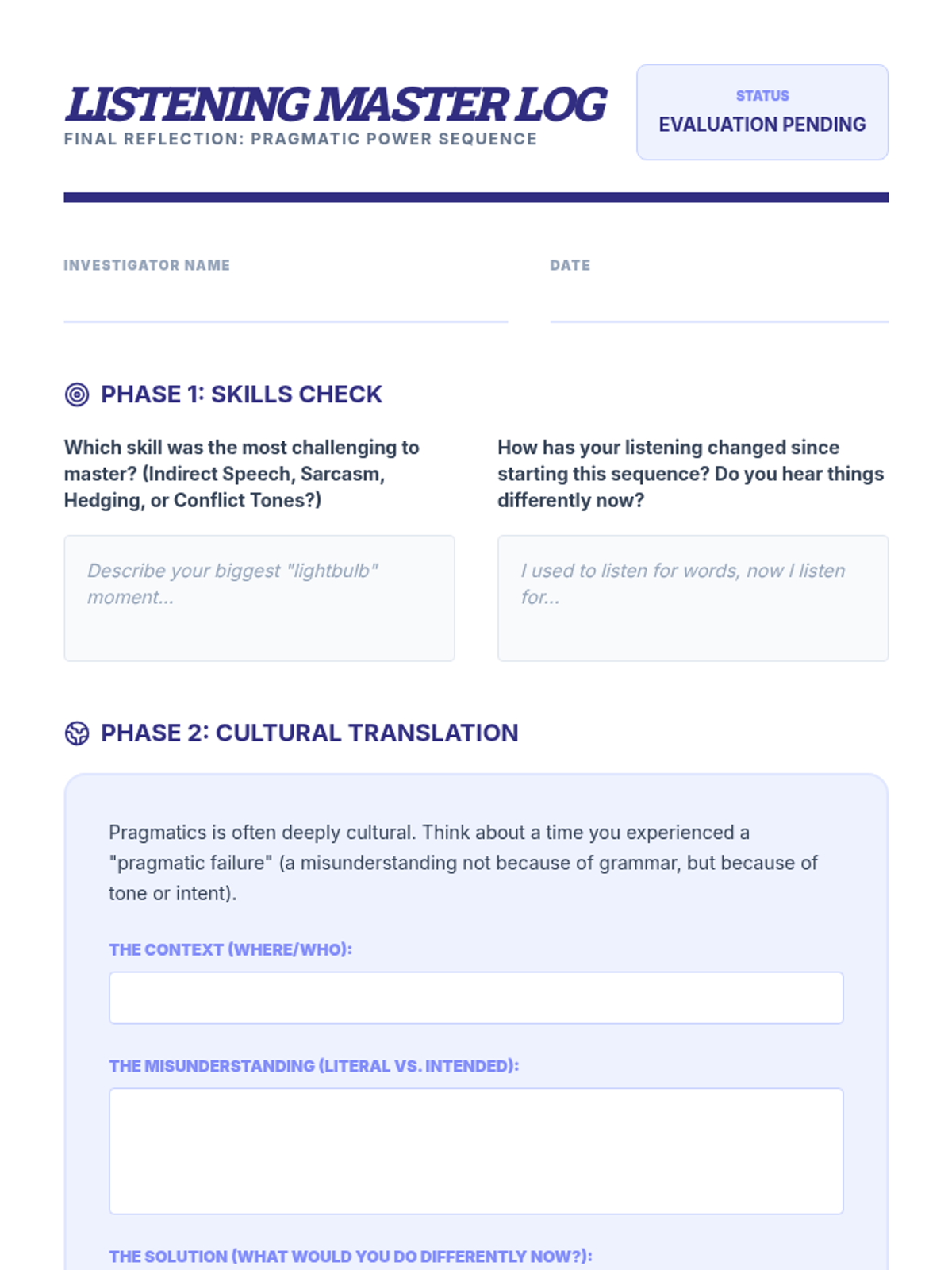
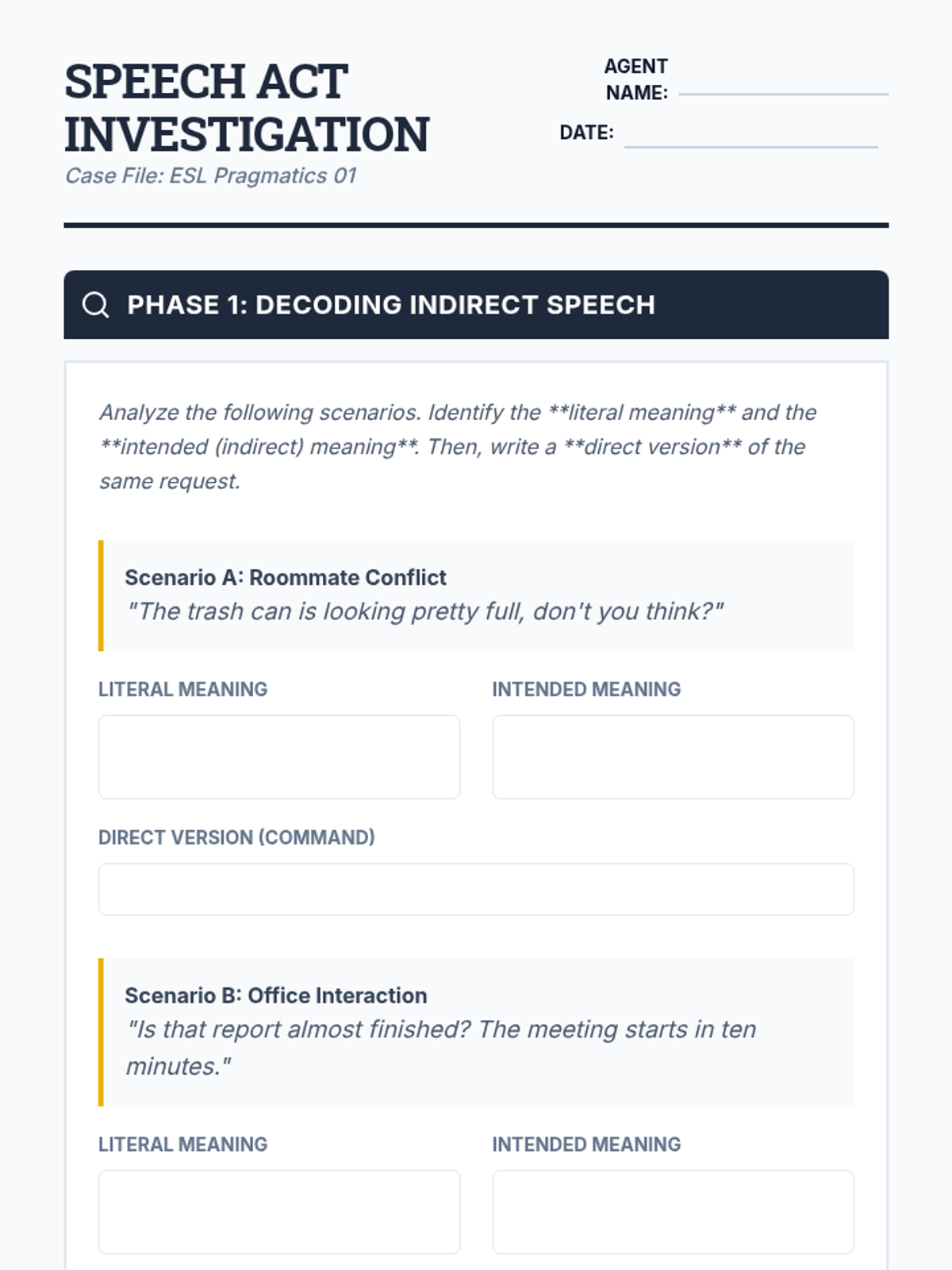
Students explore the difference between what is said and what is meant by analyzing indirect speech acts and politeness strategies in everyday scenarios.
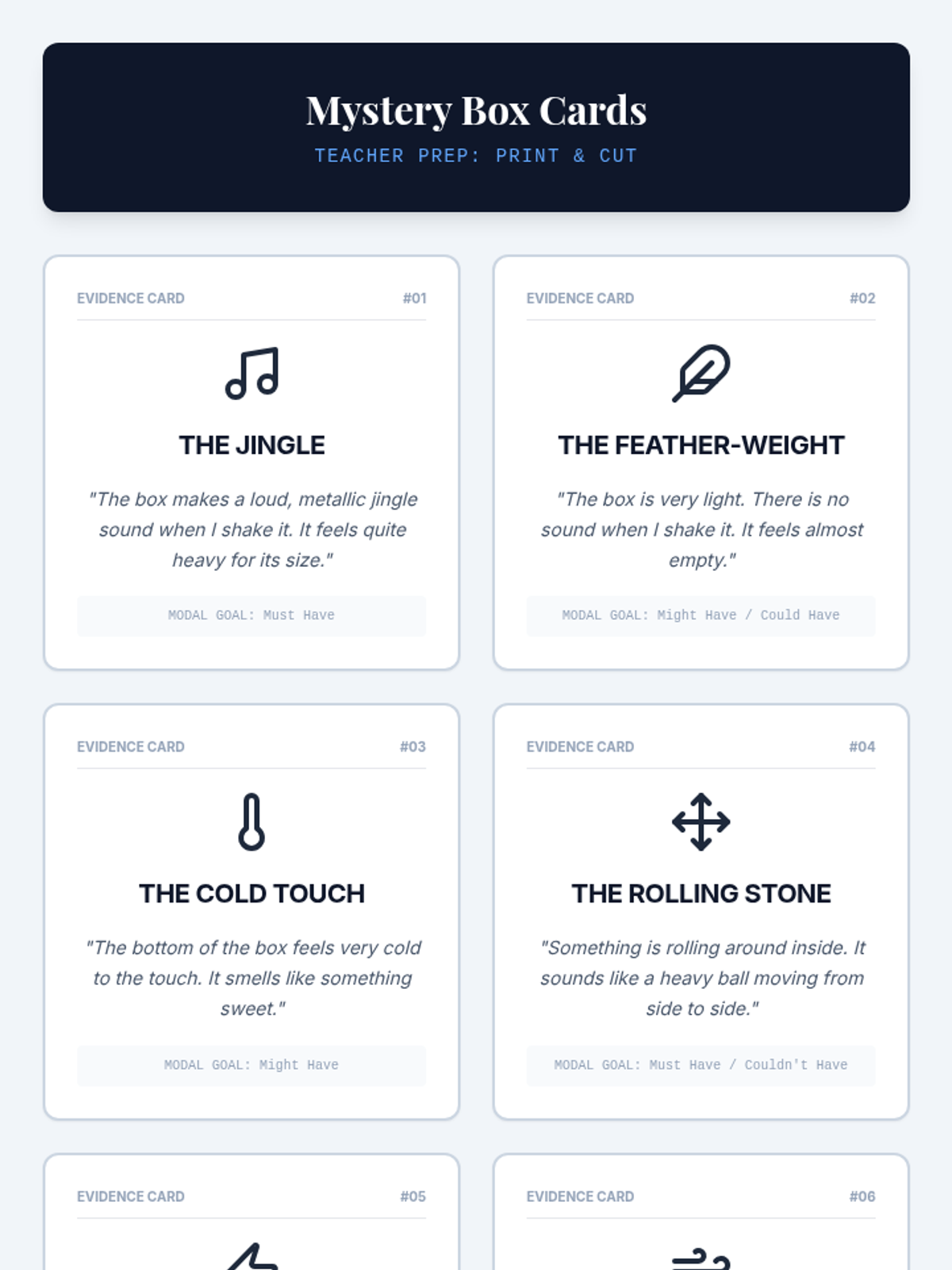
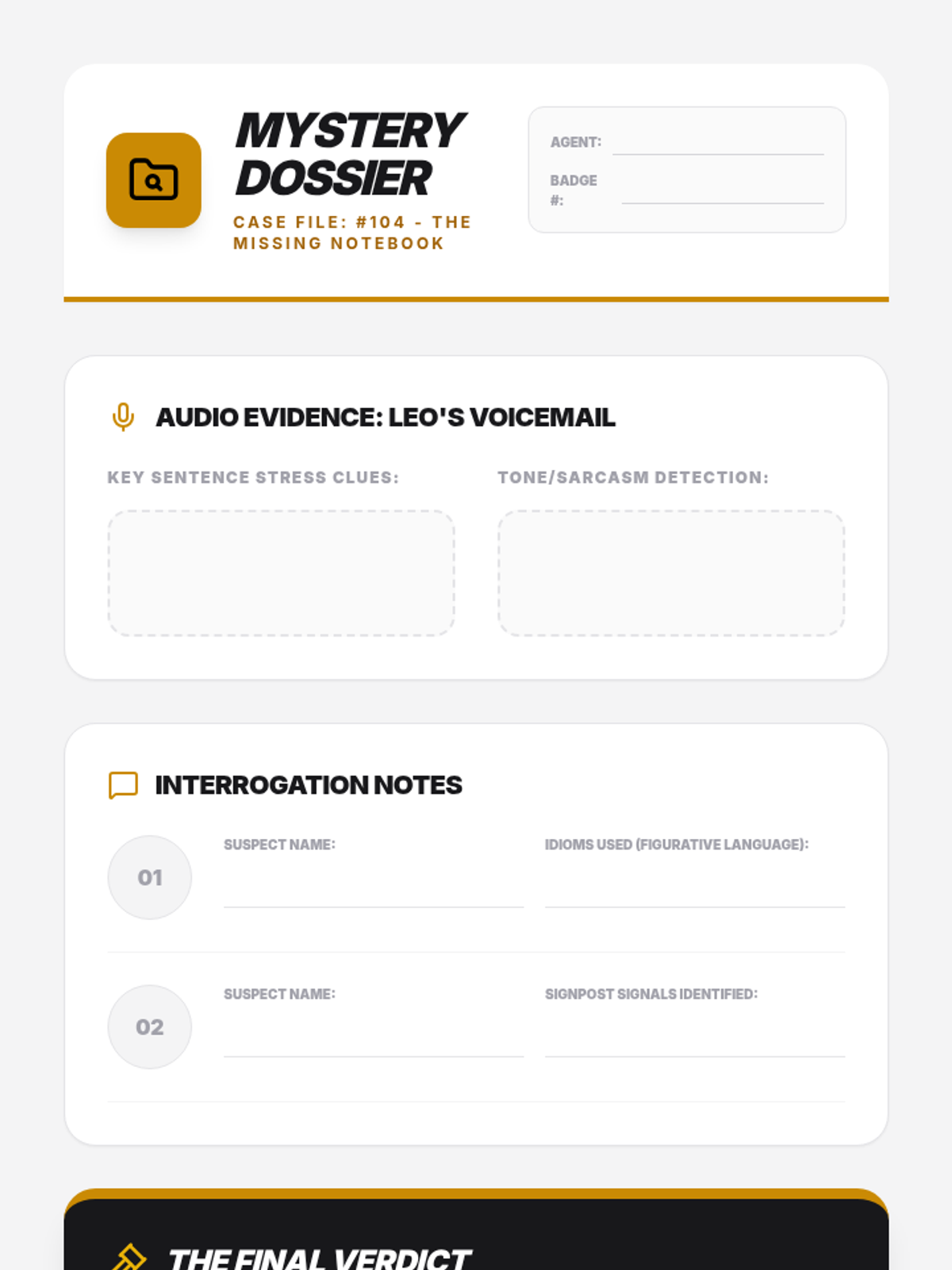
A culminating simulation where students use their listening skills to solve a mystery. They interview characters and analyze voicemails to synthesize all learned concepts.
Students learn to recognize 'signpost words' that structure formal speech. They practice academic note-taking using these auditory cues to track main ideas.
Students investigate how pitch and tone convey emotions like sarcasm and doubt. They analyze non-verbal auditory cues to navigate social interactions effectively.
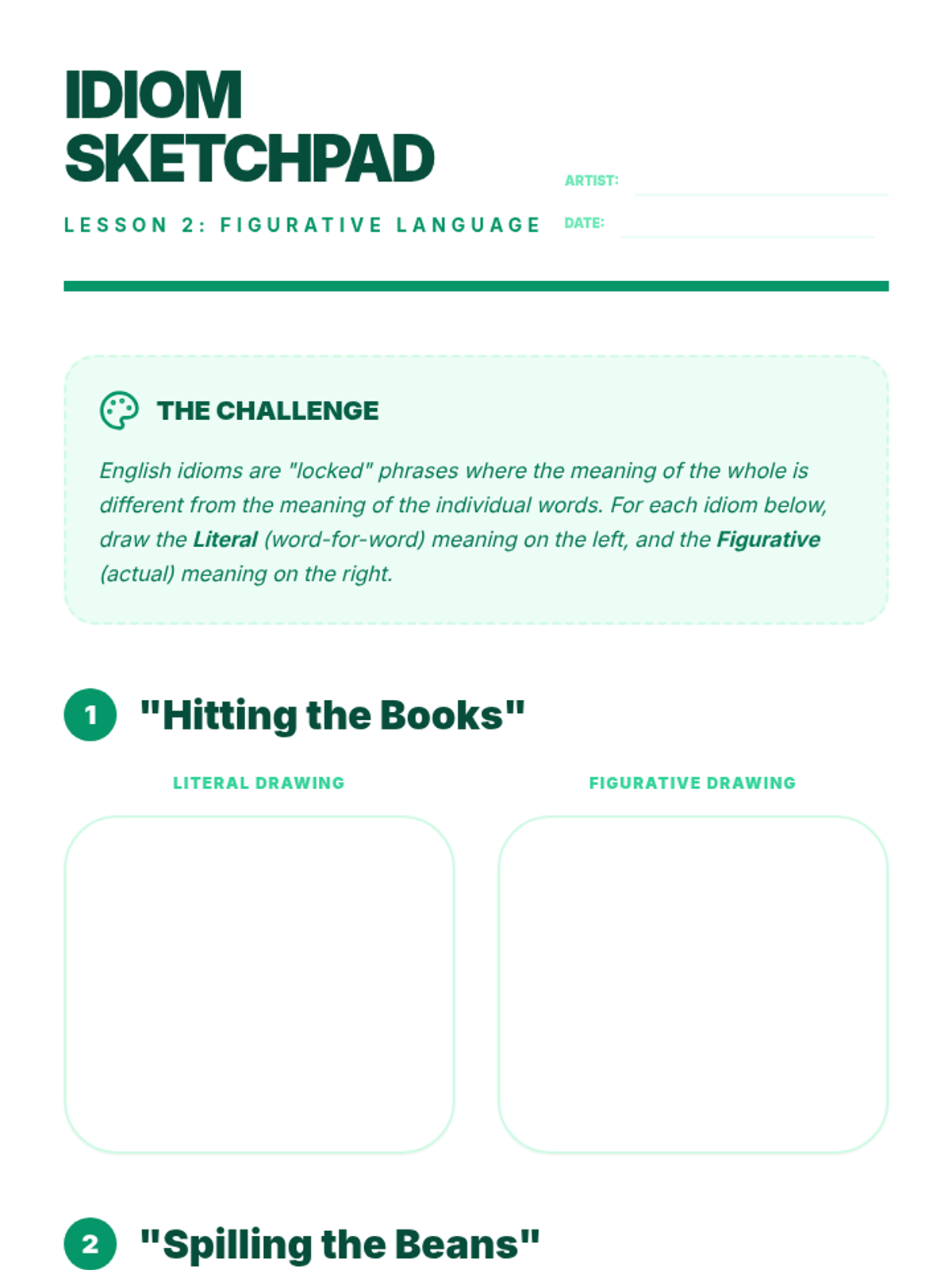
This lesson focuses on connected speech (linking and reductions) and common idioms. Students practice 'chunking' language to understand natural flow and non-literal meanings.
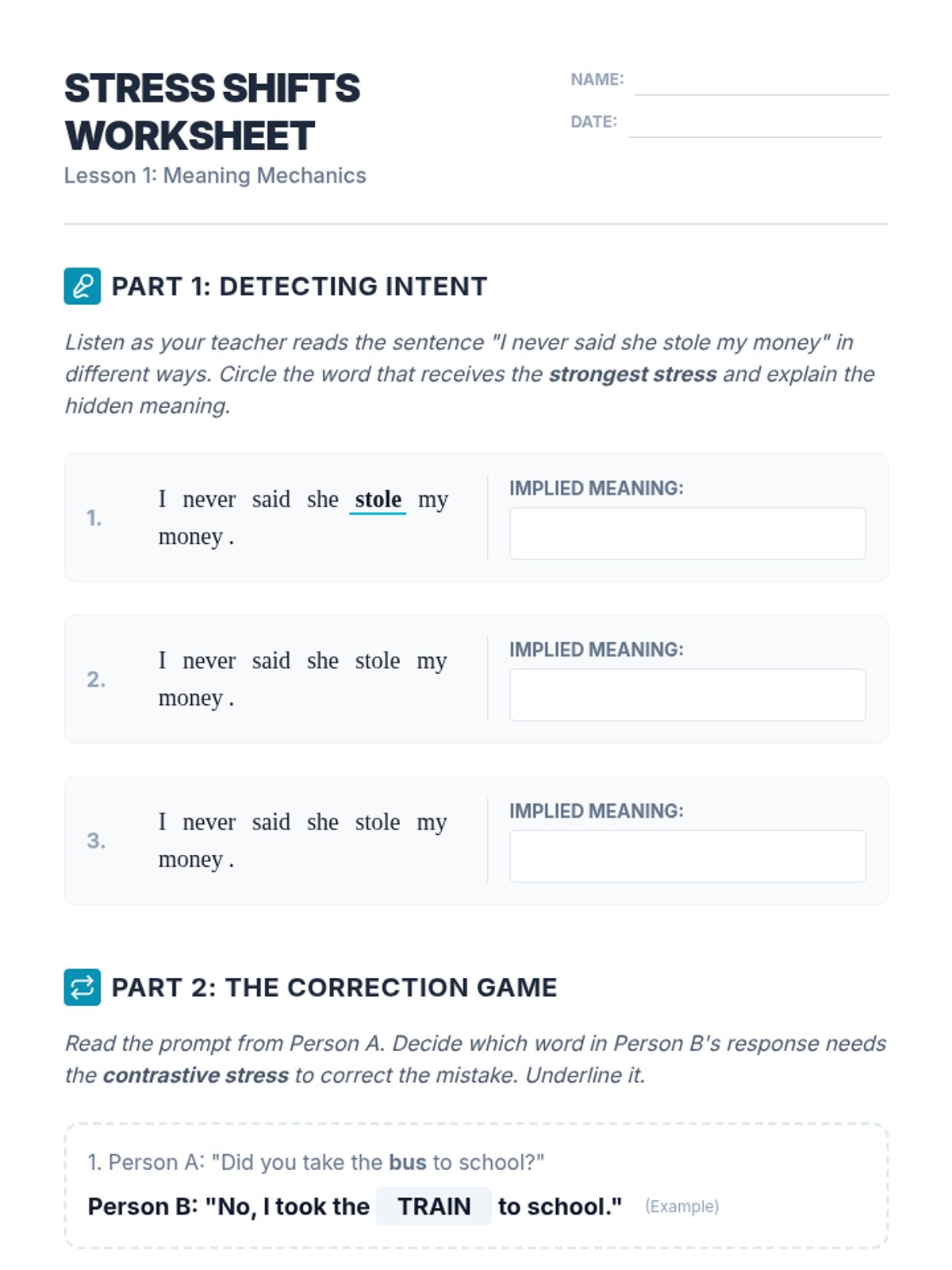
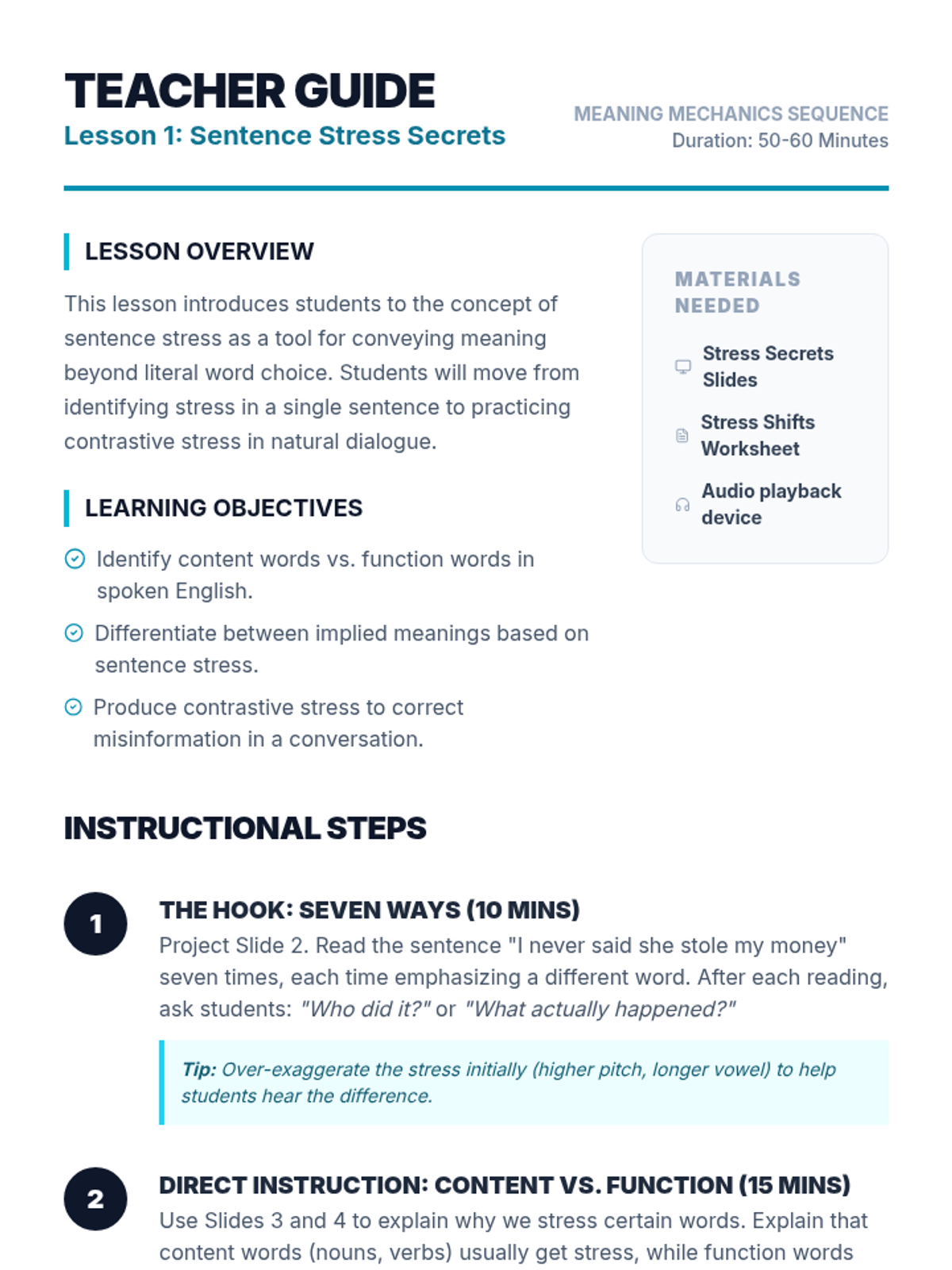
Students explore how shifting emphasis to different words within the same sentence changes its implied meaning. They listen to and practice producing stress patterns to clarify communication.
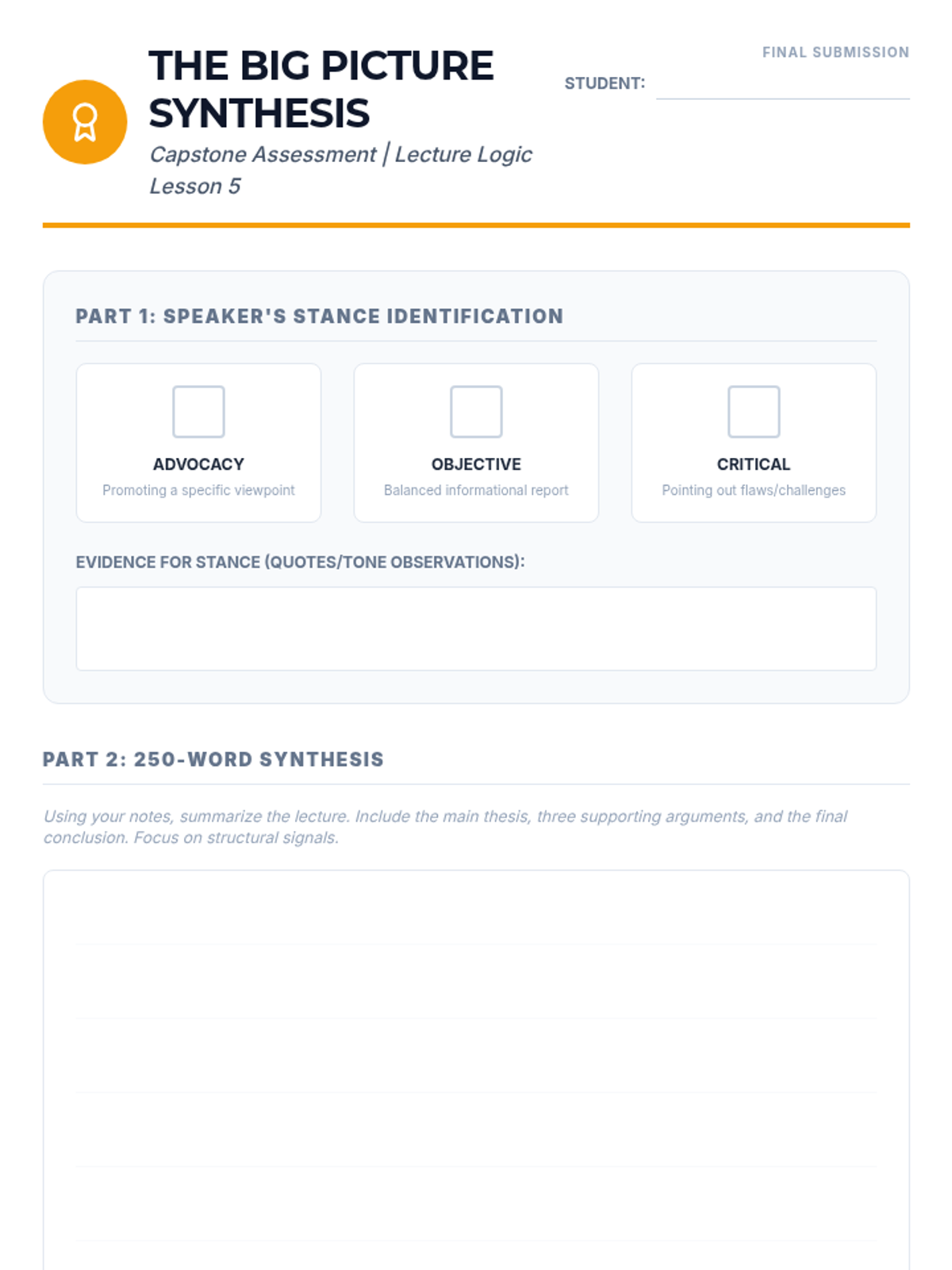
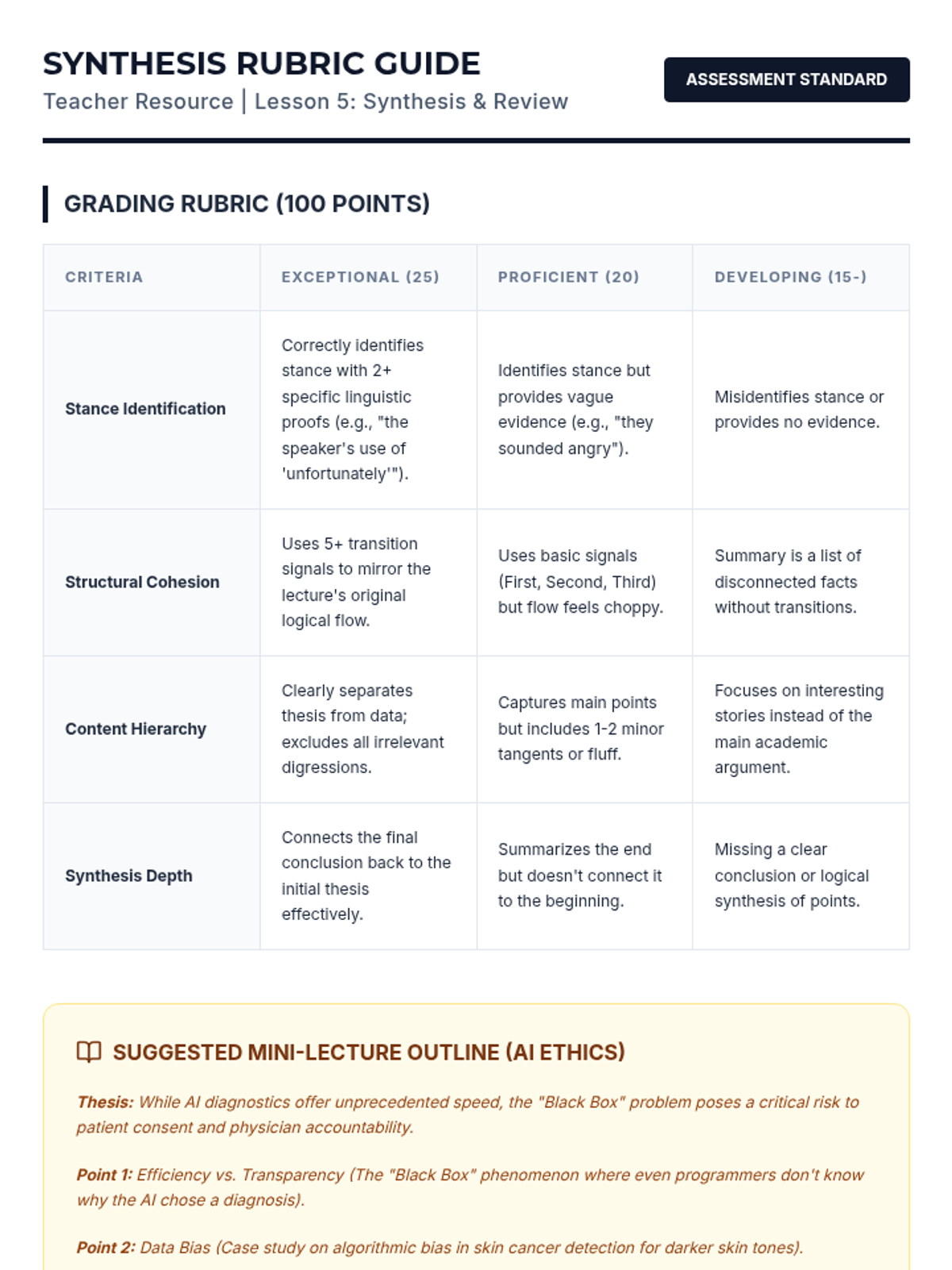
Students synthesize a full mini-lecture into a coherent summary, identifying stance and major takeaways.
A workshop on the Cornell, Outline, and Mapping methods, emphasizing shorthand and relationship visualization.
This lesson trains students to identify tonal shifts and linguistic markers that signal tangents or personal asides.