Complex syntax, nuanced vocabulary, and academic discourse. Strengthens professional communication through advanced writing, analytical reading, and mastery of high-level auditory and oral fluency.
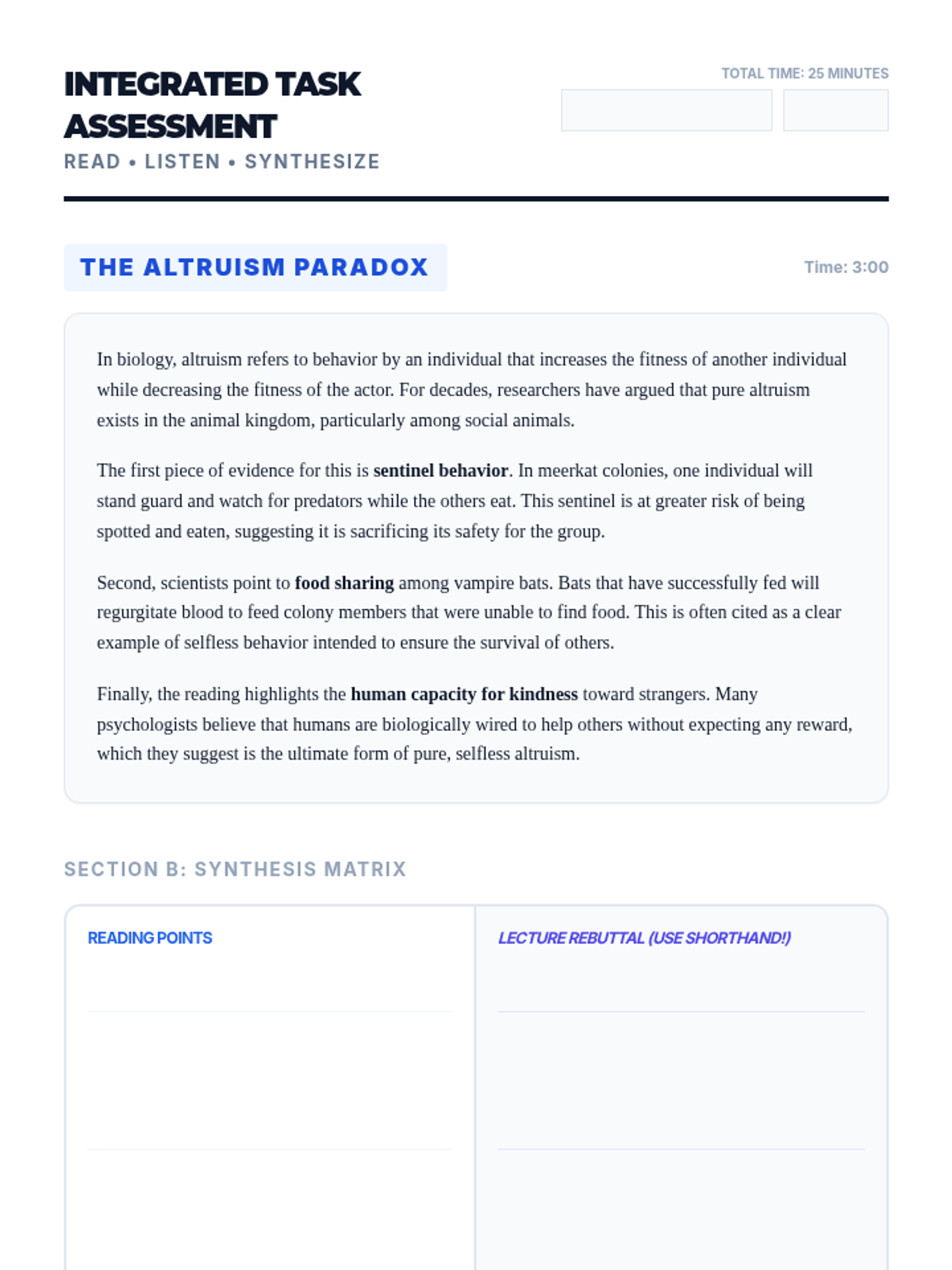
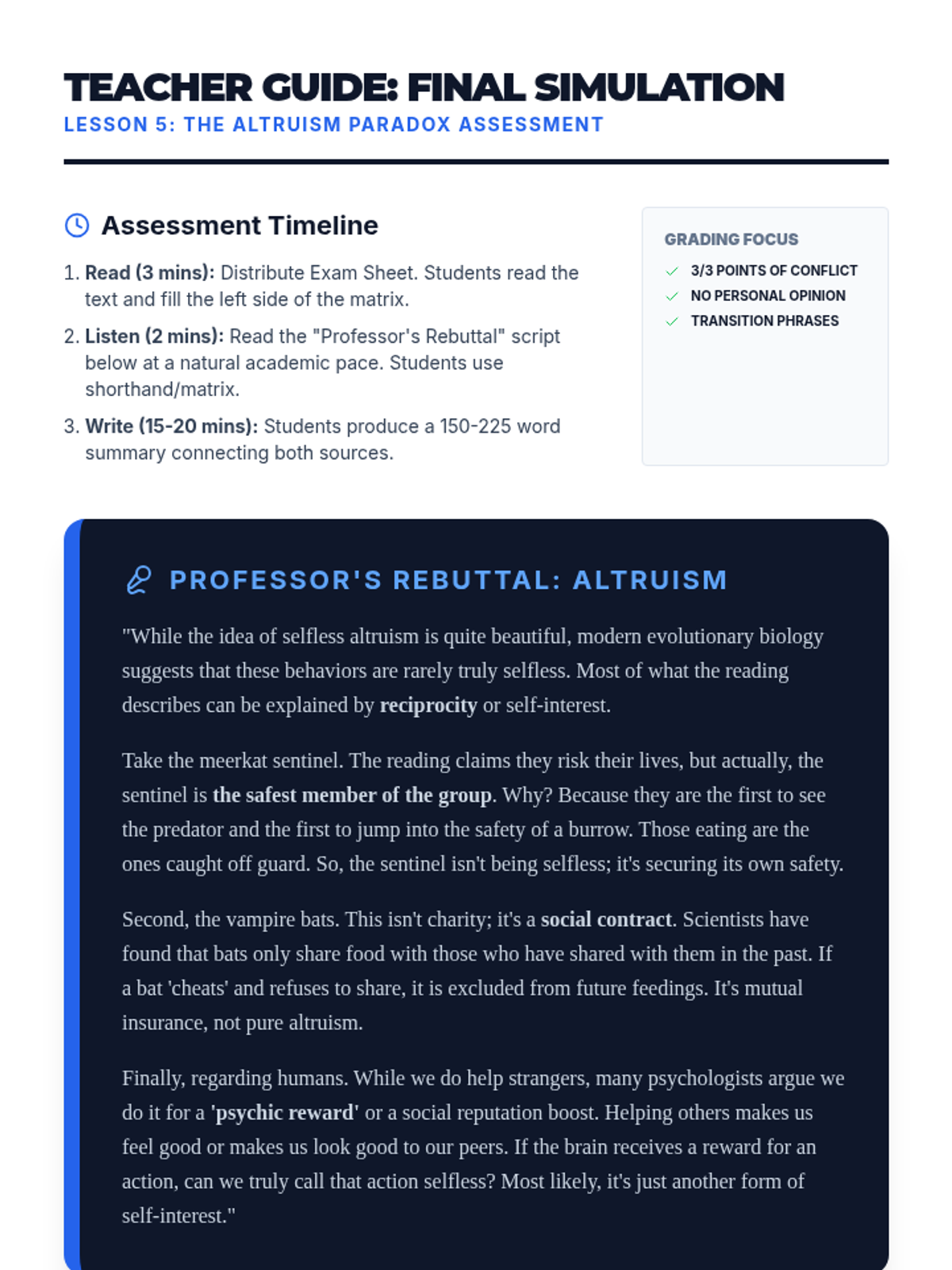
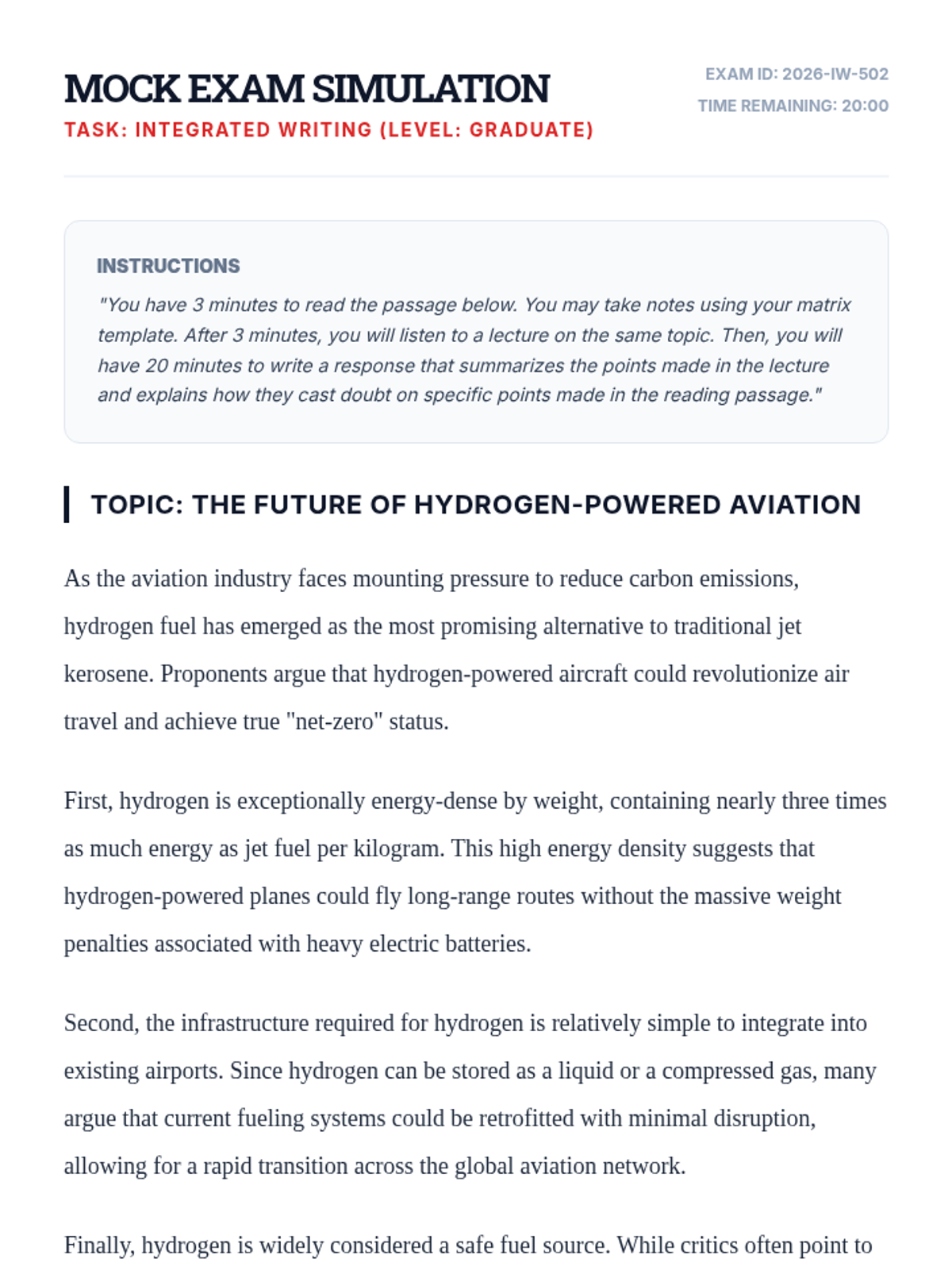
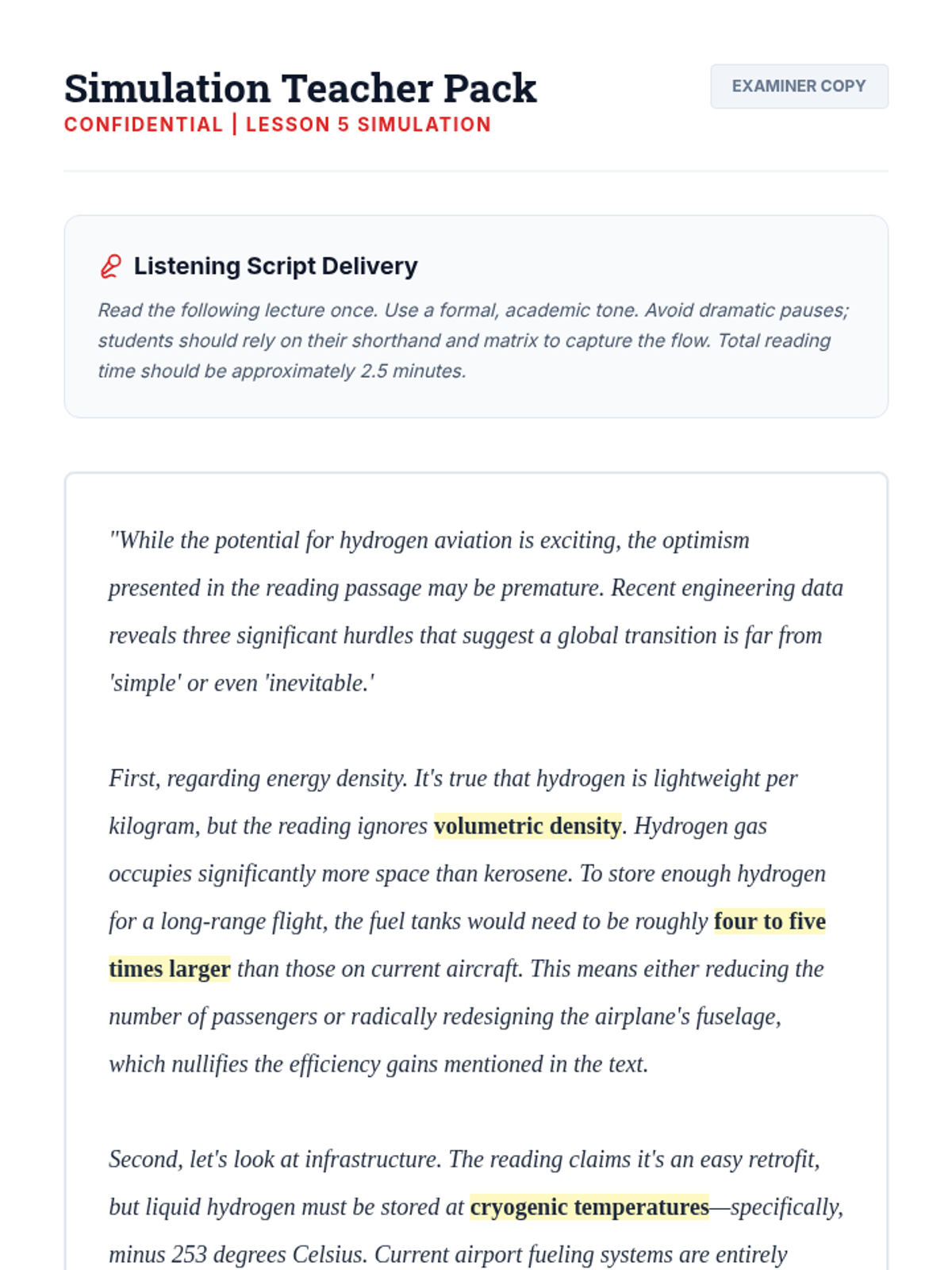
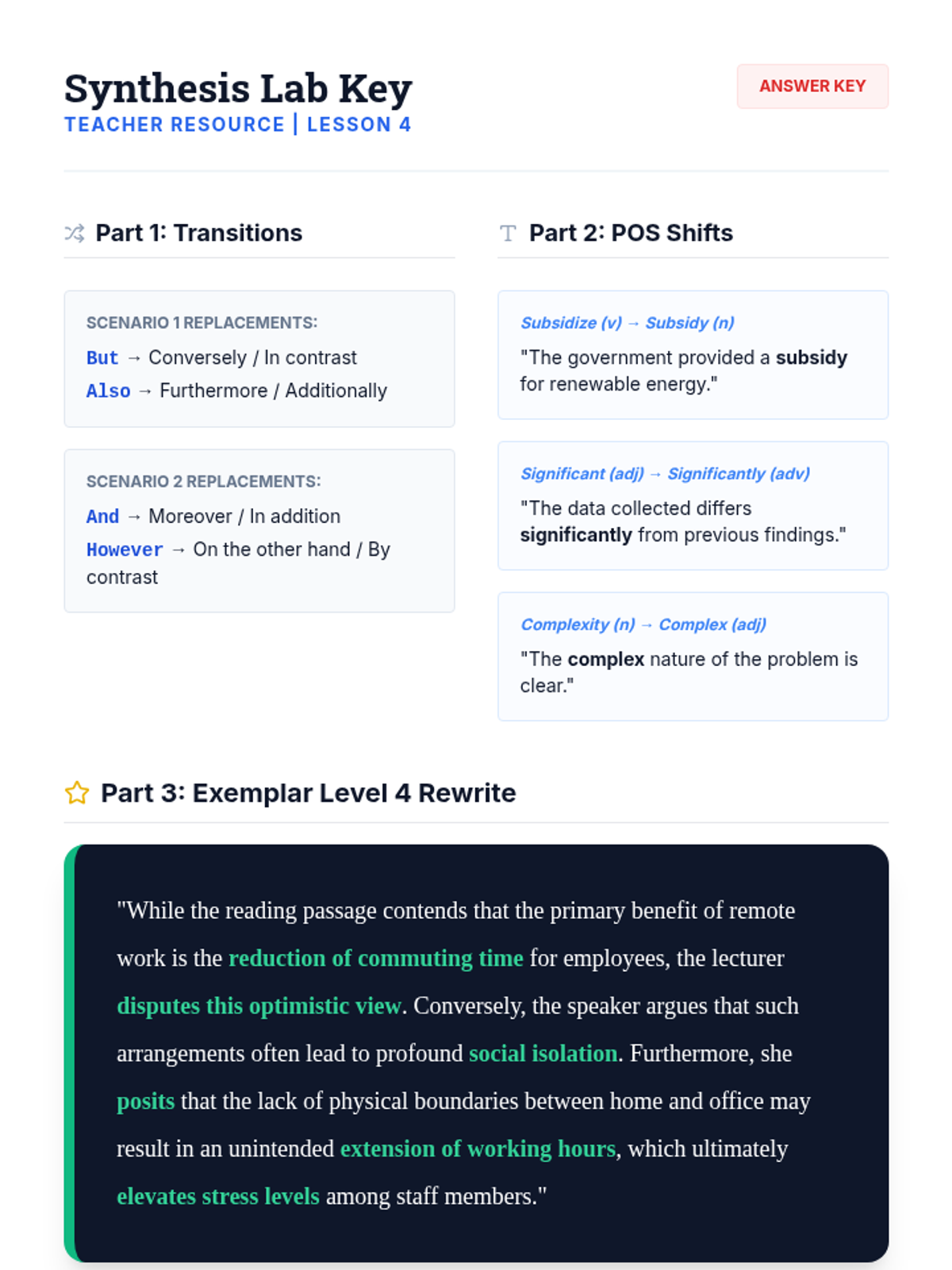
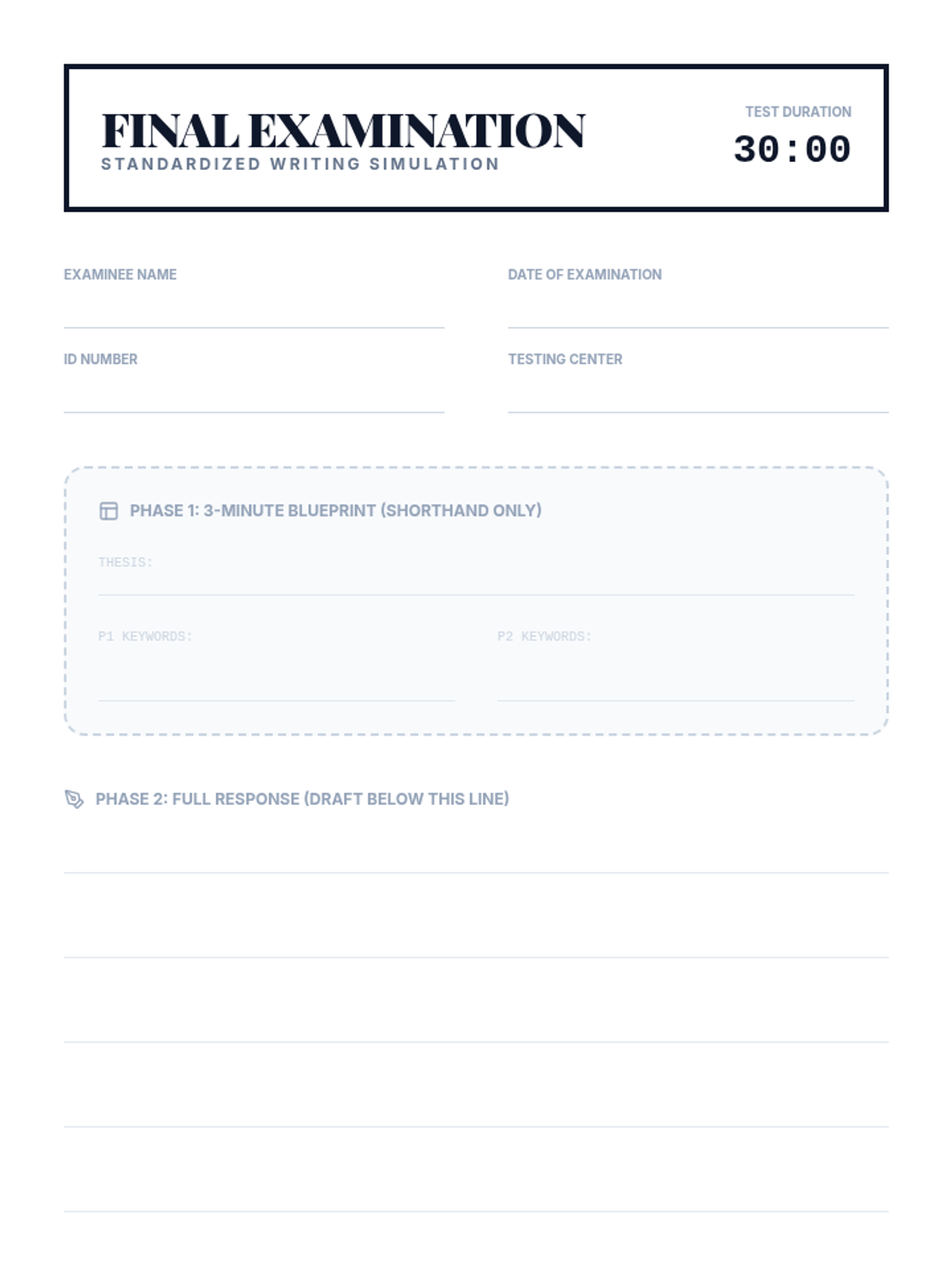
A full-scale simulation of a TOEFL/IELTS integrated task. Students apply shorthand, signpost recognition, and synthesis skills to a new topic, producing a comprehensive written response.
A full-length integrated task simulation under exam conditions followed by self-assessment using official rubric criteria.
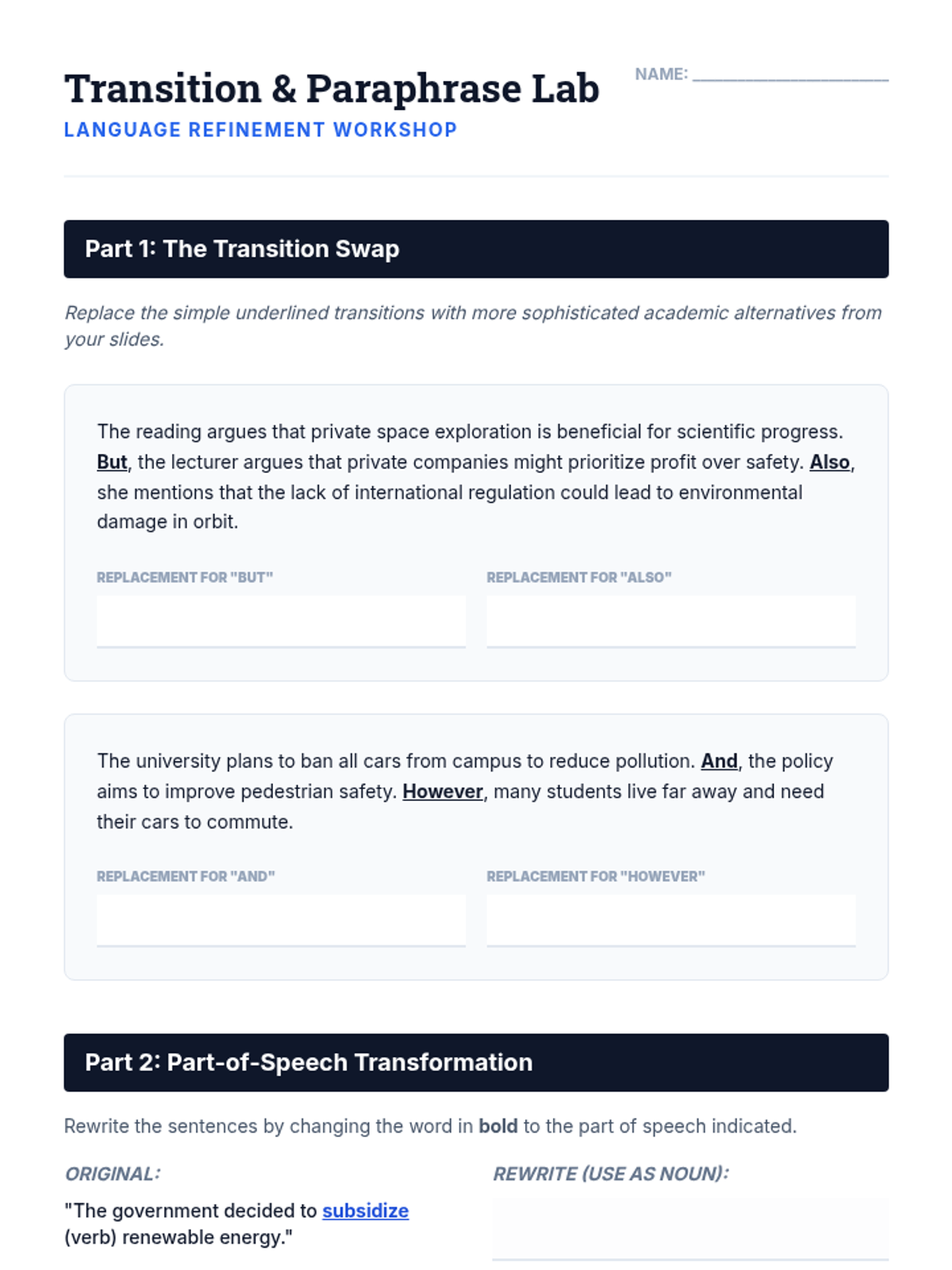
Covers transitions that signal contrast and addition, alongside paraphrasing techniques to avoid plagiarism and demonstrate vocabulary range.
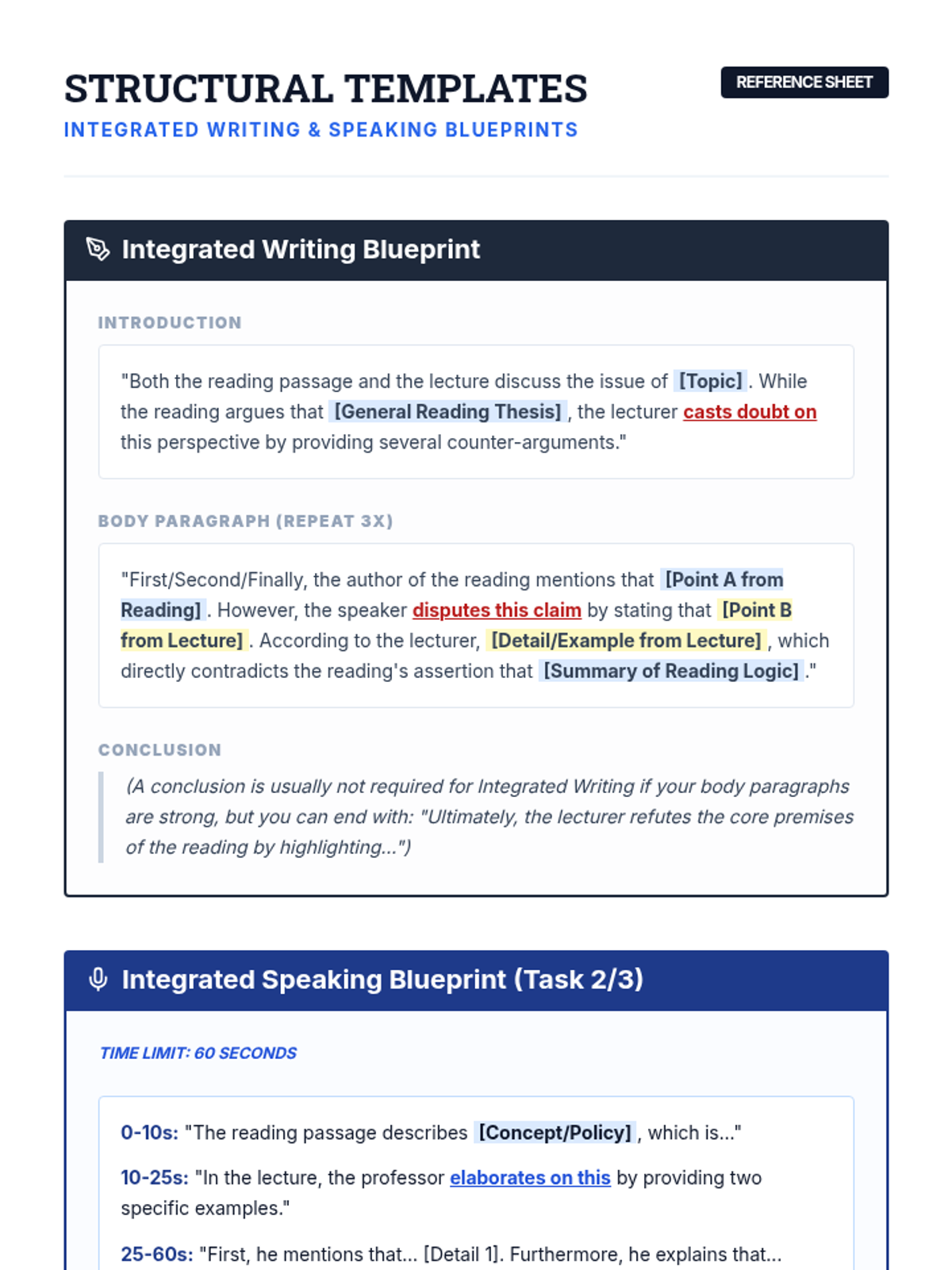
Students practice using structural templates for integrated tasks, emphasizing the importance of creating a solid skeleton plan before writing.
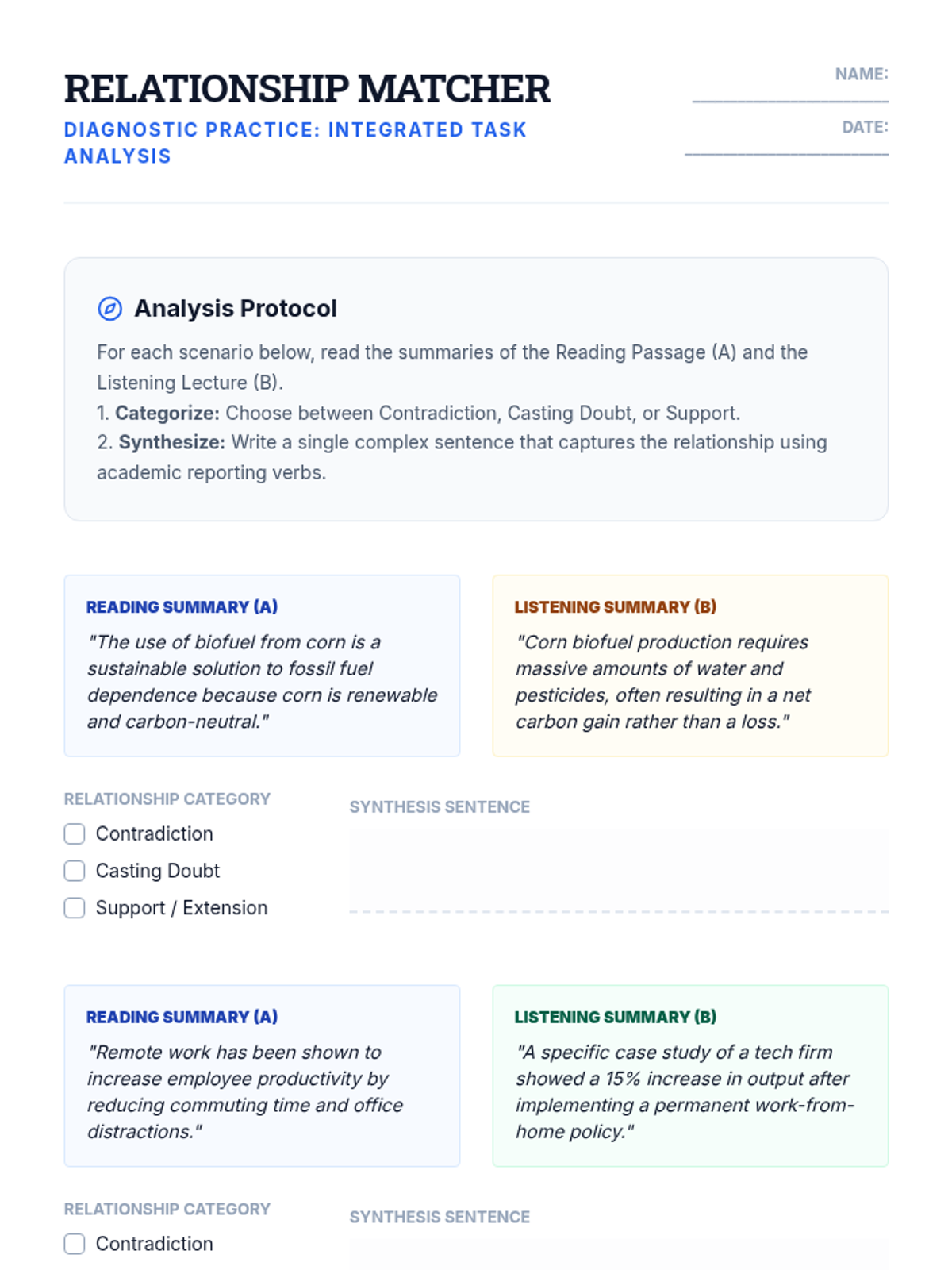
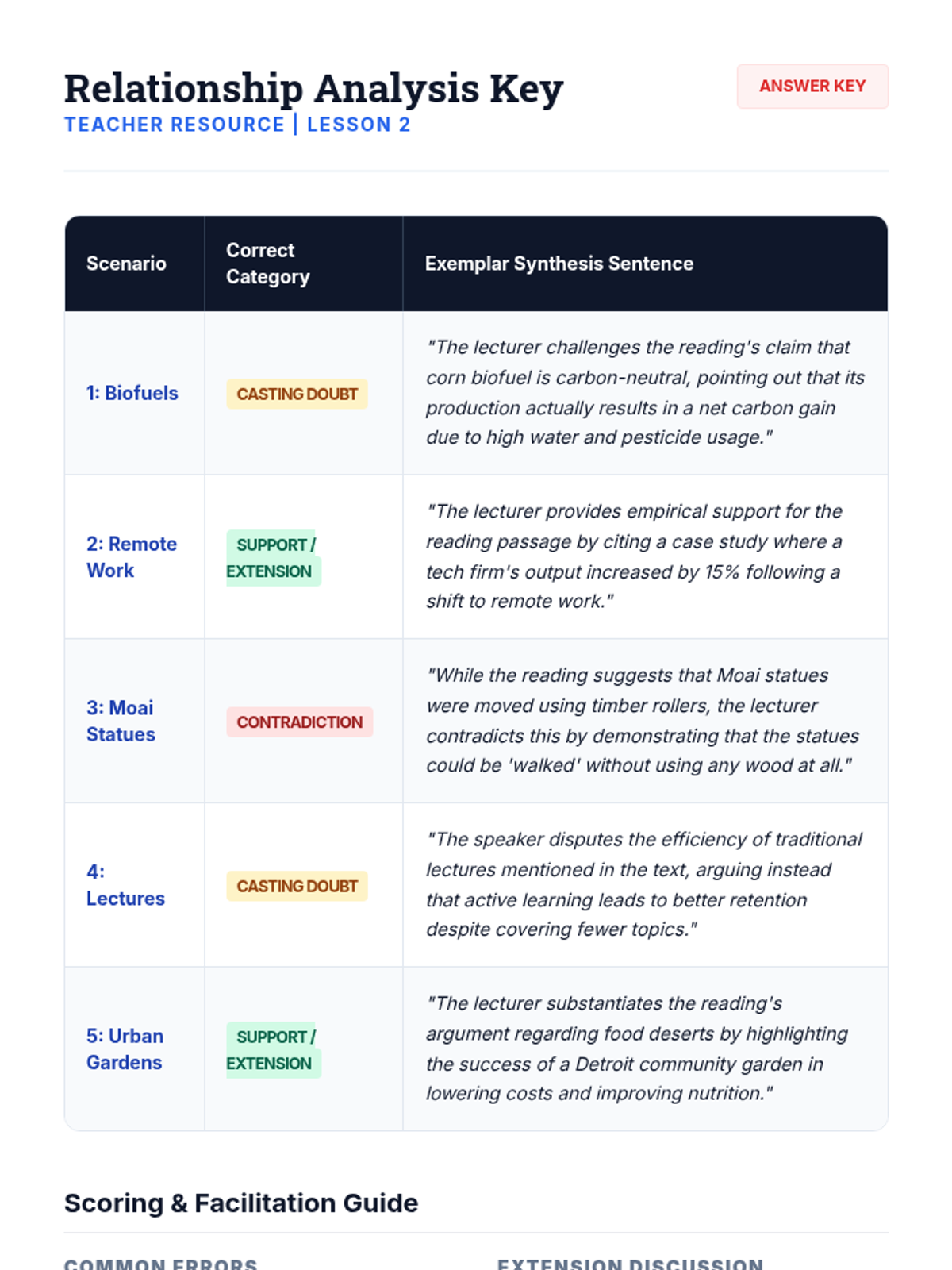
Focuses on identifying how a listening passage relates to a reading passage, specifically looking for contradiction, casting doubt, or providing examples.
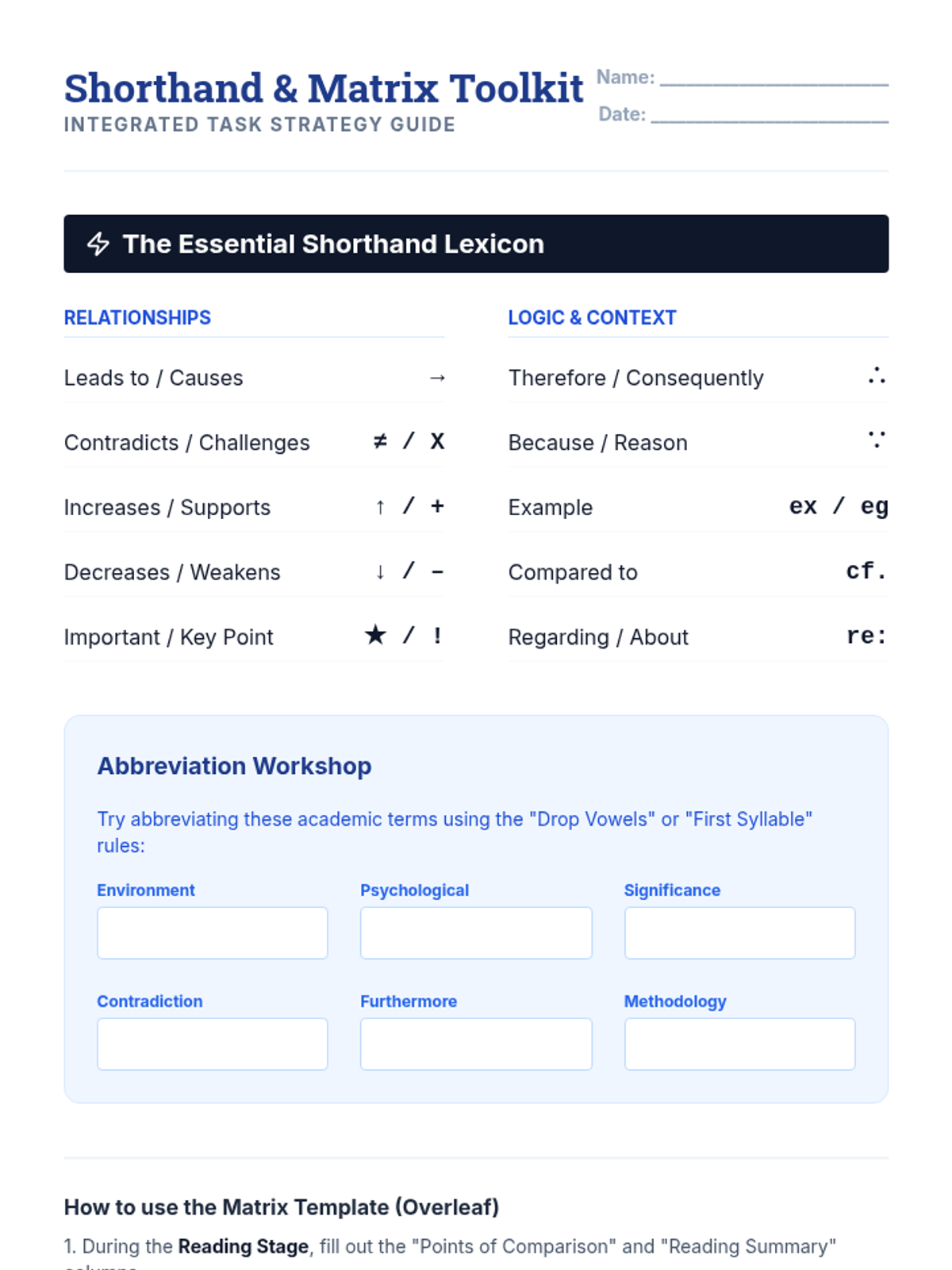
Students develop a personalized shorthand system and learn to organize notes in a matrix format that visually represents the relationship between reading and listening inputs.
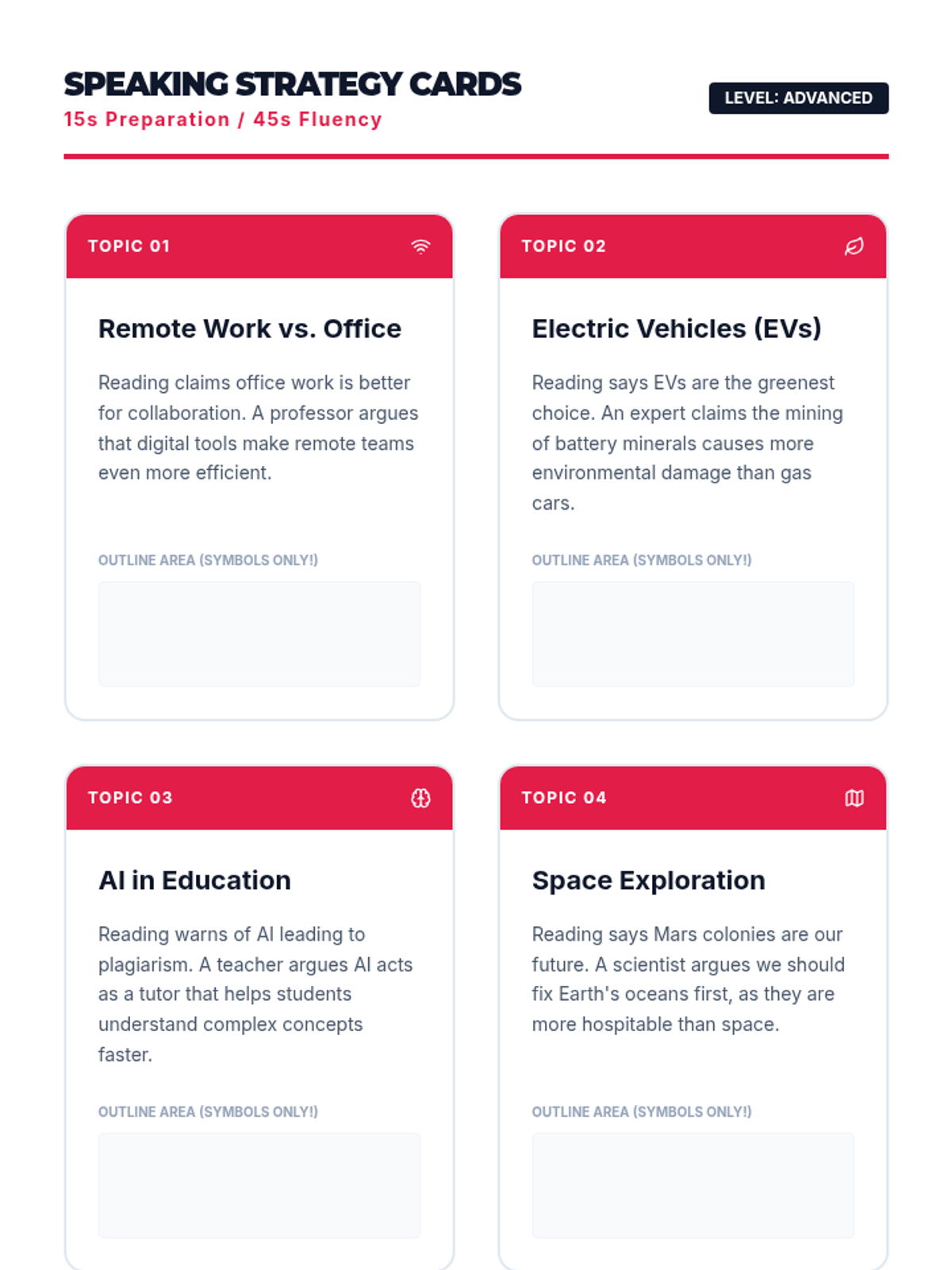
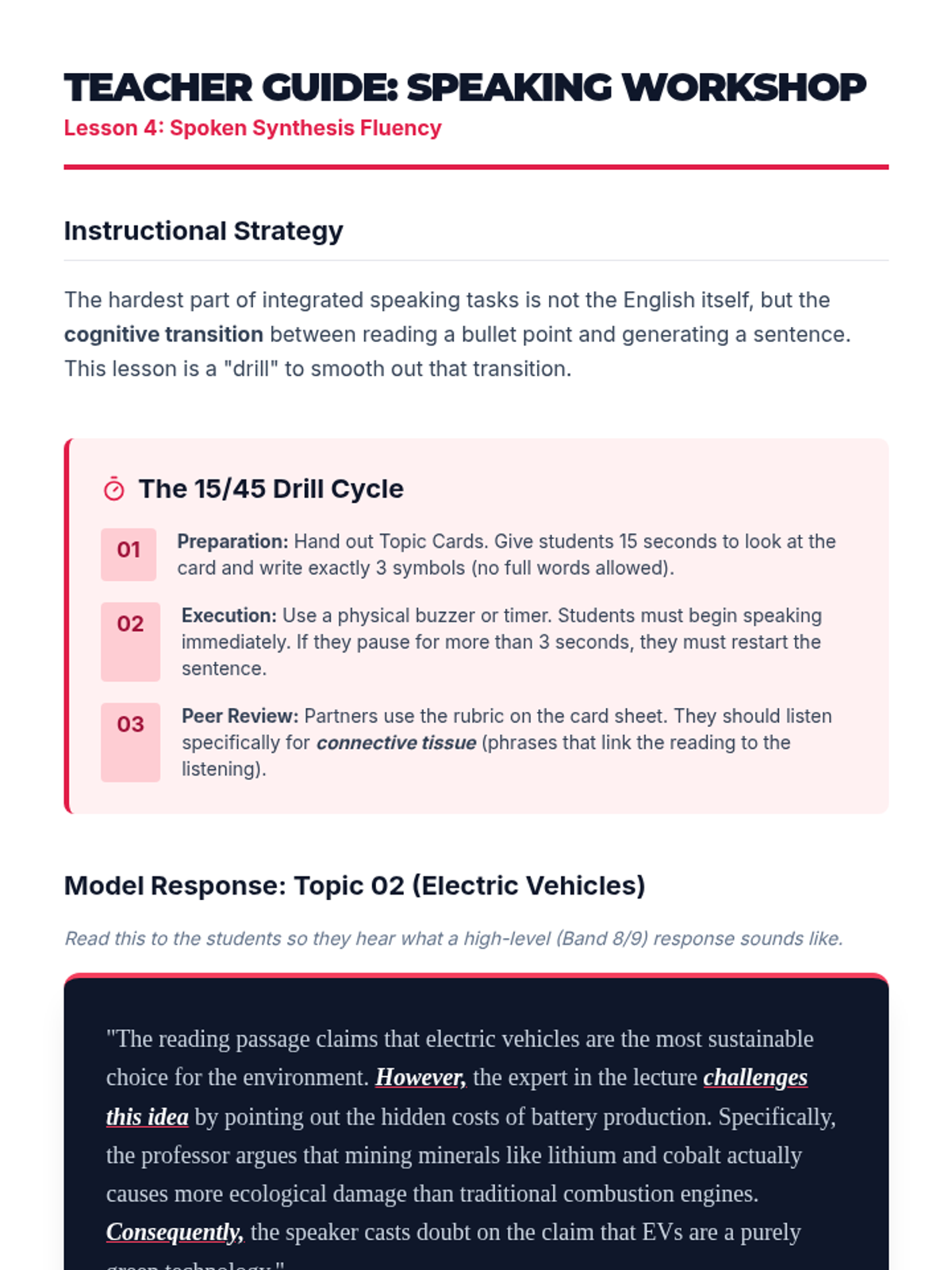
Students focus on the speaking section of integrated exams. They practice turning shorthand notes into fluent, grammatically correct spoken responses, emphasizing the use of transition phrases and maintaining eye contact.
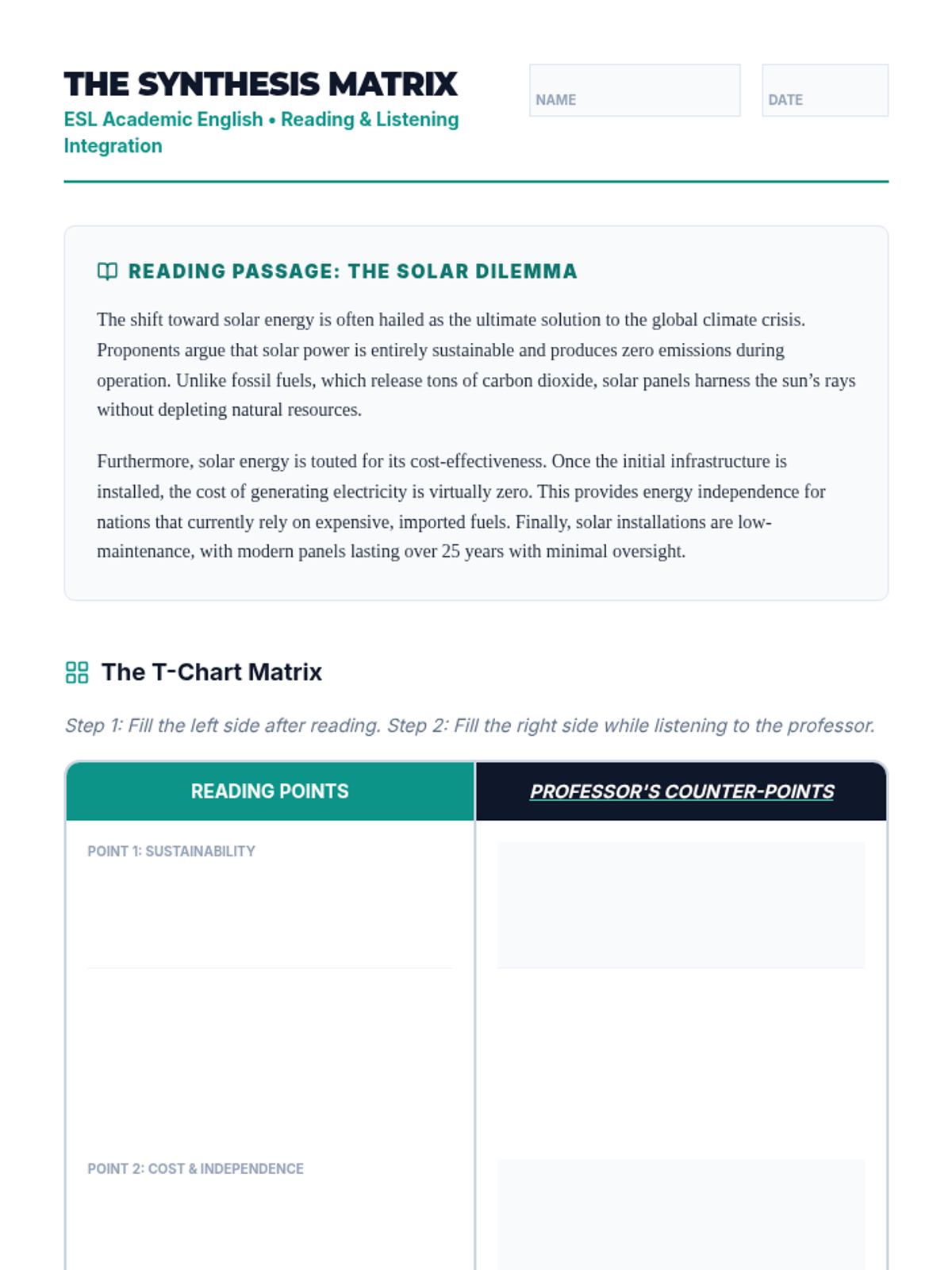
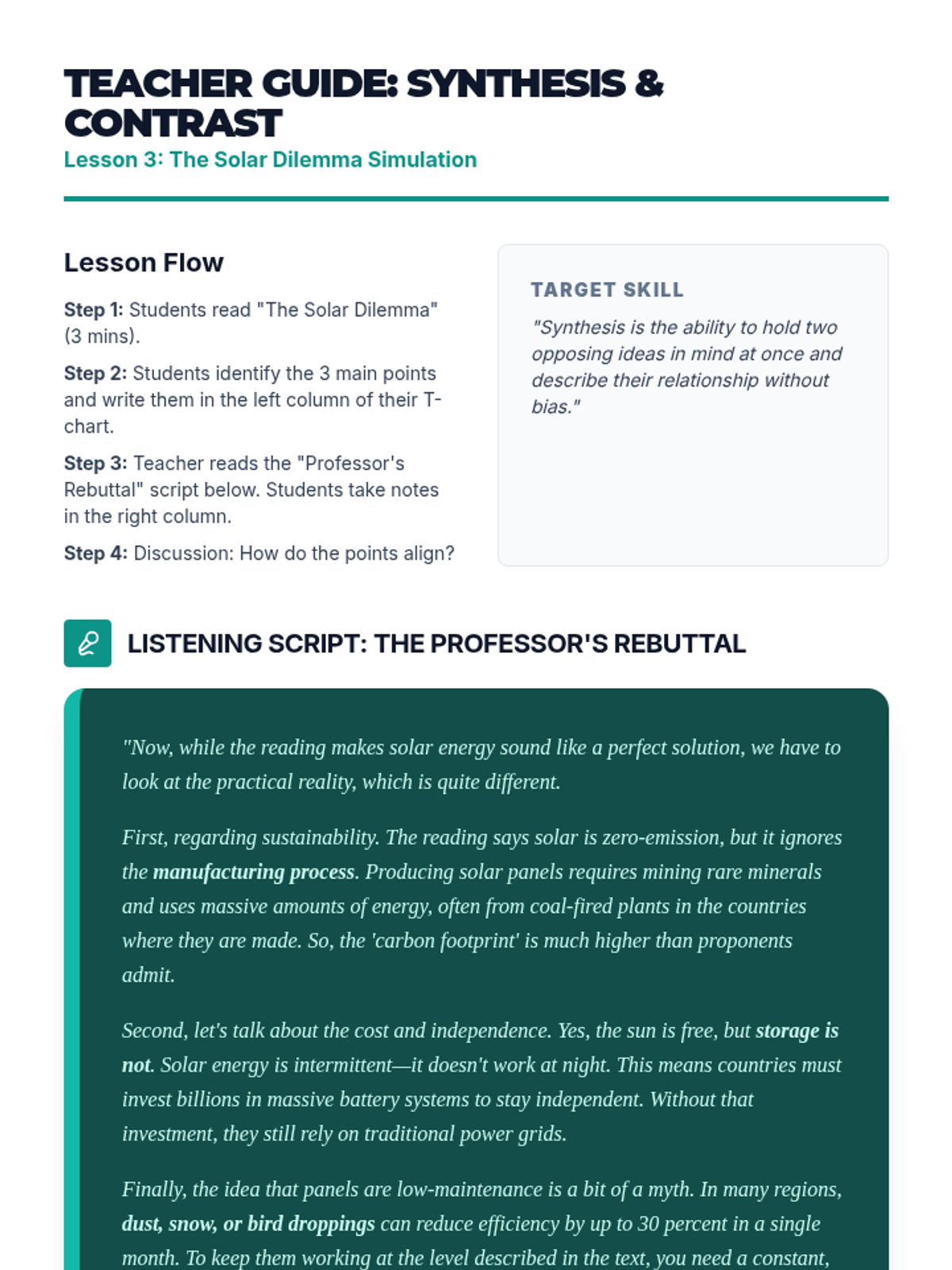
Students practice the core skill of integrated tasks by comparing a written passage with a contrasting audio lecture. They learn to use T-charts to map points of conflict and support between sources.
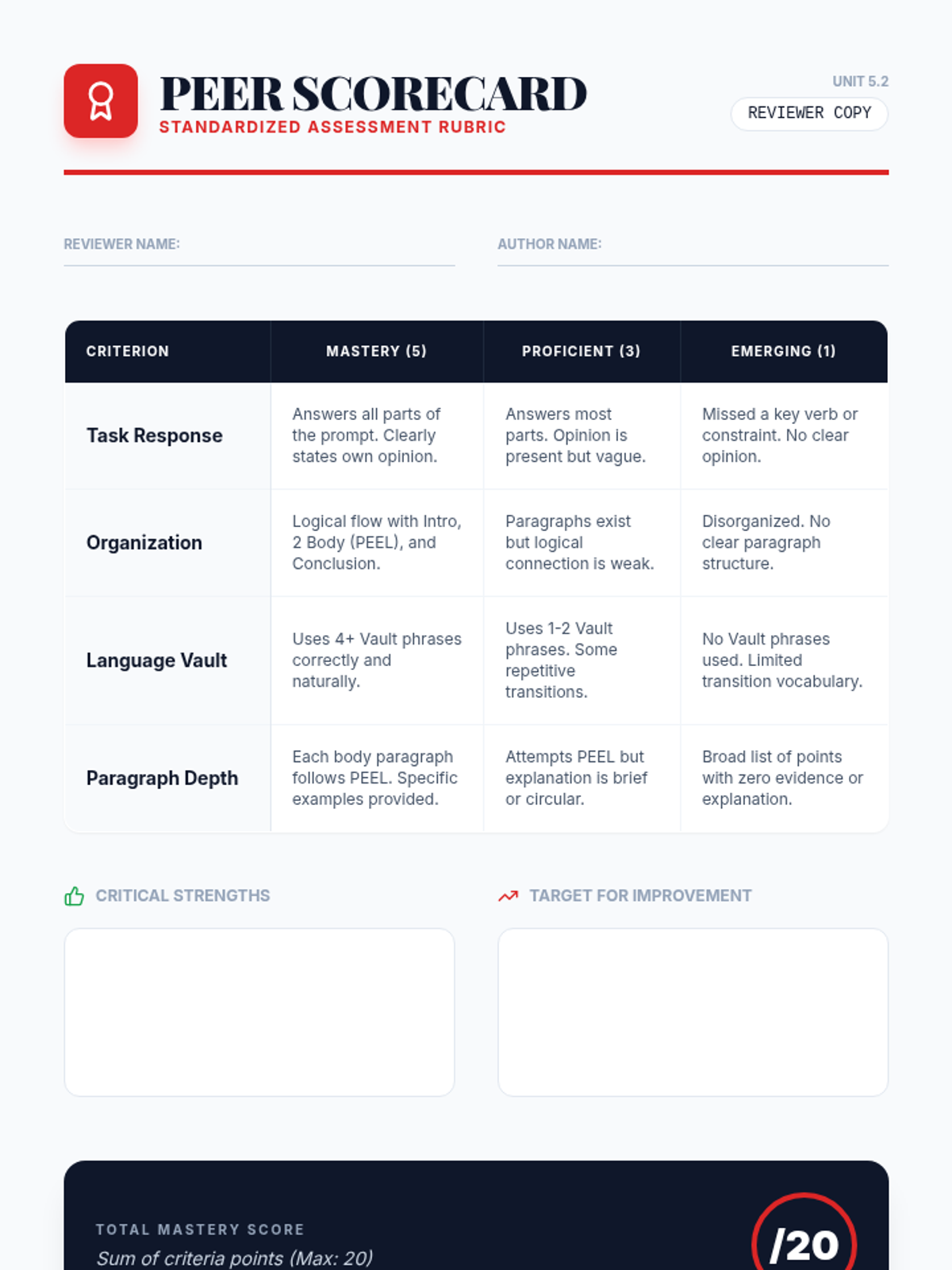
The culmination of the sequence where students complete a full-length timed essay simulation and peer-evaluate their work using standardized rubrics.
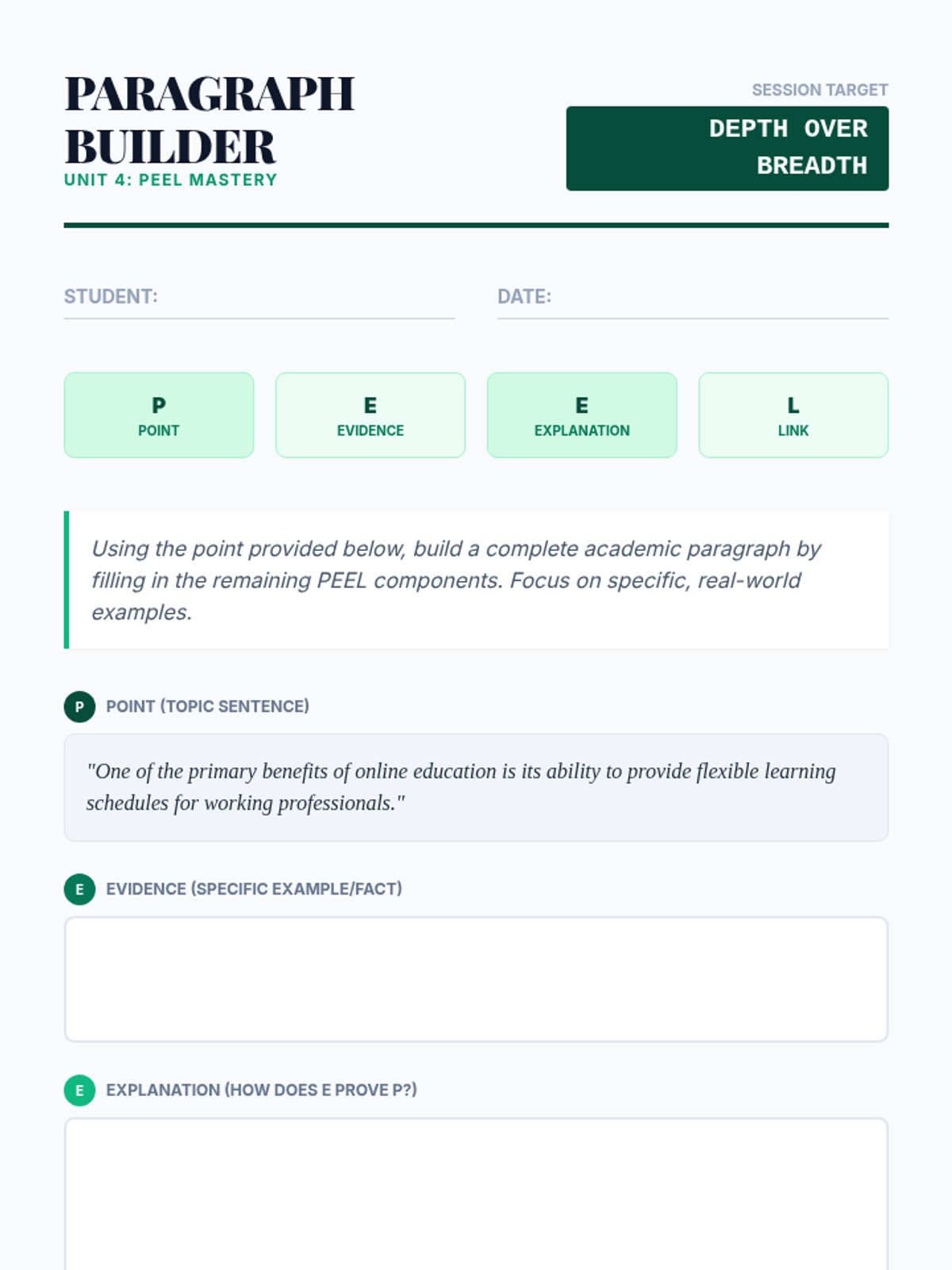
Using the PEEL method (Point, Evidence, Explanation, Link), students learn to develop deep, academic paragraphs that provide substantial evidence for their claims.
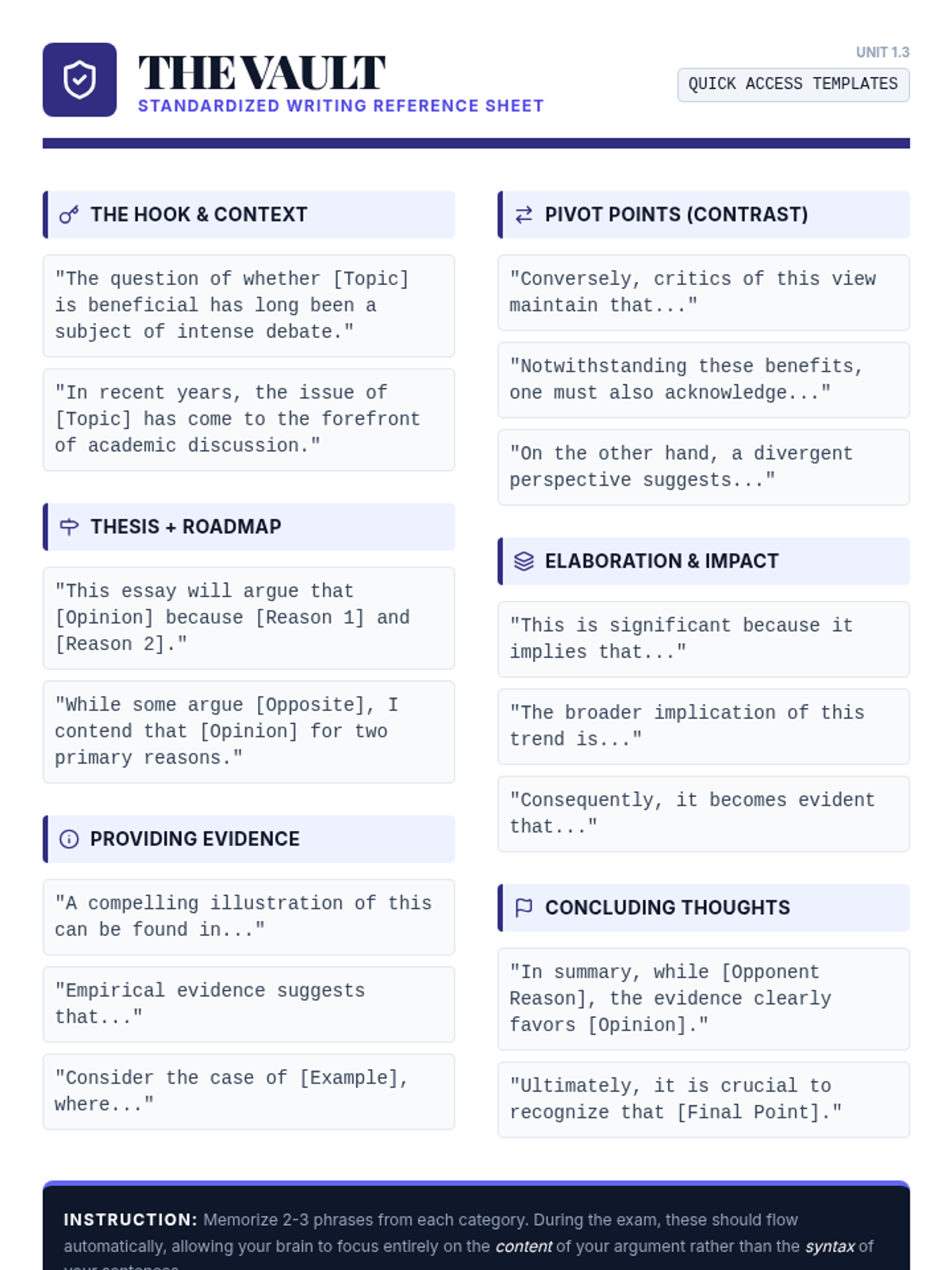
Students build a mental bank of transition phrases and academic sentence templates to reduce cognitive load and improve flow during timed writing.
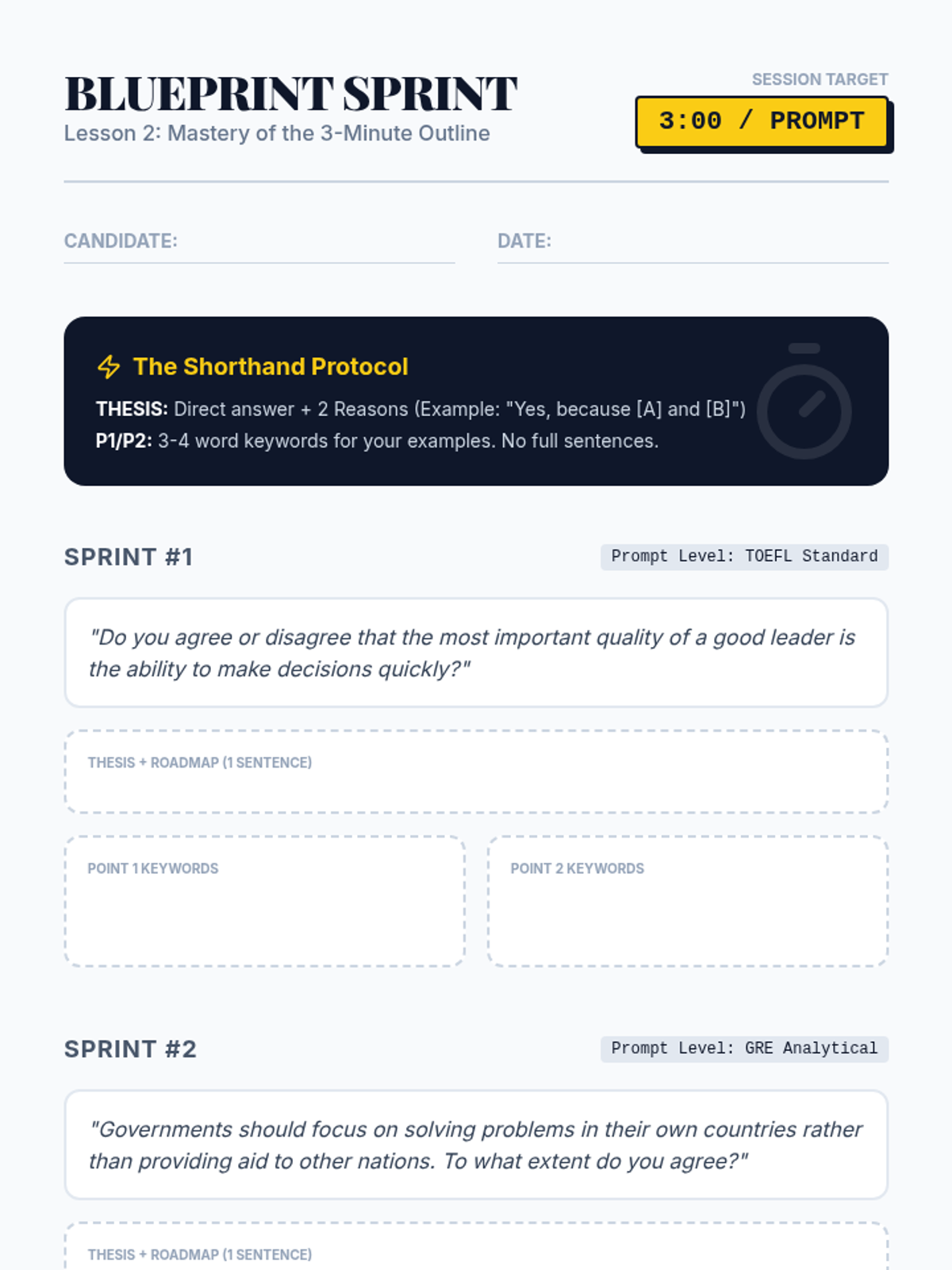
Focuses on the skill of rapid planning, teaching students a shorthand method to generate a thesis and two supporting points within a strict three-minute window.
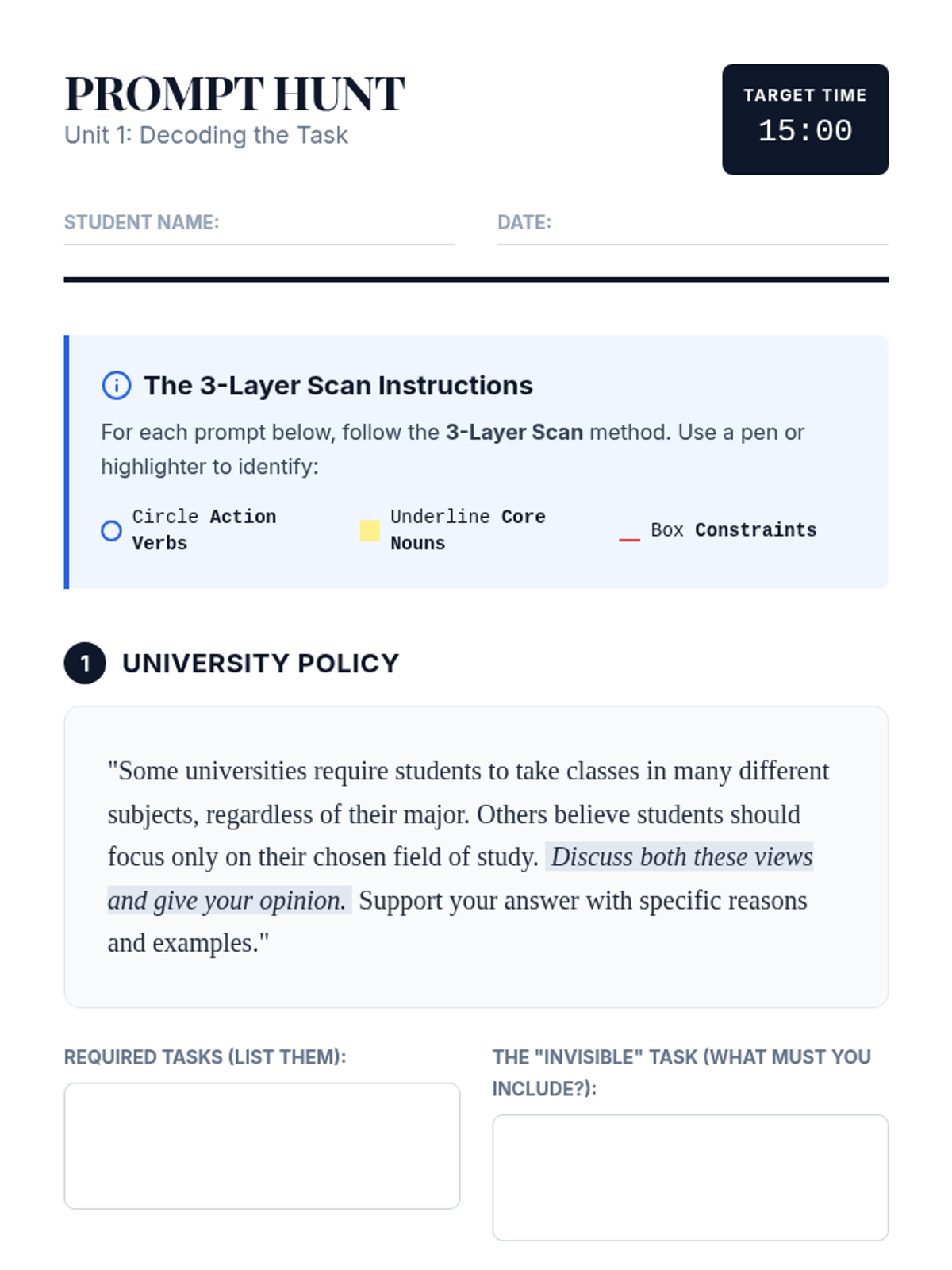
Students learn to identify the core tasks within various academic essay prompts by circling key verbs and nouns, ensuring they address every requirement of the question.
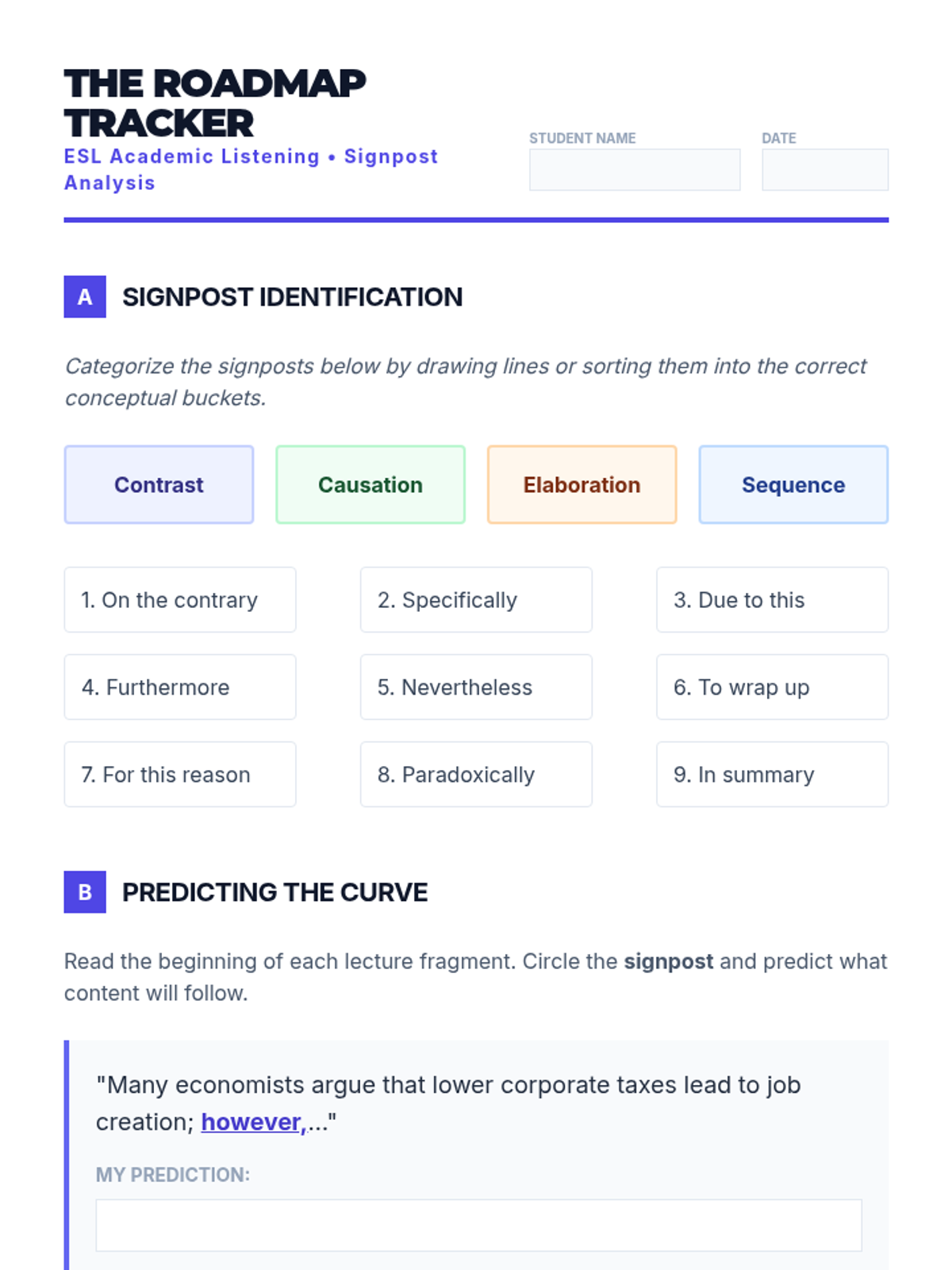
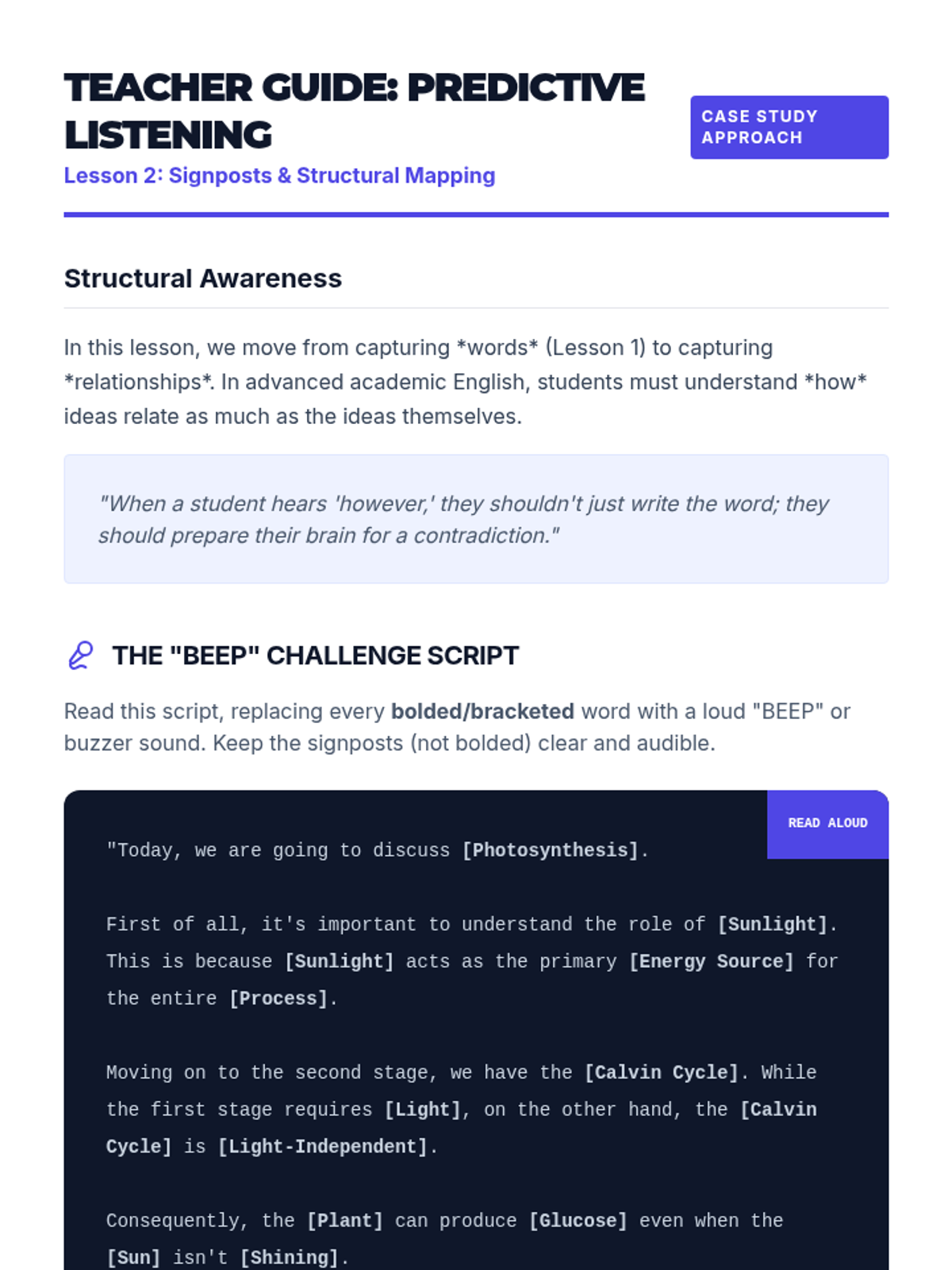
Students learn to recognize verbal markers that indicate the organizational structure of a lecture. They practice predicting upcoming content based on these 'signposts' to categorize their notes as they listen.
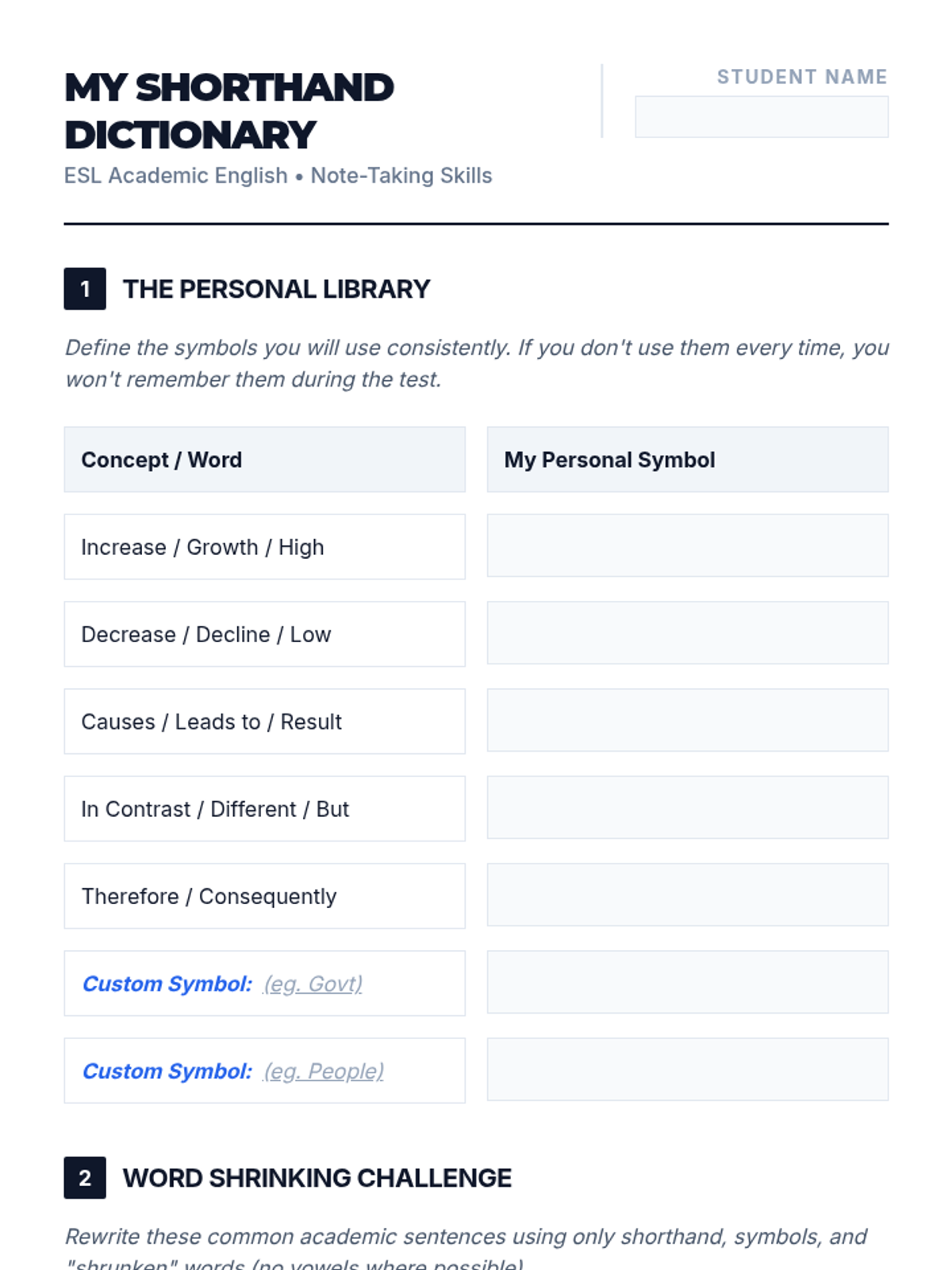
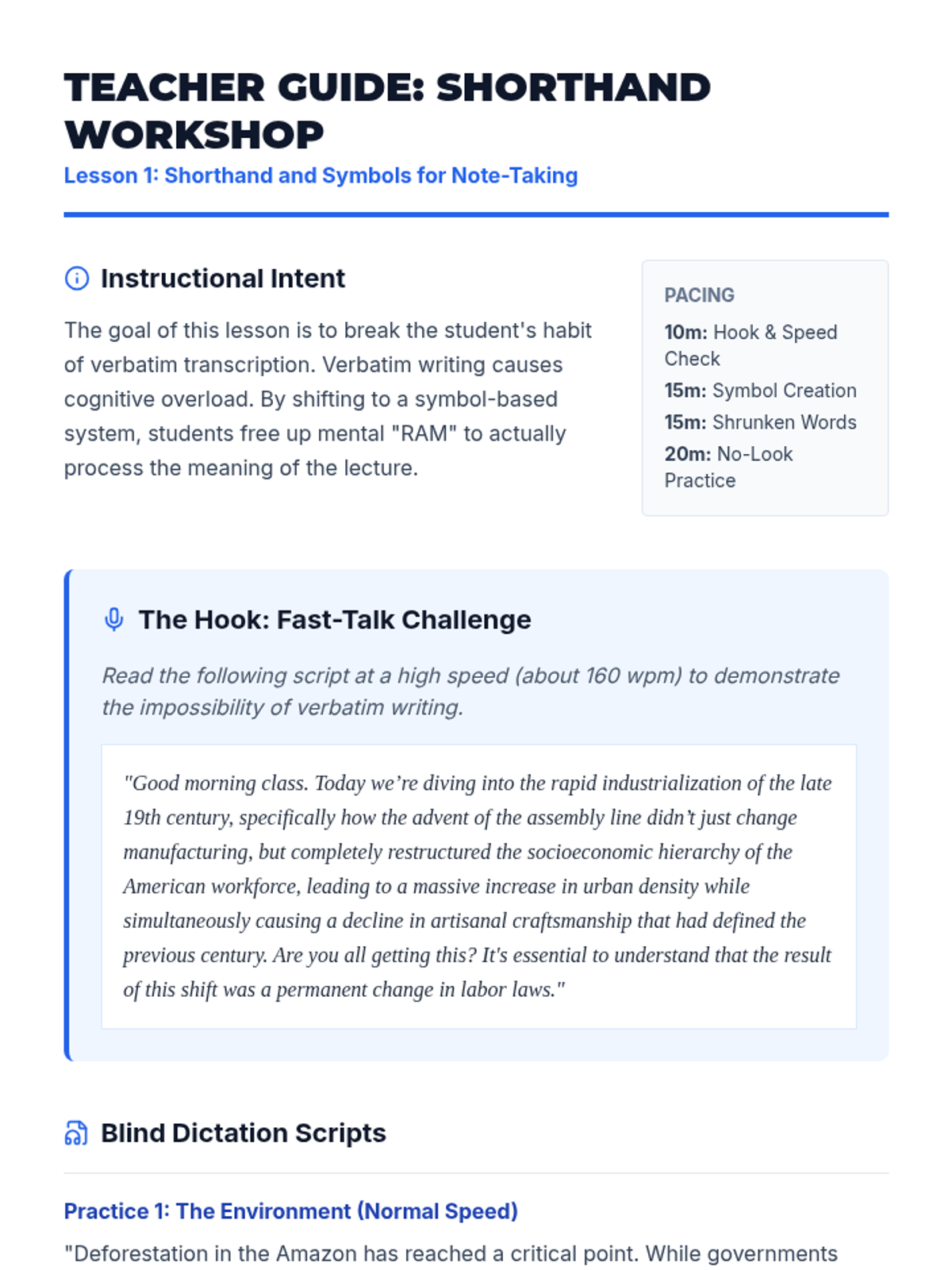
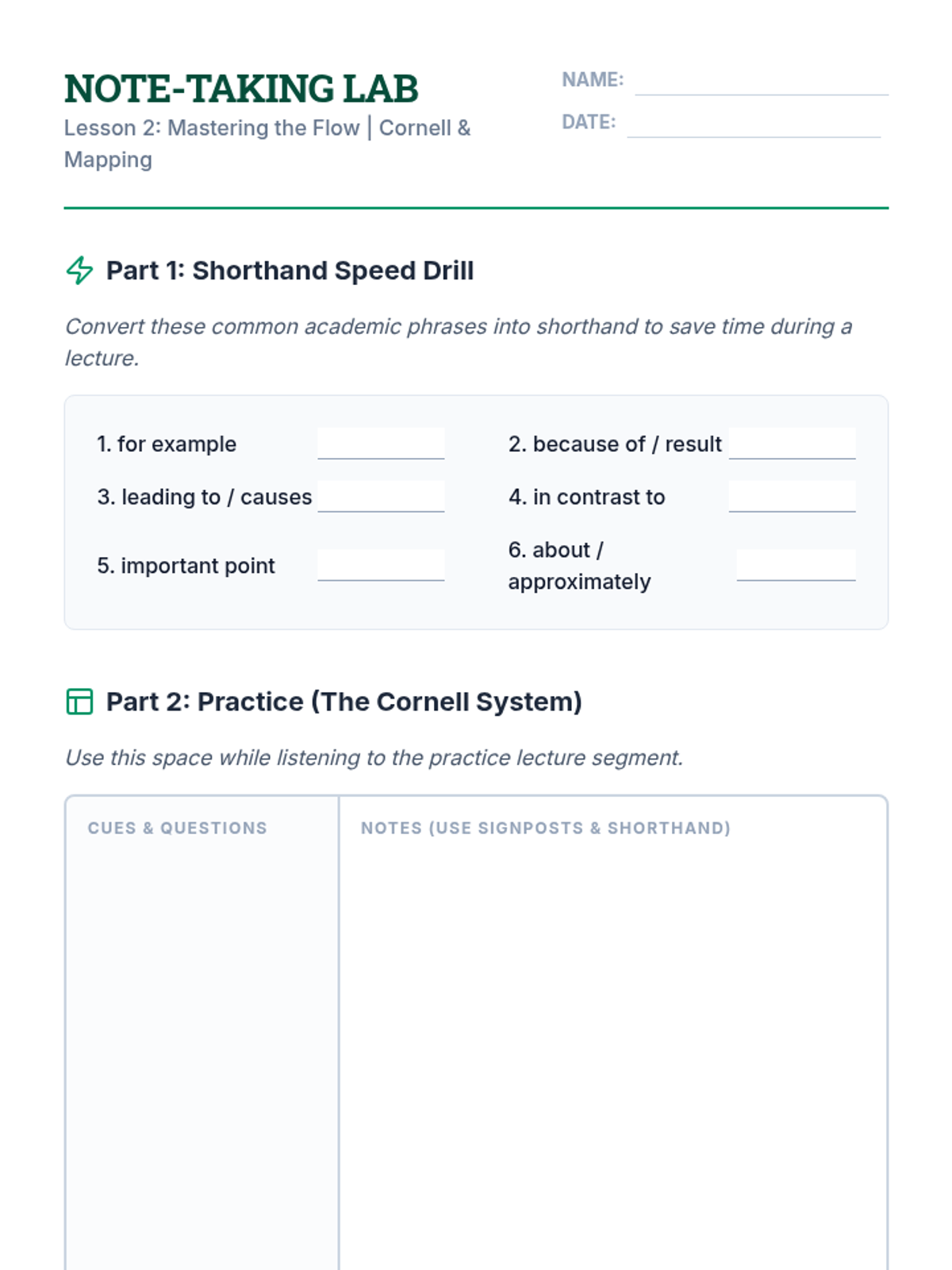
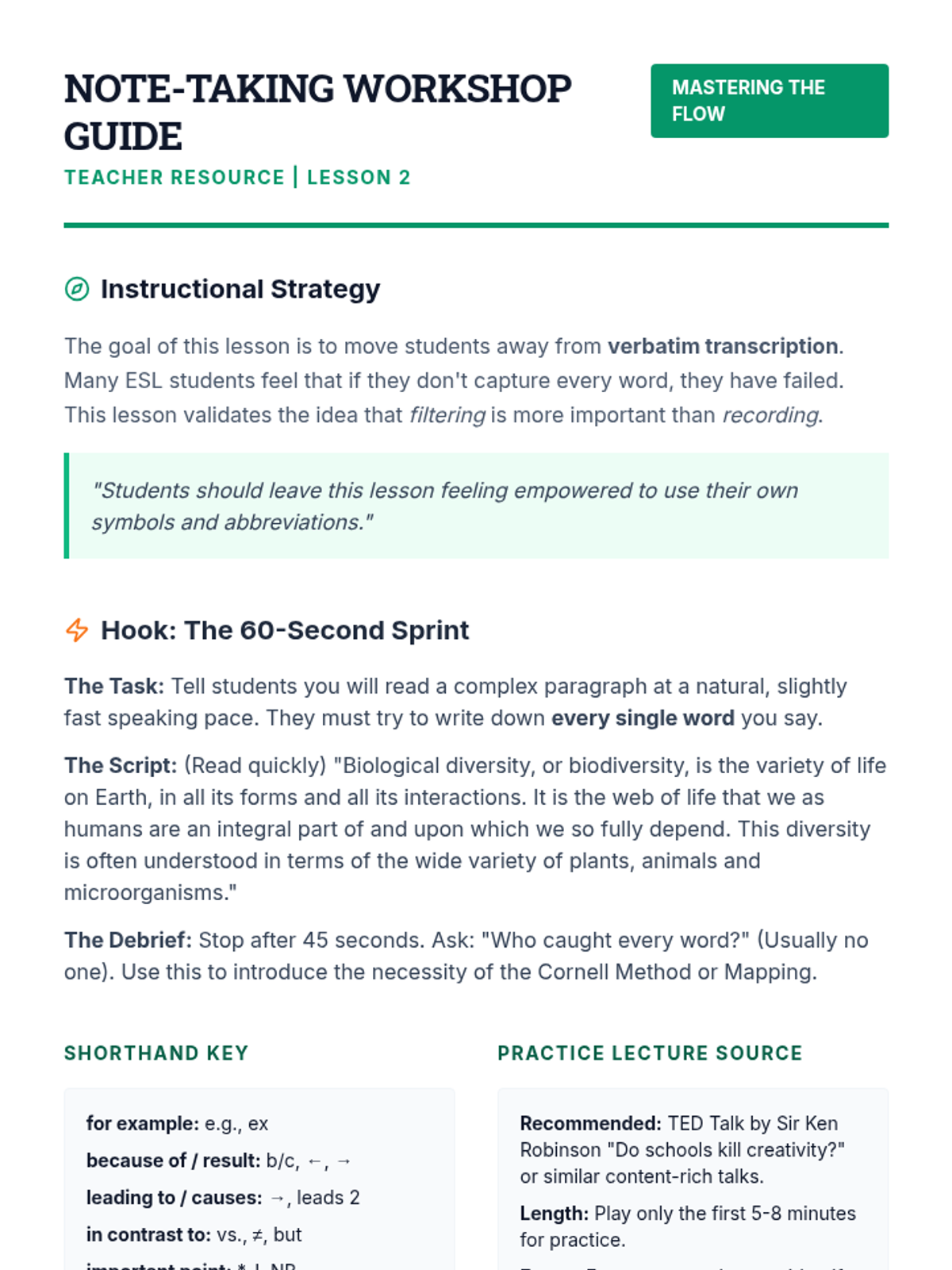
Students develop a personal shorthand system using symbols and abbreviations to capture academic audio in real-time. The lesson emphasizes speed and selective capture over verbatim transcription.
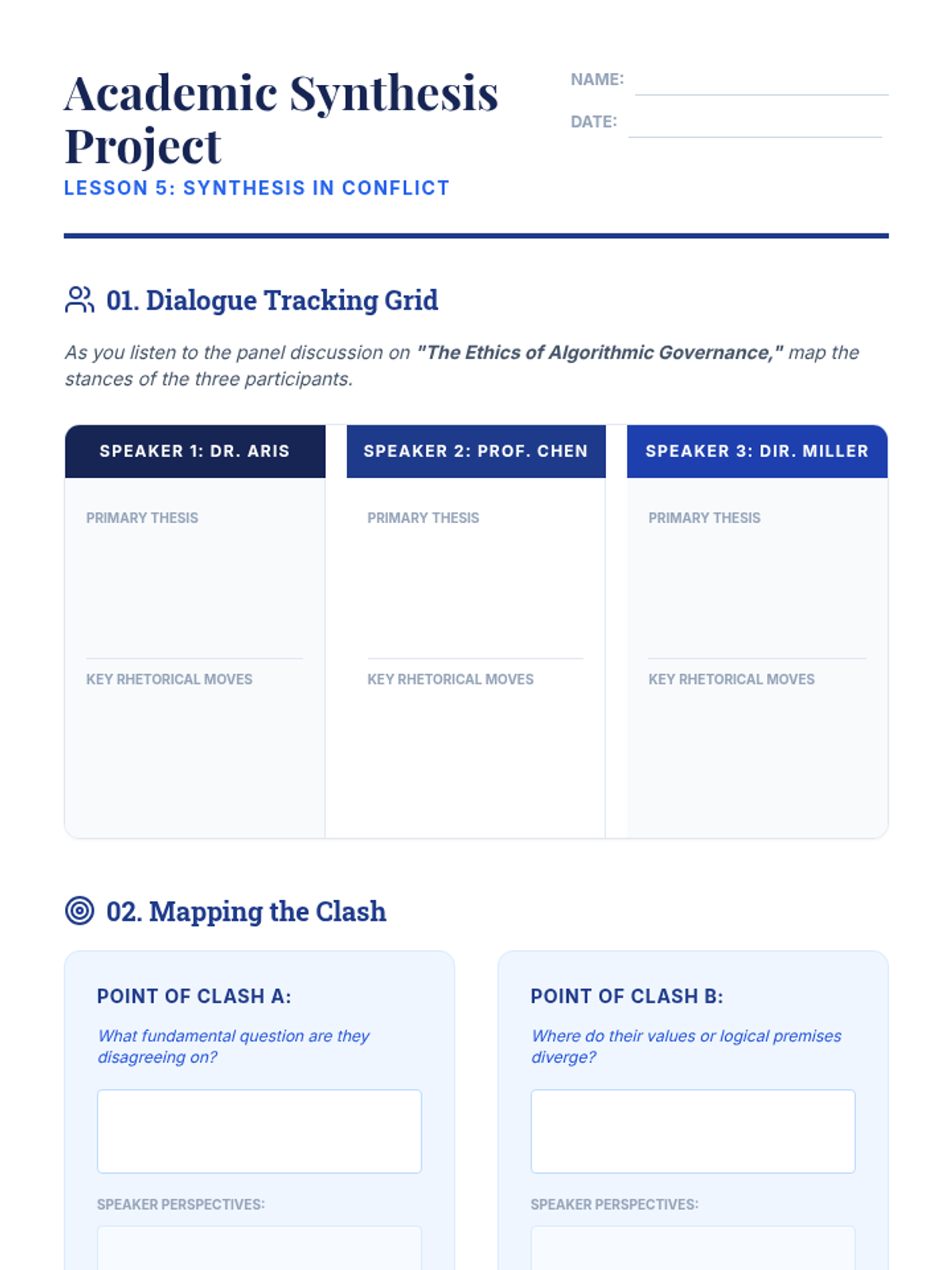
In this culminating lesson, students listen to a recorded panel discussion or debate featuring multiple speakers with opposing views. They must track individual arguments, identify points of clash, and synthesize the overall landscape of the debate into a summarized abstract.
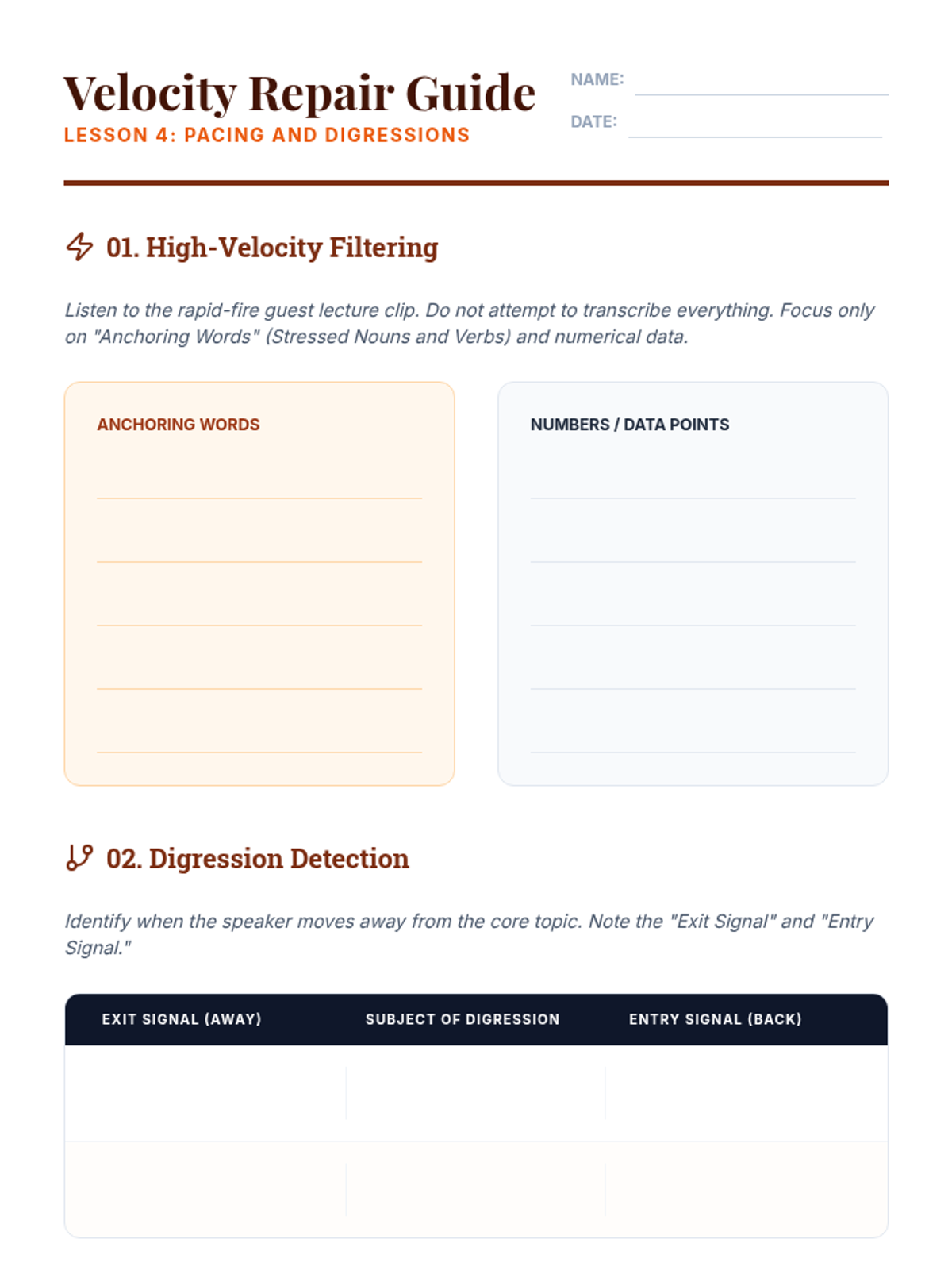
Students practice comprehension strategies for speakers who talk rapidly or frequently diverge from their main points. The lesson introduces 'repair strategies' for when a listener gets lost and techniques for filtering out irrelevant anecdotes.
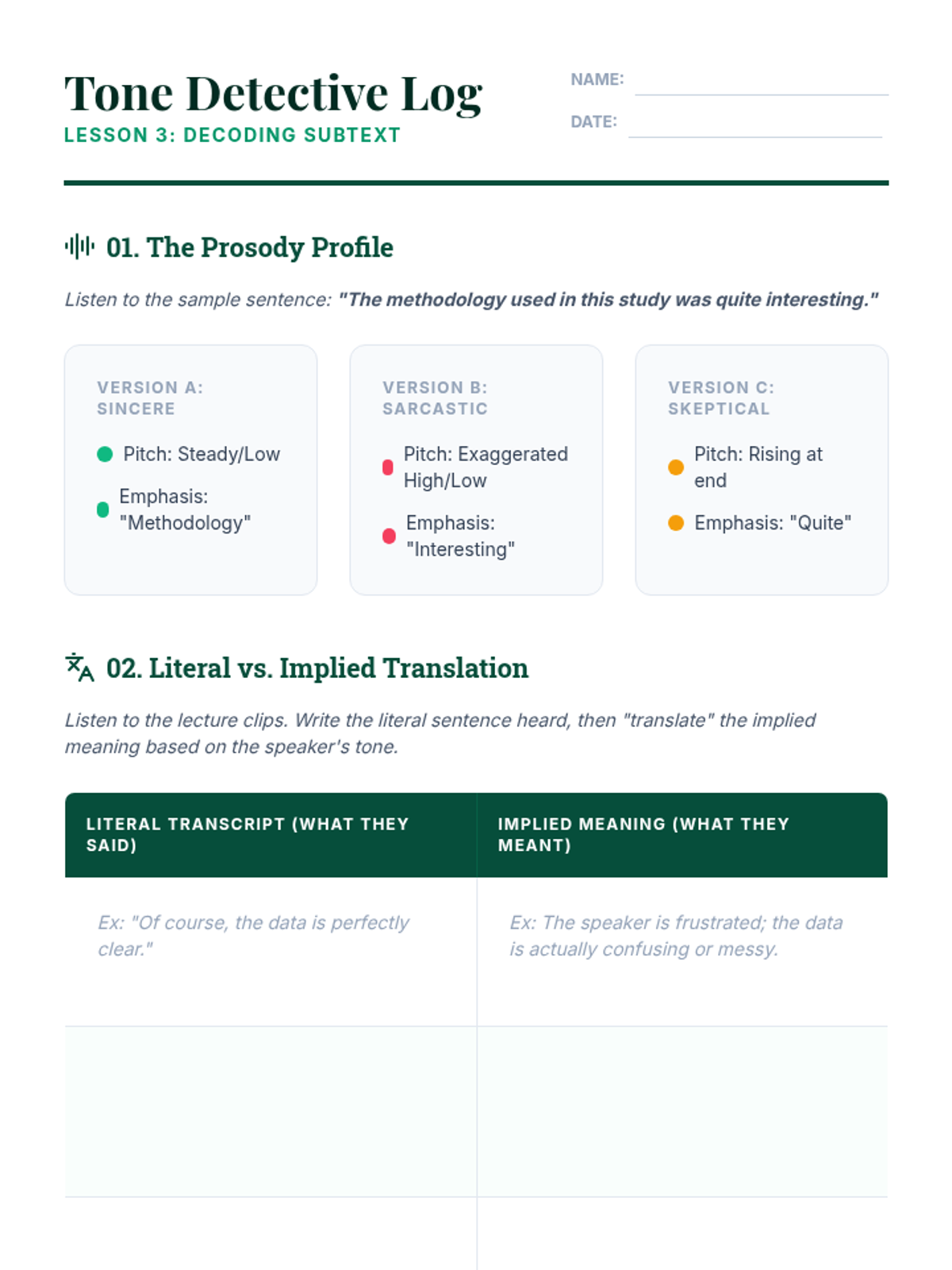
This lesson targets the subtleties of vocal inflection, stress, and intonation that convey meaning beyond the literal definitions of words. Students analyze clips featuring sarcasm, skepticism, and understatement to practice inferring the speaker's true stance.
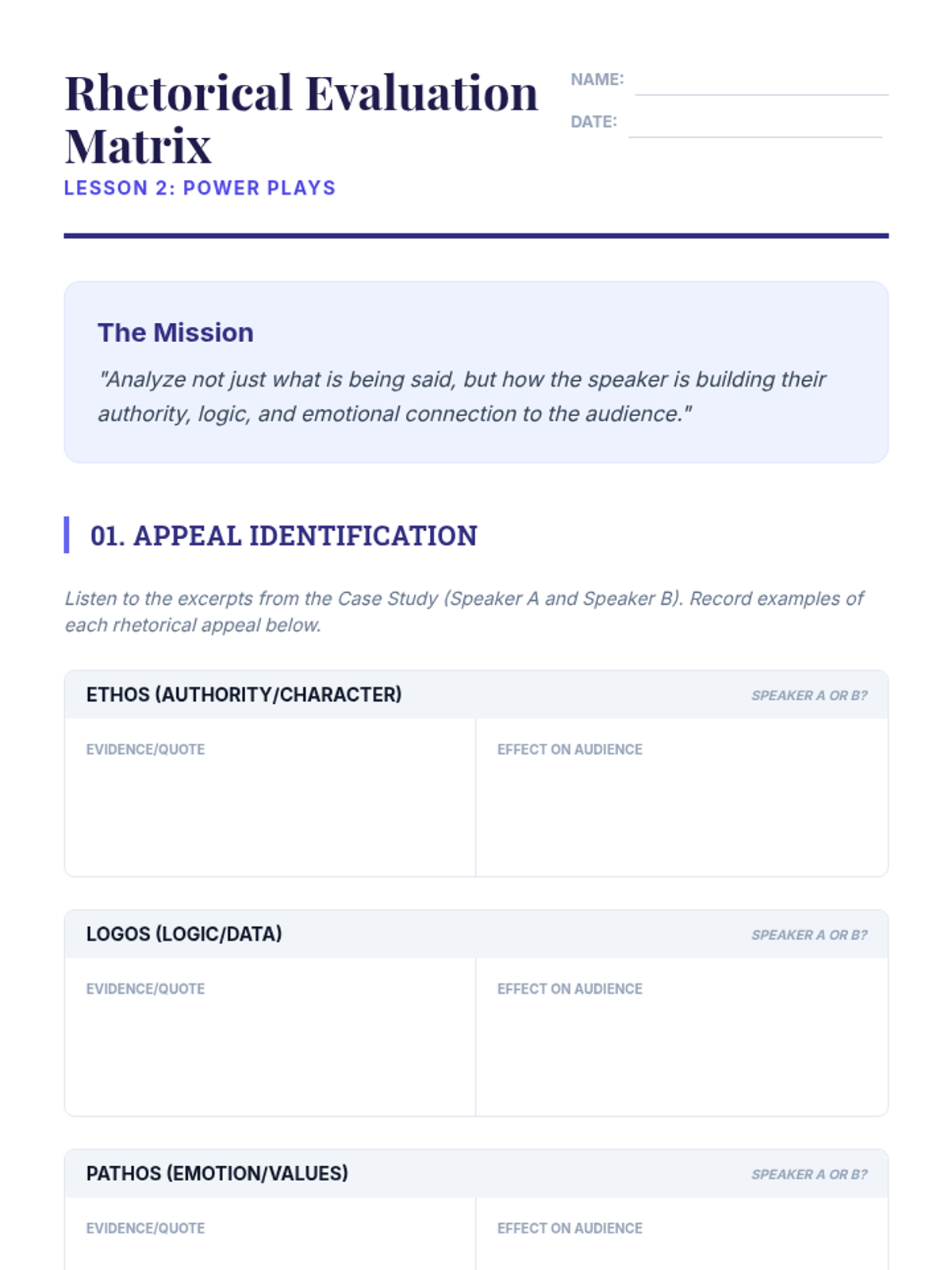
Learners examine how speakers use ethos, pathos, and logos, alongside stylistic devices like metaphor and analogy, to strengthen their arguments in academic contexts. Through case studies of famous academic speeches, students isolate specific rhetorical moves and evaluate their effectiveness.
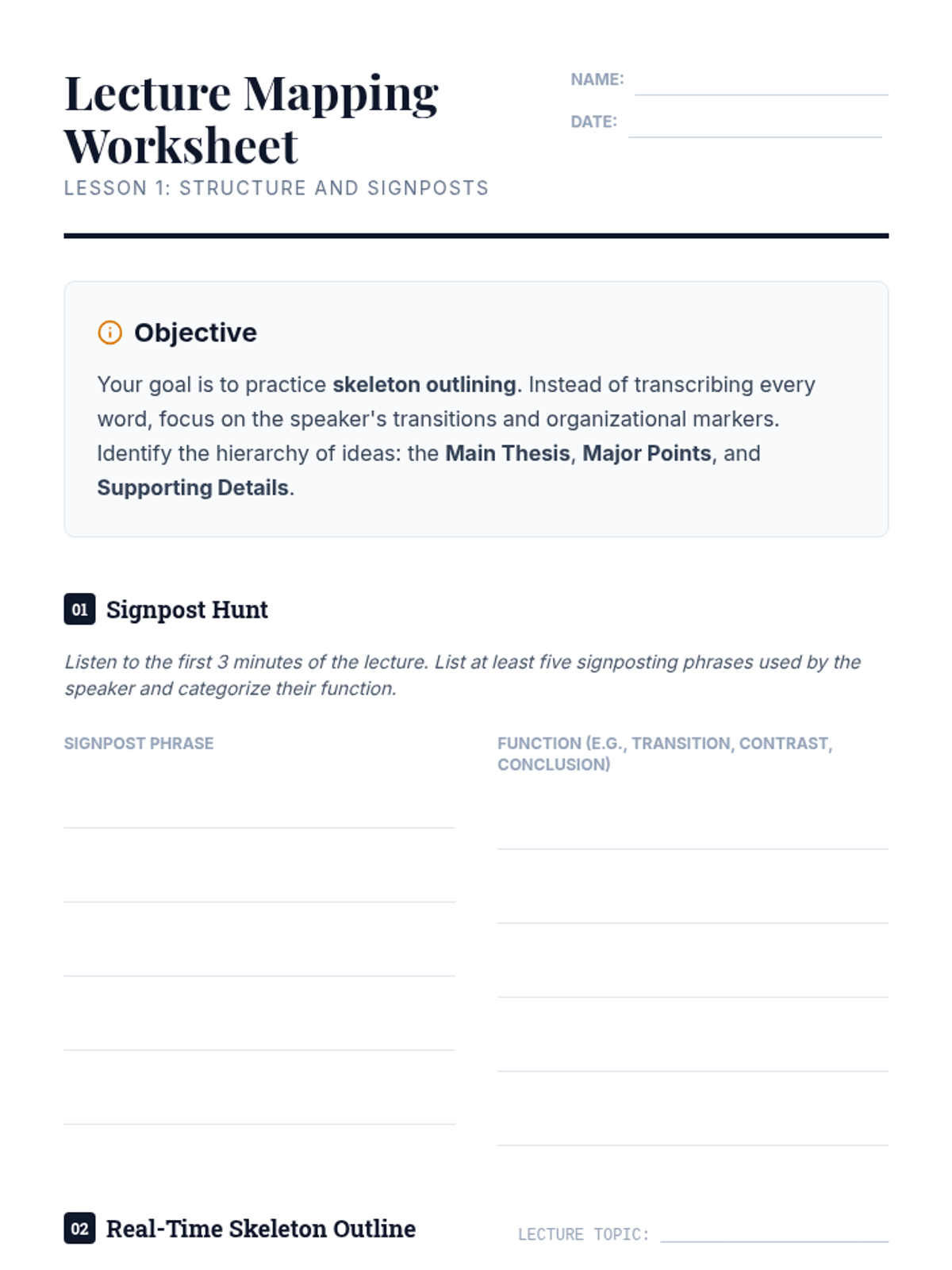
Students listen to excerpts from dense academic lectures to identify discourse markers that signal transitions, cause-effect relationships, and hierarchical organization. The lesson focuses on creating skeleton outlines in real-time to track the flow of complex arguments.
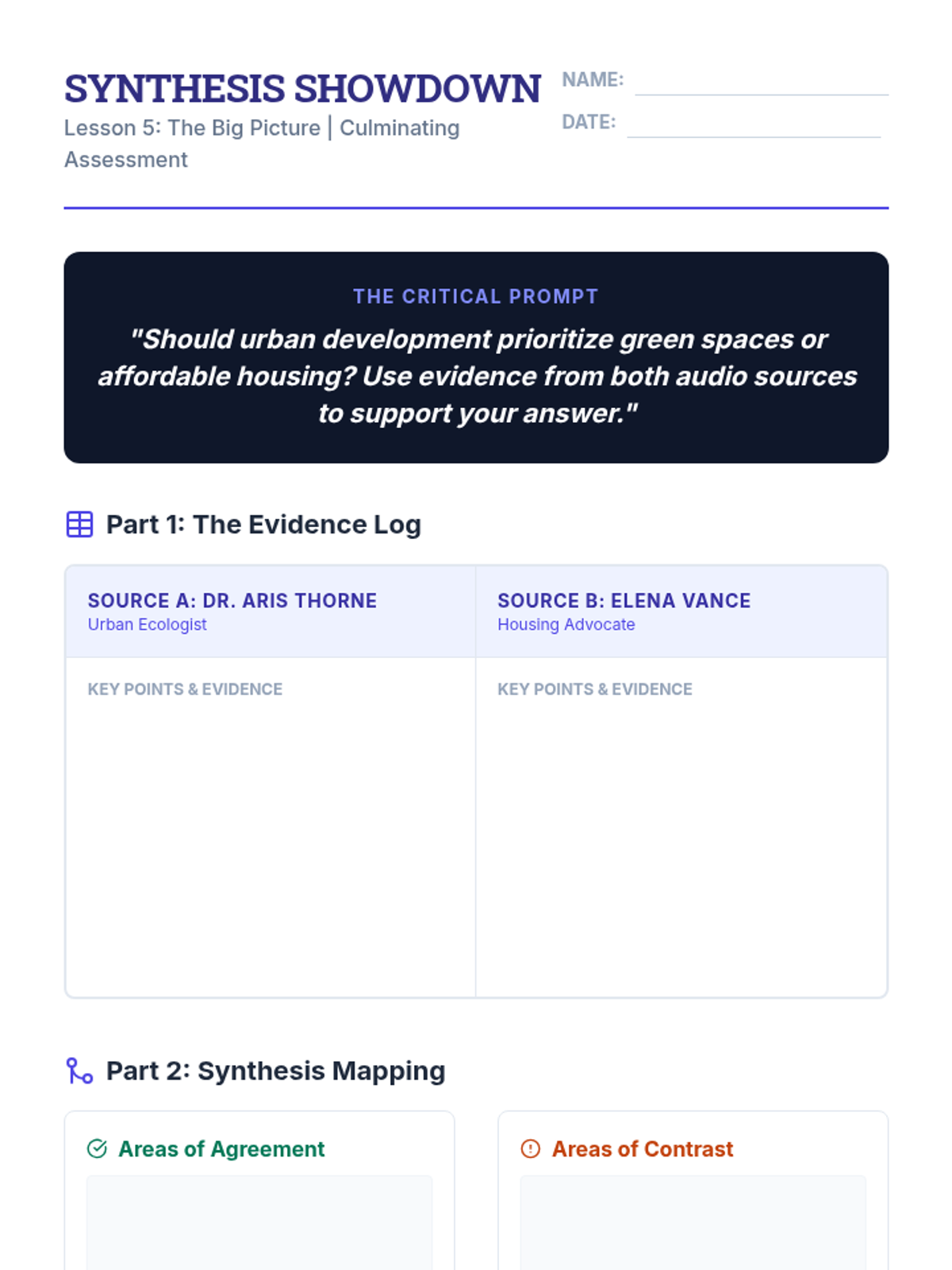
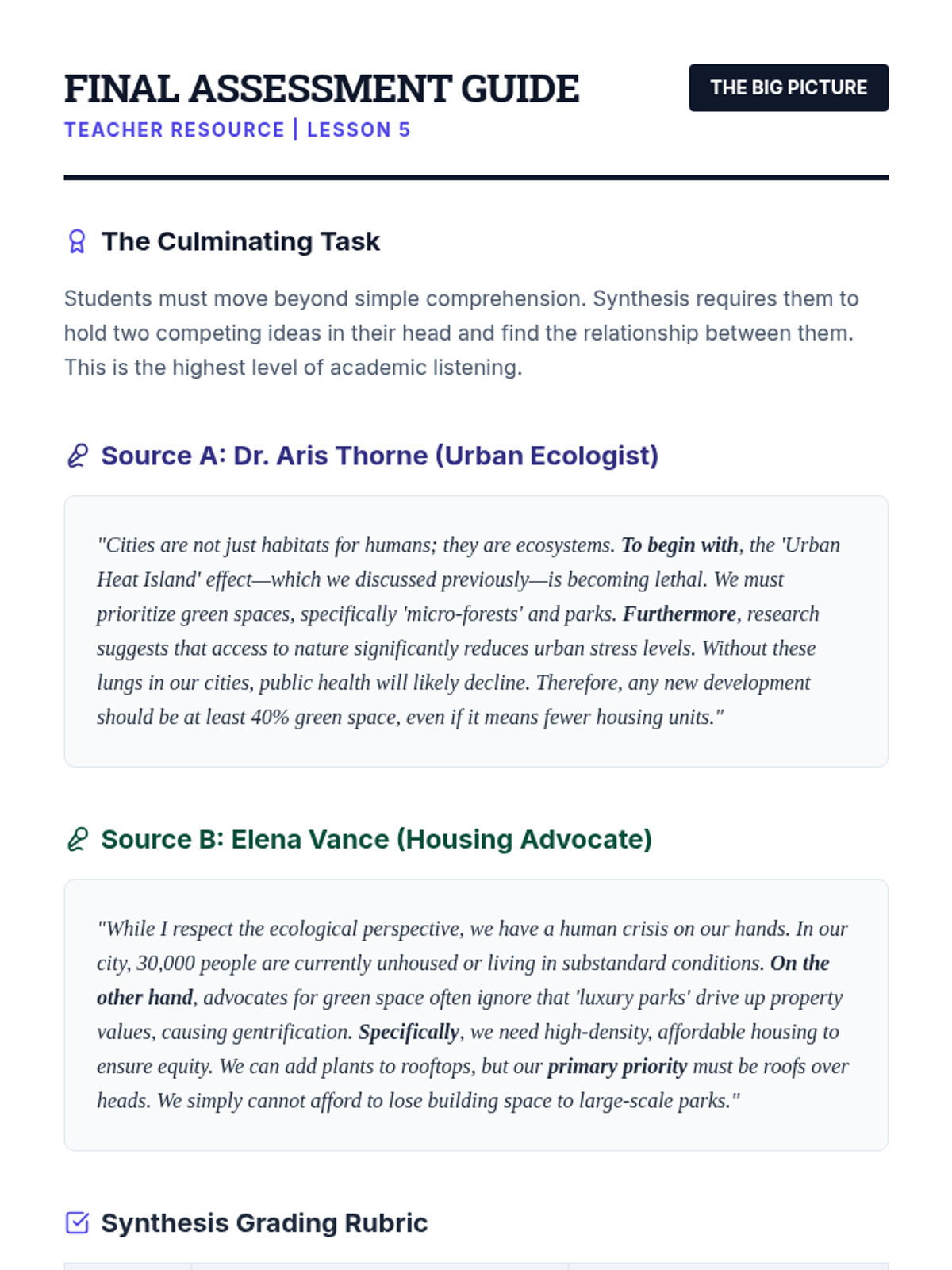
In this culminating lesson, students listen to two contrasting viewpoints on a single global issue. They must synthesize the information to answer a prompt, citing specific details from both audio sources to support their conclusion.
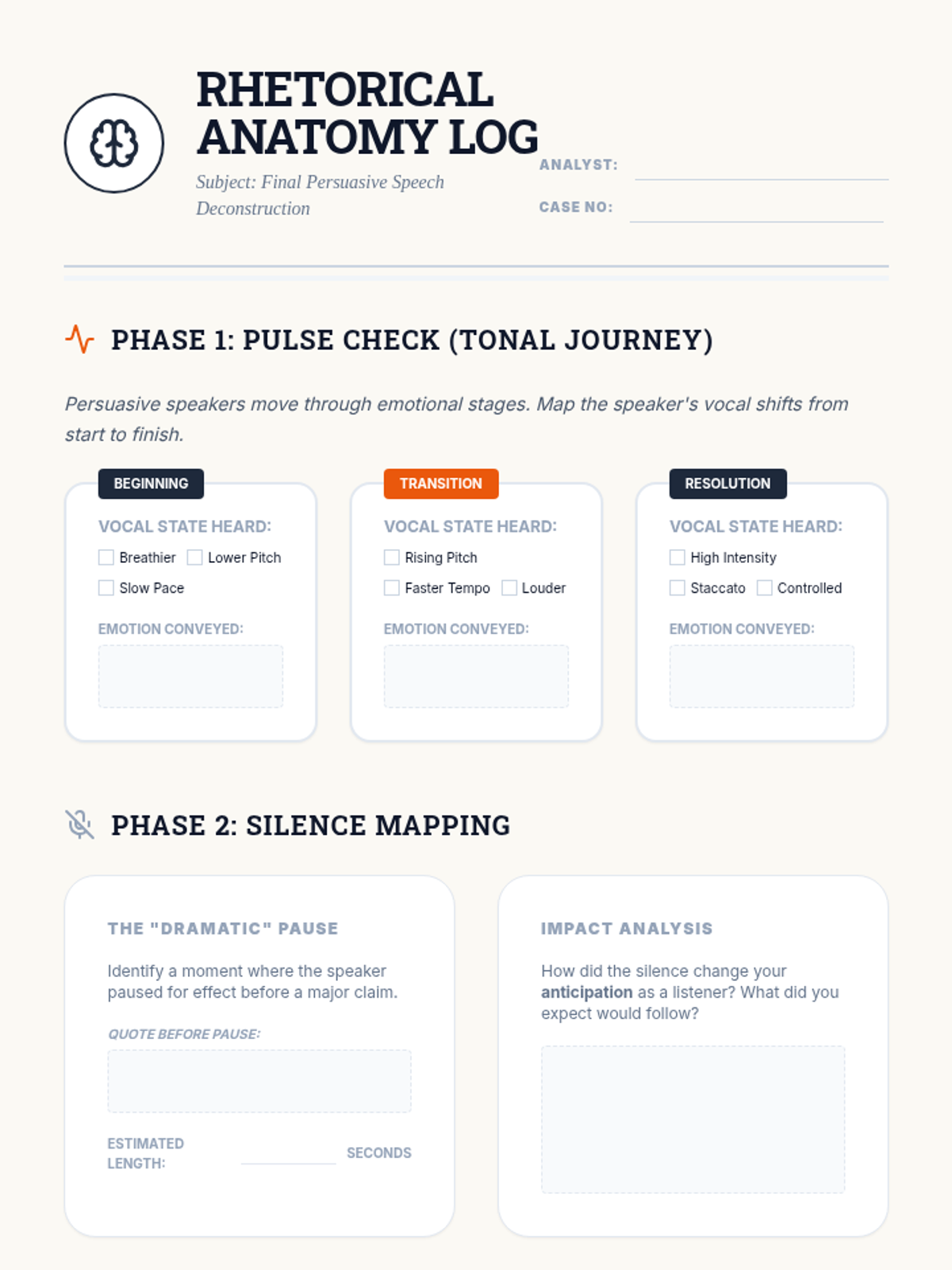
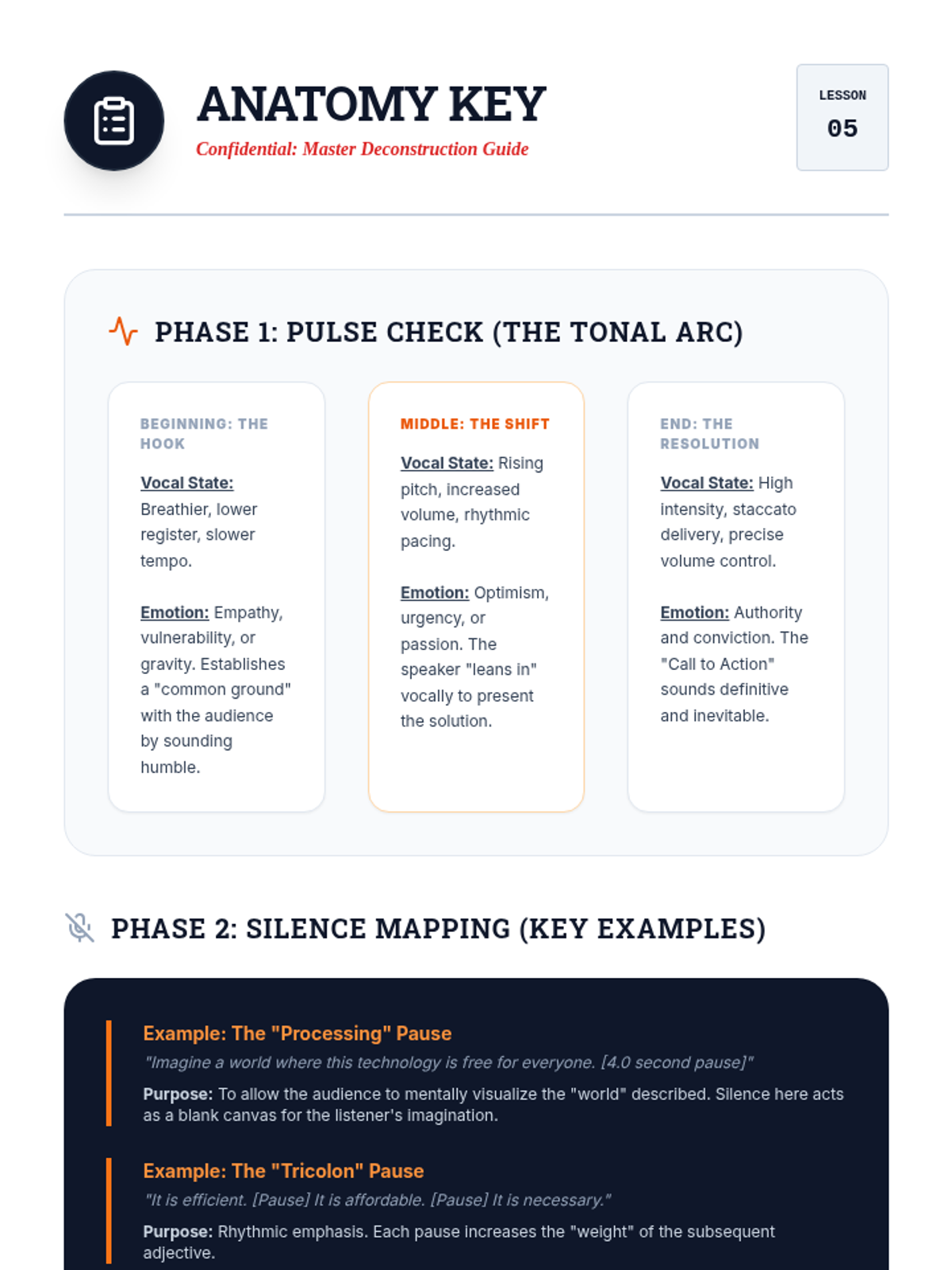
Deconstructs persuasive speech to identify rhetorical strategies, tonal journeys, and the use of strategic pauses for emotional impact.
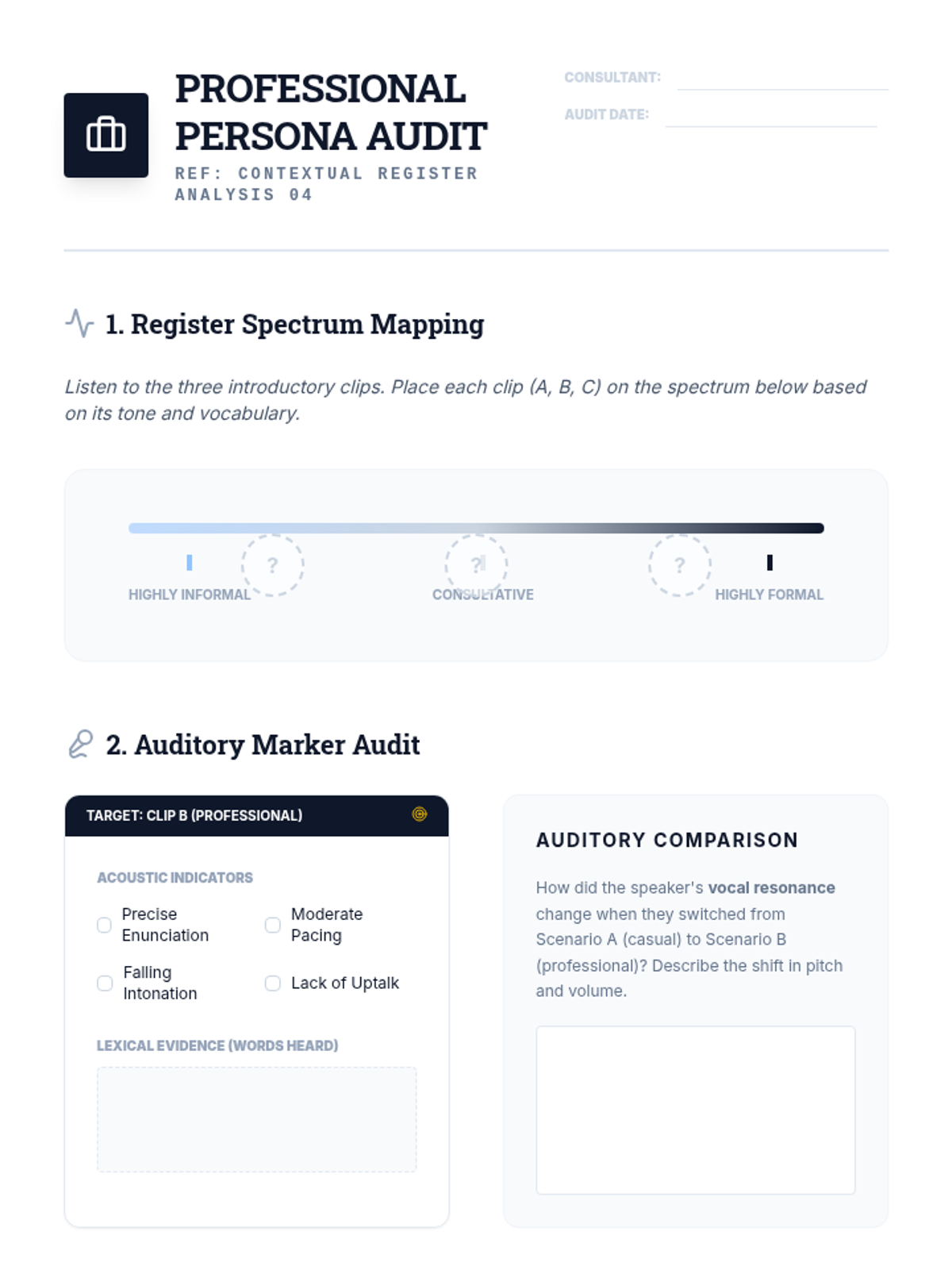
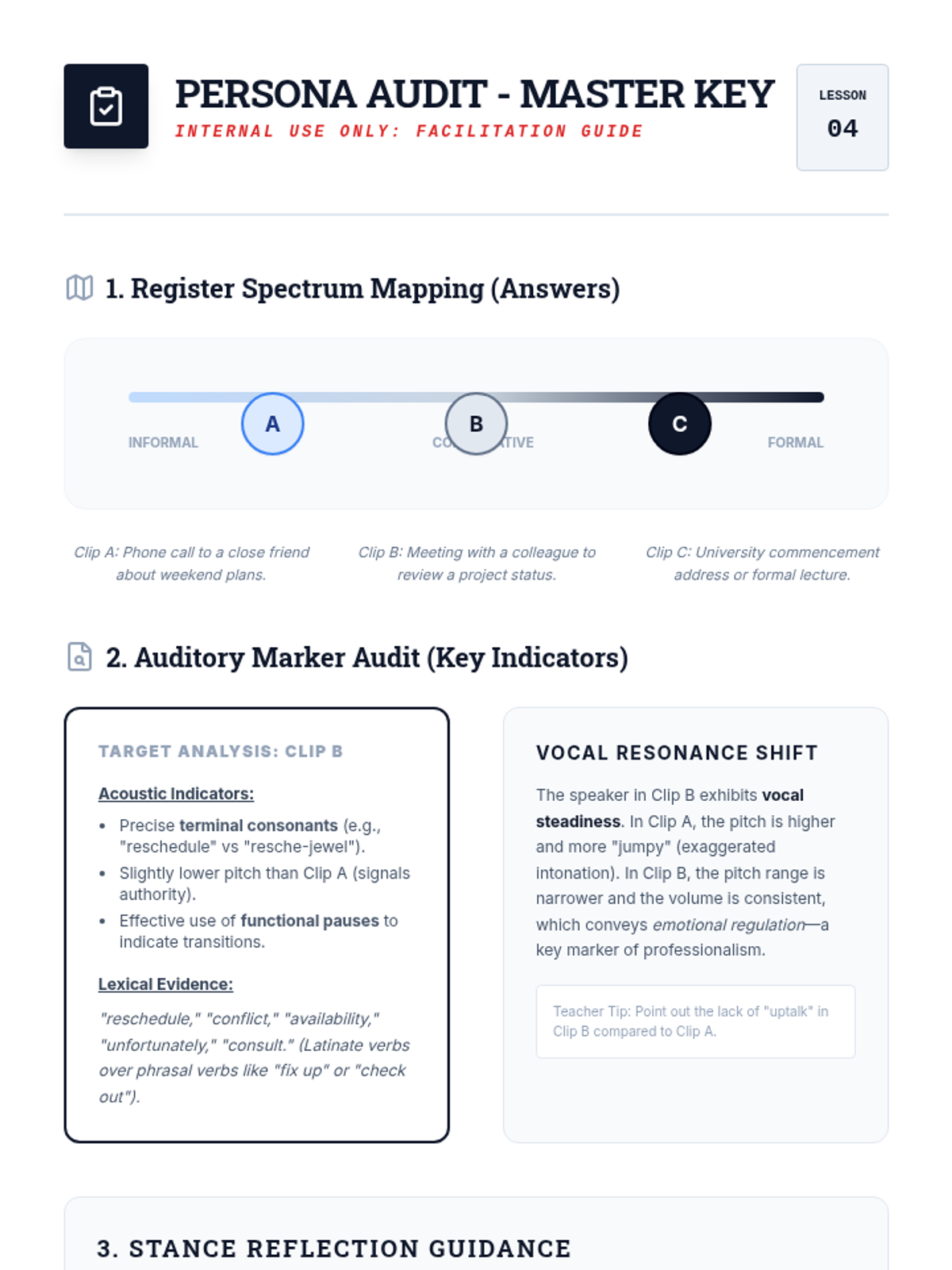
Examines how speakers adjust their register and tone based on audience and context, focusing on professional vs. informal markers.
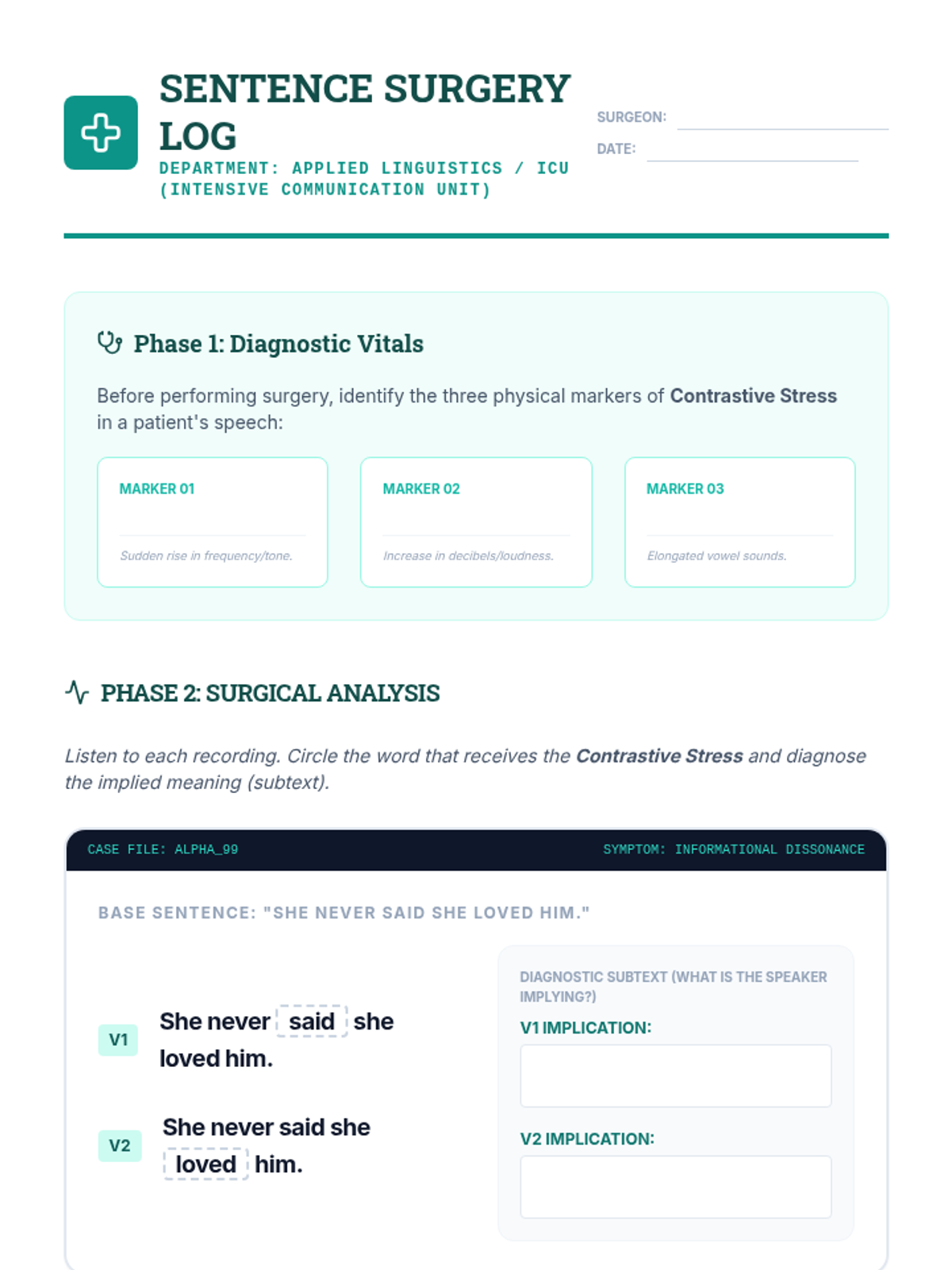
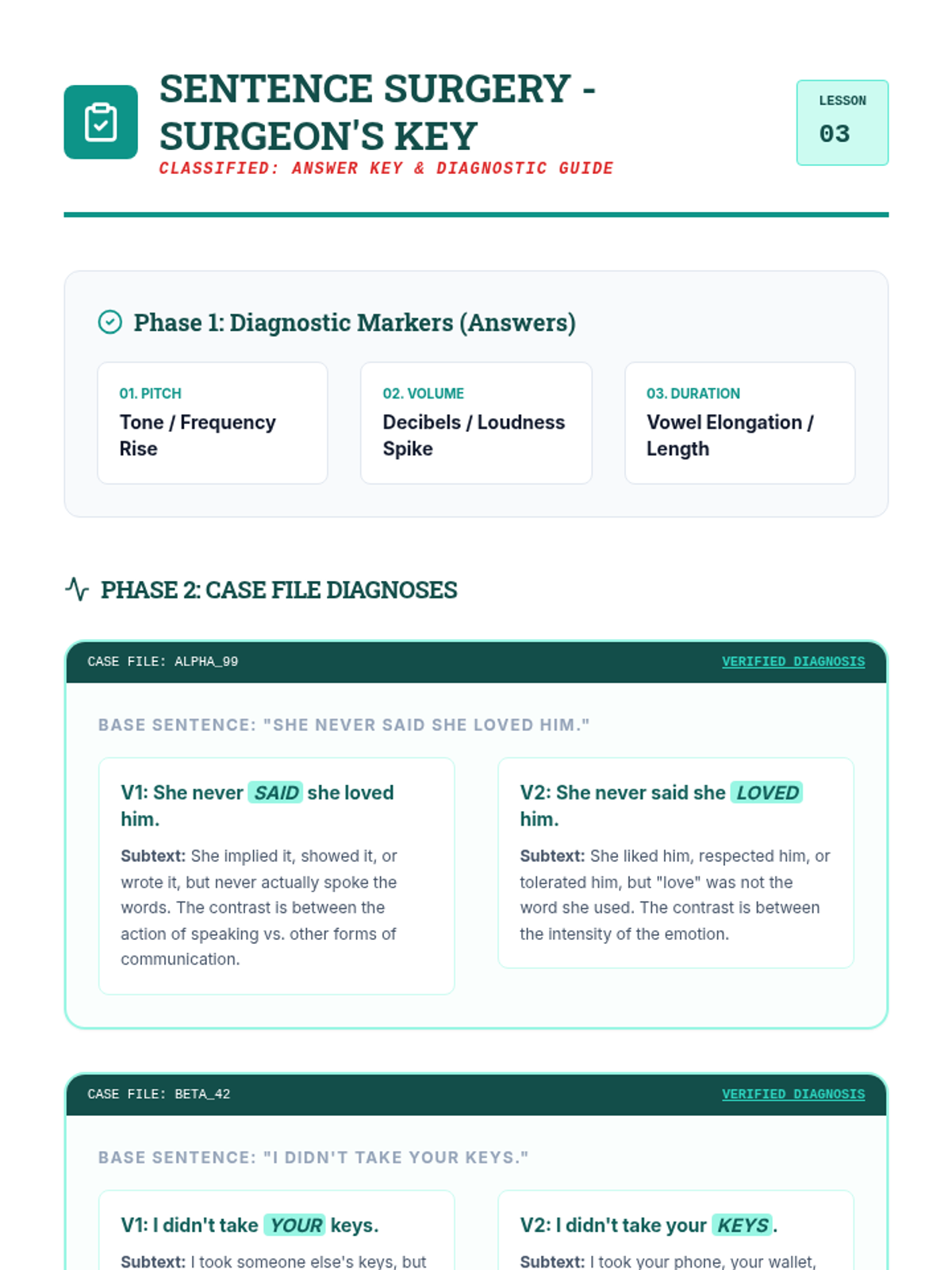
Explores how shifting stress within a single sentence radically alters its implied meaning and subtext.
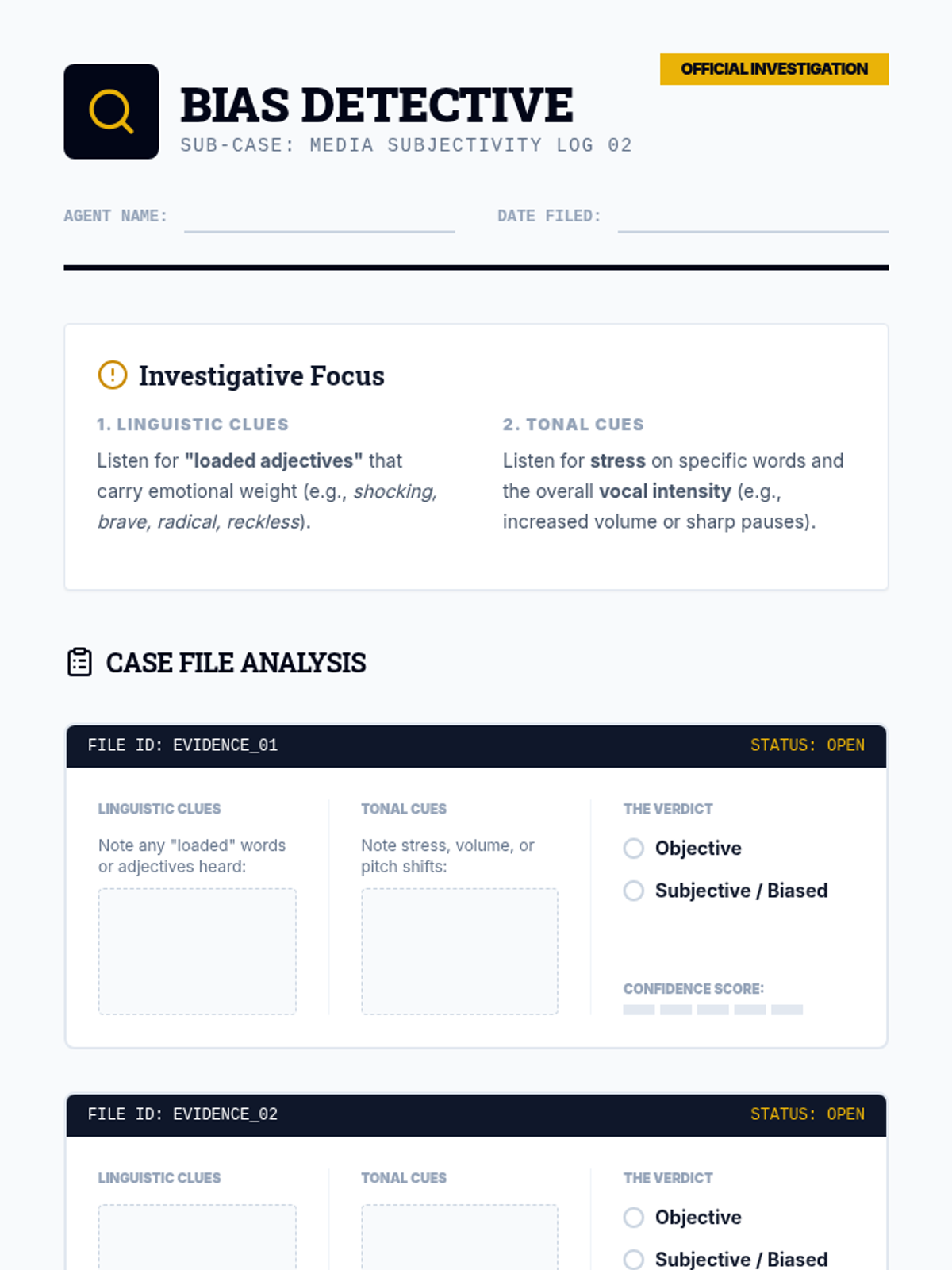
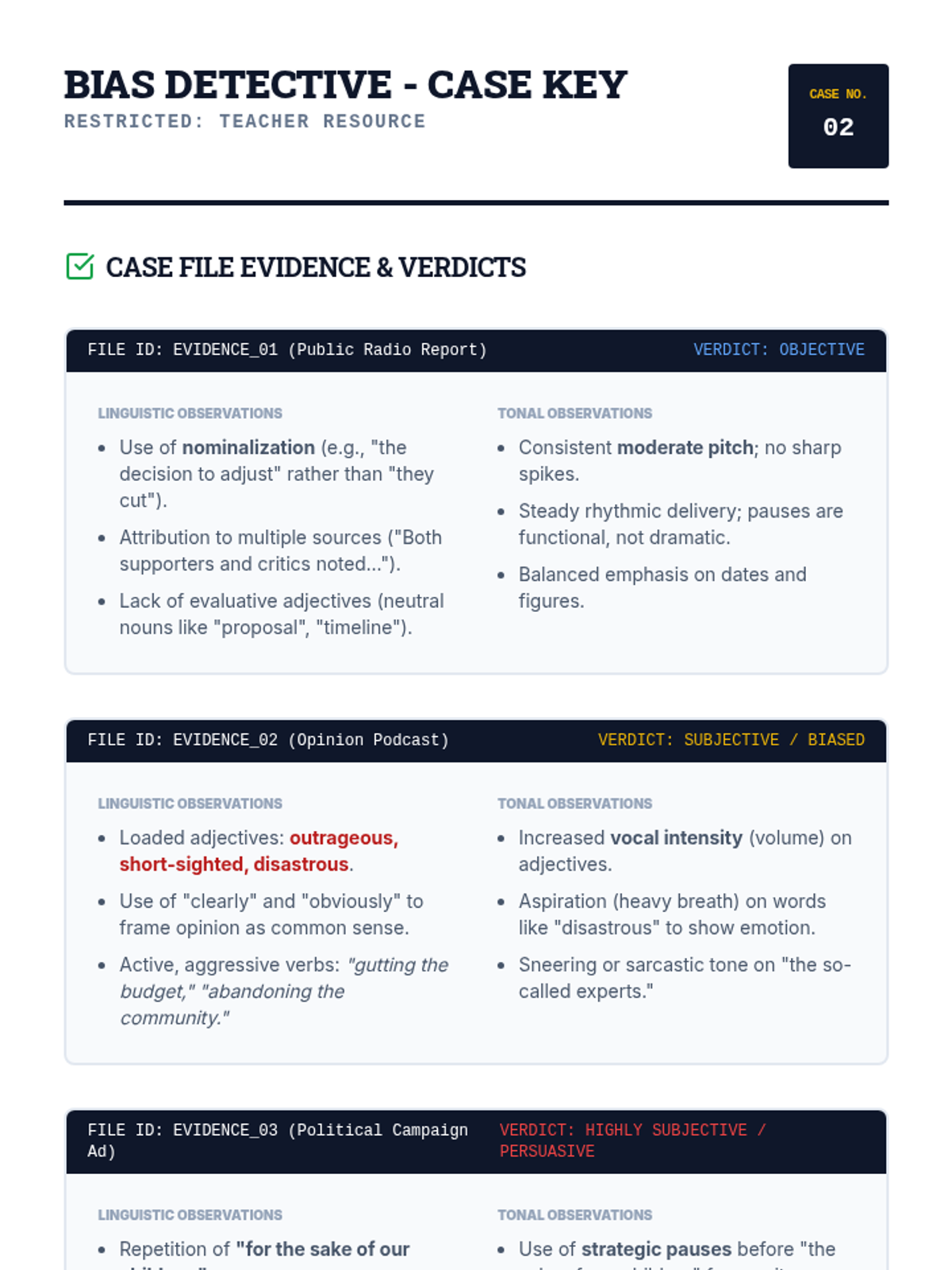
Focuses on identifying bias and subjectivity in media and speeches by analyzing word choice, emotional tone, and selective emphasis.
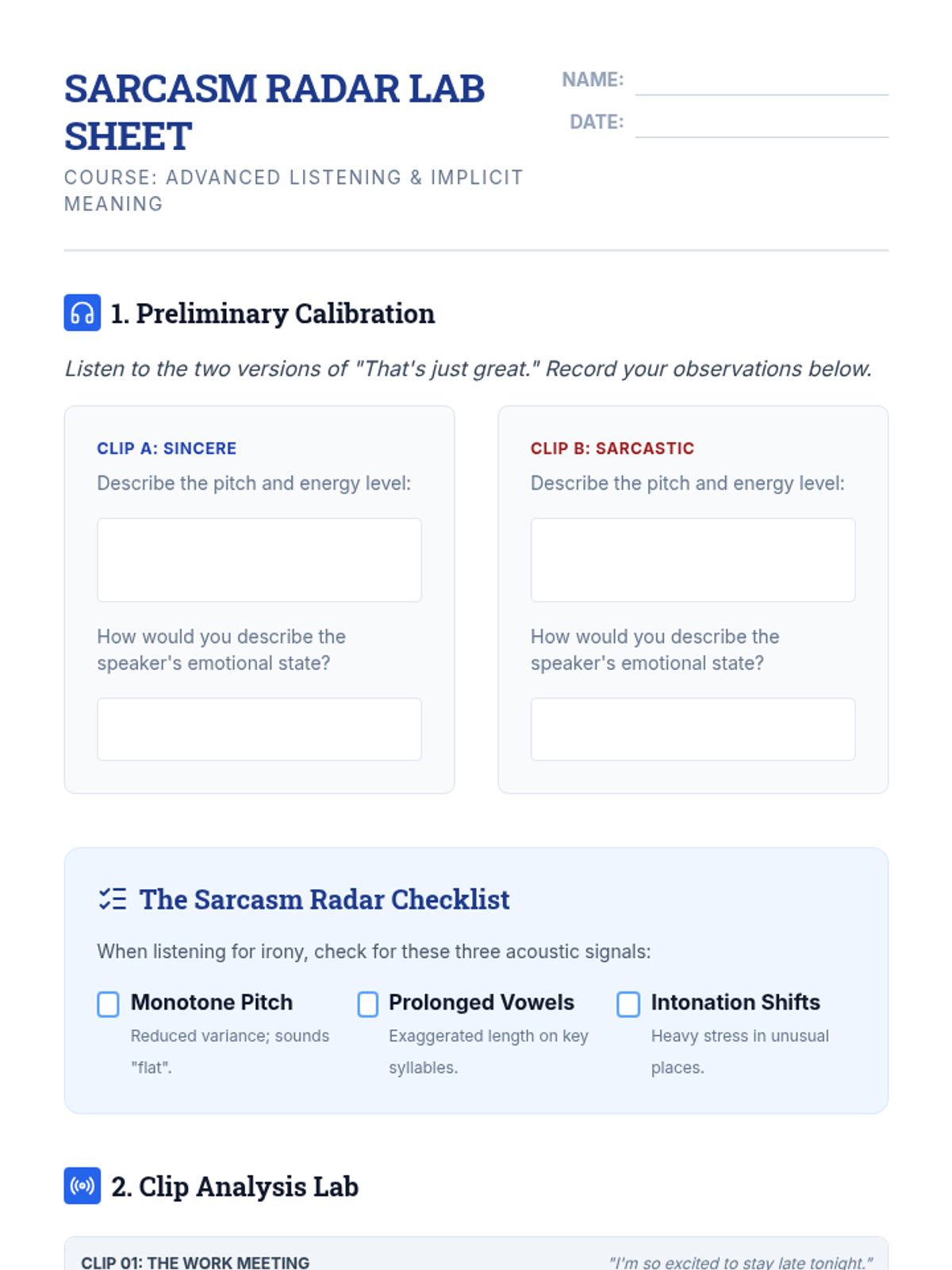
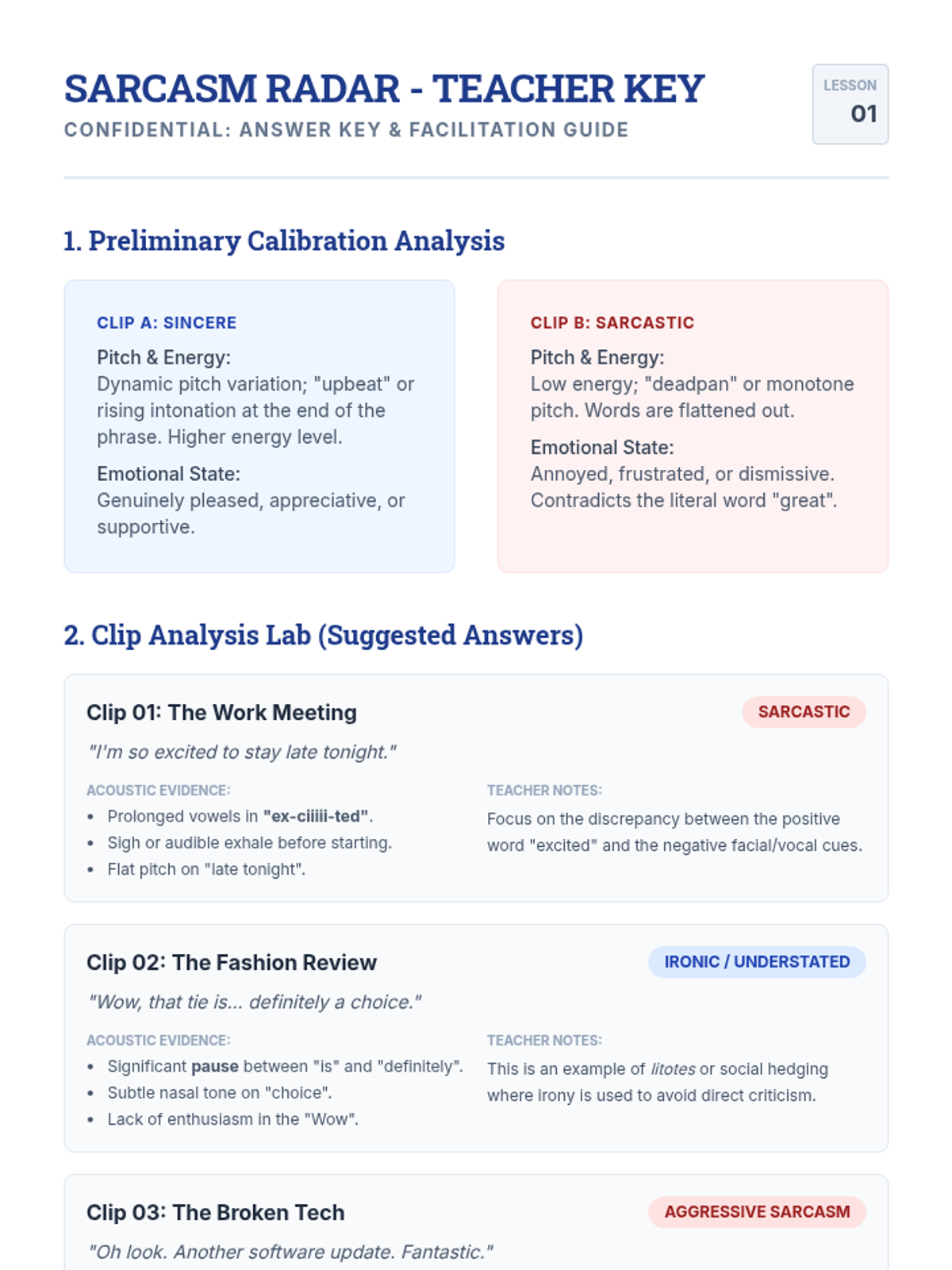
Students analyze the acoustic cues of irony and sarcasm—such as pitch, length, and intonation—to distinguish between literal and intended meaning in spoken English.
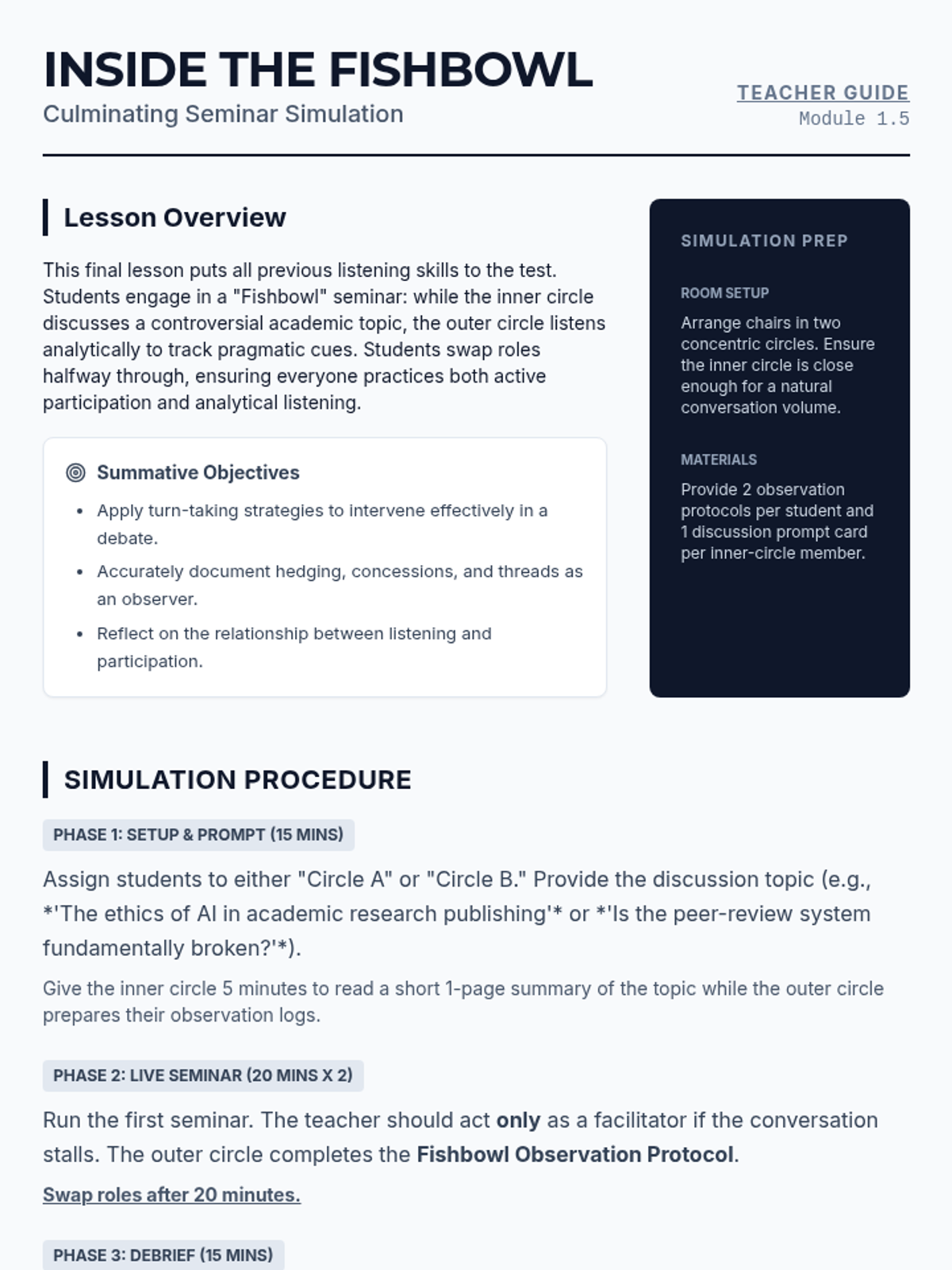
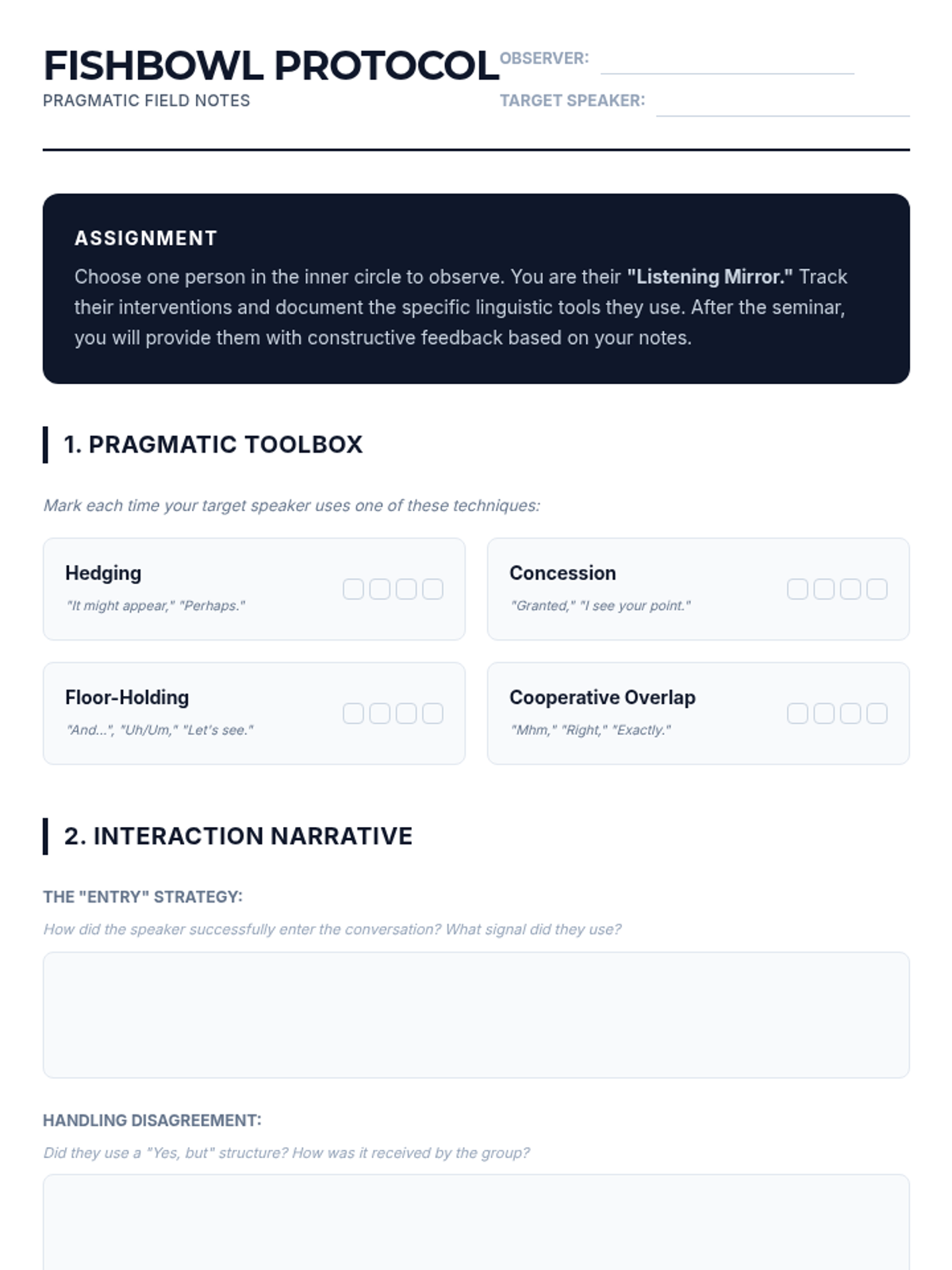
A culminating simulation where students alternate between active participation and observational analysis using the fishbowl method. Focuses on applying all previously learned listening skills.
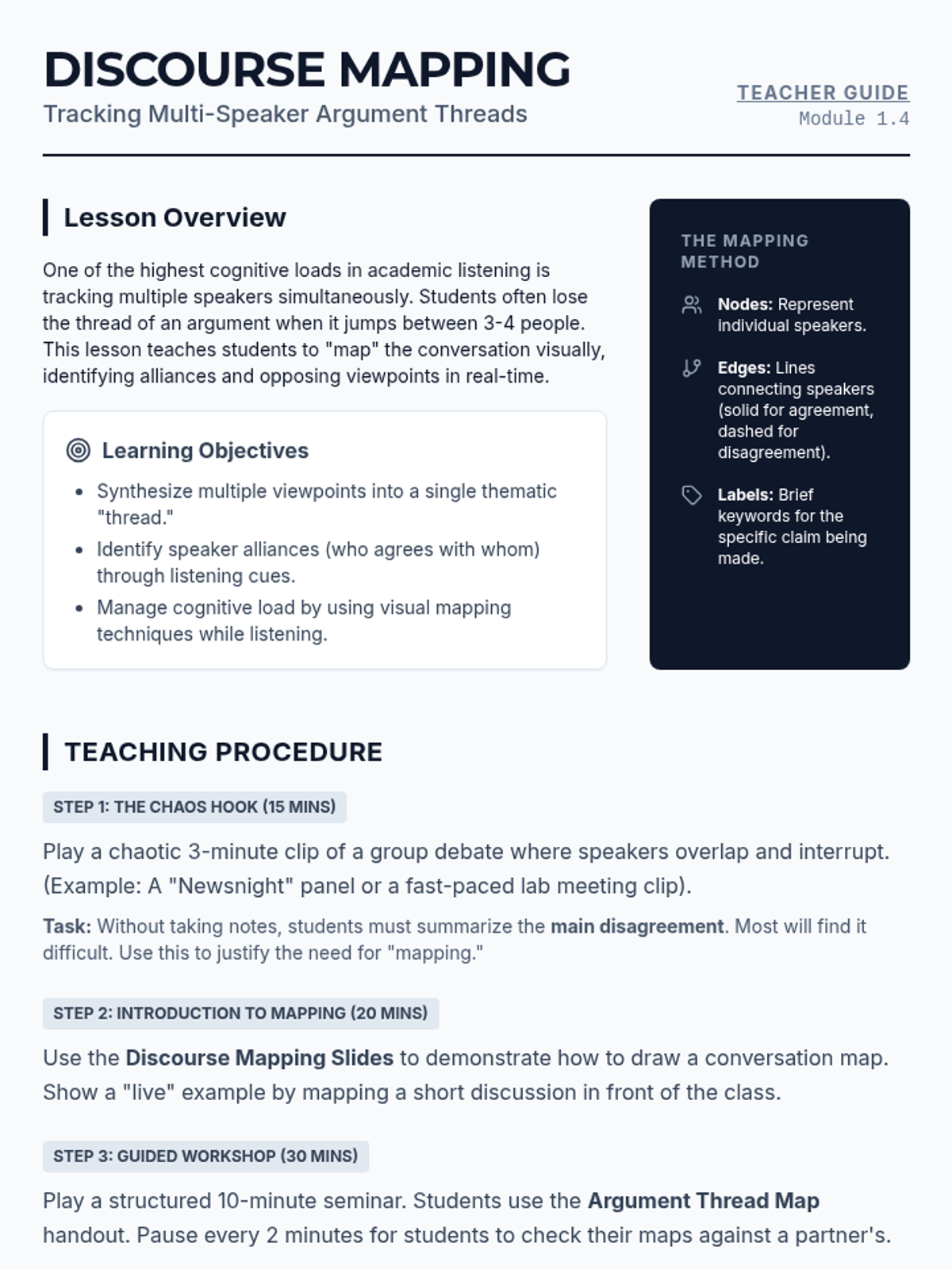
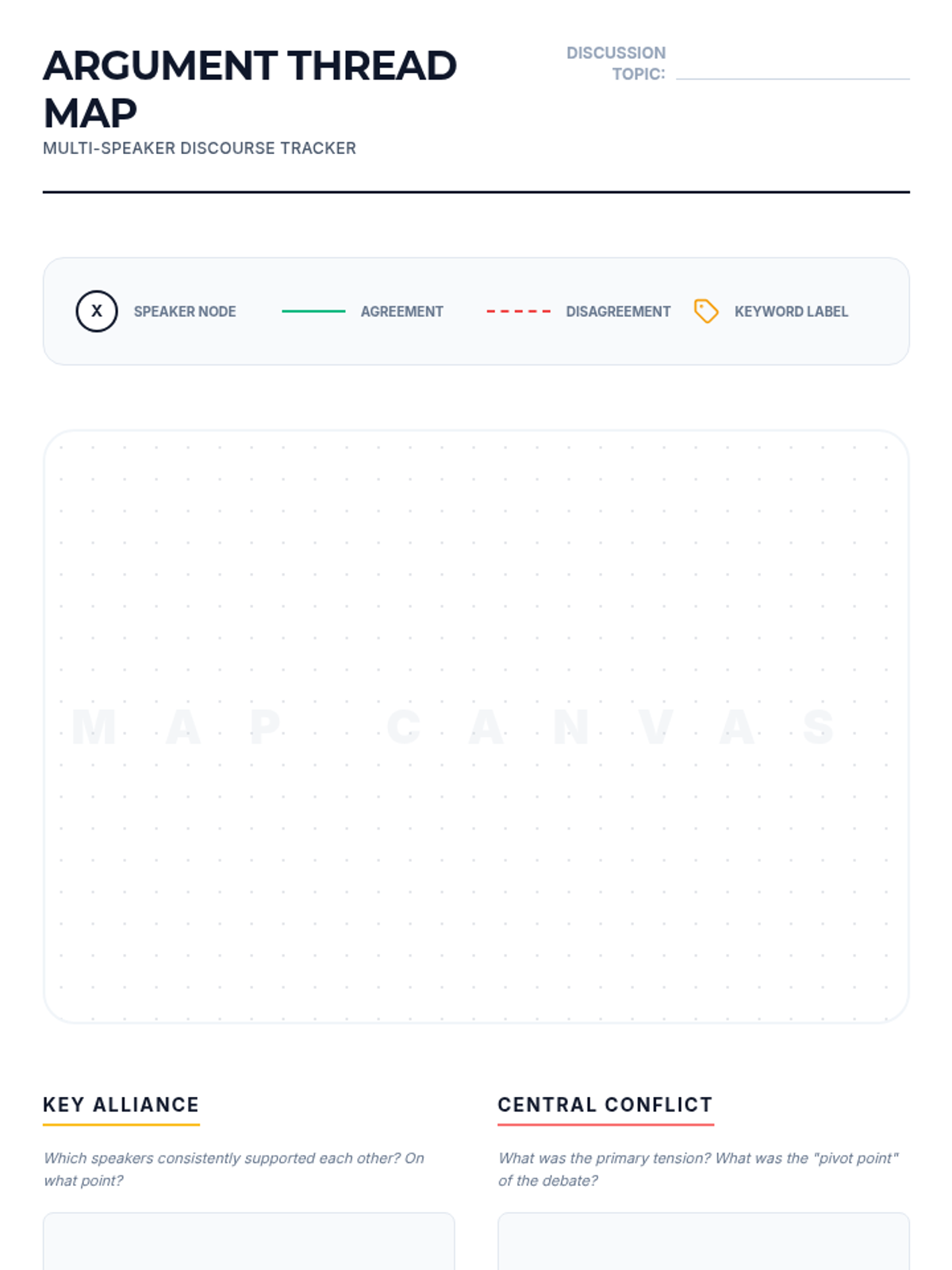
Focuses on the cognitive load of tracking multiple speakers in a fast-paced environment. Students practice mapping argument threads and identifying alliances in group discourse.
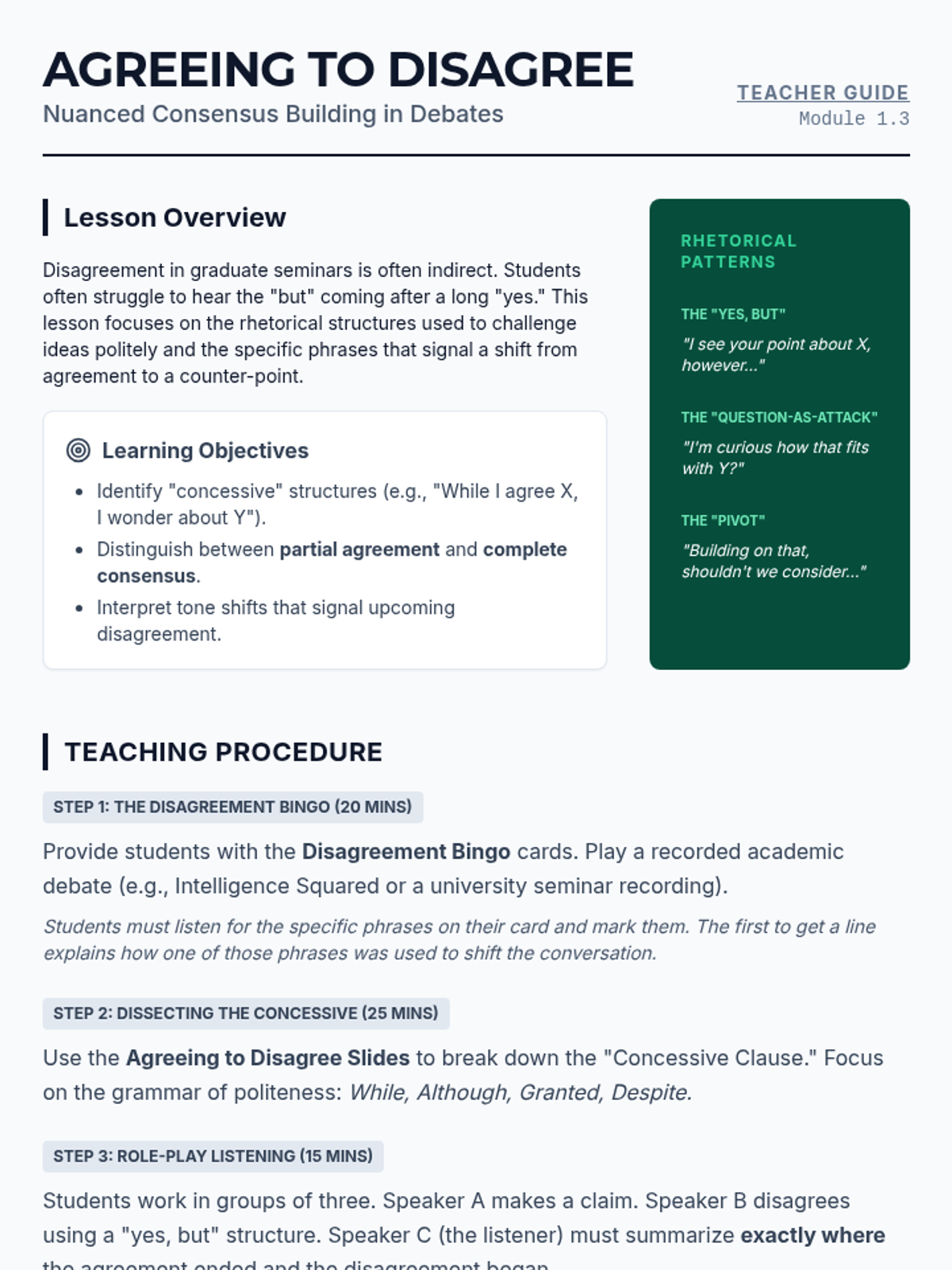
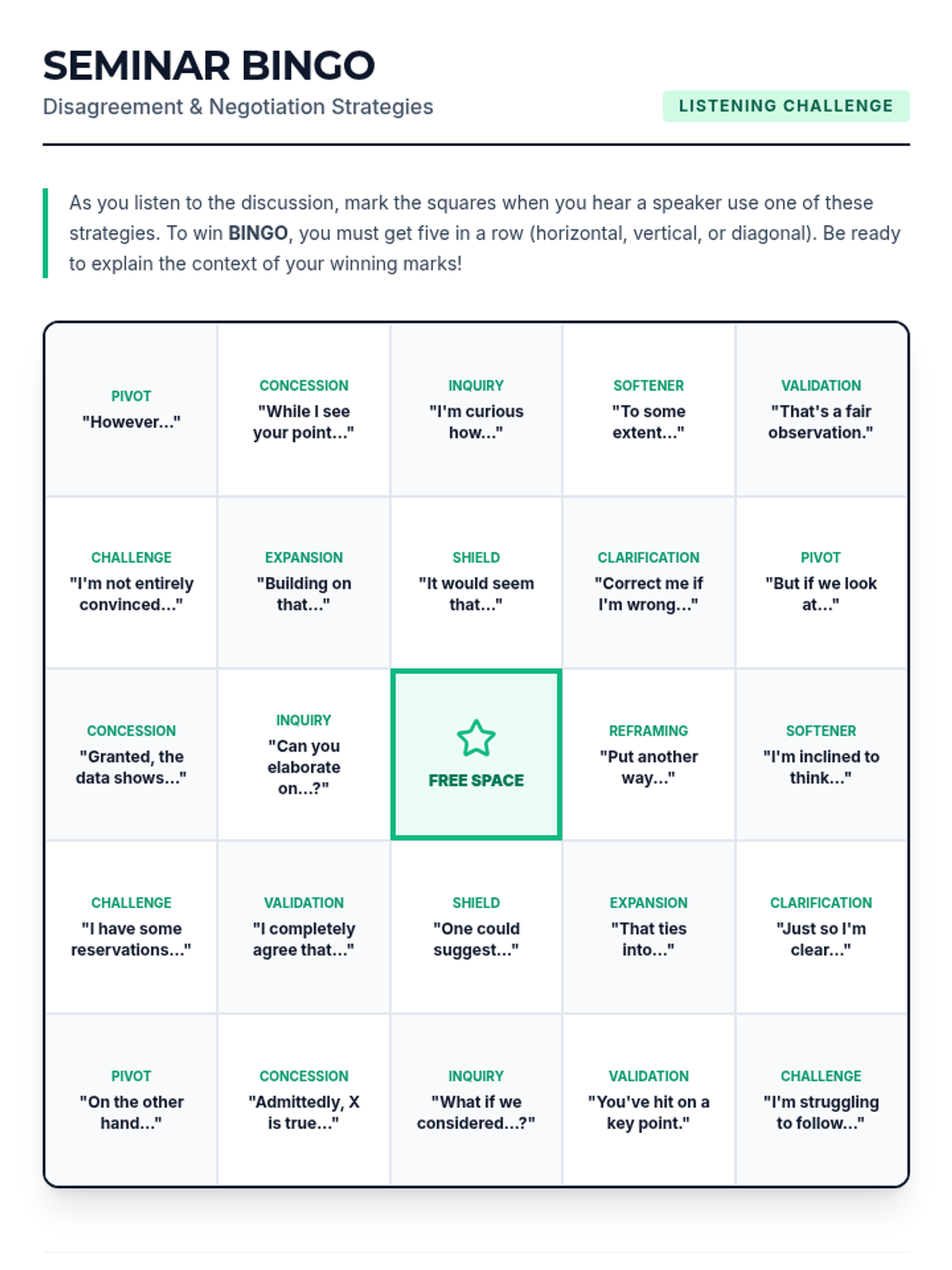
Students identify the rhetorical structures used to agree and disagree in intellectual debates. The lesson focuses on 'yes, but' constructions and nuanced consensus building.
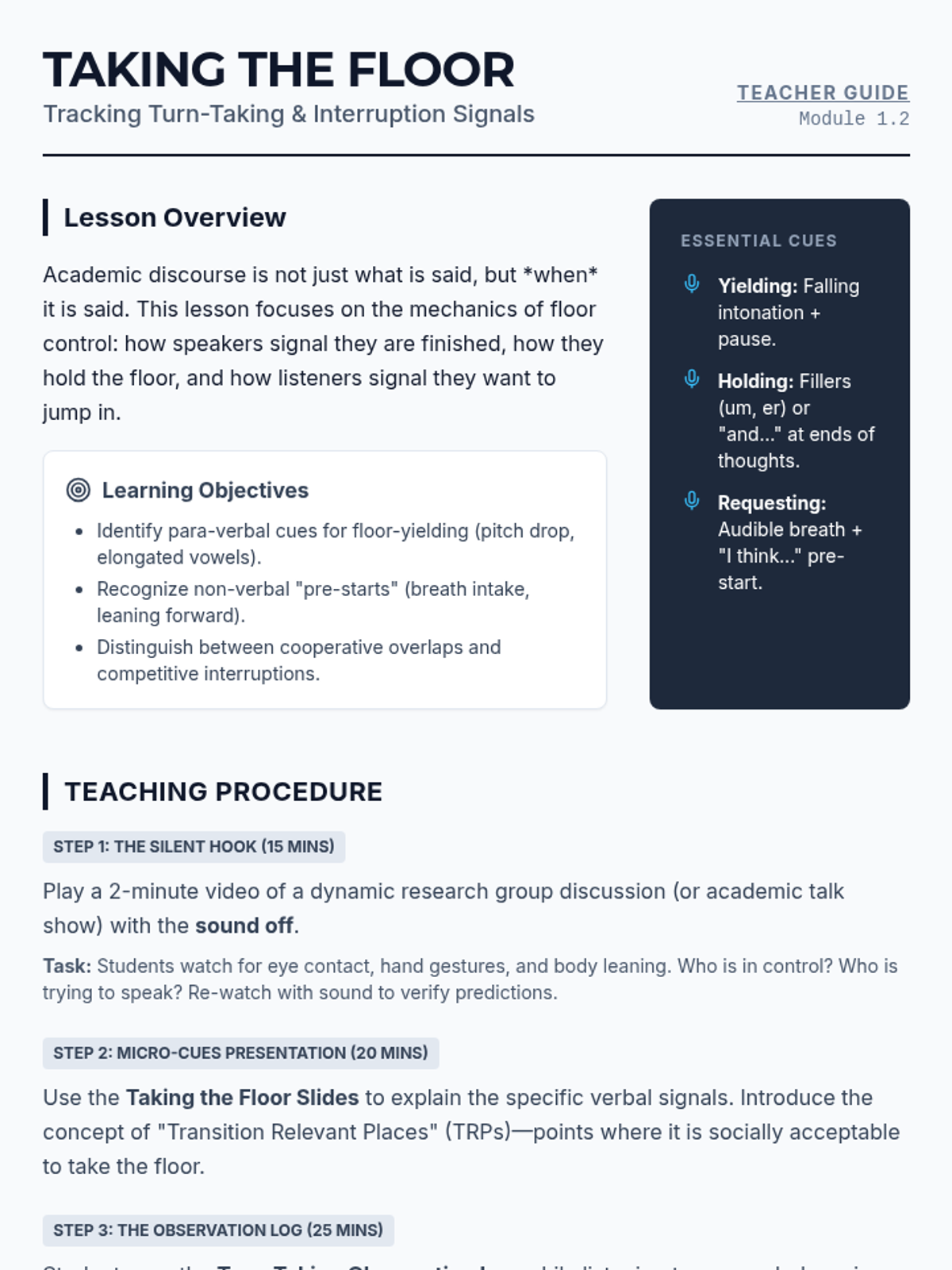
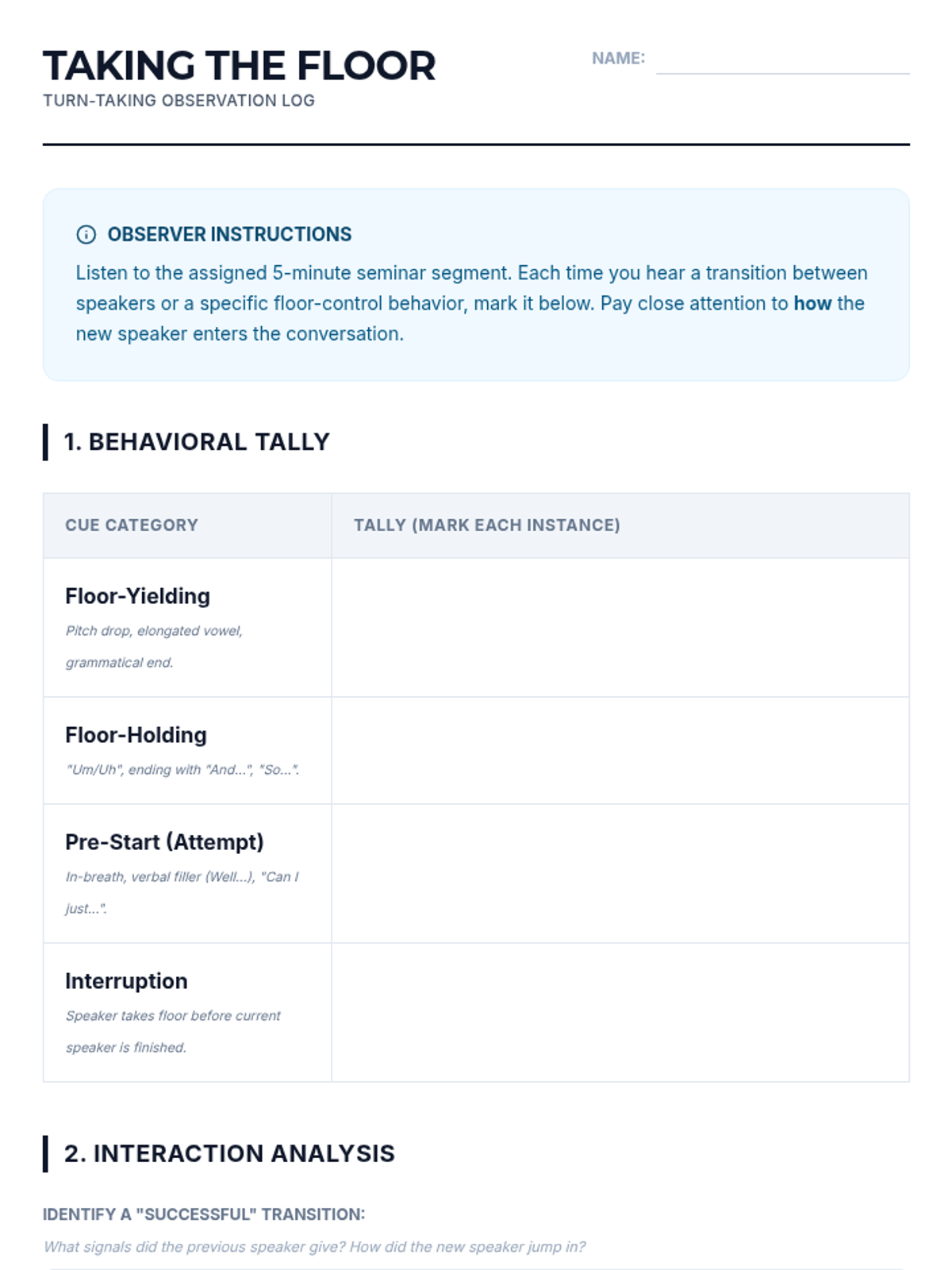
An analysis of the verbal and non-verbal cues used to manage floor control in academic discussions. Students learn to predict and identify transitions between speakers.
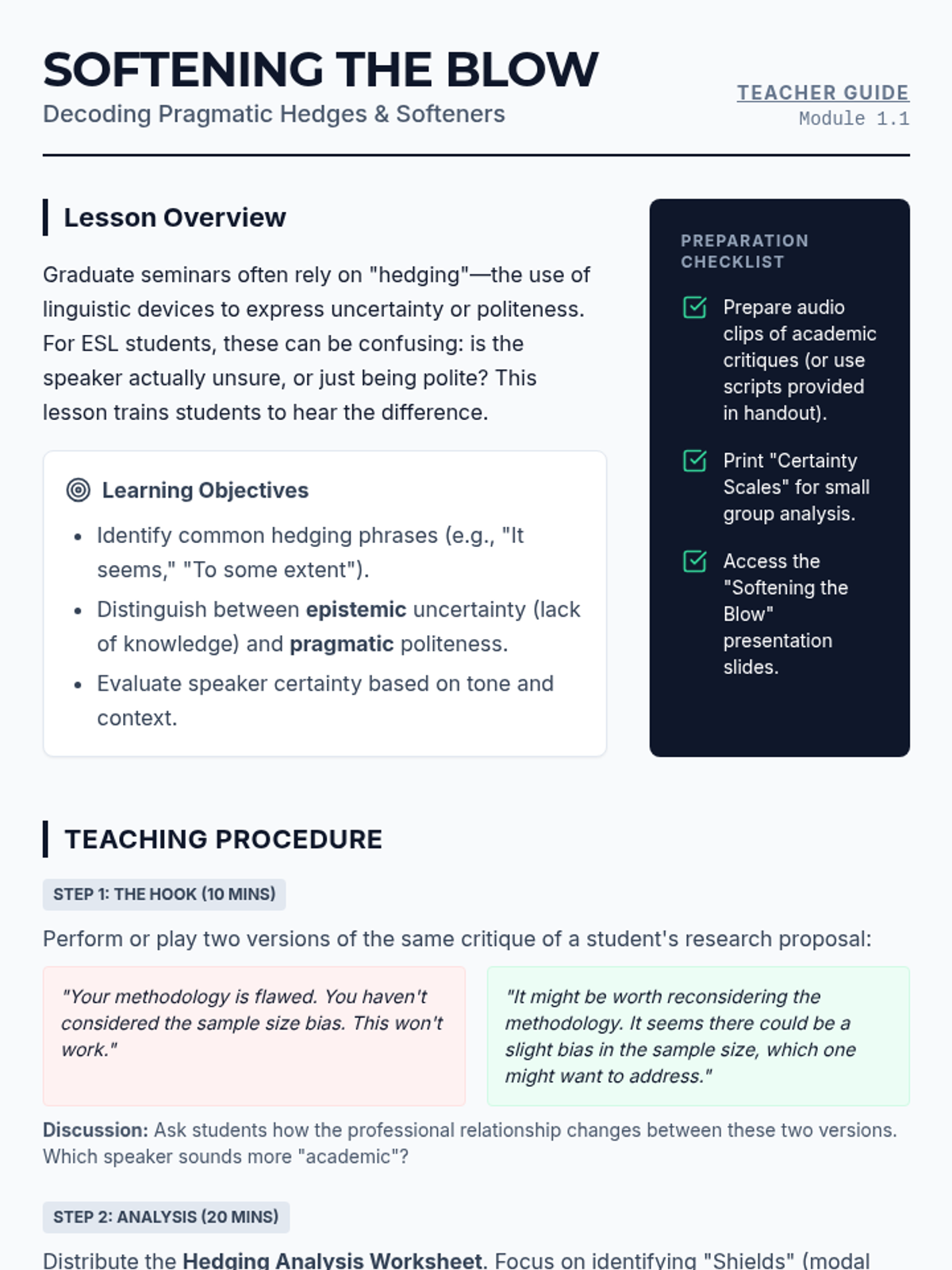
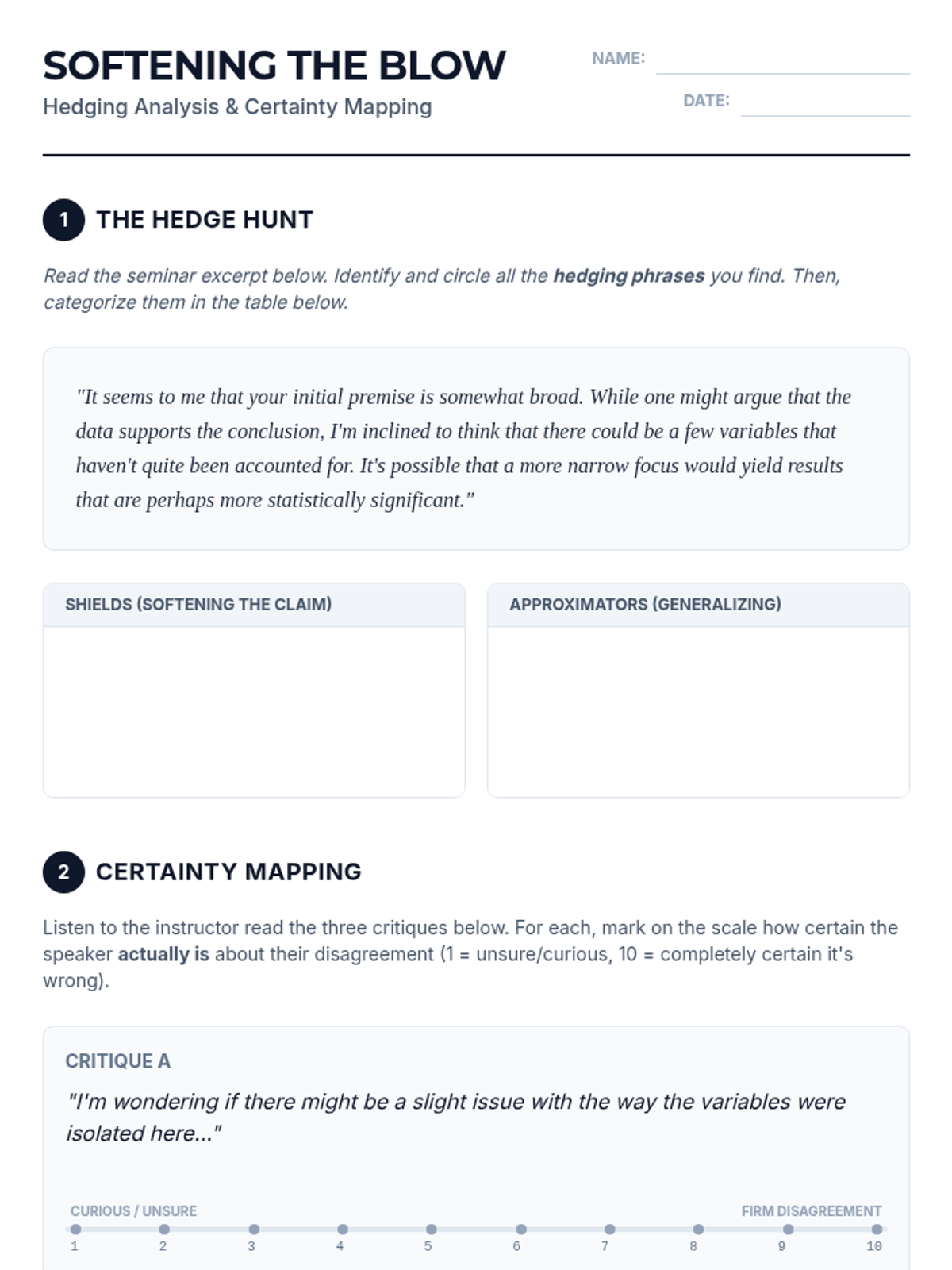
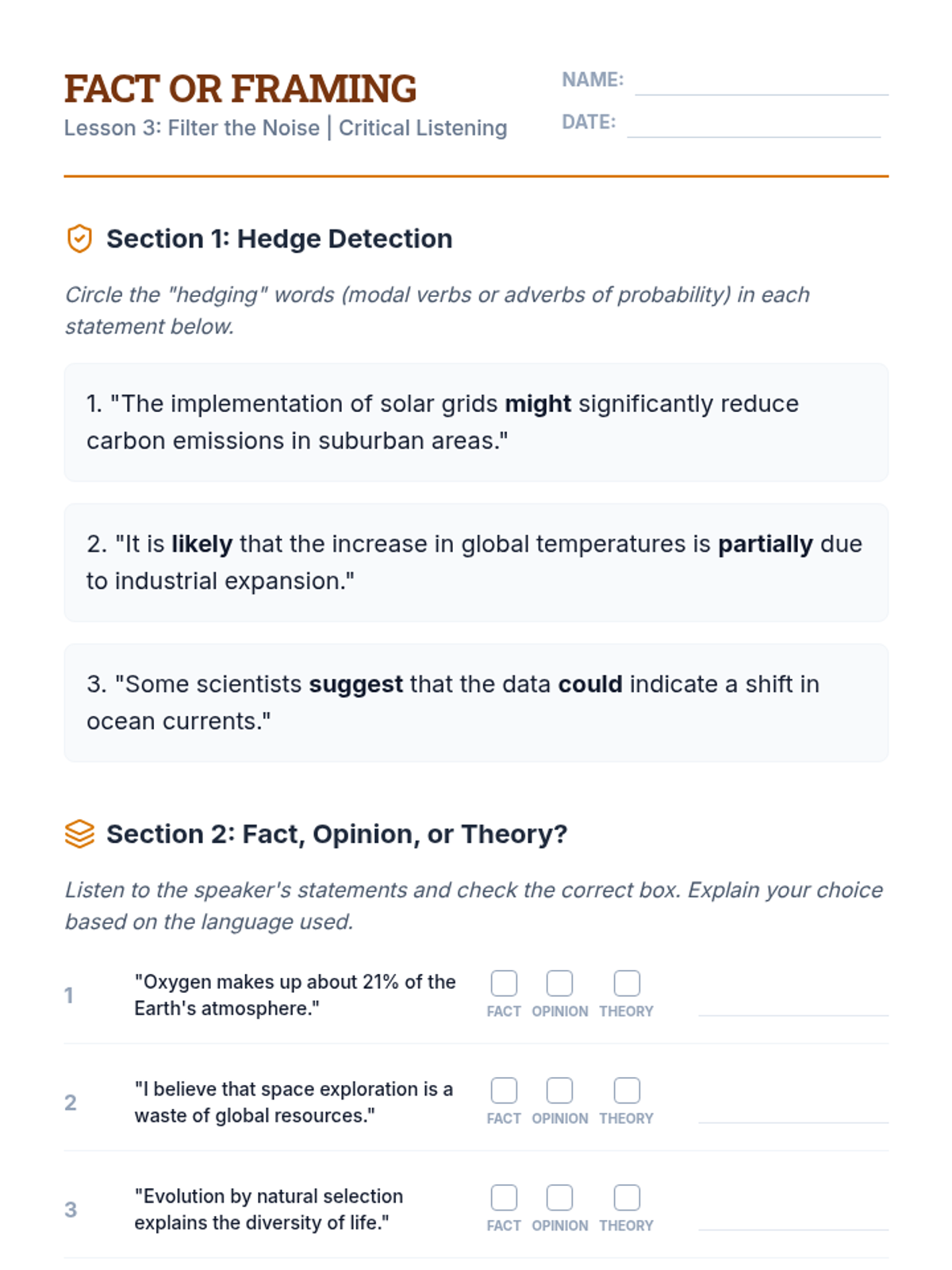
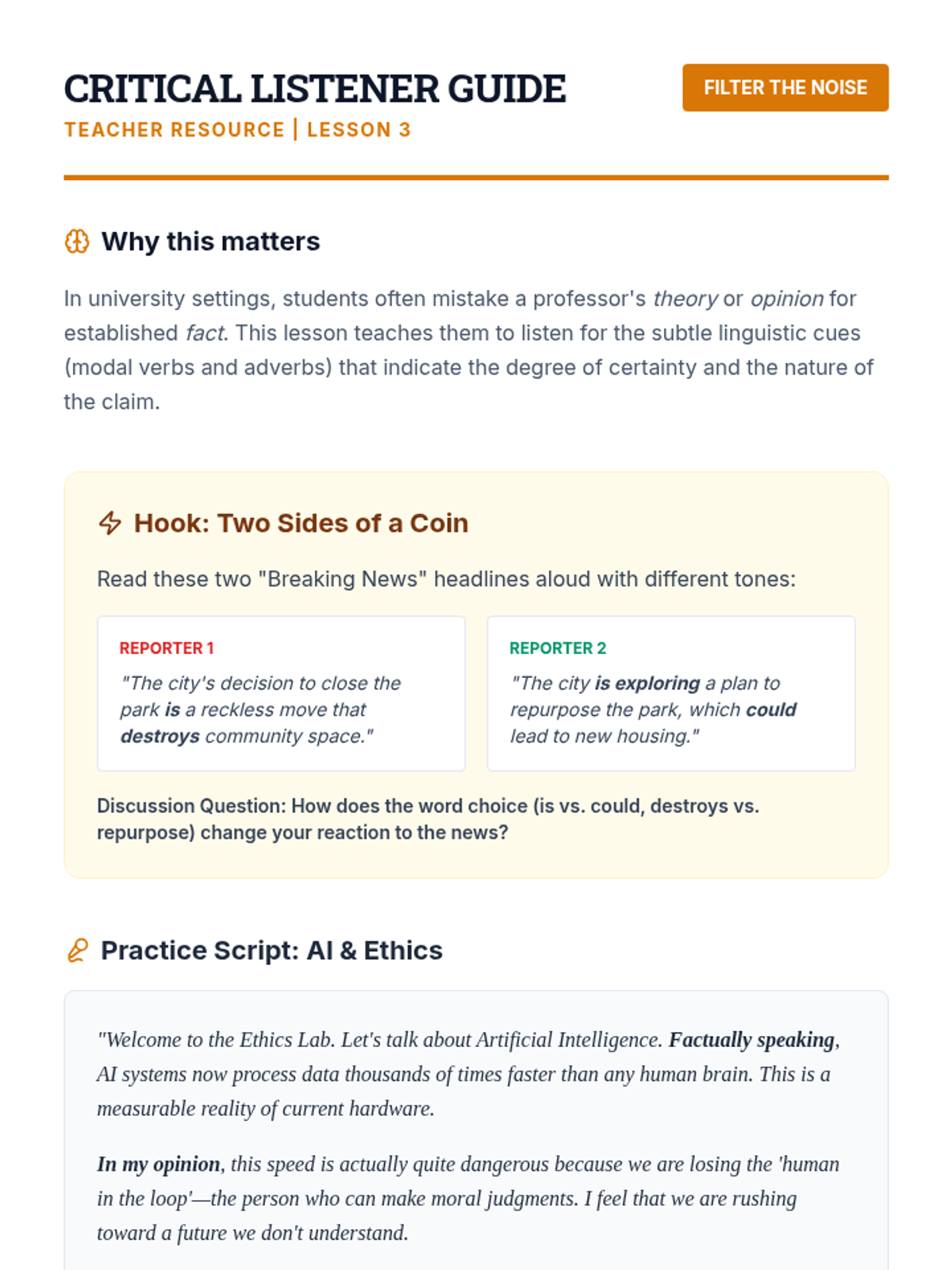
Students explore how academic speakers use hedging language to soften assertions and maintain professional relationships. Activities focus on distinguishing between literal meaning and pragmatic intent.
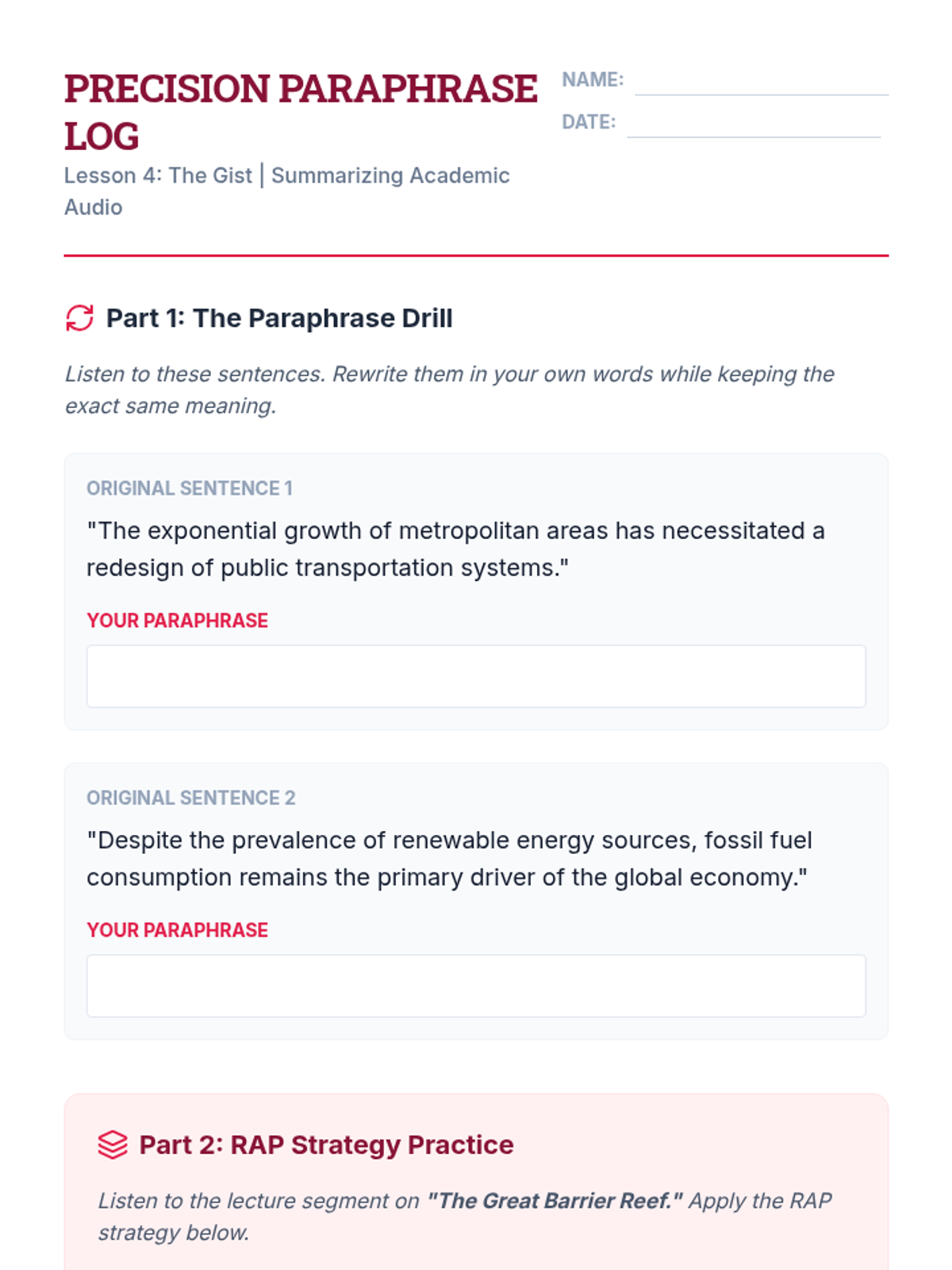
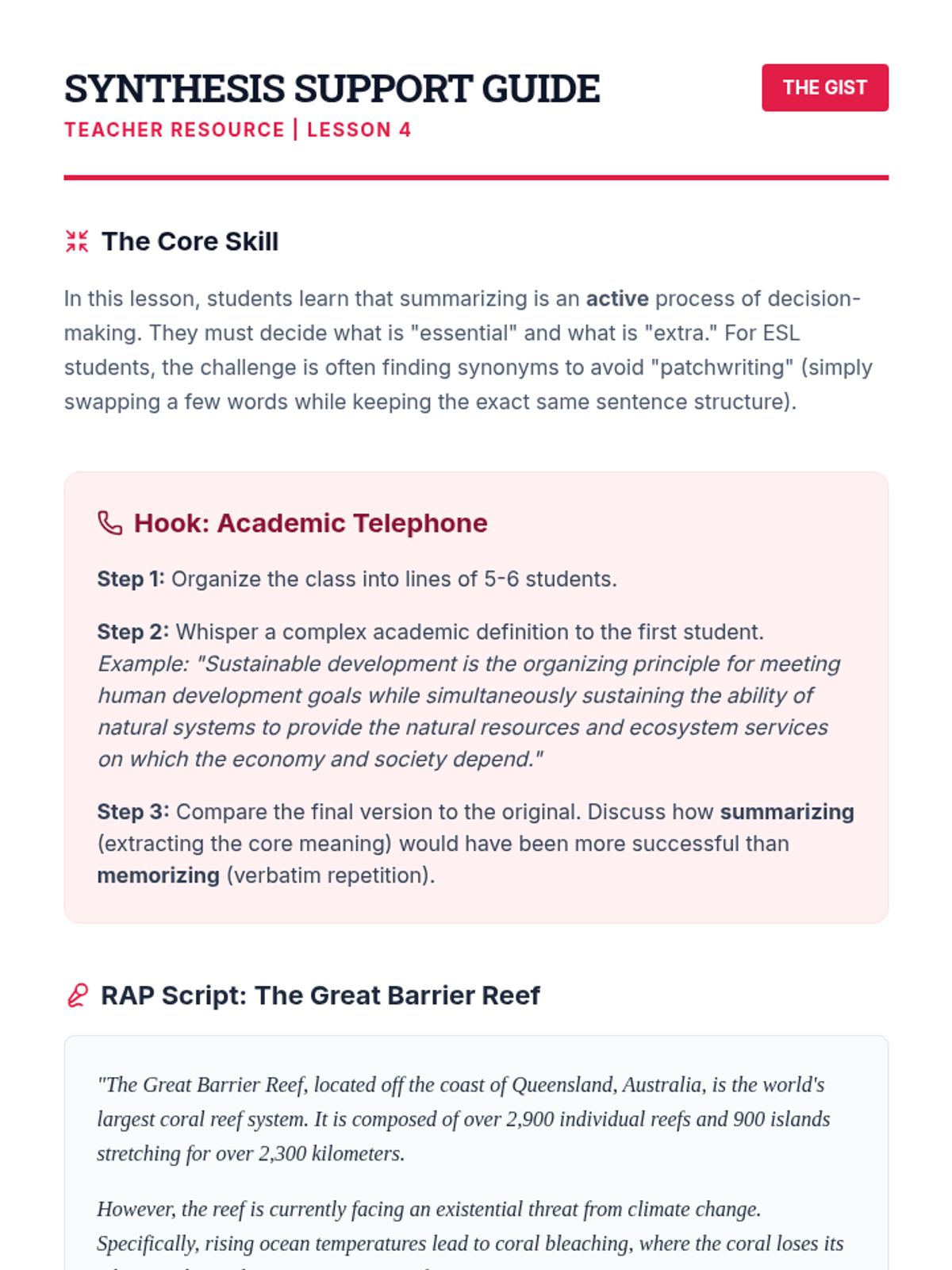
Using their notes from previous lessons, students practice reconstructing the main argument of an auditory text. They work in pairs to verbally summarize a lecture segment to a partner who has not heard it, checking for accuracy and completeness.
Students analyze an audio segment on a controversial scientific or social topic to categorize statements as verifiable facts, speaker opinions, or theoretical propositions. The lesson emphasizes listening for modal verbs and qualifying language.
Learners are introduced to the Cornell Note-Taking System and concept mapping, practicing these methods while listening to extended discourse.
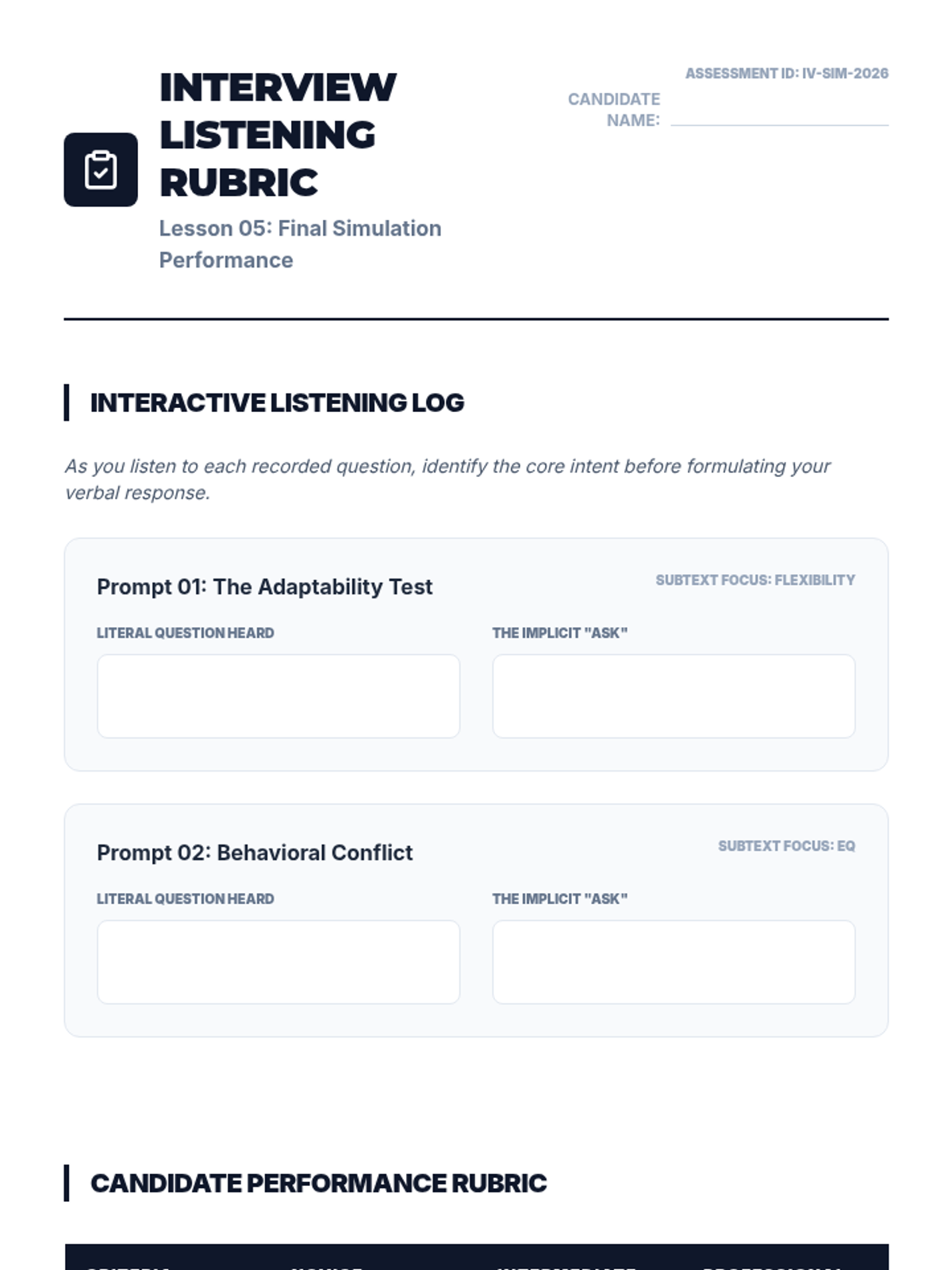
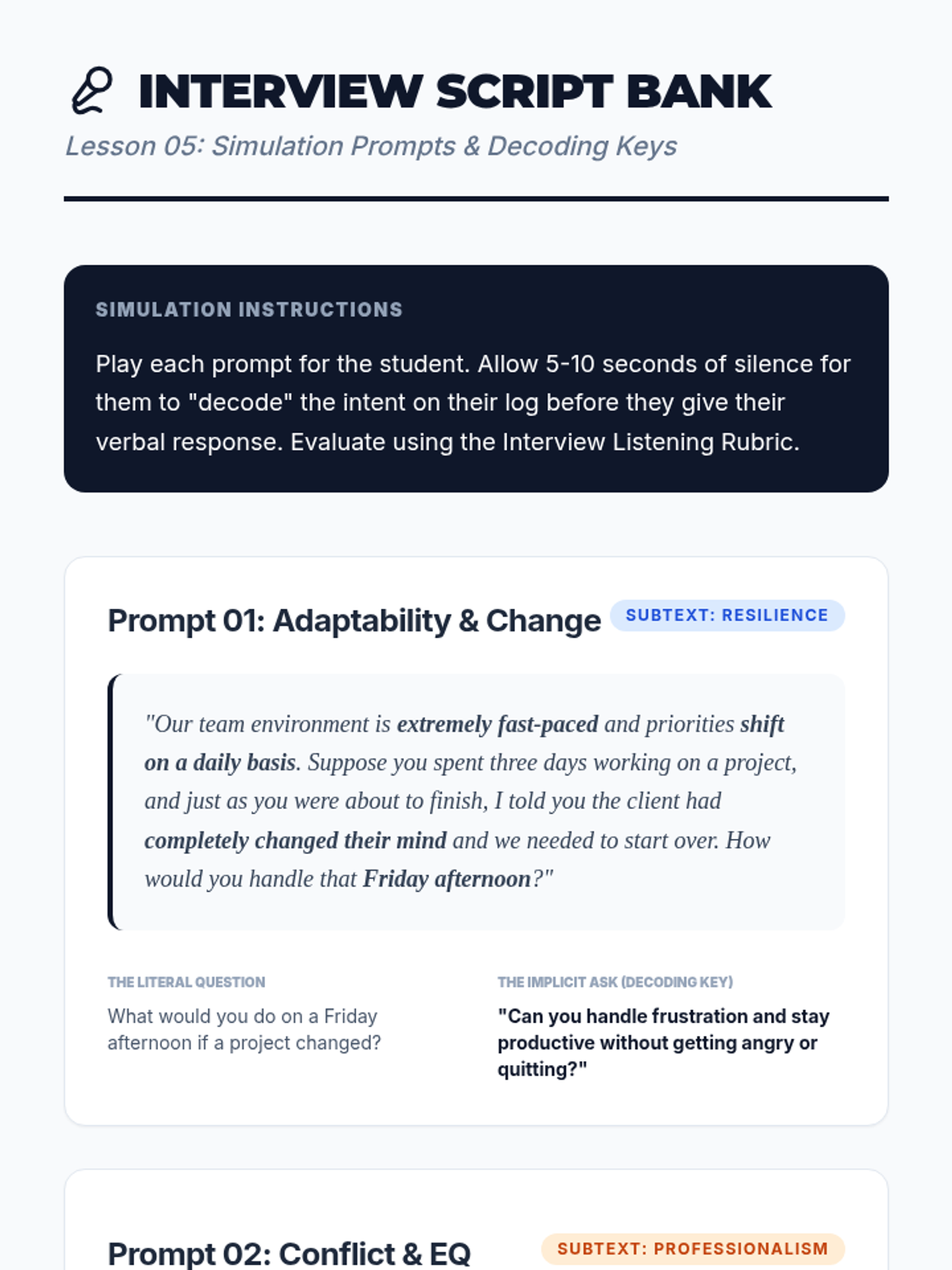
Students apply listening skills to interpret complex interview questions and behavioral prompts.
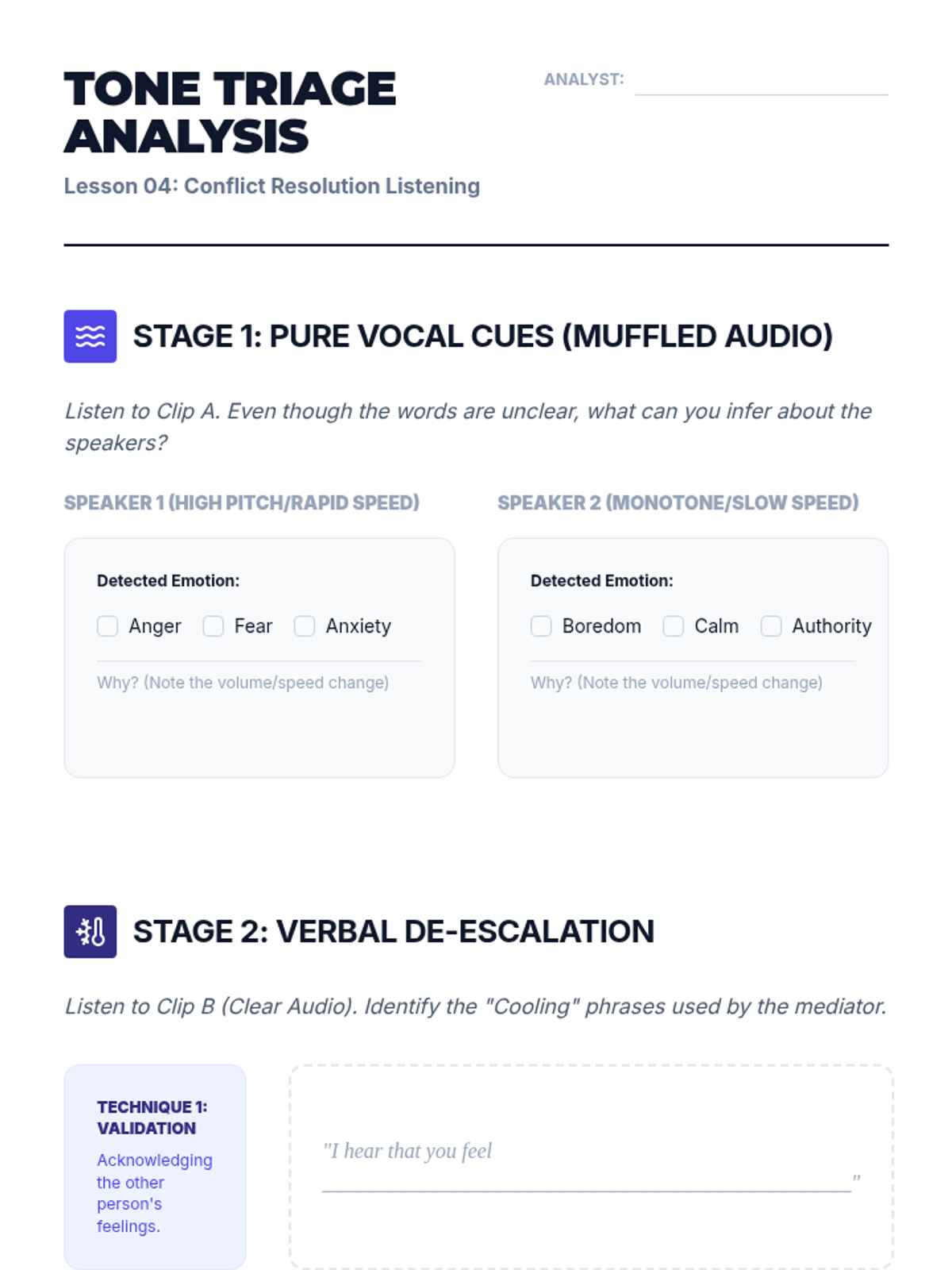
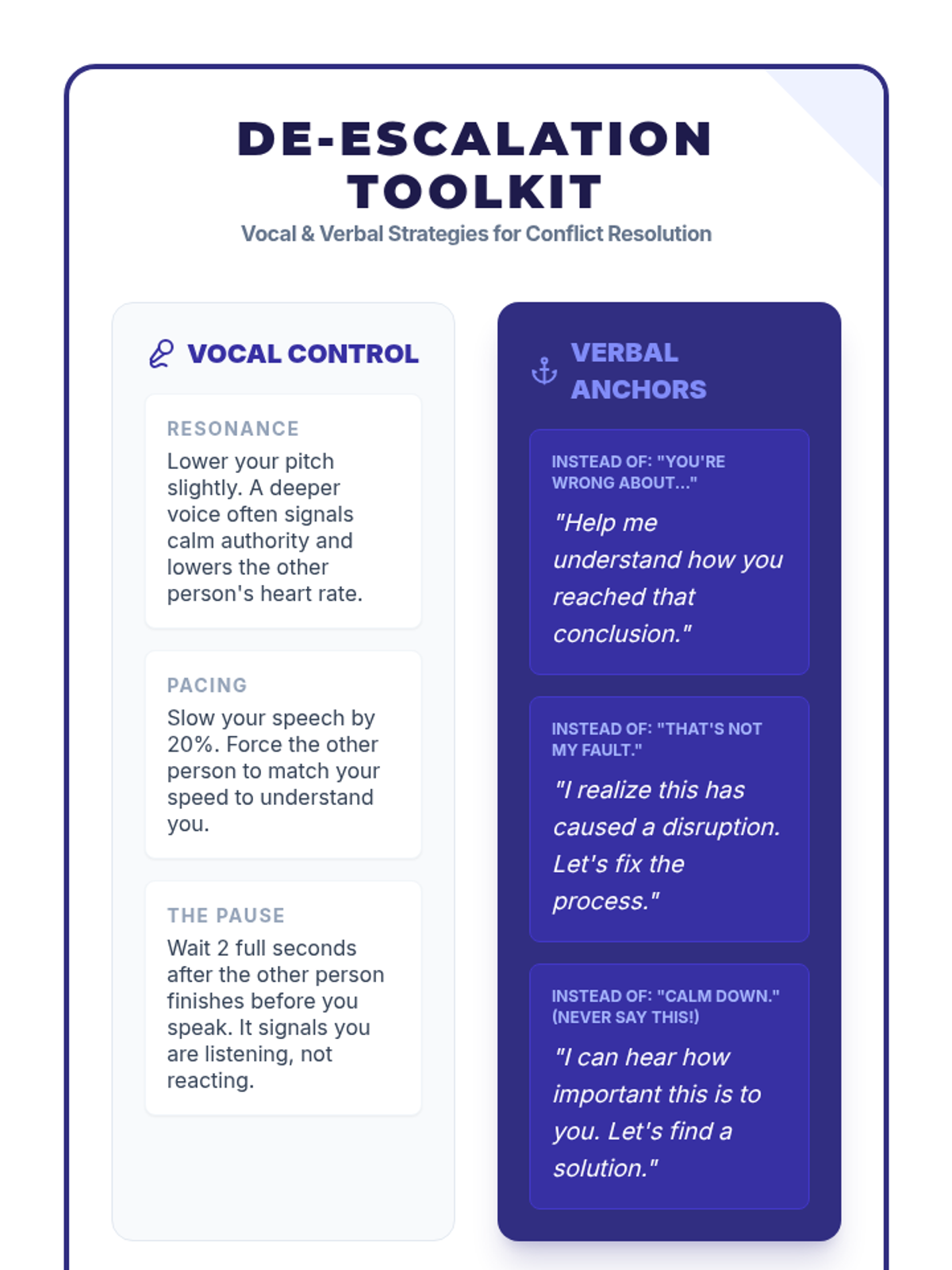
Students evaluate emotional cues and de-escalation techniques in conflict resolution scenarios.
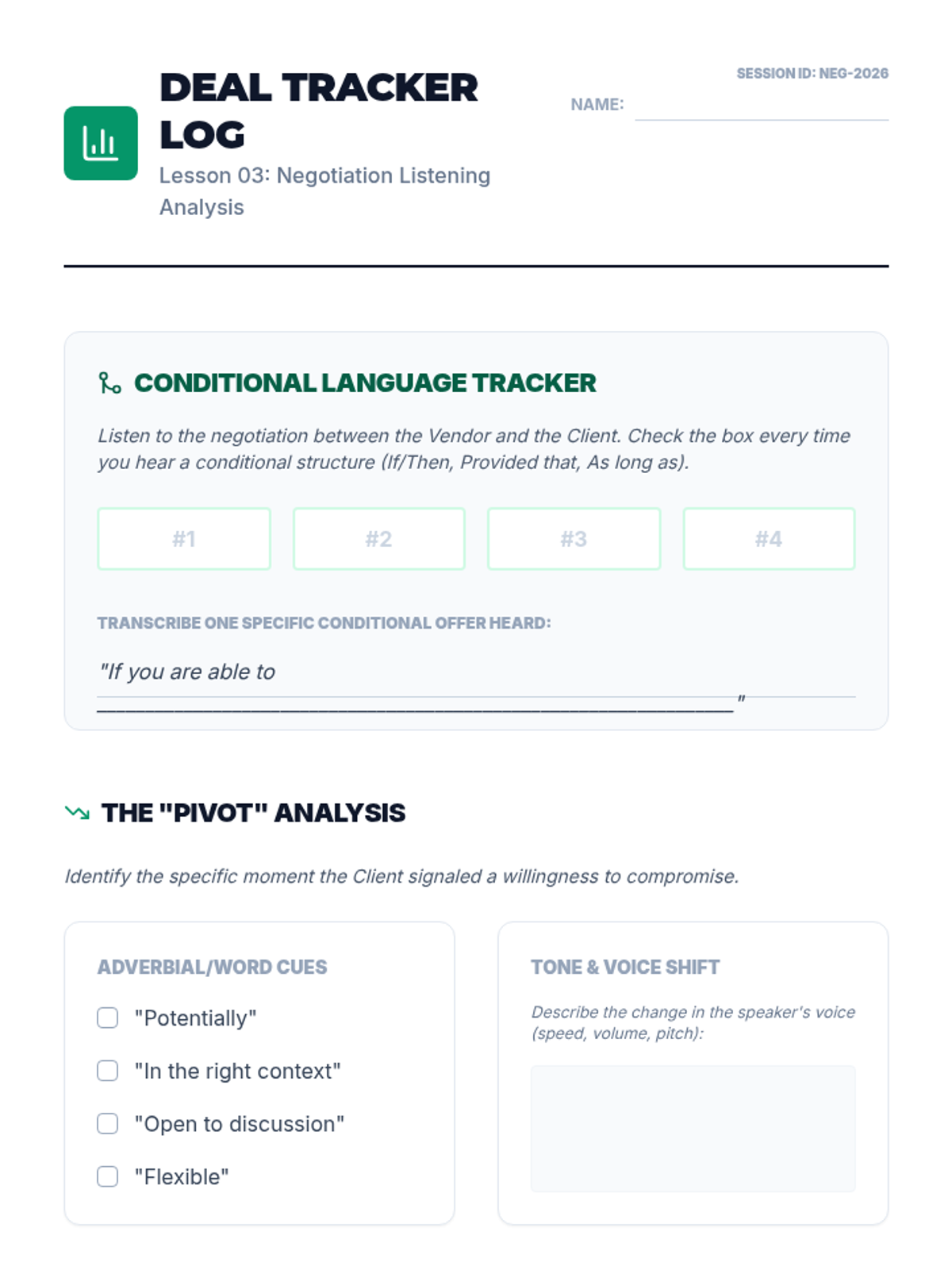
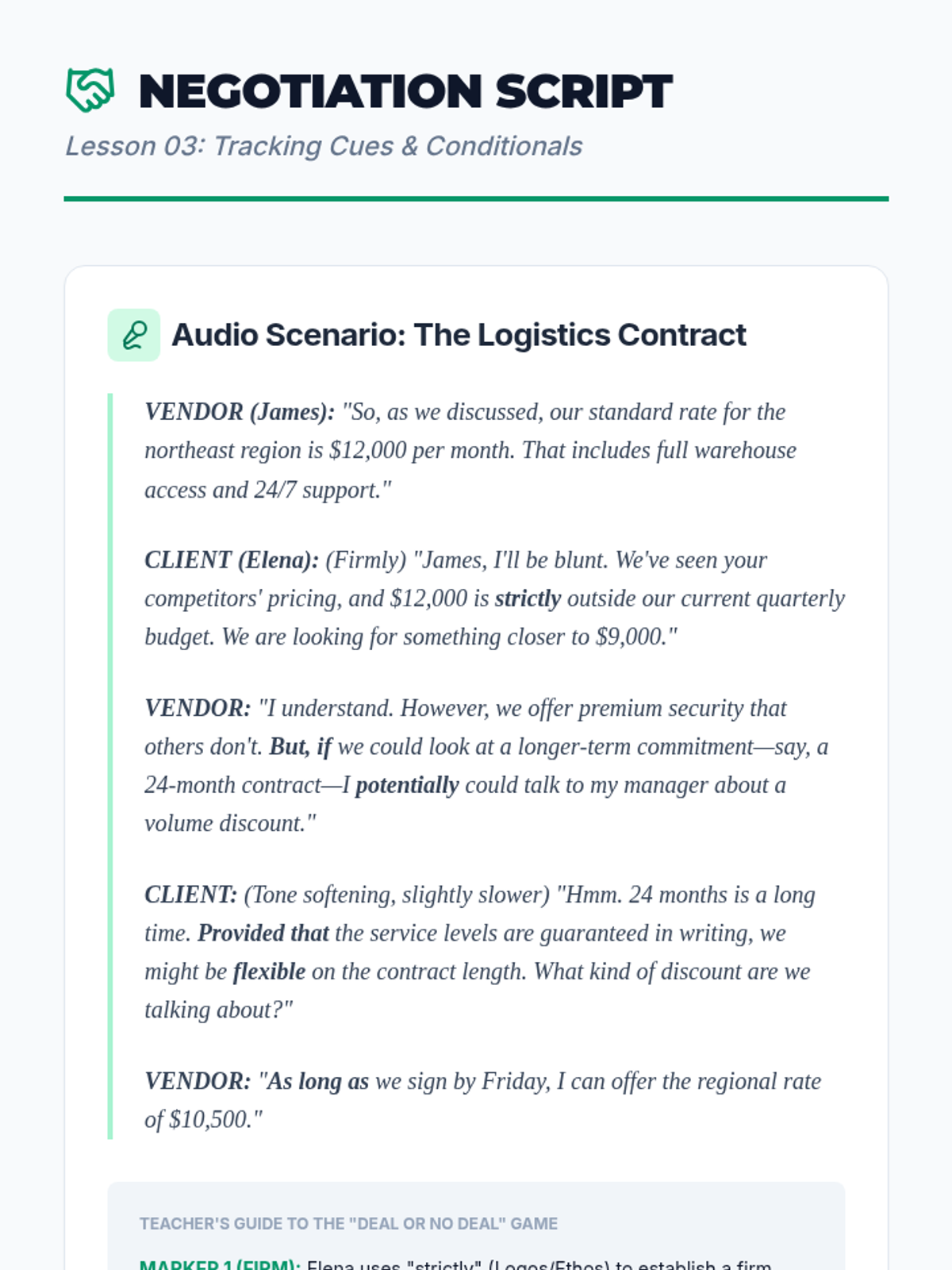
Students identify conditional language and tone shifts in negotiation simulations to spot willingness to compromise.
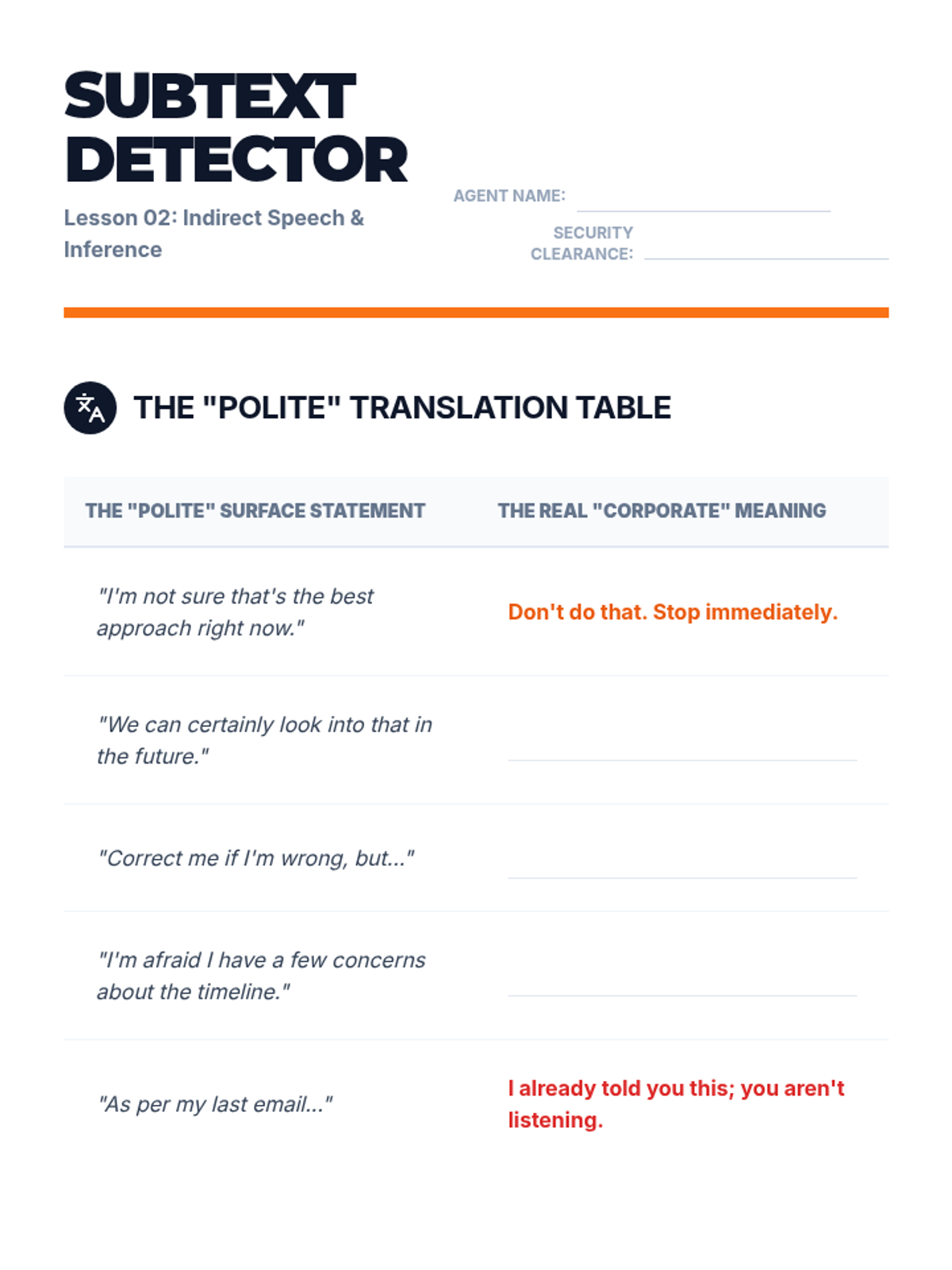
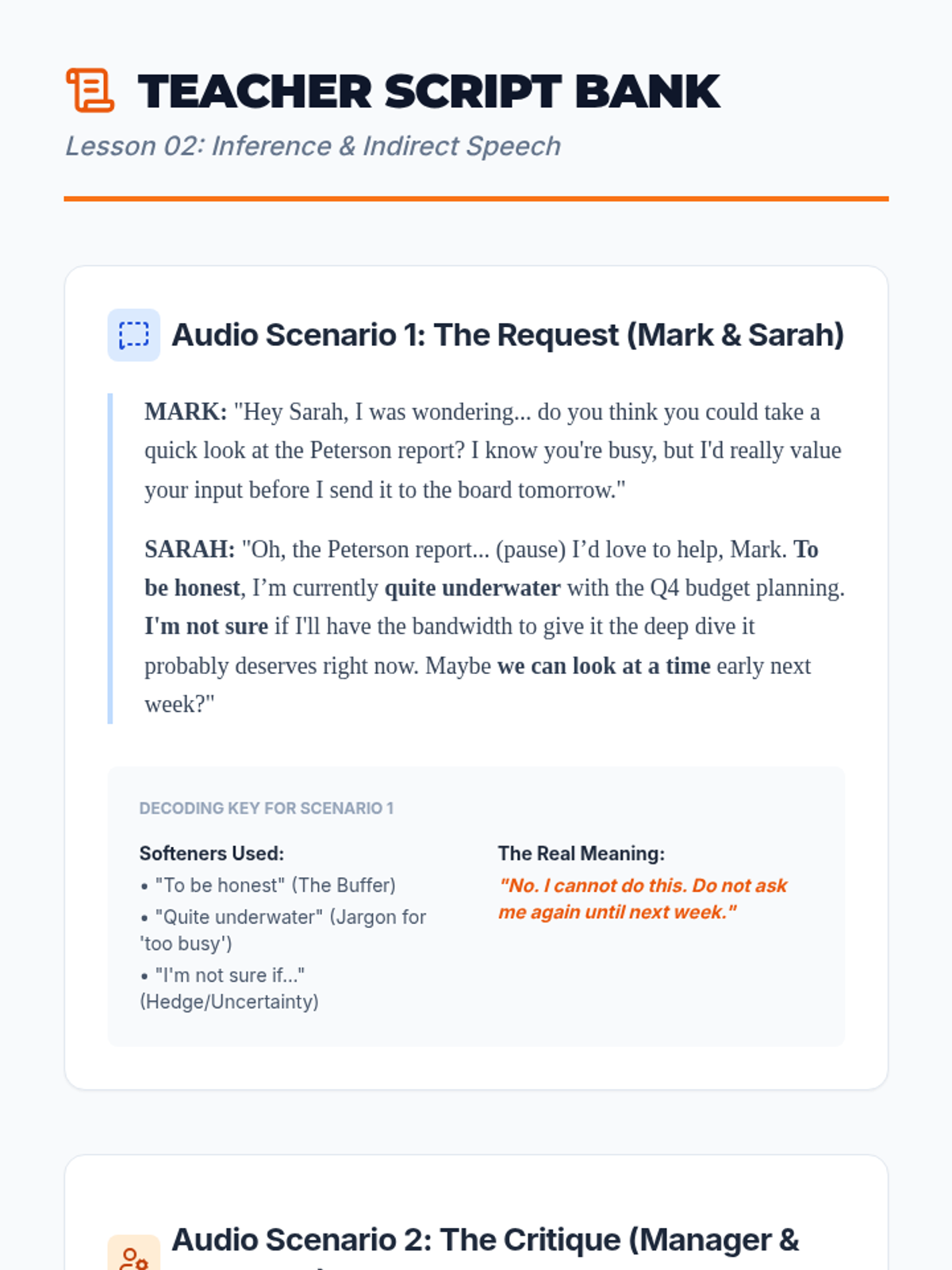
Learners decode indirect language and 'polite' workplace communication to find the underlying message.
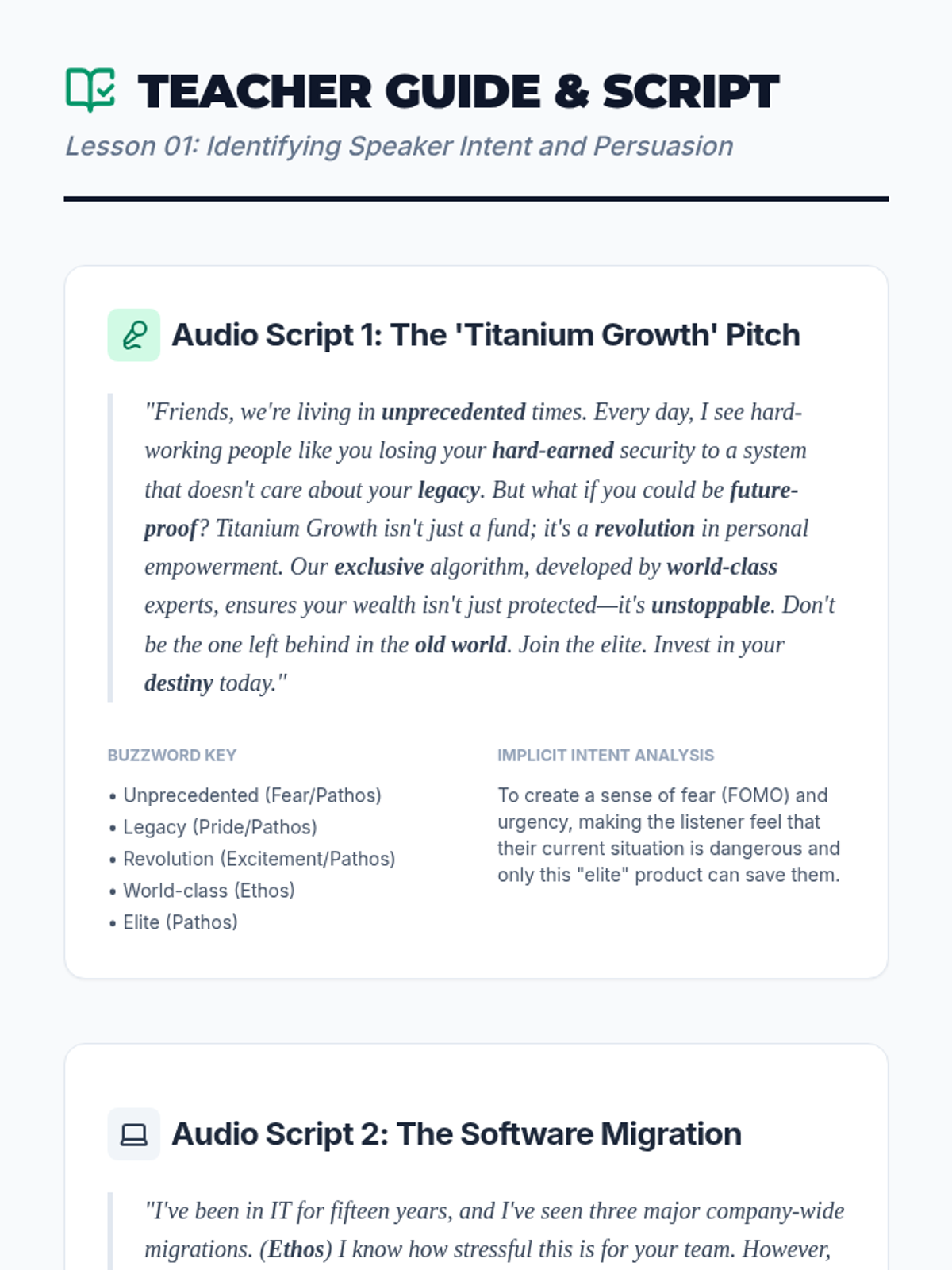
Students analyze advertisements and workplace pitches to identify speaker goals and persuasive techniques.
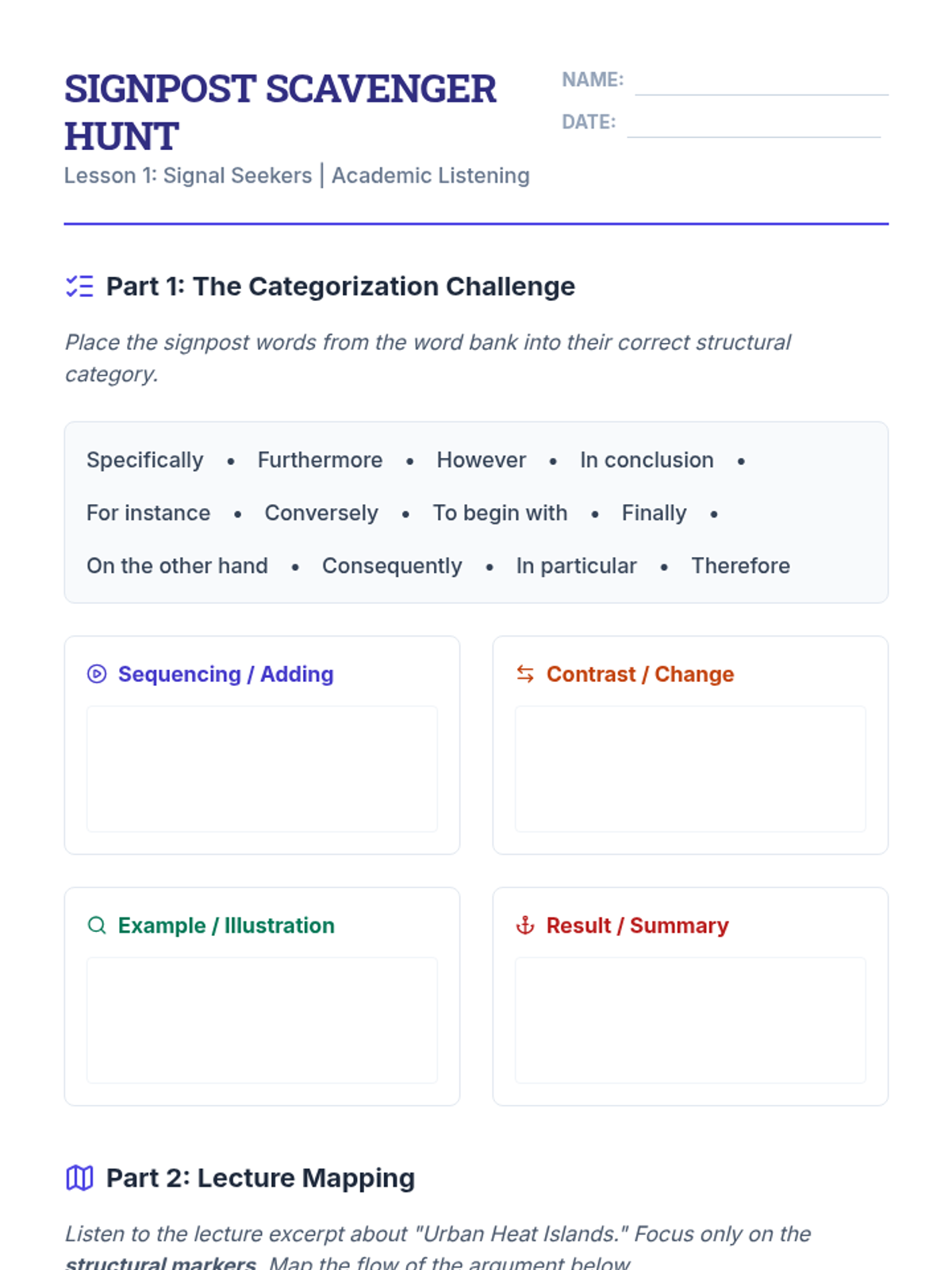
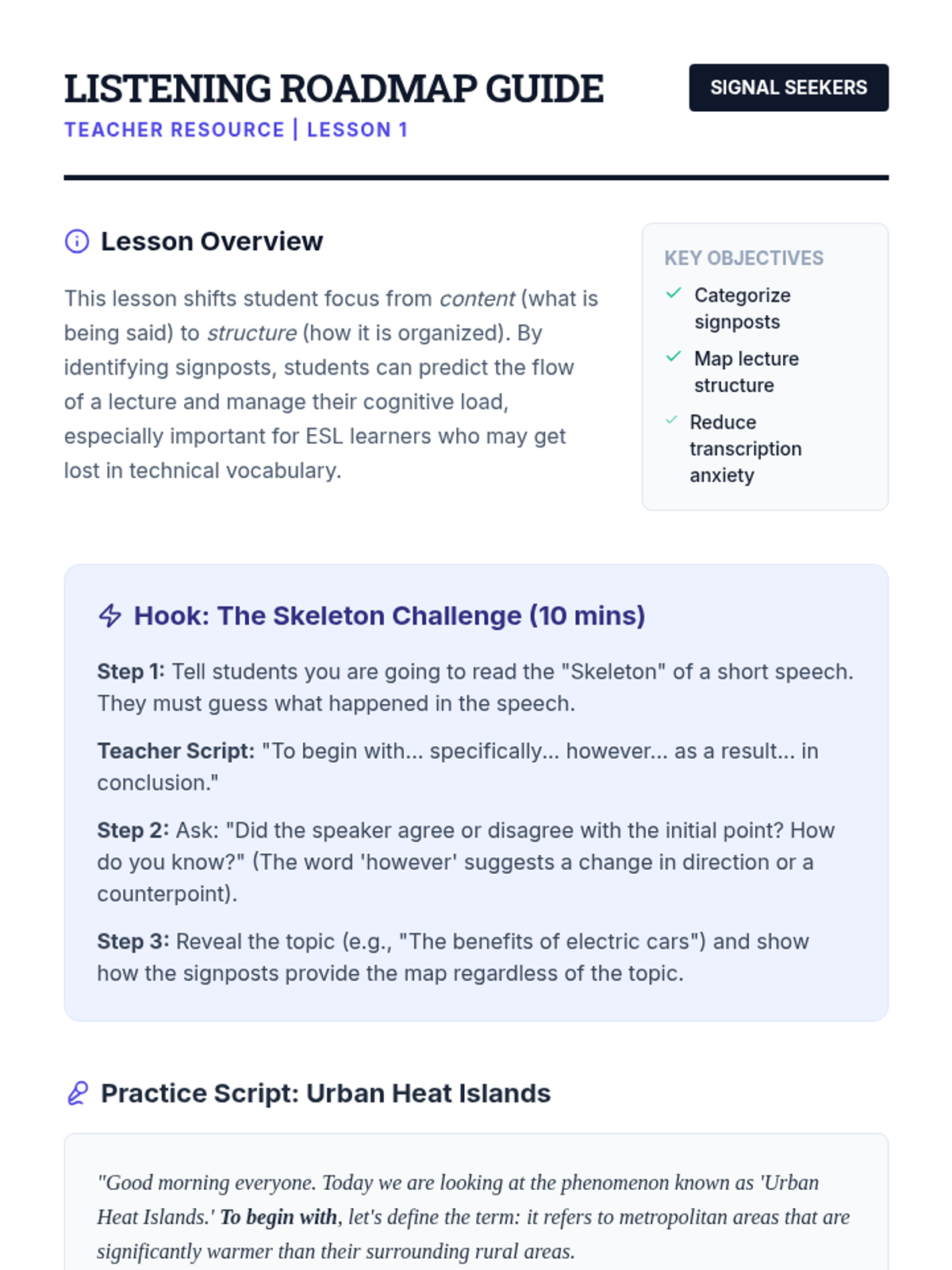
Students learn to identify 'signpost' words that signal shifts in topic, examples, or conclusions to map the structure of academic lectures.
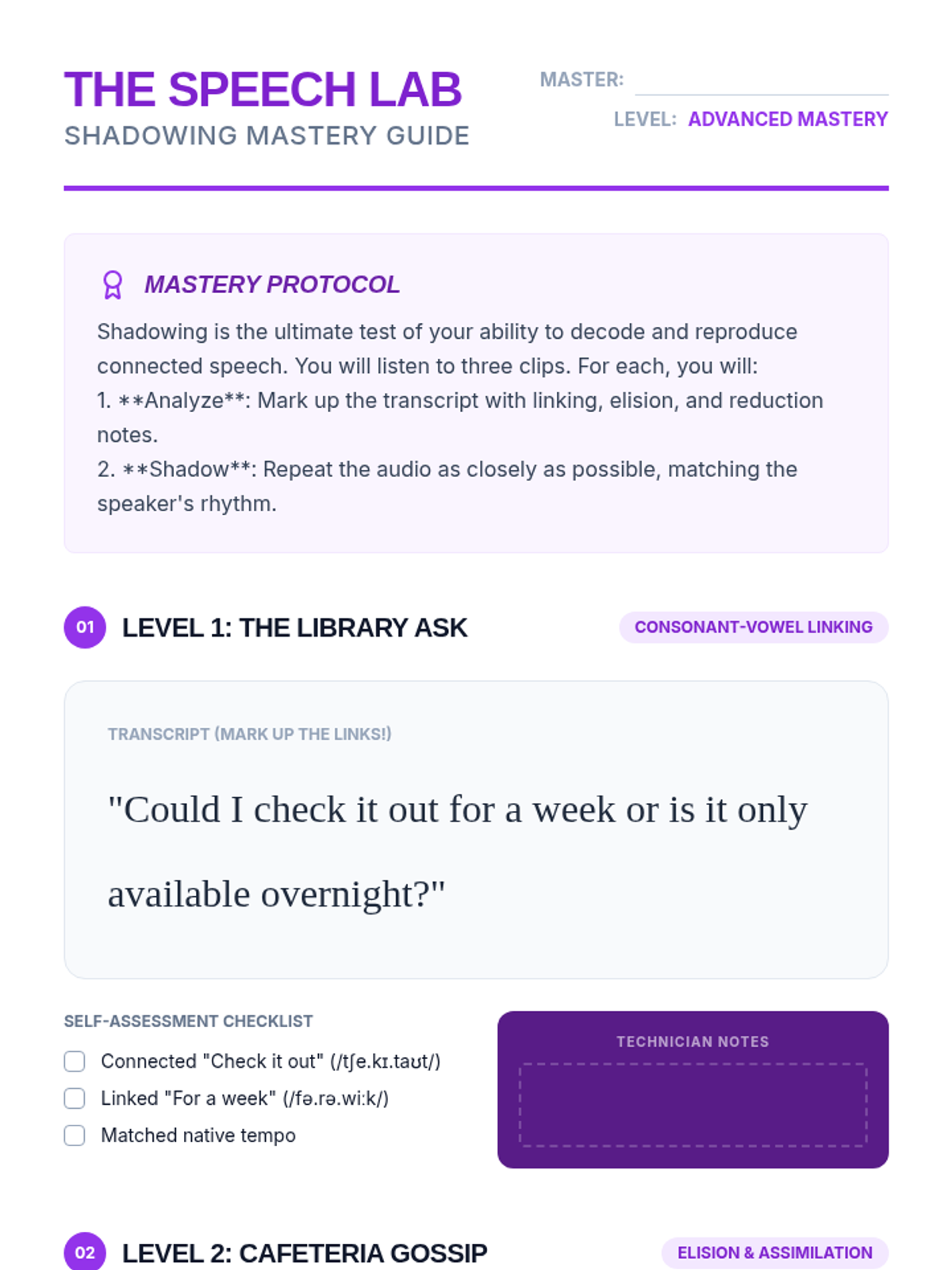
Students engage in a 'shadowing' technique, repeating audio immediately after hearing it to internalize the rhythm and flow of connected speech. This active processing reinforces their ability to predict and process sound streams.
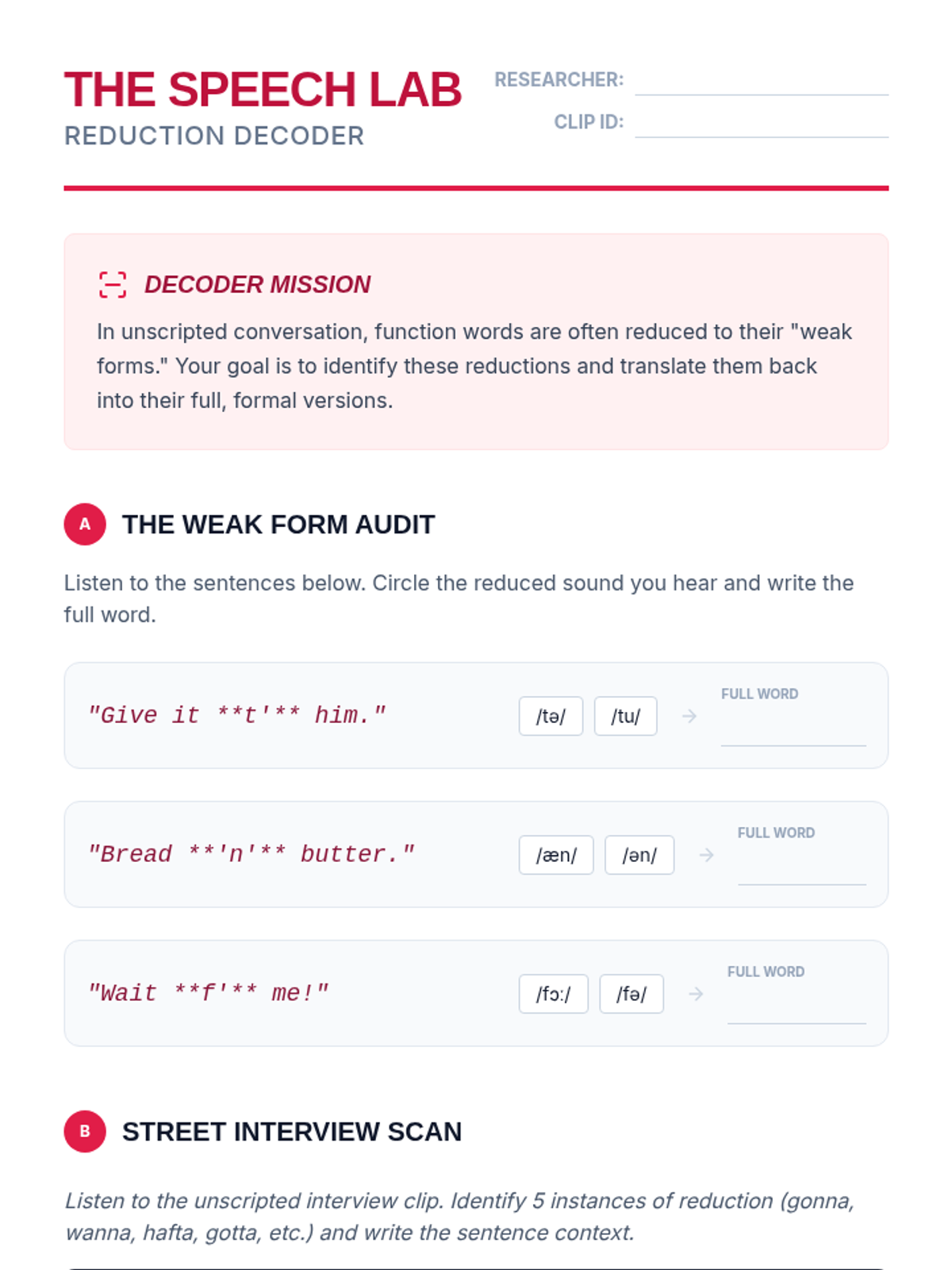
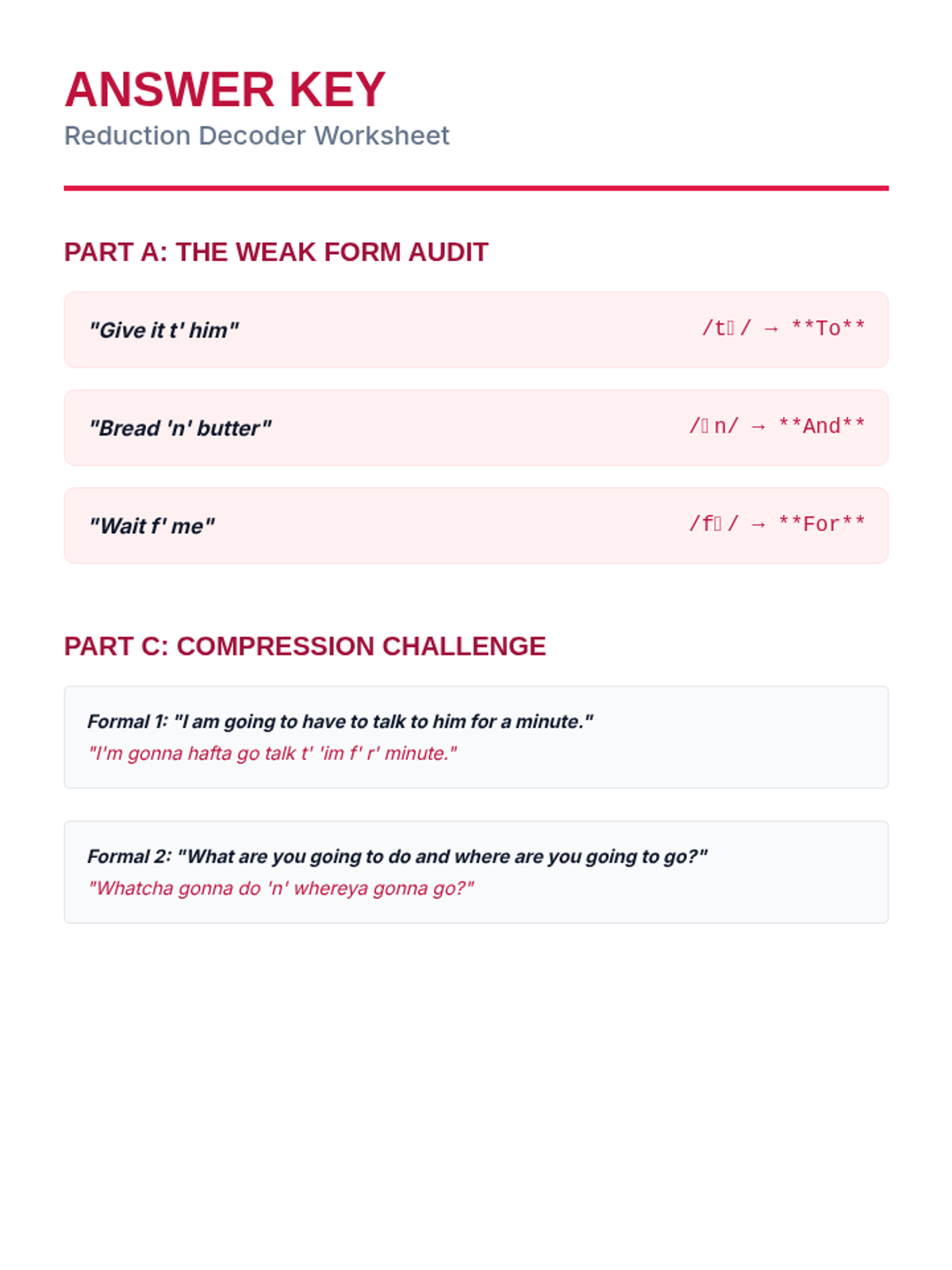
Focusing on function words, this lesson tackles common reductions like 'gonna,' 'wanna,' and weak forms of auxiliary verbs. Students analyze unscripted interviews to catch these reductions in context.
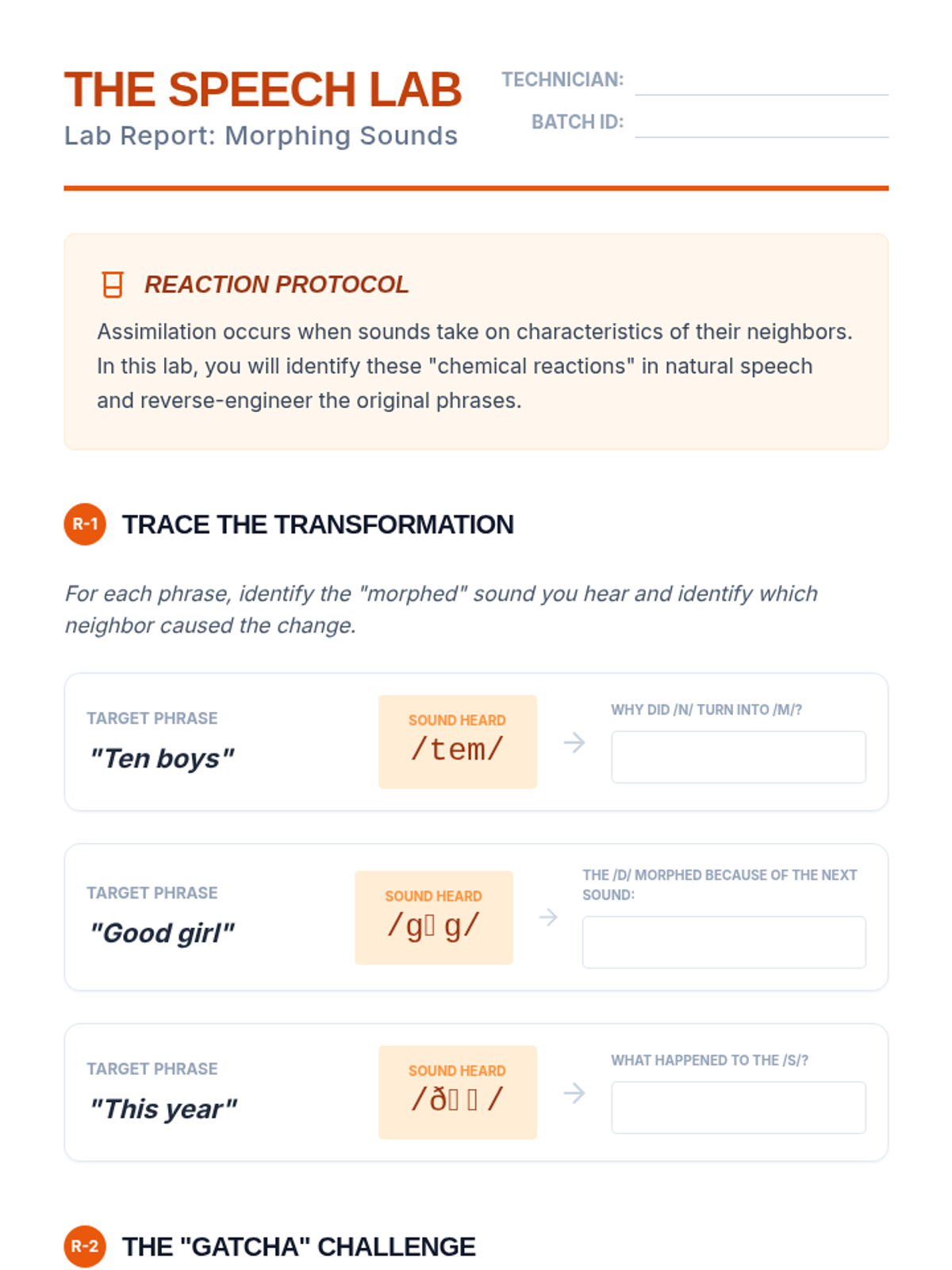
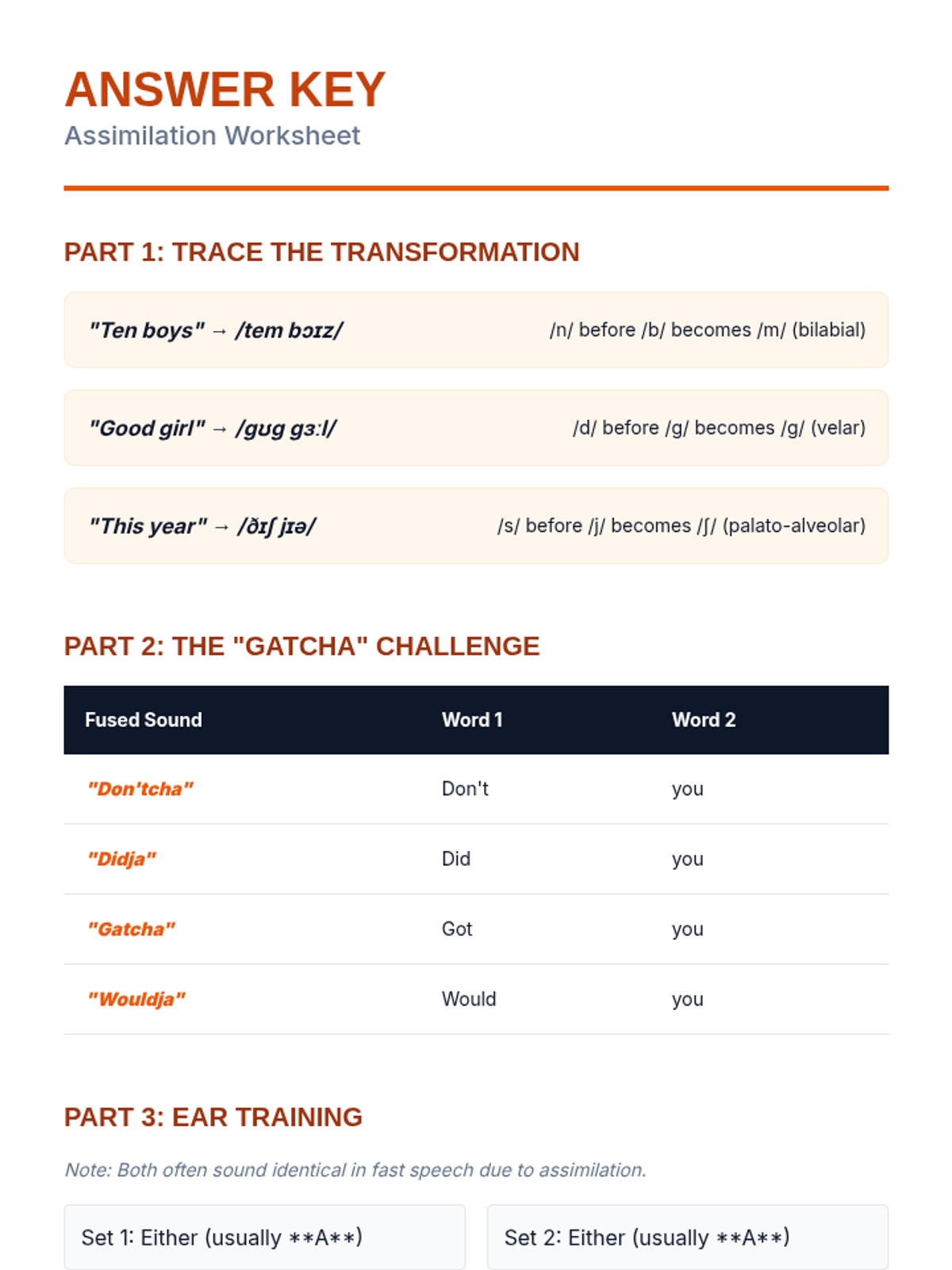
Students learn how sounds influence their neighbors (e.g., 'hand bag' becoming 'hambag'). The lesson uses minimal pair discrimination and dictation exercises to train ears to recognize words despite phonological changes.
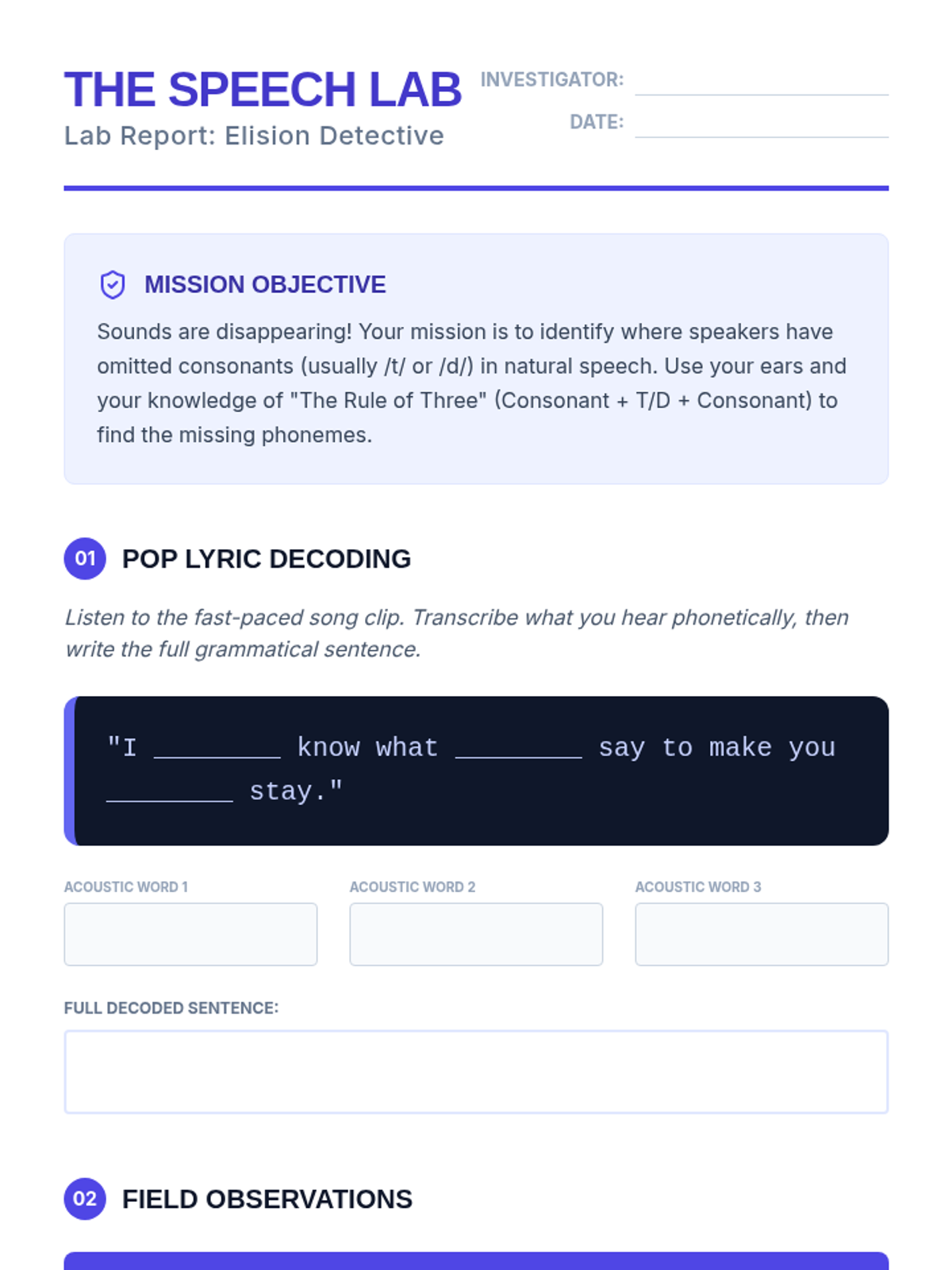
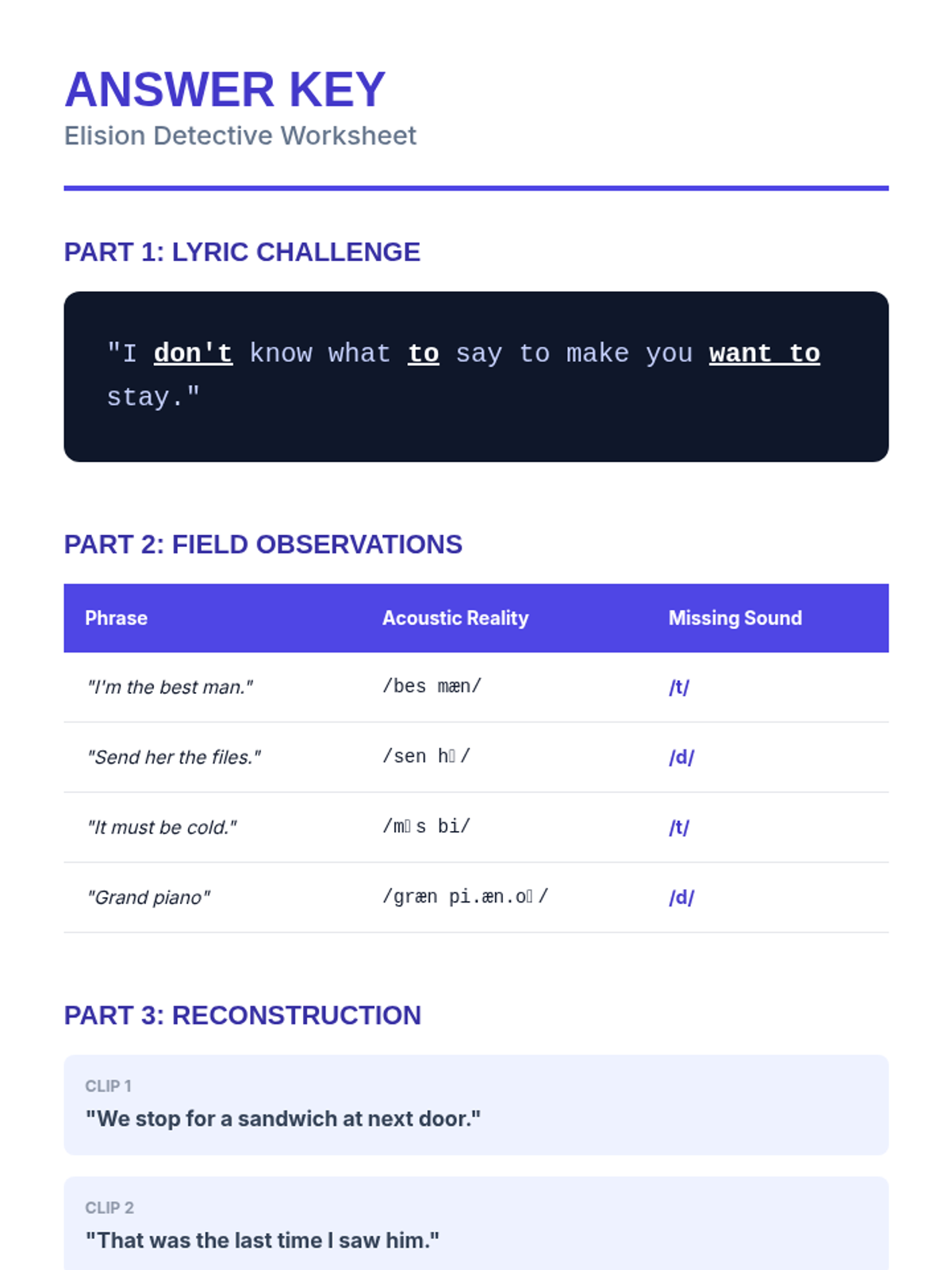
This lesson covers the phenomenon of elision, where sounds (particularly /t/ and /d/) disappear in rapid speech. Students practice listening to high-speed dialogues to identify words that have been 'swallowed' by the speaker.
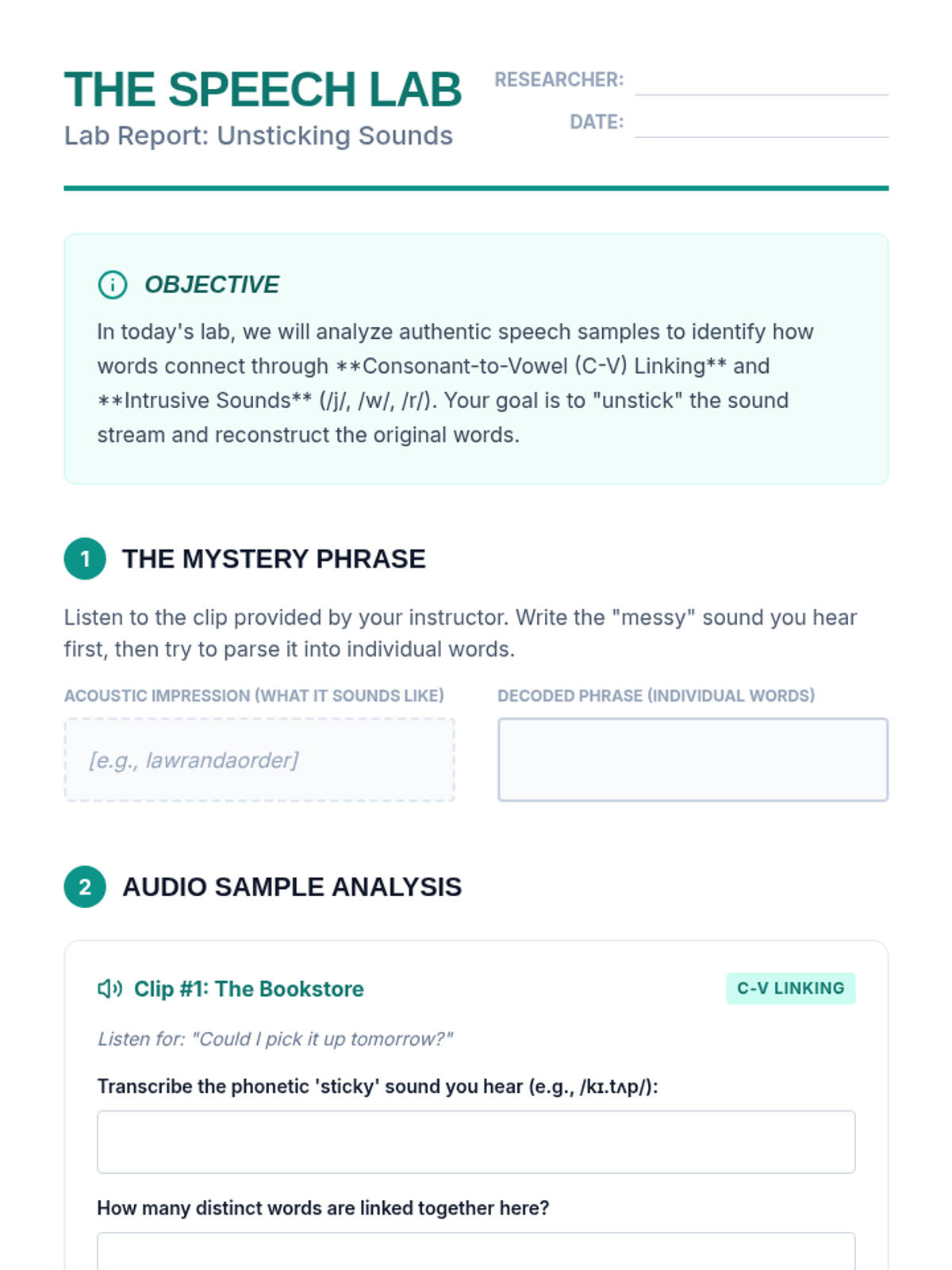
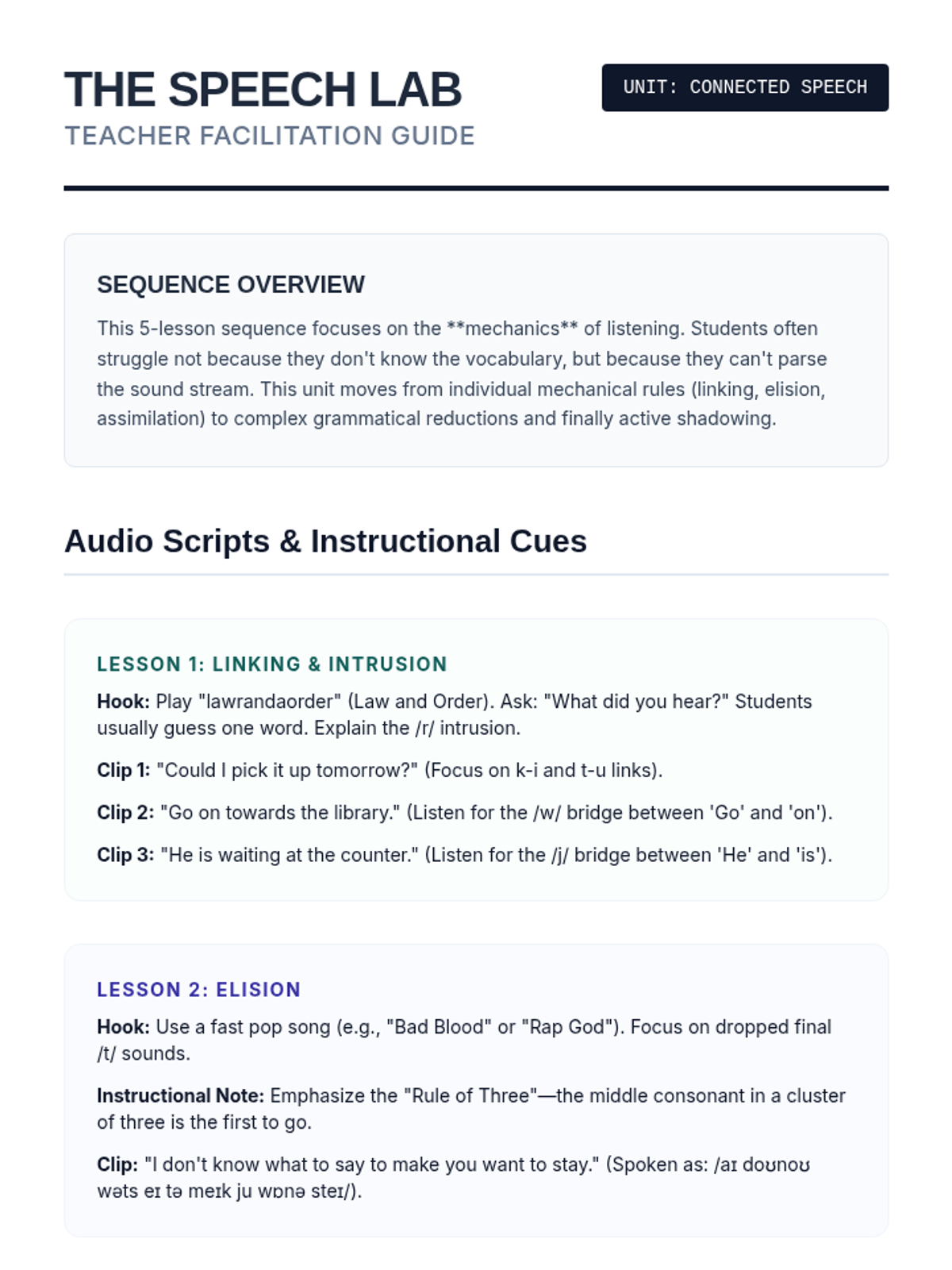
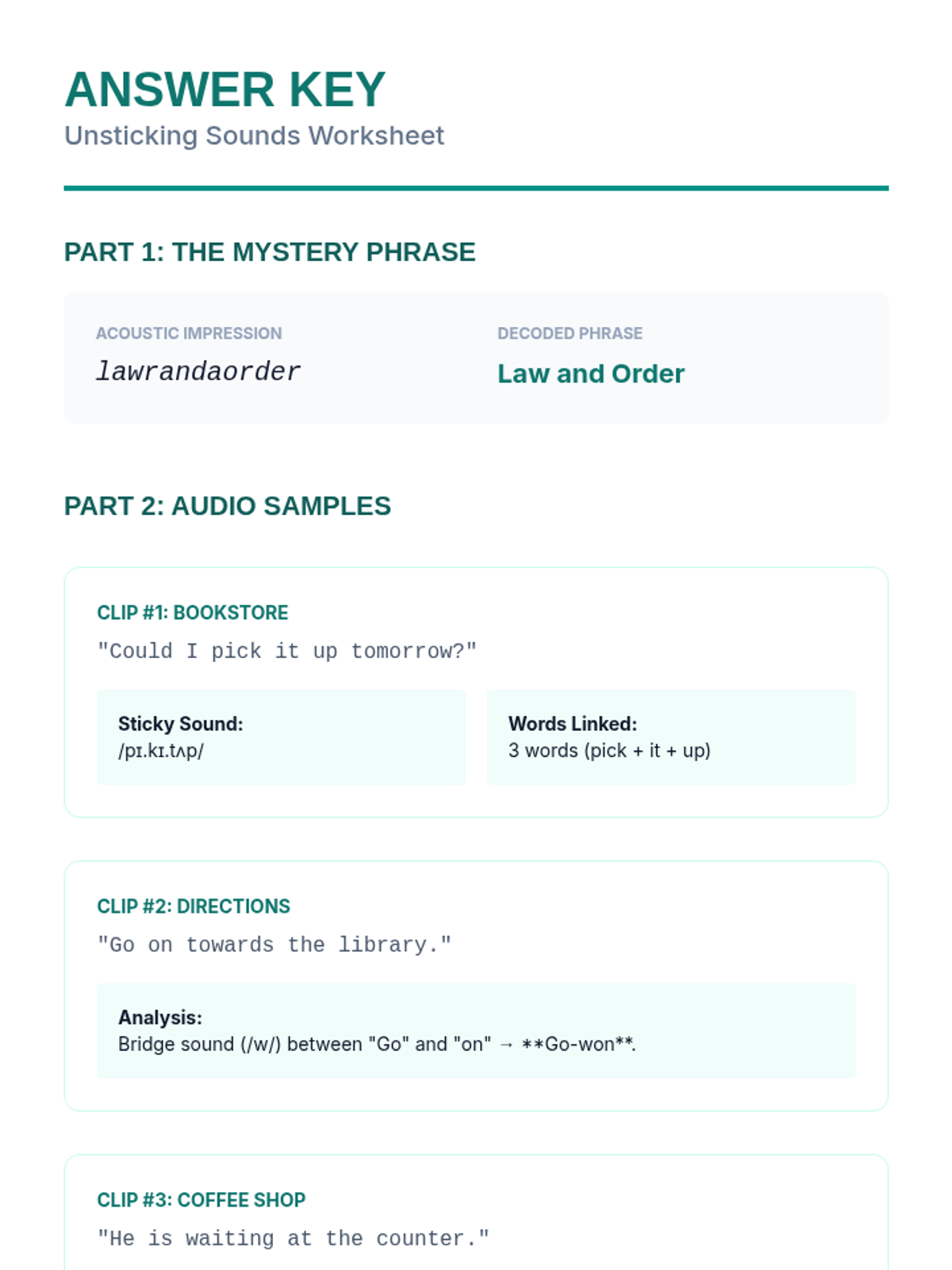
Students investigate how words flow together in natural speech, specifically focusing on consonant-vowel linking and intrusive sounds (/r/, /w/, /j/). They analyze audio samples to 'unstick' connected words.
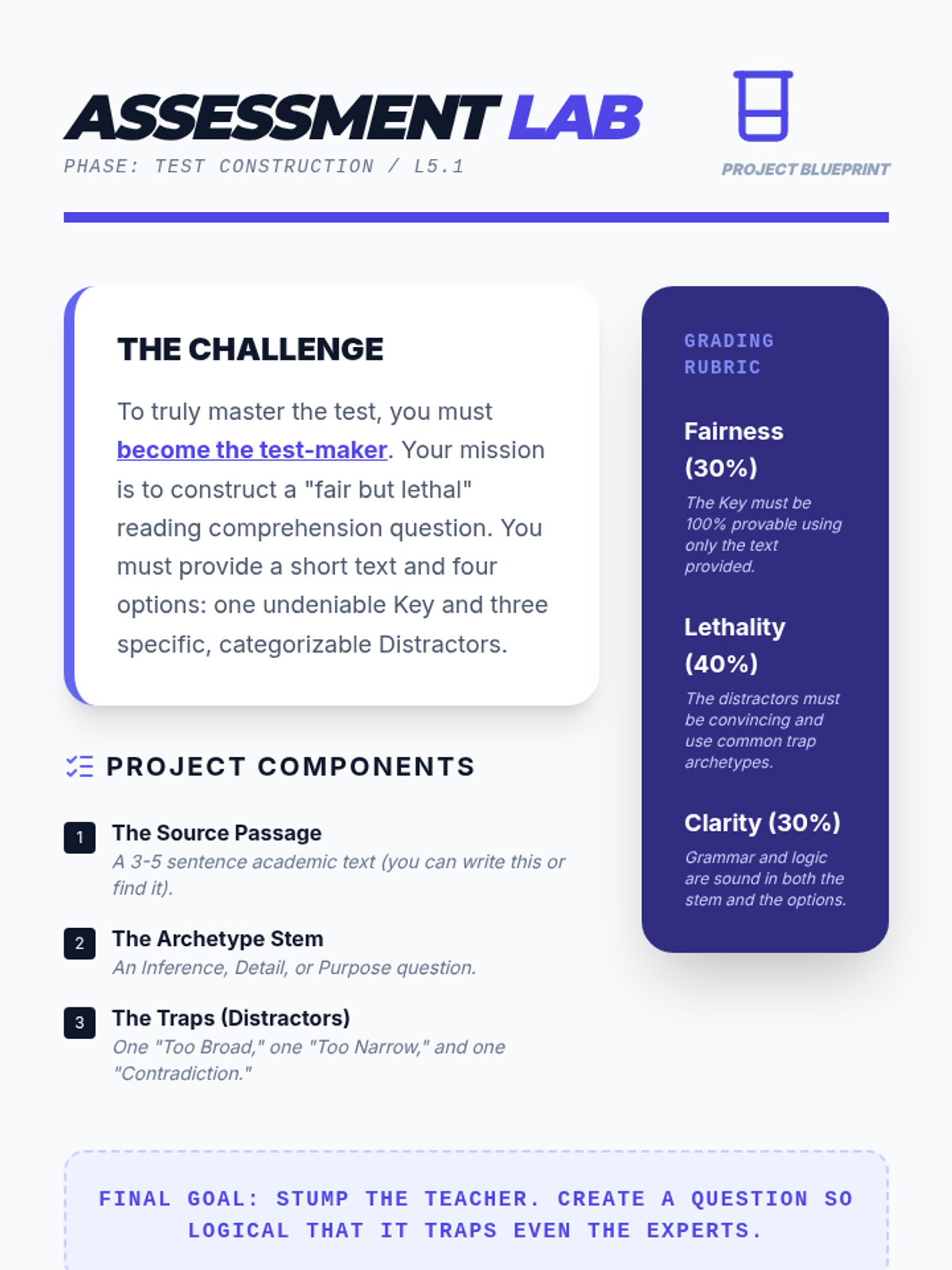
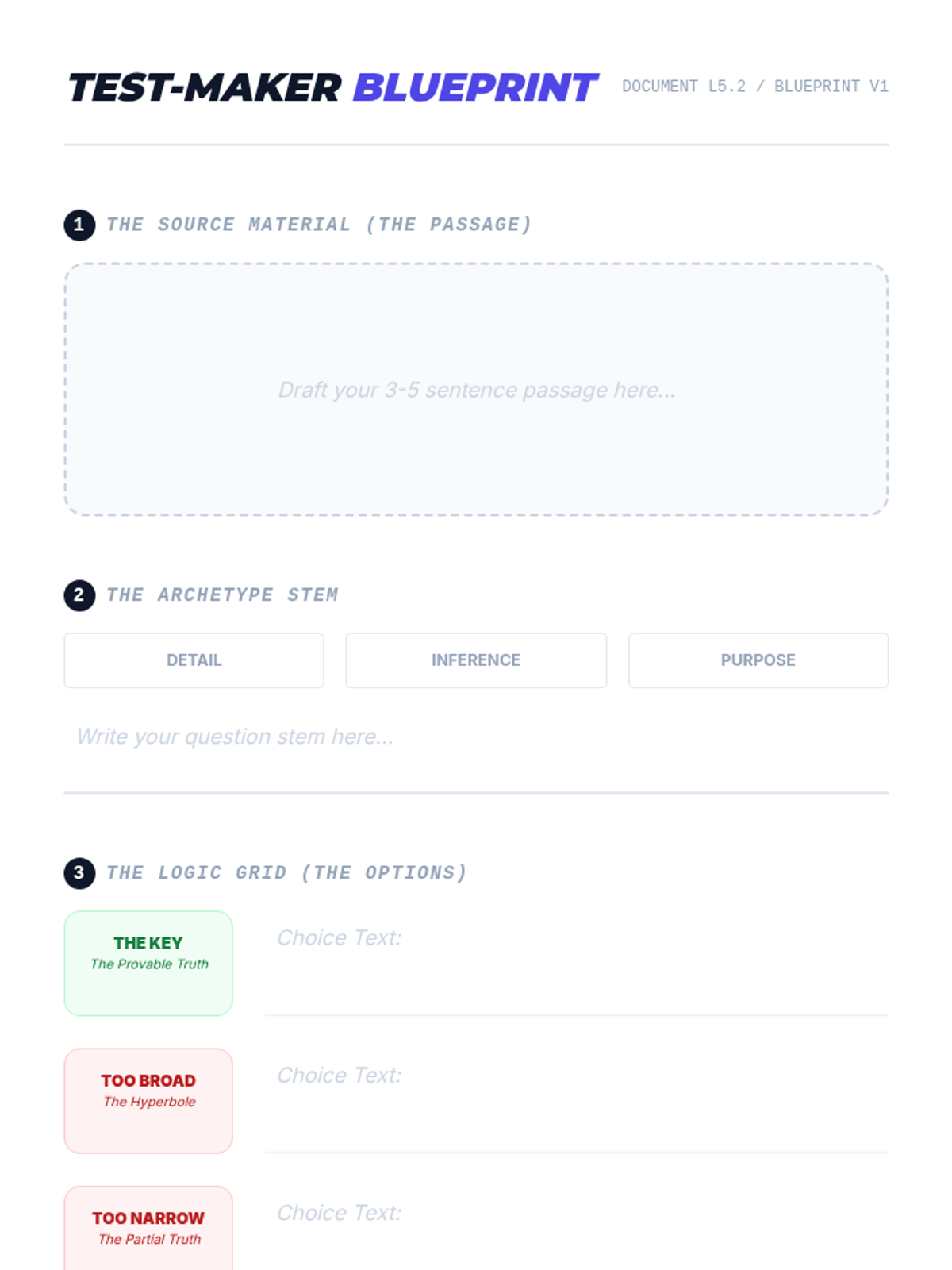
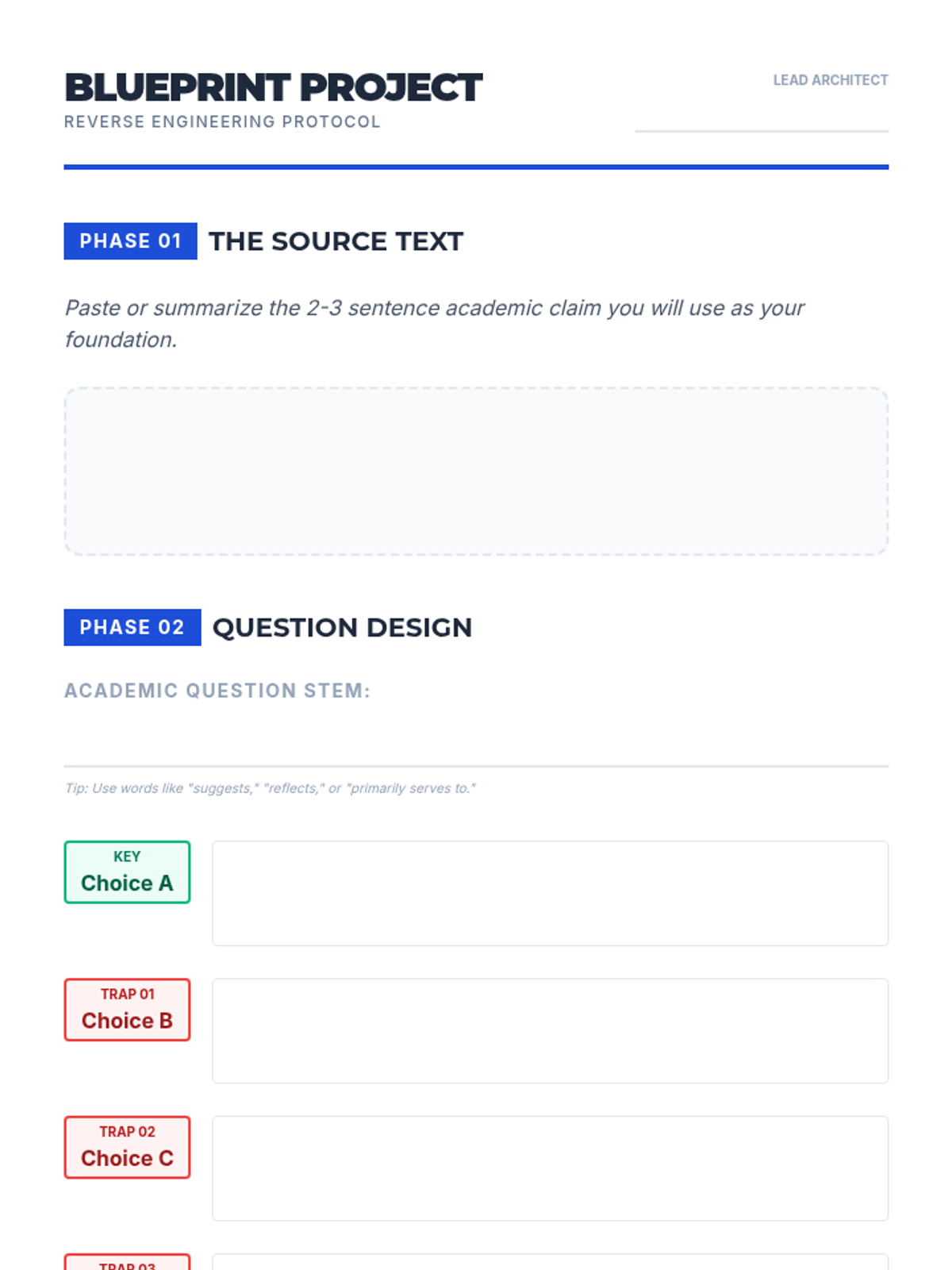
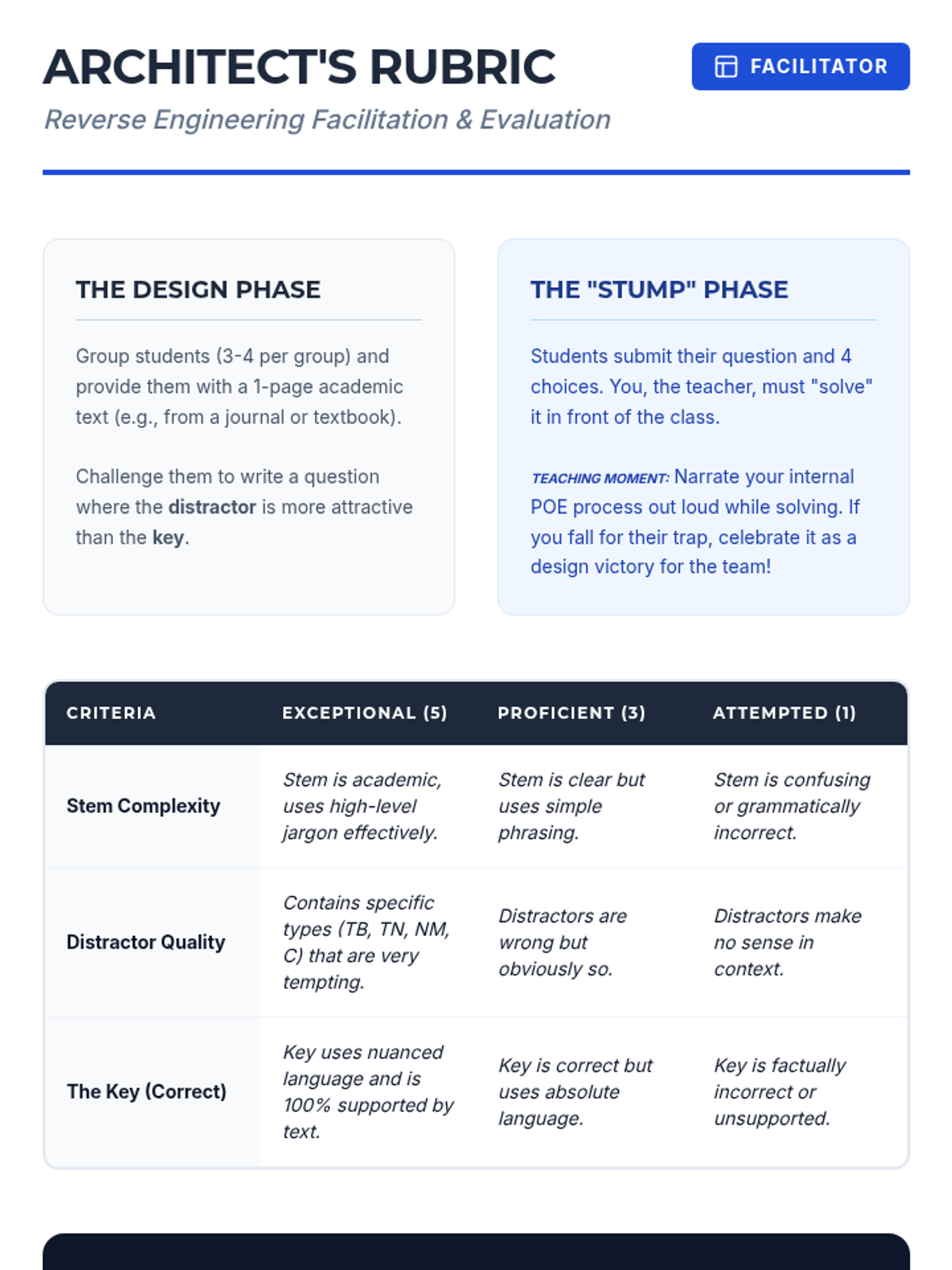
Students synthesize their learning by creating their own exam questions with intentional distractors for peer evaluation.
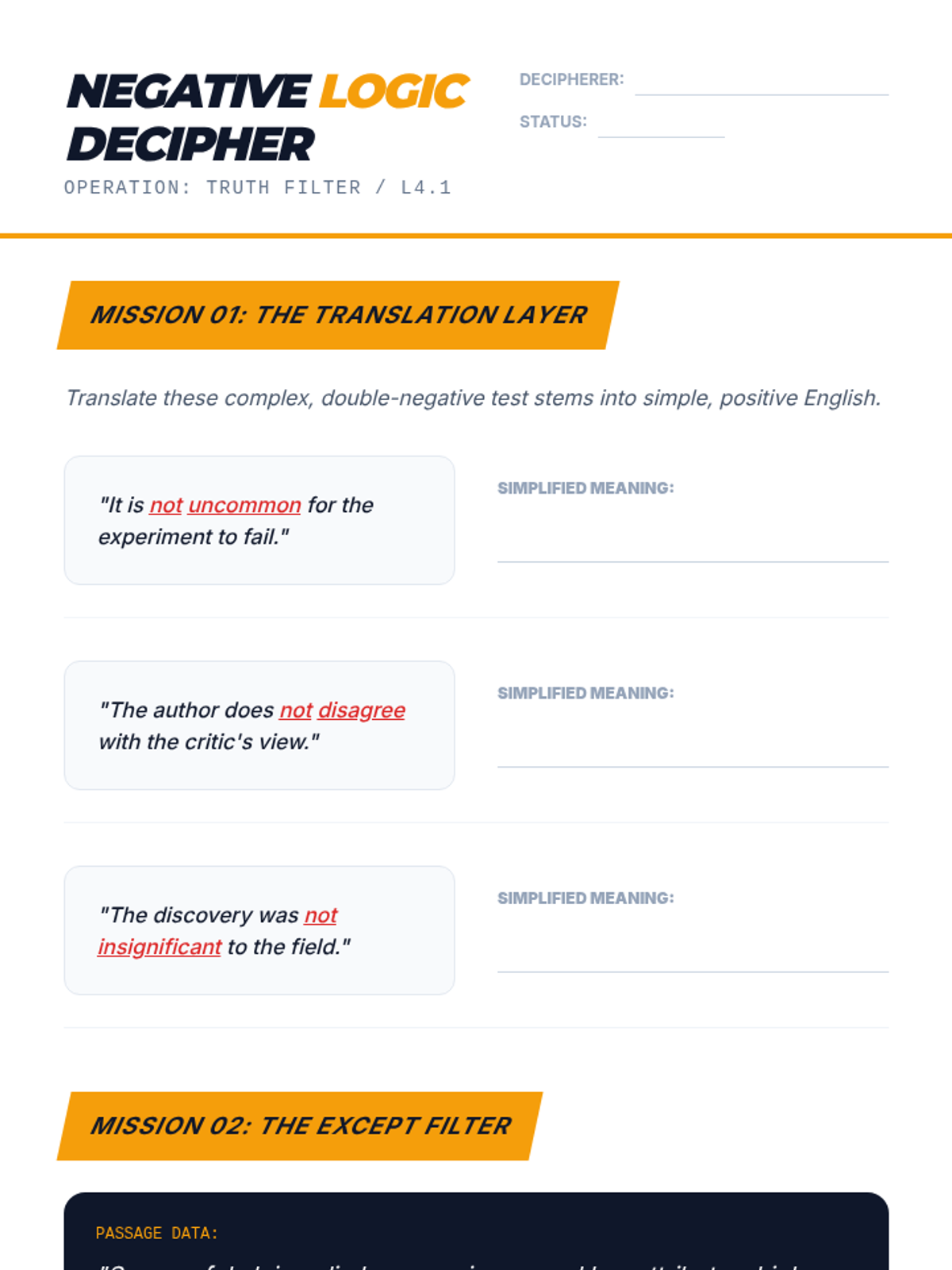
Students learn mental rephrasing techniques to simplify prompts involving double negatives and 'EXCEPT' conditions.
Focuses on probability and logic strategies when the correct answer isn't obvious, using the 'slashing' technique to increase statistical chance.
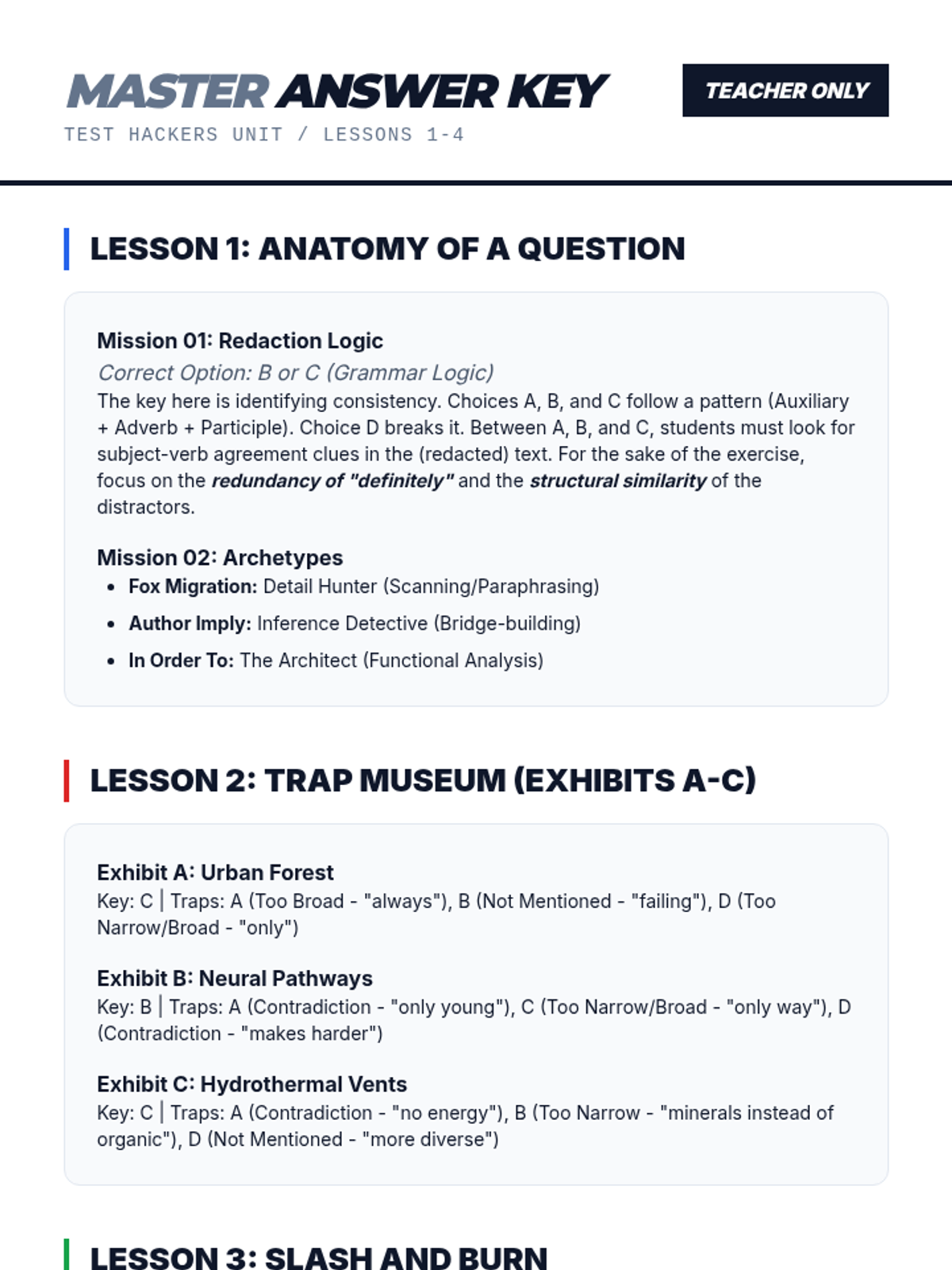
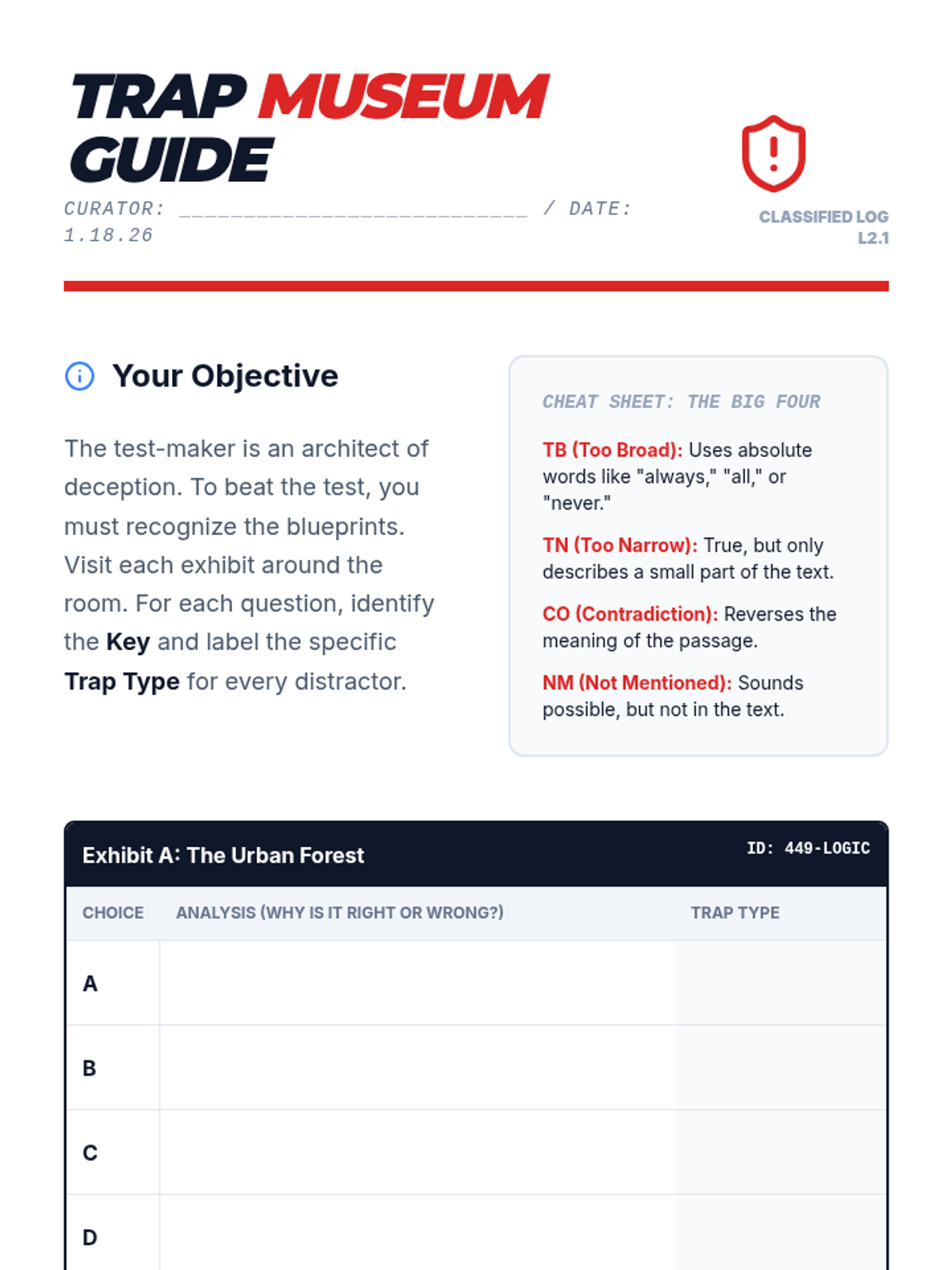
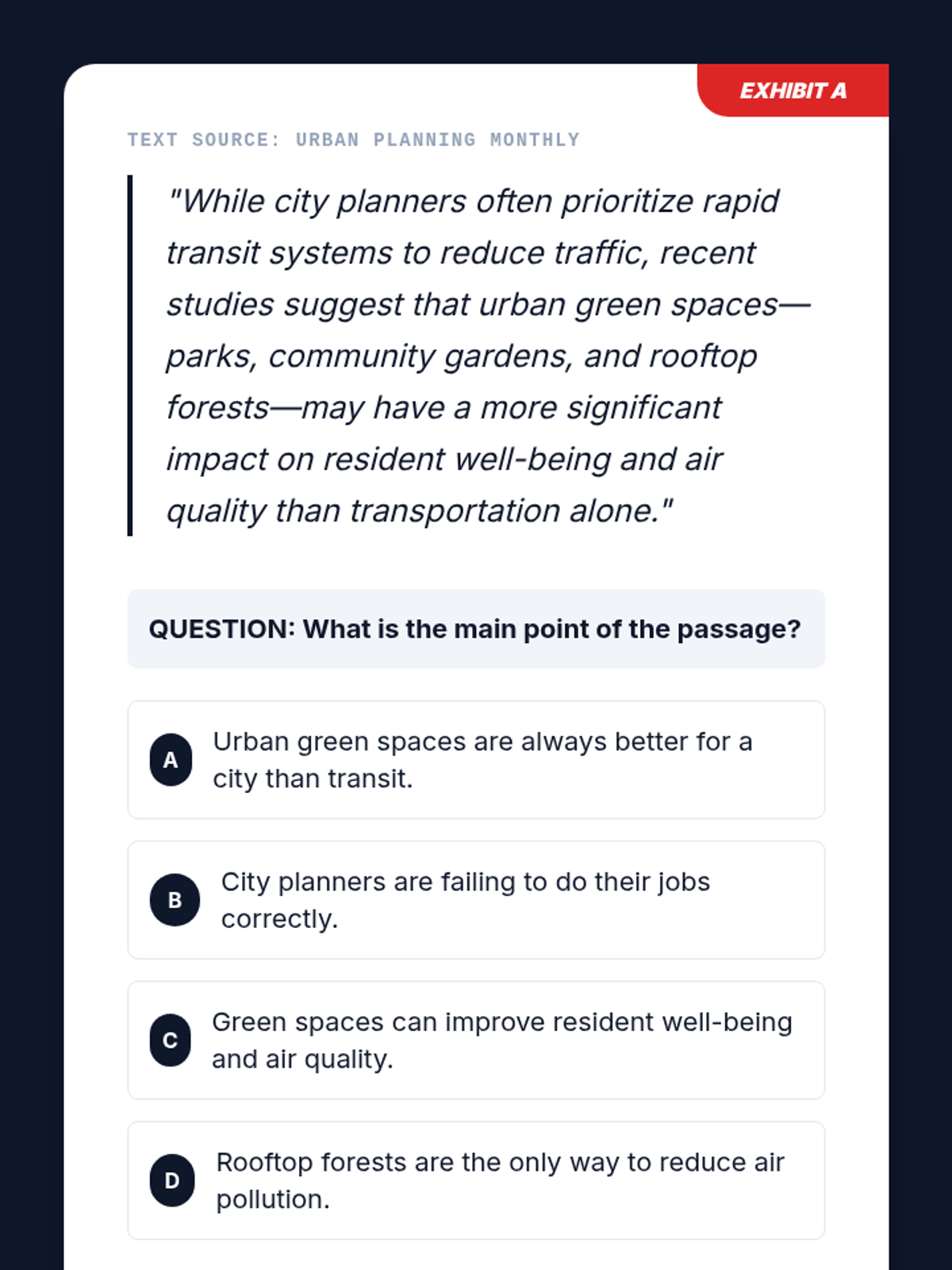
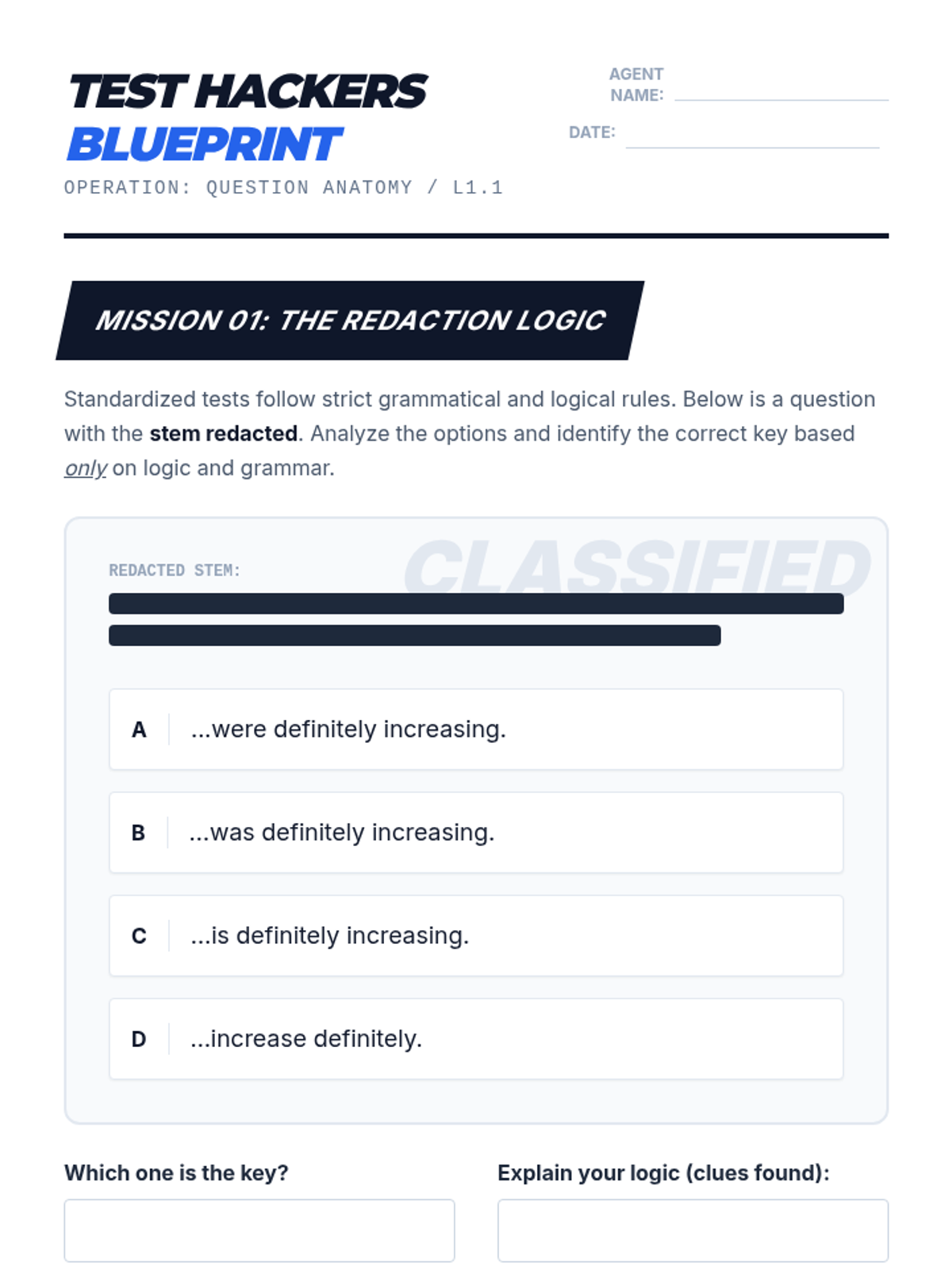
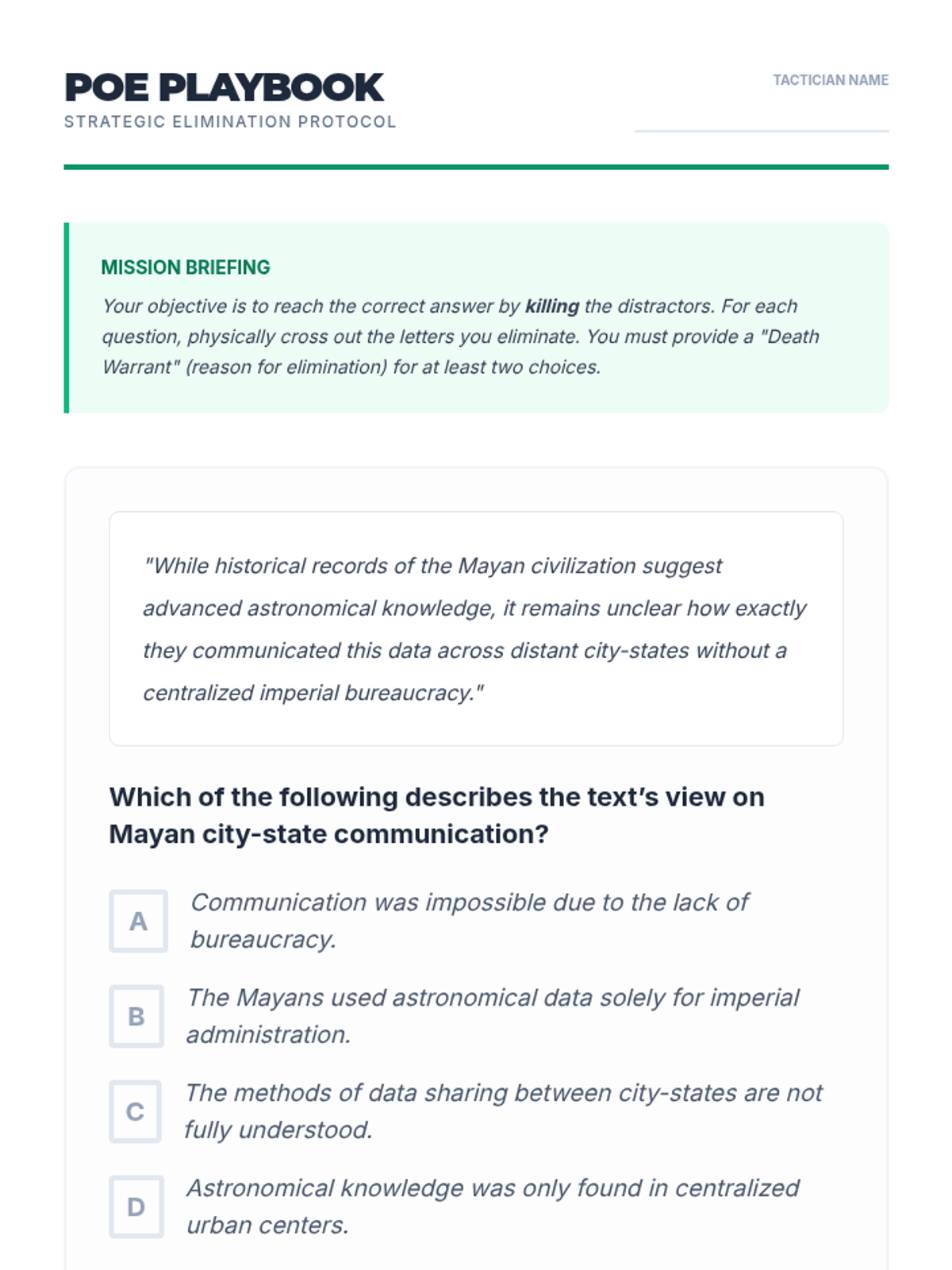
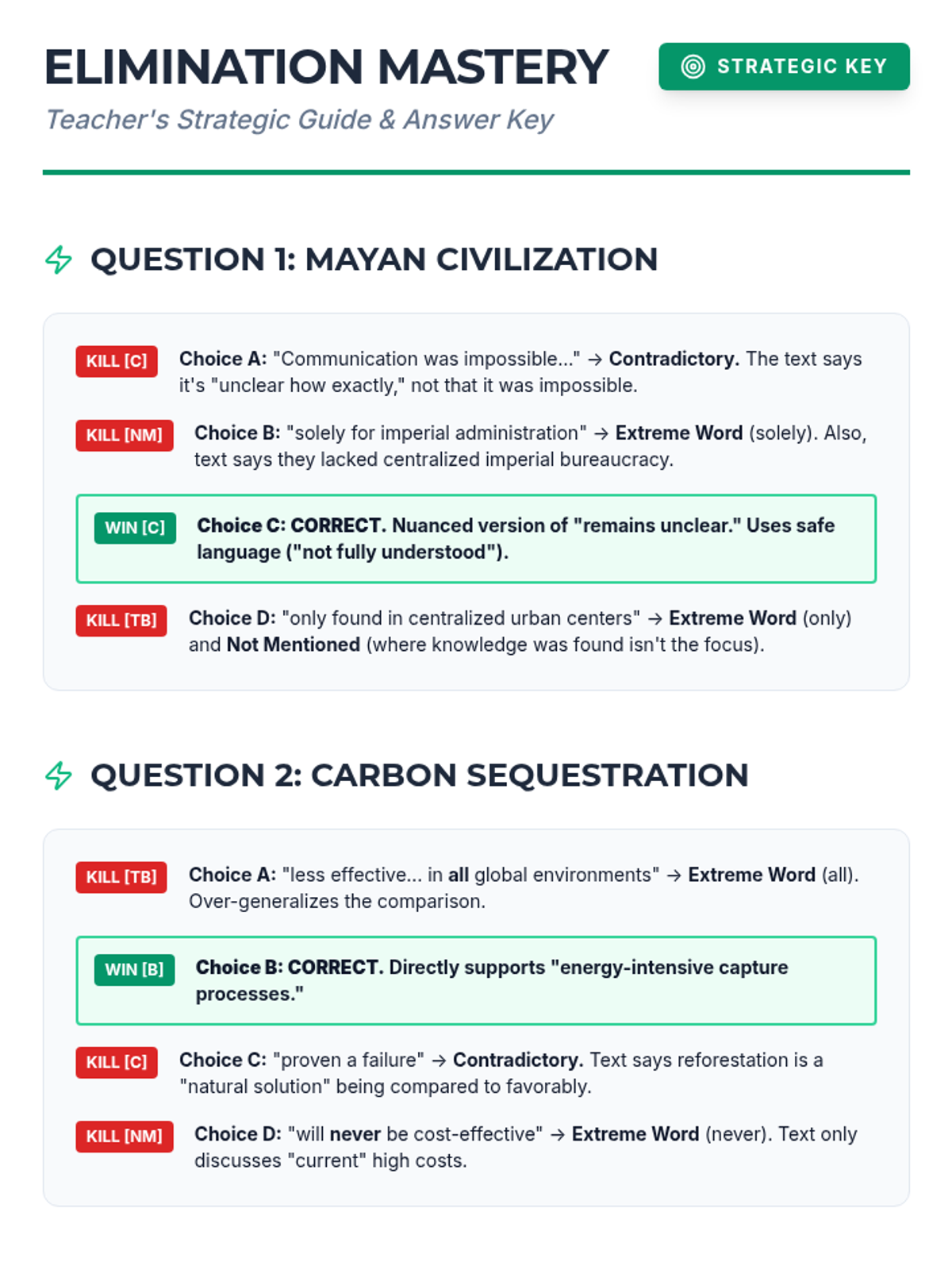
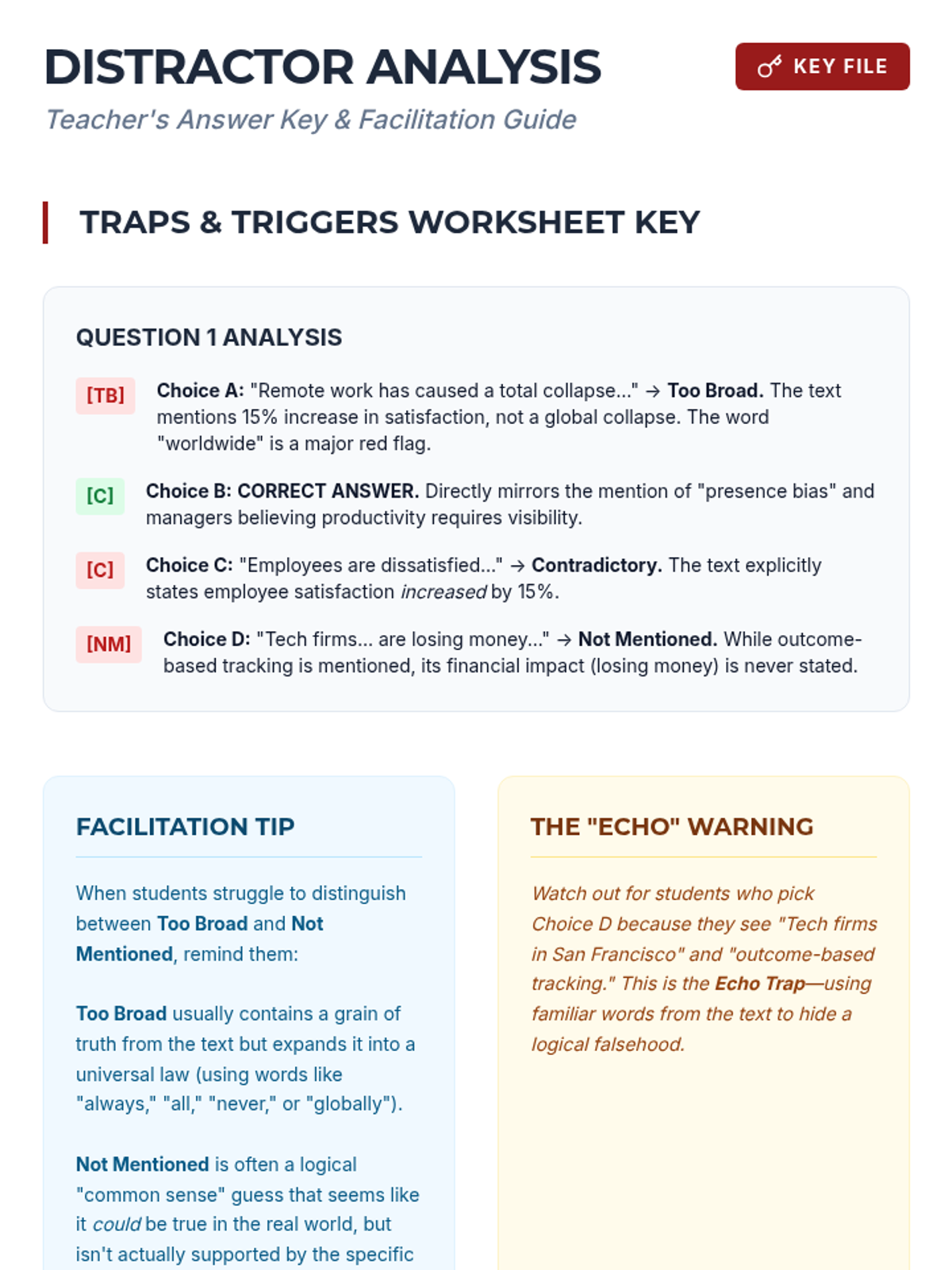
Learners categorize common types of wrong answers, such as 'too broad,' 'too narrow,' 'contradiction,' and 'not mentioned,' practicing why answers are wrong.
Students break down the components of exam items: the stem, the key, and the distractors. They analyze different question stems to predict required thinking skills.
Students apply their knowledge by reverse-engineering test questions, creating their own complex distractors based on academic texts.
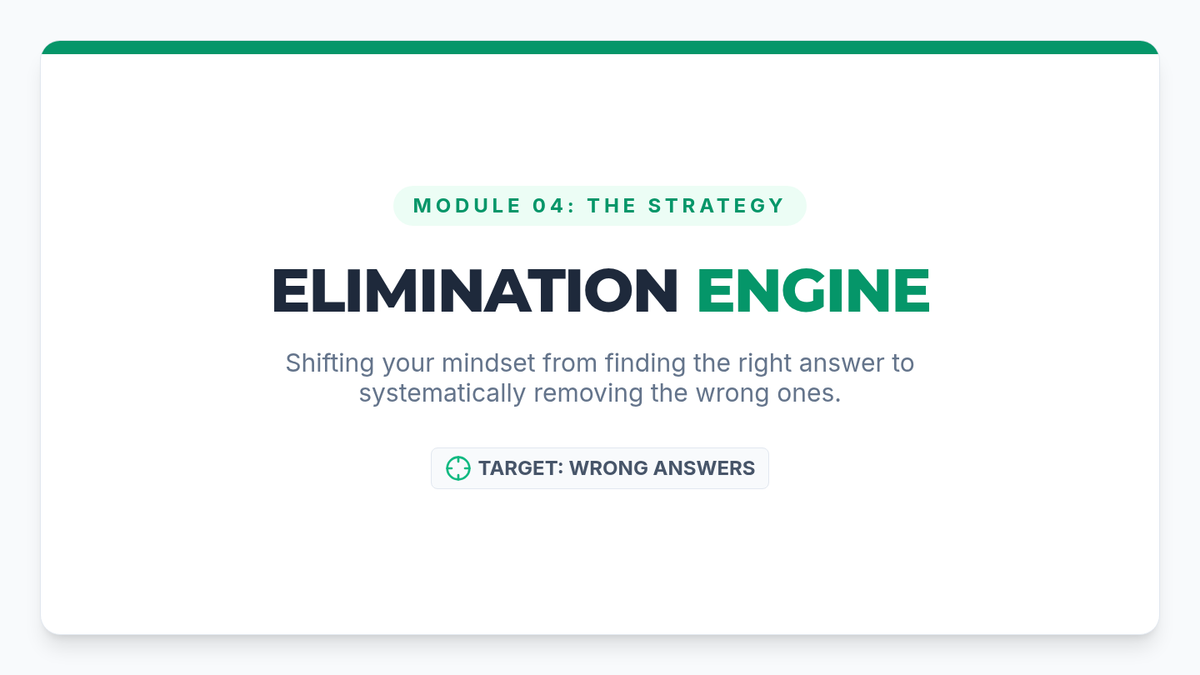
Students apply the mechanical strategy of crossing out definitely wrong answers to systematically improve their odds of selecting the correct choice.
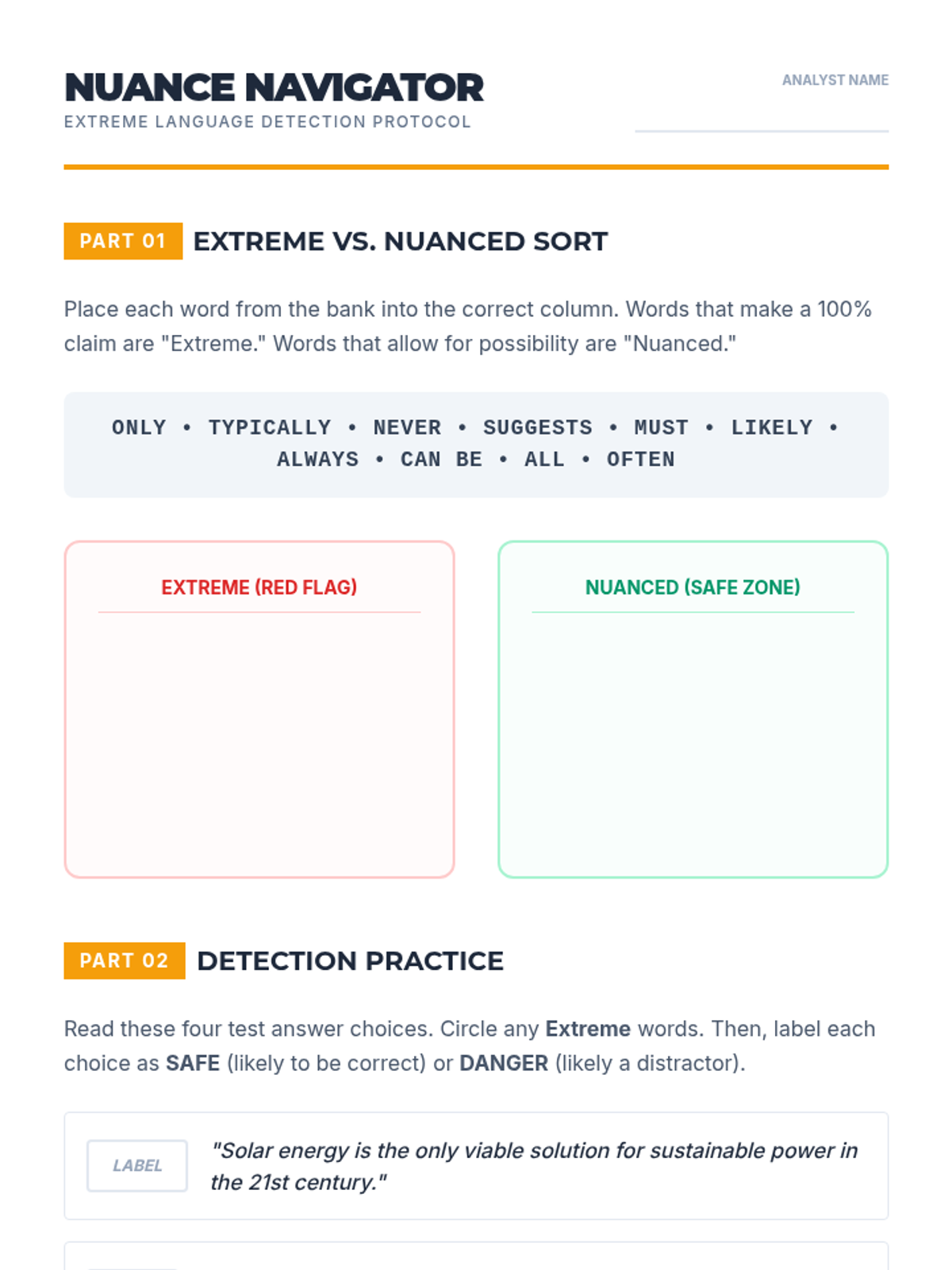
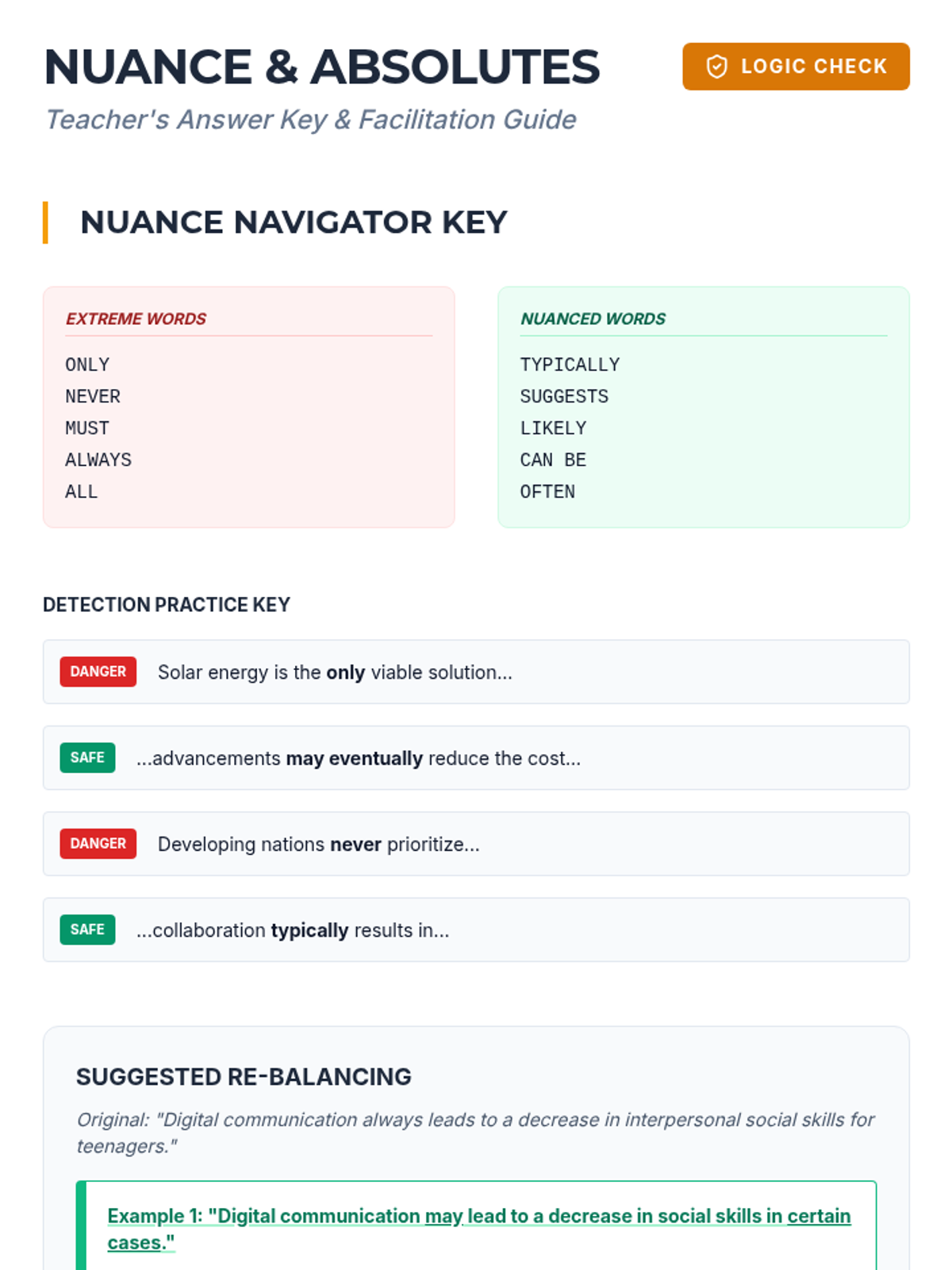
Students practice identifying 'red flag' absolute words and distinguishing them from the nuanced language typical of academic claims.
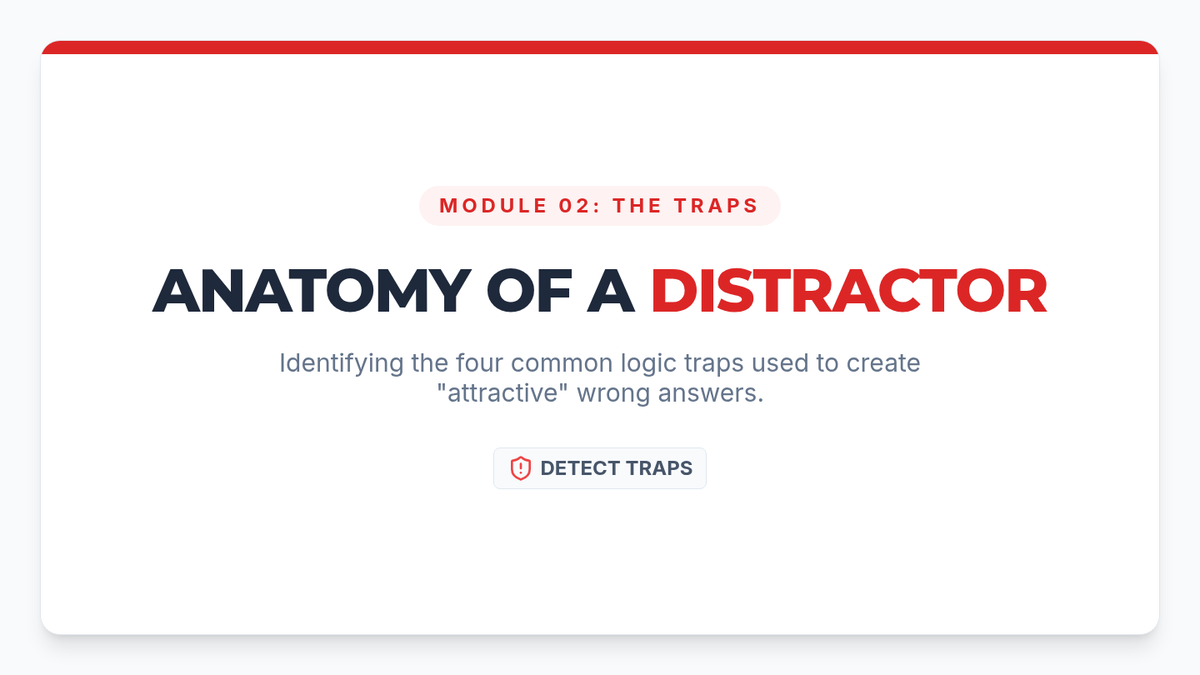
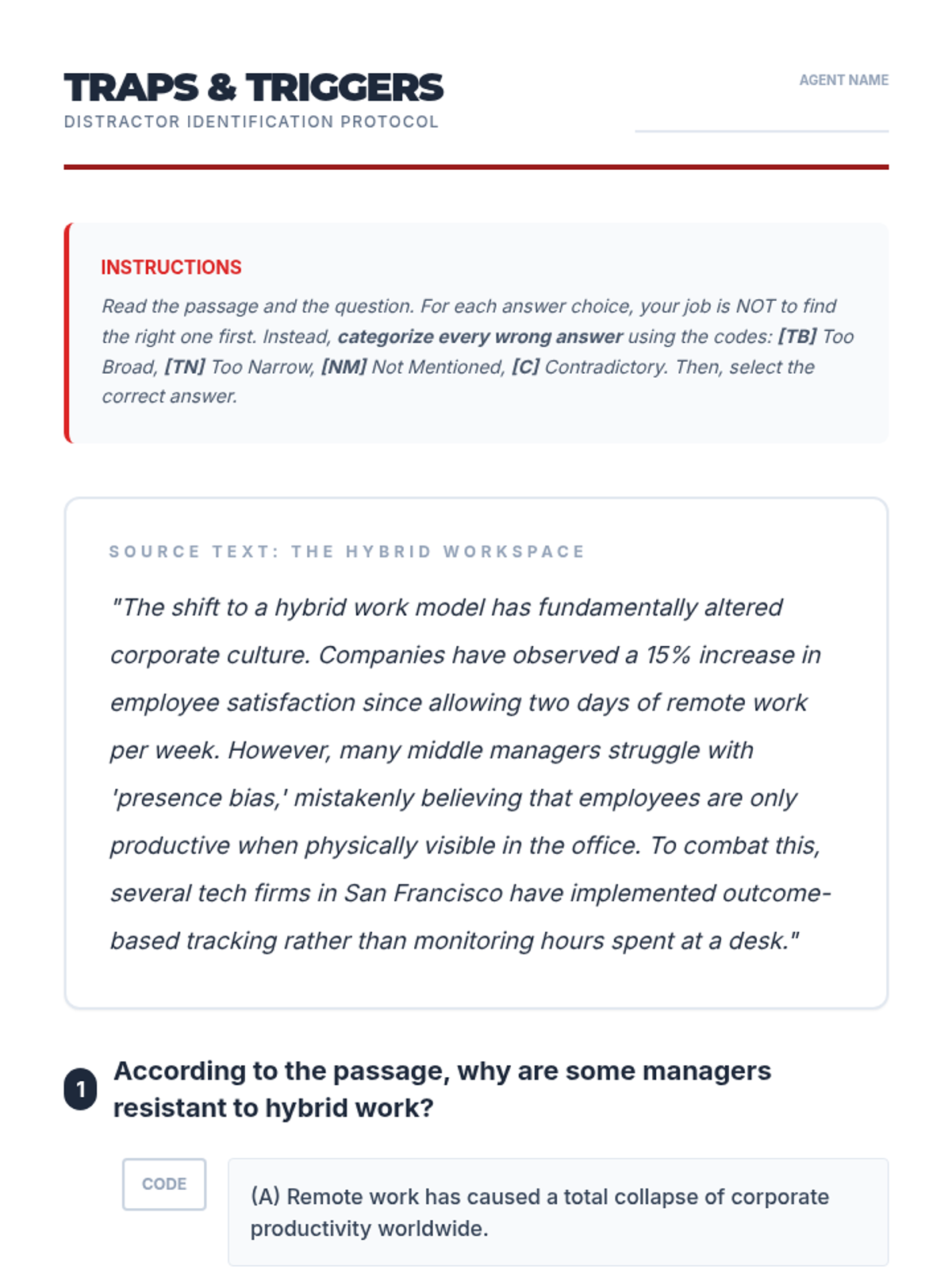
Students categorize common types of wrong answers (too broad, too narrow, not mentioned, contradictory) to understand why certain options are attractive yet incorrect.
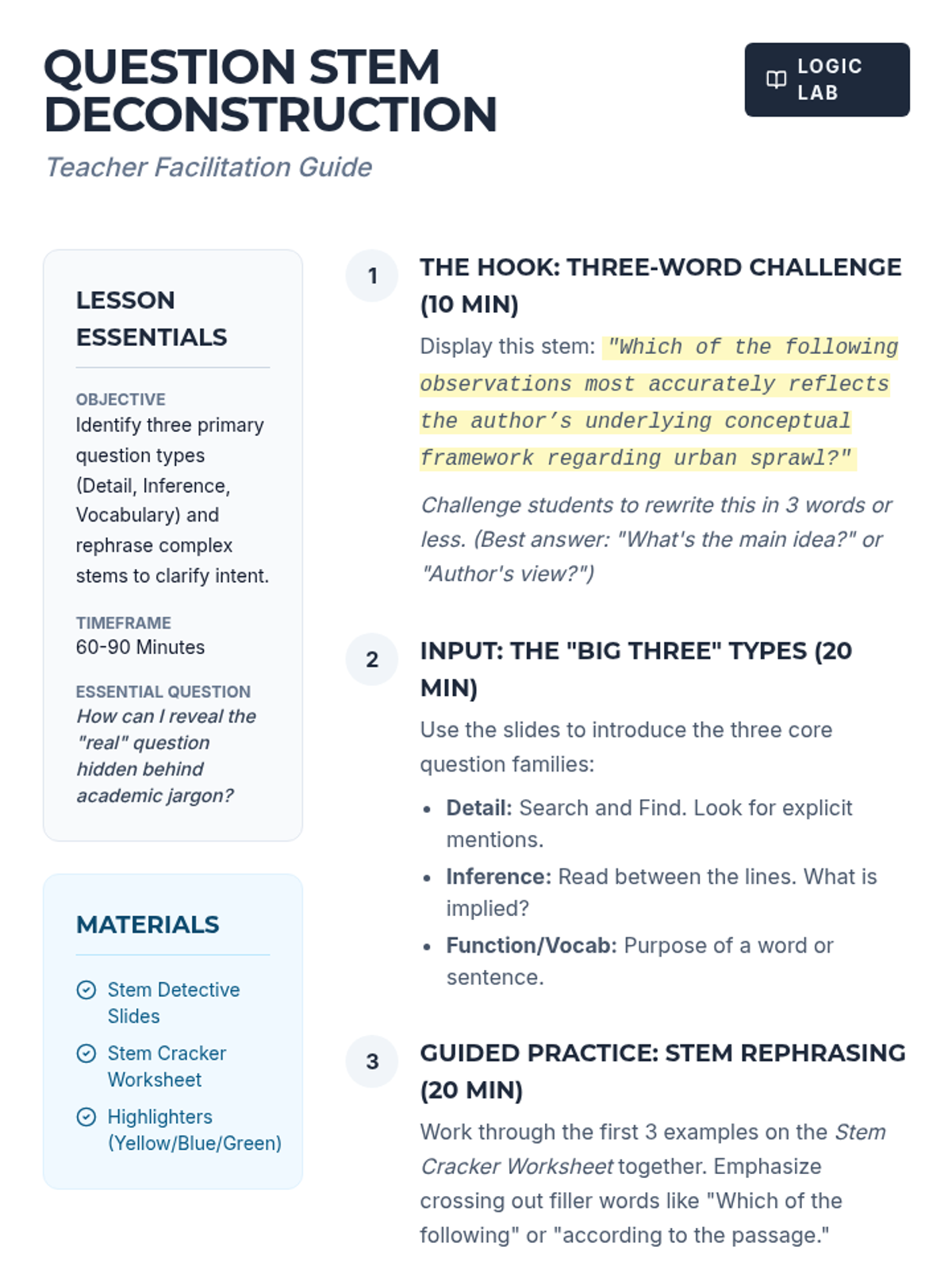
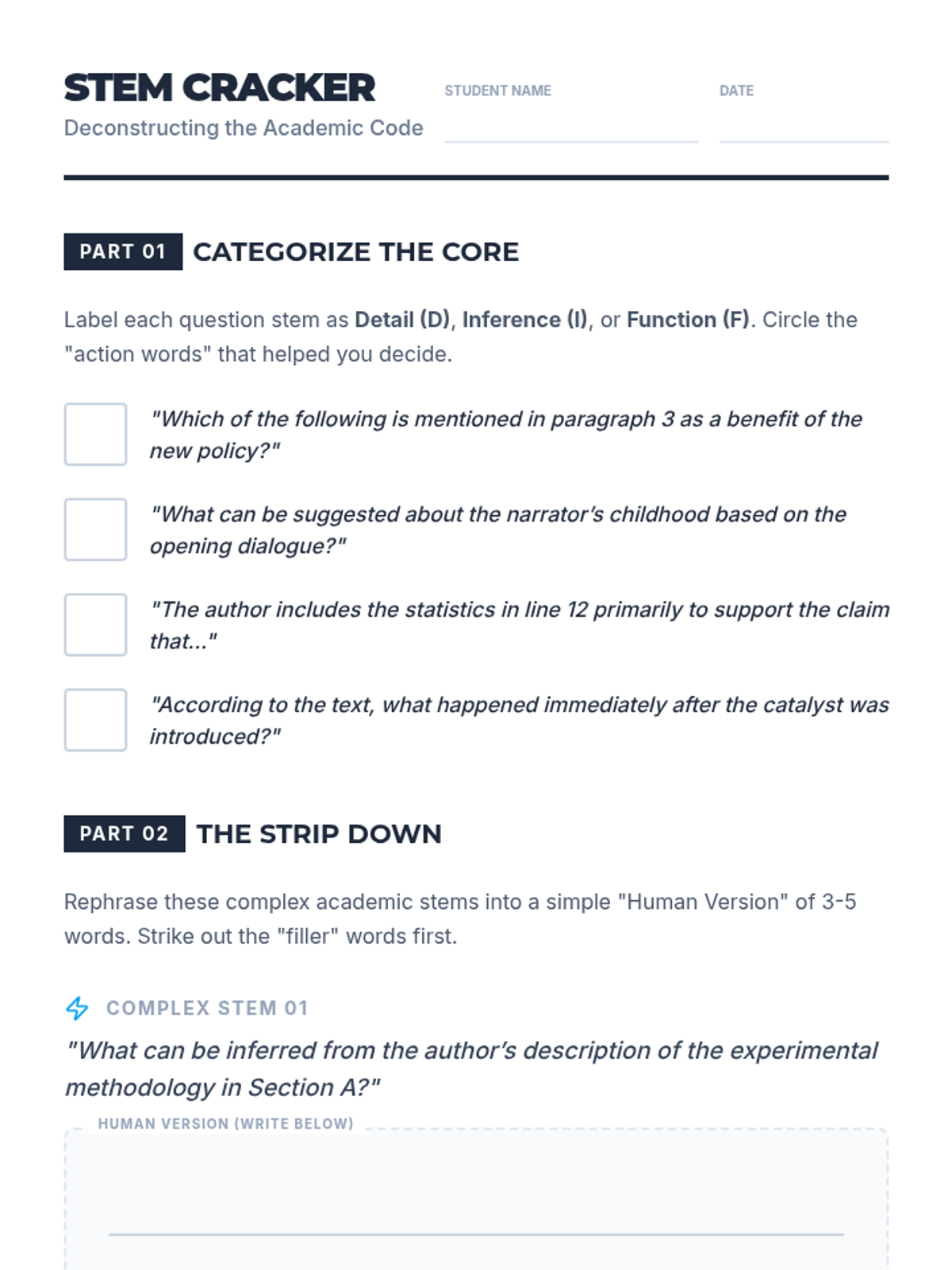
Students learn to identify question types and rephrase complex stems into simple inquiries to clarify the test-maker's intent.
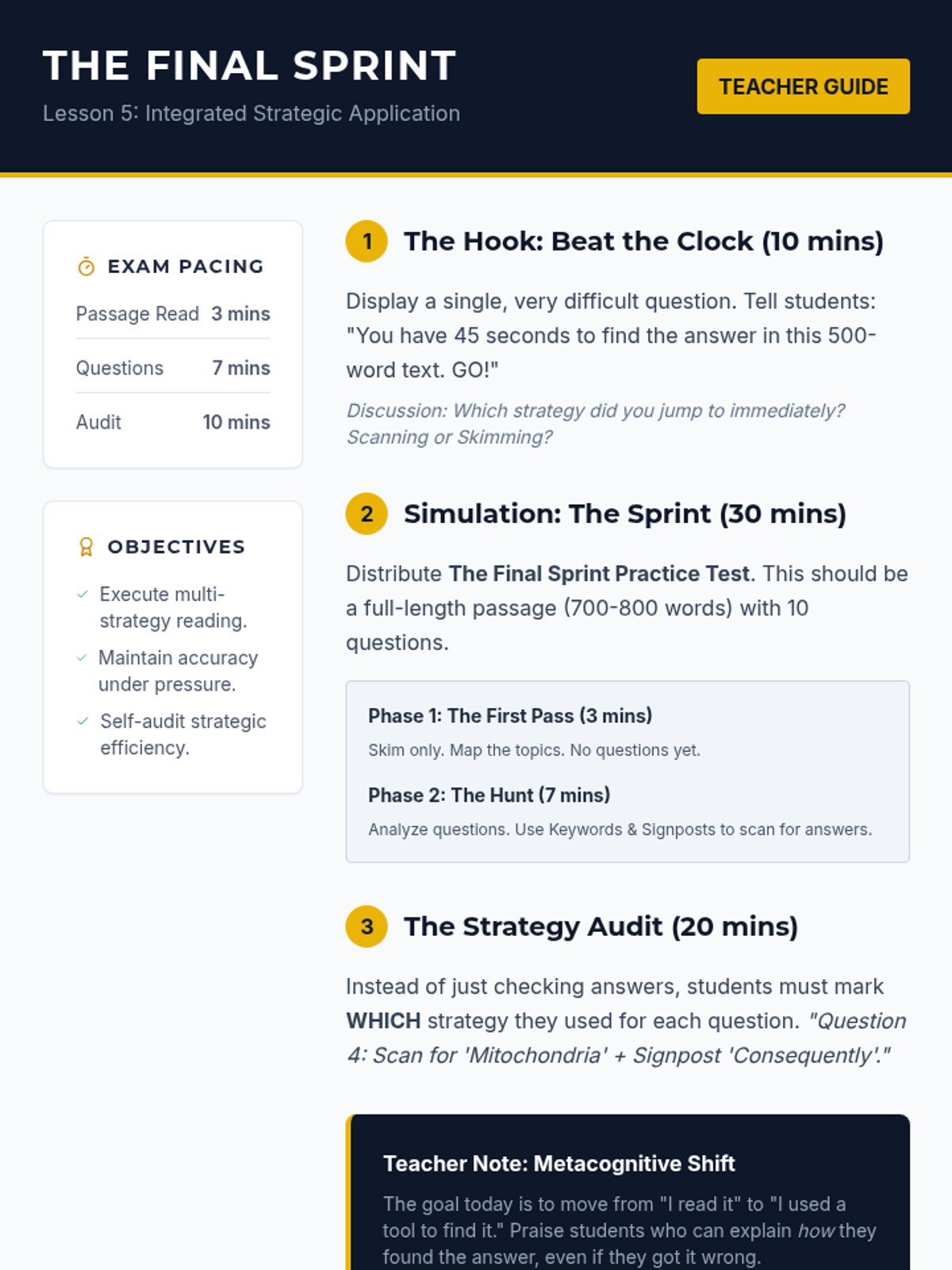
A culminating session where students apply integrated strategies to a full-length reading section under strict time constraints.
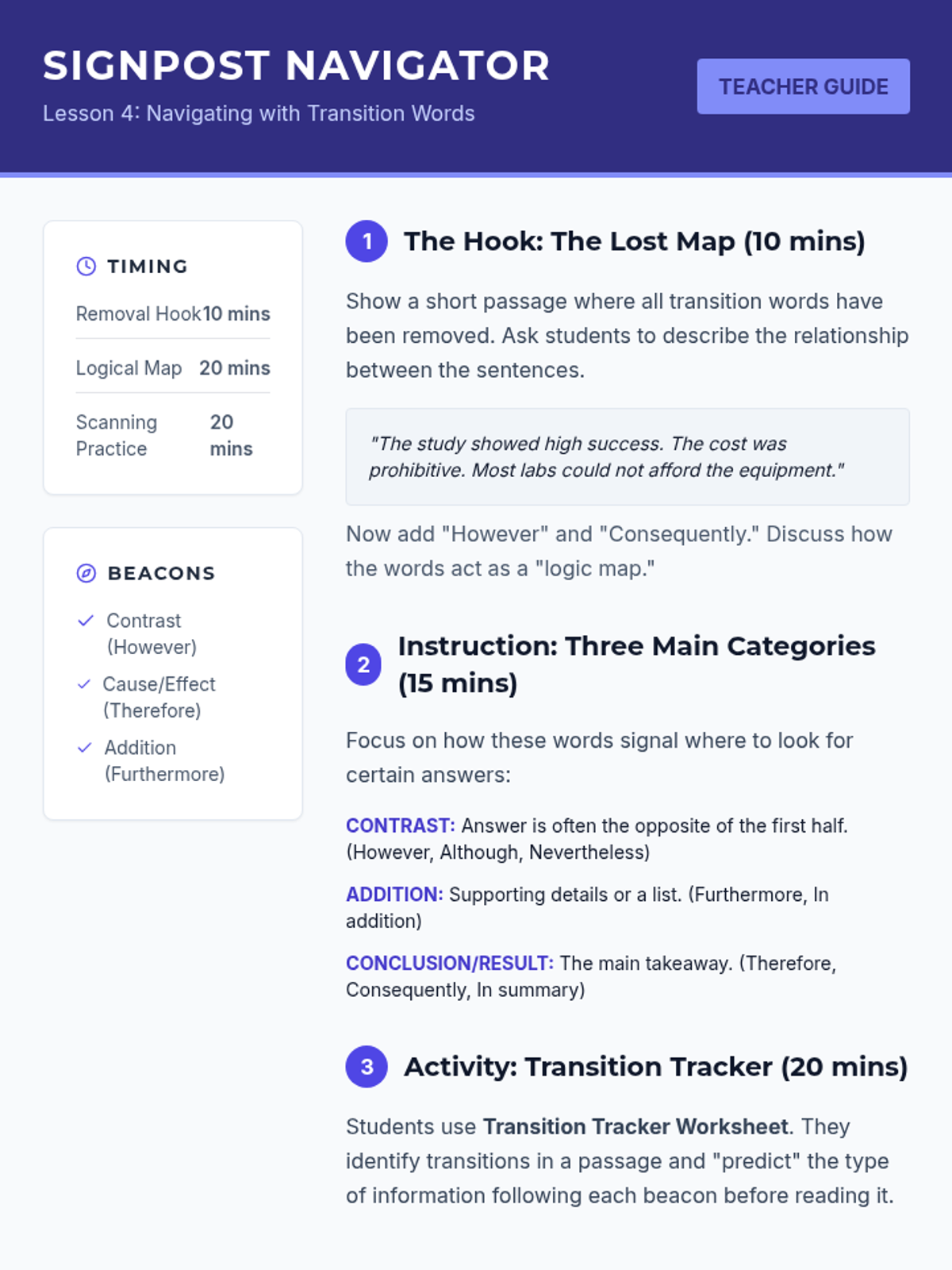
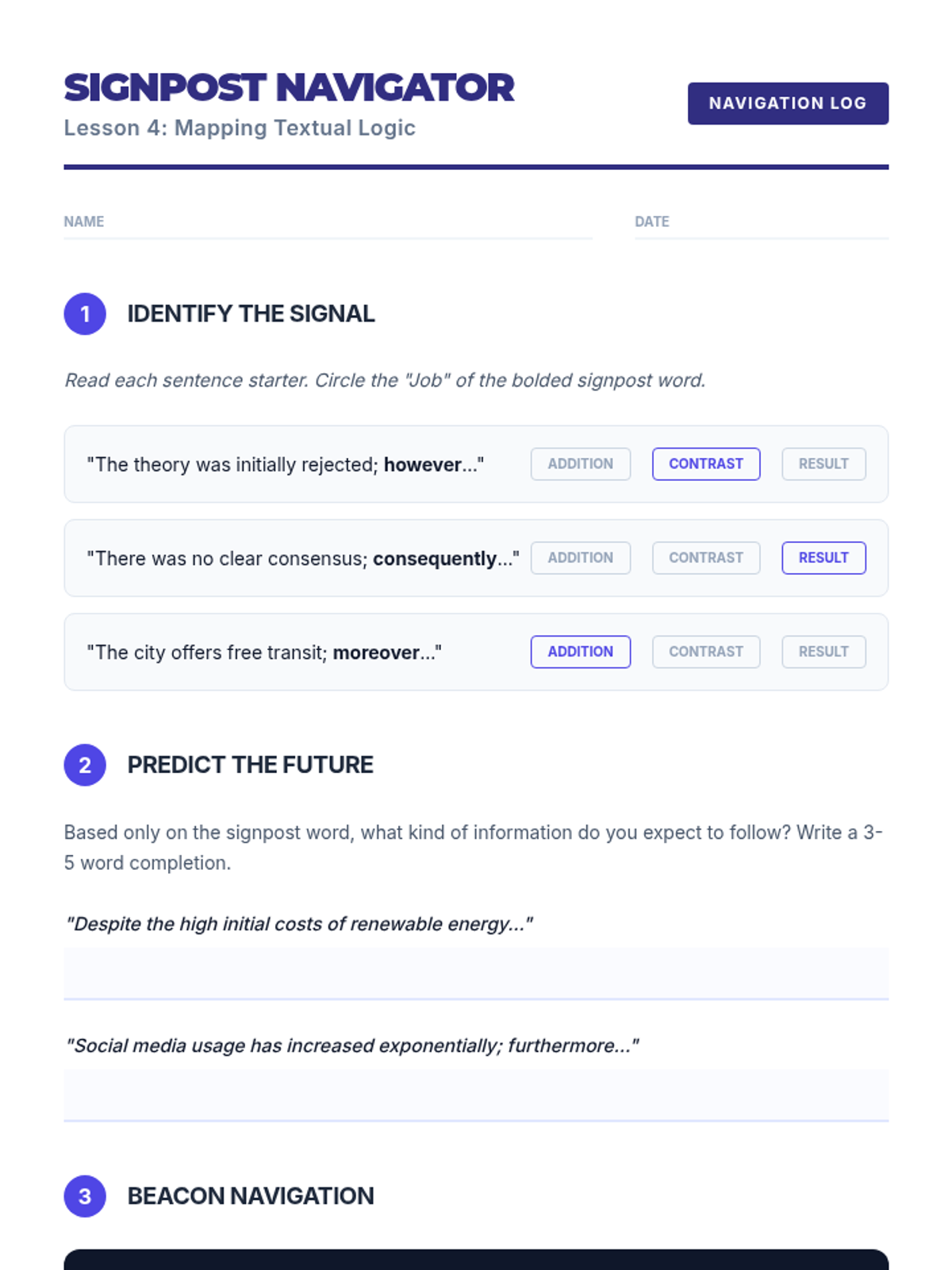
Uses transitional phrases and signpost words as navigational beacons to predict text structure and locate answers.
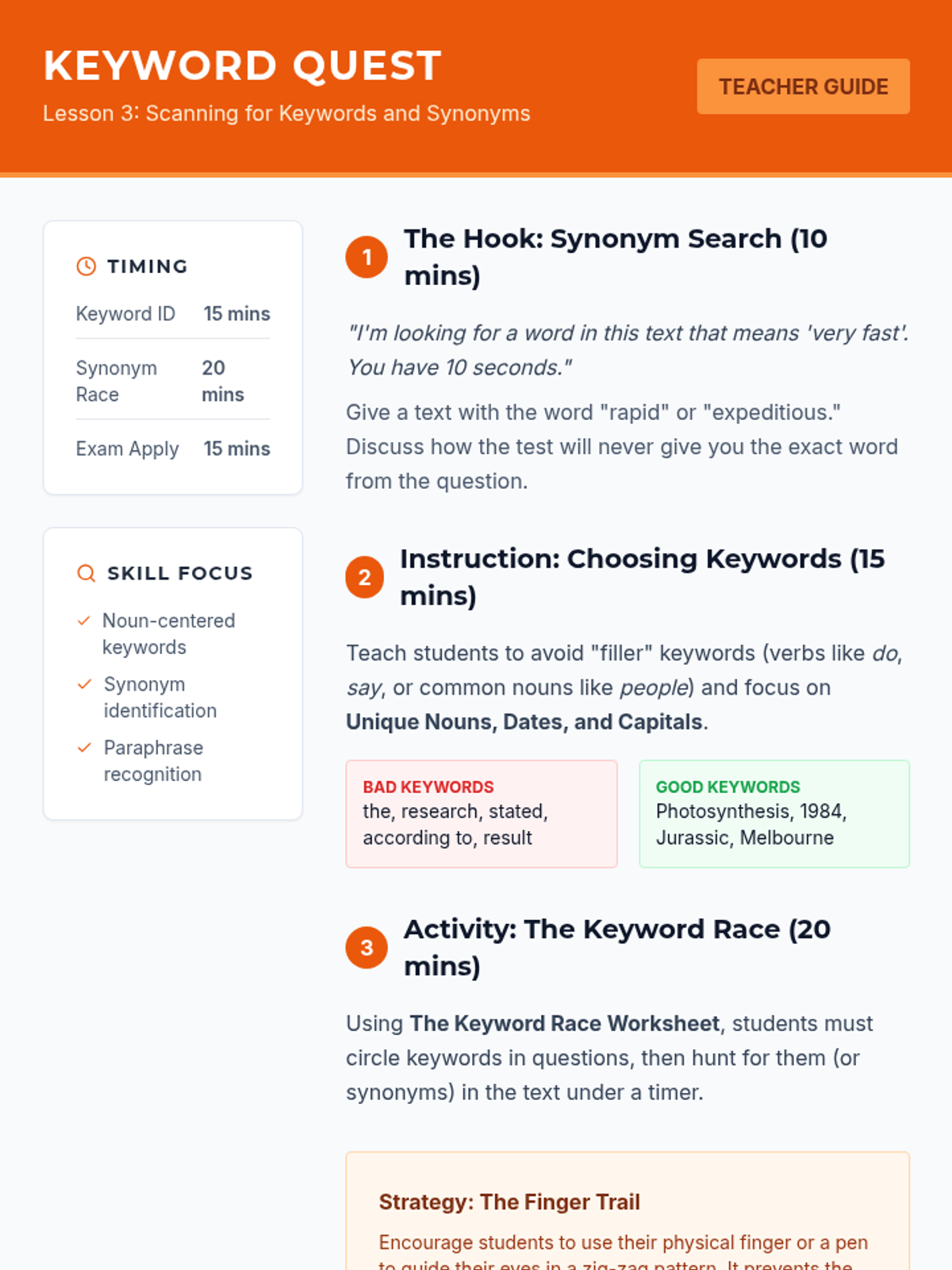
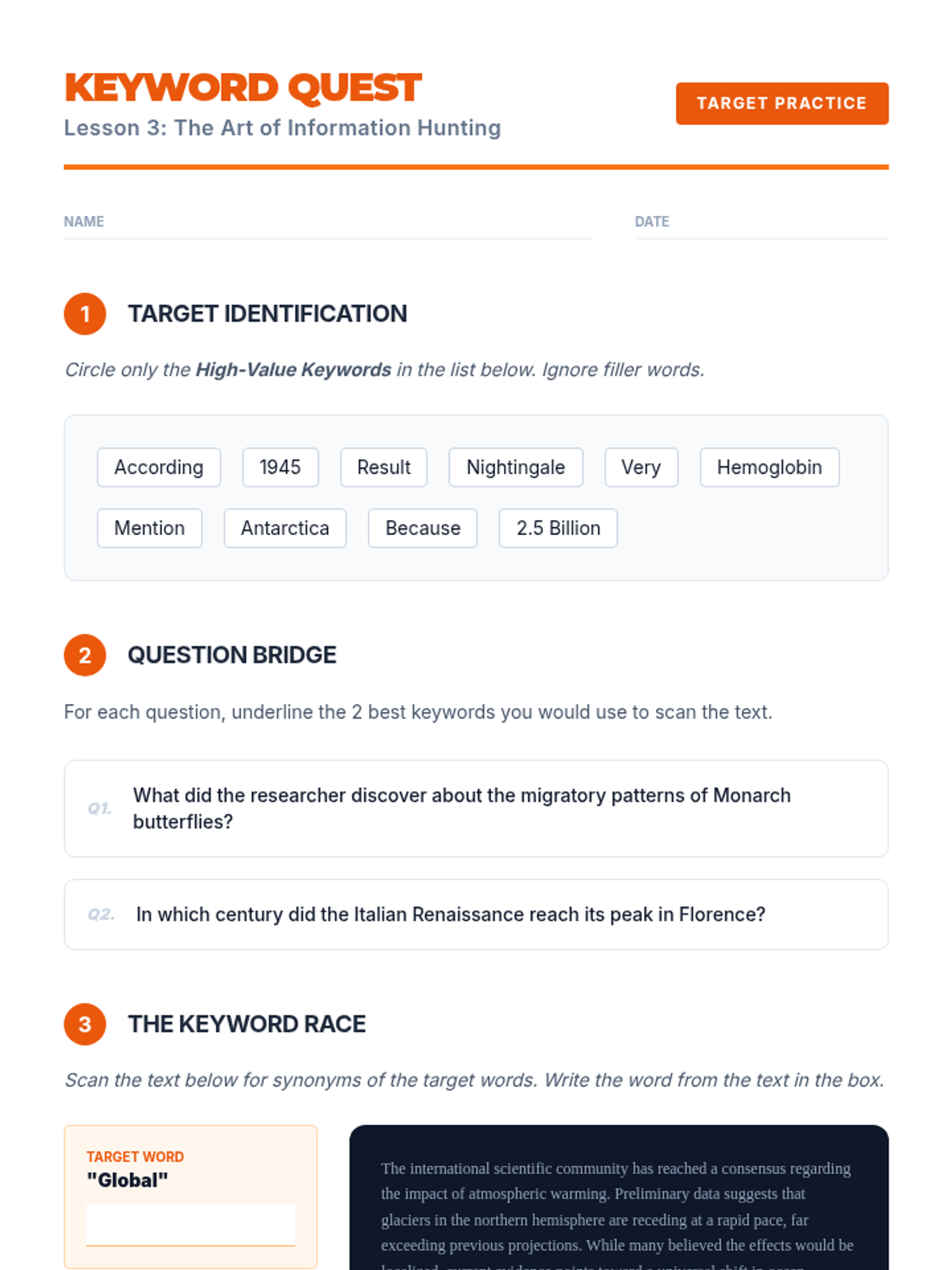
Teaches students to identify keywords in questions and locate them or their synonyms within a text, moving beyond simple word-matching.
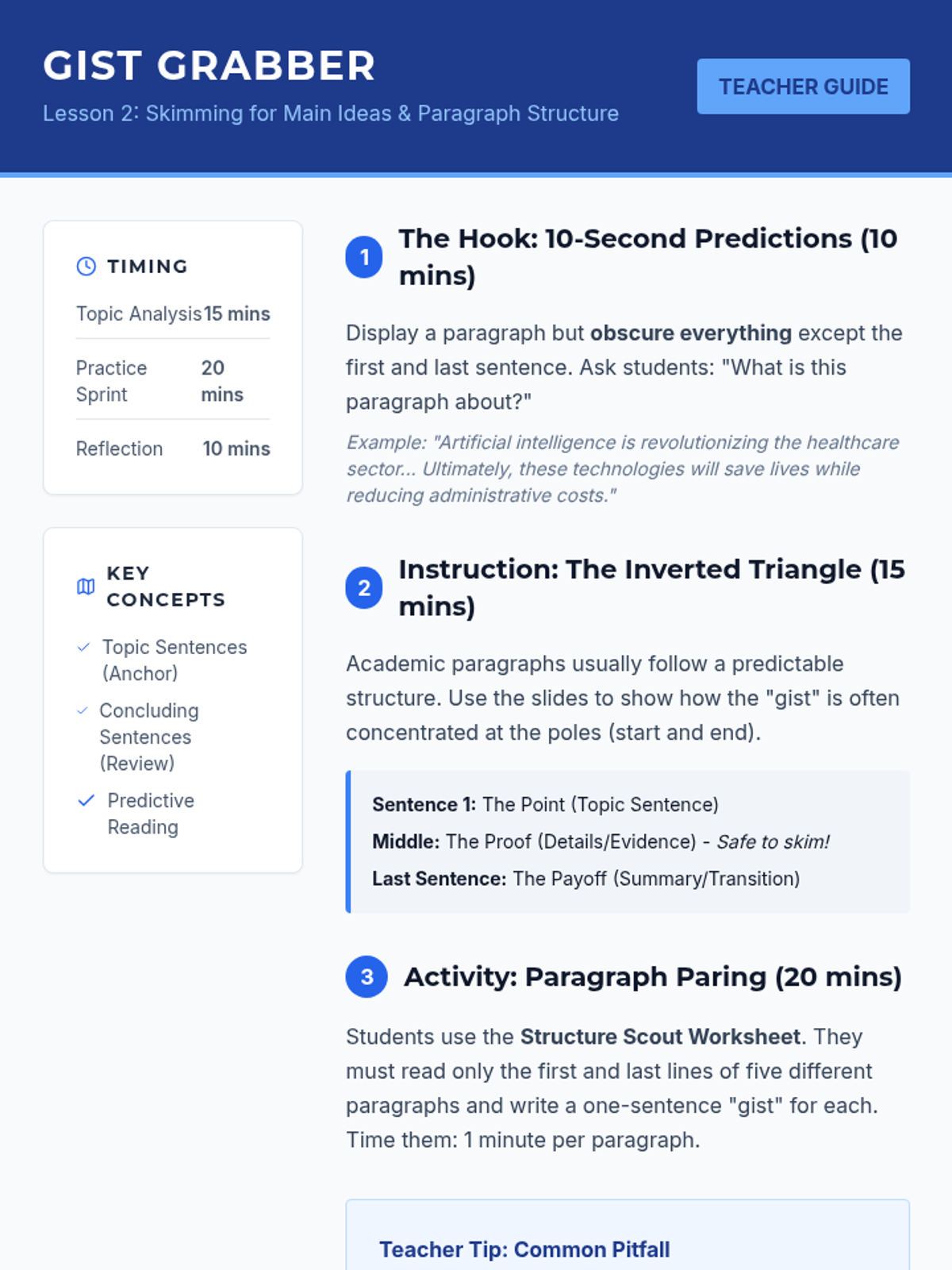
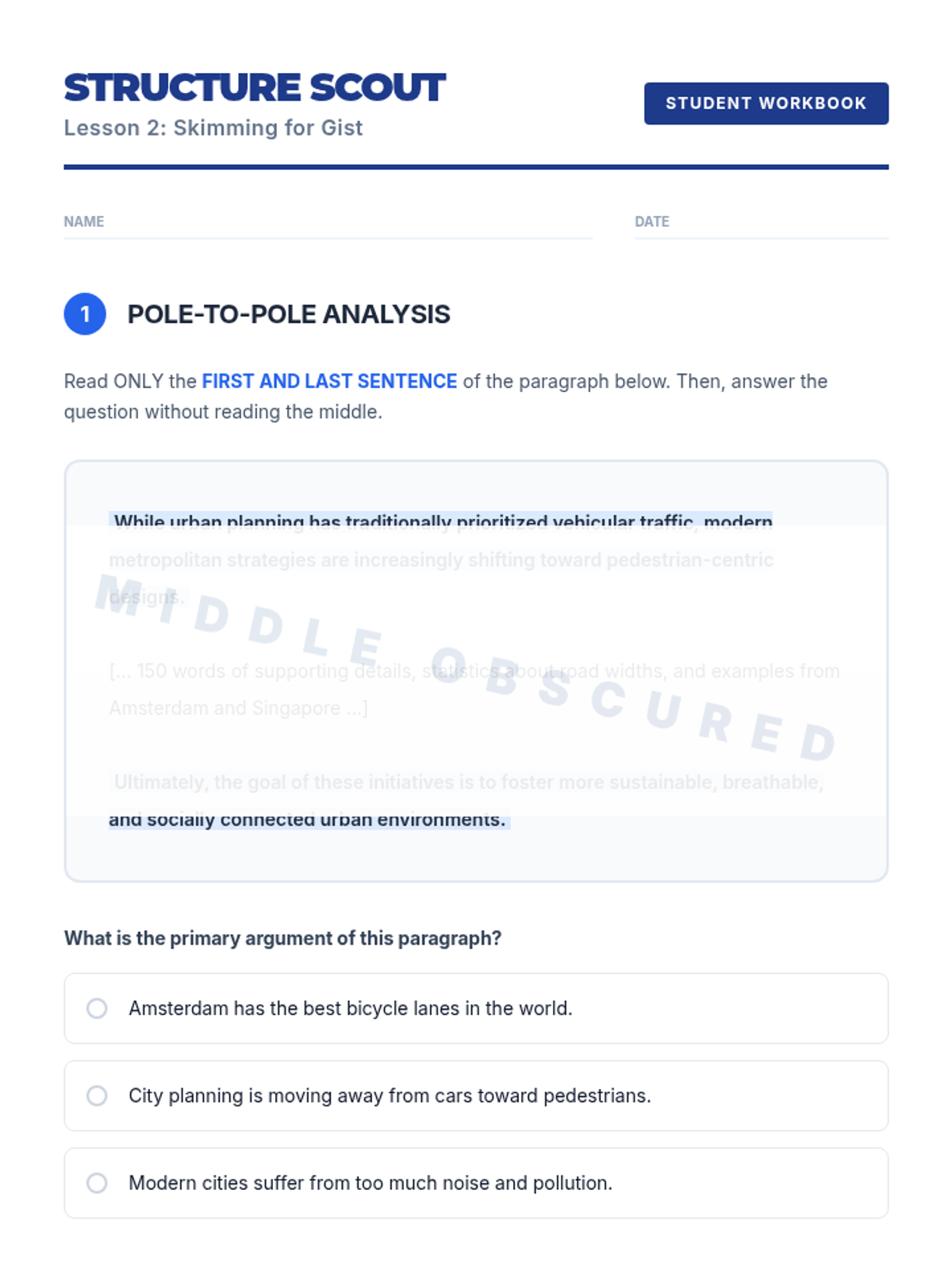
Focuses on identifying topic sentences, paragraph structure, and overall gist to quickly grasp primary arguments without reading every word.
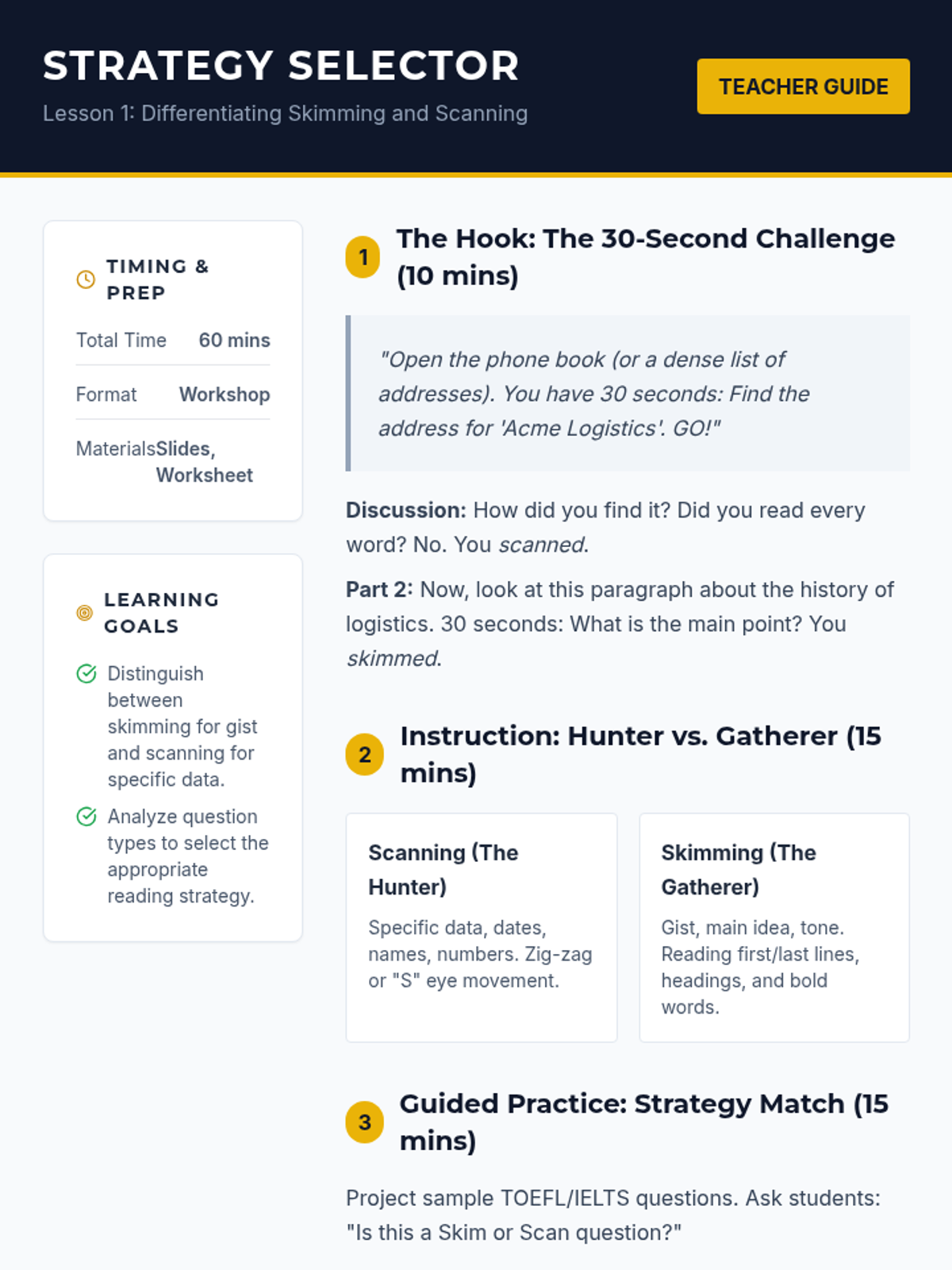
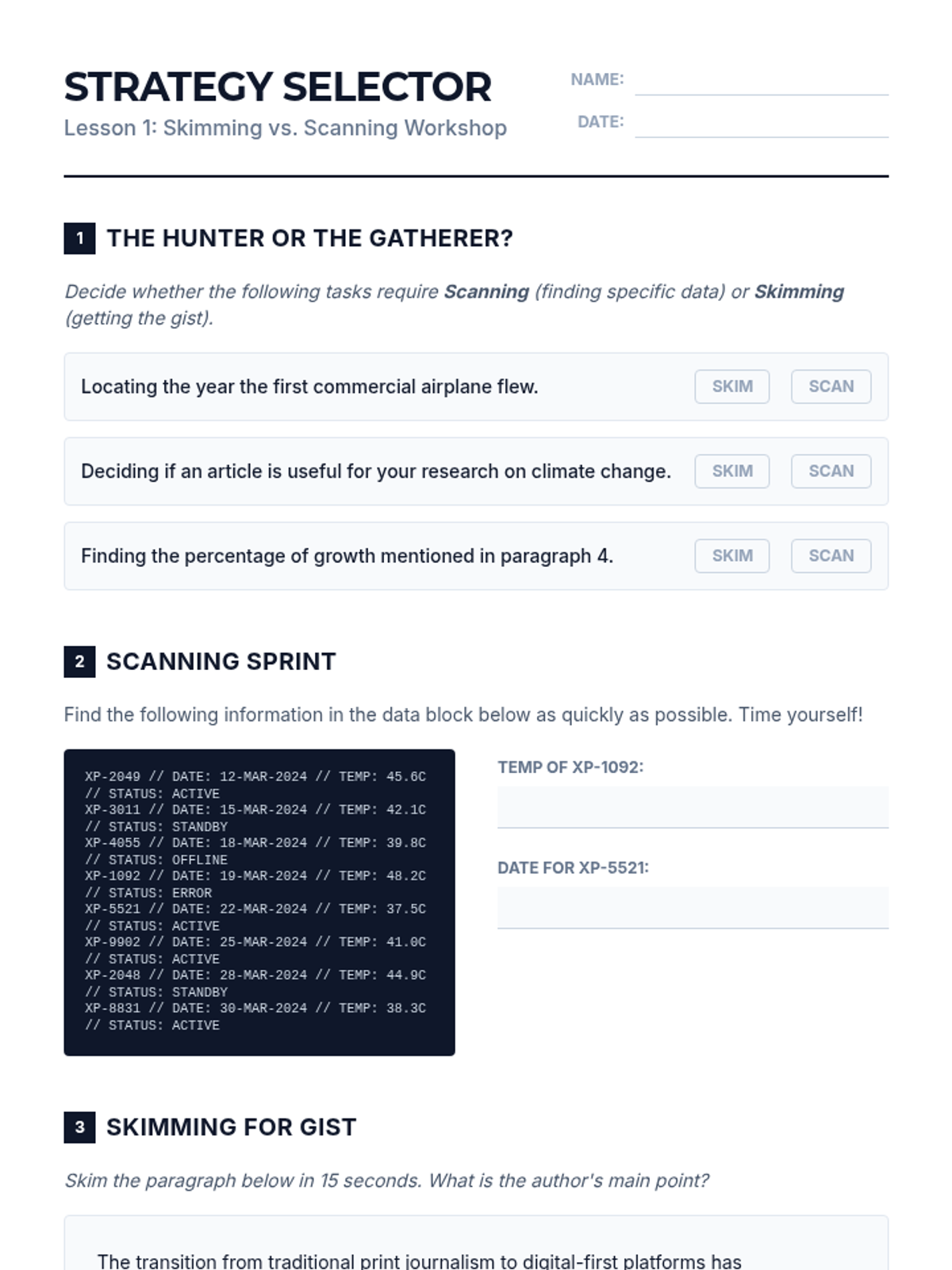
Students explore the conceptual difference between skimming (reading for main ideas) and scanning (searching for specific data) and practice strategy selection.
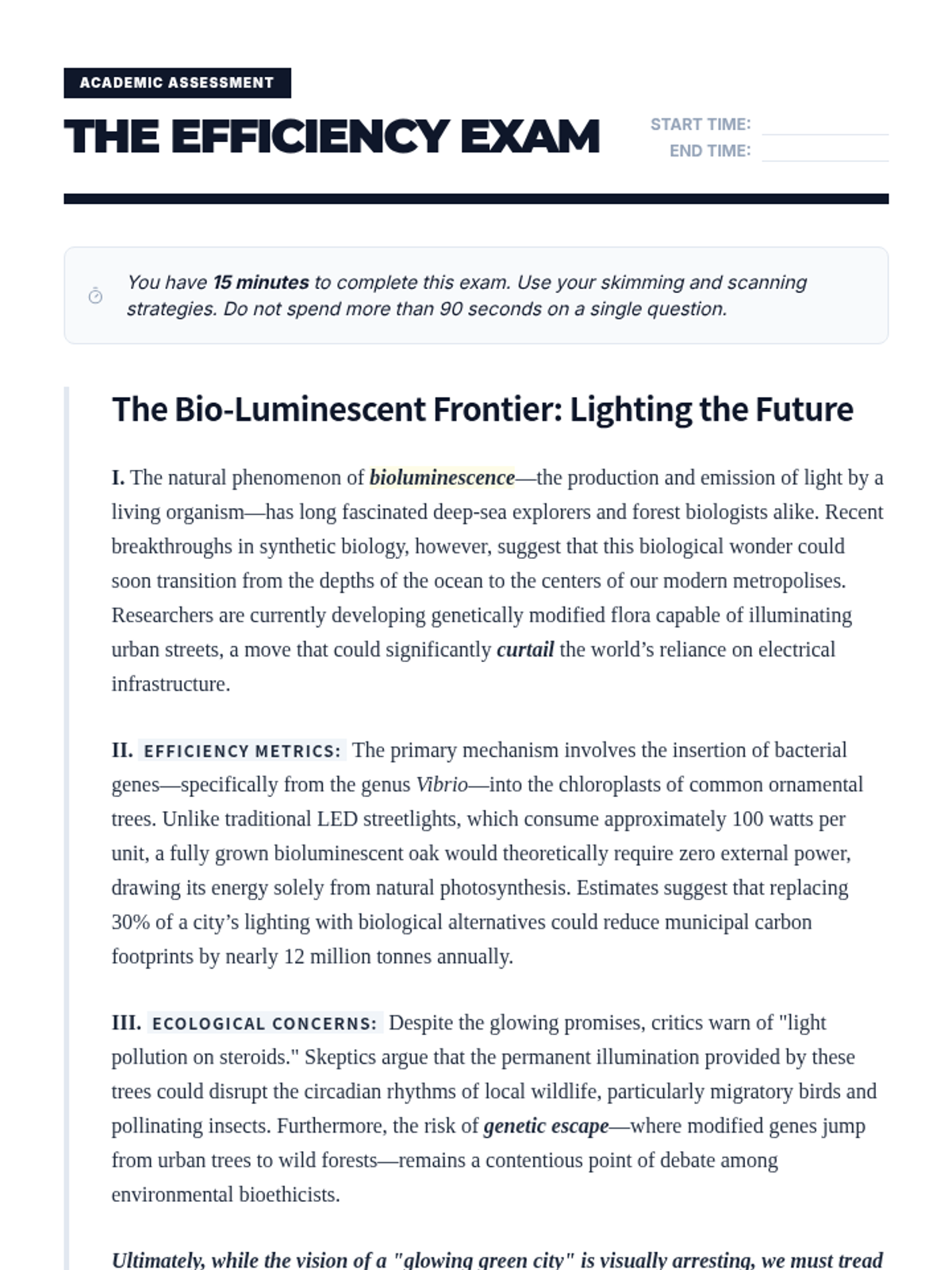
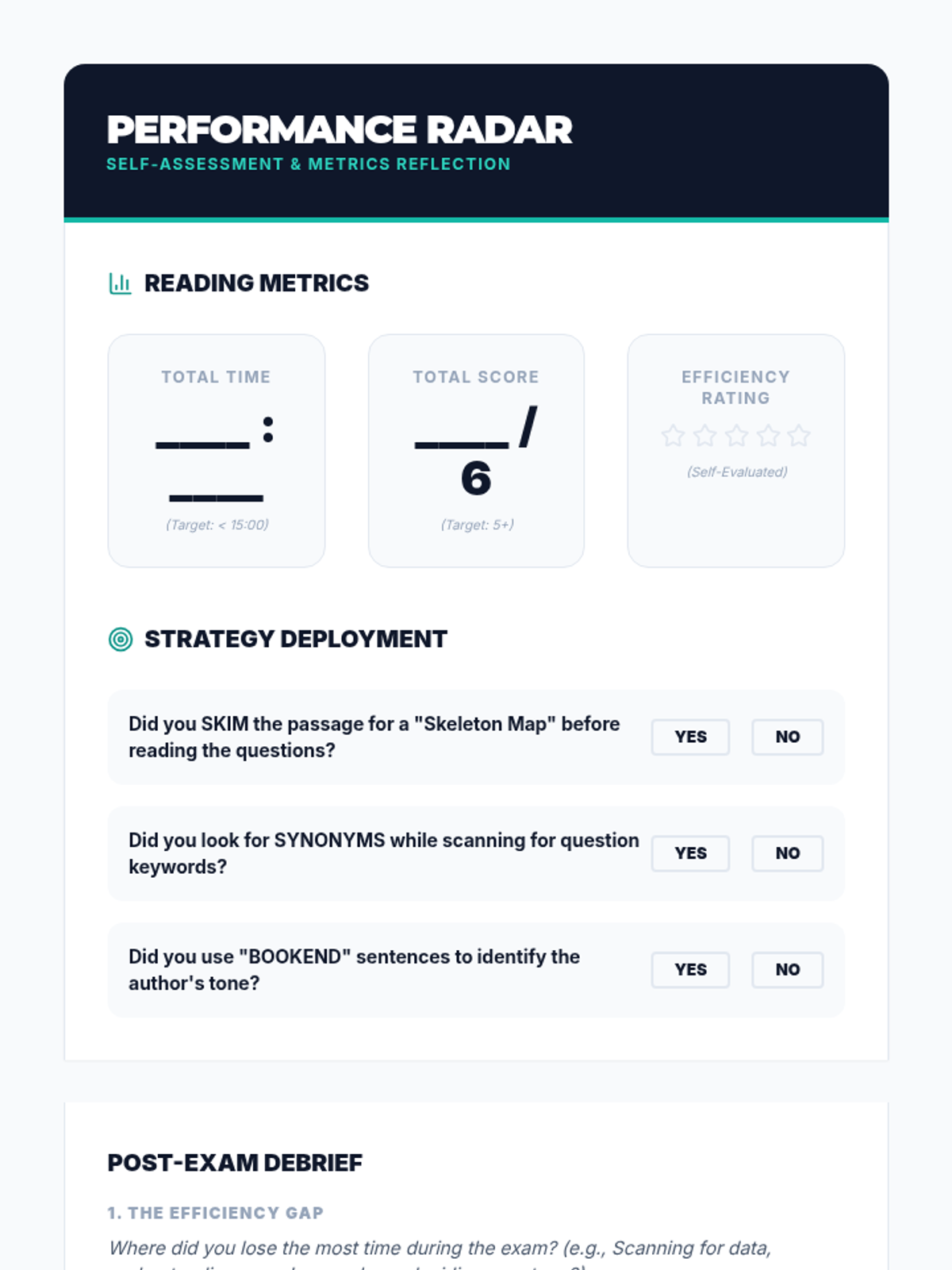
A high-stakes simulation involving timed reading drills and self-assessment of efficiency metrics.