Specialized vocabulary across disciplines, research methodologies, and effective note-taking systems. Equips learners with information literacy skills and strategies for navigating standardized exams.
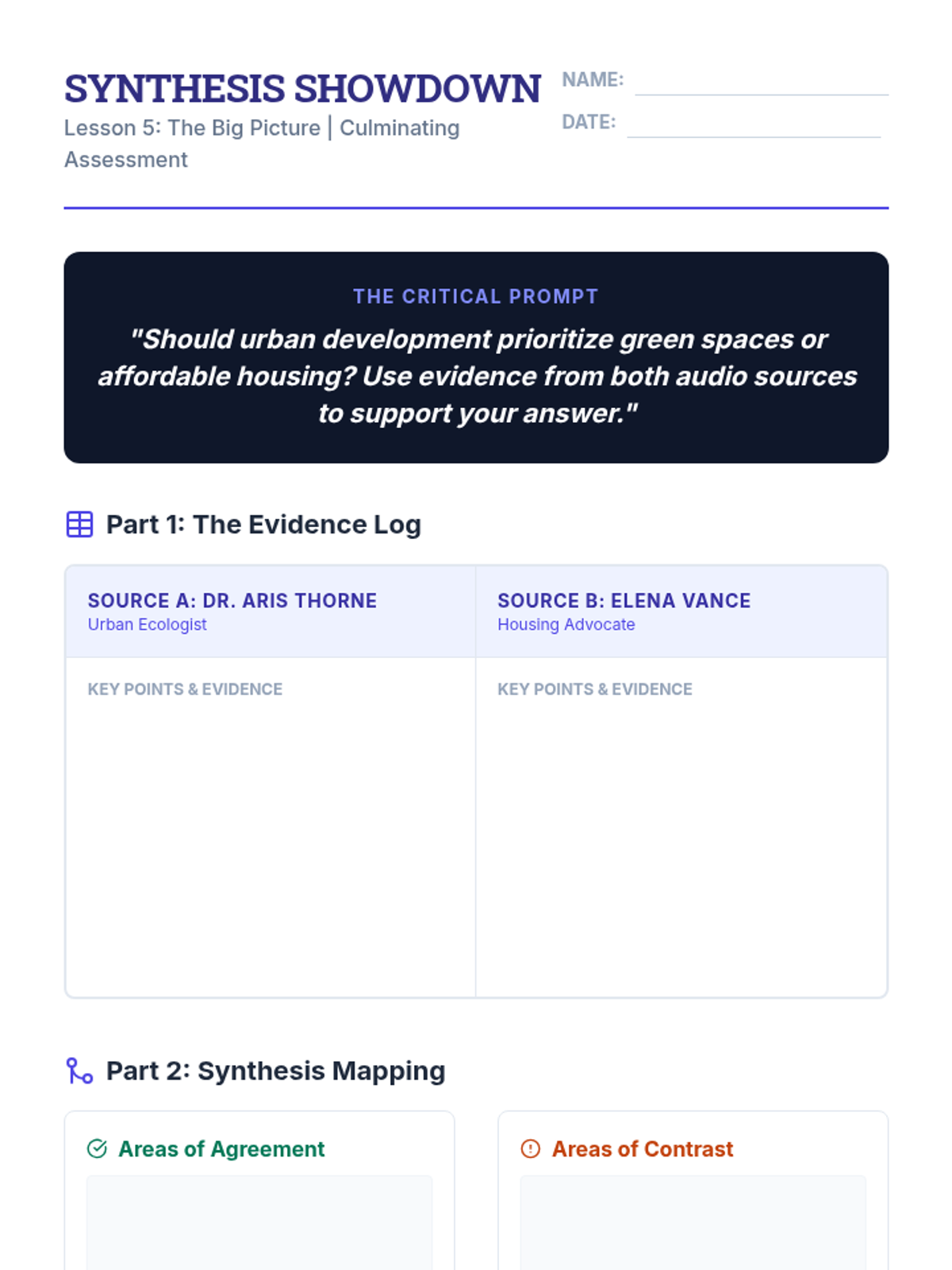
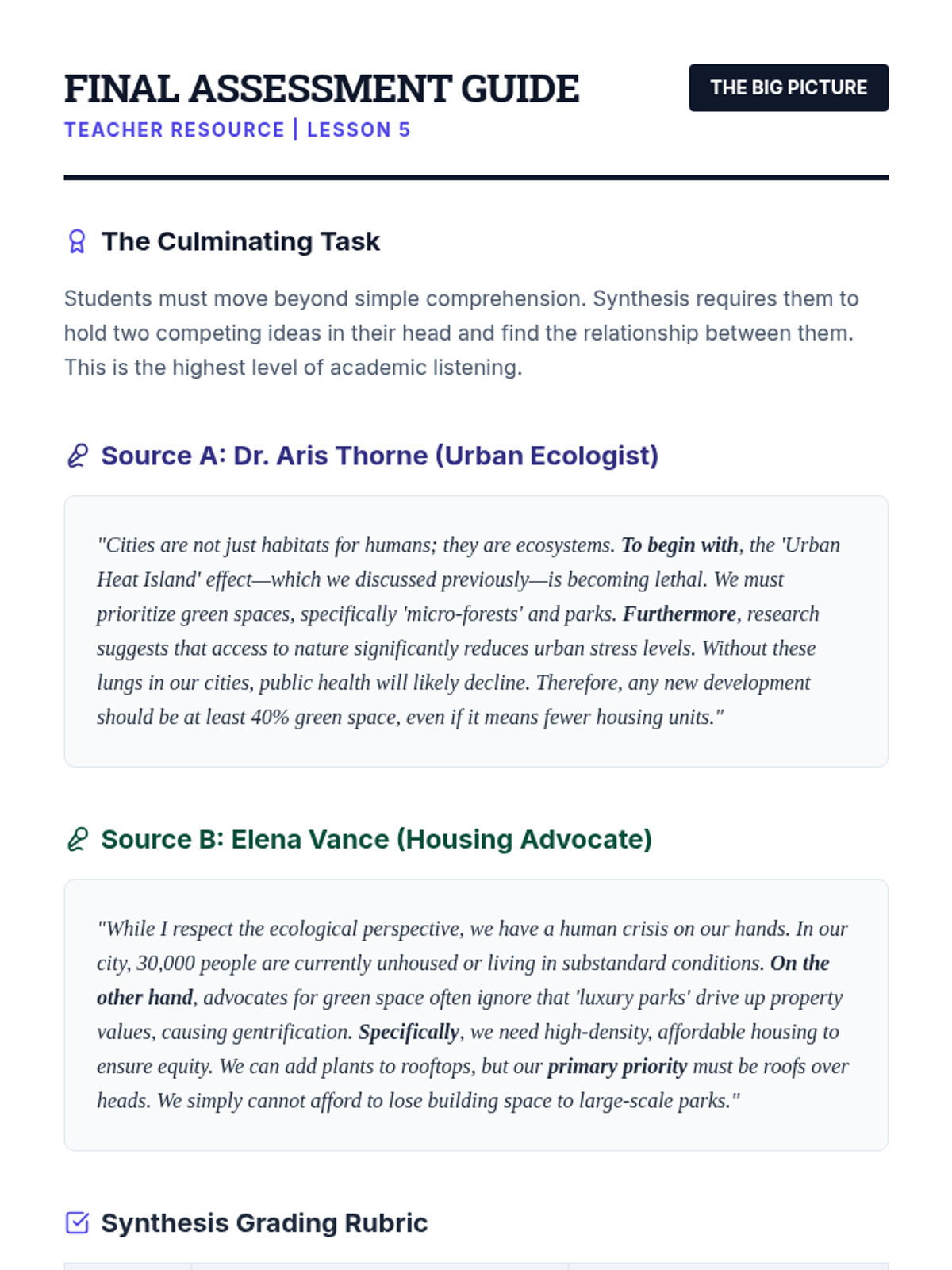
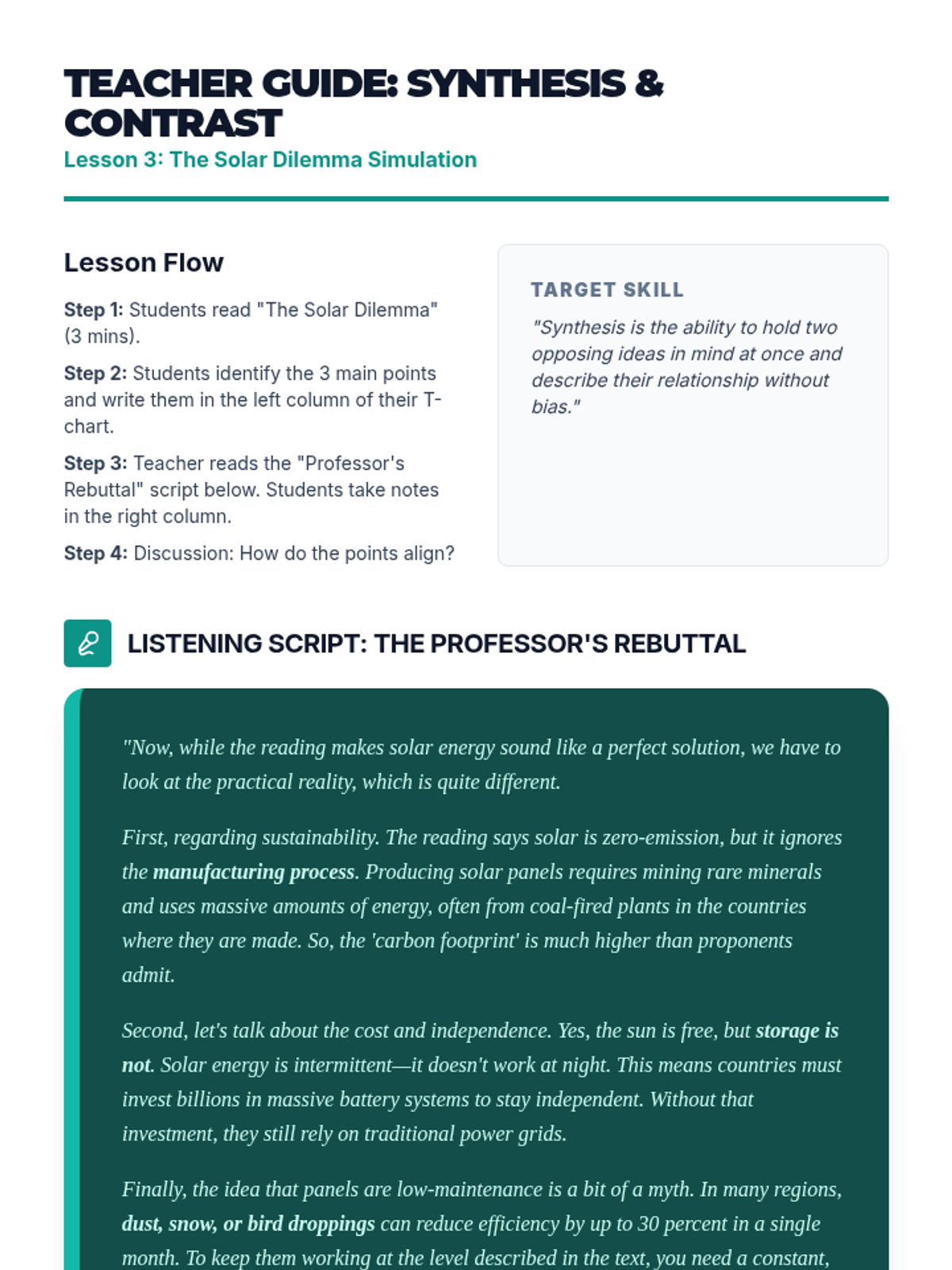
In this culminating lesson, students listen to two contrasting viewpoints on a single global issue. They must synthesize the information to answer a prompt, citing specific details from both audio sources to support their conclusion.
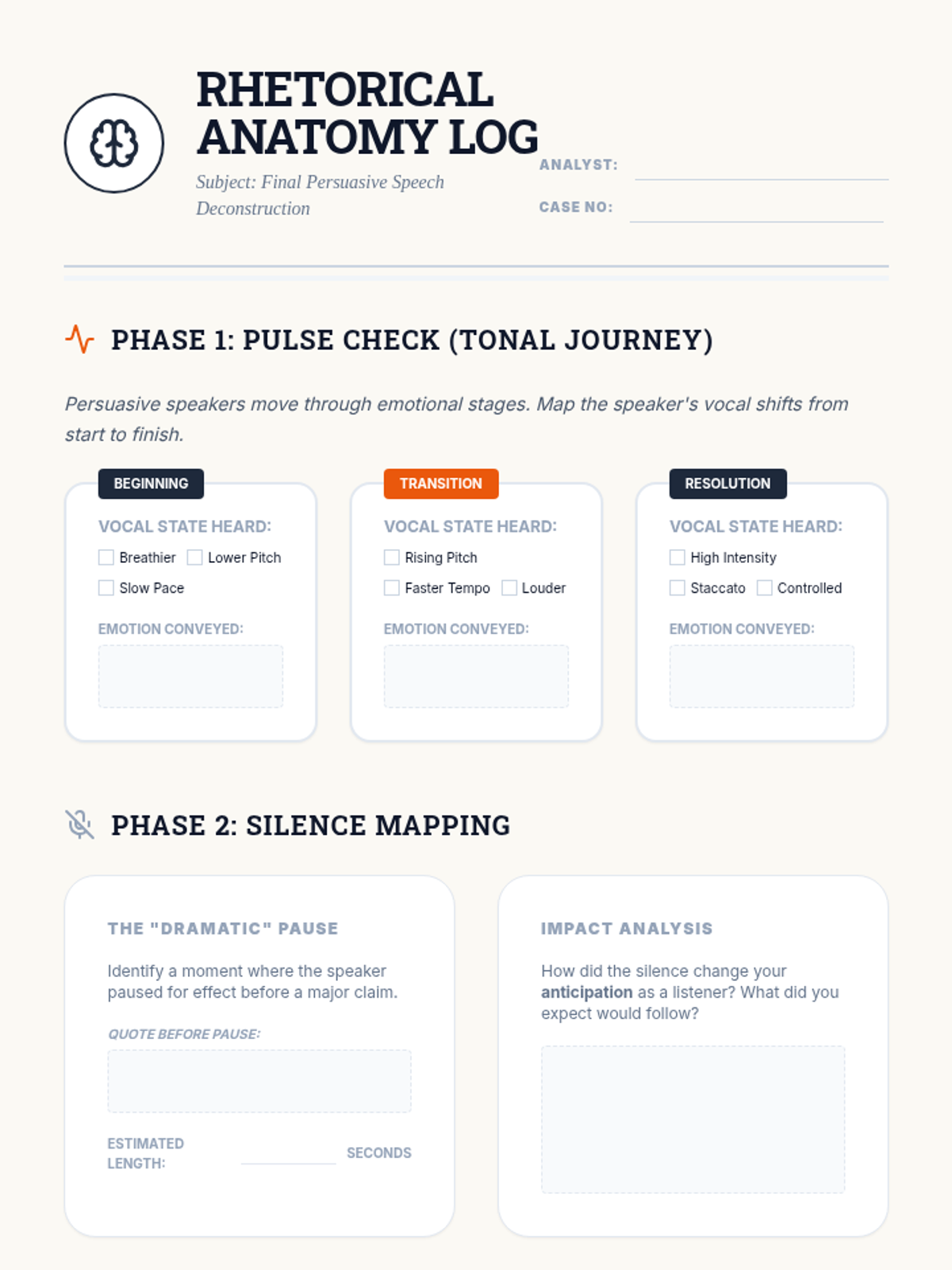
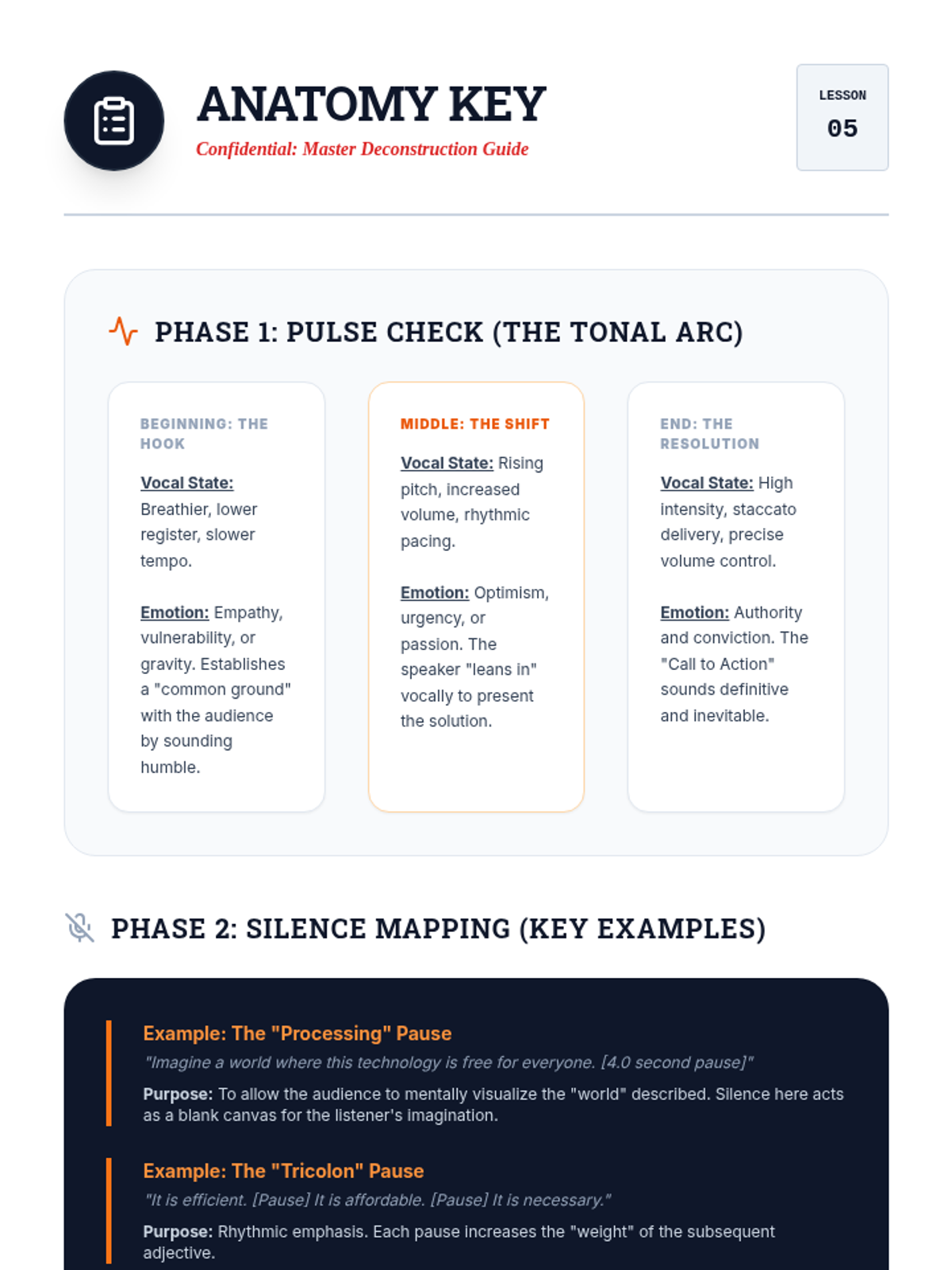
Deconstructs persuasive speech to identify rhetorical strategies, tonal journeys, and the use of strategic pauses for emotional impact.
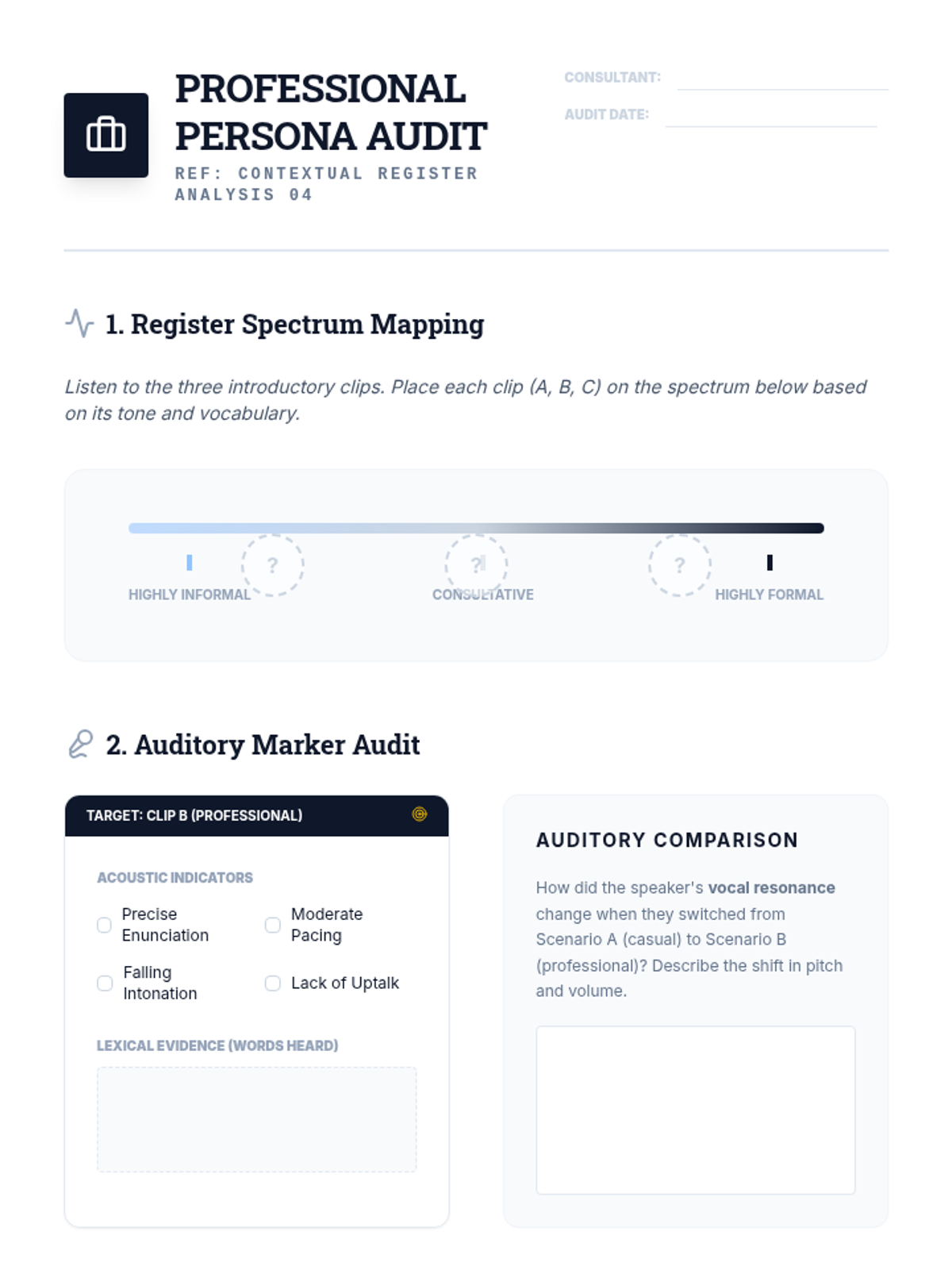
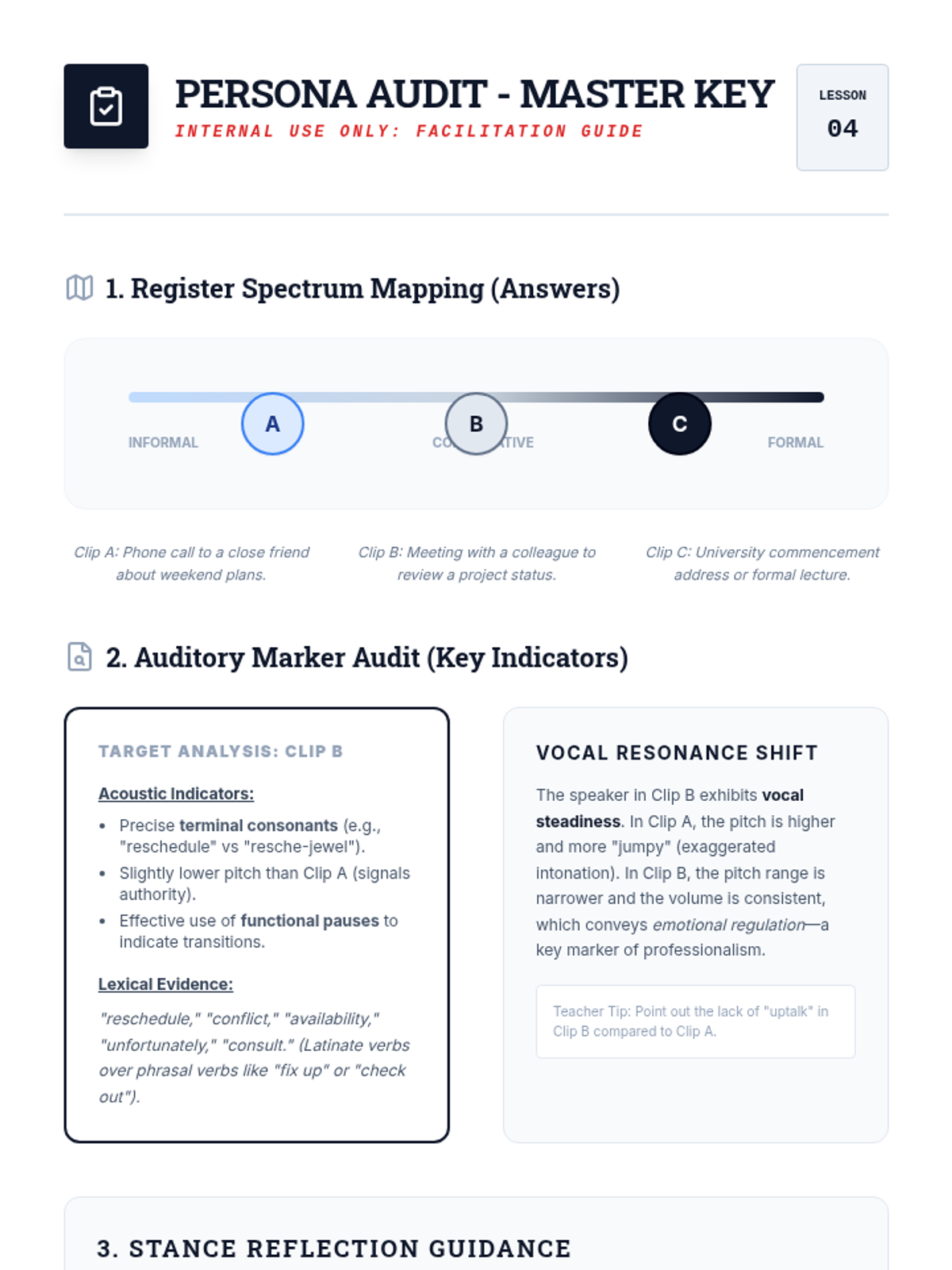
Examines how speakers adjust their register and tone based on audience and context, focusing on professional vs. informal markers.
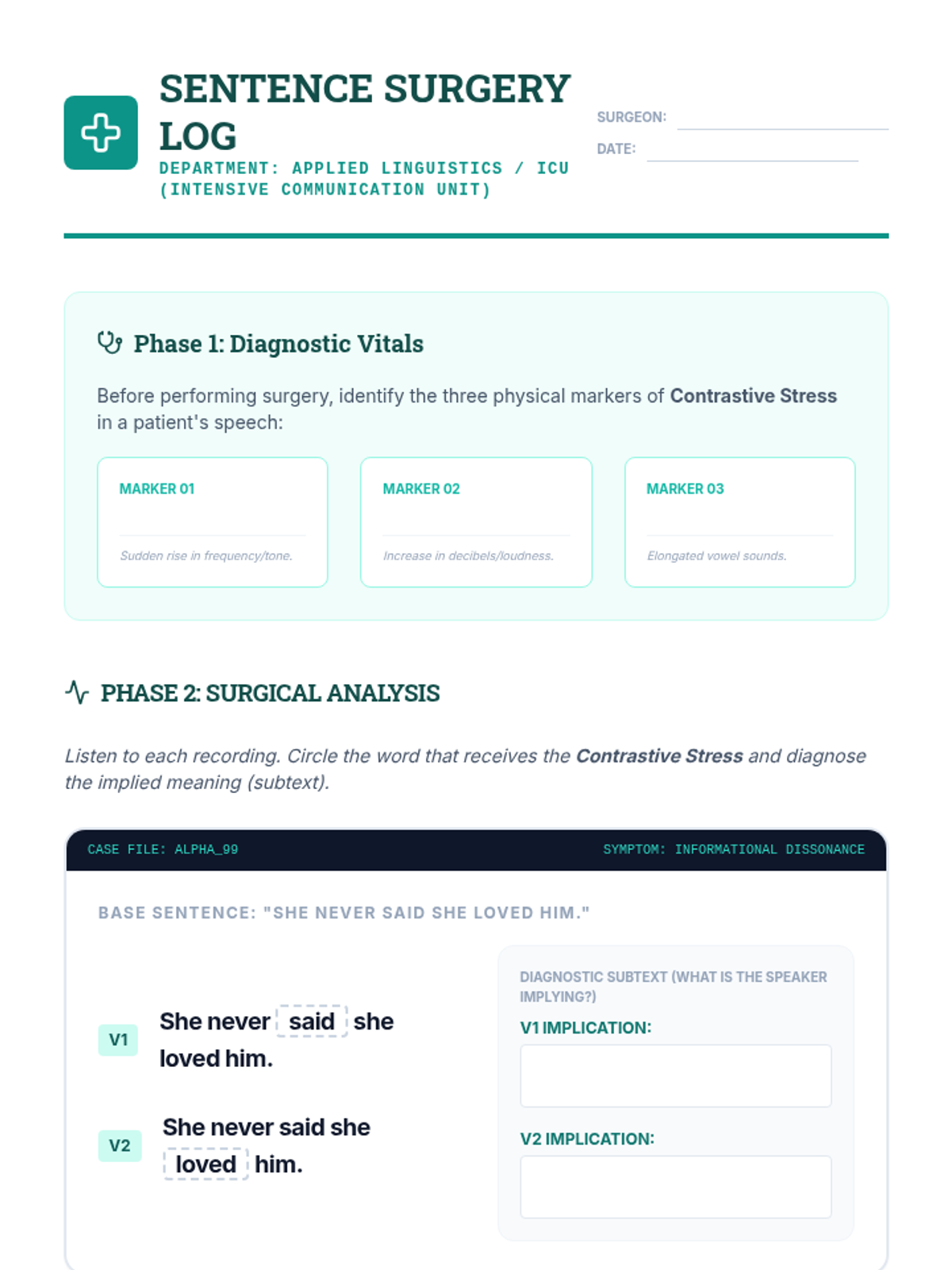
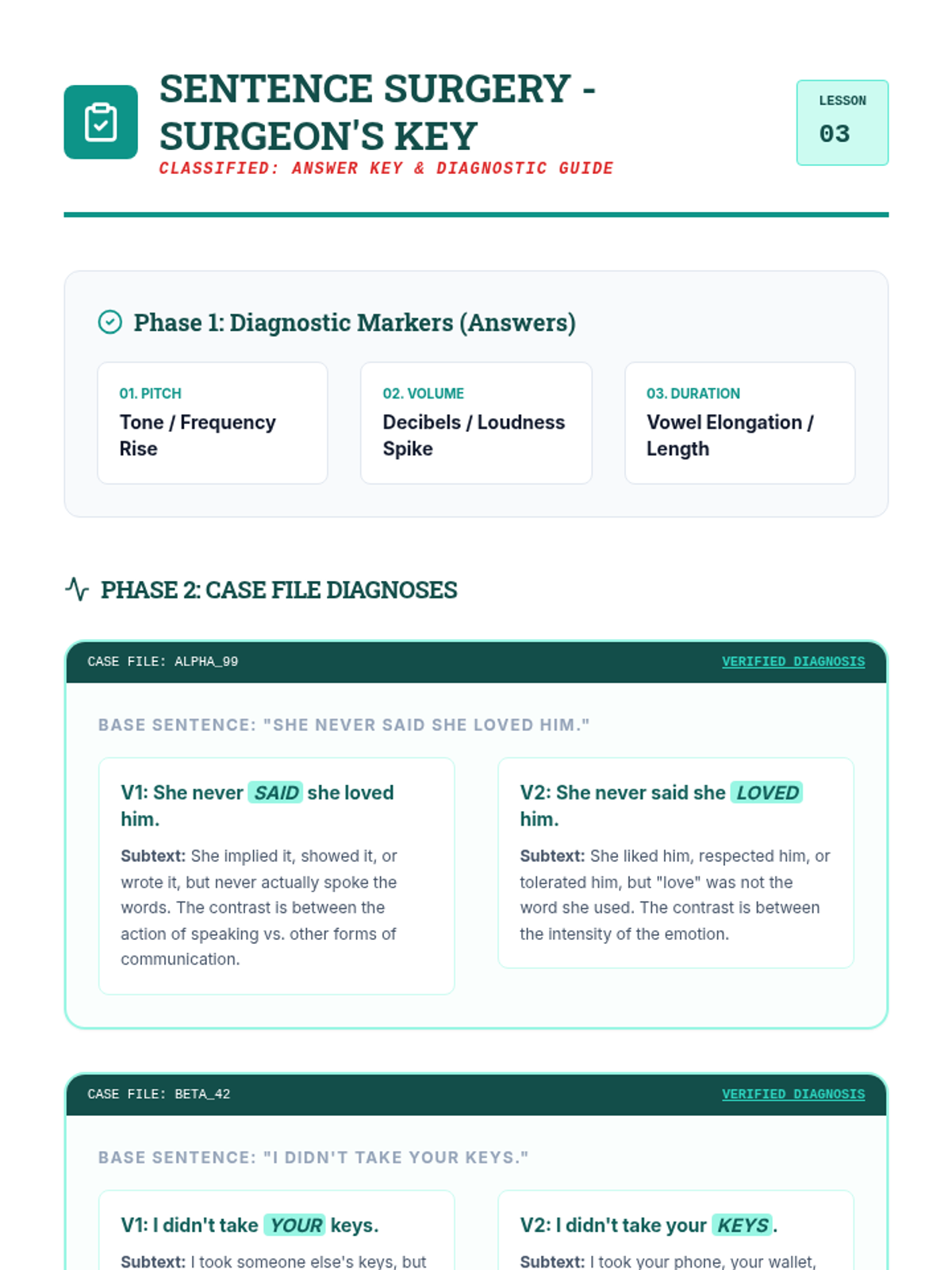
Explores how shifting stress within a single sentence radically alters its implied meaning and subtext.
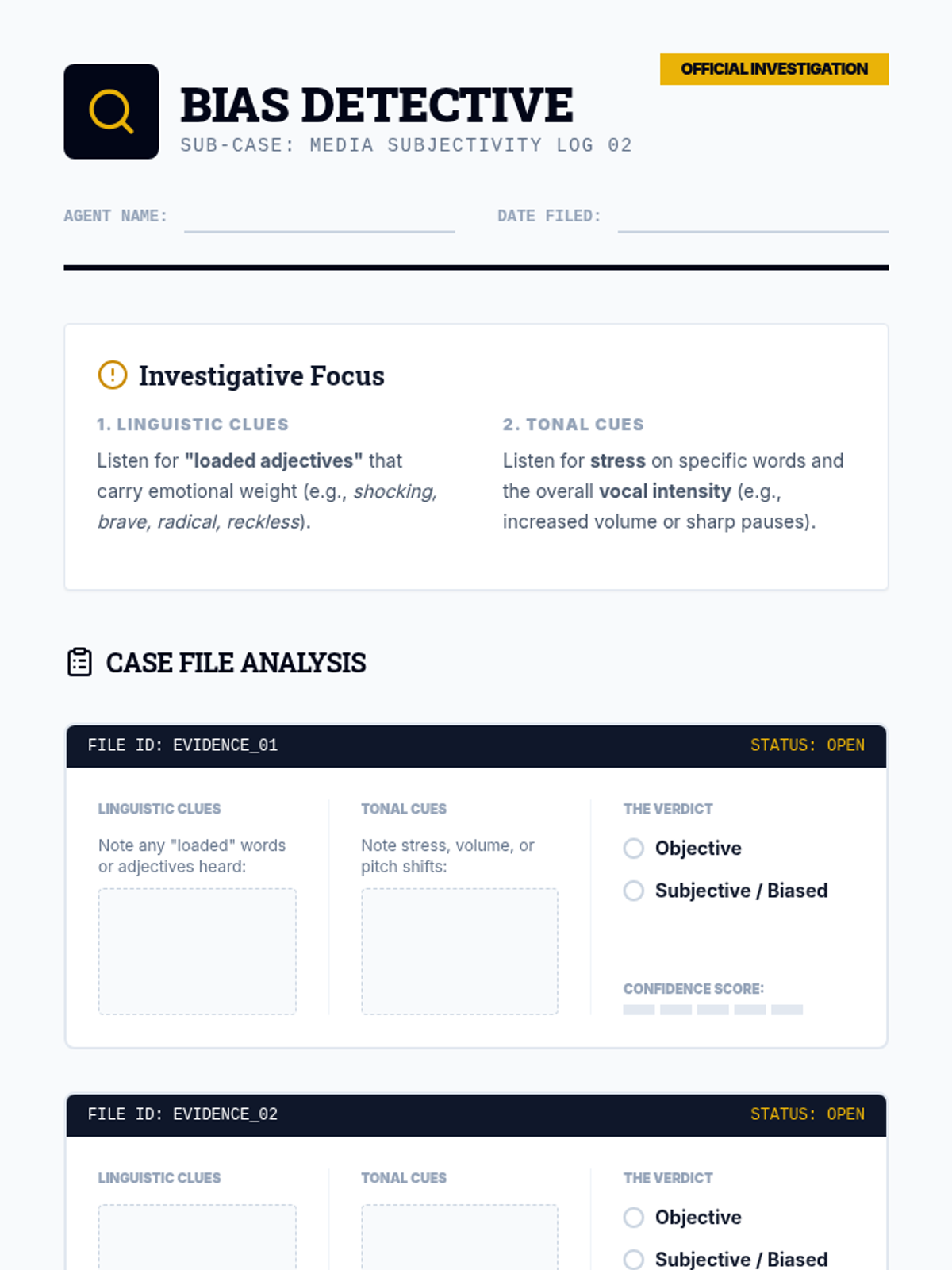
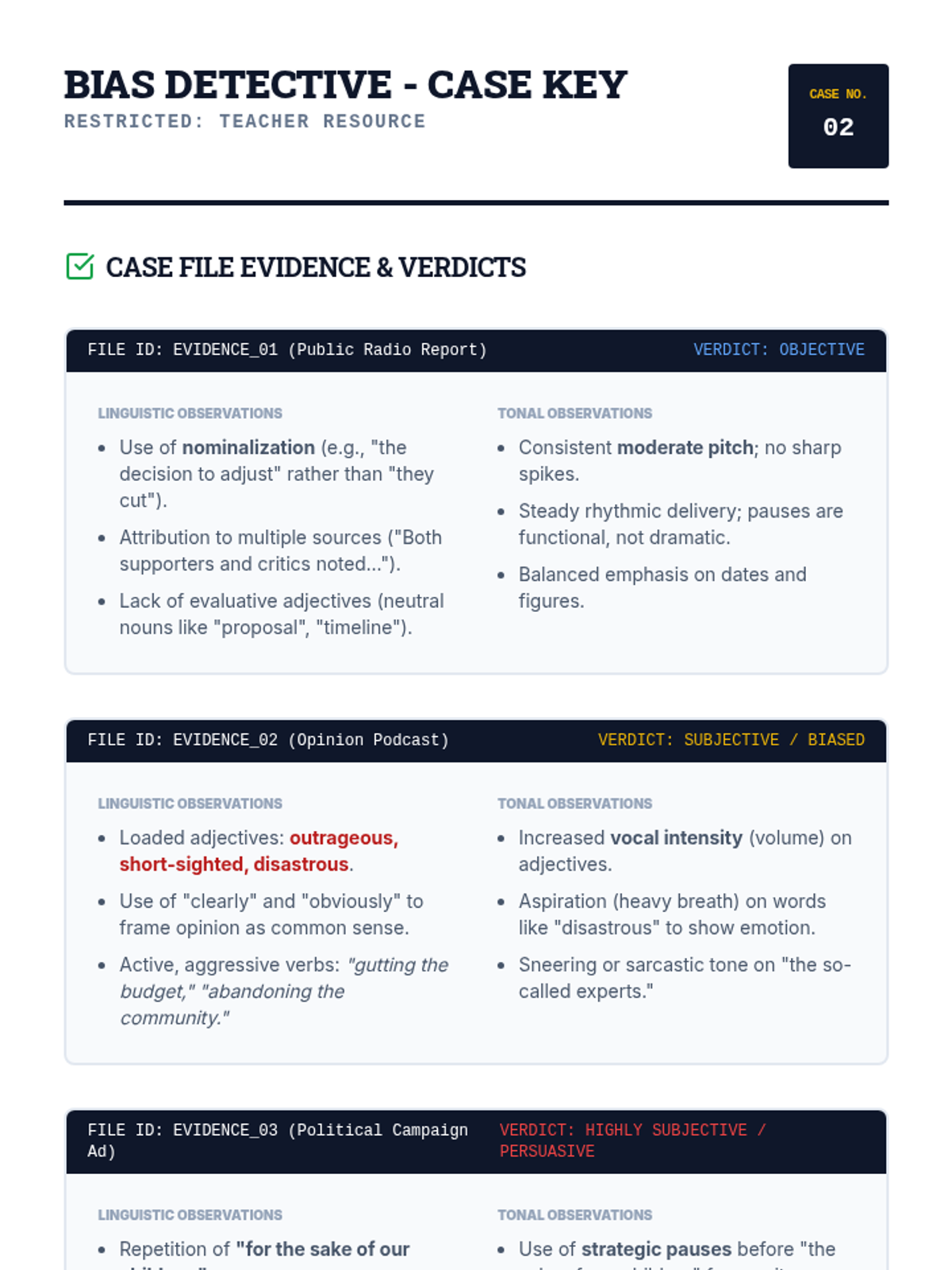
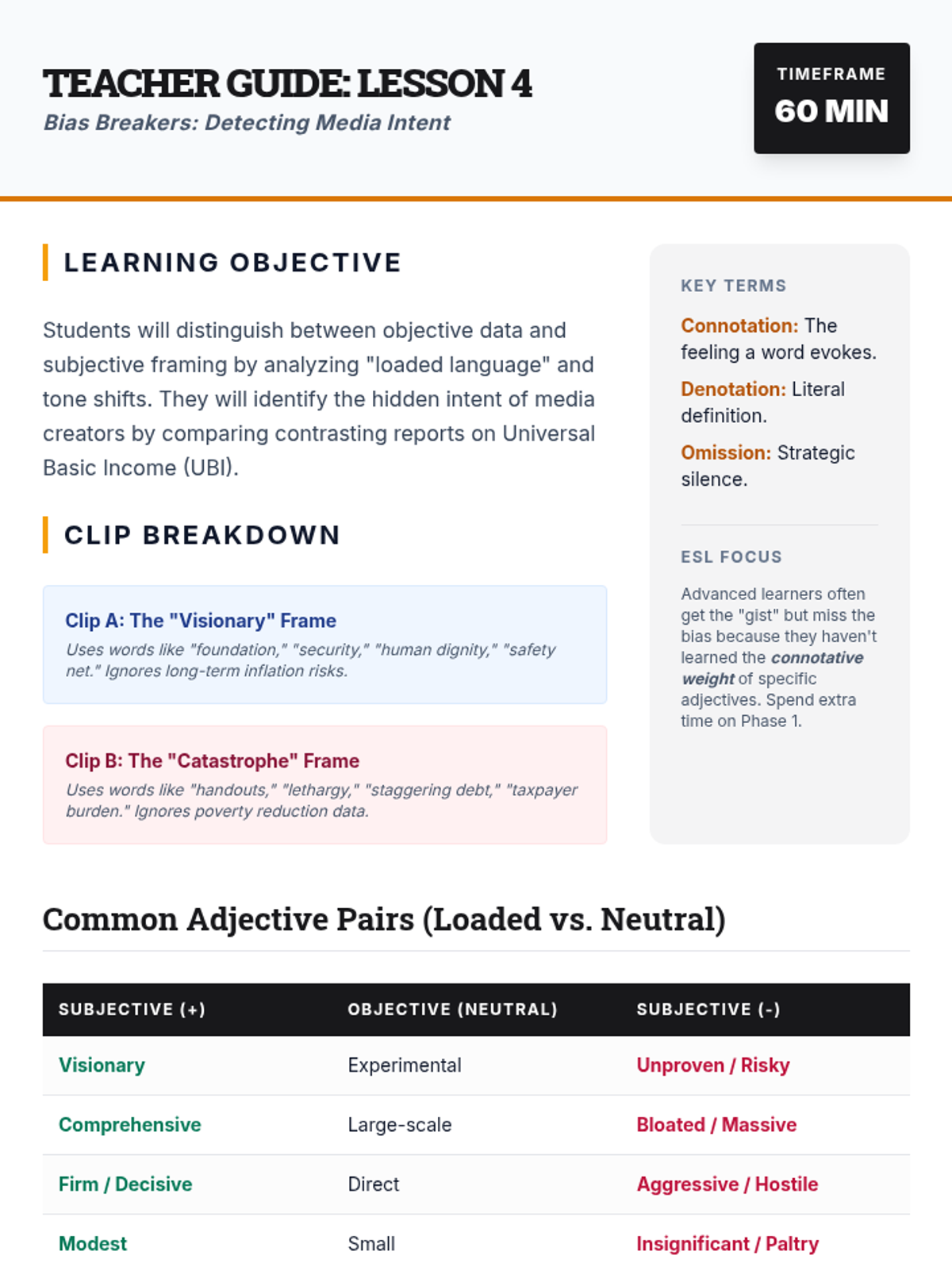
Focuses on identifying bias and subjectivity in media and speeches by analyzing word choice, emotional tone, and selective emphasis.
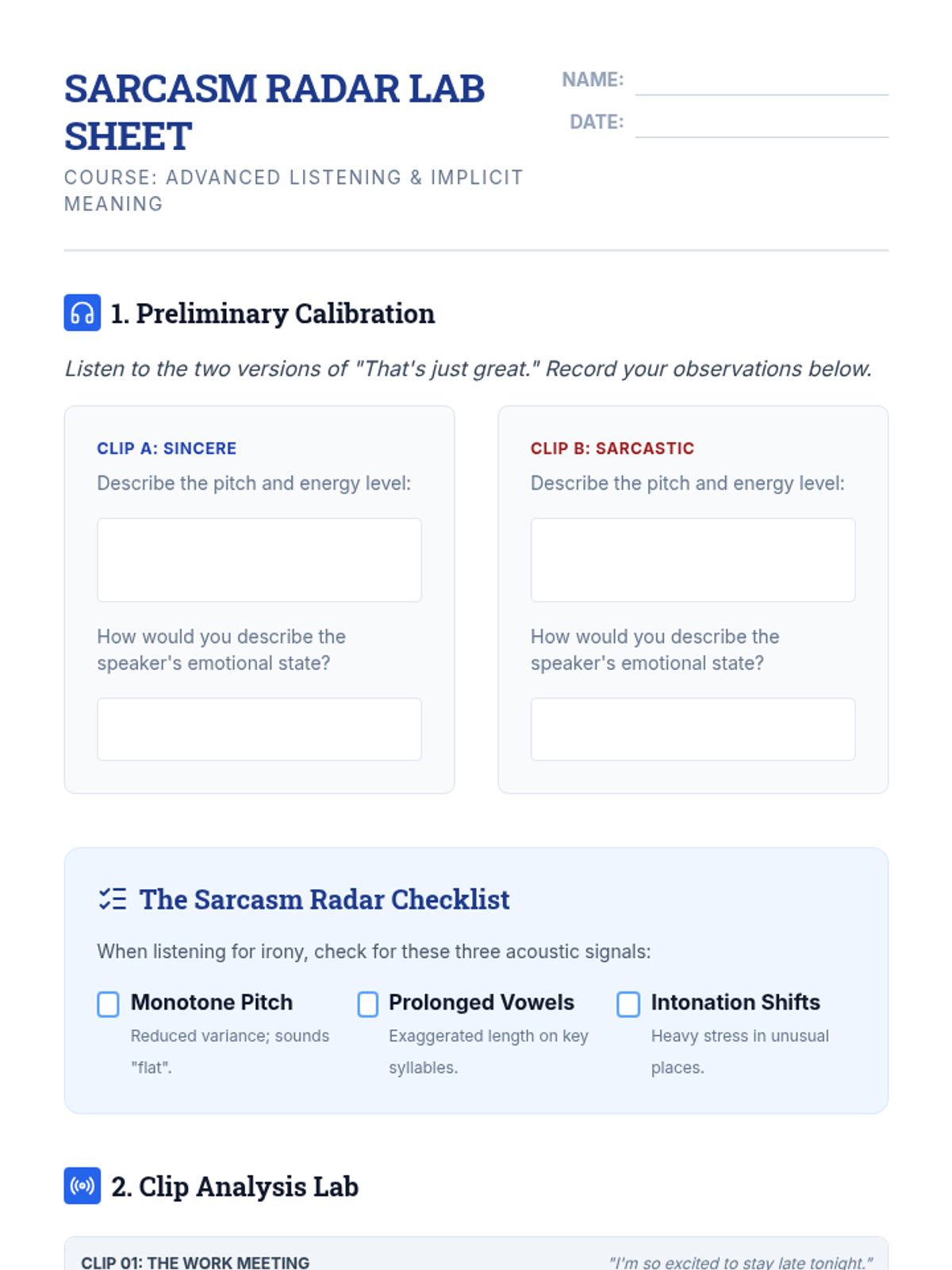
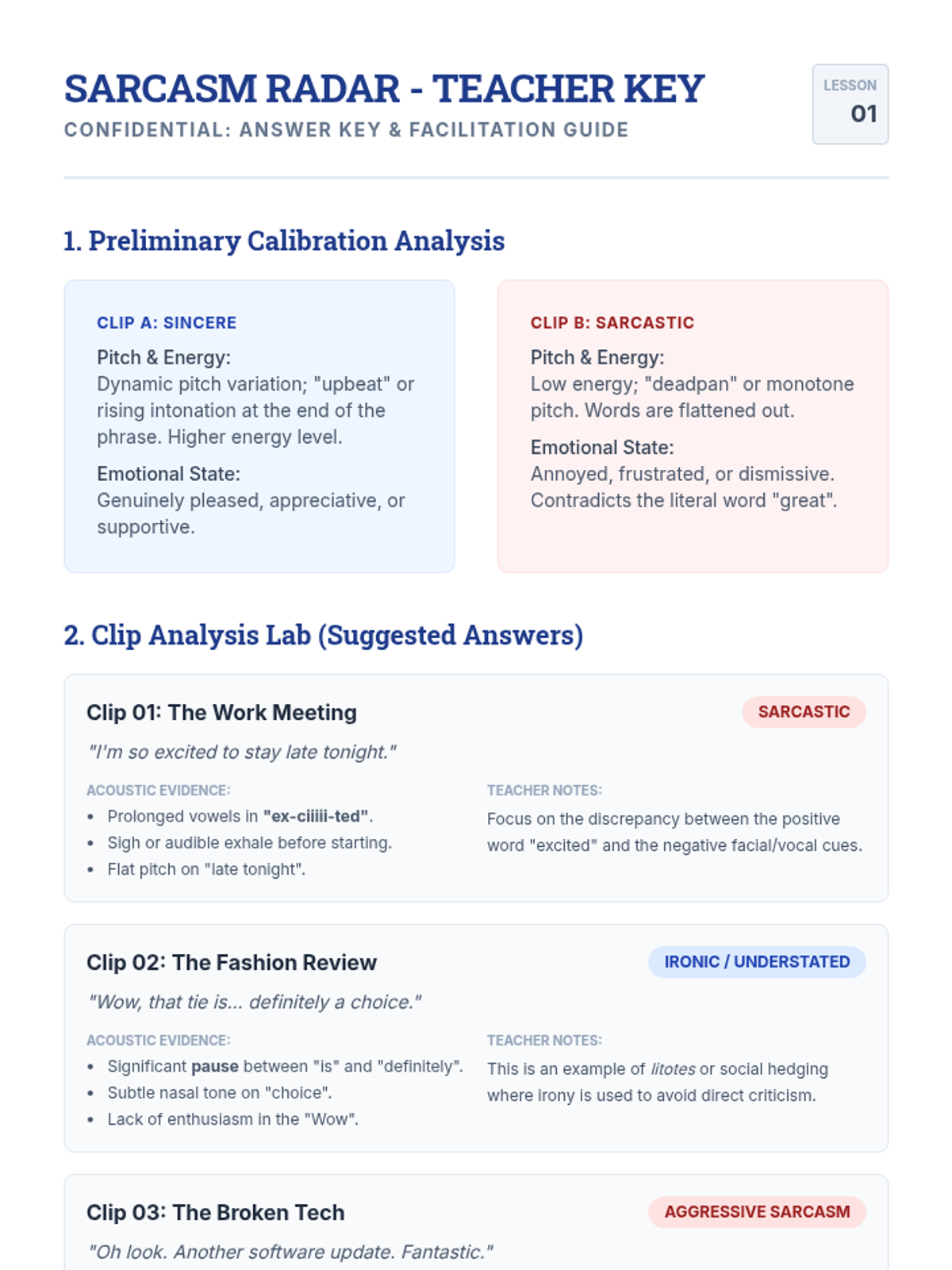
Students analyze the acoustic cues of irony and sarcasm—such as pitch, length, and intonation—to distinguish between literal and intended meaning in spoken English.
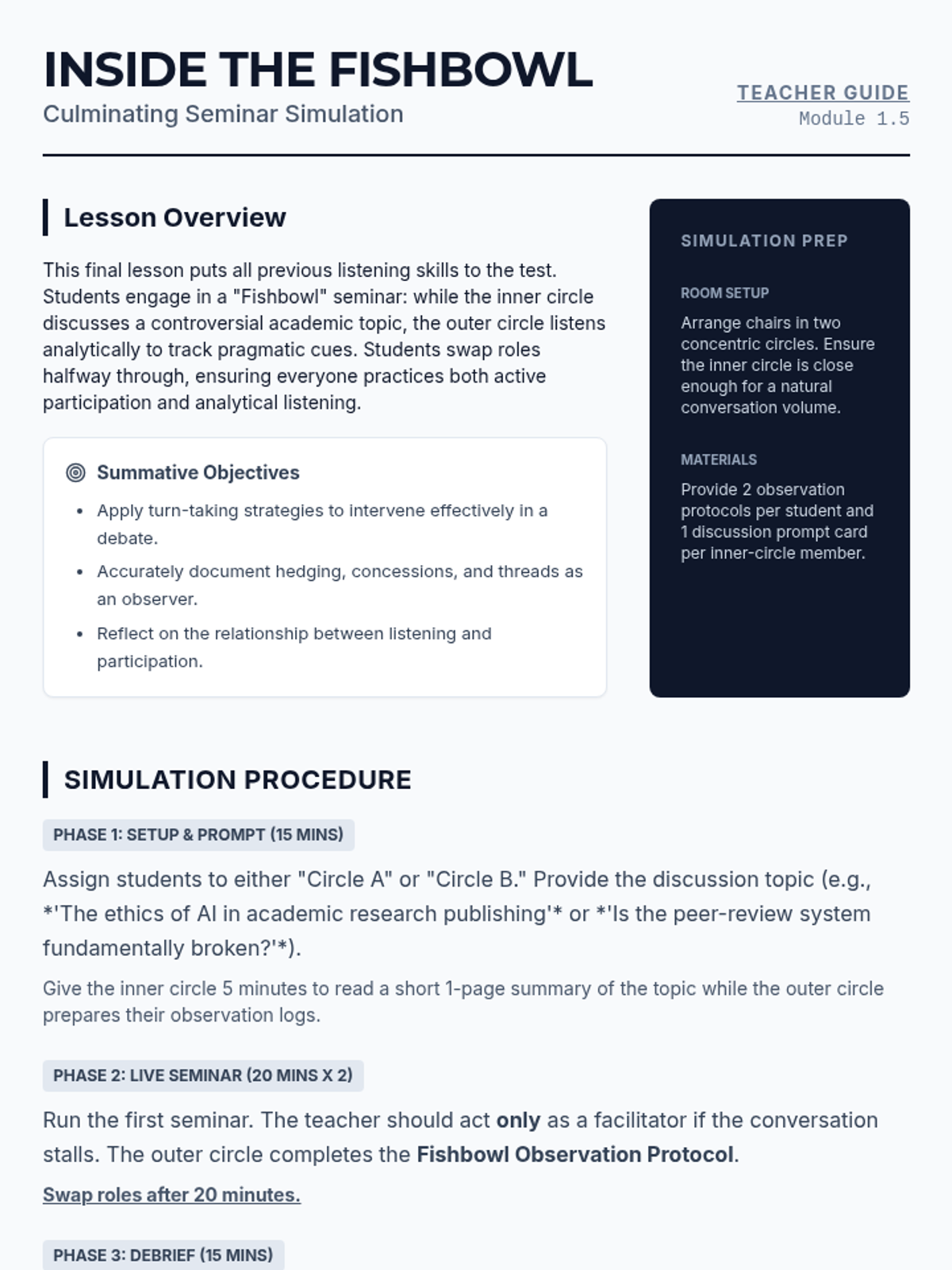
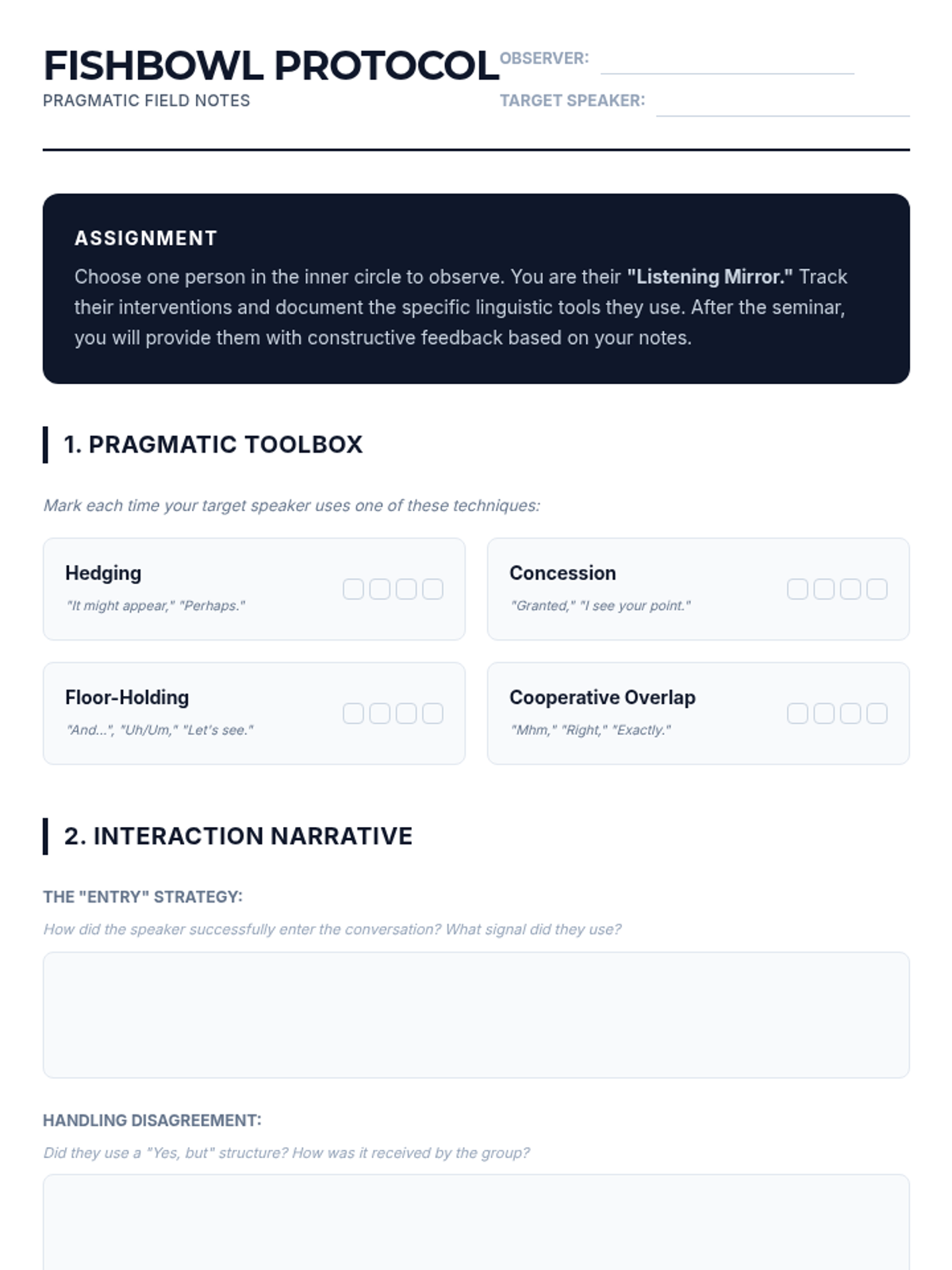
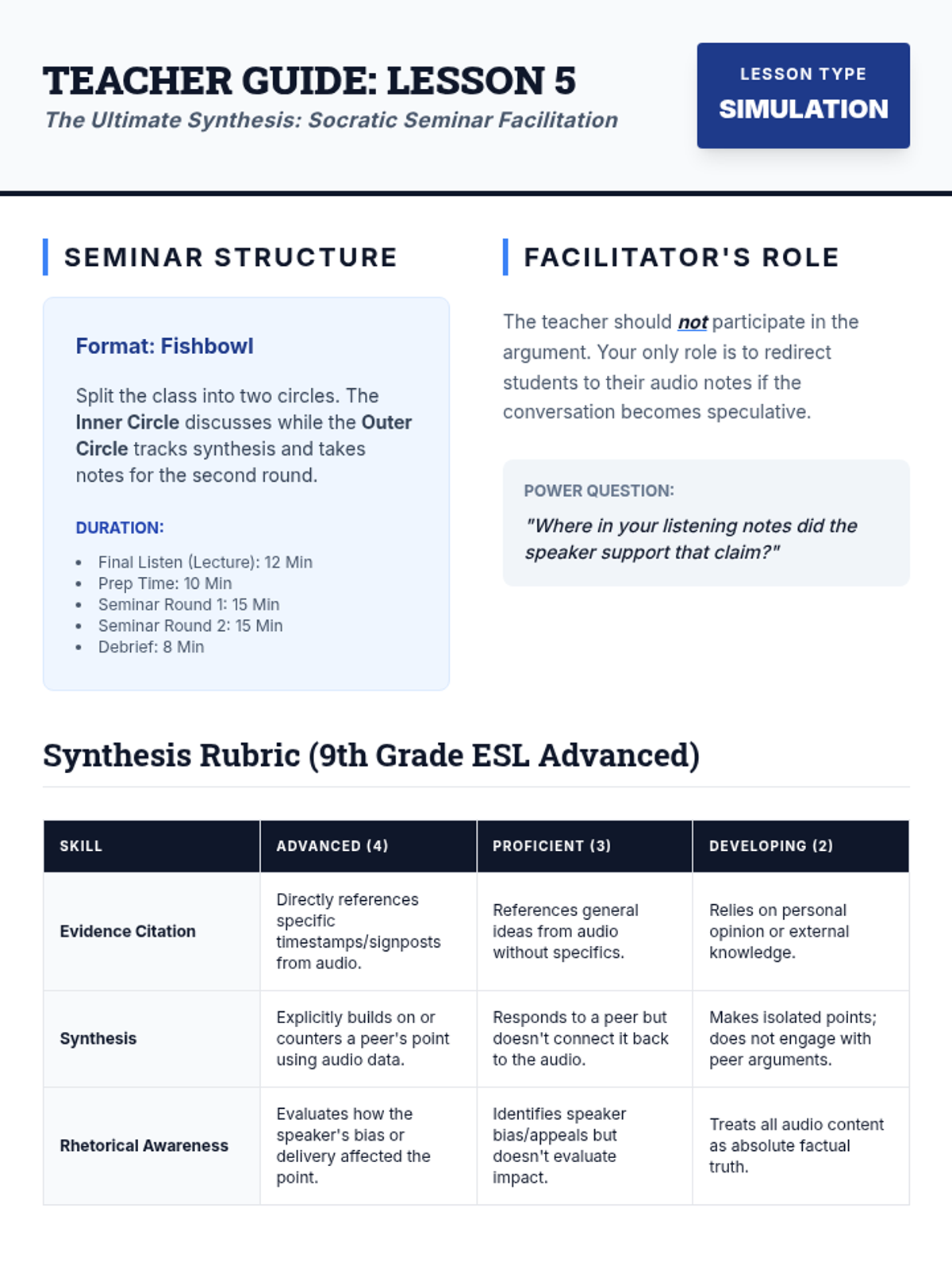
A culminating simulation where students alternate between active participation and observational analysis using the fishbowl method. Focuses on applying all previously learned listening skills.
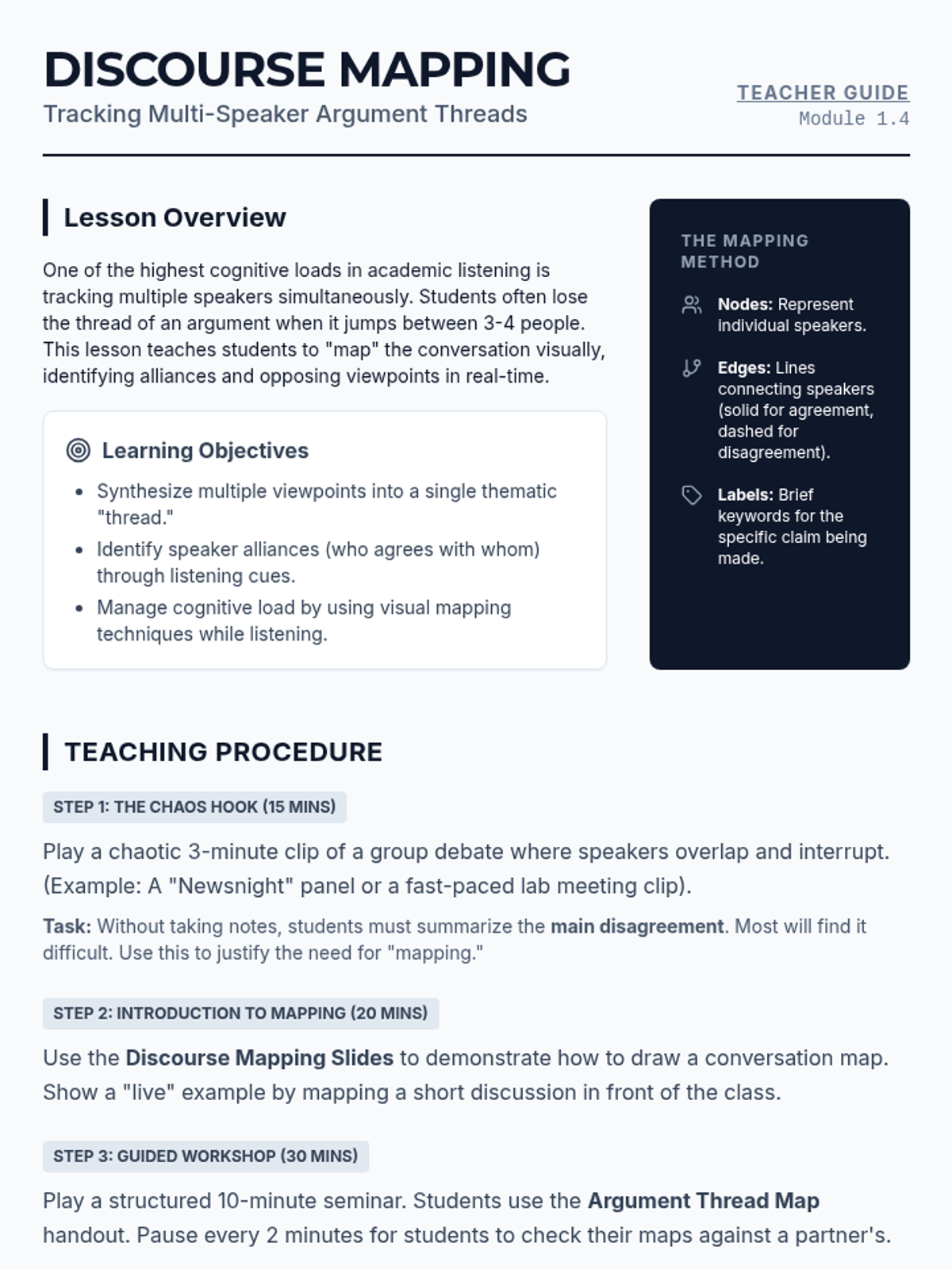
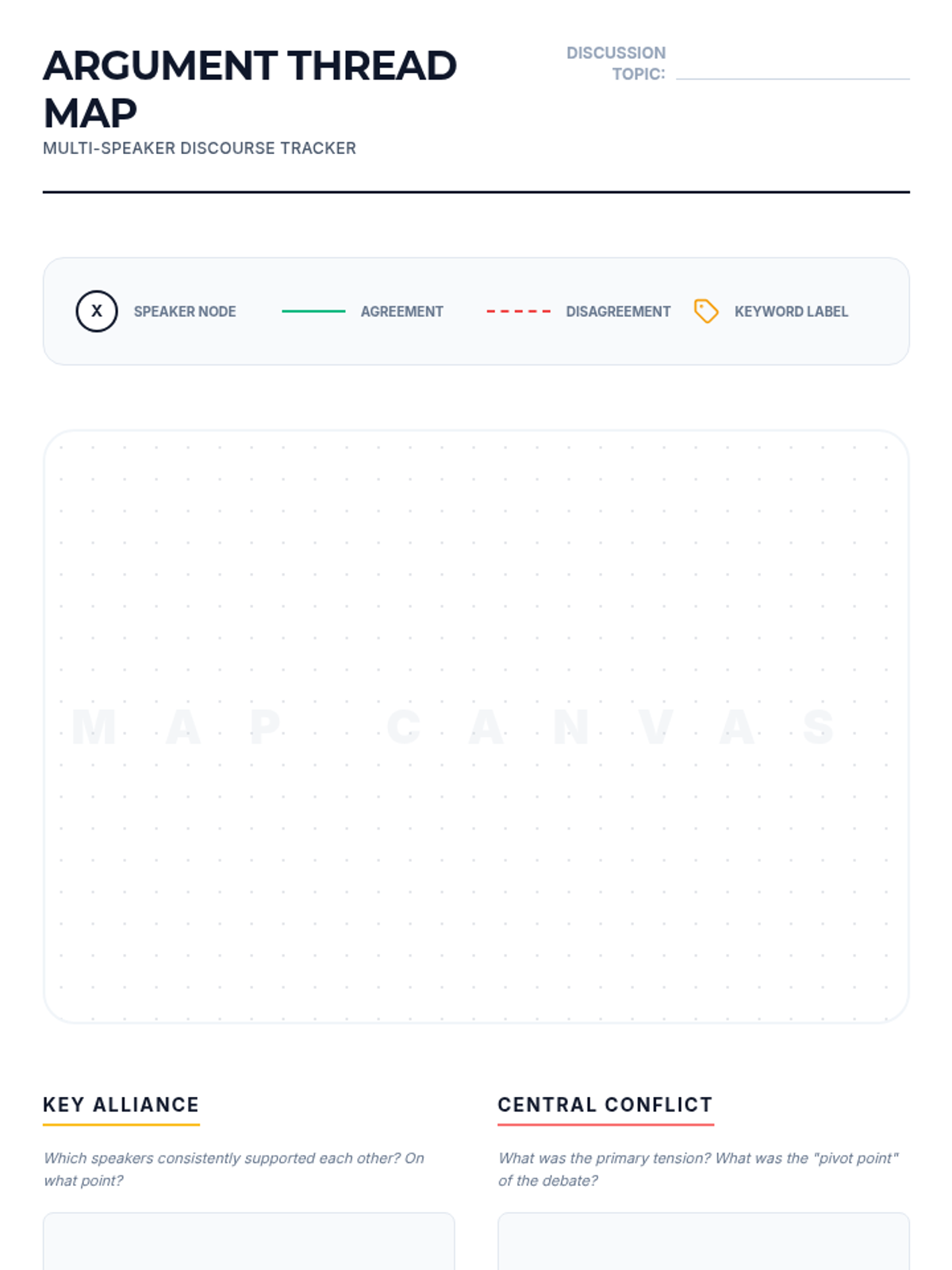
Focuses on the cognitive load of tracking multiple speakers in a fast-paced environment. Students practice mapping argument threads and identifying alliances in group discourse.
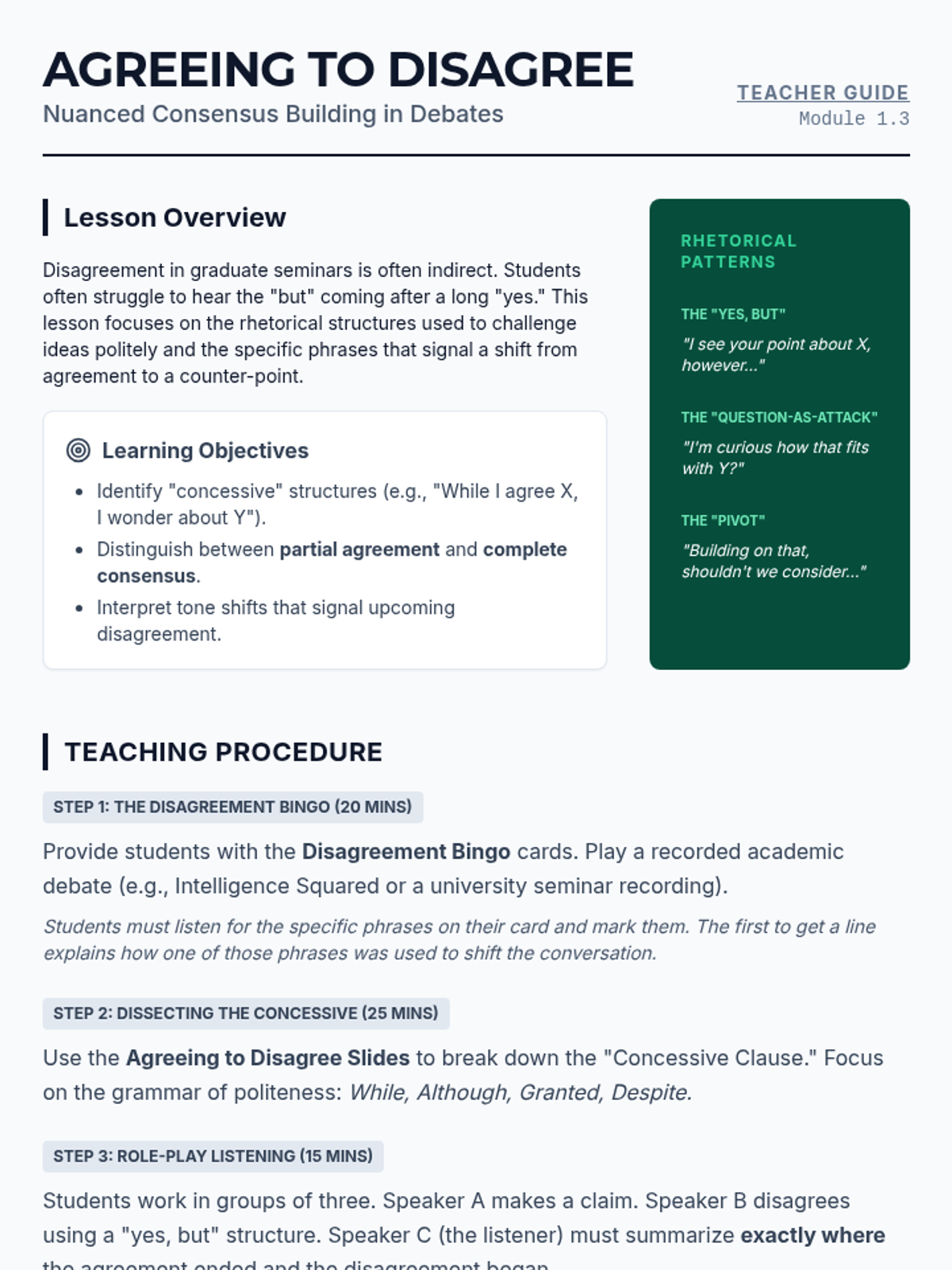
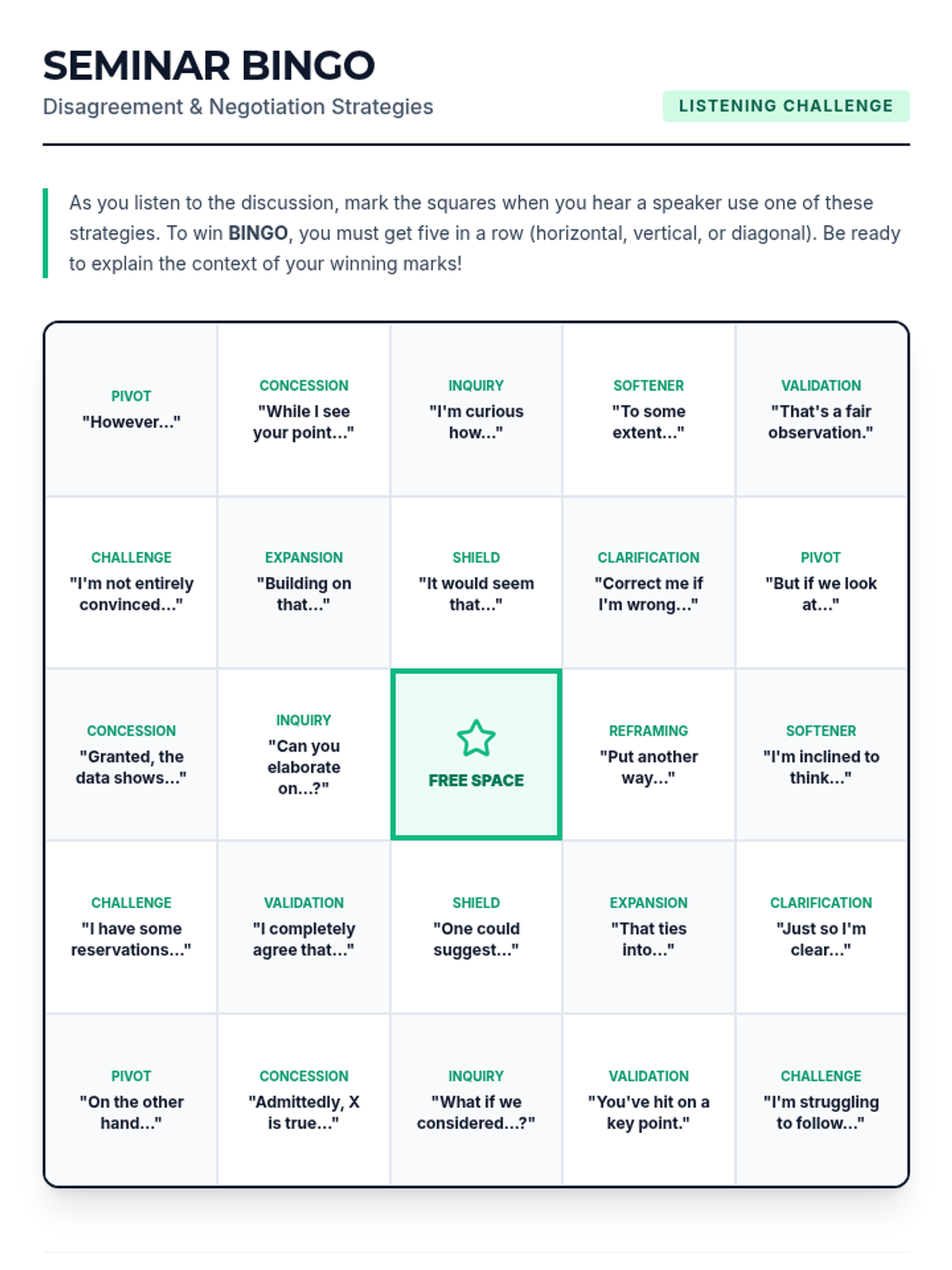
Students identify the rhetorical structures used to agree and disagree in intellectual debates. The lesson focuses on 'yes, but' constructions and nuanced consensus building.
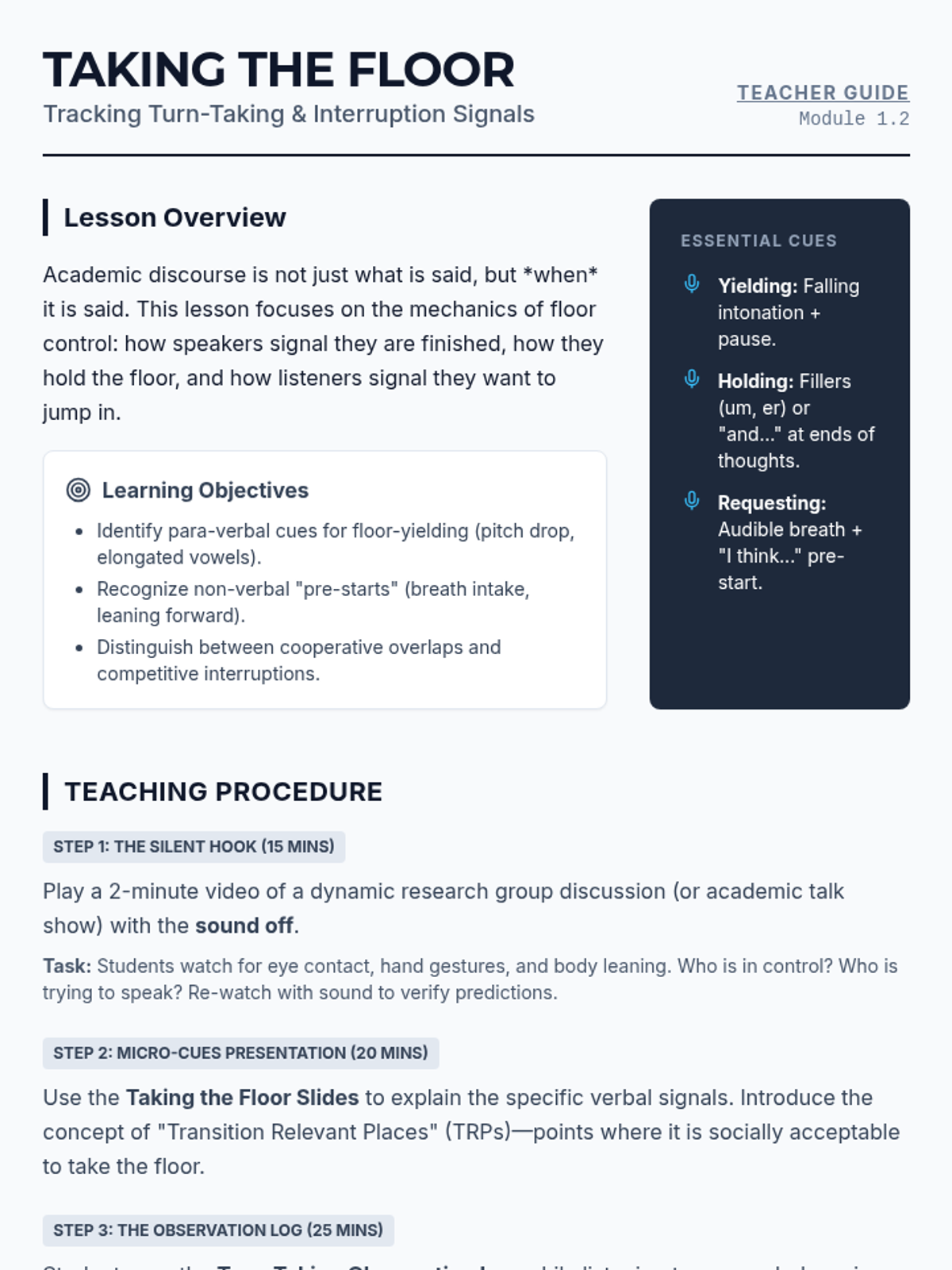
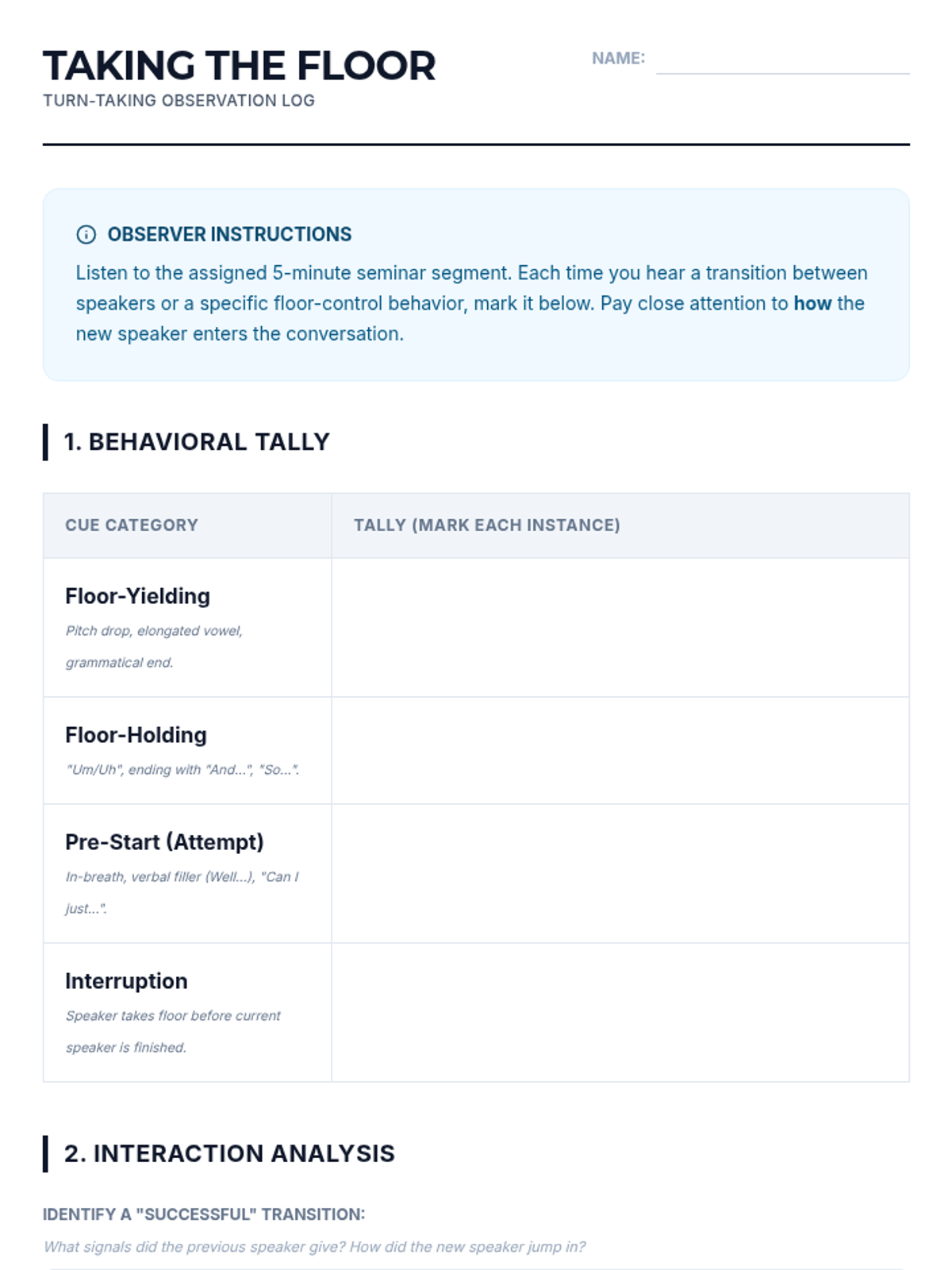
An analysis of the verbal and non-verbal cues used to manage floor control in academic discussions. Students learn to predict and identify transitions between speakers.
A culminating simulation where students apply all strategies during a mock academic lecture assessment.
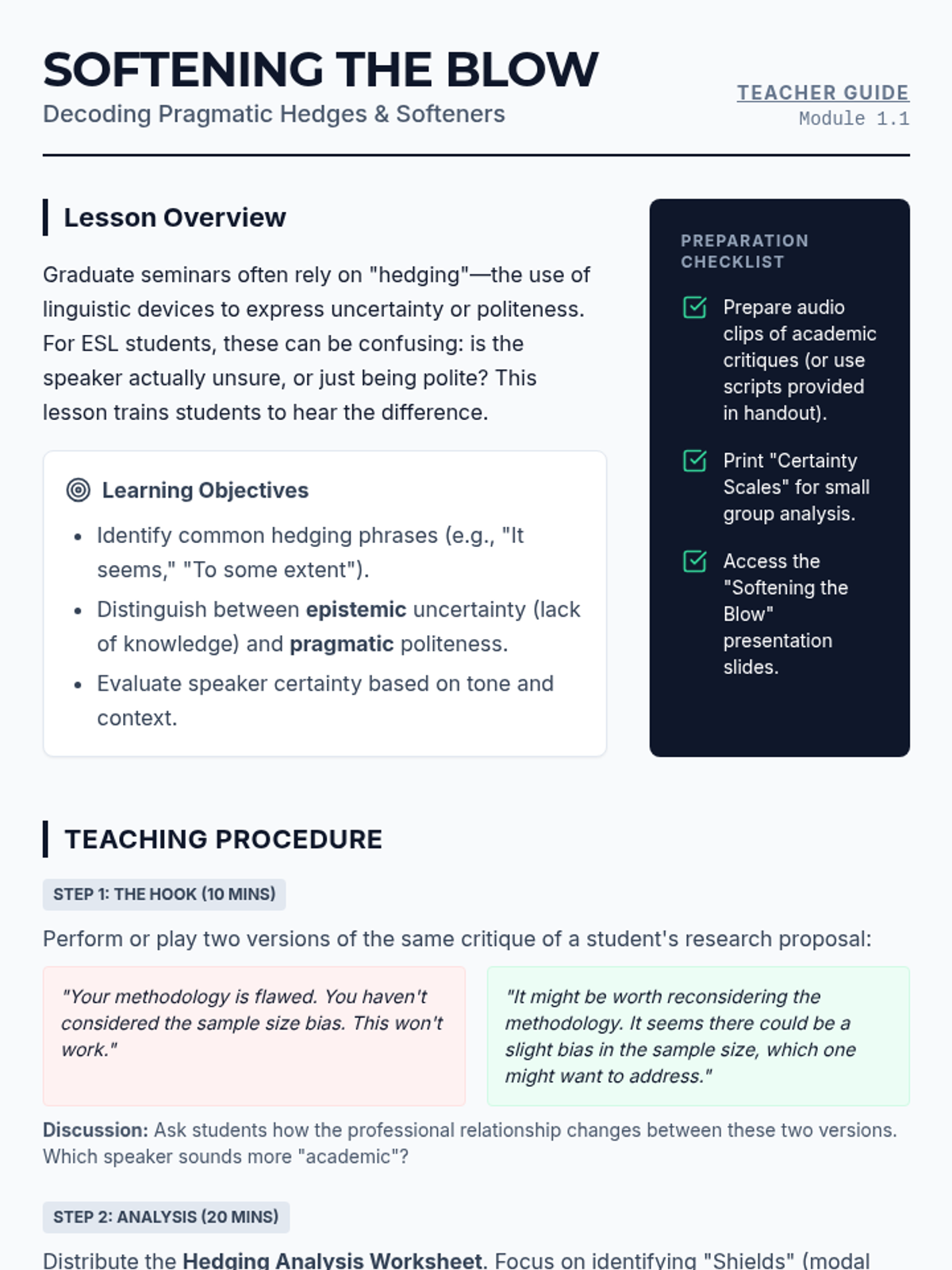
Students explore how academic speakers use hedging language to soften assertions and maintain professional relationships. Activities focus on distinguishing between literal meaning and pragmatic intent.
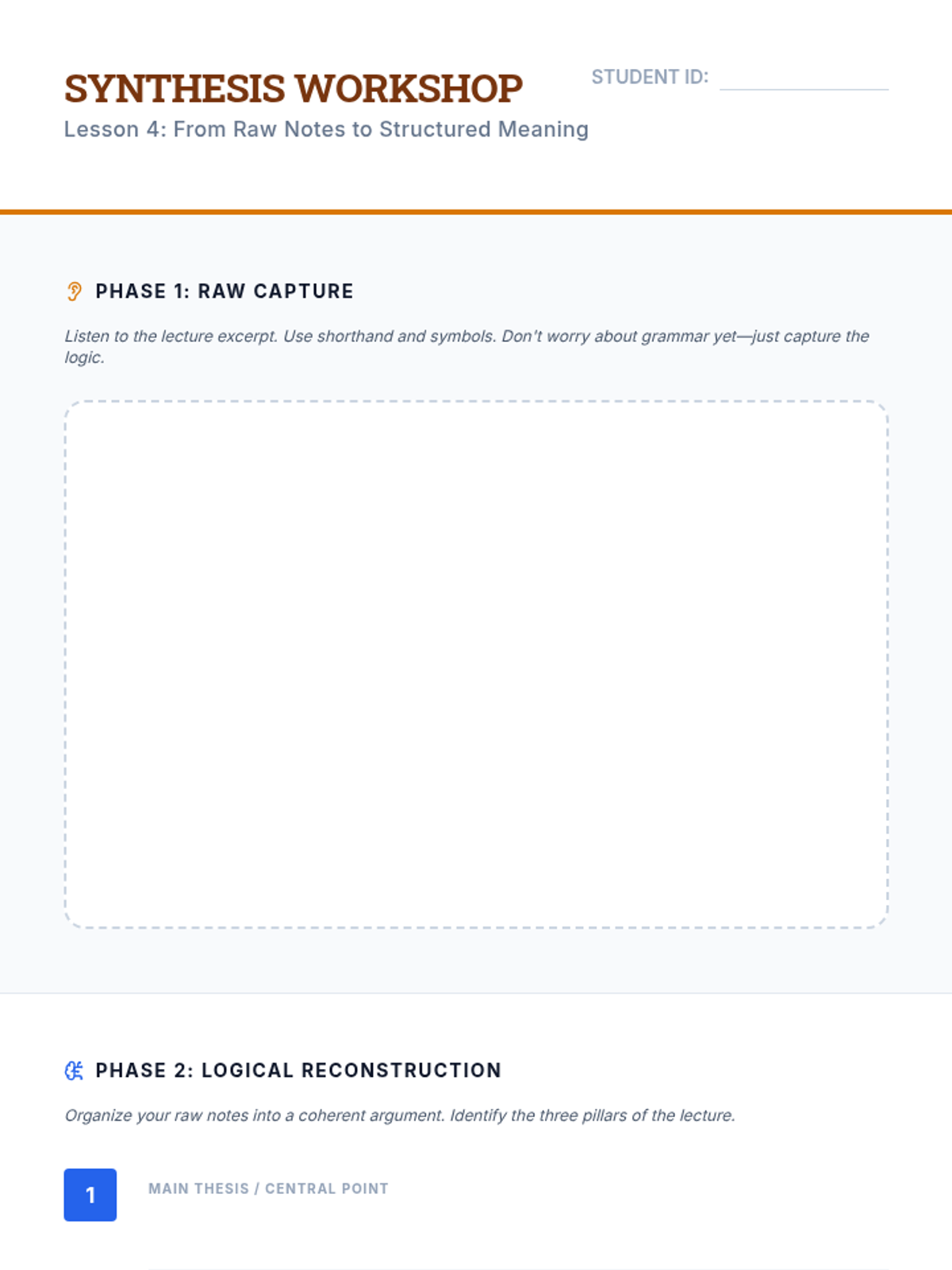
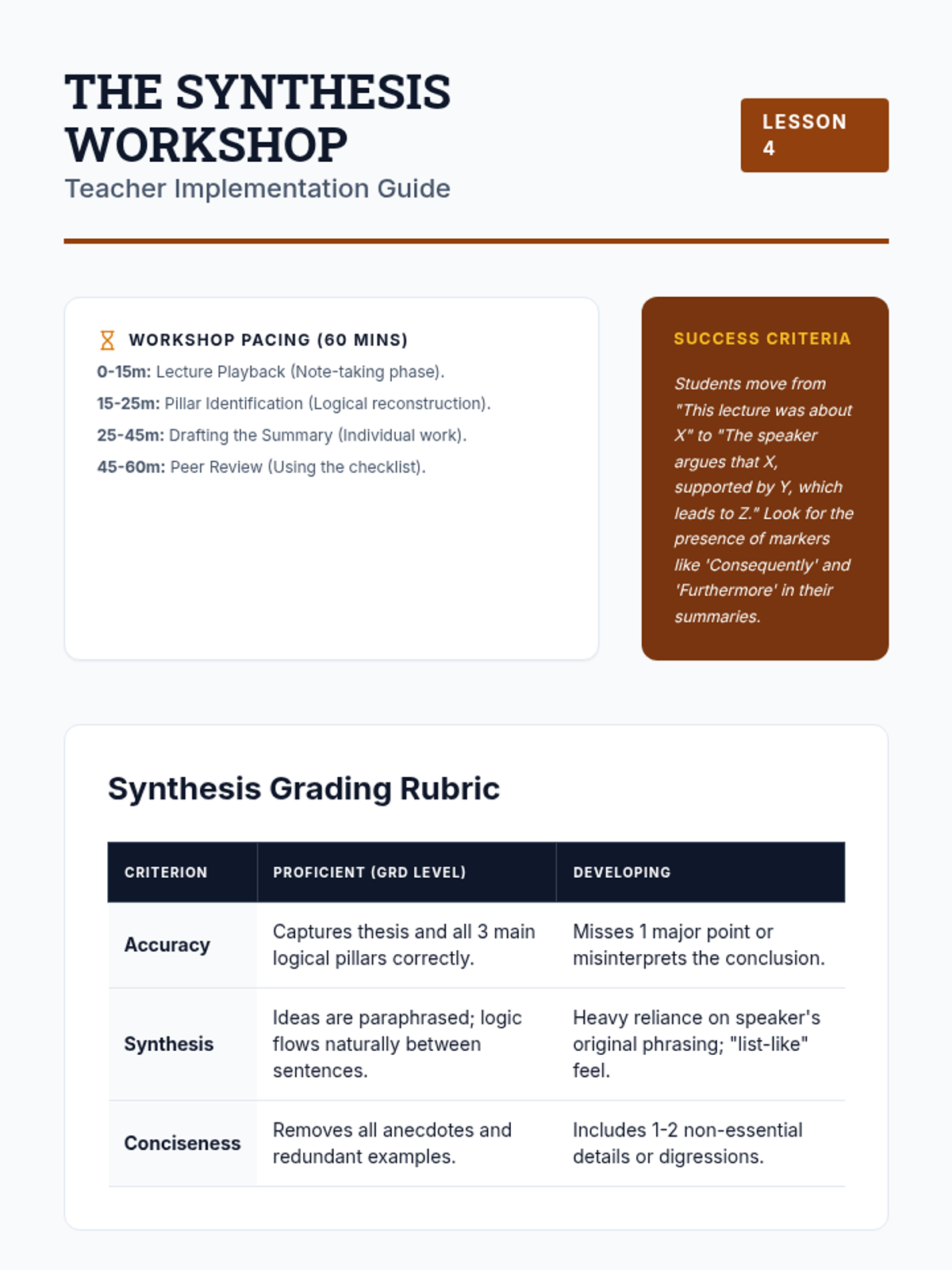
Students practice synthesizing auditory information into concise, logical summaries and paraphrasing key points.
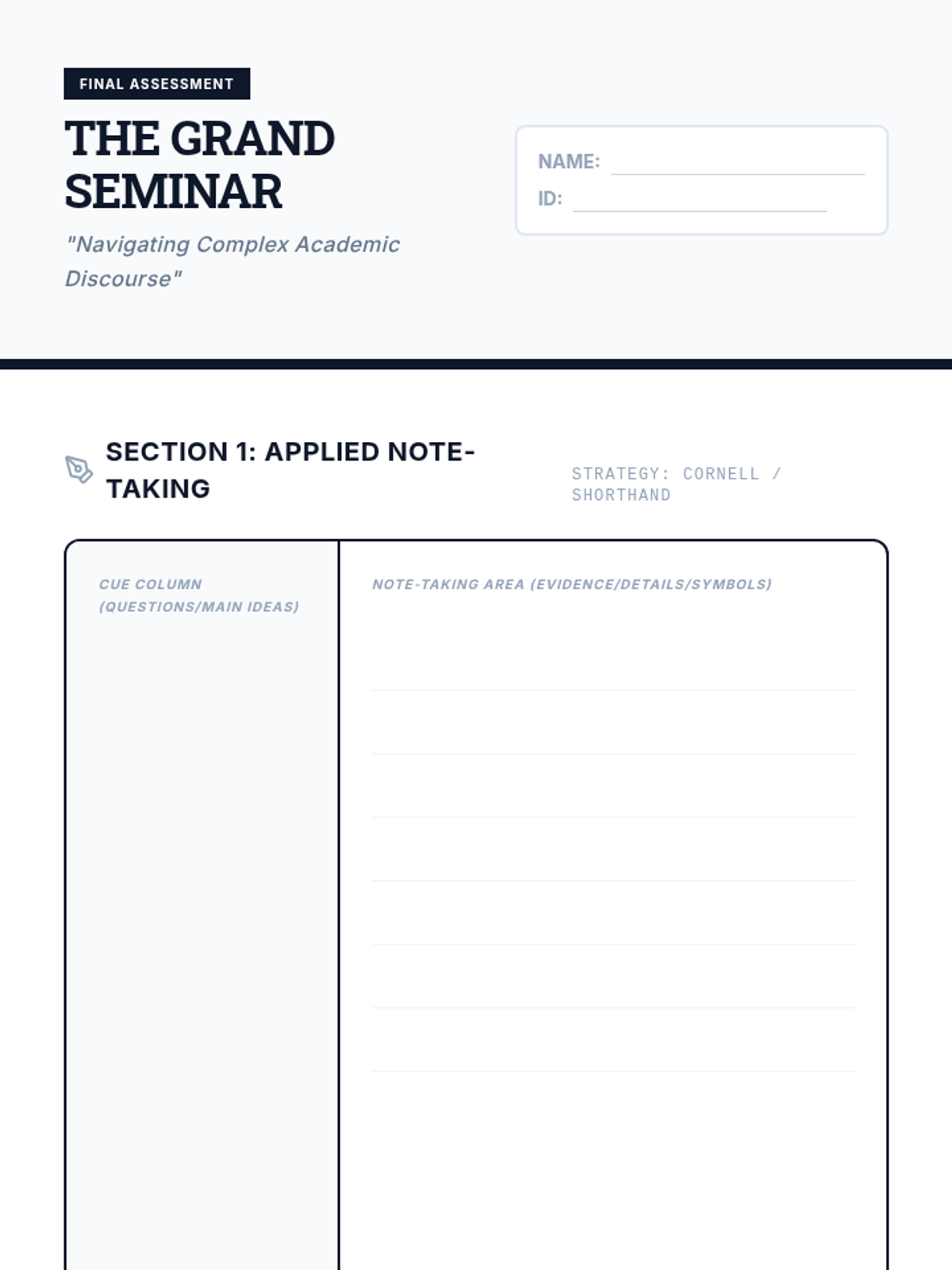
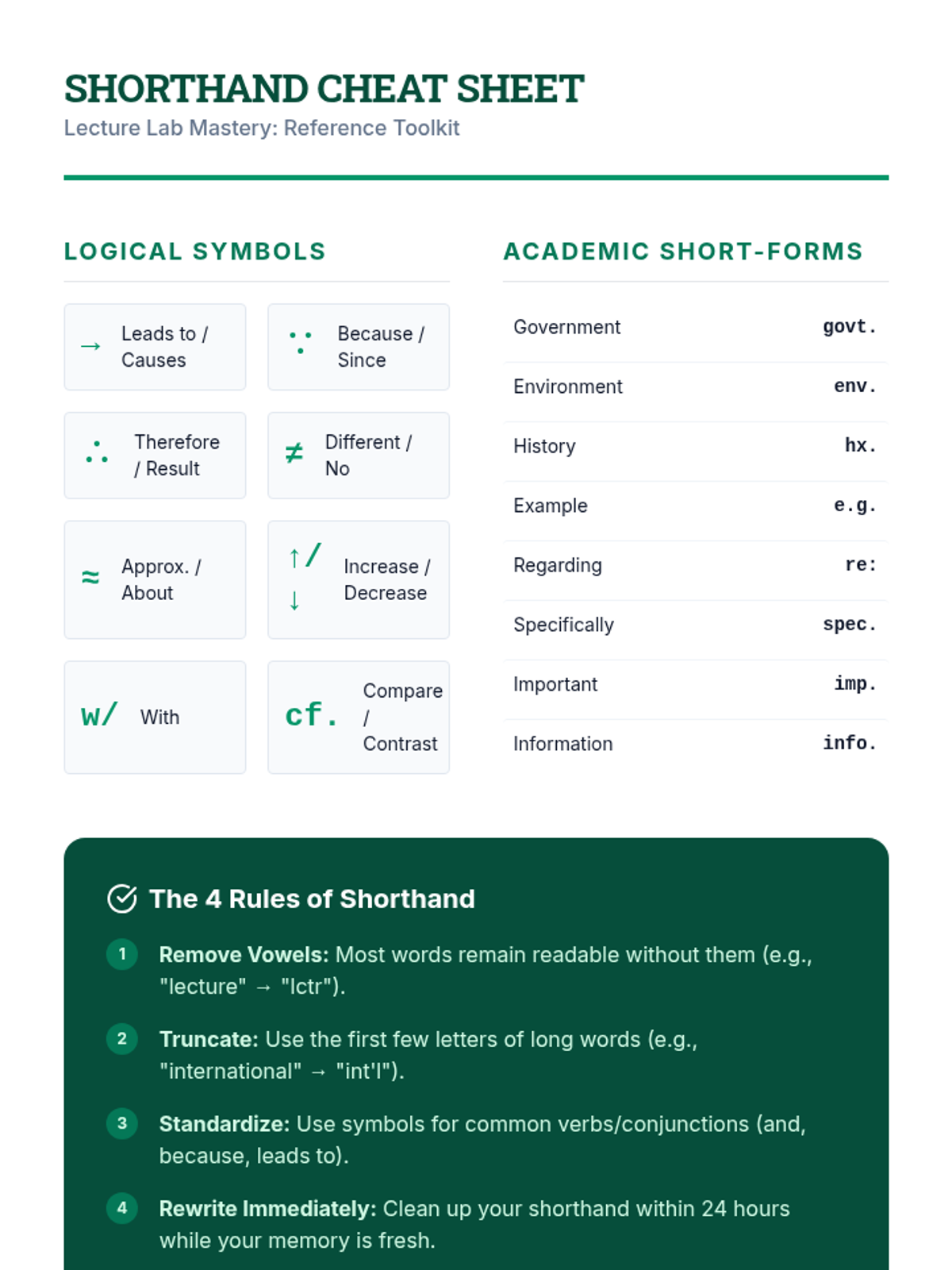
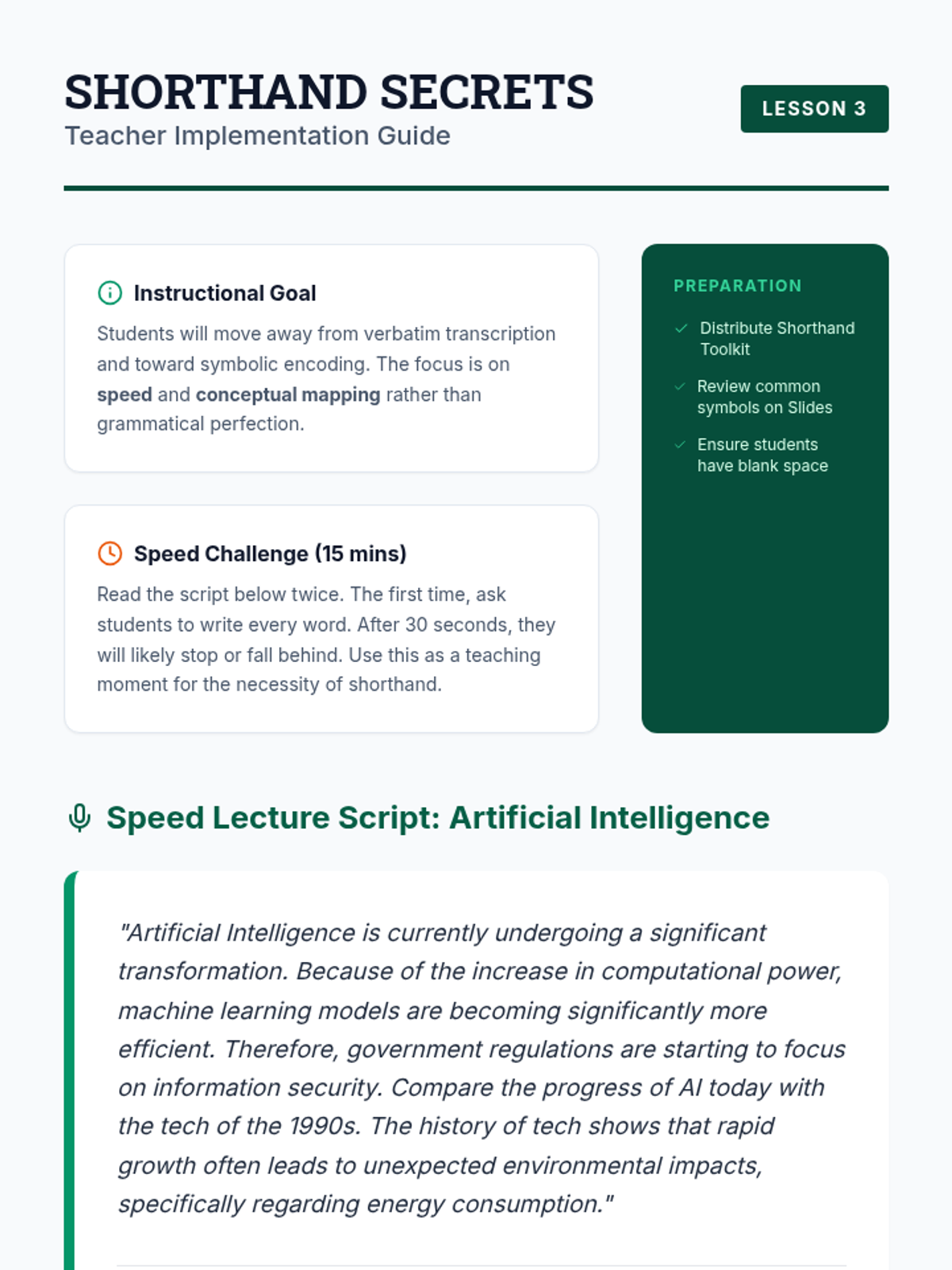
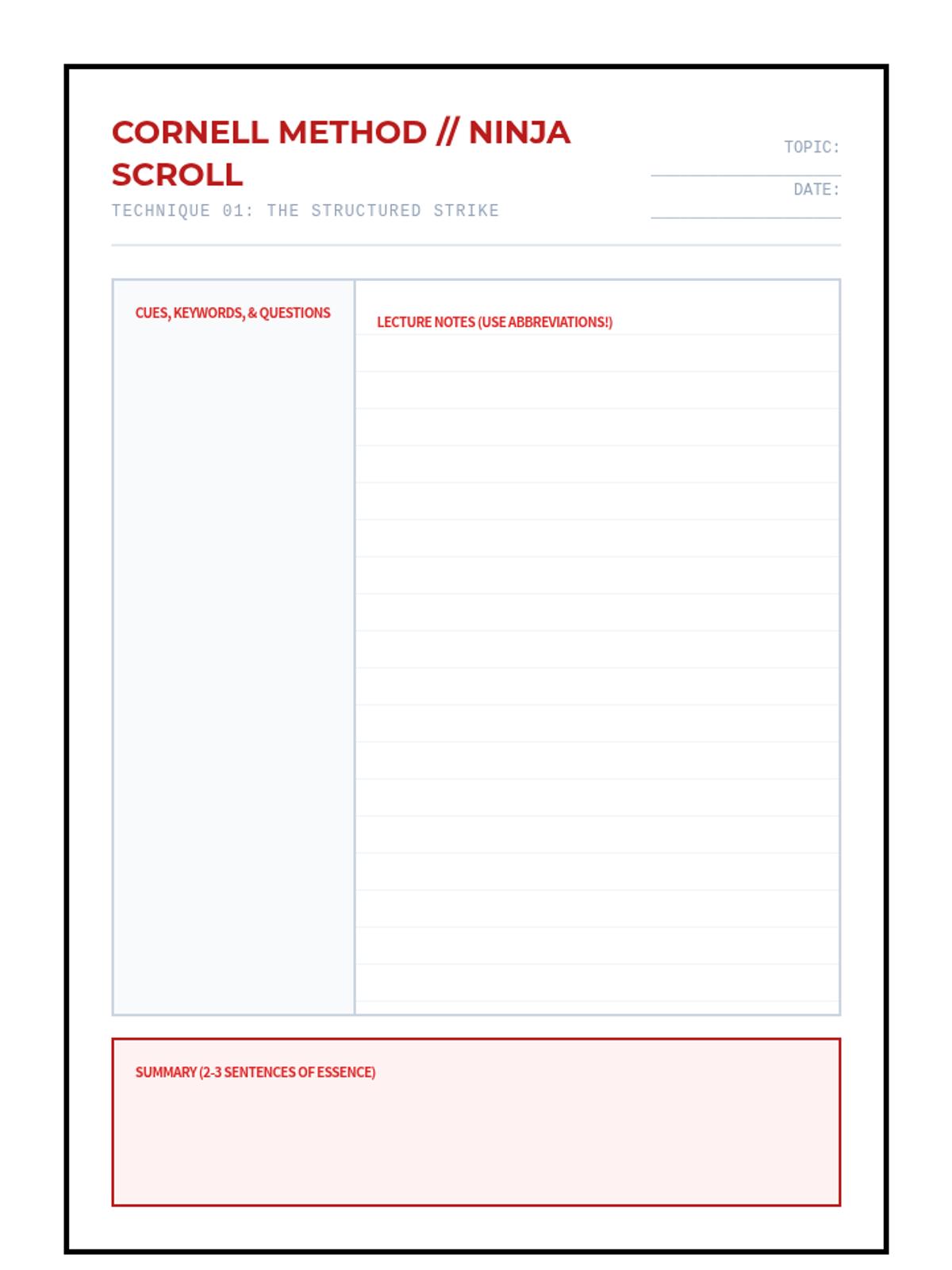
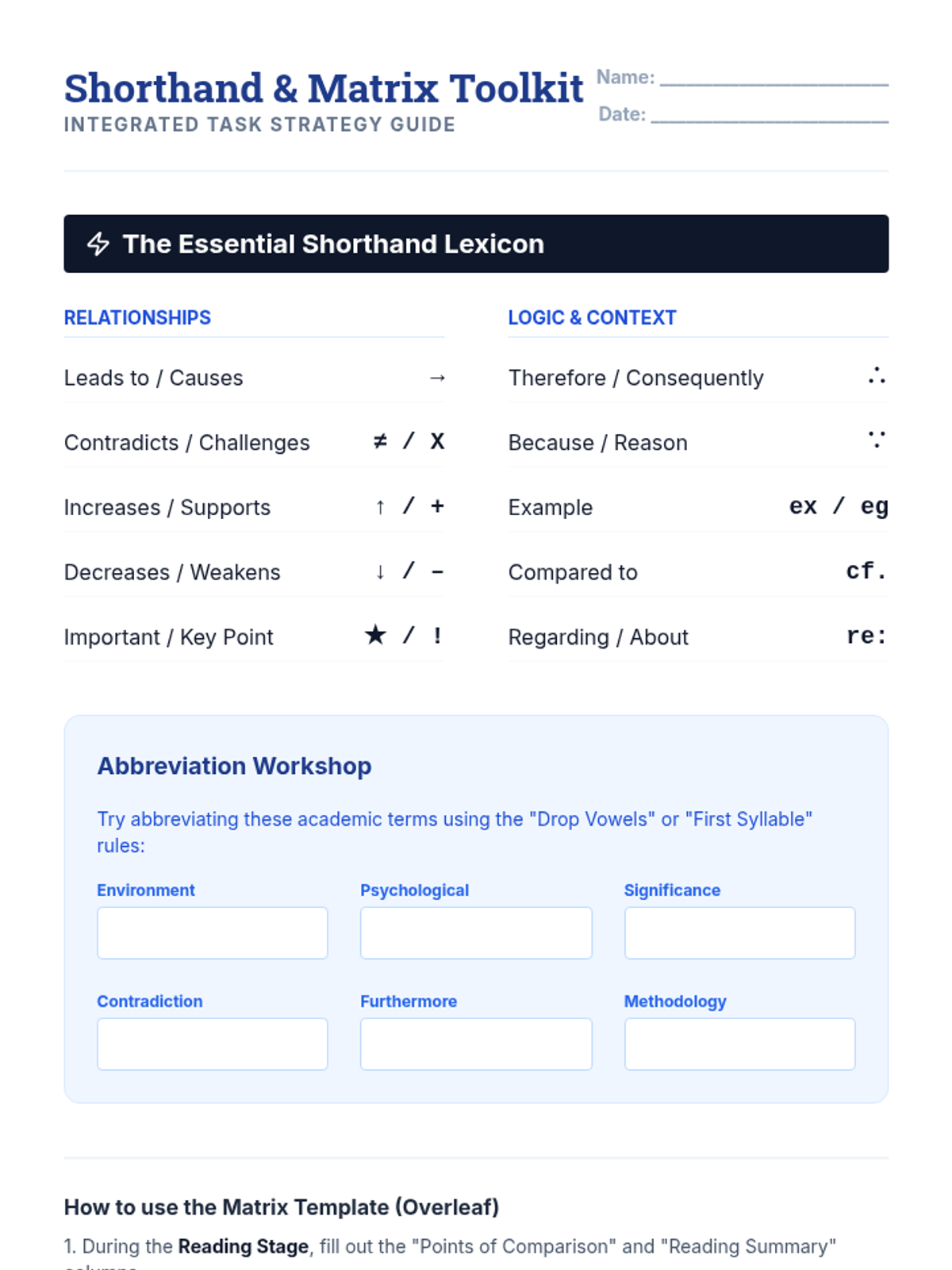
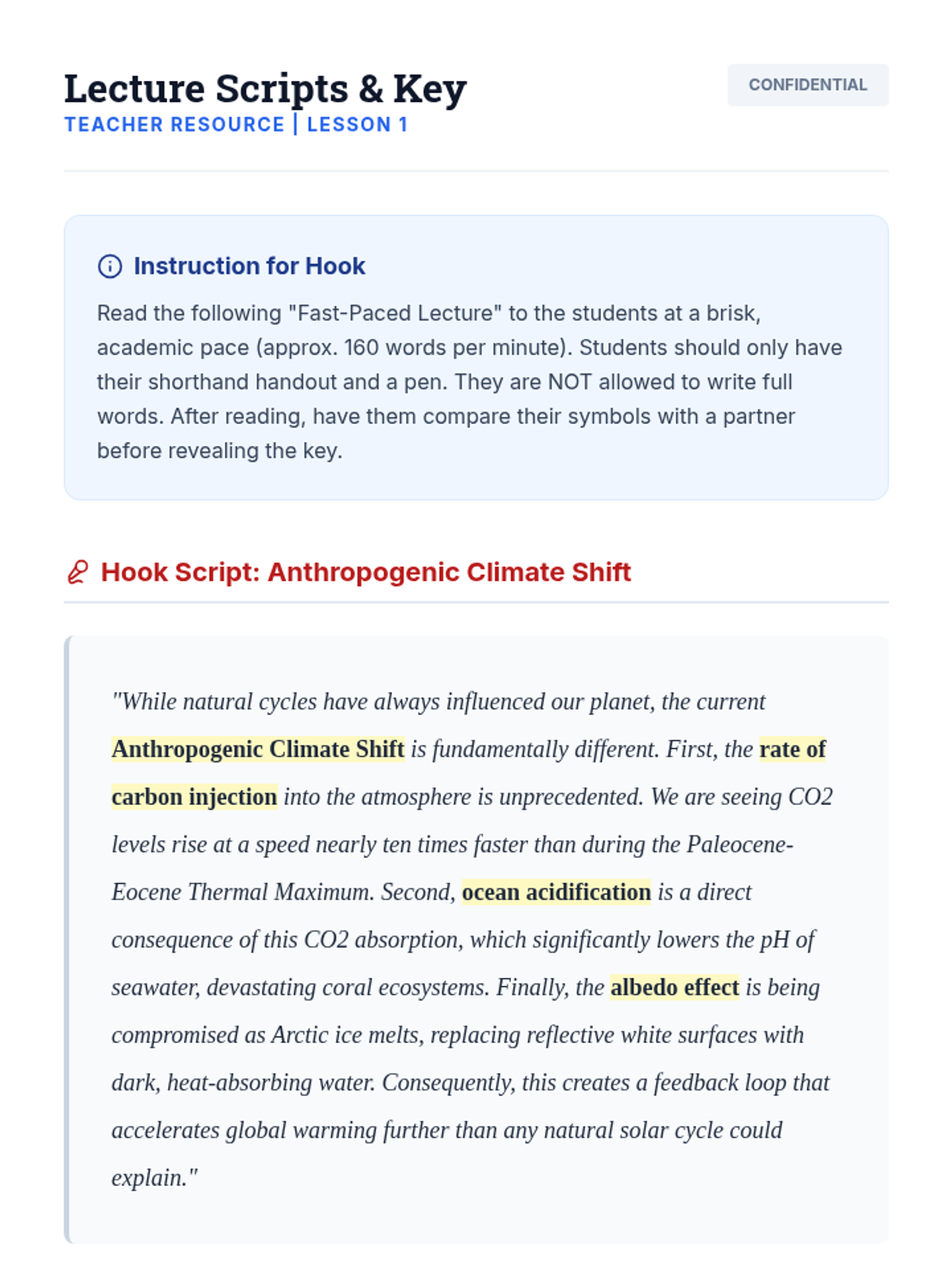
Introduction to shorthand, symbols, and the Cornell note-taking method for capturing information in real-time.
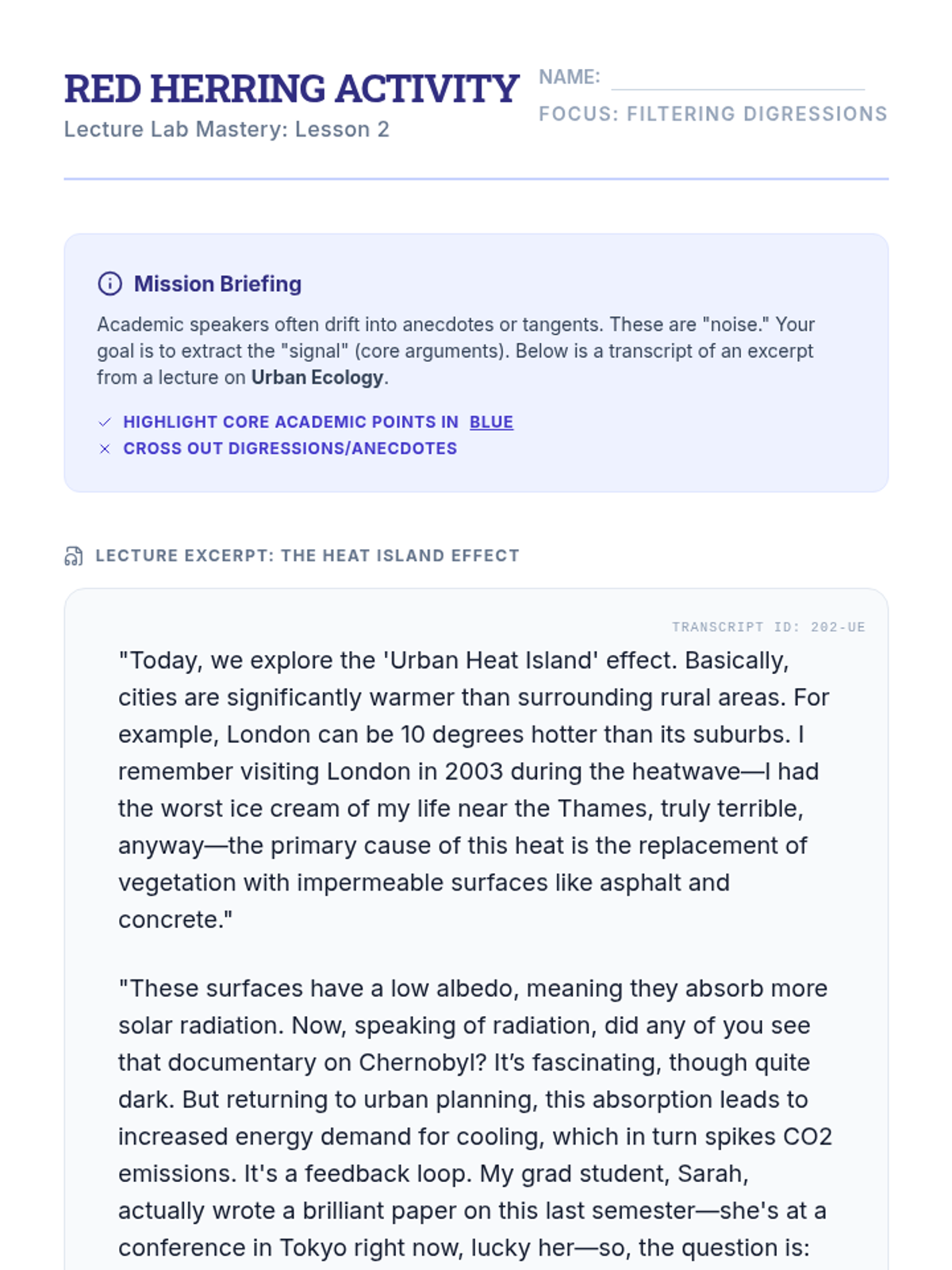
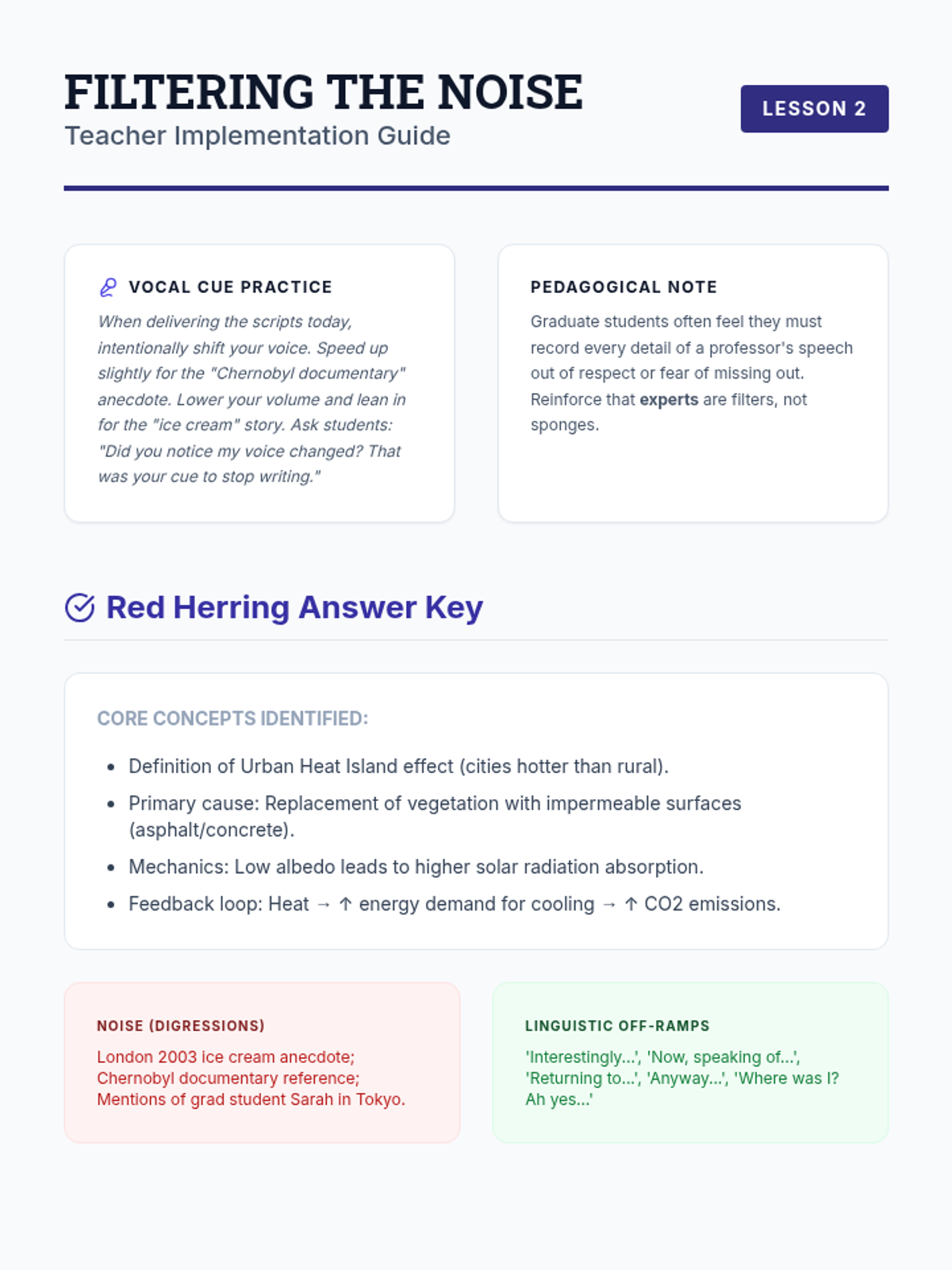
Focuses on distinguishing core academic arguments from anecdotes and digressions using linguistic and vocal cues.
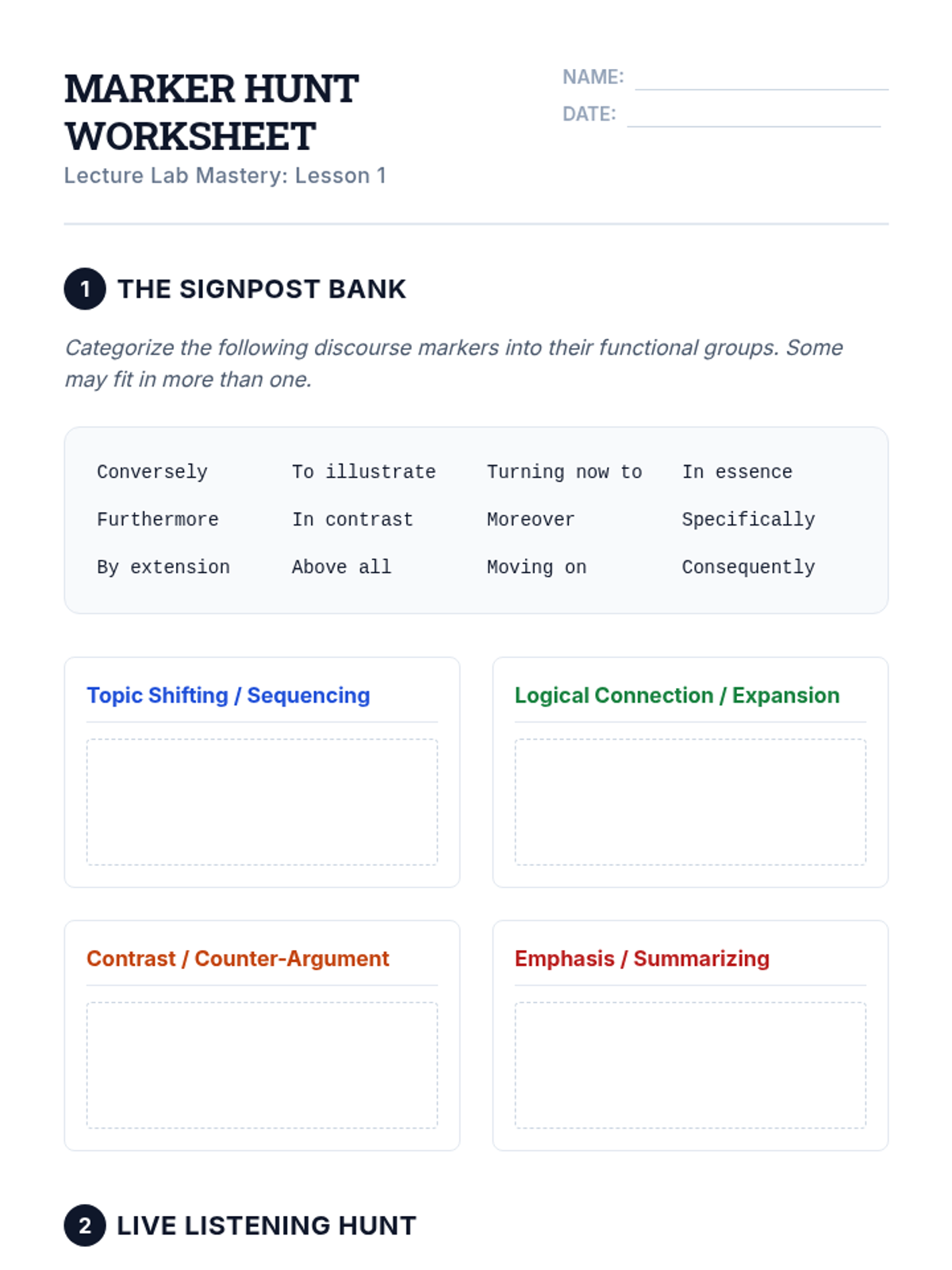
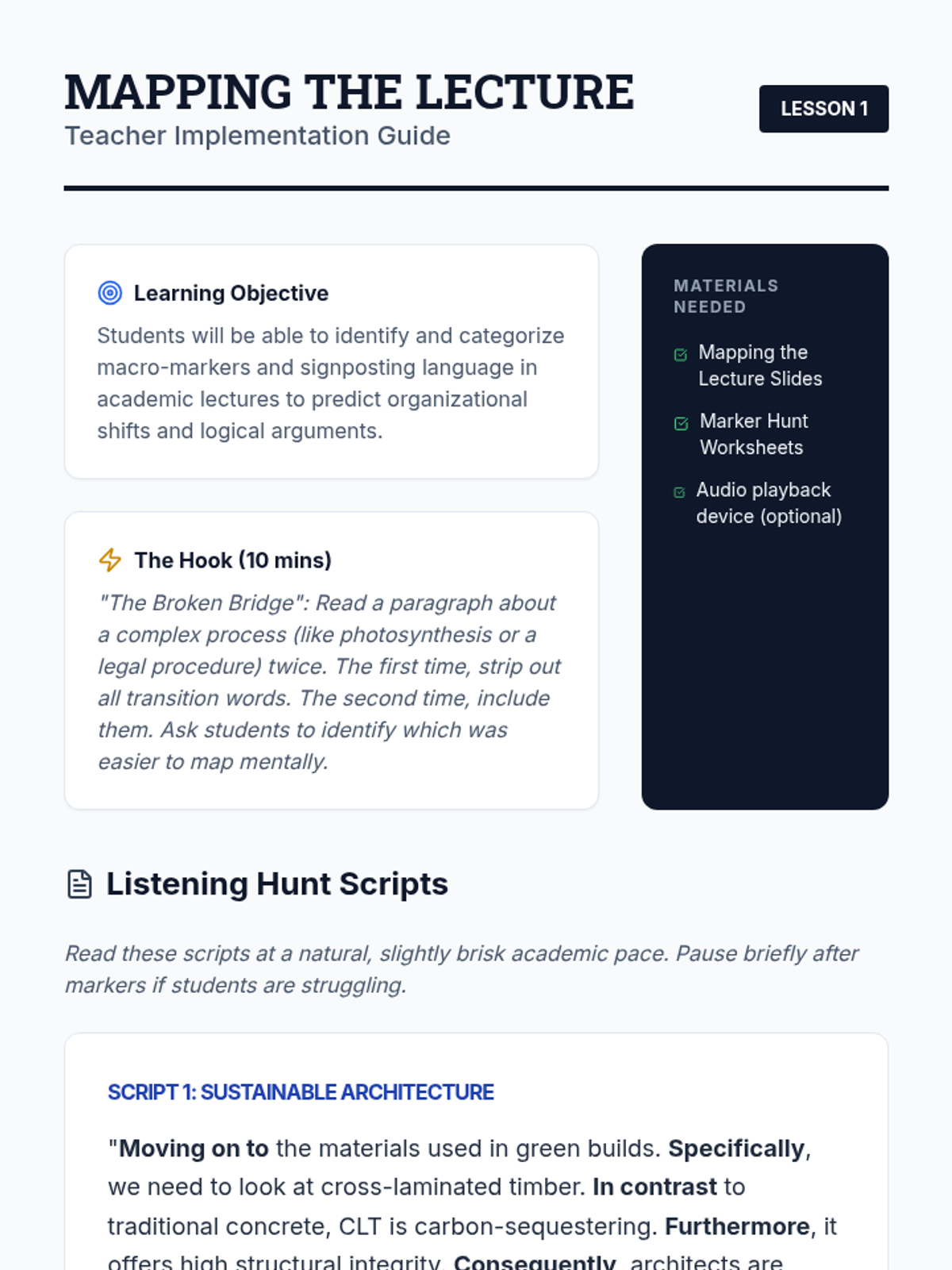
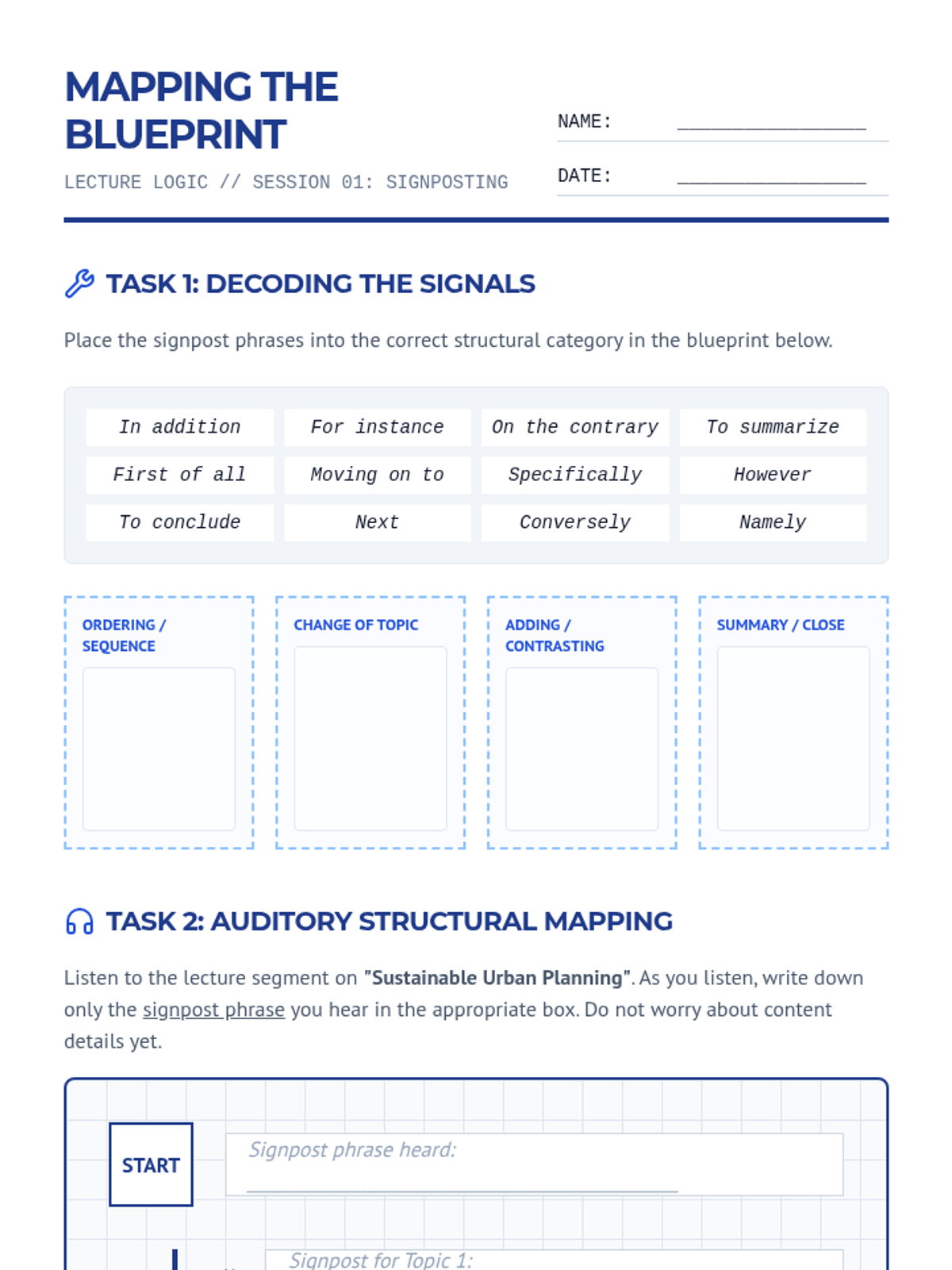
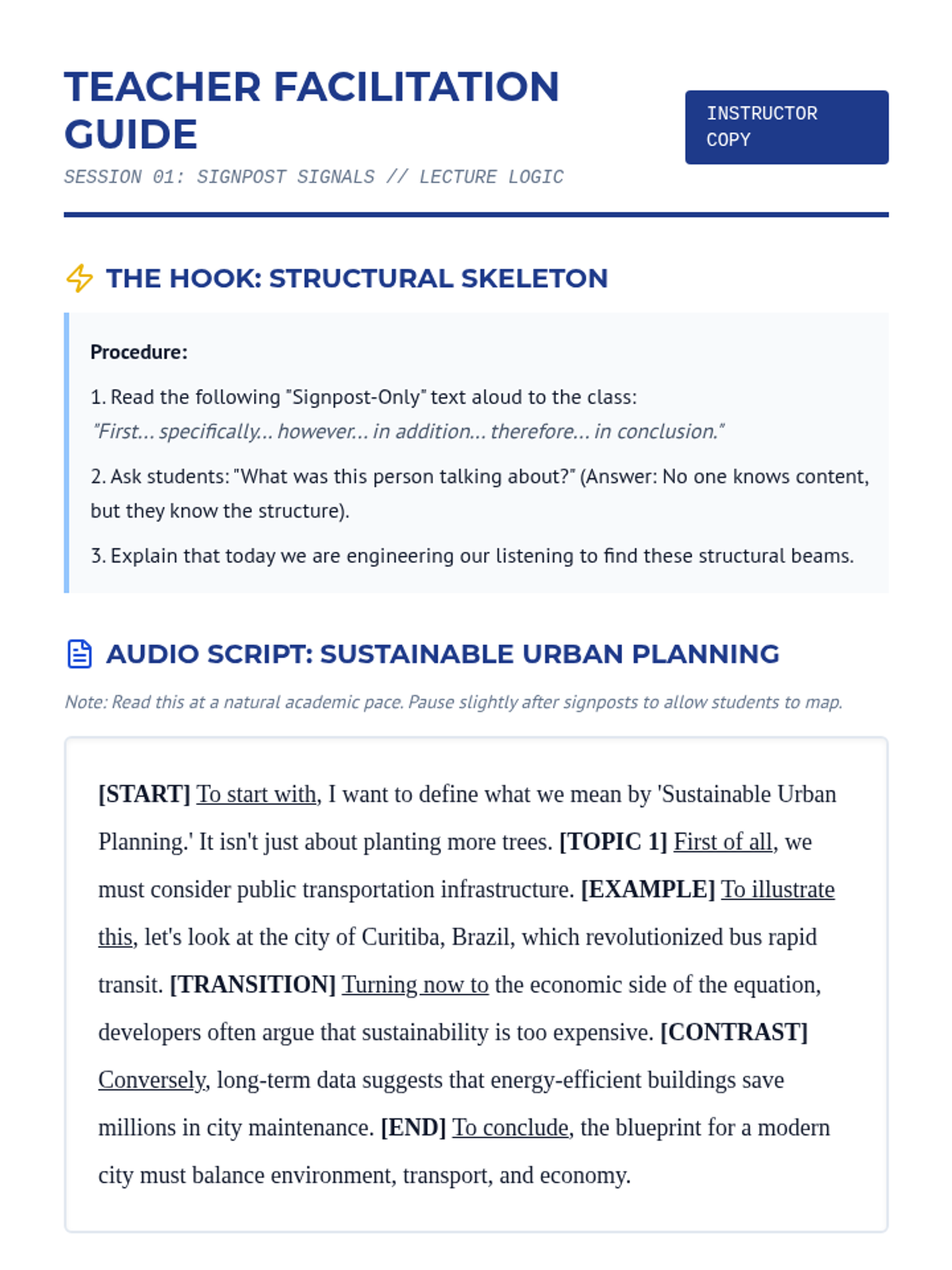
Students learn to identify macro-markers and signposting language that signal organizational structure in academic lectures.
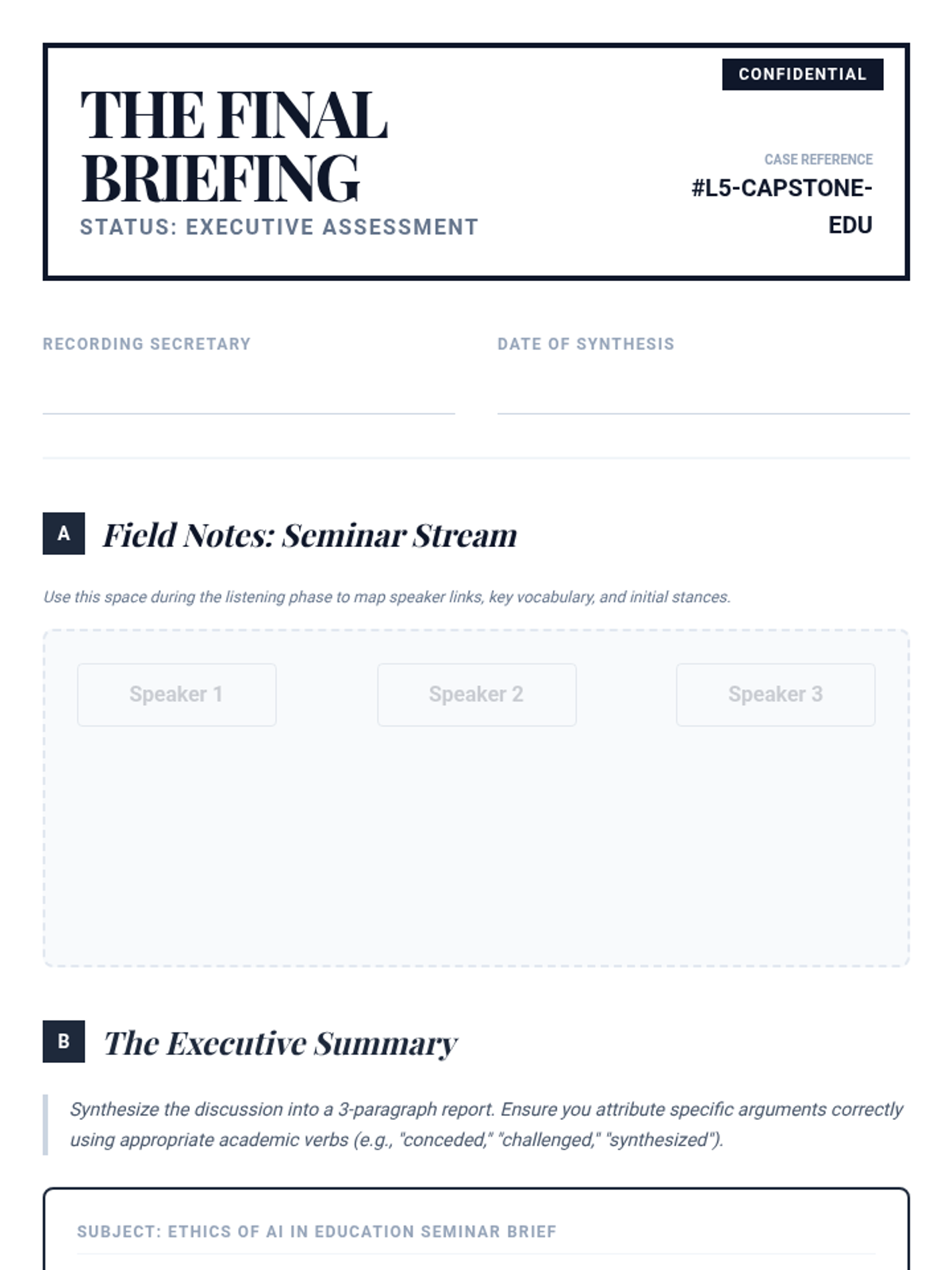
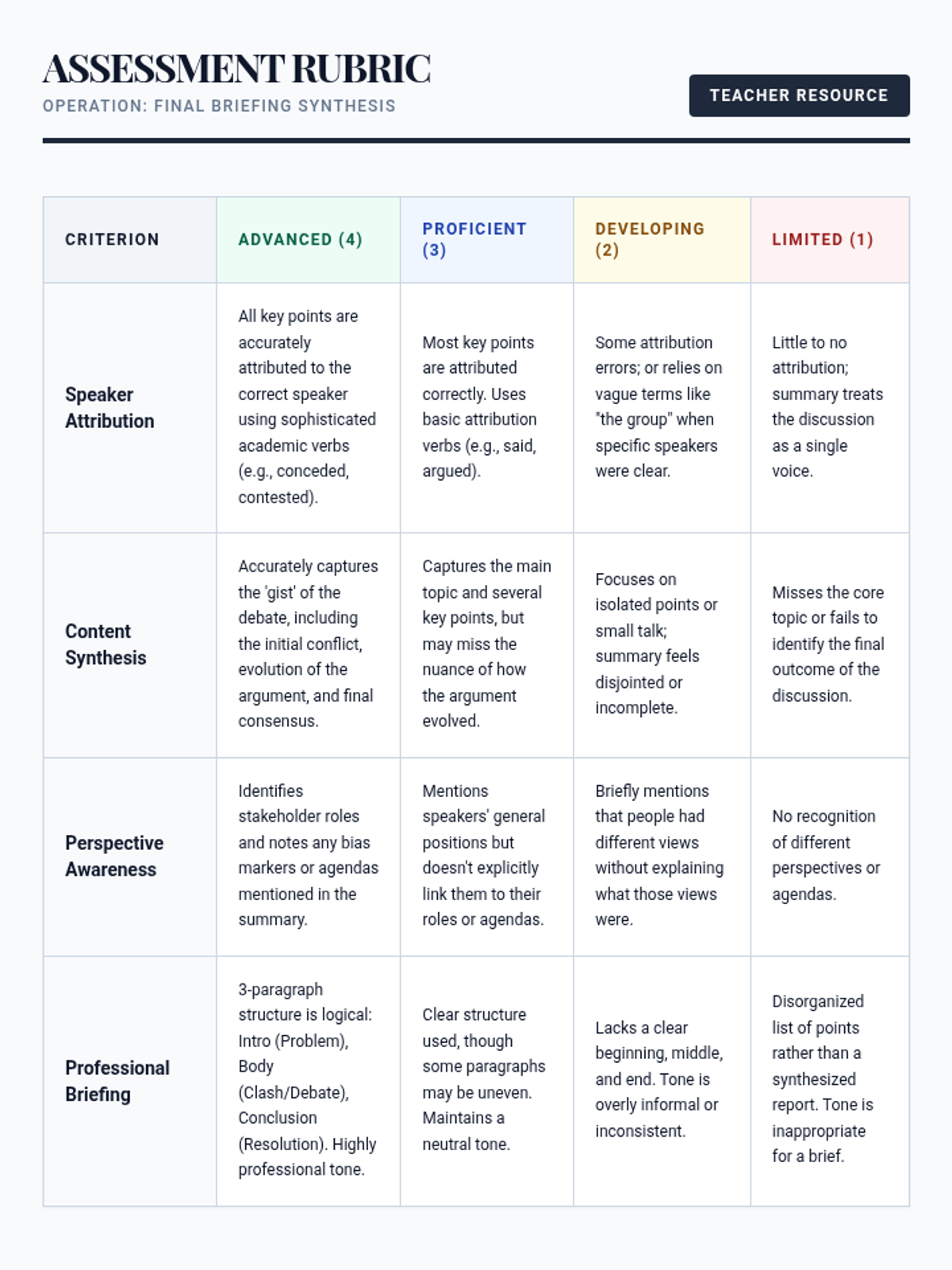
The capstone lesson where students apply all previous skills to summarize a rapid-fire seminar discussion with accurate attribution and key takeaways.
An exploration of how cultural backgrounds influence communication styles, focusing on silence, interruption, and pragmatic markers.
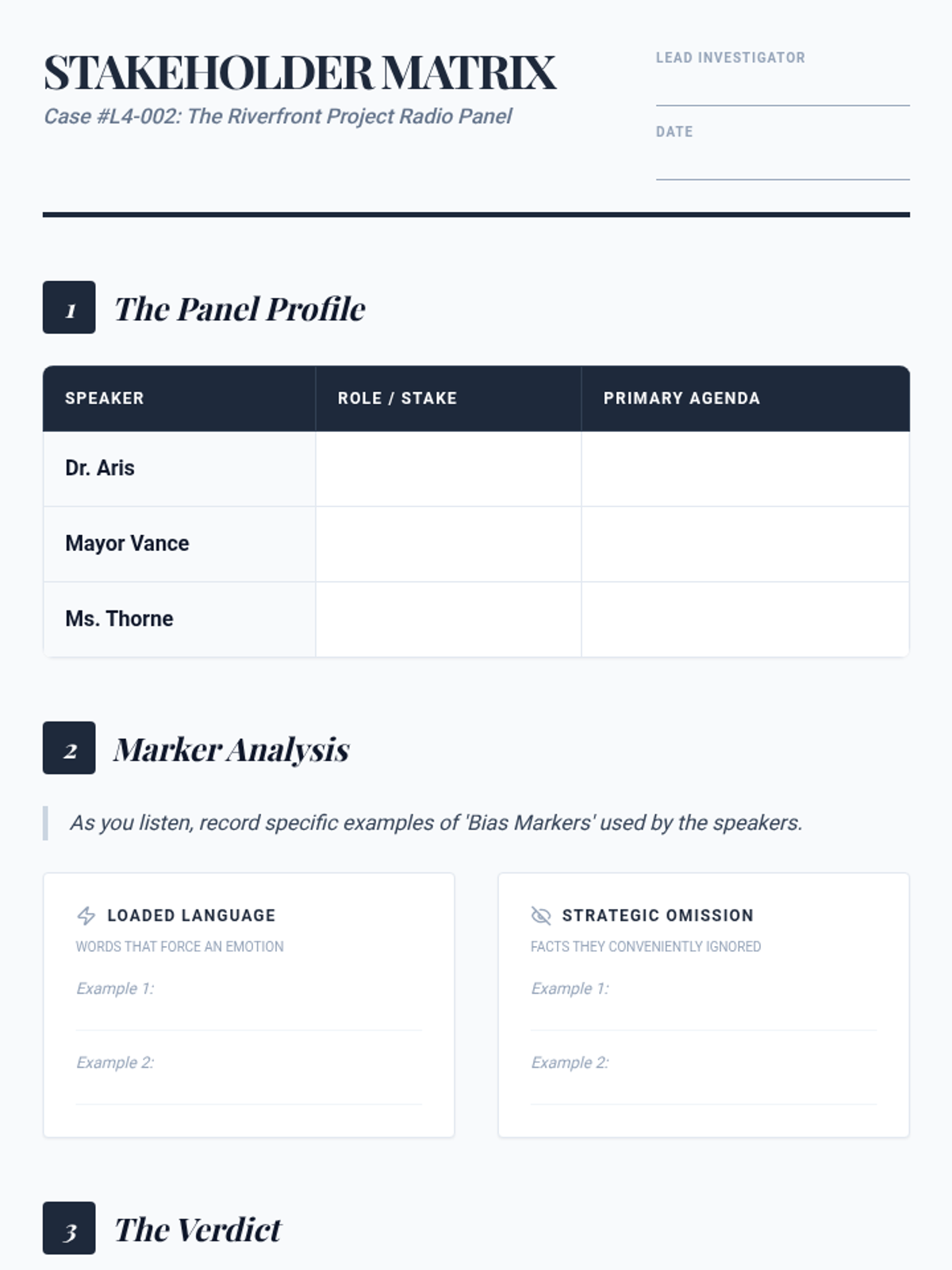
Focuses on detecting bias and underlying agendas in panel discussions by cross-referencing speaker statements and identifying stakeholder perspectives.
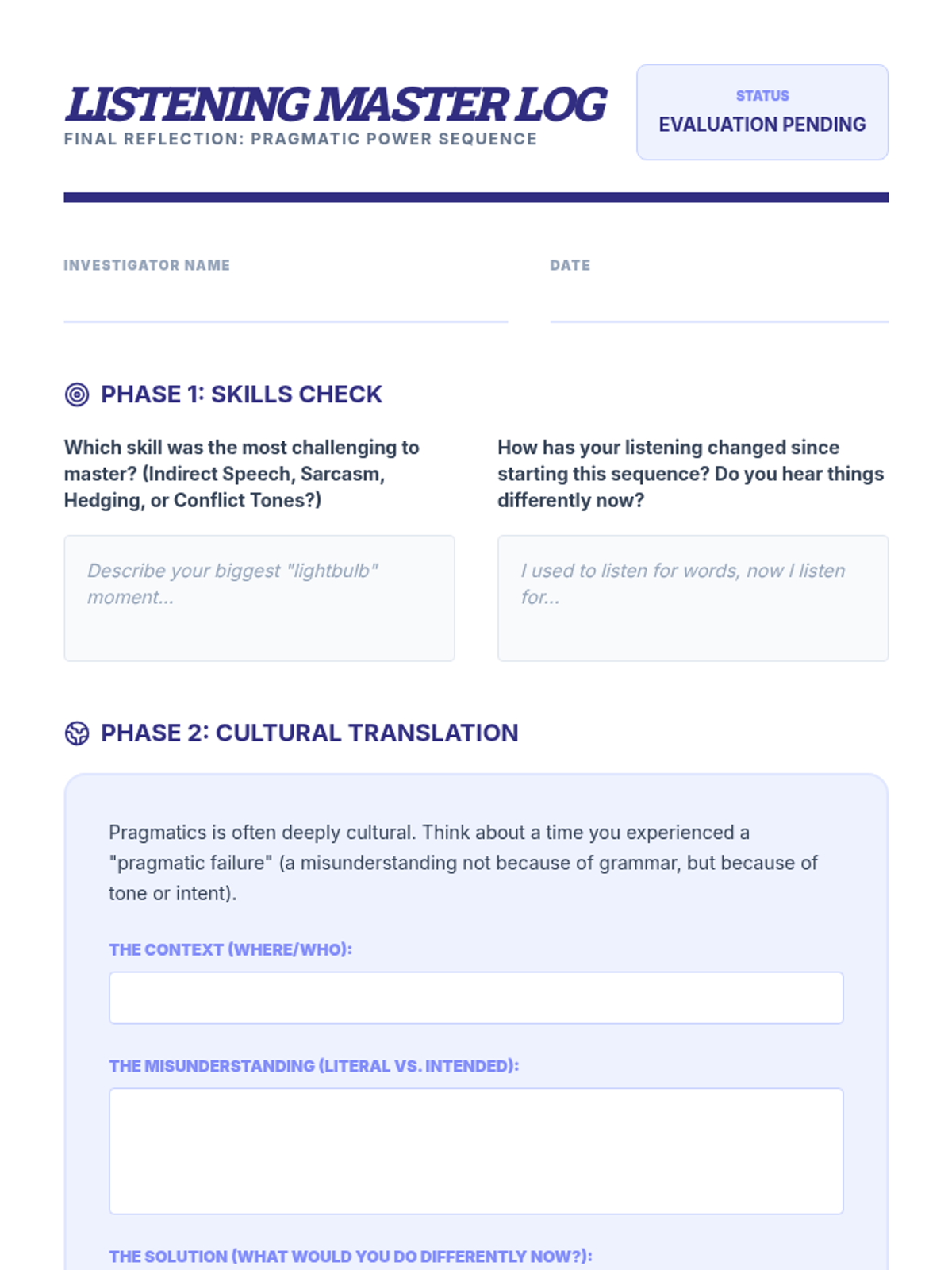
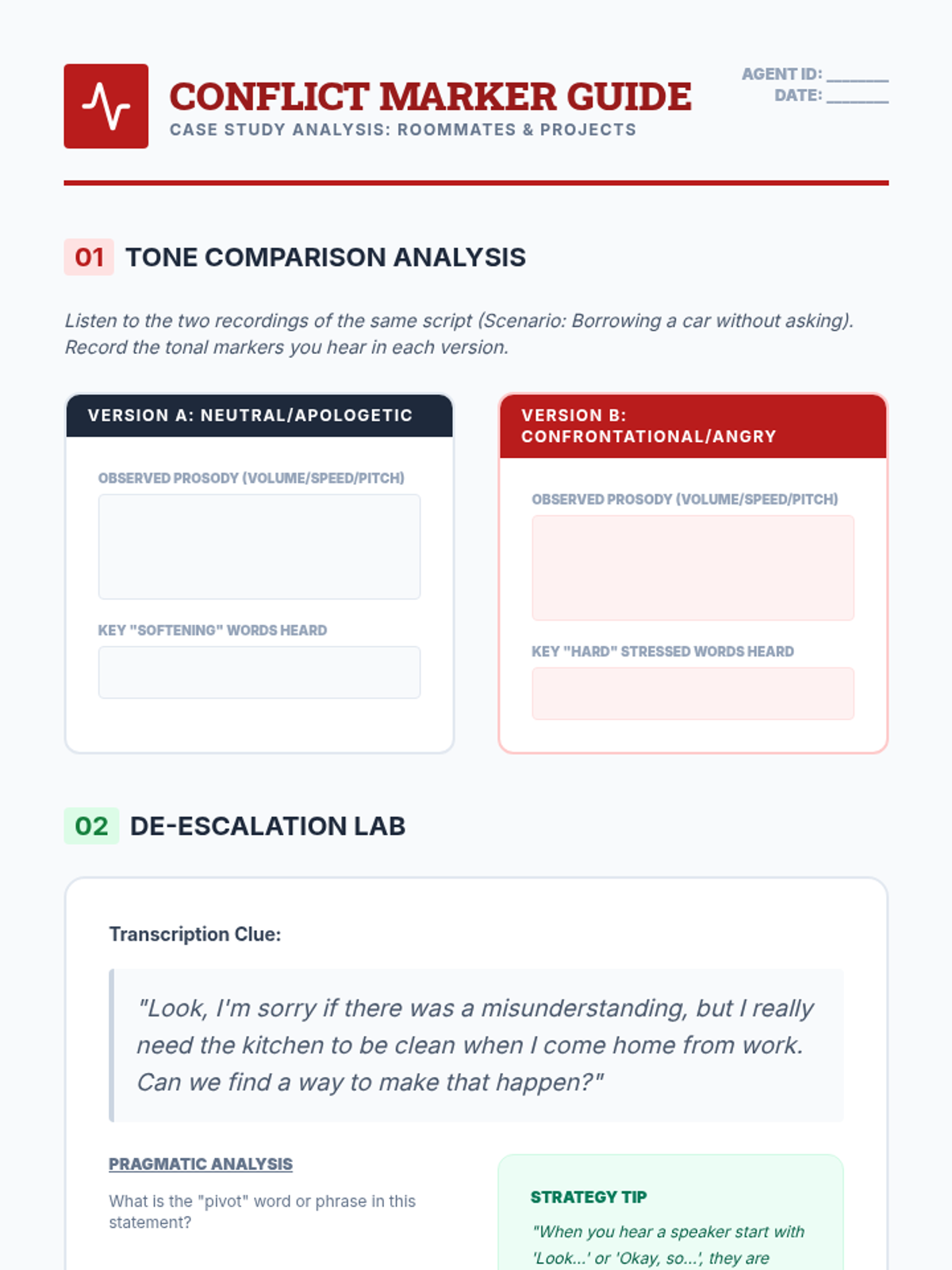
Students analyze tone in high-stakes social interactions, identifying markers of escalation, de-escalation, and negotiation in conflict scenarios.
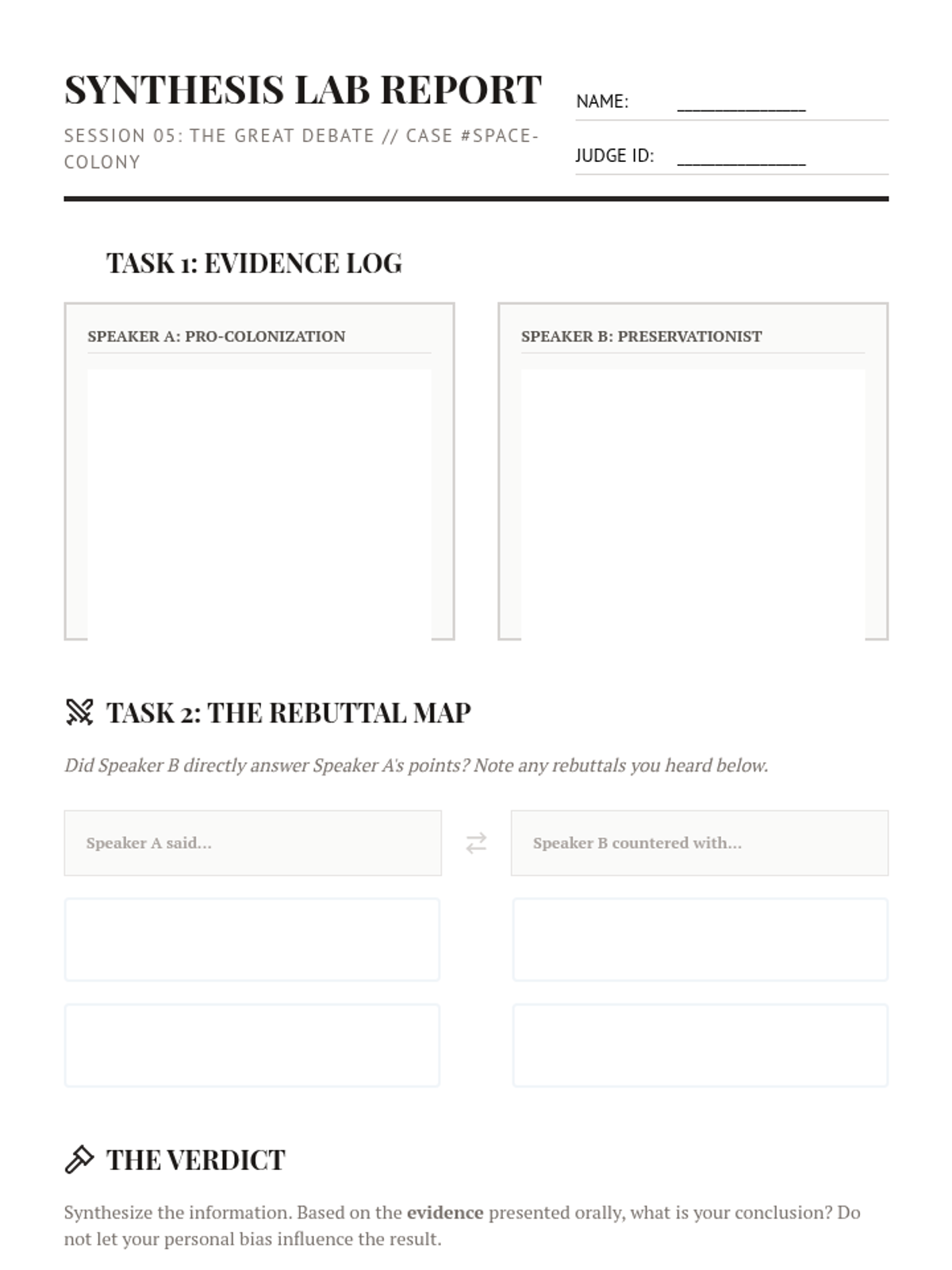
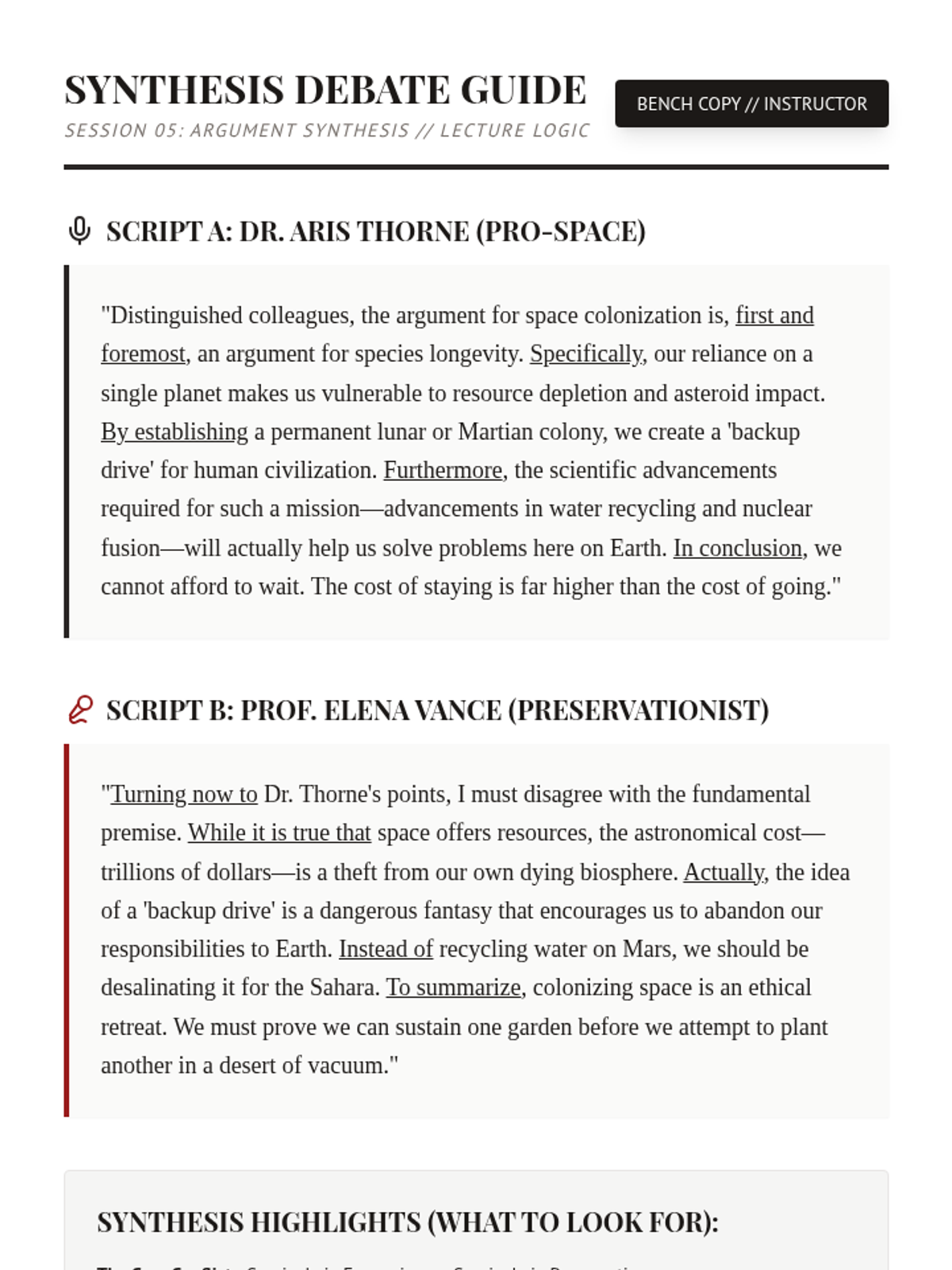
In the final lesson, students listen to opposing viewpoints on an academic topic, identify rebuttals, and synthesize the information to form a reasoned conclusion.
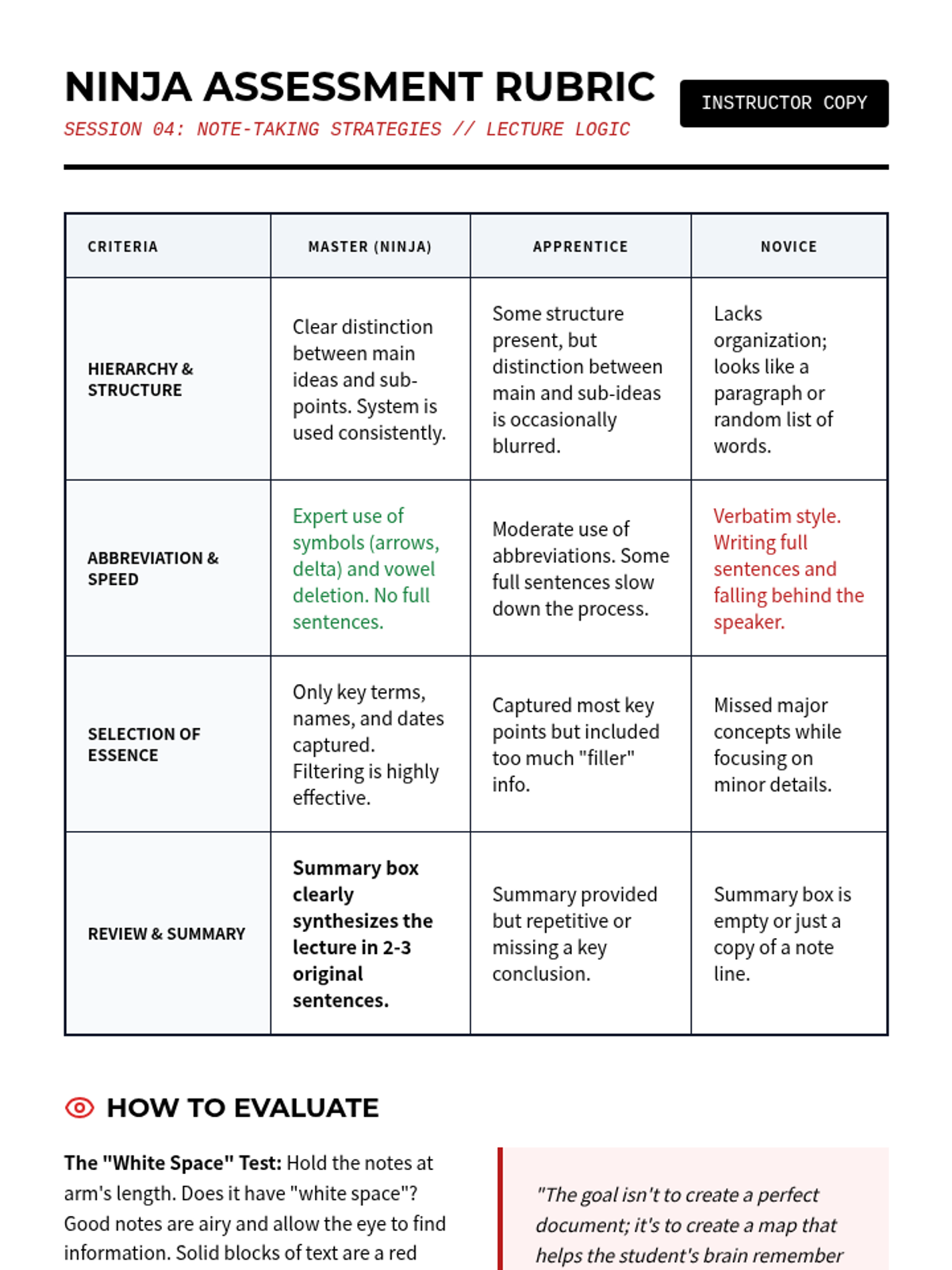
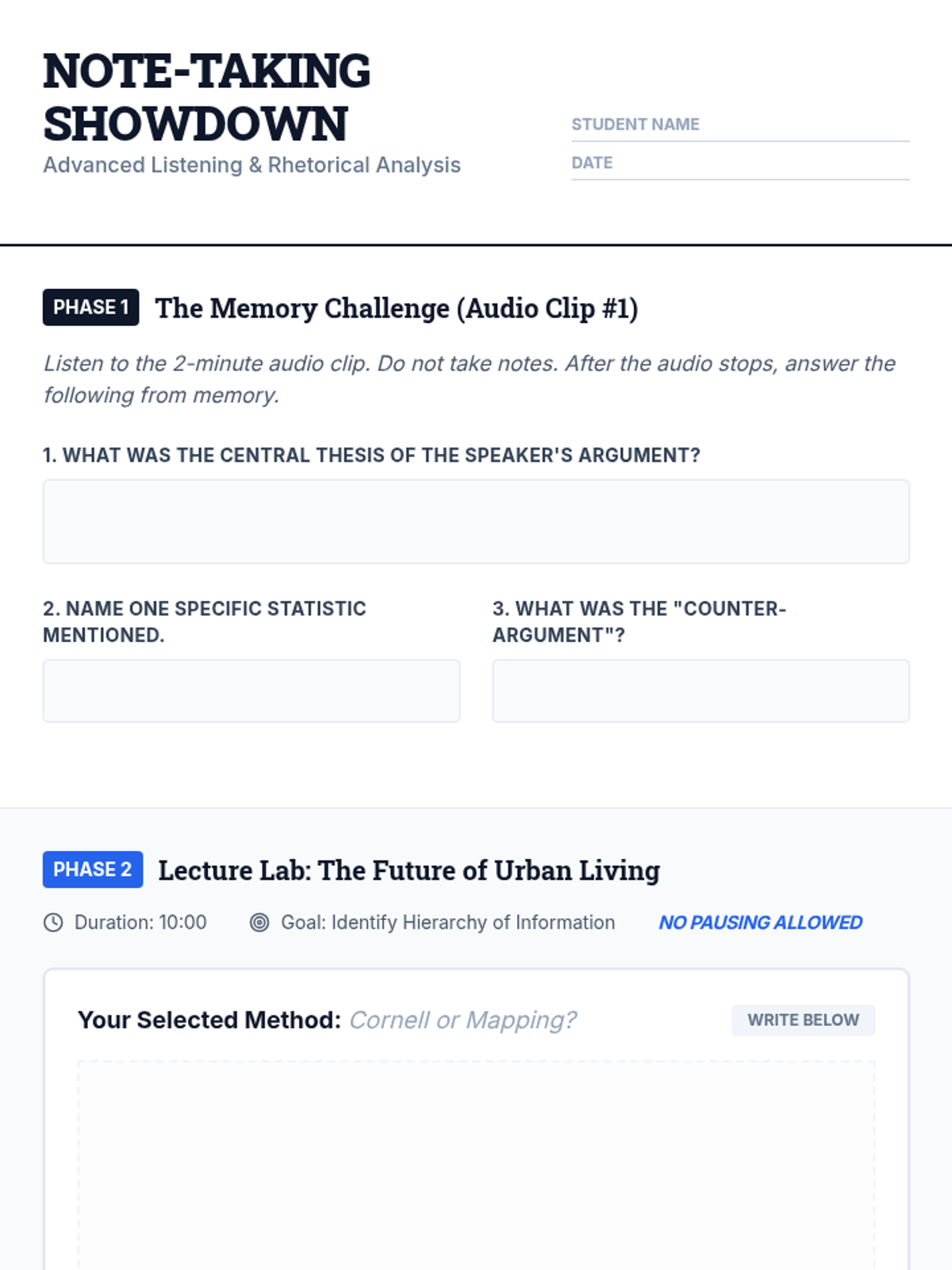
A workshop on strategic note-taking systems (Cornell, Outlining, Mapping). Students learn to use abbreviations and capture key concepts rather than verbatim transcription.
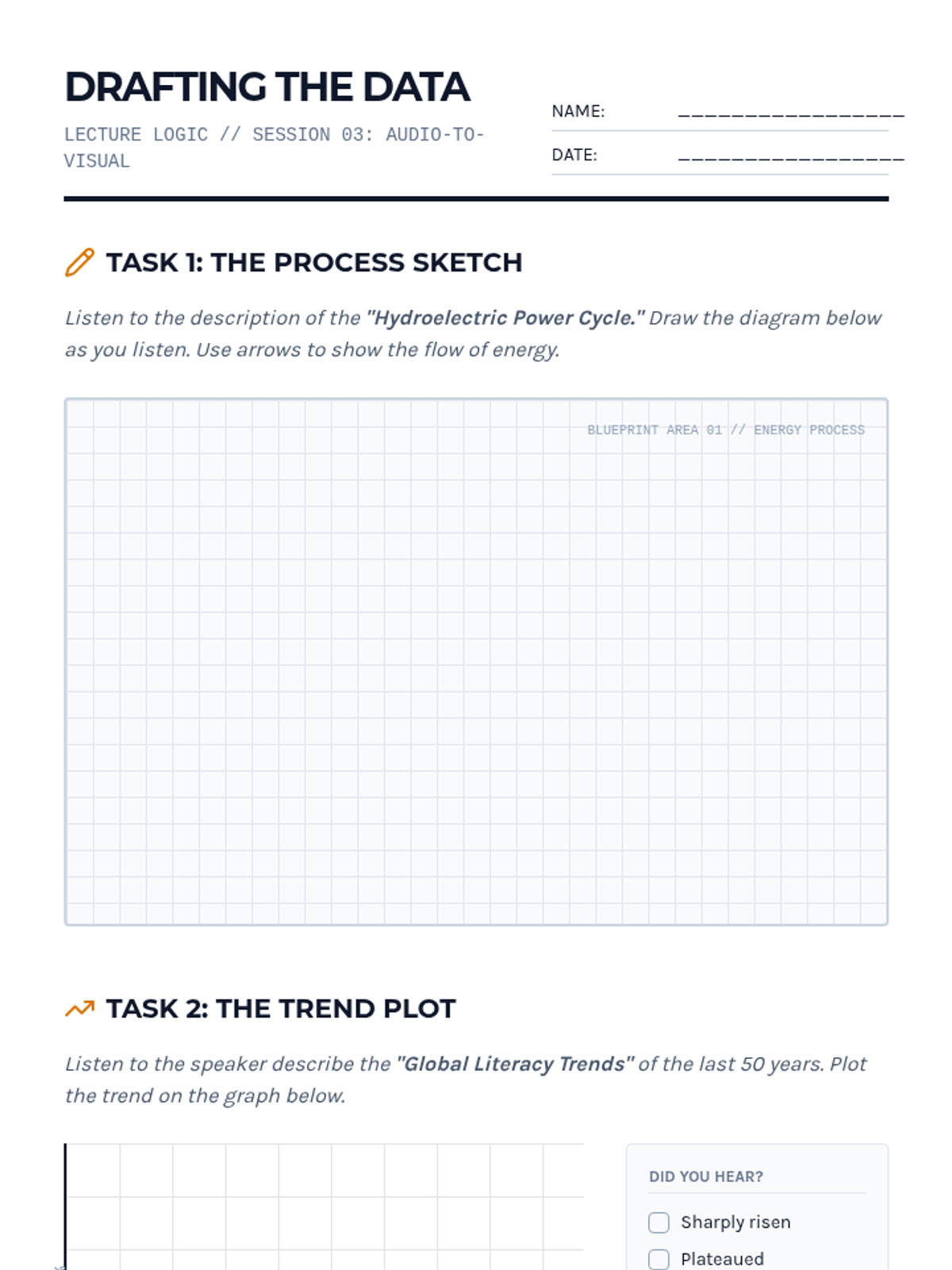
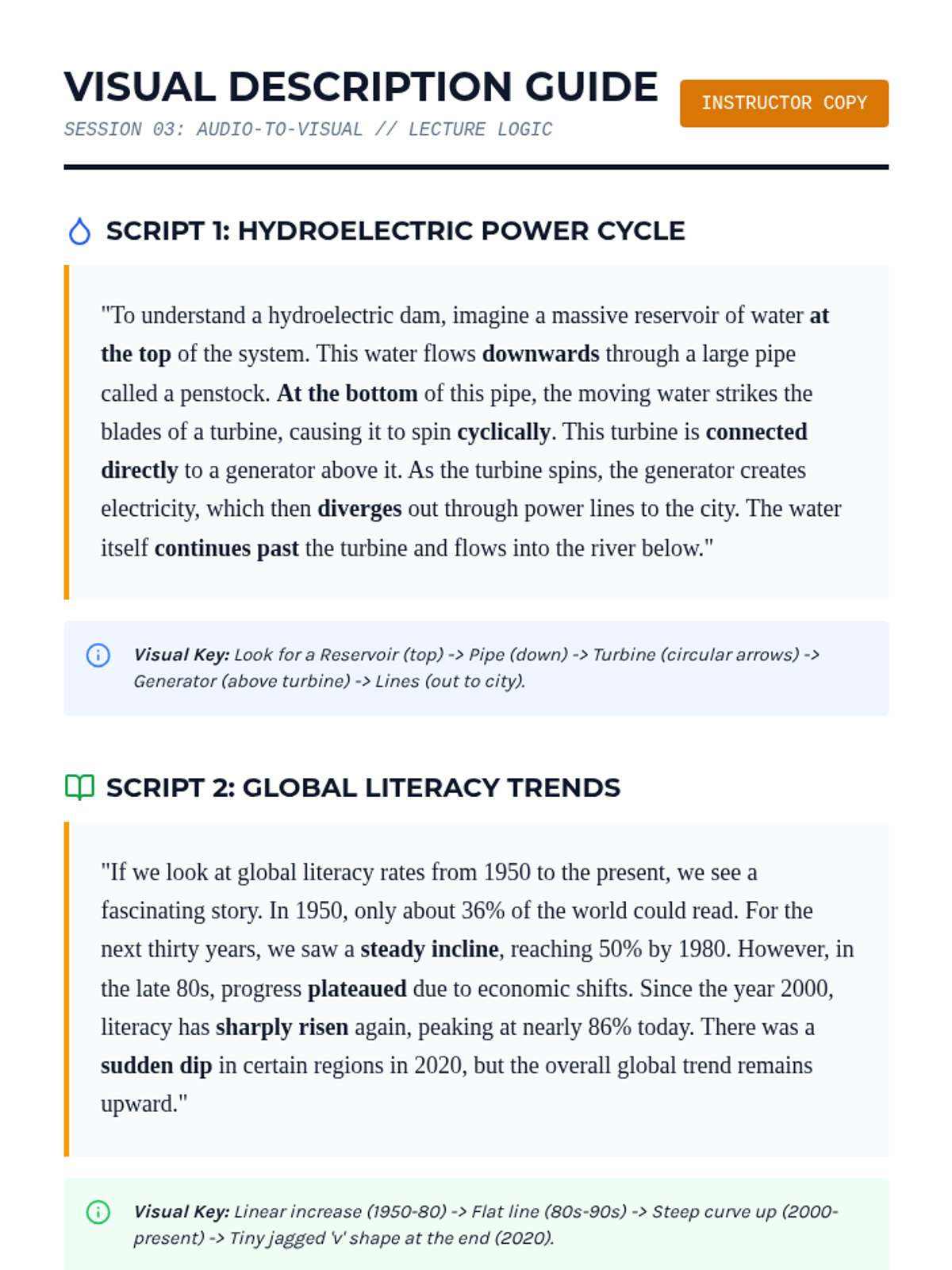
Students practice converting auditory descriptions into visual data. They will draw diagrams and charts based strictly on spoken information about processes and statistics.
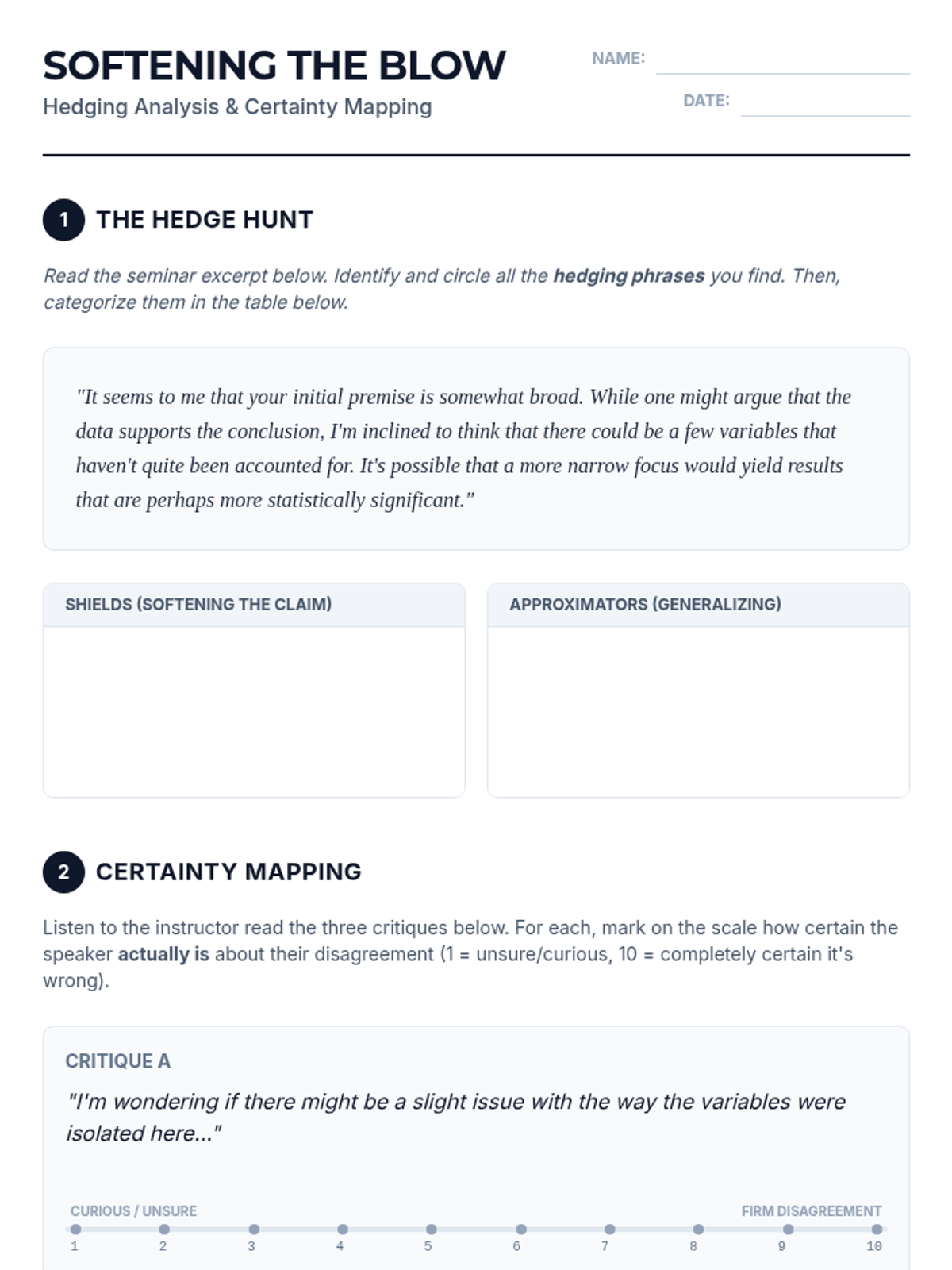
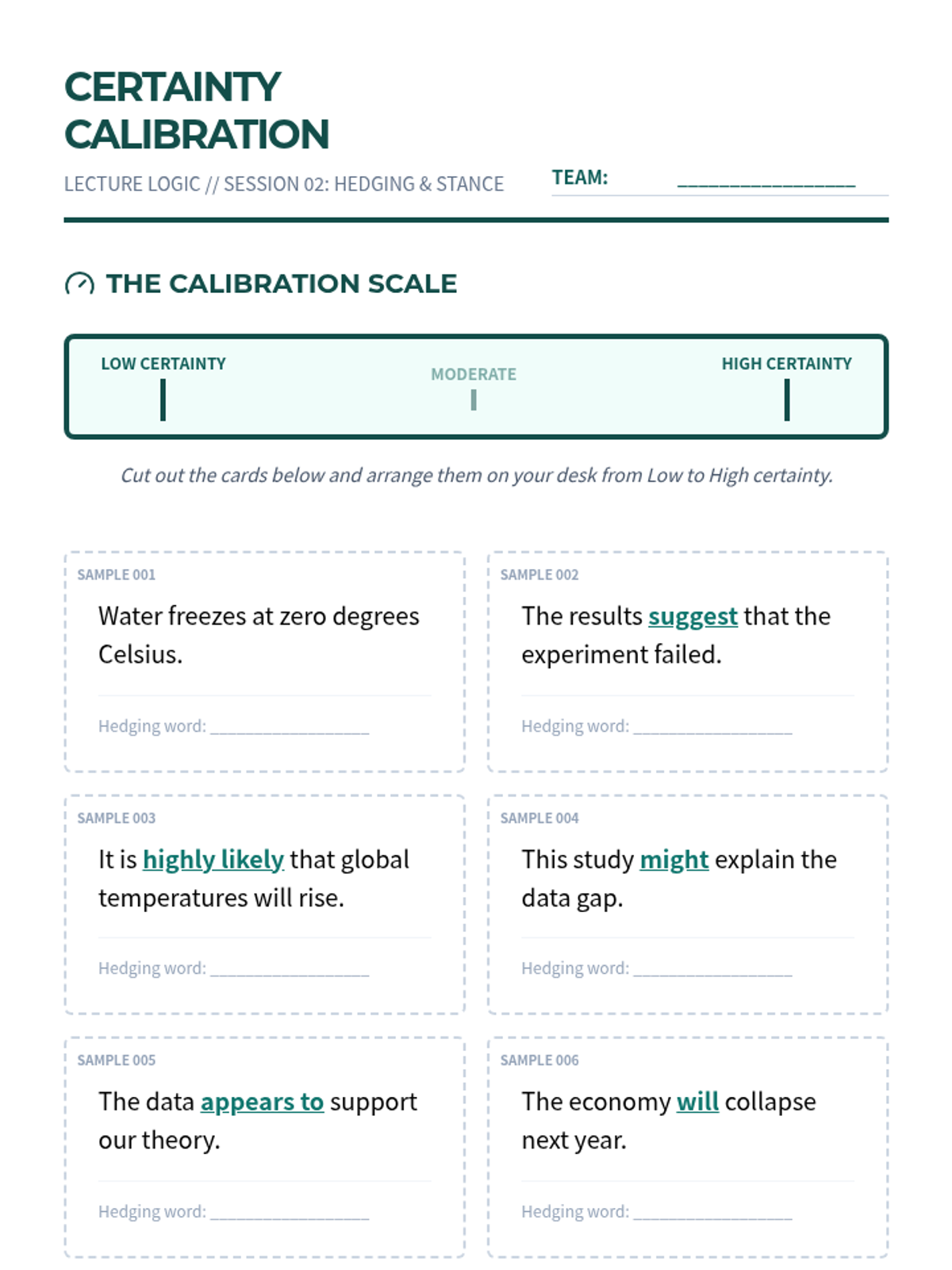
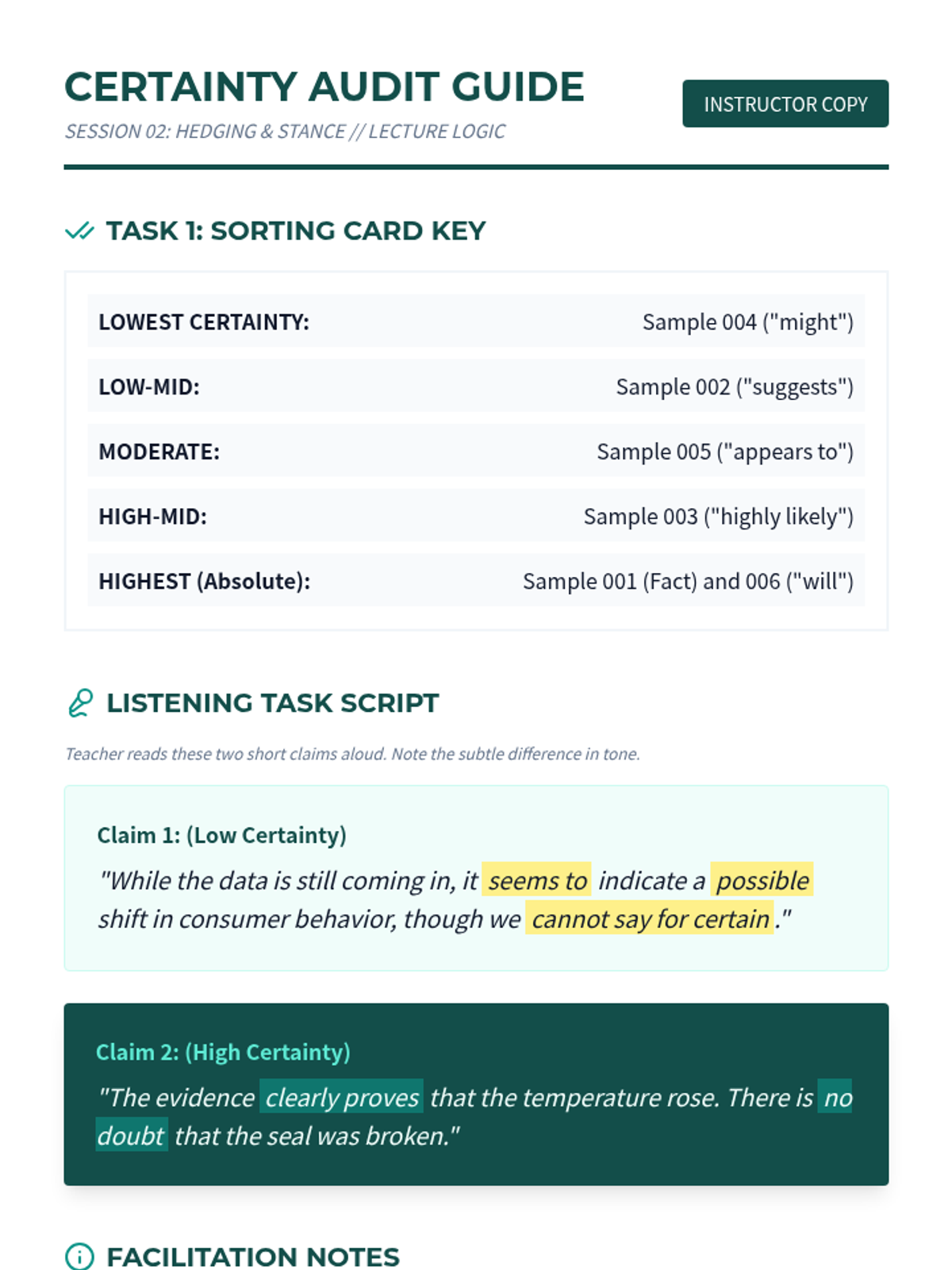
Learners differentiate between objective facts and subjective interpretation, focusing on 'hedging' language like 'appears to' or 'suggests.' They will categorize statements based on their level of certainty.
Students learn to identify transition signals (signposting) that reveal a lecture's organizational structure. They will practice mapping lecture segments based on auditory cues alone.
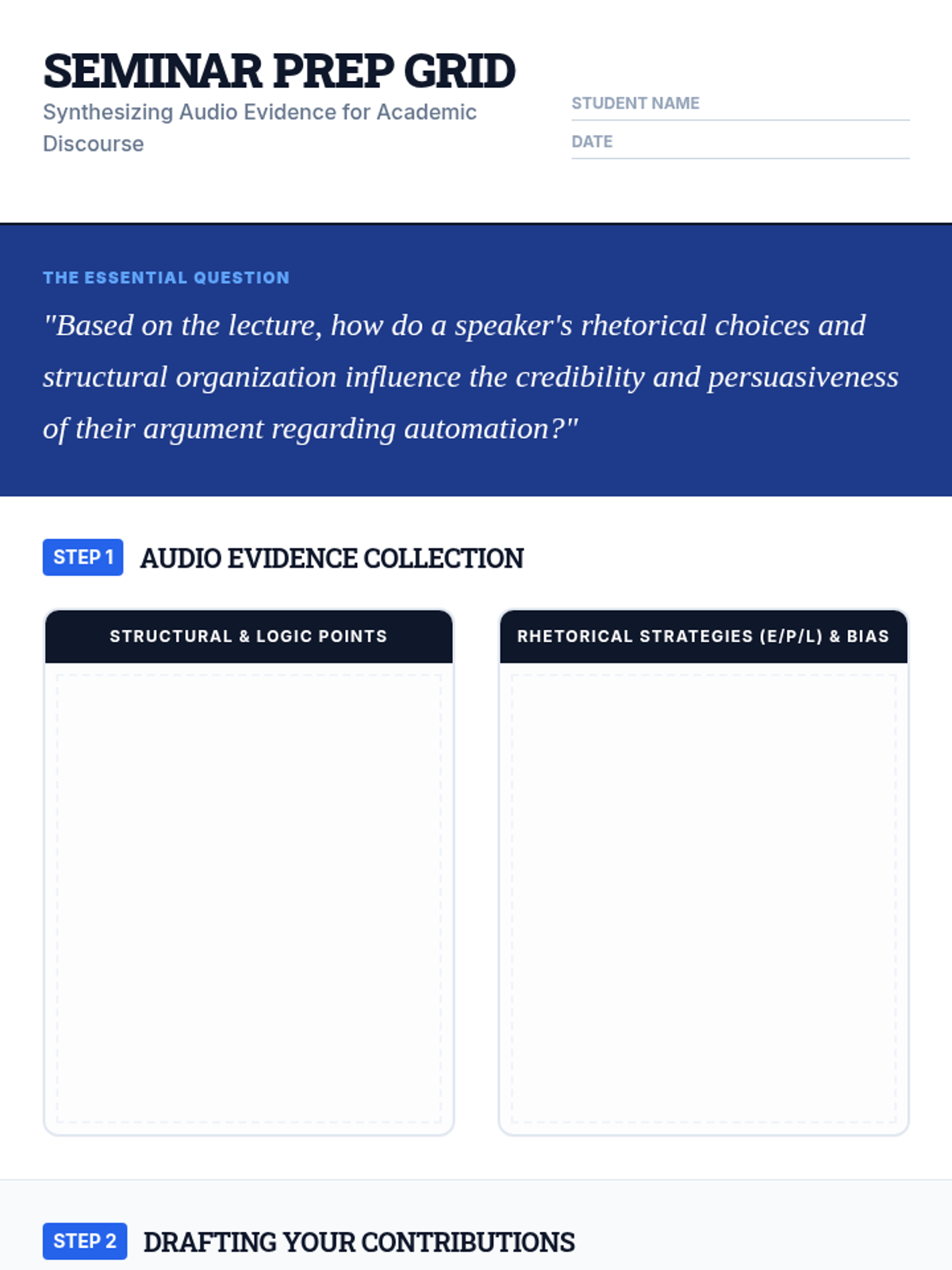
In this culminating lesson, students engage in a Socratic seminar using listening notes from a complex lecture to support their arguments in real-time.
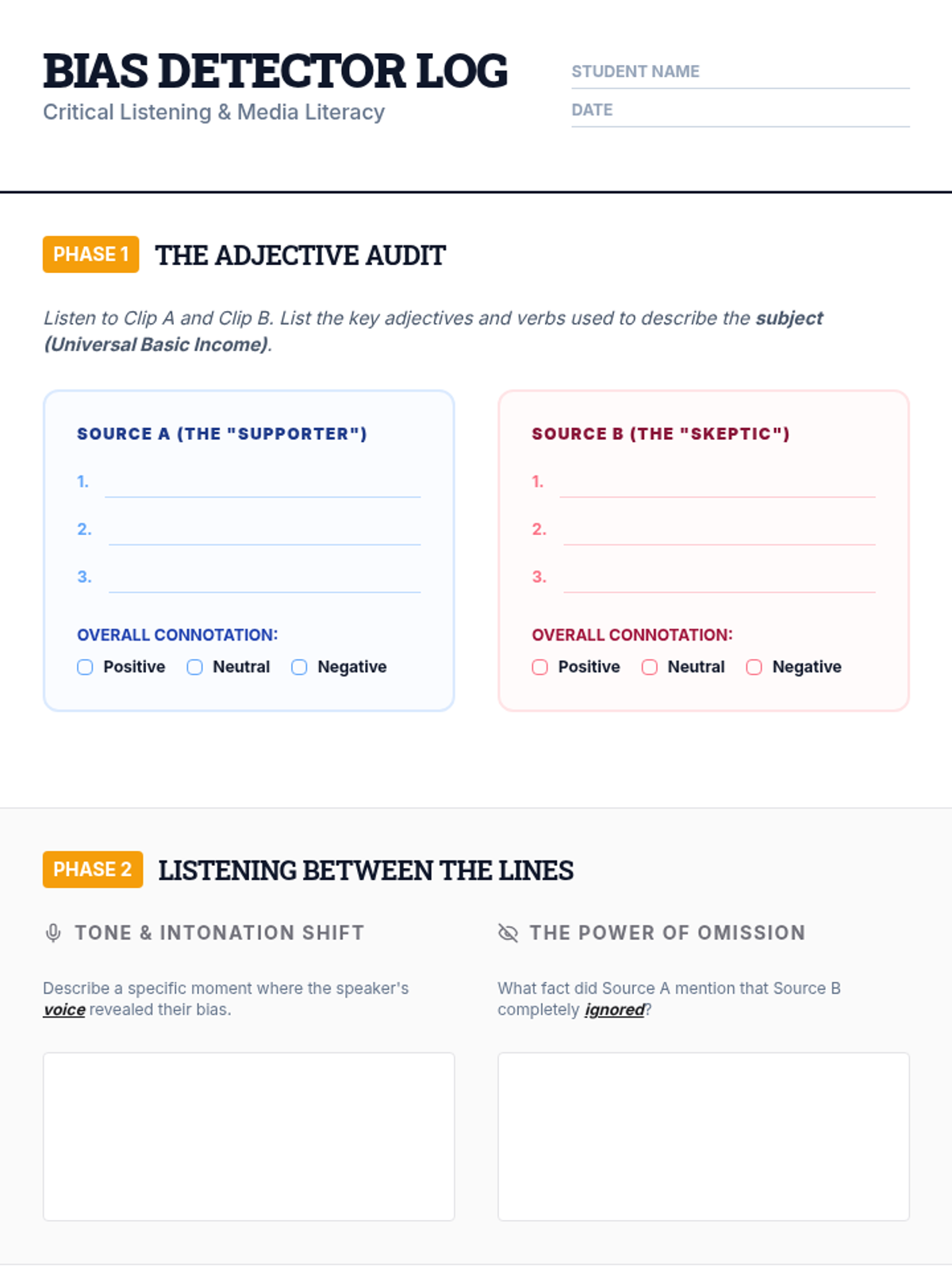
Students listen to media clips to distinguish between facts and opinions, focusing on loaded language and tone shifts that reveal speaker bias.
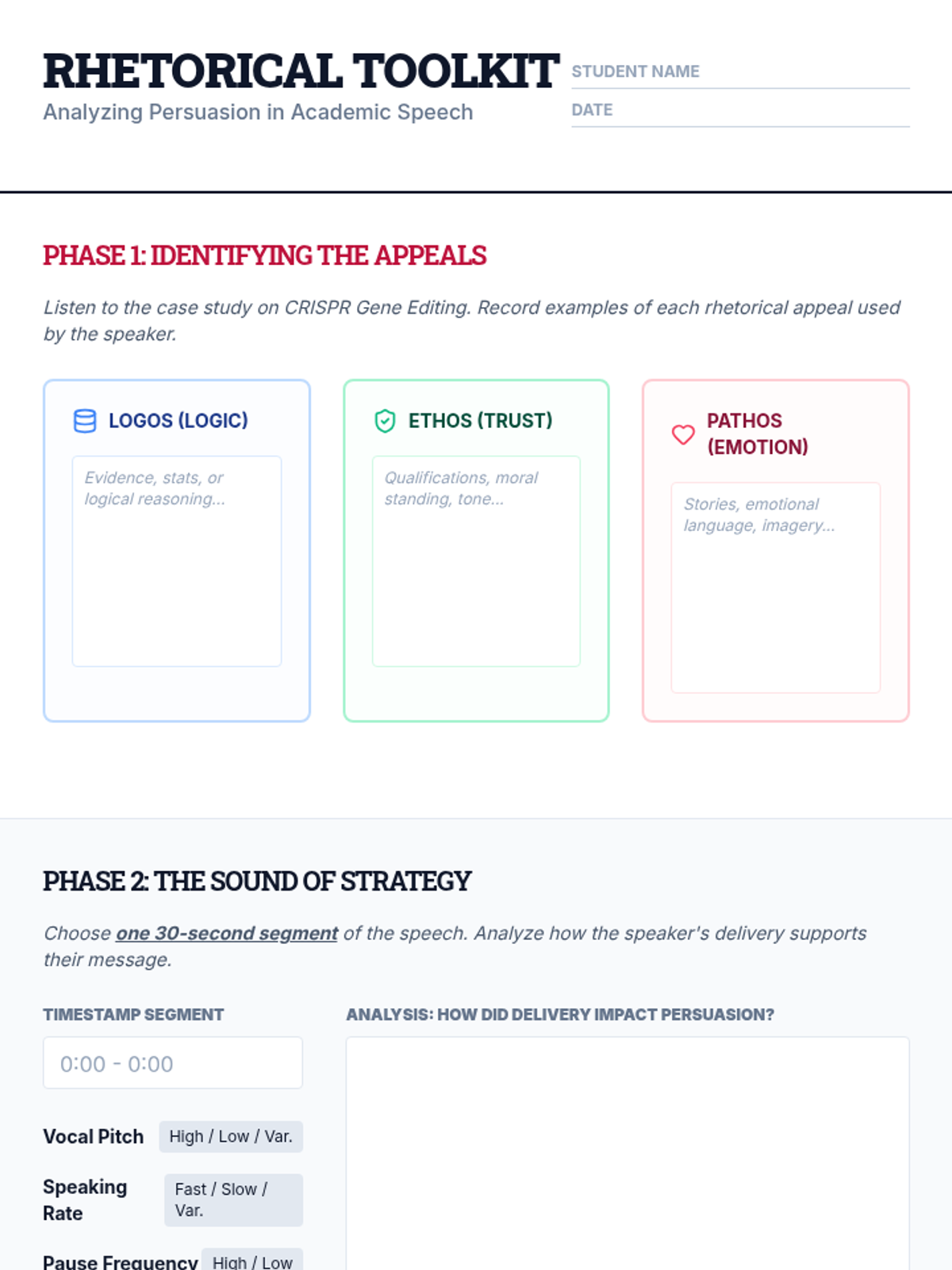
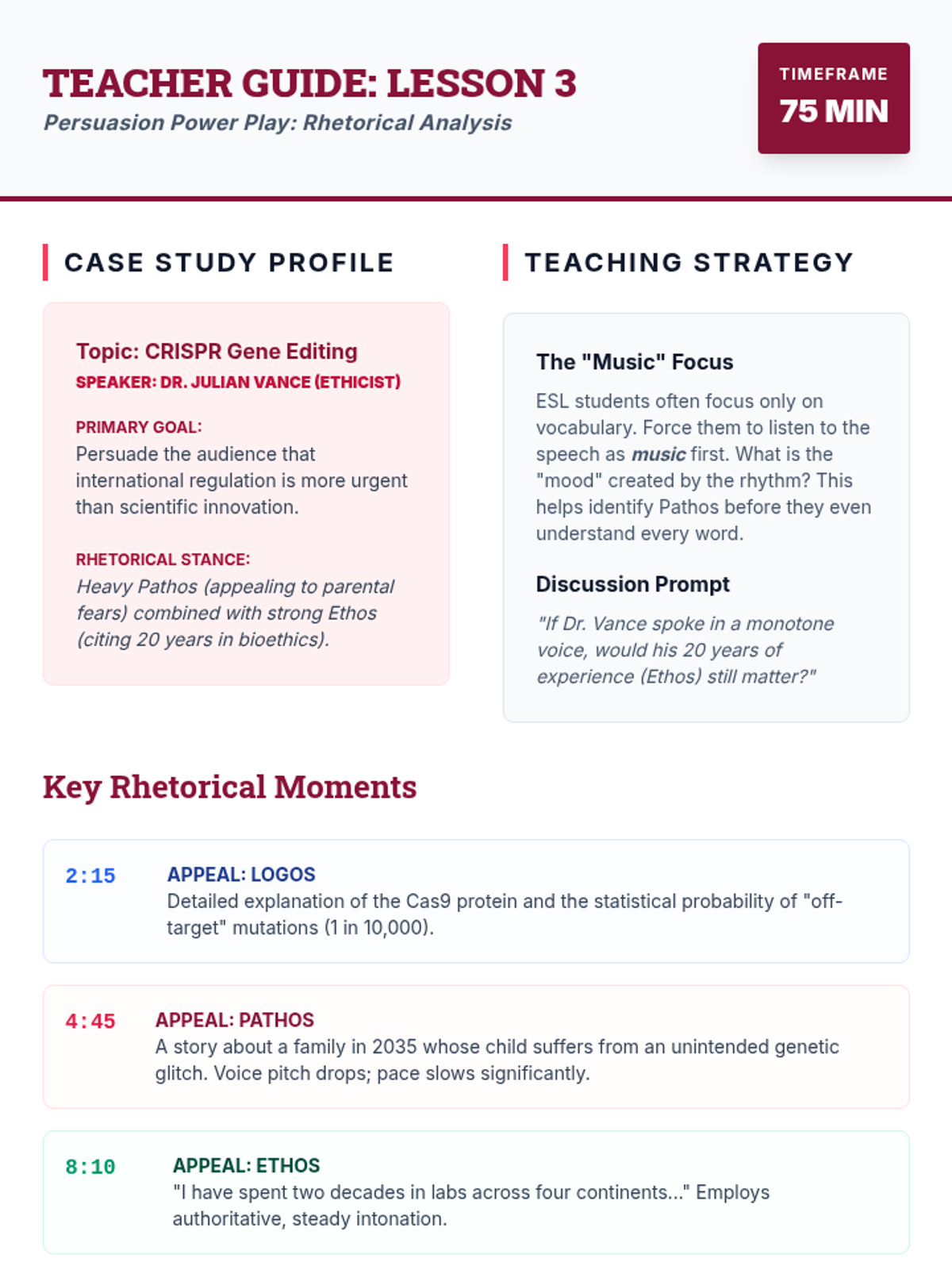
Students identify and evaluate the use of ethos, pathos, and logos, analyzing how delivery elements like intonation and pausing strengthen rhetorical appeals.
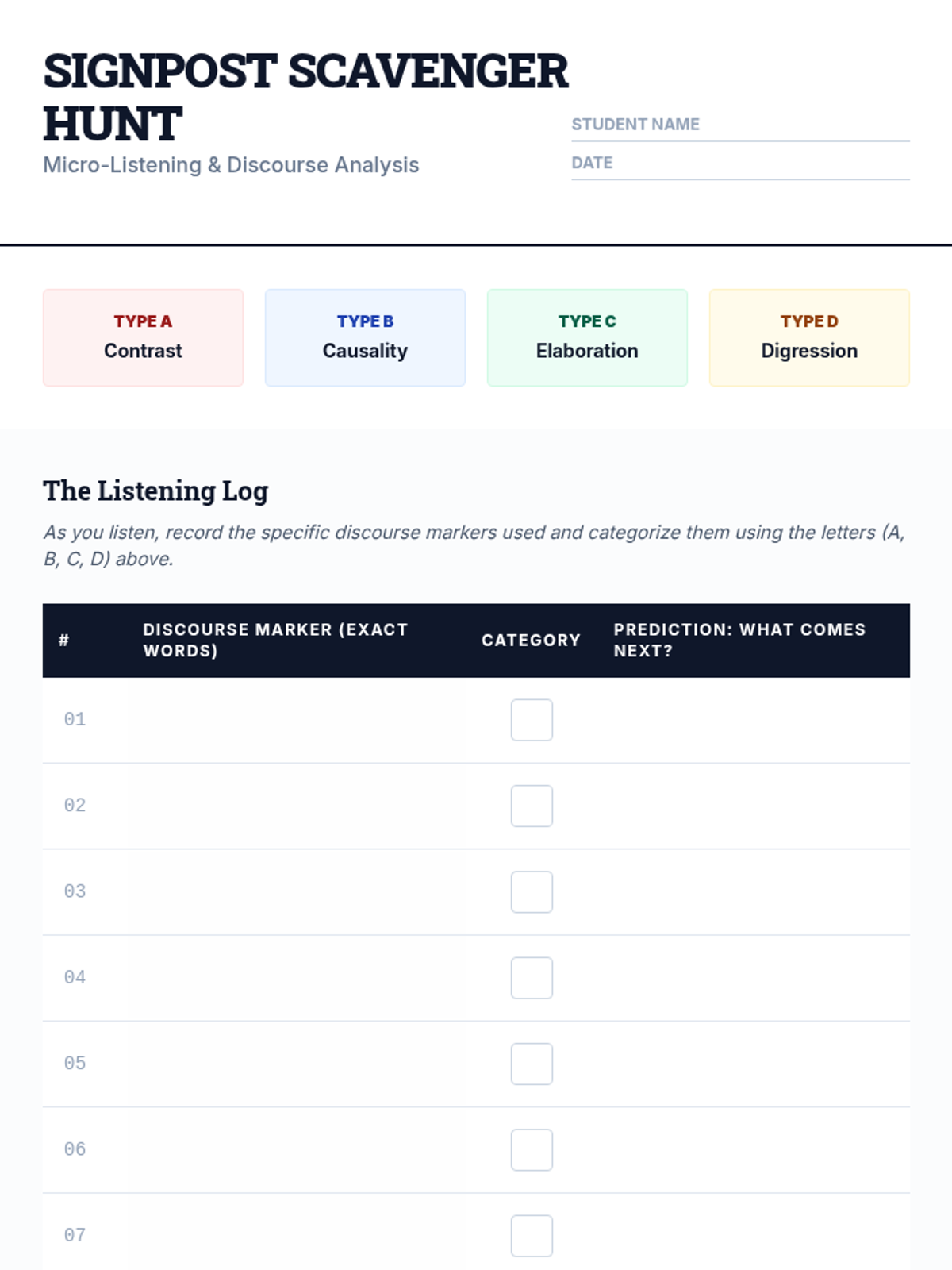
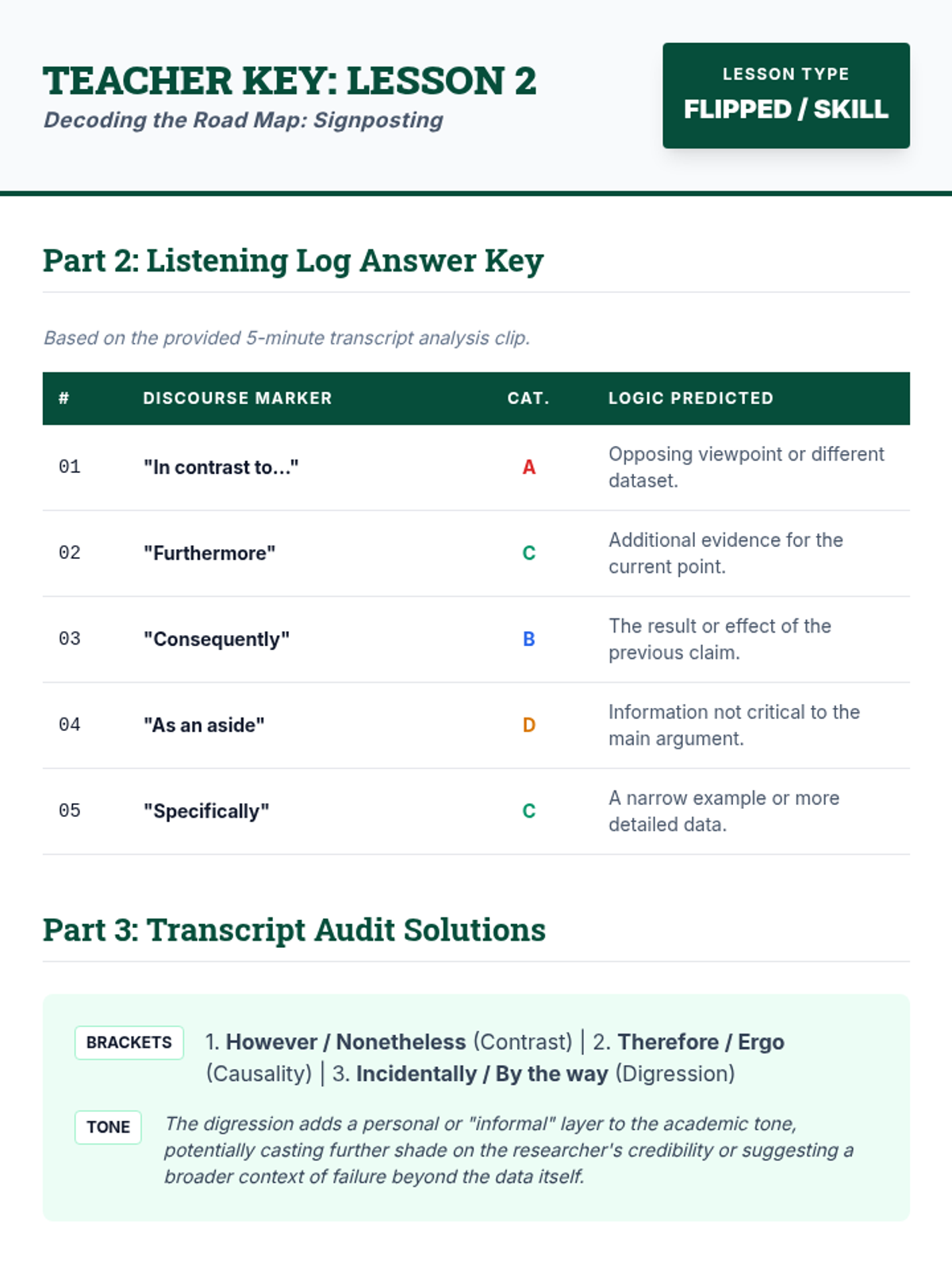
Learners focus on 'micro-listening' skills to identify transition words and discourse markers that signal contrast, cause-and-effect, or digression.
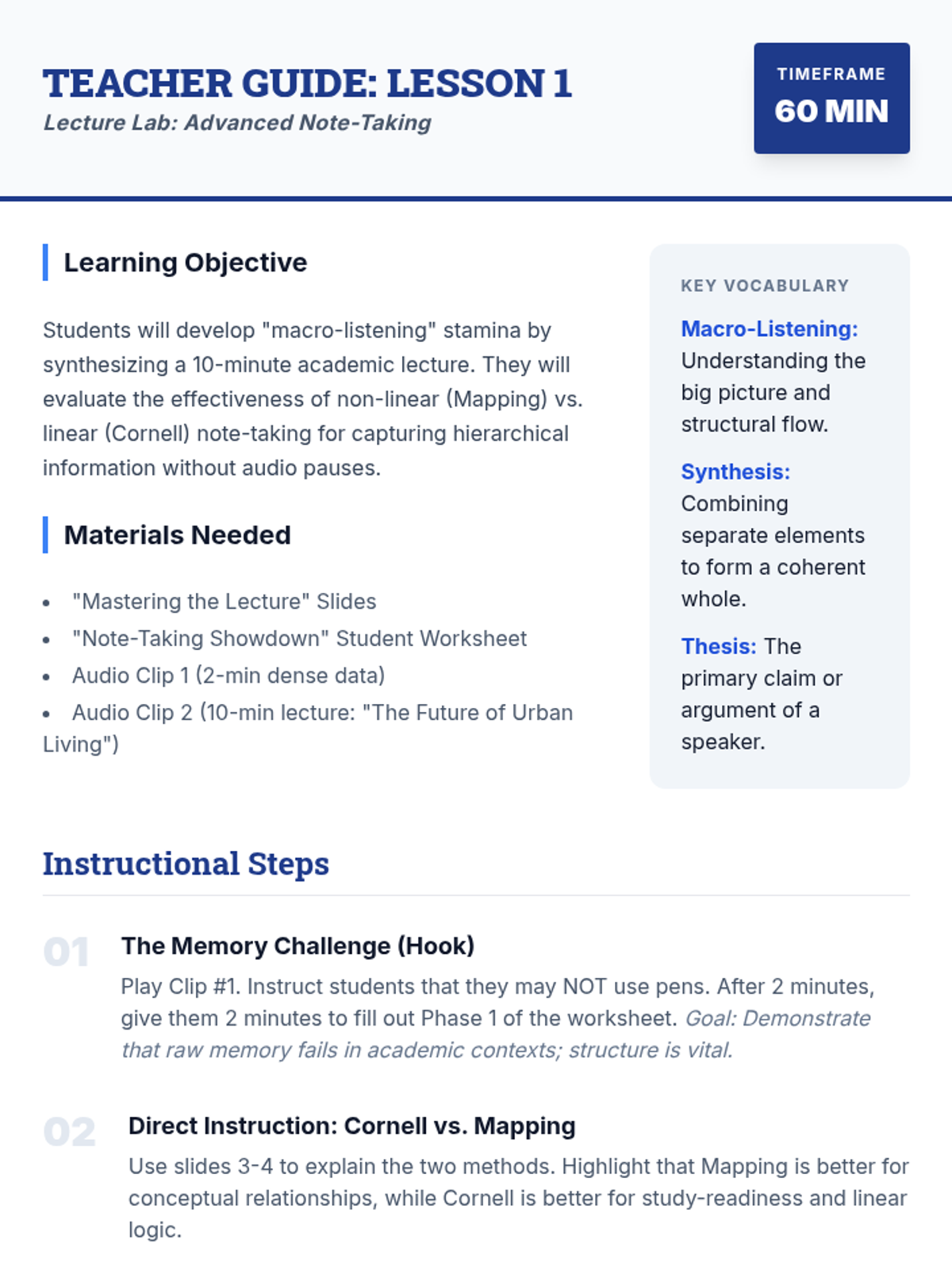
Students practice 'macro-listening' by identifying the thesis and major supporting points of a dense academic lecture, comparing Cornell and Mapping note-taking methods.
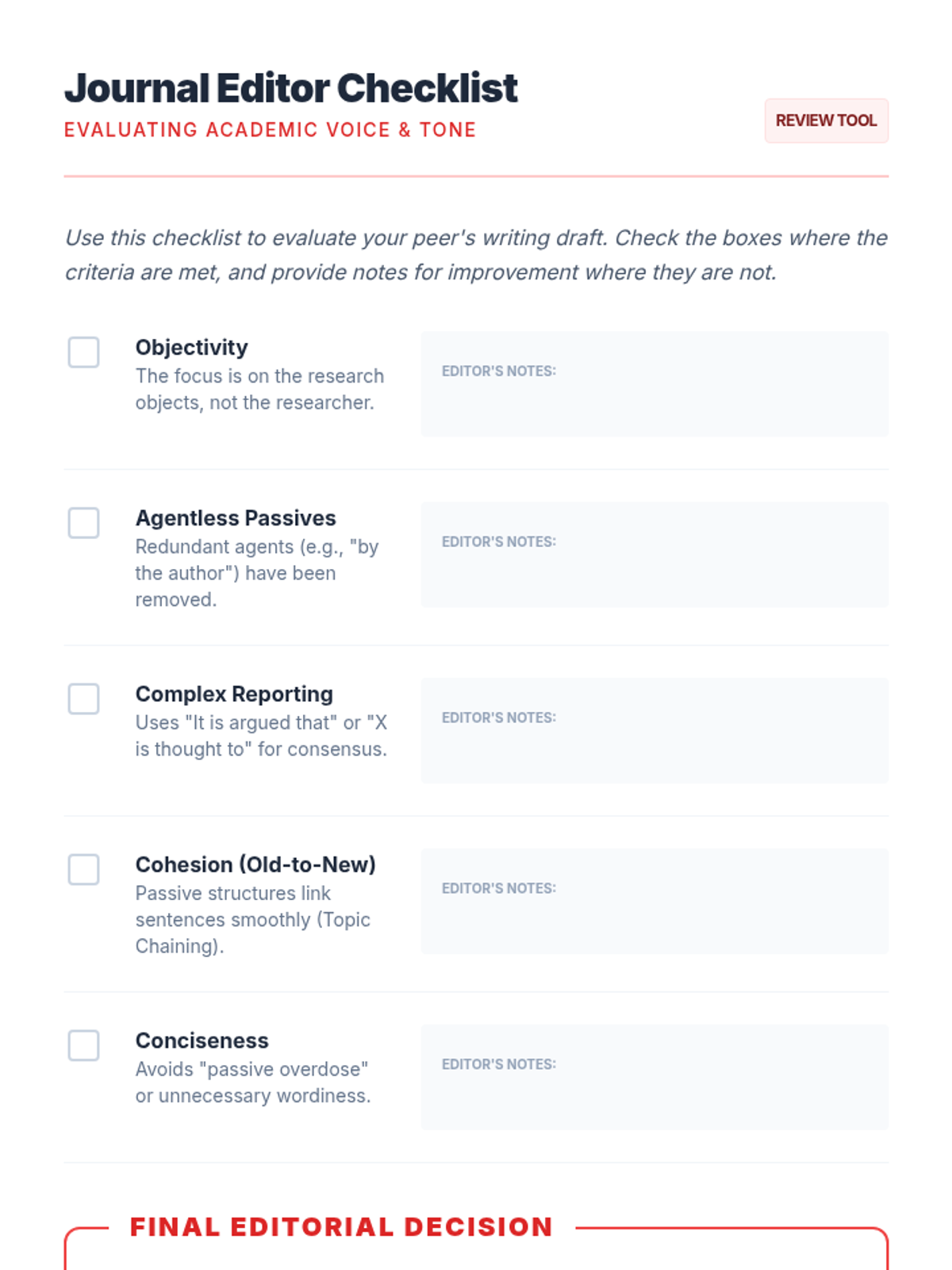
In this culminating session, students bring their own draft writing to apply the week's concepts. They utilize a checklist to identify overuse of the passive voice (wordiness) vs. appropriate use (objectivity). They provide feedback to peers on the 'scholarly sound' of their work.
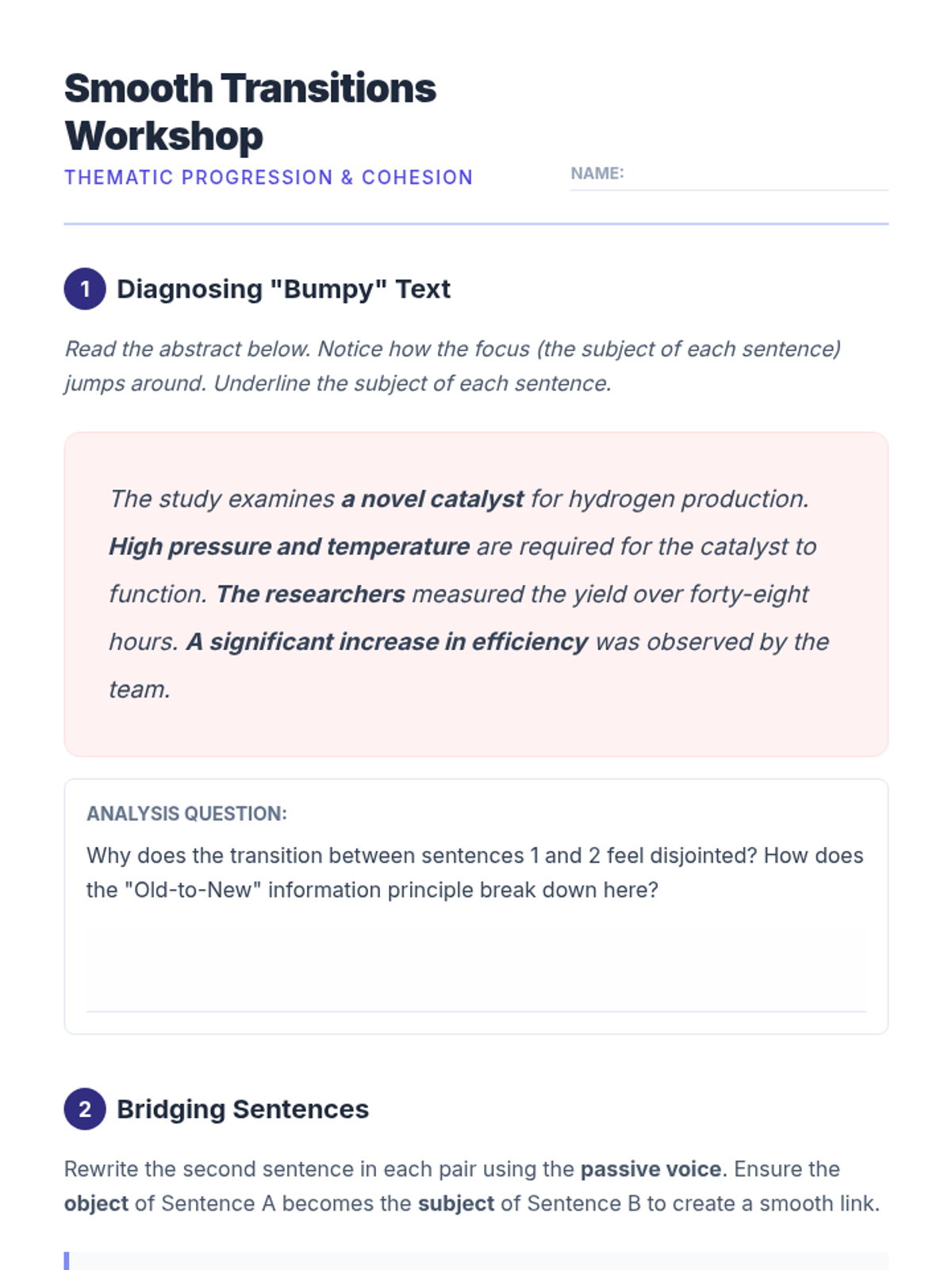
Students learn how to use the passive voice to maintain thematic progression (old information to new information) within a paragraph. They analyze texts to trace how the object of one sentence becomes the subject of the next.
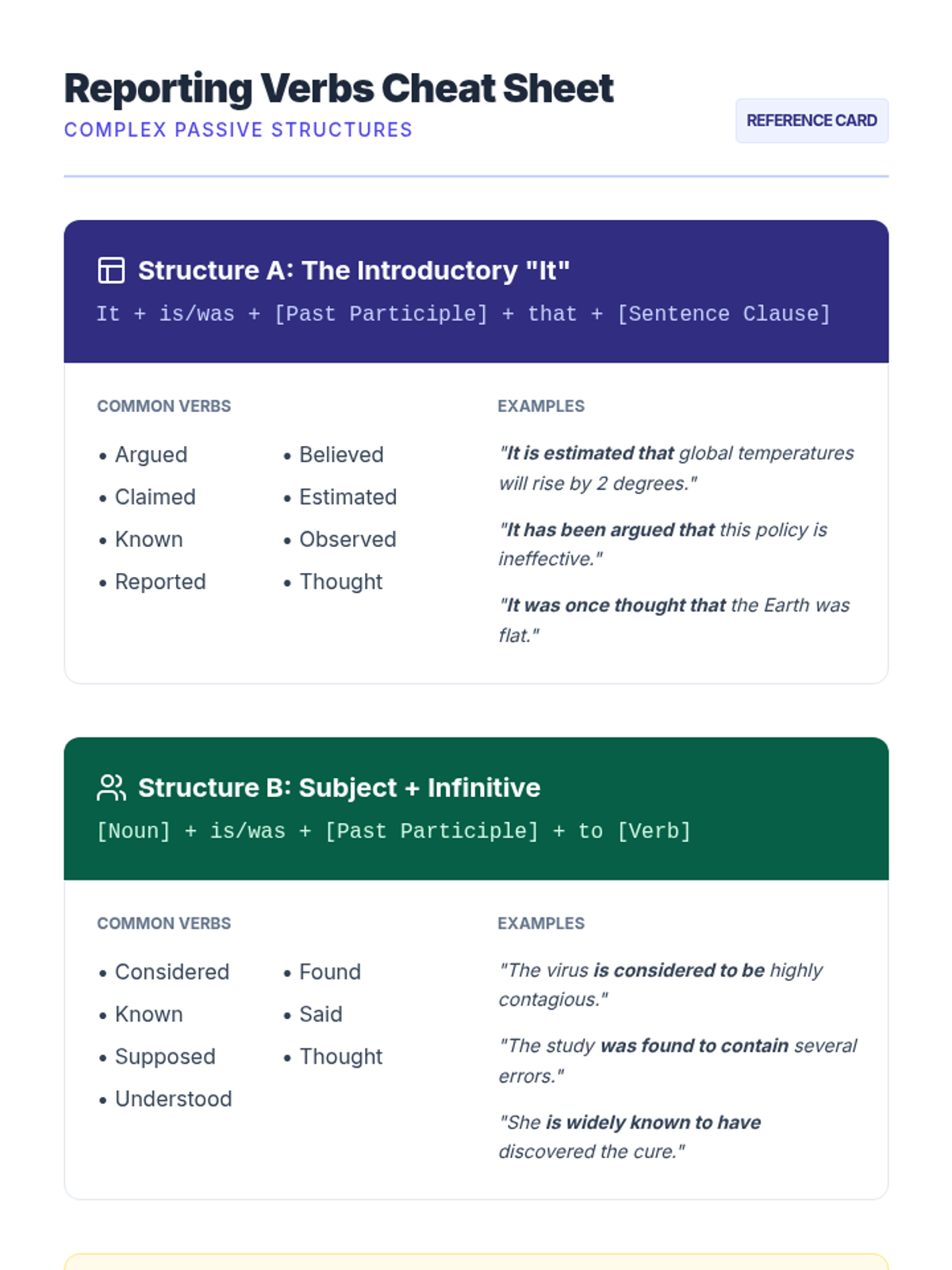
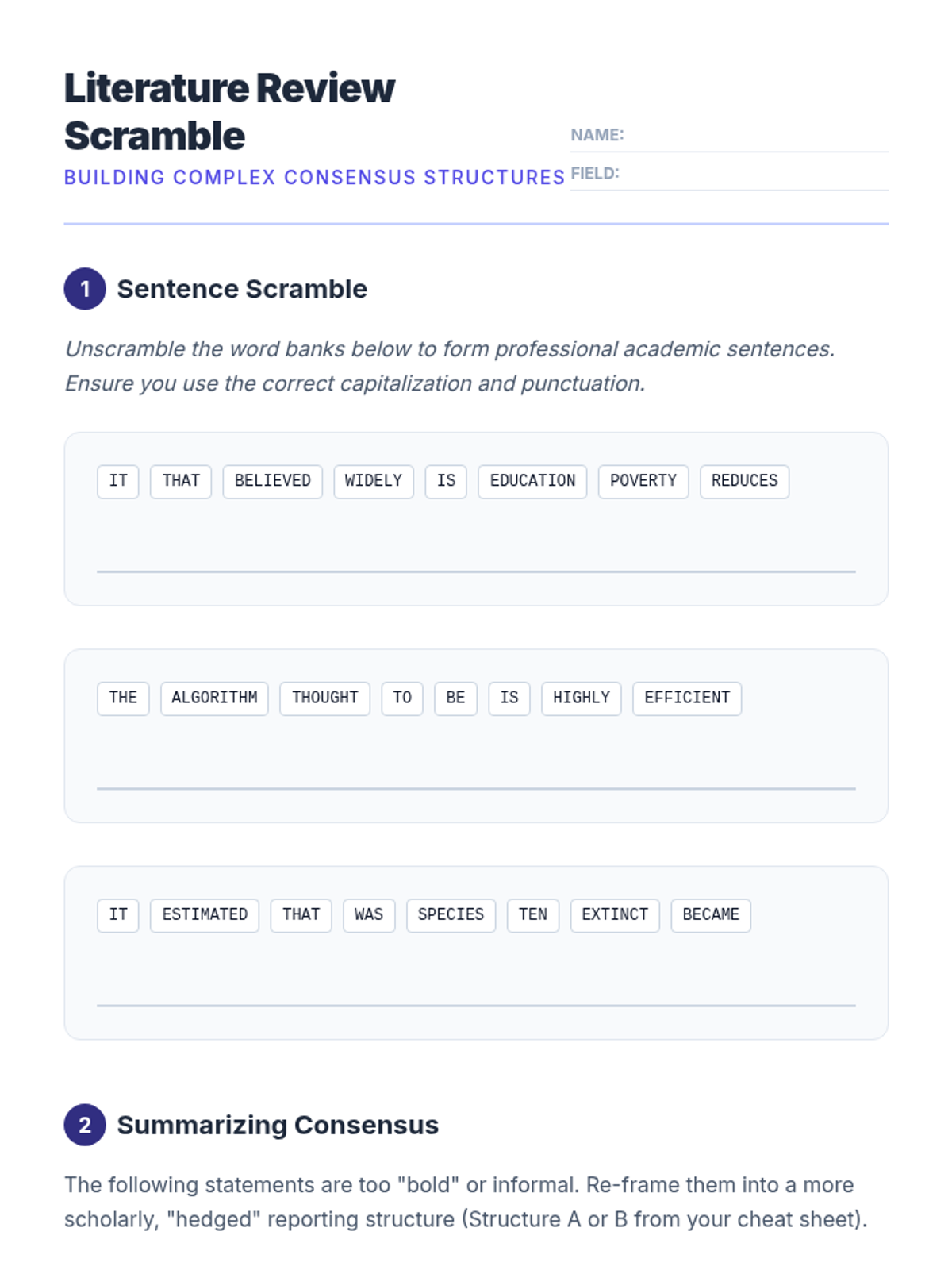
Students explore complex structures like 'It is argued that...' or 'X is considered to be...', often used in Literature Reviews. The lesson covers the grammar of introductory 'it' subjects and infinitive complements.
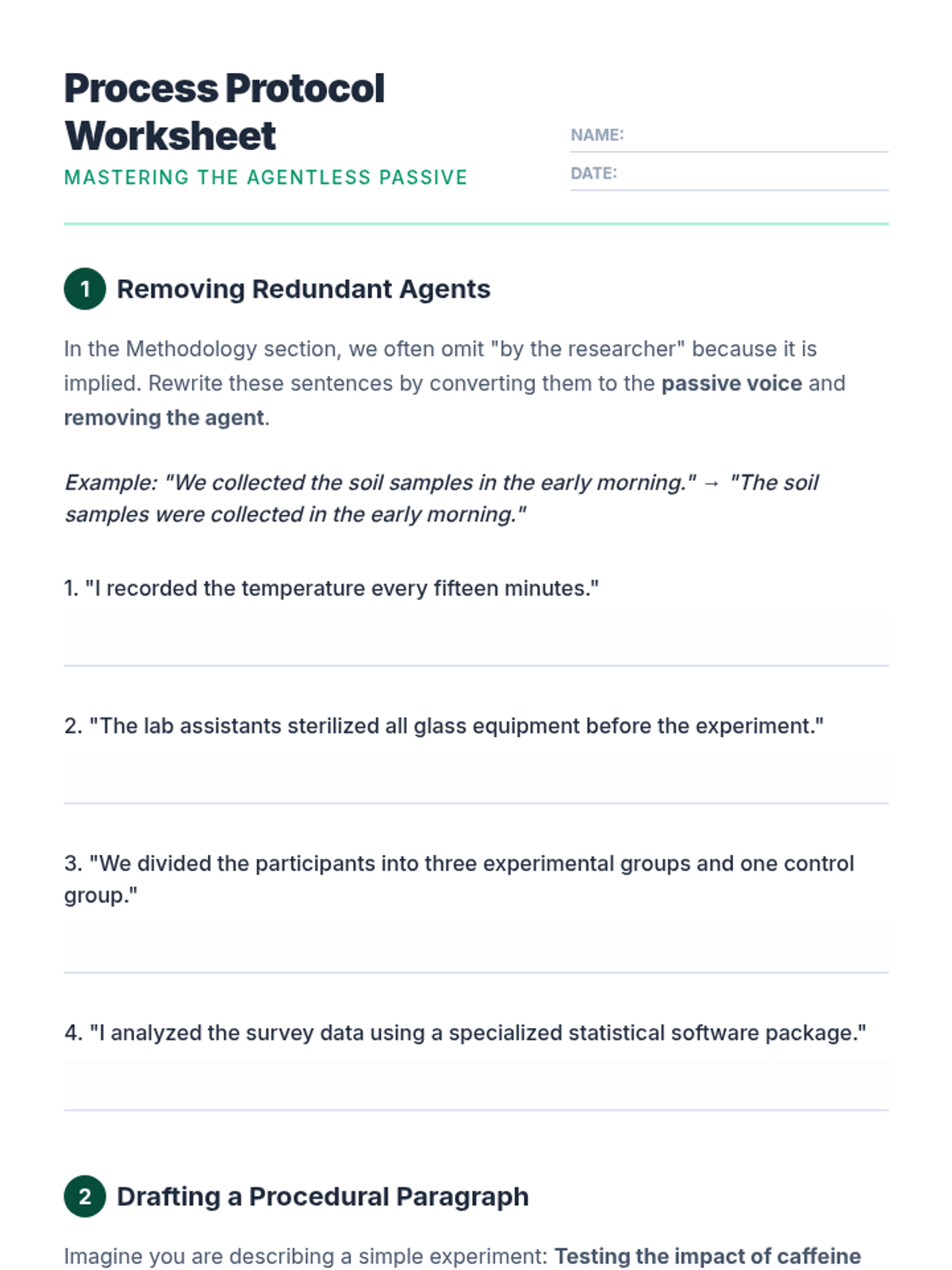
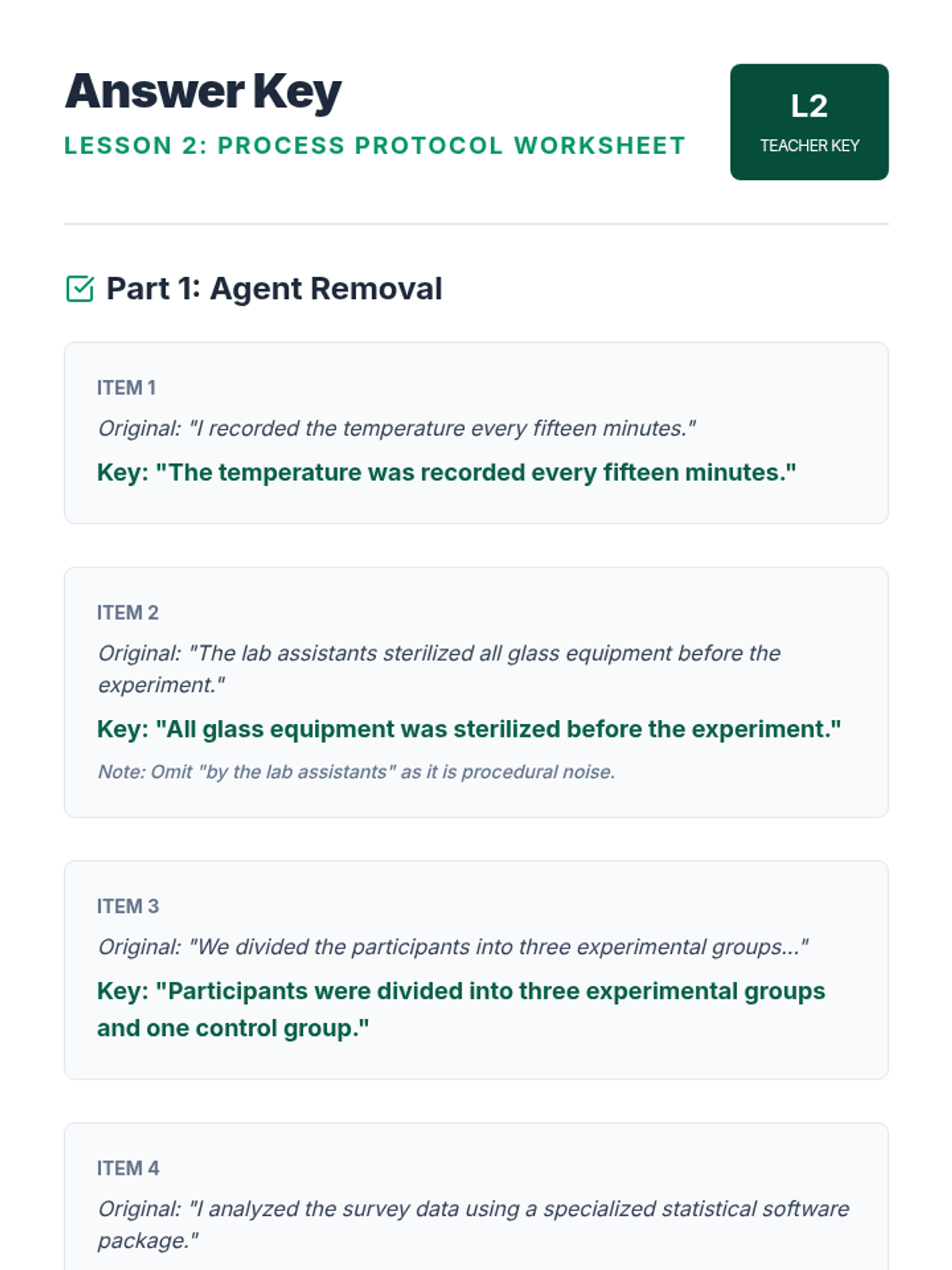
This lesson focuses on the 'agentless' passive, crucial for writing Methodology sections where the researcher's identity is secondary to the process. Students practice removing the 'by phrase' effectively and maintaining flow.
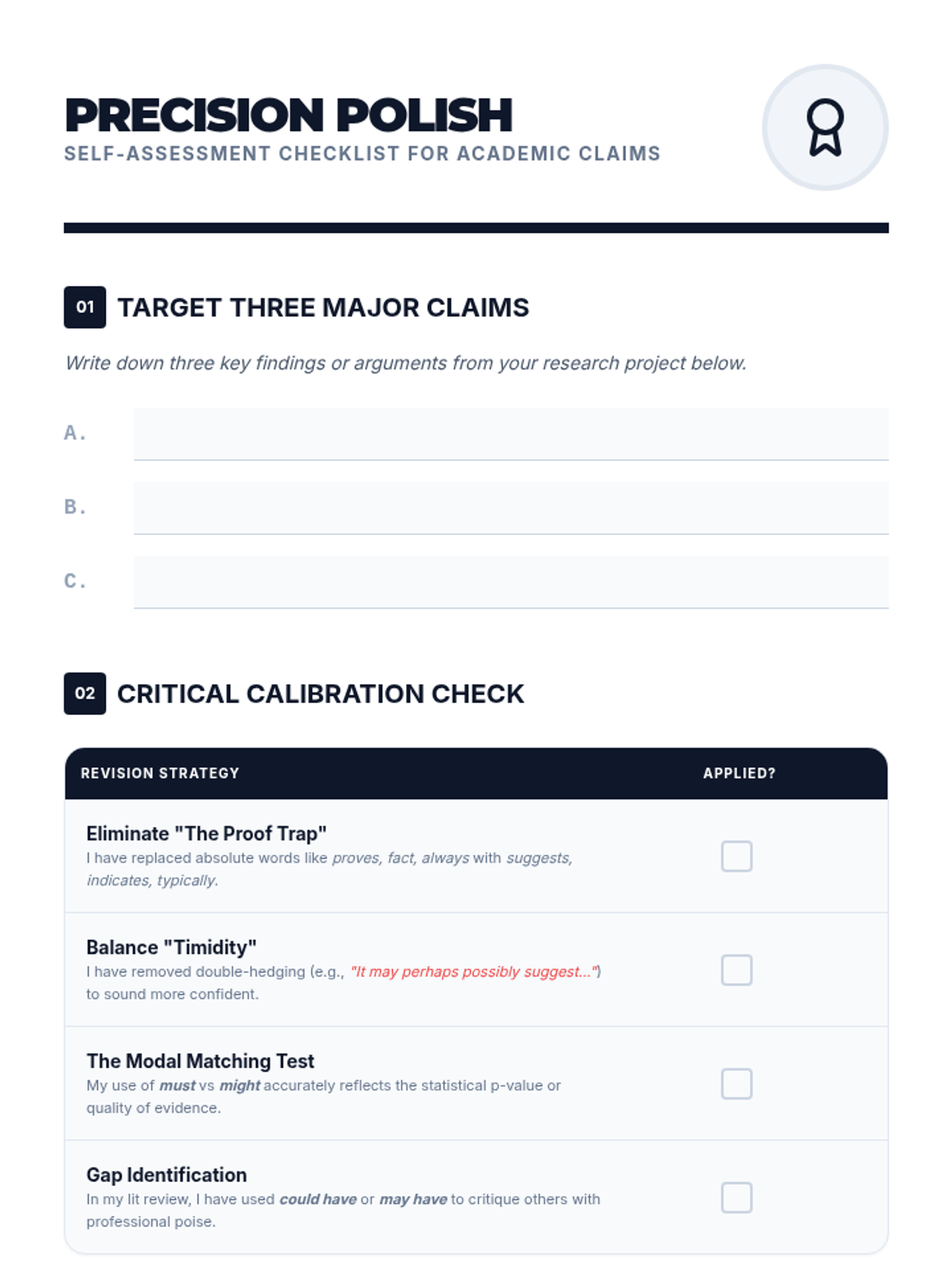
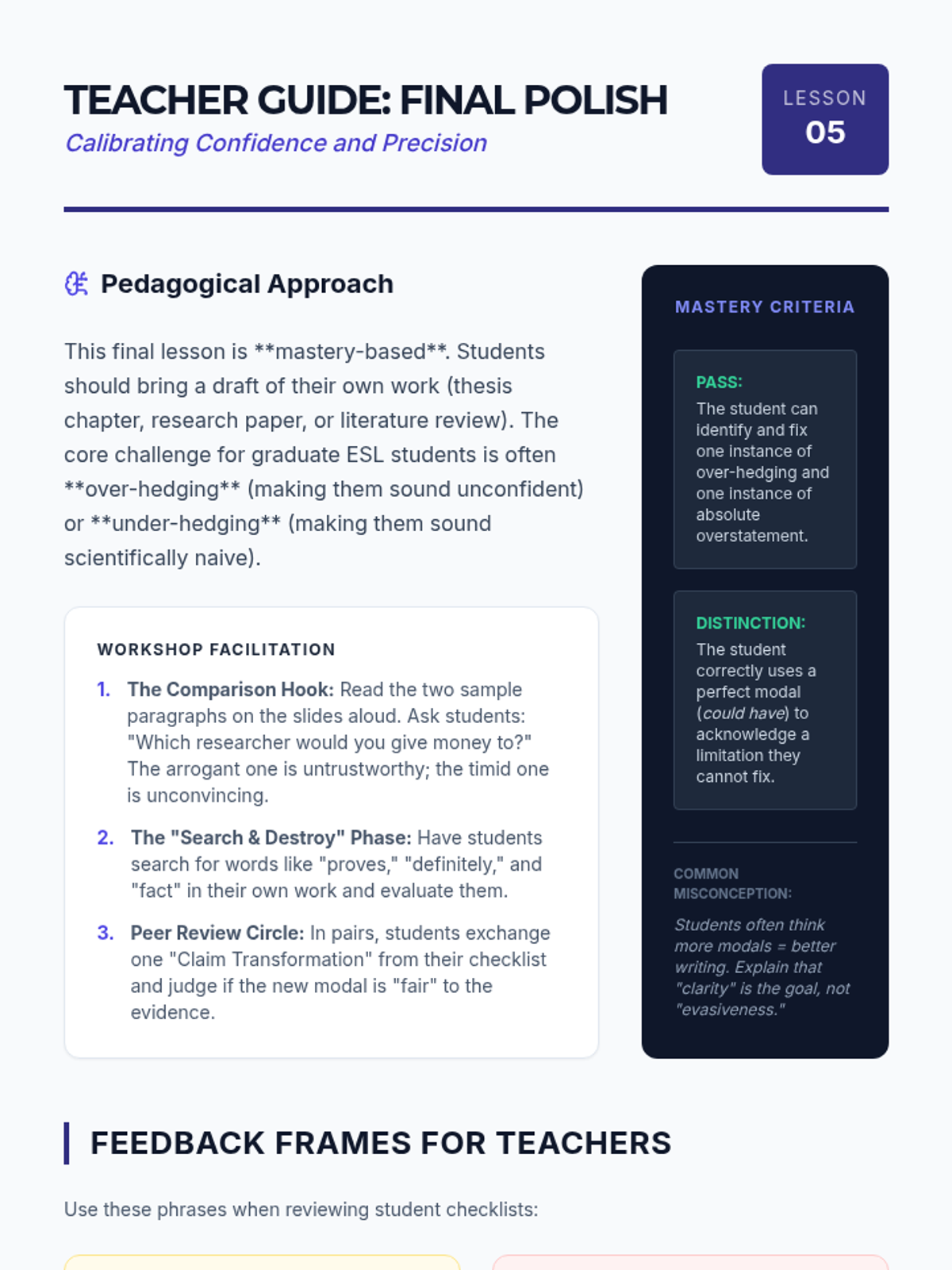
In this final workshop, students apply their skills to their own writing. They calibrate the strength of their claims, ensuring their language accurately reflects the strength of their evidence.
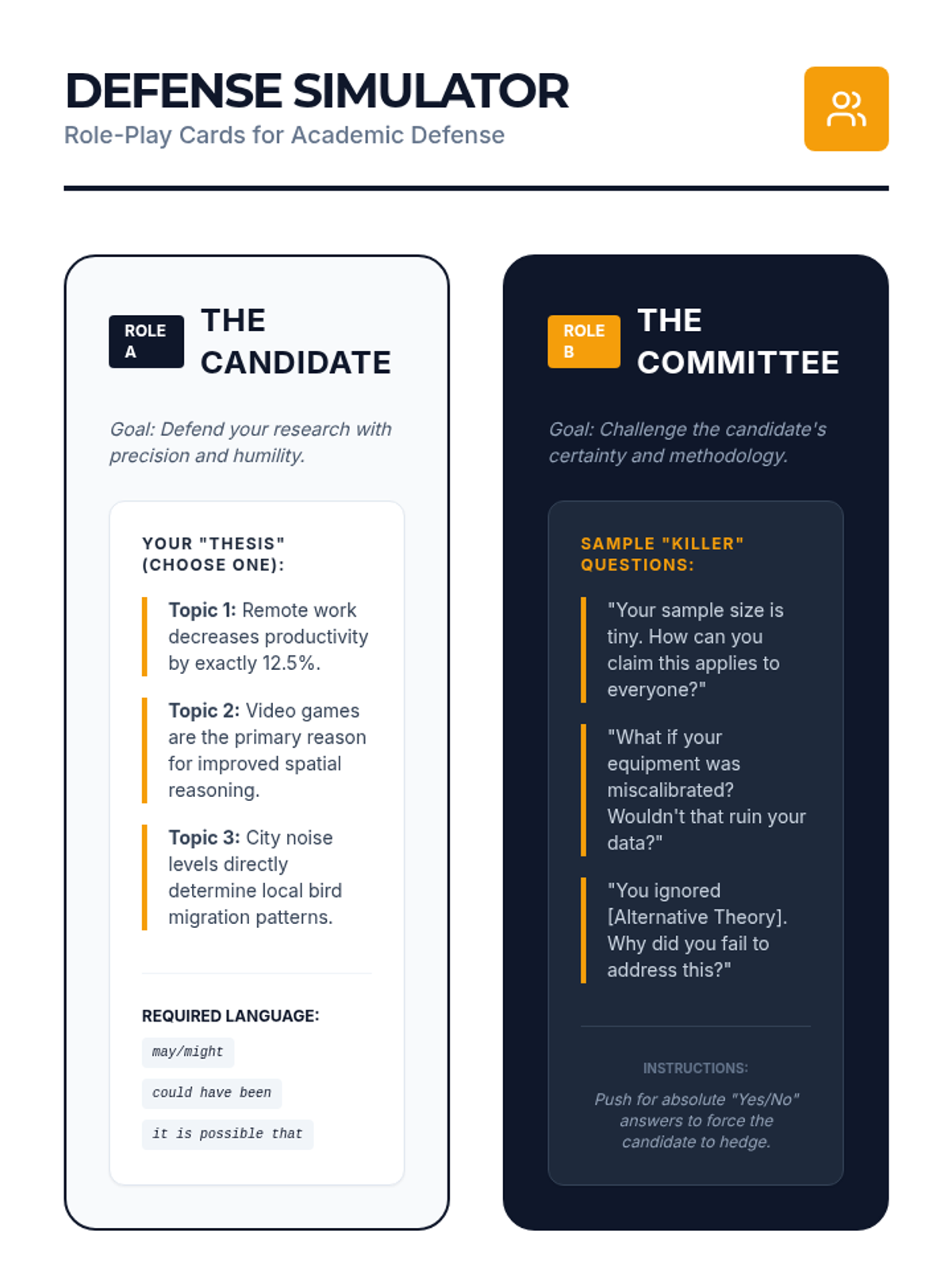
A simulation-based lesson where students practice oral defense techniques. They use hedging and modals to handle challenging questions from a mock committee with poise and academic rigor.
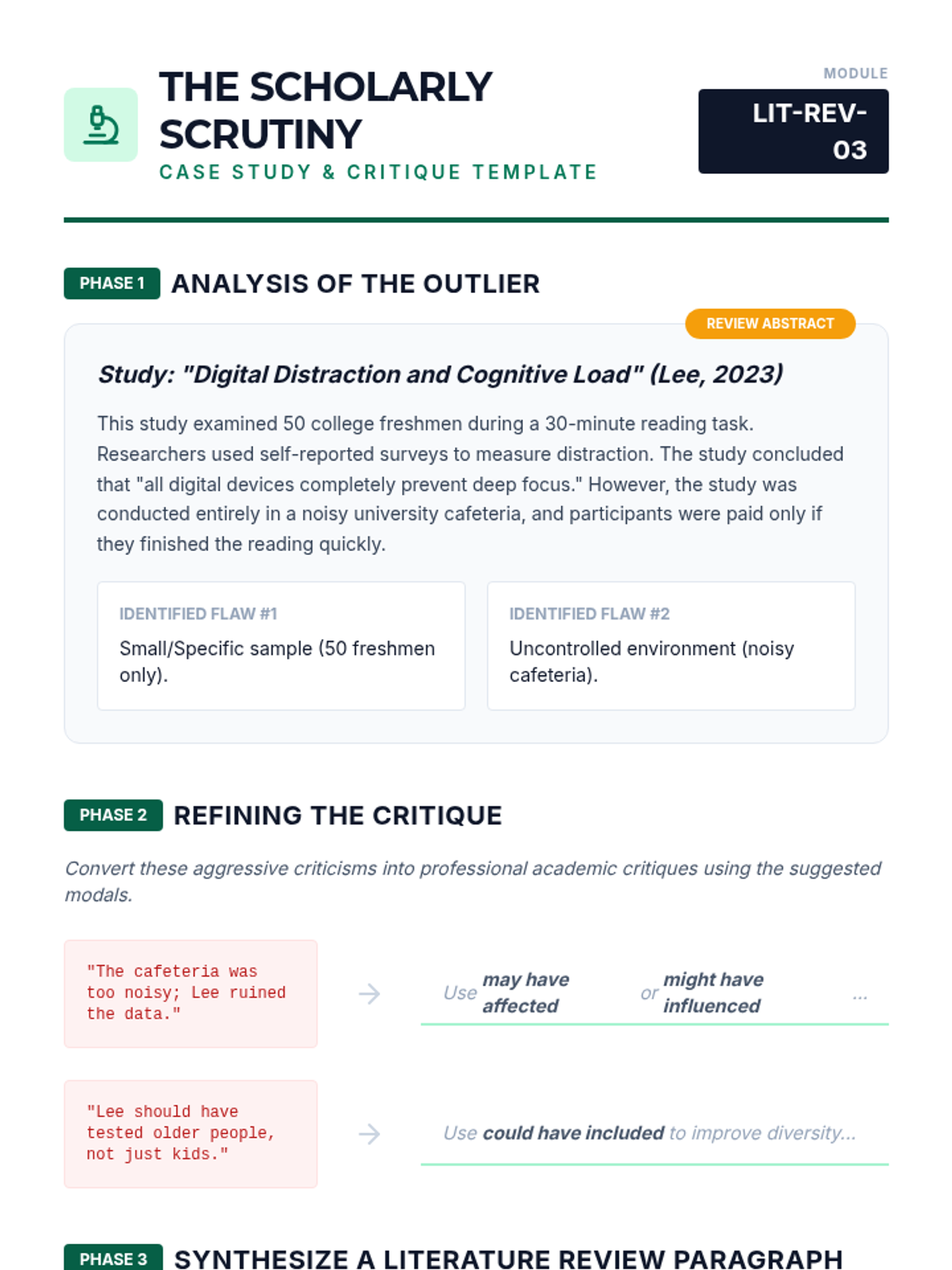
Students analyze how scholars use modals to identify research gaps and critique existing literature. They practice writing constructive critiques using perfect modals like 'could have' and 'might have.'
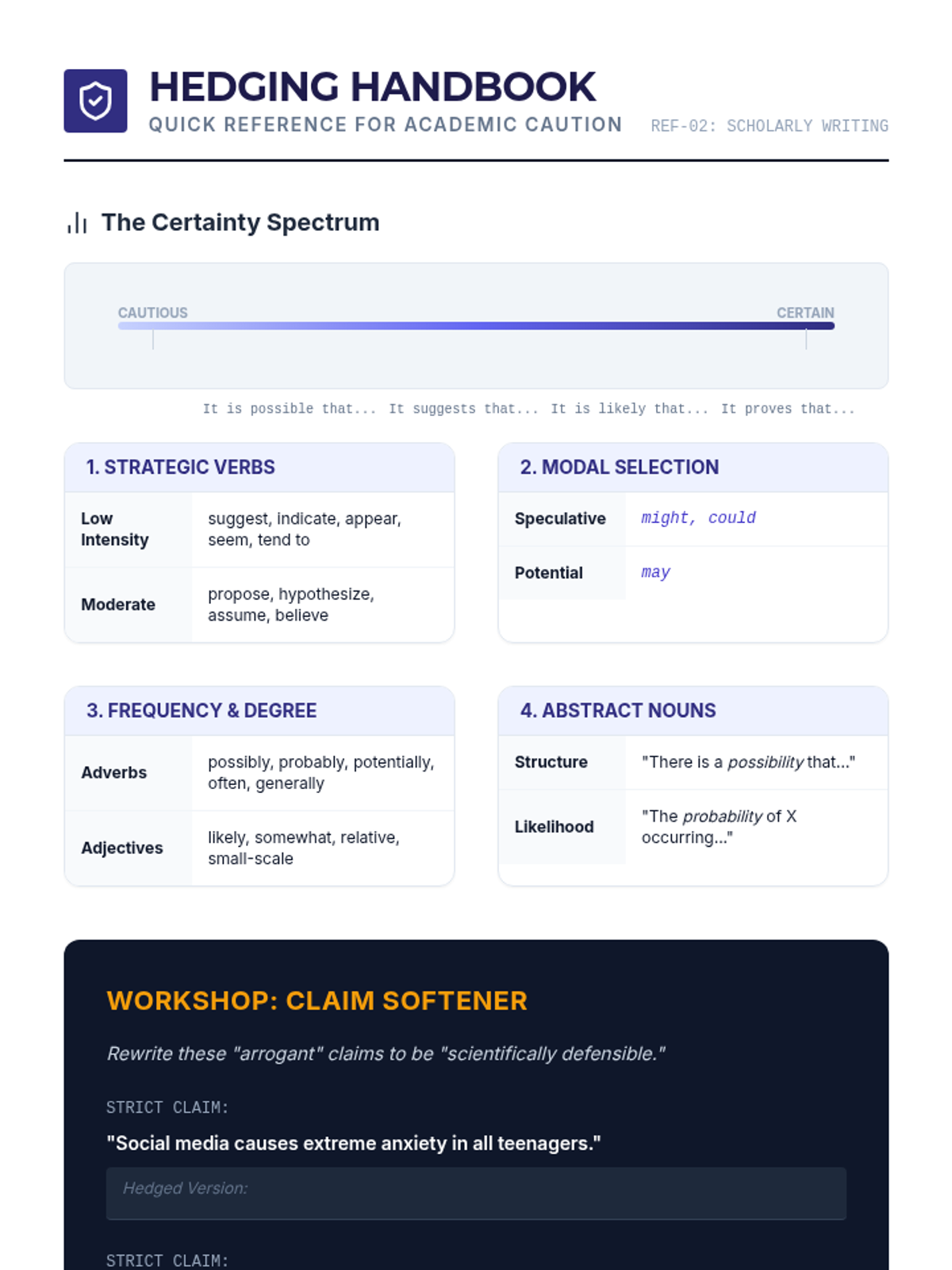
This lesson focuses on 'hedging'—the academic practice of using cautious language to avoid overstatement. Students learn to soften claims using modals and lexical verbs like 'suggest' and 'indicate.'
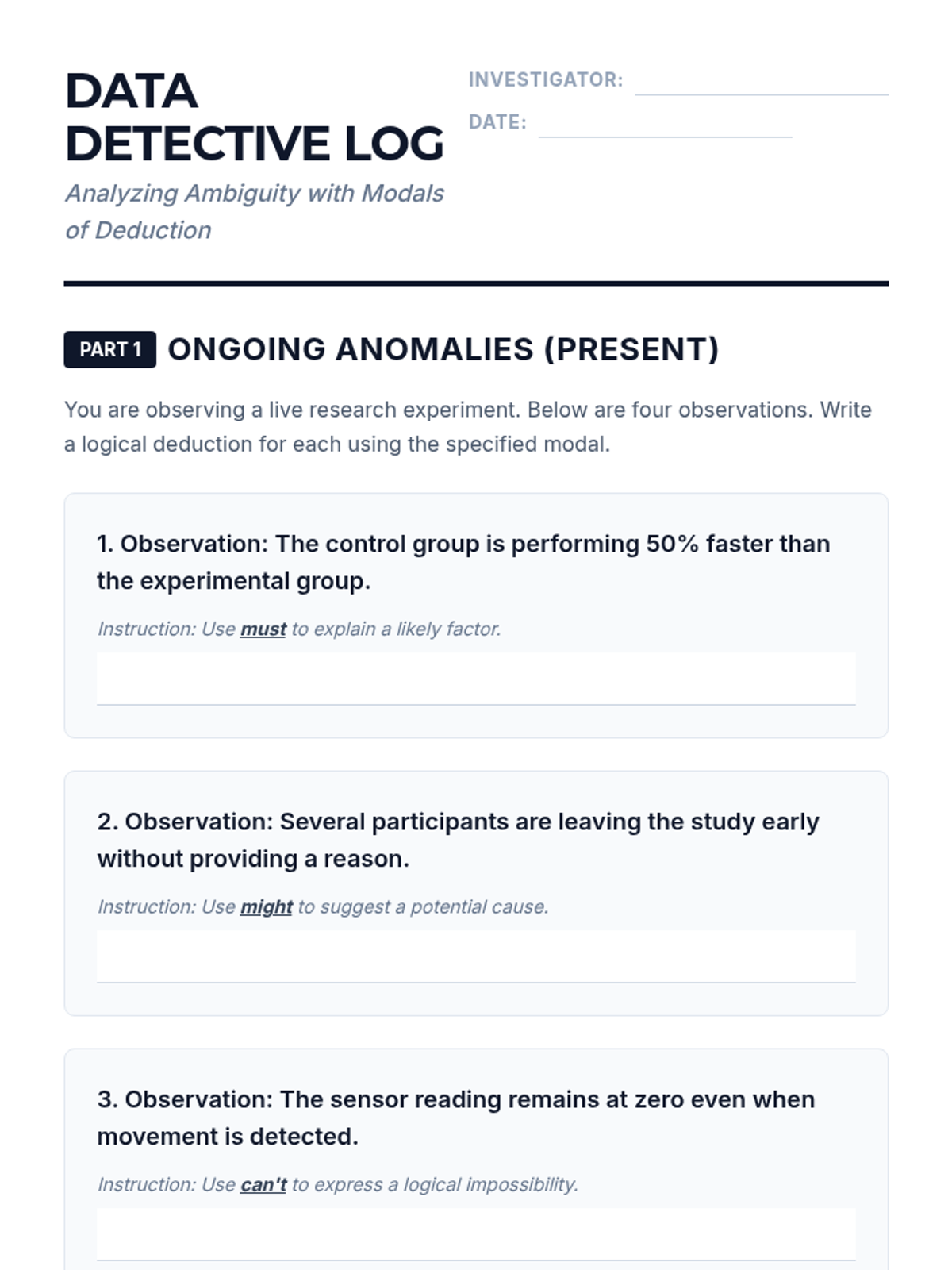
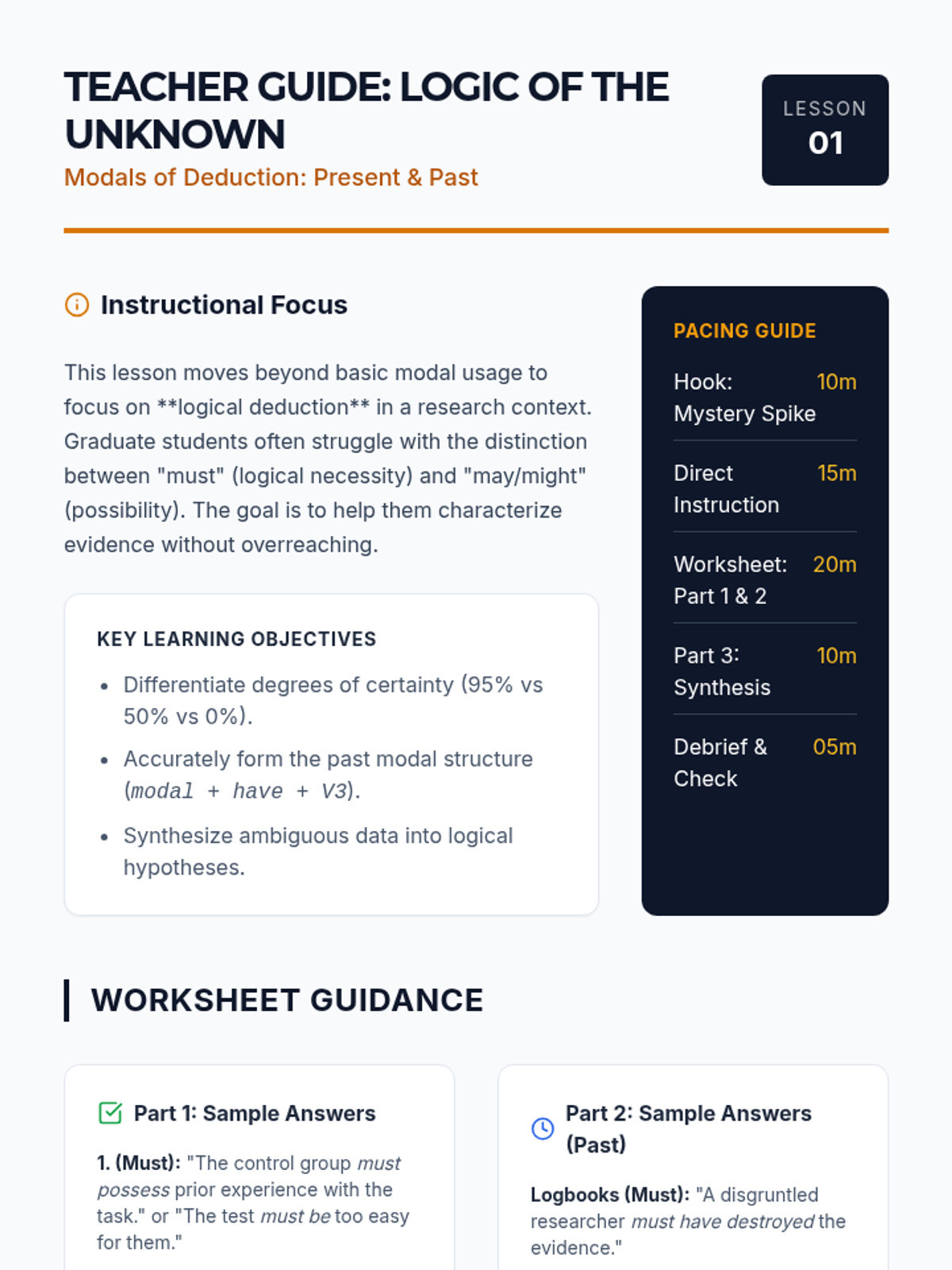
Students explore modals used for logical assumptions in present and past contexts. Through a 'data detective' simulation, they practice using 'must,' 'might,' and 'could' to interpret ambiguous research findings.
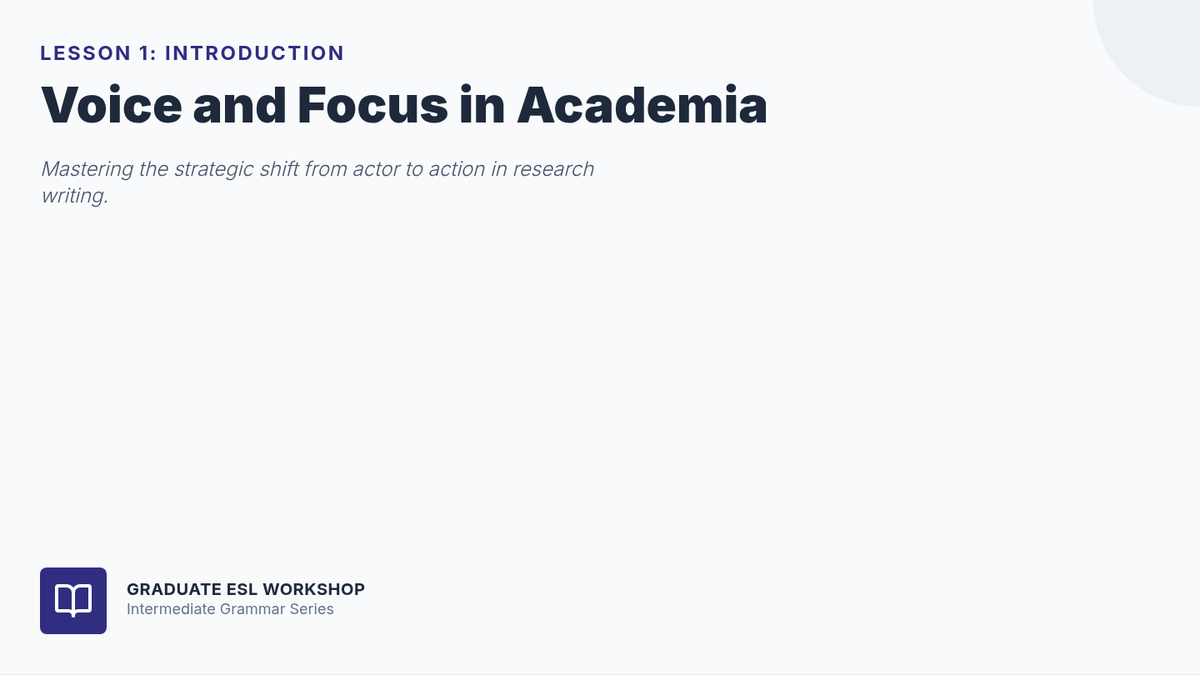
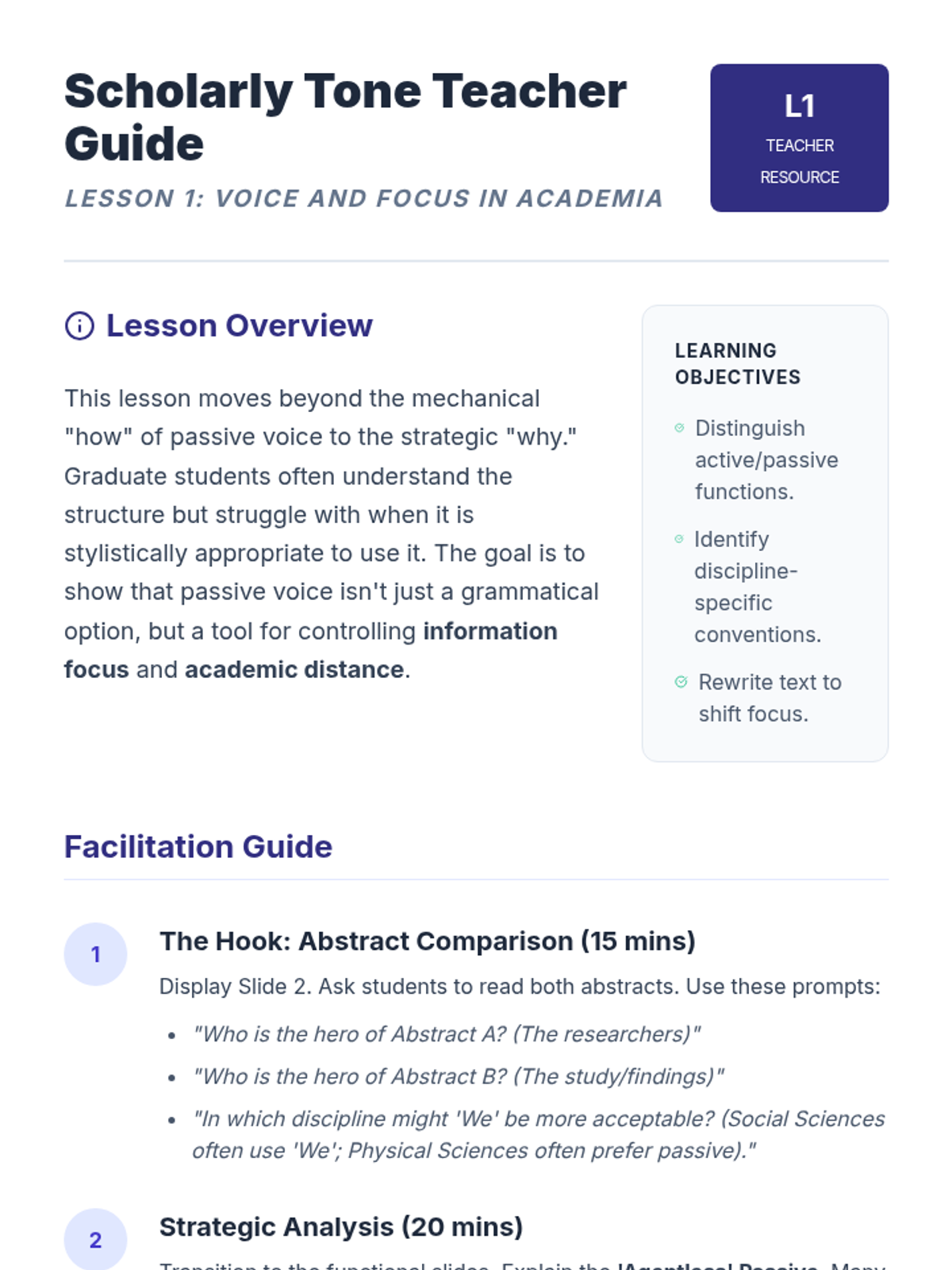
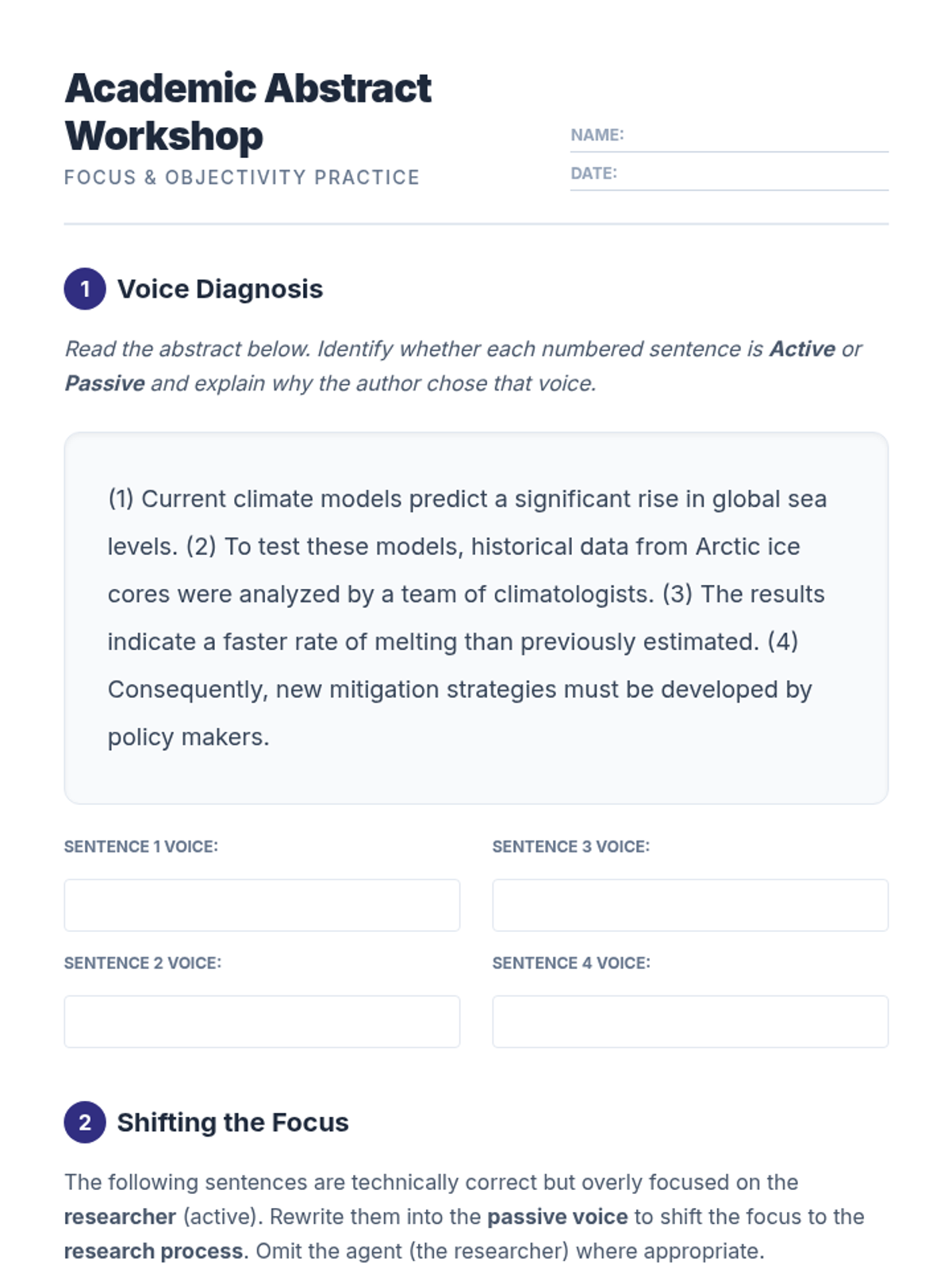
Students examine the functional differences between active and passive voice in academic disciplines, focusing on how voice shifts emphasis from the actor to the research object.
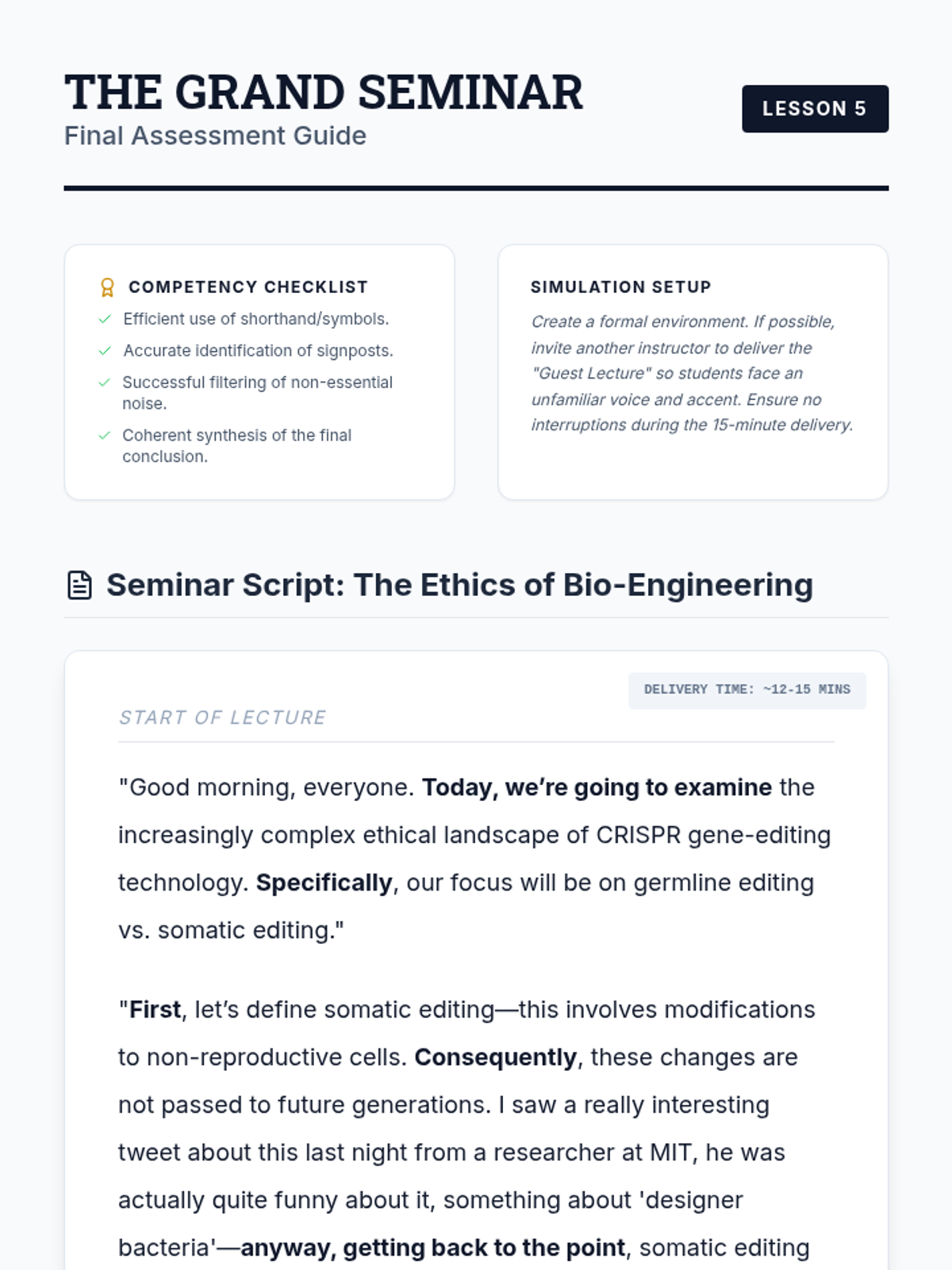
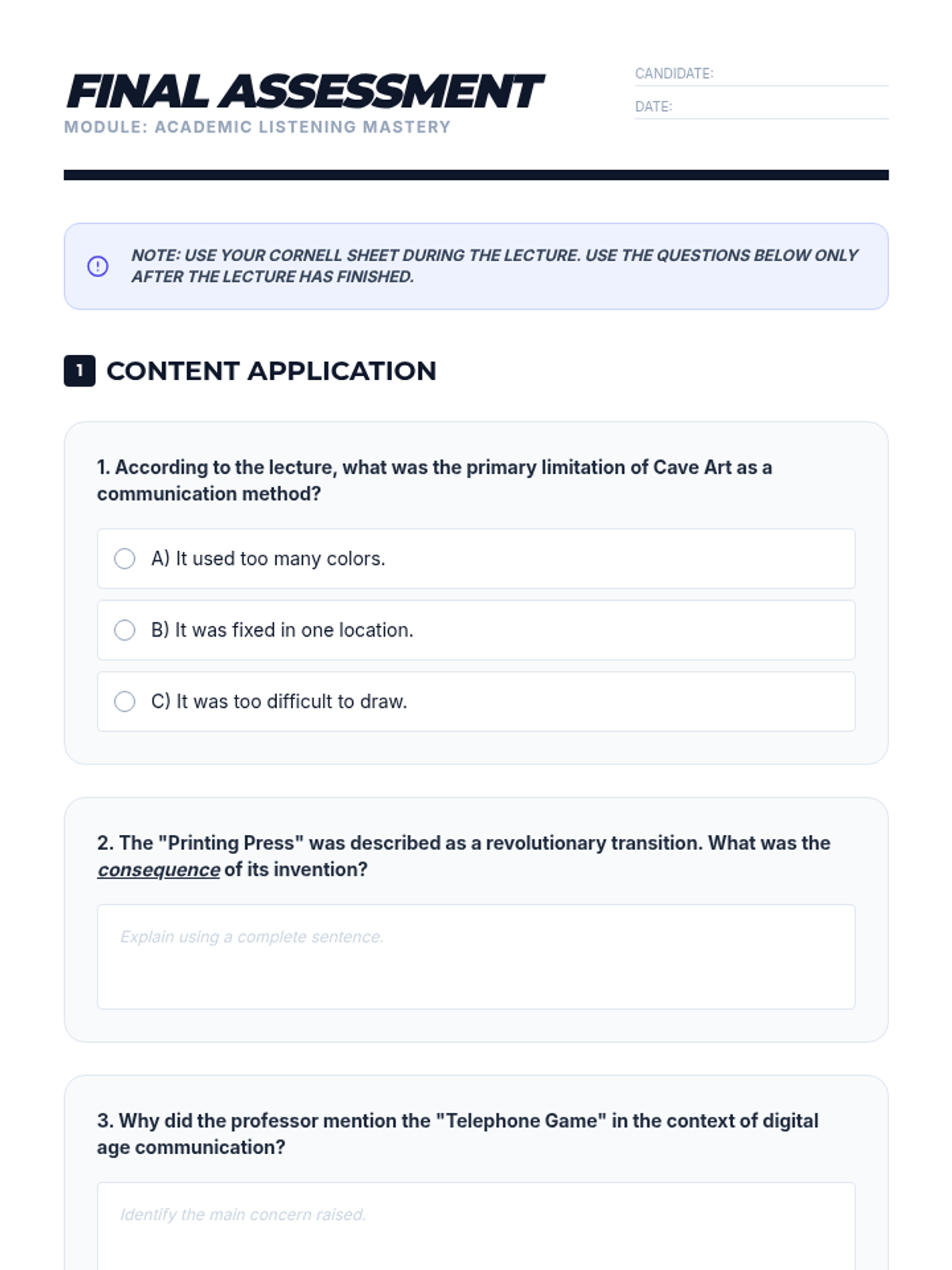
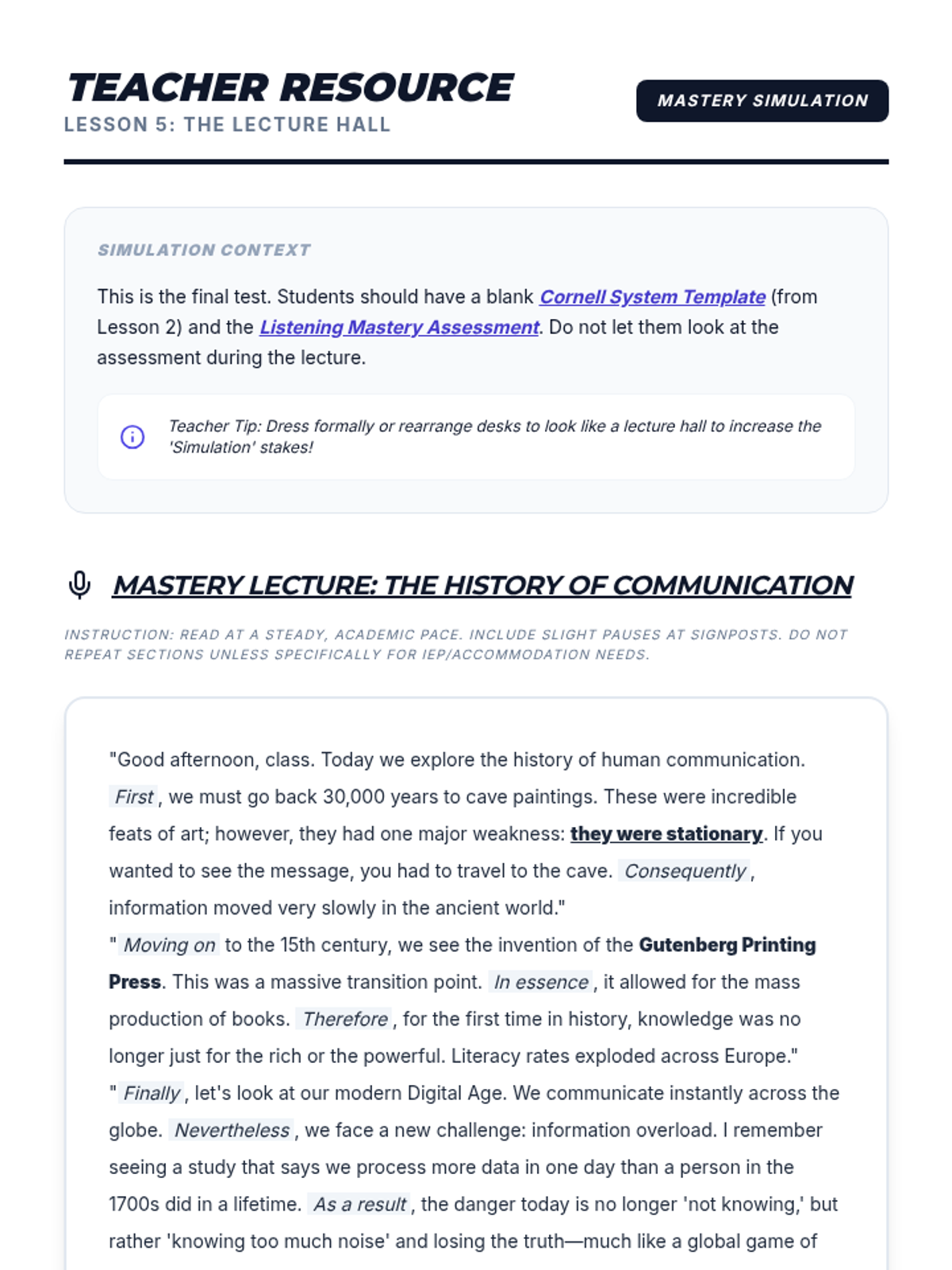
Students participate in a university-style mini-lecture simulation. They apply all learned strategies—signpost identification, Cornell note-taking, and synthesis—to capture information and complete a formal assessment.
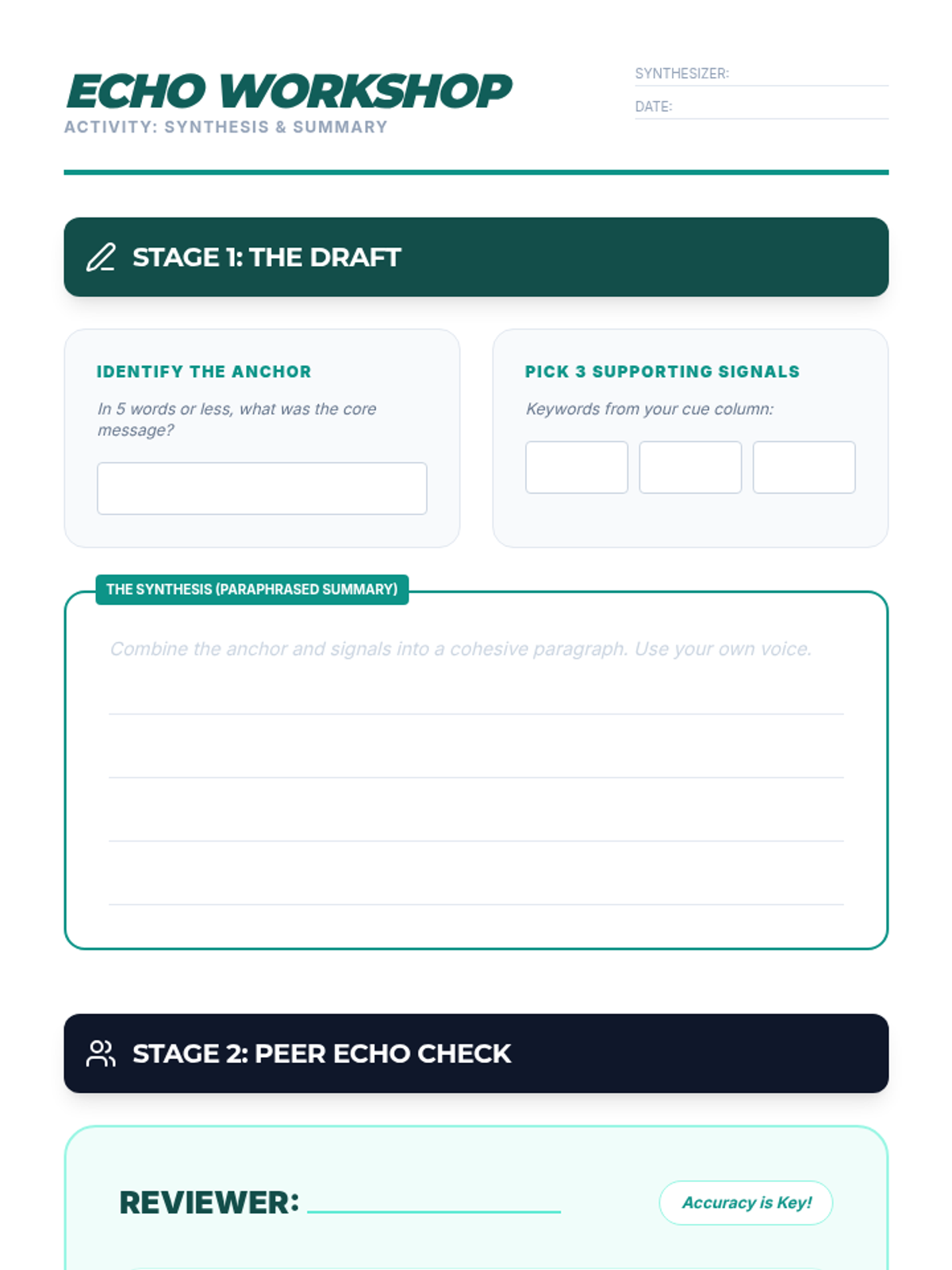
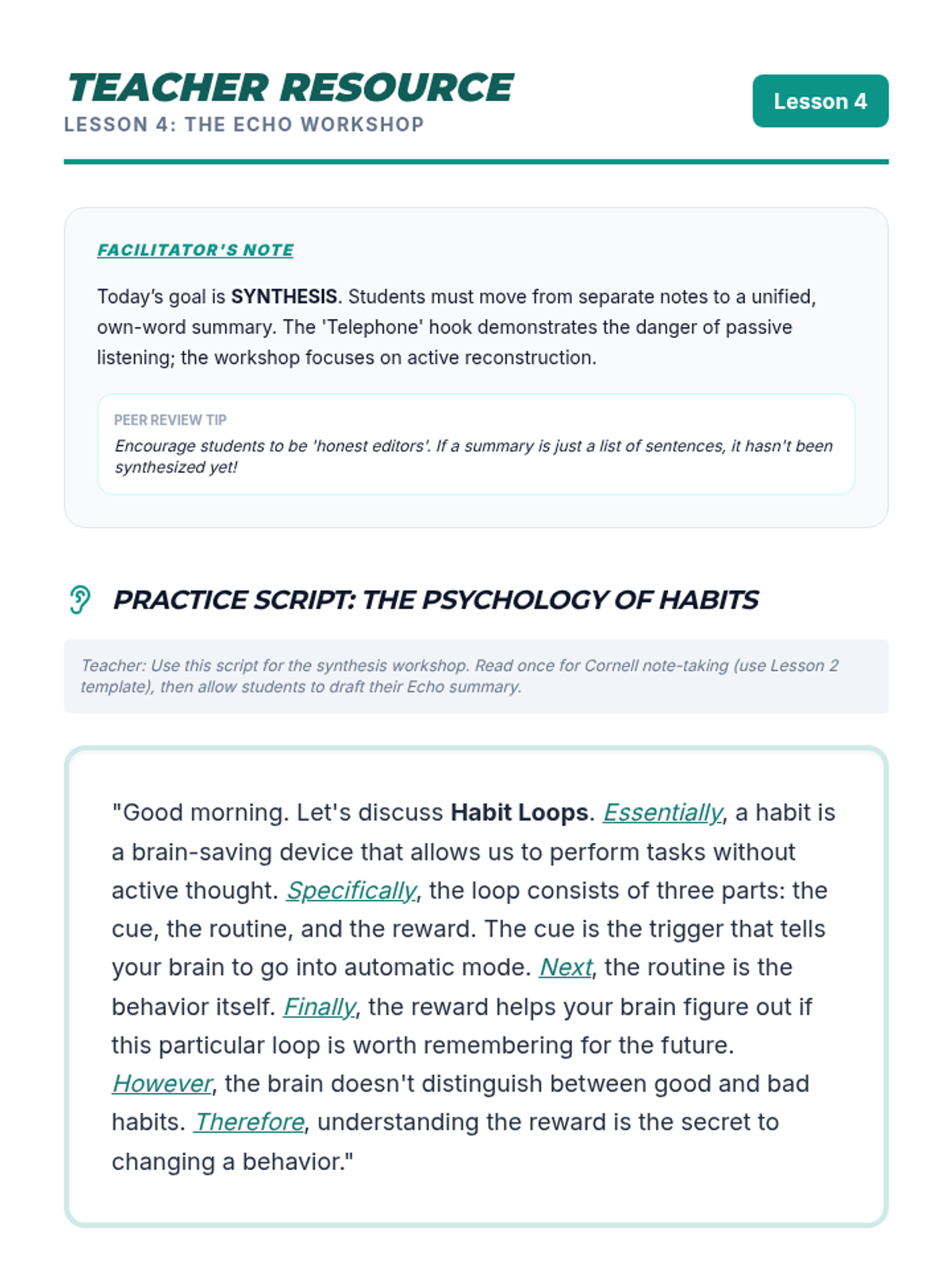
Learners practice reconstructing audio messages in their own words, focusing on paraphrasing rather than direct quotation. Peer evaluation ensures accuracy and comprehension through a synthesis-based workshop.
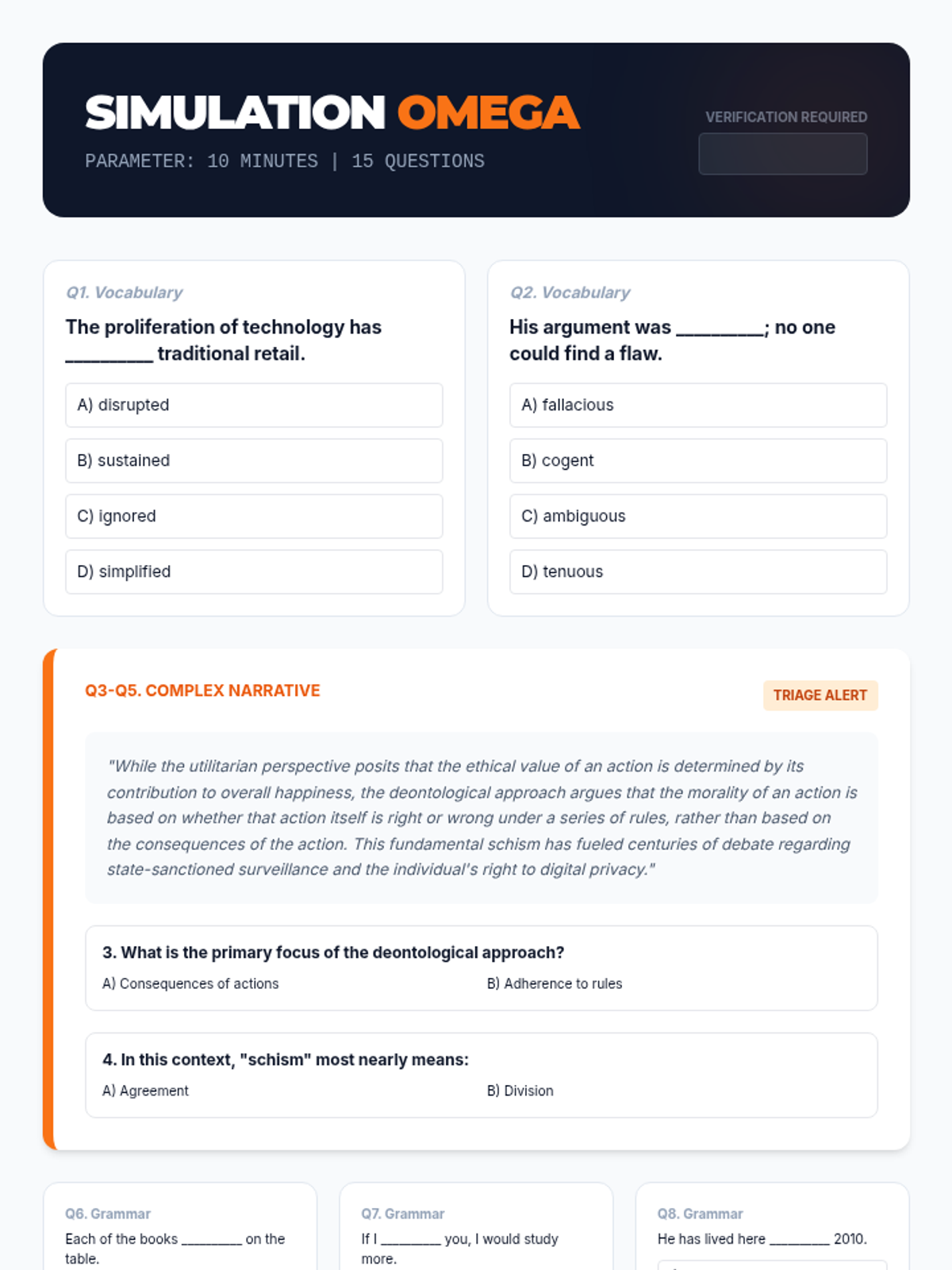
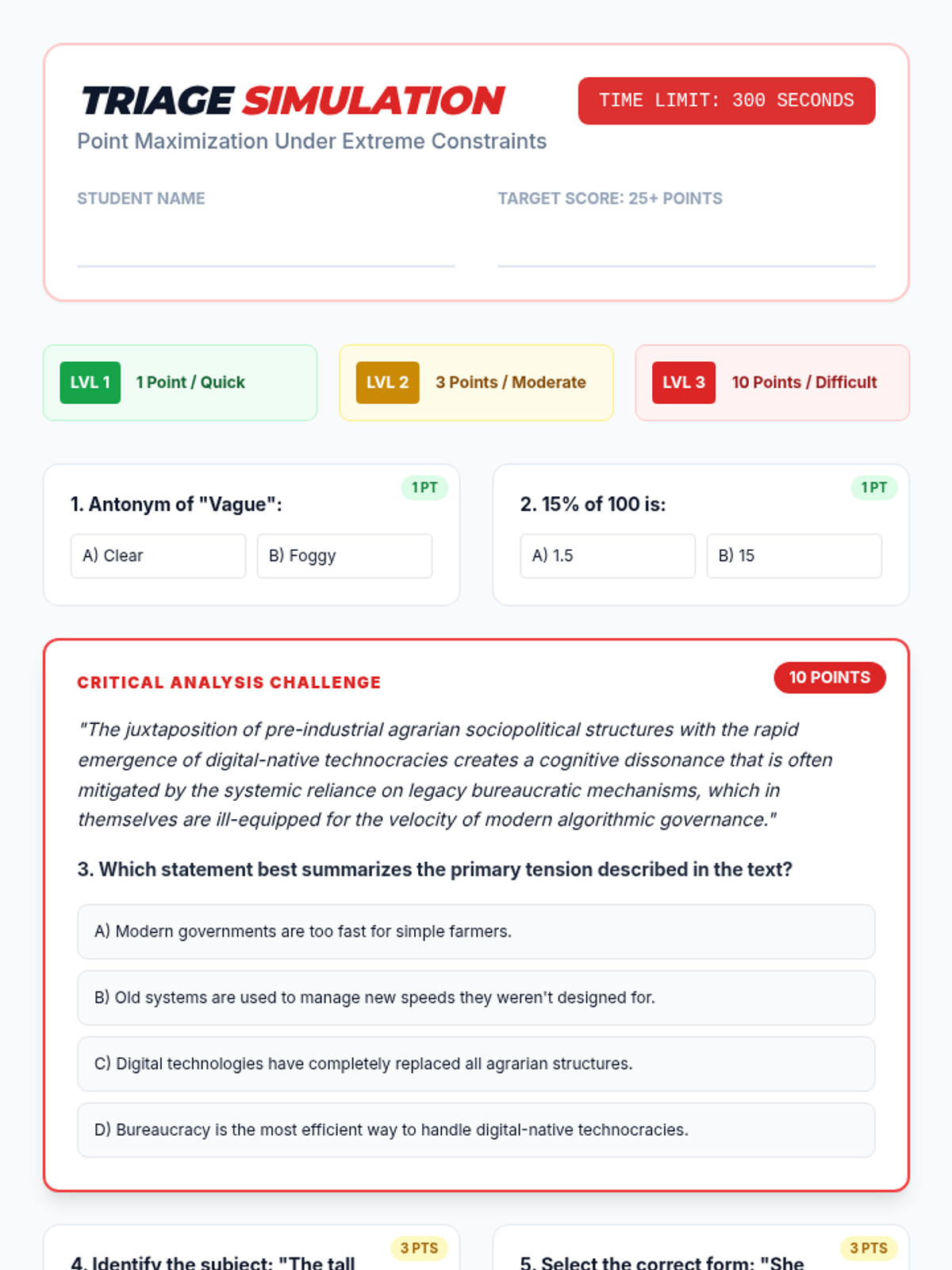
A final simulation where students complete a test section with slightly less time than standard allowed. The focus is on maintaining composure and adhering to the triage strategy strictly.
Students learn how to guess intelligently when time runs out or the answer is unknown. This includes 'letter of the day' strategies and making educated guesses based on partial knowledge.
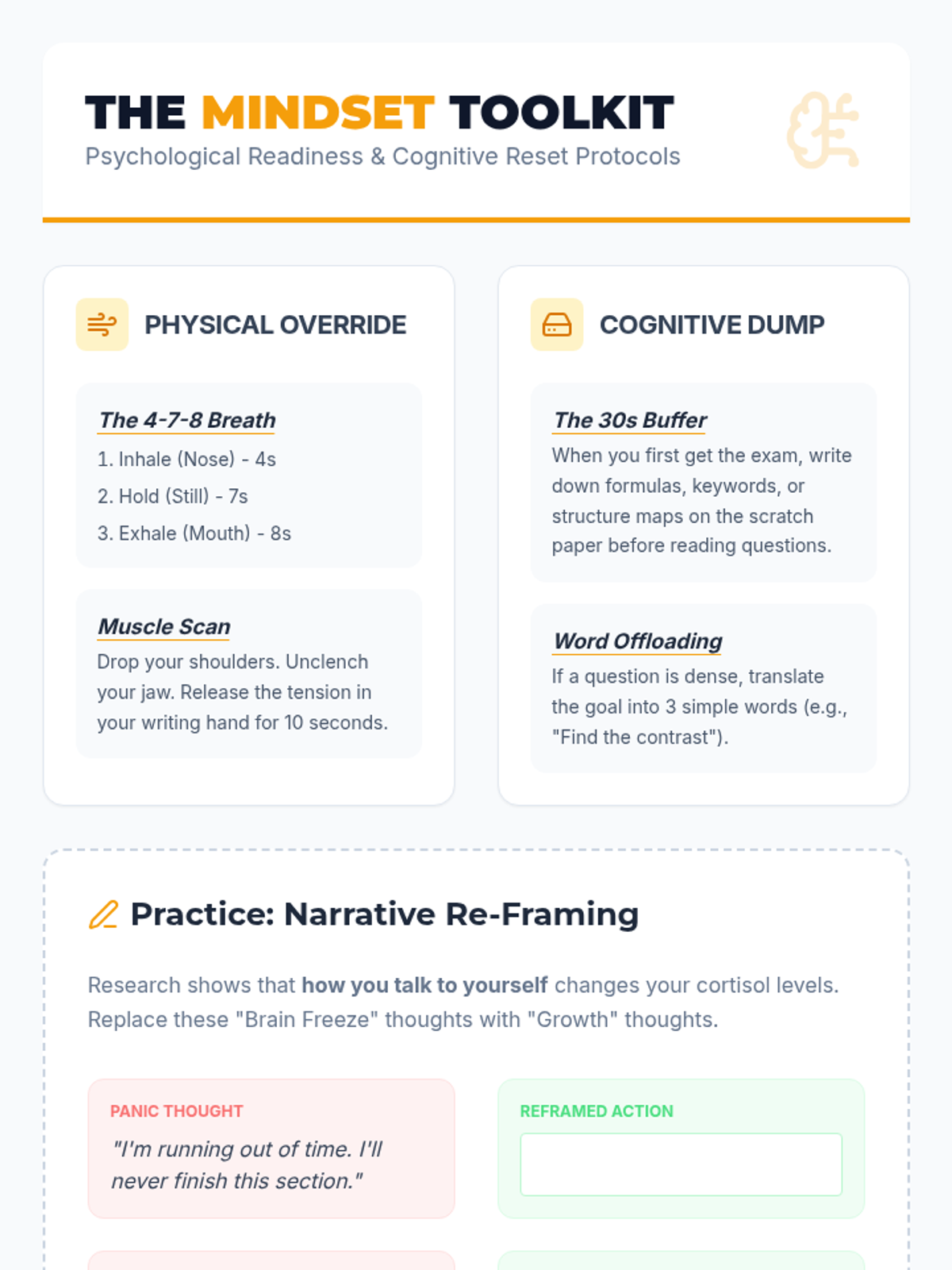
Students explore techniques to handle 'brain freeze' and panic during exams. The lesson covers breathing techniques and positive self-talk, alongside cognitive strategies like jotting down notes to offload memory.
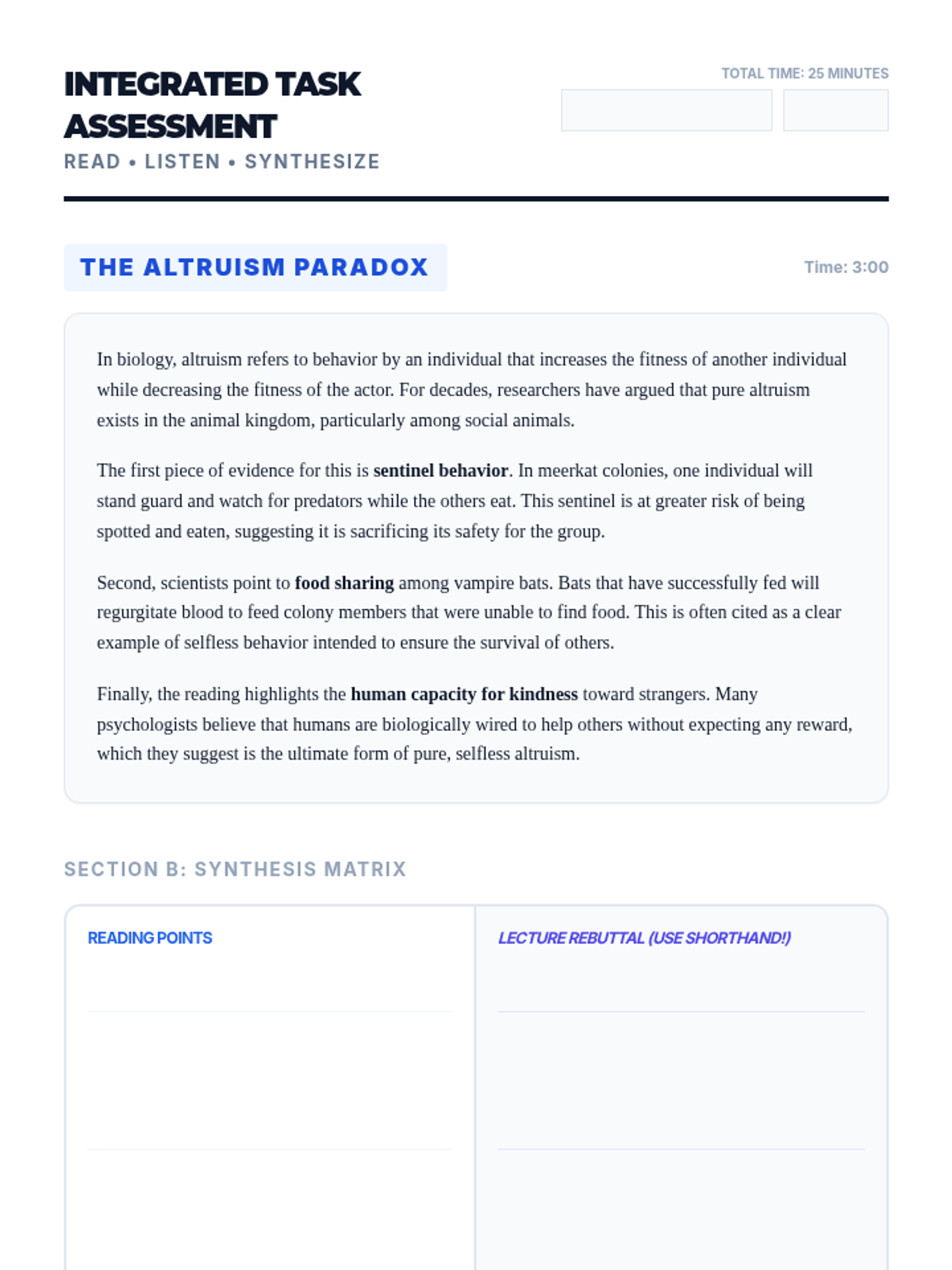
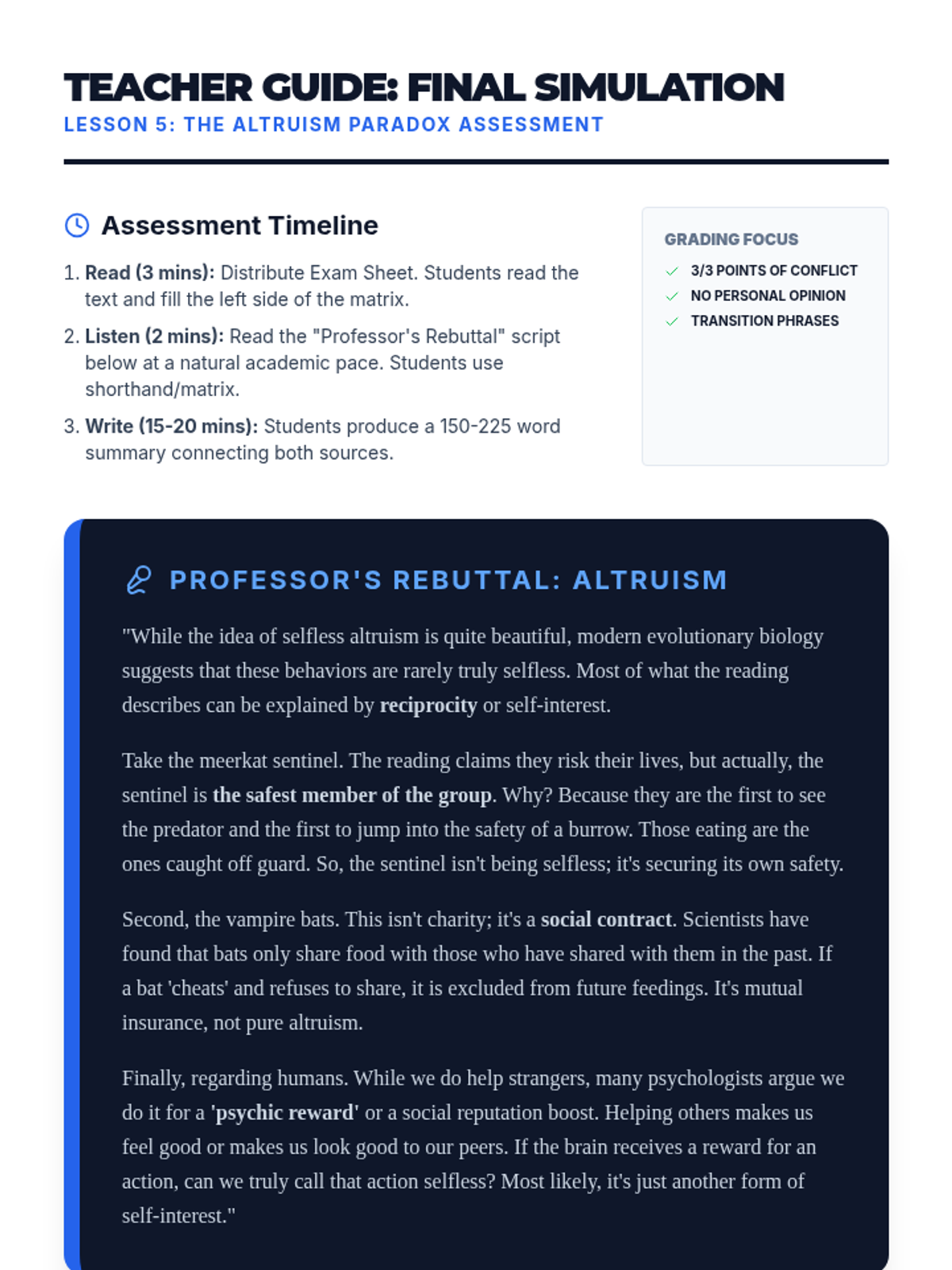
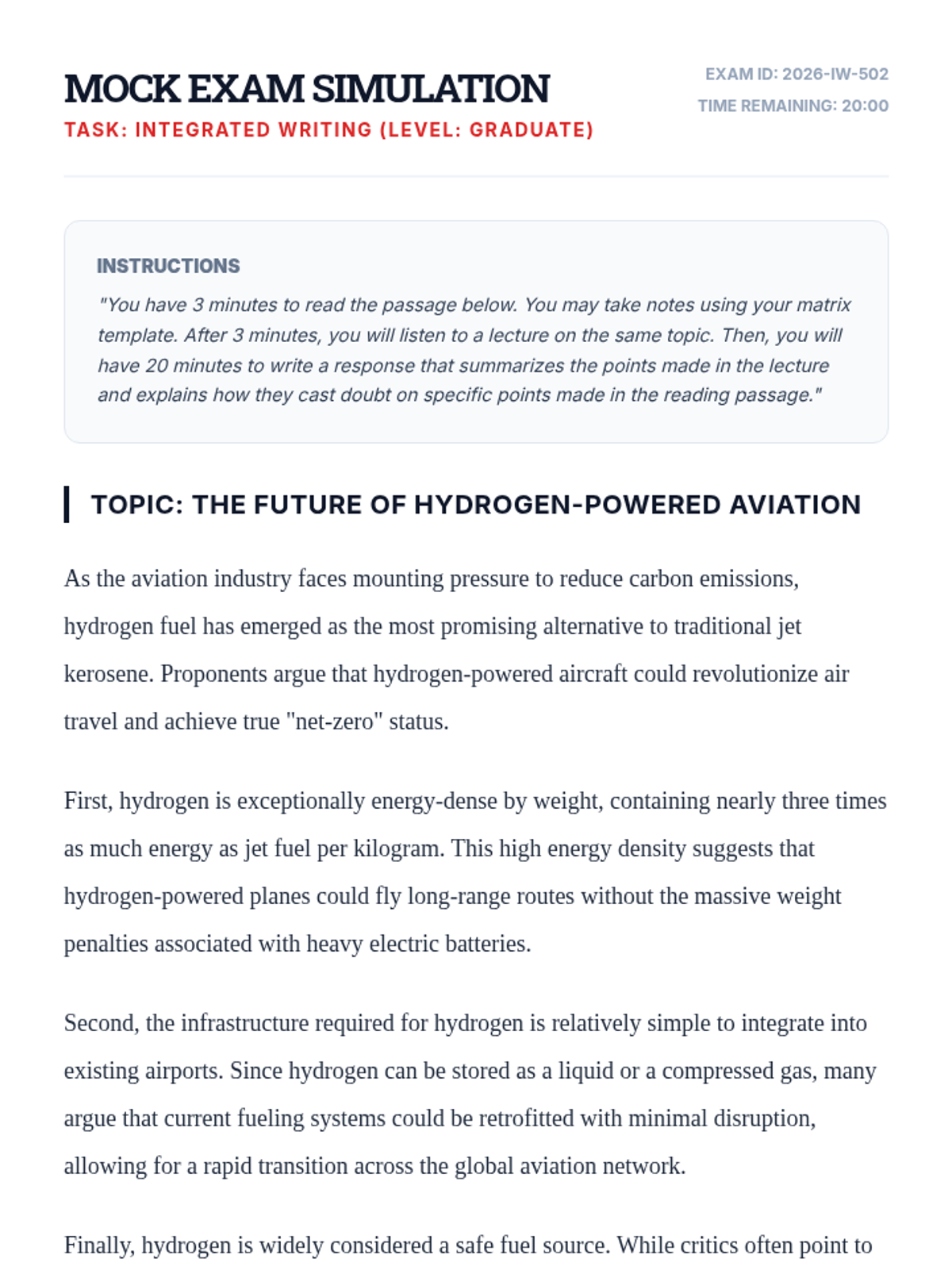
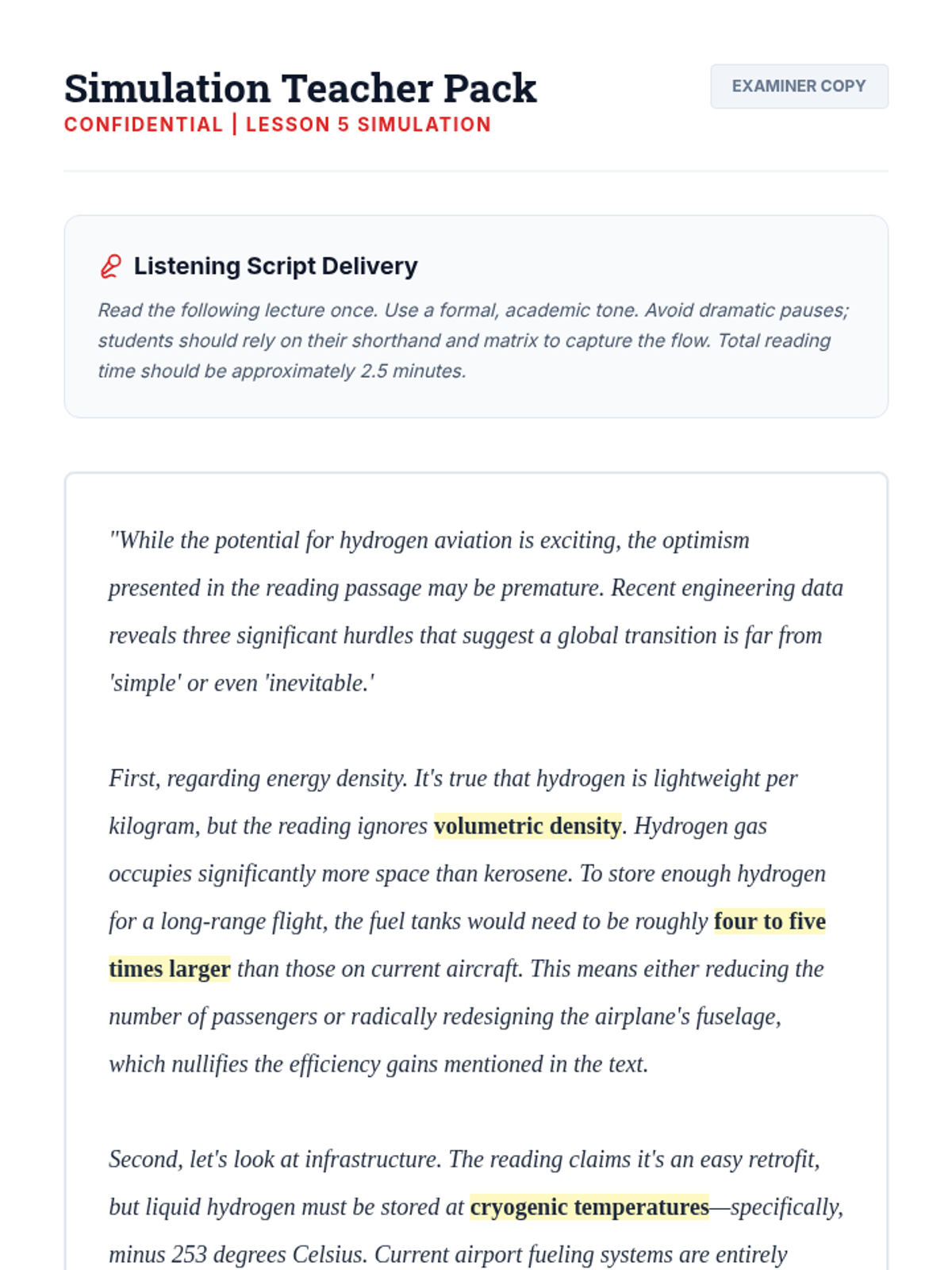
A full-scale simulation of a TOEFL/IELTS integrated task. Students apply shorthand, signpost recognition, and synthesis skills to a new topic, producing a comprehensive written response.
A full-length integrated task simulation under exam conditions followed by self-assessment using official rubric criteria.
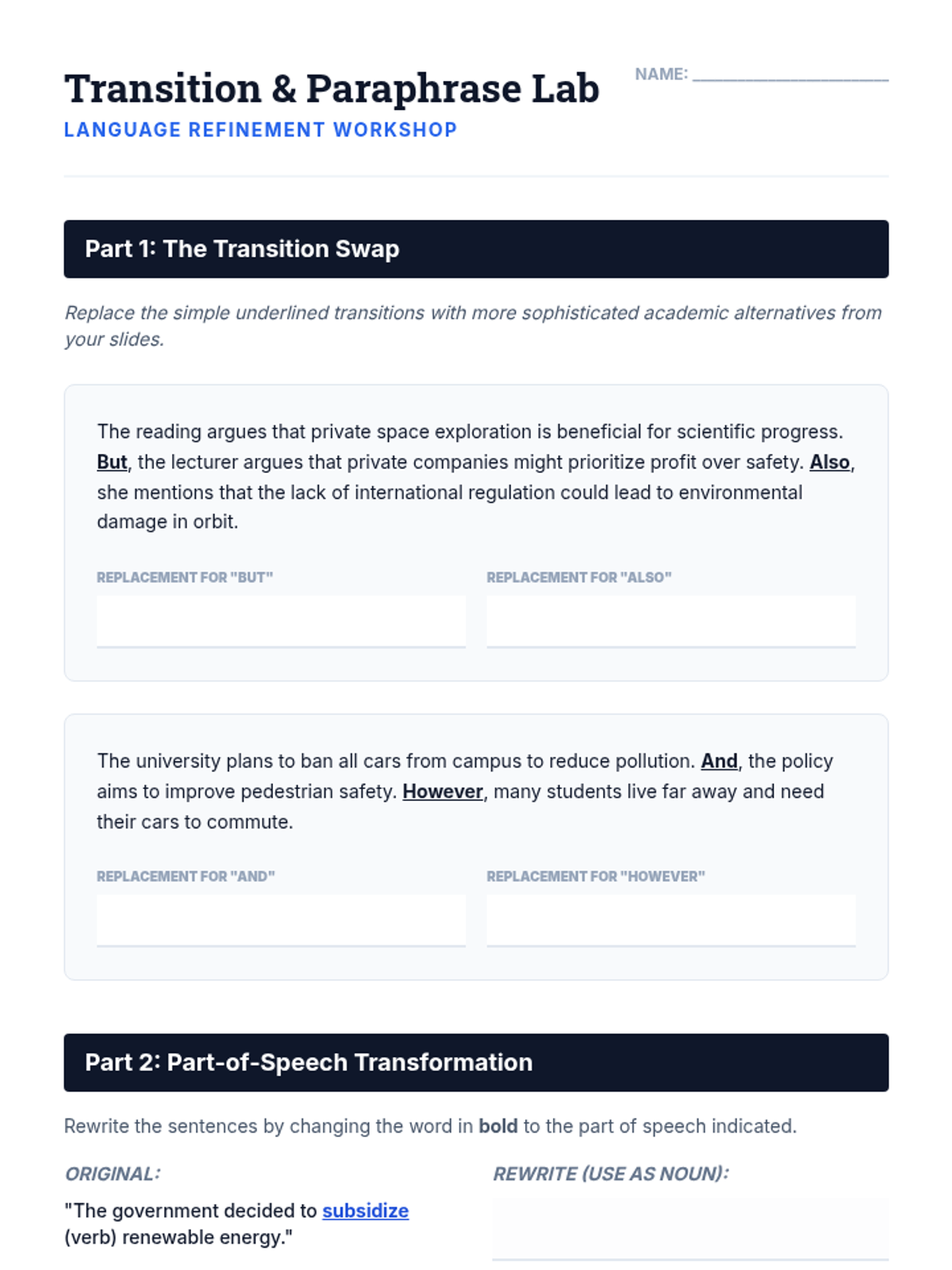
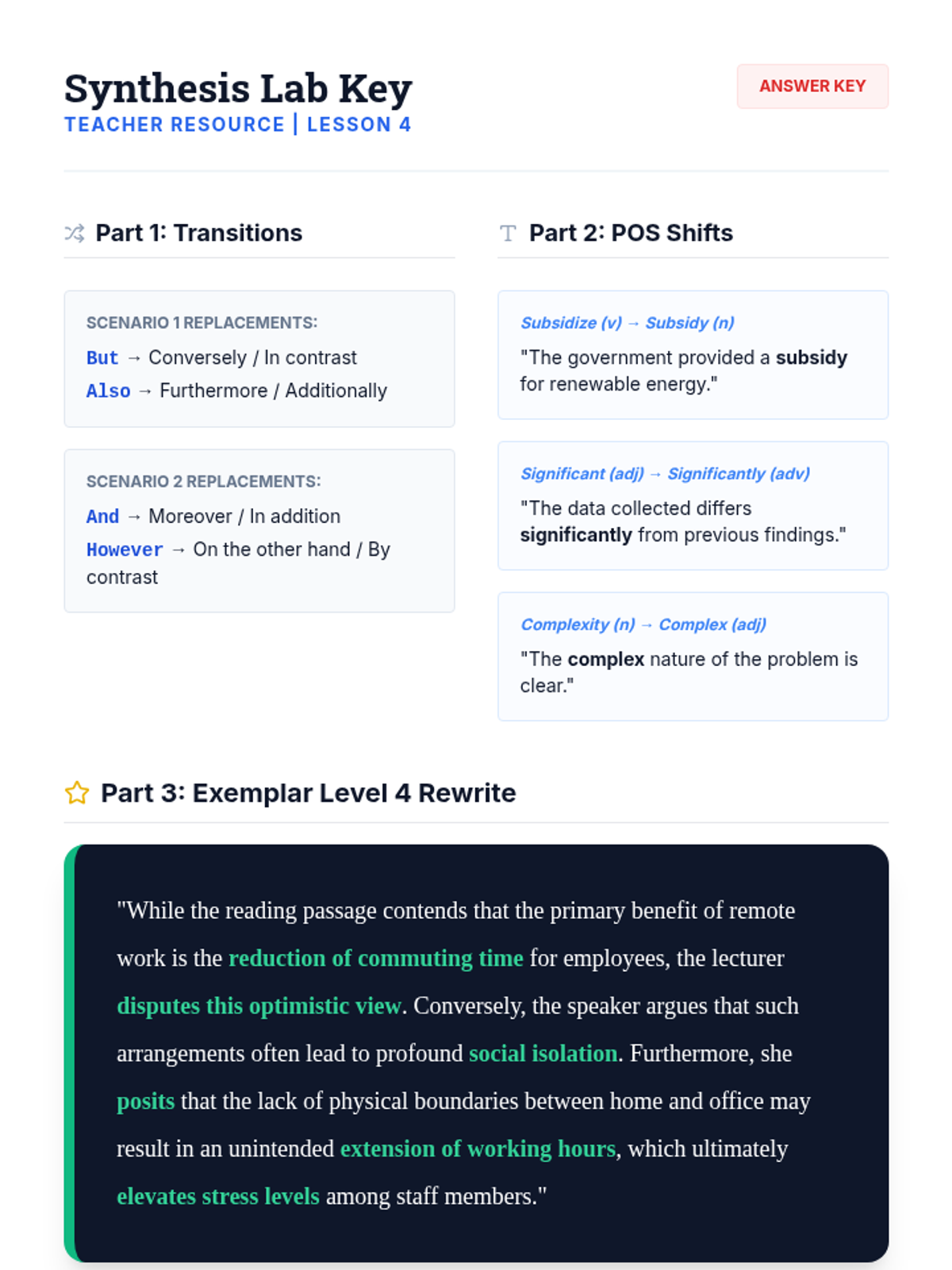
Covers transitions that signal contrast and addition, alongside paraphrasing techniques to avoid plagiarism and demonstrate vocabulary range.
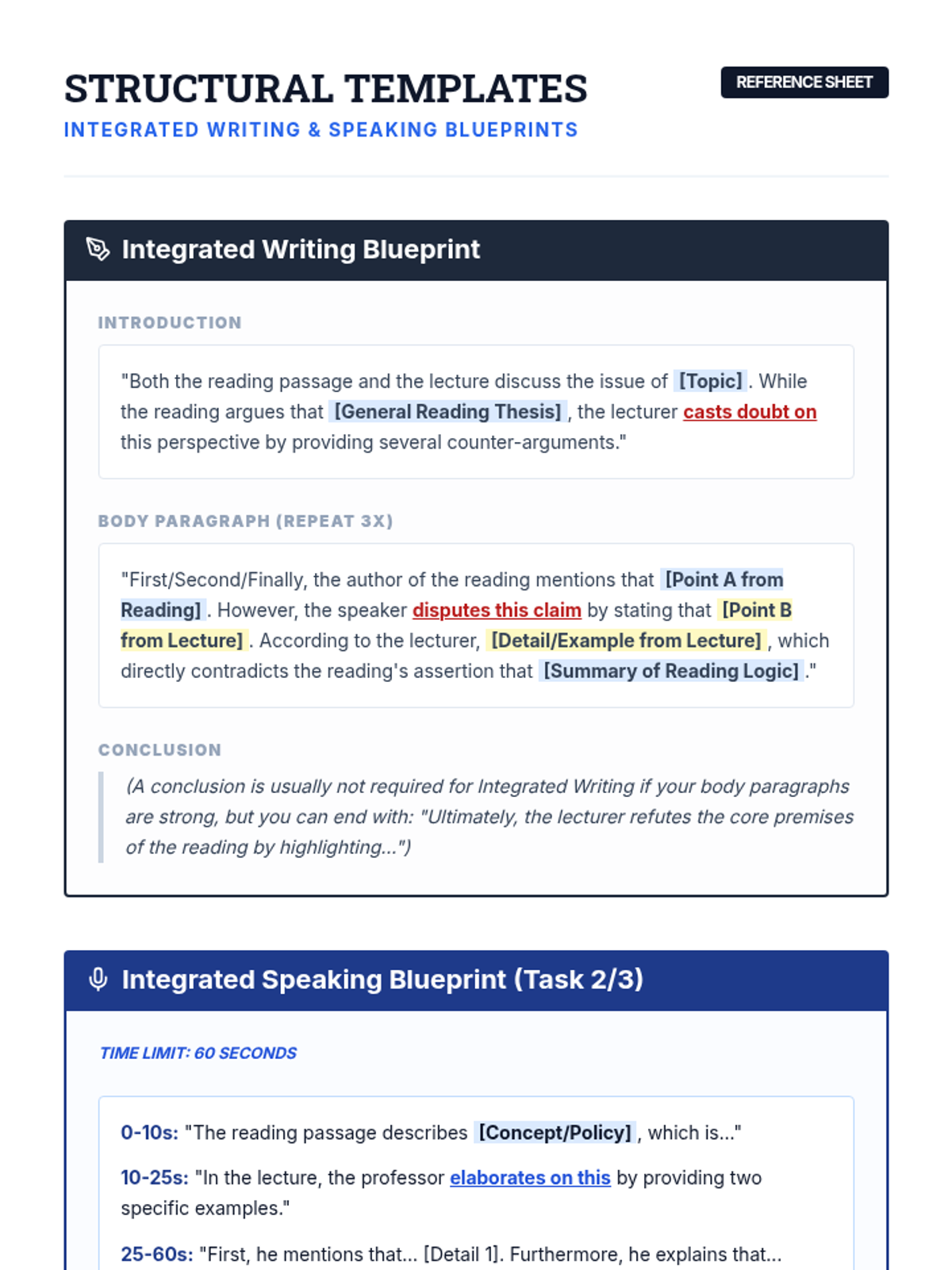
Students practice using structural templates for integrated tasks, emphasizing the importance of creating a solid skeleton plan before writing.
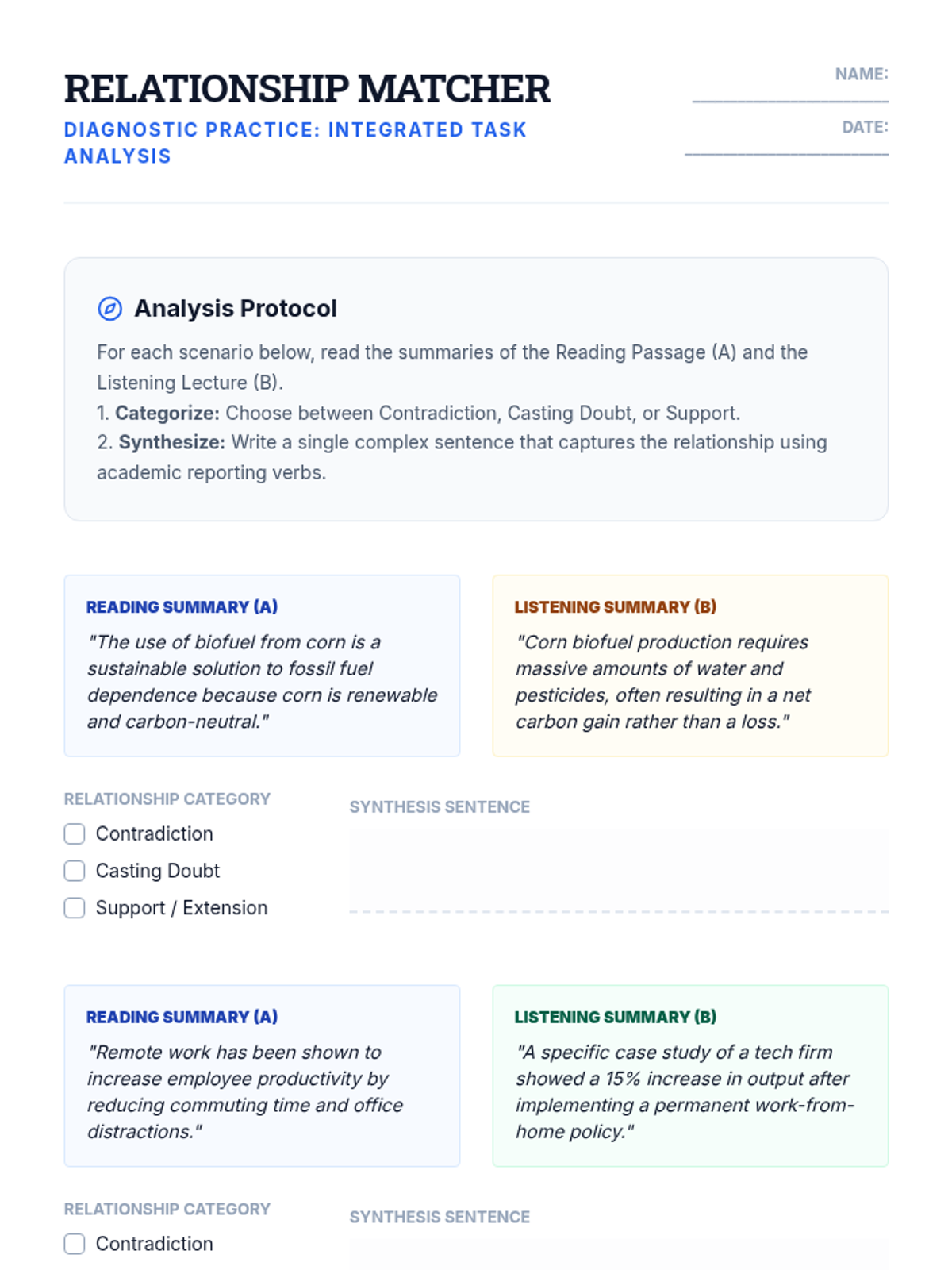
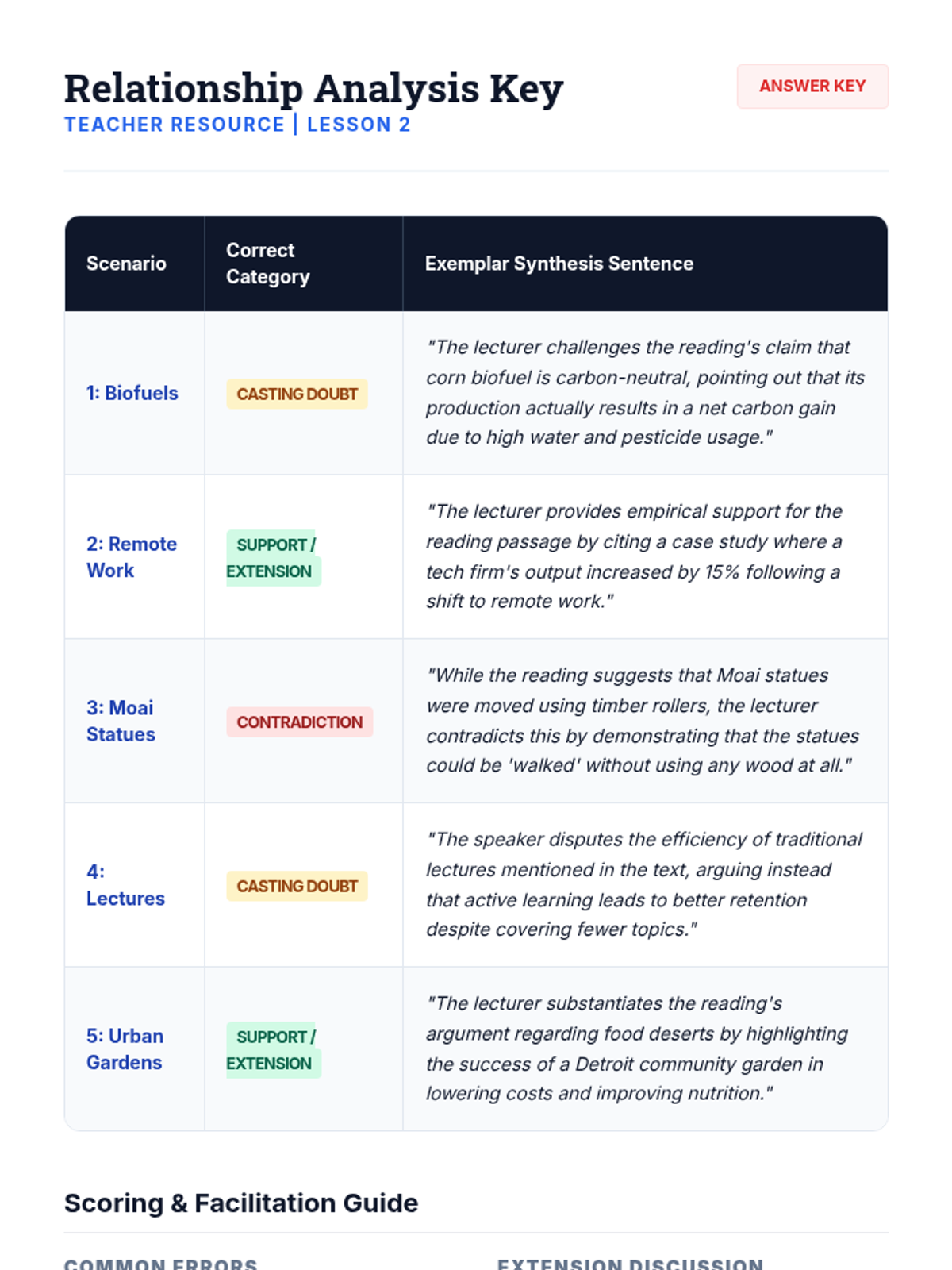
Focuses on identifying how a listening passage relates to a reading passage, specifically looking for contradiction, casting doubt, or providing examples.
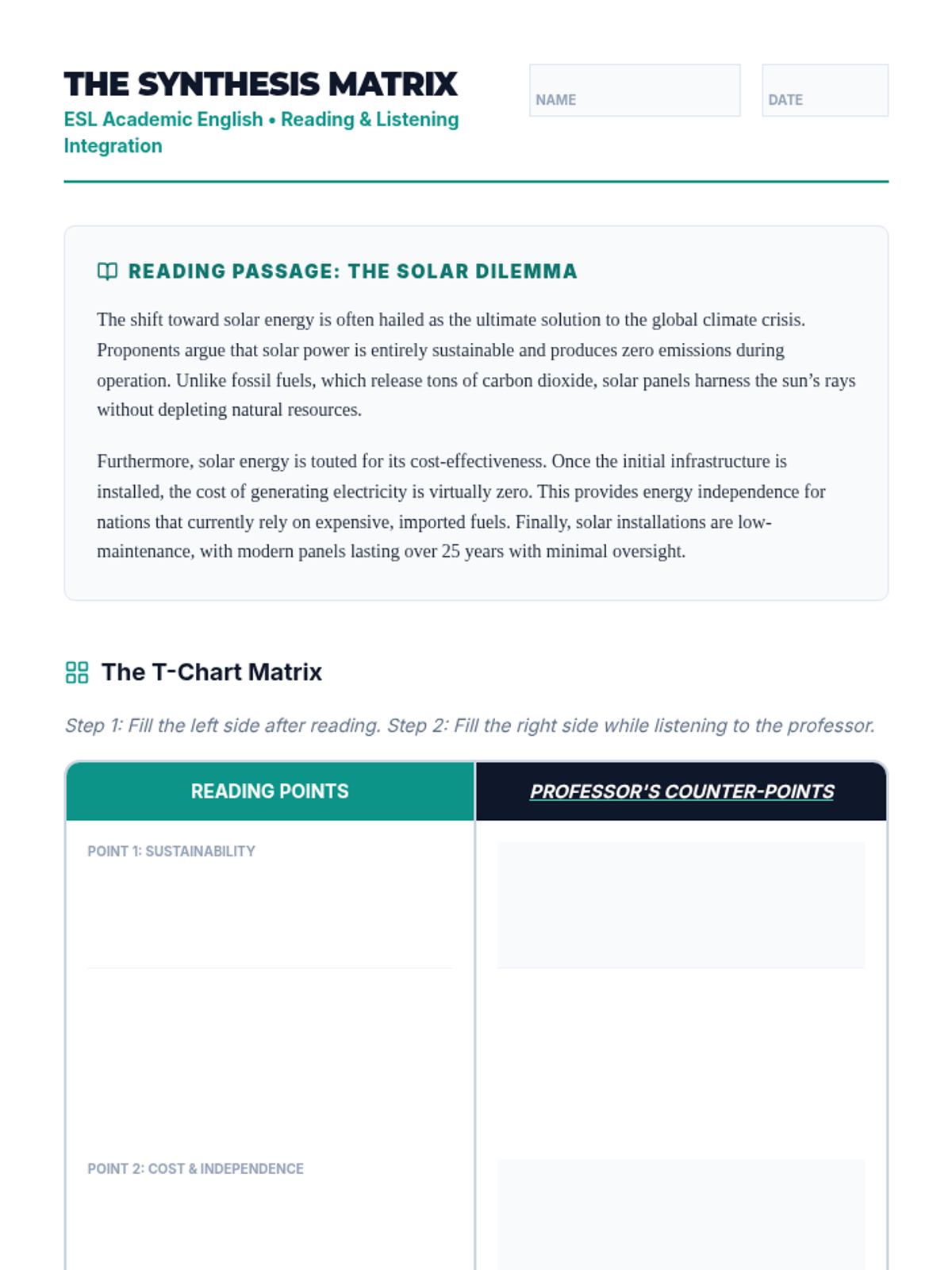
Students develop a personalized shorthand system and learn to organize notes in a matrix format that visually represents the relationship between reading and listening inputs.
This lesson teaches decision-making under pressure: recognizing difficult questions immediately and deciding to skip or flag them. Students practice the discipline of abandoning a question to save time for easier ones.
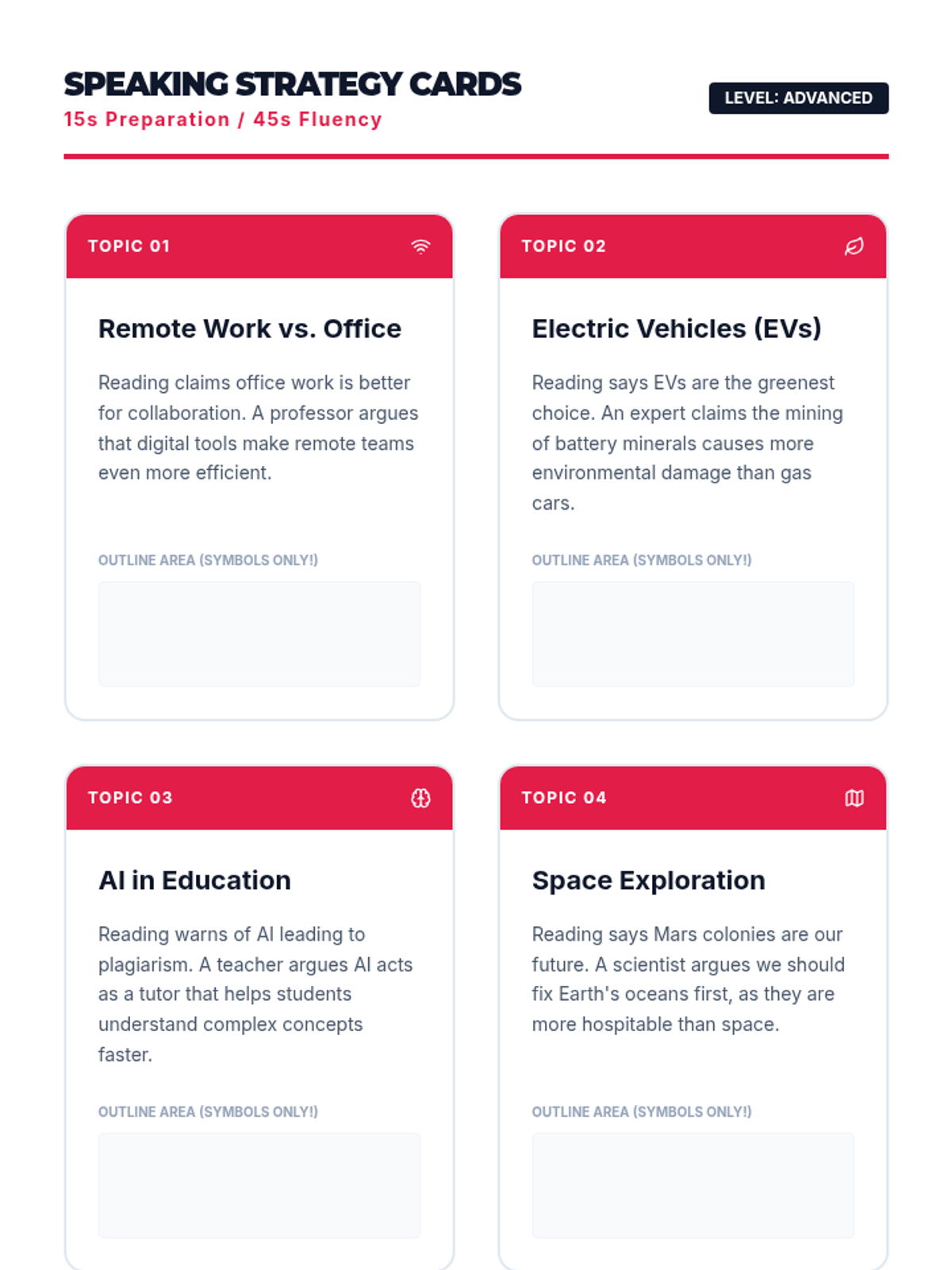
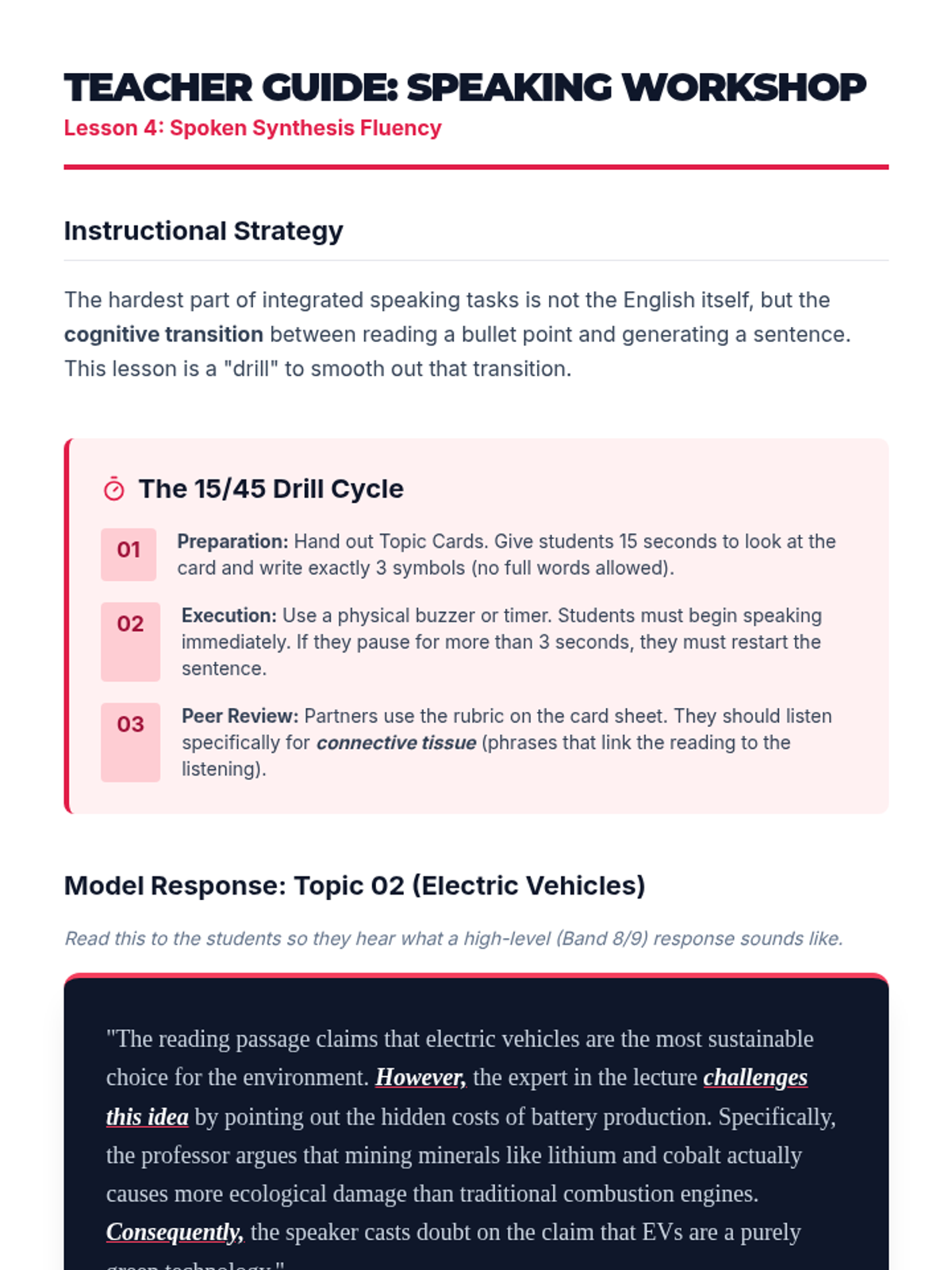
Students focus on the speaking section of integrated exams. They practice turning shorthand notes into fluent, grammatically correct spoken responses, emphasizing the use of transition phrases and maintaining eye contact.
Students practice the core skill of integrated tasks by comparing a written passage with a contrasting audio lecture. They learn to use T-charts to map points of conflict and support between sources.
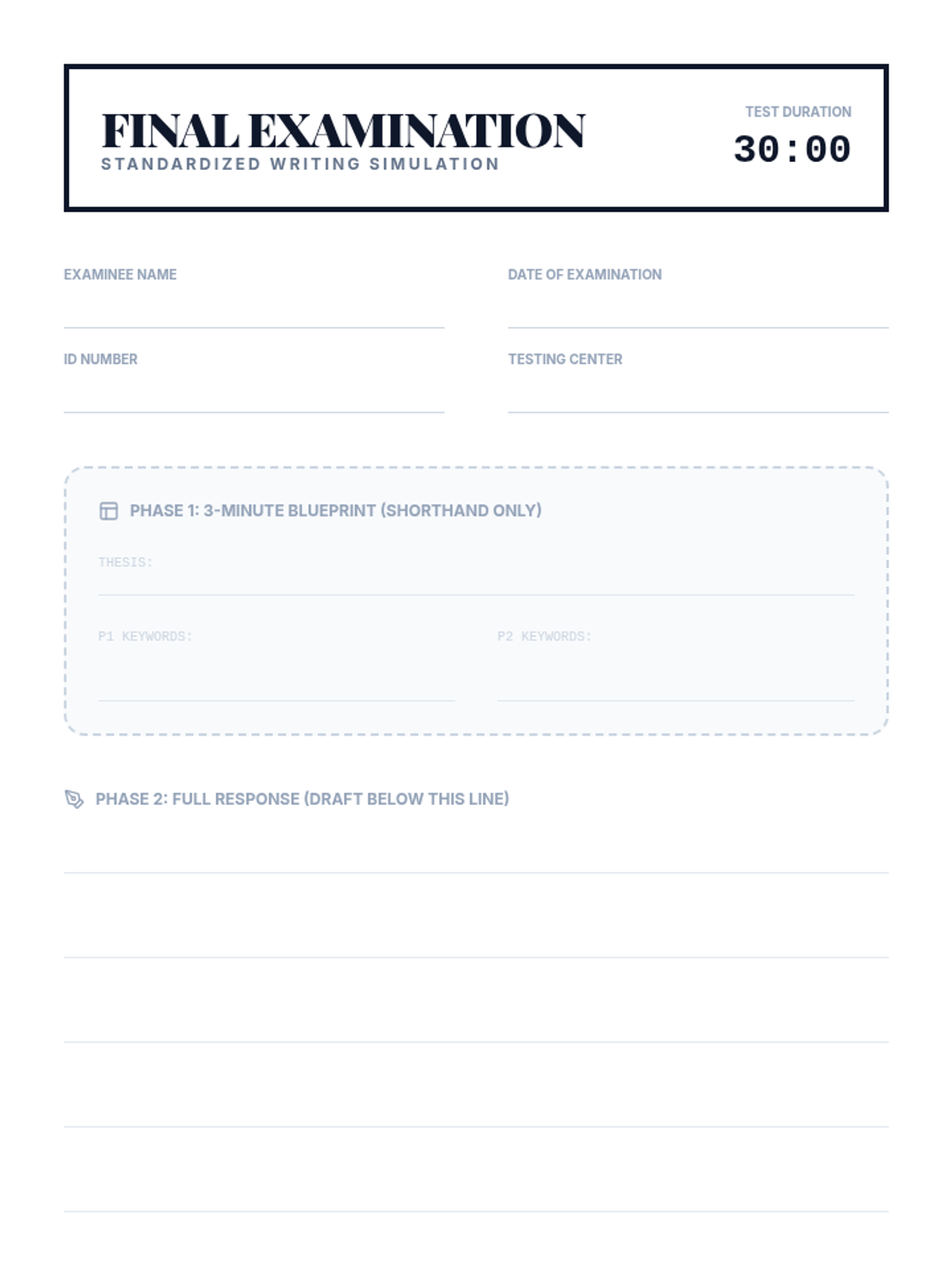
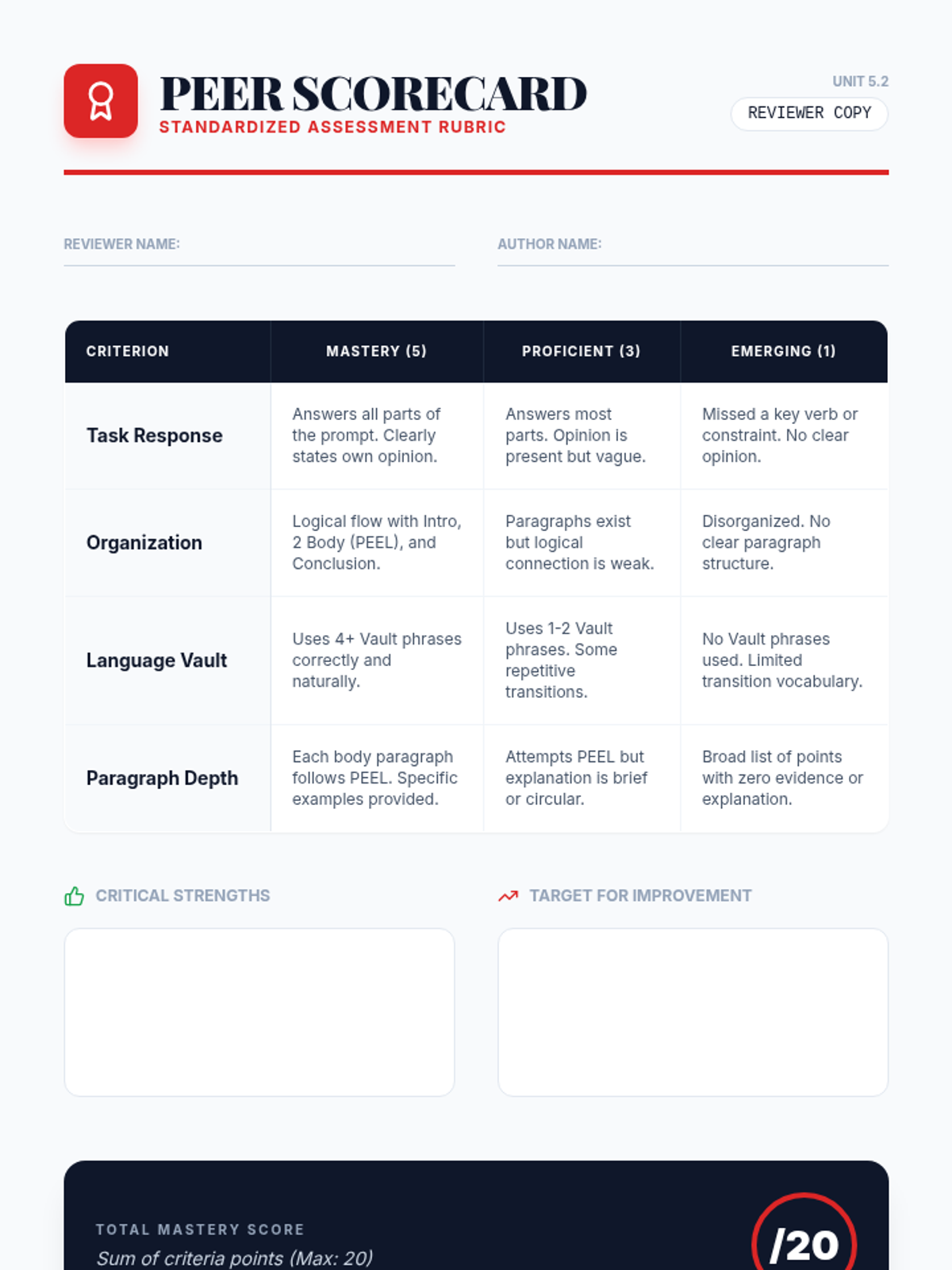
The culmination of the sequence where students complete a full-length timed essay simulation and peer-evaluate their work using standardized rubrics.
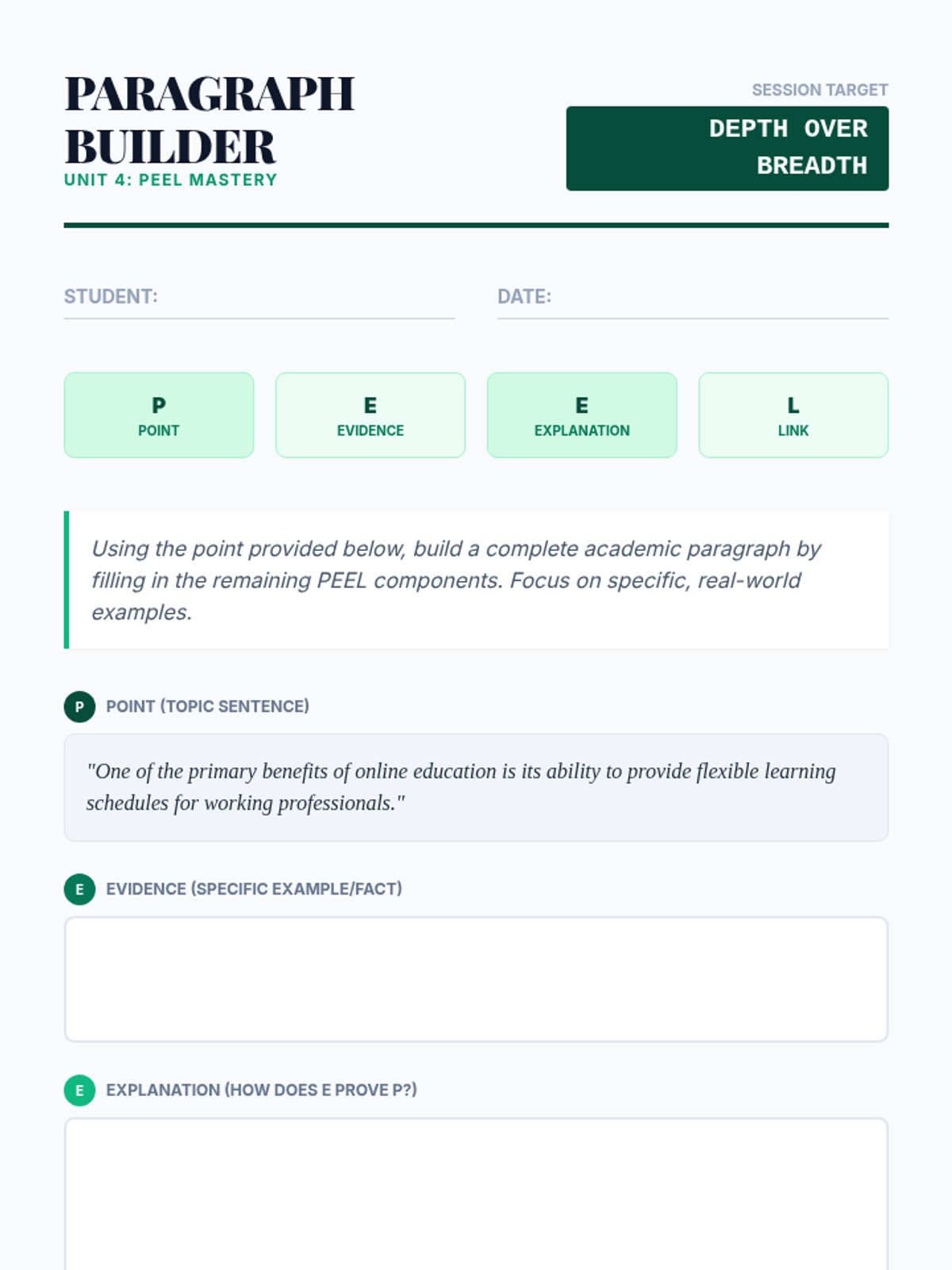
Using the PEEL method (Point, Evidence, Explanation, Link), students learn to develop deep, academic paragraphs that provide substantial evidence for their claims.
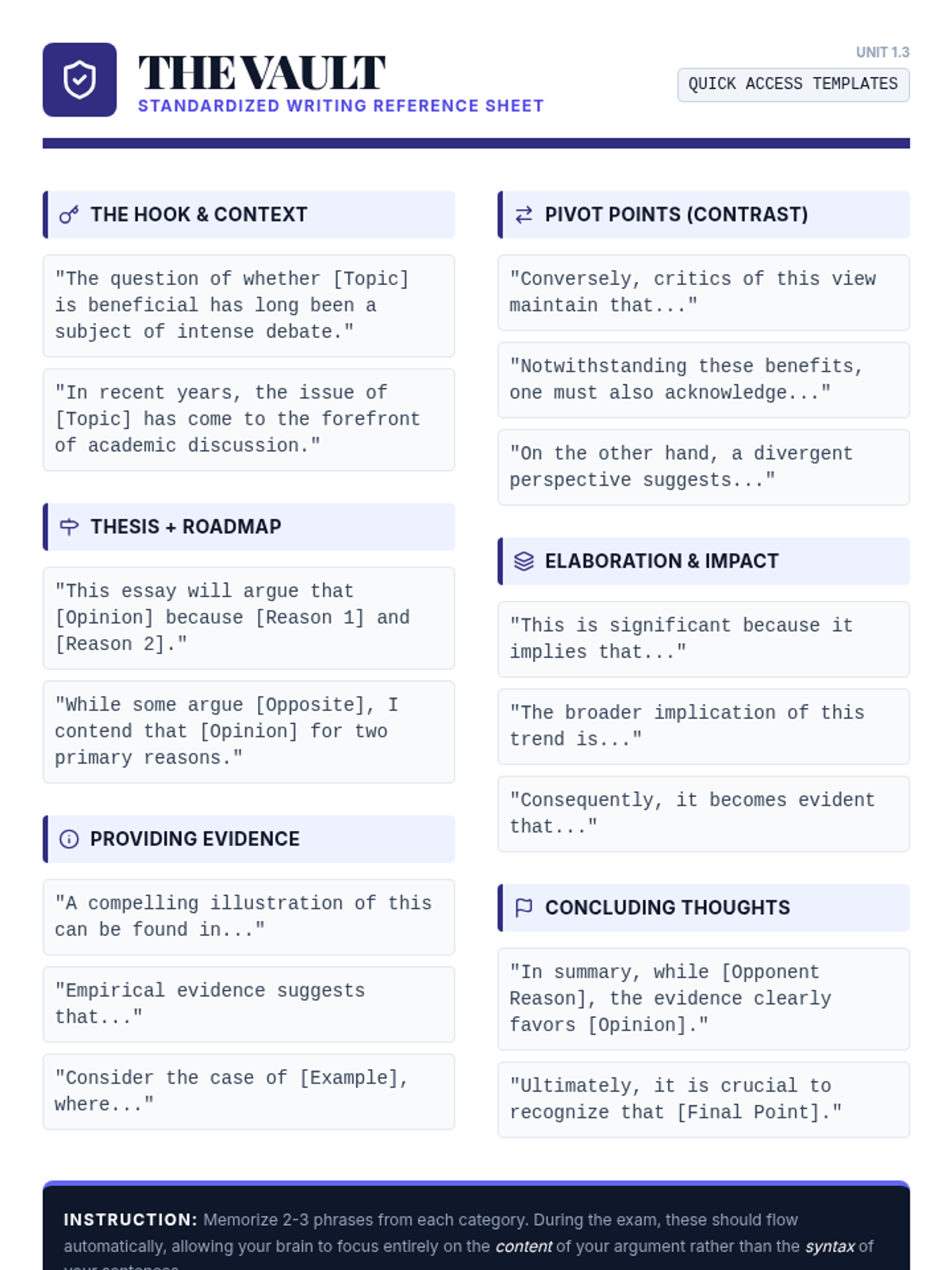
Students build a mental bank of transition phrases and academic sentence templates to reduce cognitive load and improve flow during timed writing.
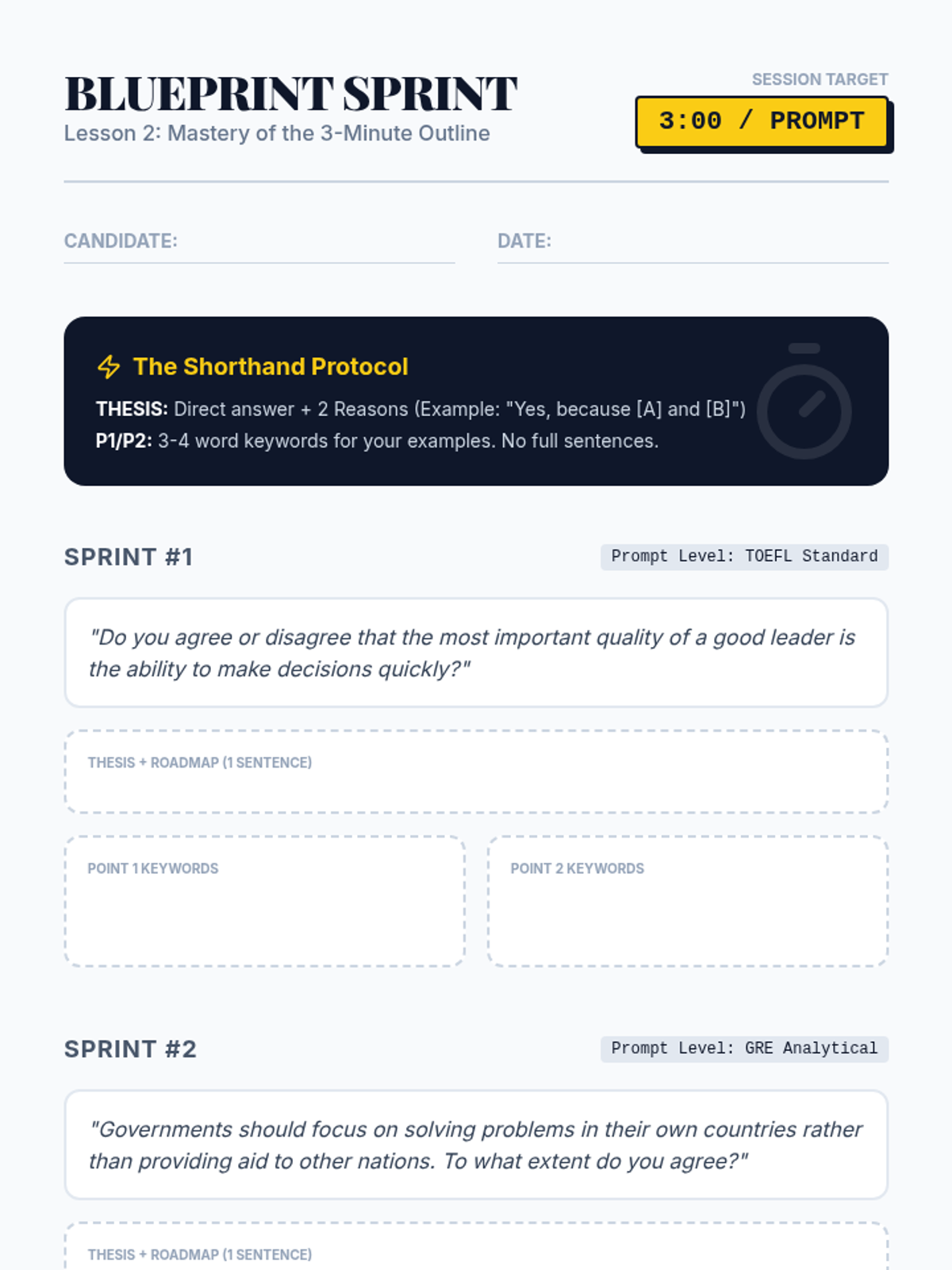
Focuses on the skill of rapid planning, teaching students a shorthand method to generate a thesis and two supporting points within a strict three-minute window.
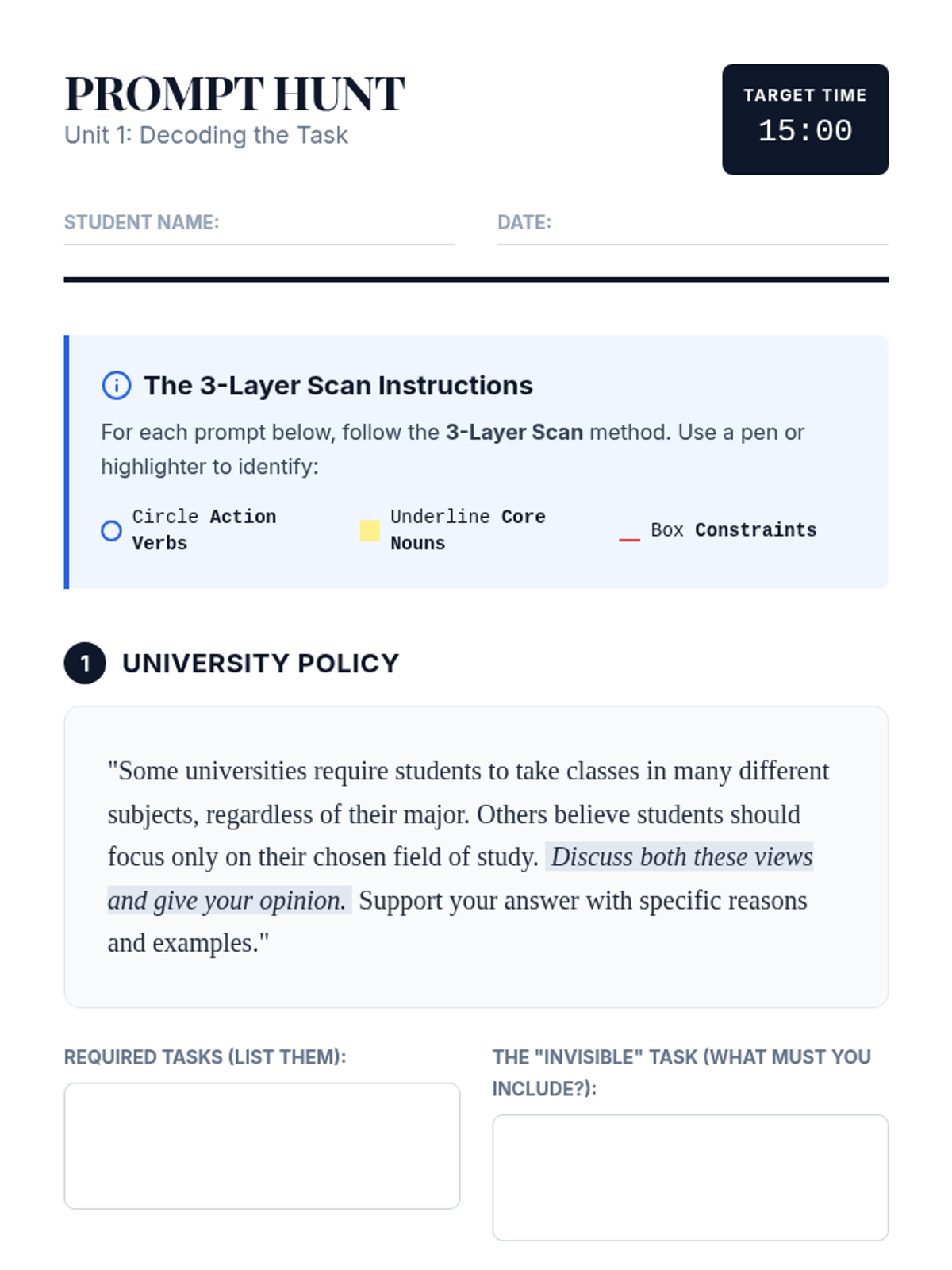
Students learn to identify the core tasks within various academic essay prompts by circling key verbs and nouns, ensuring they address every requirement of the question.
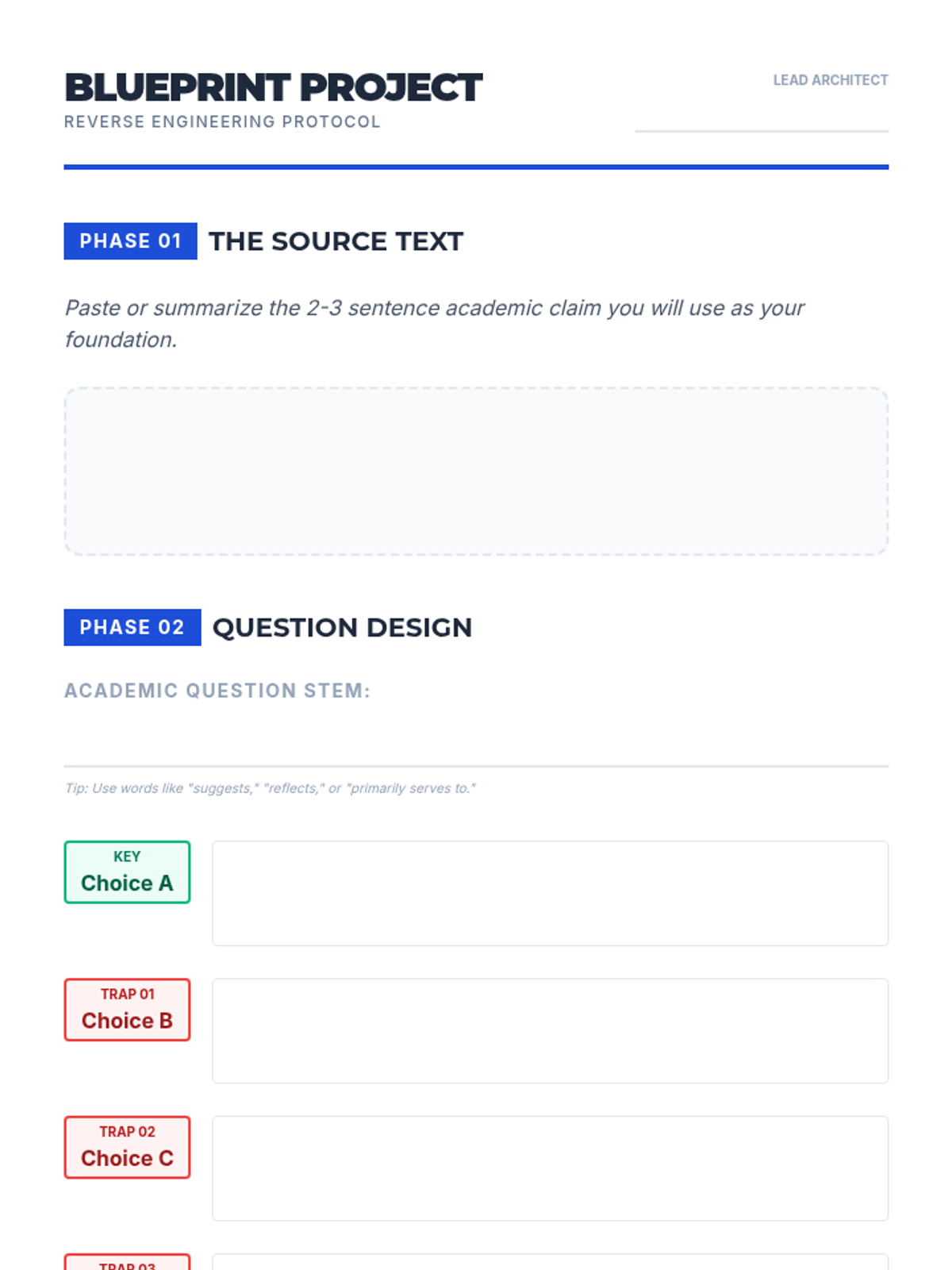
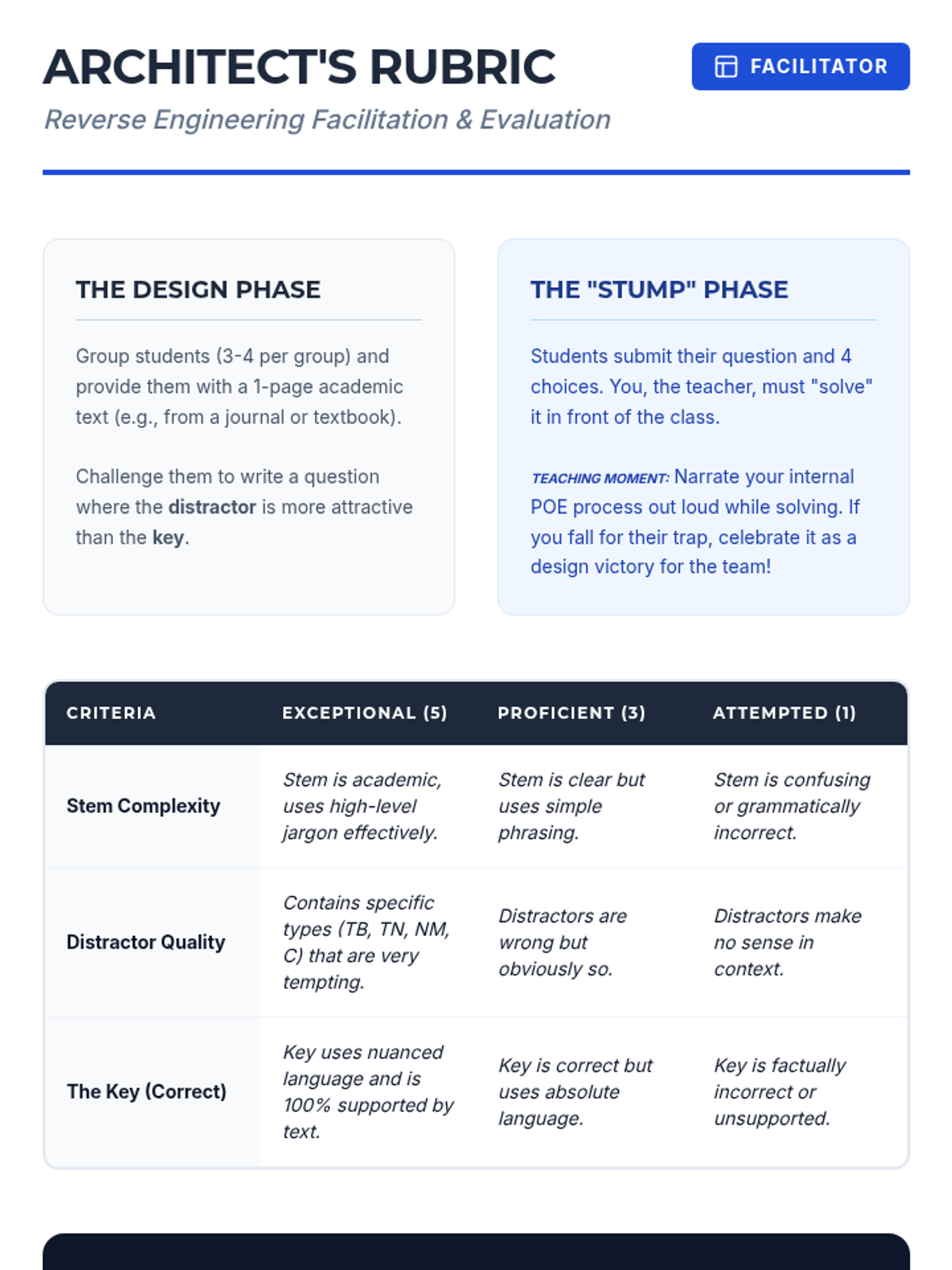
Students apply their knowledge by reverse-engineering test questions, creating their own complex distractors based on academic texts.
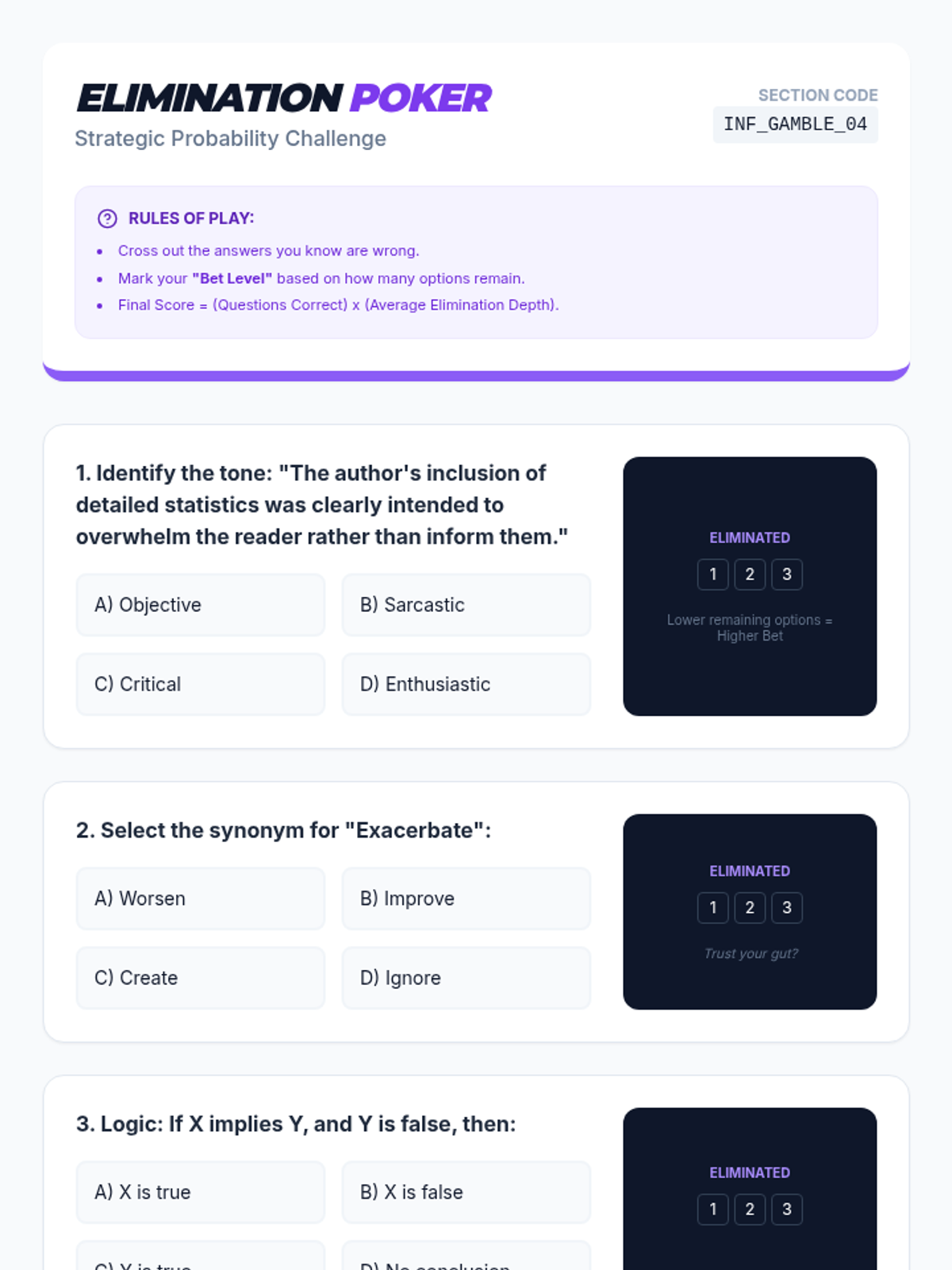
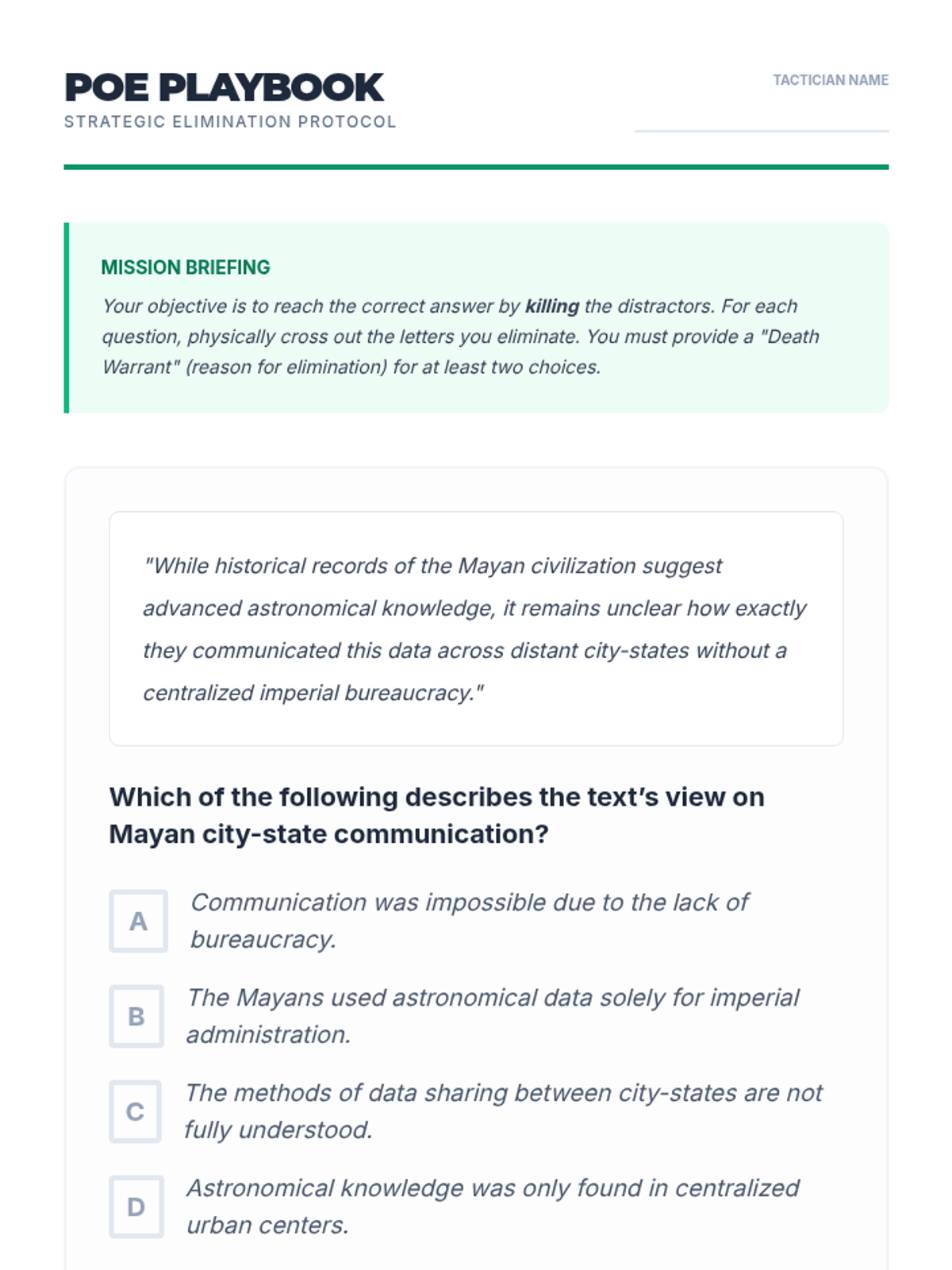
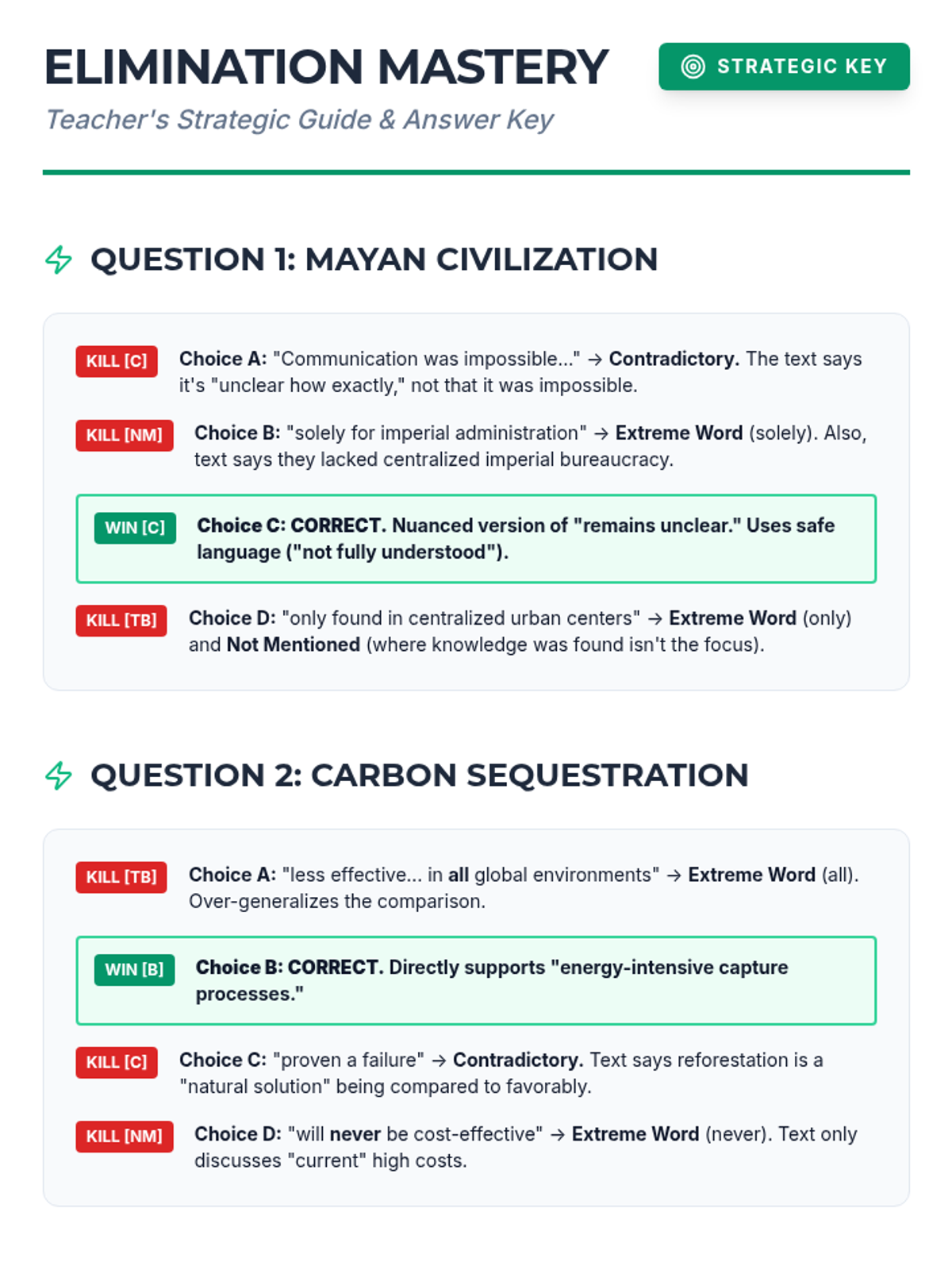
Students apply the mechanical strategy of crossing out definitely wrong answers to systematically improve their odds of selecting the correct choice.
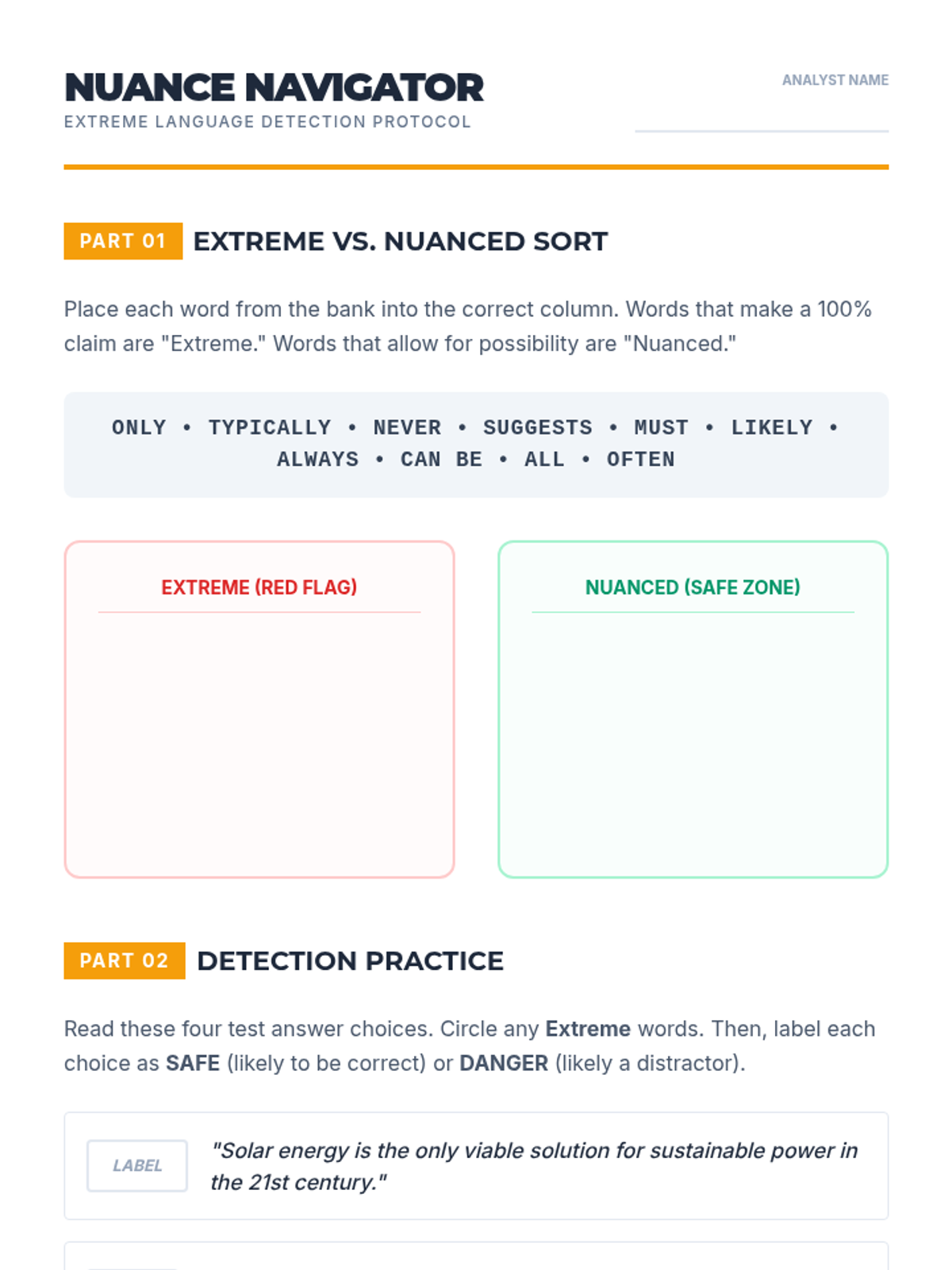
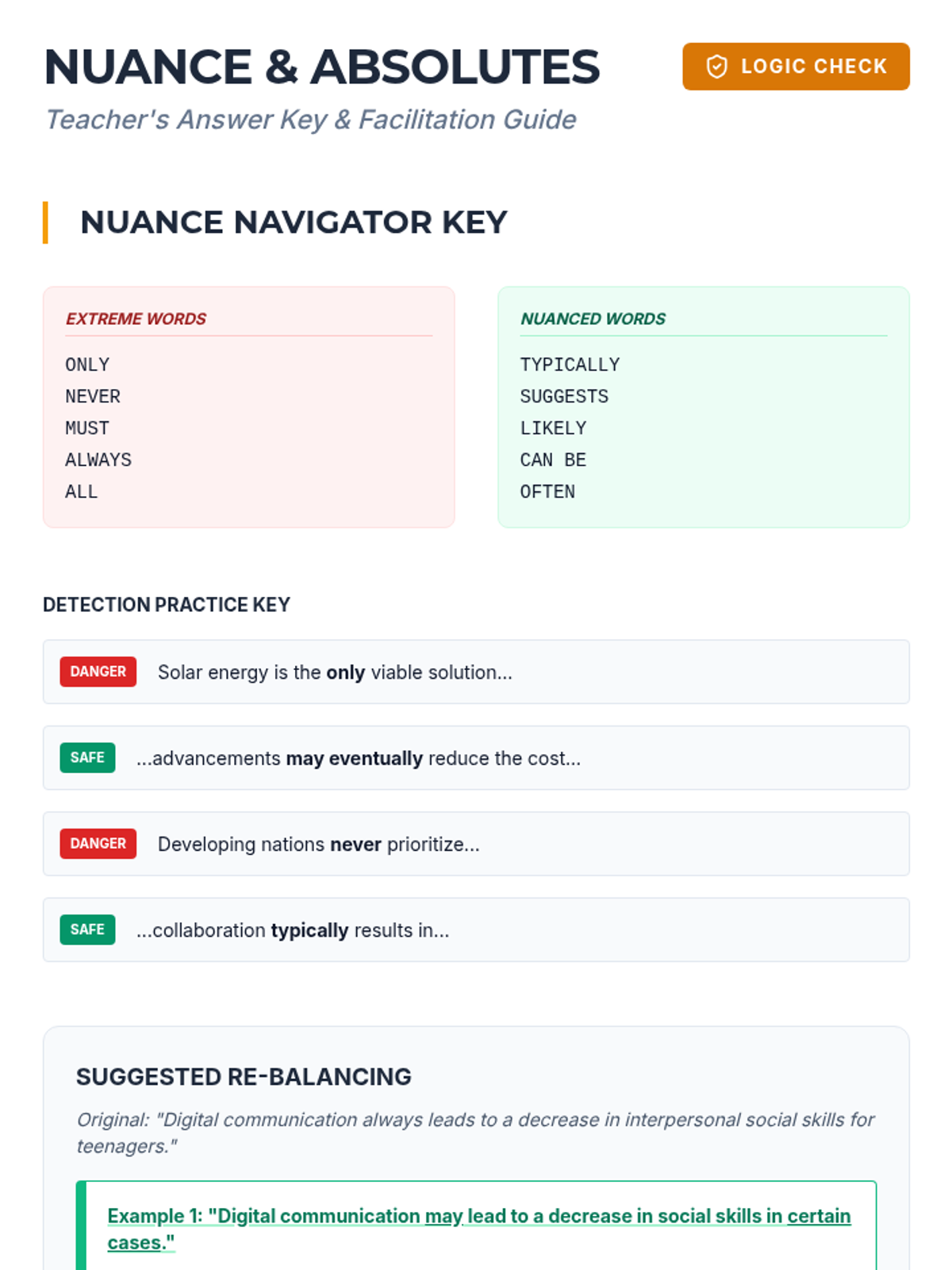
Students practice identifying 'red flag' absolute words and distinguishing them from the nuanced language typical of academic claims.