Essential grammar structures, high-frequency vocabulary, and foundational literacy skills. Equips learners with basic speaking and listening abilities for everyday interactions and introductory text comprehension.
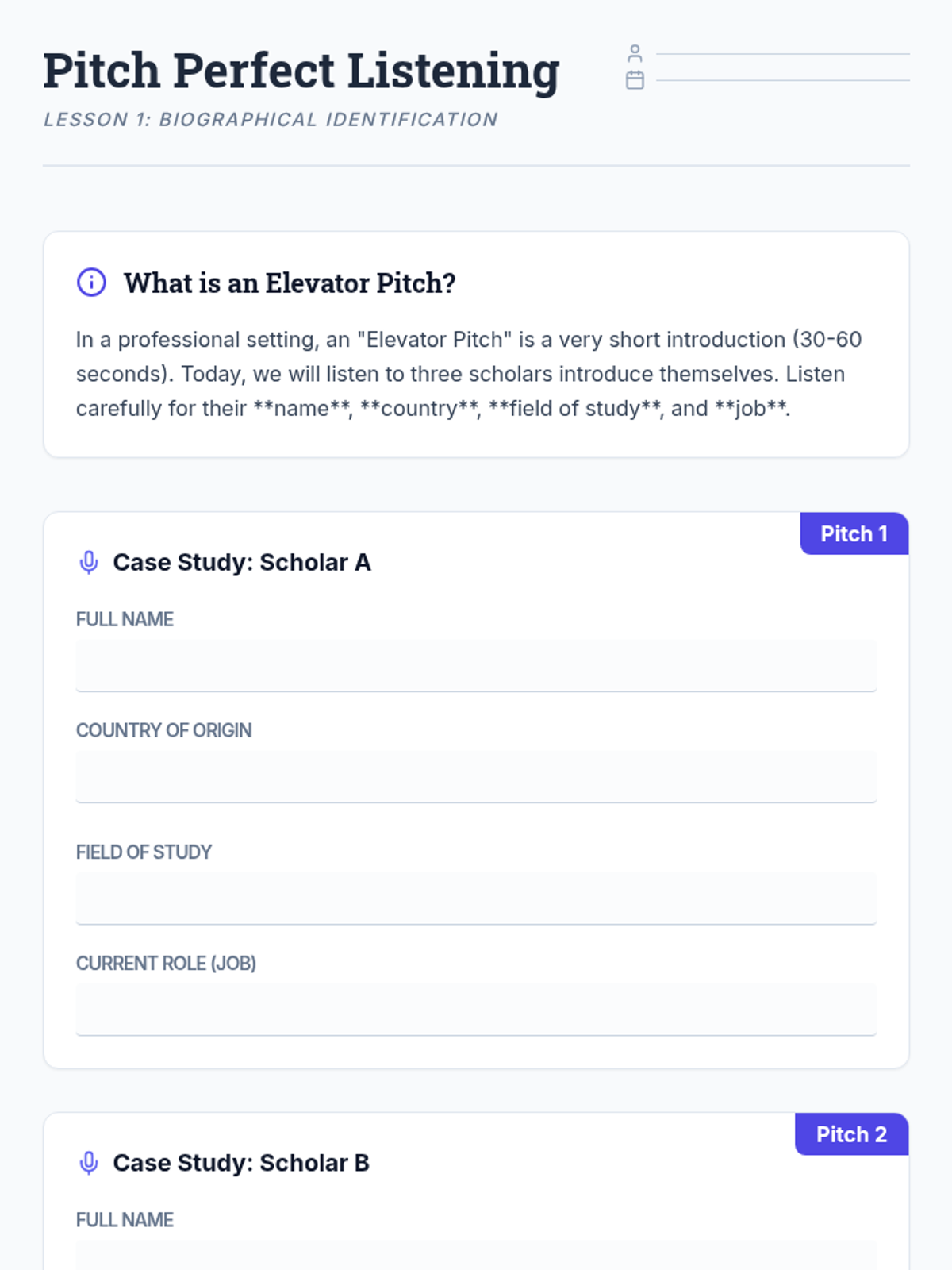
A comprehensive ESL listening sequence designed to help beginner undergraduate students navigate university life through auditory recognition of greetings, commands, spatial directions, and schedules. Students will progress from identifying social registers to synthesizing complex campus scenarios.
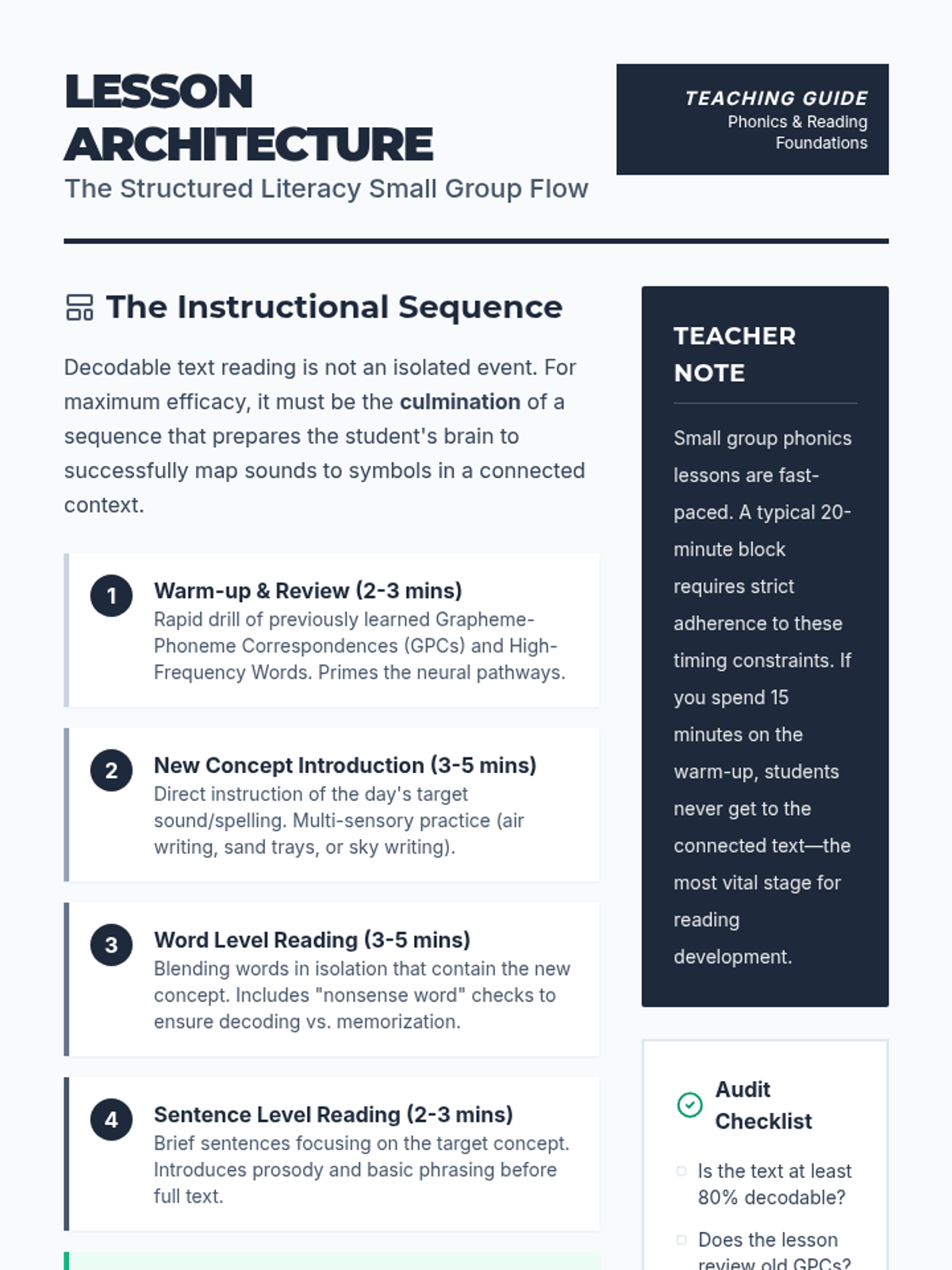
This sequence equips undergraduate education students with the practical 'instructional moves' needed to teach effectively with decodable texts. It covers the entire instructional arc from pre-reading warm-ups and structured lesson planning to real-time corrective feedback and post-reading fluency work, emphasizing evidence-based literacy practices over traditional guessing-based strategies.
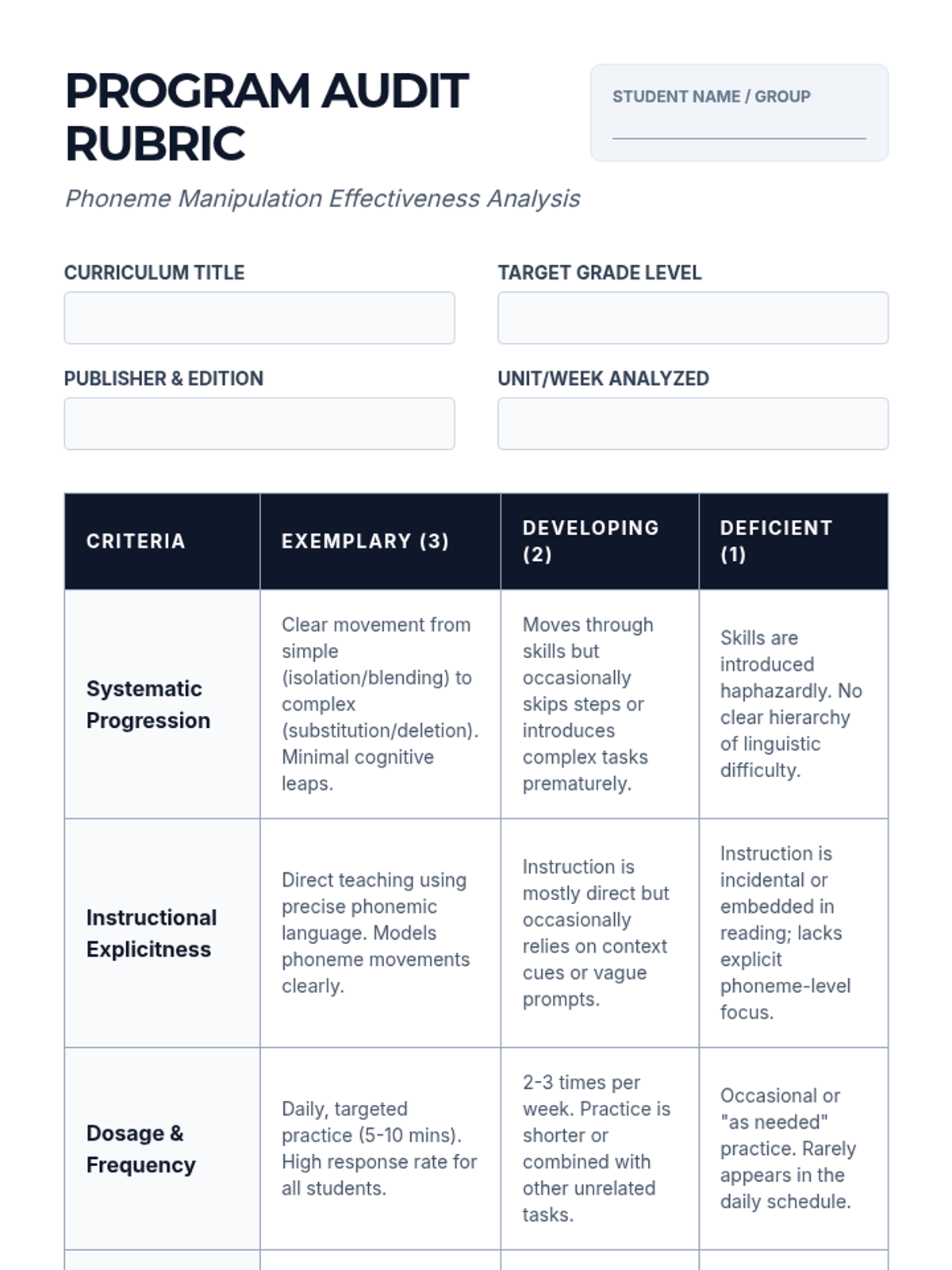
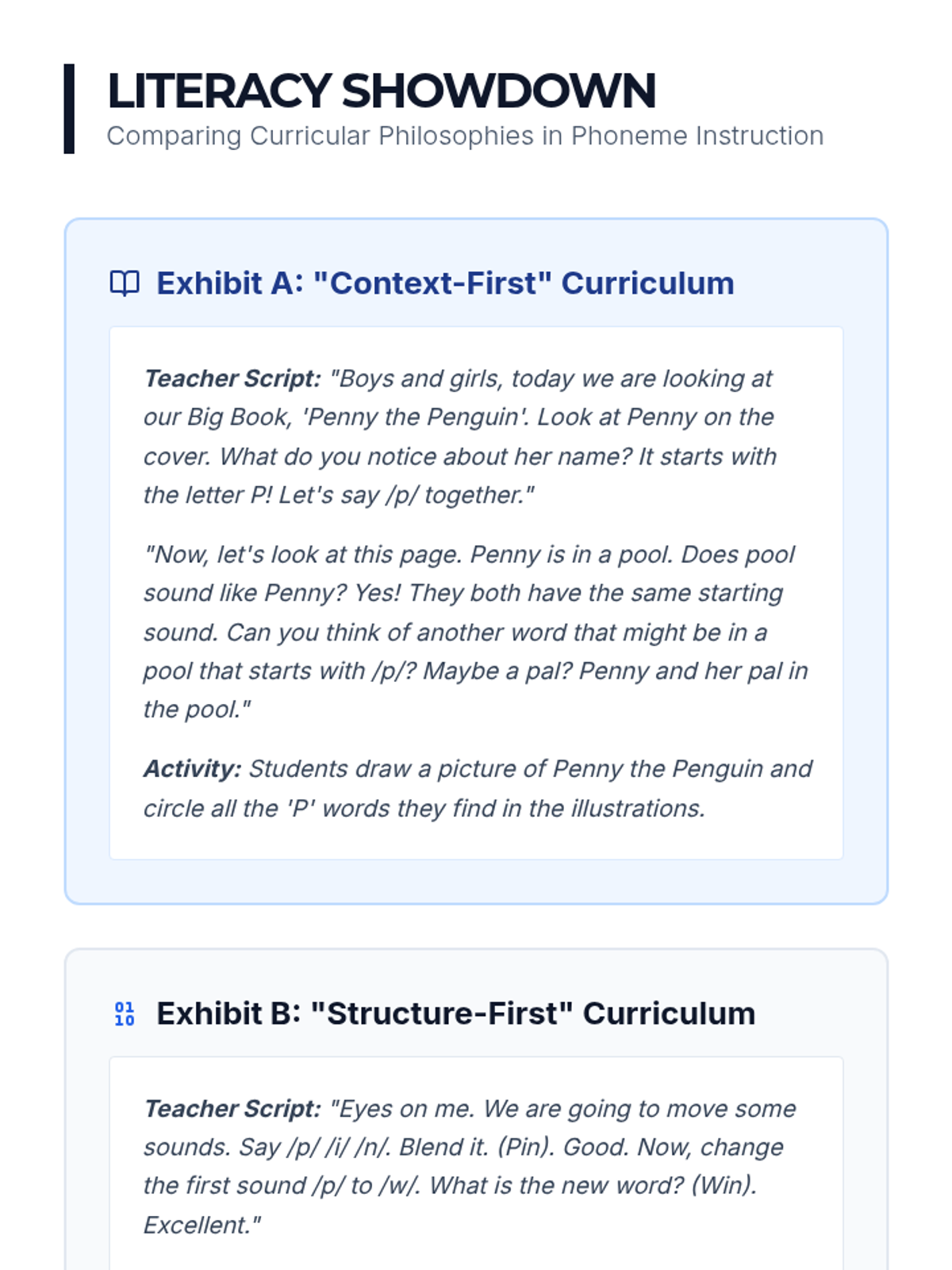
A design-focused sequence for pre-service teachers to master phoneme manipulation instruction through the lens of systematic progression and Universal Design for Learning. Students analyze curricula, design word chains, gamify tasks, and apply UDL principles.
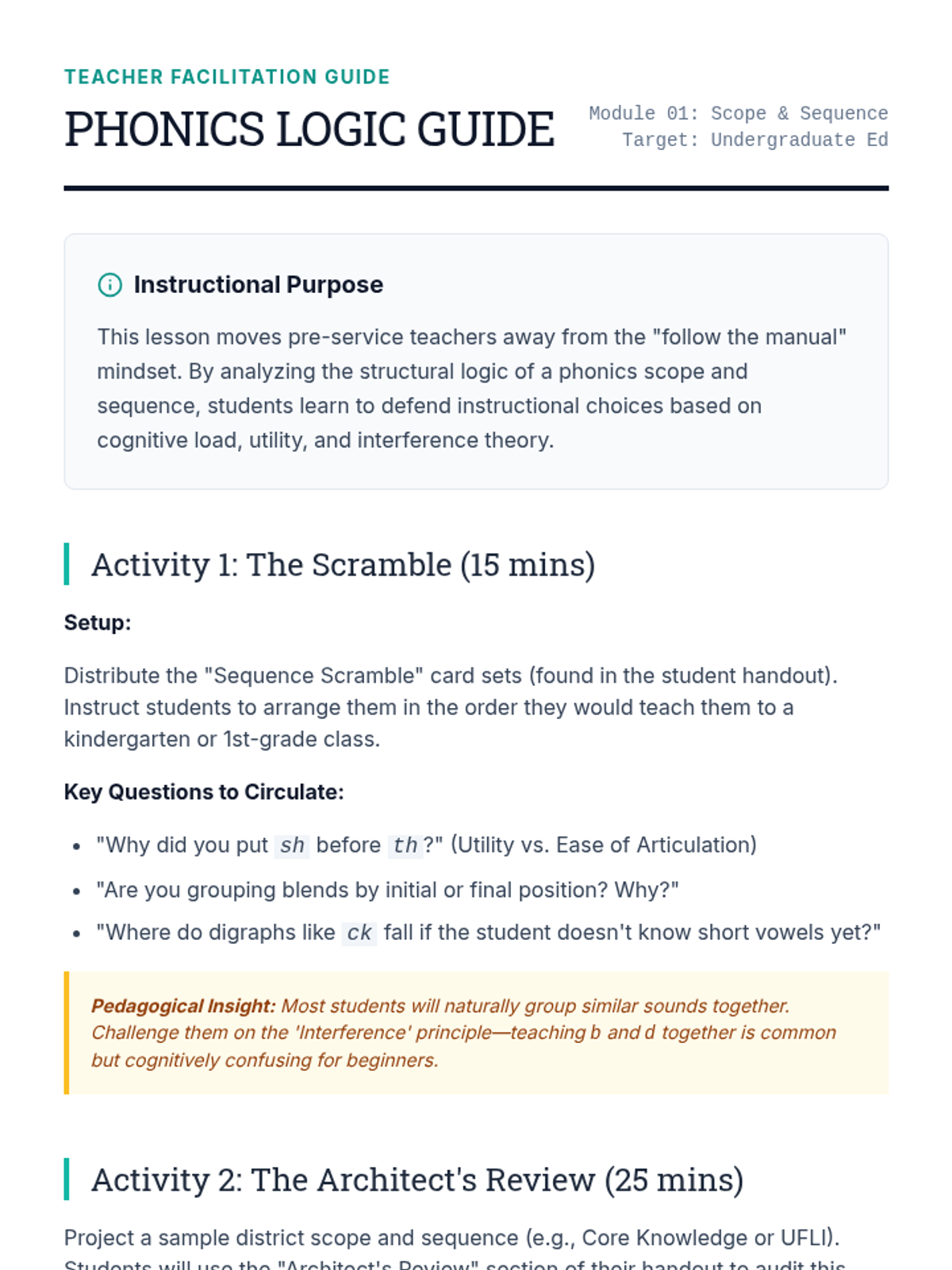
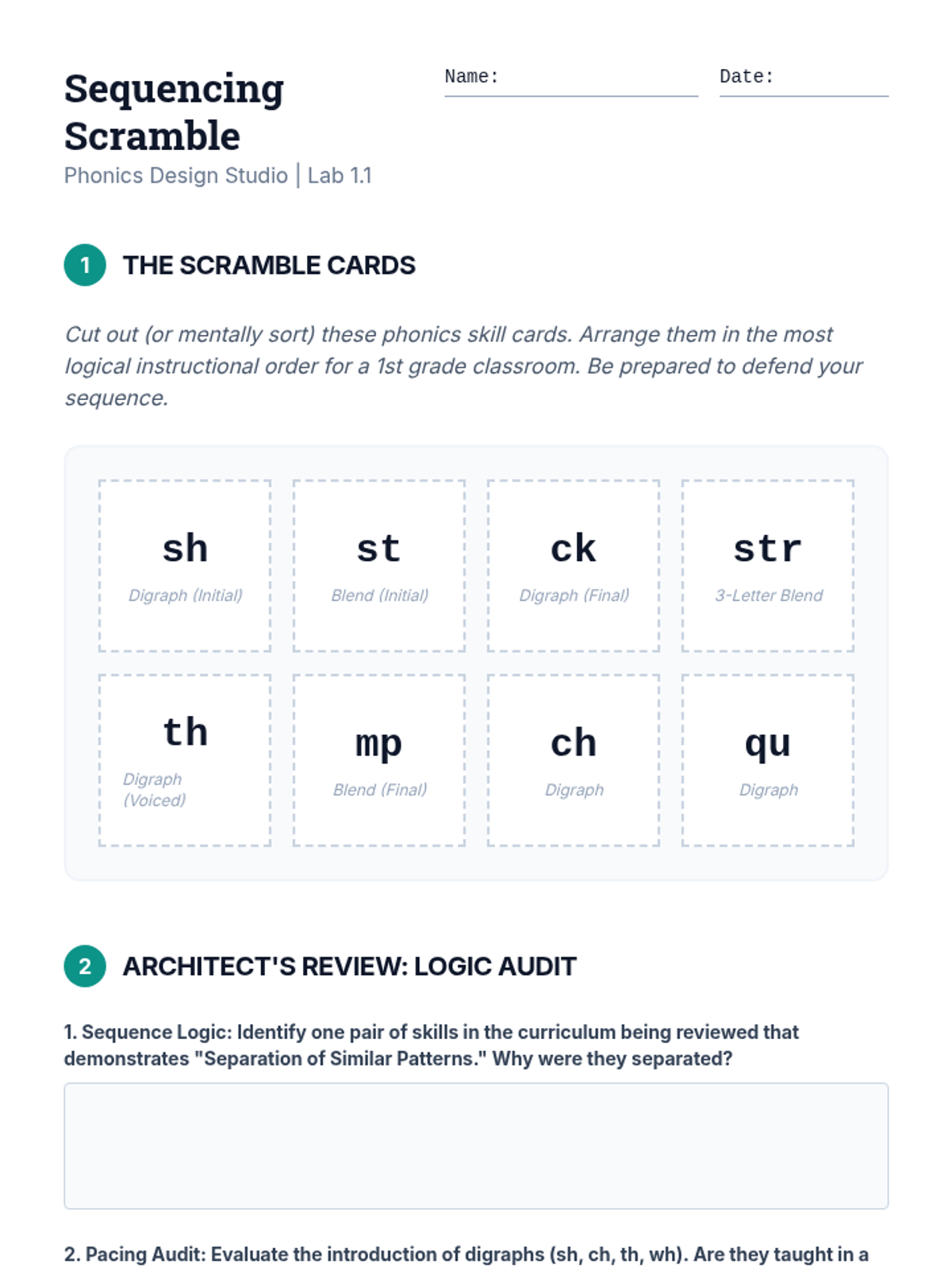
A pedagogical sequence for future educators focusing on evidence-based instructional design for phonics. Students move from curriculum sequencing to designing explicit instruction, orthographic mapping, word chaining, and text selection for blends and digraphs.
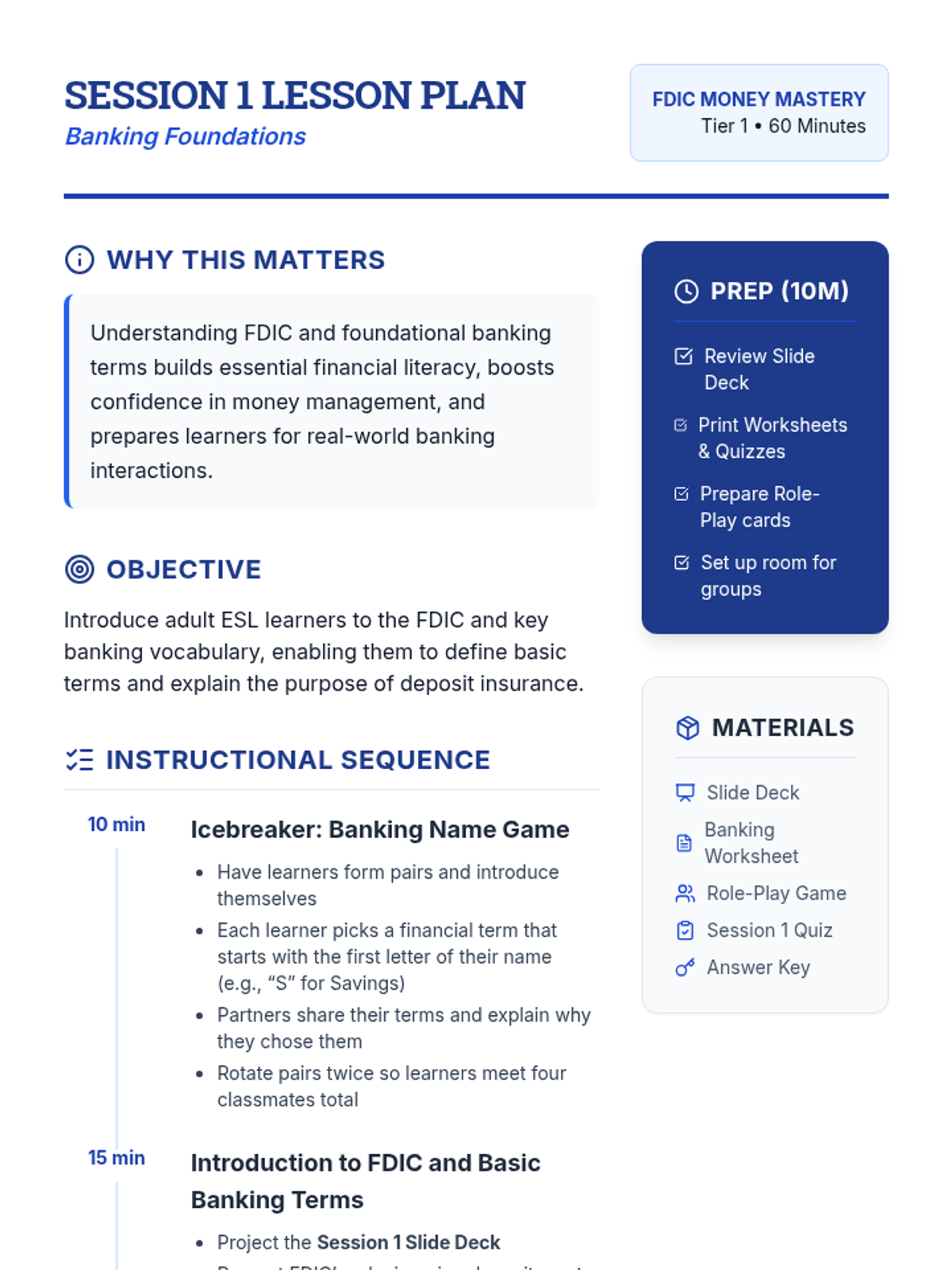
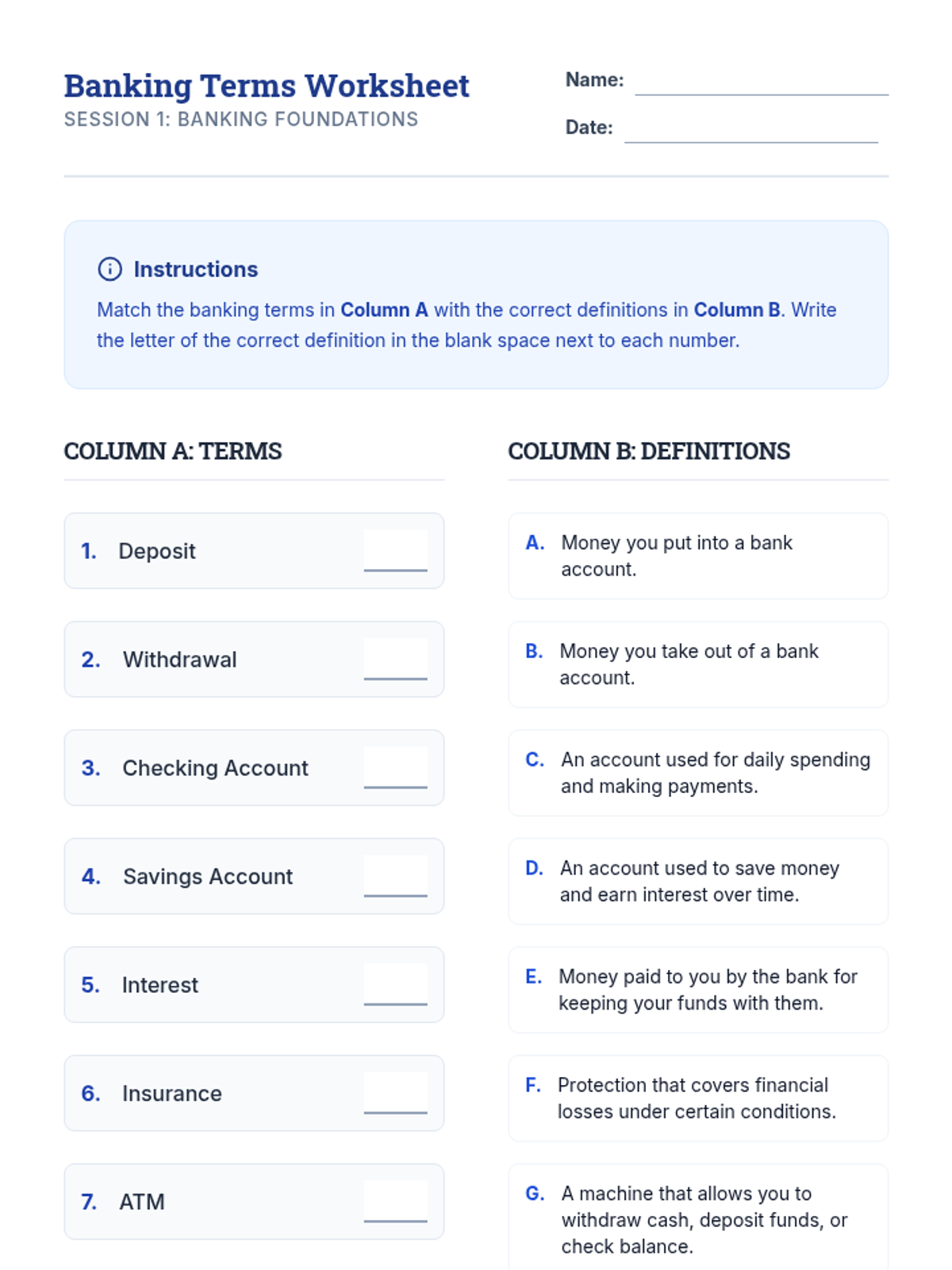
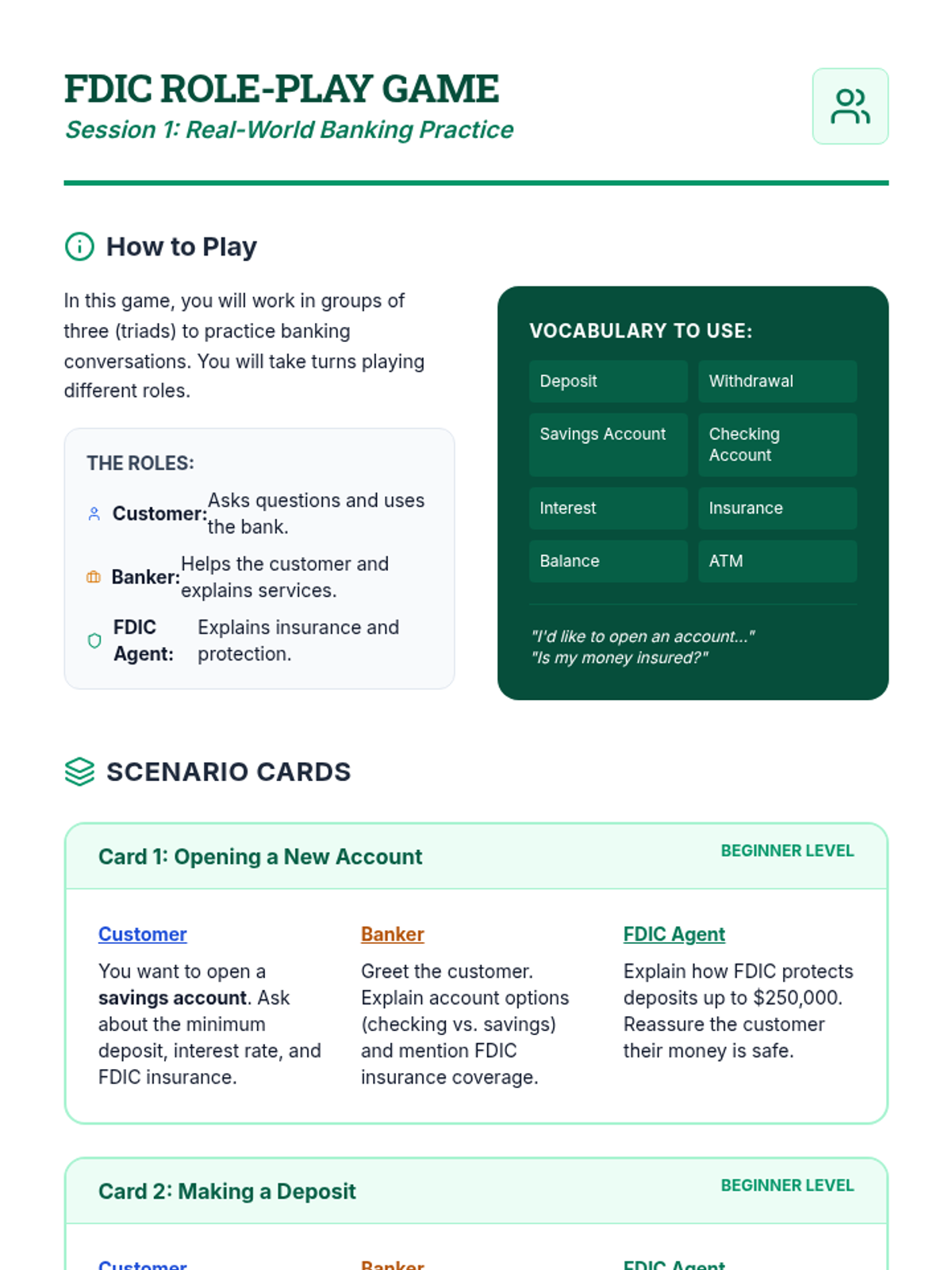
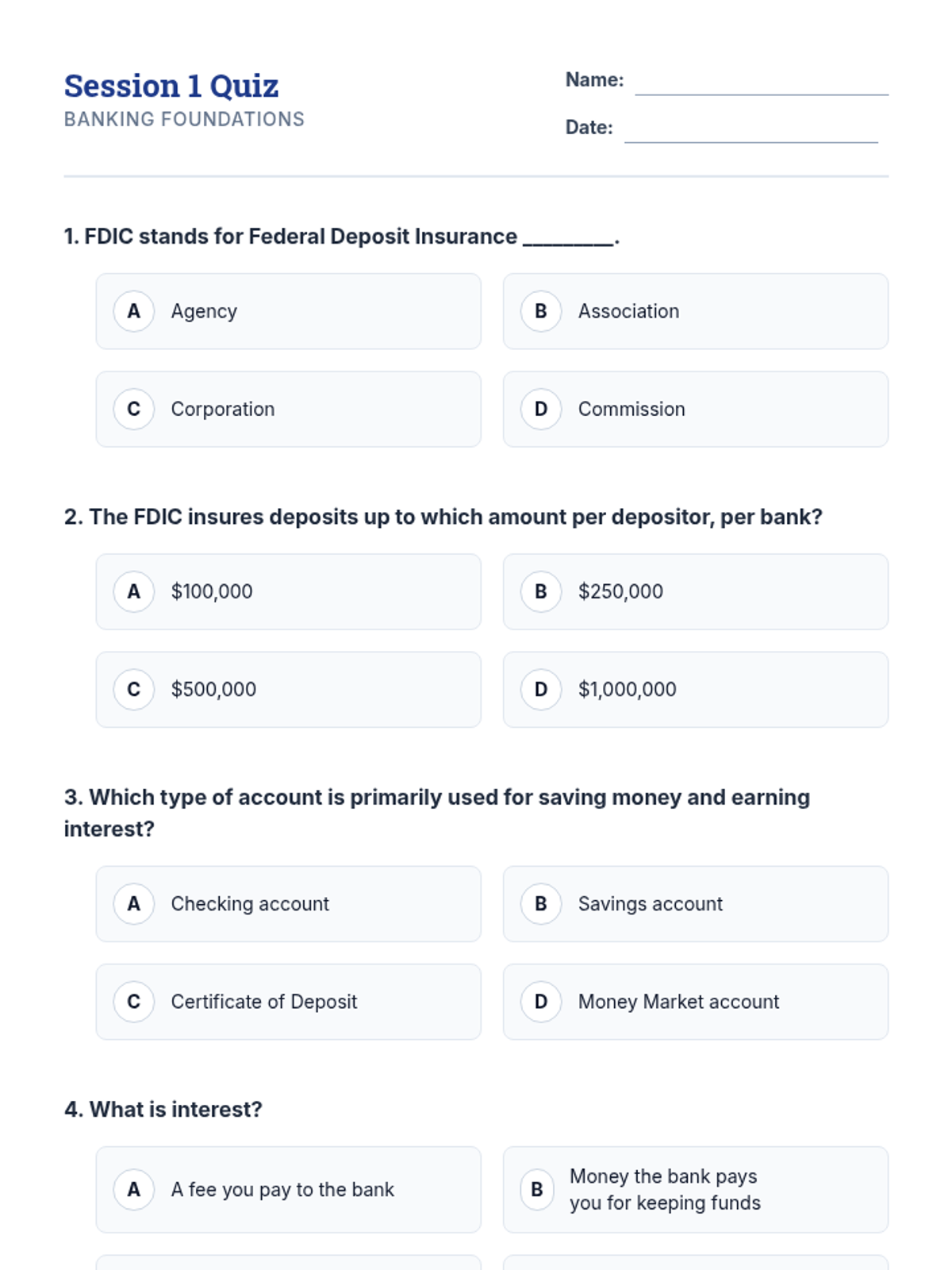
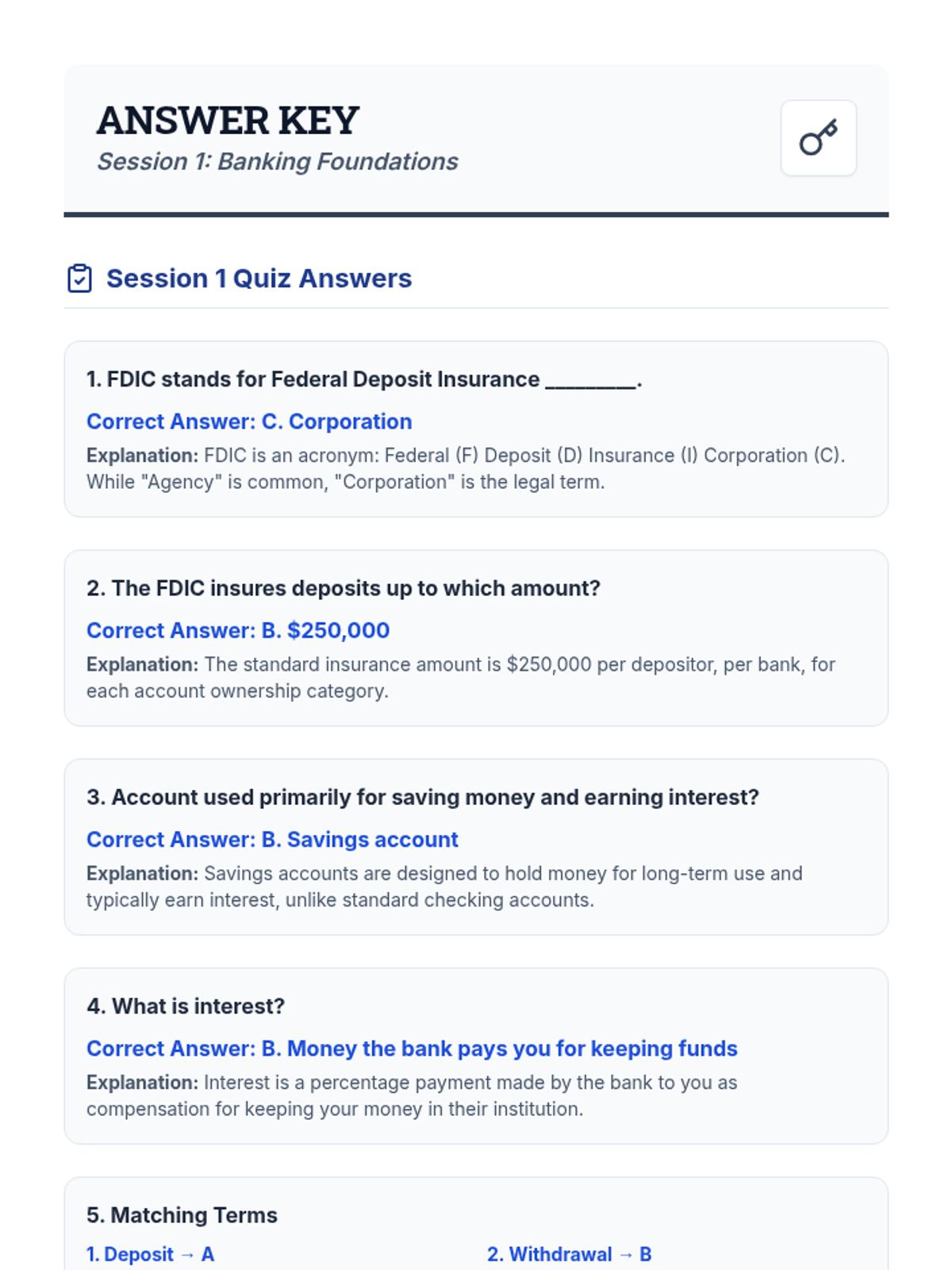
A 6-session course for adult ESL learners teaching financial literacy through FDIC resources. Students build vocabulary, understand deposit insurance, and practice real-life money skills.
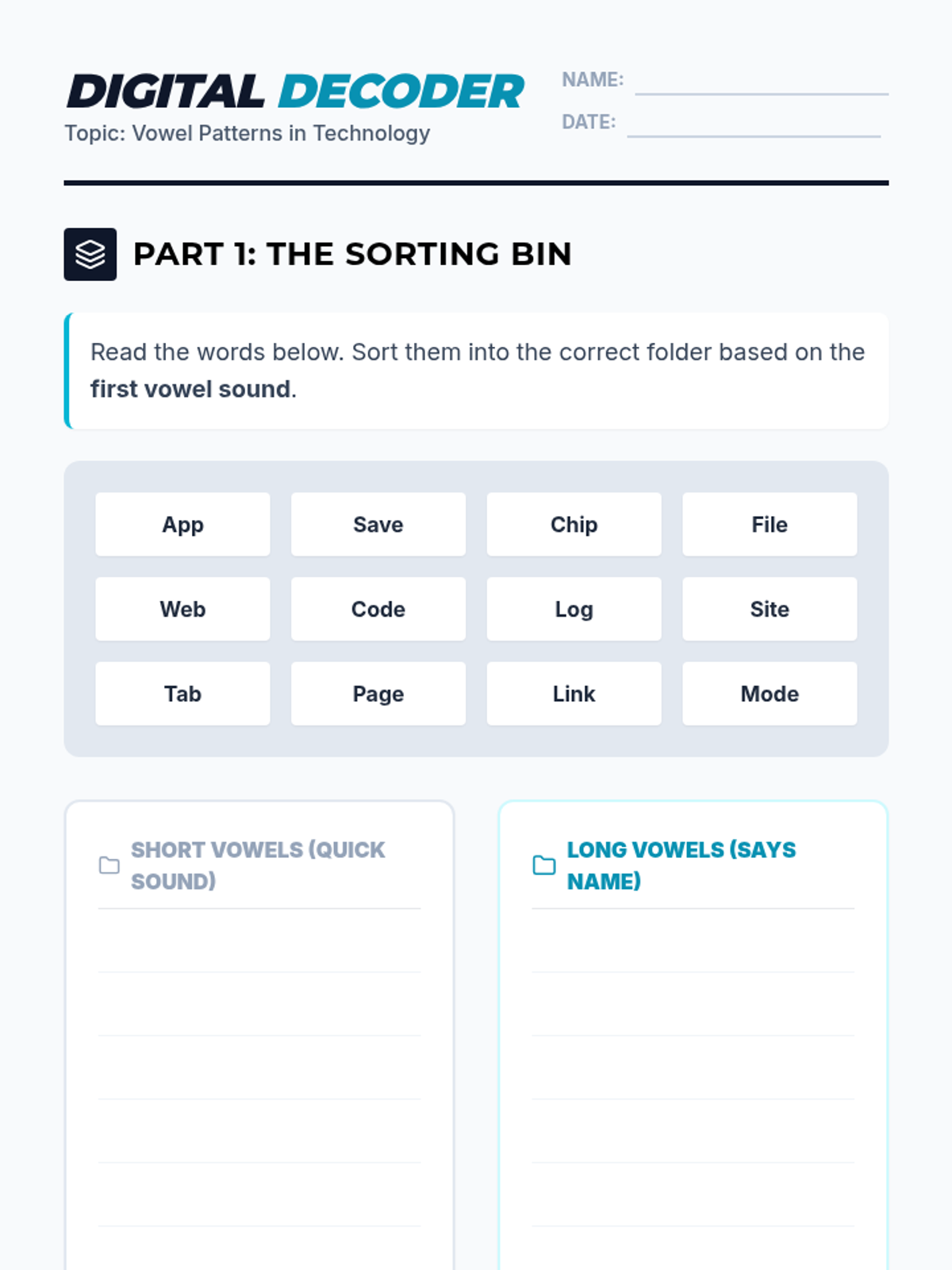
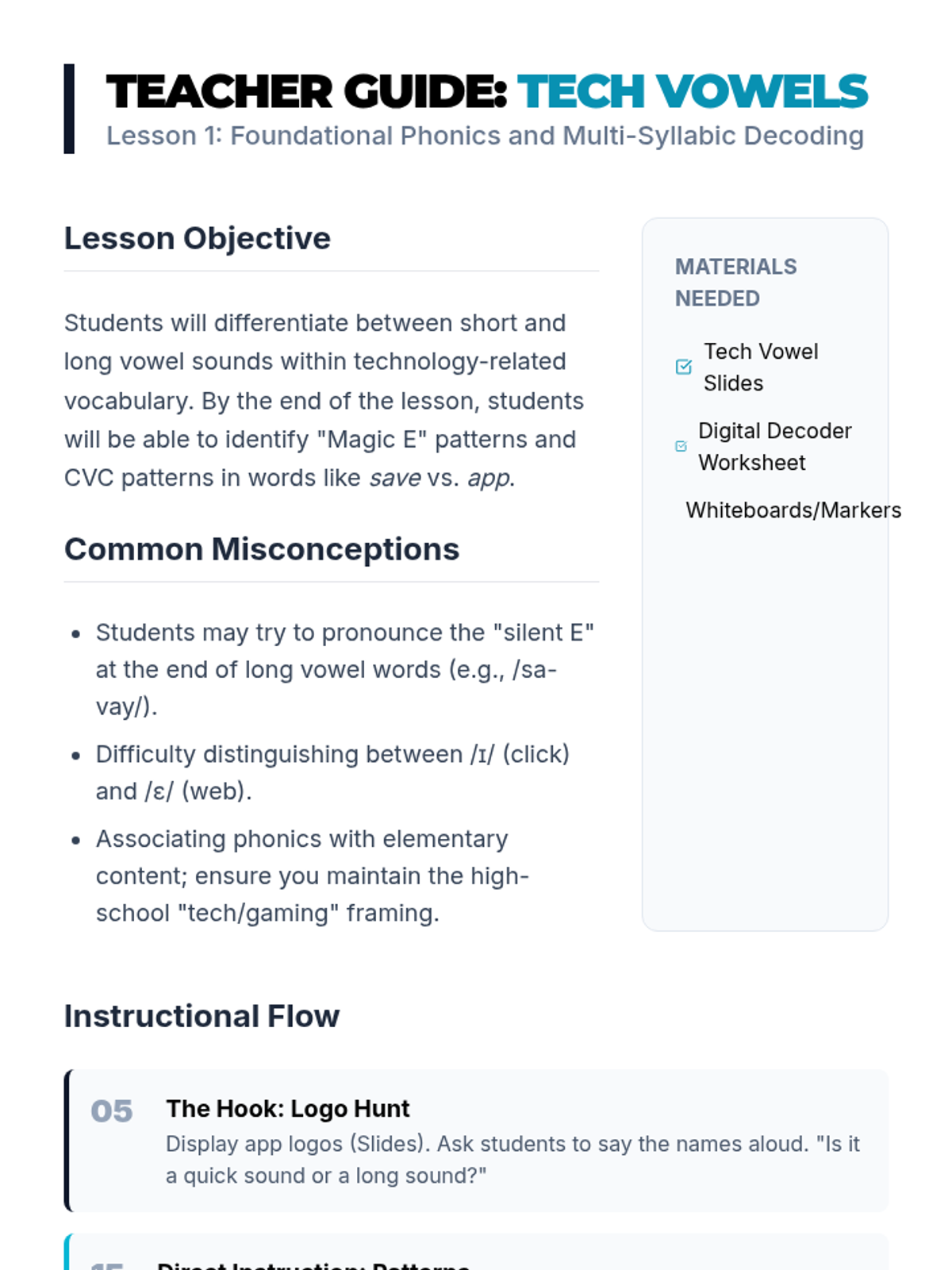
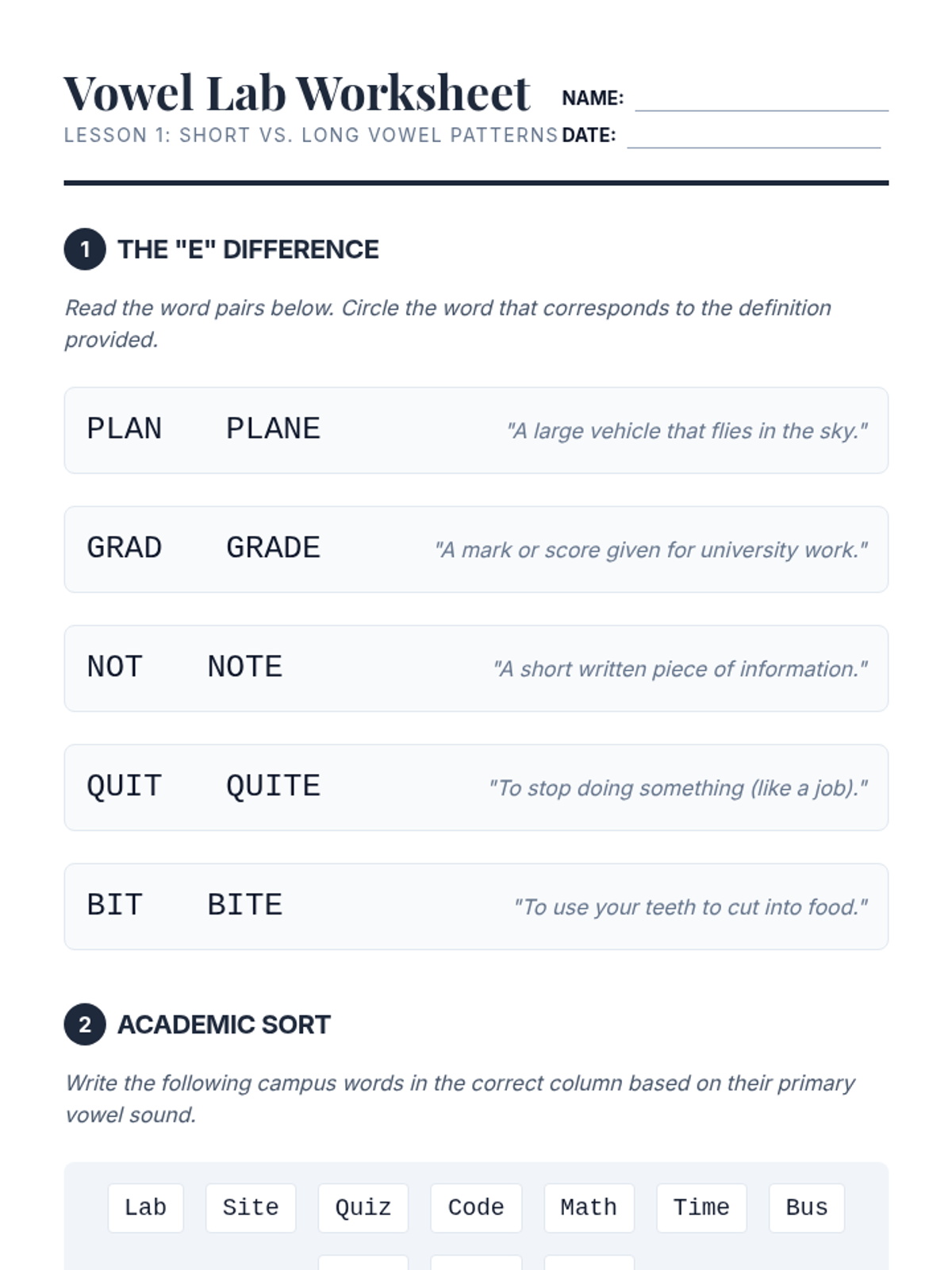
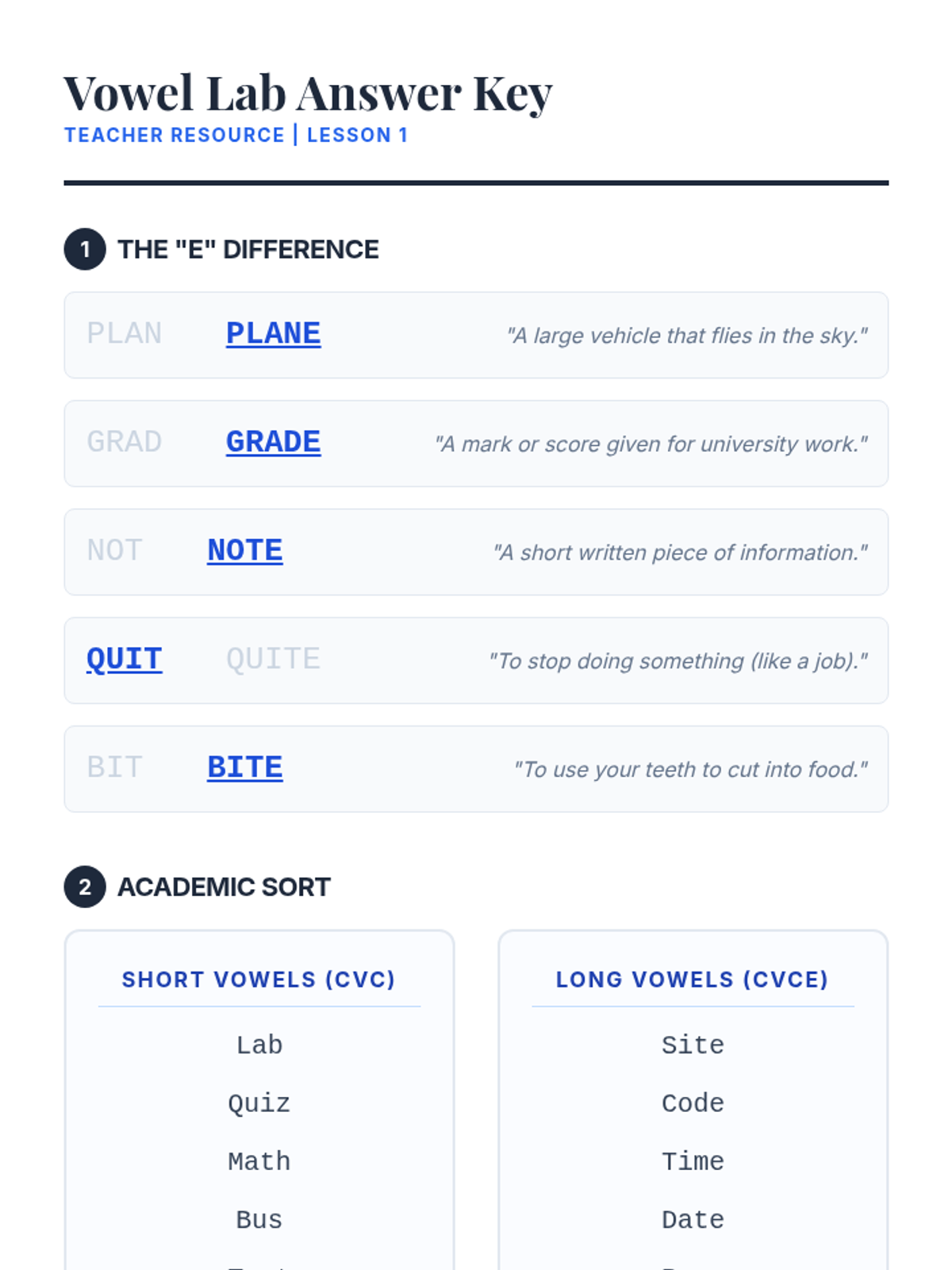
A systematic phonics and decoding sequence designed for 10th-grade English learners, focusing on age-appropriate tech, career, and social vocabulary rather than elementary themes. Students move from basic vowel sounds to complex multi-syllabic academic terms.
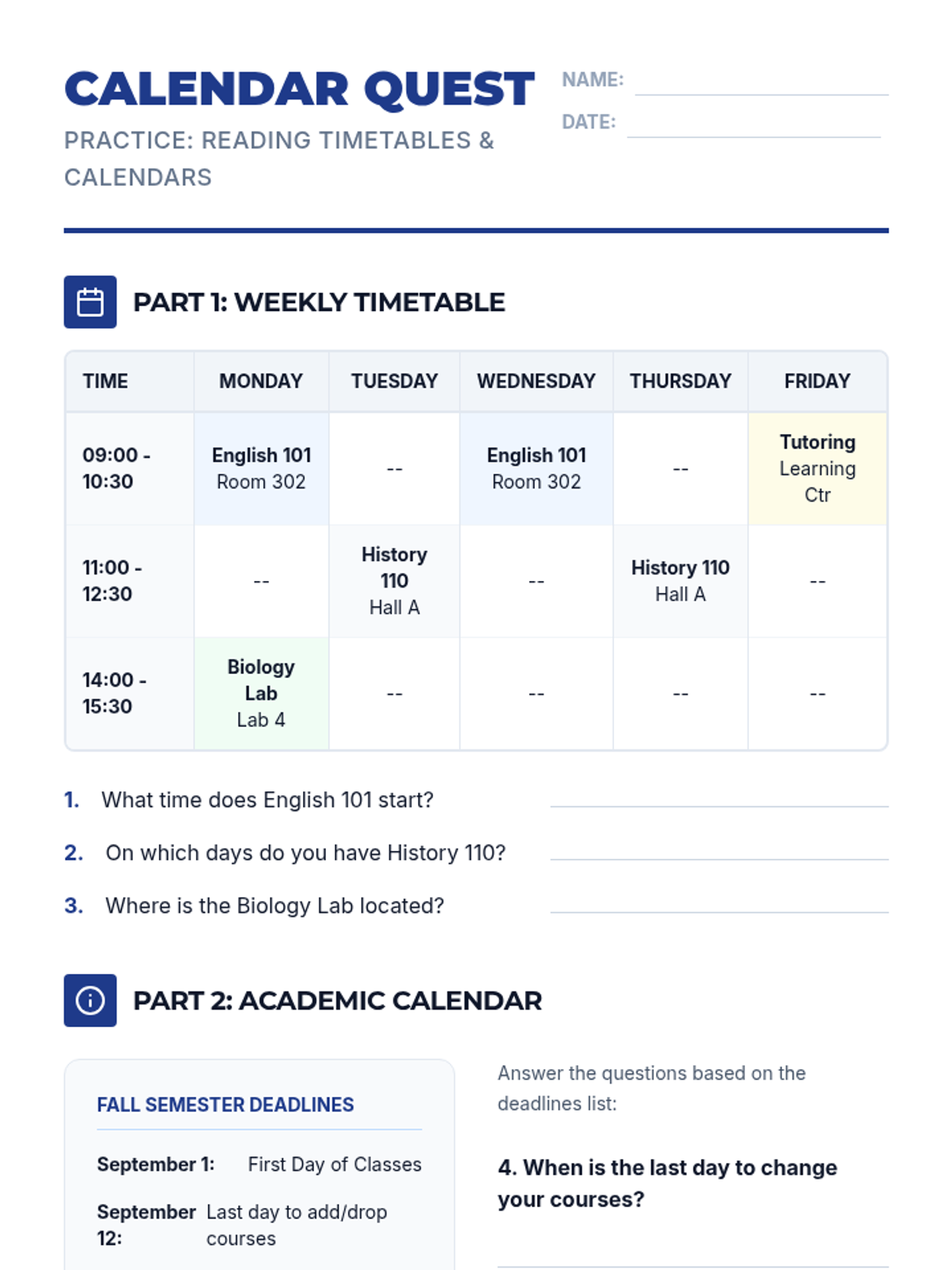
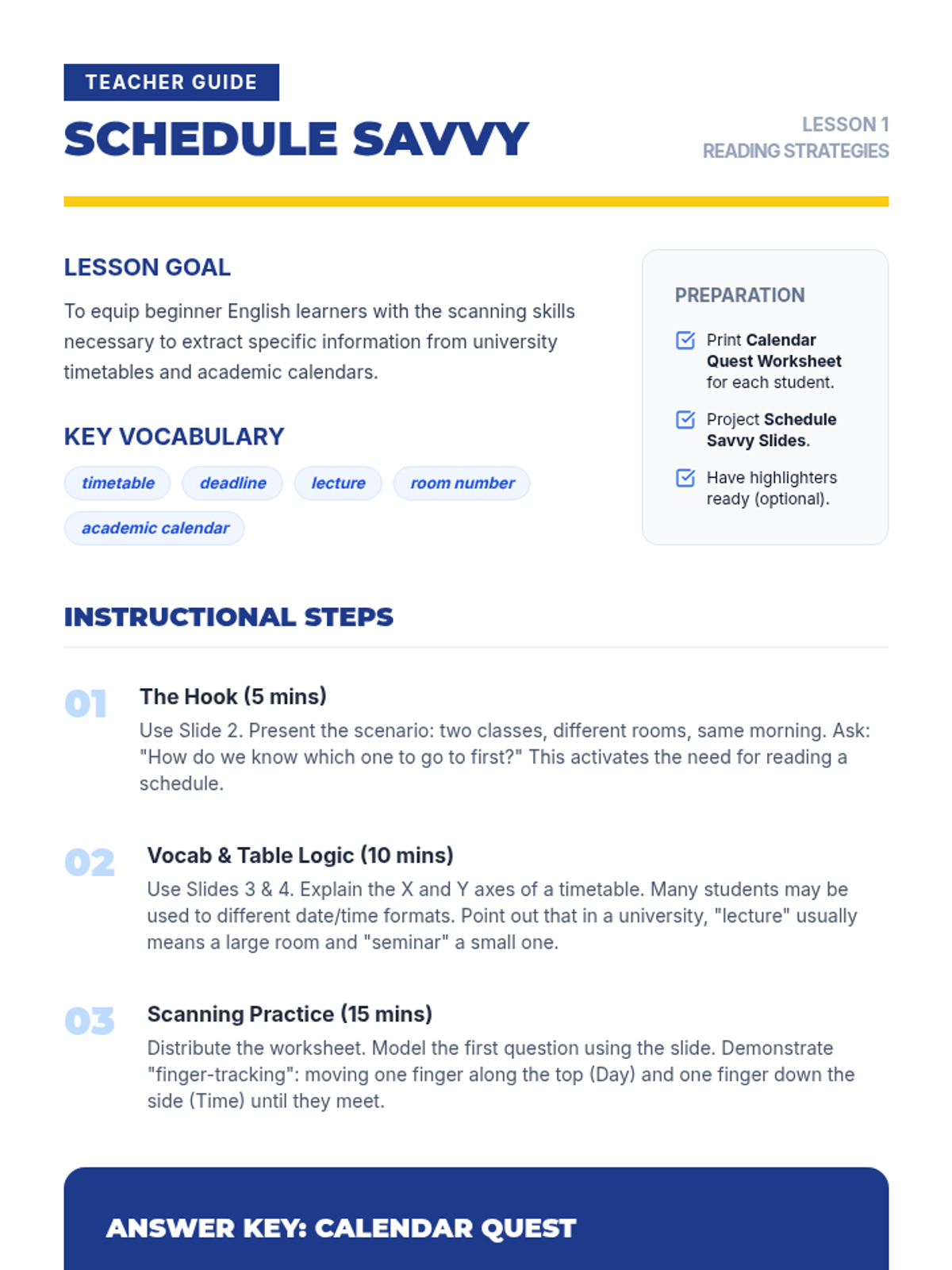
A simulation-based sequence for beginner English learners (undergraduate international students) focused on functional reading tasks. Students learn to navigate campus life by interpreting schedules, syllabi, maps, emails, and service menus.
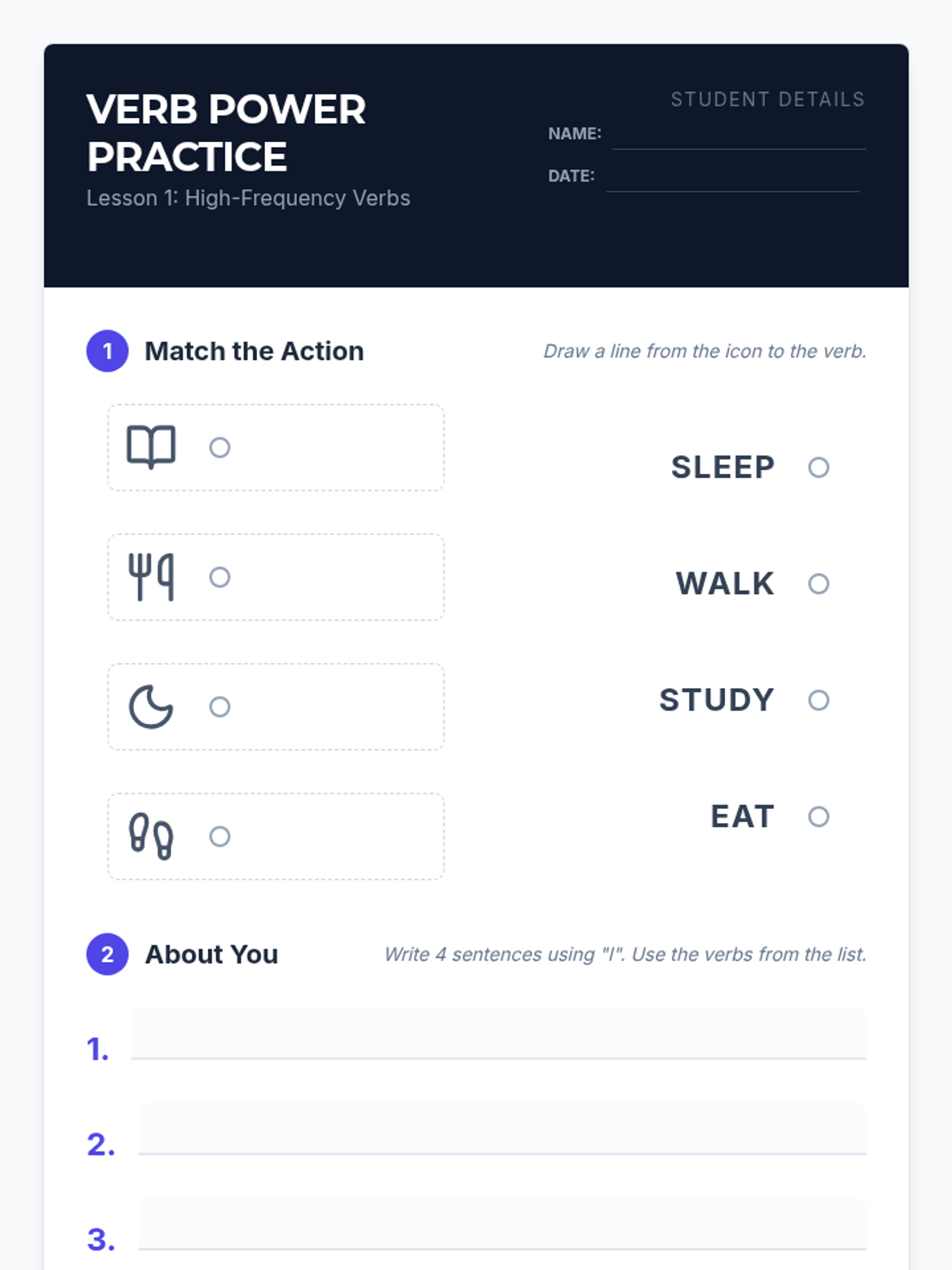
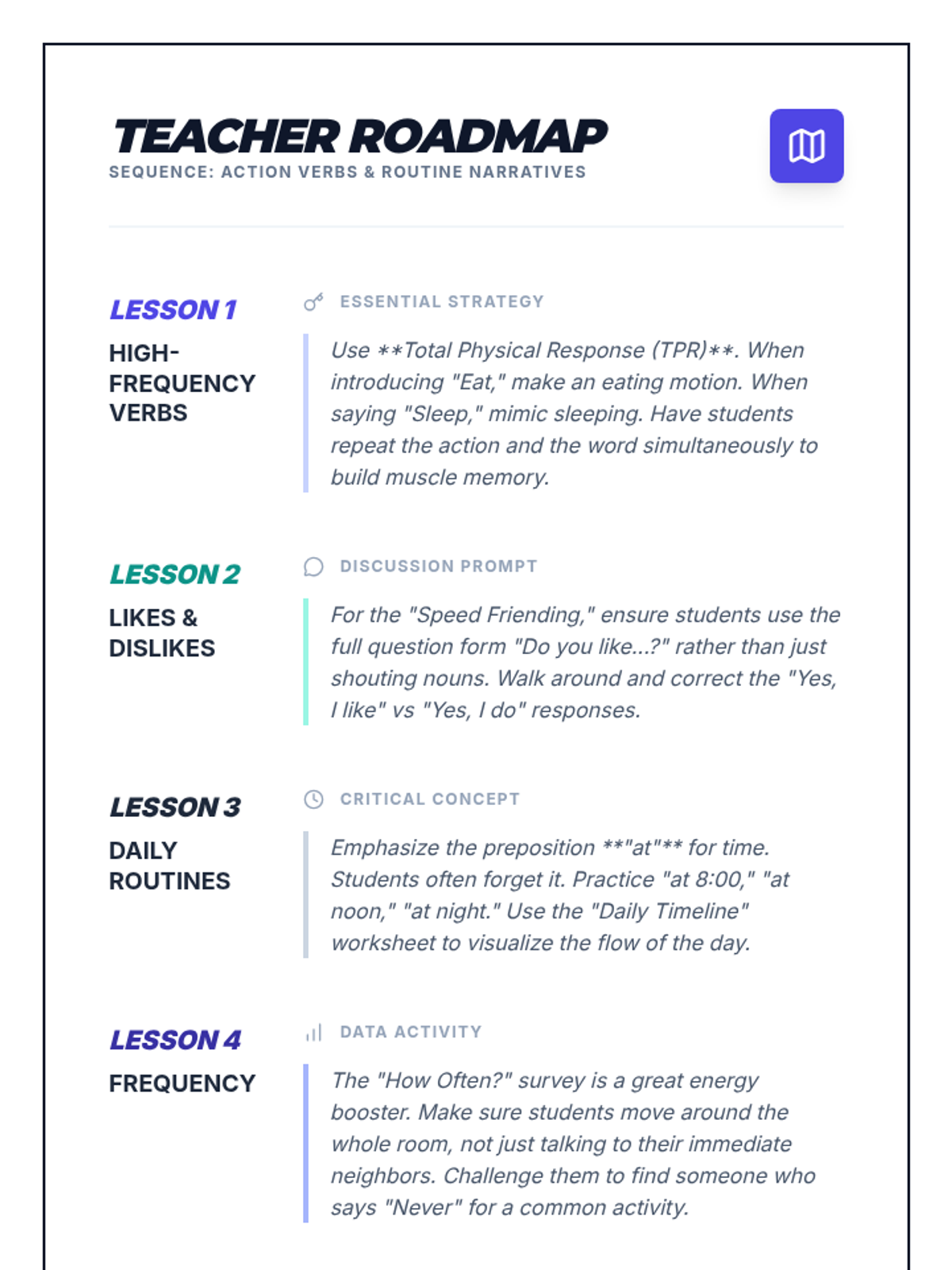
A beginner English sequence for undergraduate students focusing on high-frequency verbs, likes and dislikes, daily routines, and frequency adverbs to enable personal narrative and peer interviews.
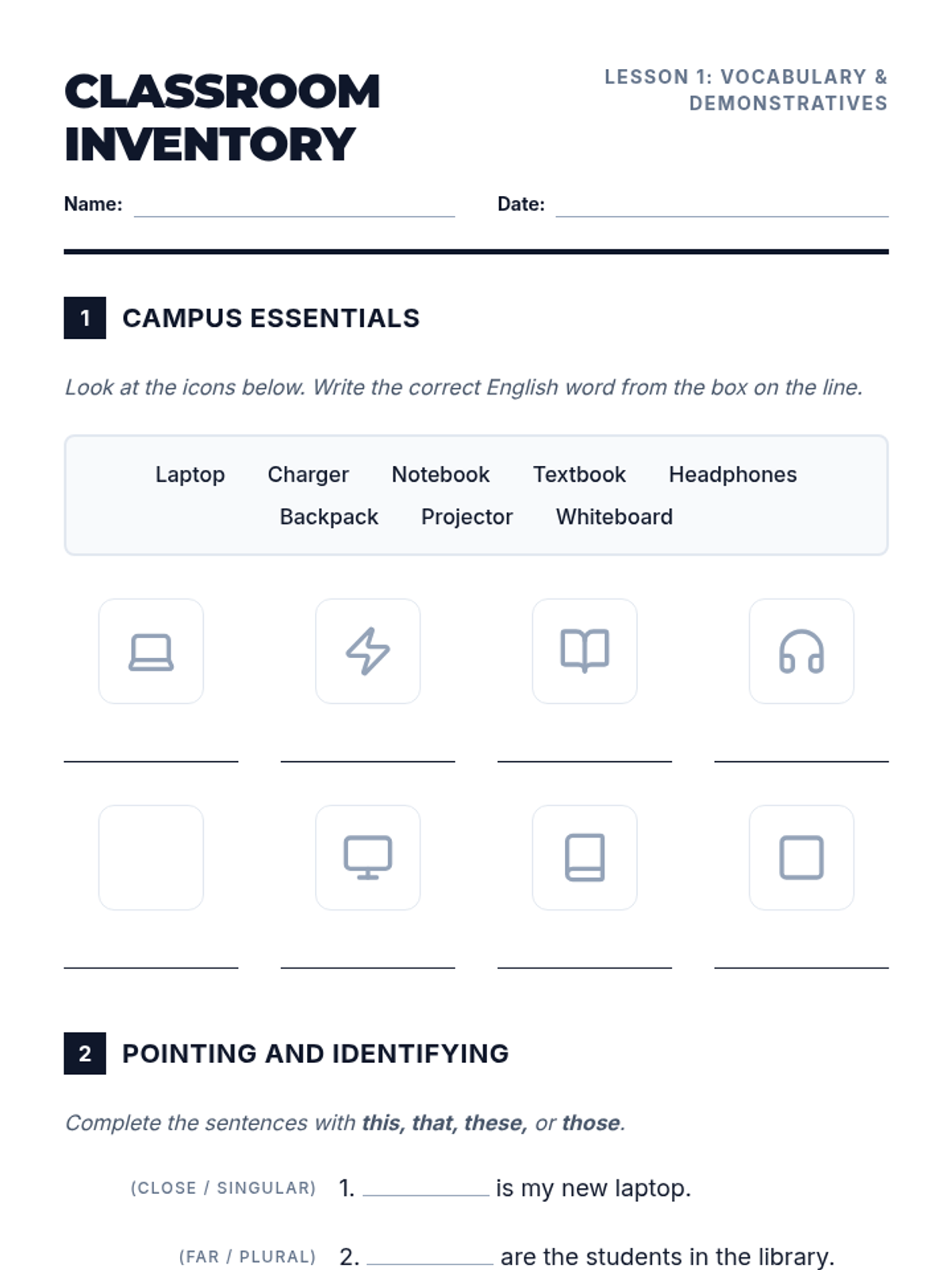
A beginner English sequence for undergraduate students focused on describing physical objects, environments, and locations. Students progress from naming classroom items to providing detailed descriptions for a 'Lost and Found' case study.
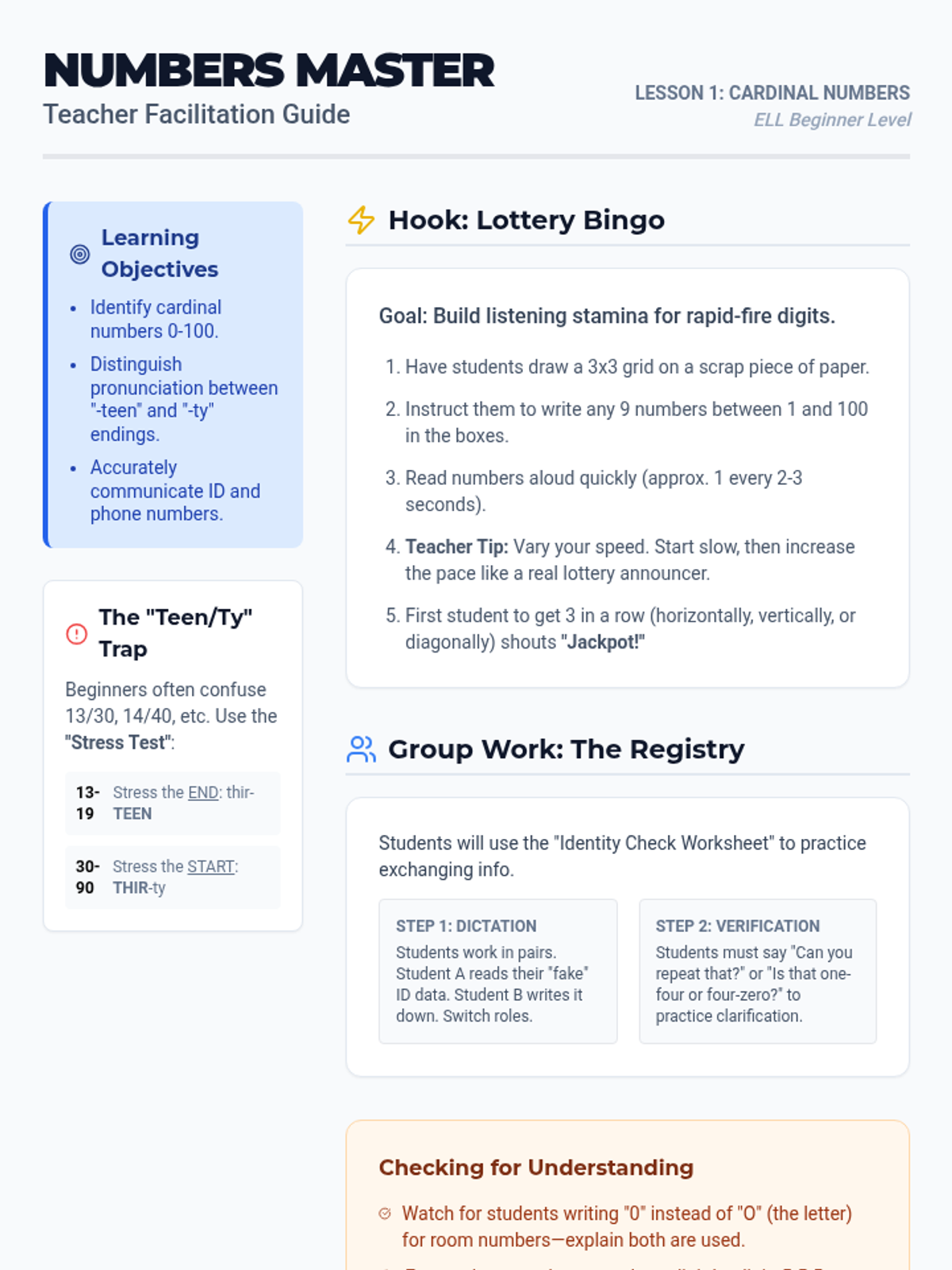
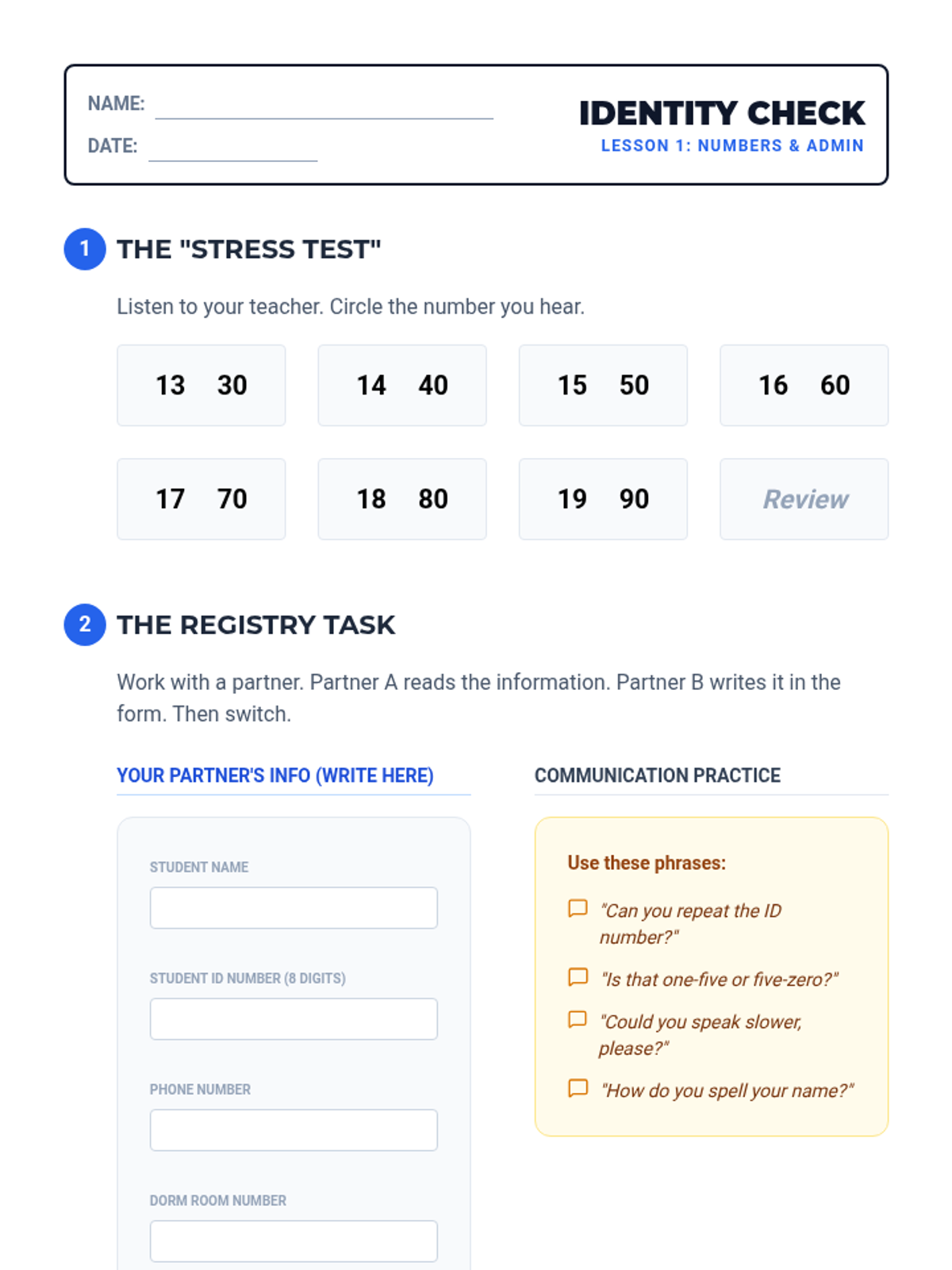
A comprehensive ESL sequence for undergraduate students focusing on numbers, time management, and financial transactions within a university context. Students move from basic numeracy to complex scheduling and budgeting tasks using real-world academic scenarios.
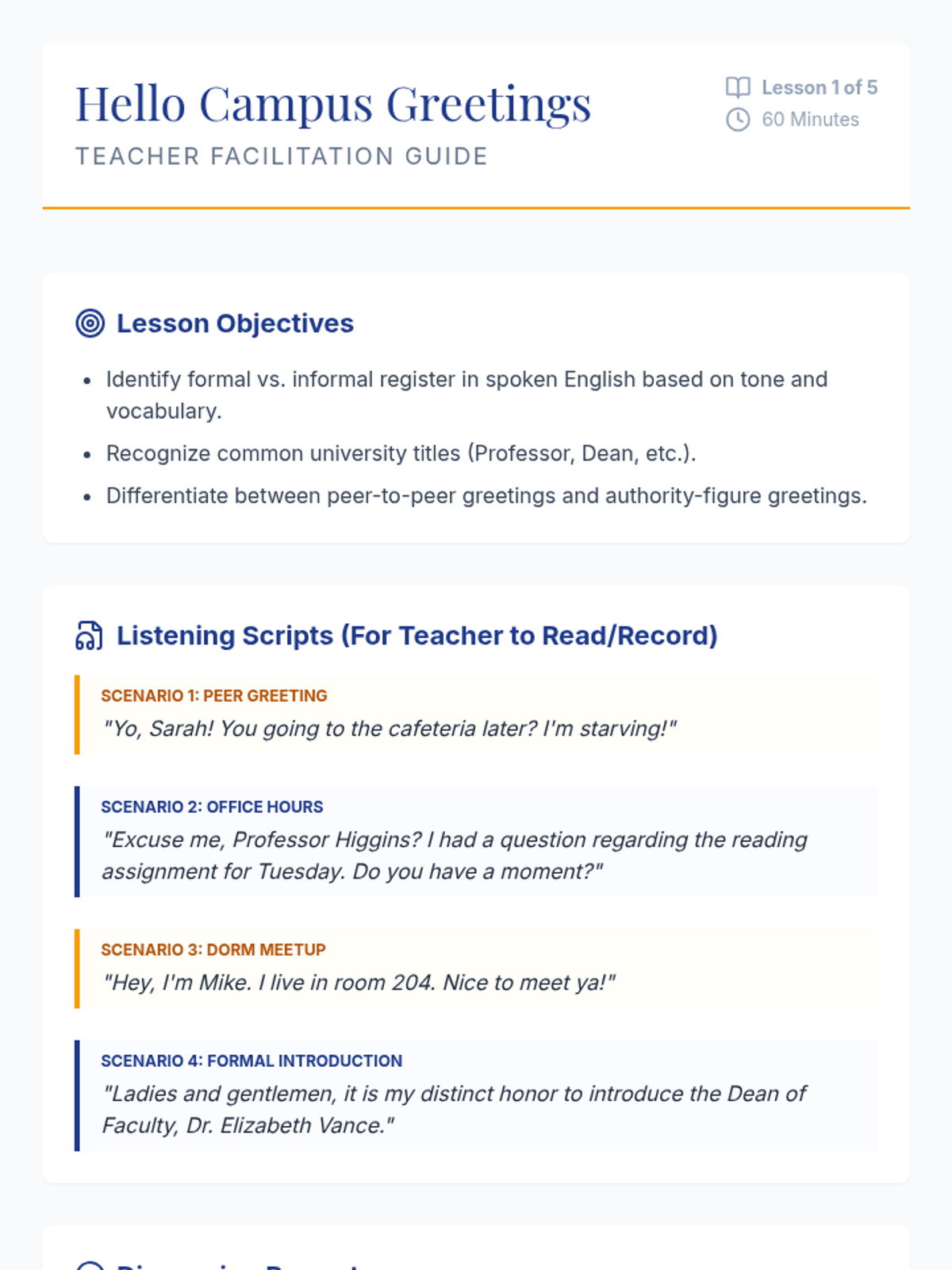
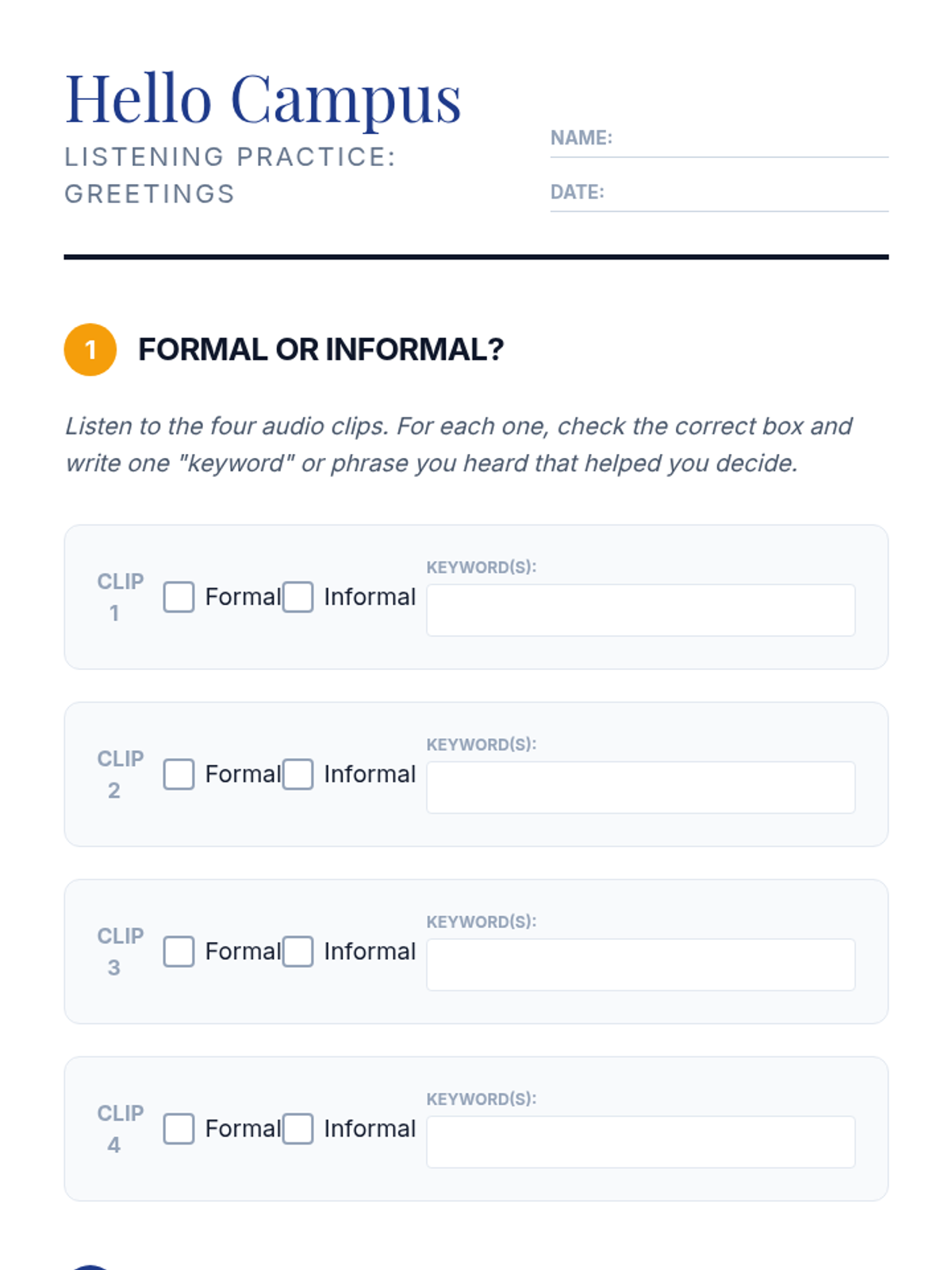
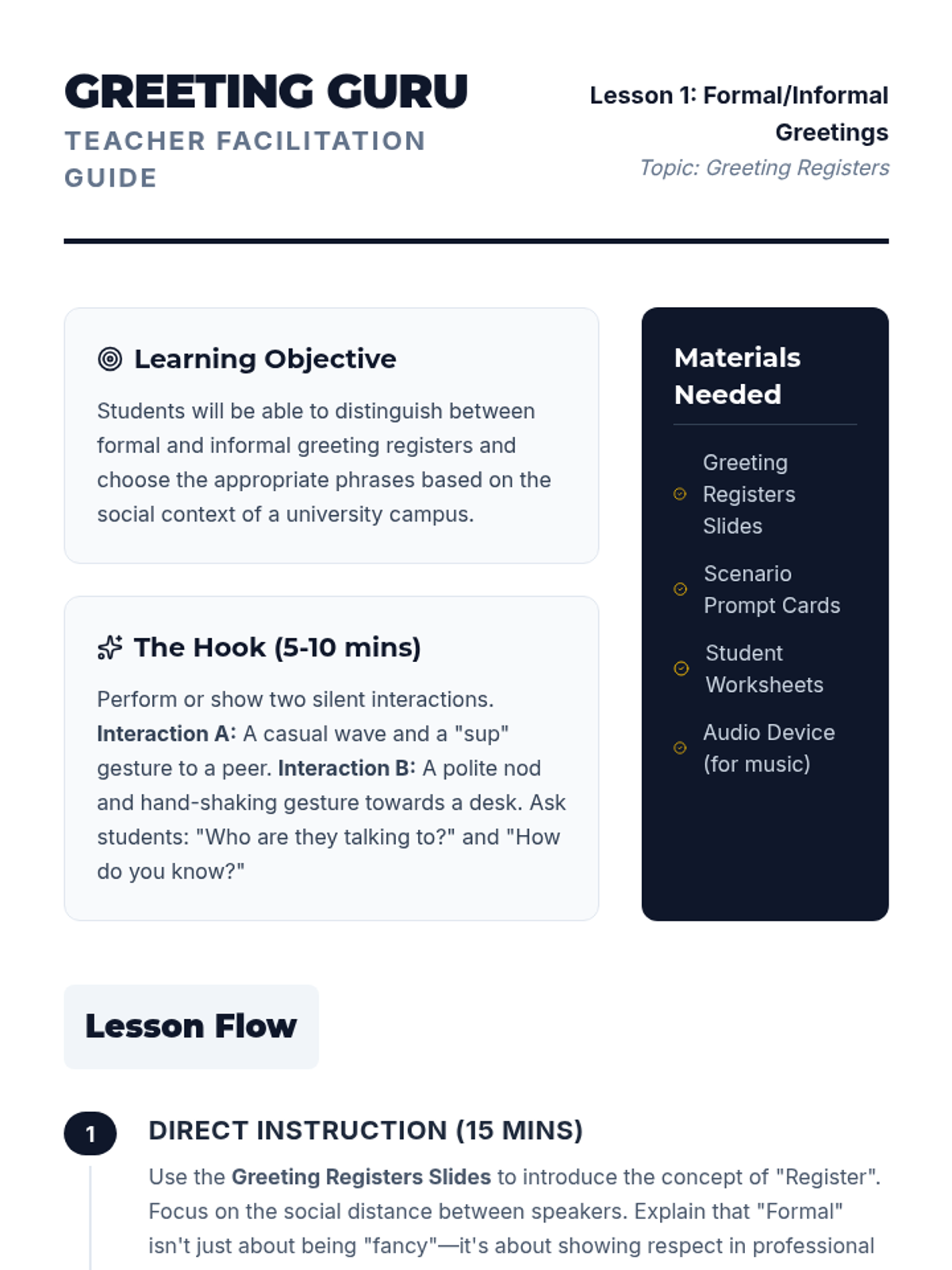
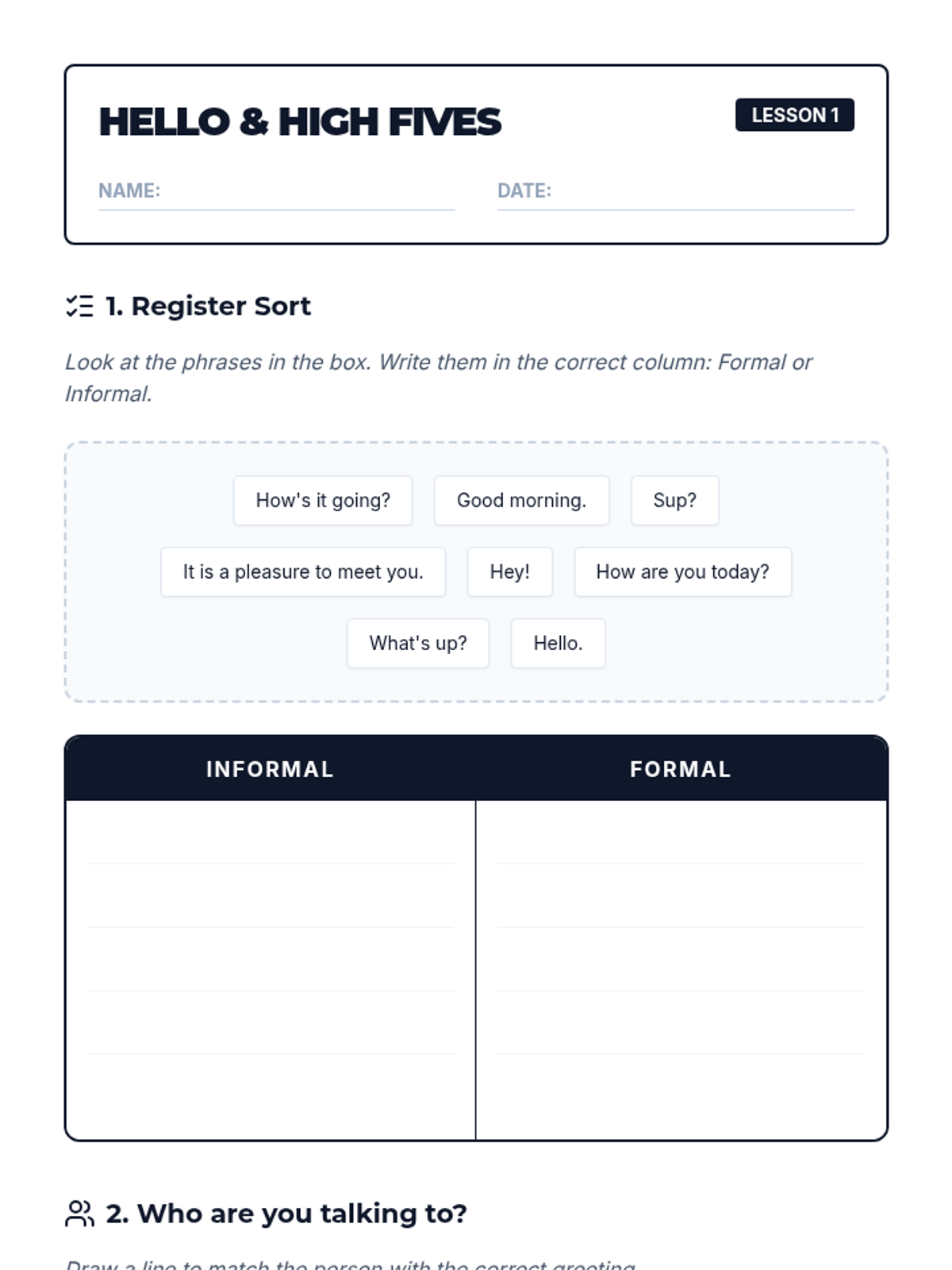
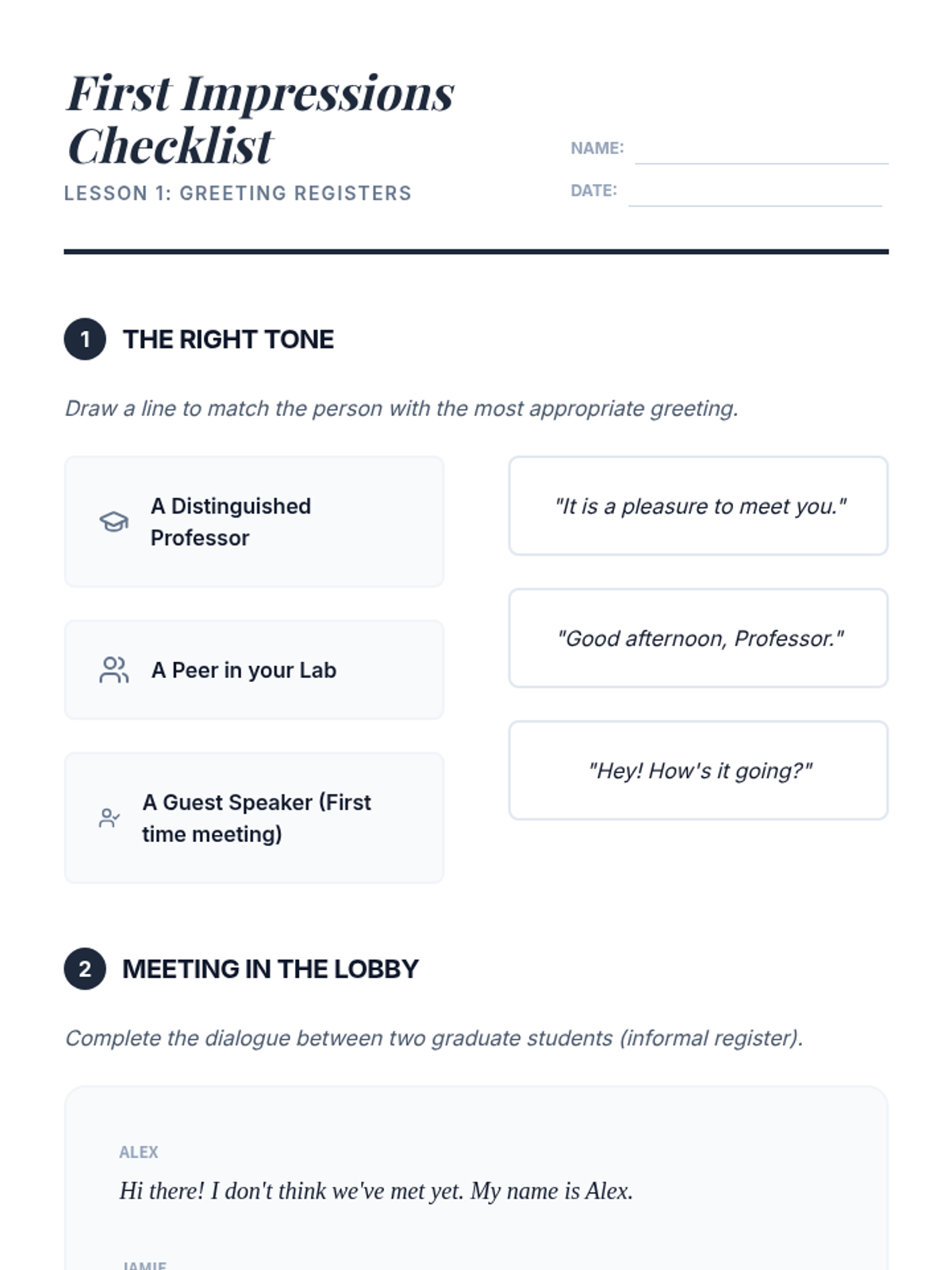
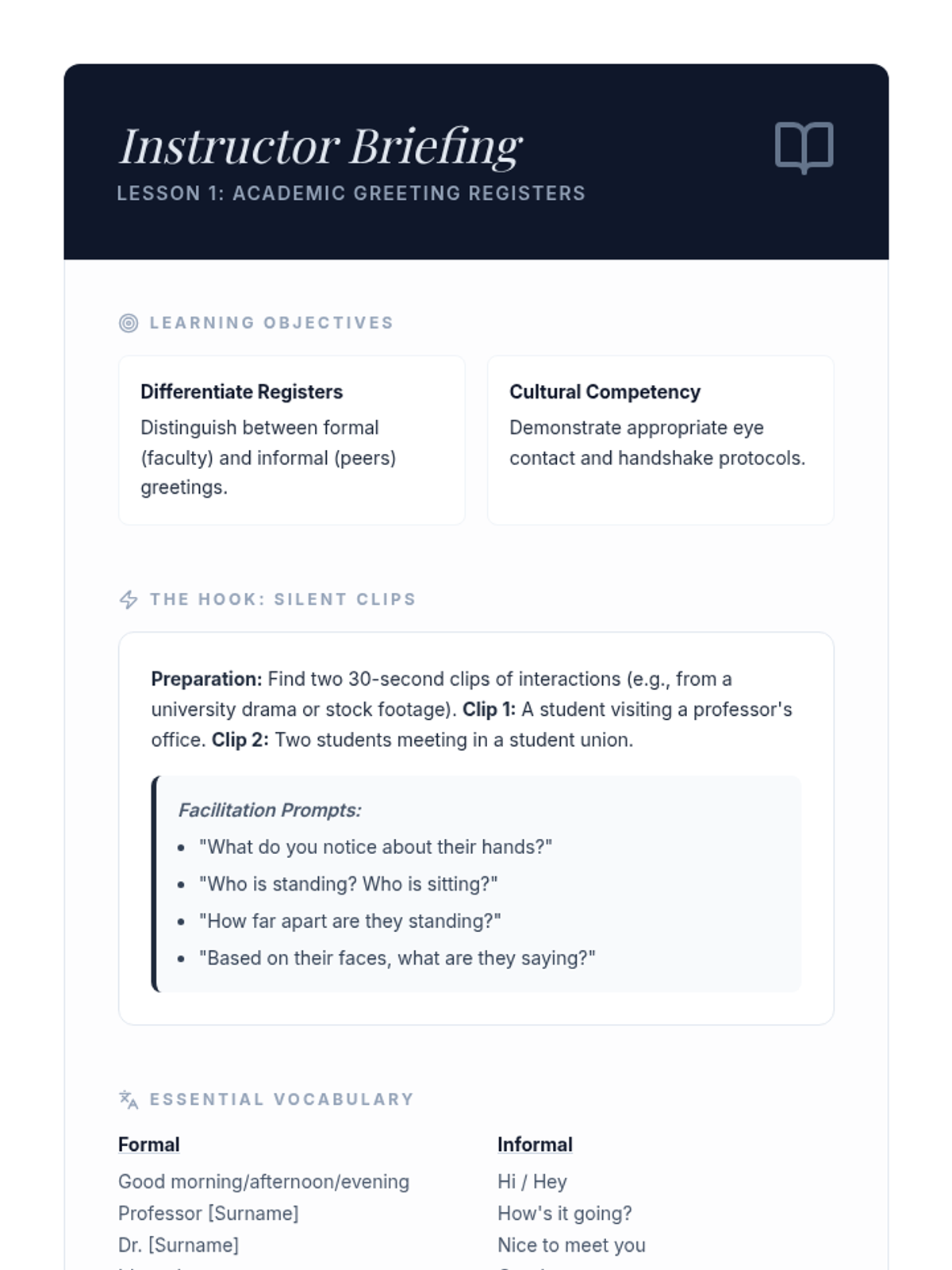
This sequence introduces undergraduate students to the foundational vocabulary required for navigating initial social and academic interactions on a university campus. Students learn to distinguish between formal and informal registers, introduce themselves and others, and close conversations politely.
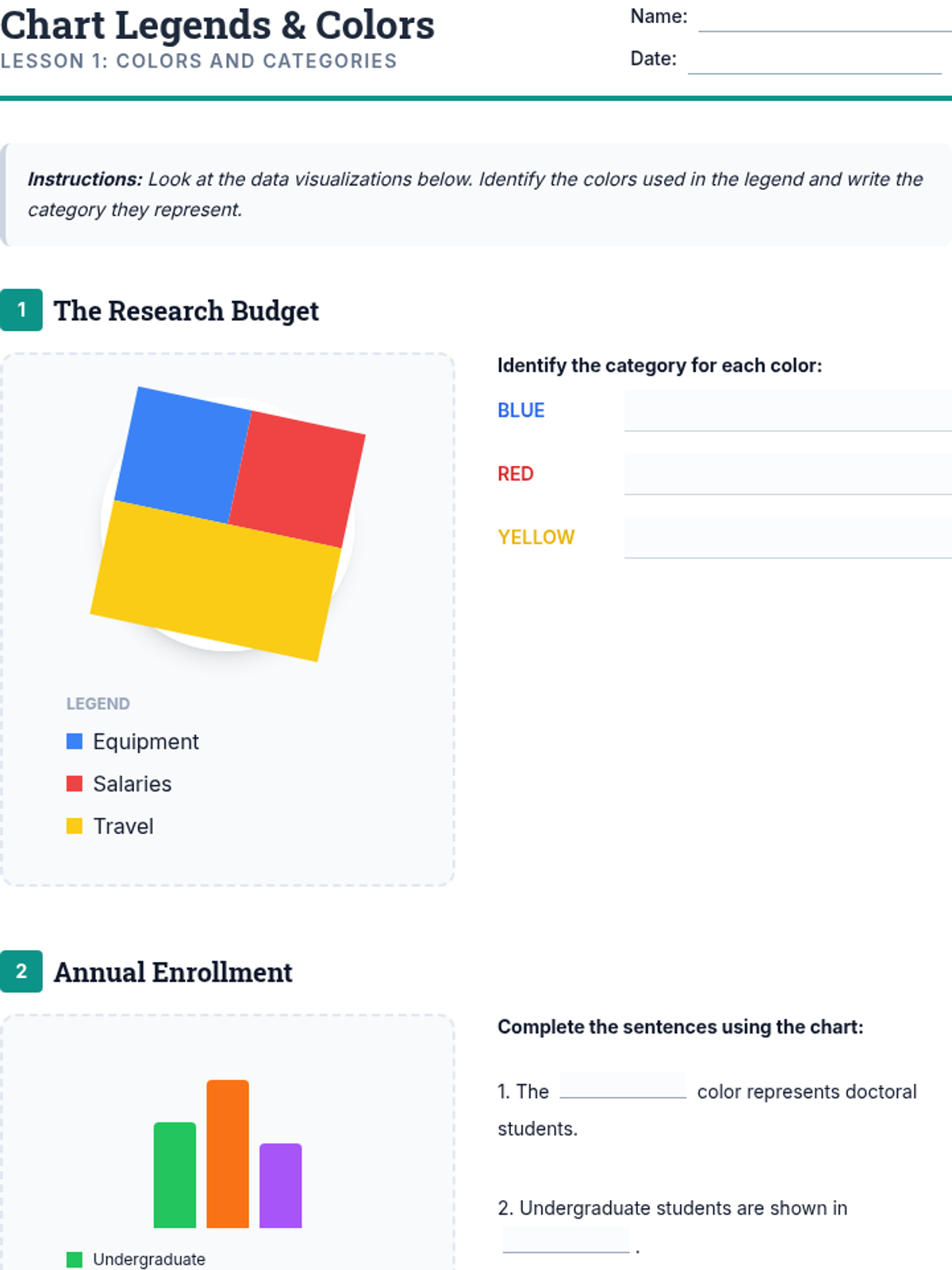
A specialized English language sequence for graduate students, bridging basic vocabulary (colors, numbers, sizes) with academic data visualization skills. Students learn to identify categories, pronounce large statistics, use comparative adjectives, and describe simple trends in charts and graphs.
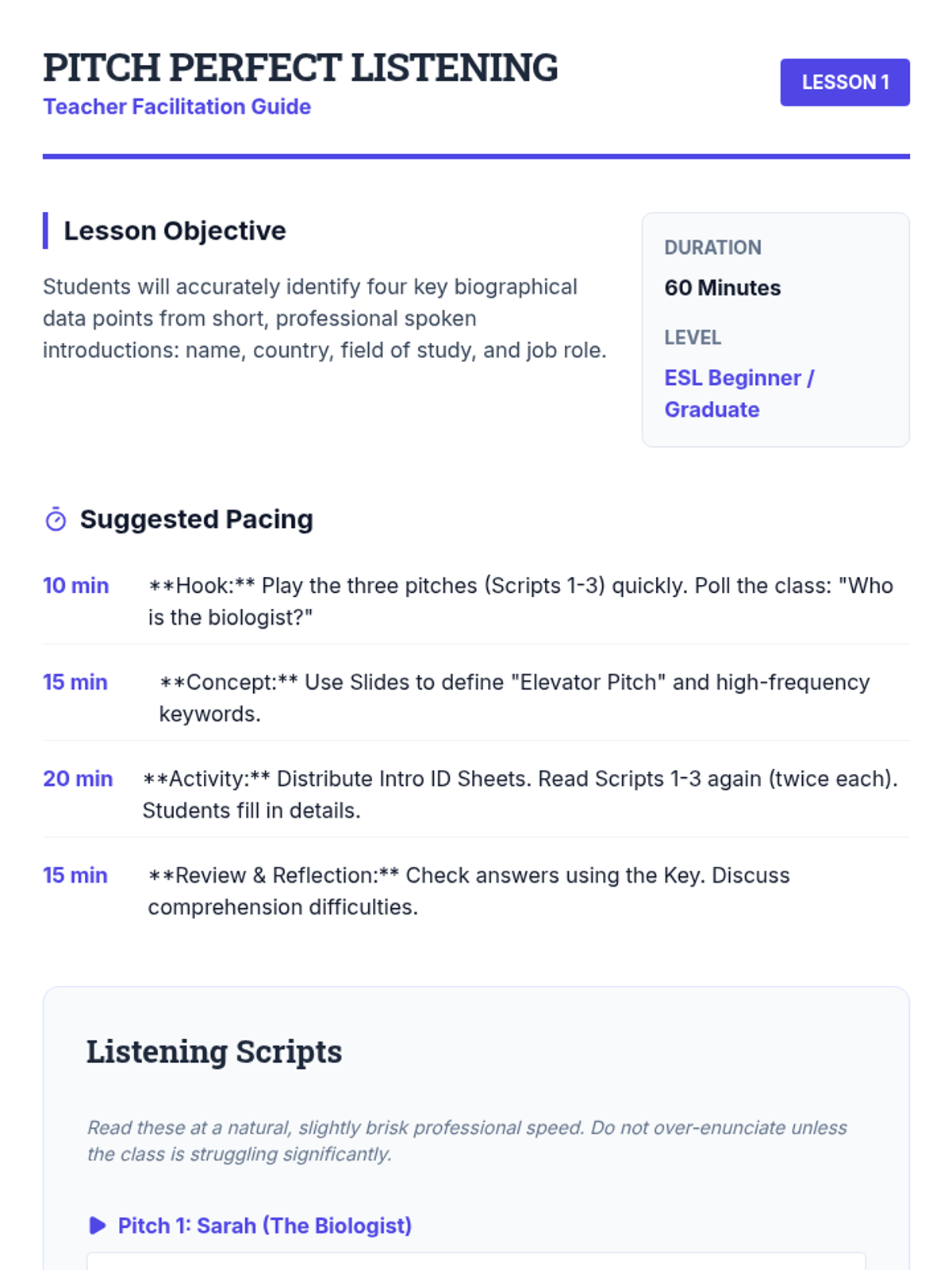
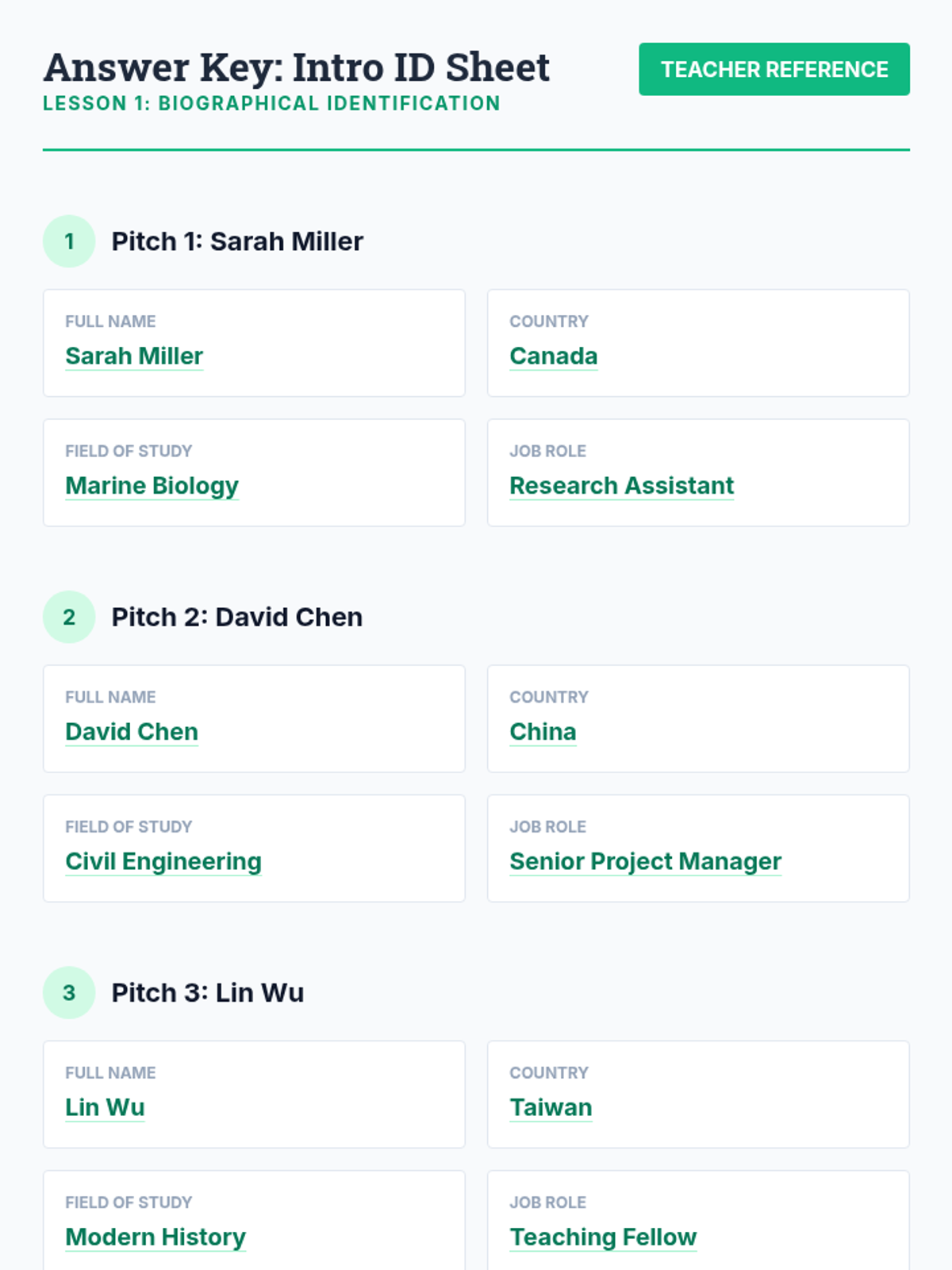
A sequence for international graduate students to master basic English vocabulary through the lens of professional academic introductions and networking. Students progress from basic greetings to a full networking simulation, focusing on the verb 'to be', academic disciplines, and exchanging contact information.
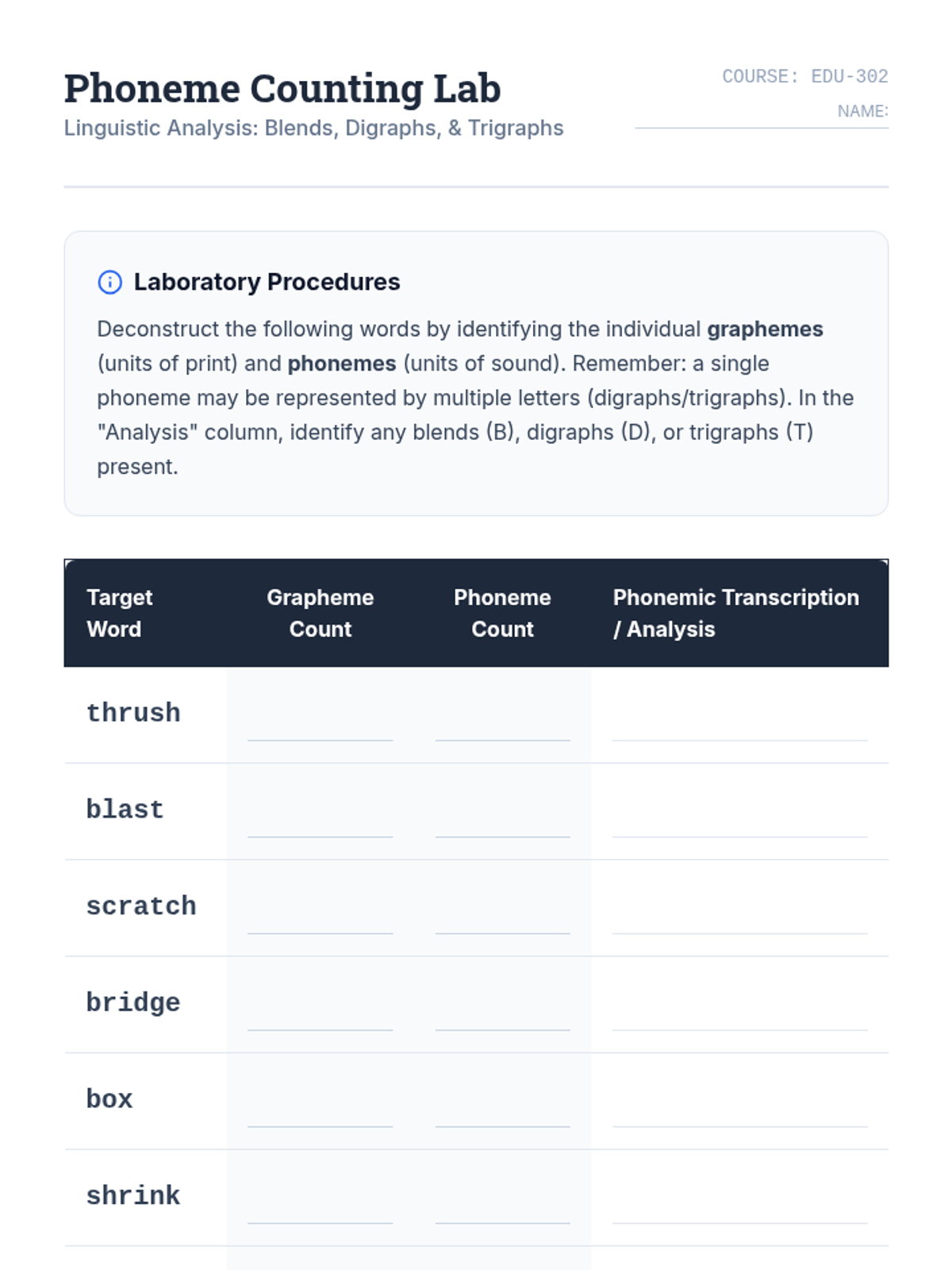
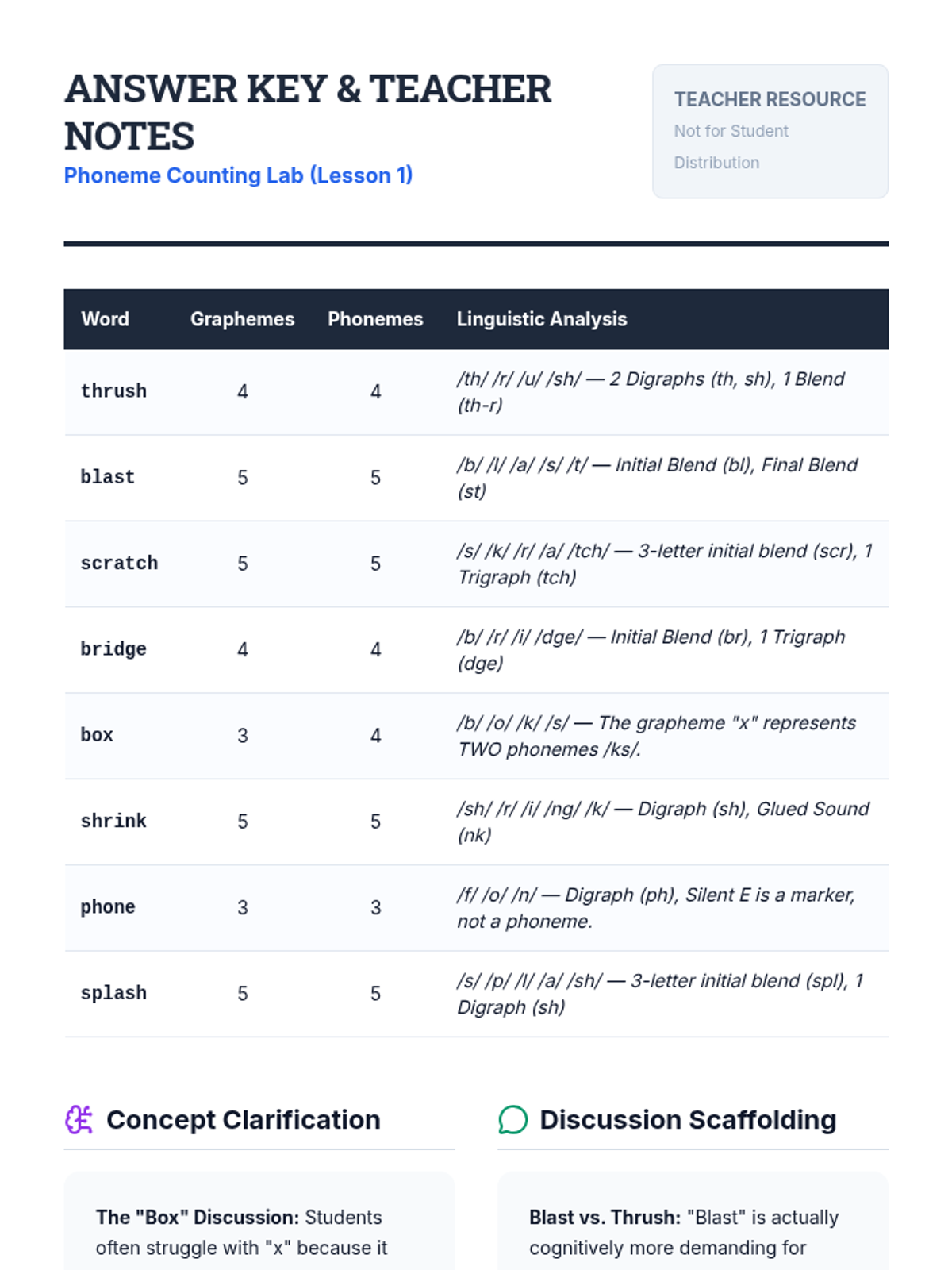
A comprehensive sequence for pre-service teachers exploring the linguistic and instructional complexities of blends, digraphs, and trigraphs, focusing on diagnostic assessment and evidence-based teaching strategies.
This sequence targets the social and networking needs of graduate students, focusing on high-frequency vocabulary for small talk and professional relationship building. Students progress from basic introductions to handling transactional requests, using clarification strategies, and participating in a mock networking mixer.
A systematic listening sequence for adult ESL beginners, focusing on high-accuracy phonemic discrimination and numerical data processing in academic and daily contexts.
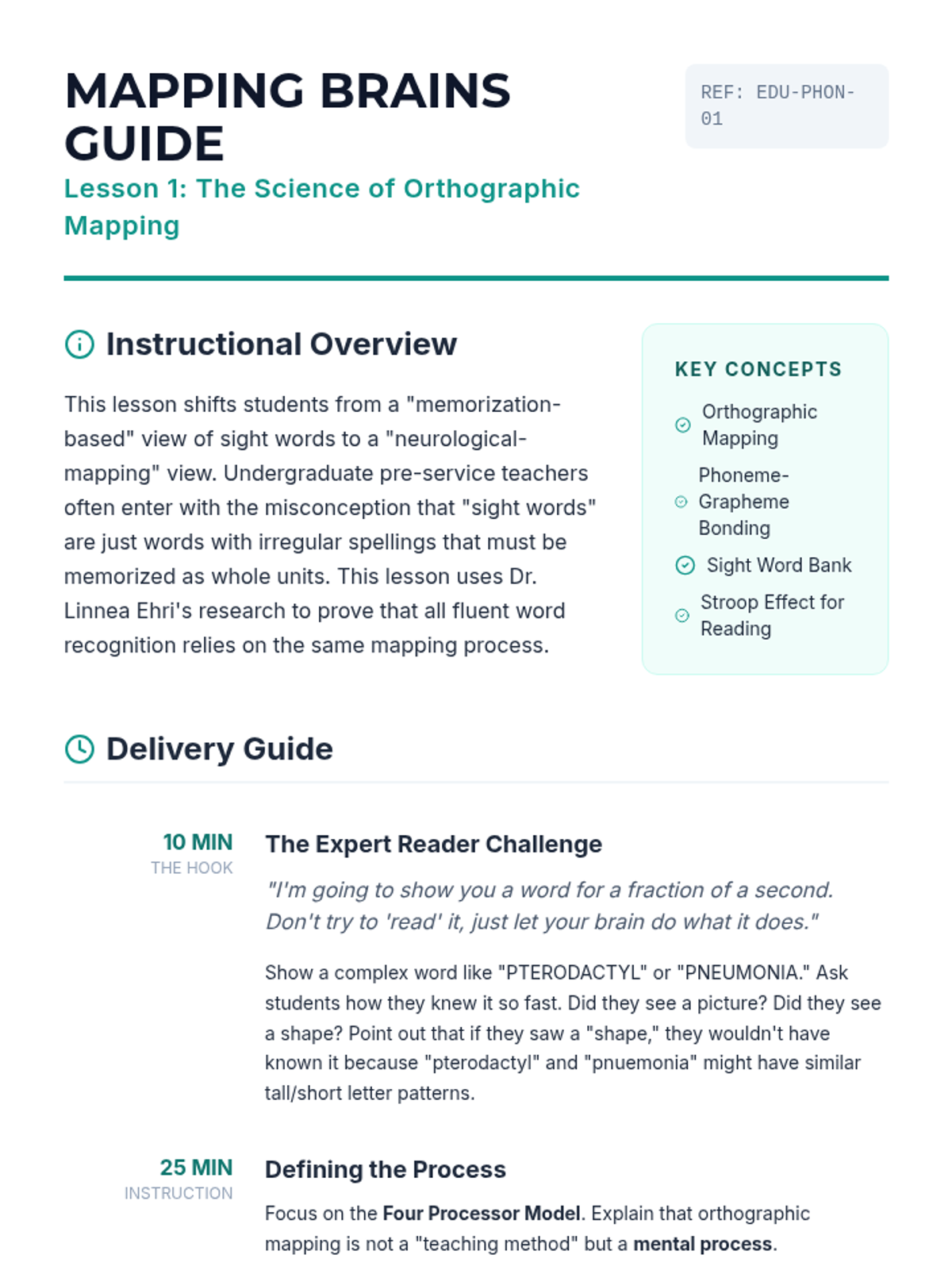
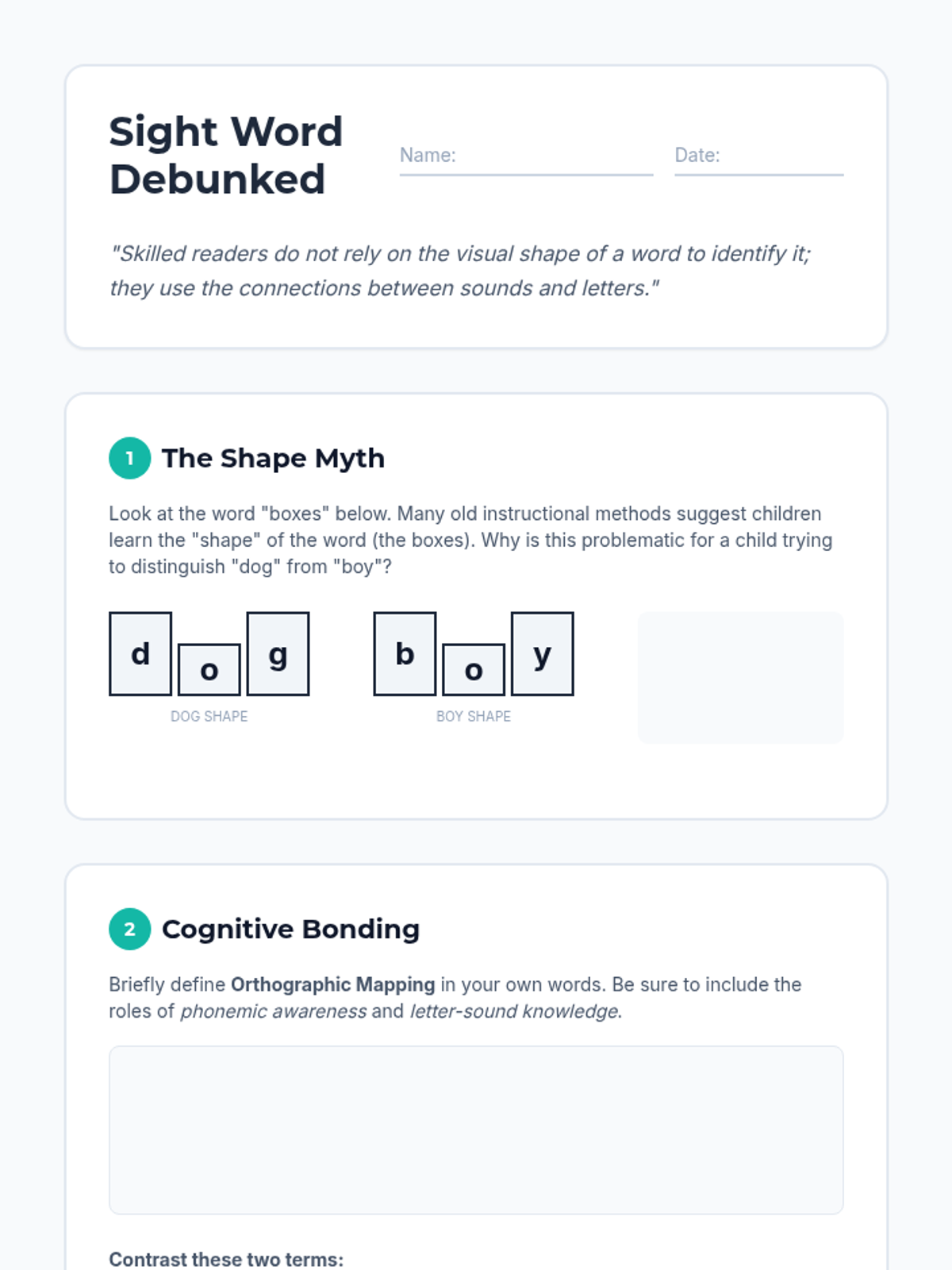
This sequence explores the neurological and pedagogical bridge between phonemic awareness (oral) and orthographic mapping (visual), preparing pre-service teachers to facilitate instant word recognition in early readers.
A foundational reading course for adult ELL undergraduates, focusing on phonetic decoding, syllabication, and academic sight words to build reading confidence in a university setting.
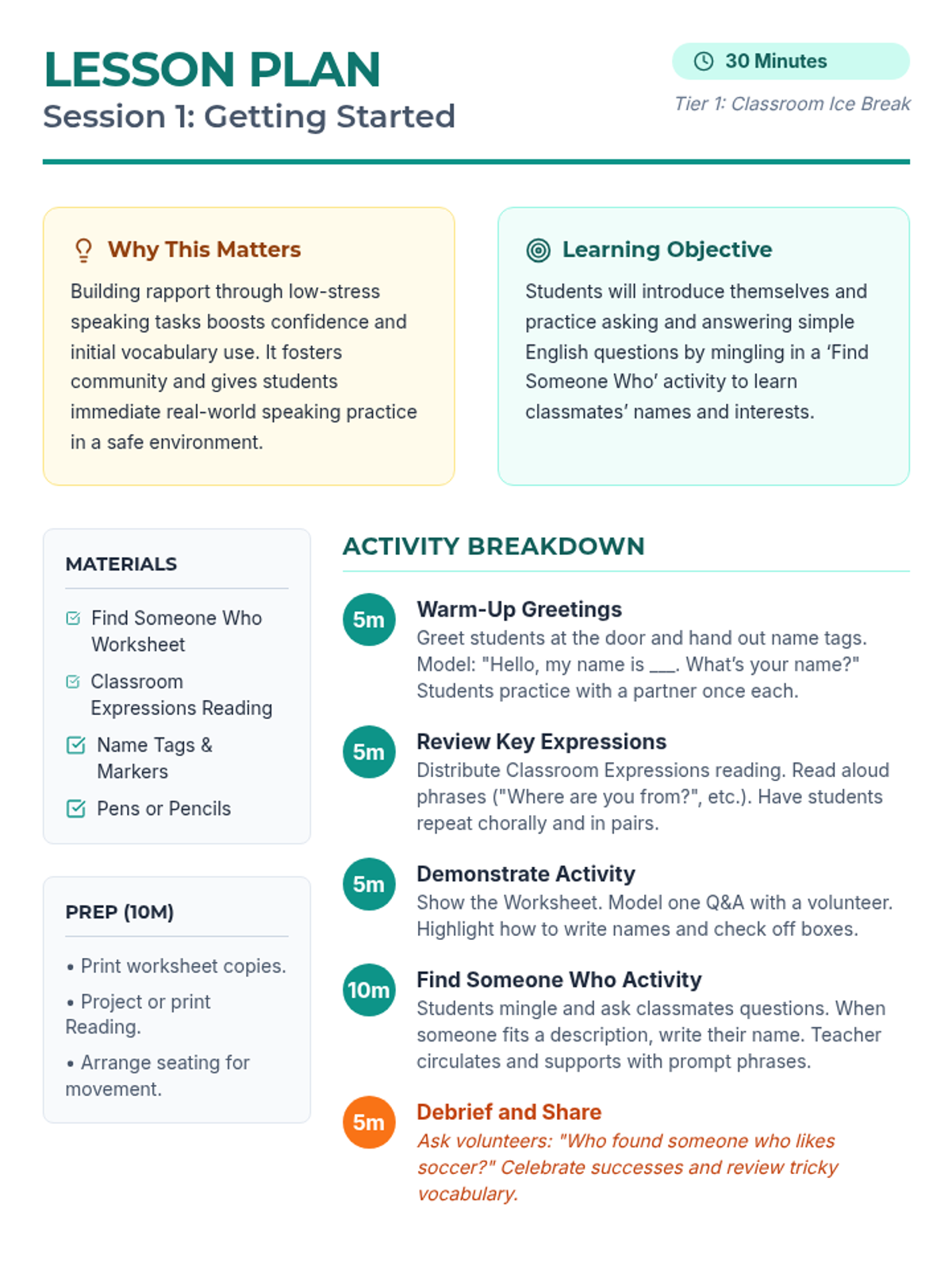
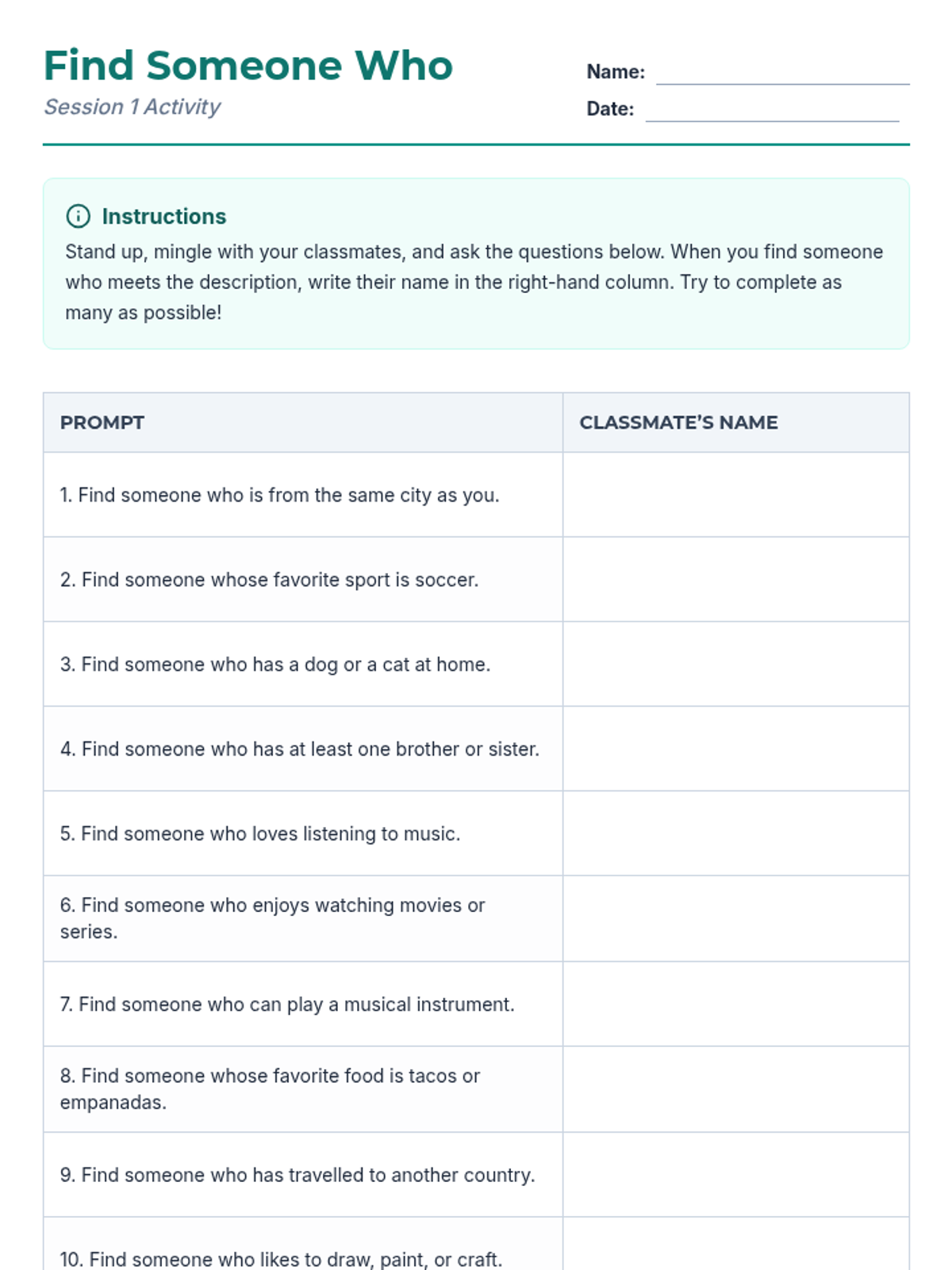
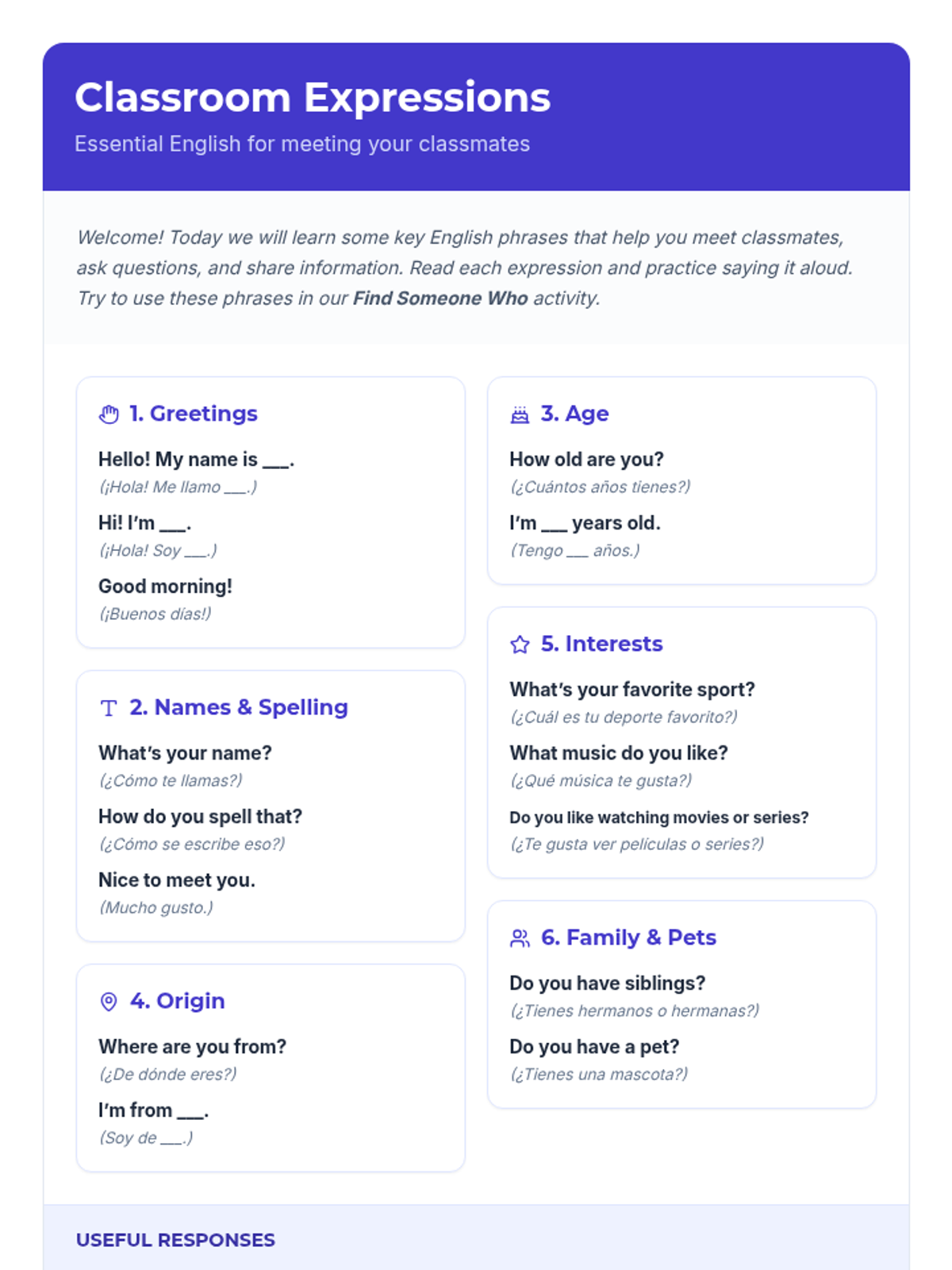
A three-session introductory ESL sequence designed for Spanish-speaking teenagers to build confidence and community through interactive ice-breakers and guided conversations.
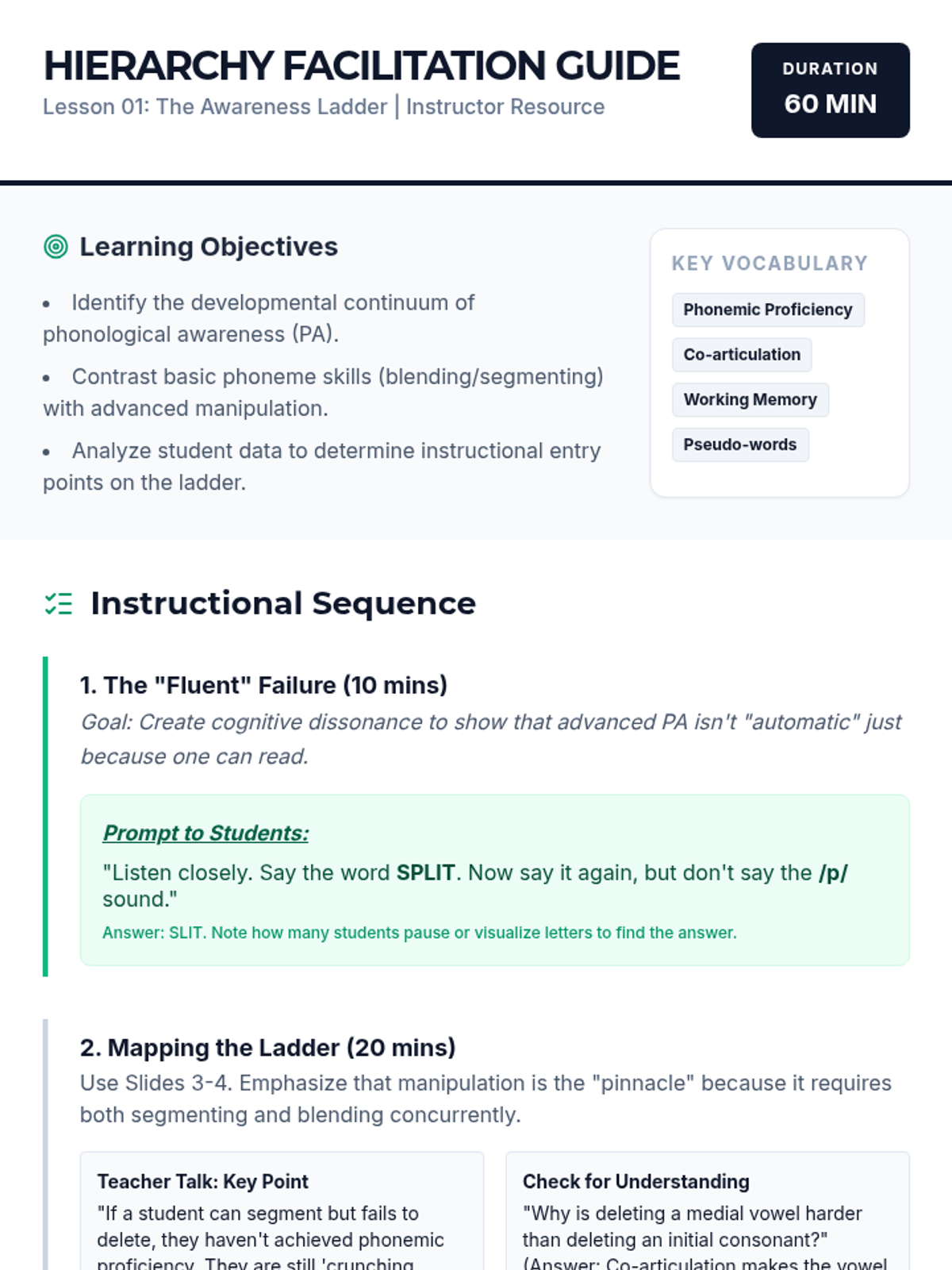
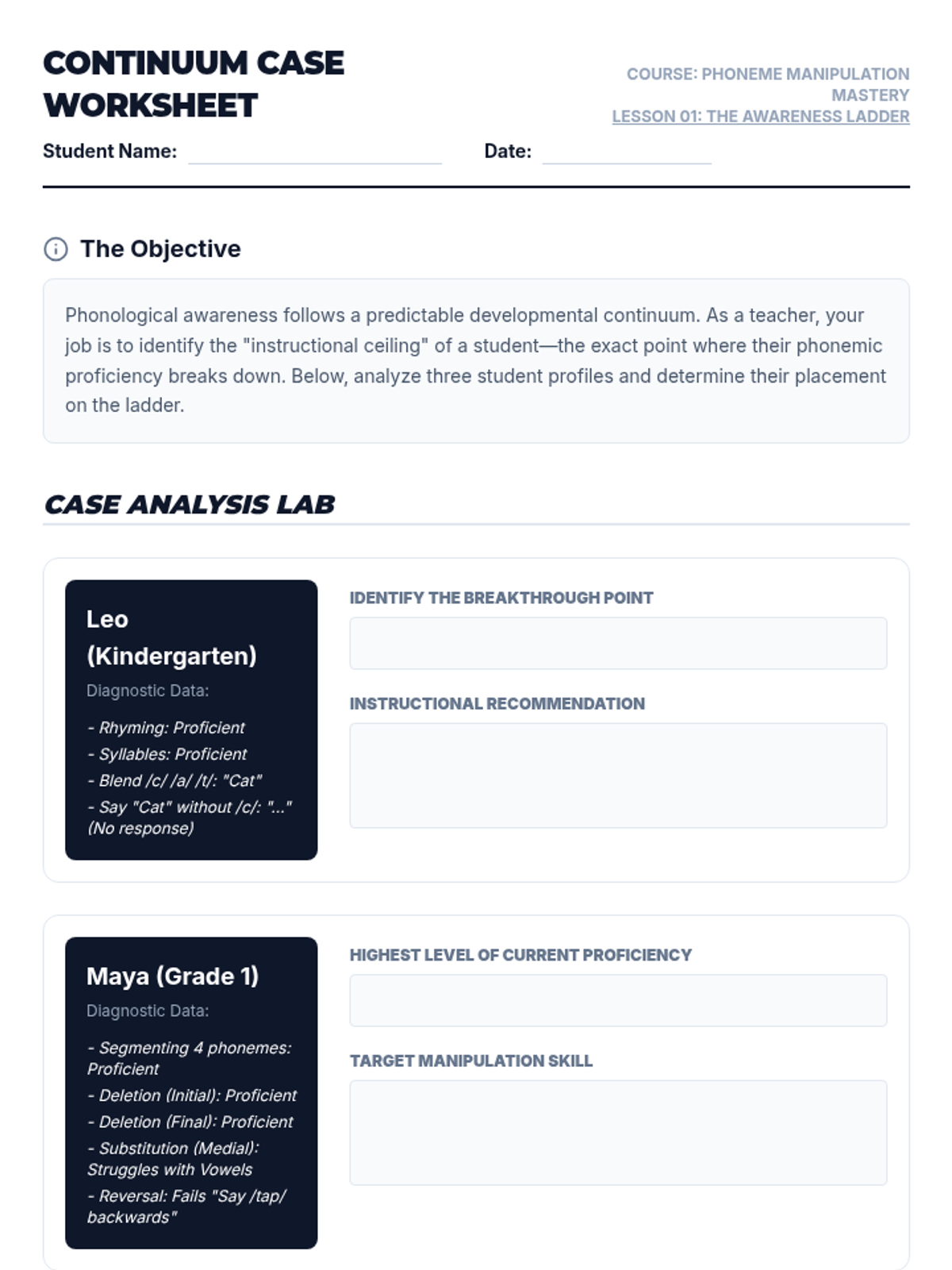
A comprehensive sequence for pre-service teachers on the pedagogical strategies for teaching phoneme manipulation. The course covers developmental hierarchies, explicit modeling (I Do, We Do, You Do), the use of manipulatives, advanced linguistic challenges, and peer-teaching simulations.