Essential grammar structures, high-frequency vocabulary, and foundational literacy skills. Equips learners with basic speaking and listening abilities for everyday interactions and introductory text comprehension.
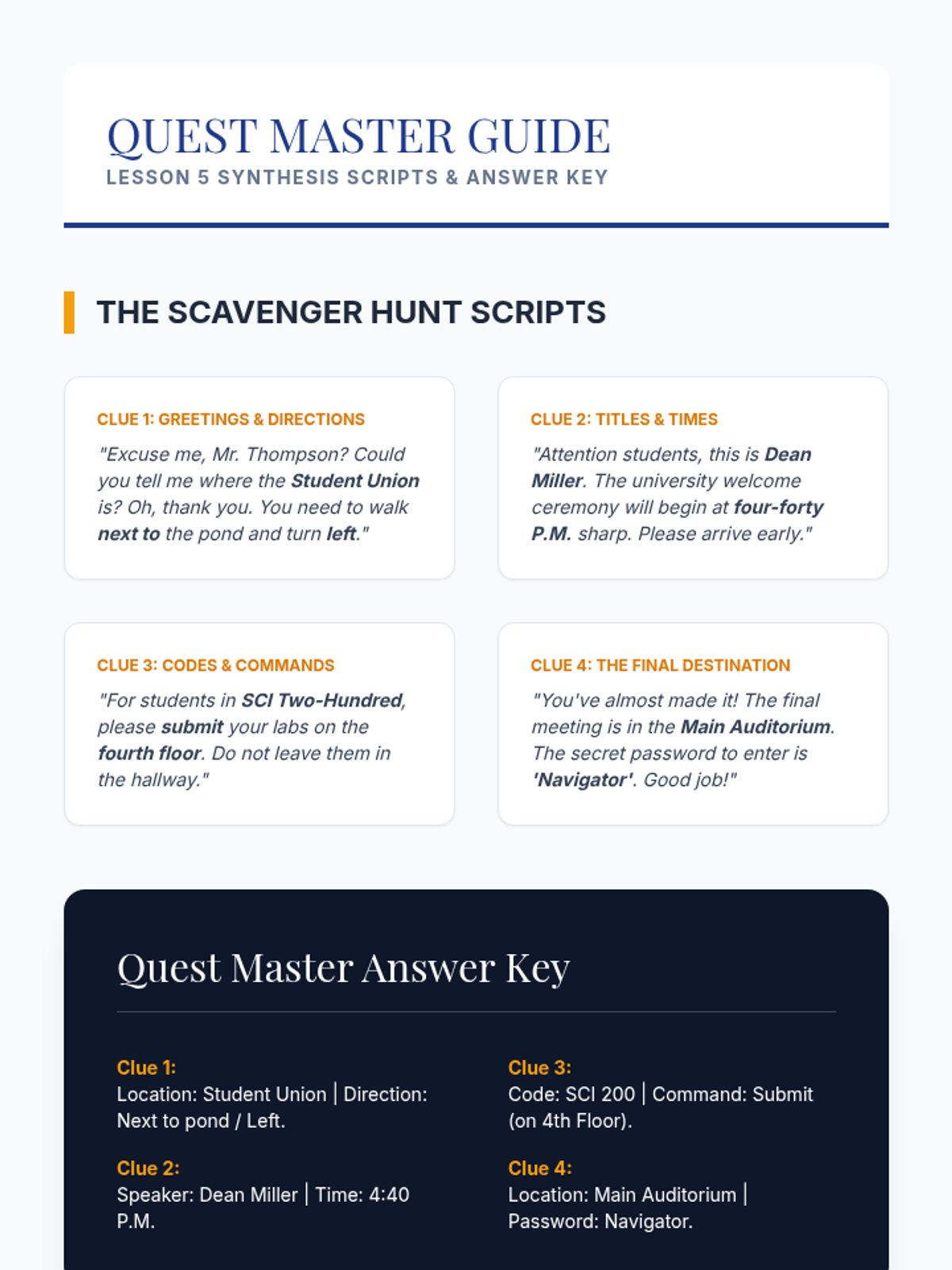
Teacher resource for Lesson 5, containing the synthesized scripts for the "Campus Quest" and the final answer key.
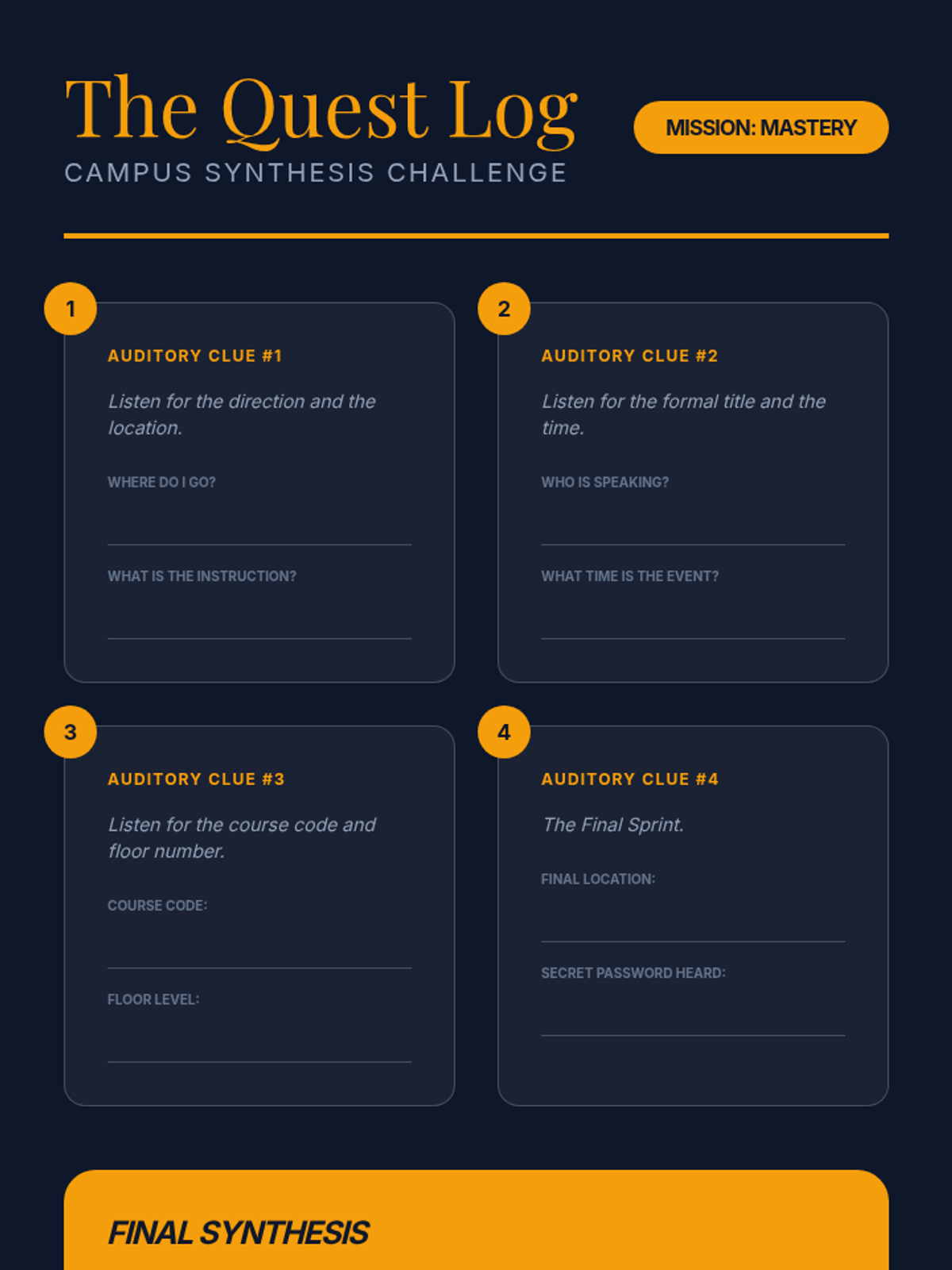
Student worksheet for Lesson 5, serving as the "Quest Log" for recording information from synthesized campus scenarios.
Slides for Lesson 5, reviewing the key listening skills of the sequence and setting up the culminating "Campus Quest" scavenger hunt.
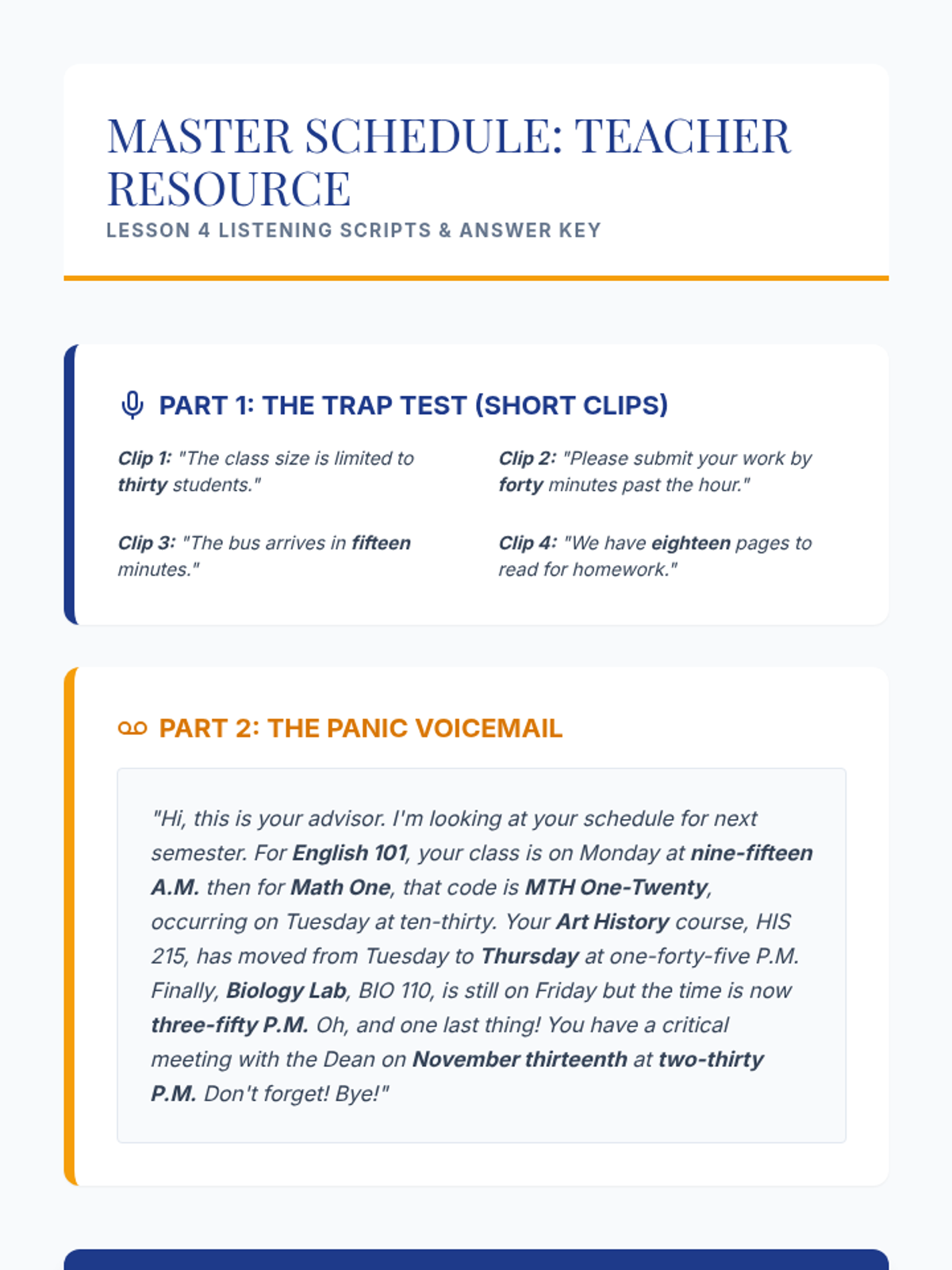
Teacher resource for Lesson 4, containing audio scripts for number recognition and the master schedule voicemail, along with a complete answer key.
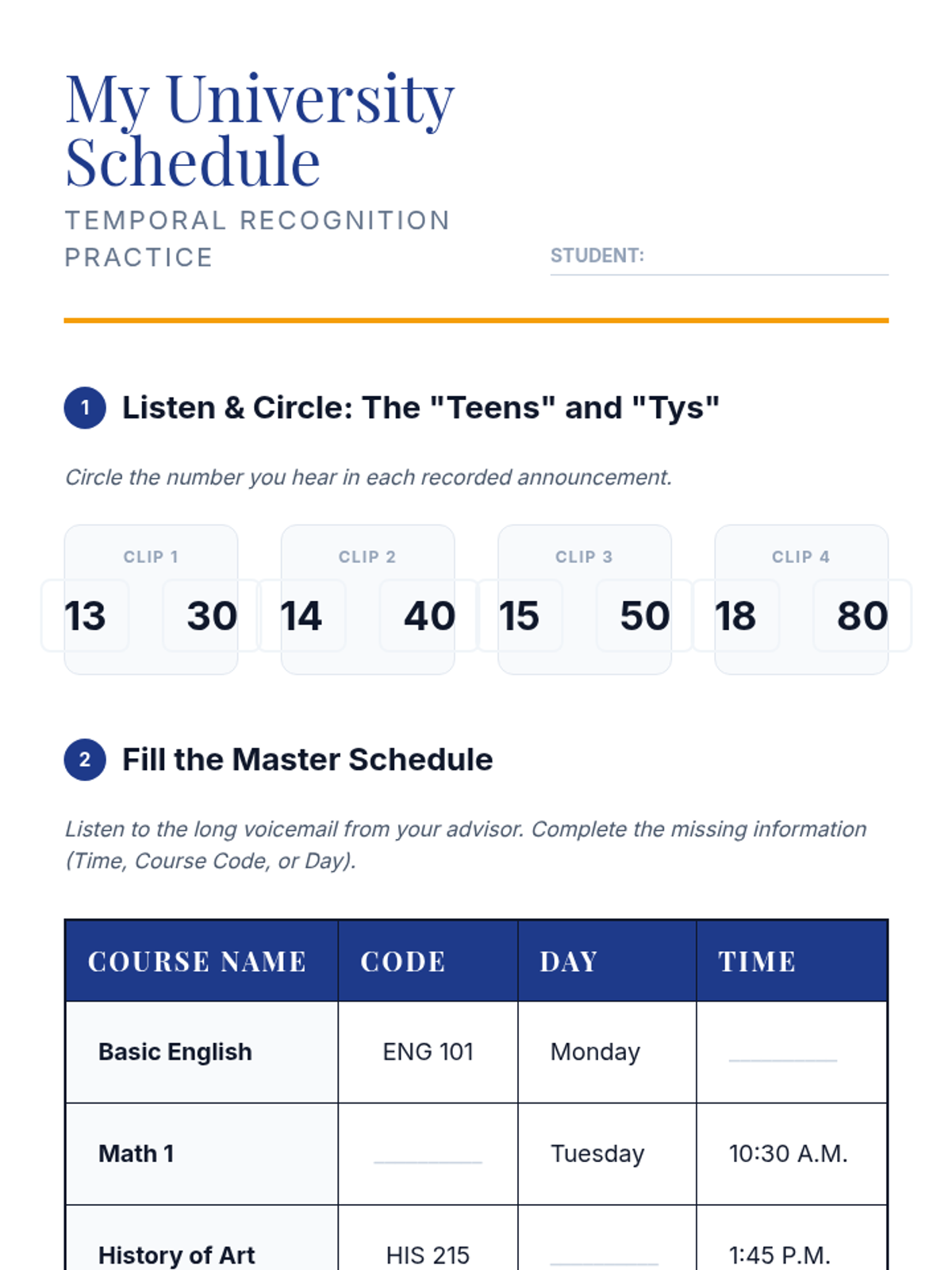
Student worksheet for Lesson 4, focusing on a course schedule grid and identifying specific times and dates from auditory input.
Slides for Lesson 4, visualizing temporal recognition and distinguishing similar-sounding numbers and days for academic scheduling.
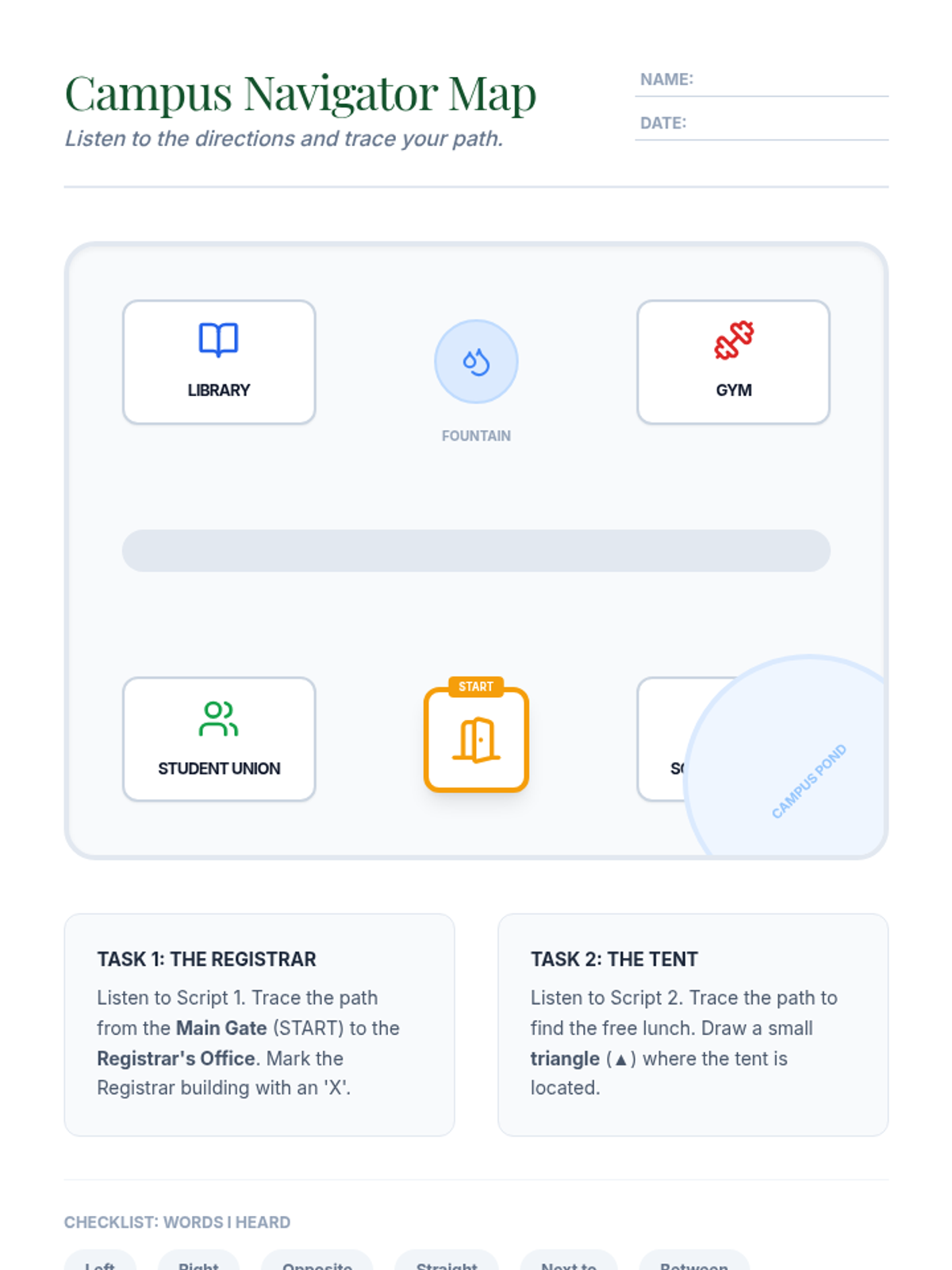
Student worksheet for Lesson 3, featuring a campus map for tracing routes and identifying locations based on auditory directions.
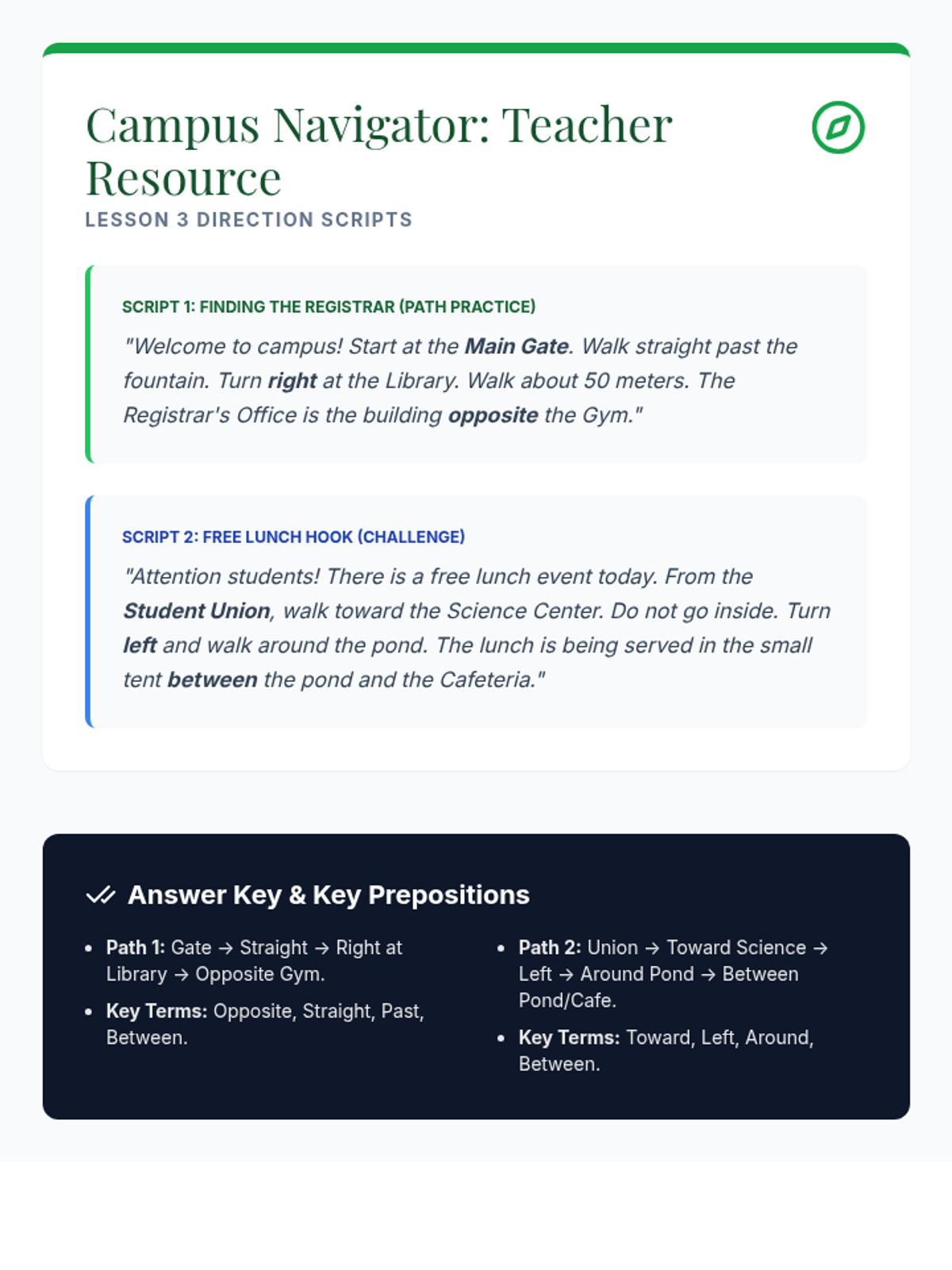
Teacher resource for Lesson 3, containing the audio scripts for campus navigation exercises and answer keys for the map activity.
Slides for Lesson 3, visualizing spatial directions and prepositions of place for navigating a campus.
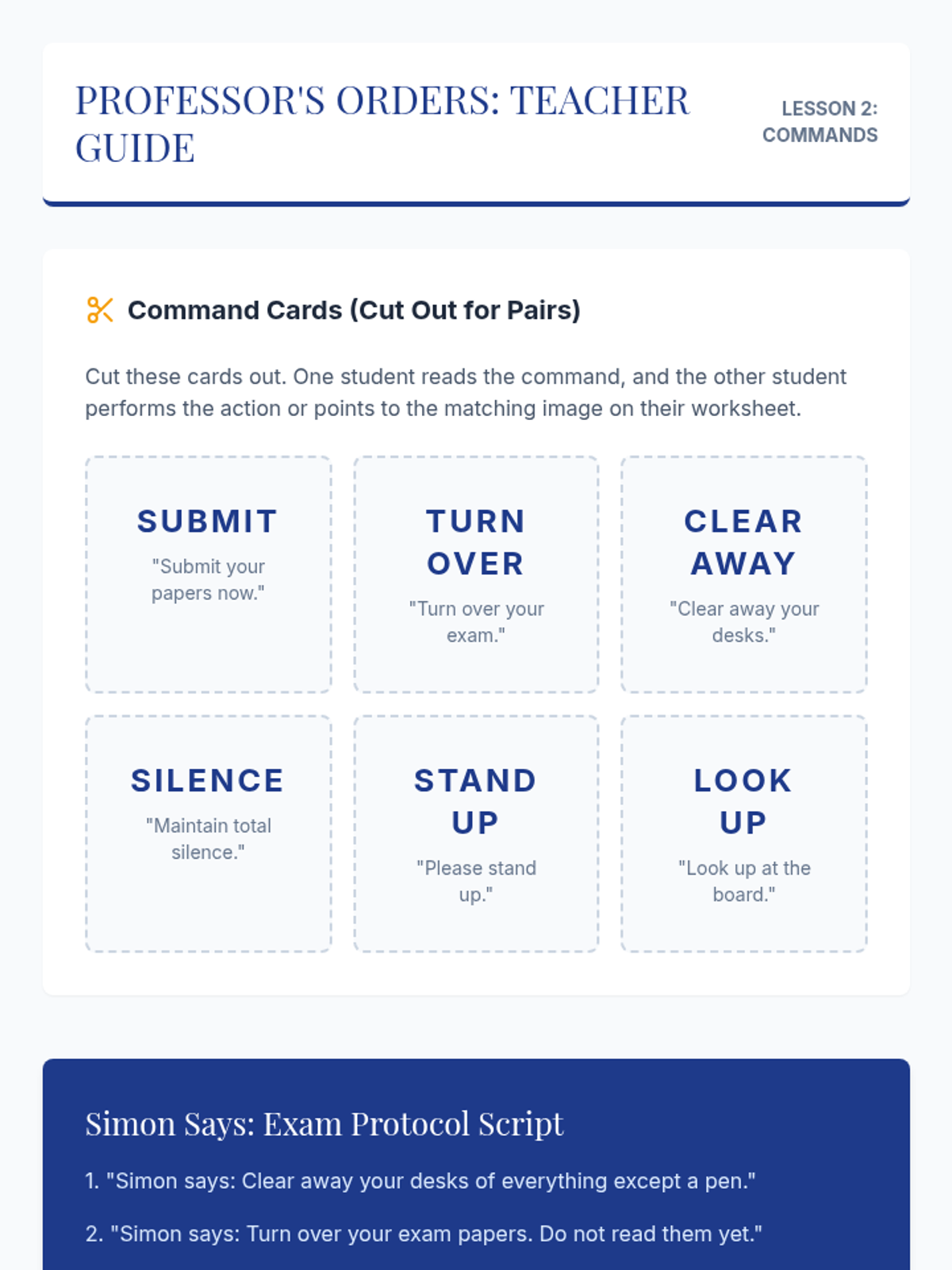
Teacher guide and physical command cards for Lesson 2, including the "Simon Says" exam protocol script.
Slides for Lesson 2, illustrating common imperative verbs and classroom commands with a focus on exam protocols.
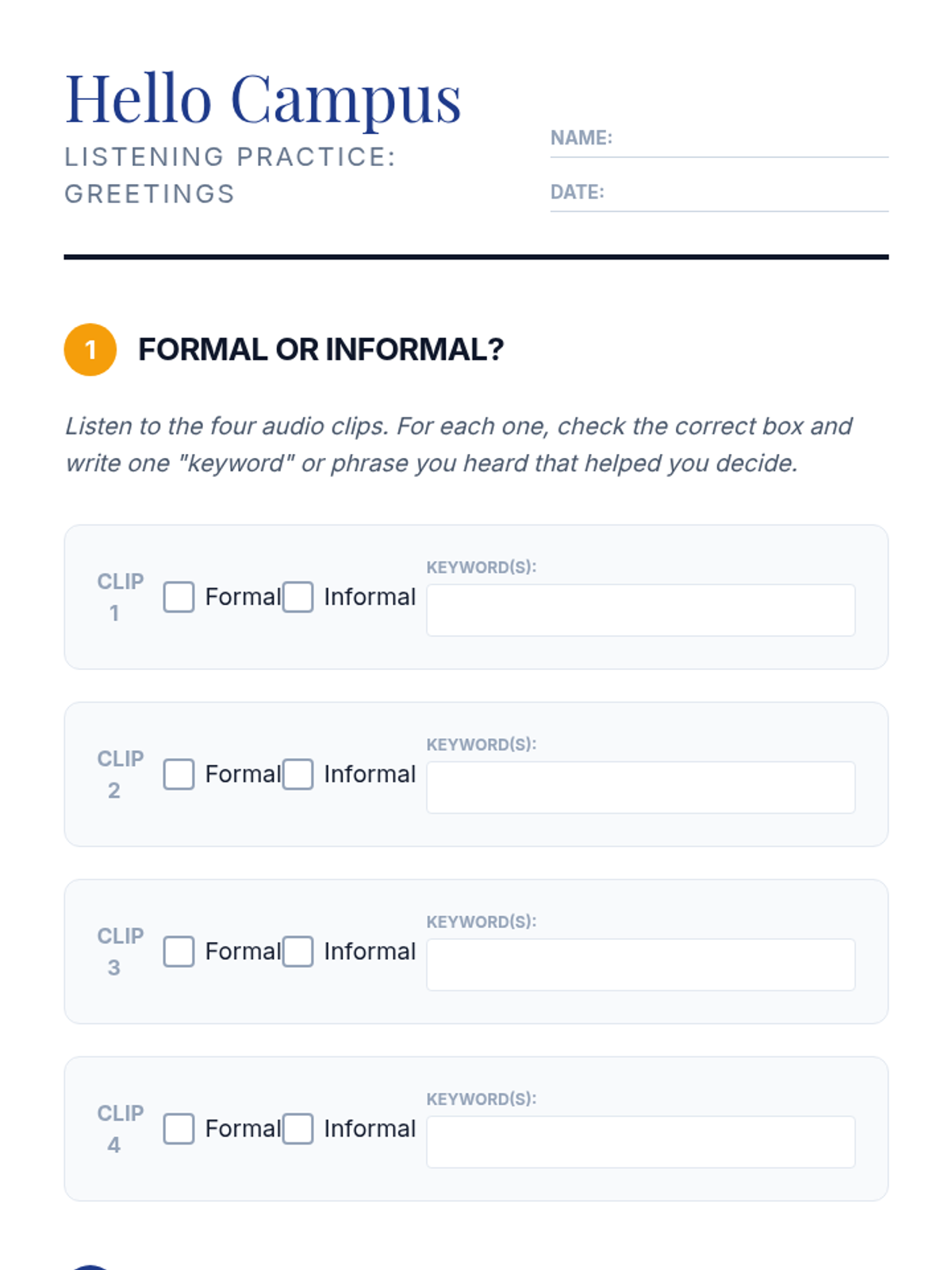
Student worksheet for Lesson 1, focusing on identifying social register and matching university-specific titles to their roles.
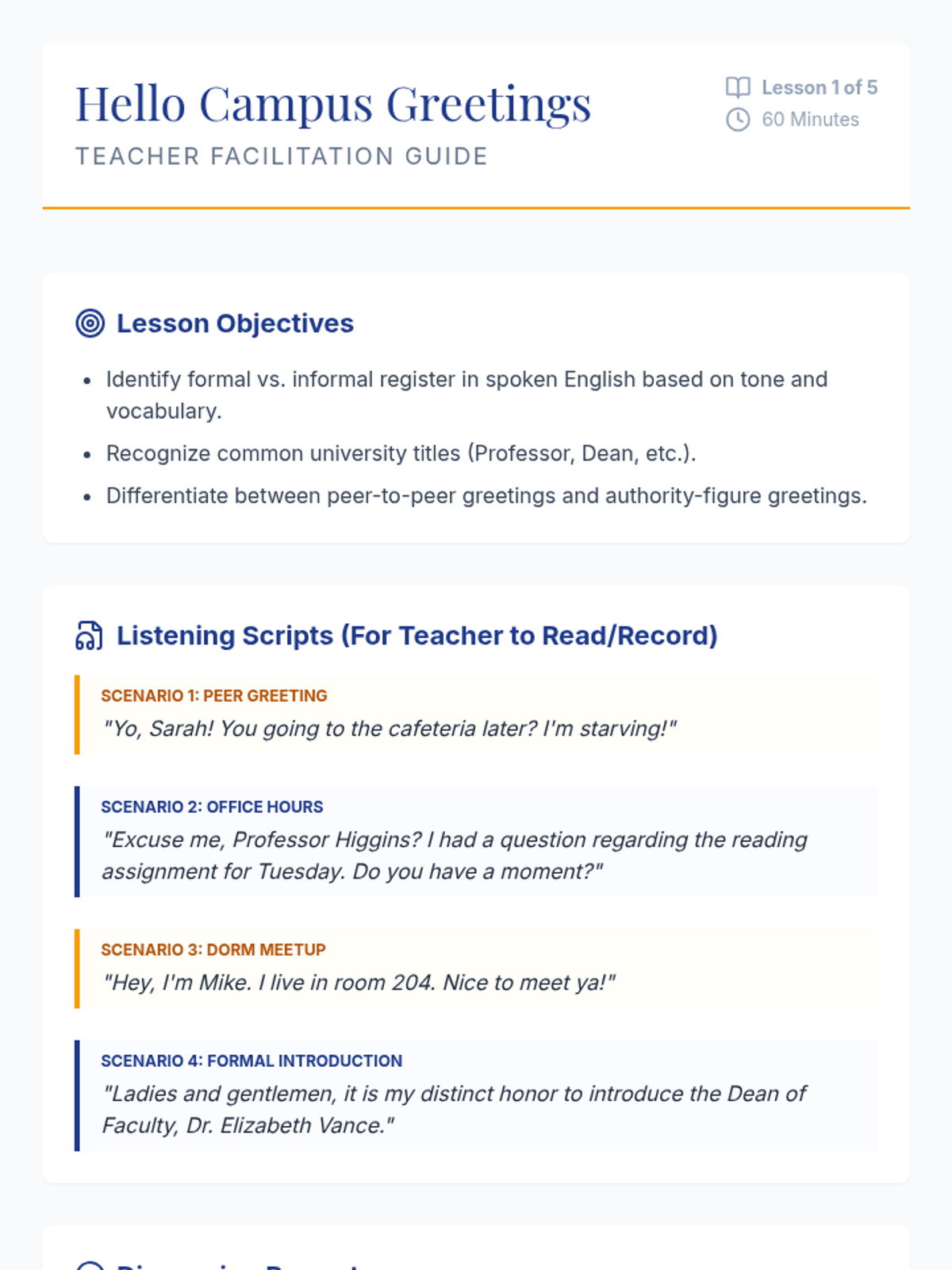
Teacher guide for Lesson 1, containing audio scripts for listening exercises, discussion prompts, and an answer key for the student worksheet.
Introductory slides for Lesson 1, covering formal and informal registers in a university setting with visual cues and listening tips.
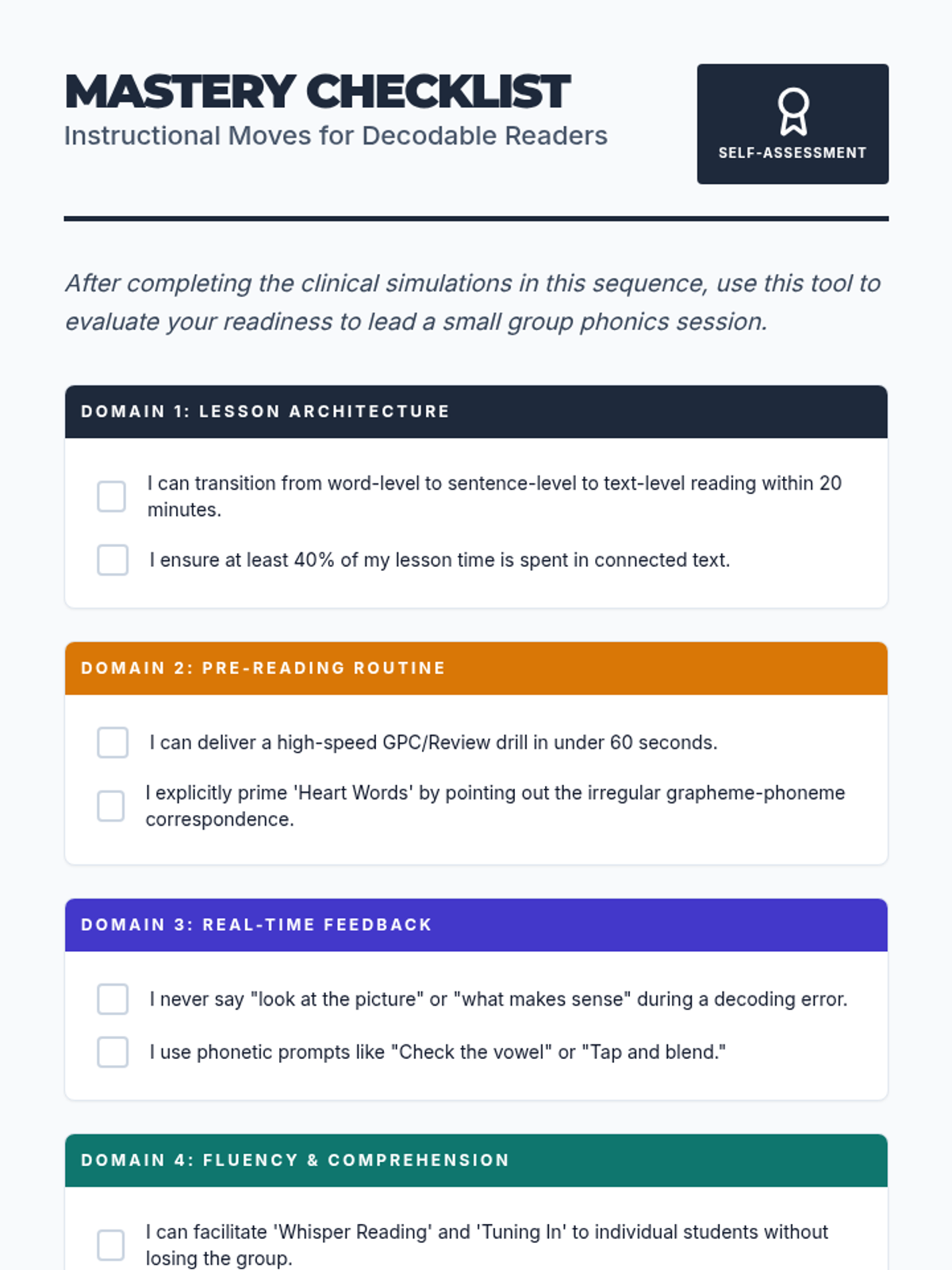
A comprehensive mastery checklist and reflection log for undergraduate students to self-assess their instructional moves with decodable texts.
A slide deck for Lesson 5, focusing on post-reading comprehension strategies and the three-read protocol for building fluency.
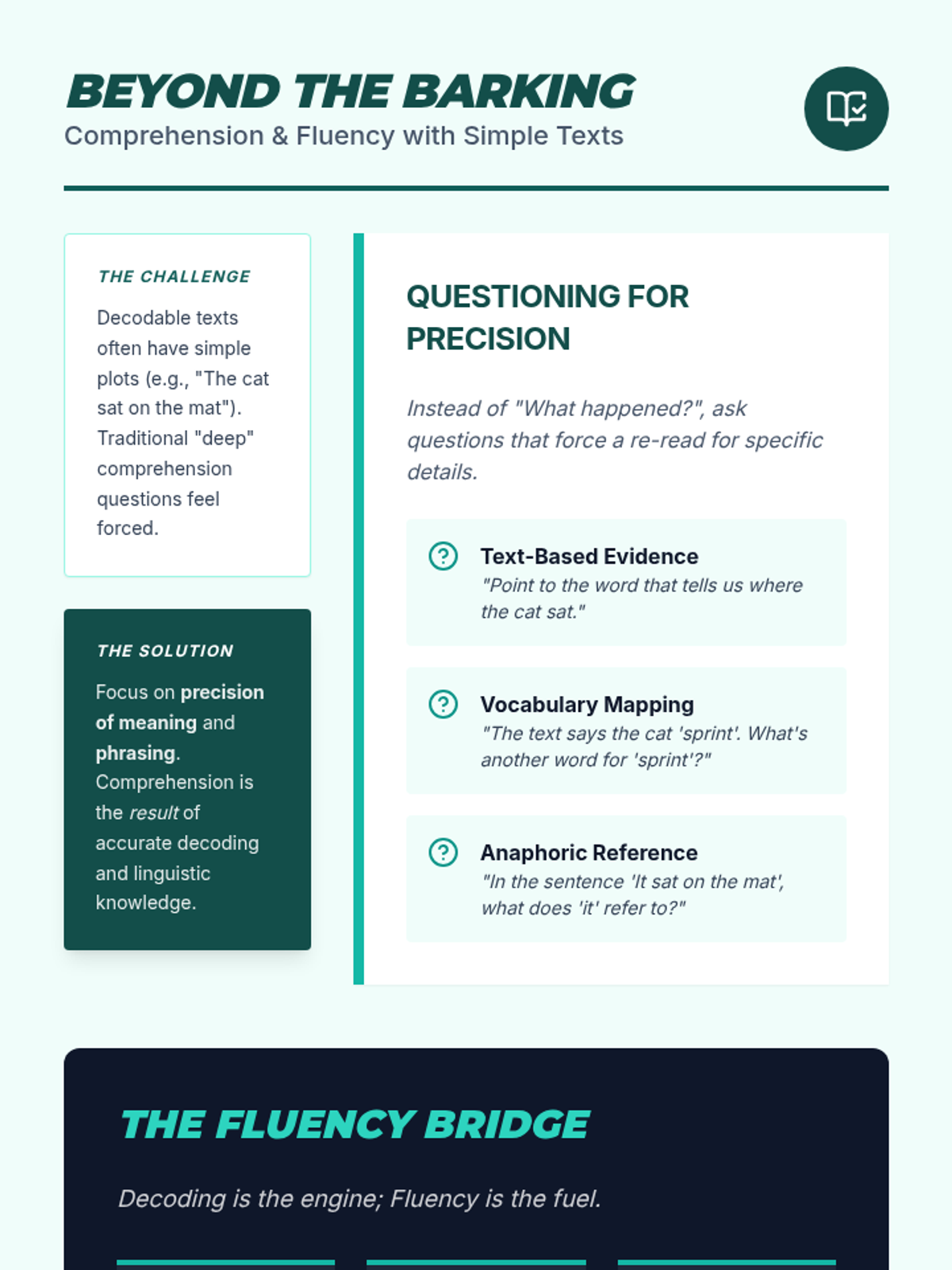
A guide and practice activity for deriving comprehension and building fluency from simple decodable texts.
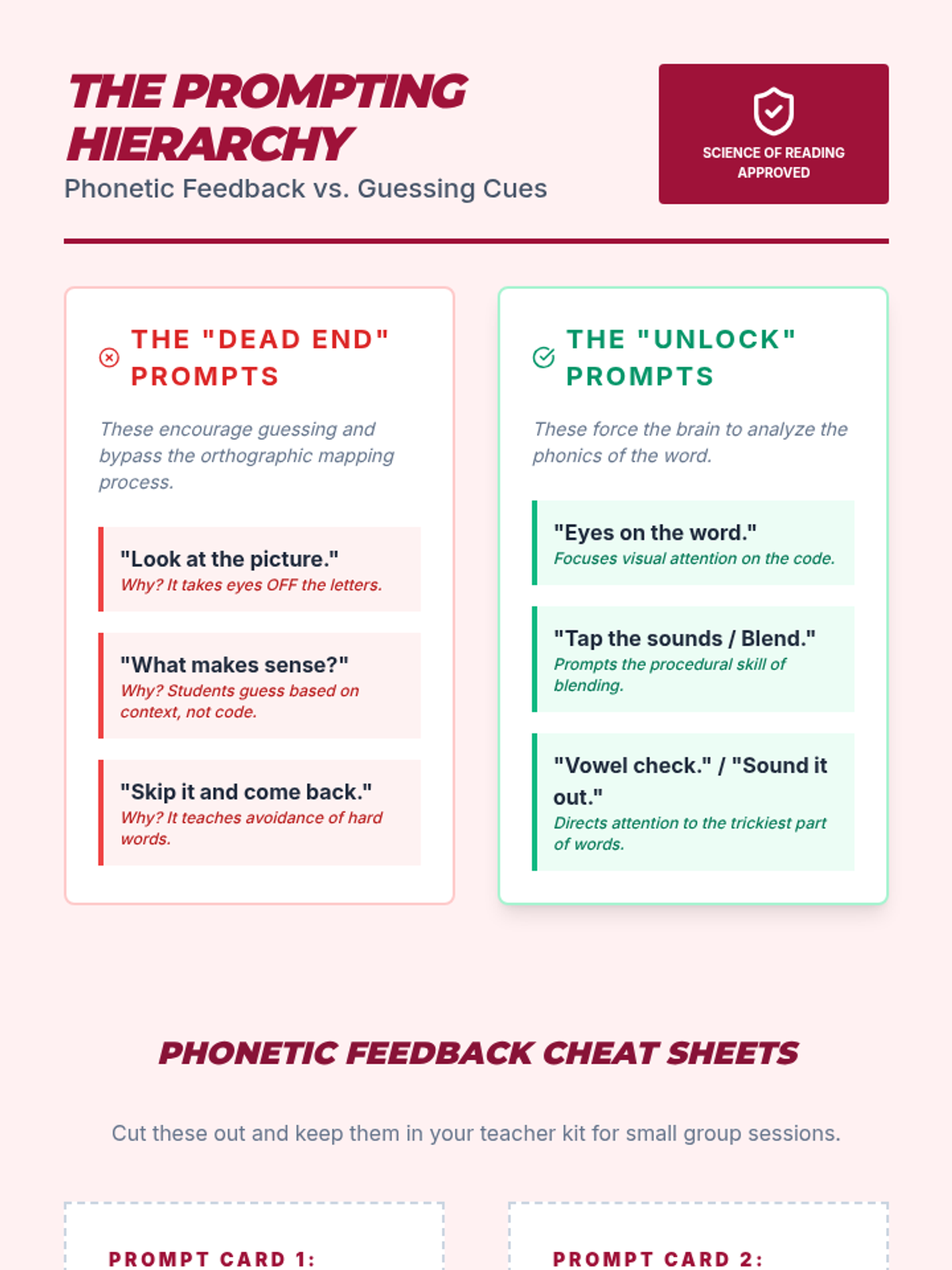
A slide deck for Lesson 4, teaching phonetic corrective feedback strategies and contrasting them with guessing prompts.
Corrective feedback prompt cards and guidance for providing phonetic cues during decodable text reading.
A slide deck for Lesson 3, comparing whisper reading to round-robin and detailing the "tuning in" monitoring protocol.
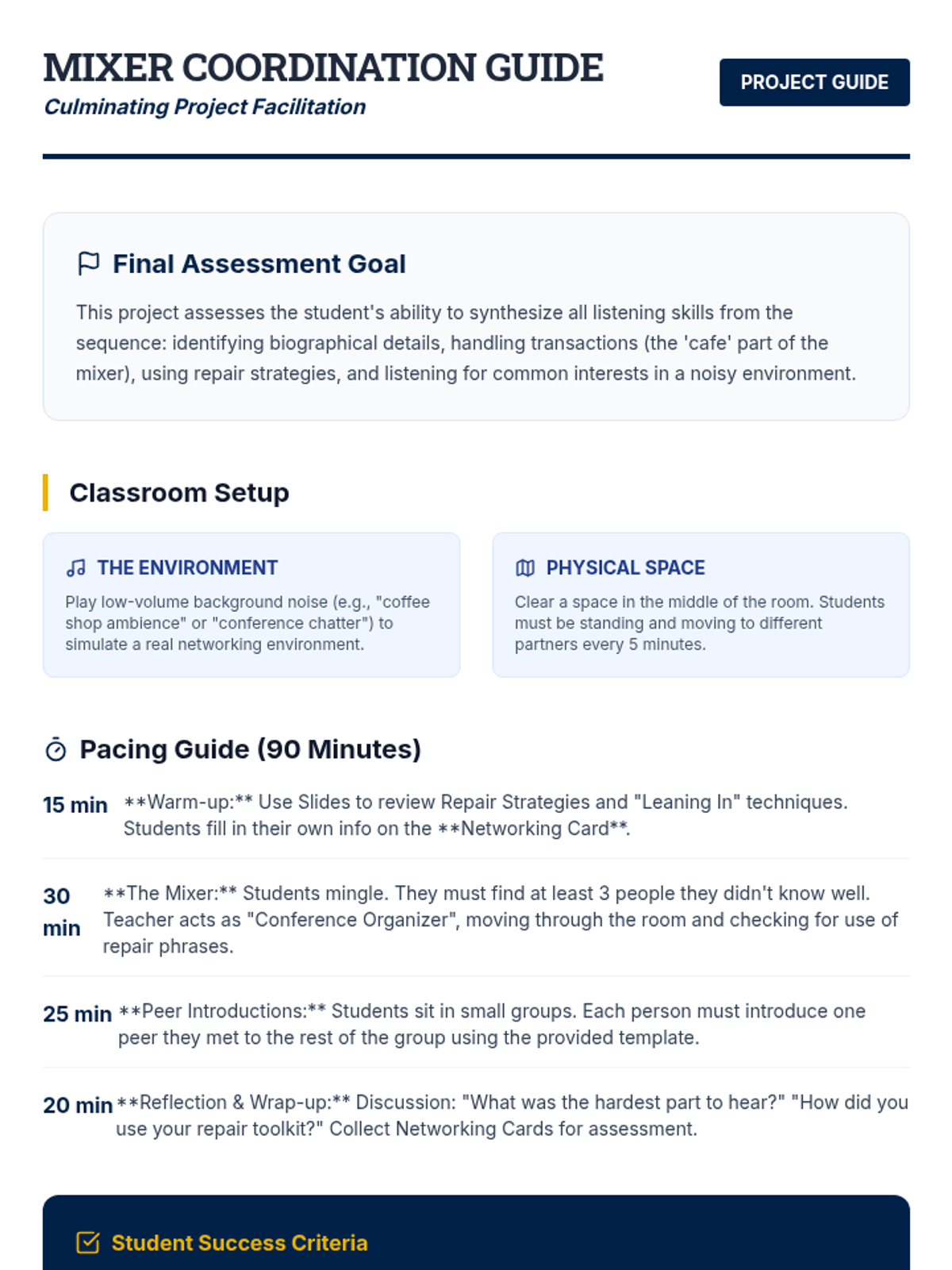
A teacher coordination guide for the culminating Networking Mixer project, including classroom setup instructions, pacing, and assessment criteria.
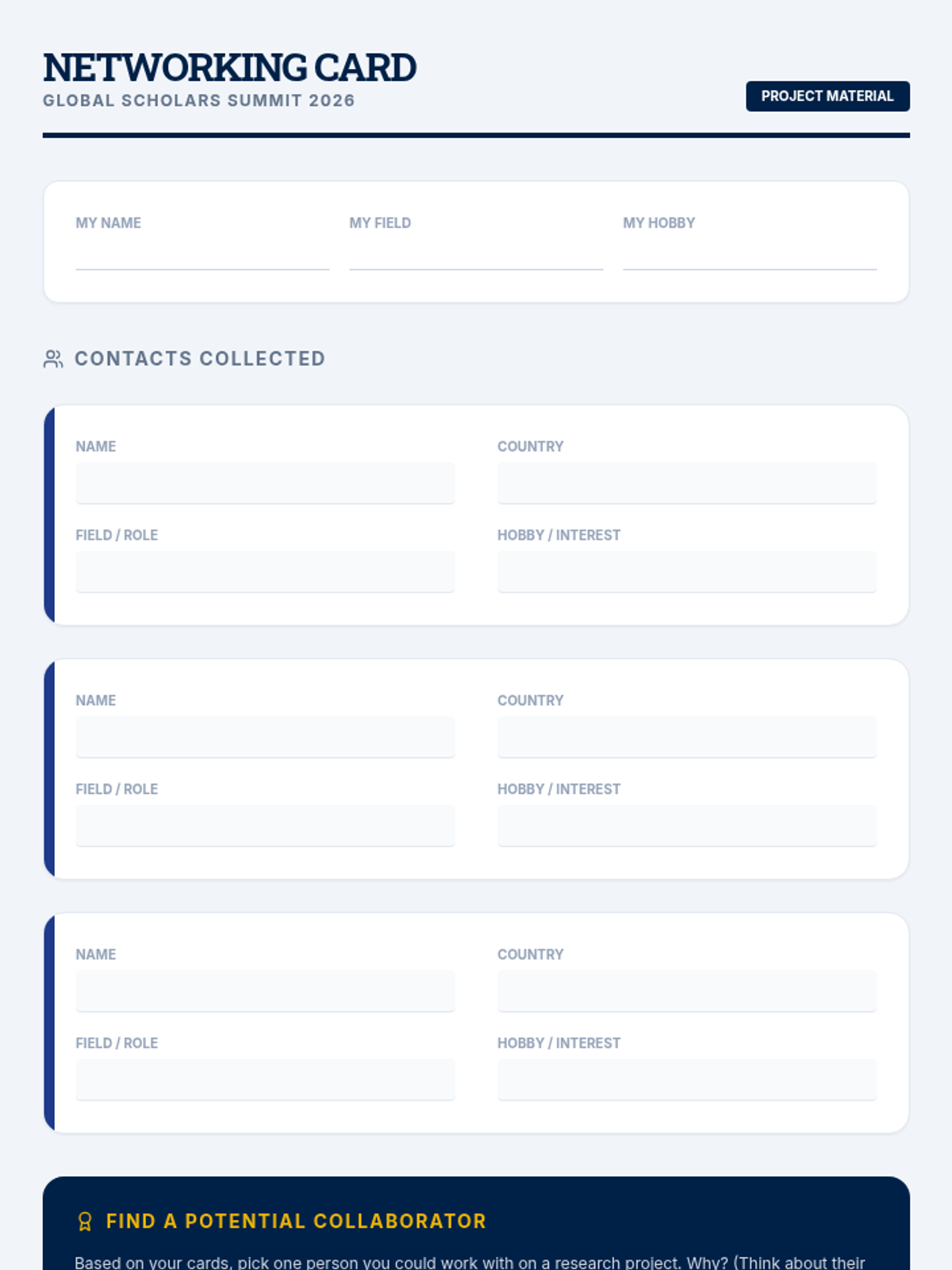
A student networking card used during the simulation project to record peers' biographical details, professional roles, and personal interests.
A presentation deck for the culminating project, guiding students through the networking mixer simulation and professional peer introductions.
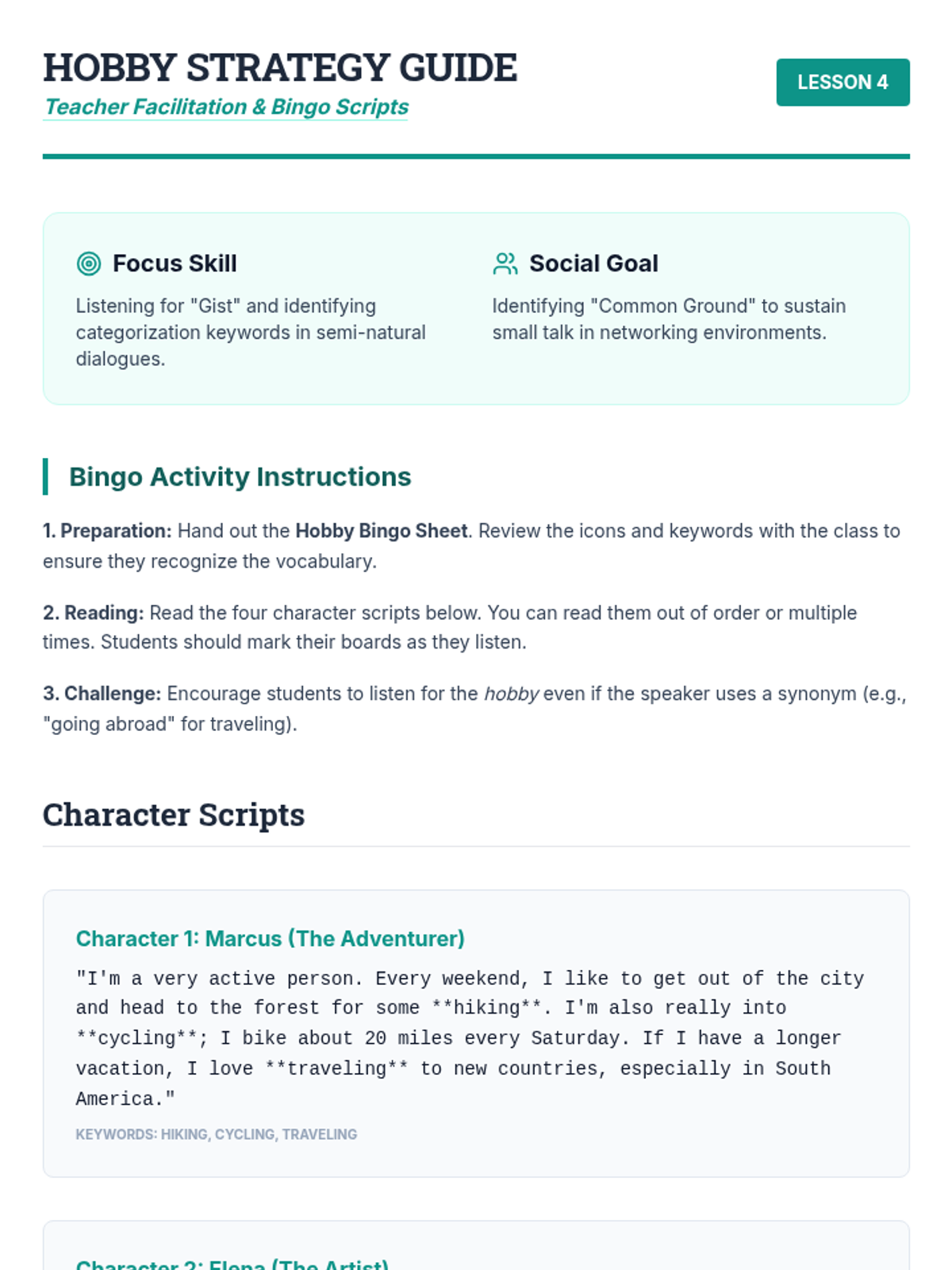
A teacher facilitation guide for Lesson 4, including character scripts for the Hobby Bingo activity and instructions for teaching small talk listening strategies.
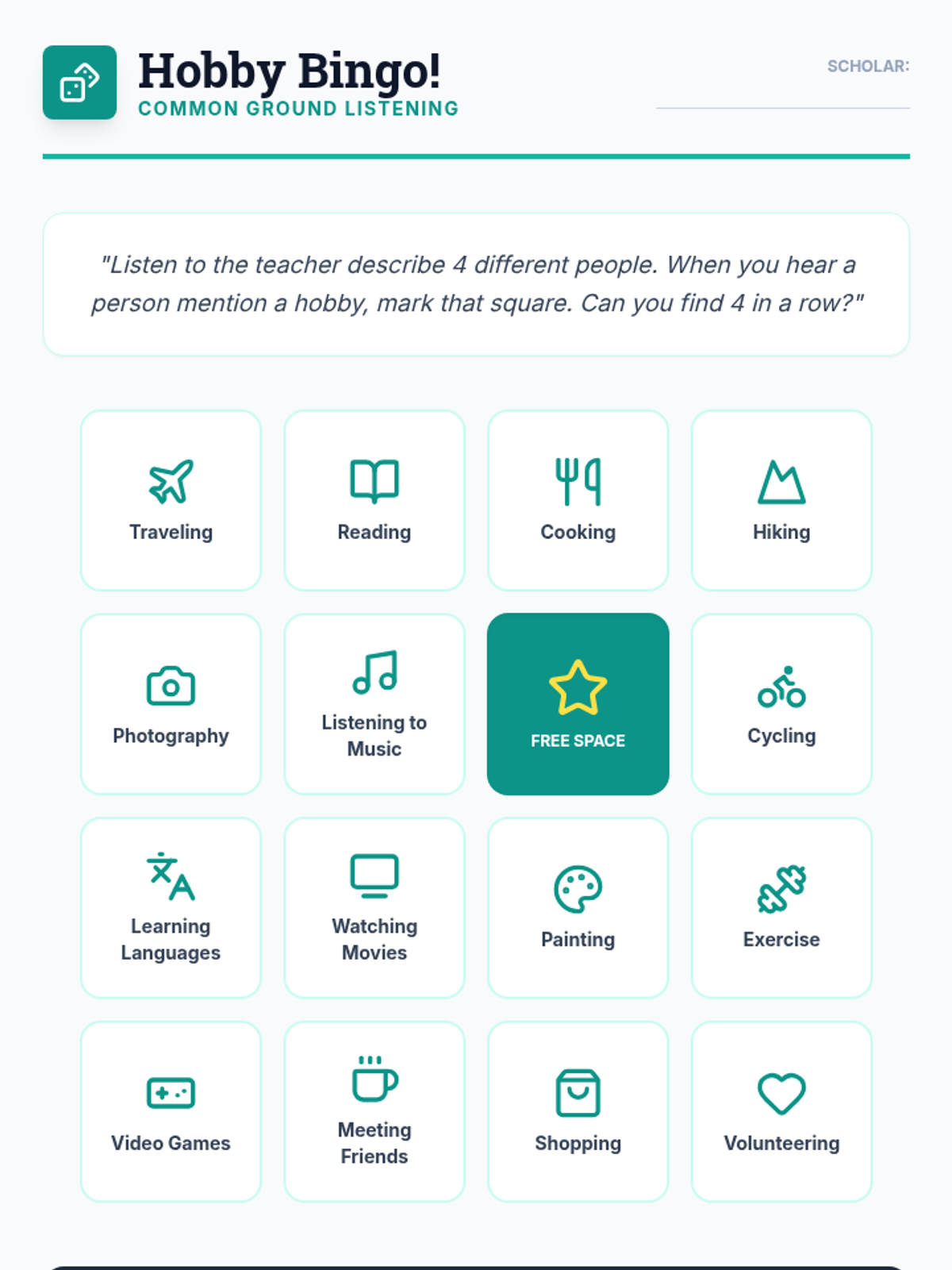
A Bingo activity sheet for identifying various hobbies and interests from spoken descriptions. Designed for beginner listening practice with clear visual icons.
A presentation deck for Lesson 4 introducing high-frequency vocabulary and listening strategies for social bonding and identifying common interests.
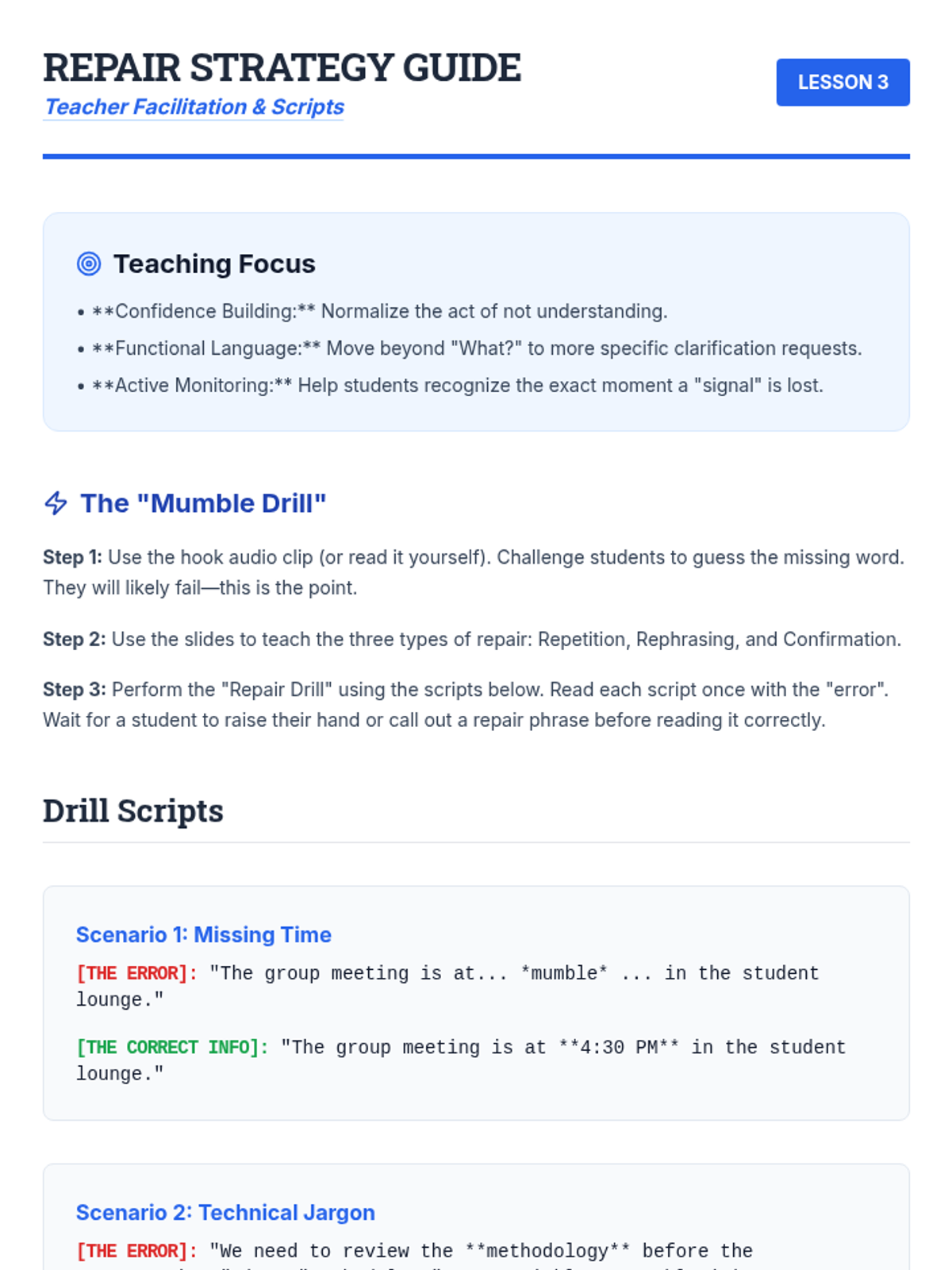
A teacher facilitation guide for Lesson 3, including instructions for the 'Mumble Drill' and scripts for practice scenarios focusing on clarification and repair strategies.
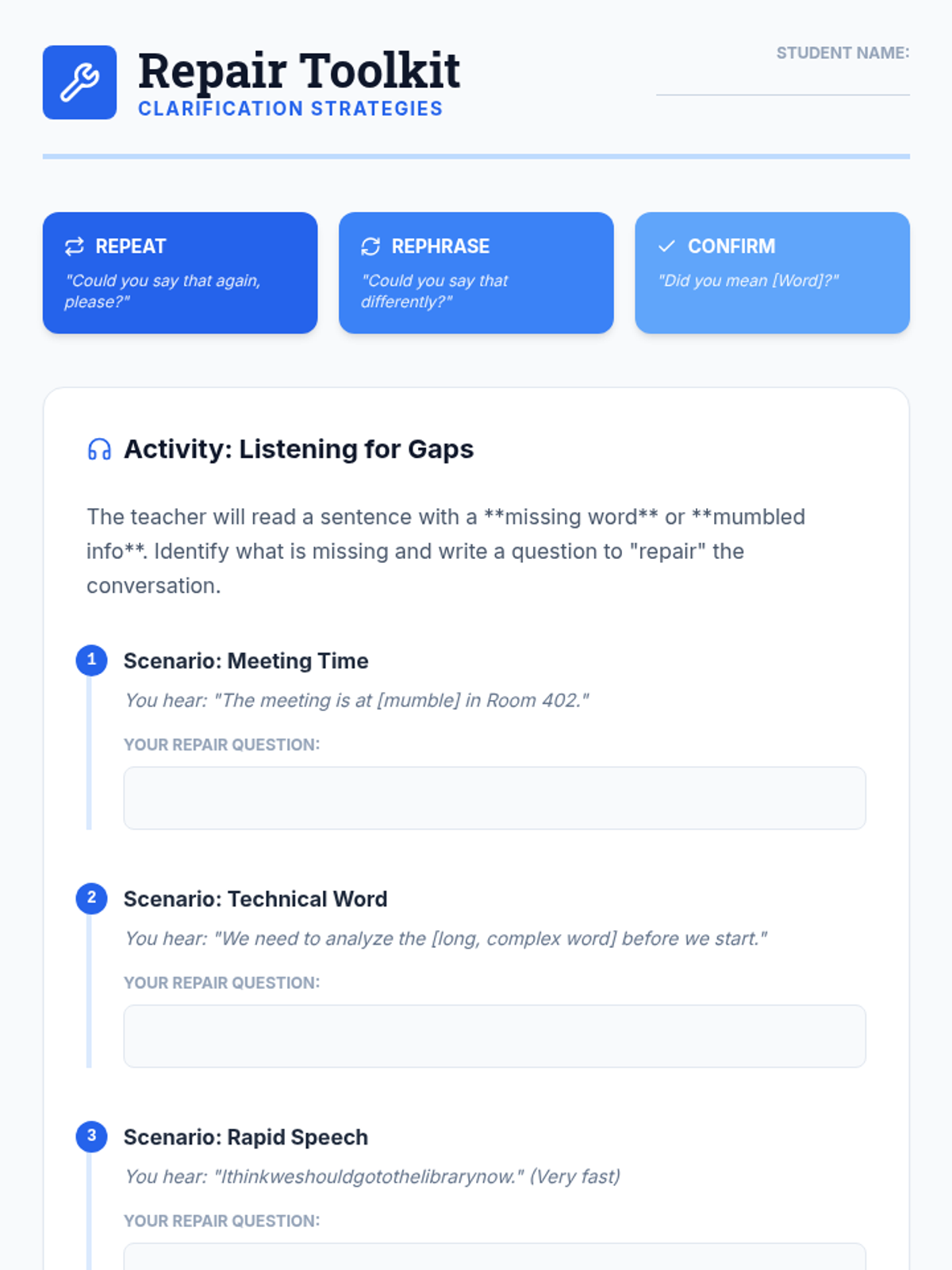
A student worksheet for practicing strategies for recognizing comprehension gaps and using clarification phrases. Includes scenarios for meeting times, technical vocabulary, and rapid speech.
A presentation deck for Lesson 3 introducing strategies for recognizing comprehension gaps and using clarification phrases.
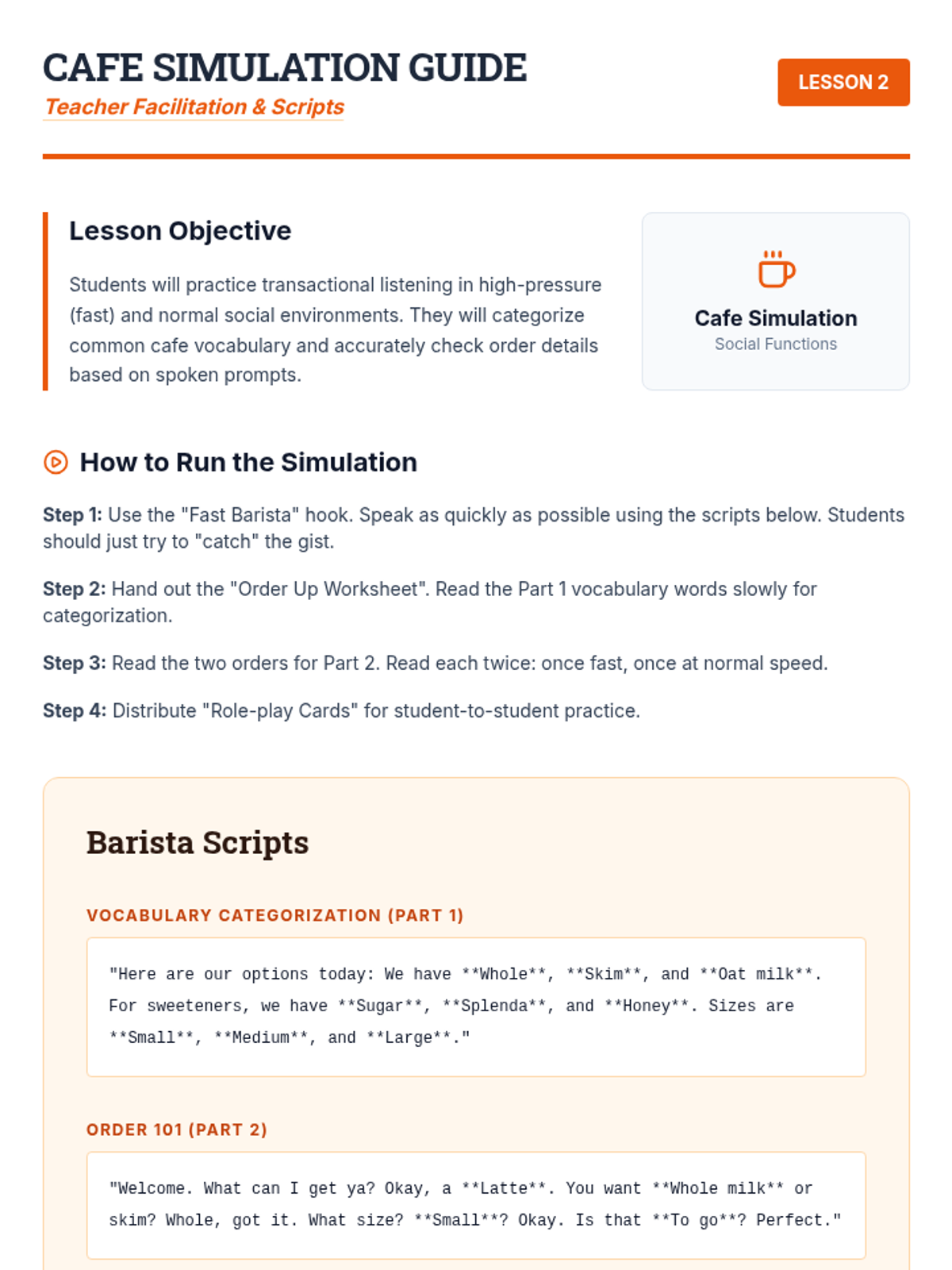
A teacher facilitation guide for Lesson 2, providing barista scripts for the listening tasks and instructions for the cafe simulation activity.
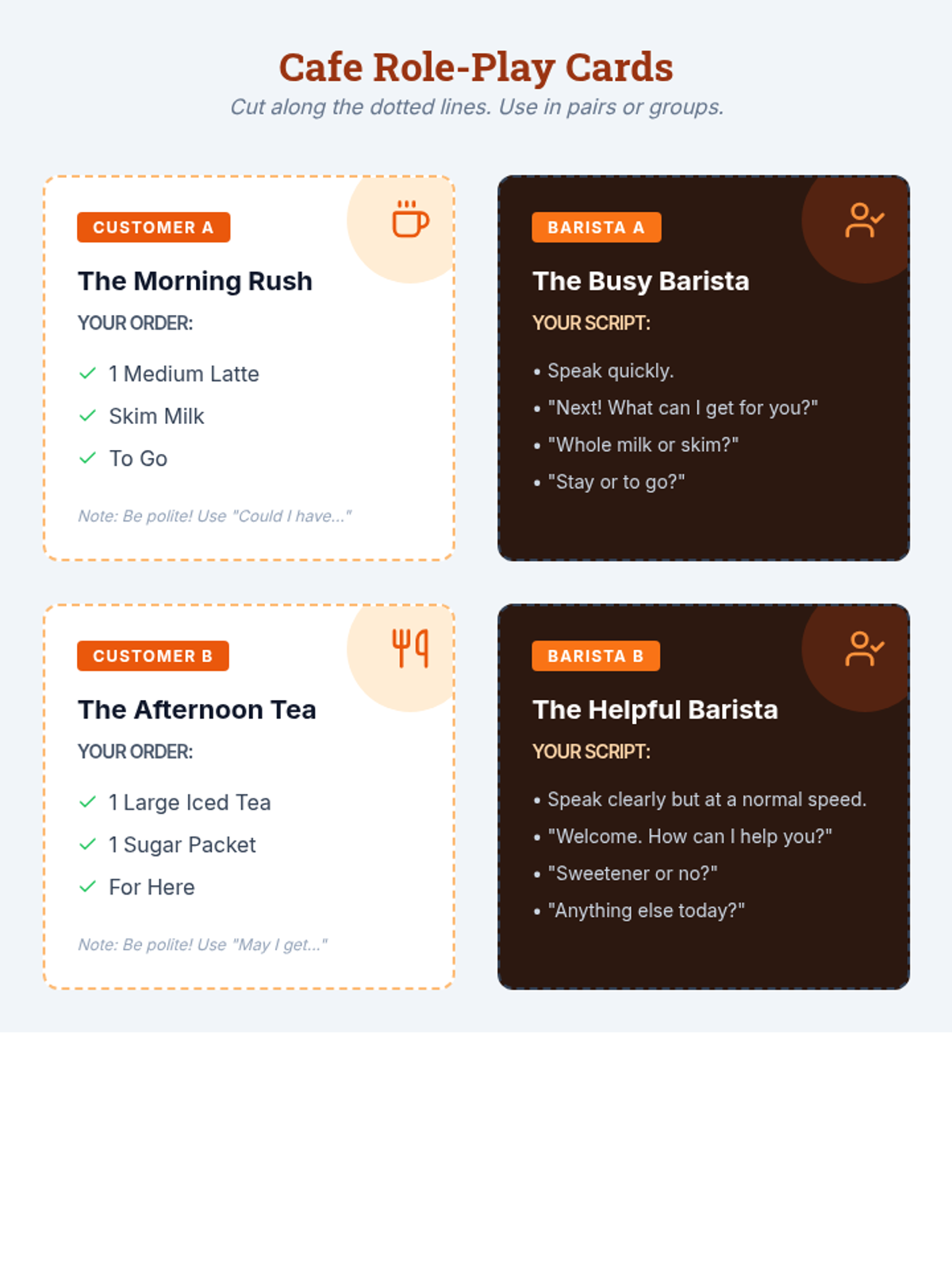
Role-play cards for a cafe simulation. Includes specific orders for 'customers' and character prompts for 'baristas' to practice transactional listening and speaking.
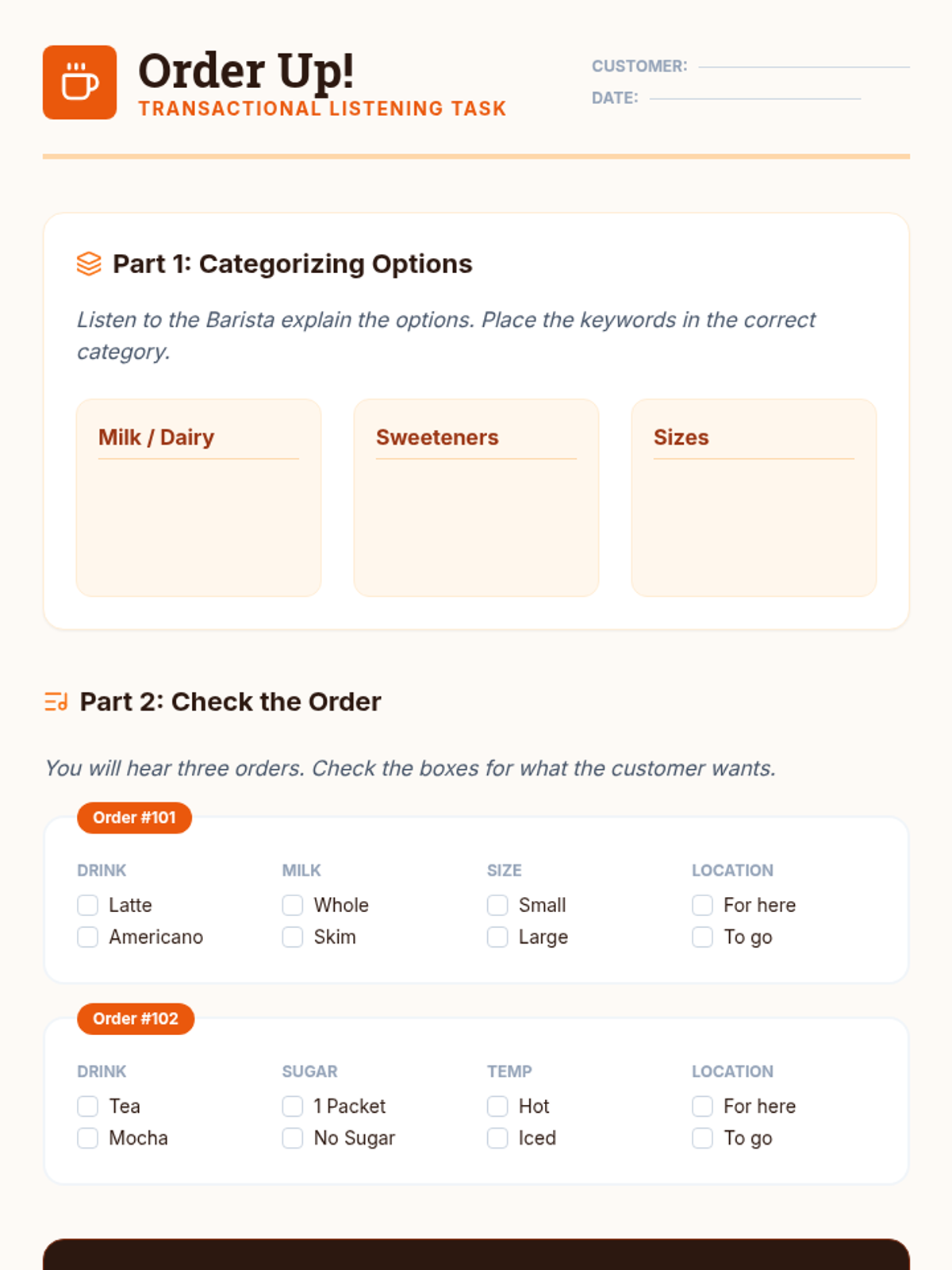
A student worksheet for identifying preferences and polite requests in a cafe setting. Includes categorization of options and order checking tasks.
A presentation deck for Lesson 2 introducing cafe-related vocabulary, transactional questions, and polite response markers for social networking environments.
An answer key for the Intro ID Sheet, providing the correct biographical details for each of the three scholars.
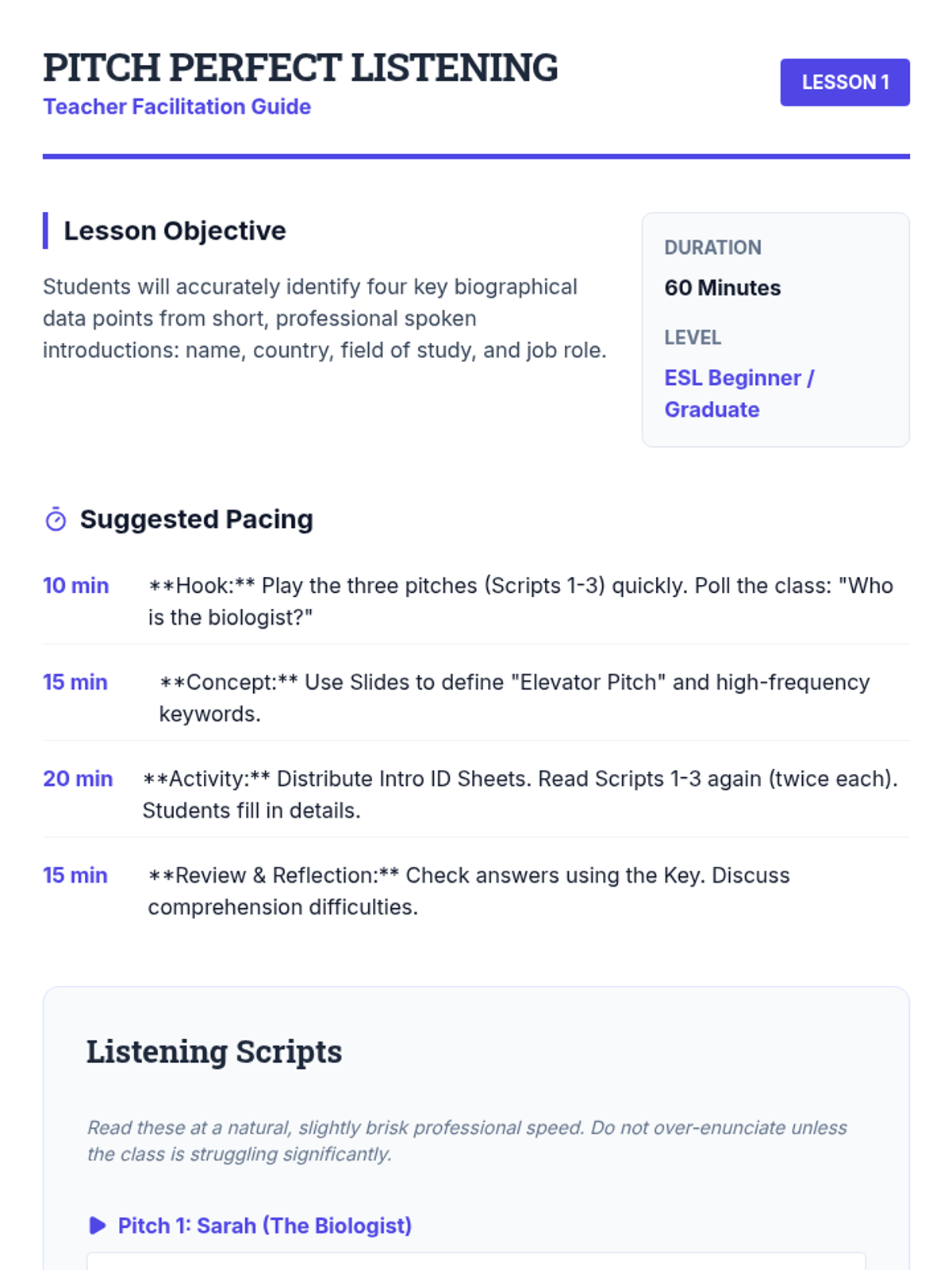
A comprehensive teacher guide for Lesson 1 including professional introduction scripts (Elevator Pitches) for reading aloud, lesson objectives, and a suggested pacing guide.
A presentation deck for Lesson 1 introducing the concept of an 'elevator pitch' and guiding students through the identification of biographical data.
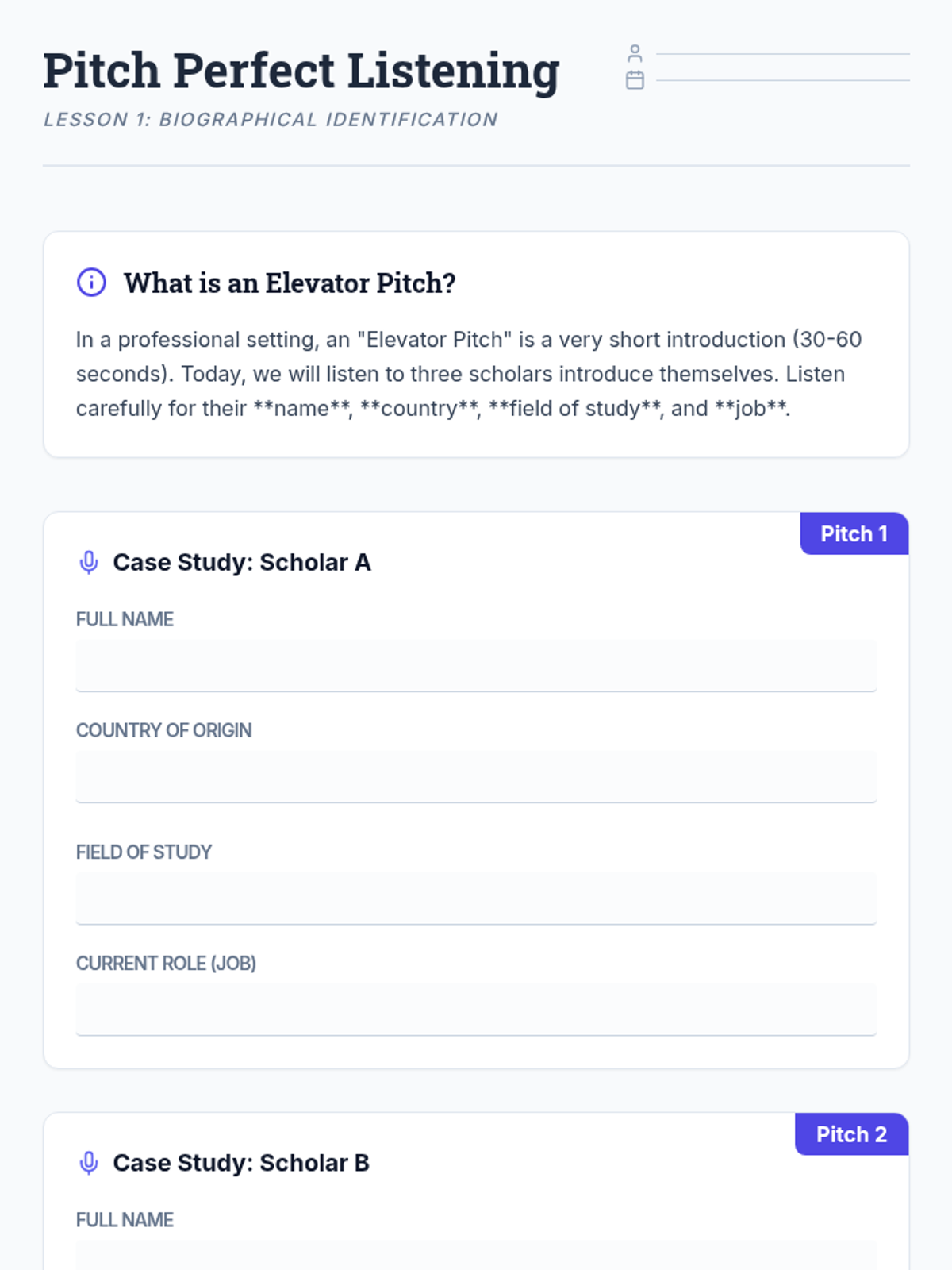
A student worksheet for identifying key biographical details from three scholar 'elevator pitches'. Students listen for name, country, field, and job role.
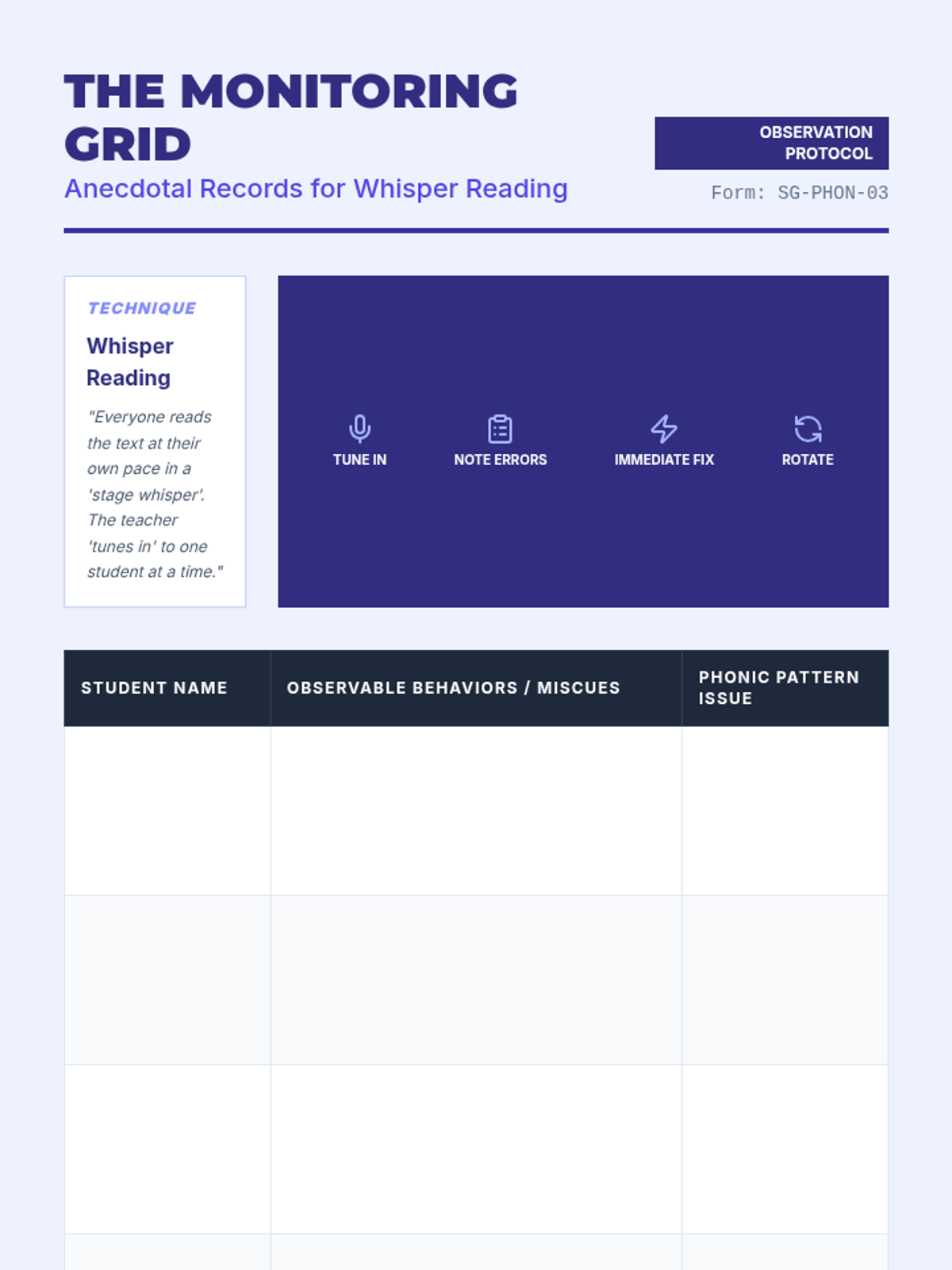
An anecdotal monitoring grid and simulation work area for students to practice whisper reading management and formative assessment.
A slide deck for Lesson 2, illustrating the purpose and structure of pre-reading warm-up routines.
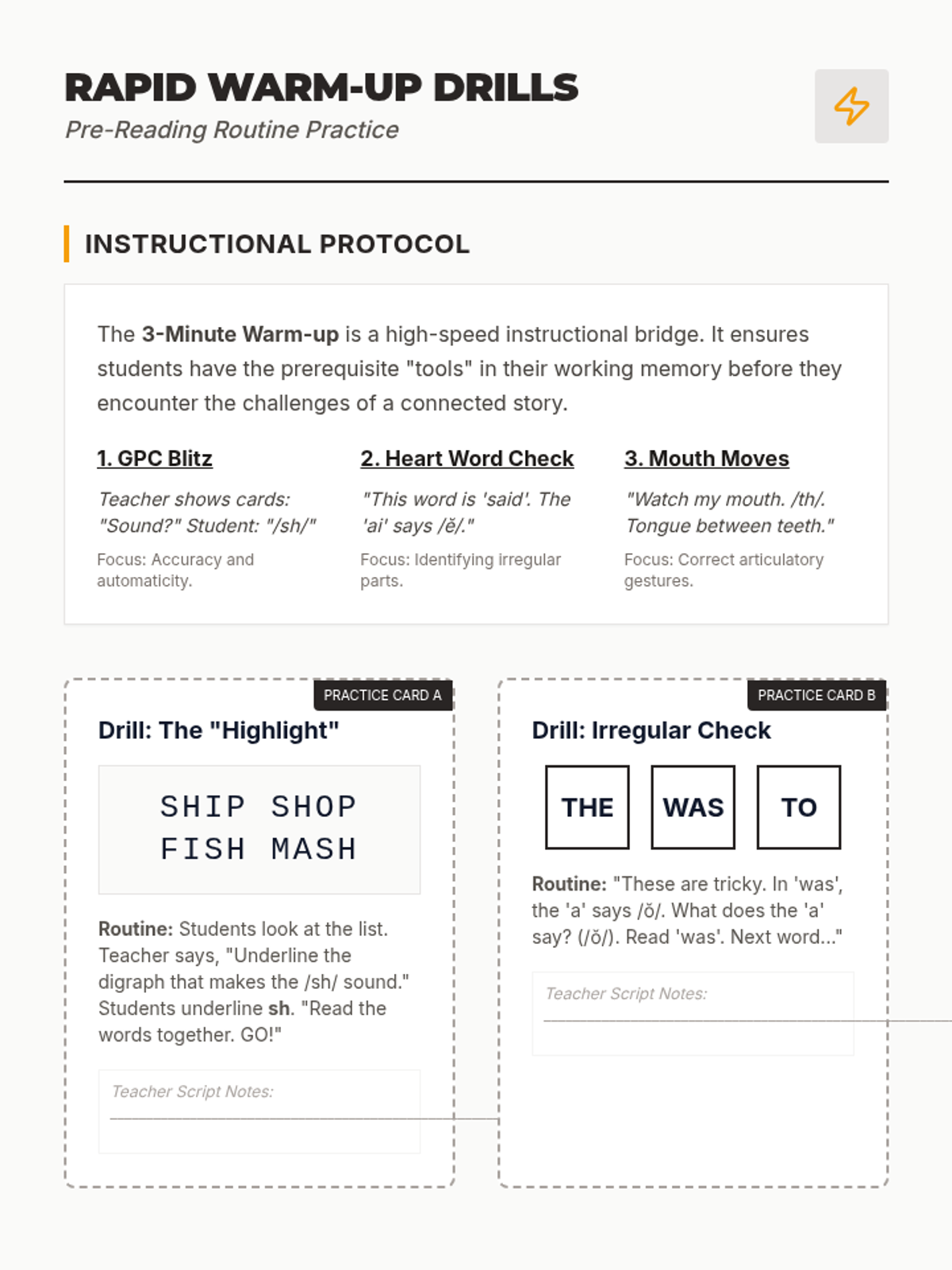
Warm-up drill cards and a simulation design task for undergraduate students to practice pre-reading routines for decodable texts.
A slide deck for Lesson 1, focusing on the architecture and timing of a structured literacy small group session.
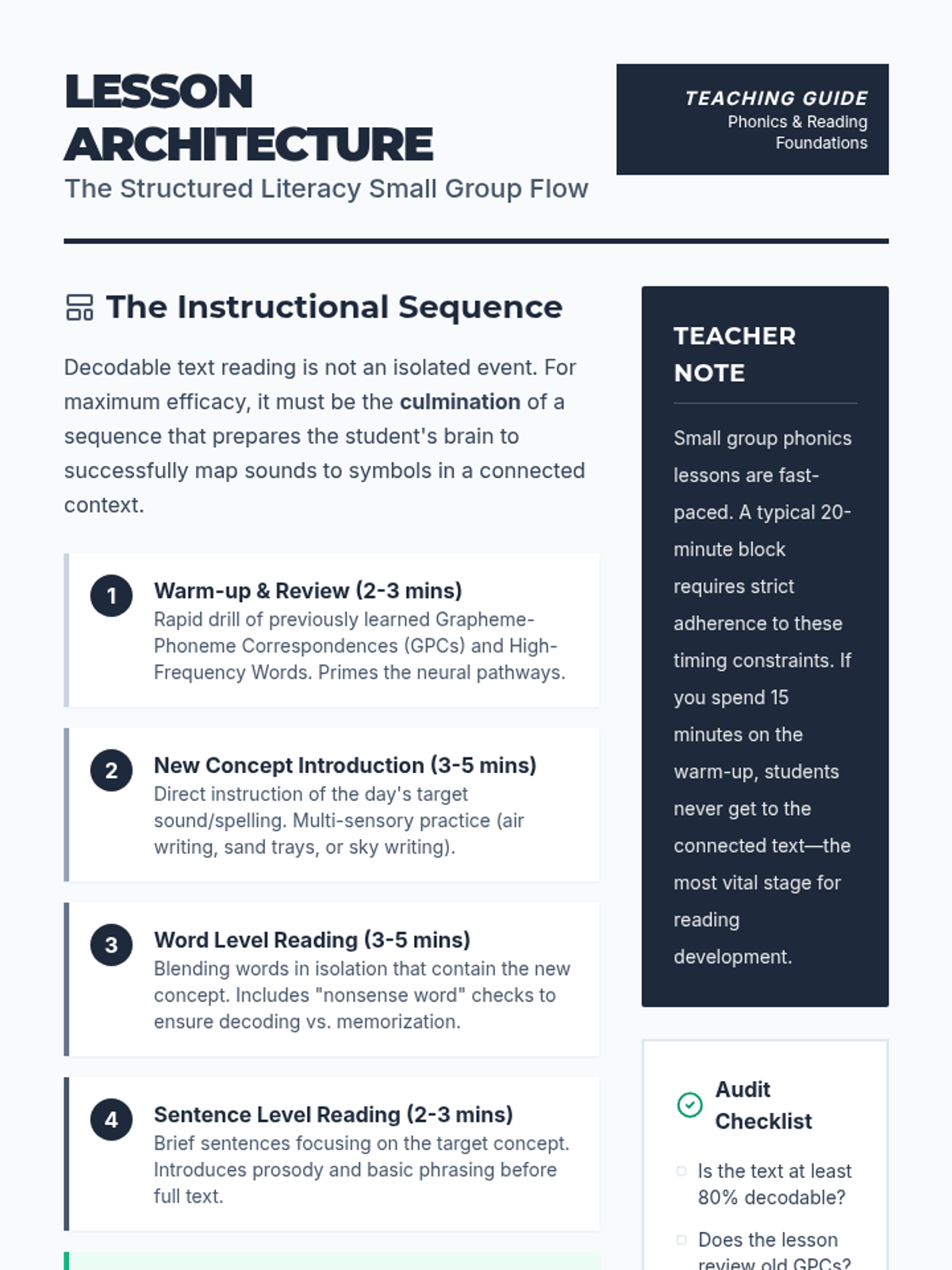
A lesson planning guide and audit activity for undergraduate students to understand the architectural flow of a structured literacy small group session.
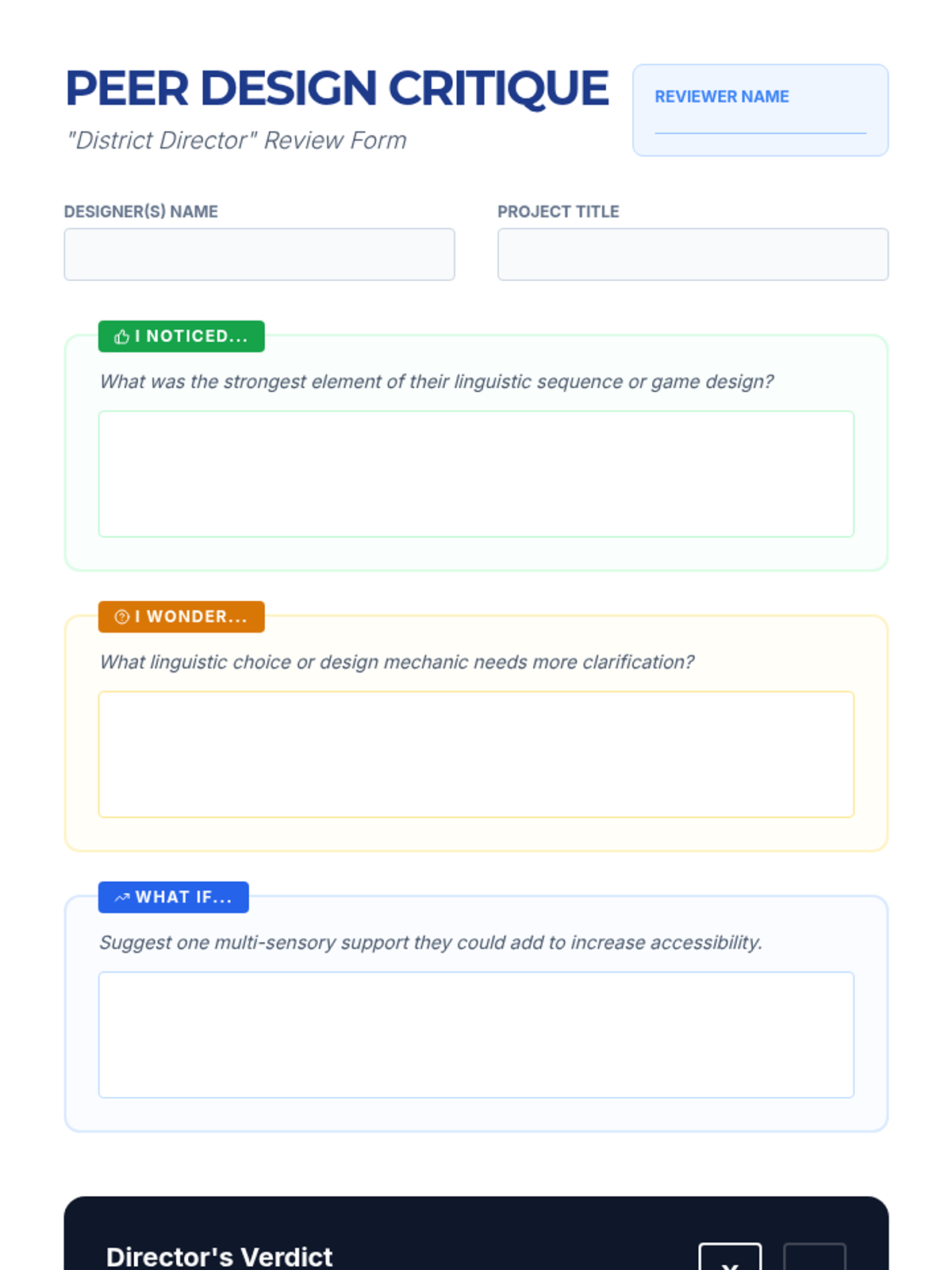
A peer feedback form for students to use during the curriculum showcase to evaluate their peers' work using a structured "I Noticed, I Wonder, What If" protocol.
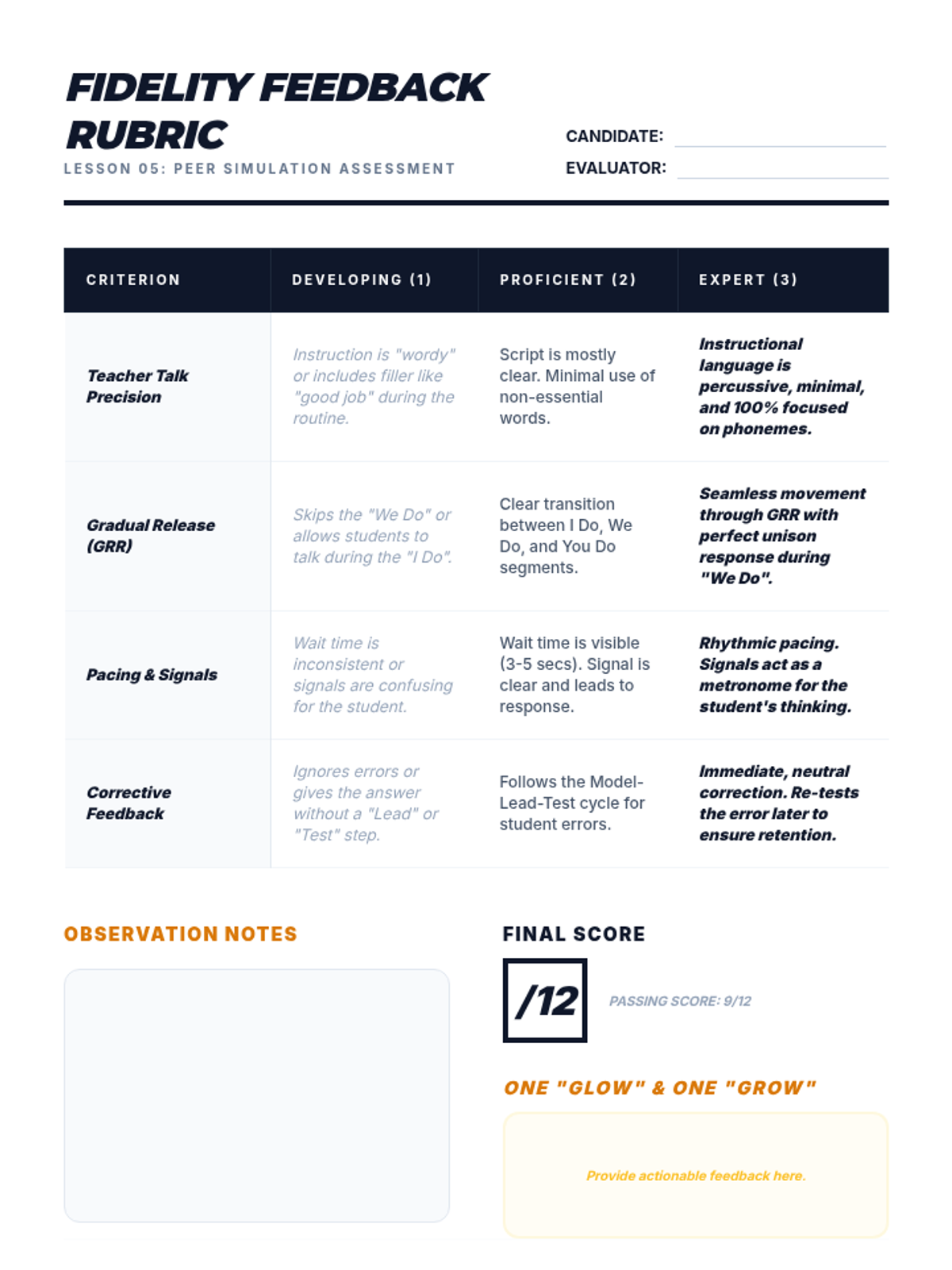
A comprehensive rubric for peers and instructors to evaluate instructional fidelity during the phoneme manipulation teaching simulation.
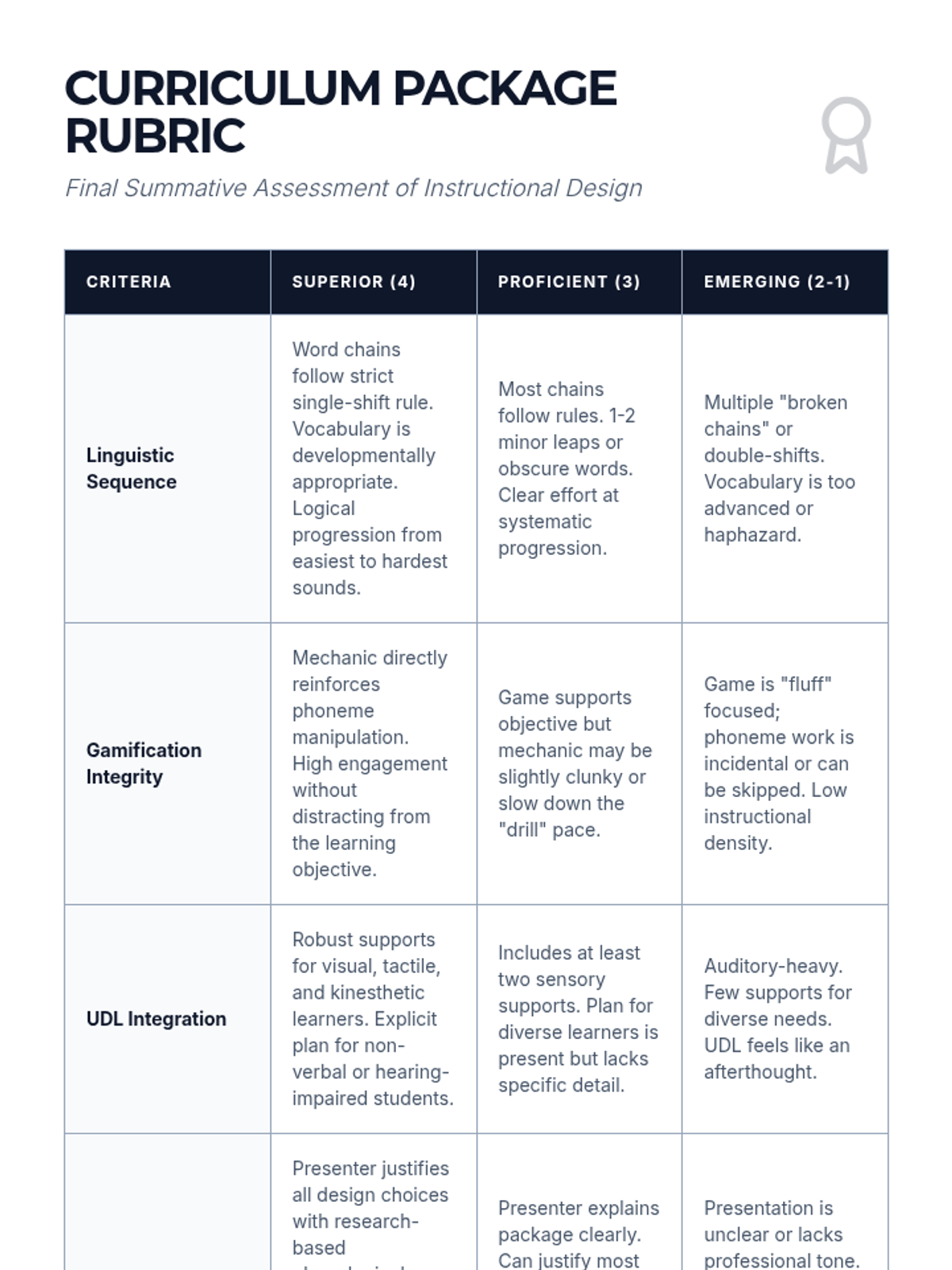
A comprehensive rubric for evaluating the final curriculum package, including linguistic integrity, gamification, and UDL.
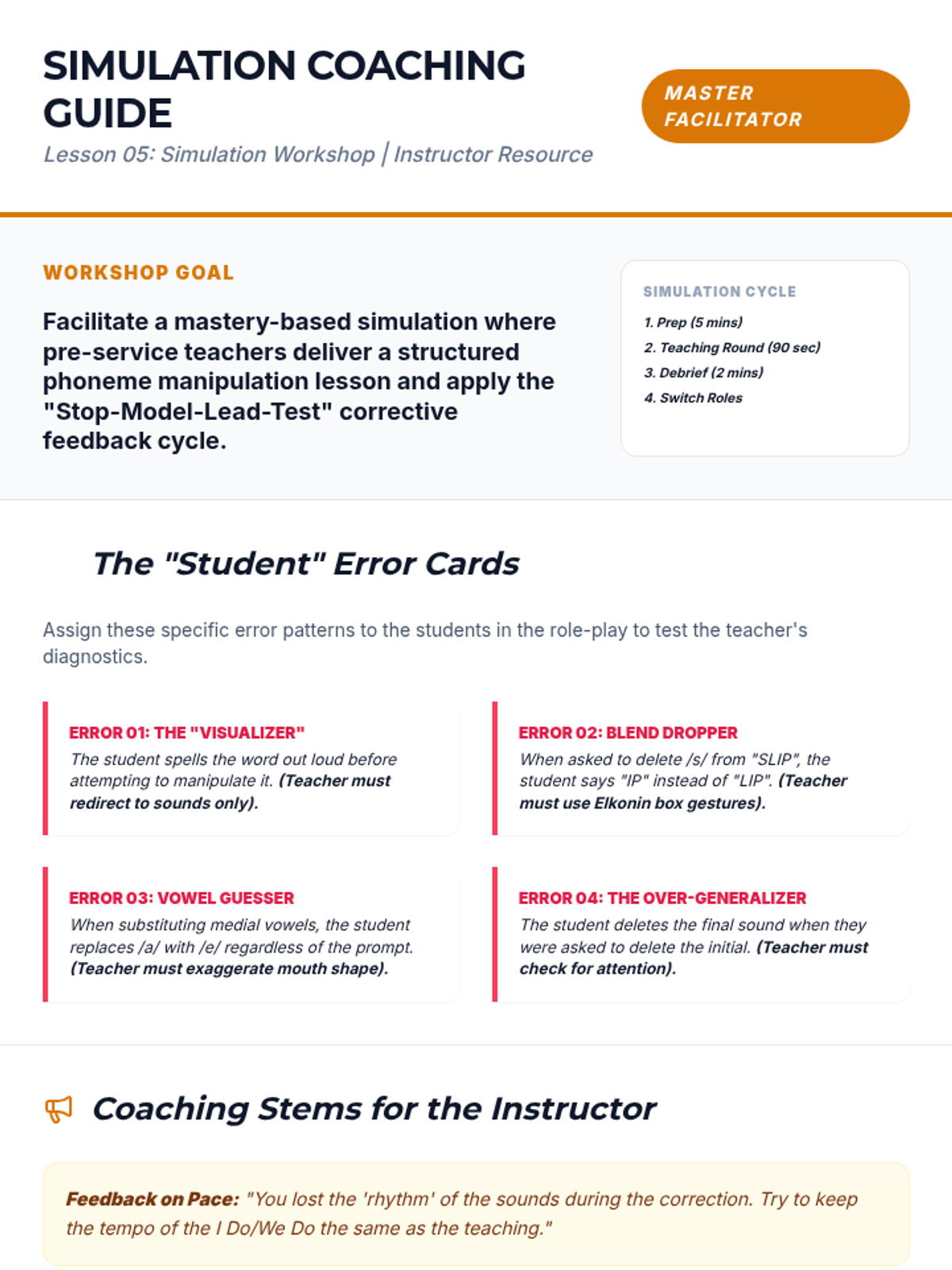
Instructor's resource for the final simulation lesson, containing error patterns for role-playing students and coaching stems for providing feedback to pre-service teachers.
A slide deck for the final curriculum showcase, including presentation requirements and peer feedback protocols.
Slides for the final lesson, guiding students through the peer teaching simulation and emphasizing instructional fidelity and corrective feedback loops.
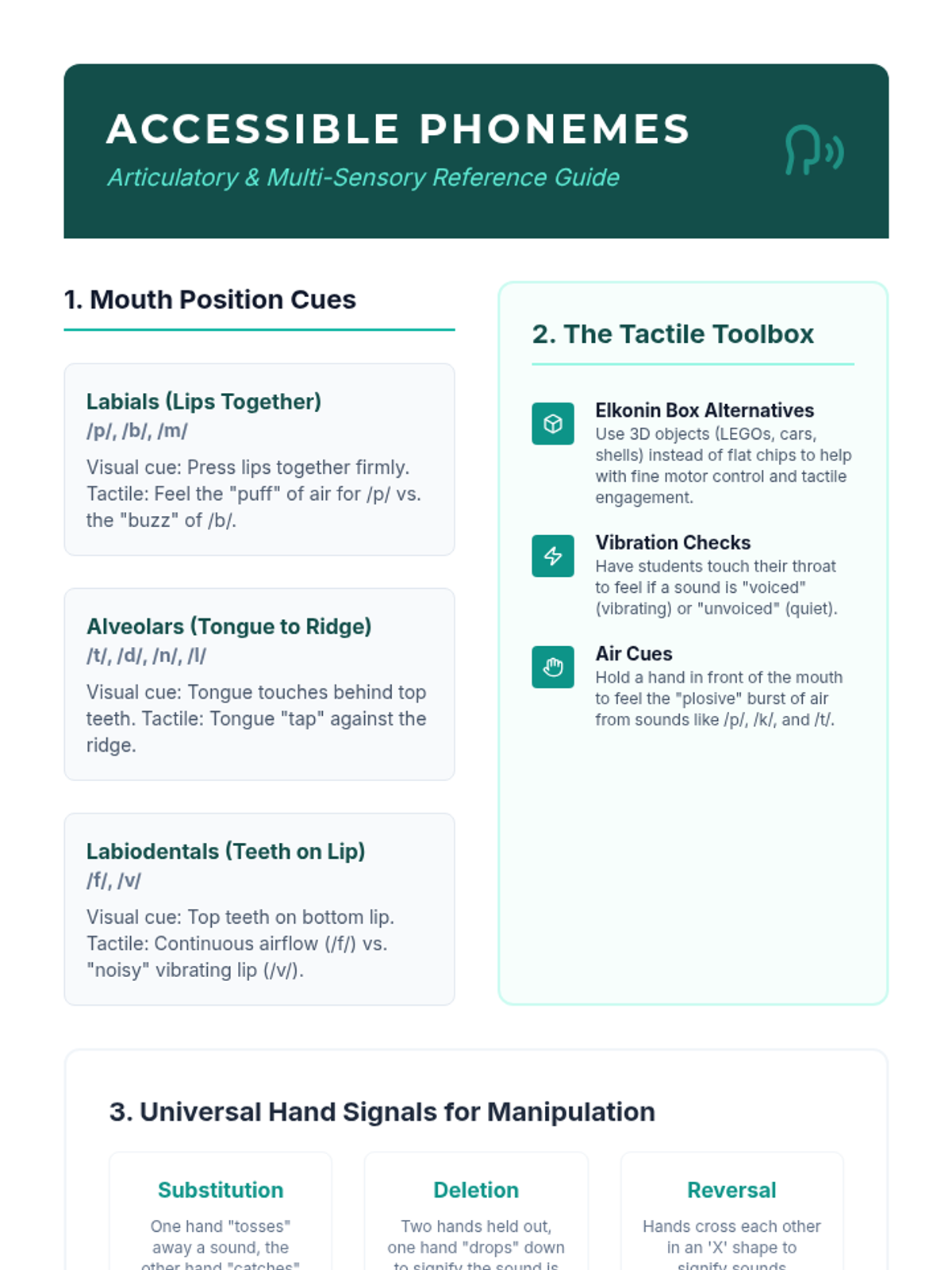
A guide for students to understand articulatory positions and multi-sensory strategies for making phoneme manipulation accessible to all learners.
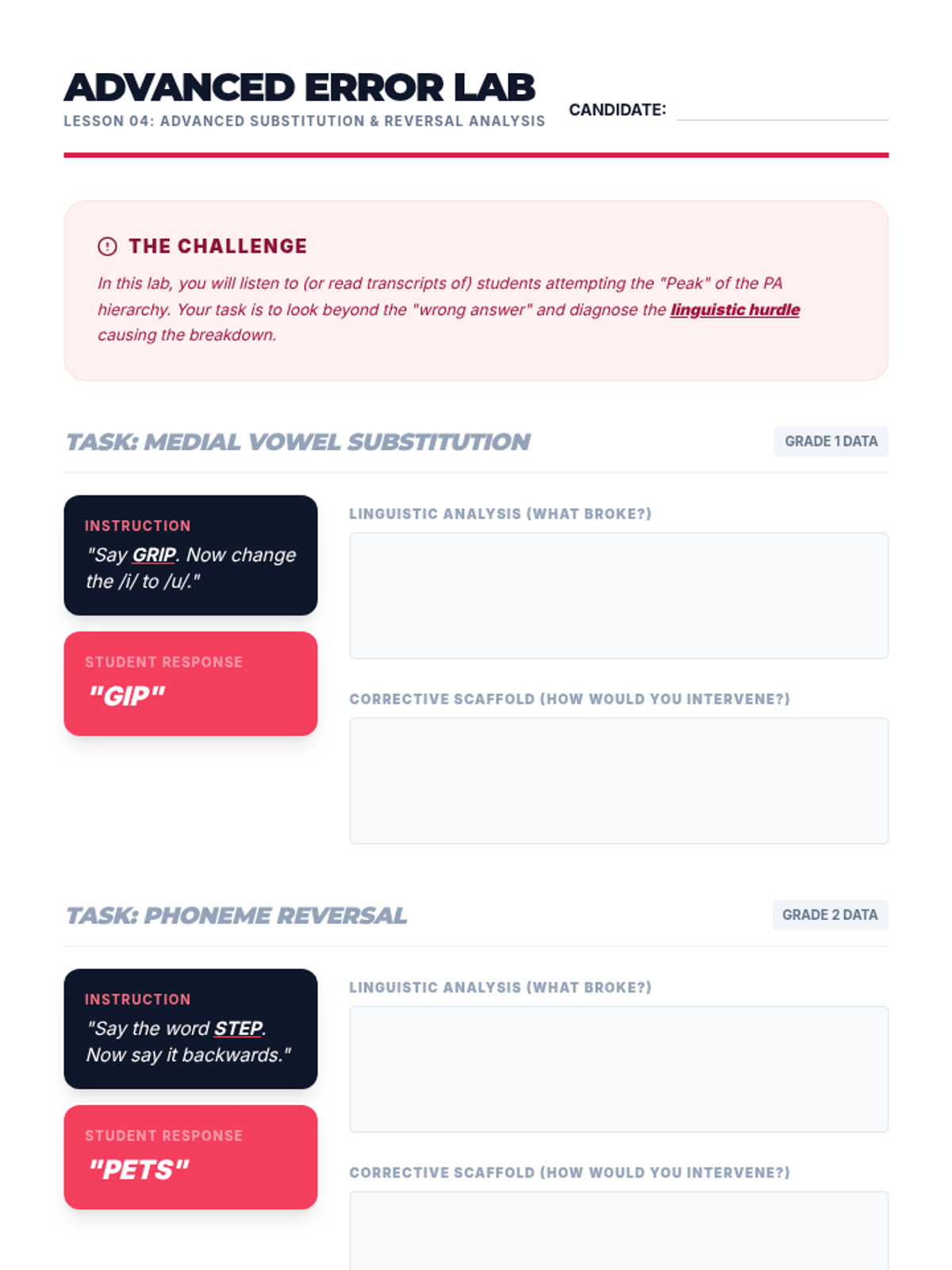
A student lab worksheet for analyzing complex phoneme manipulation errors, requiring linguistic diagnosis and the development of corrective scaffolds.
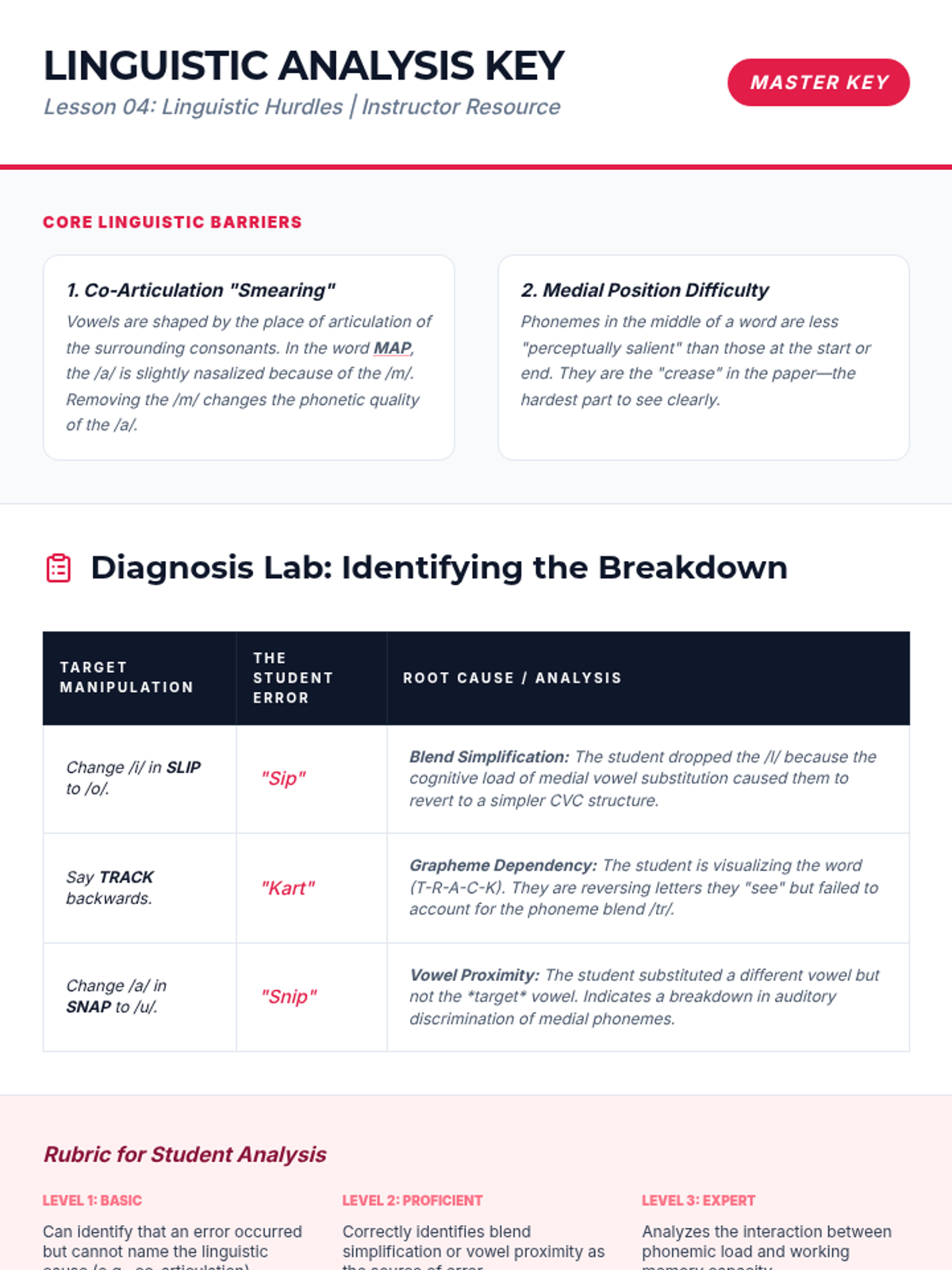
Instructor's resource for lesson 4, providing the linguistic analysis master key for diagnosing advanced student errors in phoneme substitution and reversal.
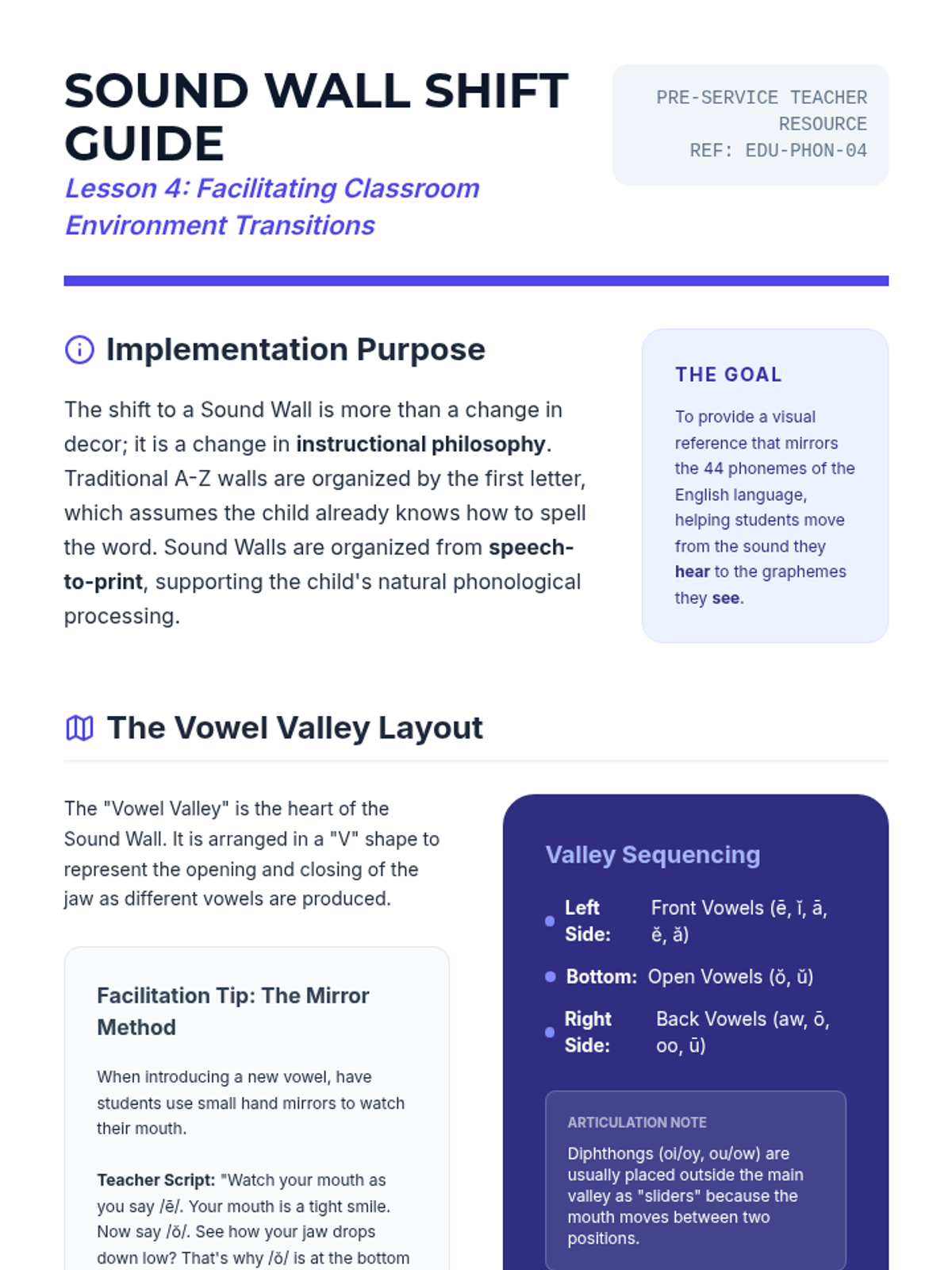
Facilitation guide for teachers on implementing Sound Walls, focusing on the Vowel Valley layout and articulation-based organization.
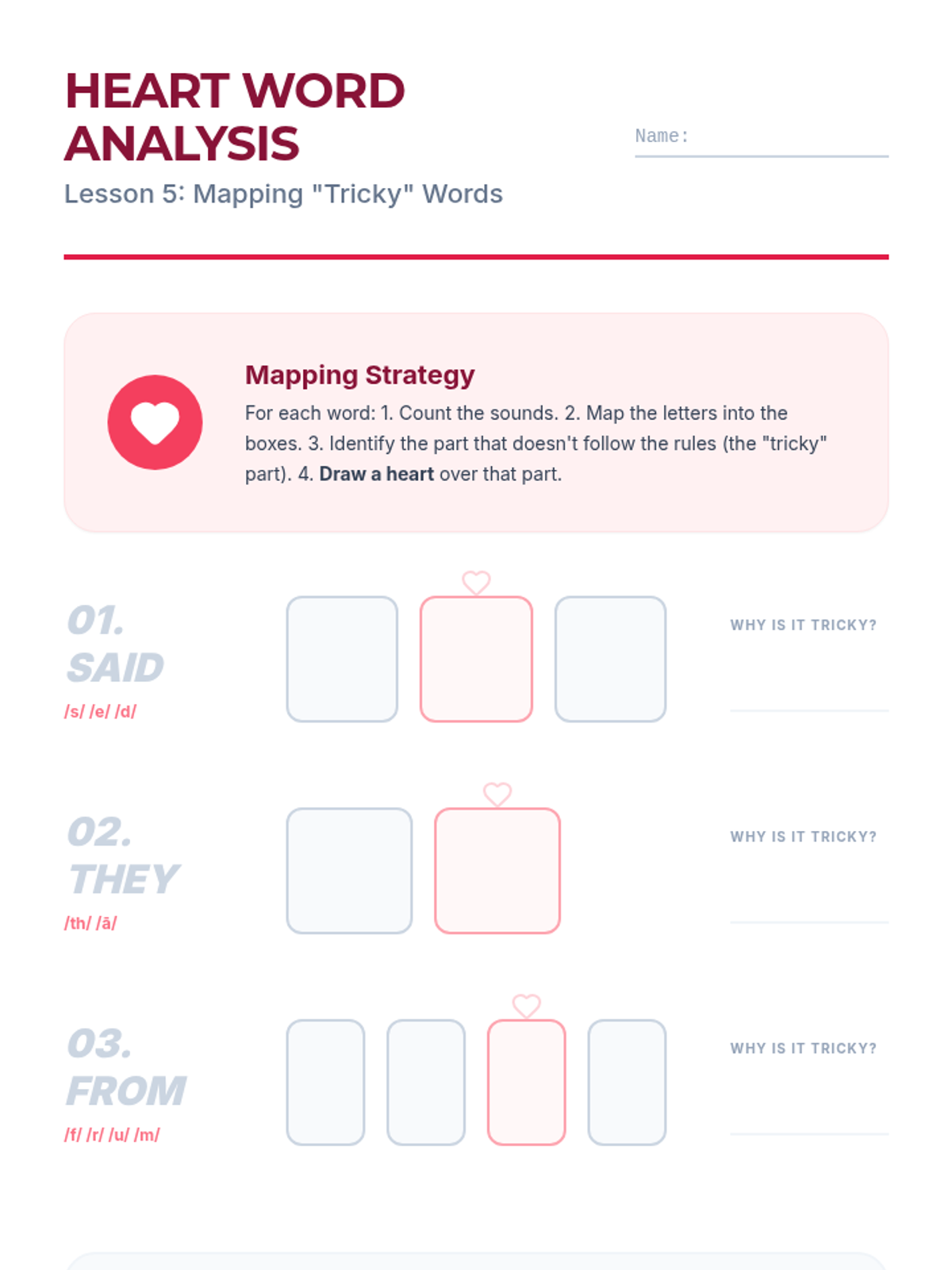
Student activity sheet for analyzing irregular words using the Heart Word method, featuring mapping grids and reflection prompts.
Instructional slide deck on the 'Heart Word' method for teaching irregular words through phonetic analysis.
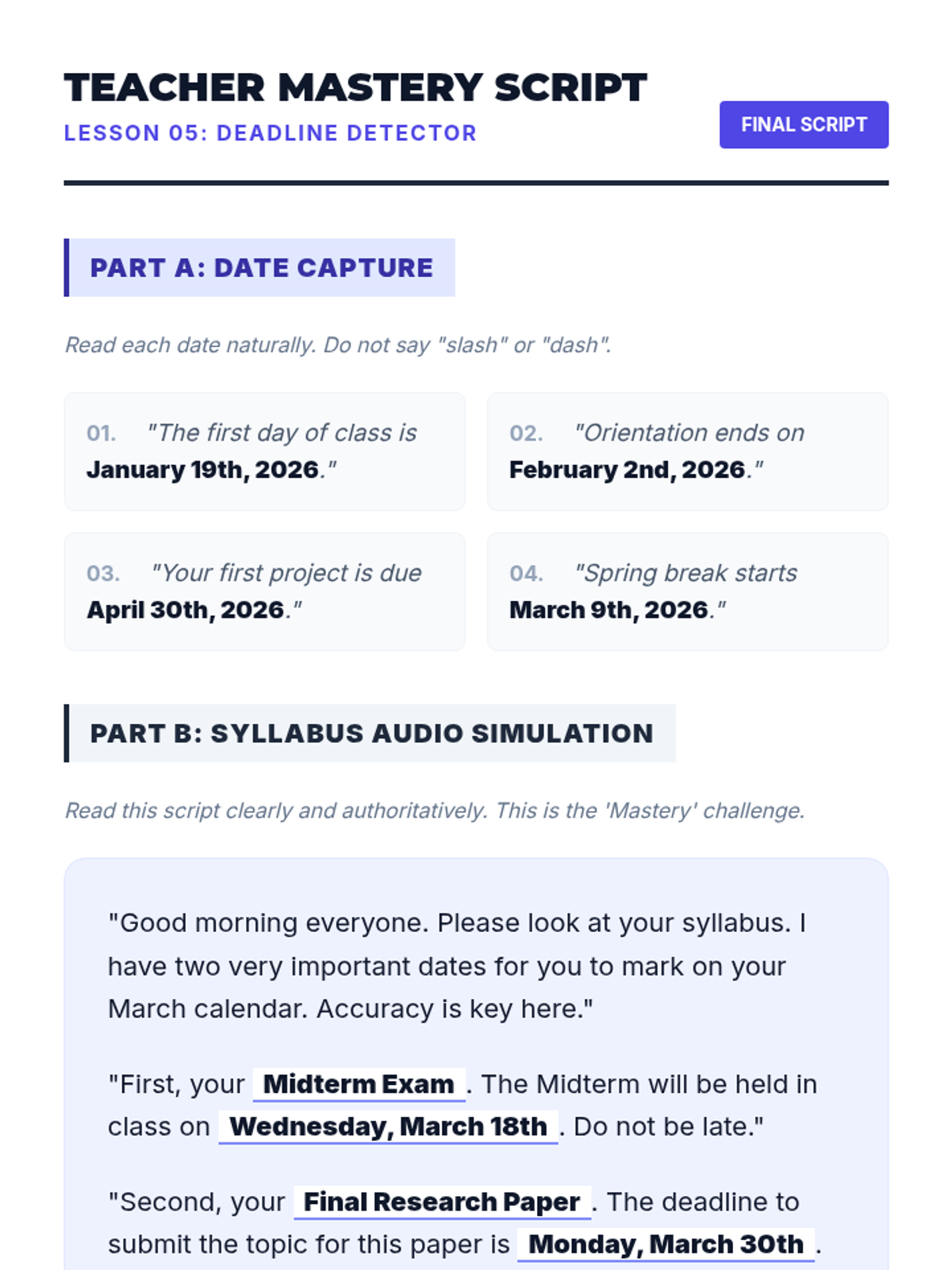
Final teacher script for Lesson 5, containing the date dictation and the syllabus audio simulation for the end-of-sequence mastery check.
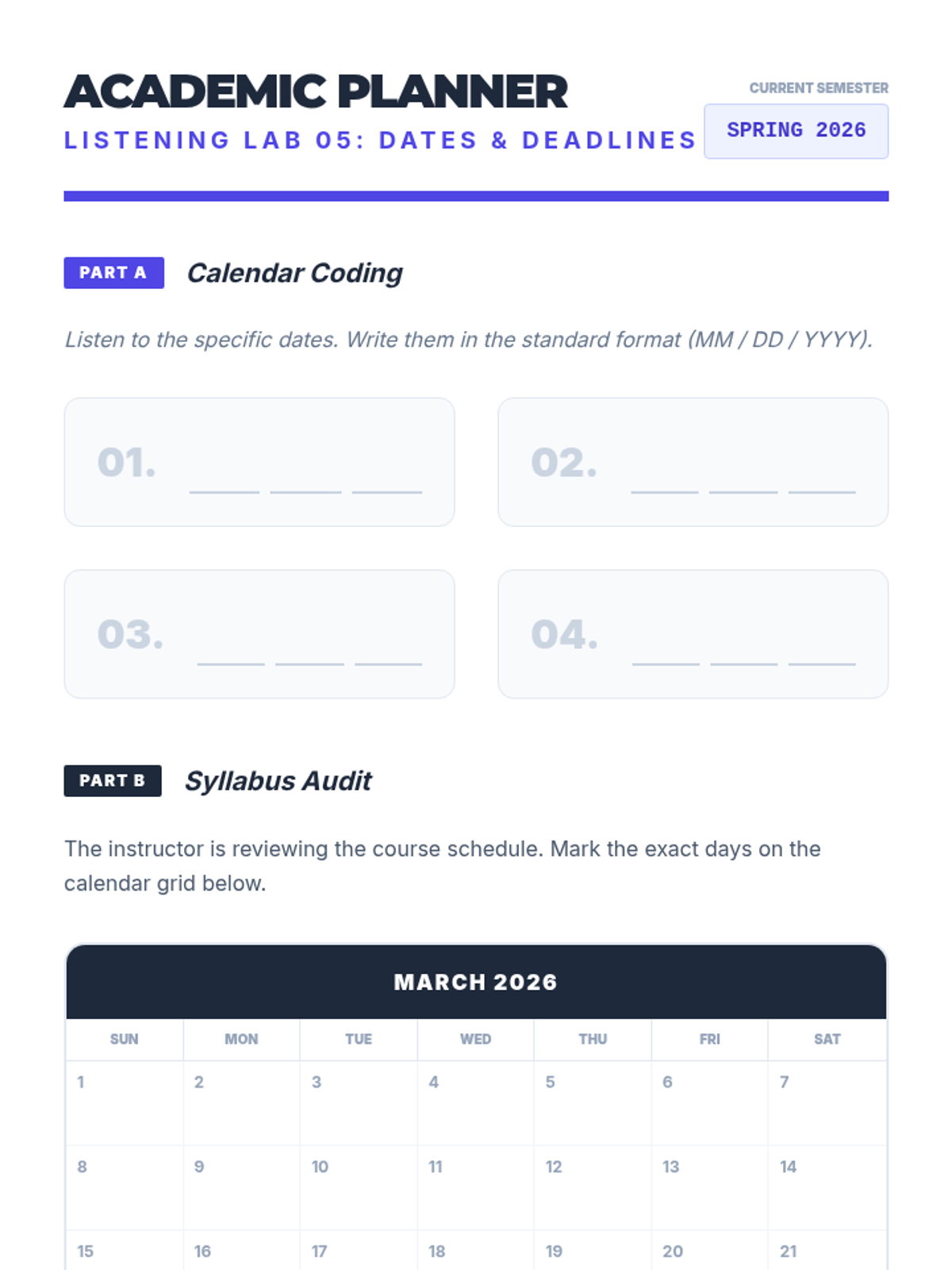
Worksheet for identifying dates and academic deadlines. Includes a date transcription grid and a calendar for students to mark specific events based on a syllabus announcement.
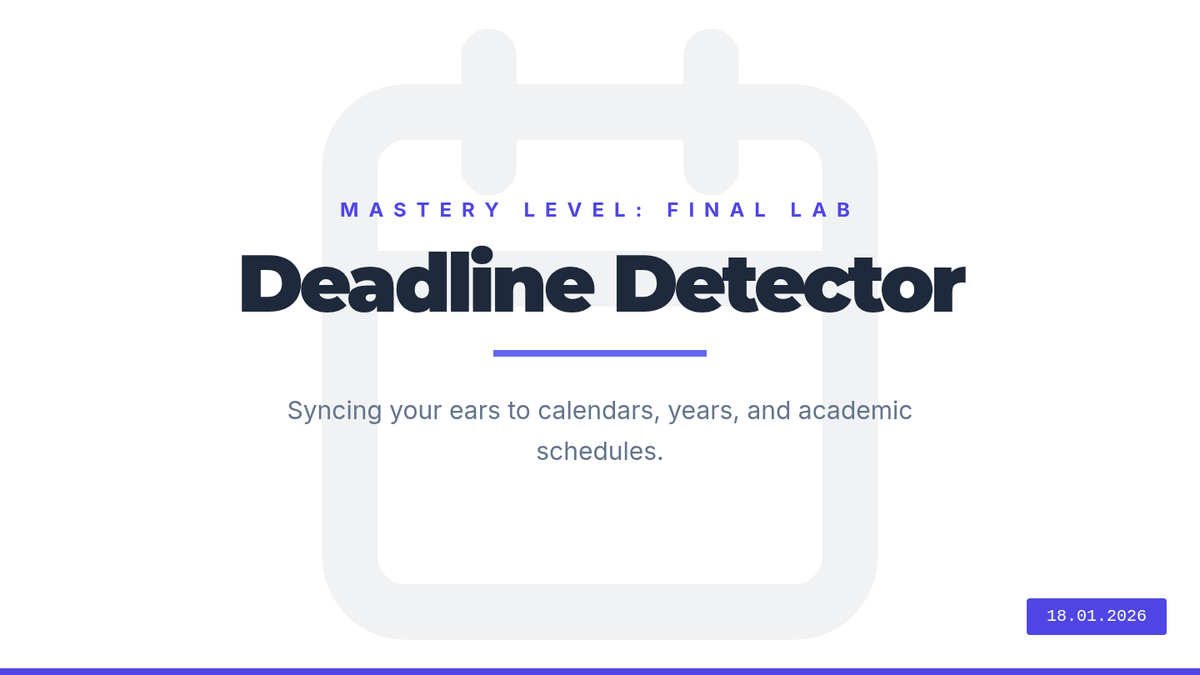
Slides for Lesson 5 focusing on date recognition, ordinal number pronunciation, and the format of years in academic announcements.
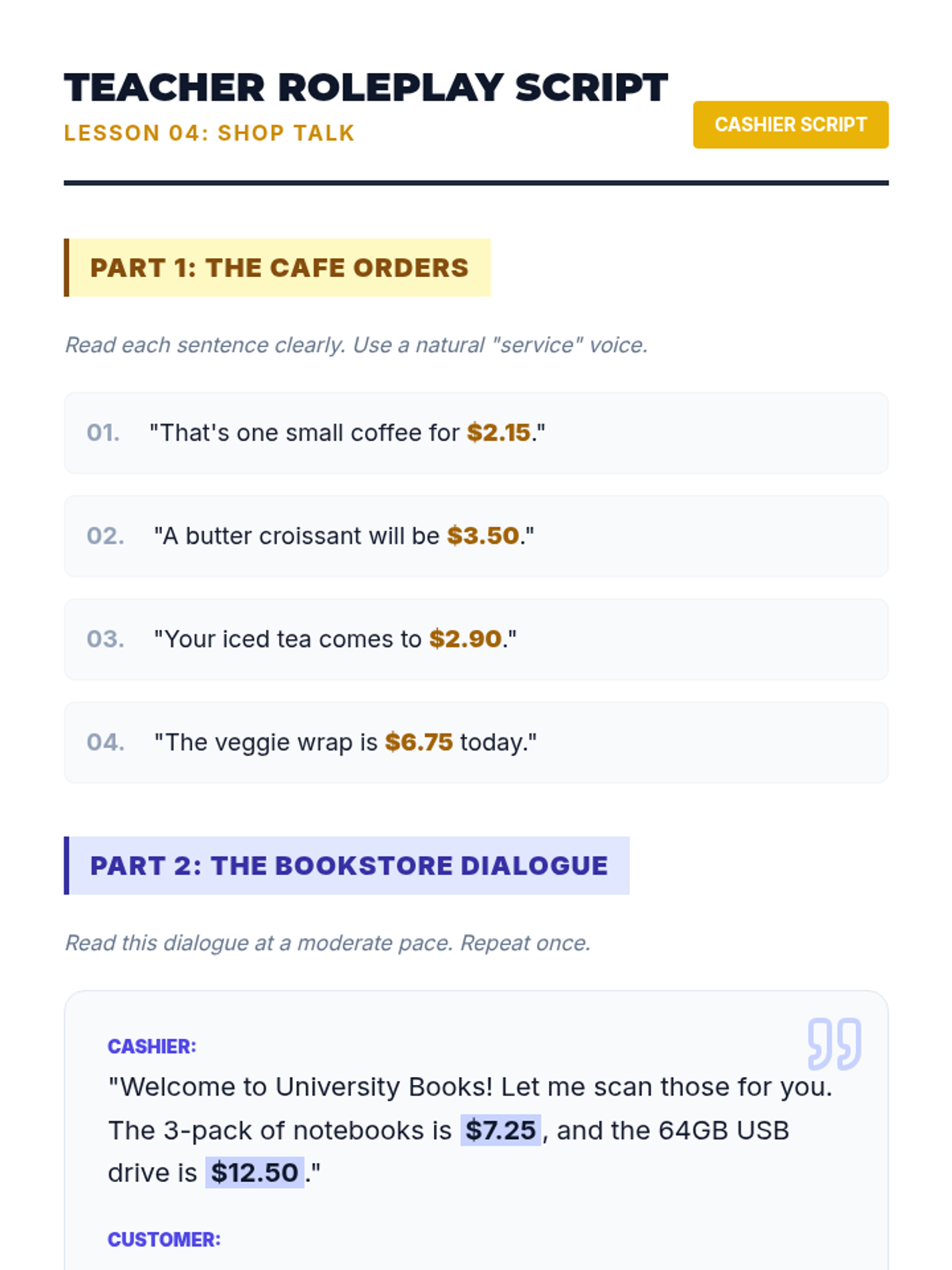
Teacher dialogue script for Lesson 4, featuring a series of cafe orders and a full bookstore transaction for students to transcribe.