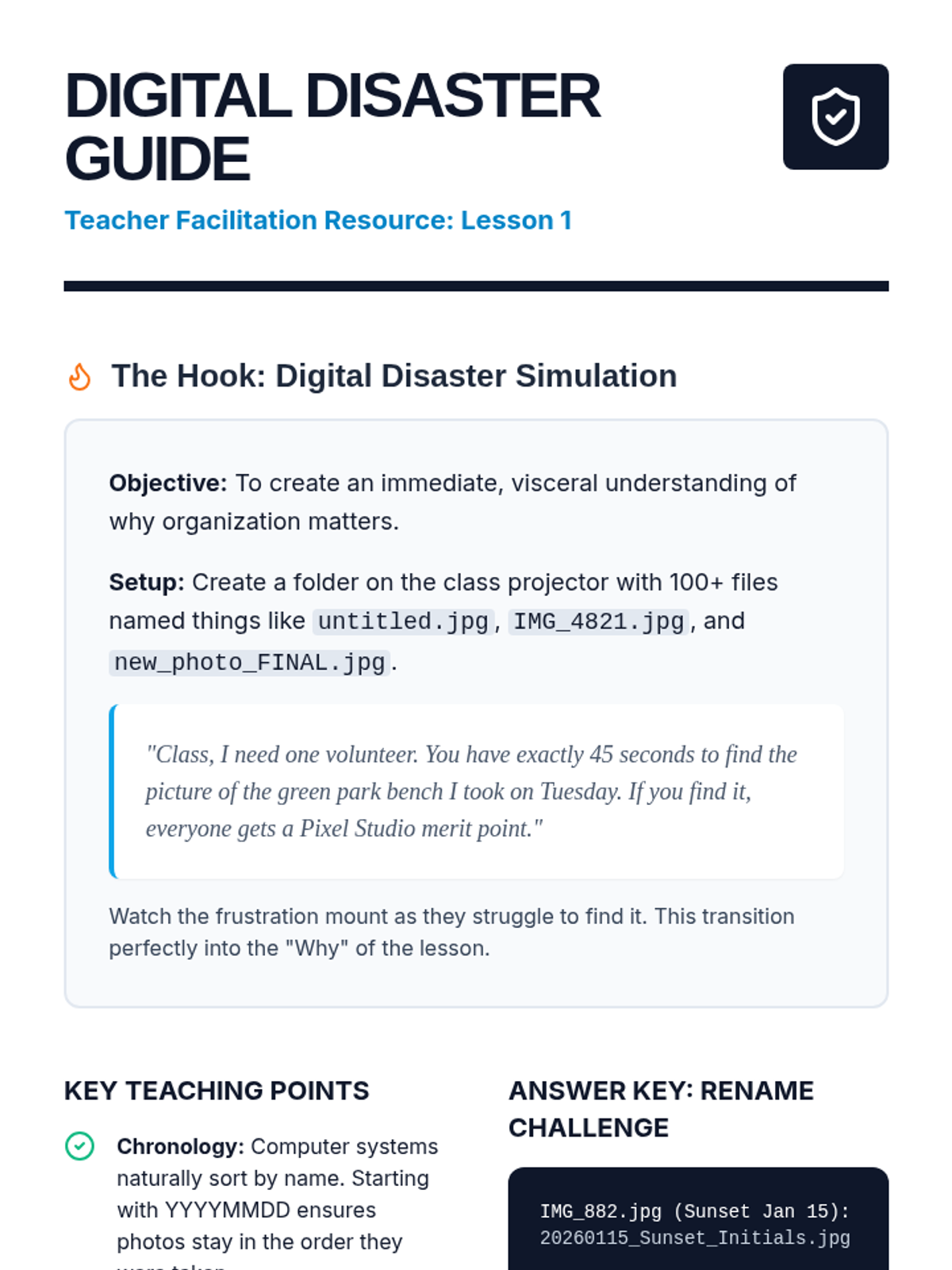
Fundamental techniques for drawing, painting, sculpture, and photography alongside modern digital design principles. Analyzes historical artistic movements while building skills in printmaking and graphic media.
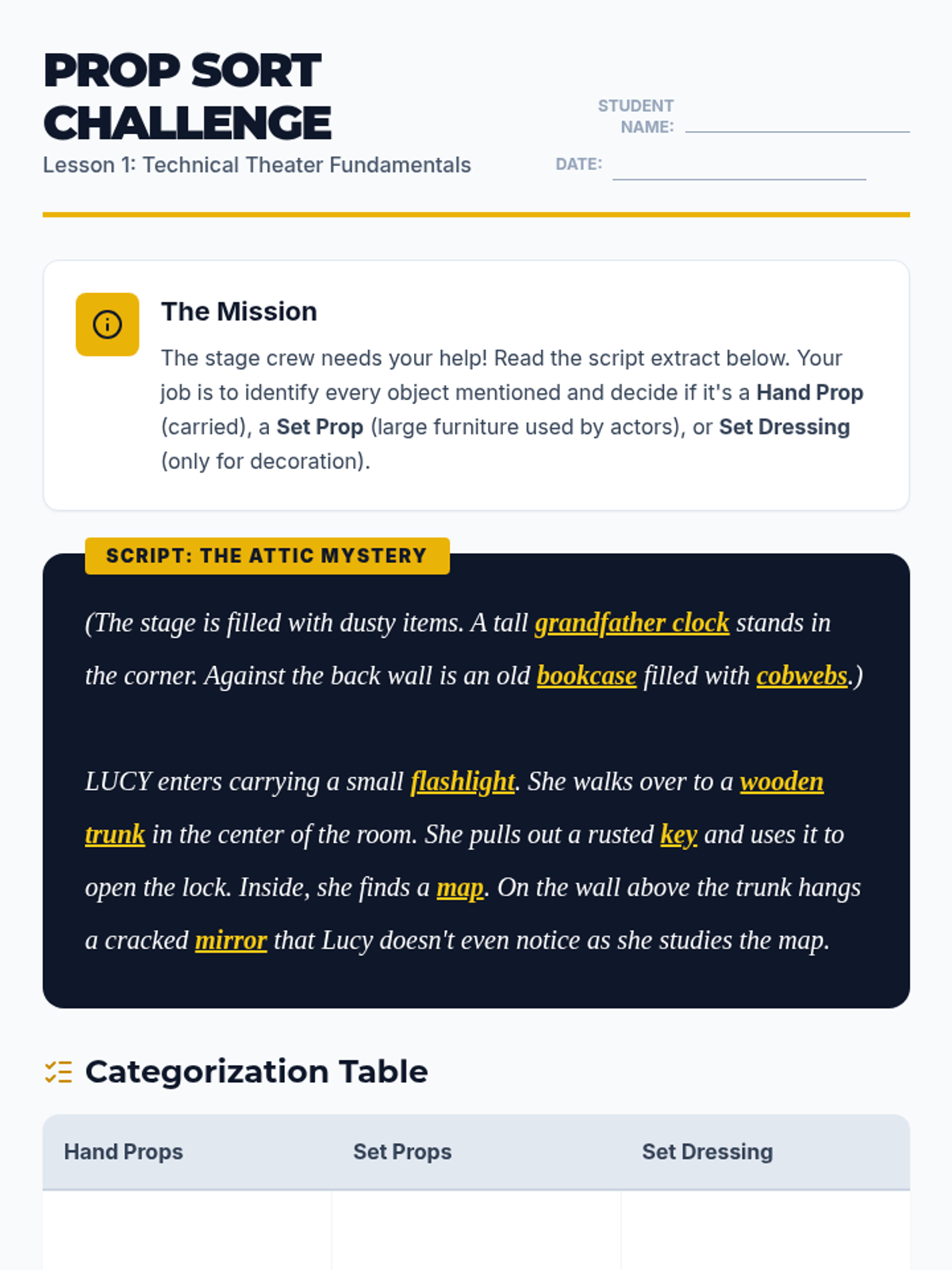
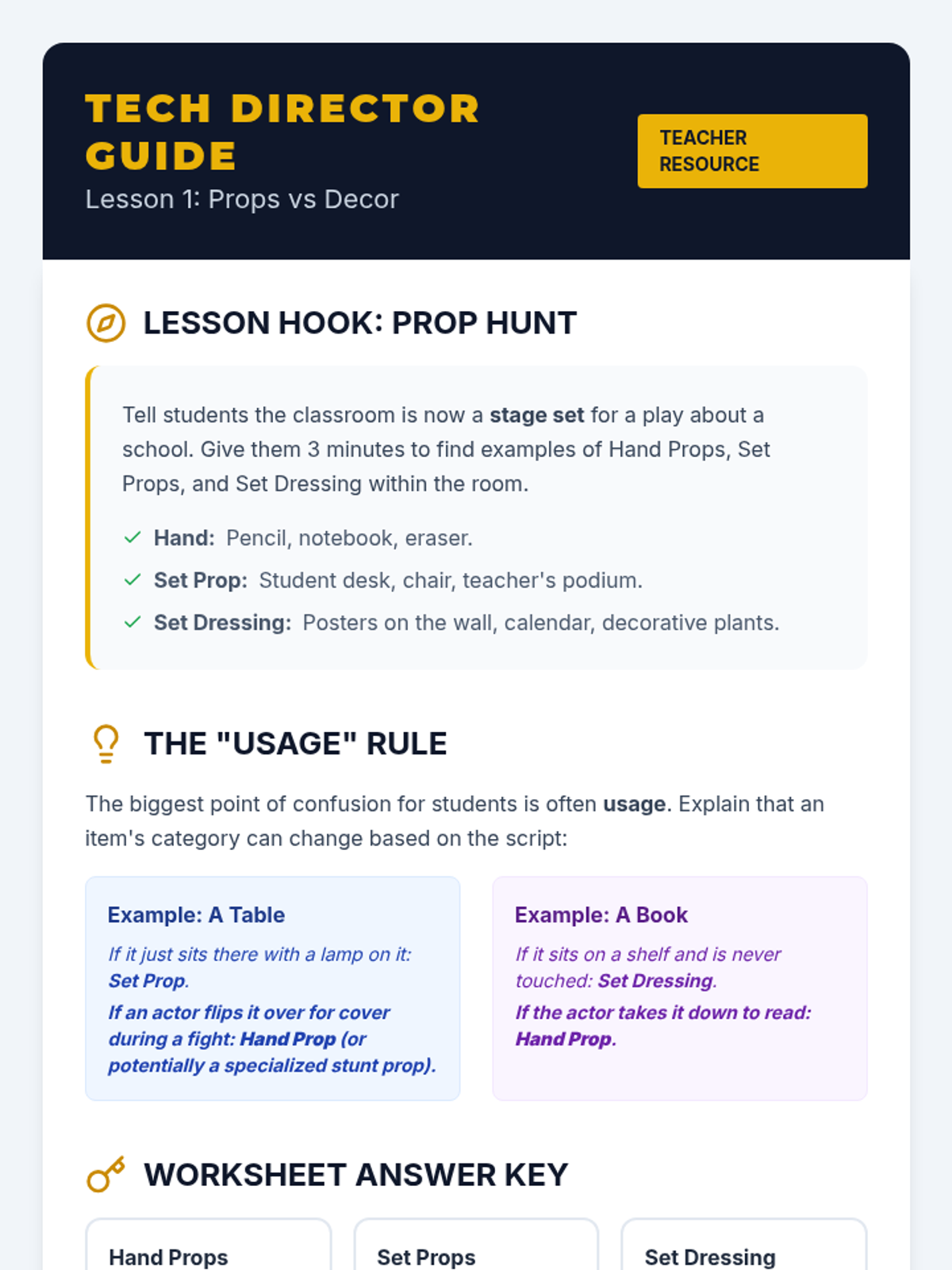
Students investigate how costumes and properties (props) function as tools for character development and storytelling. The sequence guides students through the process of distinguishing between prop types, exploring costume psychology, fabricating safe props, and mastering backstage organization.
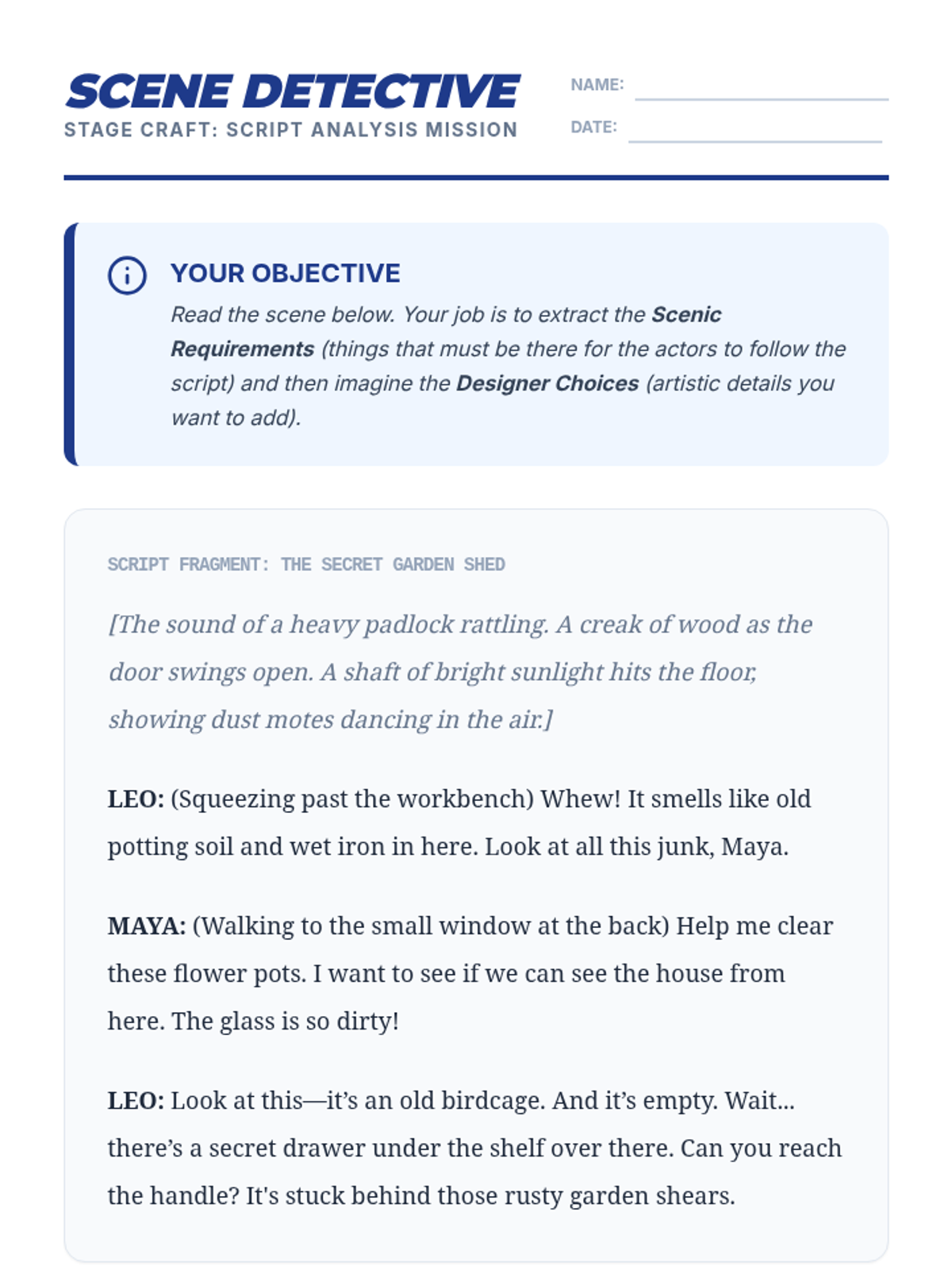
Students step into the shoes of a set designer to transform a written script into a physical world through script analysis, floor planning, mood boards, and 3D model construction. The sequence emphasizes how visual choices in color, texture, and space support the storytelling.
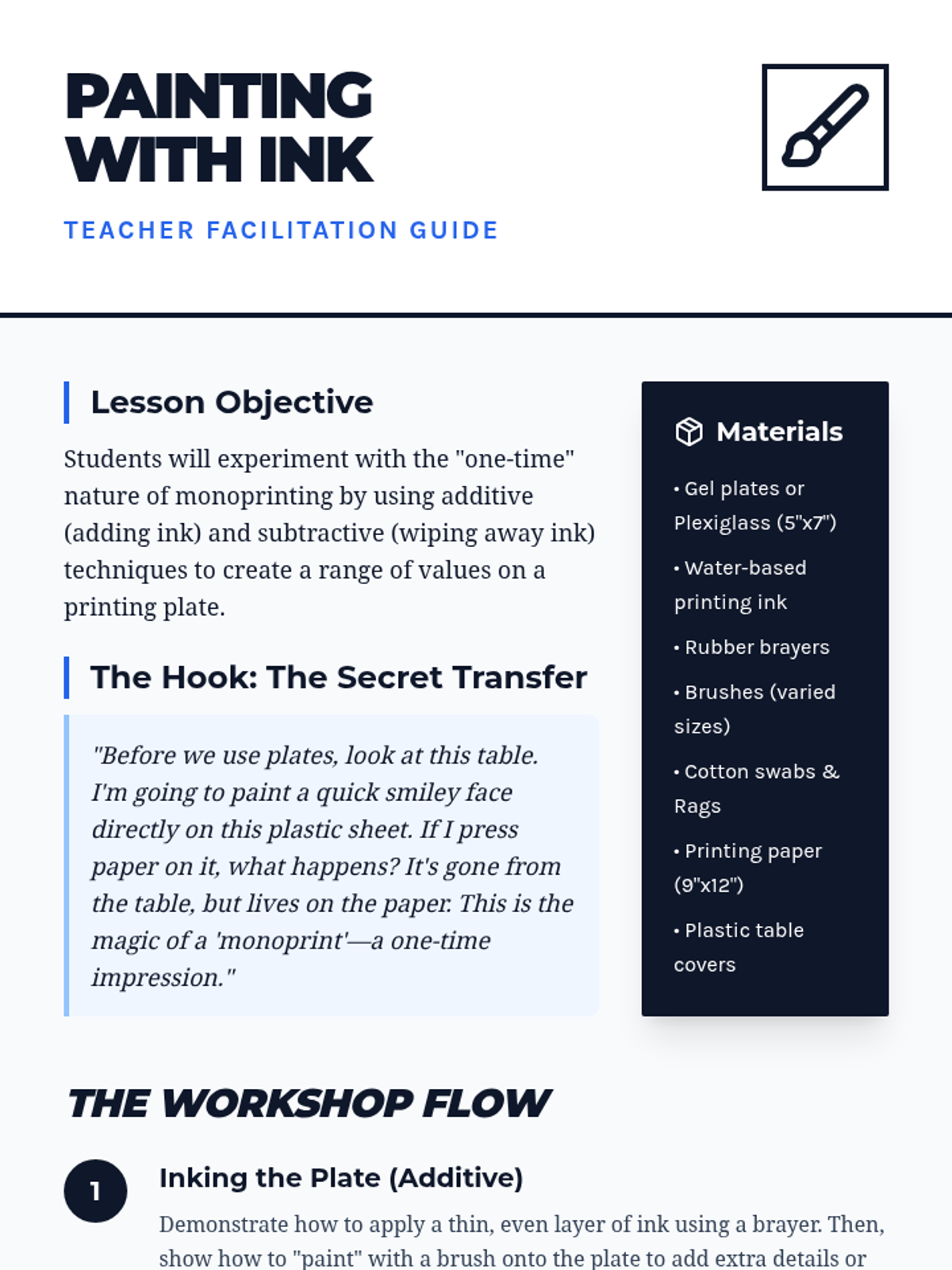
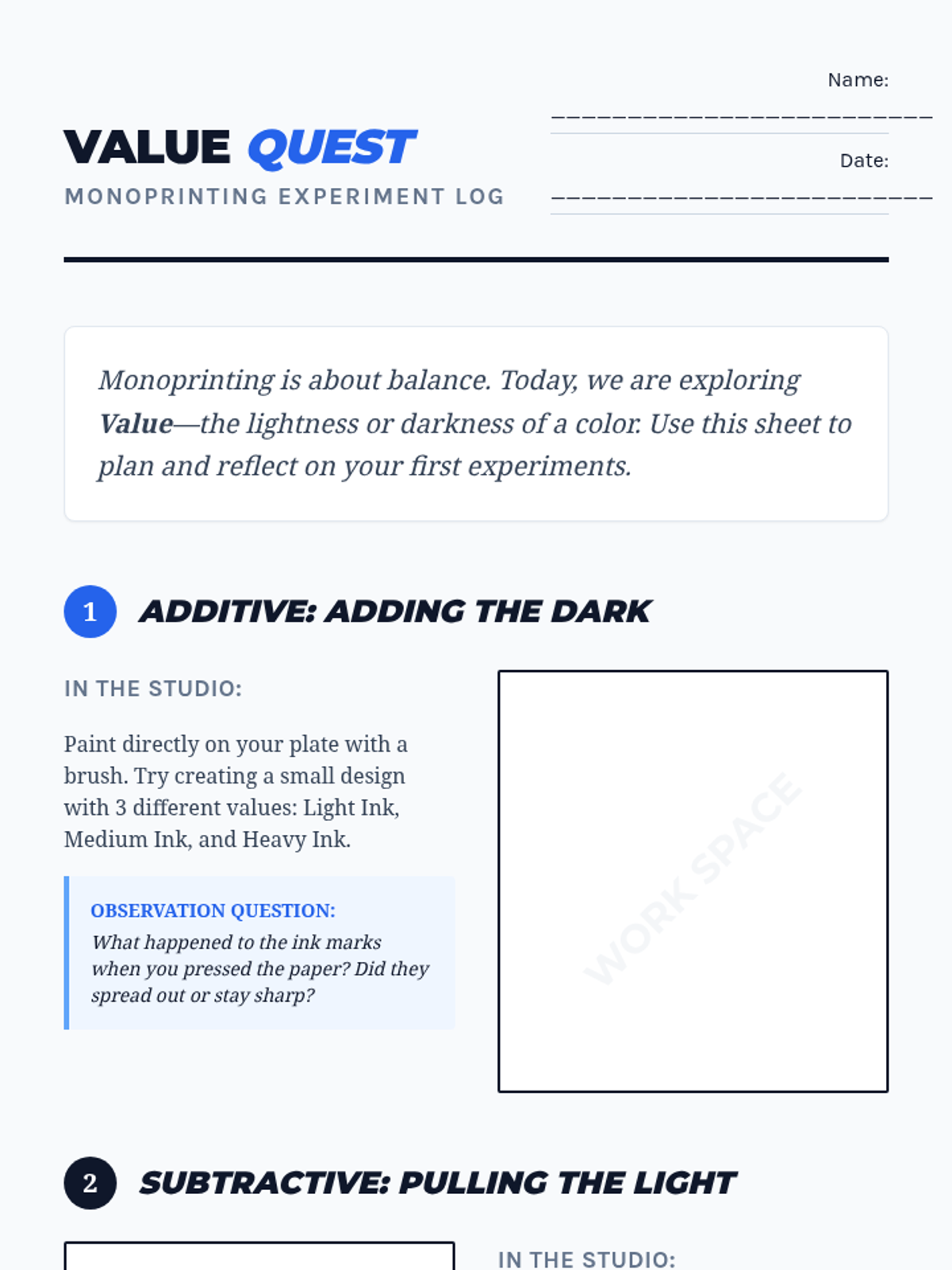
A 5-lesson sequence exploring the experimental nature of monoprinting. Students investigate ink properties, transparency, and layering through additive/subtractive methods, found object textures, masking, and ghost printing, culminating in a curated portfolio.
A comprehensive 7th-grade unit that integrates graphic design principles with the physical craft of screen printing. Students learn about typography, visual hierarchy, and composition while navigating the technical challenges of stencil-making and screen printing to create a persuasive poster series.
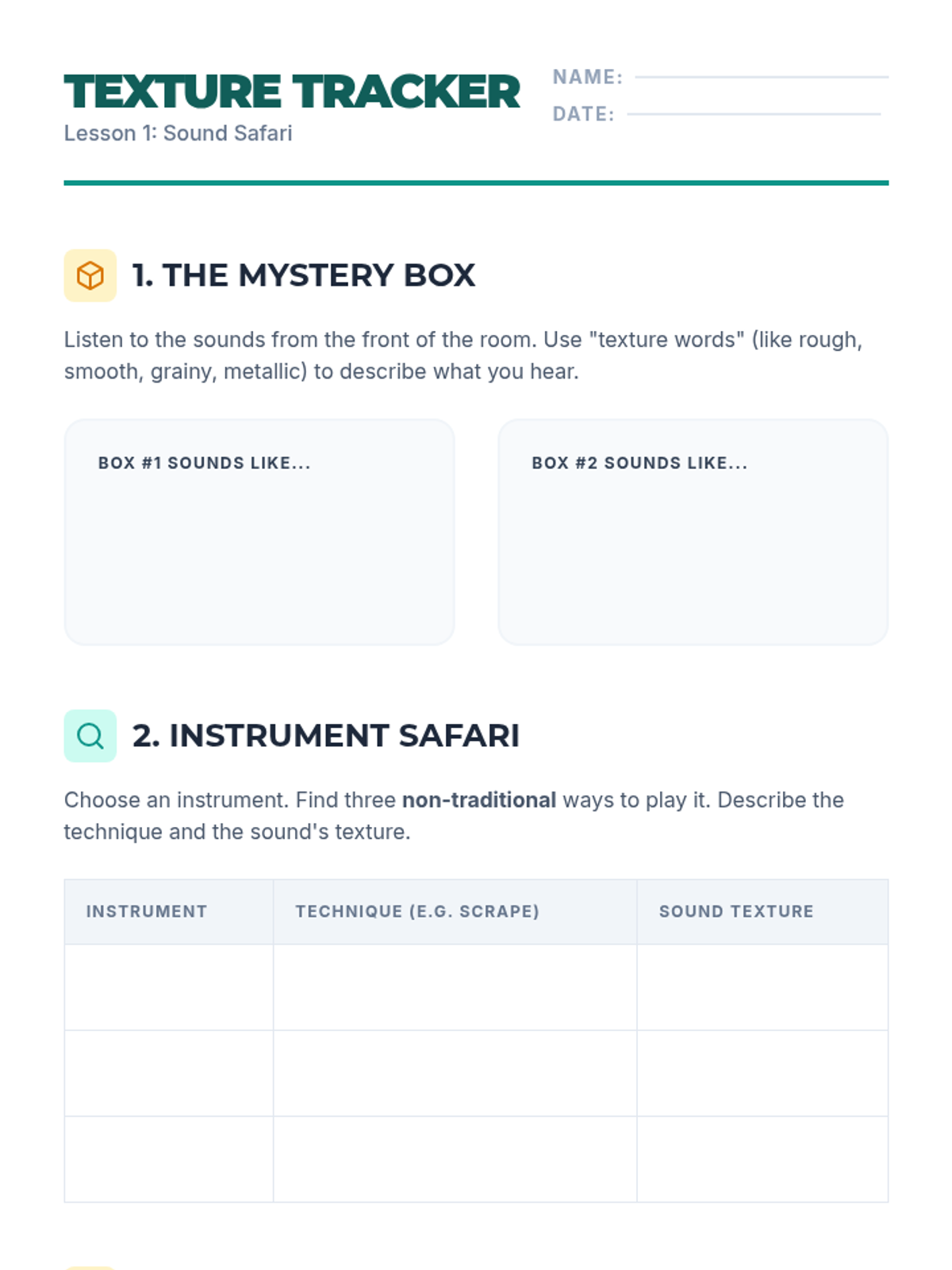
A 5-lesson journey into music composition using graphic notation. Students explore sound textures, invent visual symbols for audio, compose narrative soundscapes, and lead ensembles as conductors.
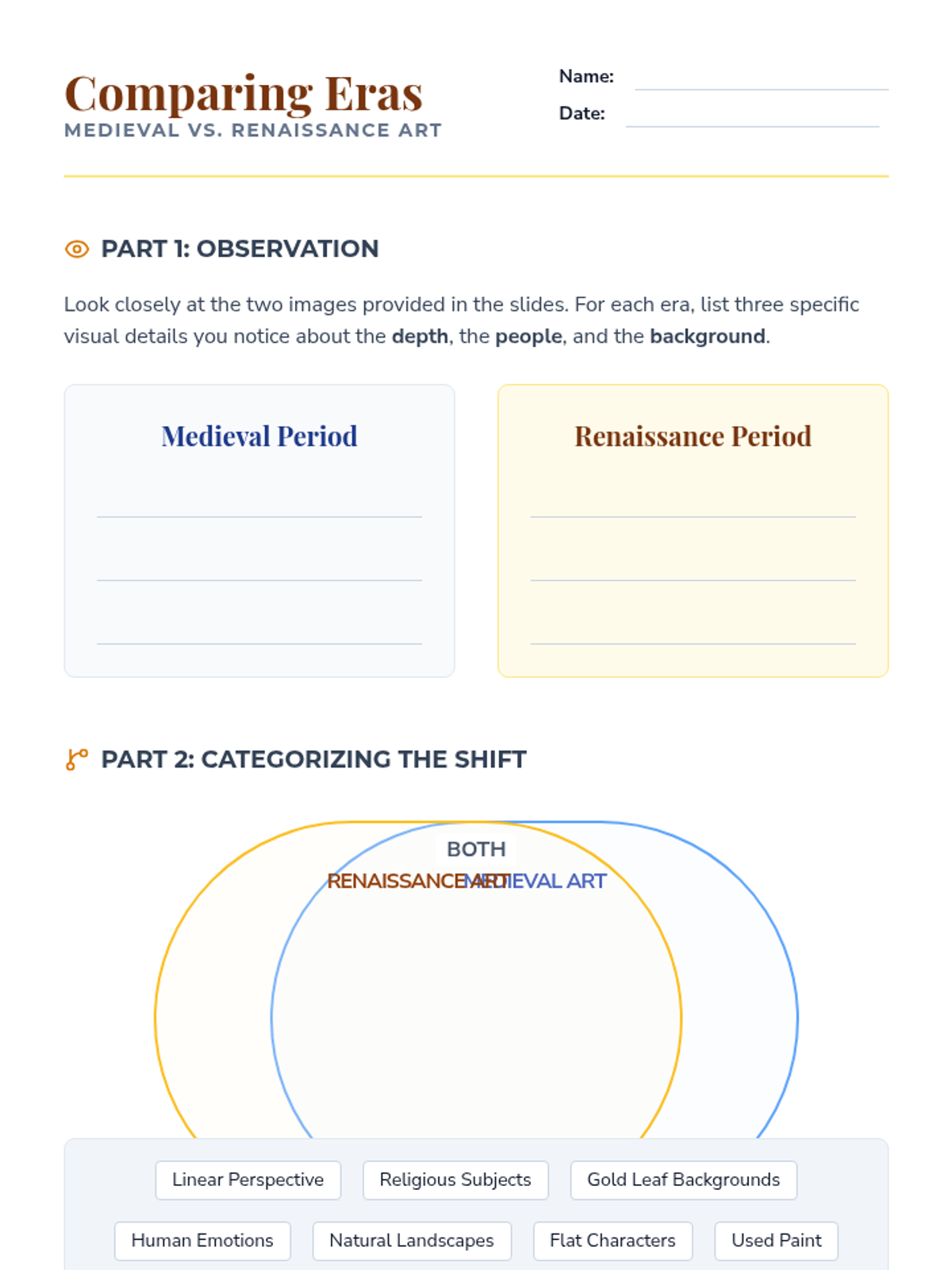
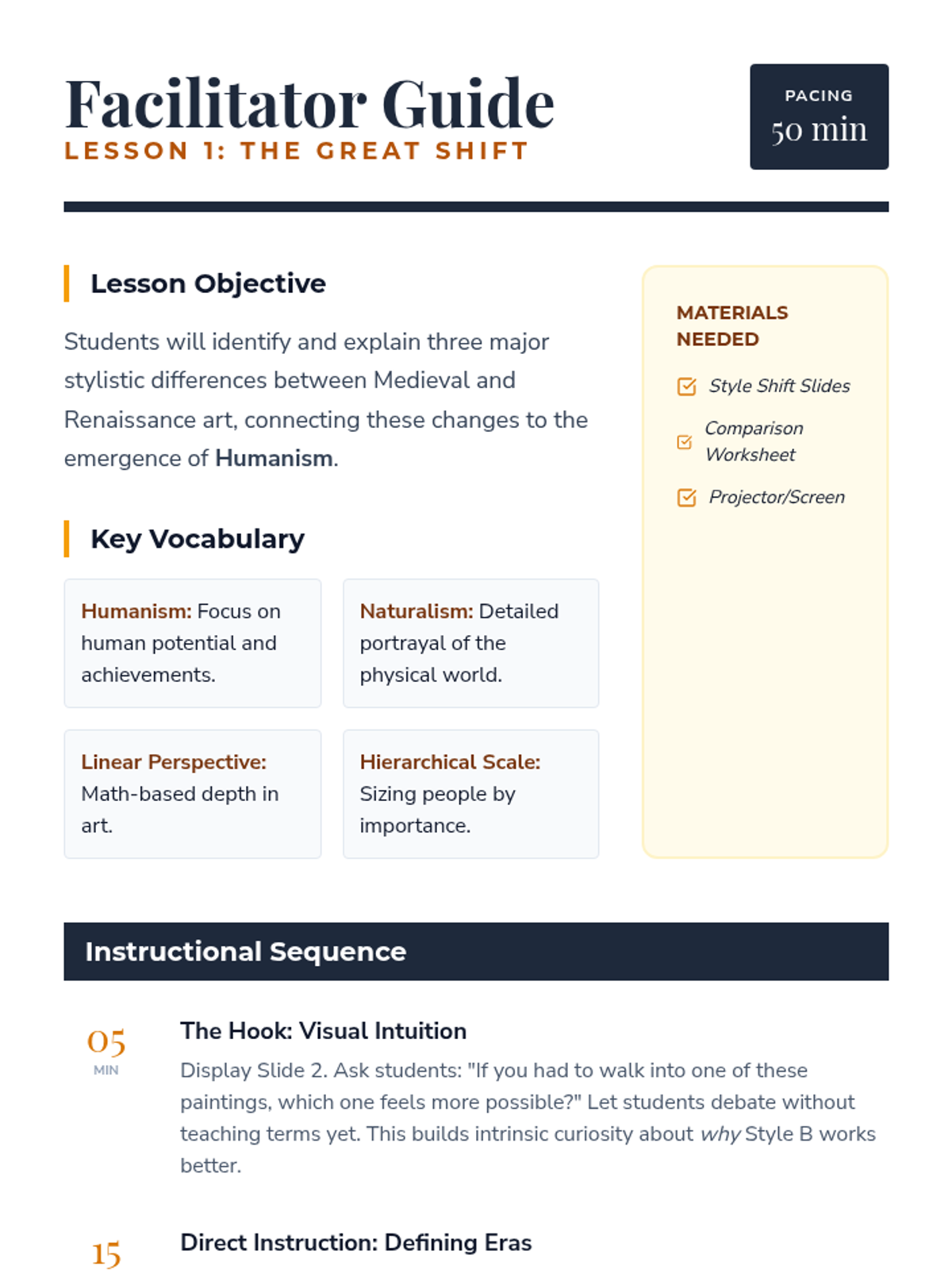
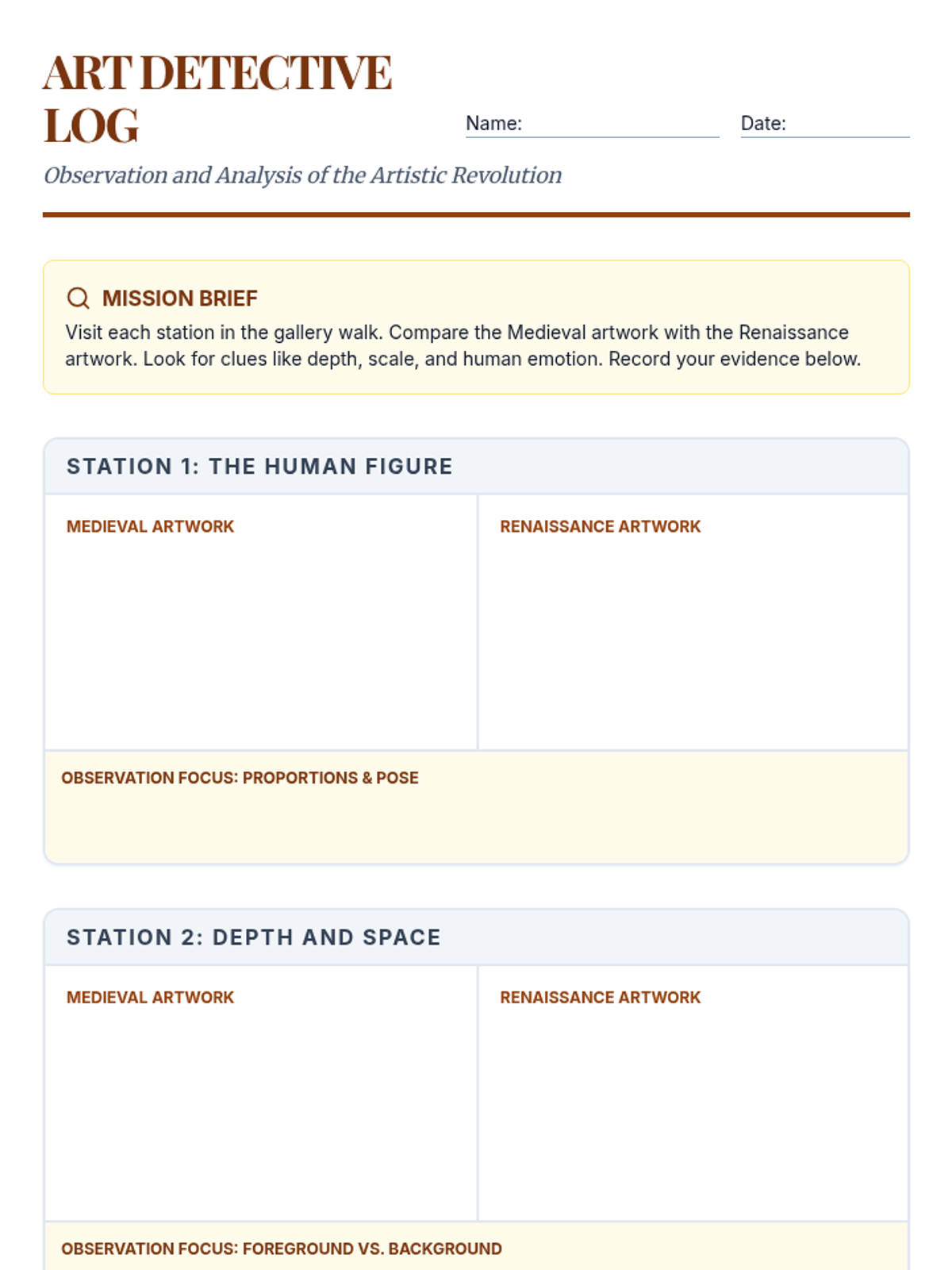
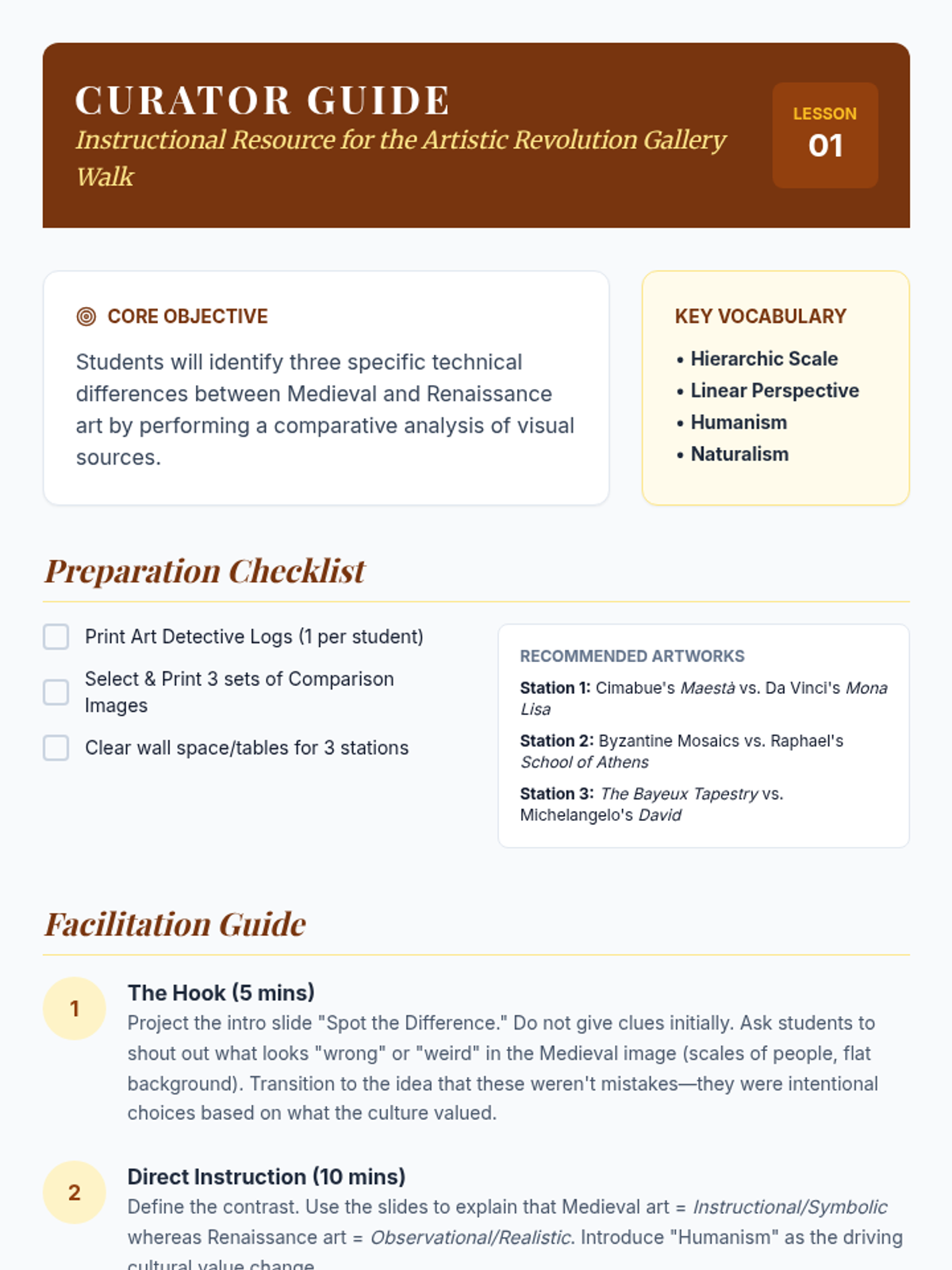
This sequence explores the transition from Medieval to Renaissance art, focusing on the development of linear perspective, human anatomy in art, and the cultural shift toward Humanism. Students will analyze masterpieces like 'The School of Athens' and apply mathematical principles to create their own realistic artworks.
This sequence explores the artistic revolution of the Renaissance, focusing on the shift from Medieval symbolism to Renaissance realism through the lens of mathematics and anatomy. Students will analyze historical works and apply technical skills like linear perspective to understand how art reflects cultural values.
A comprehensive 8th-grade art sequence that transitions students from 2D continuous line drawing to 3D wire sculpture, focusing on gesture, proportion, and spatial volume.
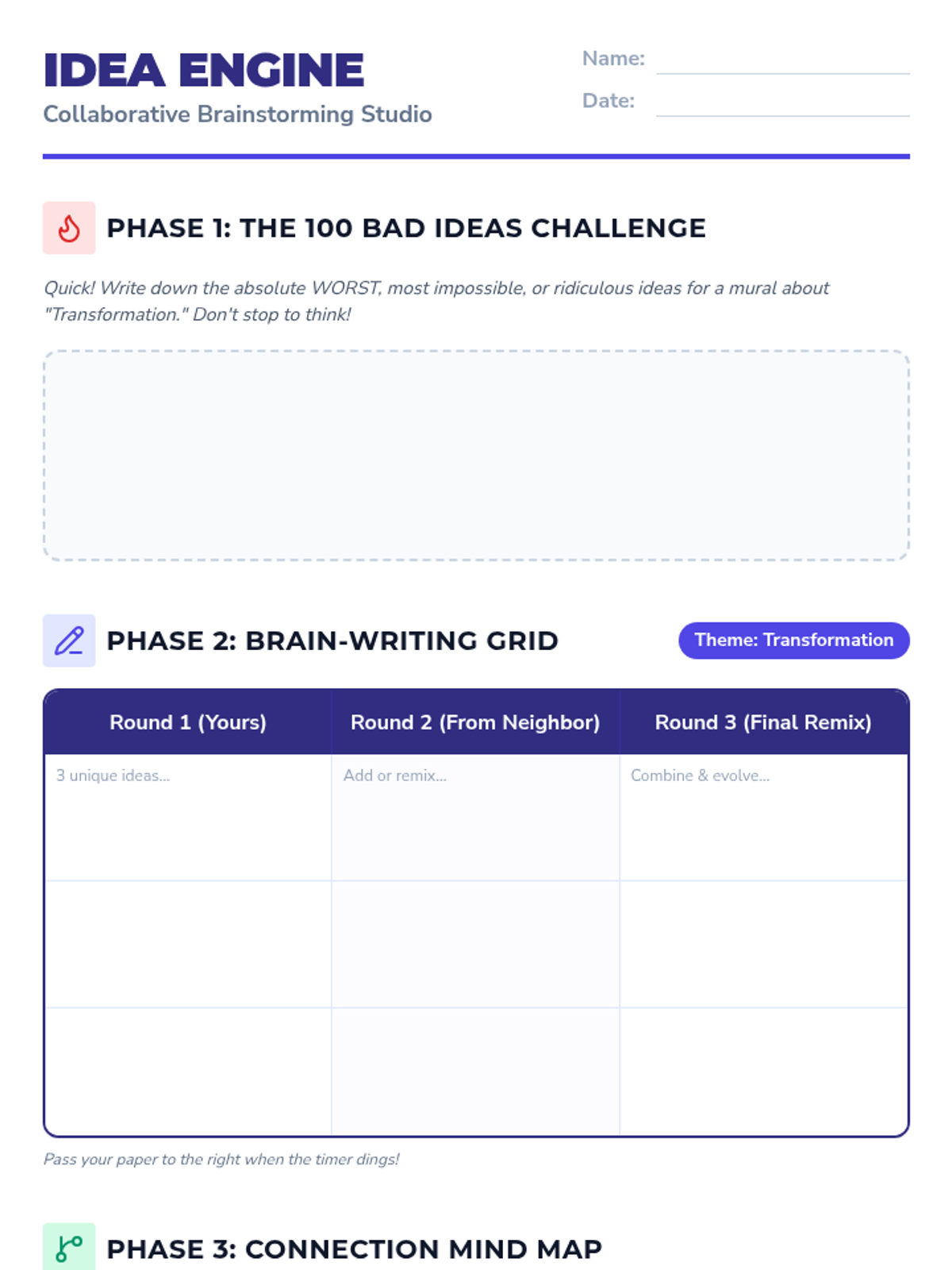
This sequence guides 8th-grade students through the collaborative design process, from individual divergent brainstorming to the collective execution of a unified visual work. Students learn to navigate the complexities of shared vision, compromise, and aesthetic synthesis.
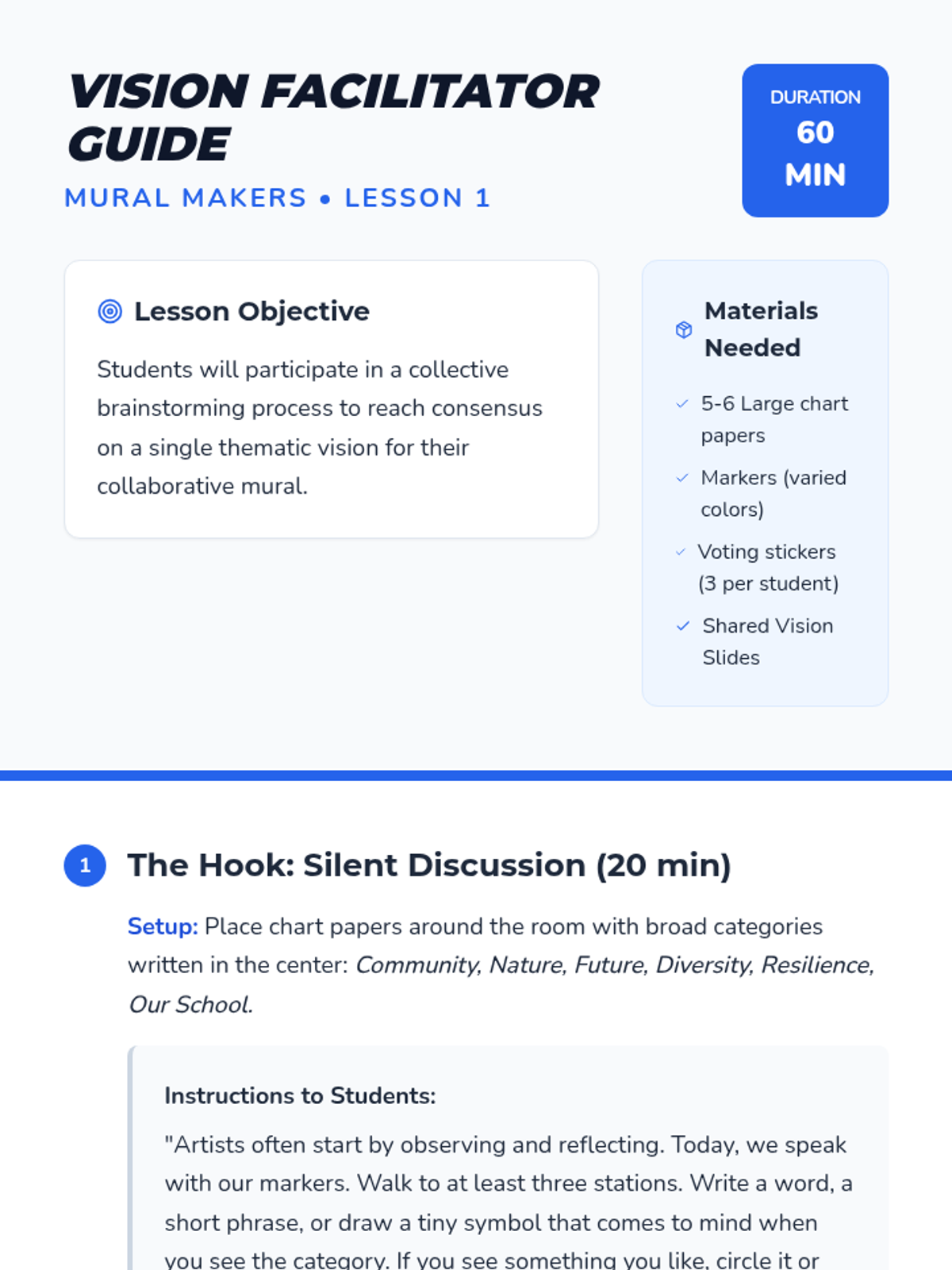
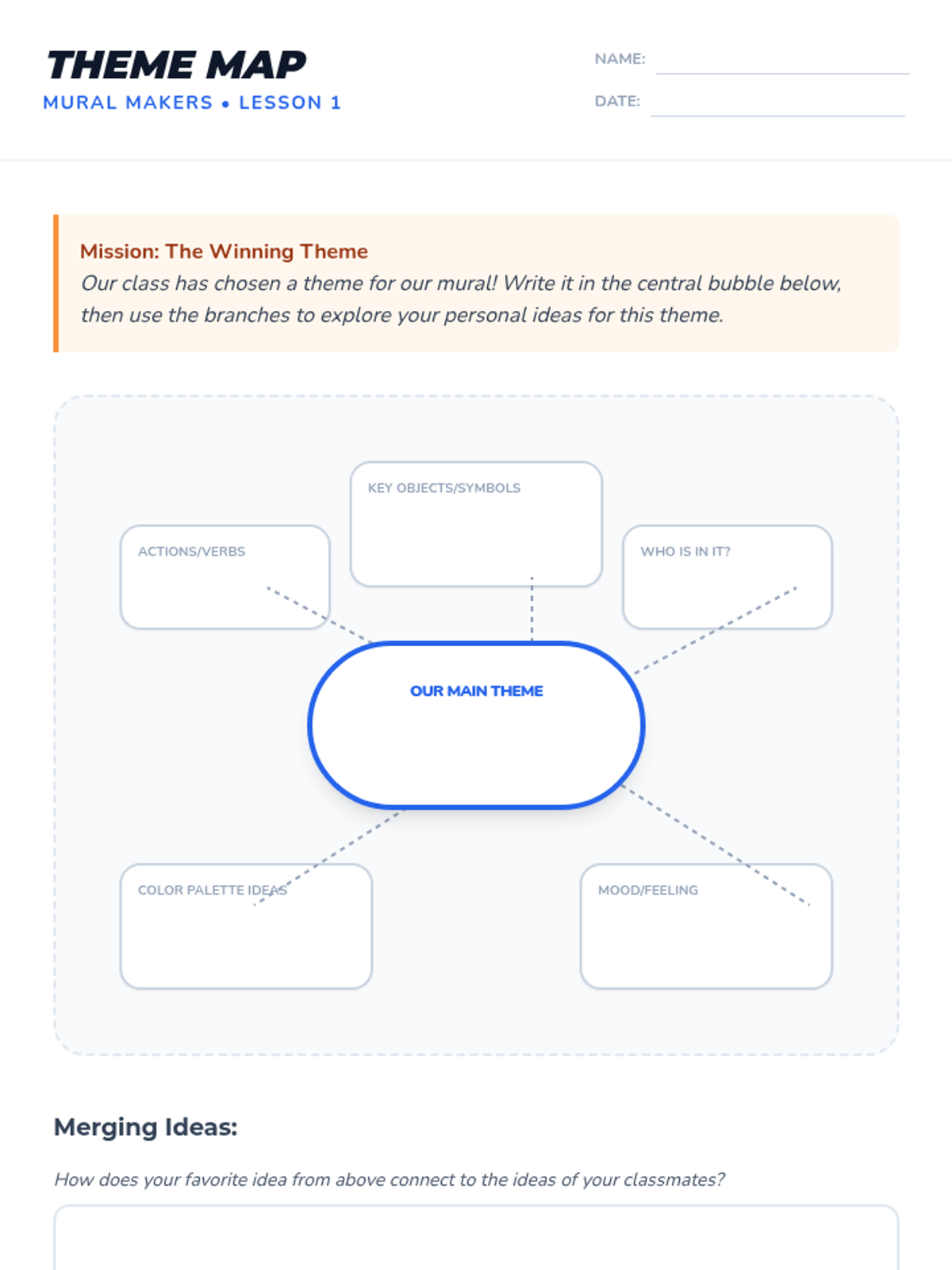
A 5-lesson sequence where students learn the art of collaboration by designing and executing a large-scale mural, moving from individual brainstorming to collective creation.
This sequence guides sixth-grade students through the lifecycle of a collaborative visual arts project, from individual brainstorming to collective mural creation. Students learn to synthesize ideas, negotiate creative differences, and assume specialized roles to execute a shared artistic vision.
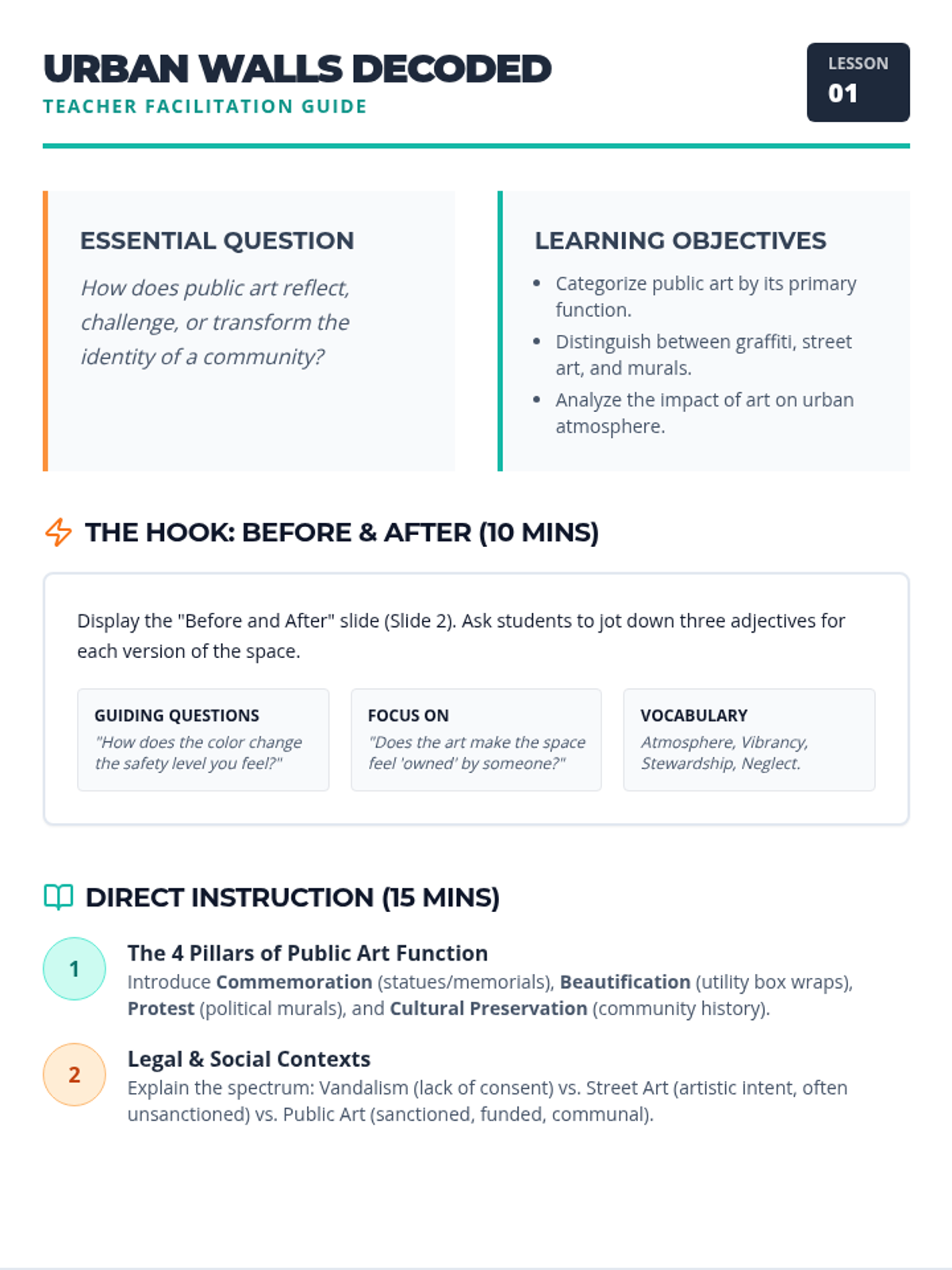
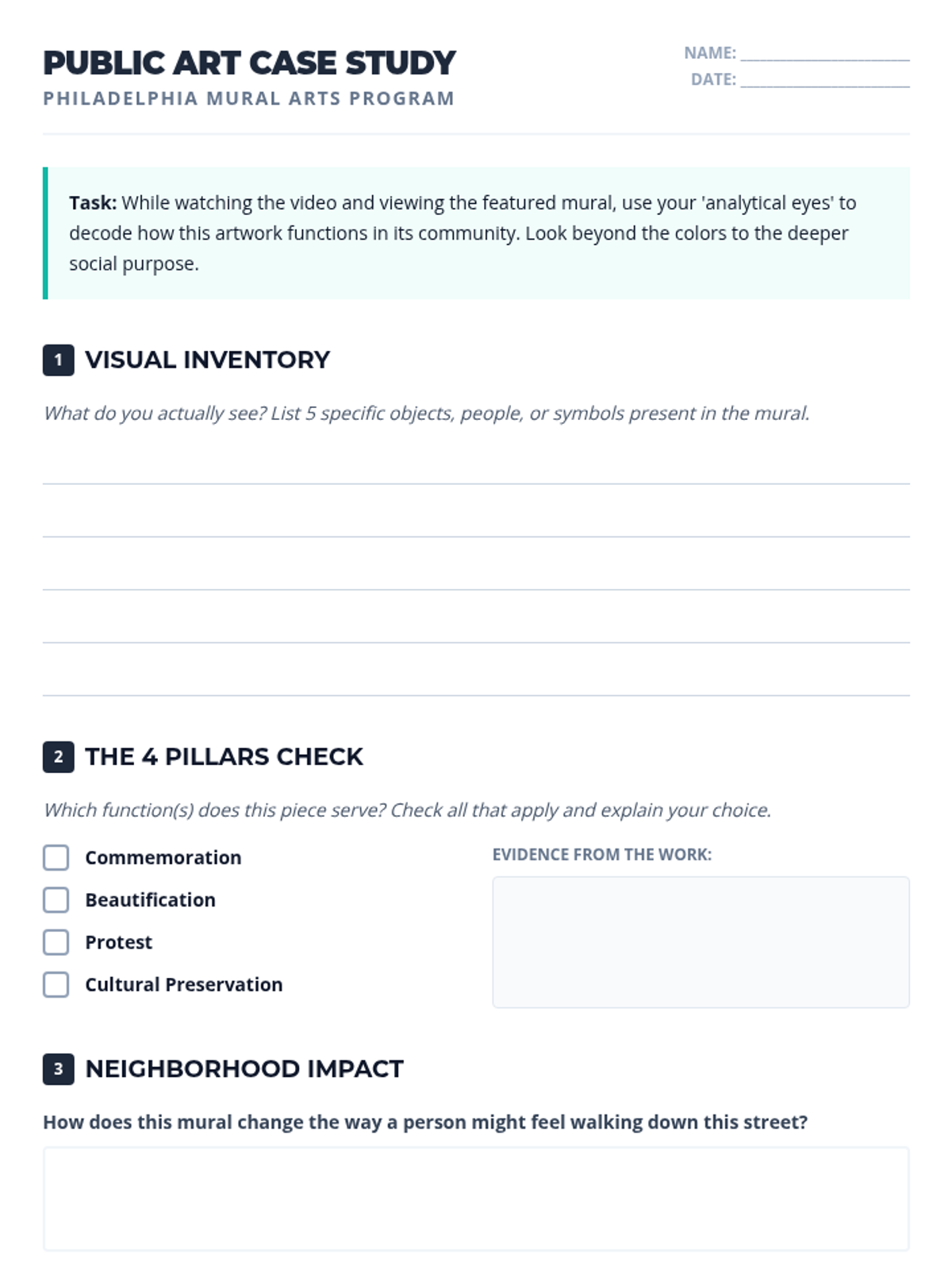
This sequence guides 8th-grade students through the world of public art, from analyzing its functions and cultural symbolism to designing their own scale mural proposals that address community social issues. Students will transition from art critics to civic-minded designers, learning how visual narratives can transform urban spaces.
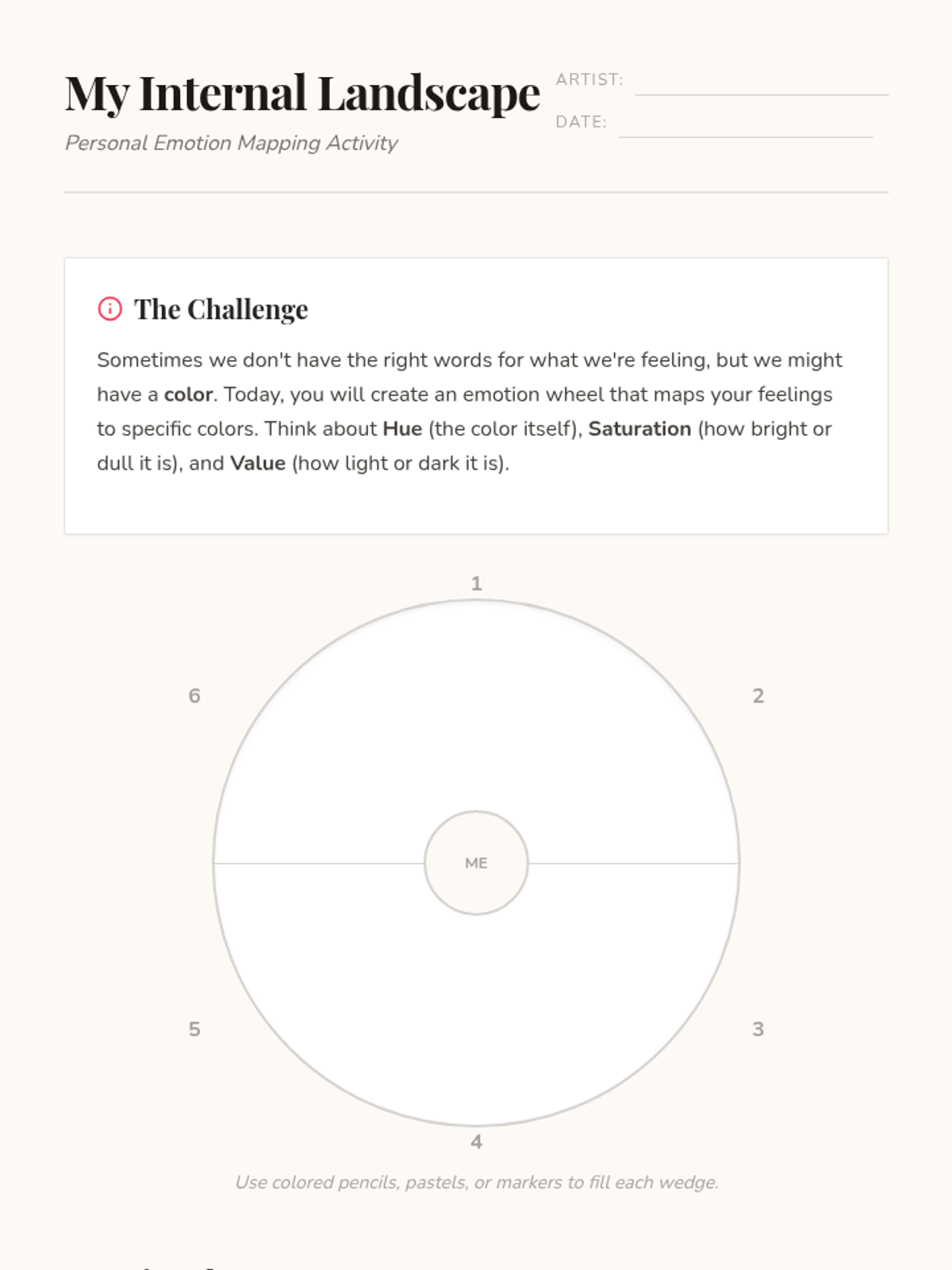
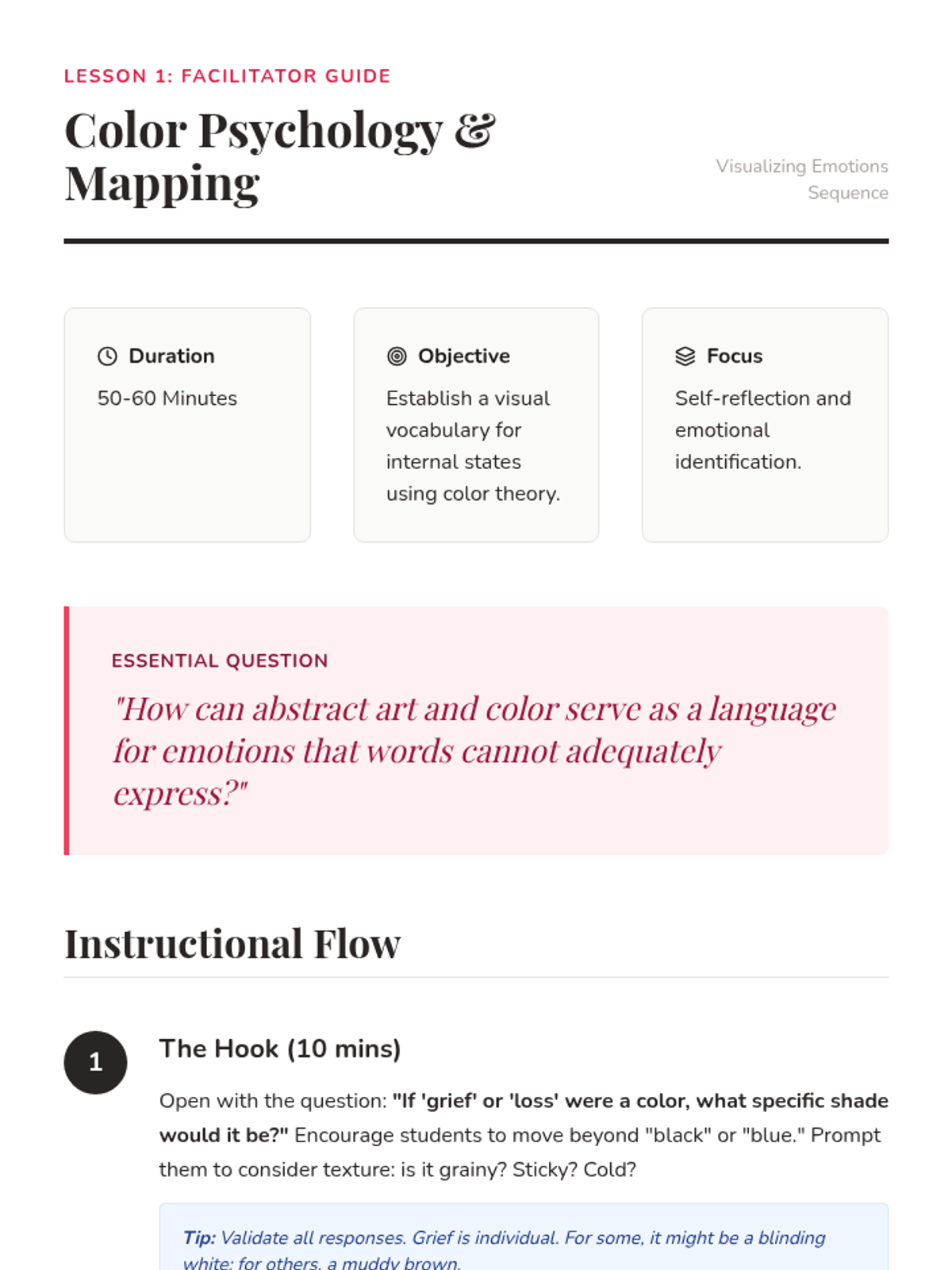
This sequence guides students through using visual arts as a non-verbal language for processing complex emotions associated with loss, focusing on abstract expressionism and color theory.
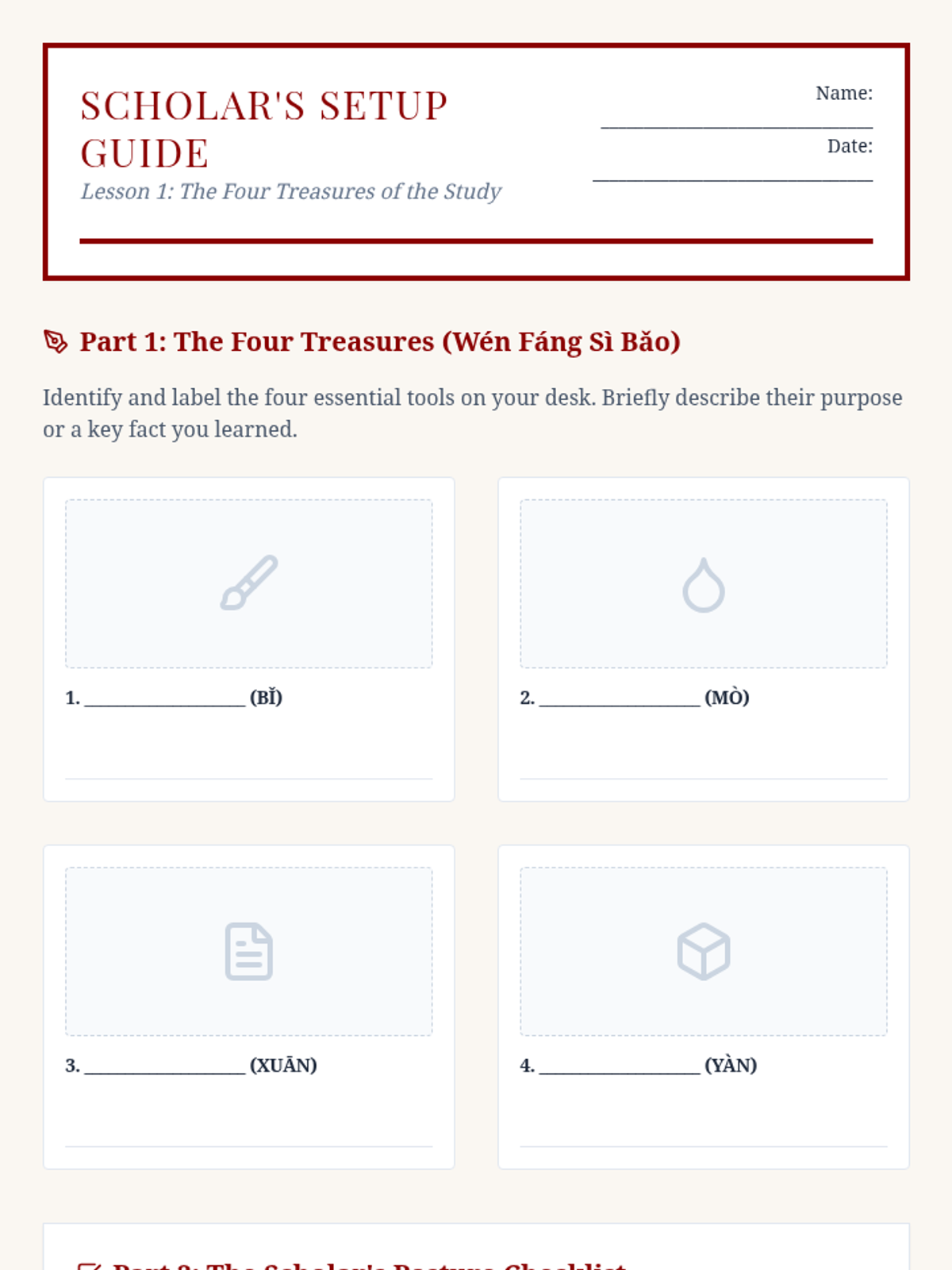
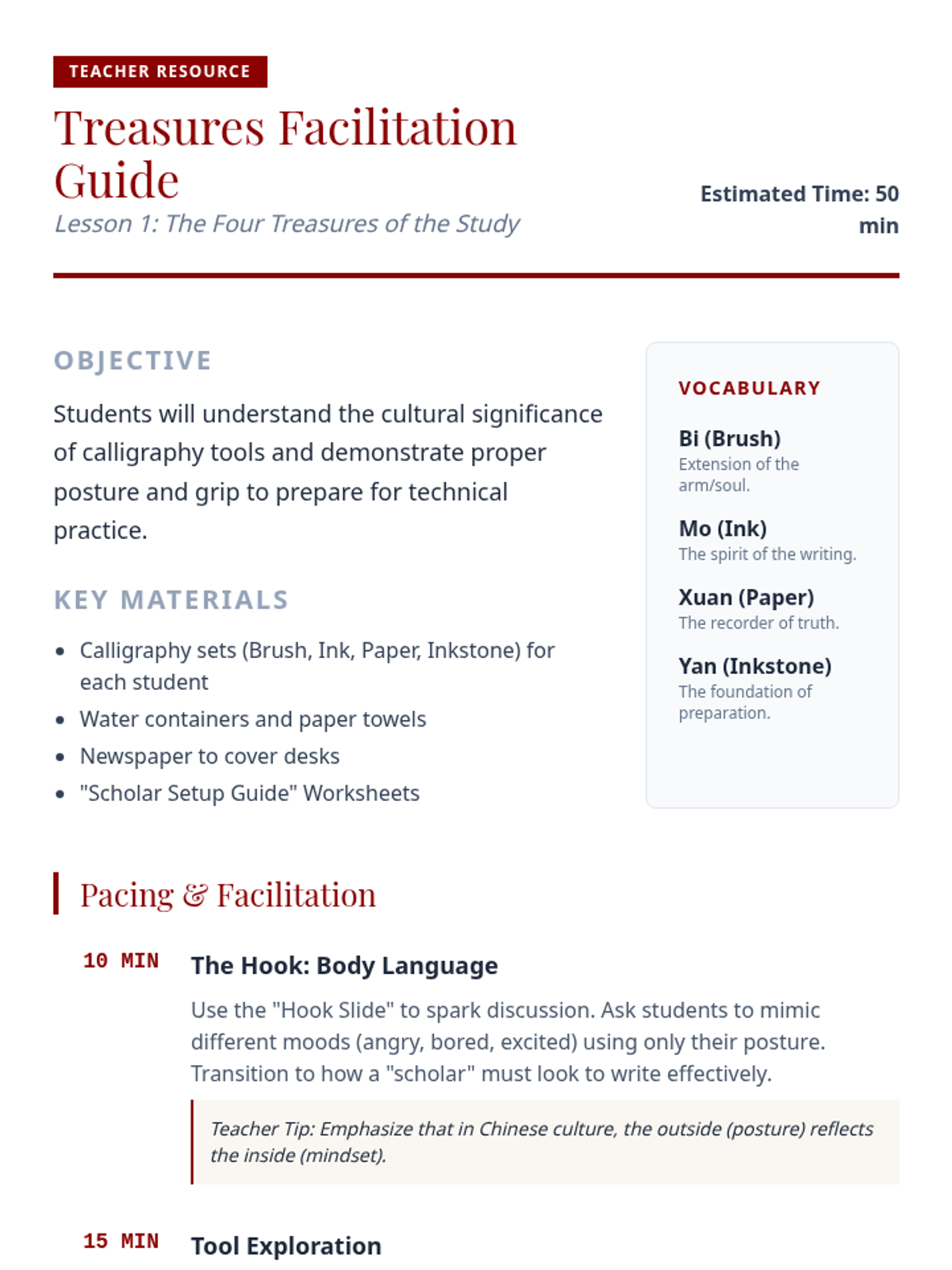
A workshop-style sequence introducing 8th-grade students to Chinese calligraphy and its philosophical roots in Confucianism, focusing on the connection between physical discipline and character development.
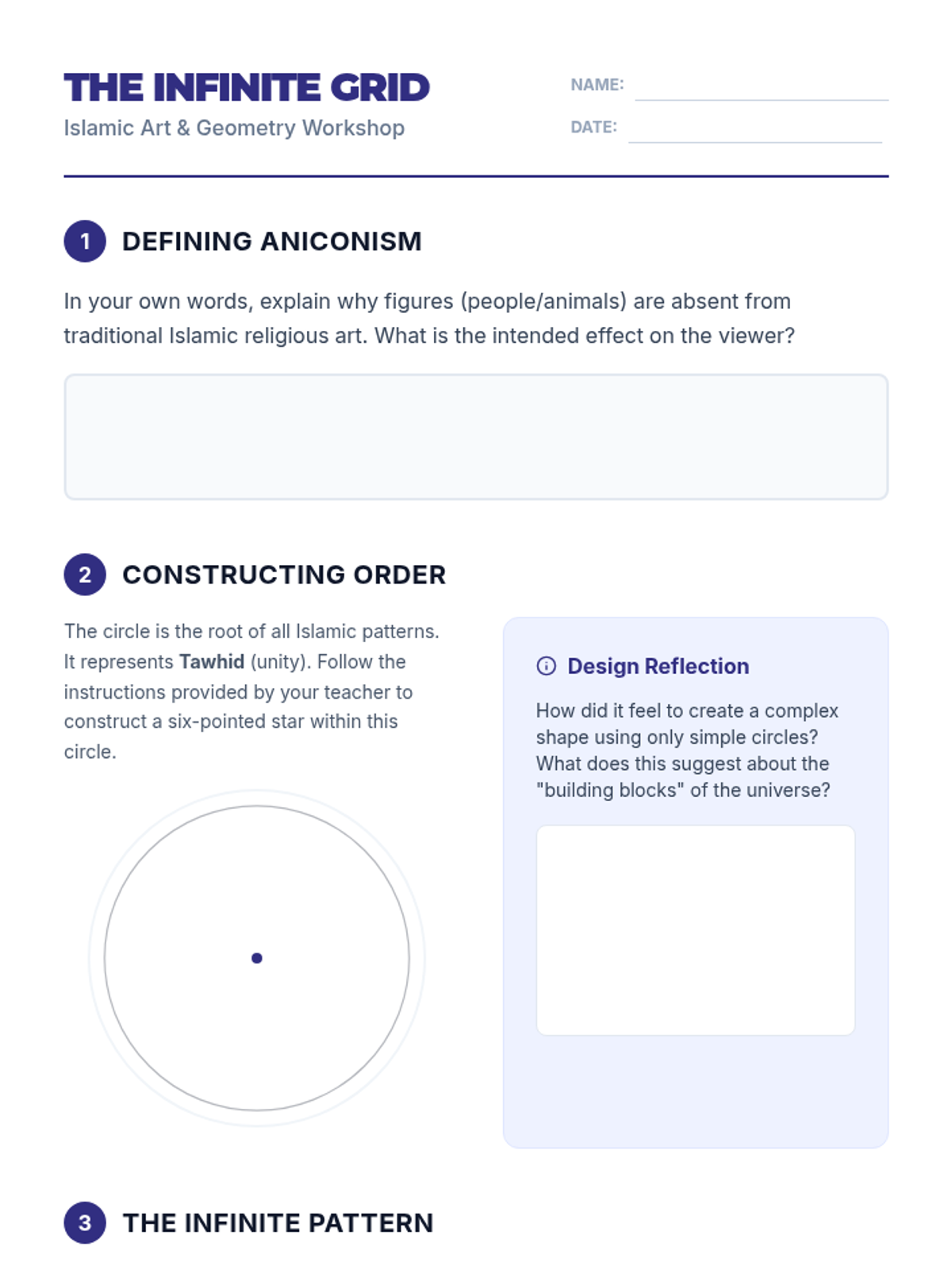
A project-based sequence examining how religious beliefs drive artistic innovation and architectural design across five major world religions. Students analyze sacred spaces and art to decode symbolic meanings and culminate in a design project.
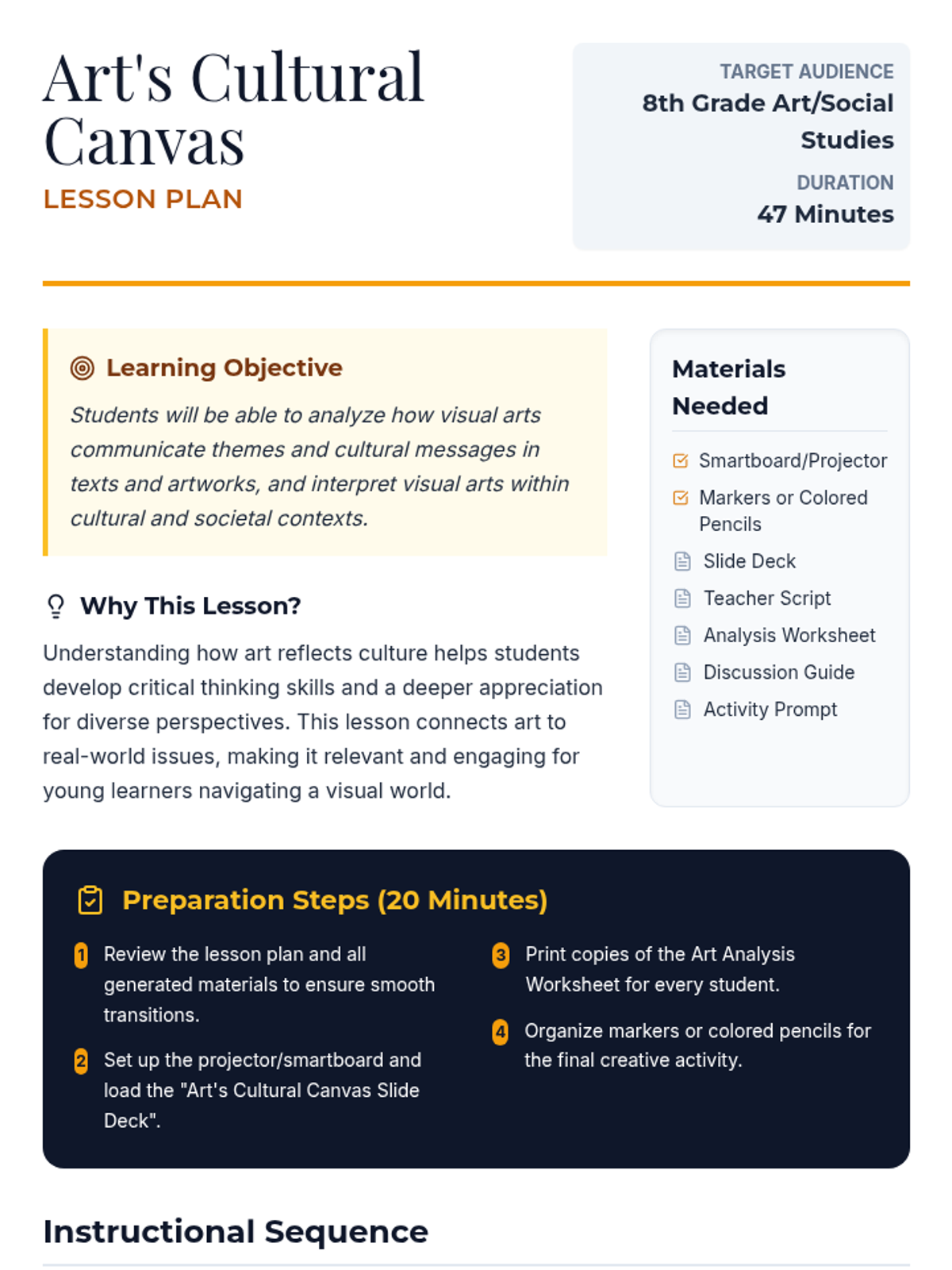
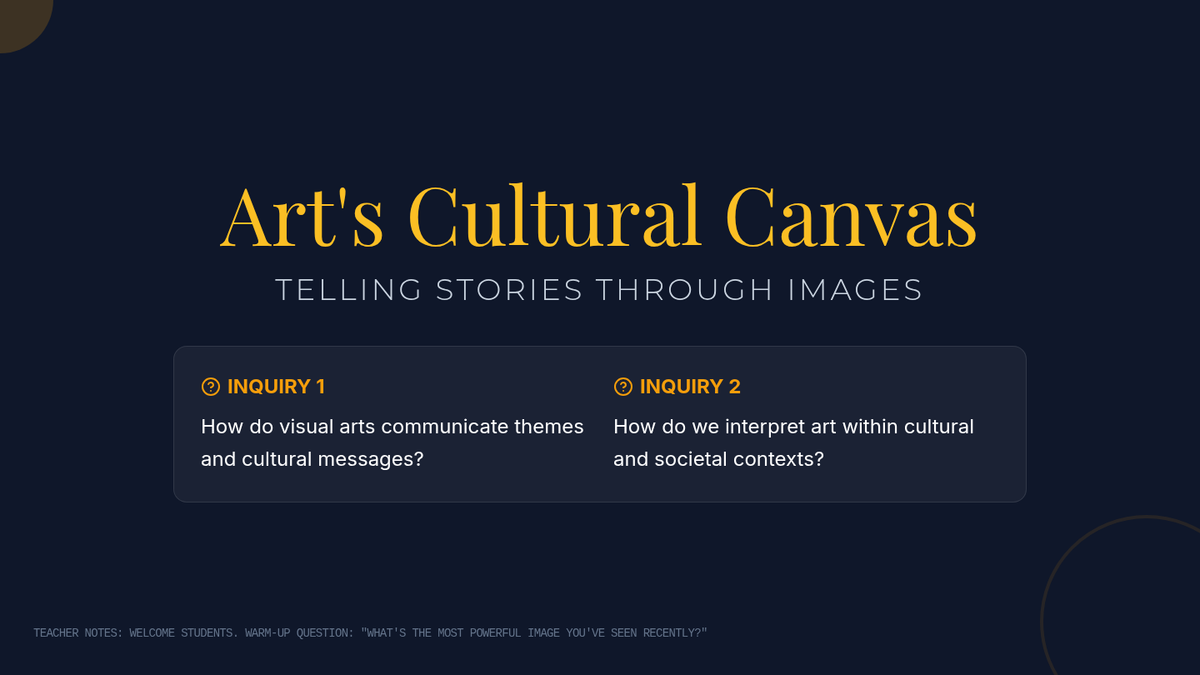
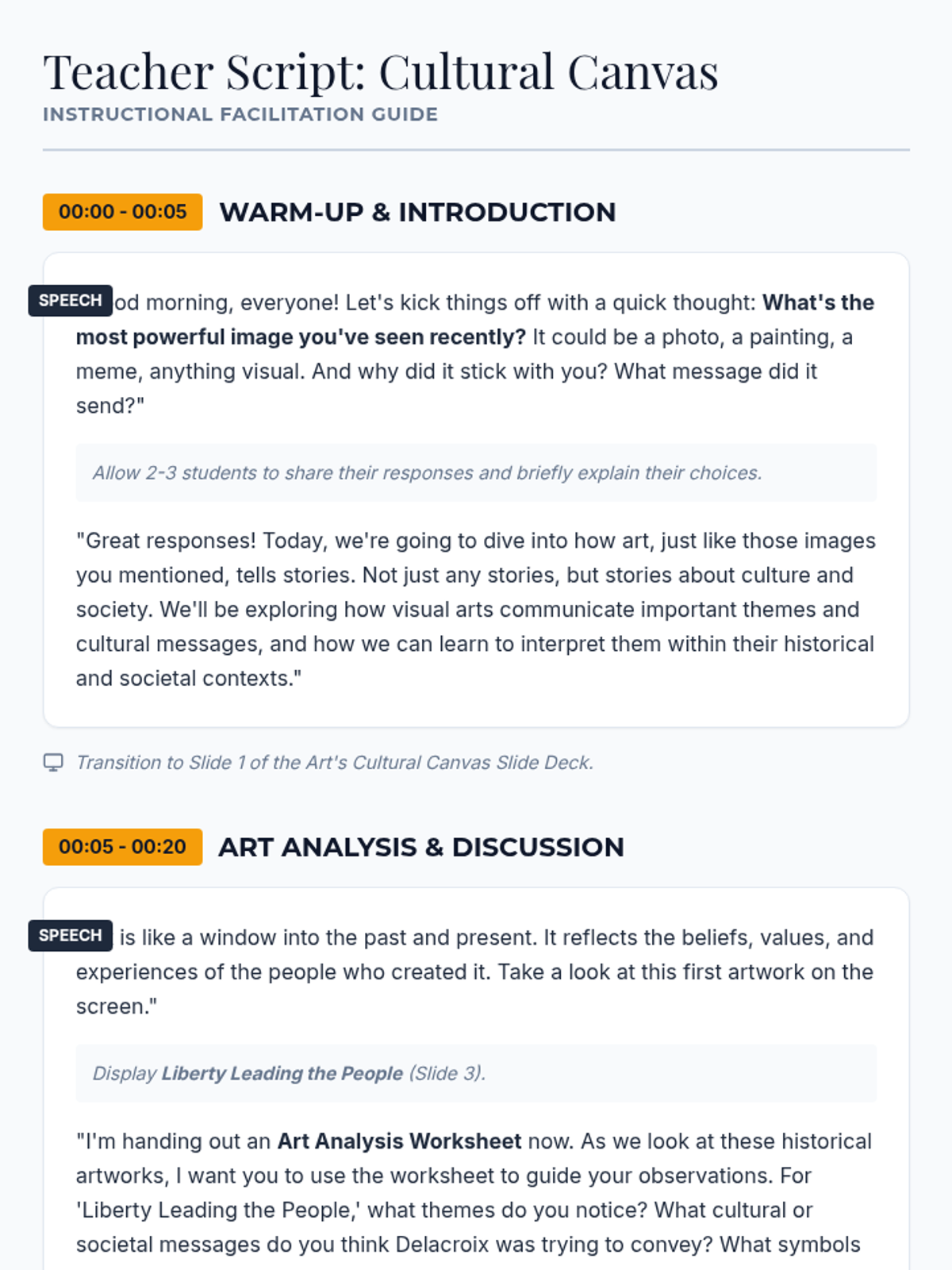
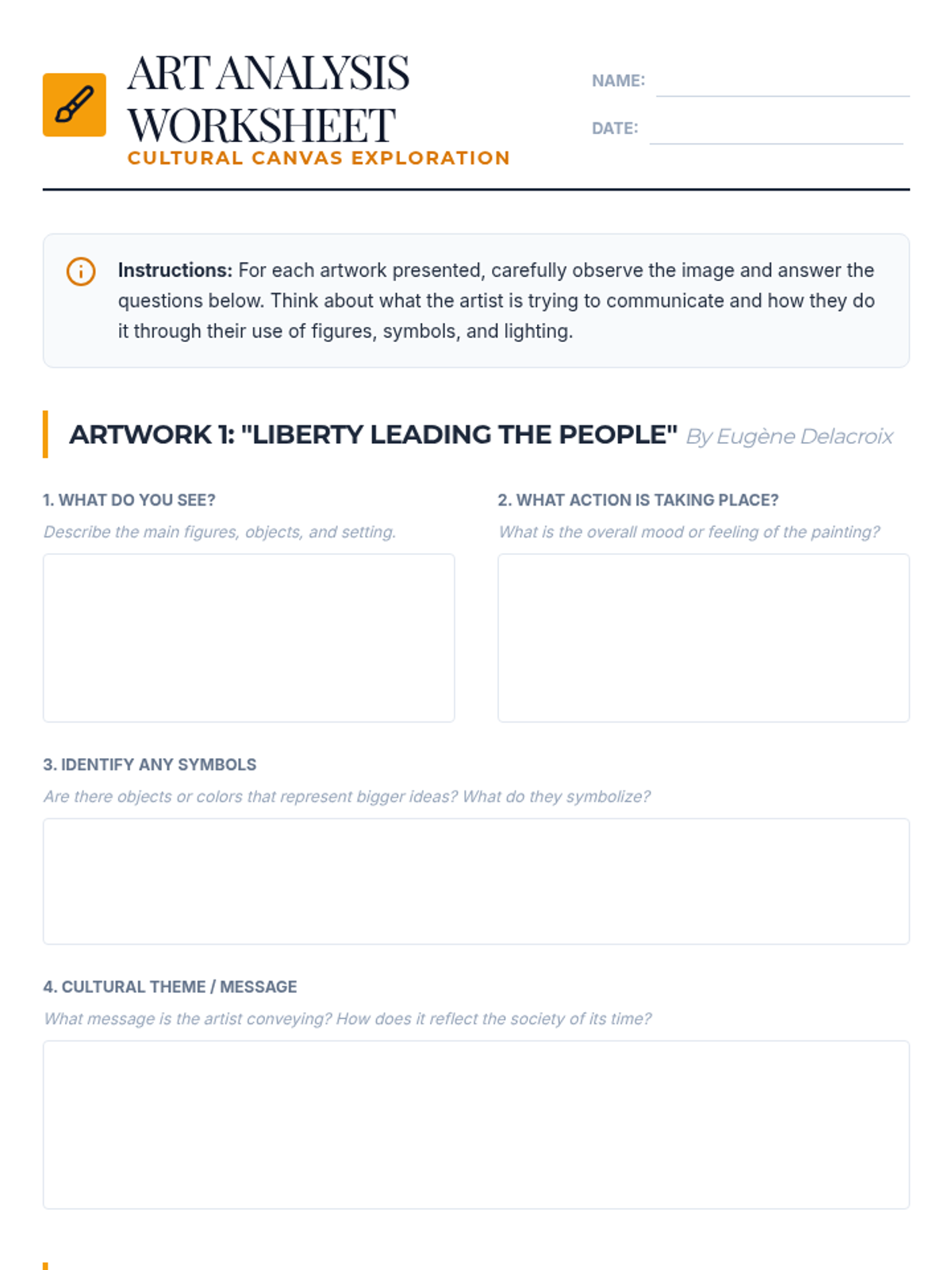
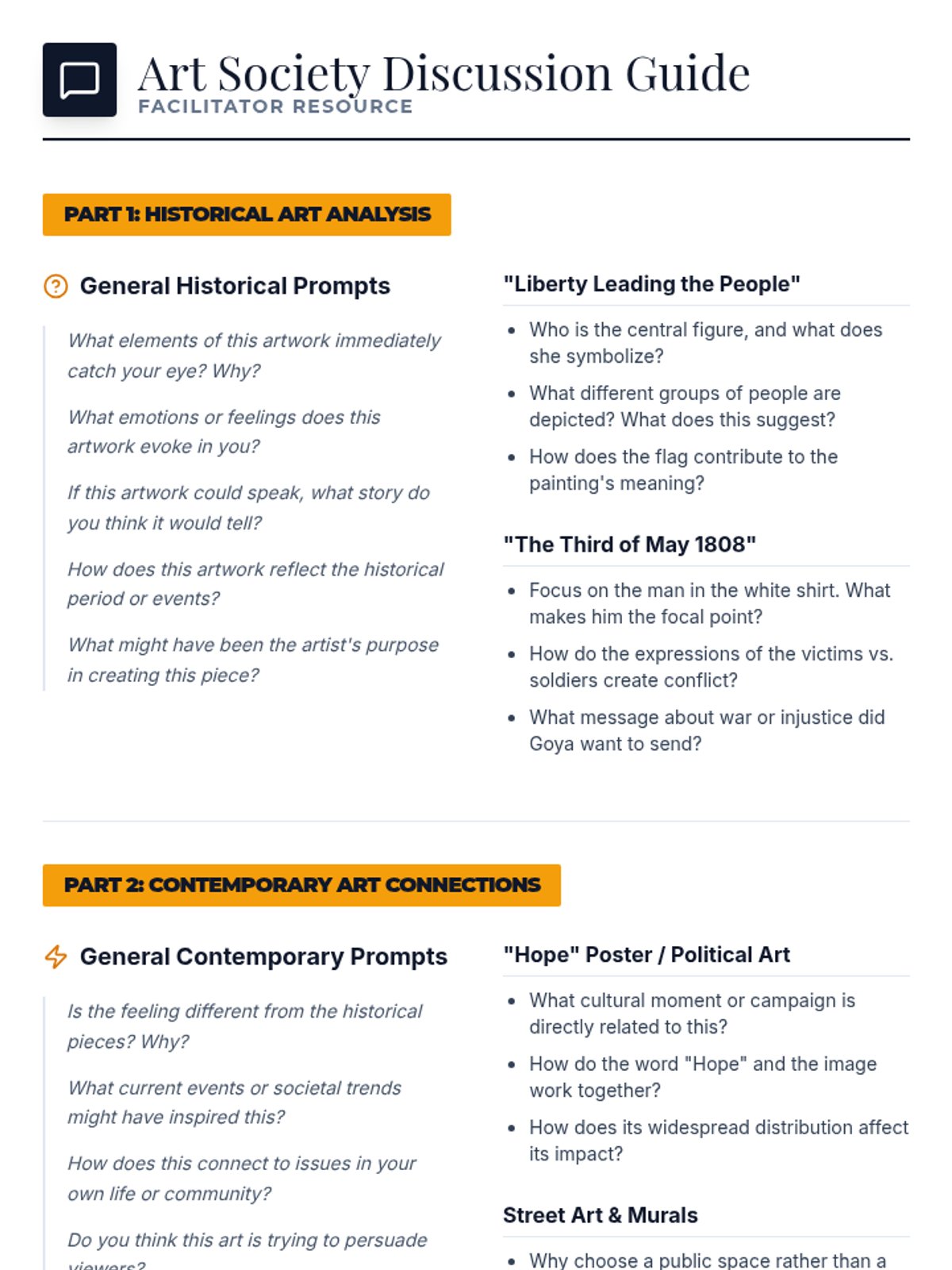
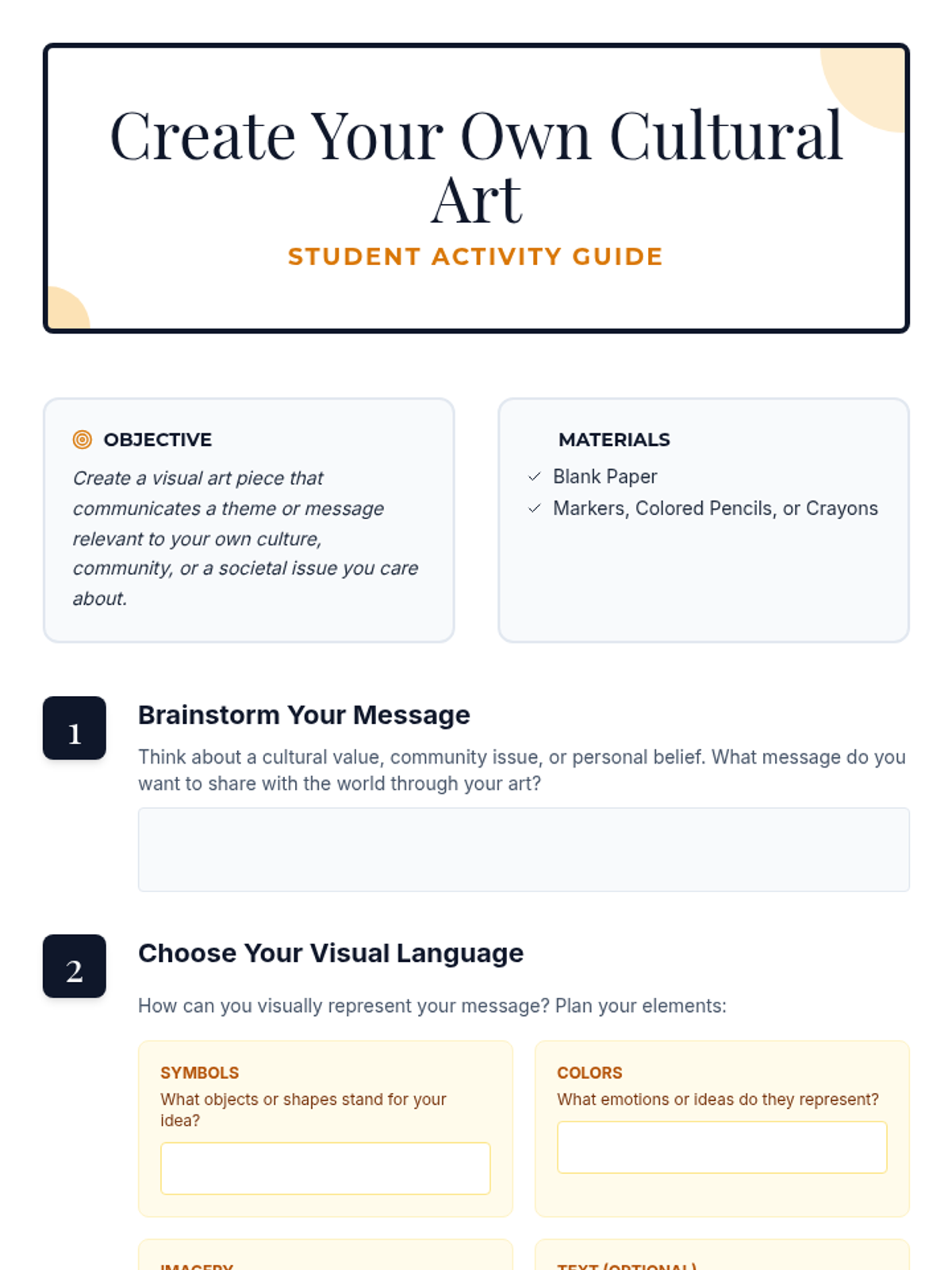
A single-session lesson for 8th-grade students exploring how visual arts reflect and shape cultural and societal contexts through historical and contemporary examples.
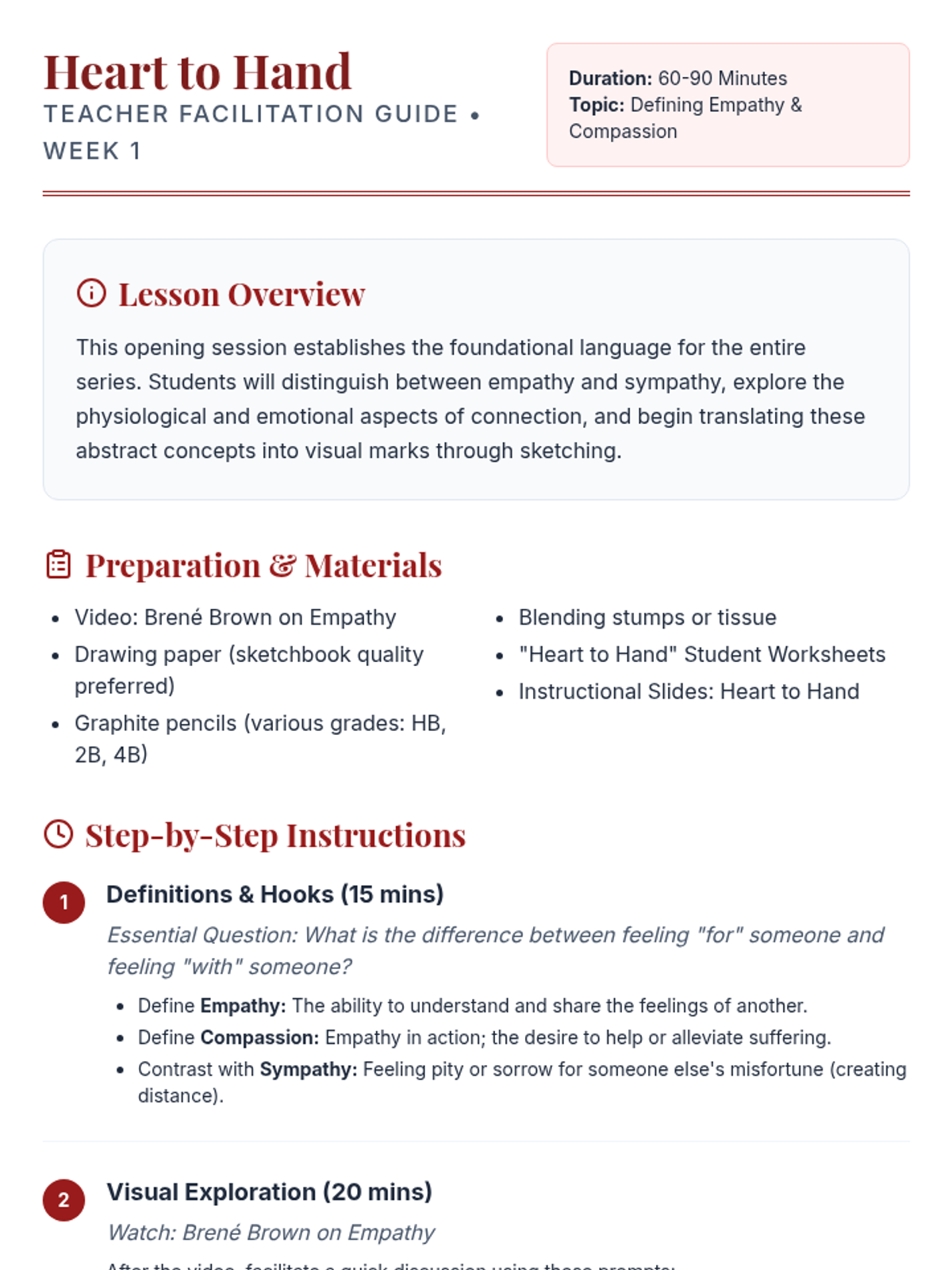
An 8-week series for middle schoolers exploring the intersection of visual arts and emotional intelligence, focusing on building empathy, compassion, and self-awareness through creative expression and professional artist insights.
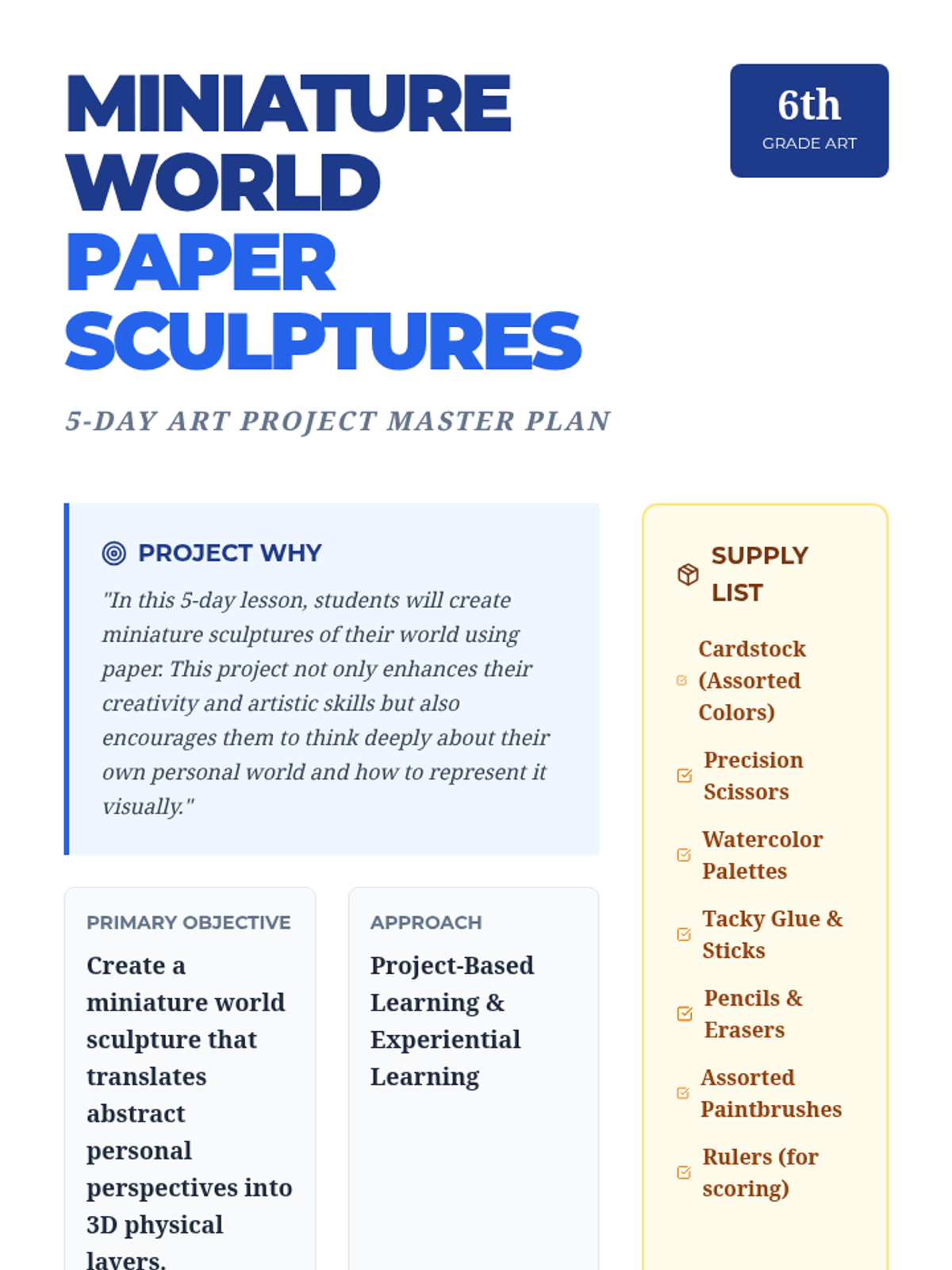
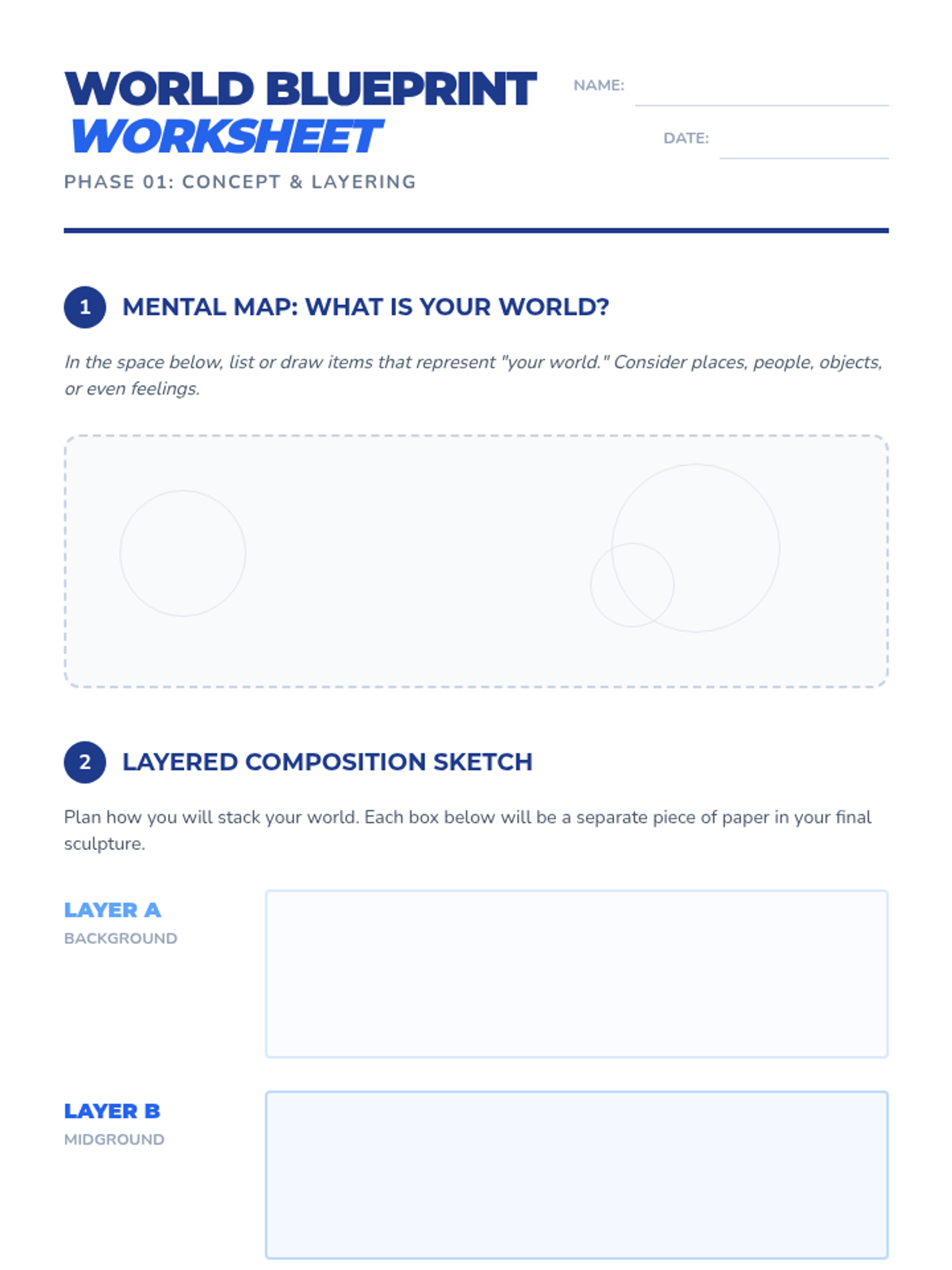
A comprehensive 5-day art sequence where students explore 3D paper sculpting. Students learn to translate their personal perspectives into physical miniature environments using cardstock, watercolors, and engineering techniques.
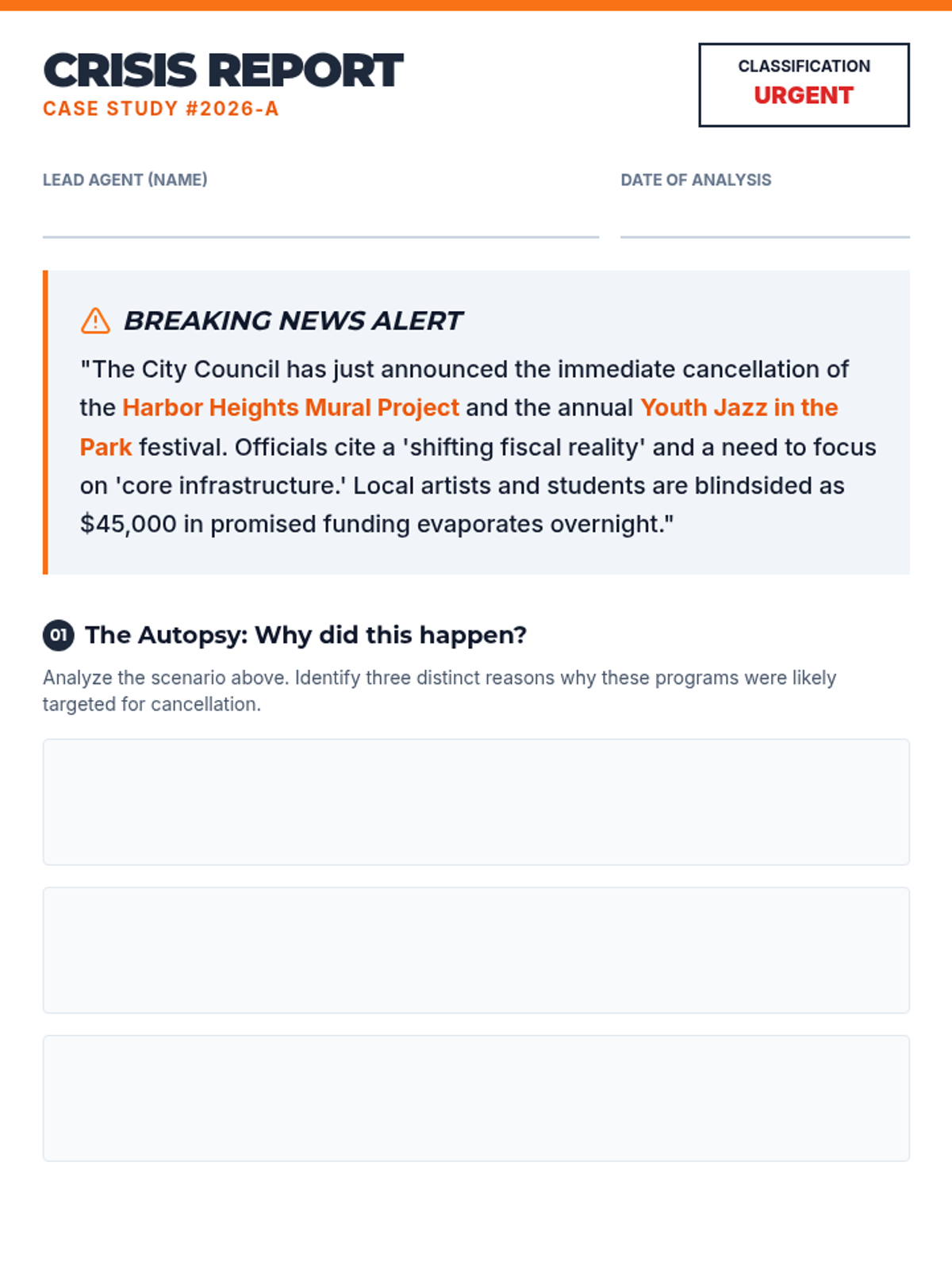
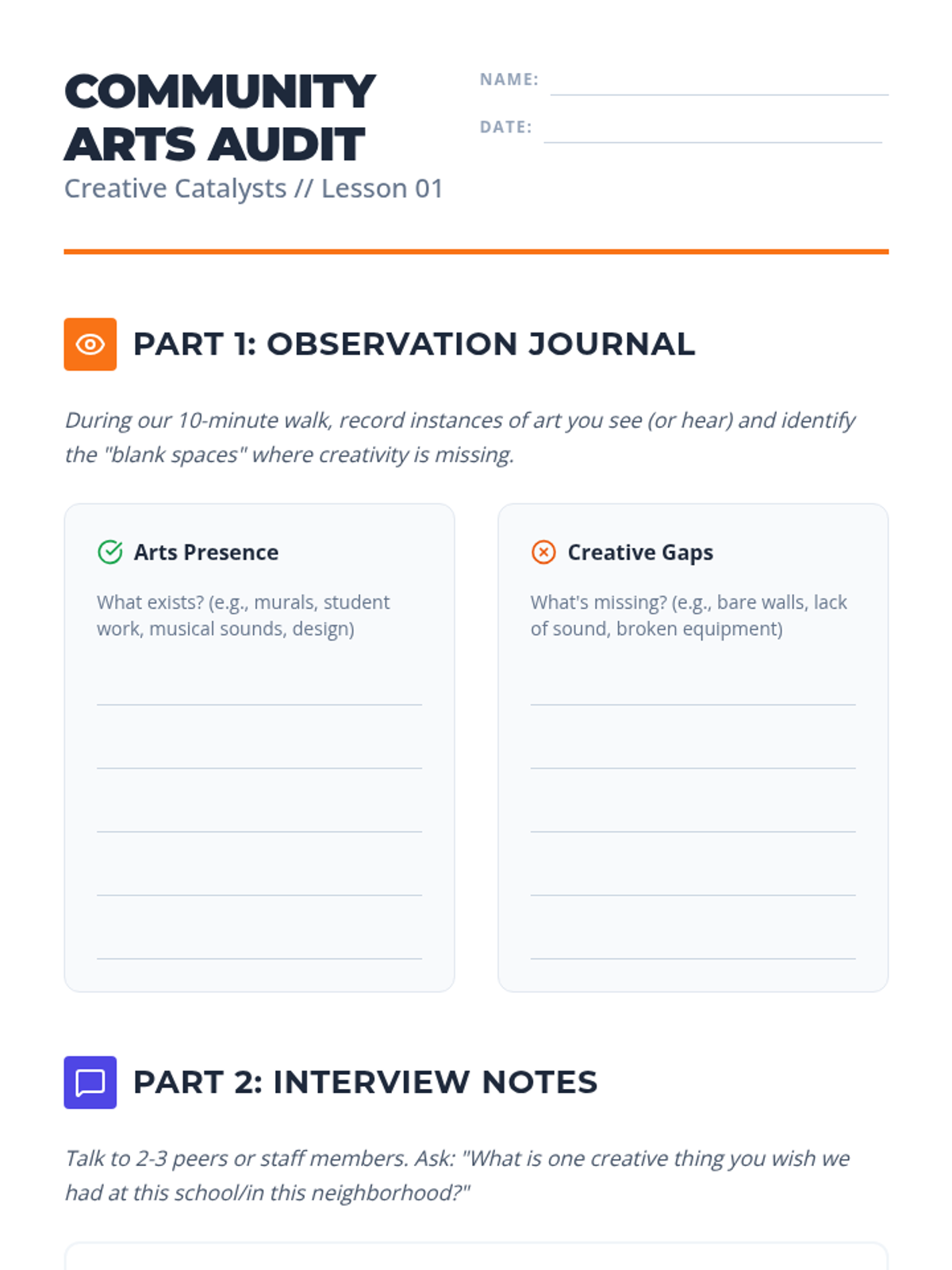
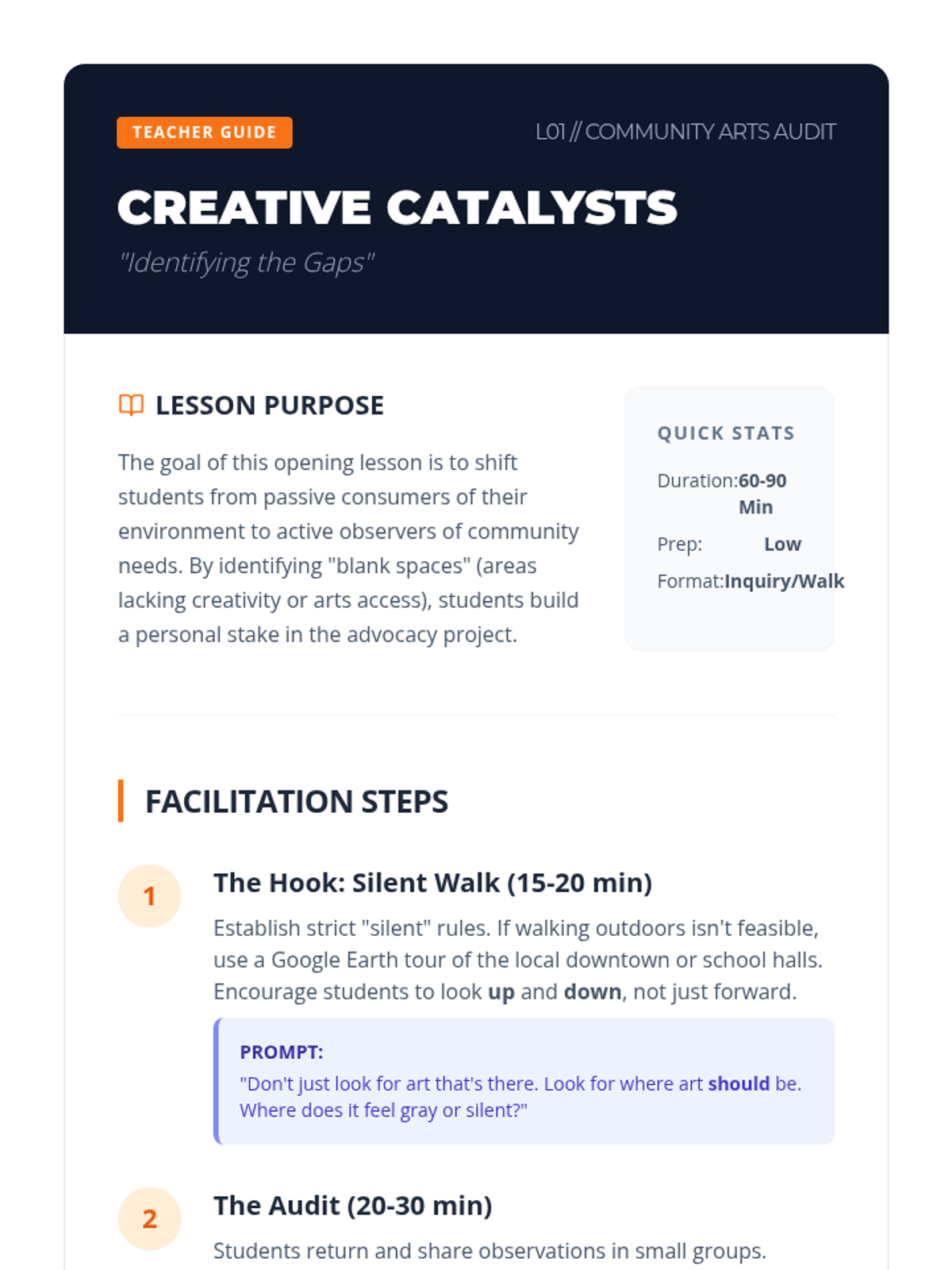
A project-based sequence where 7th-grade students act as community organizers to launch an arts advocacy campaign, moving from needs assessment to a final pitch.
A project-based unit where 8th-grade students act as cultural consultants to research, design, and pitch arts advocacy campaigns for their local communities. Students learn to combine data-driven evidence with persuasive storytelling and visual design to effect real-world change.
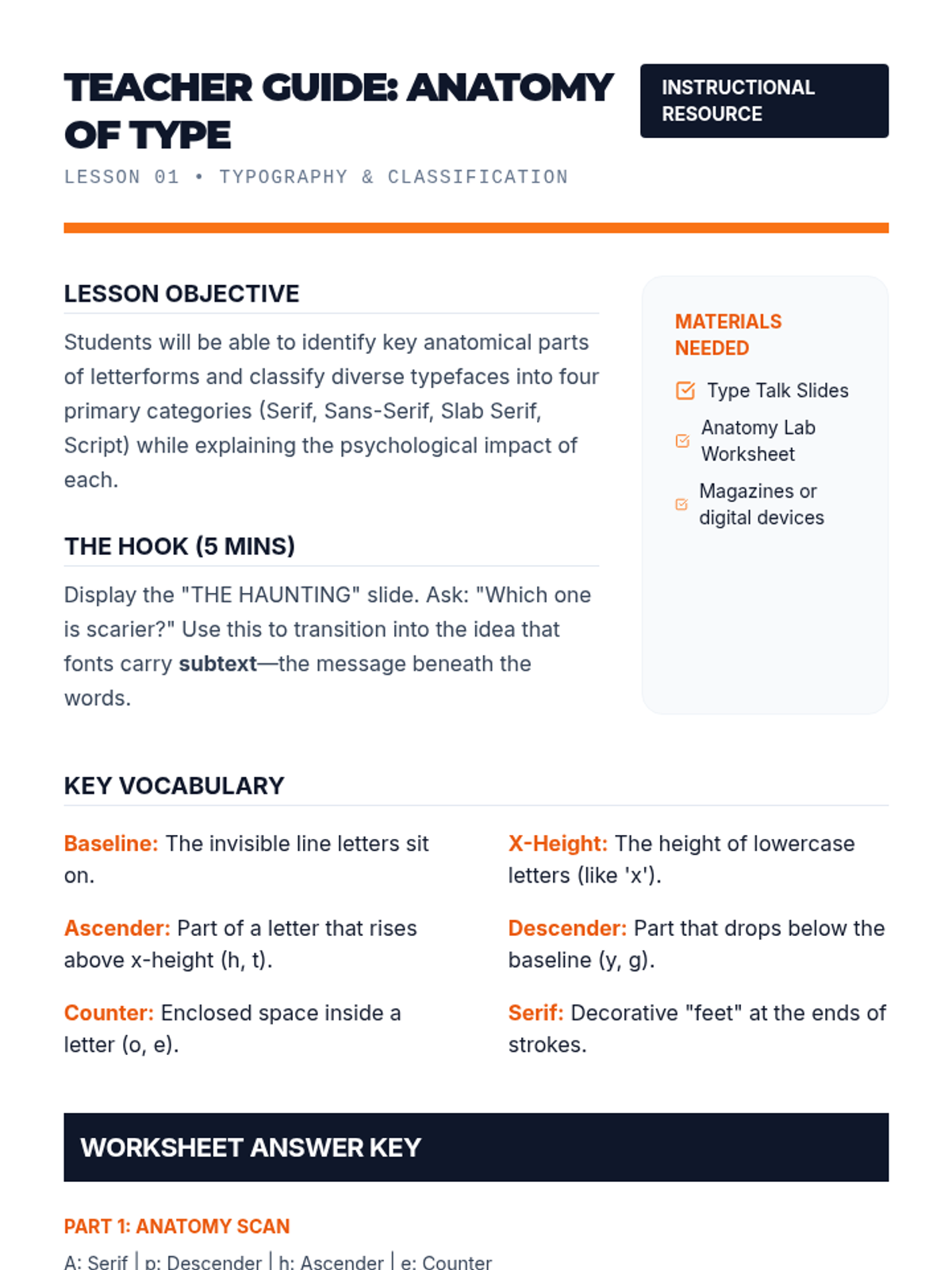
A comprehensive 8th-grade unit bridging traditional printmaking concepts with modern digital graphic design. Students explore typography anatomy, vector illustration, grid-based layouts, and digital color theory to create professional-quality visual communications.
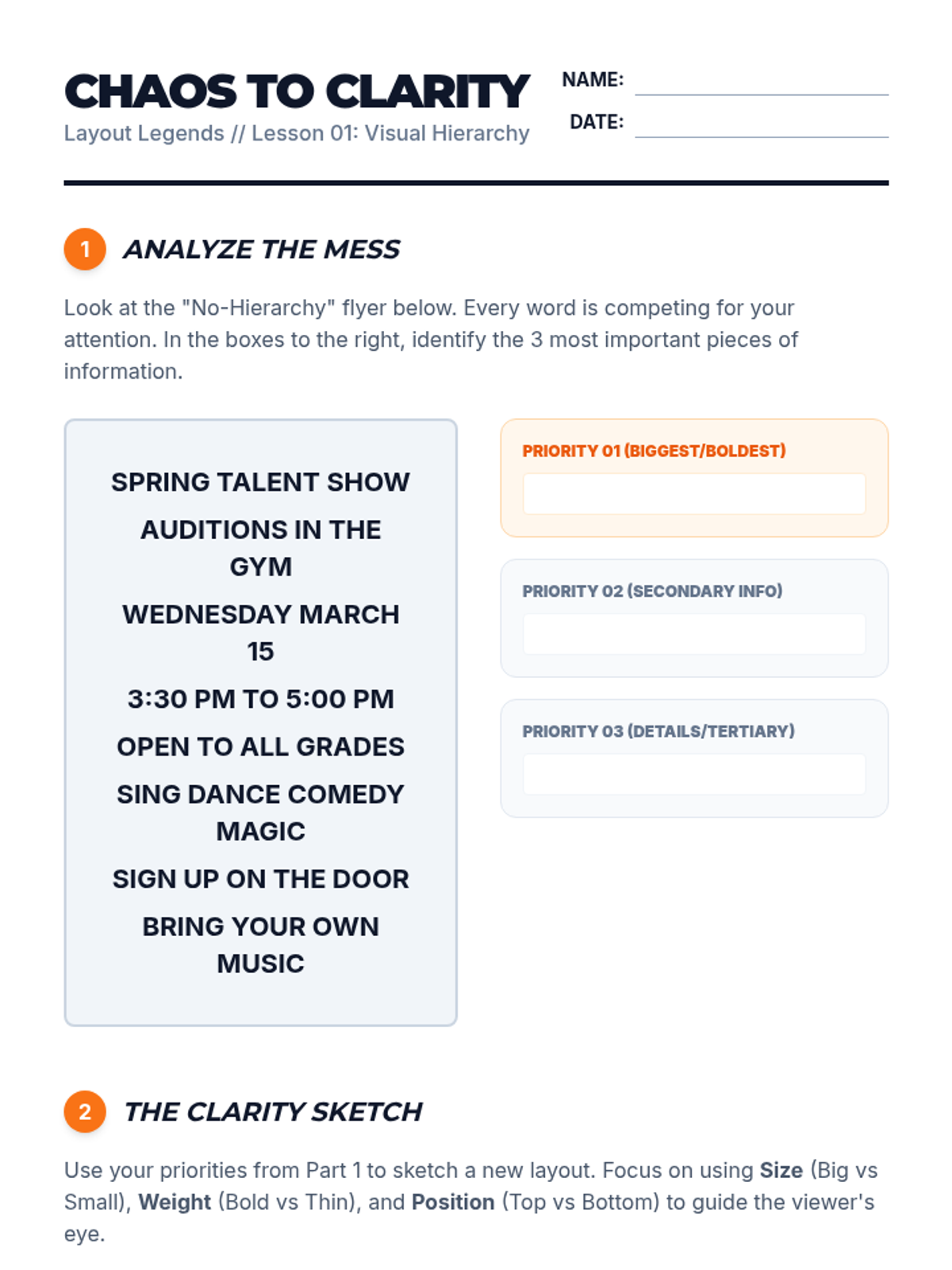
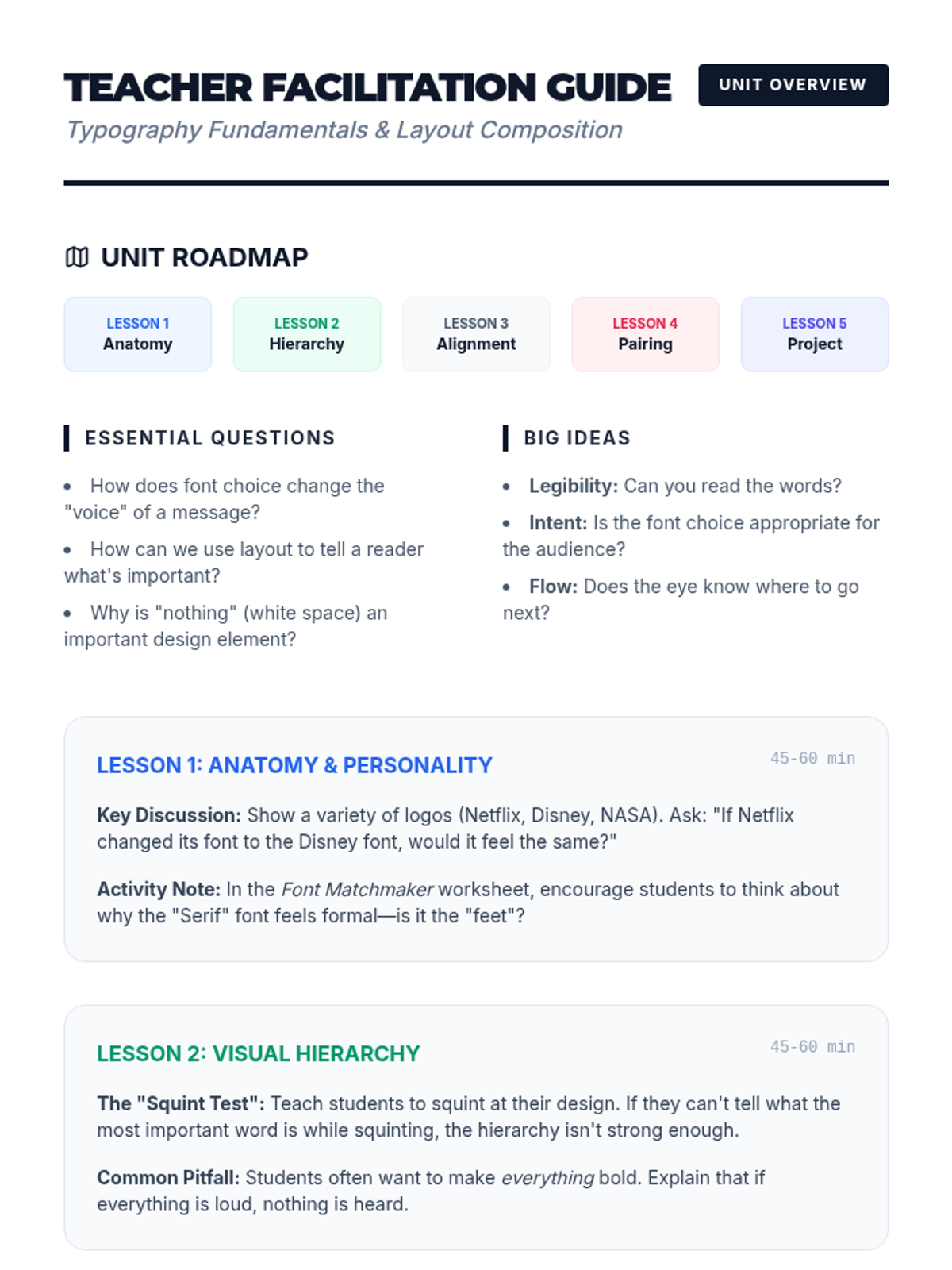
A project-based journey into the world of graphic design layout, focusing on visual hierarchy, grids, balance, and the integration of text and images. Students move from analyzing visual chaos to creating professional-grade compositions.
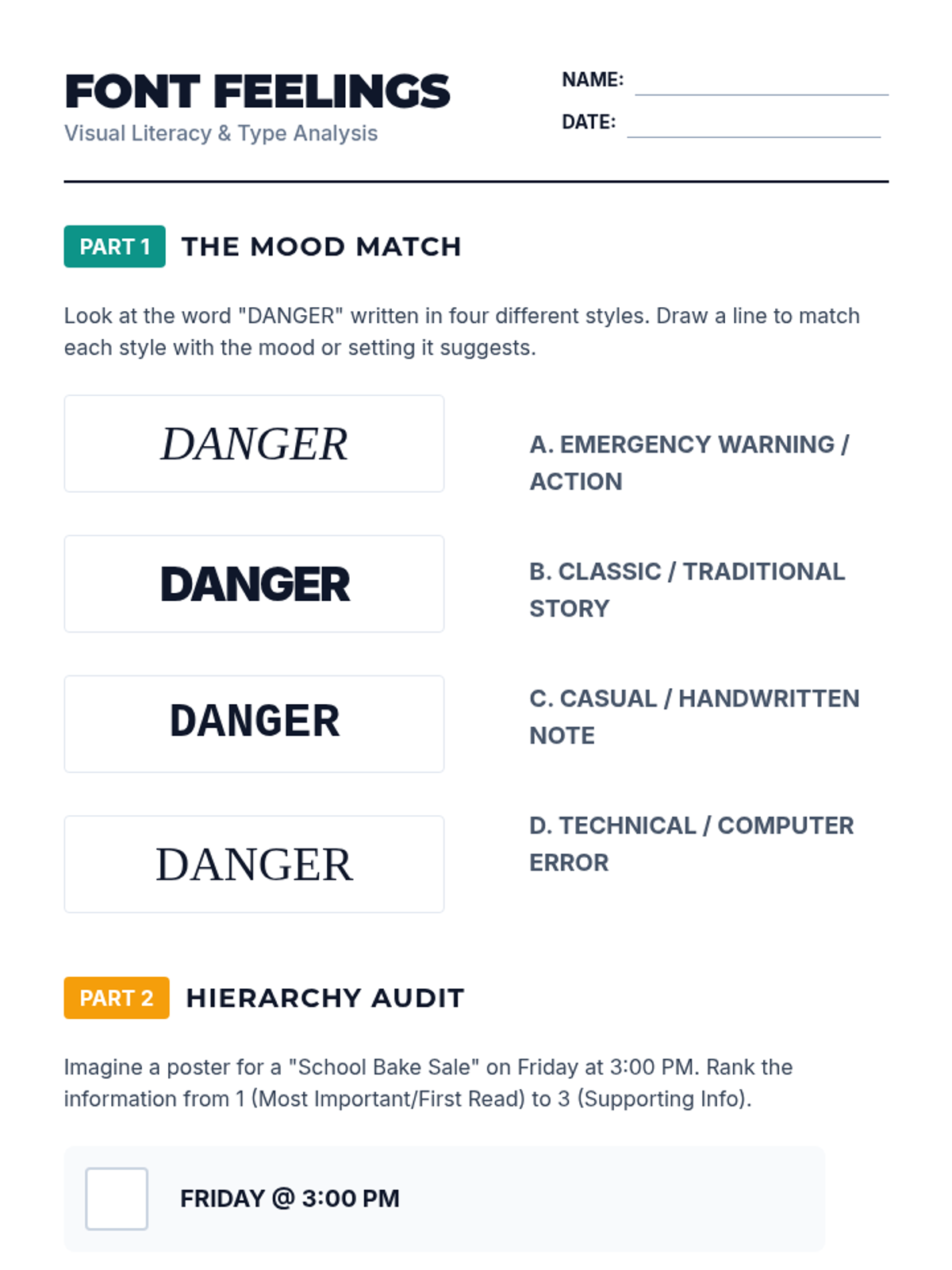
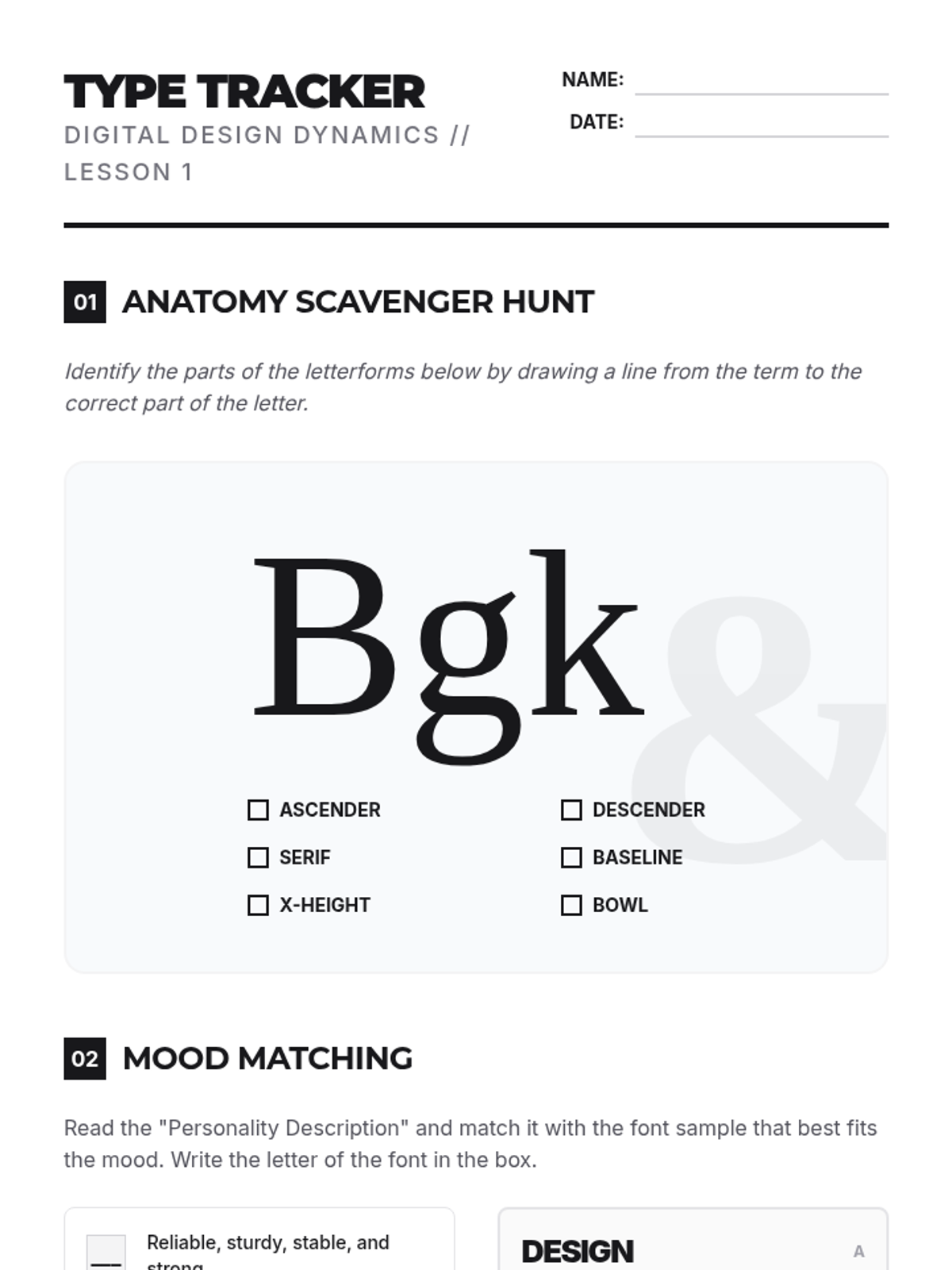
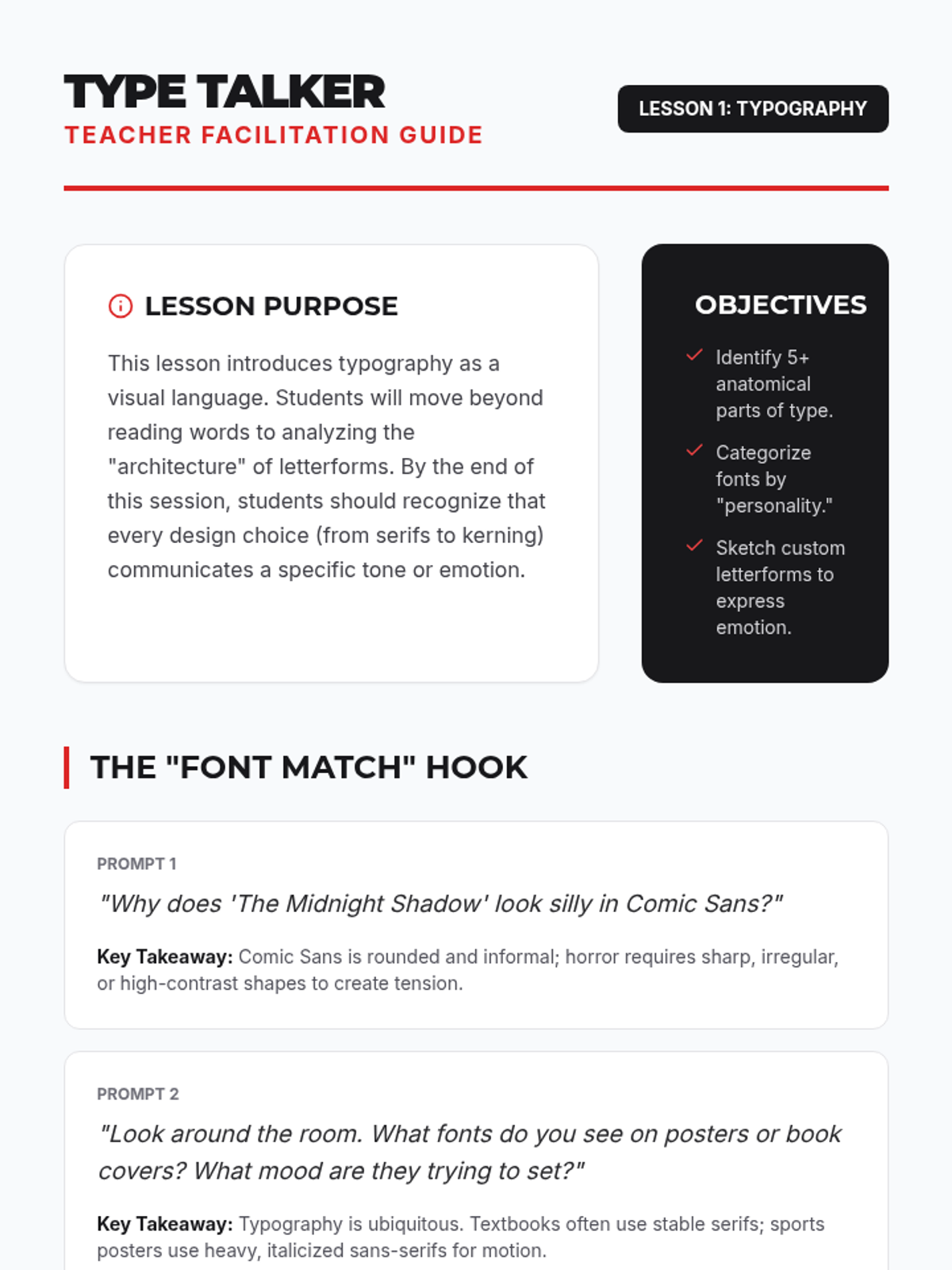
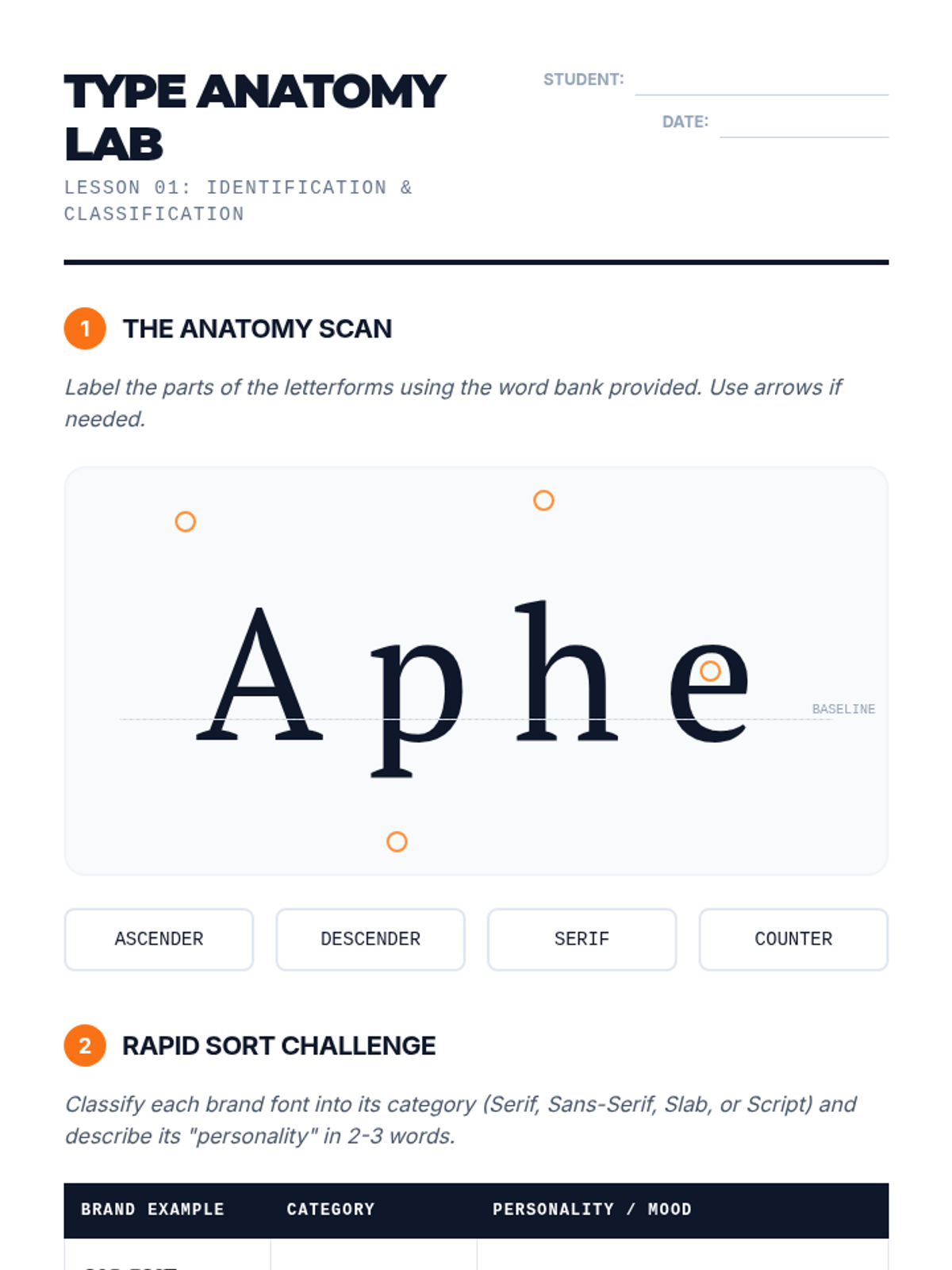
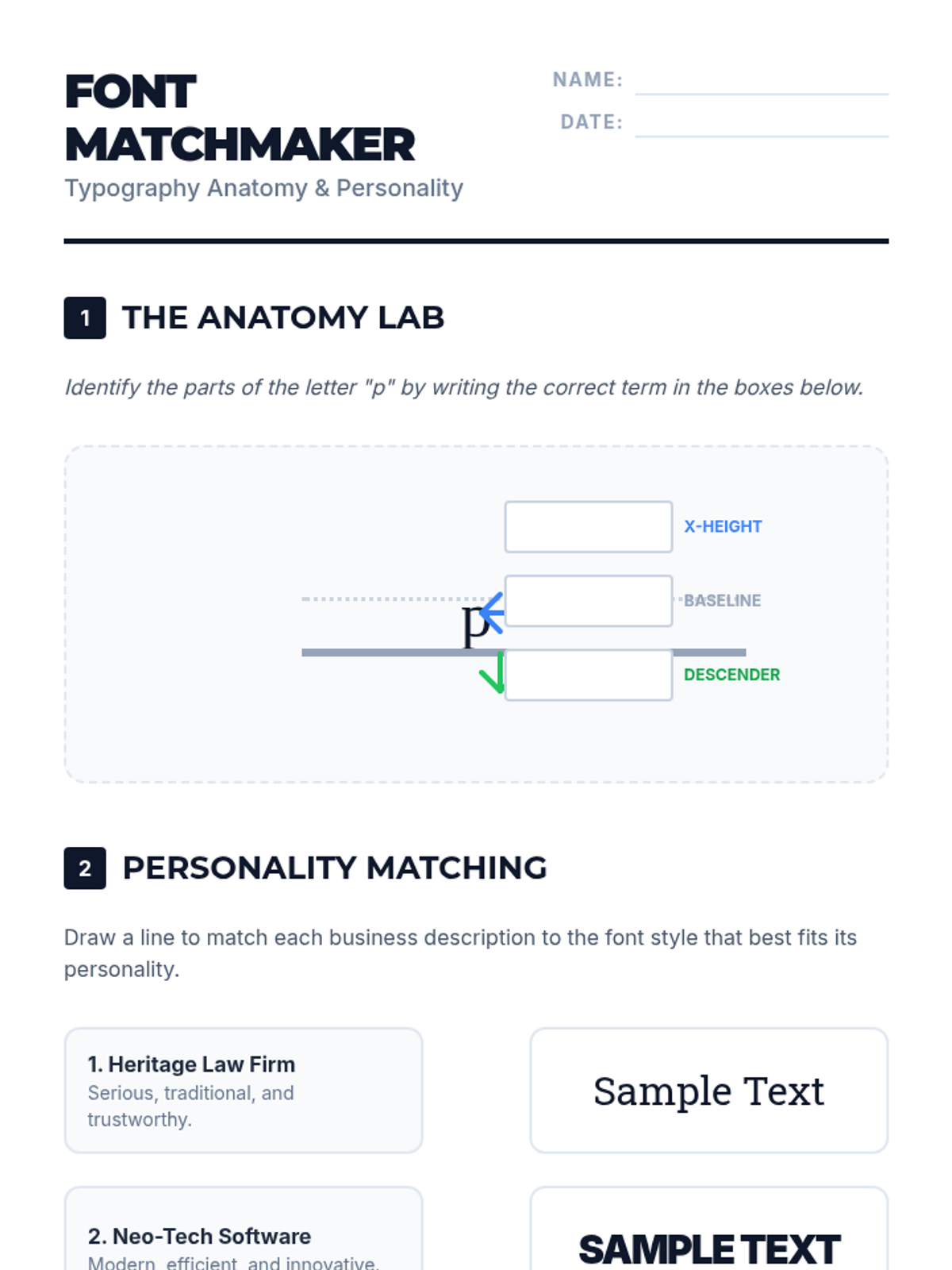
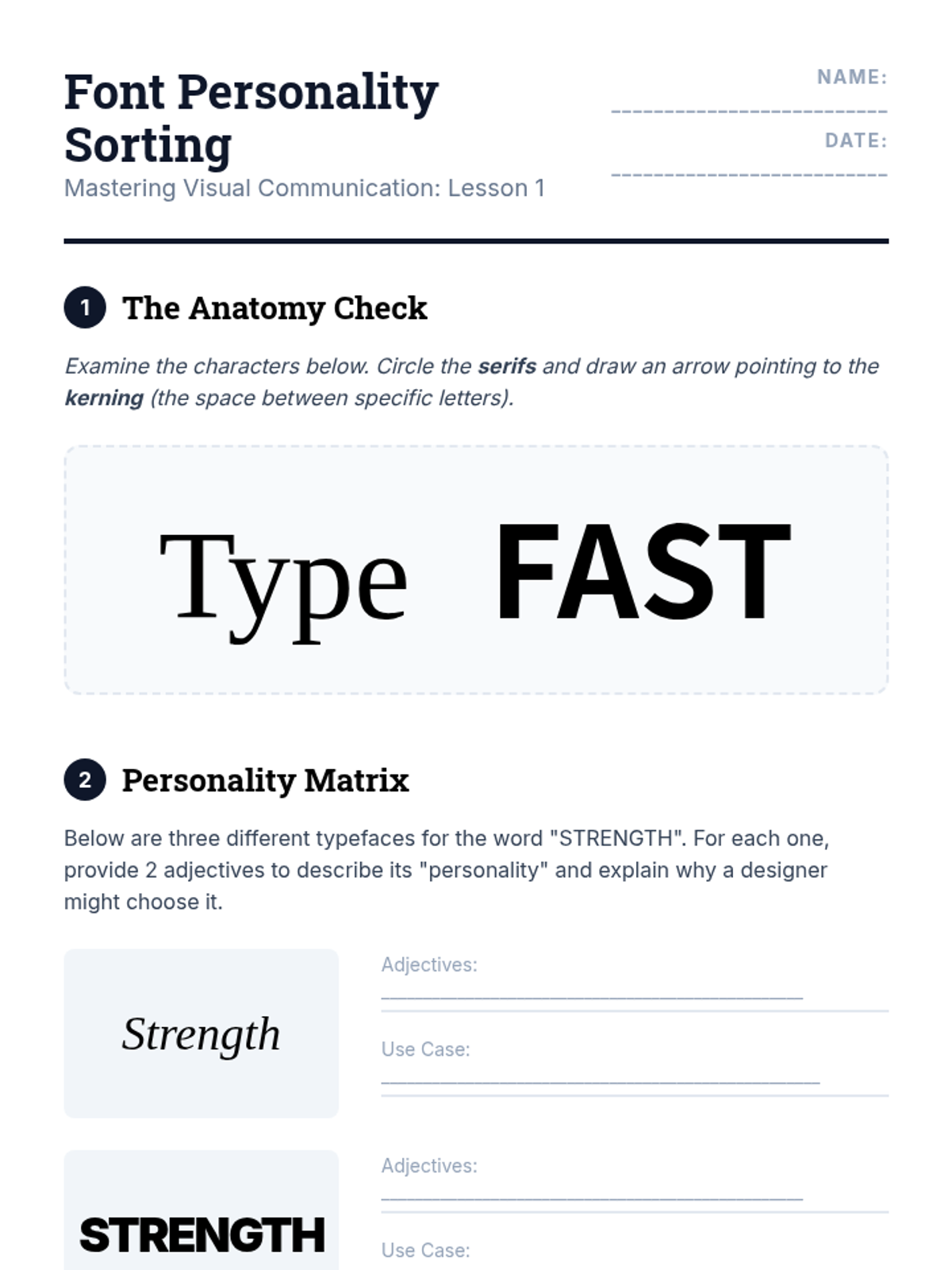
A comprehensive introduction to graphic design fundamentals for 7th-grade students, focusing on the structural anatomy of typography and the scientific application of color theory. Students move from identifying font personalities to creating expressive compositions and harmonic color palettes, culminating in a professional-style typographic poster.
A comprehensive unit for 6th-grade students on typography and layout, focusing on how visual arrangement and font choice influence communication and message clarity.
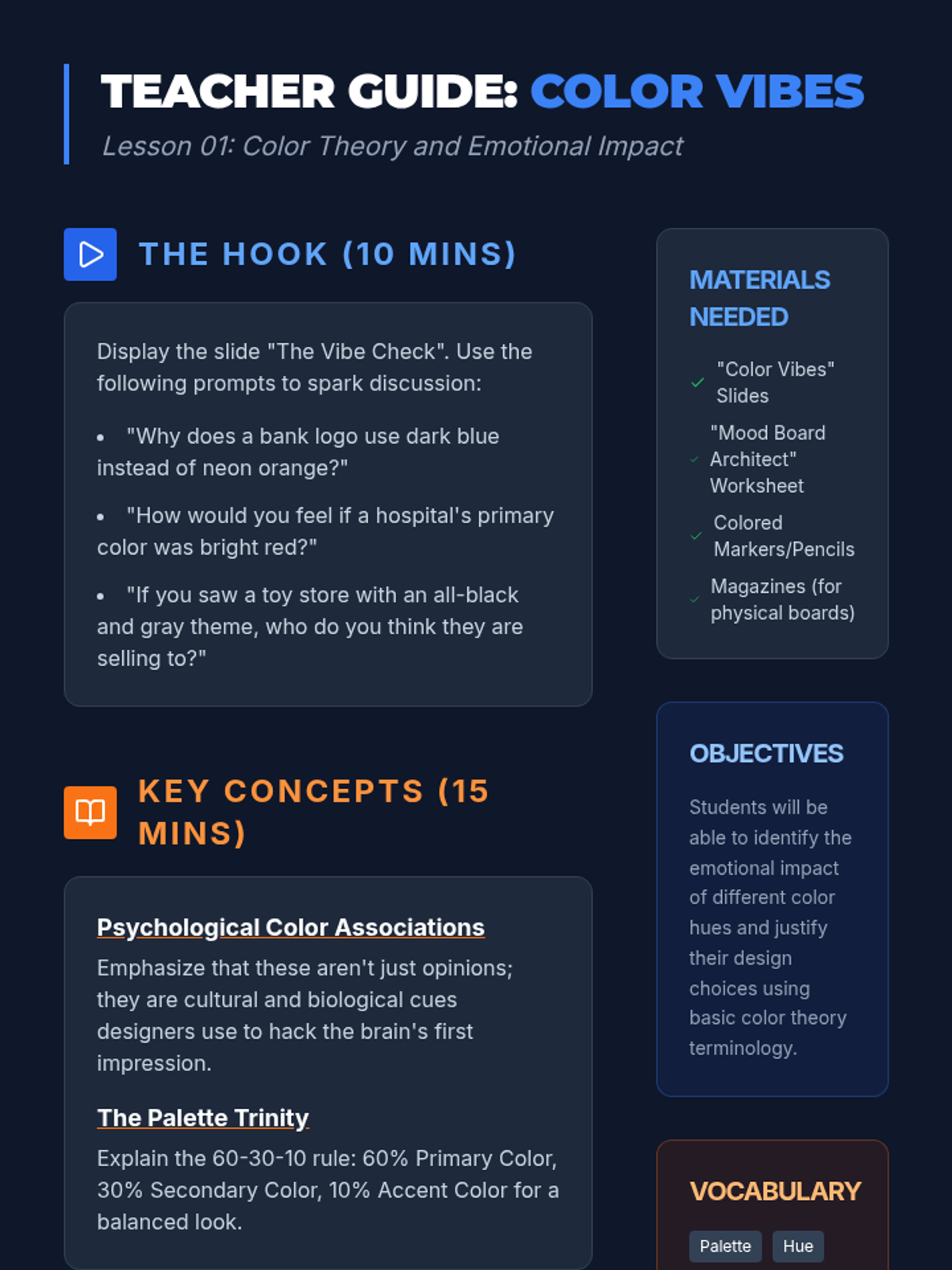
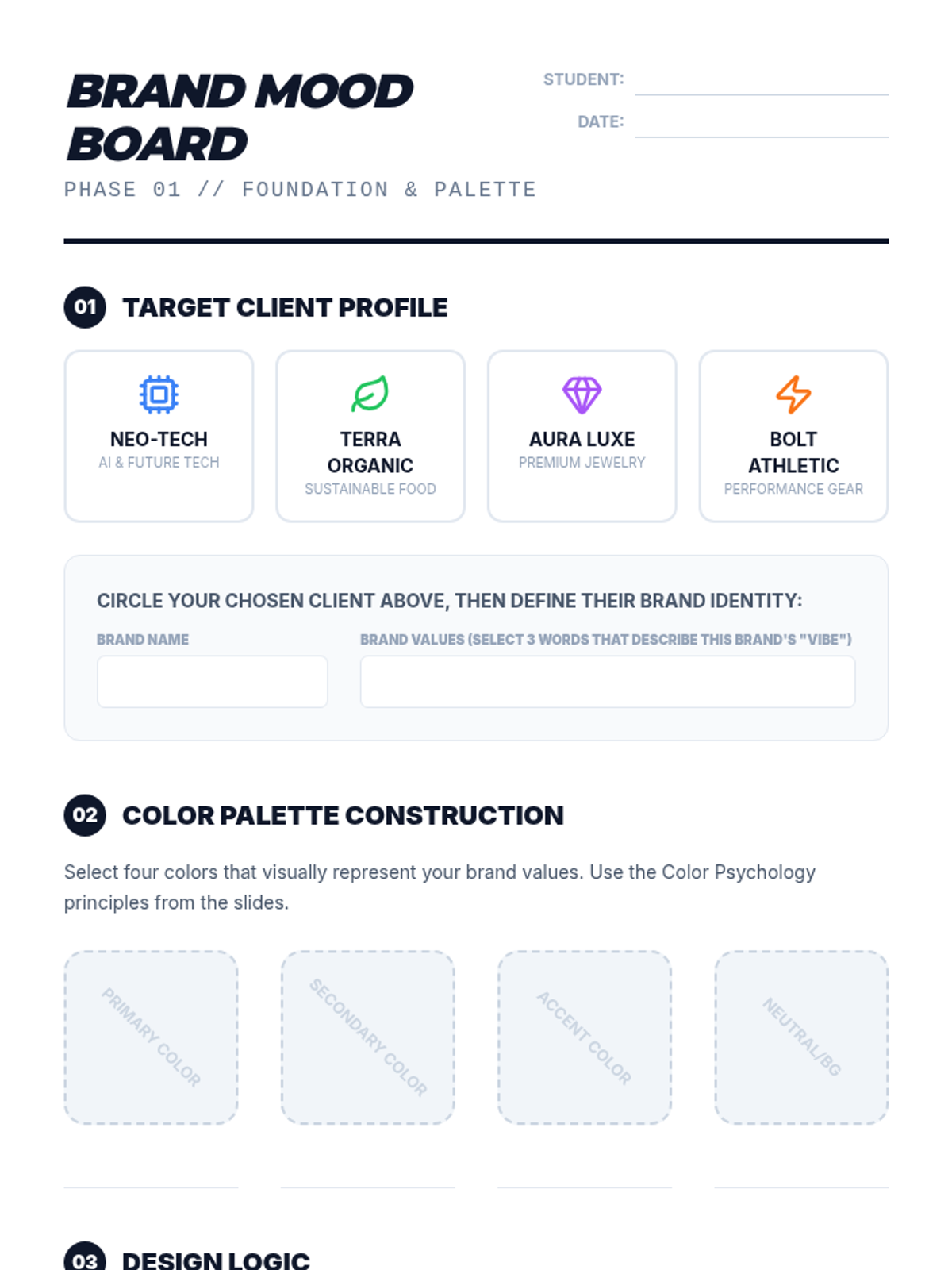
A comprehensive project-based sequence for 8th graders to master graphic design fundamentals, from color psychology and typography to digital logo creation and professional critique. Students develop a brand identity for a fictional client, focusing on design as a tool for communication.
A comprehensive introduction to graphic design where students build a cohesive brand identity from the ground up. Over five lessons, students master color psychology, typography, logo creation, and layout principles, culminating in a professional-style brand pitch.
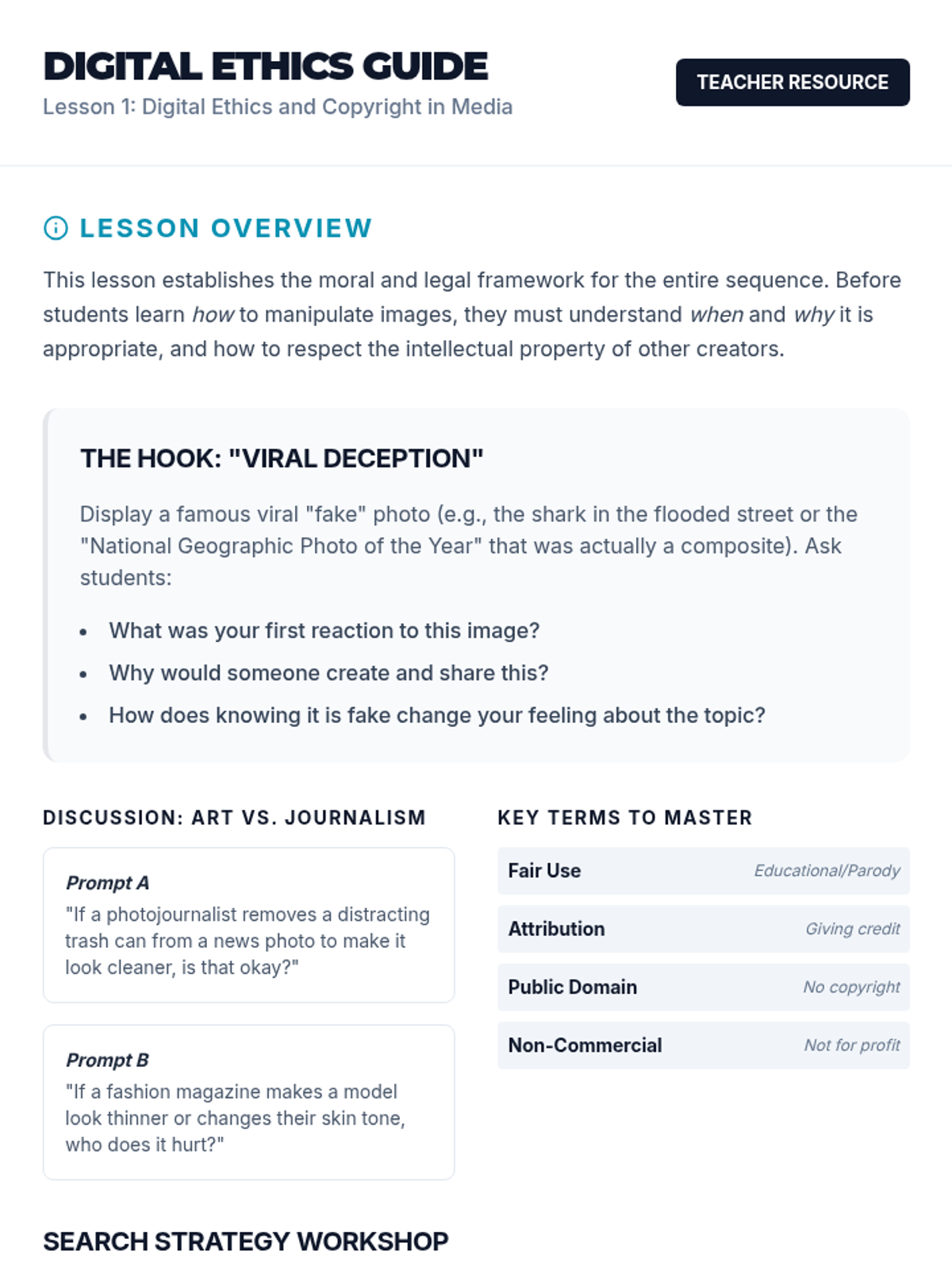
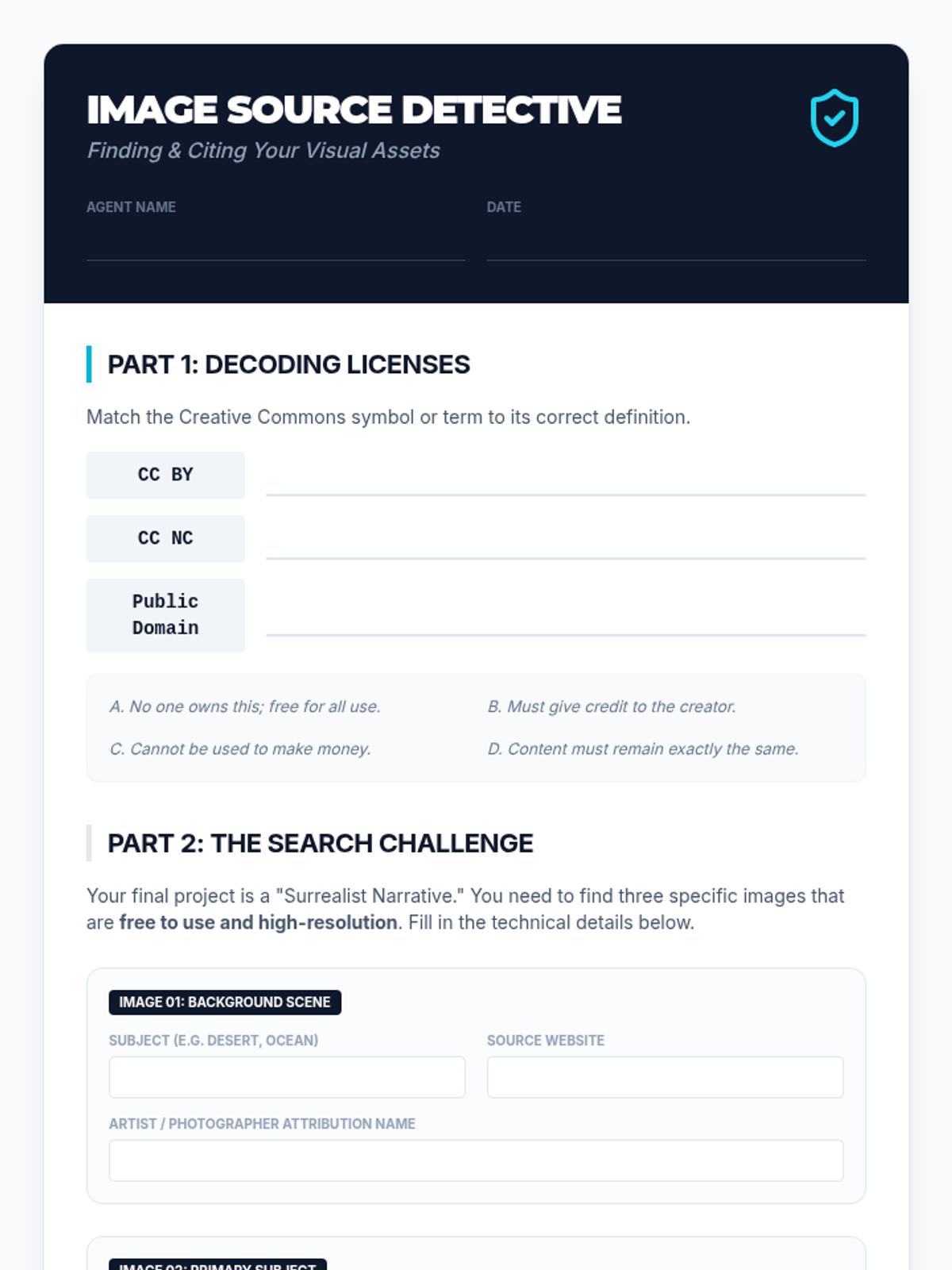
A comprehensive 6th-grade unit on digital photo manipulation, covering ethics, technical skills like masking and selection, and creative compositing for surreal art.
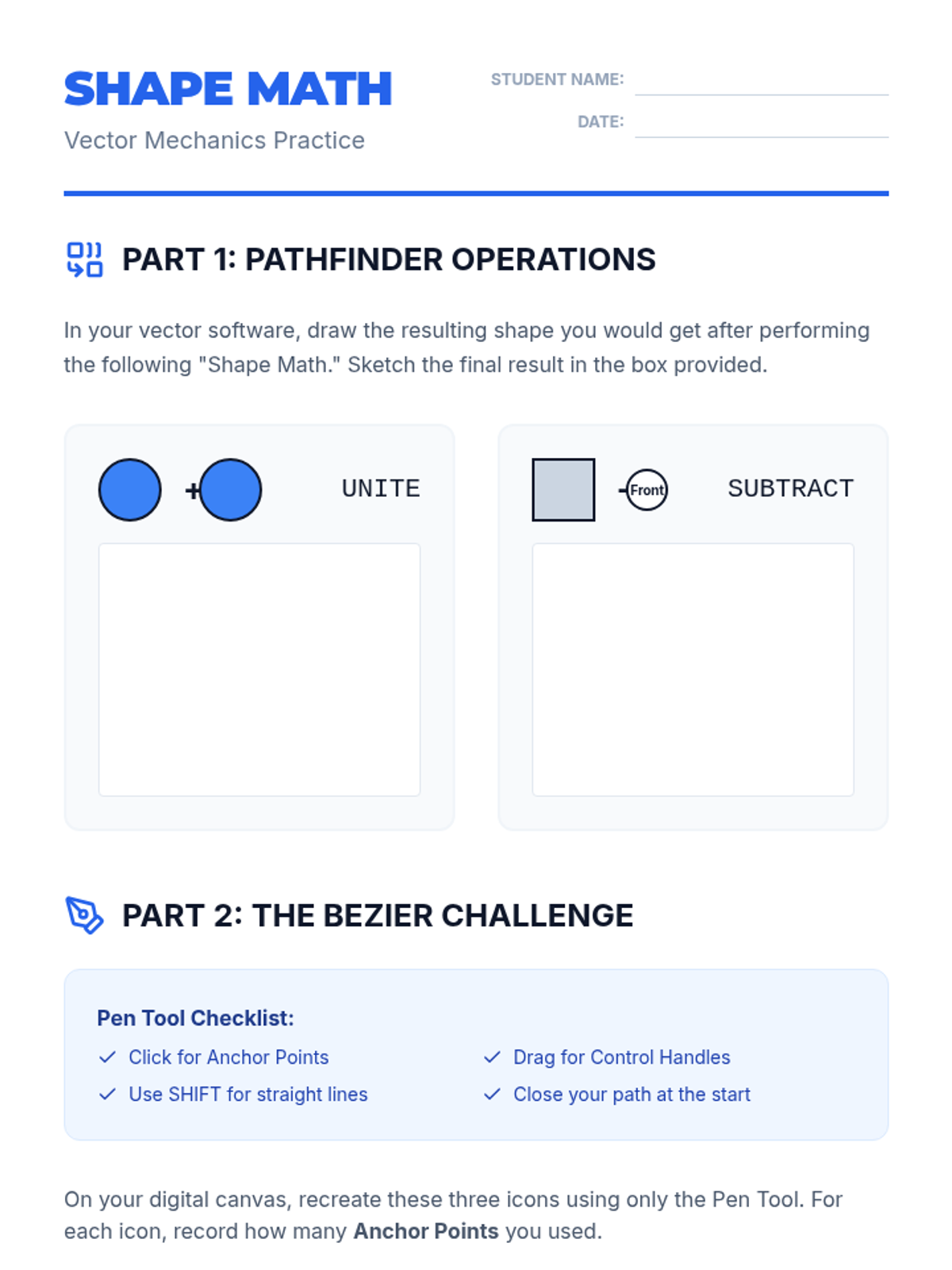
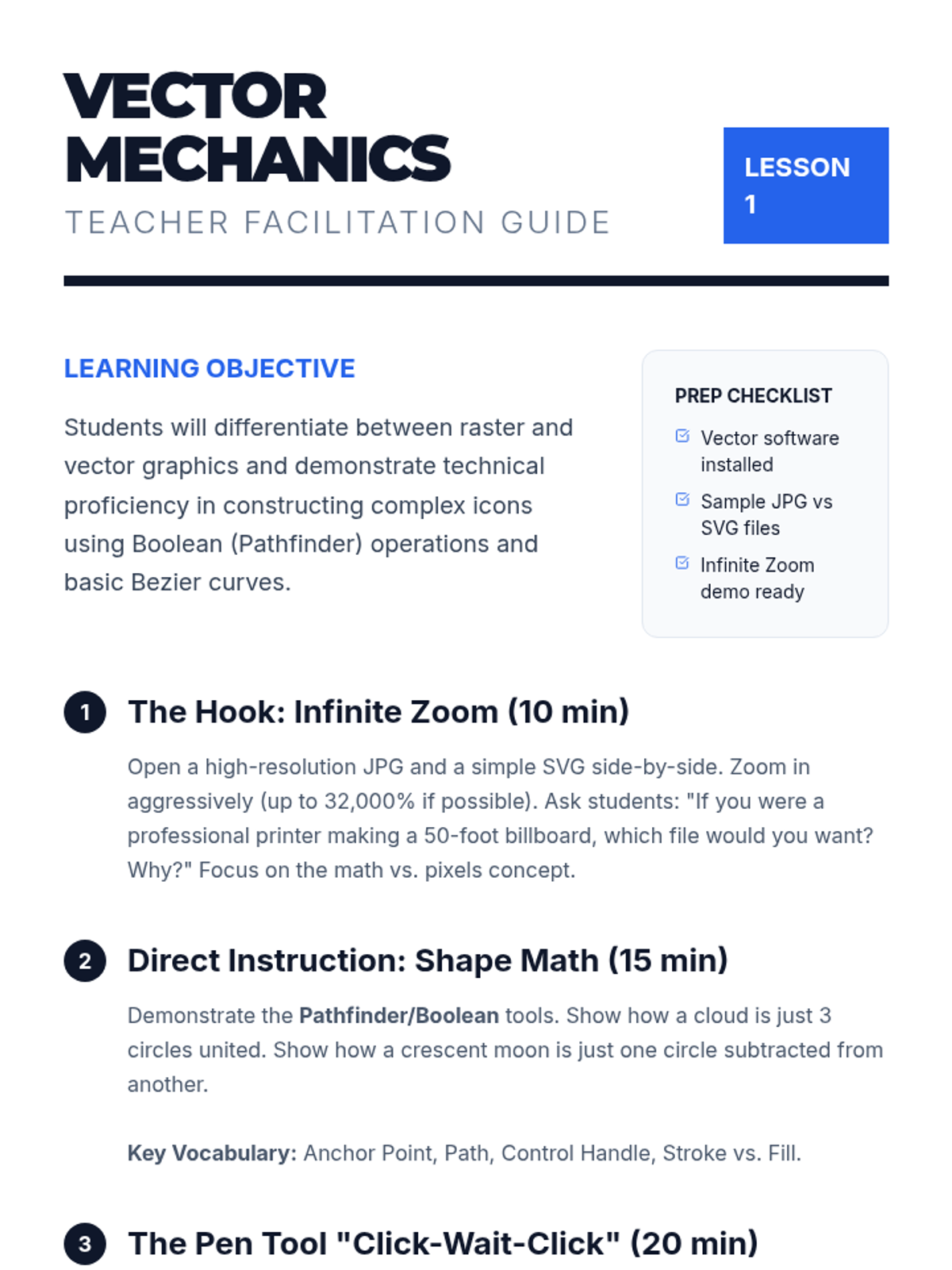
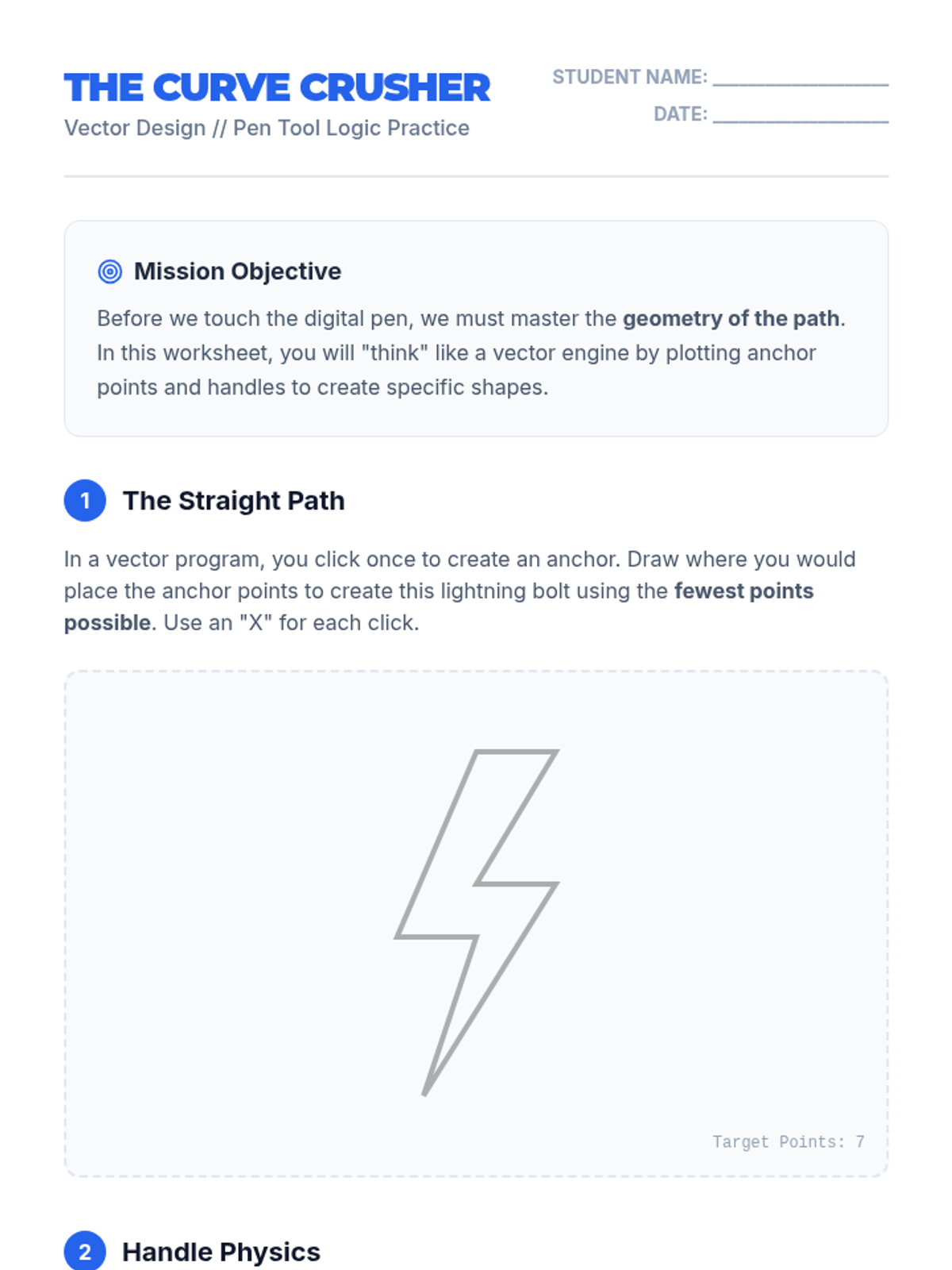
This sequence introduces 8th-grade students to graphic design through vector illustration and brand identity. Students learn technical software skills alongside conceptual design principles like color psychology and typography, culminating in the creation of a professional brand style guide.
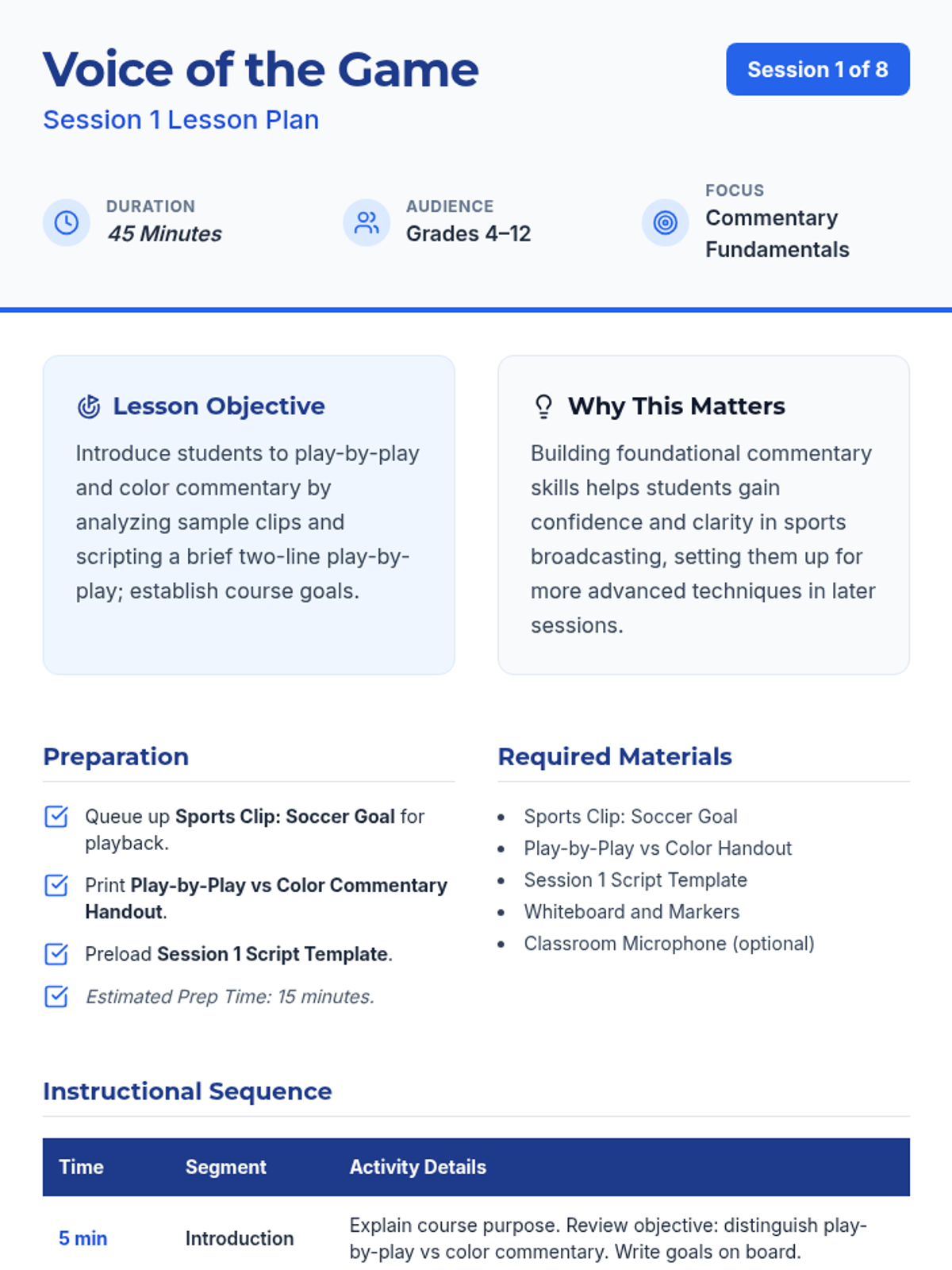
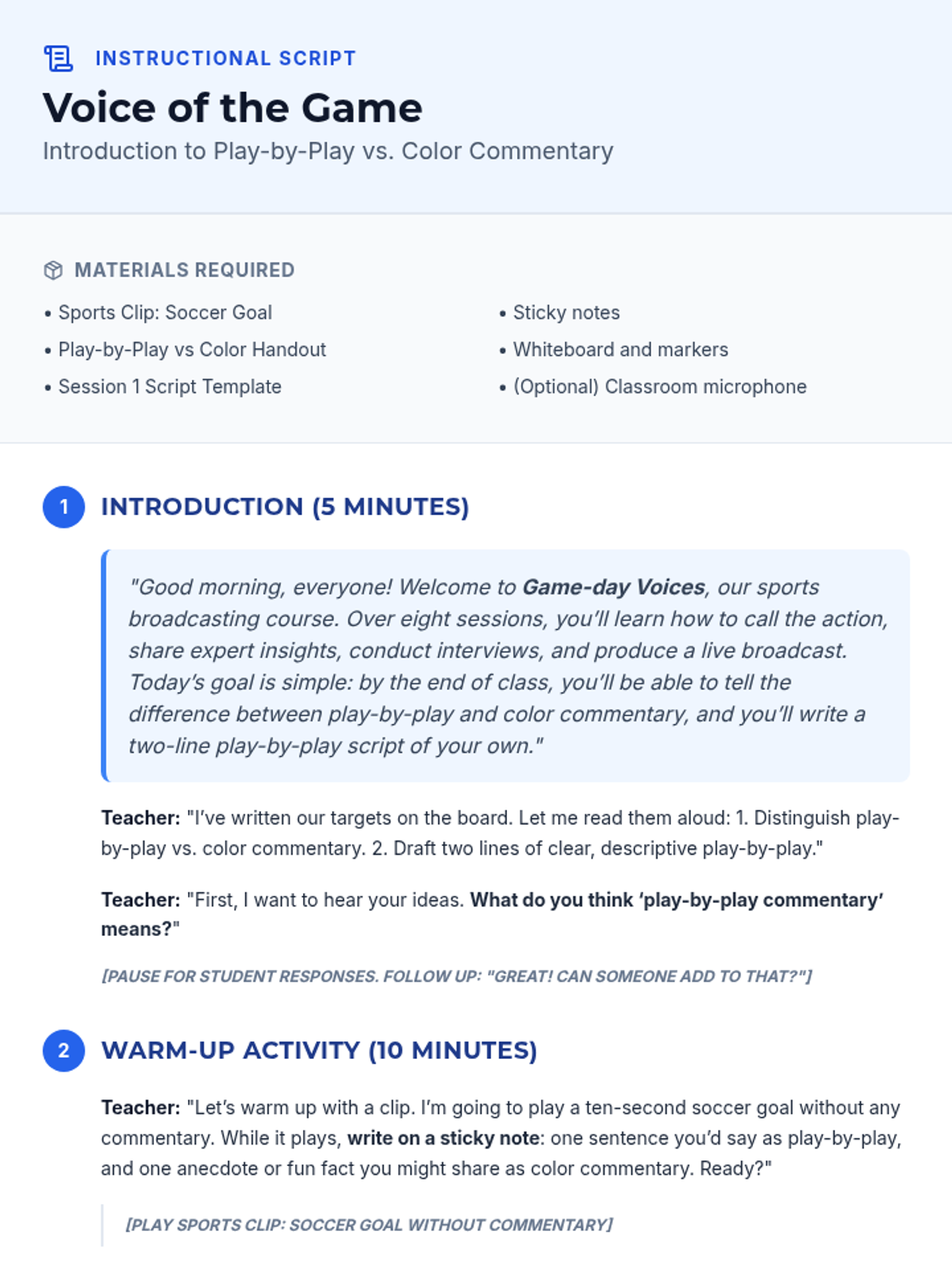
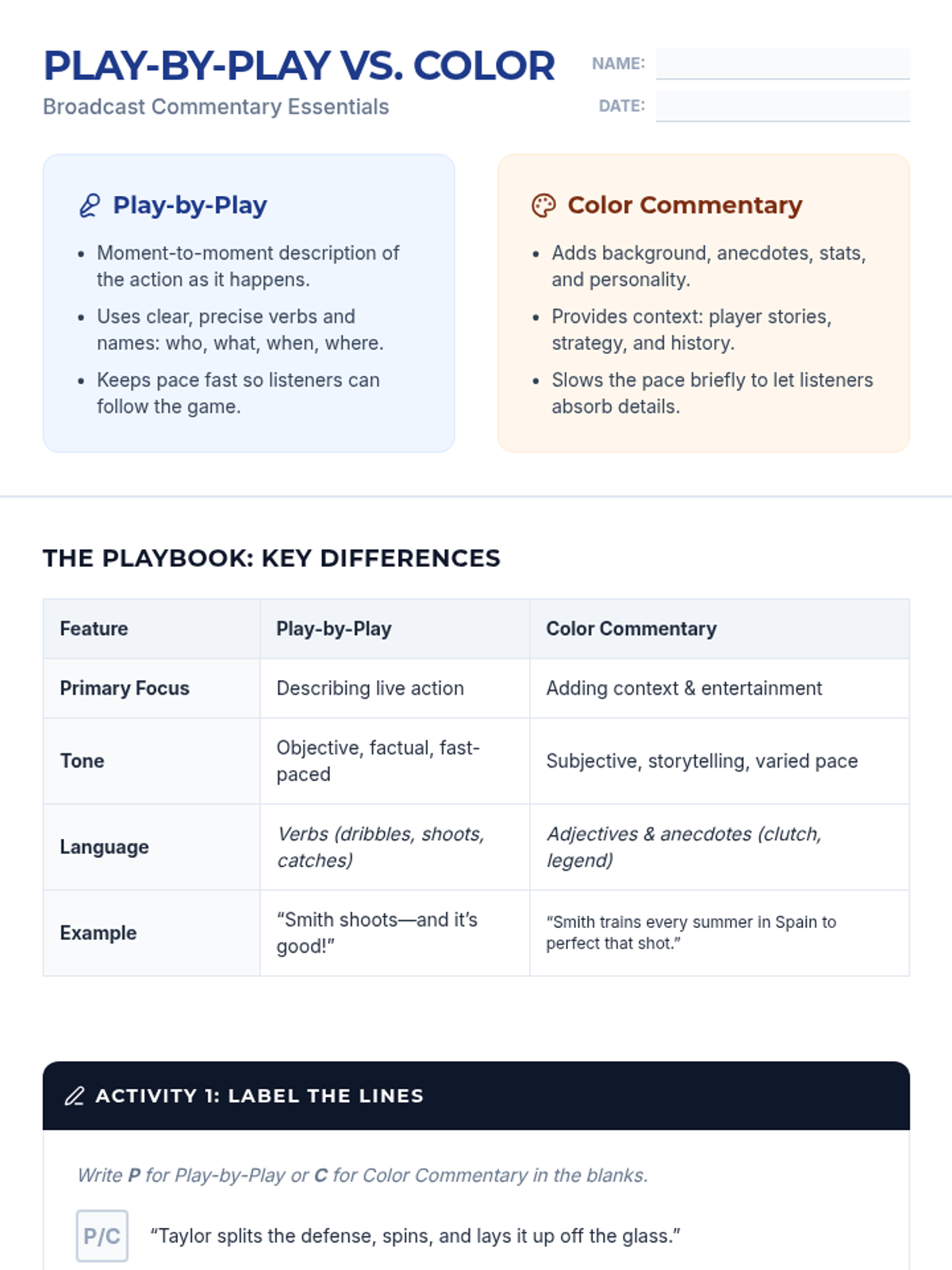
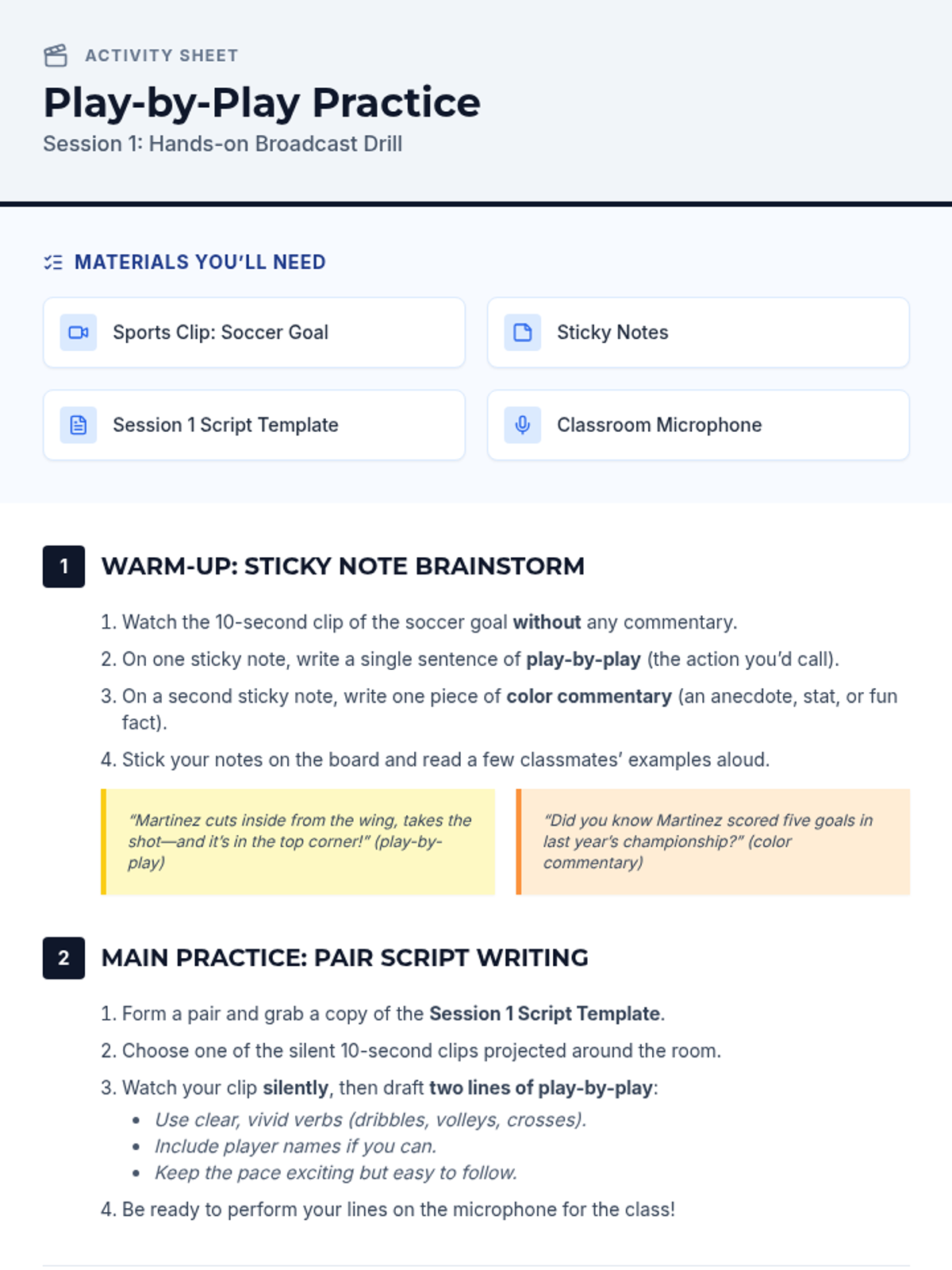
An 8-session sports broadcasting course for grades 4–12, covering play-by-play, color commentary, interviewing, camera work, audio mixing, and live production directing. Students progress from foundational vocal skills to a complete capstone broadcast project.
A foundational workshop for 8th-grade students to master the objective rules of typography, color psychology, and layout. Students transition from analyzing visual 'grammar' to creating their own communicative compositions using digital design principles.
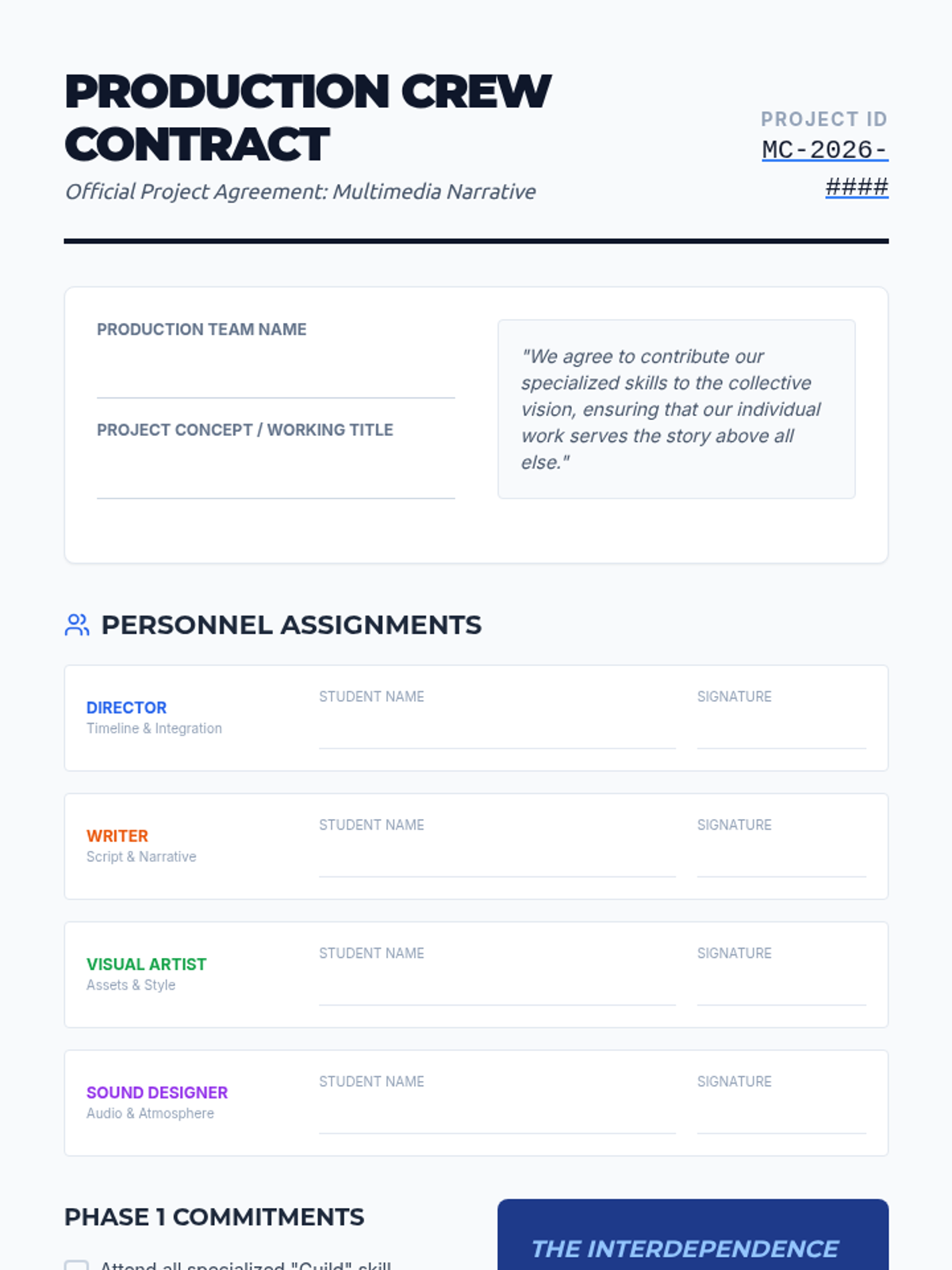
This sequence explores collaboration through the lens of specialized roles within a multimedia project. Students transition from generalists to specialists, learning how interdependence and trust between a Writer, Visual Artist, Sound Designer, and Director are essential for creating a cohesive digital narrative.
Students explore the ethical and creative possibilities of photo manipulation, learning professional workflows in raster editing to create a surrealist composite. The sequence covers digital citizenship, non-destructive editing, perspective matching, and color grading.
A comprehensive graphic design sequence for 8th graders focusing on vector illustration and typographic identity. Students progress from technical pen tool skills to psychological design principles, culminating in the creation of a professional-grade personal logo.
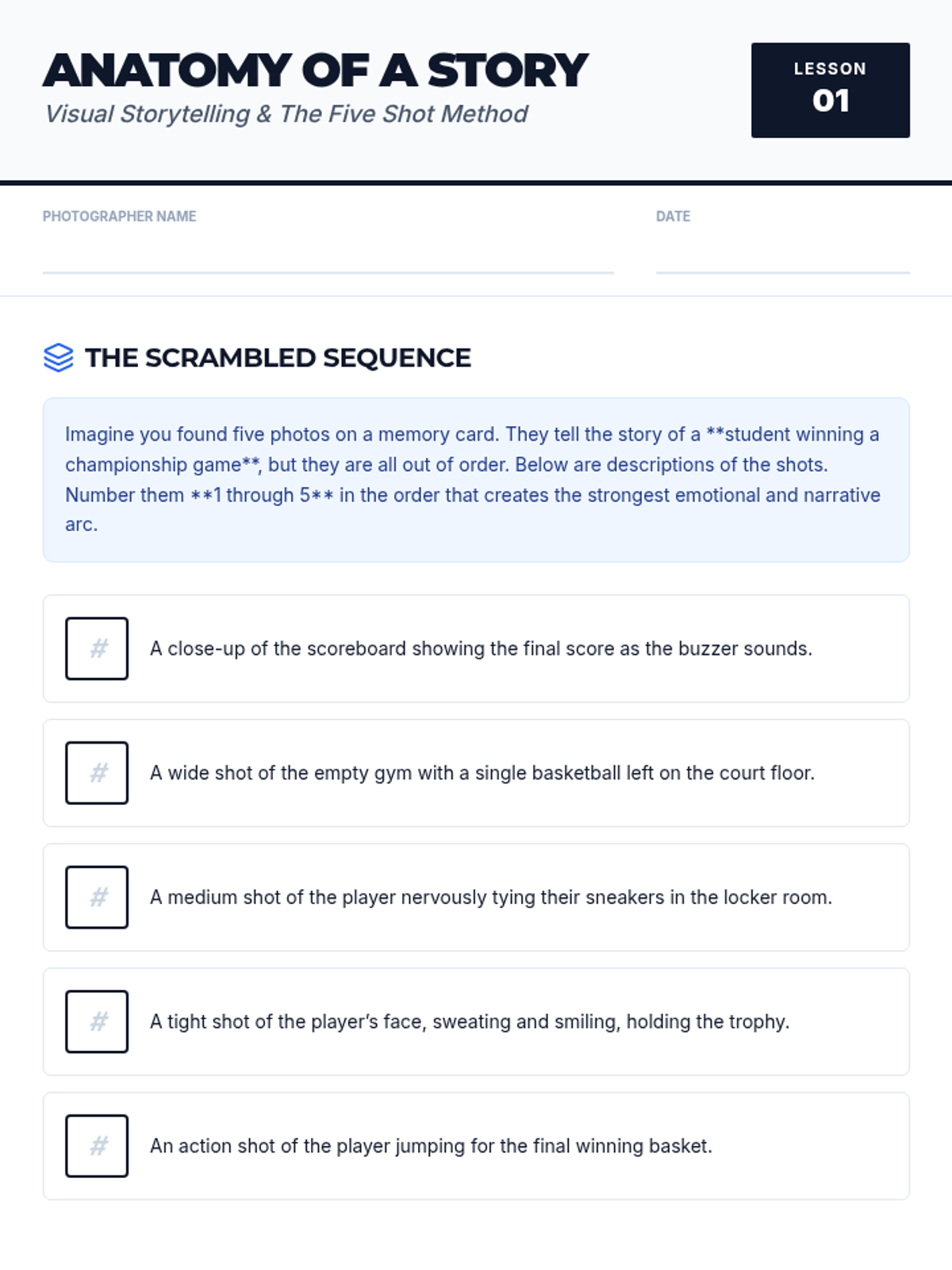
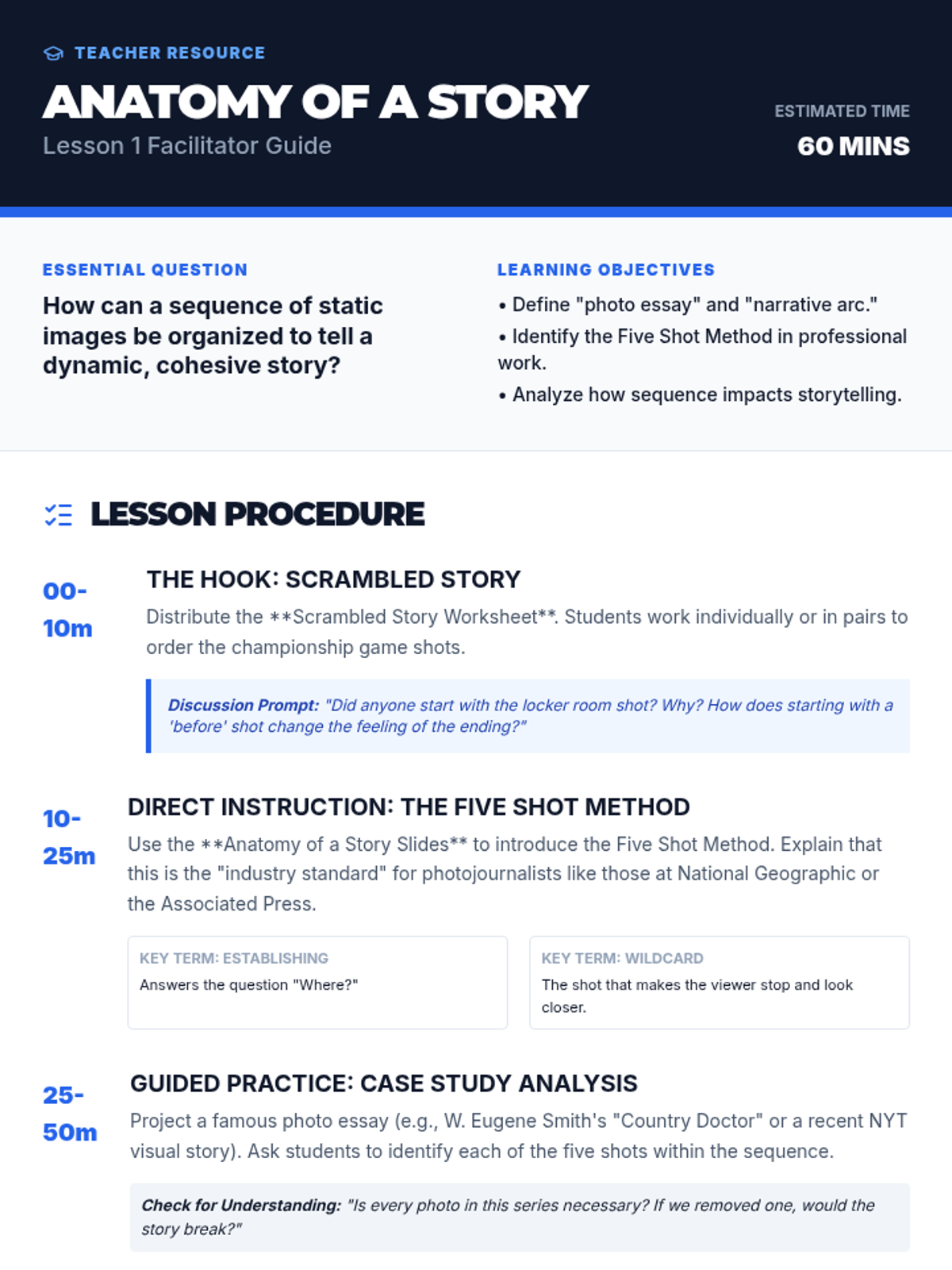
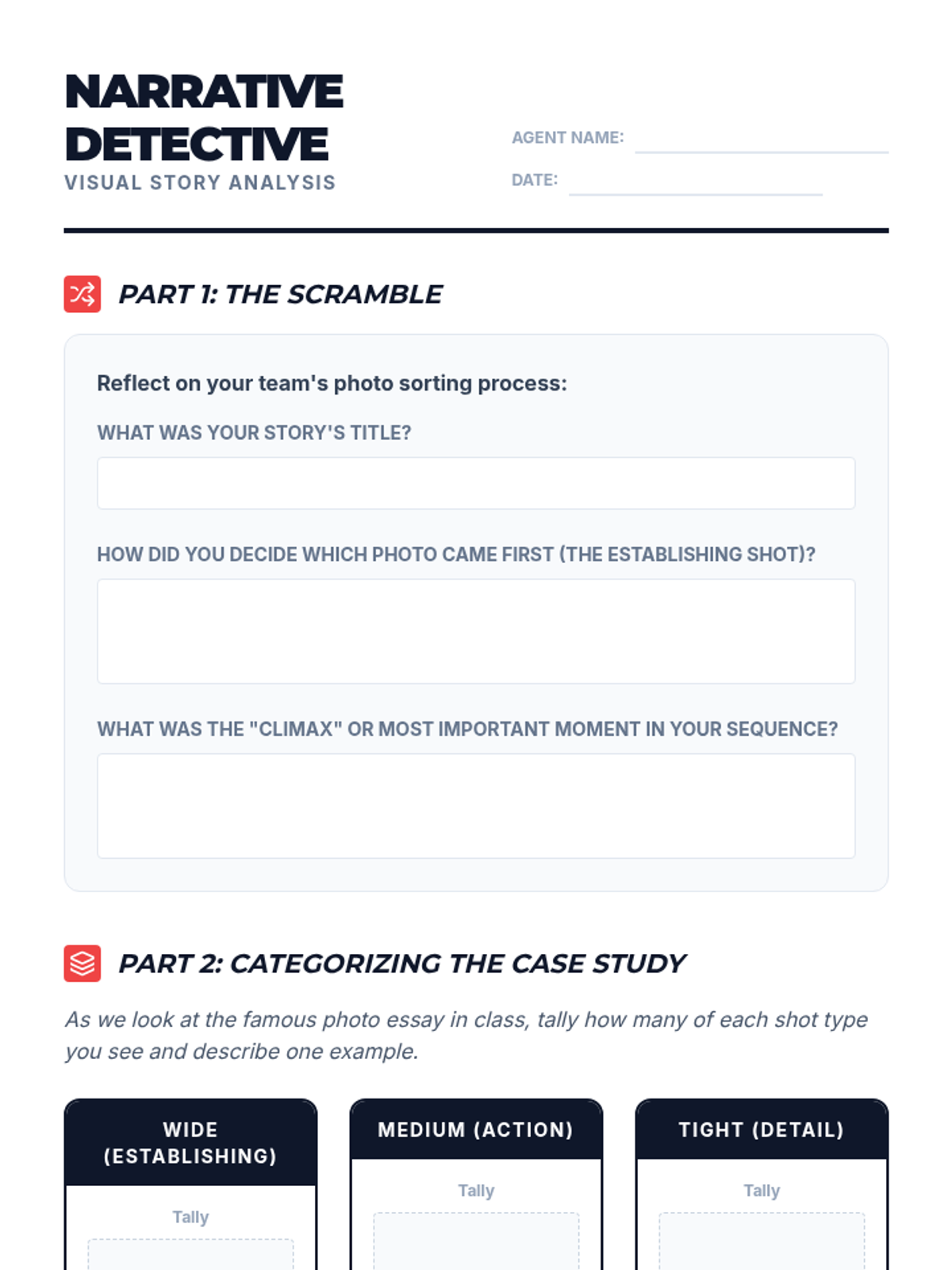
A comprehensive unit for 8th-grade students on the art of the photo essay. Students move from understanding single images to constructing complex visual narratives using shot variety, sequencing, and journalistic ethics.
A project-based photography sequence where 6th-grade students learn to transition from single shots to cohesive visual narratives. They master shot types, storyboard their ideas, capture decisive moments, and curate their work into a professional-style photo essay.
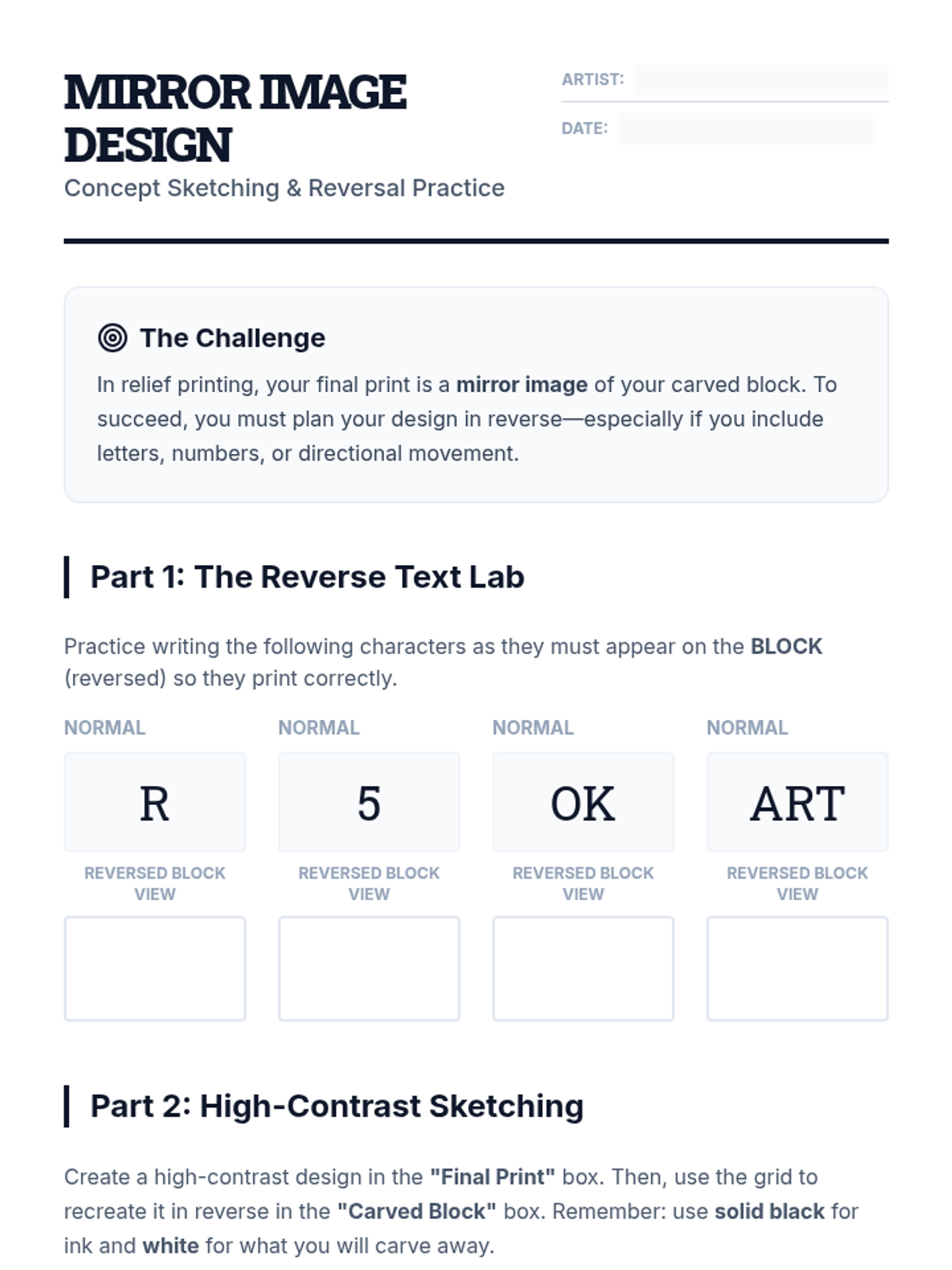
A comprehensive 8th-grade sequence on relief printmaking, covering design reversal, carving safety, ink application, and the reduction printing process. Students move from basic concepts to producing a professional multi-color edition.
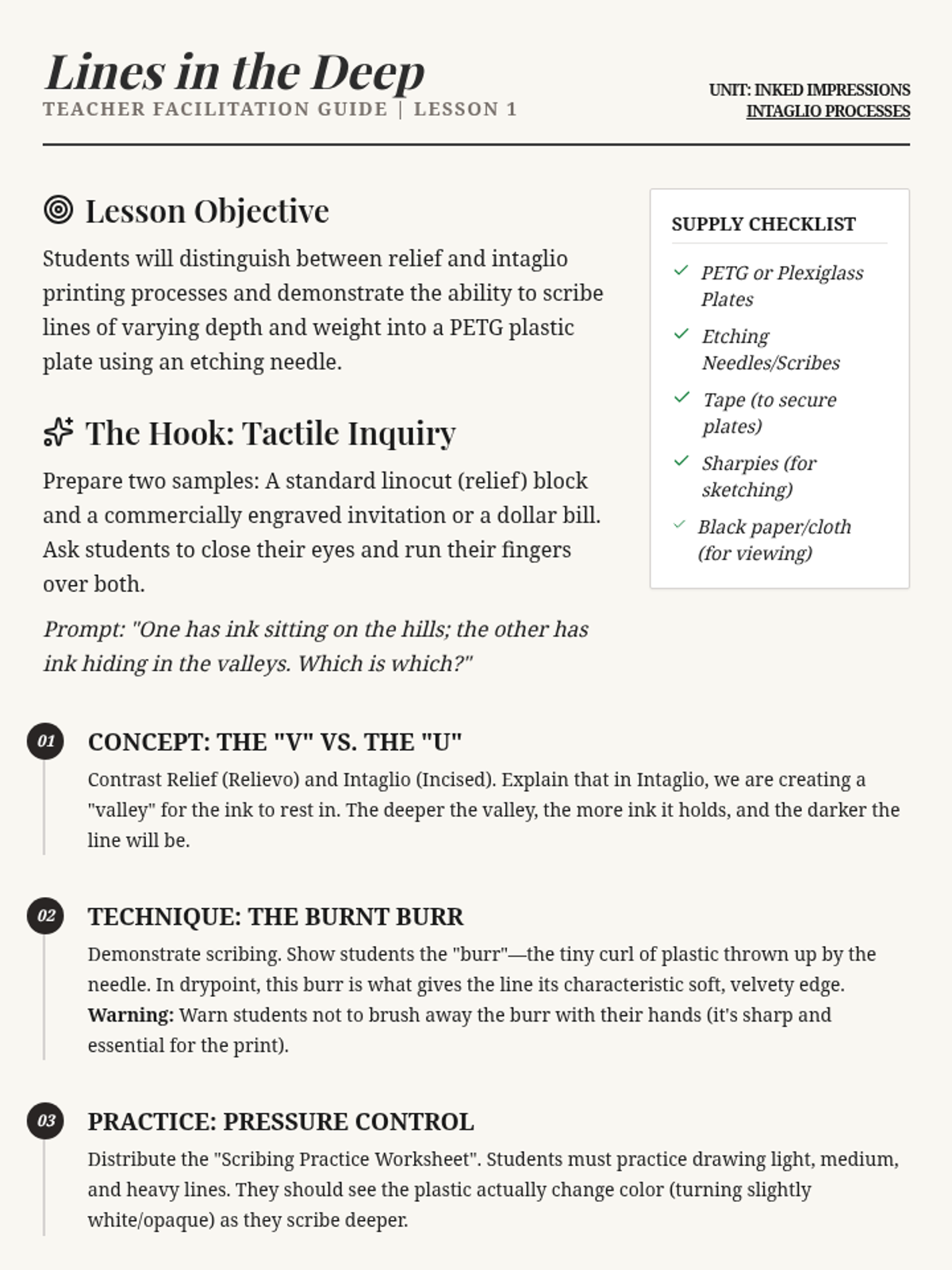
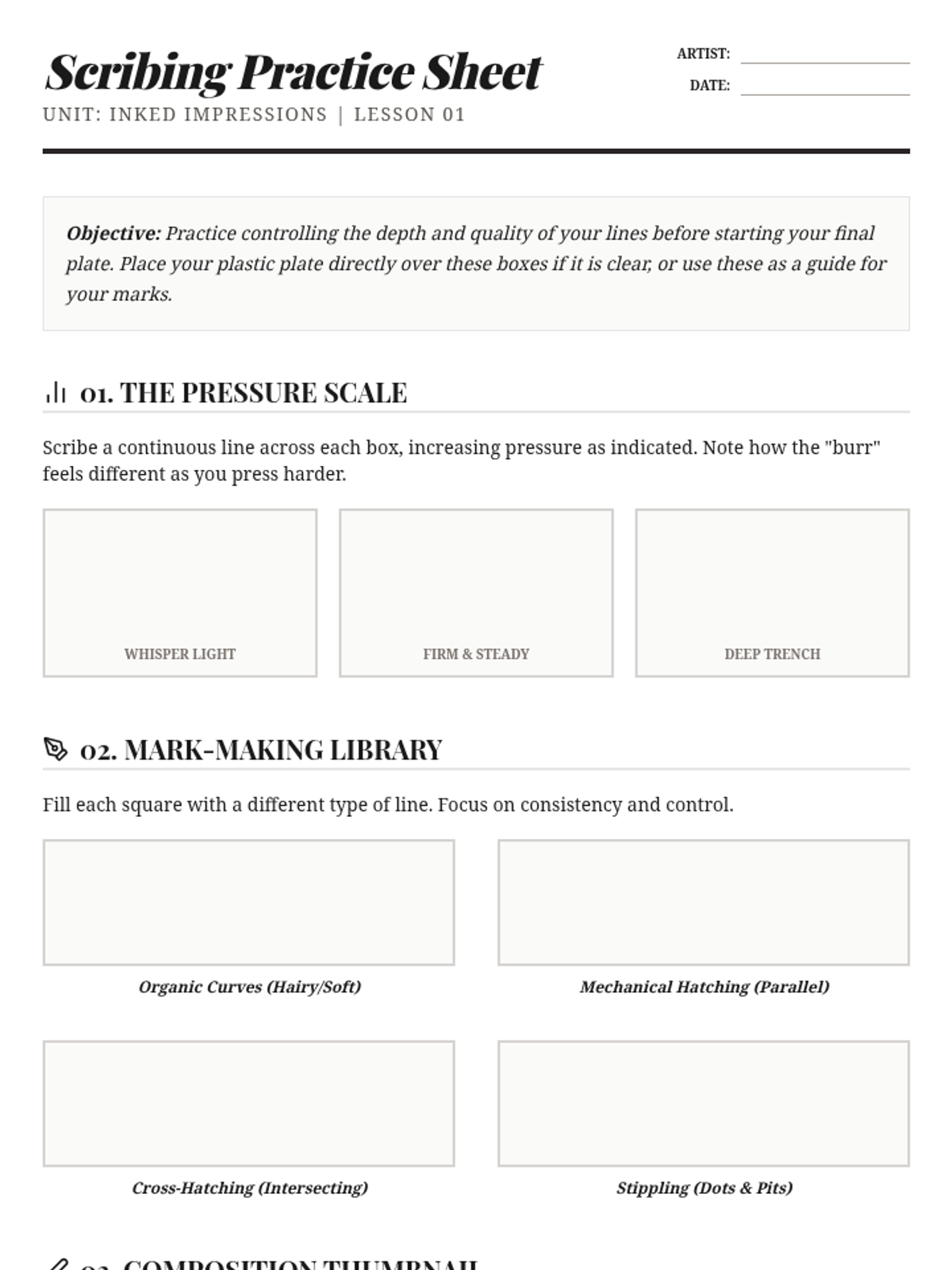
An introduction to the intaglio printmaking family through drypoint etching on plastic plates. Students explore line weight, tonal variation, wiping techniques, and mixed media additions like chine-collé.
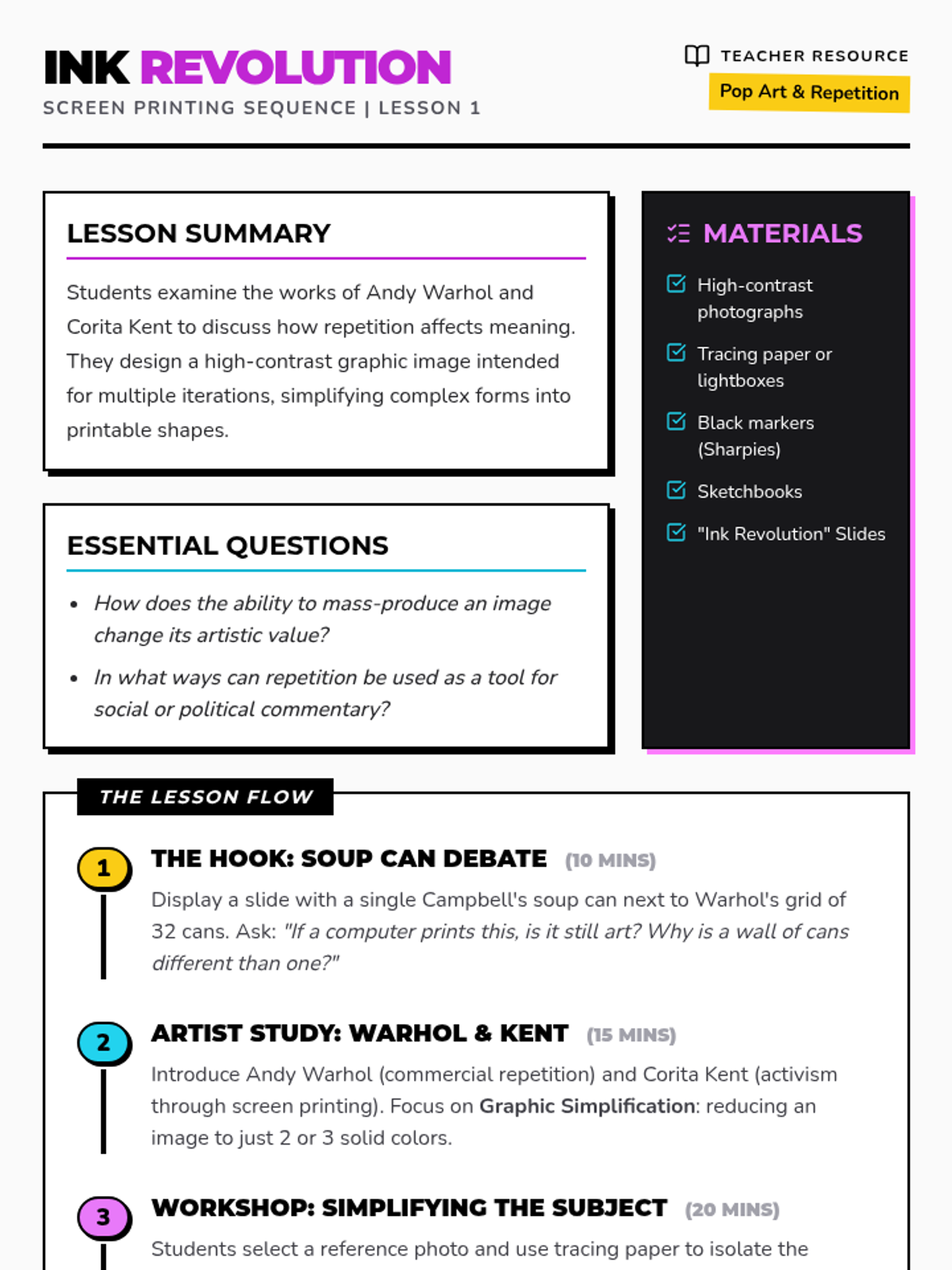
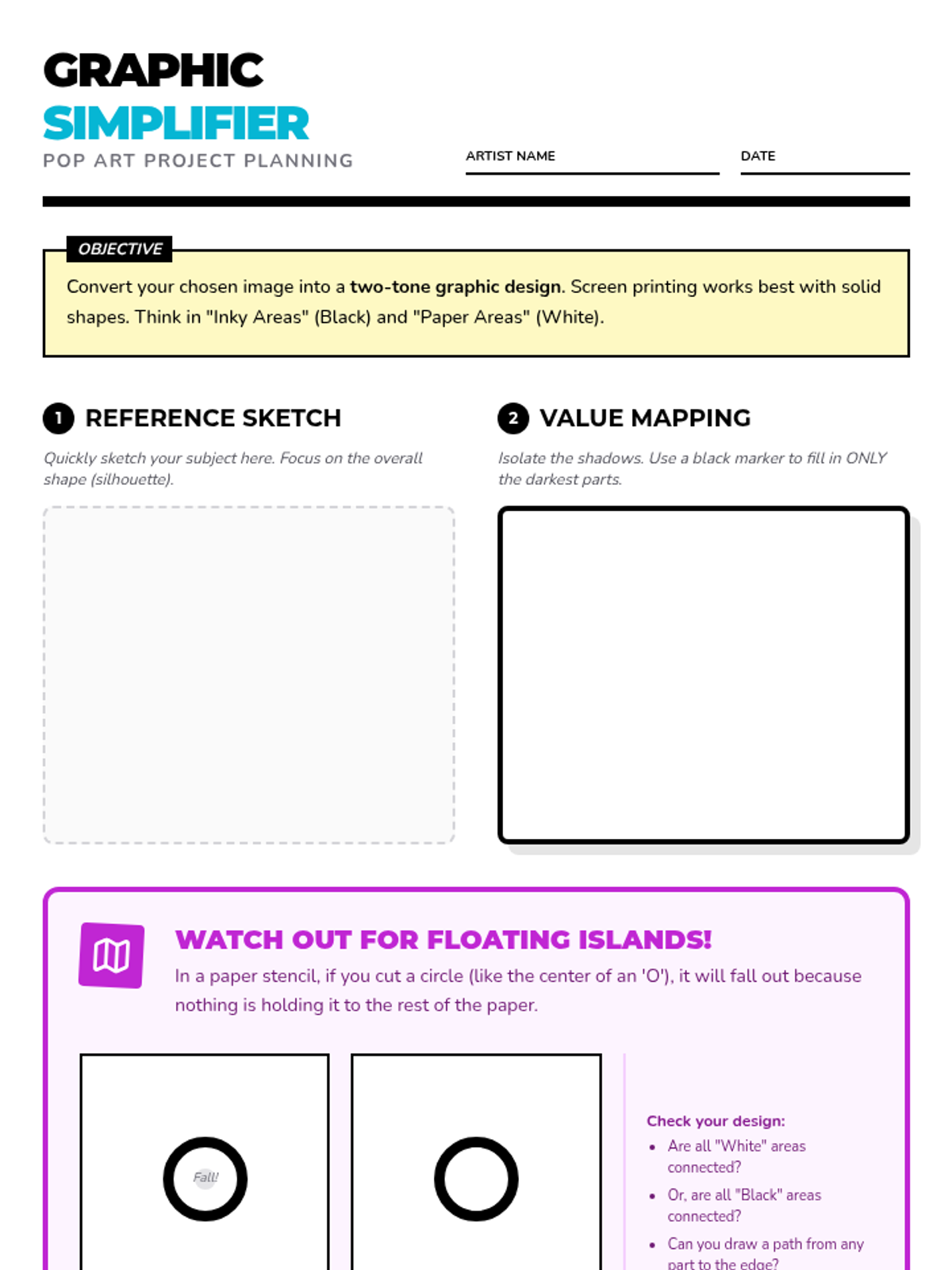
An 8th-grade unit exploring the intersection of Pop Art and screen printing. Students learn technical printmaking skills while investigating the social impact of mass-produced imagery.
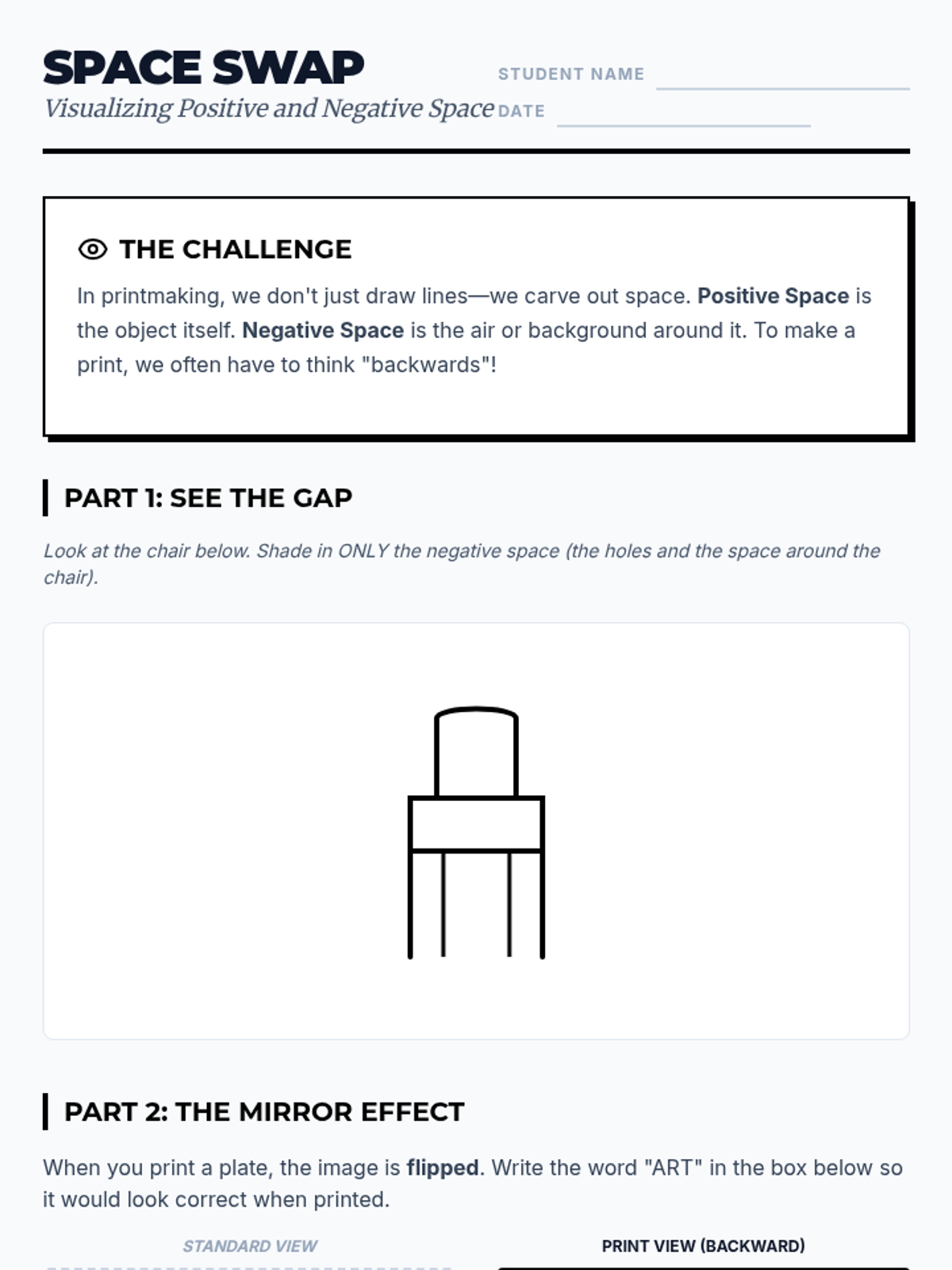
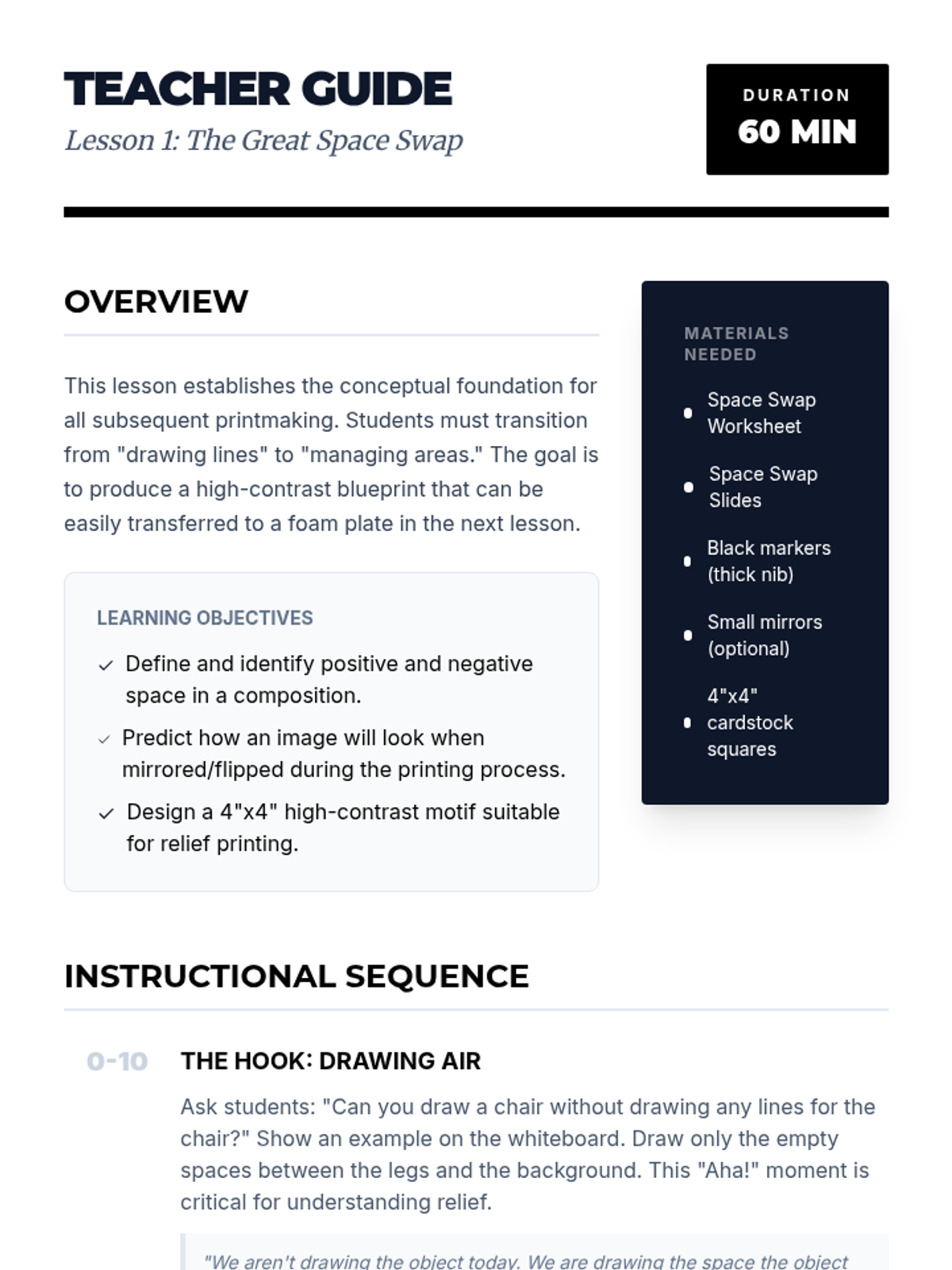
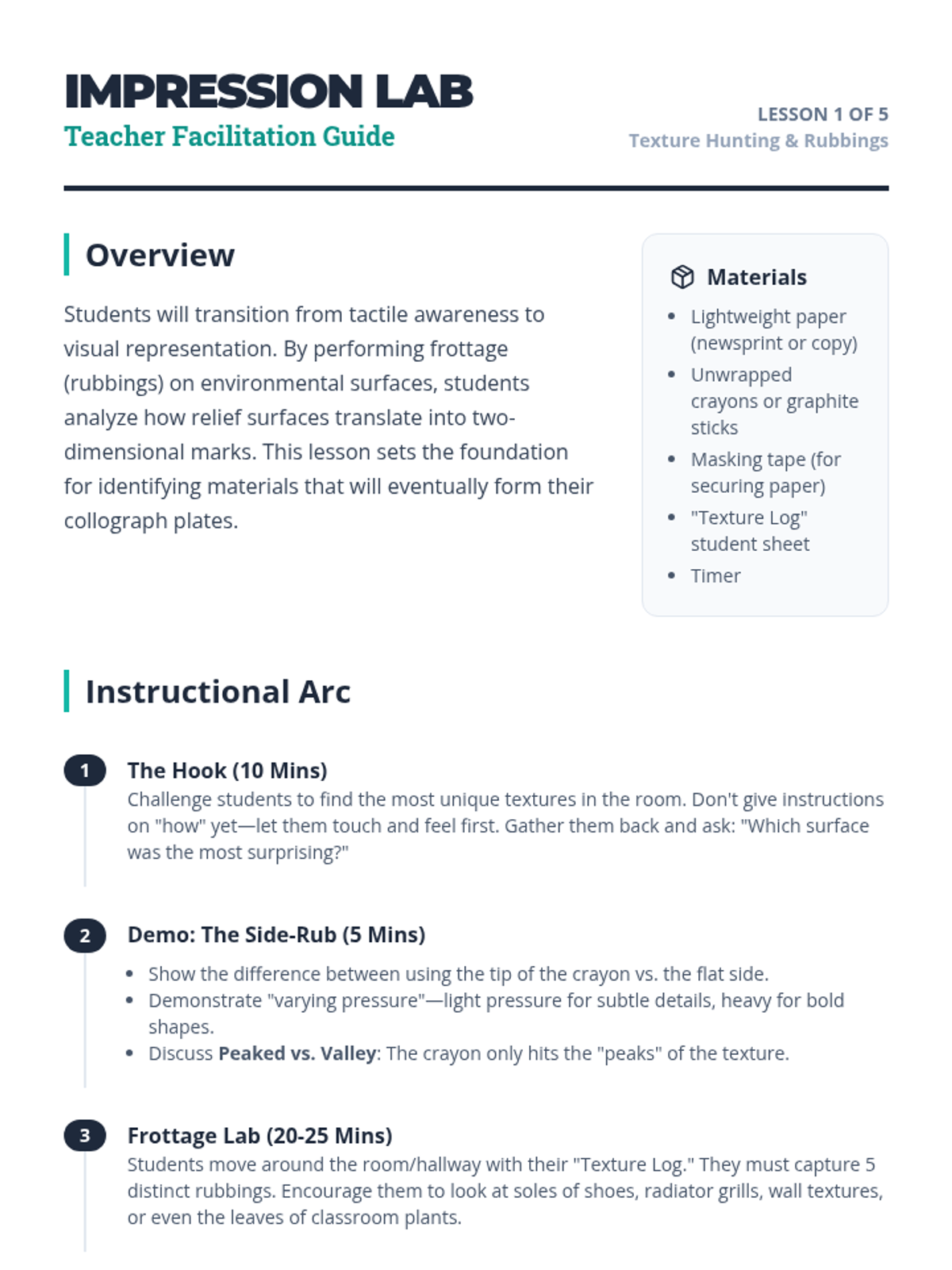
Students explore relief printing using soft foam plates, focusing on positive and negative space, inking techniques, and pattern creation. The sequence culminates in a professional-style edition of prints and a gallery walk critique.
A comprehensive introduction to relief printing, focusing on the conceptual and technical skills of linocut design. Students master high-contrast visualization, carving safety, inking techniques, and professional editioning.
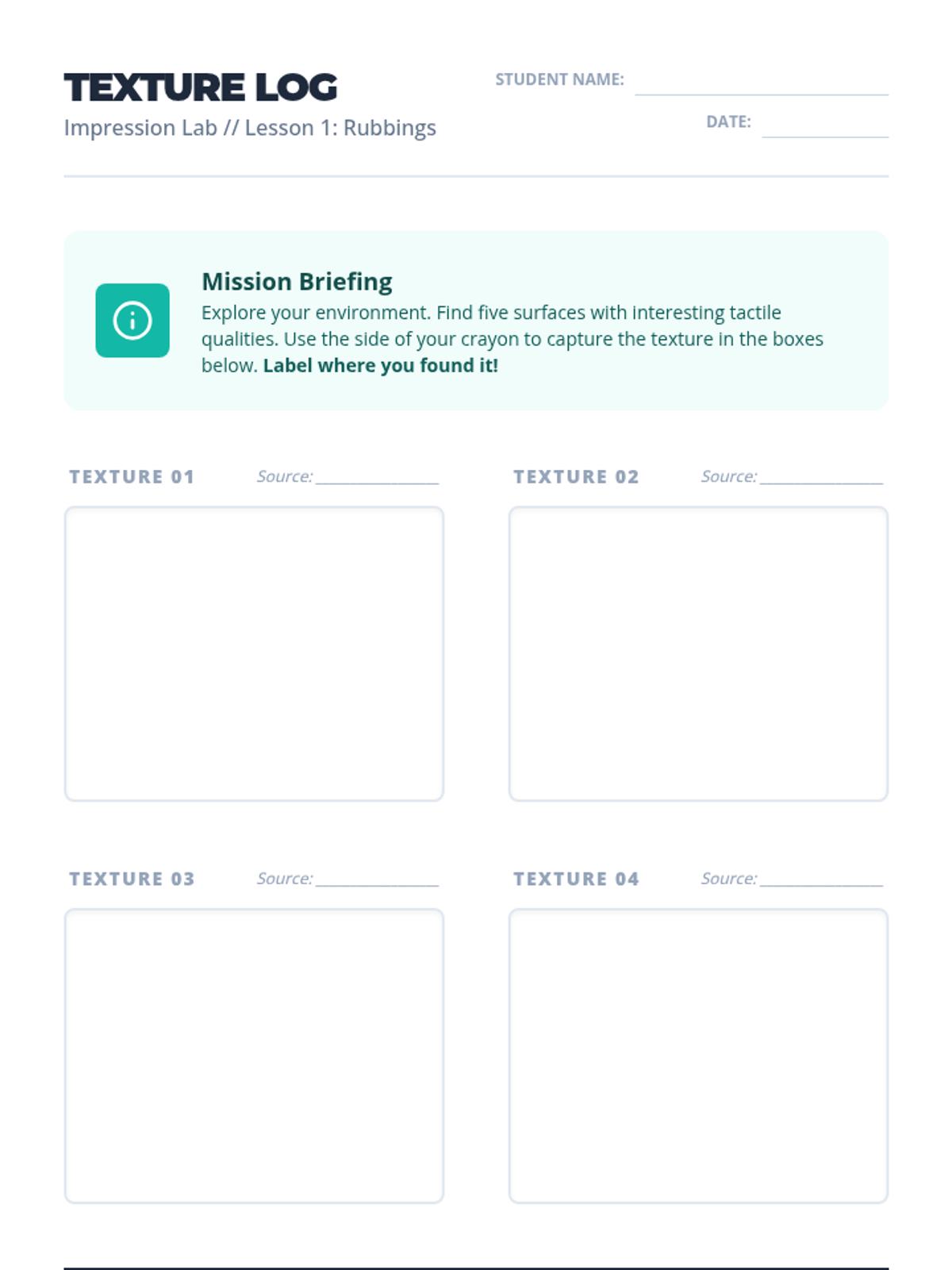
An inquiry-based exploration of monoprinting and collography for 6th-grade students, focusing on the element of chance, tactile textures, and the difference between relief and unique prints.
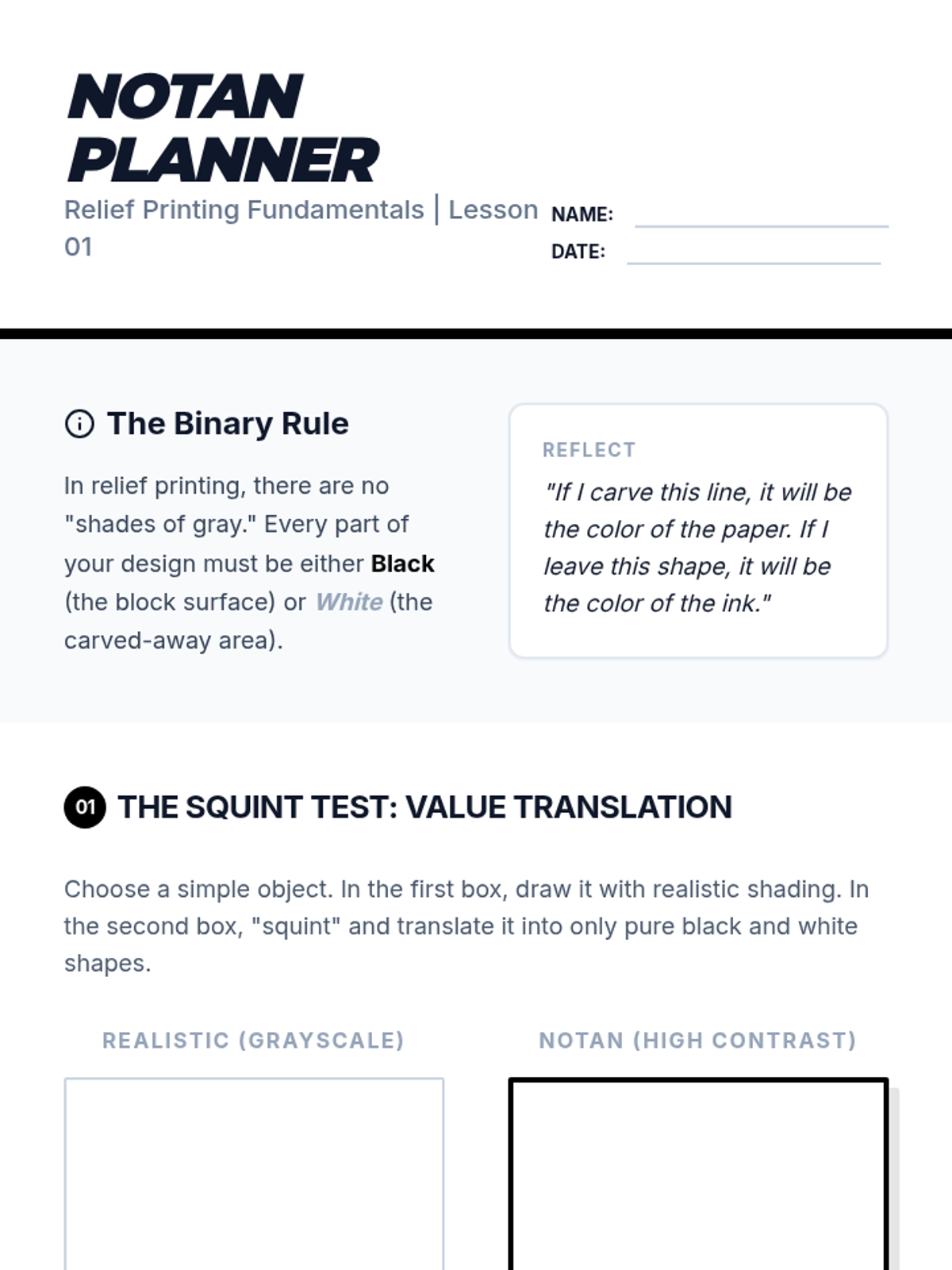
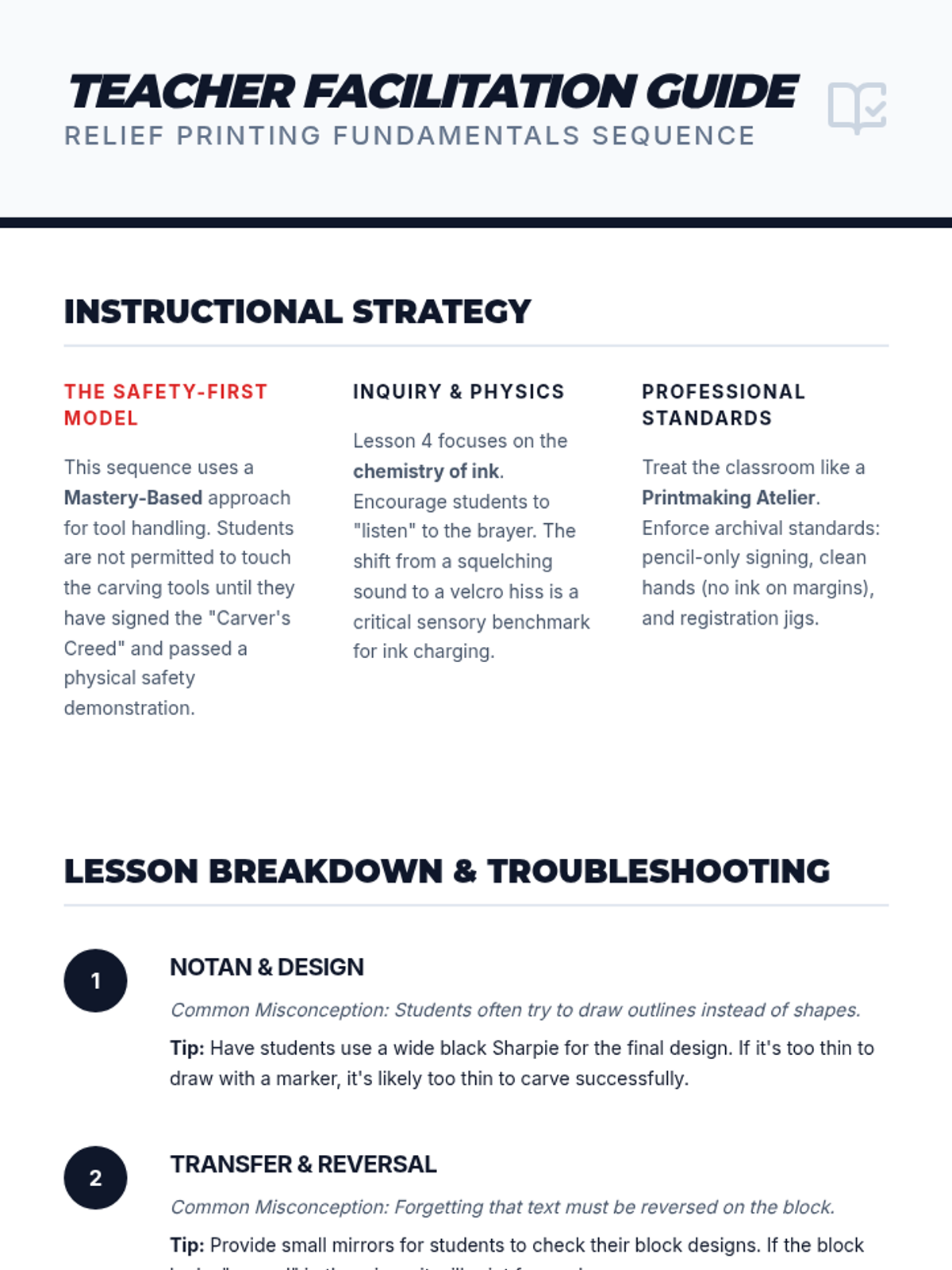
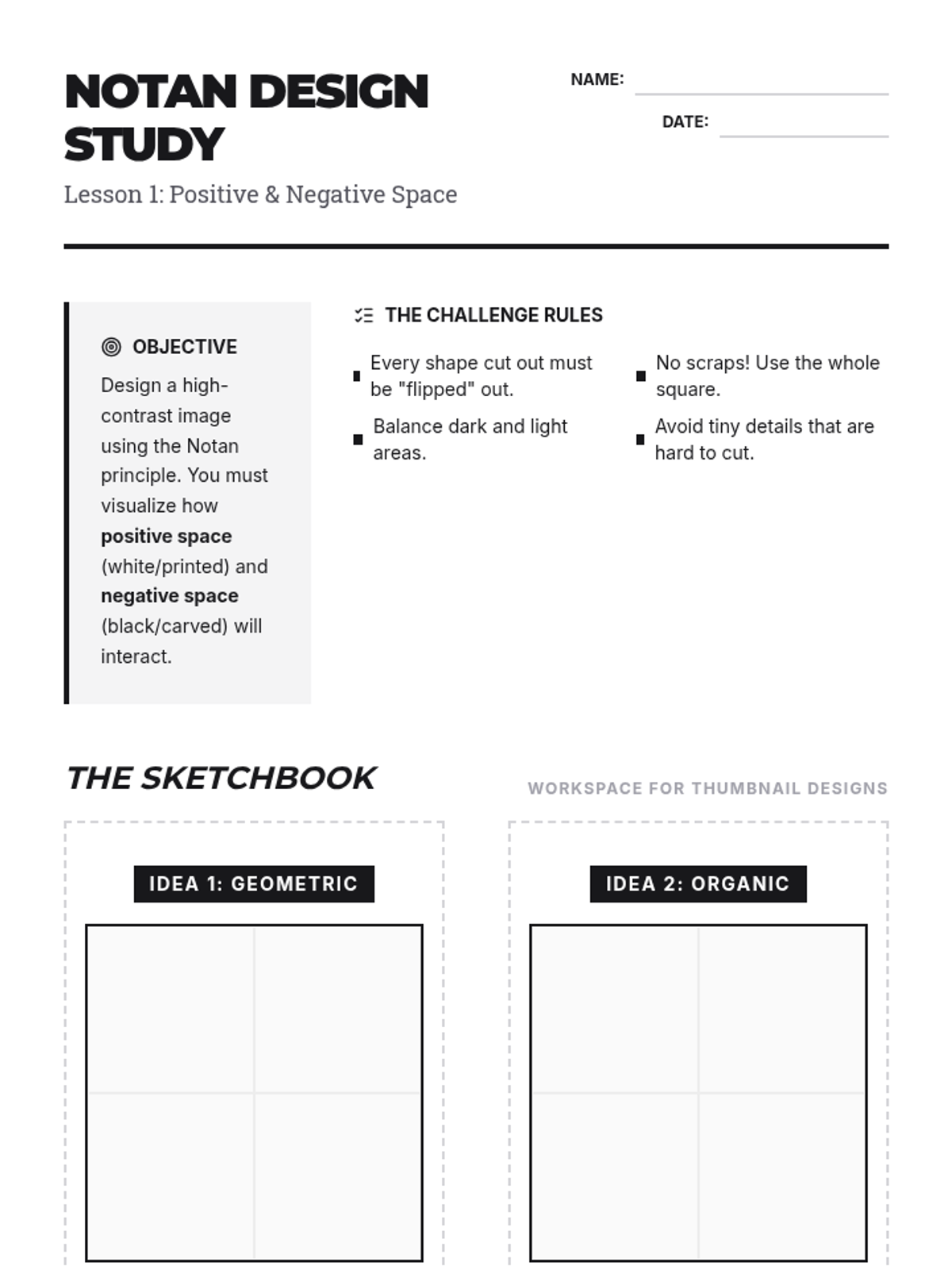
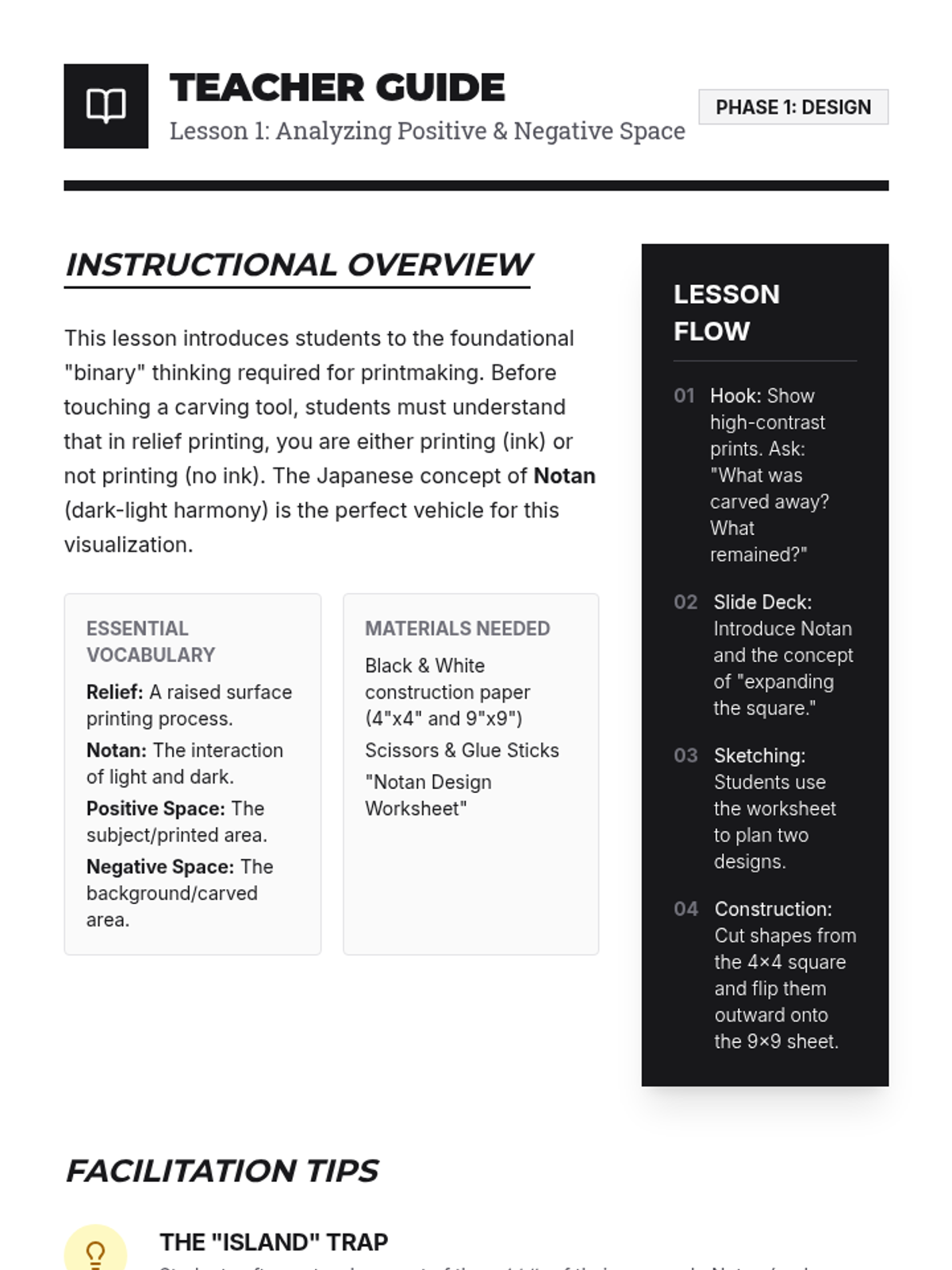
A comprehensive introduction to relief printmaking for 6th-grade students. This sequence covers design principles using Notan, safety protocols for carving, technical inking skills, professional editioning standards, and final gallery presentation.
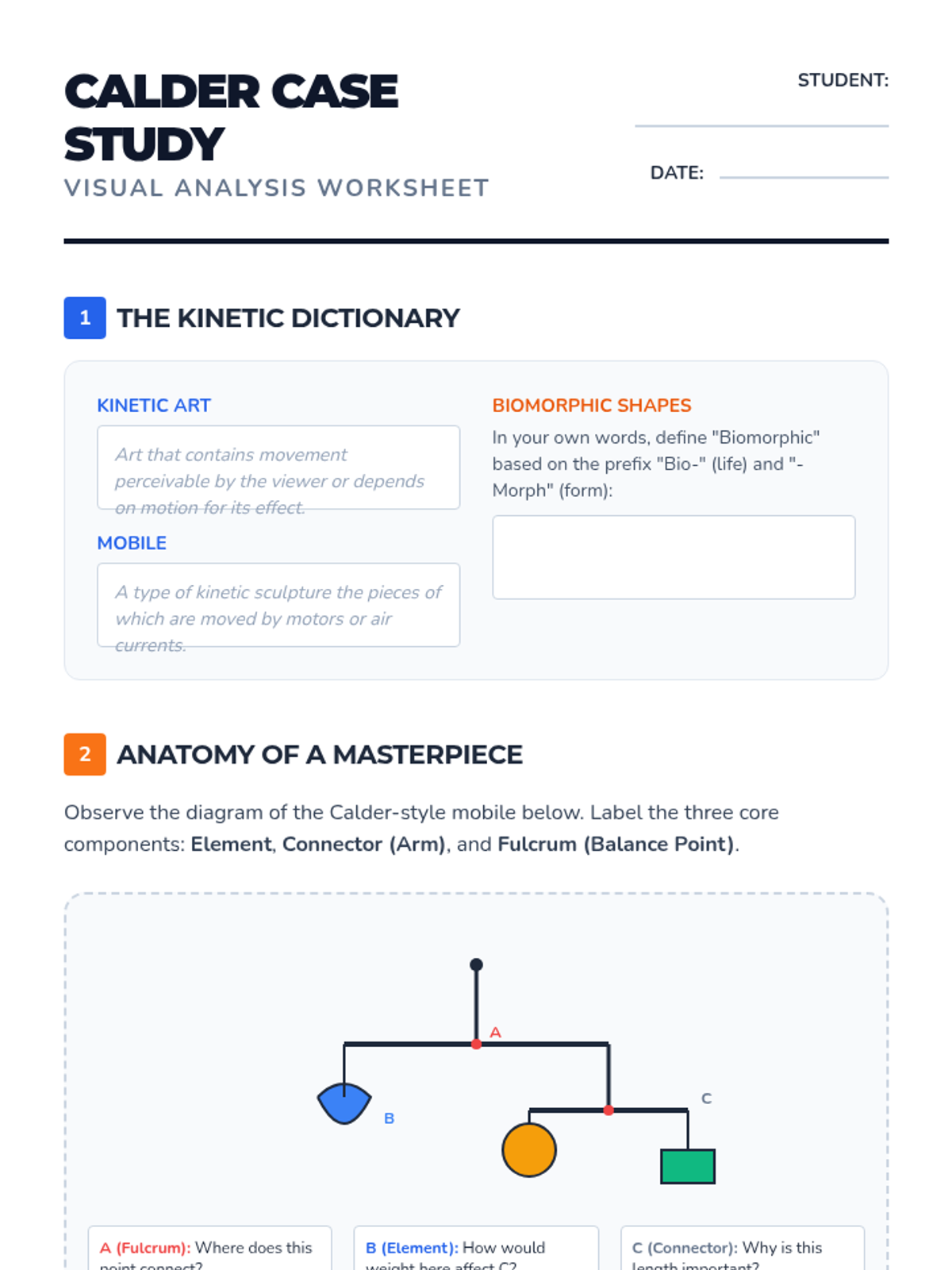
A 5-lesson unit exploring kinetic sculpture through the lens of Alexander Calder's mobiles. Students merge art history with physics principles like balance and center of gravity to create their own hanging sculptures.
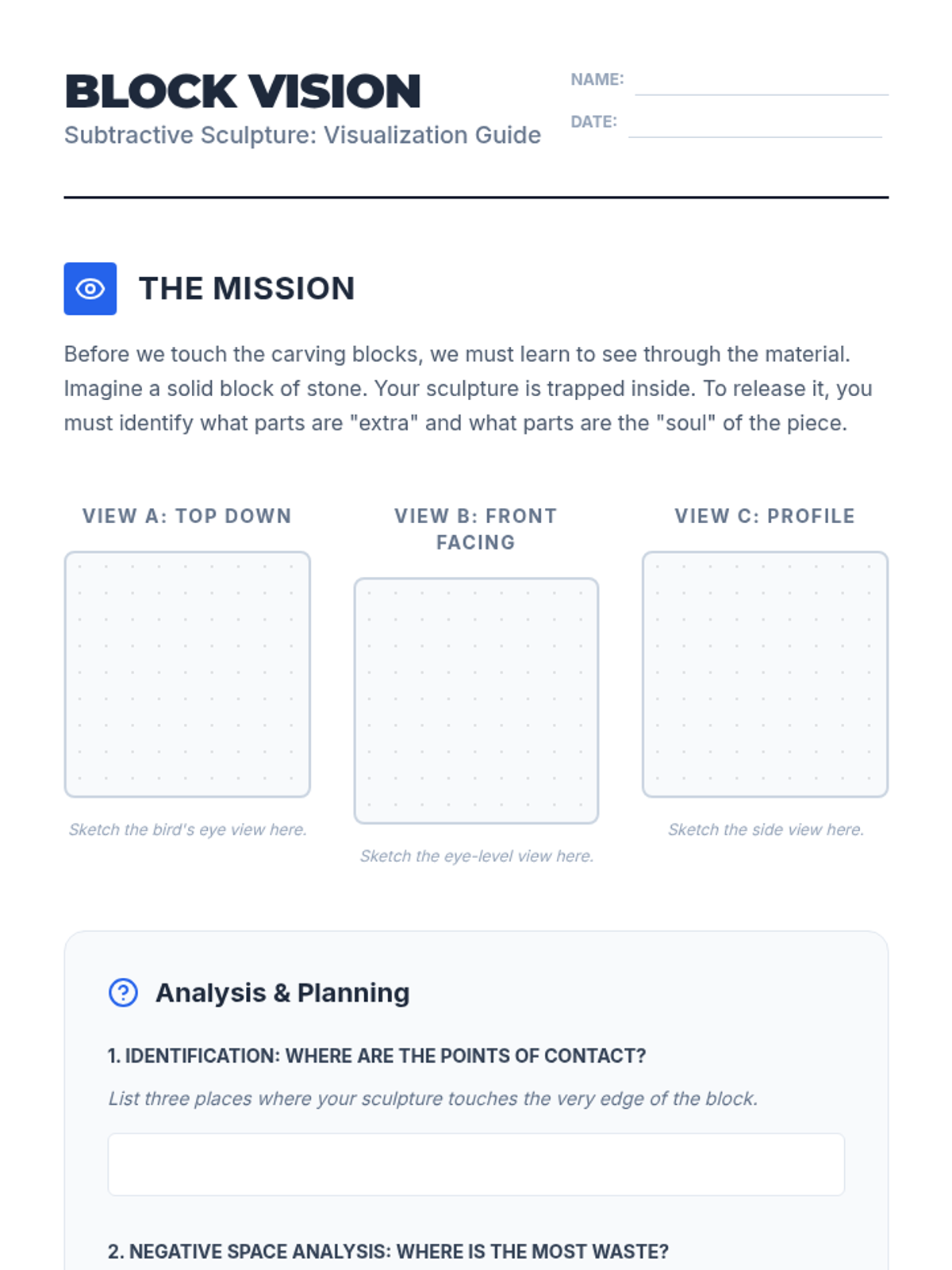
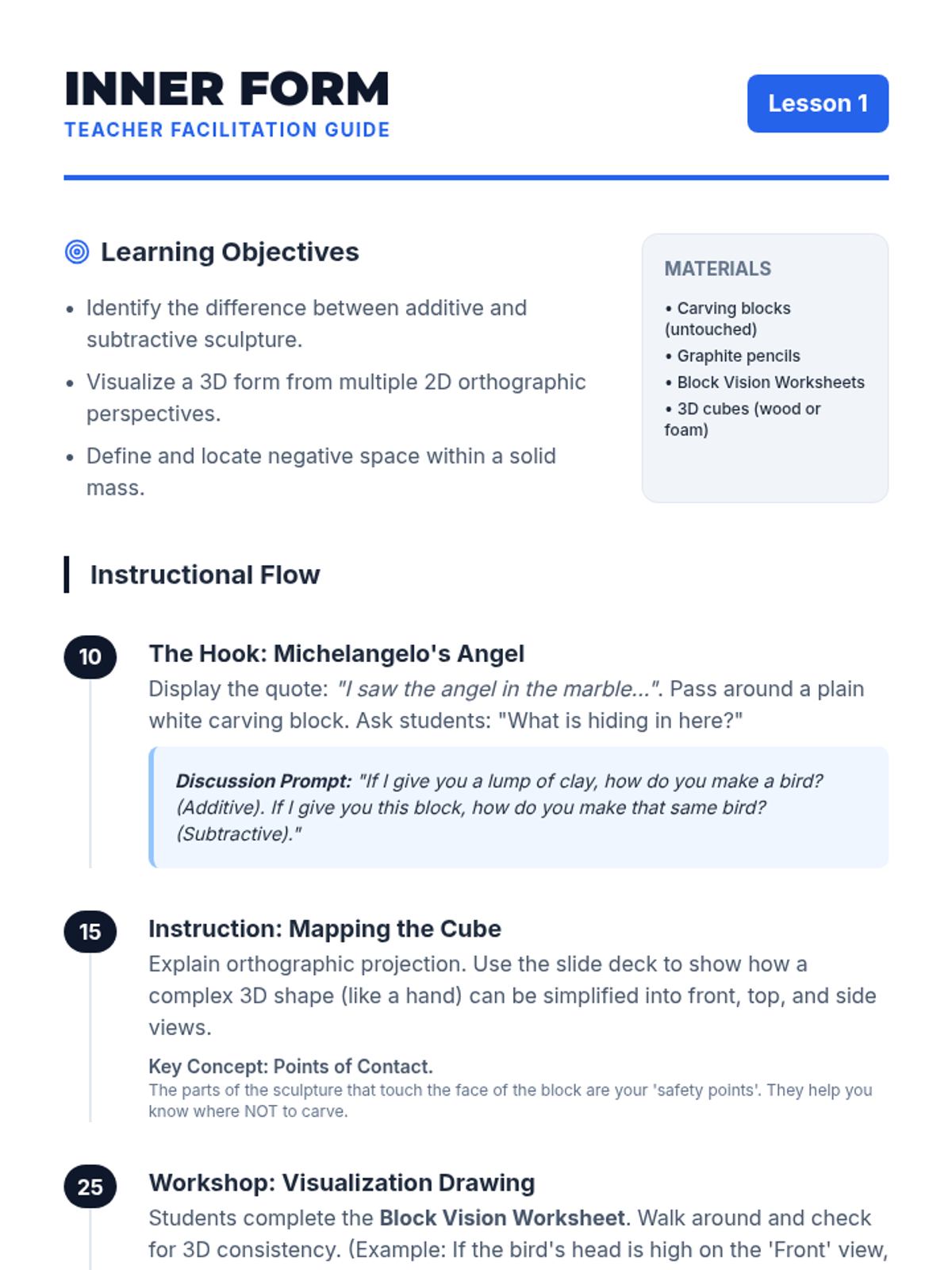
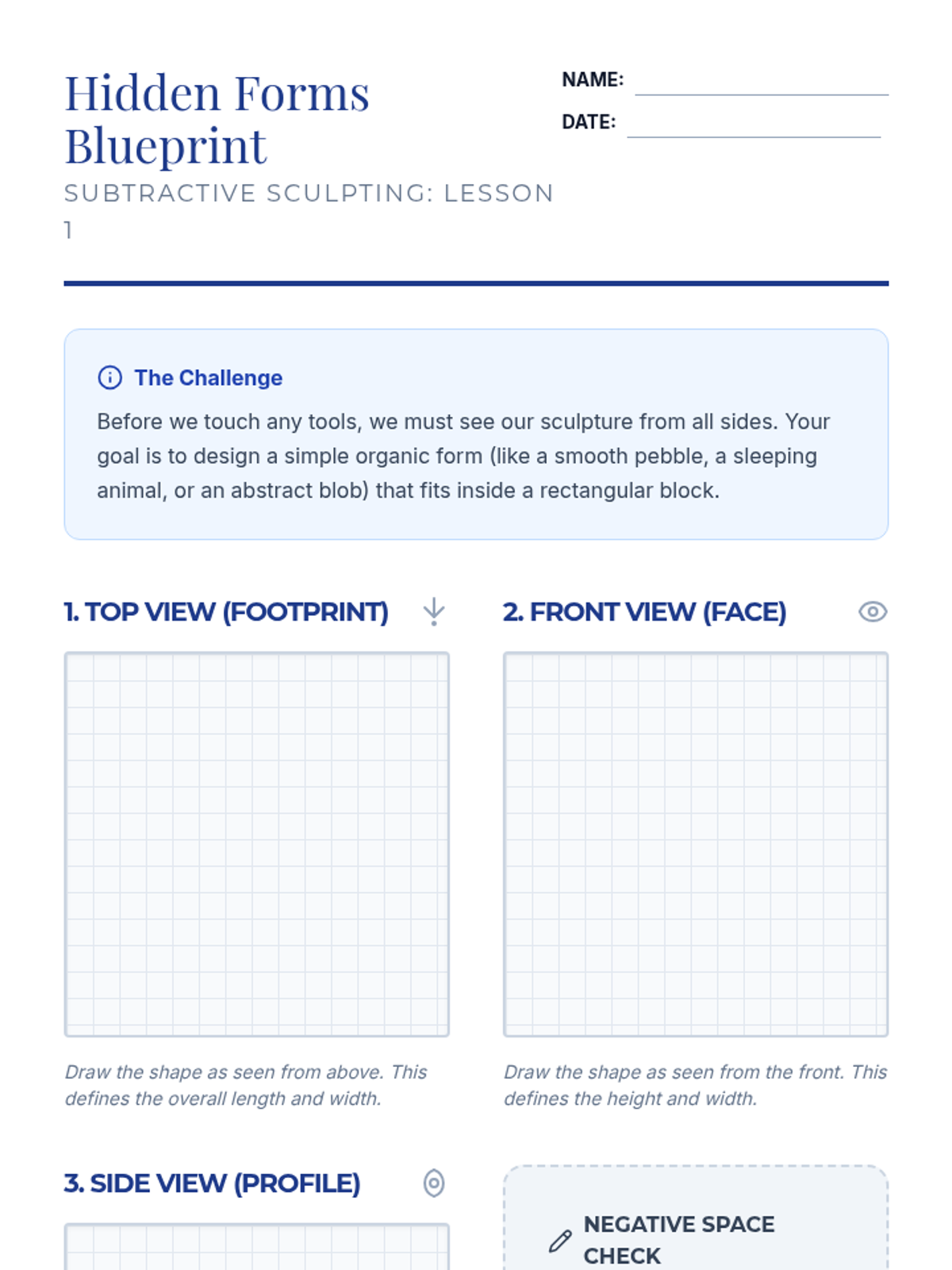
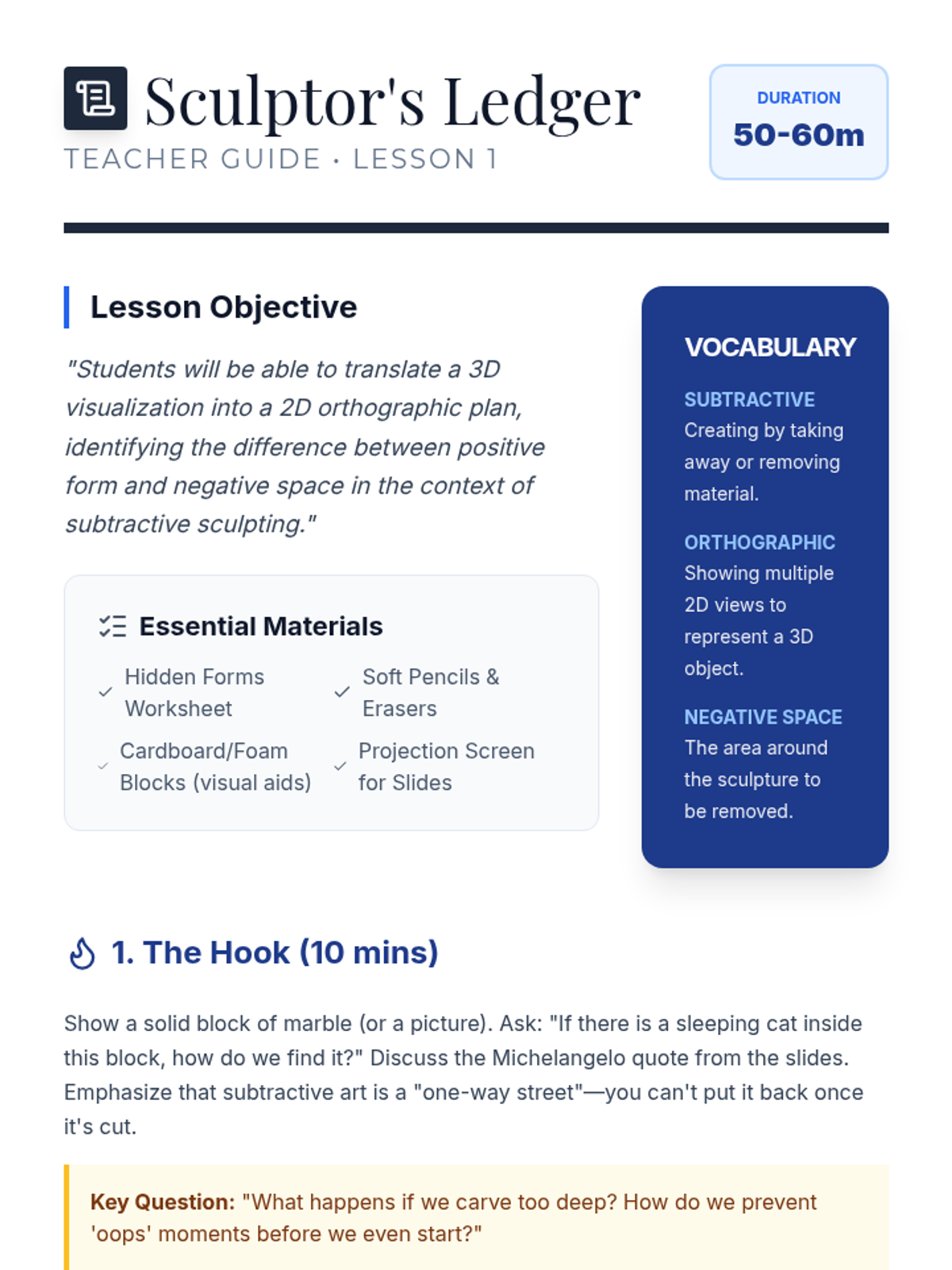
A comprehensive 8th-grade unit on subtractive sculpture, guiding students from visualization and planning with maquettes to rough carving, refining details, and final polishing. Students explore the concept of 'liberating' a form from a solid mass using soft carving blocks while mastering tool safety and spatial reasoning.
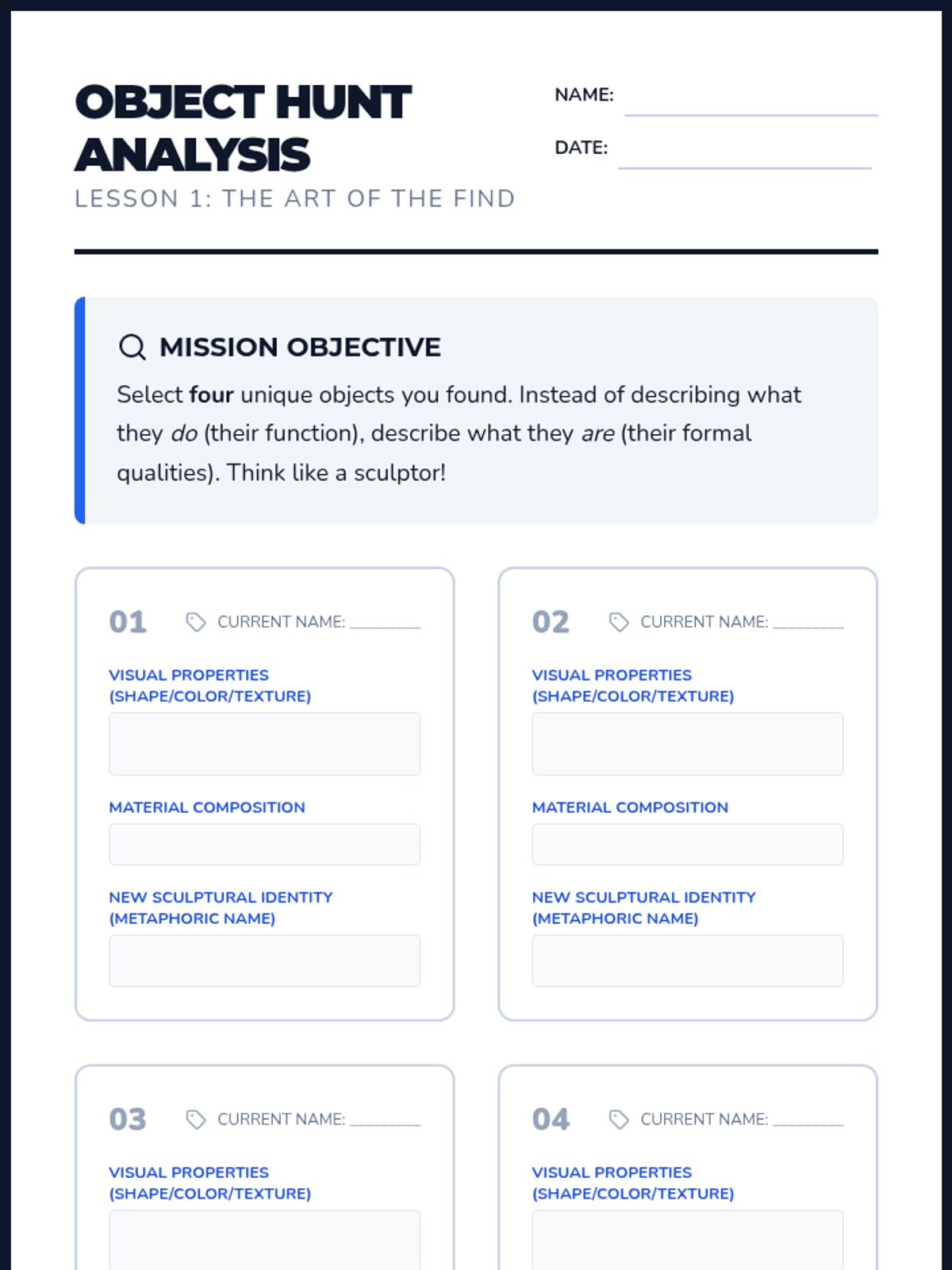
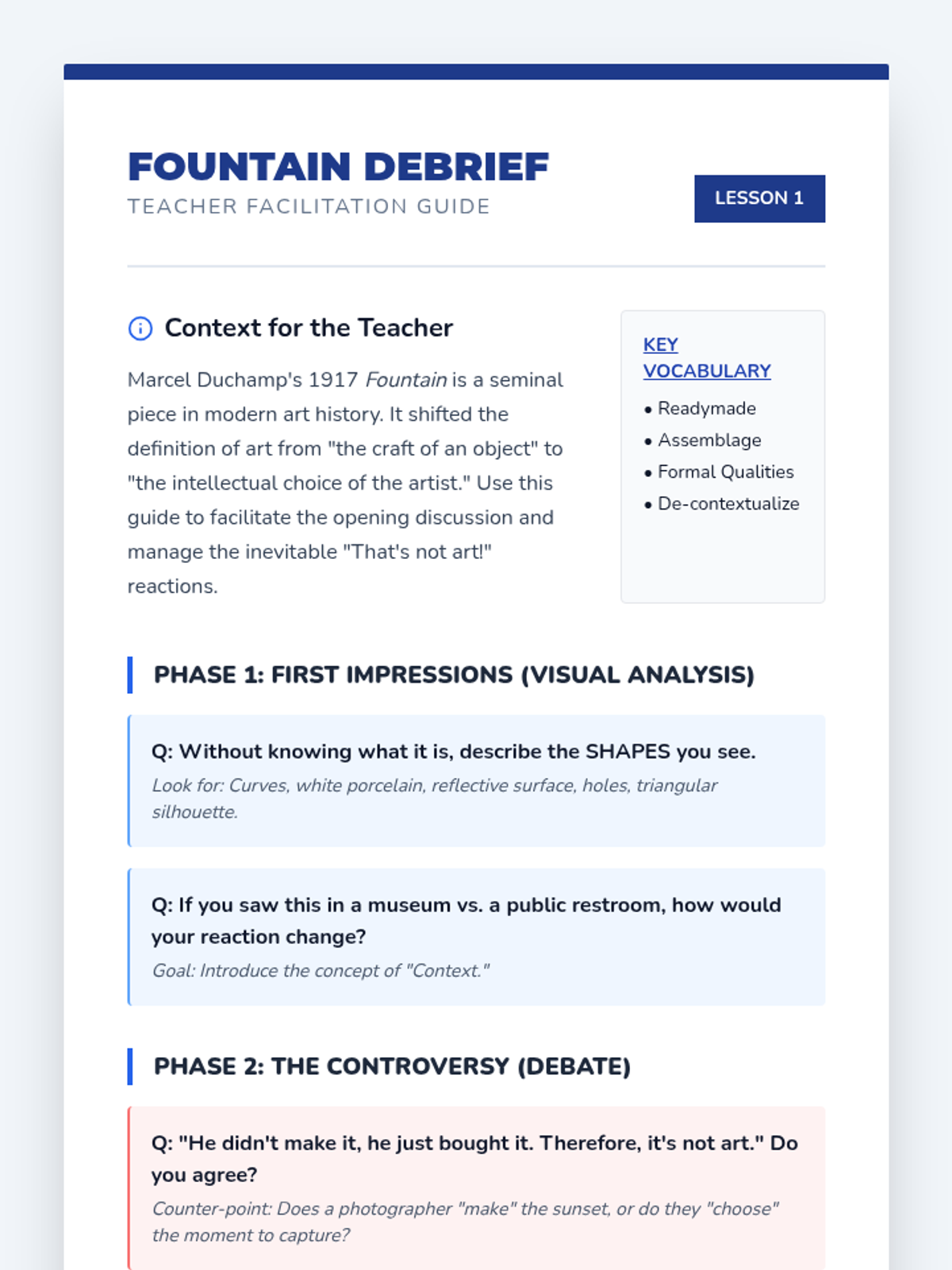
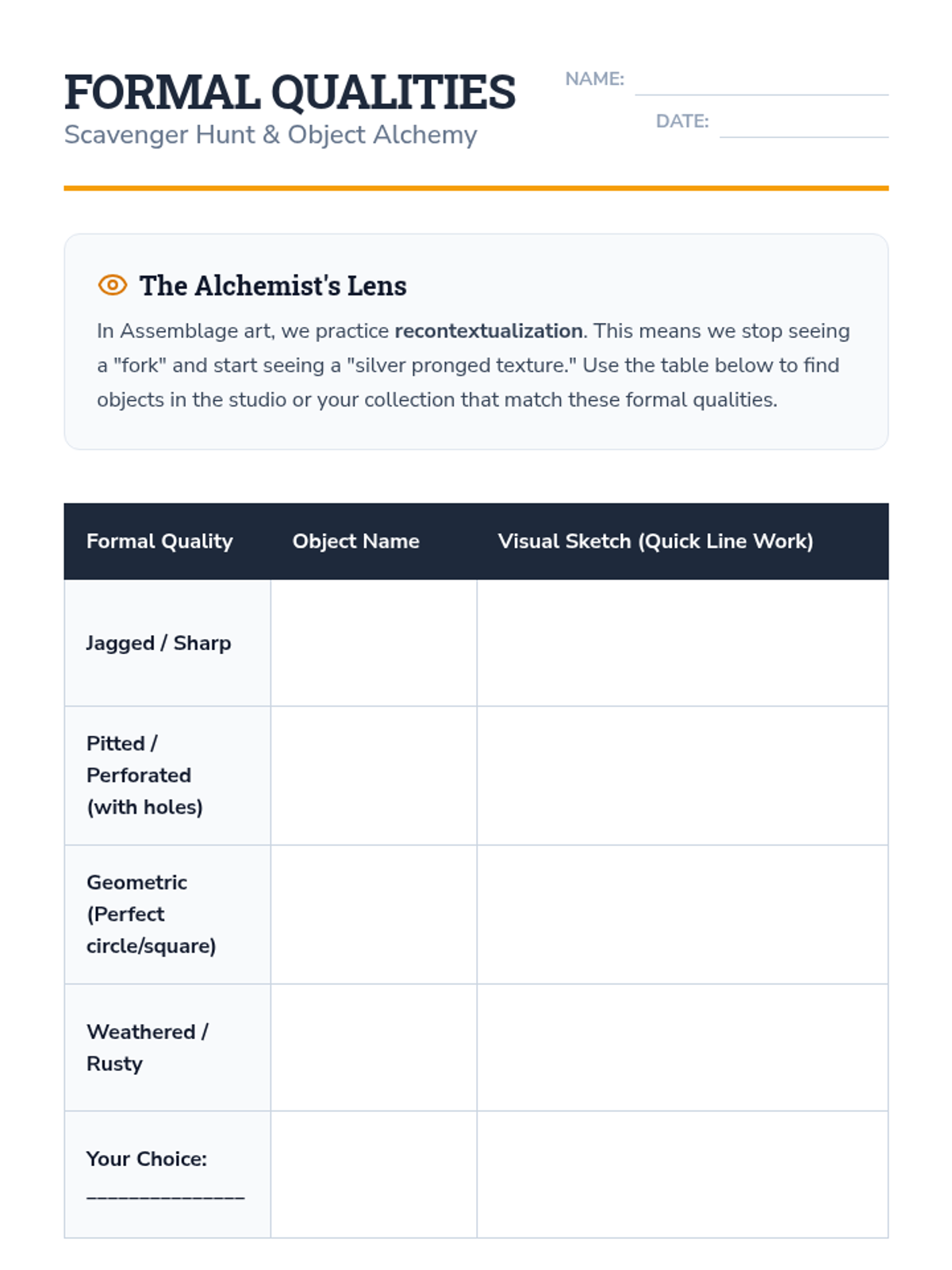
An 8th-grade art sequence focusing on creating sculptures from found objects and recycled materials. Students explore the history of readymades, learn mechanical joinery (cold connections), and apply design principles to create meaningful assemblage art.
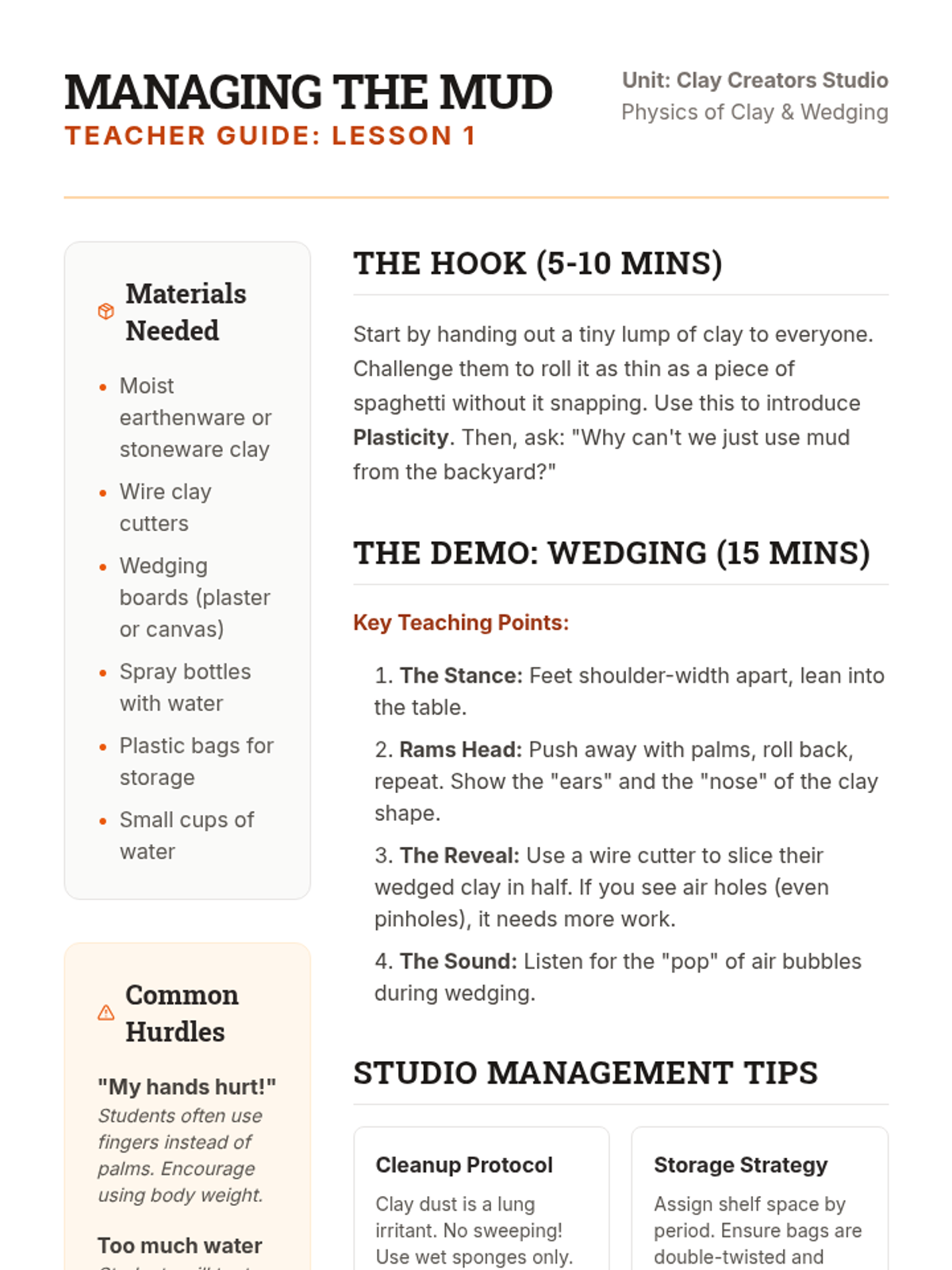
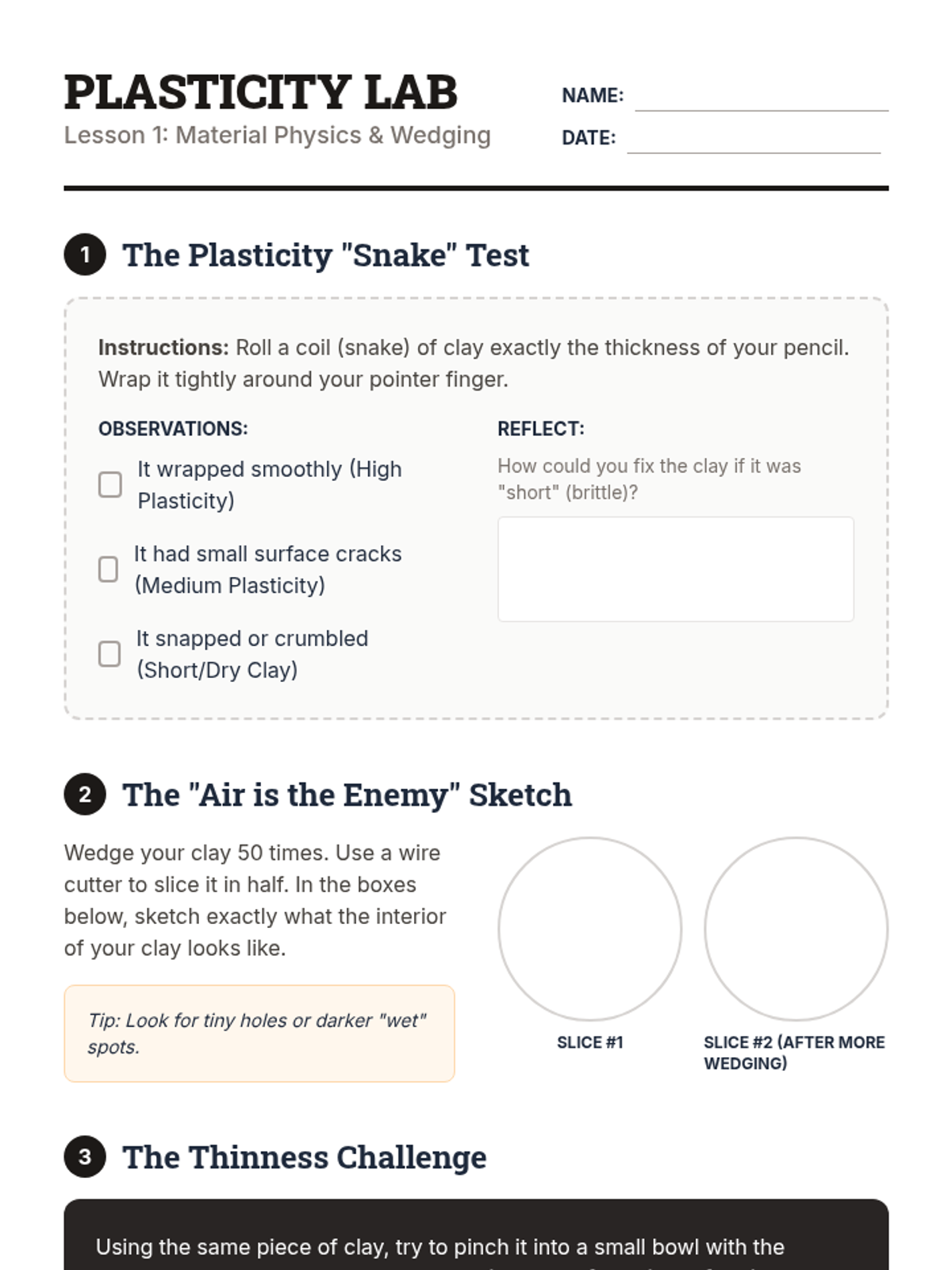
A comprehensive 8th-grade unit on ceramic hand-building, focusing on slab and coil techniques, the physics of clay, and surface texture. Students move from raw clay preparation to finished, glazed pieces while exploring the relationship between form and surface.
A comprehensive unit on Assemblage Art where 6th-grade students explore the transformation of found objects into cohesive sculptural narratives. The sequence covers art history, composition principles, mechanical fastening techniques, and the use of monochromatic finishes to create unified mixed-media works.
A 5-lesson unit on subtractive sculpting where students learn to 'find the form' within a solid block. They cover visualization, safety, roughing out, refining curves, and final polishing with a focus on negative space and lighting.
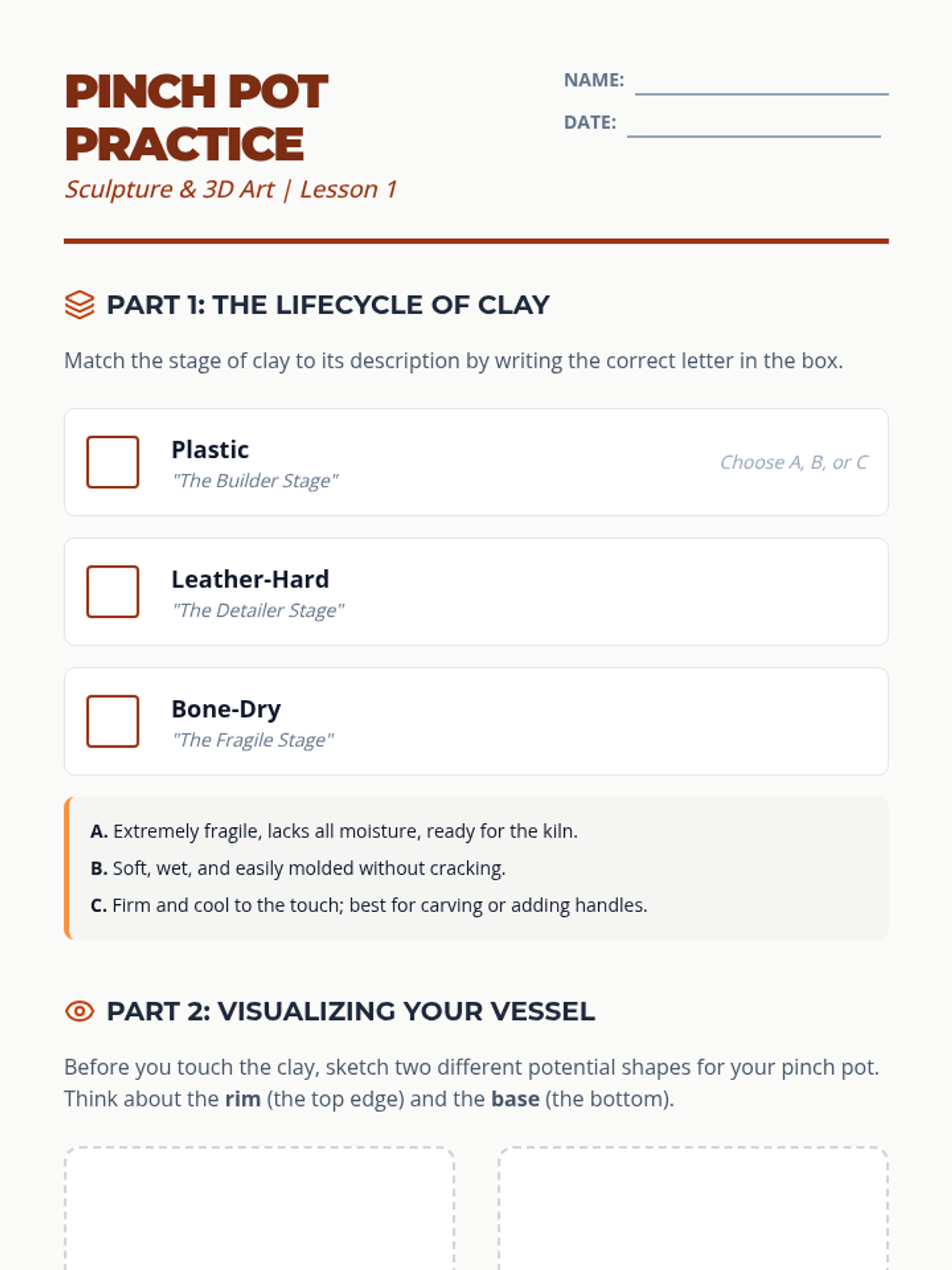
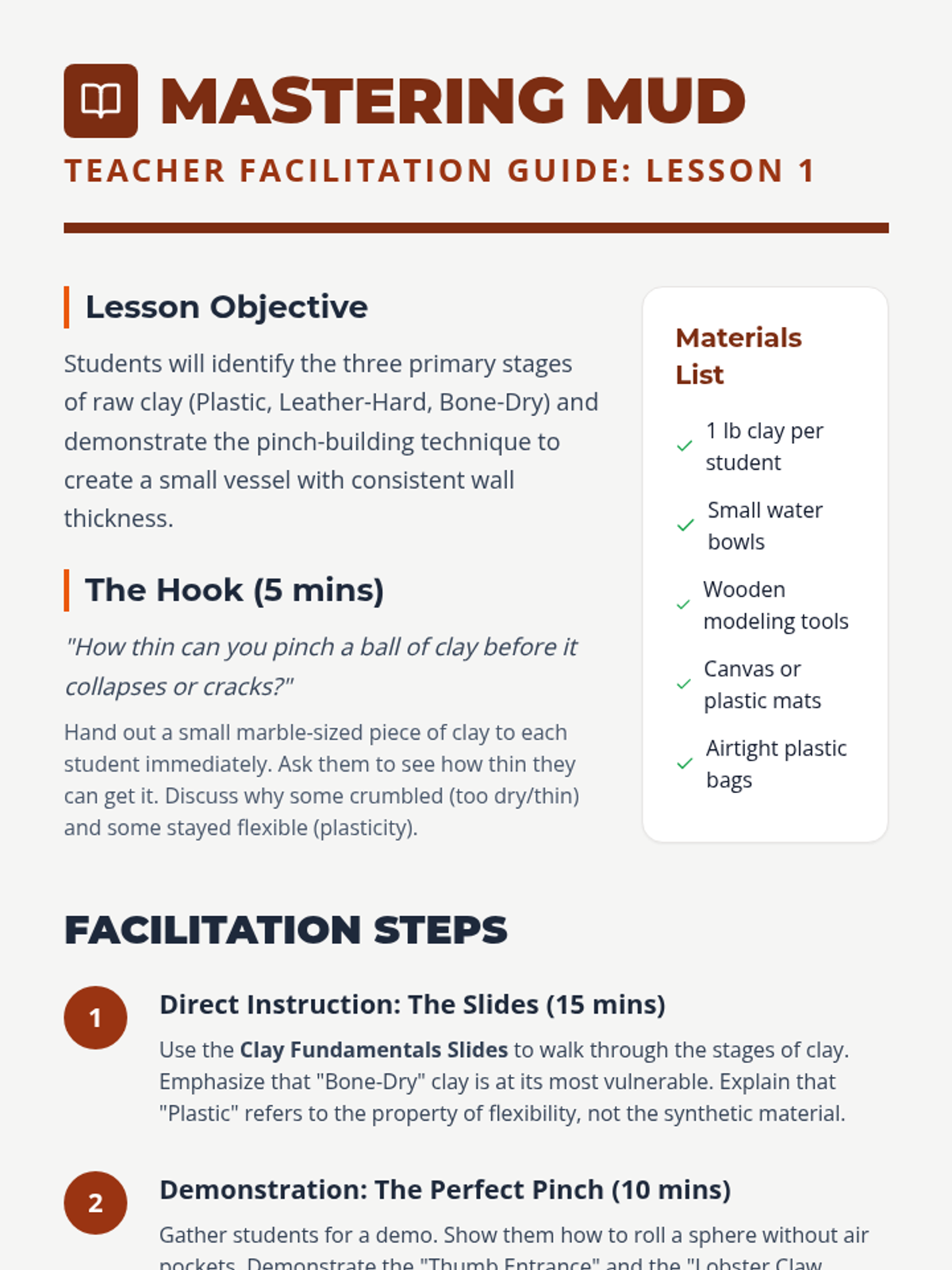
A comprehensive 6th-grade art sequence focusing on hand-building techniques with clay, including pinch pots, coil building, and surface decoration. Students explore the physical properties of clay while creating expressive 3D forms and understanding the technical requirements of ceramic art.
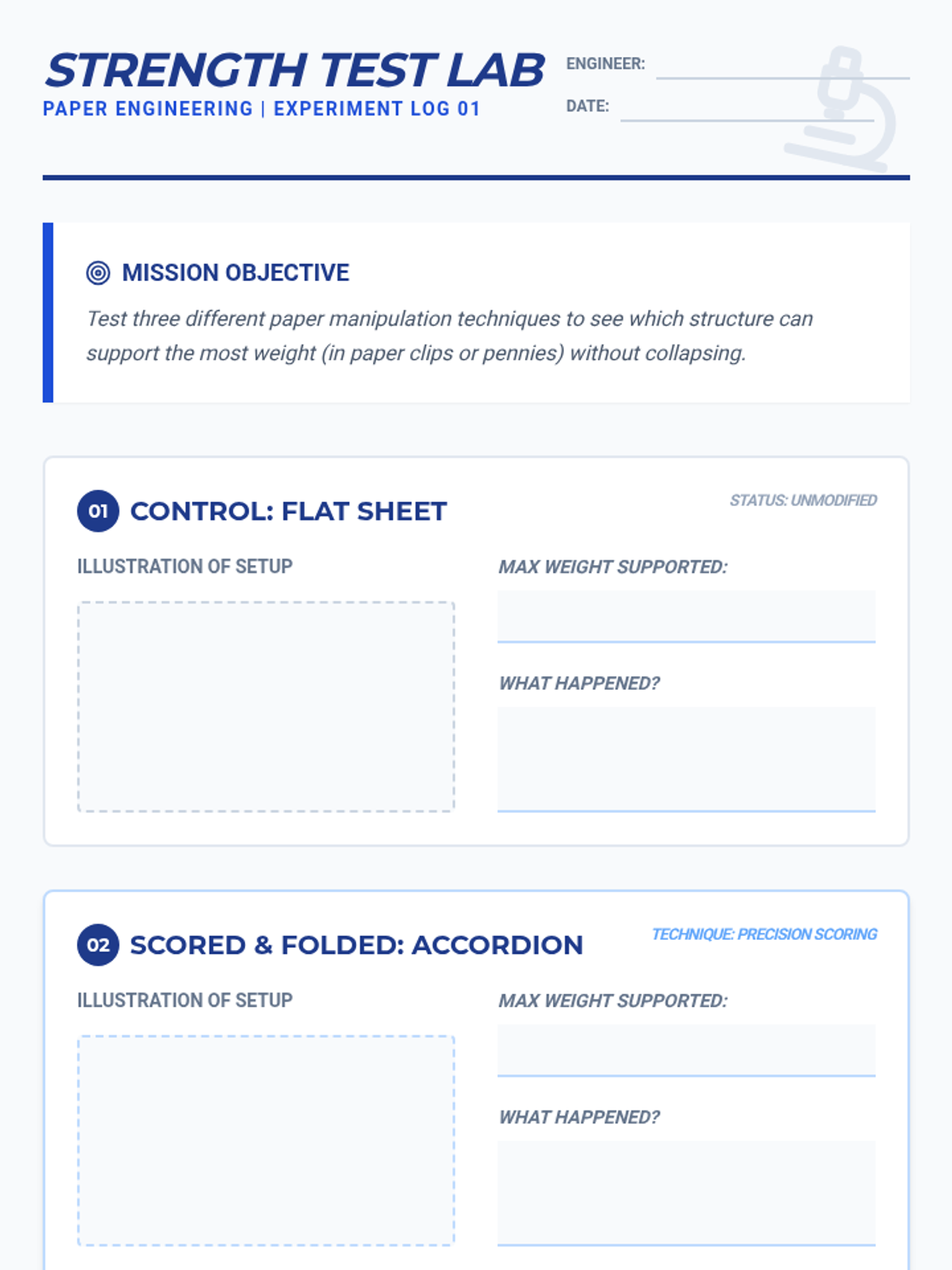
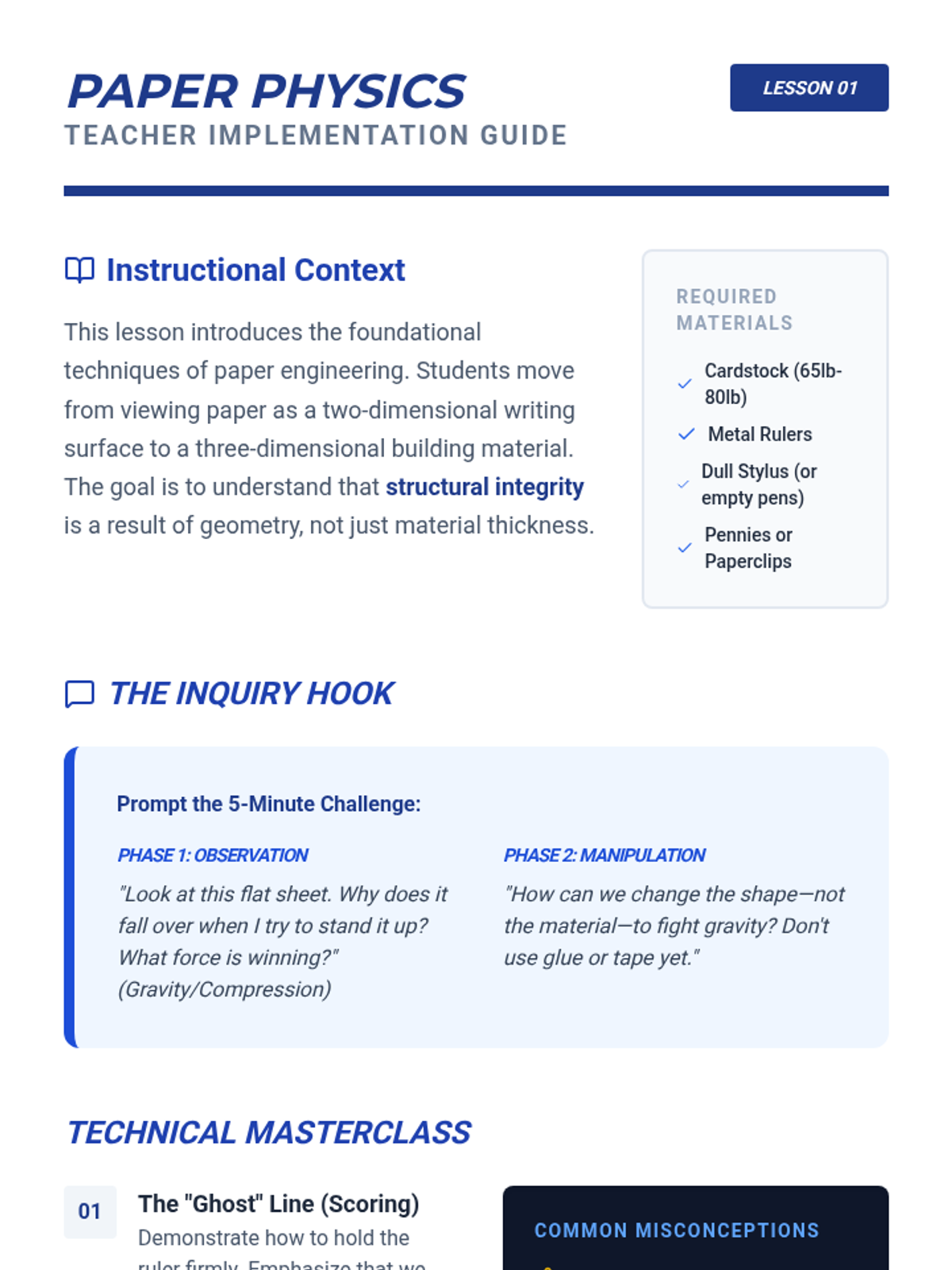
This sequence explores the intersection of engineering and art through paper sculpture. Students investigate how a flimsy, flat material can be manipulated through folding, scoring, and slotting to become rigid and self-supporting, moving from basic relief to free-standing geometric construction.
A comprehensive sequence for 8th-grade students exploring the technical and ethical dimensions of digital photo editing. Students master non-destructive workflows, tonal adjustments, color grading, and localized retouching while debating the boundaries of photographic truth in the age of AI.
This sequence introduces 6th-grade students to digital post-processing as a modern darkroom. Students learn to enhance images through cropping, color correction, and contrast adjustments while exploring the ethical boundaries of digital manipulation.
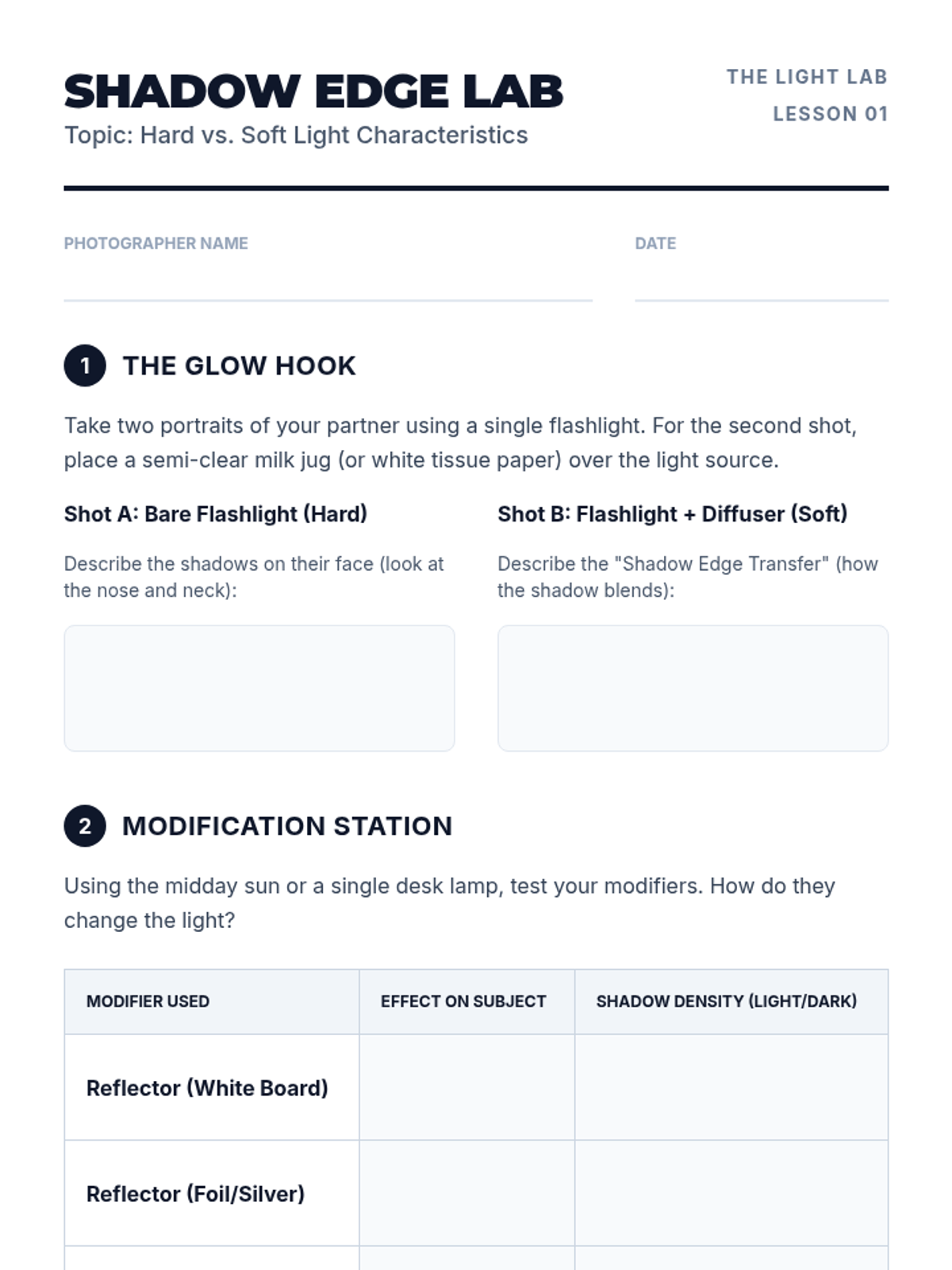
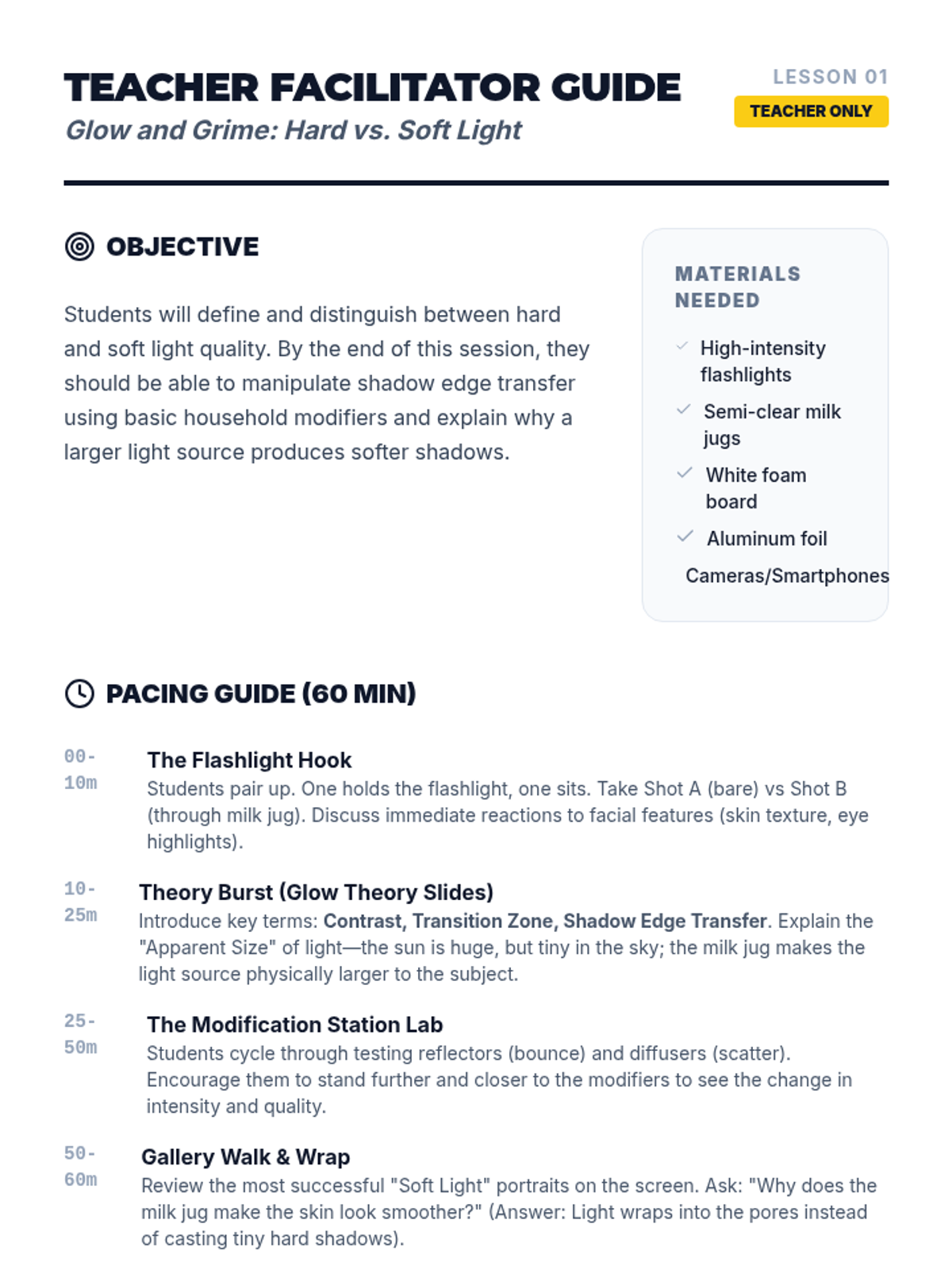
This 8th-grade photography sequence explores how the quality, direction, and color of light influence mood and dimensionality. Students progress from basic light quality to professional portrait patterns and conceptual lighting design.
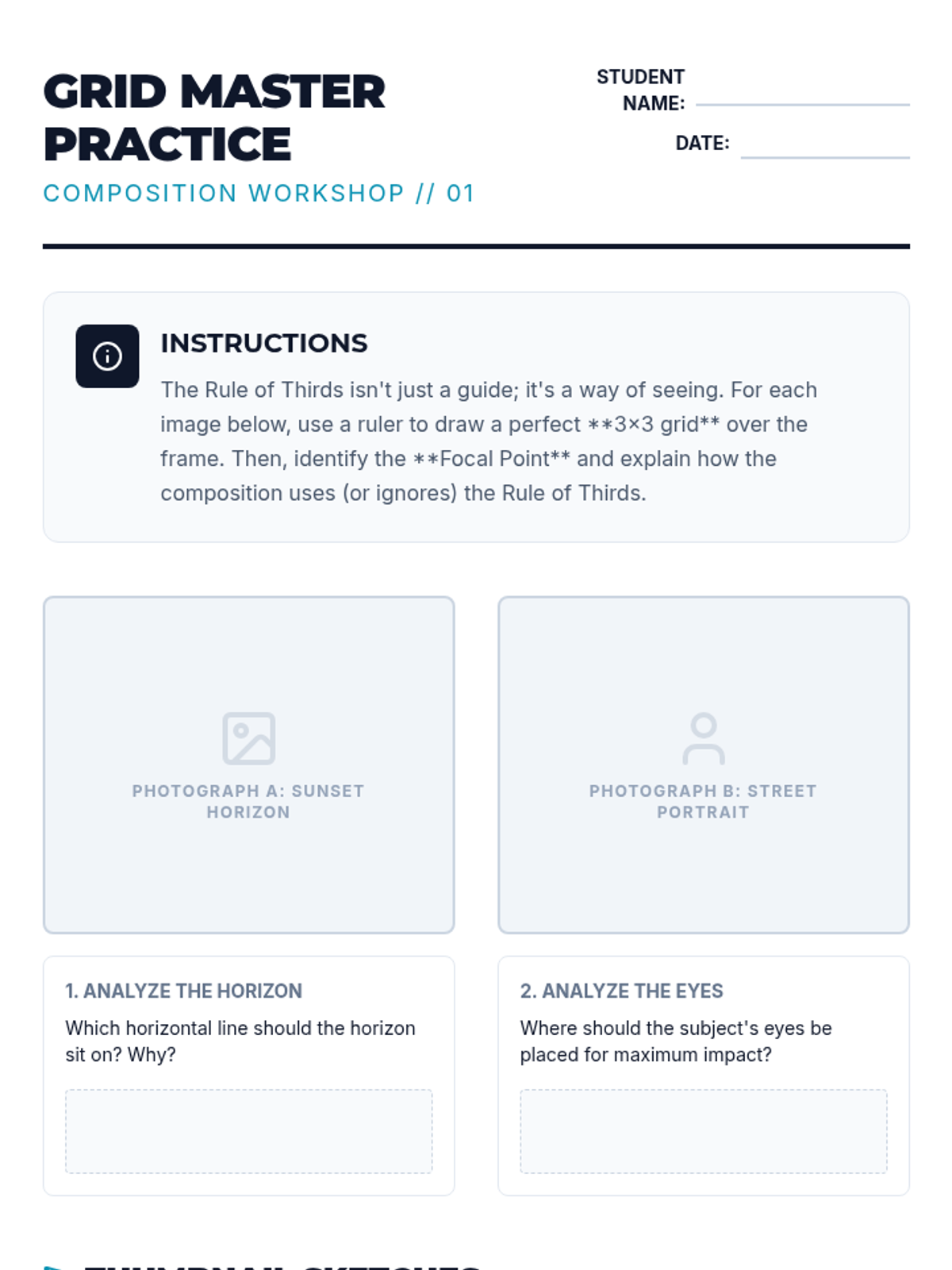
An 8th-grade photography unit focused on artistic composition. Students explore the Rule of Thirds, leading lines, framing, and abstract patterns through hands-on practice and gamified challenges, culminating in a curated portfolio.
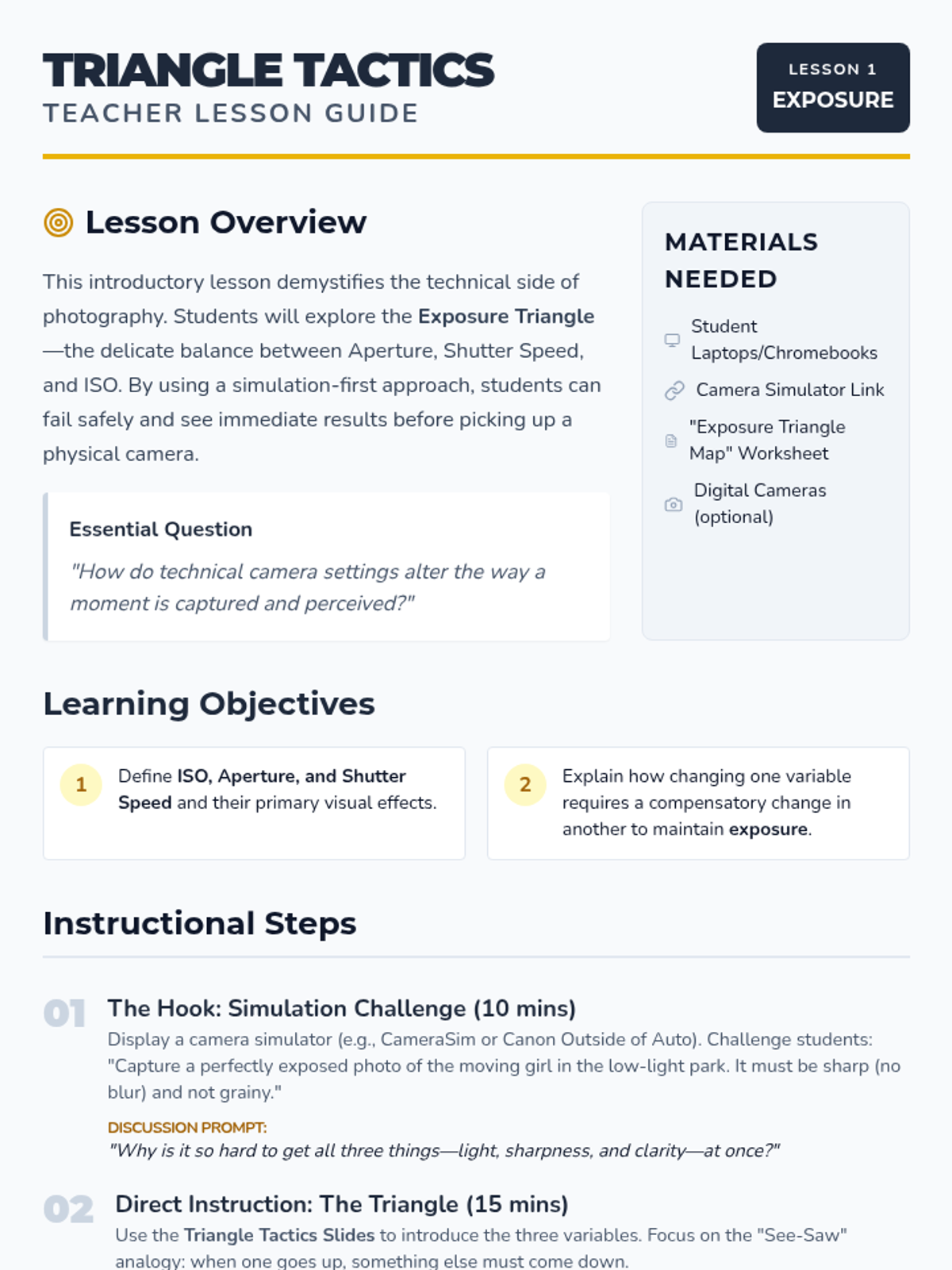
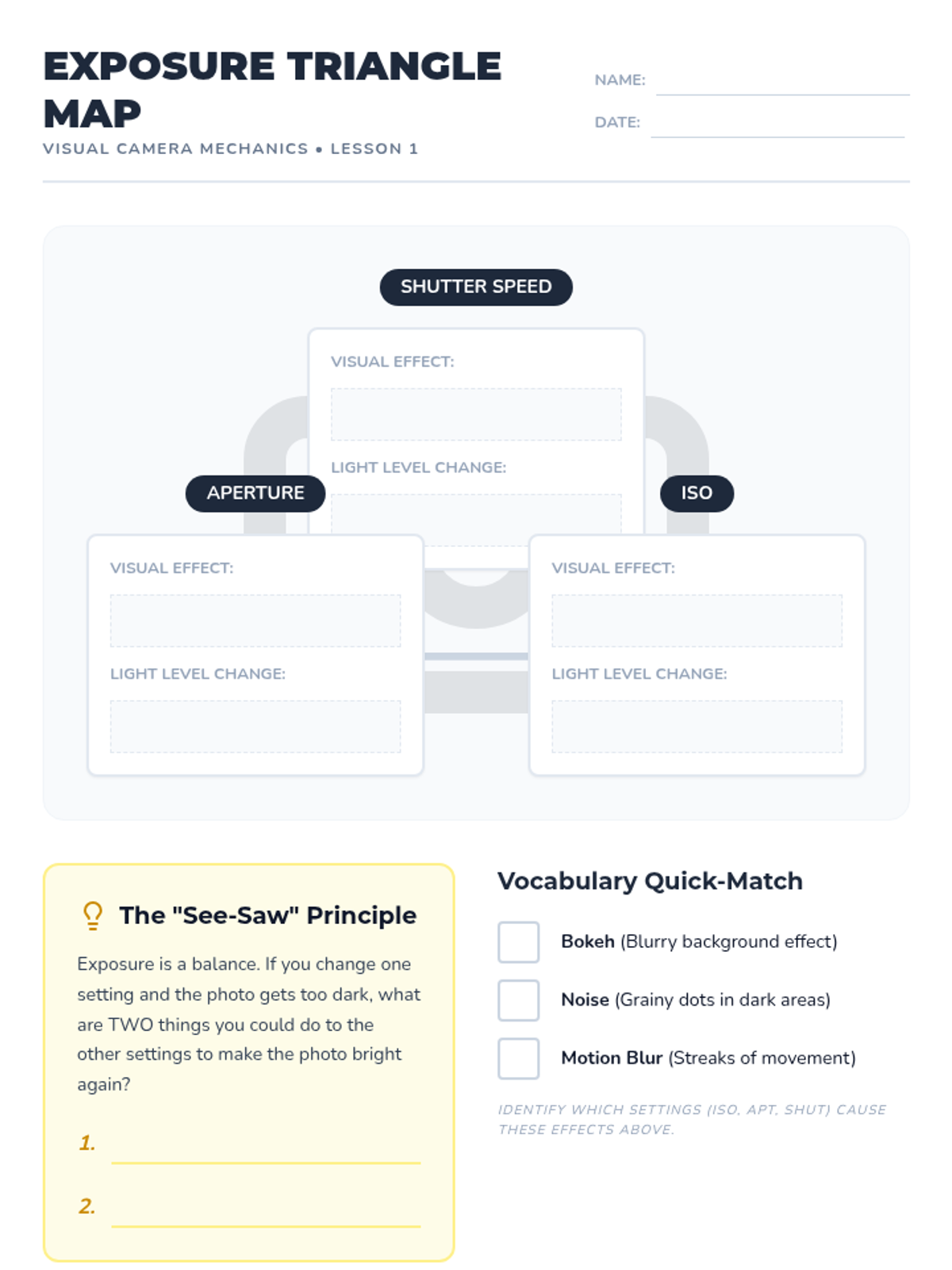
A comprehensive 5-lesson unit for 8th-grade photography students, focusing on the technical mastery of the exposure triangle (ISO, aperture, and shutter speed). Students progress from conceptual understanding to manual mode proficiency through simulations, experiments, and creative challenges.
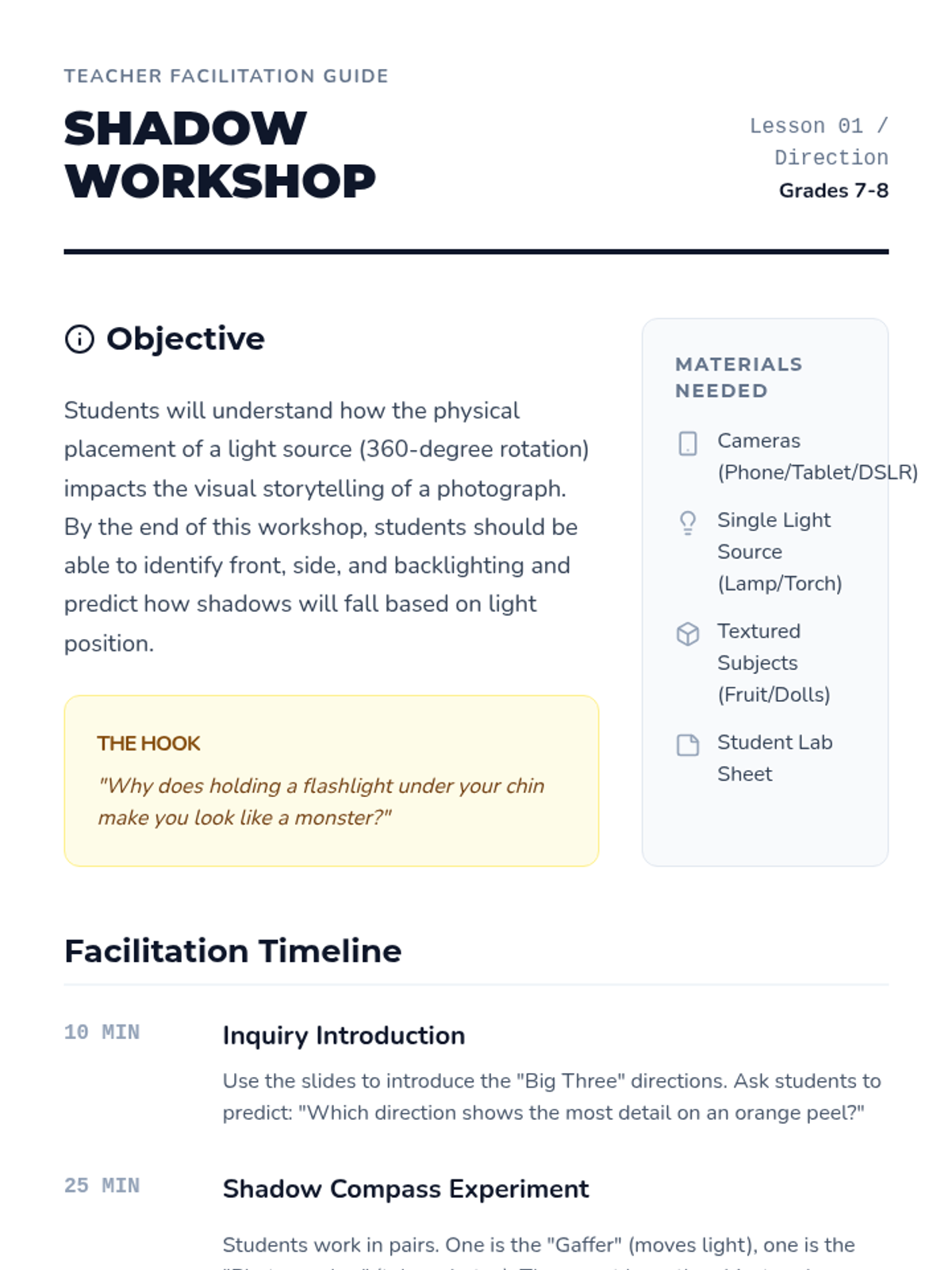
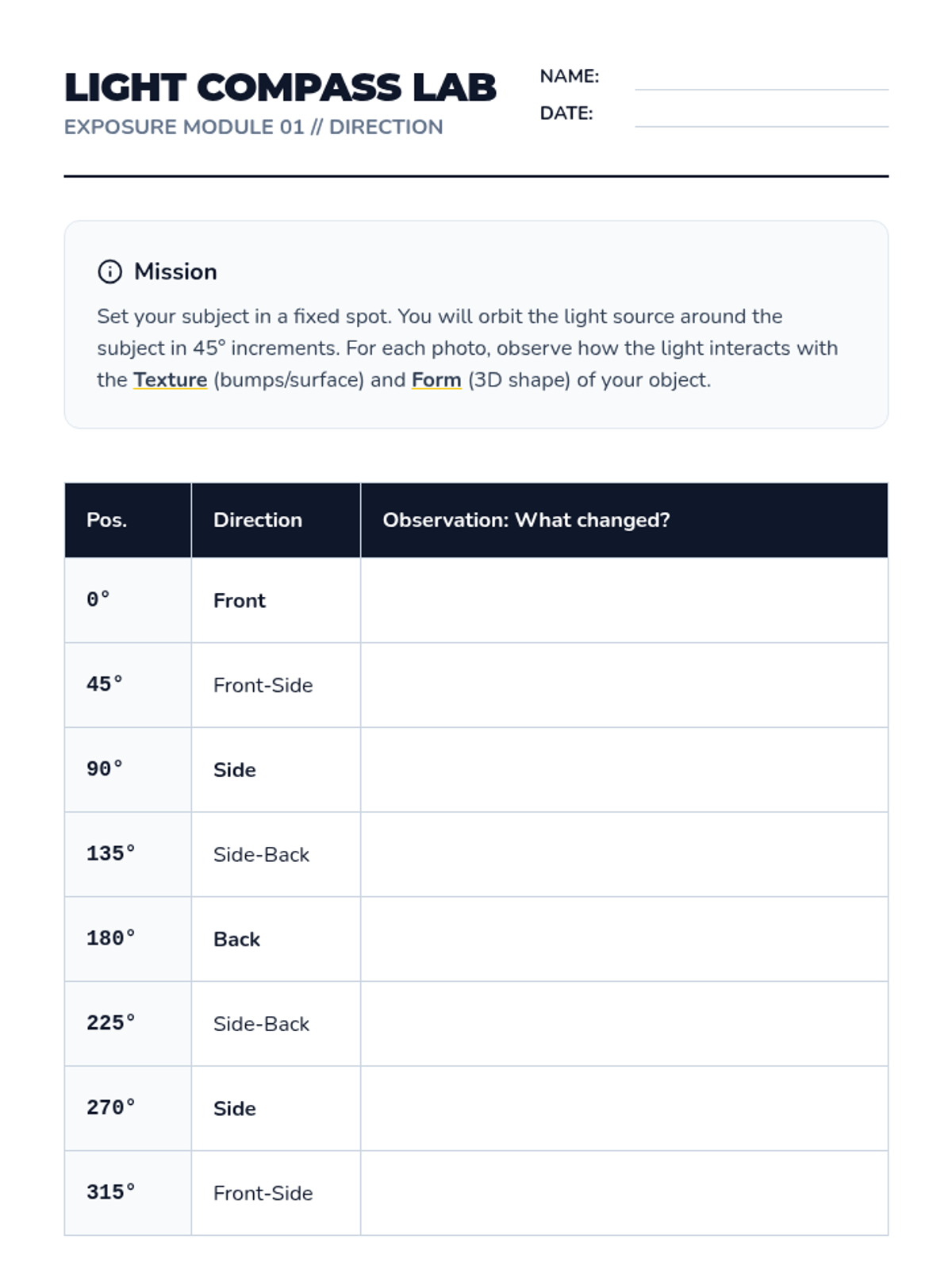
A comprehensive introduction to the physics and artistry of light in photography, covering direction, quality, exposure, and color temperature for 7th-grade students.