Specialized vocabulary across disciplines, research methodologies, and effective note-taking systems. Equips learners with information literacy skills and strategies for navigating standardized exams.
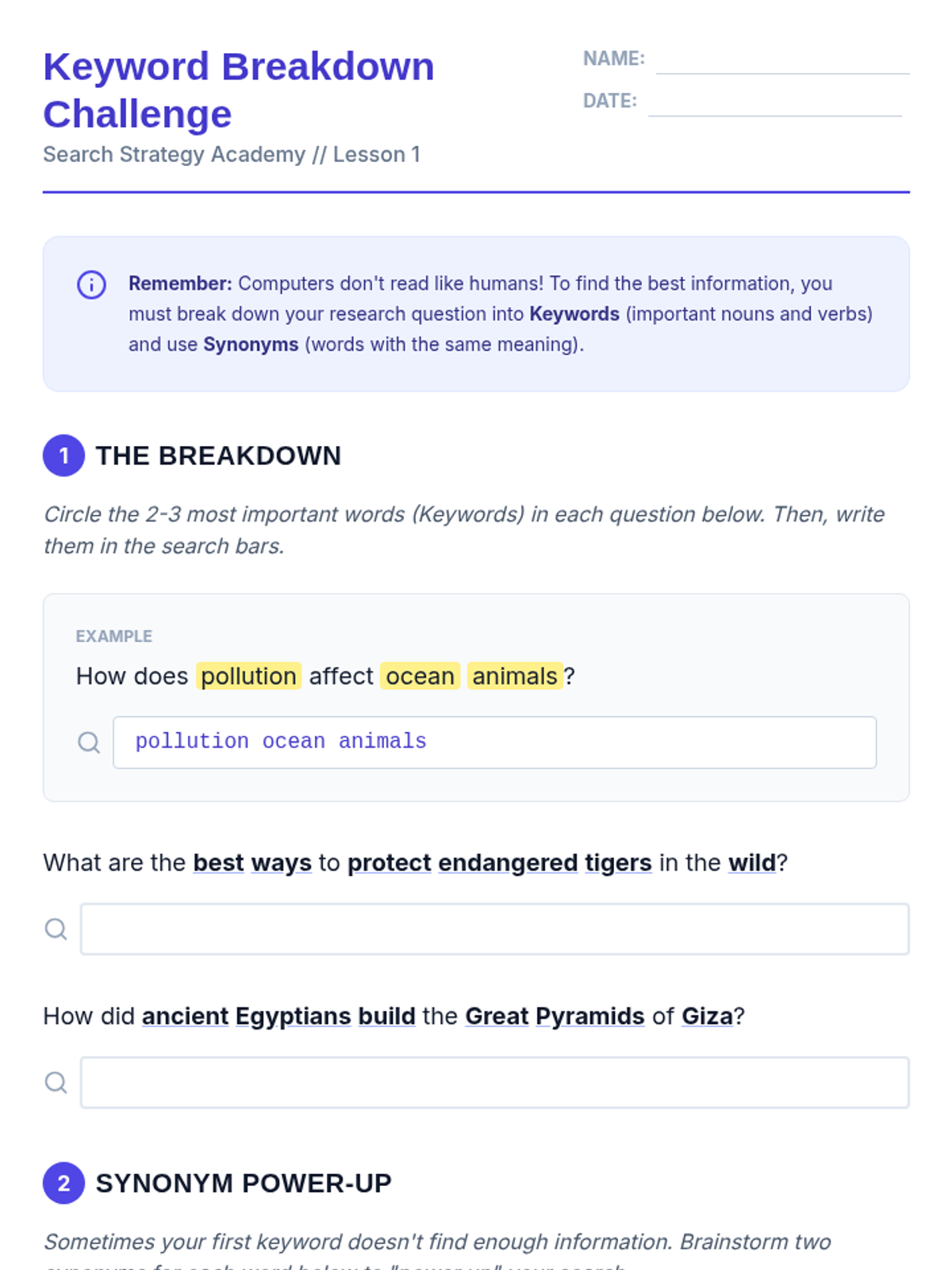
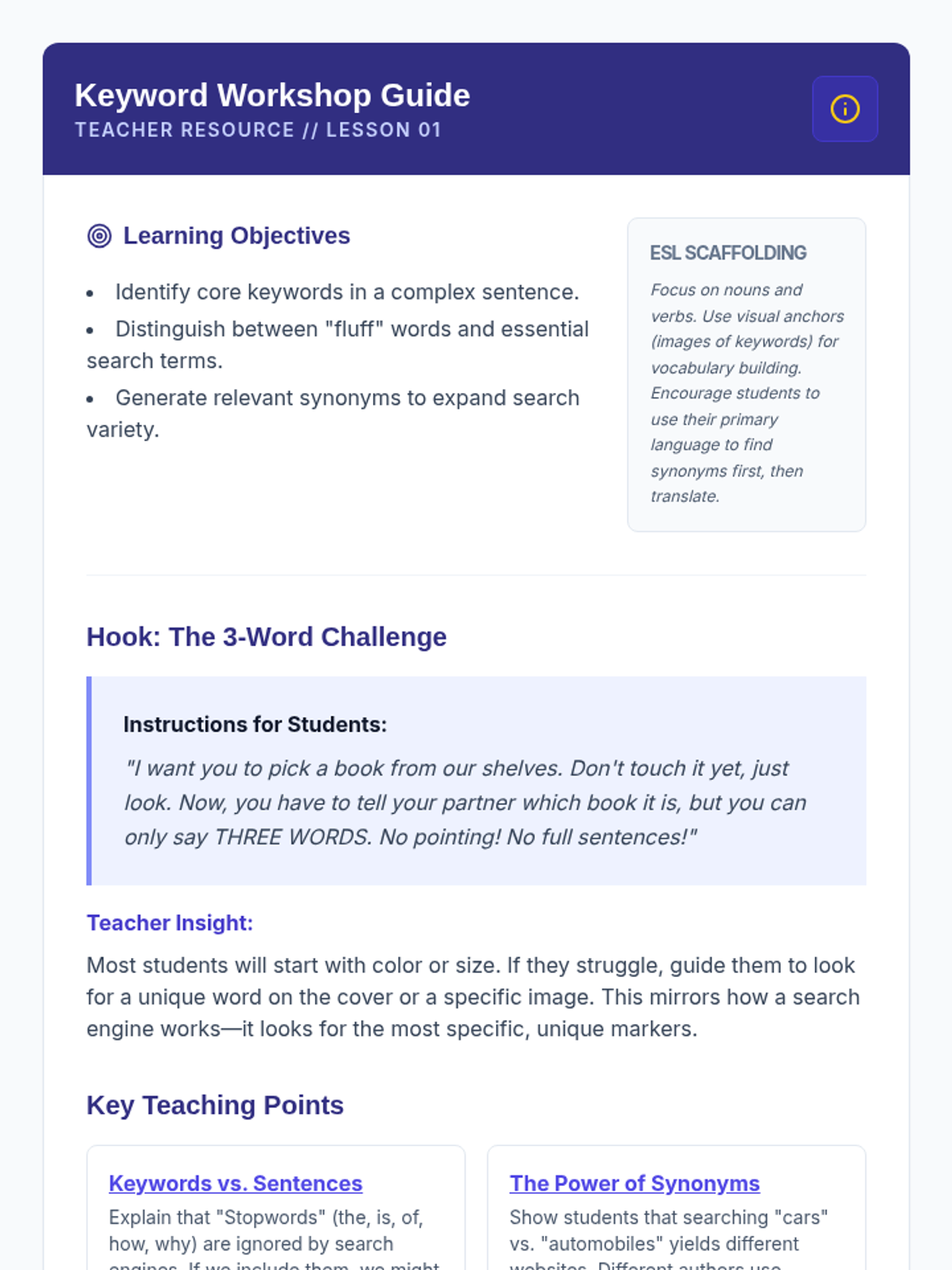
A 5-lesson unit for 6th-grade ESL students focused on transforming search habits from natural language questions to strategic keyword and Boolean operator techniques. Students move from basic vocabulary brainstorming to navigating academic databases and skimming snippets for relevance.
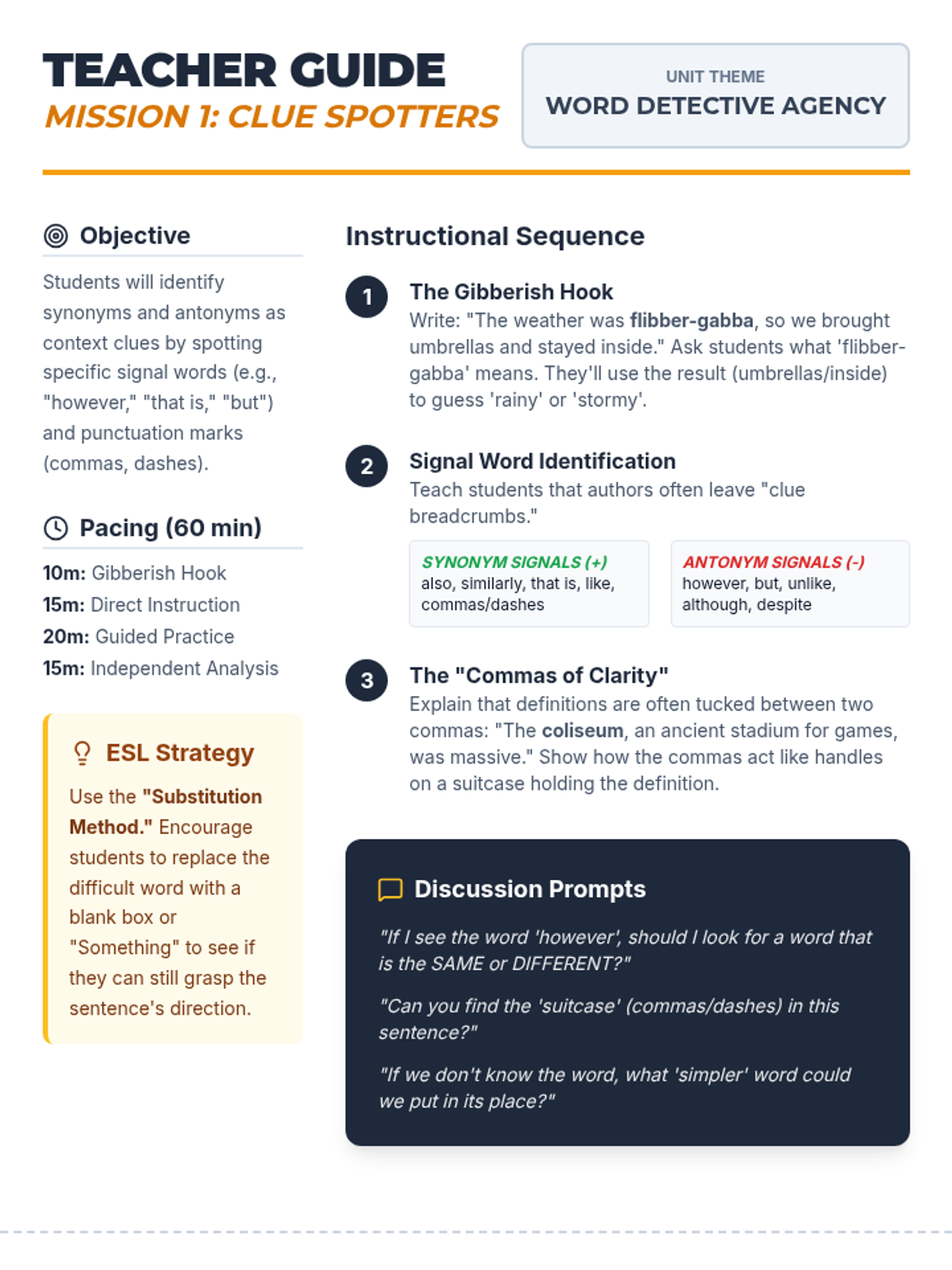
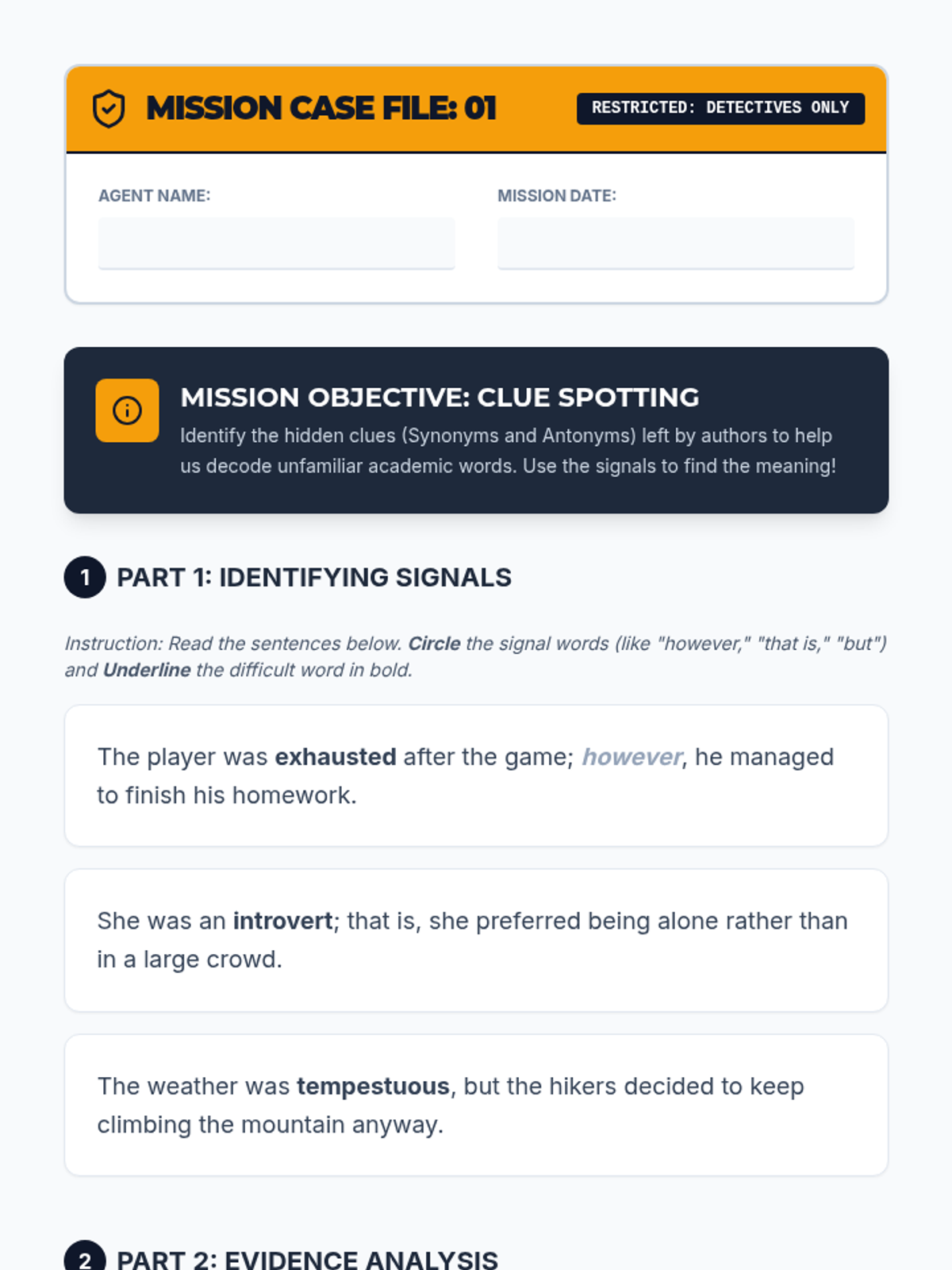
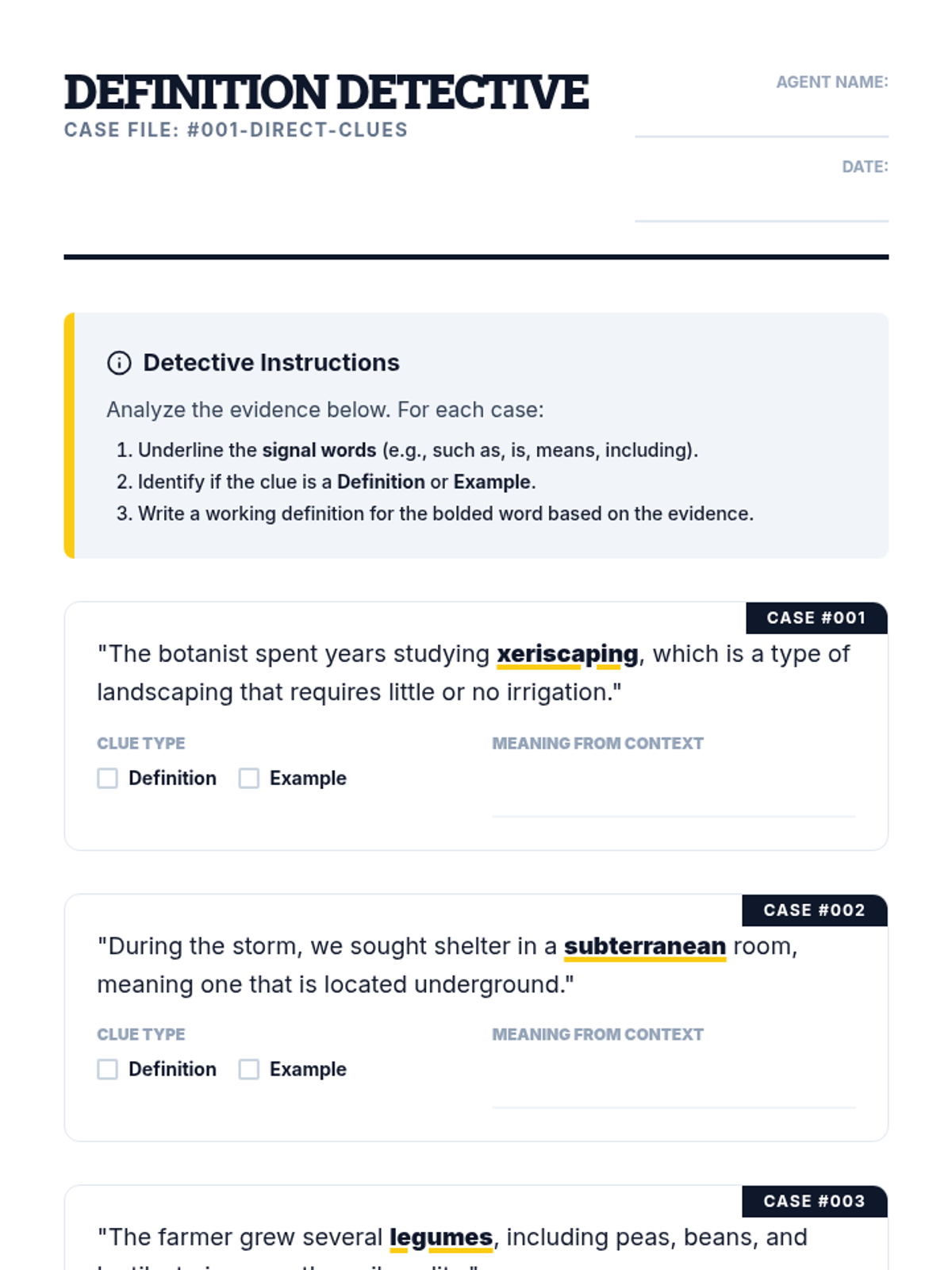
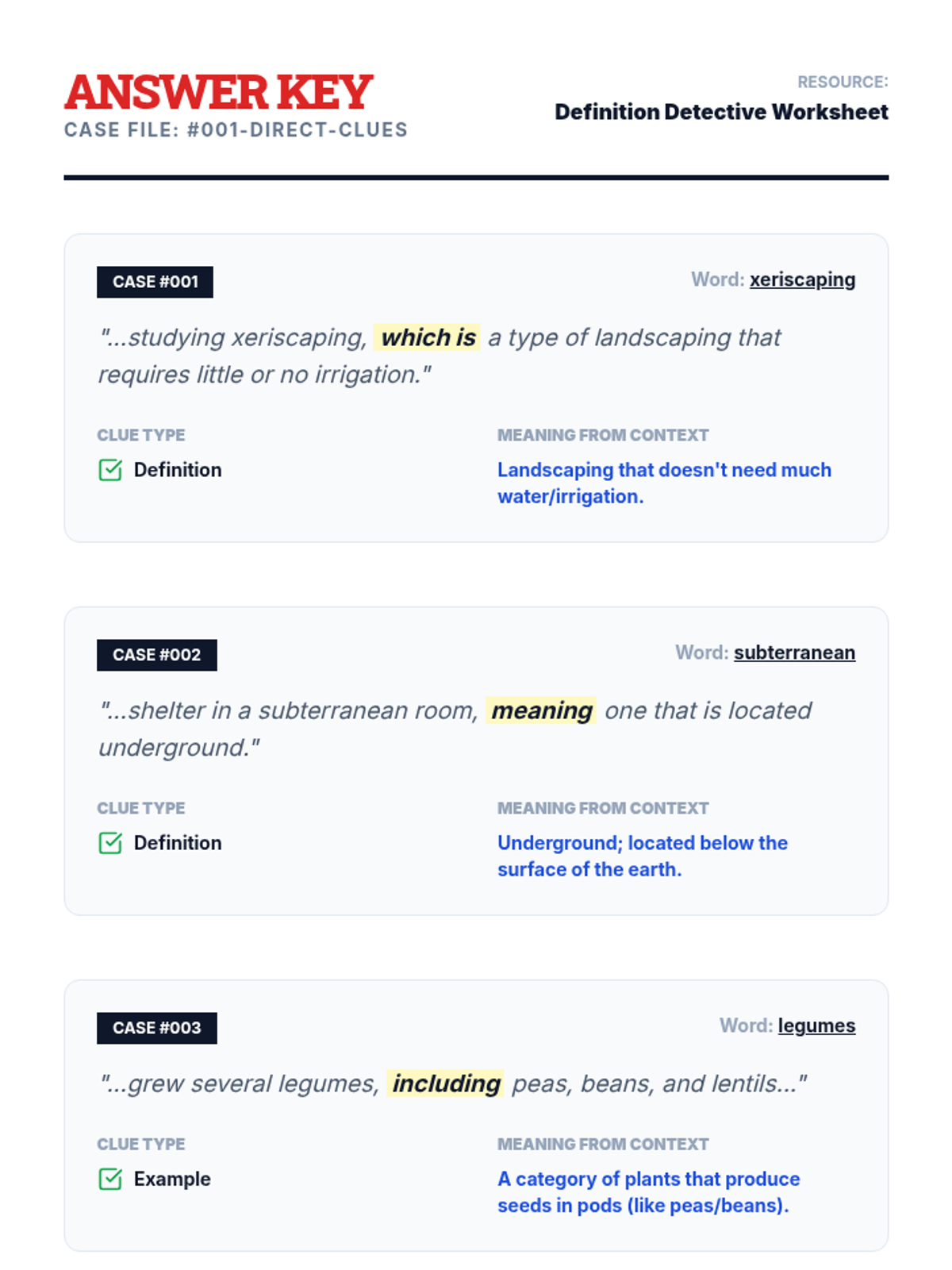
A sequence designed for 7th-grade ESL students to master the art of inferring unknown academic vocabulary through context clues, morphology, syntax, and tone analysis. This unit transforms vocabulary gaps from roadblocks into solvable puzzles using a "Word Detective" theme.
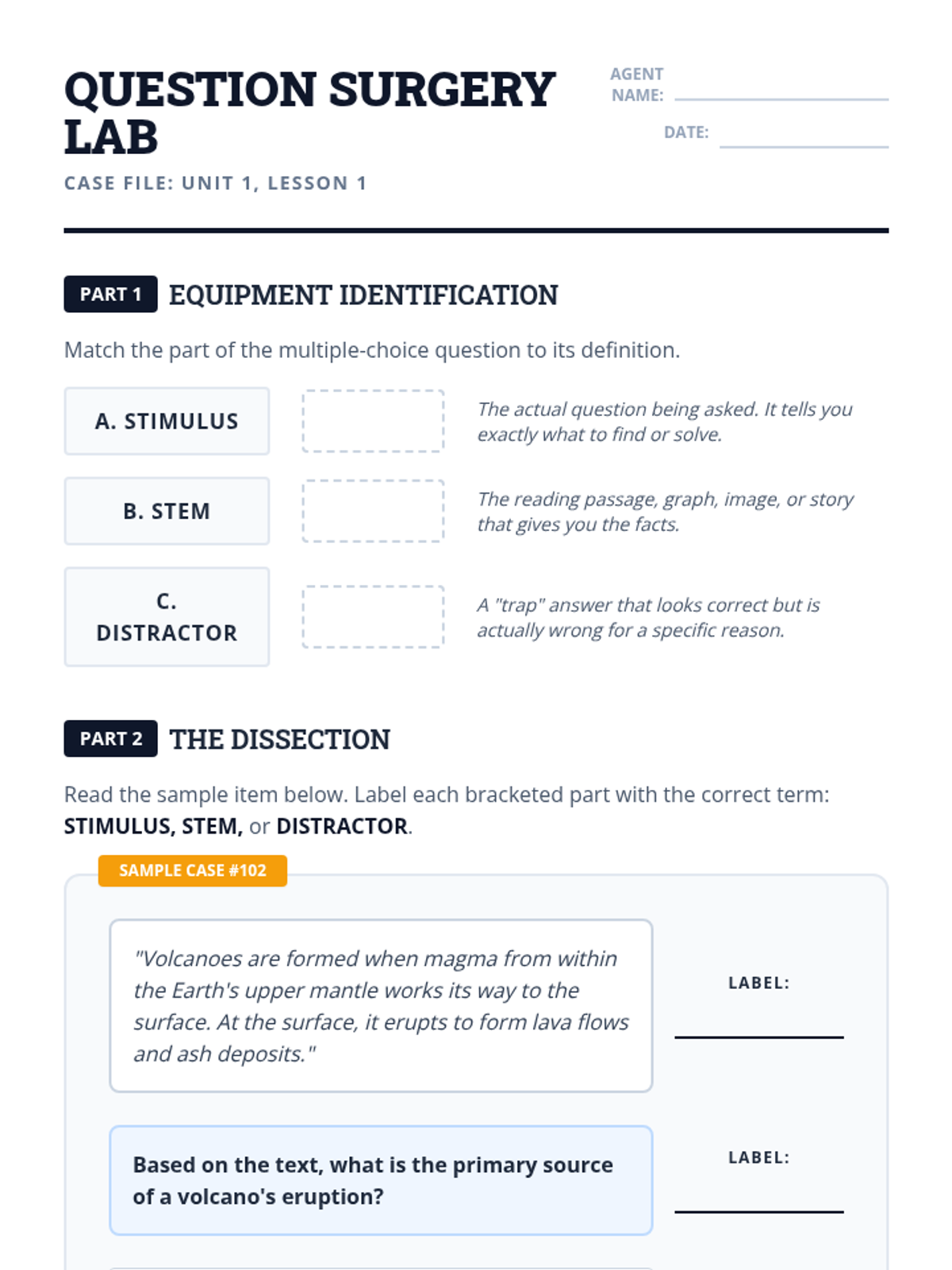
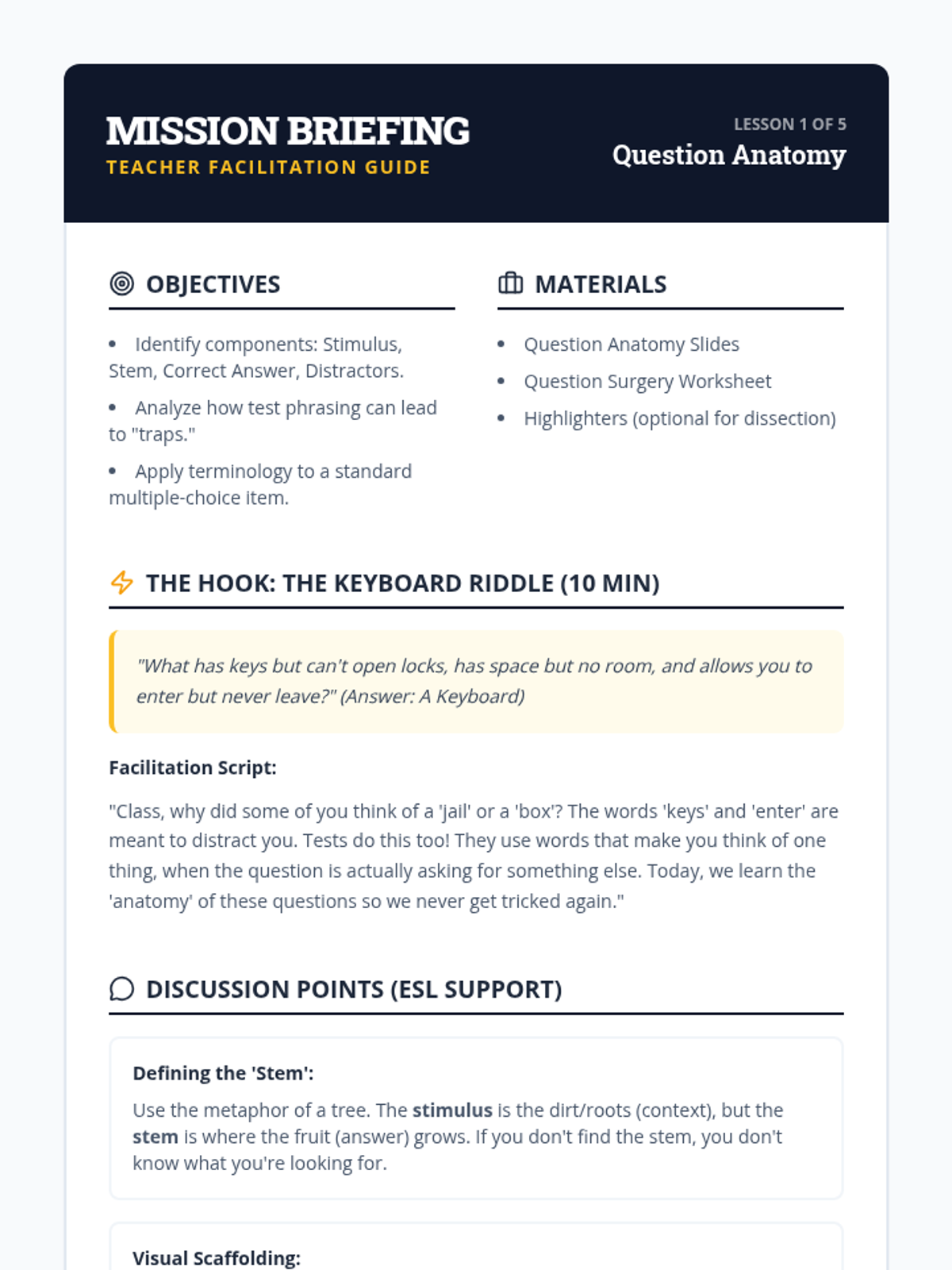
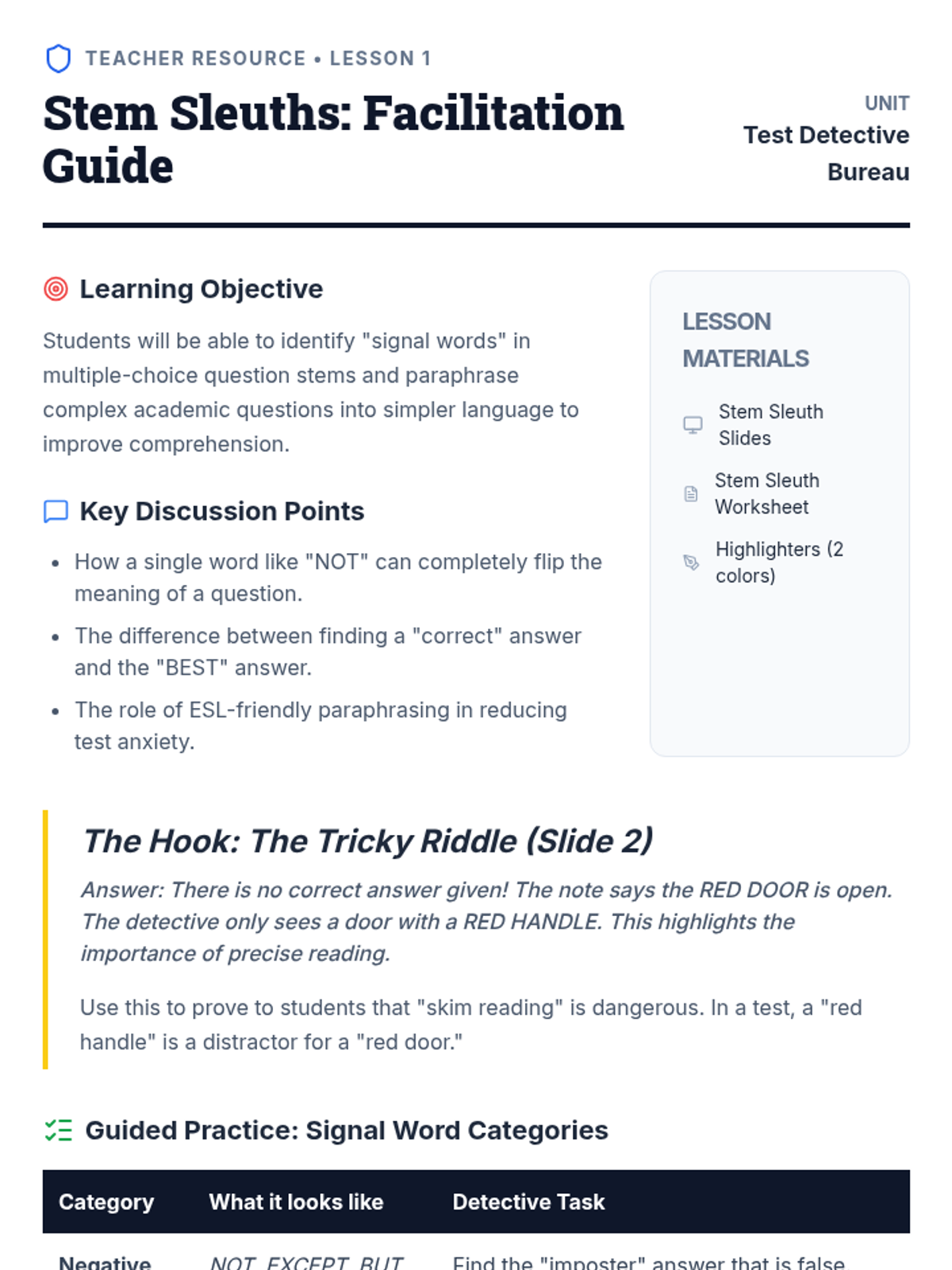
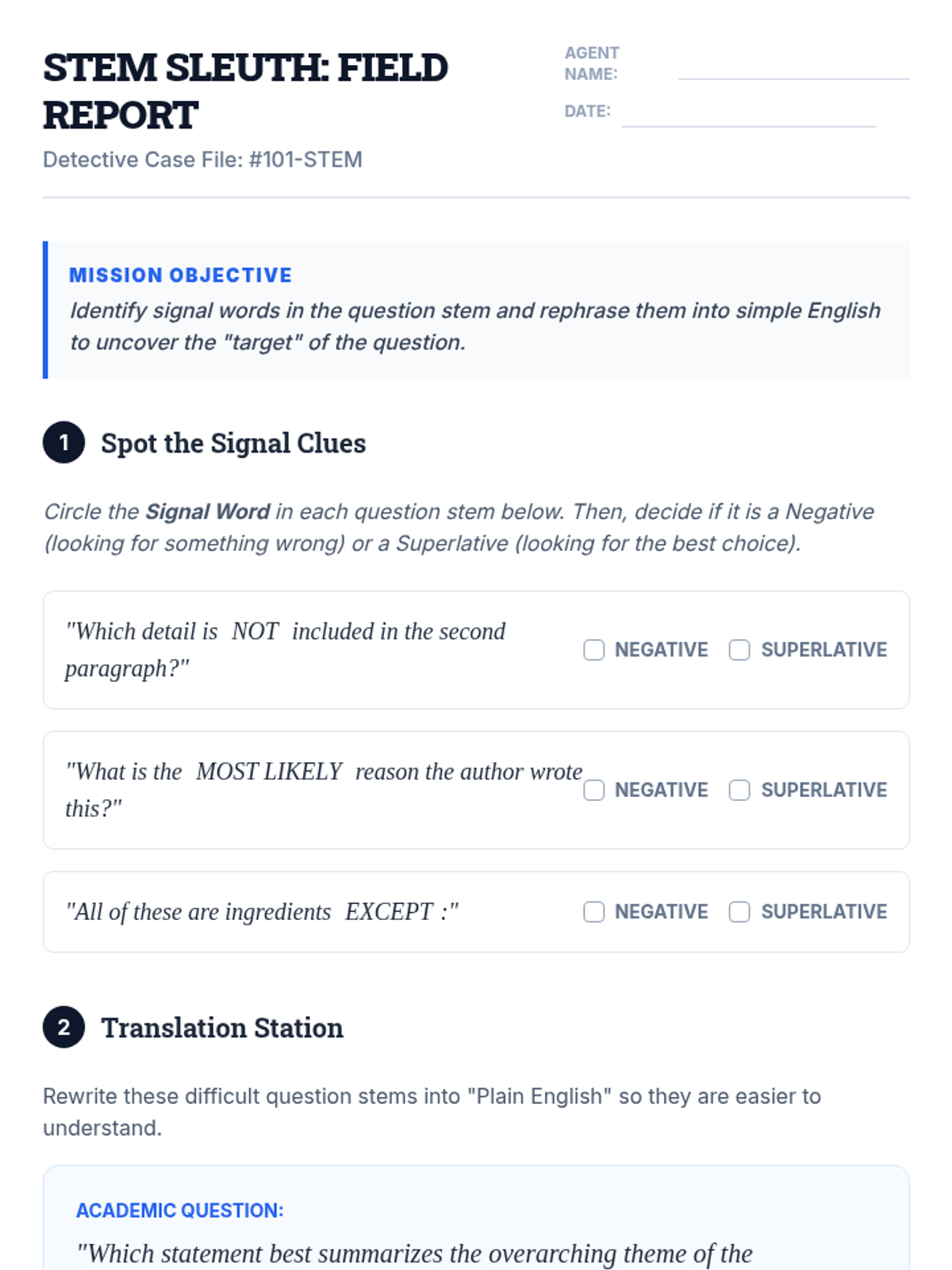
This sequence targets the analytical skills required to dismantle multiple-choice questions for 7th Grade ESL learners. Students move from understanding the anatomy of a question to identifying common logical fallacies and 'trap' answers, utilizing game-based learning and deductive reasoning.
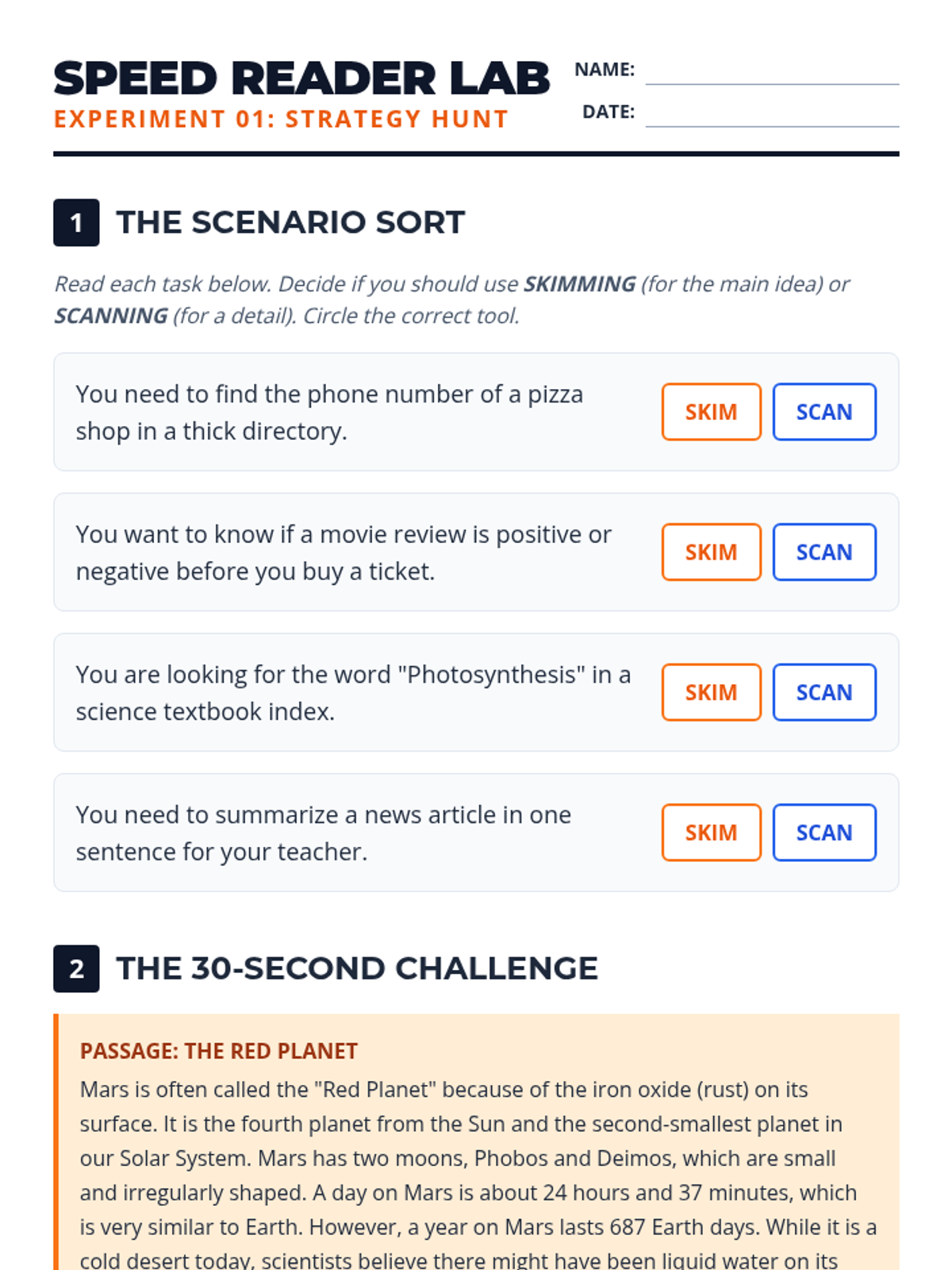
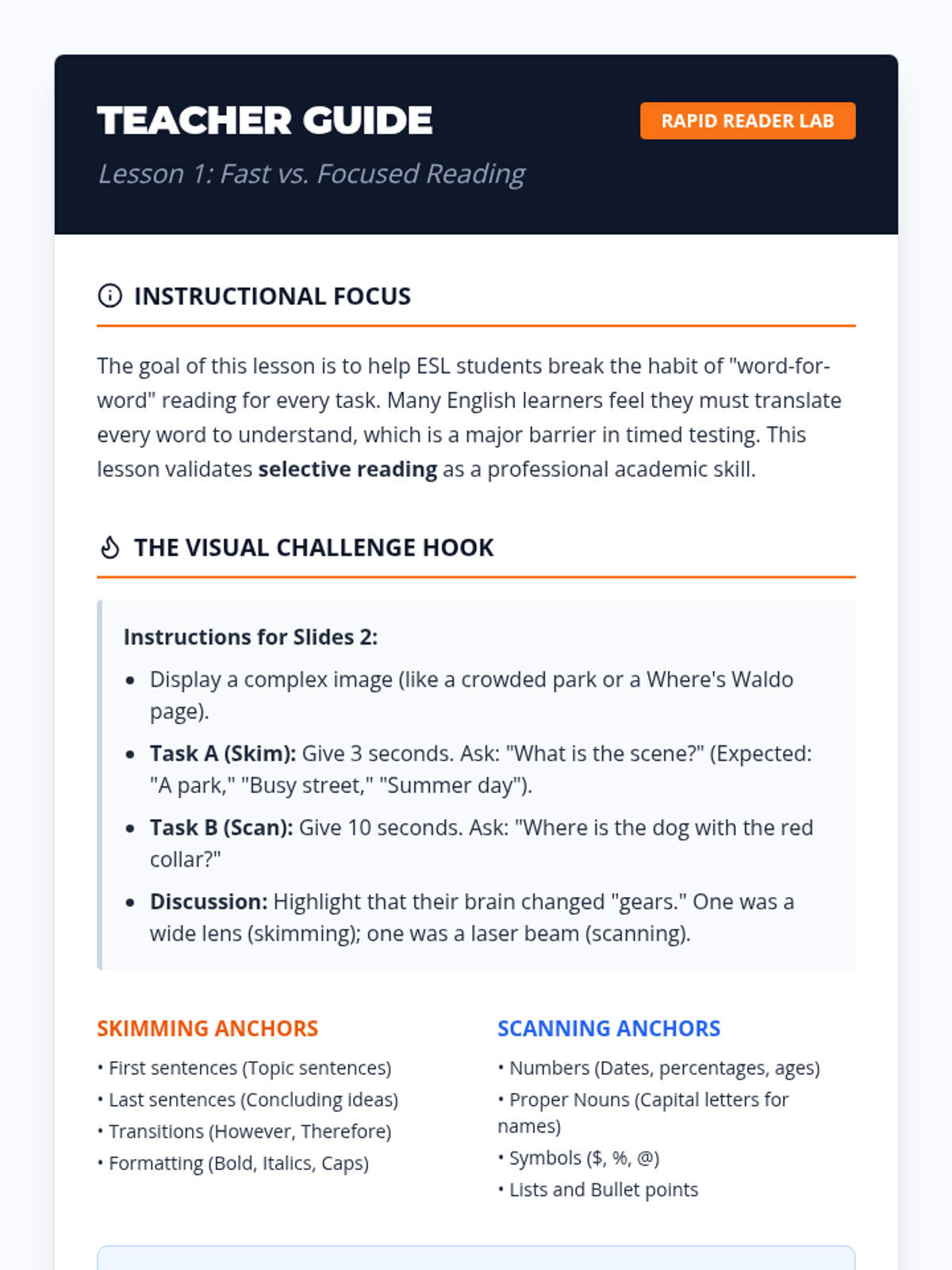
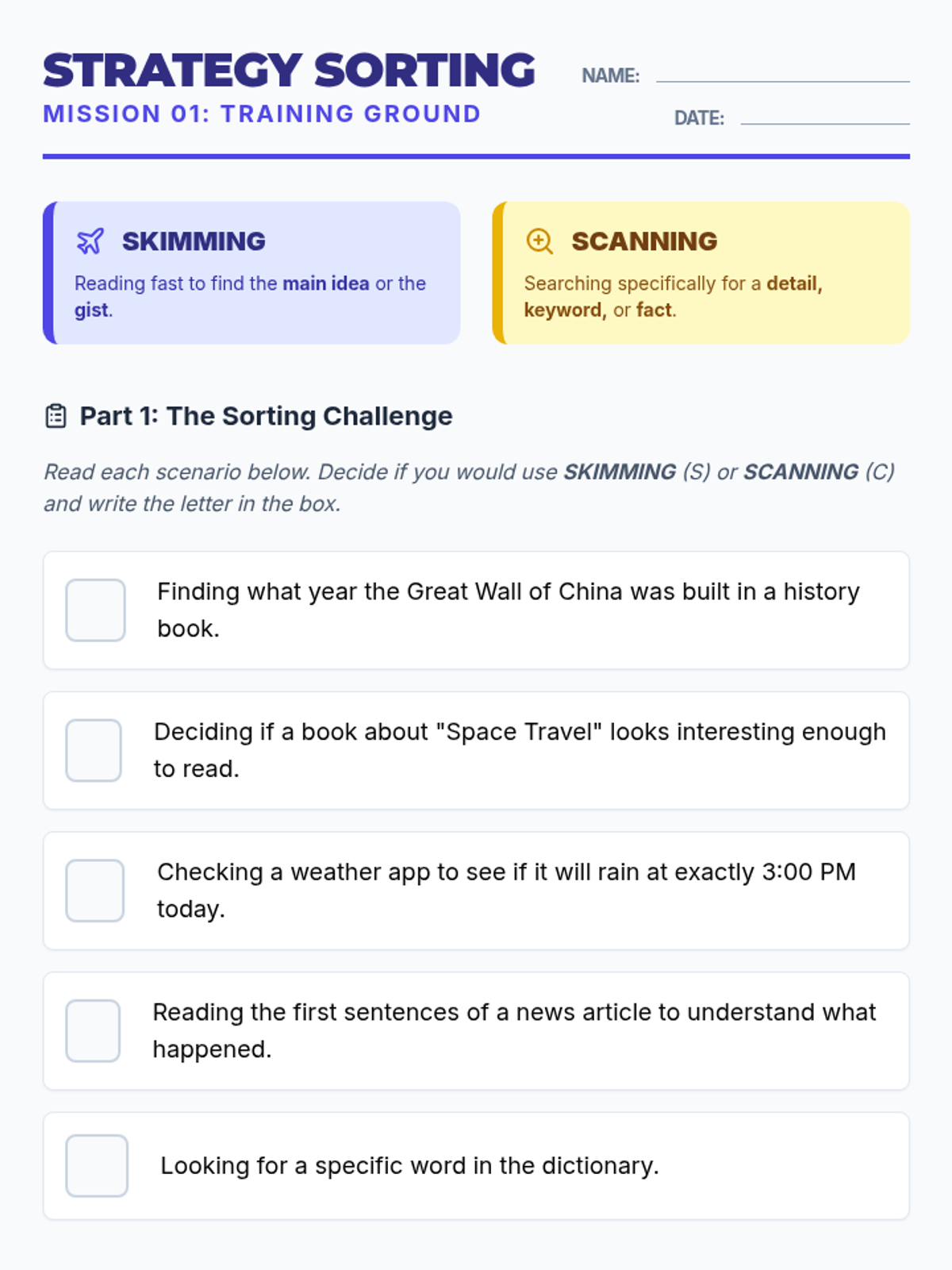
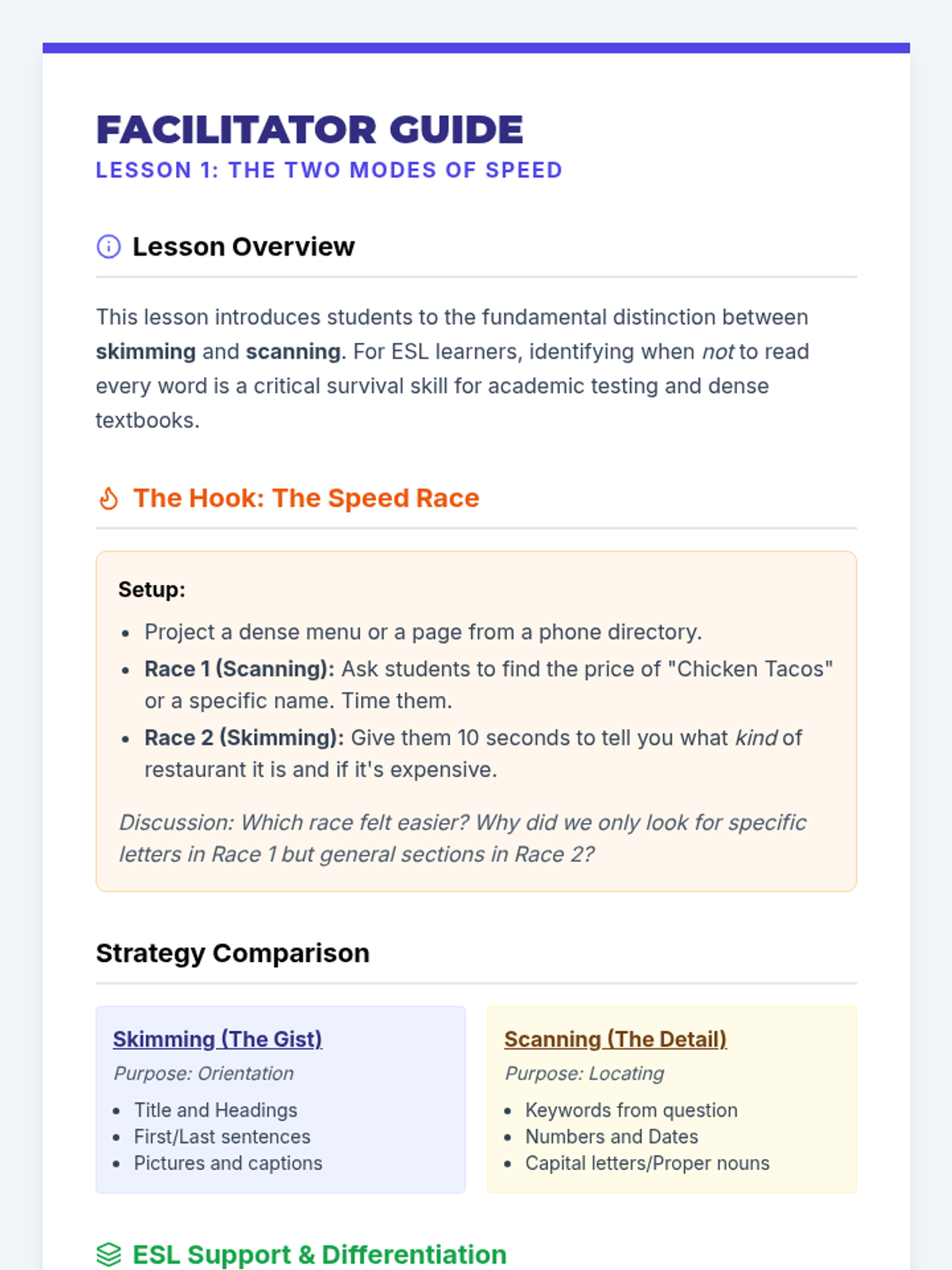
A comprehensive 5-lesson sequence designed for 7th Grade ESL students to master skimming and scanning techniques. Students progress from basic differentiation of reading styles to high-speed information retrieval and synthesis, building the confidence and fluency needed for timed academic assessments.
This sequence teaches 6th-grade ESL students the essential test-taking strategies of skimming and scanning. Through a 'Speed Scout' academy theme, students learn to navigate academic texts efficiently, identifying when to look for the 'gist' versus specific details to save time and improve accuracy on standardized tests.
A sequence for 6th-grade ESL students to master academic test-taking through logic and deduction, using a detective-themed approach to analyze question stems and eliminate distractor answers.
A comprehensive workshop-style unit for 6th Grade ESL students focused on the linguistic mechanics of paraphrasing and synthesizing information. Students move from identifying core concepts to orally retelling information, transforming individual sentences, and finally weaving multiple sources into a single coherent paragraph without plagiarizing.
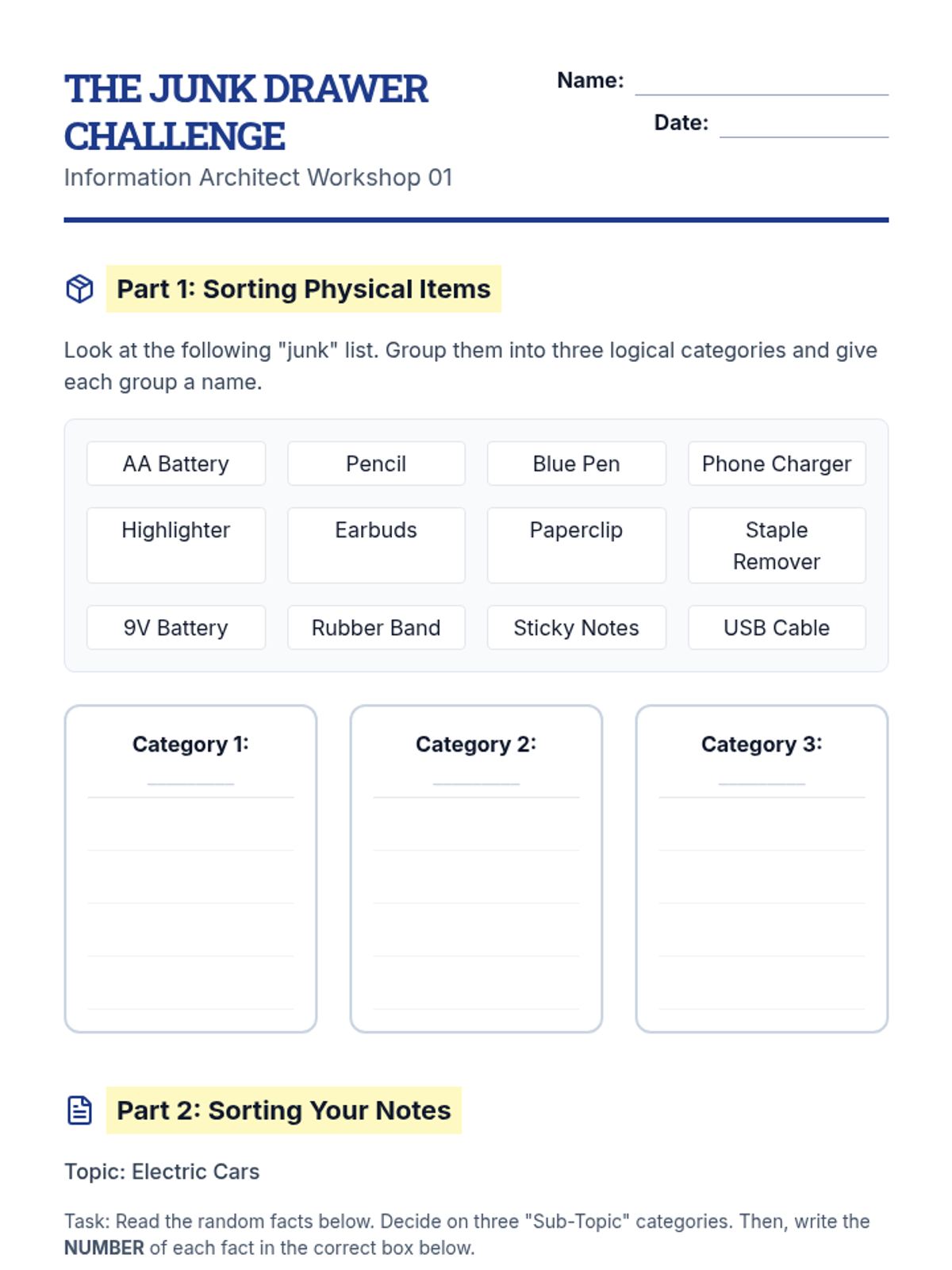
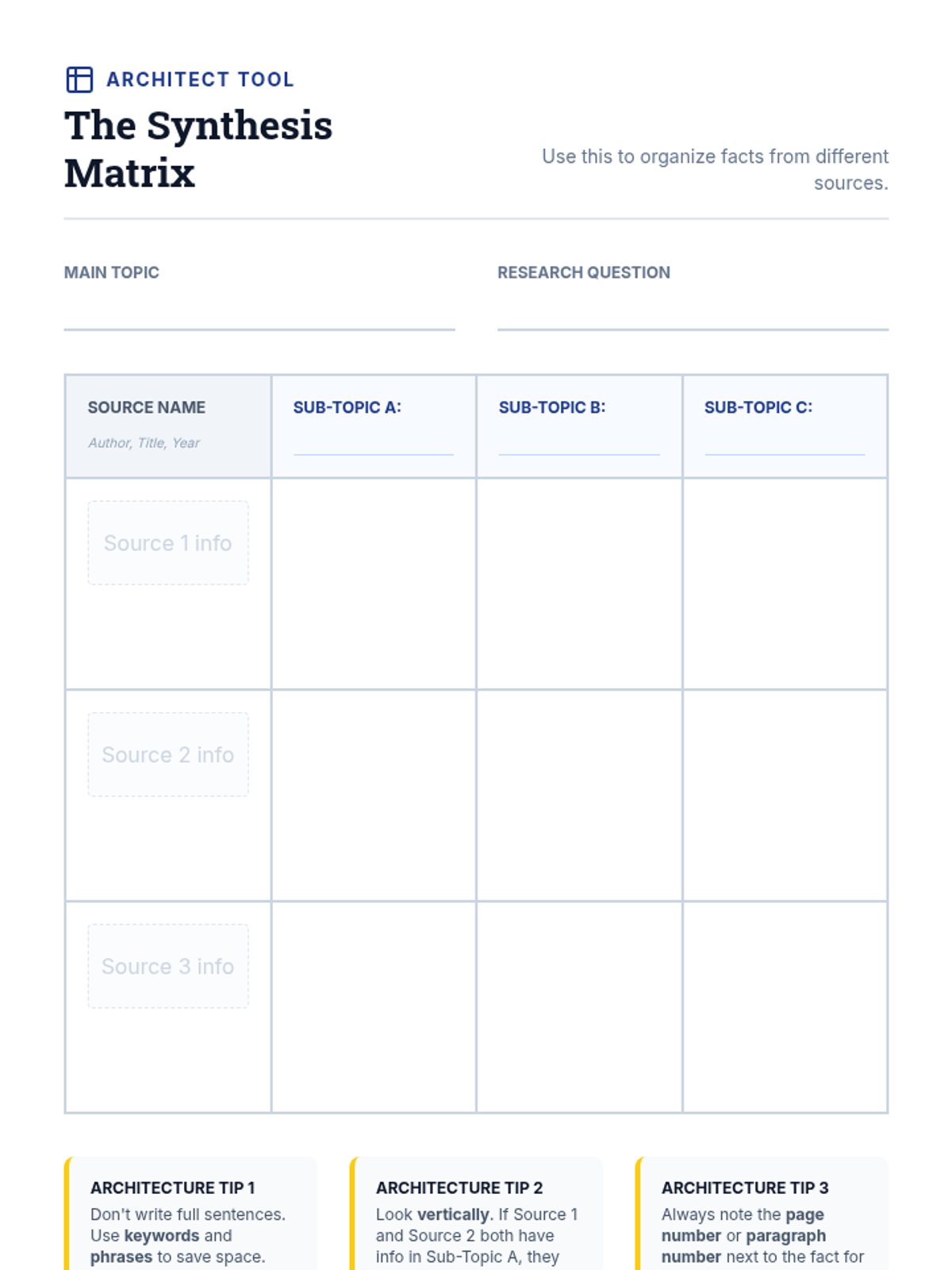
A comprehensive 5-lesson sequence designed for 7th-grade ESL students to master the art of synthesizing information. Students progress from organizing raw research notes to writing sophisticated, cohesive academic paragraphs using evidence from multiple sources.
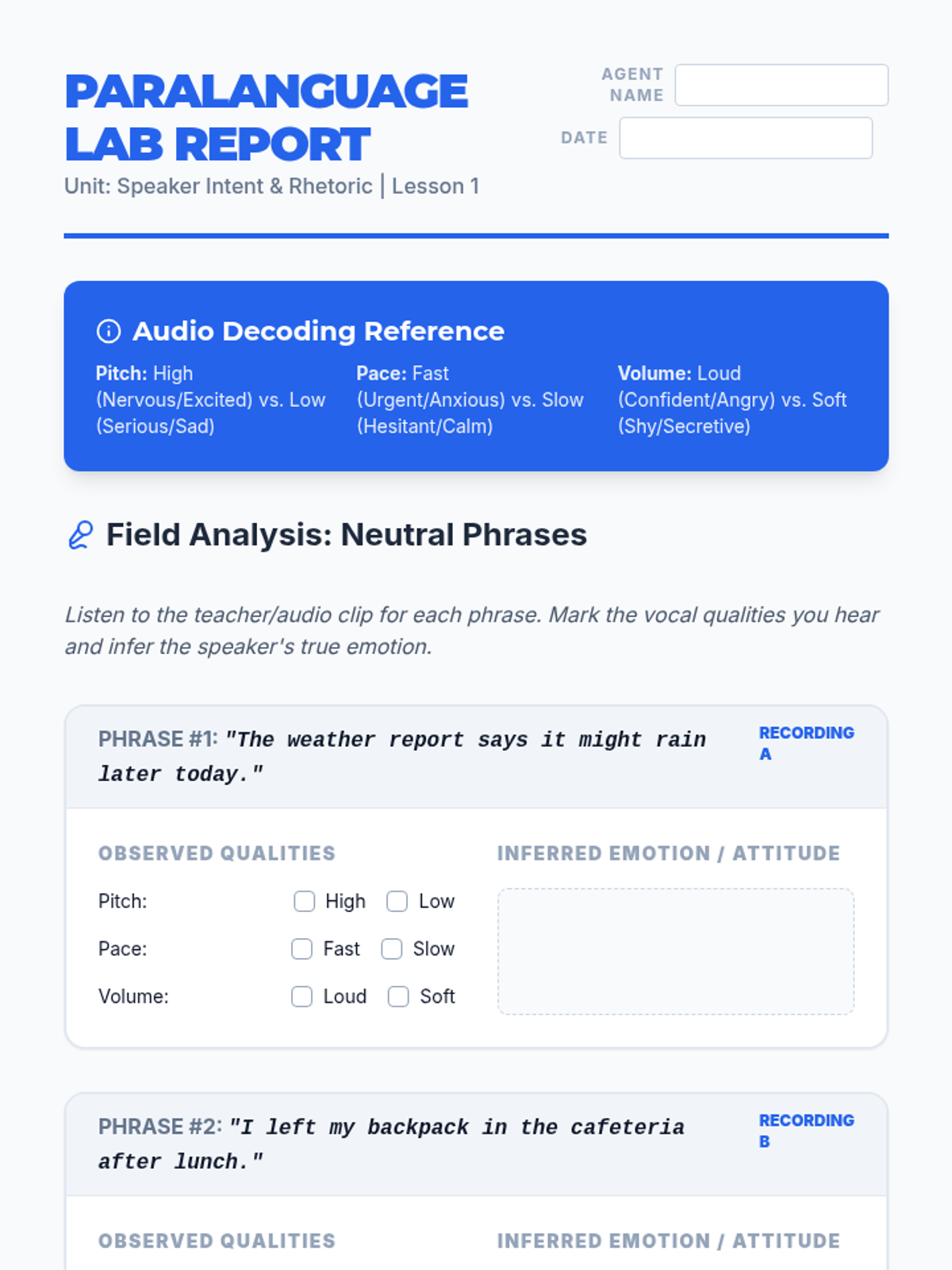
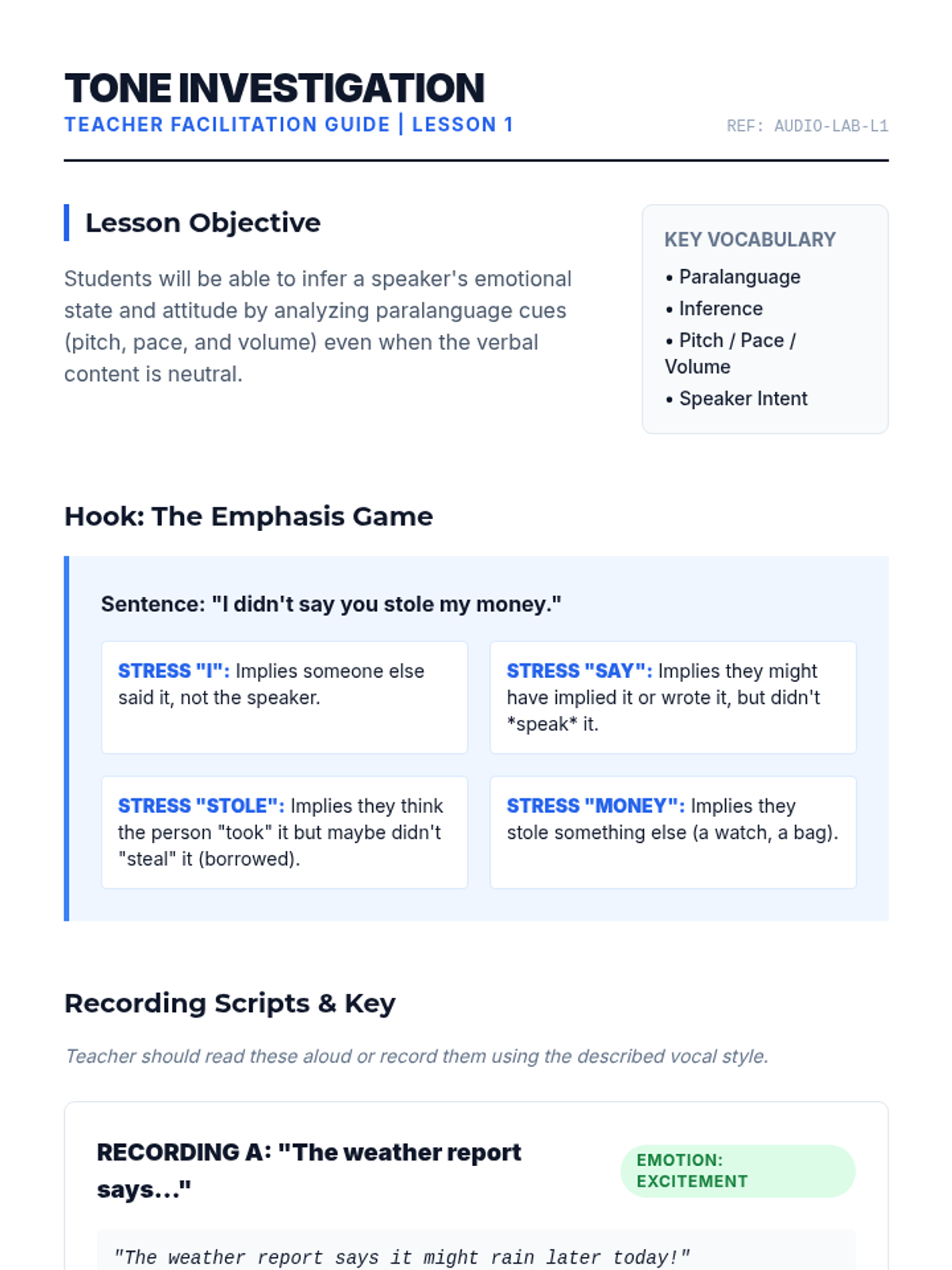
An advanced ESL sequence for 7th graders focusing on critical listening. Students learn to detect speaker intent, bias, and rhetorical devices, moving from basic comprehension to deep analysis of oral media and persuasive communication.
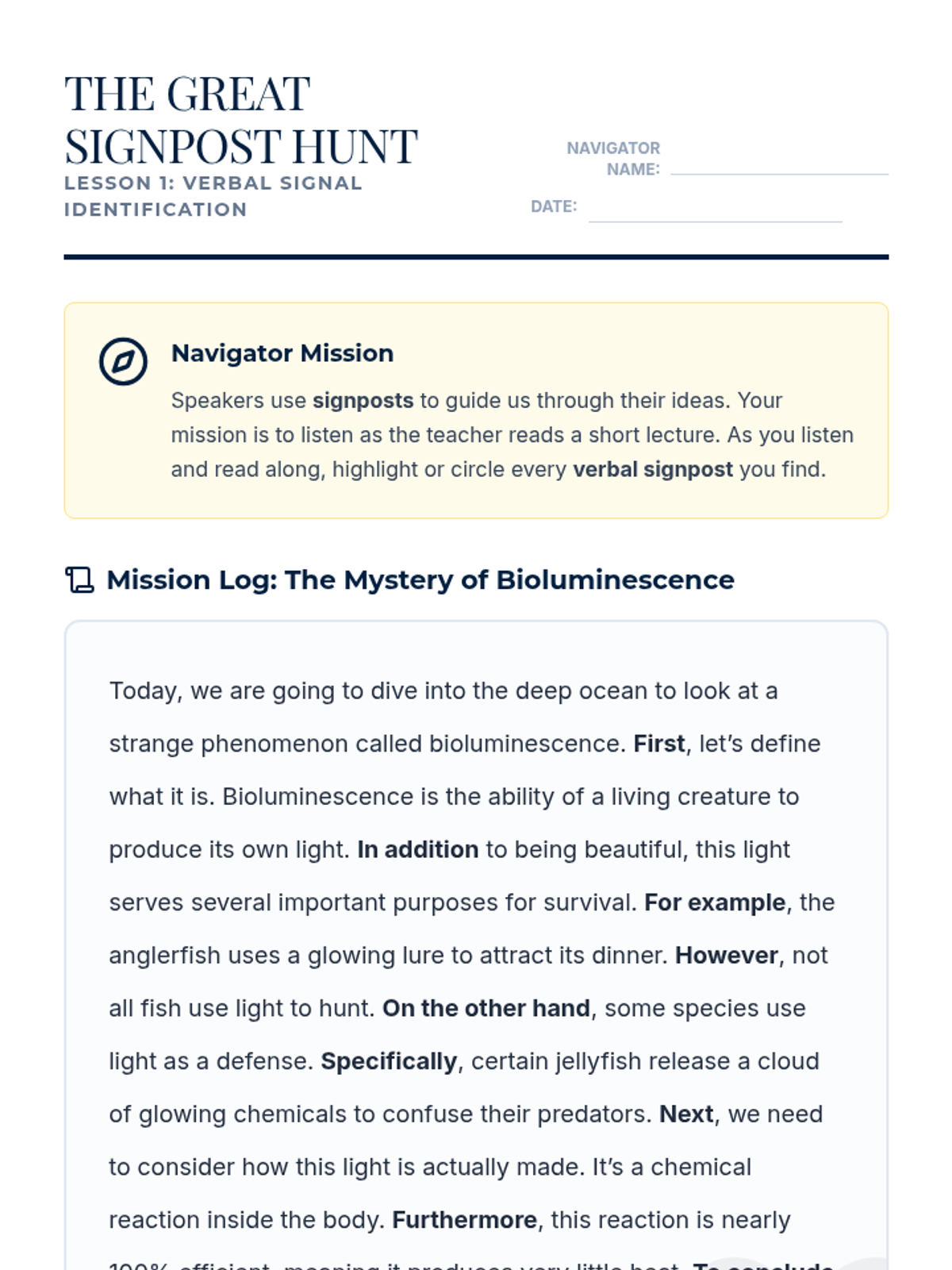
This sequence equips advanced 7th-grade ESL students with the skills to navigate complex academic lectures. It covers identifying verbal transitions, mastering Cornell notes, distinguishing main ideas from trivia, visualizing oral descriptions, and synthesizing information into accurate summaries.
This sequence equips advanced ESL students with strategies for academic listening, focusing on verbal signposts, main idea extraction, Cornell note-taking, and synthesizing complex information for academic discussion.
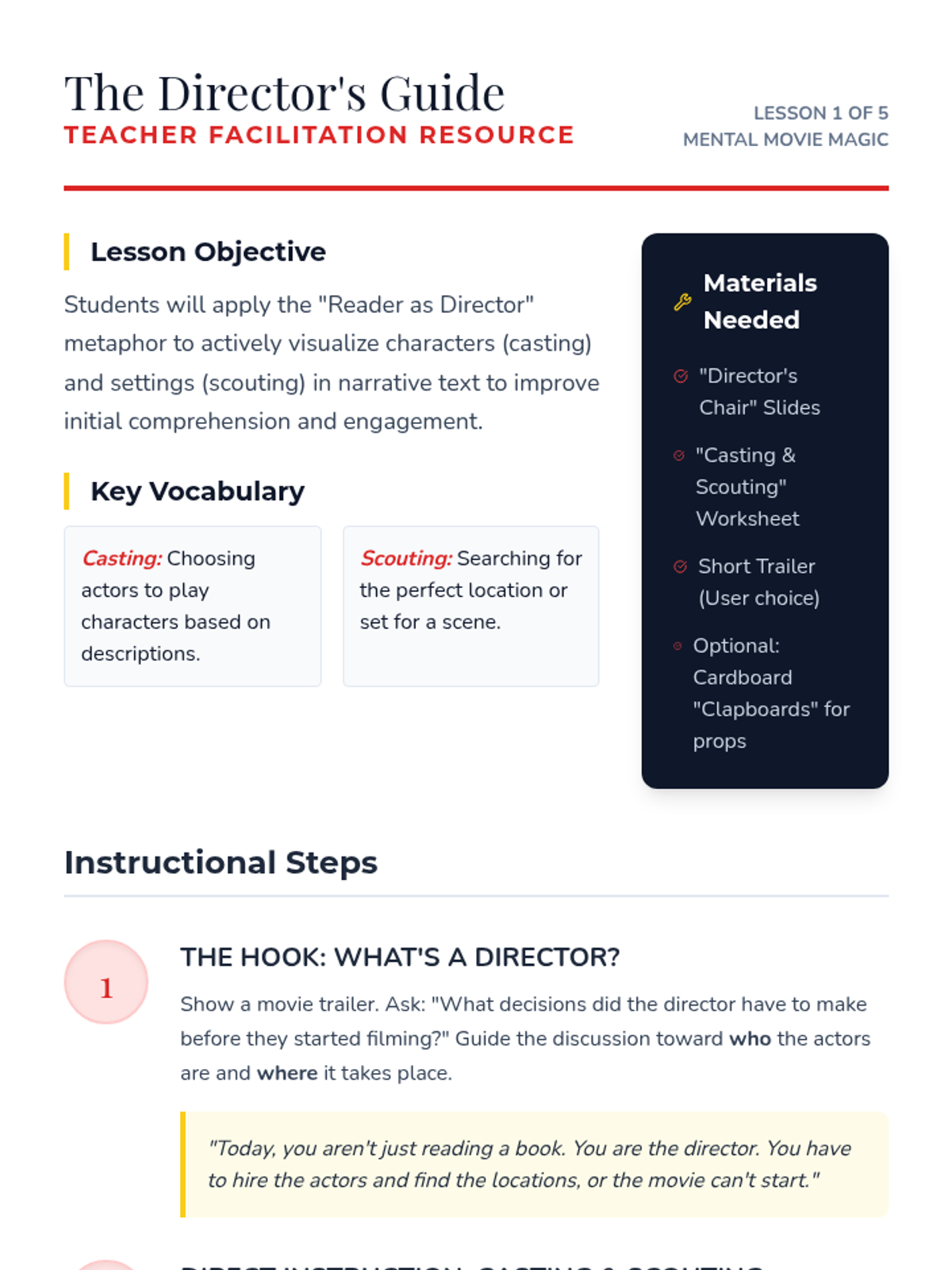
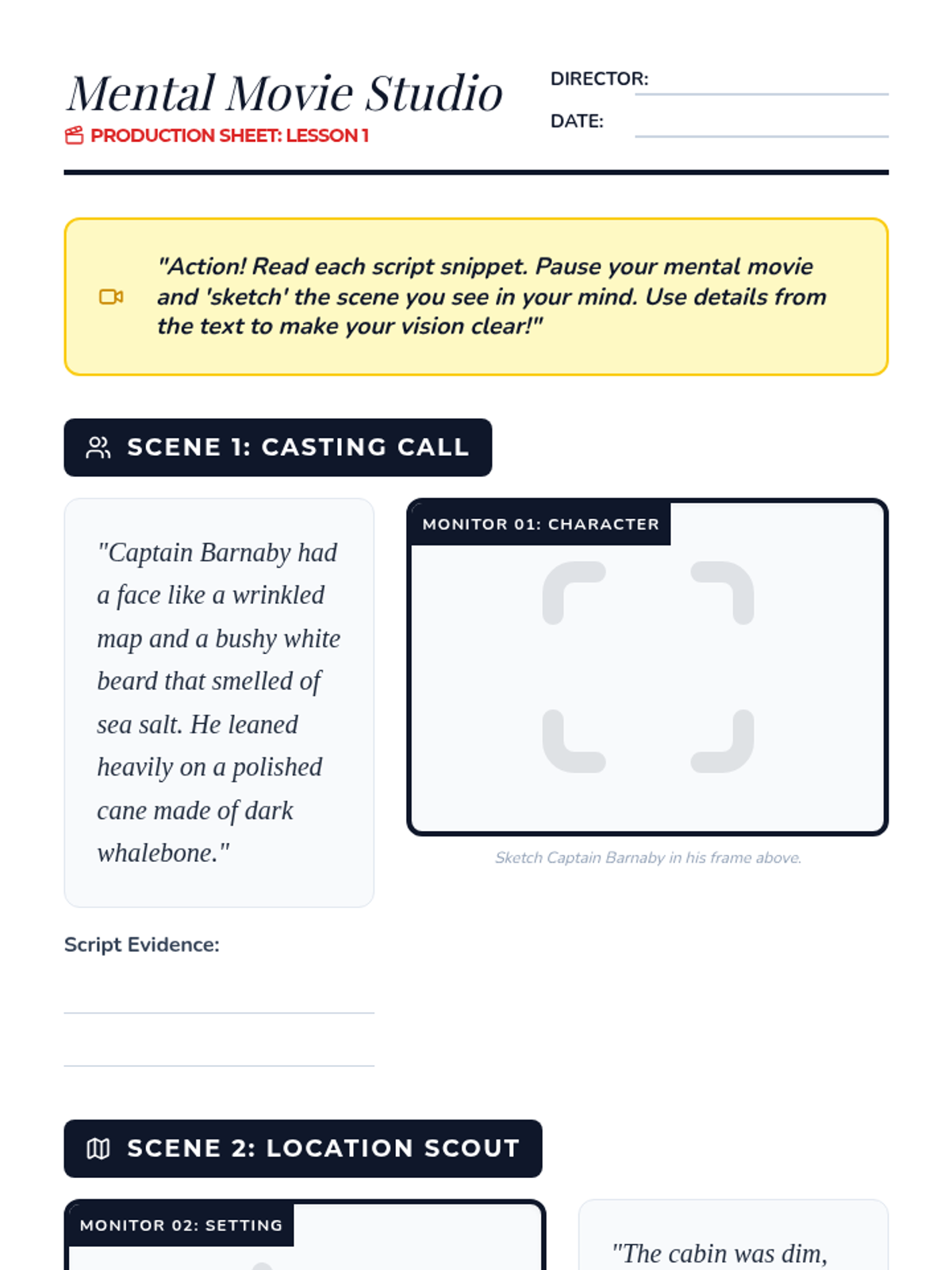
This sequence teaches 6th-grade students to use the 'Mental Movie' metaphor to improve reading comprehension and narrative recall. Students act as 'directors,' learning to visualize characters, settings, and actions while self-monitoring for 'glitches' in their understanding.
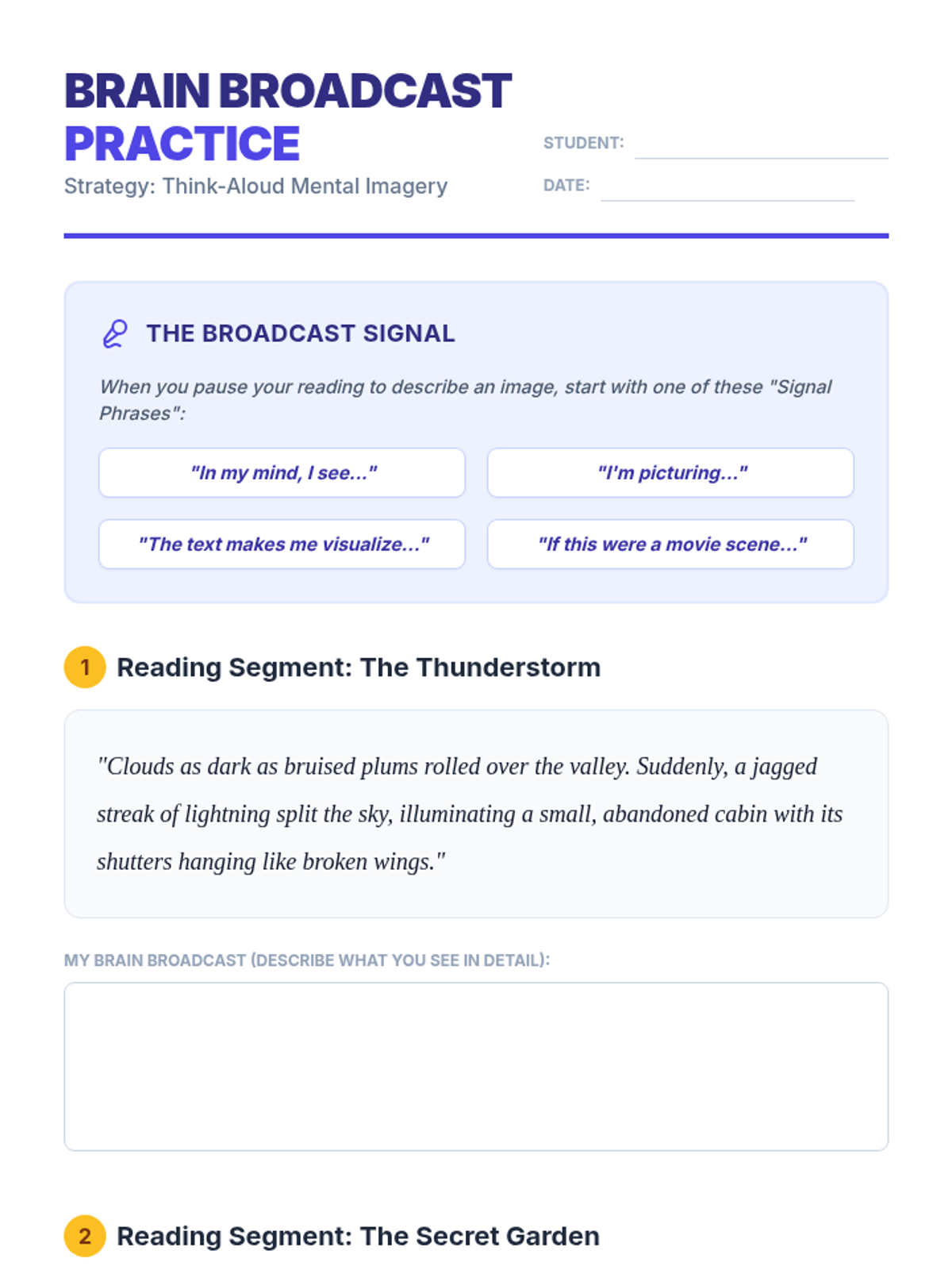
This sequence helps 7th-grade students externalize their internal visualization processes through verbalization, collaboration, and metacognitive strategies. Students transition from silent reading to audible 'think-alouds', partner-based descriptive tasks, and evaluative seminars to strengthen comprehension and memory retention.
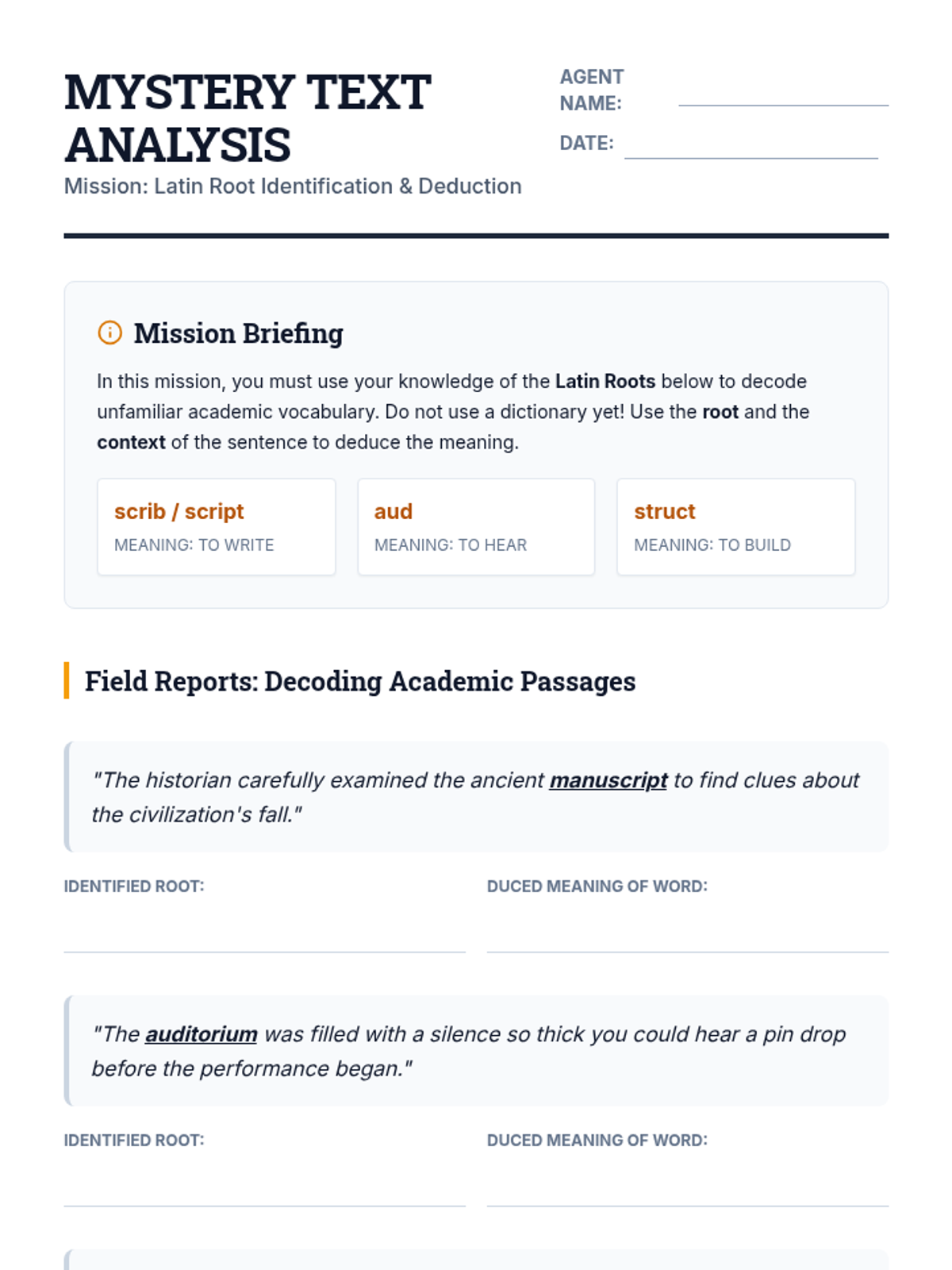
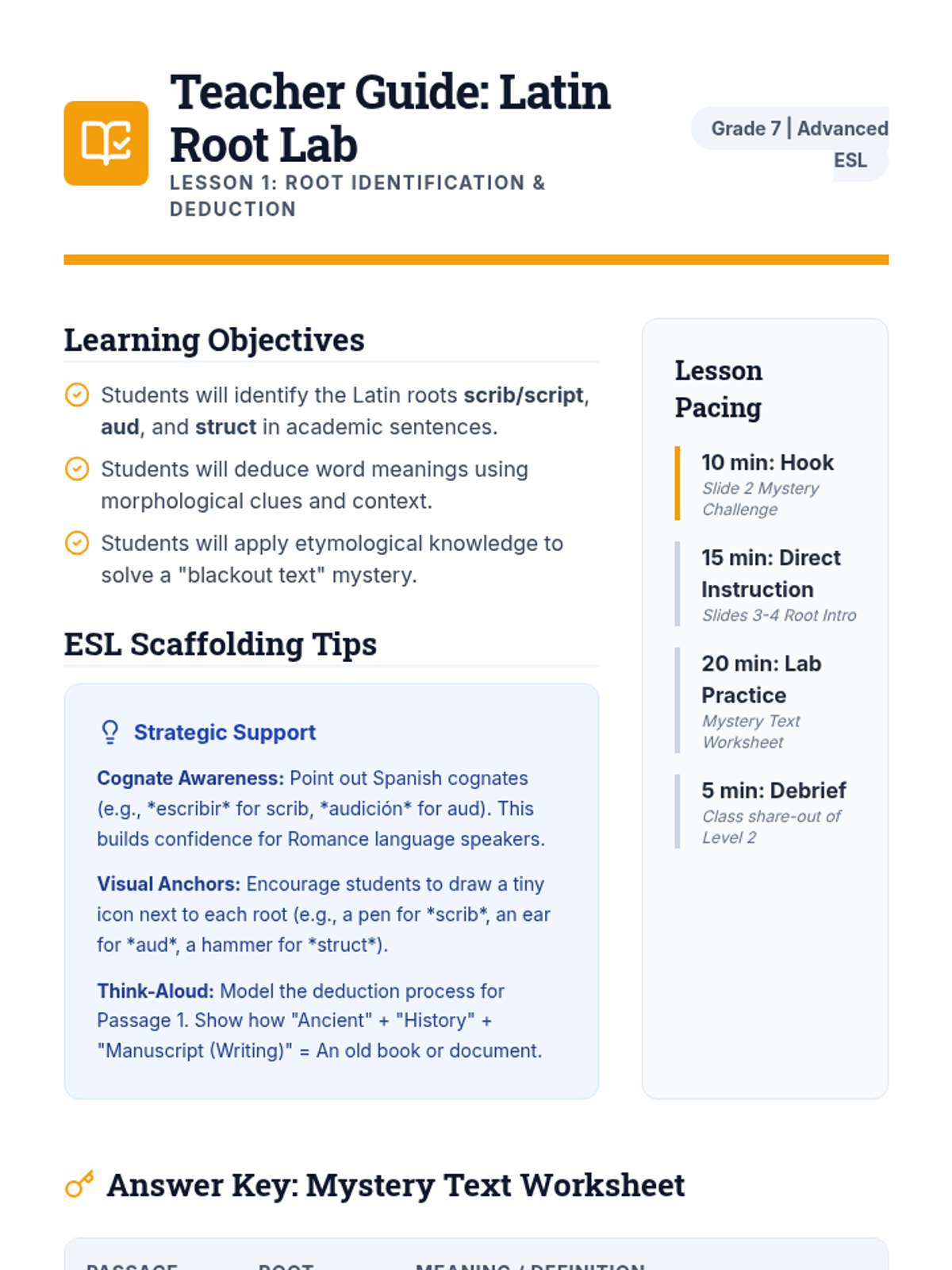
An advanced etymology sequence for 7th Grade ESL students, focusing on Latin and Greek morphemes to decode academic vocabulary across disciplines. Students progress from root identification to creating their own neologisms for modern inventions.
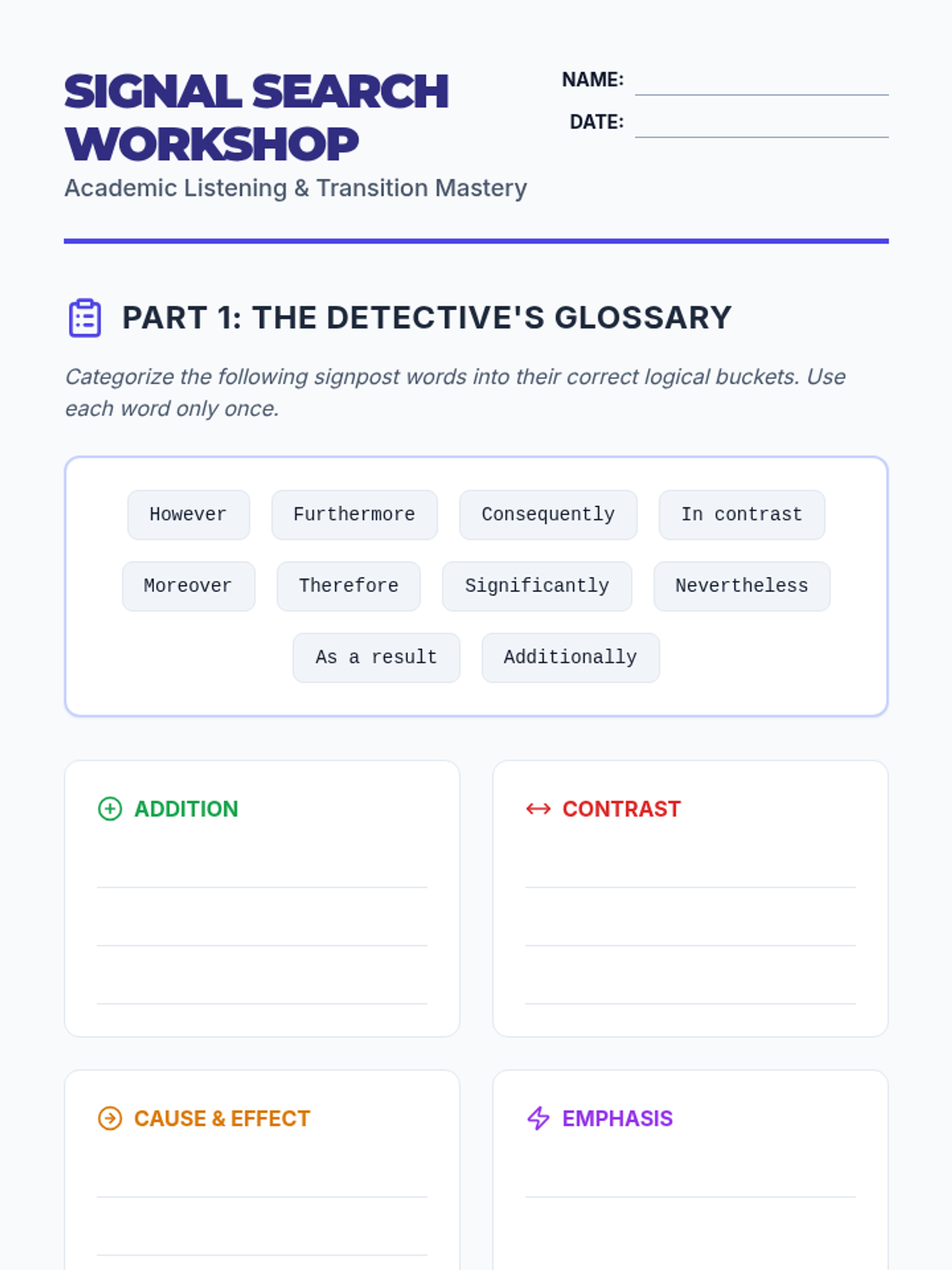
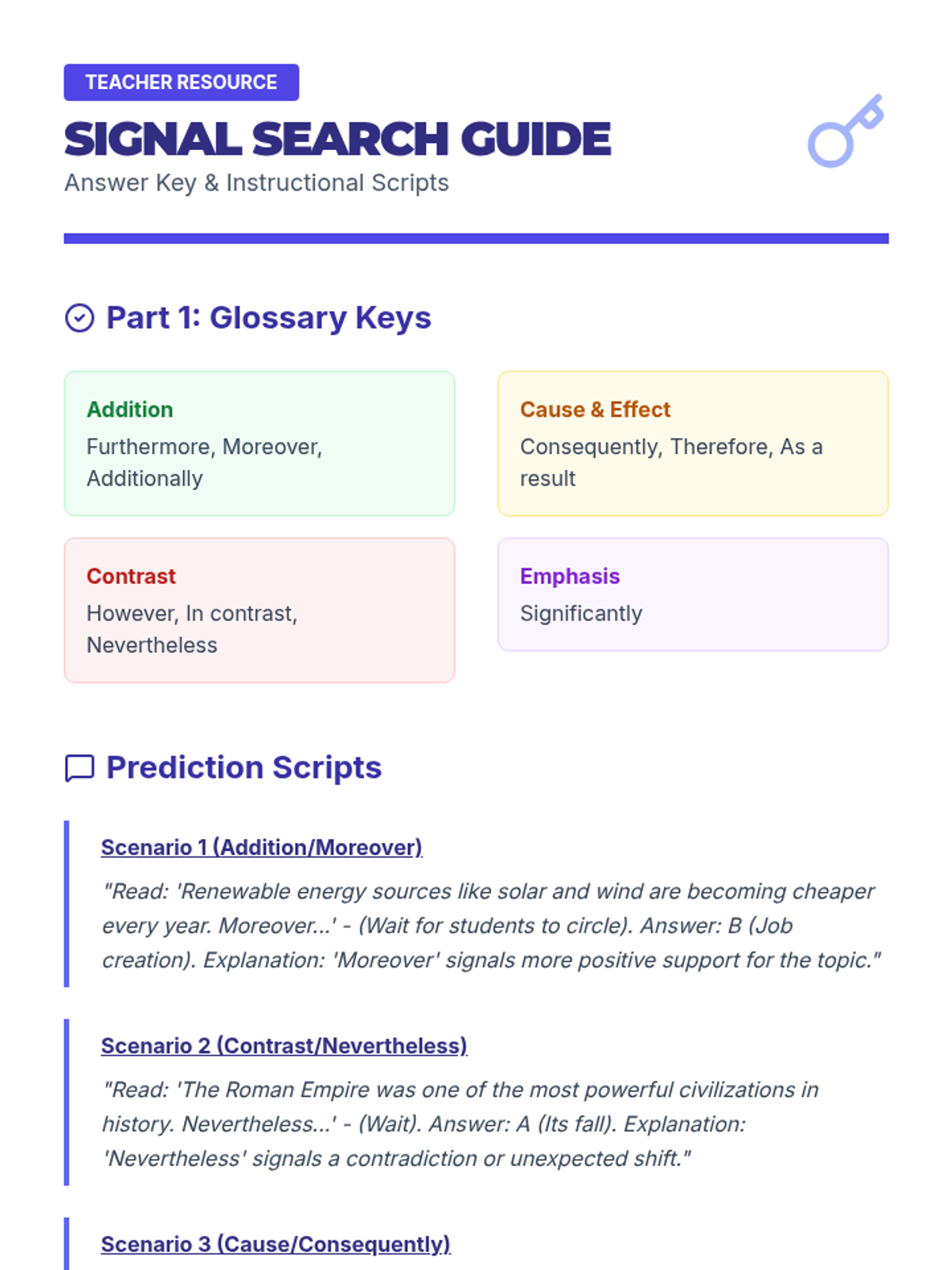
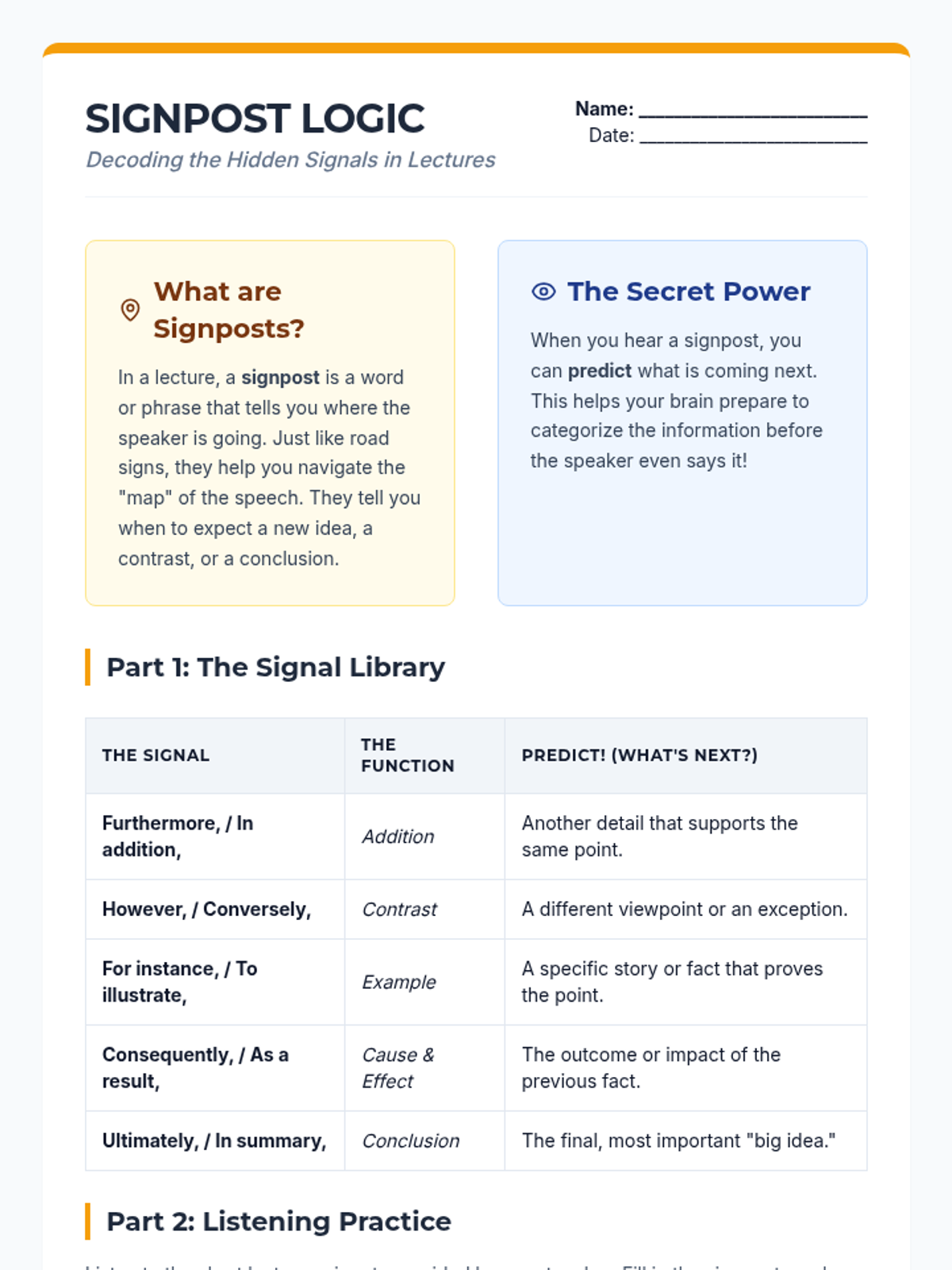
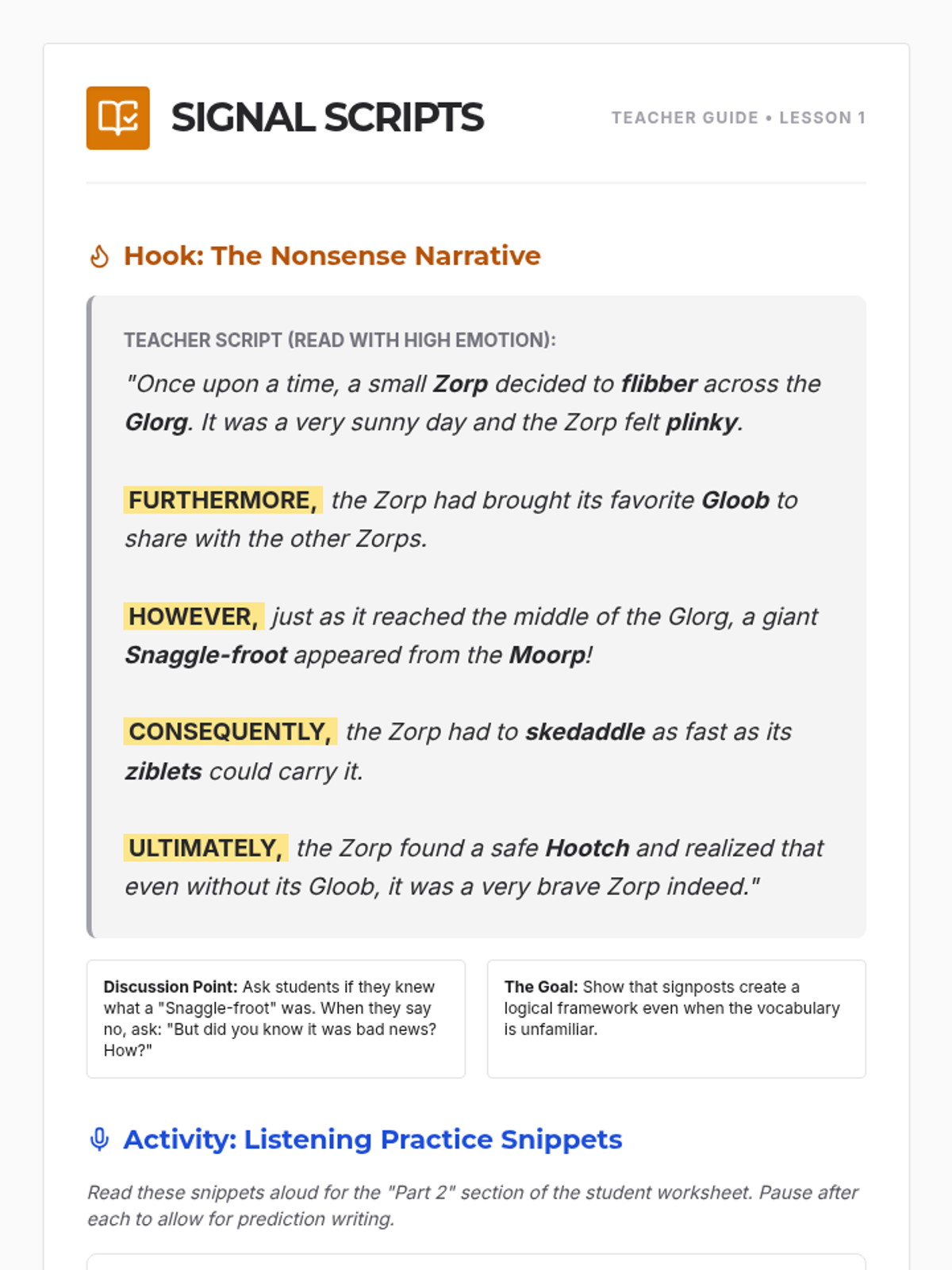
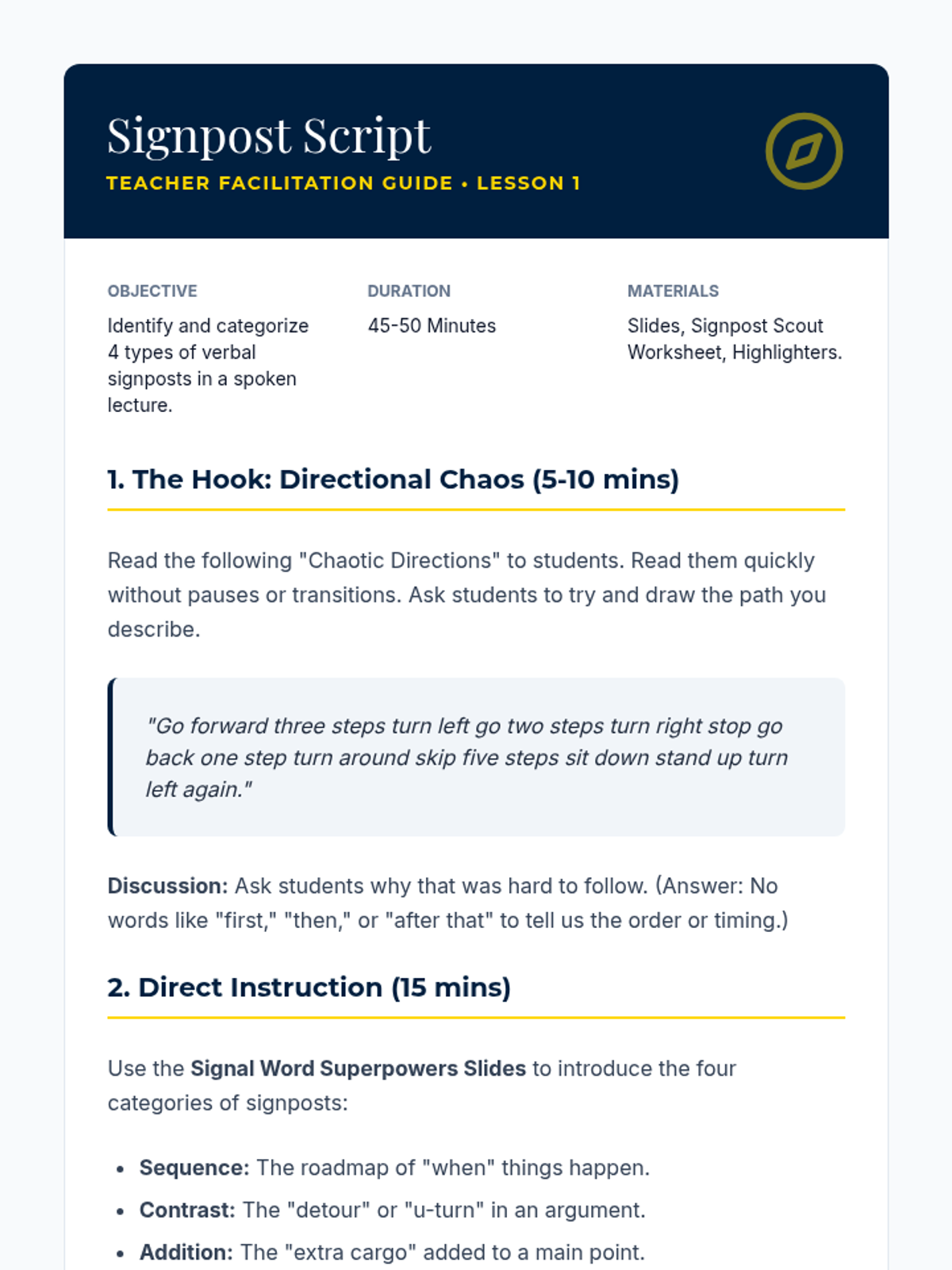
This sequence trains students to navigate academic lectures by identifying verbal signposts, emphasis markers, and structural cues. Through simulations and hands-on activities, students develop the ability to predict information flow and synthesize spoken content.
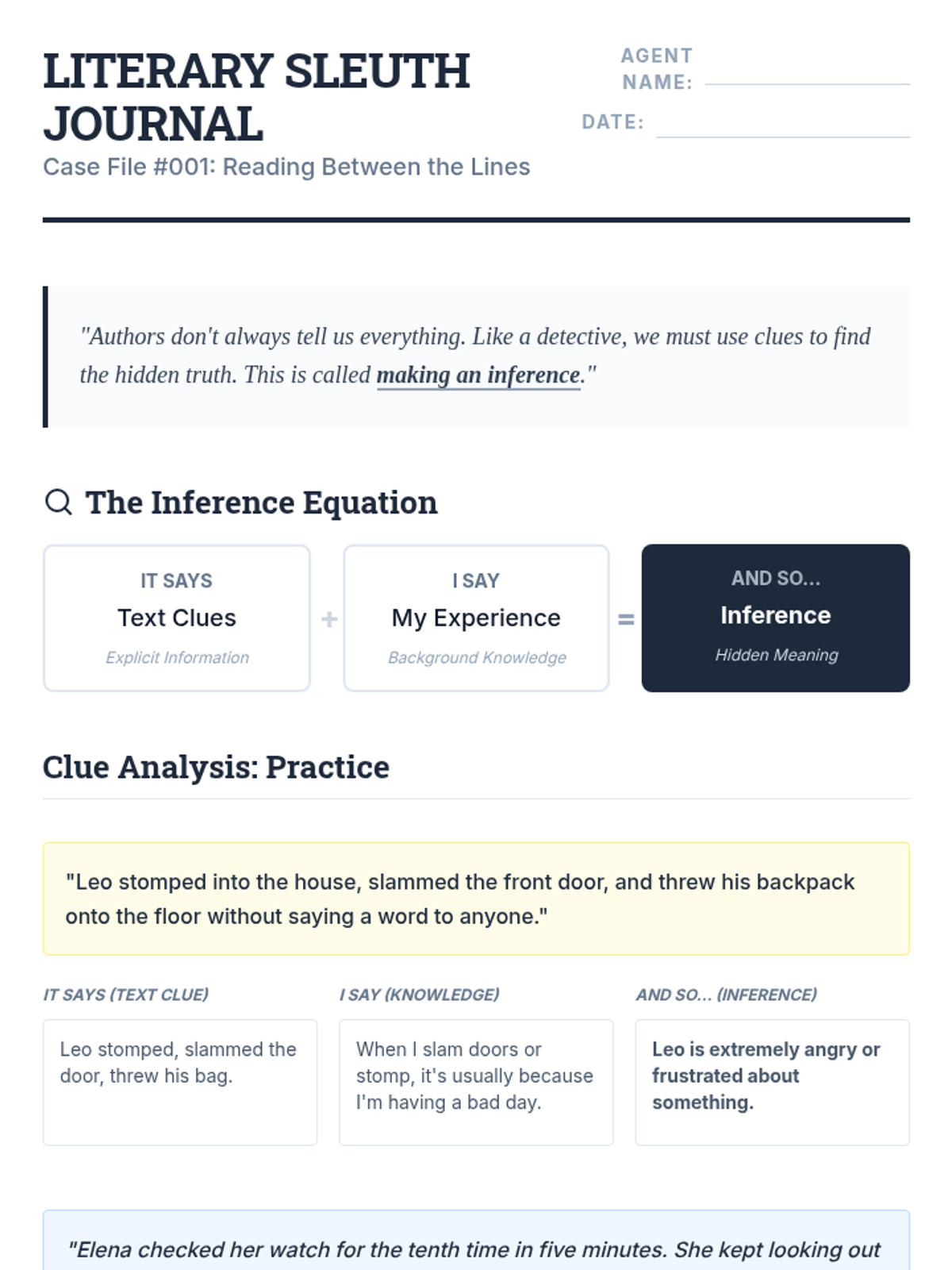
This sequence guides Intermediate ELL students through narrative fiction analysis, focusing on the shift from literal comprehension to deep inference and tone evaluation. Through a 'Literary Sleuth' theme, students develop strategies to decode hidden meanings, analyze character motivations, and engage in academic discussions using textual evidence.
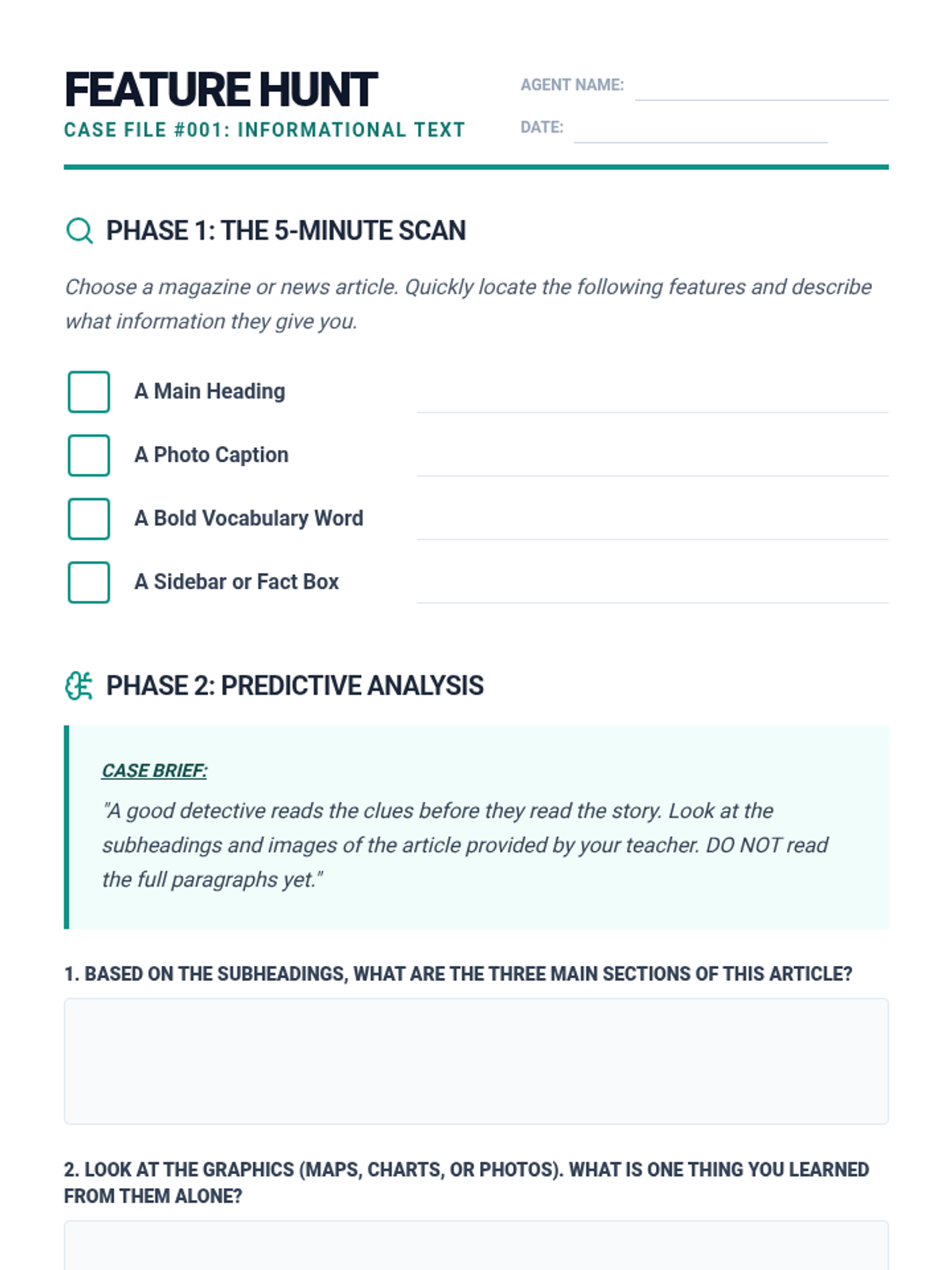
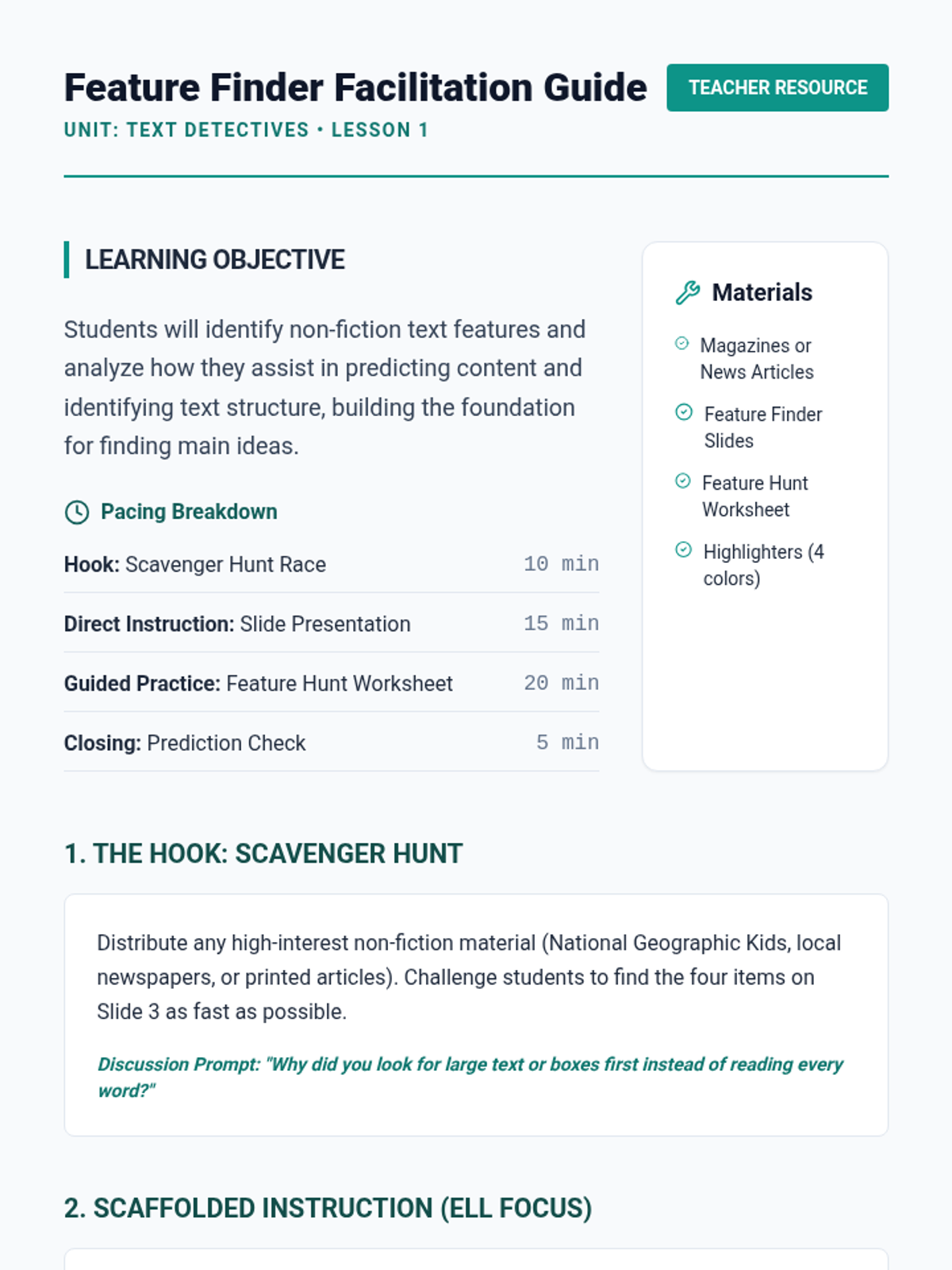
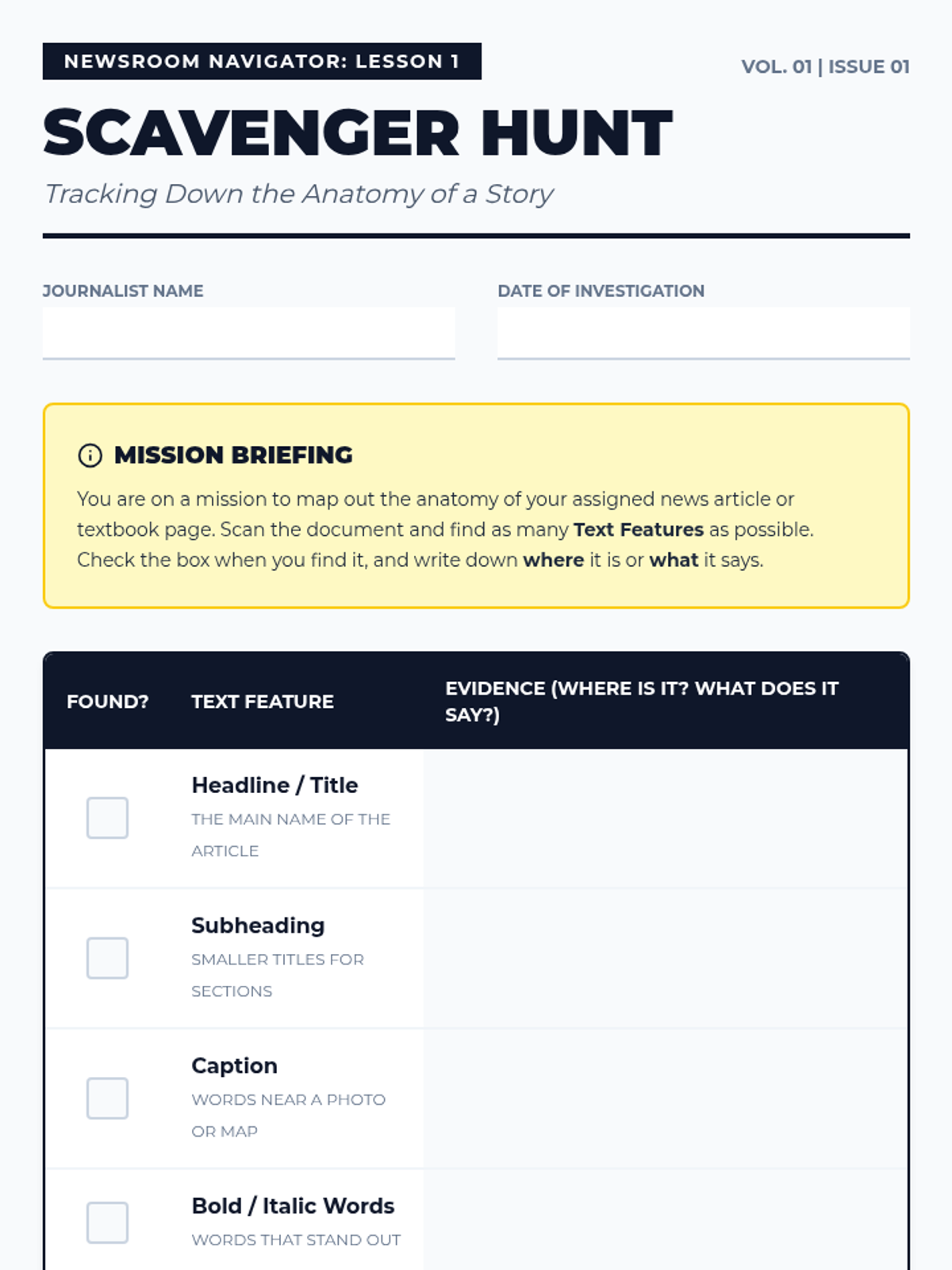
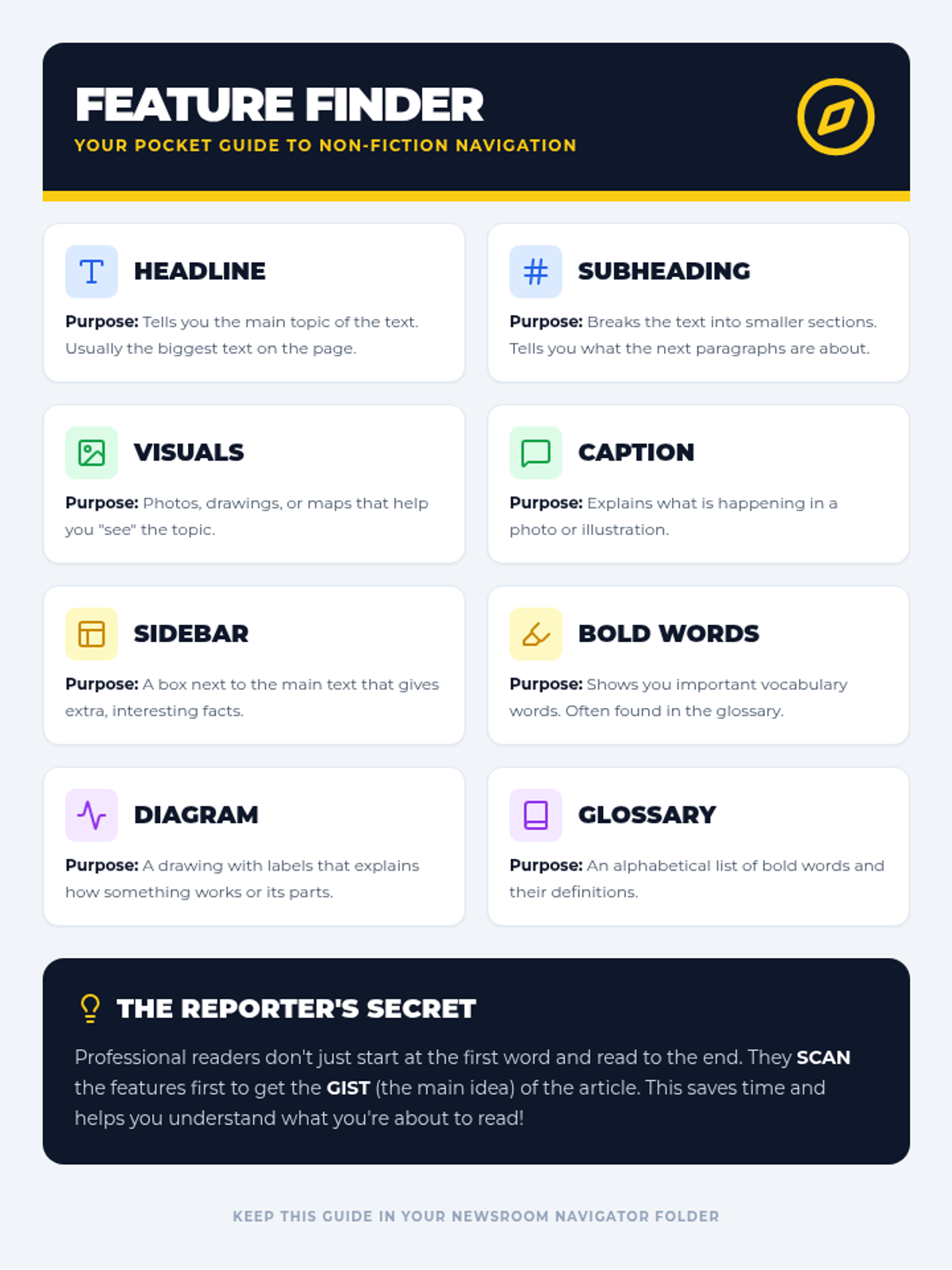
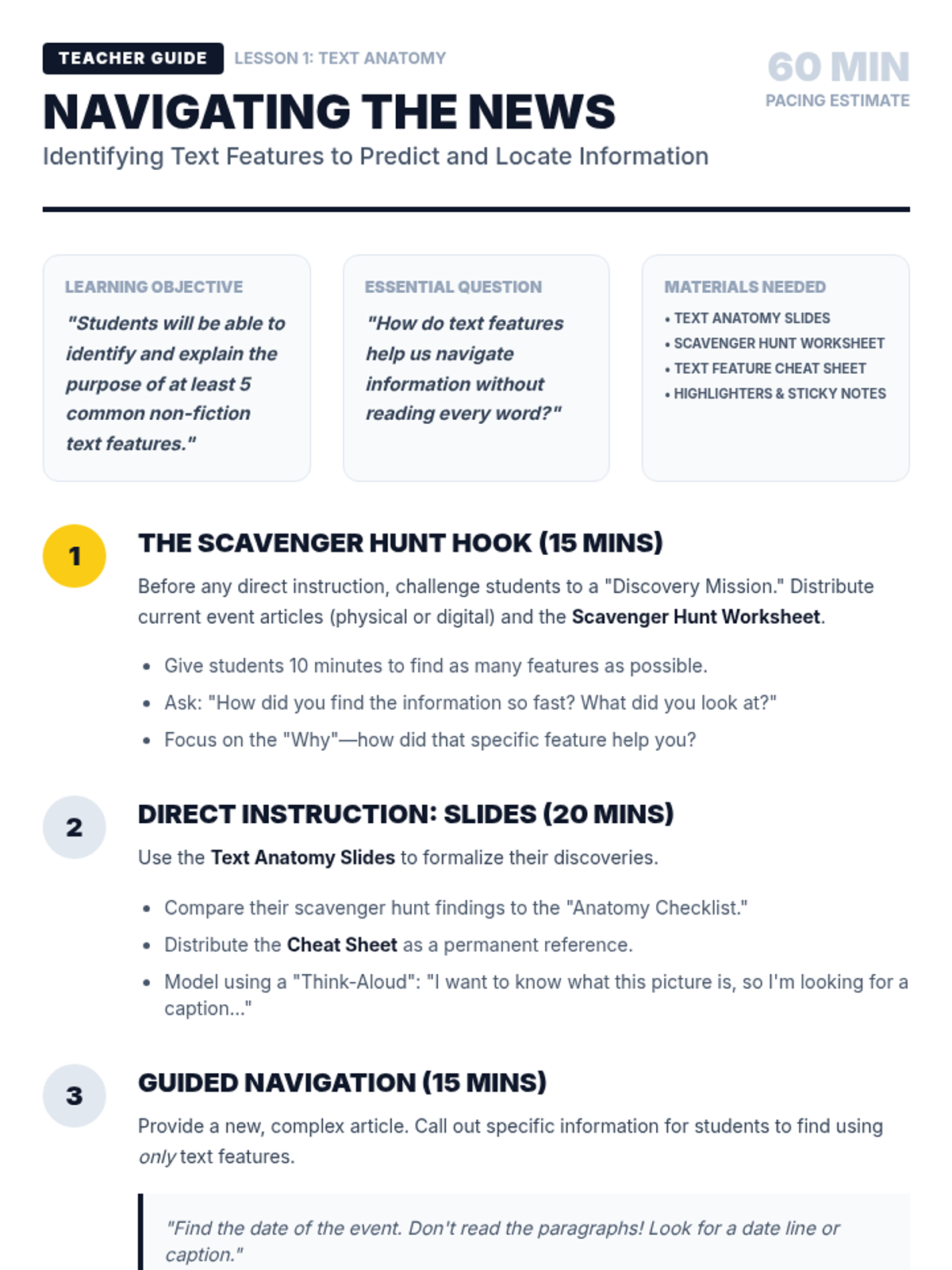
A comprehensive 8th-grade reading sequence designed for intermediate ELL students to master identifying main ideas and analyzing non-fiction text structures. Through a journalist-themed lens, students move from identifying surface-level text features to critically comparing how different structures convey central ideas.
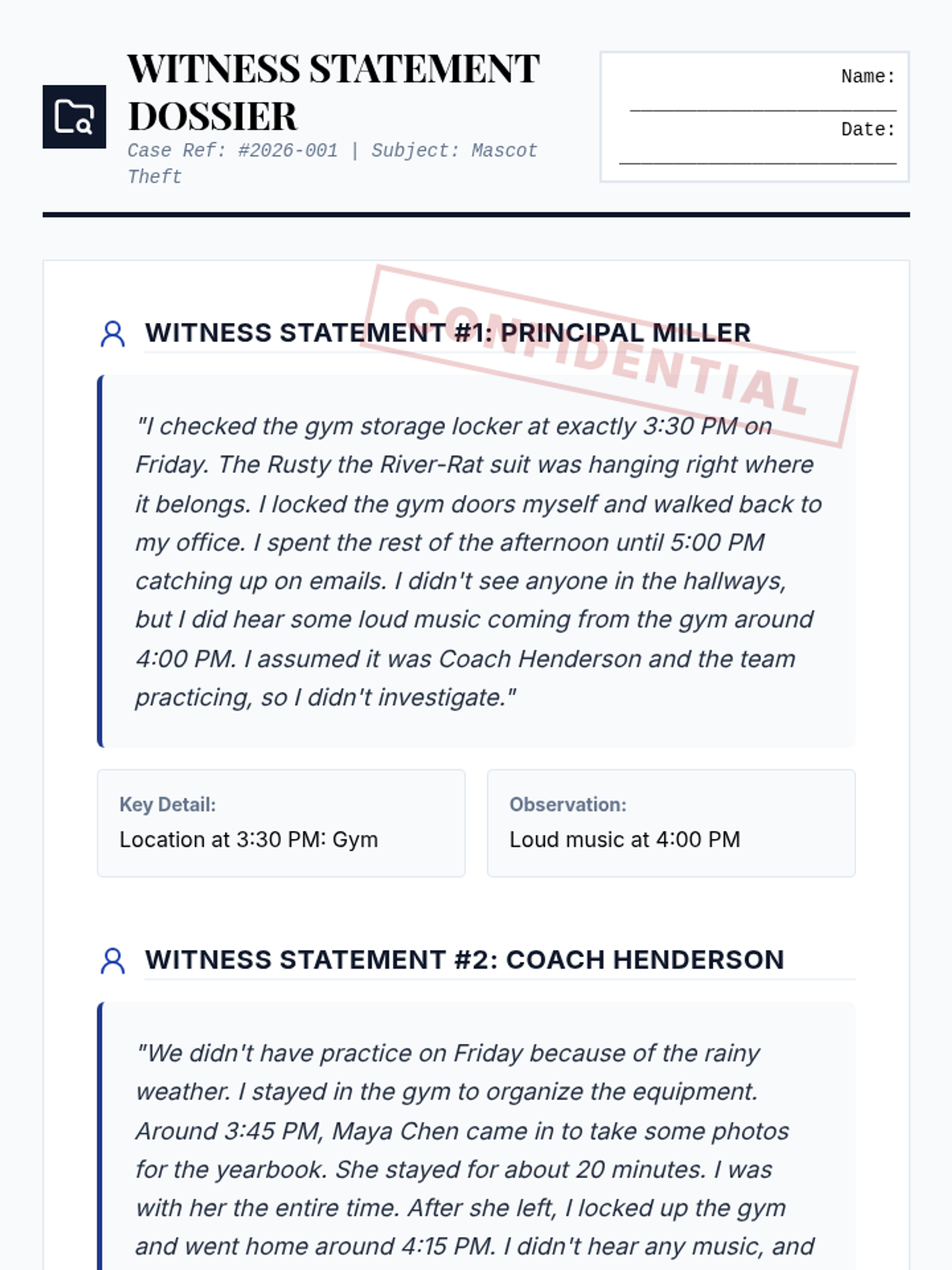
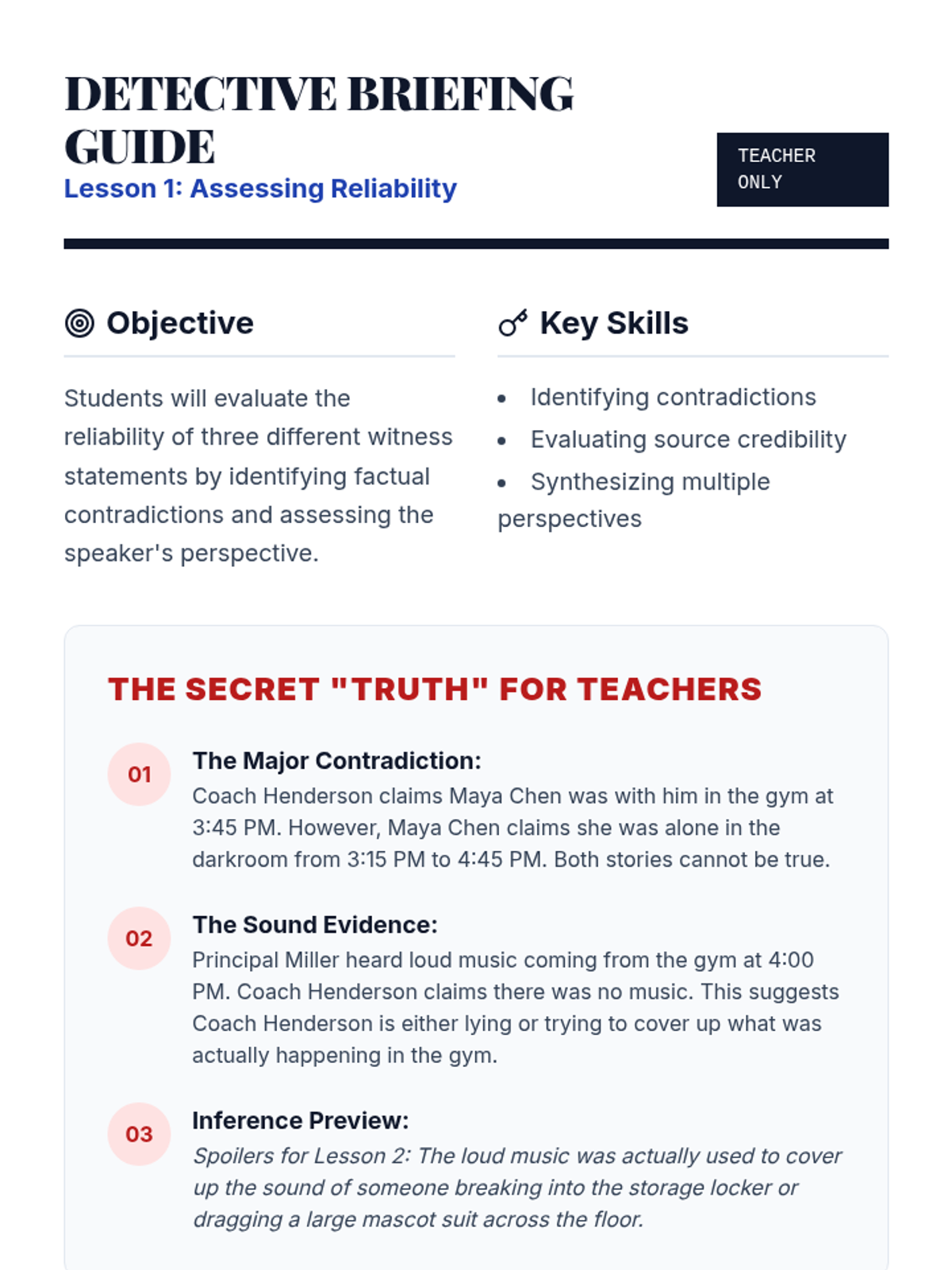
A reading comprehension sequence for 6th grade ELLs where students act as detectives, synthesizing evidence from various text types (interviews, maps, emails) to solve a central mystery while building skills in inference and source evaluation.
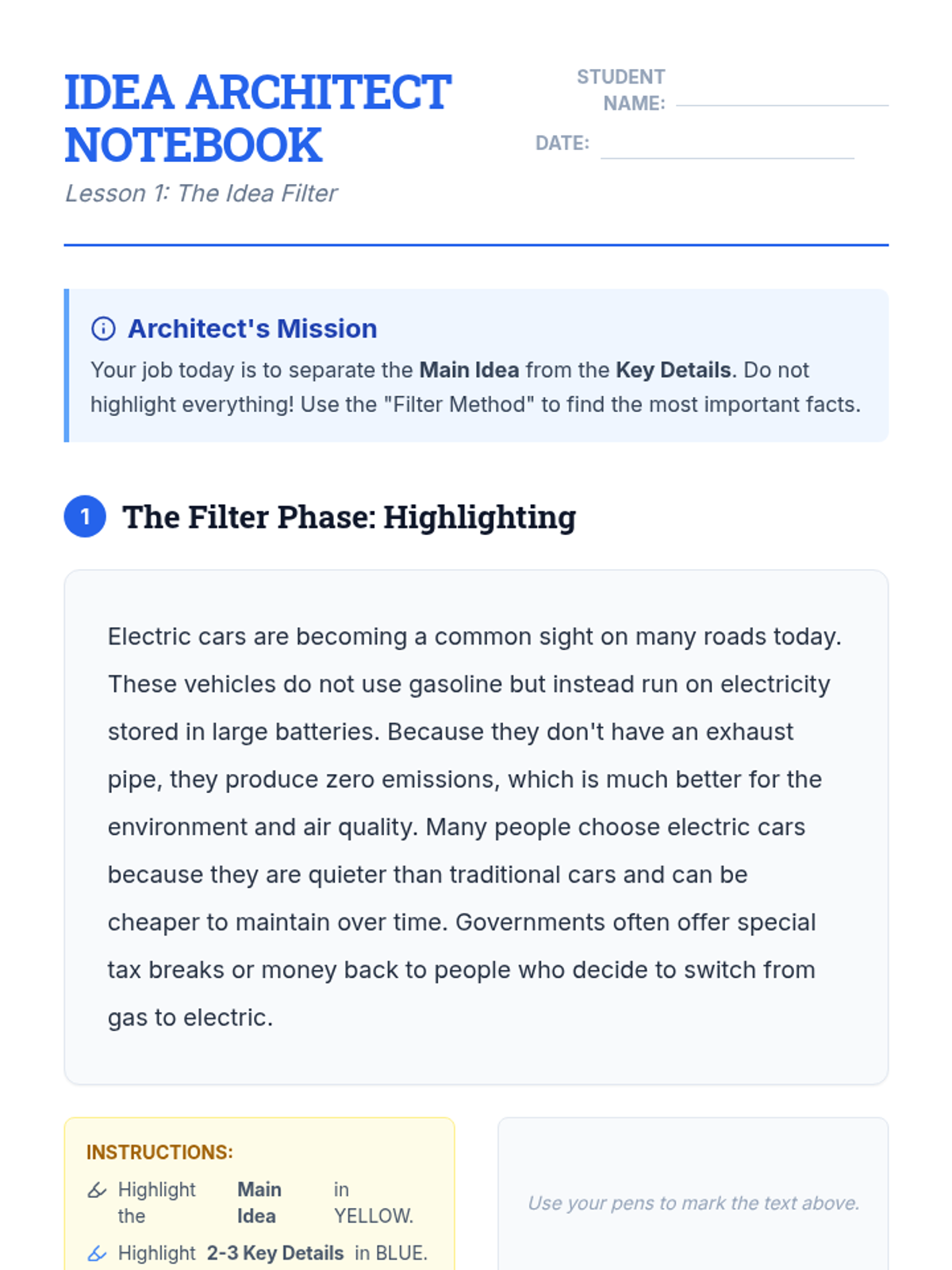
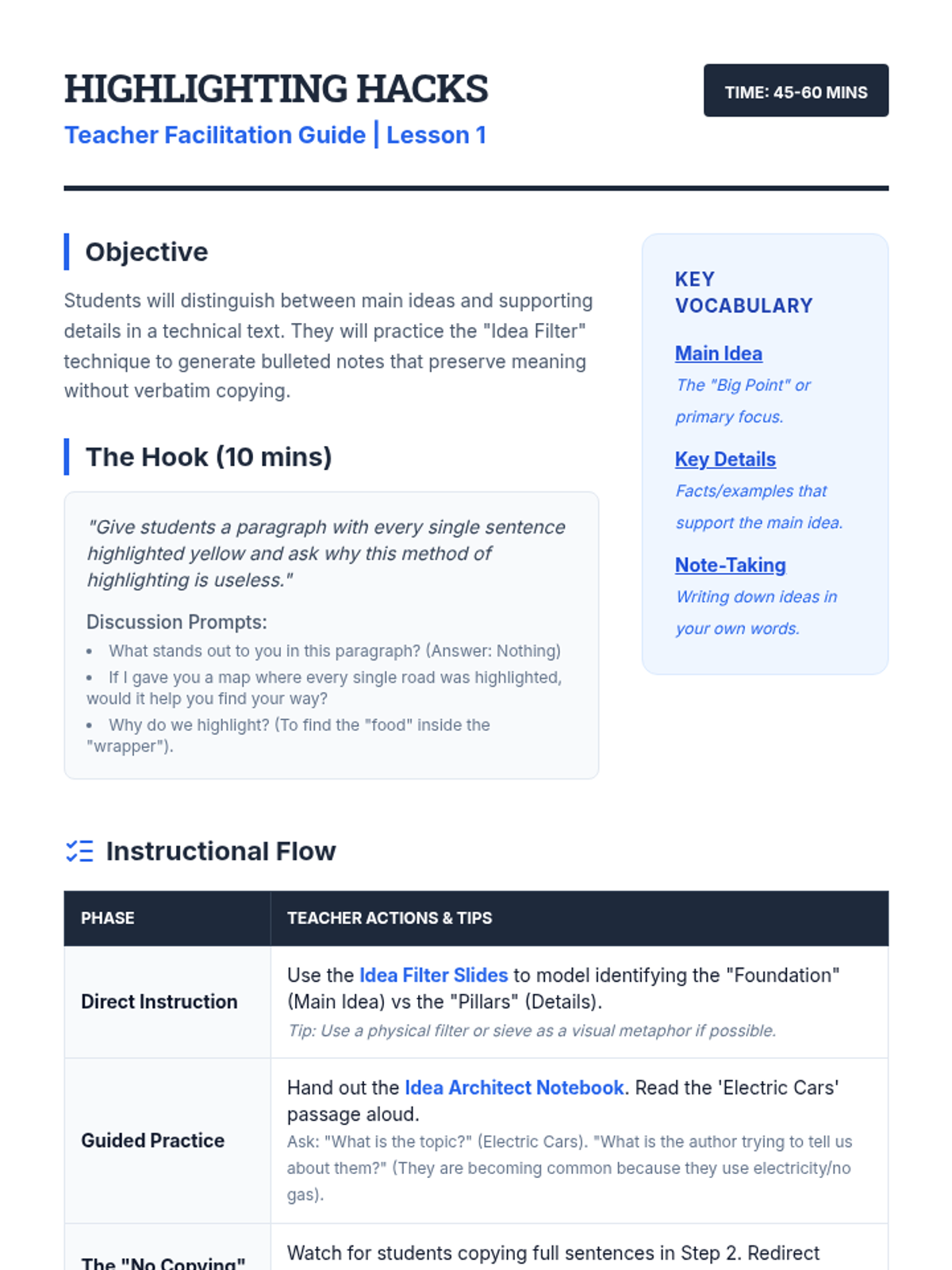
A comprehensive sequence for 6th-grade ELL students to master identifying main ideas and supporting details. Students progress from basic topic identification to synthesizing complex informational texts through visual analogies, structured practice, and summarization techniques.
A 5-lesson sequence for 6th Grade Intermediate ELL students focusing on making inferences in fiction. Students transition from literal observation to nuanced inference, analyzing character actions, dialogue, and setting to uncover hidden motivations and plot developments using a 'Show, Don't Tell' framework.
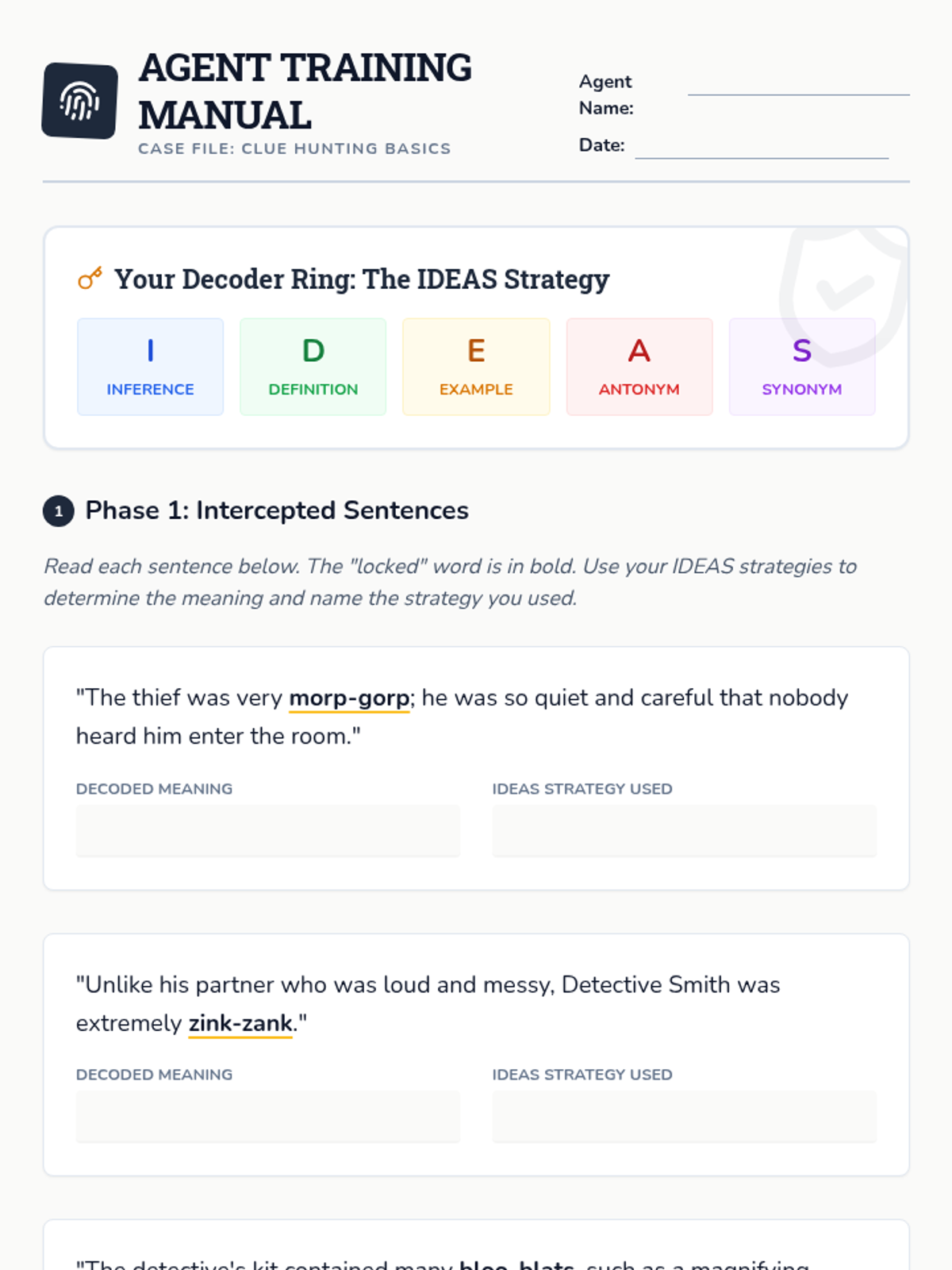
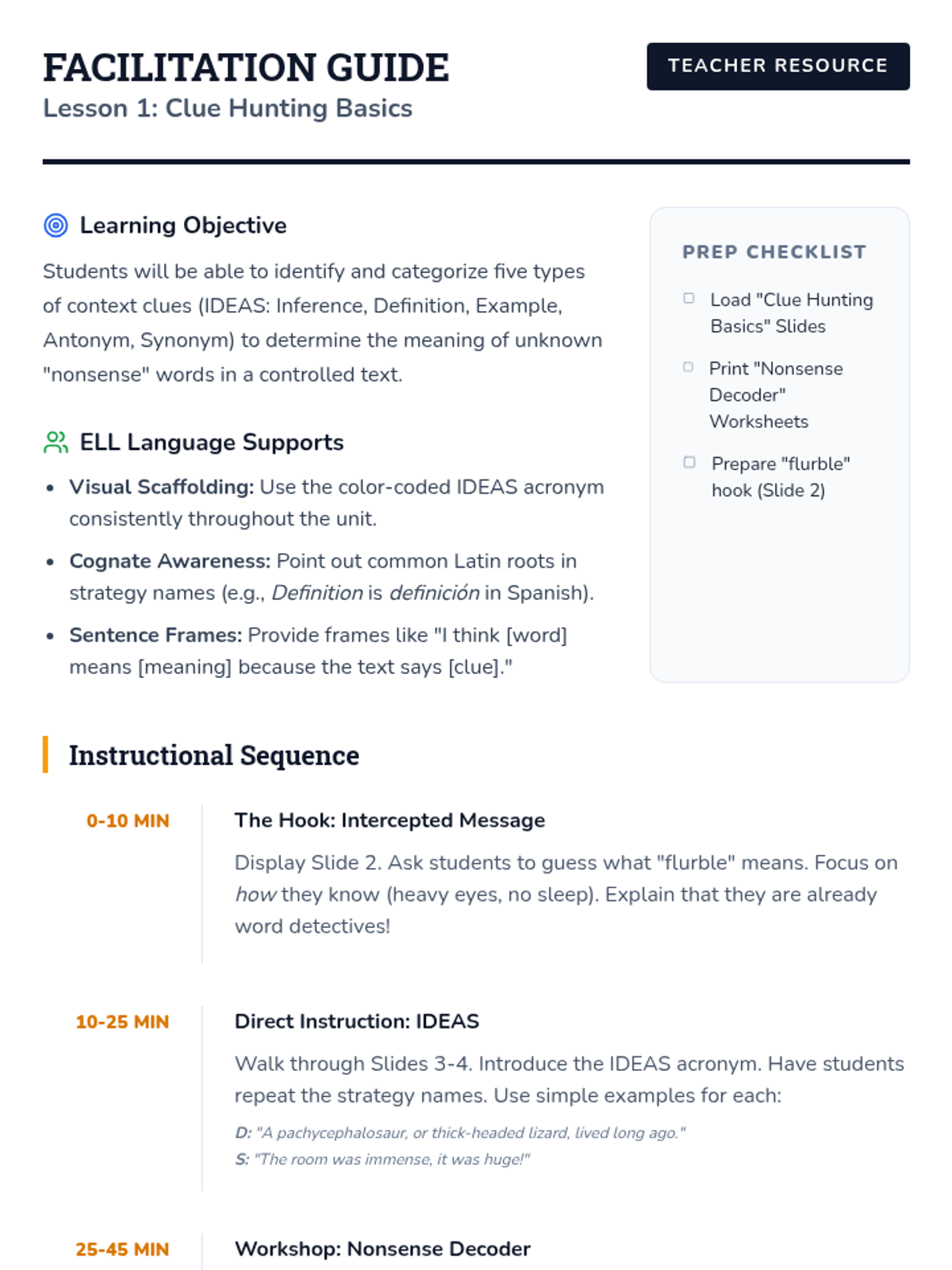
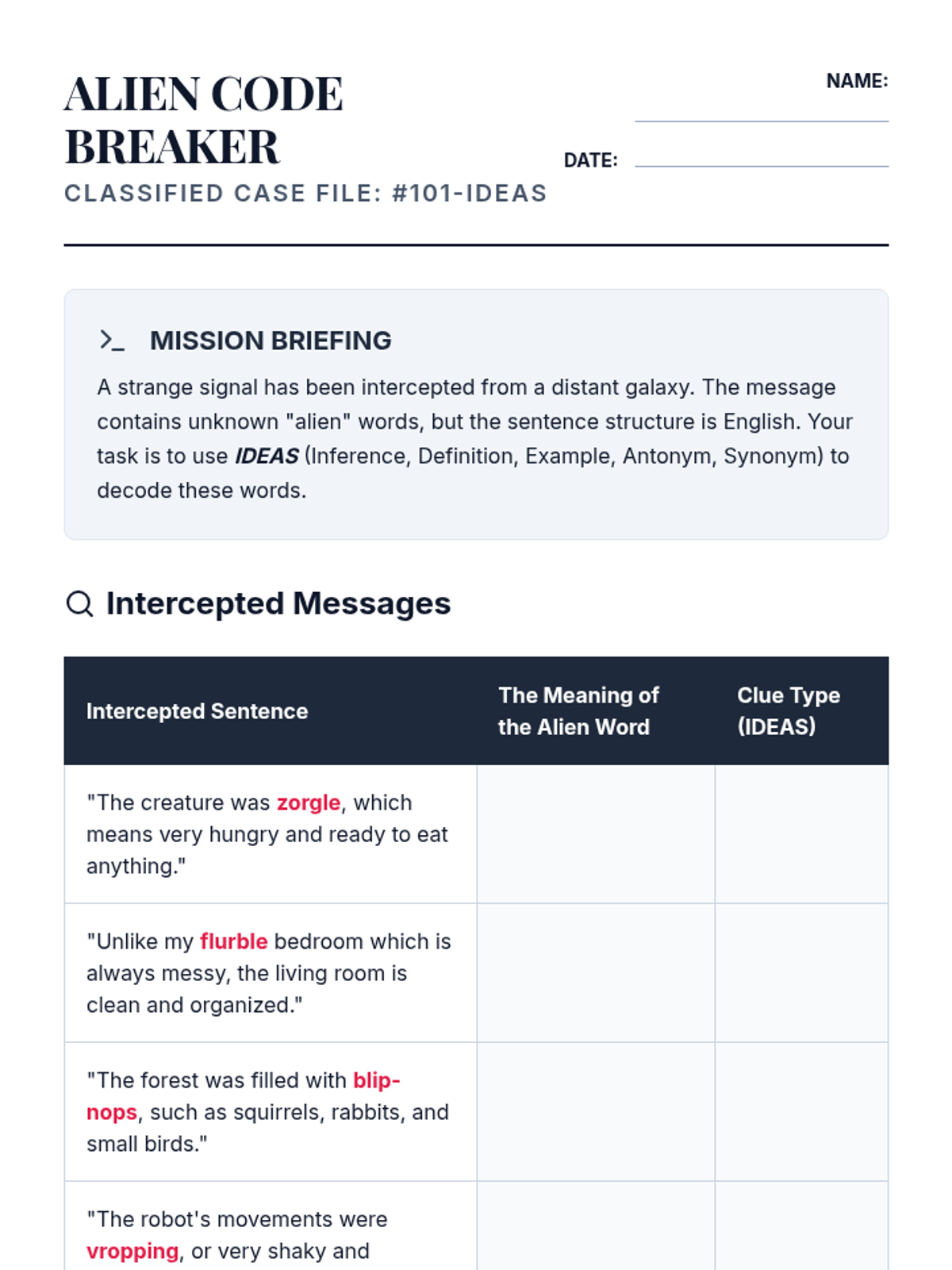
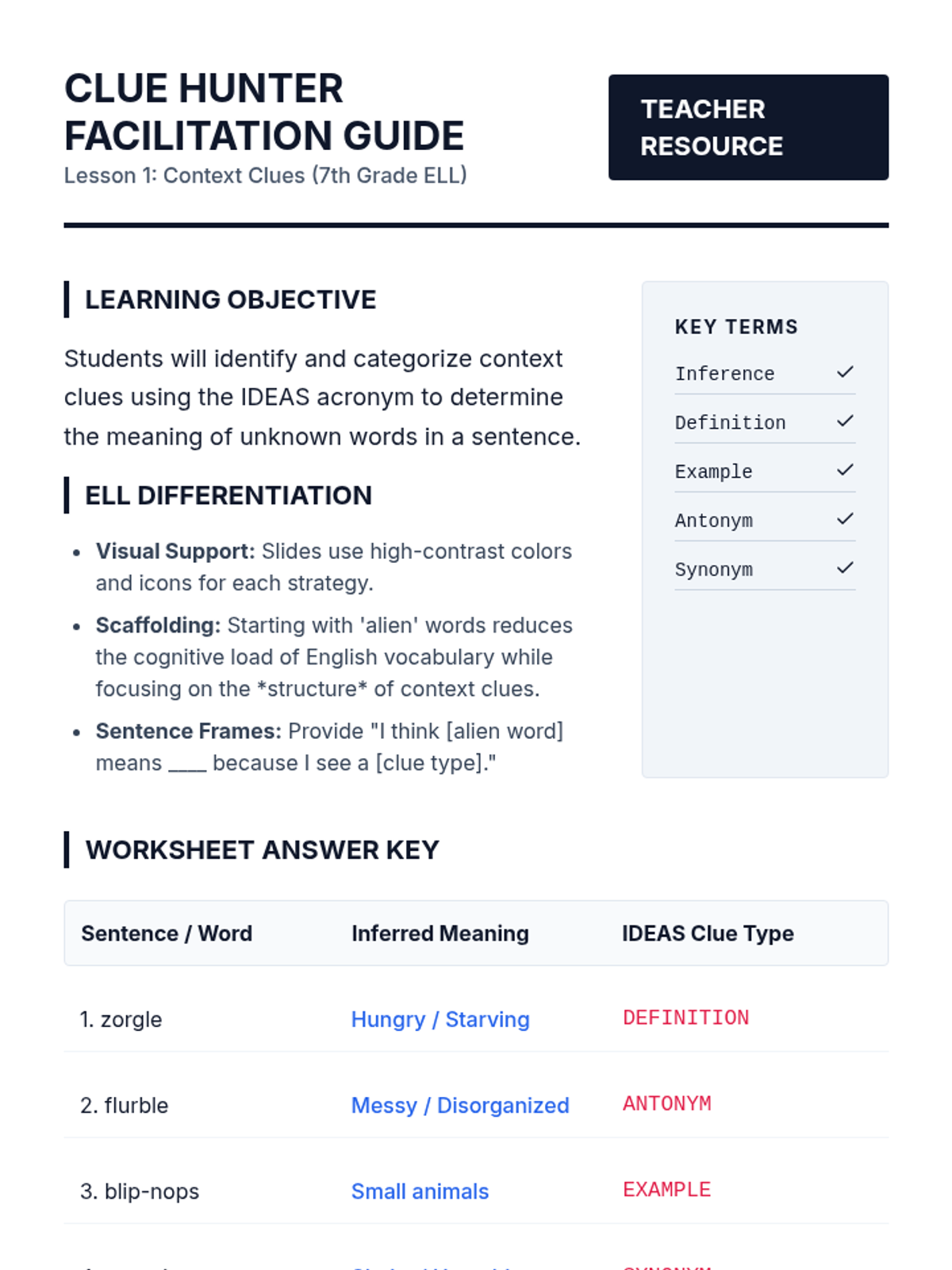
A comprehensive unit for 6th grade intermediate ELL students to master the IDEAS context clues strategies (Inference, Definition, Example, Antonym, Synonym). Students progress from identifying explicit signals to inferring meaning in complex narrative and informational texts.
A 5-lesson sequence for 7th Grade intermediate ELL students focused on identifying text structures, distinguishing main ideas from details, and synthesizing non-fiction information into concise summaries and infographics.
This sequence transforms students into linguistic investigators, moving them beyond simple dictionary reliance to active text analysis. Students progress from identifying explicit definition and example clues to making complex inferences based on tone, culminating in a substitution strategy for verification.
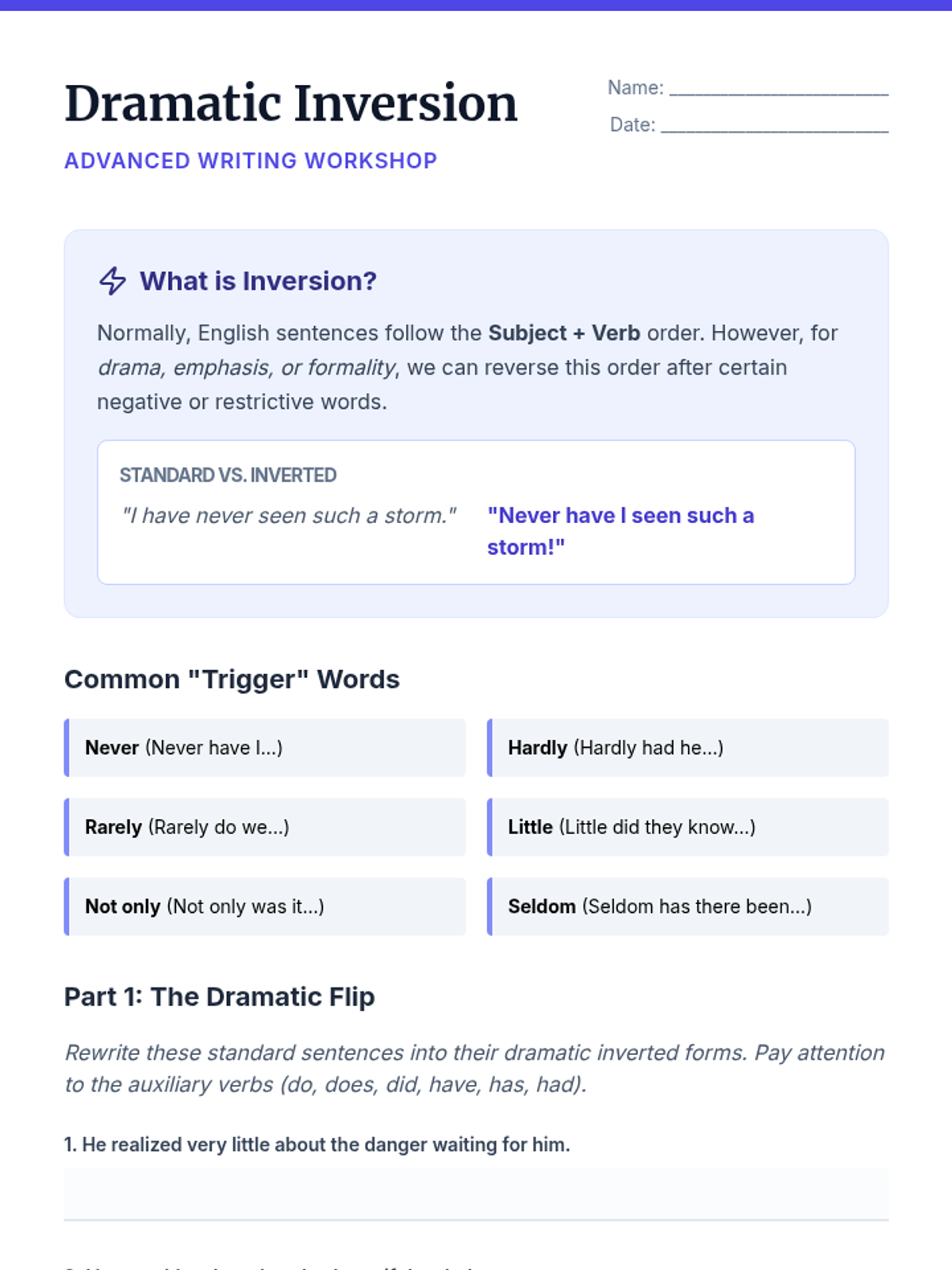
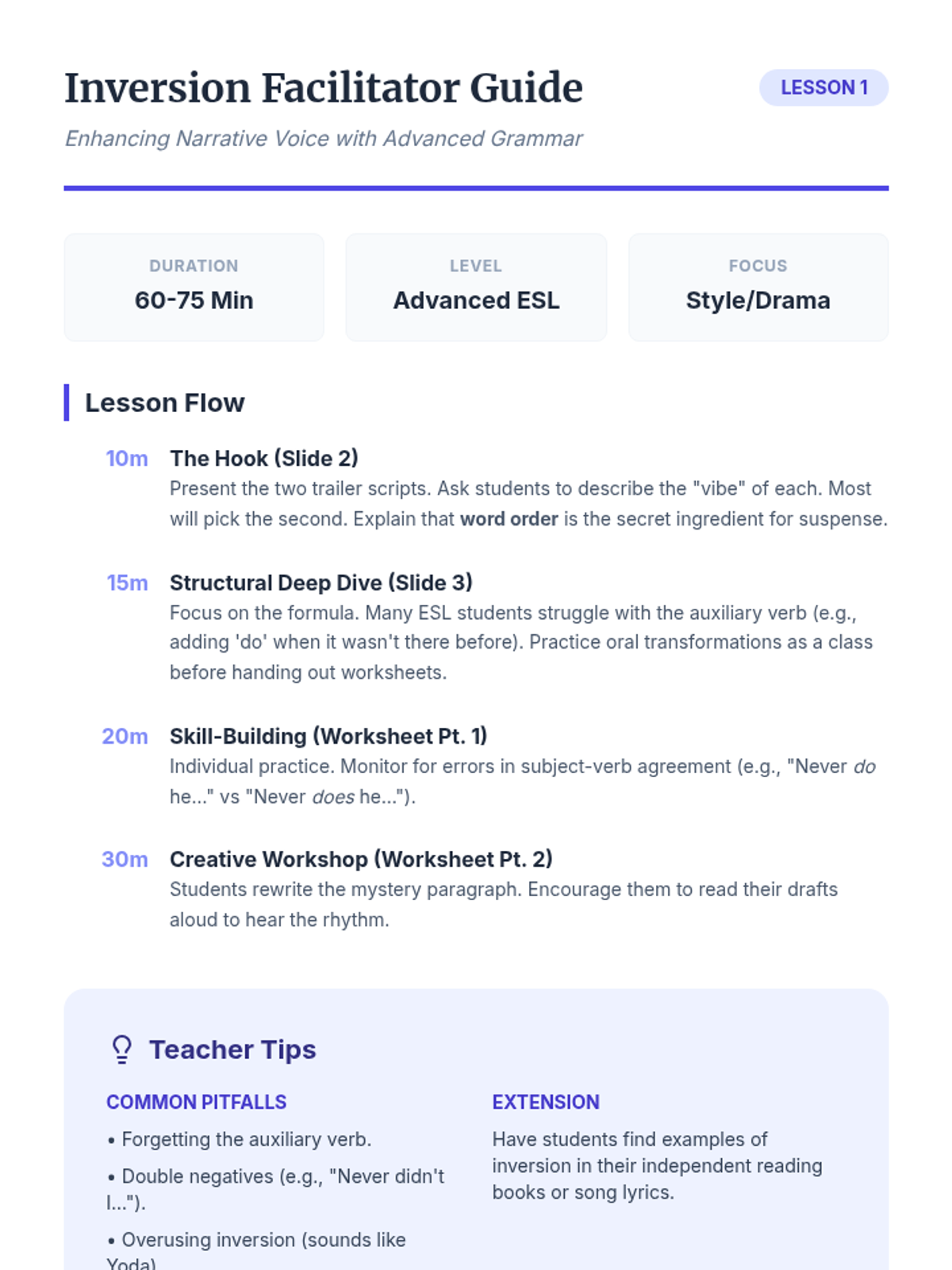
This sequence guides advanced 6th-grade ESL students through the stylistic application of complex grammar rules to enhance their creative and academic writing. Students explore inversion, the subjunctive mood, advanced conditionals, and passive voice as tools for manipulating tone and emphasis in narratives.
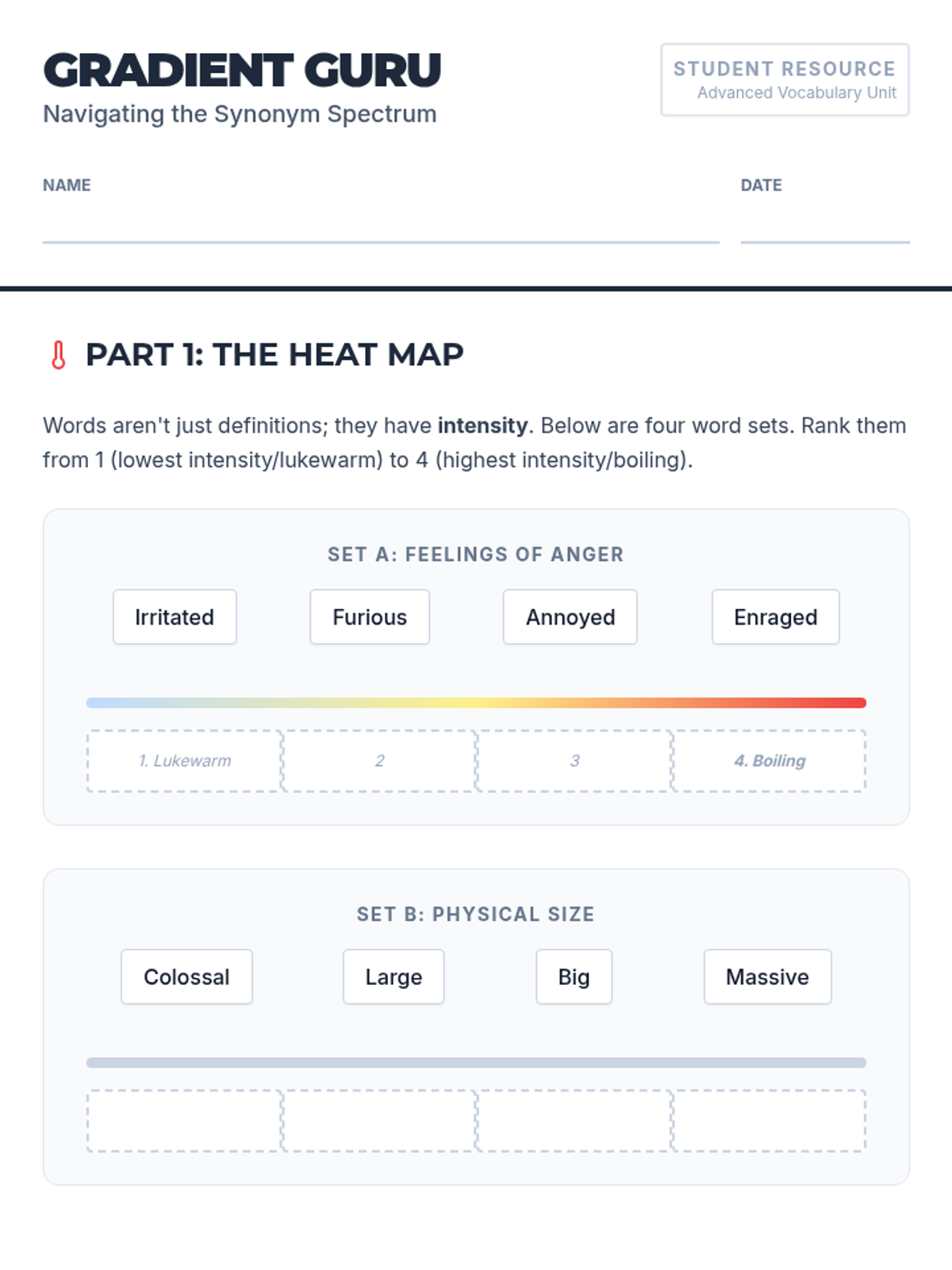
This sequence guides advanced 6th-grade ESL students to refine their academic writing by mastering synonyms and collocations. Students move from basic functional language to precise, sophisticated English through gradient analysis, verb upgrading, and peer editing workshops.
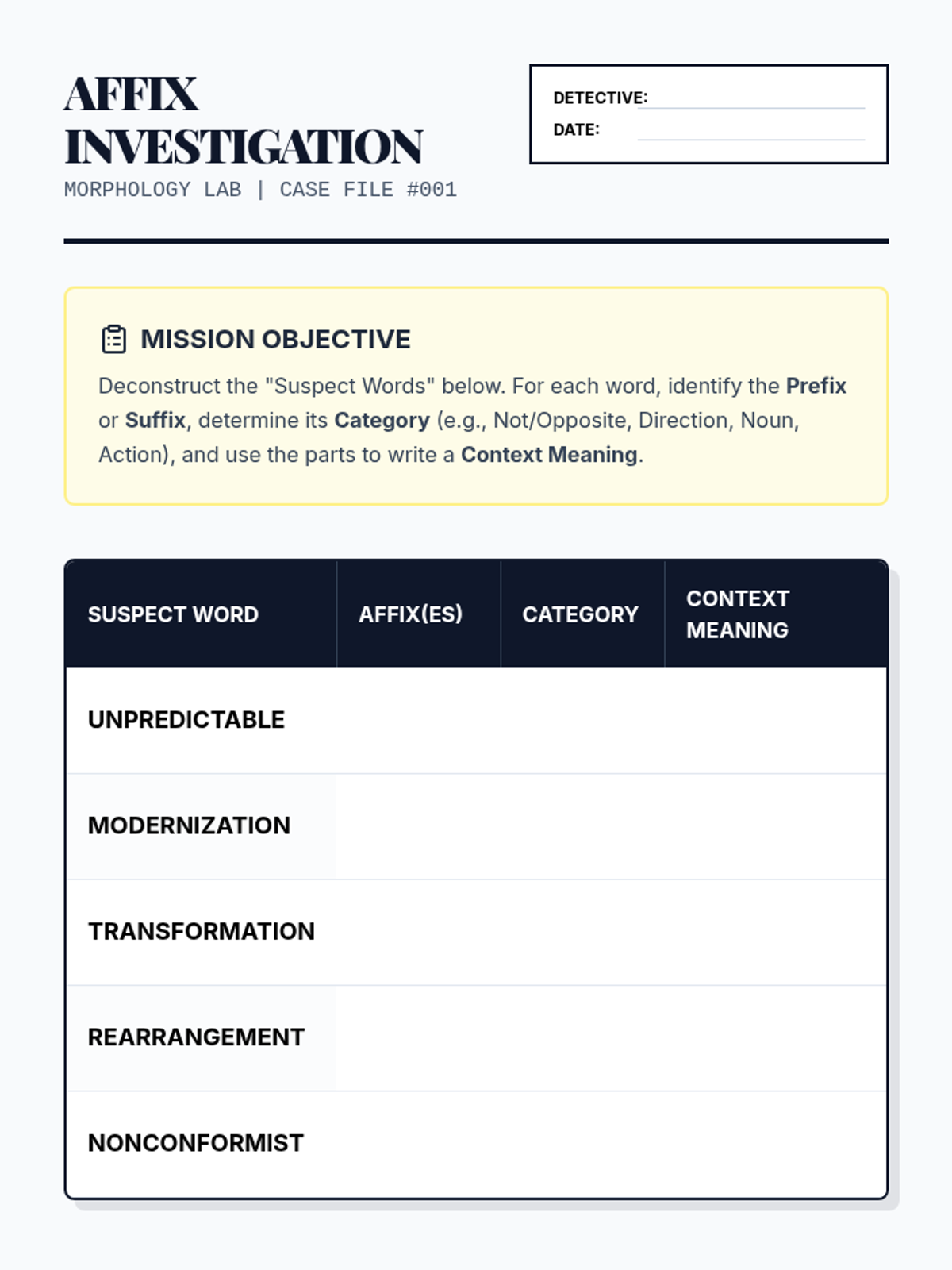
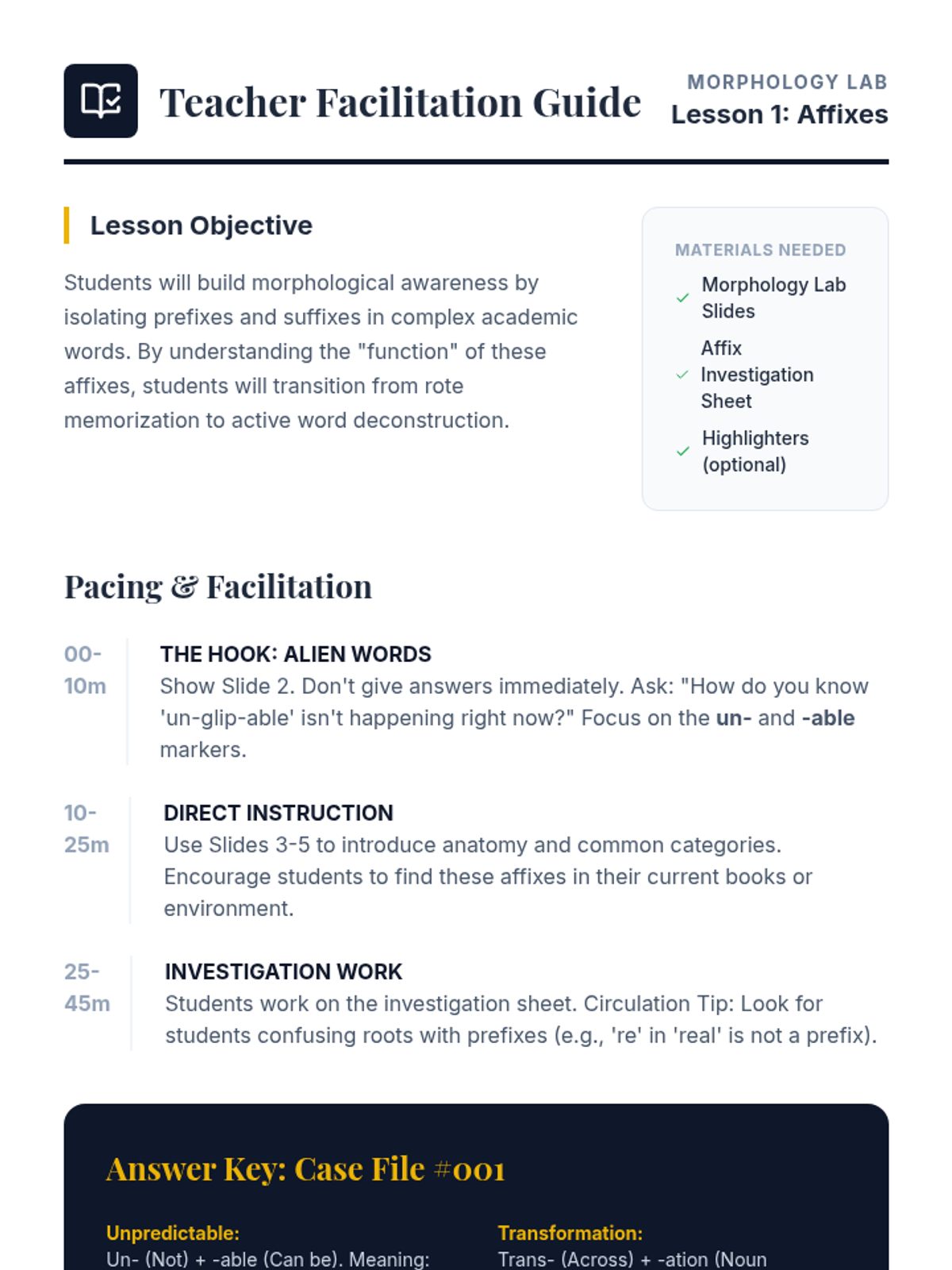
A comprehensive 6th-grade ESL sequence focusing on morphological awareness through the study of Greek and Latin roots, prefixes, and suffixes. Students transition from identifying basic word parts to synthesizing their own neologisms, building advanced academic vocabulary stamina.
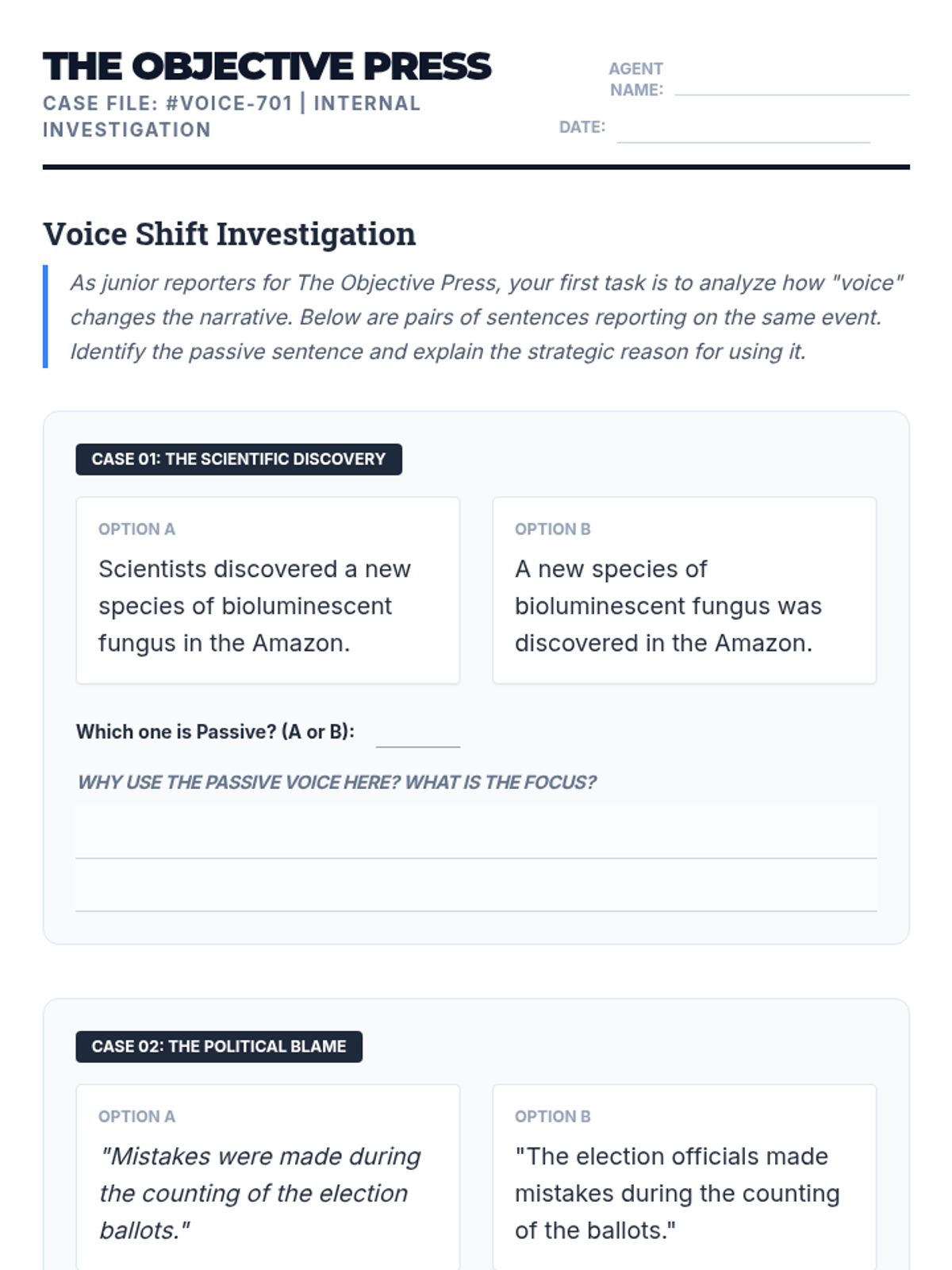
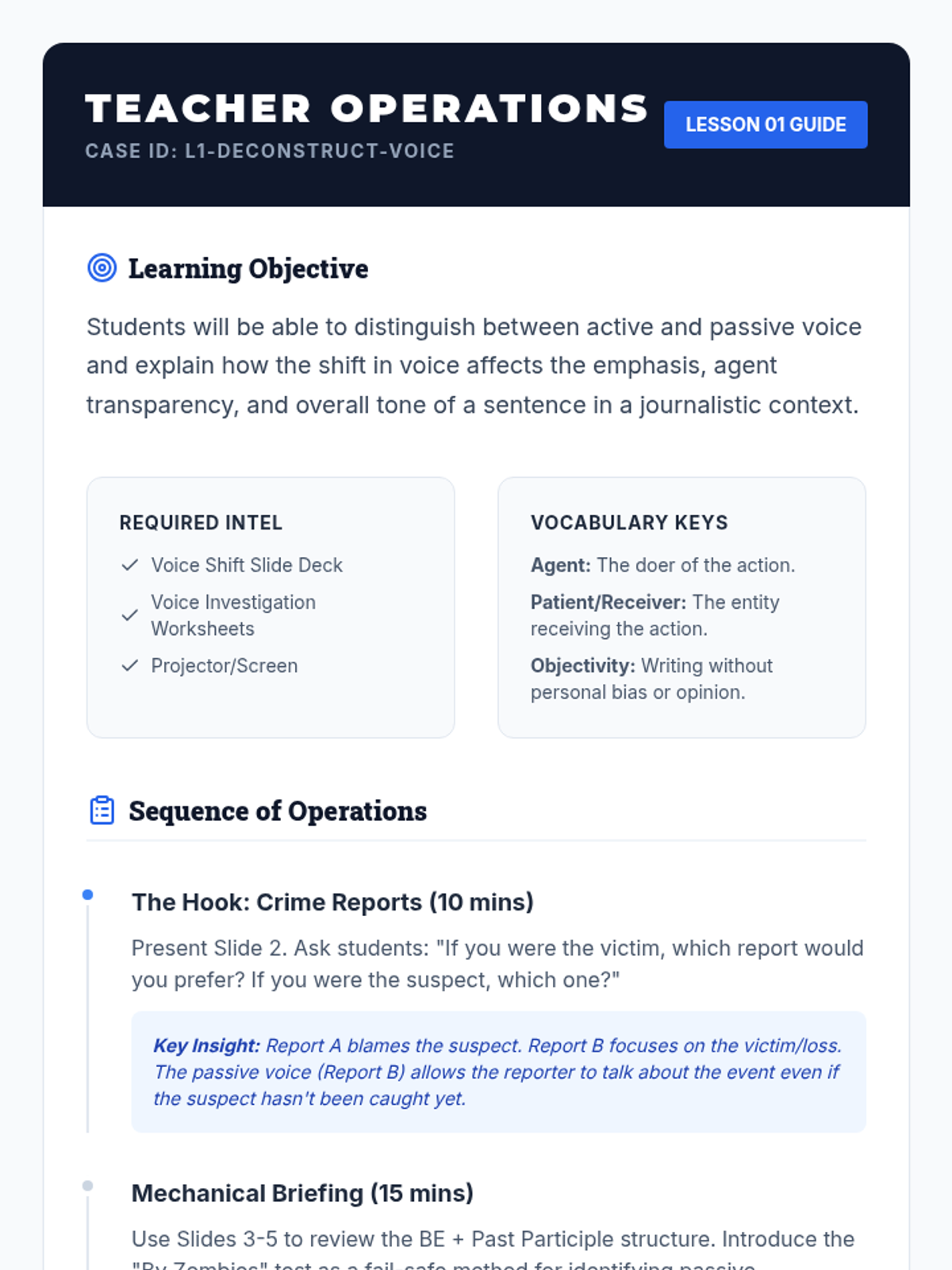
A 5-lesson unit for 7th-grade advanced English learners focused on the strategic use of passive voice, impersonal structures, and the causative form to achieve objectivity in academic and journalistic writing. Students move from mechanical transformations to critical analysis of bias and the production of a professional news report.
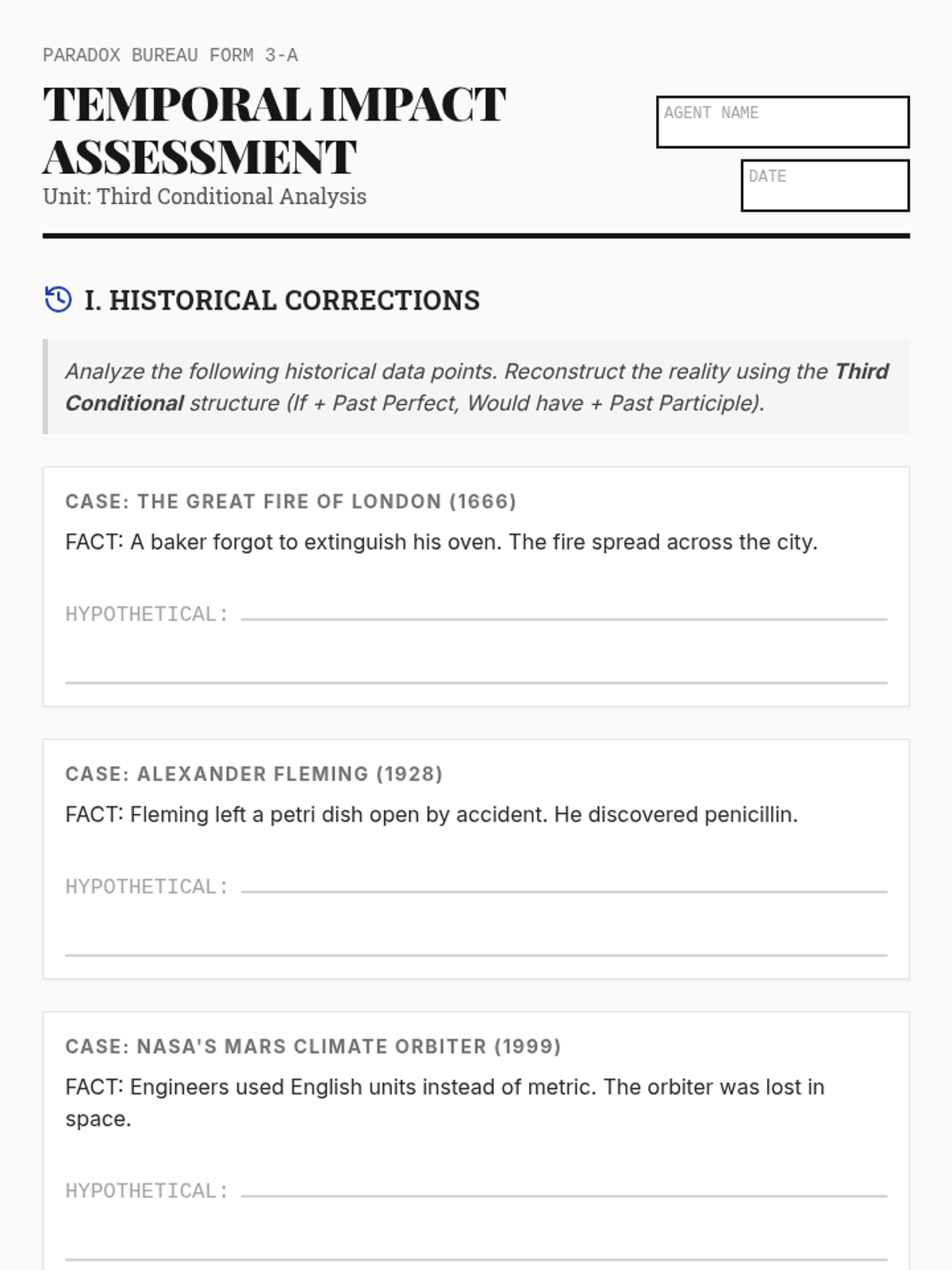
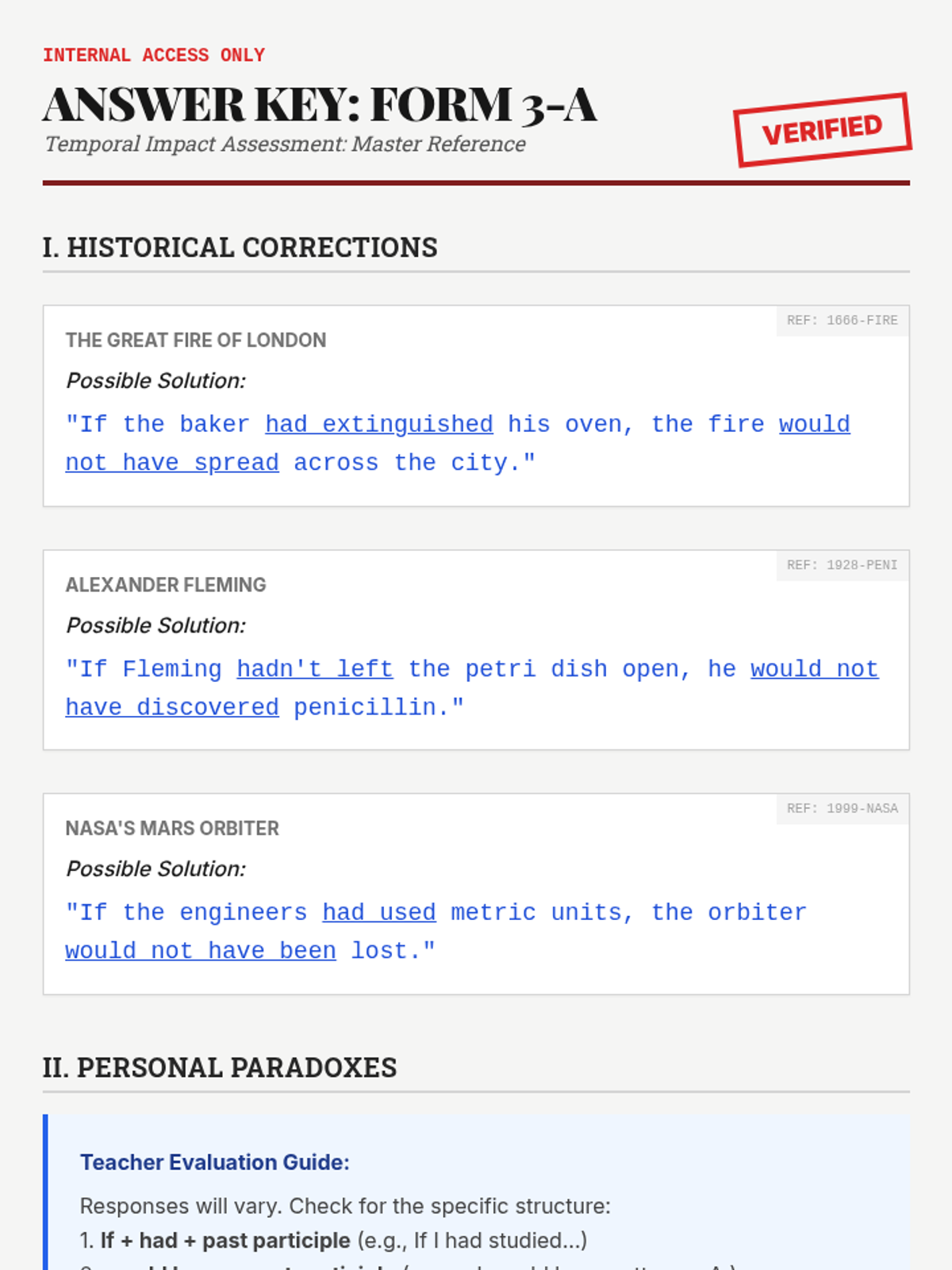
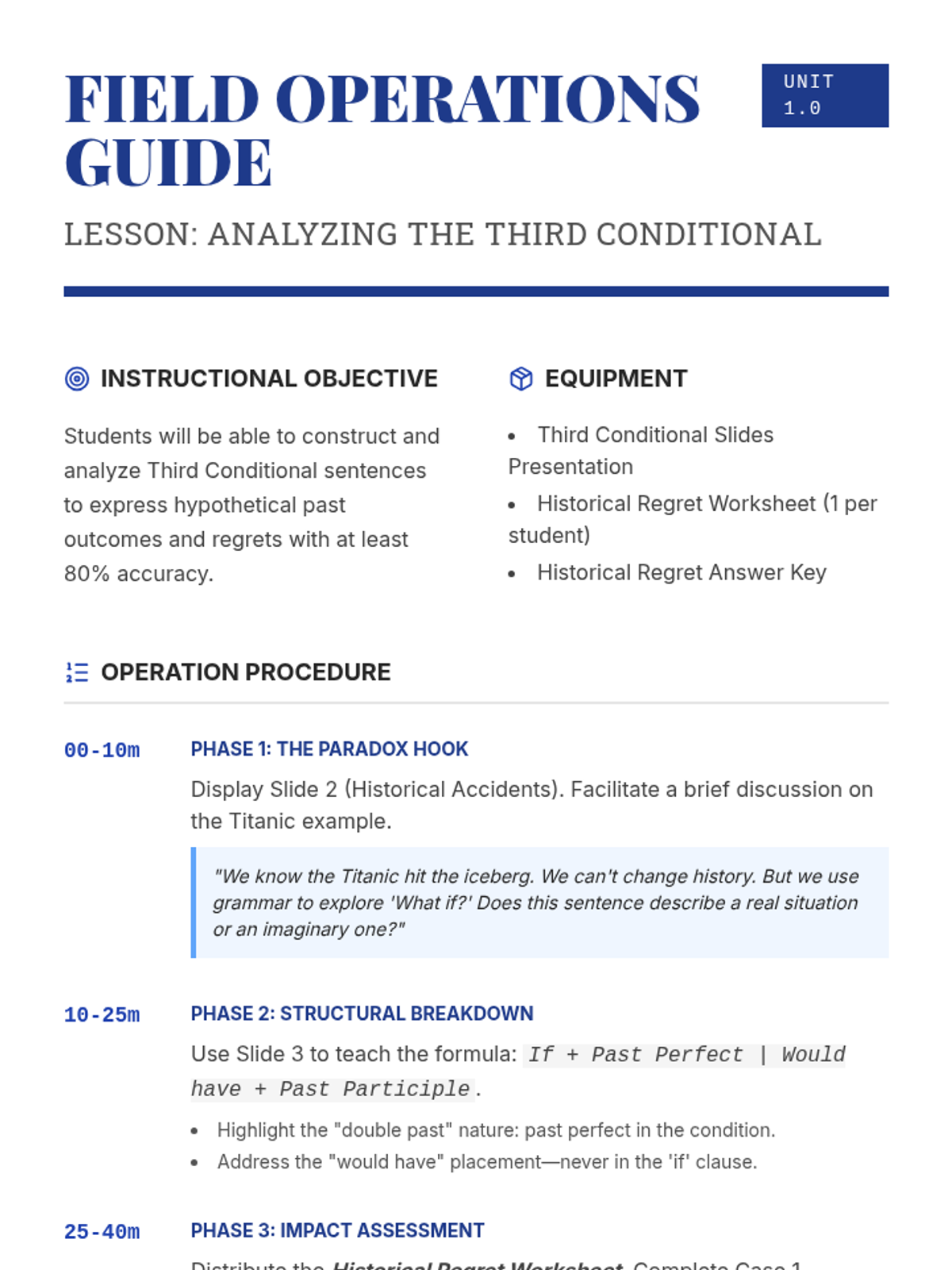
A simulation-based sequence where 7th-grade students master advanced conditional structures (Third, Mixed, and Inverted) to analyze hypothetical scenarios, past regrets, and formal consequences. Students progress from historical 'what-ifs' to a 'Crisis Management' simulation and formal report writing.
A comprehensive sequence for intermediate ELL students focusing on context clues, morphology, and connotation to build reading independence. Students learn to use the 'IDEAS' acronym, analyze word parts, and evaluate word intensity.
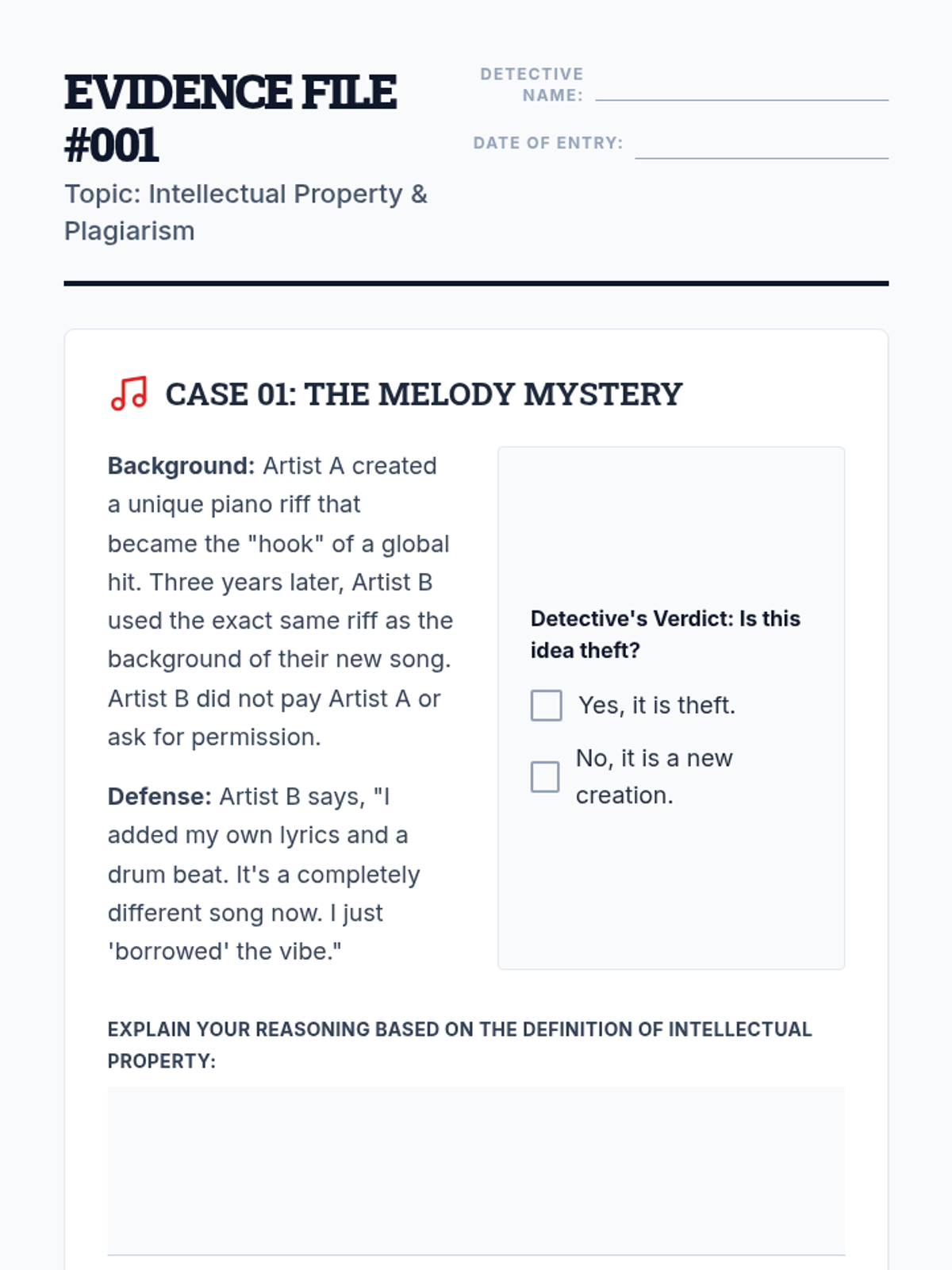
A comprehensive 7th-grade ESL sequence focusing on the ethics of academic integrity, the mechanics of paraphrasing and summarizing, and the technical accuracy of MLA citations. Students transition from understanding intellectual property to performing independent 'plagiarism audits' on research samples.
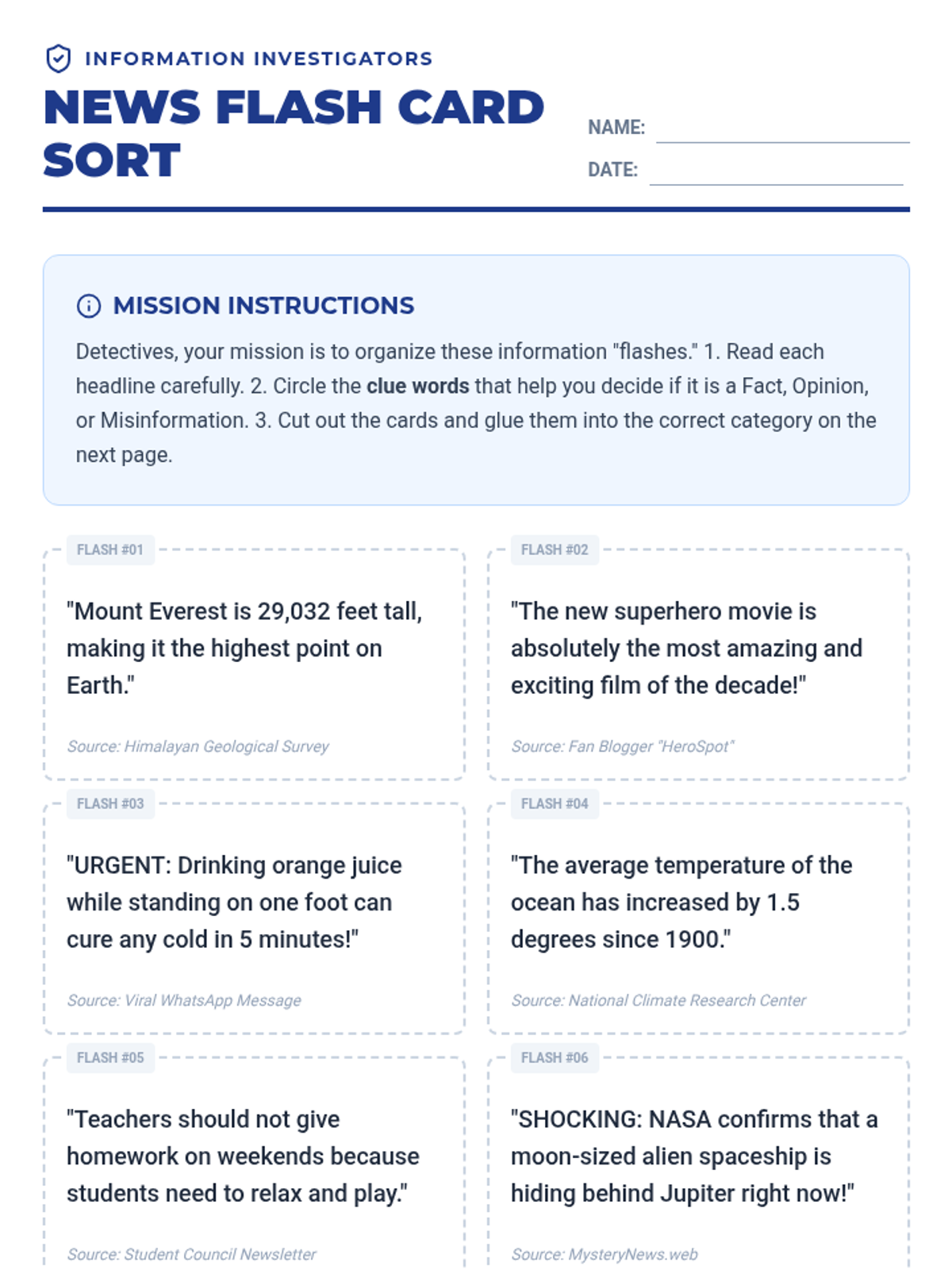
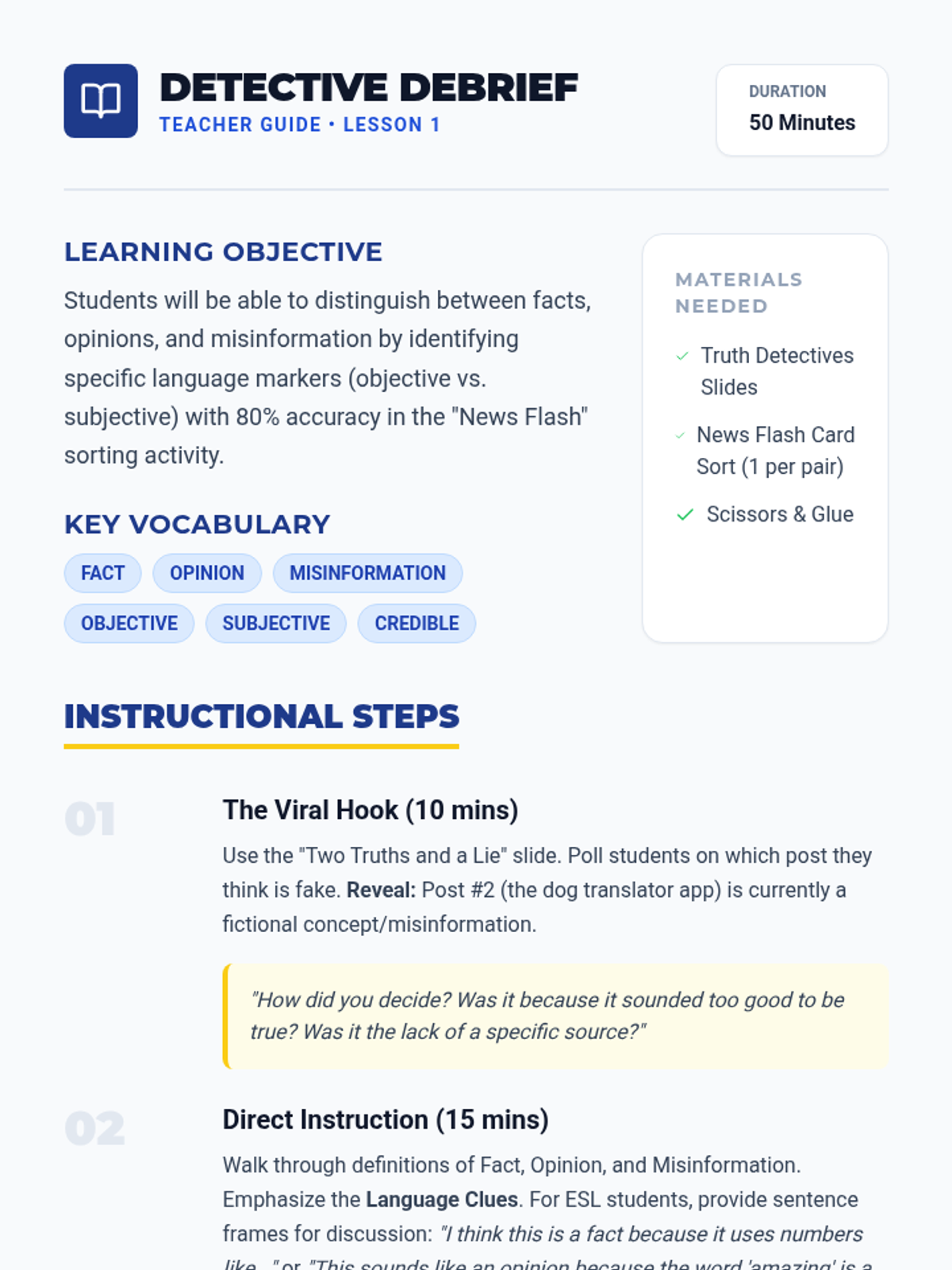
A sequence for 7th-grade ESL students focusing on digital literacy, evaluating source credibility, and mastering search strategies for academic research. Students move from identifying misinformation to independently curating high-quality sources using databases and Boolean logic.