Examining foundational arguments from major thinkers alongside contemporary debates on morality, governance, and the nature of existence. Addresses core concepts like political structures, consciousness, and the conflict between agency and fate.
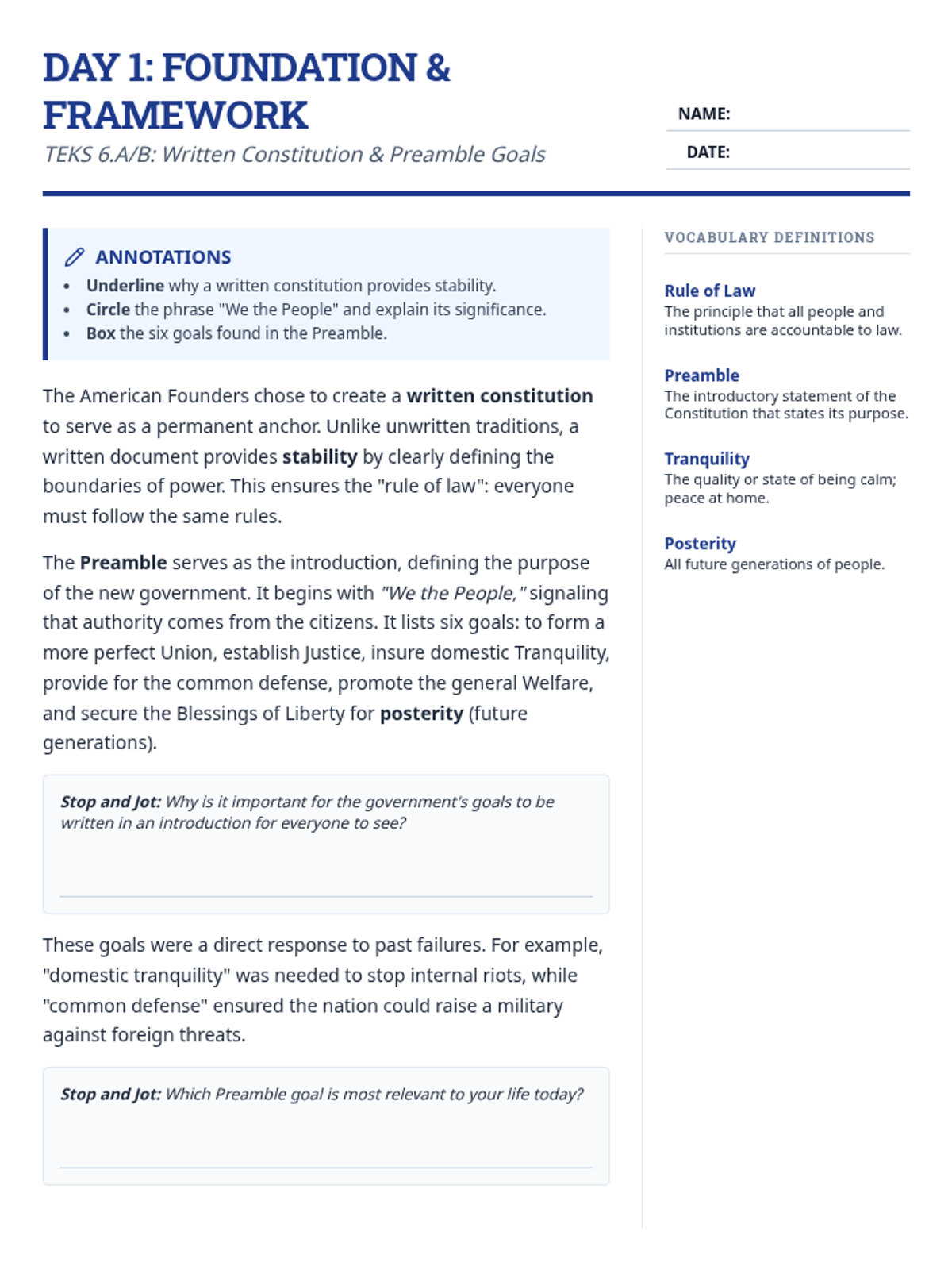
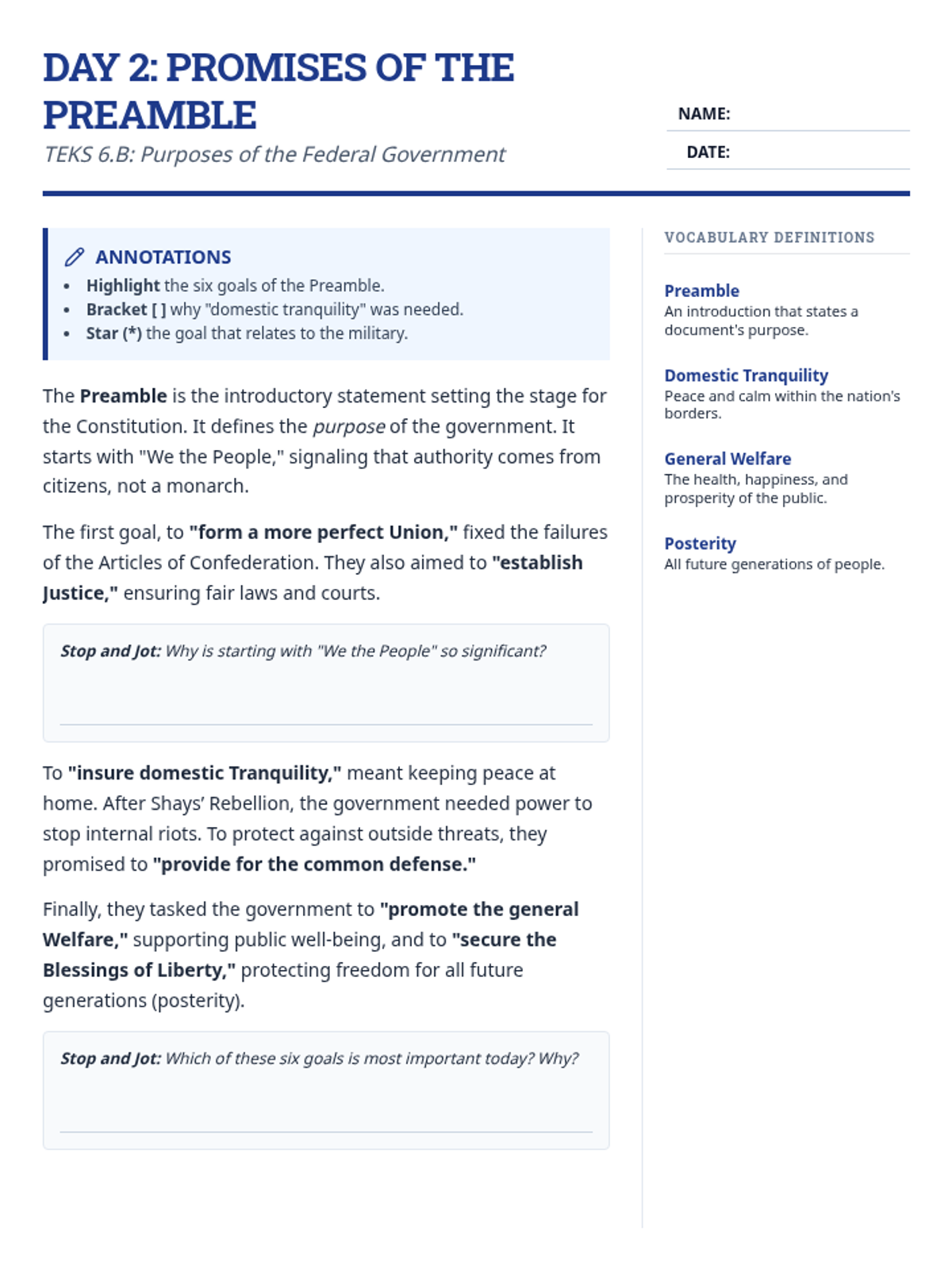
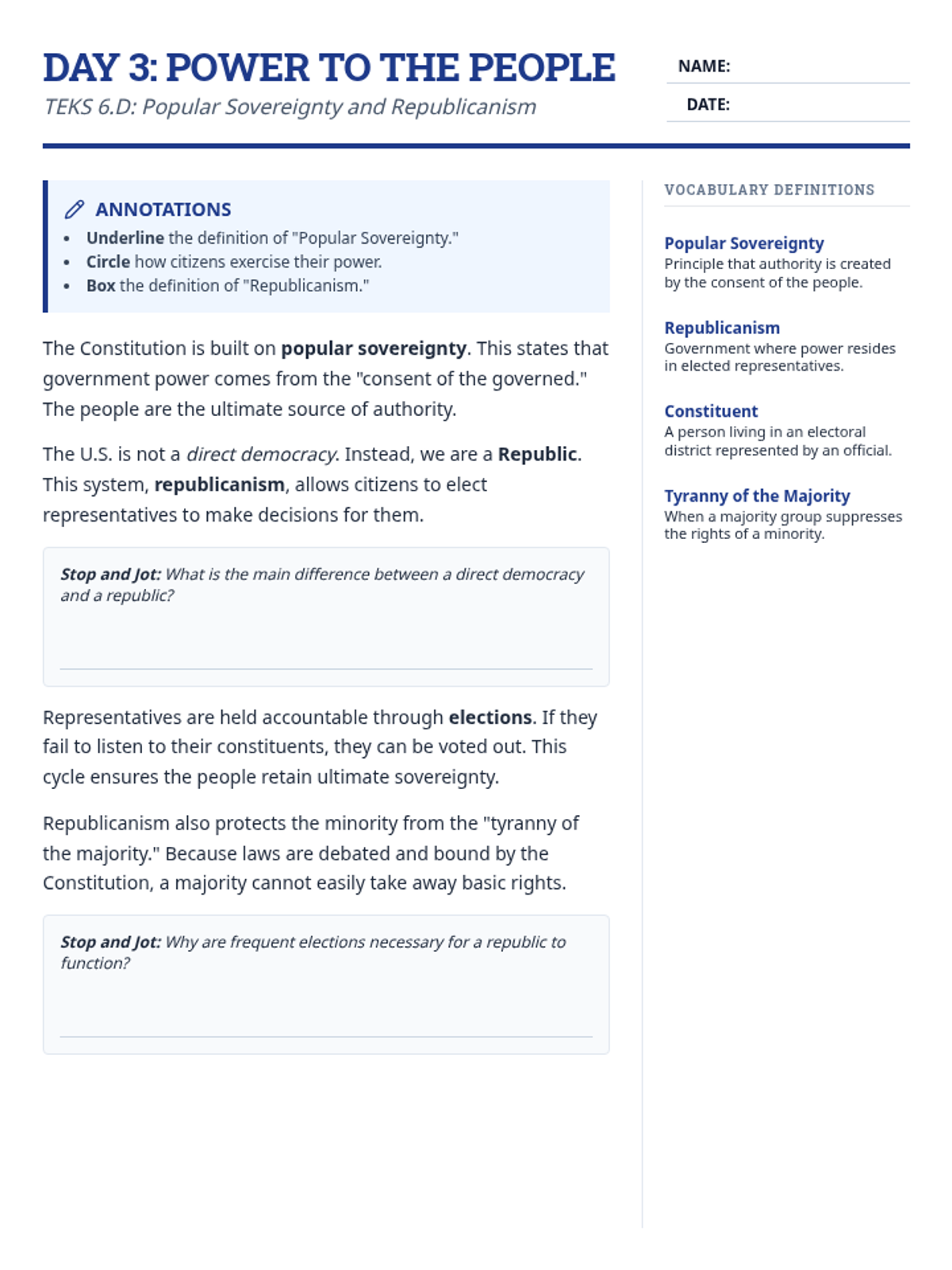
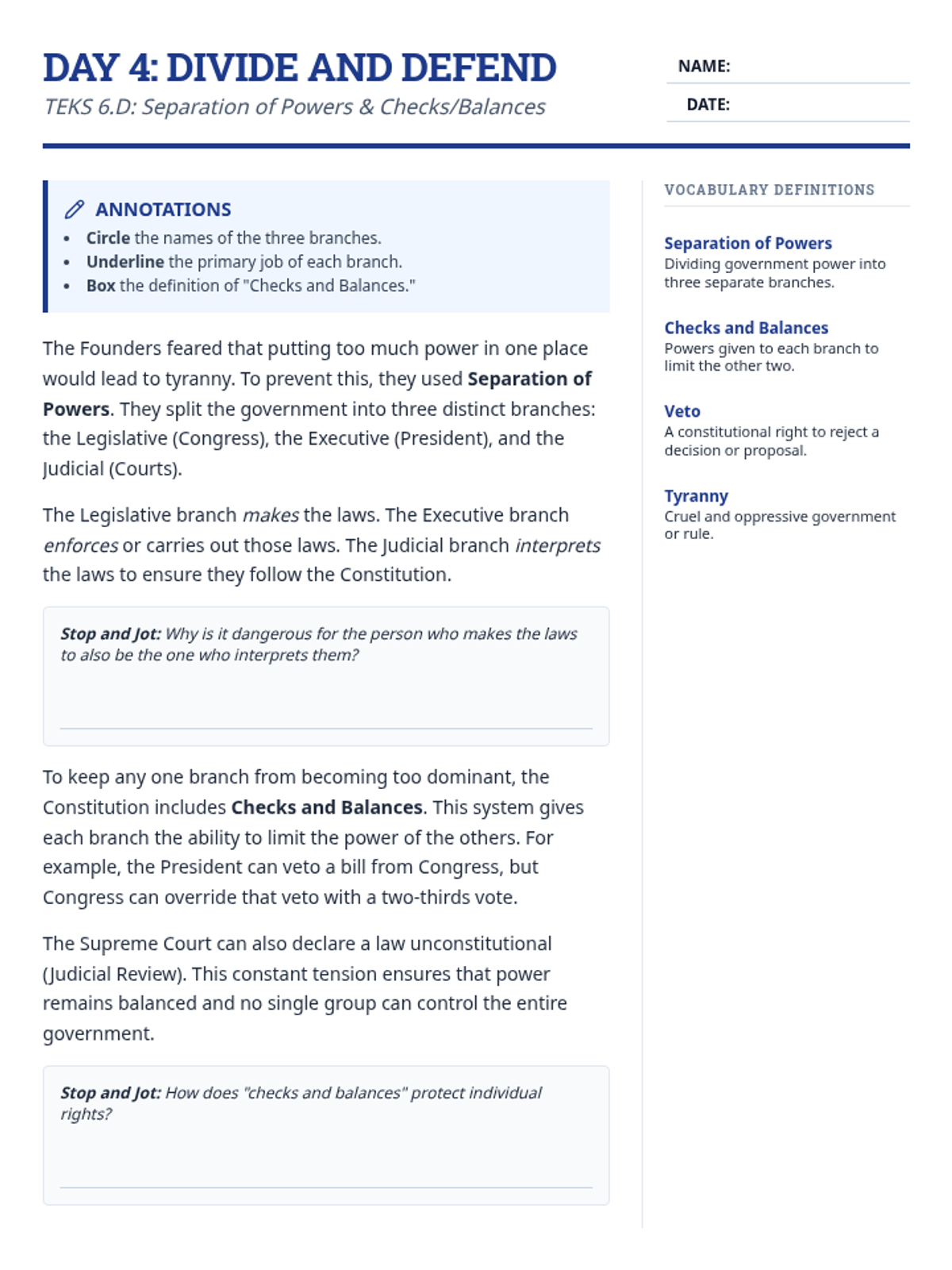
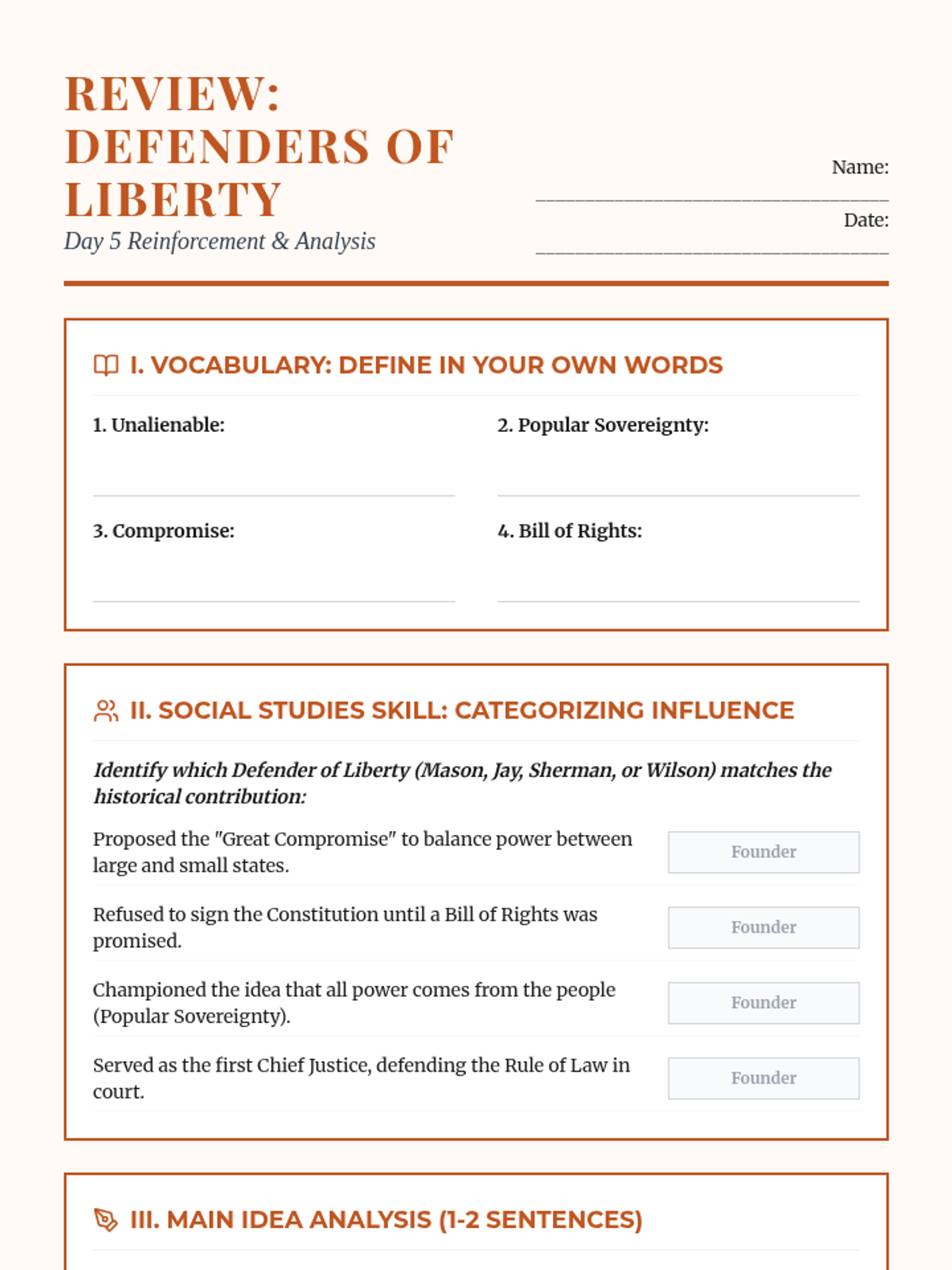
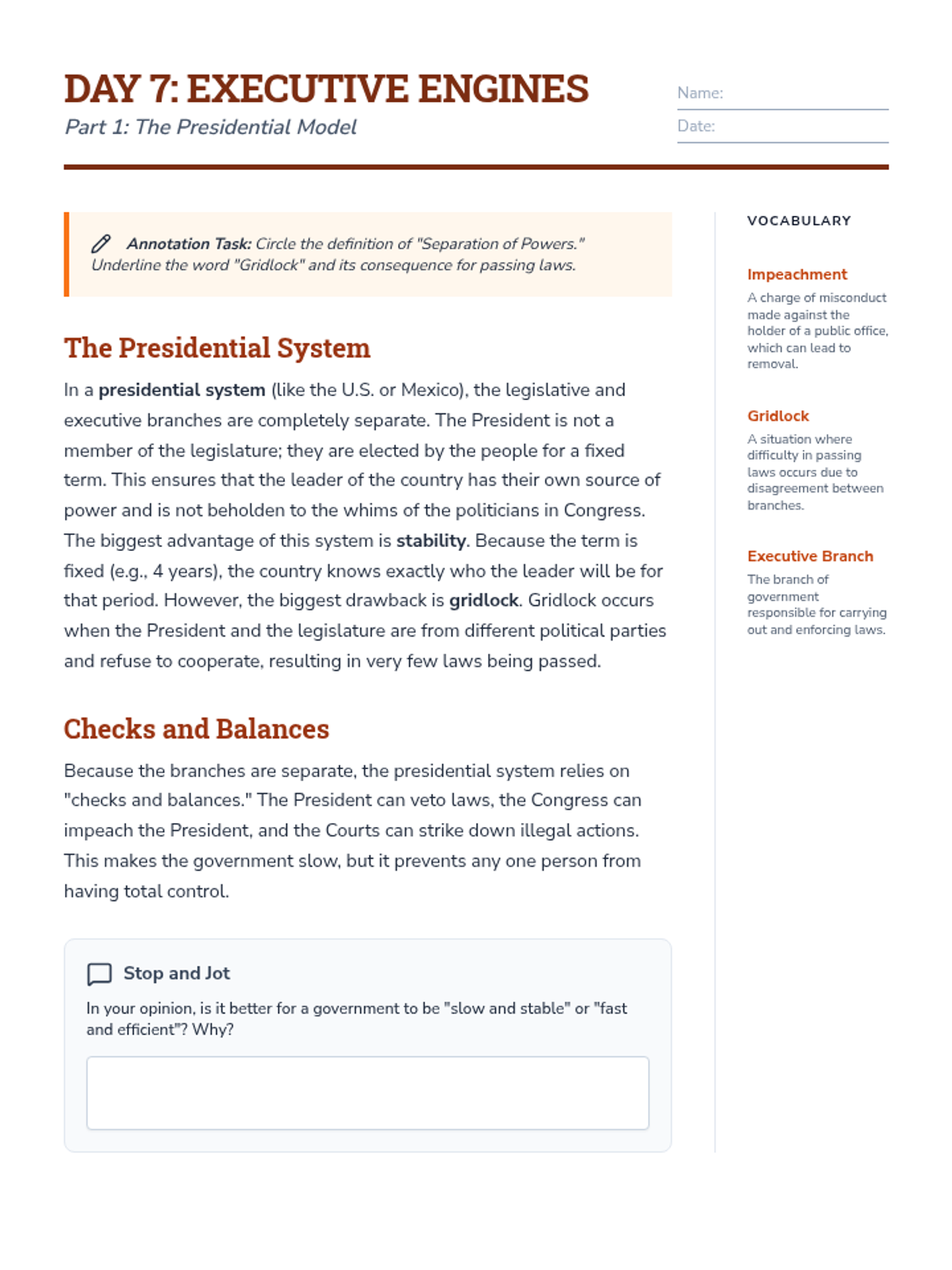
An 18-day remediation program for high school Government students focusing on the U.S. Constitution, the three branches of government, and the Bill of Rights. Each day features a structured reading passage with embedded vocabulary, annotation tasks, and a comprehensive review worksheet.
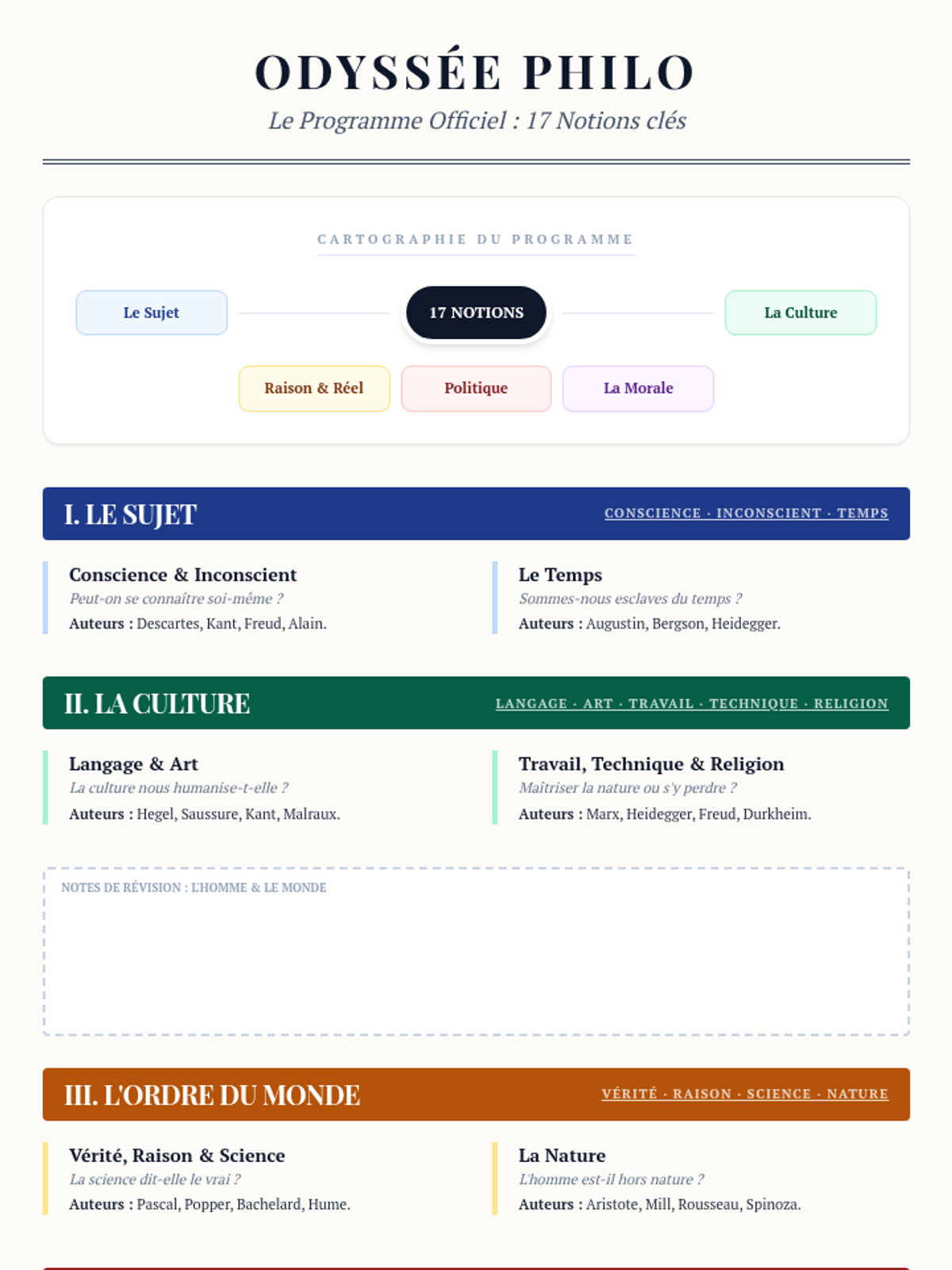
Un programme de révision complet couvrant les 17 notions du baccalauréat de philosophie, structuré par grands domaines thématiques pour une compréhension transversale.
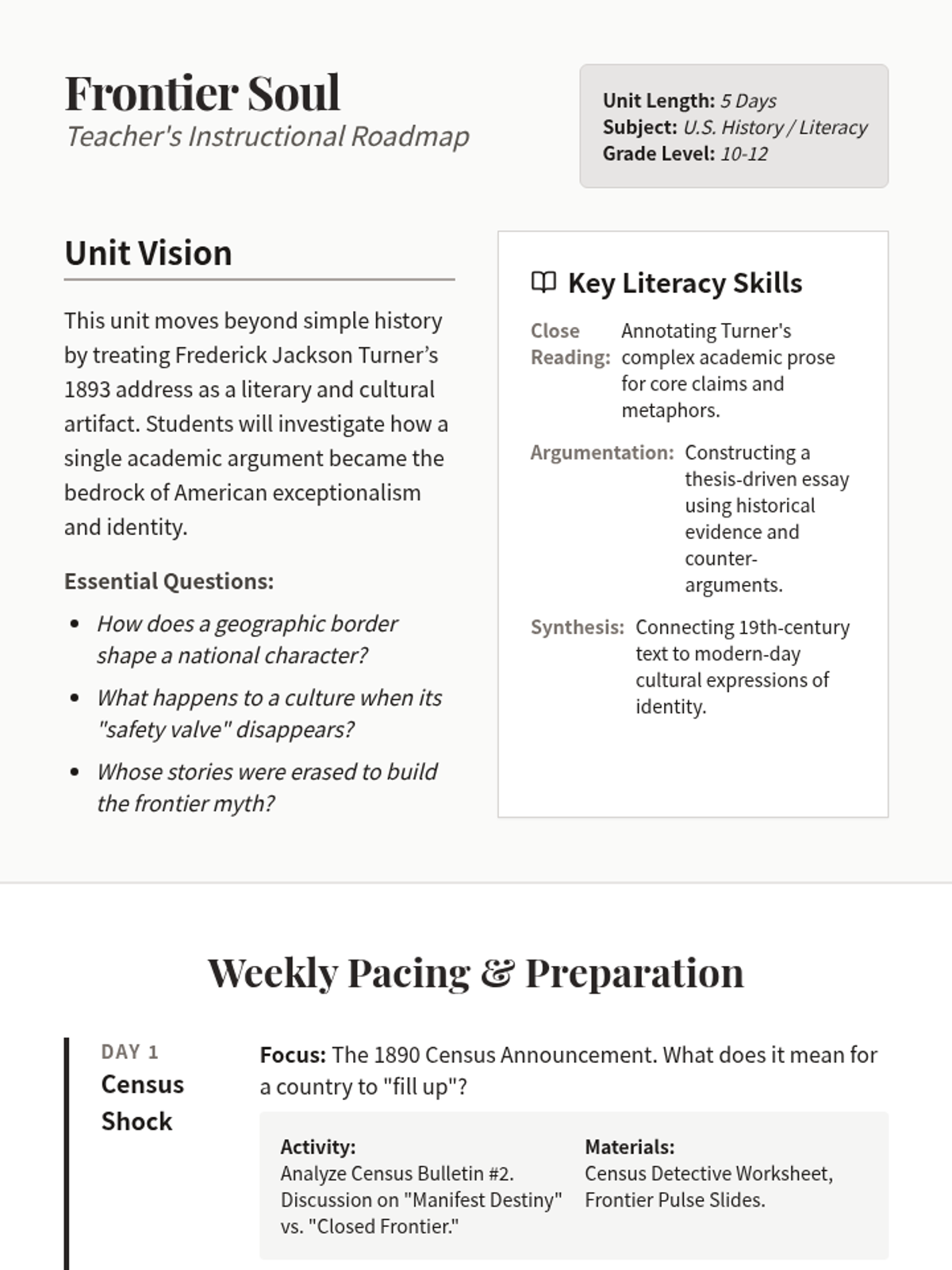
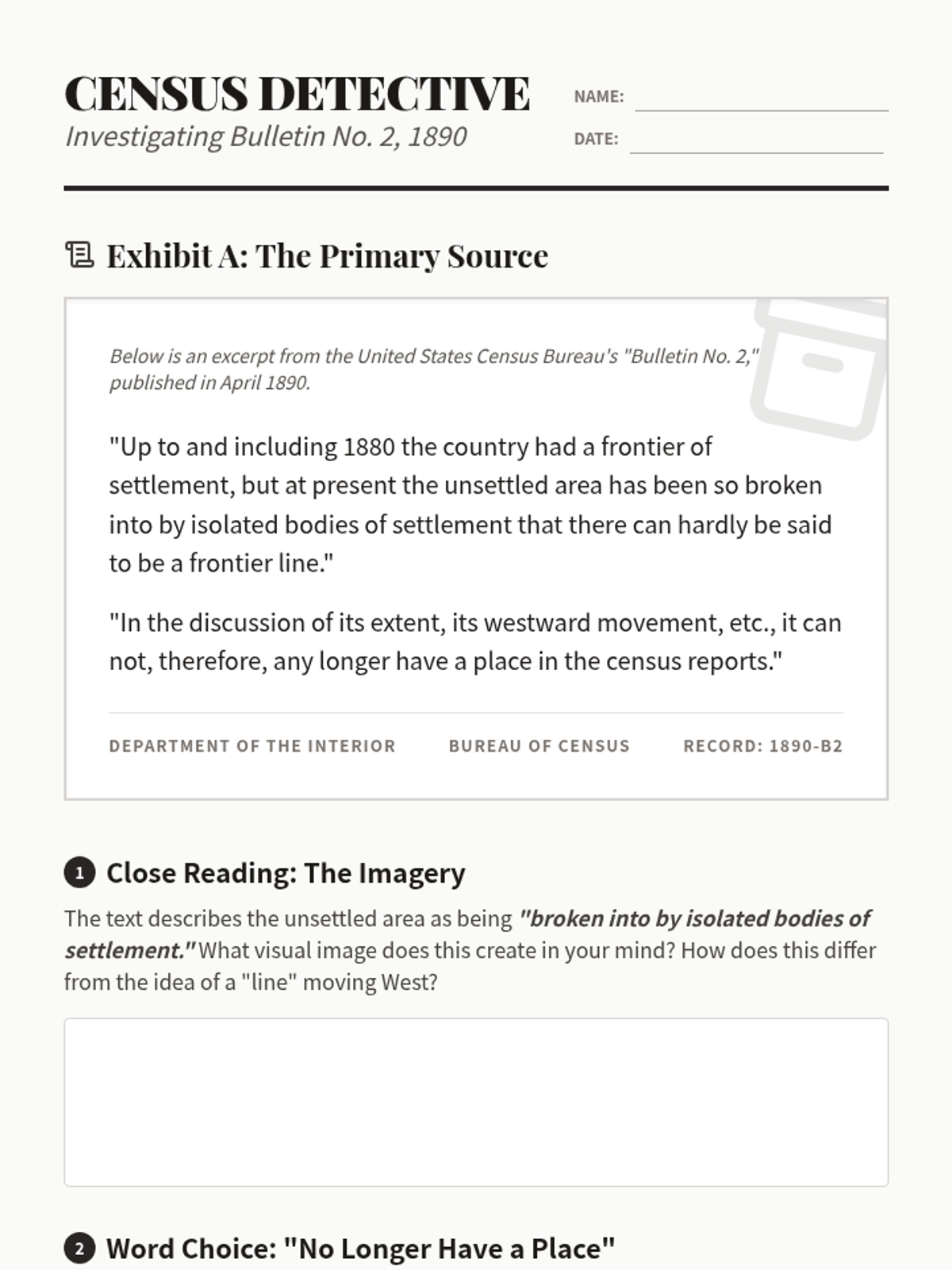
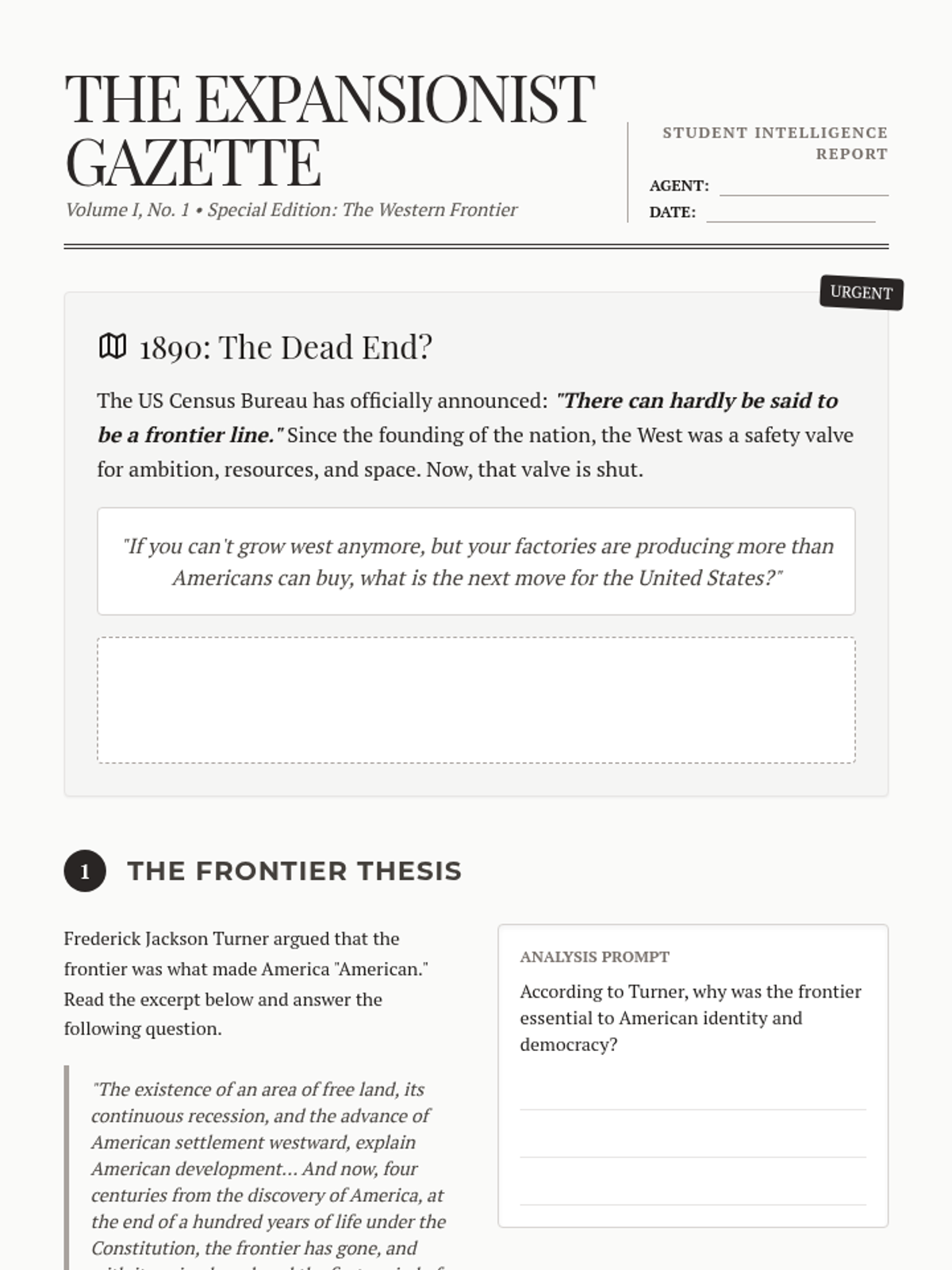
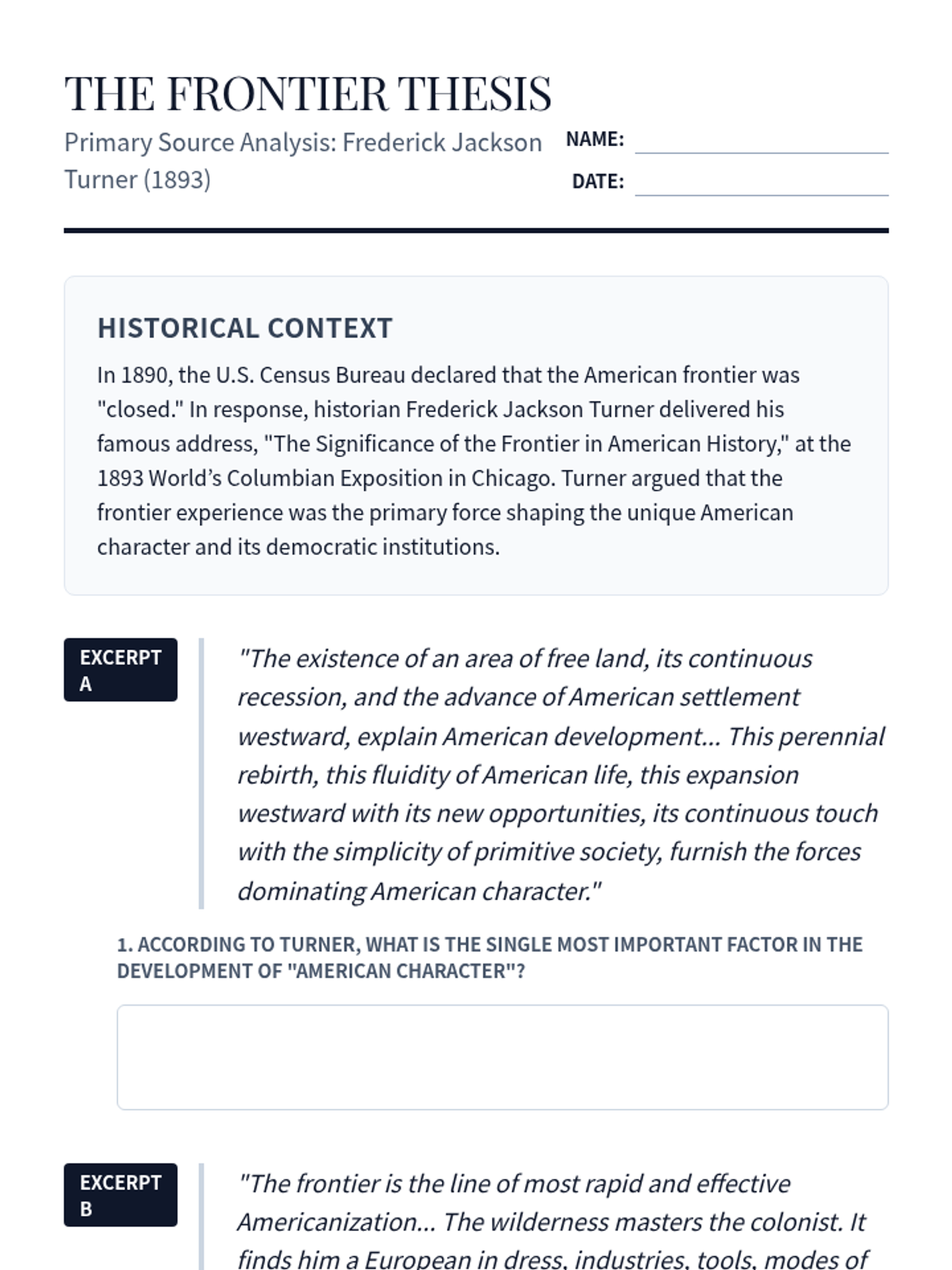
A weeklong exploration of Frederick Jackson Turner's Frontier Thesis, focusing on close reading, historical analysis, and the construction of American national identity. Students will engage with primary sources to understand how the concept of the frontier shaped democratic ideals, individualistic traits, and the exclusion of diverse perspectives.
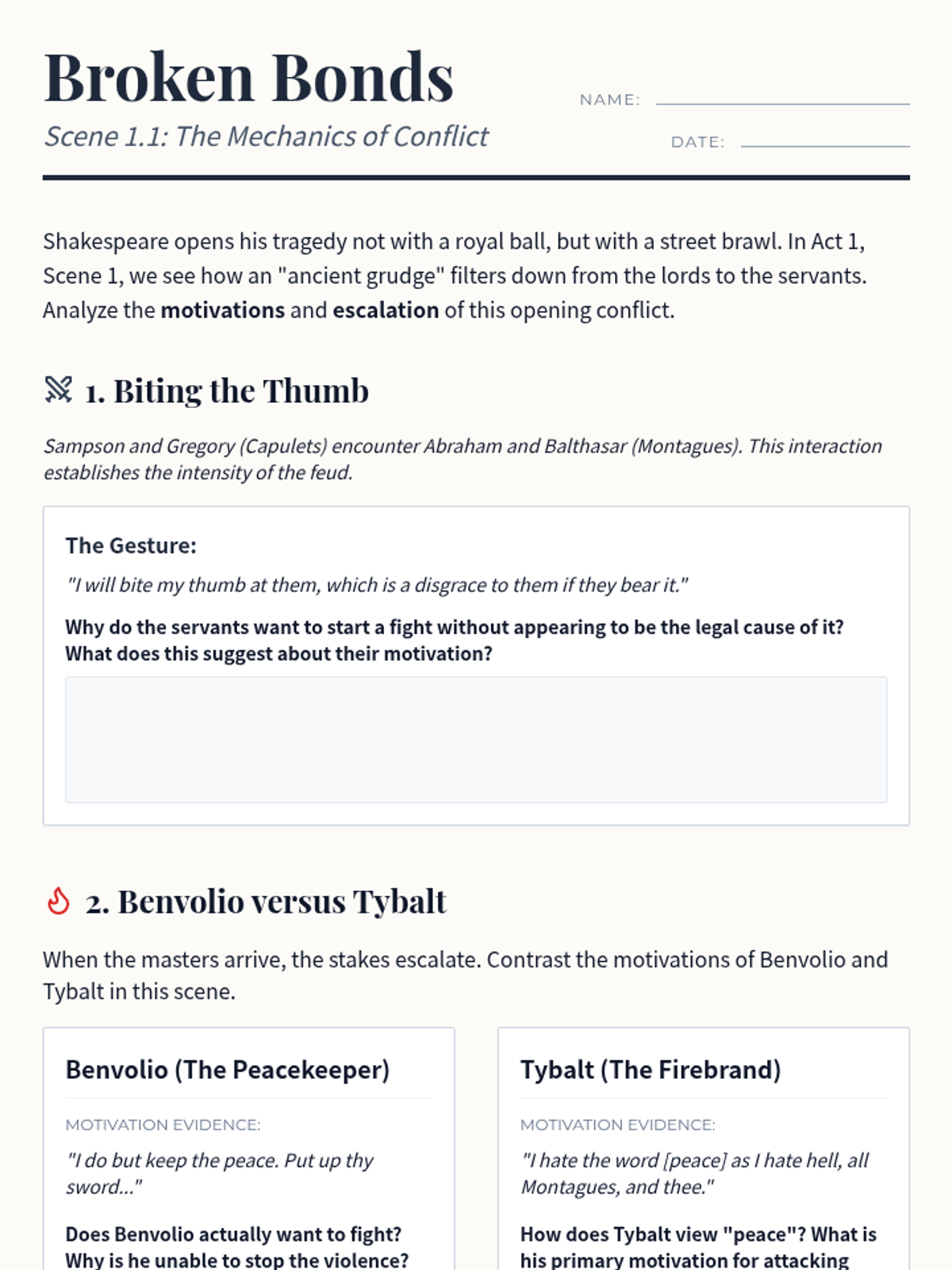
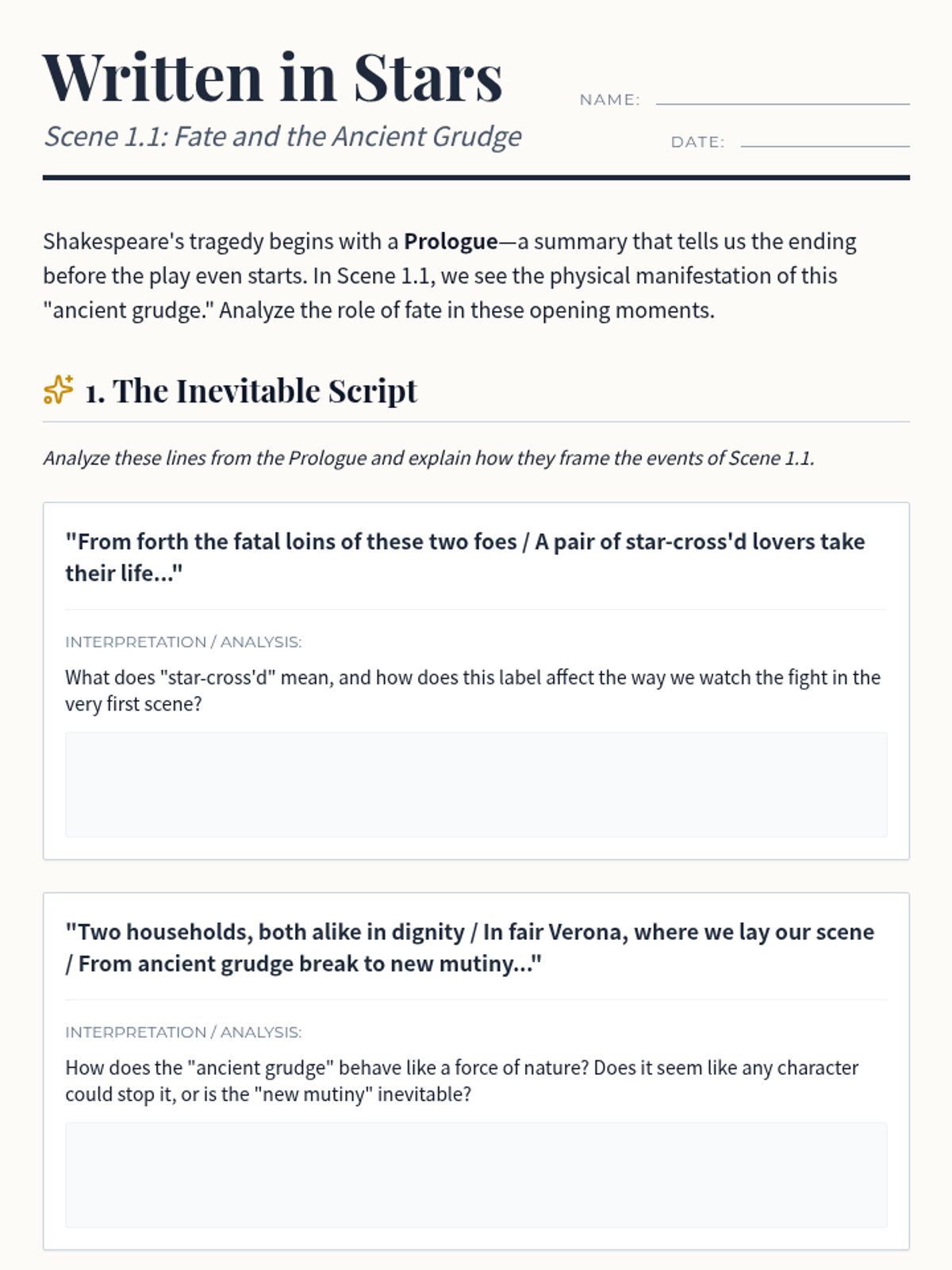
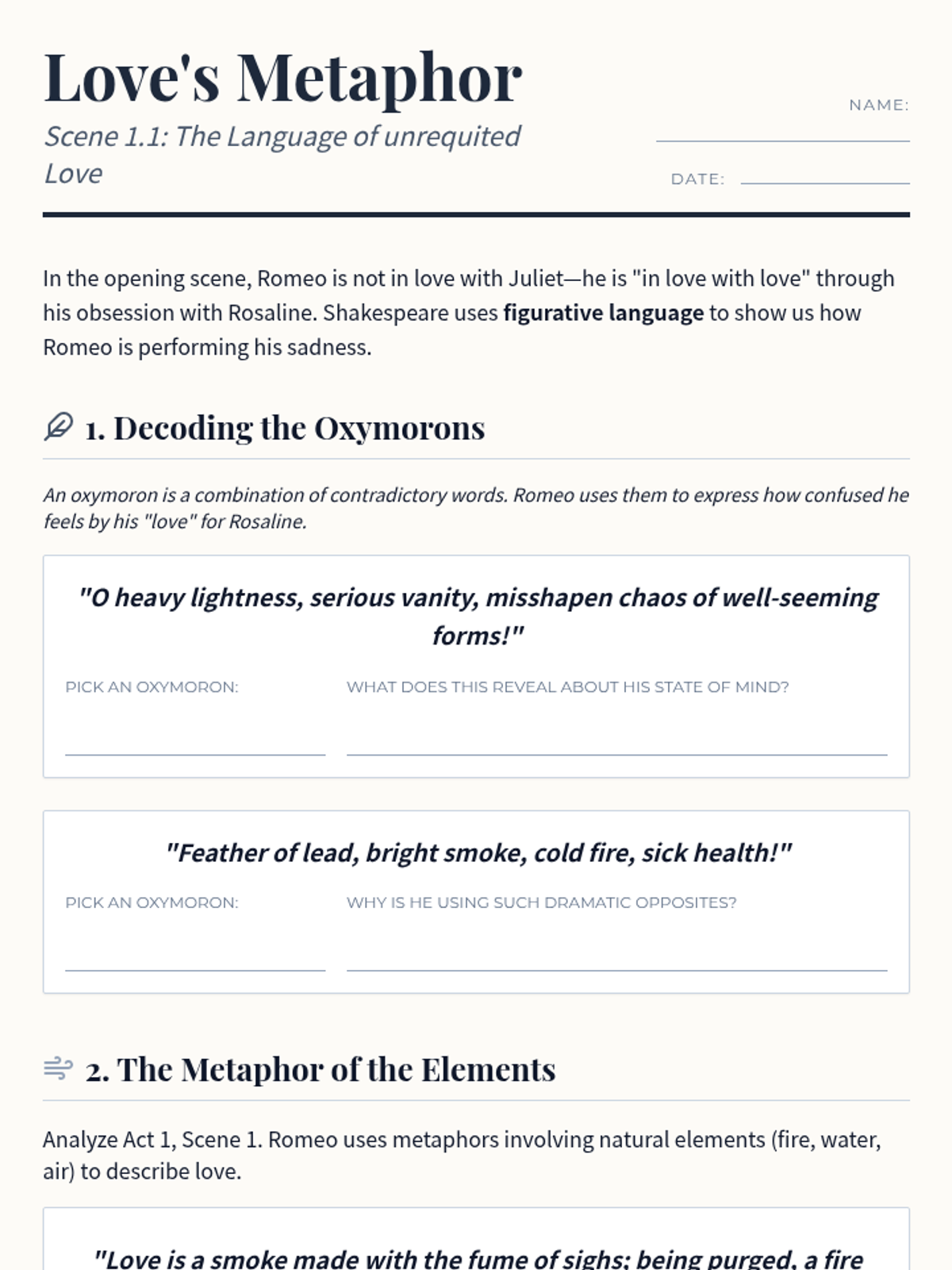
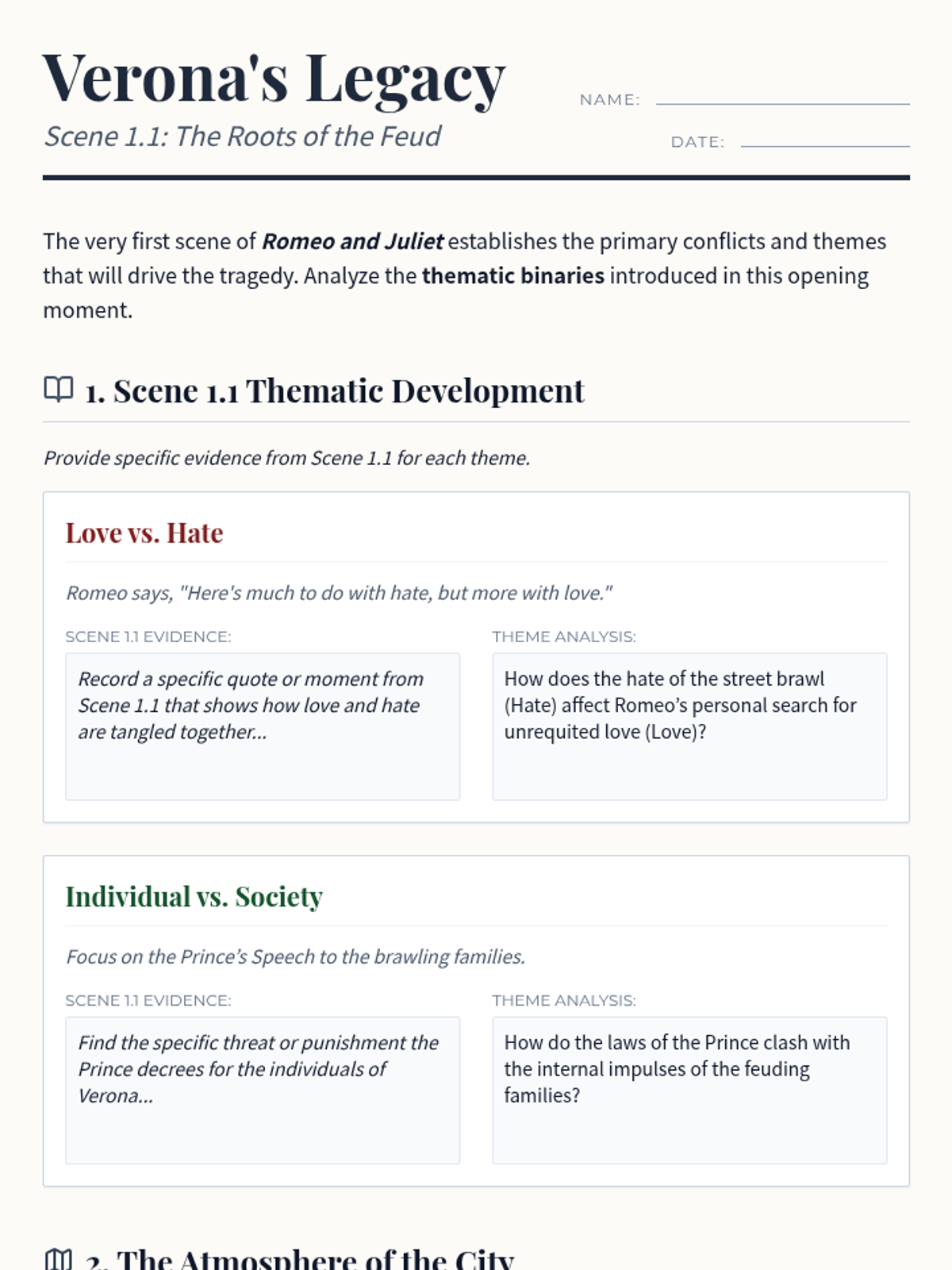
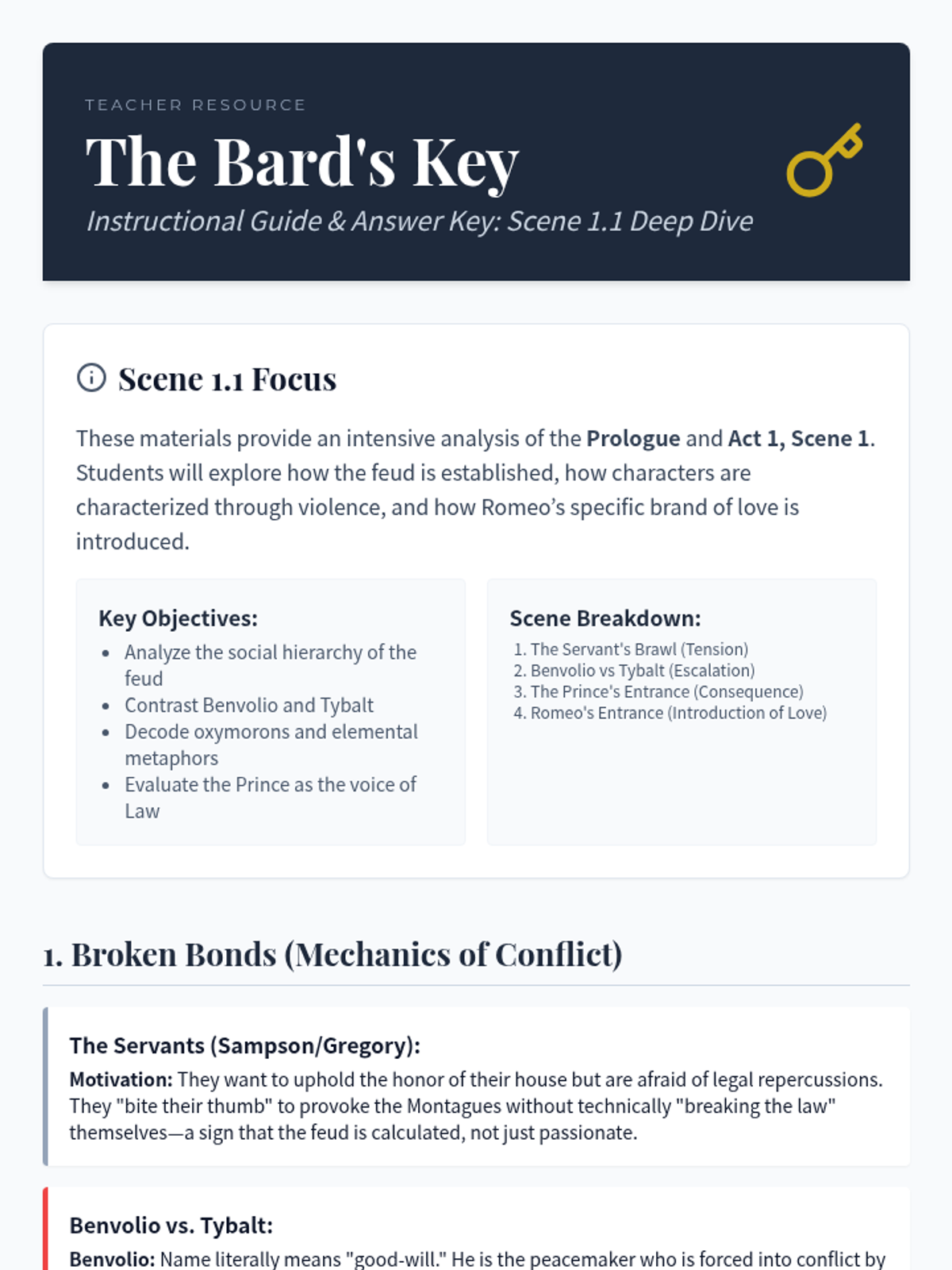
A comprehensive deep-dive into Shakespeare's Romeo and Juliet, focusing on Act 1. Students will analyze character dynamics, the tension between destiny and choice, and the rich poetic language of the play across individual scenes.
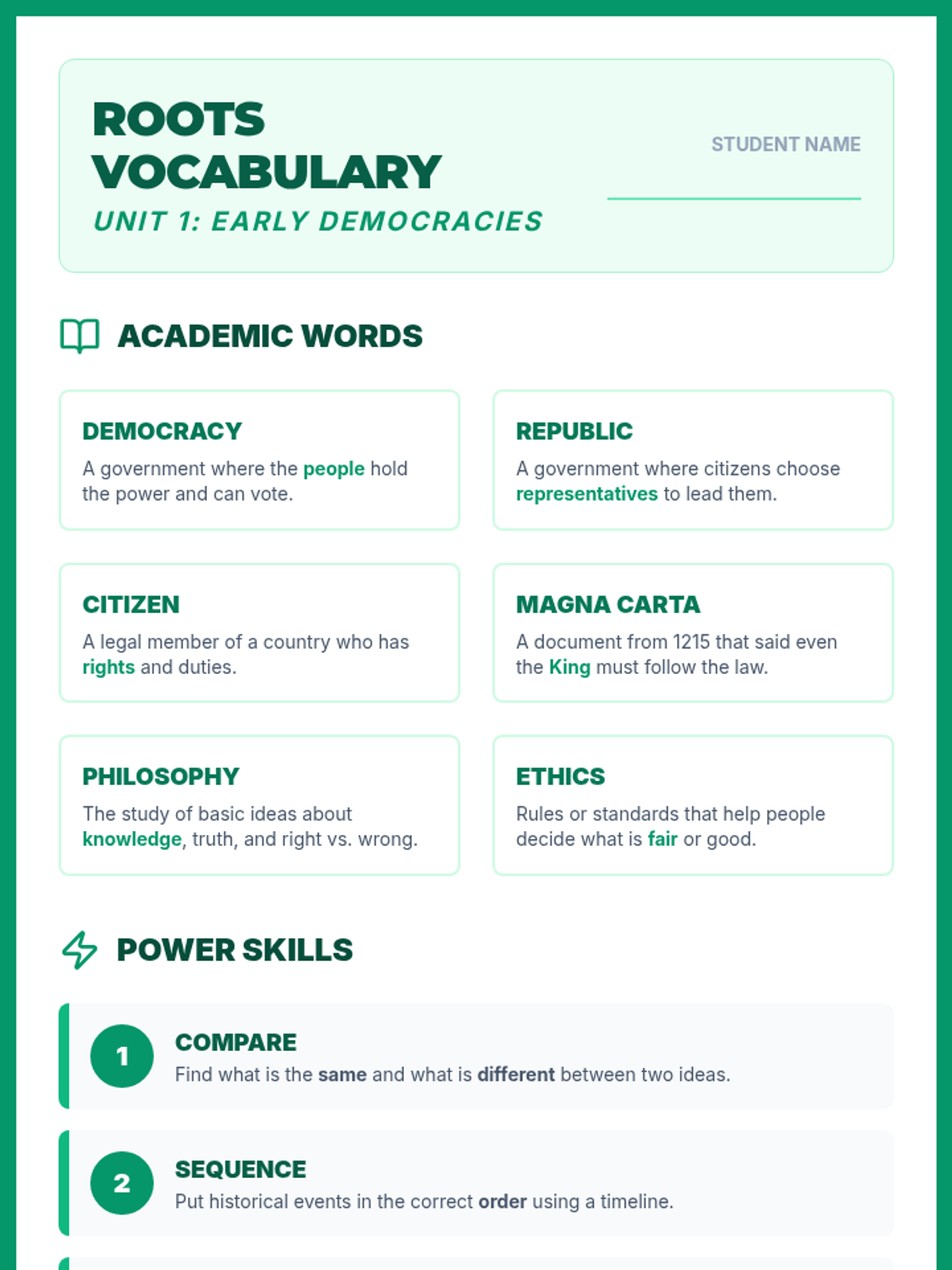
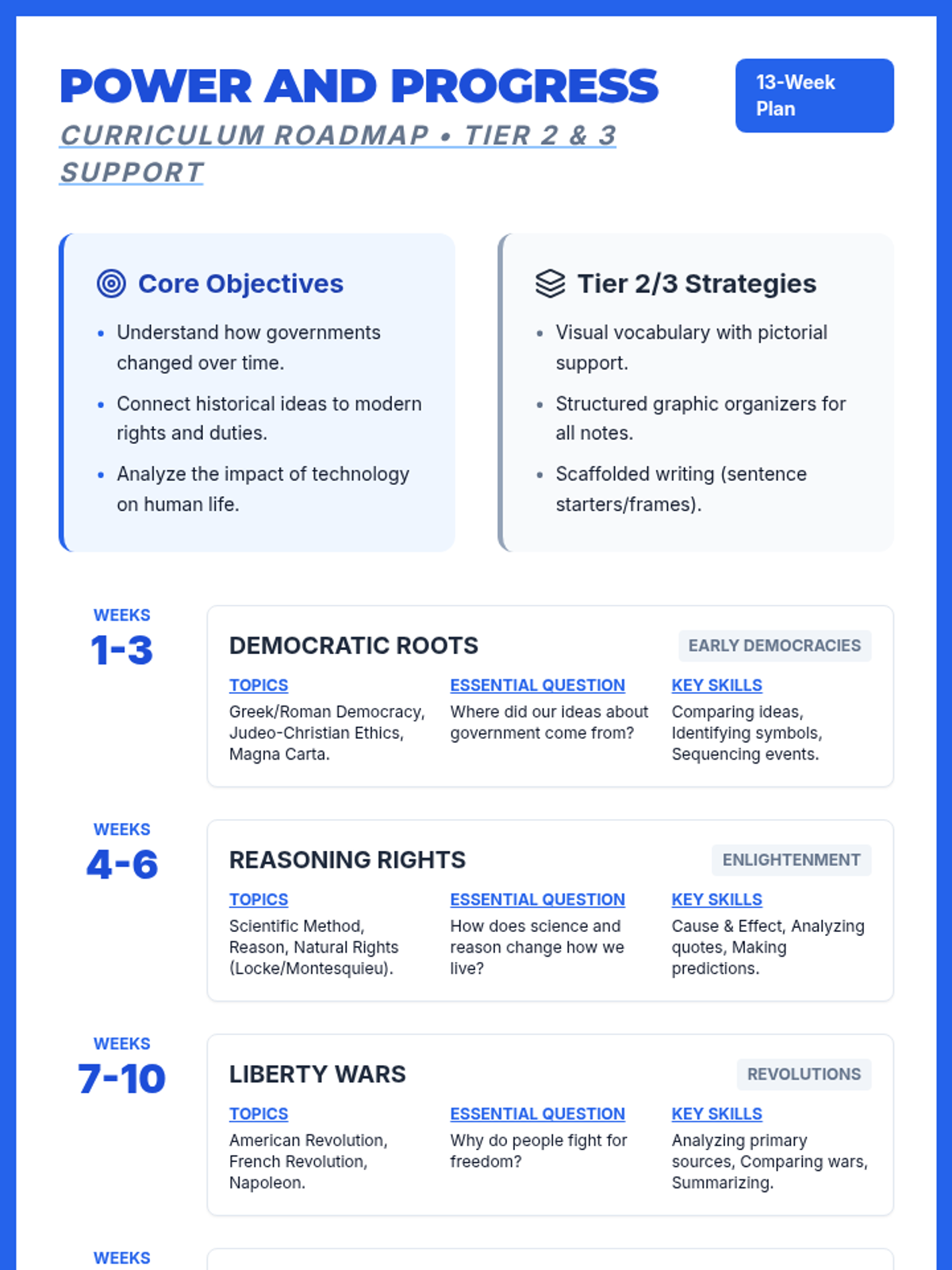
A modified World Studies 2 curriculum for Tier 2 and 3 special education students, focusing on the evolution of power, rights, and technology from early democracies through the Industrial Revolution.
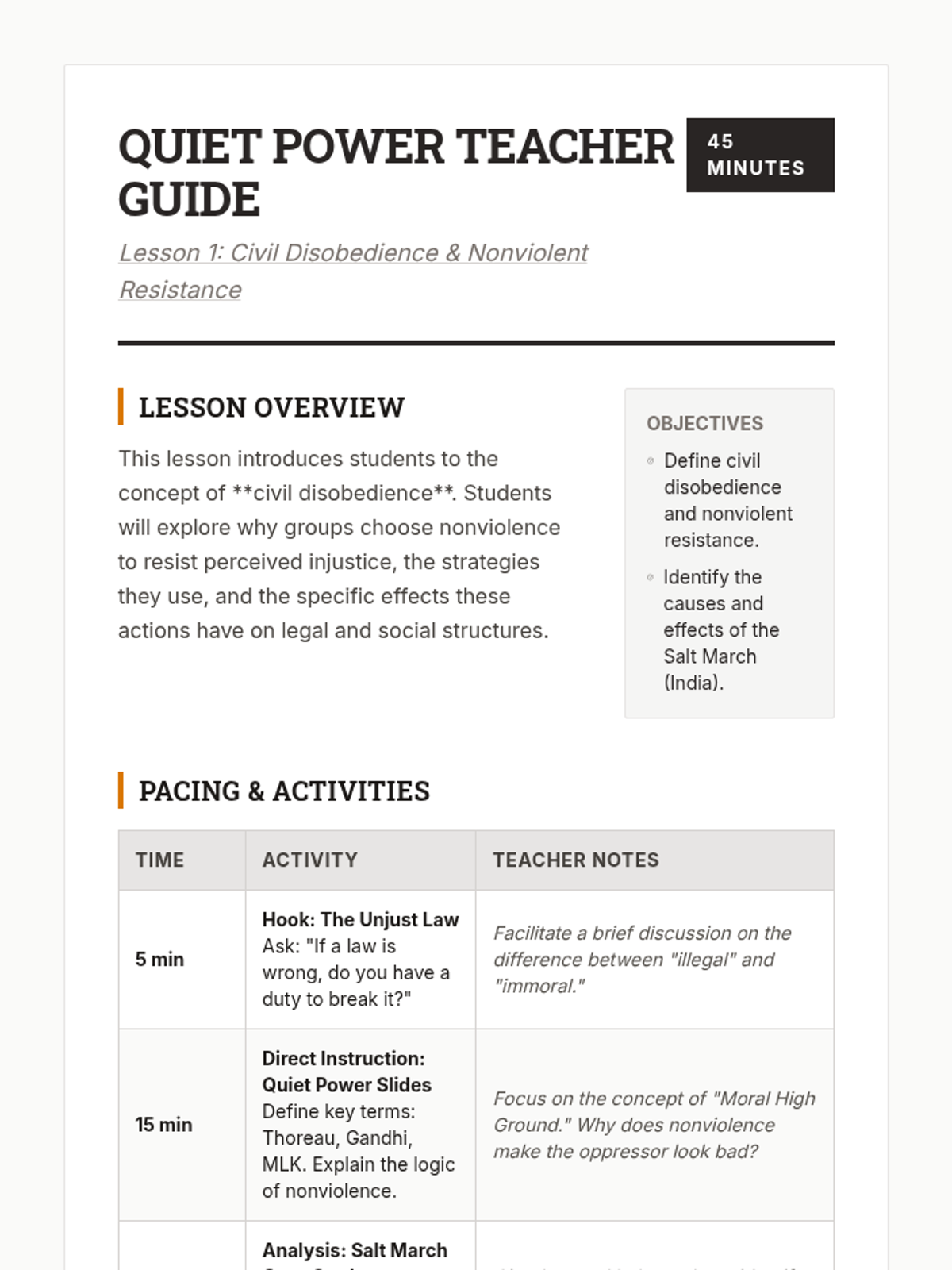
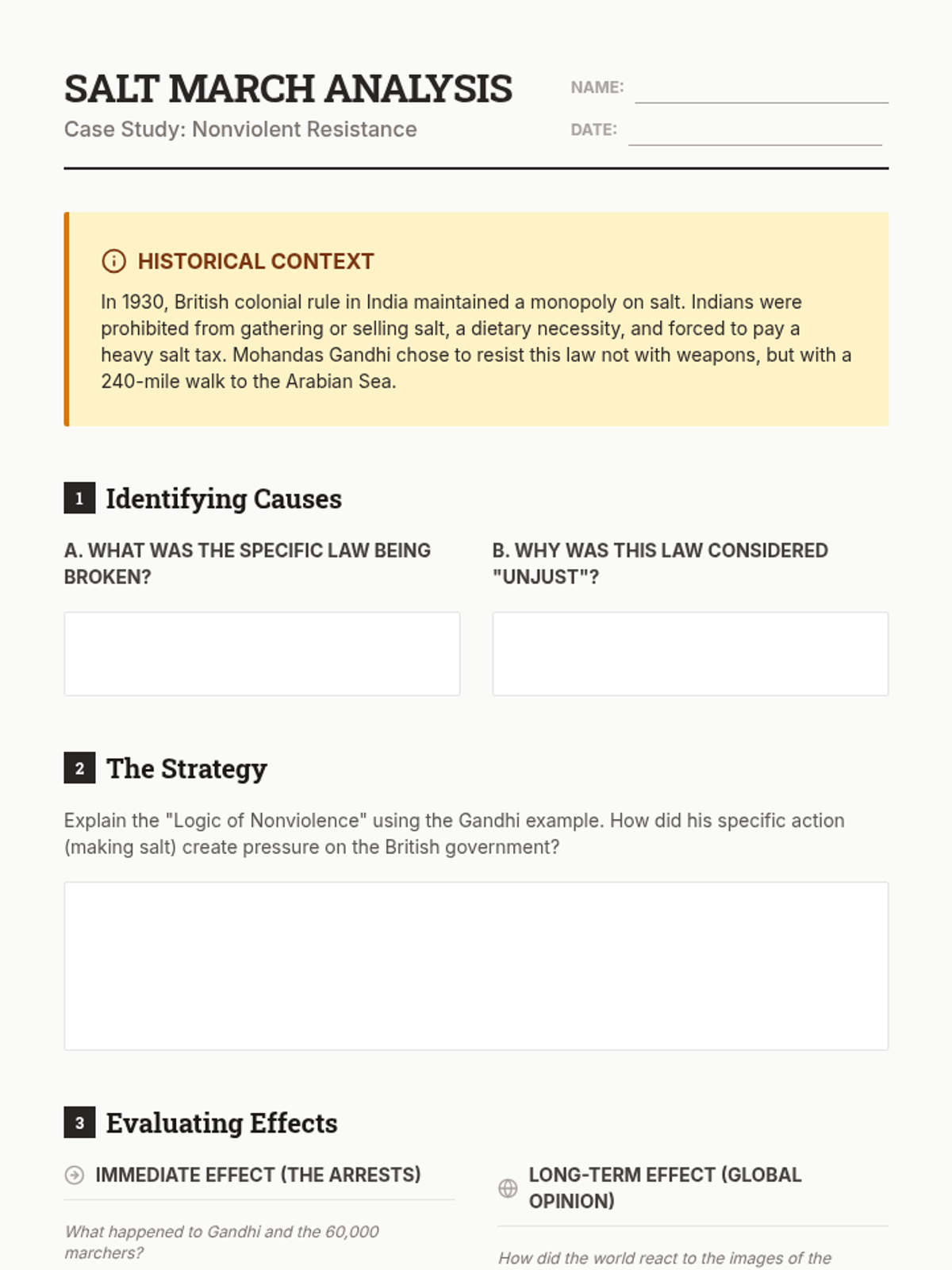
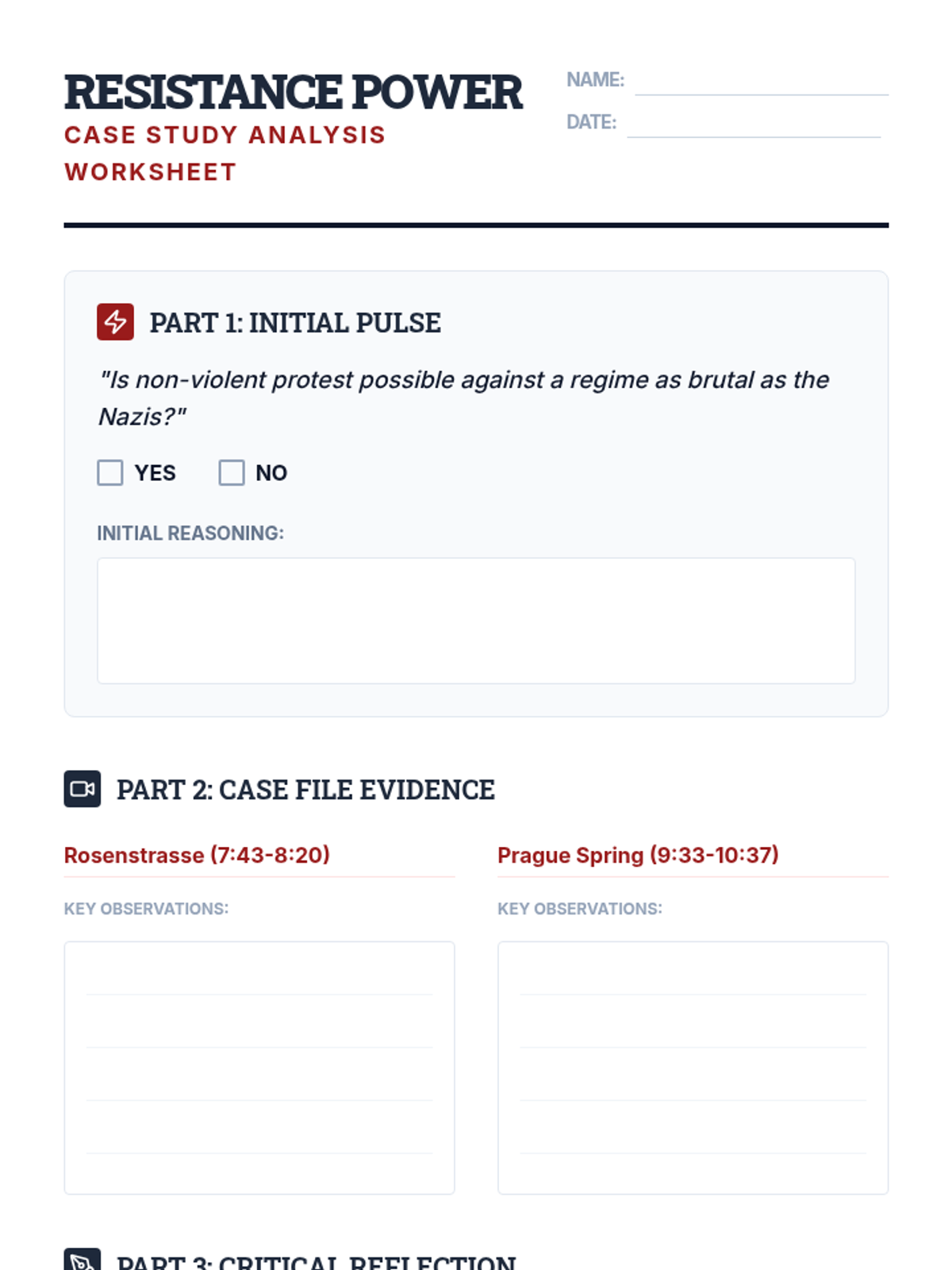
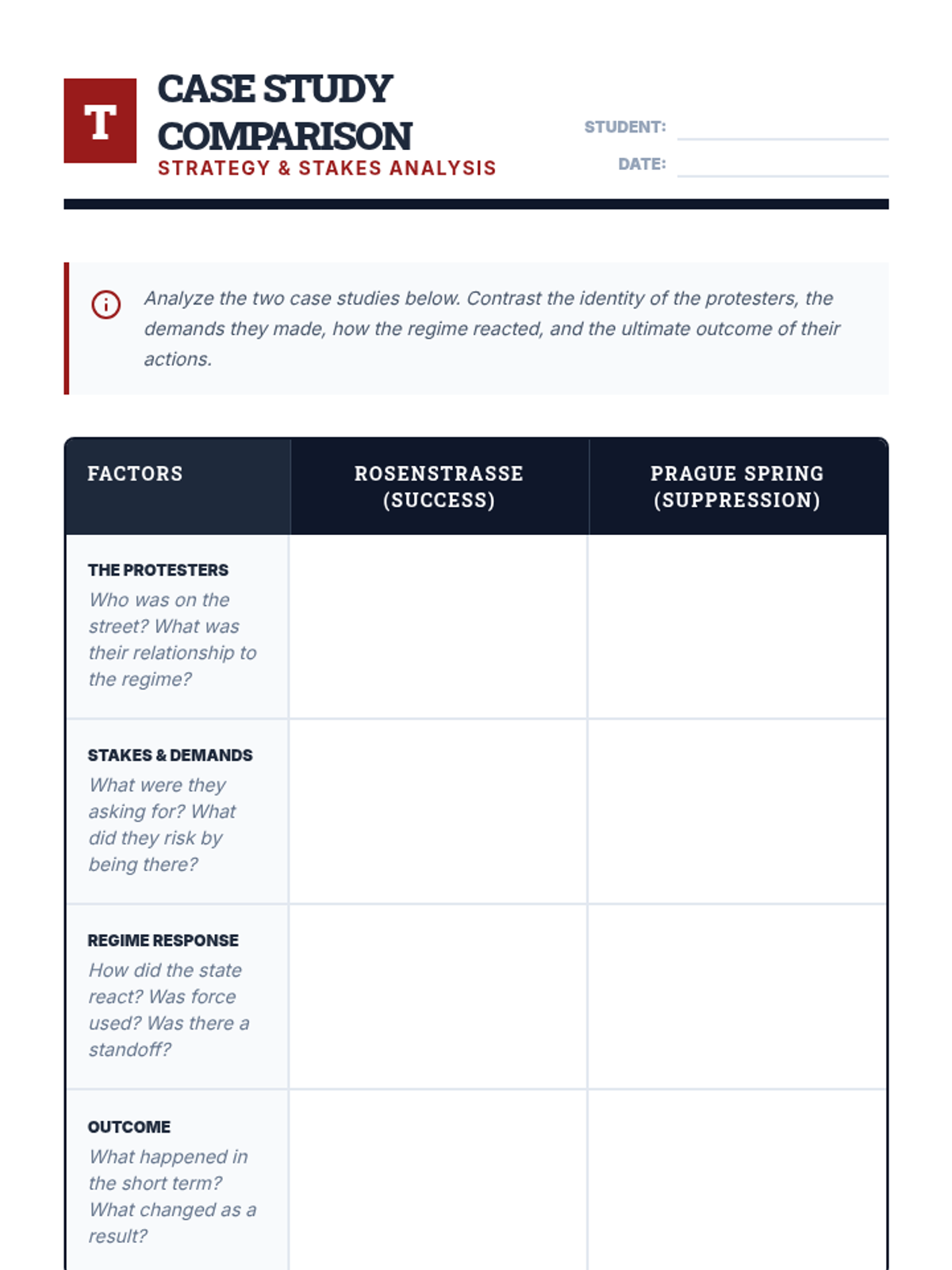
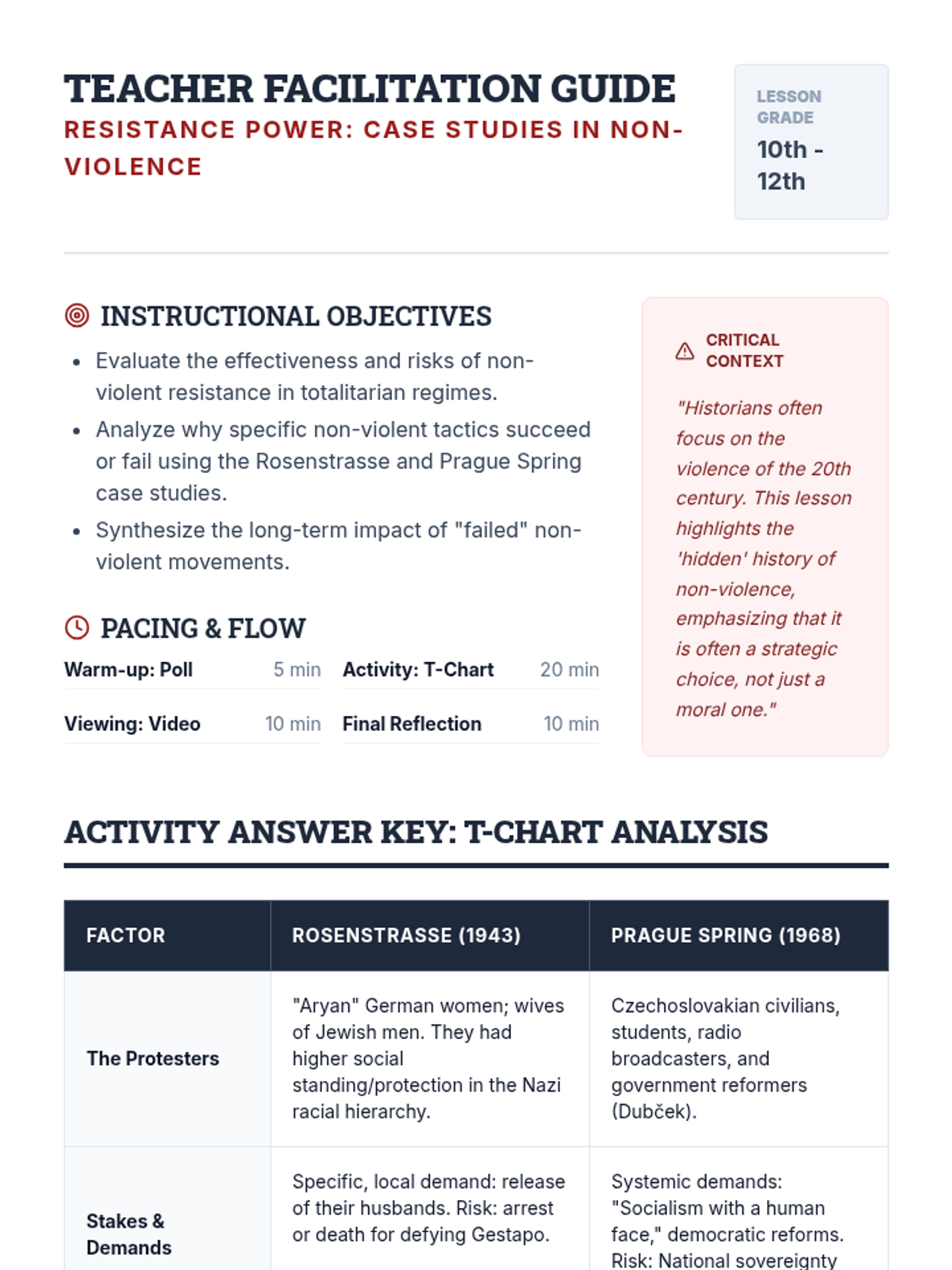
A two-part exploration of resistance movements, comparing the strategies, causes, and effects of nonviolent civil disobedience and armed rebellion through historical case studies.
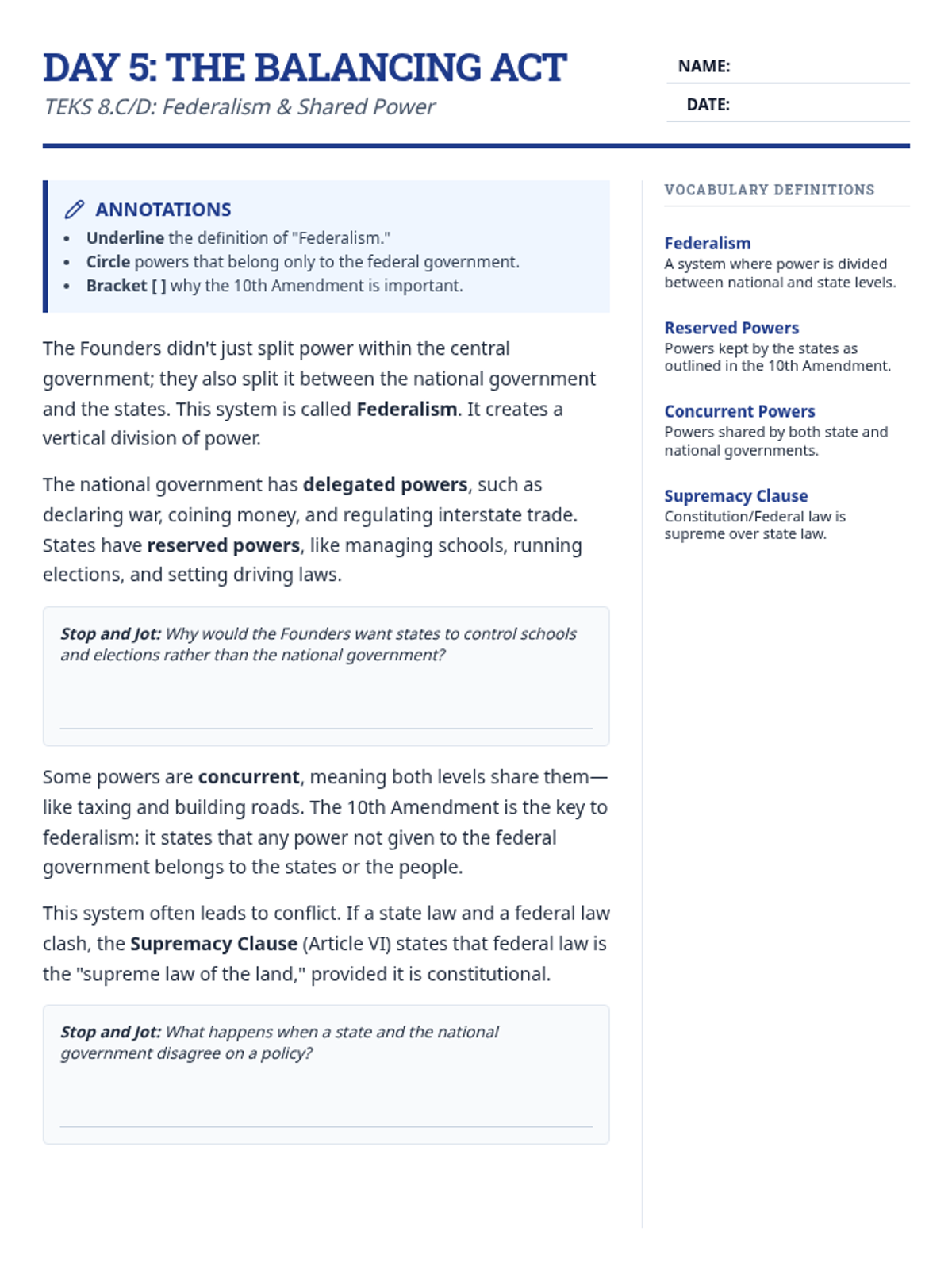
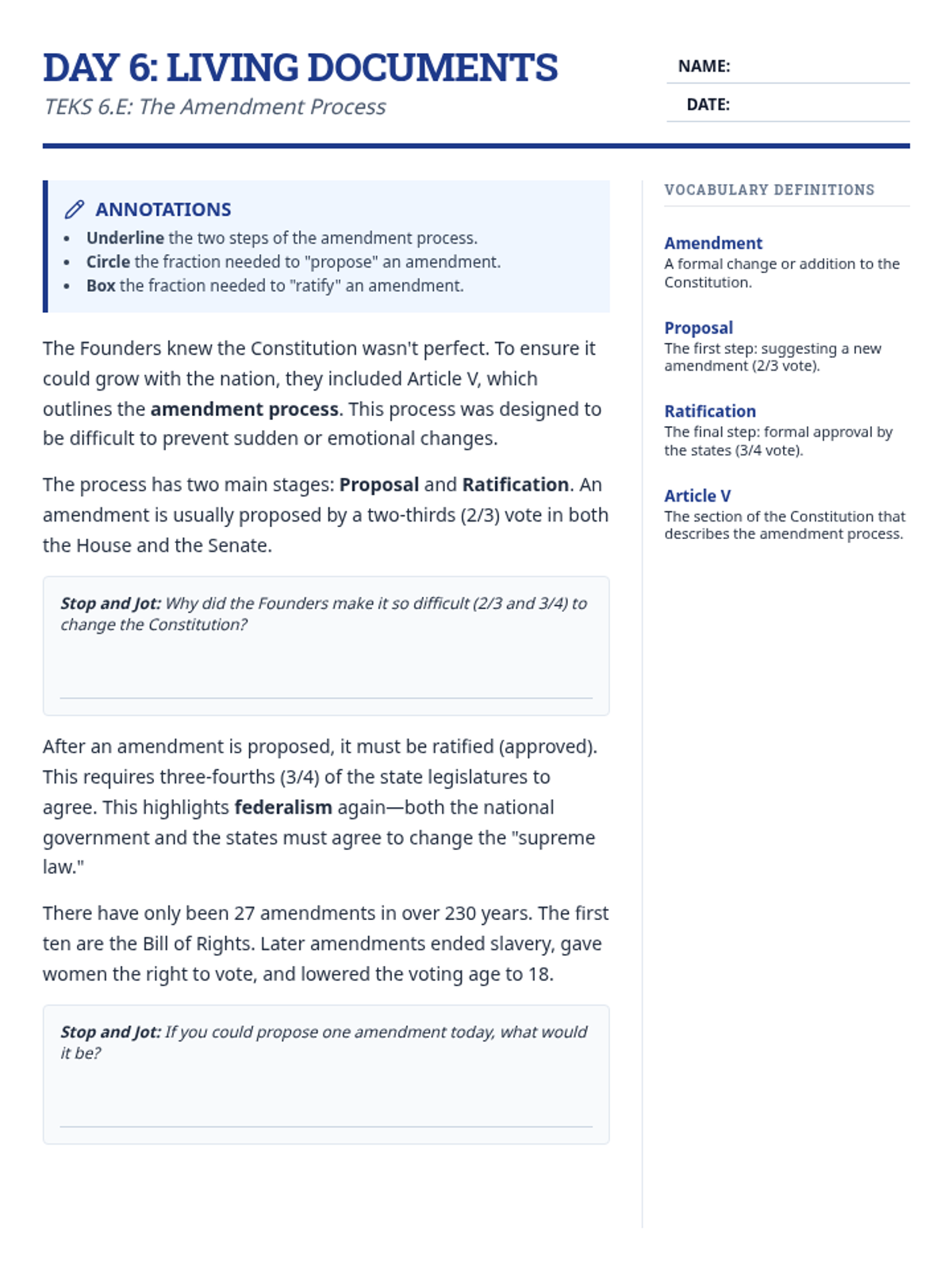
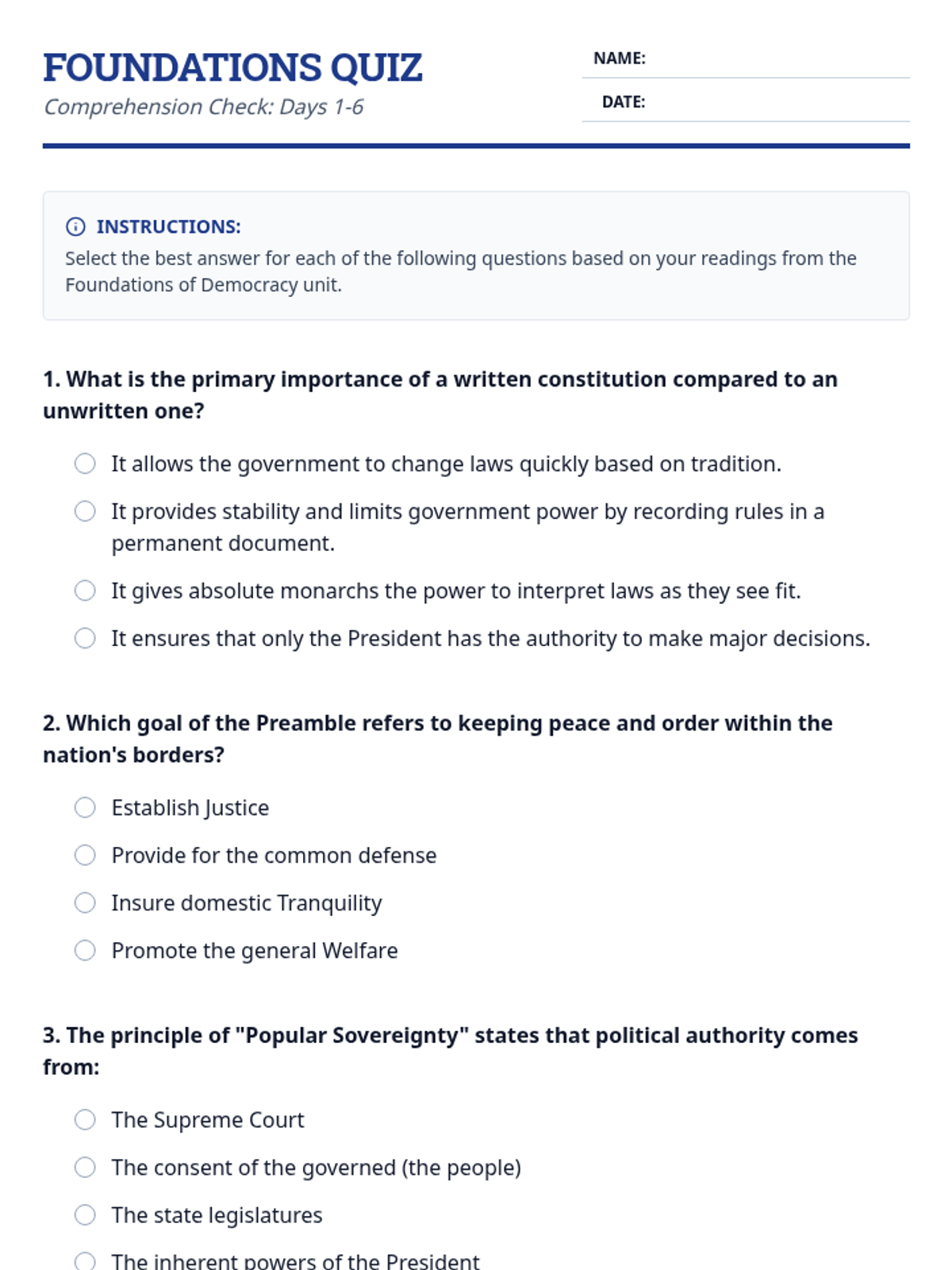
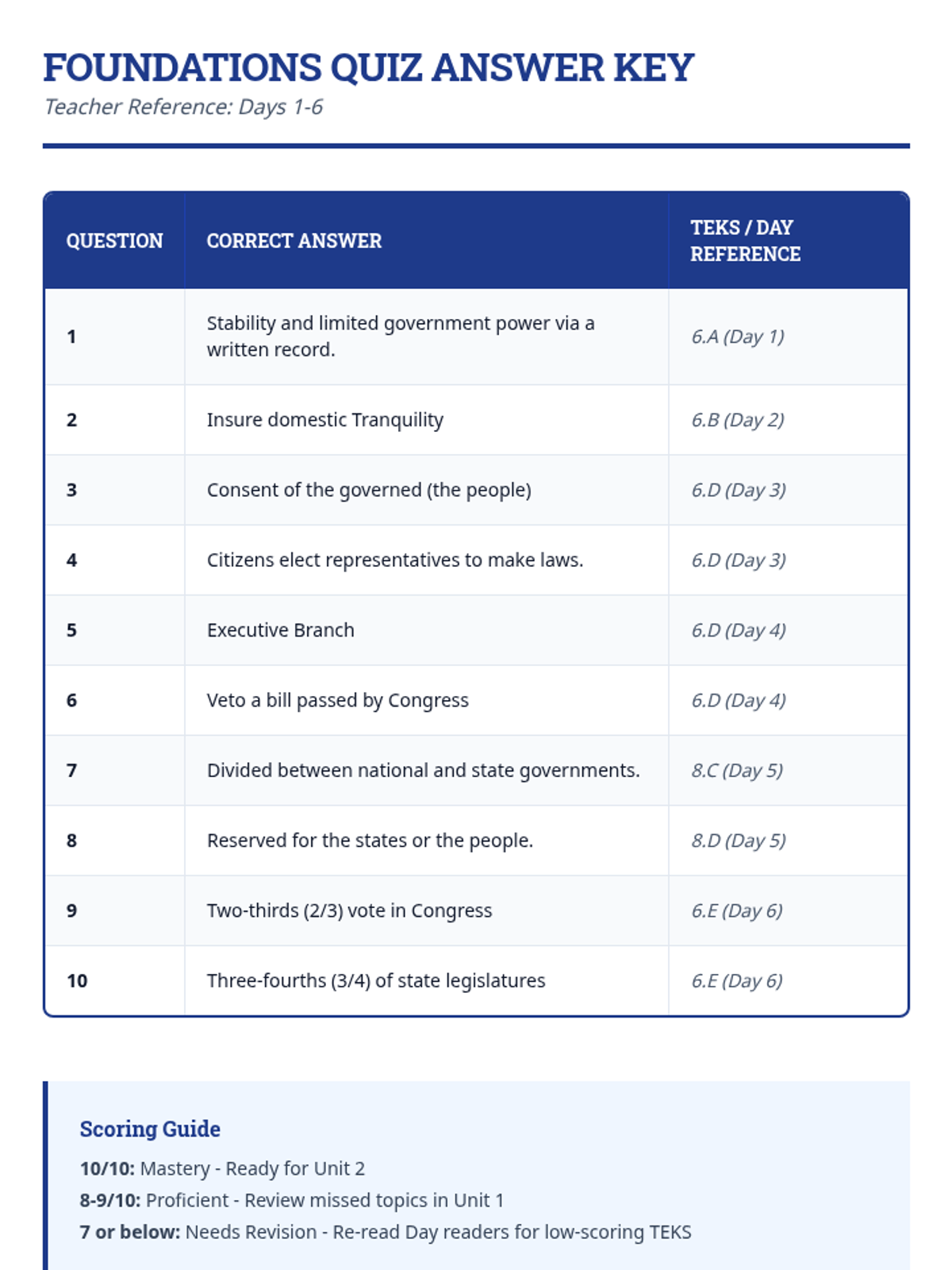
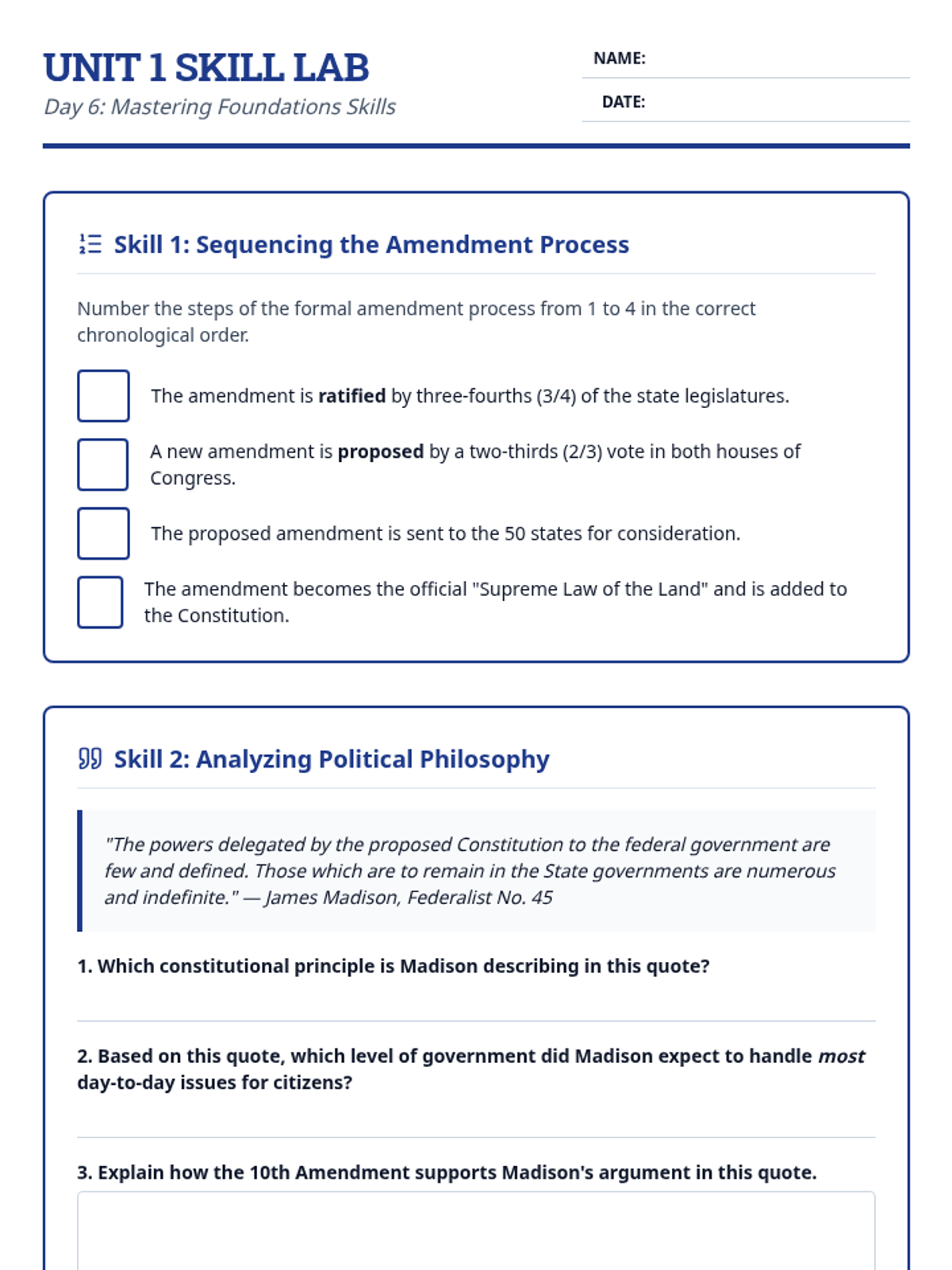
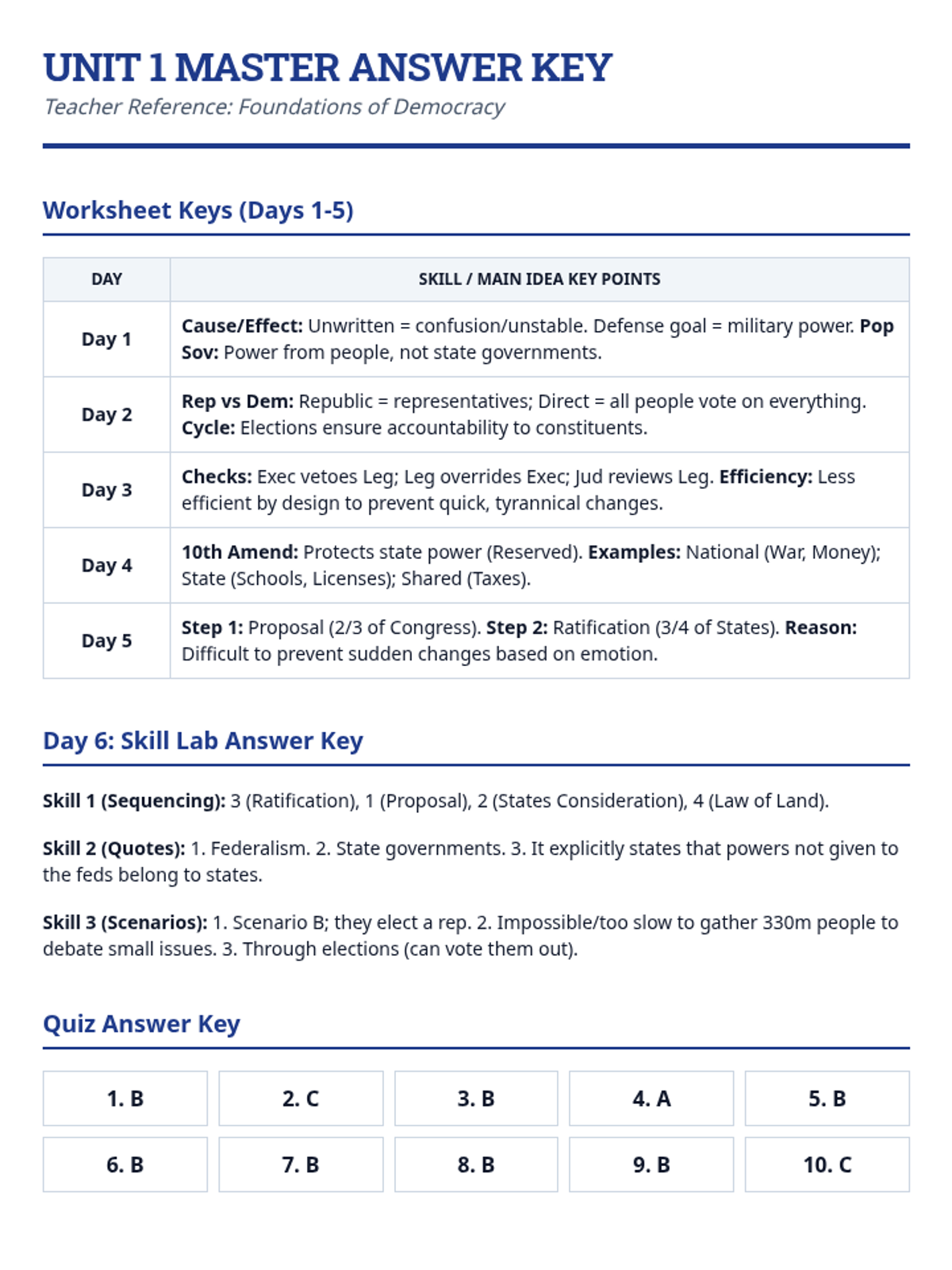
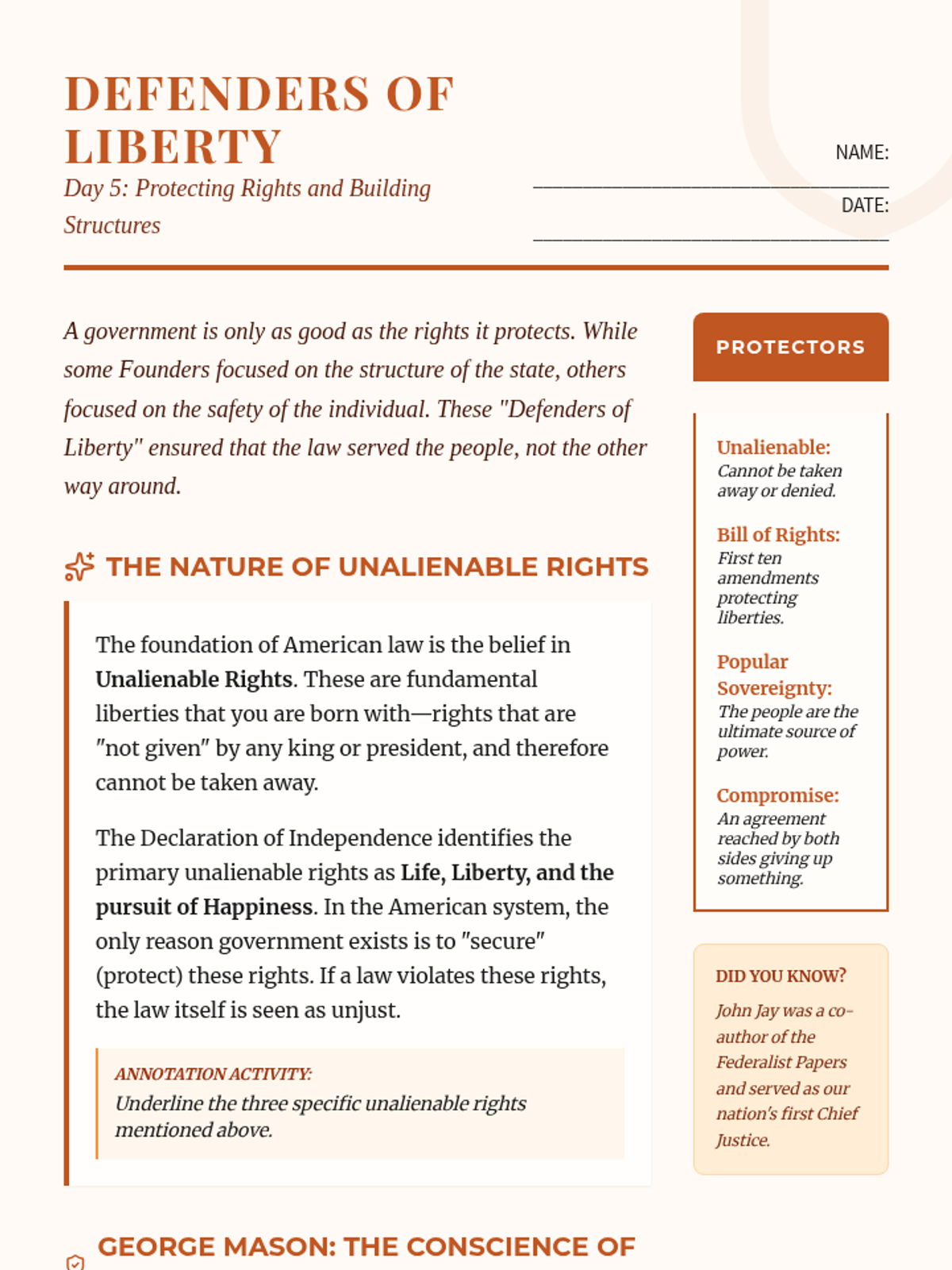
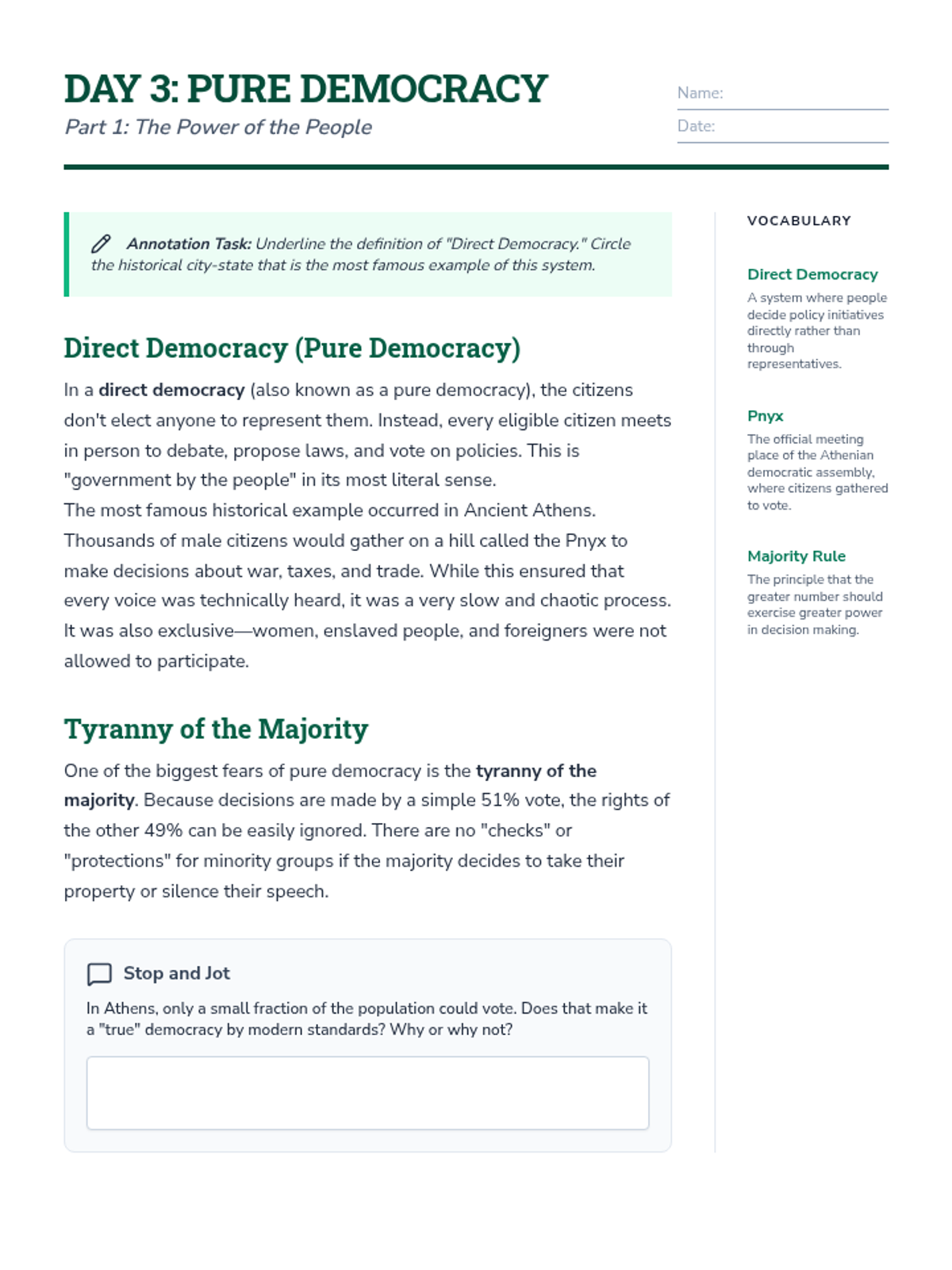
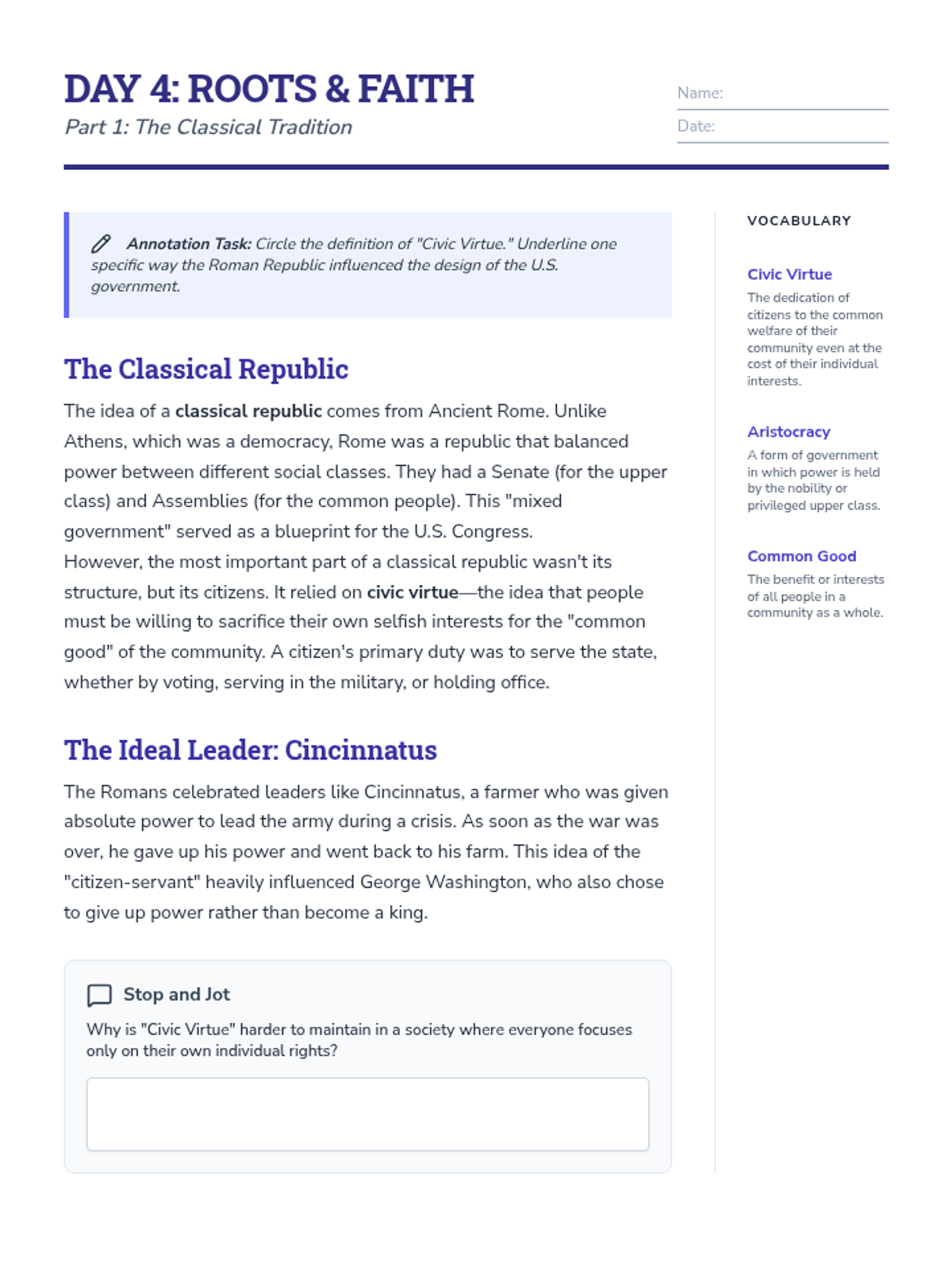
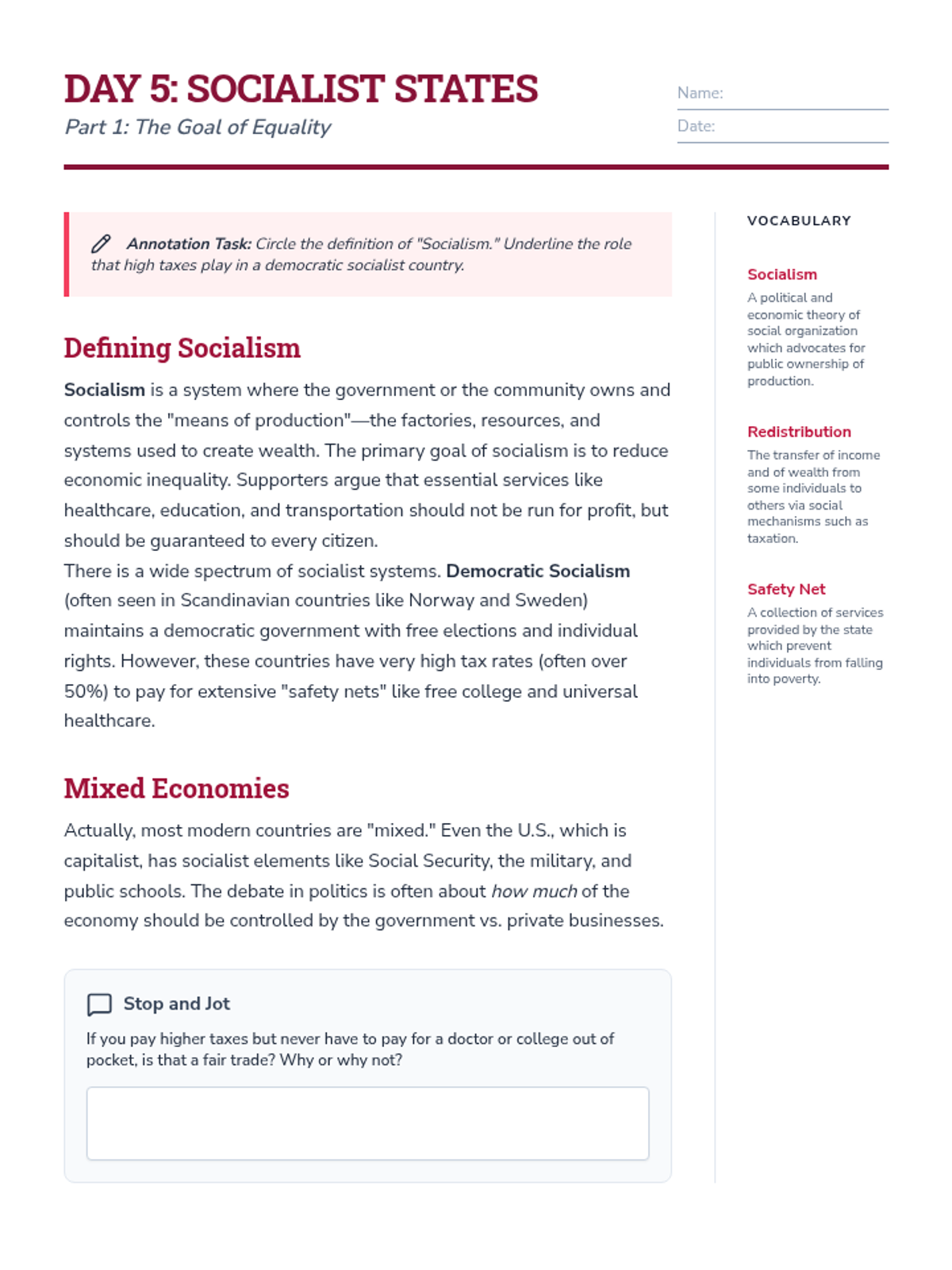
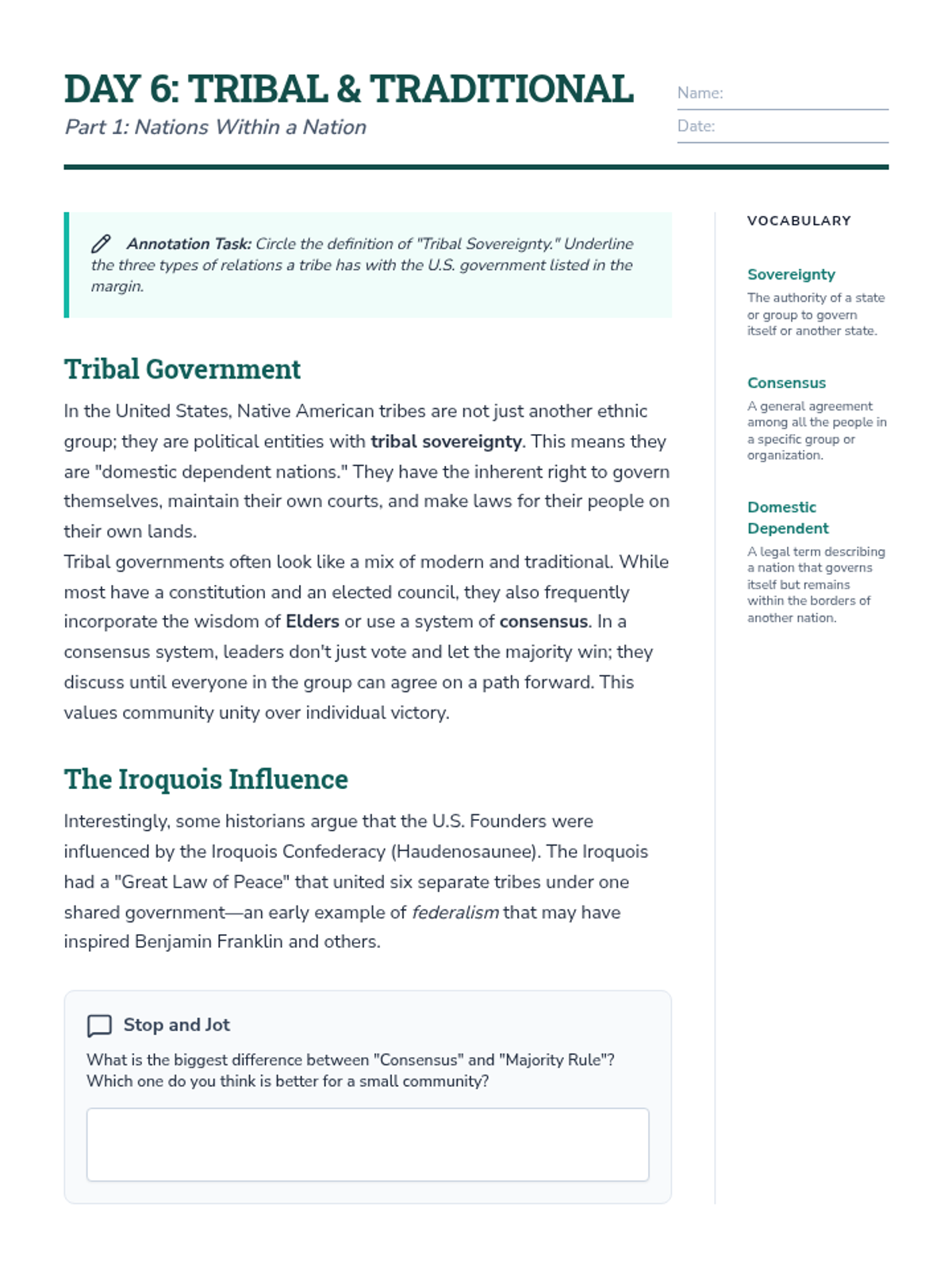
A 7-day comprehensive remediation sequence focused on the philosophical, historical, and individual foundations of American government. Designed for students needing mastery of TEKS 1 and 12B, the unit features structured readers, skill-building worksheets, and a cumulative assessment.
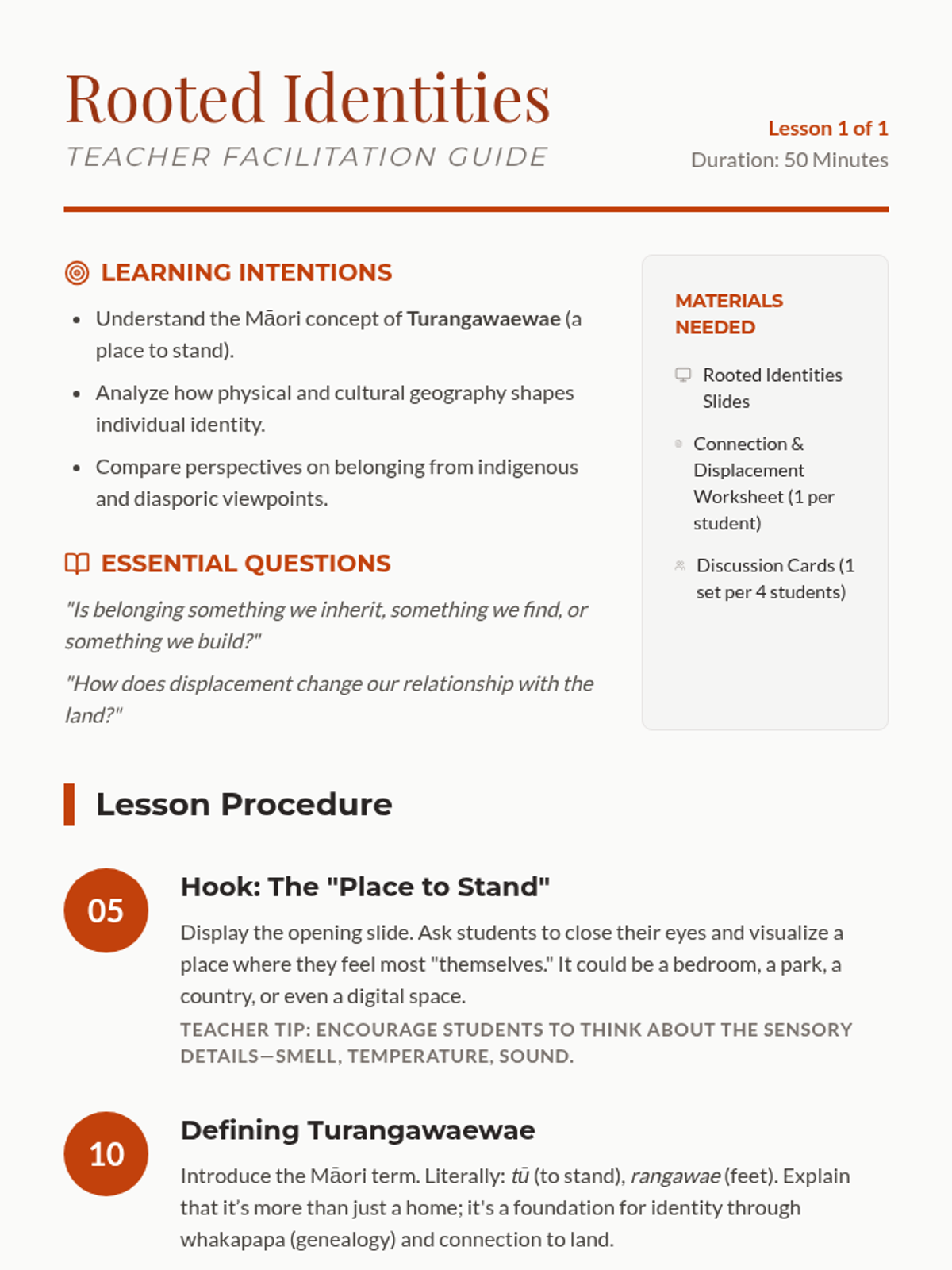
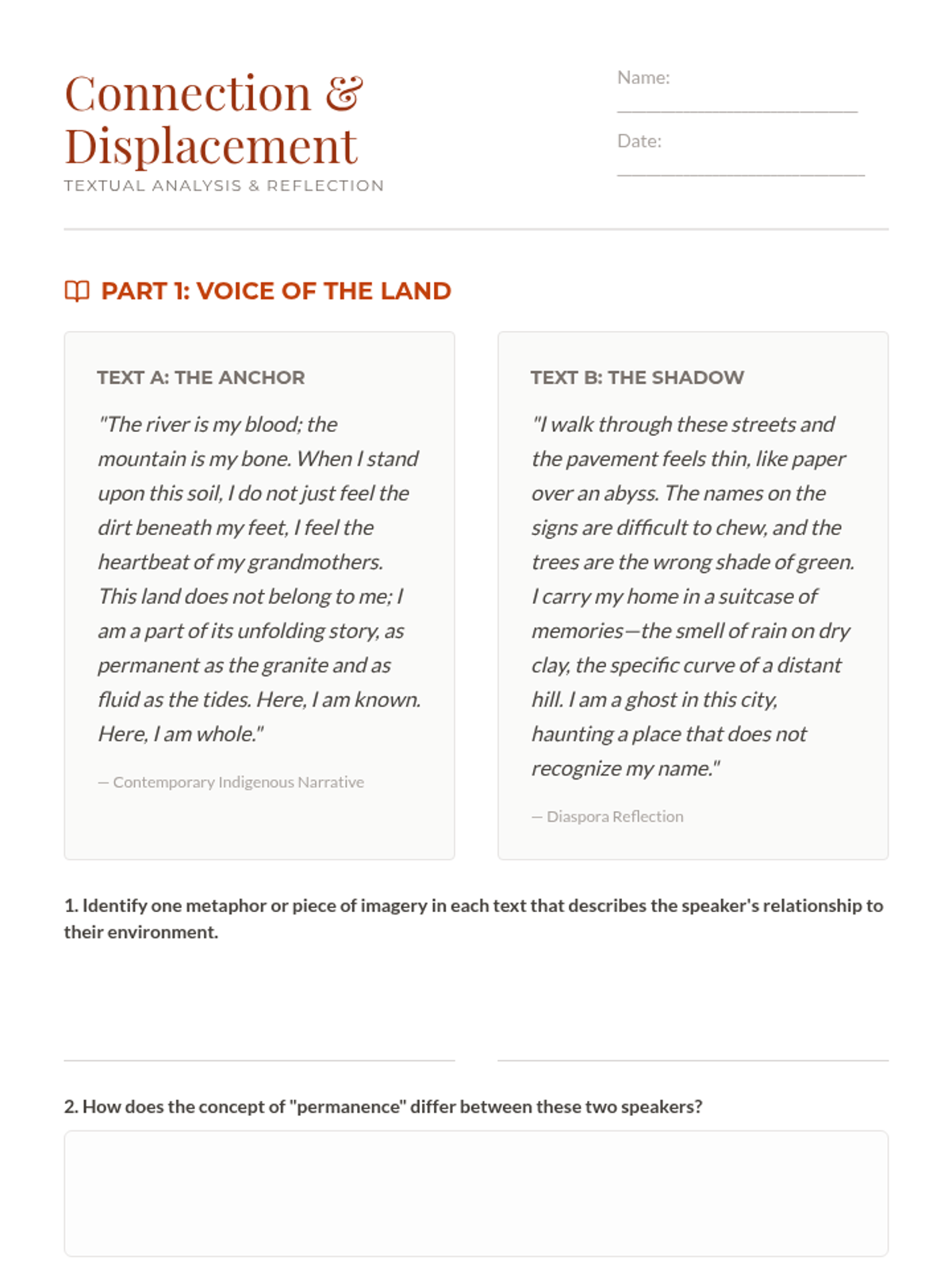
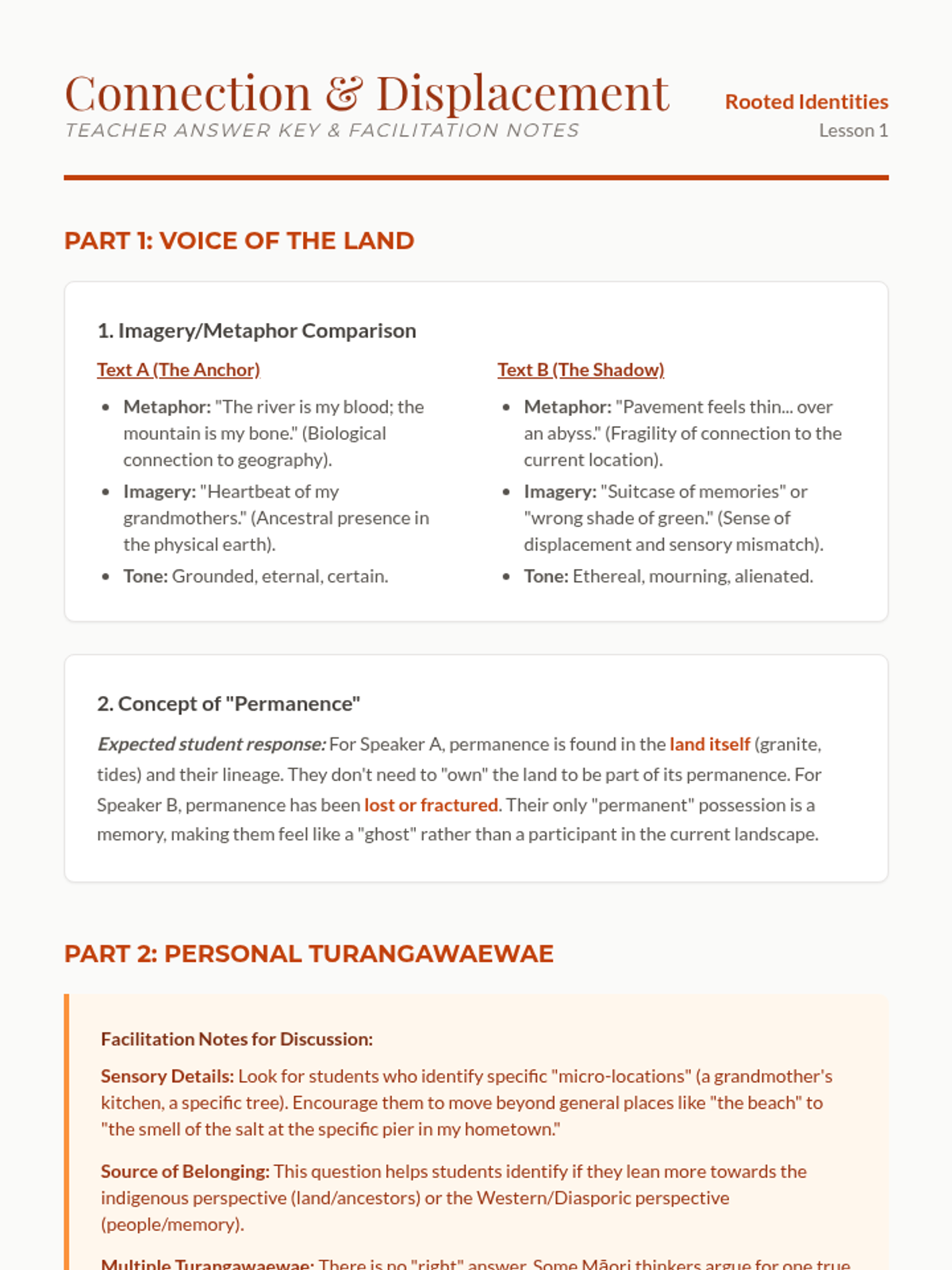
A deep dive into the Māori concept of Turangawaewae and global perspectives on belonging, identity, and the significance of land.
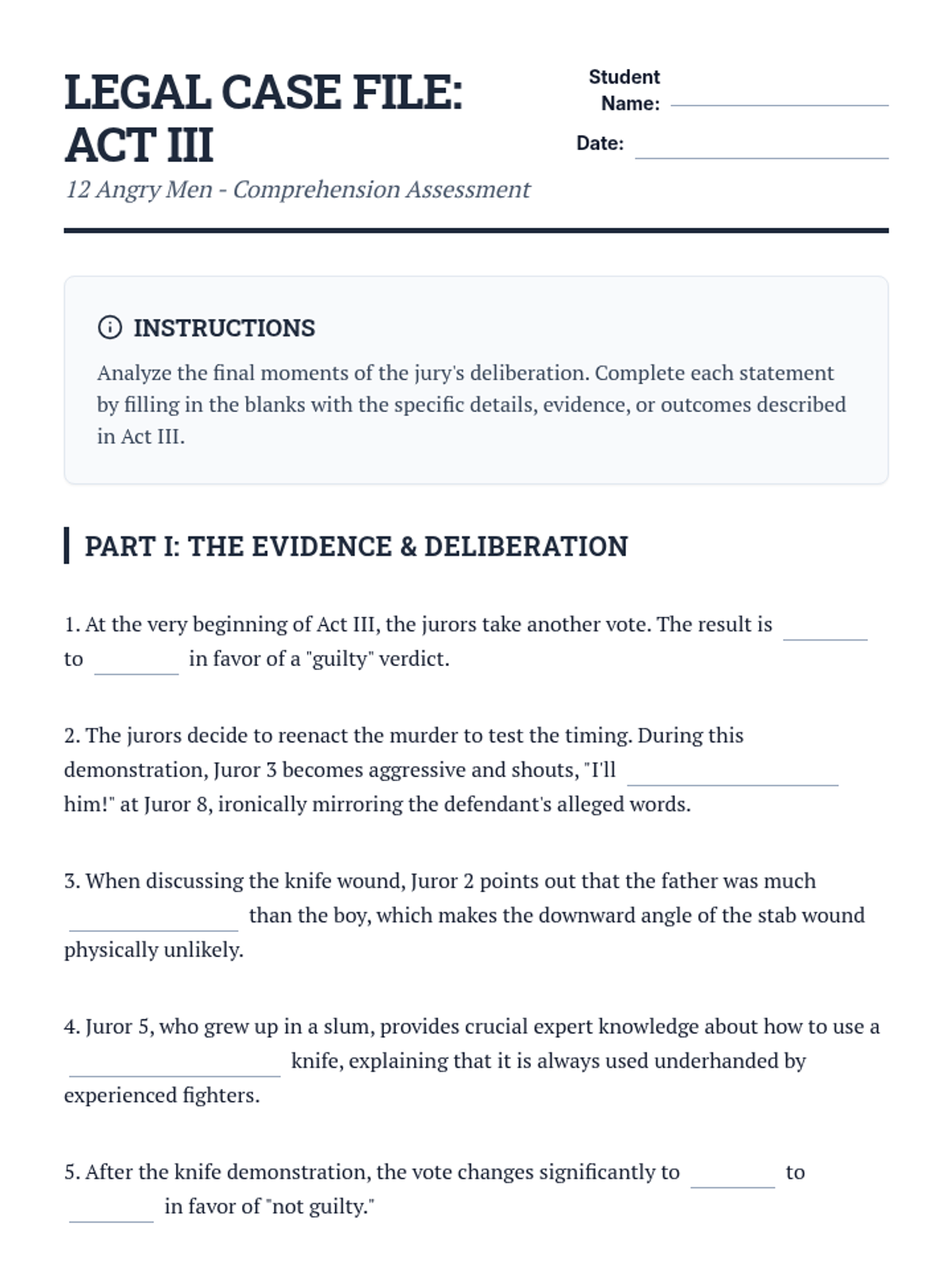
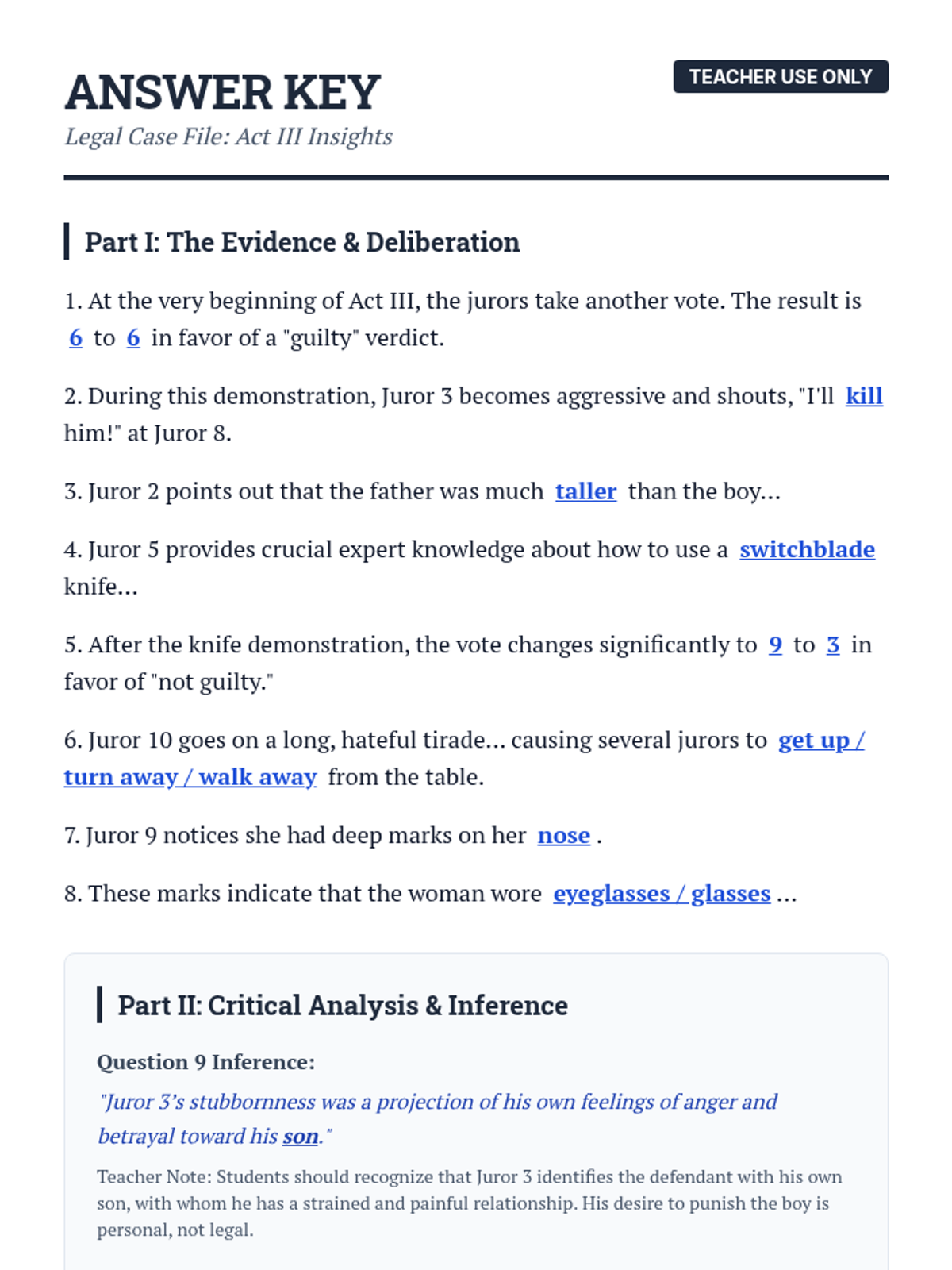
A comprehensive study of Act III of 12 Angry Men, focusing on the final shifts in juror opinions, the debunking of the final witnesses, and the themes of prejudice and reasonable doubt.
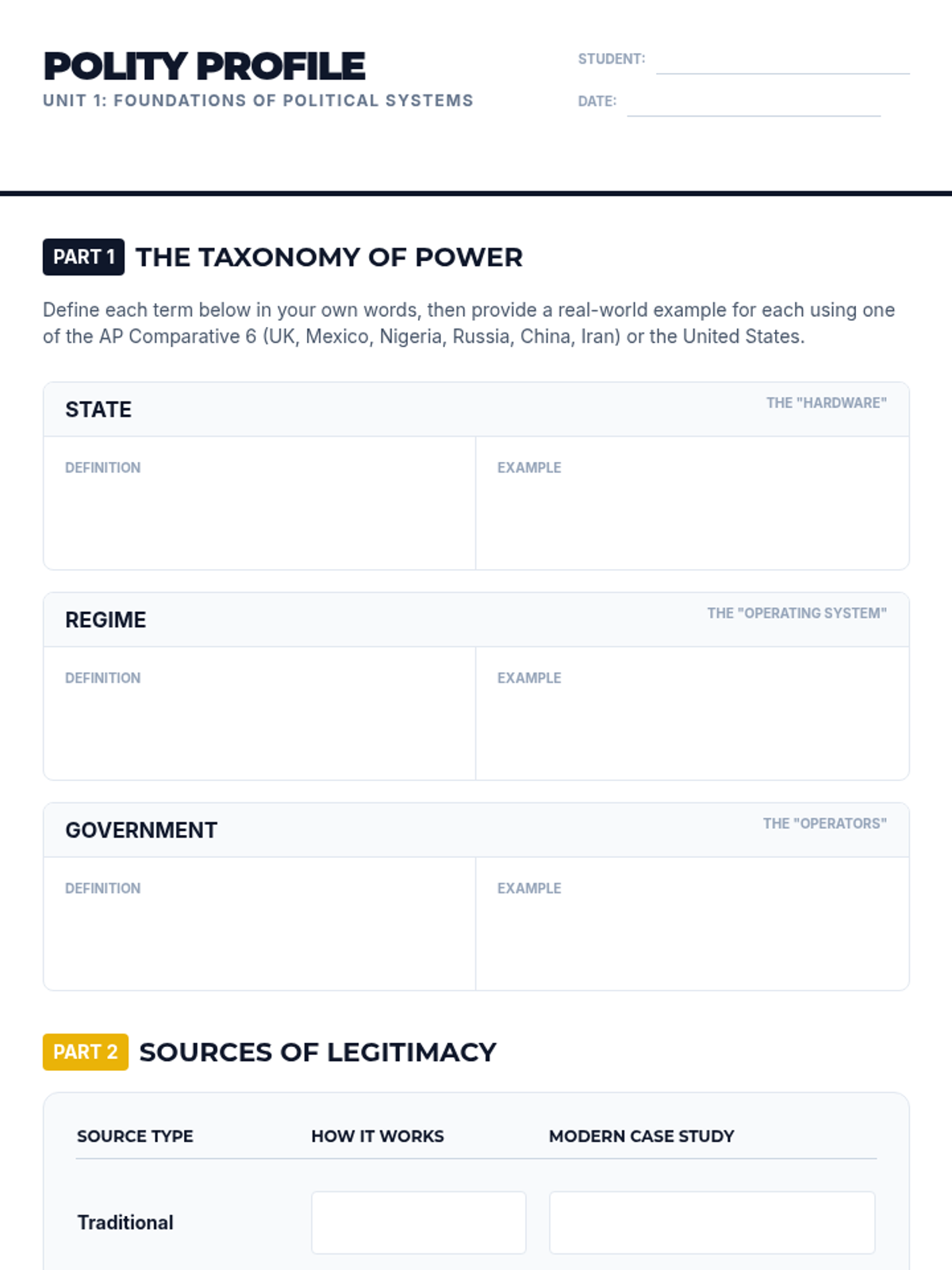
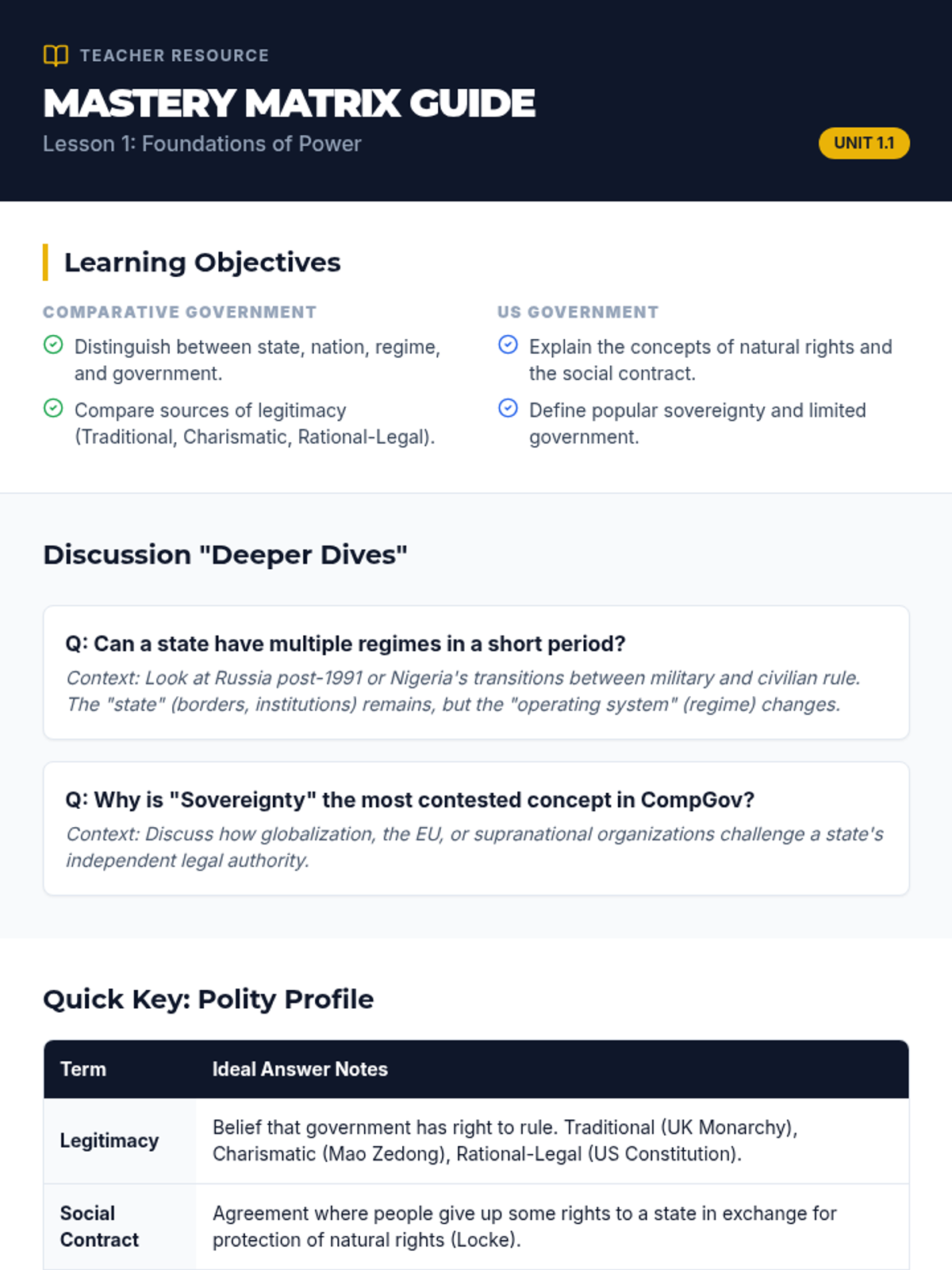
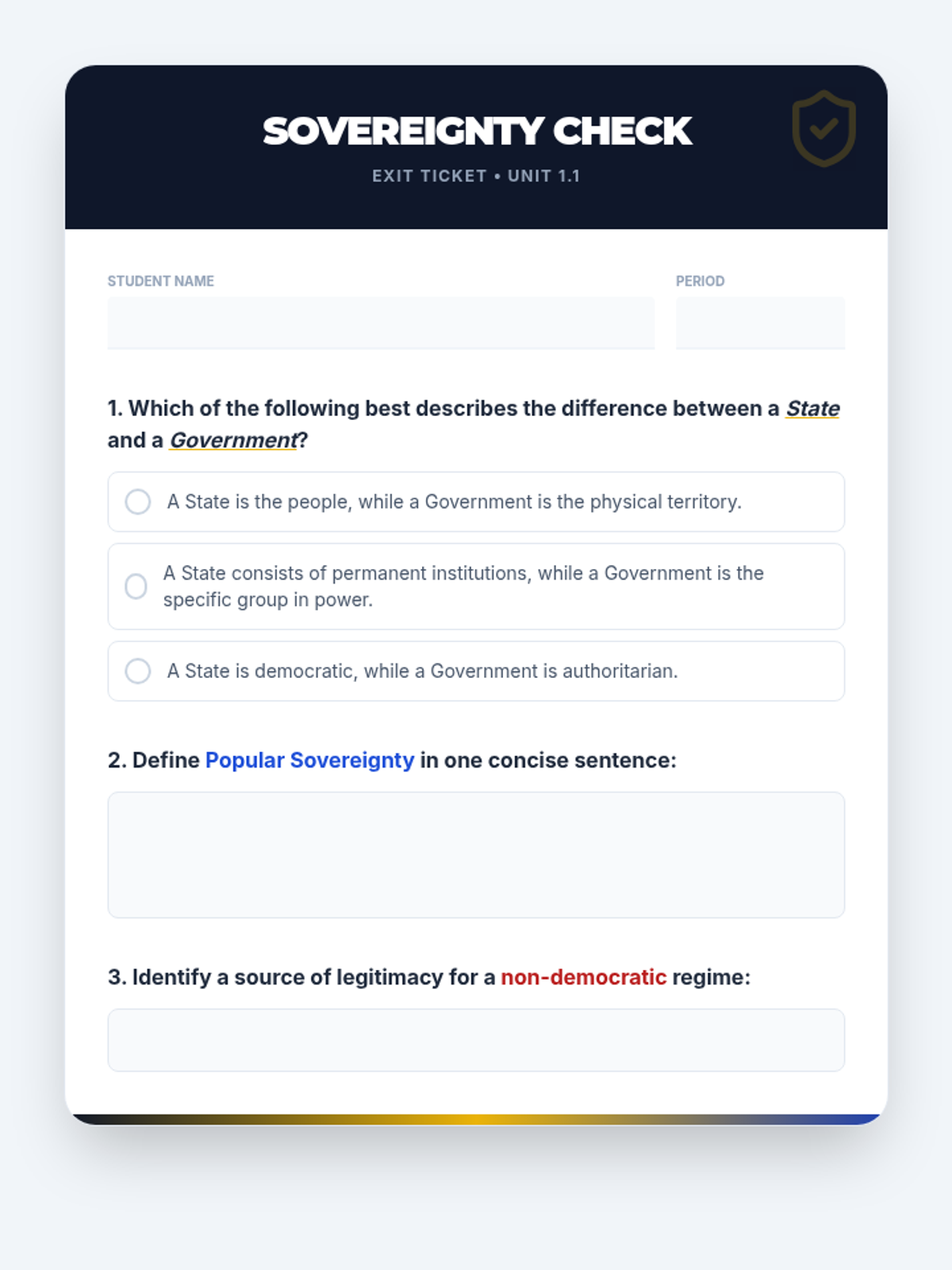
A comprehensive dual-course sequence covering all units for both AP Comparative Government and AP US Government & Politics. The sequence bridges domestic and international political concepts, from foundational structures to civil liberties and participation.
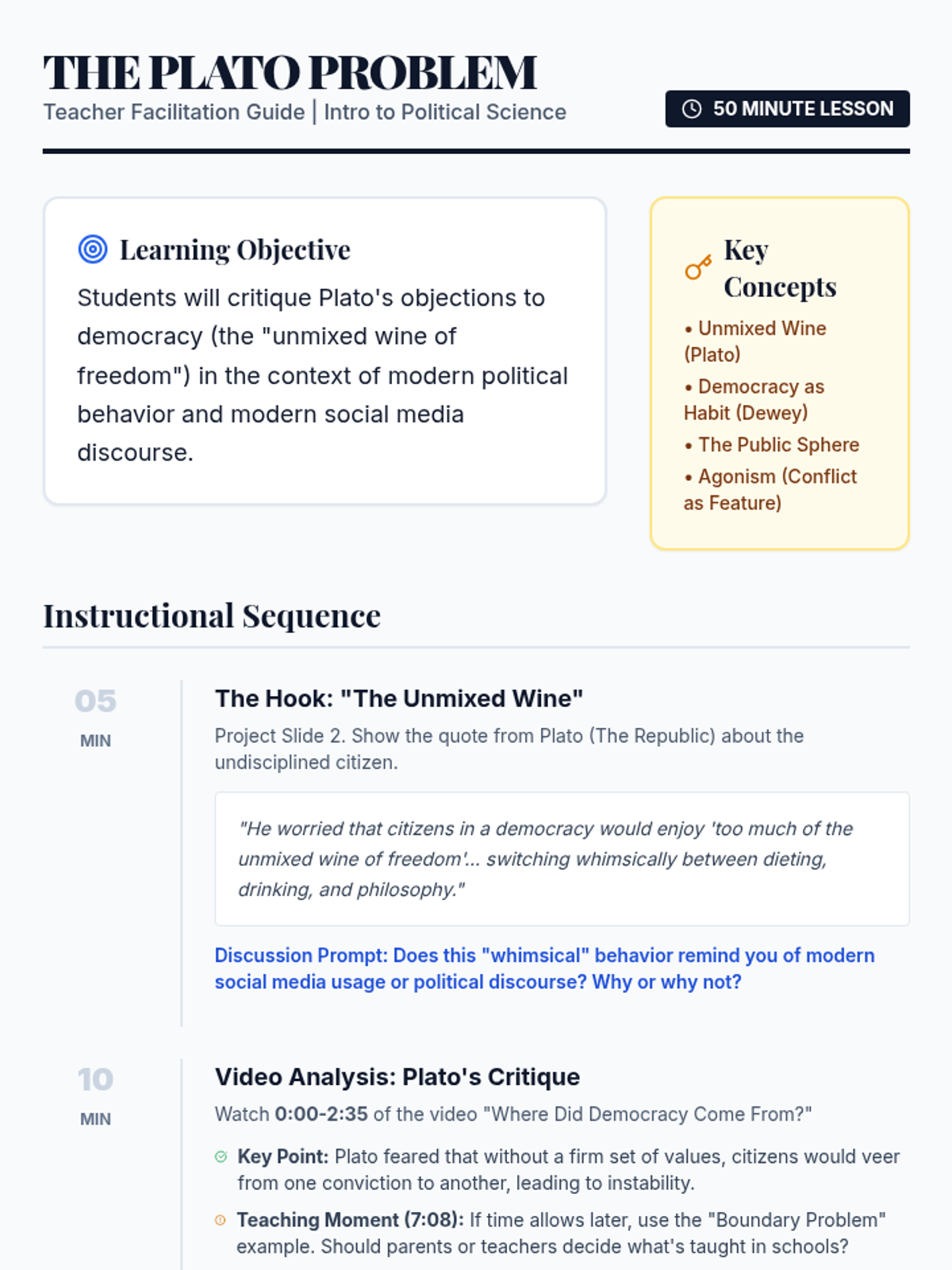
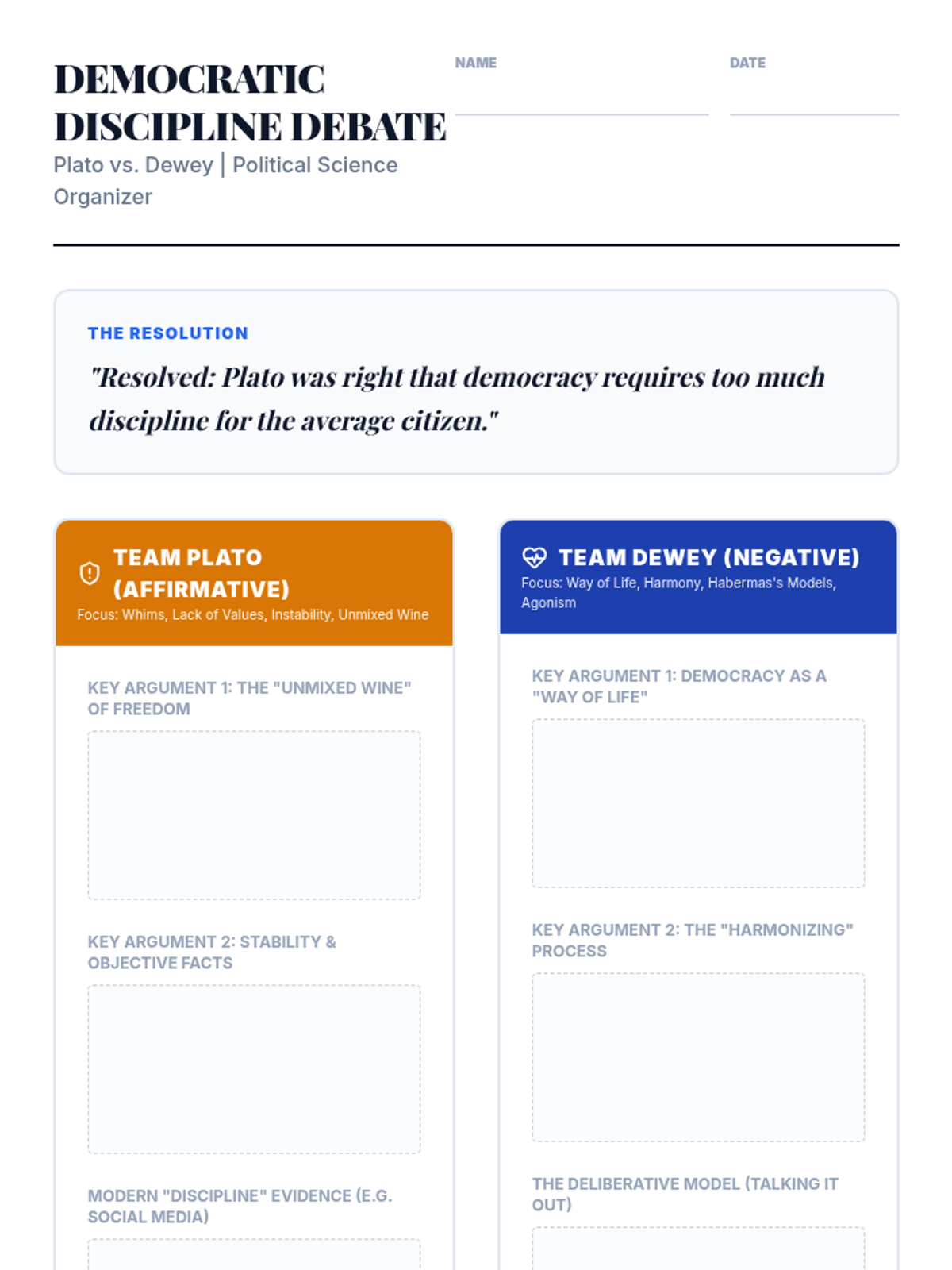
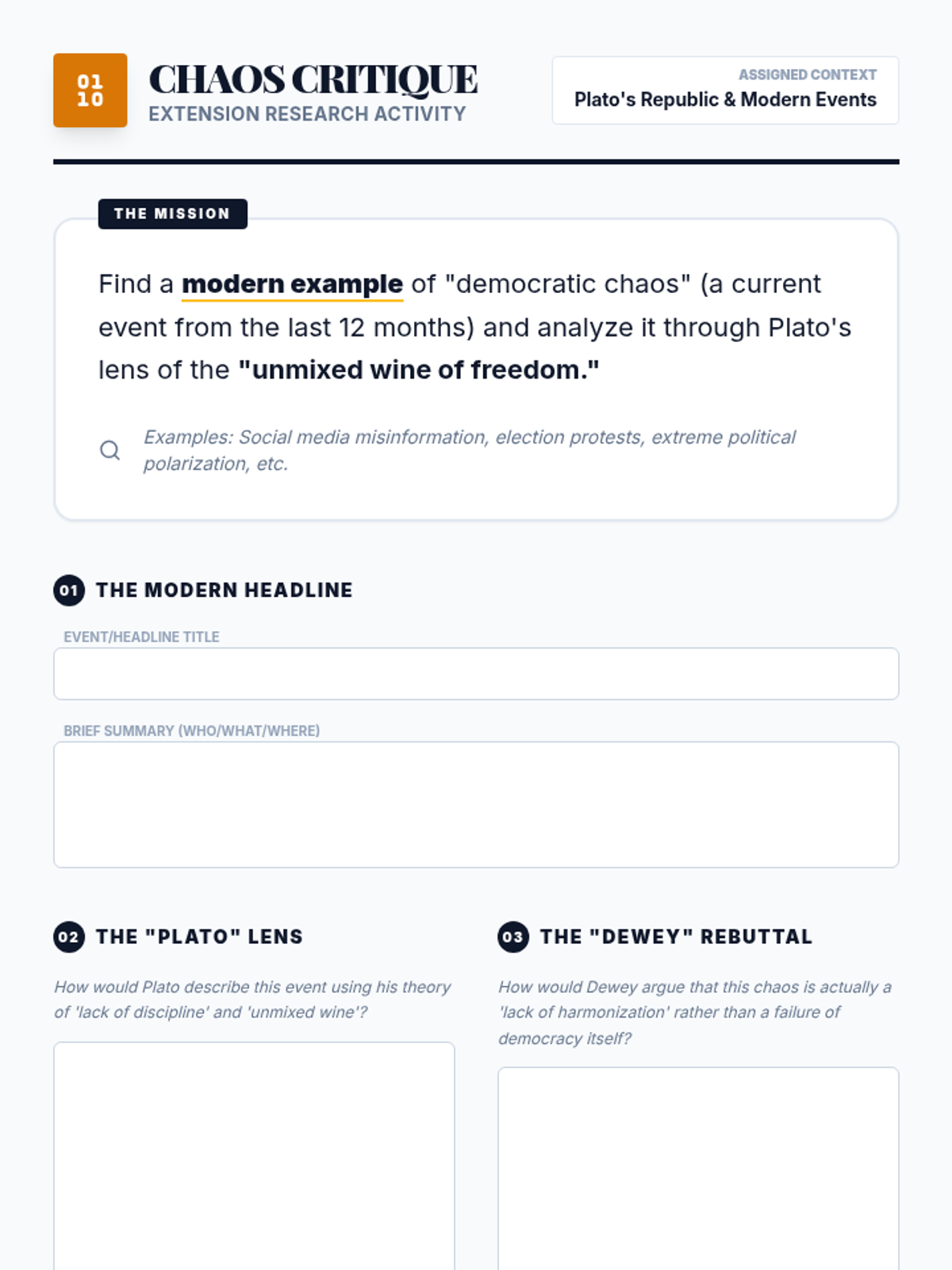
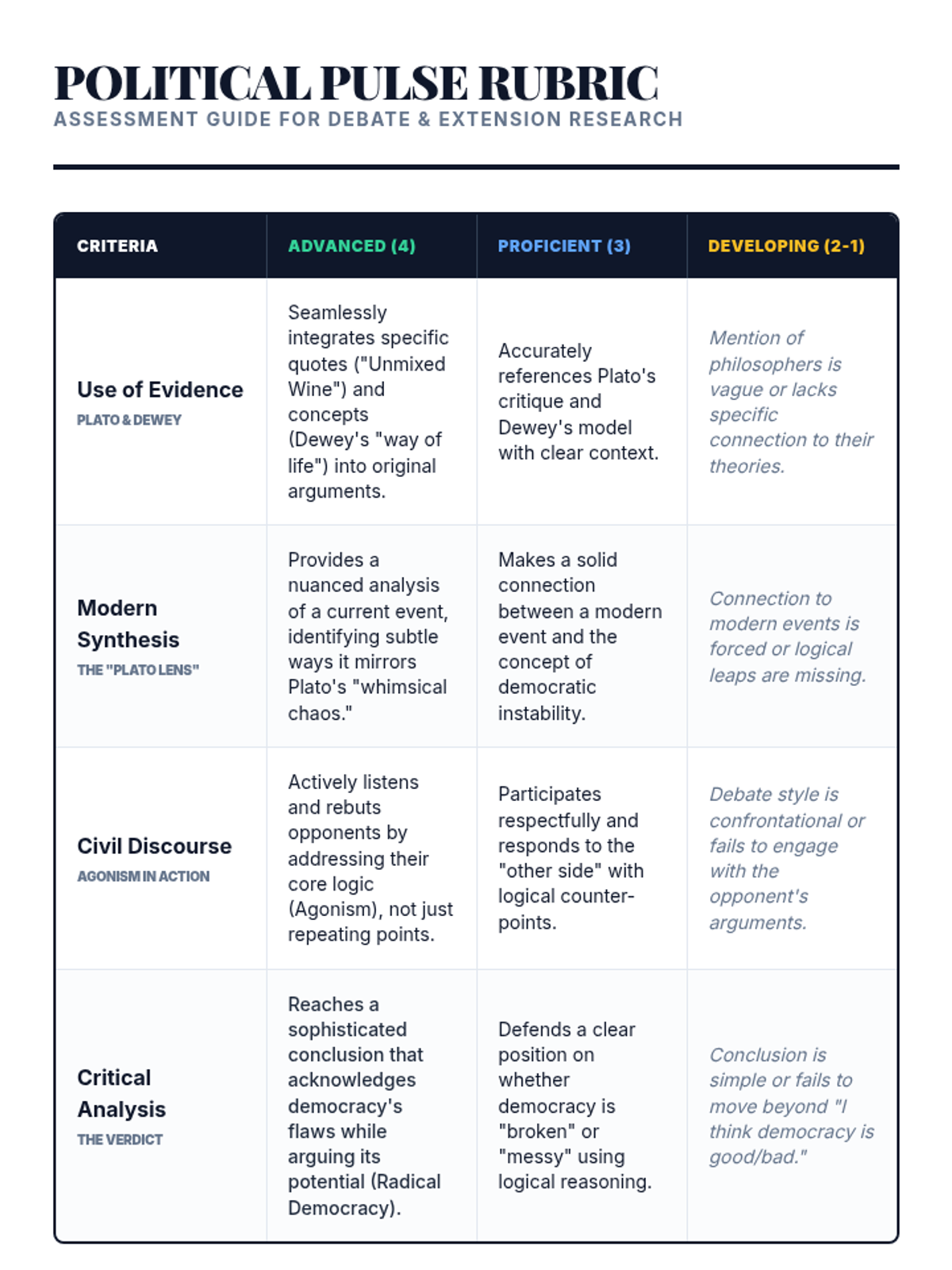
A deep dive into the tensions between classical philosophy and modern democratic practice, focusing on Plato's critiques and contemporary responses.
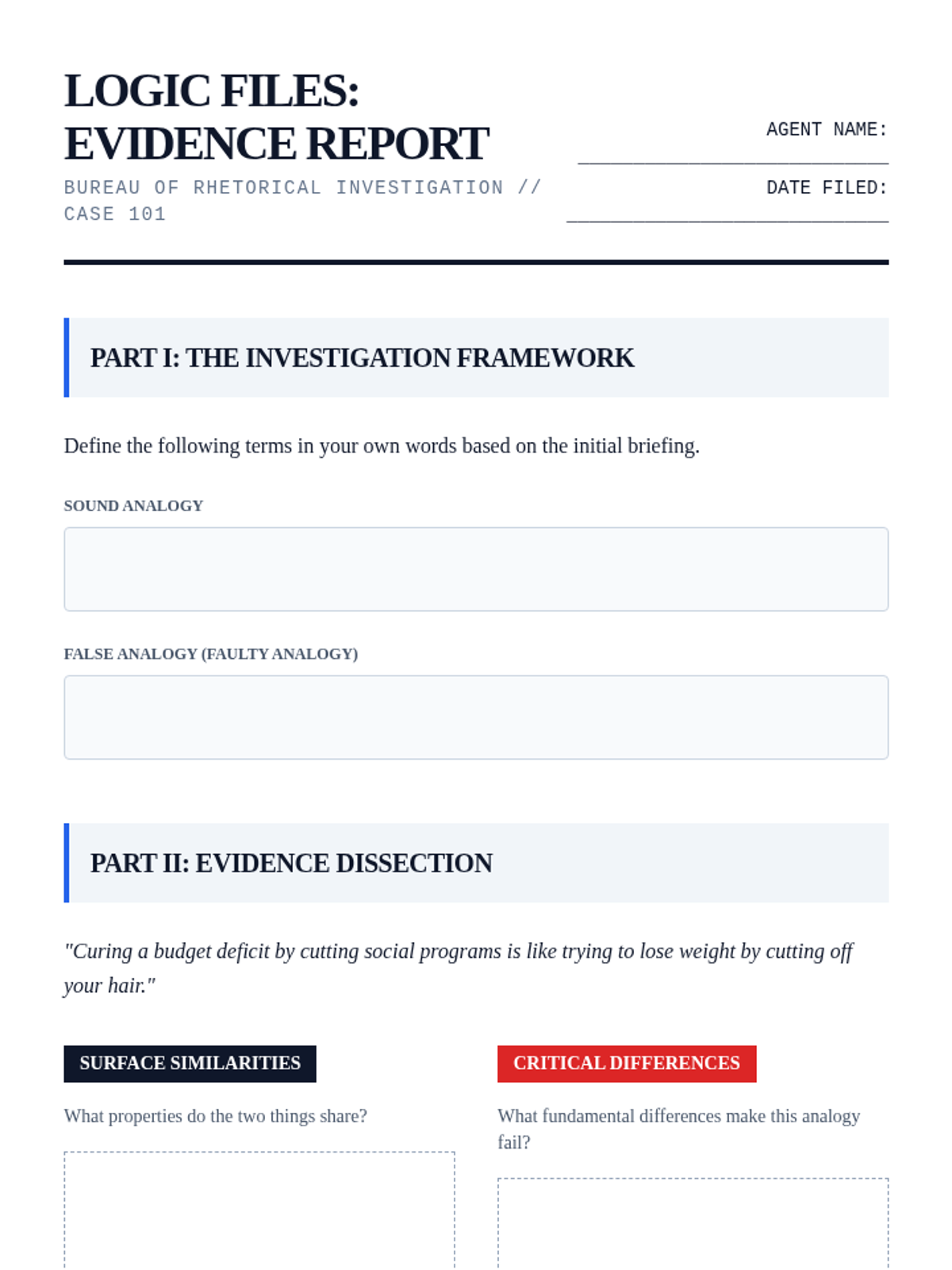
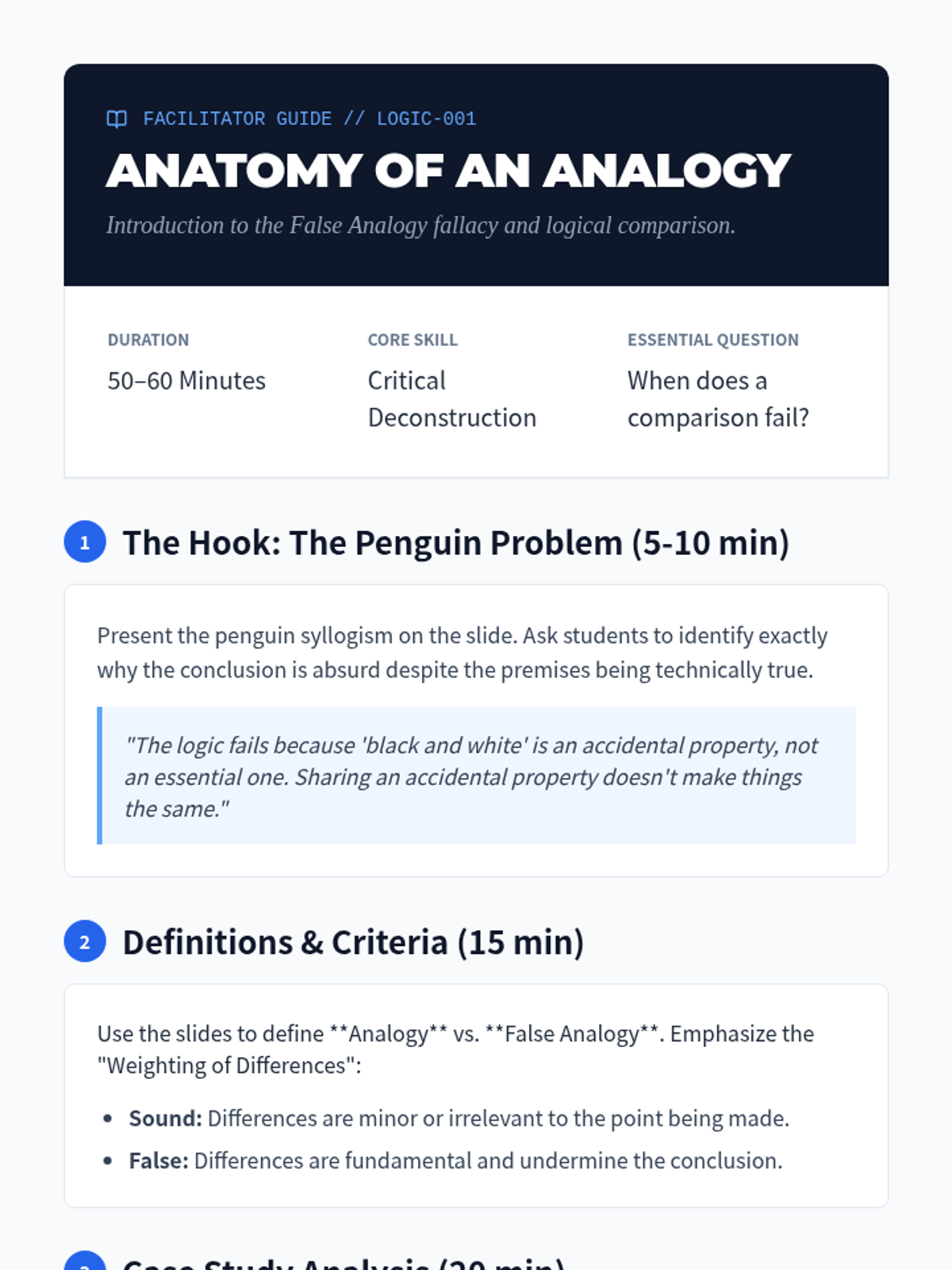
A high-school level sequence focusing on critical thinking through the lens of the False Analogy fallacy. Students learn to identify, deconstruct, and rebut faulty logic in advertising, politics, and debate.
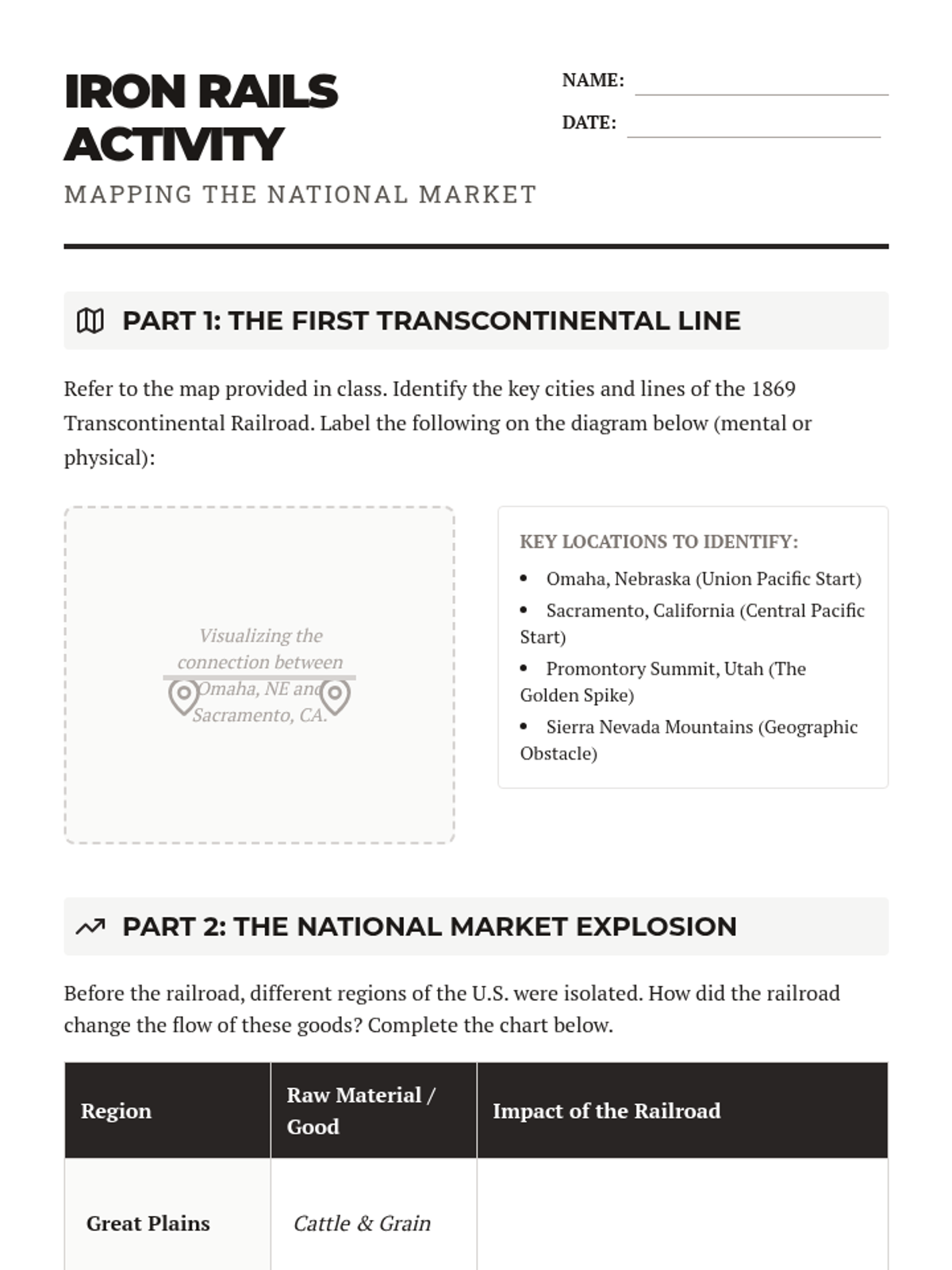
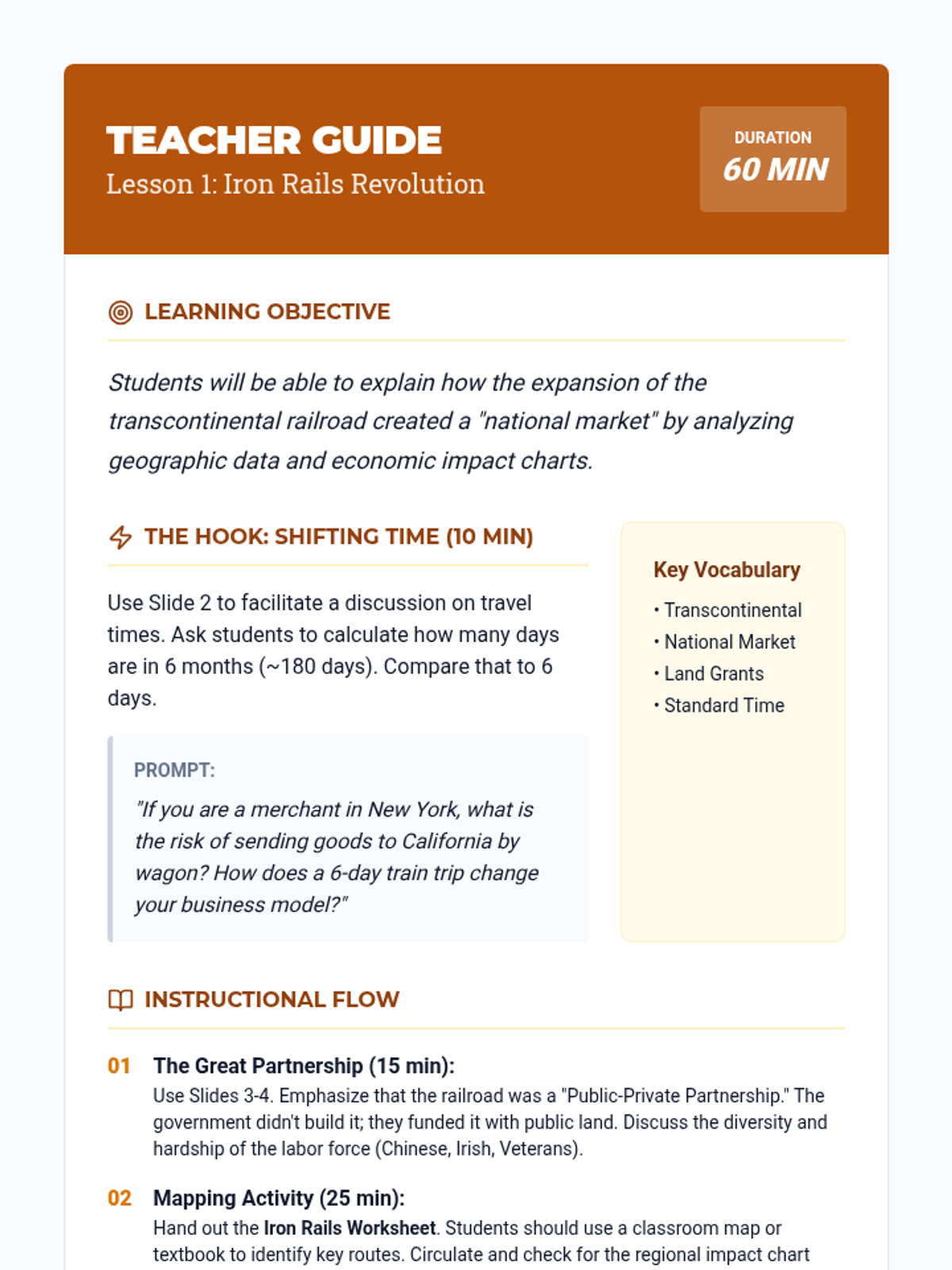
This unit explores the economic explosion of the Gilded Age, focusing on the transcontinental railroad, the rise of industrial tycoons, and the birth of modern corporate structures. Students analyze the tension between massive economic growth and the ethical costs of monopolies.
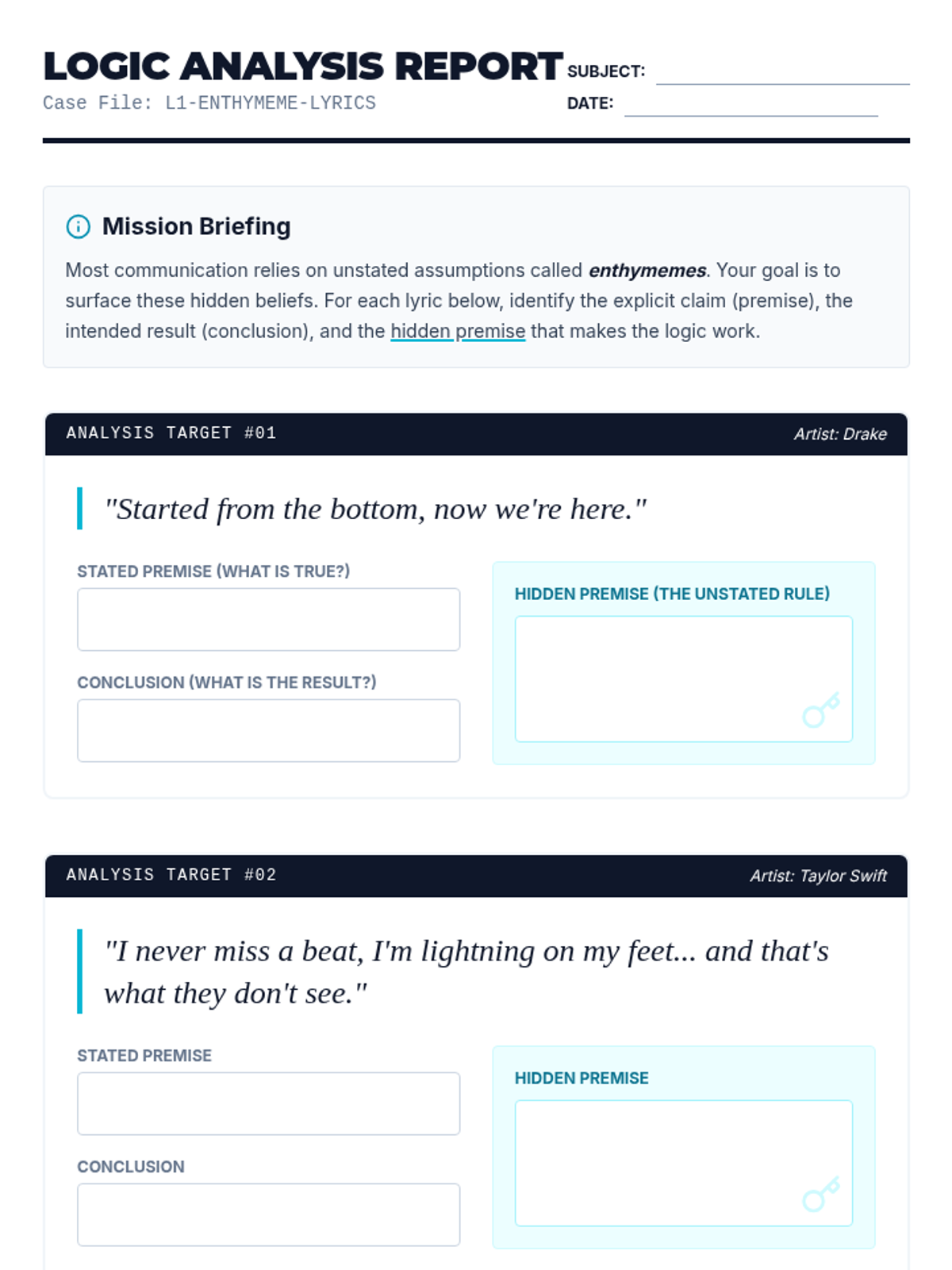
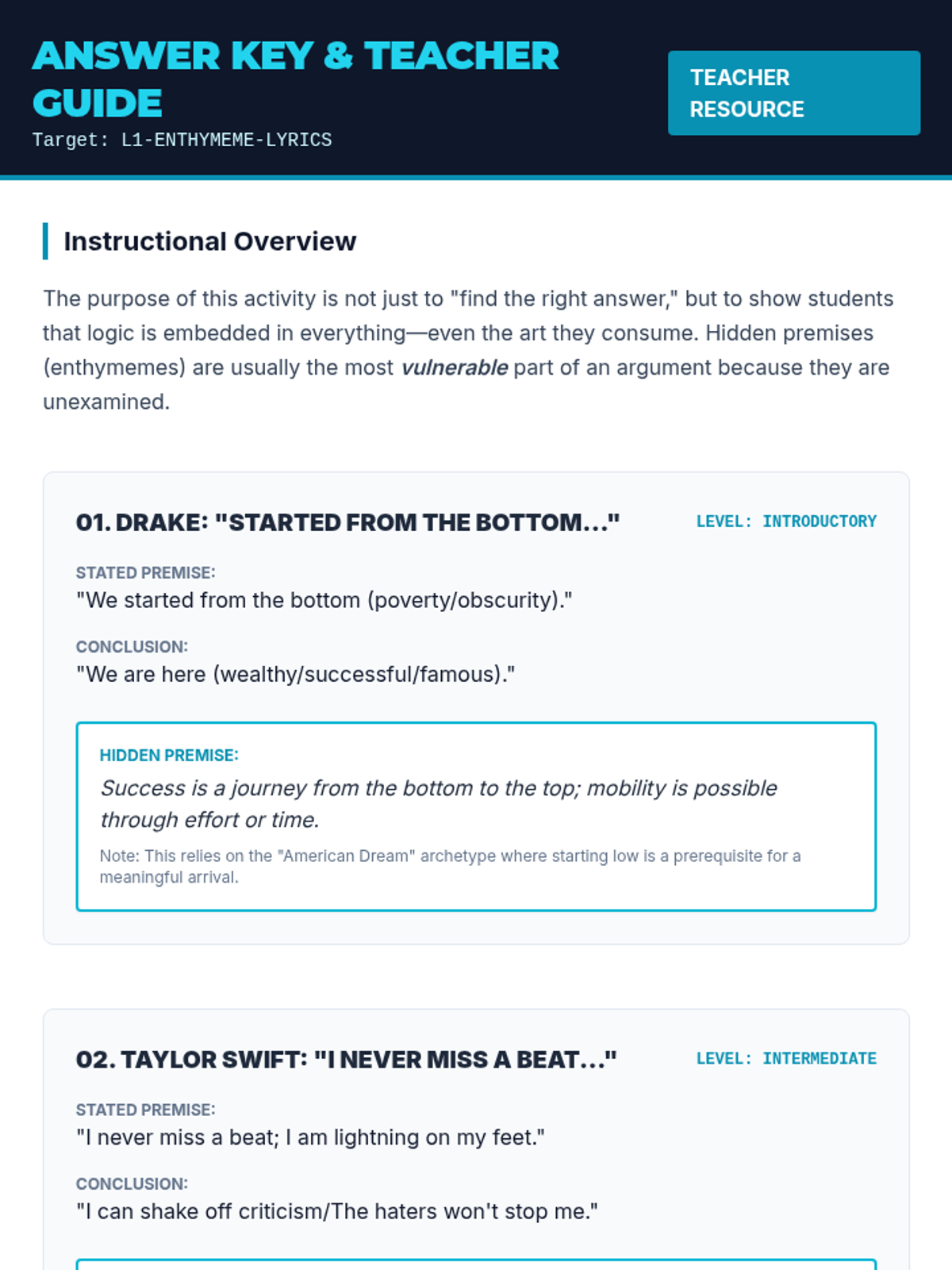
A high-school level sequence exploring the application of formal logic to real-world rhetoric, focusing on uncovering hidden assumptions and mapping complex arguments.
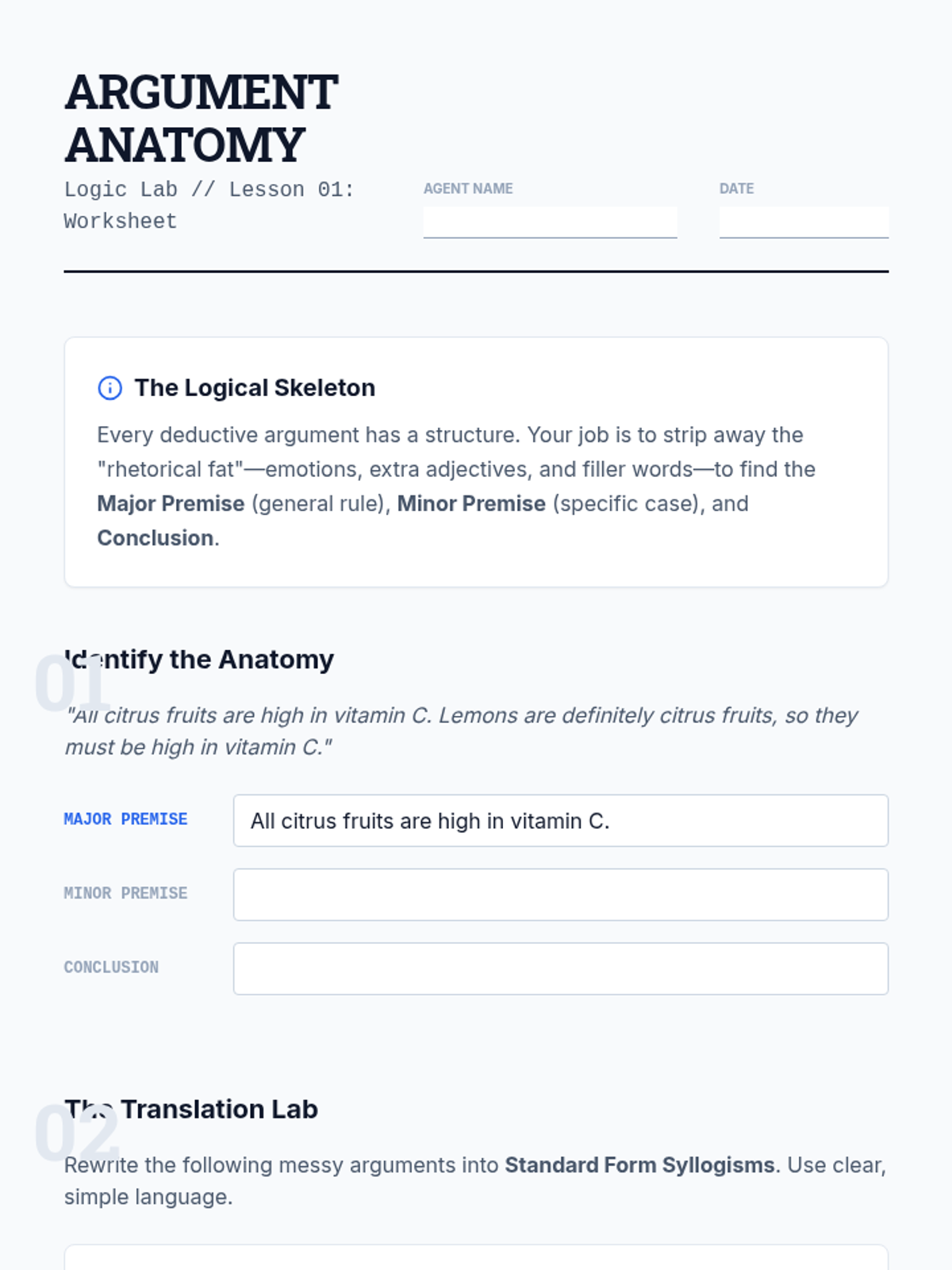
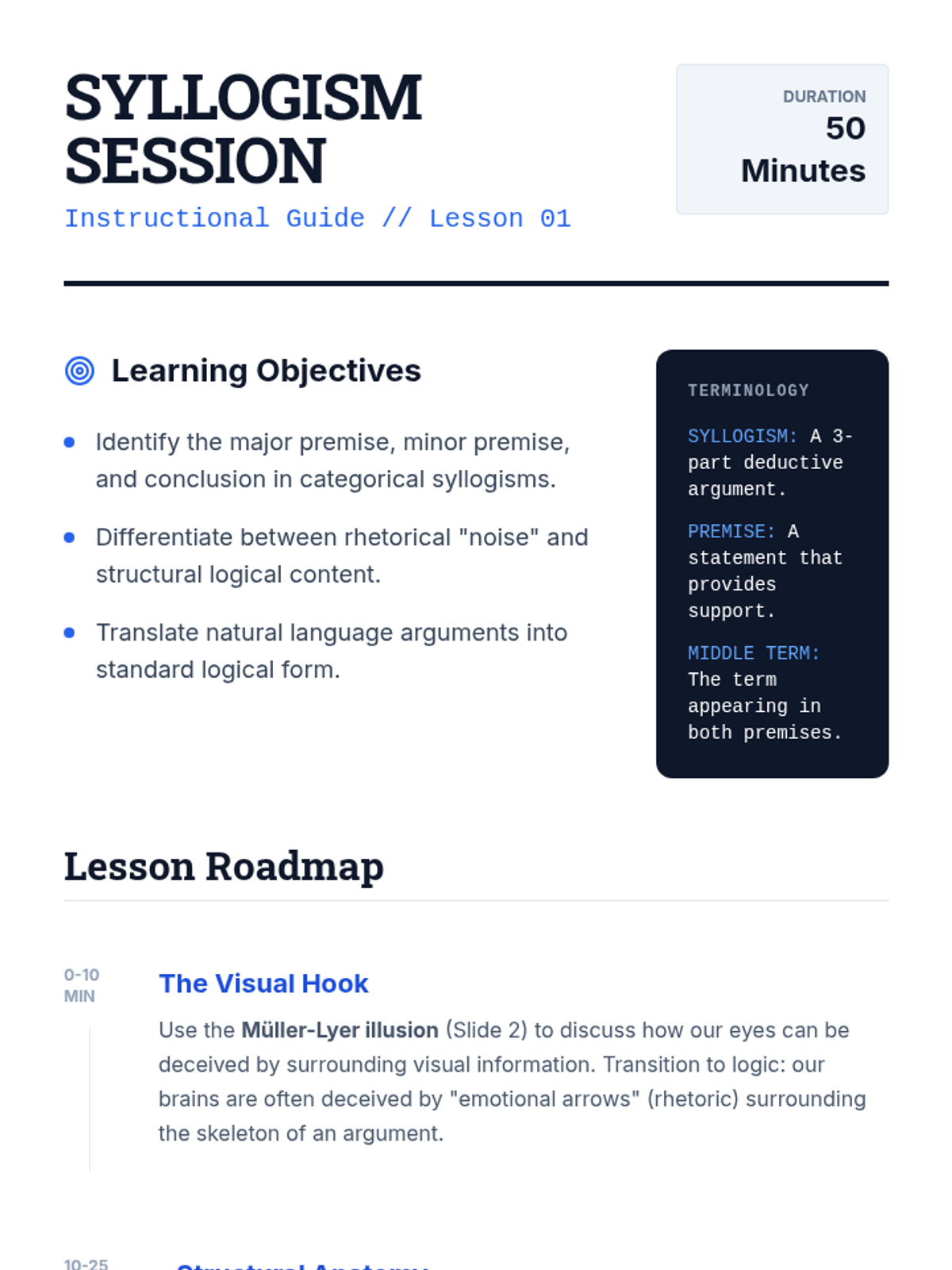
A deep dive into deductive reasoning, focusing on the structural integrity of arguments. Students learn to distinguish between validity and soundness while mastering the art of translating natural language into formal logical skeletons.
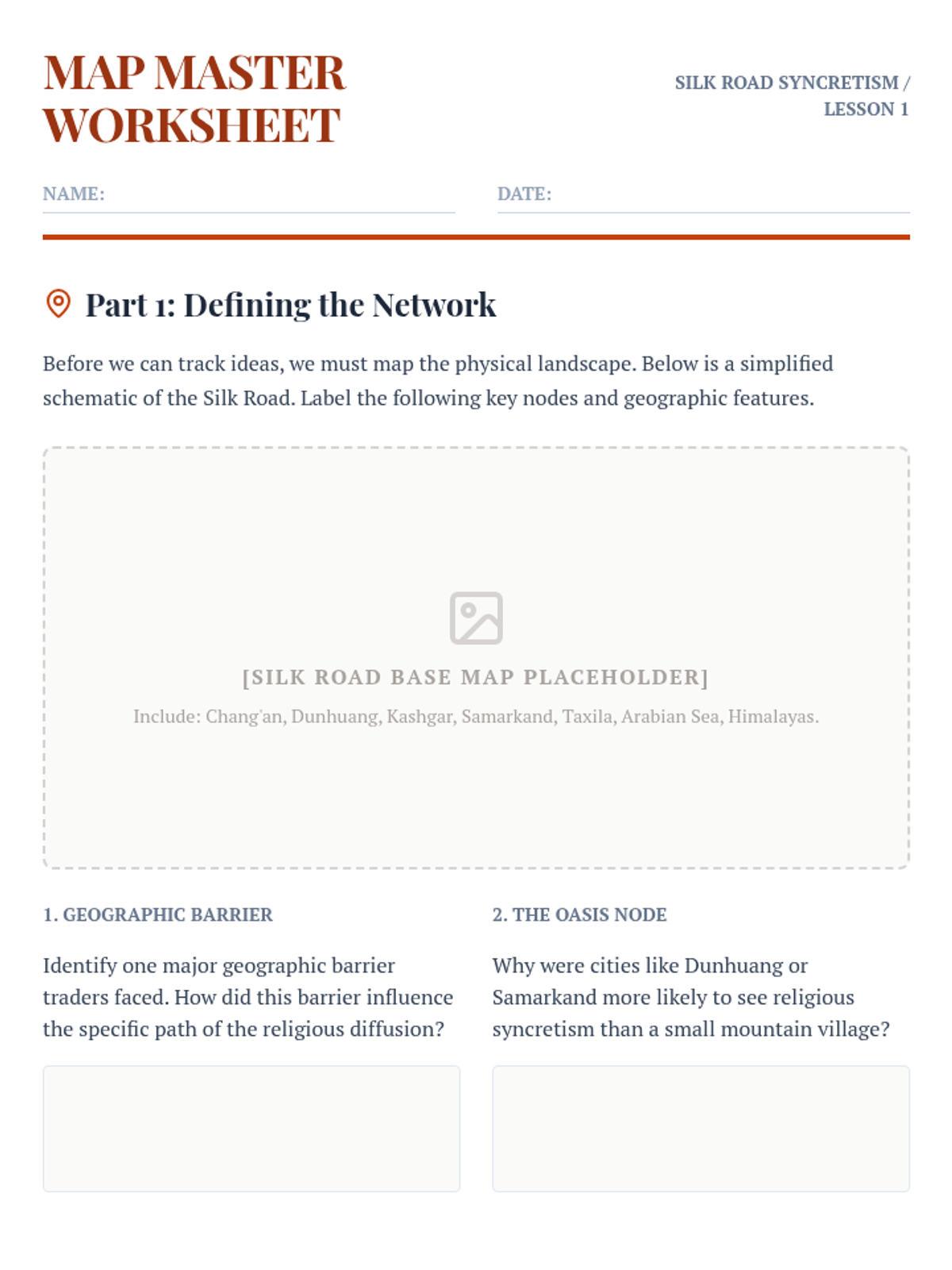
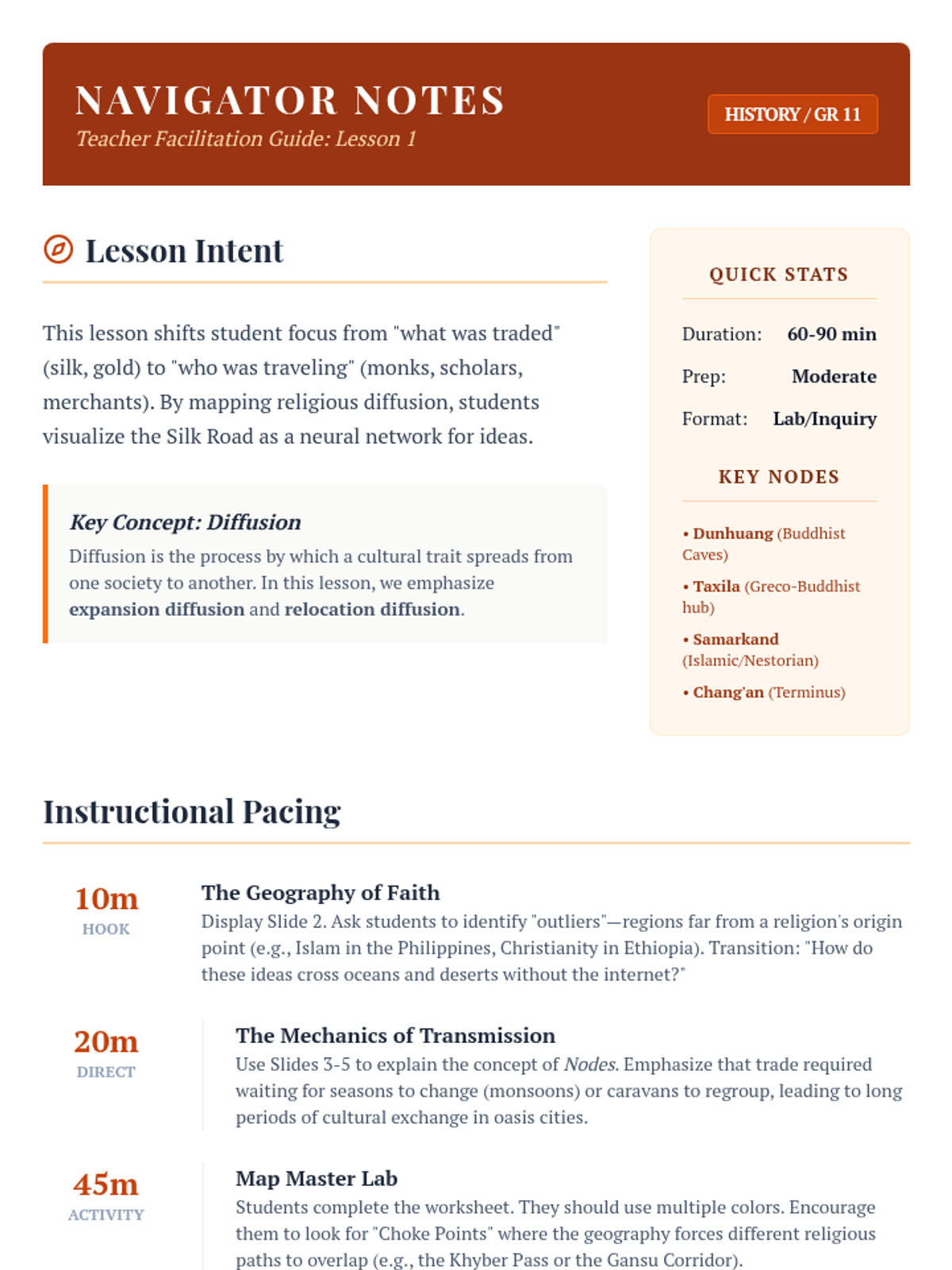
Explore the Silk Road as a vehicle for religious and cultural syncretism. Students track the spread and adaptation of Buddhism, Islam, and Nestorian Christianity across Asia, culminating in a curated digital museum exhibit.
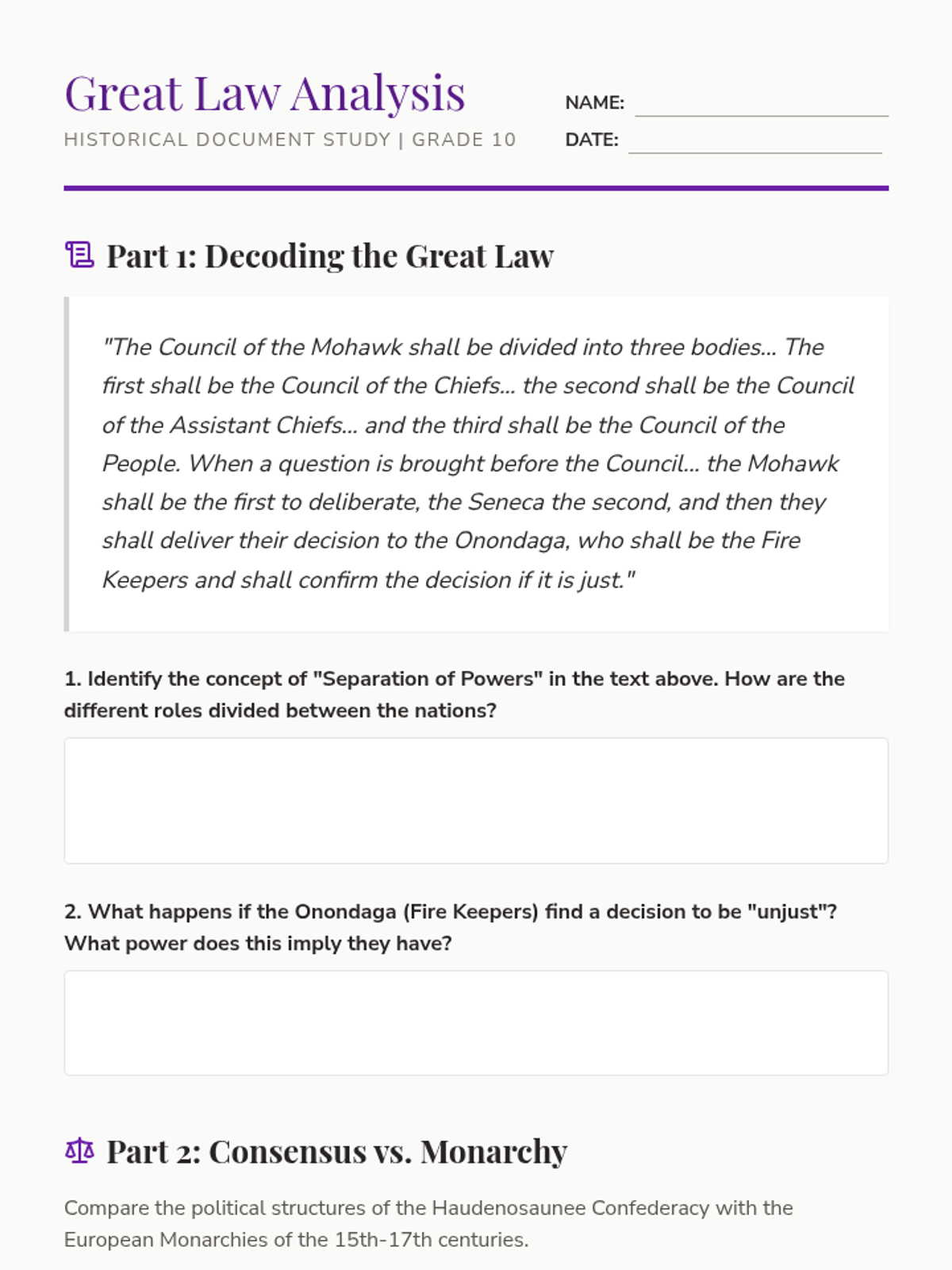
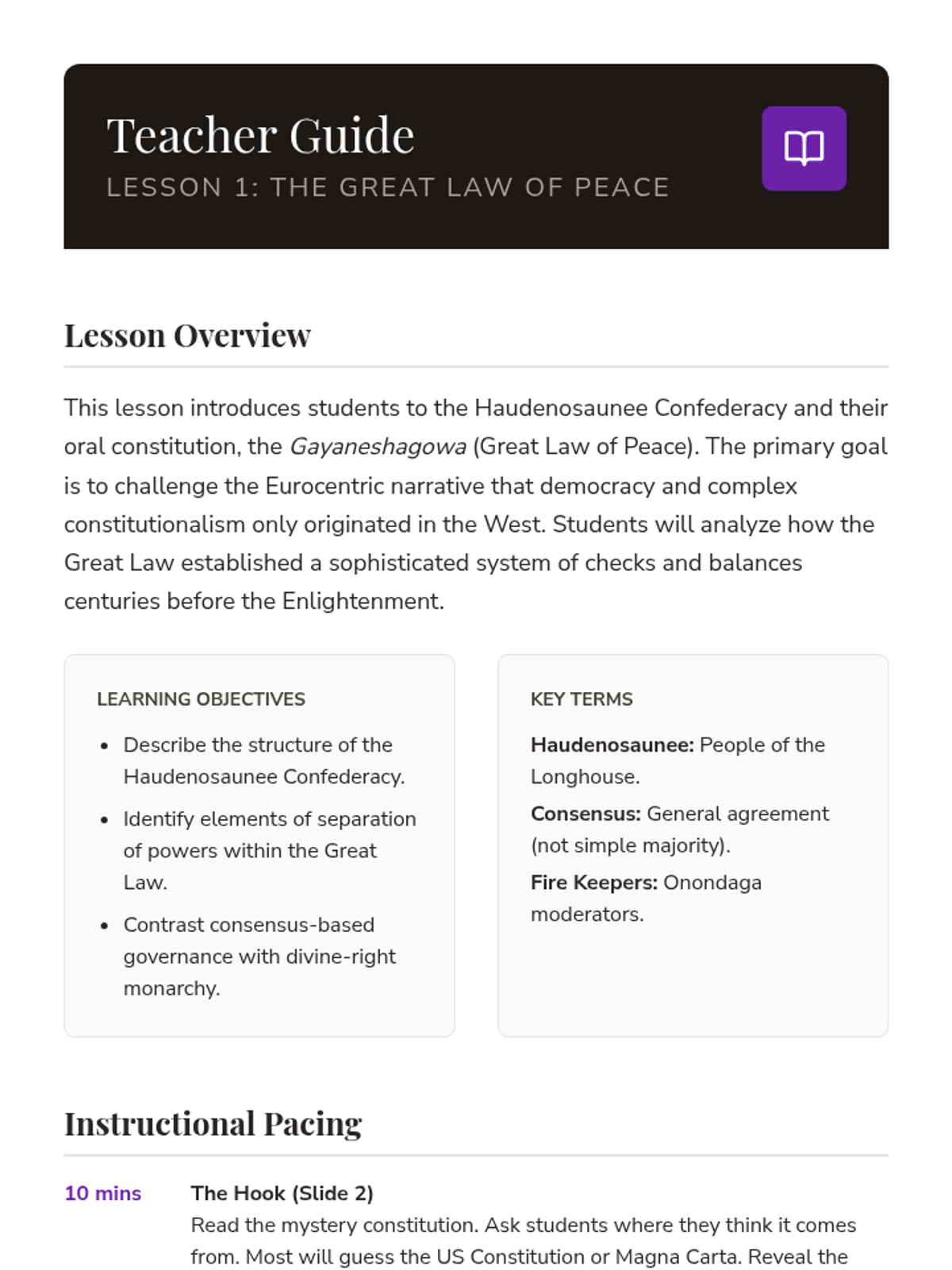
A game-based exploration of Haudenosaunee political structures and diplomatic traditions, contrasting Indigenous consensus models with European hierarchies. Students participate in simulations and analyze the Great Law of Peace to understand its global influence.
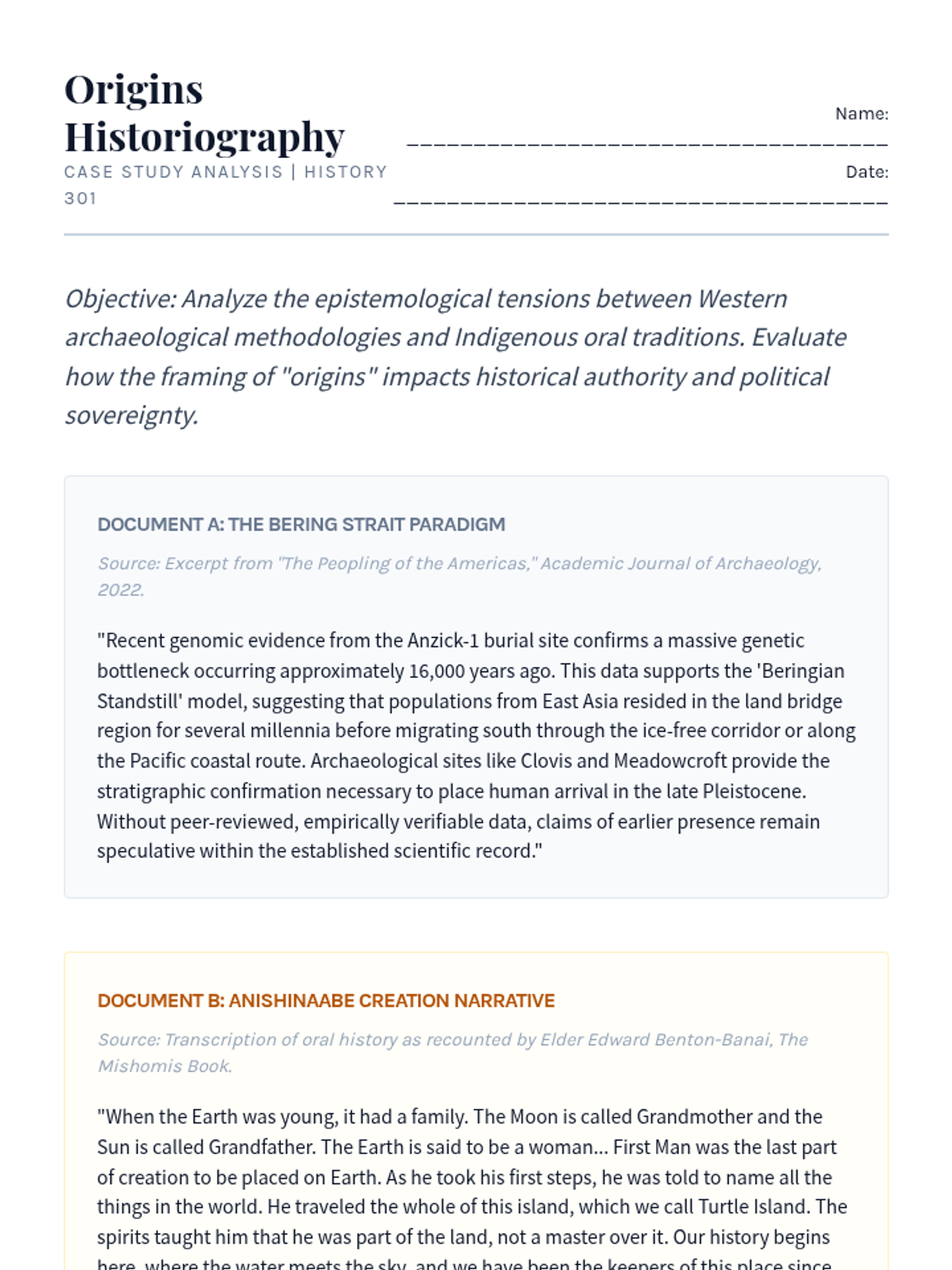
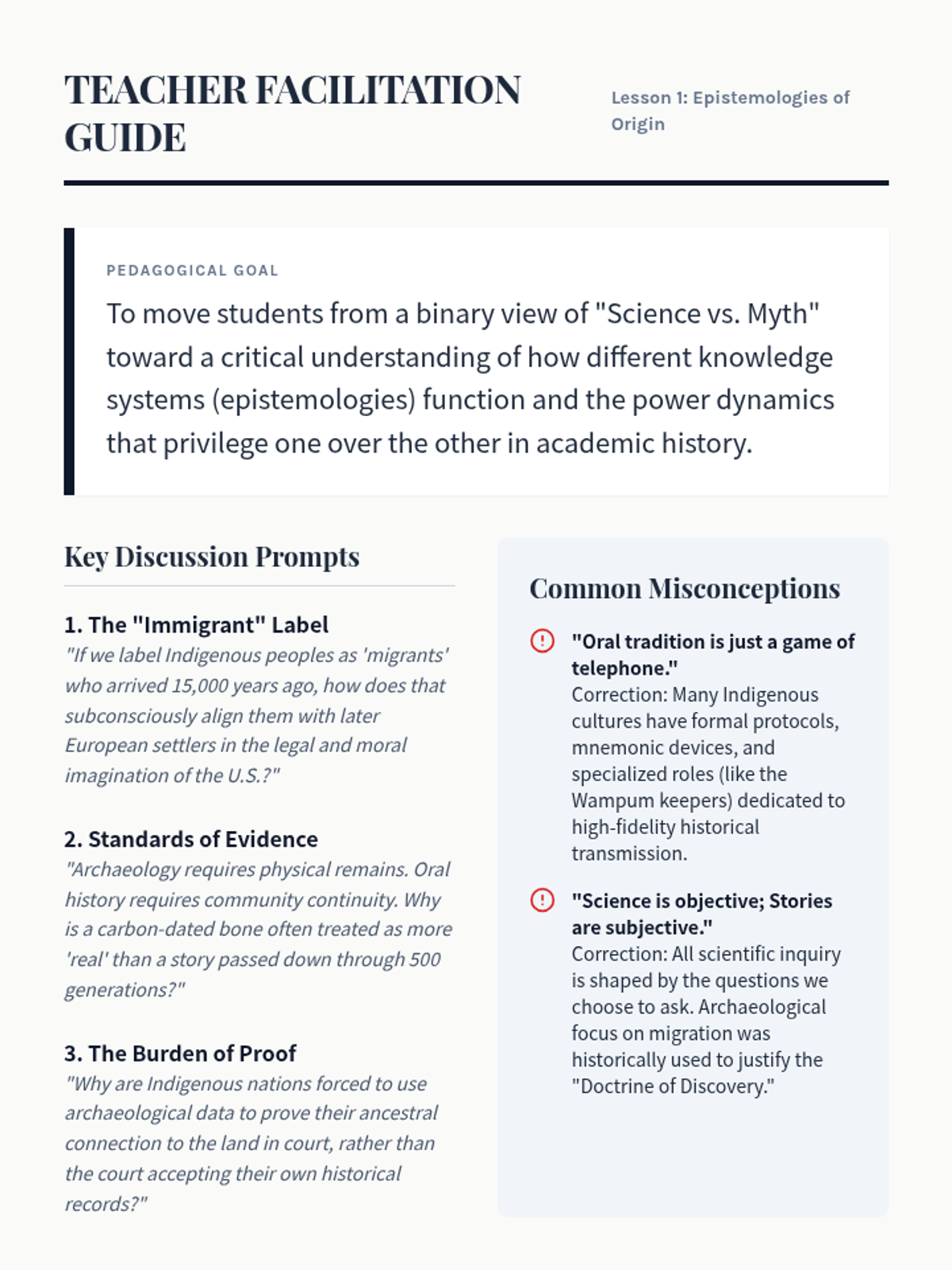
This sequence challenges students to evaluate competing historical methodologies used to understand pre-contact North America, juxtaposing archaeological evidence with Indigenous oral traditions. Students explore the complexity of societies from Cahokia to the Haudenosaunee, critiquing narratives that marginalize pre-Columbian sophistication.
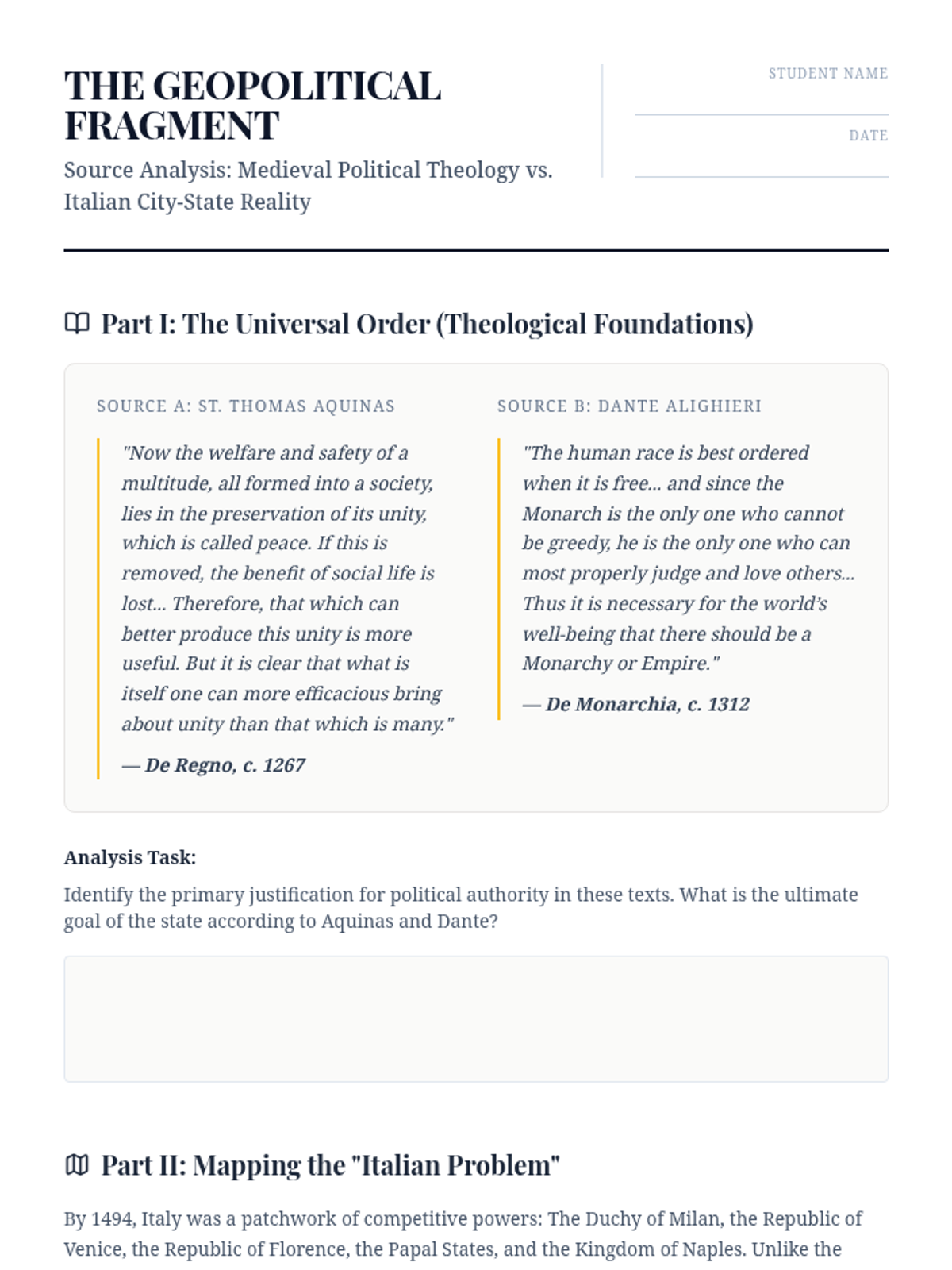
This sequence interrogates the evolution of political theory, moving from medieval 'Mirrors for Princes' to the pragmatic realism of Machiavelli and the idealism of Thomas More. Students analyze the tension between ethics and effectiveness in statecraft, the rise of the sovereign state, and the concept of the 'courtier.'
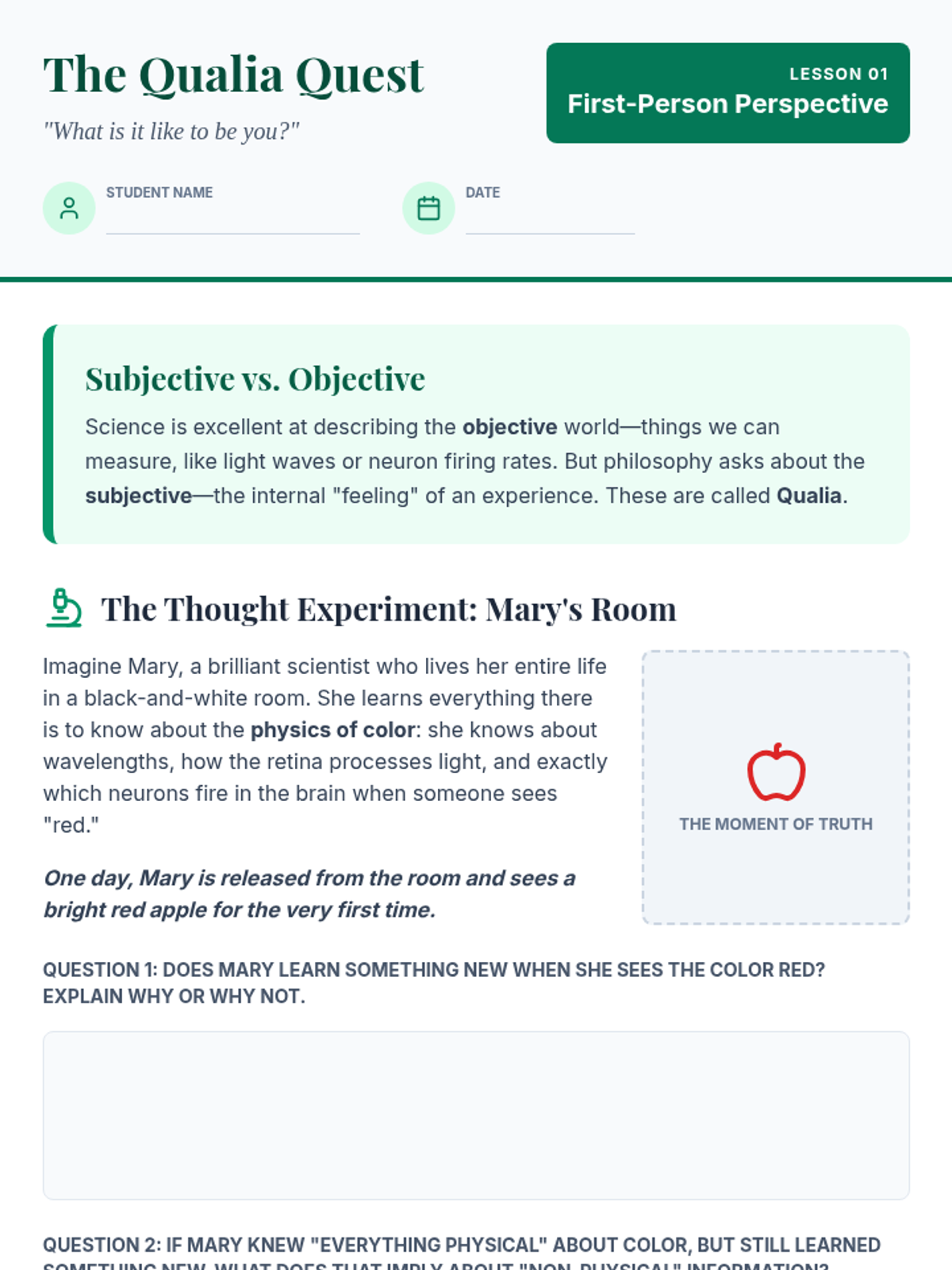
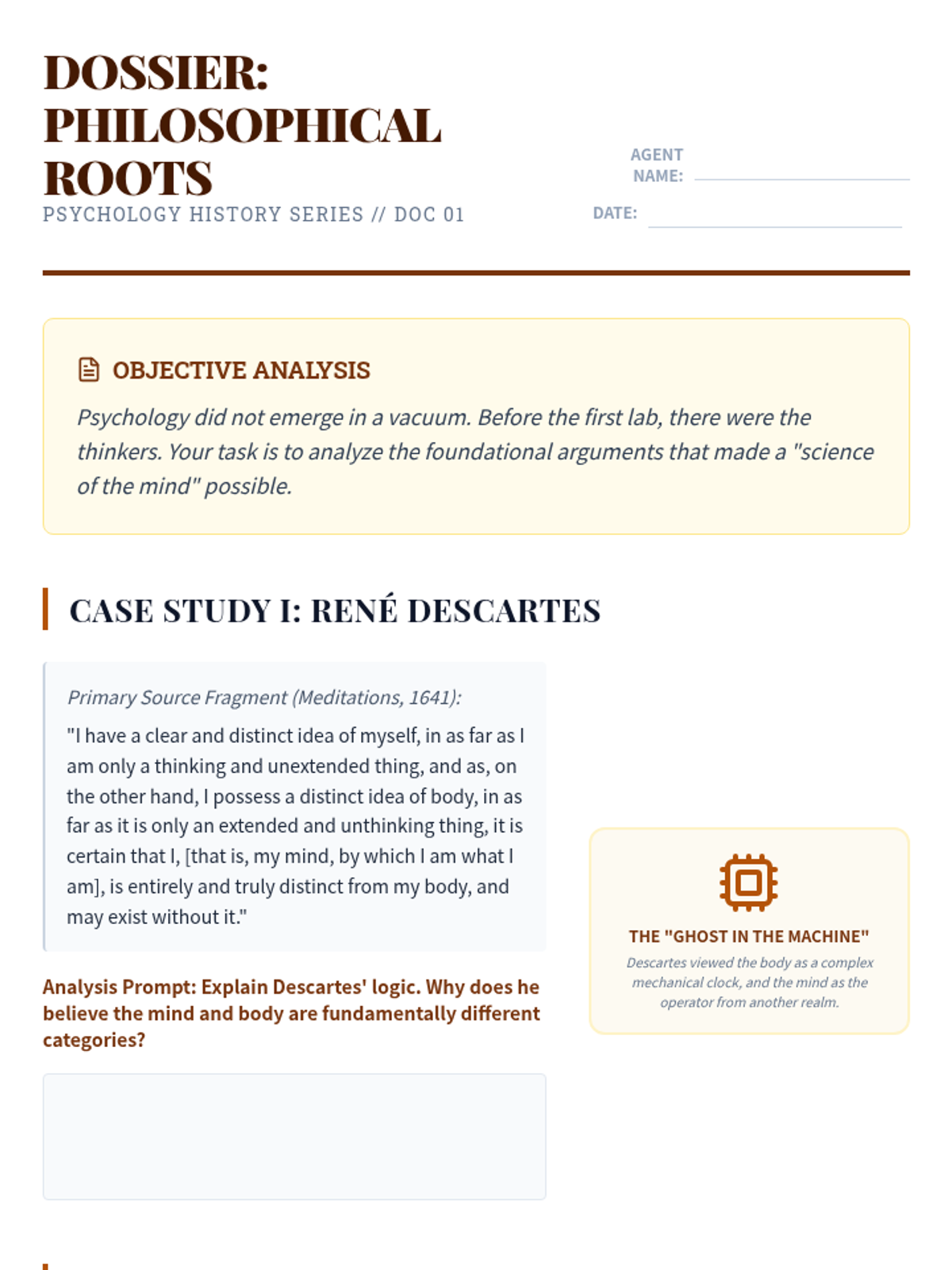
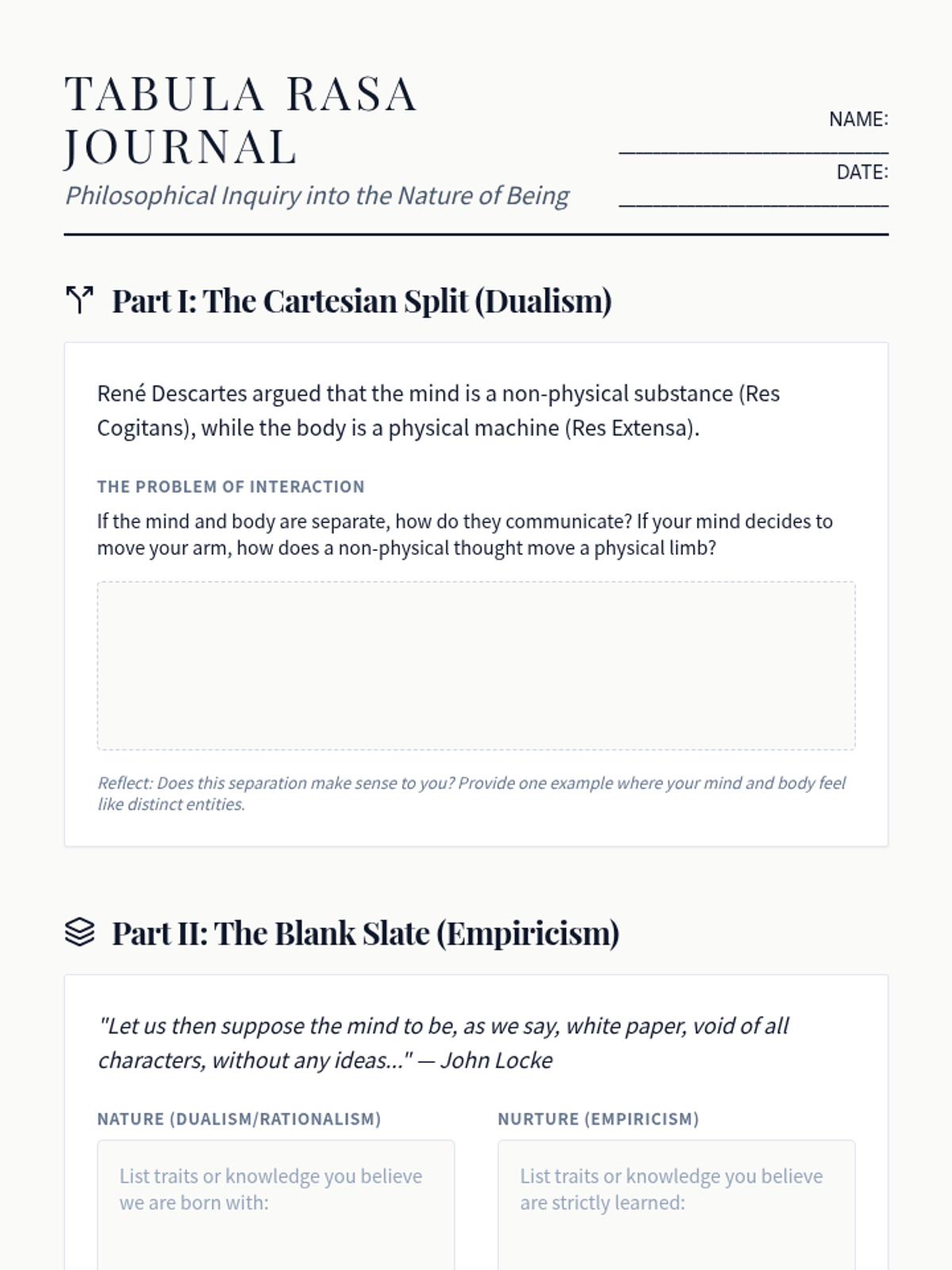
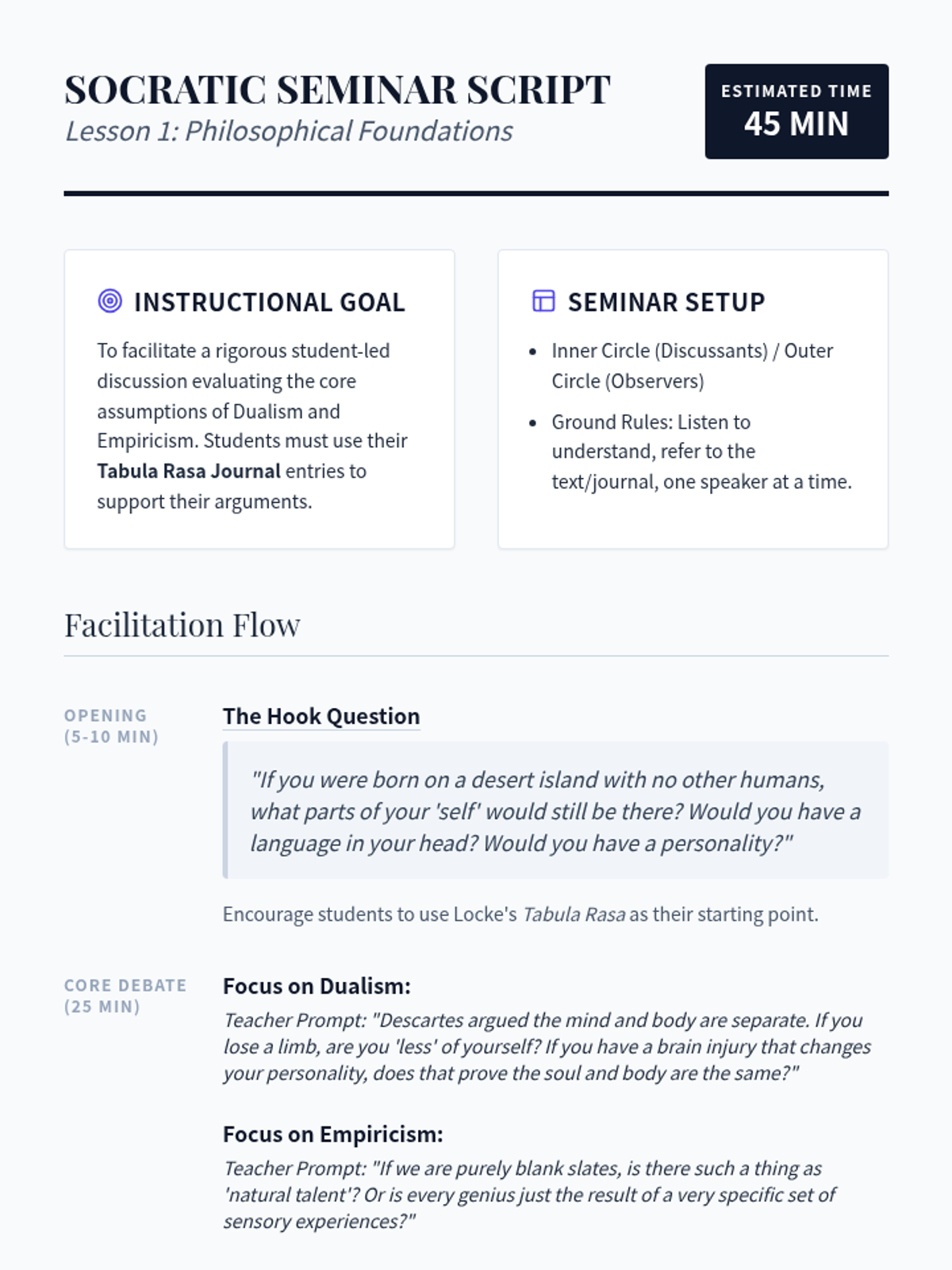
This philosophy sequence explores the mind-body problem, tracing the debate from Descartes' substance dualism to modern physicalism, functionalism, and AI. Students analyze qualia, evaluate historical and scientific evidence, and synthesize their understanding in a culminating Socratic seminar.
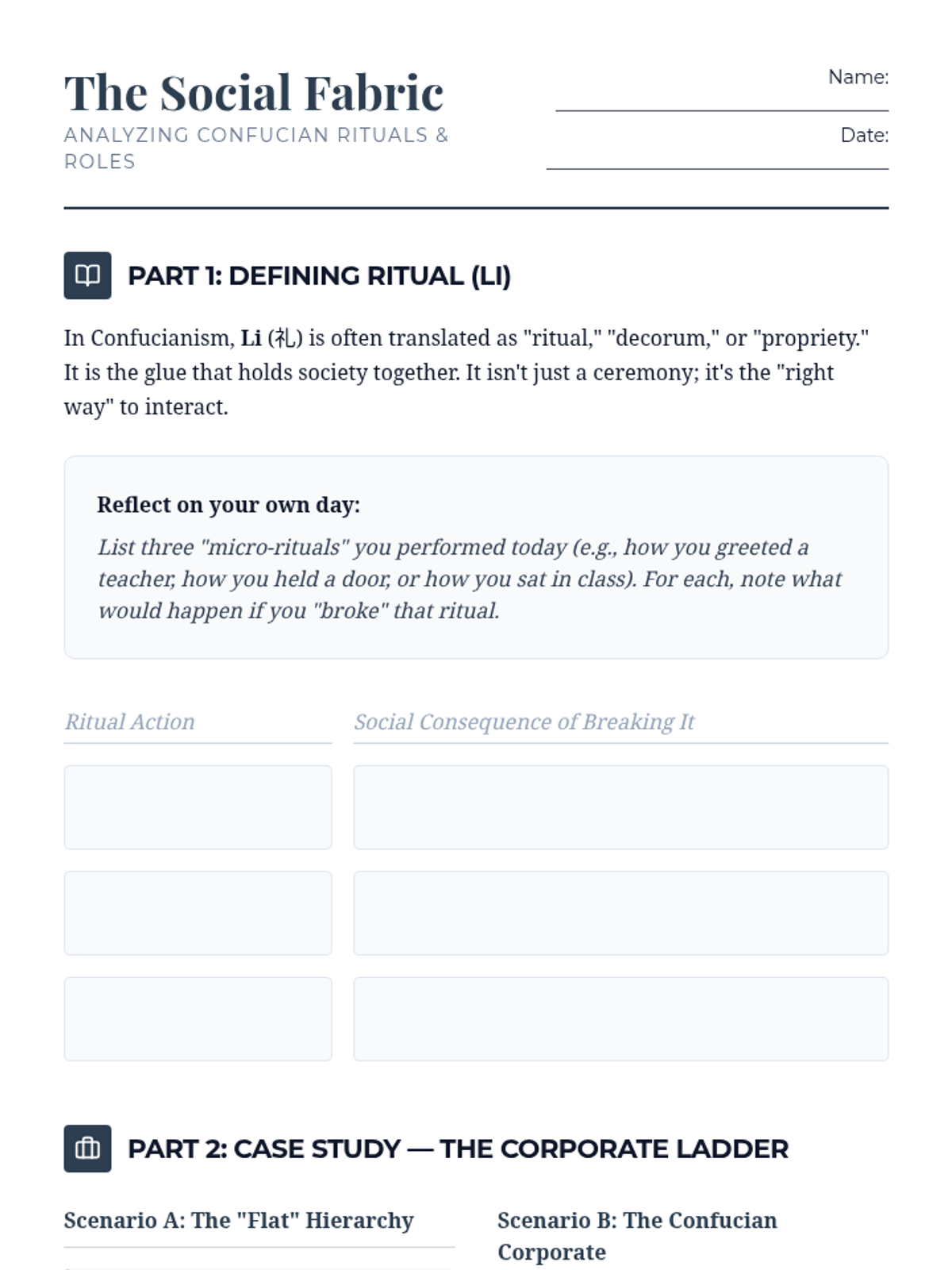
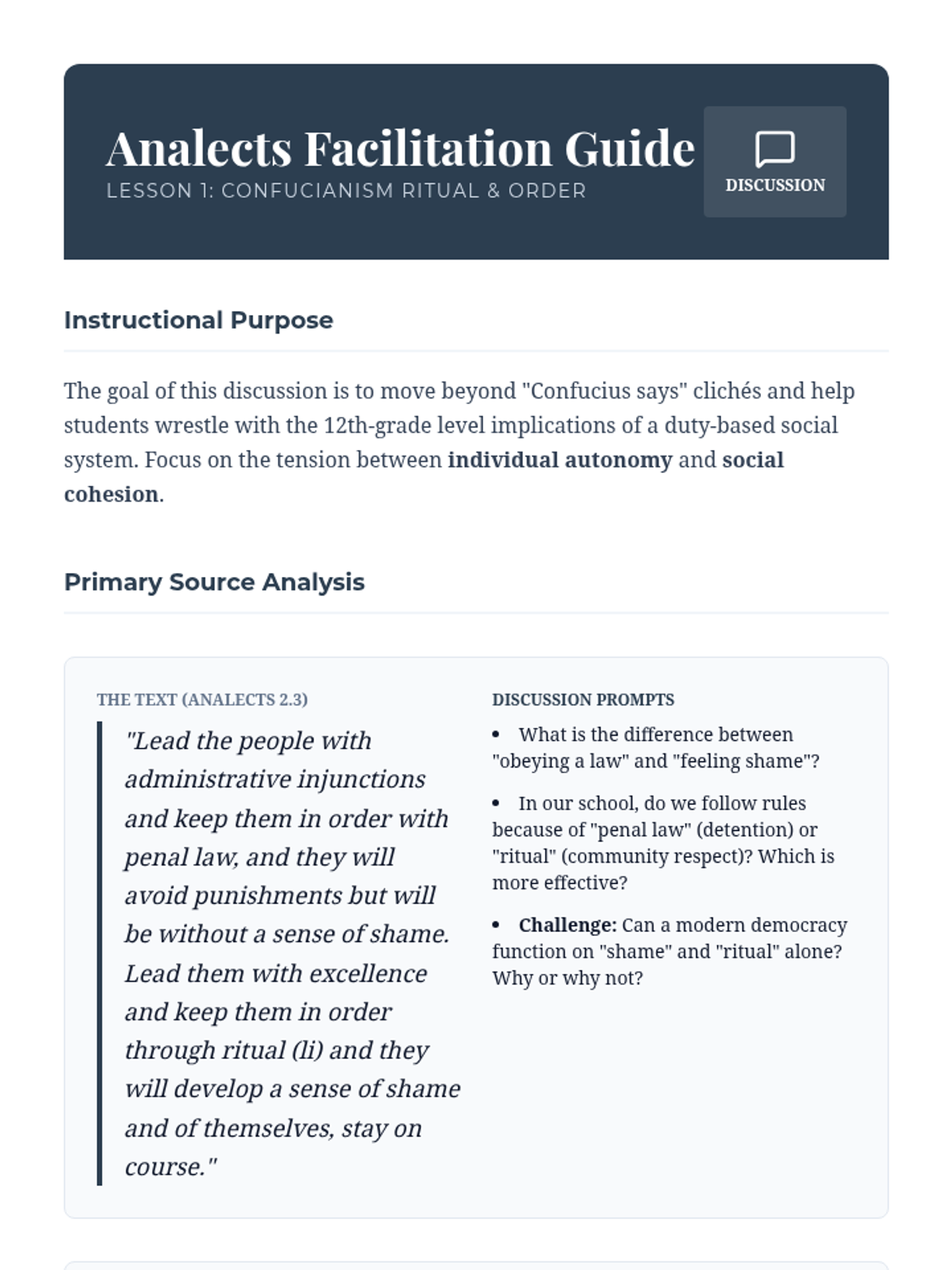
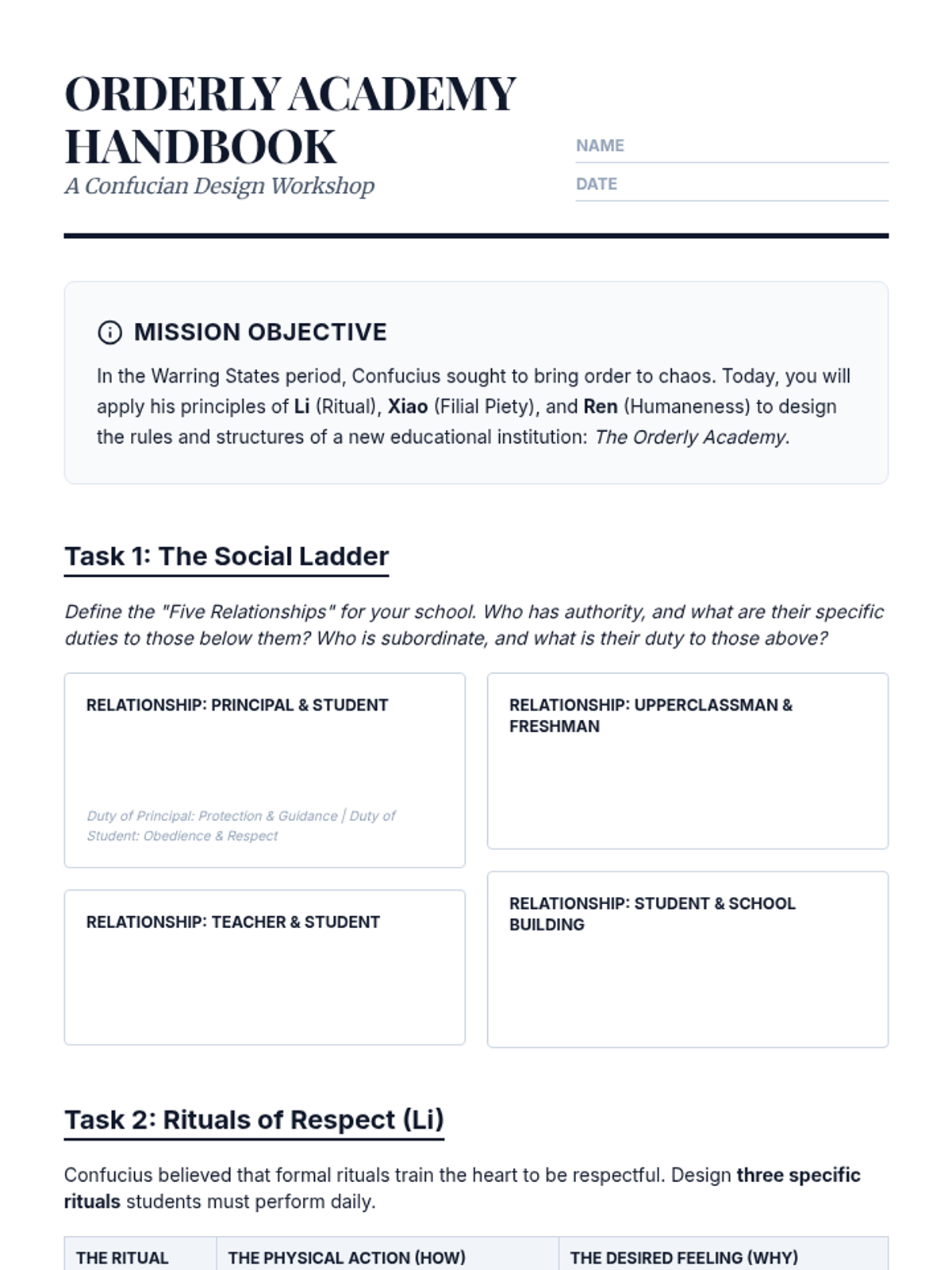
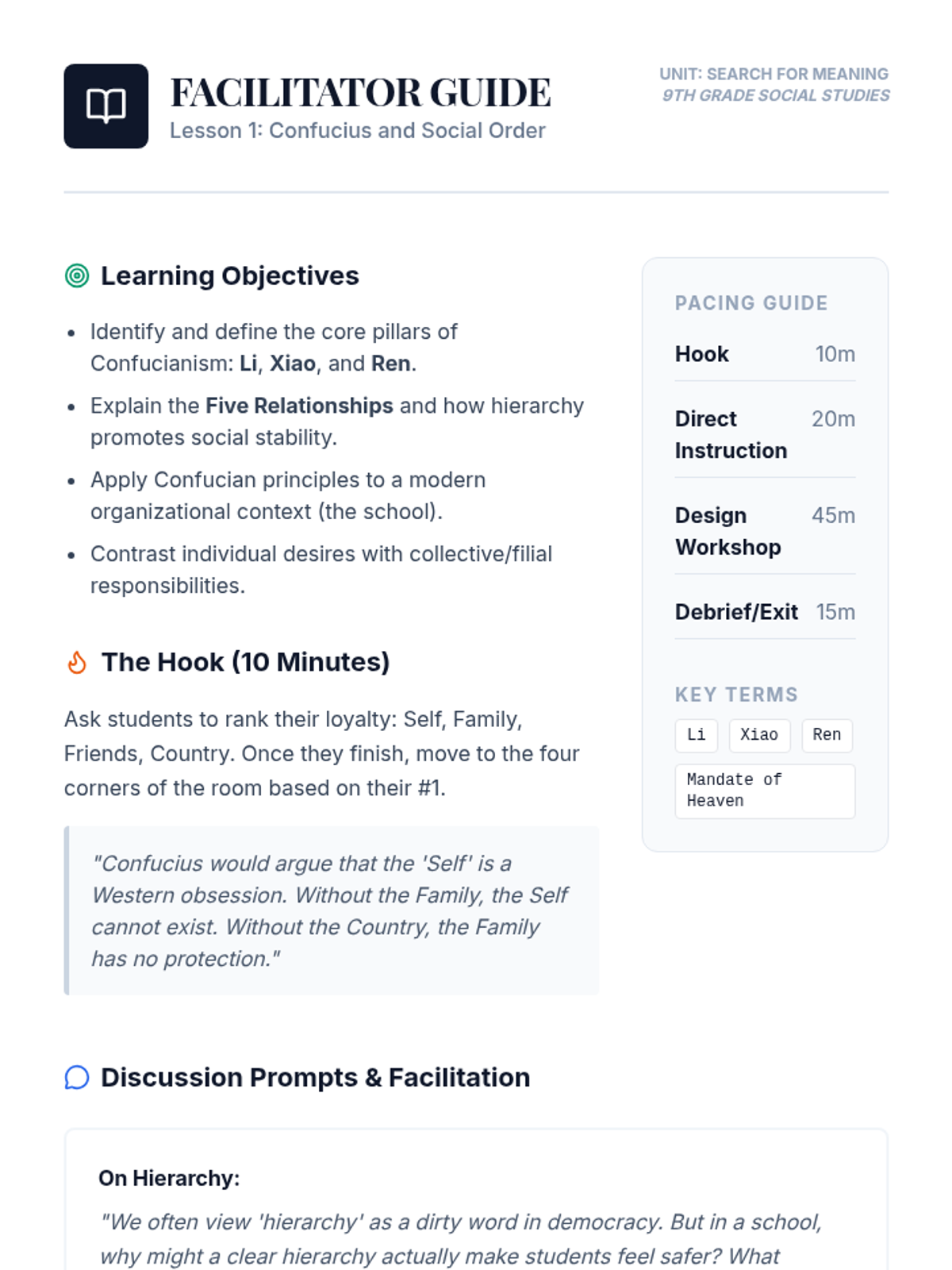
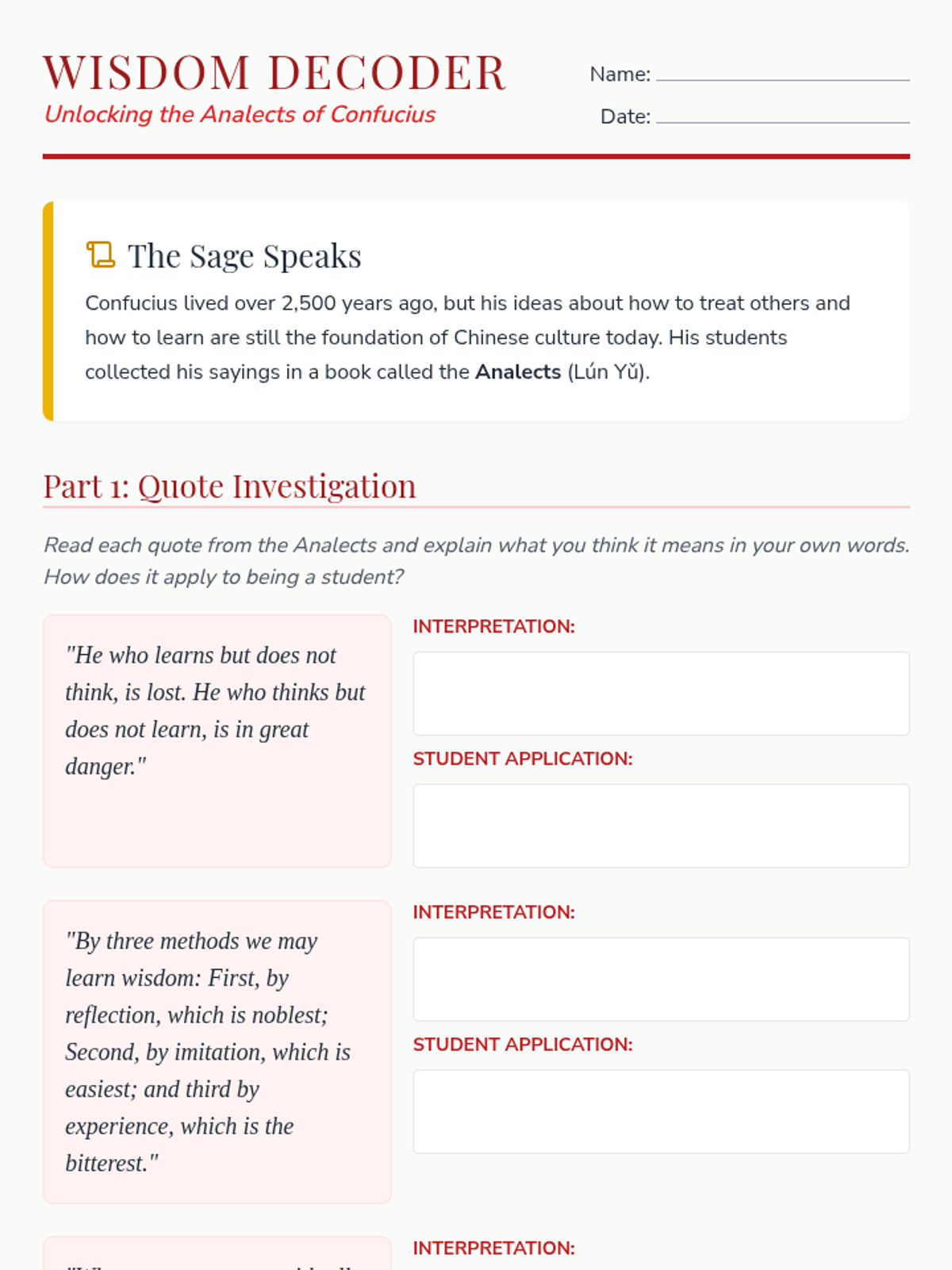
A high school philosophy sequence exploring Eastern traditions including Confucianism, Taoism, and Buddhism, focusing on their unique perspectives on social harmony, nature, and the self in contrast to Western models.
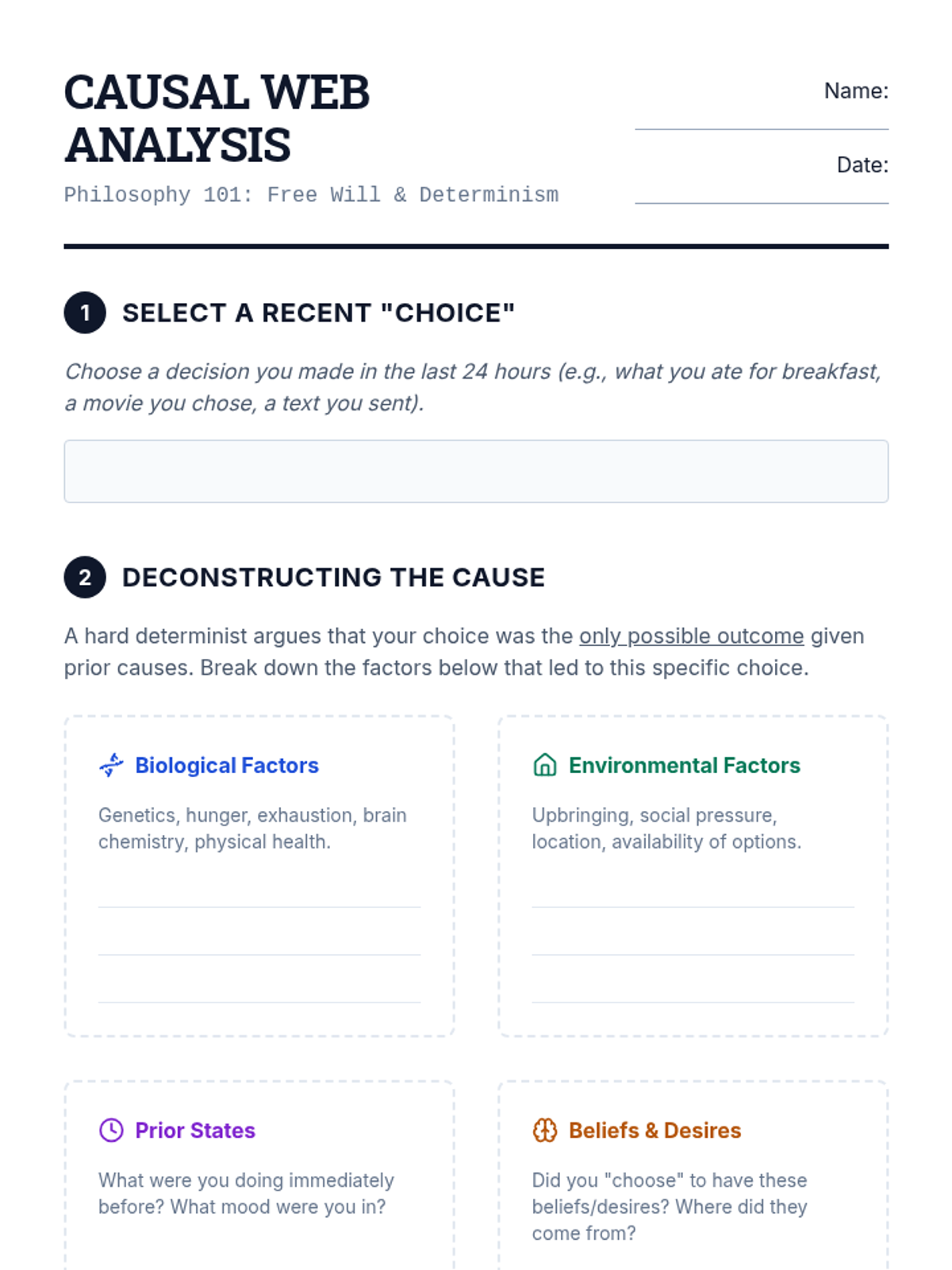
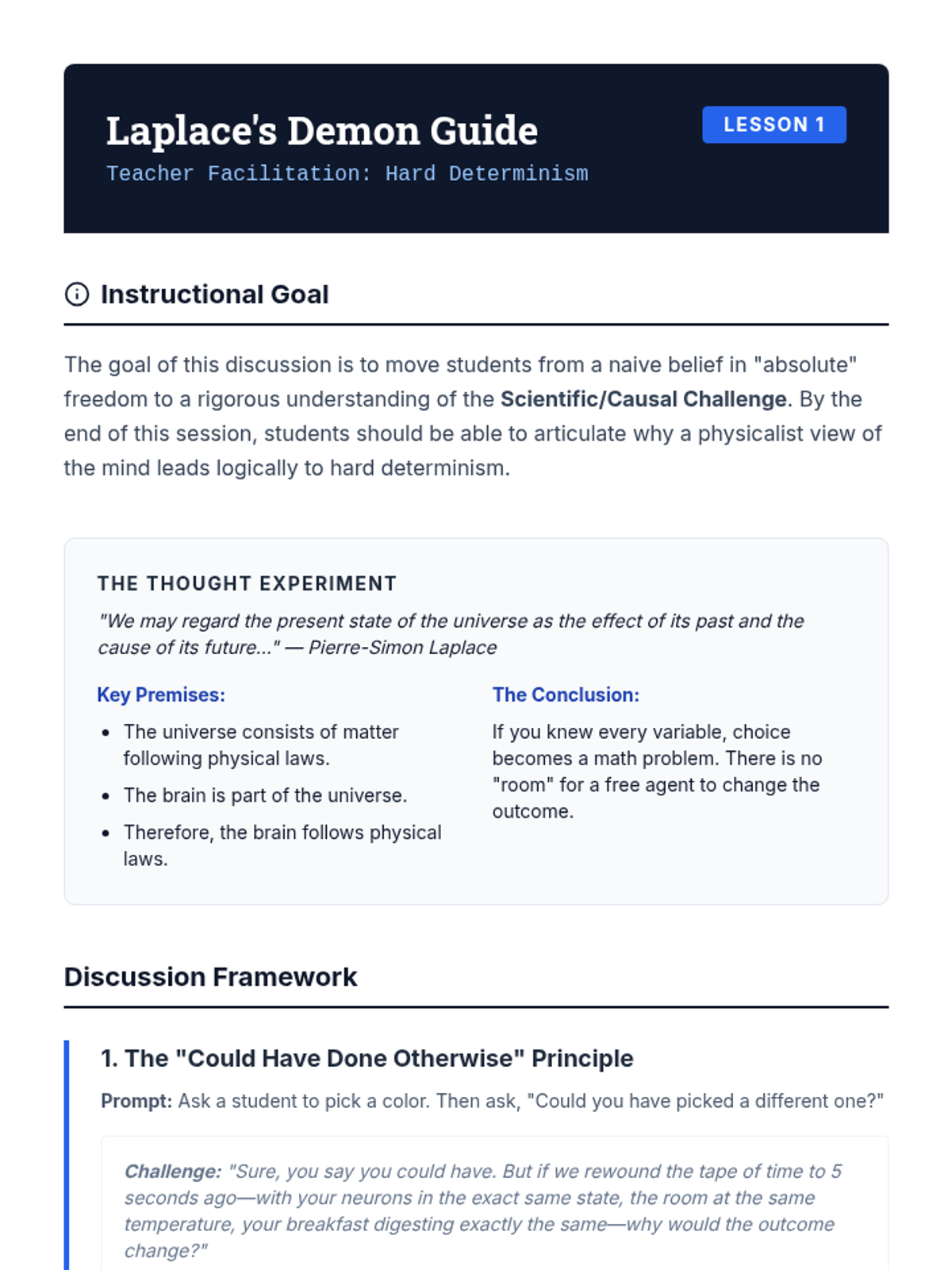
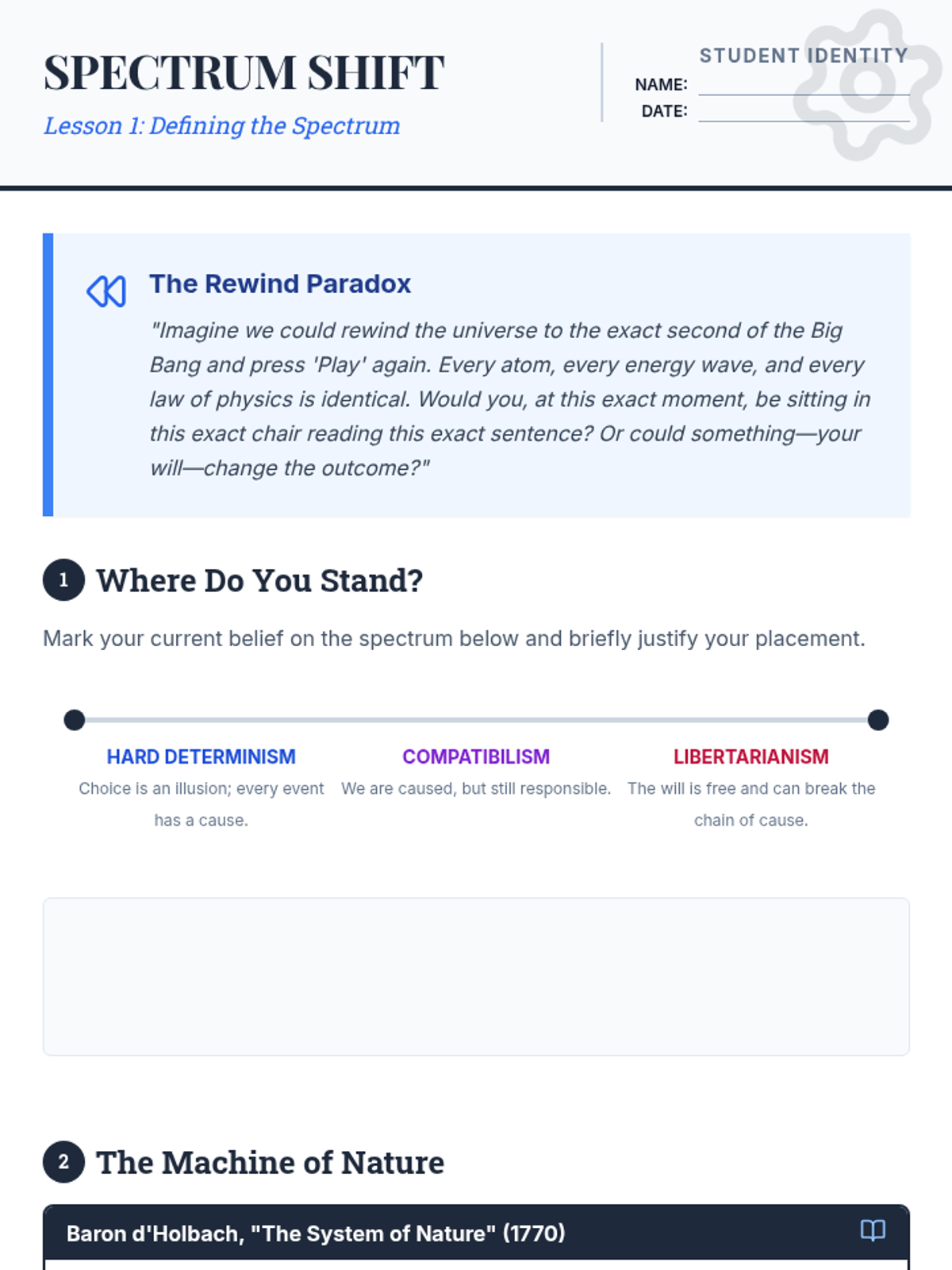
This sequence explores the metaphysical and ethical dimensions of the free will debate, moving from hard determinism to compatibilism, libertarianism, and the implications of neuroscience on moral responsibility.
An 11th-grade philosophy sequence exploring the tension between human agency and causal determinism, culminating in a legal simulation regarding moral responsibility.
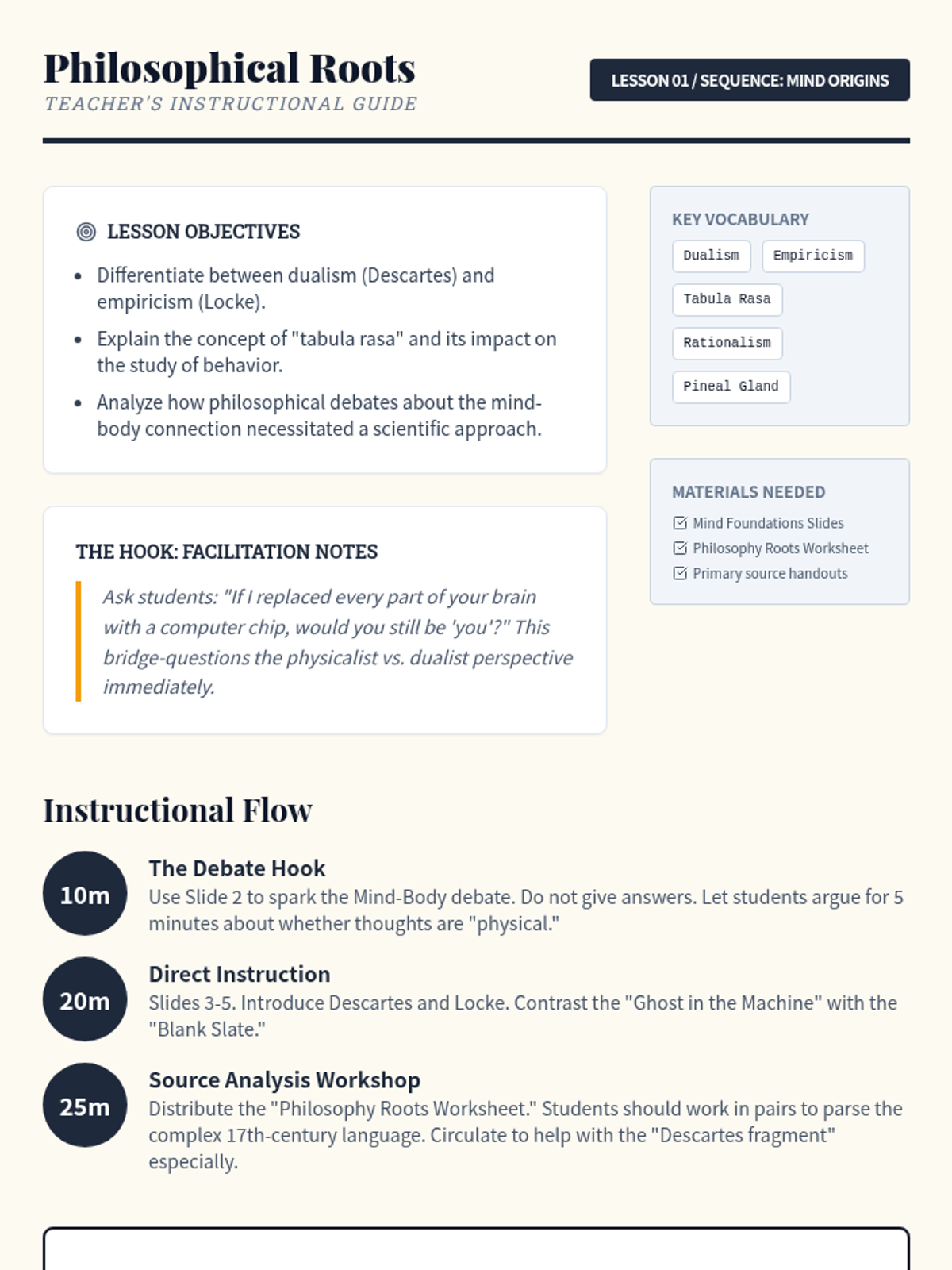
This sequence traces the evolution of psychology from philosophical roots in dualism and empiricism through the foundational schools of structuralism, functionalism, and behaviorism, culminating in a synthesis of how these perspectives shape modern inquiry.
A comprehensive exploration of the transition of psychology from philosophy to science, covering Structuralism, Functionalism, Psychoanalysis, and Behaviorism. Students engage with primary sources and simulations to understand how the study of the mind has evolved.
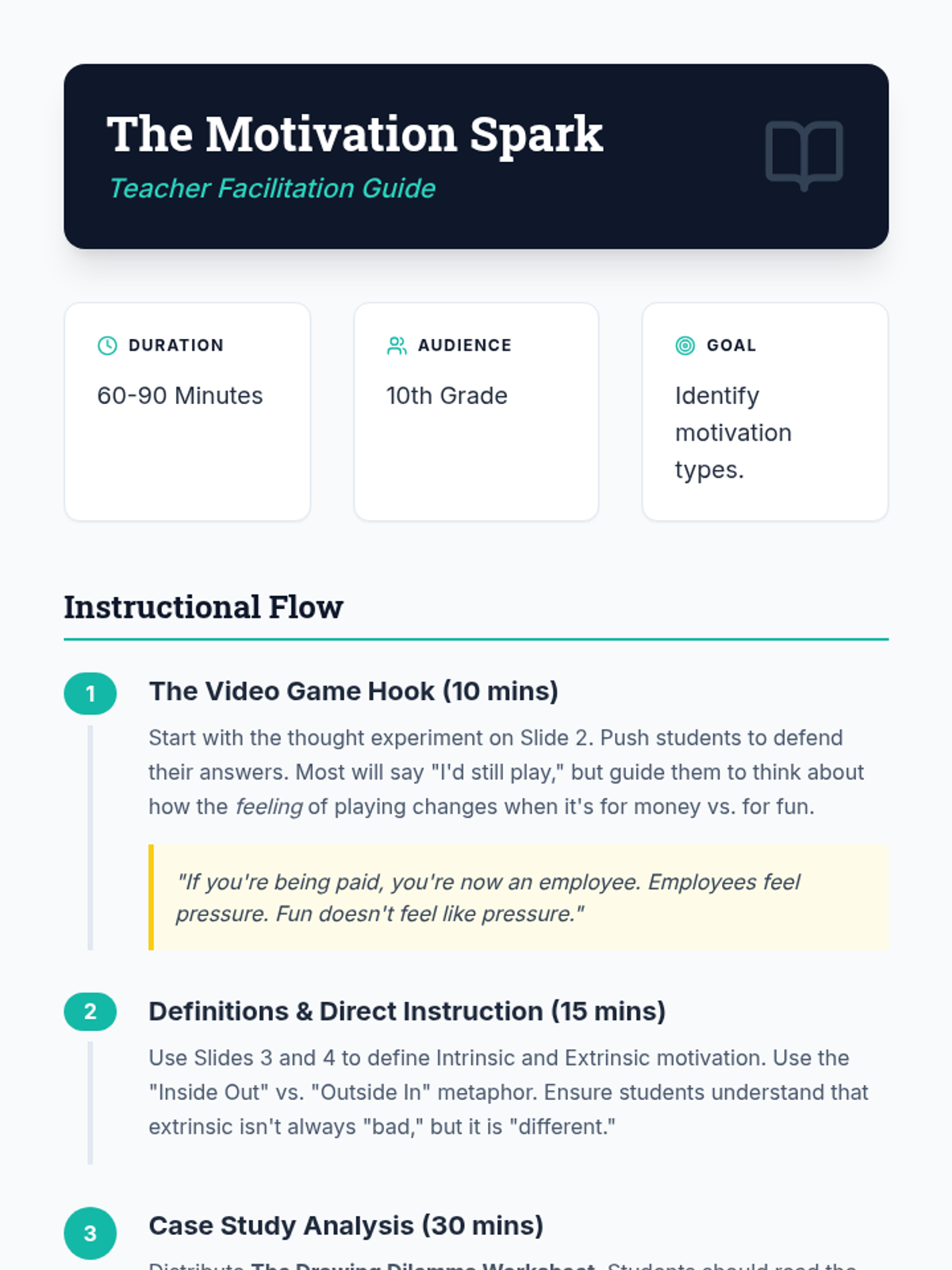
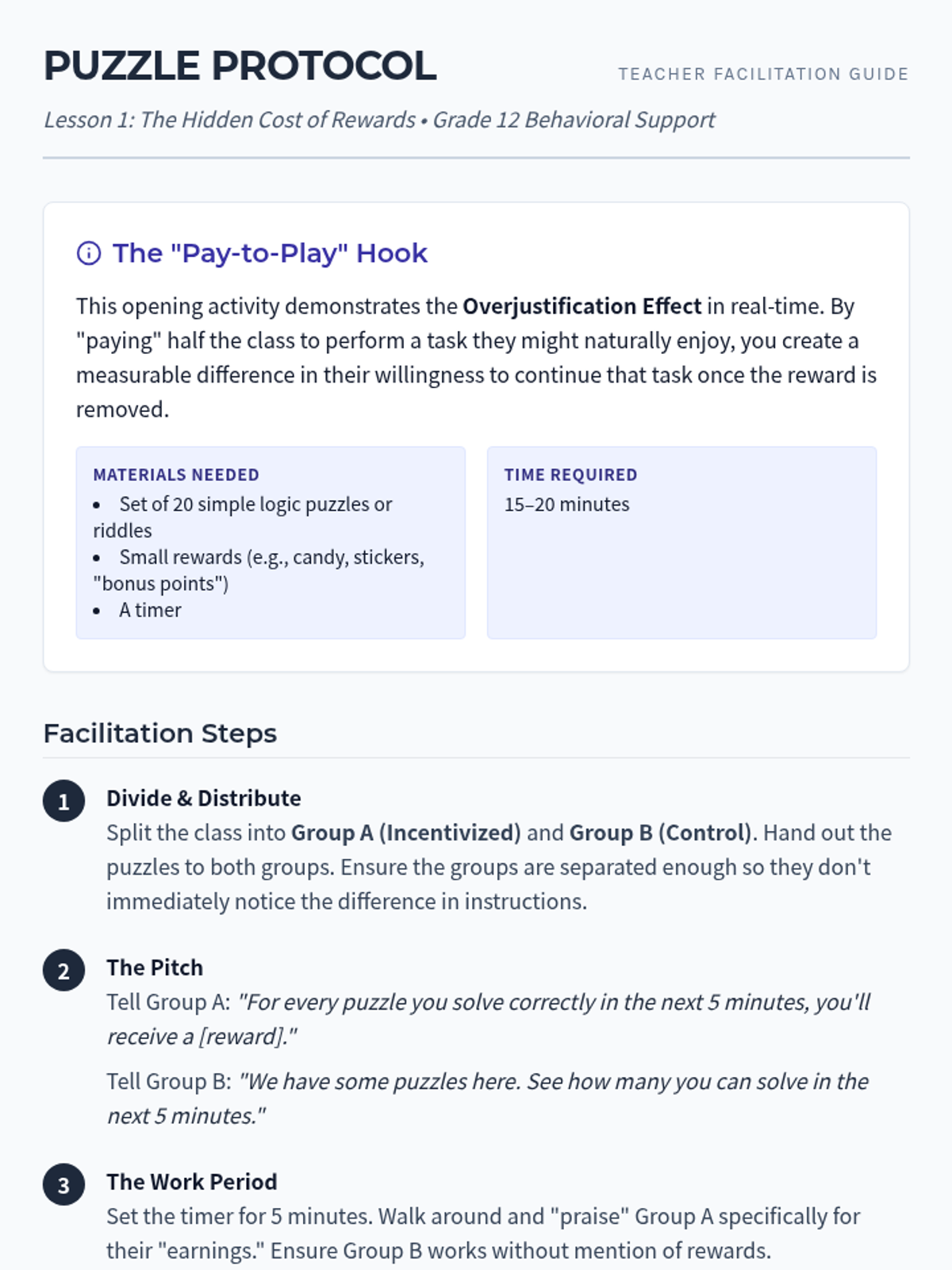
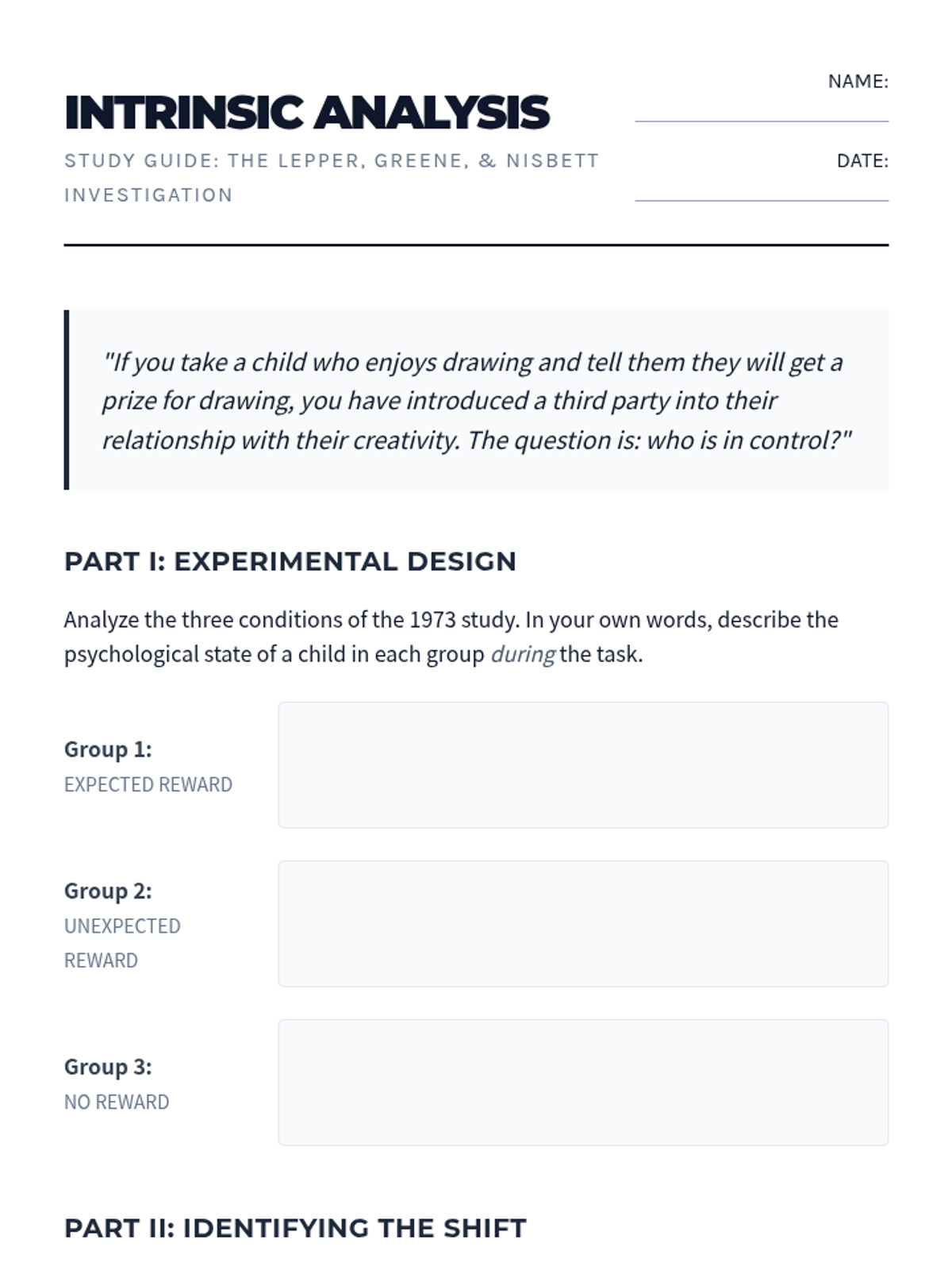
A critical exploration of behavioral psychology, focusing on the tension between intrinsic and extrinsic motivation. Students analyze the ethical implications of reward systems in education, technology, and society.
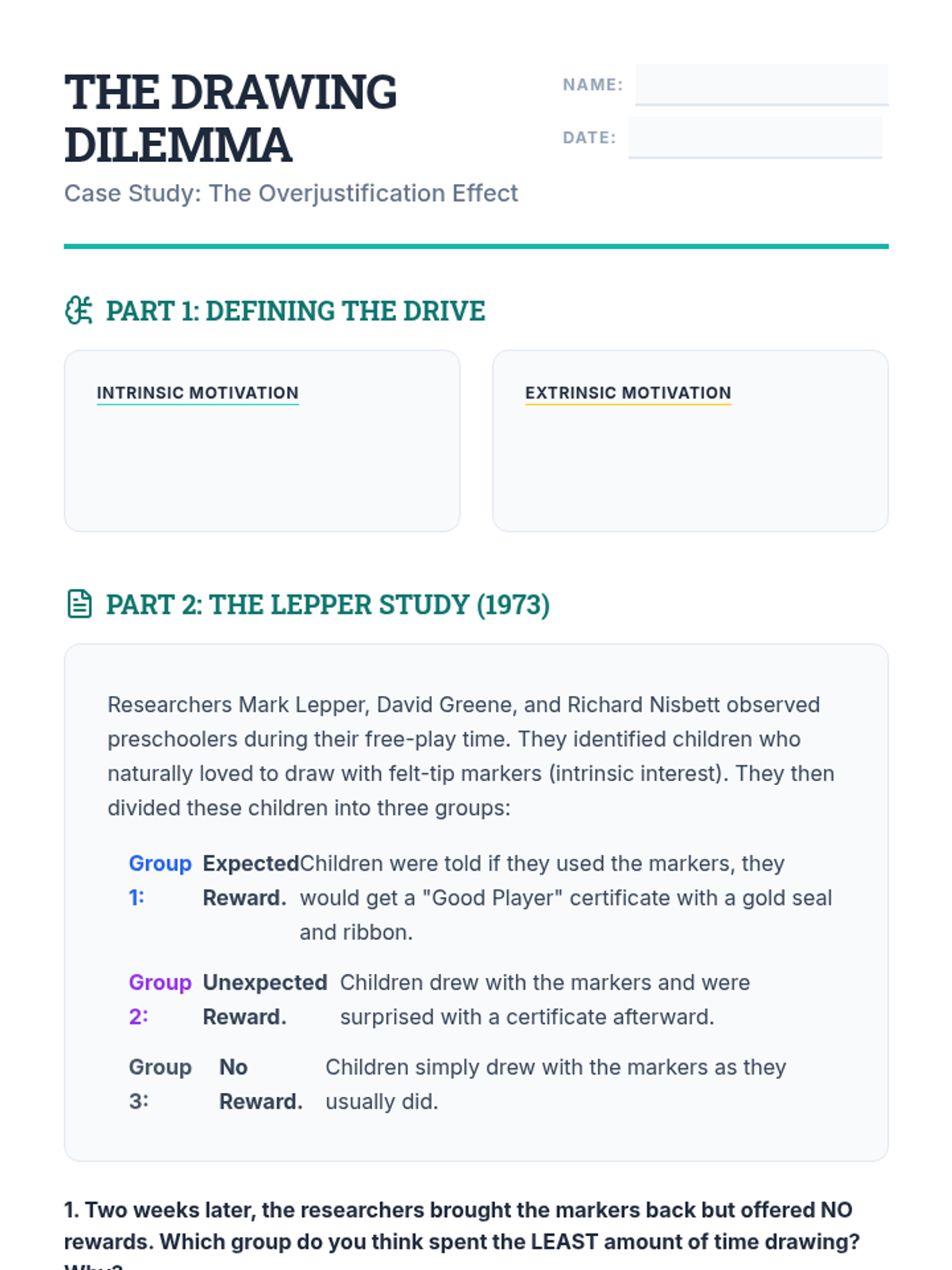
This sequence examines the psychological and ethical limits of positive reinforcement. Students analyze the 'Overjustification Effect', the impact of rewards on creativity, and the ethics of behavioral nudging, concluding with a critical audit of real-world incentive systems.
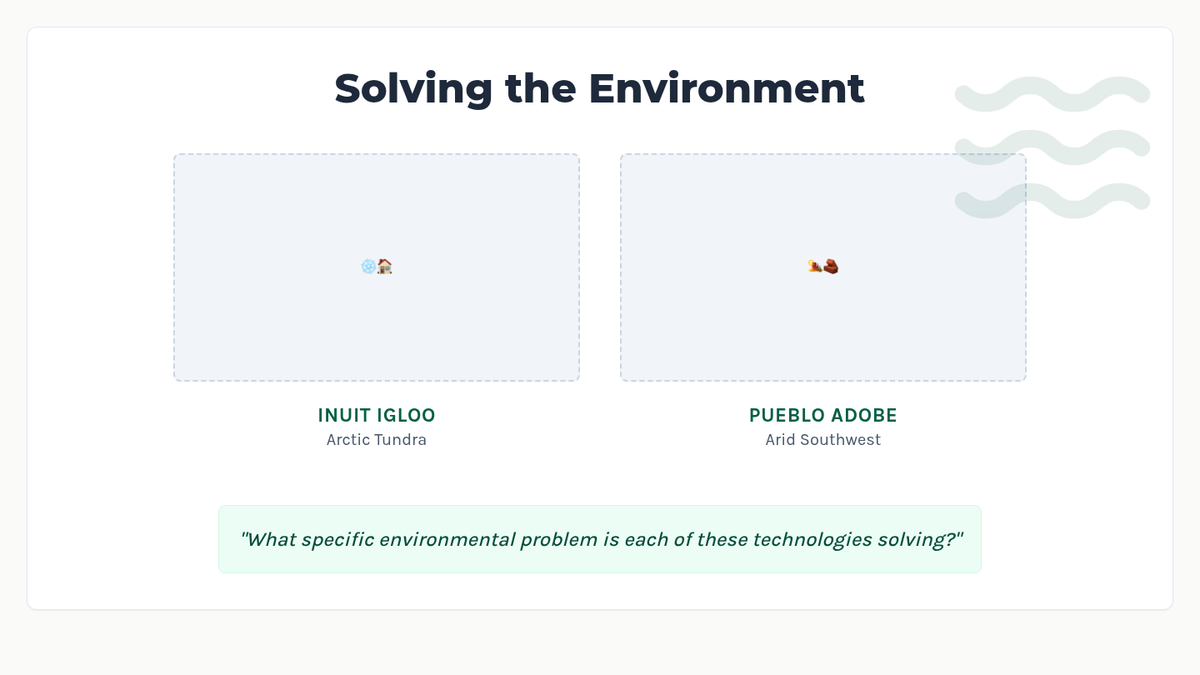
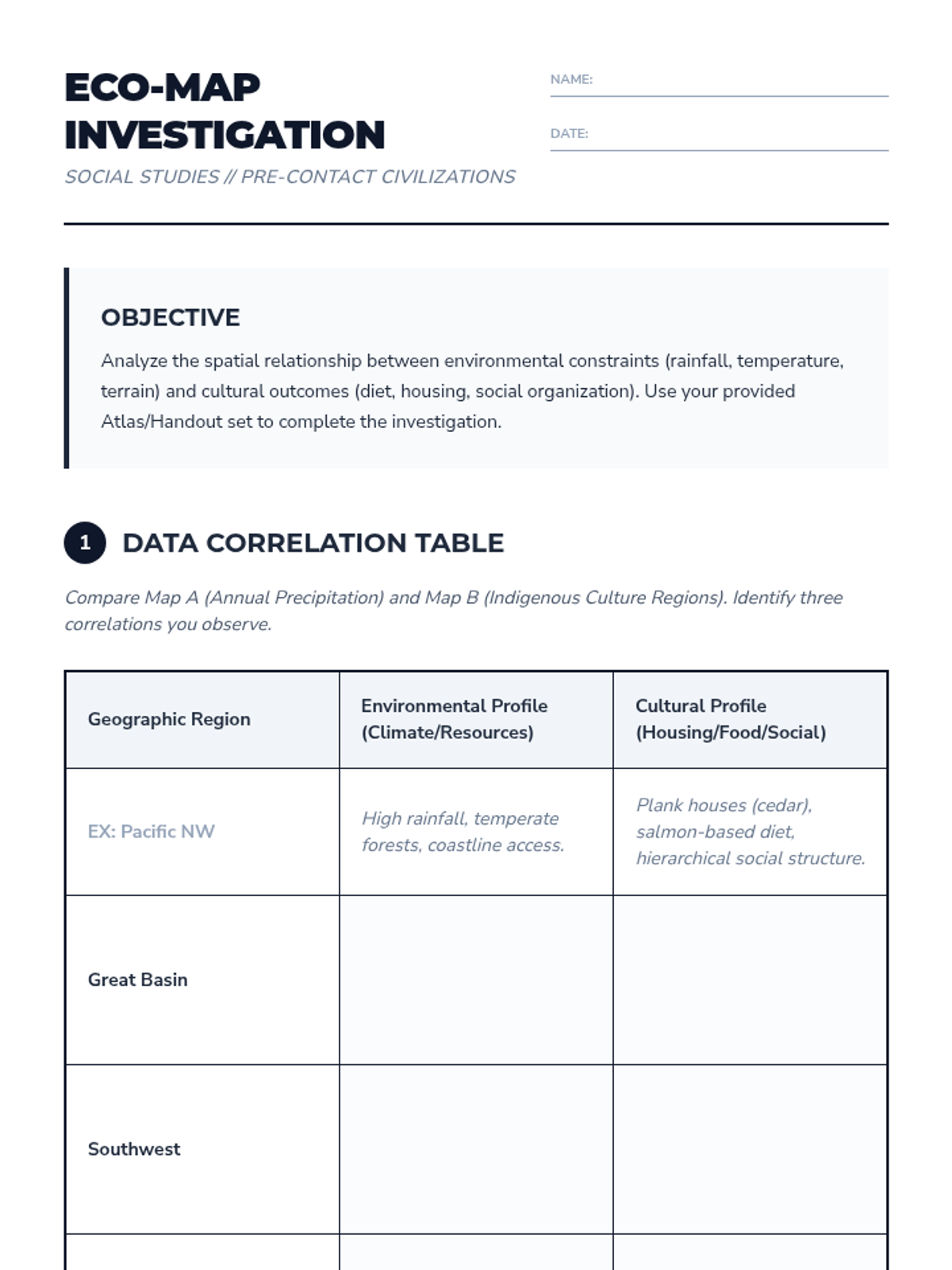
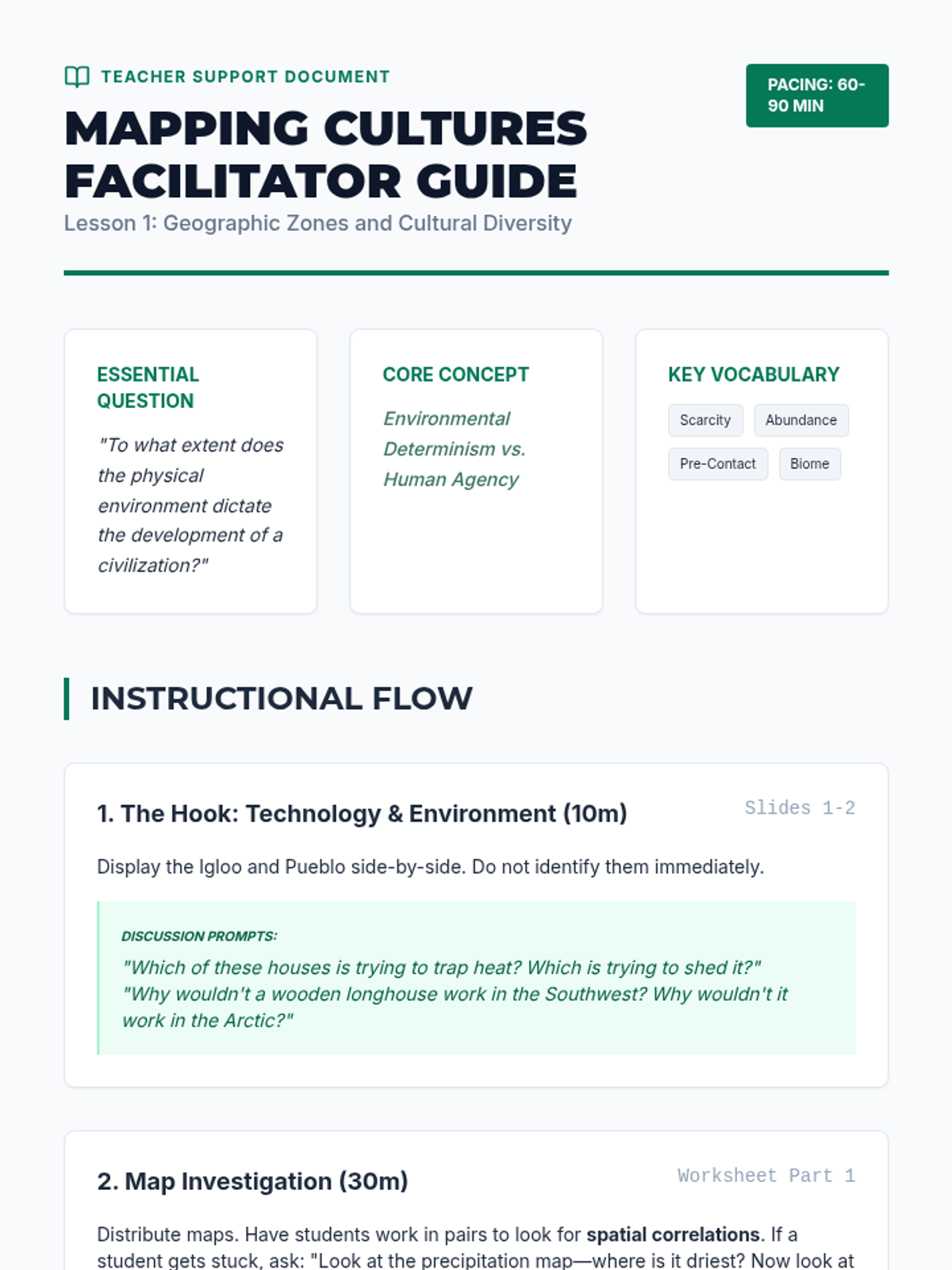
This inquiry-based sequence examines the profound relationship between physical geography and the development of pre-contact Indigenous cultures in North America, focusing on technological, agricultural, and social adaptations.
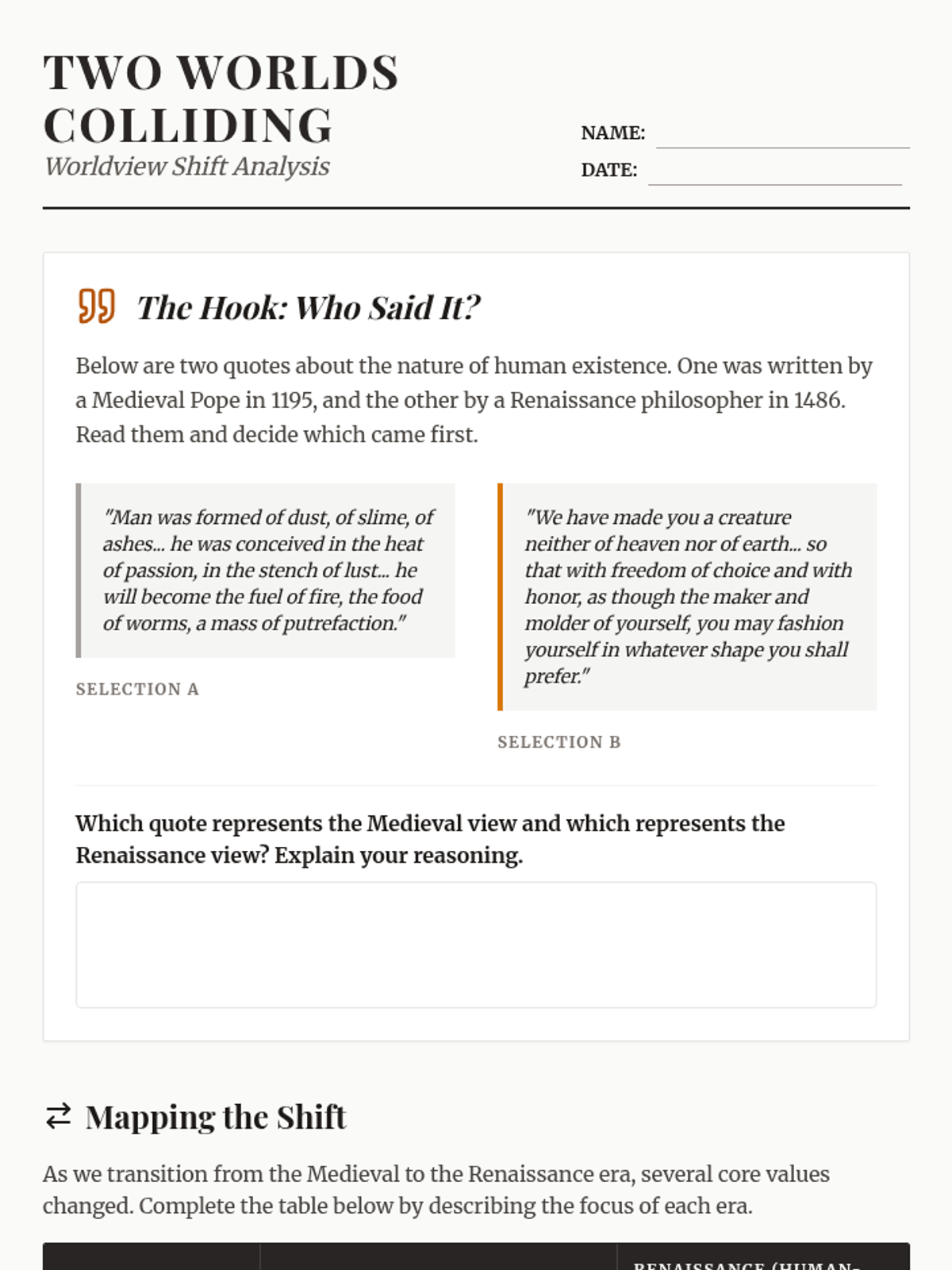
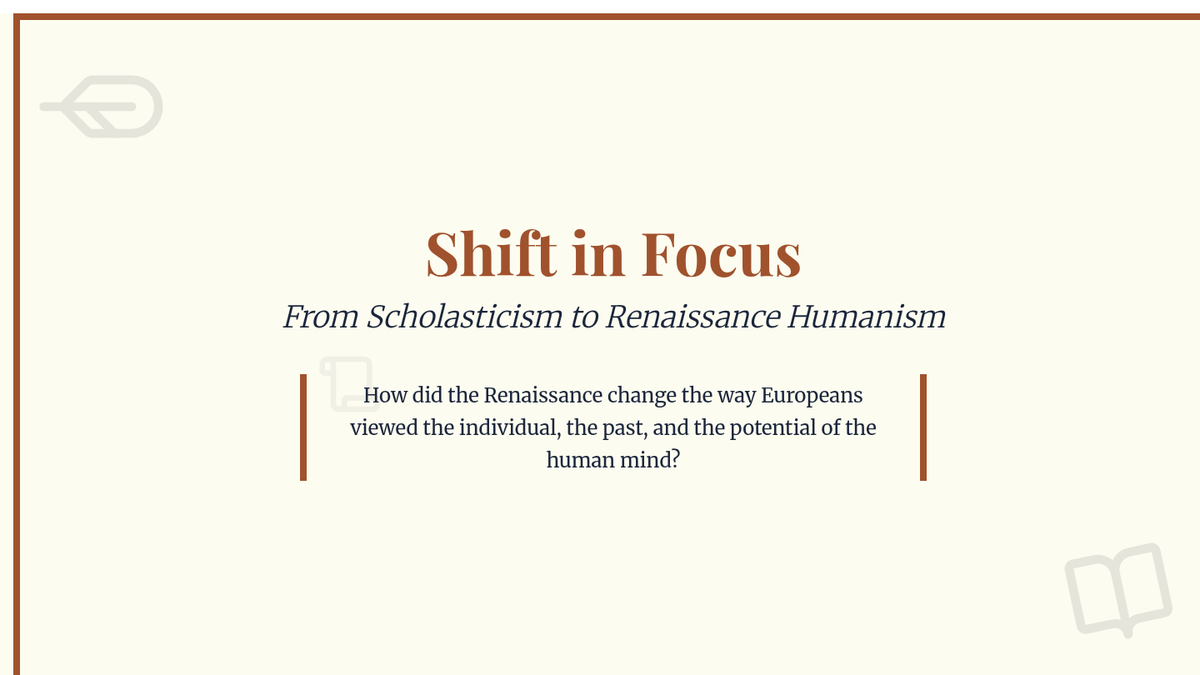
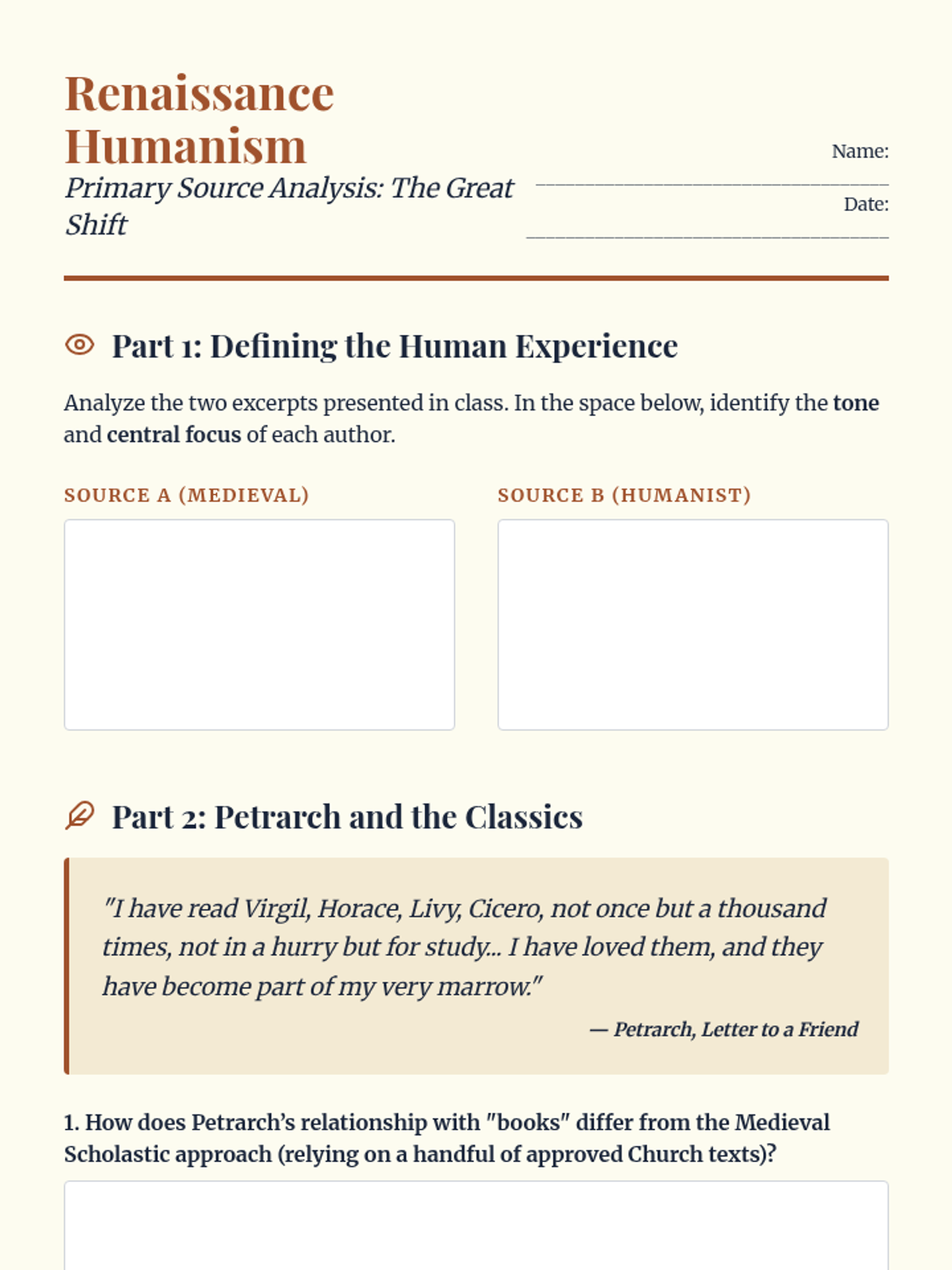
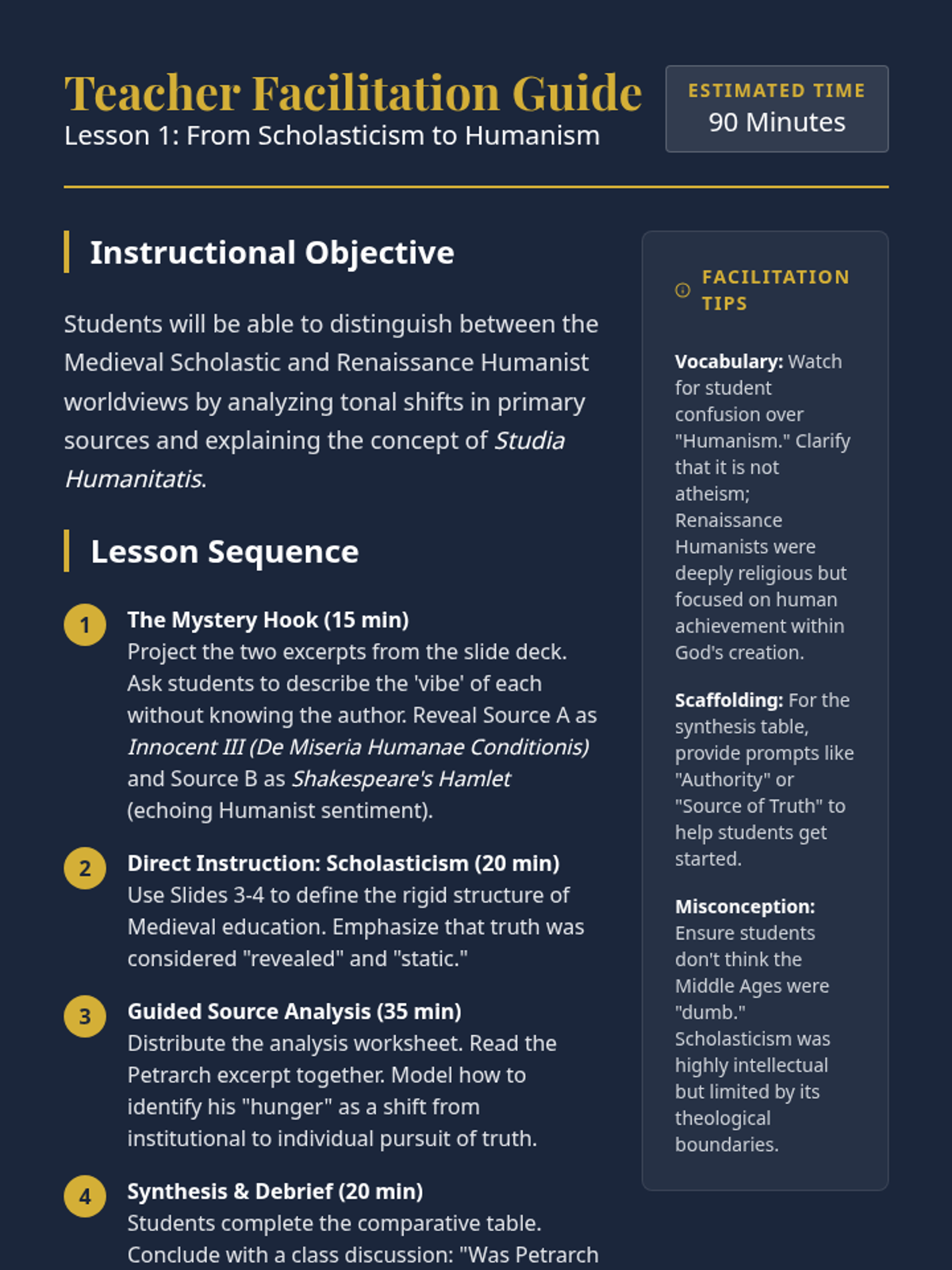
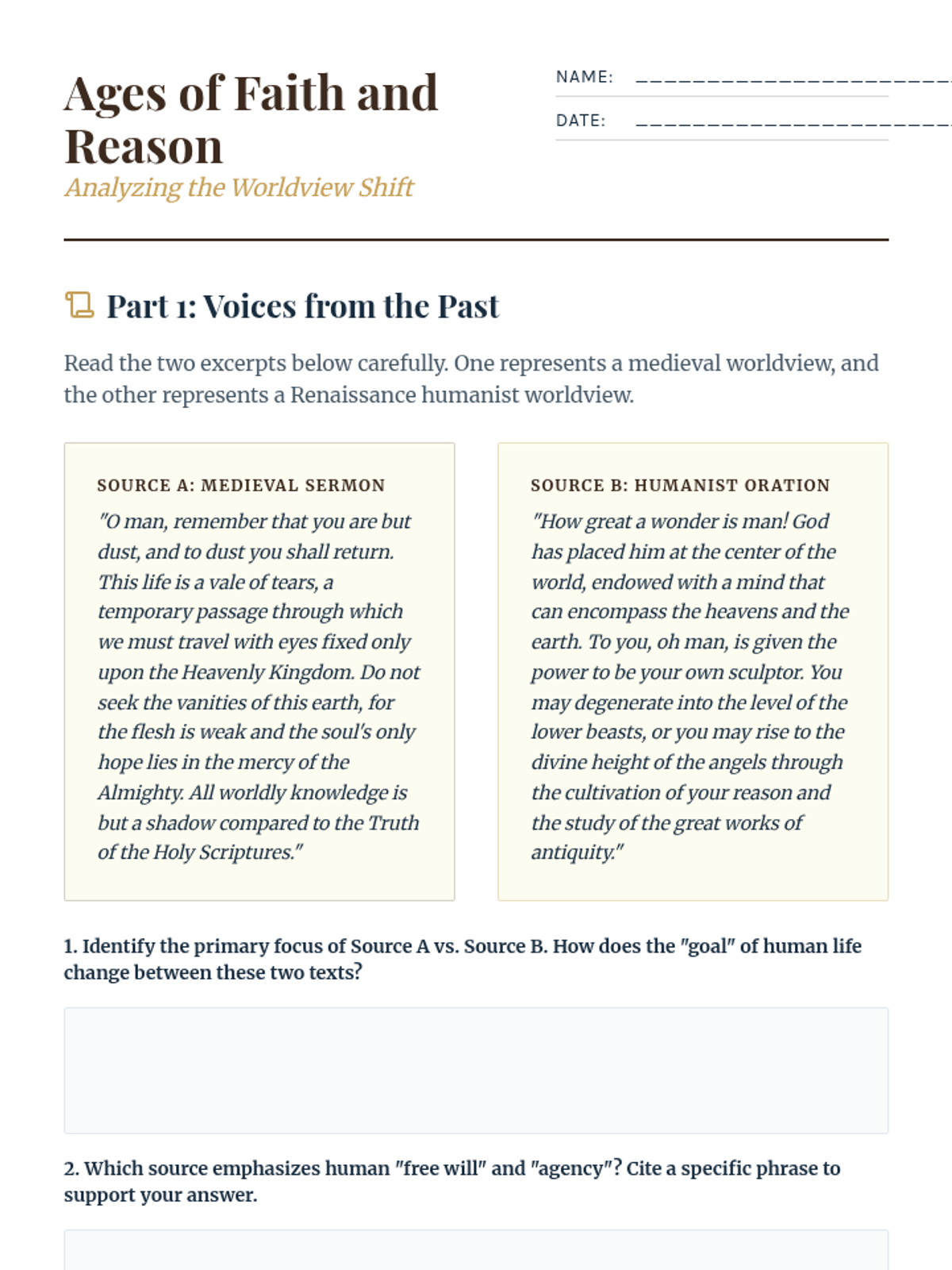
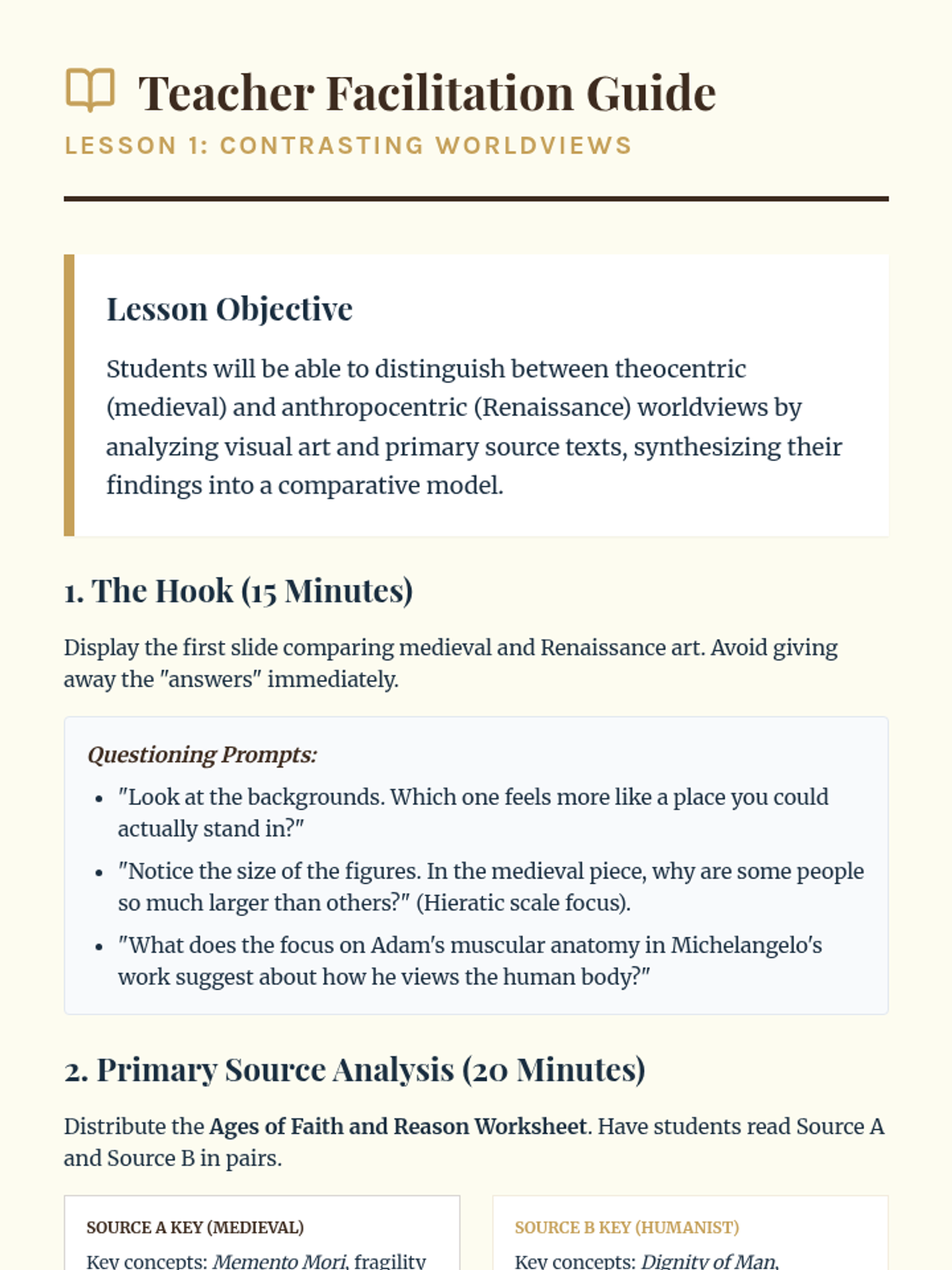
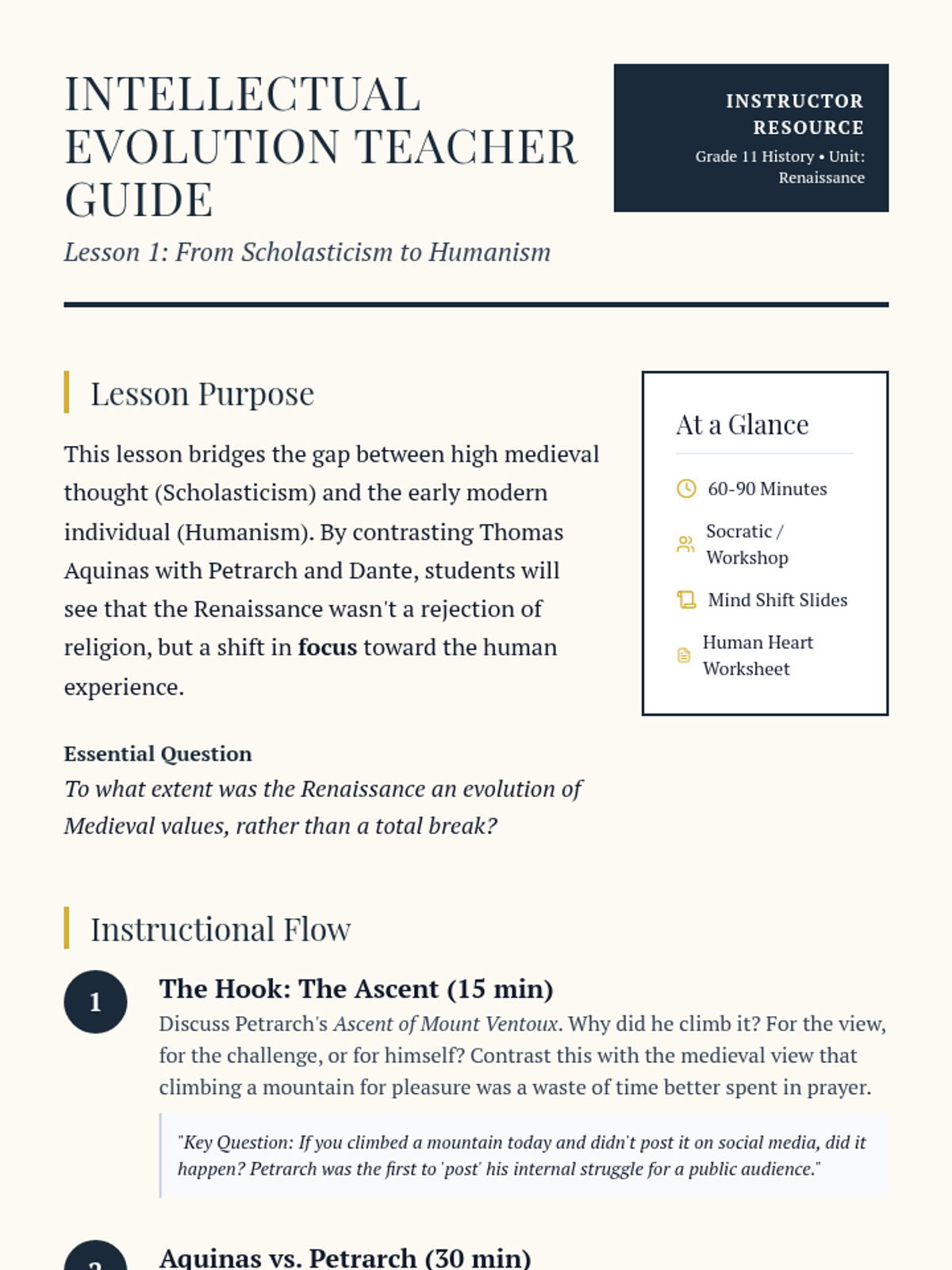
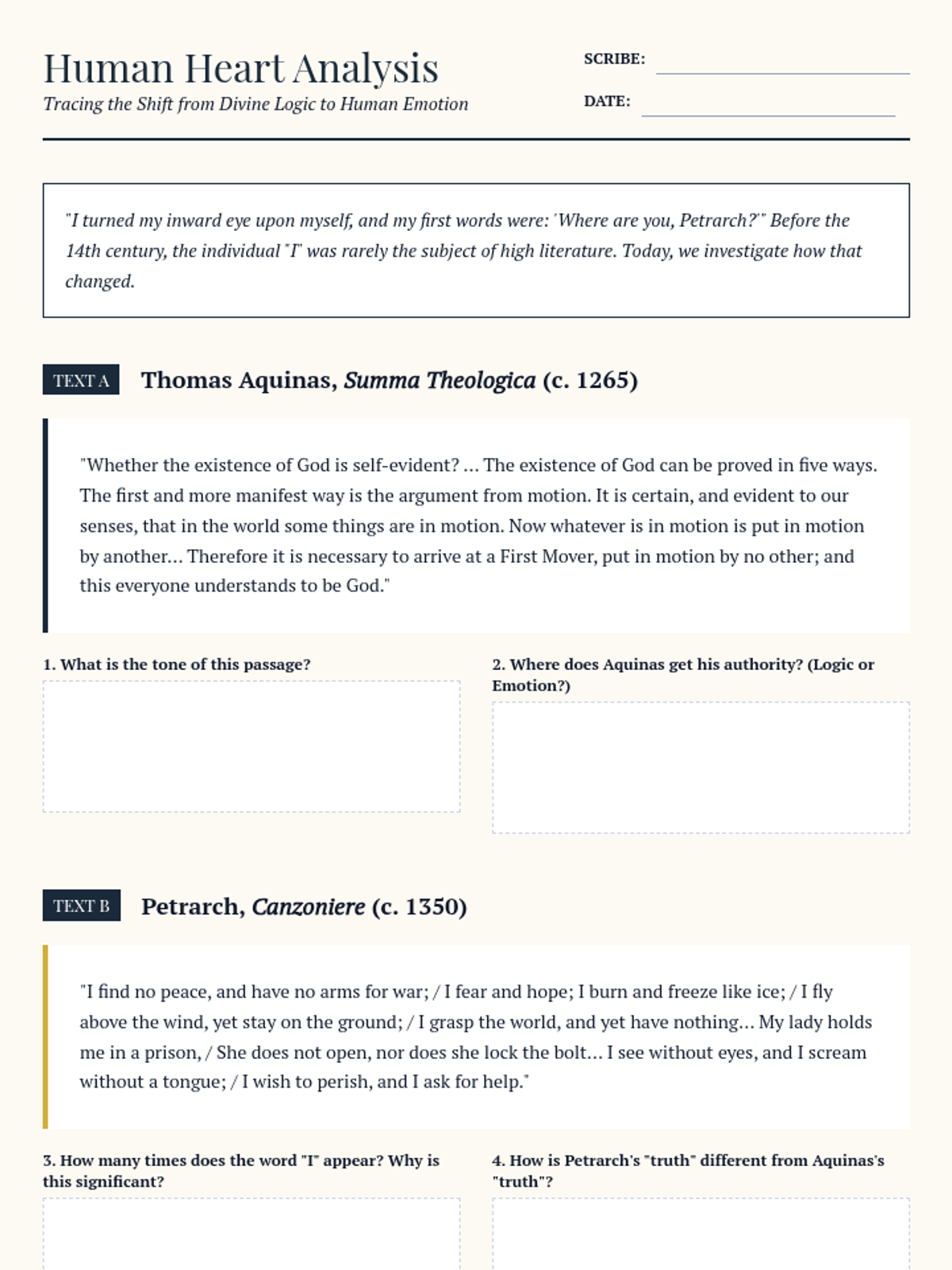
This sequence explores the intellectual transformation from Medieval Scholasticism to Renaissance Humanism, focusing on the revival of Classical antiquity and the birth of modern individualism. Students will analyze primary sources from Petrarch, Pico della Mirandola, and Erasmus to understand the shift from a theocentric to a human-centric worldview.
This high school history sequence explores the intellectual transformation from Medieval Scholasticism to Renaissance Humanism. Students analyze primary sources from key thinkers like Petrarch, Pico della Mirandola, and Machiavelli to understand the shift toward individualism, secular inquiry, and political realism.
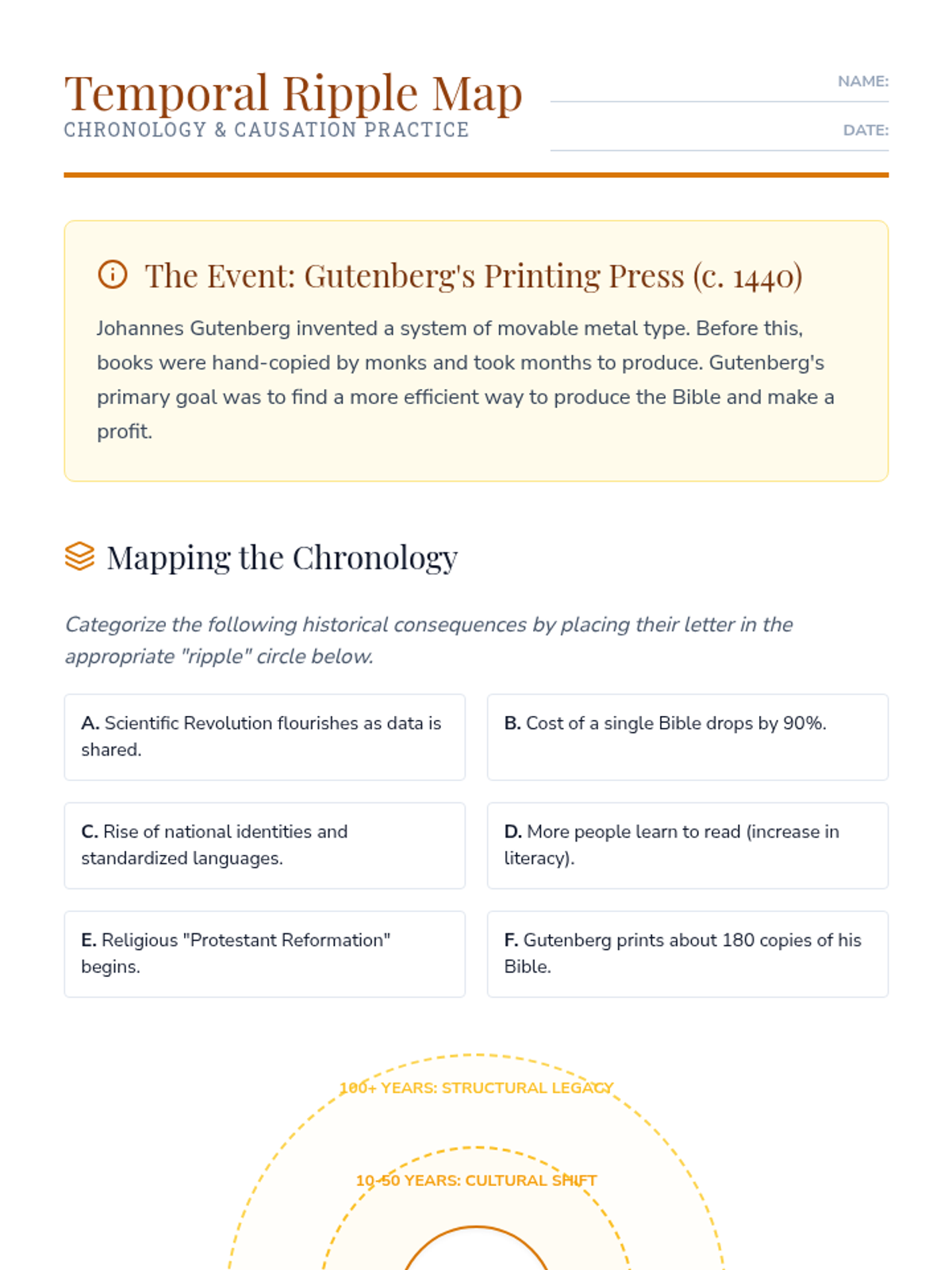
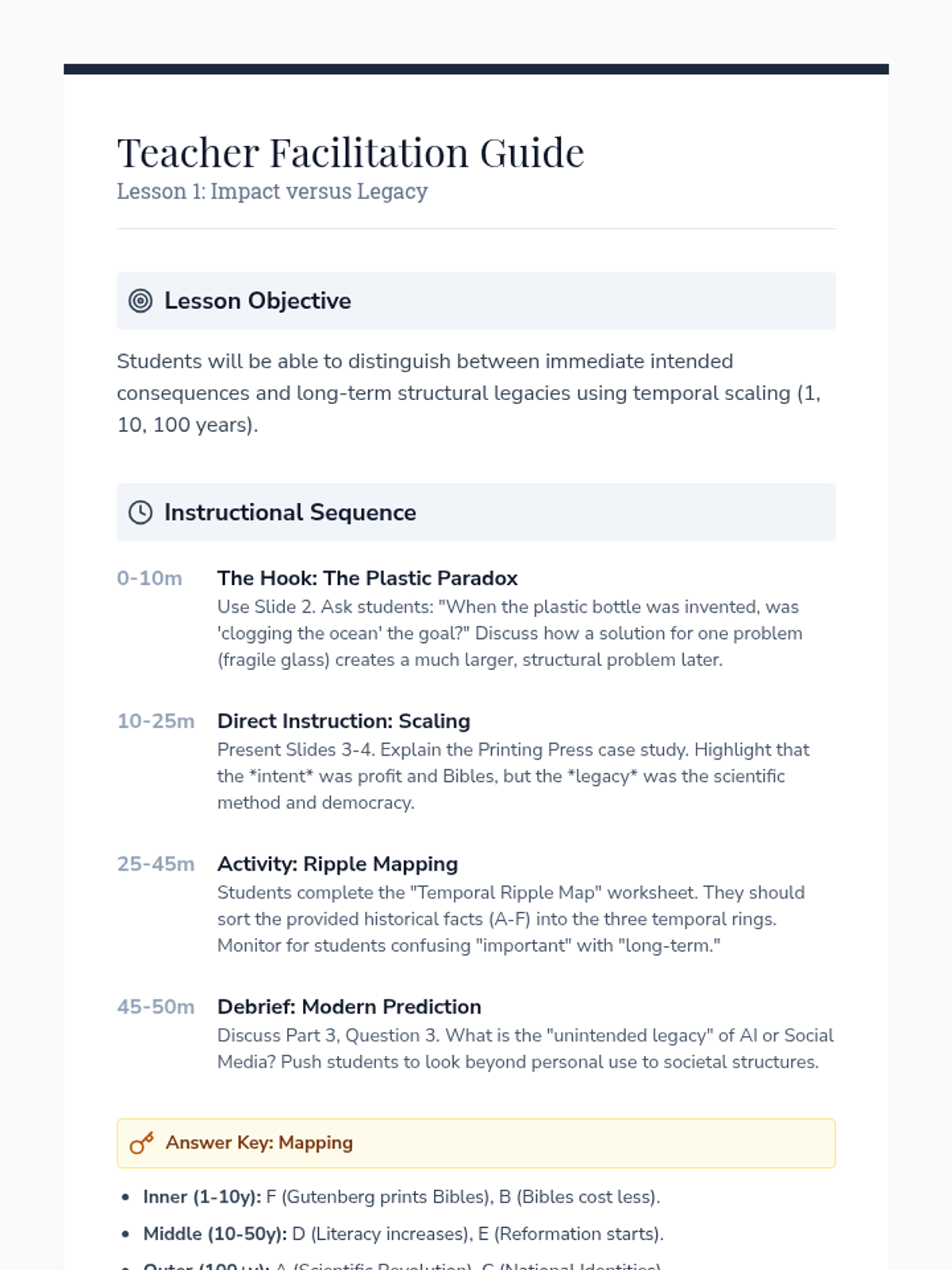
This sequence explores the relationship between historical events and their long-term legacies. Students investigate how immediate intentions often lead to complex, unintended consequences over decades and centuries, moving from simple causal chains to complex feedback loops and ethical evaluations of historical responsibility.
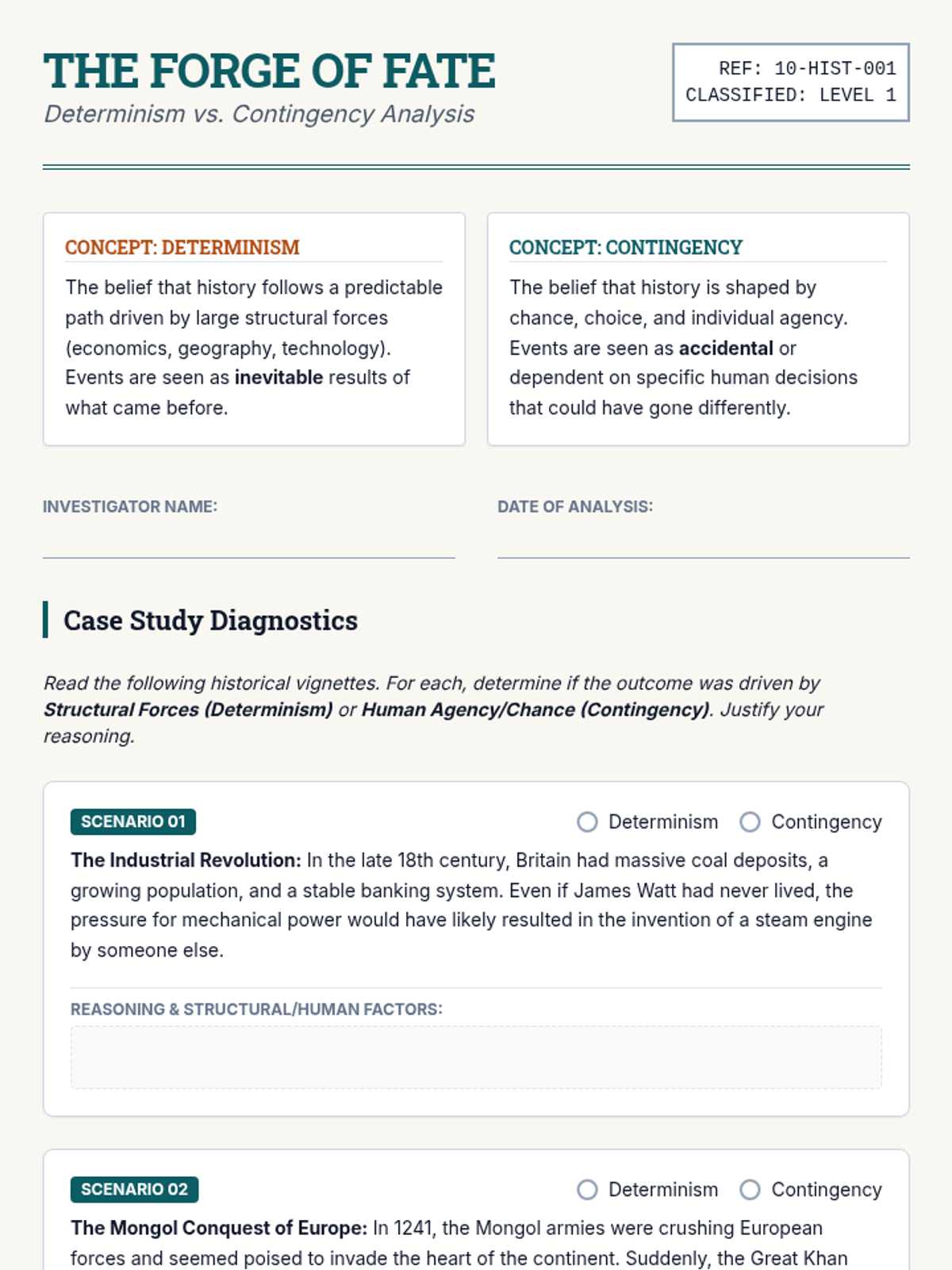
This sequence explores the mechanics of historical causation through counterfactual inquiry. Students analyze the tension between determinism and contingency, learn rigorous methods for 'what-if' history, and simulate historical crises to evaluate the weight of individual decisions versus structural forces.
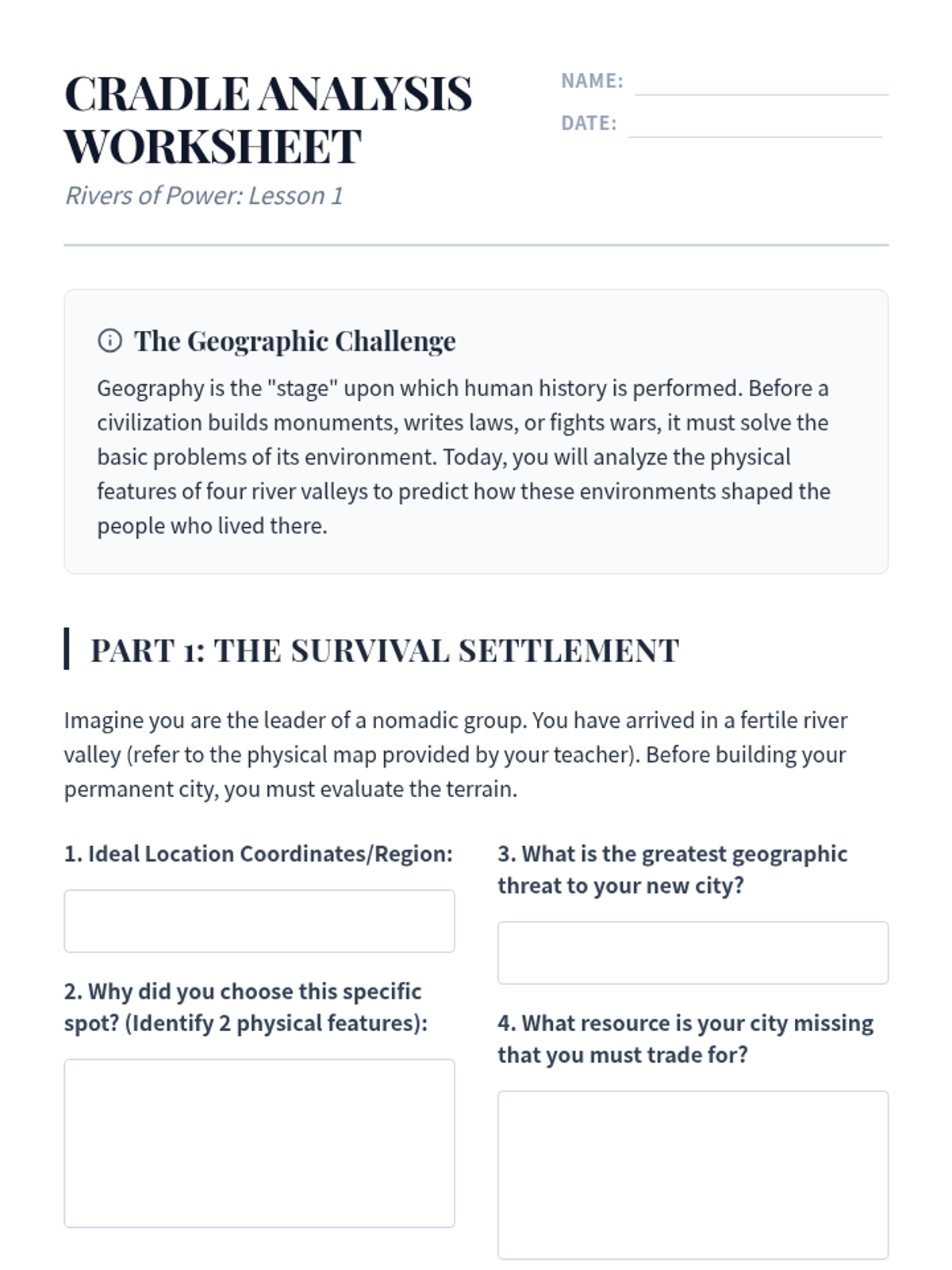
This sequence investigates how physical geography—specifically river systems—shaped the development, culture, and political structures of the Nile, Tigris-Euphrates, Indus, and Yellow River civilizations. Students evaluate the 'Hydraulic Hypothesis' and the concept of geographic determinism through map analysis, simulations, and primary source comparison.
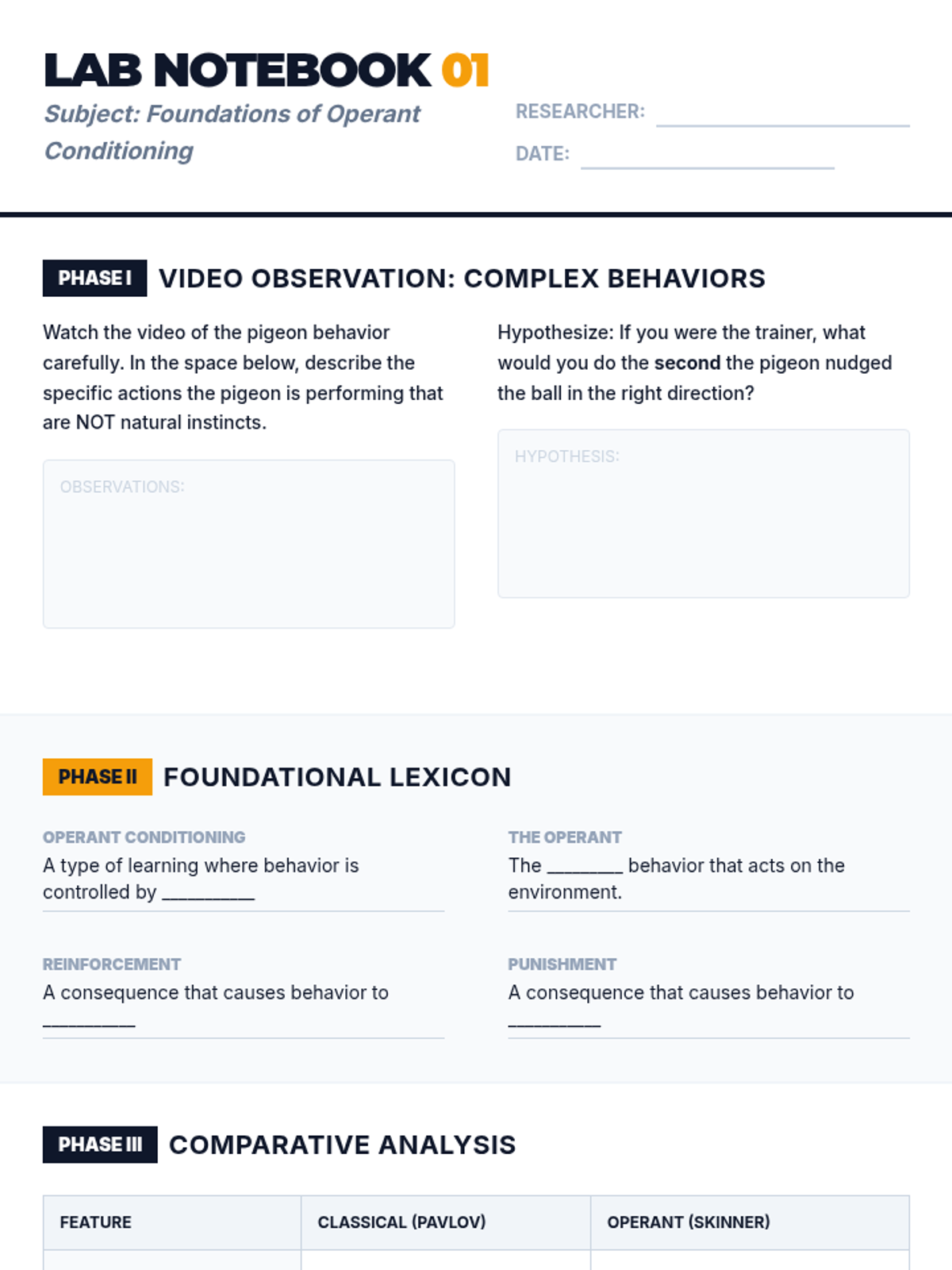
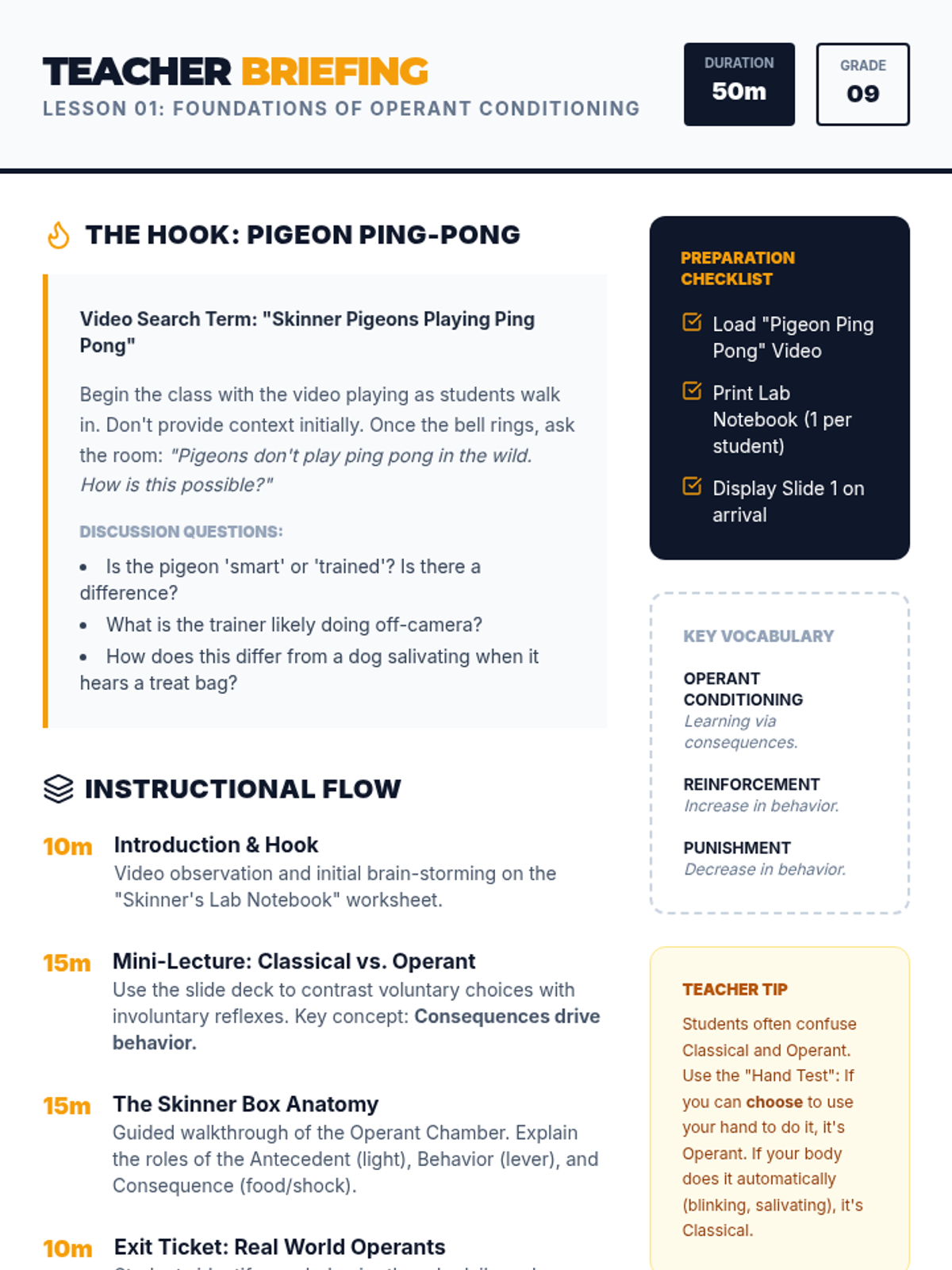
A comprehensive unit on operant conditioning, taking students from basic behavioral principles to the ethical application of behavior modification techniques. Students will explore reinforcement, punishment, schedules, and shaping through simulations and projects.
A 9th-grade Social Studies sequence exploring Eastern traditions and Western Existentialism to investigate whether meaning is discovered or created. Students progress from external systems of social order to internal constructions of individual freedom.
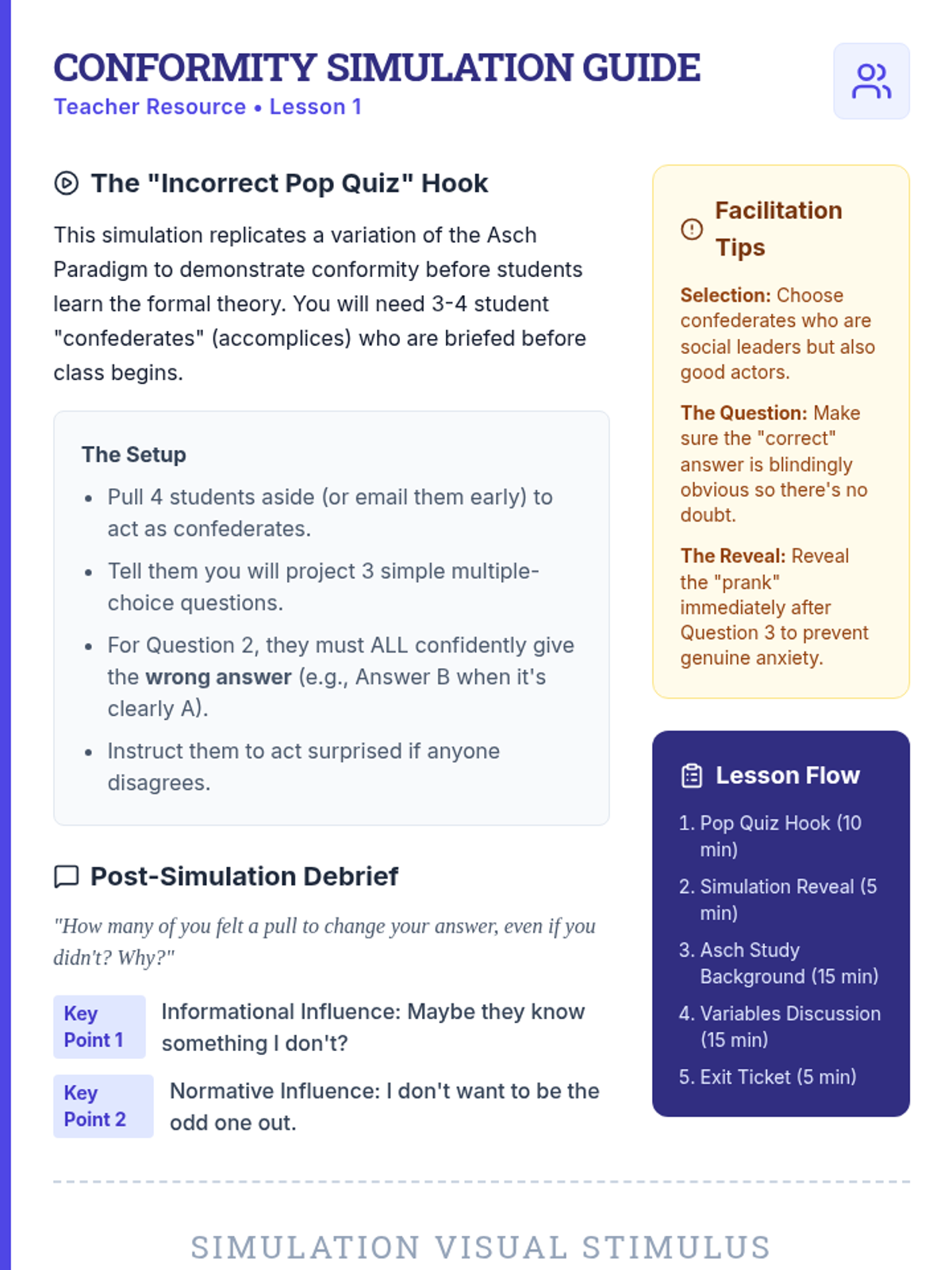
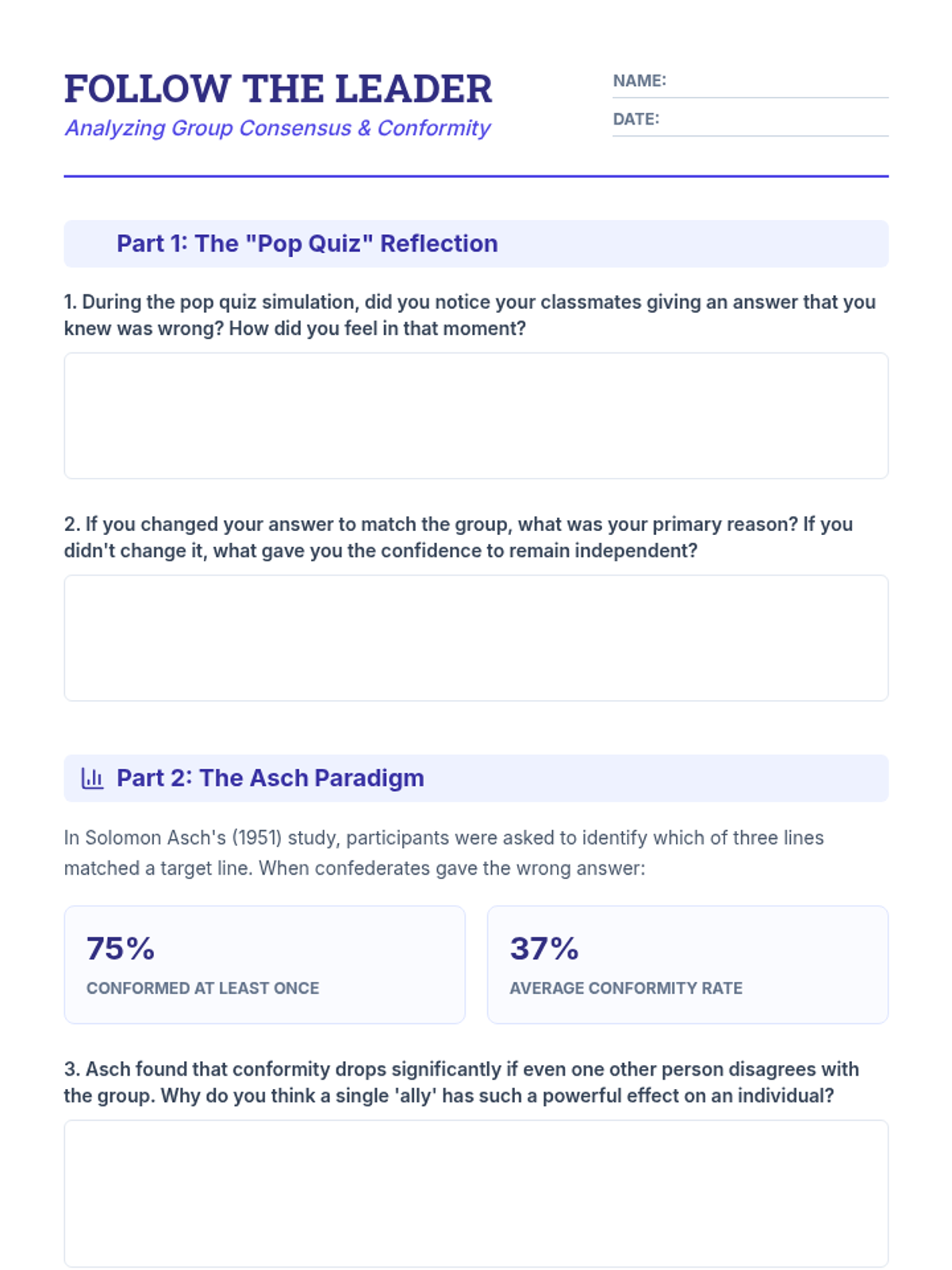
A comprehensive exploration of the power of social influence, covering classic experiments on conformity, obedience, and social roles. Students analyze the psychological mechanisms behind human behavior in groups and evaluate the ethical standards of landmark research.
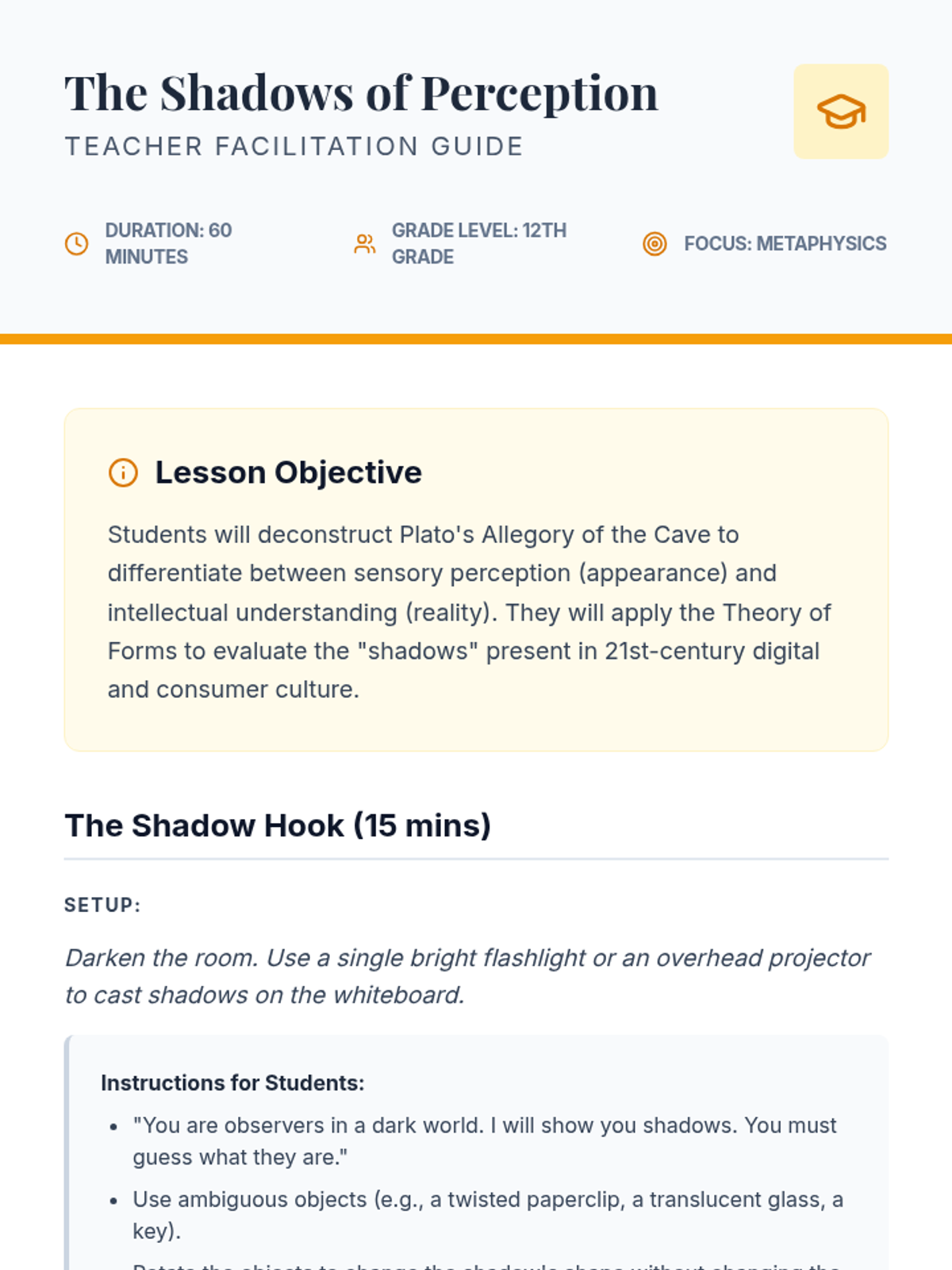
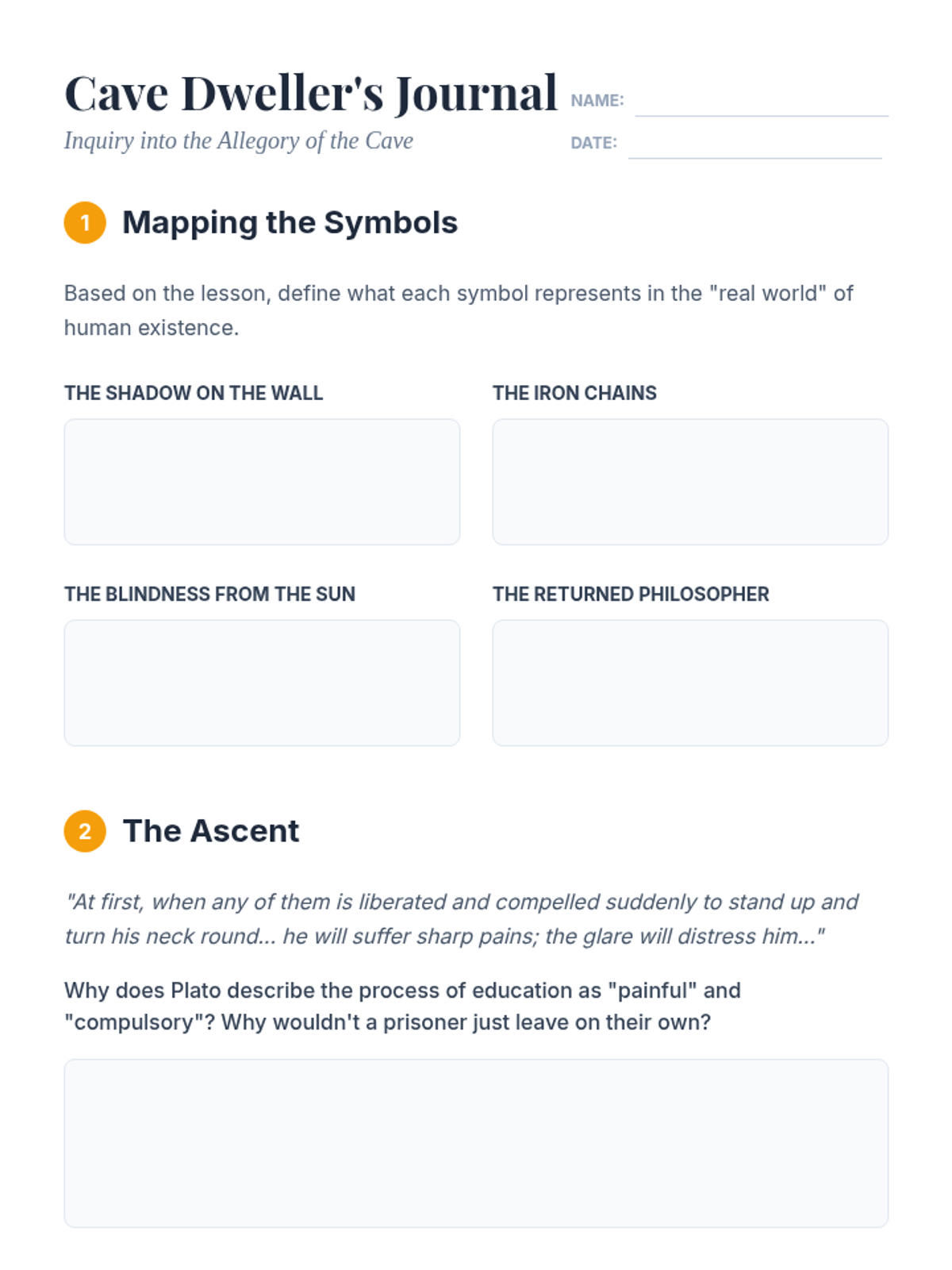
A deep dive into the fundamental questions of existence and knowledge, tracing the history of thought from Plato's shadows to modern simulation theory. Students will grapple with skeptical doubt, the nature of reality, and the responsibility of creating meaning.
A series of lessons examining the power and philosophy of non-violence in the 20th century, from intellectual roots to global applications.
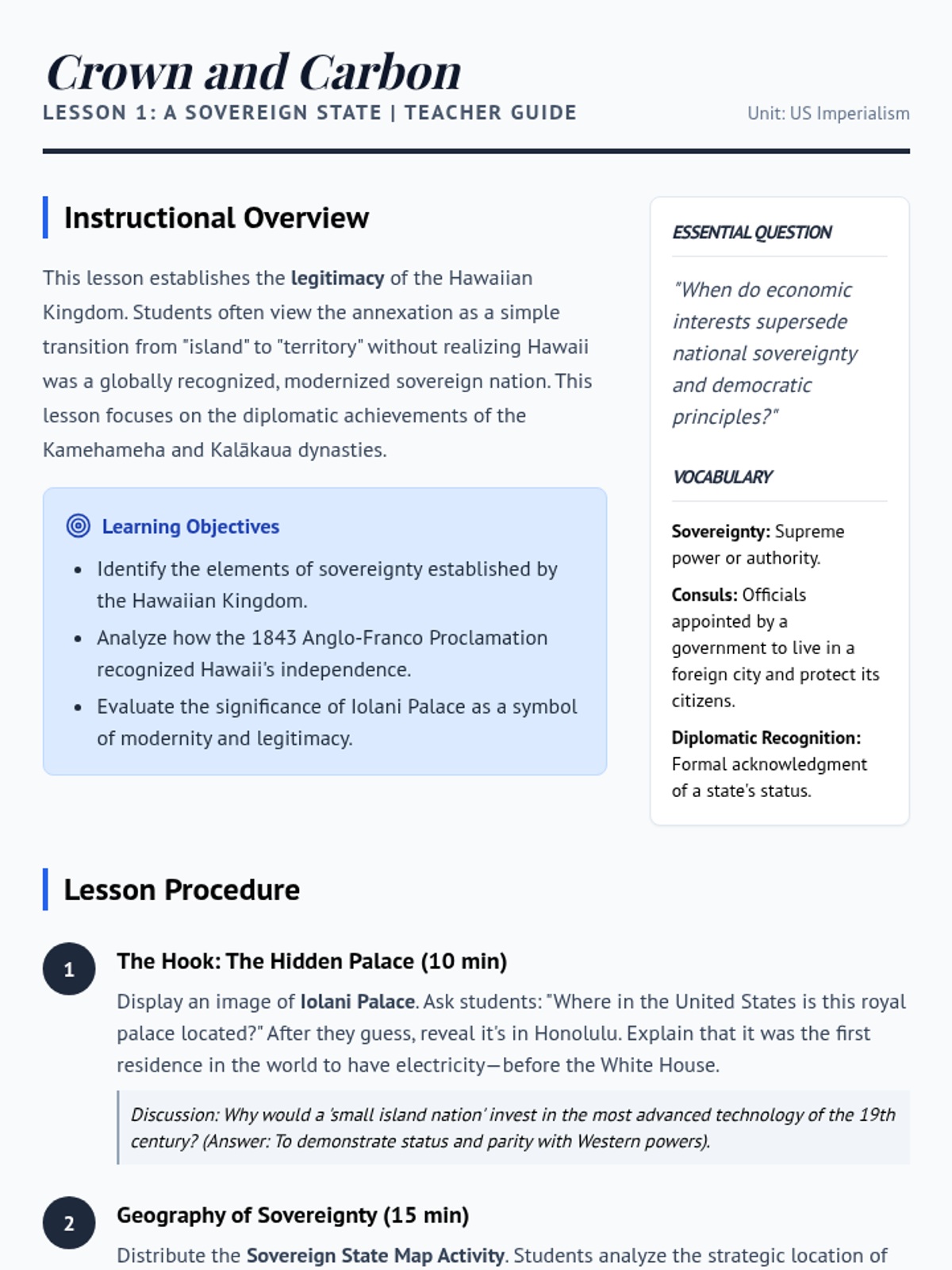
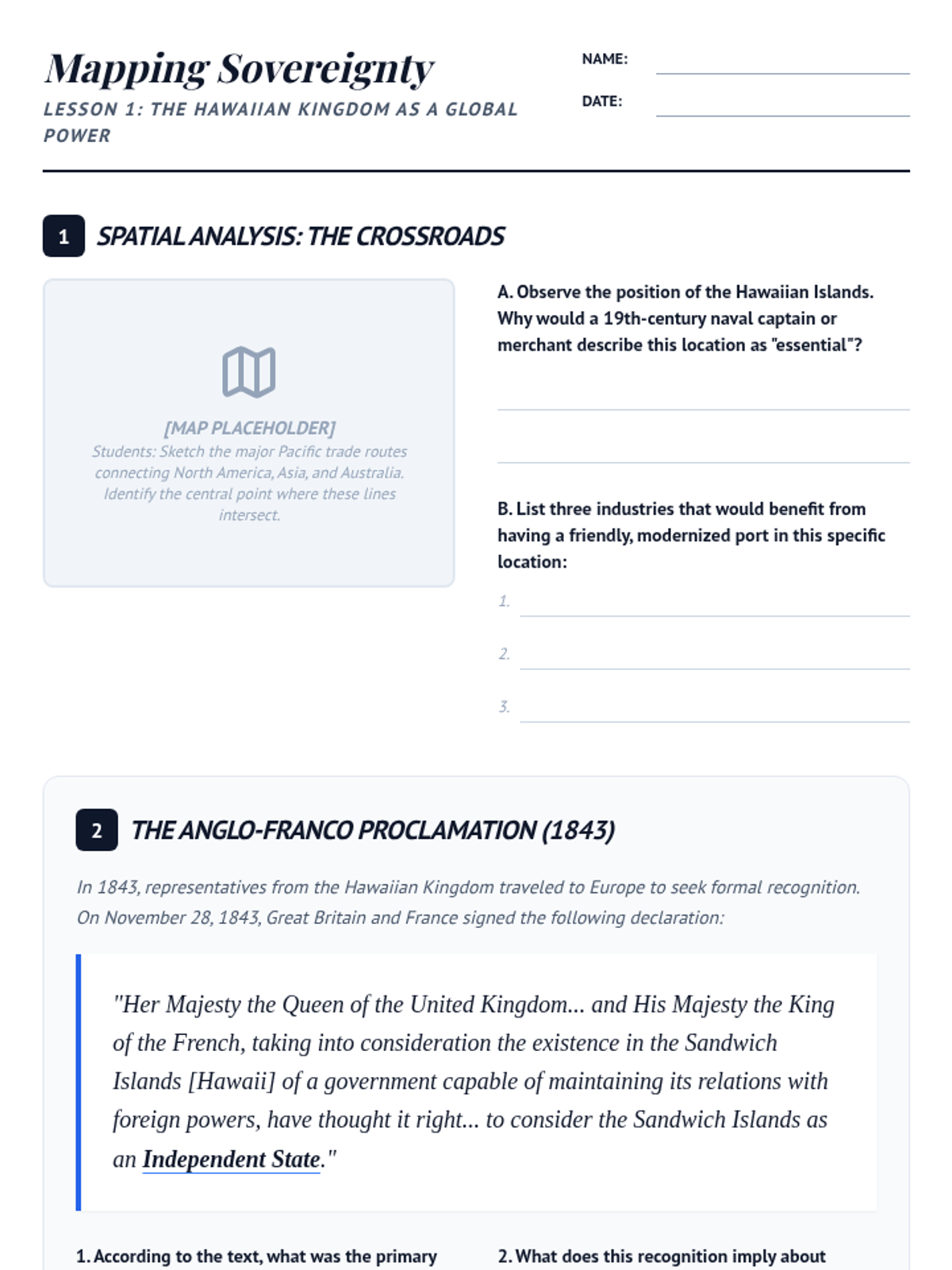
A deep-dive case study into the annexation of Hawaii, exploring the collision of indigenous sovereignty, missionary influence, and corporate interests. Students analyze the transition from a recognized sovereign monarchy to a US territory, evaluating the ethical and political implications of imperialism.
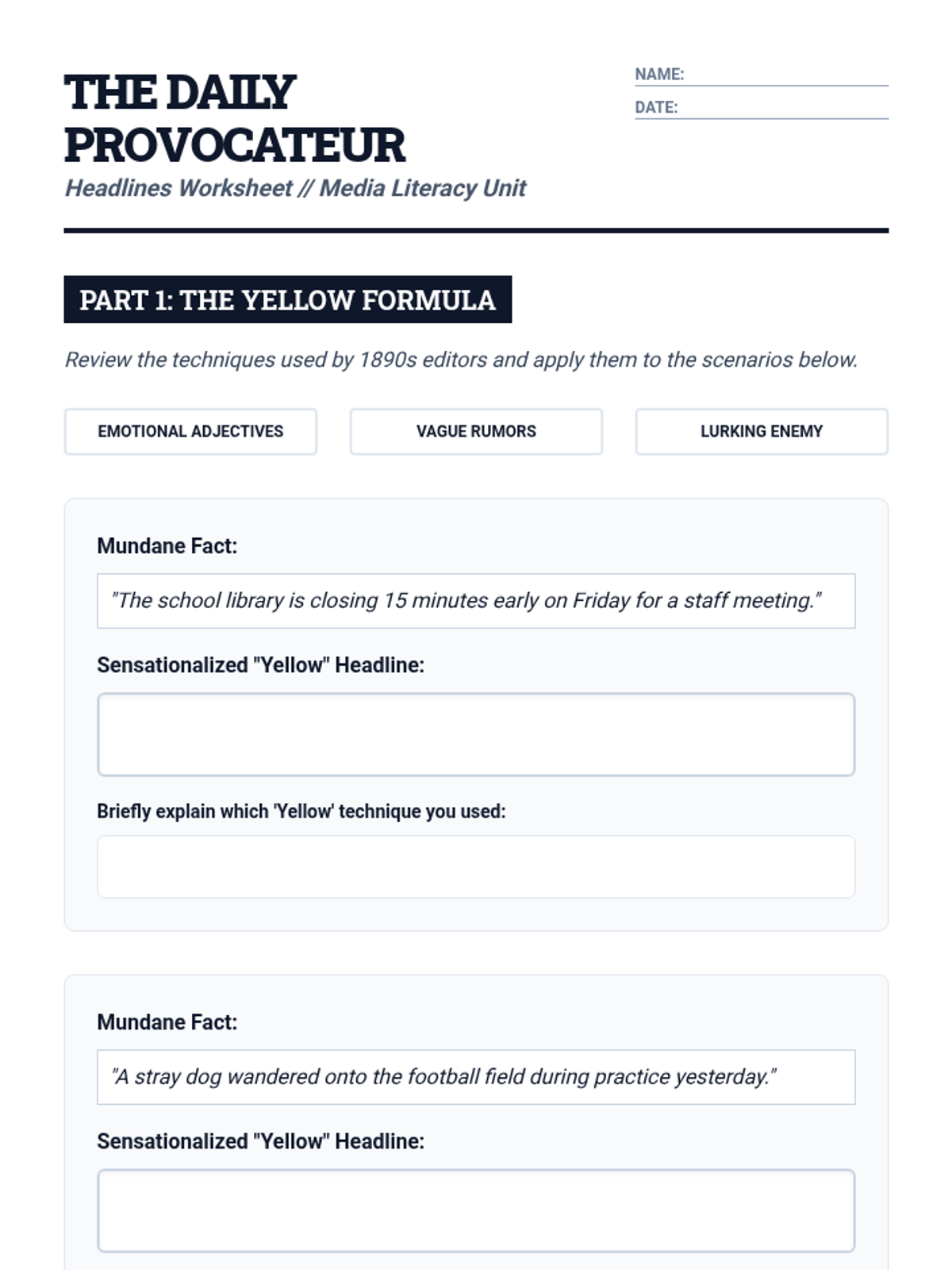
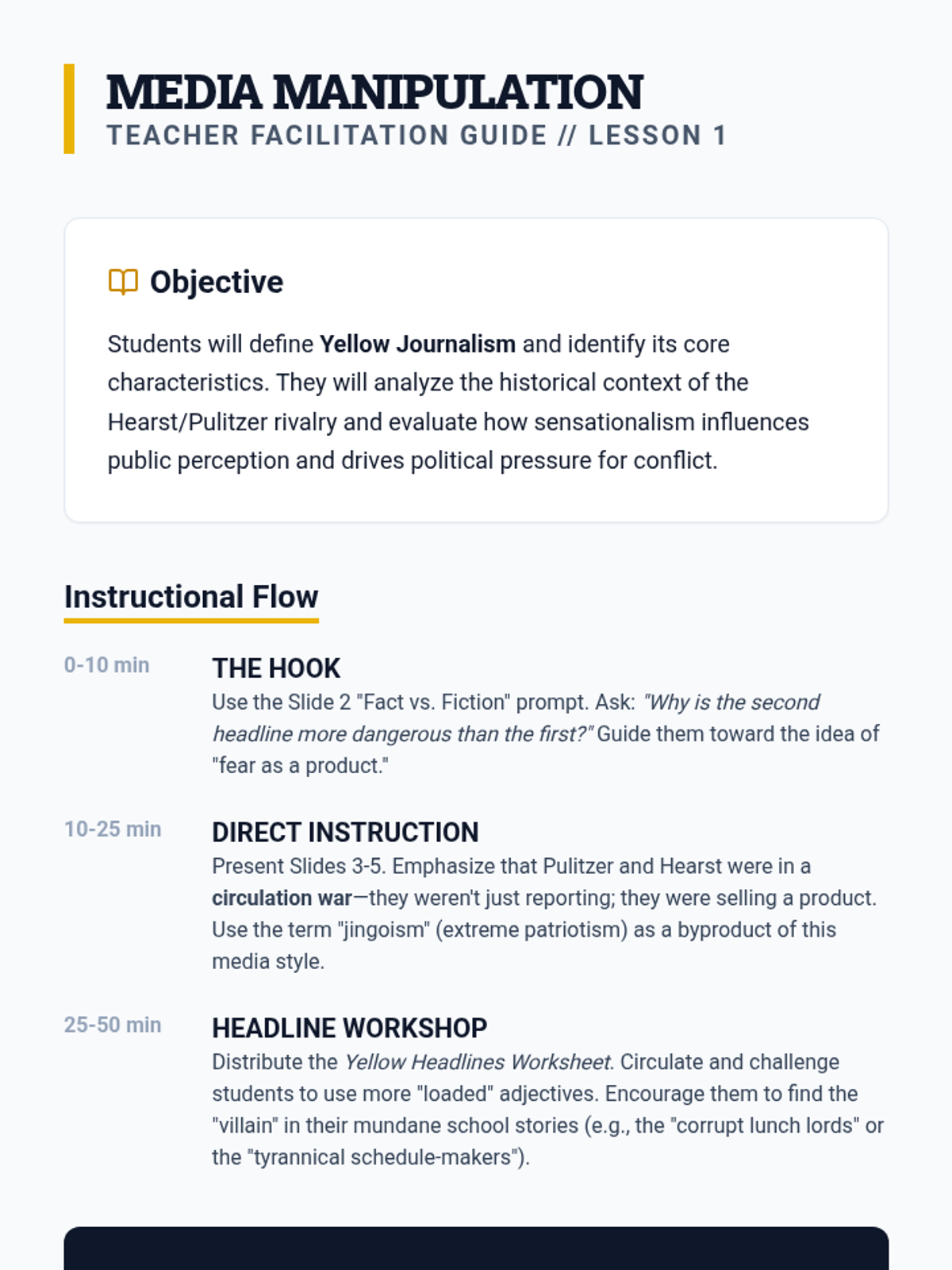
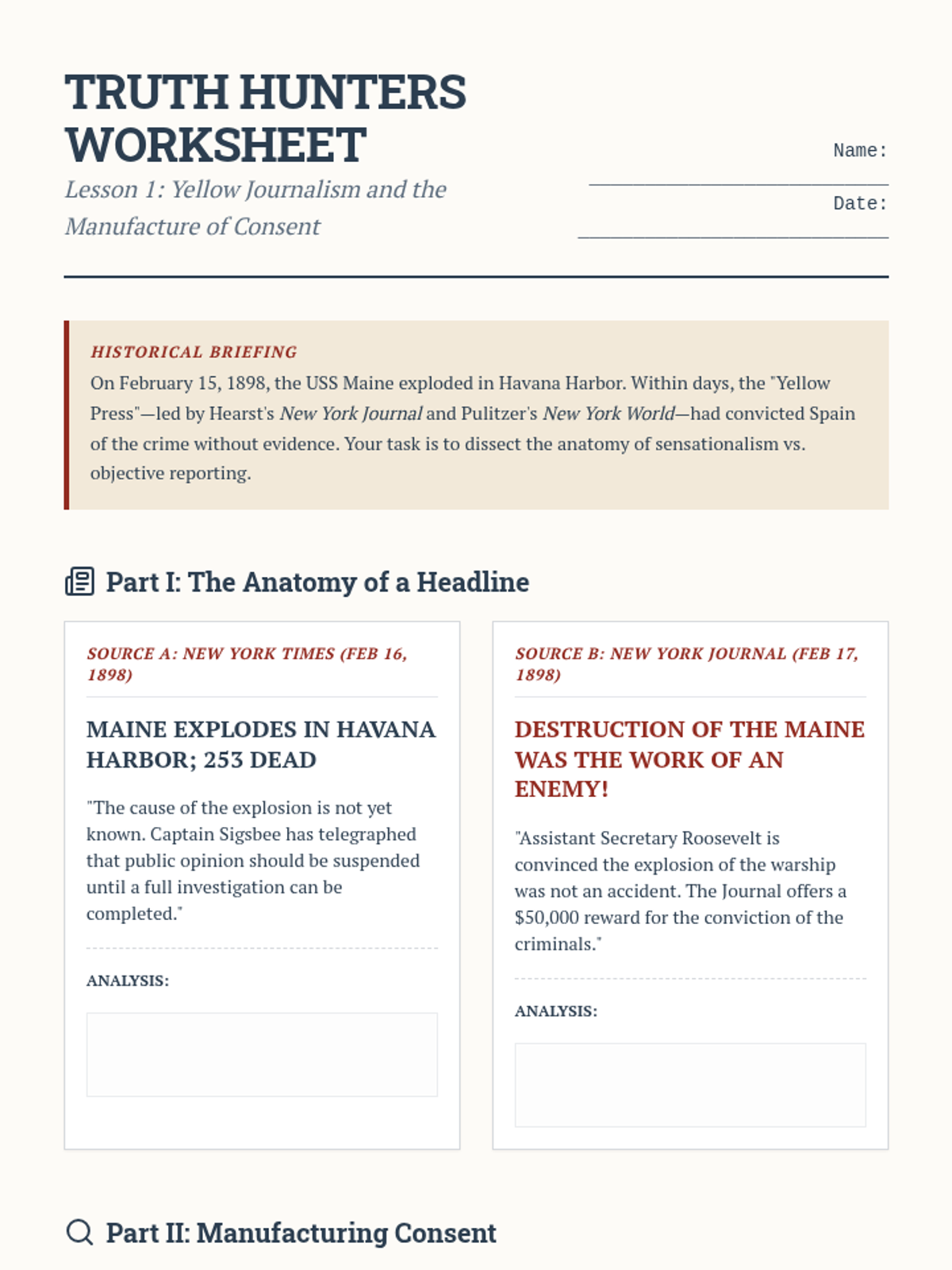
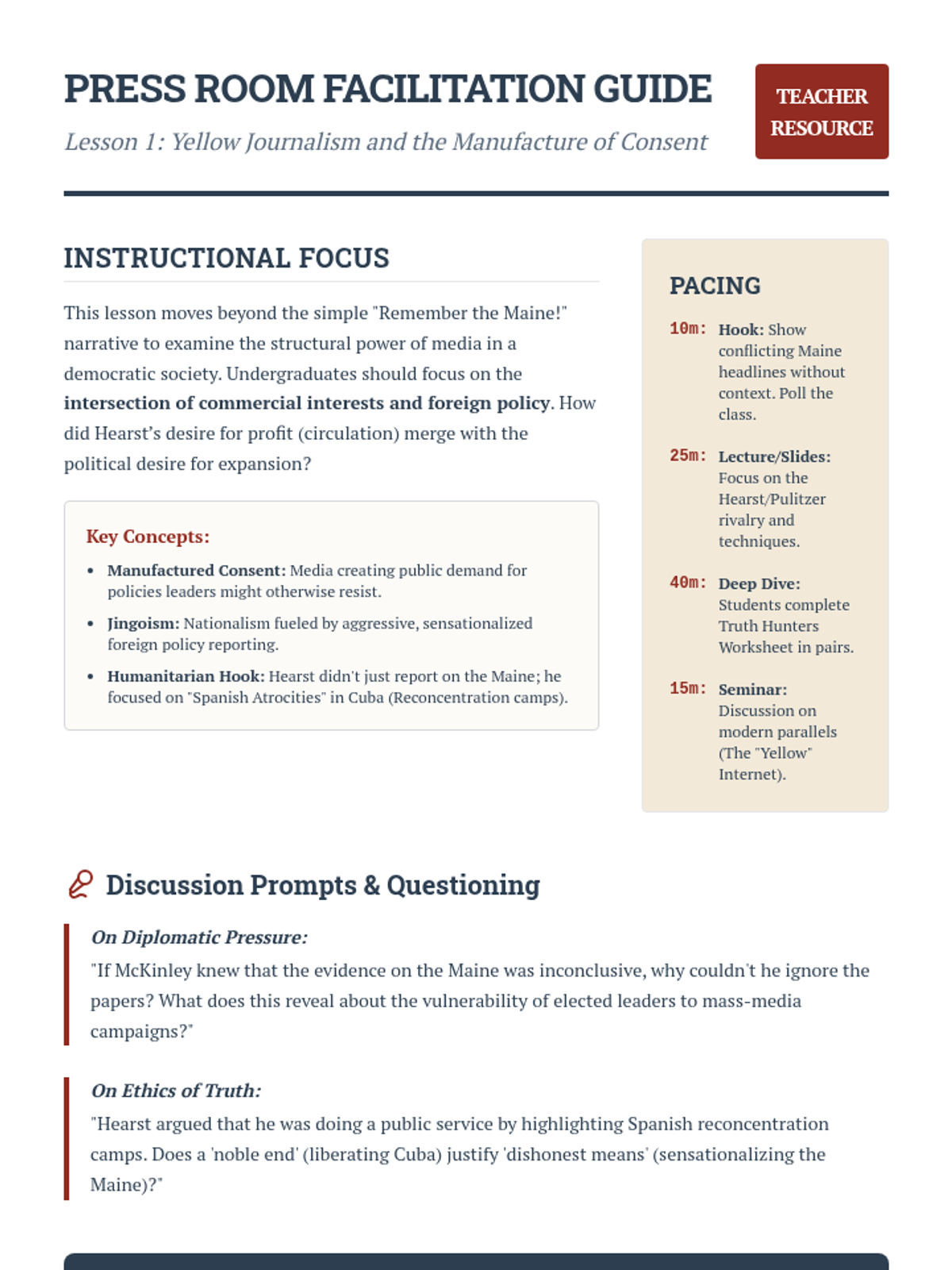
A high school history sequence exploring the intersection of mass media, public opinion, and American expansionism through the lens of the Spanish-American and Philippine-American Wars. Students analyze how 'Yellow Journalism' and strategic narratives shaped foreign policy at the turn of the 20th century.
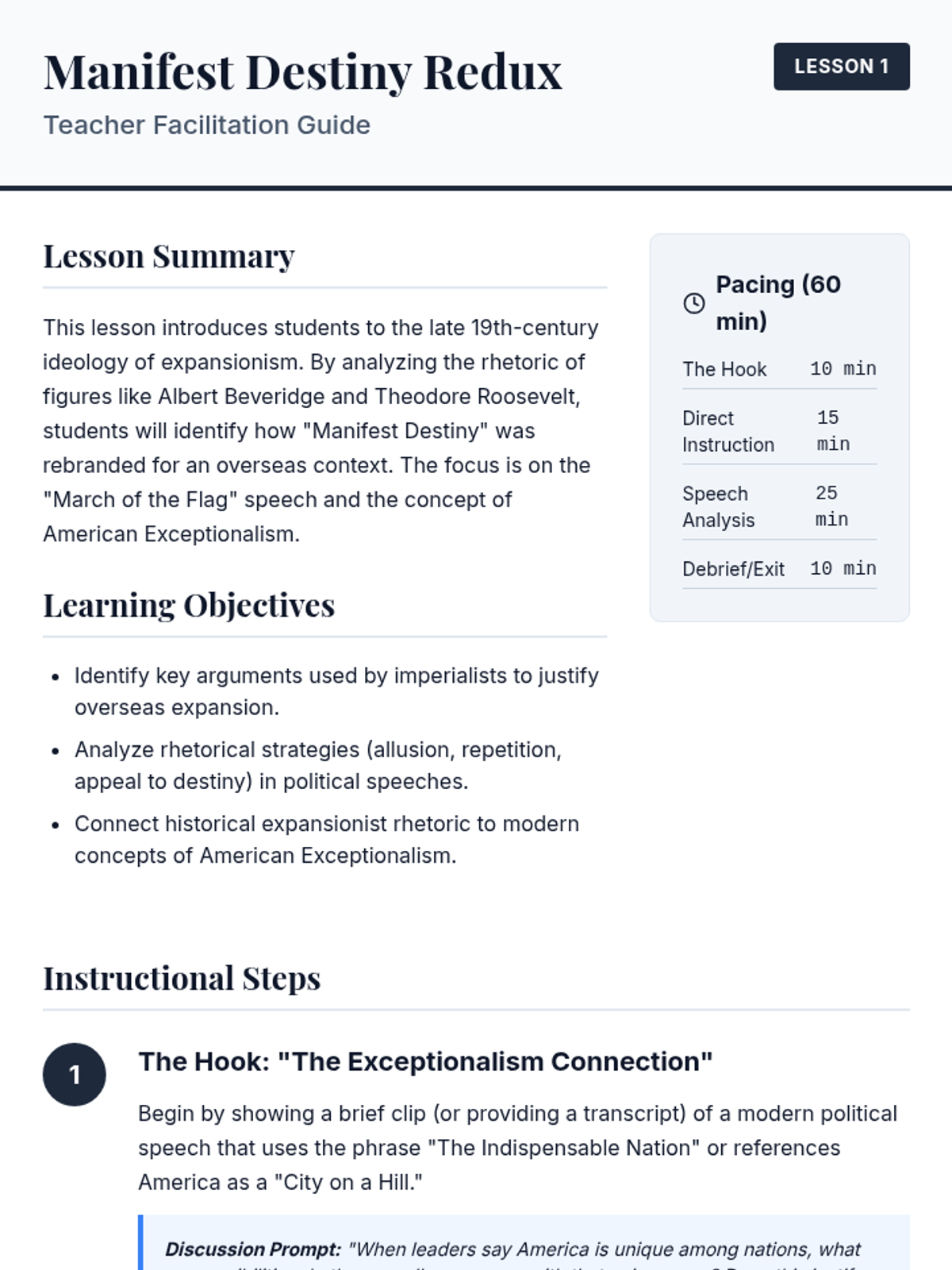
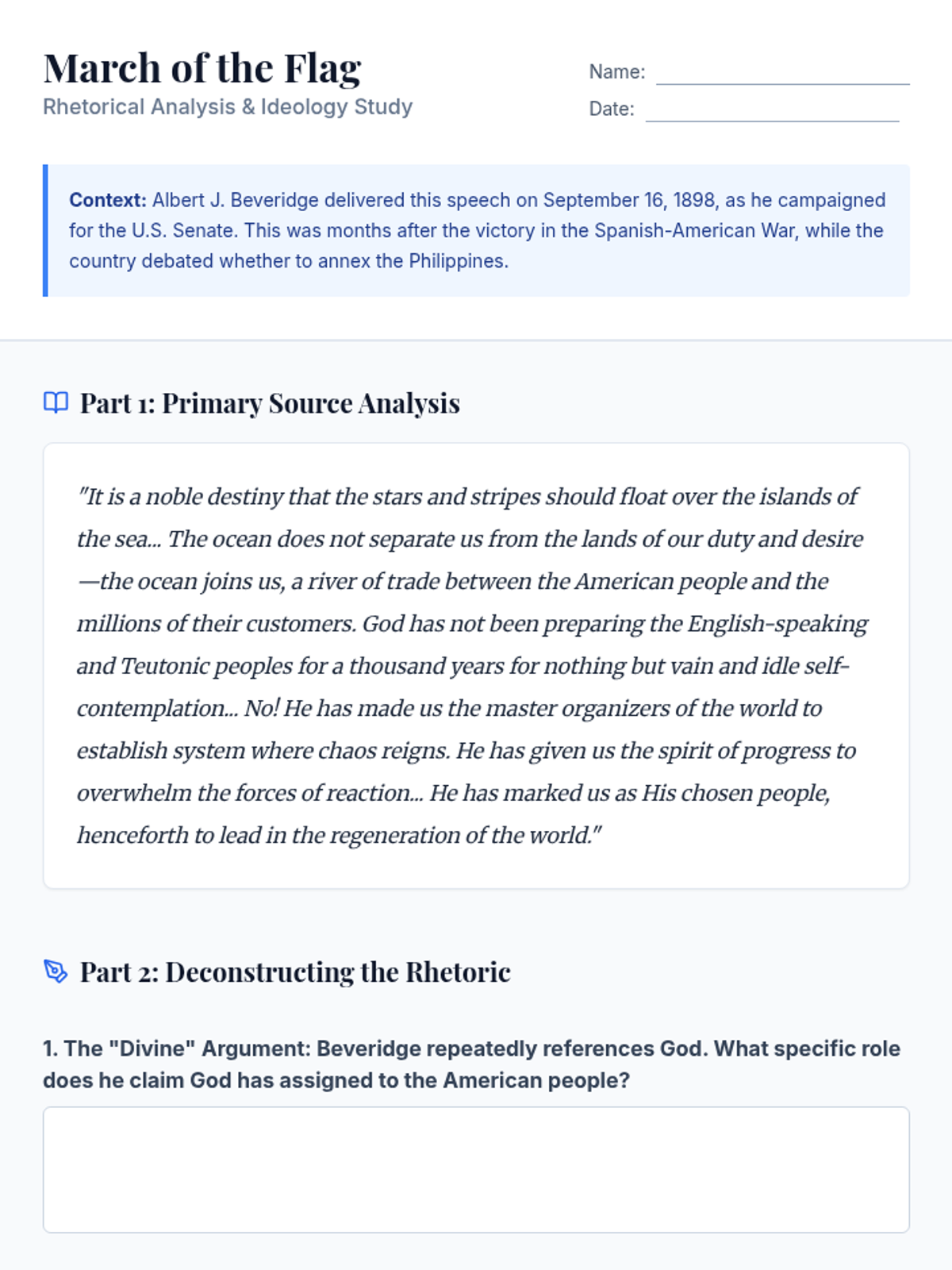
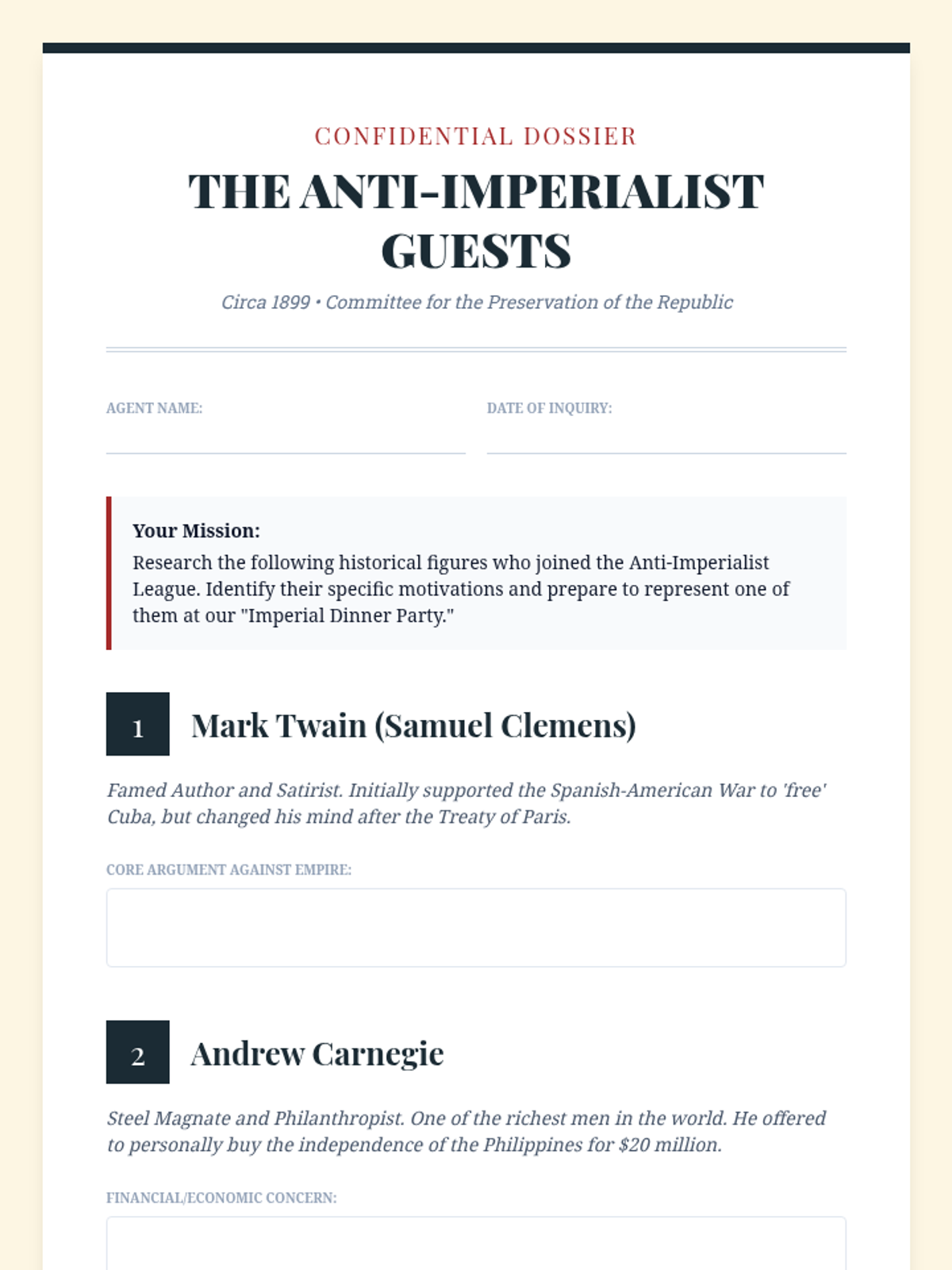
A high school history sequence exploring the fierce domestic debate over American imperialism at the turn of the 20th century. Students analyze the rhetorical, moral, and legal arguments of both expansionists and anti-imperialists, culminating in a formal debate on the compatibility of empire and democracy.
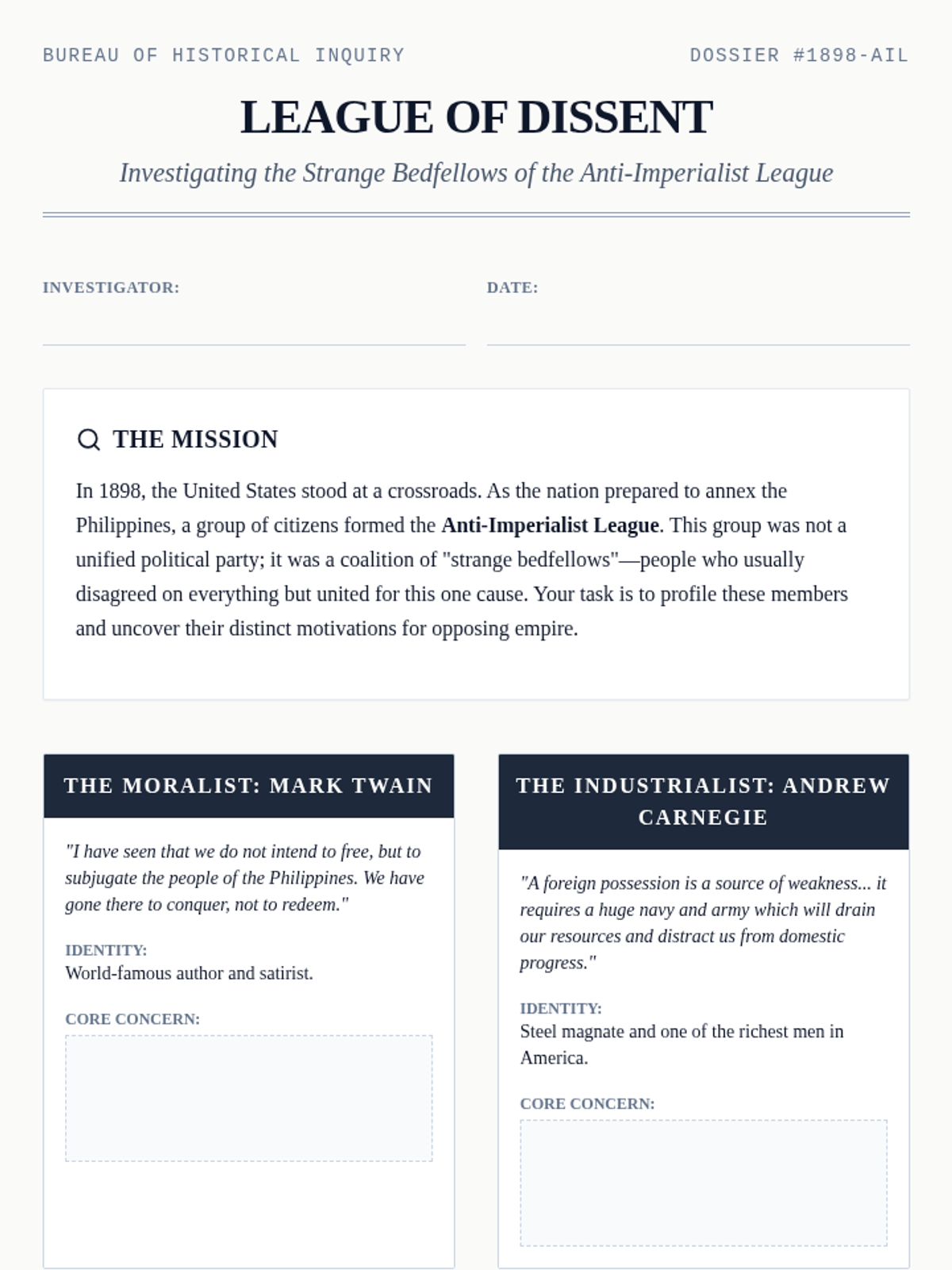
A rigorous 5-lesson unit for 9th graders exploring the domestic debate over US expansionism. Students analyze the Anti-Imperialist League, deconstruct primary source arguments, and engage in a formal debate on whether American imperialism is compatible with democratic ideals.
A deep dive into the intellectual, economic, and strategic foundations of American Imperialism at the turn of the 20th century, exploring the tension between profit and principle.
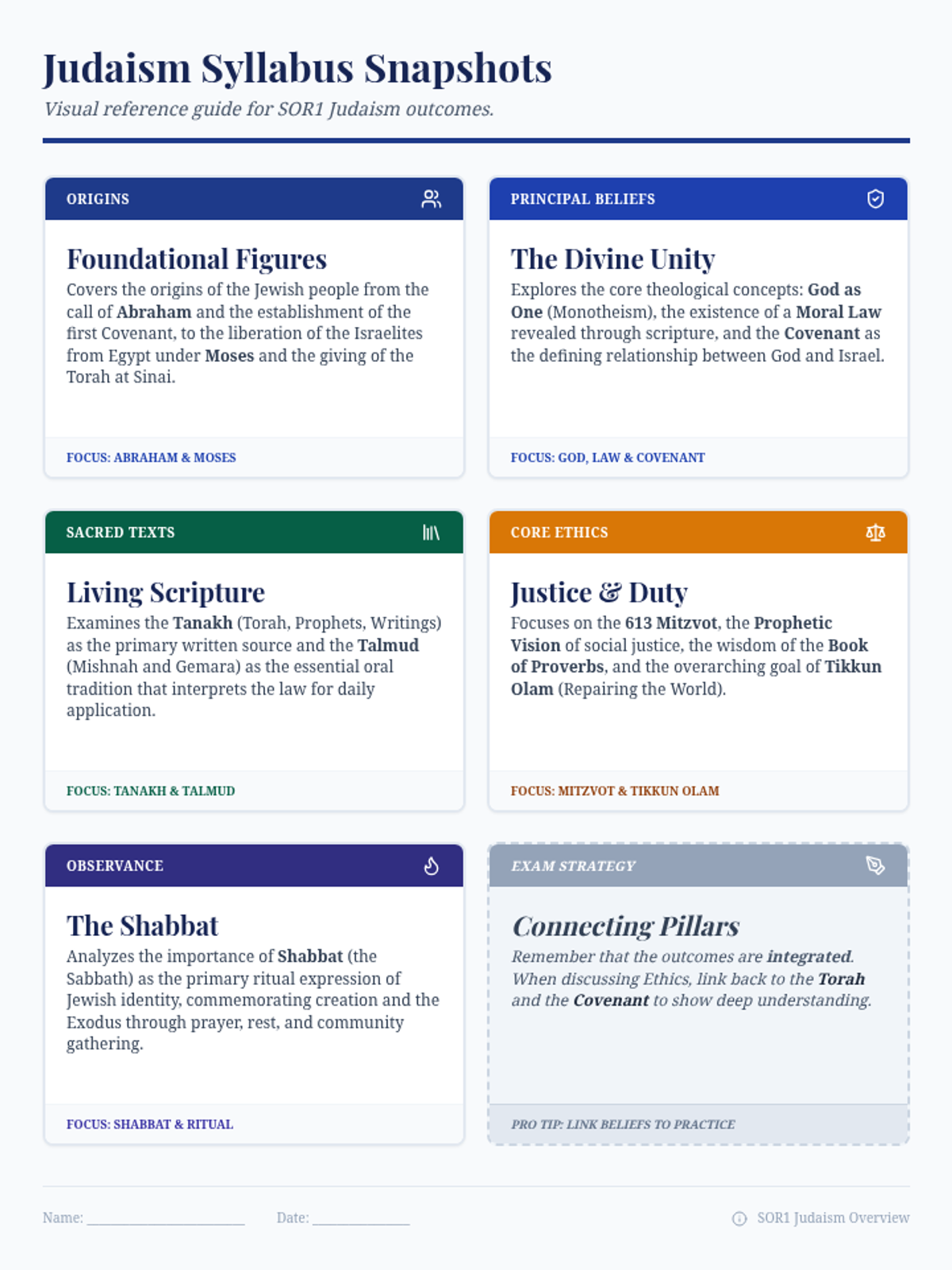
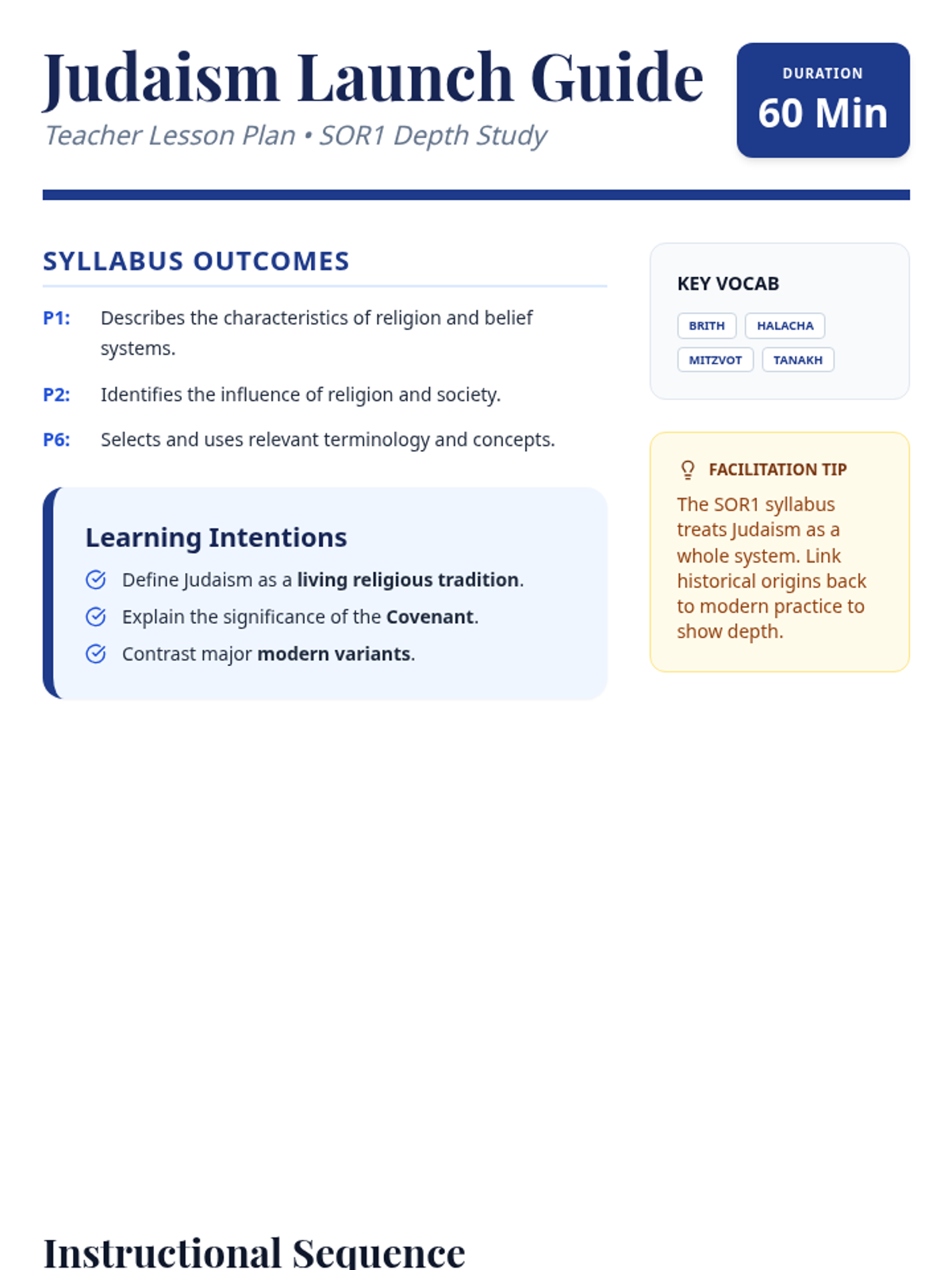
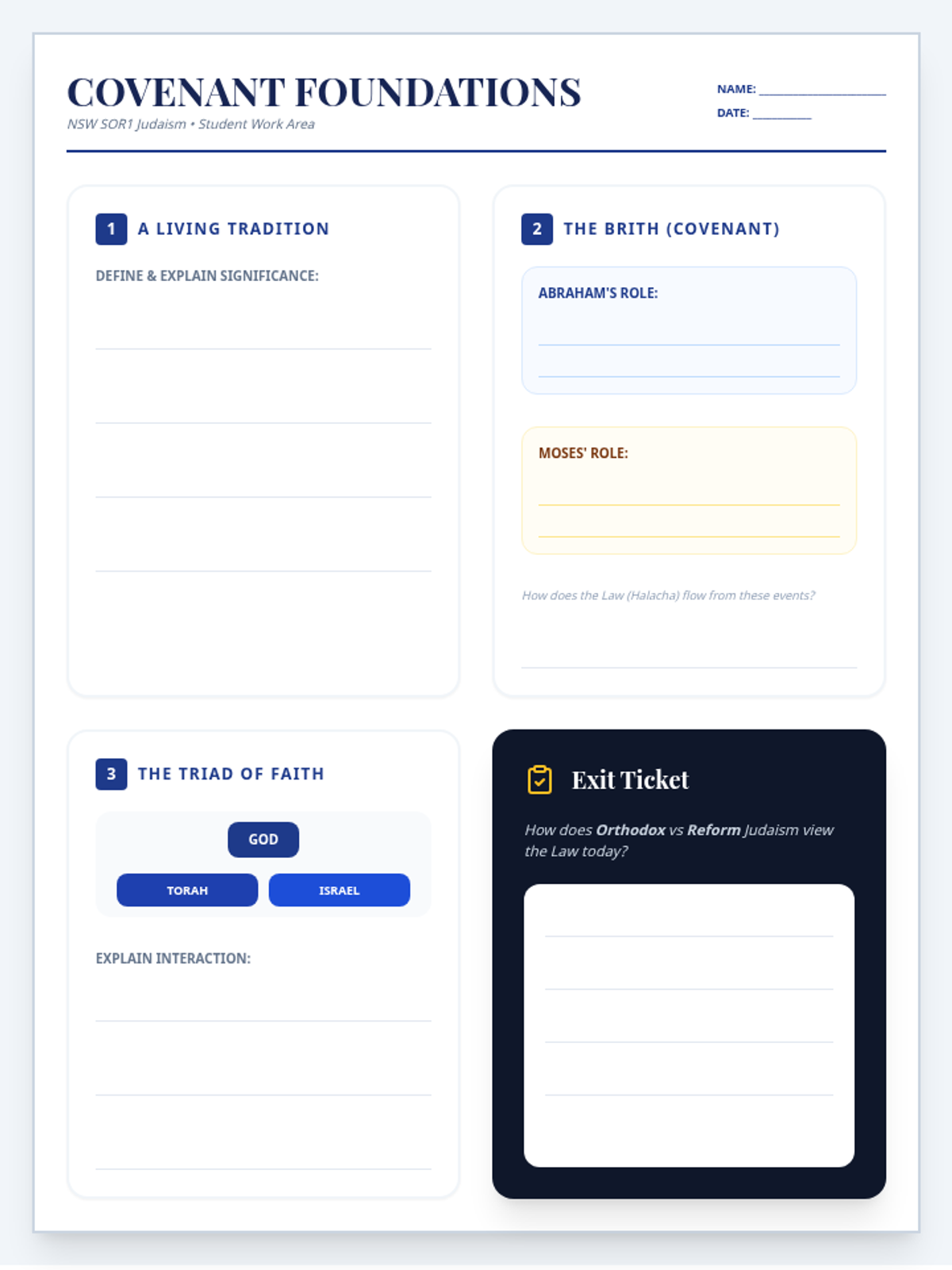
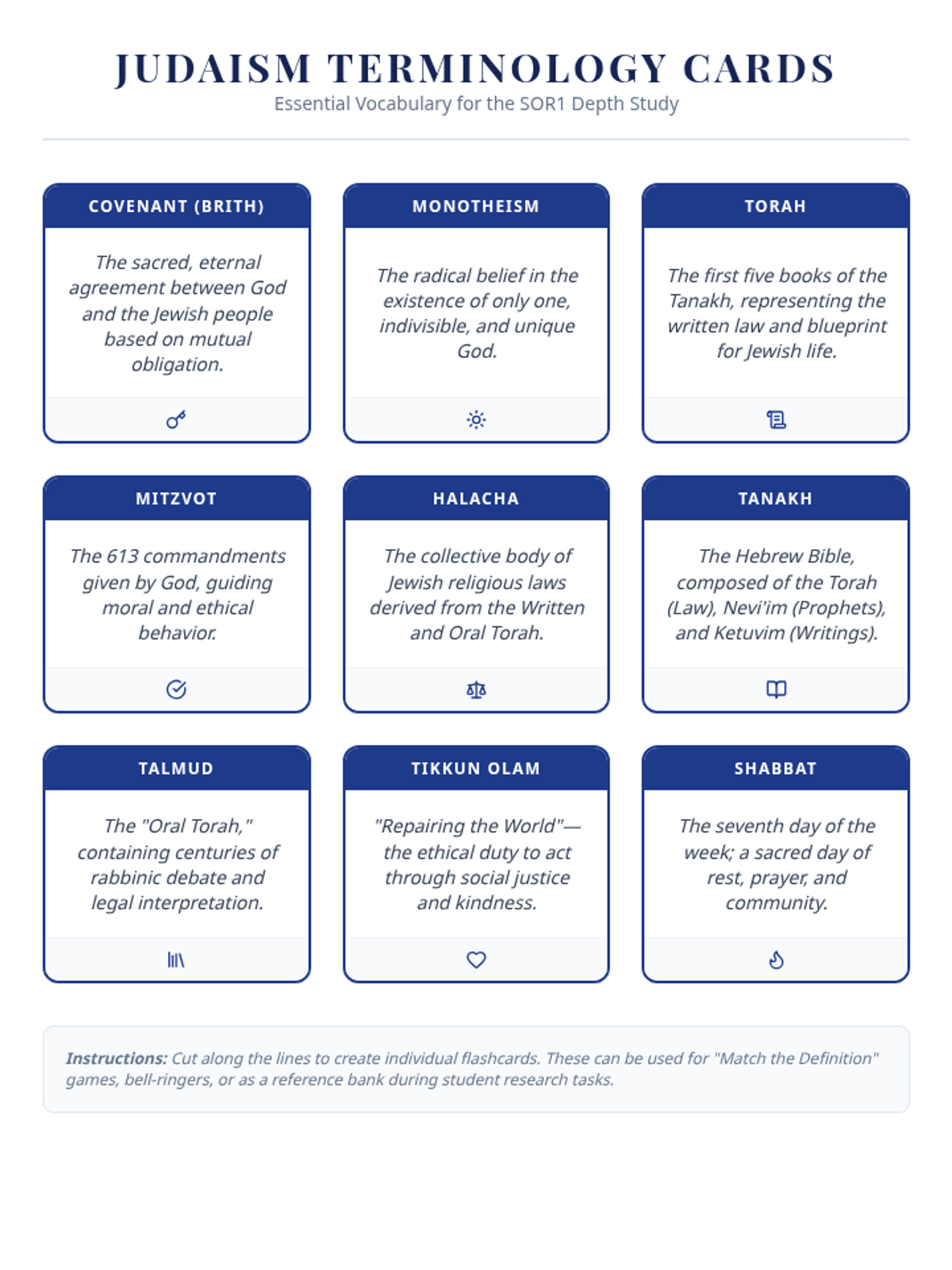
A complete series of lessons for the NSW Studies of Religion 1 Judaism Depth Study, covering Origins, Principal Beliefs, Sacred Texts, Ethics, and Observance.
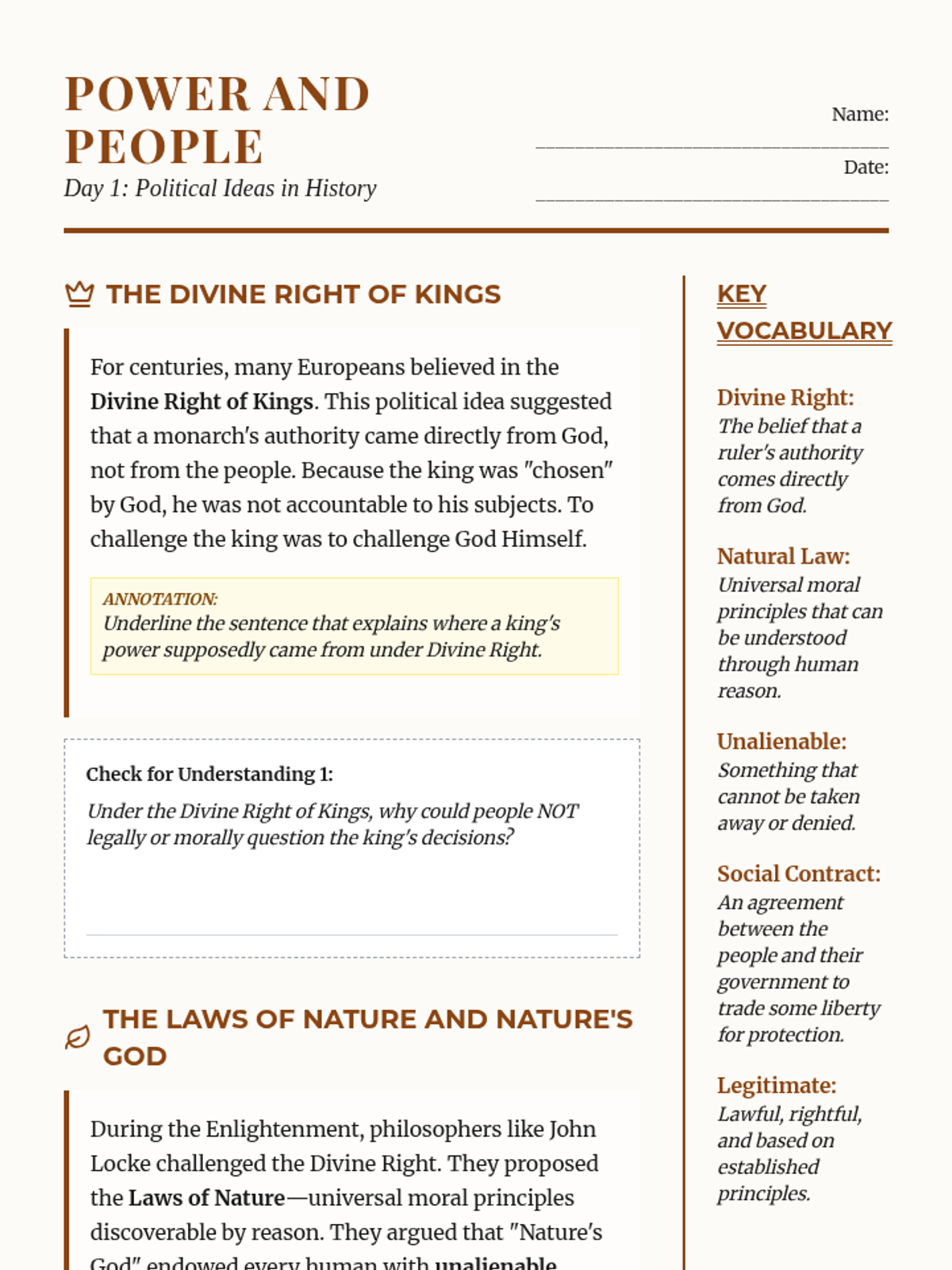
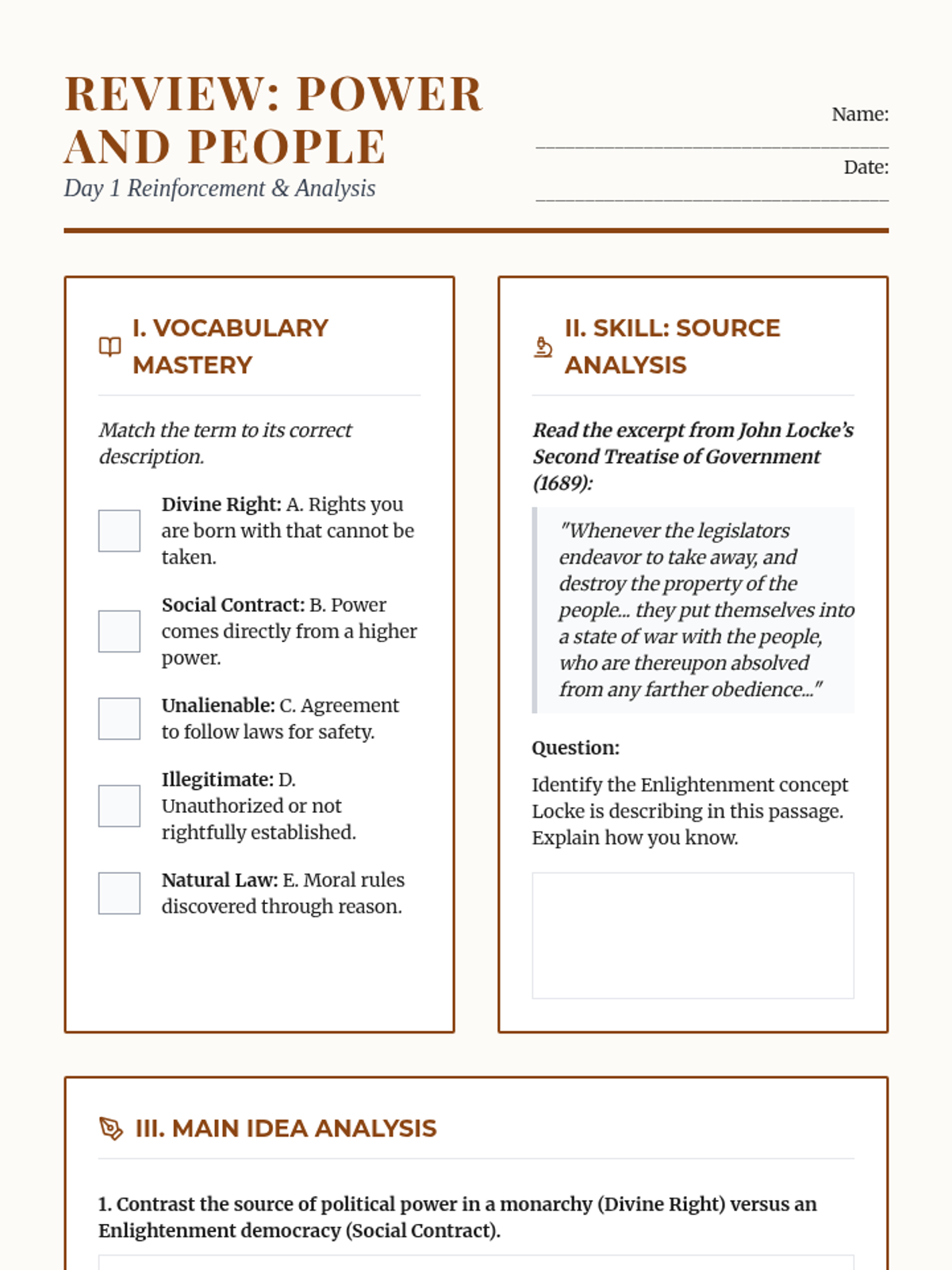
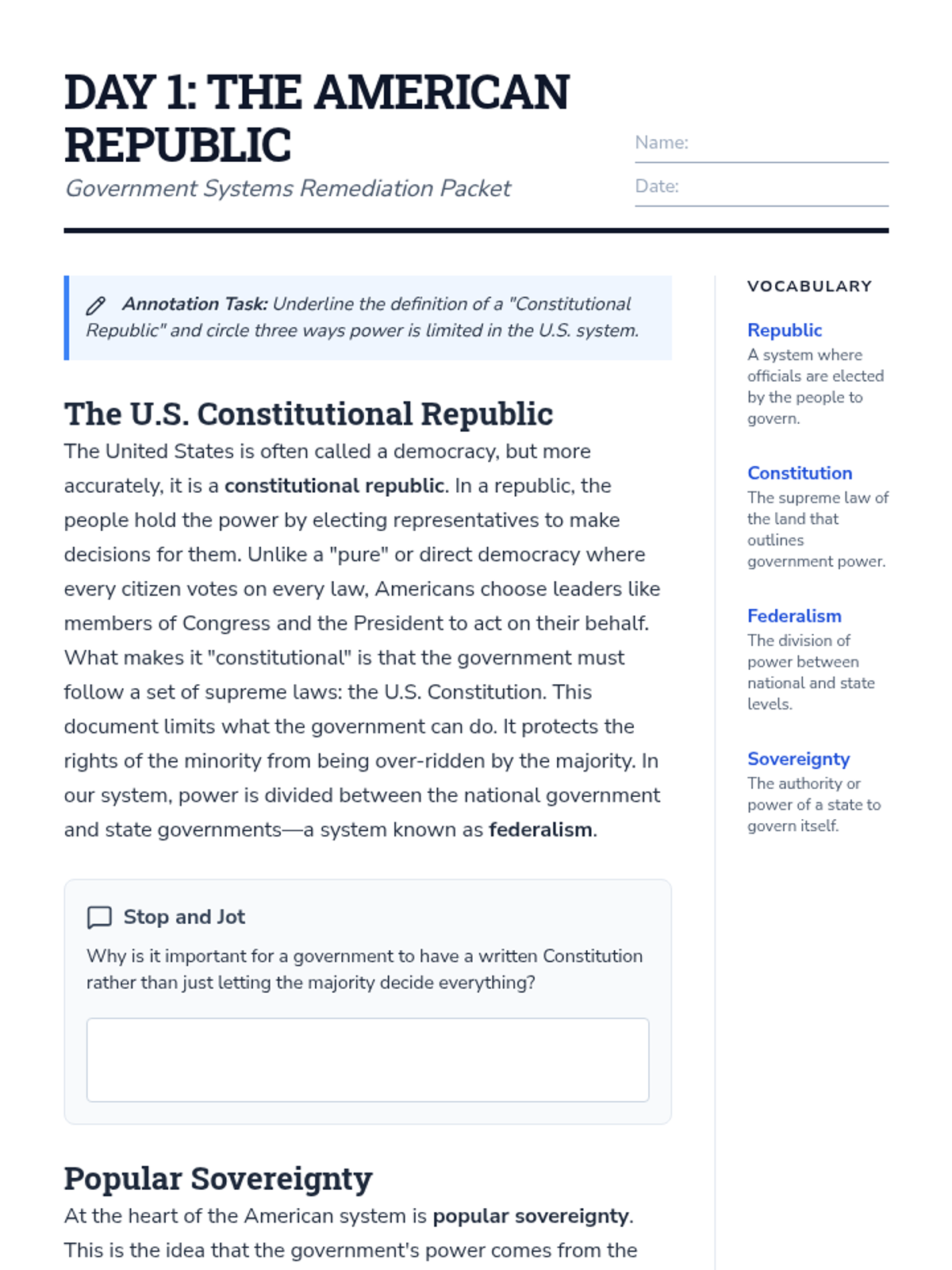
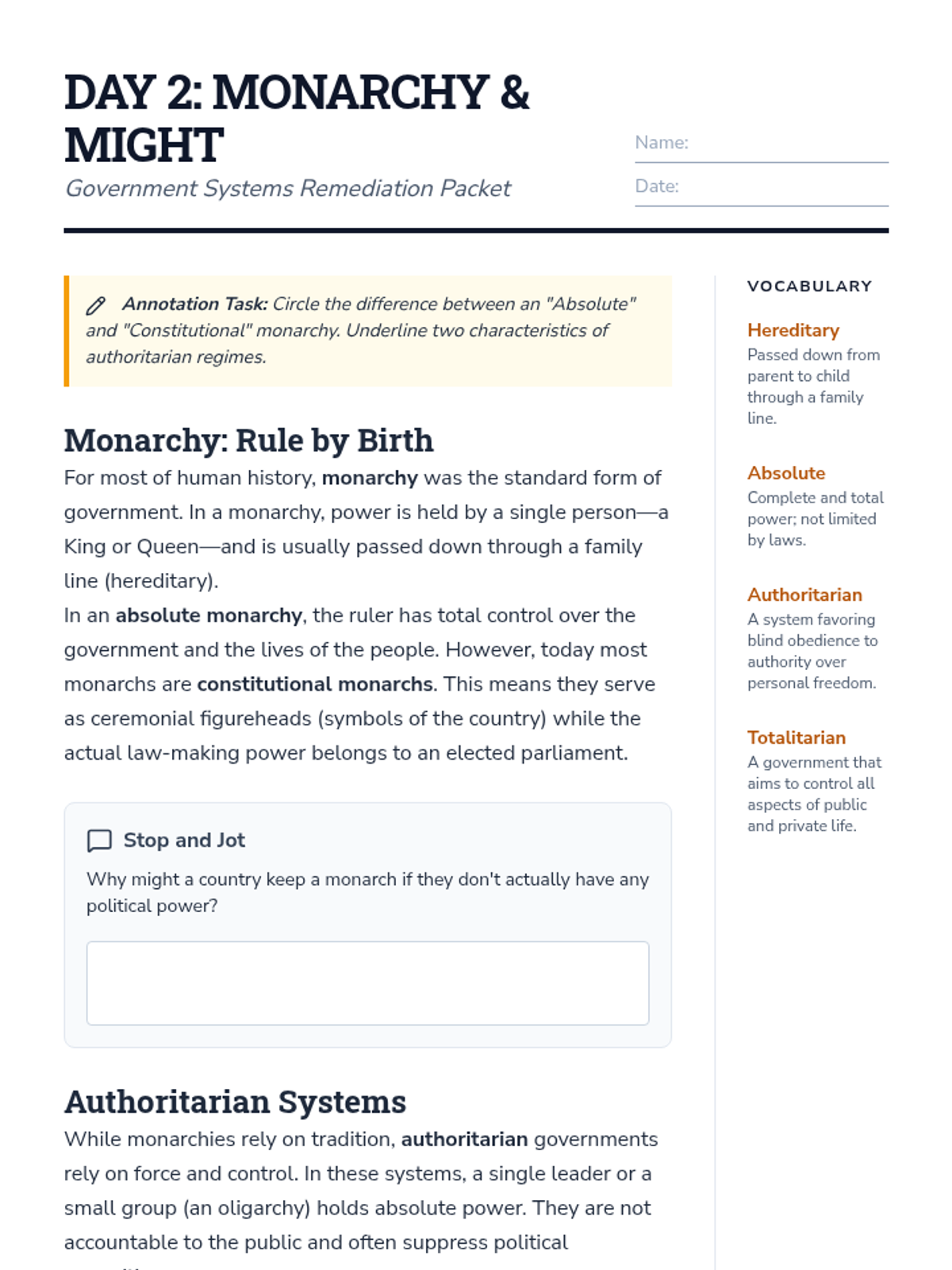
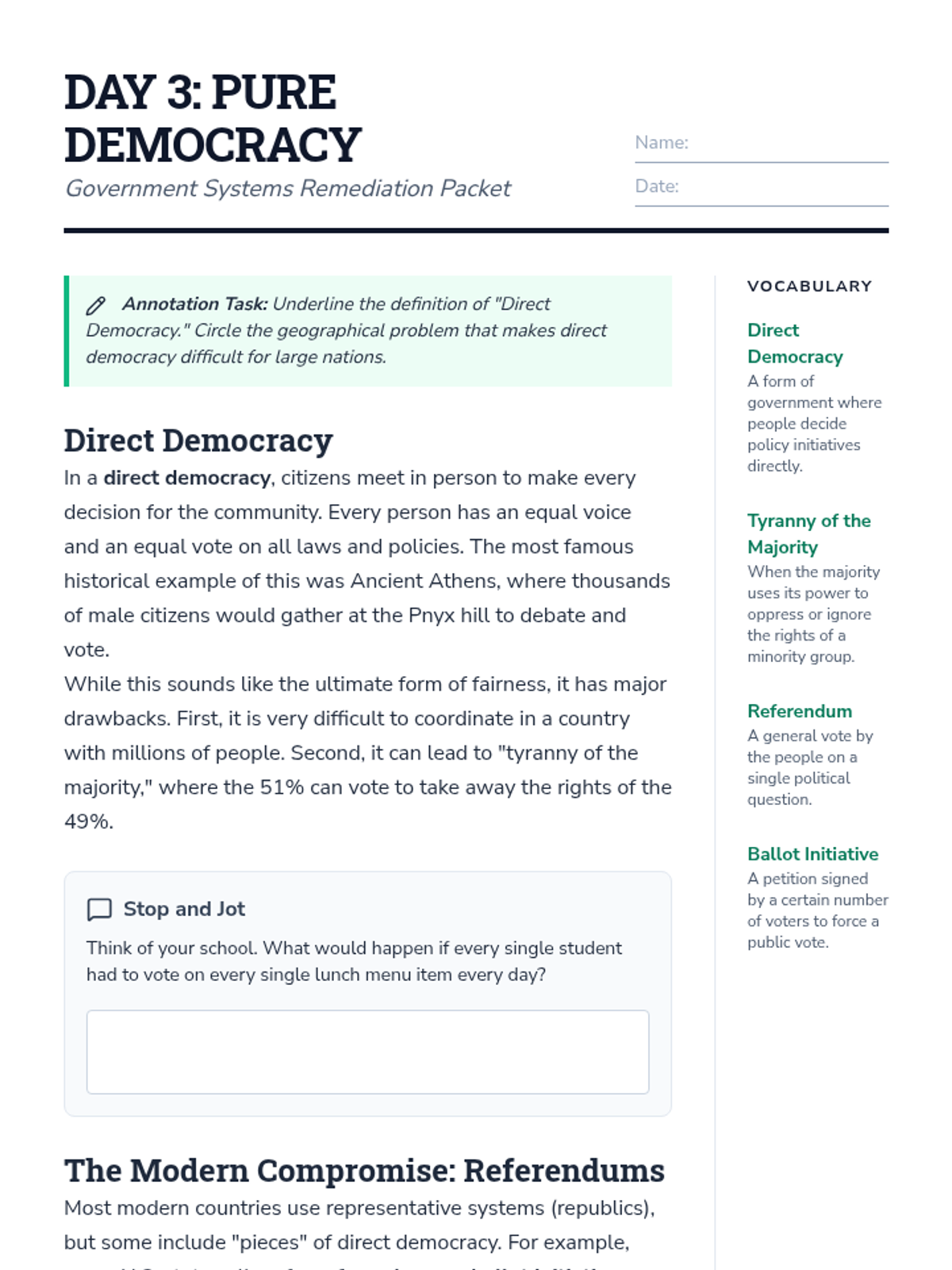
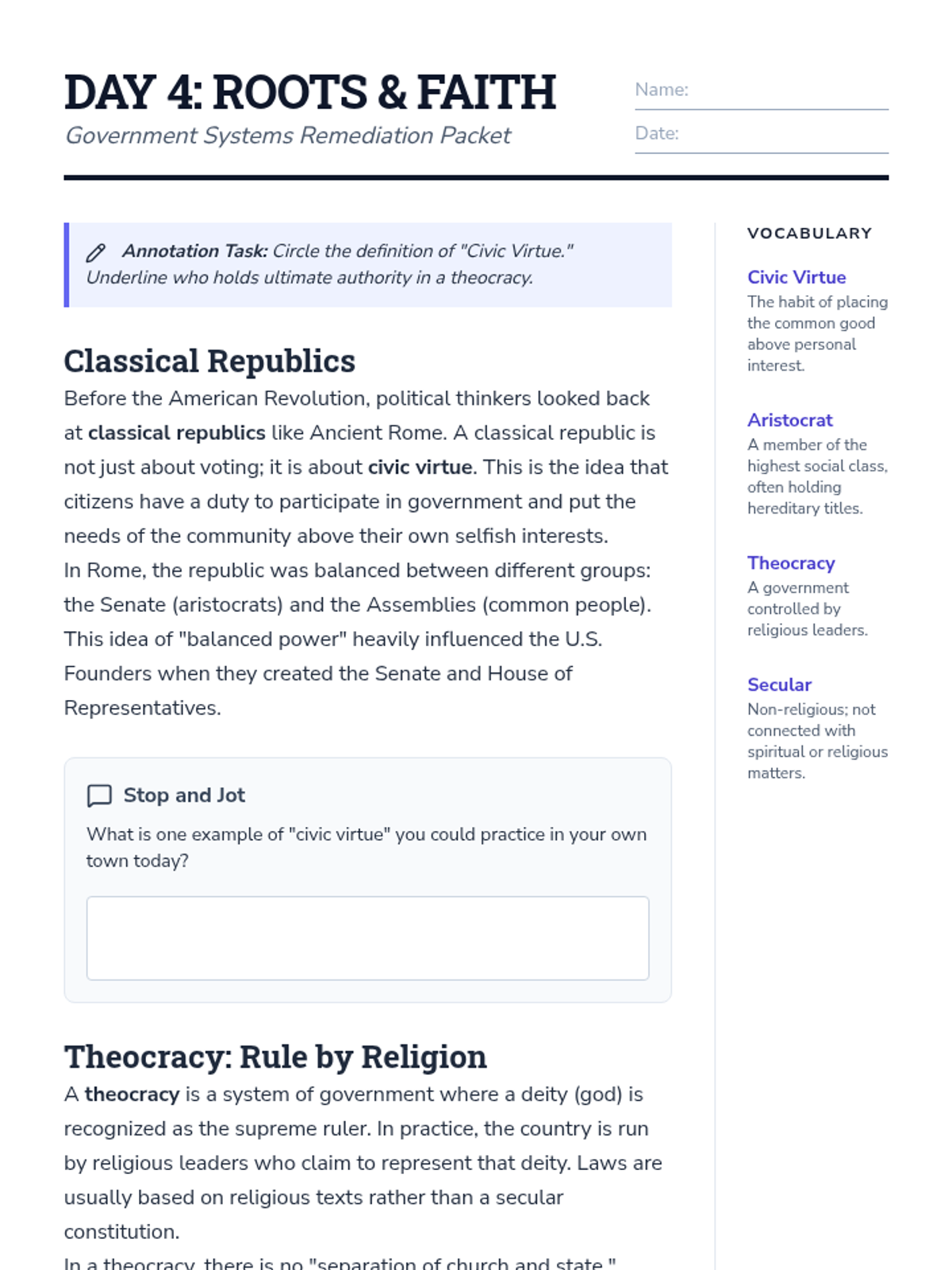
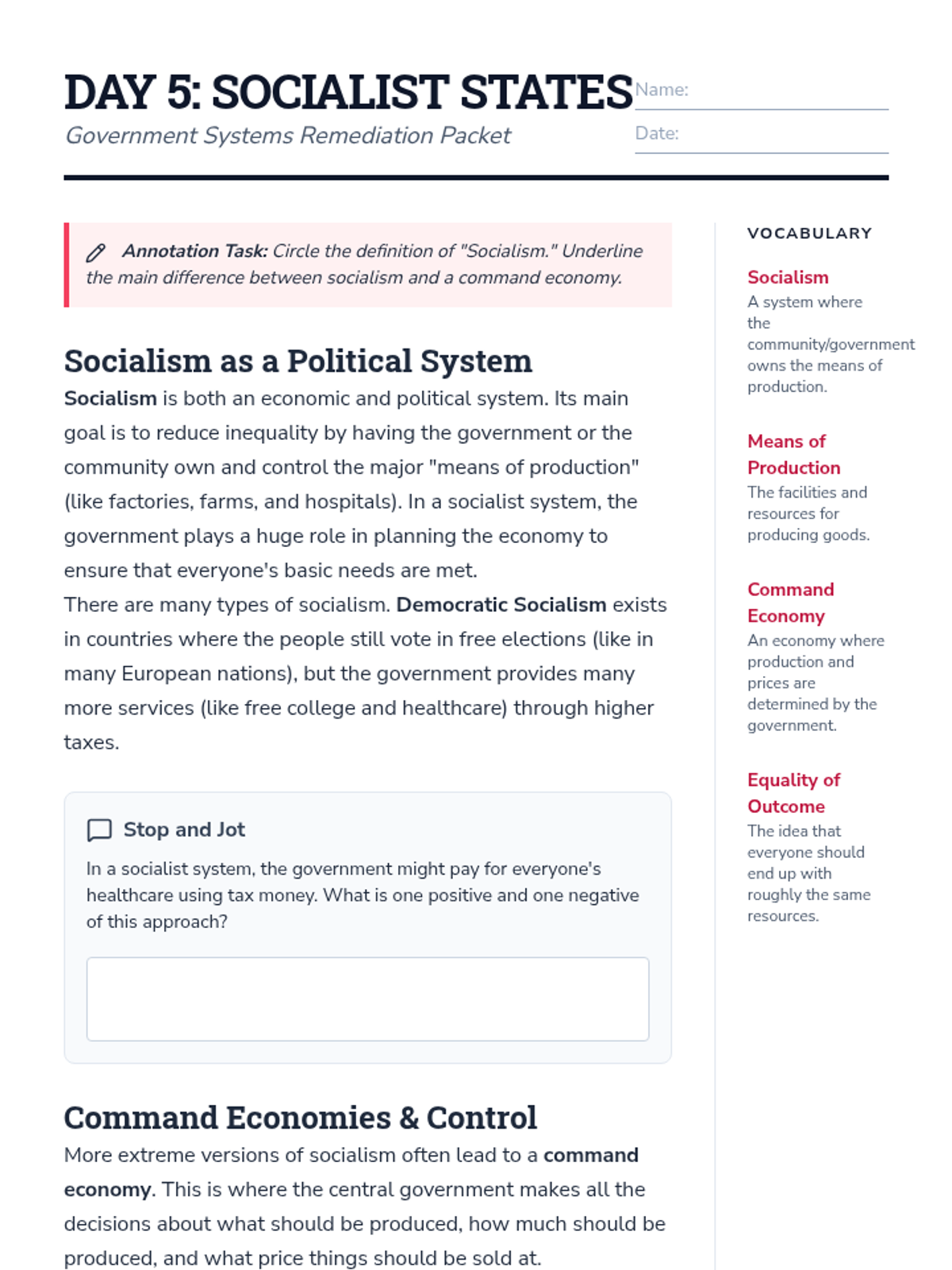
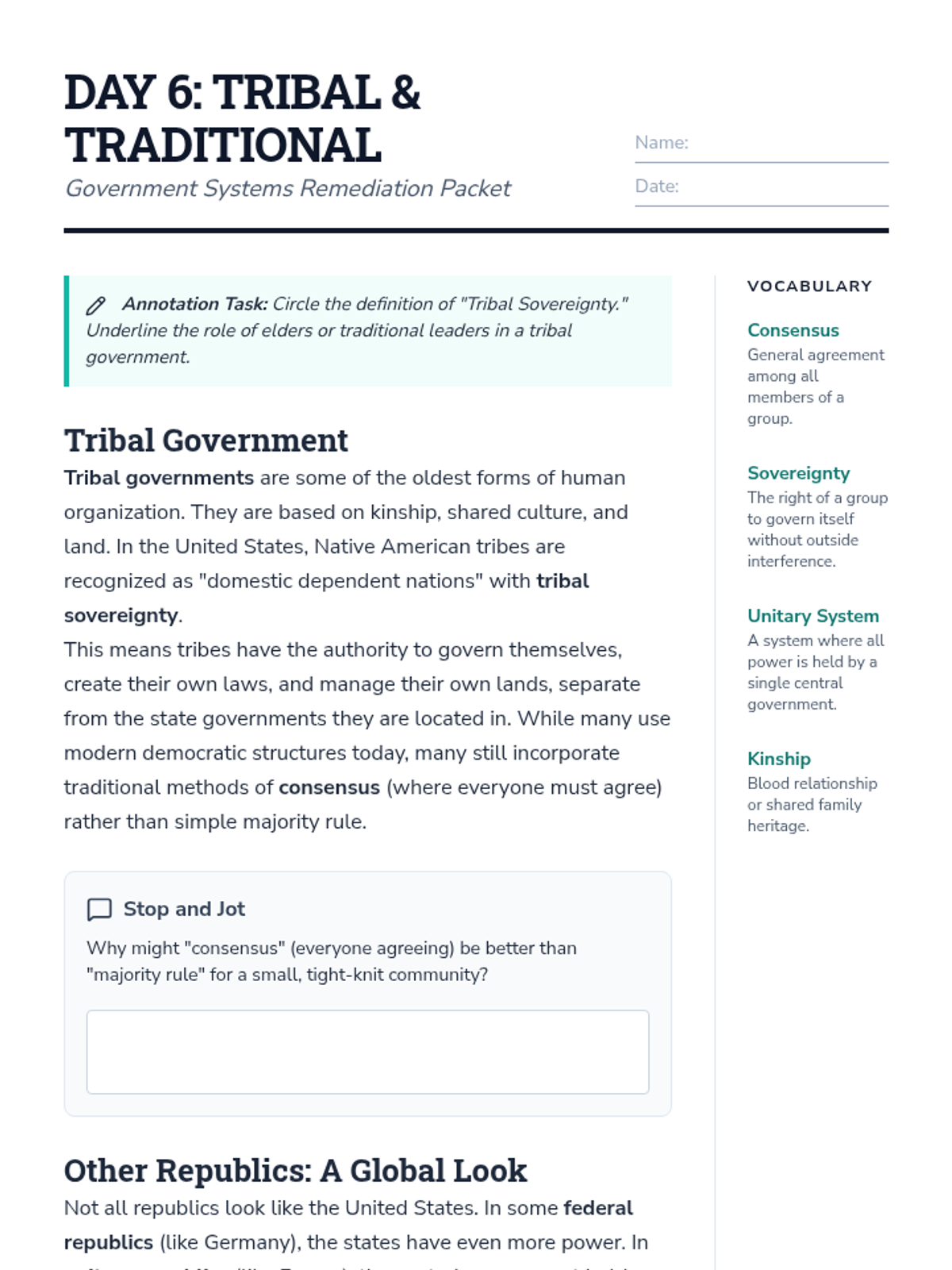
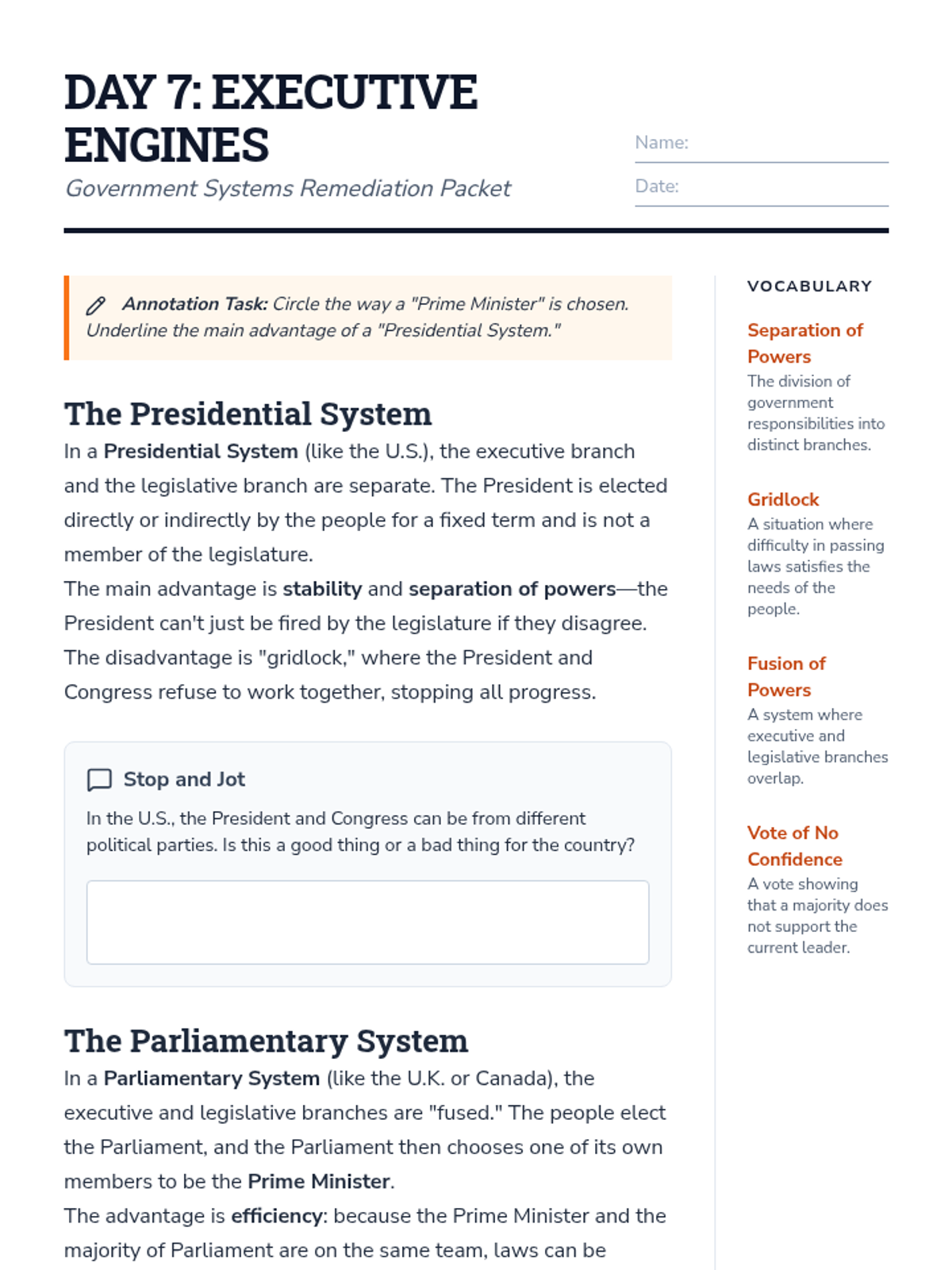
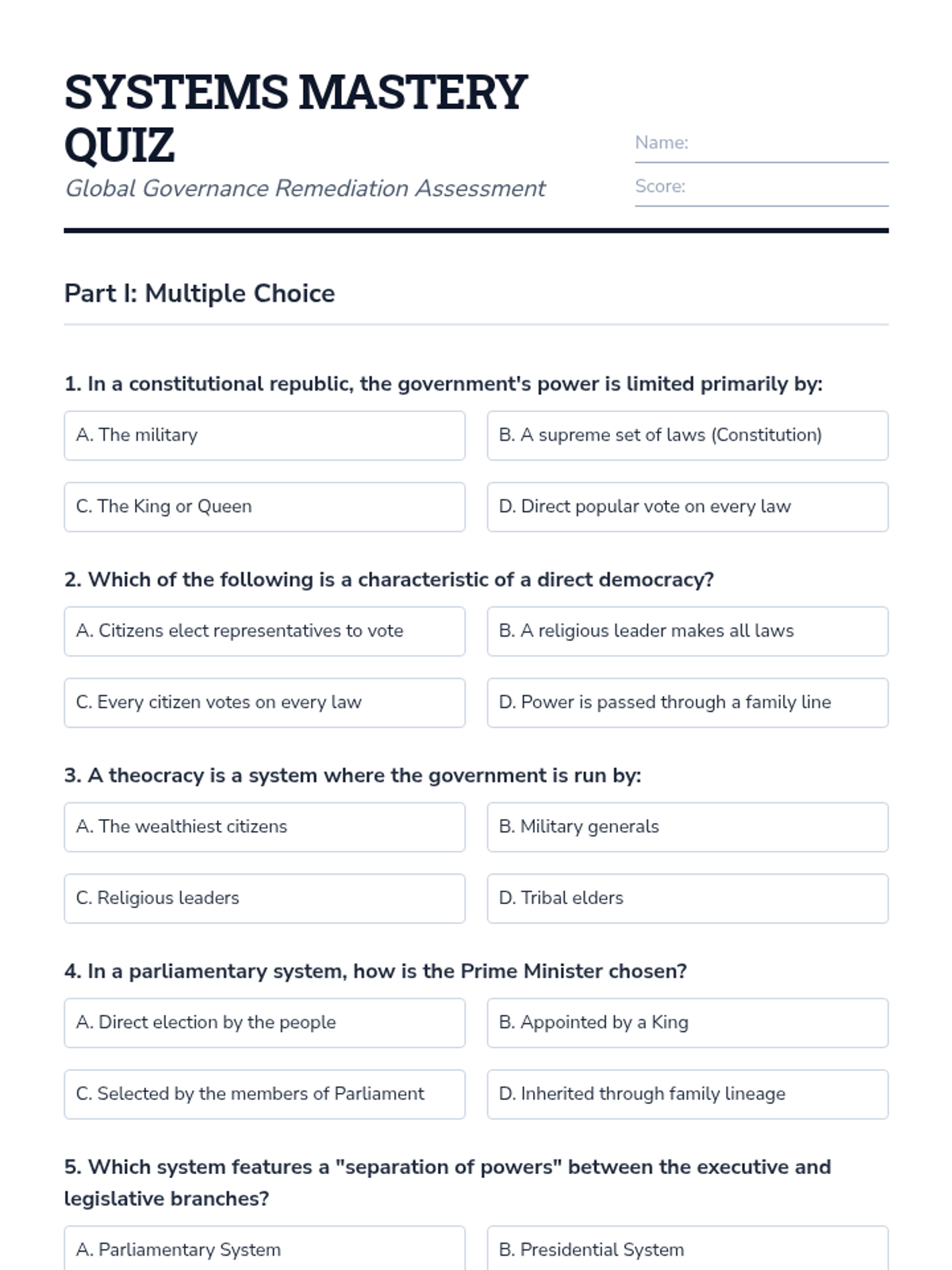
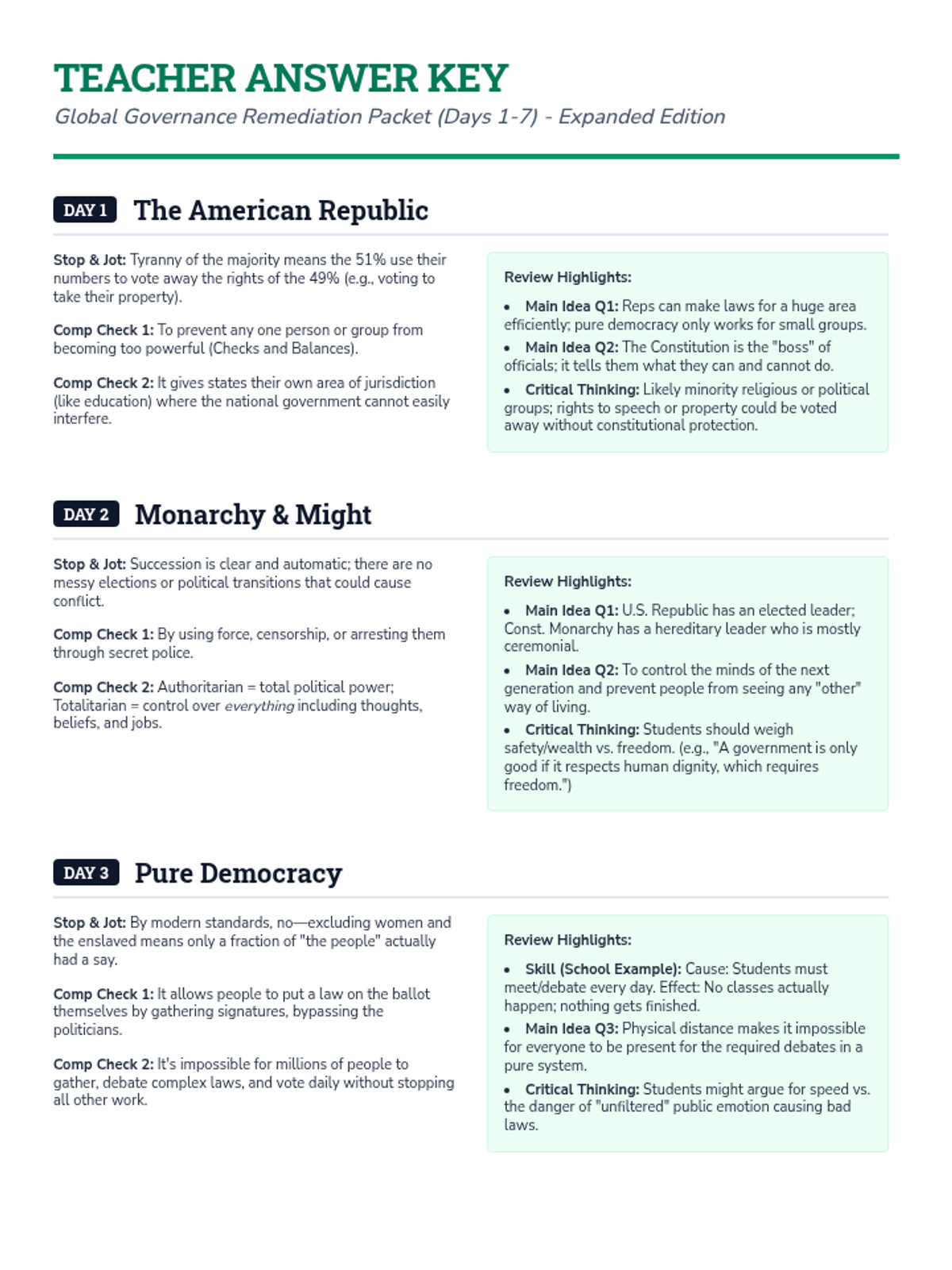
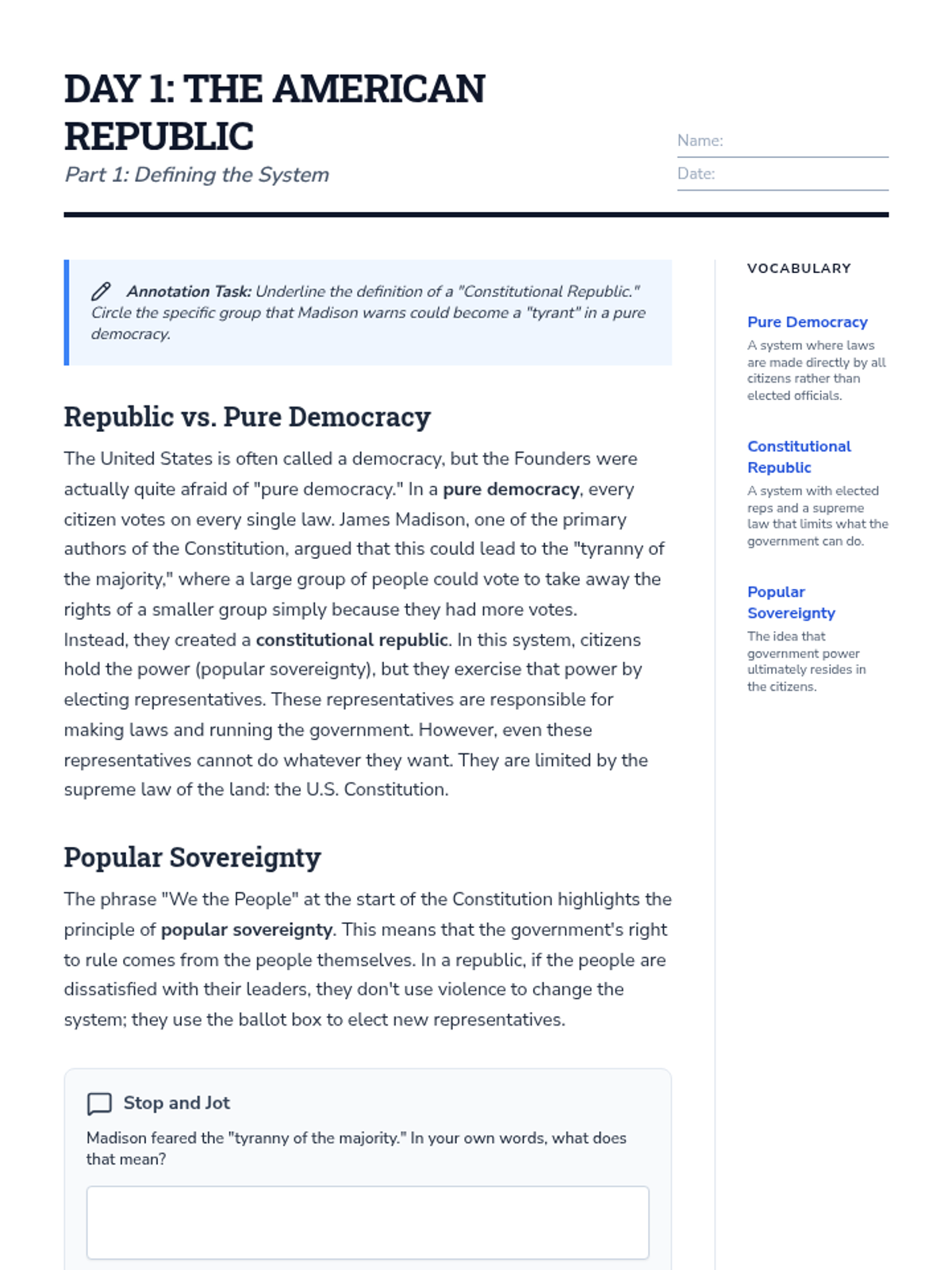
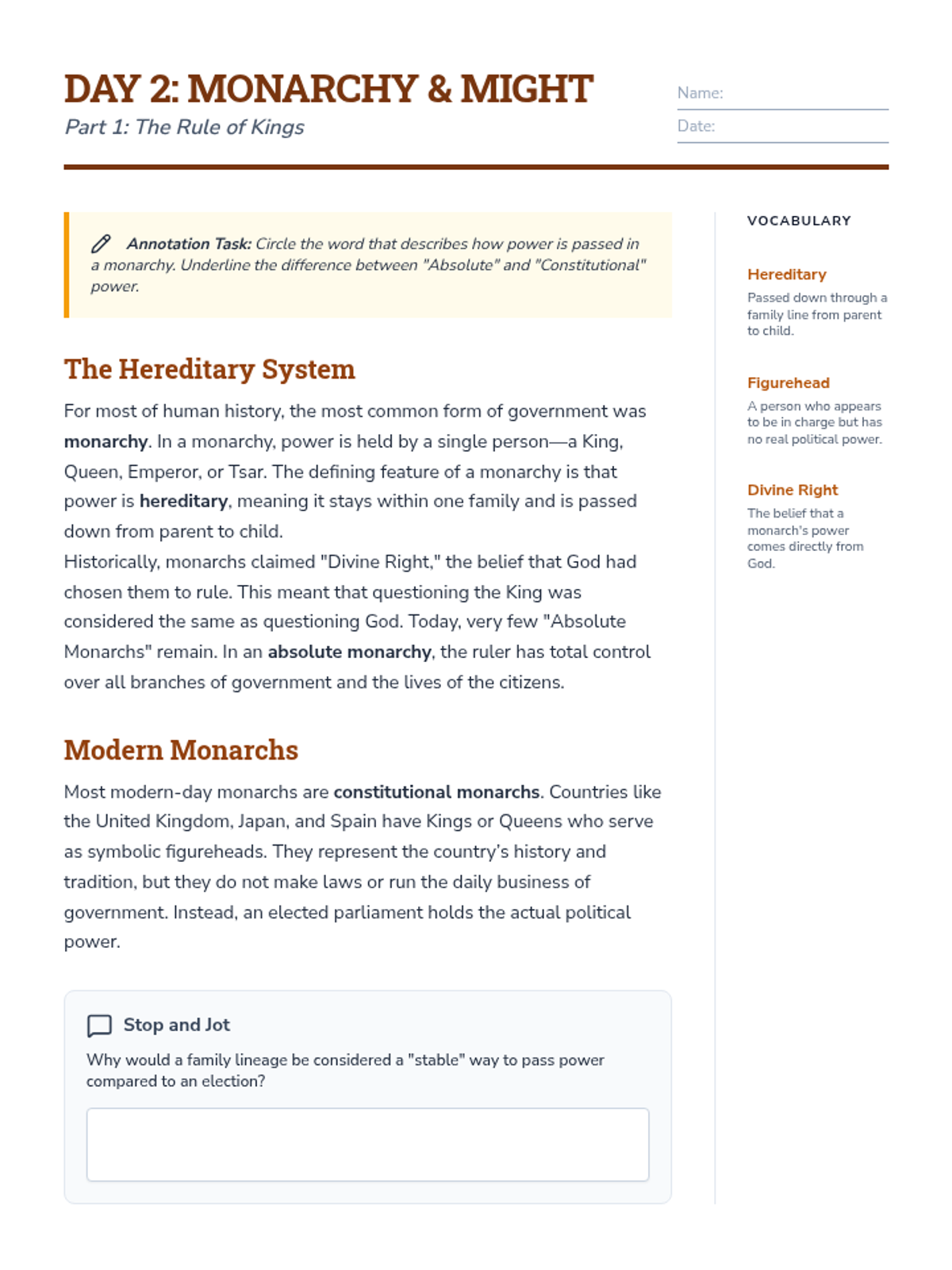
A comprehensive 7-day remediation unit covering various forms of government, comparing the U.S. constitutional republic to historical and contemporary systems, and analyzing executive structures.
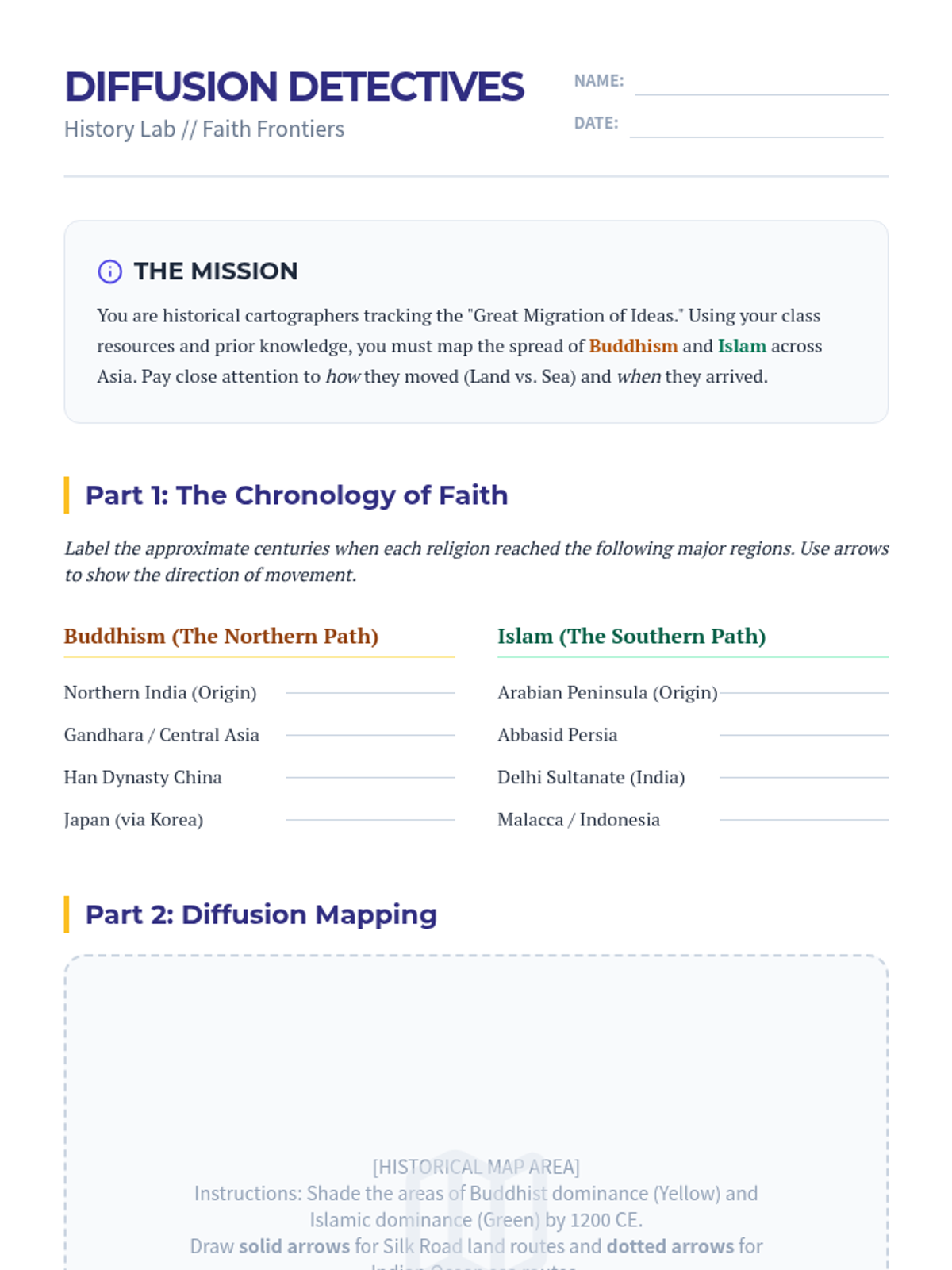
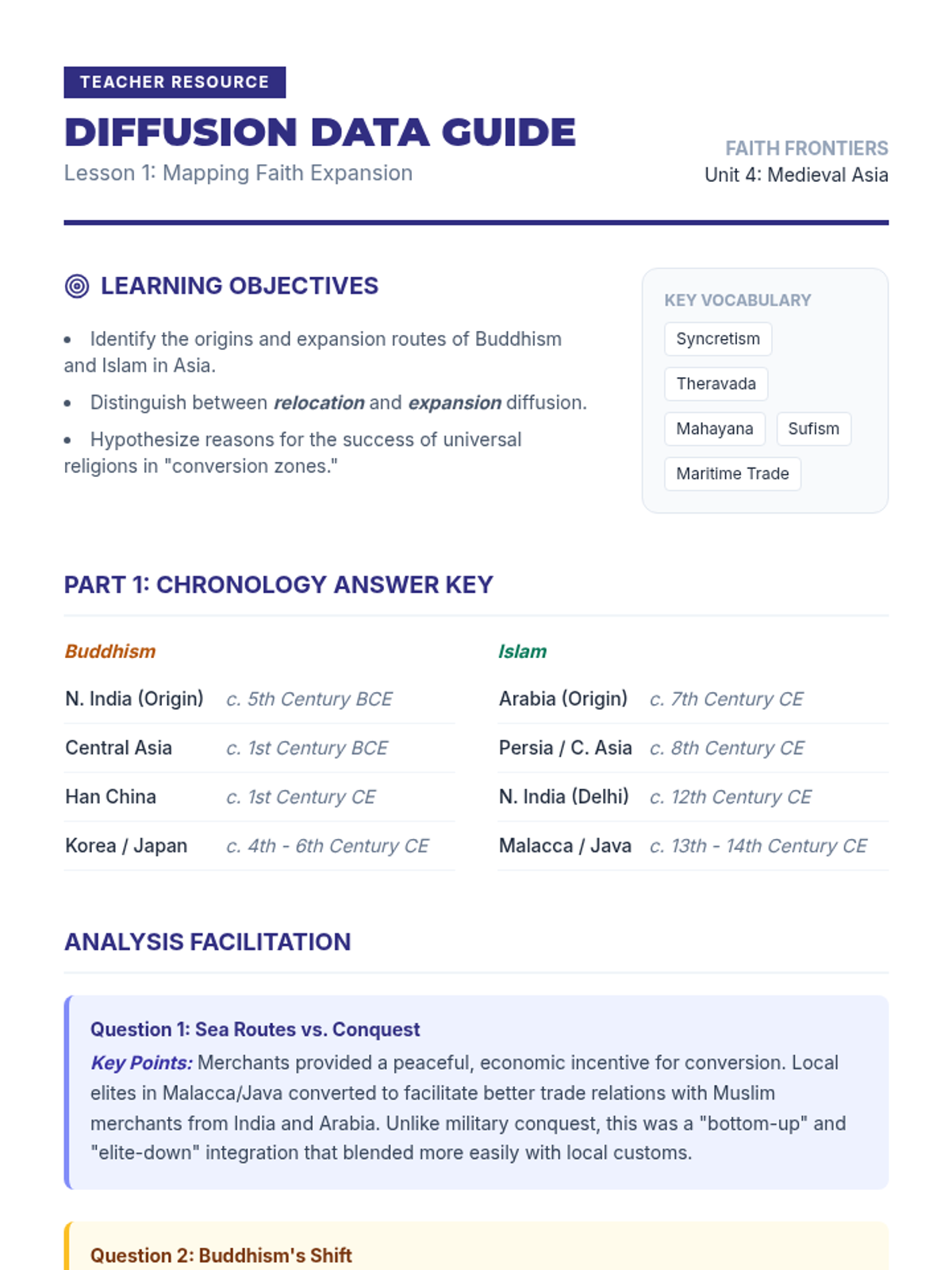
A high school history sequence investigating the diffusion and syncretism of Buddhism, Islam, and Neo-Confucianism across Medieval Asia, focusing on how religions adapt to local cultures.
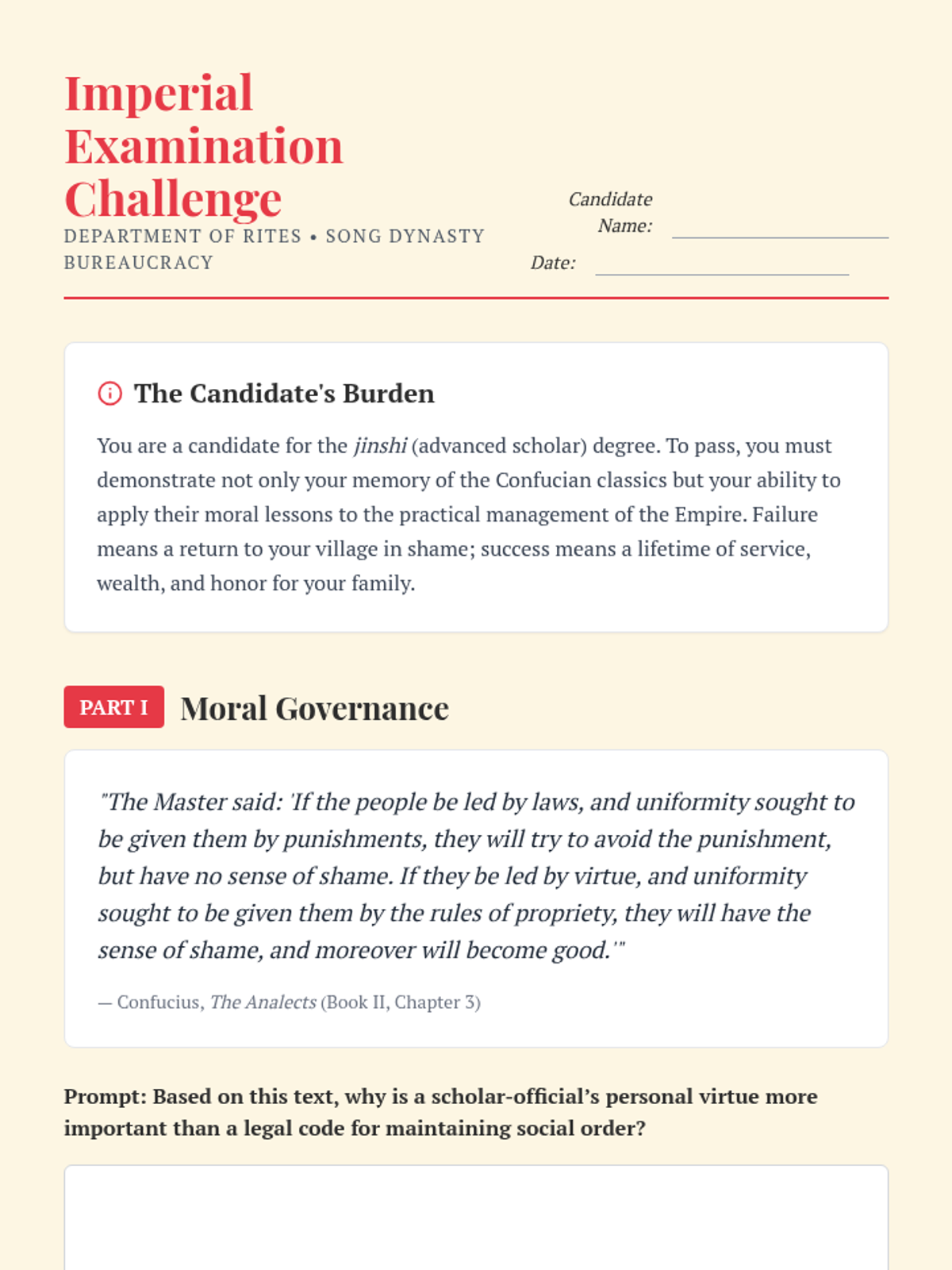
This 11th-grade history sequence explores the divergent political structures of Medieval China and Japan. Students compare the centralized meritocracy of the Tang and Song dynasties with the decentralized feudalism of the Kamakura and Ashikaga shogunates, analyzing primary texts and social structures to understand the evolution of governance in East Asia.
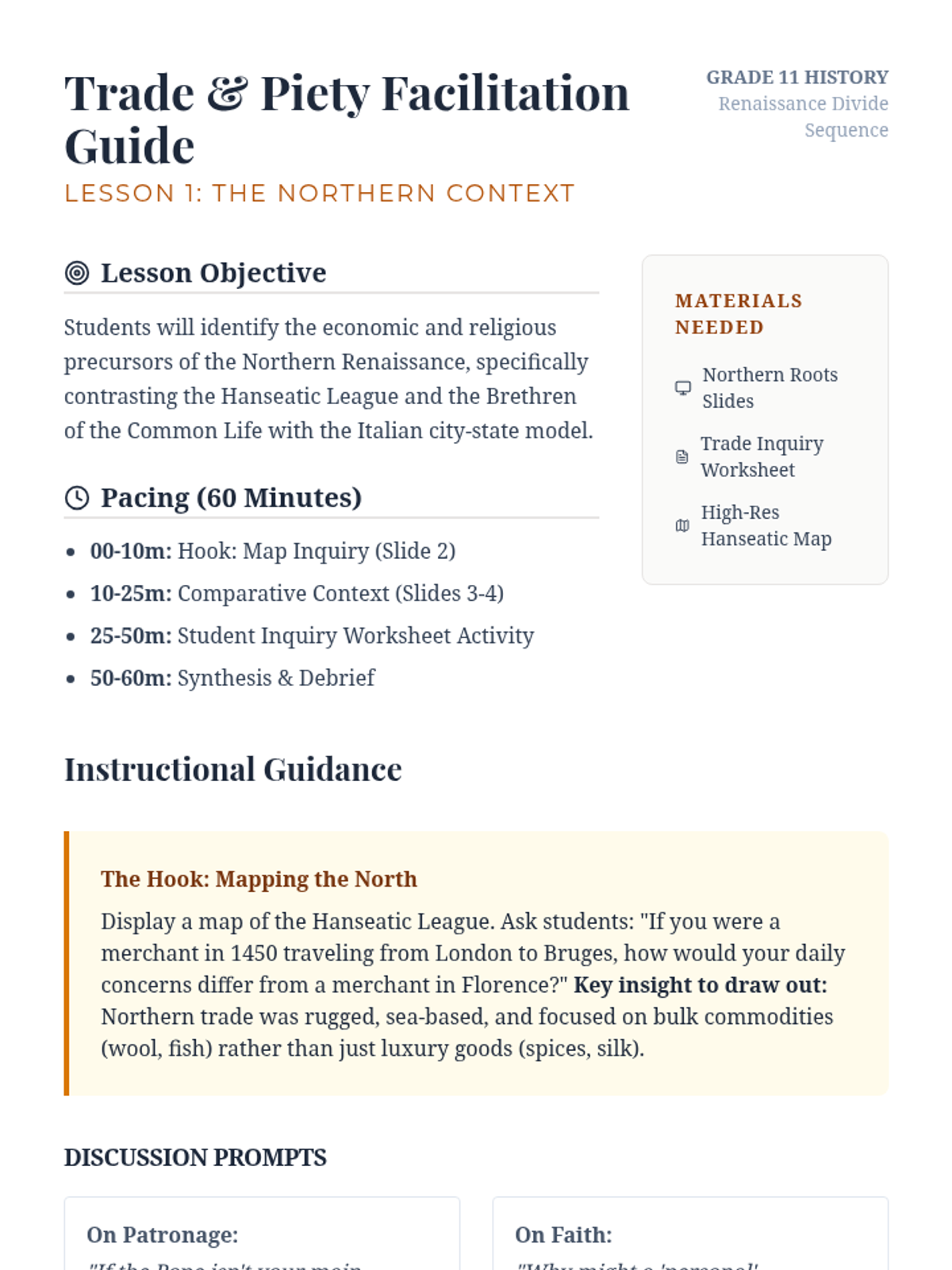
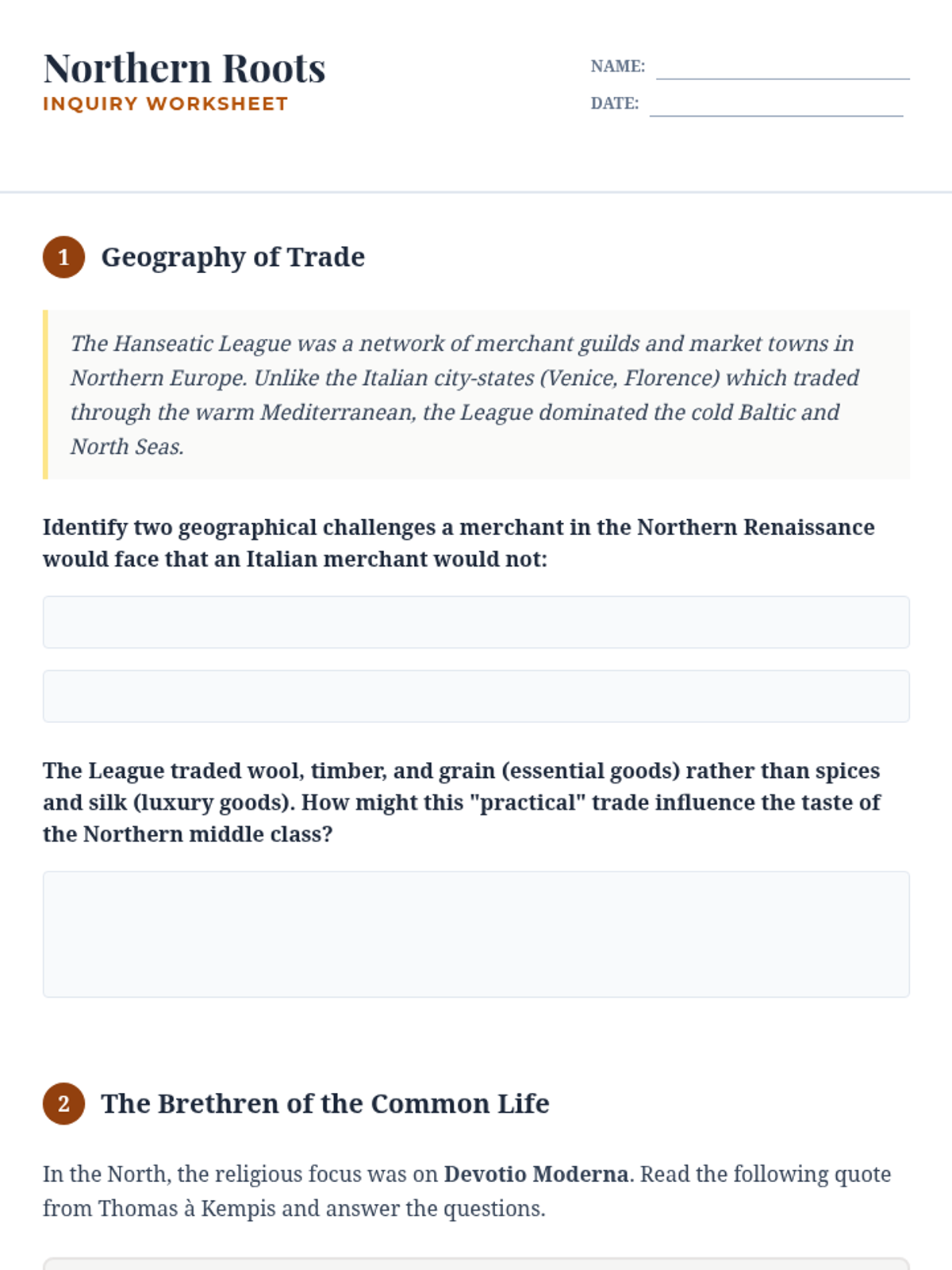
A comparative study of the Italian and Northern Renaissance movements, exploring differences in economics, art, humanism, and social reform through the lens of geography and culture.
This sequence explores the intellectual transformation of Europe from the Middle Ages to the Renaissance, focusing on the emergence of humanism and its impact on culture, education, and religion. Students analyze primary sources from Petrarch, Erasmus, and Castiglione to understand how shifting views on human potential reshaped society.
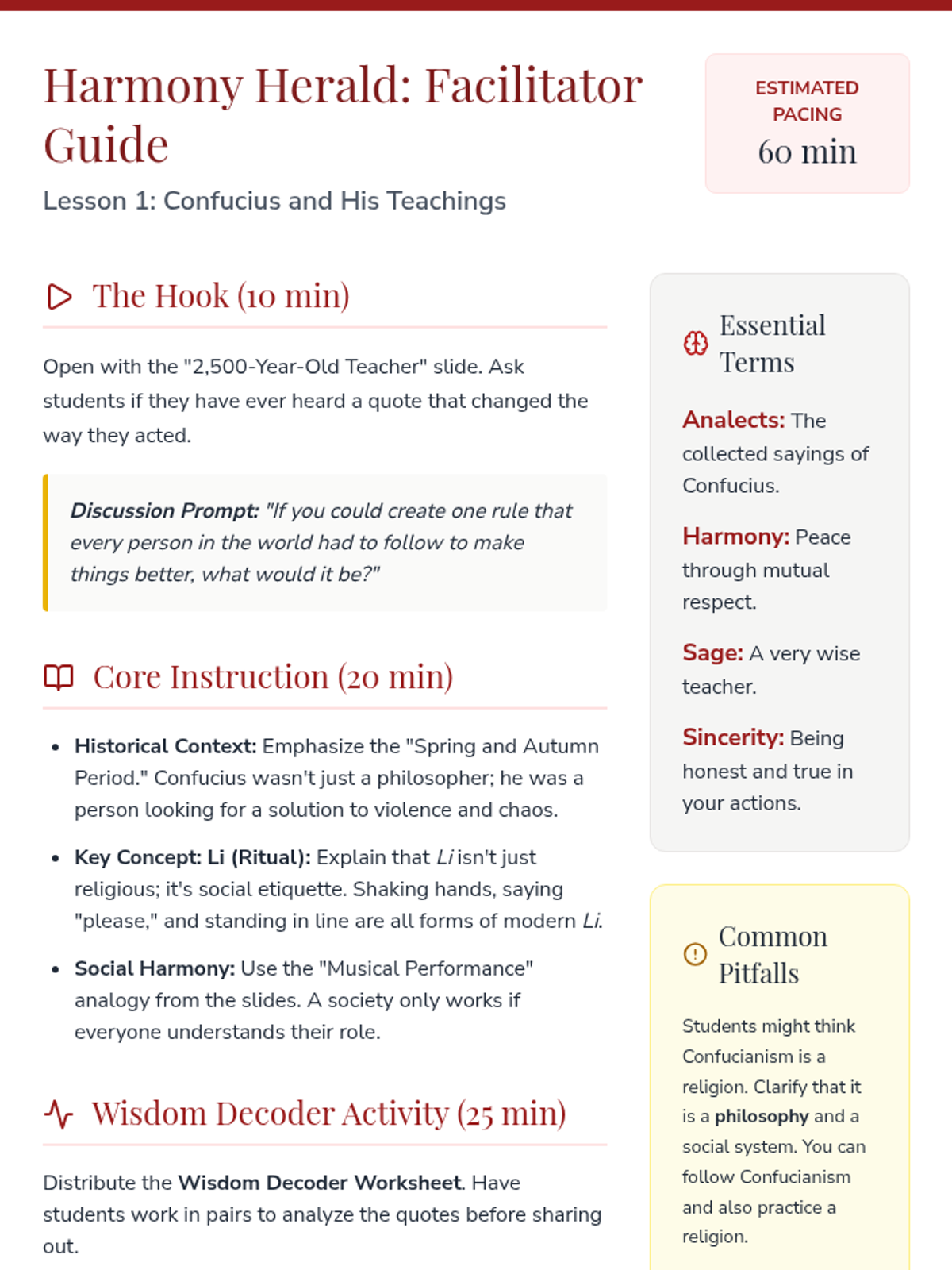
This sequence explores the deep-rooted influence of Confucianism on Chinese family life and education. Students will analyze ancient concepts like Filial Piety and the Five Relationships to understand how traditional values shape modern behavior, academic pressure, and social harmony in China.
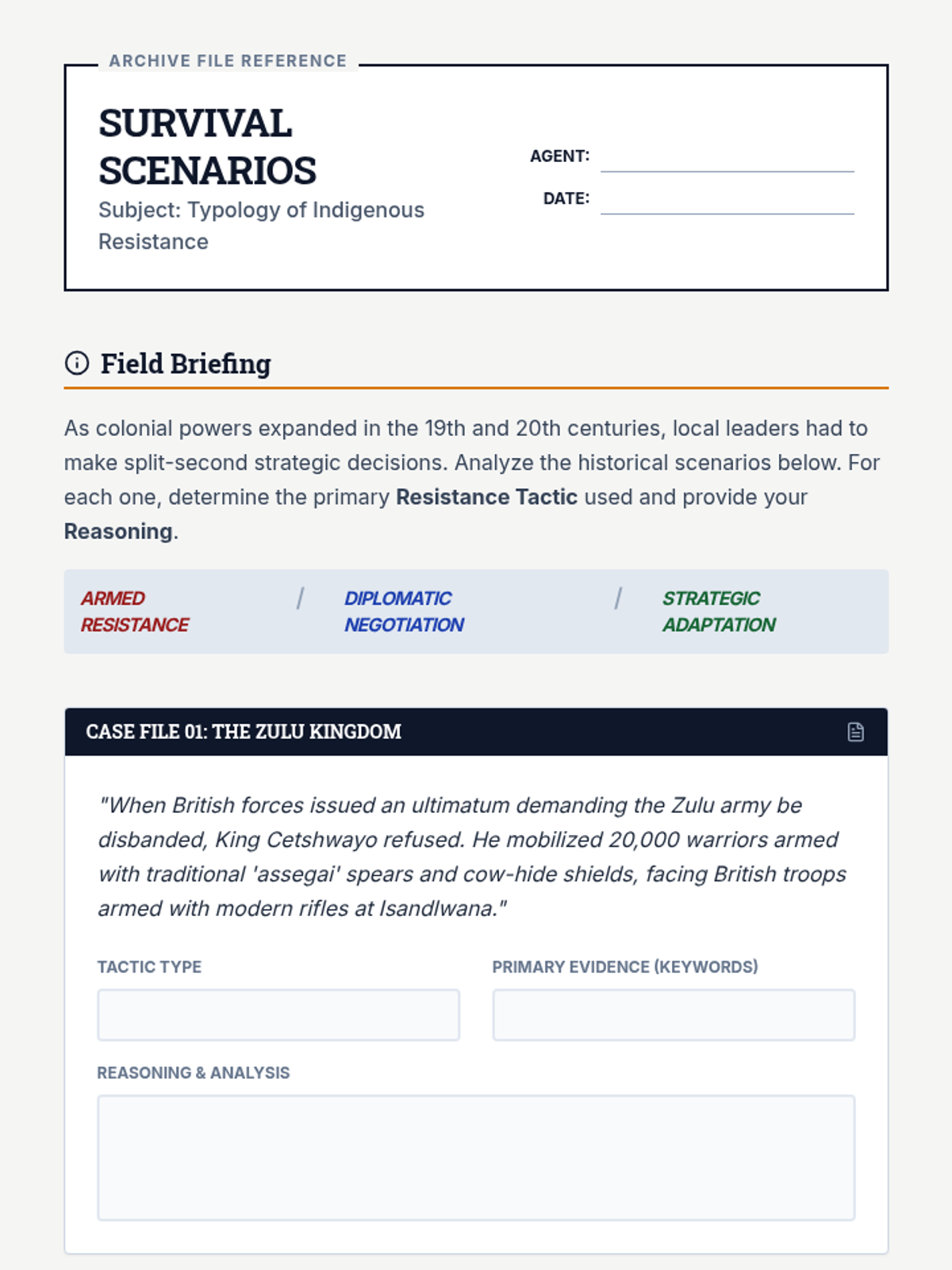
This sequence explores how indigenous peoples around the world resisted European imperialism through various strategies, including armed conflict, diplomacy, and cultural preservation. Students will move beyond narratives of victimhood to analyze the agency and strategic decisions of leaders and movements across Africa and Asia.
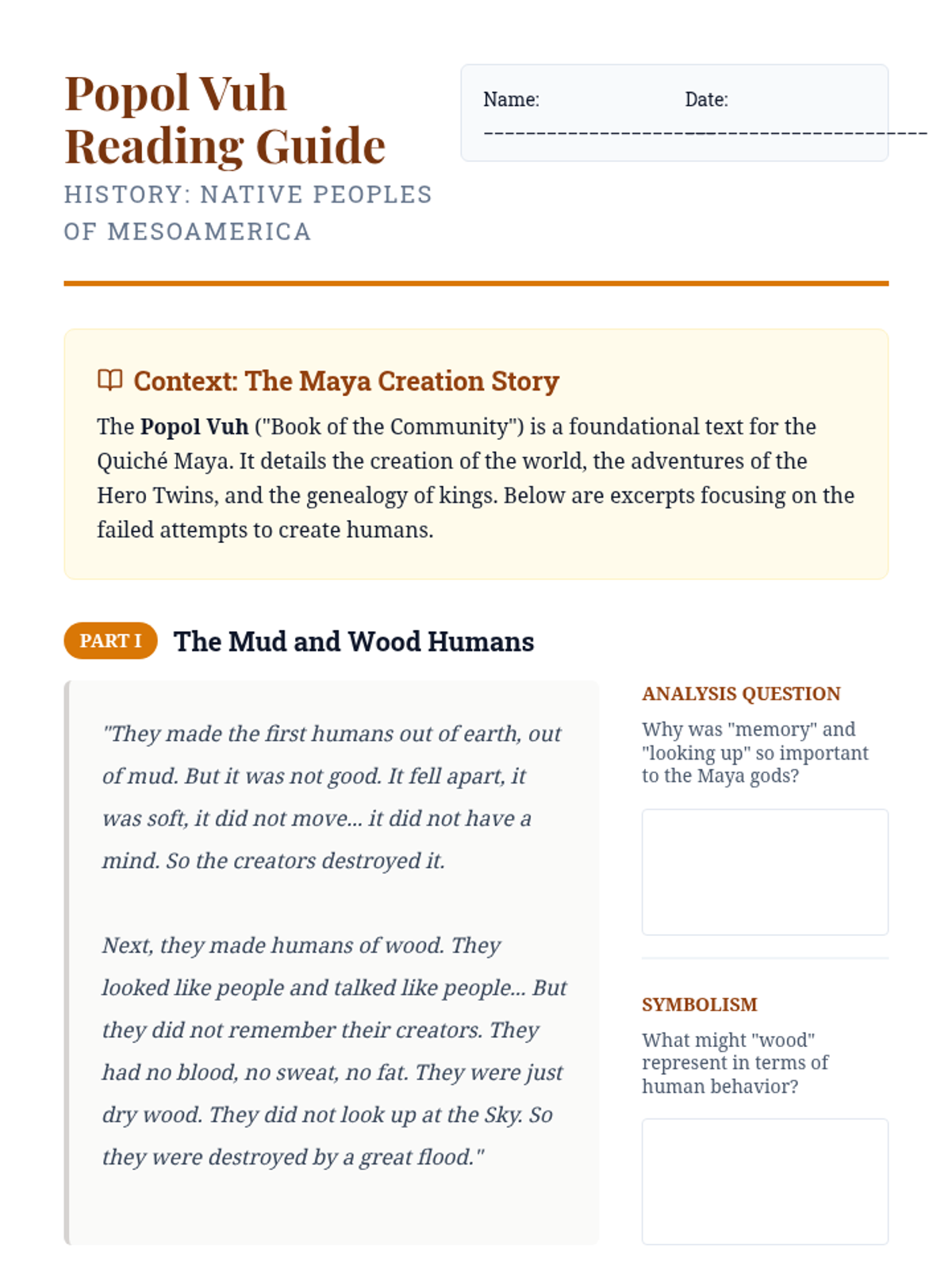
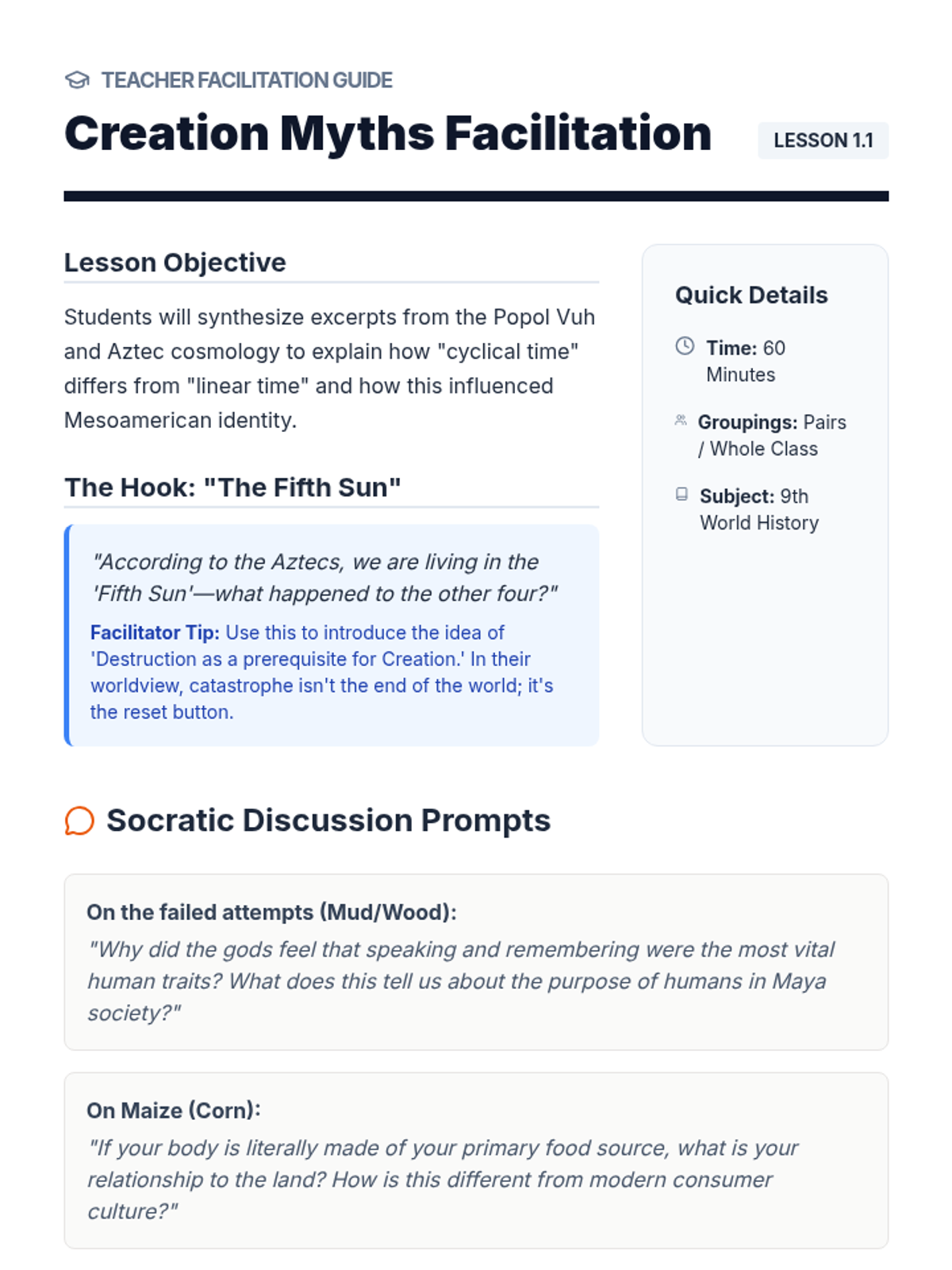
This 9th-grade history sequence explores the belief systems, cosmologies, and record-keeping traditions of Mesoamerican and South American civilizations. Students investigate the theological foundations of ritual sacrifice, the significance of the ball game, and the unique writing and recording systems of the Maya and Inca empires.
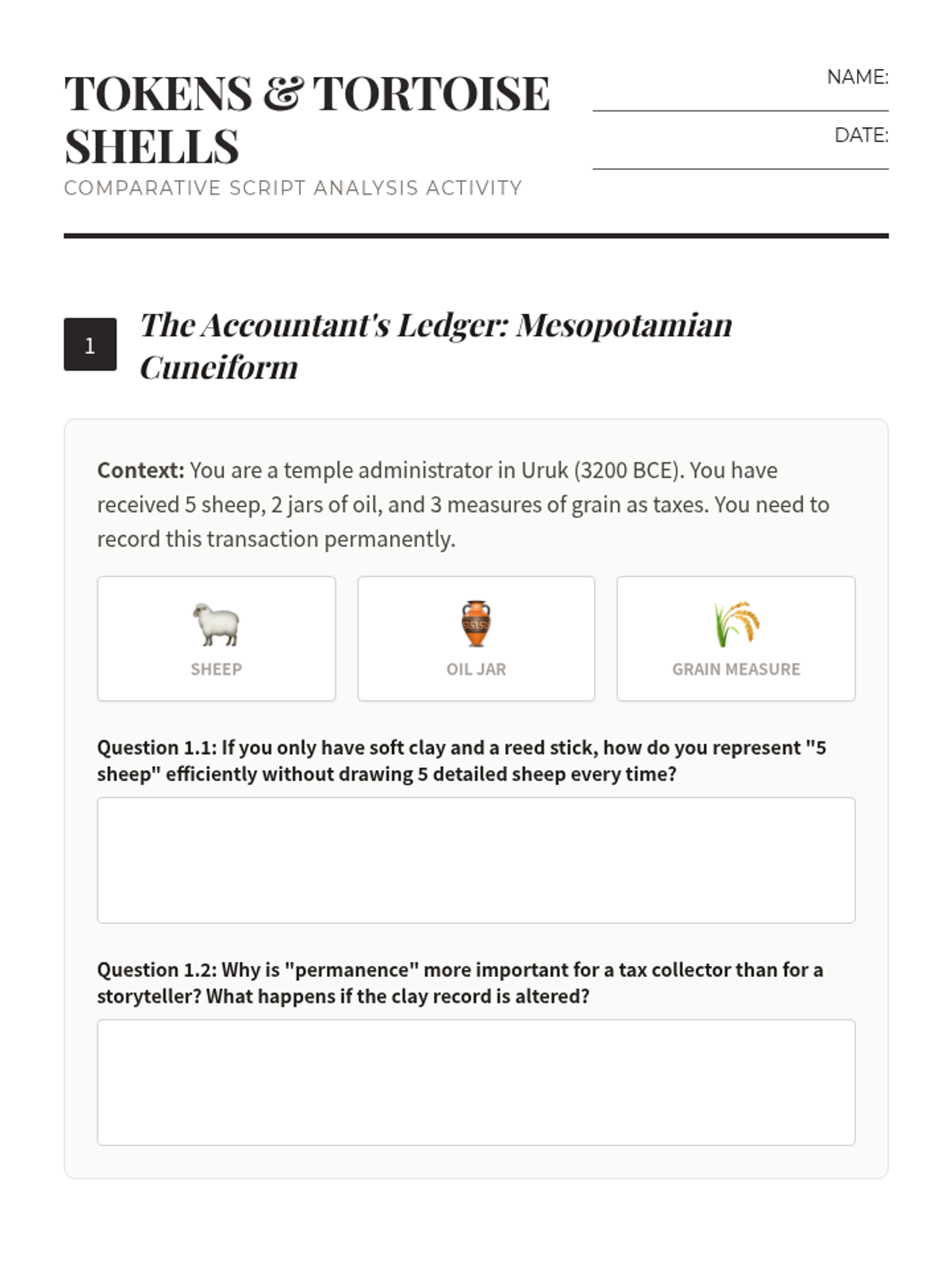
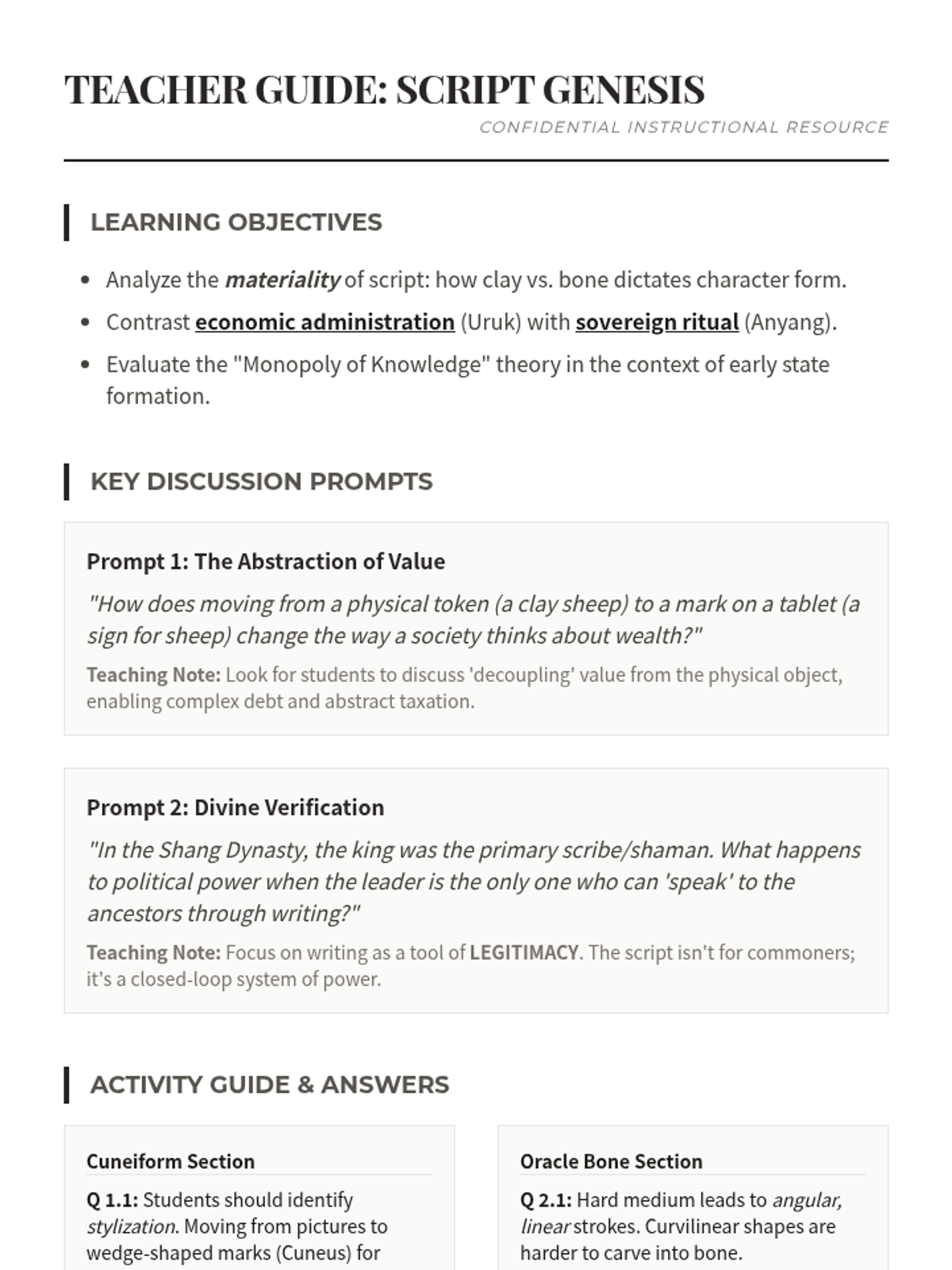
A comparative study of the evolution of writing and legal systems in ancient river civilizations, focusing on how these intellectual technologies served as tools for economic administration and social control.
This workshop-style sequence bridges the gap between the Medieval period and the Early Modern era by focusing on the shift in human thought, politics, and artistic expression. Students analyze the transition from Scholasticism to Humanism through the works of Petrarch, Dante, Machiavelli, and the impact of the printing press.
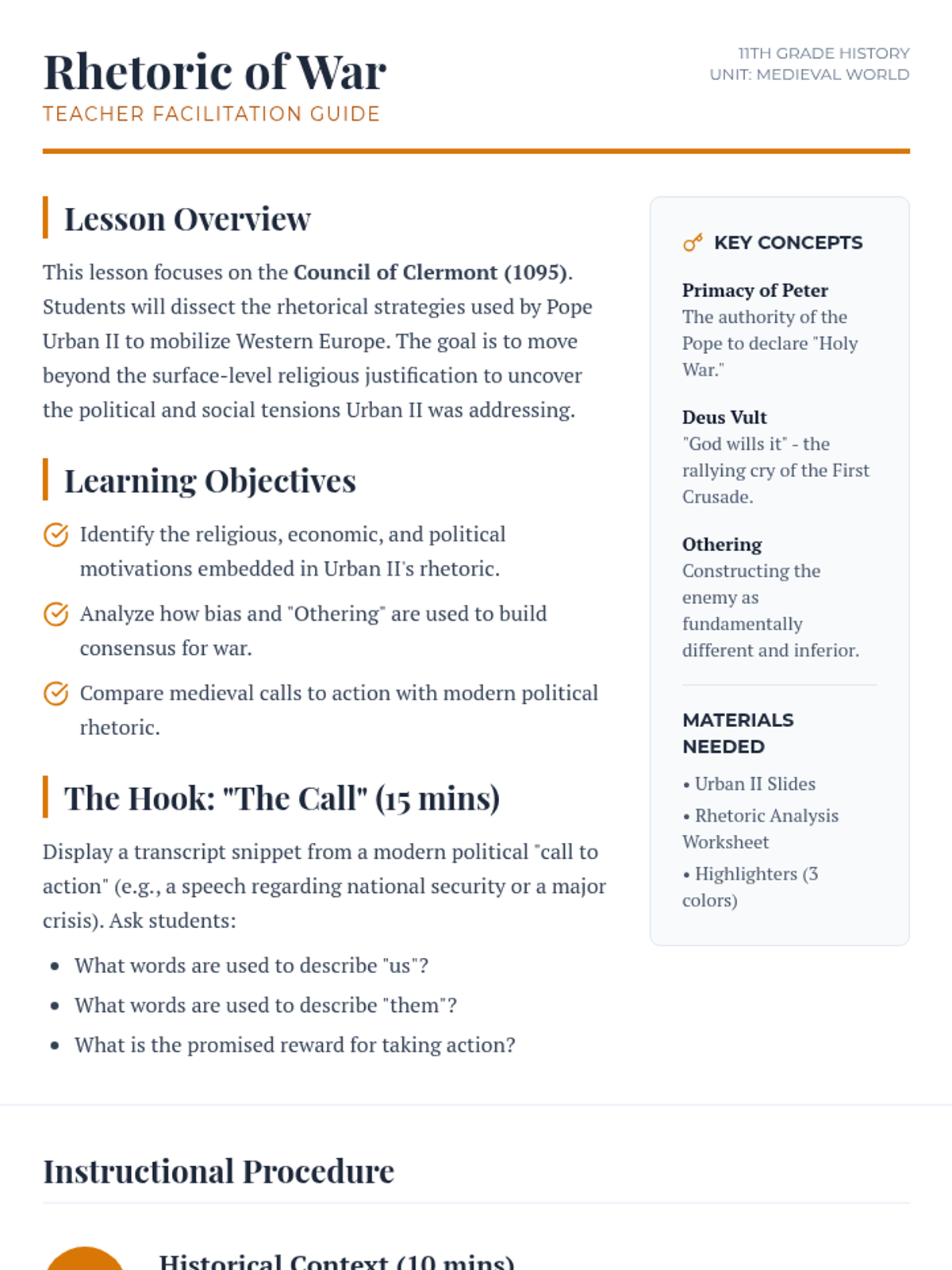
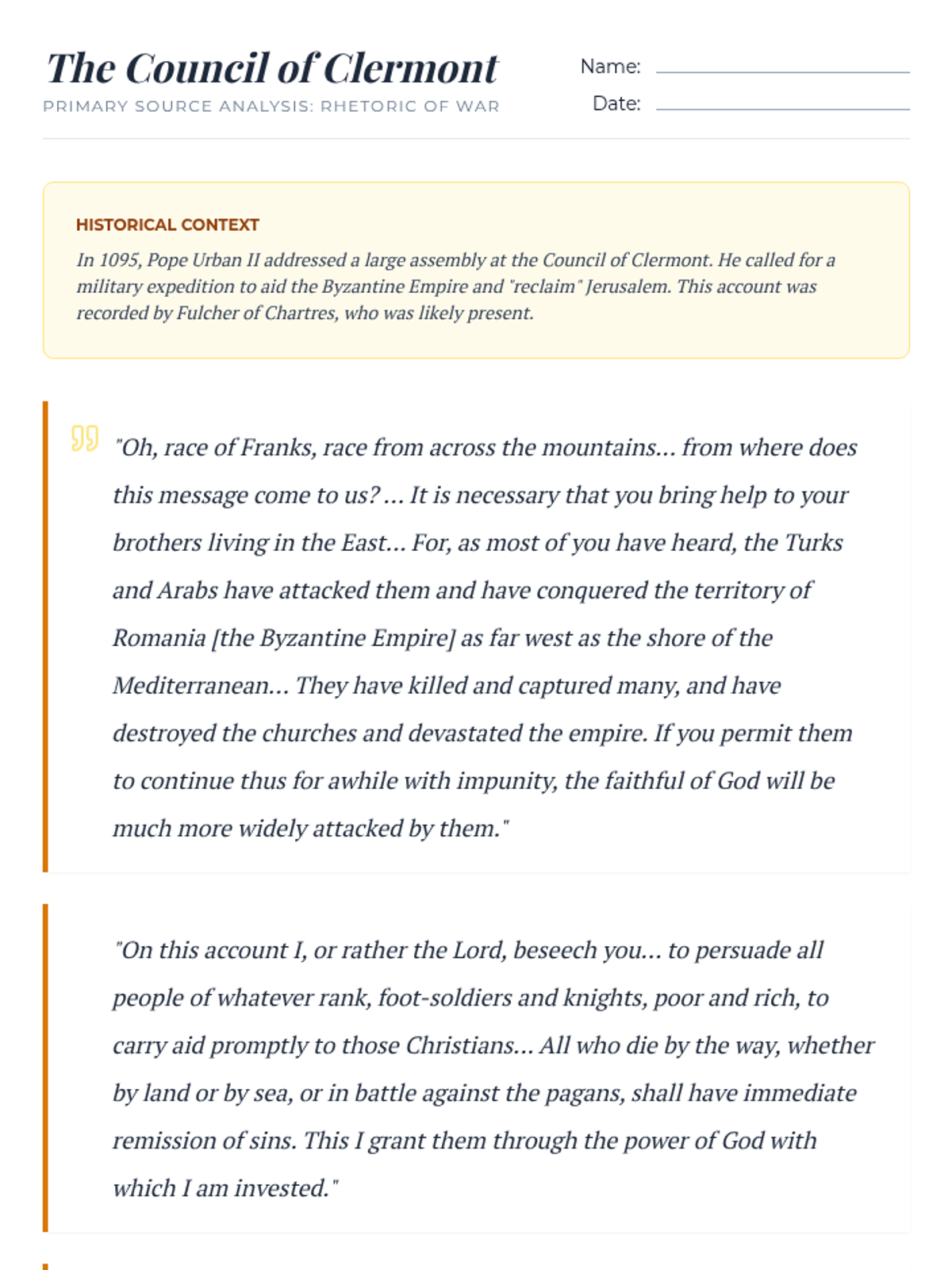
An 11th-grade history sequence that examines the Crusades through multiple perspectives, focusing on religious, political, and economic motivations, as well as the long-term cultural and geopolitical consequences.
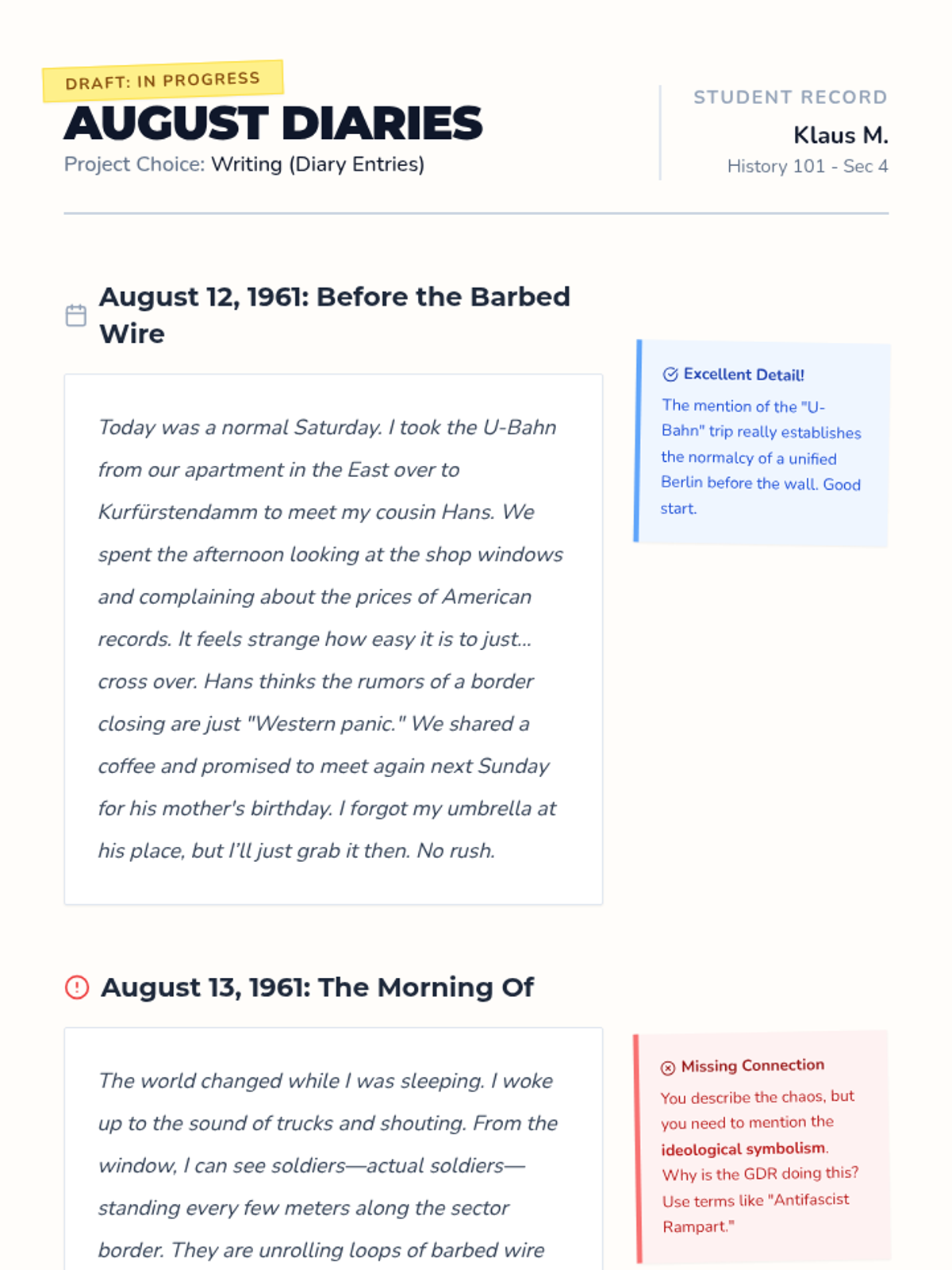
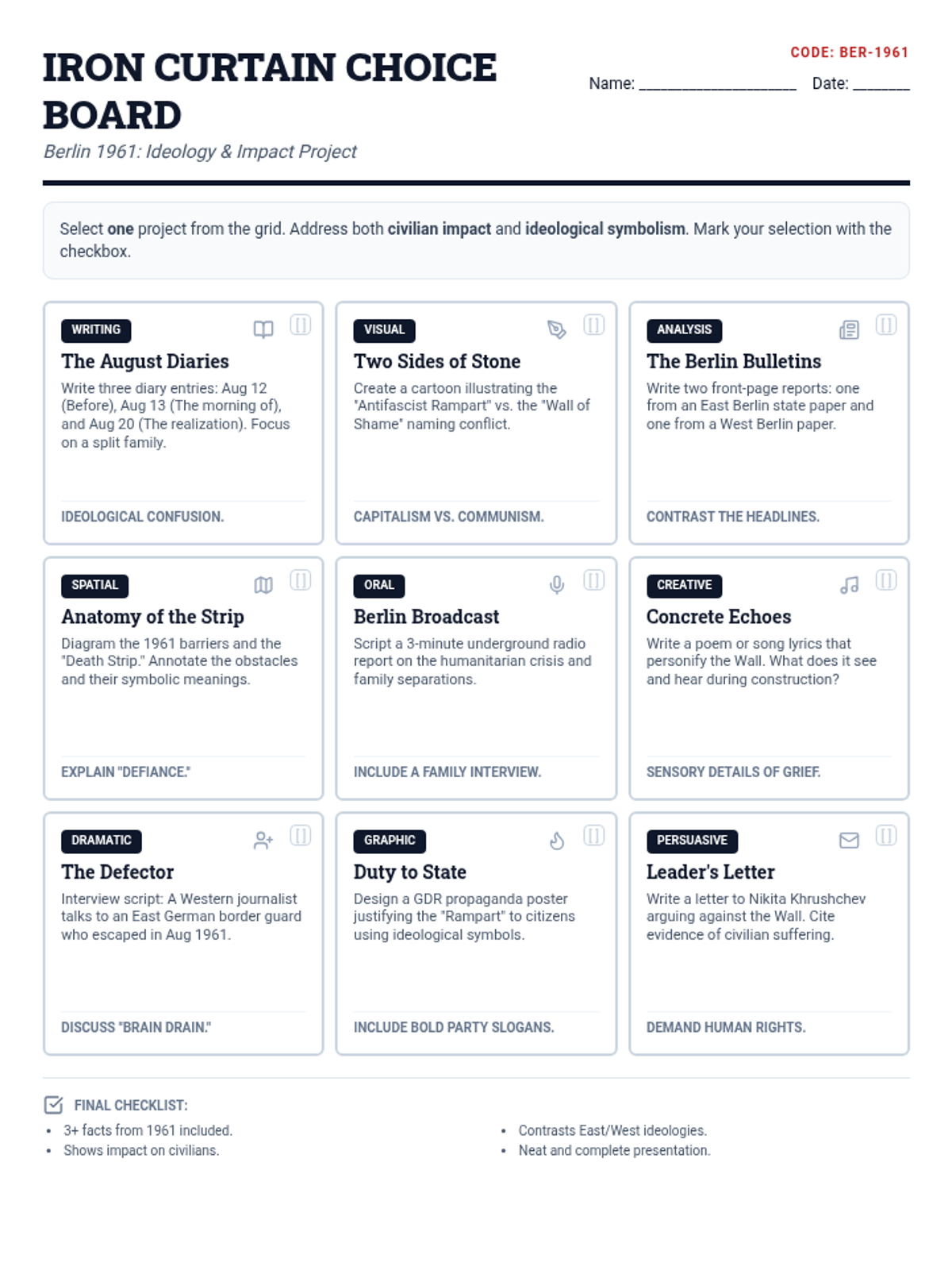
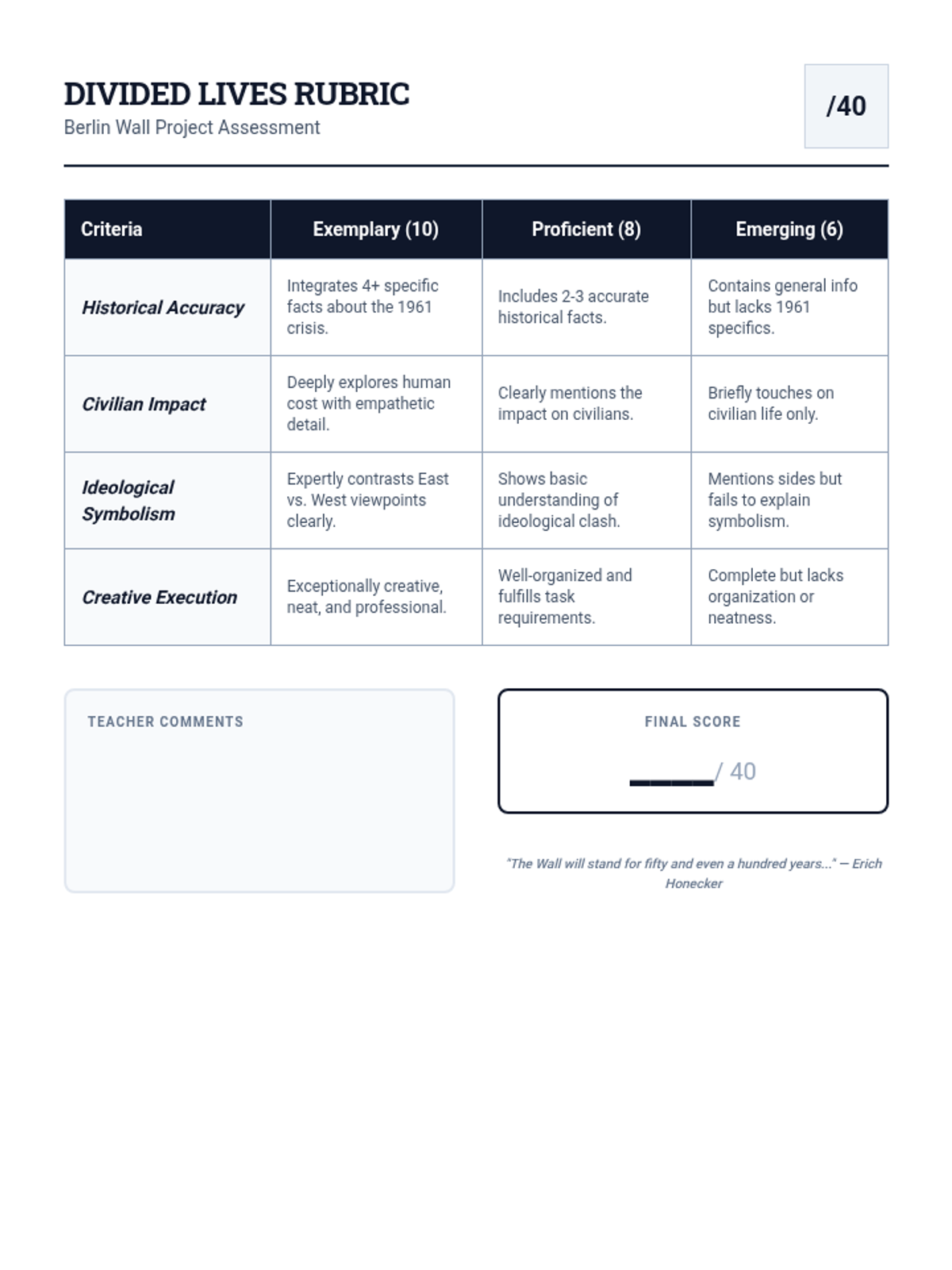
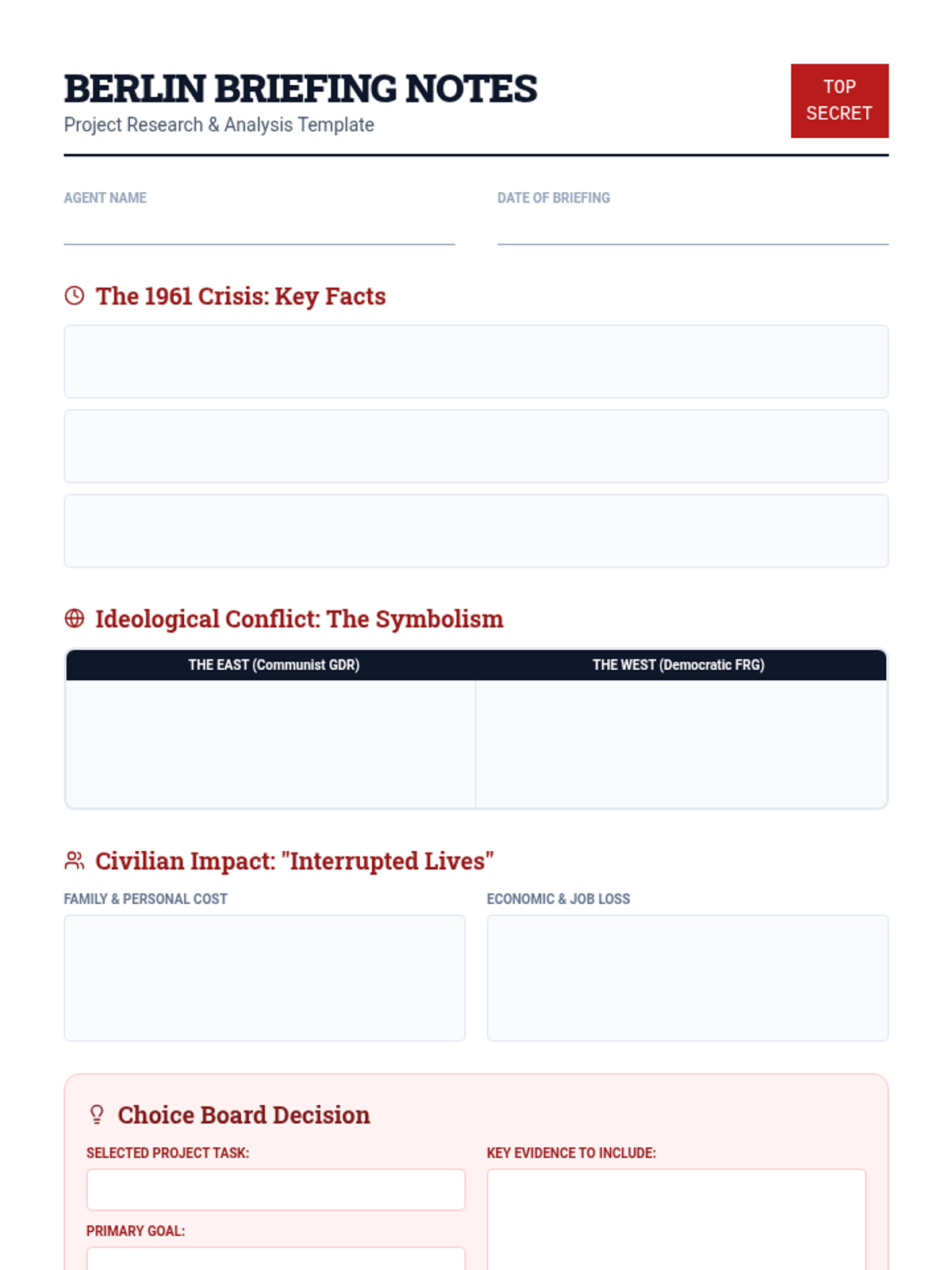
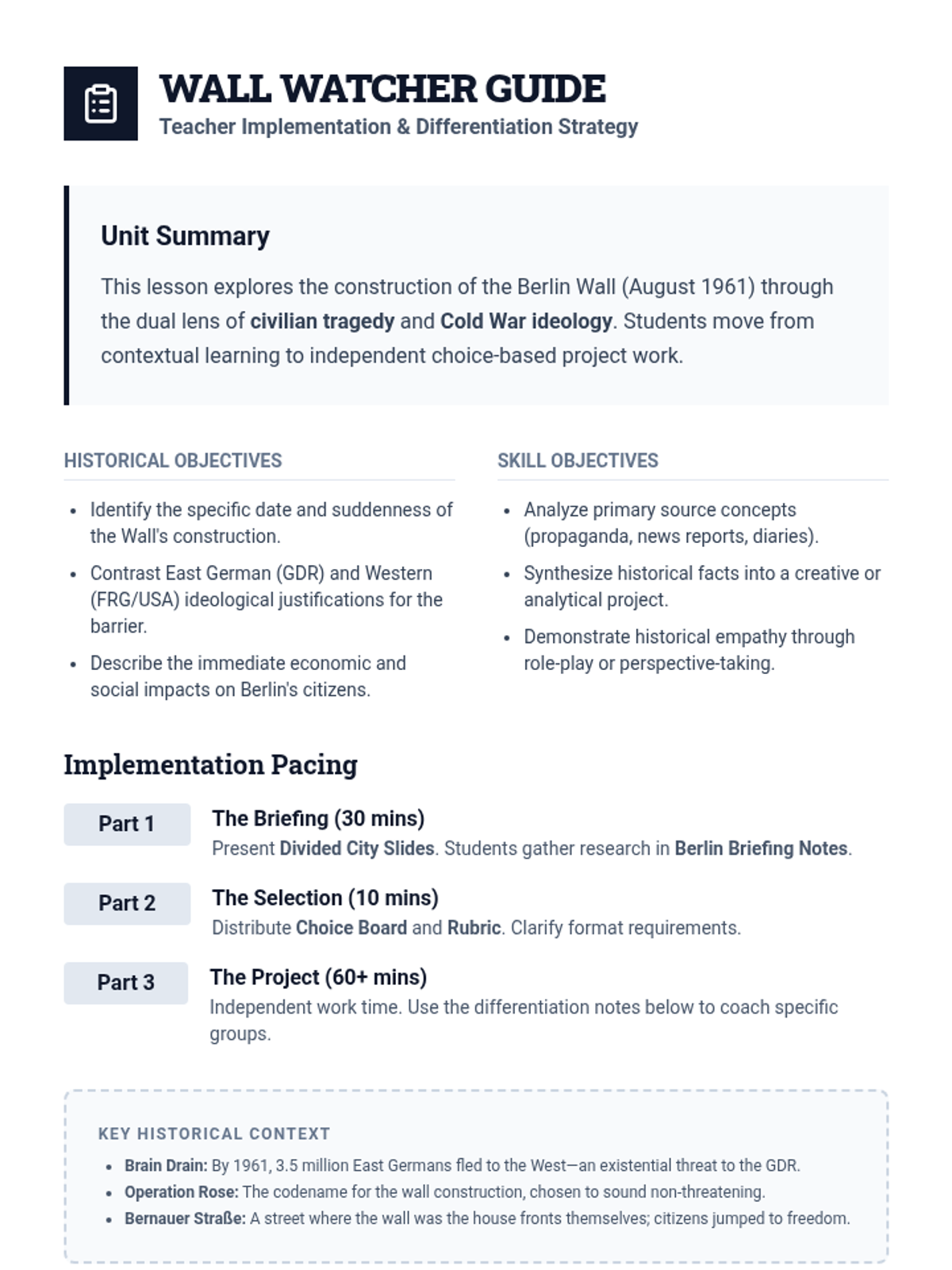
A comprehensive project-based unit exploring the construction of the Berlin Wall in 1961, its devastating impact on German civilians, and its role as a powerful symbol of Cold War ideological conflict.
A comprehensive curriculum covering financial literacy, economic principles, and civic systems through historical case studies, ethical dilemmas, and real-world simulations.
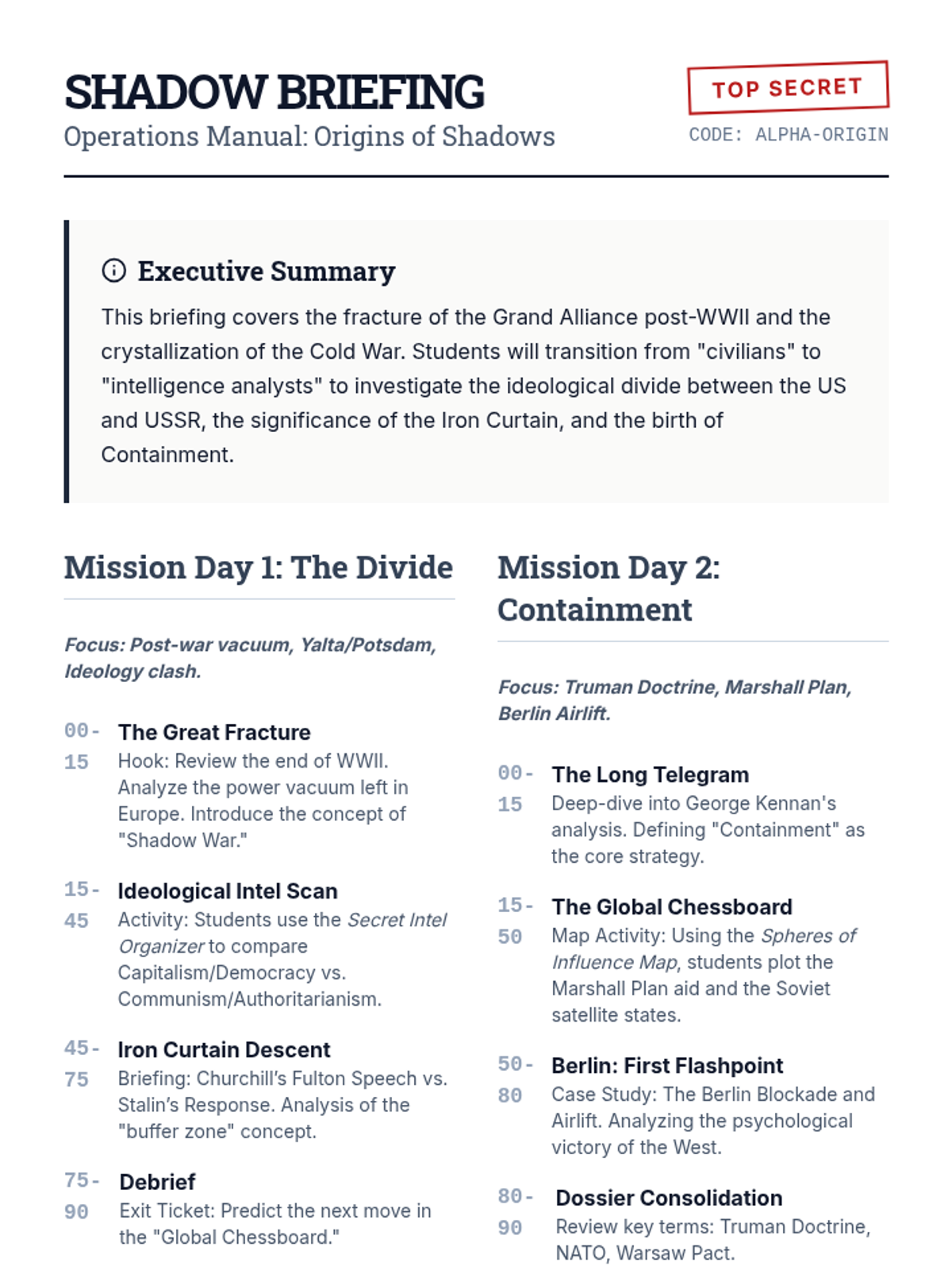
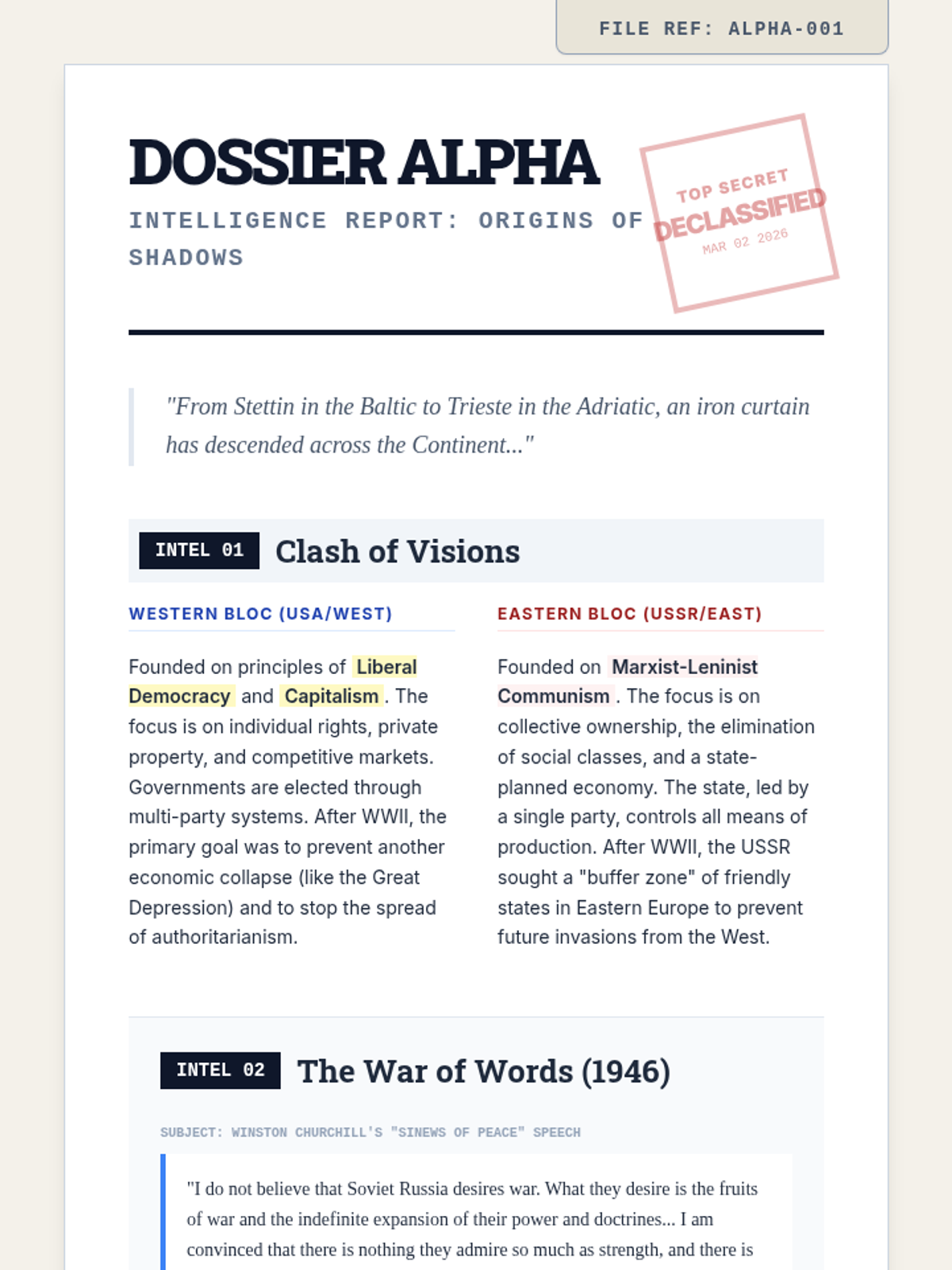
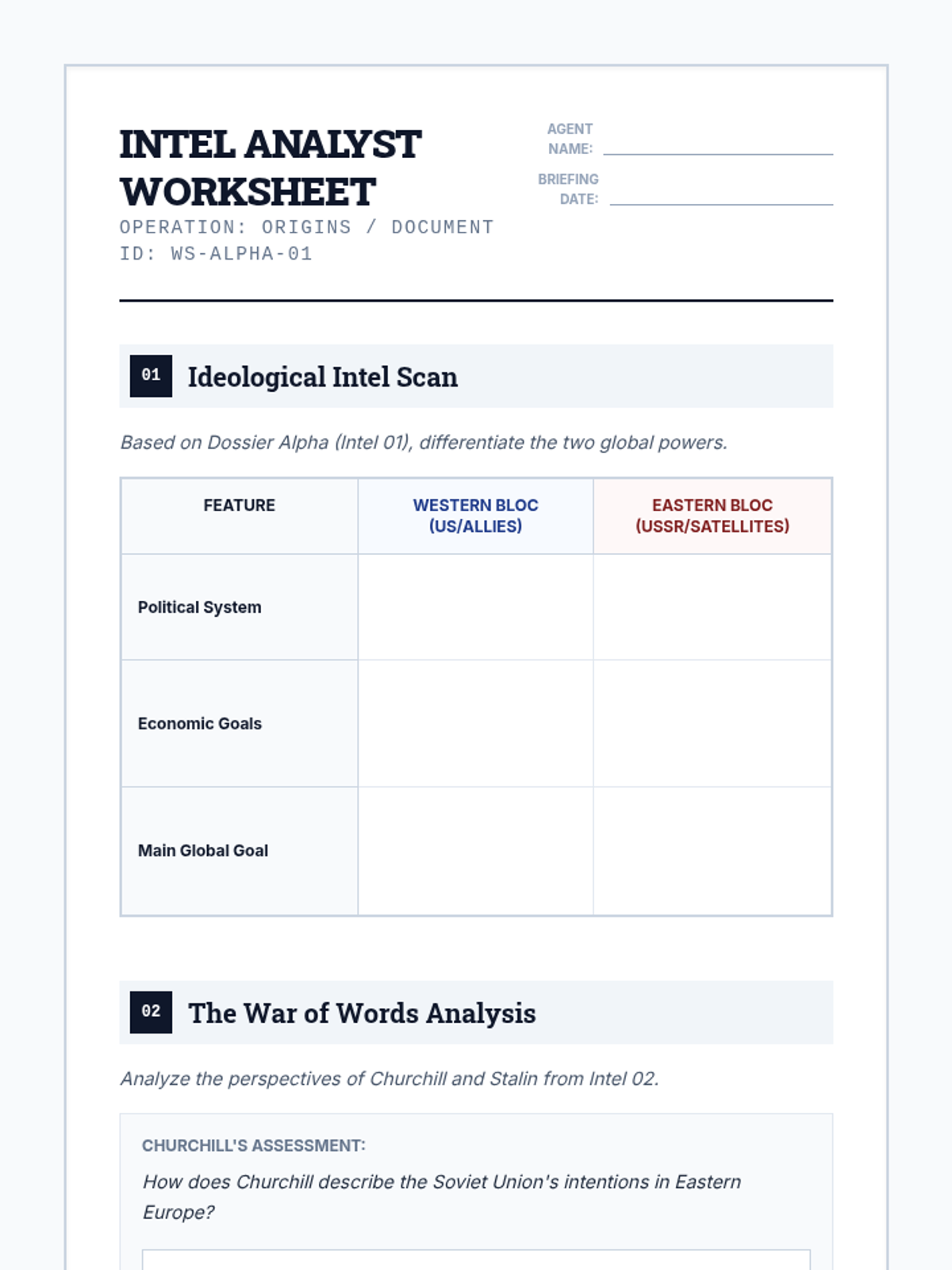
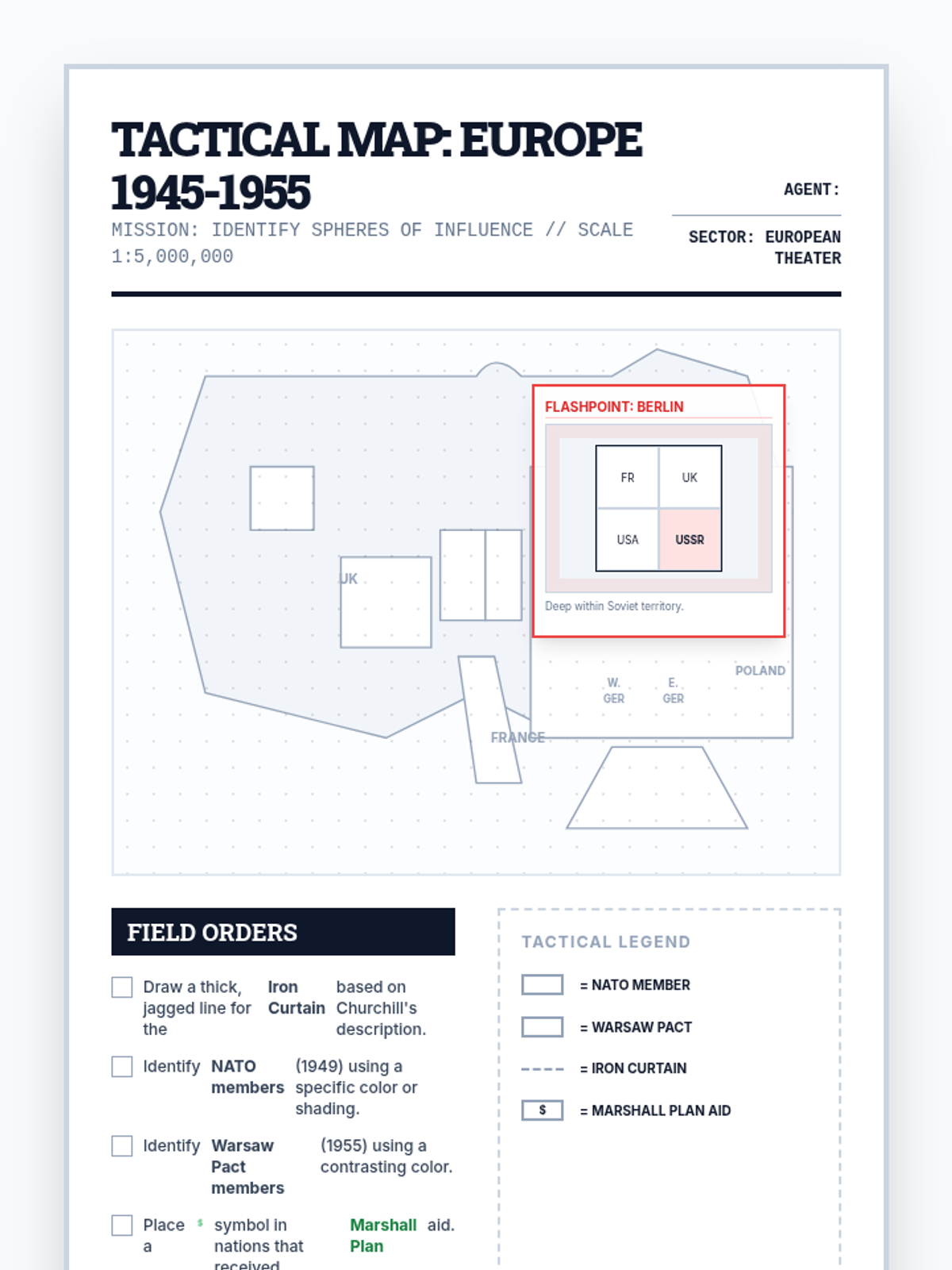
An immersive unit on the Cold War, styled as a series of declassified intelligence briefings exploring the global struggle for power between 1945 and 1991.
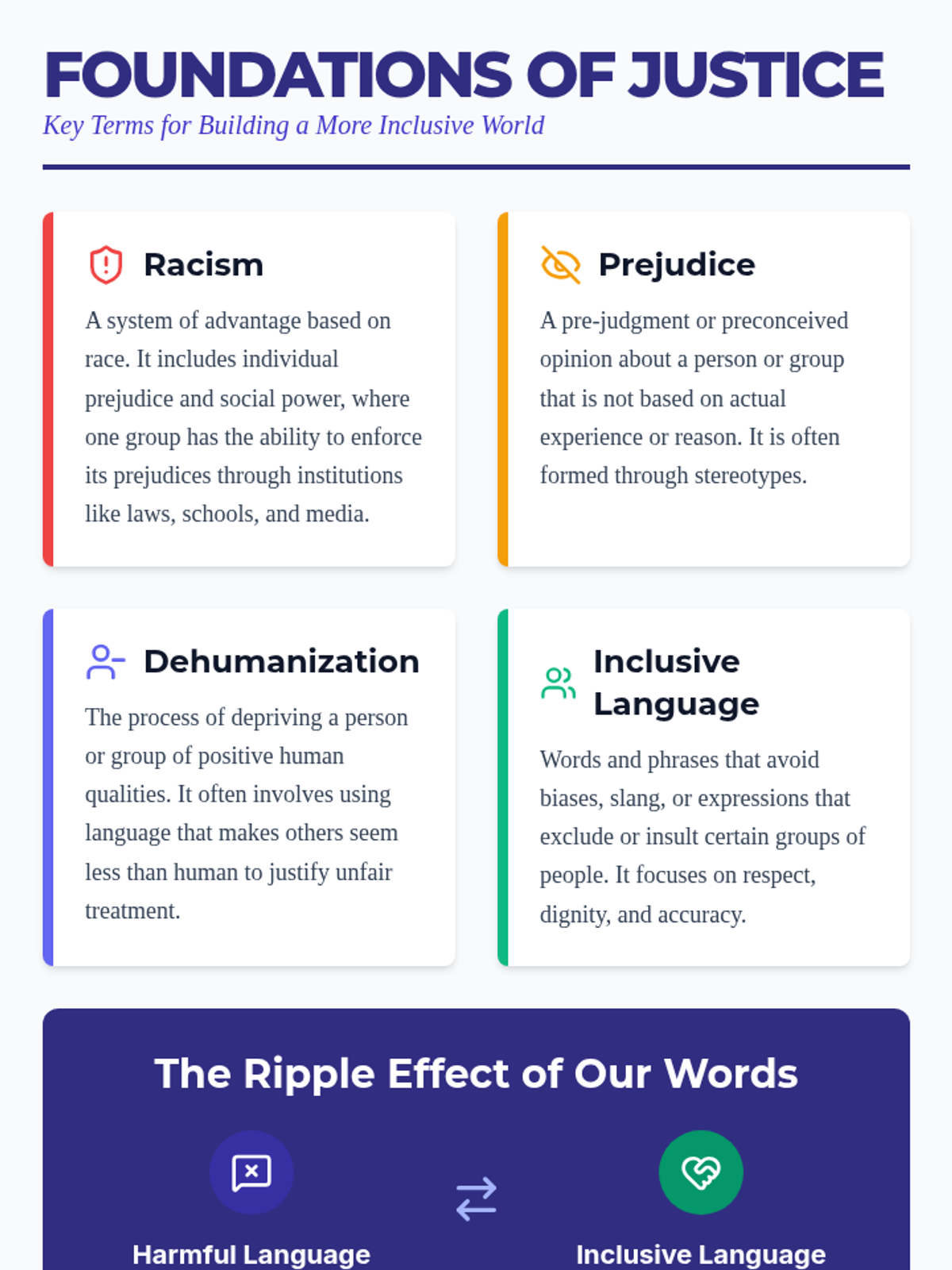
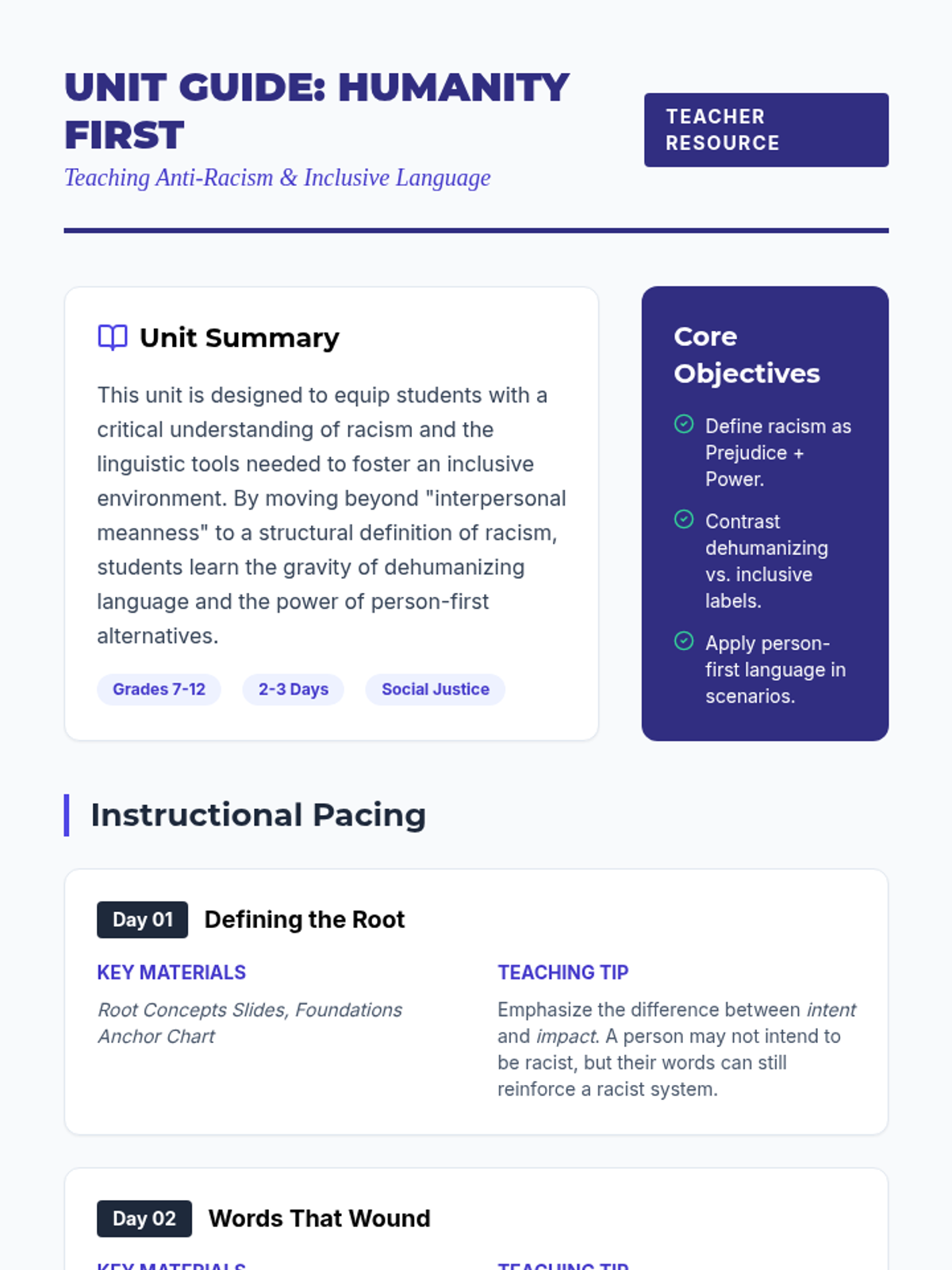
A 4th-grade unit focused on kindness, fairness, and understanding how our words can make everyone feel like they belong, regardless of their background or skin color.
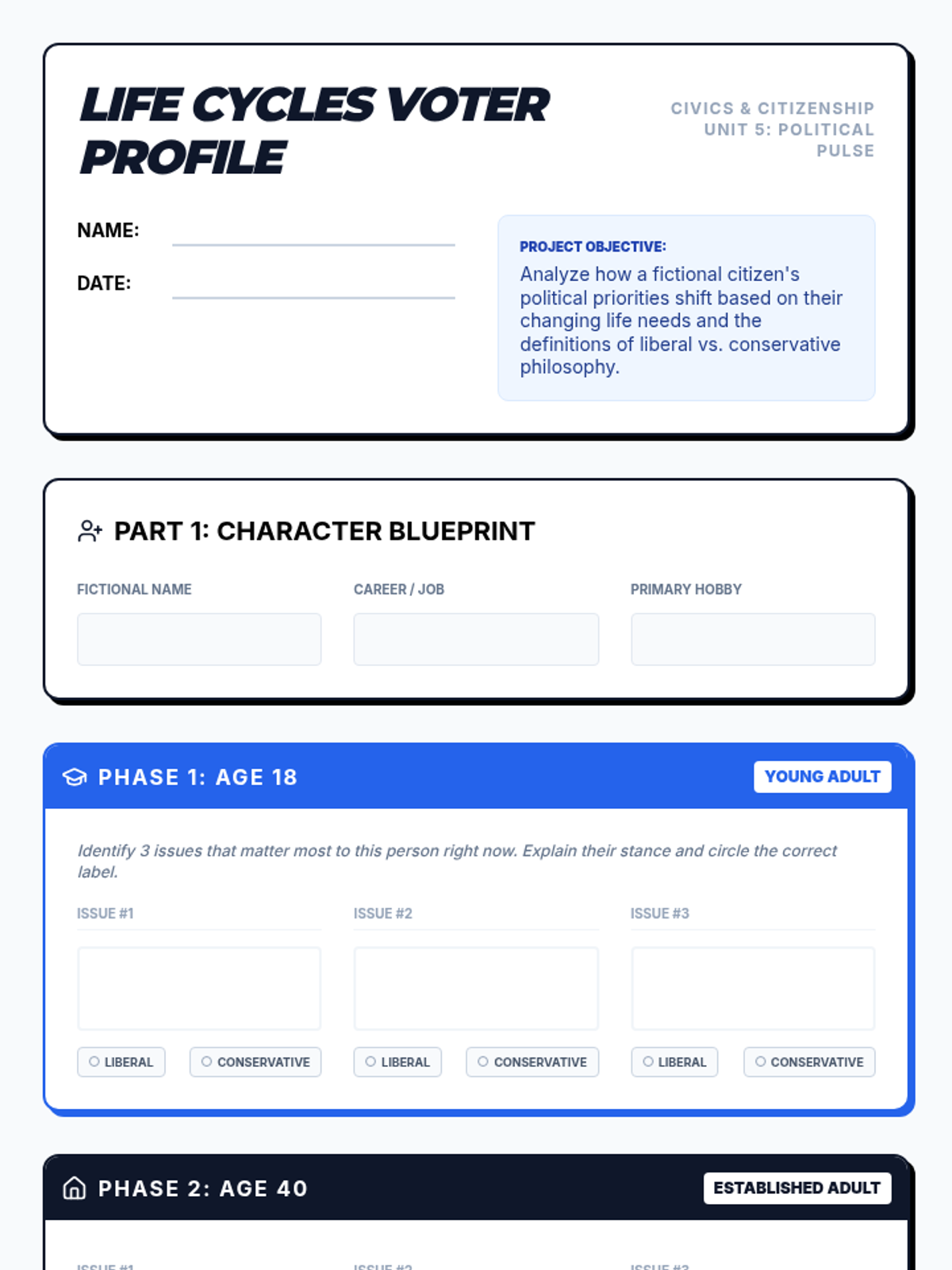
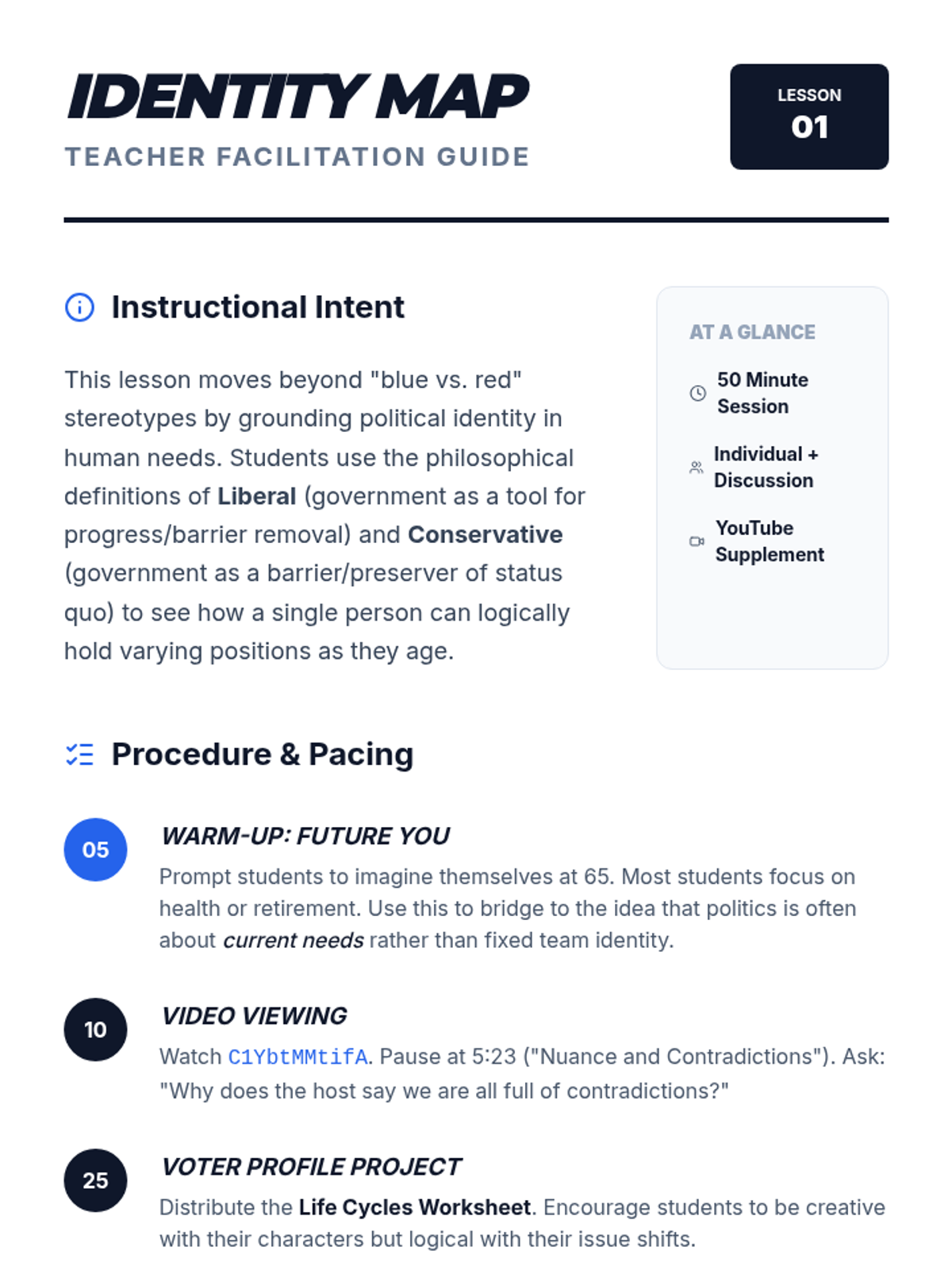
A civics sequence focused on the mechanics of American democracy, the two-party system, and the nuance of political identity.
A deep dive into the Spanish-American and Philippine-American Wars, examining media influence, diplomatic failure, strategic annexation, and the ethical costs of global empire building.
This 11th-grade US History sequence explores the domestic opposition to US expansionism at the turn of the 20th century. Students analyze the Anti-Imperialist League, the constitutional implications of the Insular Cases, and the ideological divide between republicanism and empire.
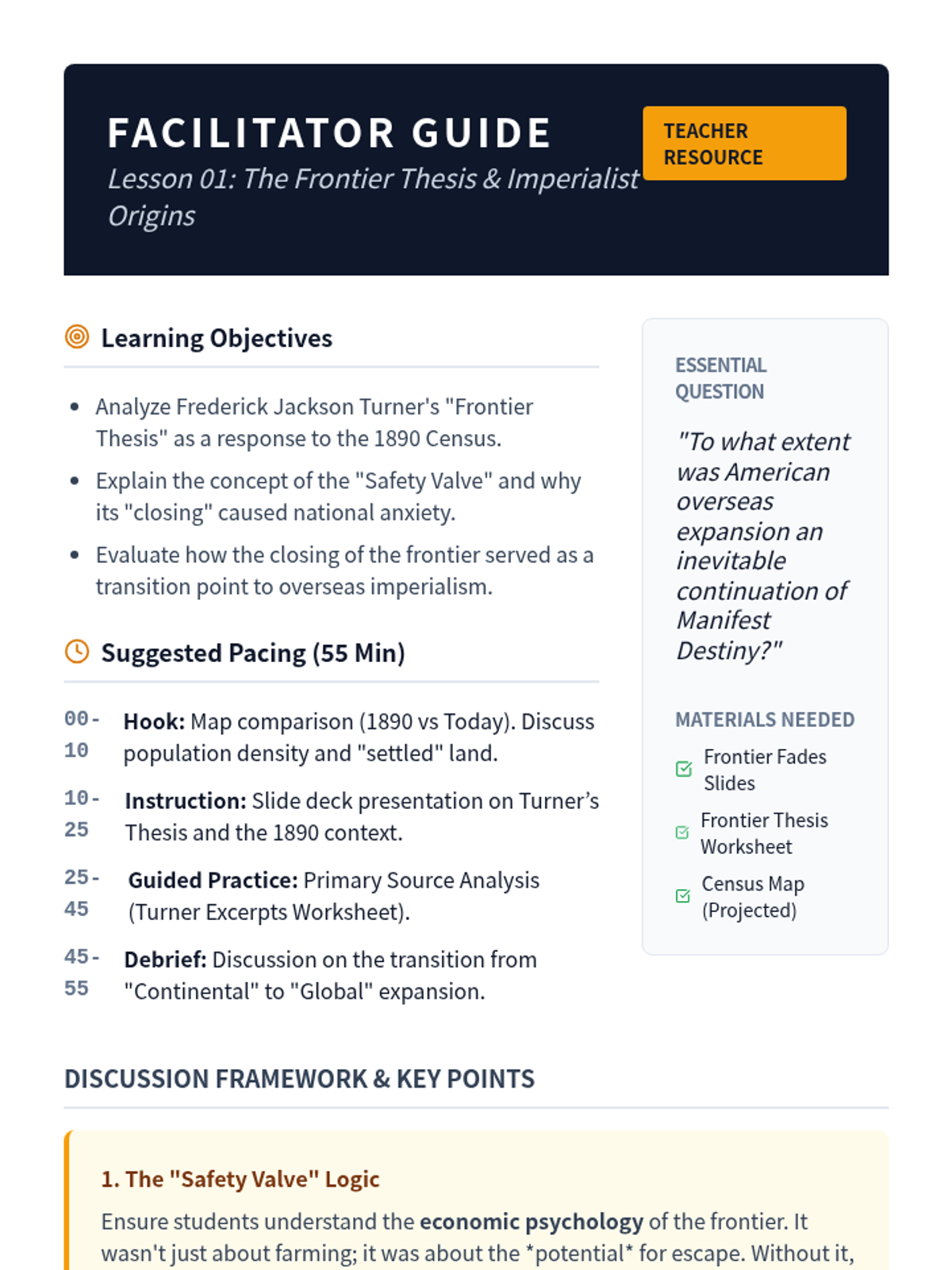
This high school US History sequence explores the multifaceted motivations behind American imperialism at the turn of the 20th century. Students analyze primary sources from Frederick Jackson Turner, Alfred Thayer Mahan, and Josiah Strong to evaluate the economic, strategic, and ideological 'push factors' that led the United States to look beyond its borders.