Develops technical proficiency and creative movement skills across various styles. Examines choreographic principles alongside the historical and cultural origins of diverse global dance forms.
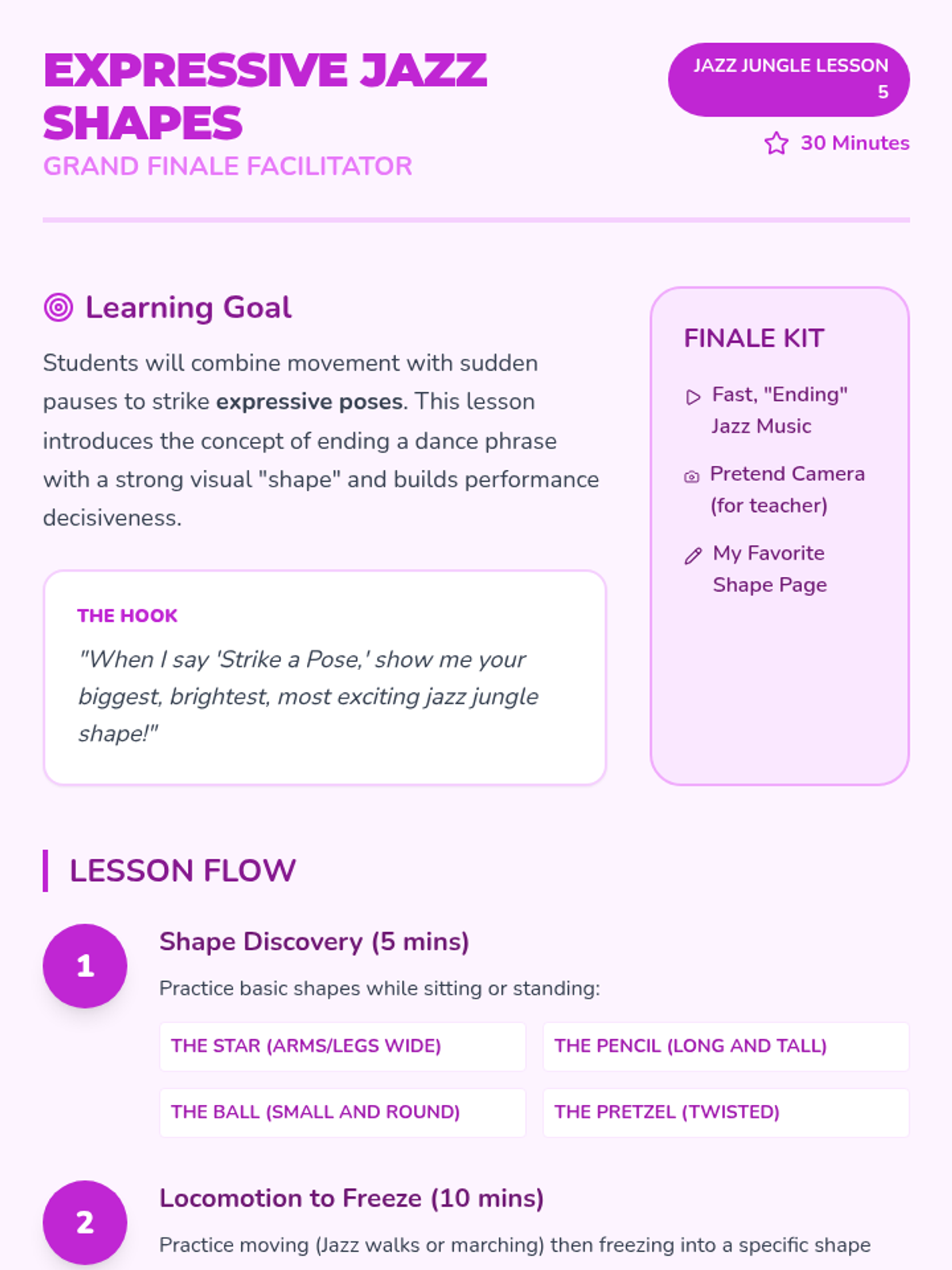
Students learn to strike dynamic poses like 'star shapes' or 'jazz hands' at the end of a movement phrase. The lesson combines locomotion with sudden freezes to build performance quality and decisiveness.
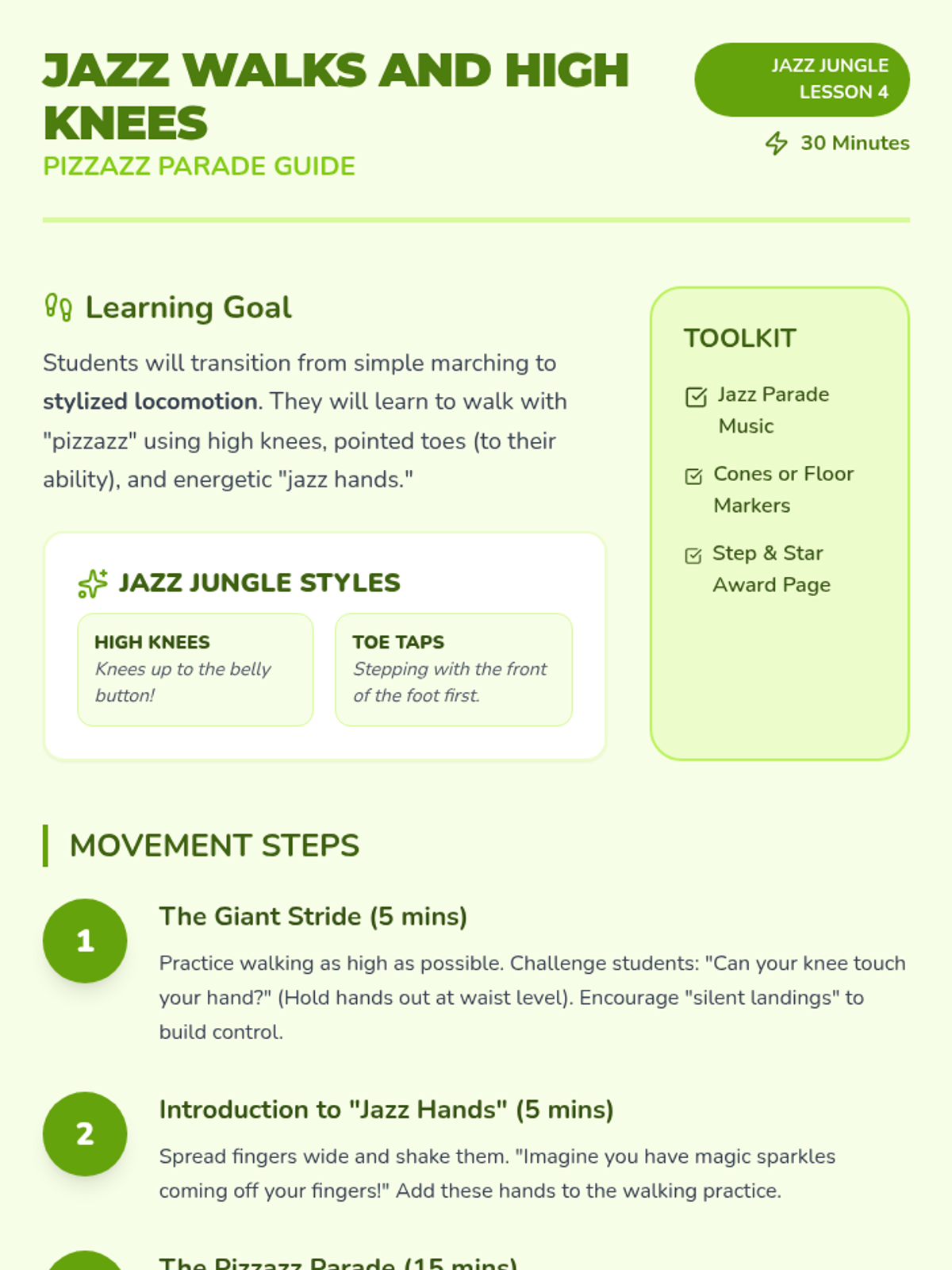
Learners practice stylized walking techniques, including lifting knees high and walking on toes with energy. This introduces the concept of stylized locomotion where walking becomes a dance performance.
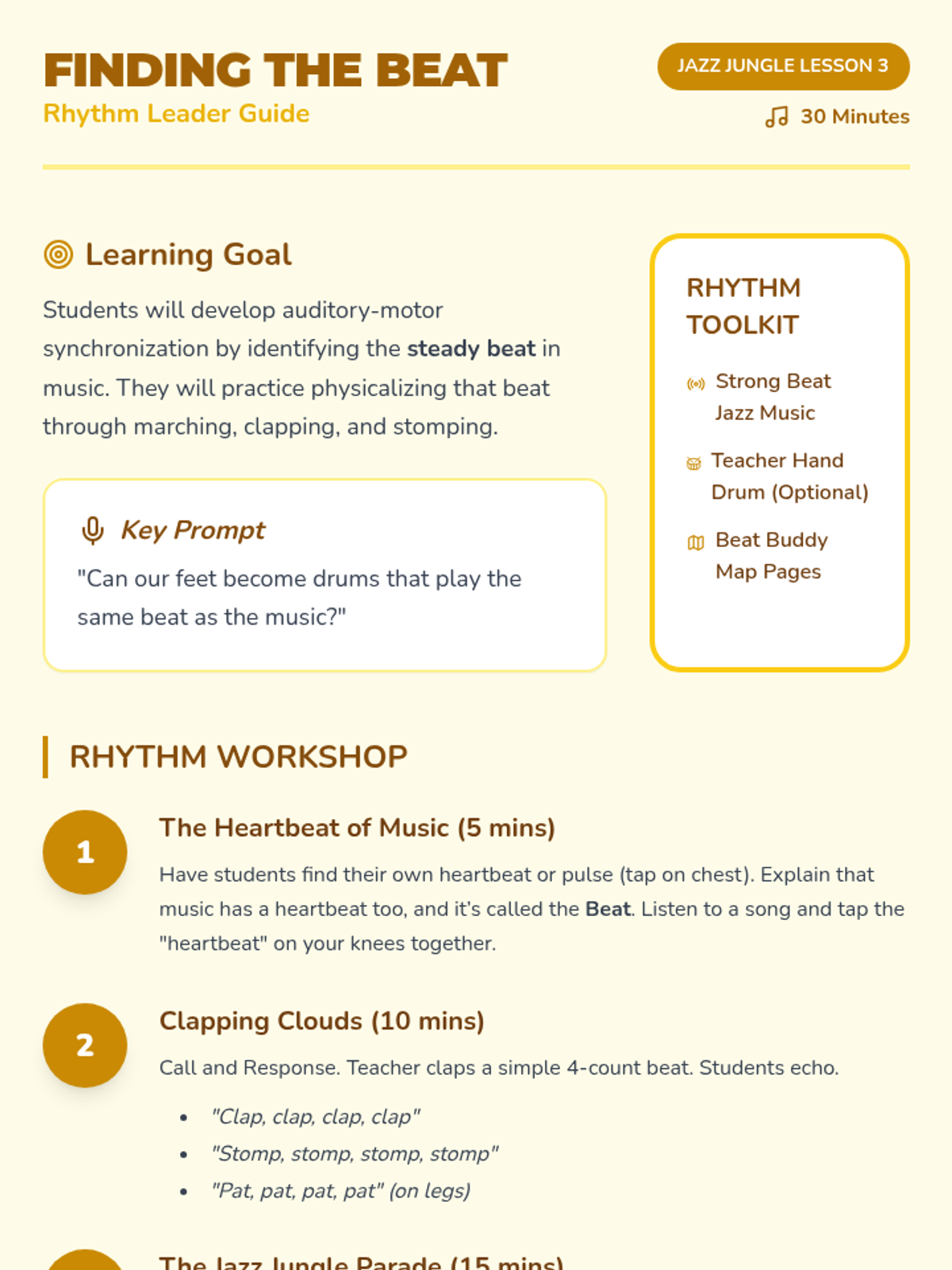
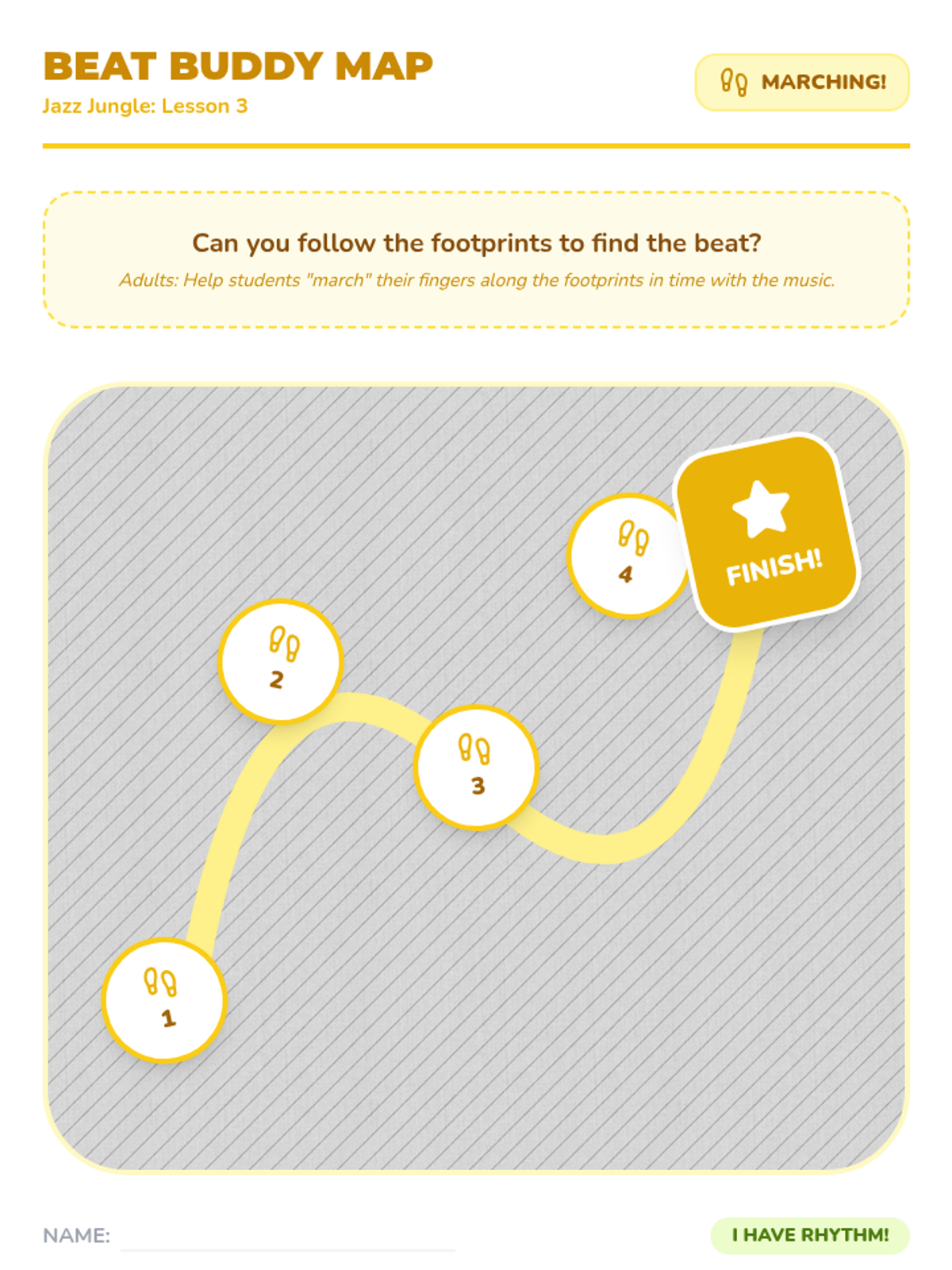
Students engage with musicality by identifying the steady beat in energetic music. They practice marching, stomping, and clapping in time, connecting their physical movements directly to the auditory rhythm.
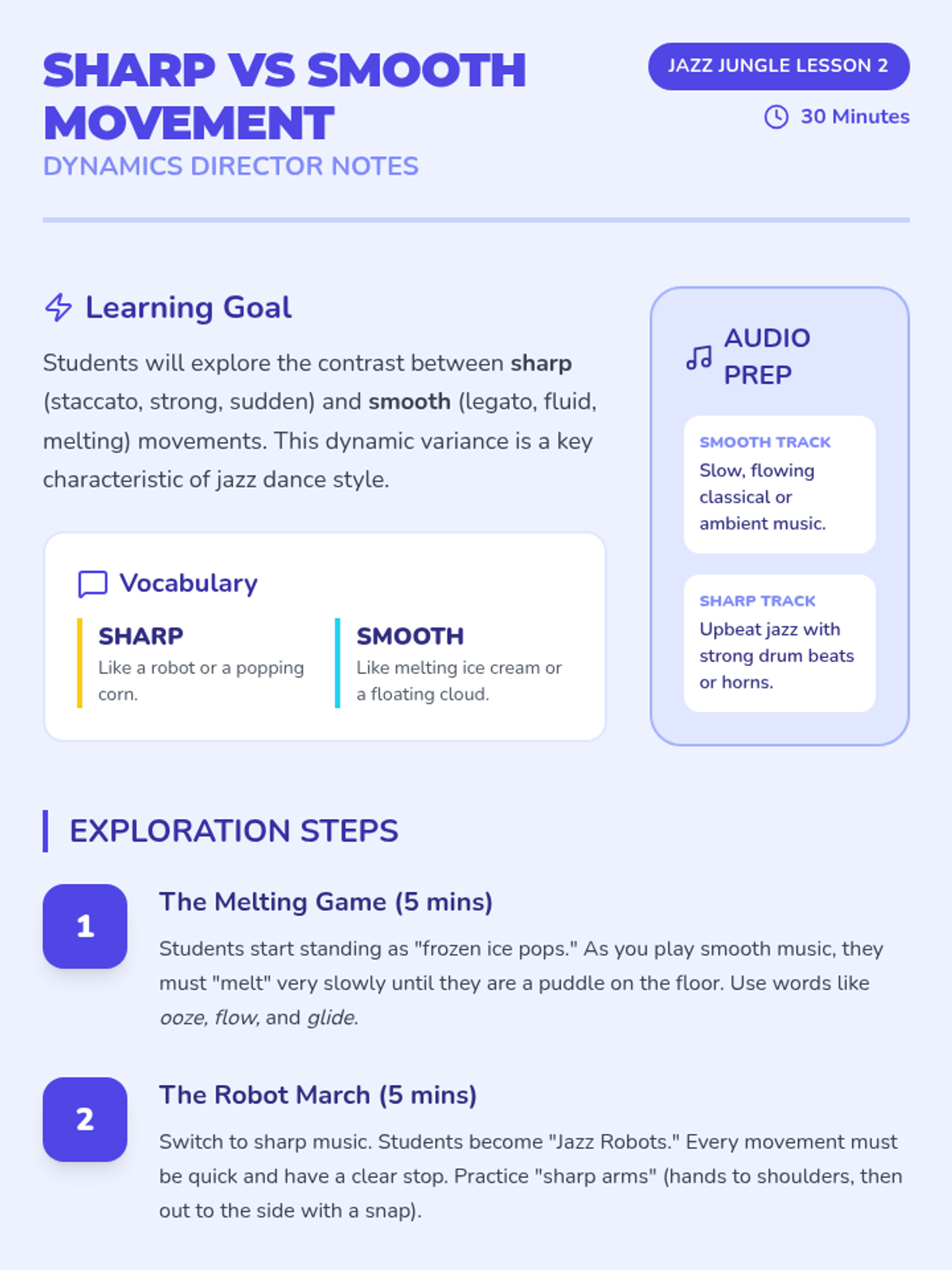
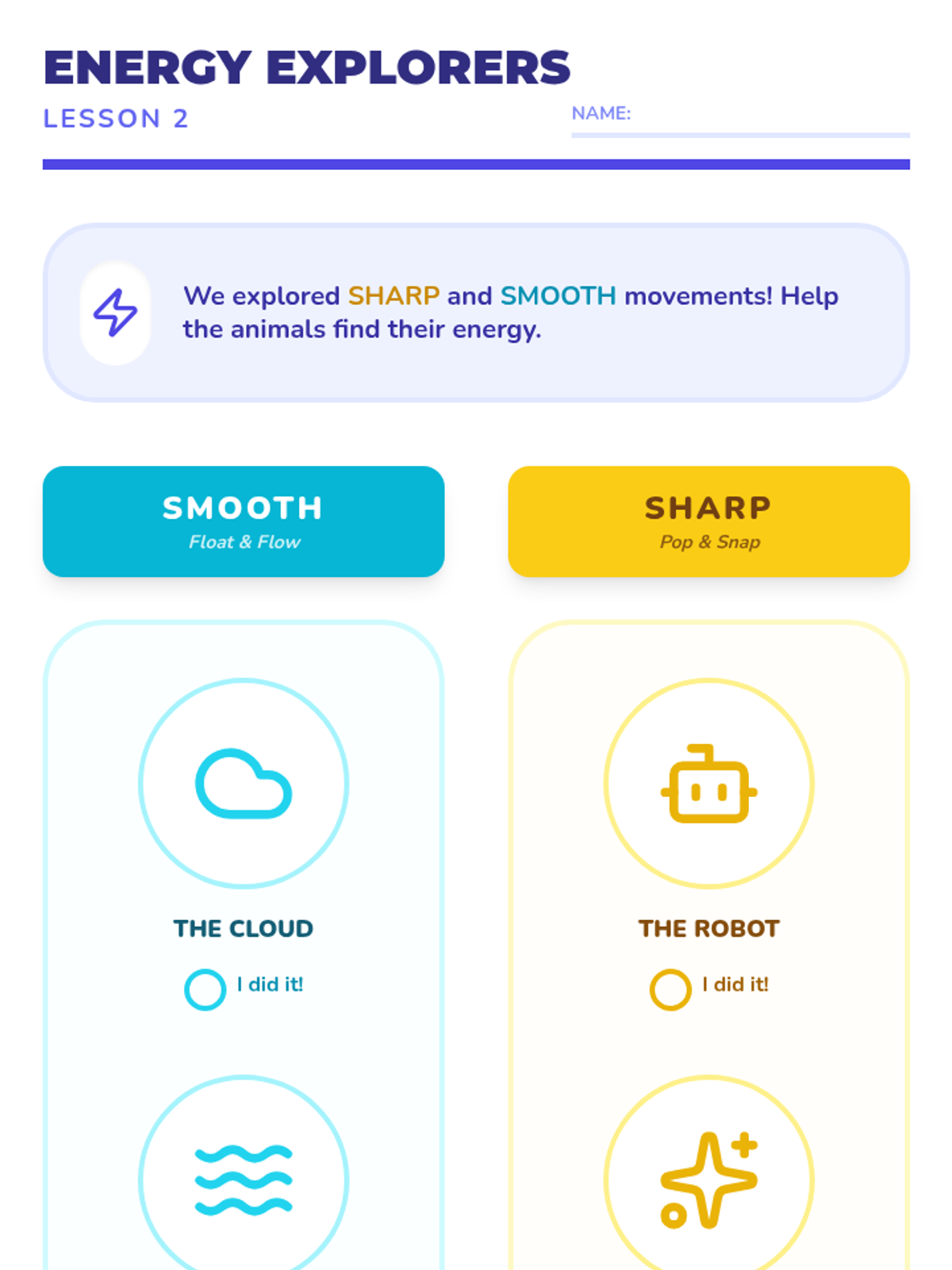
This lesson contrasts fluid movements with the sharp, staccato energy often found in jazz. Students alternate between moving like 'melting ice cream' and 'marching robots' to understand dynamic variance.
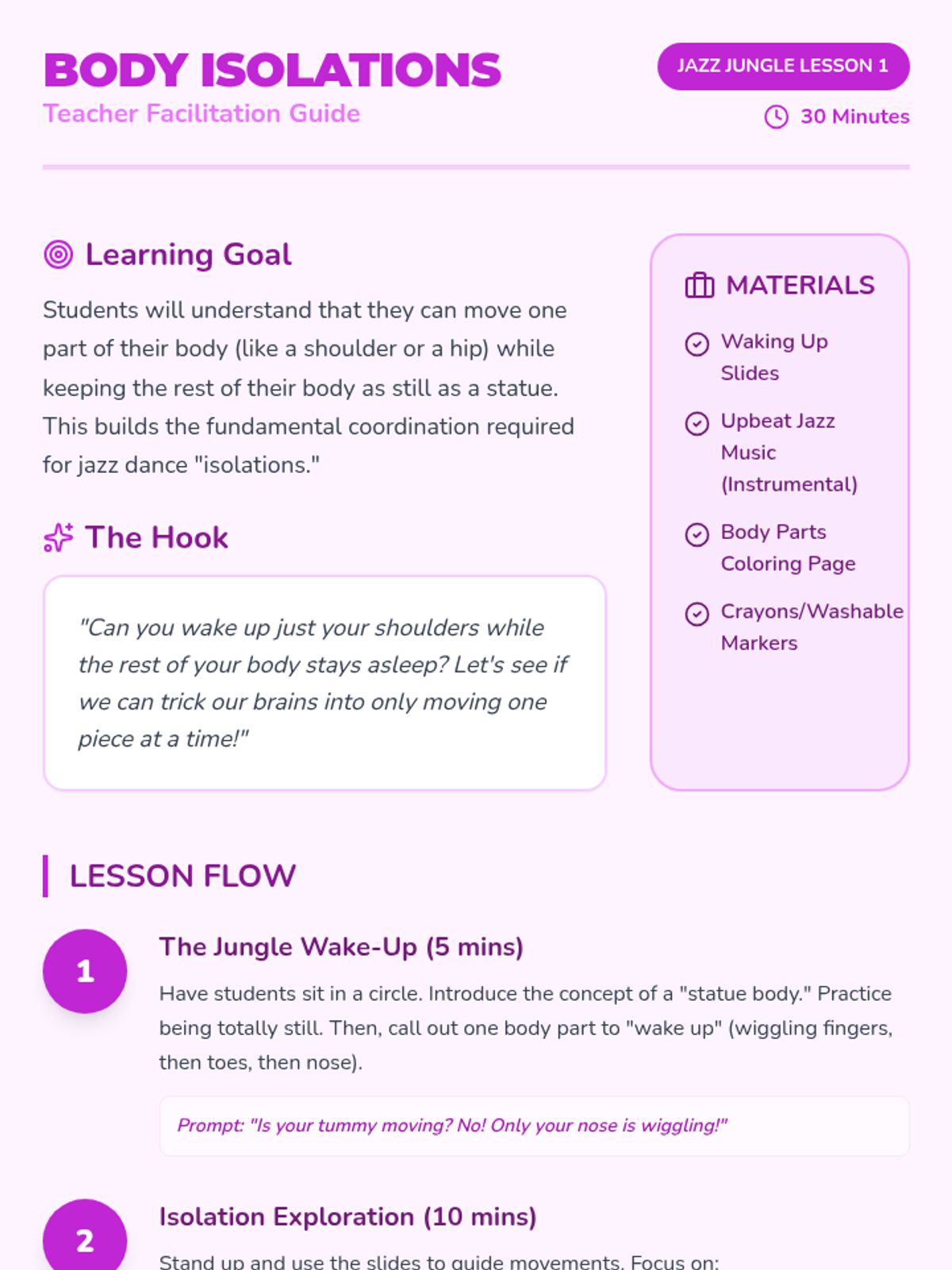
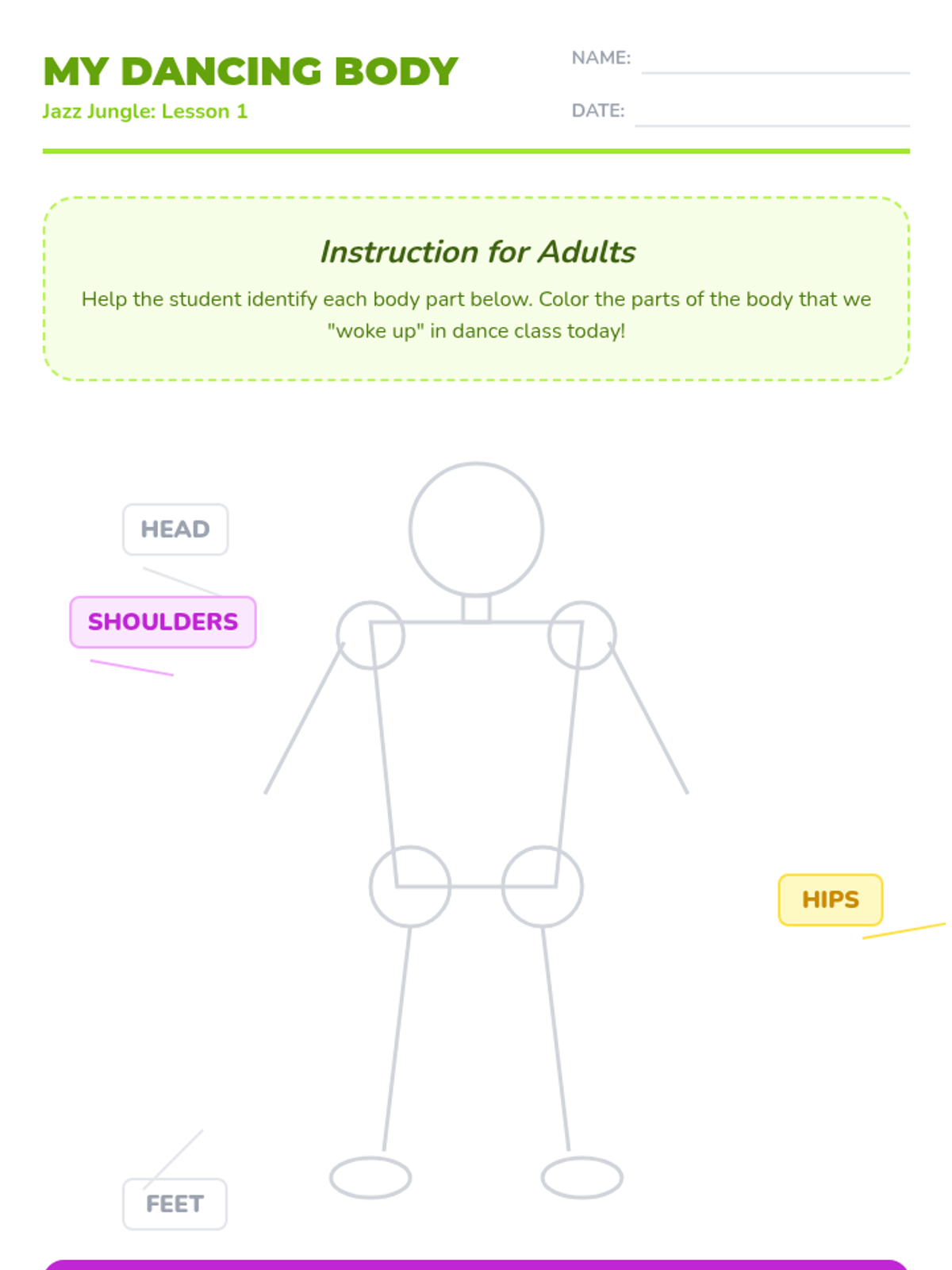
Students discover they can move one body part while keeping the rest still. They practice wiggling shoulders, hips, and heads independently, developing the coordination needed for jazz dance technique.
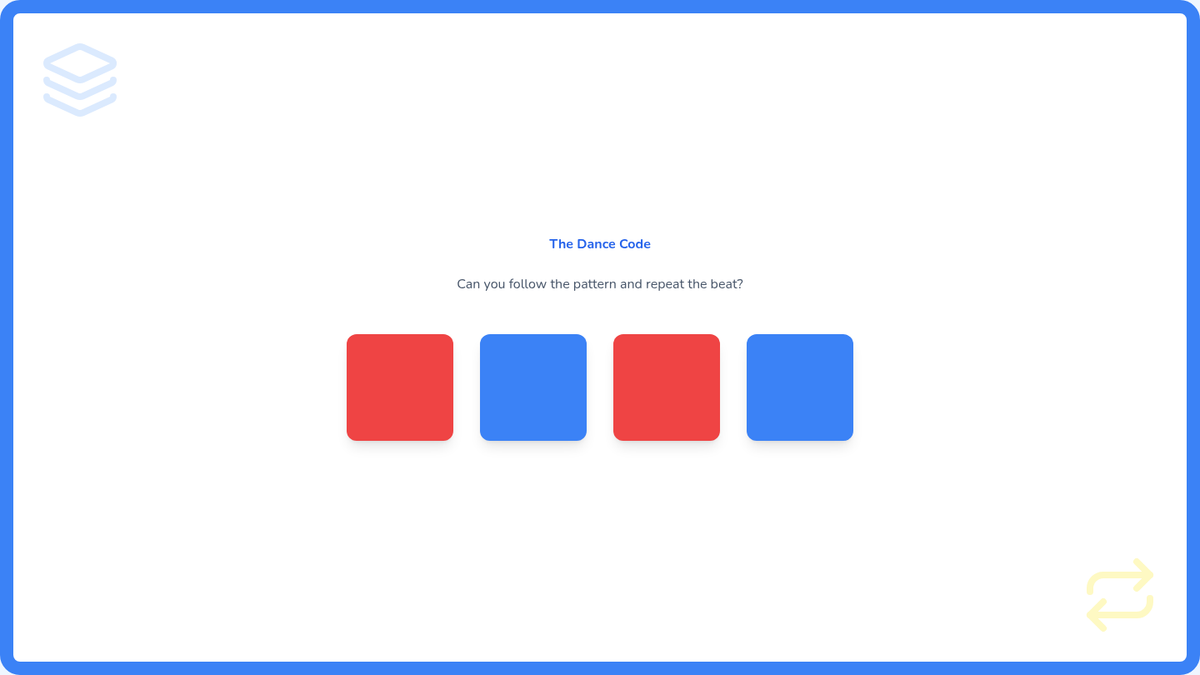
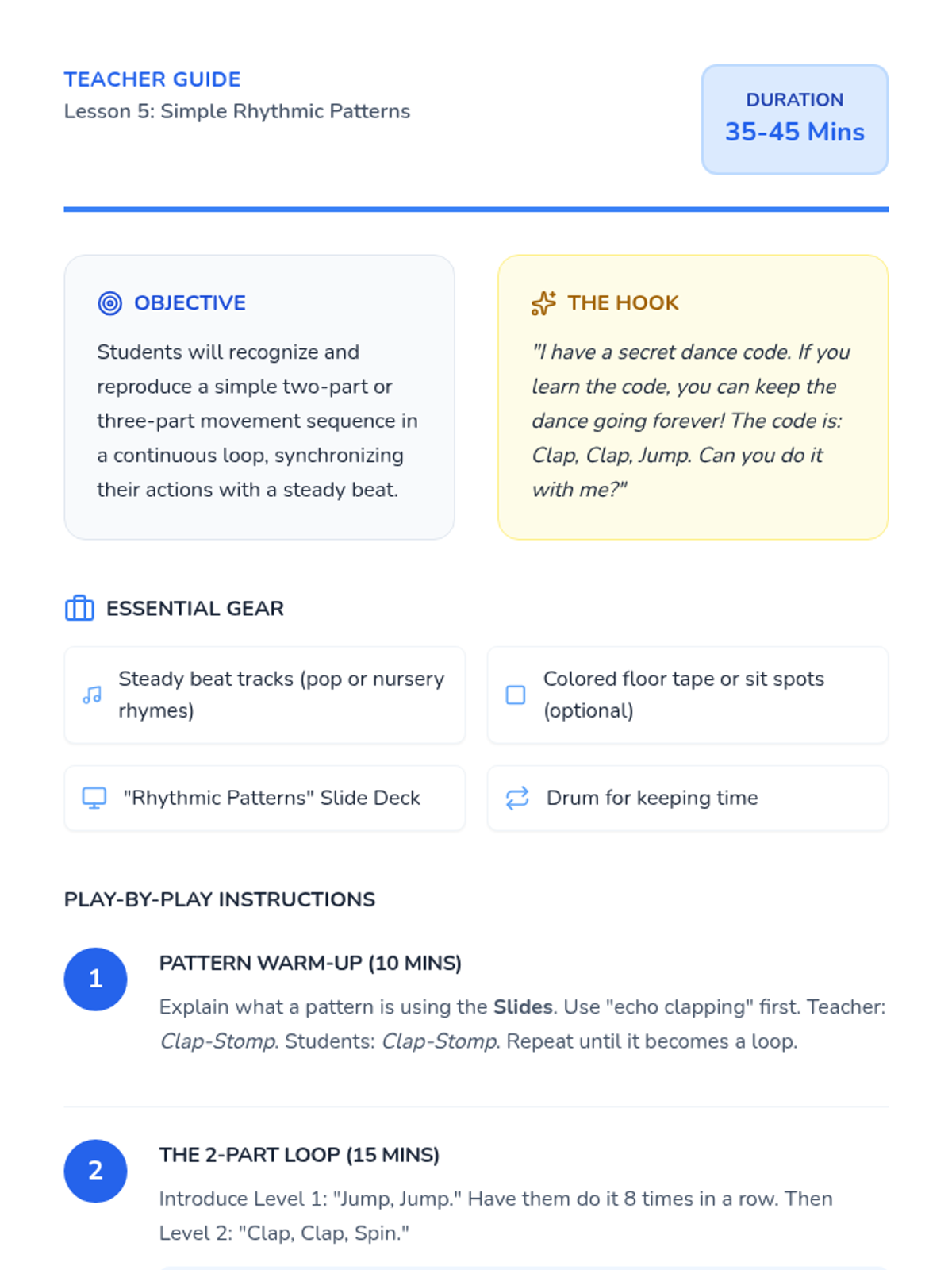
Students are introduced to basic sequencing by learning a simple two-part movement pattern. They practice repeating this sequence in a loop to build coordination and memory.
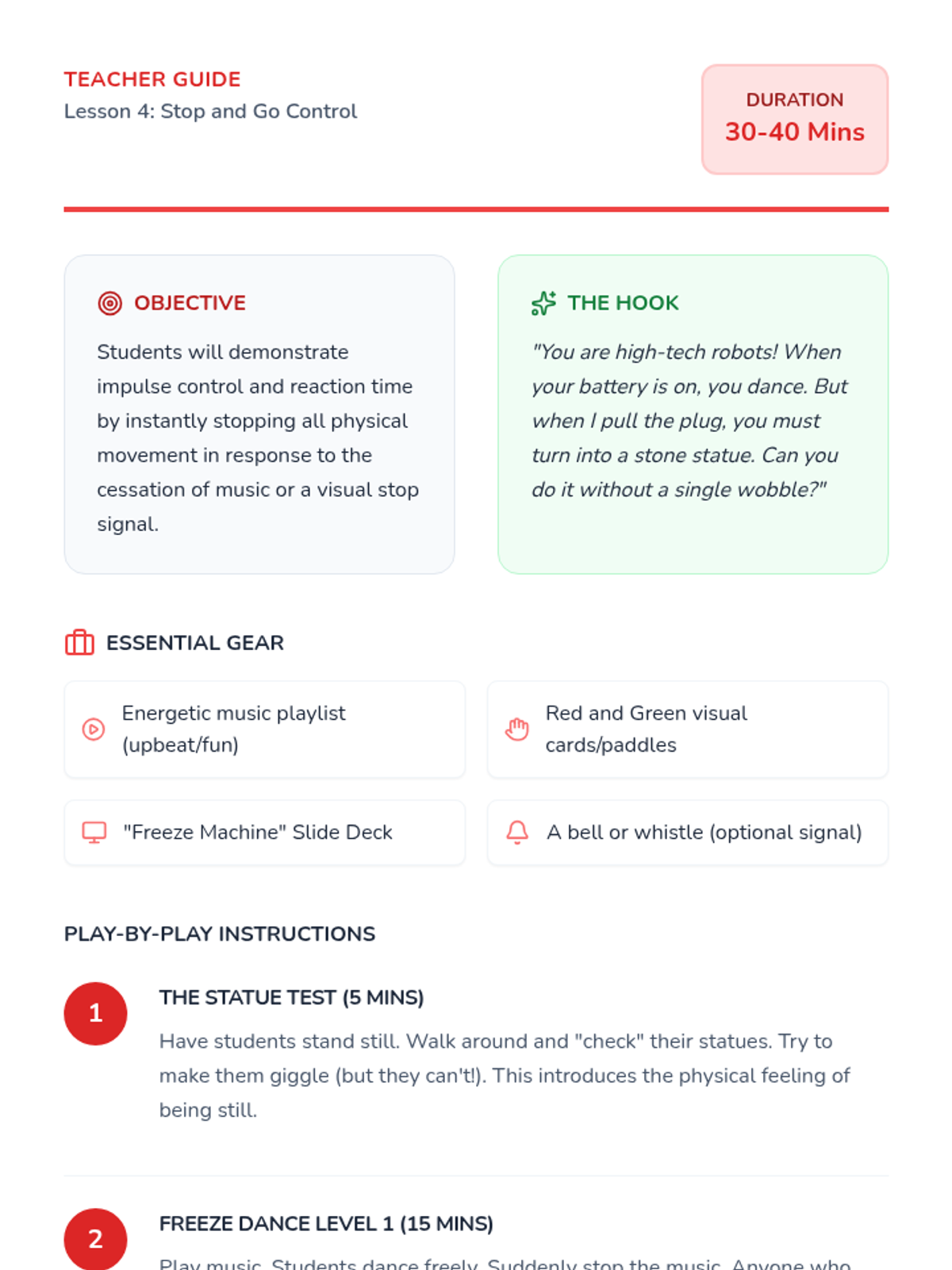
This lesson utilizes 'Freeze Dance' to teach impulse control and reaction time. Students move freely while music plays and must freeze instantly in silence.
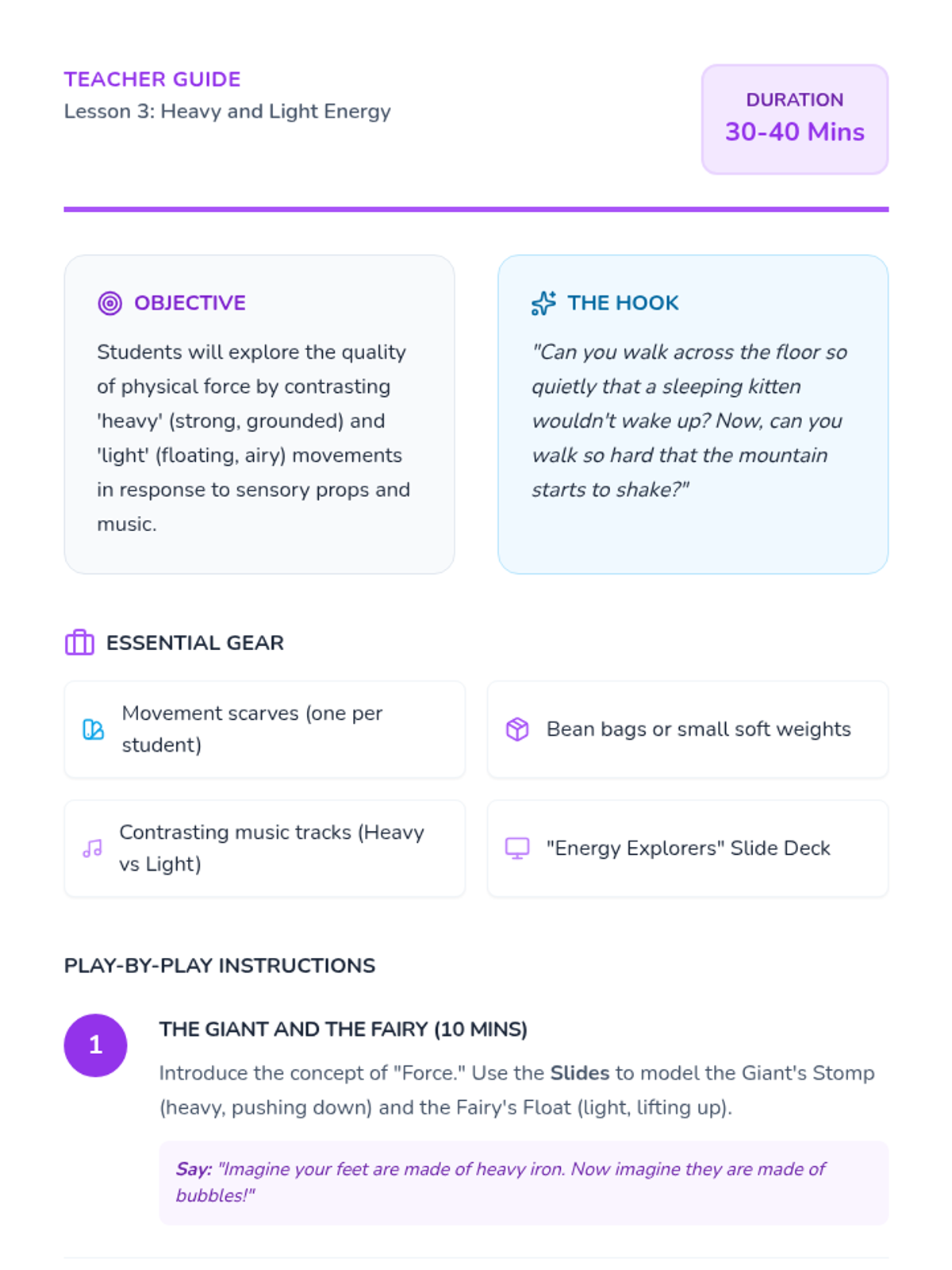
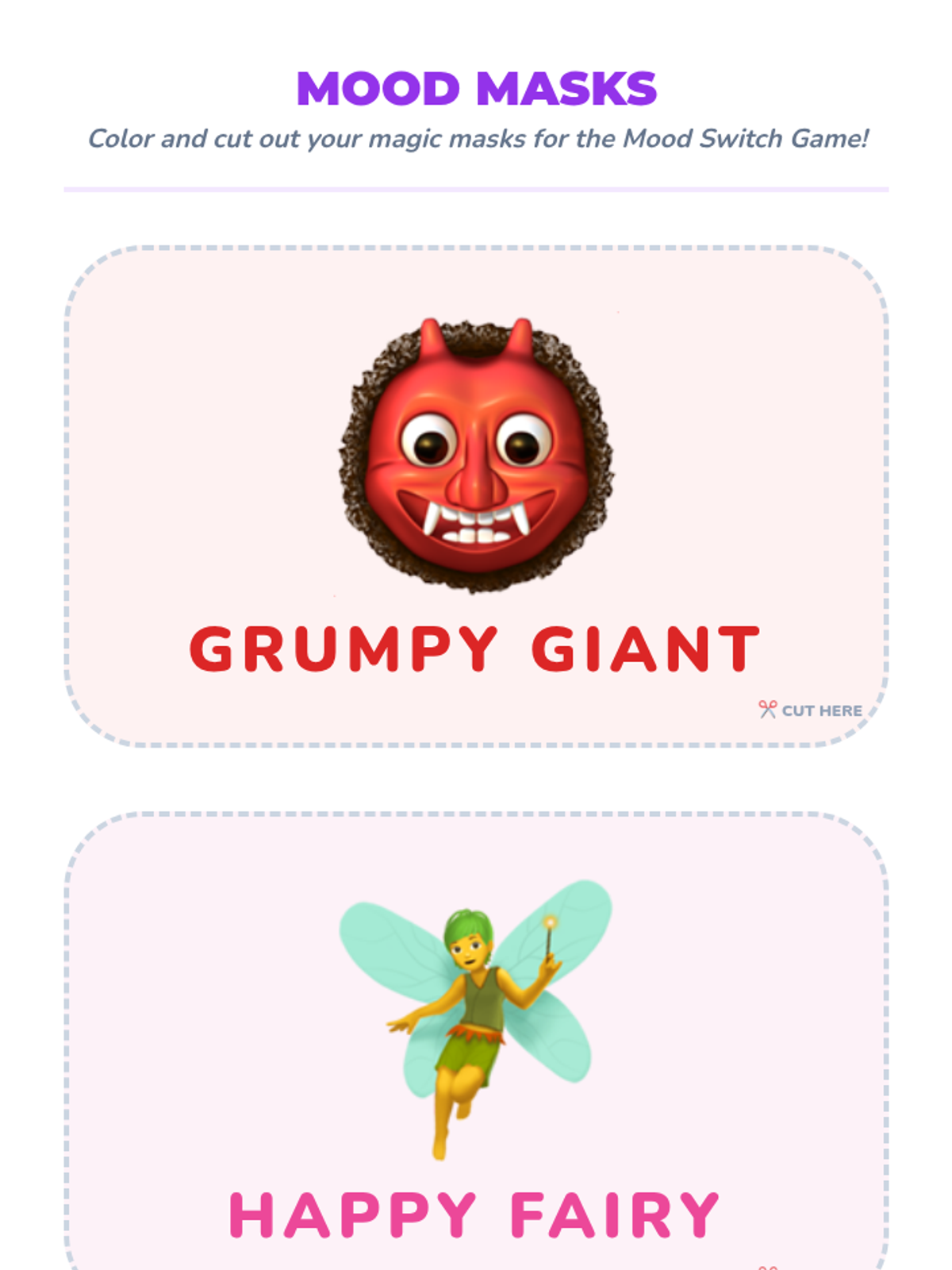
Students explore movement quality by stomping like giants and tip-toeing like fairies. They use scarves and bean bags to visualize and feel heavy and light energy.
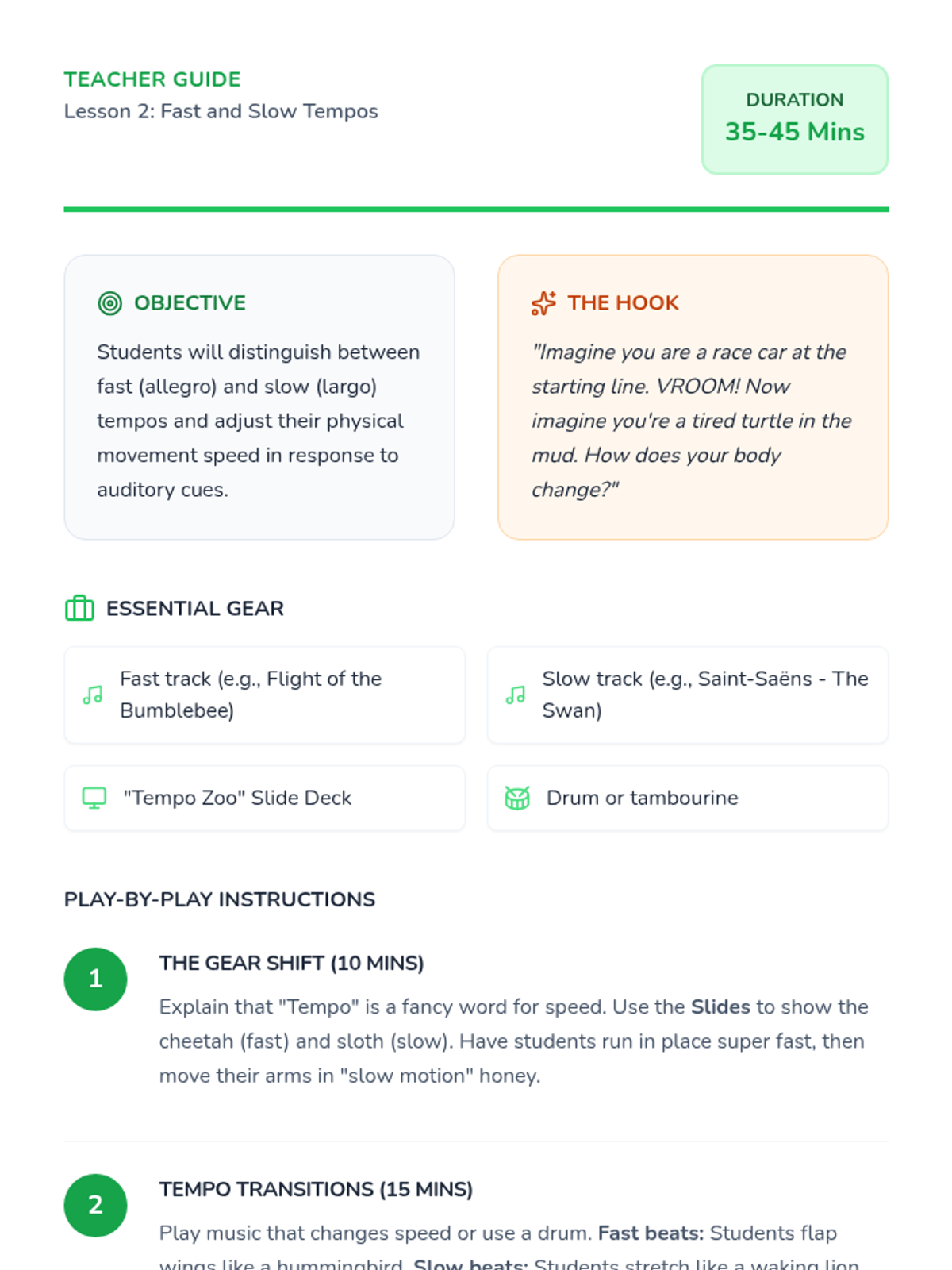
Using animal imagery, students contrast fast movements with slow movements. The teacher alternates music speeds, requiring students to adjust their pace immediately.
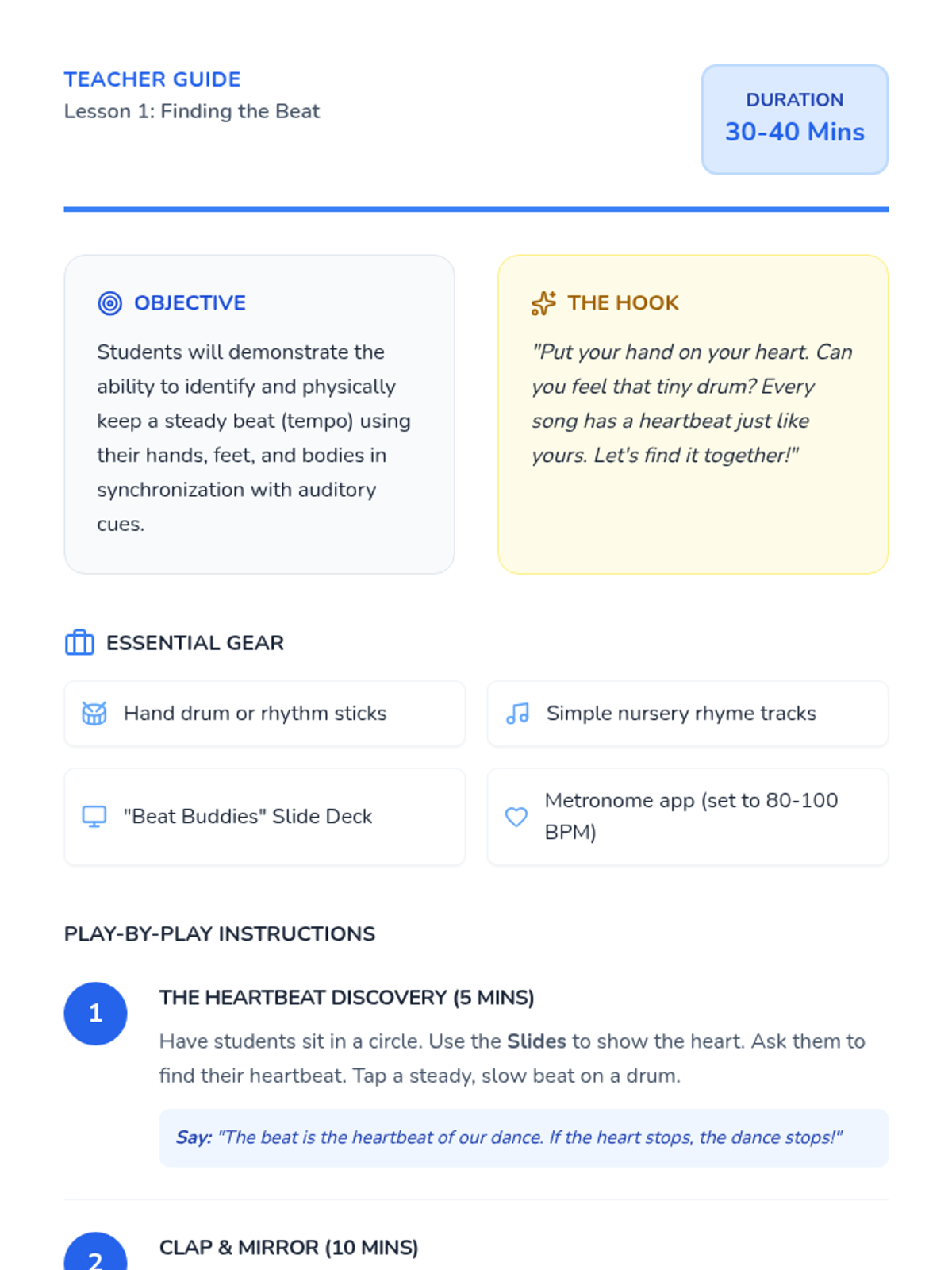
Students learn to identify the steady beat in music through clapping, stomping, and marching. They practice keeping a steady tempo together as a group, using simple drum beats and nursery rhymes.
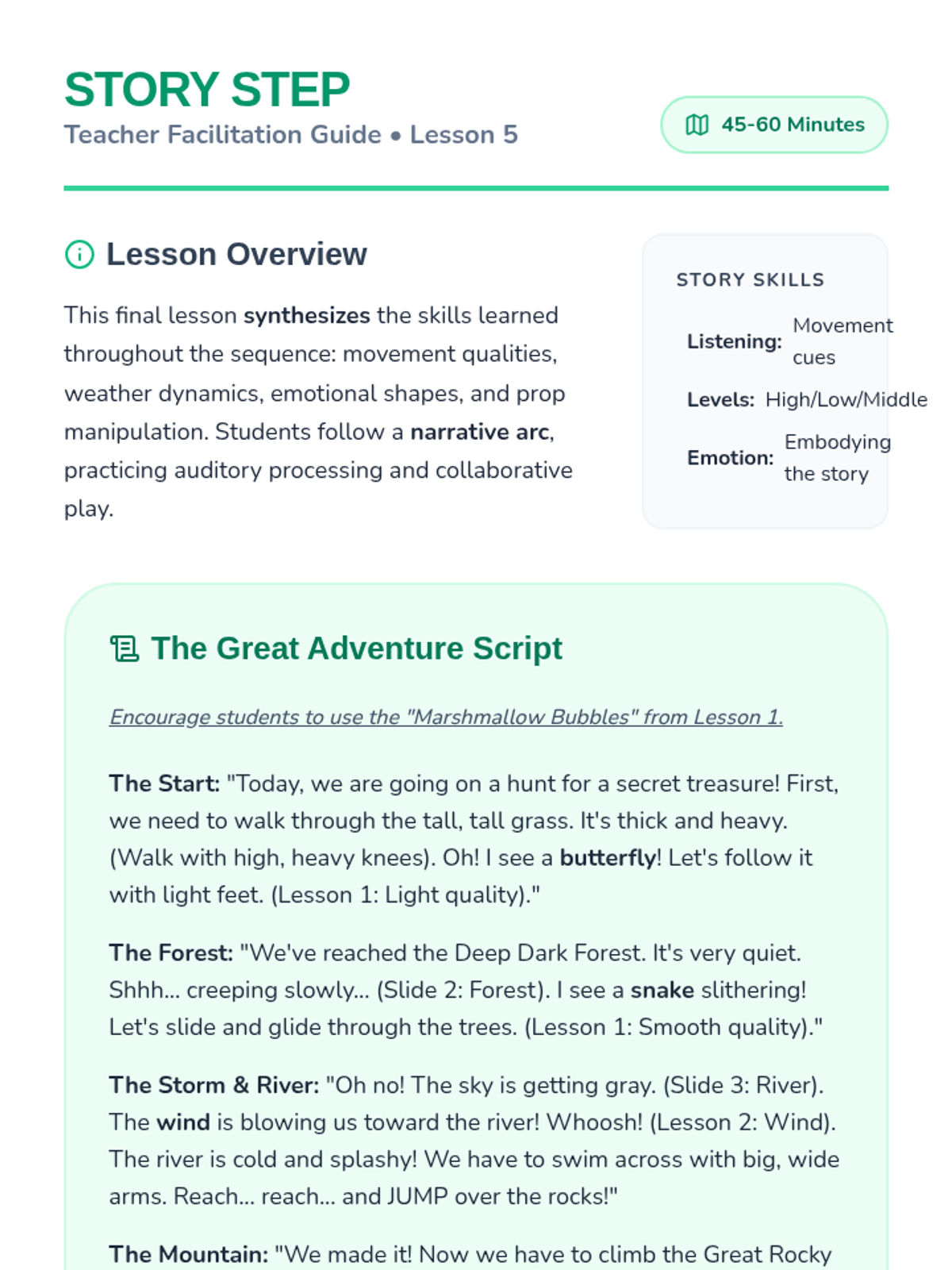
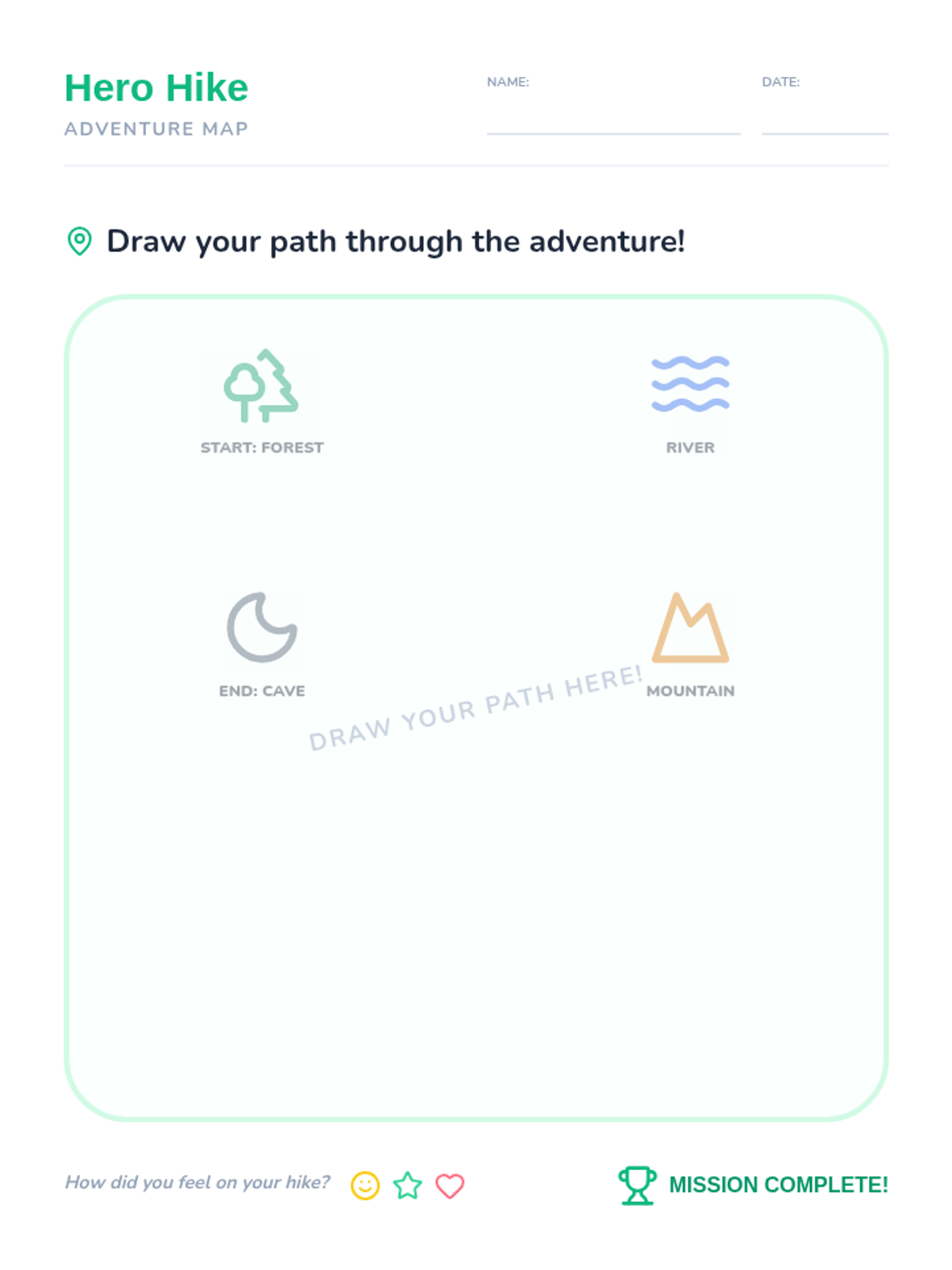
The teacher narrates a simple adventure story, and students act it out collectively using the skills they have learned. They might cross a river (jumping), climb a mountain (high levels), or hide in a cave (low levels). This synthesizes listening skills with creative movement.
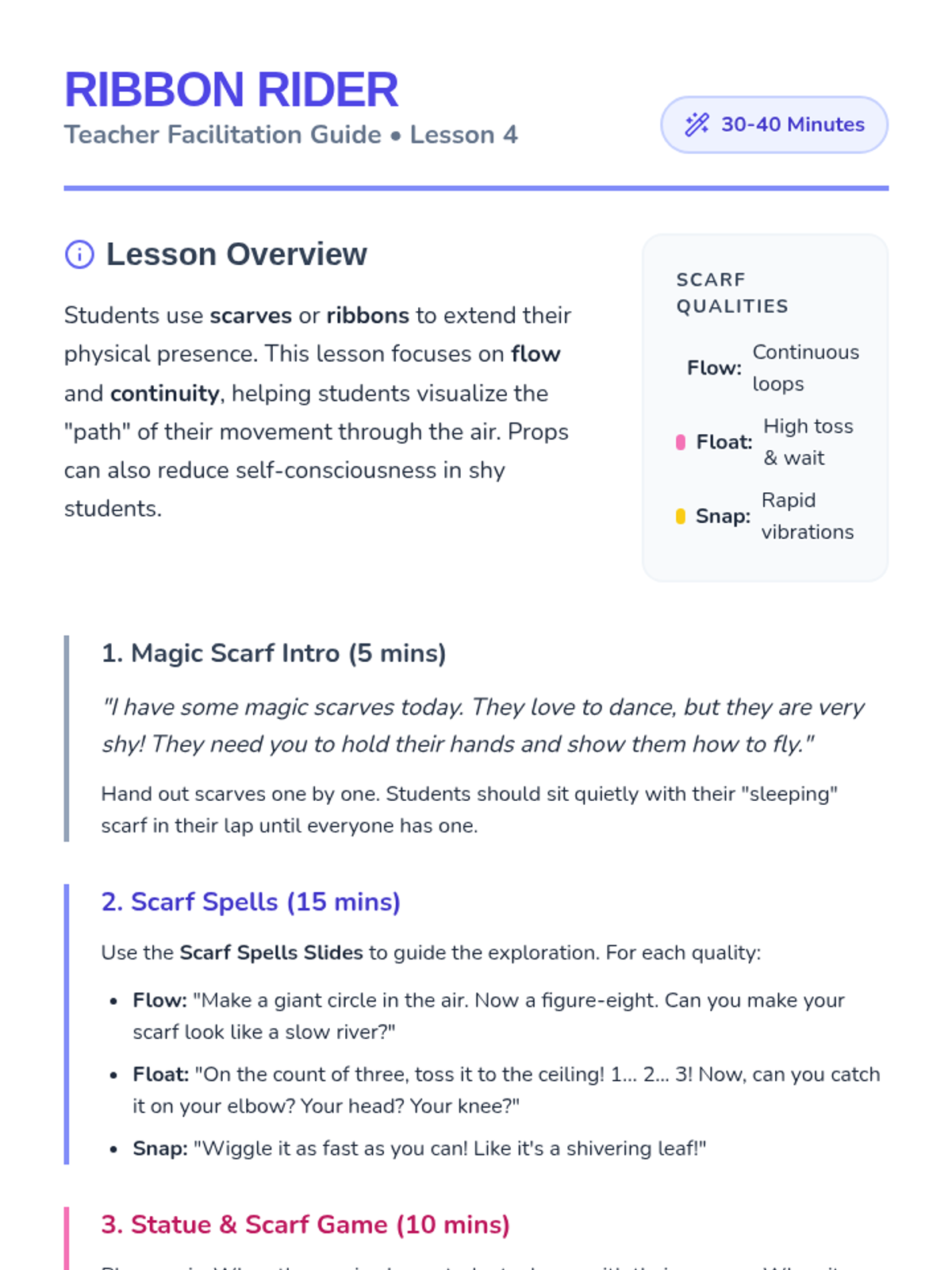
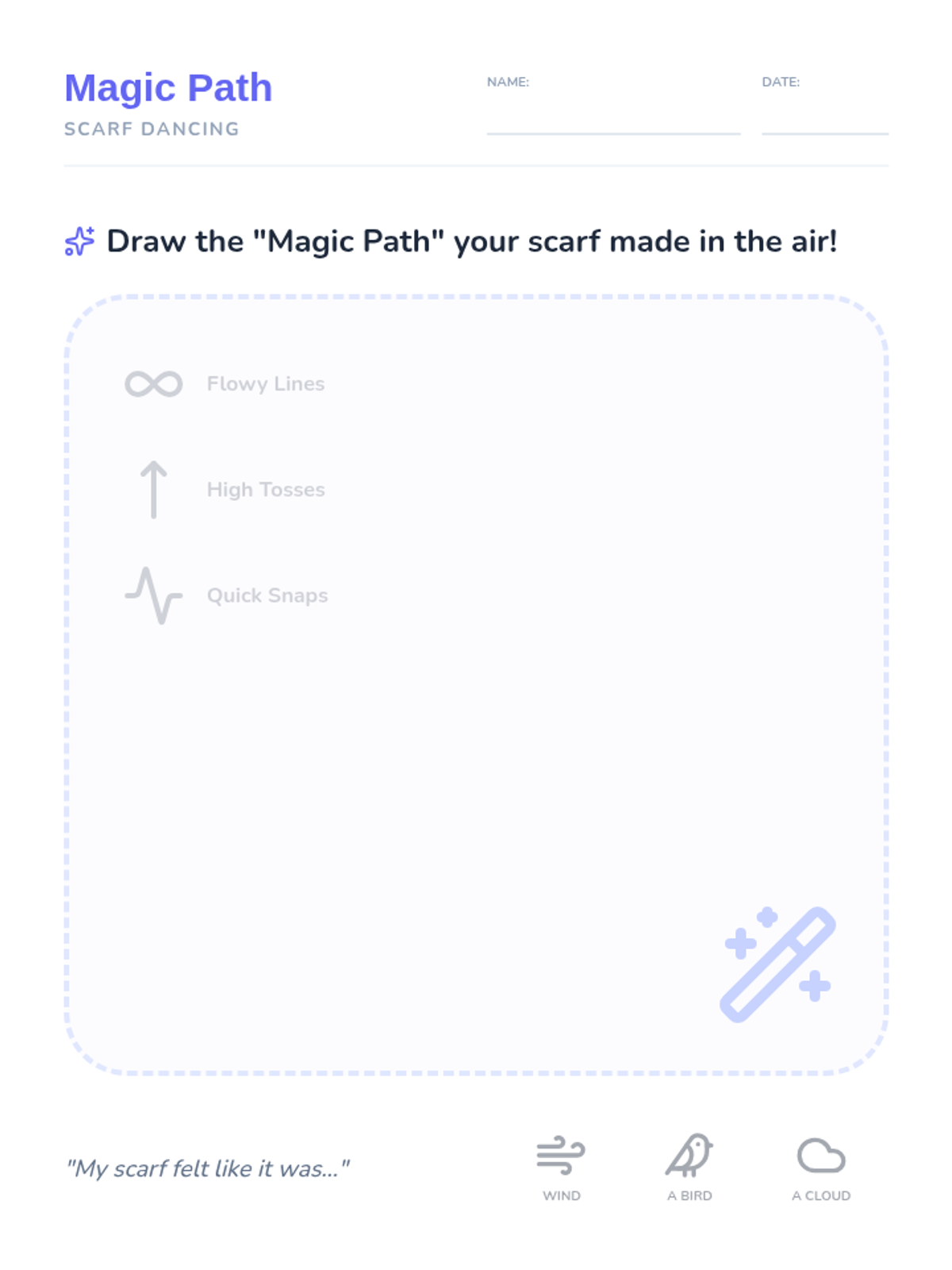
Students use scarves or ribbons to extend their movement range and visual expression. They explore how the prop reacts to their movement, creating soft, flowing lines or sharp snaps. The prop serves as a partner, helping shy students express themselves more boldly.
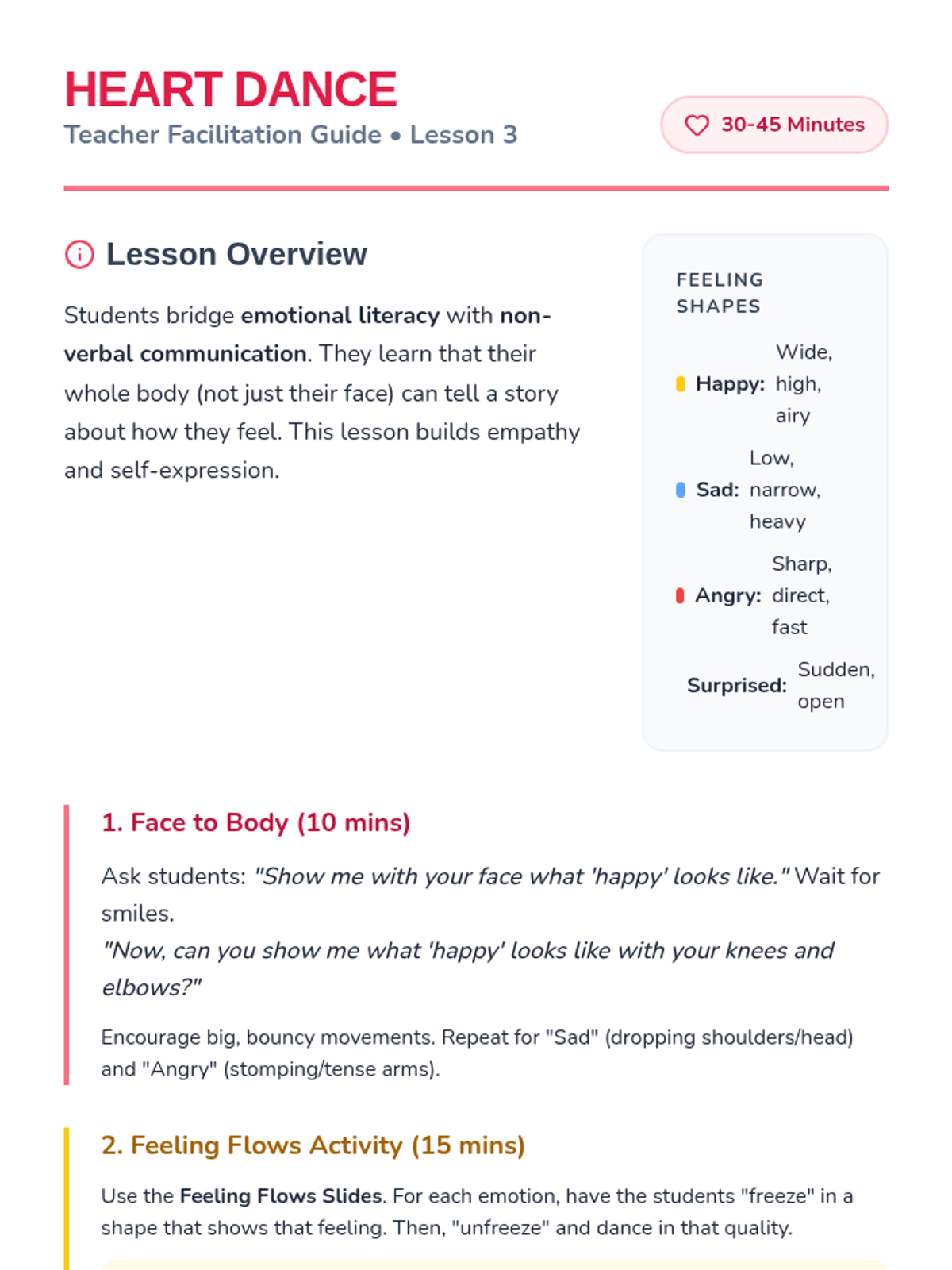
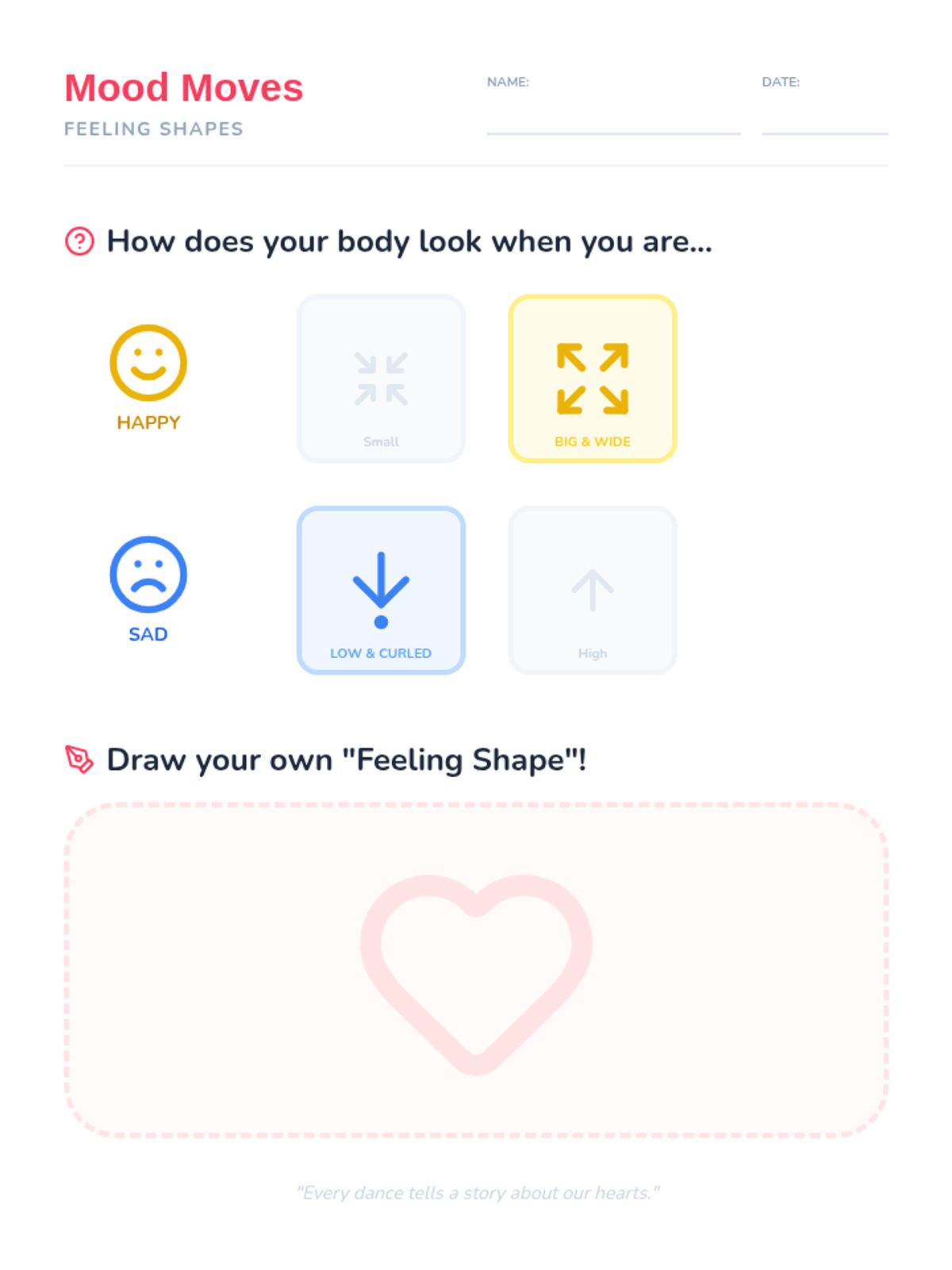
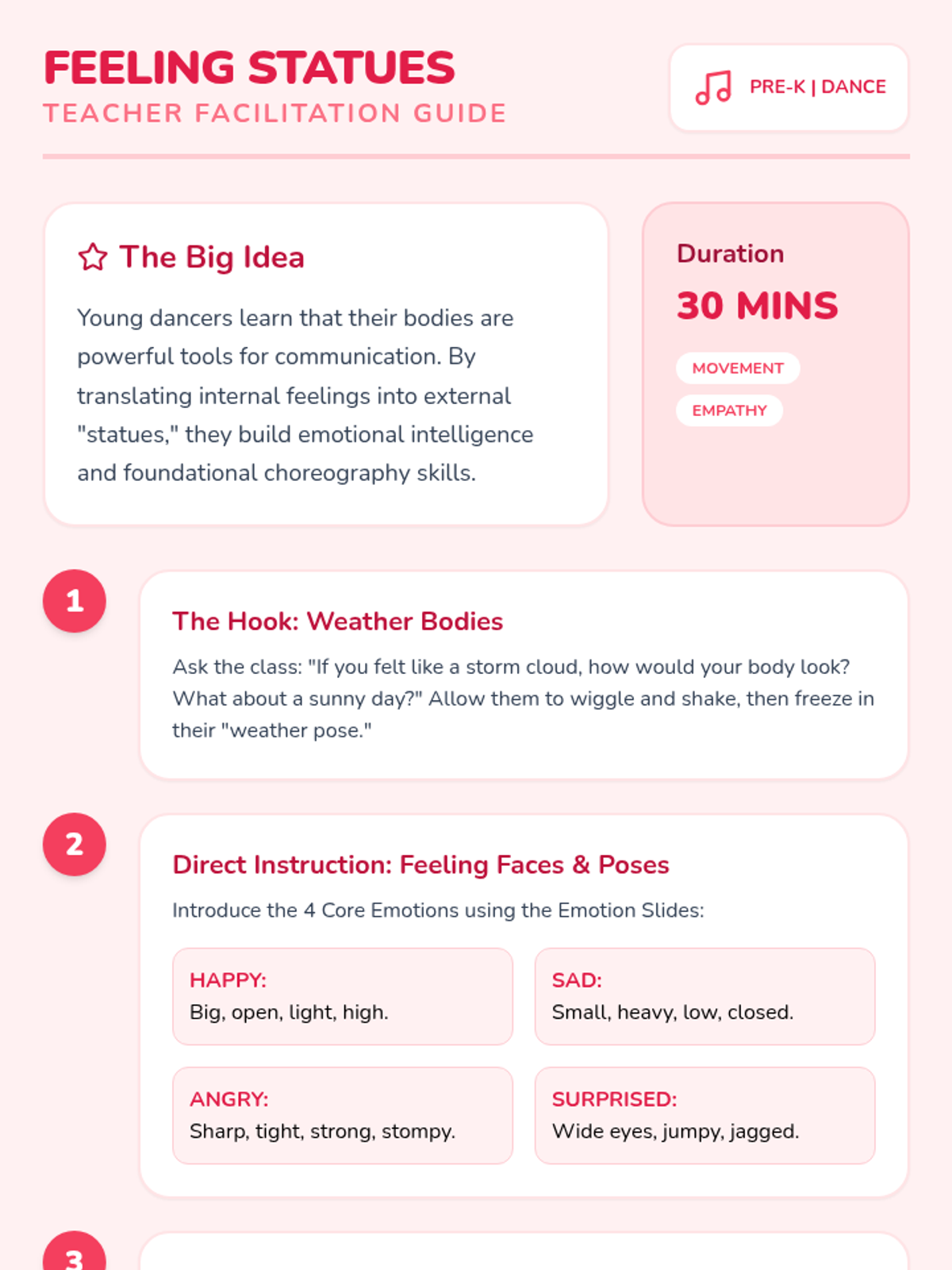
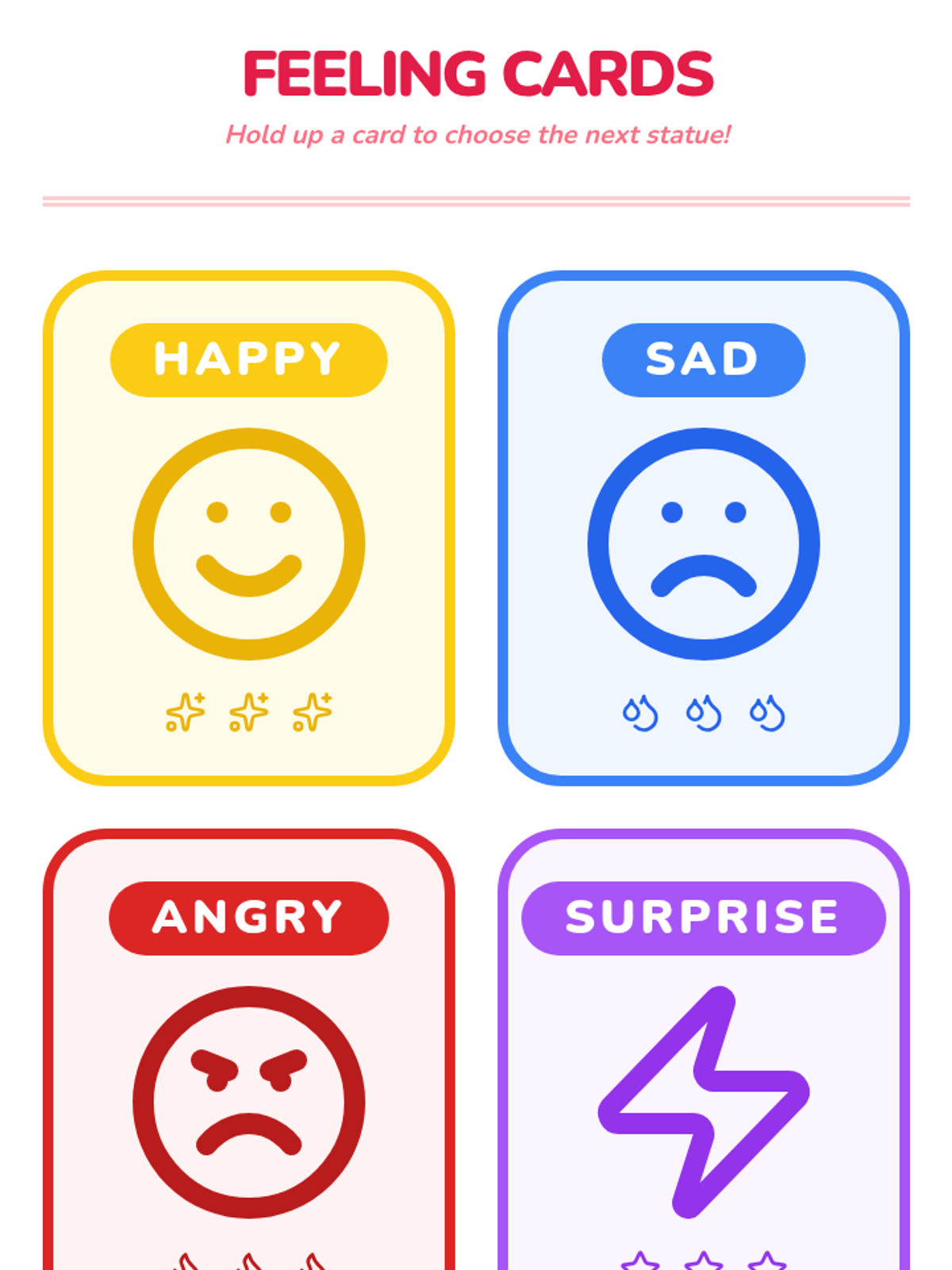
Students identify basic emotions (happy, sad, angry, surprised) and create body shapes that represent them. They explore how an 'angry' dance might look sharp and fast, while a 'sad' dance might be slow and low. This connects emotional literacy with physical expression.
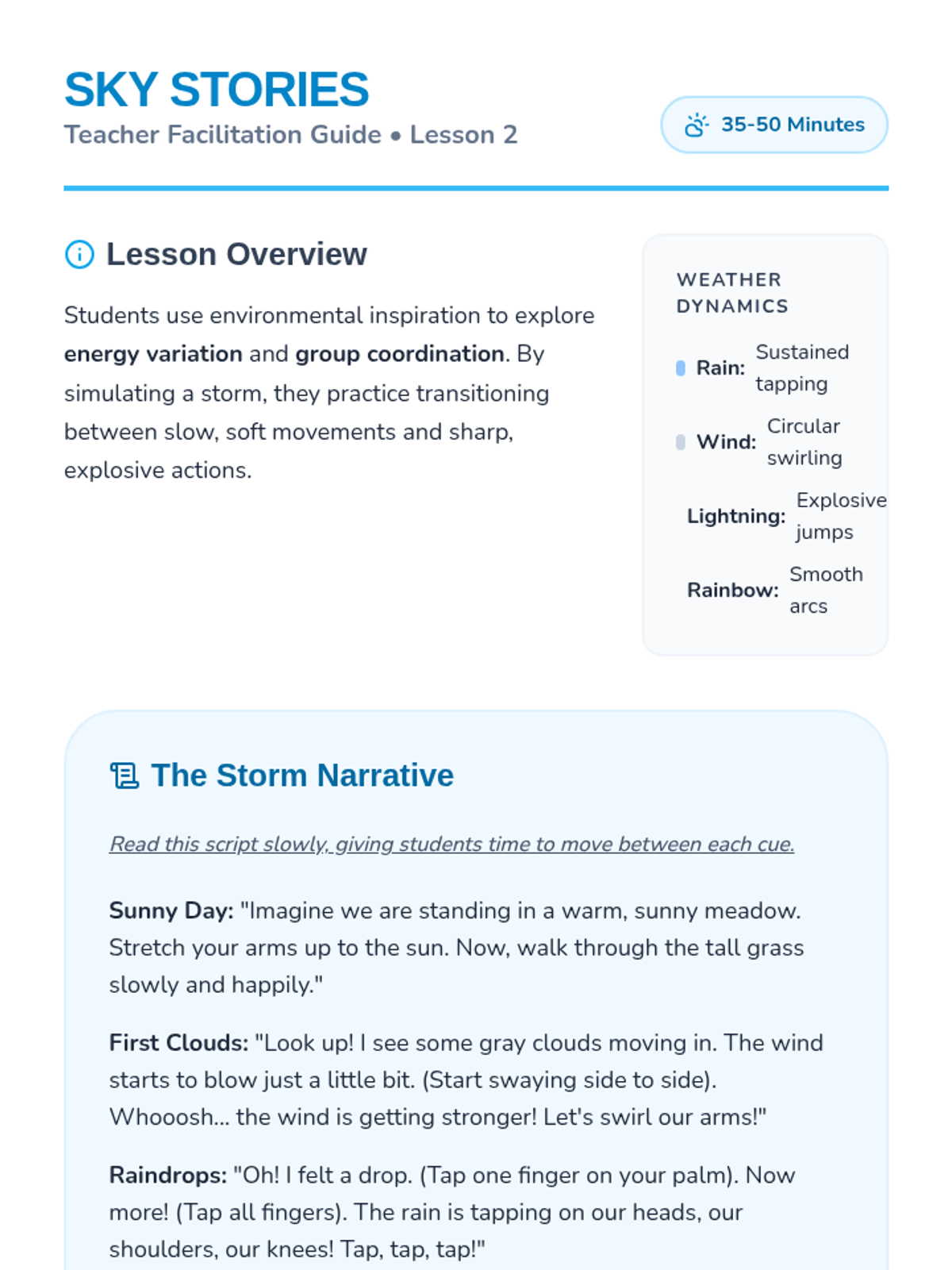
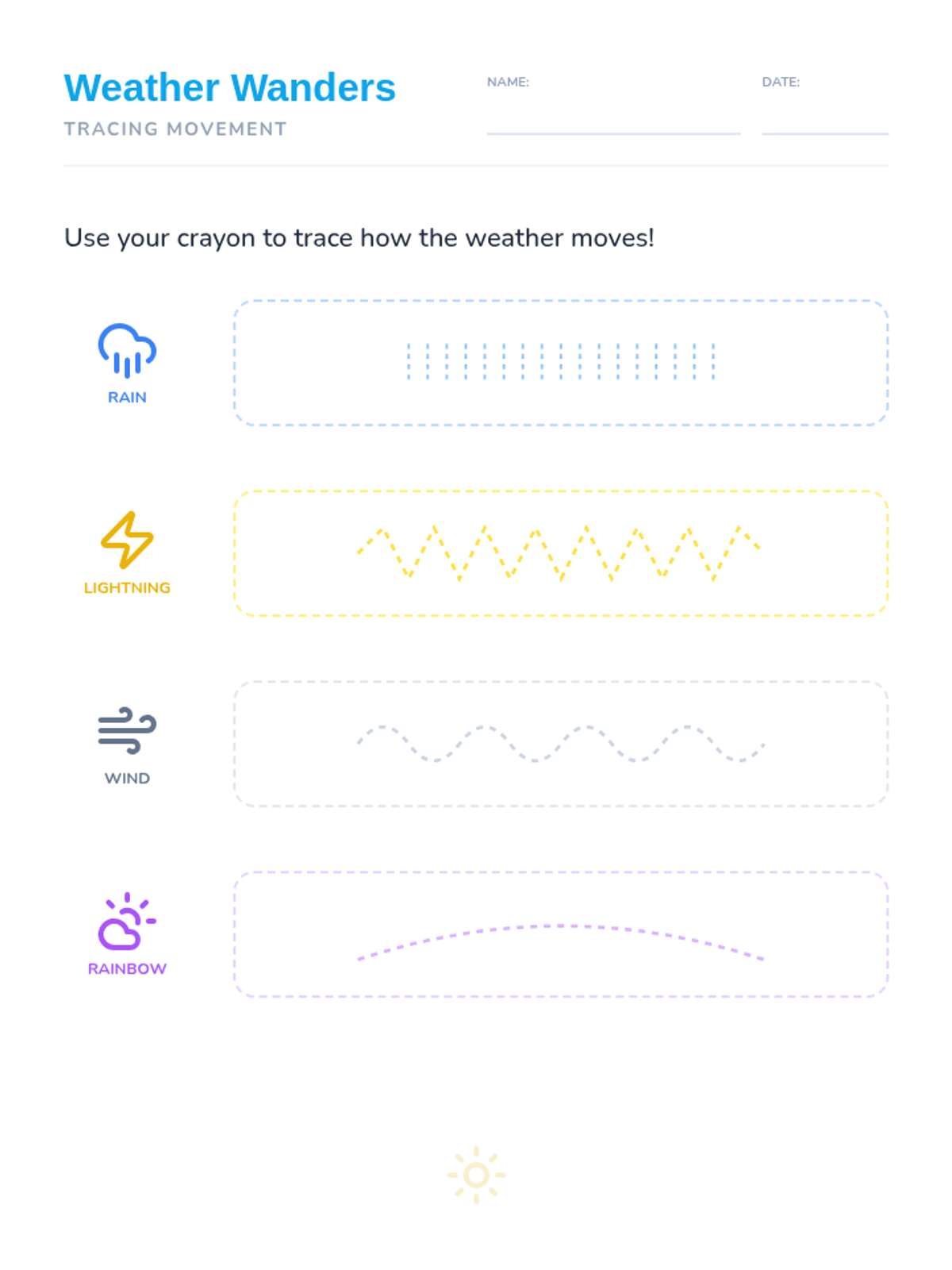
Using the environment as inspiration, students use their bodies to depict weather conditions. They swirl for wind, tap for rain, and jump for lightning. The teacher guides a 'storm' narrative where the class transitions from a sunny day to a storm and back to a rainbow.
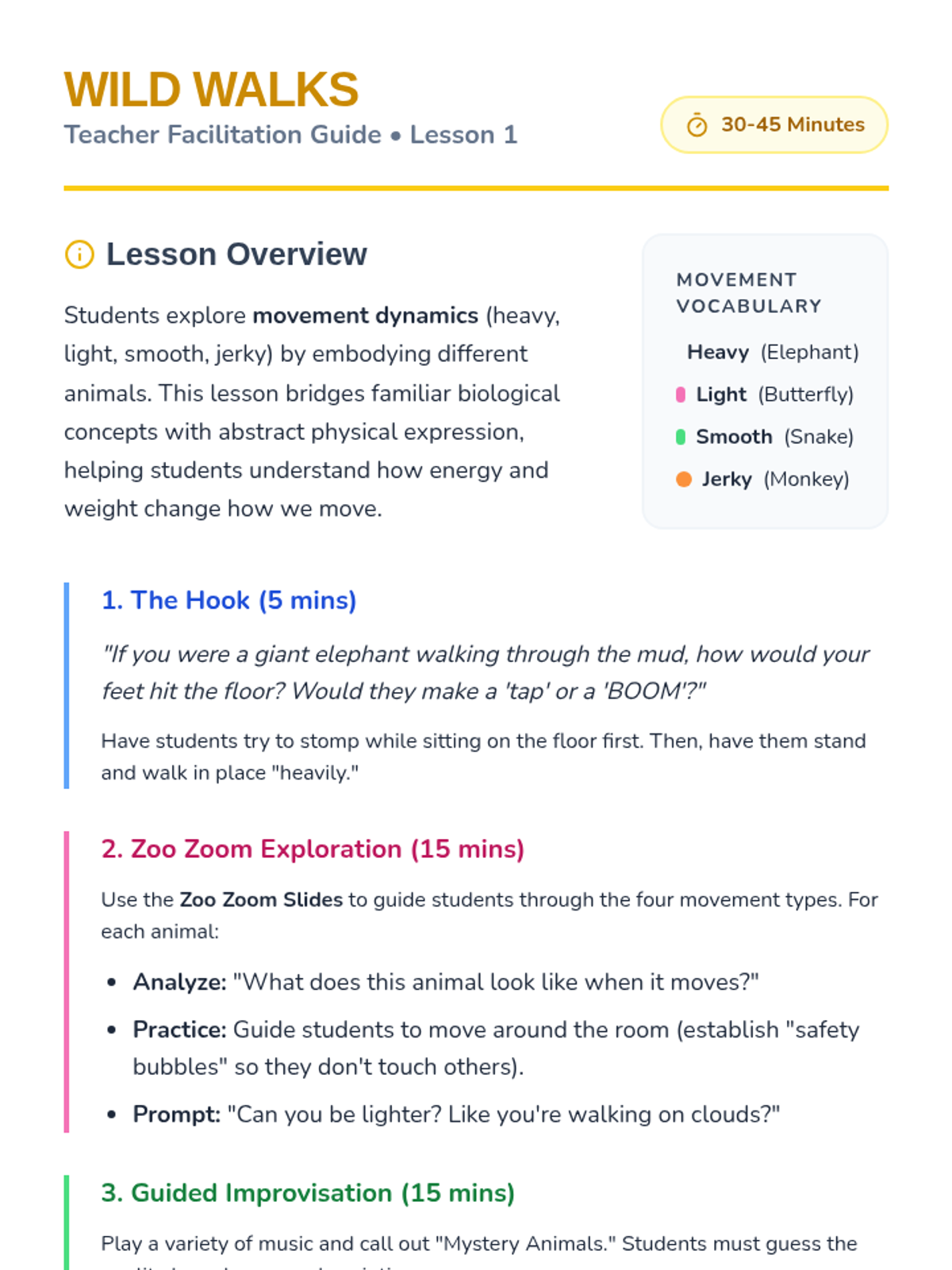
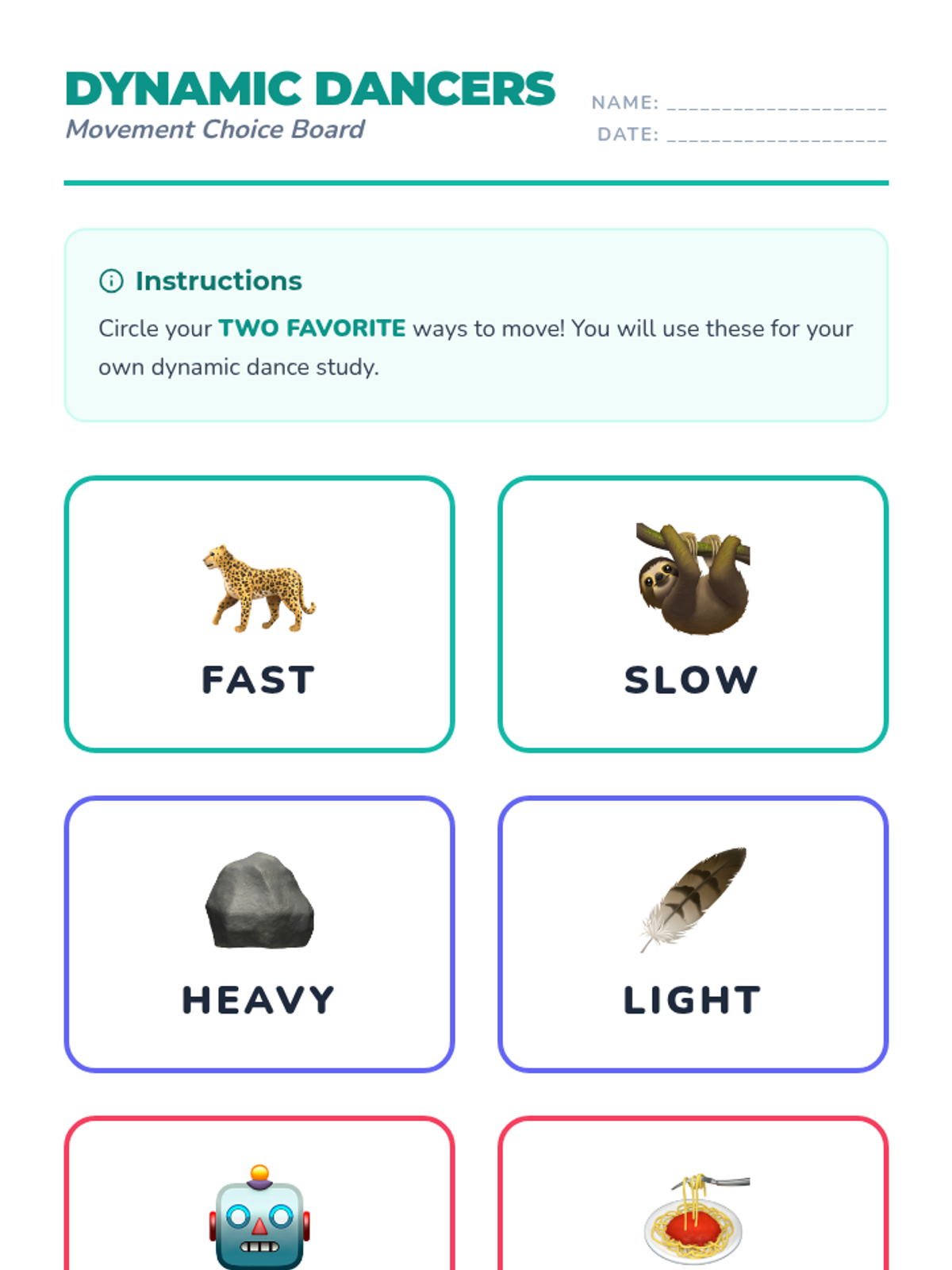
Students explore movement qualities like heavy, light, jerky, and smooth by imitating animals. They learn to translate visual and conceptual ideas into physical actions.
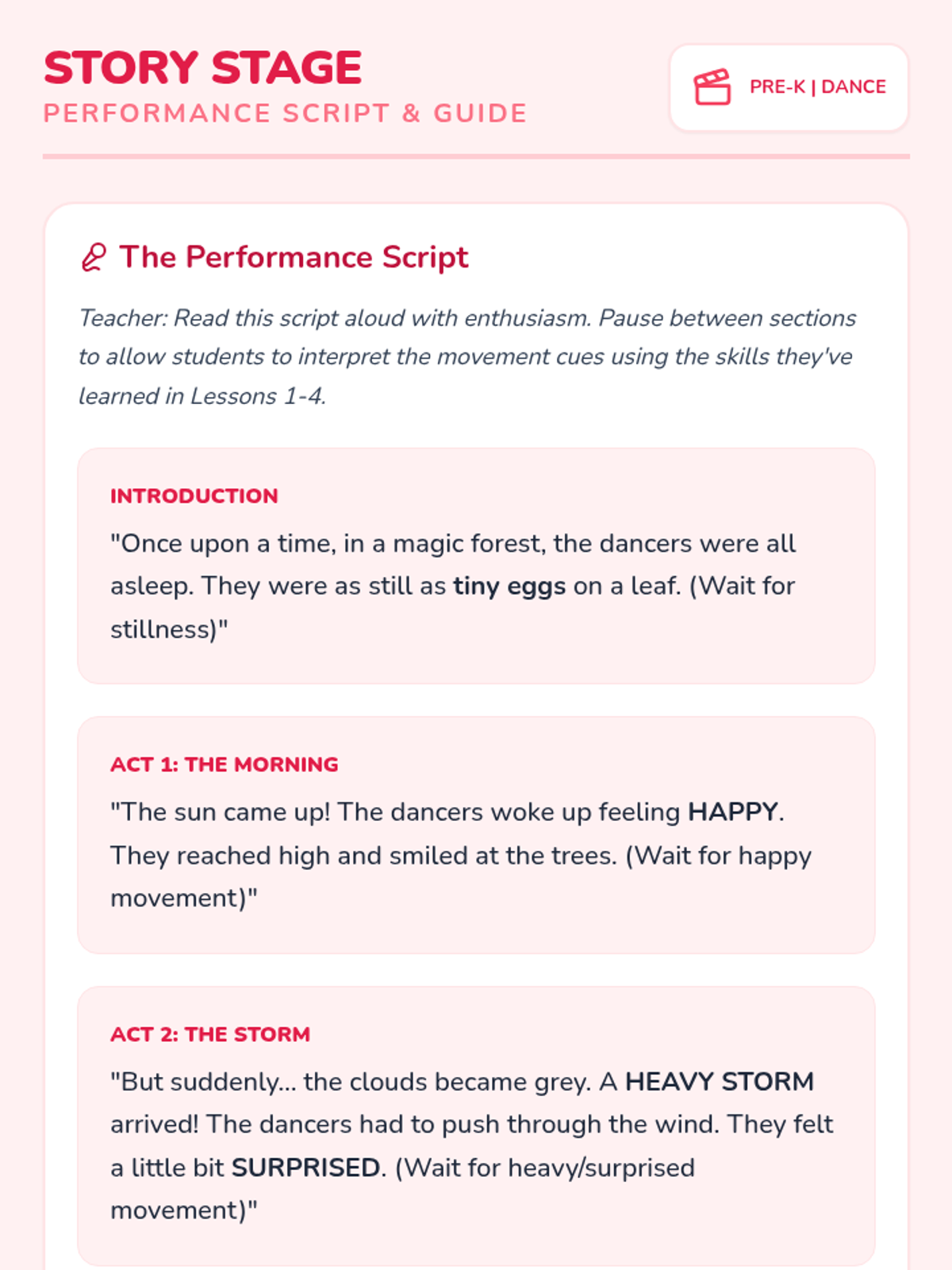
The sequence concludes with a grand performance where students dance along to a teacher-narrated story. This lesson synthesizes all previous skills into a collaborative group dance.
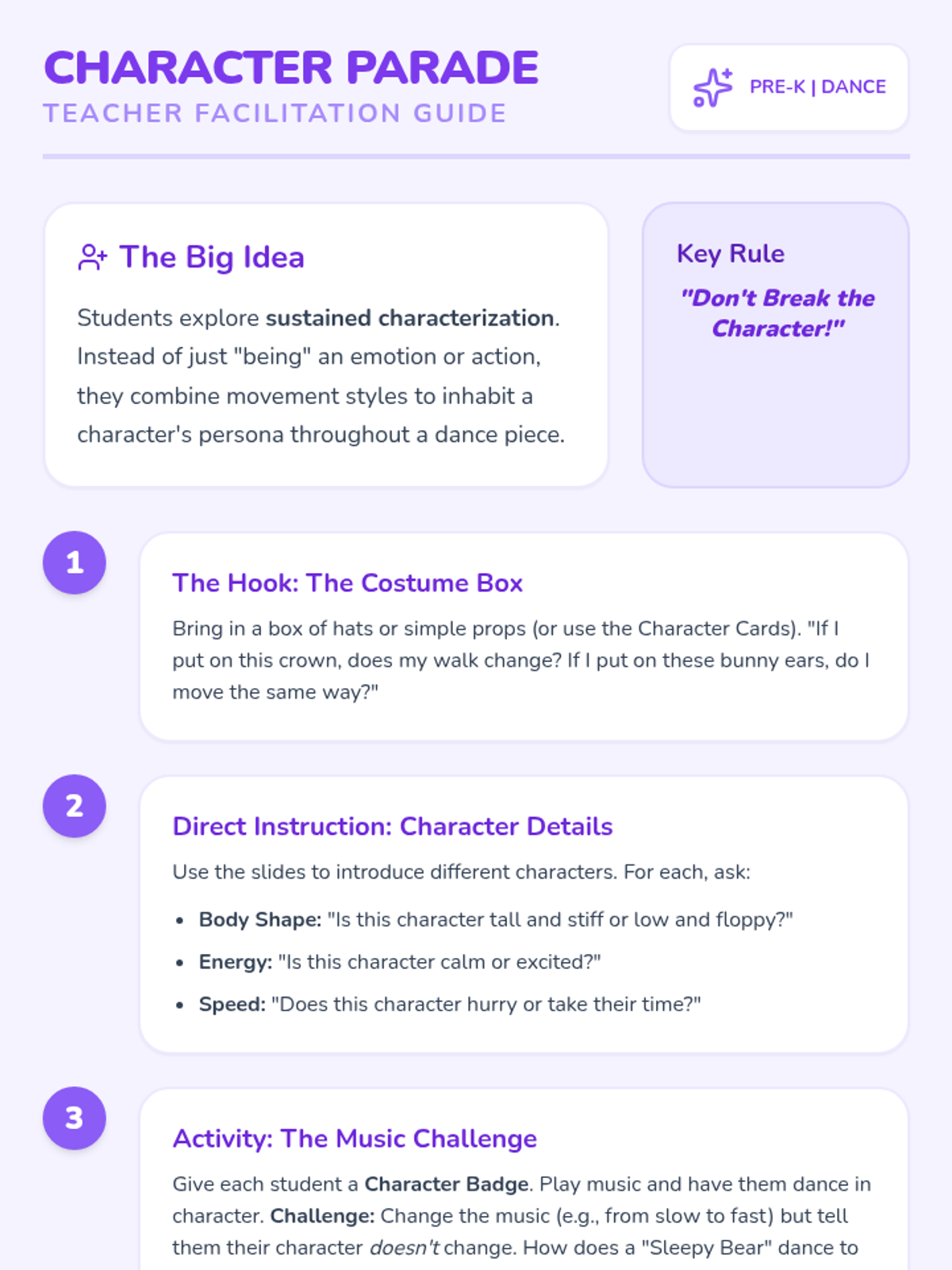
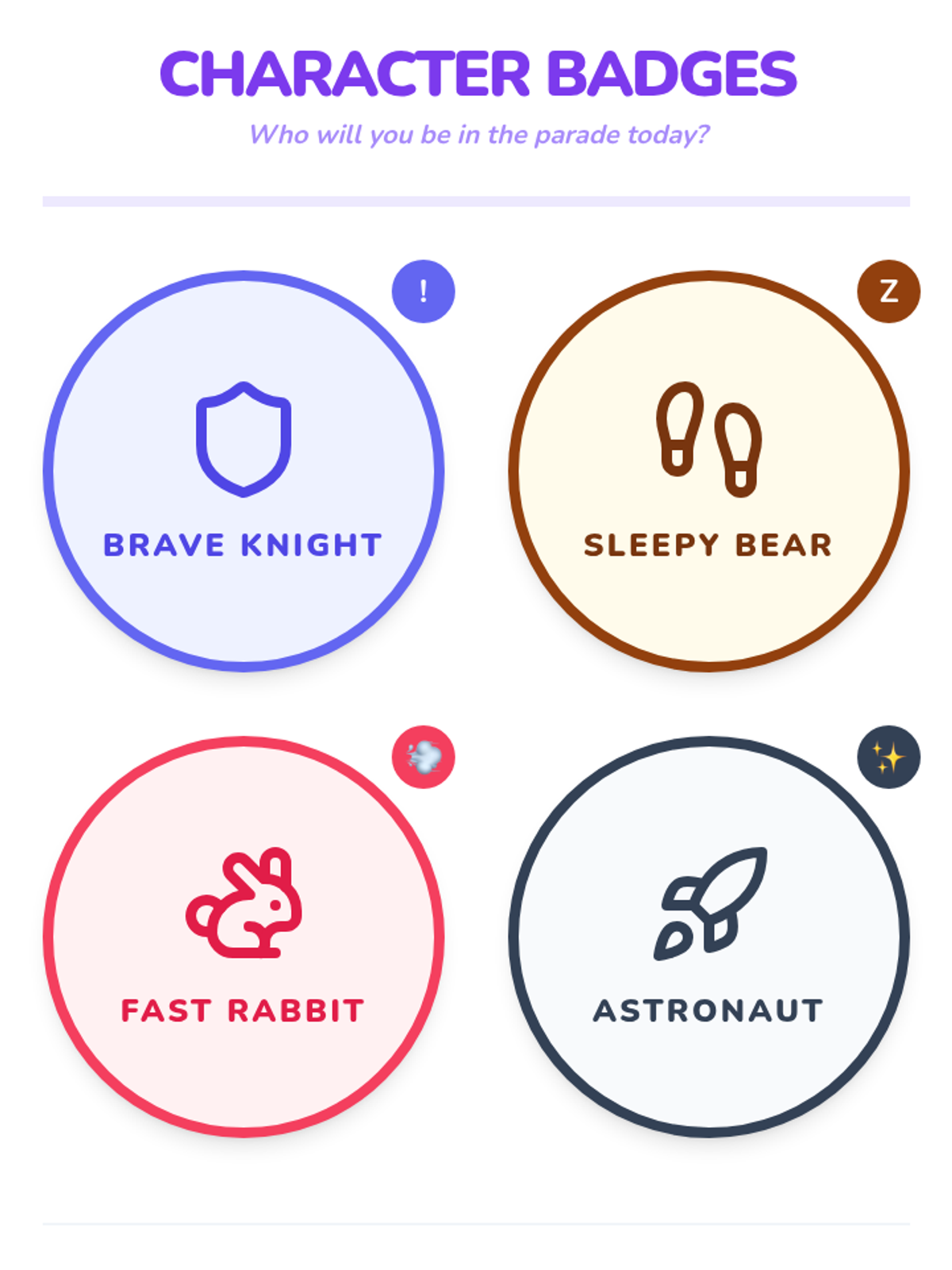
Children choose and inhabit a character through movement, exploring how different characters walk, jump, and dance. They practice staying in character while reacting to music.
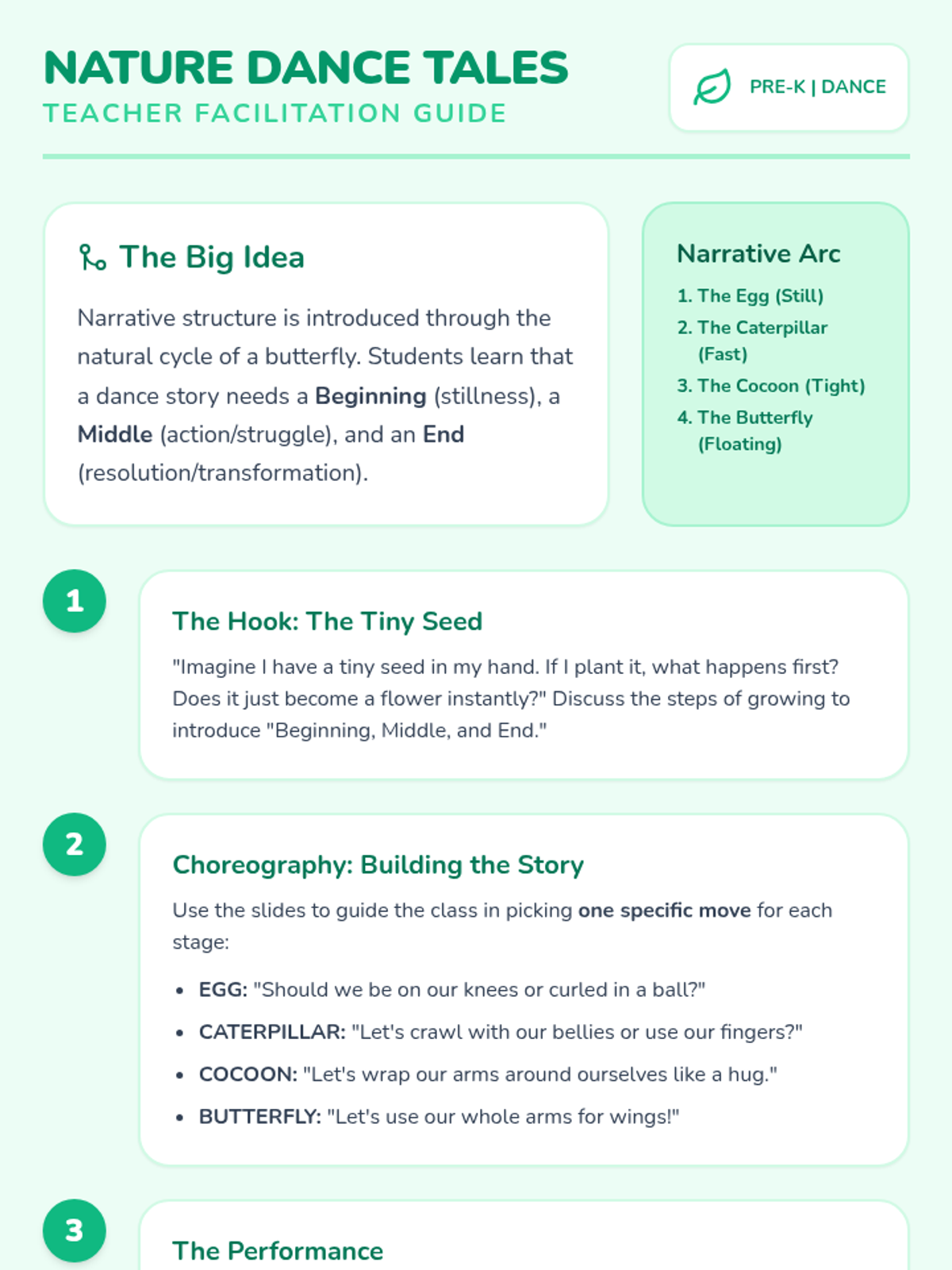
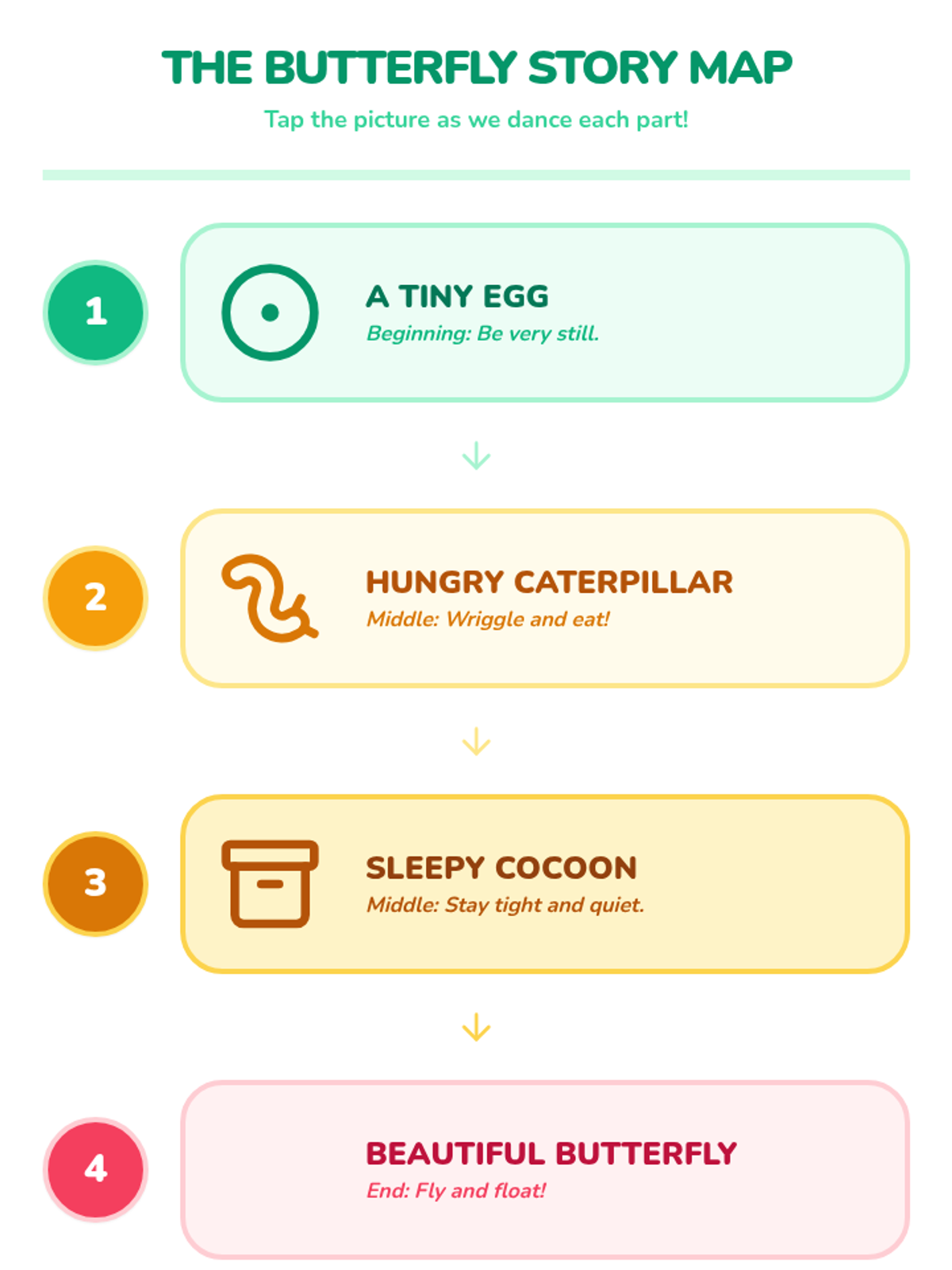
Students learn about narrative structure (beginning, middle, and end) by dancing the lifecycle of a butterfly. This lesson introduces the concept of sequencing in choreography.
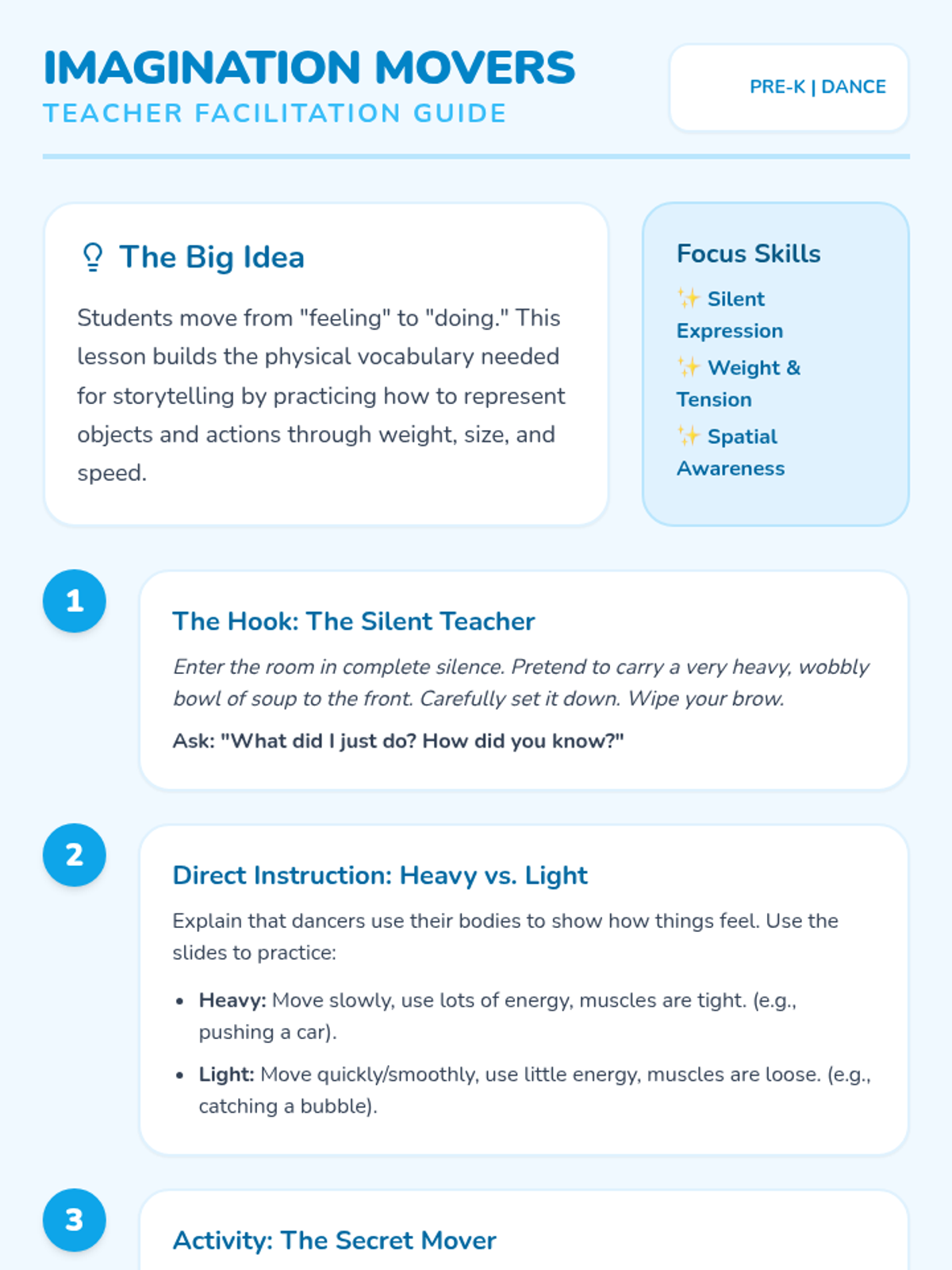
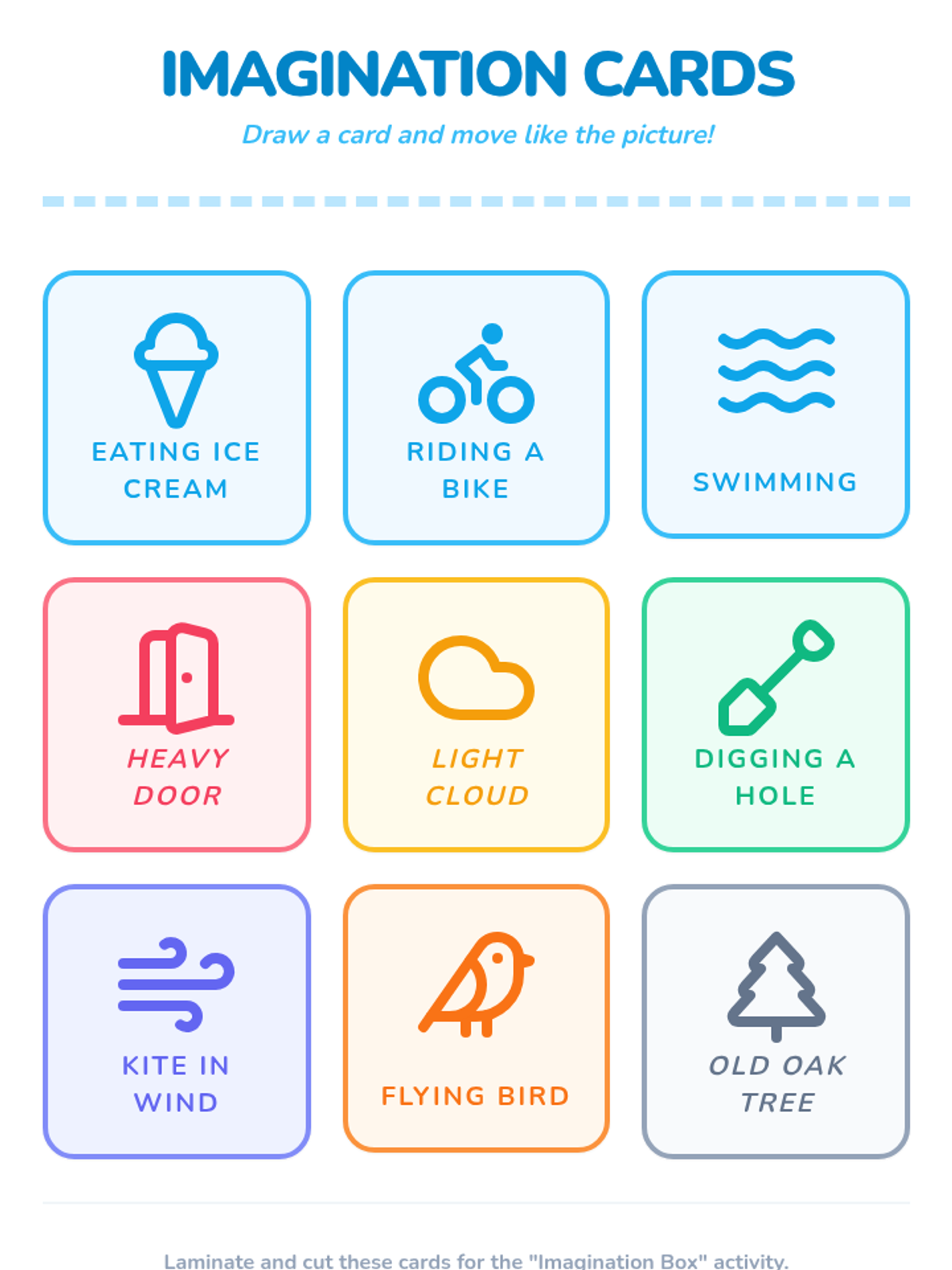
Learners use their bodies to represent objects and actions without speaking, building a 'movement vocabulary' for storytelling. Activities include a pantomime guessing game and creative imagination challenges.
Students explore the connection between emotions and movement by creating 'statues' that represent feelings like joy, sadness, and anger. This lesson focuses on nonverbal communication and body awareness.
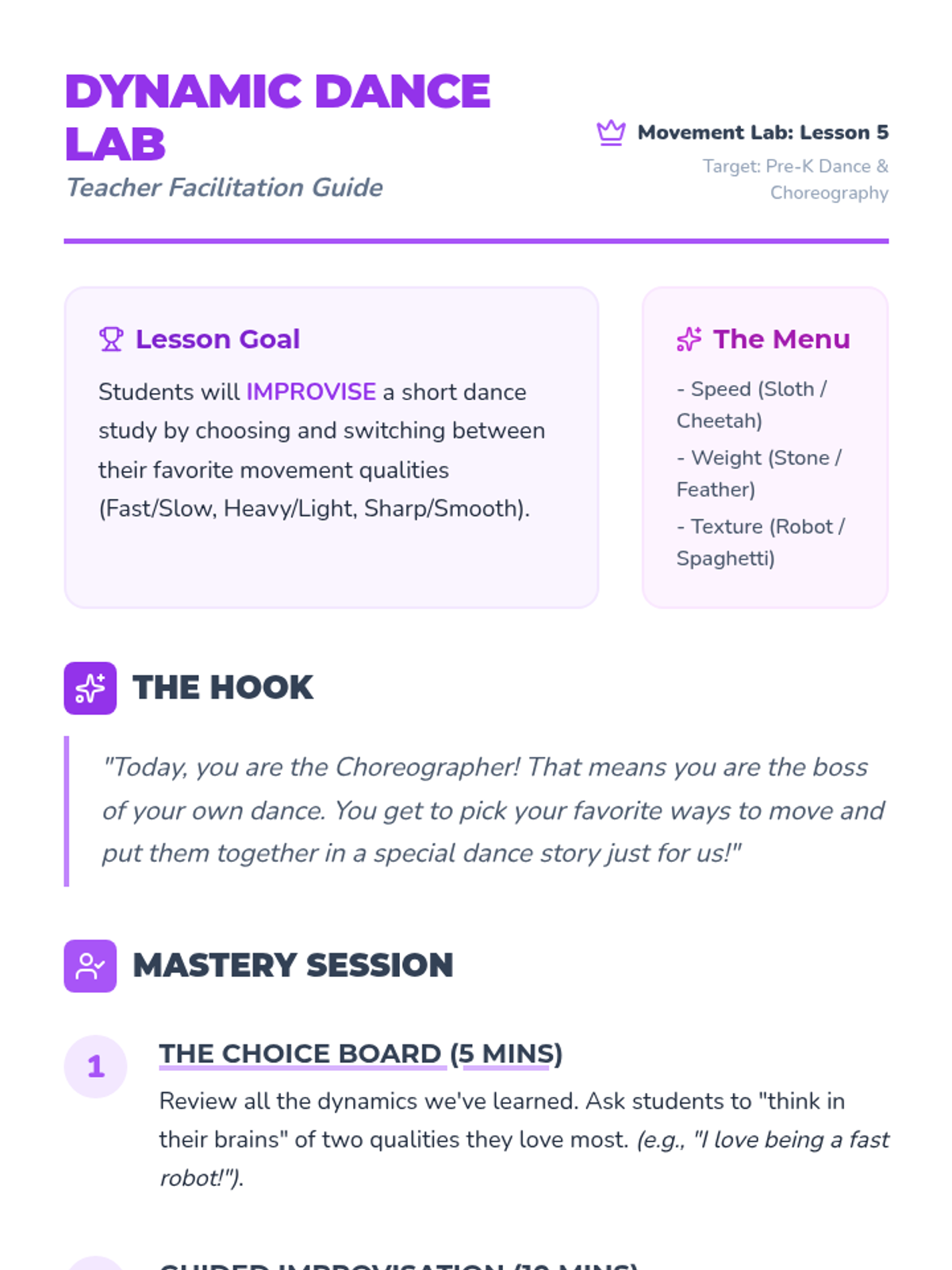
Students combine their favorite movement qualities to create and perform their own short dance study.
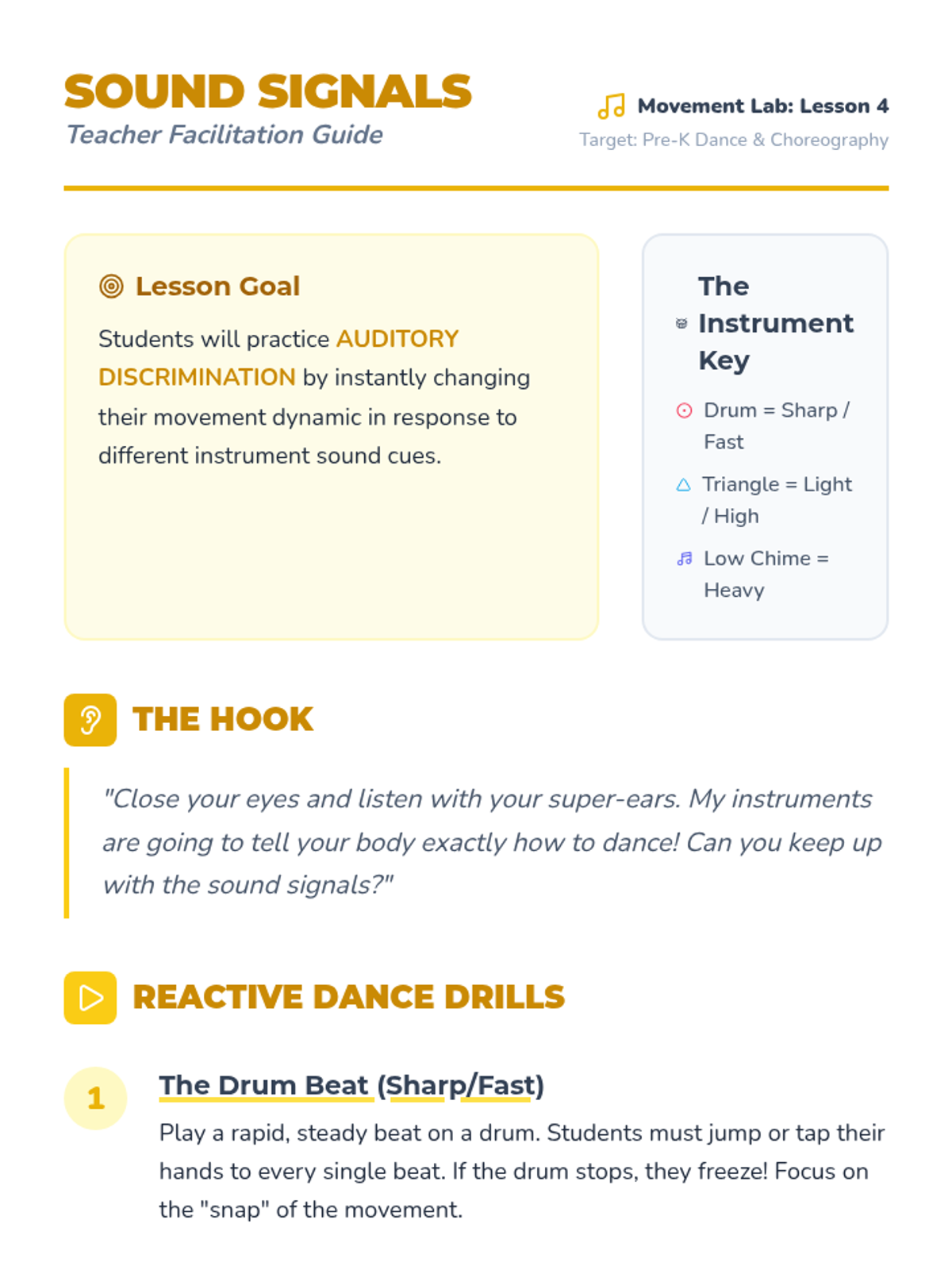
Students practice changing their movement dynamics instantly in response to various instrument sound cues.
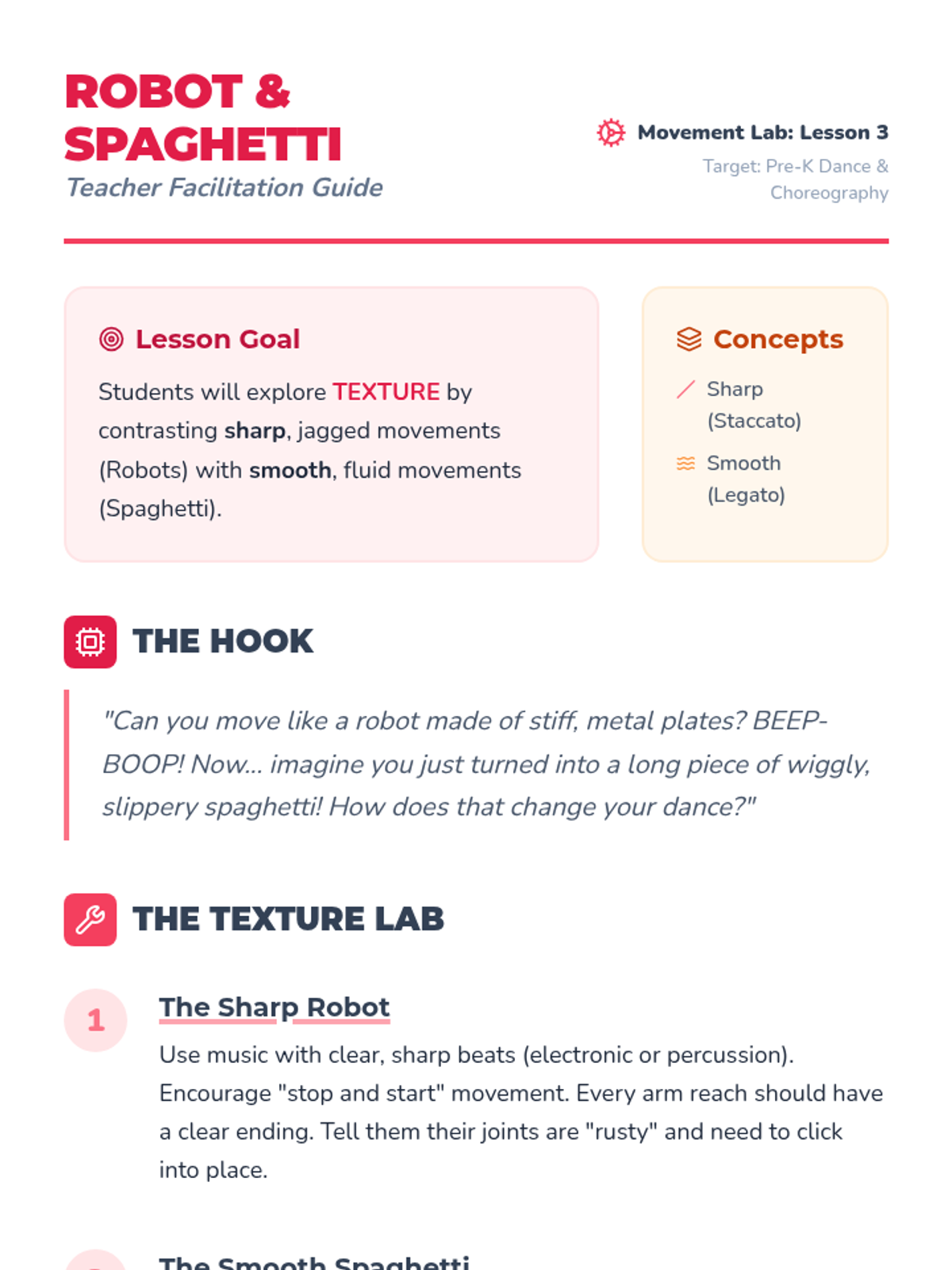
Students use 'robot' and 'spaghetti' imagery to experiment with sharp and smooth movement textures.
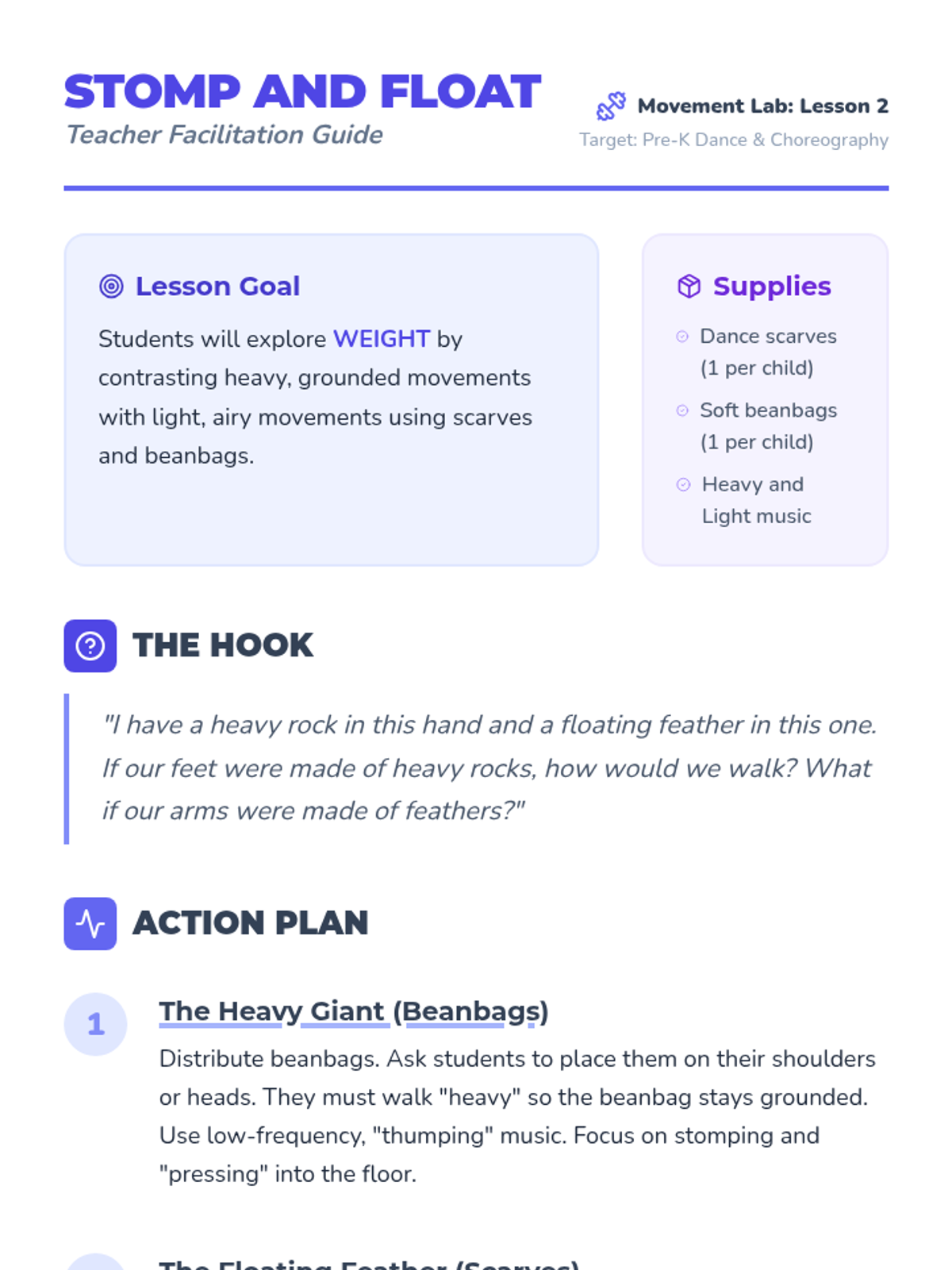
Using scarves and beanbags, students contrast heavy stomping with light floating movements.
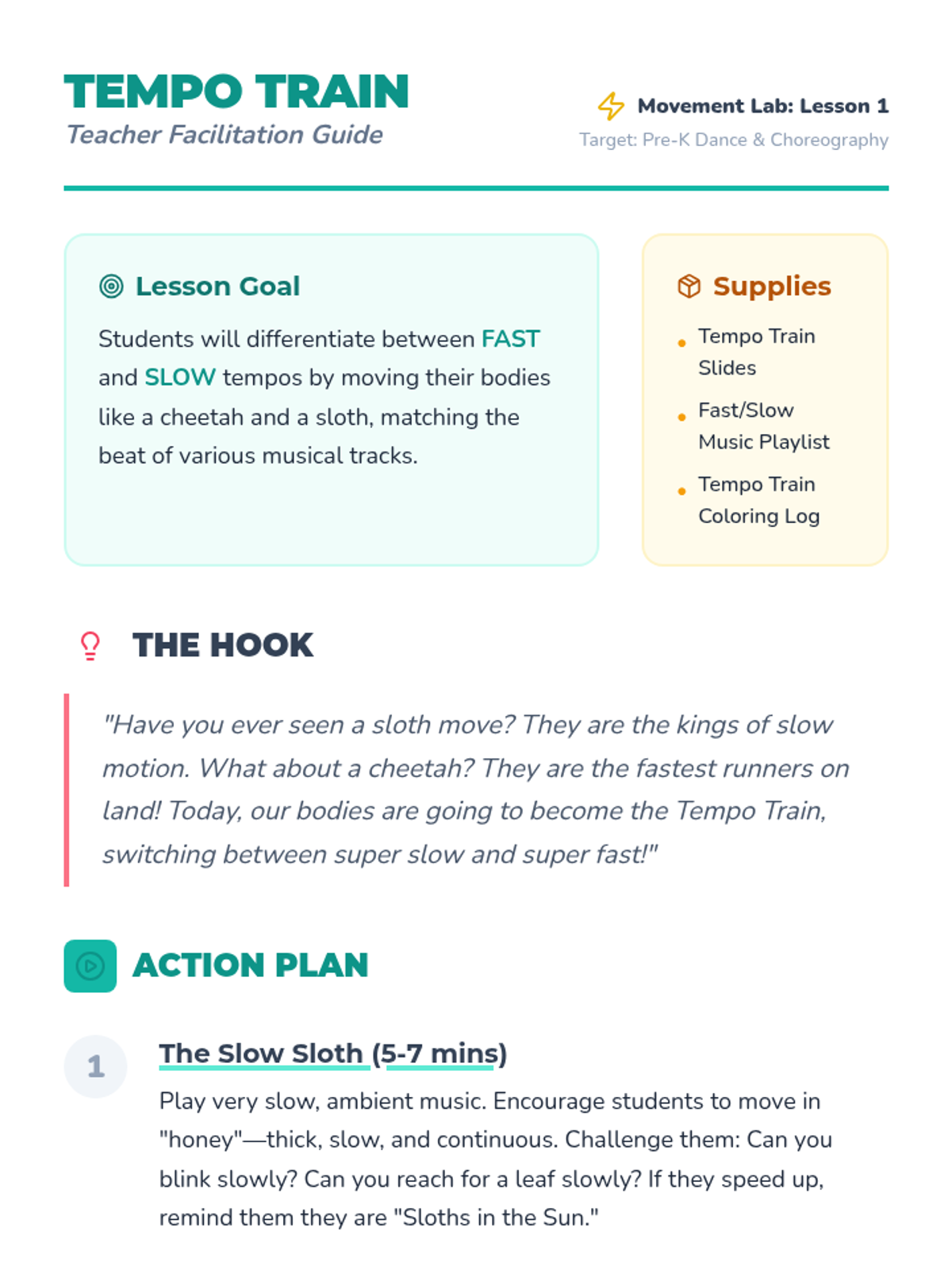
Students explore contrasting speeds through imagery of sloths and cheetahs, matching their movement to music tempos.
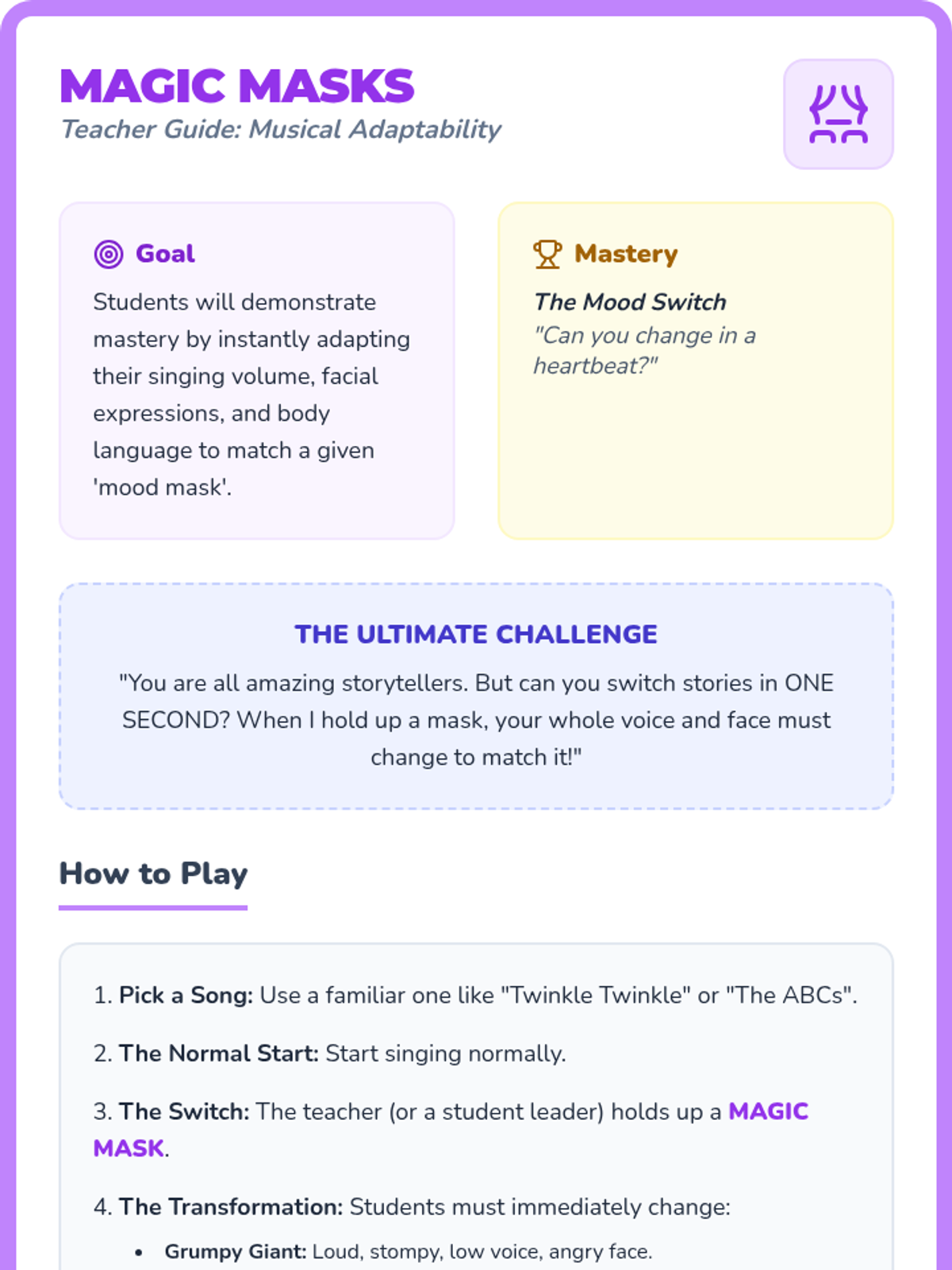
A culminating game where students must quickly adapt their singing style and facial expressions to match changing 'mood masks,' demonstrating mastery of vocal and visual expression.
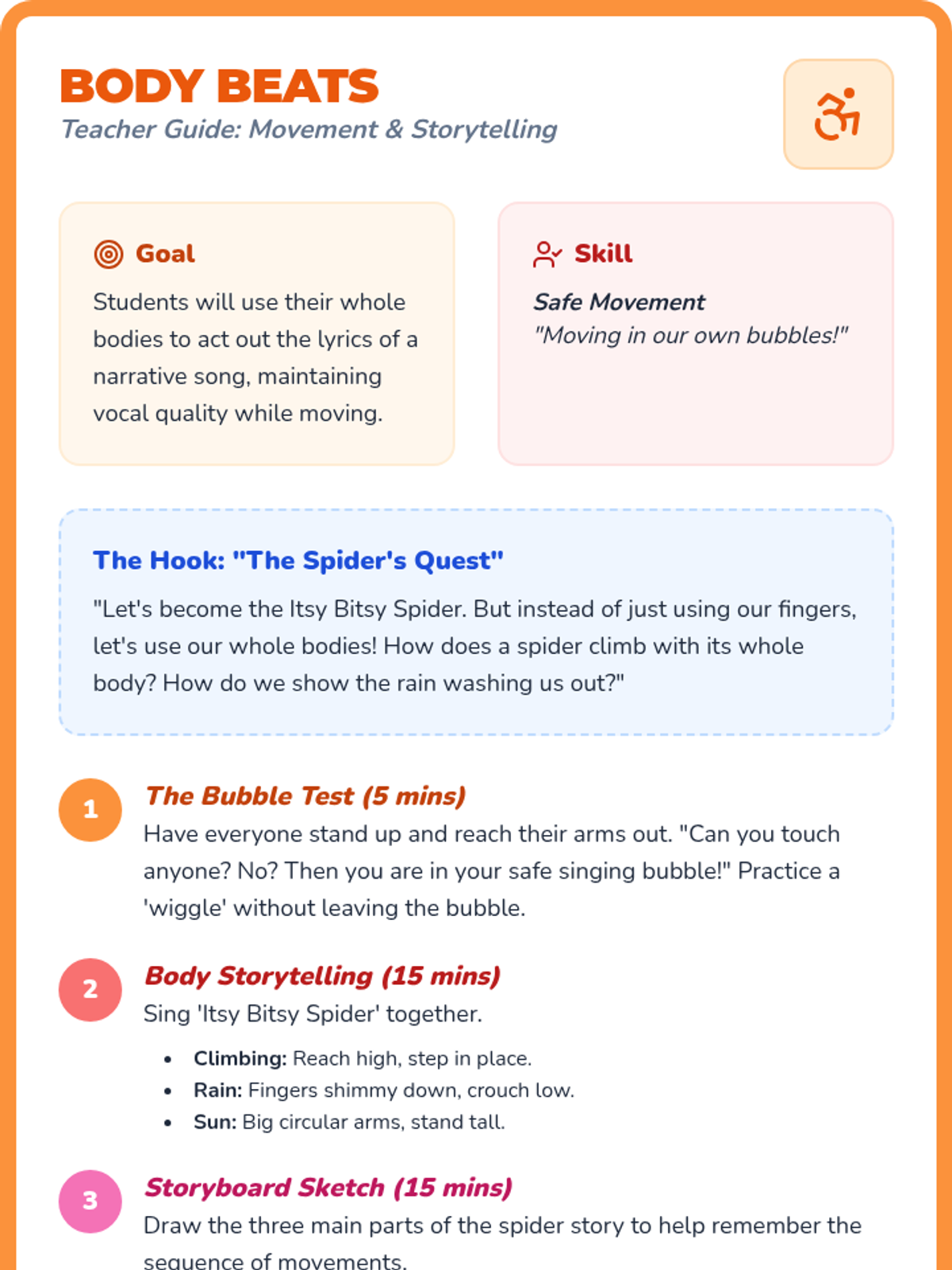
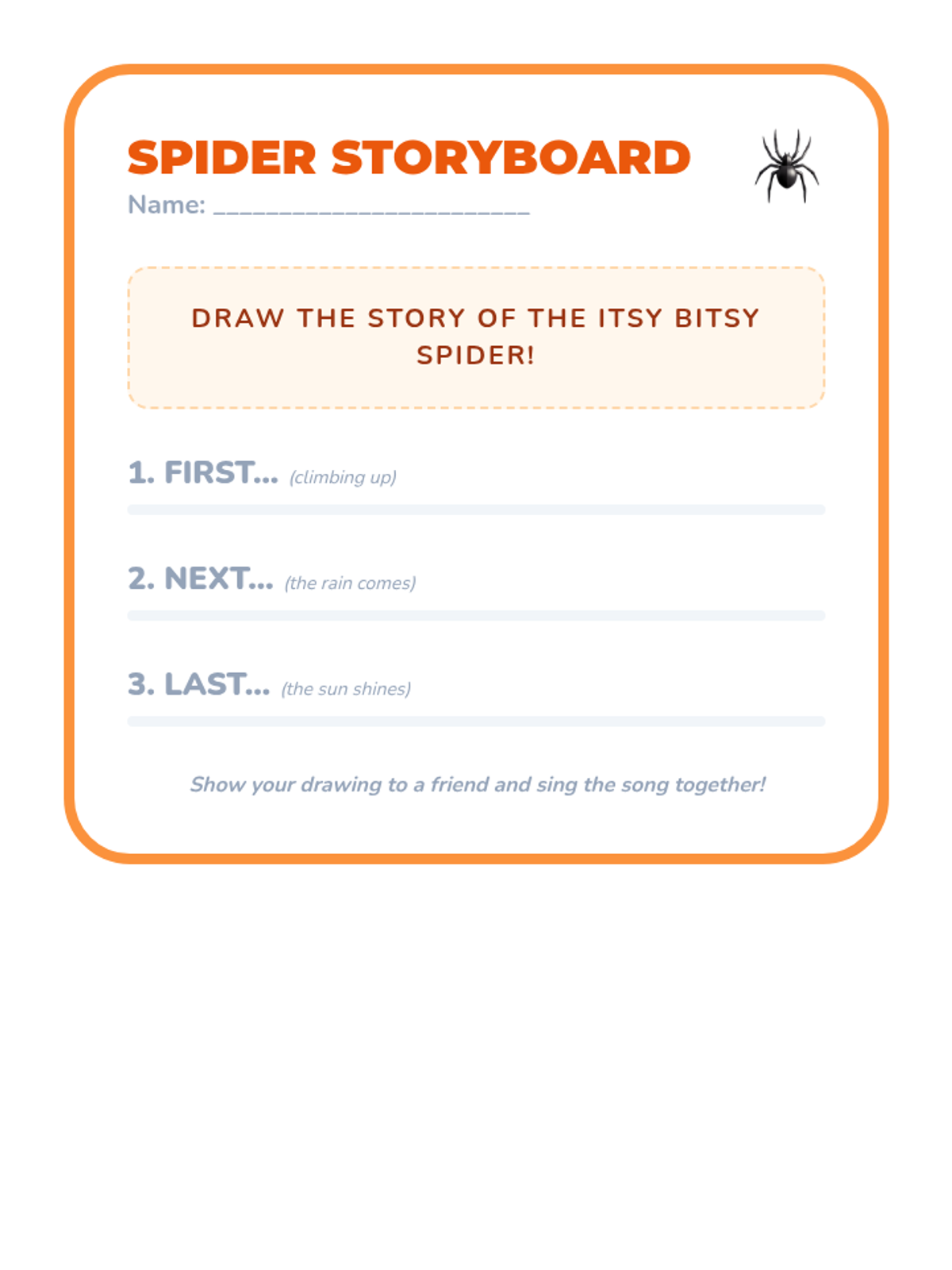
Students add movement and gestures to narrative songs, learning how to use their whole bodies to help tell the story while maintaining vocal performance.
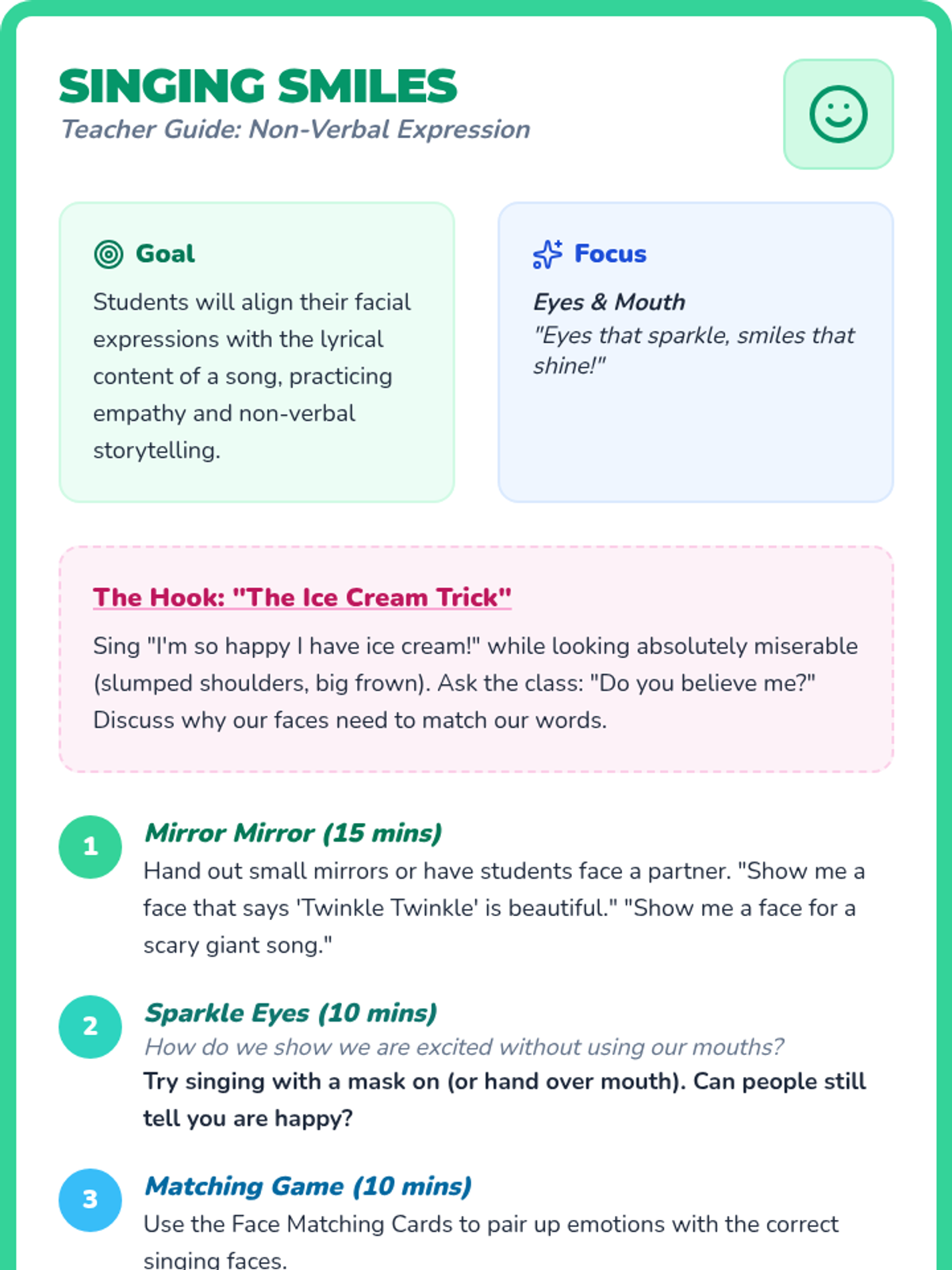
Focusing on non-verbal communication, students use mirrors and partner work to match their facial expressions to the mood of the song they are singing.
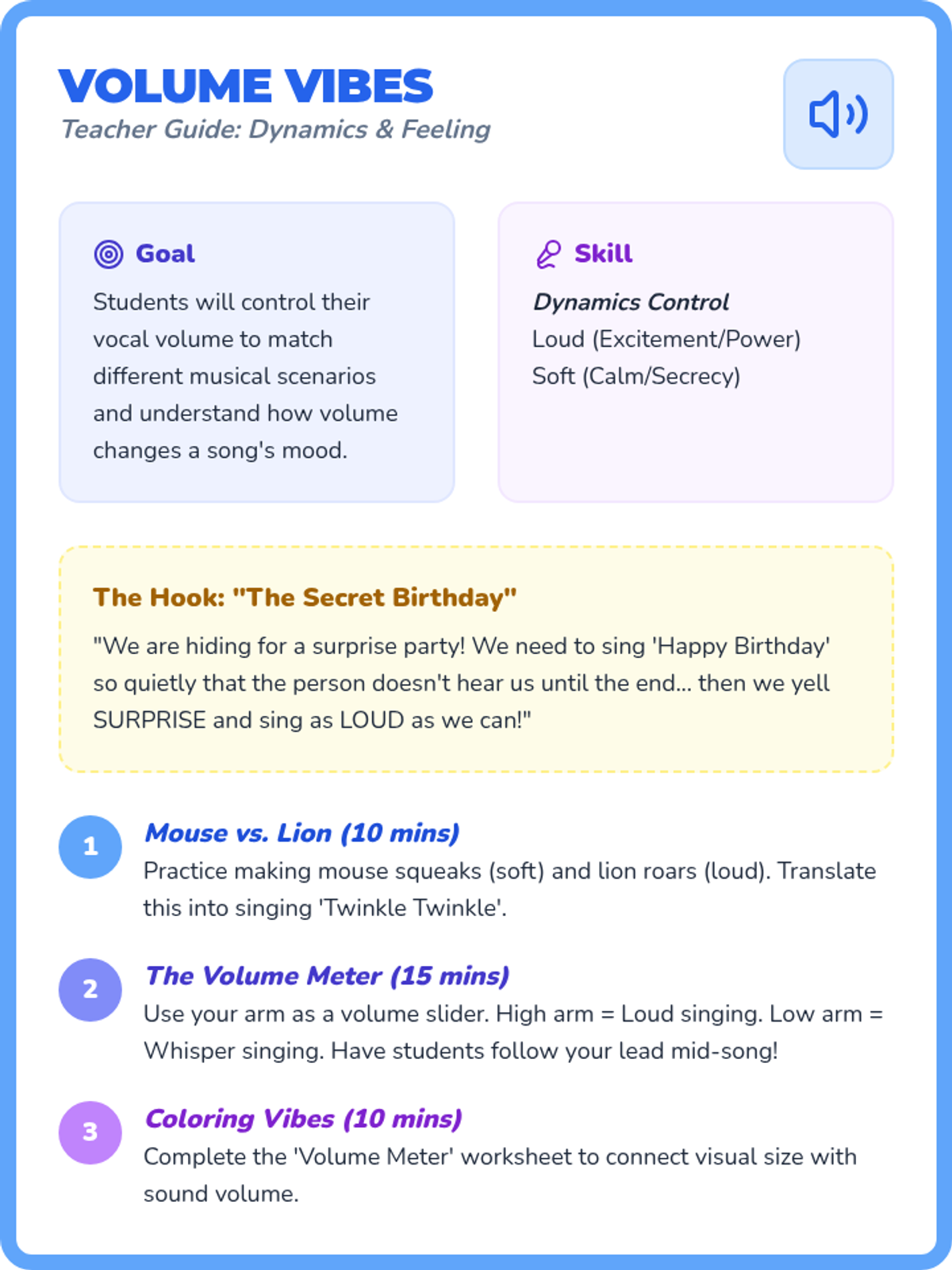
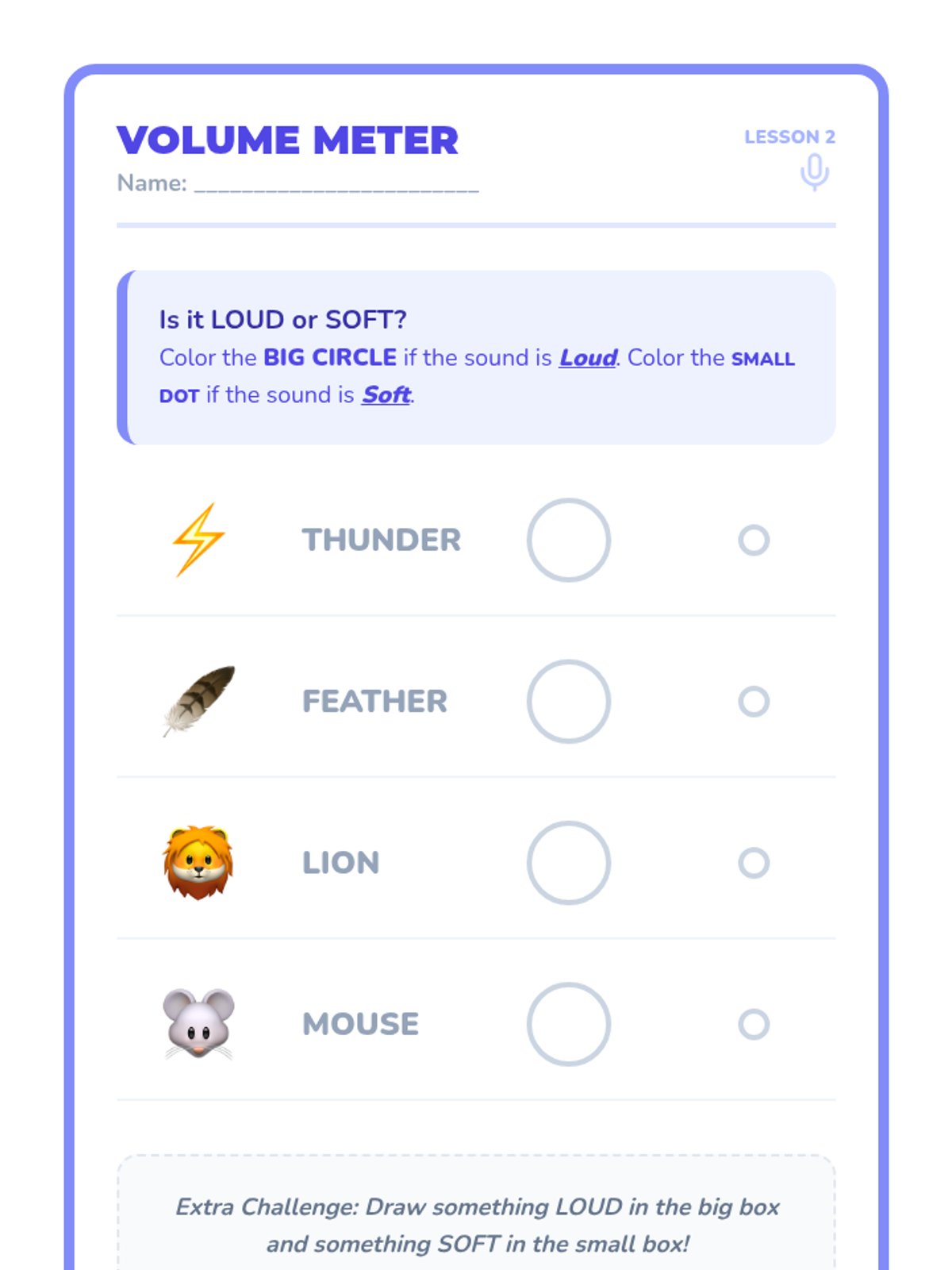
Introduction to dynamics (loud and soft) as a tool for expression. Students learn how changing their volume can turn a song into a quiet lullaby or an exciting celebration.
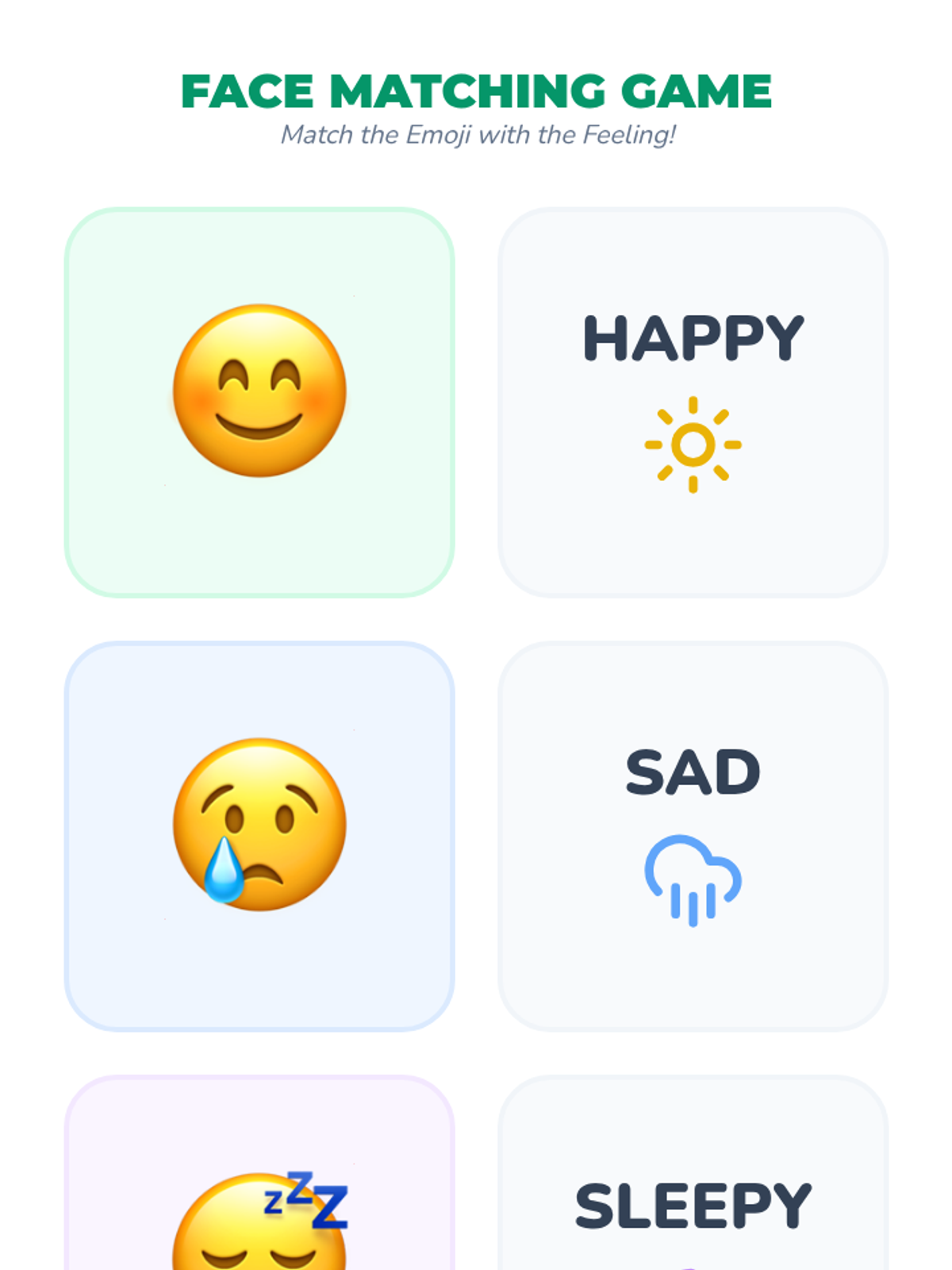
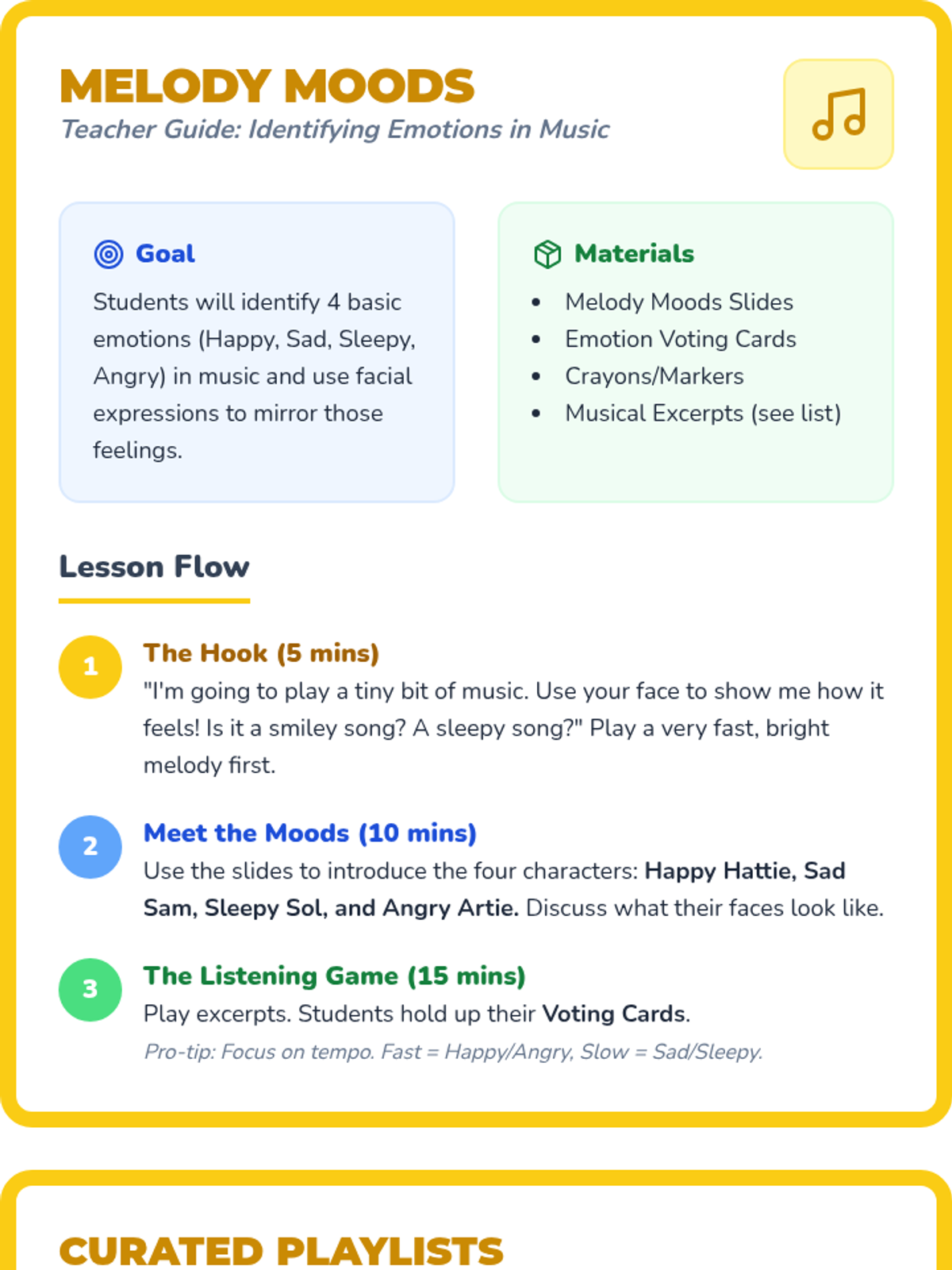
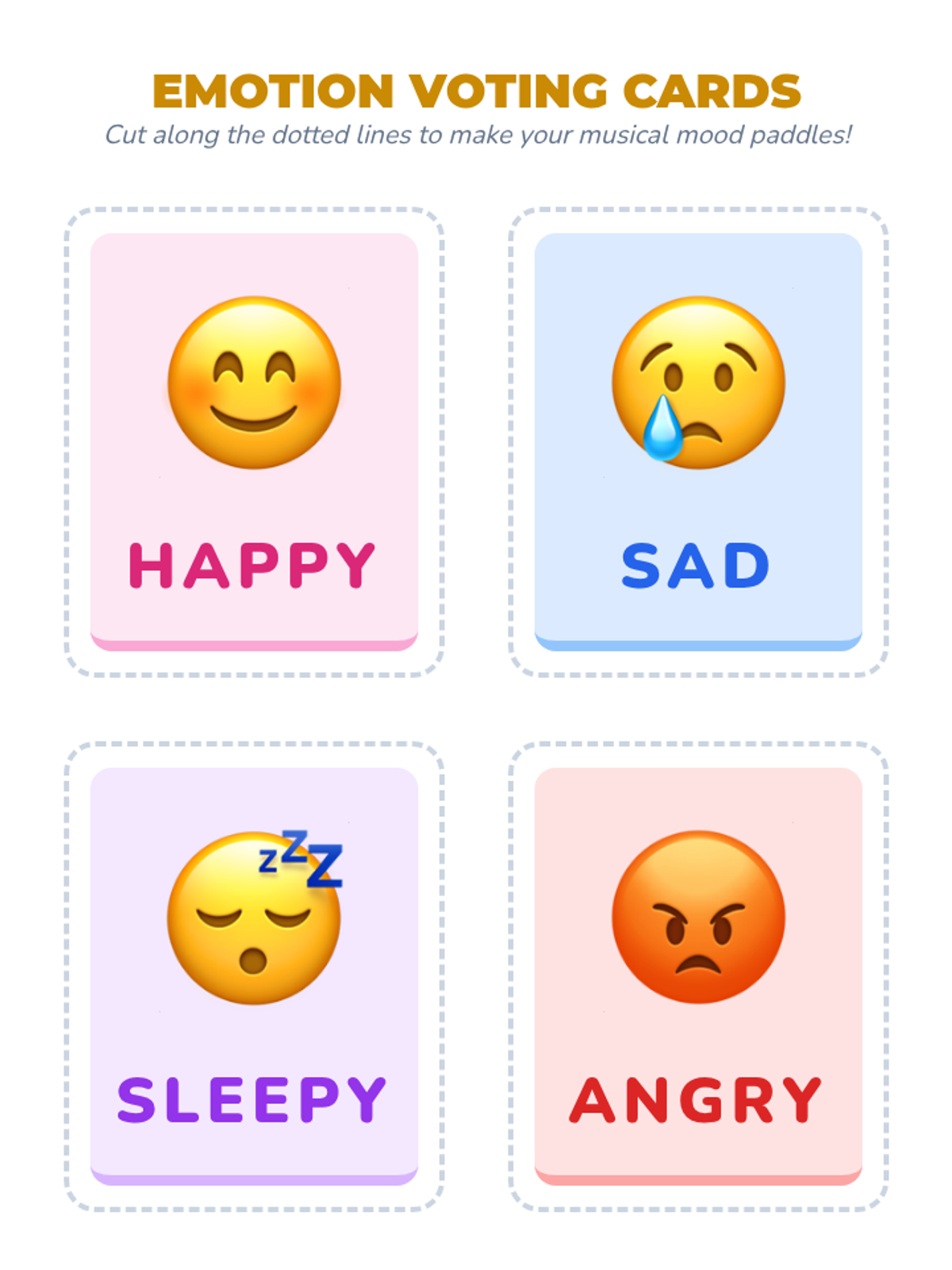
Students explore how different sounds and rhythms in music can make us feel happy, sad, sleepy, or angry. They practice active listening and use visual aids to identify musical emotions.
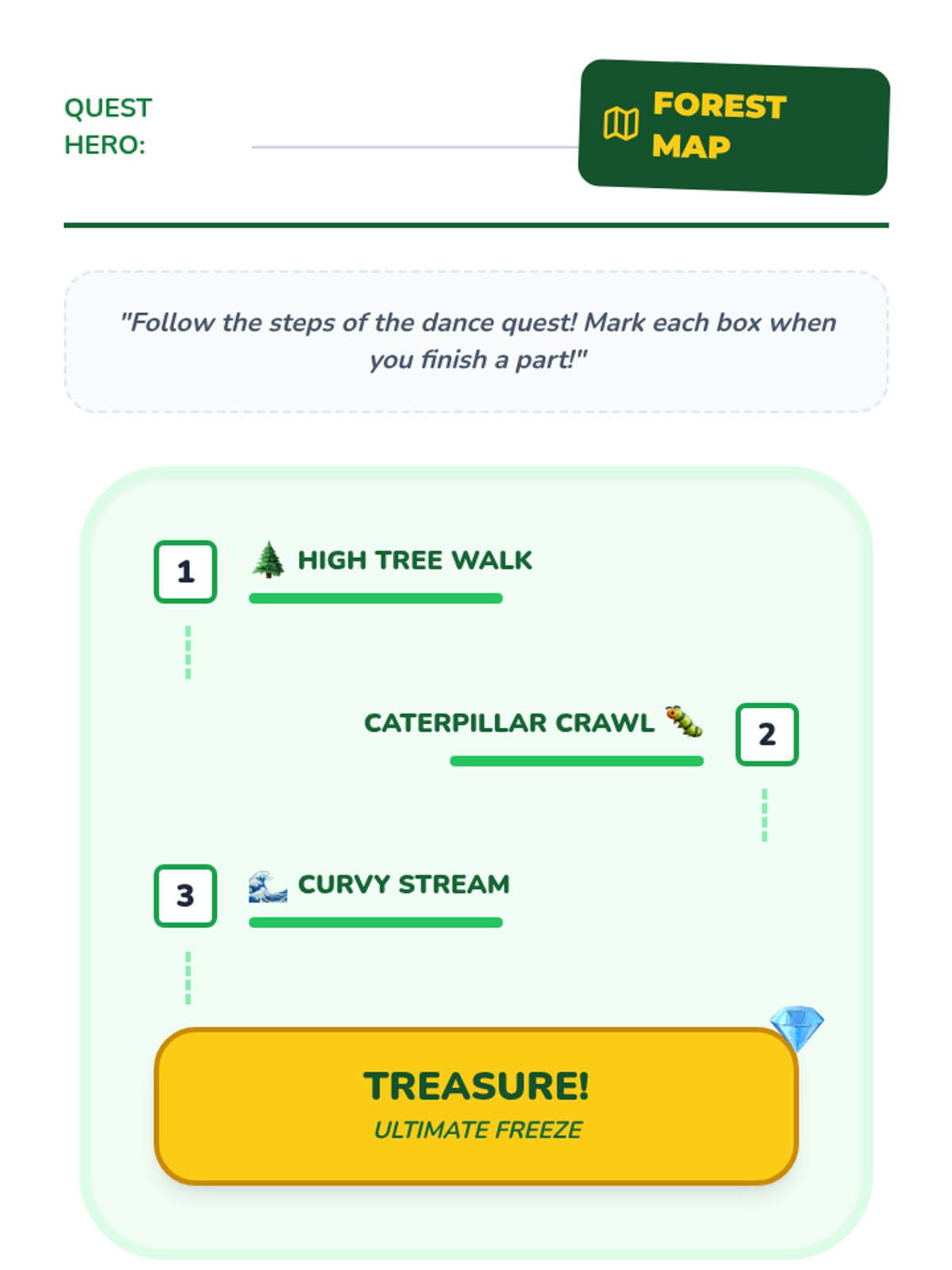
A culminating activity where students navigate a dance obstacle course that integrates levels, pathways, and stillness into a fluid movement story.
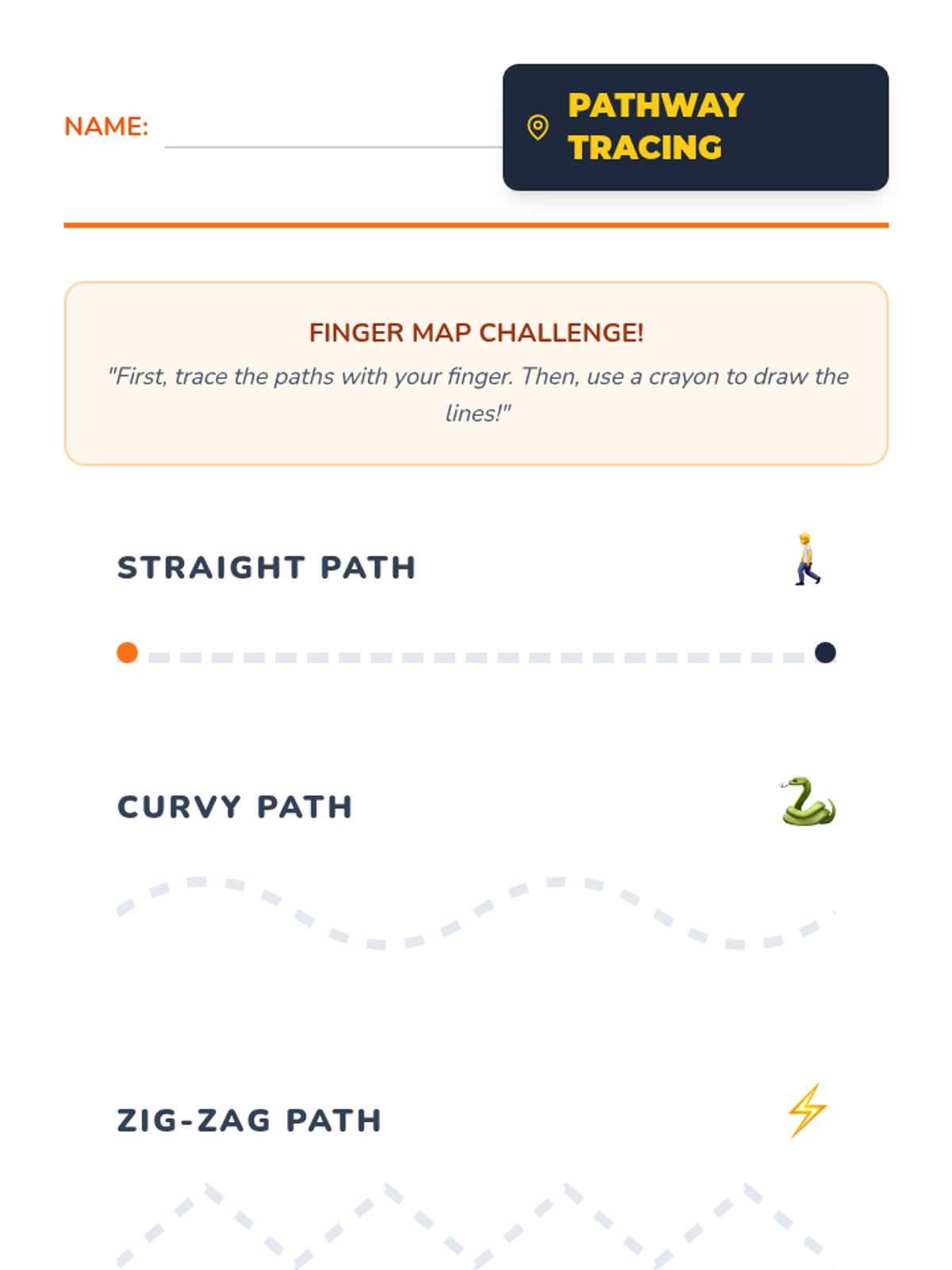
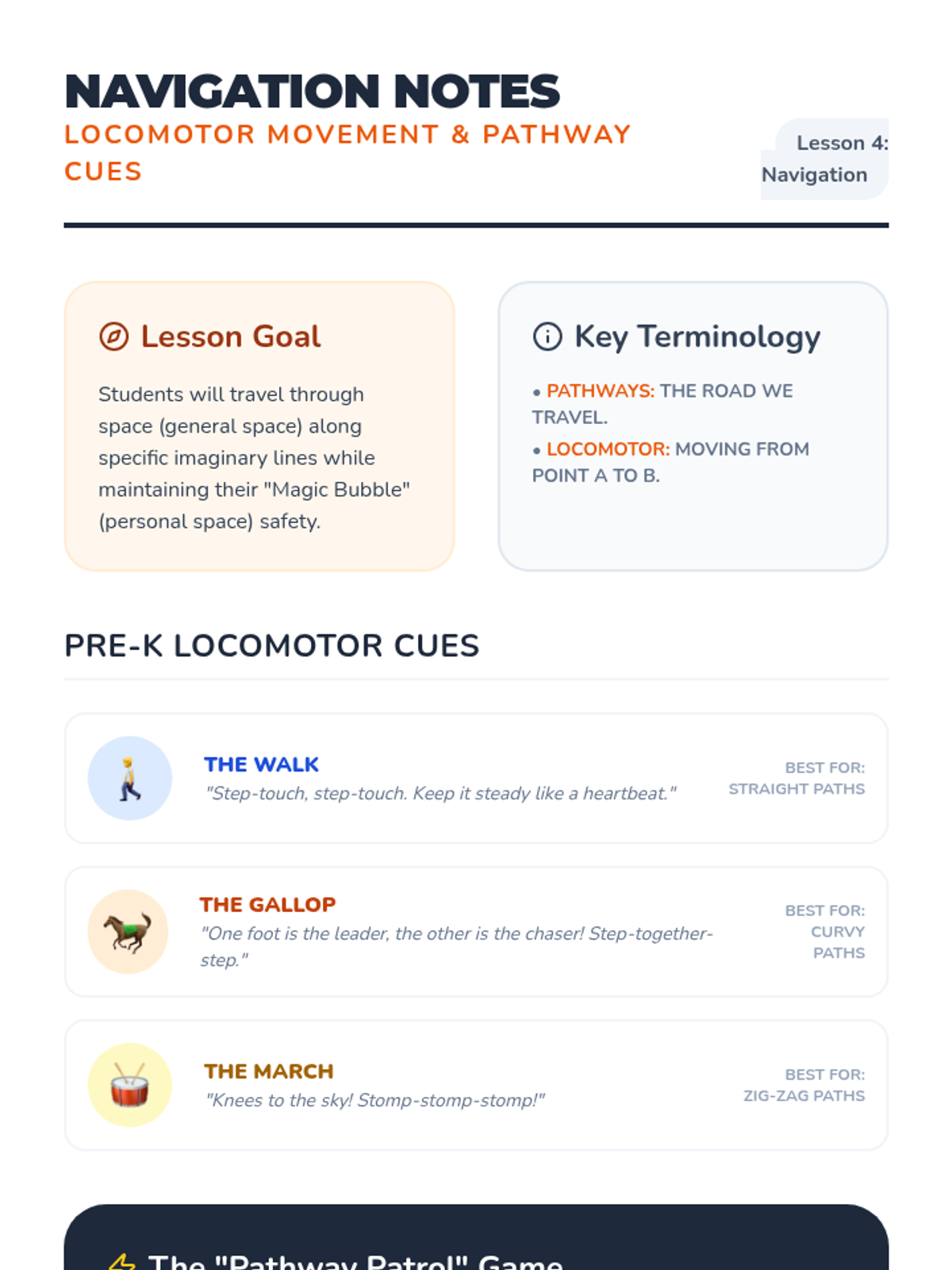
Learners experiment with traveling through the room in straight, curvy, and zig-zag lines using various locomotor movements.
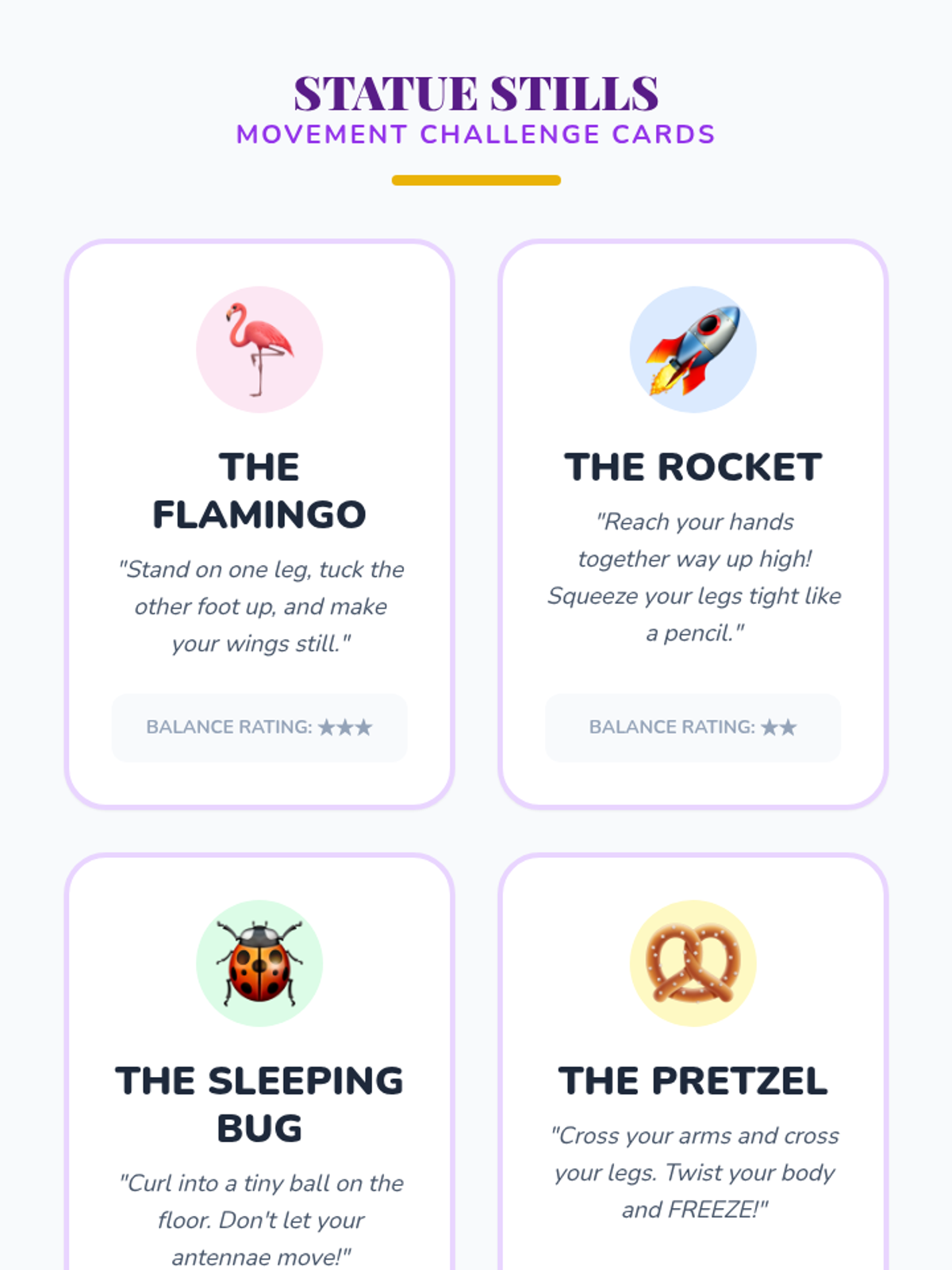
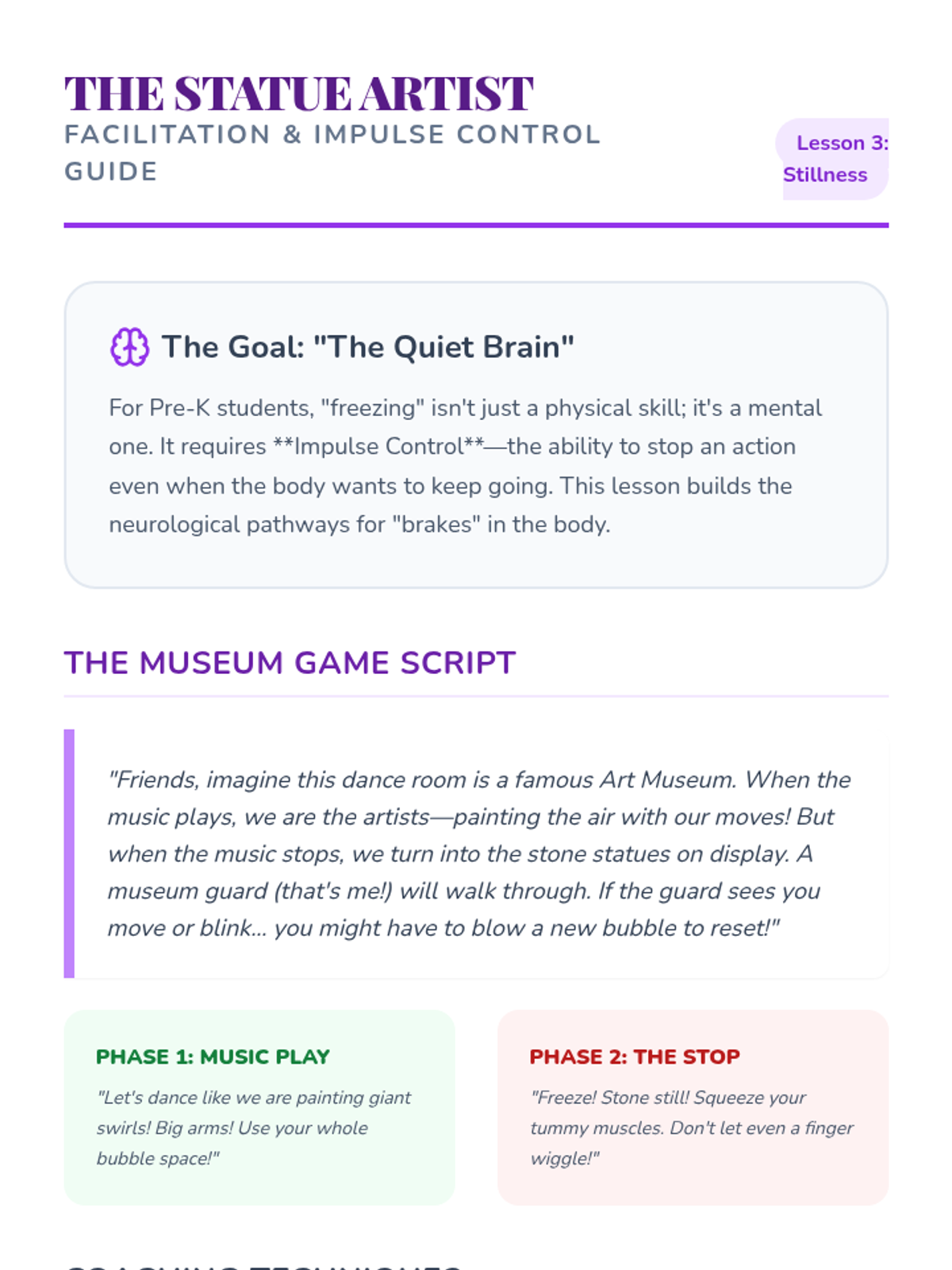
Focuses on the critical skill of stopping movement instantly using musical cues, developing core strength and impulse control.
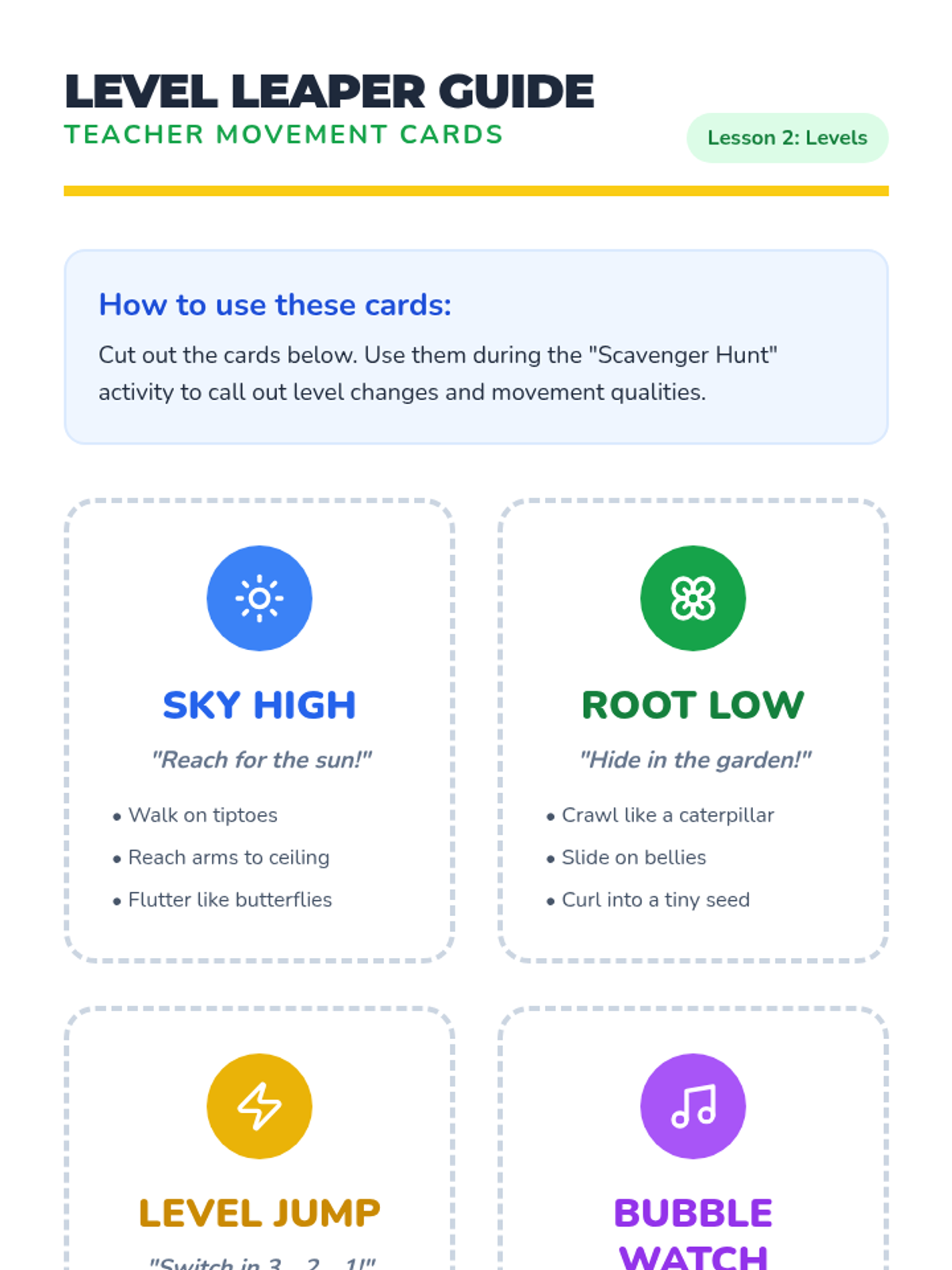
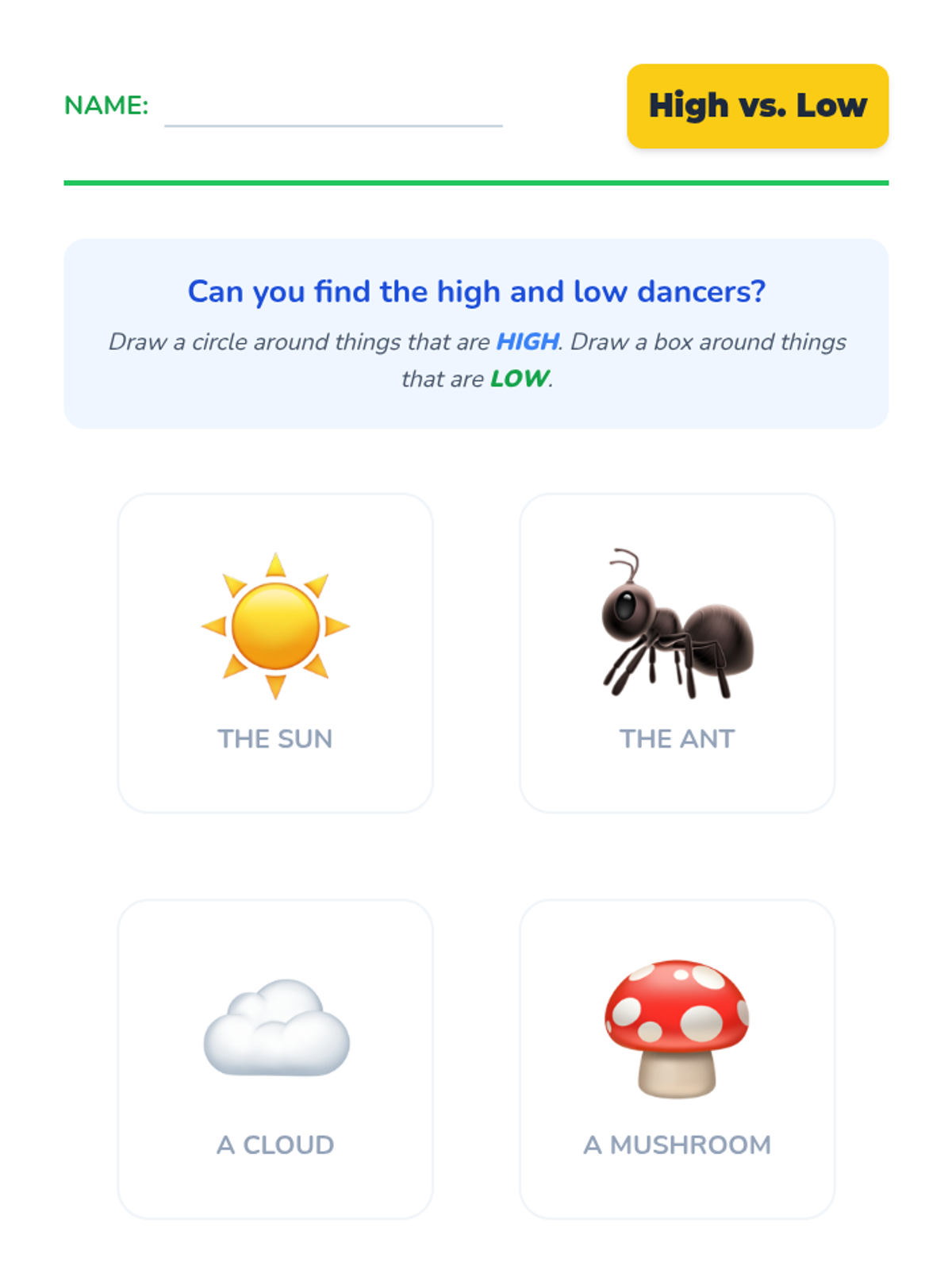
Students investigate vertical space by stretching tall like giraffes and shrinking small like mice, connecting movements to high and low levels.
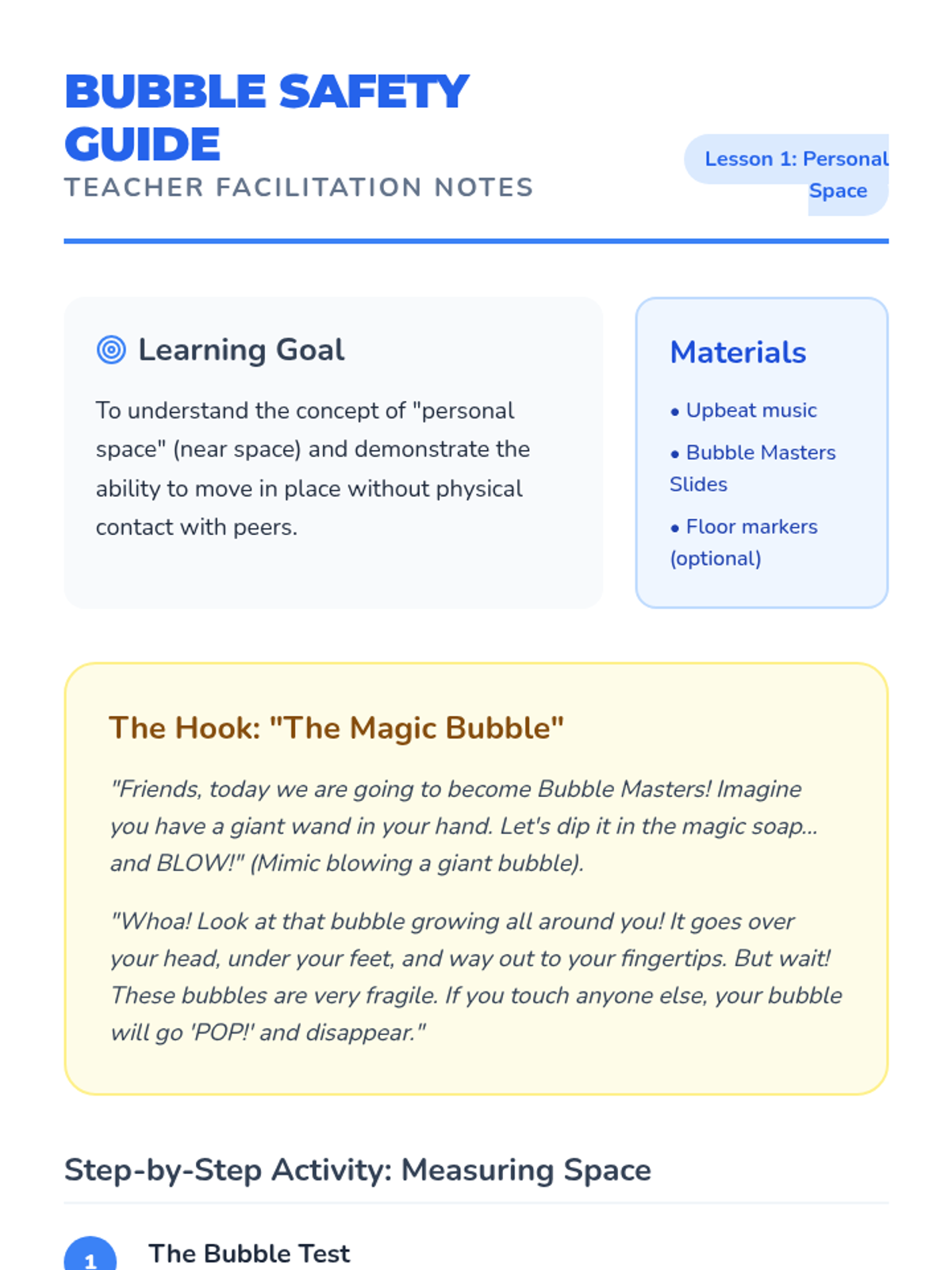
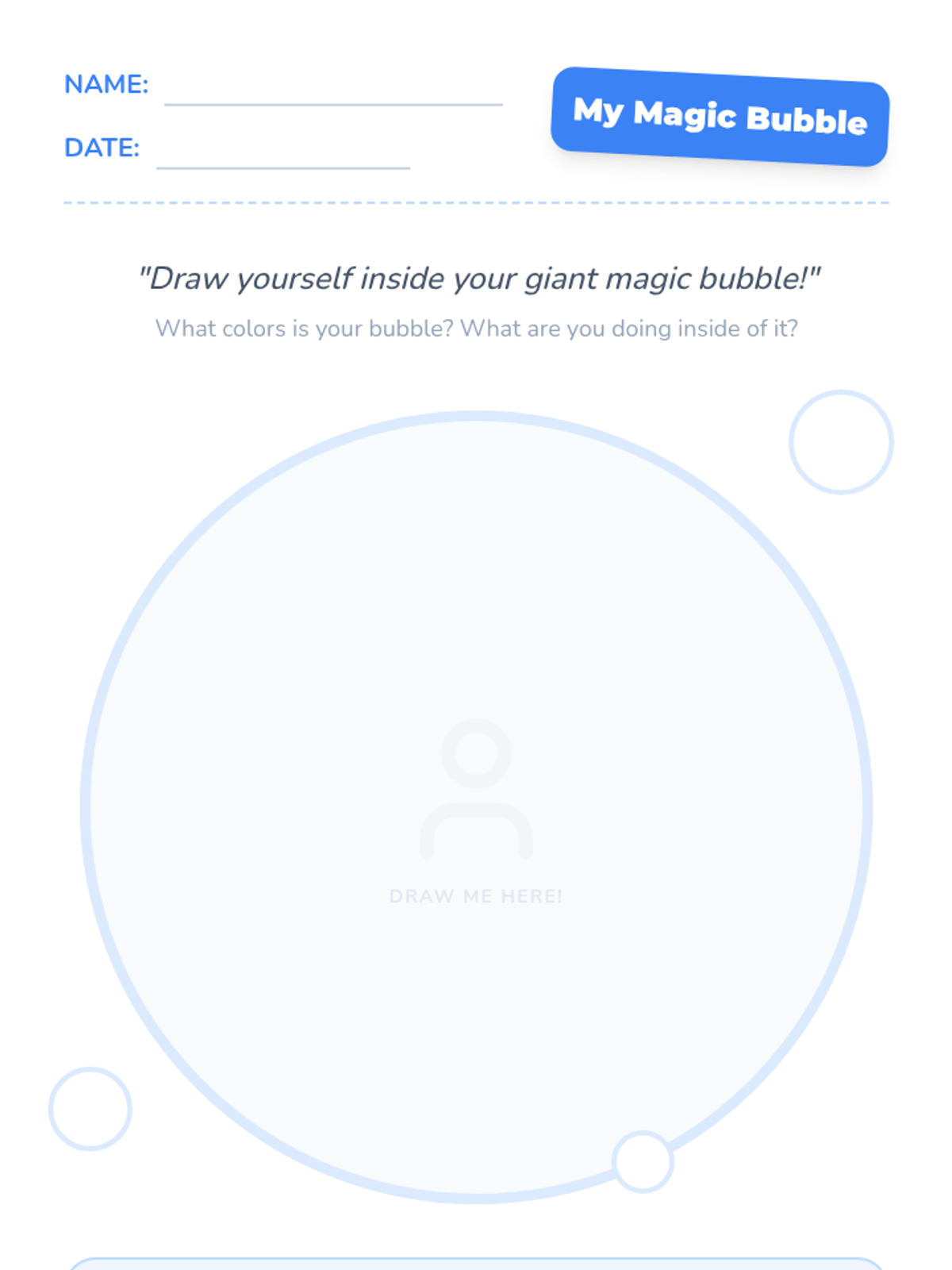
Students explore the concept of the 'personal bubble' by using arms to measure space around their bodies and practicing movement in place without touching others.