Fundamental notation, instrumental proficiency, and vocal techniques across various genres. Connects historical analysis with original composition and creative performance skills.
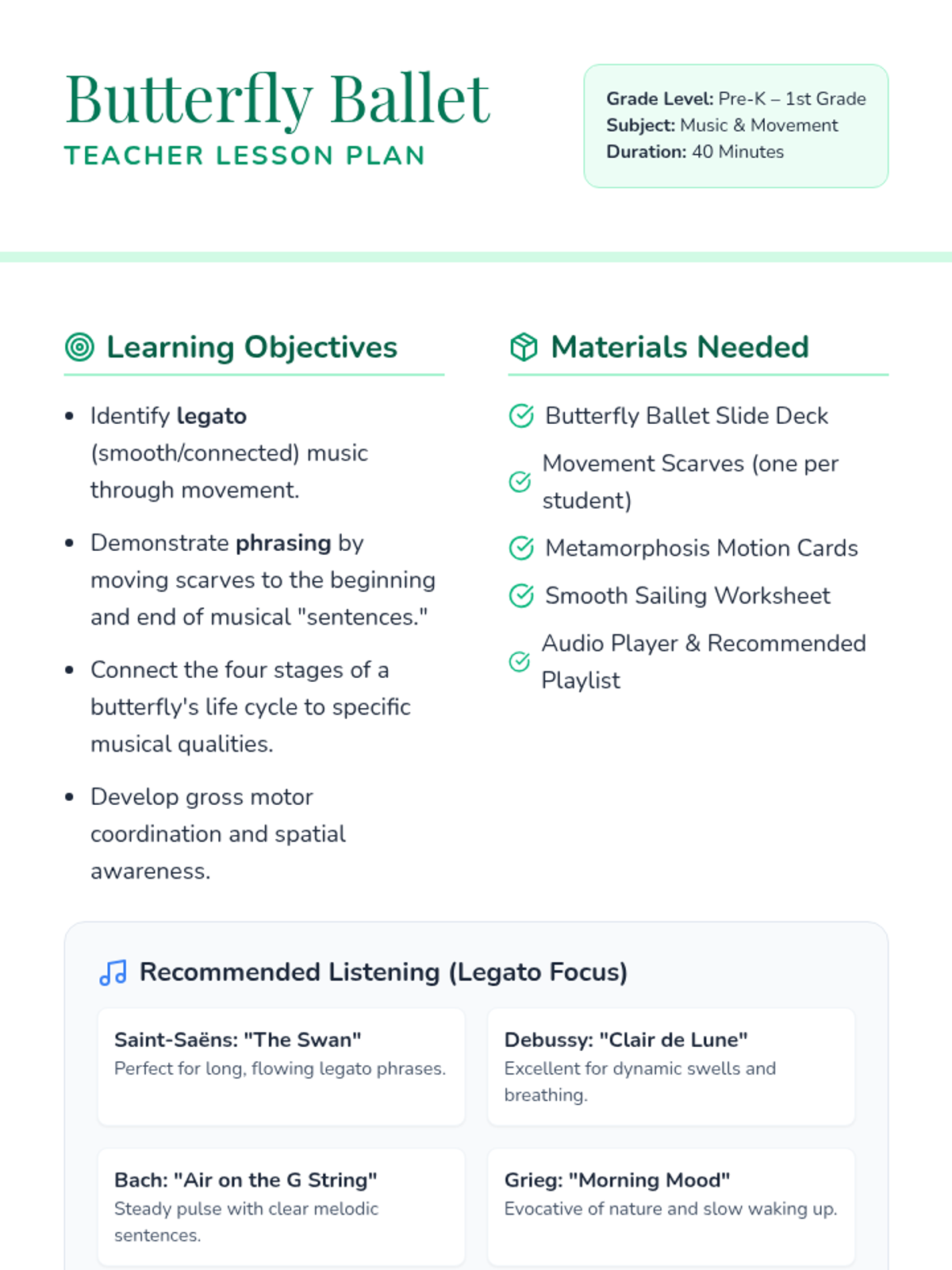
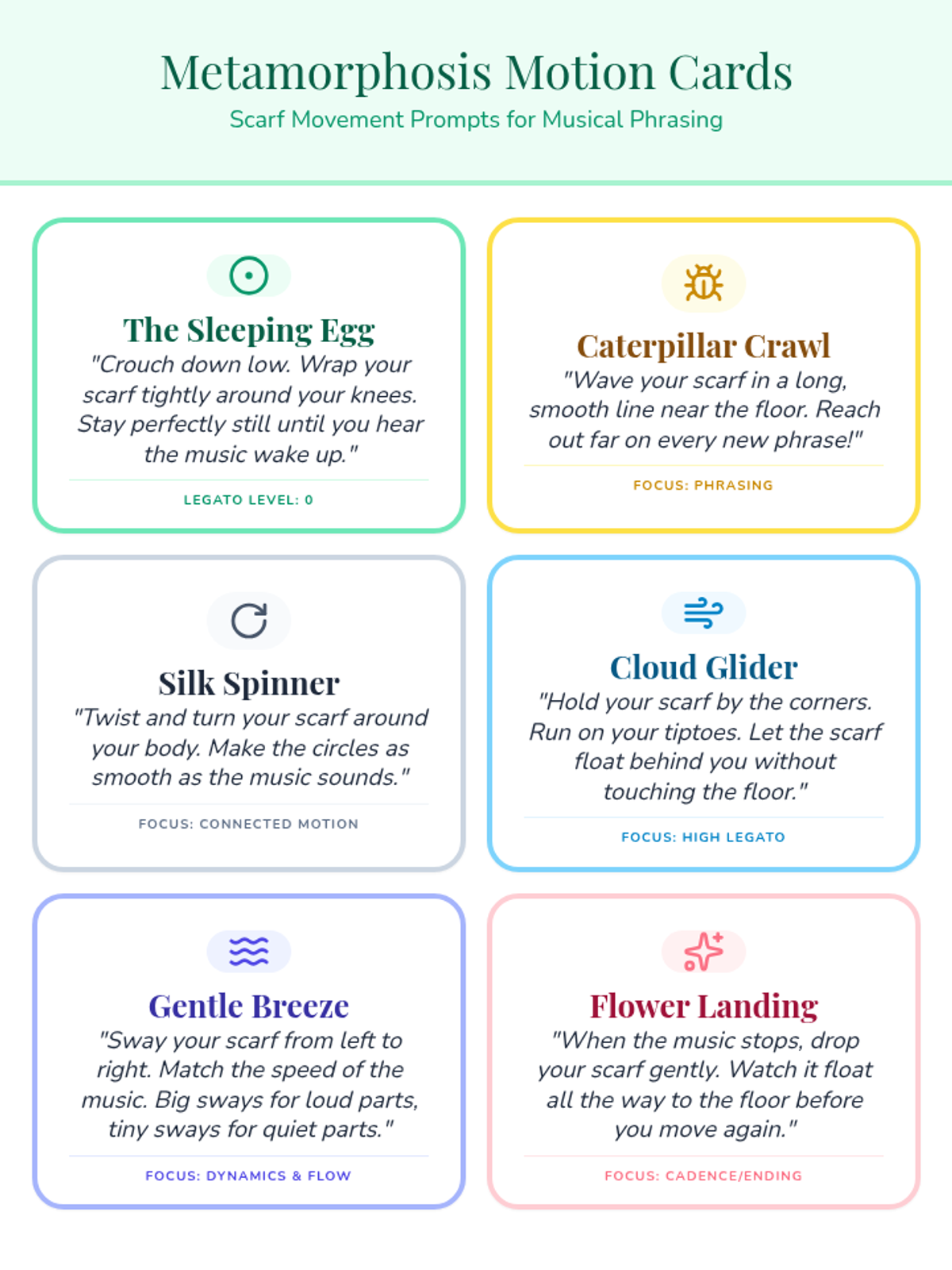
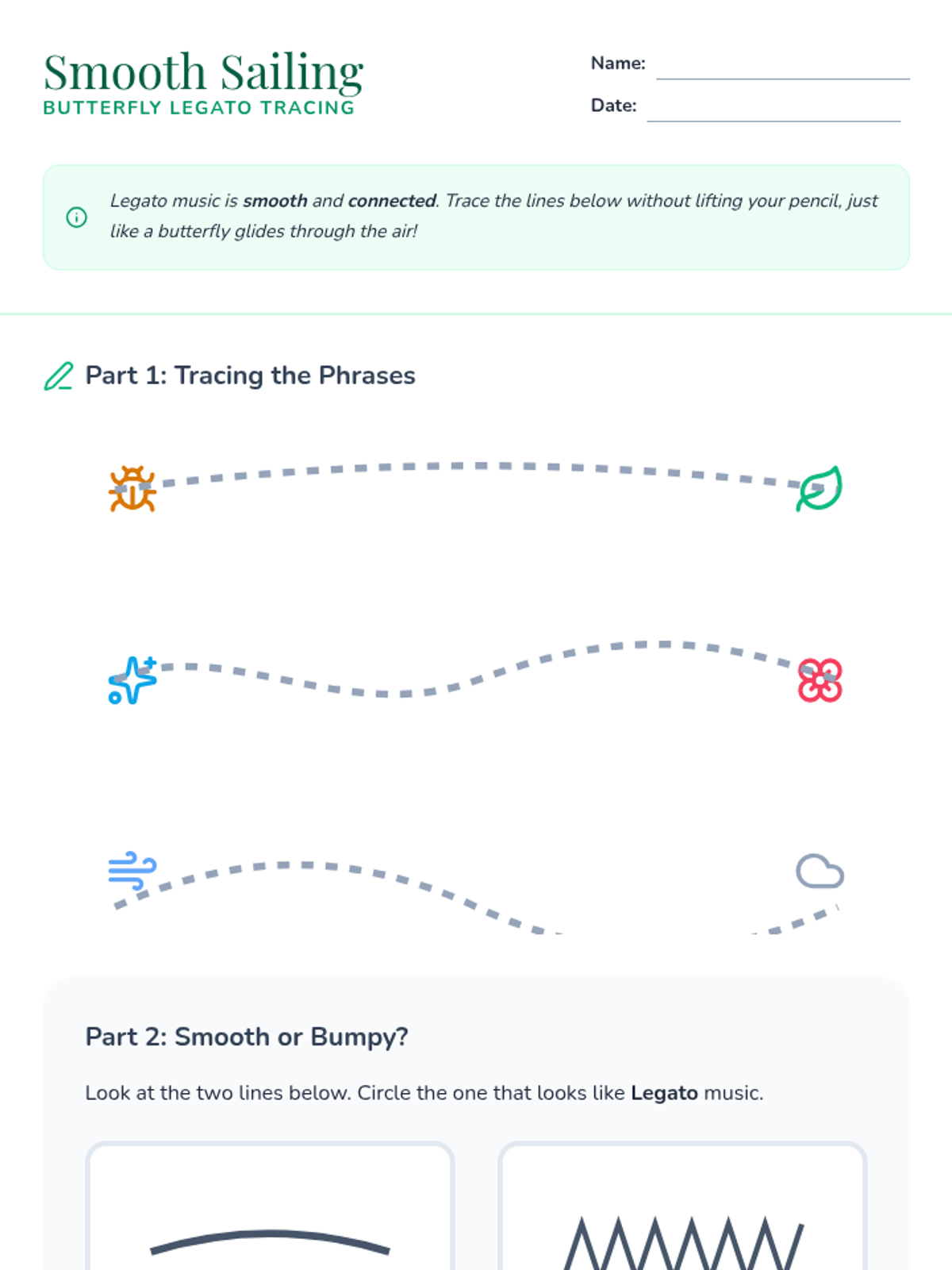
A music and movement lesson for early childhood students exploring phrasing and legato through the life cycle of a butterfly. Students use scarves to interpret smooth musical lines while learning about metamorphosis.
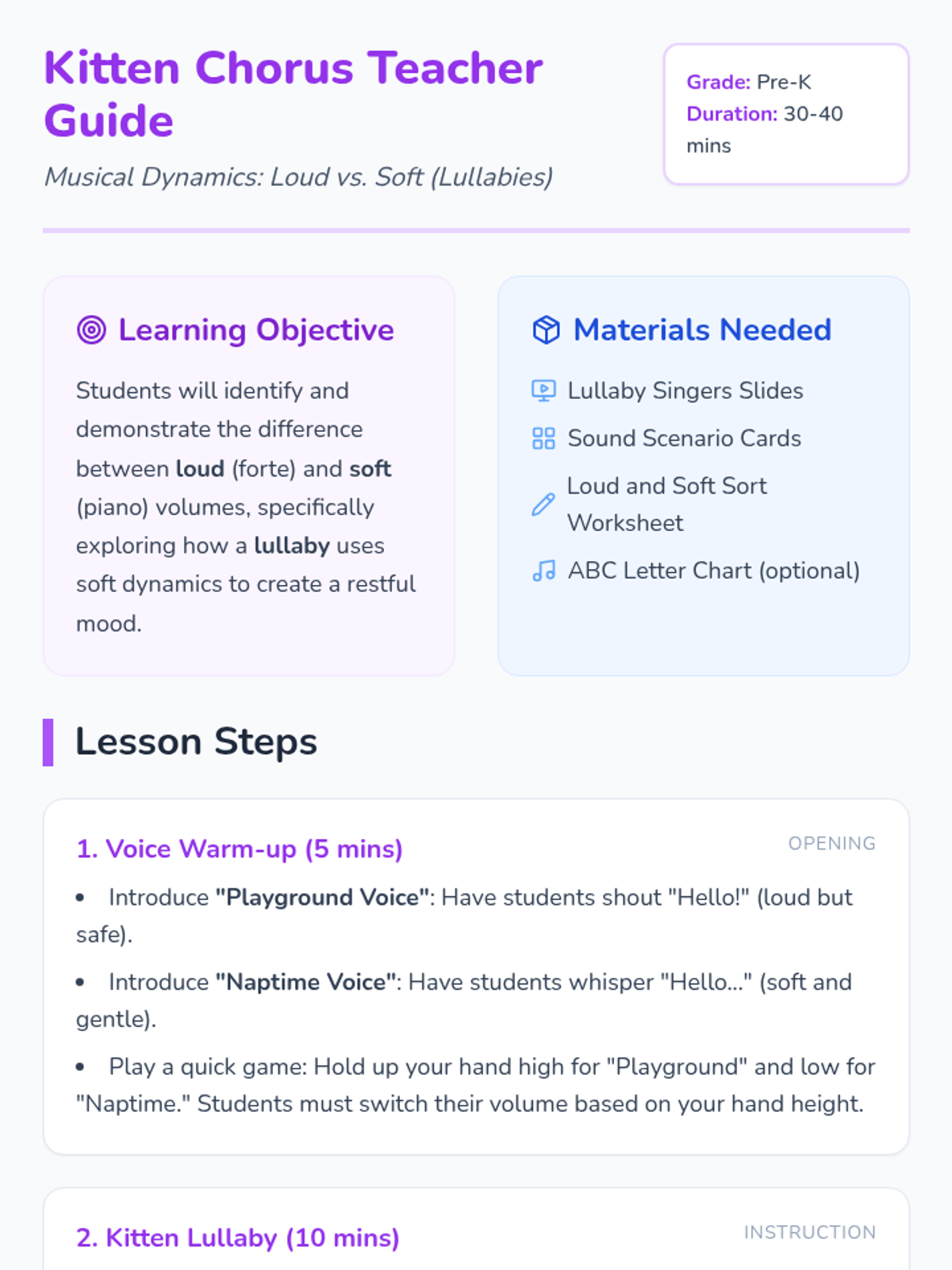
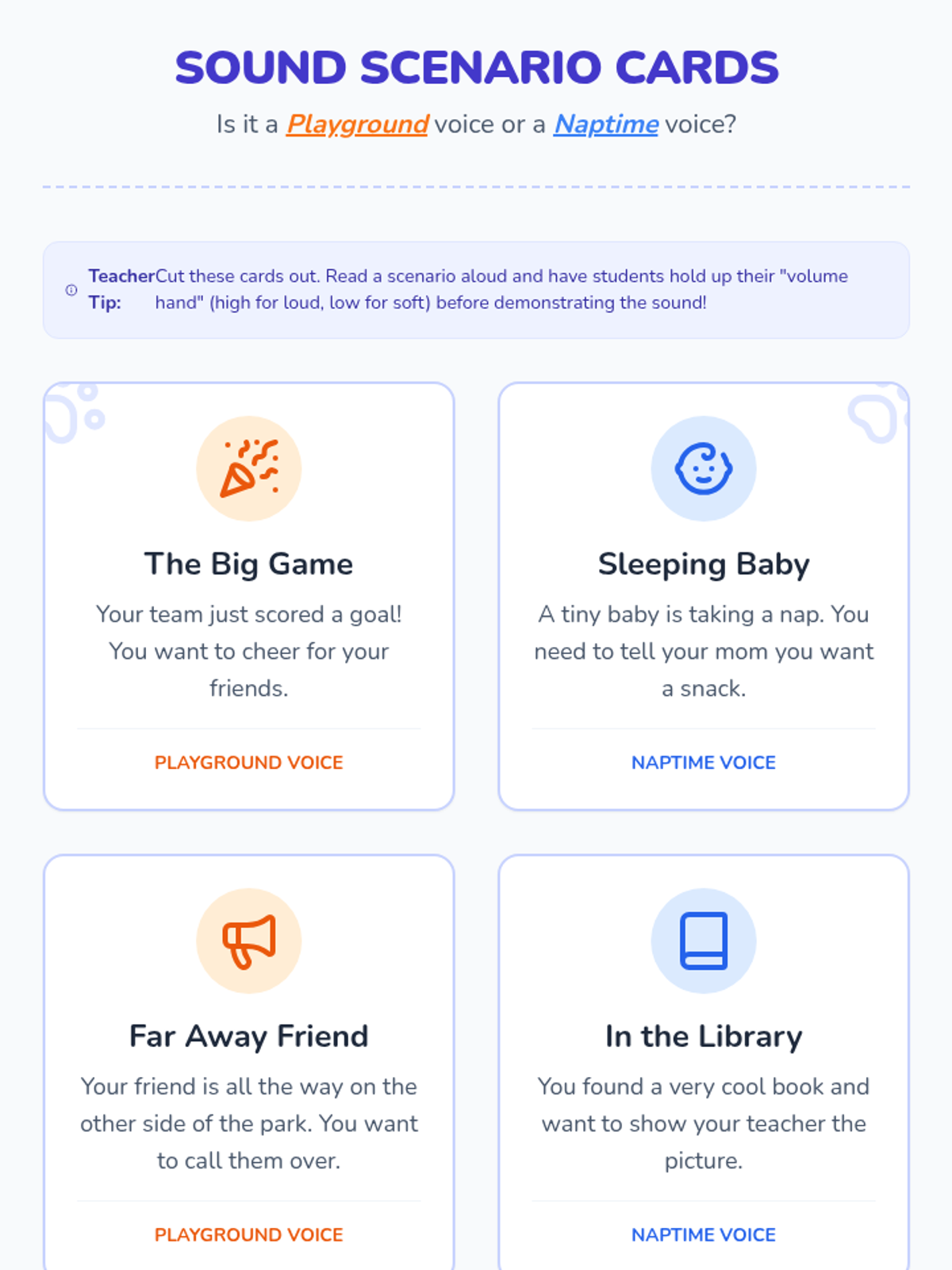
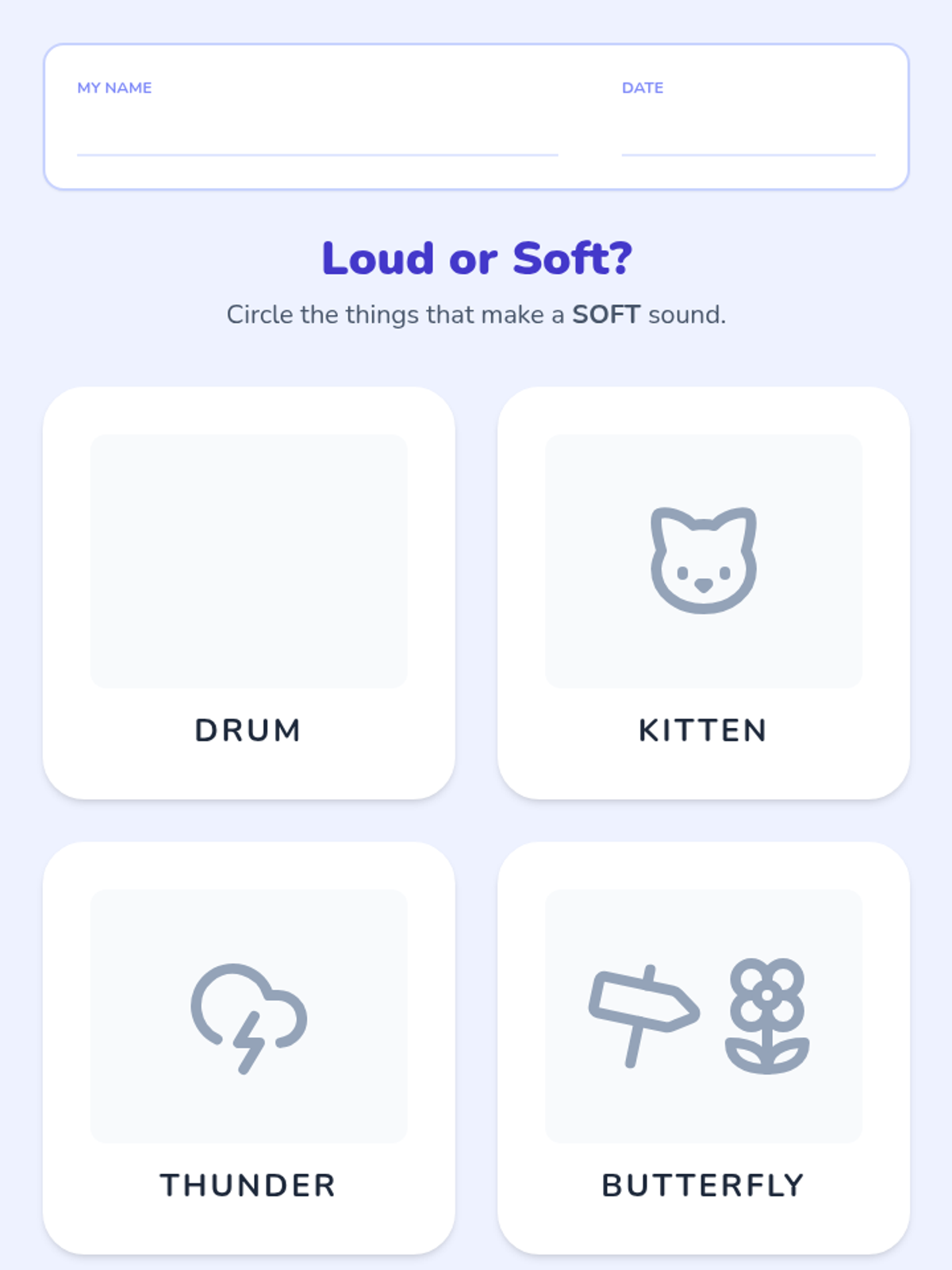
A Pre-K lesson exploring musical dynamics through the lens of a gentle lullaby. Students practice 'playground' and 'naptime' voices, watch a soothing kitten video, and sing the ABCs at different volumes and tempos.
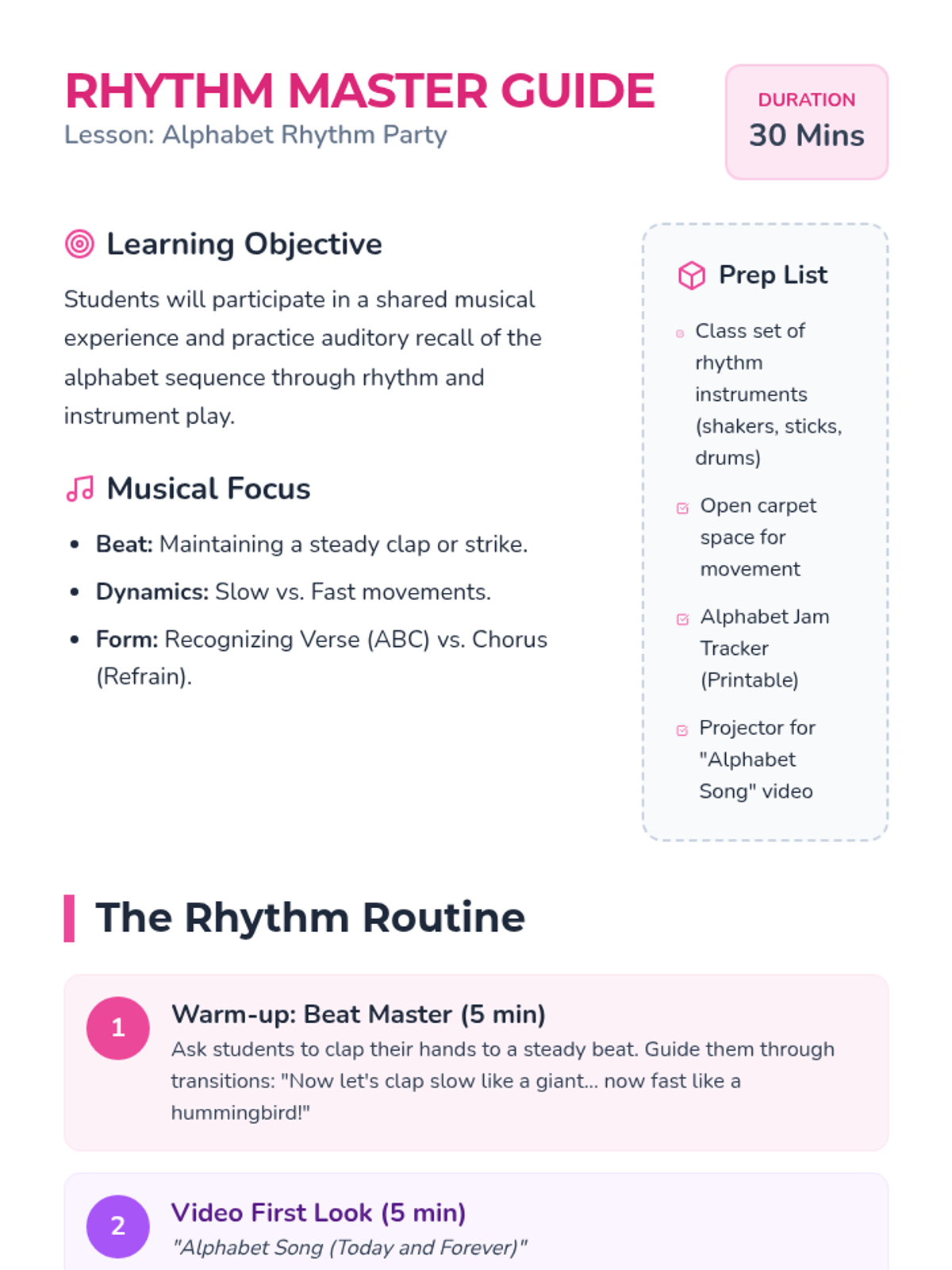
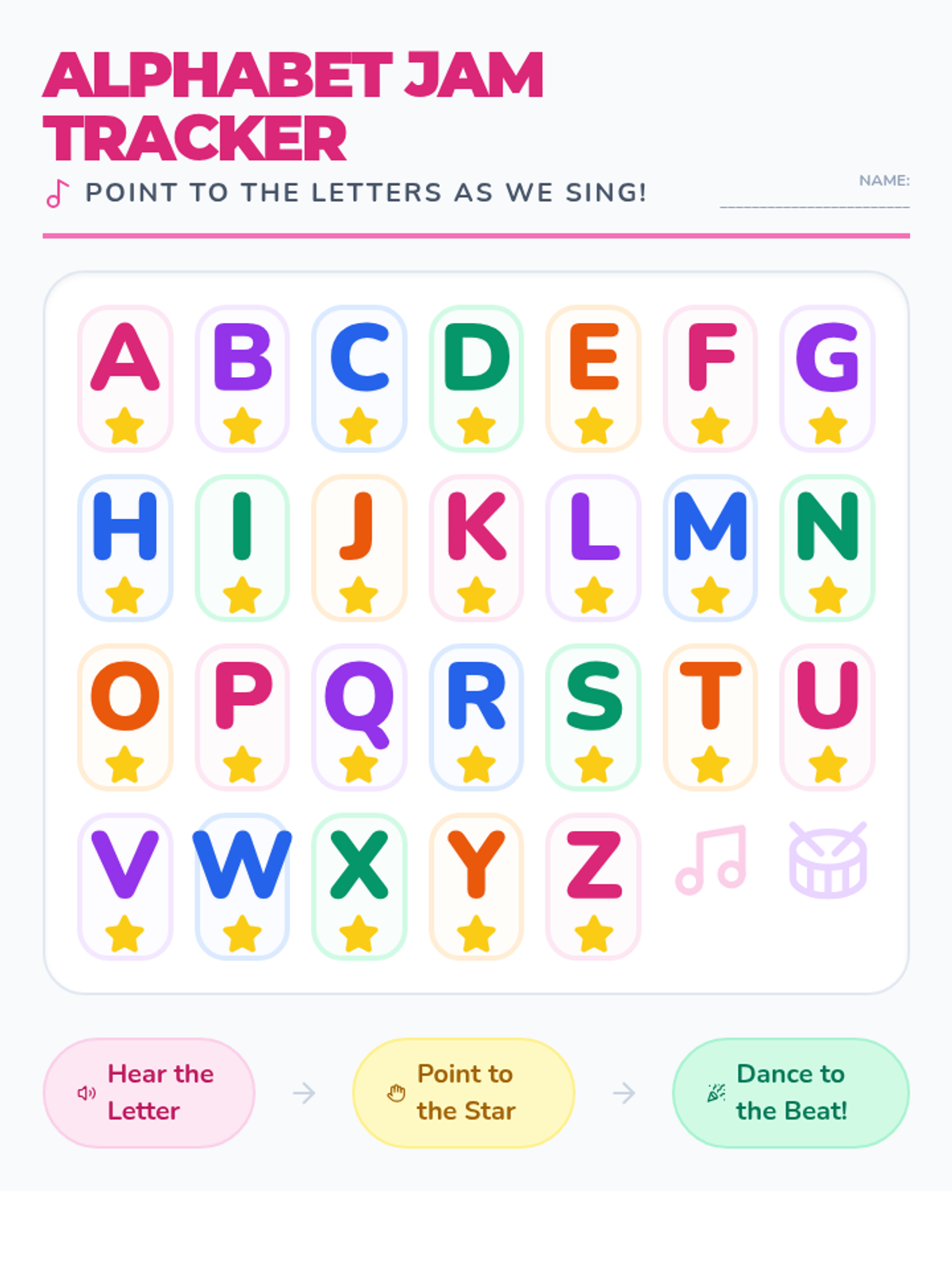
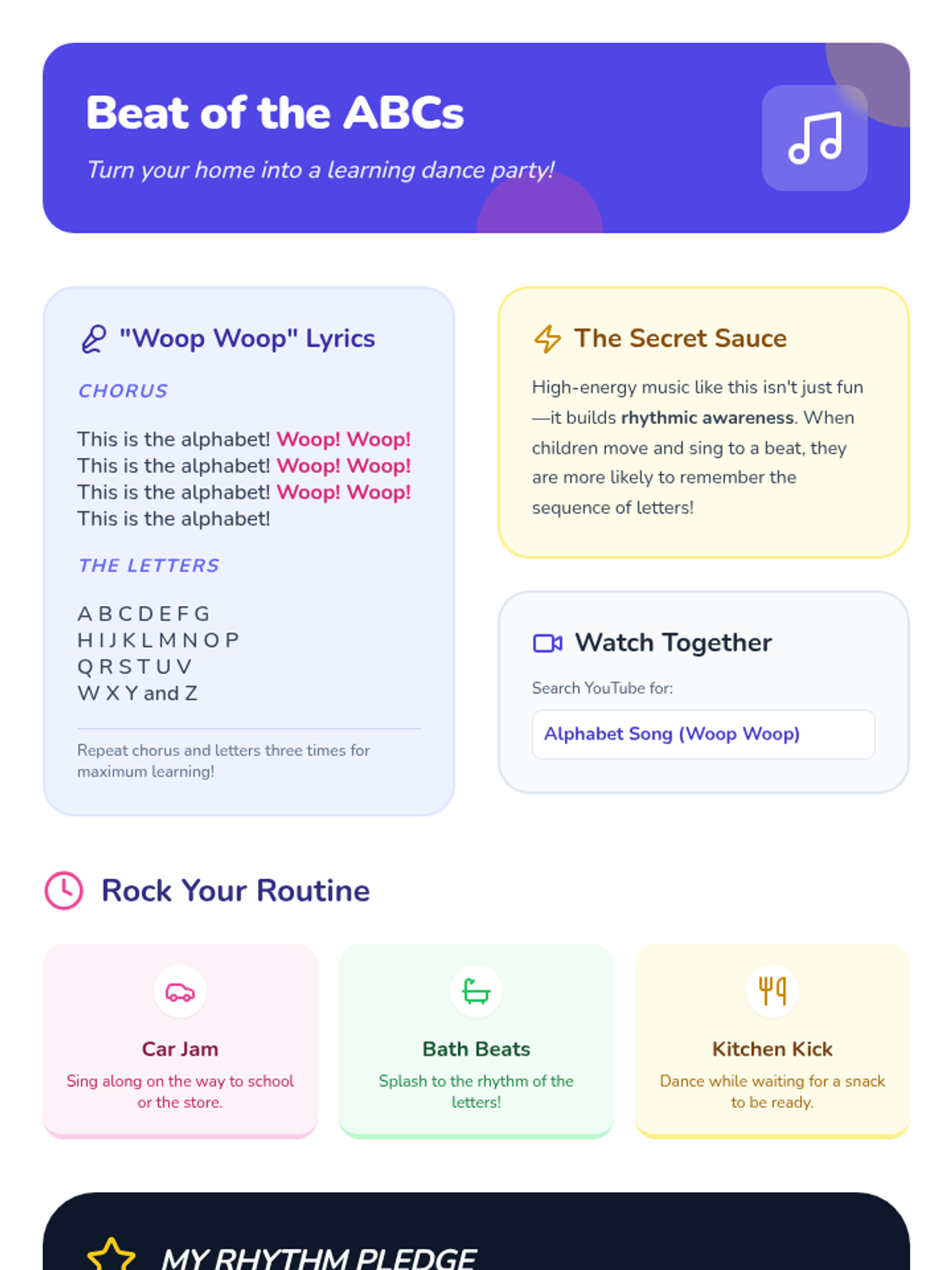
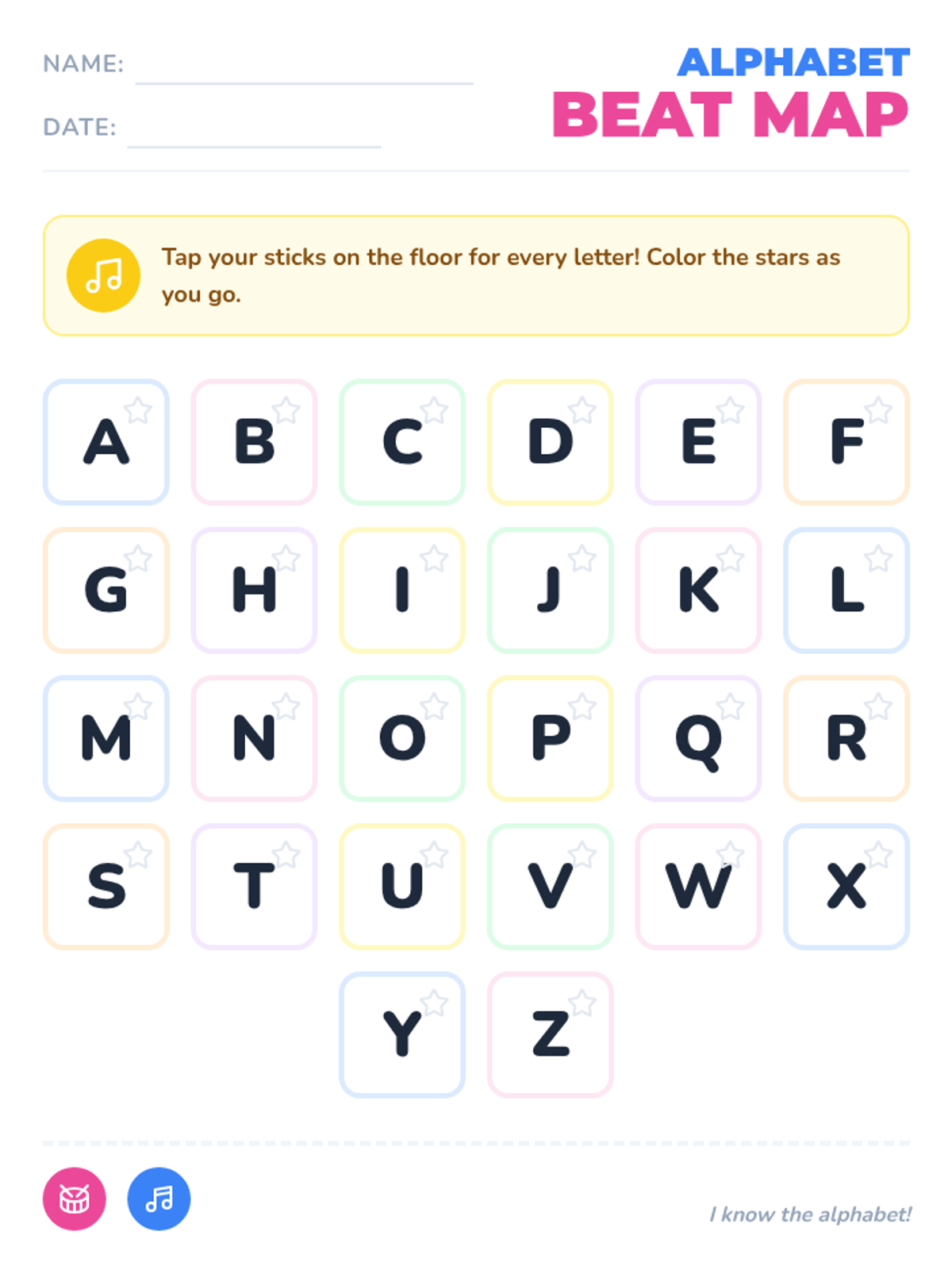
A high-energy musical lesson where Pre-K students use instruments to explore the alphabet through a reggae rhythm. Students practice auditory recall and beat-keeping while distinguishing between song sections.
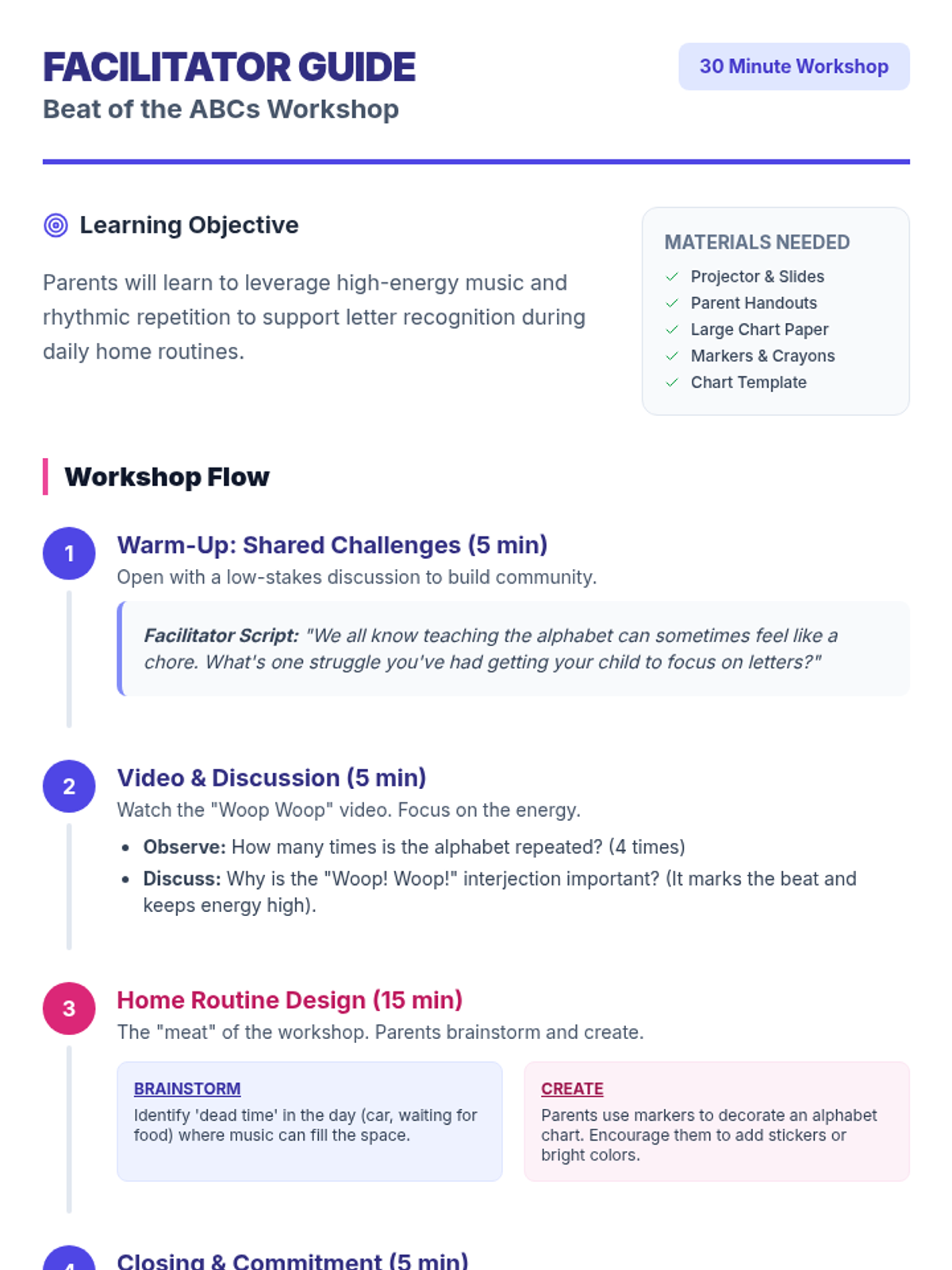
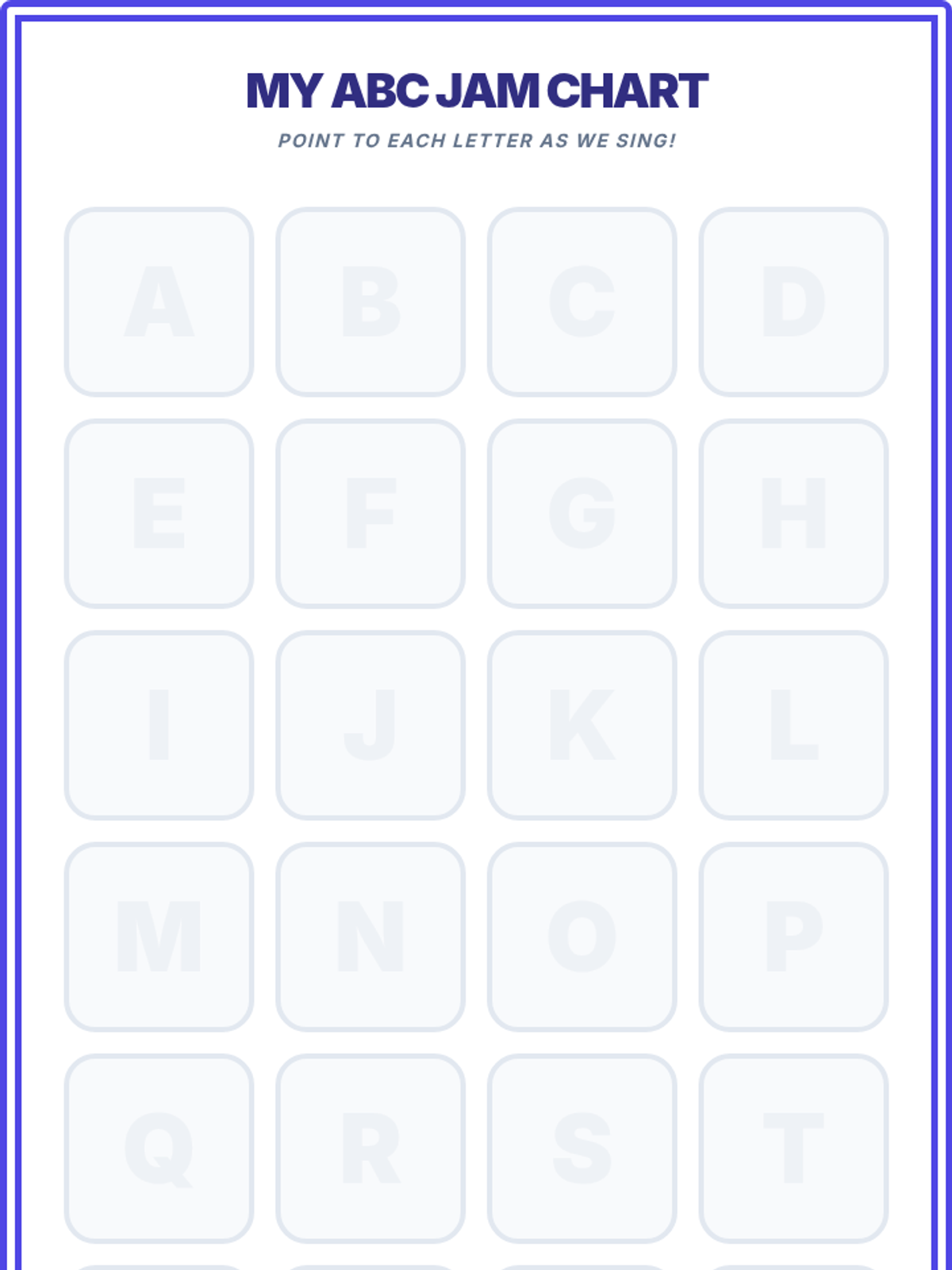
A workshop for Pre-K parents focused on using high-energy music and rhythm to boost letter recognition through daily routines and interactive singing.
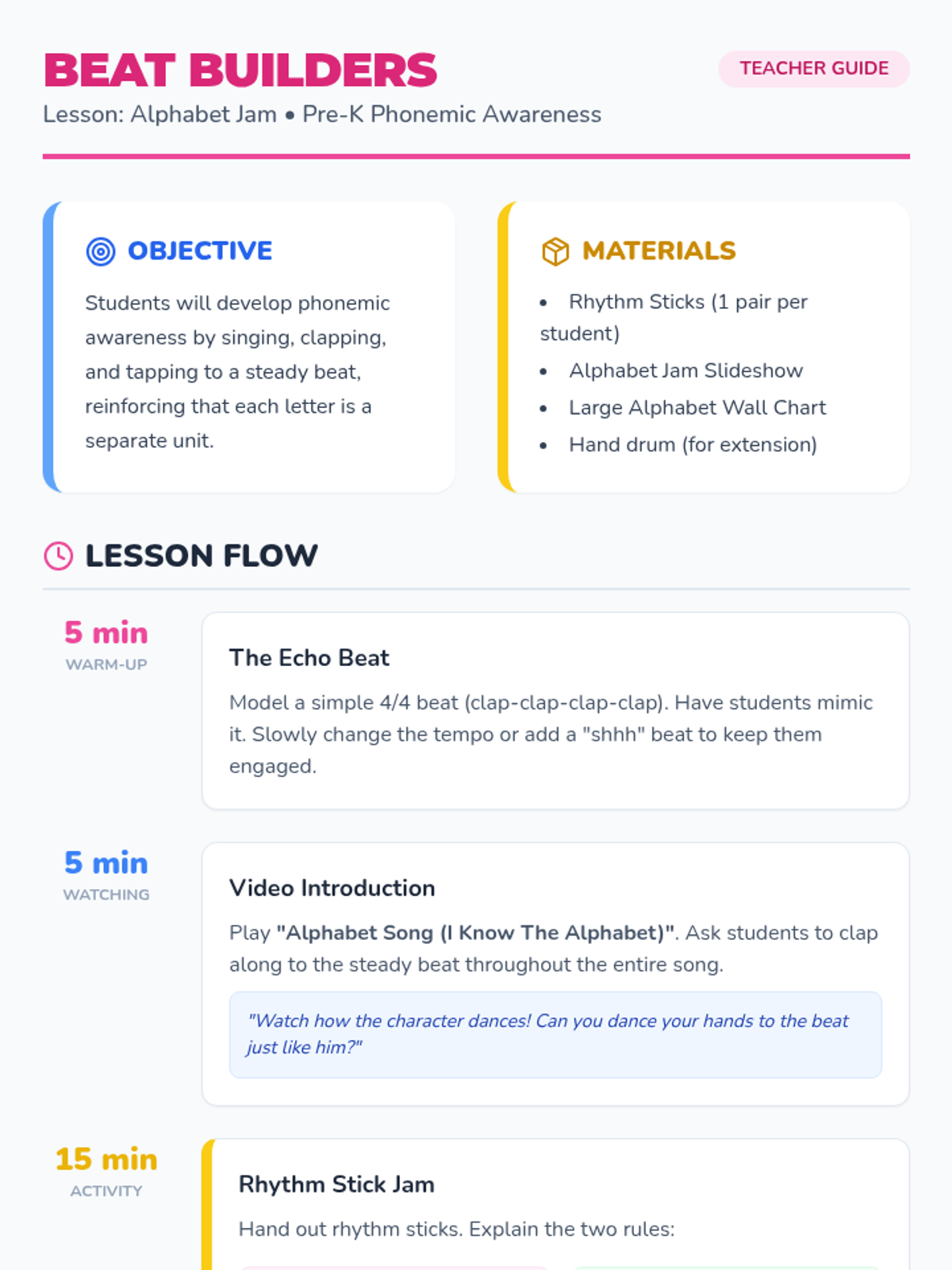
A fun, musical lesson for Pre-K students to develop phonemic awareness and rhythm by clapping and using rhythm sticks to the 'Alphabet Song'.
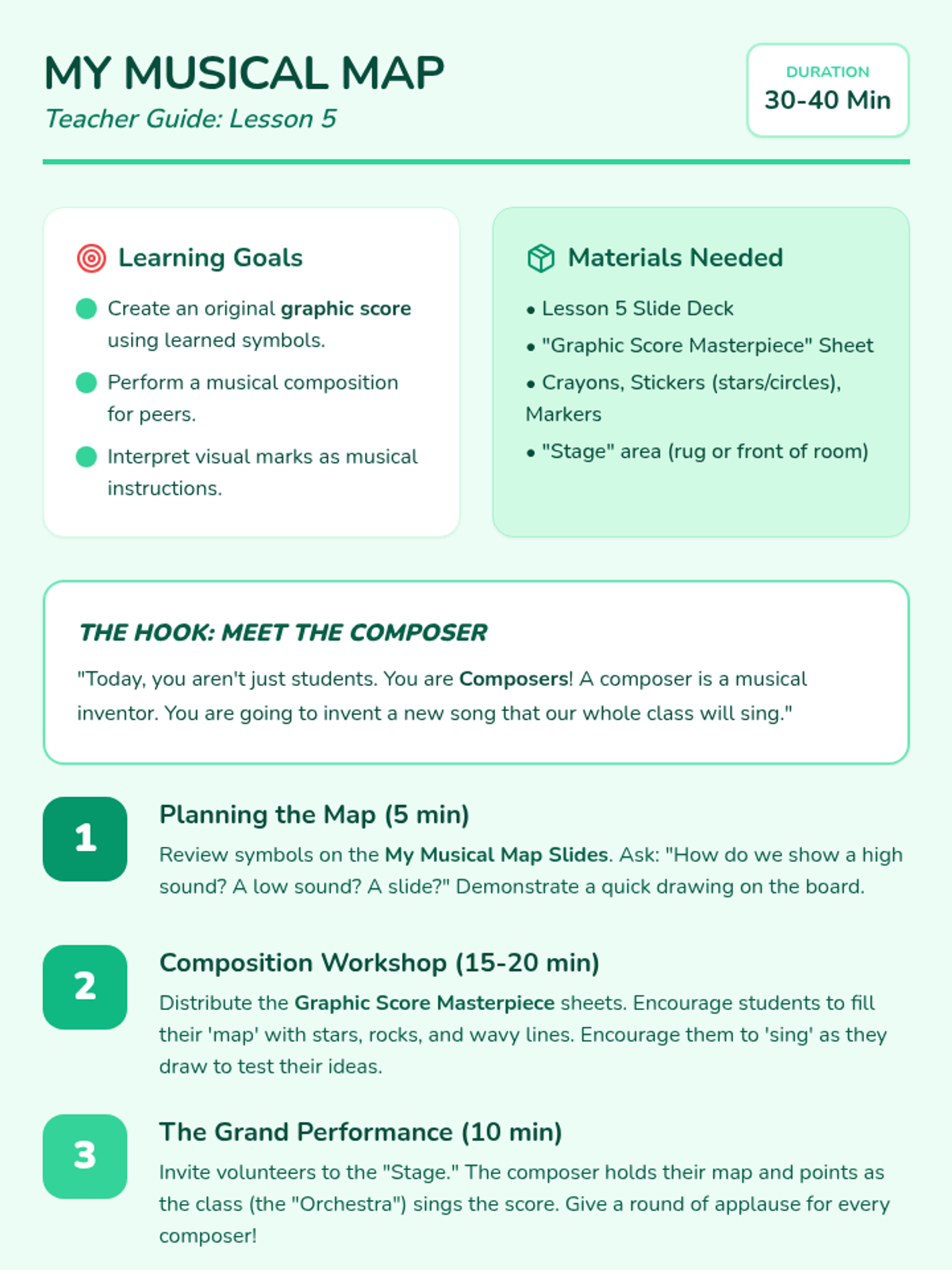
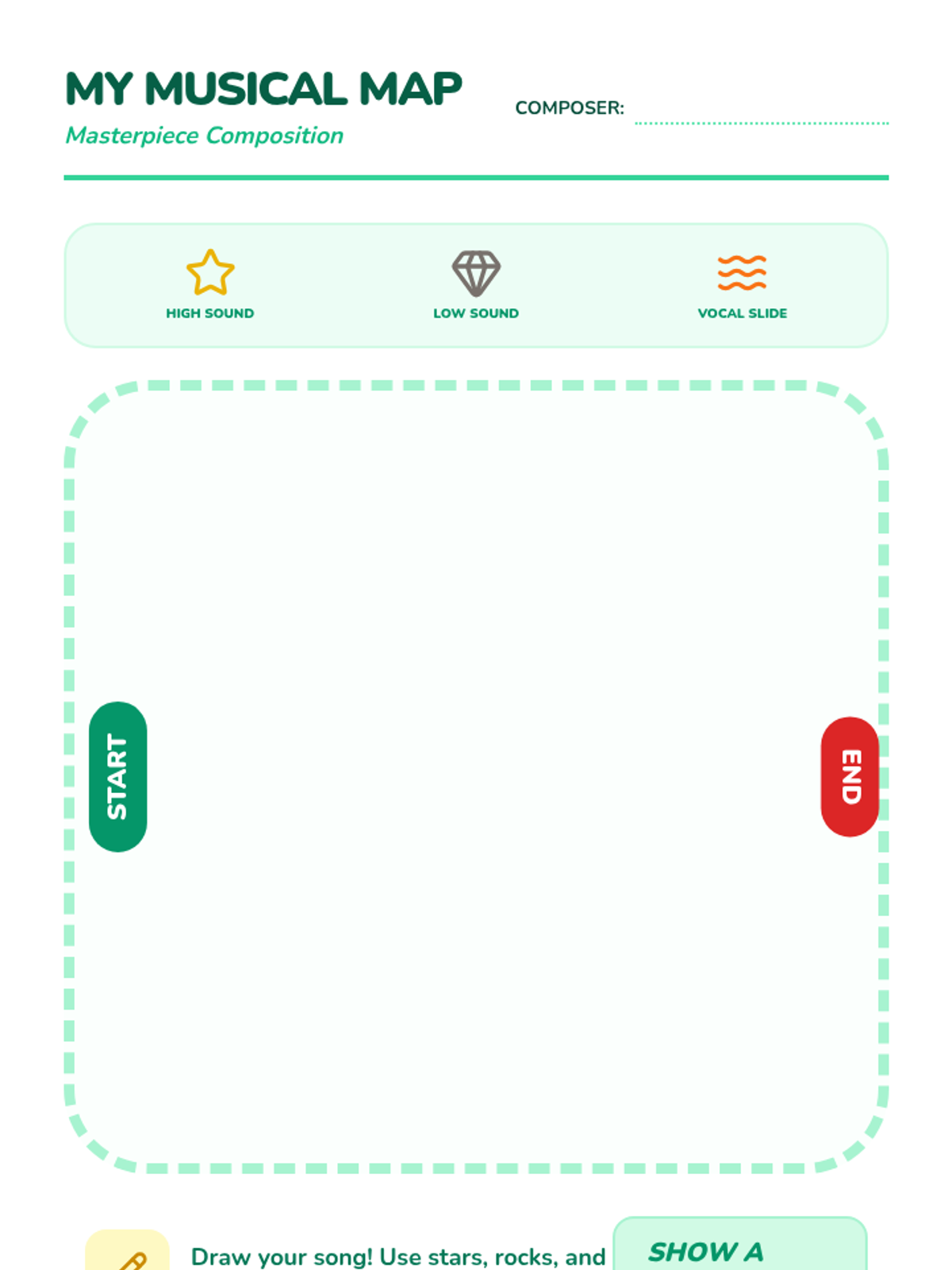
The culmination of the sequence where students compose their own graphic scores and perform them for their peers, demonstrating their understanding of high, low, and sliding sounds.
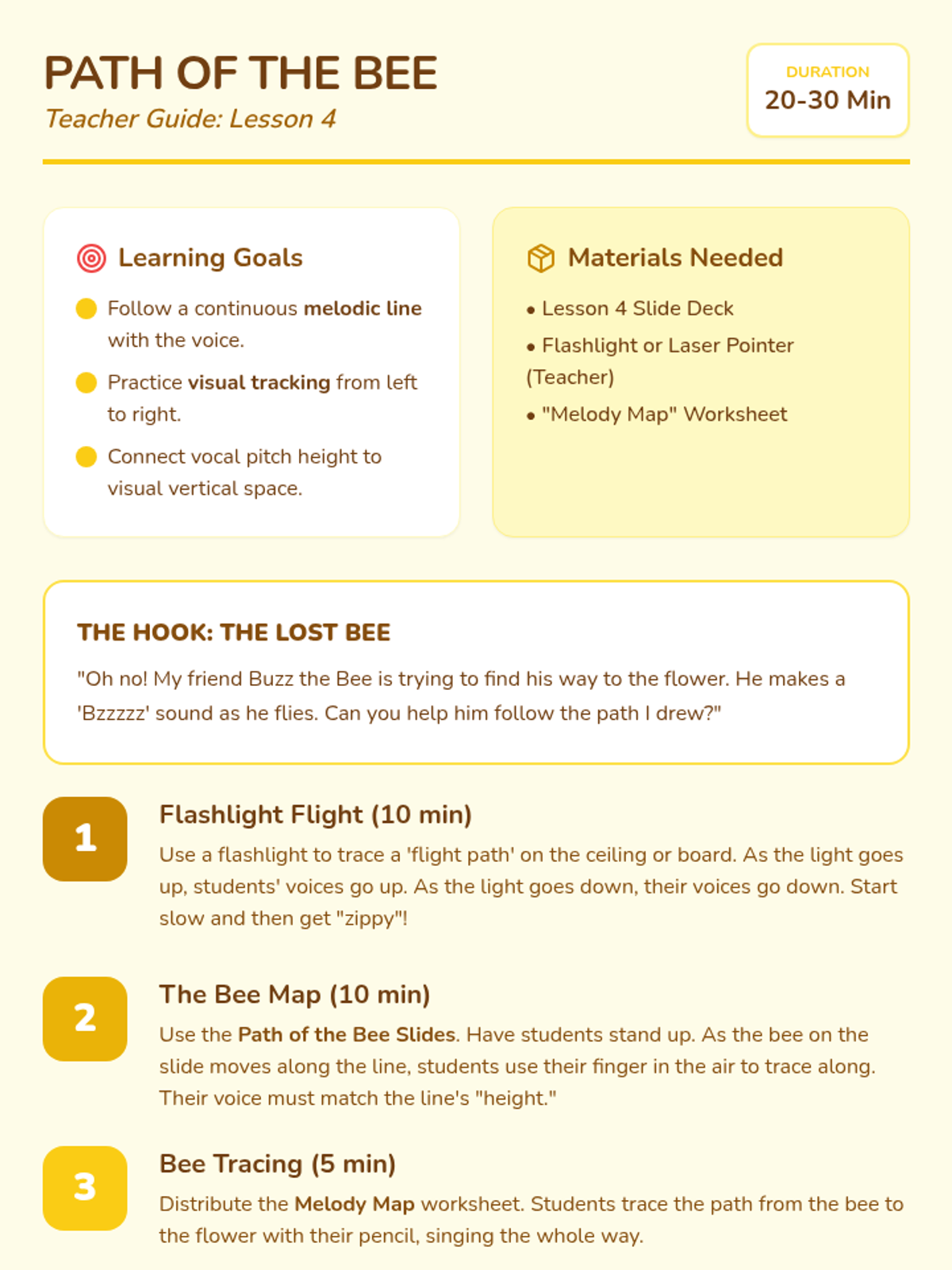
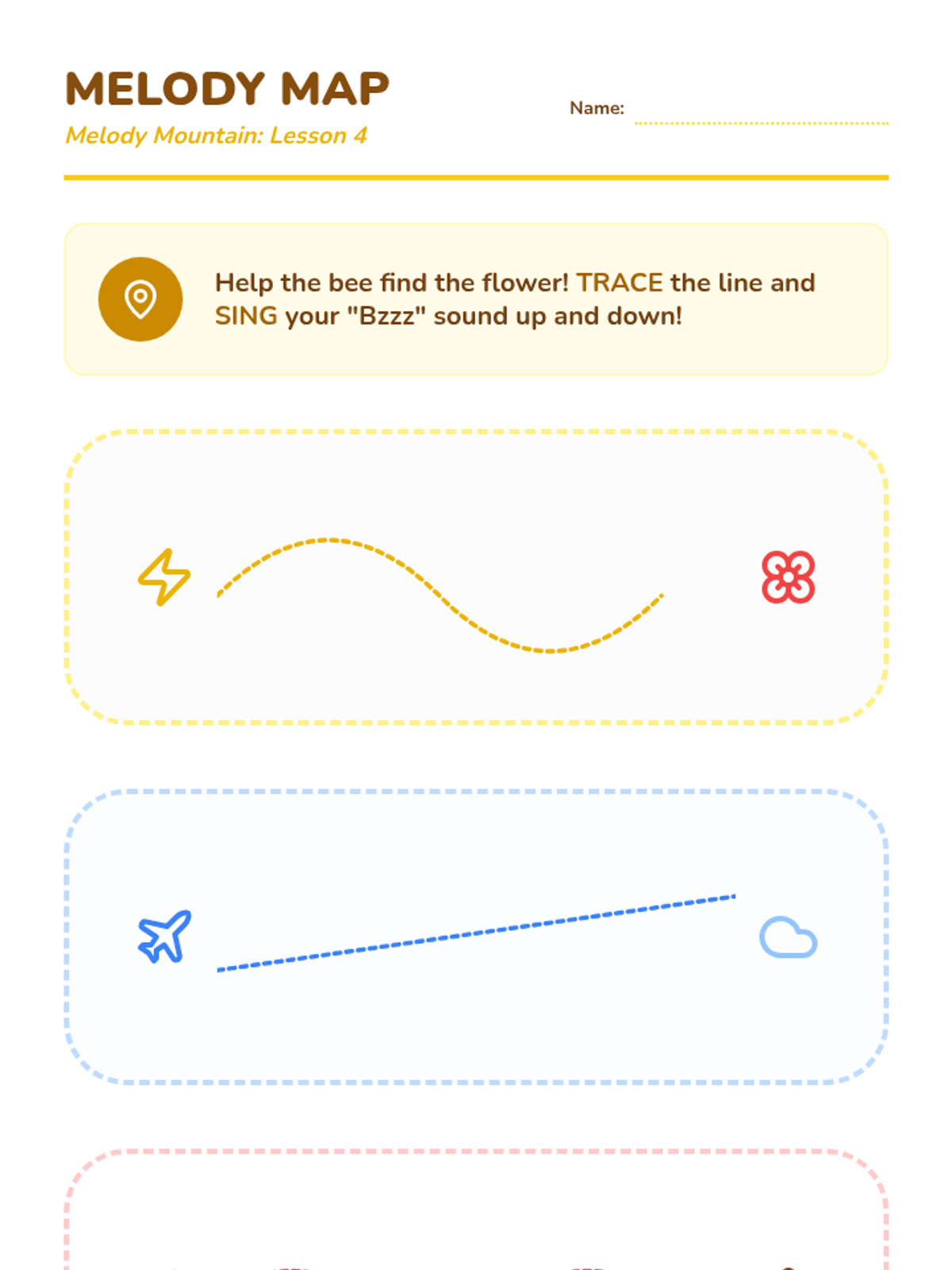
Students connect visual lines to pitch movement, tracing 'melody maps' that show the path of a sound moving continuously through high and low spaces.
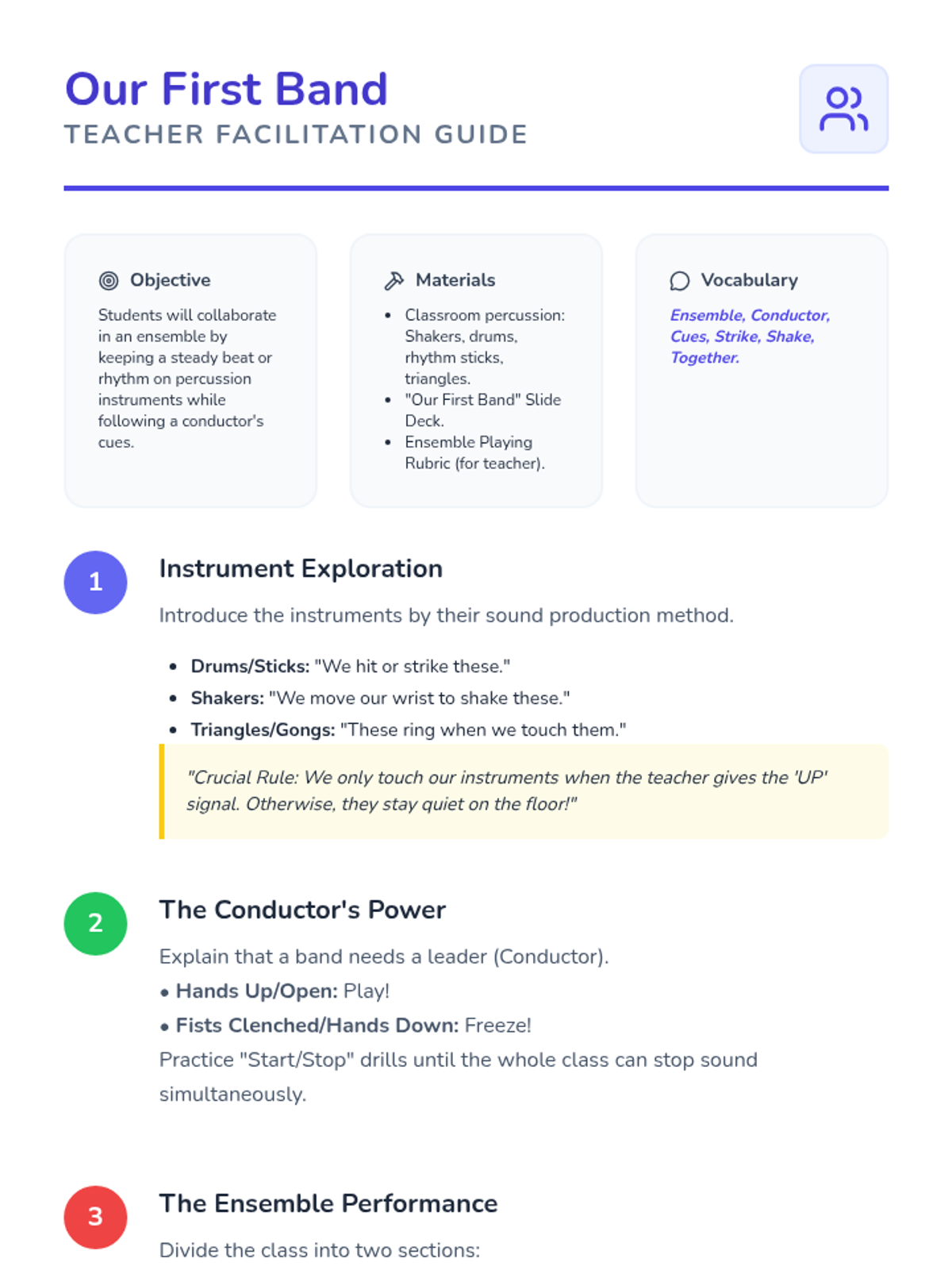
A culminating lesson where students play percussion instruments in an ensemble, practicing starting and stopping together.
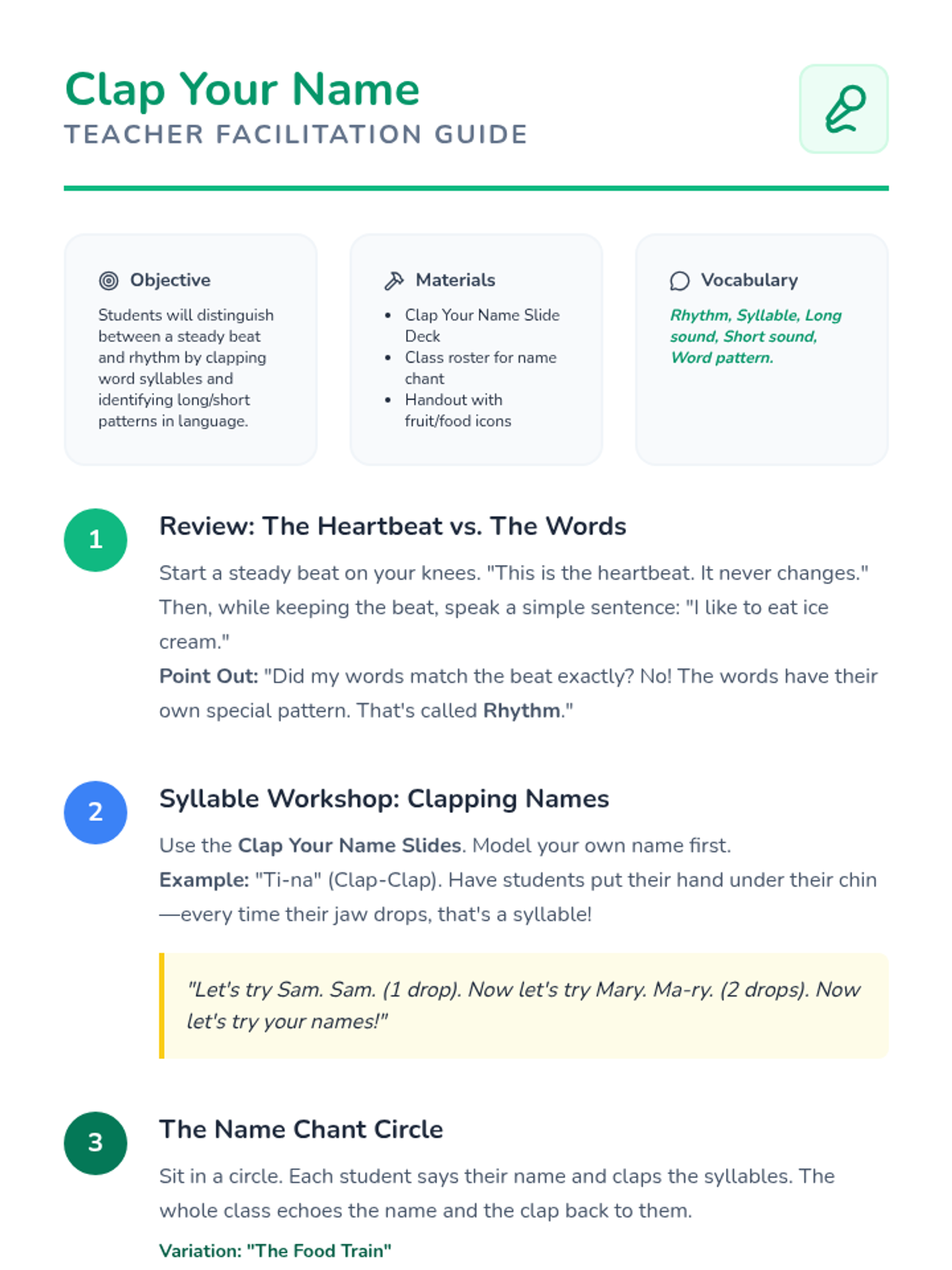
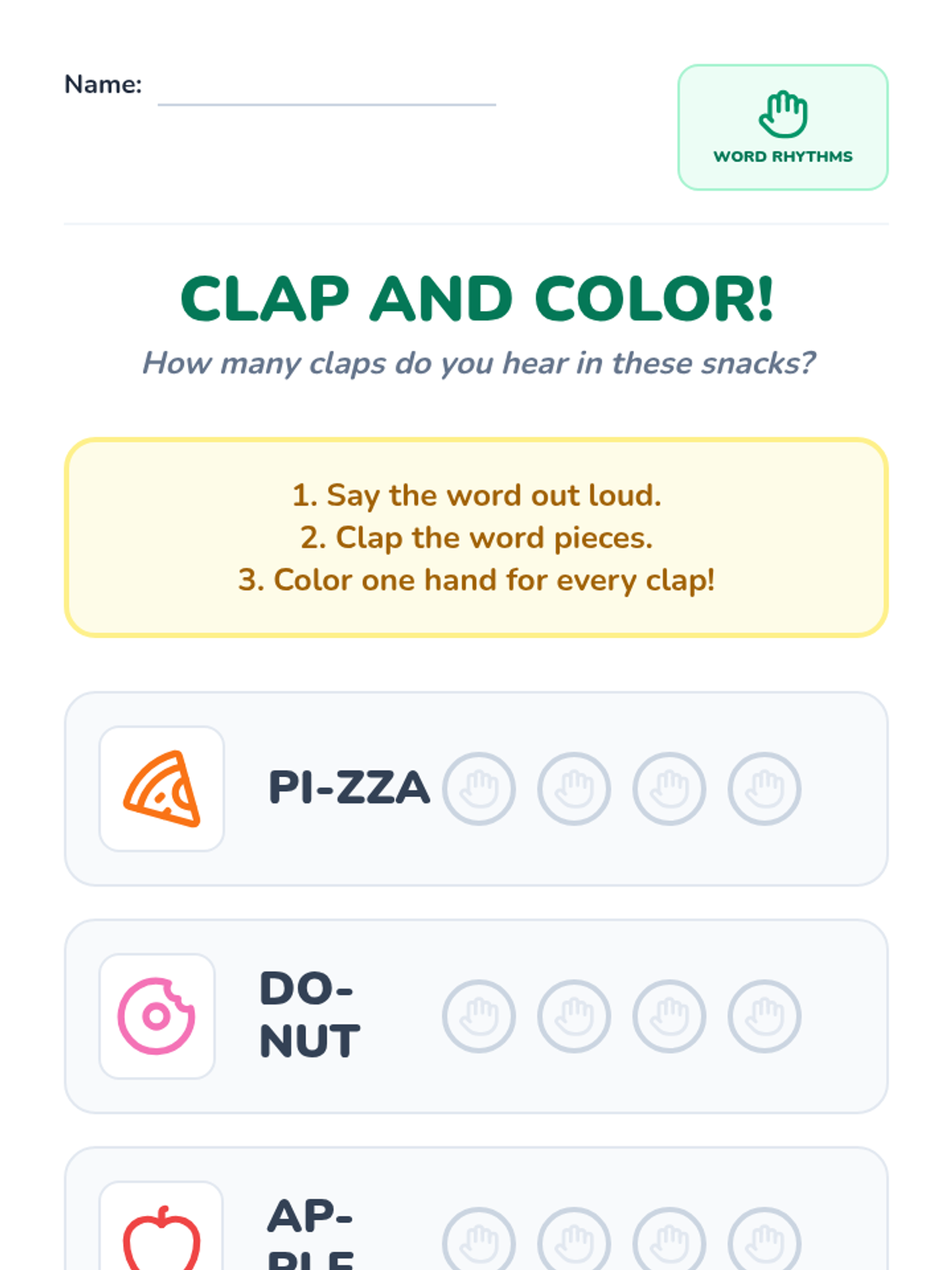
Students bridge language and music by clapping the syllables of names and foods to discover rhythmic patterns.
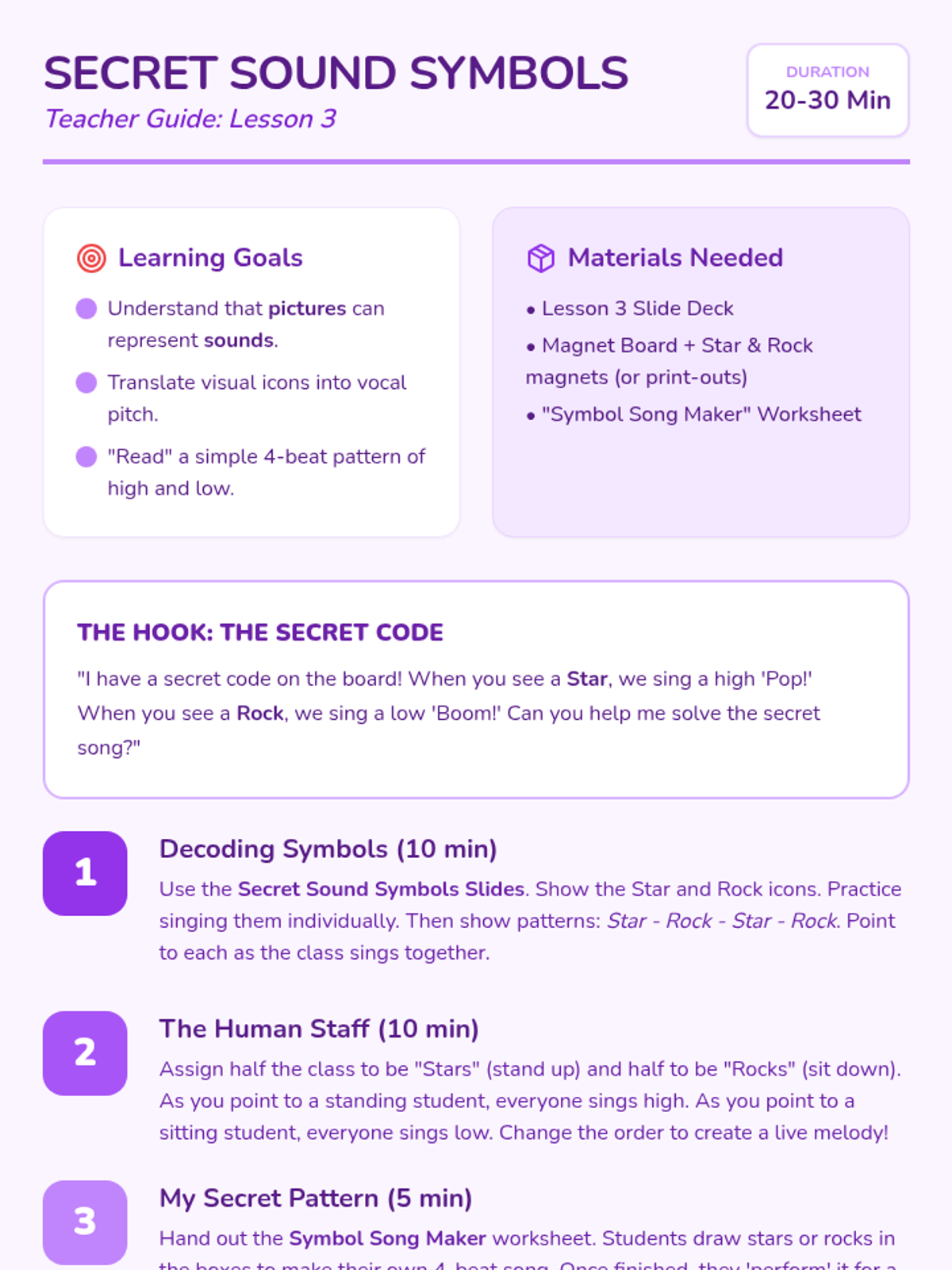
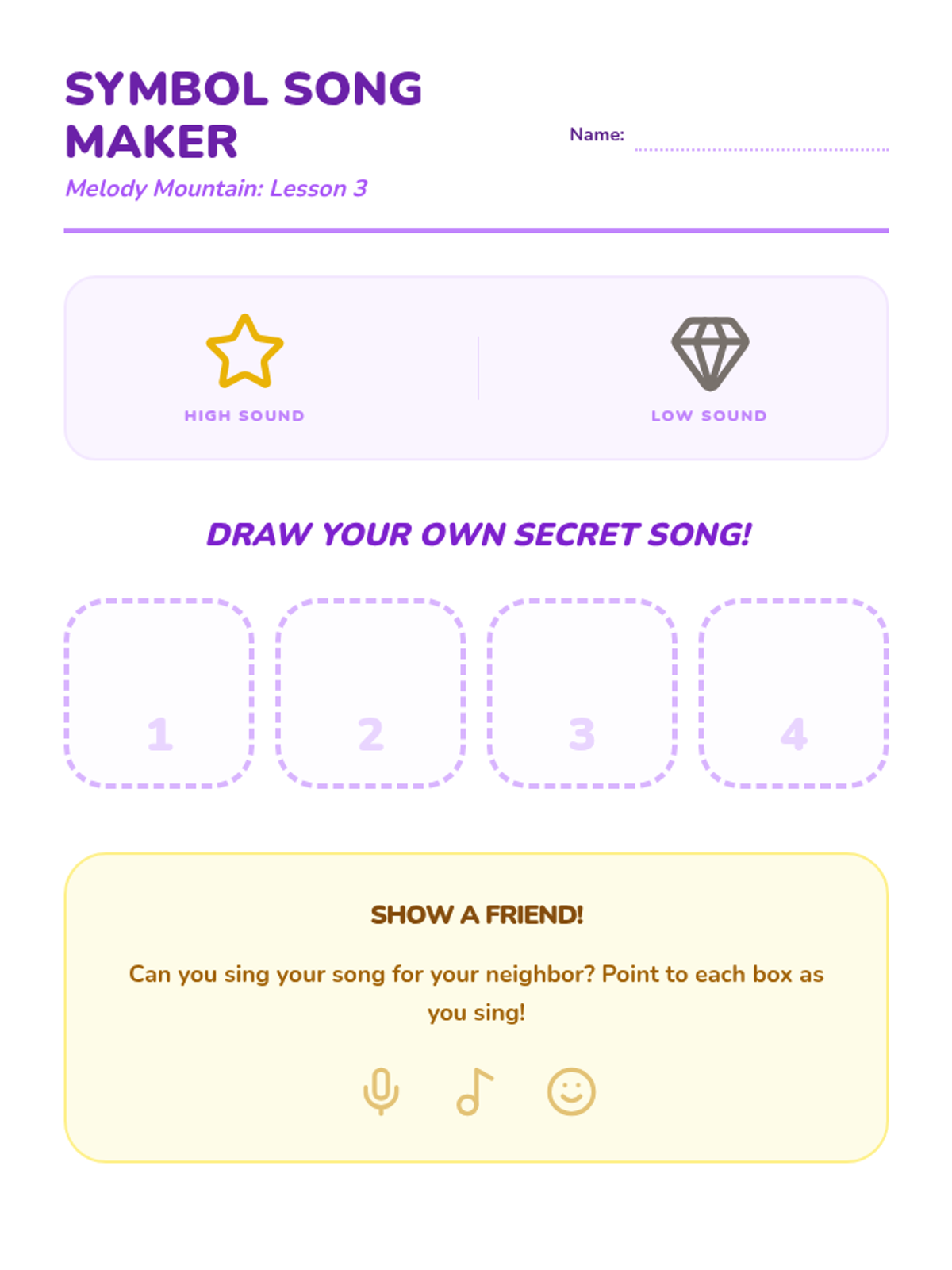
Introduces the concept of musical notation by using simple icons like stars and rocks to represent high and low sounds in a sequence.
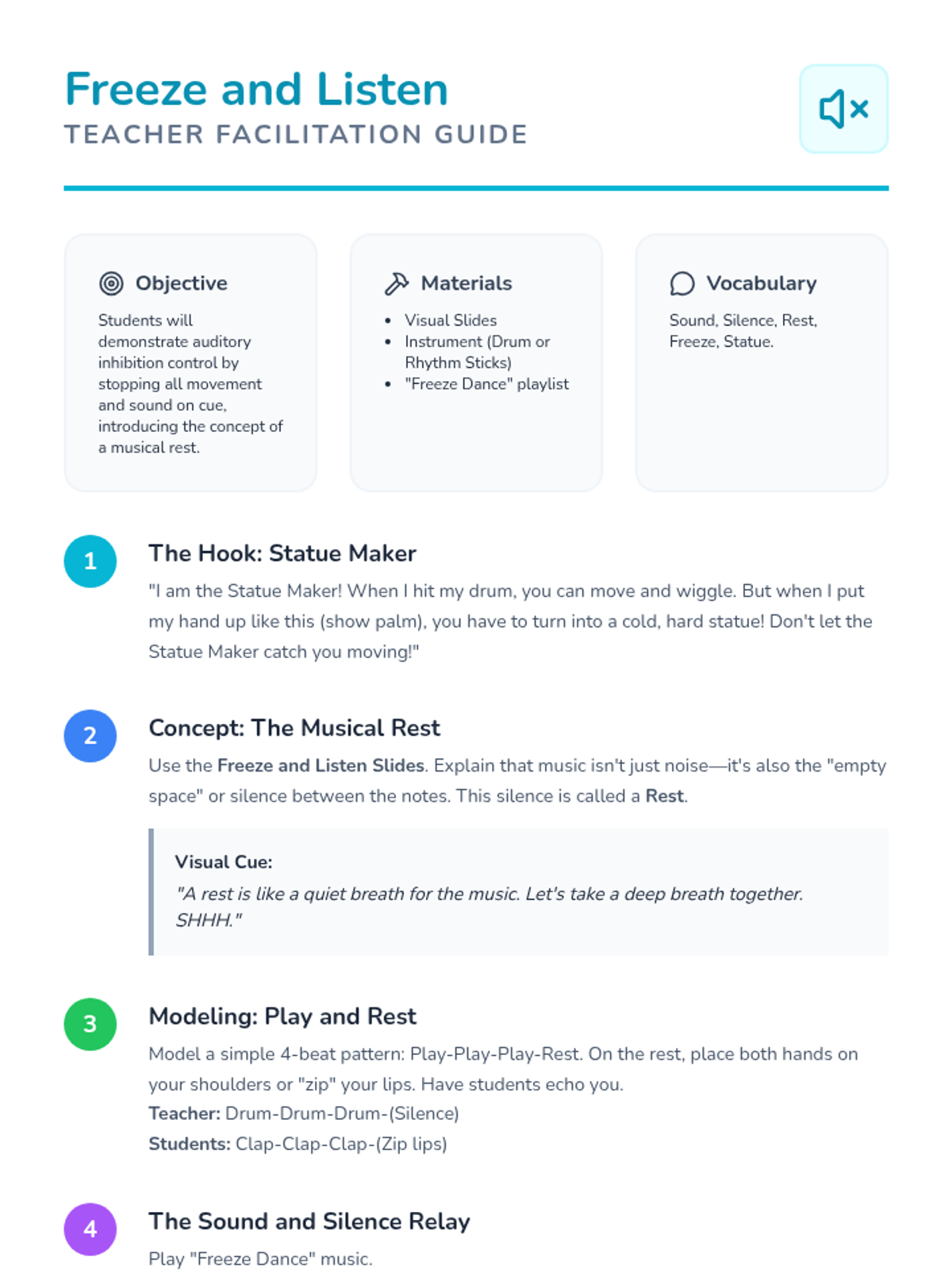
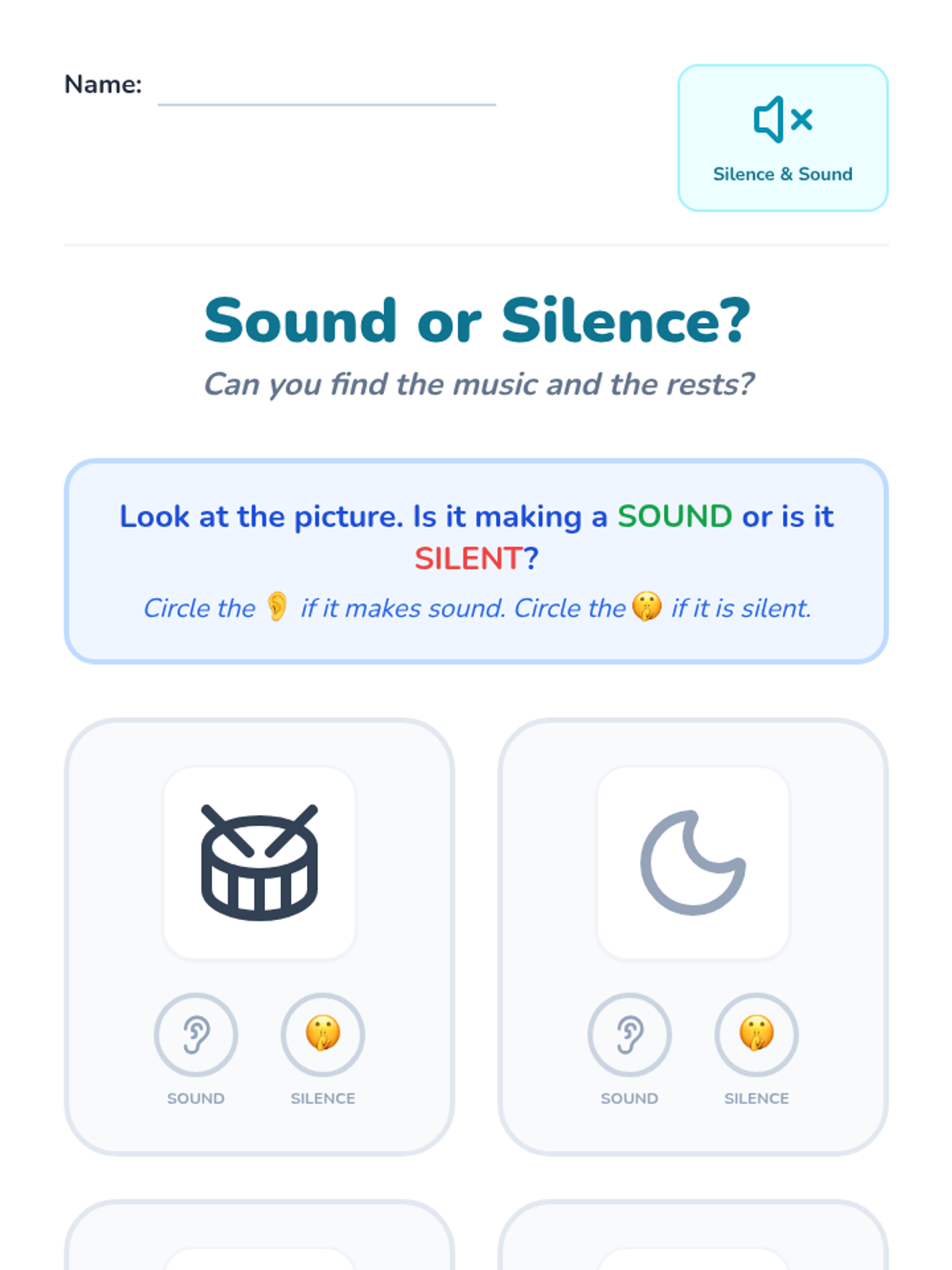
This lesson introduces the concept of rests through 'freeze' games, emphasizing that music includes both sound and silence.
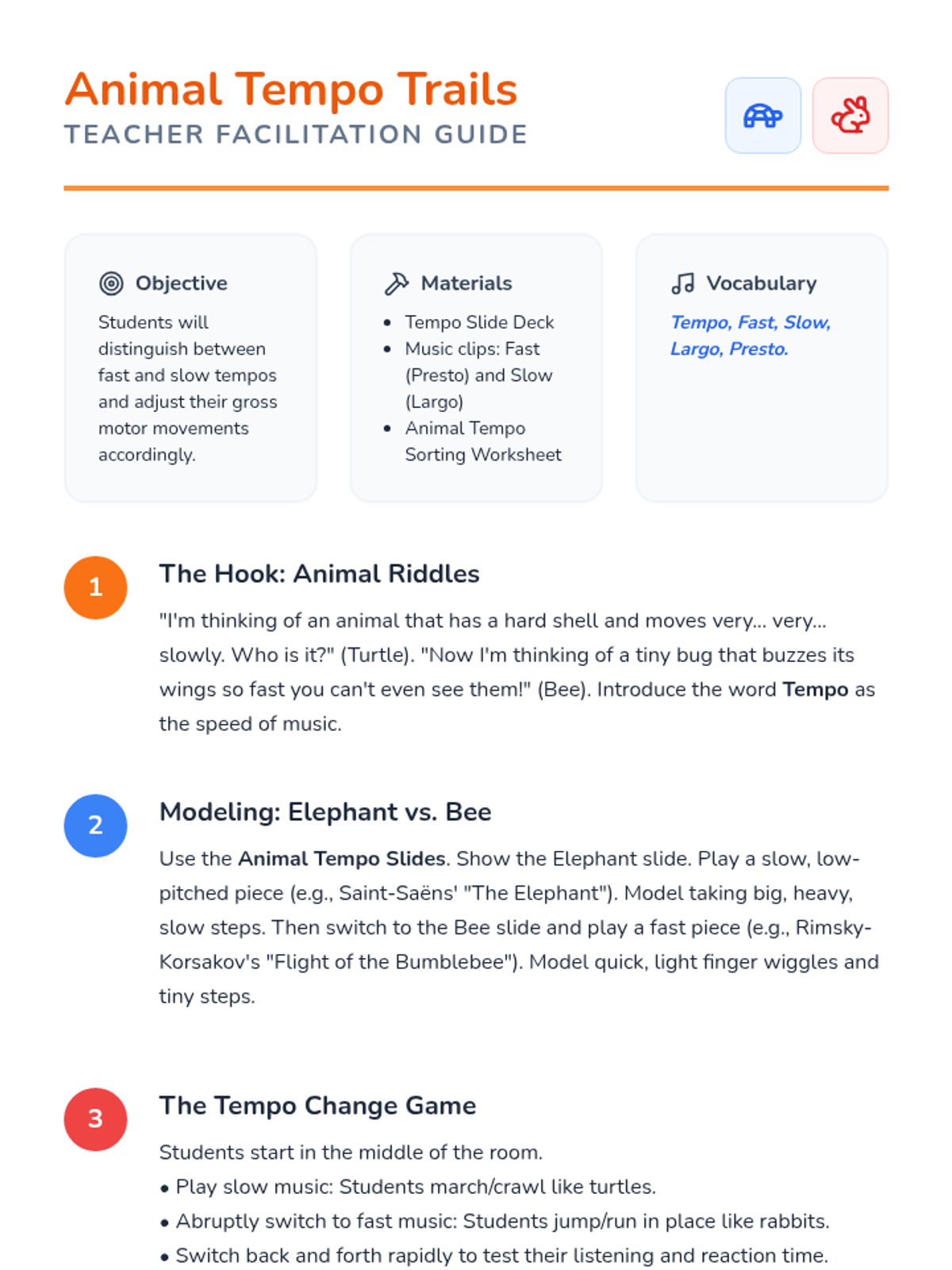
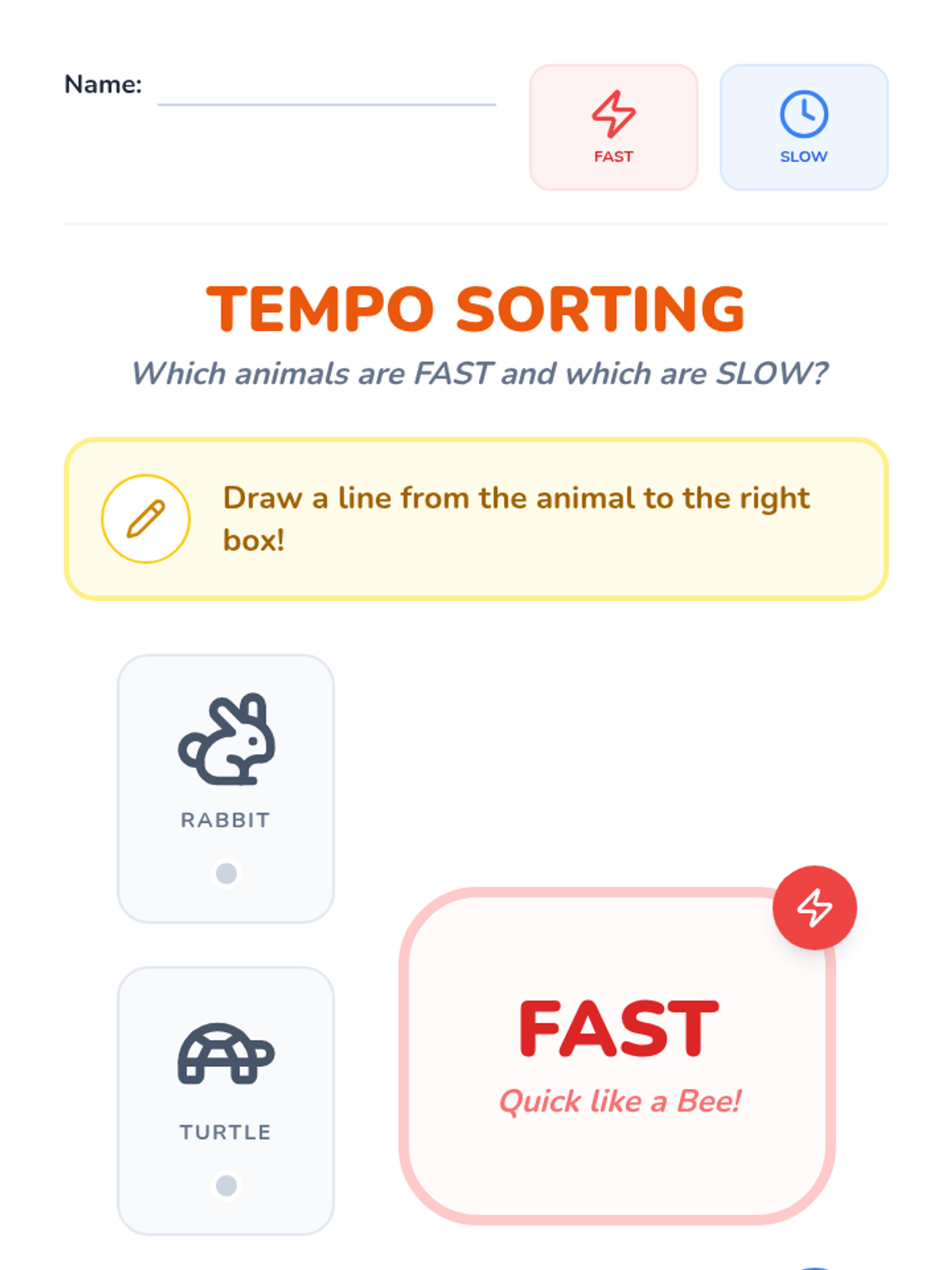
Learners investigate how tempo changes the feeling of music using animal movements as a guide.
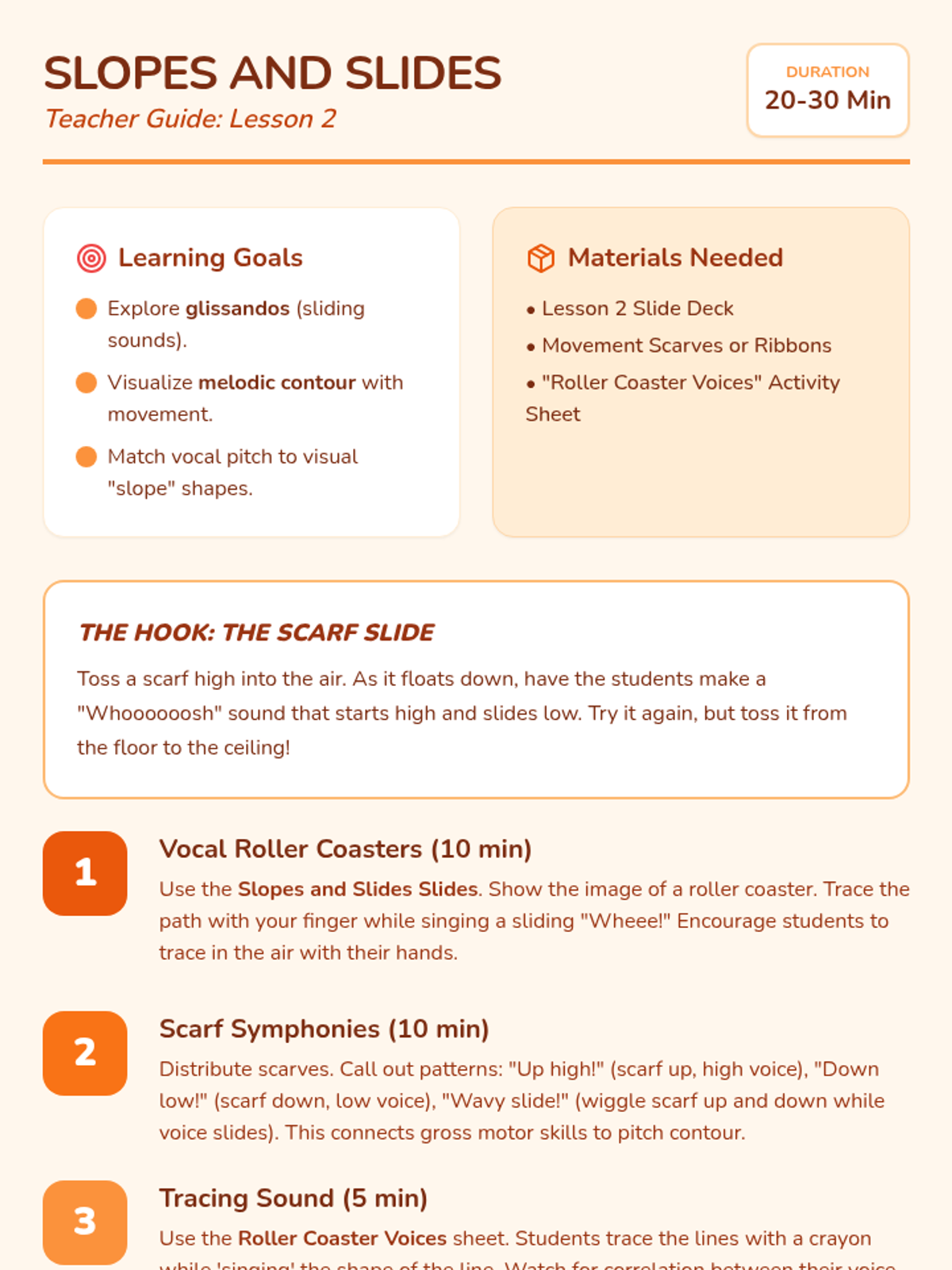
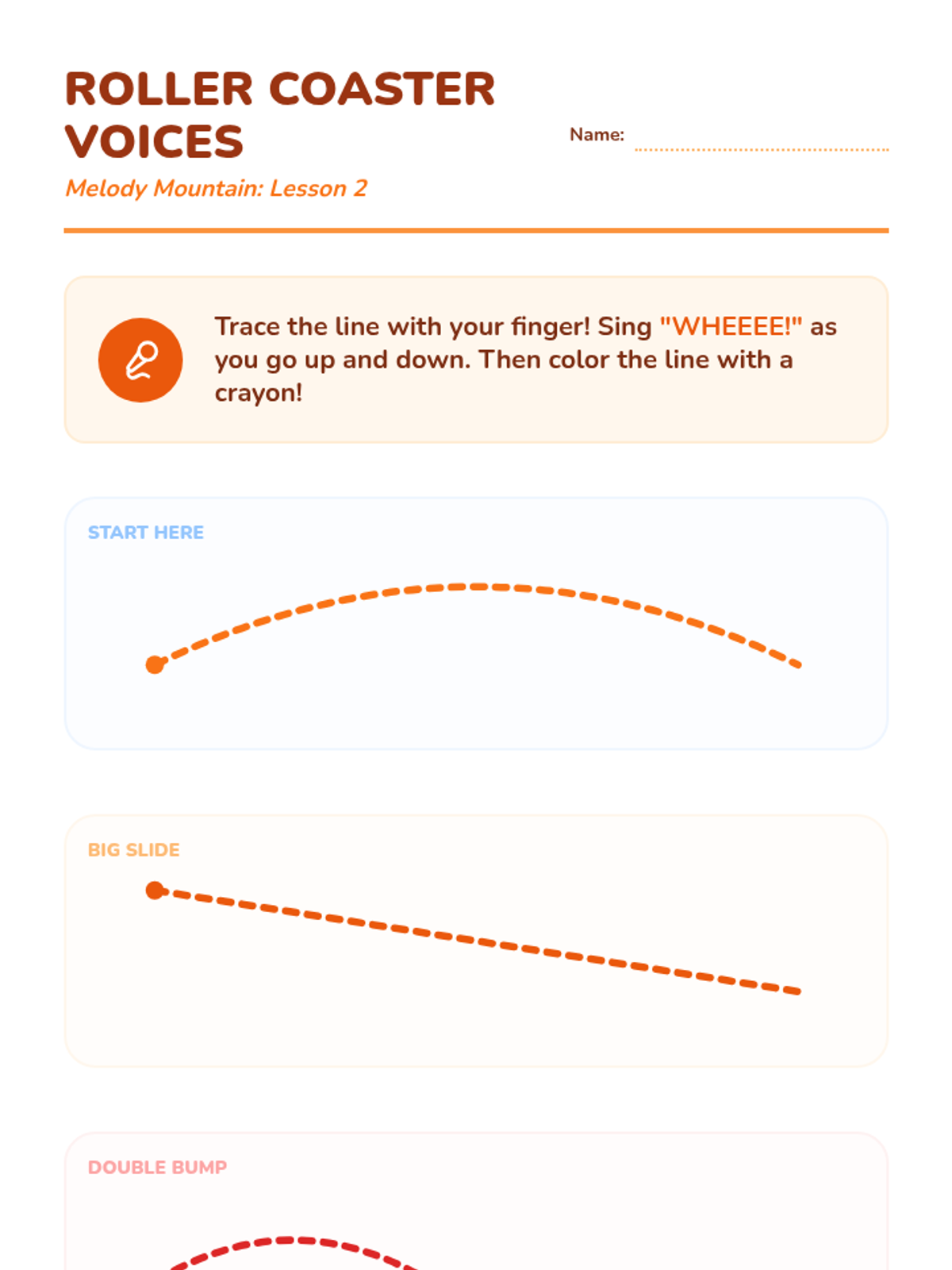
Focuses on melodic contour using glissandos, where students use their voices and scarves to mimic the smooth upward and downward paths of sirens and roller coasters.
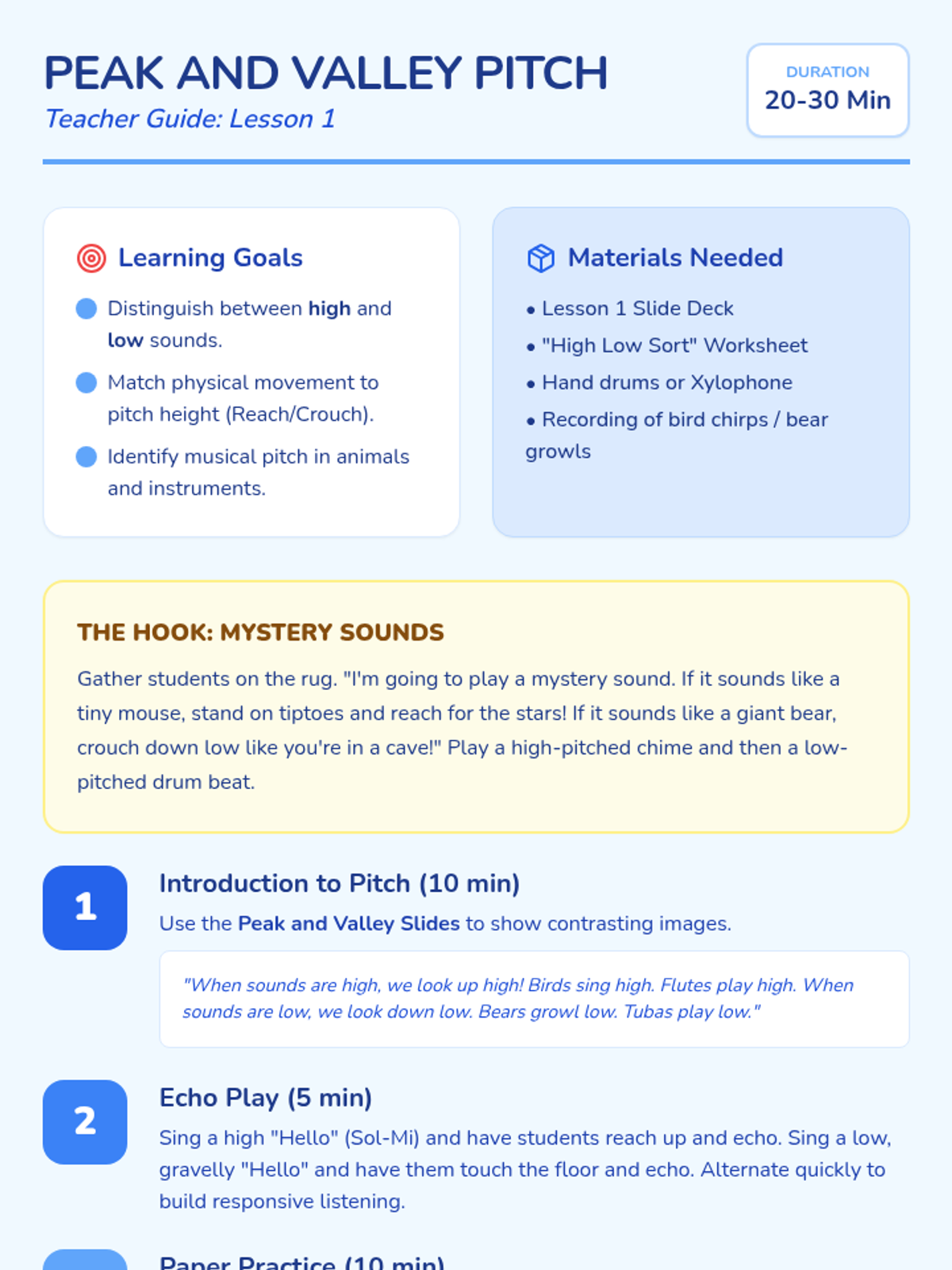
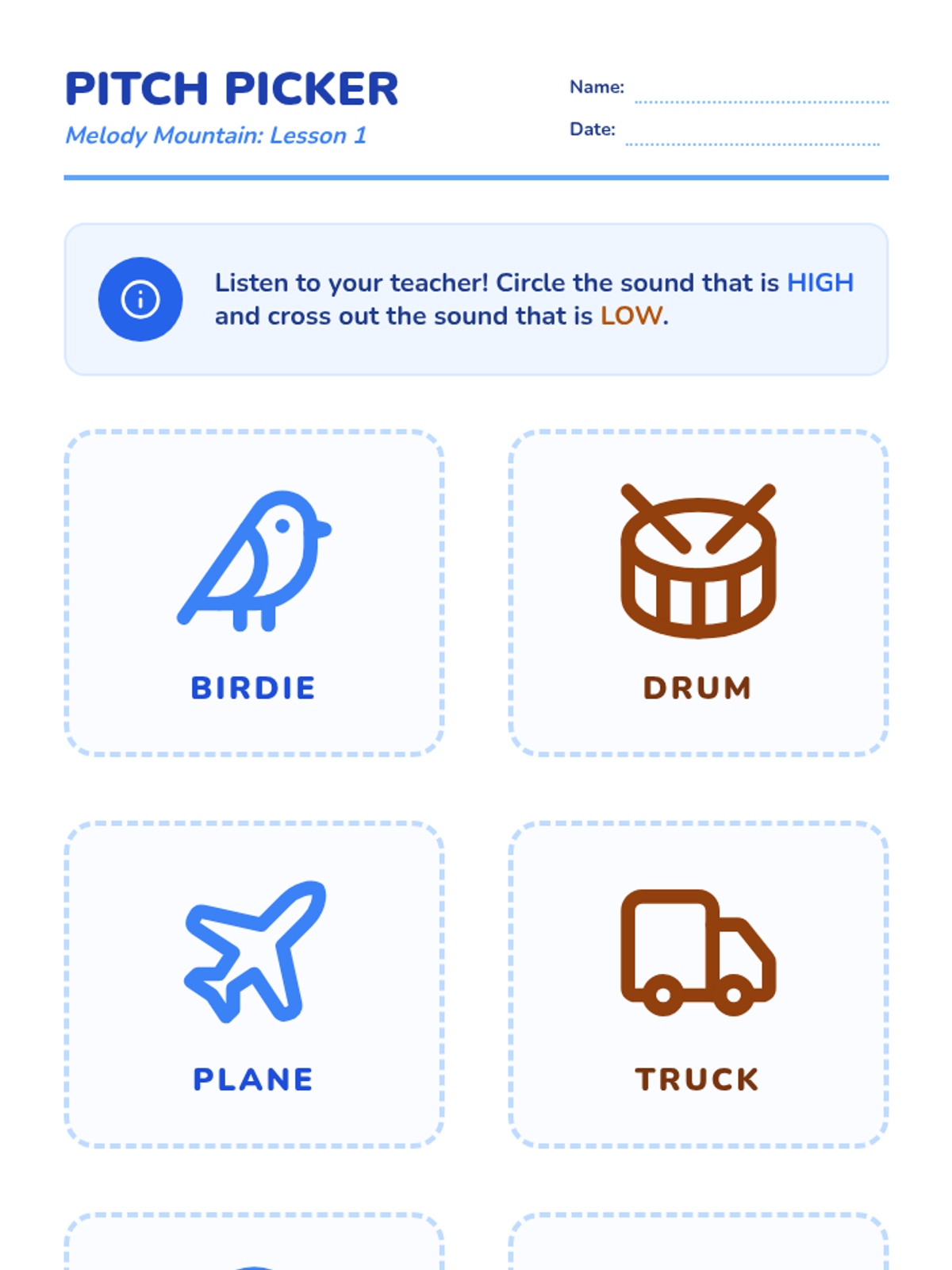
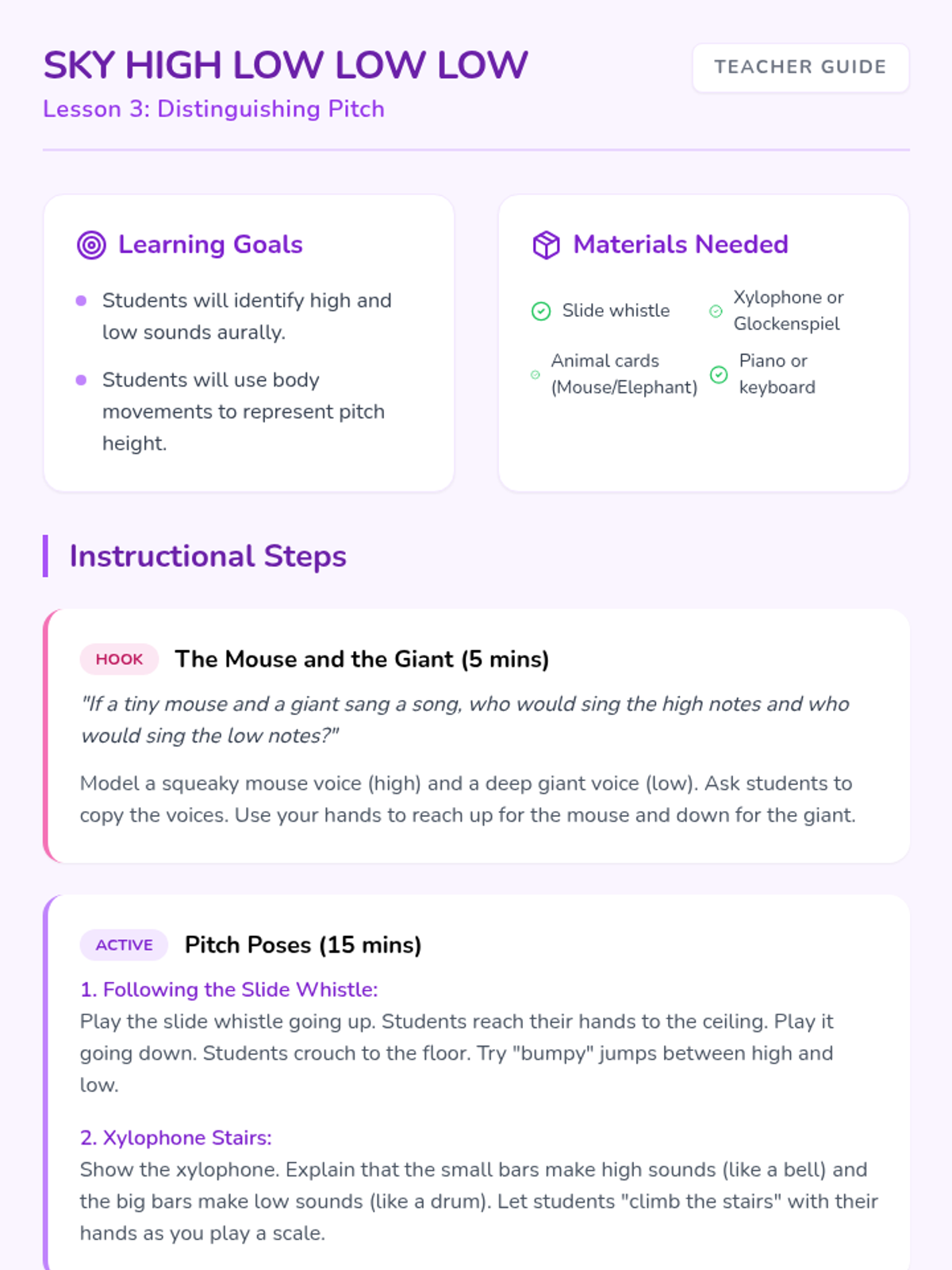
Students explore the concept of high and low pitch through active listening and whole-body movements, associating high sounds with the sky and low sounds with the ground.
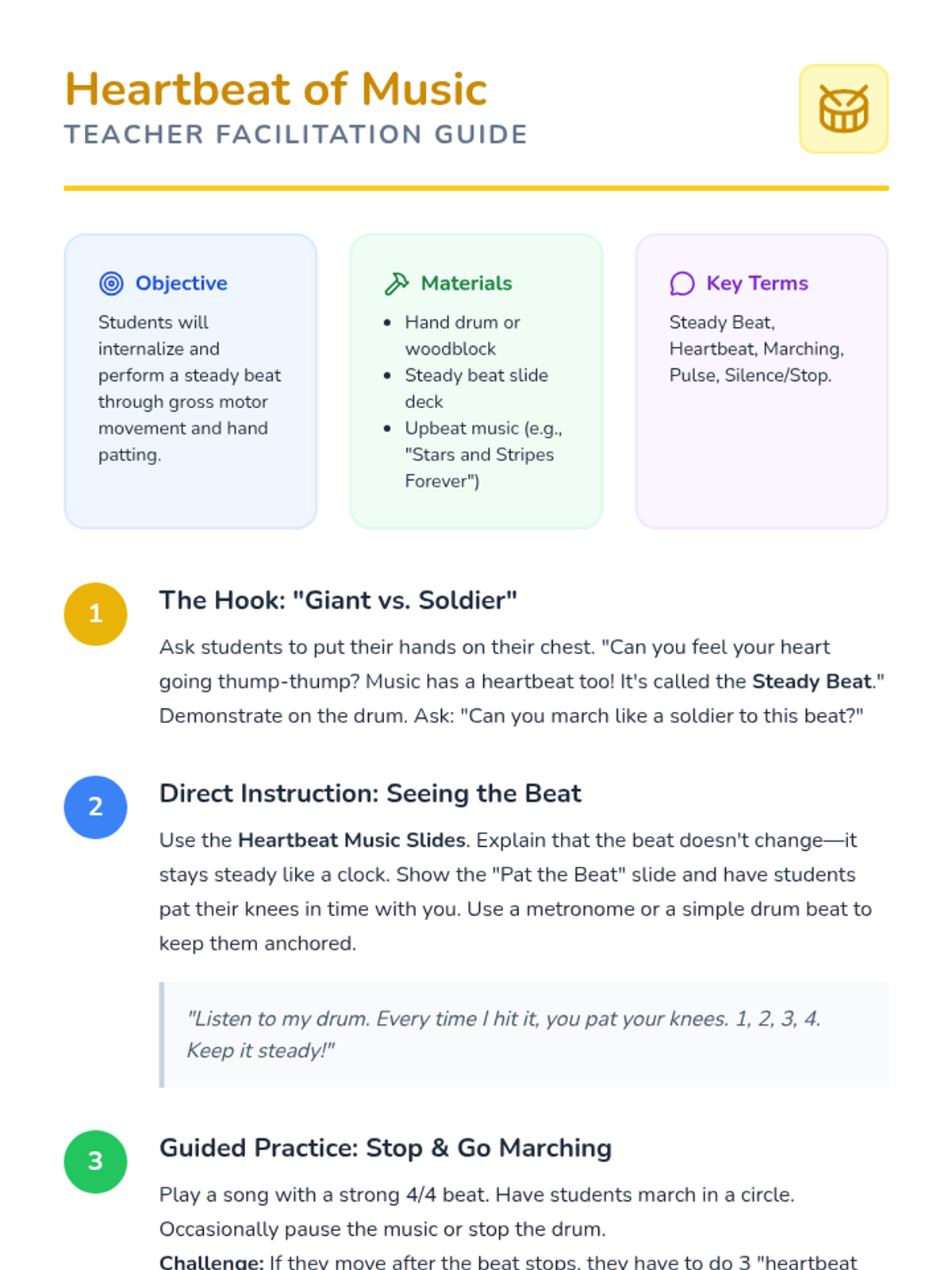
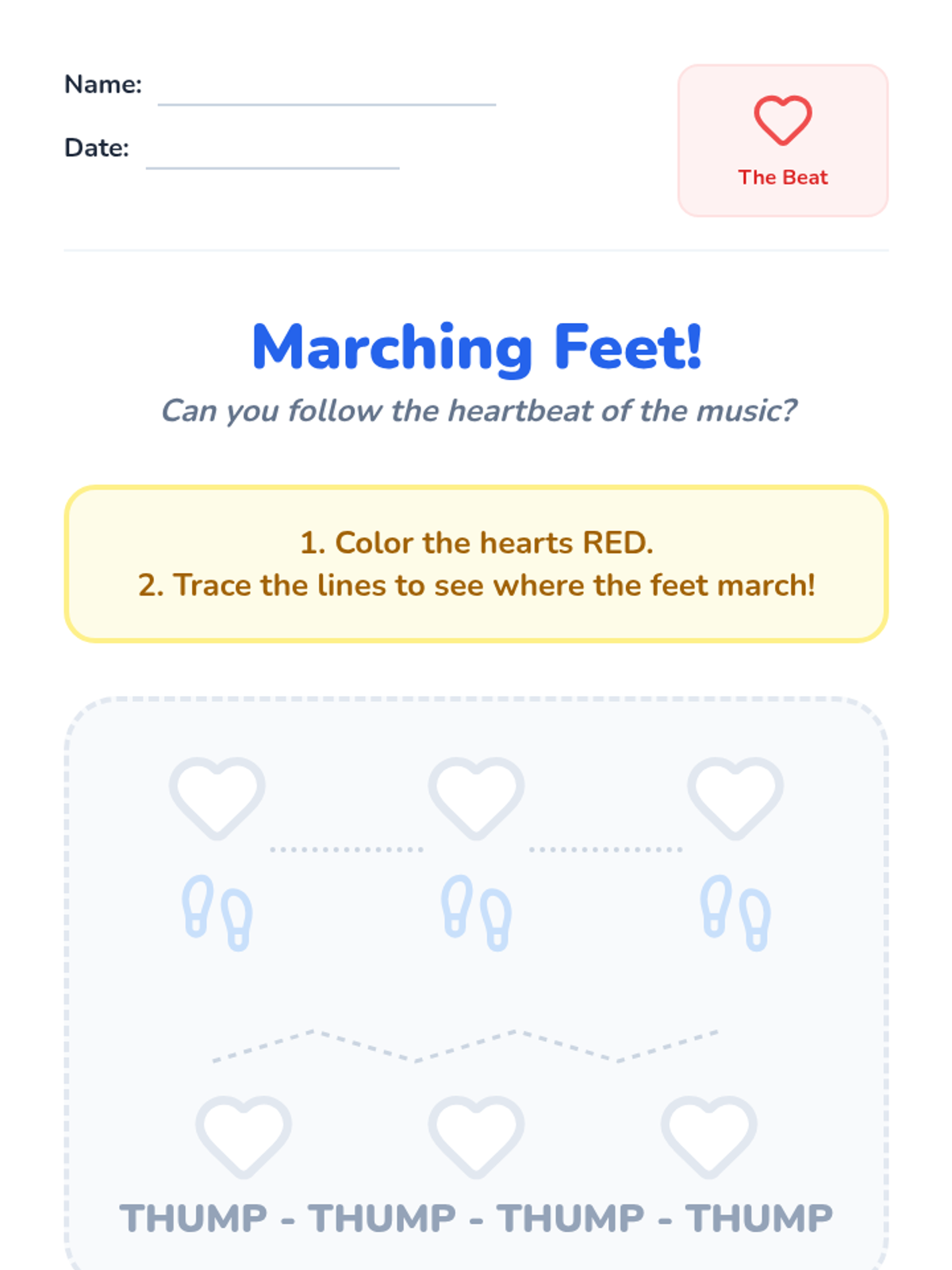
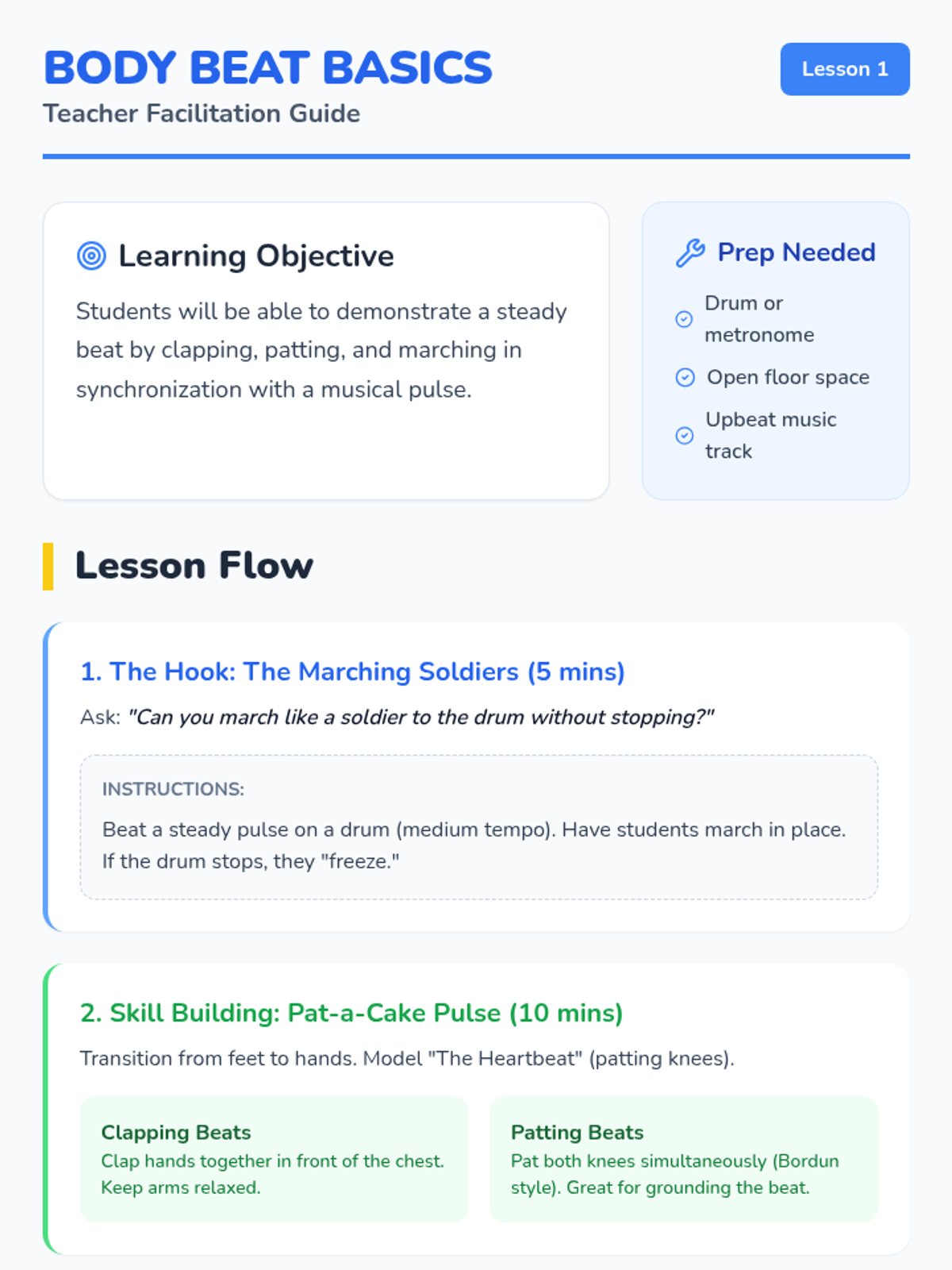
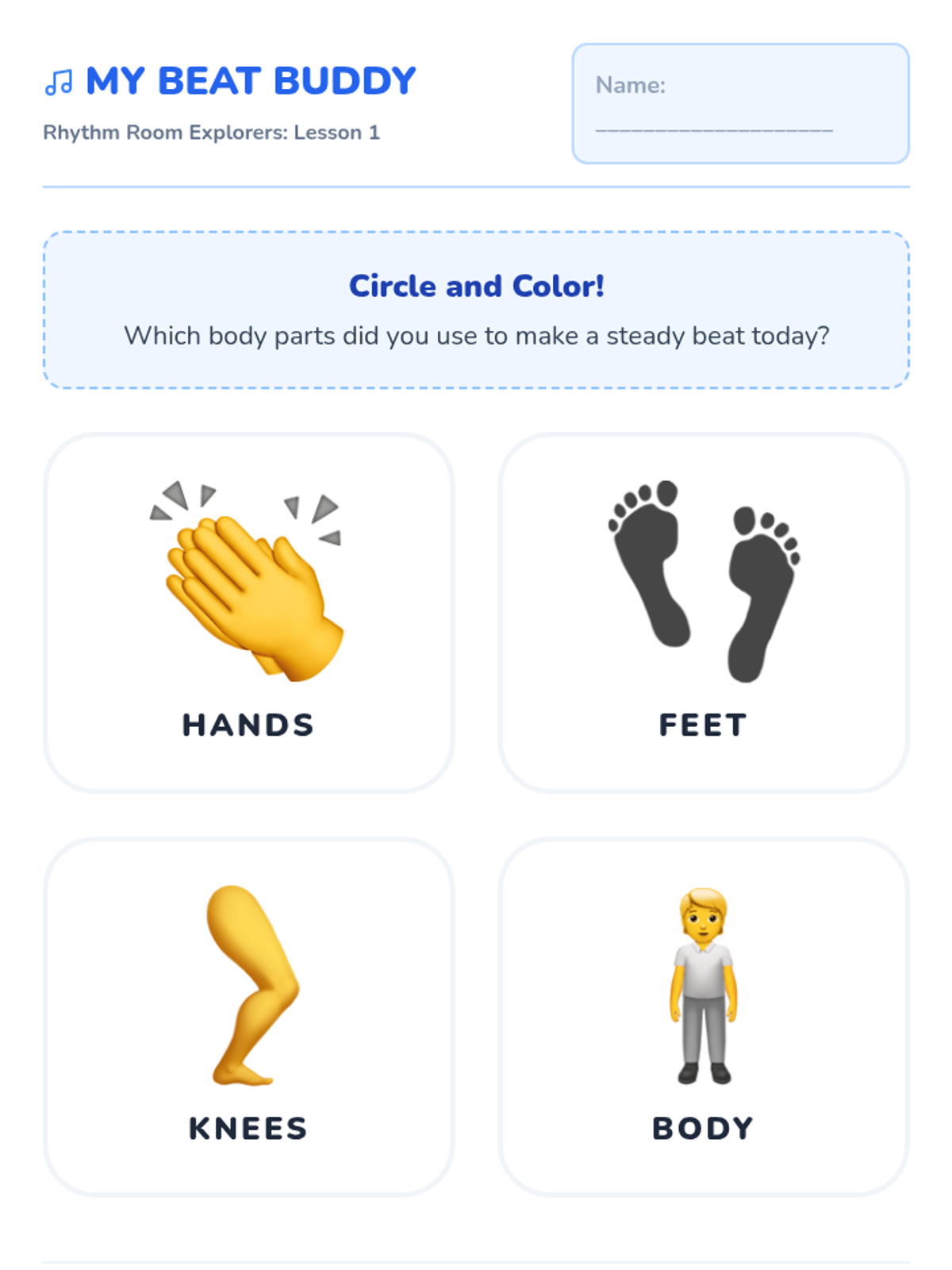
Students explore the concept of a steady beat by marching, clapping, and patting their knees to music with strong pulses.
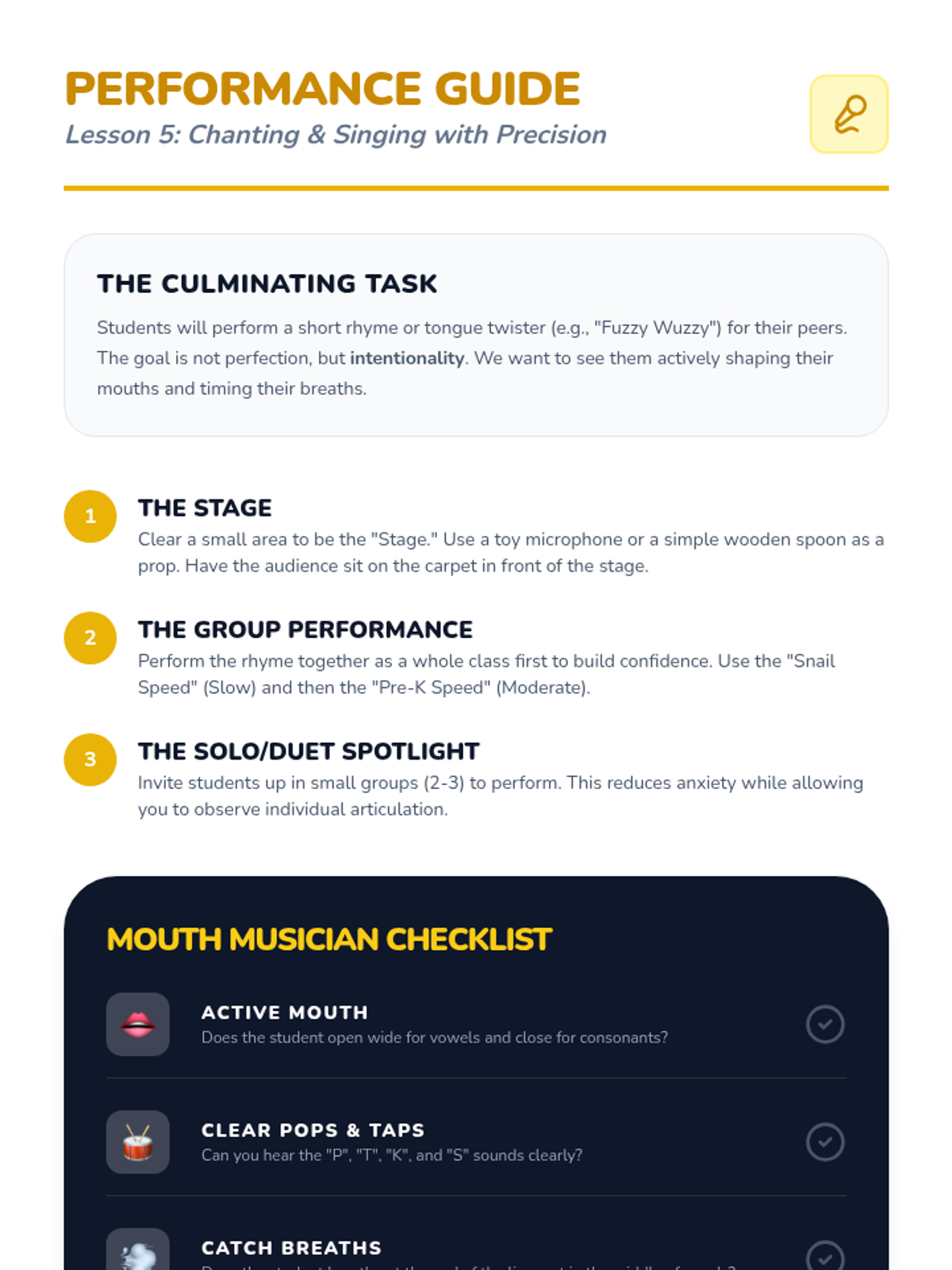
Students perform a 'tongue twister song' first slowly, then faster, maintaining clear diction and rhythmic breathing.
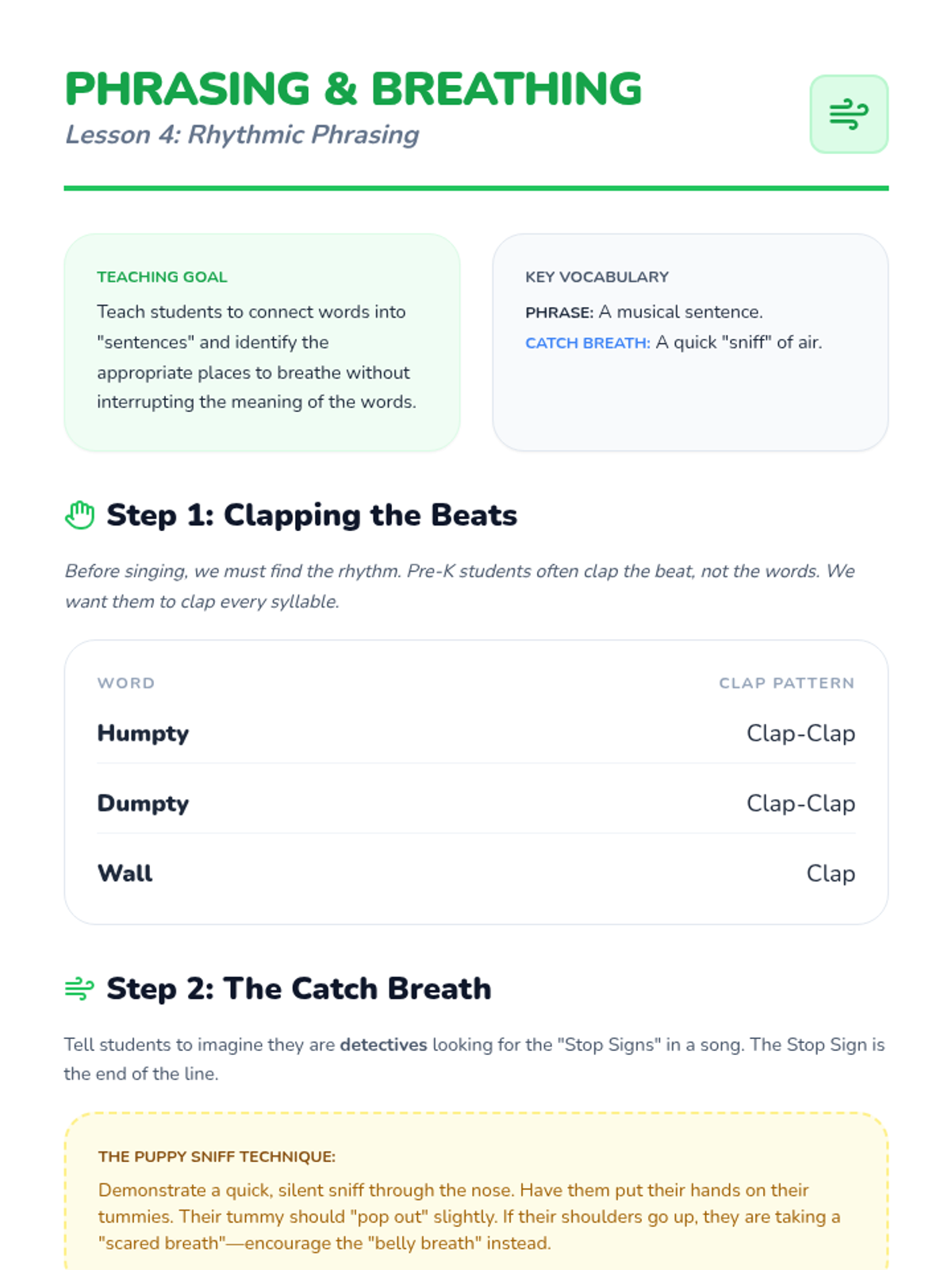
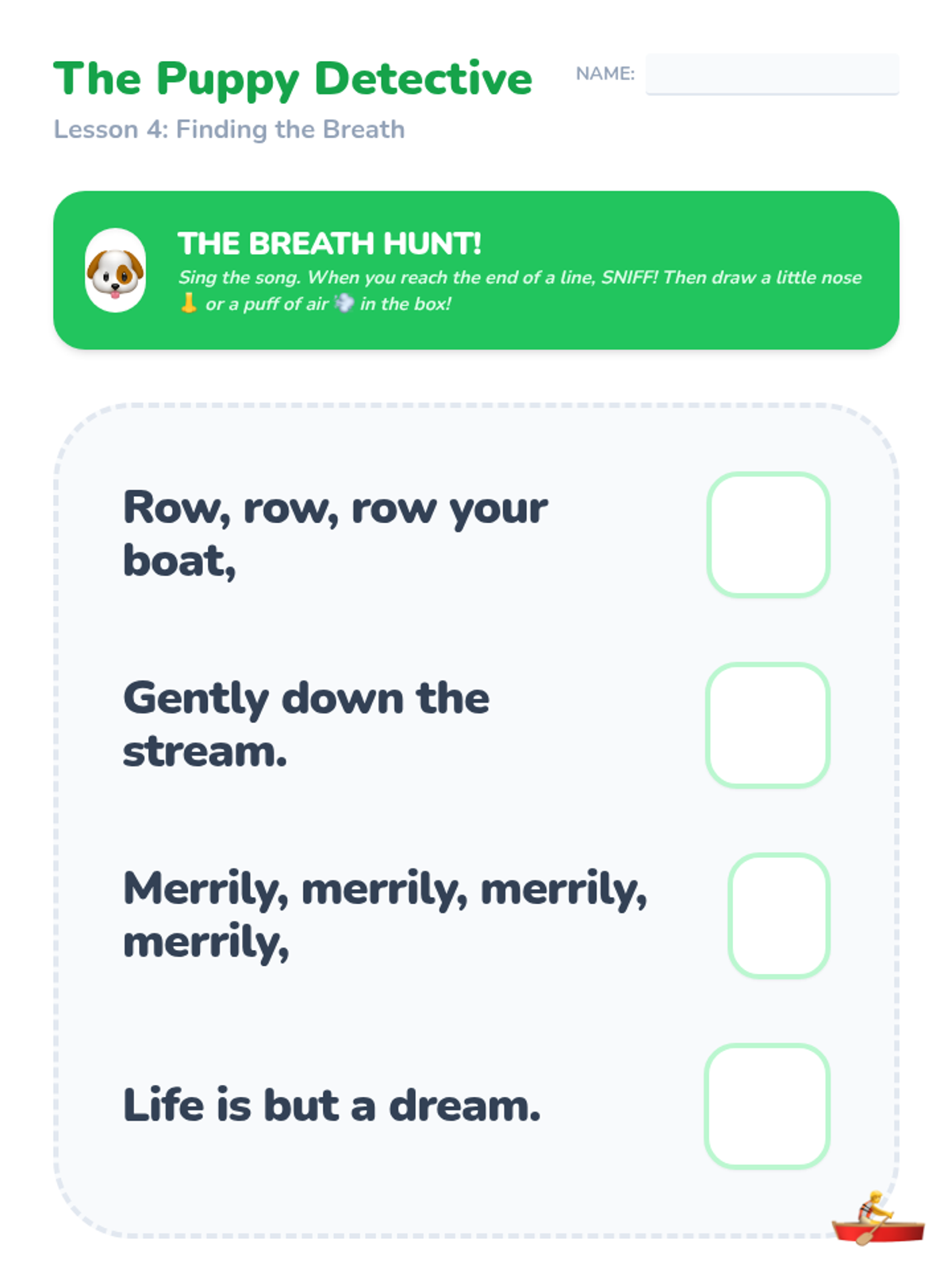
Students clap the rhythm of words in nursery rhymes and learn to take 'catch breaths' at the end of lines.
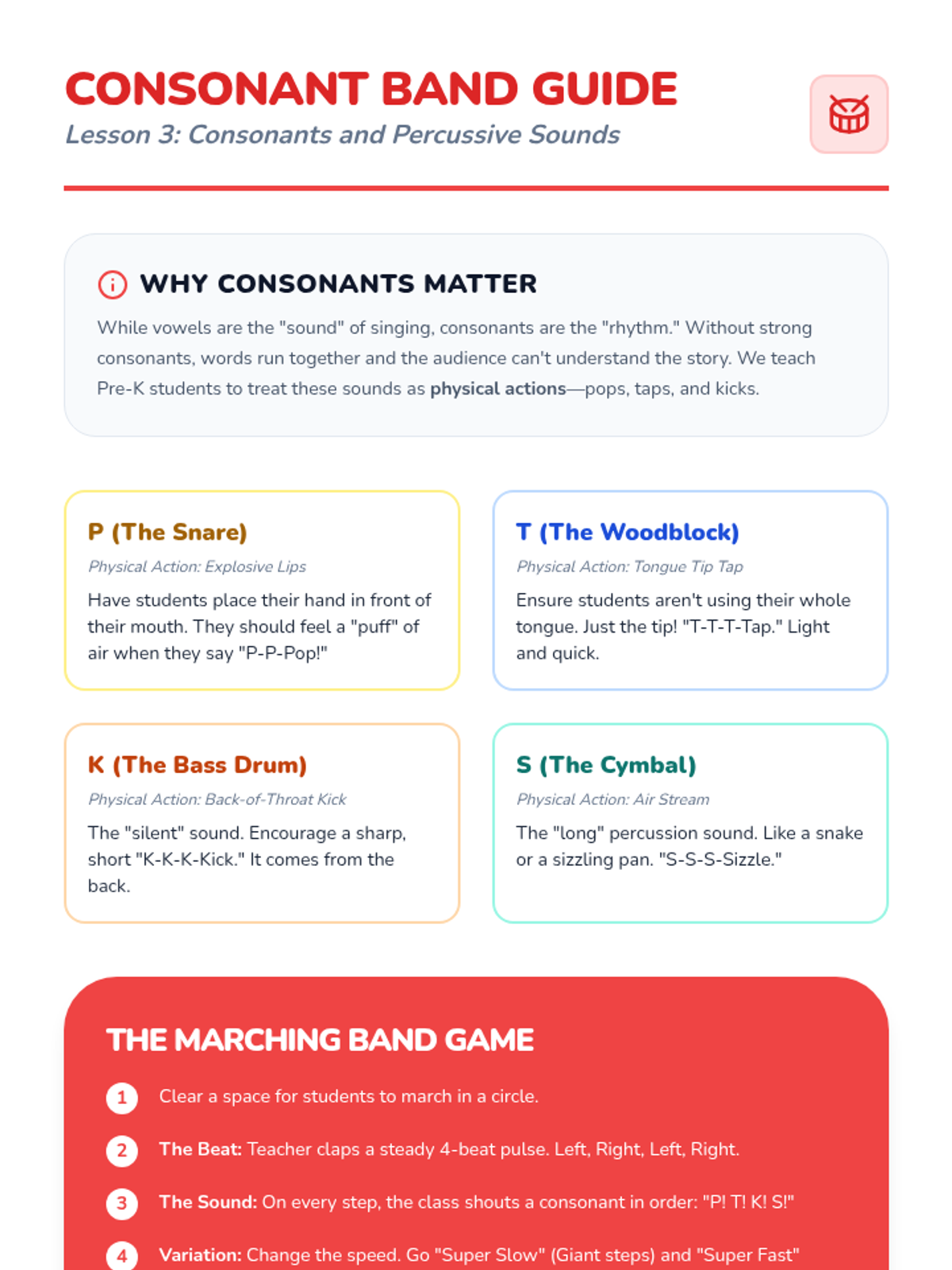
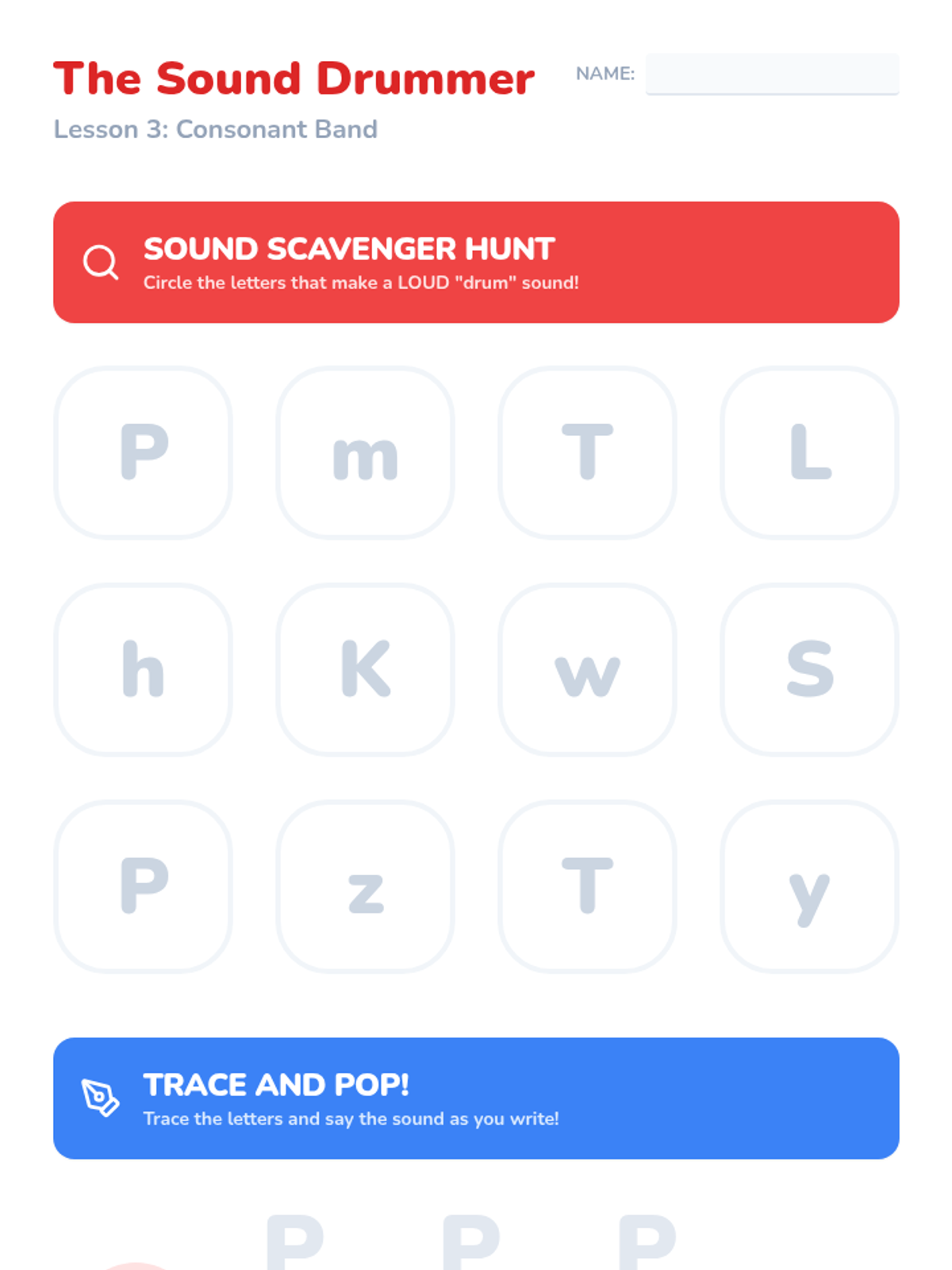
The class explores 'noisy' sounds (P, T, K, S) that act as the drumbeats of speech through a marching game.
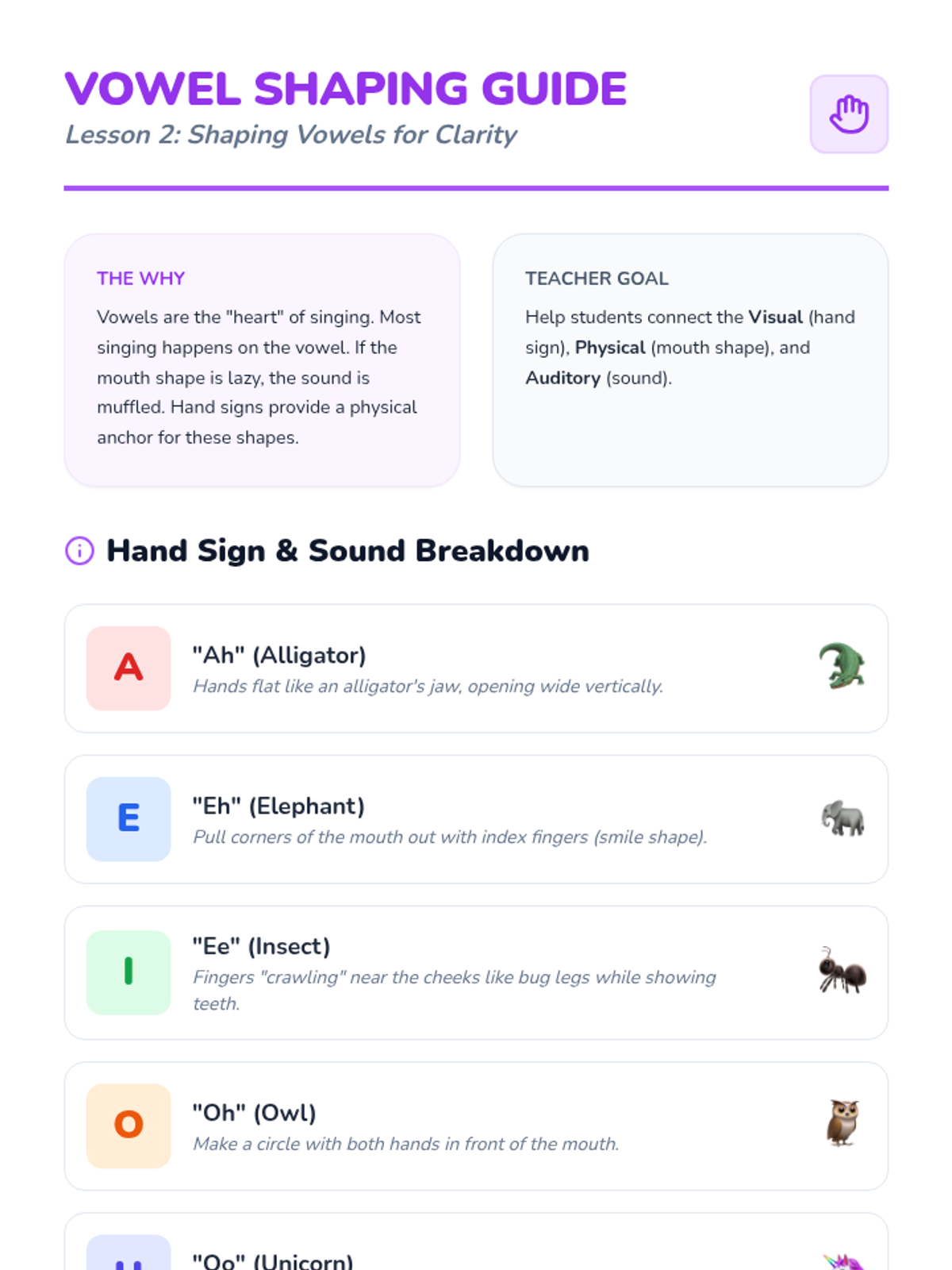
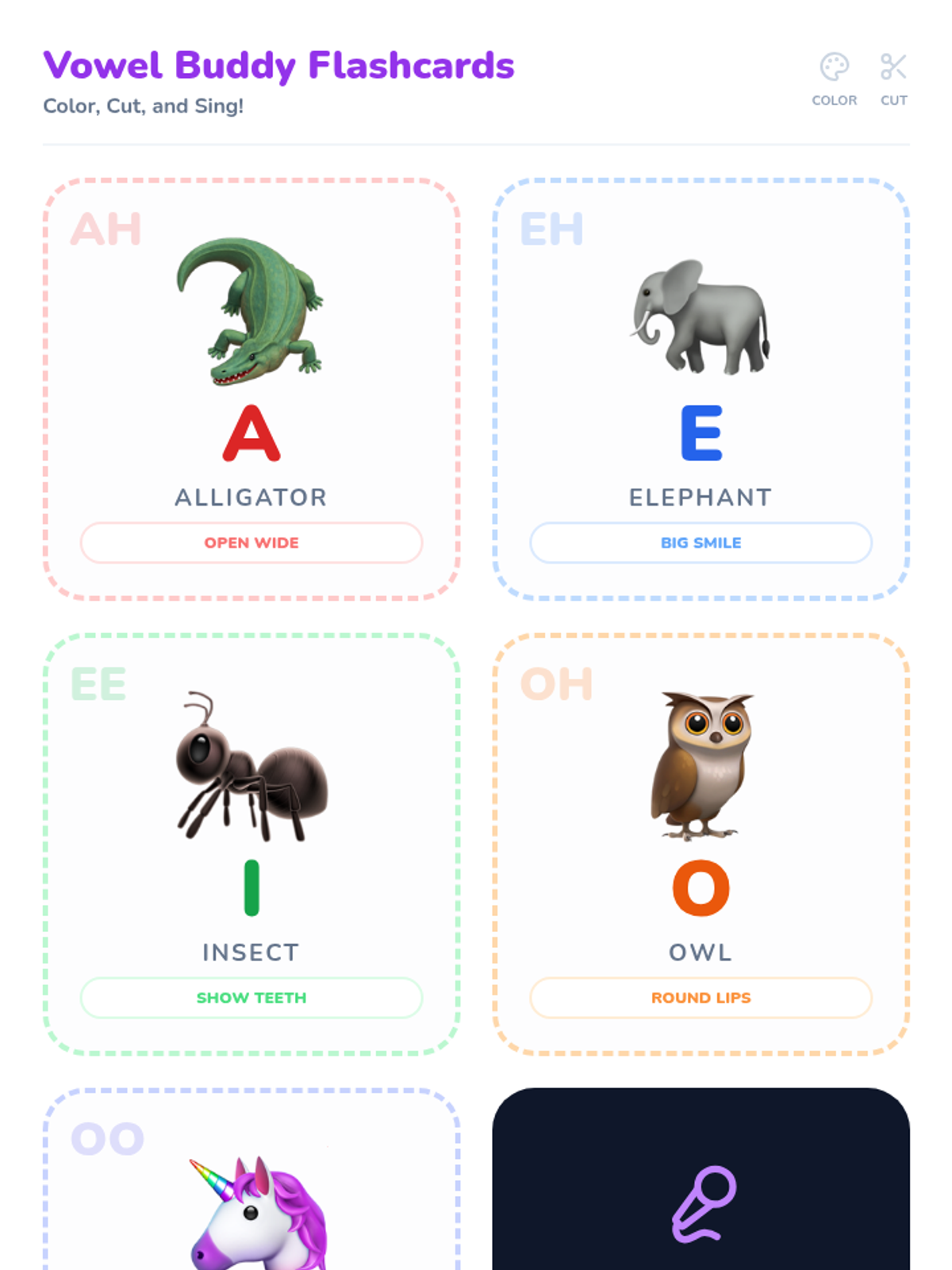
Students learn the five primary vowel shapes using hand signs and mirrors to check their mouth position for singing clarity.
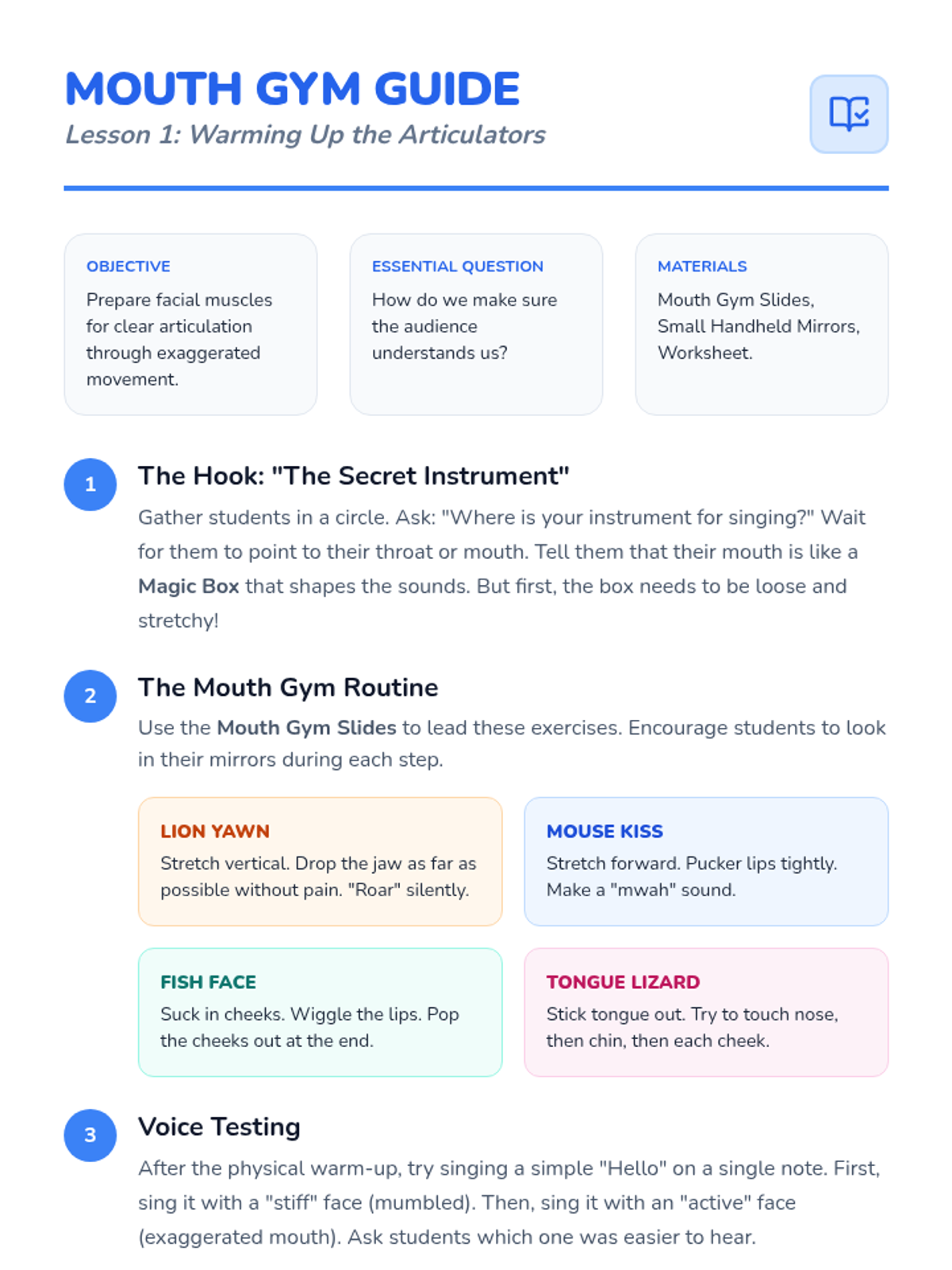
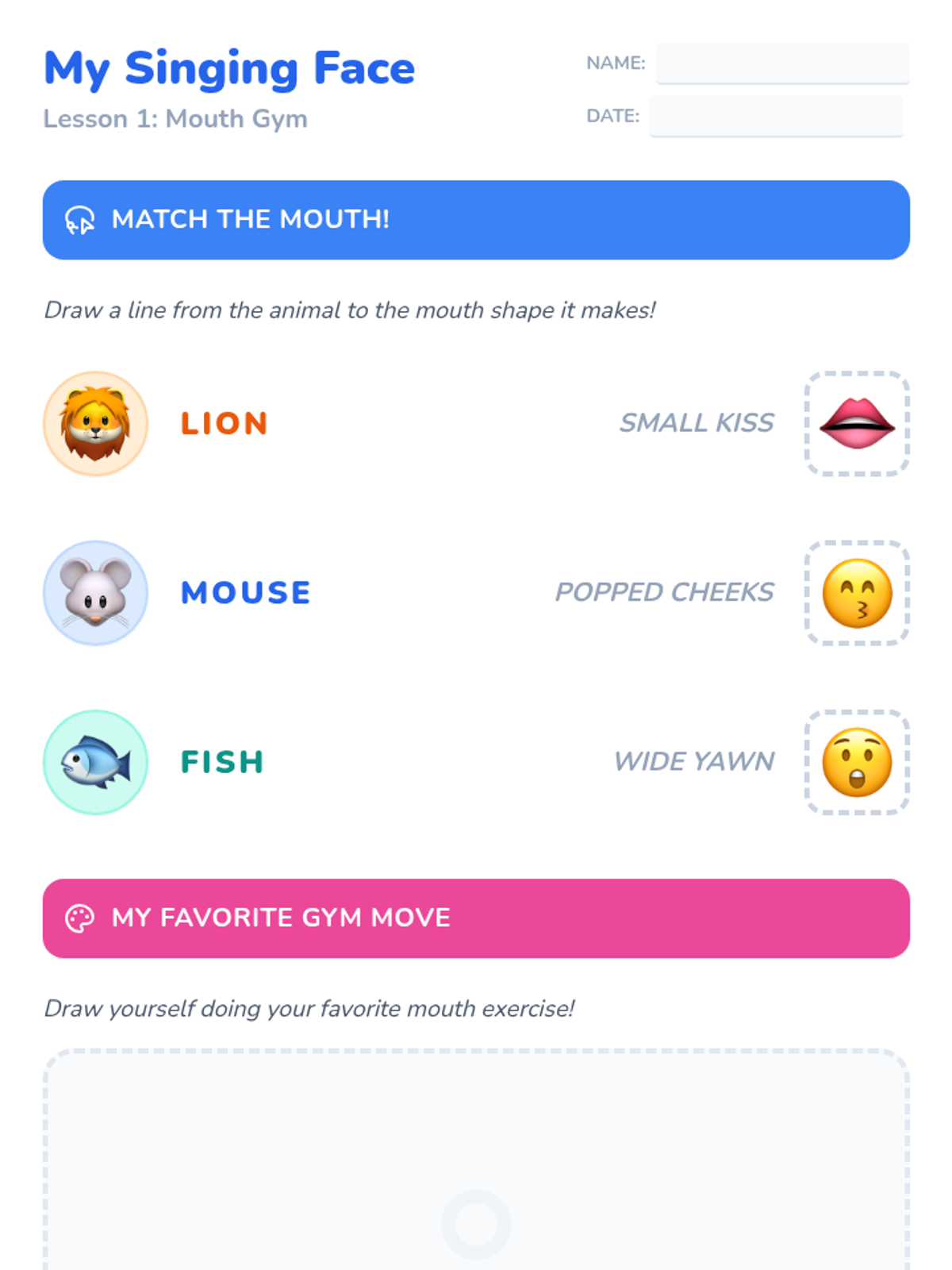
Students engage in 'mouth gymnastics,' stretching their lips, tongues, and jaws to prepare for clear singing through exaggerated facial expressions.
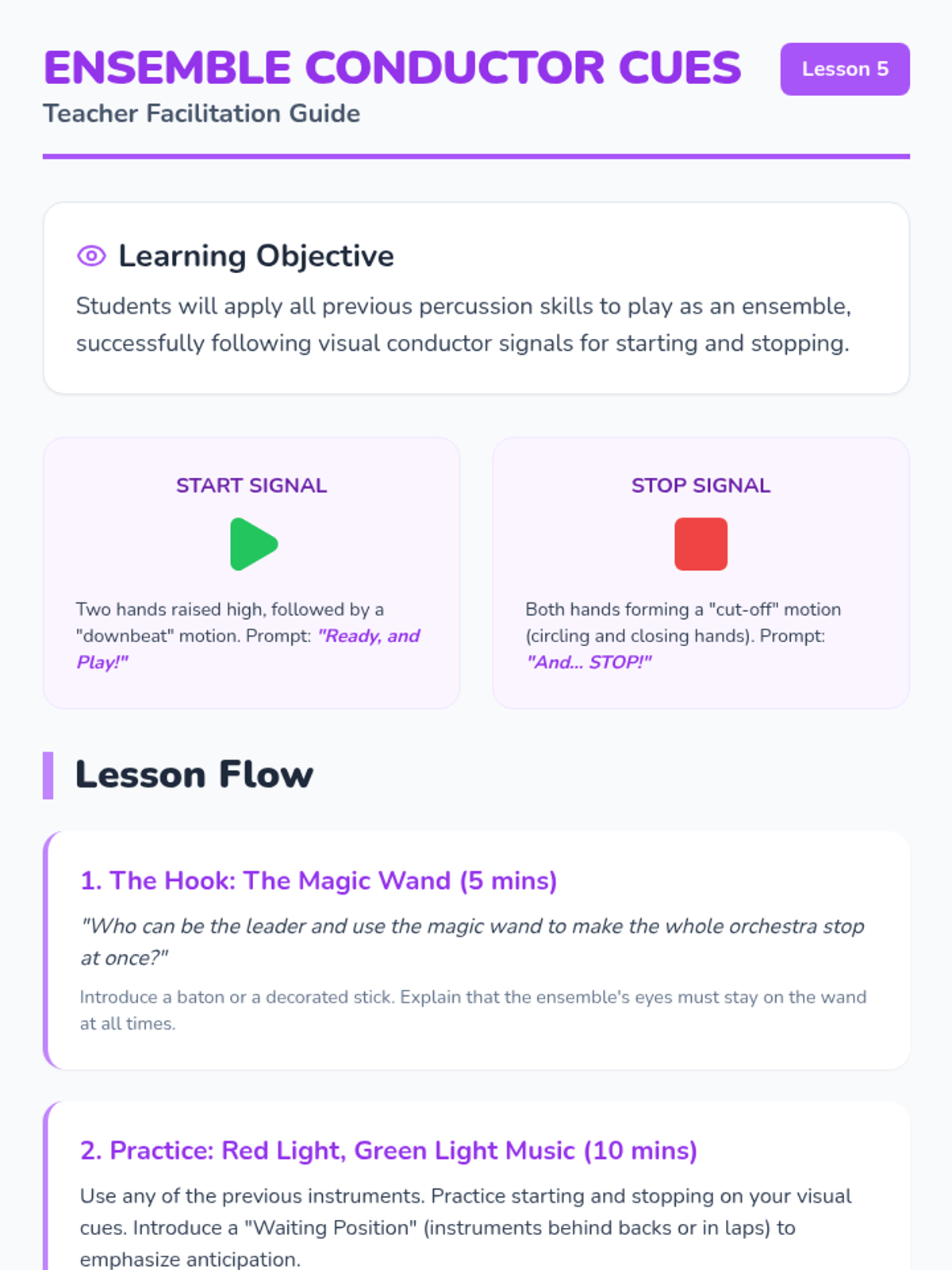
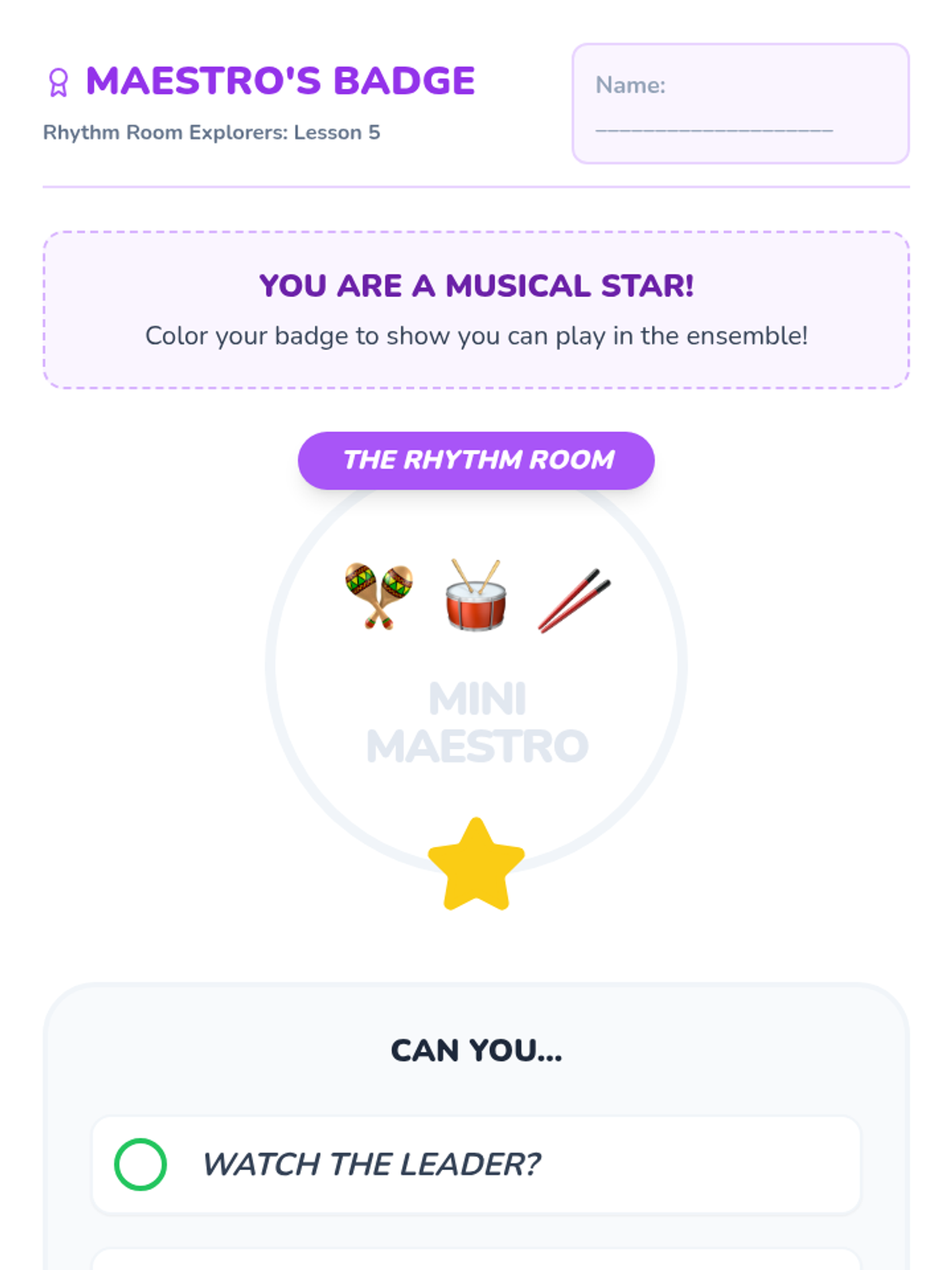
Learning to follow conductor cues for starting and stopping as part of an ensemble, developing self-regulation and visual tracking.
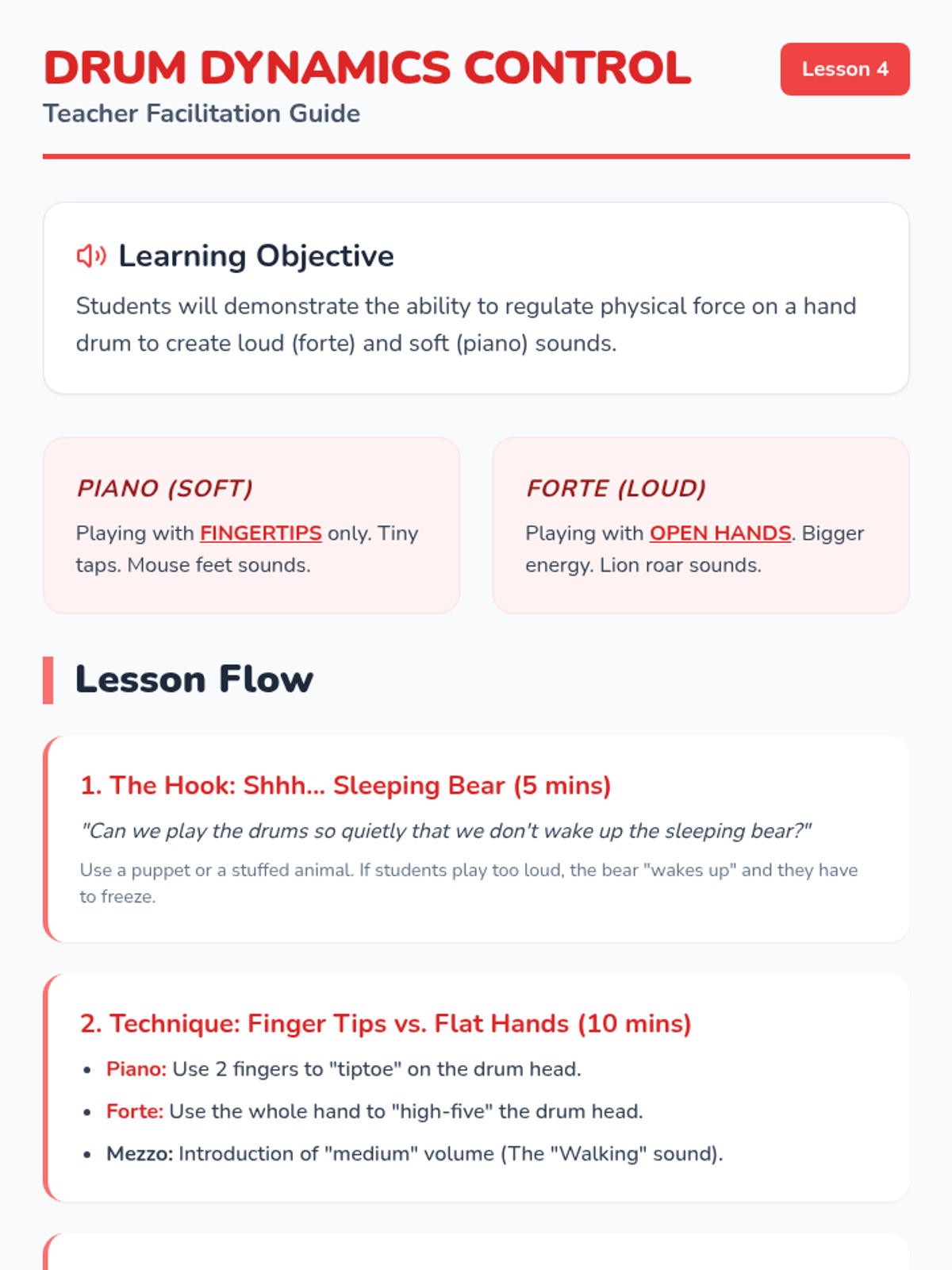
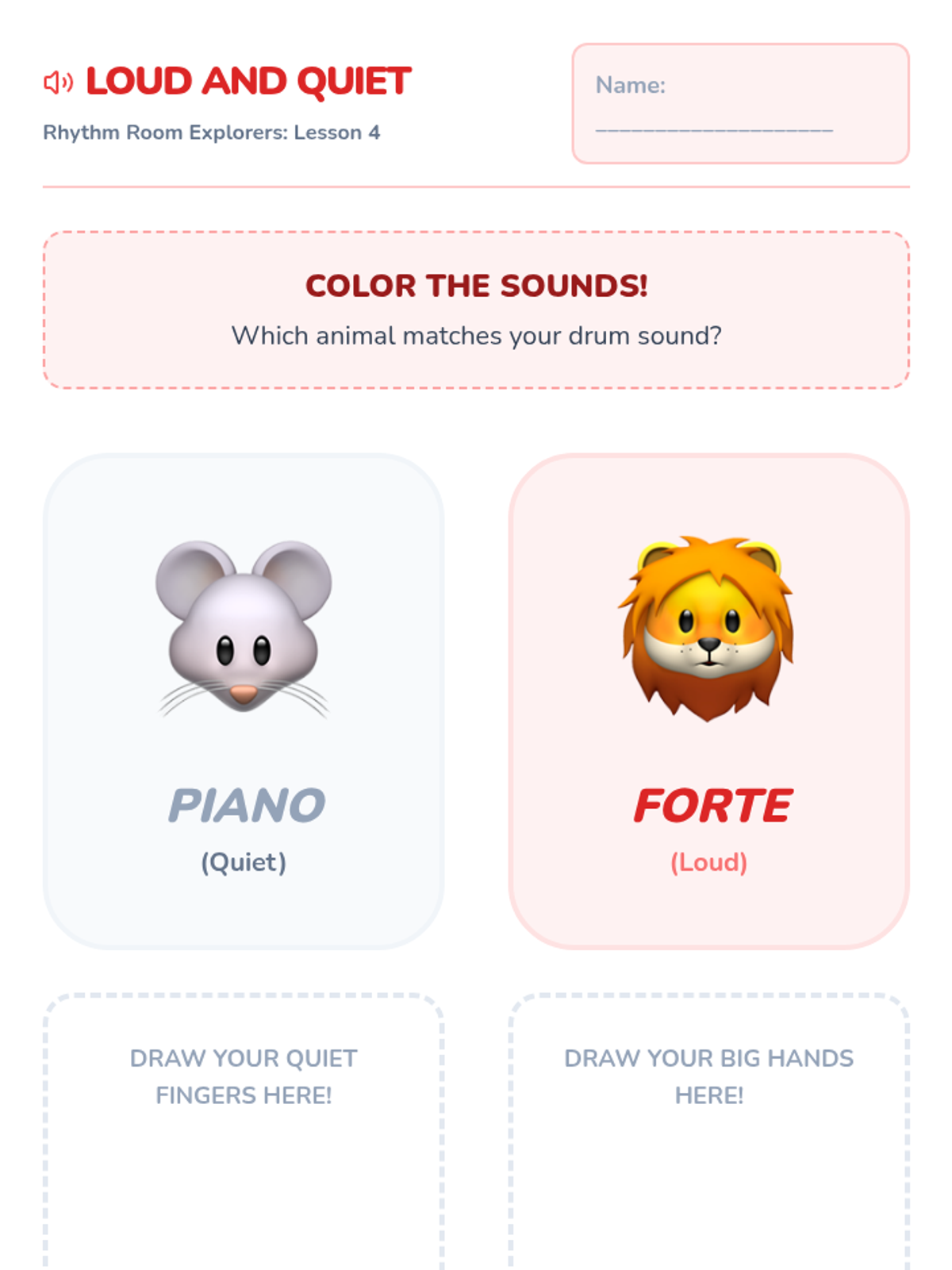
Using hand drums to explore volume control, practicing loud (forte) and soft (piano) sounds through finger and hand techniques.
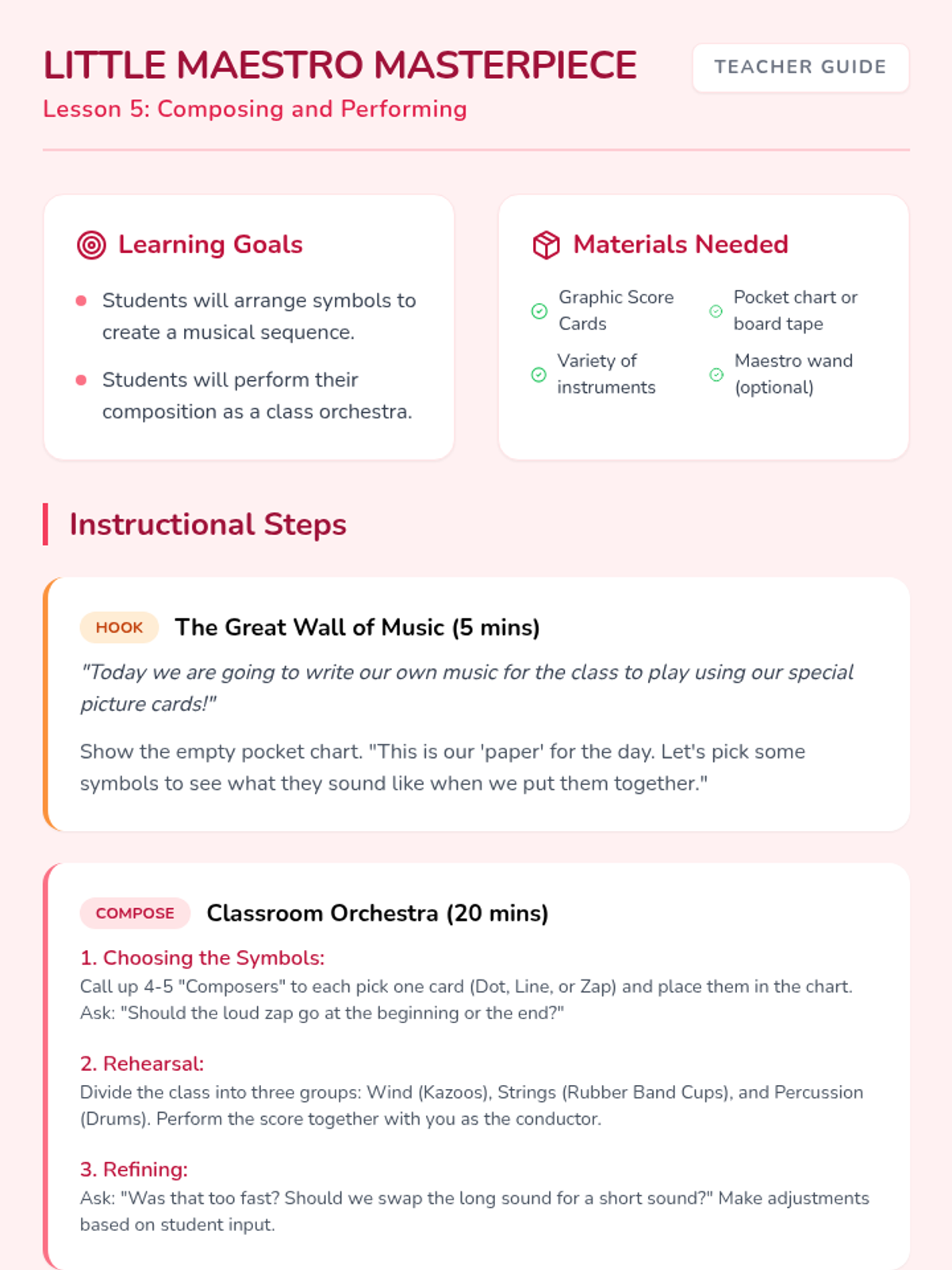
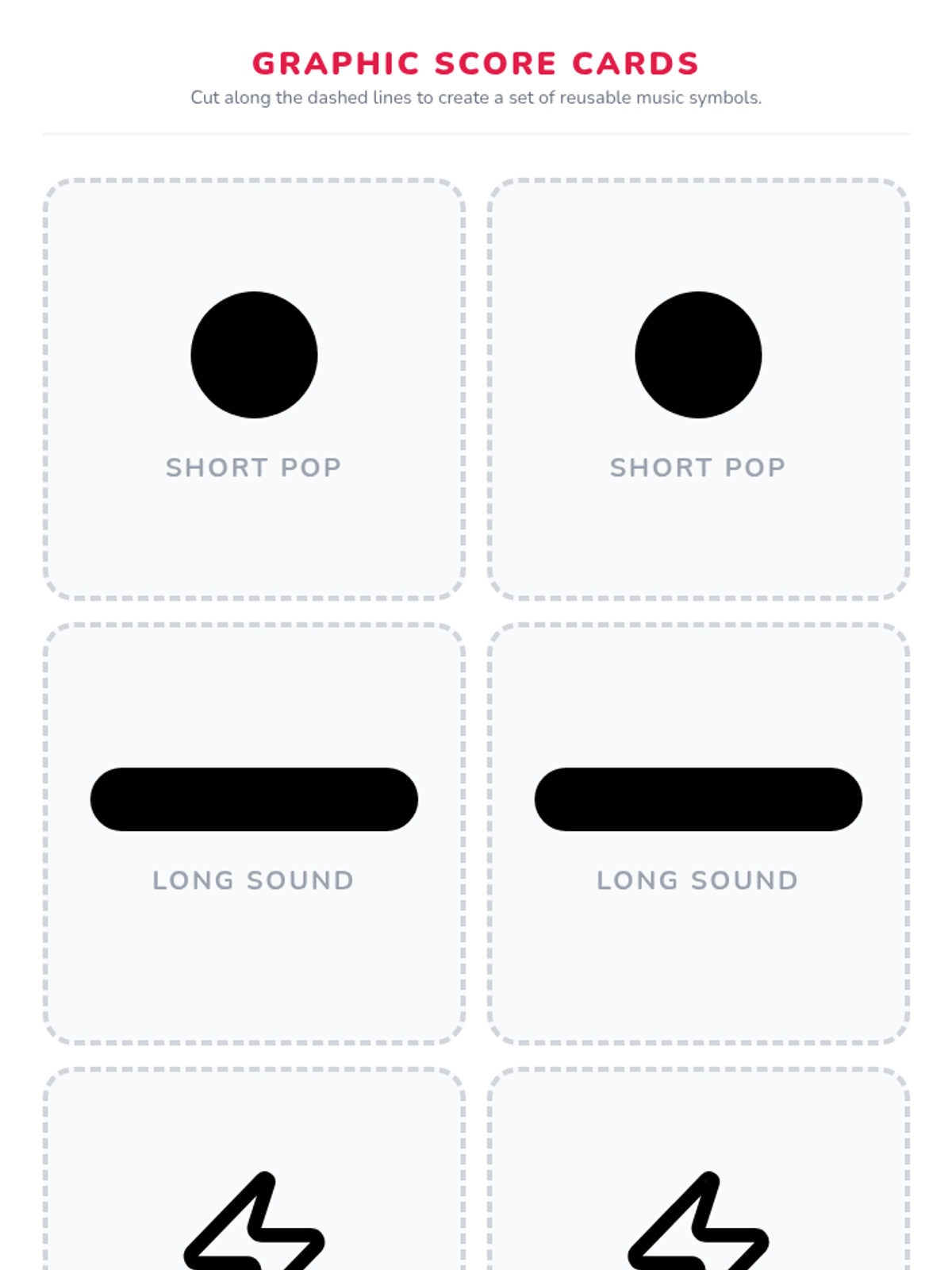
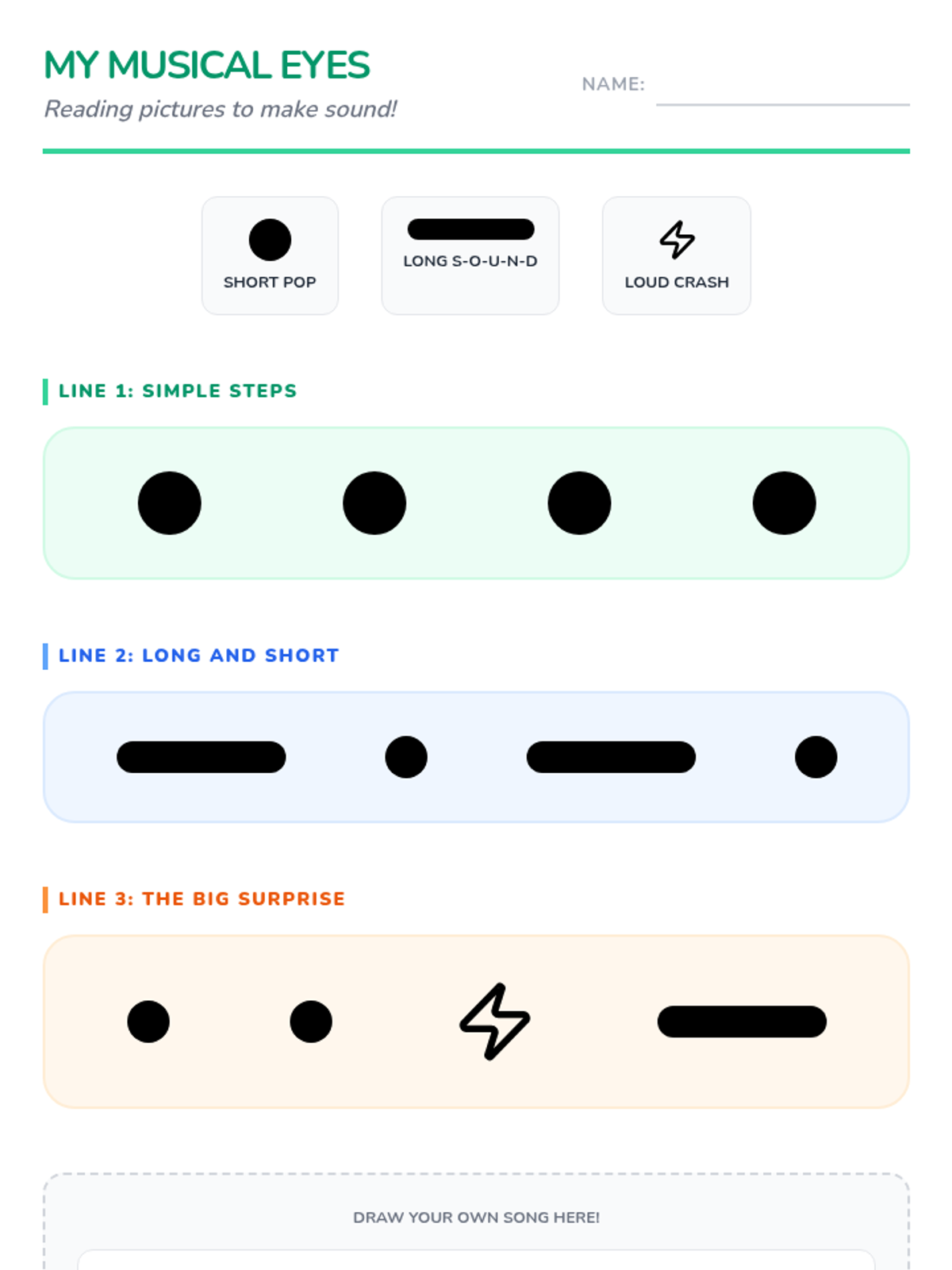
Students arrange musical icons to create and perform their own graphic scores as a class.
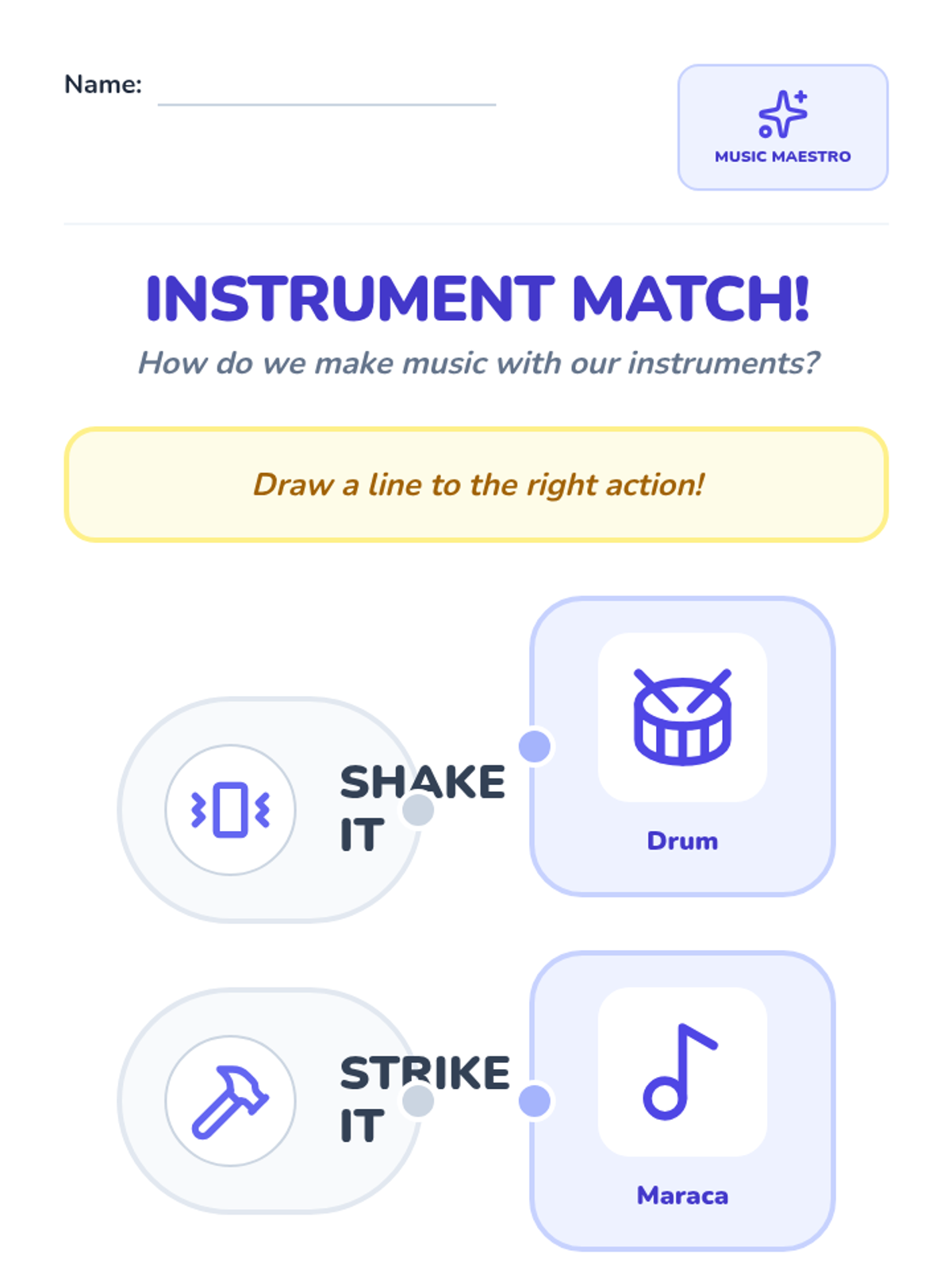
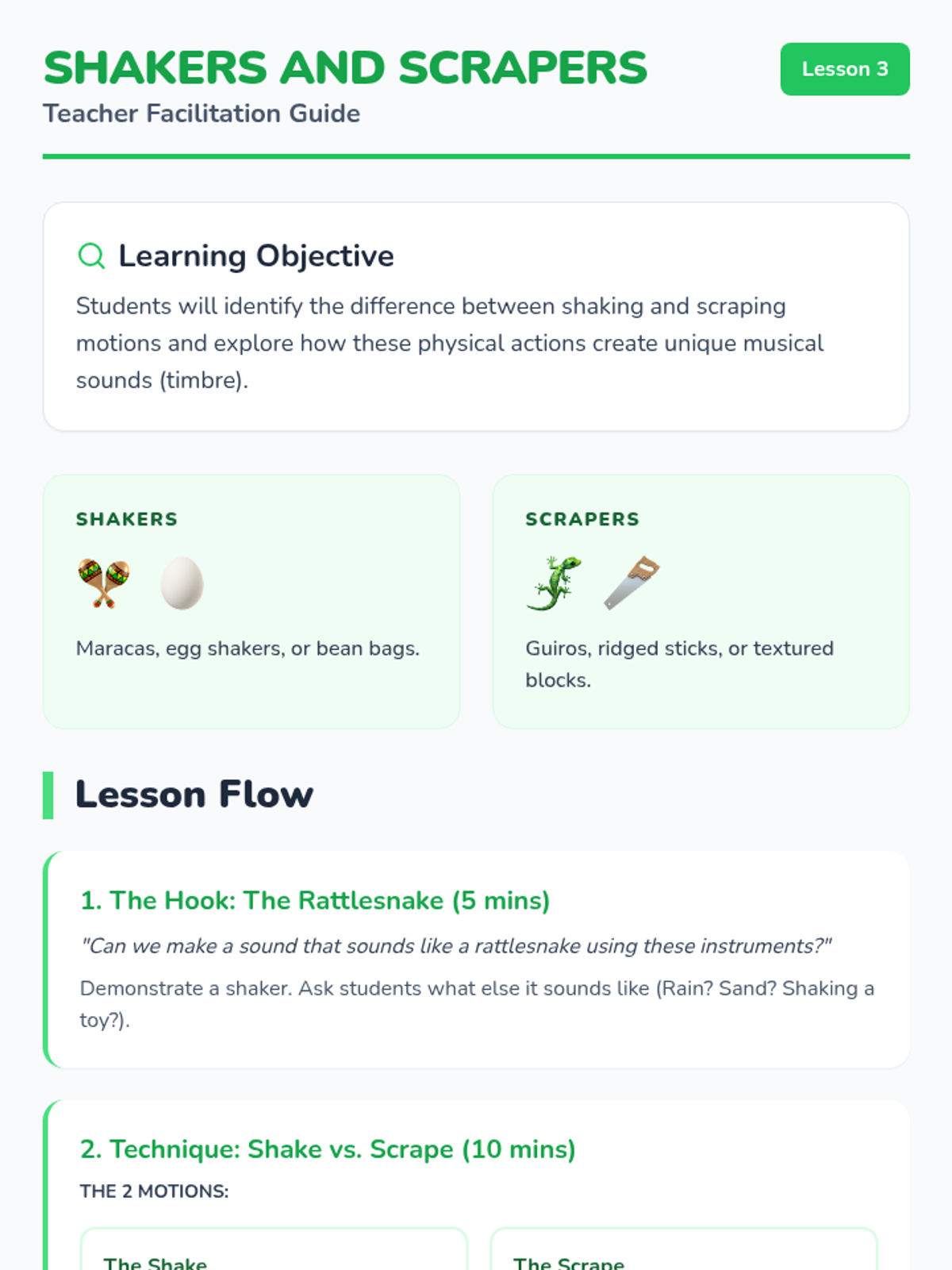
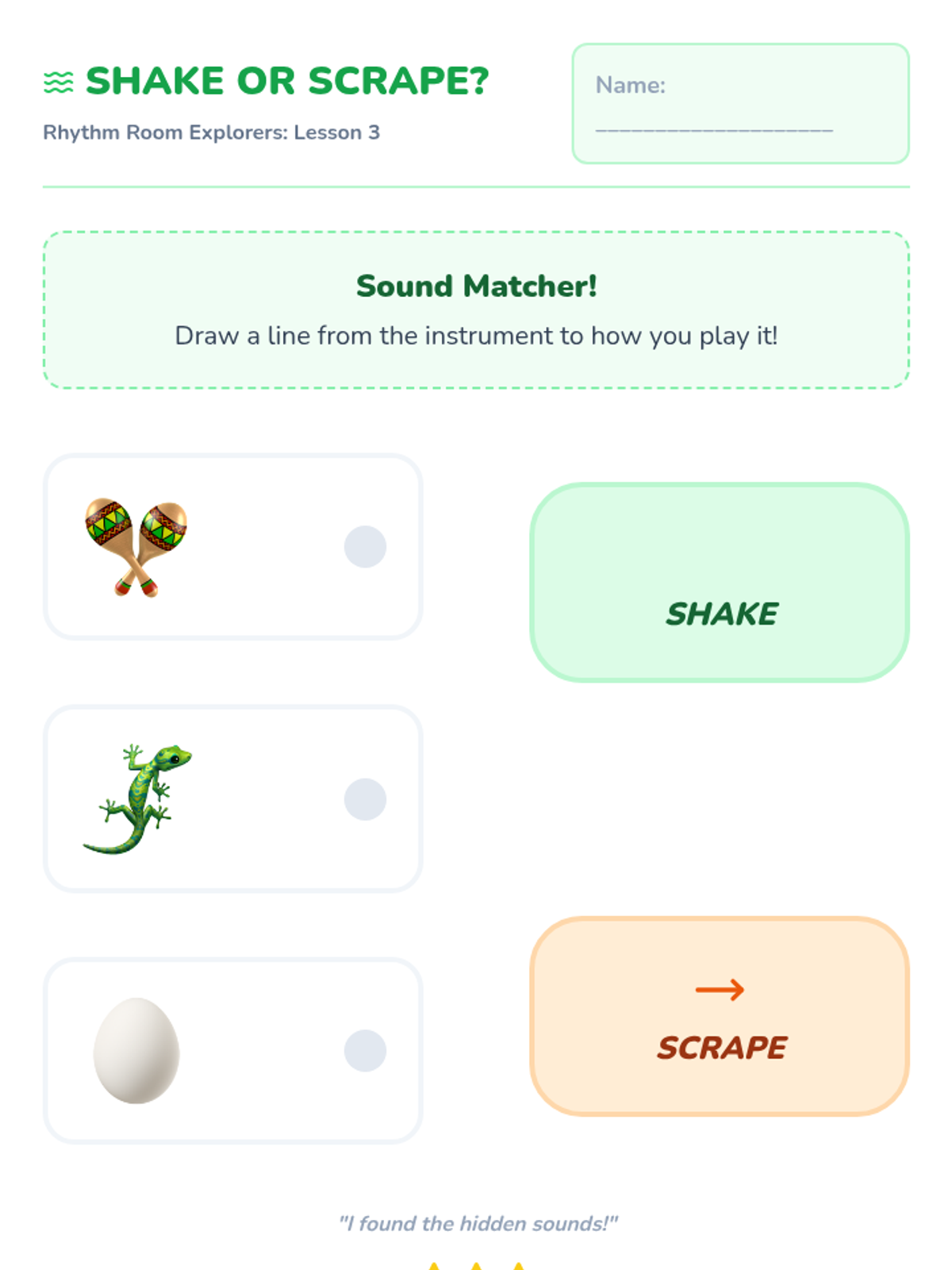
Exploring shakers and scrapers to understand timbre and how different physical motions create different sounds.
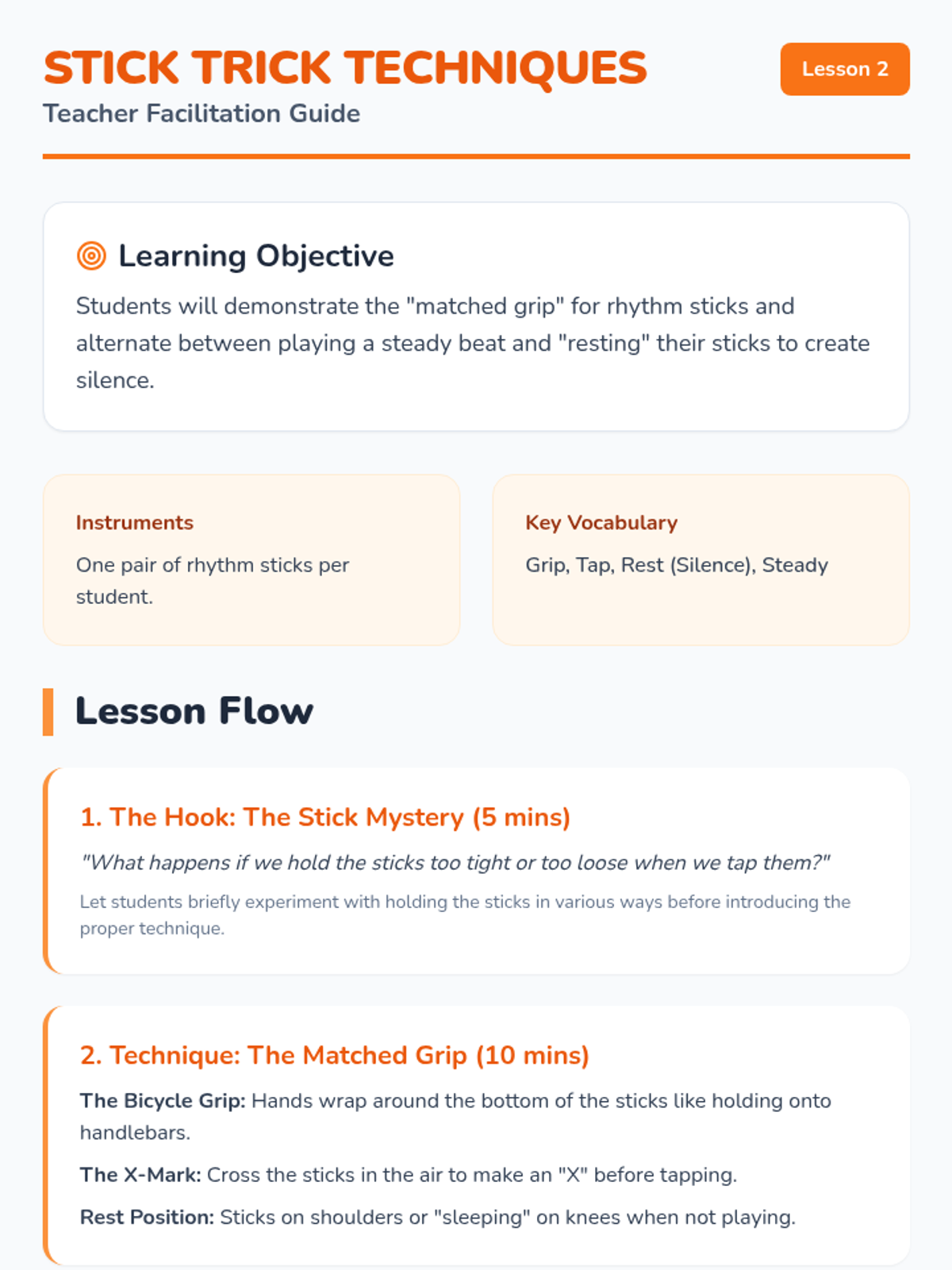
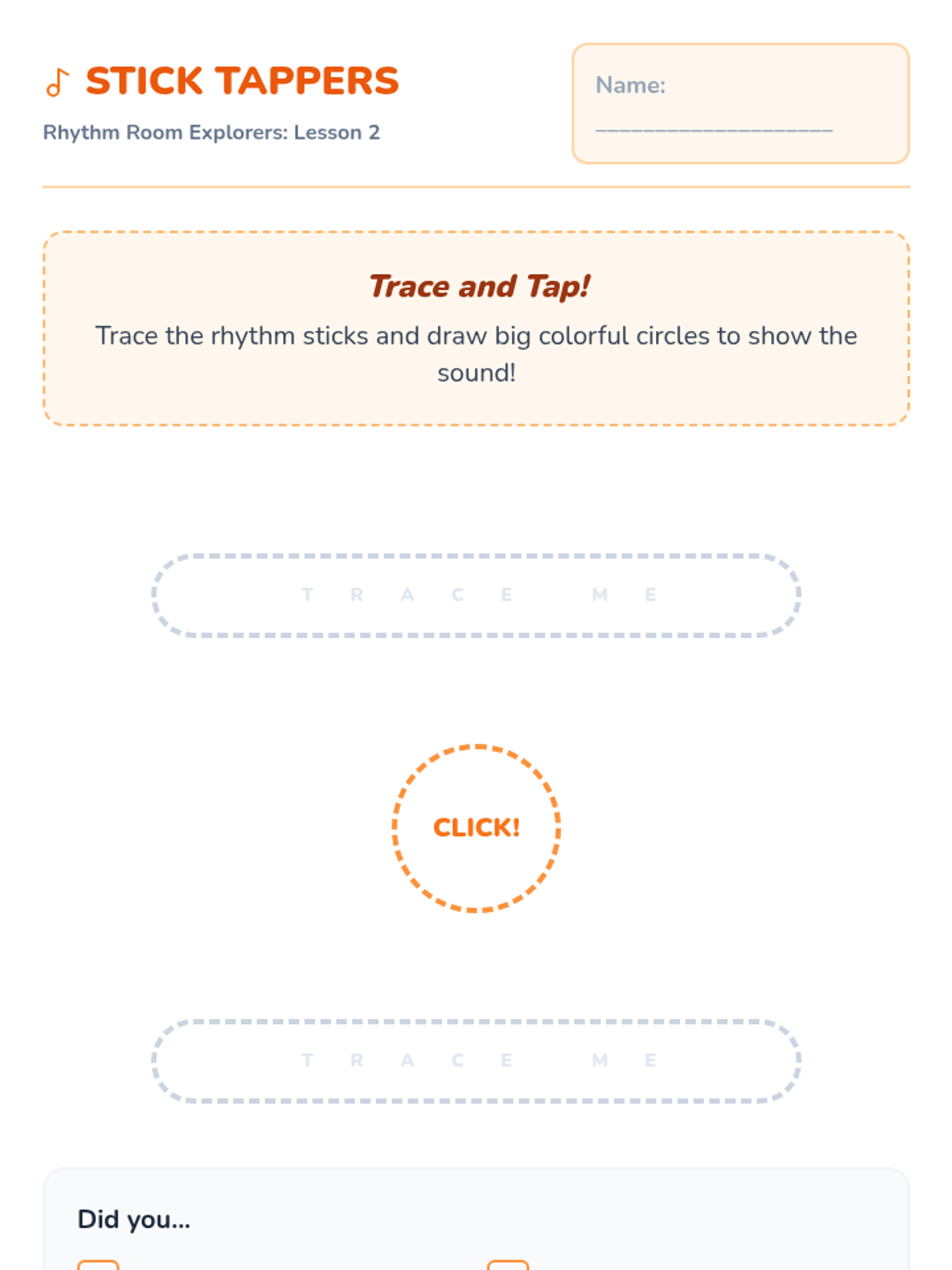
Introduction to rhythm sticks, focusing on proper grip, striking techniques, and the concept of sound vs. silence.
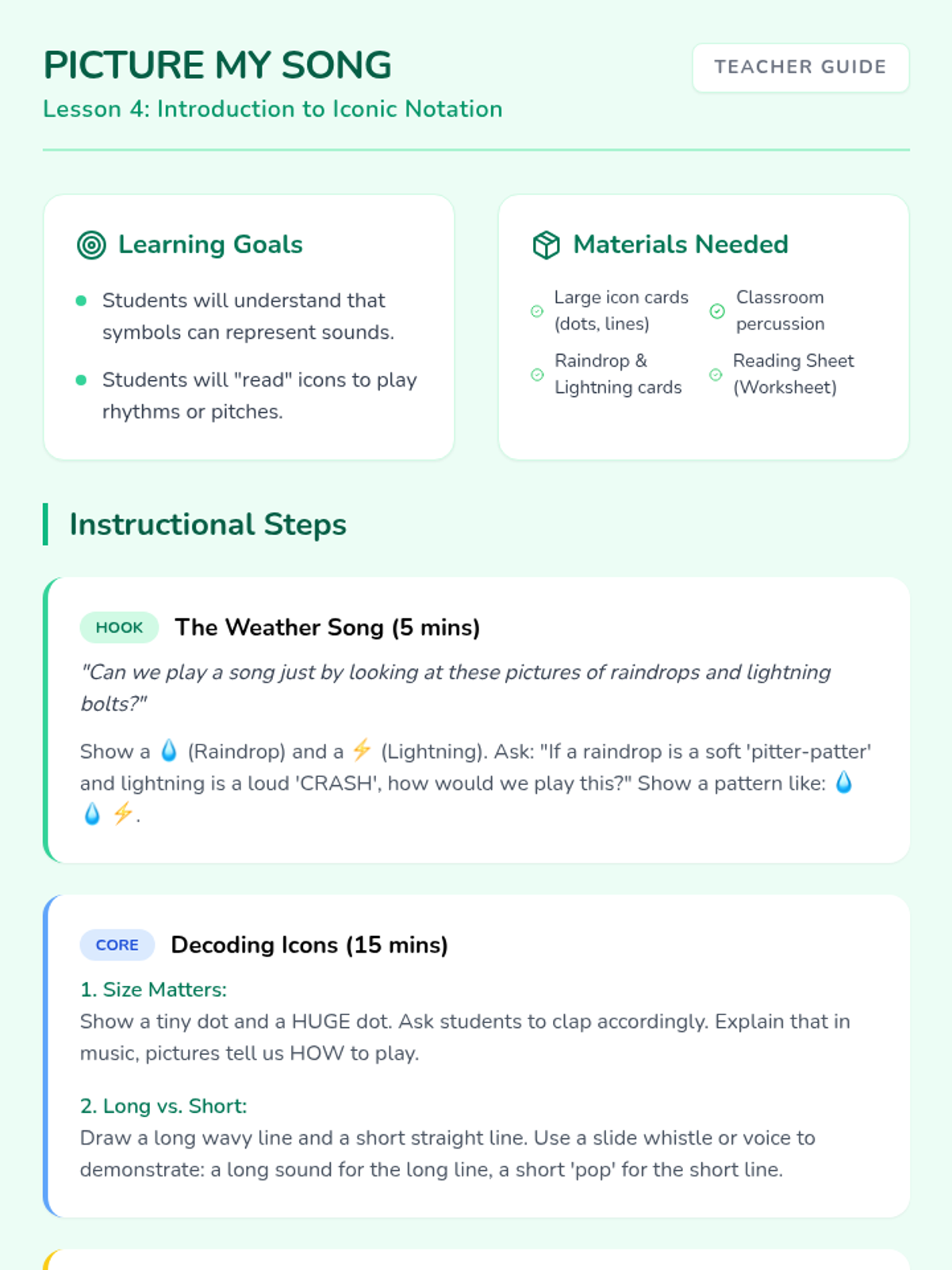
Students bridge sound and sight by using pictures and symbols to represent musical patterns.
Students explore steady beat using body movements like clapping, patting, and marching to synchronize with auditory cues.
Students learn to identify high and low pitches using full-body movement and auditory discrimination games.
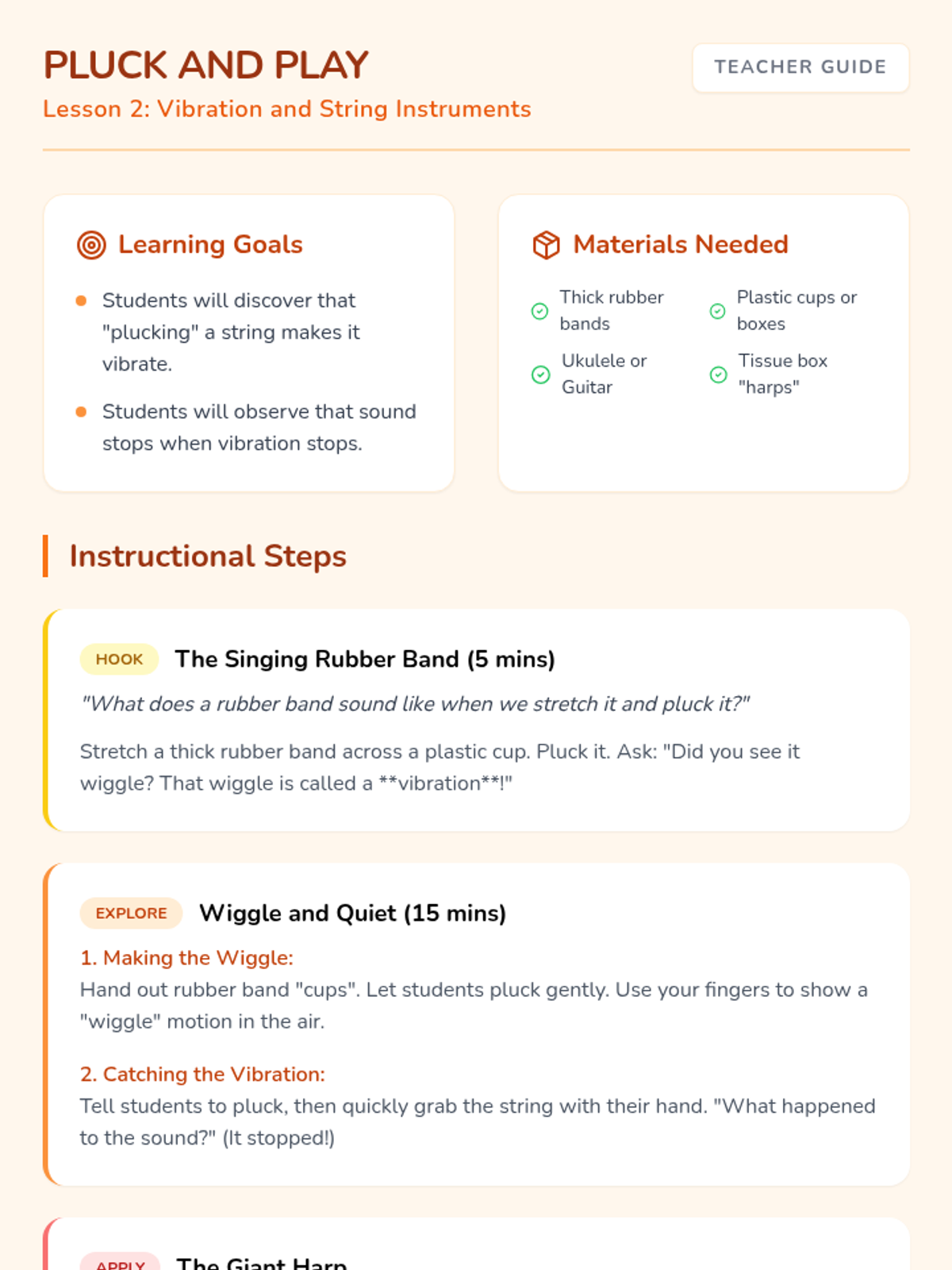
Students explore vibration using rubber bands and string instruments, learning that plucking creates sound and stopping the vibration stops the sound.
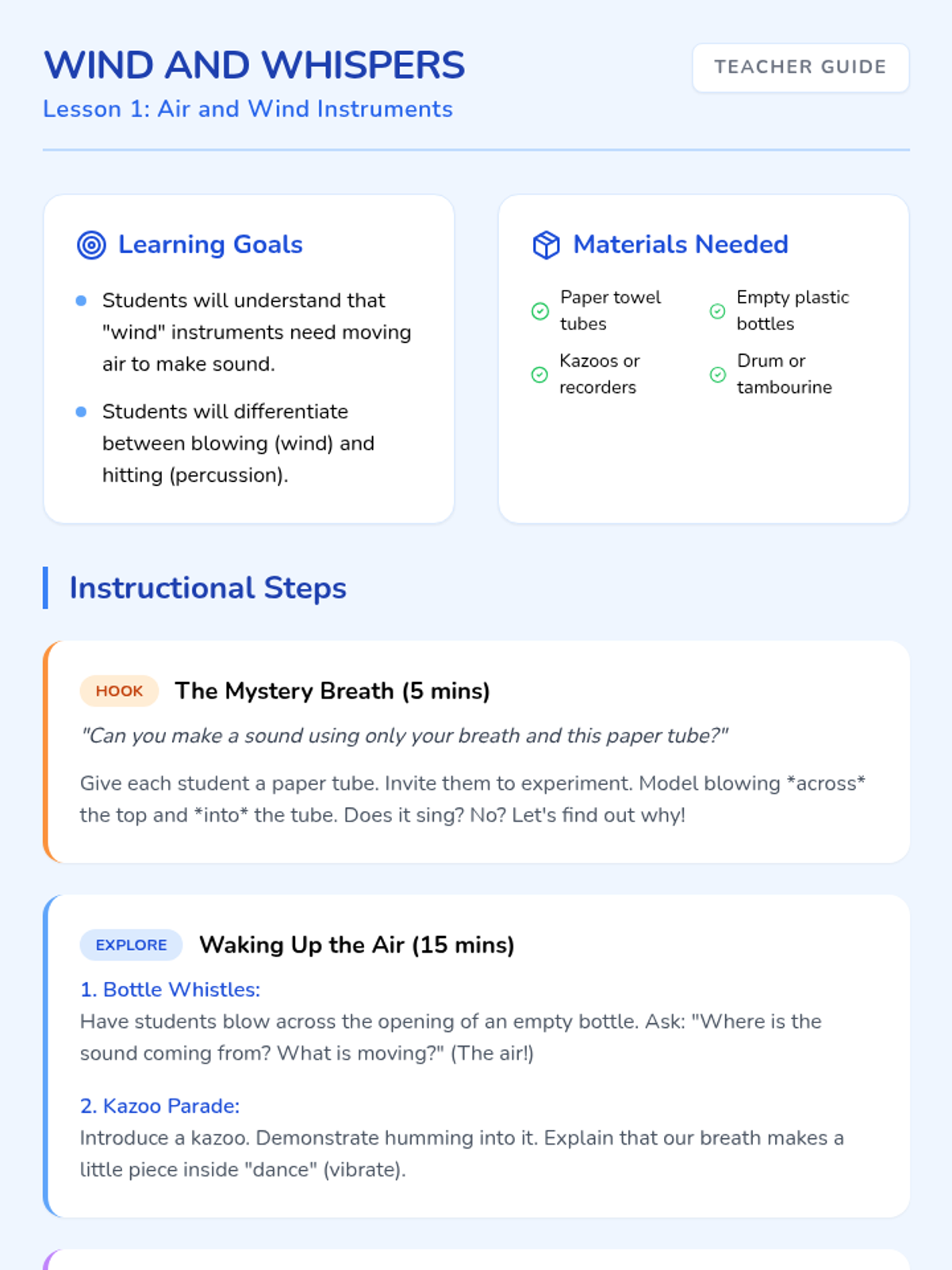
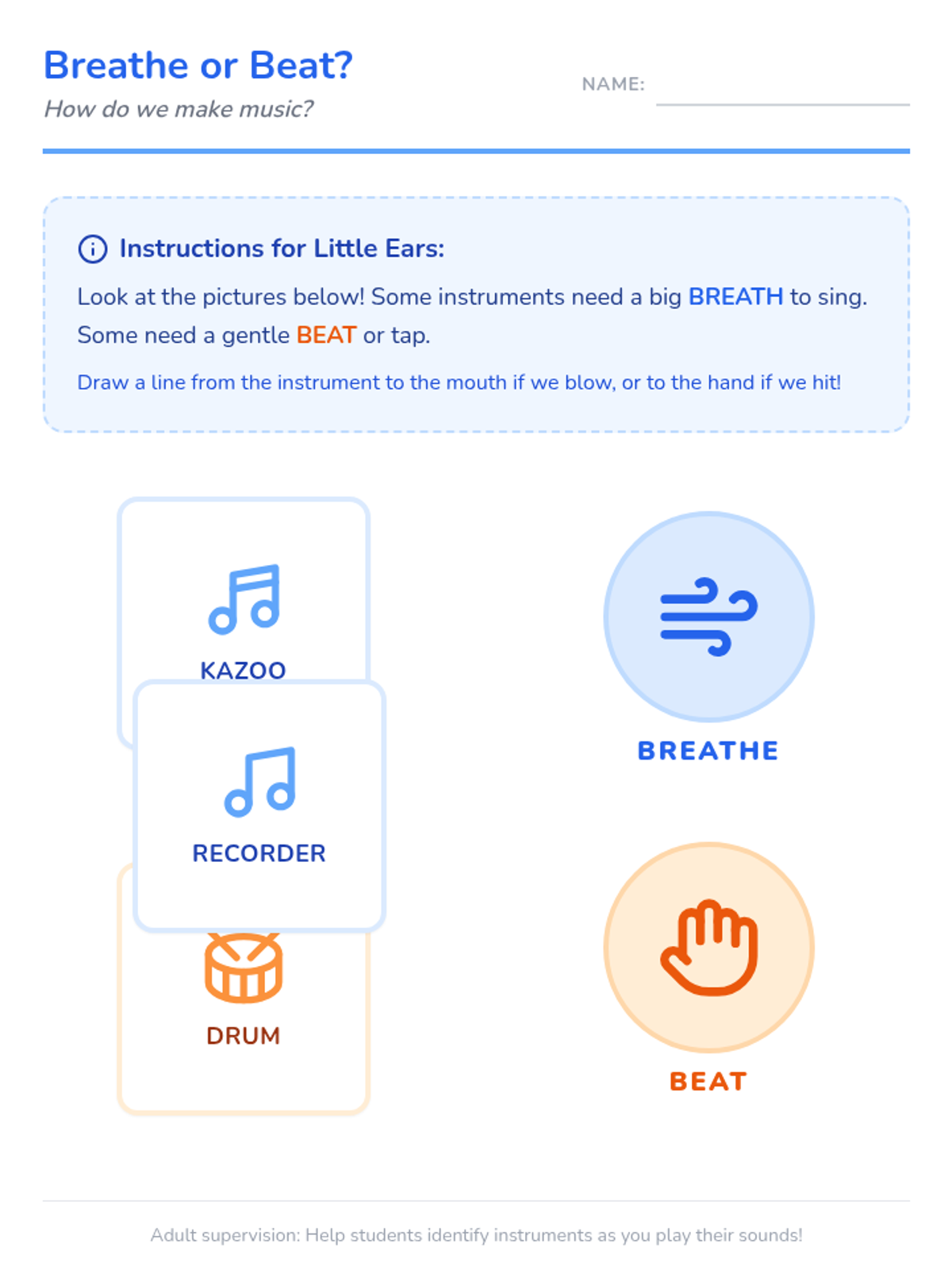
Students investigate how air creates sound by blowing and learn to identify 'wind' instruments that need breath to sing.
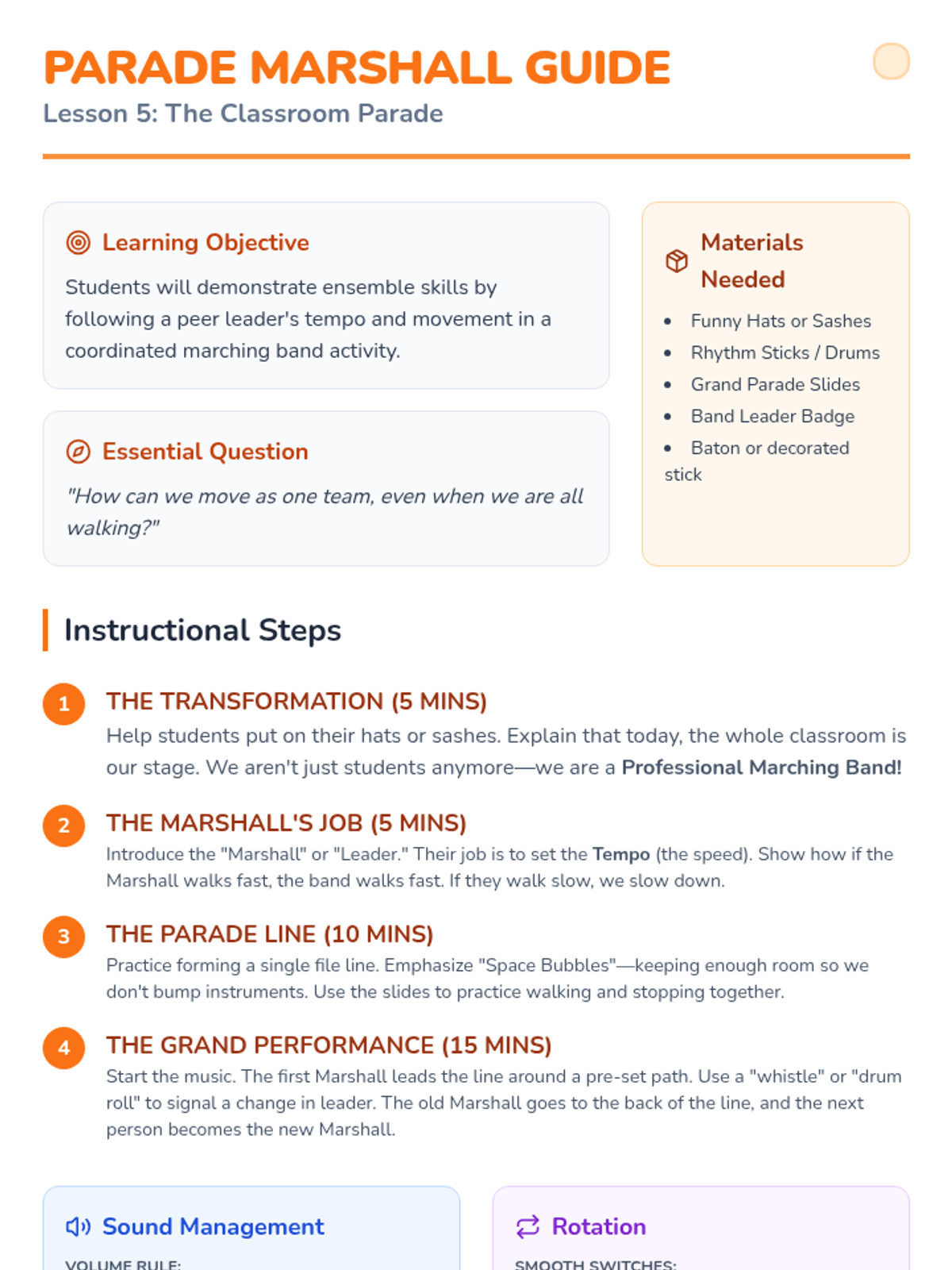
A culminating activity where students form a marching band, following a peer leader's tempo and movement.
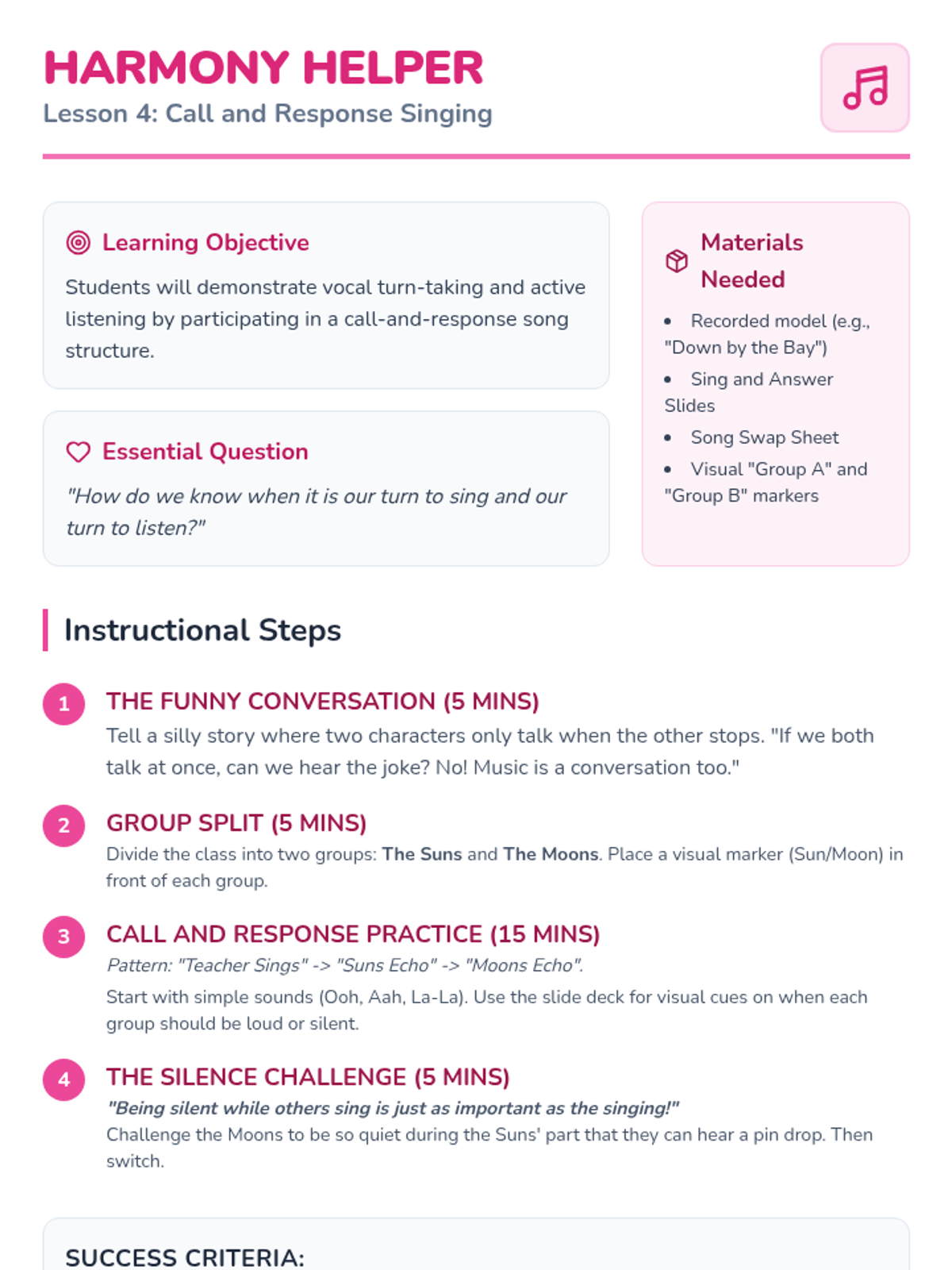
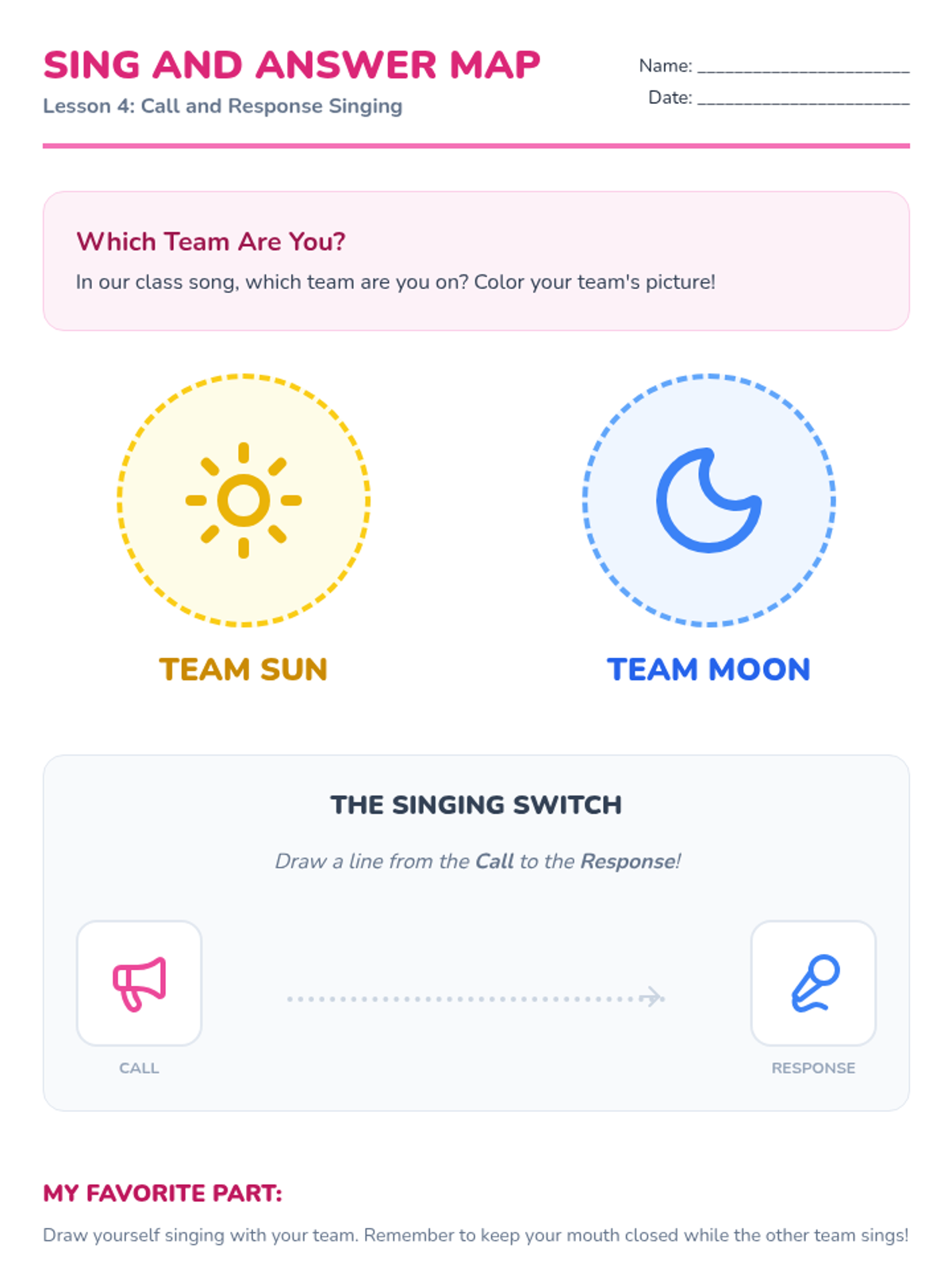
Students learn call-and-response songs, practicing turn-taking and listening for their specific group's part.
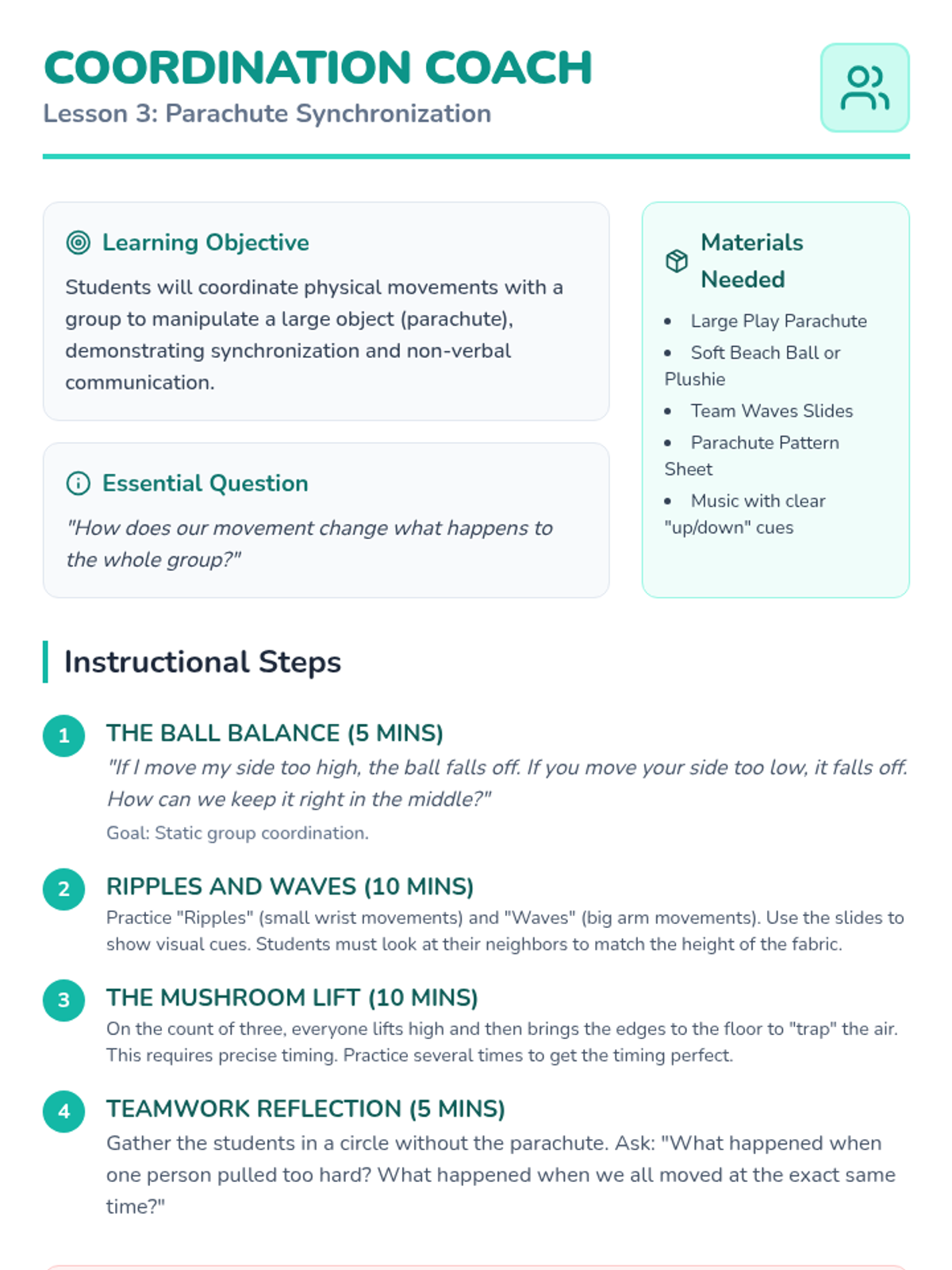
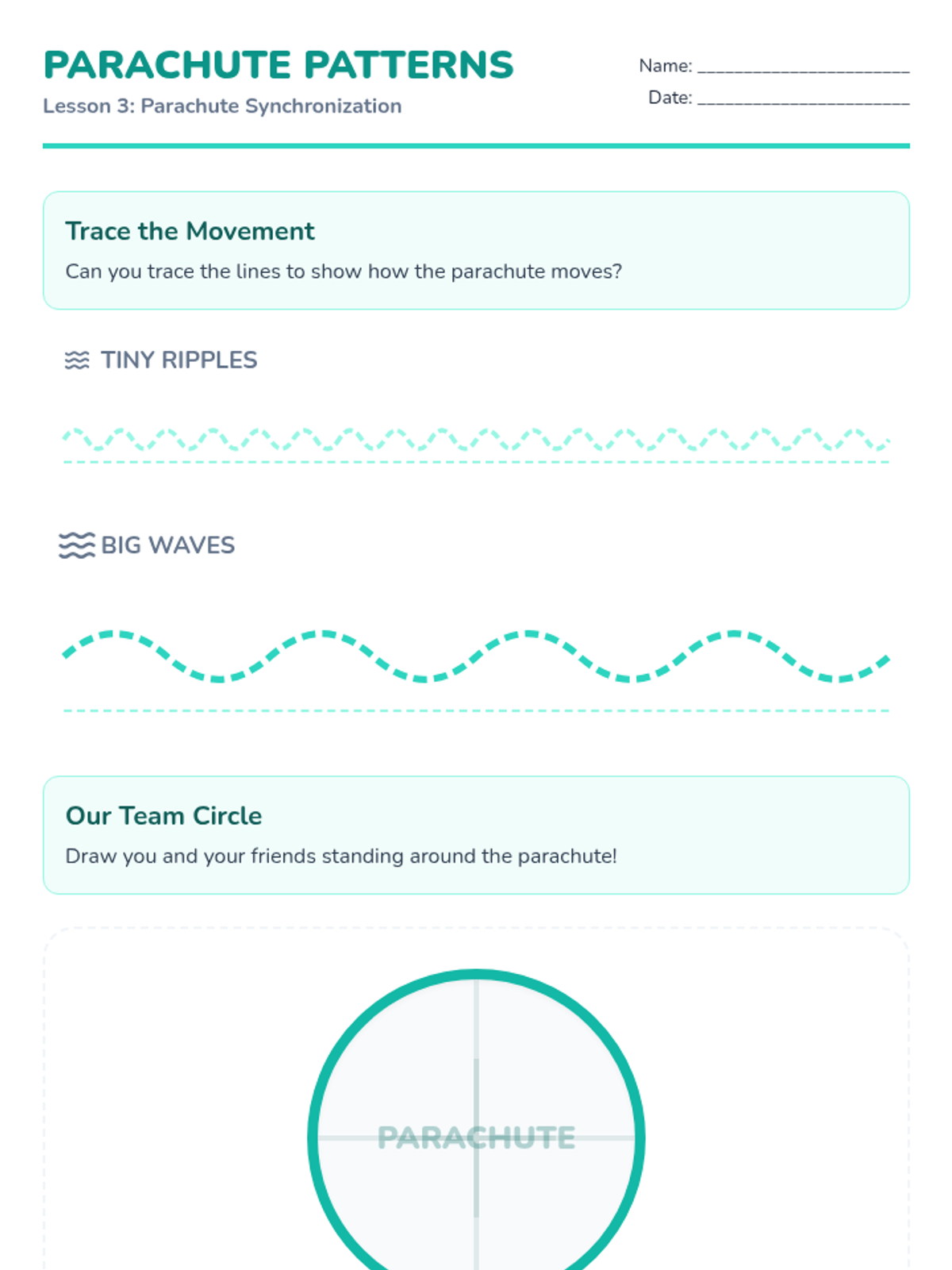
Students use a parachute to explore collective movement, learning to coordinate their actions to create group effects.
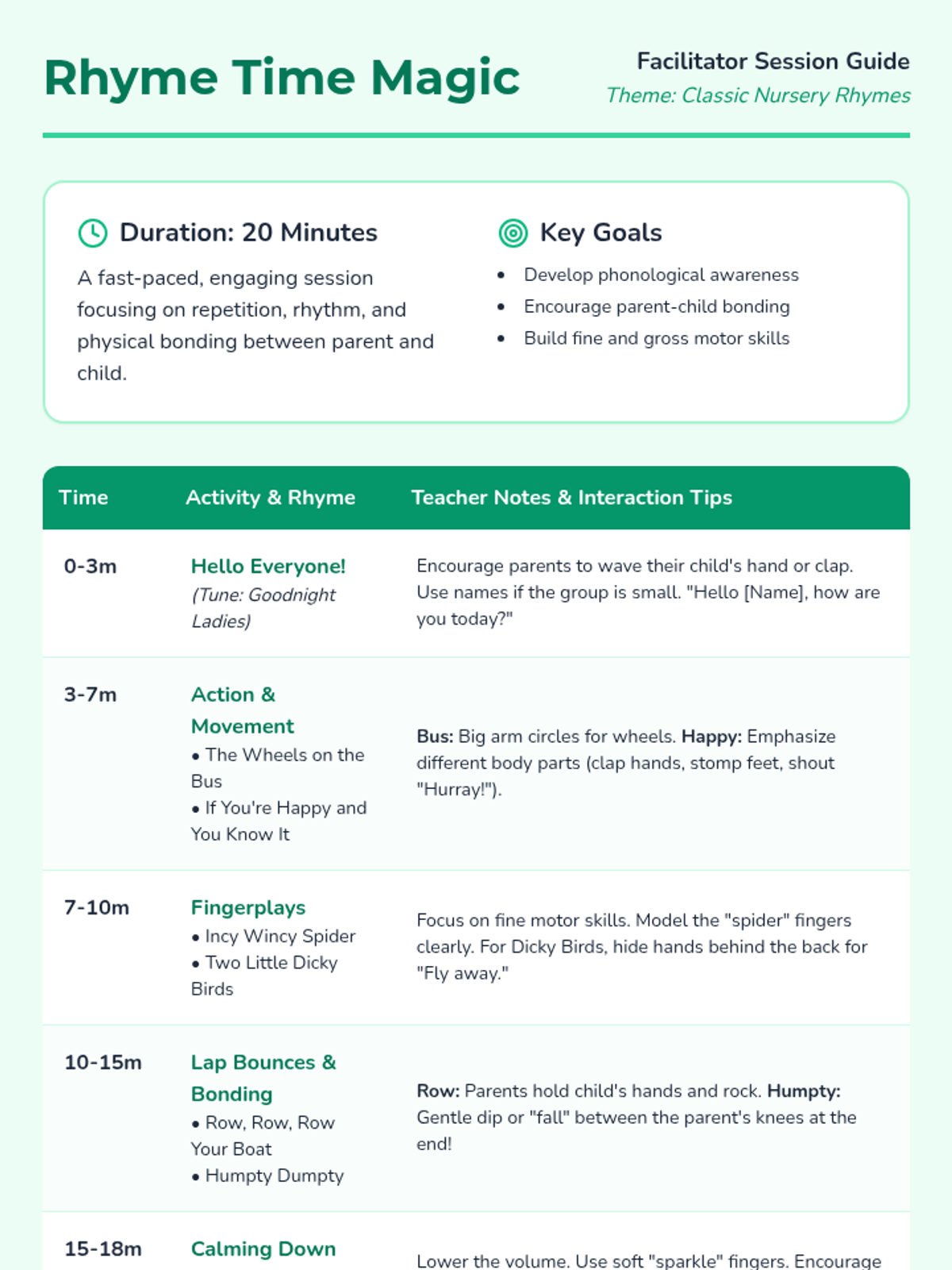
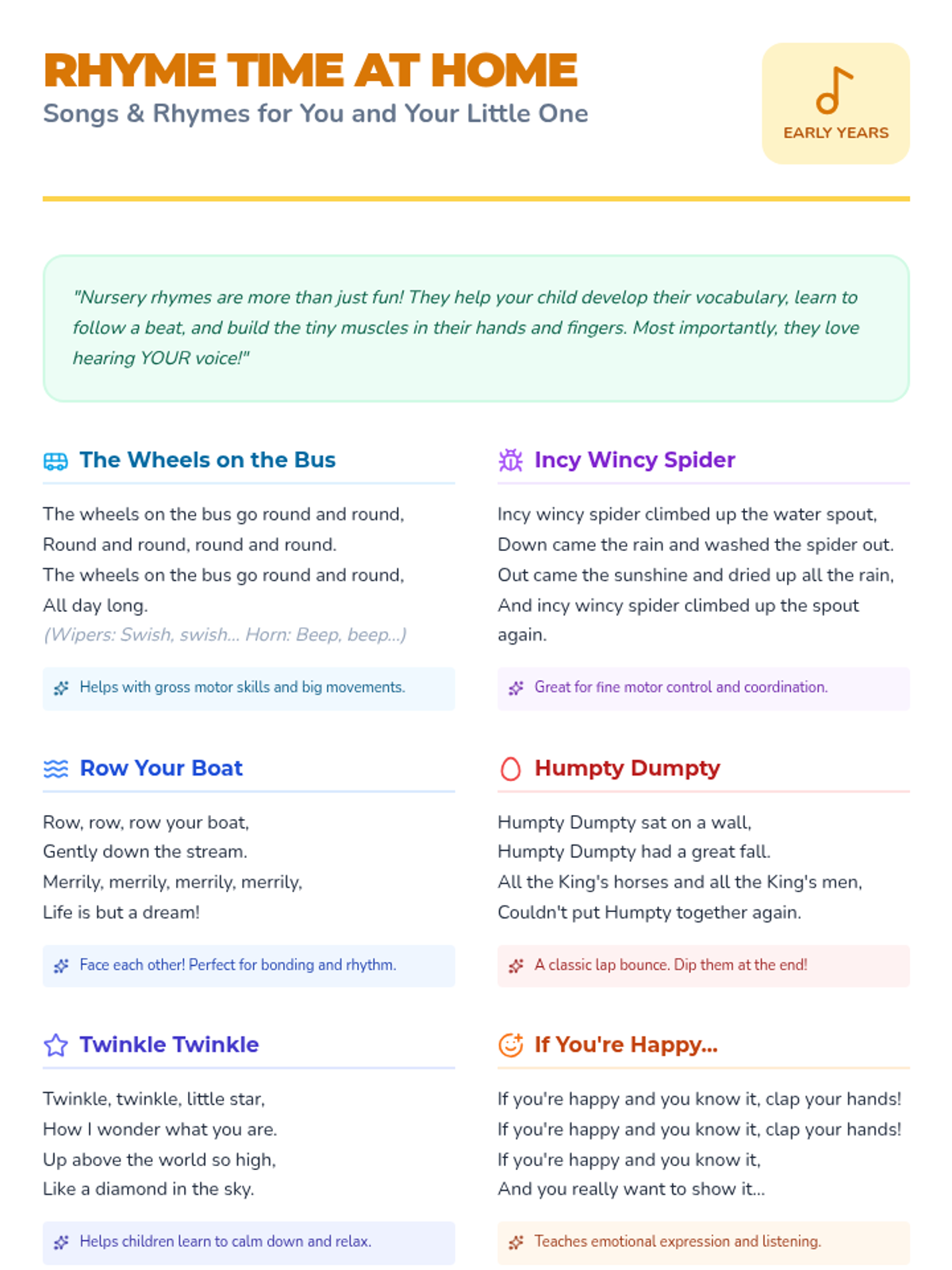
A 20-minute parent and child nursery rhyme session designed for early years to promote bonding, language development, and motor skills through classic songs and interactive play.
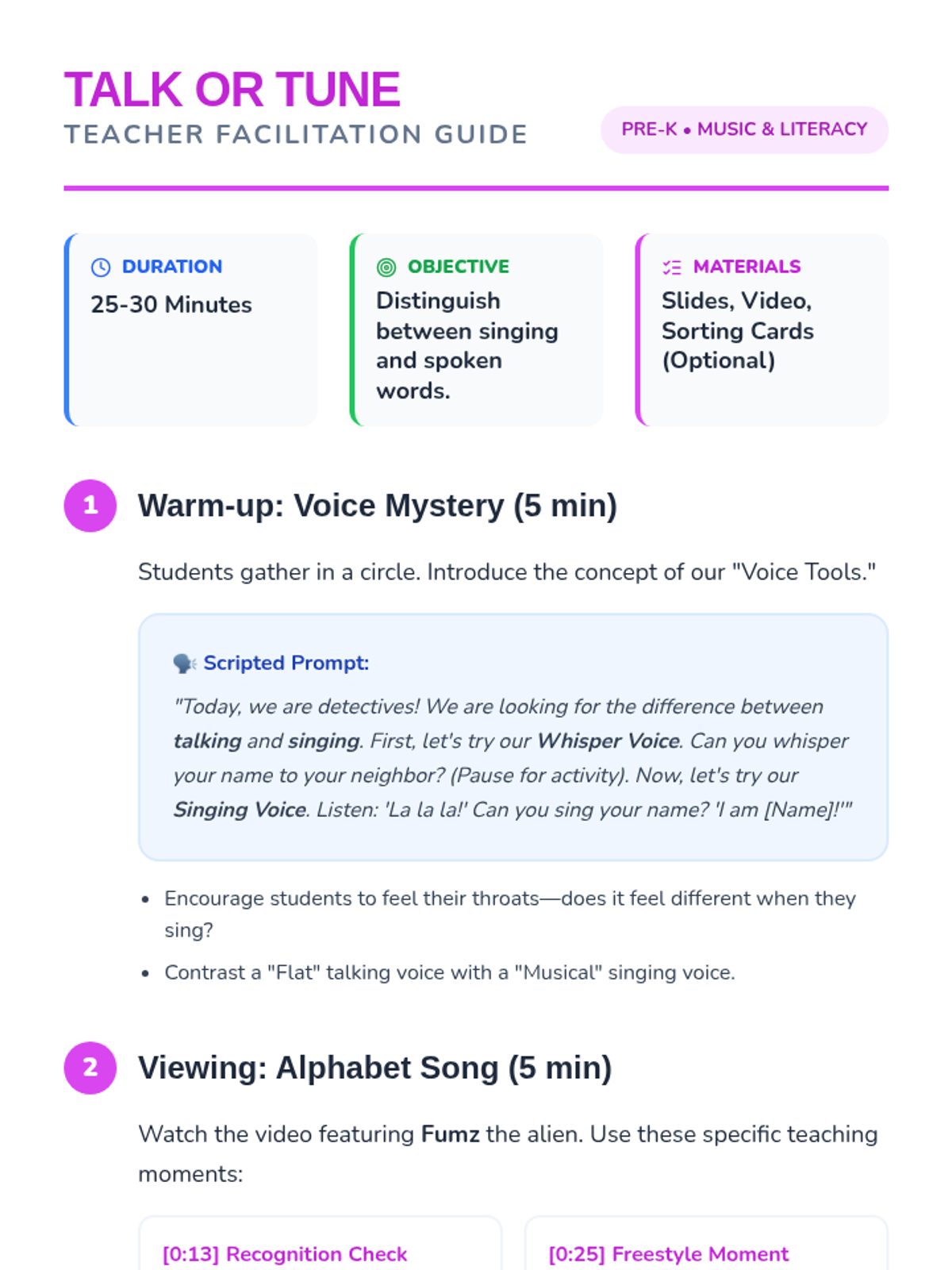
A high-energy Pre-K lesson that helps students distinguish between singing and speaking voices using the 'Alphabet Song' and interactive vocal play.
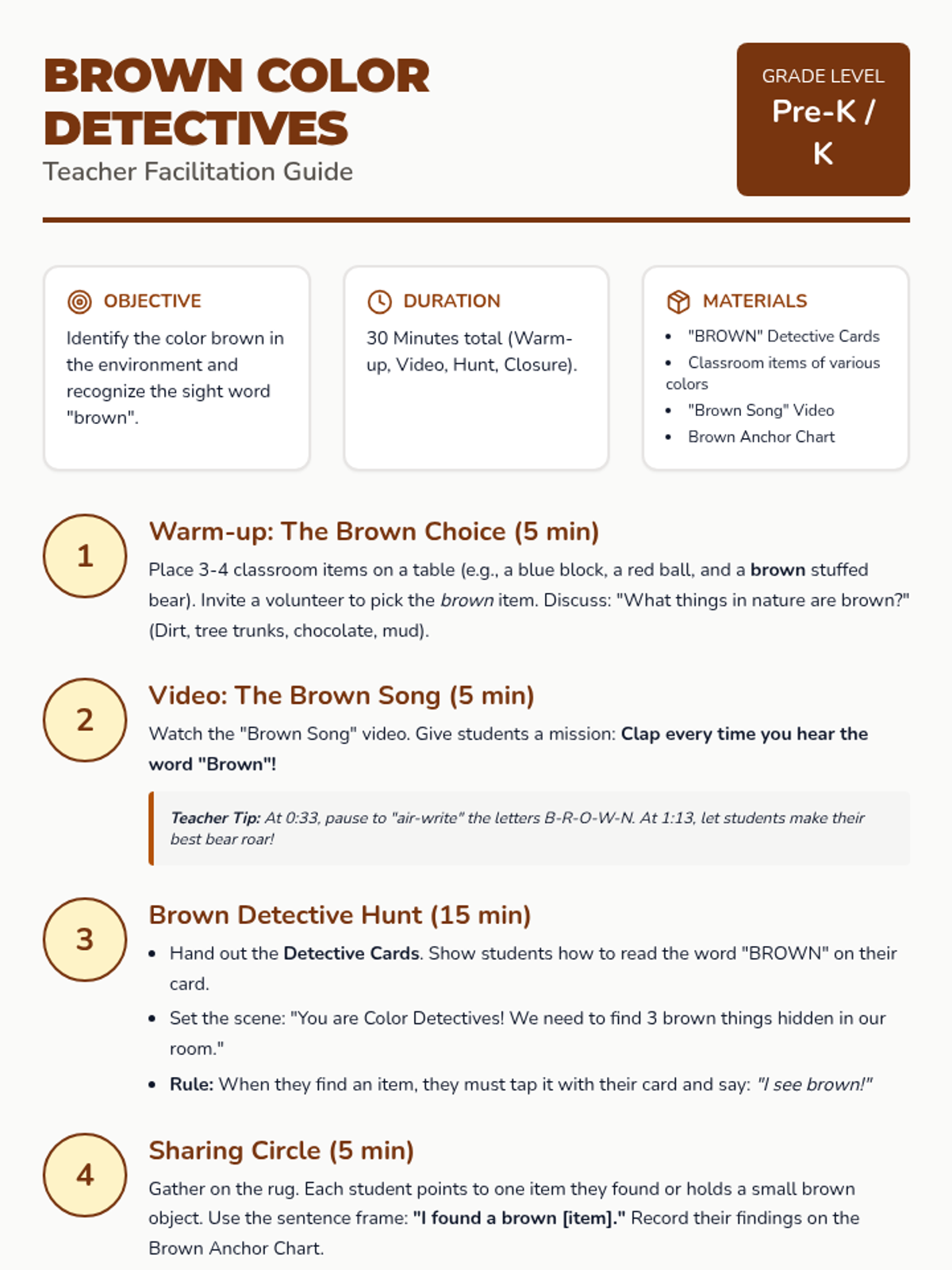
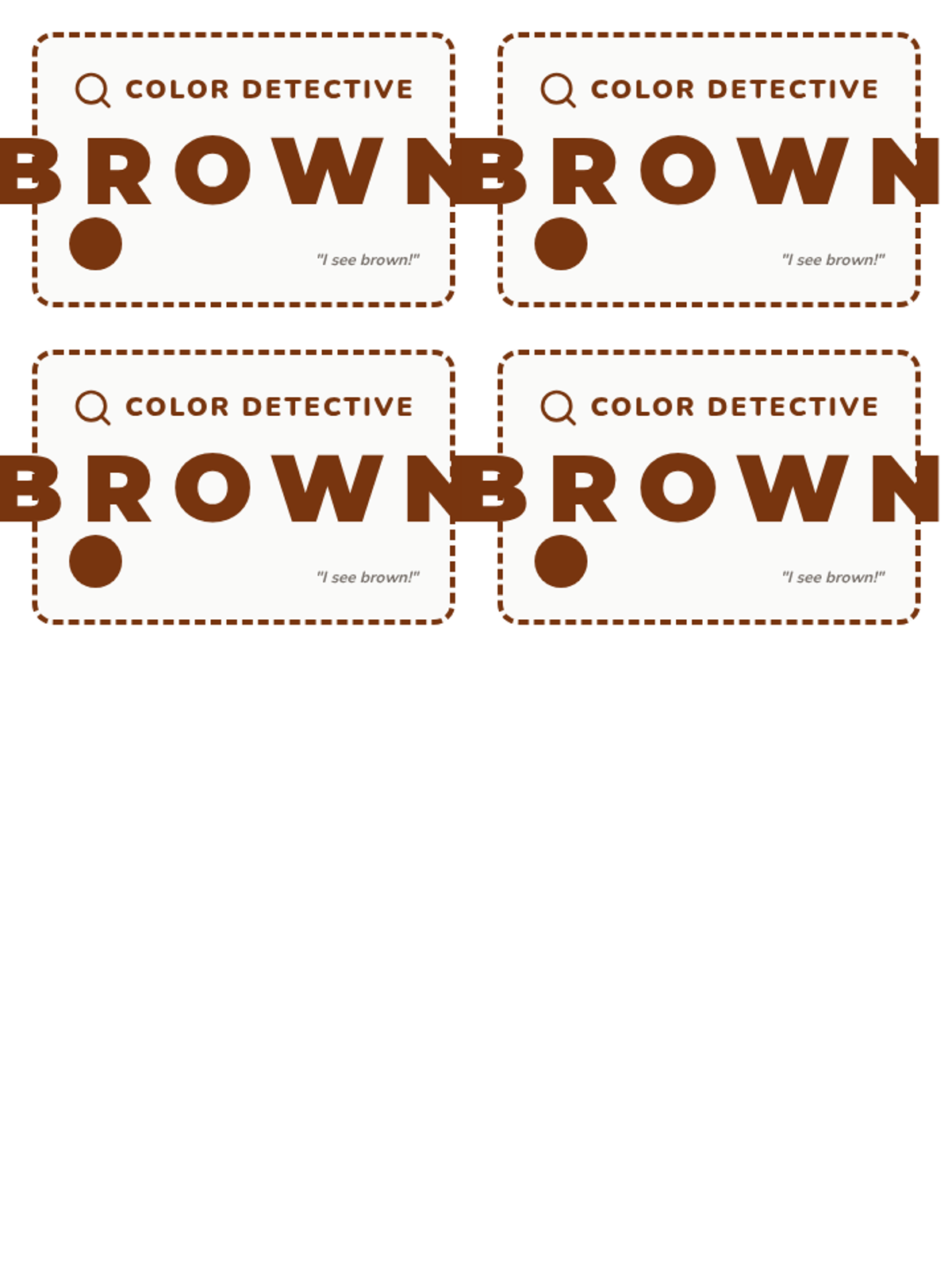
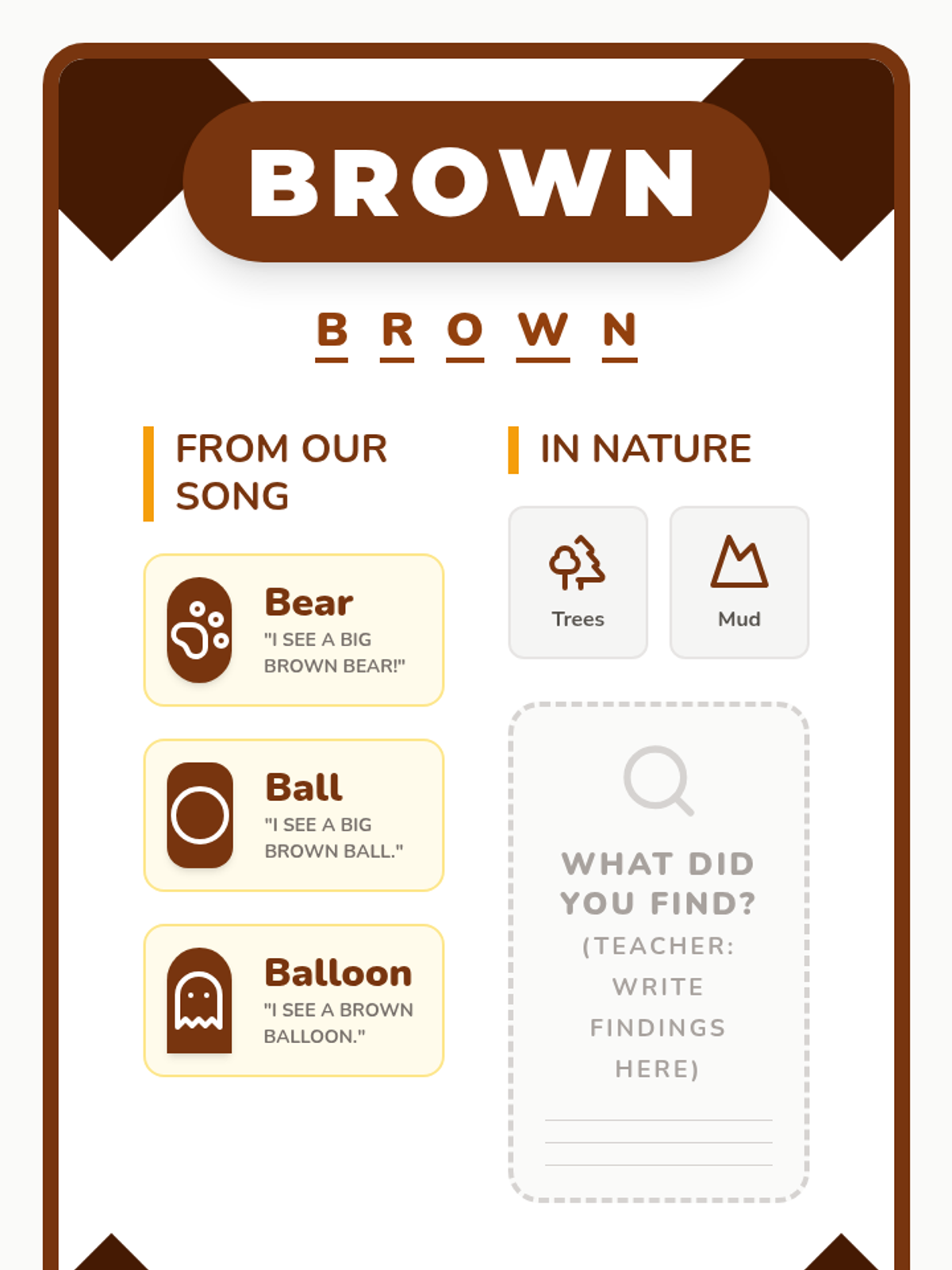
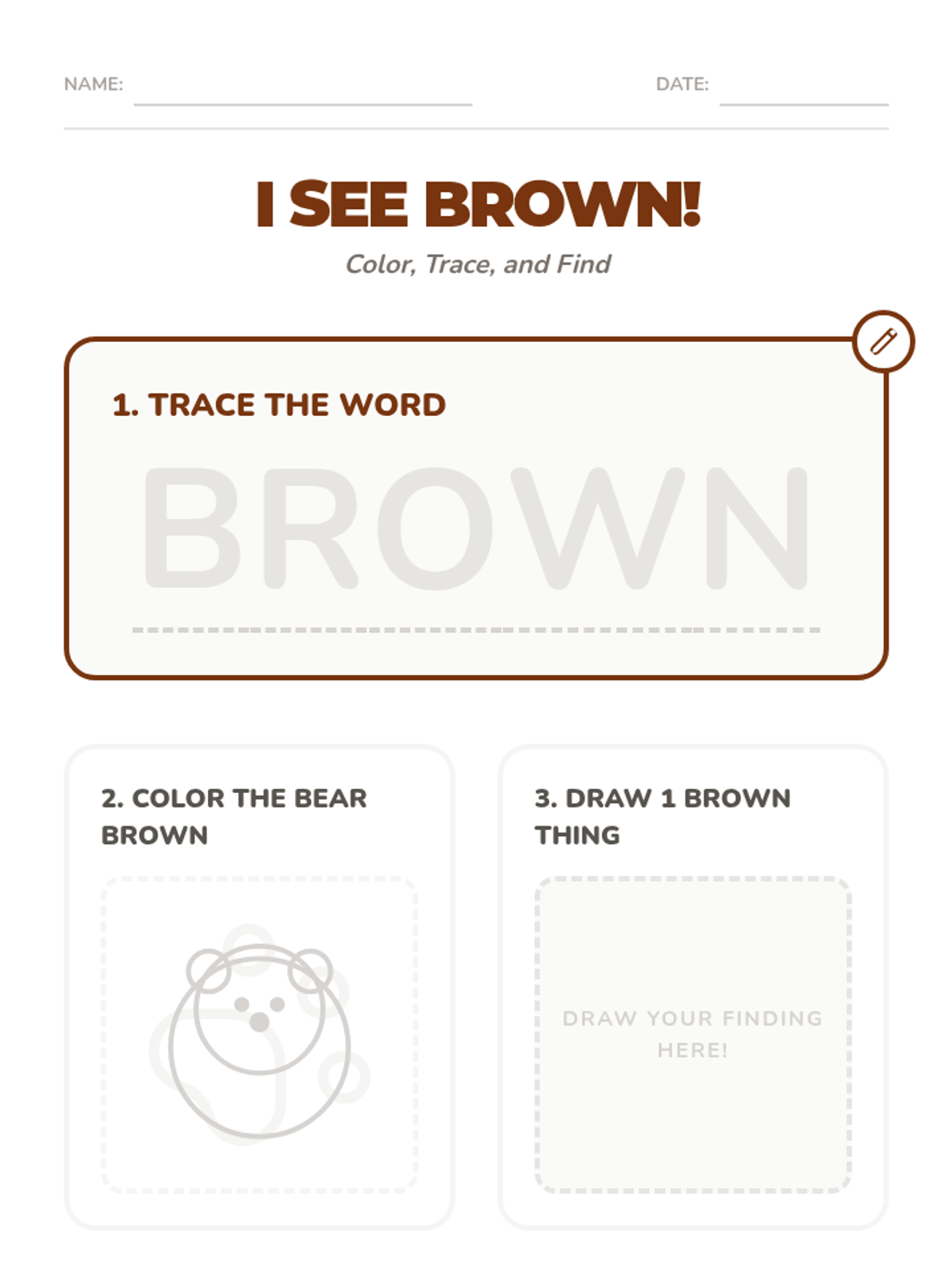
A fun, interactive lesson for Pre-K and Kindergarten students to identify the color brown and recognize the sight word 'brown' through music, movement, and a 'detective' hunt.
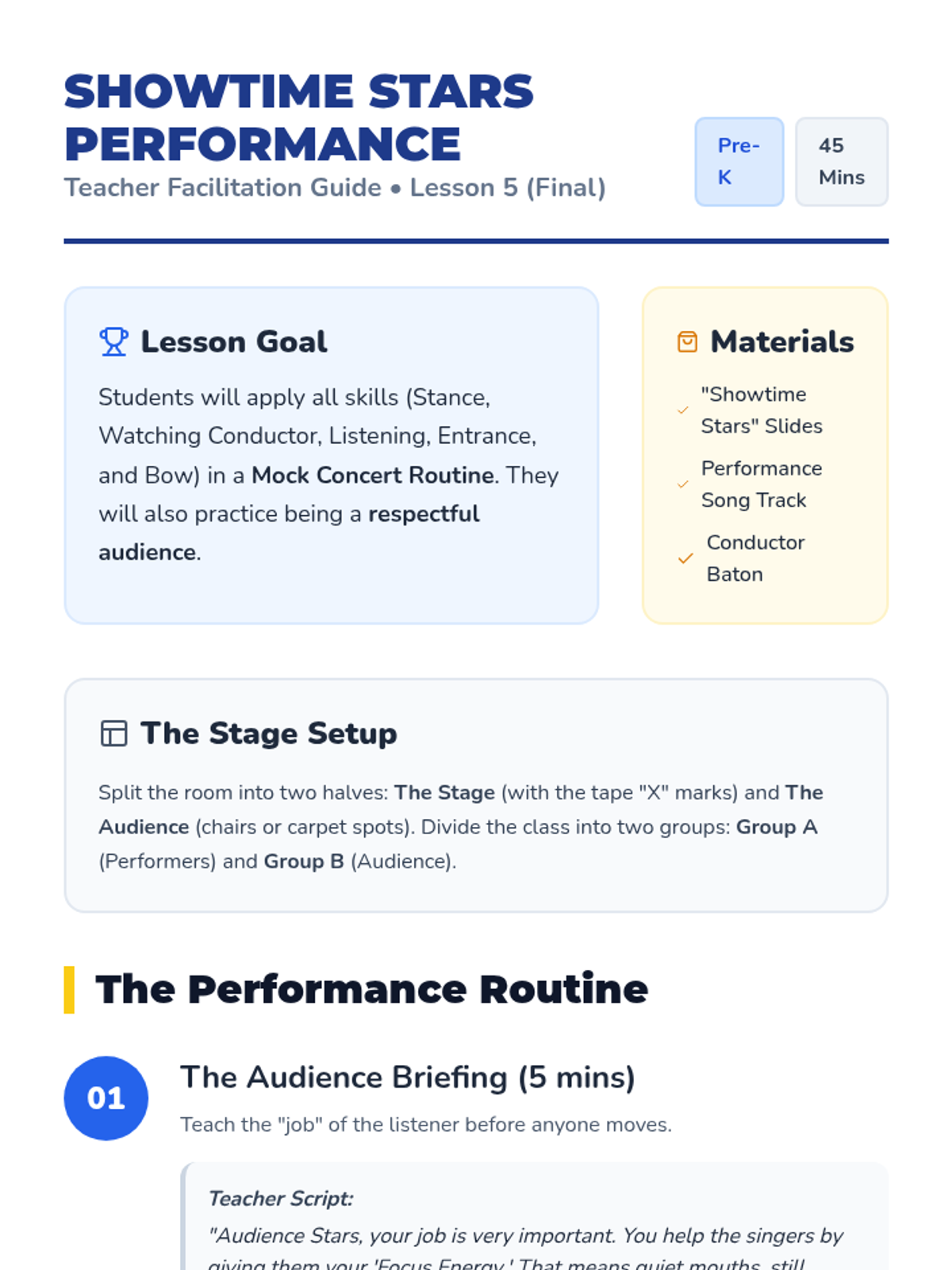
A mock performance where students apply all previous skills in a full routine, switching between performer and audience roles.
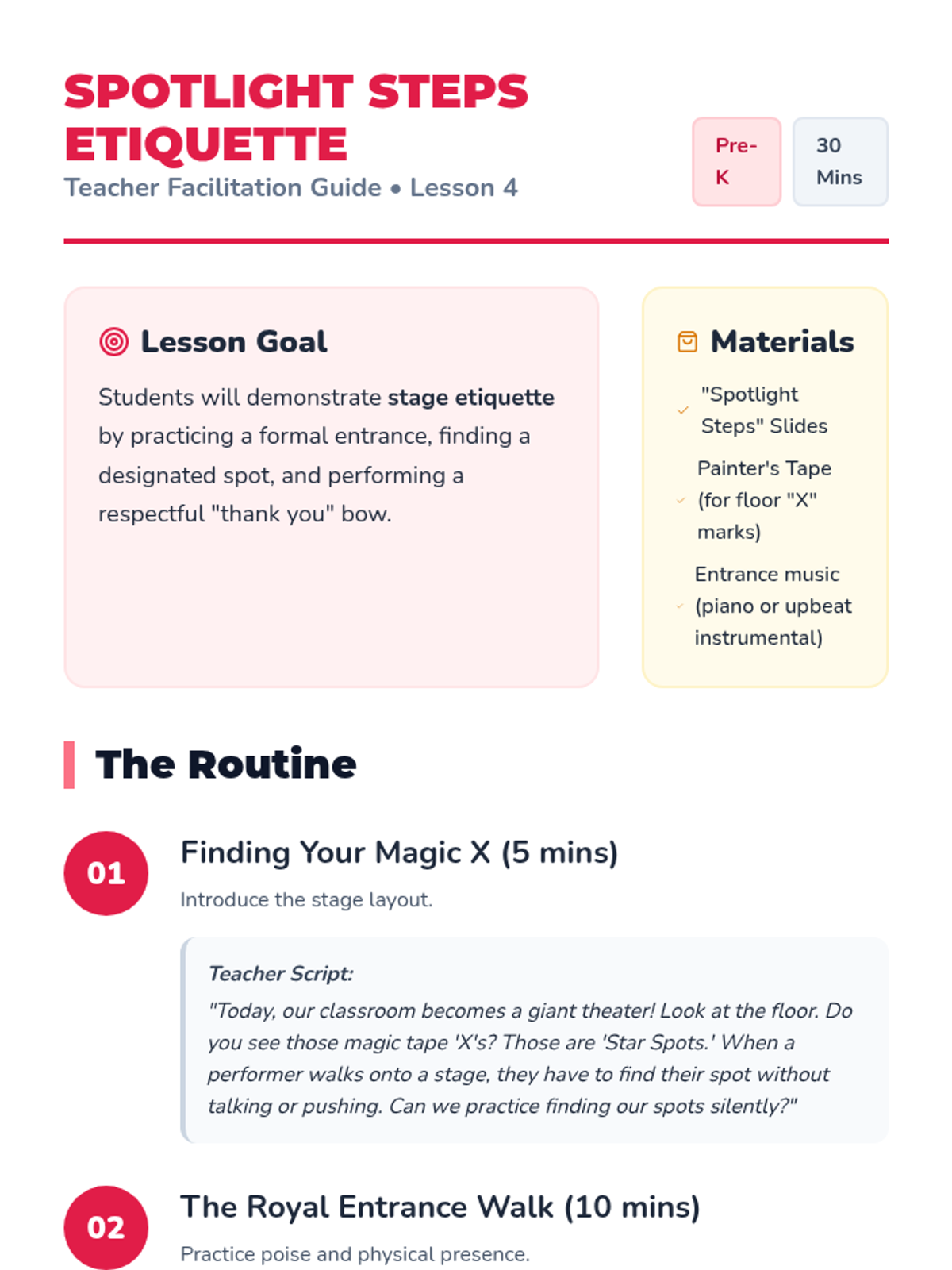
Introduces stage etiquette, including how to enter the stage, find a spot, and take a respectful bow.
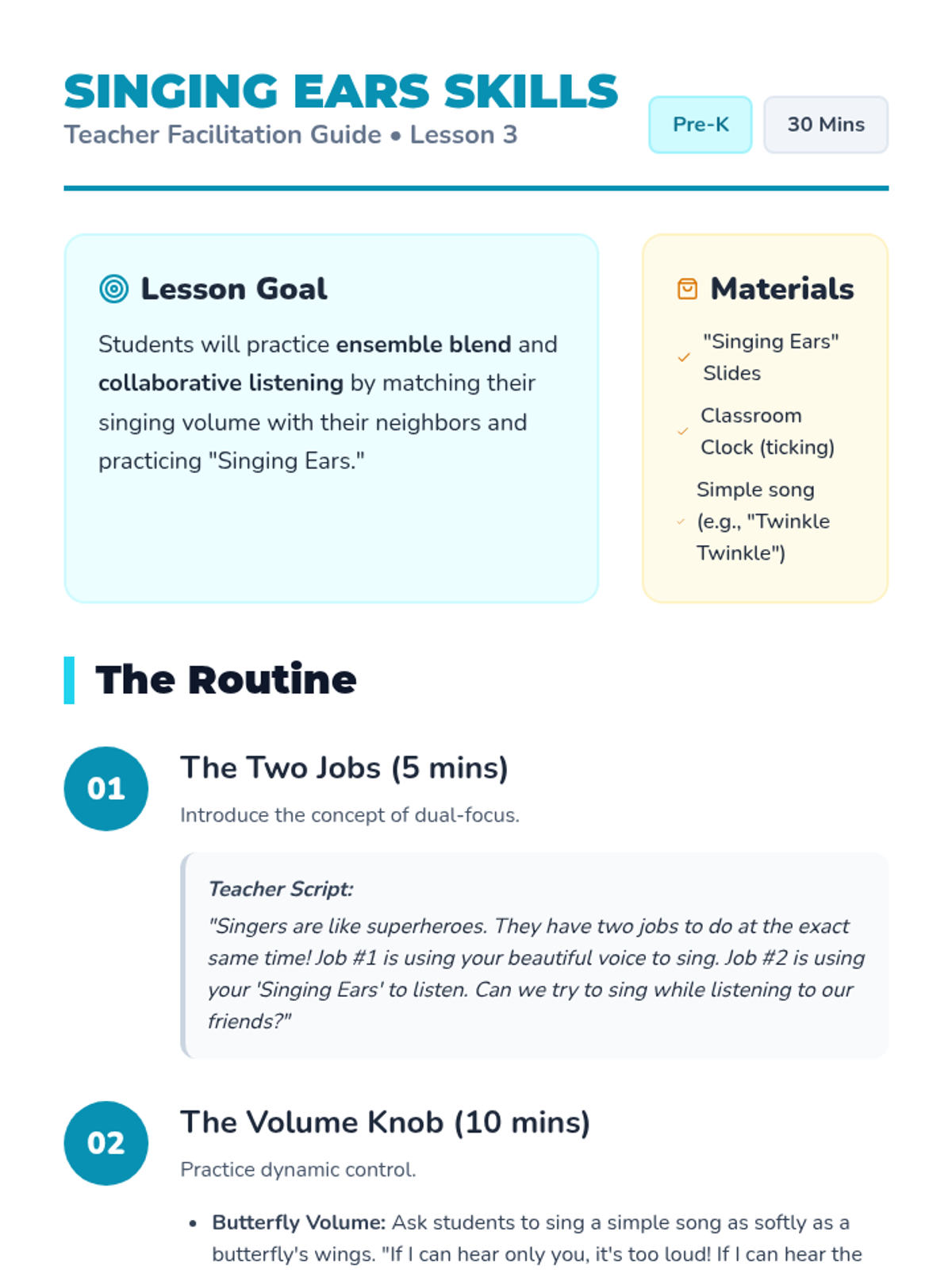
Focuses on ensemble blend and collaborative listening, teaching students to match their volume with their neighbors.