Fundamental techniques for drawing, painting, sculpture, and photography alongside modern digital design principles. Analyzes historical artistic movements while building skills in printmaking and graphic media.
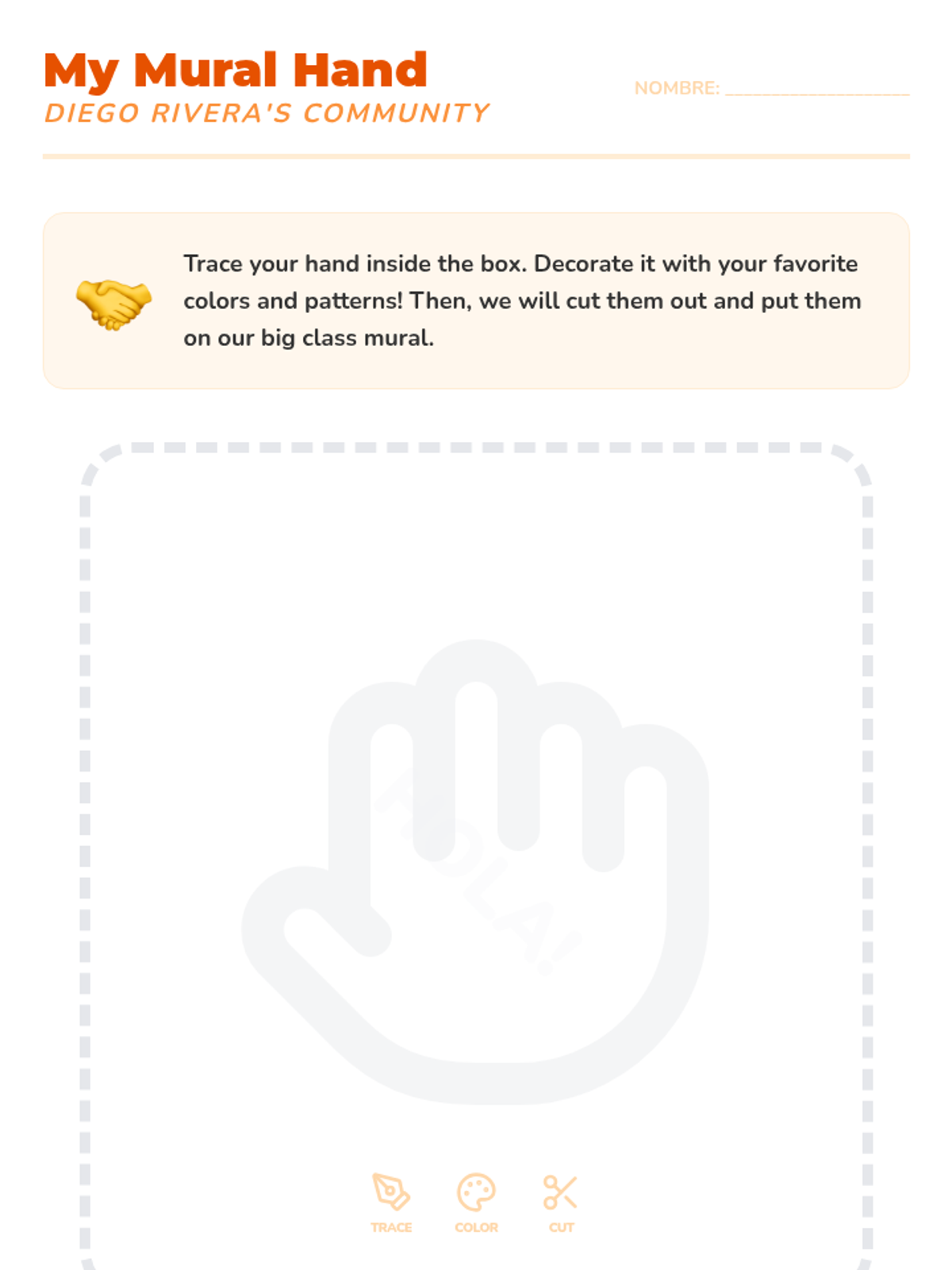
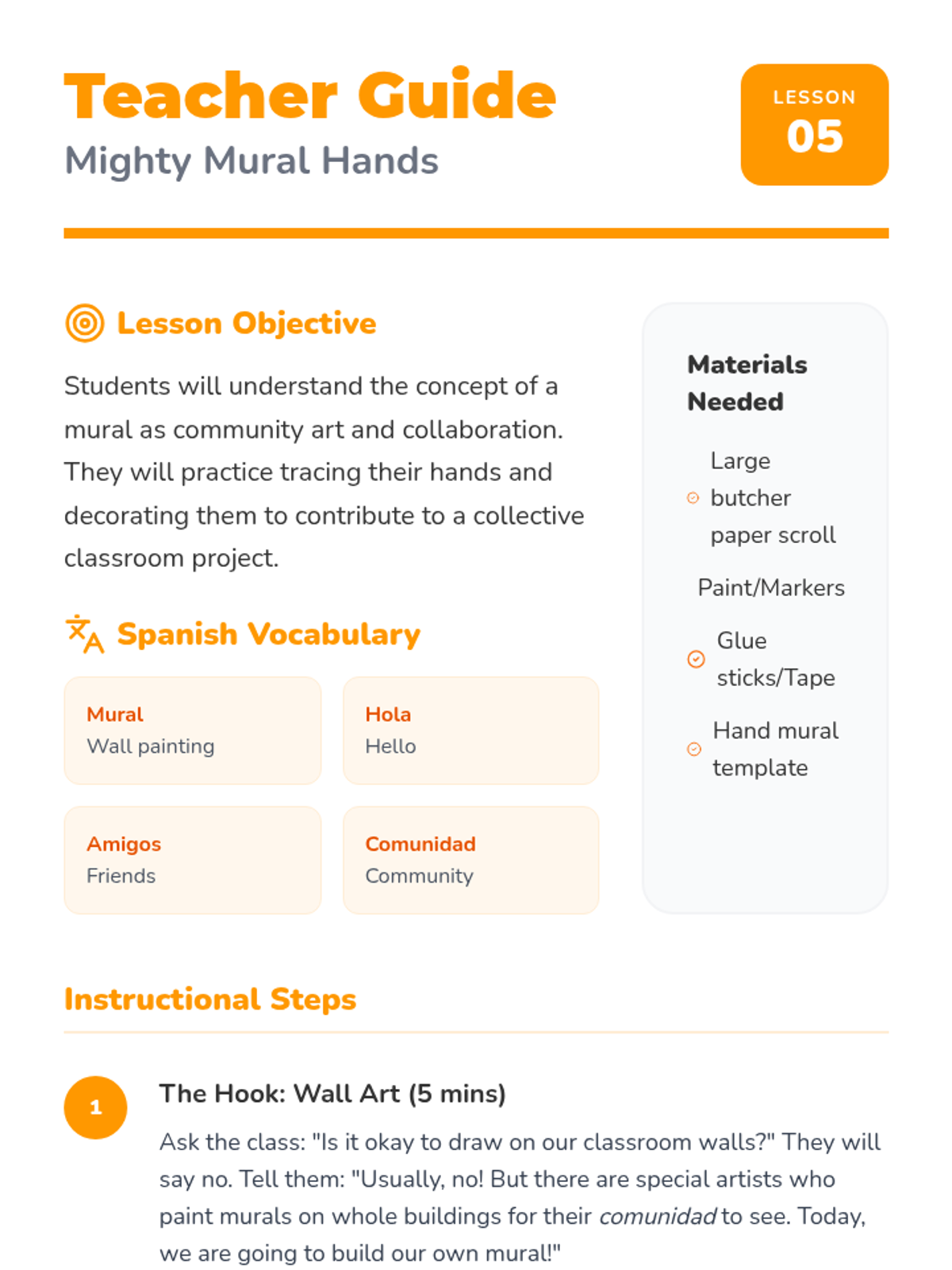
Inspired by Diego Rivera, students learn about murals and collaboration by creating a shared 'mural' of their own decorated handprints.
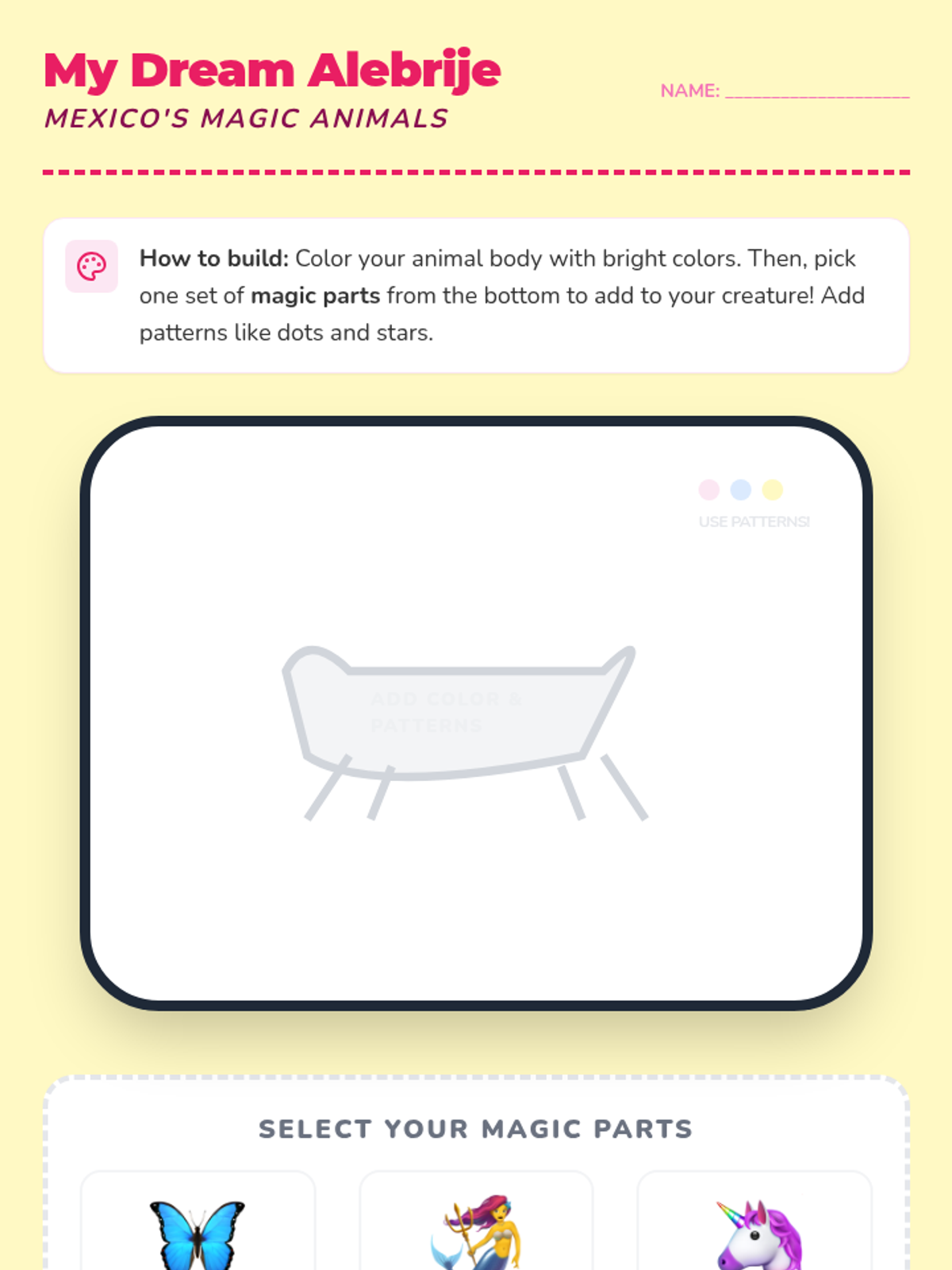
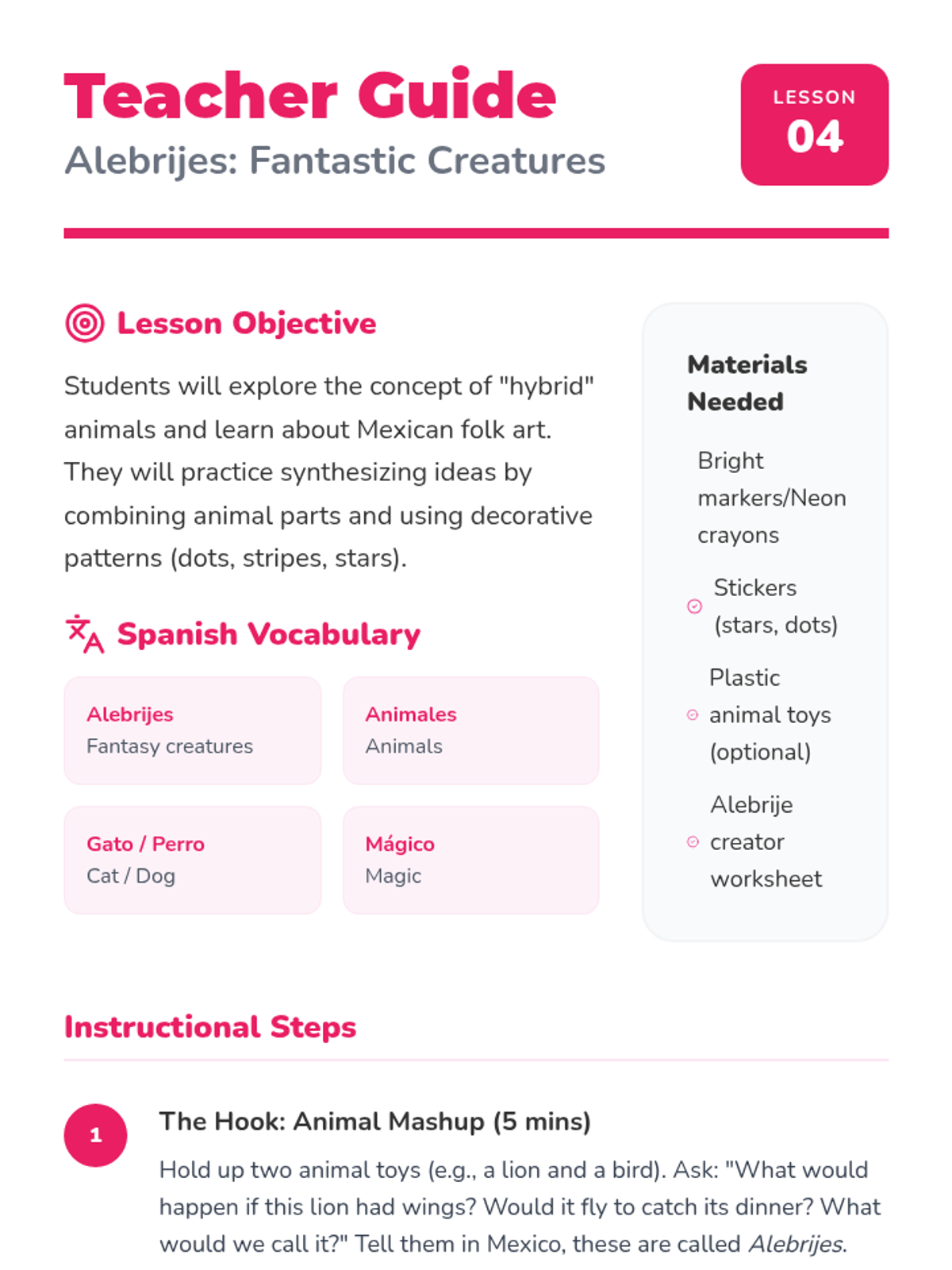
Students discover the colorful world of Mexican Alebrijes and create their own imaginary 'protector' animals by combining different creatures.
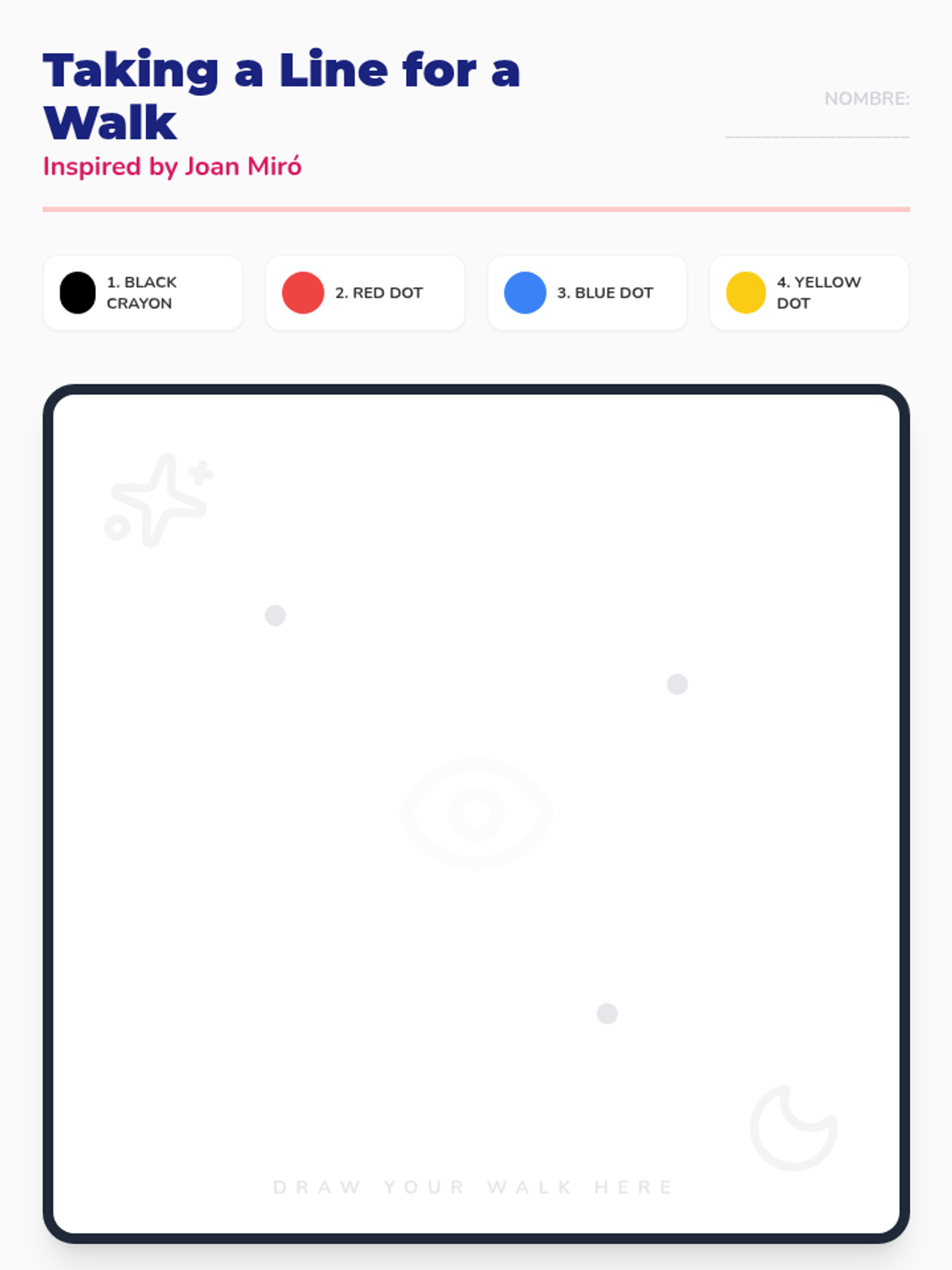
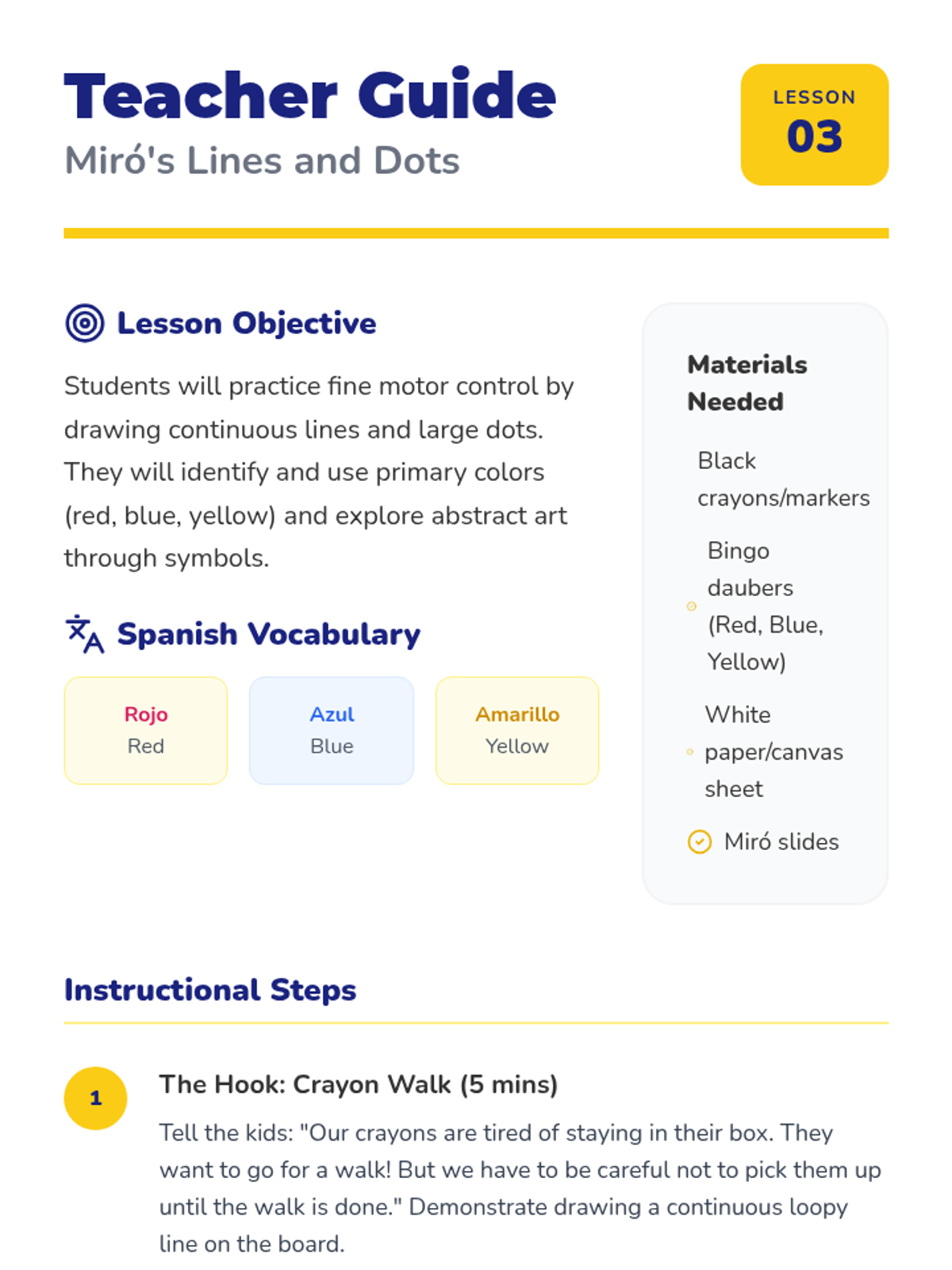
Focusing on fine motor skills and imagination, students follow Joan Miró's lead by taking lines for a 'walk' and adding colorful dots.
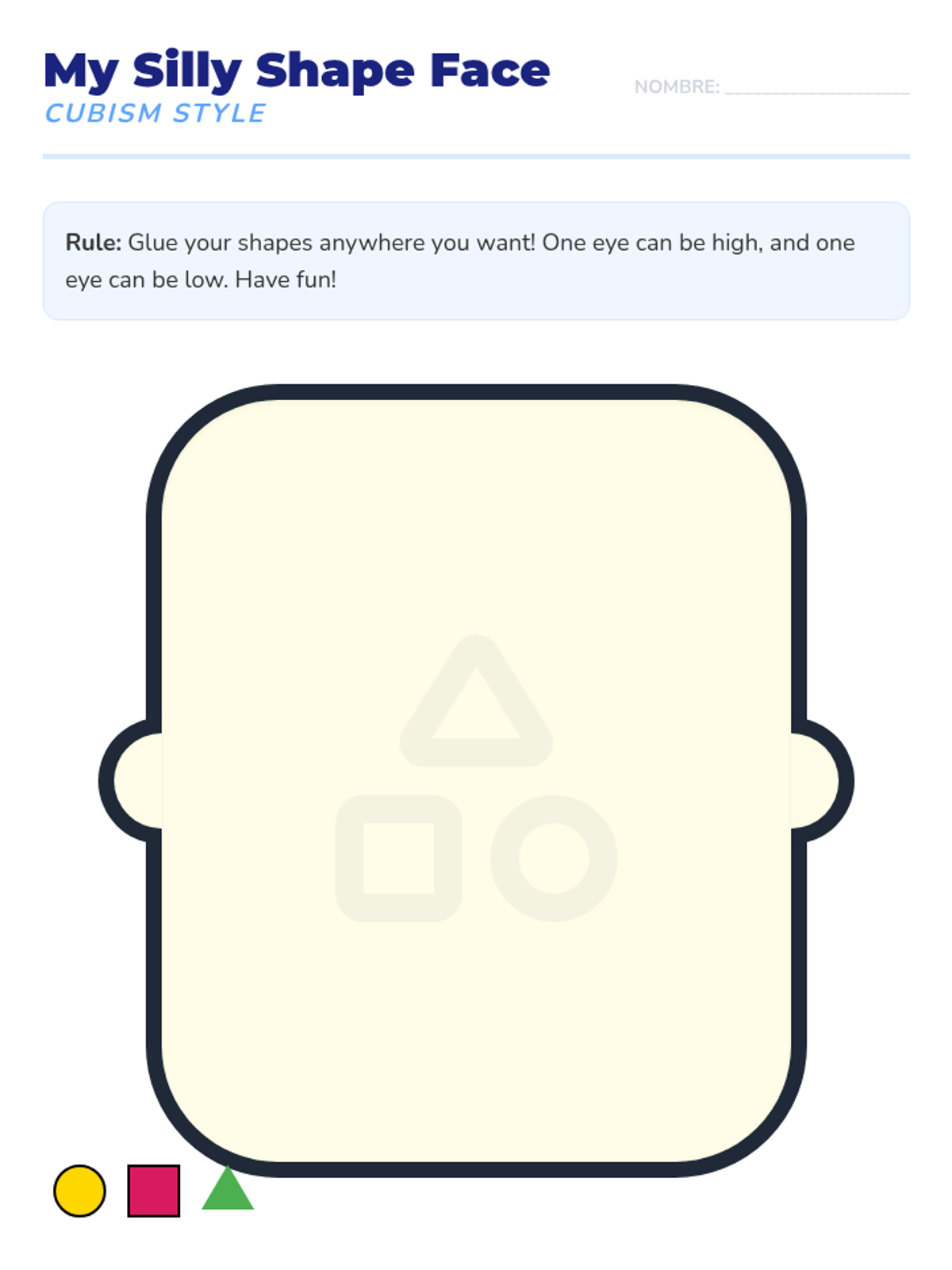
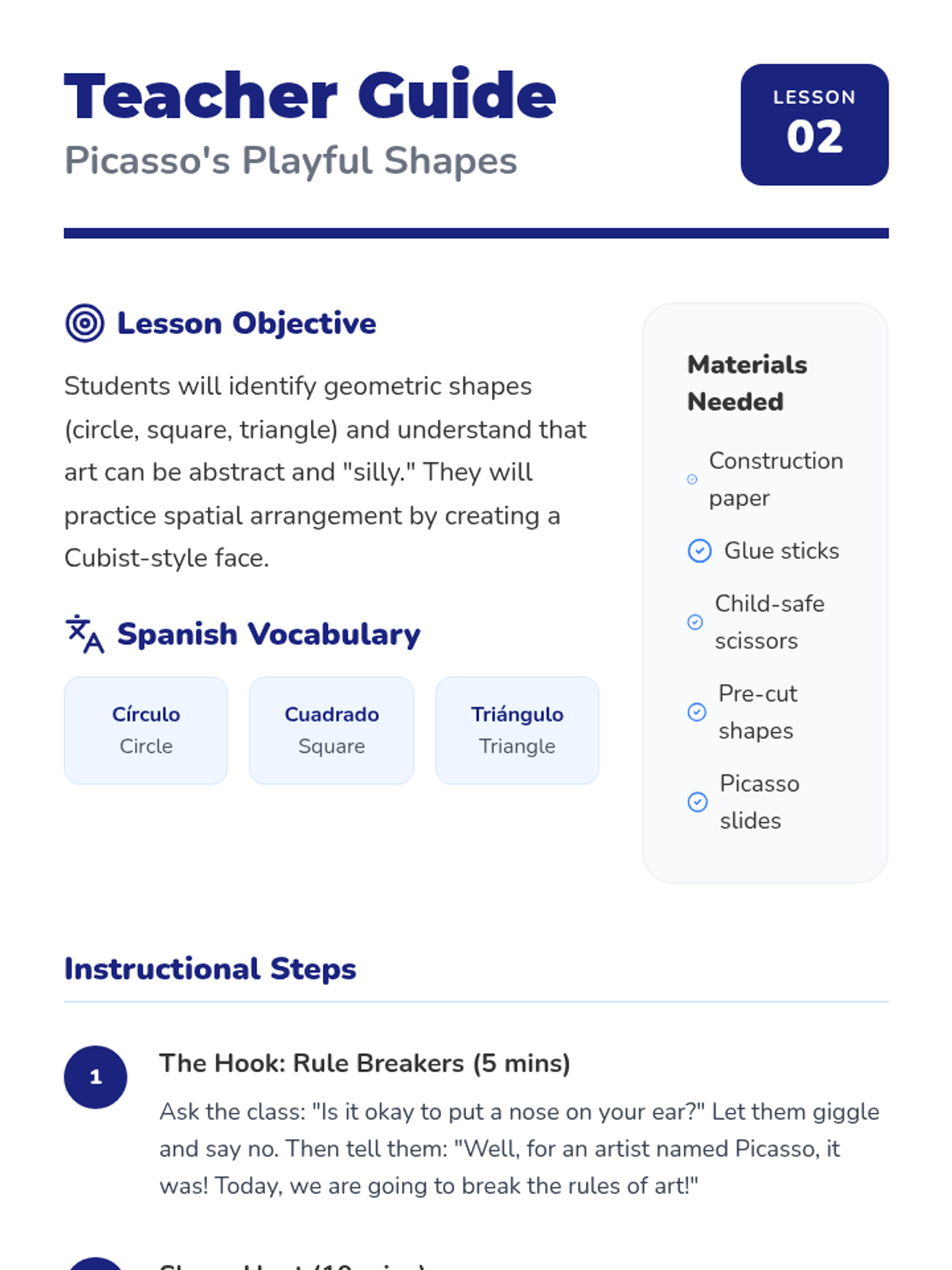
An introduction to Cubism where students learn that art can be silly and rule-breaking. They use geometric shapes to create abstract portraits.
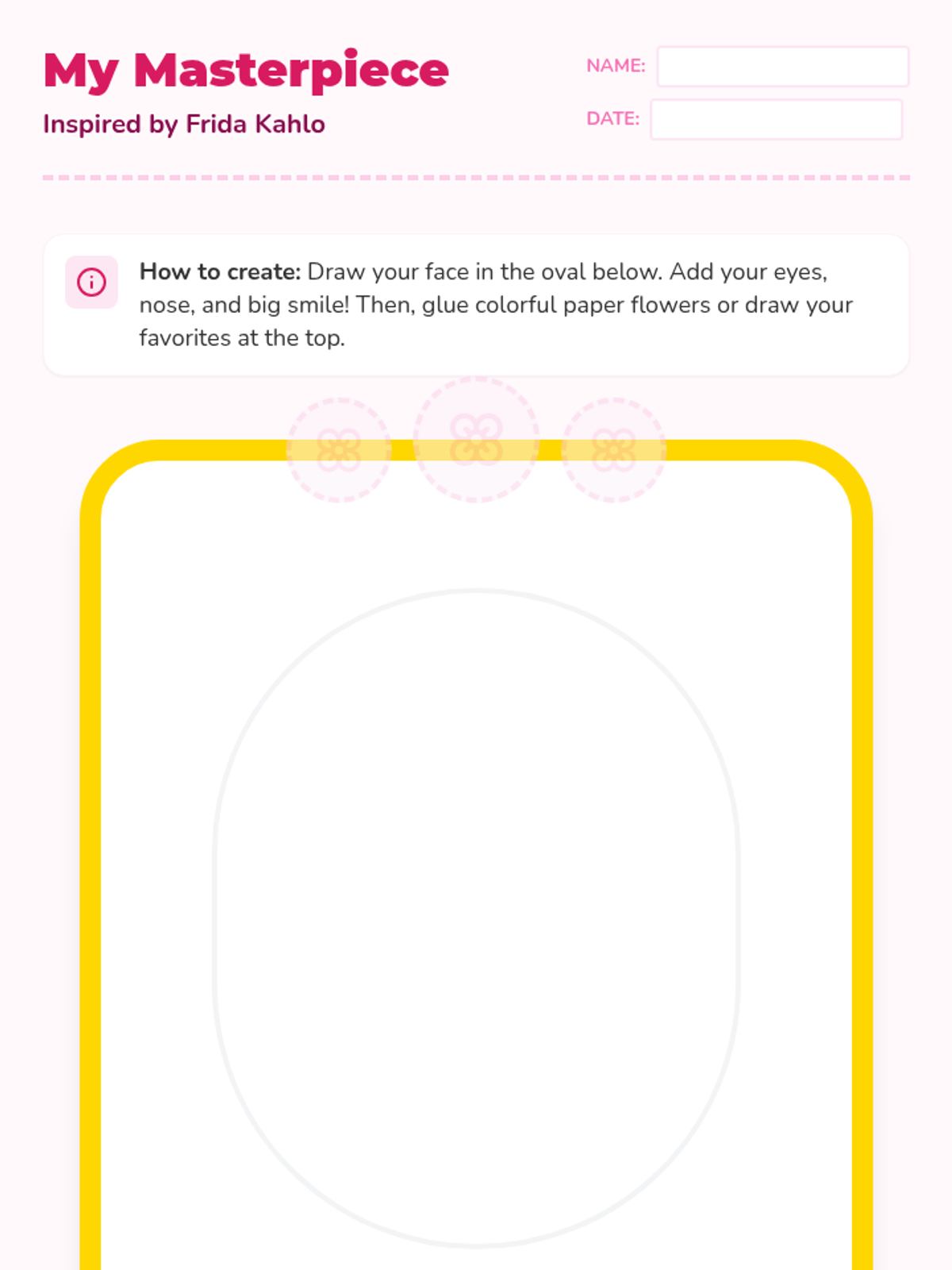
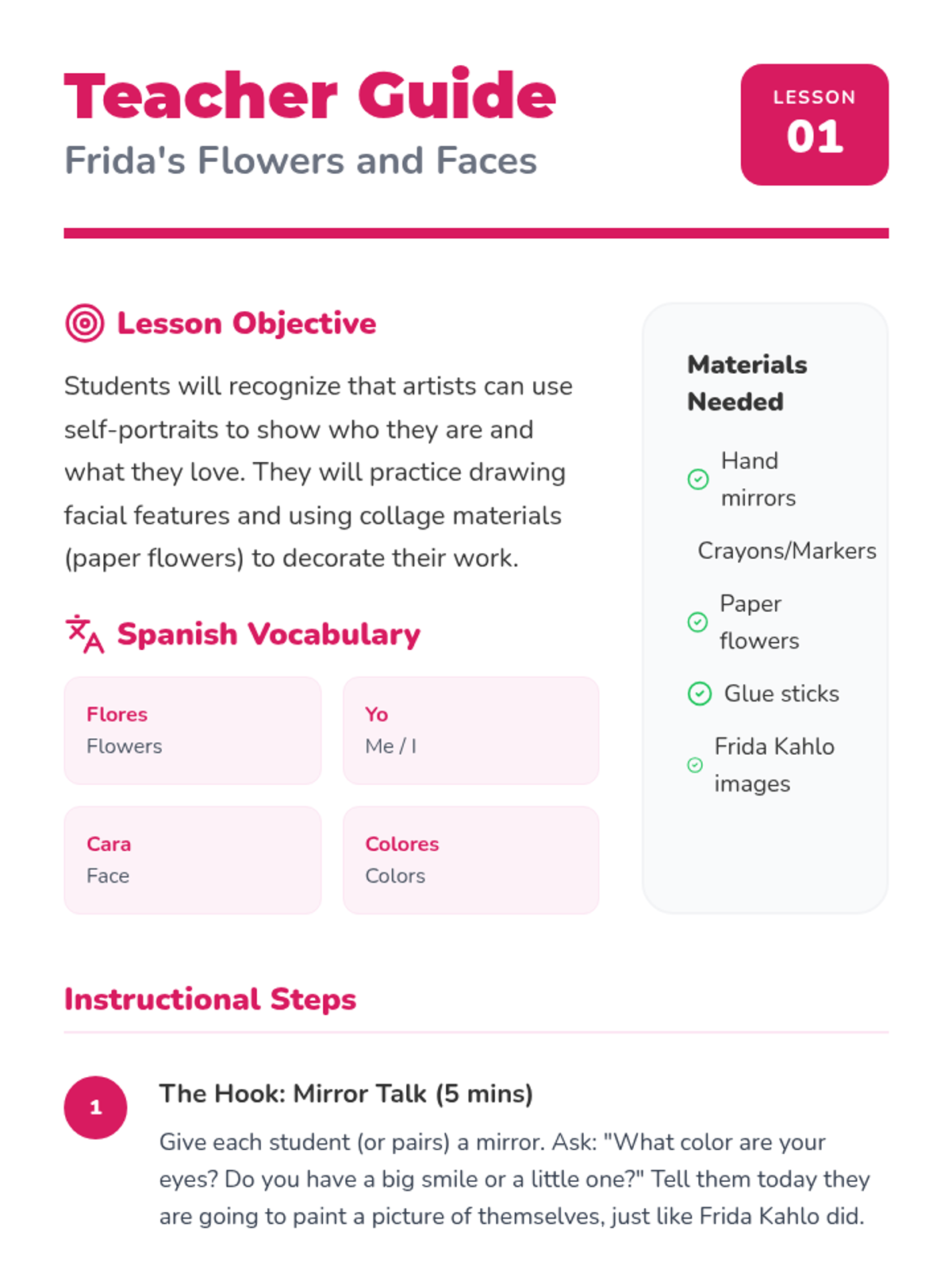
Students explore Frida Kahlo's self-portraits, focusing on how she used flowers and animals to tell her story. They create their own self-portraits embellished with nature.
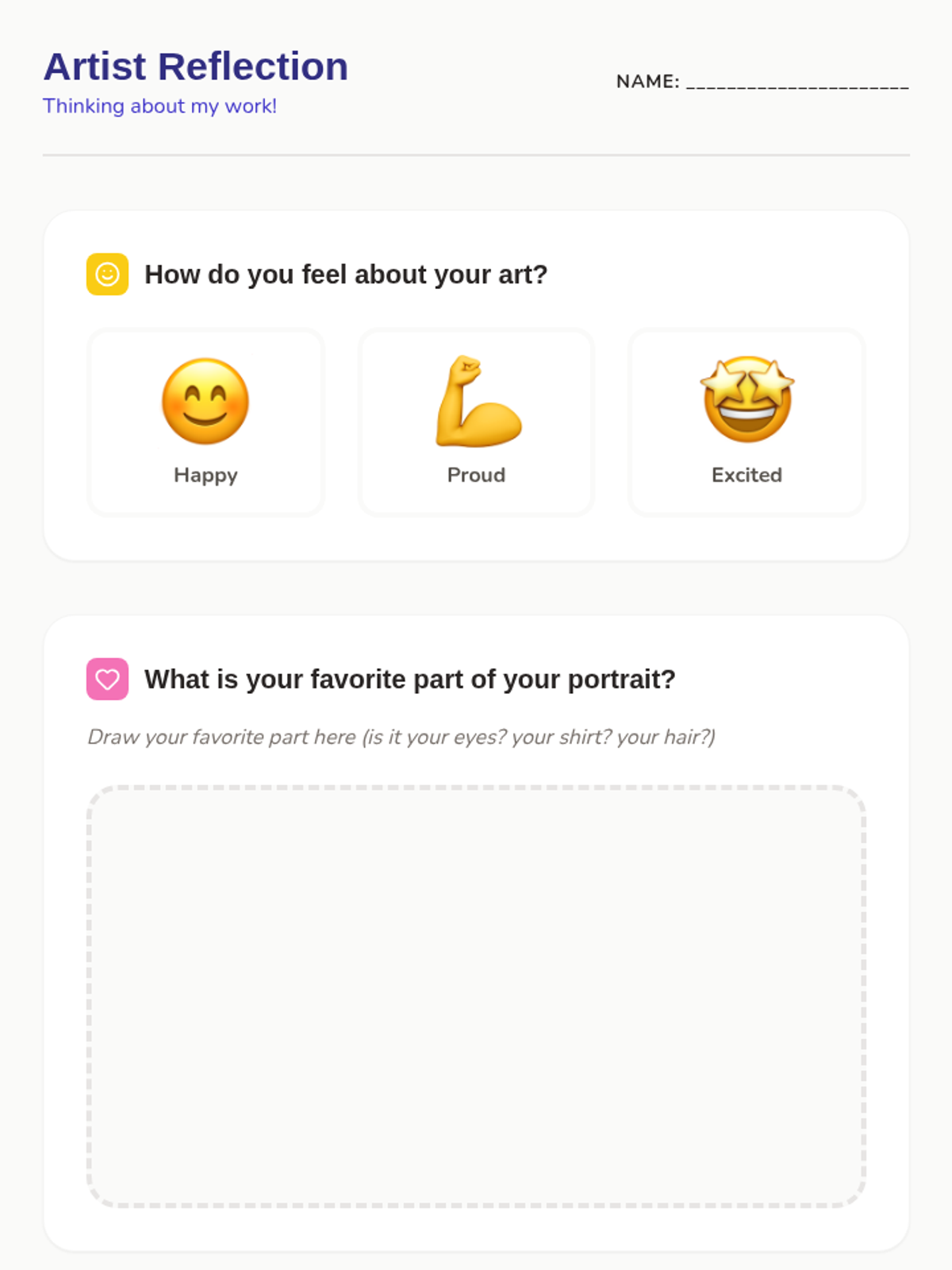
Students share their completed self-portraits in a classroom gallery, practicing listening and appreciation.
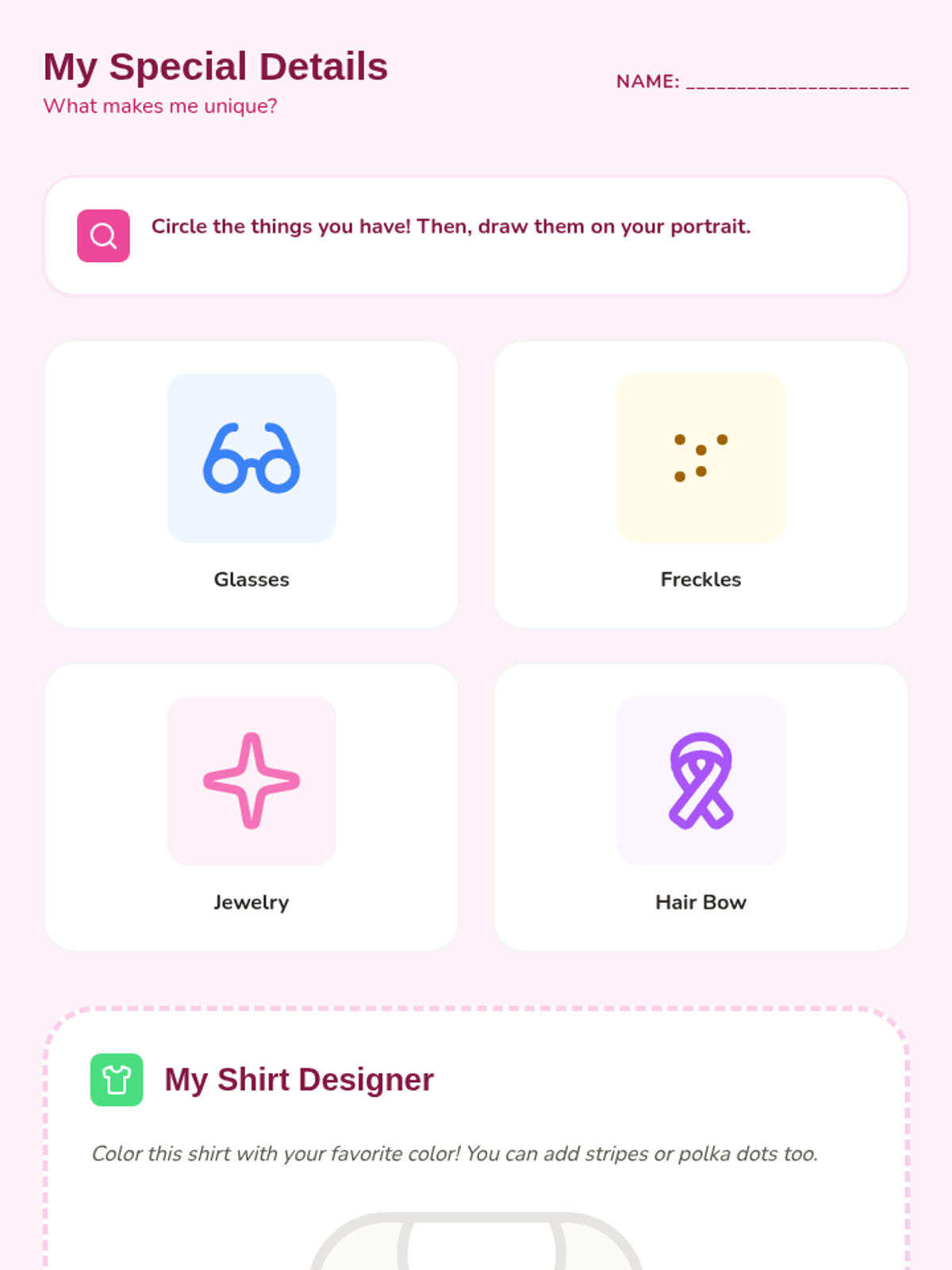
Students add unique details like glasses, freckles, and favorite colors to their portraits to showcase their individuality.
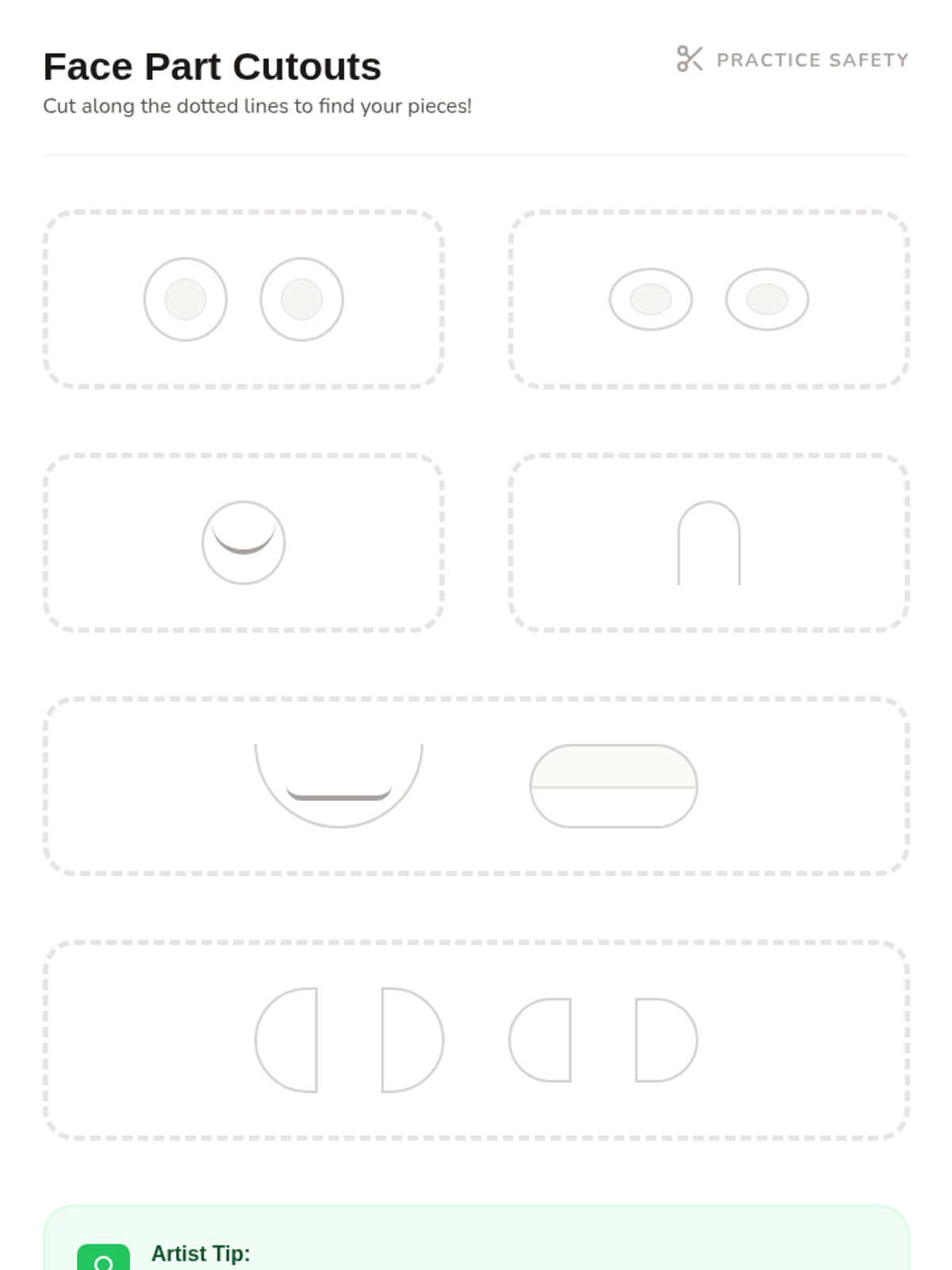
Students practice spatial awareness and fine motor skills by arranging facial features on a head shape.
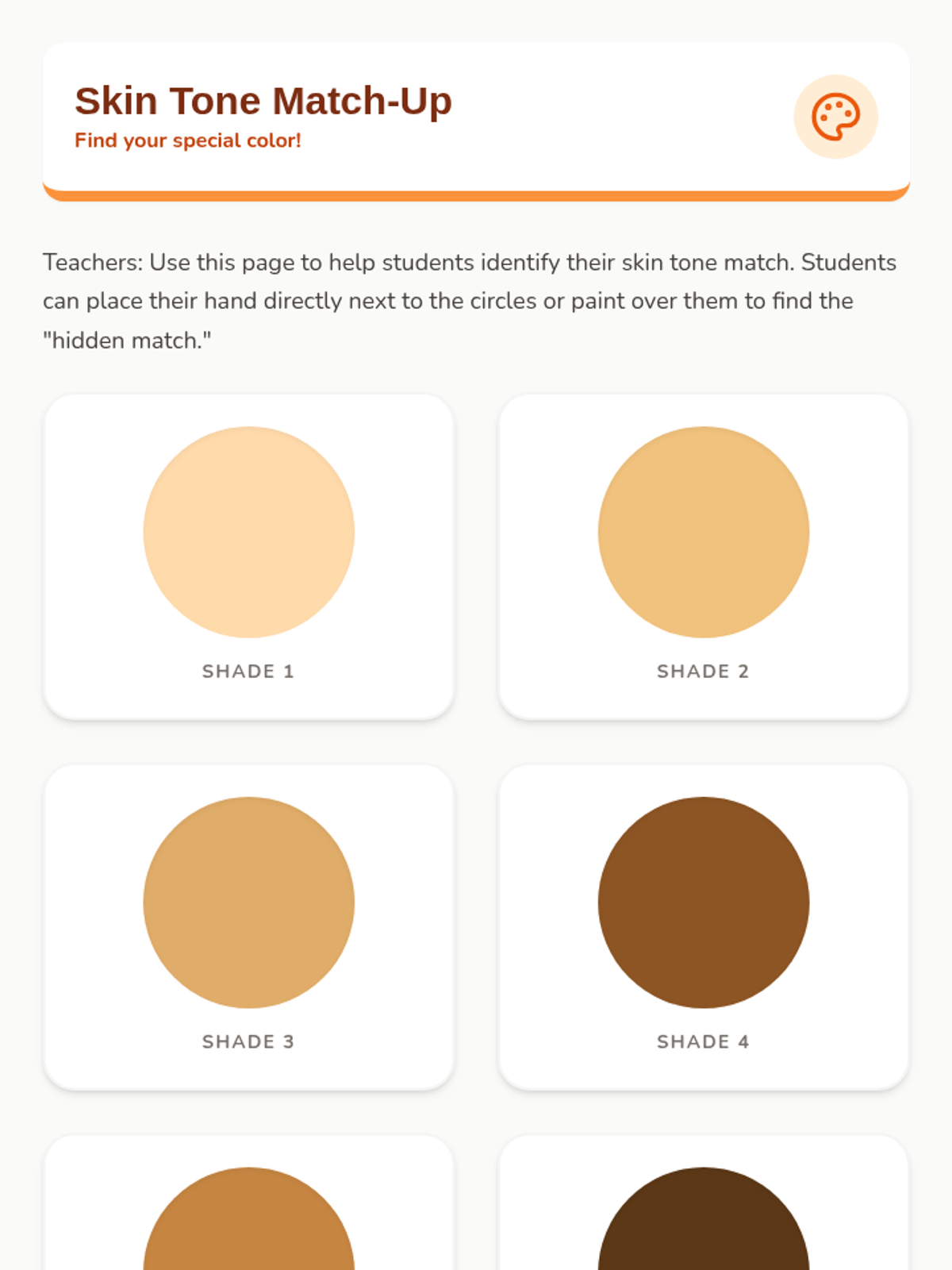
Students explore shades of skin and hair color to find their personal matches, celebrating diversity in appearance.
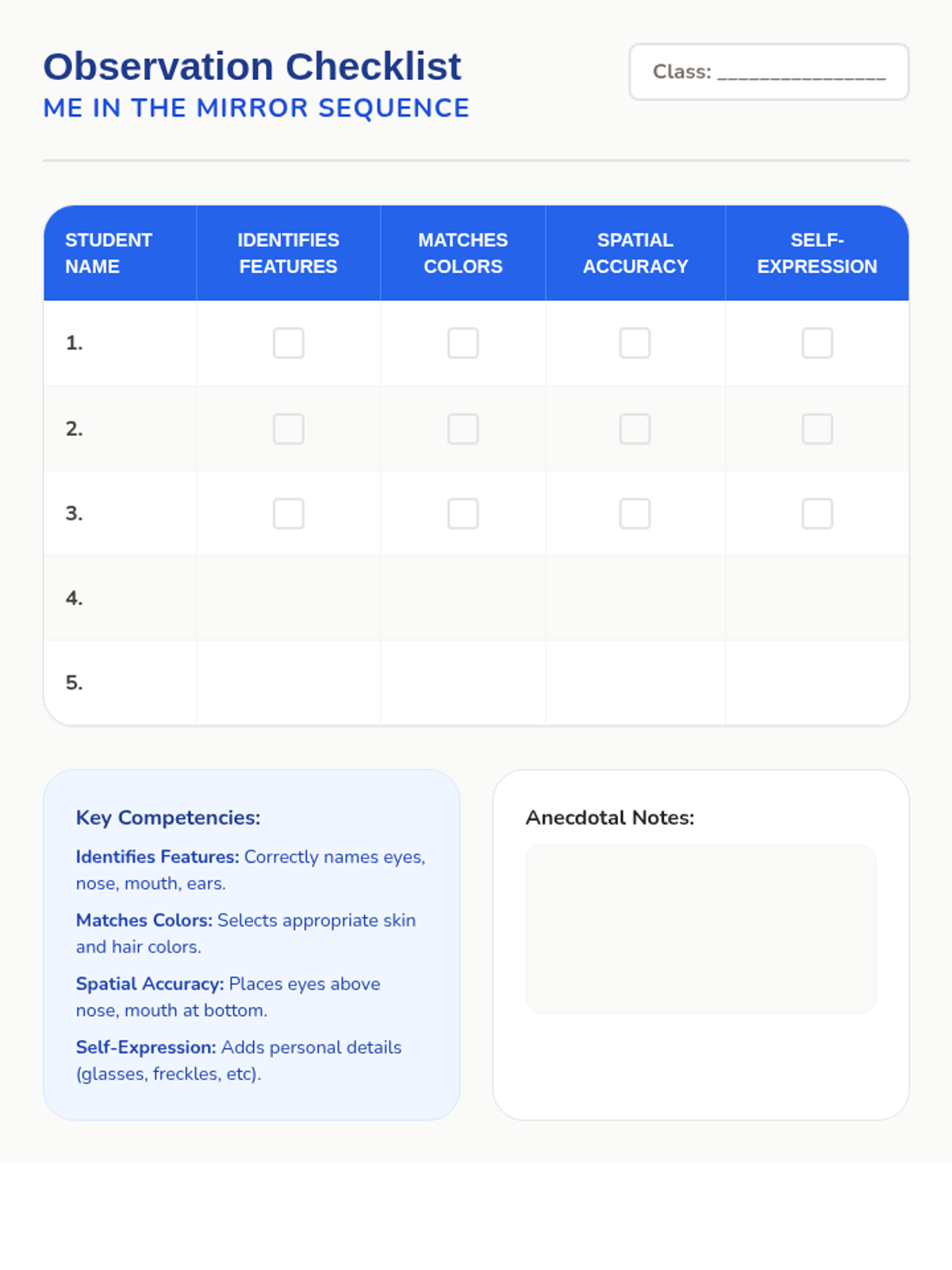
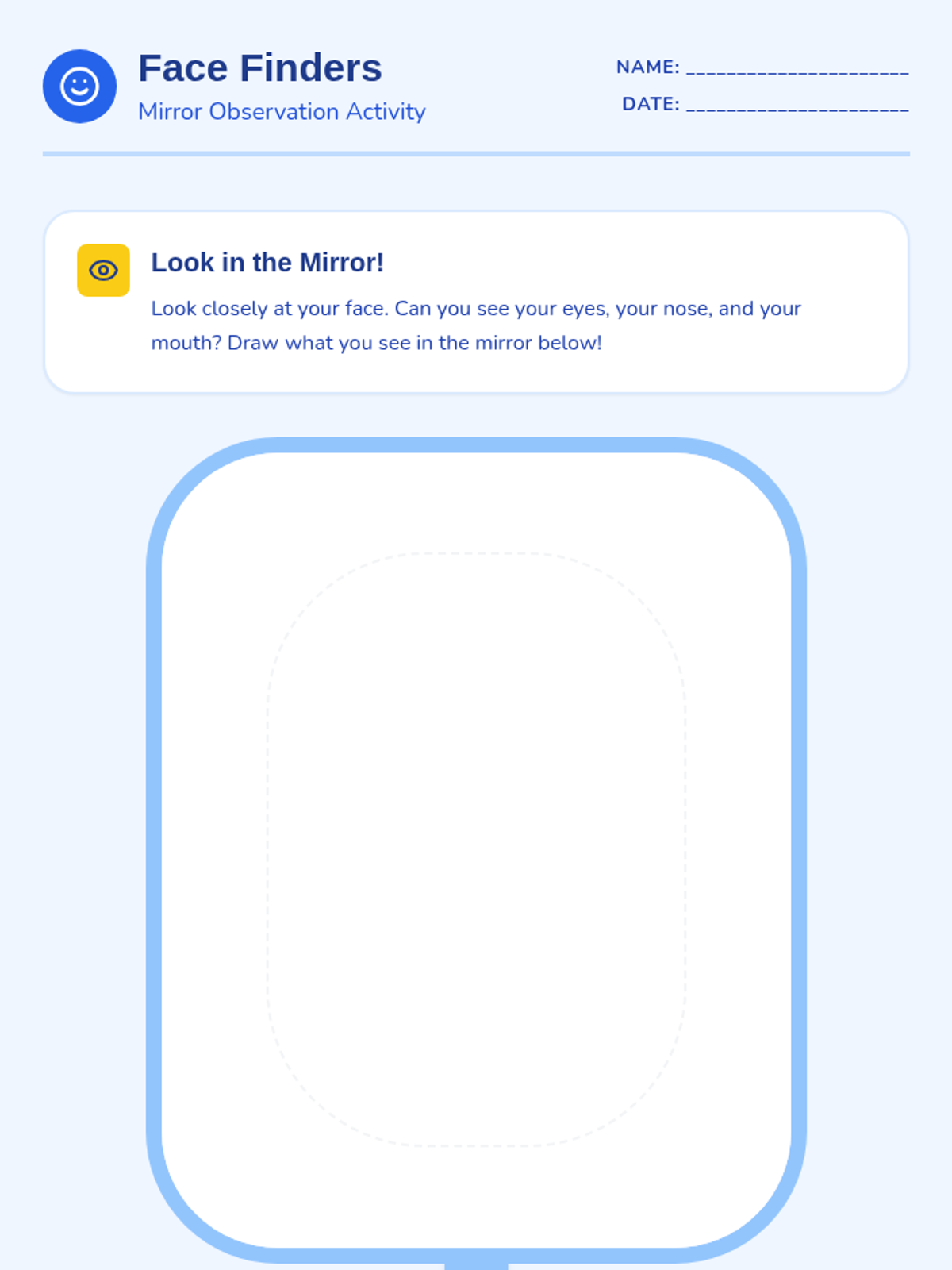
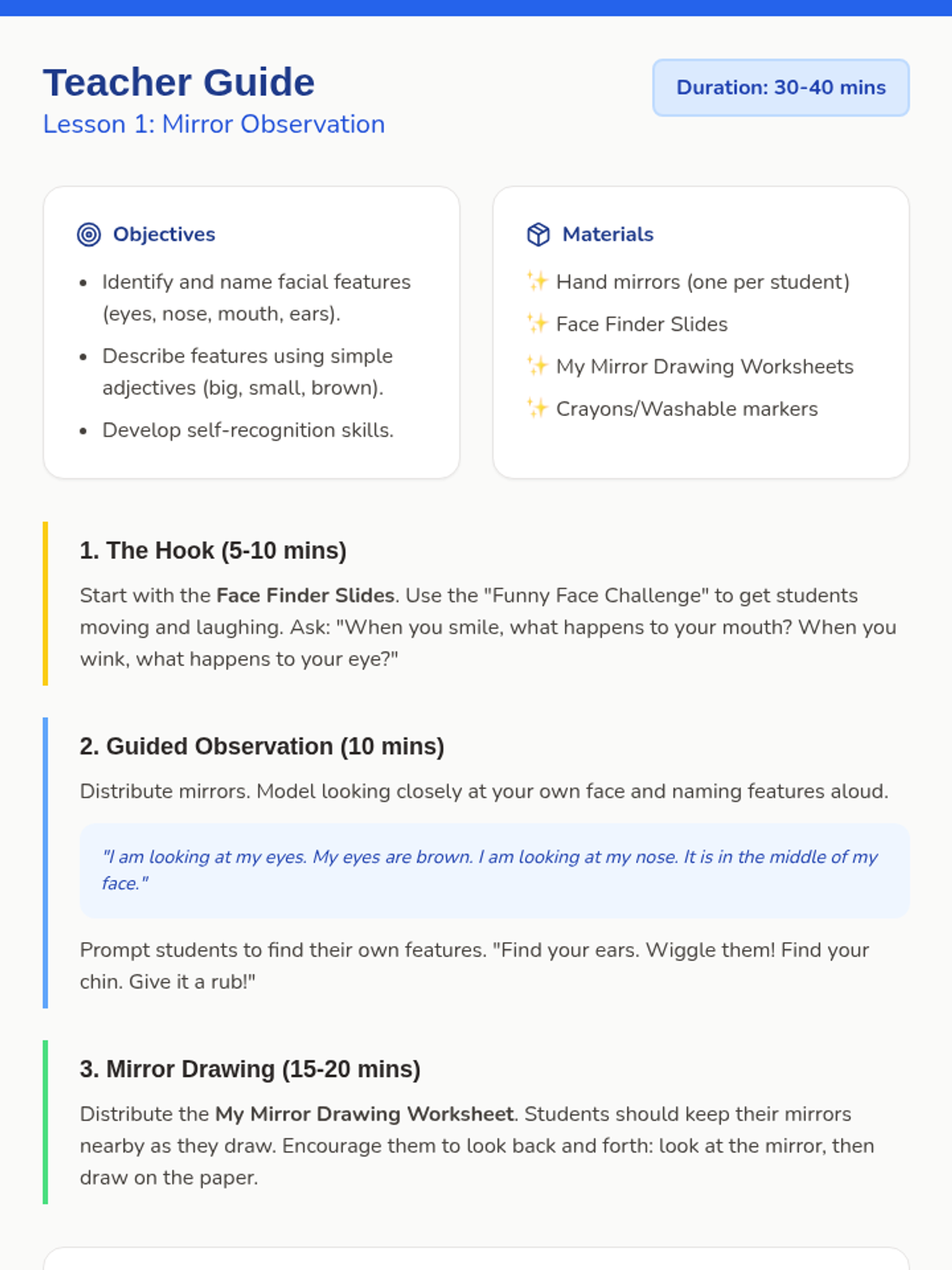
Students use mirrors to examine and name their facial features, developing self-recognition and descriptive vocabulary.
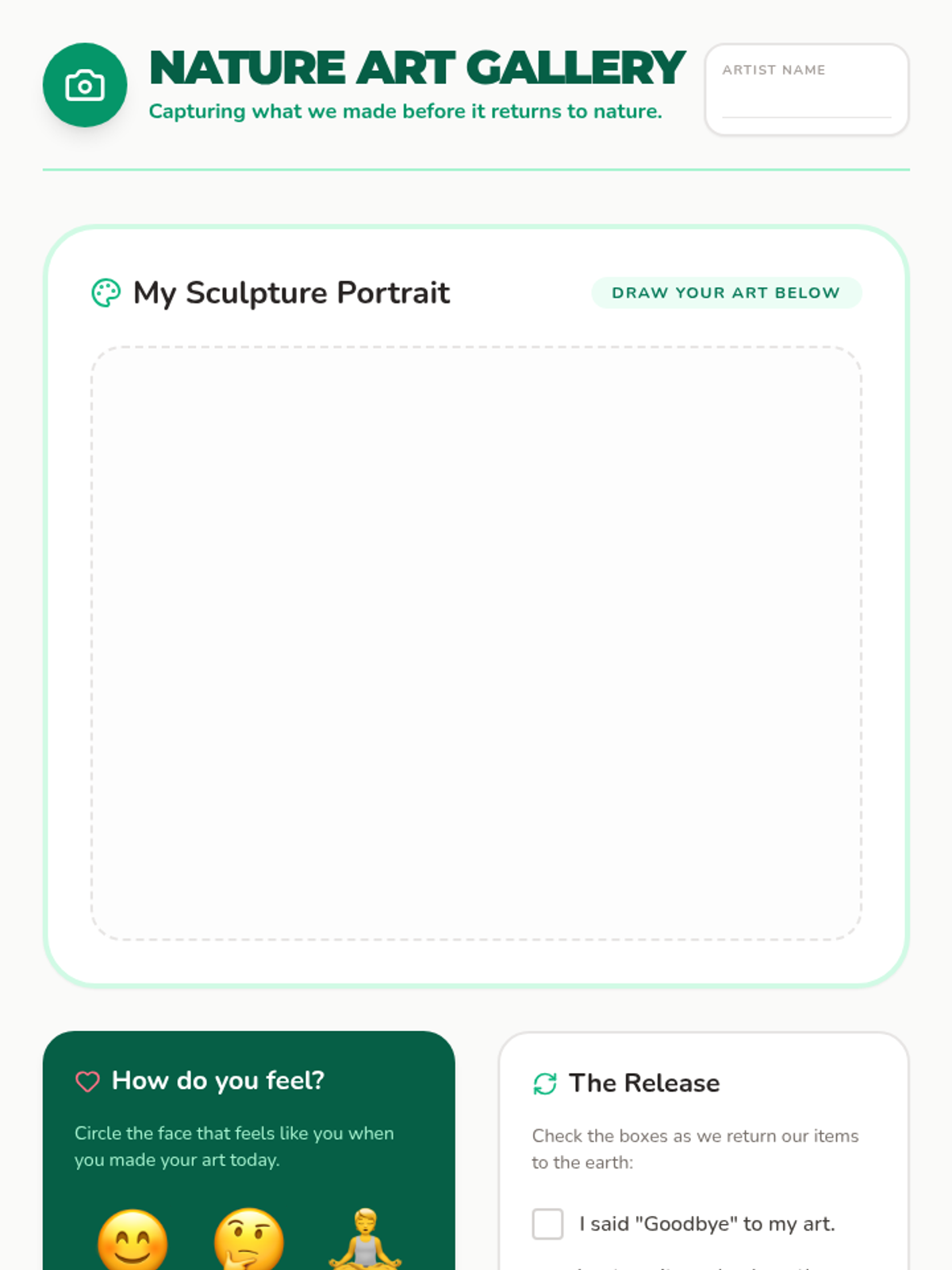
Students learn to 'capture' their temporary art through documentation and discuss returning materials to nature.
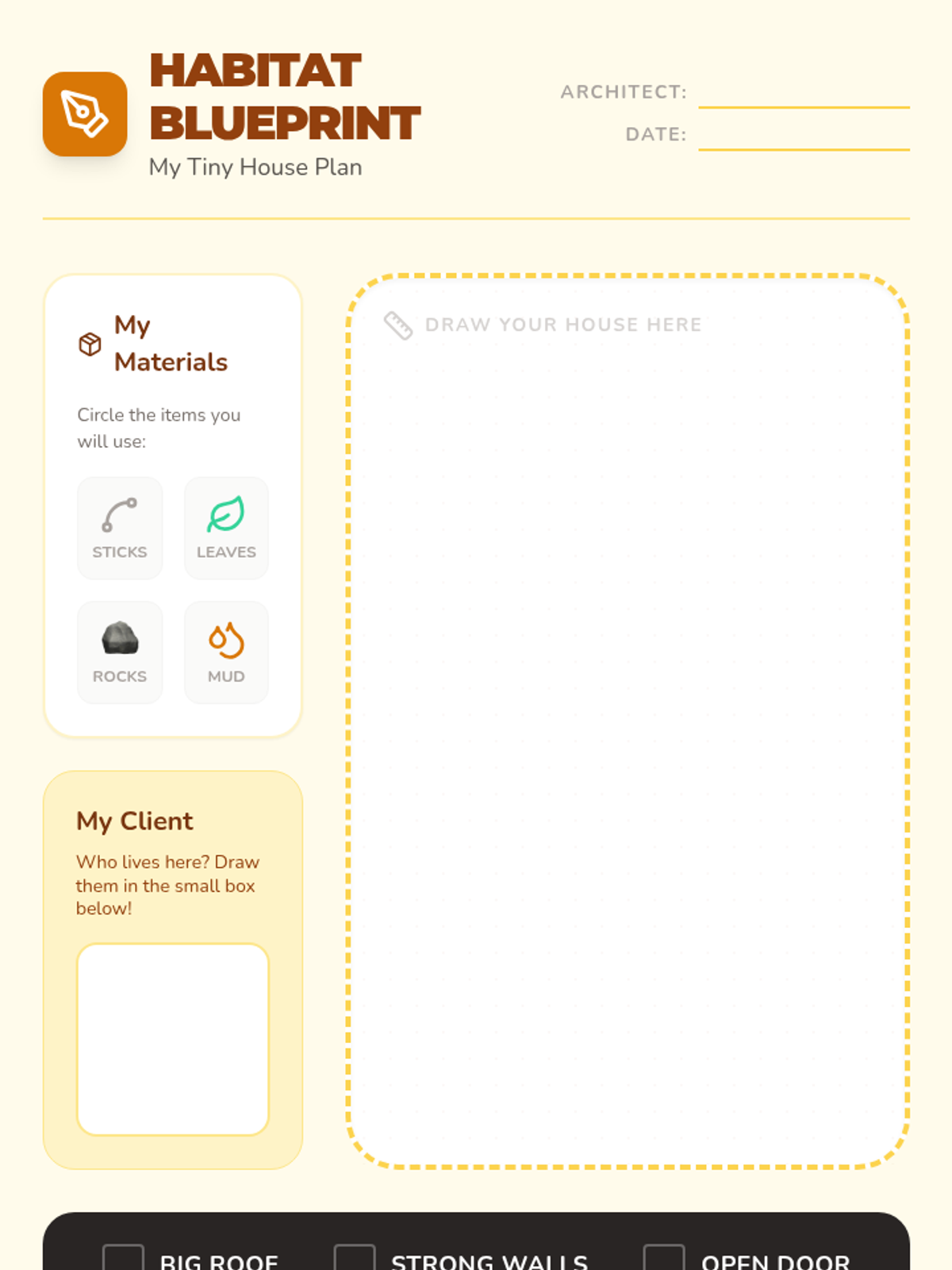
Using twigs, mud, and leaves, students build small 3D structures or 'fairy houses,' exploring architectural basics on a miniature scale.
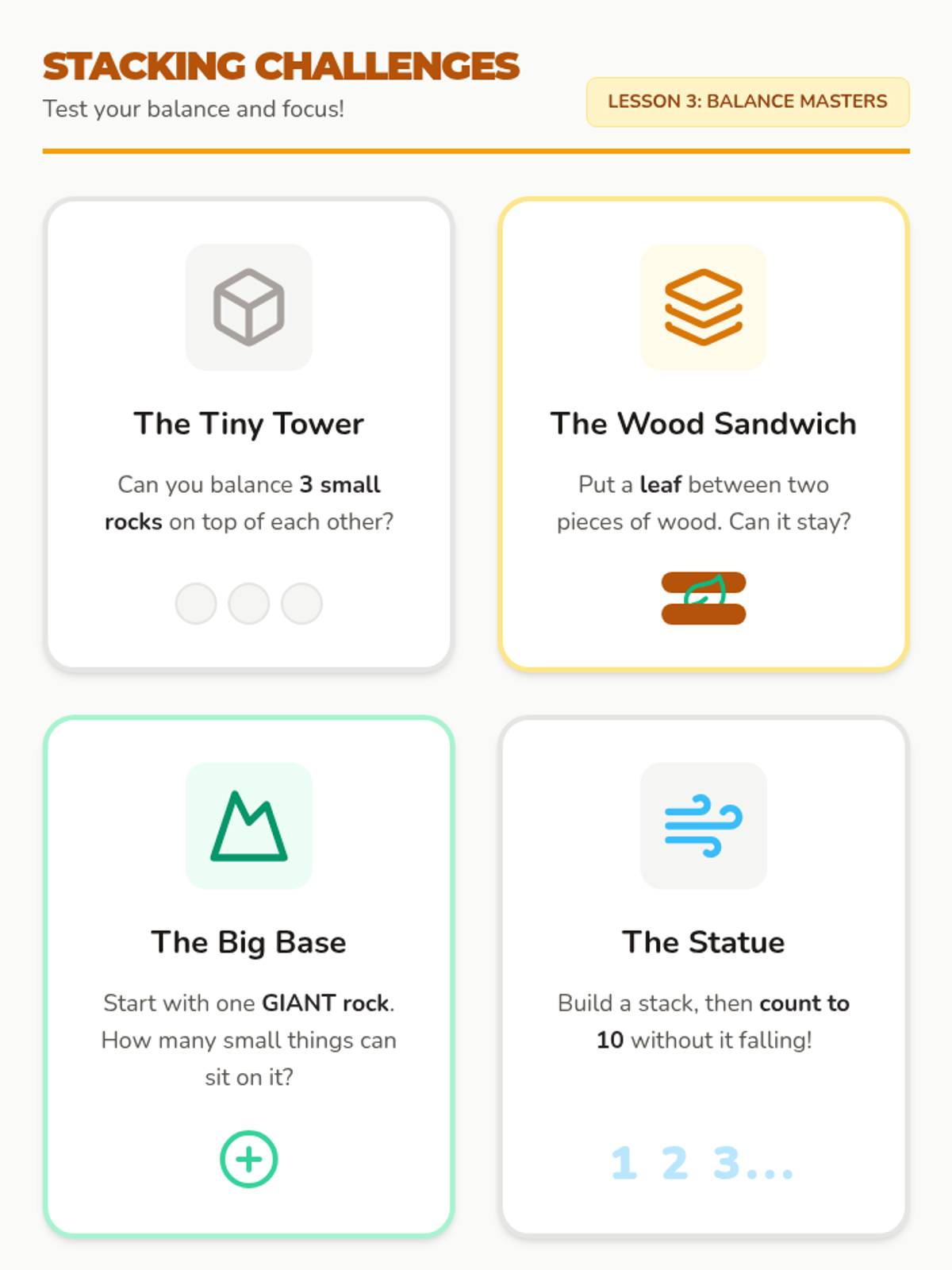
Students attempt to balance rocks or wood cookies vertically to create small towers, focusing on weight and friction.
Students arrange natural objects on the ground to create circles, spirals, or lines, learning about visual rhythm and organization.
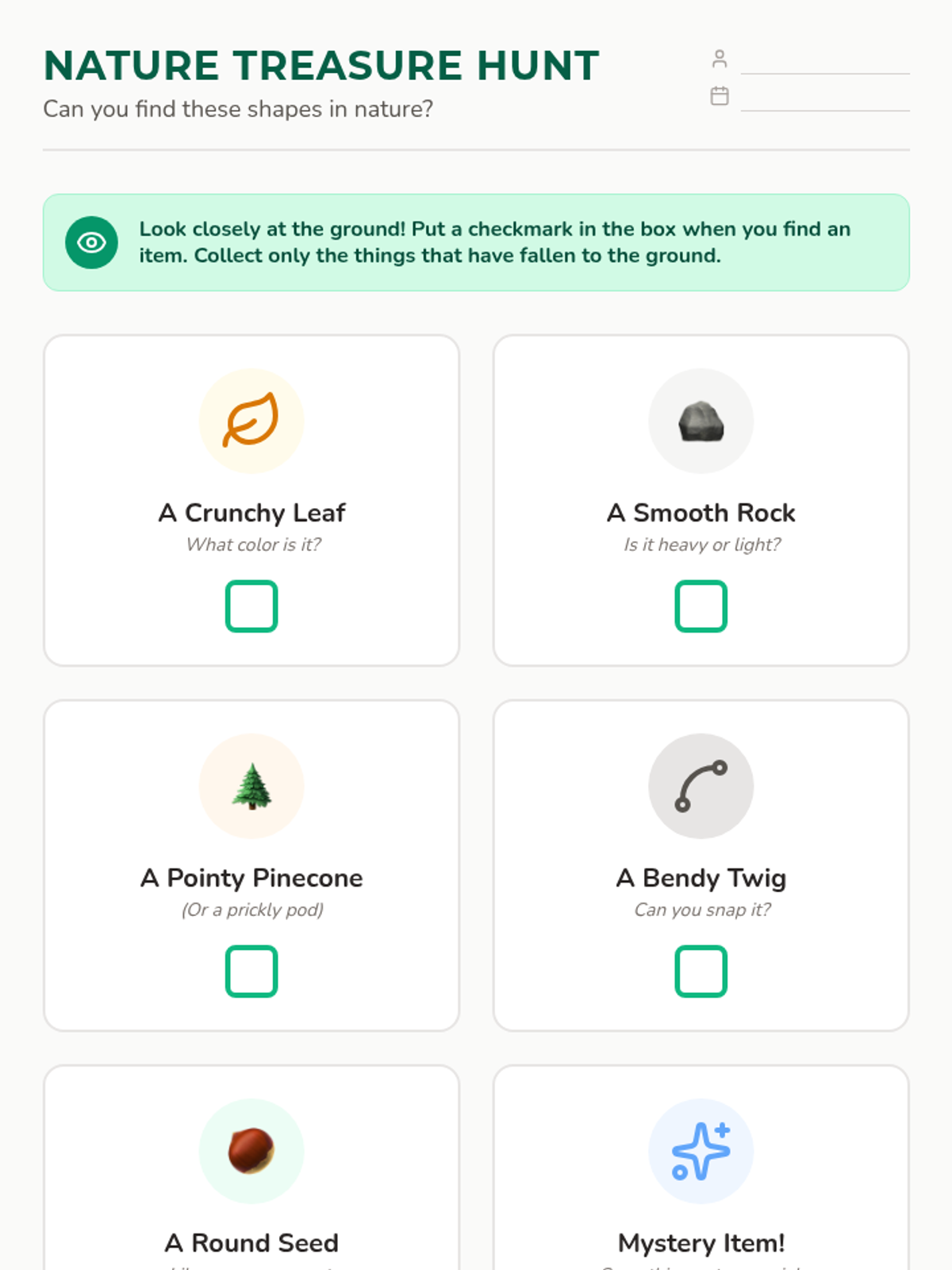
Students go on a guided walk to collect safe natural materials like leaves, pinecones, twigs, and rocks while observing natural 3D forms.
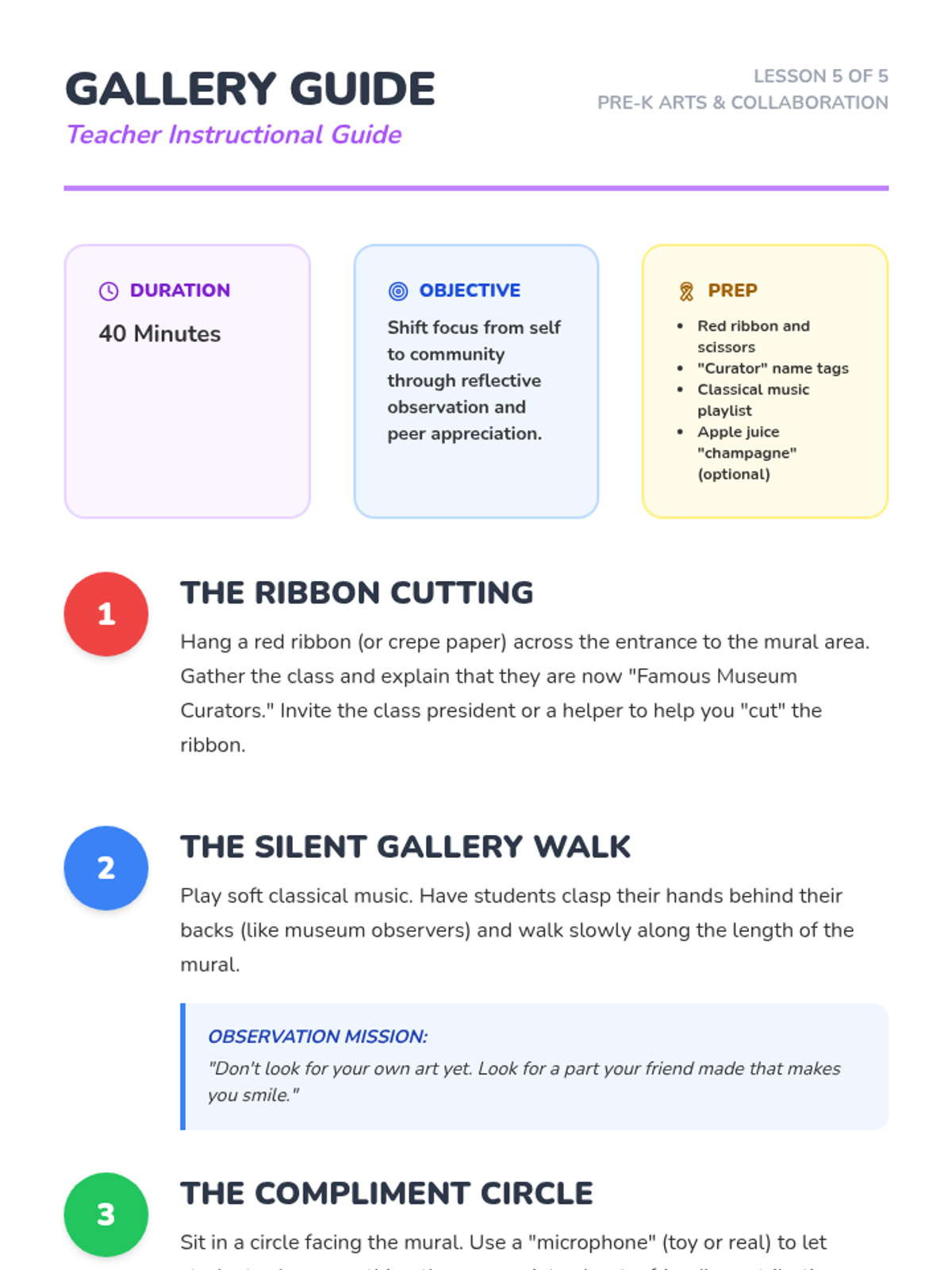
The sequence culminates in a classroom 'museum' opening where students celebrate the collective achievement and appreciate their friends' work.
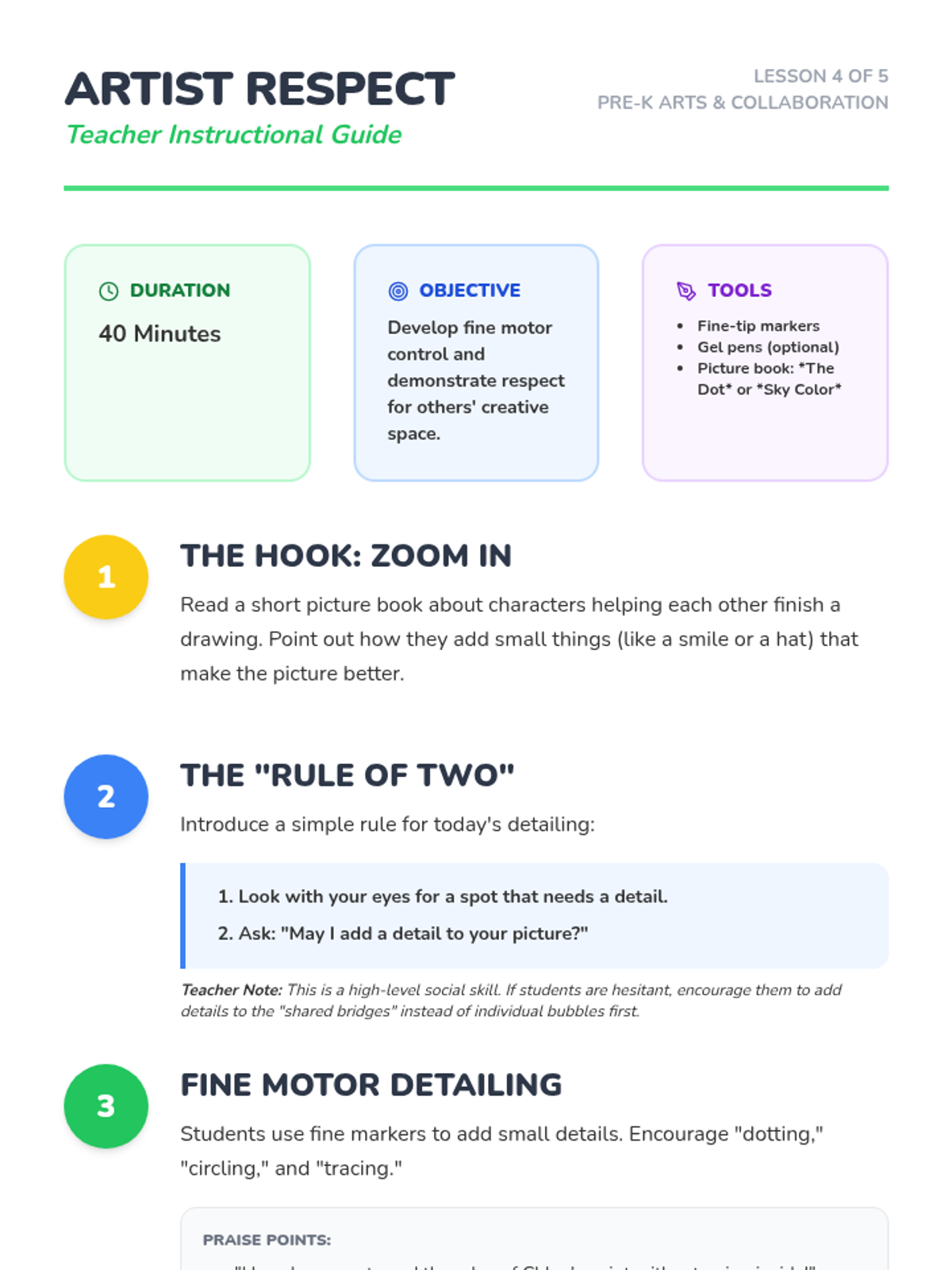
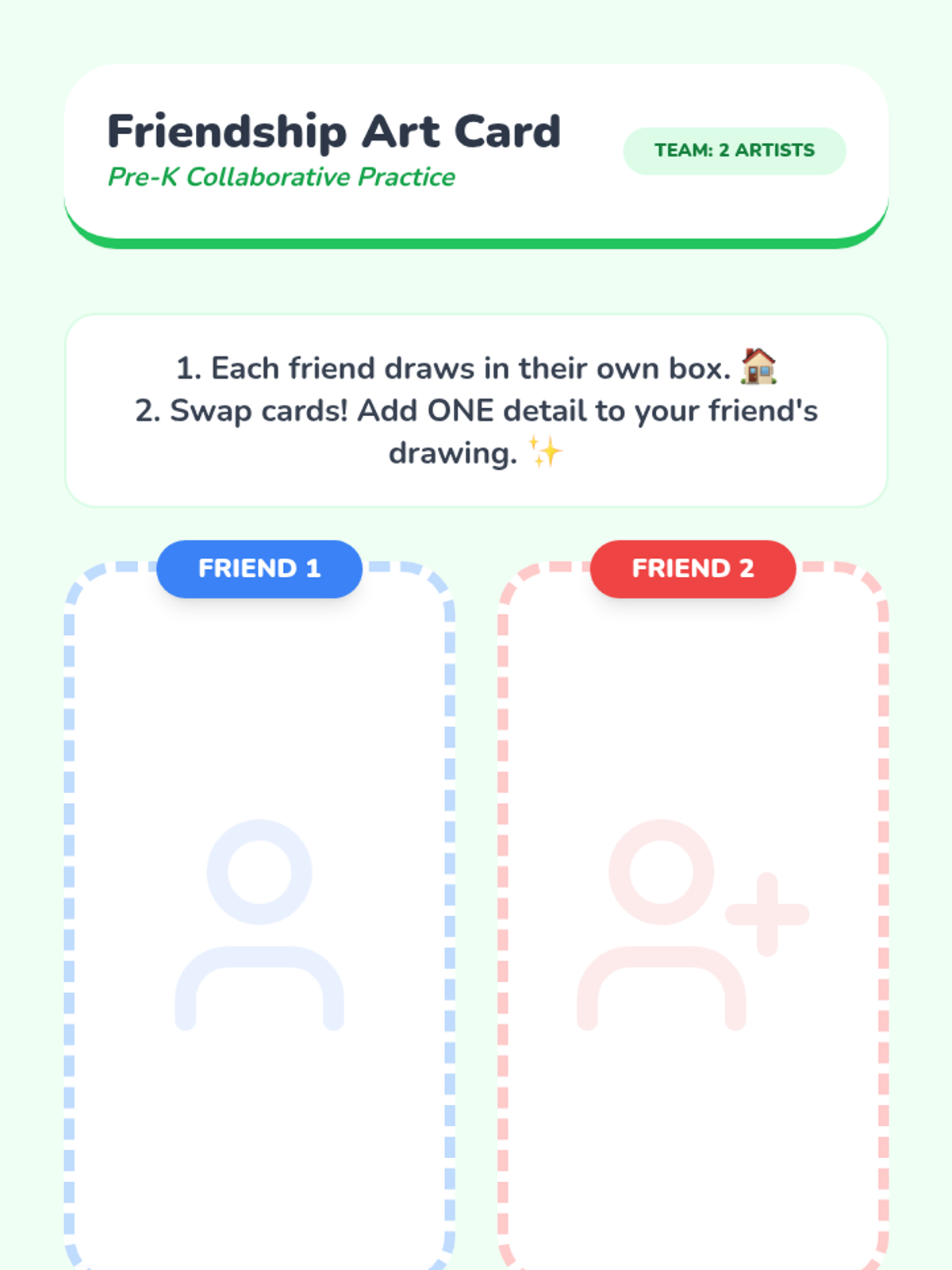
Focusing on fine motor control, students add details to the mural while learning to respect and enhance, rather than cover, the work of others.
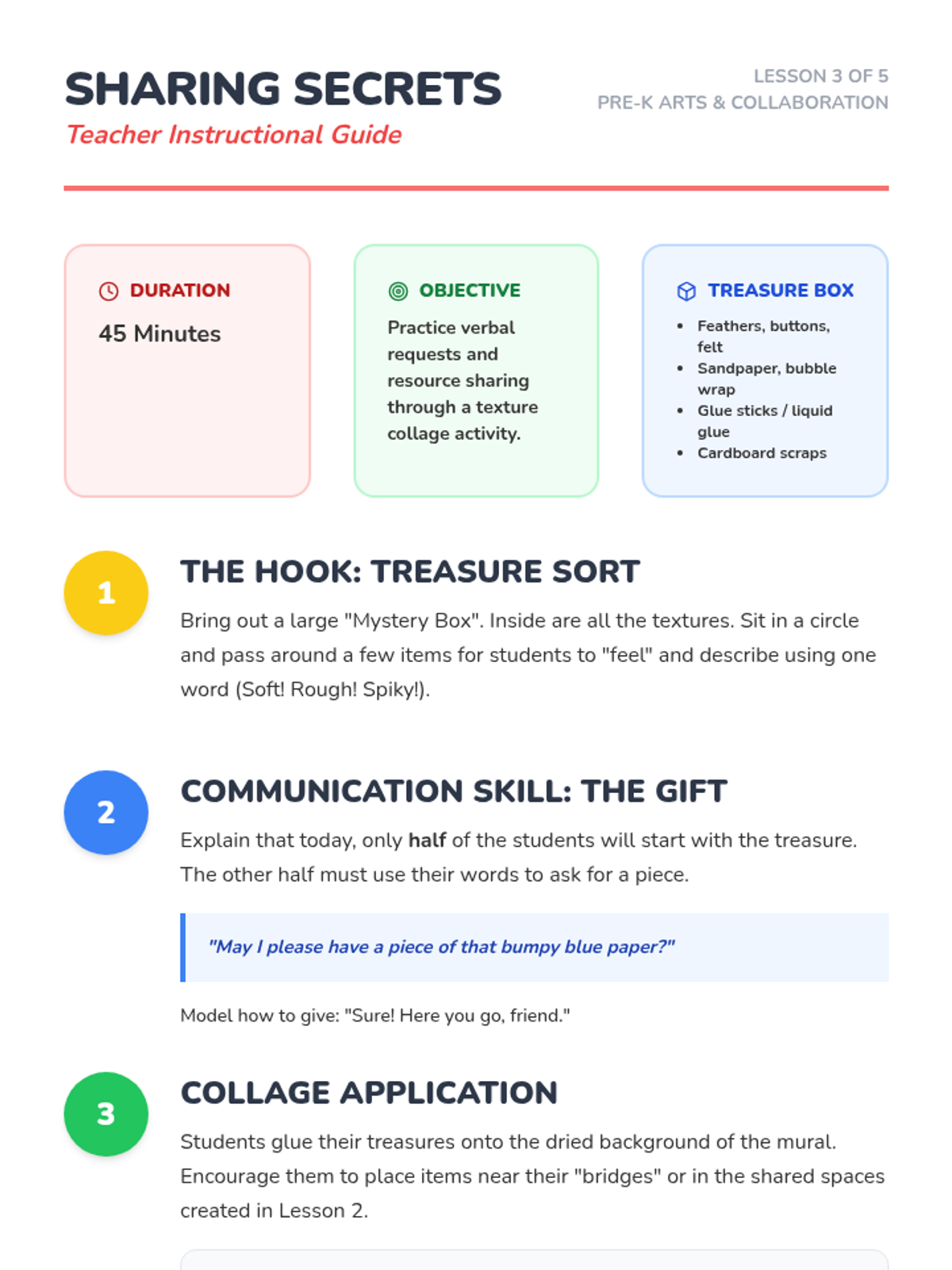
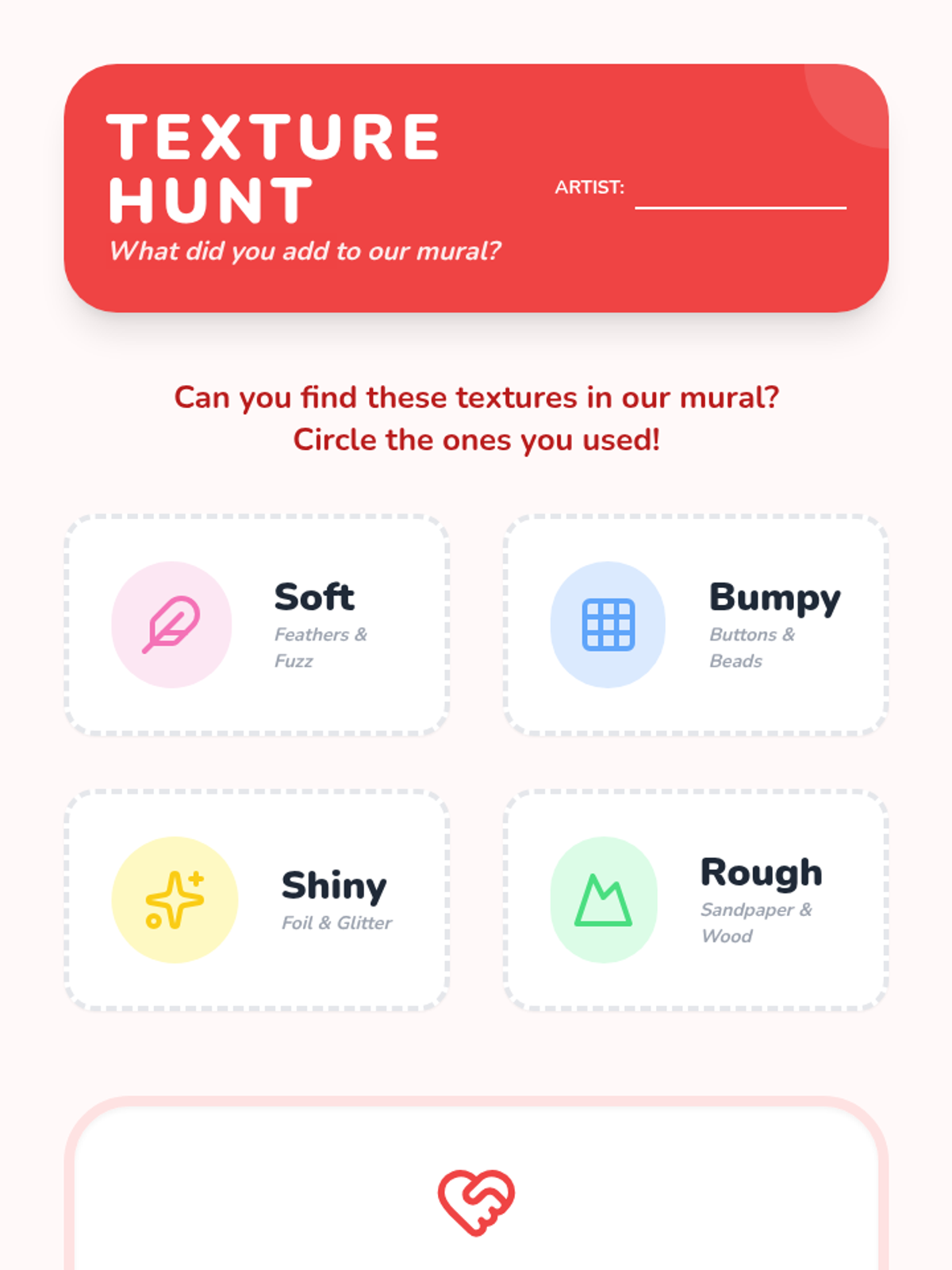
Students add texture to the mural while practicing the verbal communication skills needed to share mystery collage materials.
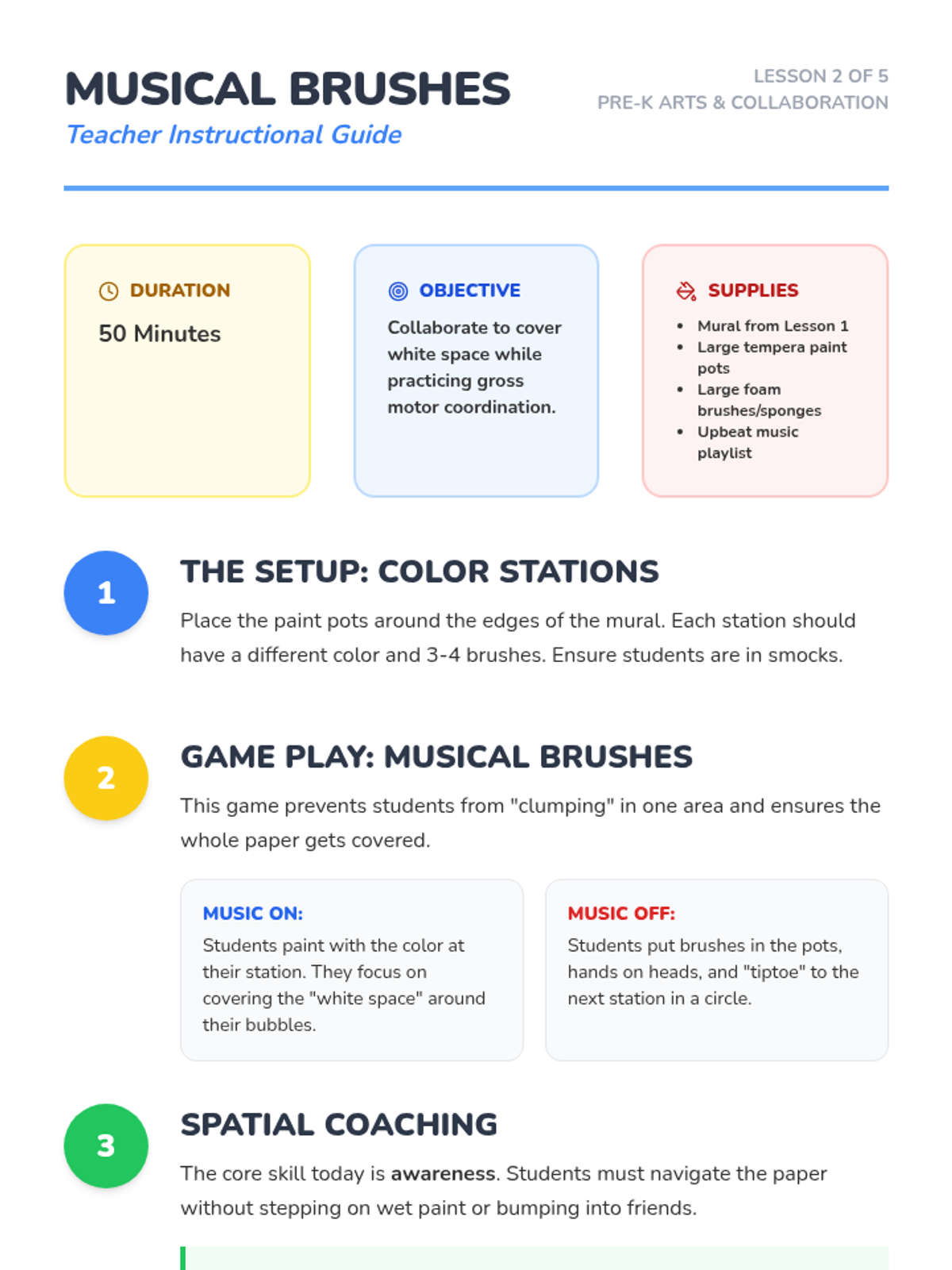
Small groups collaborate to paint the mural background using musical chairs-inspired movement to ensure everyone contributes to the whole.
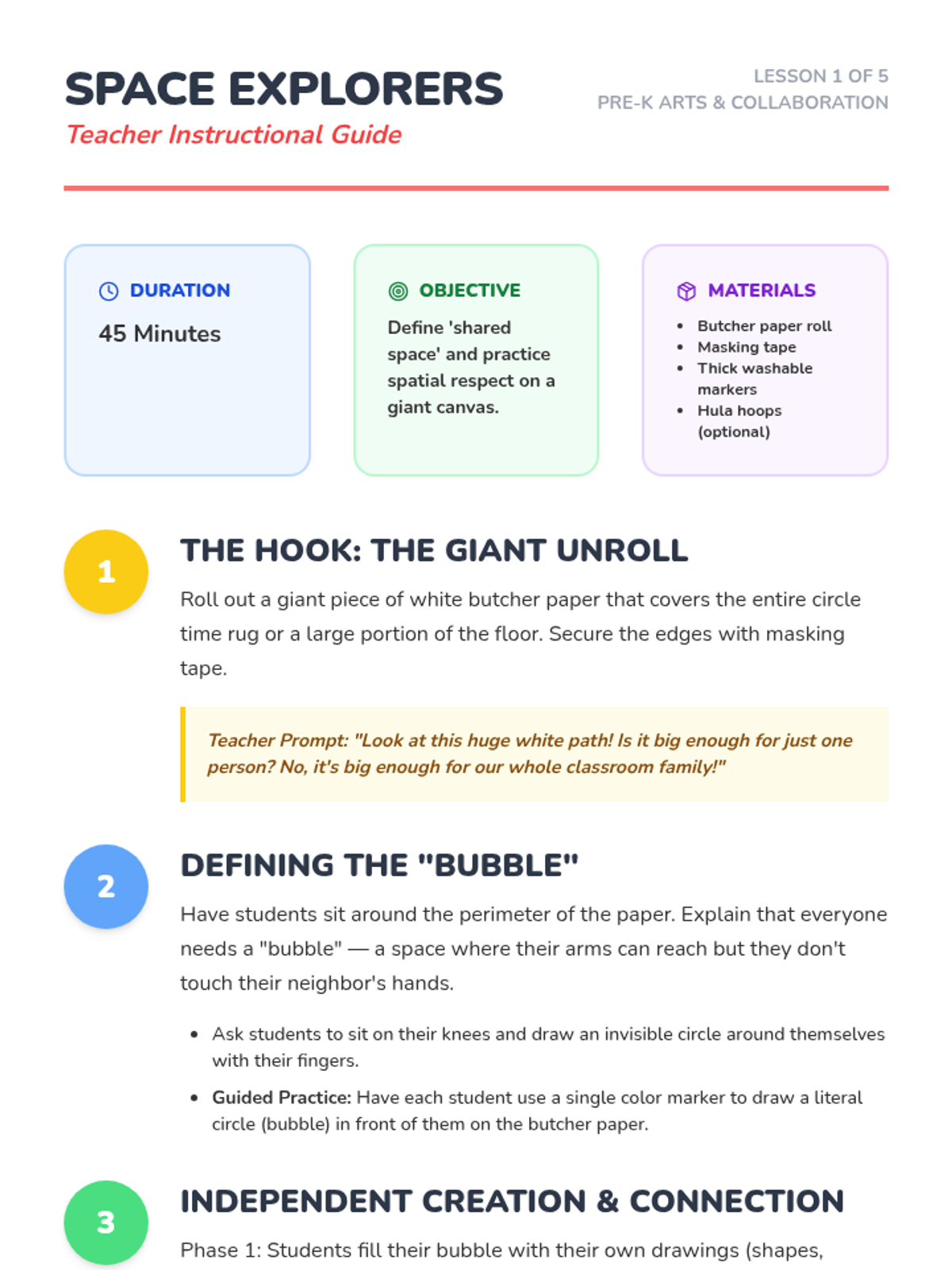
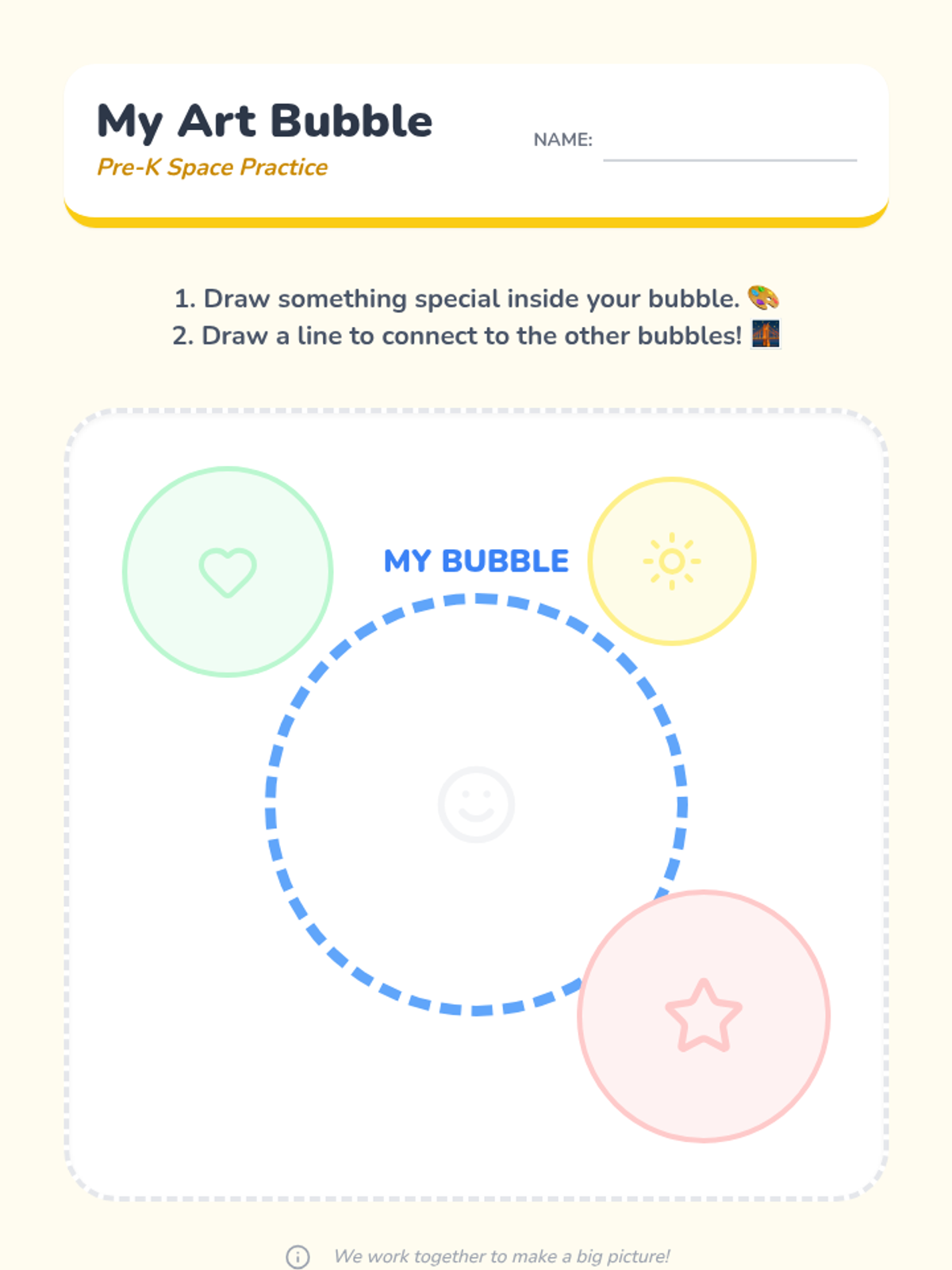
Students explore the concept of a 'shared canvas' using a large roll of butcher paper, practicing drawing in their own space and connecting with neighbors.
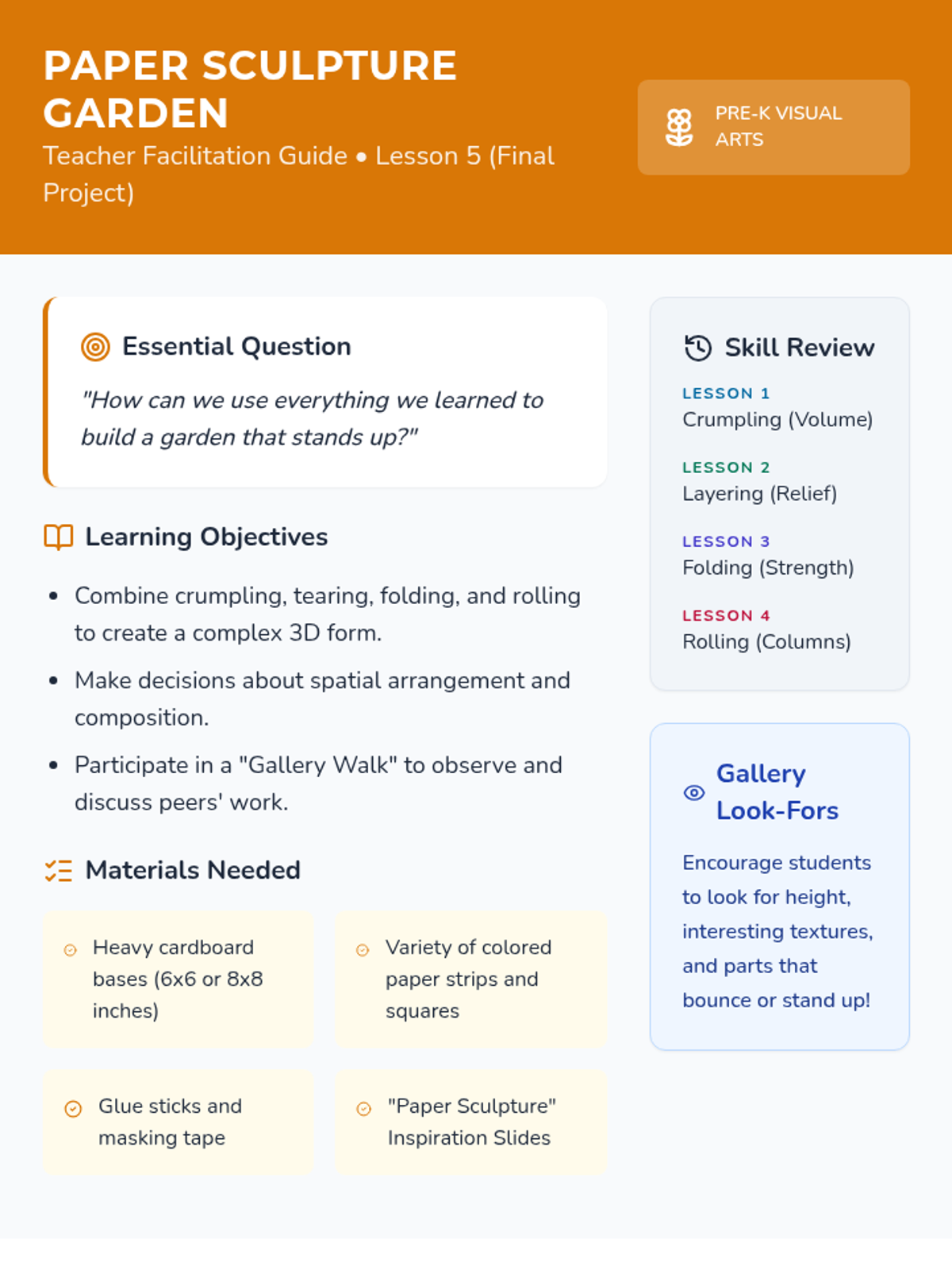
Combining folds, curls, and tubes, students create a freestanding paper sculpture glued to a cardboard base. They utilize the techniques learned to ensure their sculpture has height and volume. The sequence ends with a display of their paper engineering.
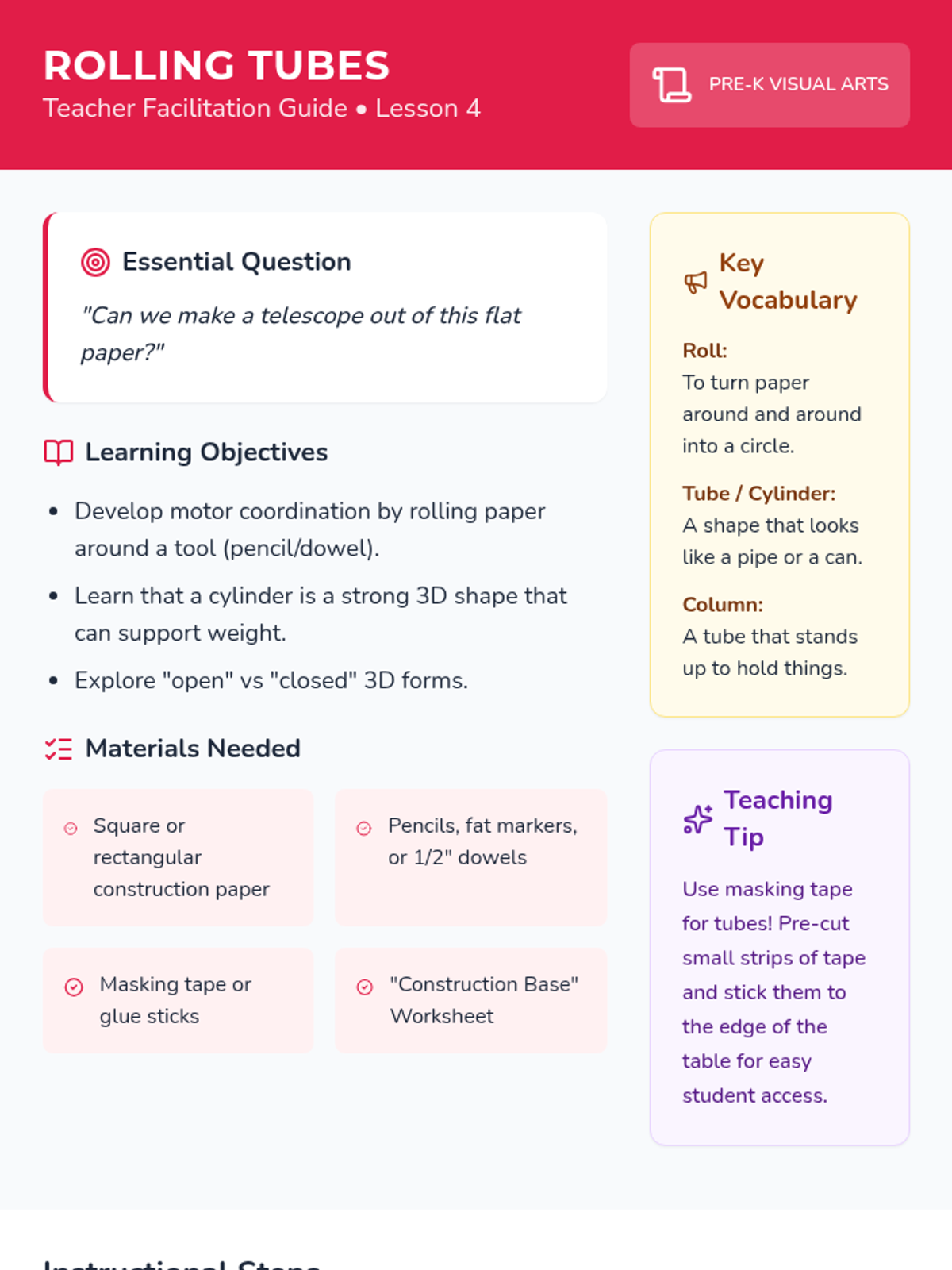
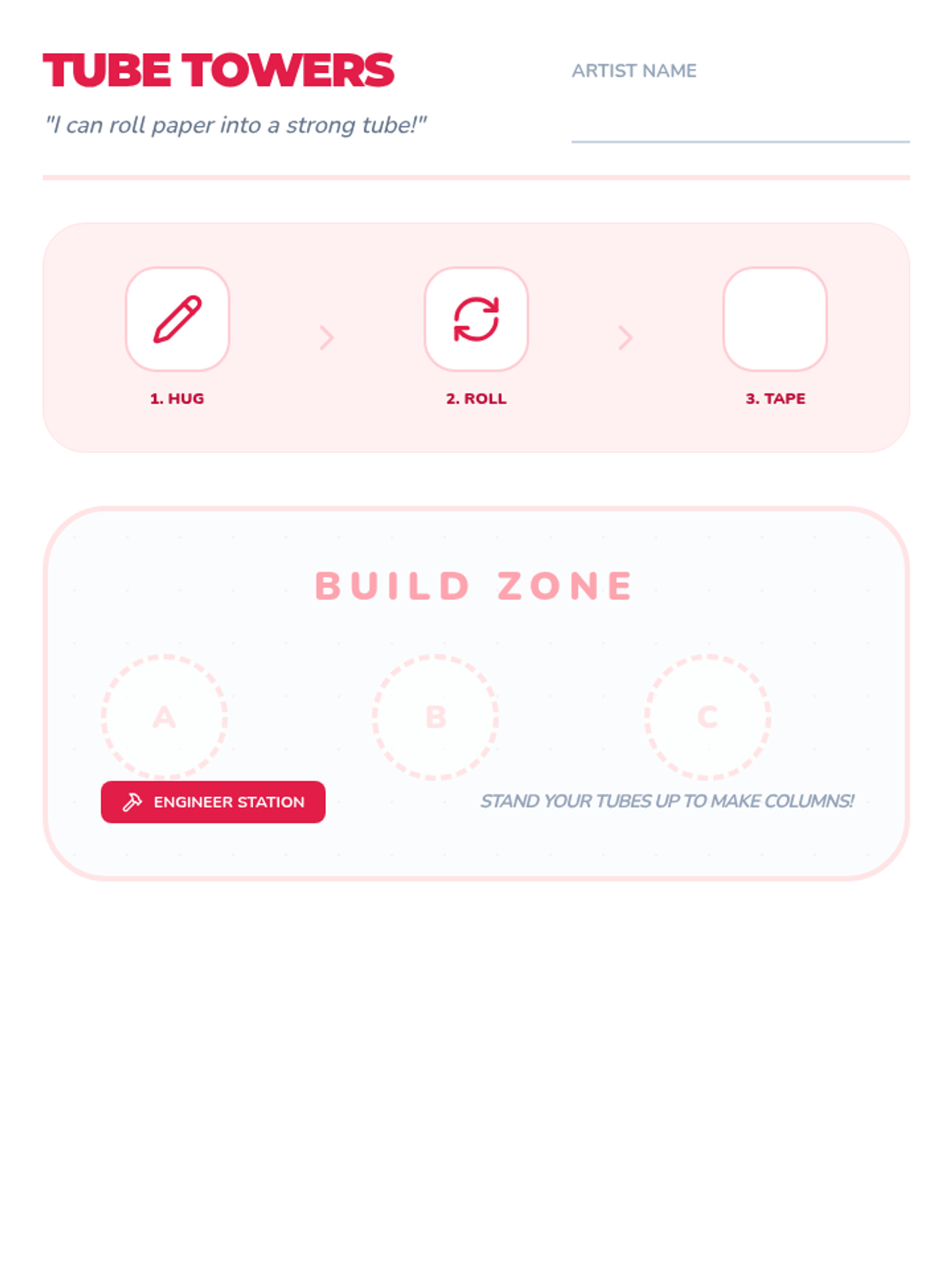
Students roll paper around pencils or dowels to create tubes. They tape them to create cylinders and explore using these as columns or decorative elements. They discover that a cylinder is a strong 3D shape.
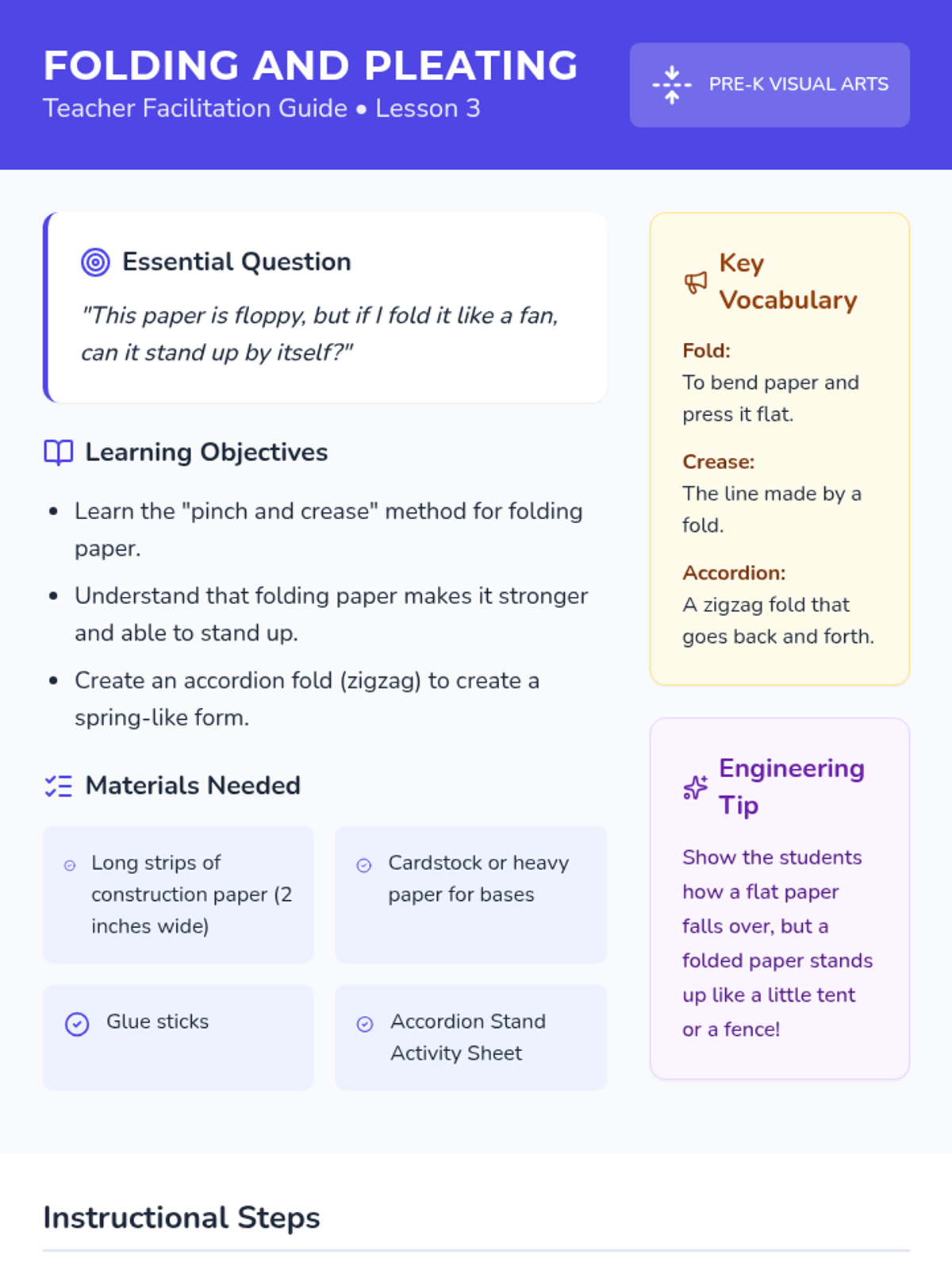
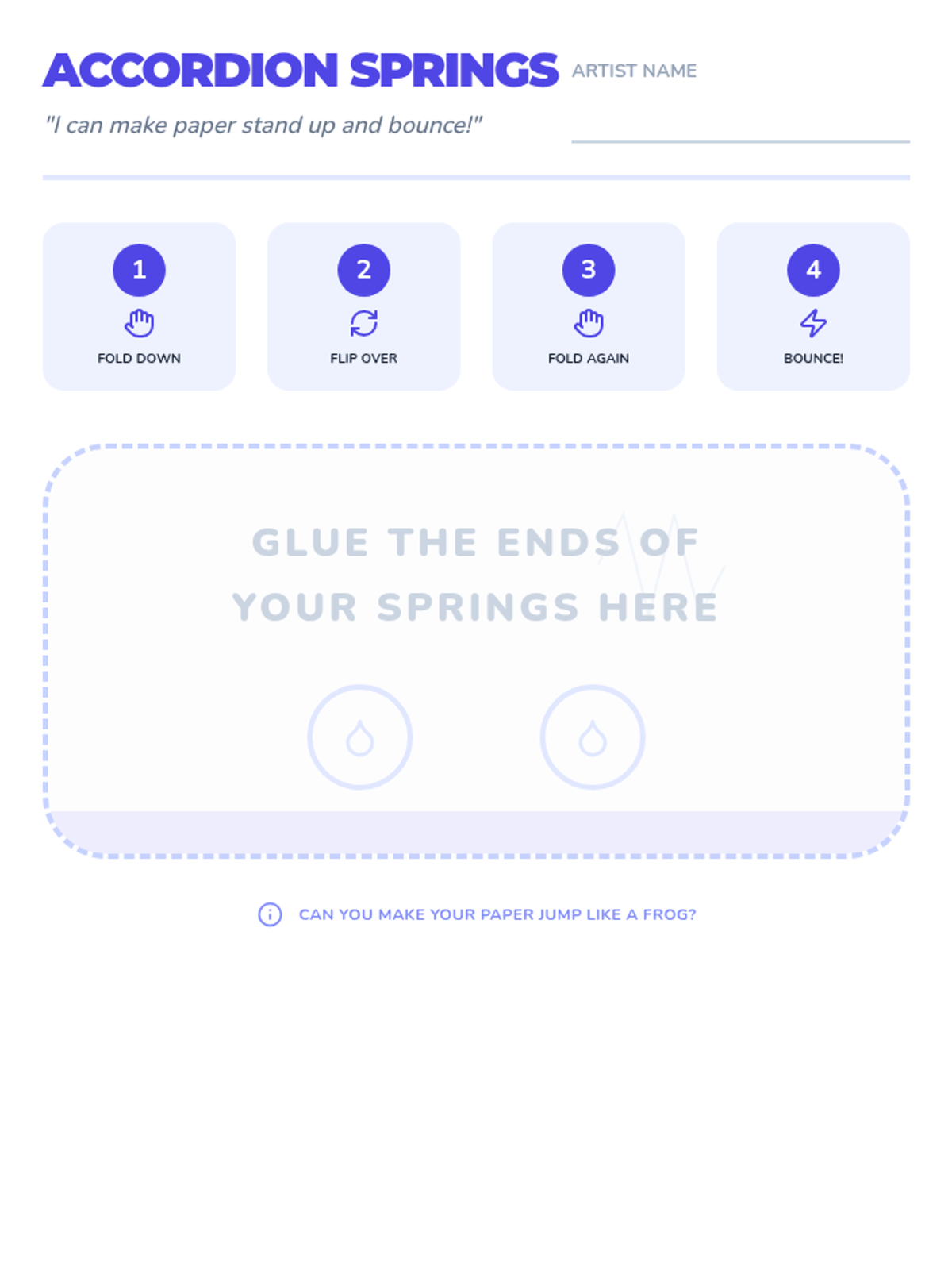
Students learn simple folding techniques like the accordion fold to make paper act like a spring. They explore how folding paper makes it stronger and able to stand on its edge. introduction to basic structural engineering.
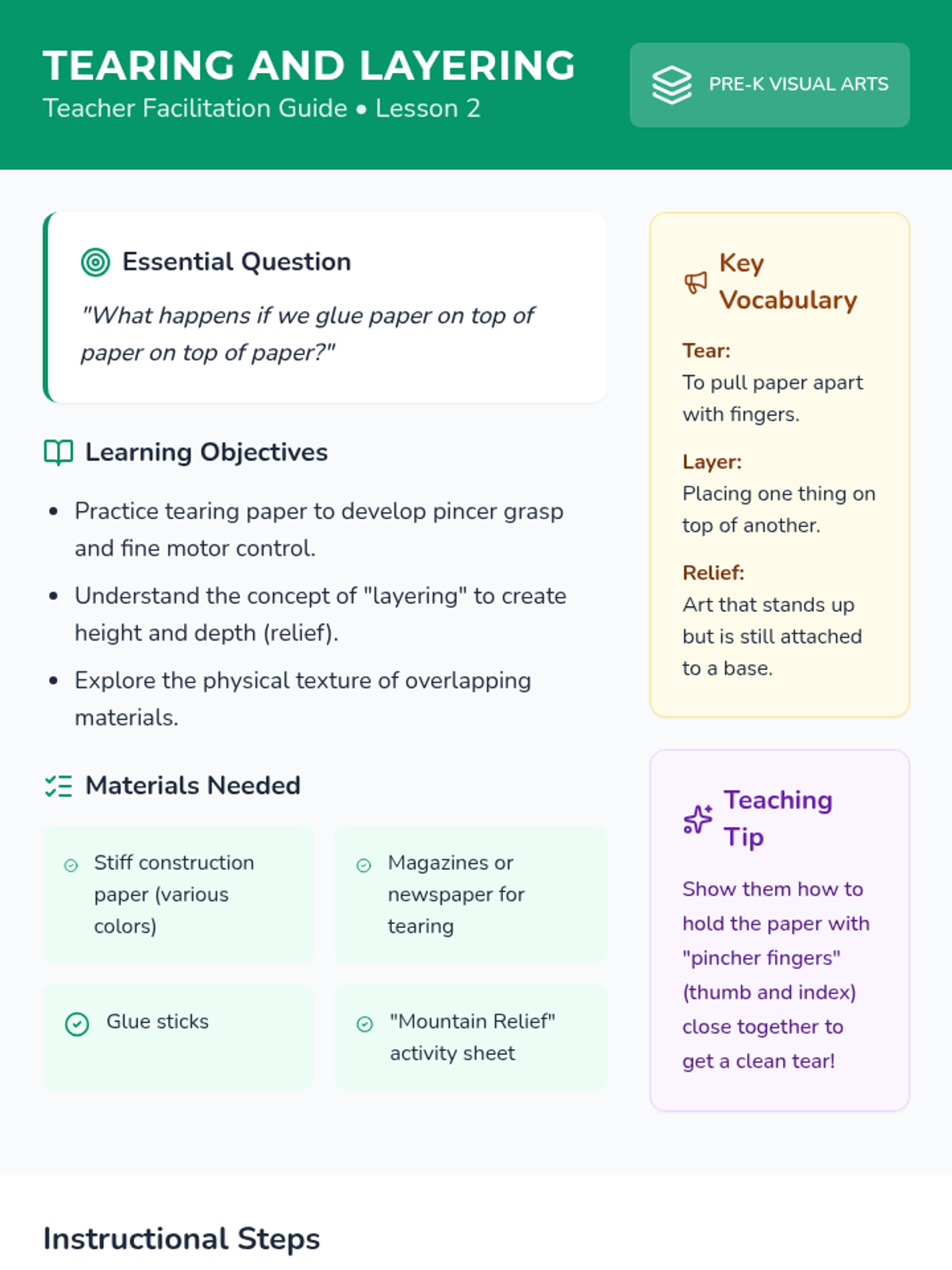
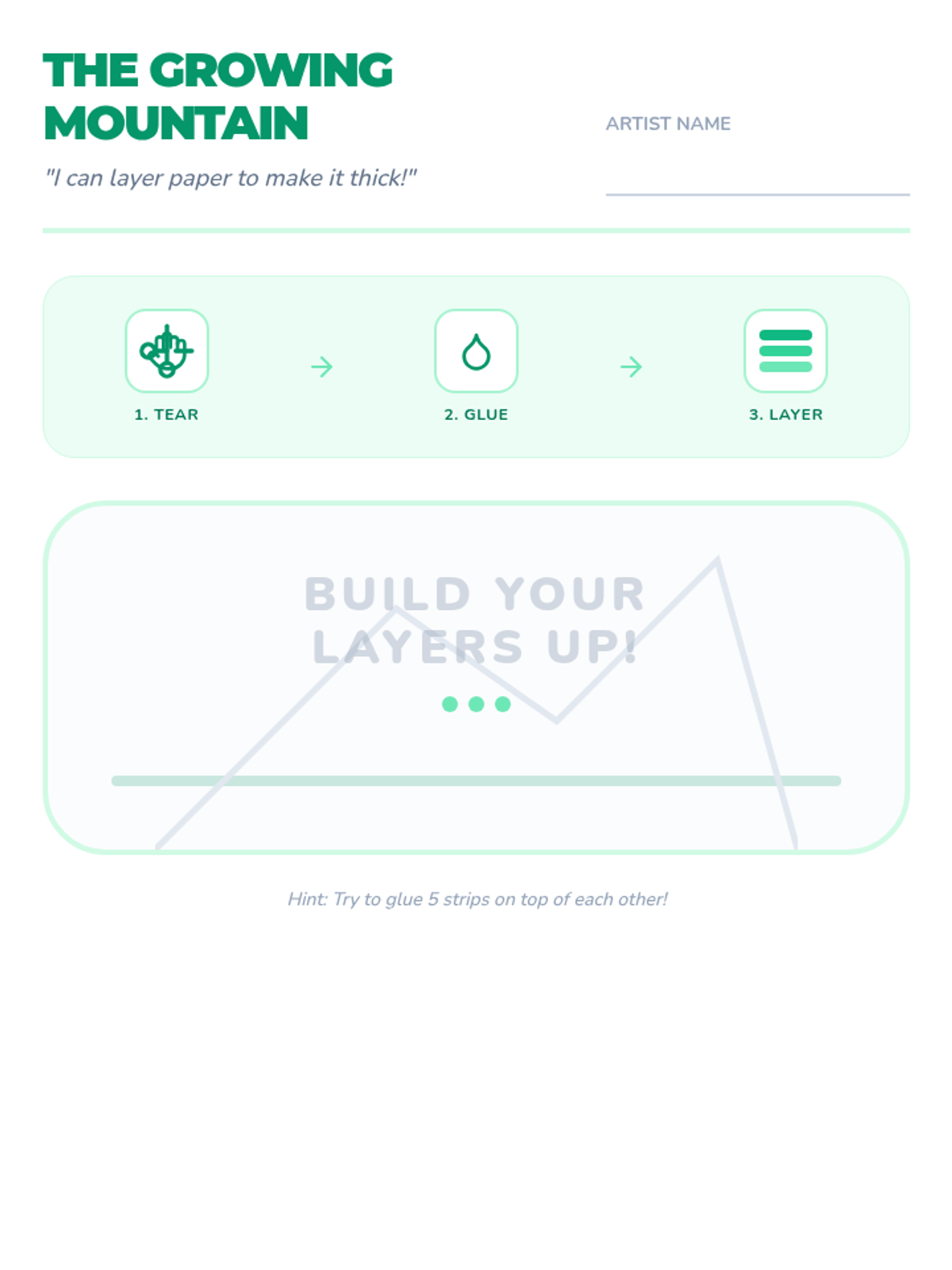
Students practice tearing paper into strips and layering them to create raised surfaces (relief sculpture). They learn that adding layers creates depth.
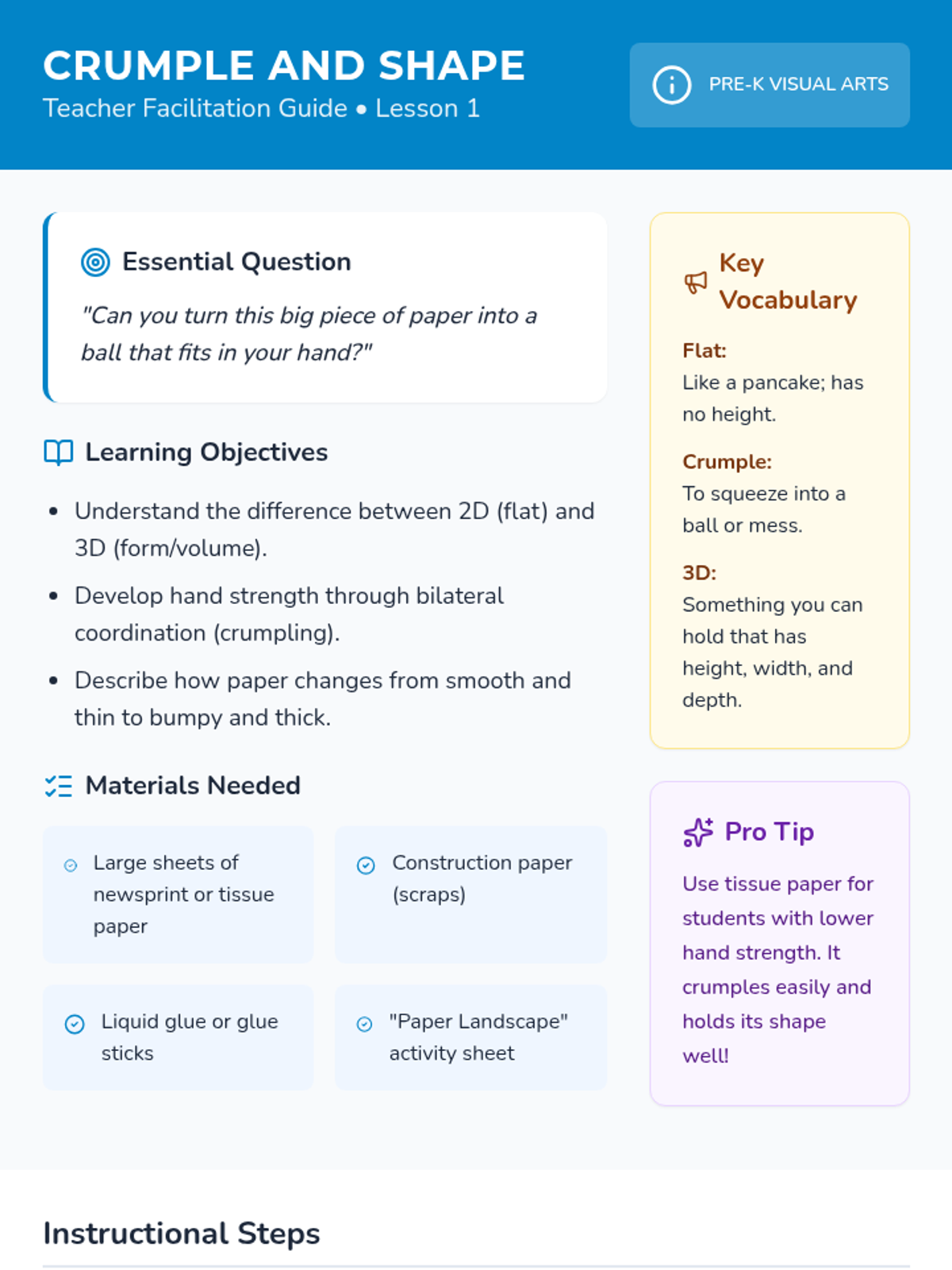
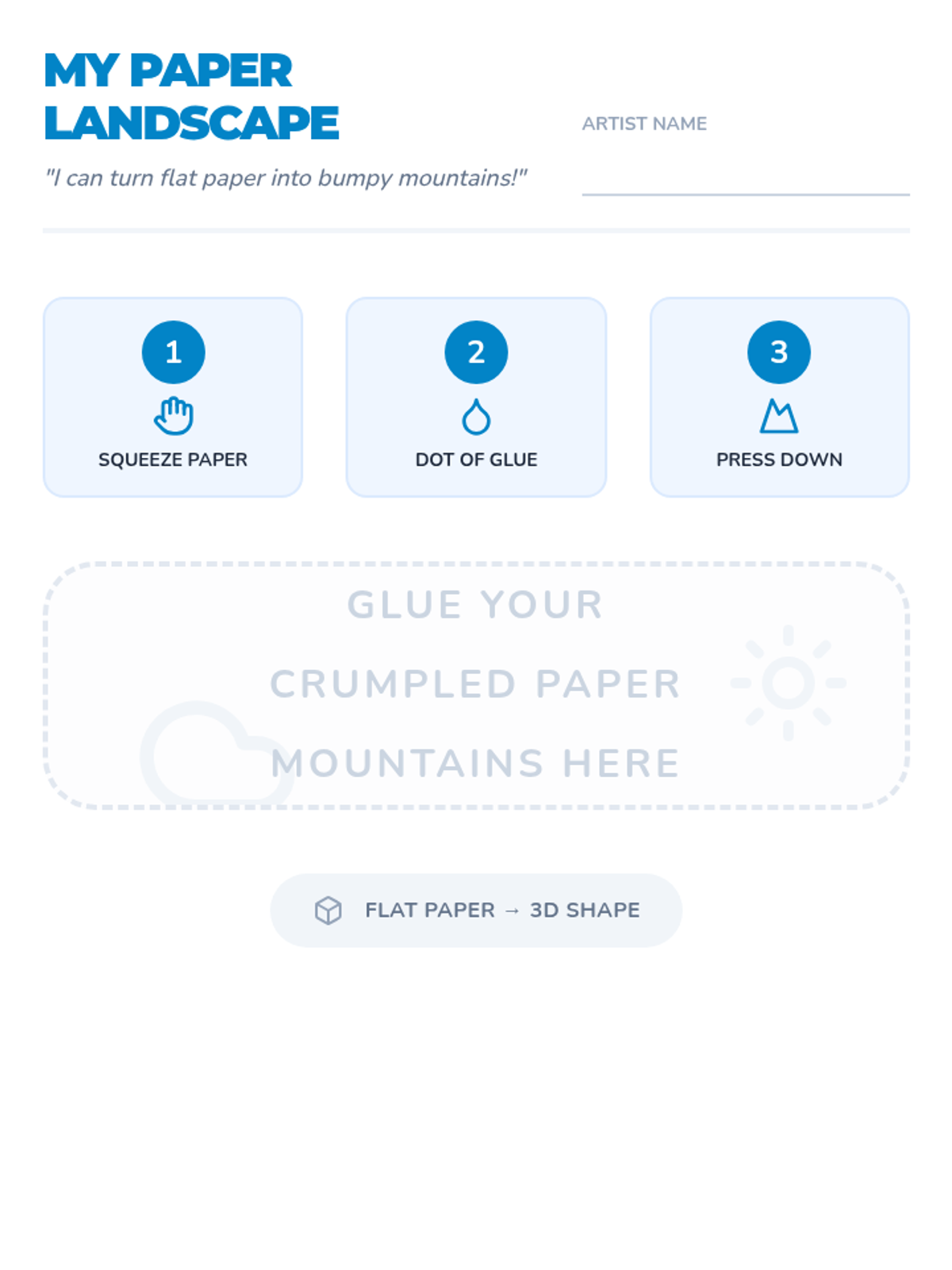
Students explore volume by crumpling flat sheets into balls and tight shapes, comparing the space a flat sheet takes up versus a crumpled ball.
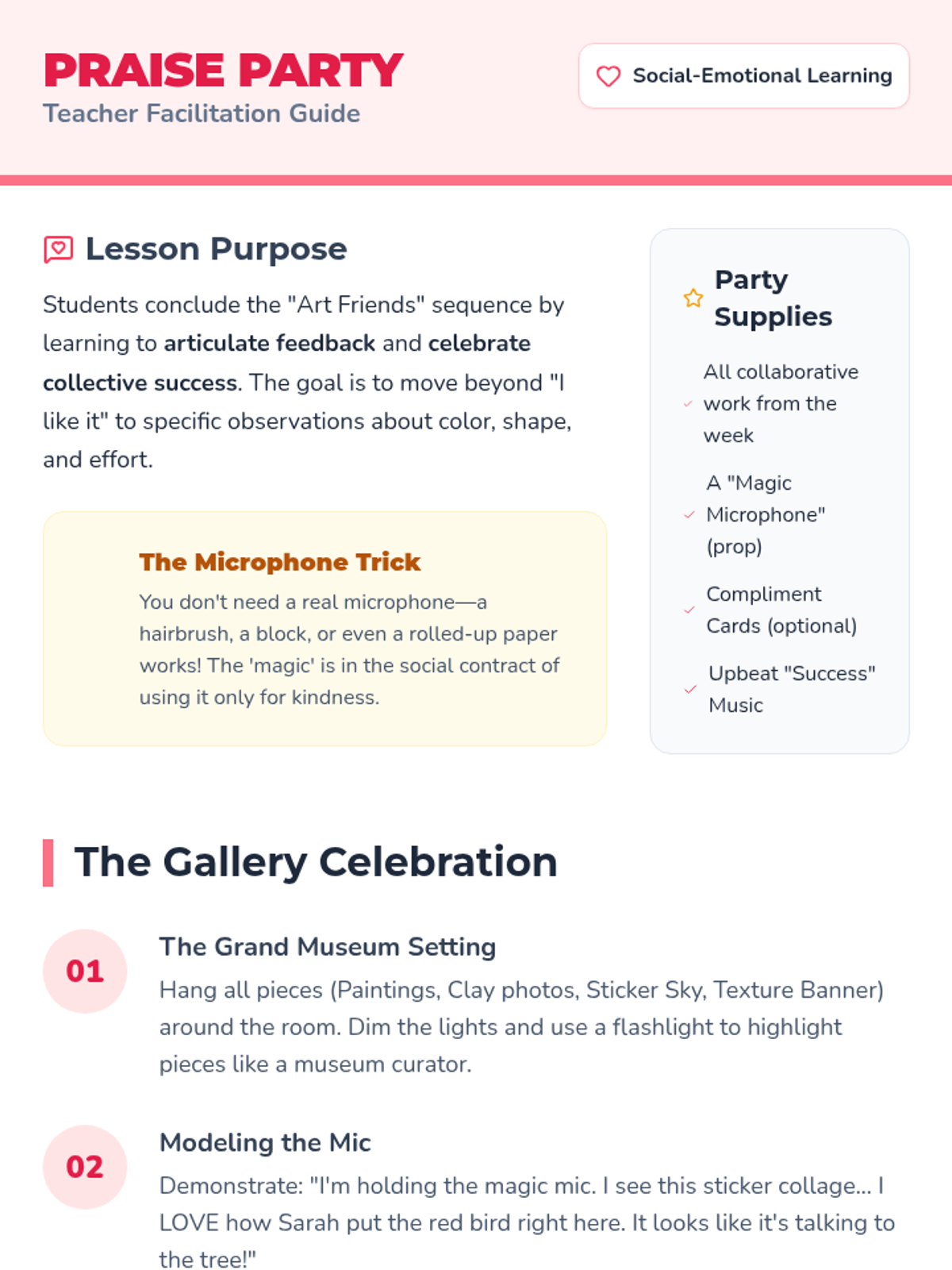
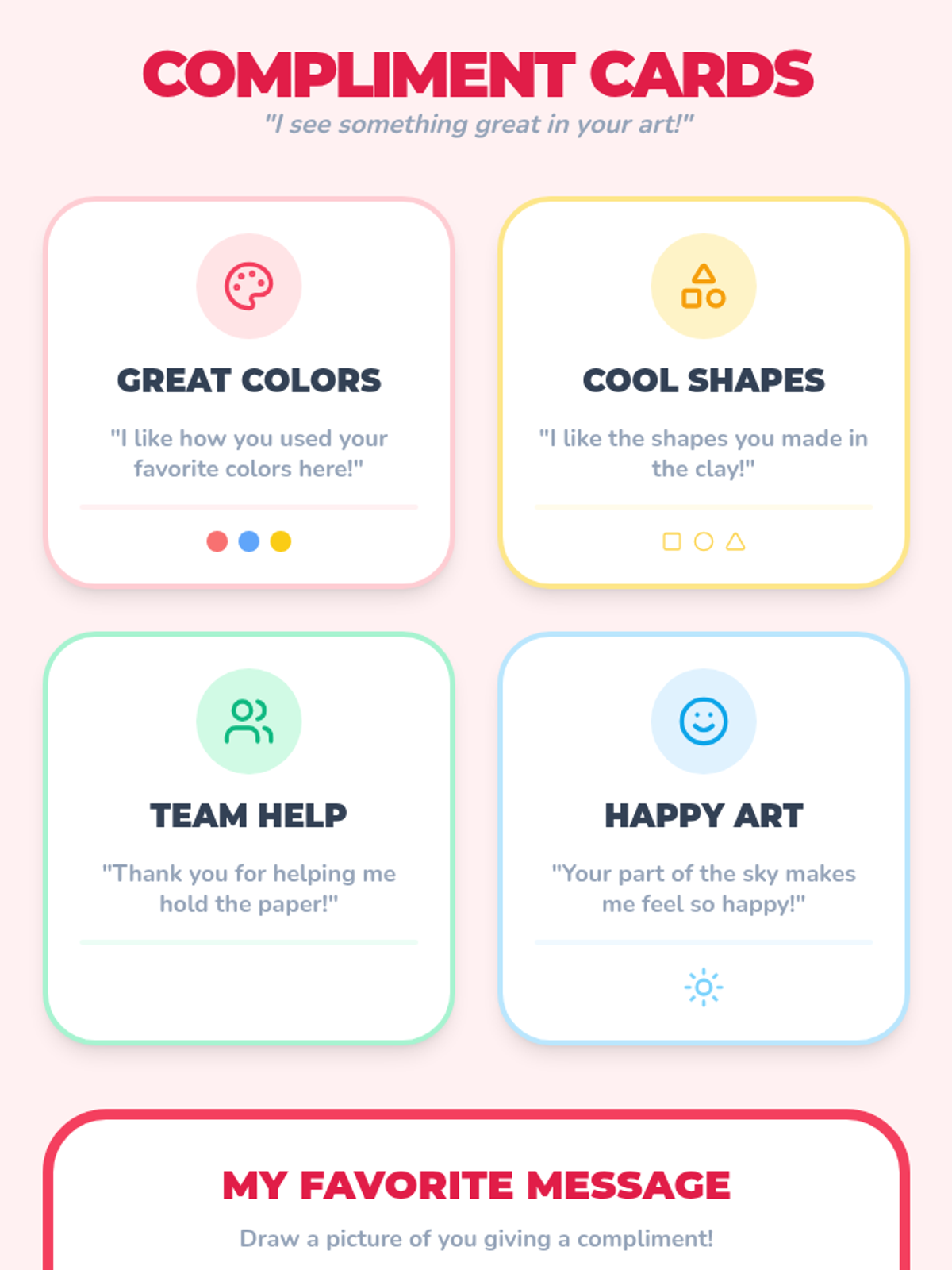
Students conclude the week by reviewing their collaborative pieces and practicing giving specific, positive feedback to their peers.
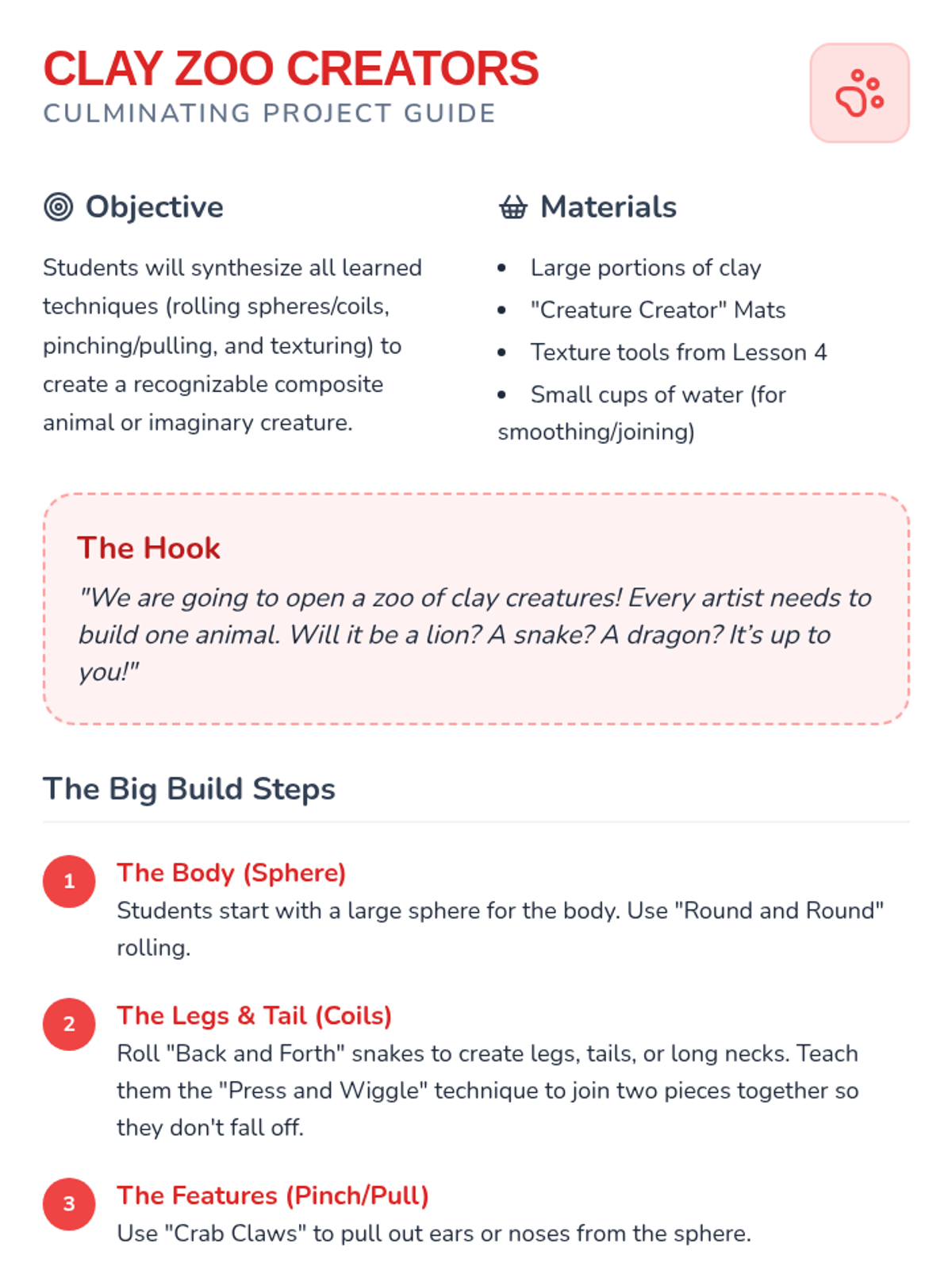
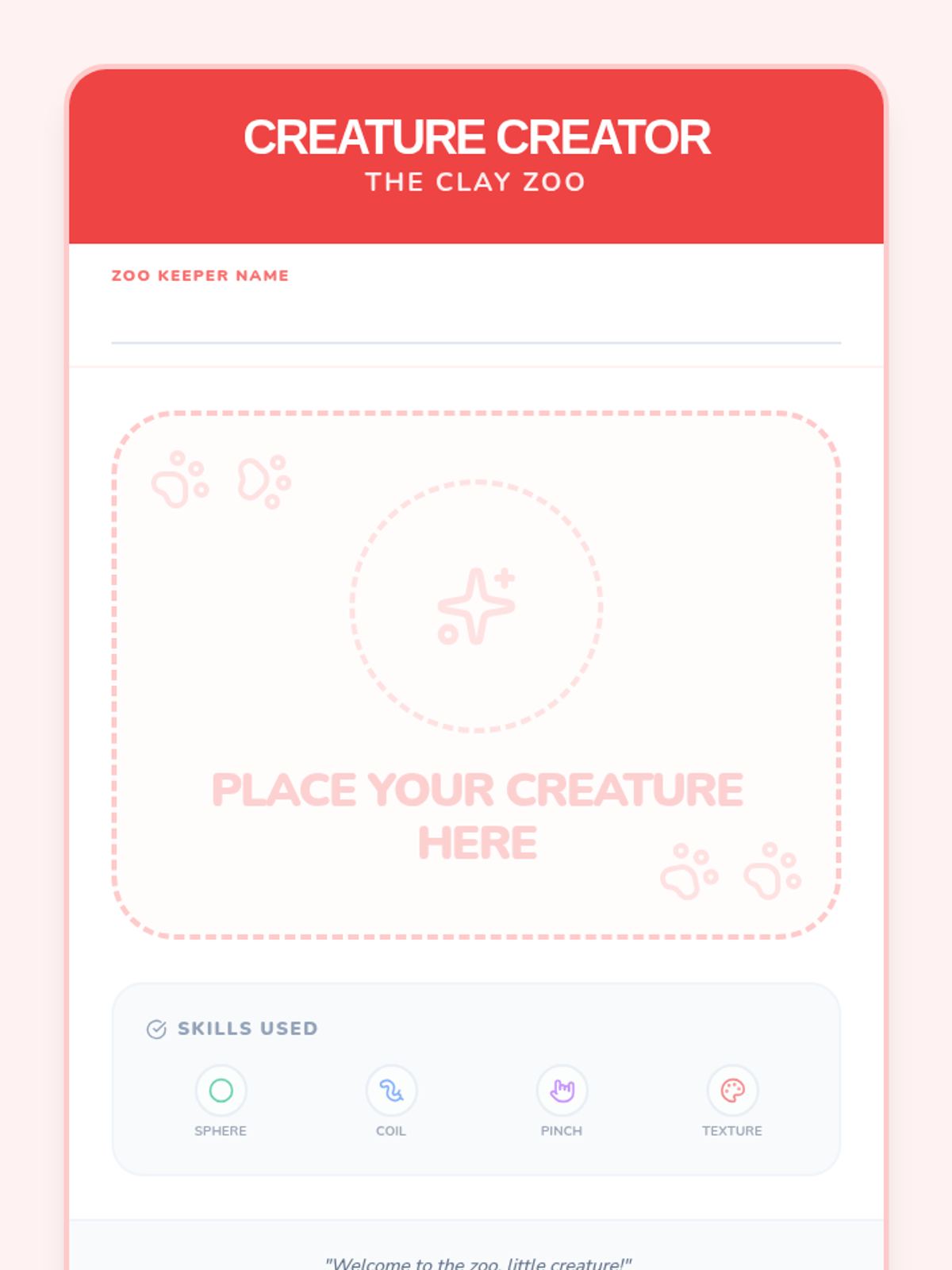
In this final project, students combine all learned techniques to build a clay animal or creature. They practice joining parts together to create a complex figure.
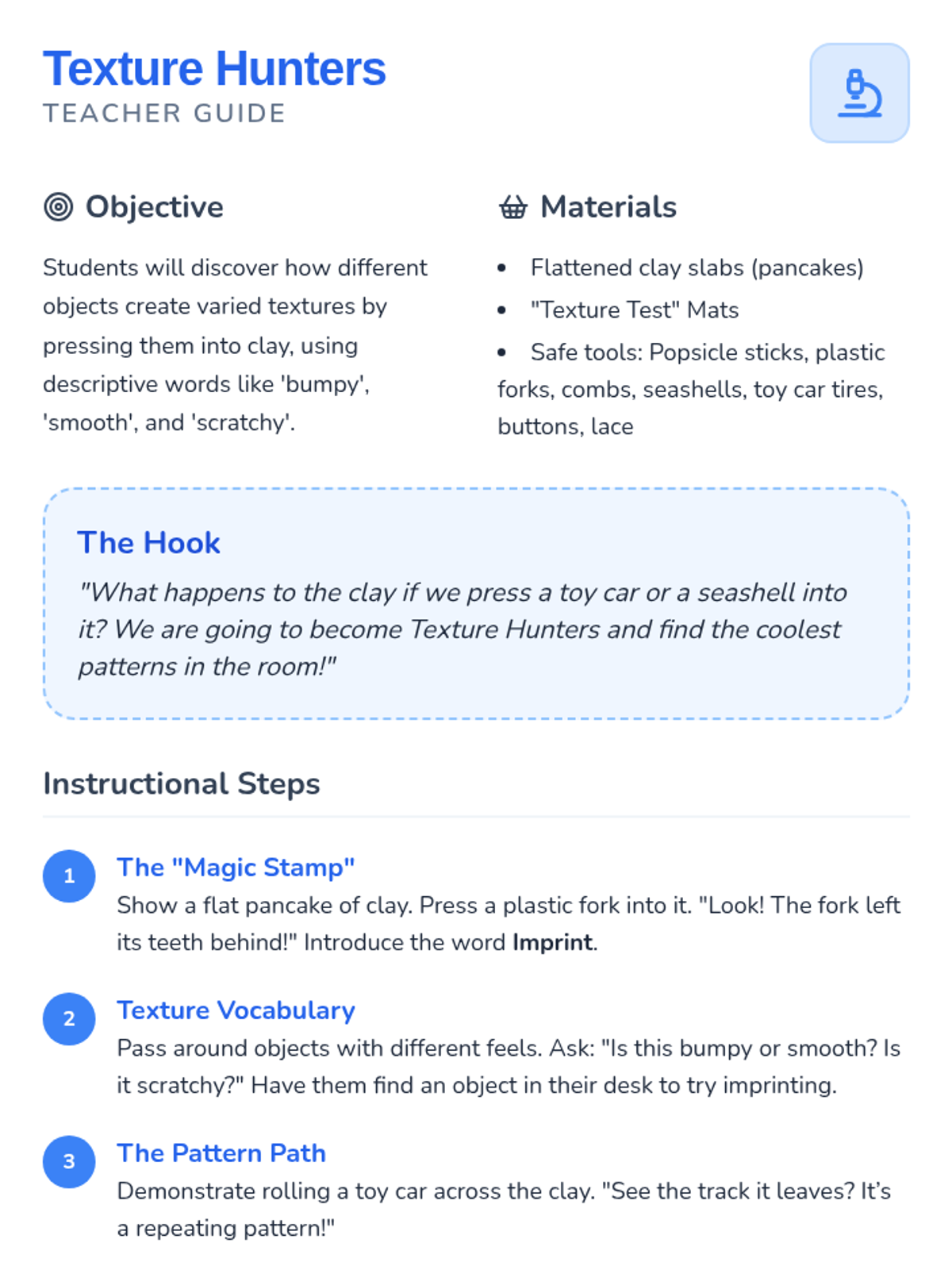
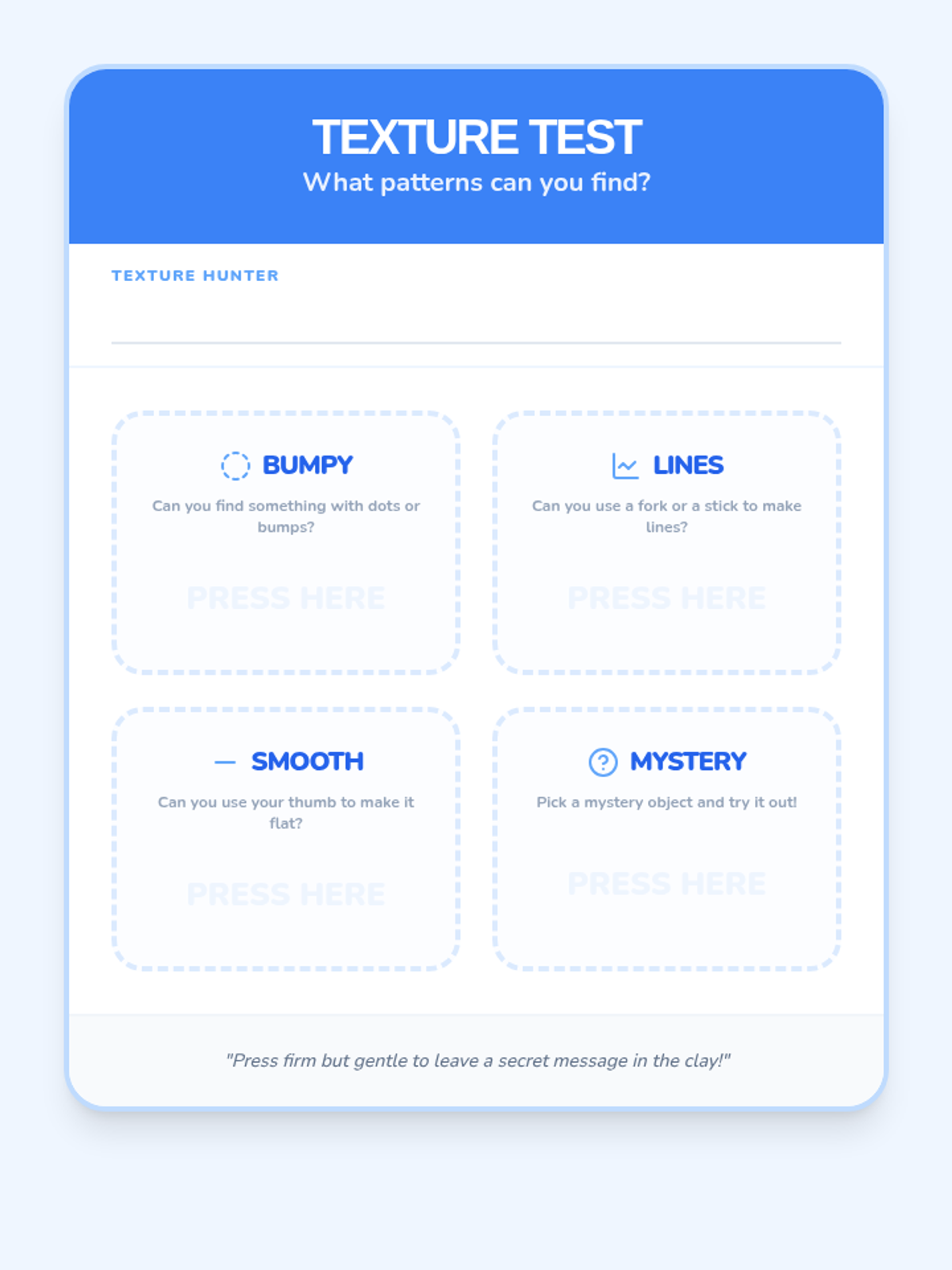
Using safe tools and household objects, students imprint patterns into clay. They explore how different surfaces create different textures.
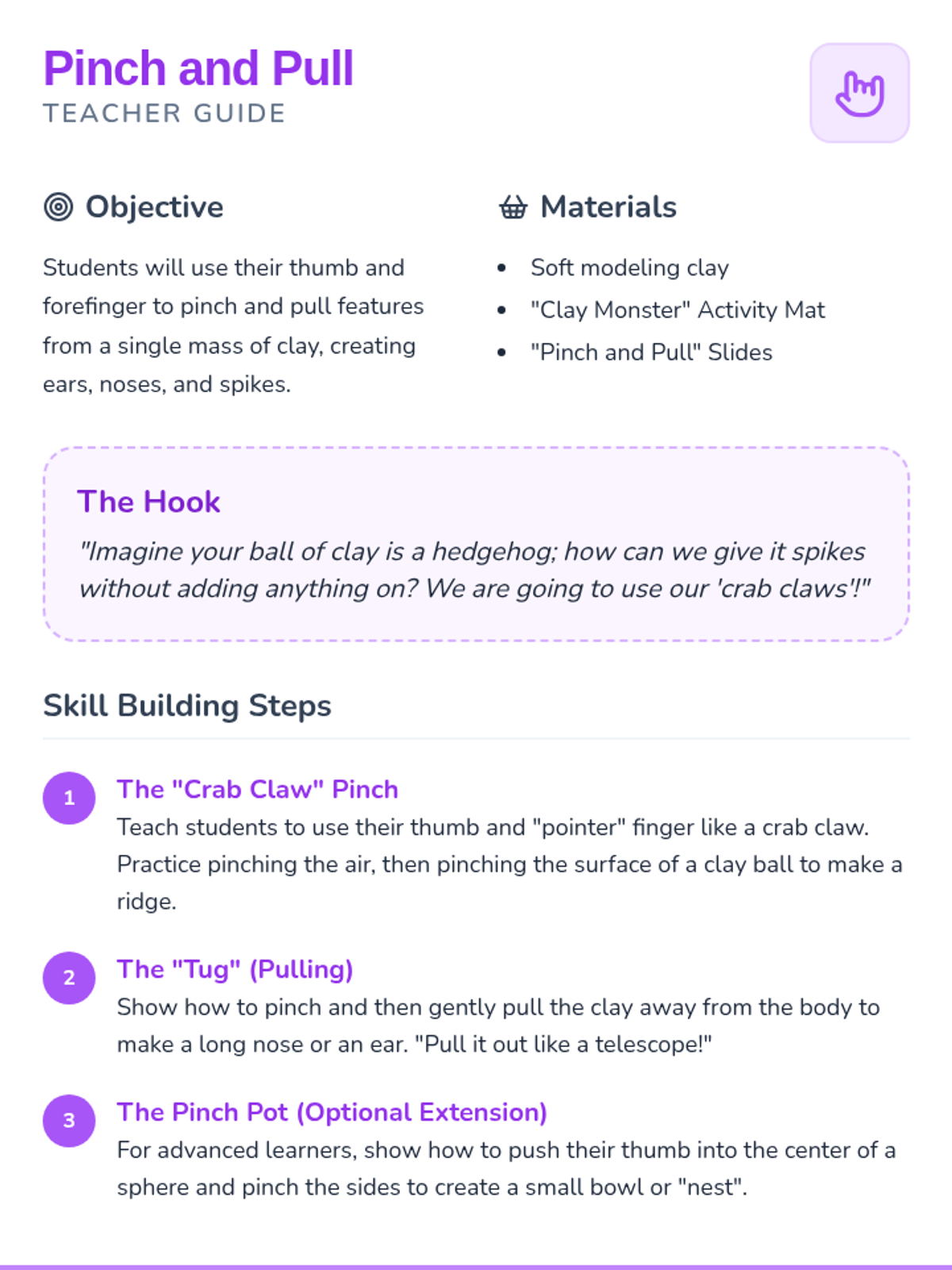
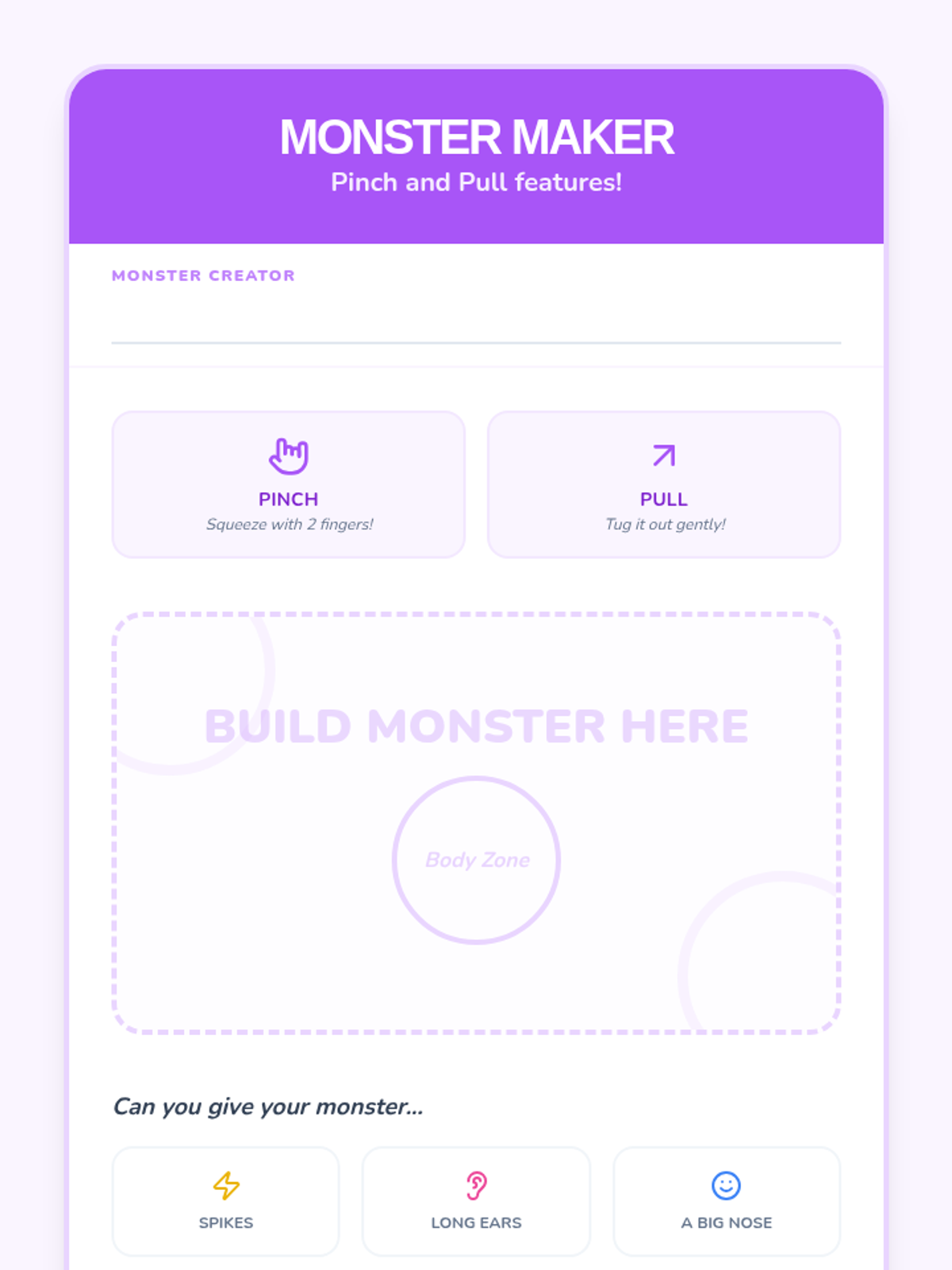
Students learn to pinch and pull clay to create features like spikes, ears, and noses. They explore how to change a single form without adding extra pieces.
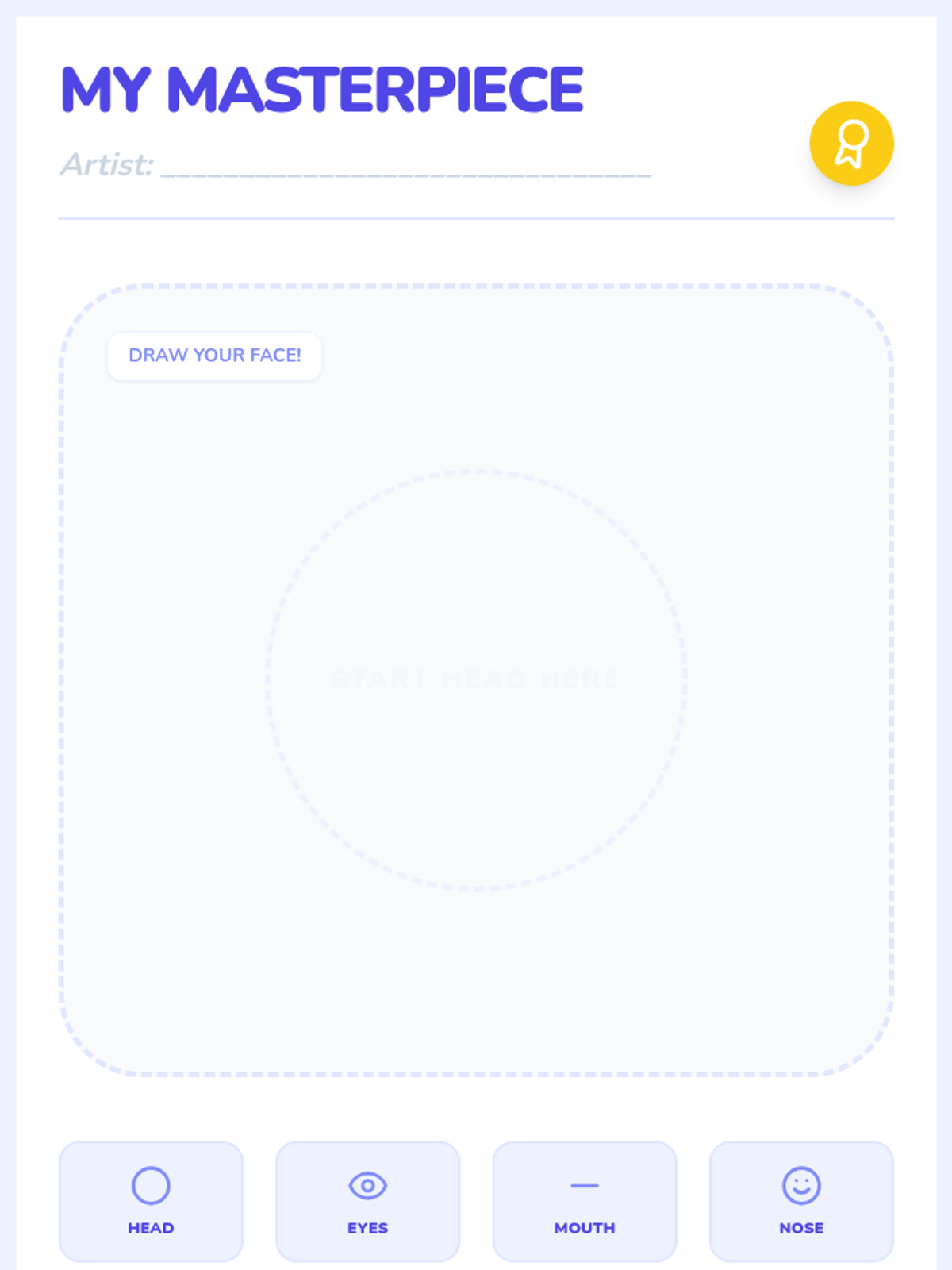
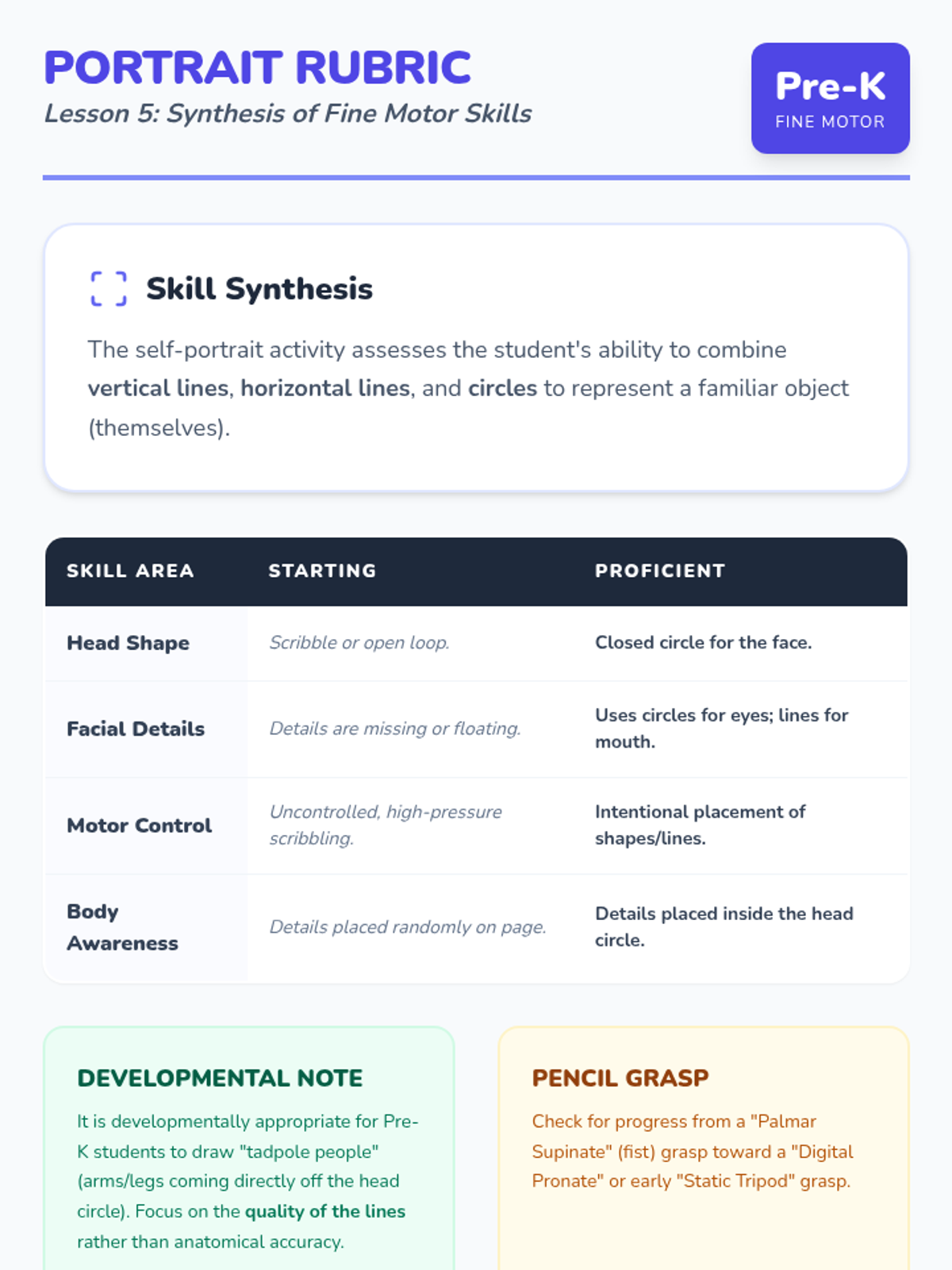
Students synthesize their line and shape skills to draw a simple self-portrait. They use circles for the head and eyes, and lines for the mouth, nose, and hair.
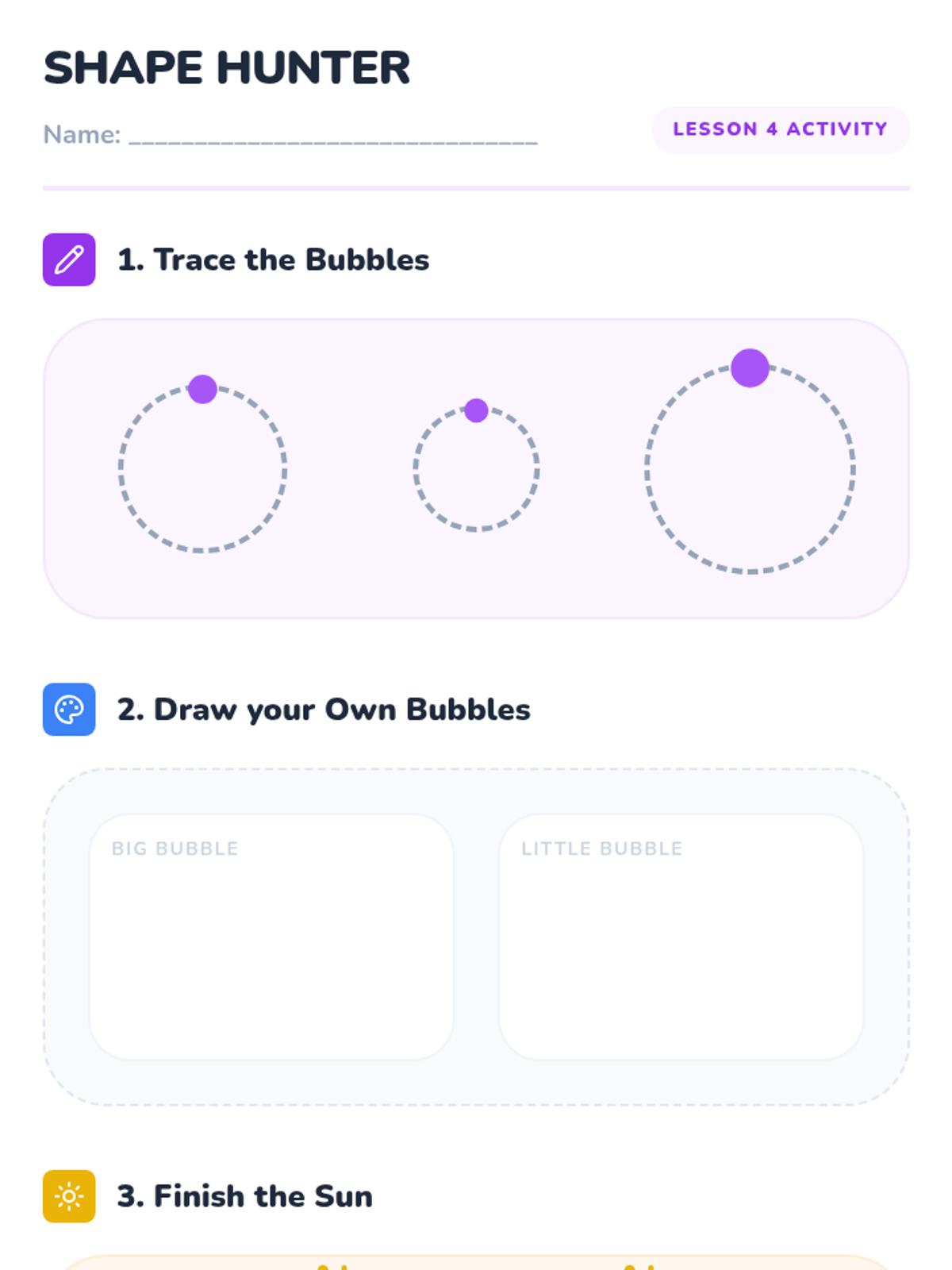
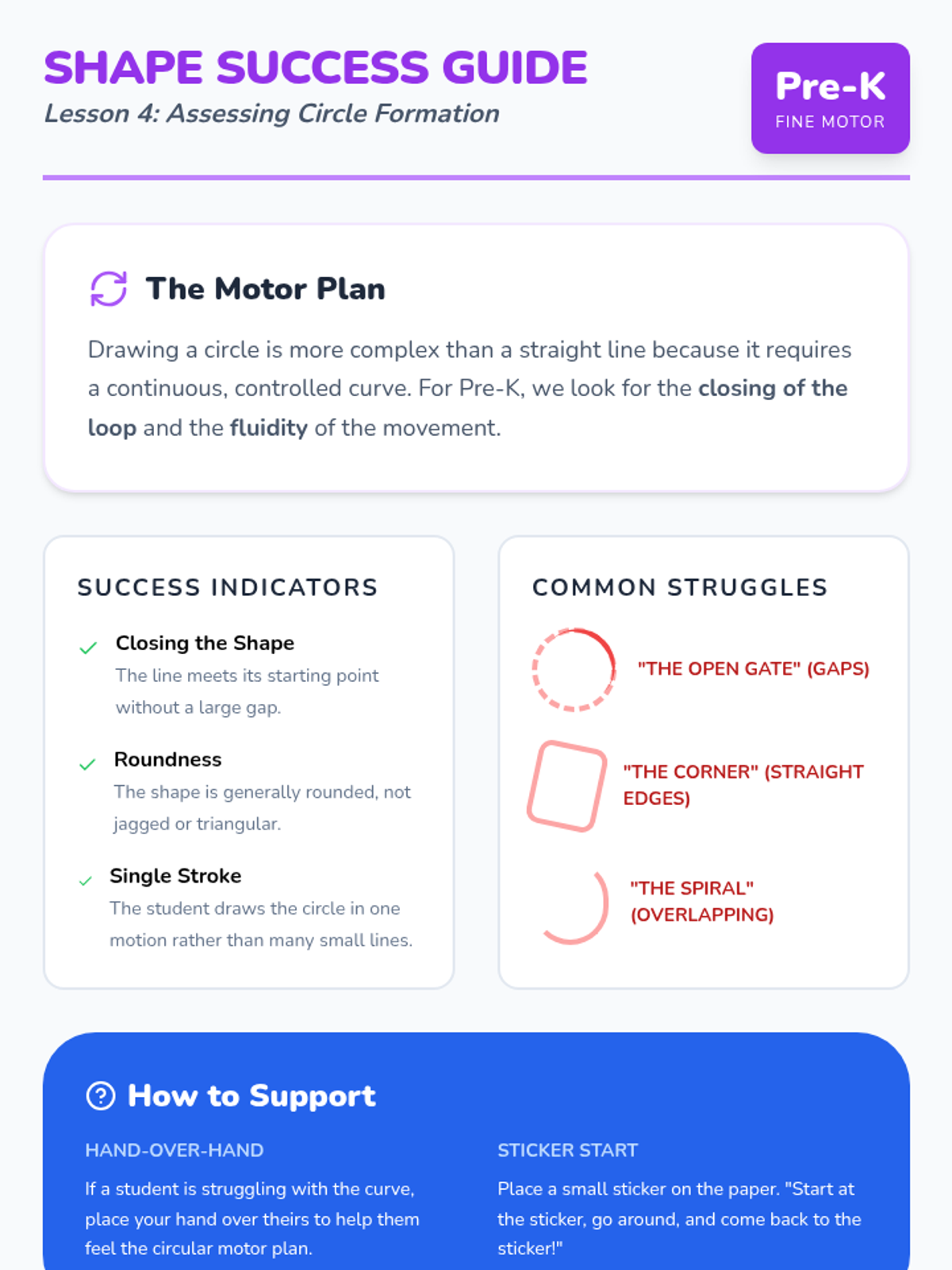
Students practice the continuous motion required to draw circles and ovals. They trace circular objects and then attempt freehand circles, focusing on closing the shape.
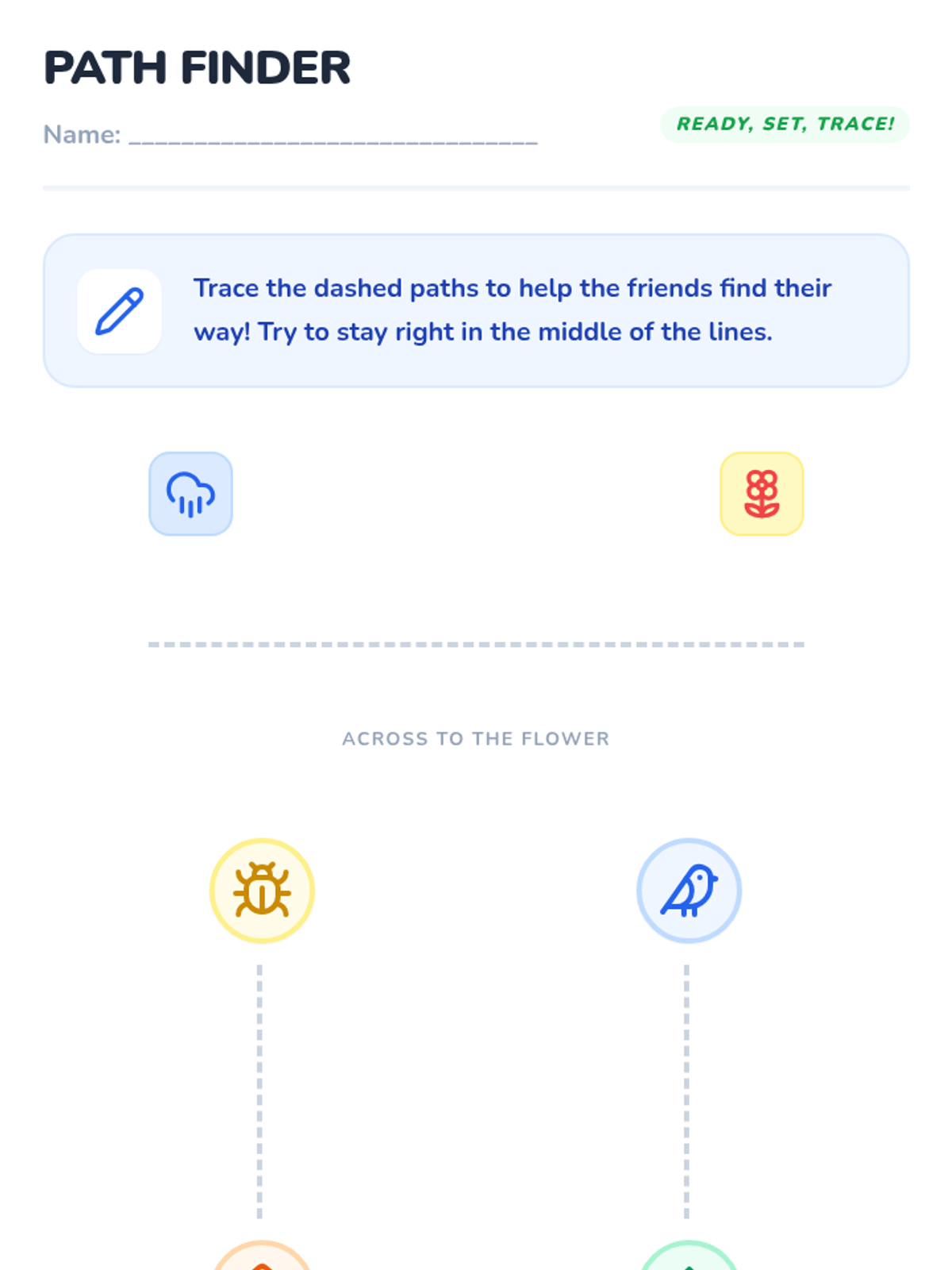
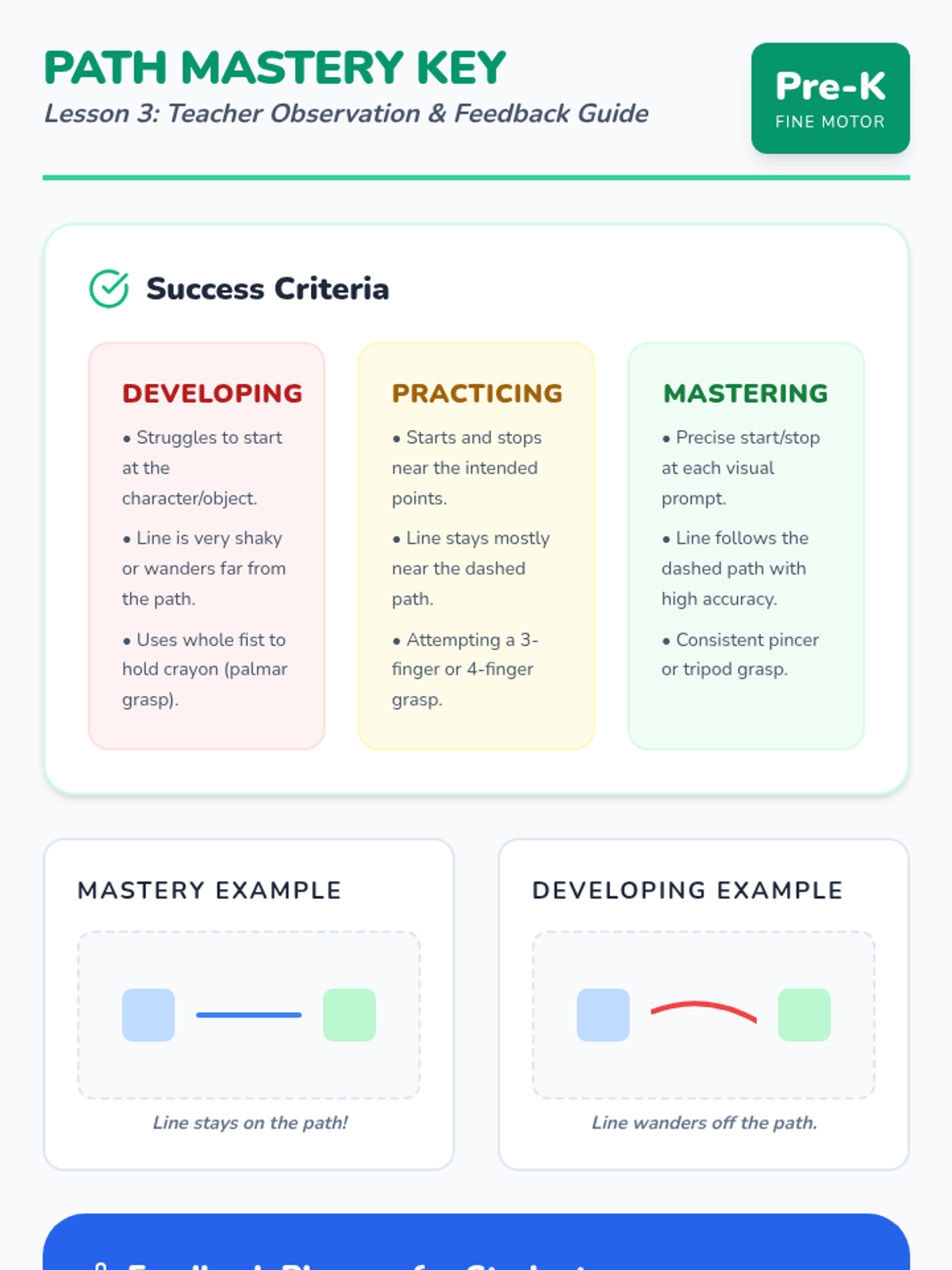
Students use crayons or thick markers to trace paths (e.g., a bee to a flower) on paper. The focus is on staying within boundaries and controlling the start and stop of the line.
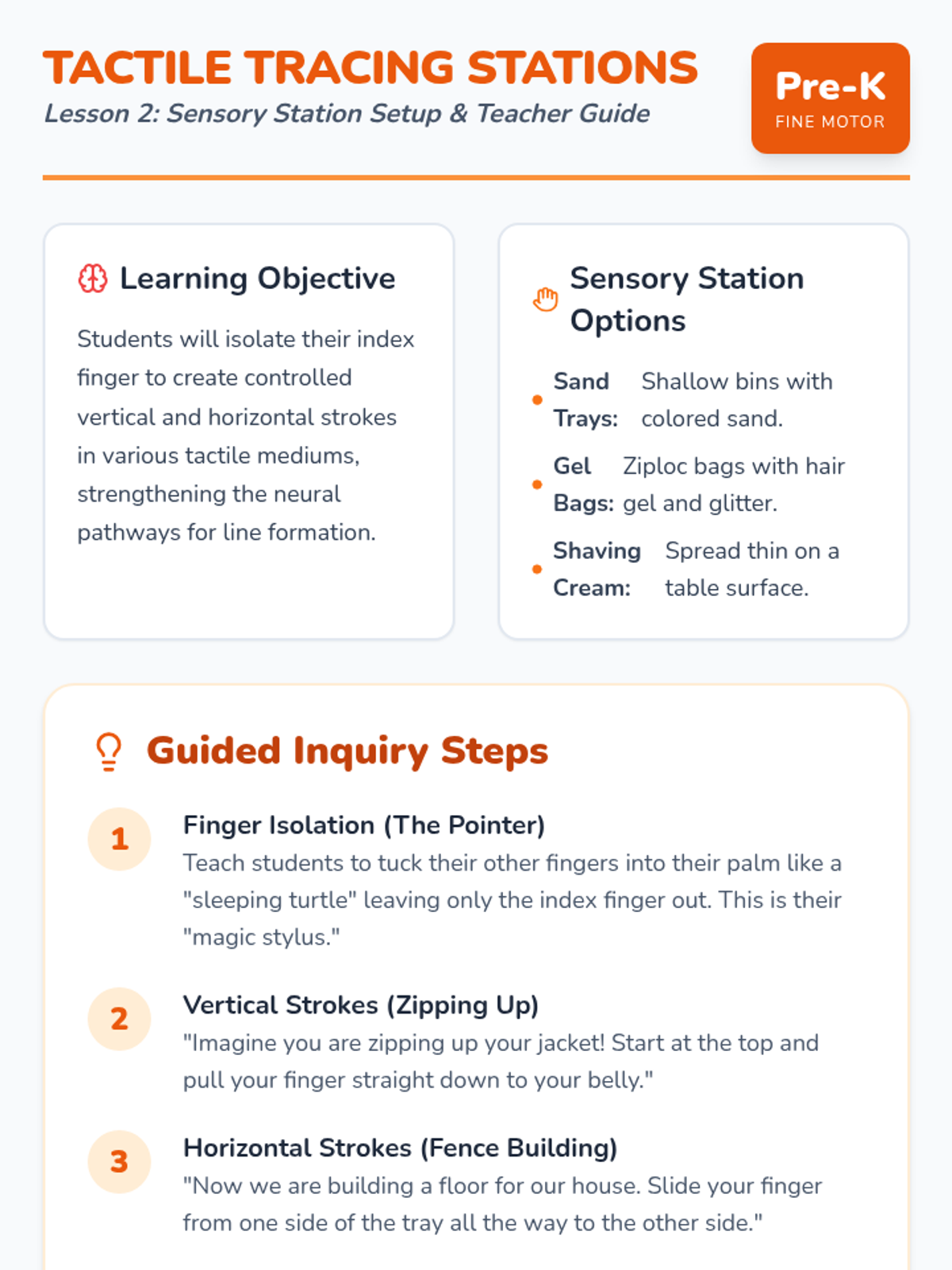
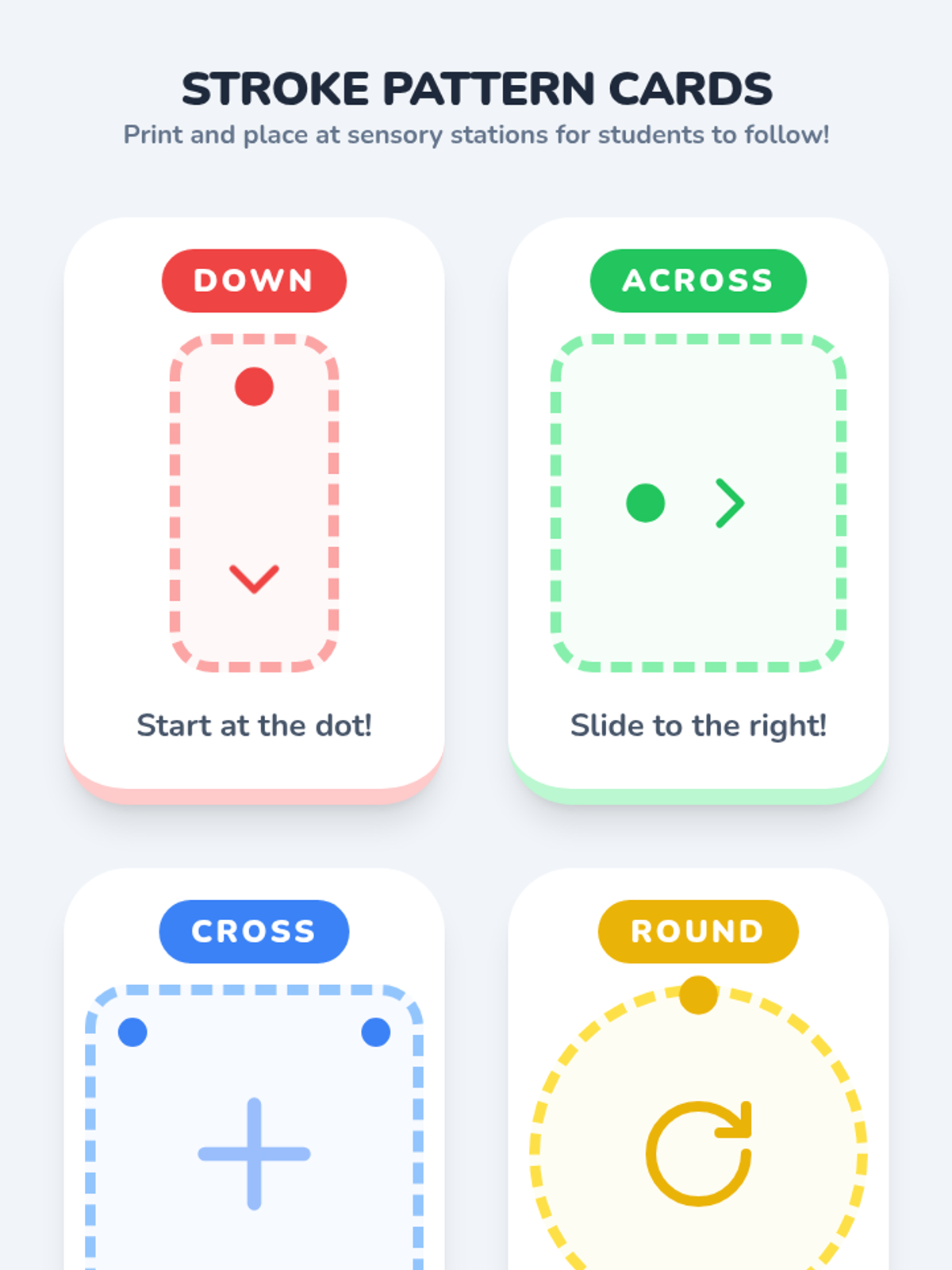
Using fingers, students trace vertical and horizontal lines in sensory trays filled with sand, shaving cream, or gel bags. This provides tactile feedback that reinforces the motor plan for basic strokes.
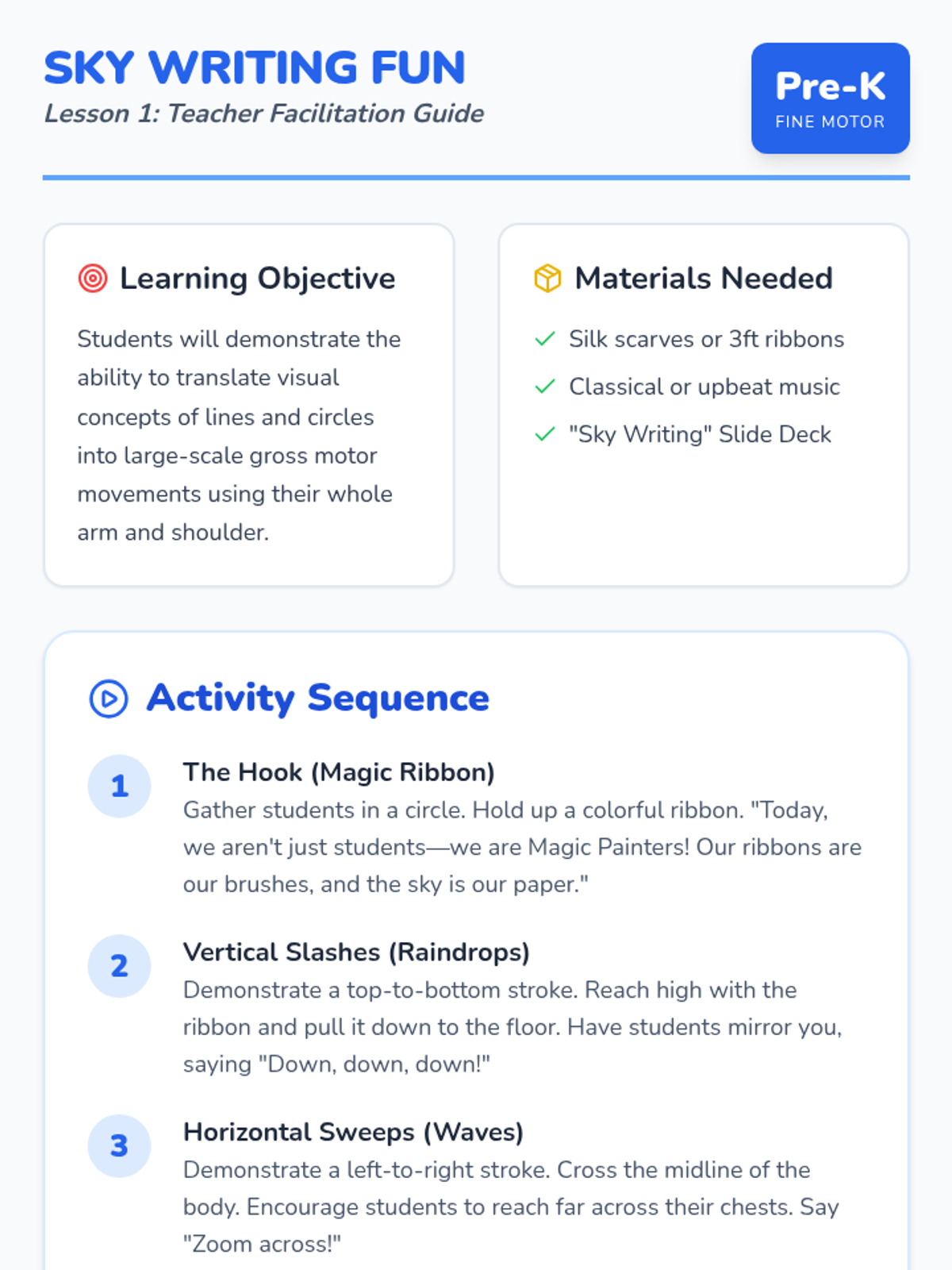
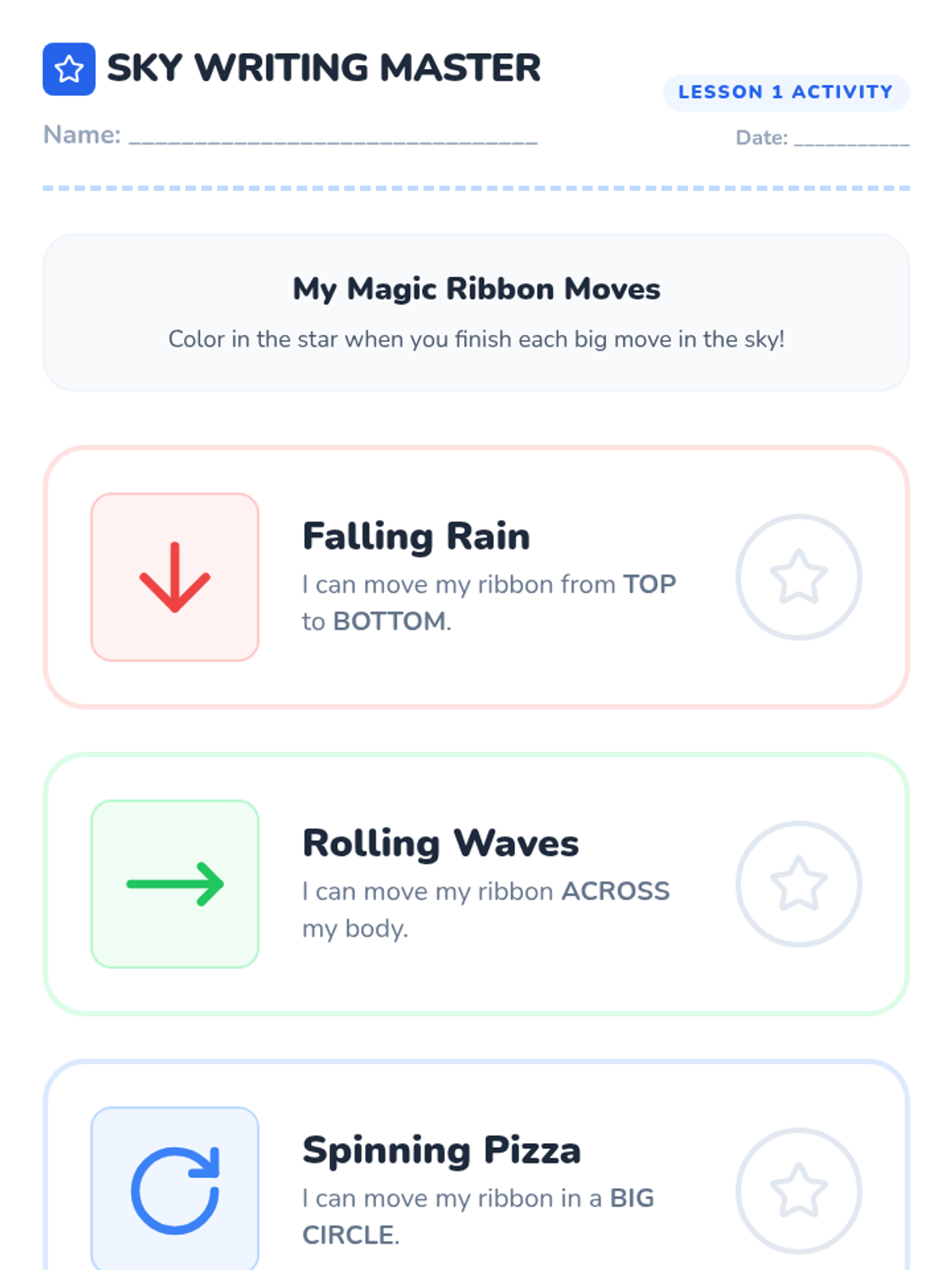
Students use large arm movements to 'write' lines and circles in the air with ribbons and scarves, connecting gross motor shoulder movement to visual concepts.
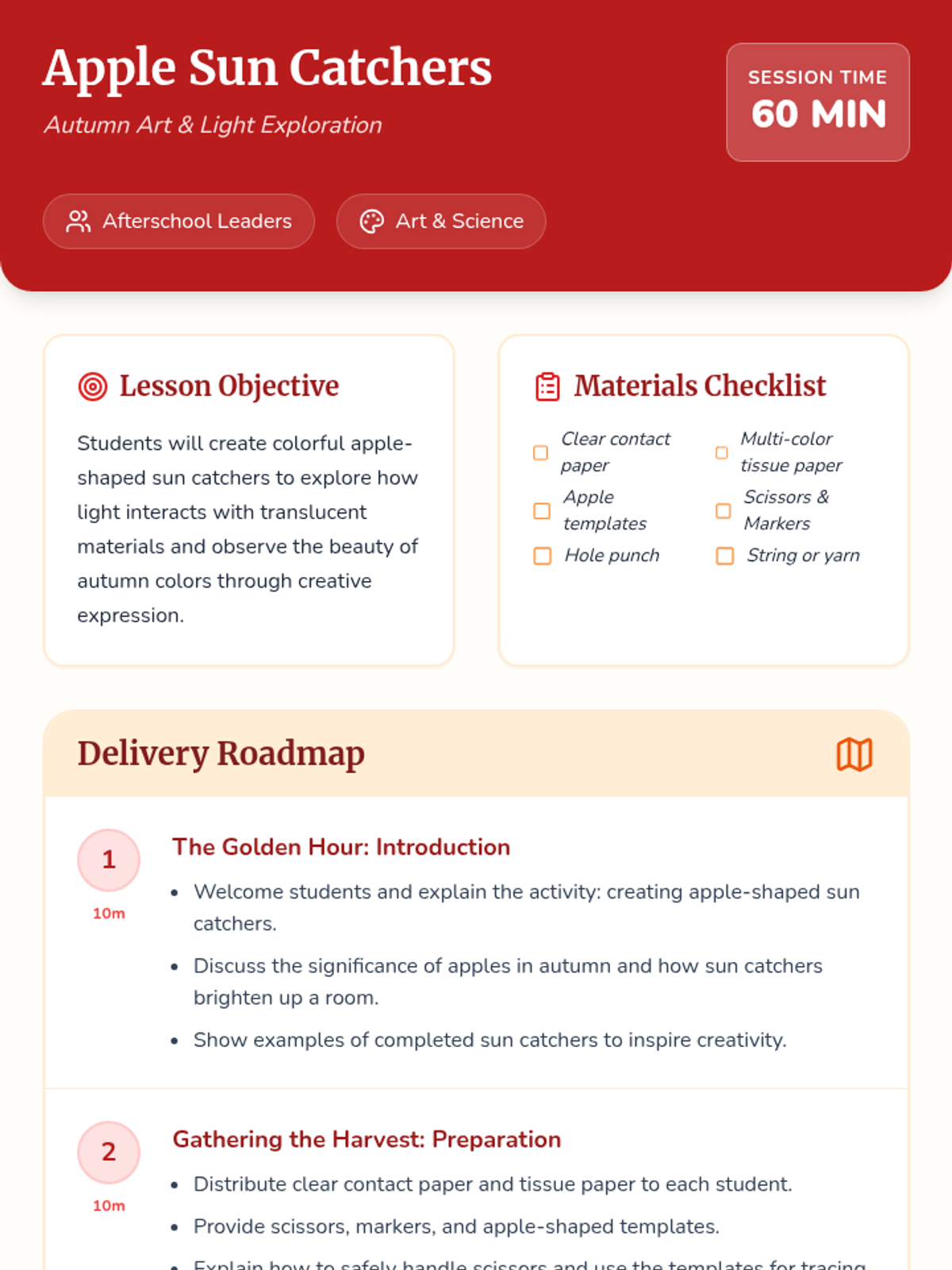
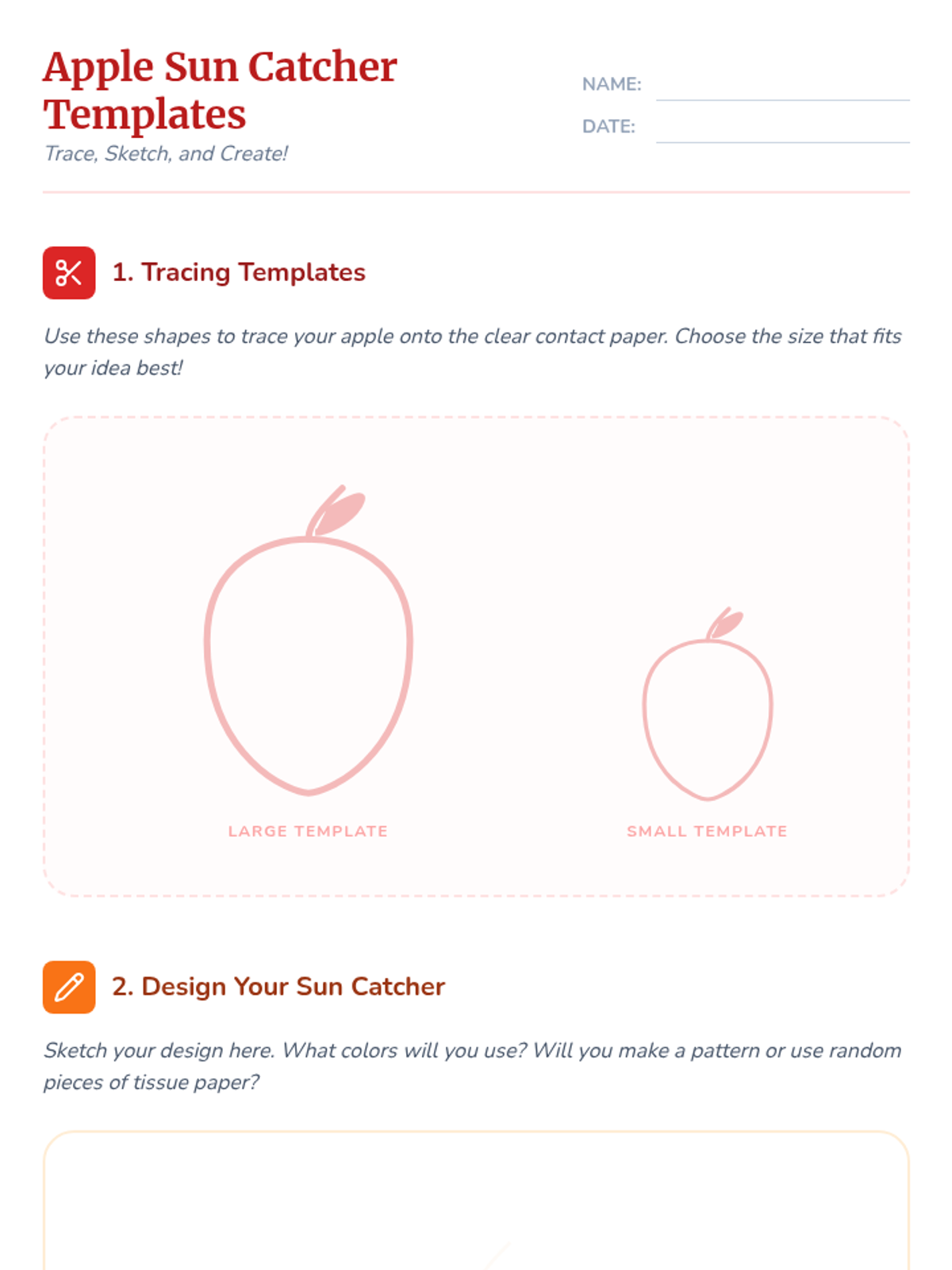
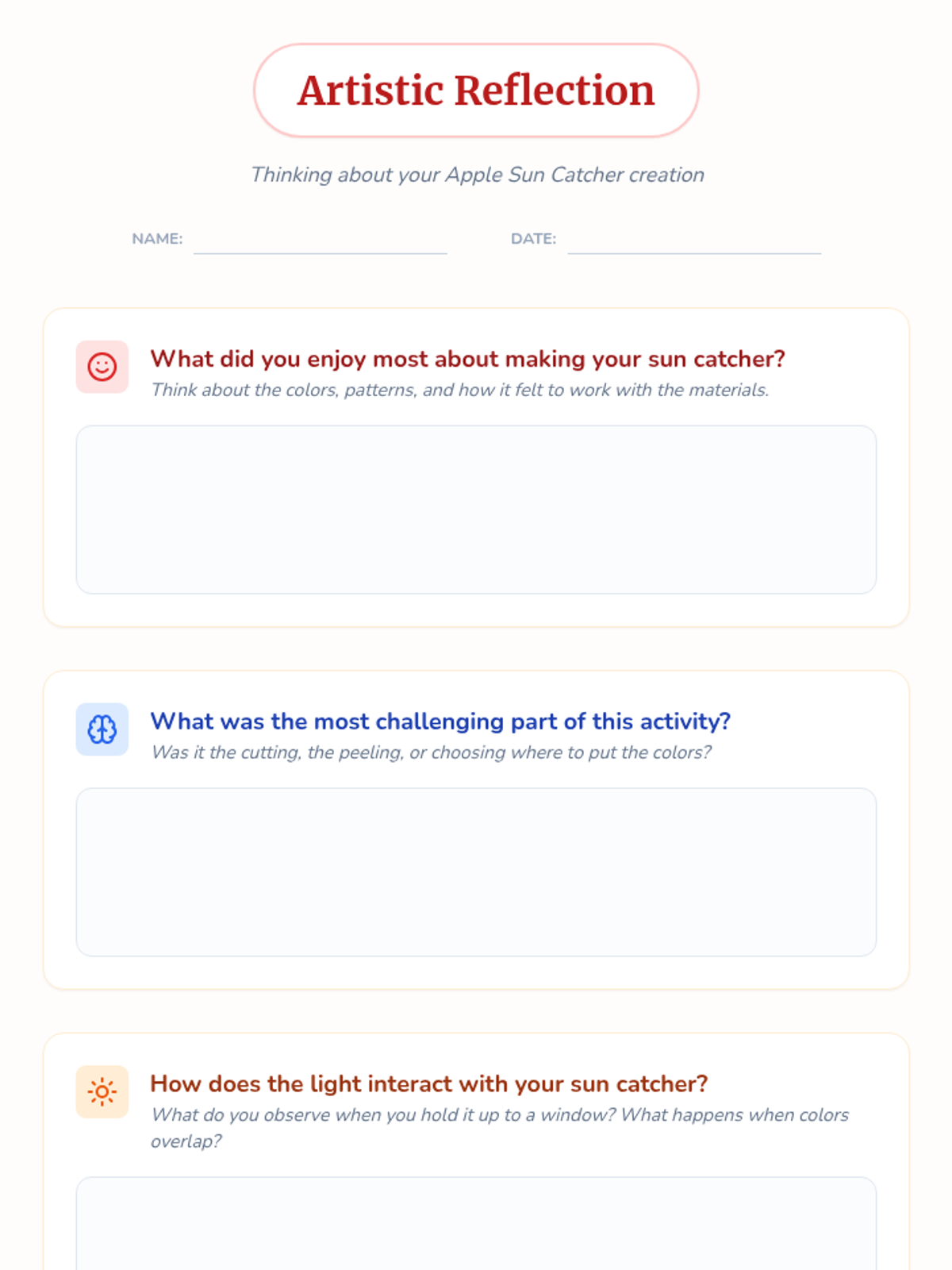
A hands-on autumn art lesson where students create apple-shaped sun catchers using tissue paper and contact paper to explore color and light.
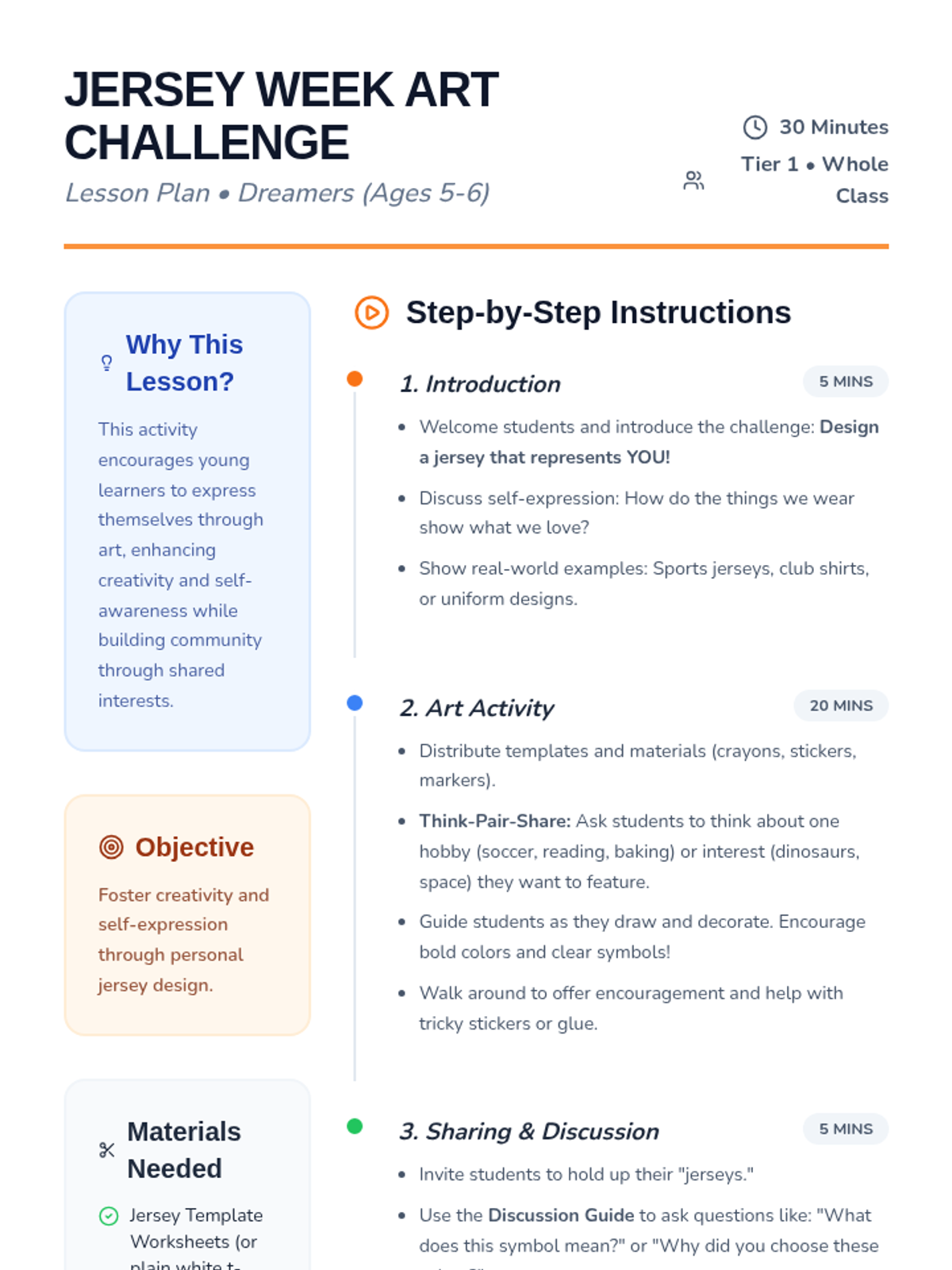
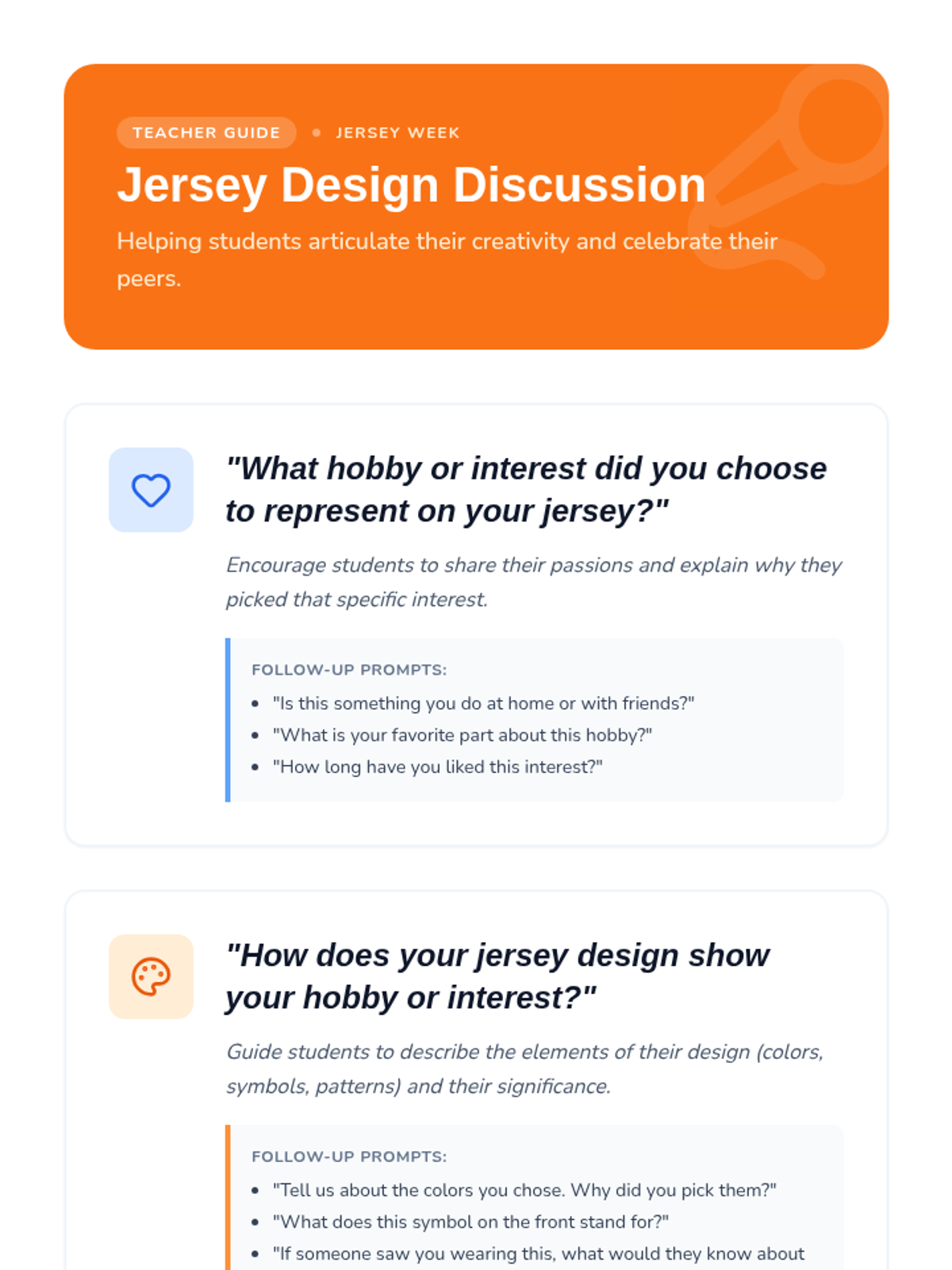
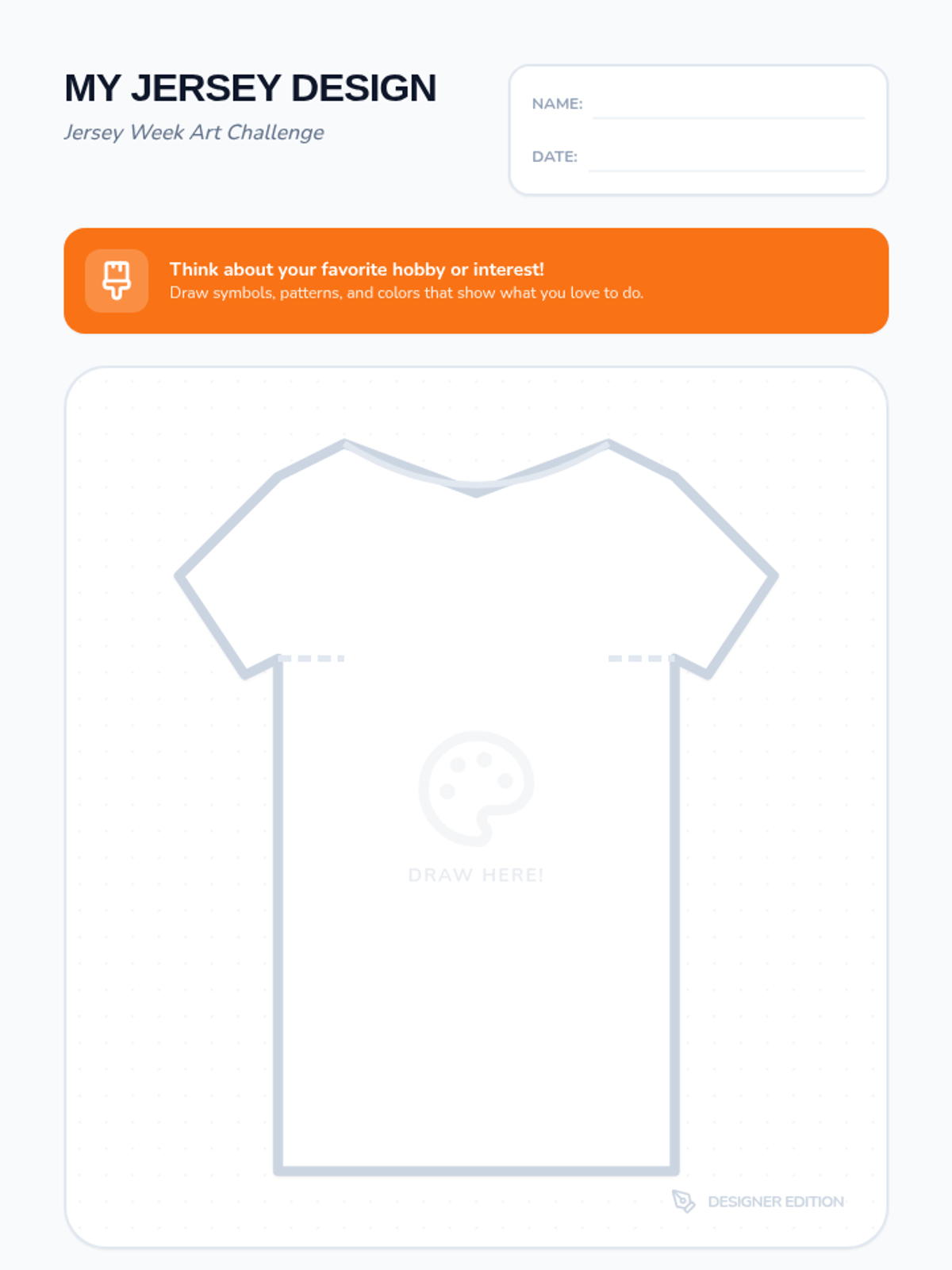
A creative art challenge where students design jerseys representing their favorite hobbies or interests, fostering self-expression and community.
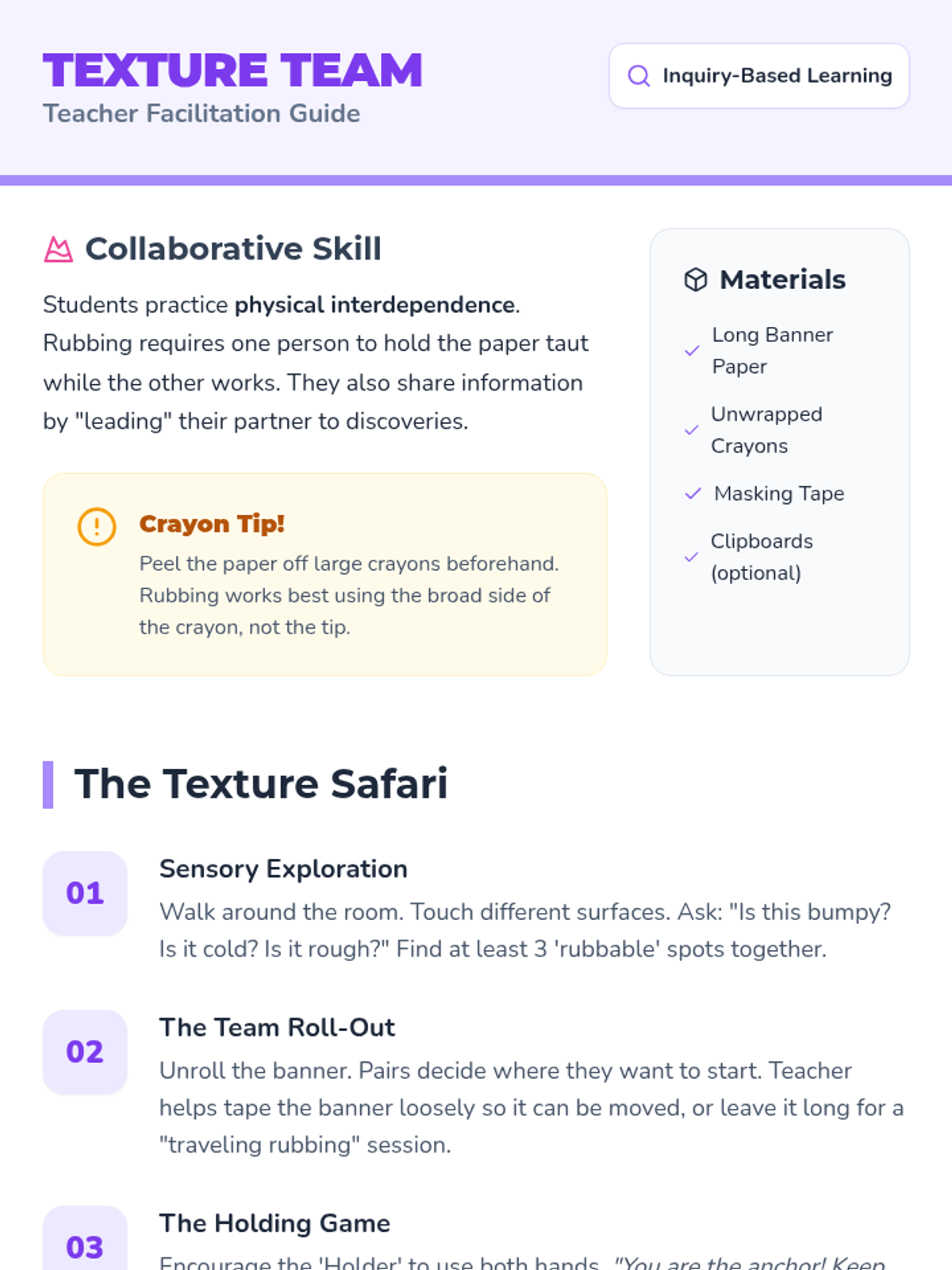
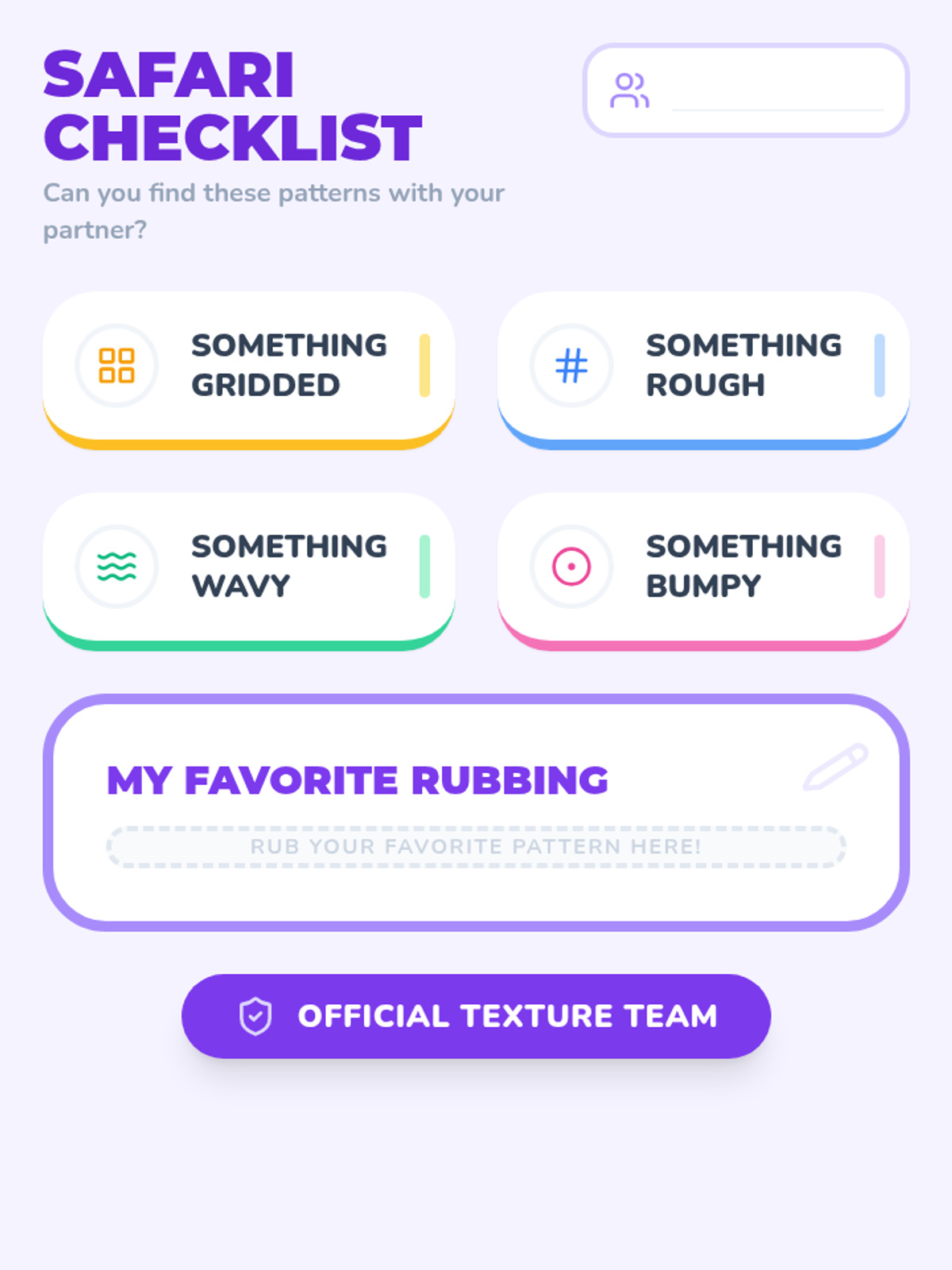
Students go on a 'texture safari' in the classroom, working in teams to create rubbings on a shared banner.
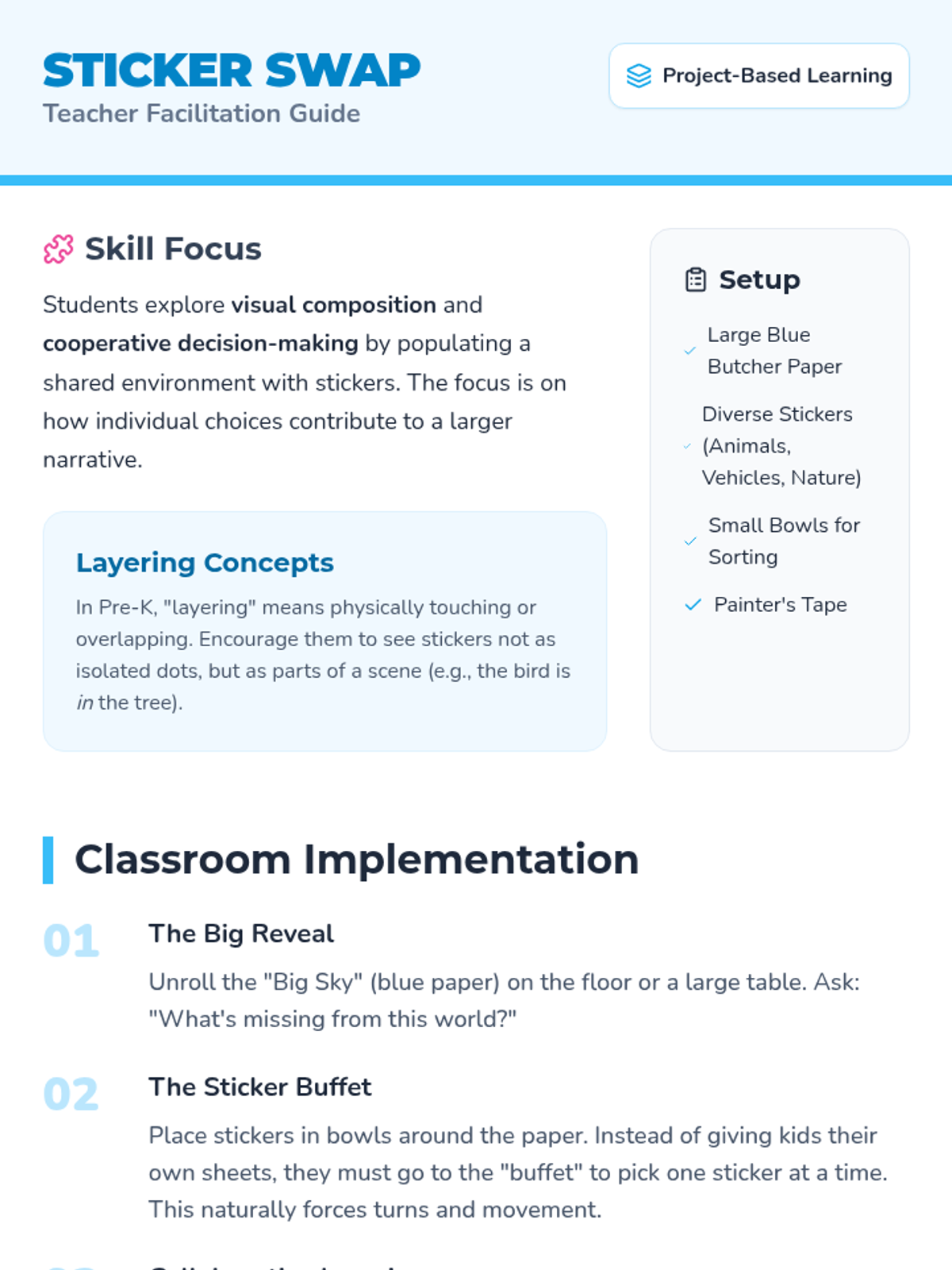
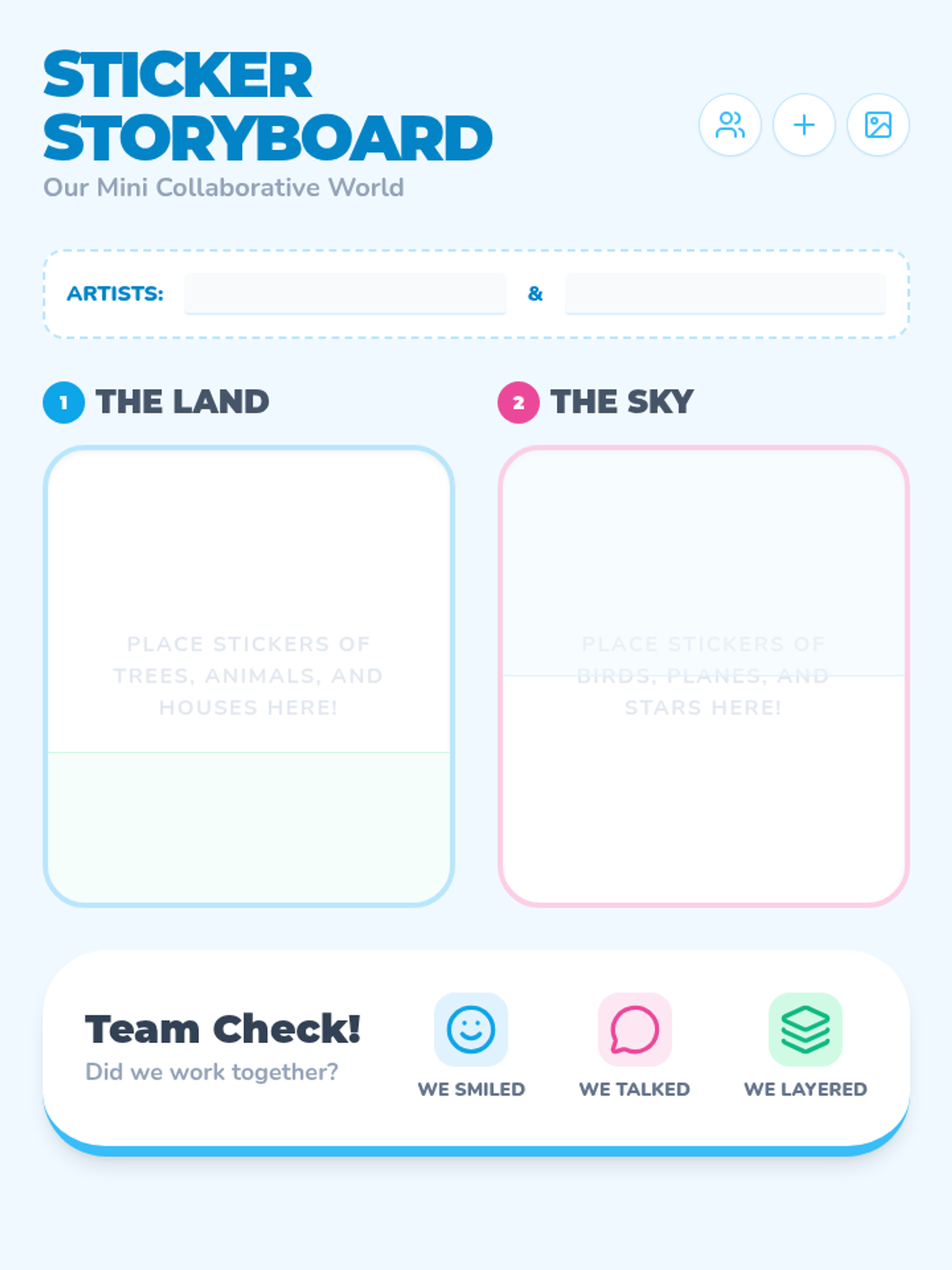
Students work together to fill a giant sky background with stickers, learning to layer and overlap ideas to create a cohesive scene.