Techniques for brainstorming, collaborative project management, and individual artistic expression. Guides students through the iterative creative process from initial concept to final execution.
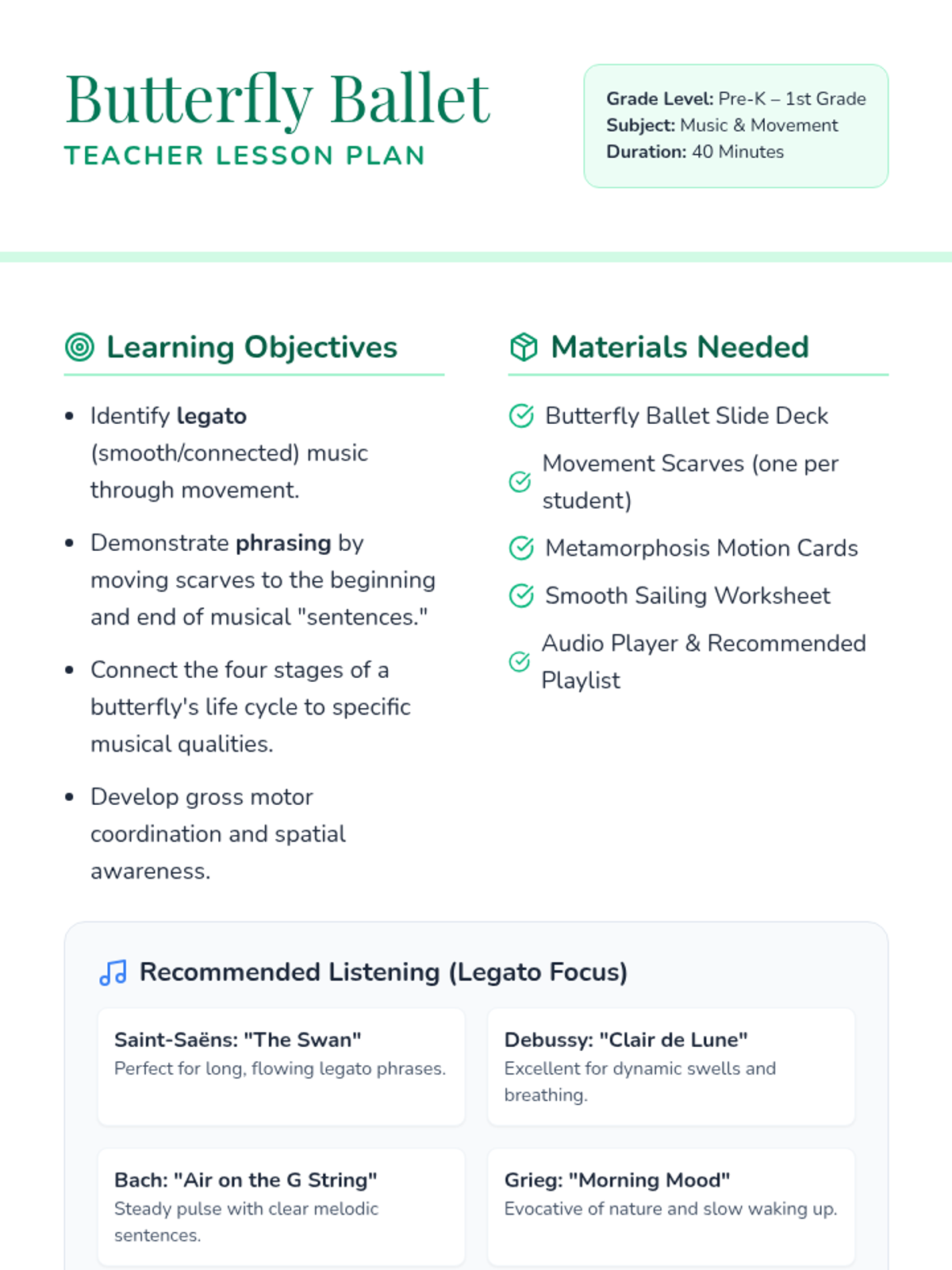
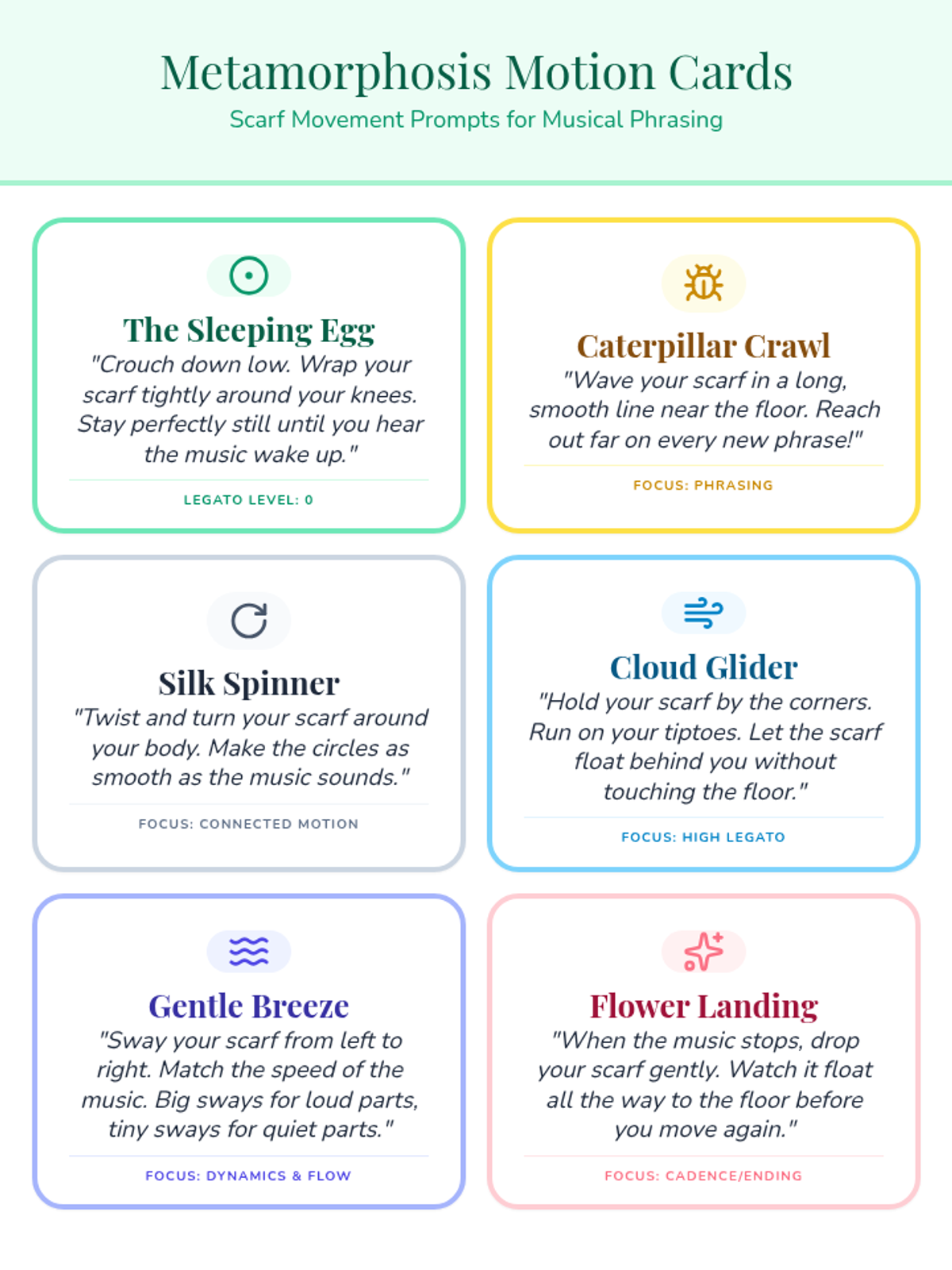
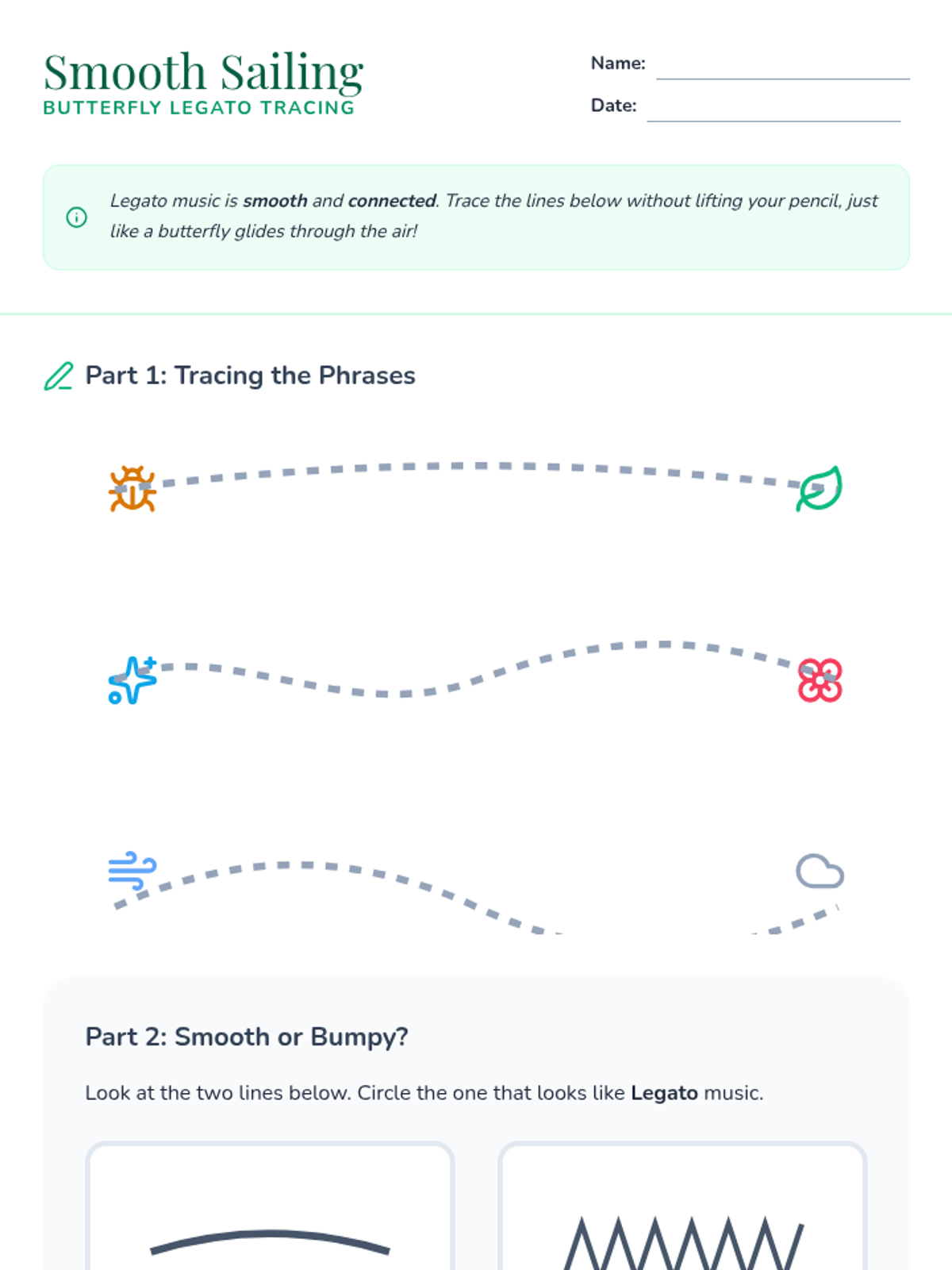
A music and movement lesson for early childhood students exploring phrasing and legato through the life cycle of a butterfly. Students use scarves to interpret smooth musical lines while learning about metamorphosis.
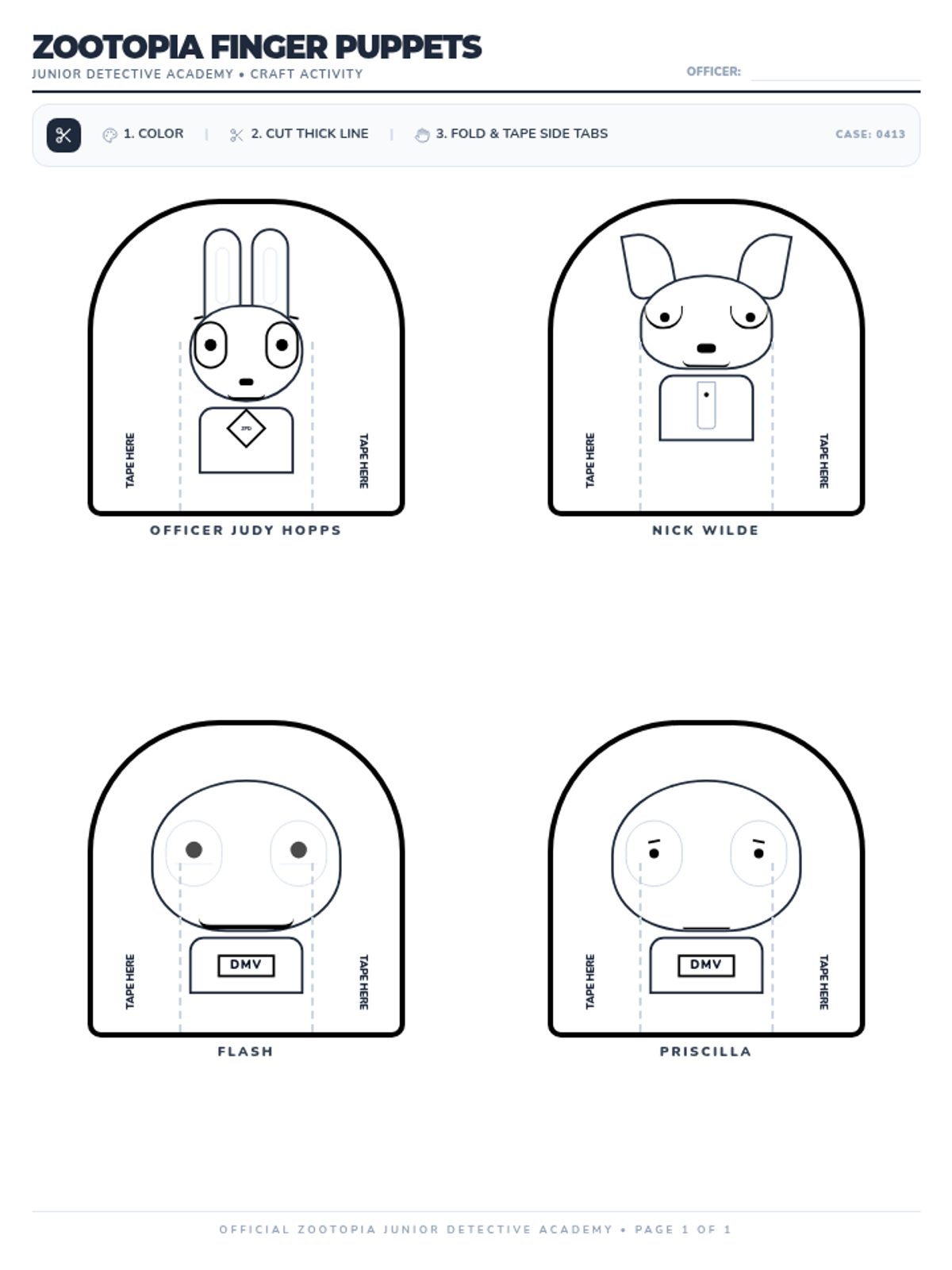
A creative craft lesson where students color and create their own finger puppets of favorite Zootopia characters to practice storytelling and role-playing.
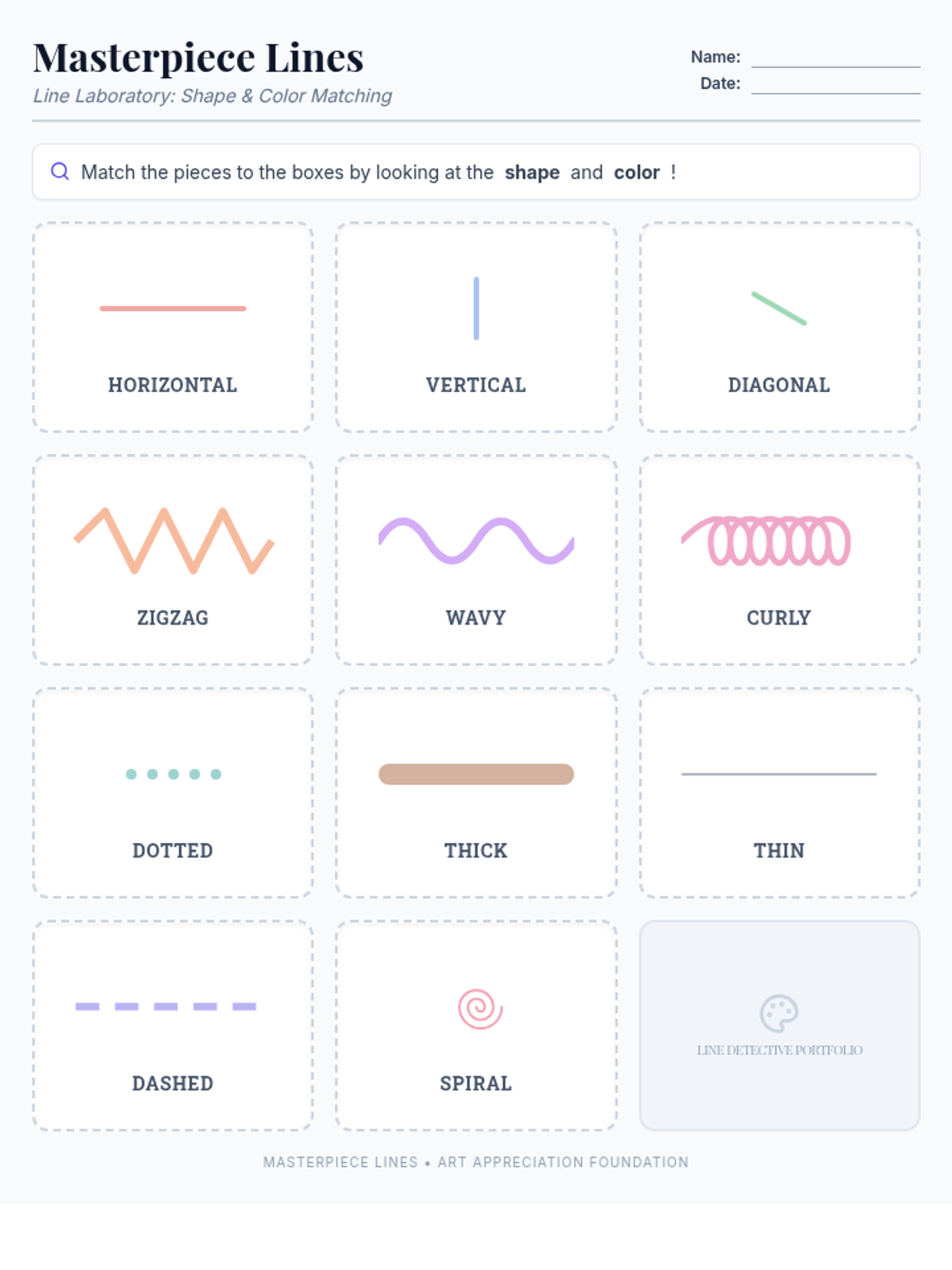
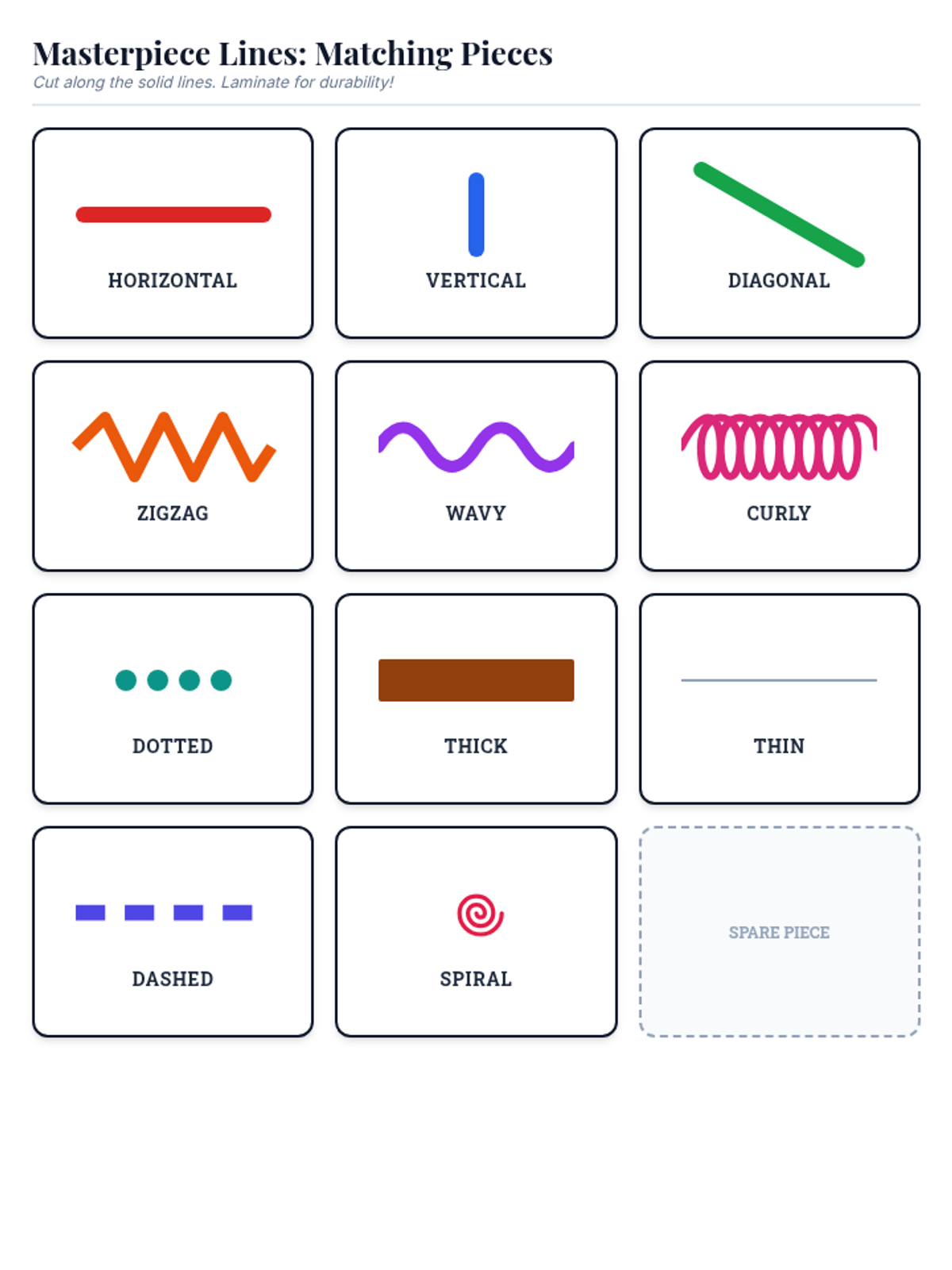
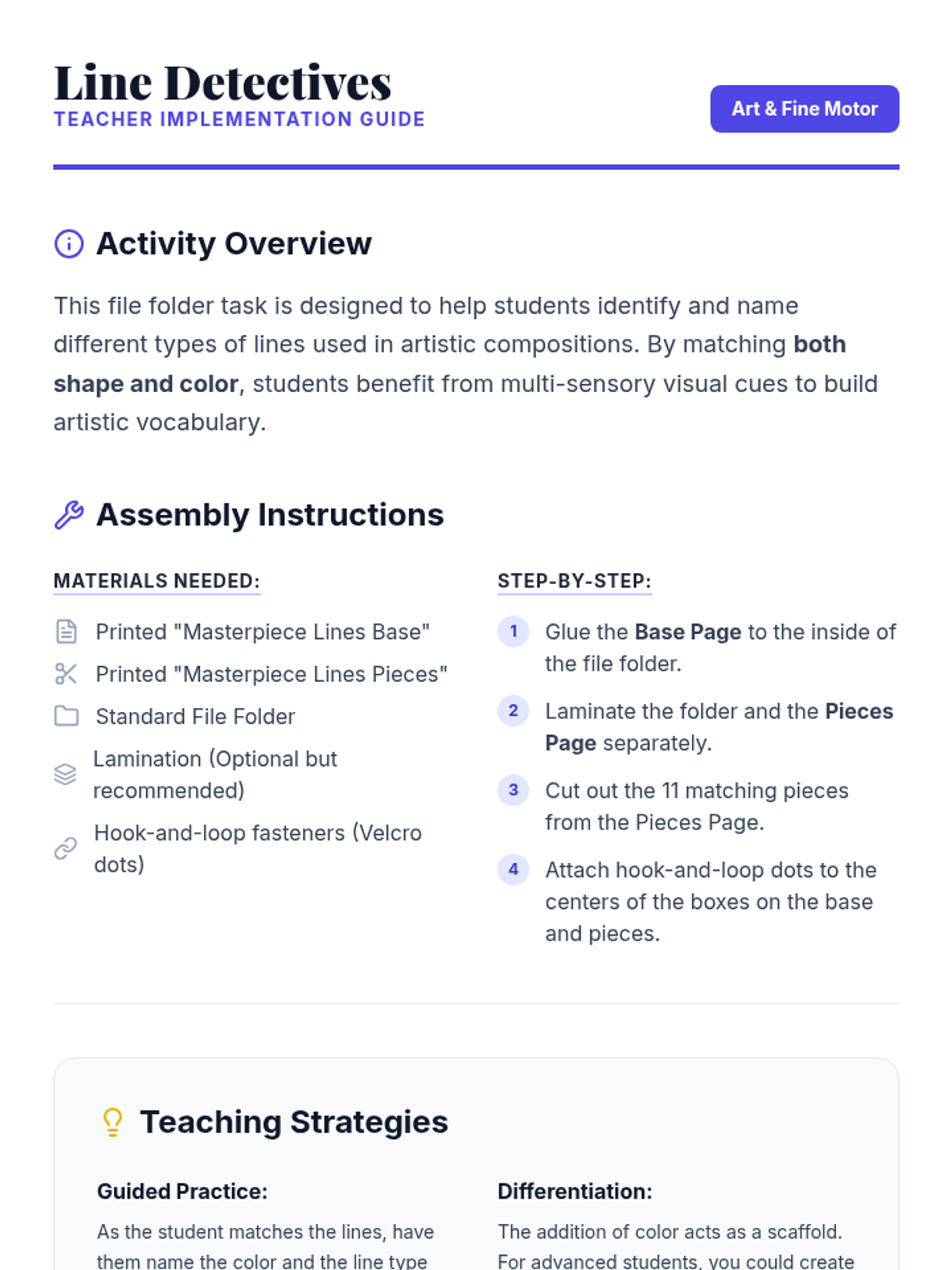
A hands-on activity for students to identify and match various line types used in art, from basic directional lines to complex decorative patterns.
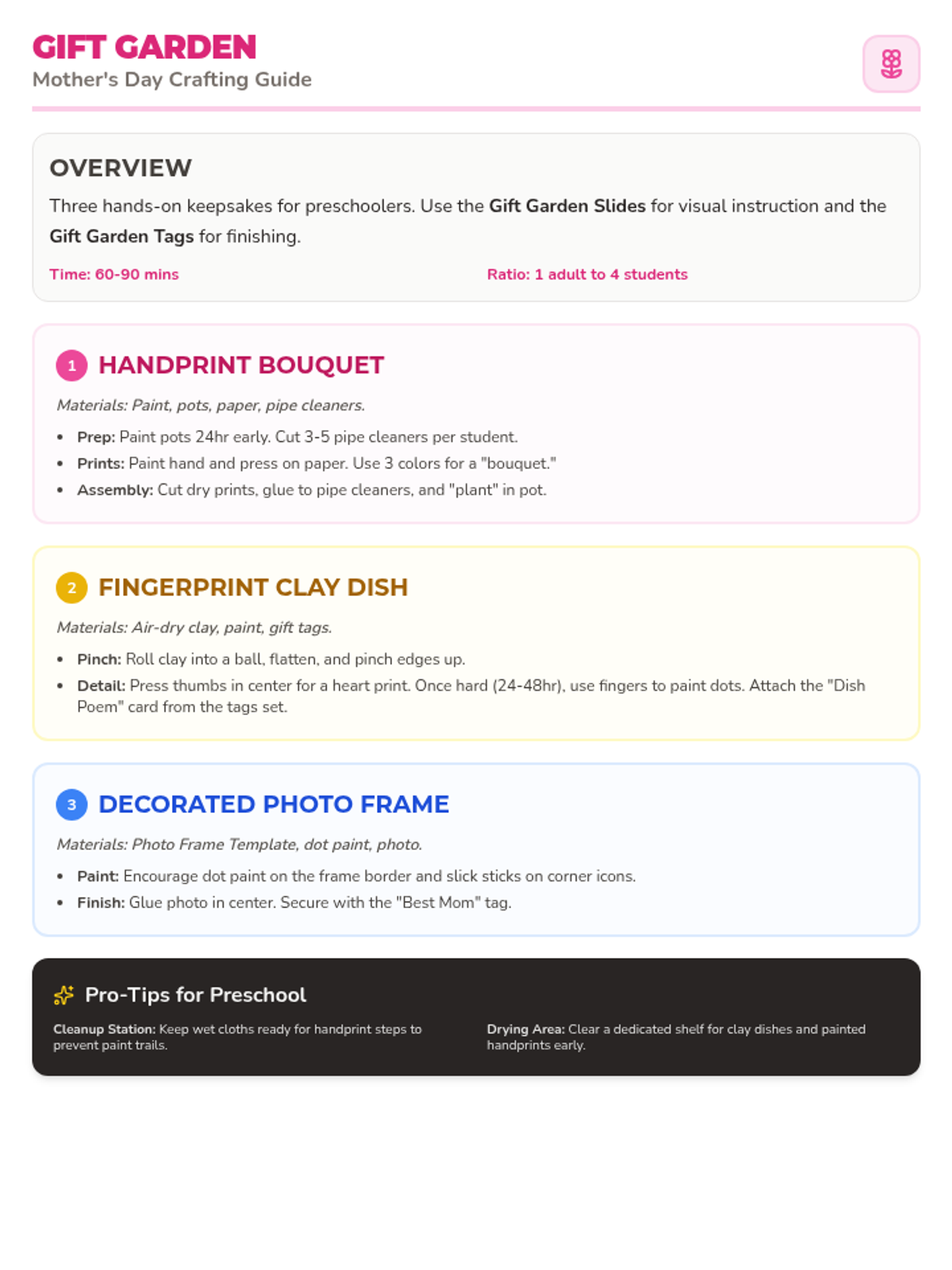
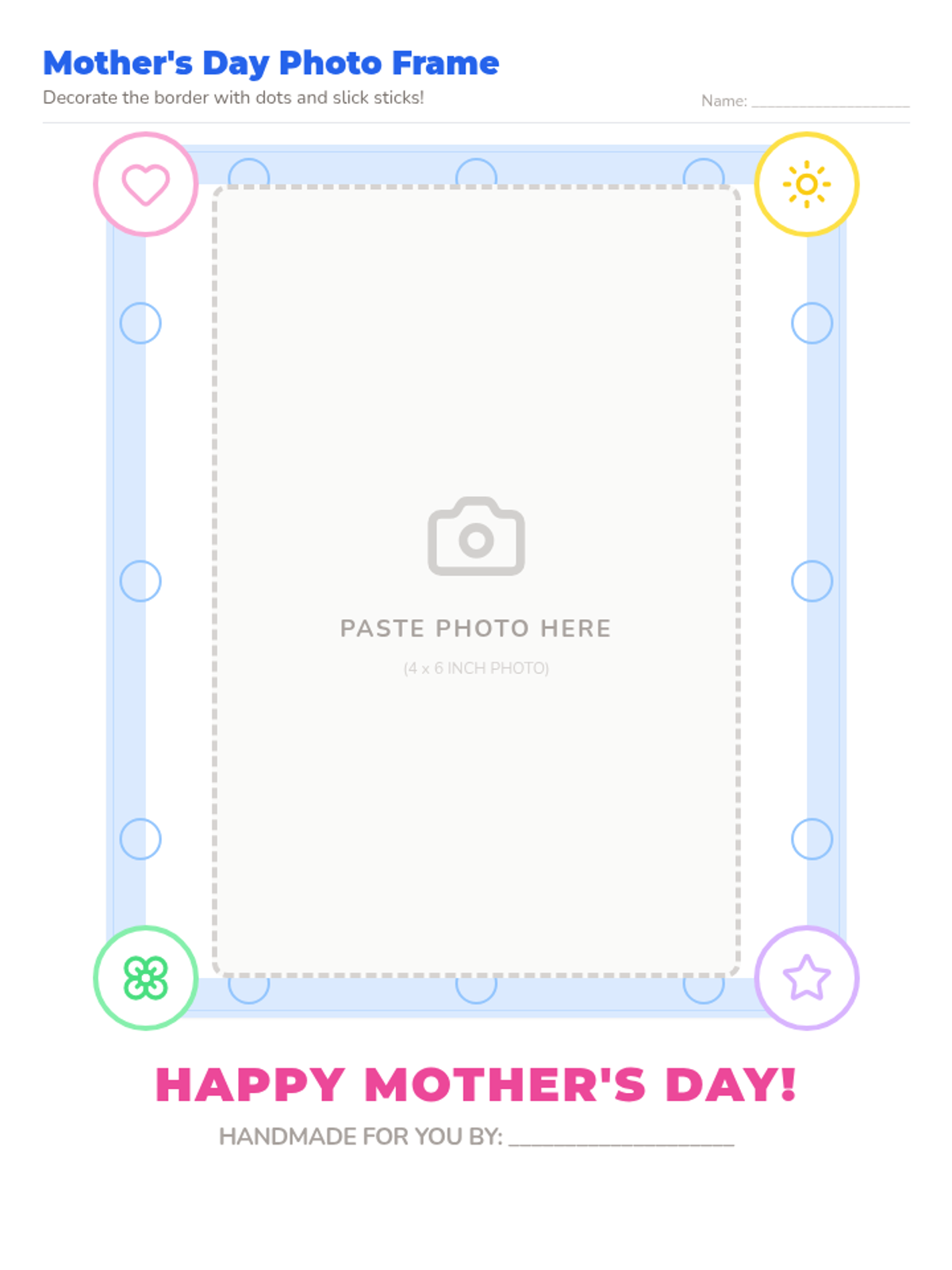
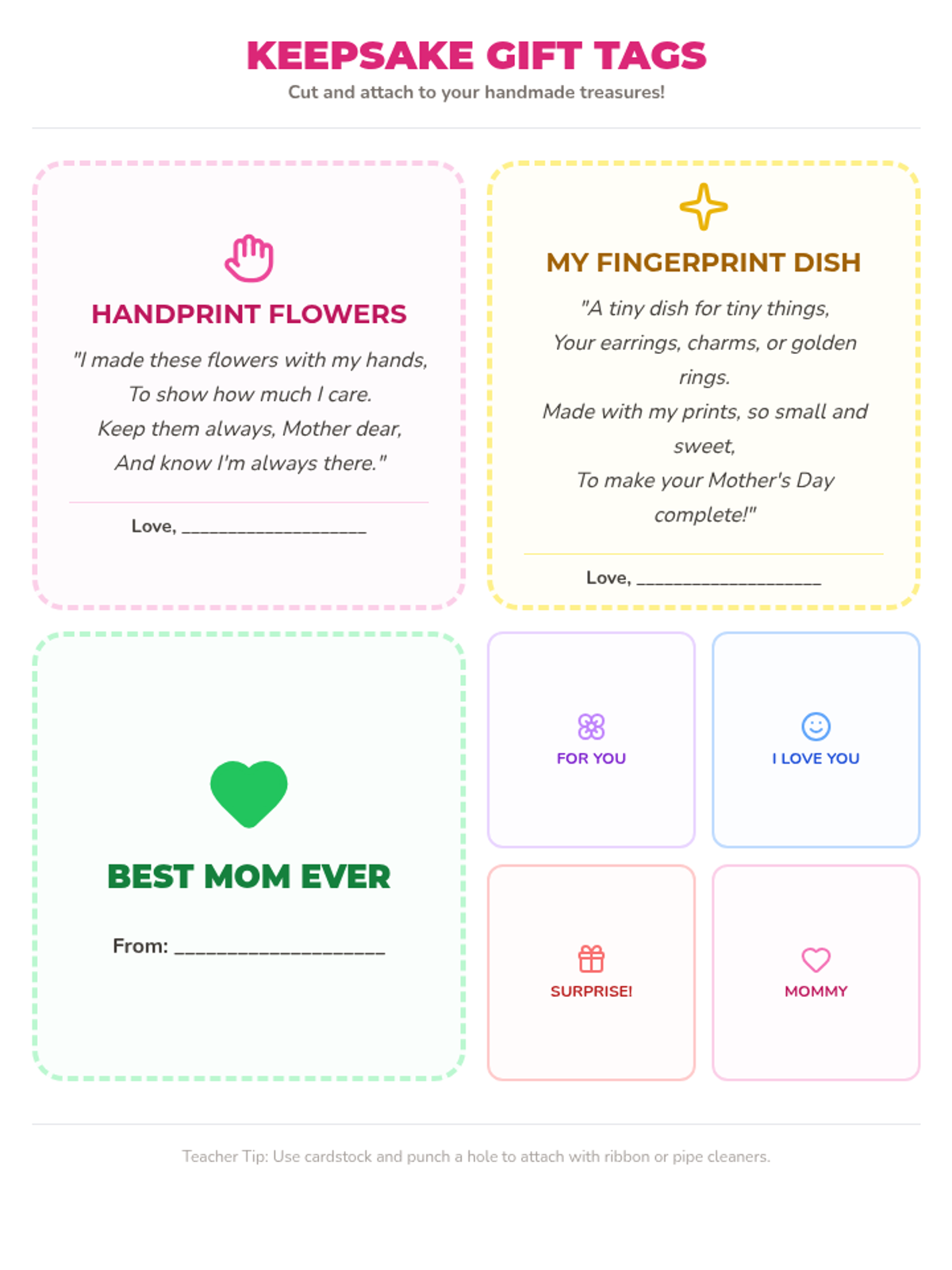
A collection of three hands-on Mother's Day crafts designed specifically for preschool-aged children using paint, clay, and paper. Students will create personalized keepsakes including a handprint bouquet, a fingerprint dish, and a decorated photo frame.
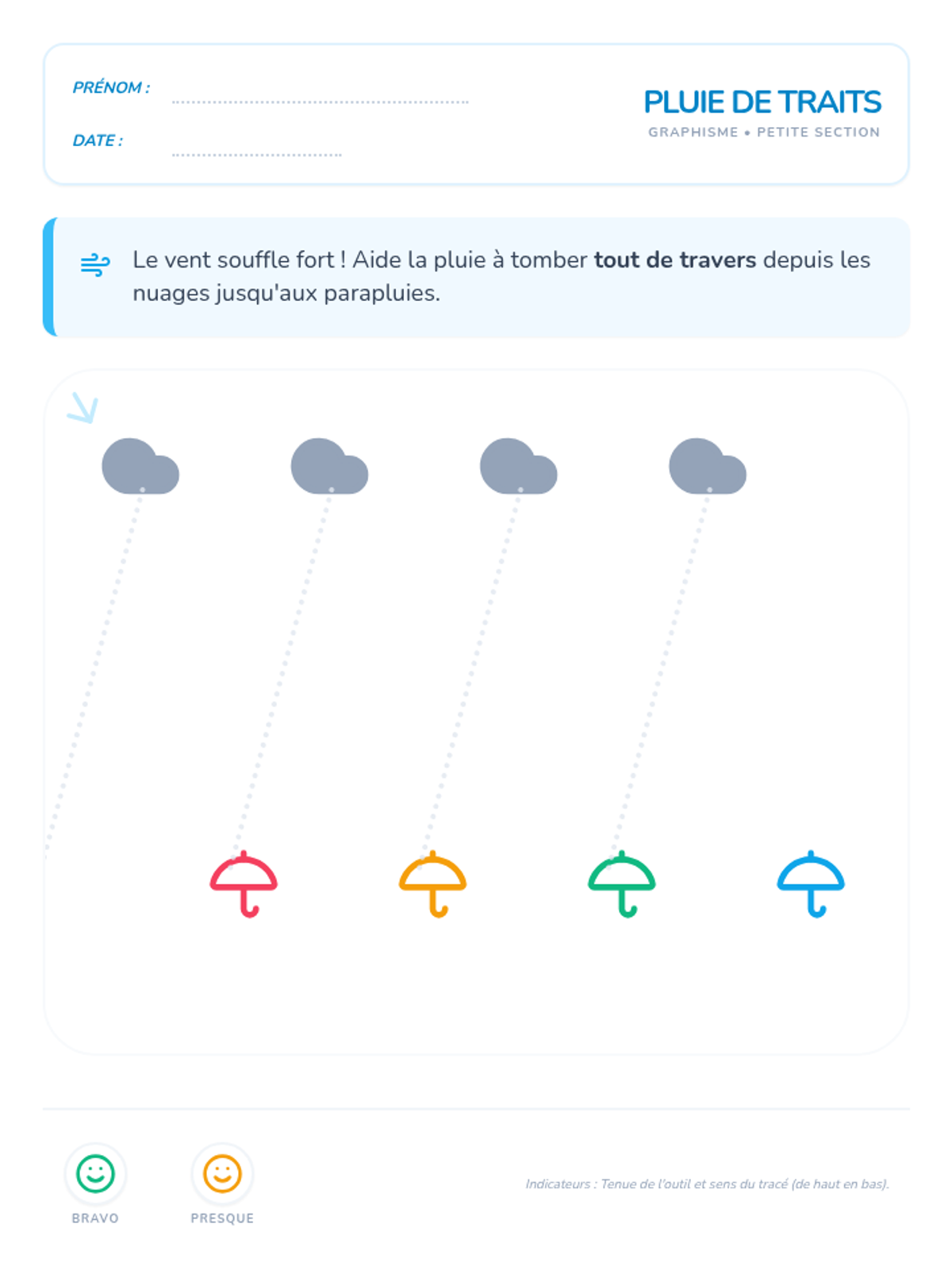
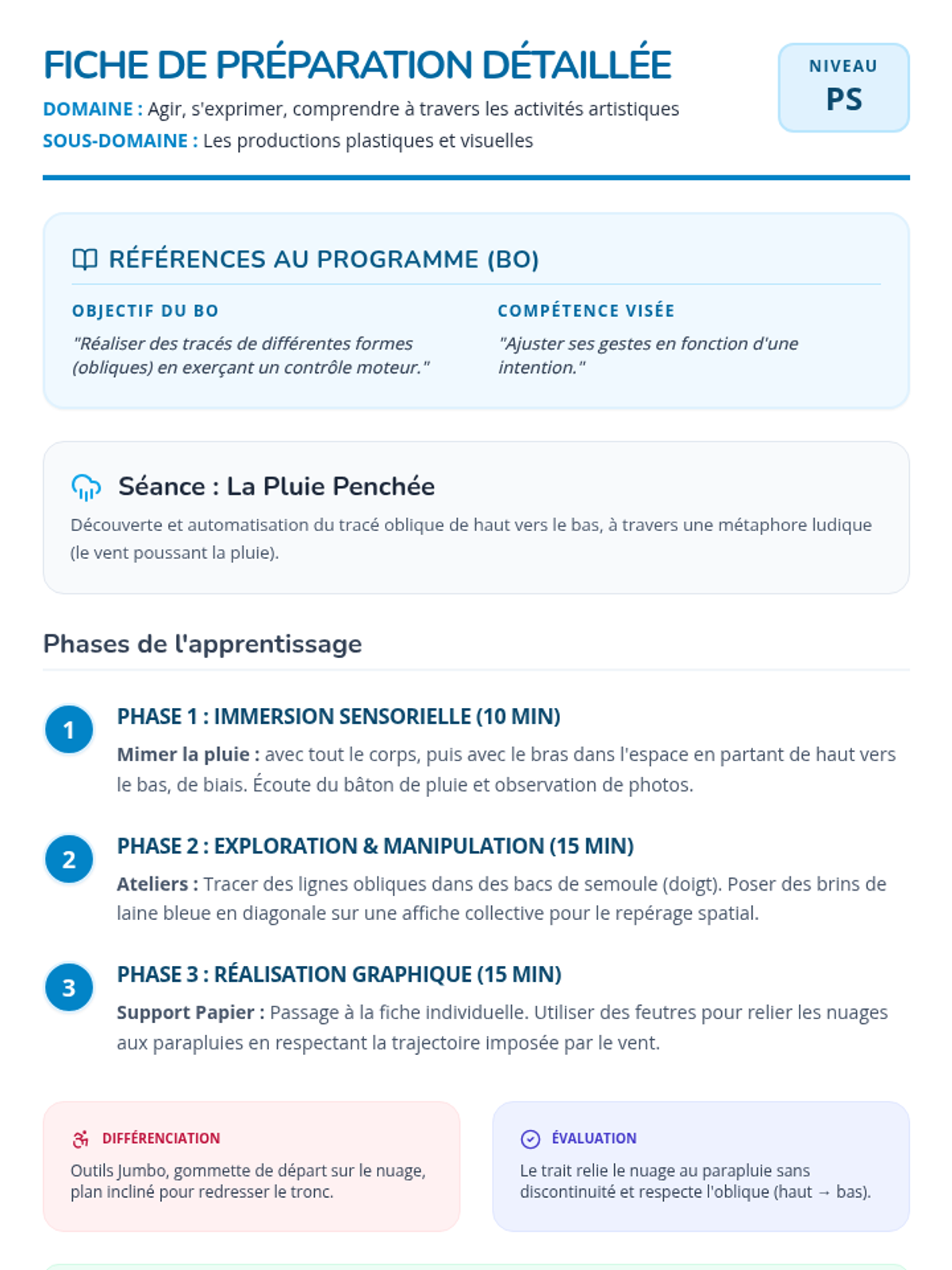
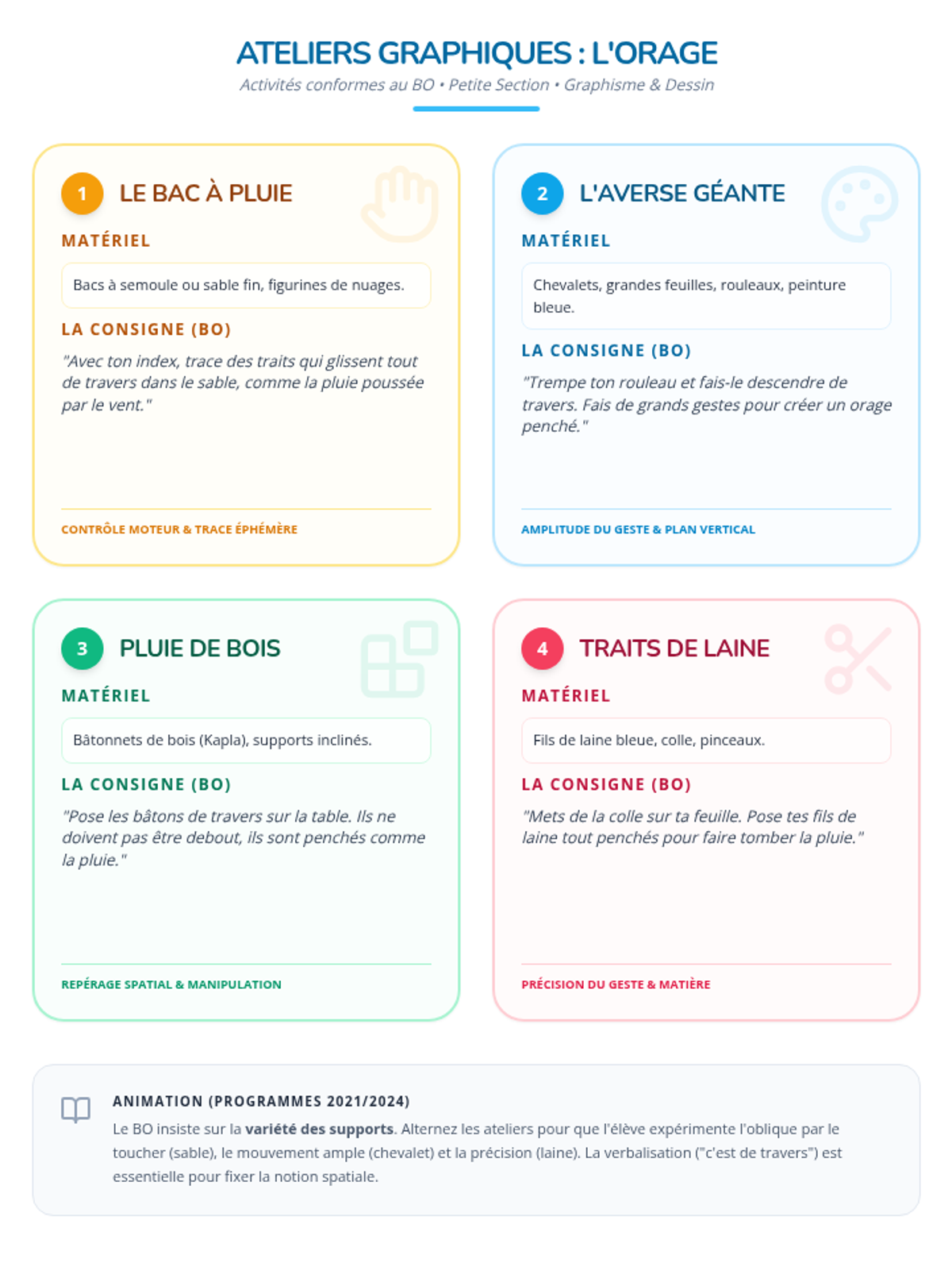
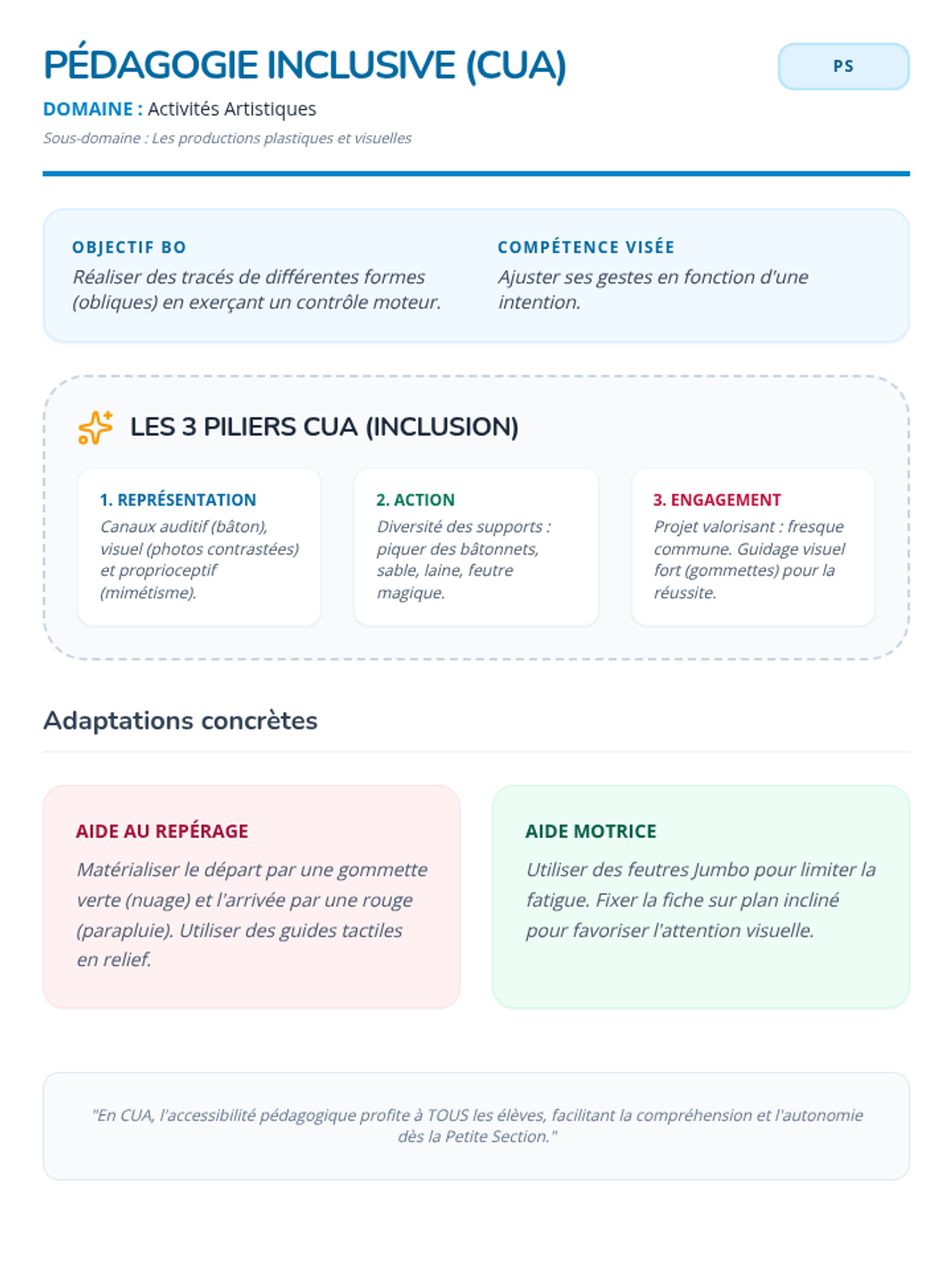
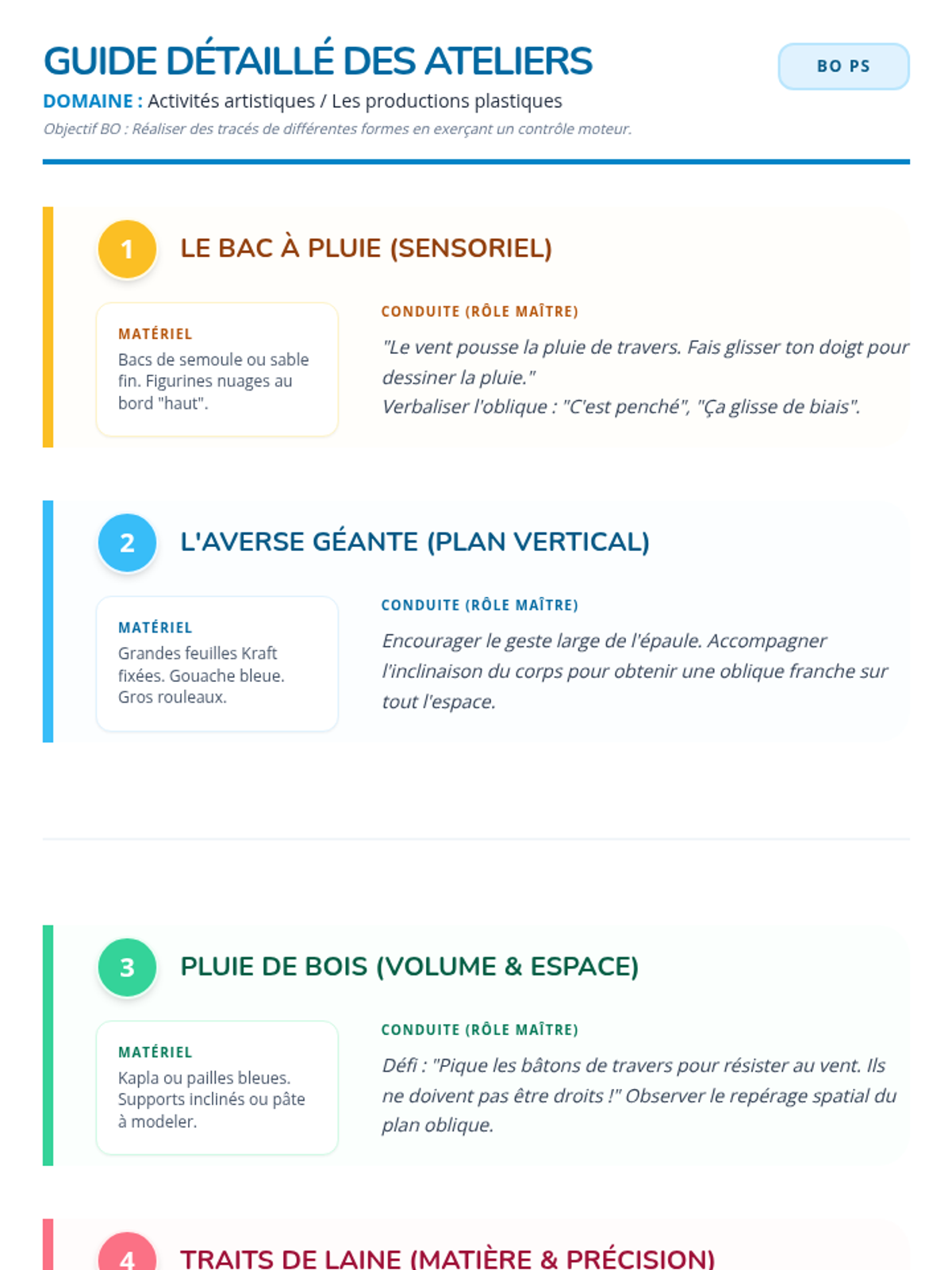
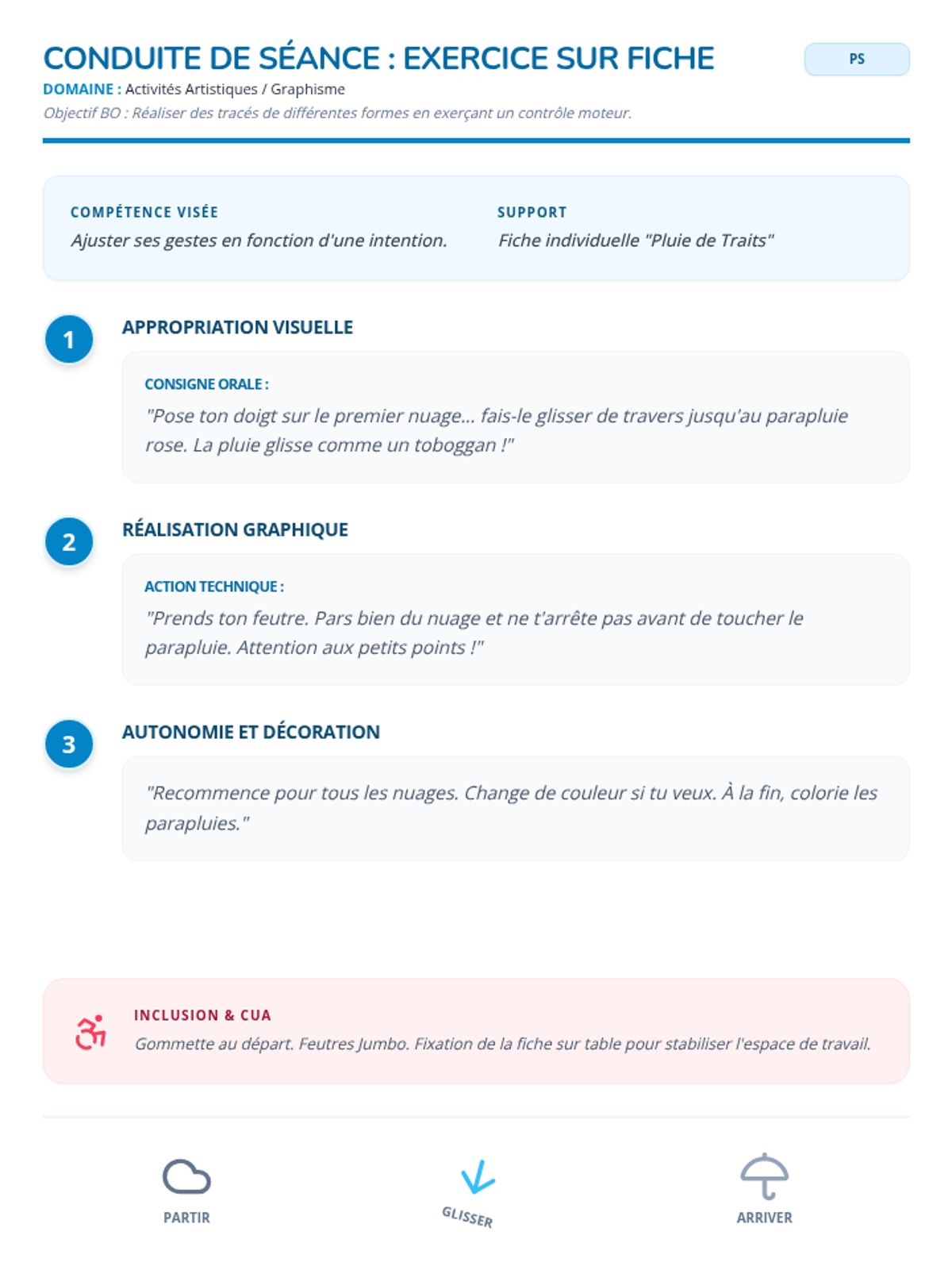
Une séance complète pour apprendre à tracer des lignes obliques sur le thème de la pluie, adaptée aux élèves de Petite Section. Comprend une fiche de préparation détaillée et un support d'exercice pratique.
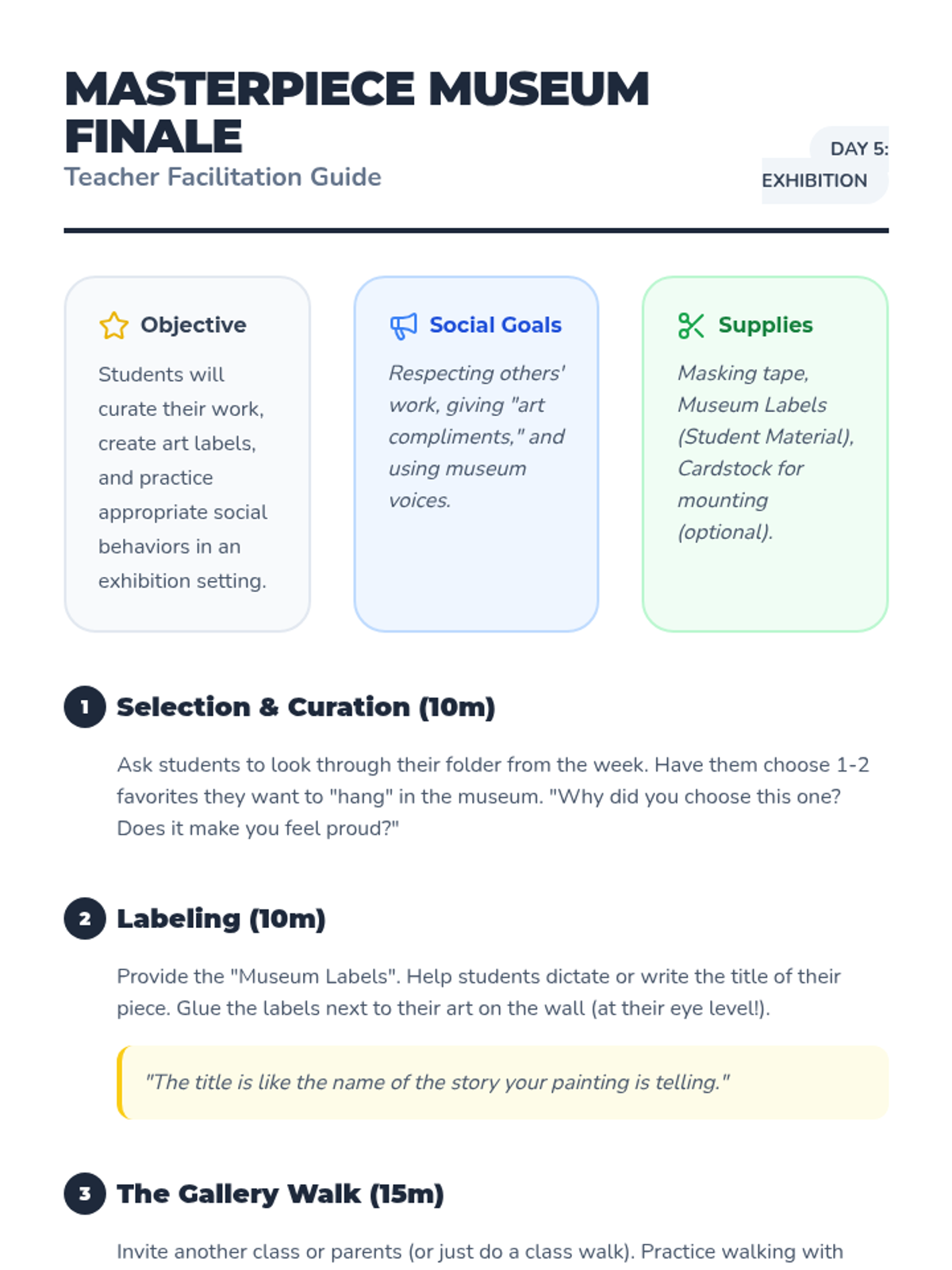
Learning about art galleries and preparing a final class exhibition of the week's creations.
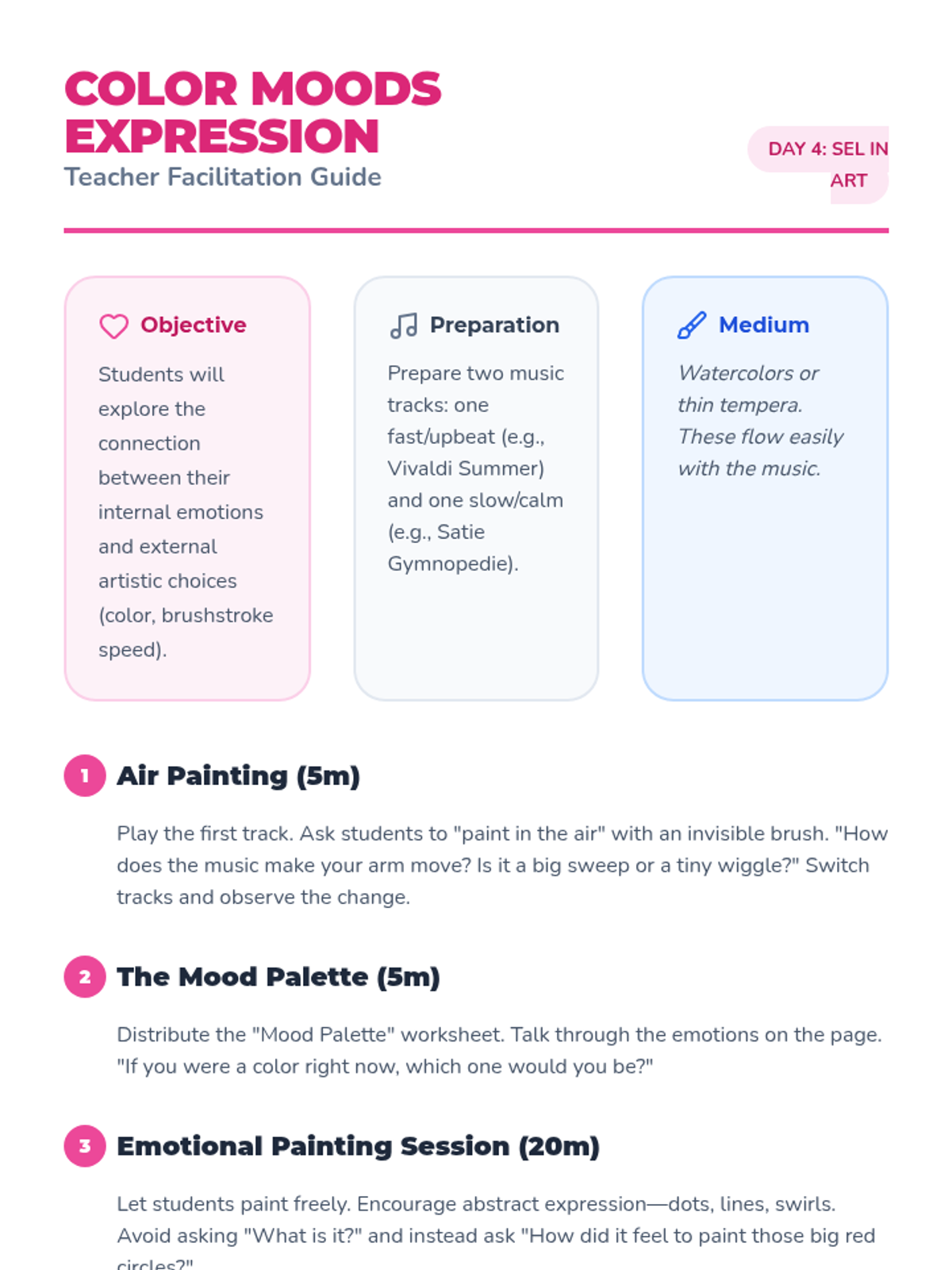
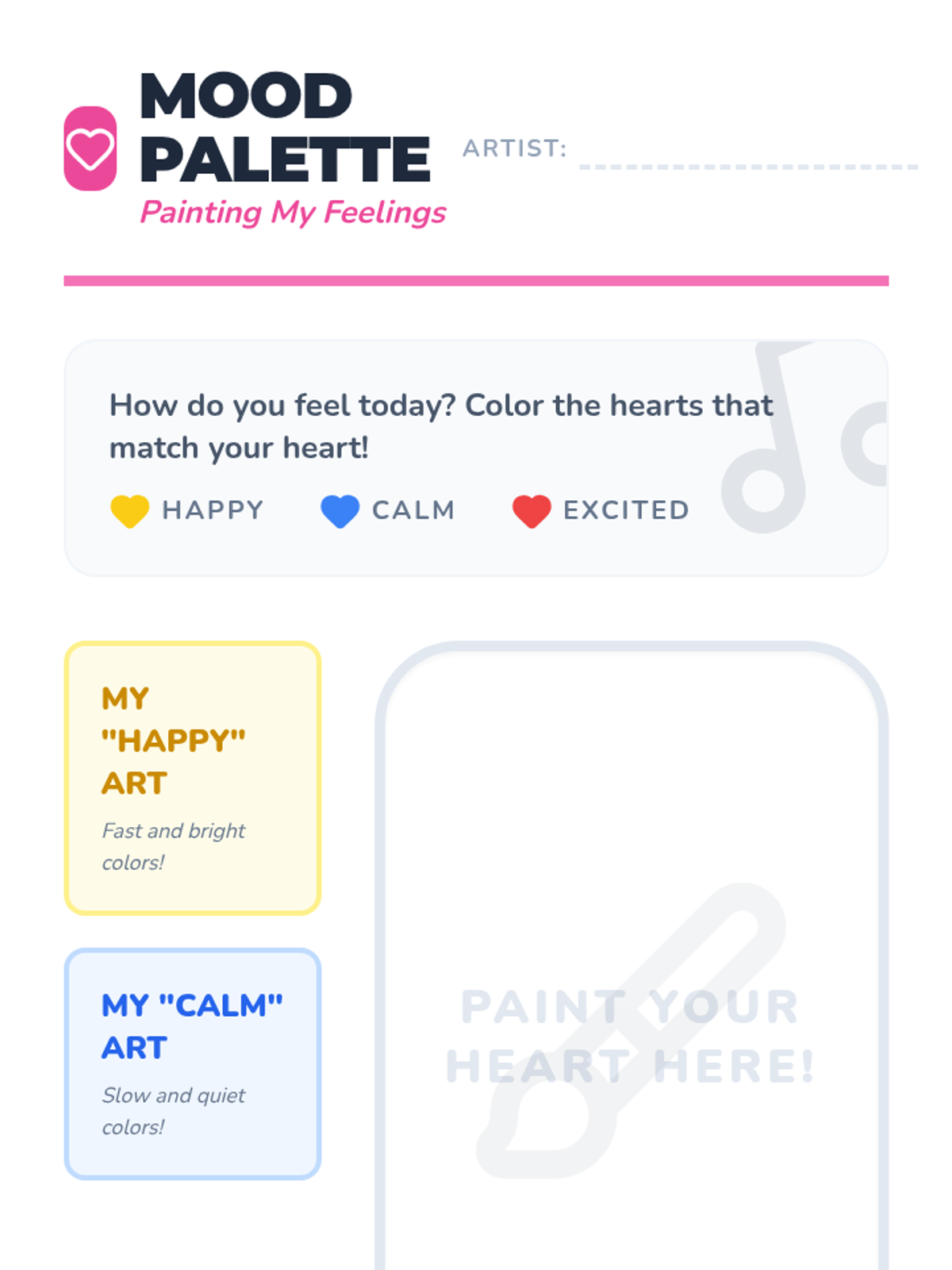
Connecting colors to feelings and exploring how brushstrokes can express different moods.
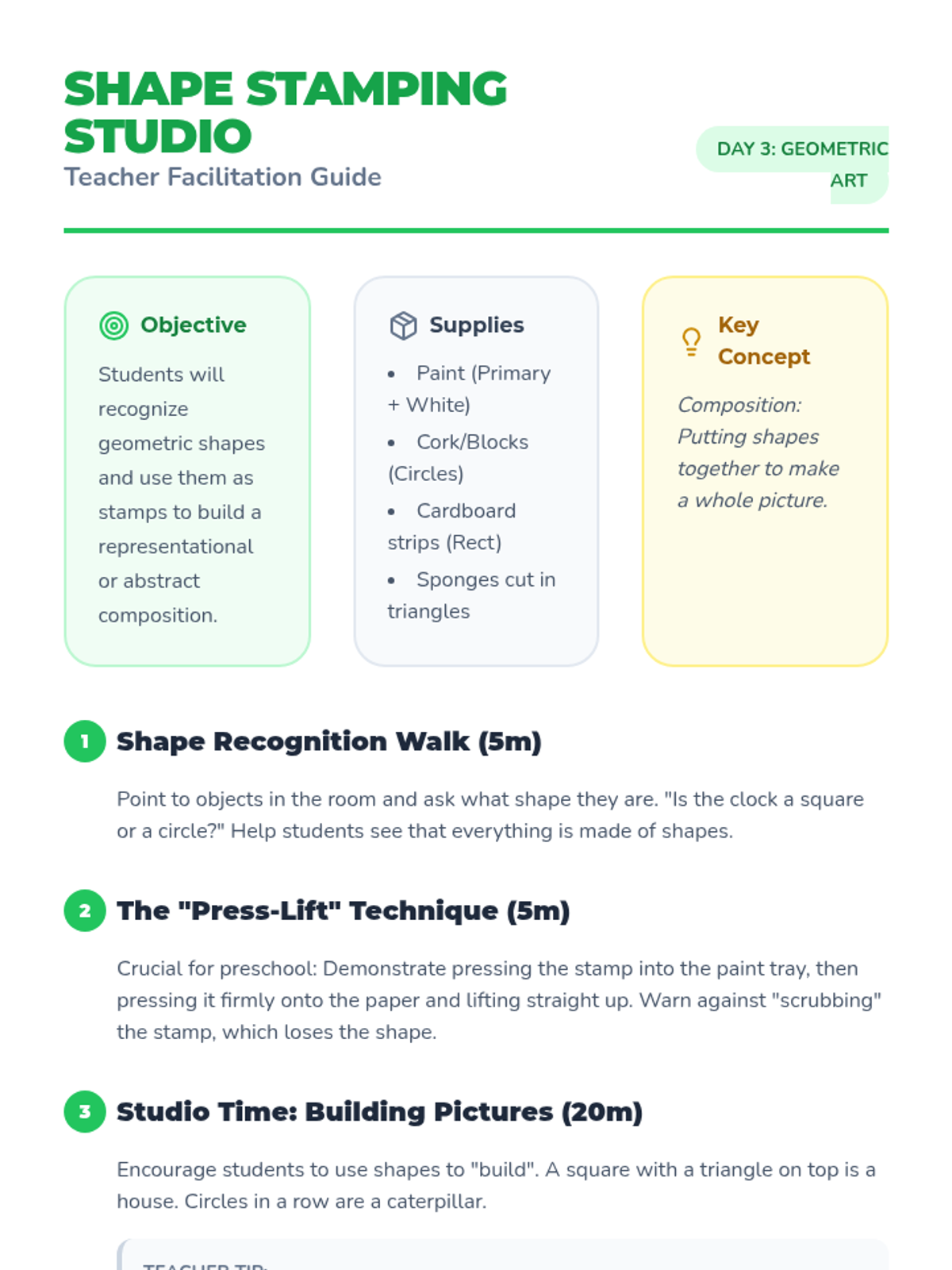
Using geometric shapes and stamping techniques to create structured art compositions.
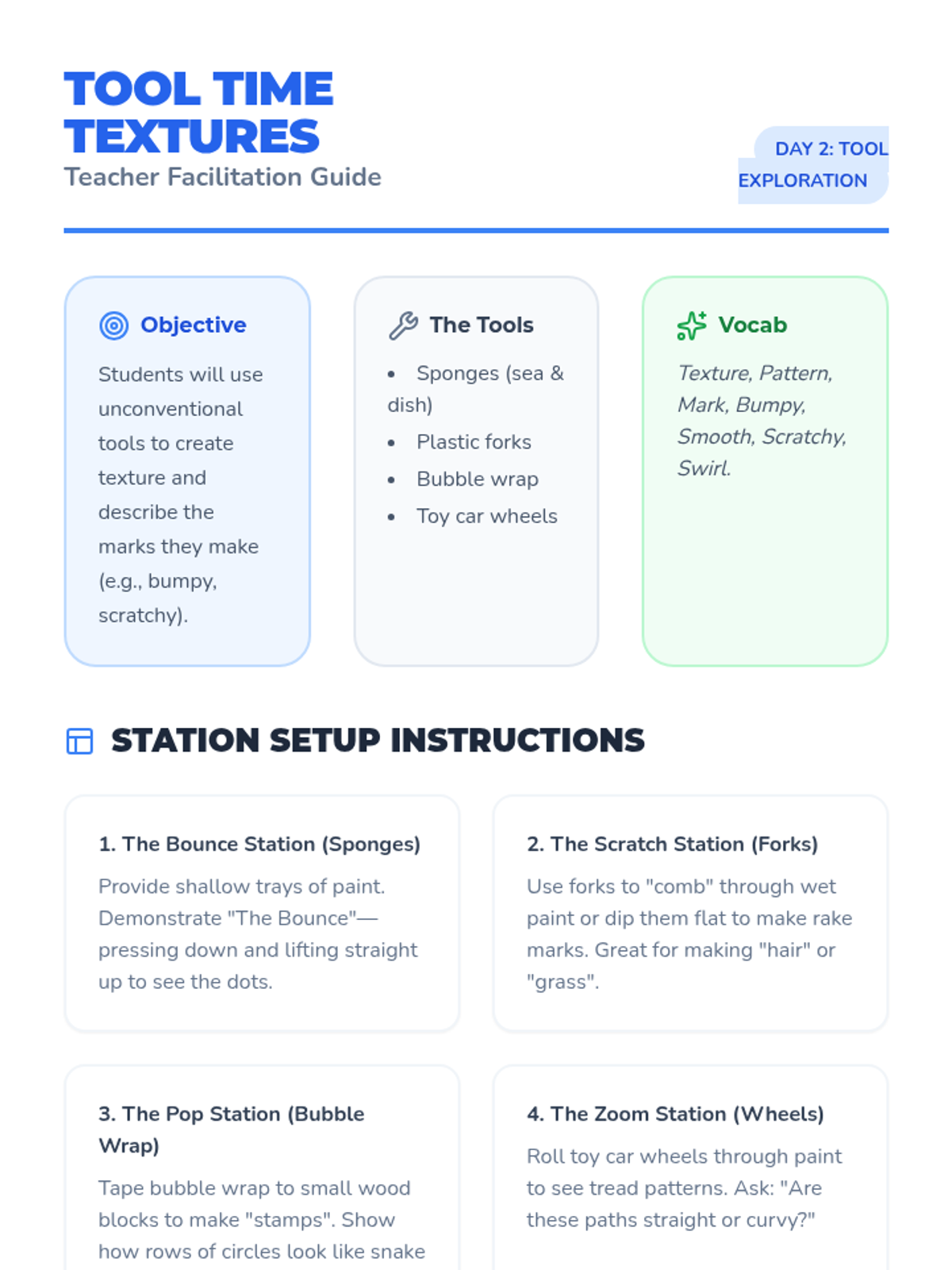
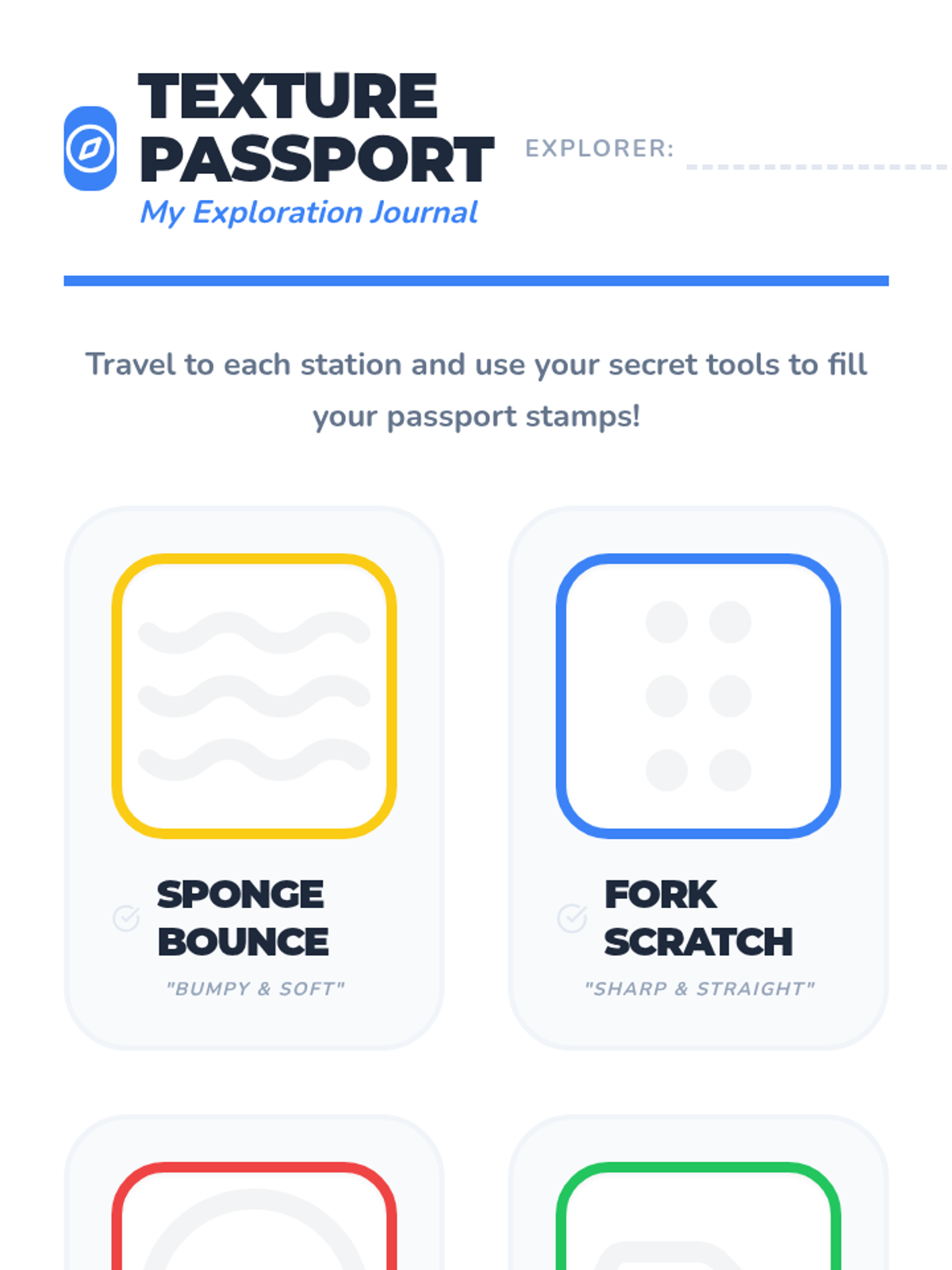
Exploring painting with unconventional tools like sponges, forks, and bubble wrap to create varied textures.
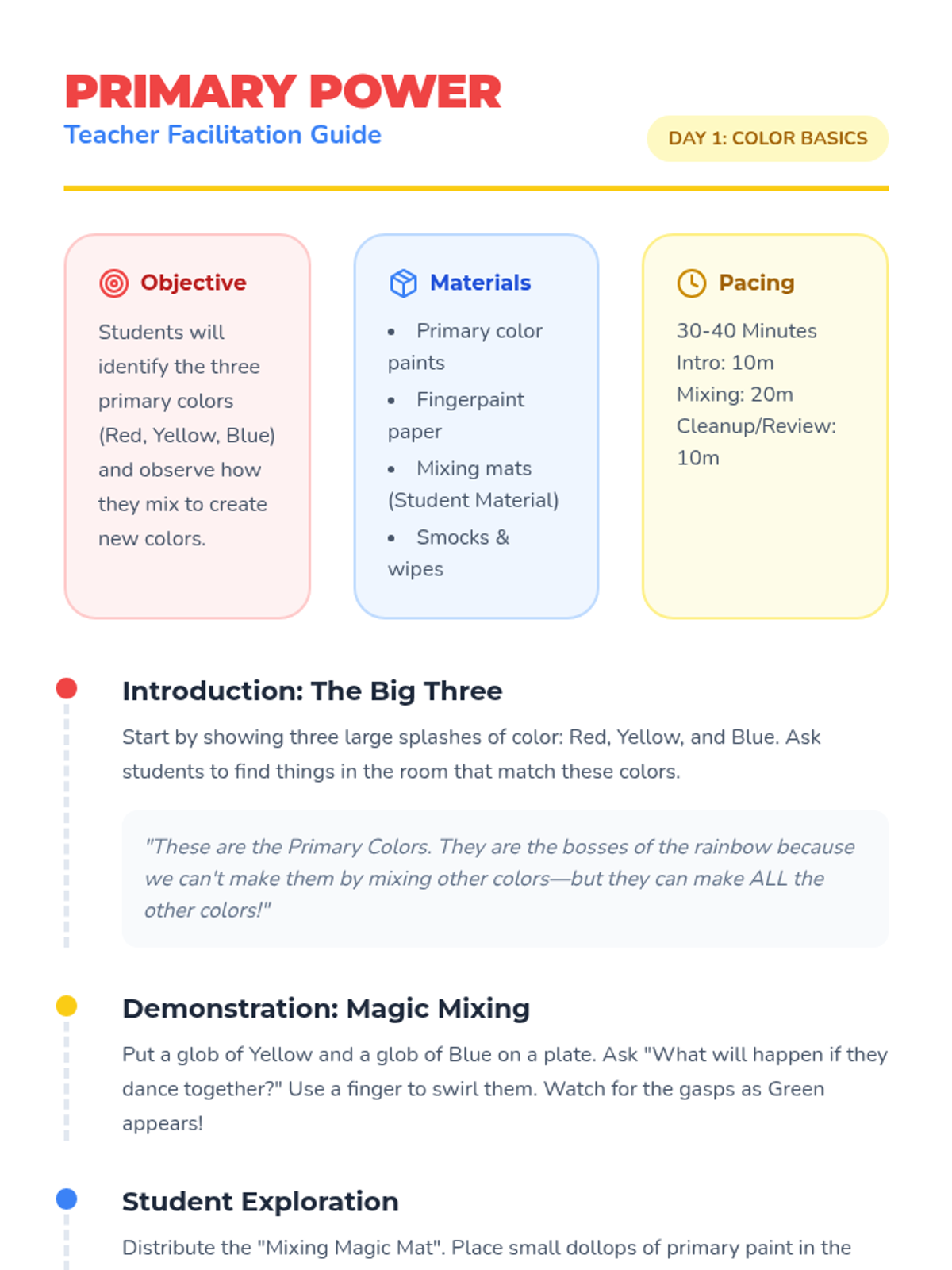
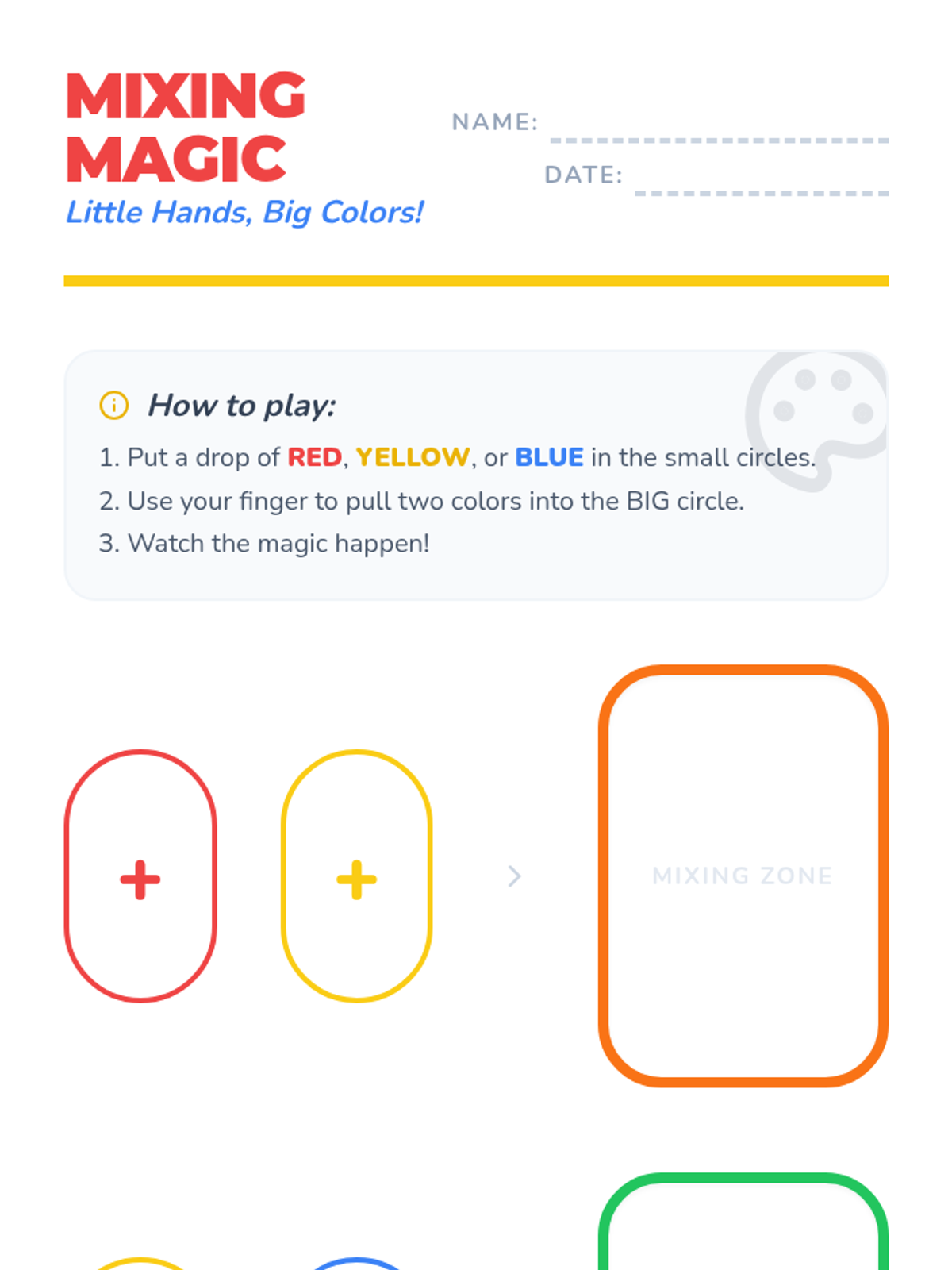
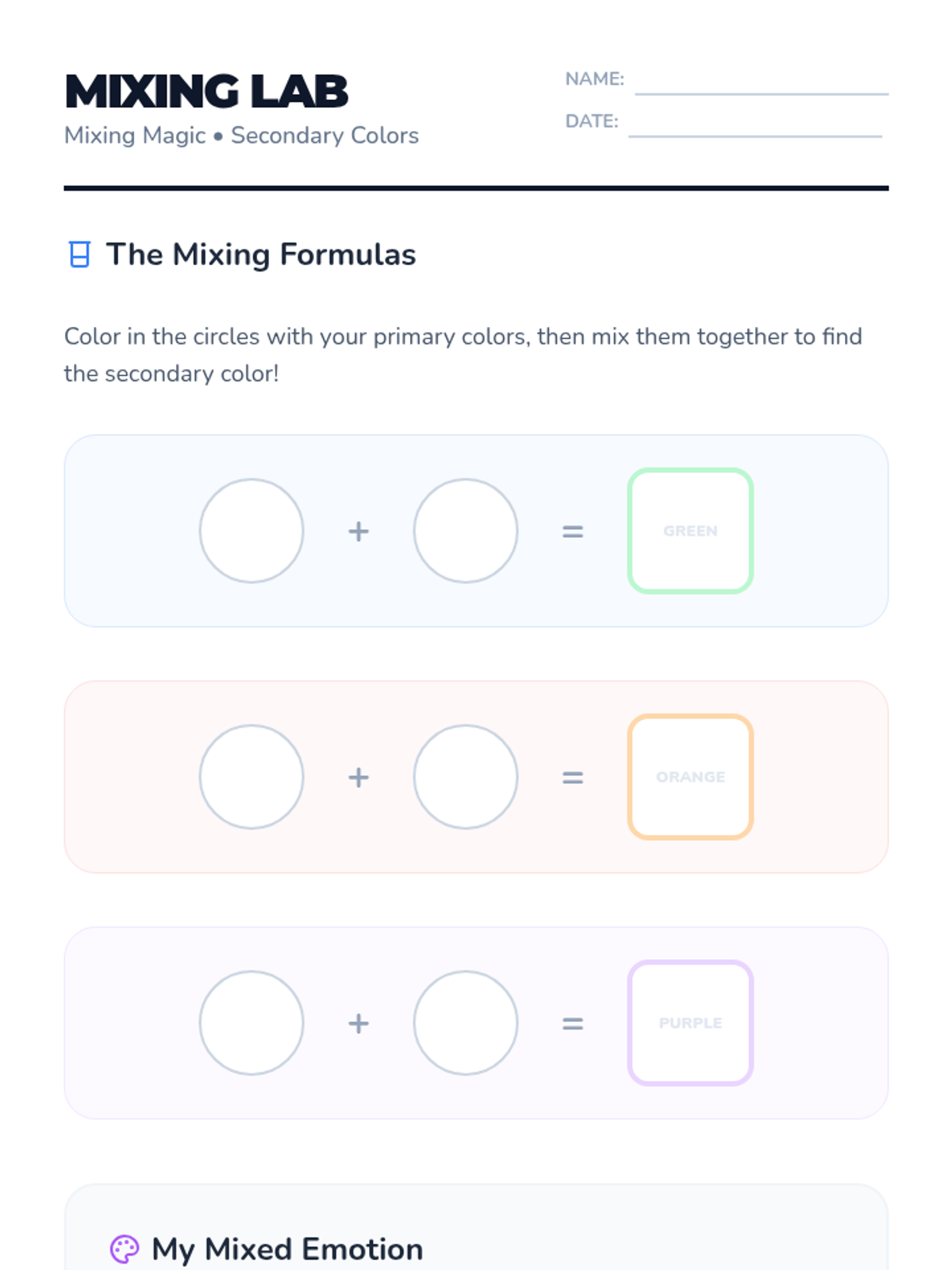
Introducing the building blocks of all colors: Red, Yellow, and Blue through hands-on mixing exploration.
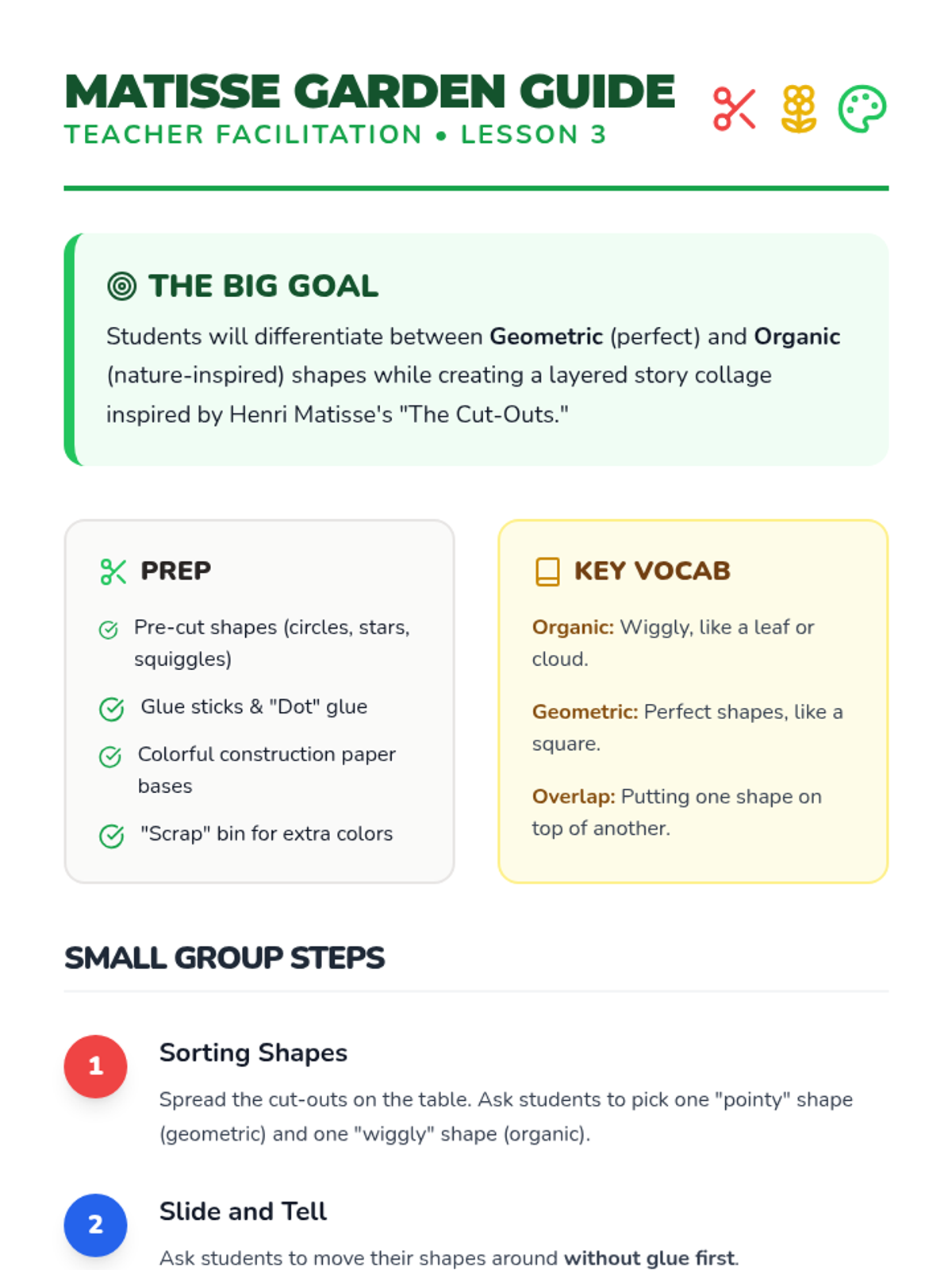
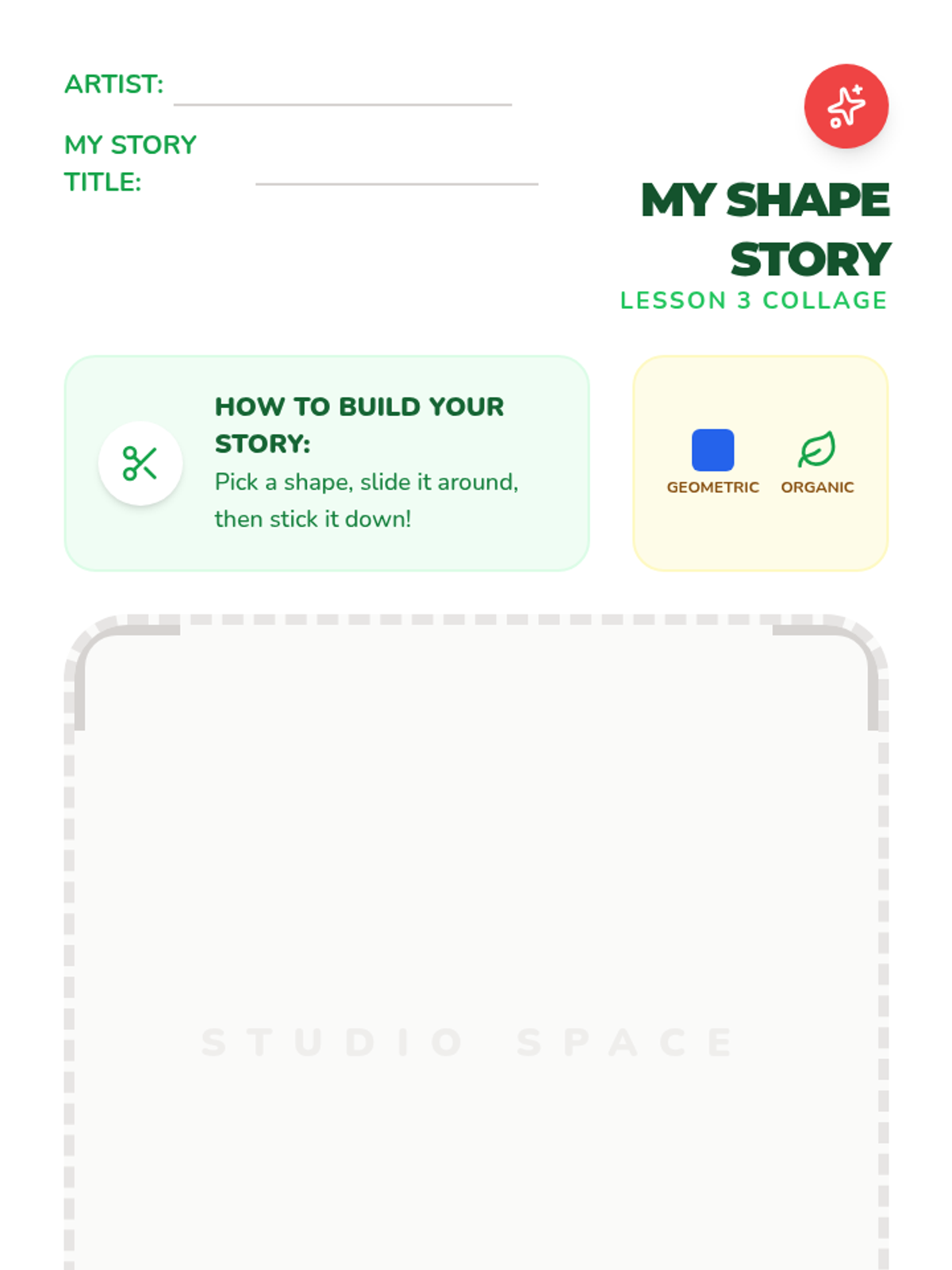
Students create vibrant collages using geometric and organic shapes, taking inspiration from Henri Matisse's famous 'cut-outs' to tell visual stories.
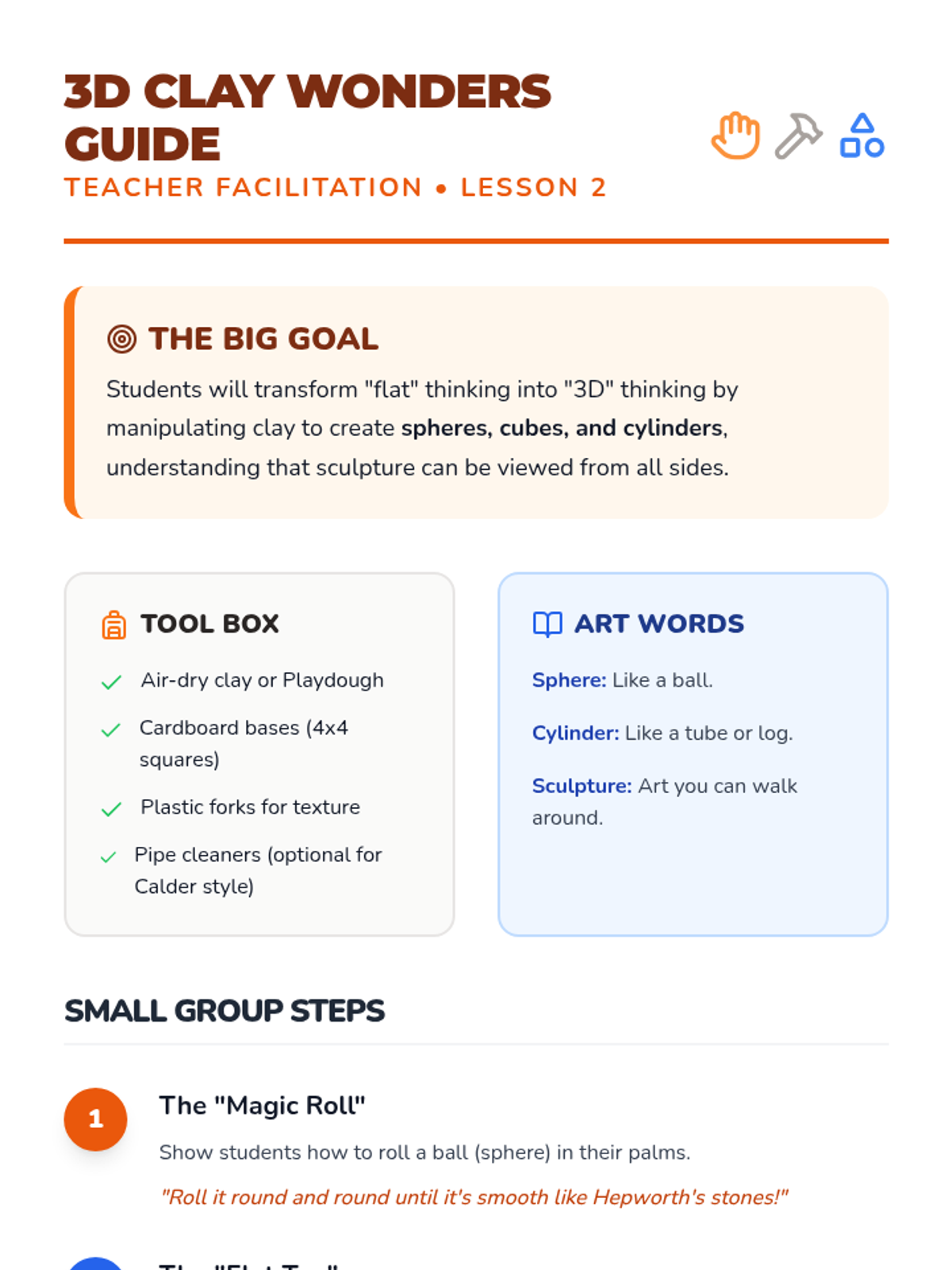
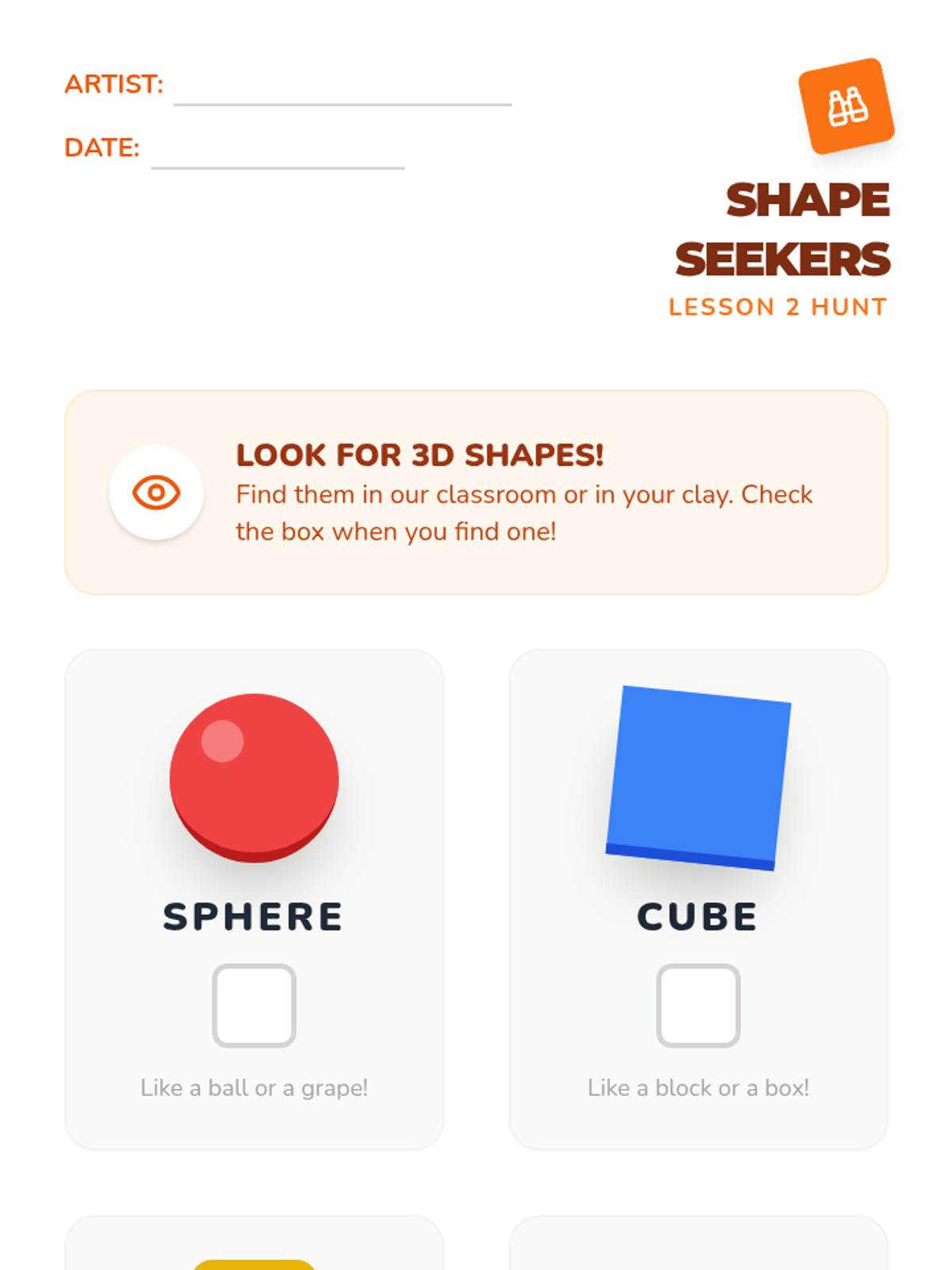
Students transform 2D shapes into 3D forms using clay and secondary materials, inspired by the abstract sculptures of Barbara Hepworth and Alexander Calder.
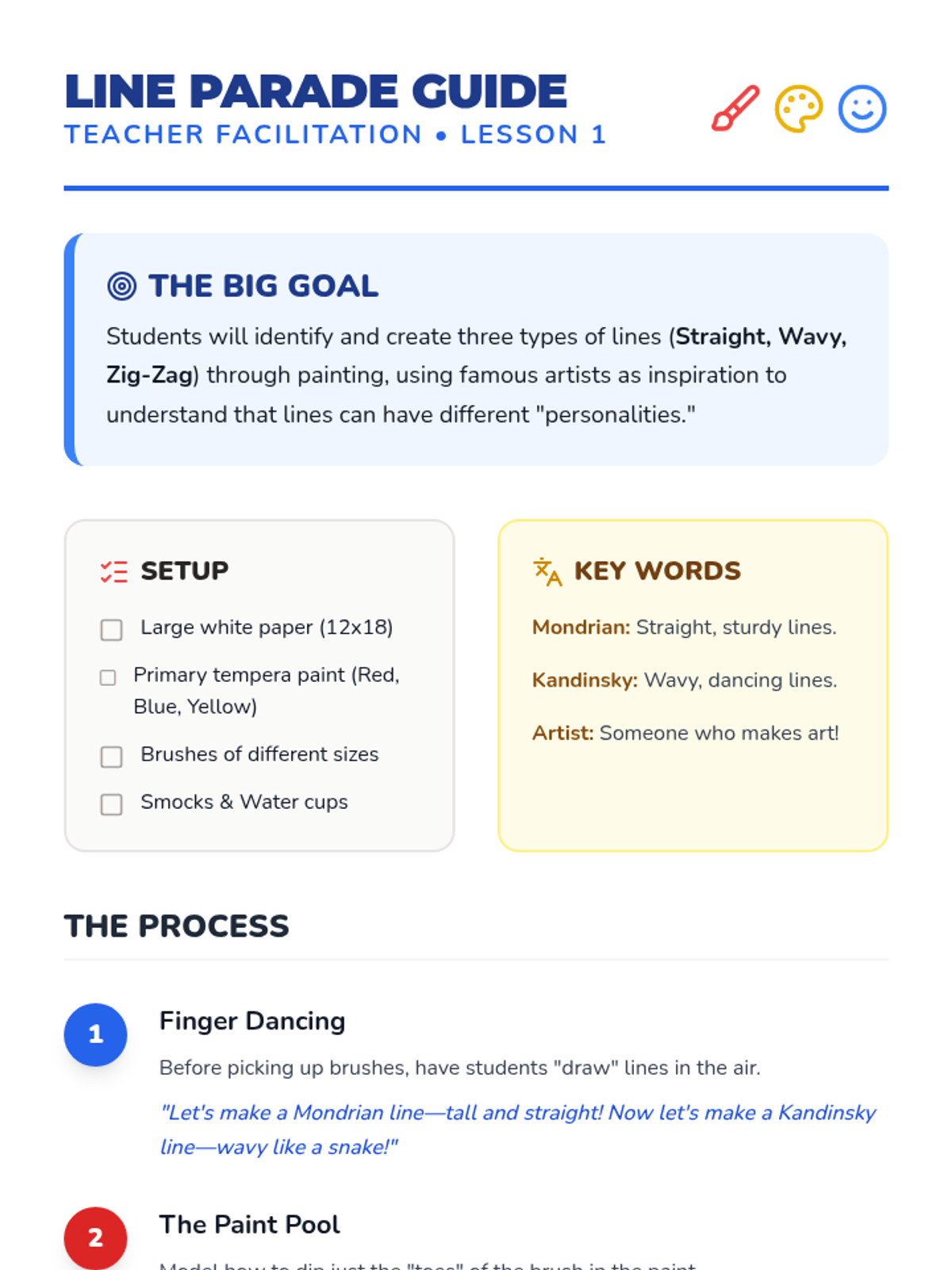
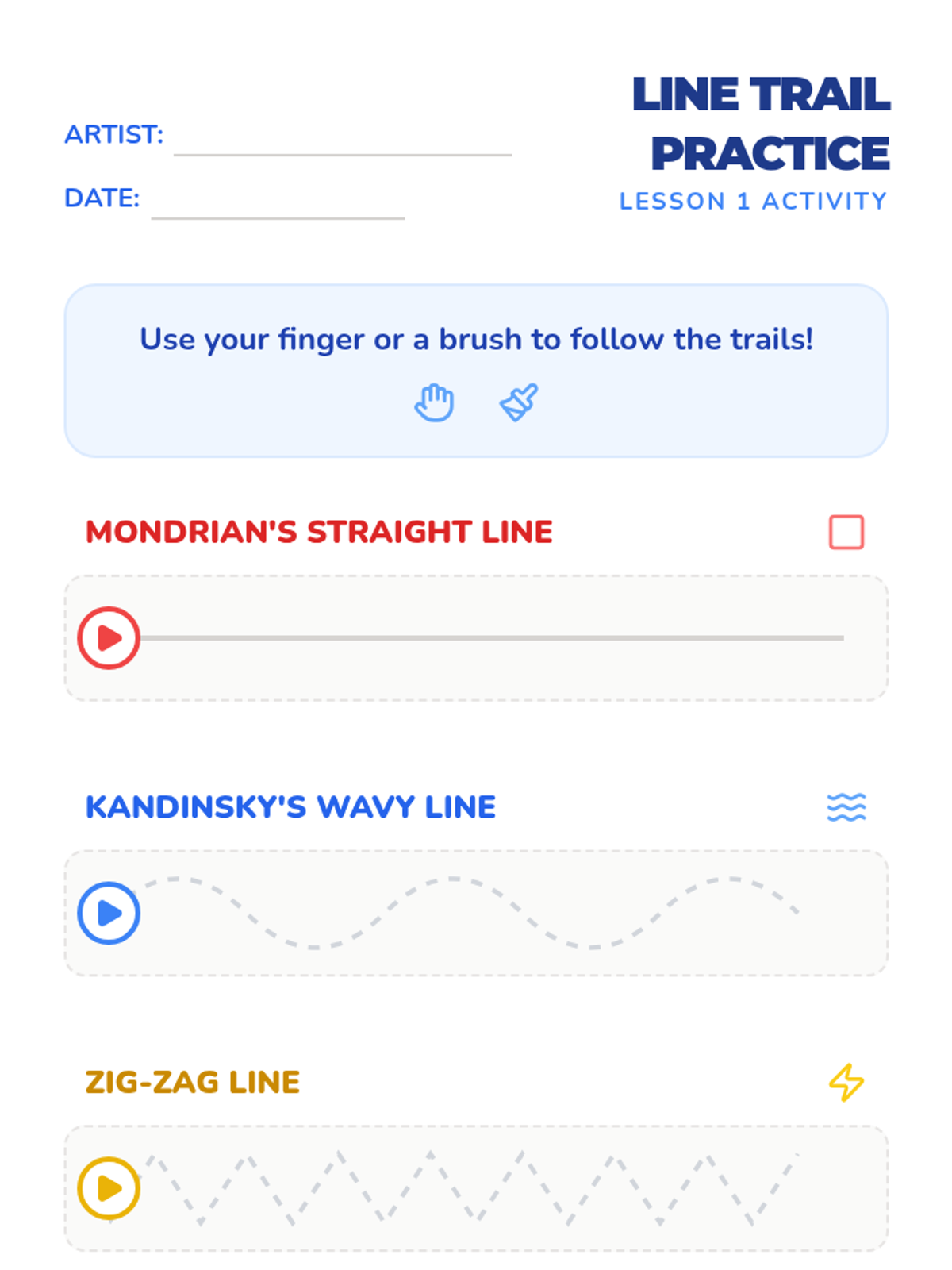
Students explore different types of lines (straight, wavy, zig-zag) using paint, inspired by the bold compositions of Piet Mondrian and Wassily Kandinsky.
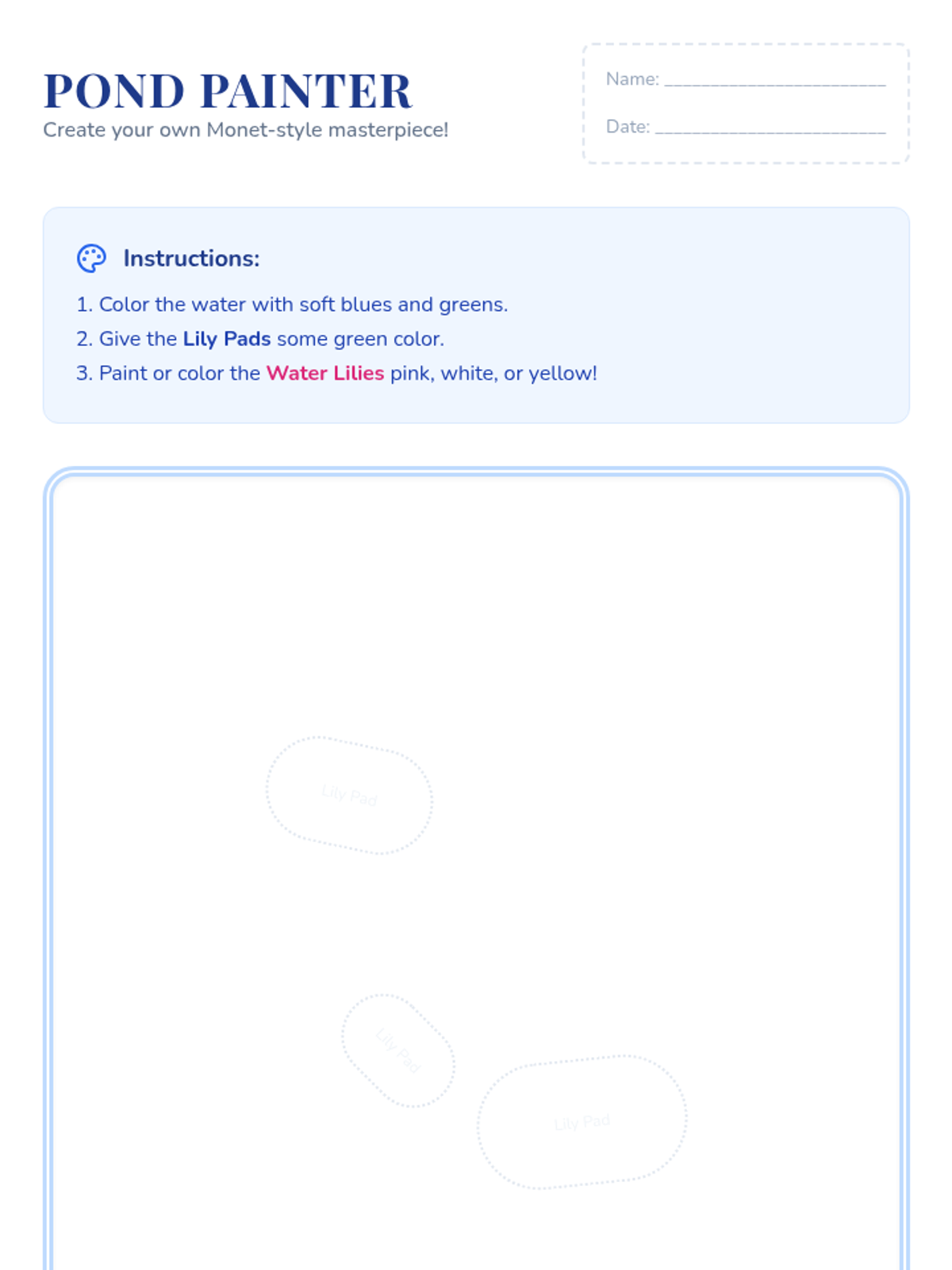
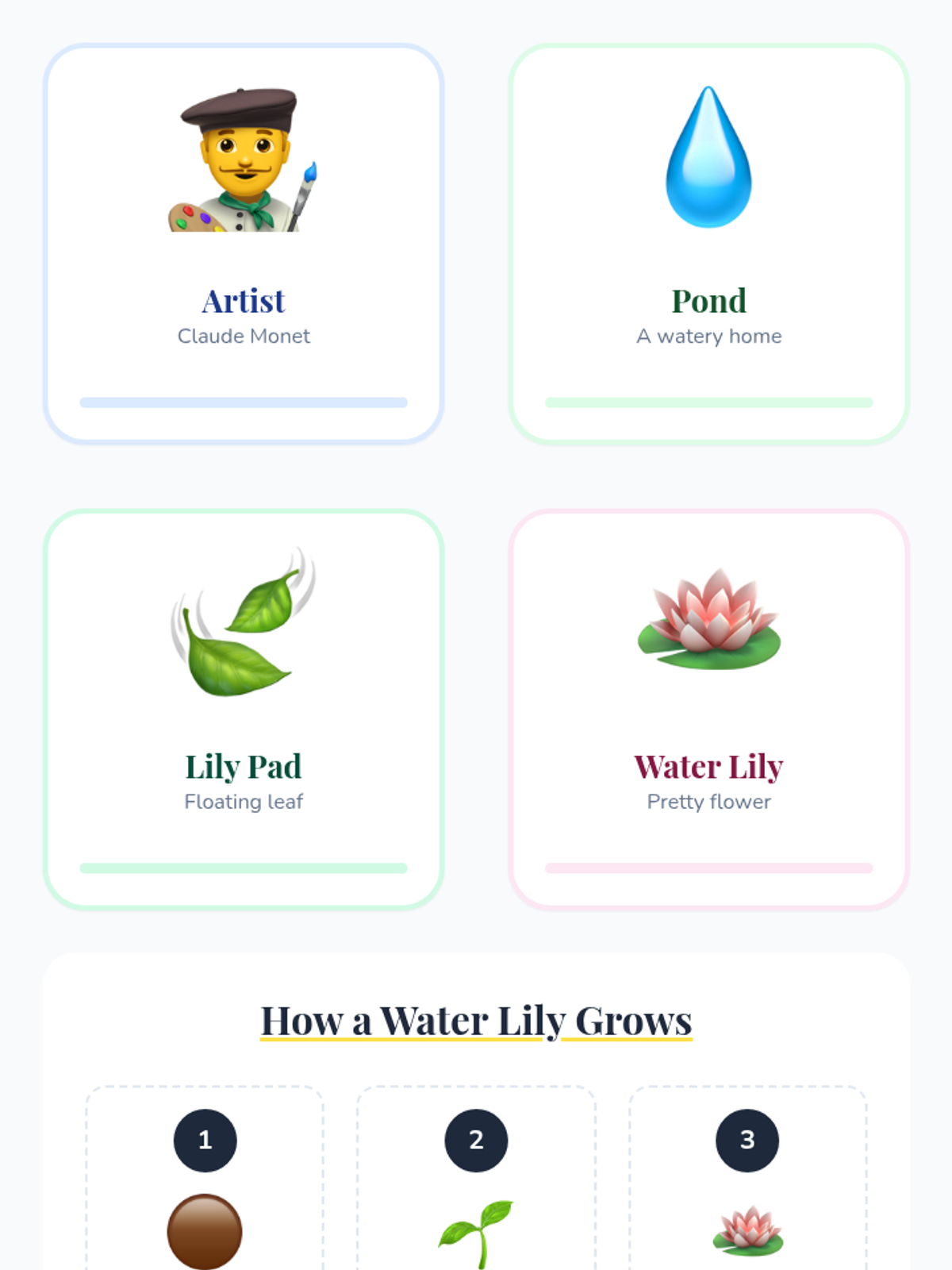
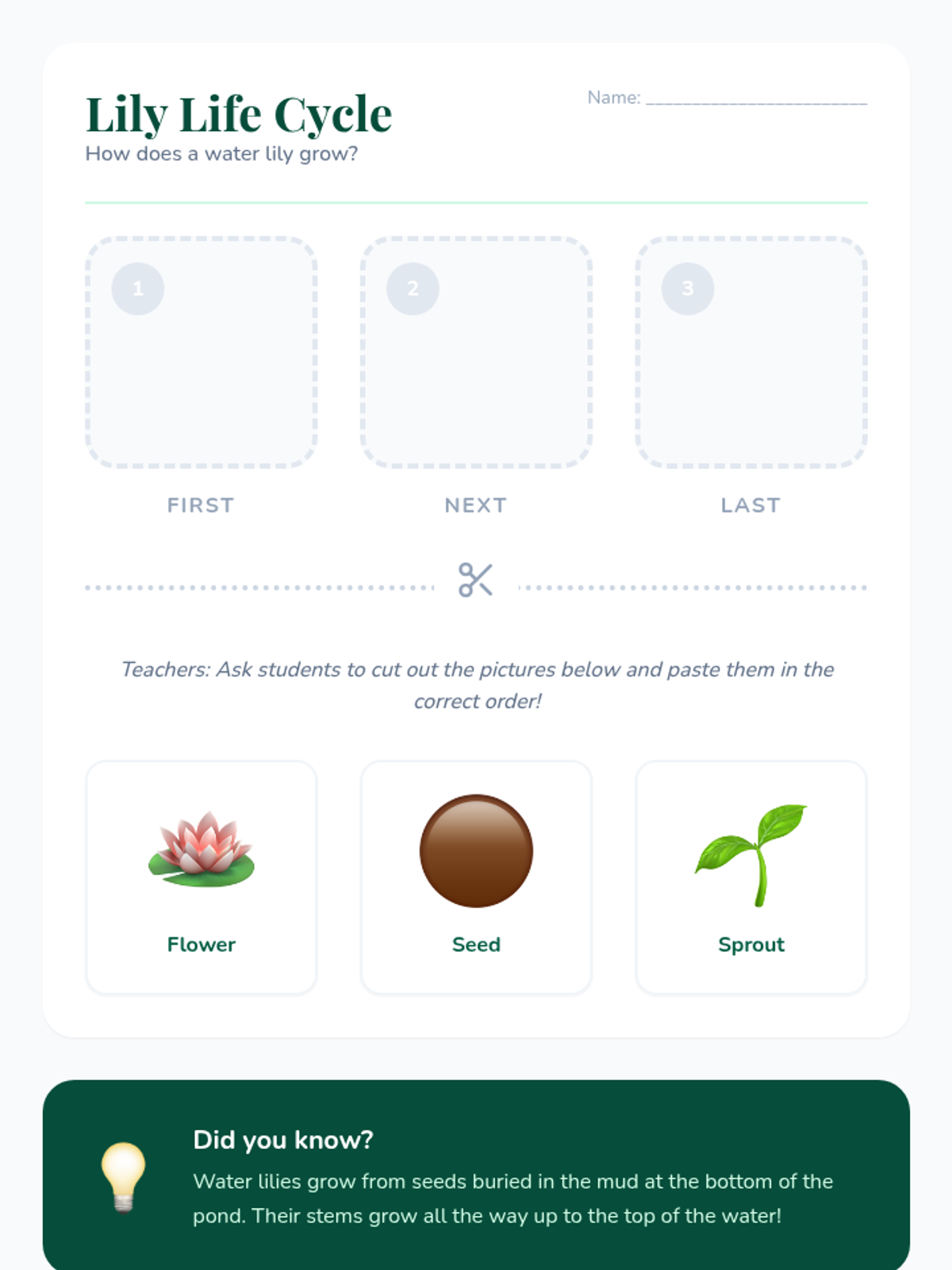
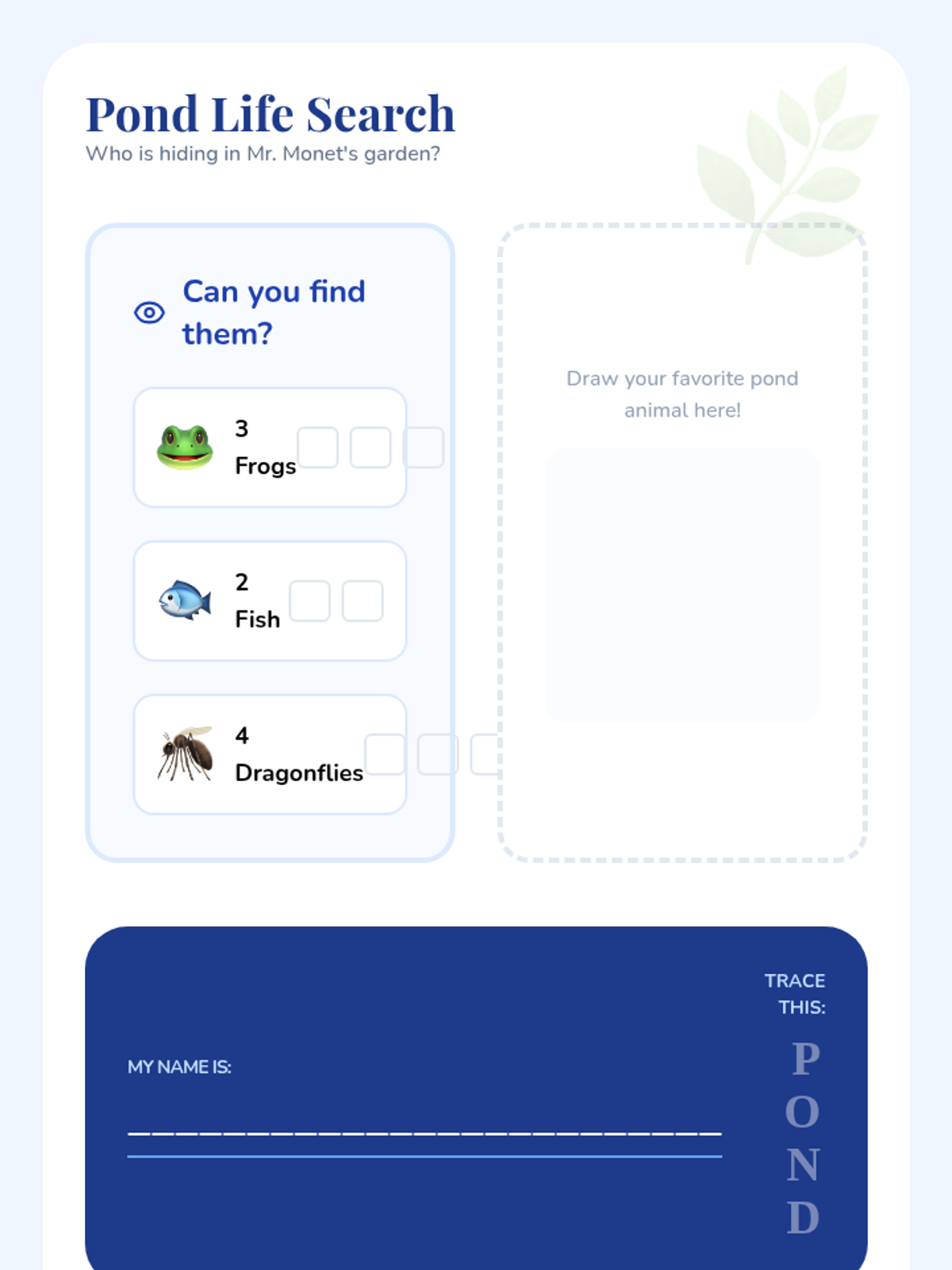
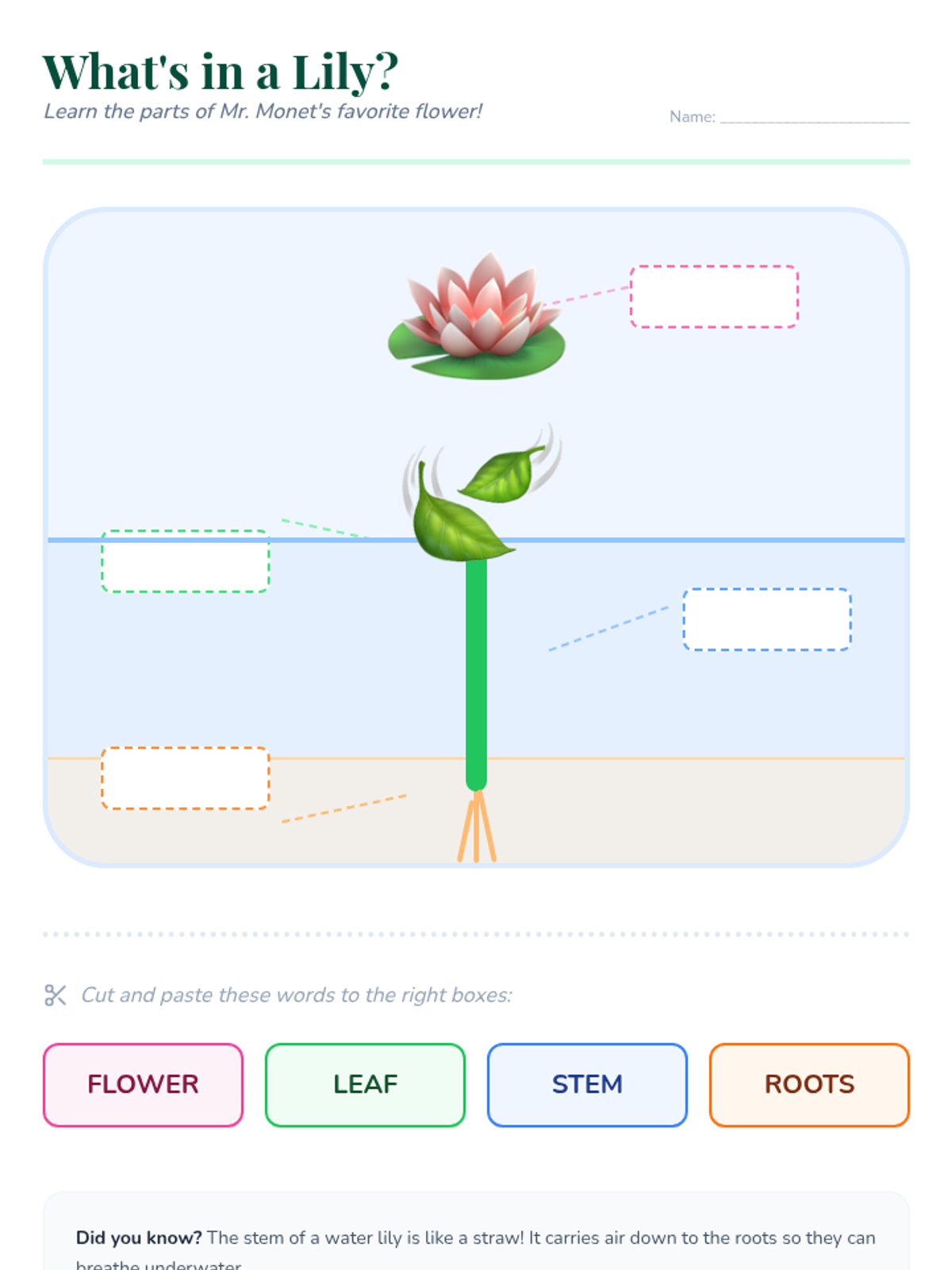
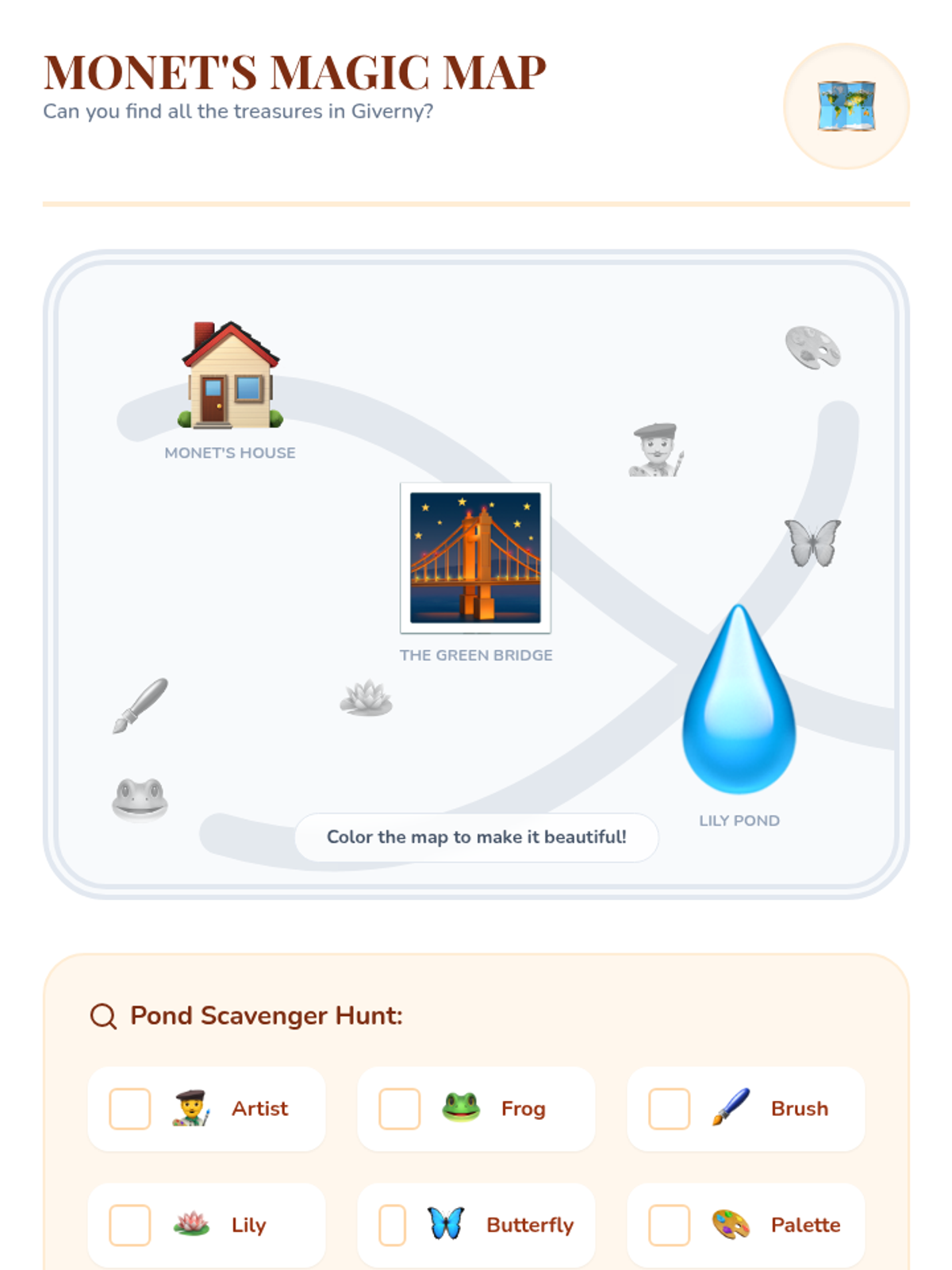
An introductory art and nature lesson for Pre-K students exploring Claude Monet's famous 'Water Lilies' through sensory observation and creative play.
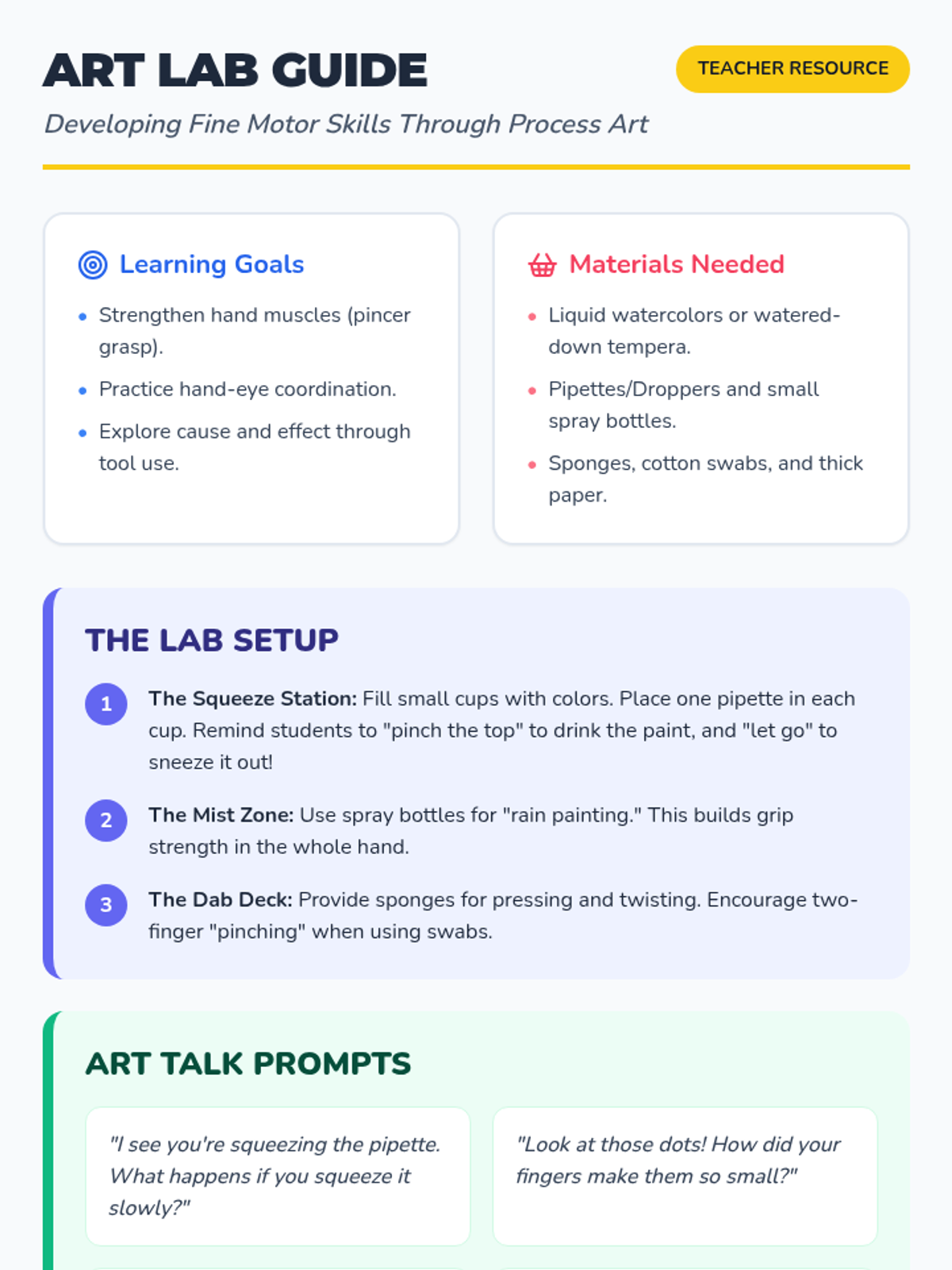
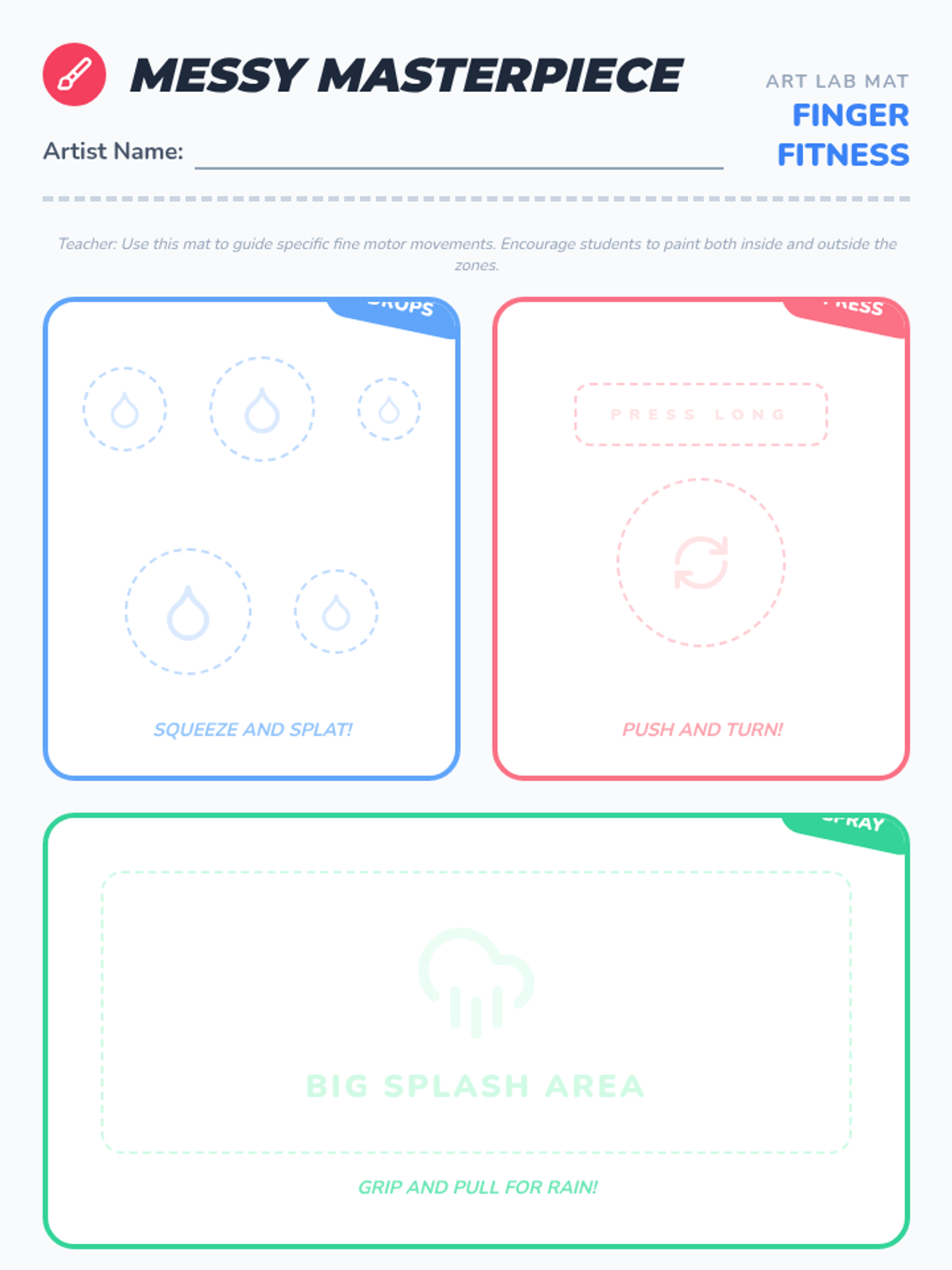
Students will use various tools like pipettes, sponges, and spray bottles to explore how paint moves on paper, focusing on the motor movements of squeezing, pinching, and pressing.
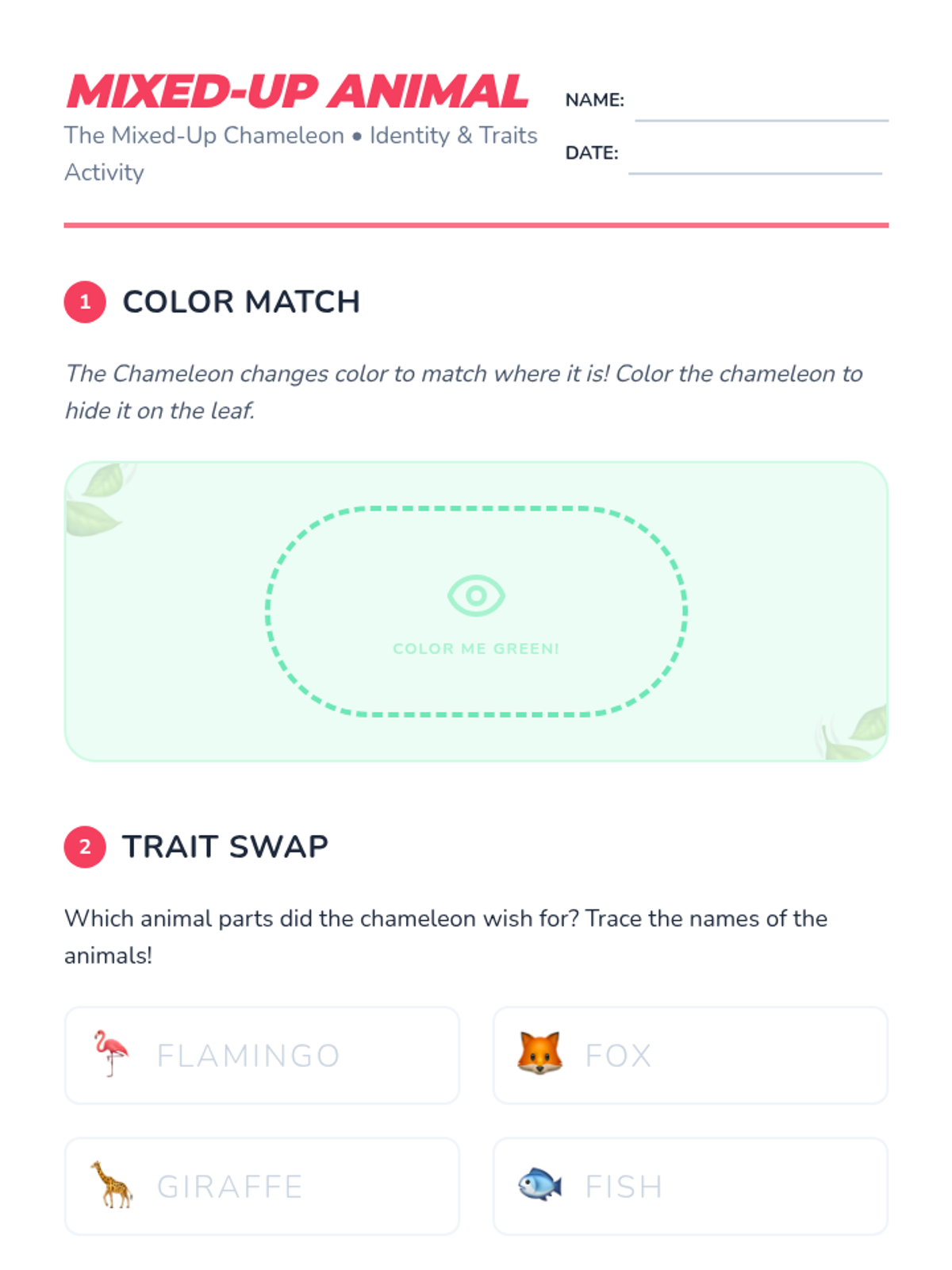
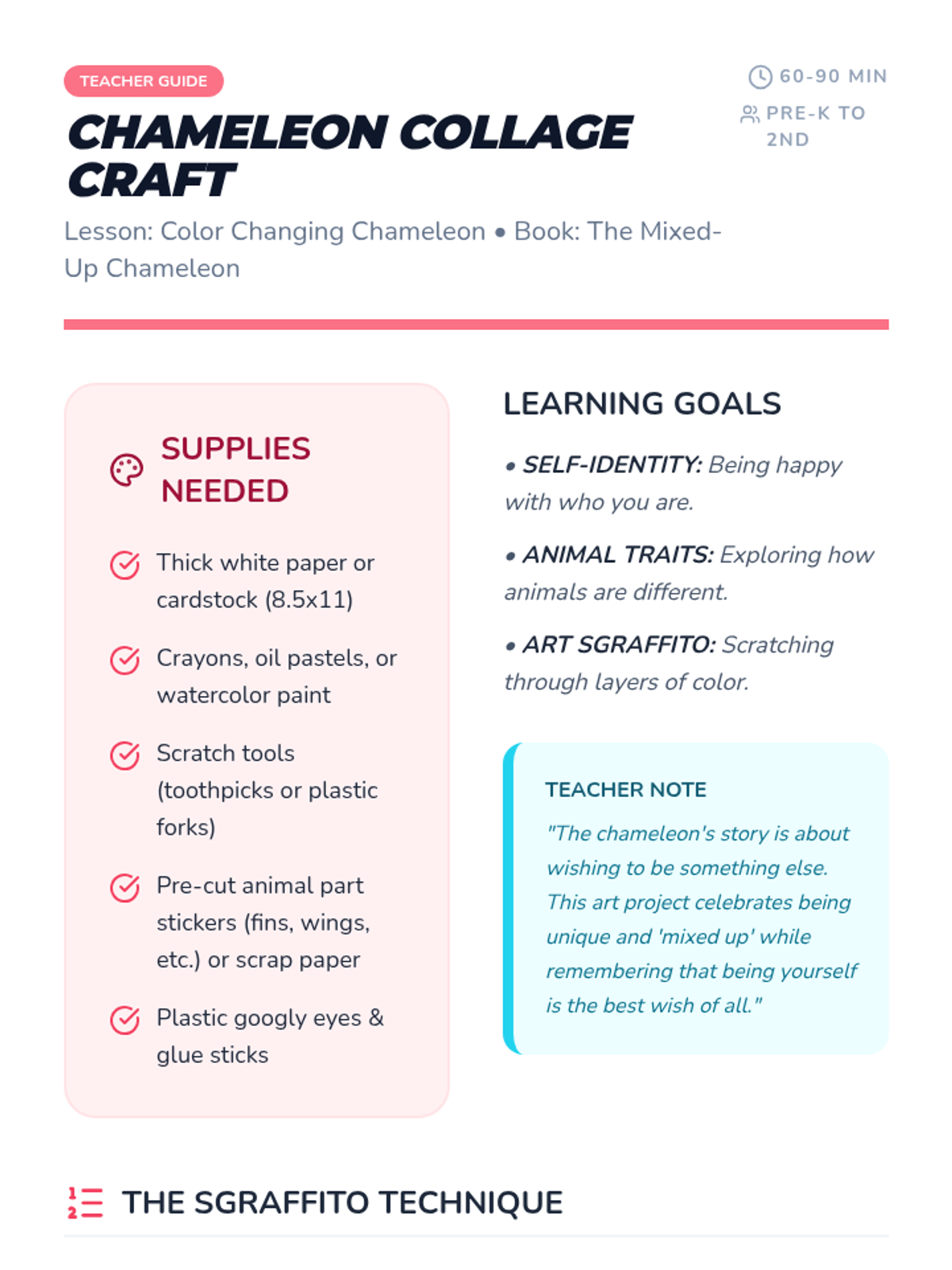
Focusing on 'The Mixed-Up Chameleon,' this lesson explores the vibrant world of colors and animal traits through layered collage and mixed-media art.
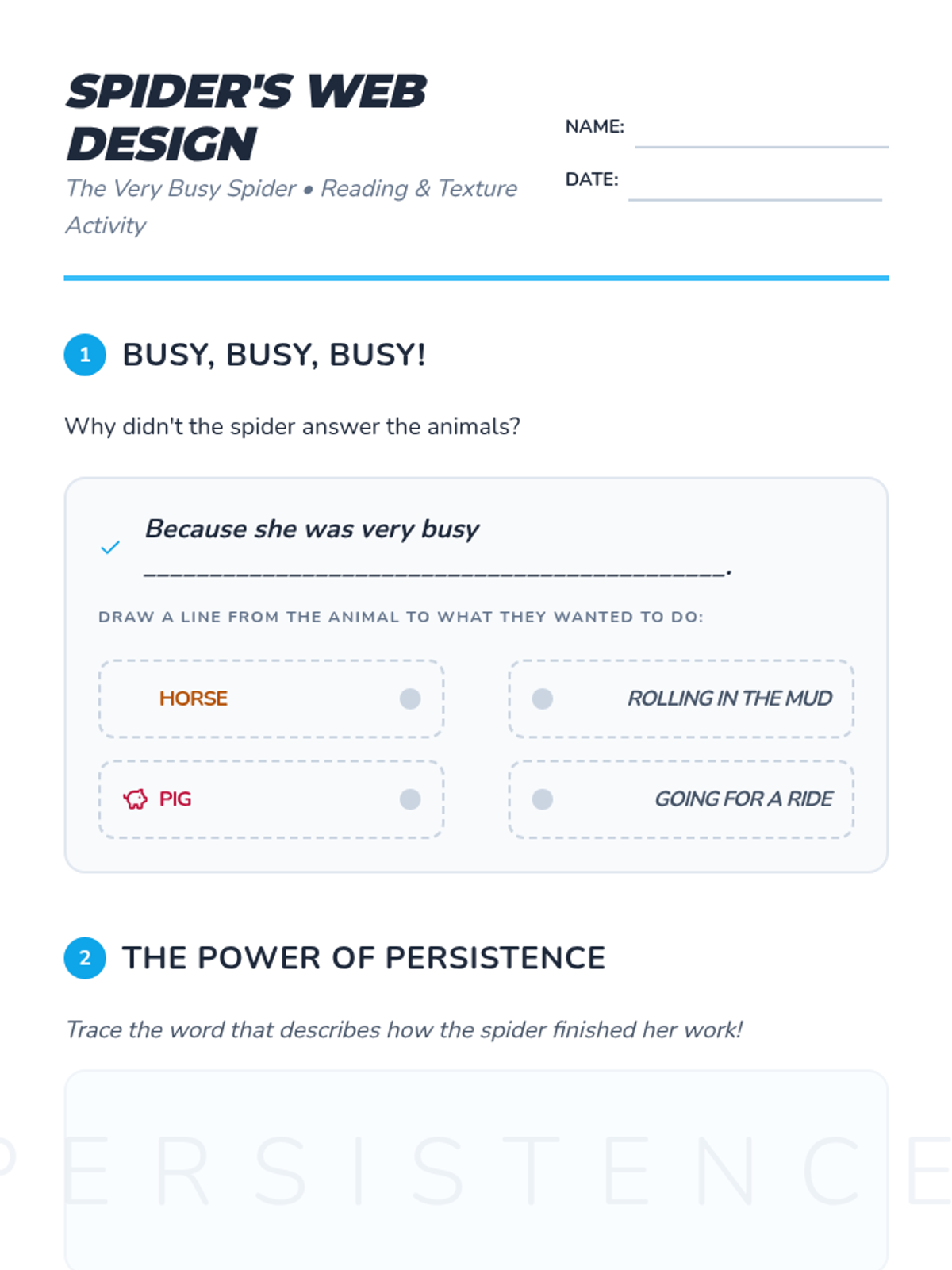
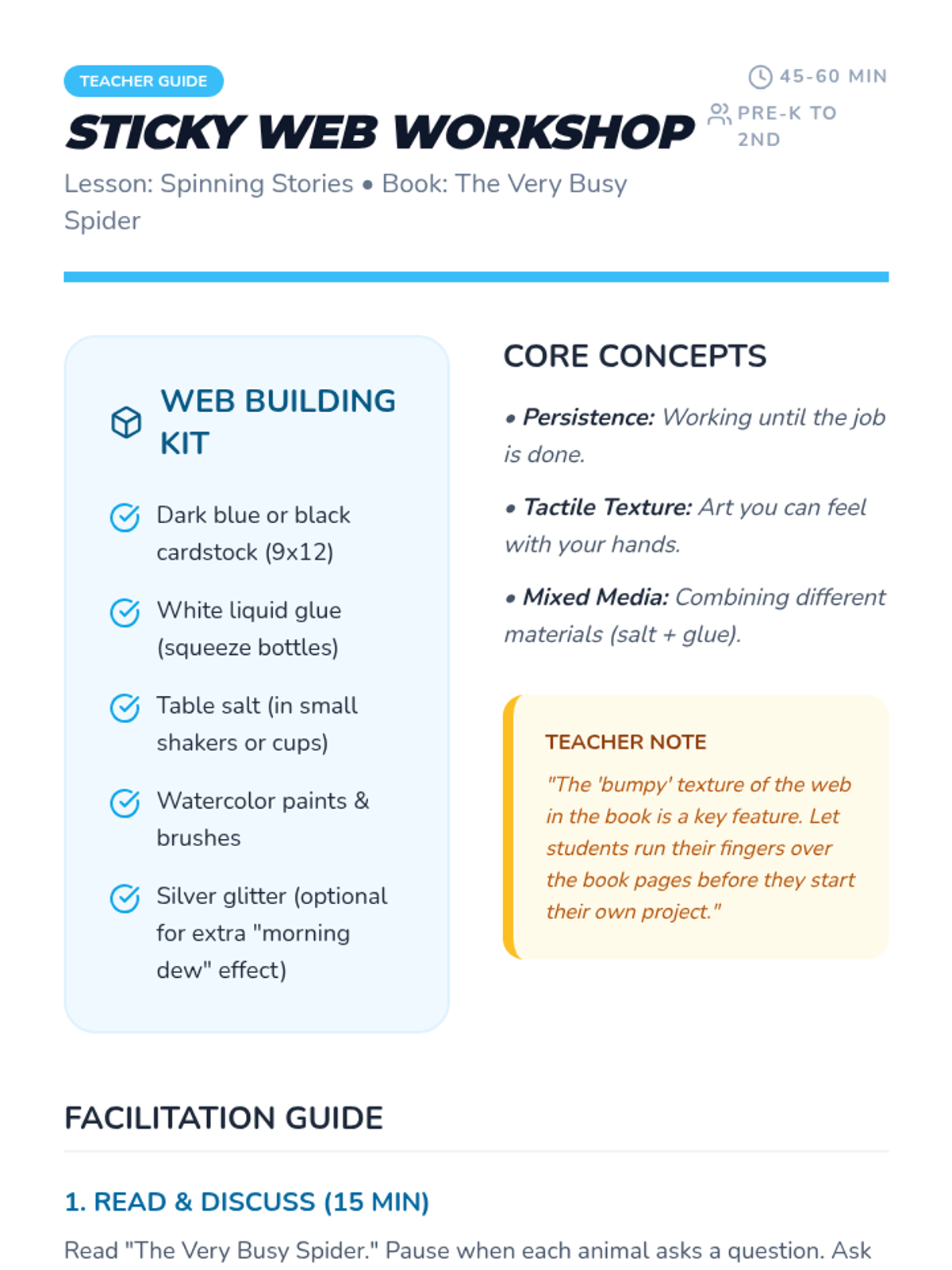
Focusing on 'The Very Busy Spider,' this lesson explores the themes of hard work and persistence while teaching students how to create tactile textures in their art using mixed media.
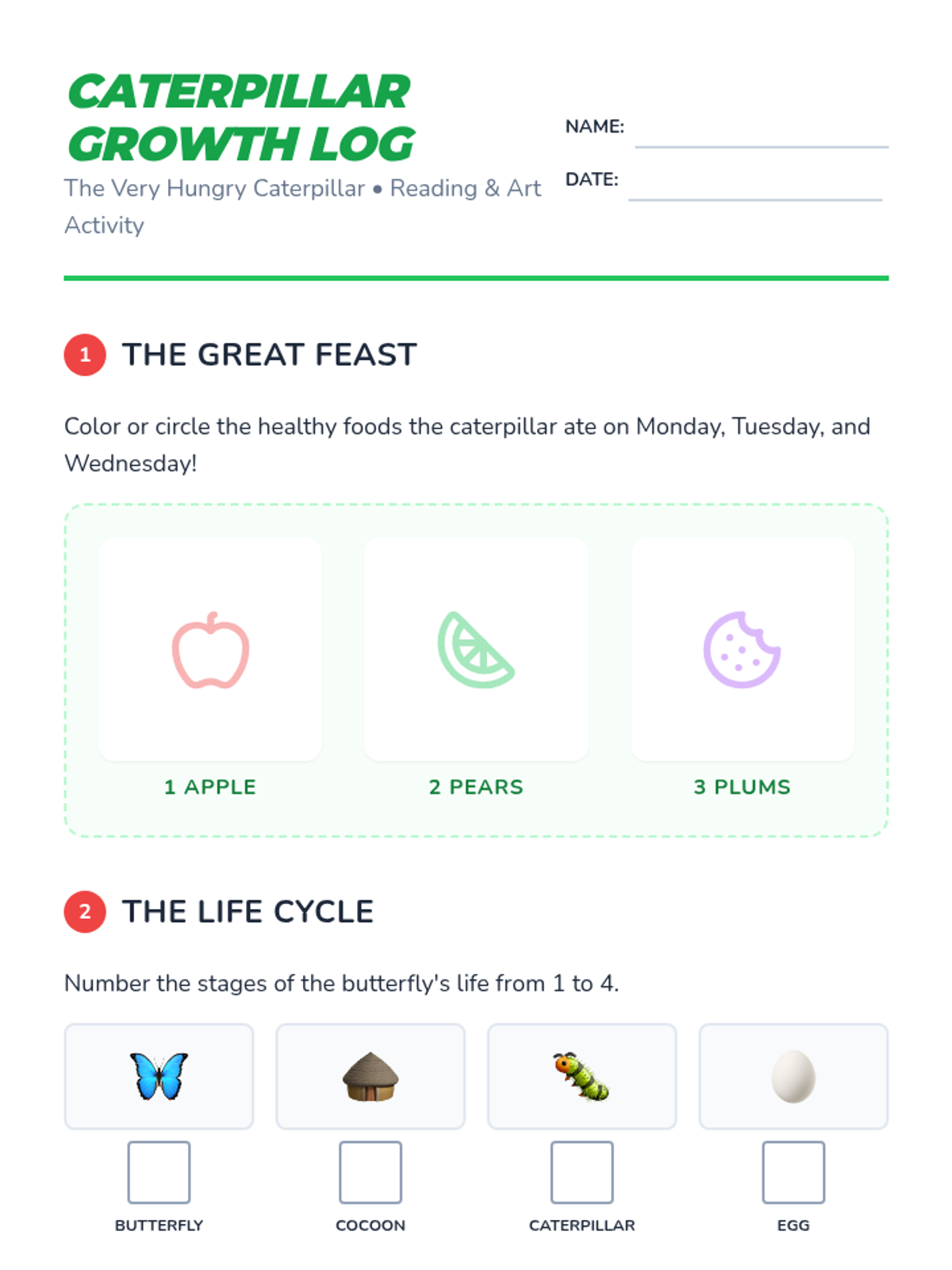
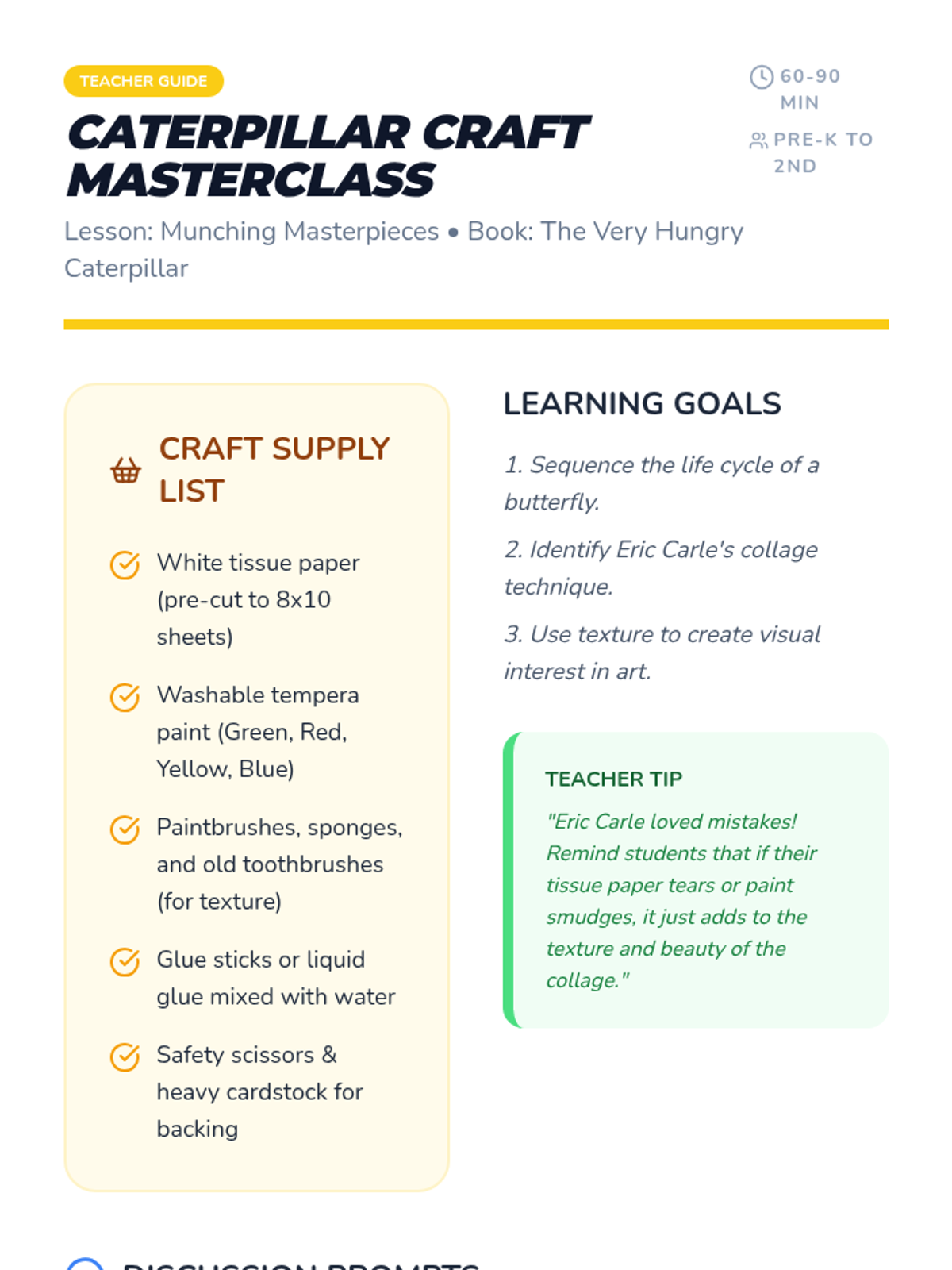
Focusing on 'The Very Hungry Caterpillar,' this lesson teaches students about the life cycle of a butterfly through the lens of Eric Carle's signature tissue paper collage technique.
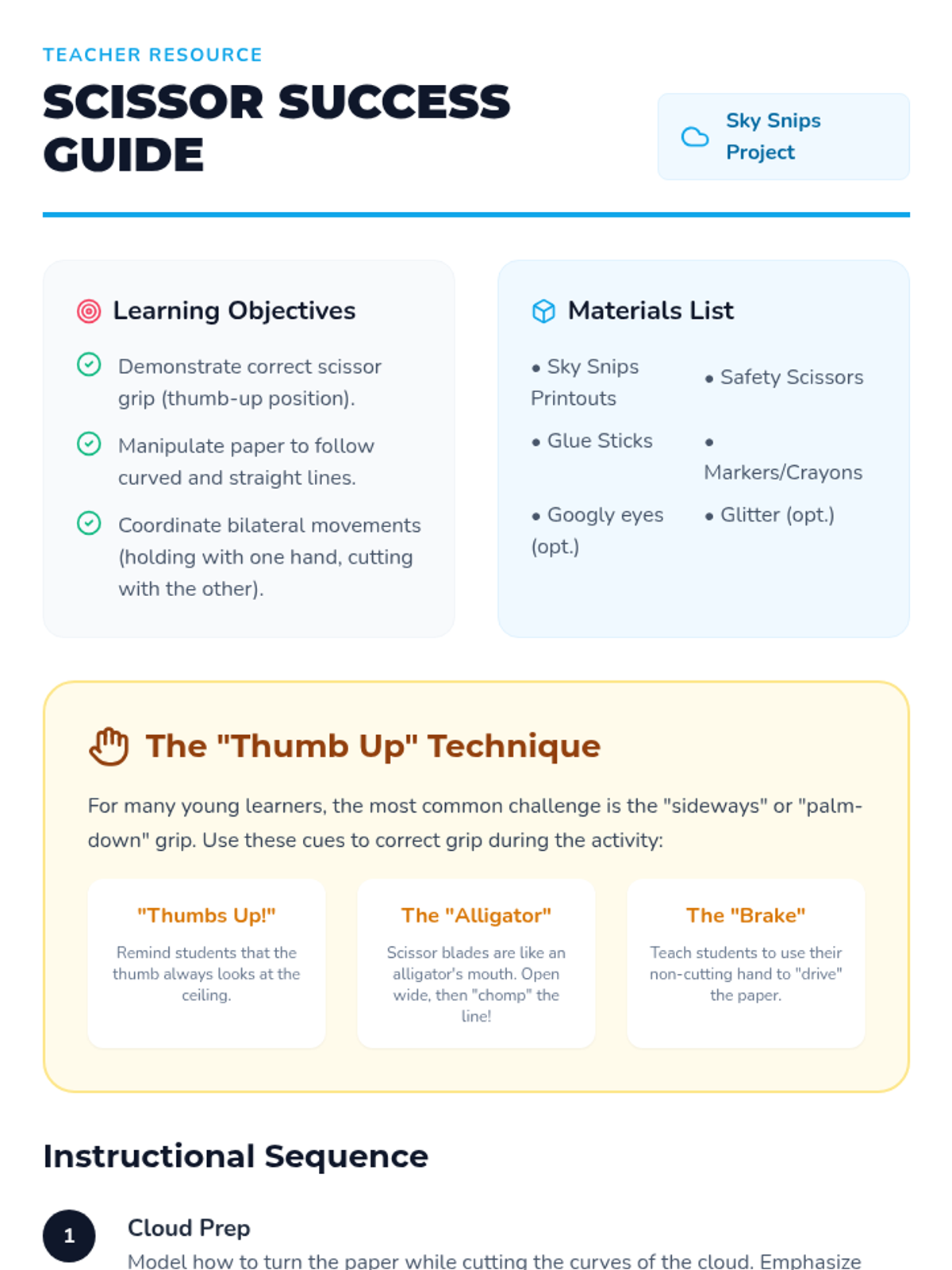
A creative art project focused on developing fine motor skills through cutting and assembling a vibrant rainbow cloud. Students practice hand-eye coordination by following lines to cut out shapes and strips.
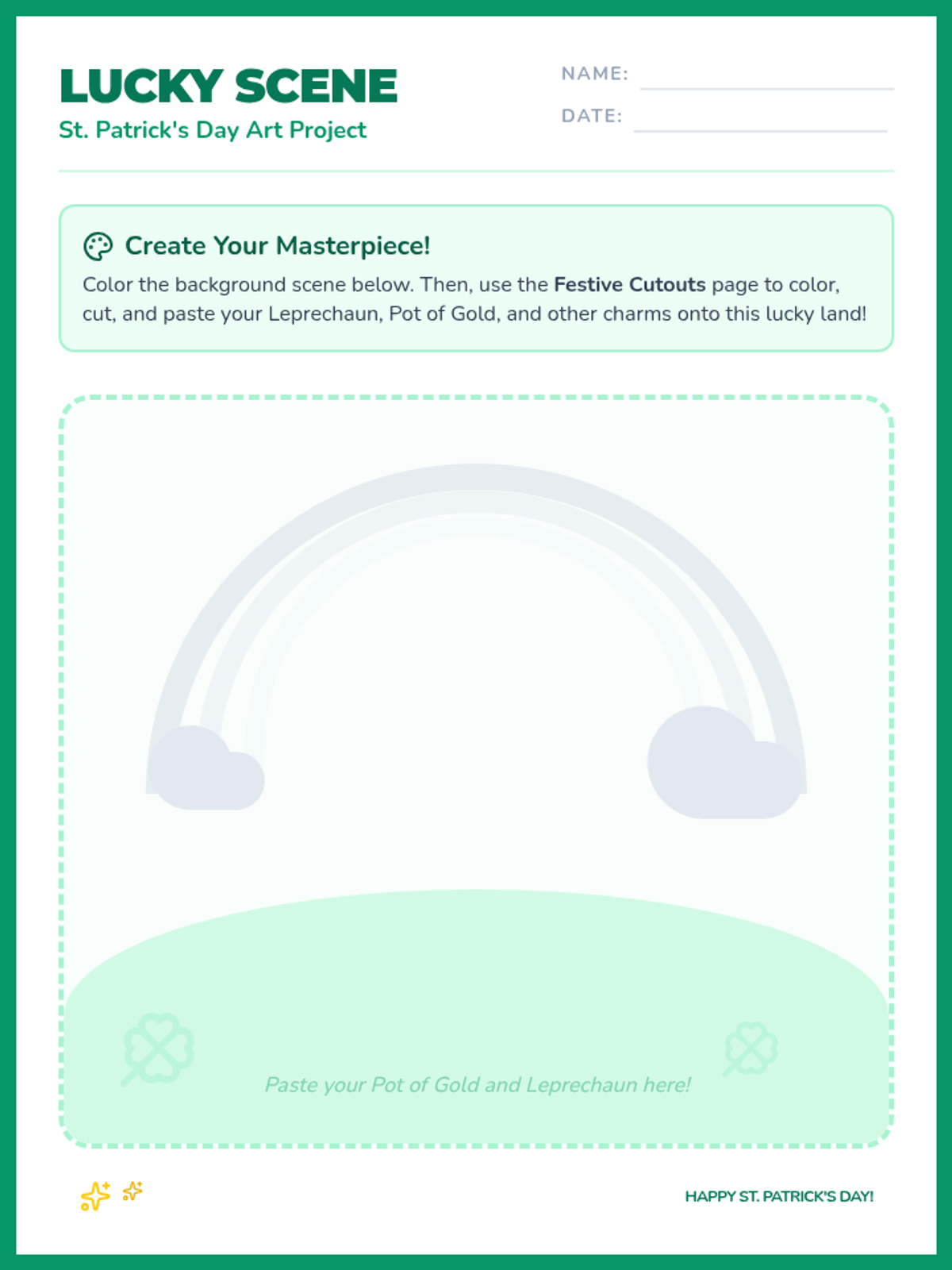
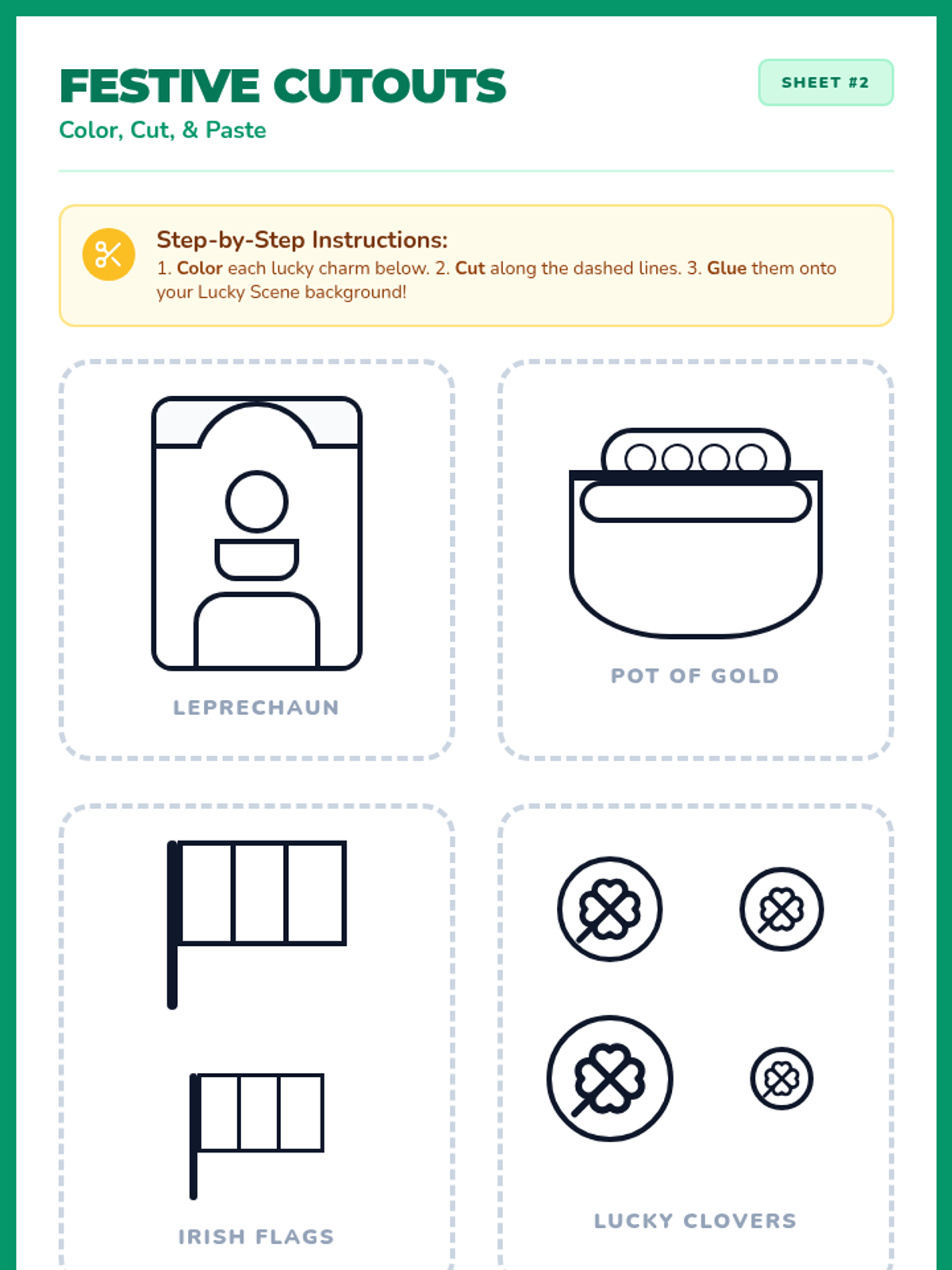
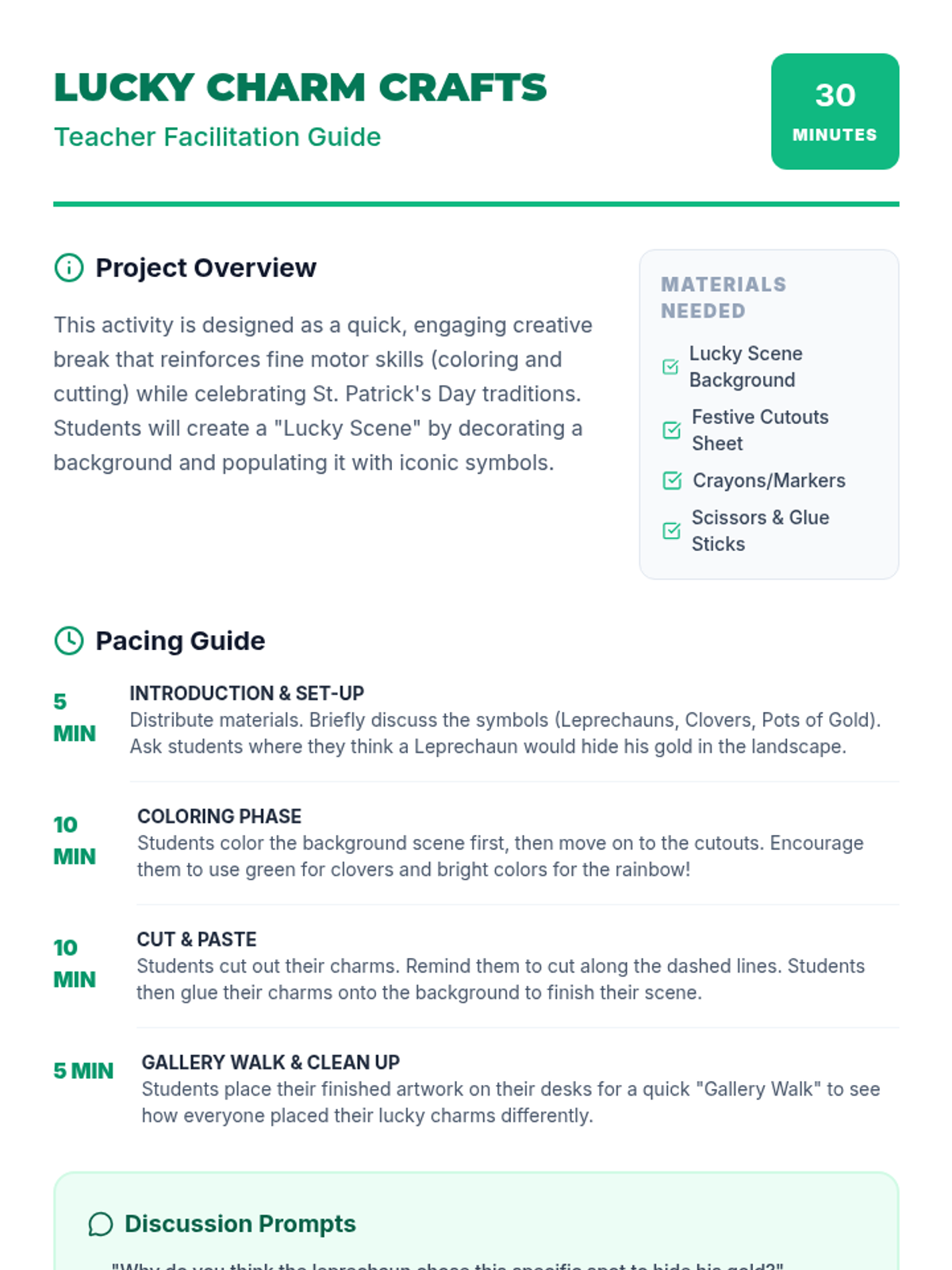
A quick, 30-minute creative art project where students color, cut, and paste iconic St. Patrick's Day symbols to create their own festive scene.
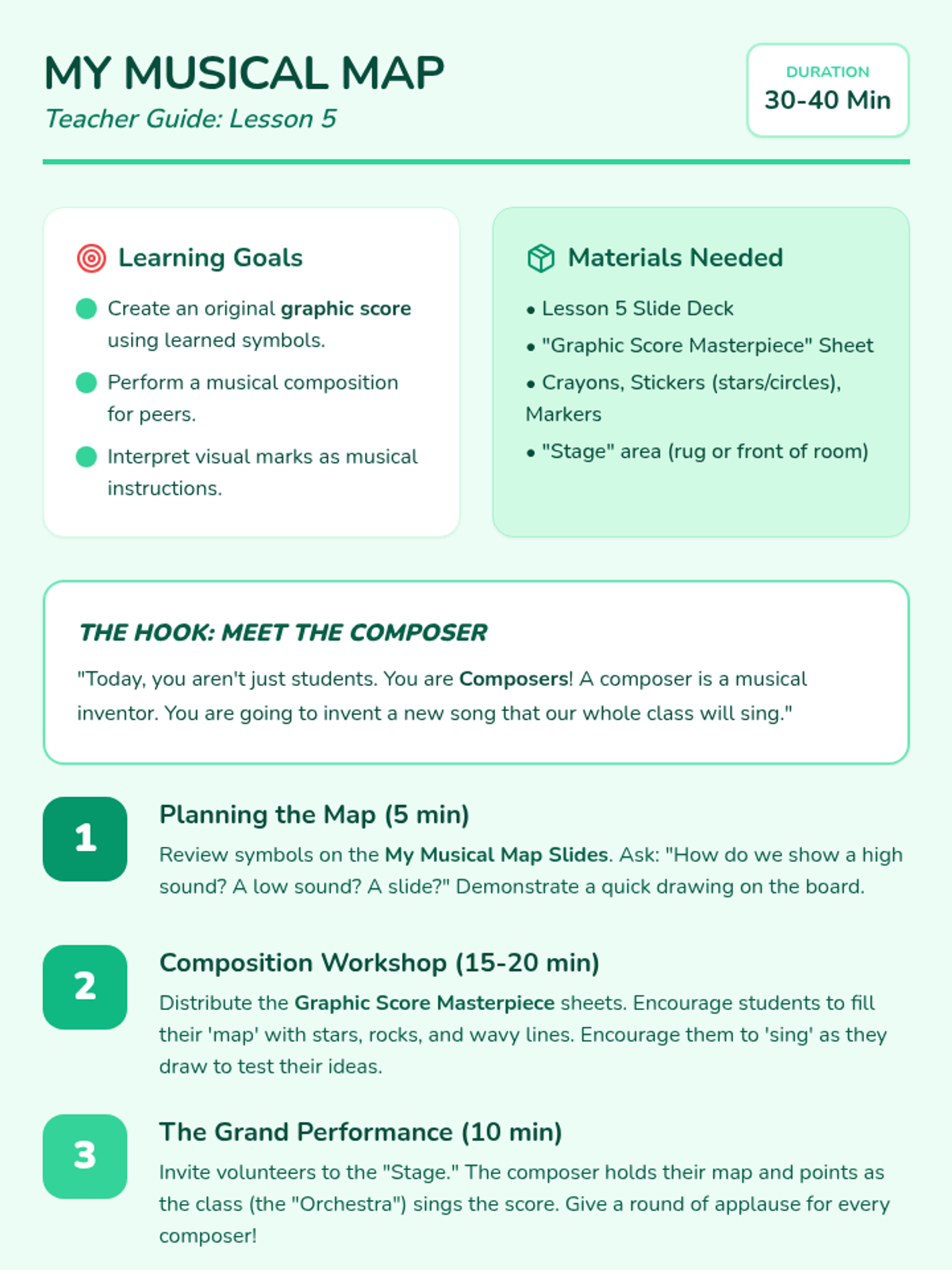
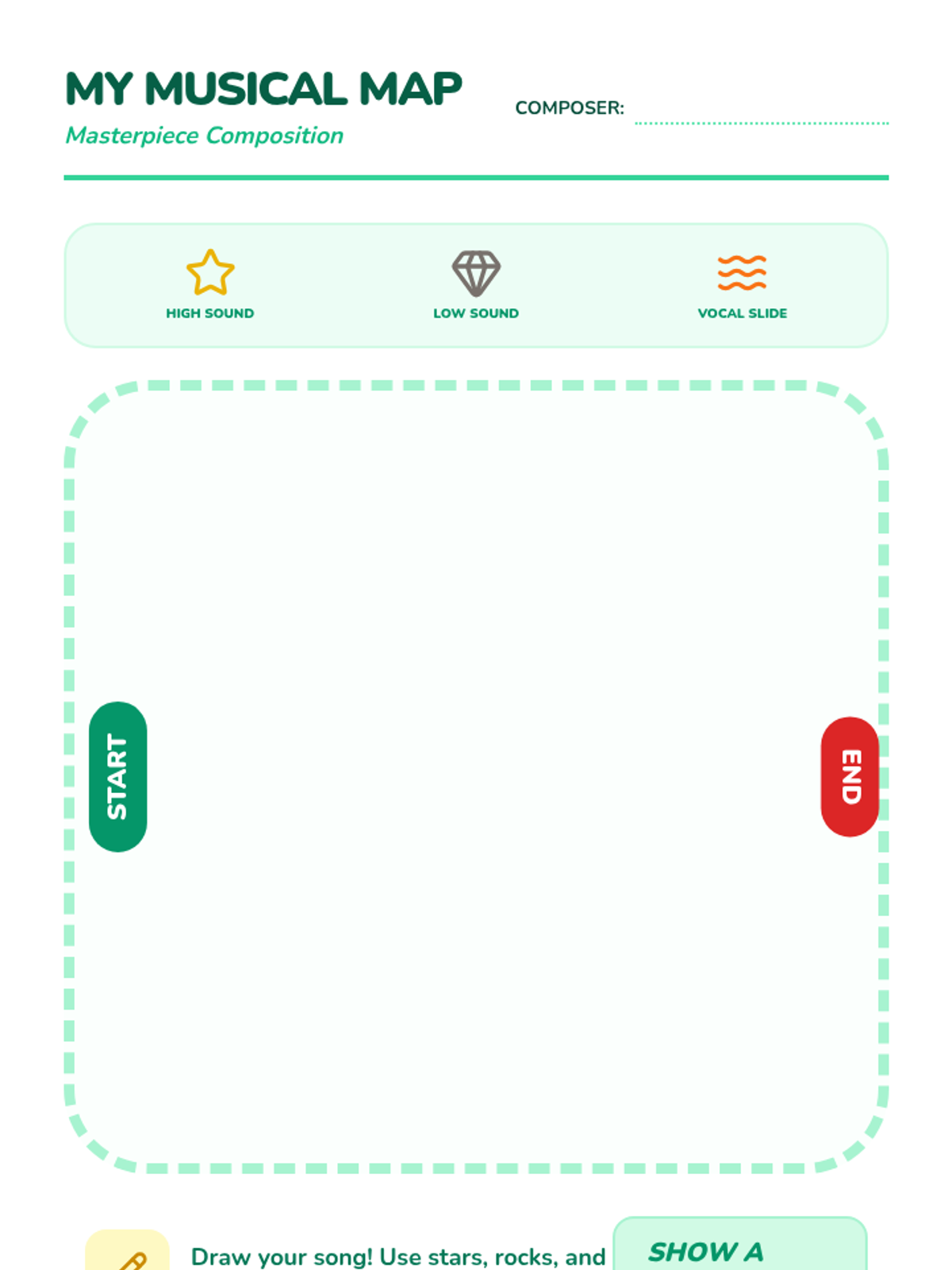
The culmination of the sequence where students compose their own graphic scores and perform them for their peers, demonstrating their understanding of high, low, and sliding sounds.
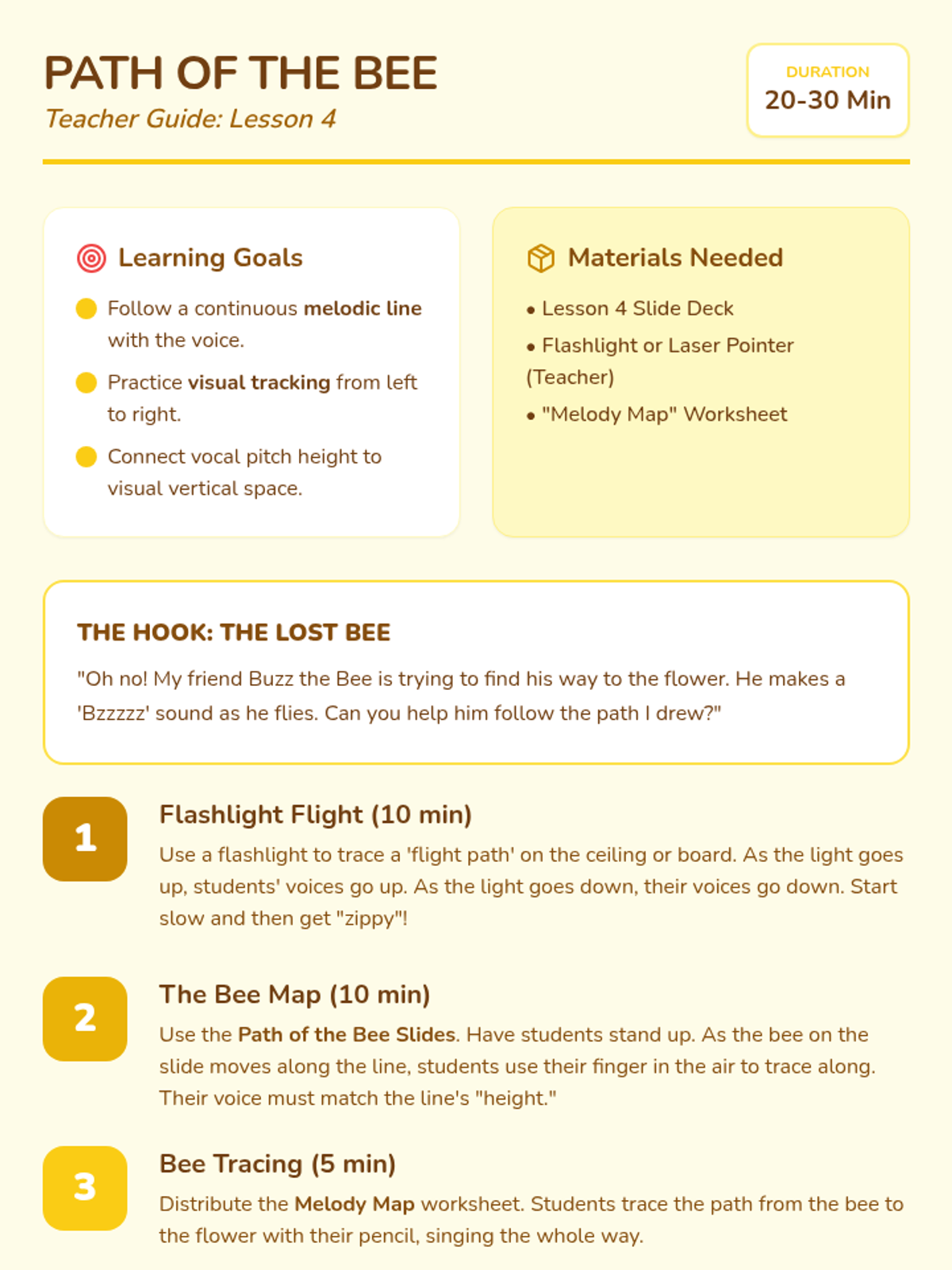
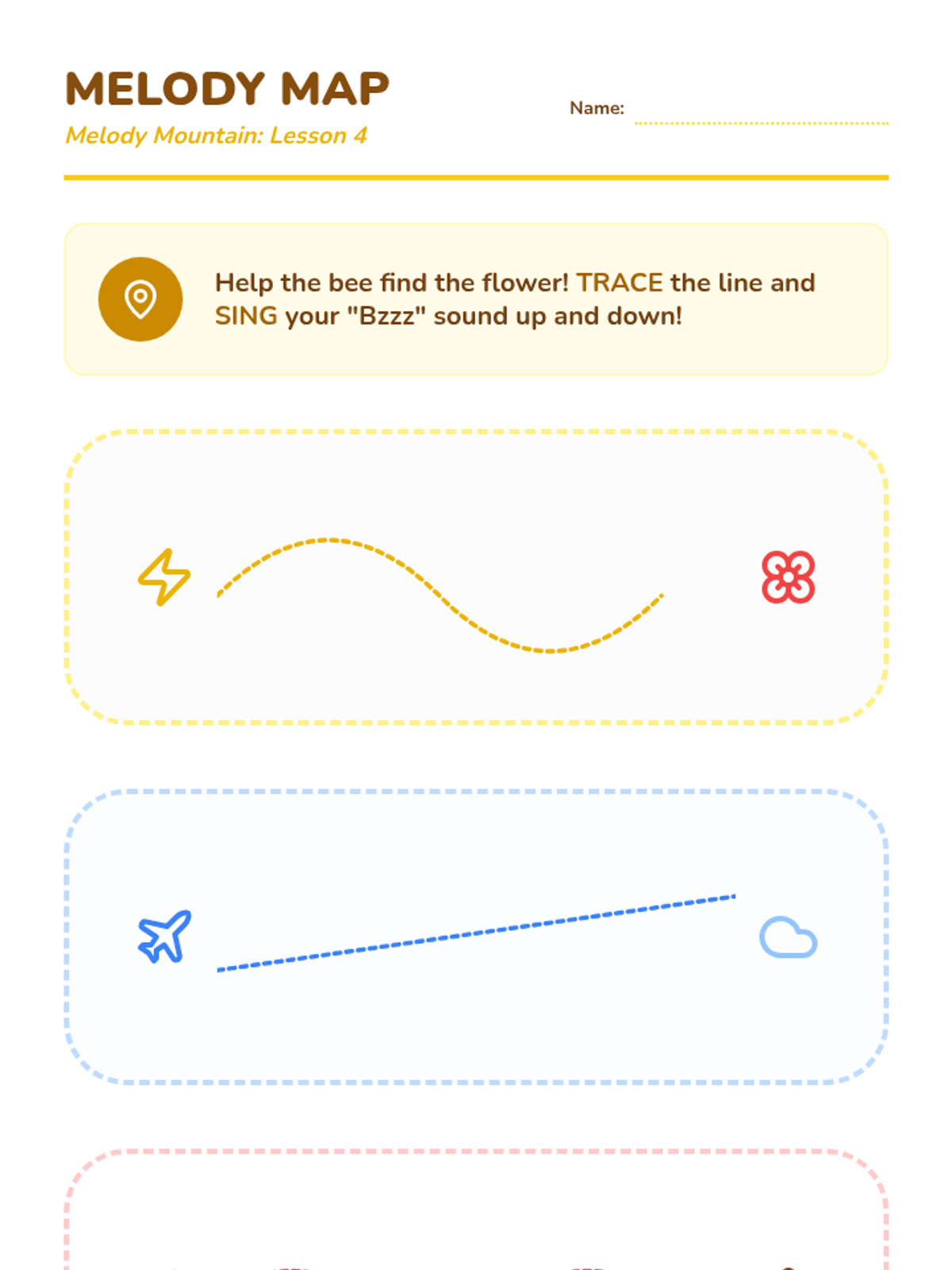
Students connect visual lines to pitch movement, tracing 'melody maps' that show the path of a sound moving continuously through high and low spaces.
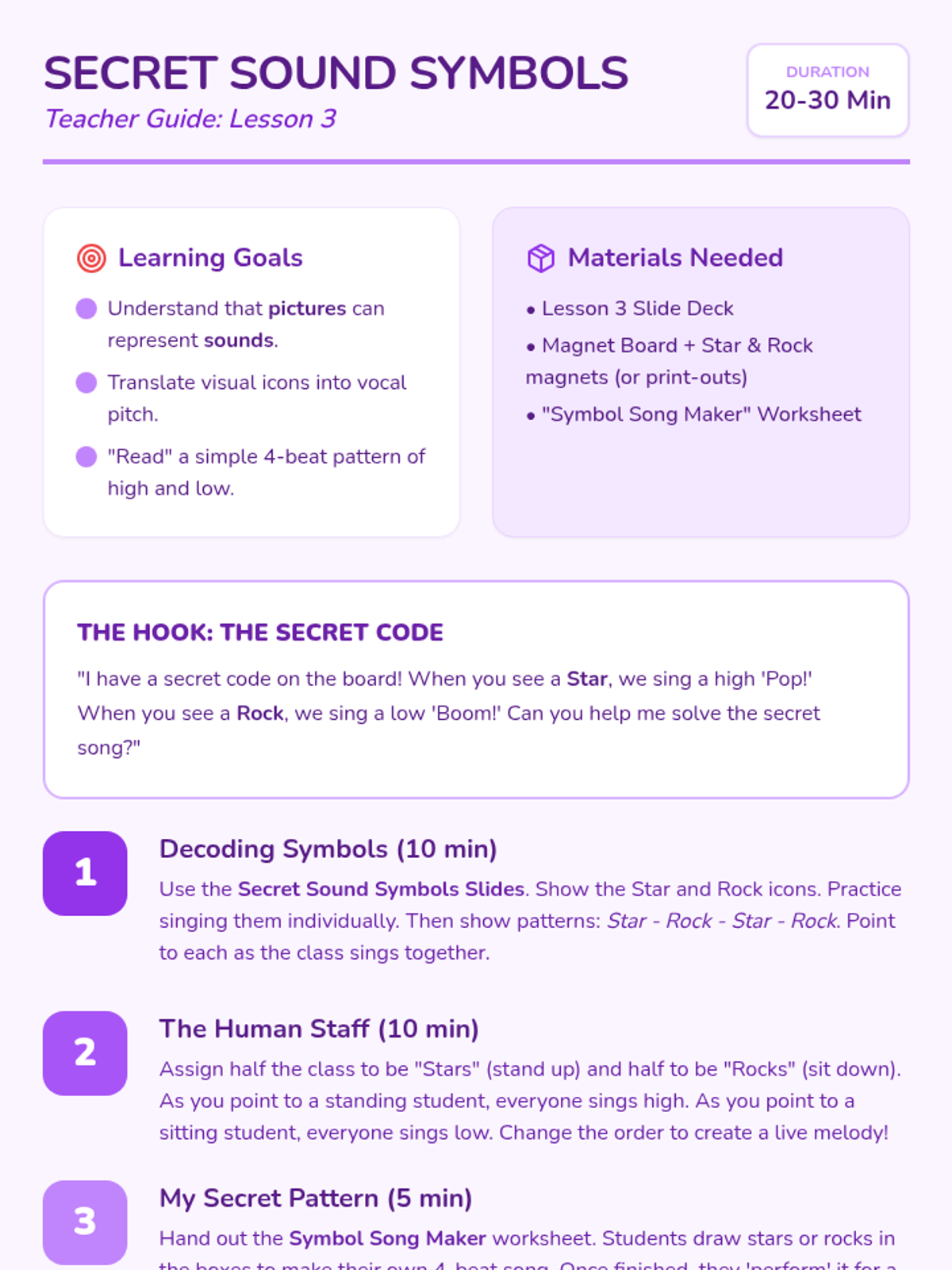
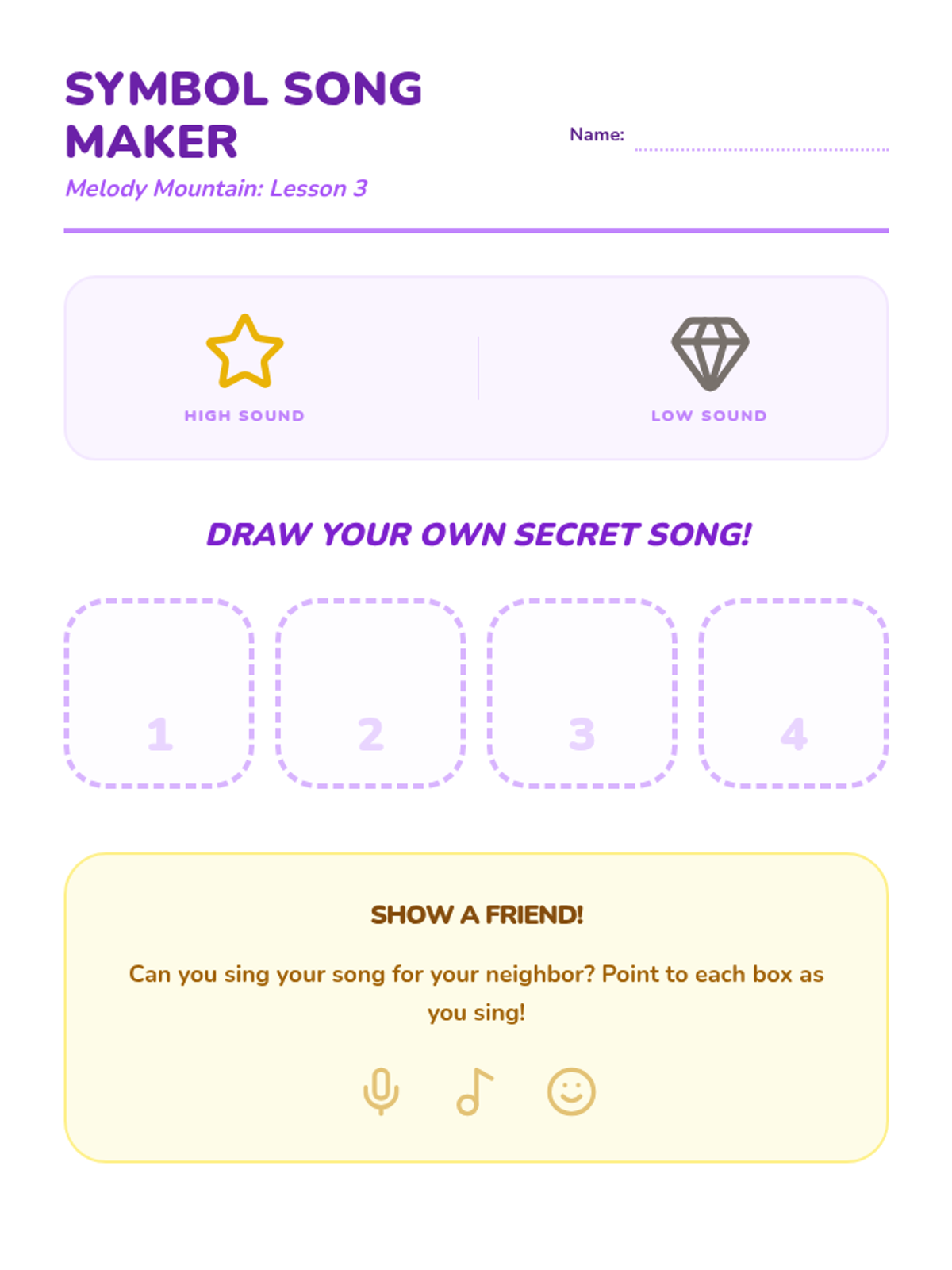
Introduces the concept of musical notation by using simple icons like stars and rocks to represent high and low sounds in a sequence.
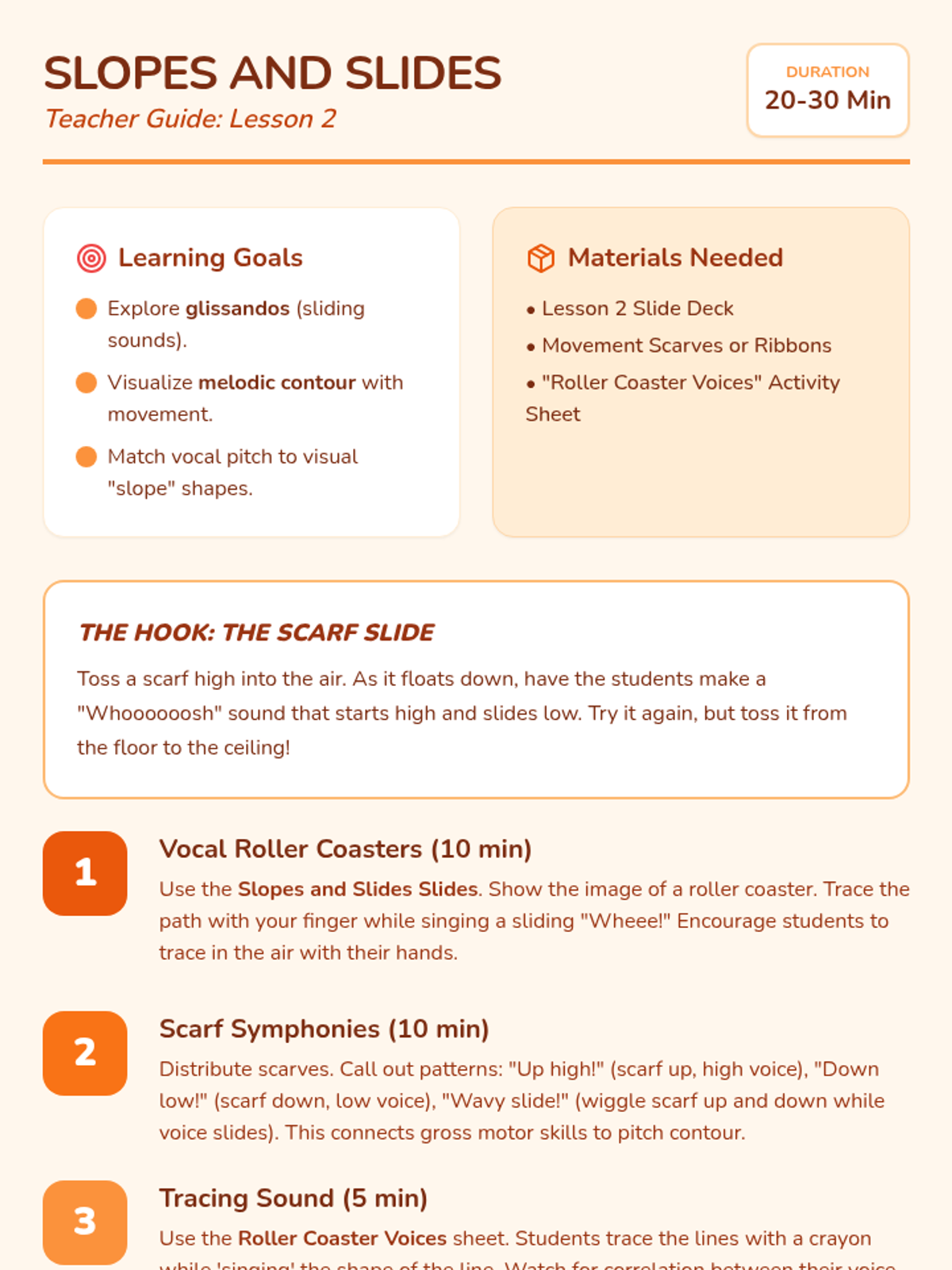
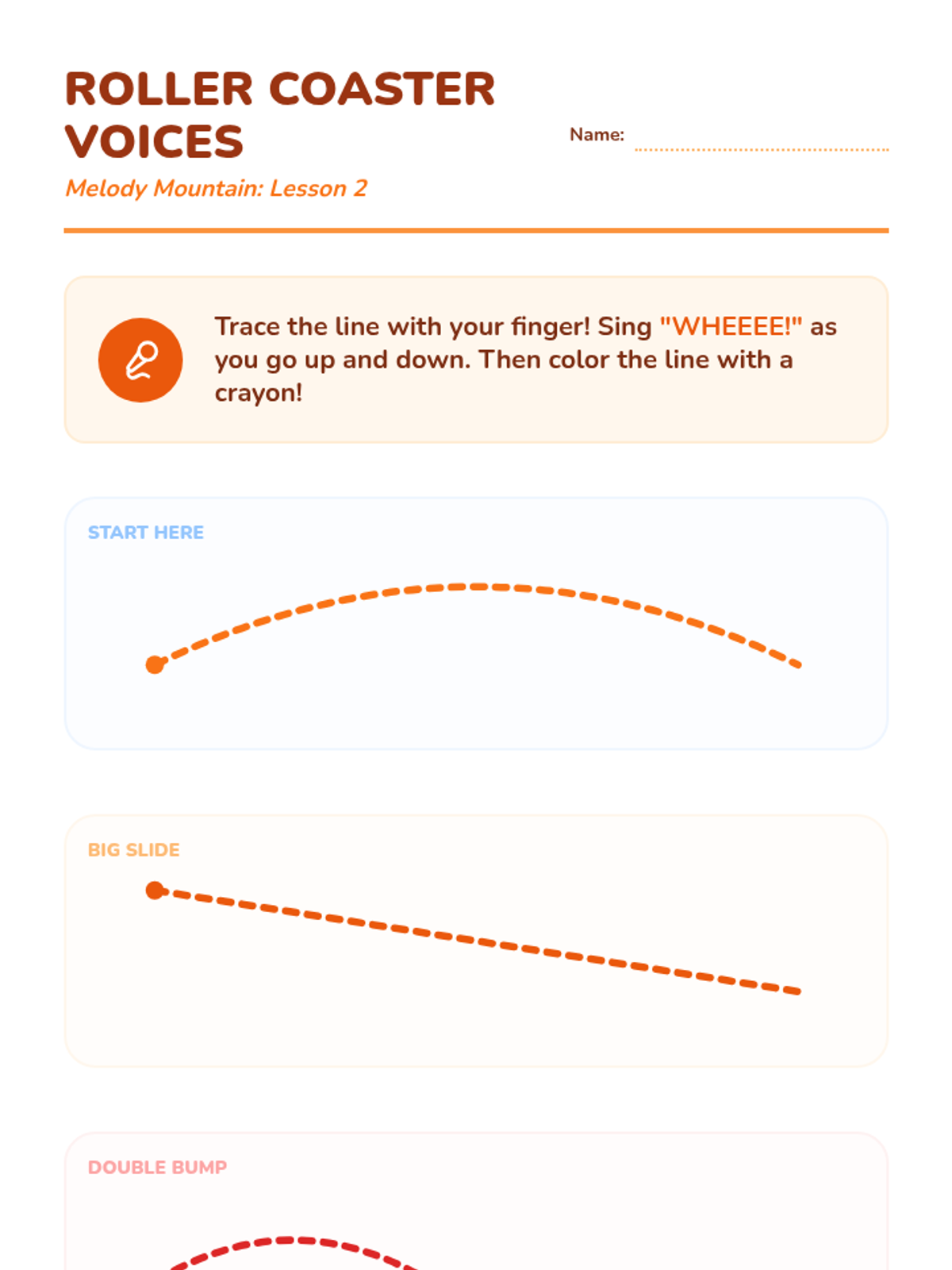
Focuses on melodic contour using glissandos, where students use their voices and scarves to mimic the smooth upward and downward paths of sirens and roller coasters.
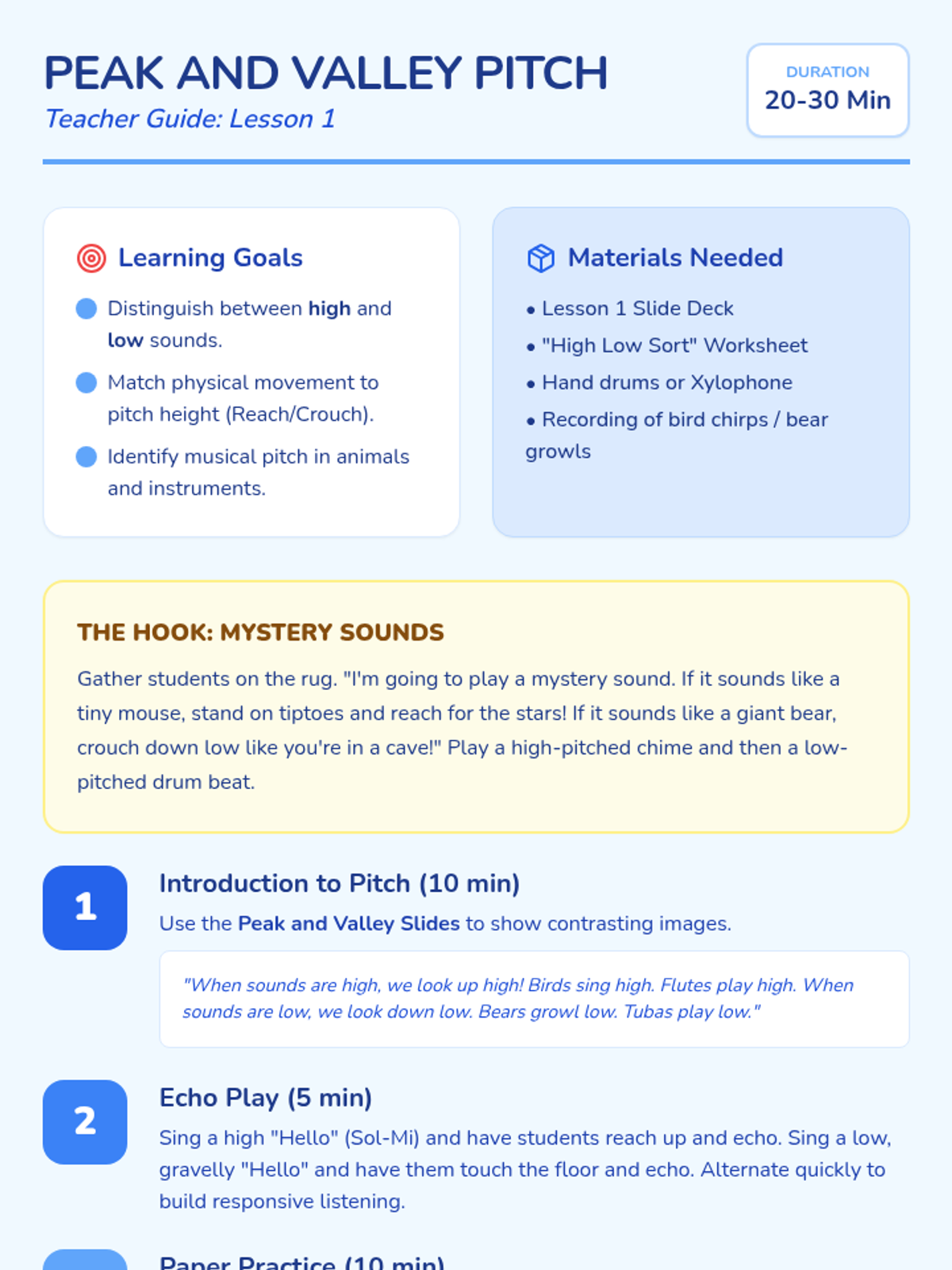
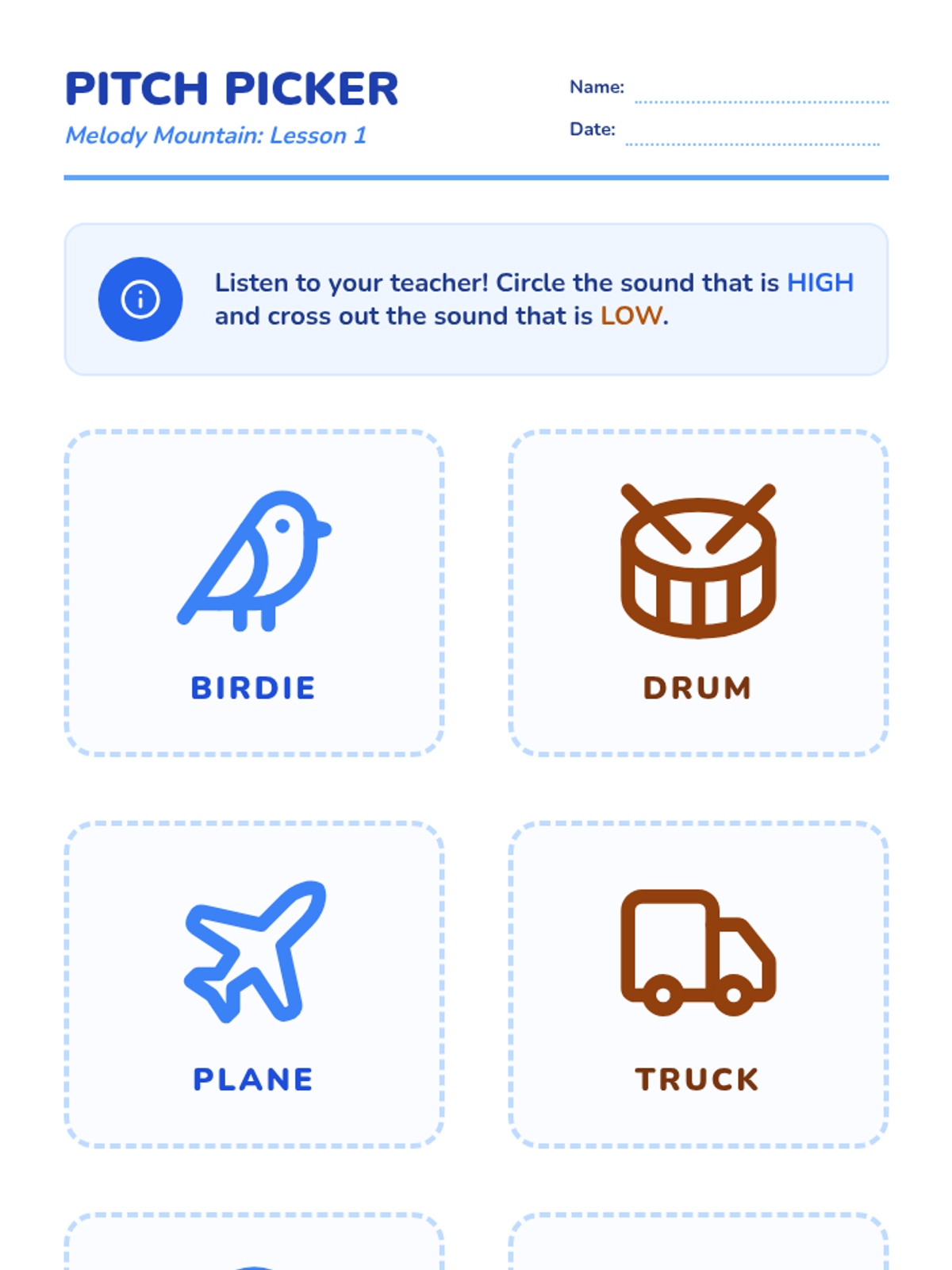
Students explore the concept of high and low pitch through active listening and whole-body movements, associating high sounds with the sky and low sounds with the ground.
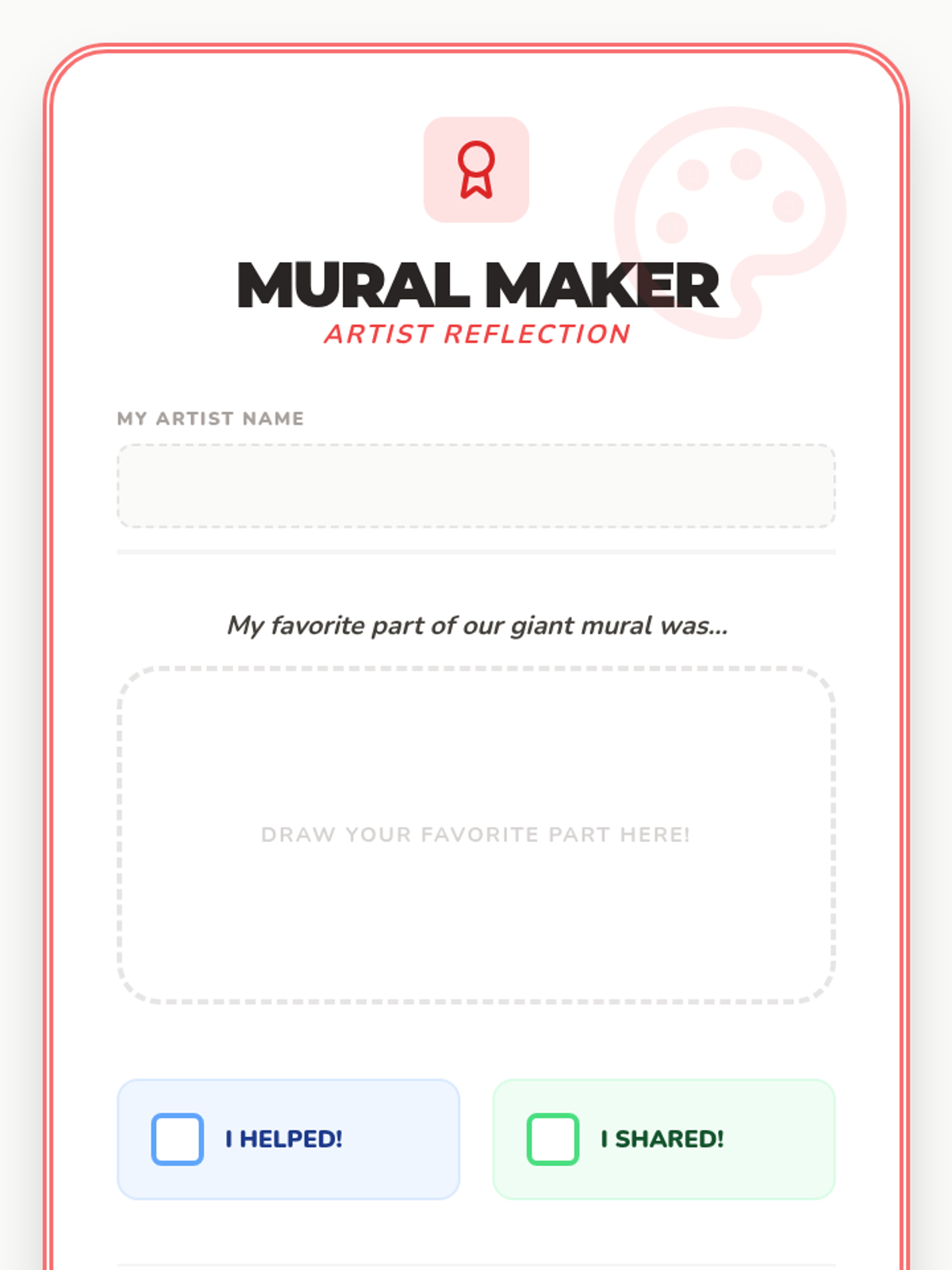
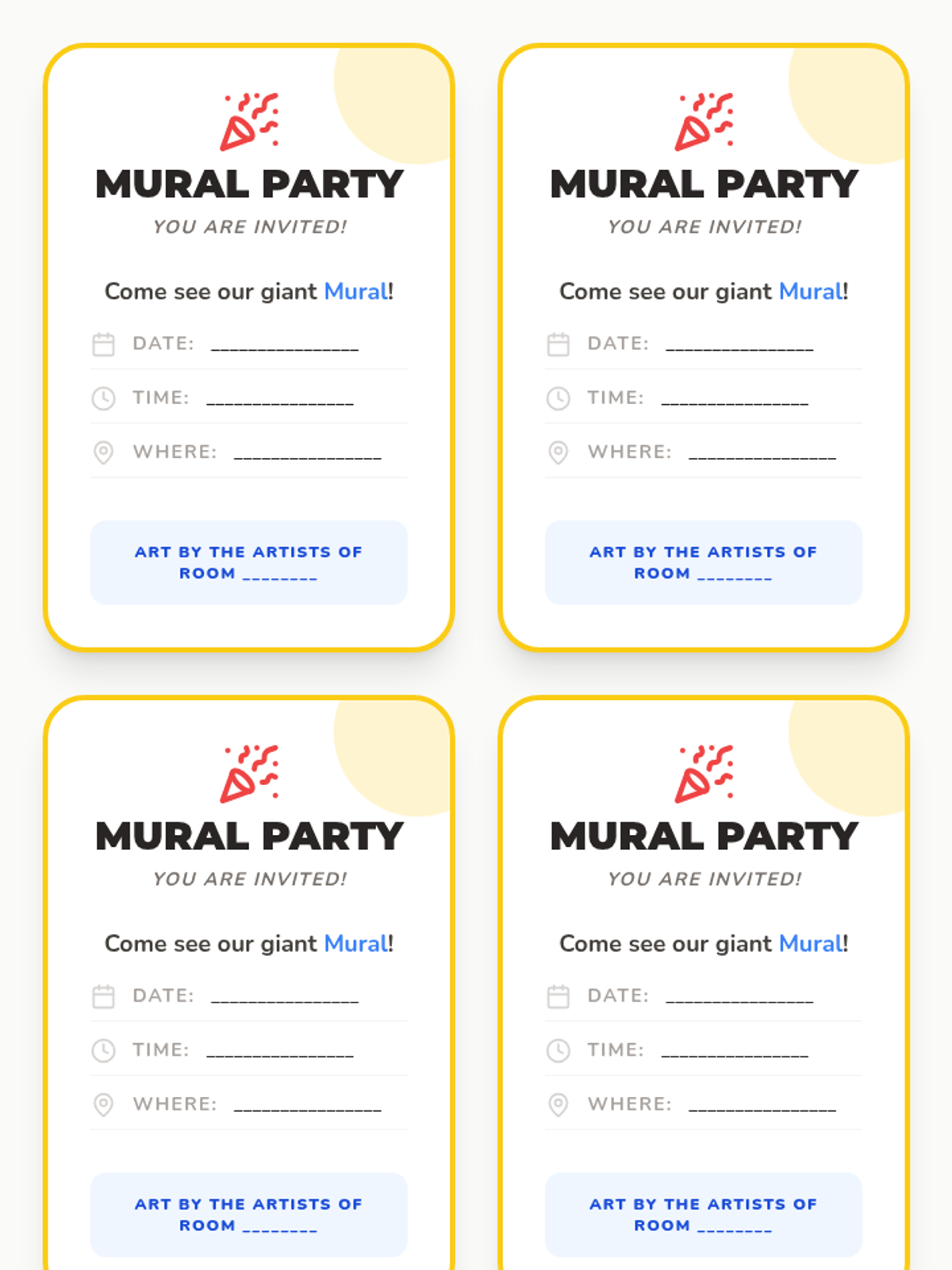
The sequence concludes with a celebration and unveiling of the mural. Students reflect on their work and share their creation with the wider school community.
The class assembles their individual pieces onto a large background. Students negotiate space, practice cooperation, and add collaborative details to connect the mural elements.
Students create their individual contributions to the mural based on the chosen theme. They focus on self-expression while understanding their work is part of a larger whole.
The class works together to choose a theme for their collective mural. Students practice sharing ideas, listening to peers, and participating in a group vote.
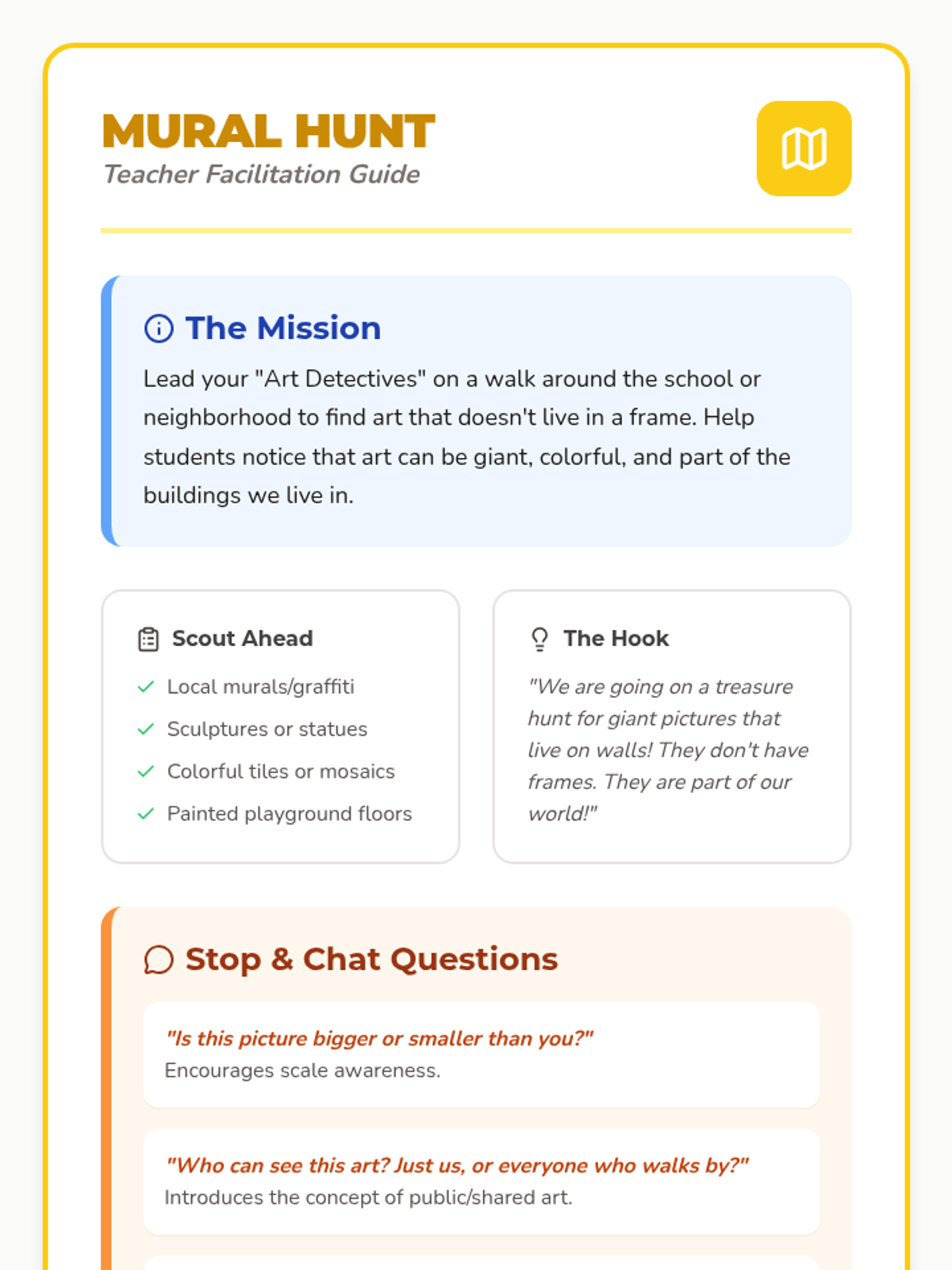
Students explore the concept of public art by identifying large-scale artworks in their community and school. They learn to distinguish between art in frames and art that lives on walls for everyone to see.
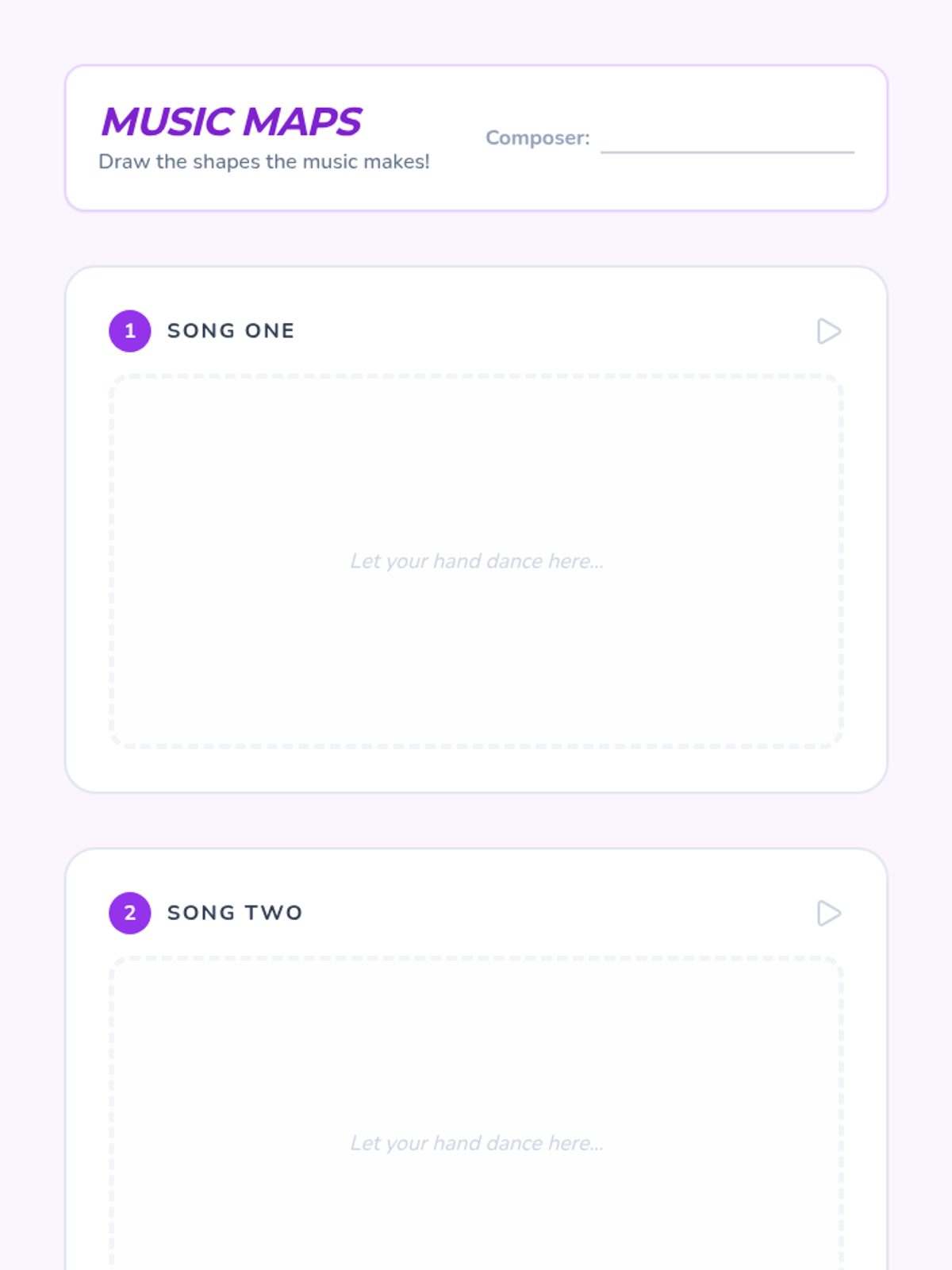
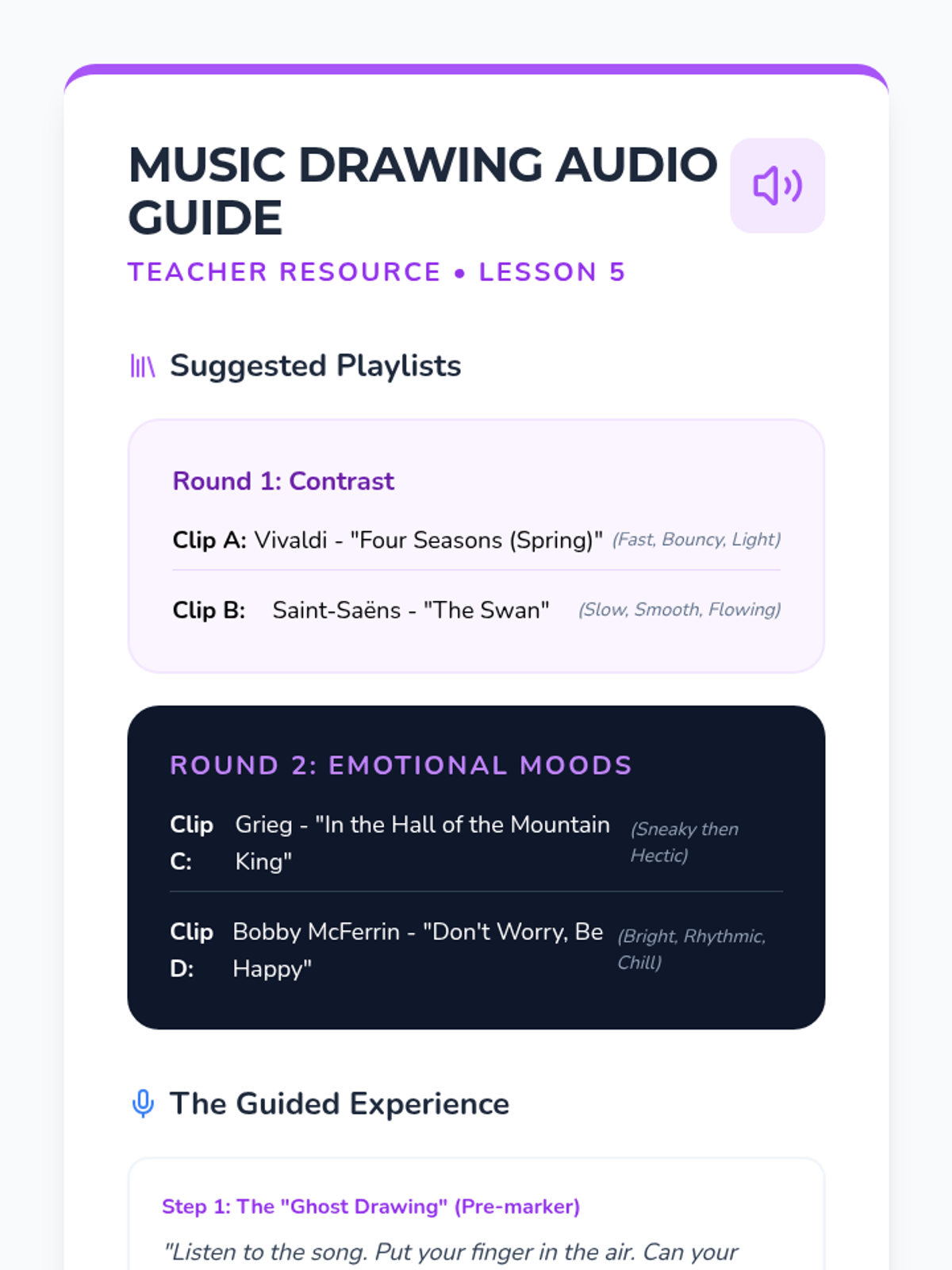
Students translate musical rhythms and moods into lines, shapes, and colors, connecting auditory input to visual creativity.
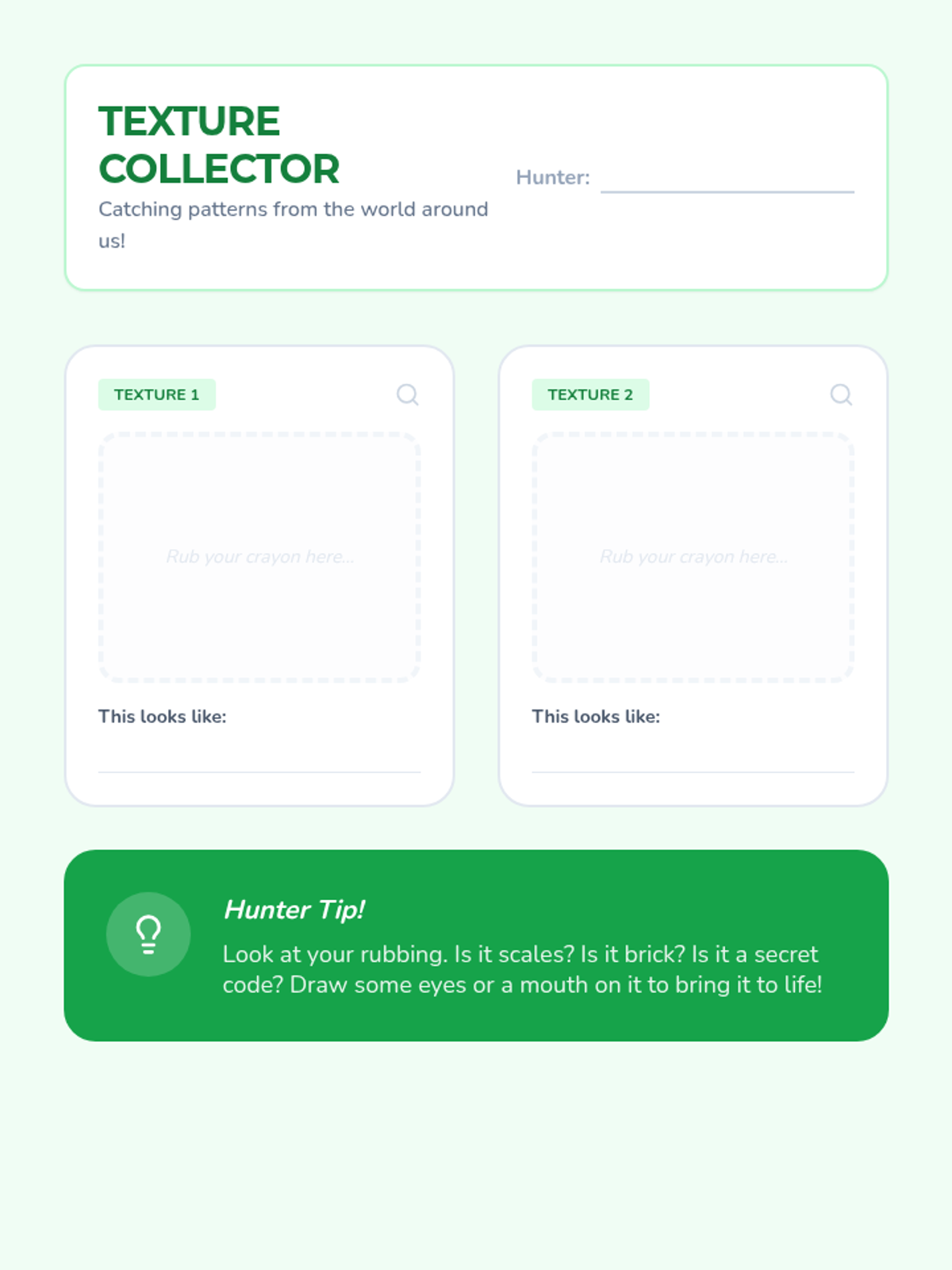
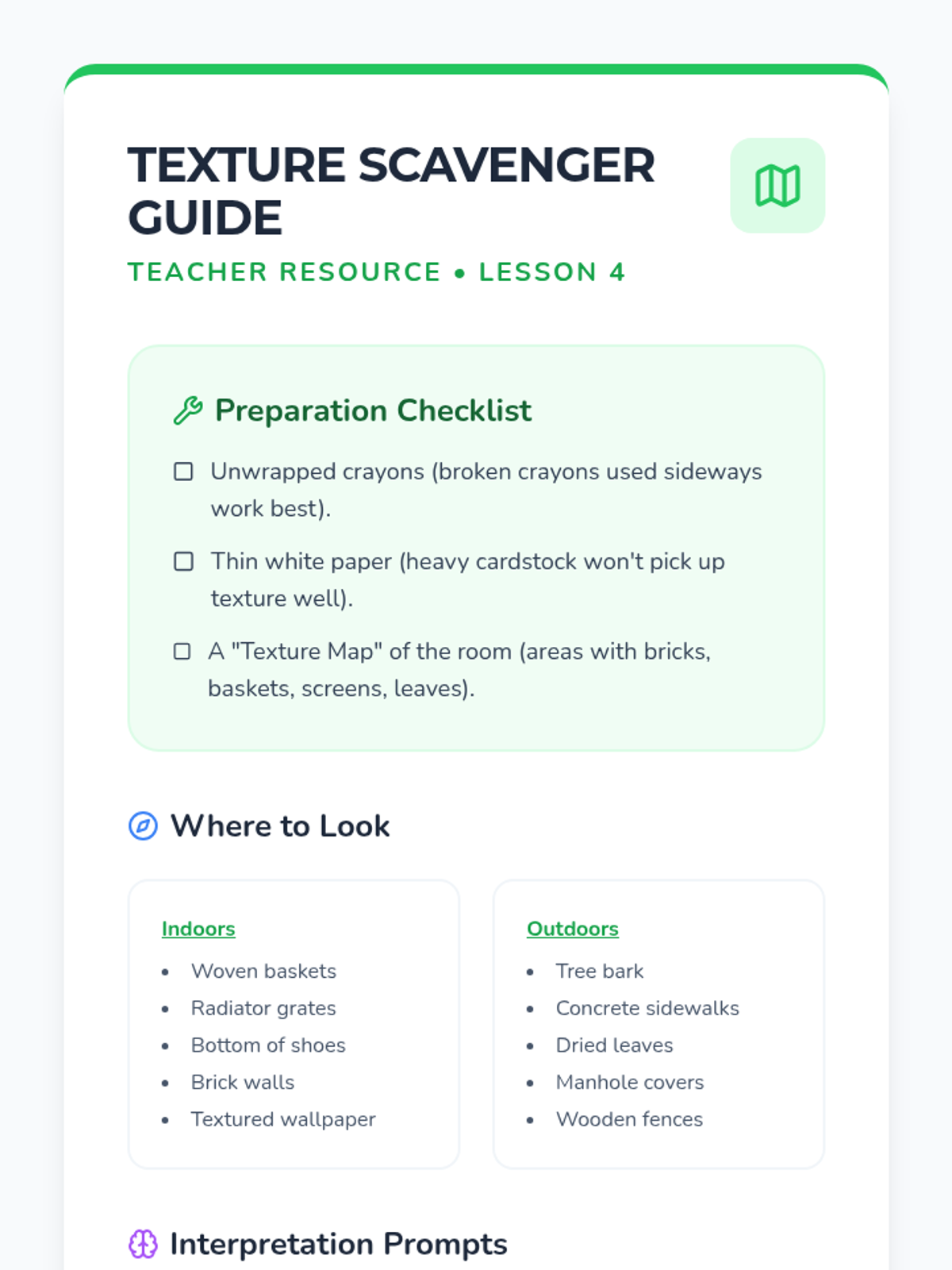
Students collect texture rubbings from their environment and interpret the patterns to generate creative ideas.
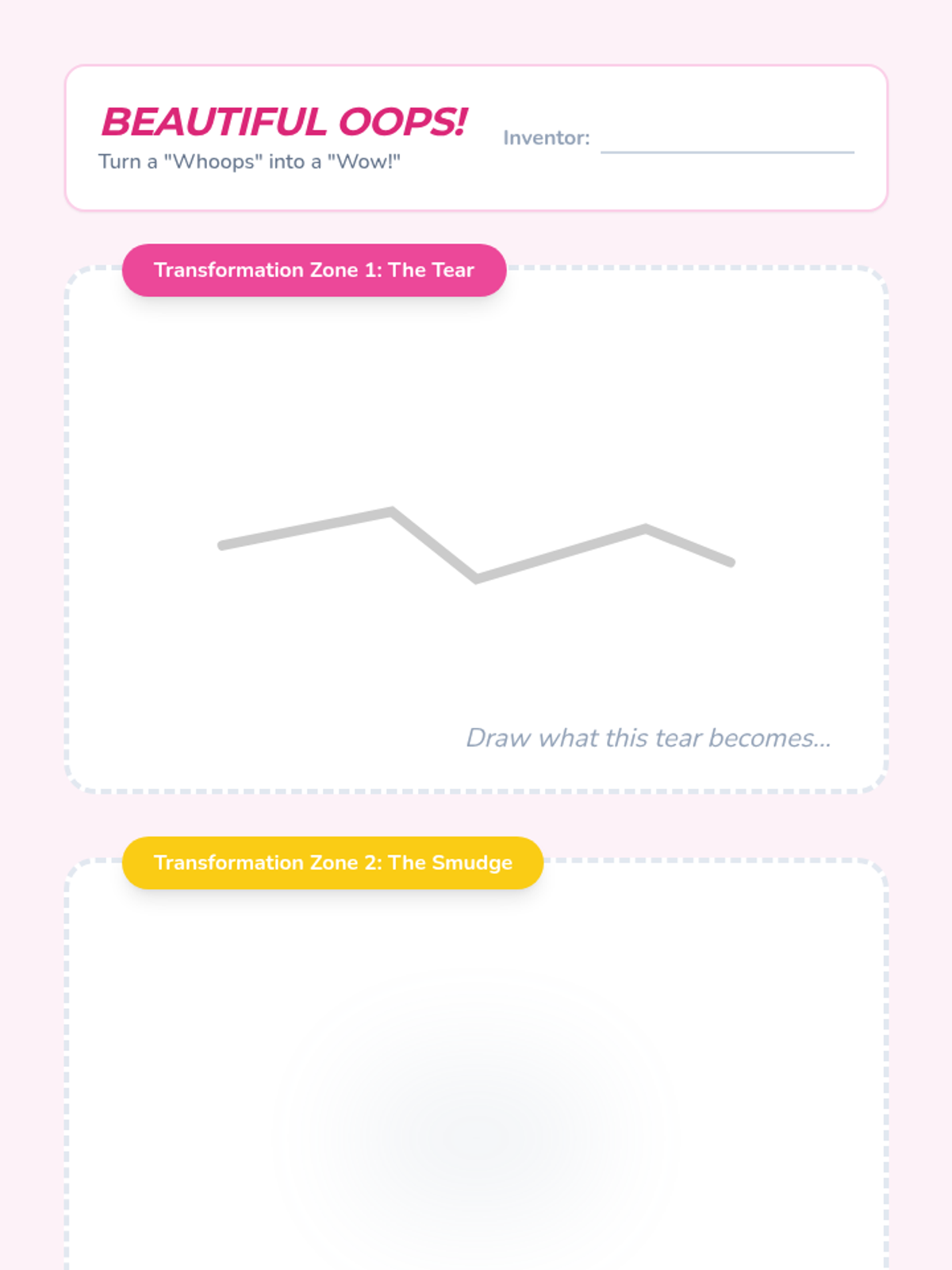
Inspired by 'Beautiful Oops', students learn to transform spills and tears into intentional art pieces to build adaptability.
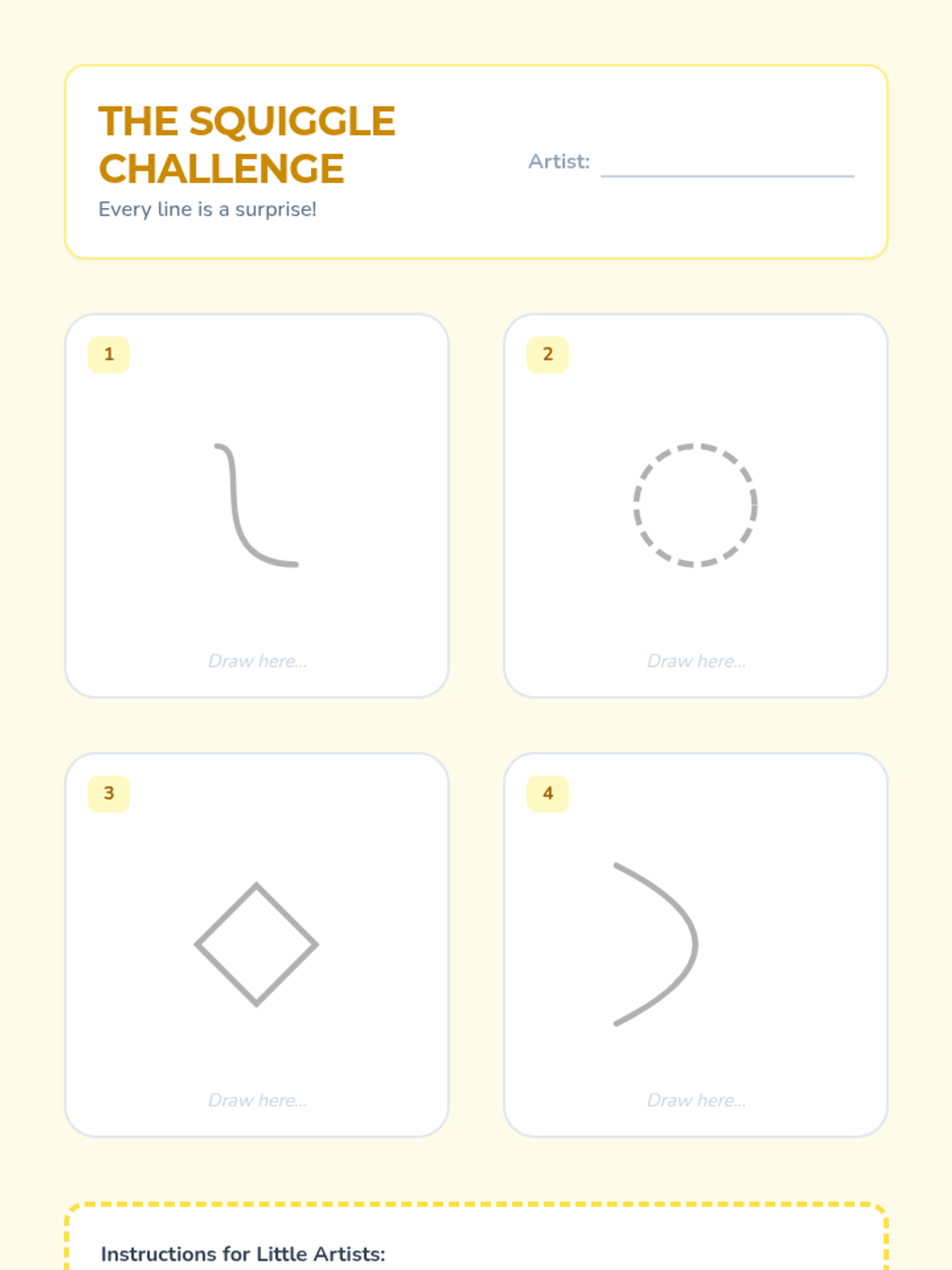
Students turn random marker squiggles into complete pictures, practicing flexible thinking and overcoming the 'blank page' challenge.
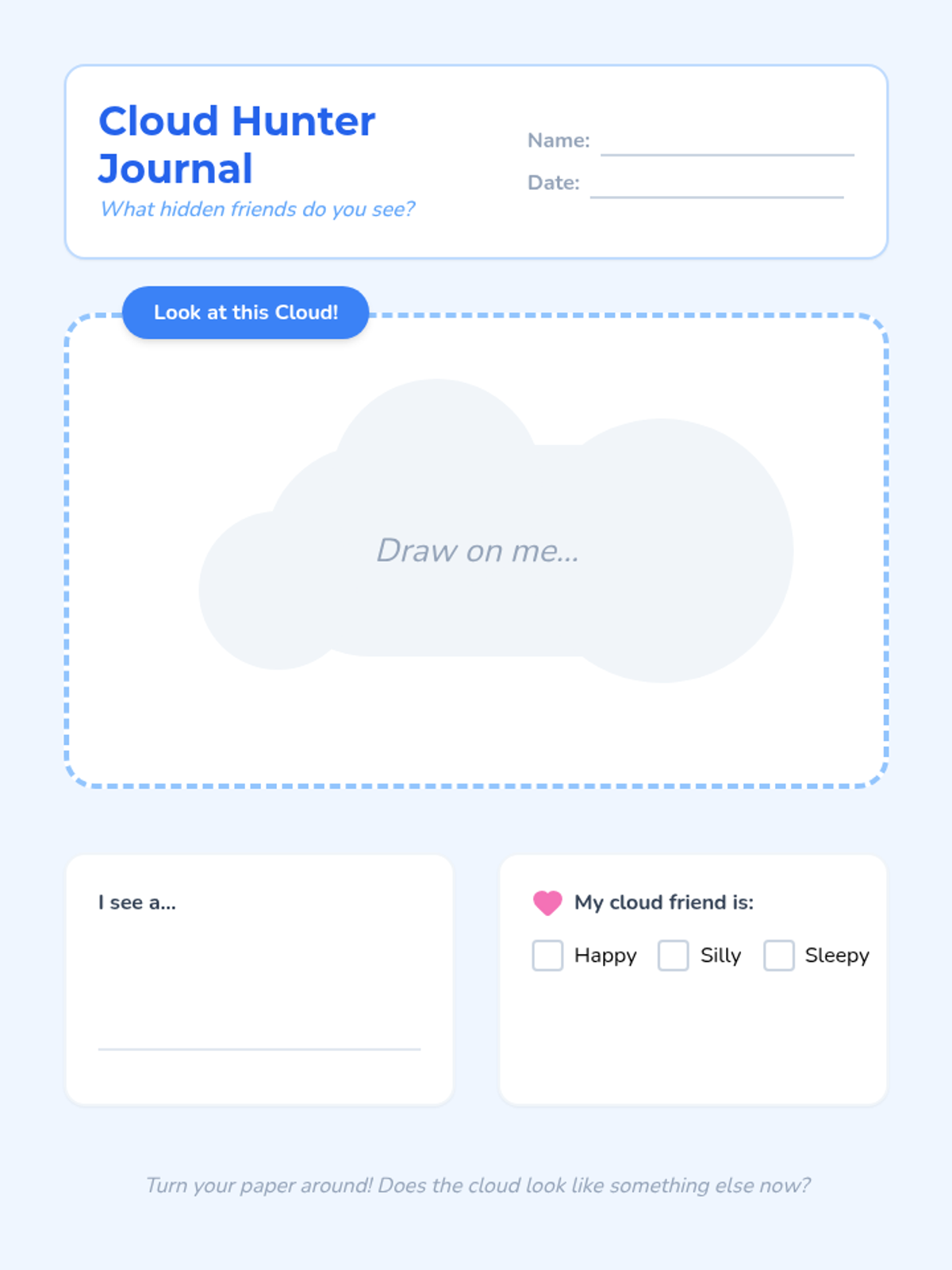
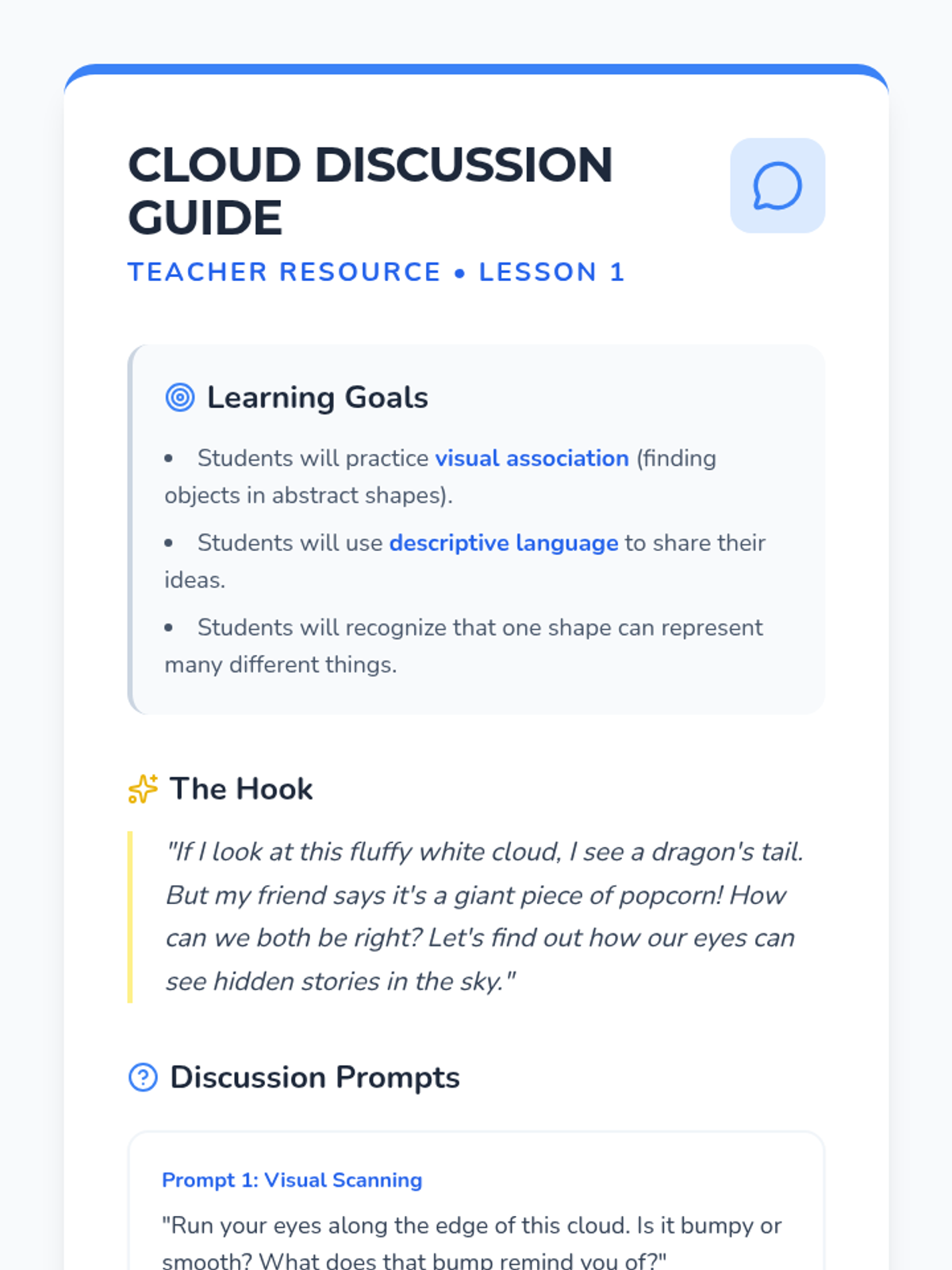
Students practice finding shapes and animals in clouds and inkblots to develop visual association skills.
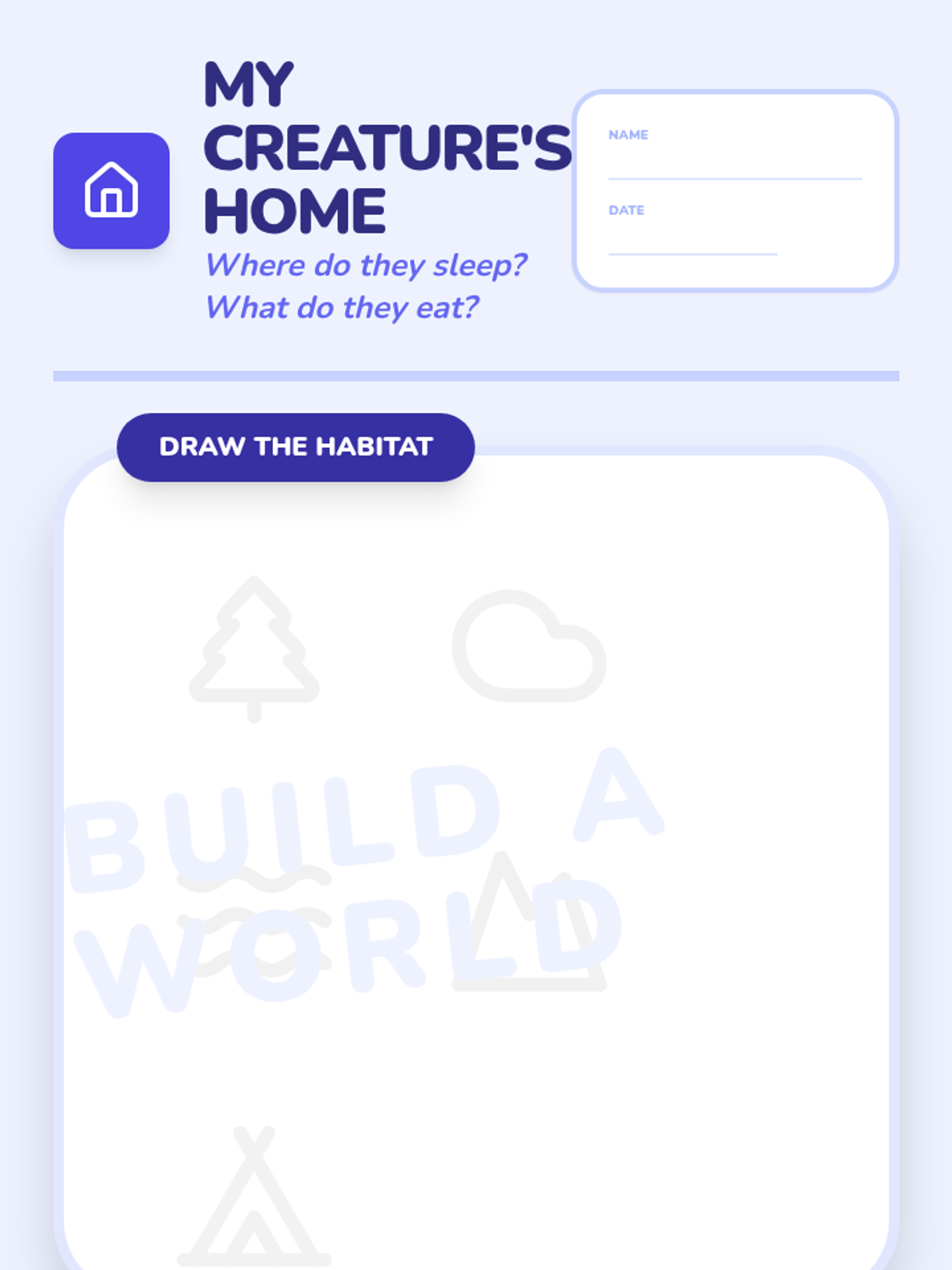
Students design a habitat for their creature, brainstorming what it needs to eat and where it sleeps.
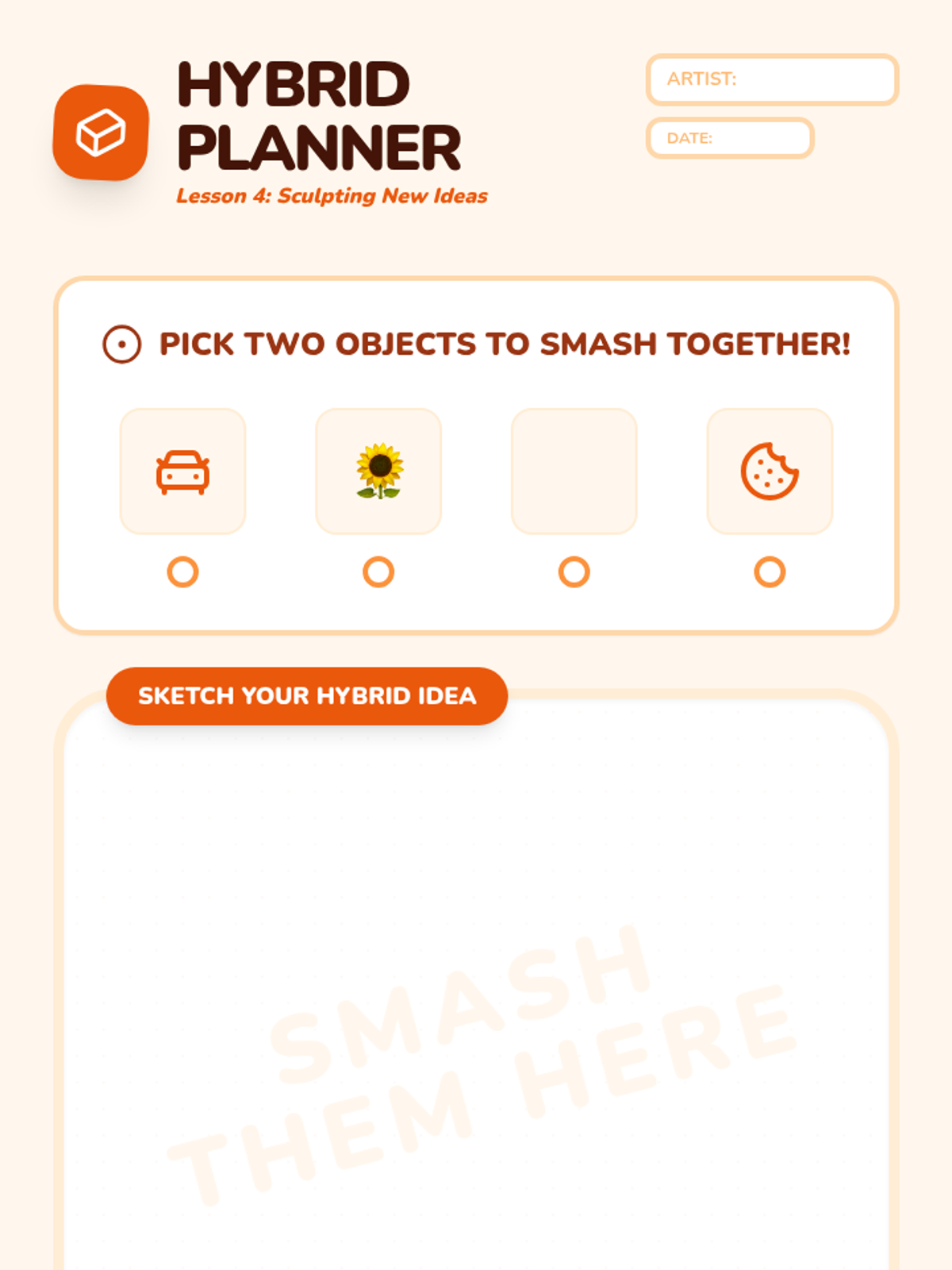
Students use clay to merge two different objects (like a car and a flower) into a single 3D sculpture.
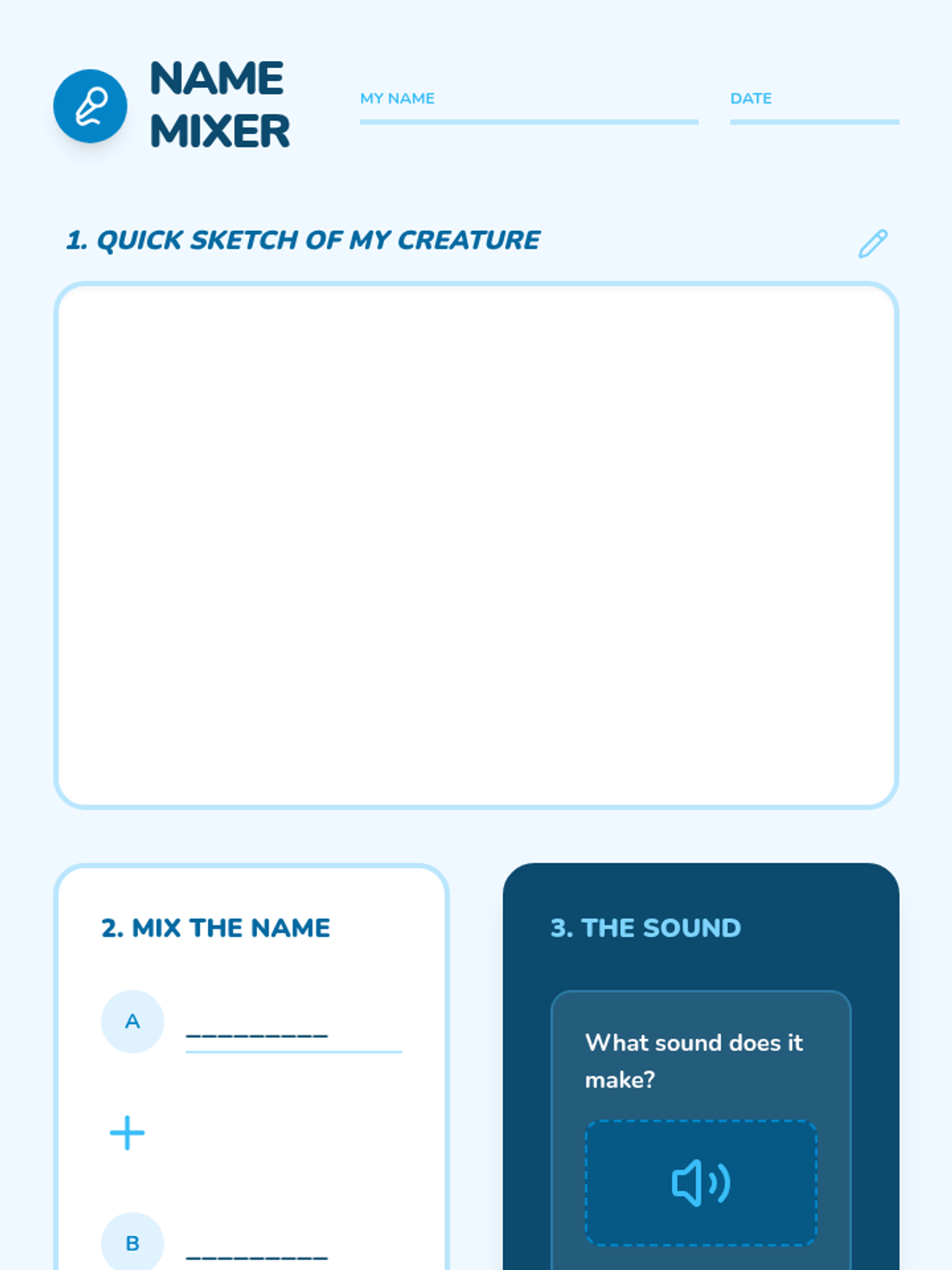
Students invent names and sounds for their creations by combining existing words and phonemes.
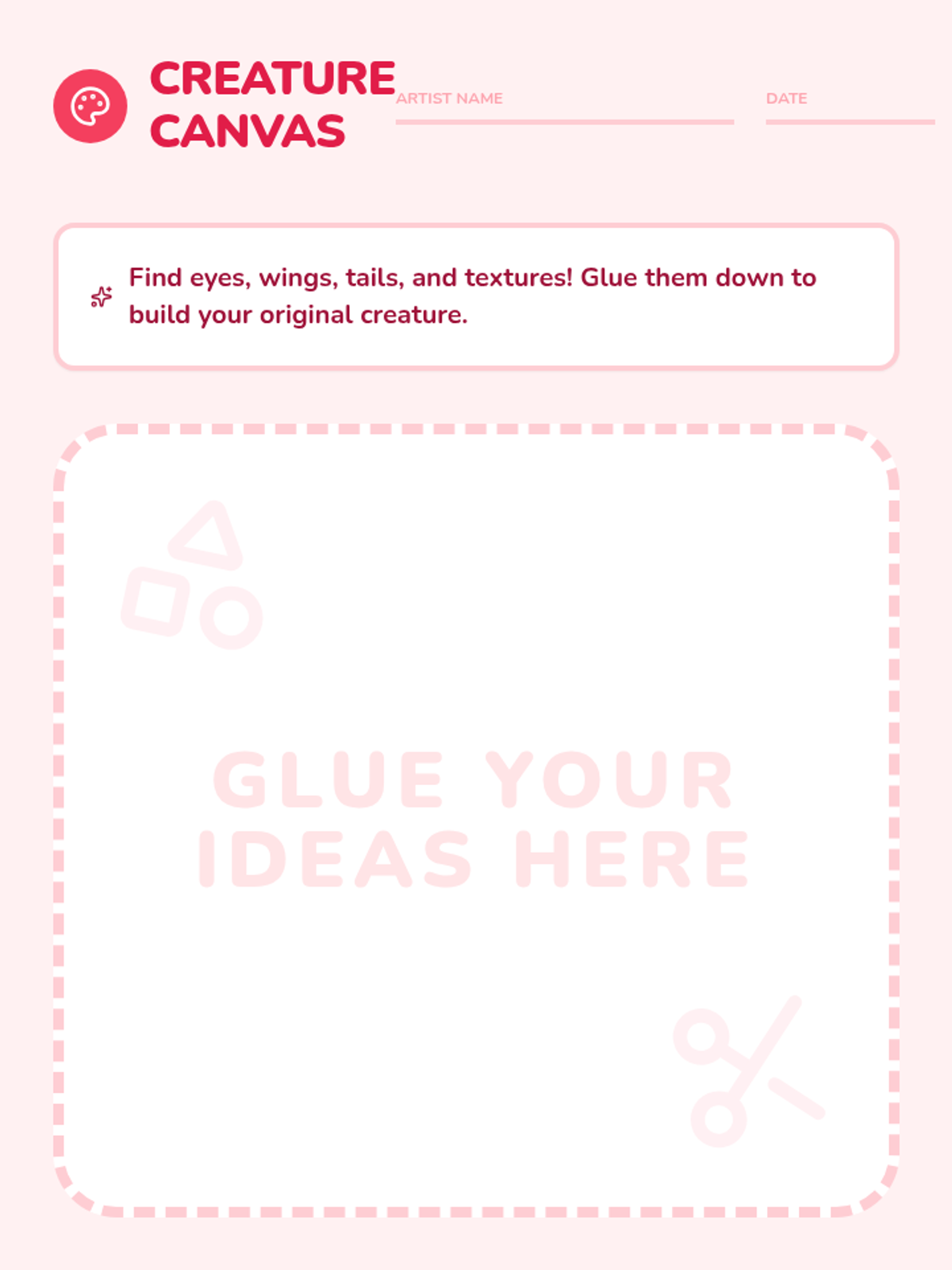
Students use pre-cut shapes and textures to glue together original creatures, focusing on material selection and composition.
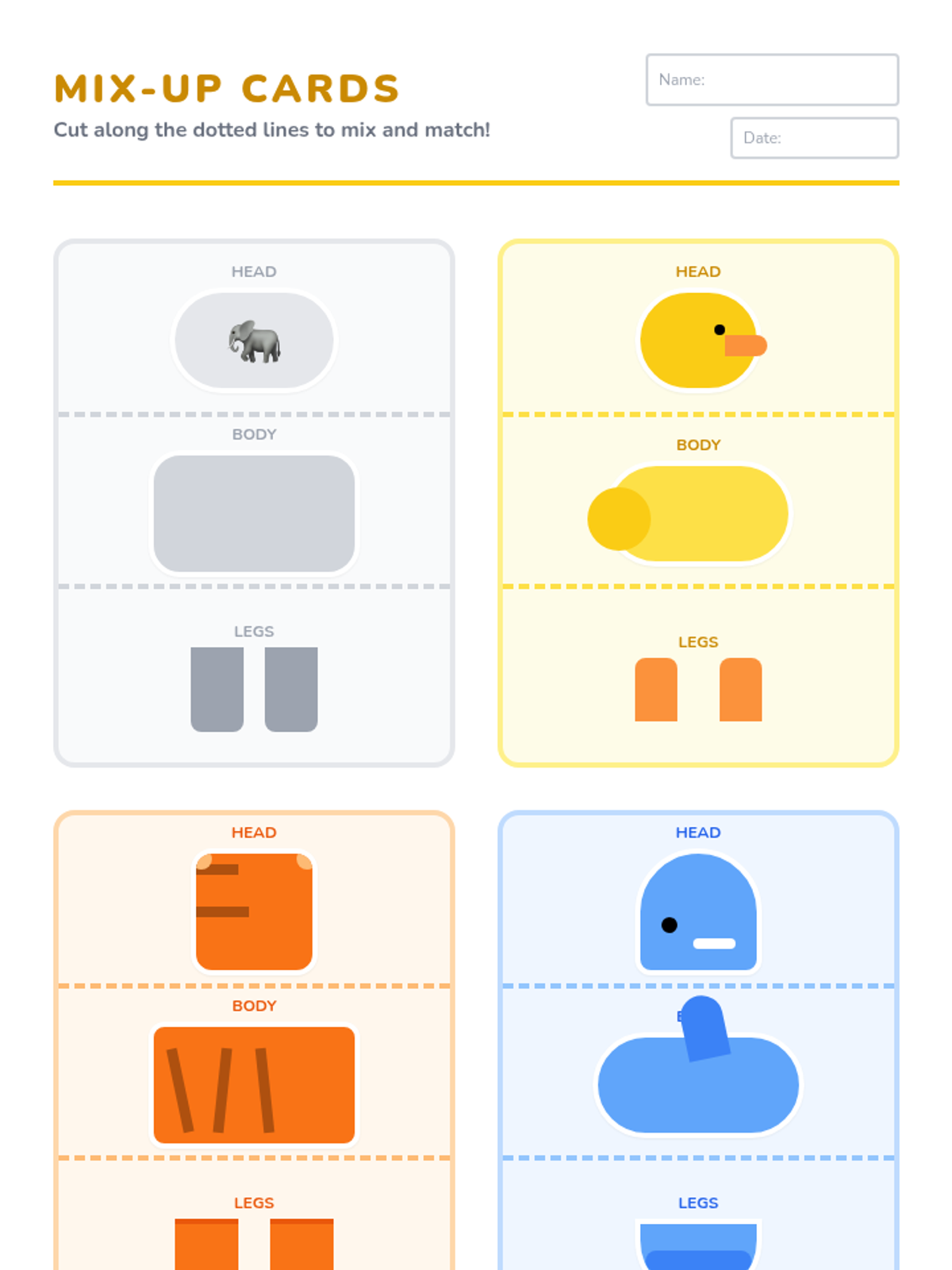
Students use split cards to swap animal parts, exploring how different combinations create funny or interesting new creatures.
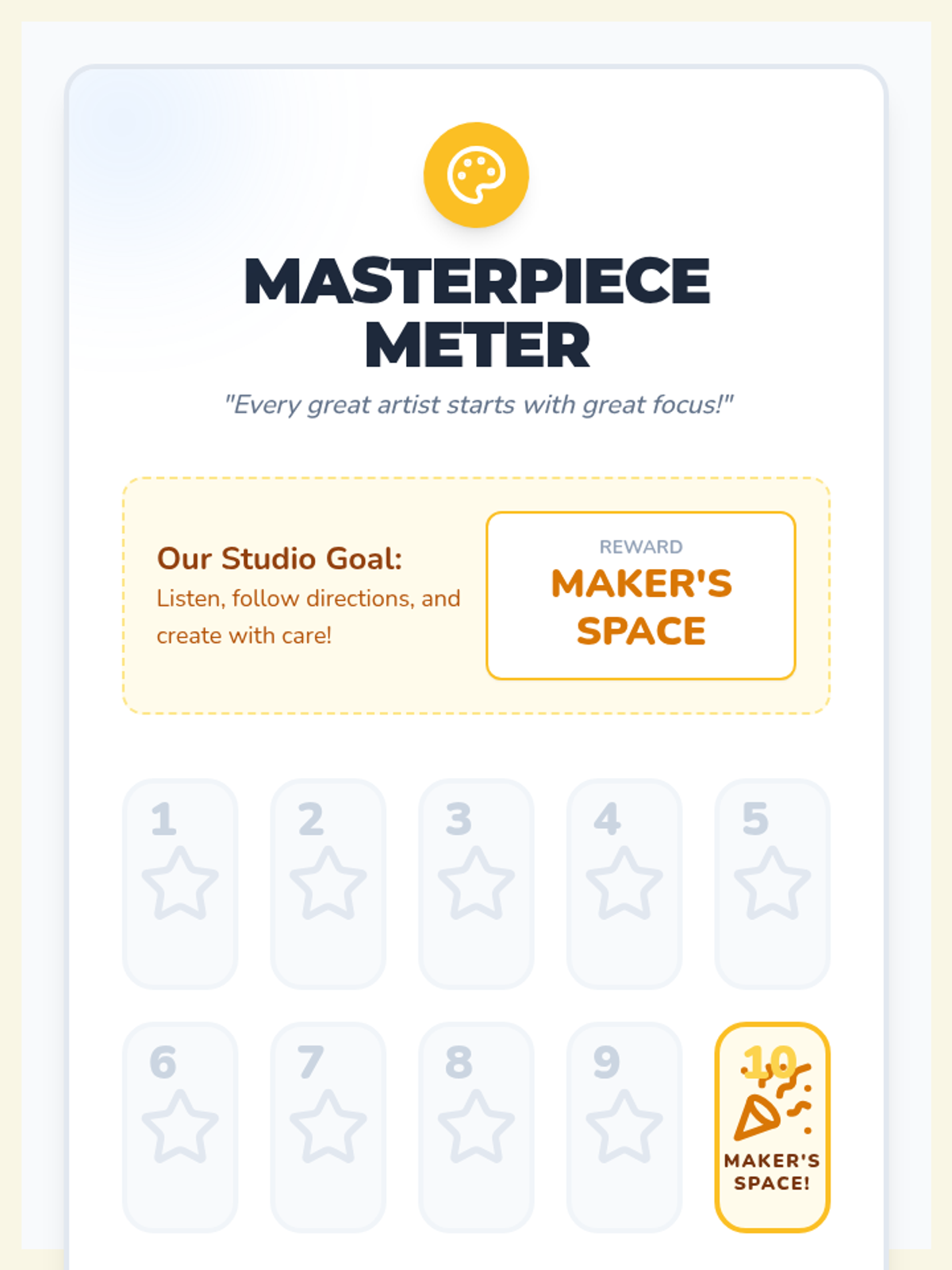
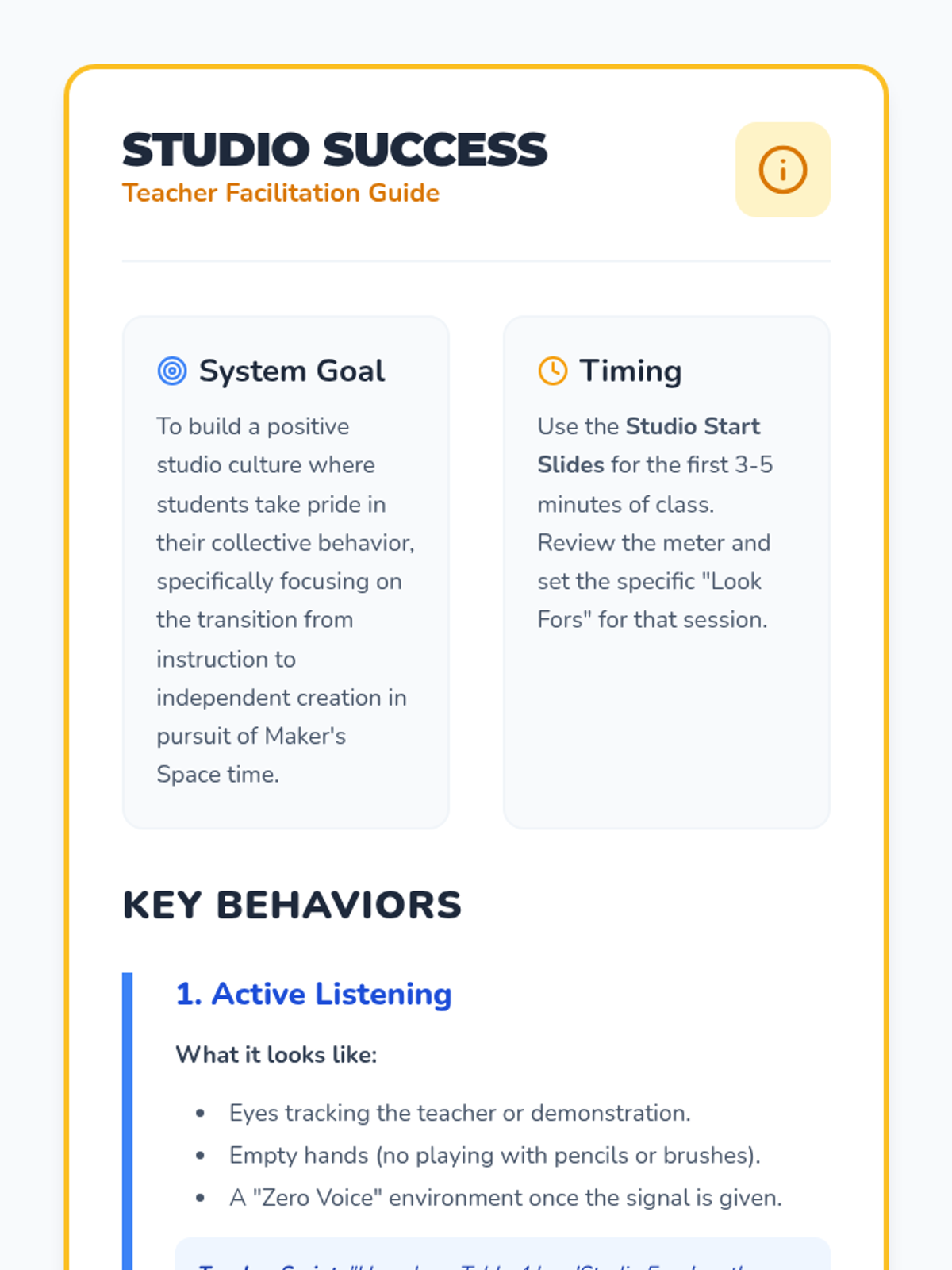
A system for art students to track their progress toward earning Maker's Space time by practicing active listening and following directions. This lesson includes a visual tracking chart, daily warm-up slides, and clear behavioral expectations.
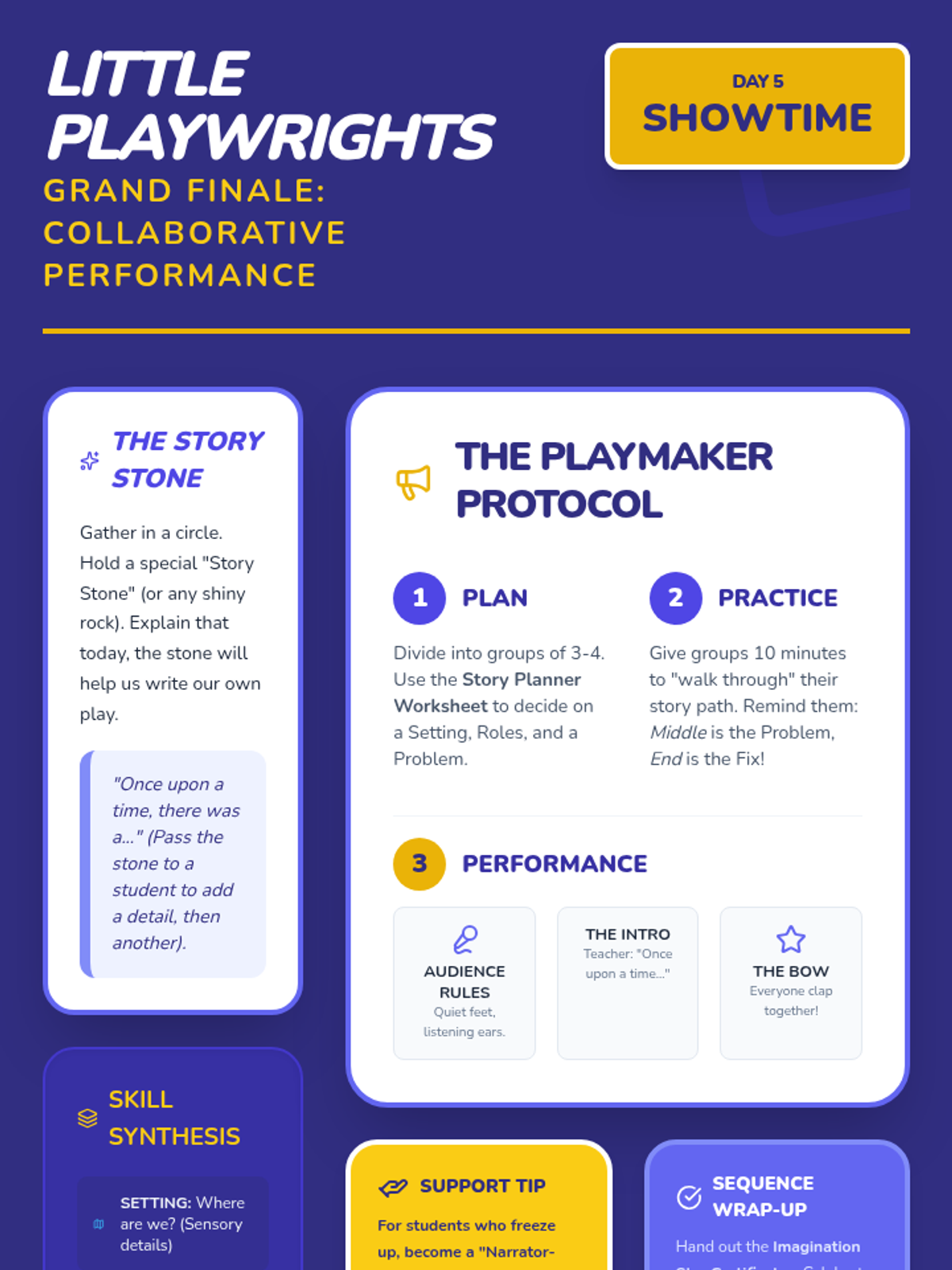
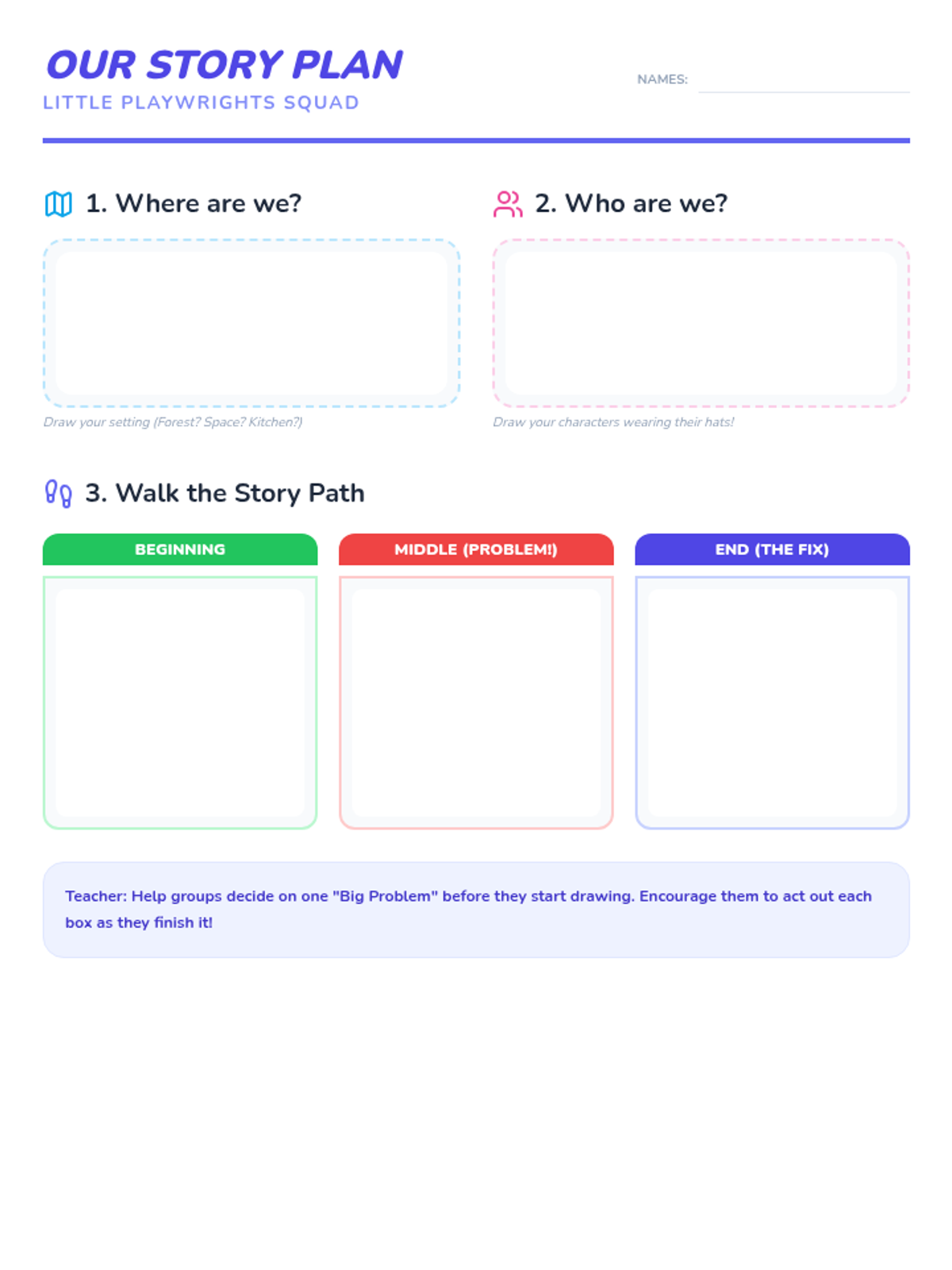
Groups of students plan and perform a short, original story based on a prompt, synthesizing all previously learned theater skills.
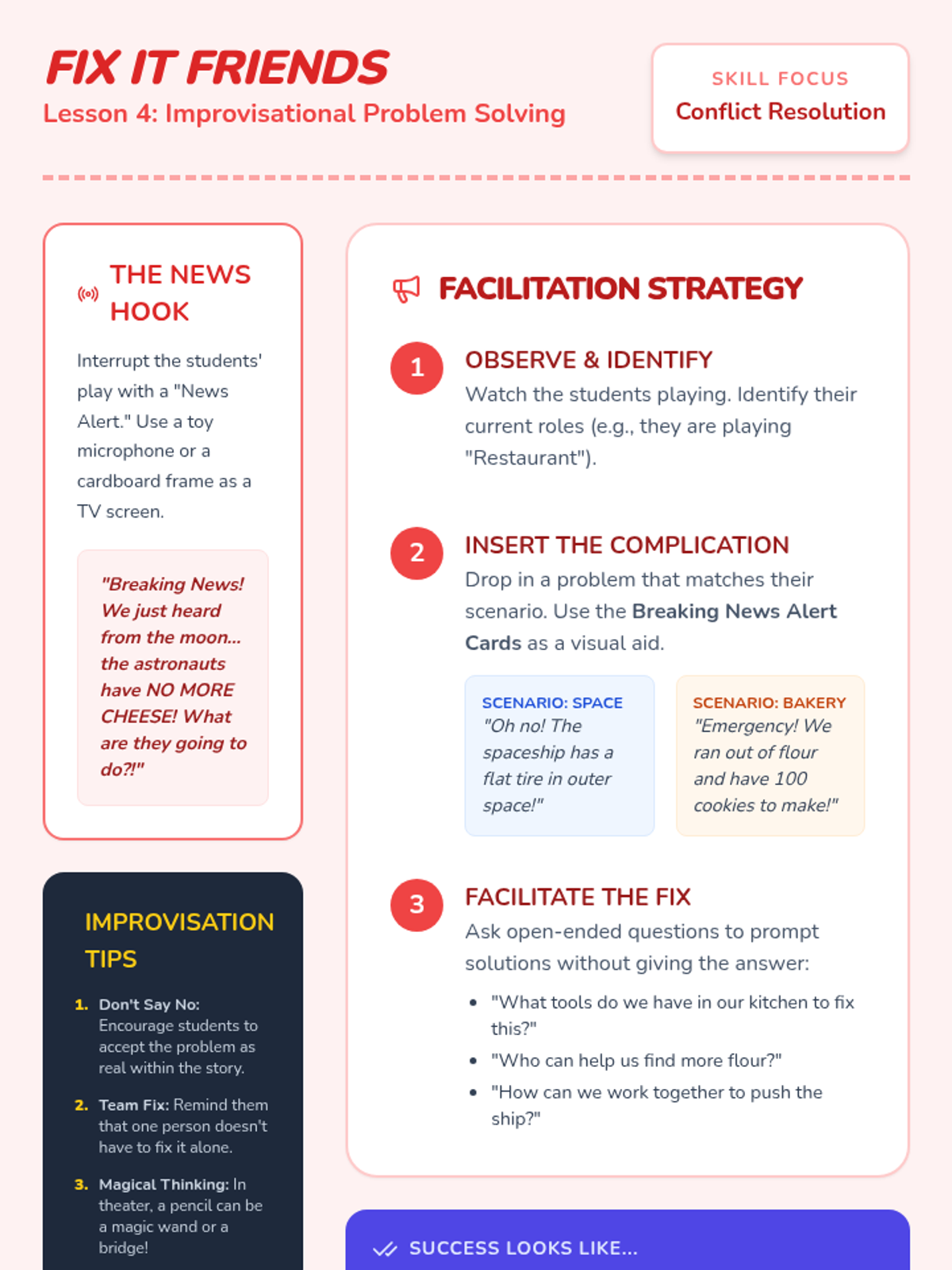
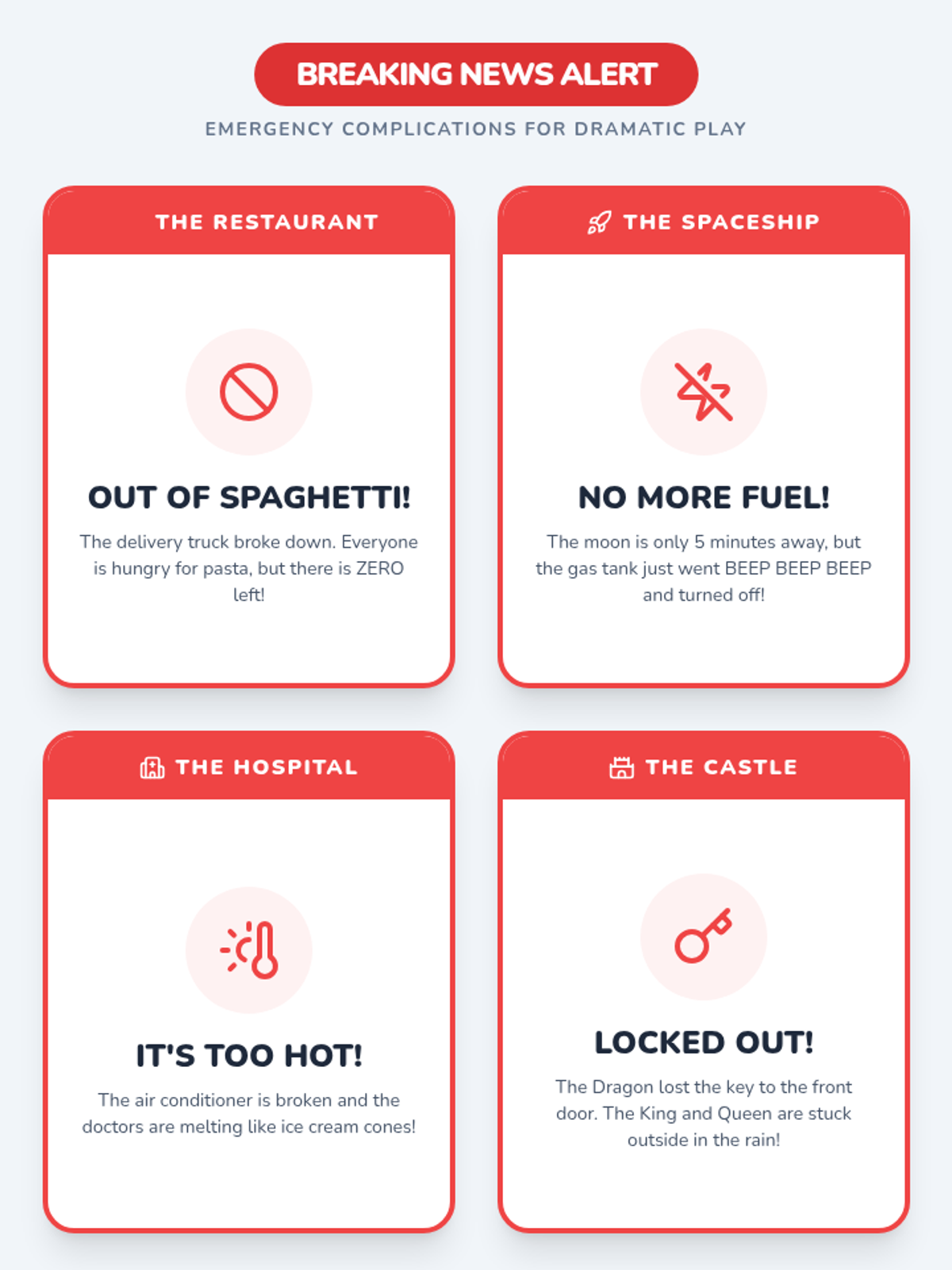
Students practice conflict resolution and critical thinking by improvising solutions to problems introduced during play.
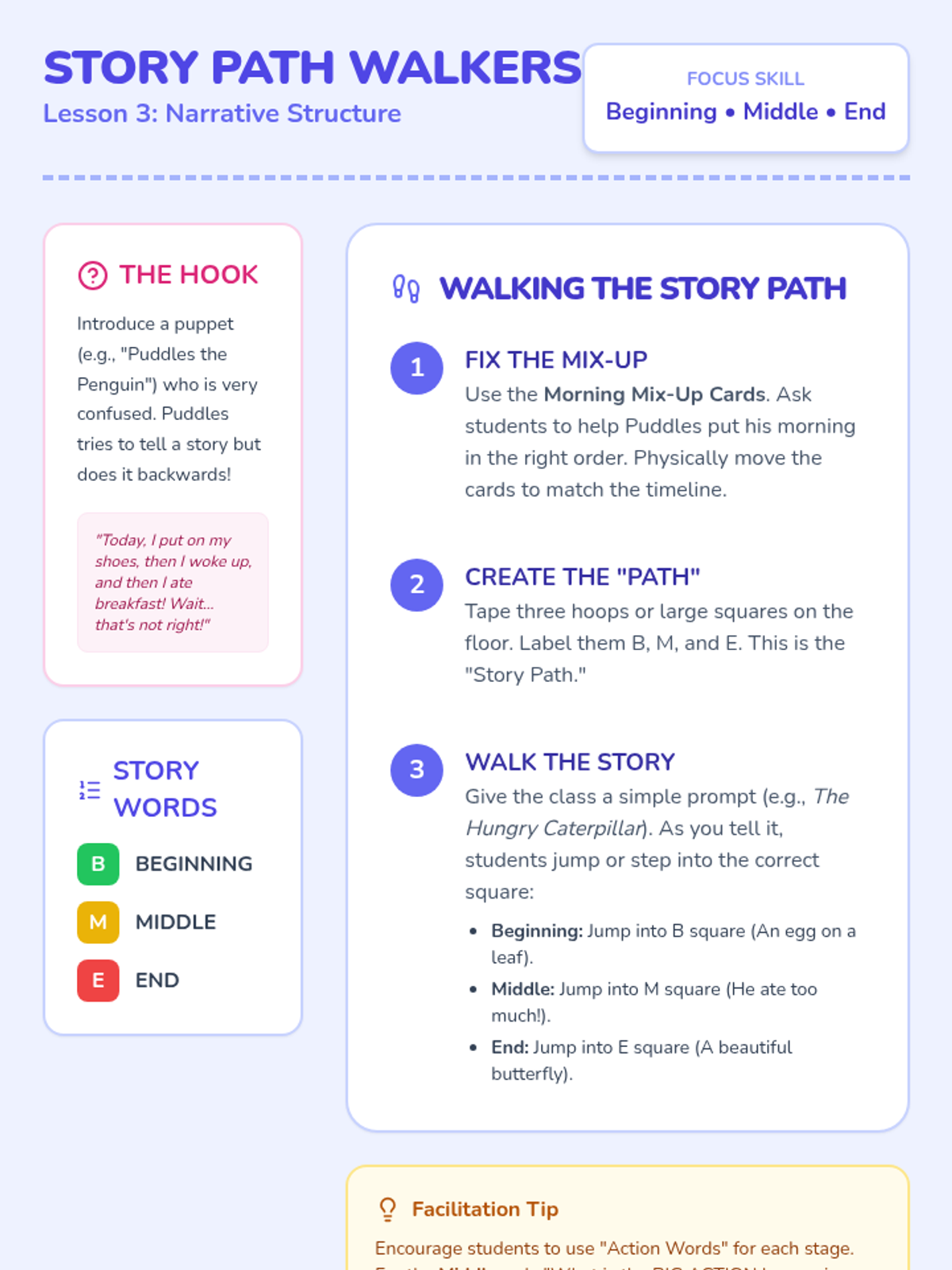
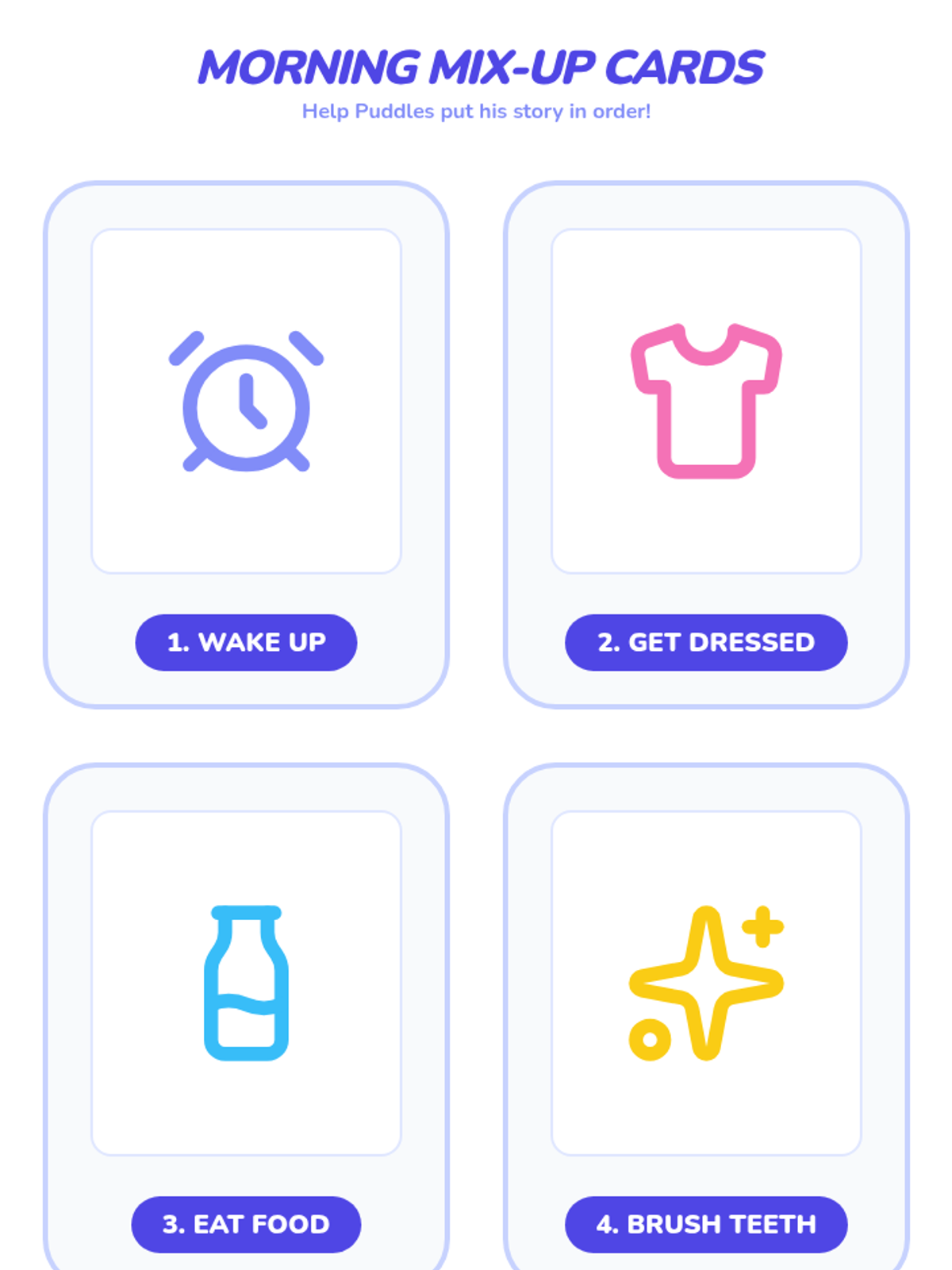
Students learn story sequencing (Beginning, Middle, End) through physical acting and helping a confused puppet.
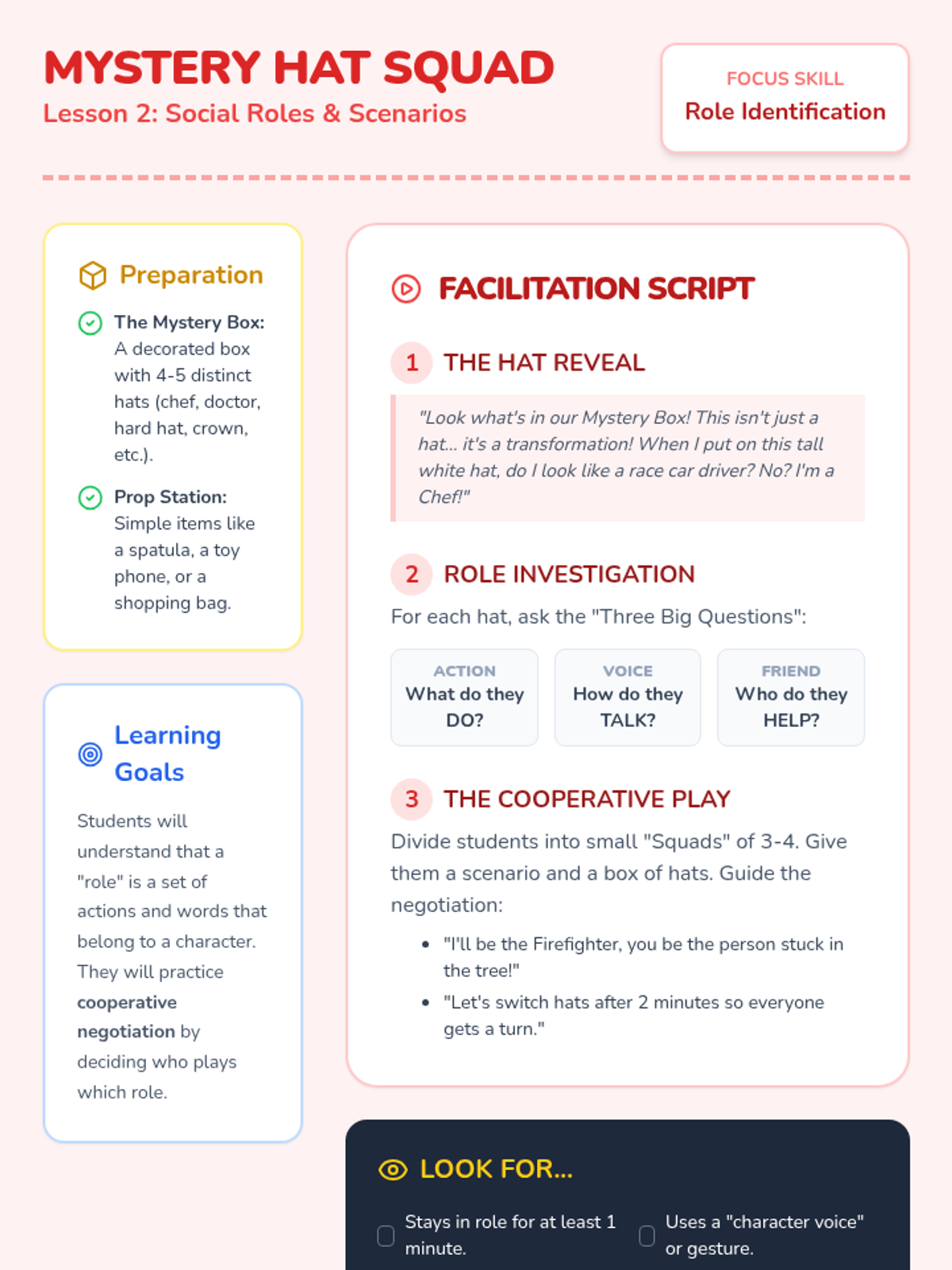
Students explore social roles and community scenarios by assigning jobs and practicing associated behaviors using a 'Mystery Box' of hats.
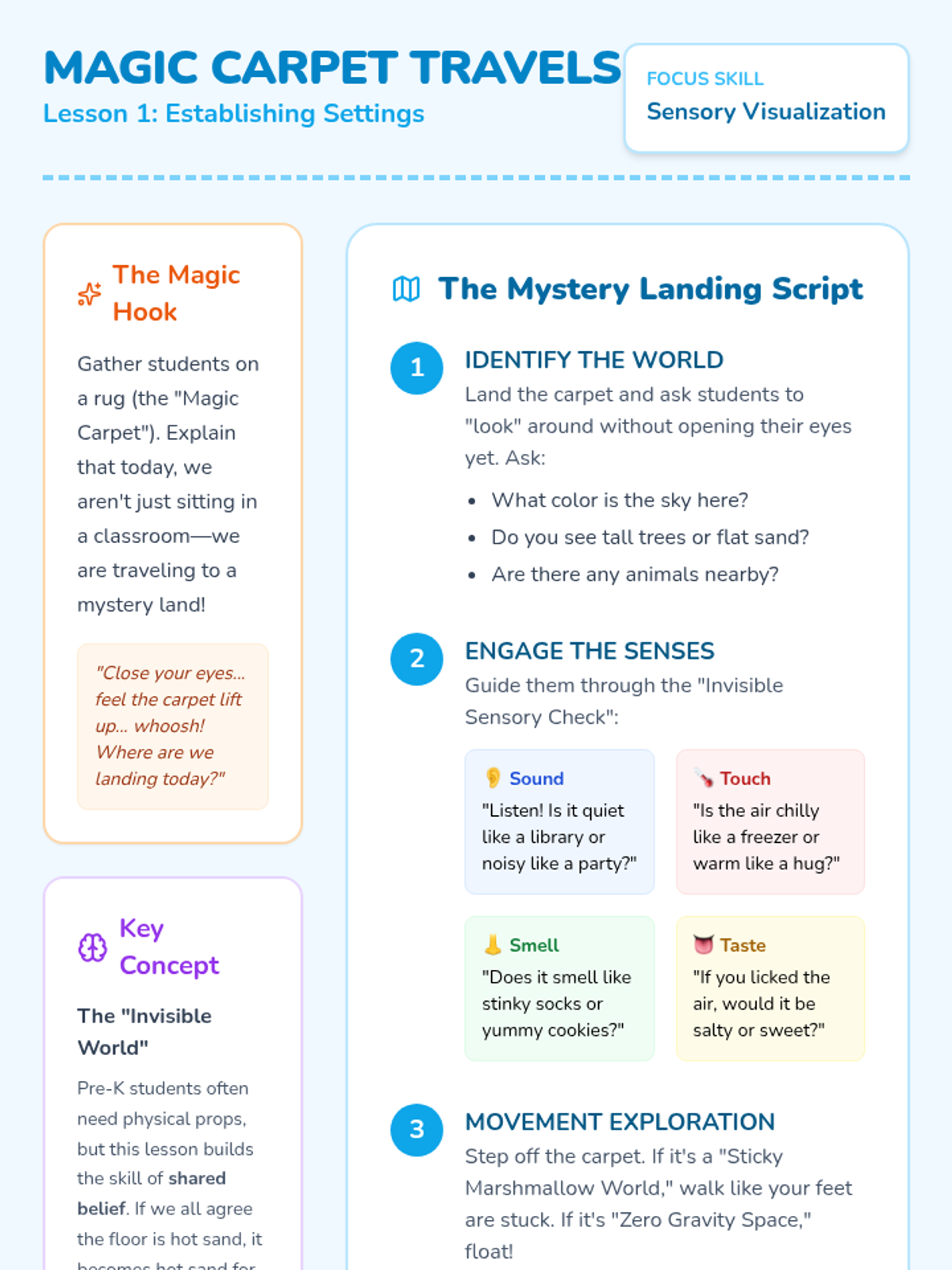
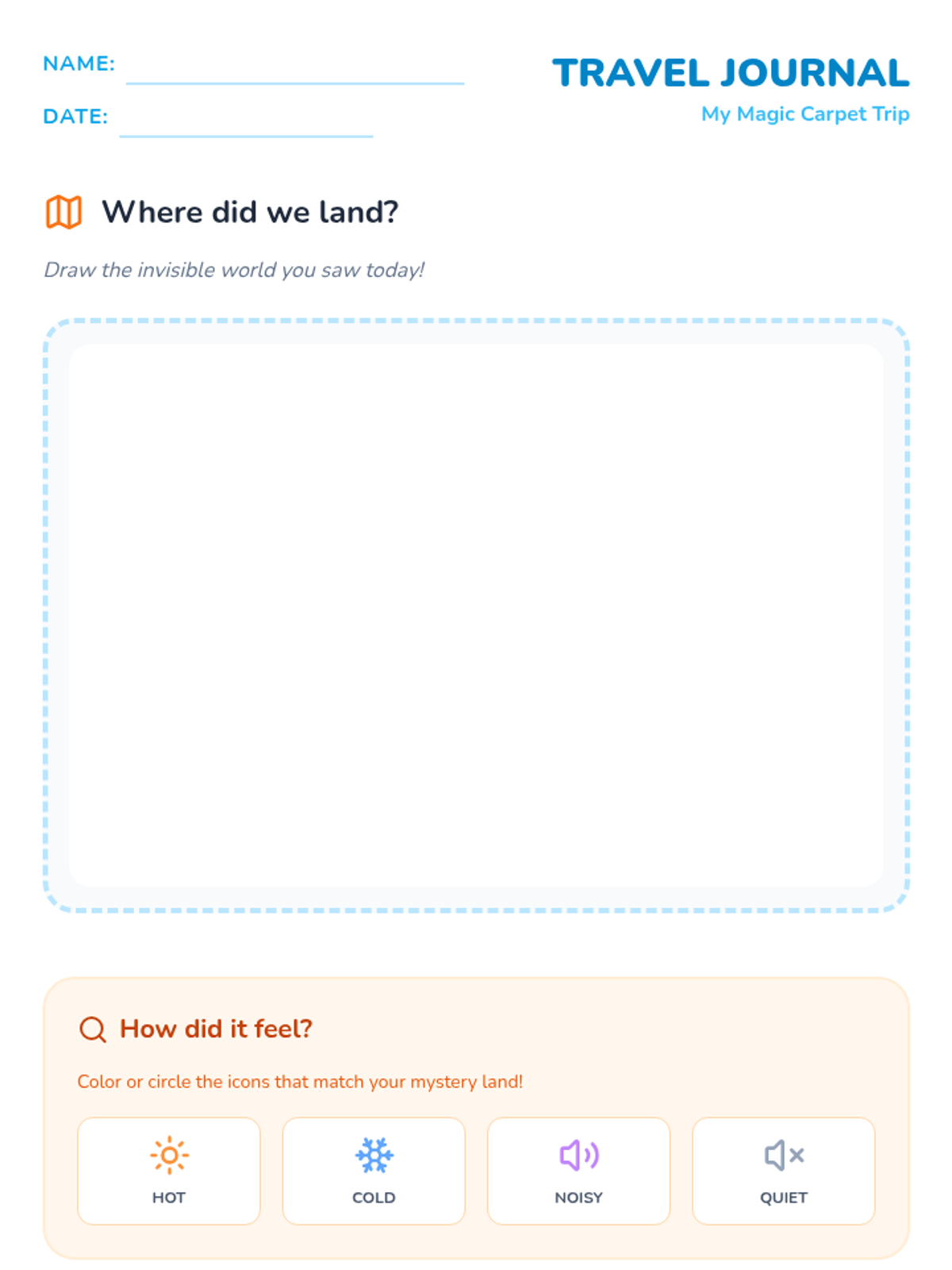
Students learn to visualize and describe a shared environment without physical sets using sensory prompts and a 'Magic Carpet' hook.
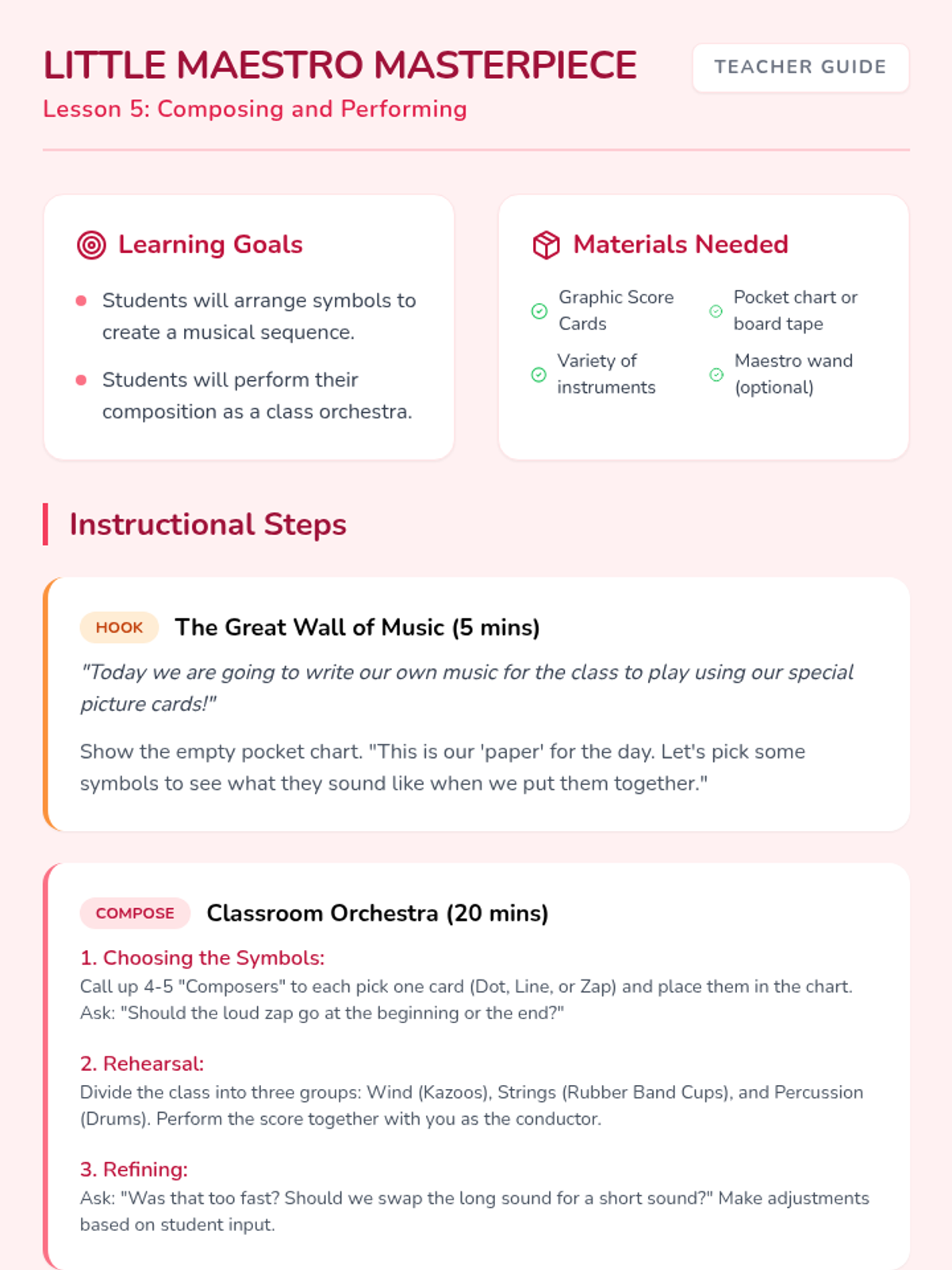
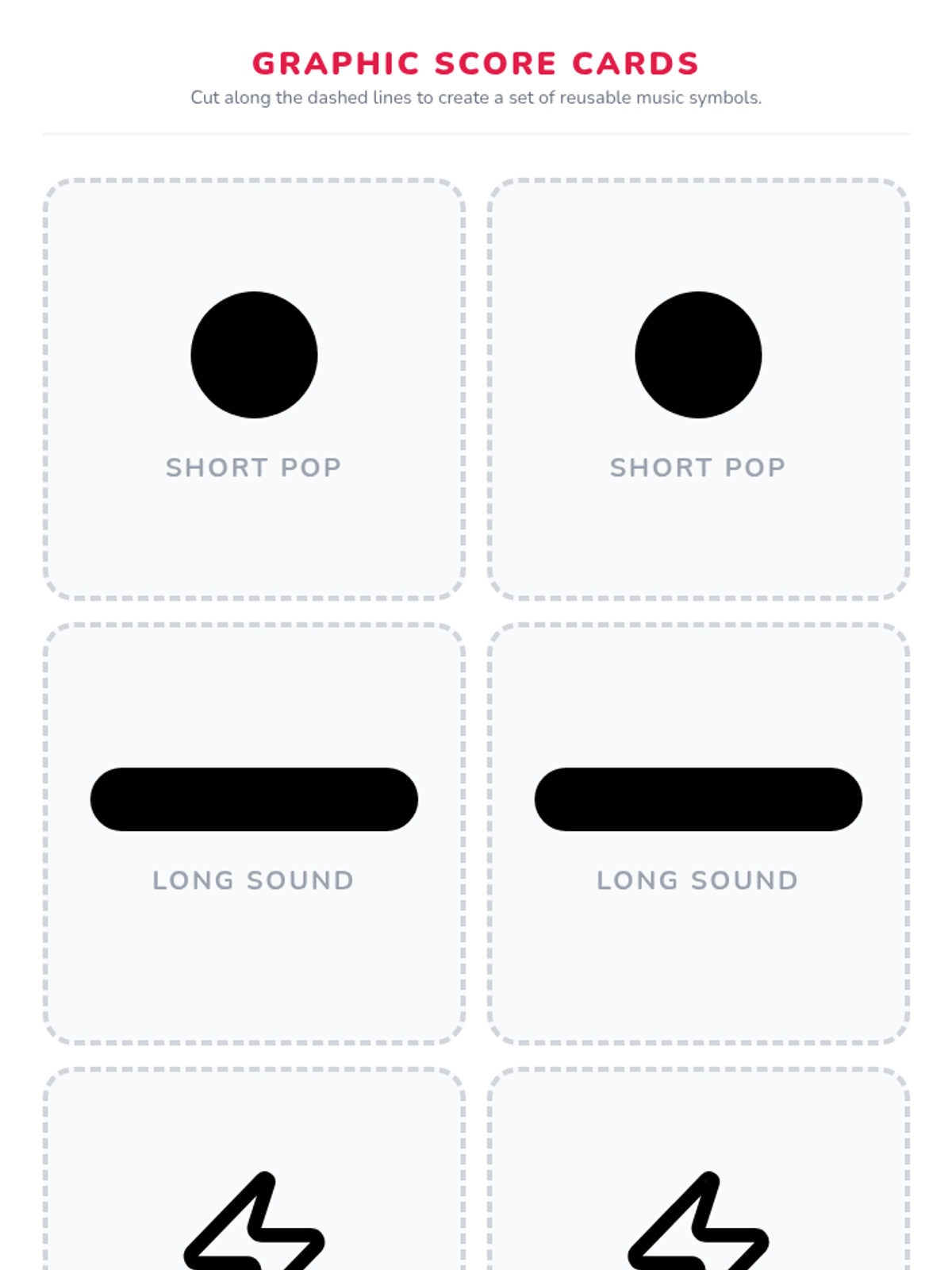
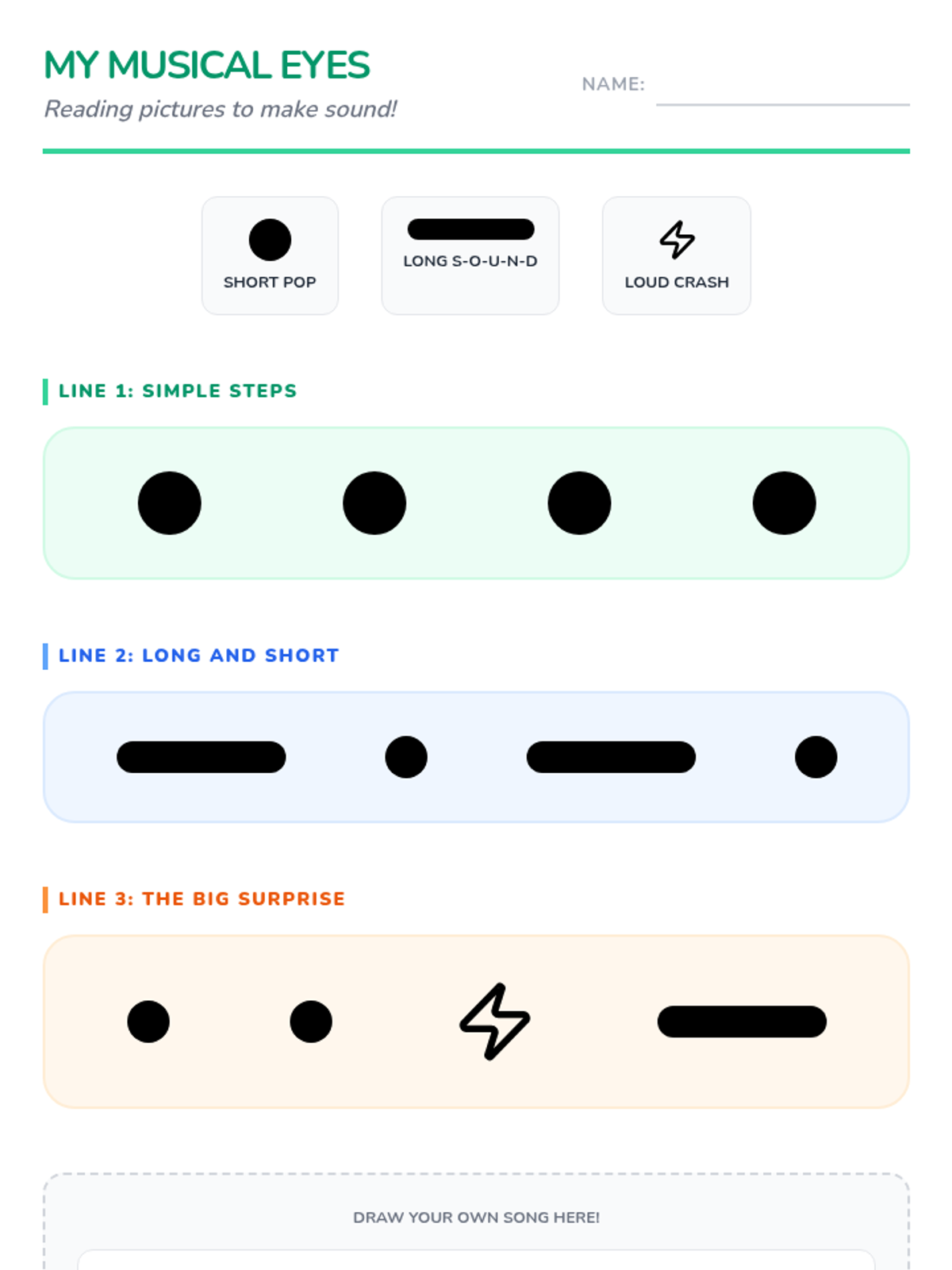
Students arrange musical icons to create and perform their own graphic scores as a class.
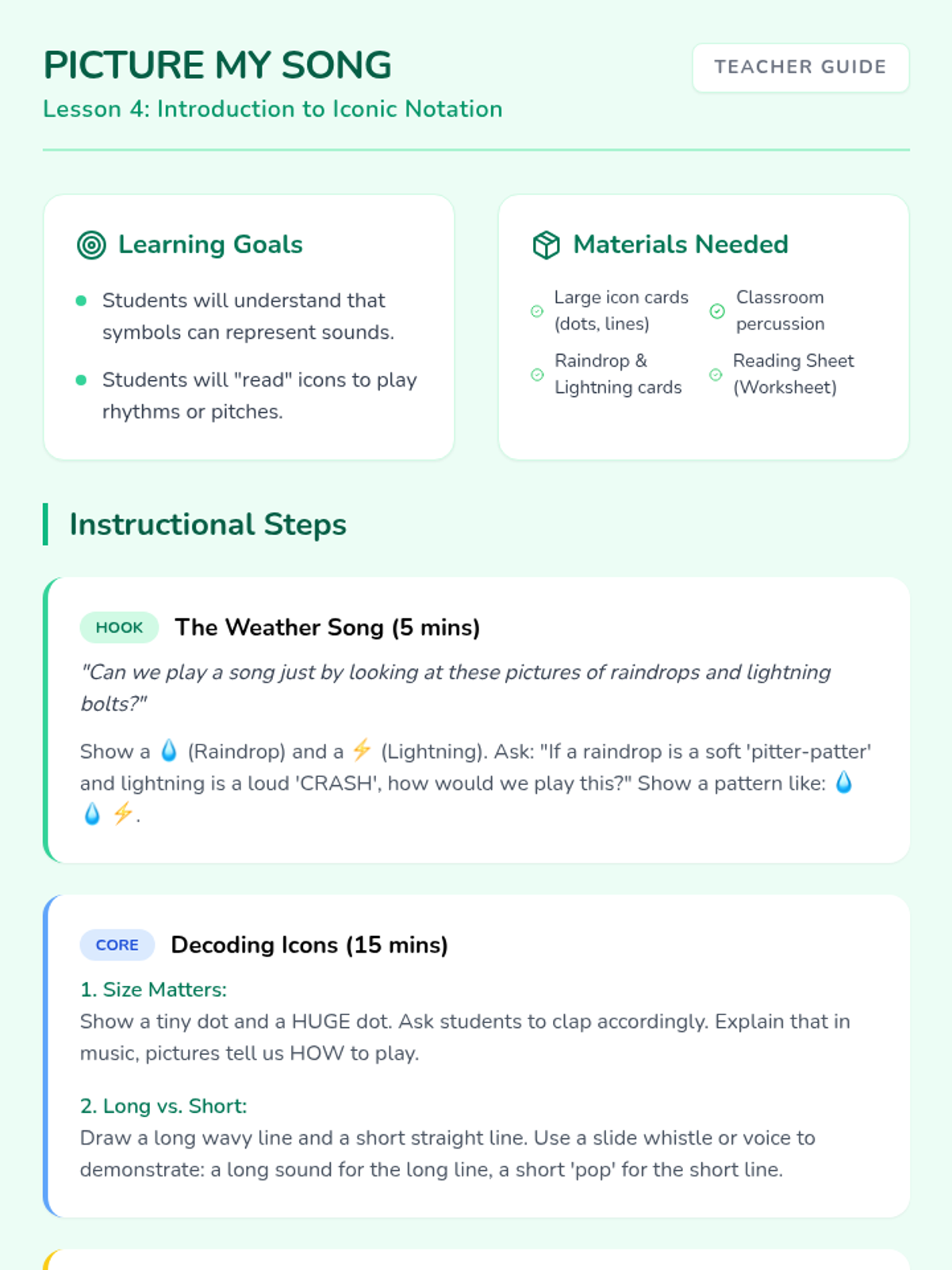
Students bridge sound and sight by using pictures and symbols to represent musical patterns.
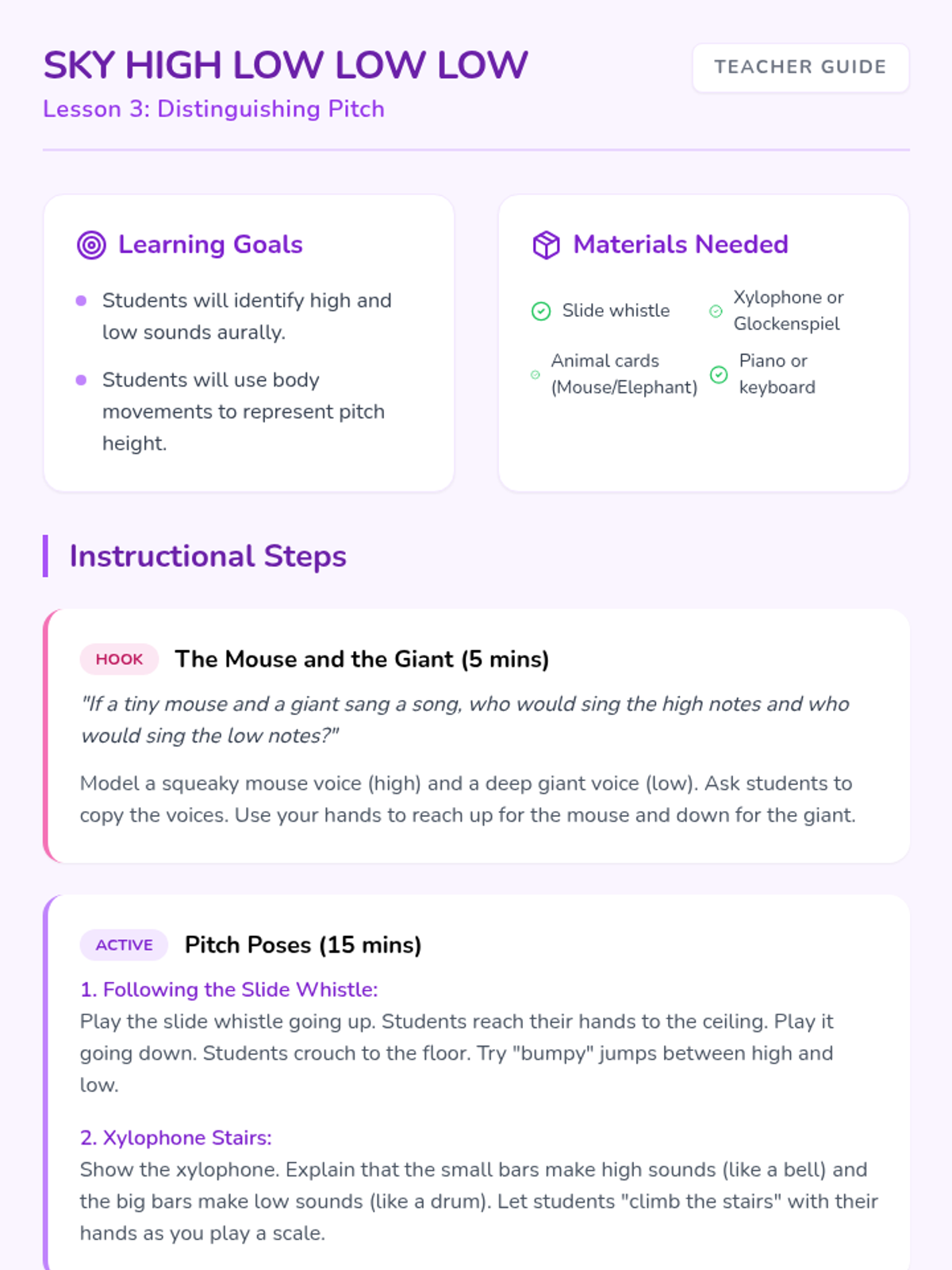
Students learn to identify high and low pitches using full-body movement and auditory discrimination games.
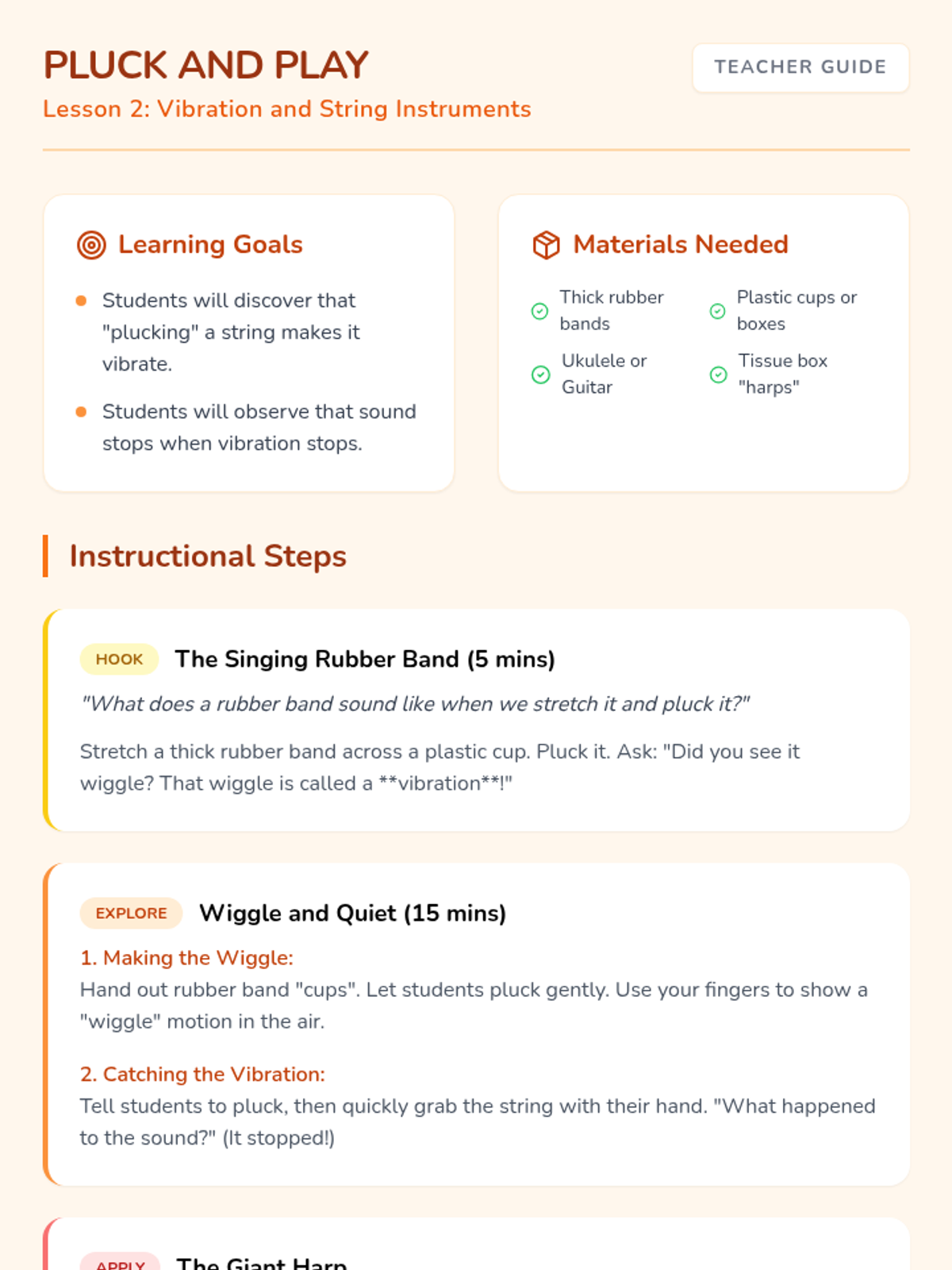
Students explore vibration using rubber bands and string instruments, learning that plucking creates sound and stopping the vibration stops the sound.
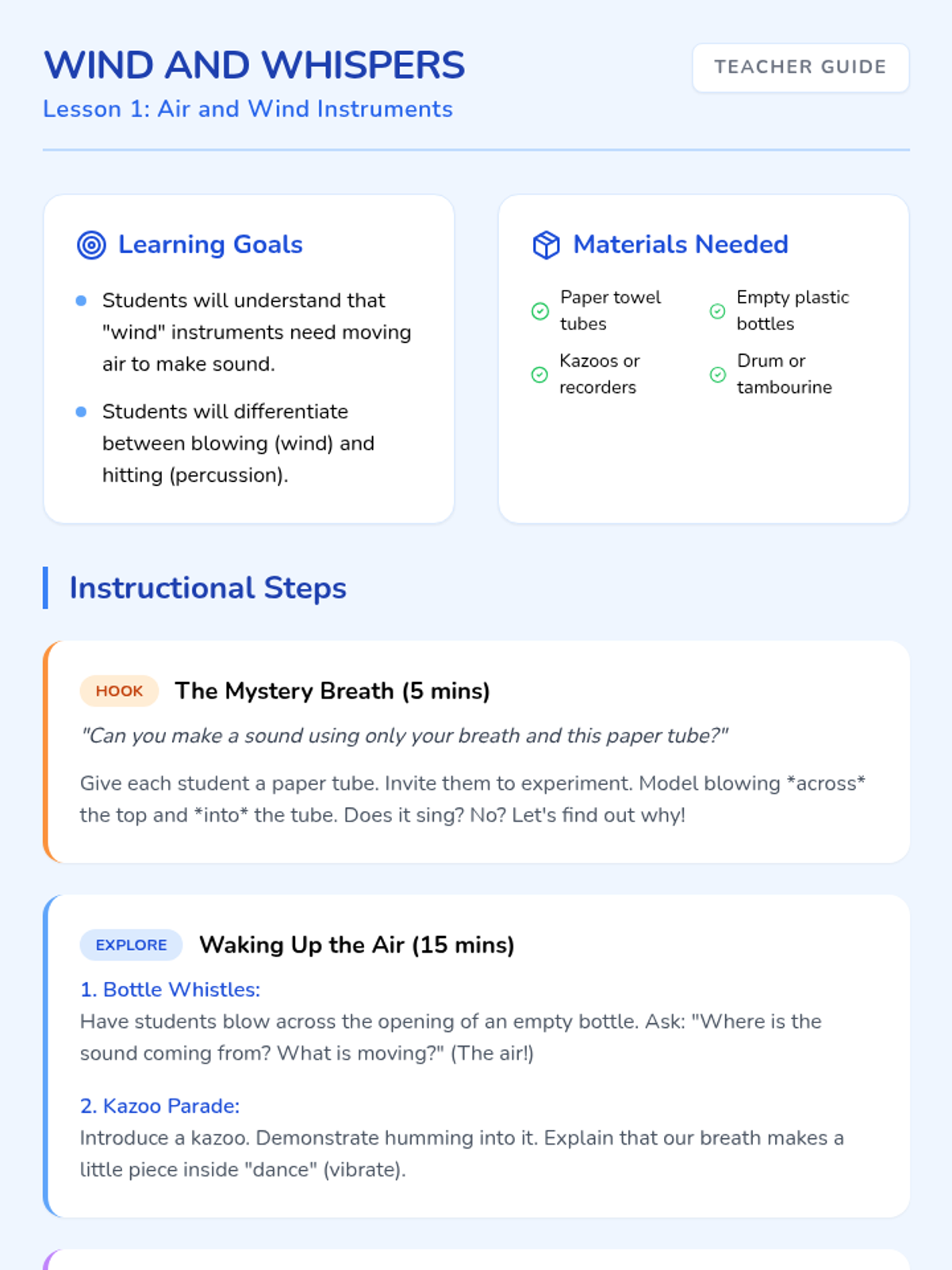
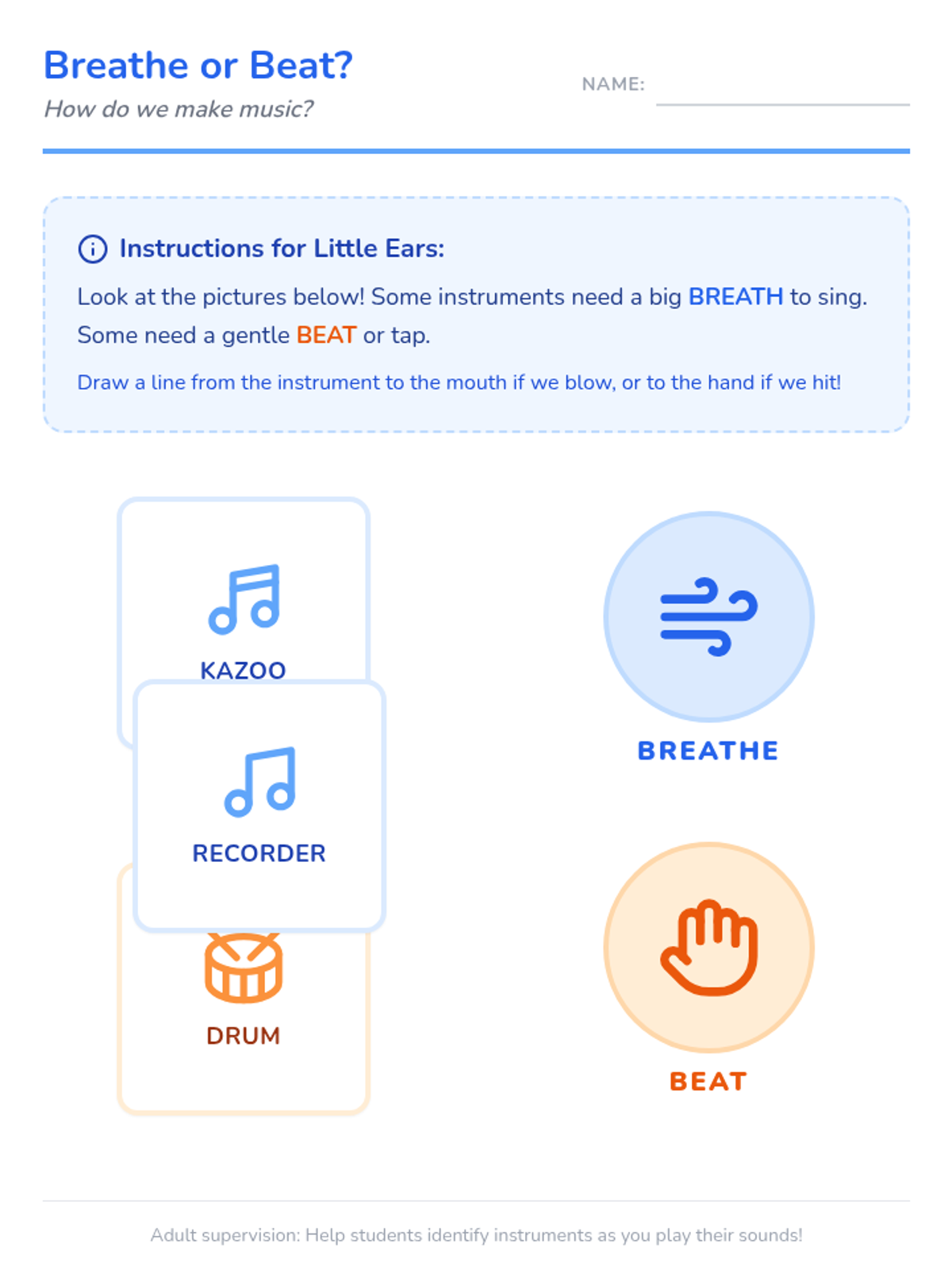
Students investigate how air creates sound by blowing and learn to identify 'wind' instruments that need breath to sing.
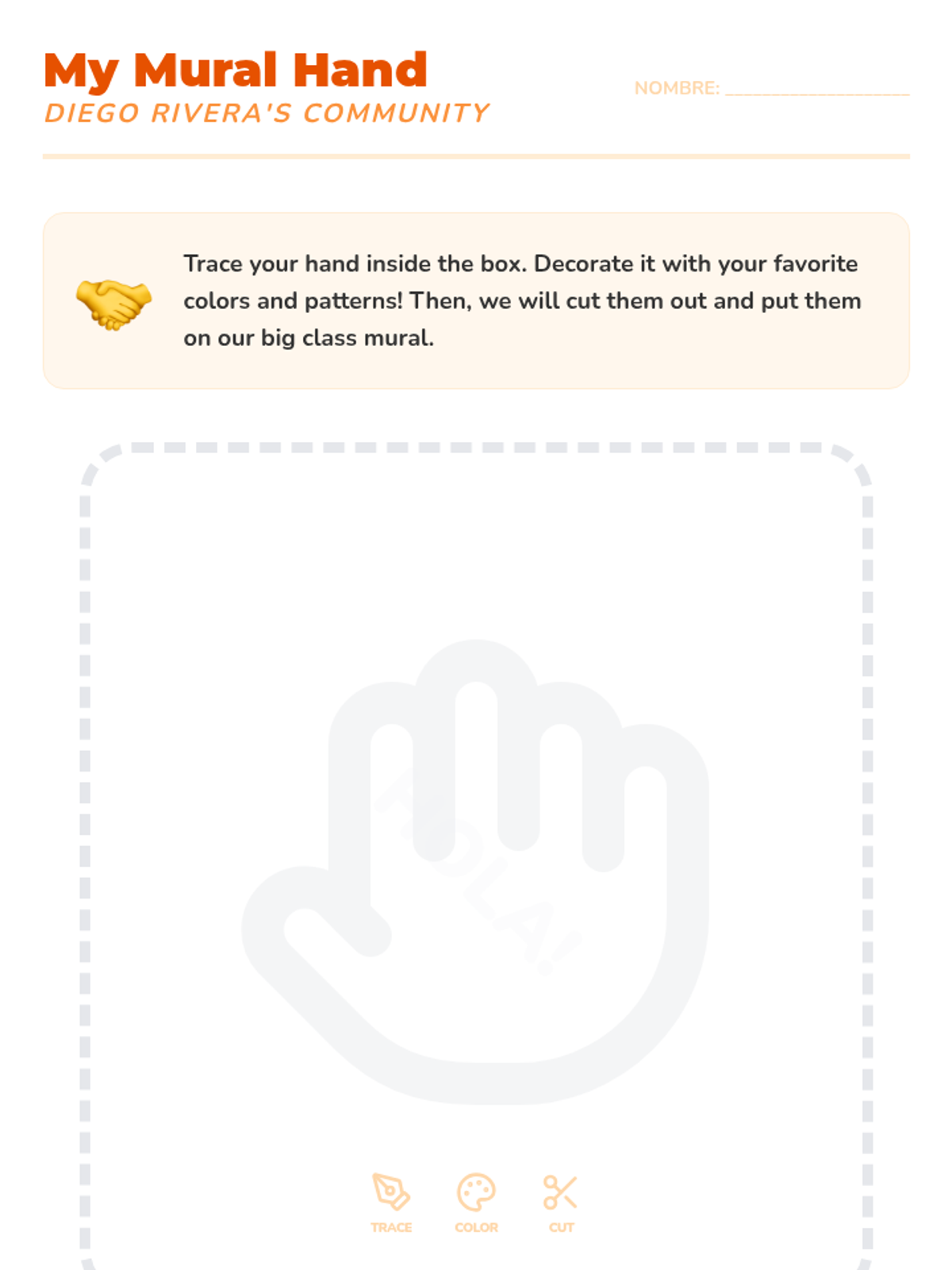
Inspired by Diego Rivera, students learn about murals and collaboration by creating a shared 'mural' of their own decorated handprints.
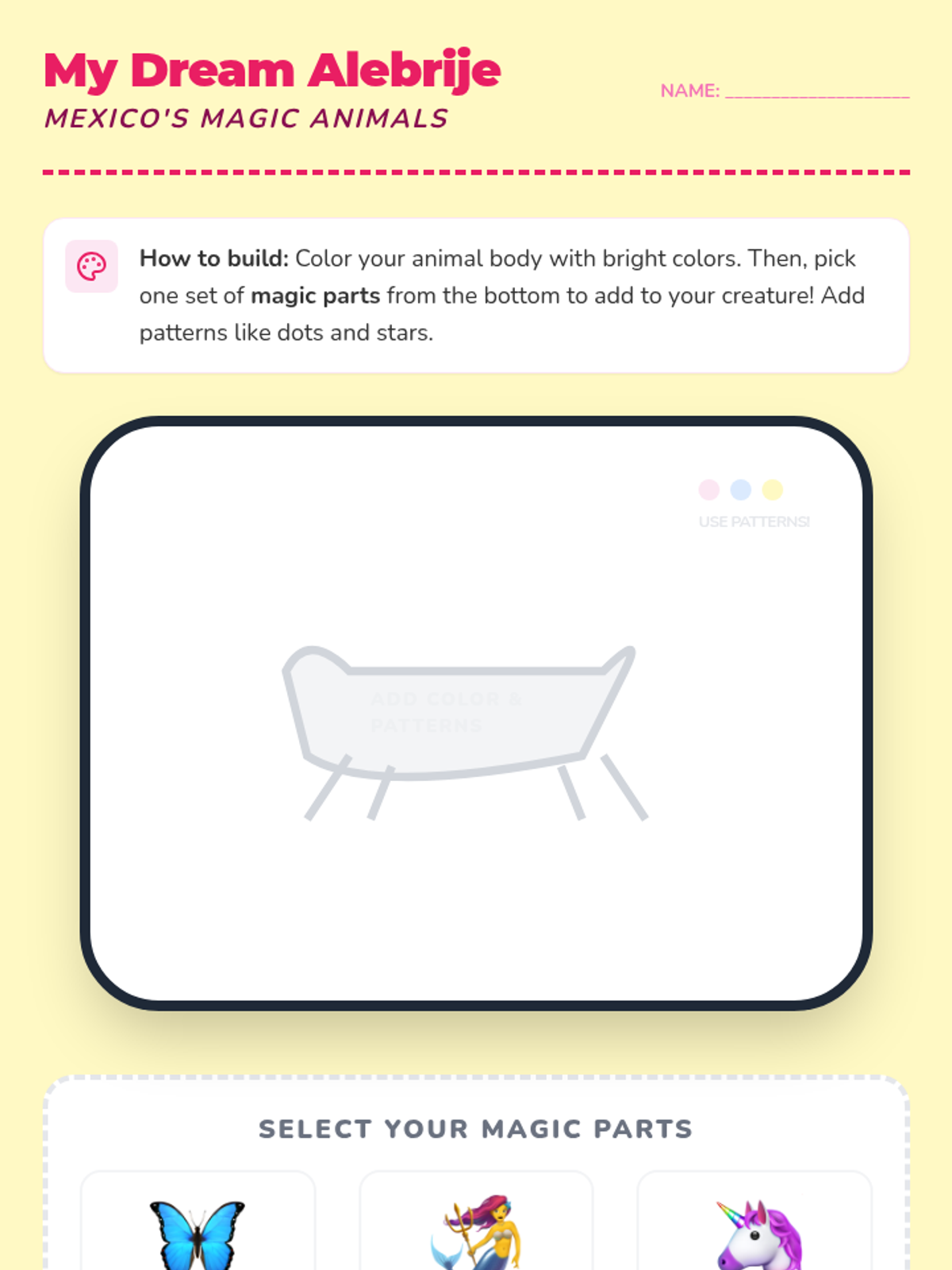
Students discover the colorful world of Mexican Alebrijes and create their own imaginary 'protector' animals by combining different creatures.
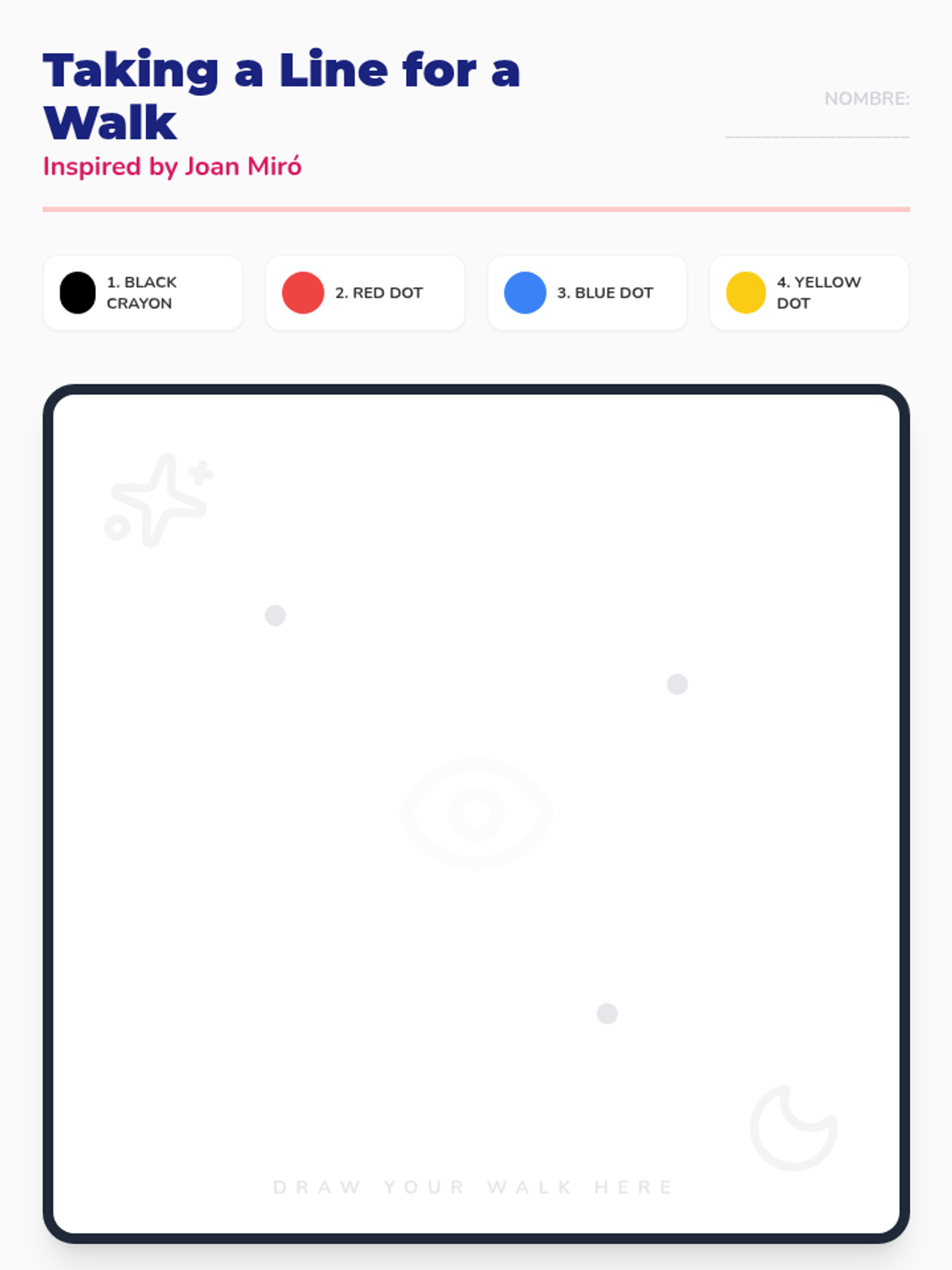
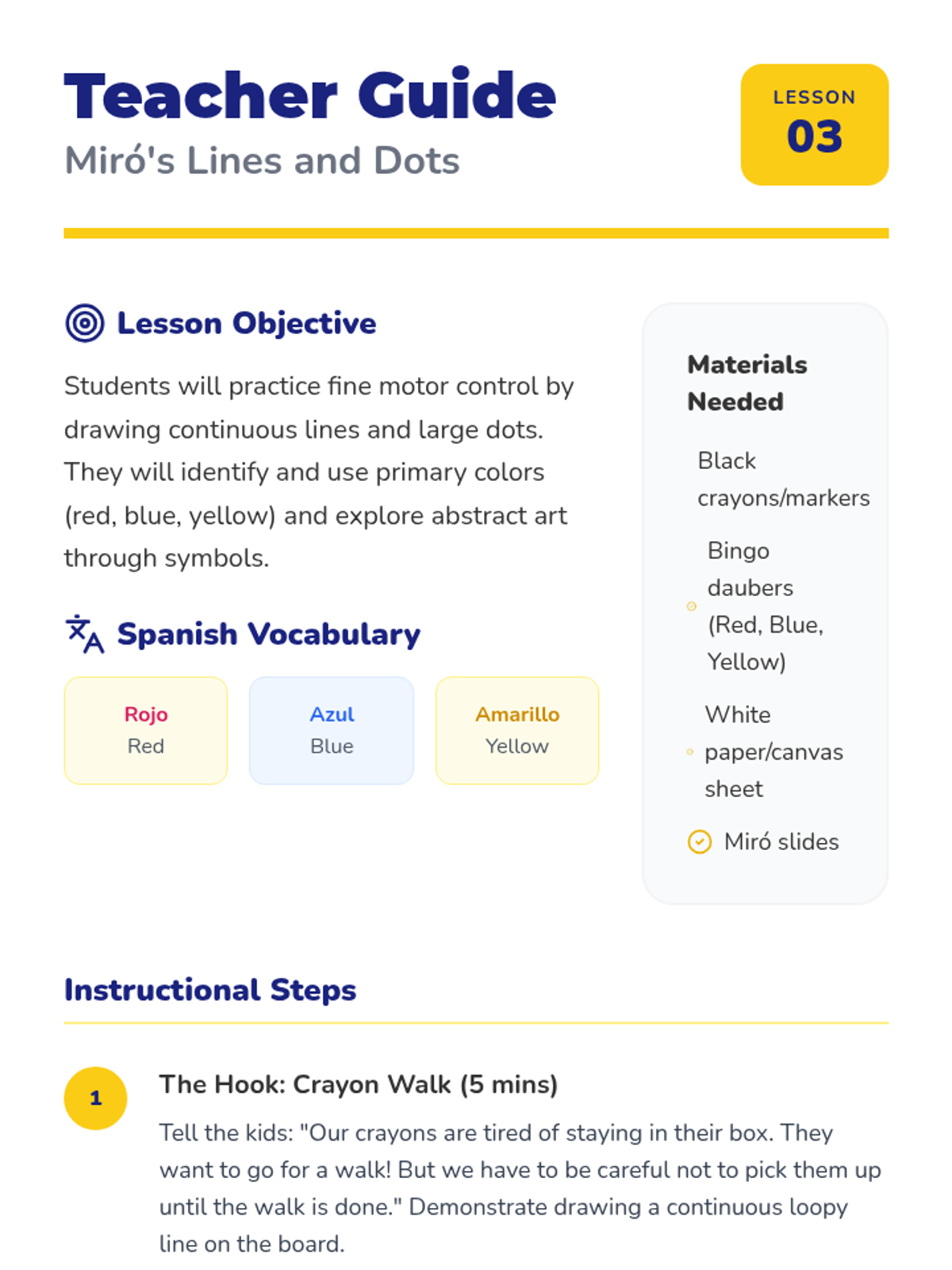
Focusing on fine motor skills and imagination, students follow Joan Miró's lead by taking lines for a 'walk' and adding colorful dots.
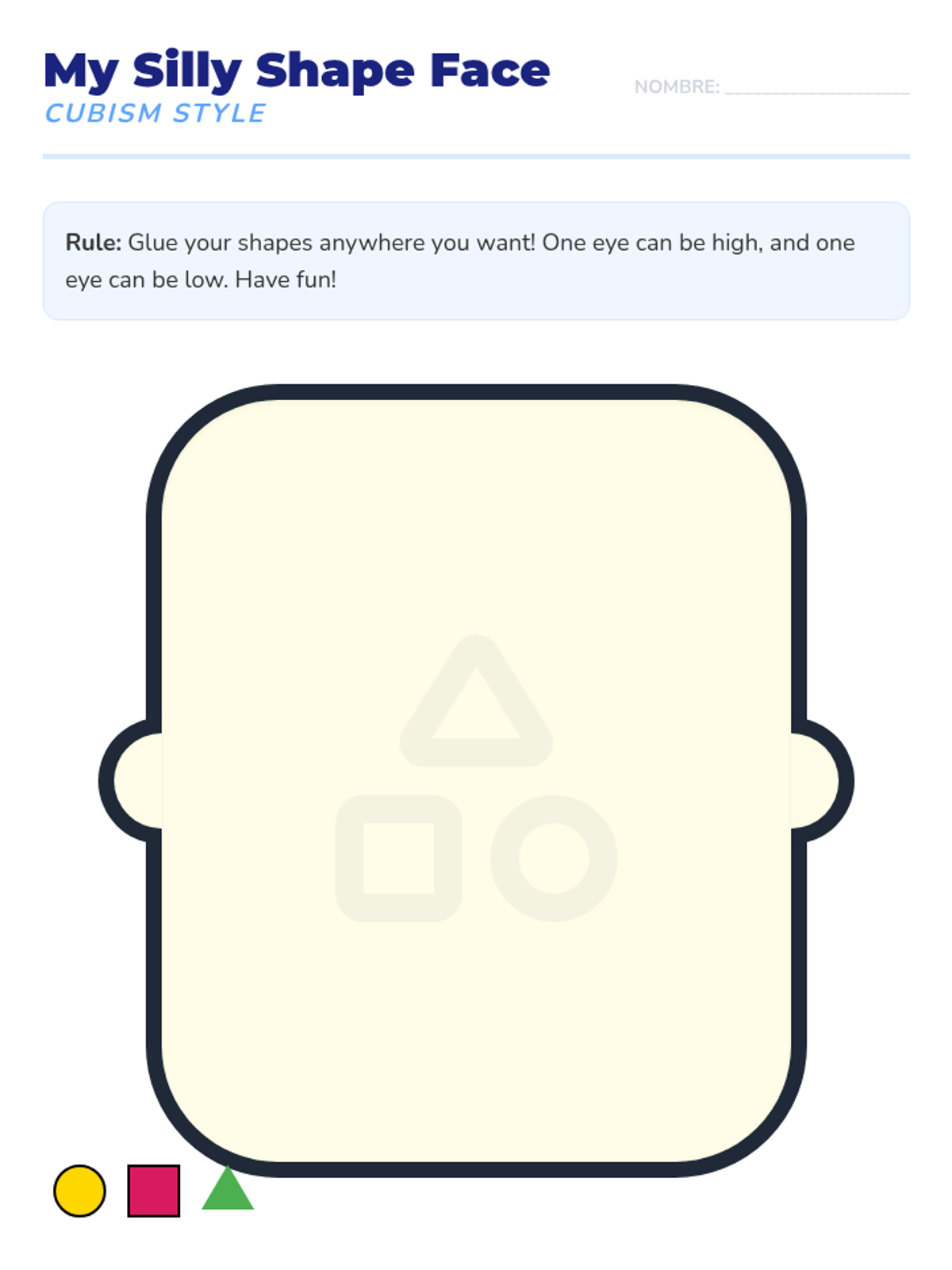
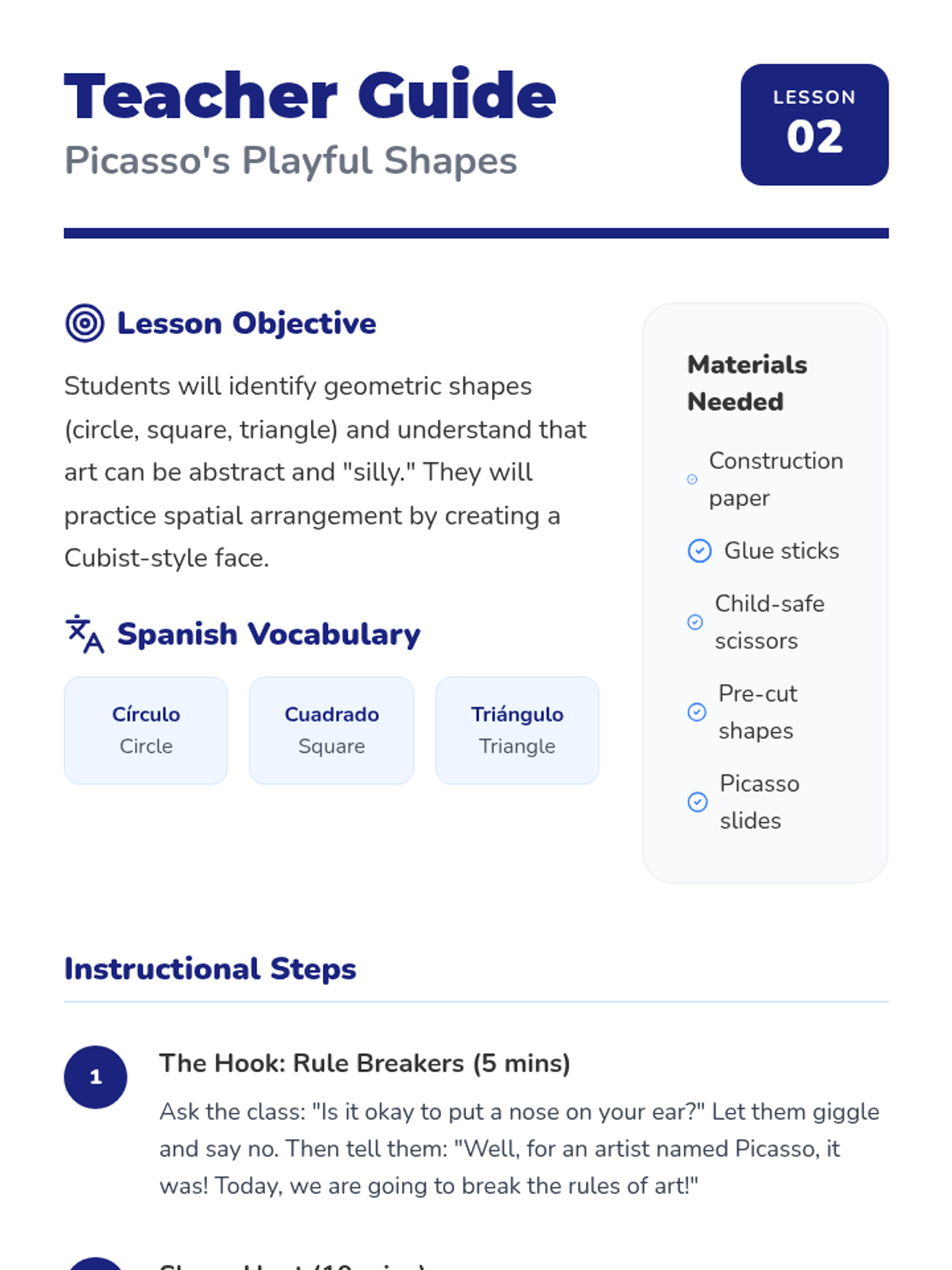
An introduction to Cubism where students learn that art can be silly and rule-breaking. They use geometric shapes to create abstract portraits.
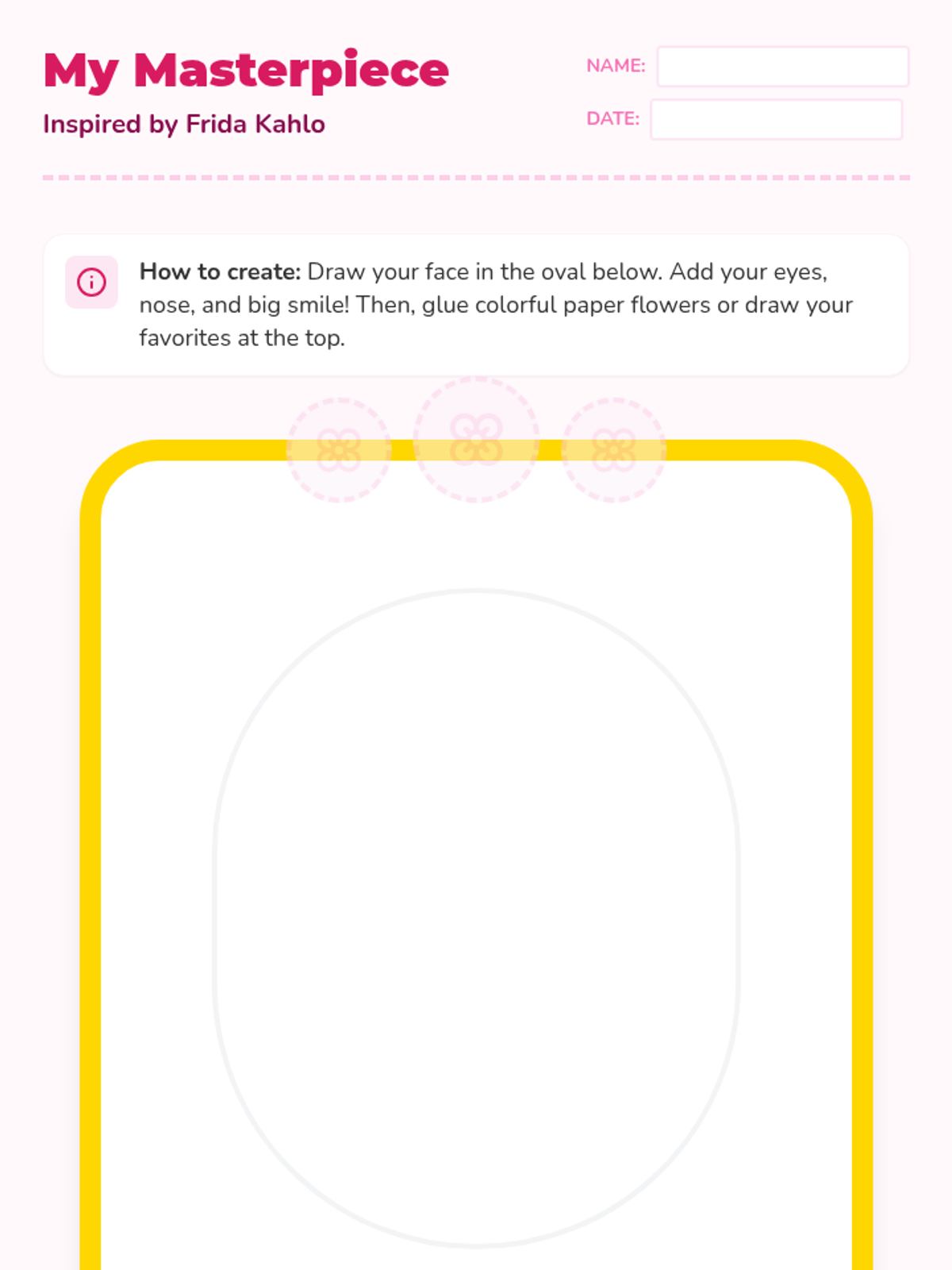
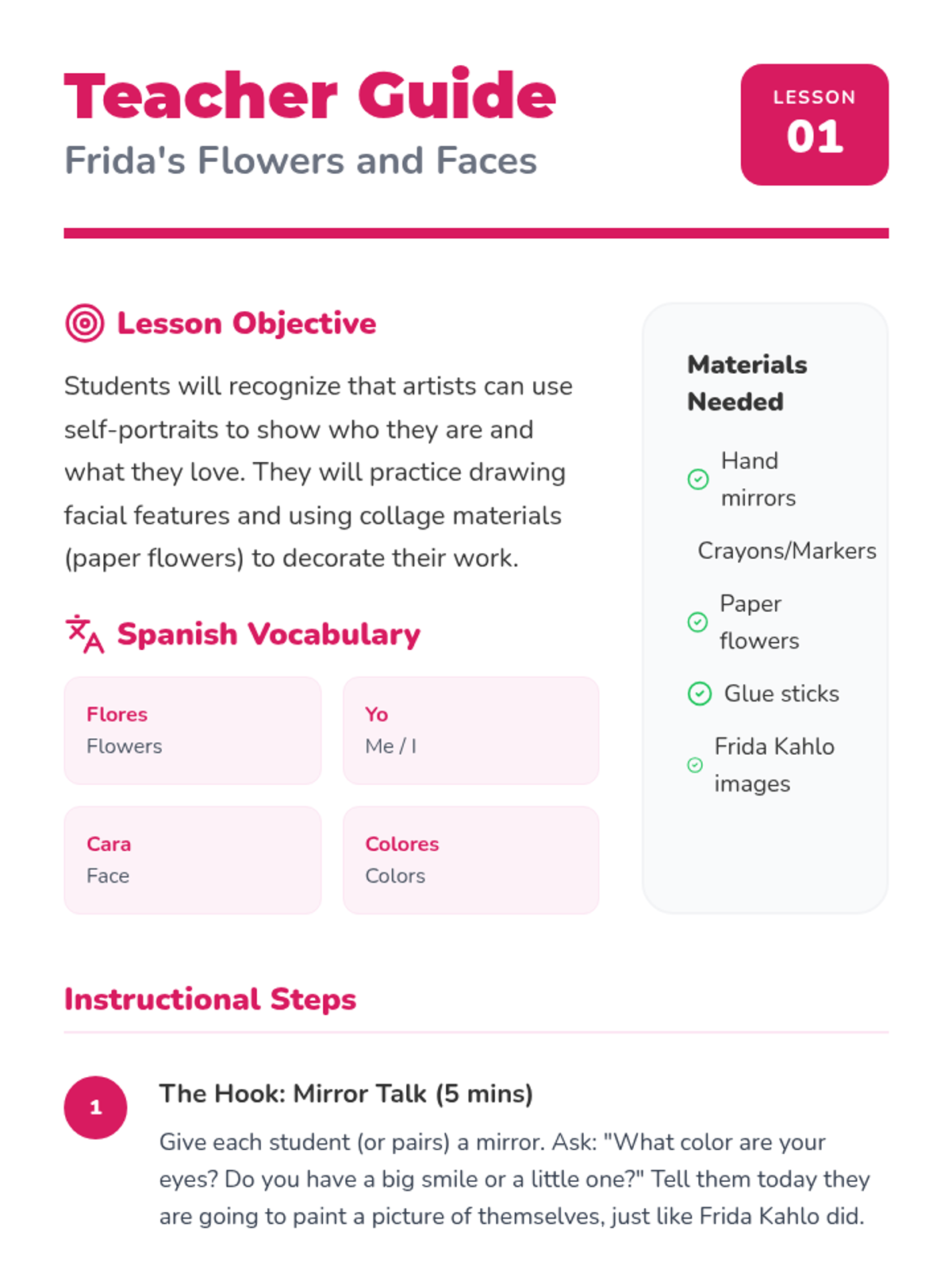
Students explore Frida Kahlo's self-portraits, focusing on how she used flowers and animals to tell her story. They create their own self-portraits embellished with nature.
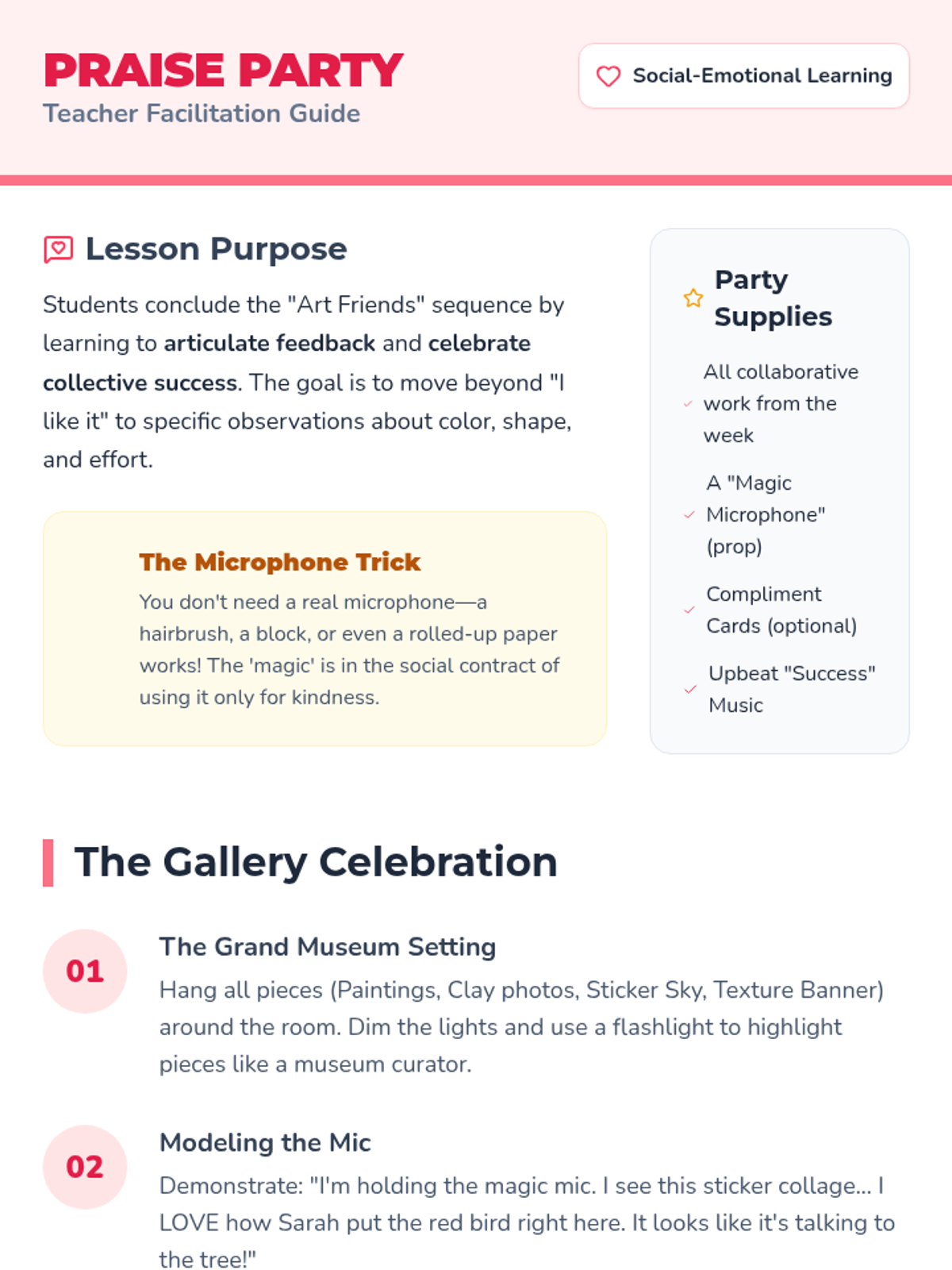
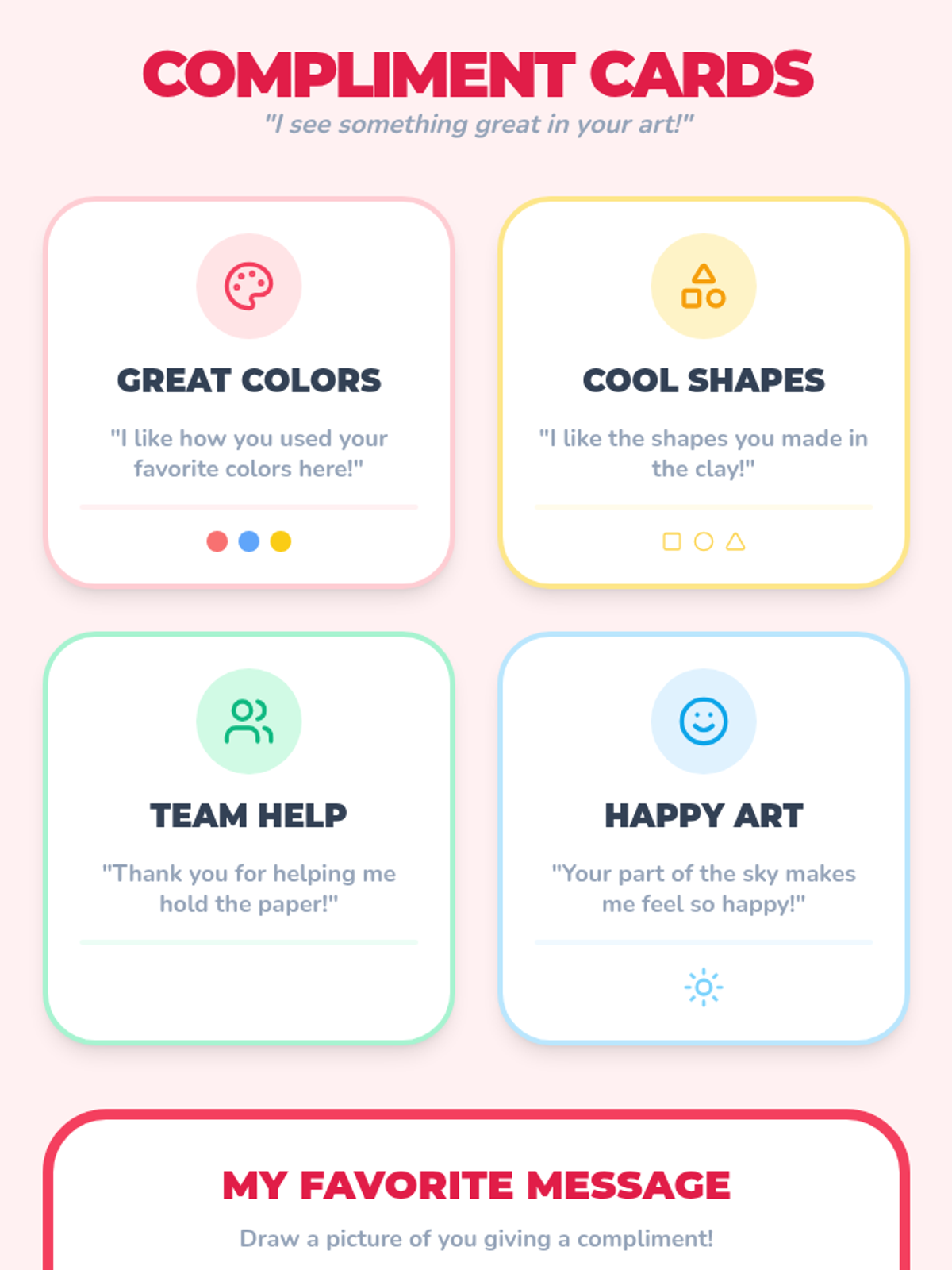
Students conclude the week by reviewing their collaborative pieces and practicing giving specific, positive feedback to their peers.
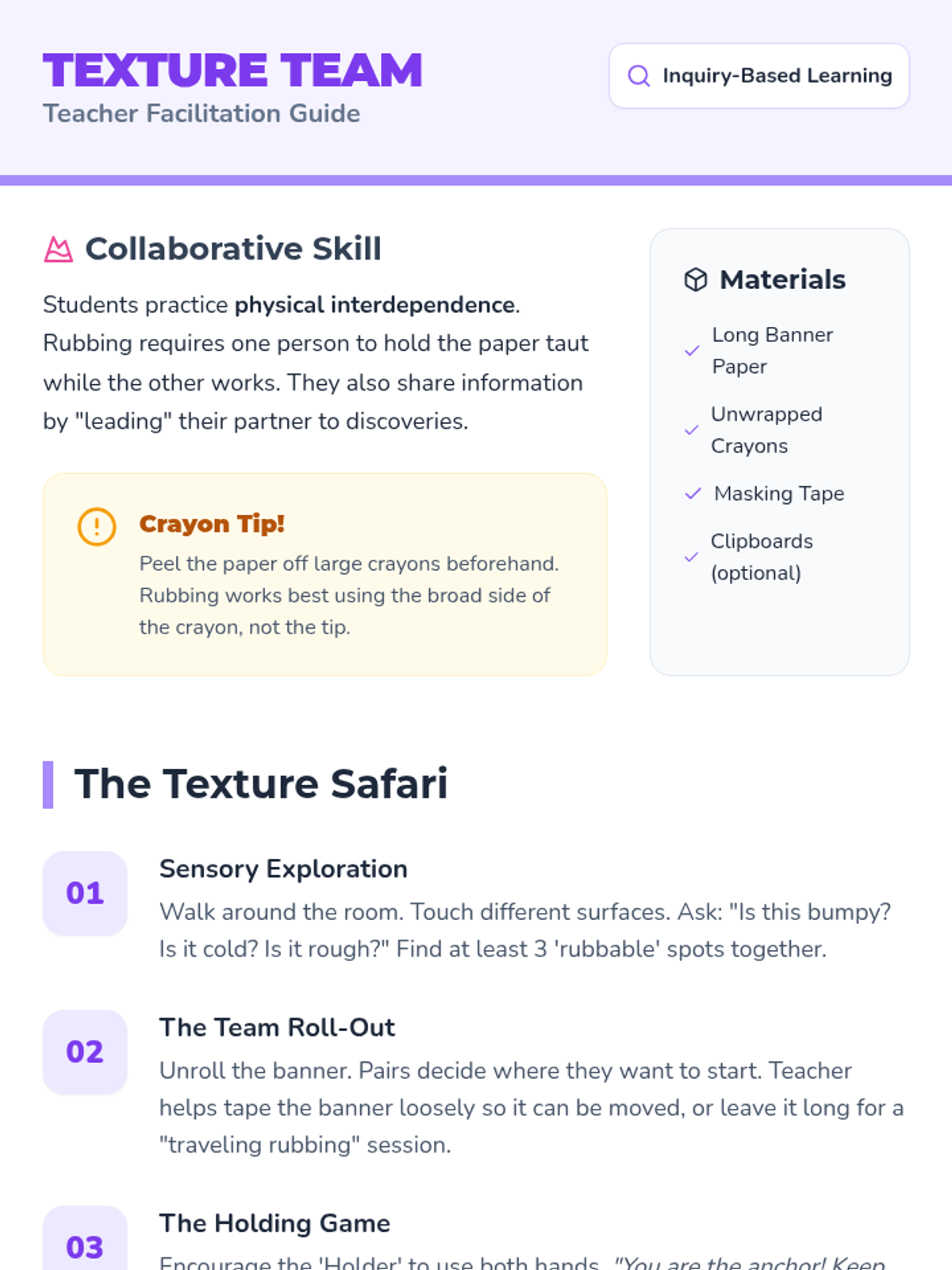
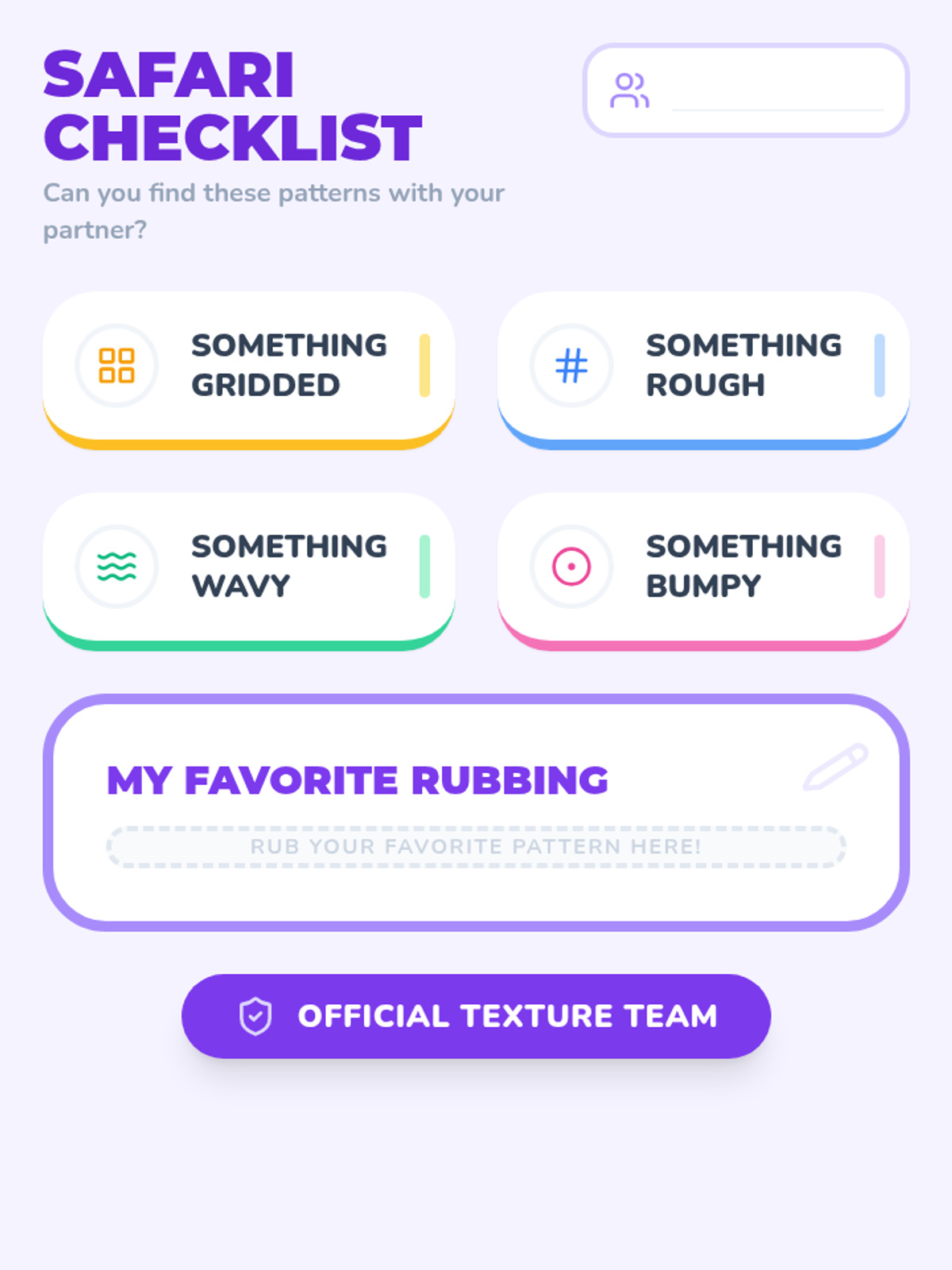
Students go on a 'texture safari' in the classroom, working in teams to create rubbings on a shared banner.
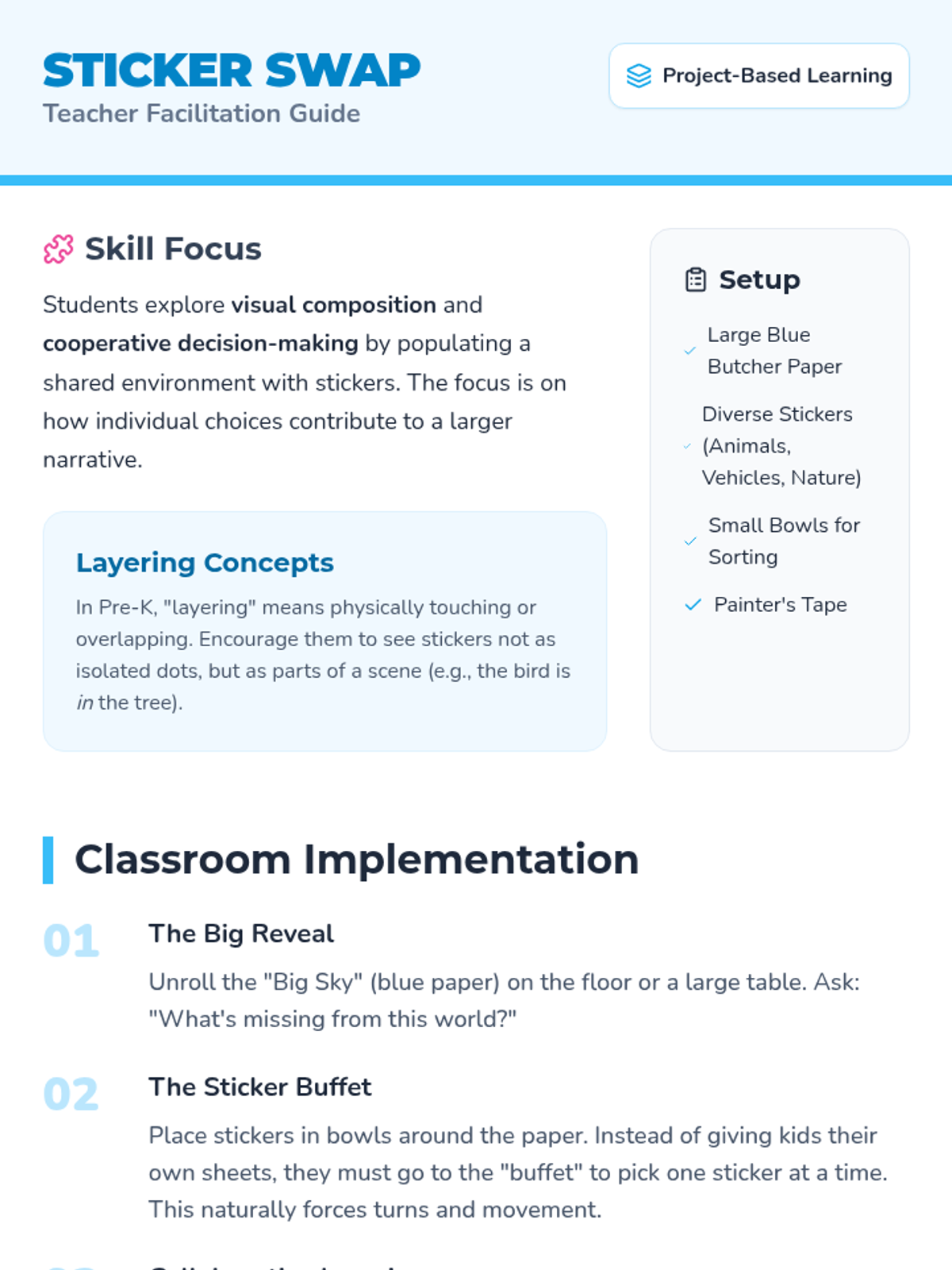
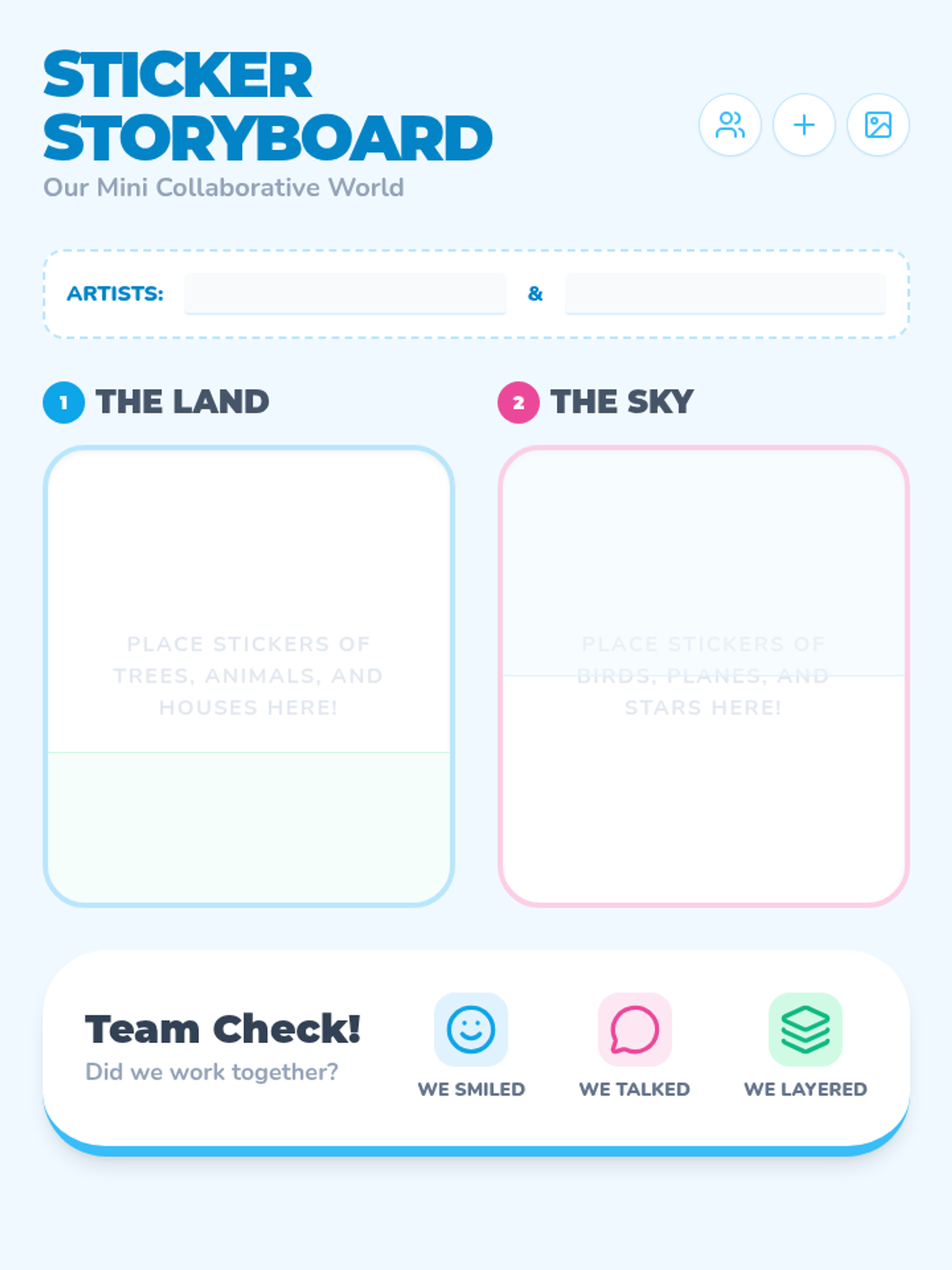
Students work together to fill a giant sky background with stickers, learning to layer and overlap ideas to create a cohesive scene.
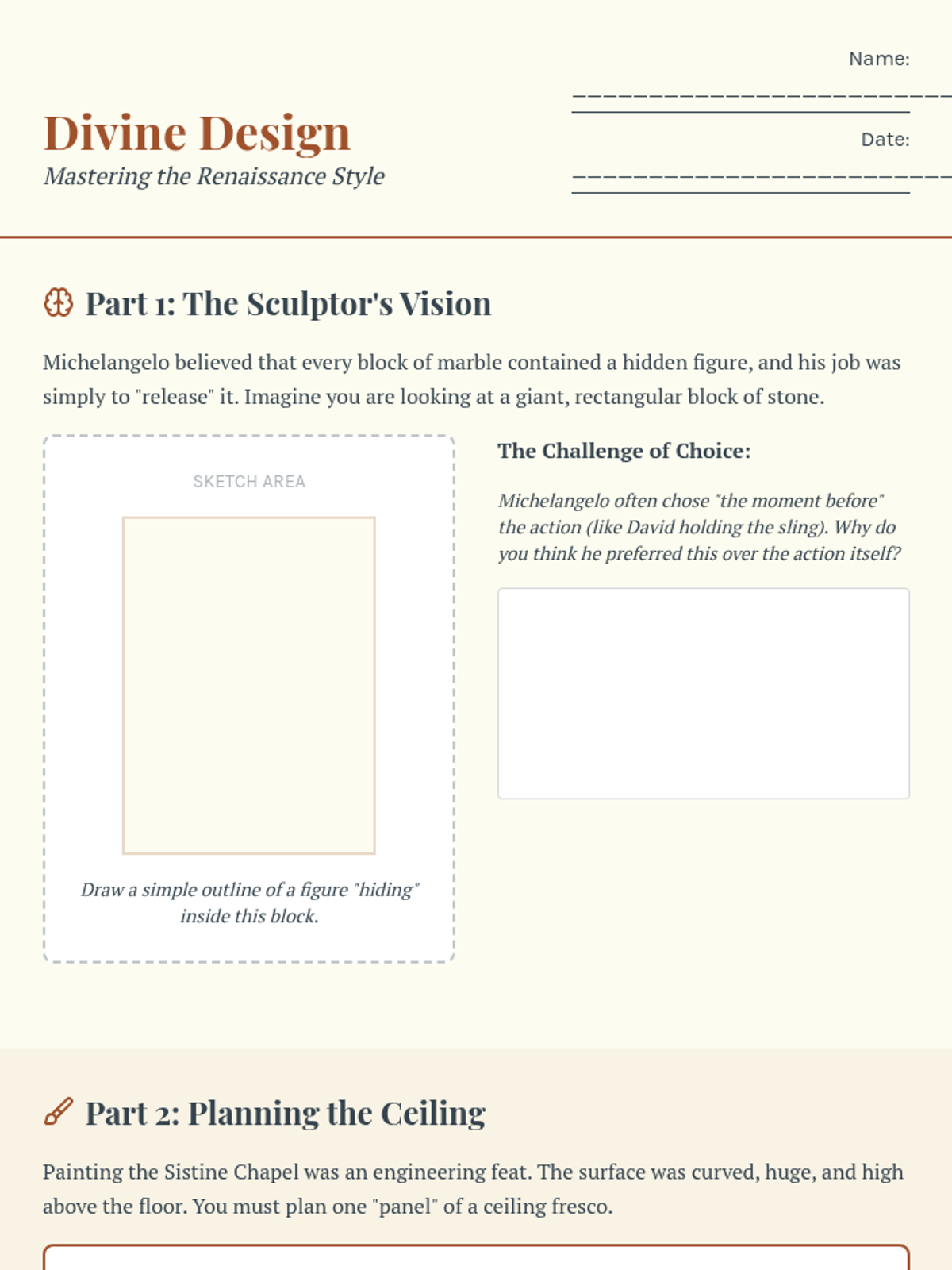
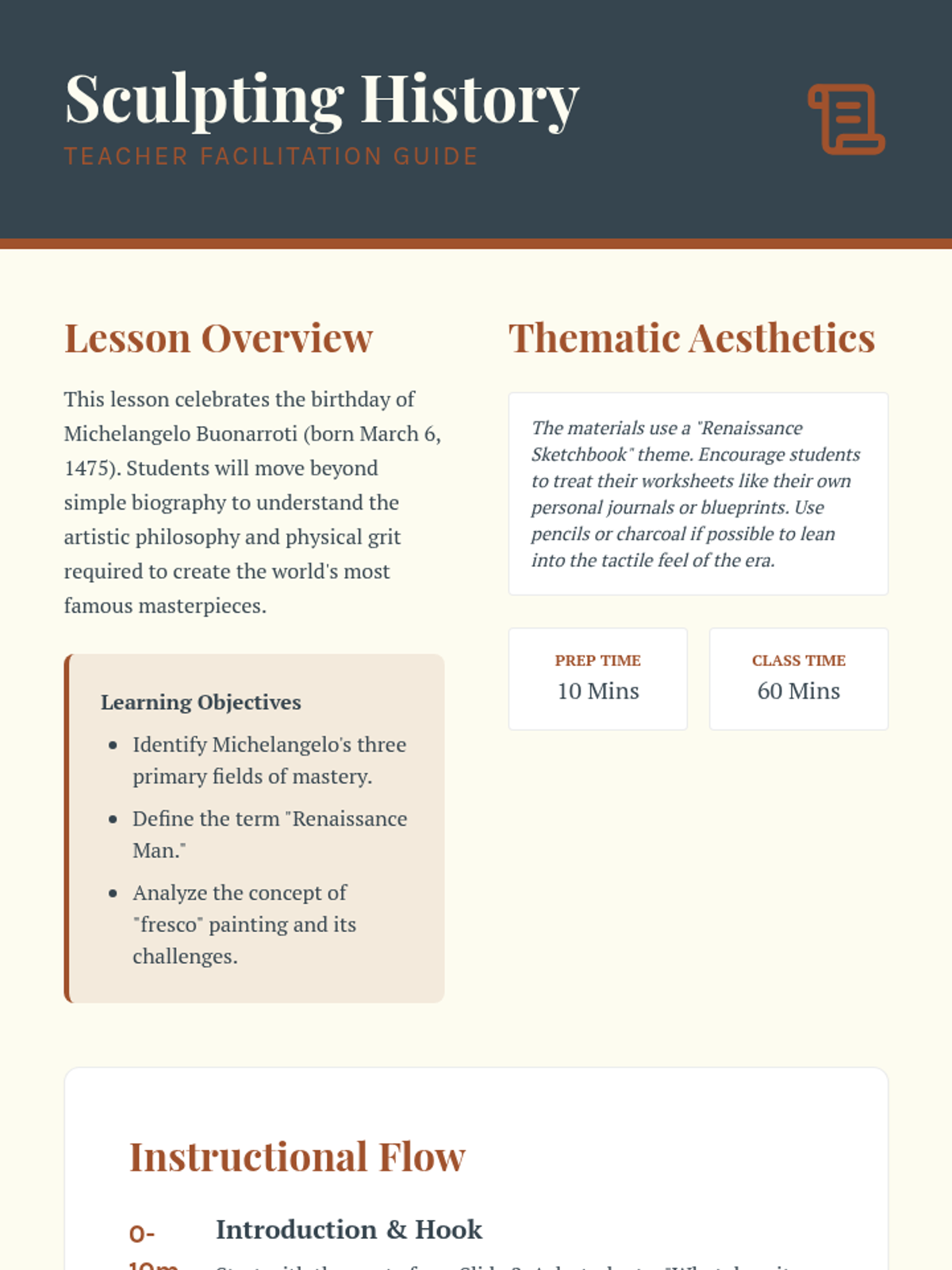
A deep dive into the life and works of Michelangelo Buonarroti, celebrating his birthday on March 6. Students explore the concept of a 'Renaissance Man' through his sculptures, paintings, and architecture.
The ultimate color finale where students experiment with mixing primary colors to create a full rainbow of emotions and hues.
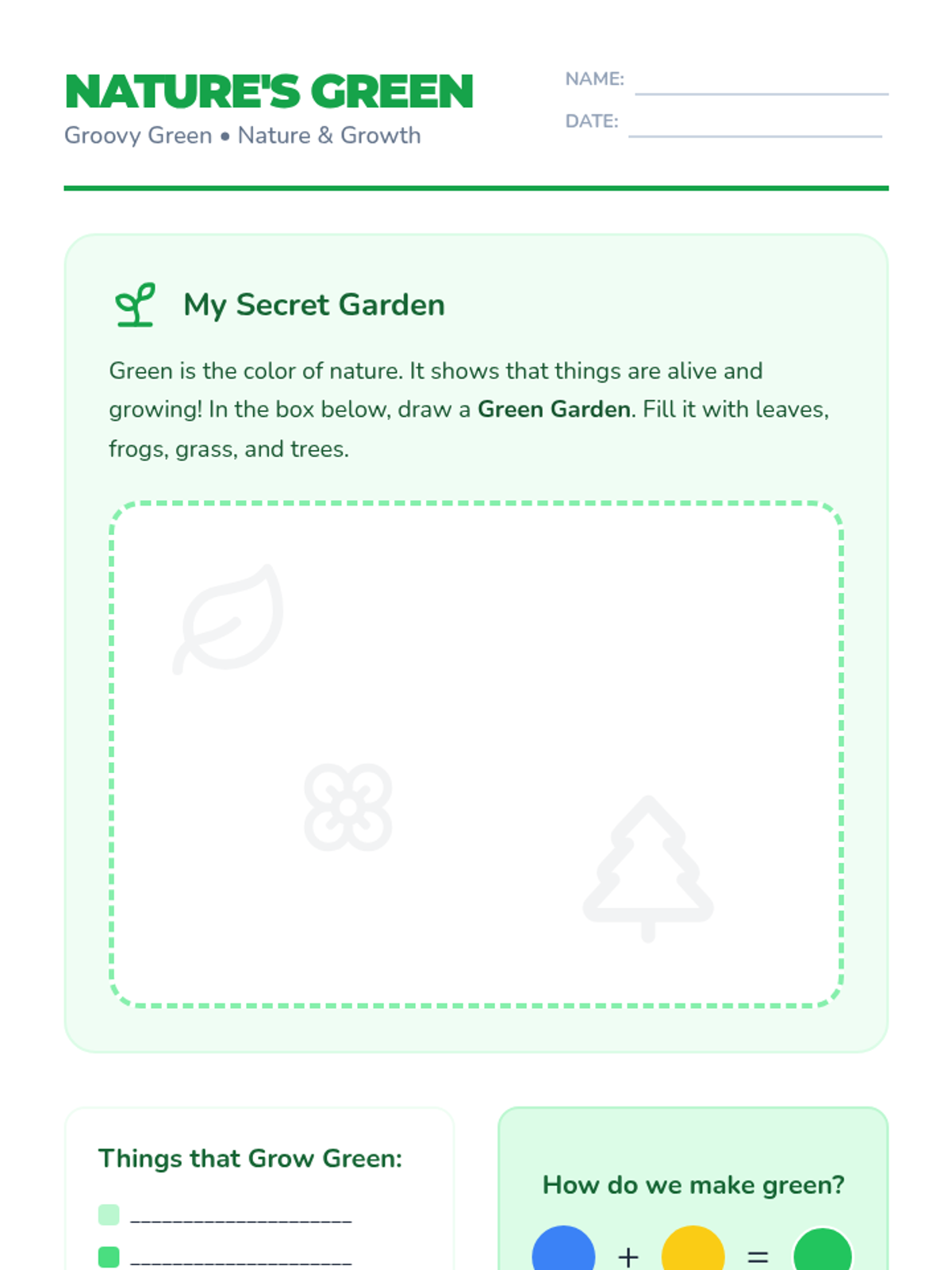
Go green with a look at nature, growth, and the peaceful emotions tied to this secondary (and primary-focus) favorite.