Develops technical proficiency and creative movement skills across various styles. Examines choreographic principles alongside the historical and cultural origins of diverse global dance forms.
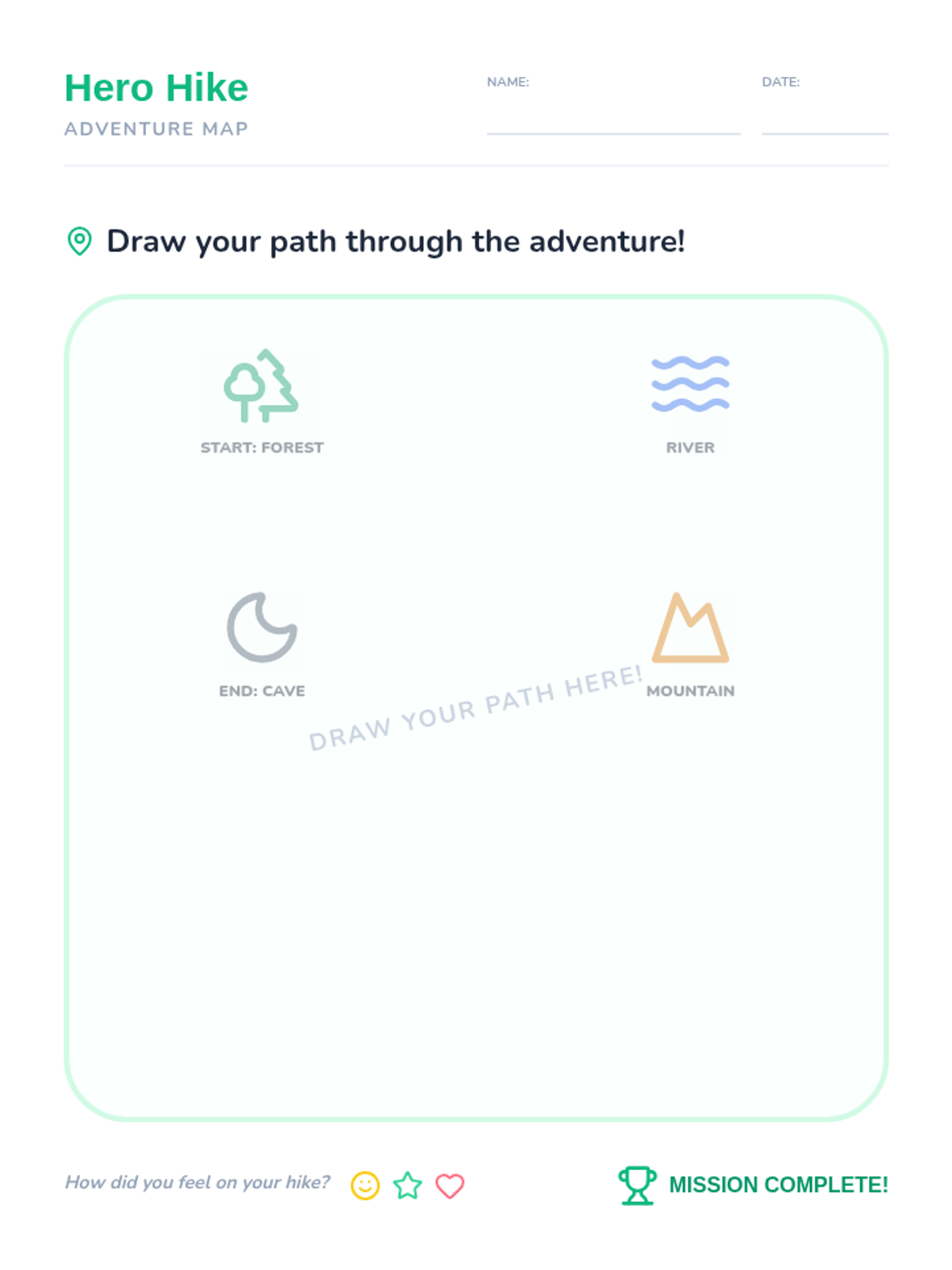
Worksheet for Pre-K students to map out their journey through the guided movement story adventure.
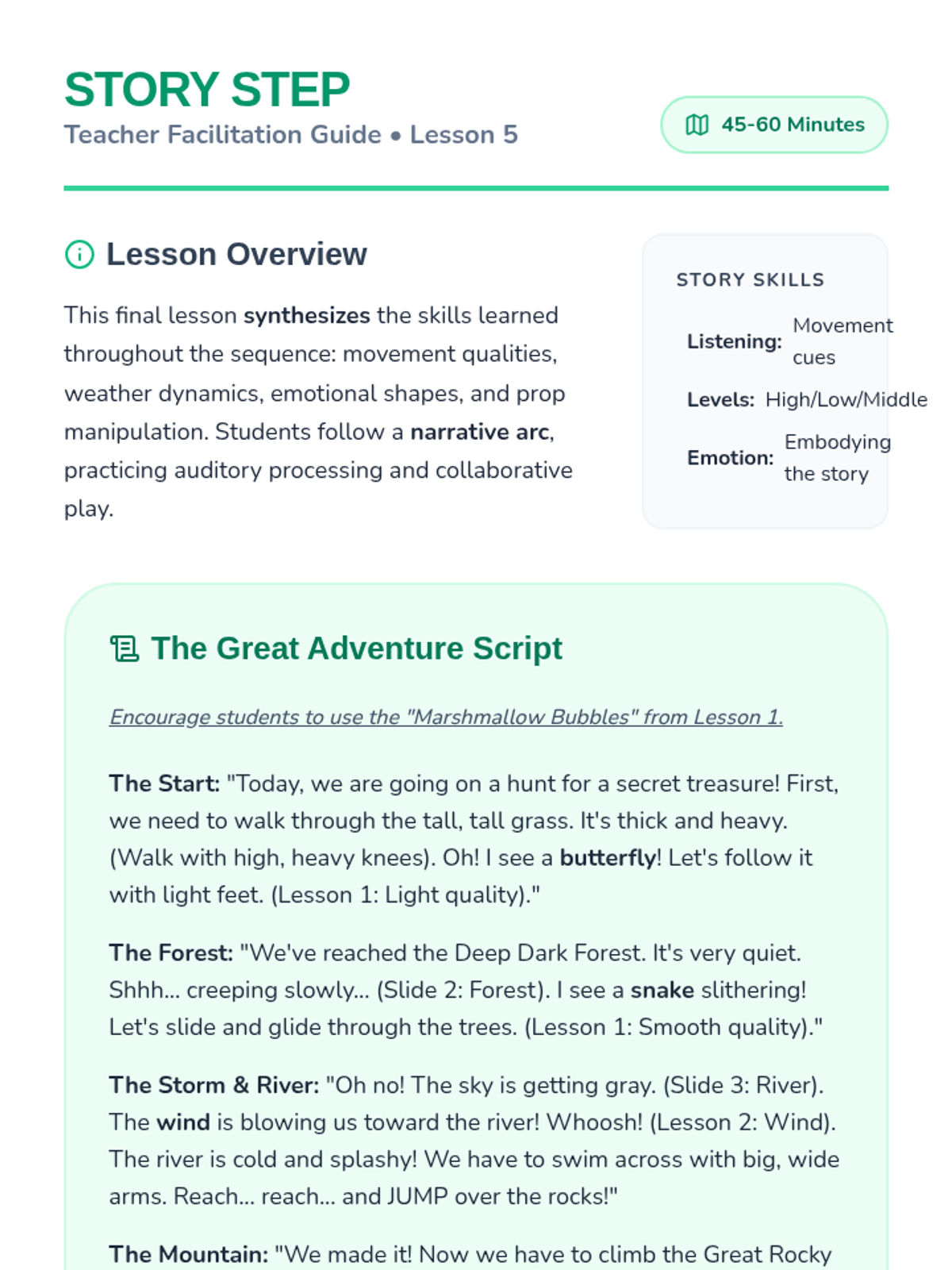
Facilitation guide for teachers to lead the final movement adventure story, synthesizing all skills learned in the sequence.
Colorful slides representing different story locations (Forest, River, Mountain, Cave) for the final movement adventure.
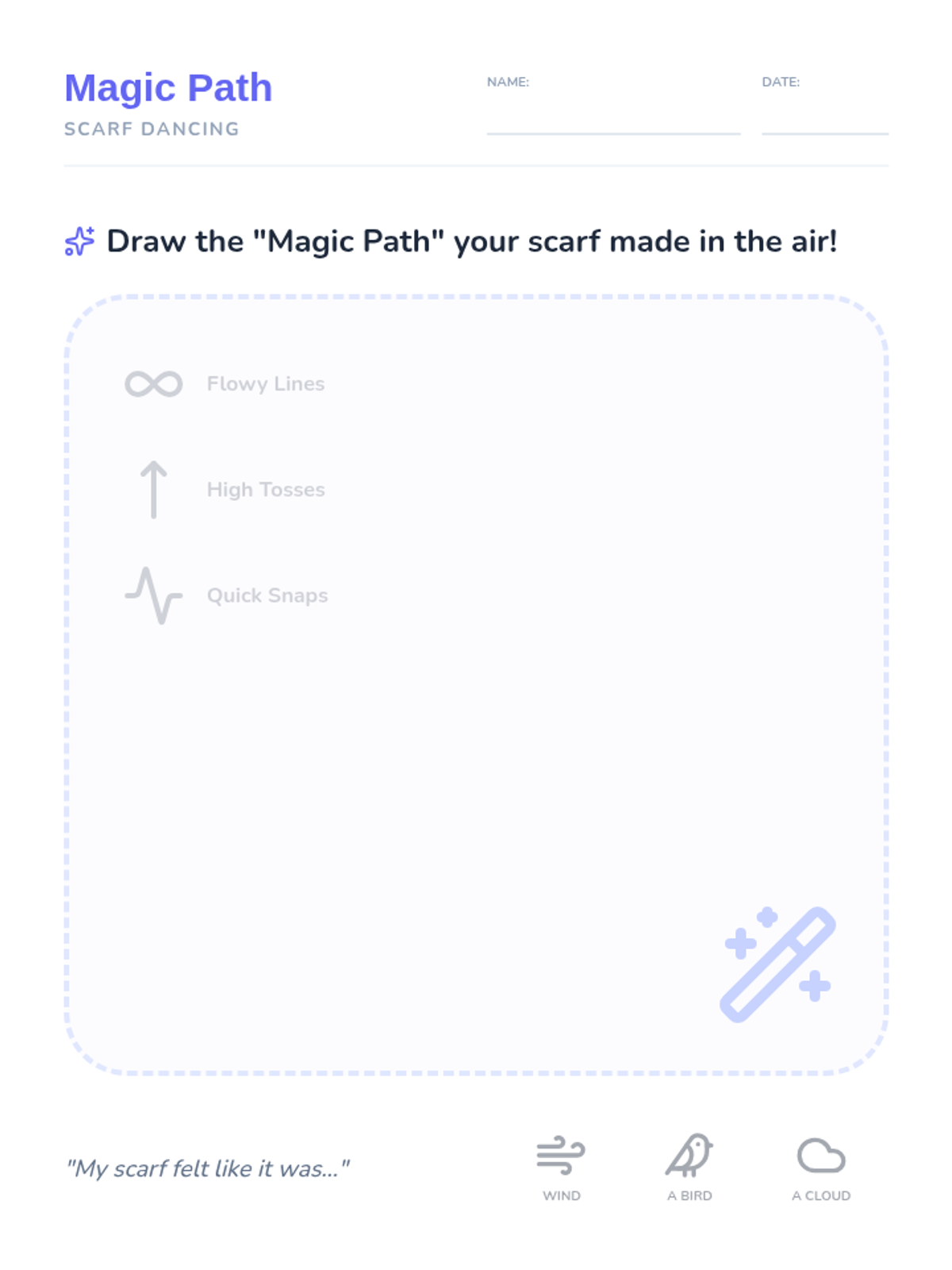
Worksheet for Pre-K students to draw the movement paths their scarves or ribbons made in the air.
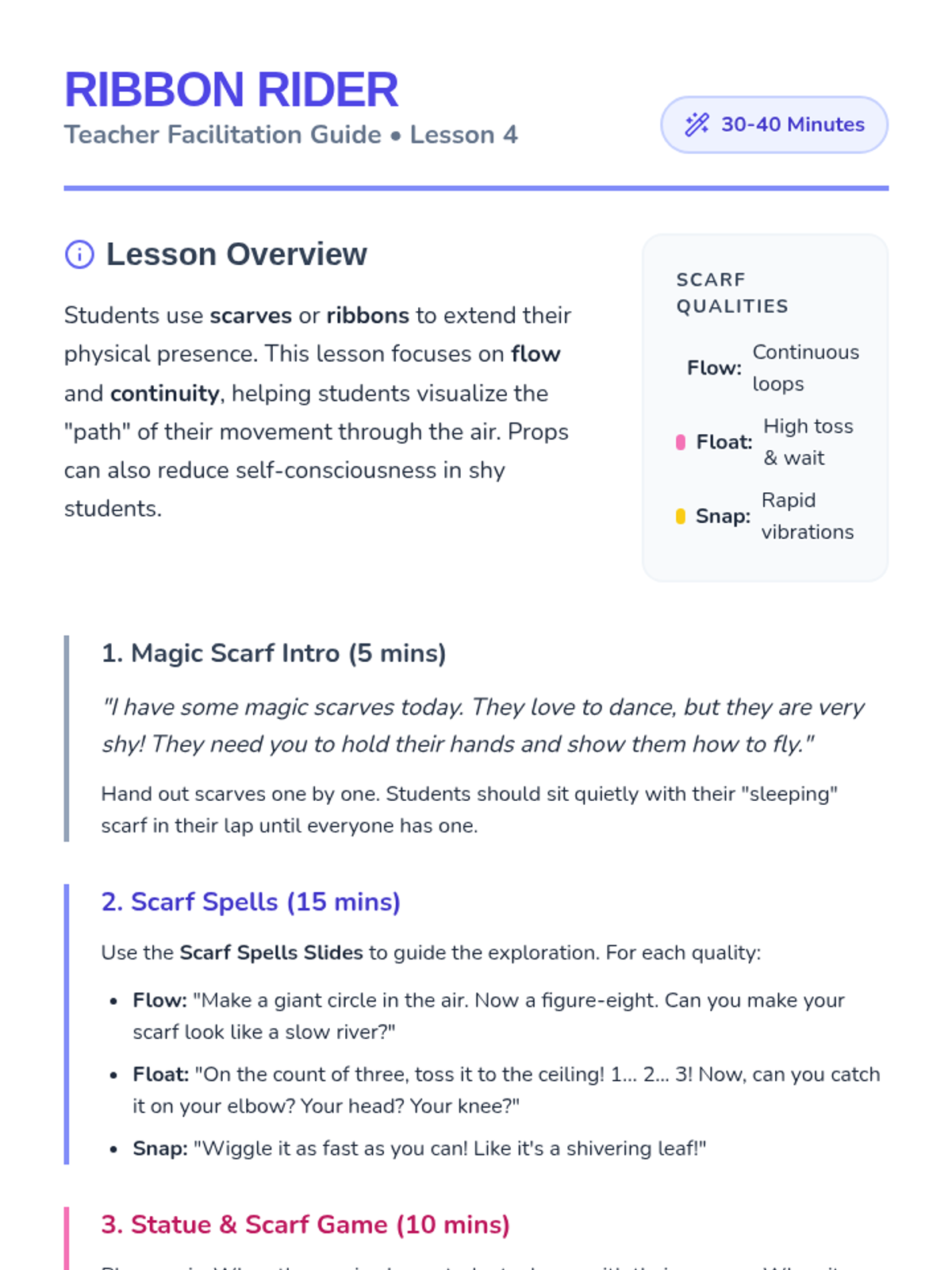
Facilitation guide for teachers to lead the prop-based movement lesson, including scarf safety rules and creative play prompts.
Slides focusing on scarf/ribbon movement (Flow, Toss, Twirl) and safety rules for Pre-K students.
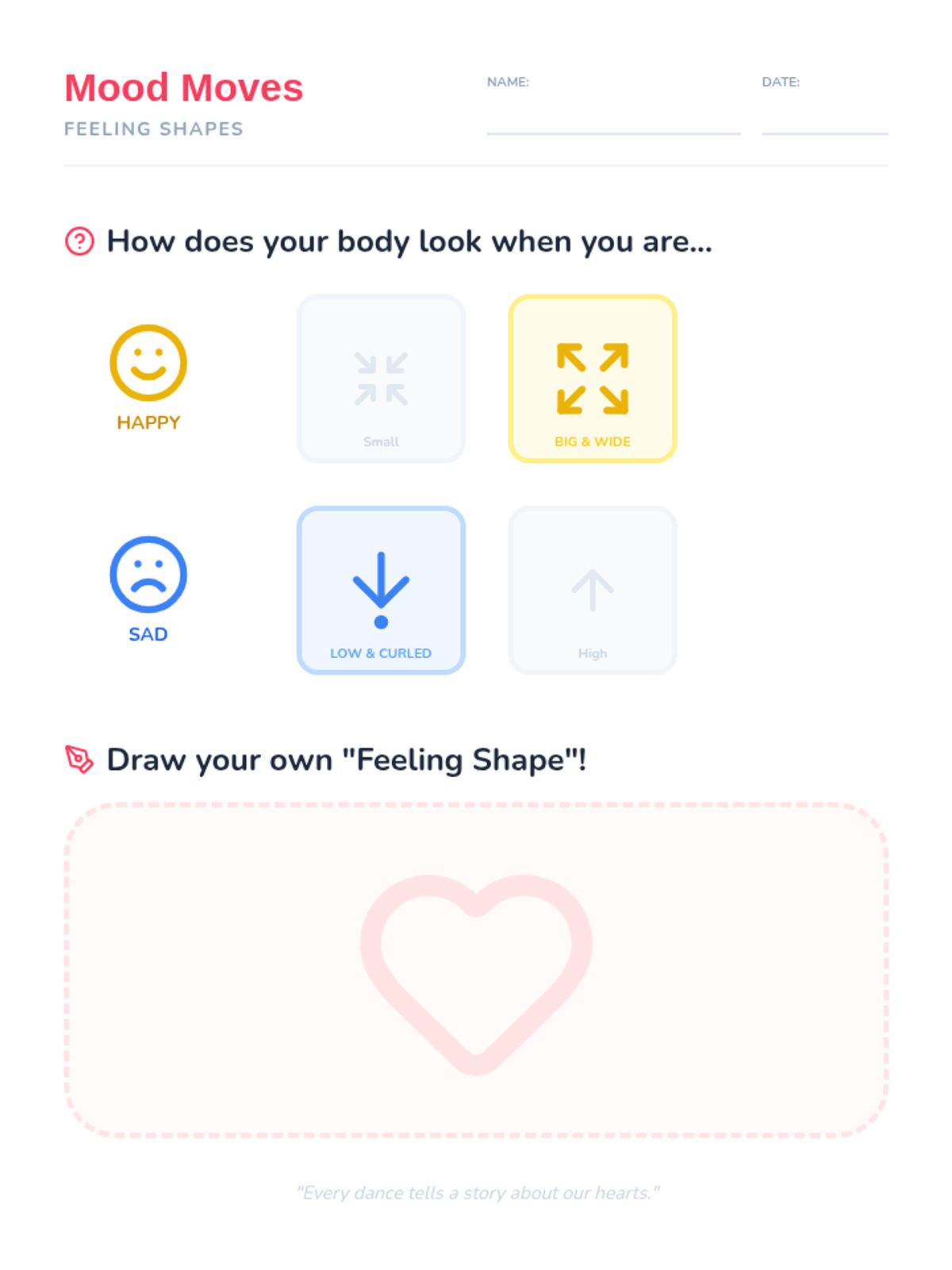
Worksheet for Pre-K students to identify body shapes that represent different emotions.
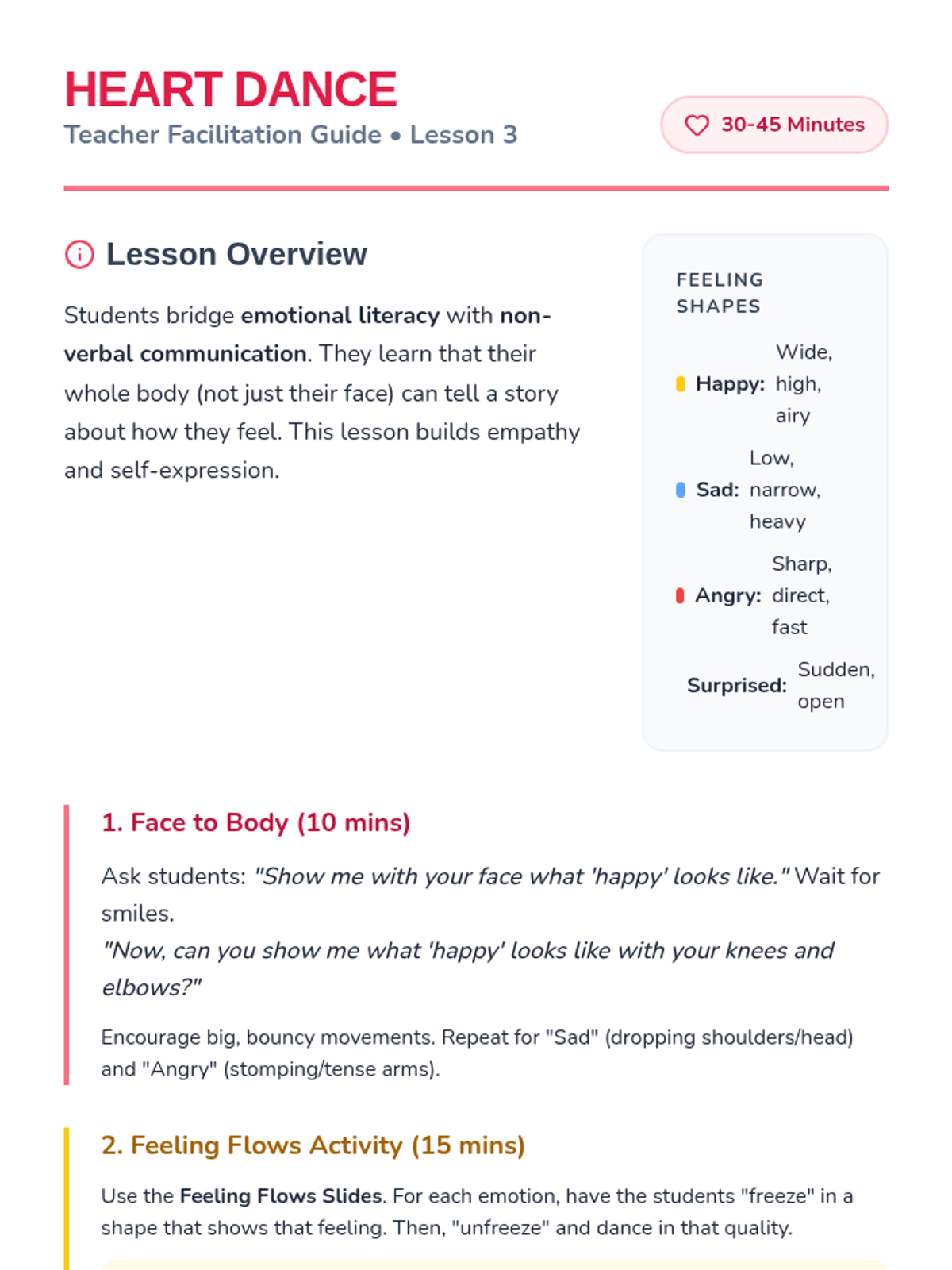
Facilitation guide for teachers to lead the emotion-themed creative movement lesson, focusing on body shapes and movement qualities for happy, sad, and angry.
Slides focusing on basic emotions and the corresponding physical body shapes and movement qualities for Pre-K students.
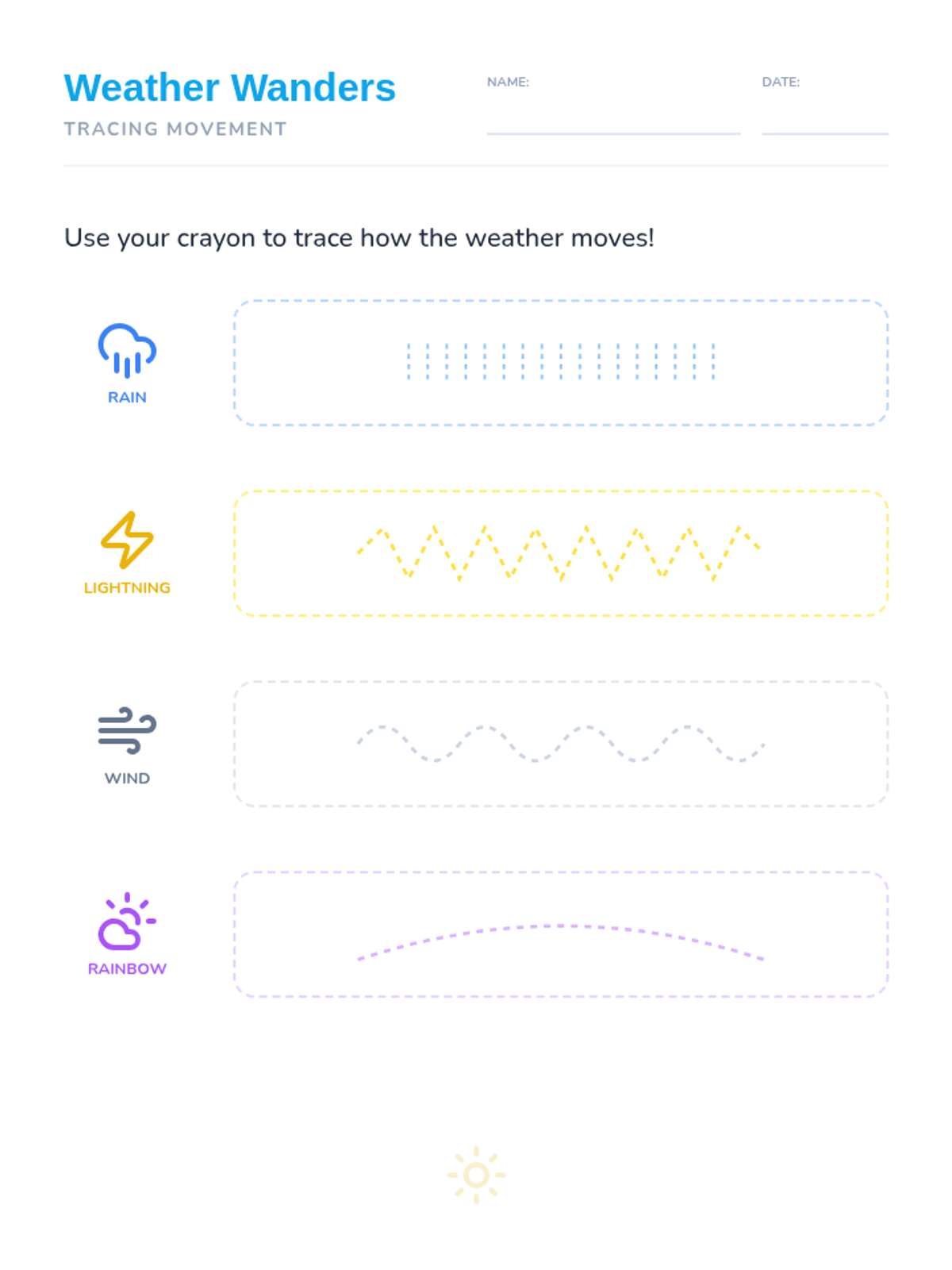
Worksheet for Pre-K students to trace different line patterns representing weather movements (rain, lightning, wind, rainbow).
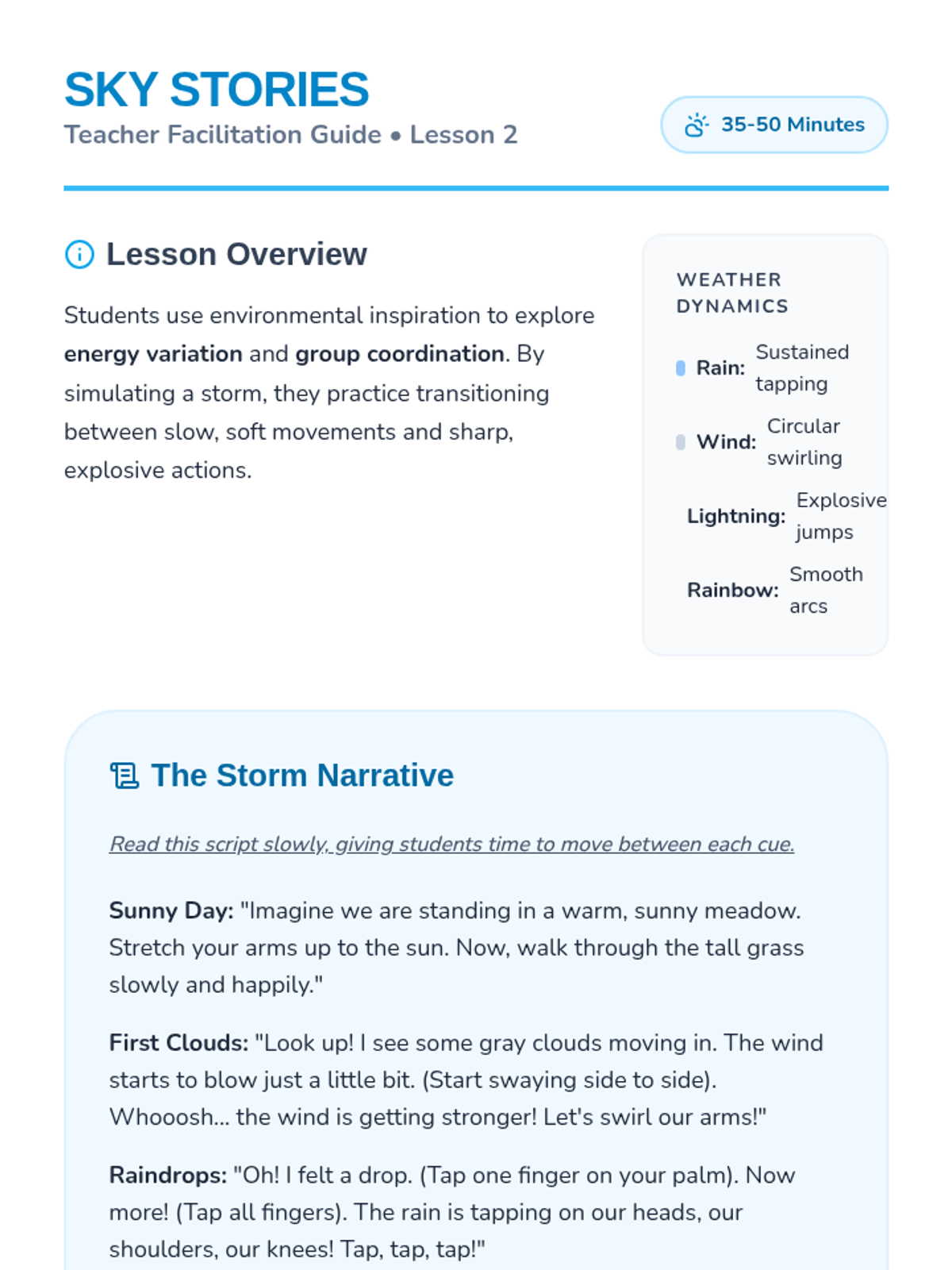
Facilitation guide for teachers to lead the weather-themed creative movement lesson, featuring a guided storm narrative script.
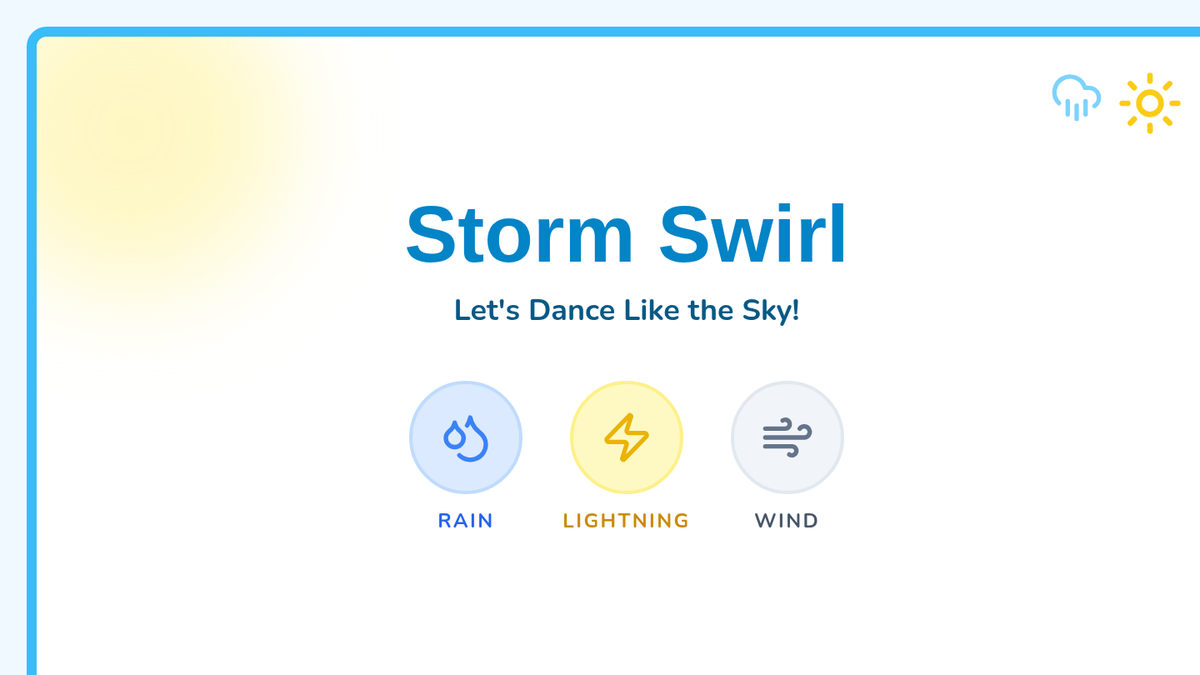
Colorful slides for Lesson 2 that visually prompt students to move like rain, wind, lightning, and rainbows.
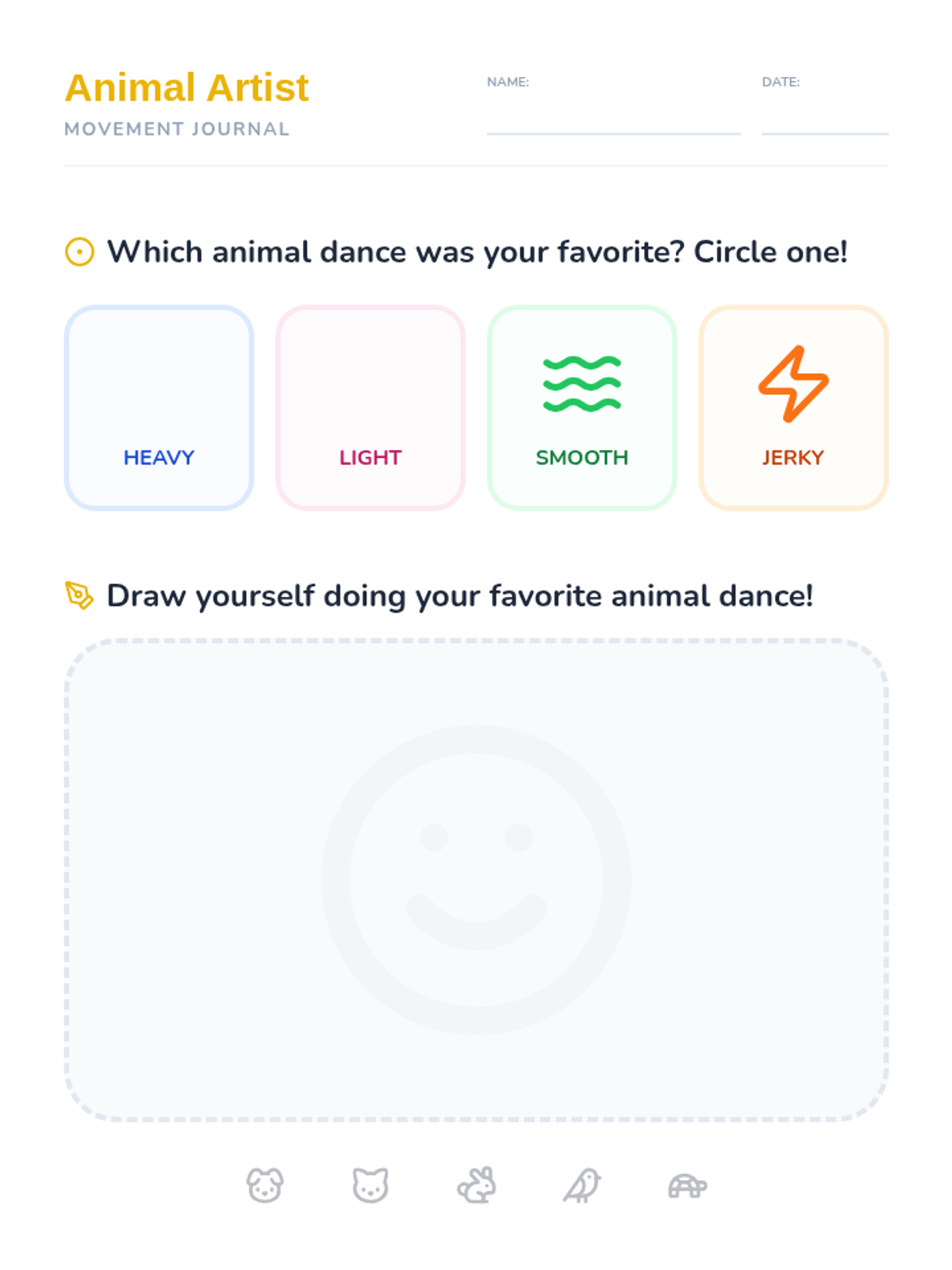
Simple reflective worksheet for Pre-K students to identify their favorite movement quality and draw themselves performing it.
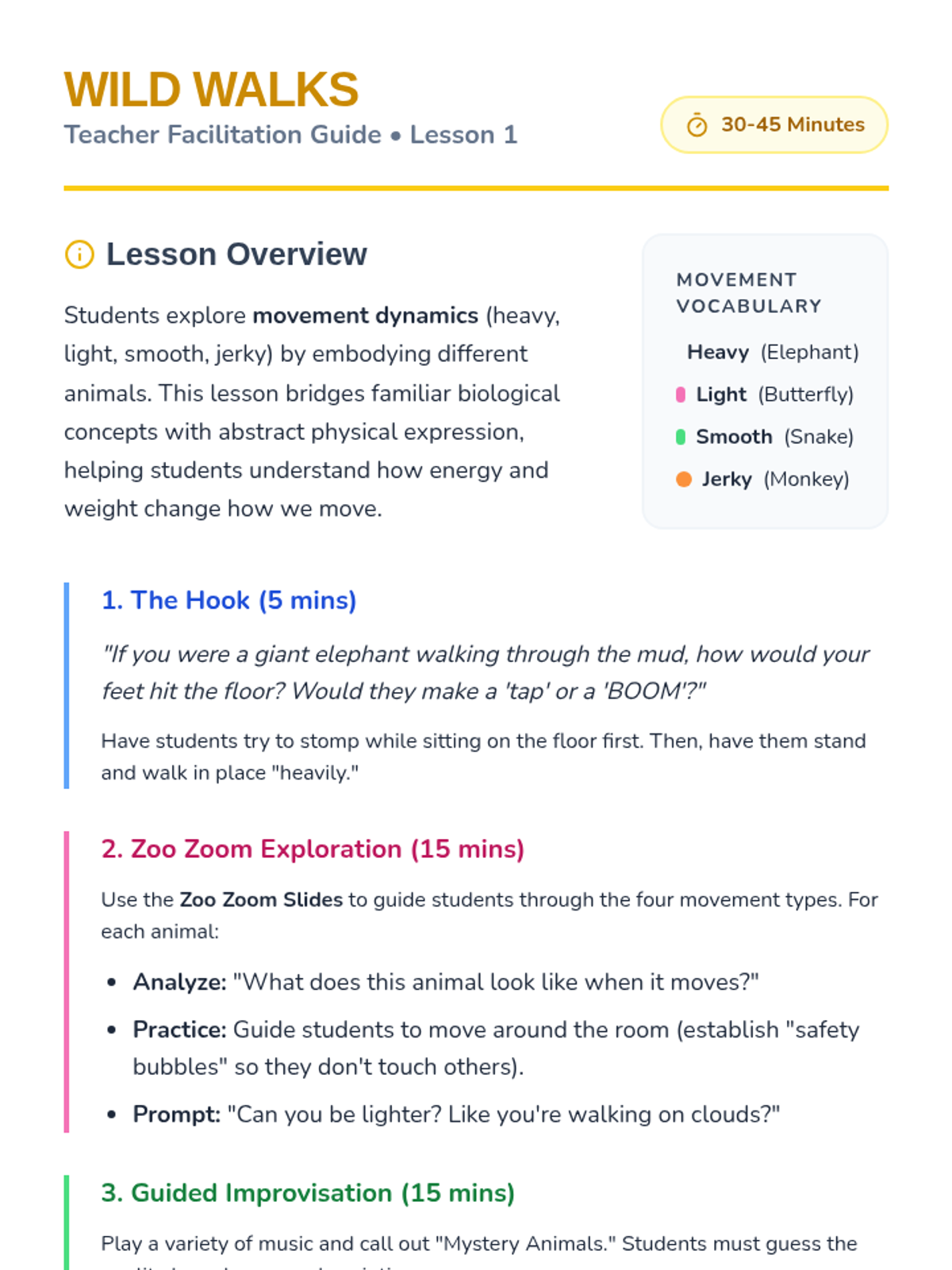
Facilitation guide for teachers to lead the animal improvisation lesson, including prompts, music suggestions, and management strategies.
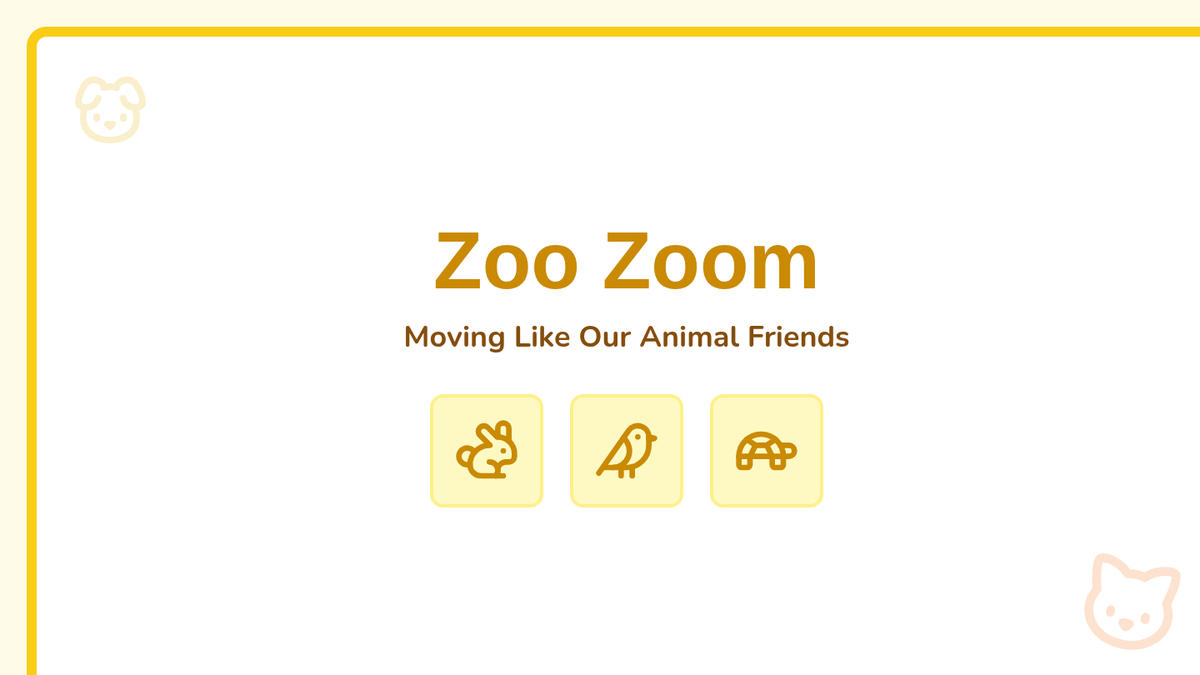
Colorful slides introducing the concepts of heavy, light, smooth, and jerky movements through animal imagery for Pre-K students.
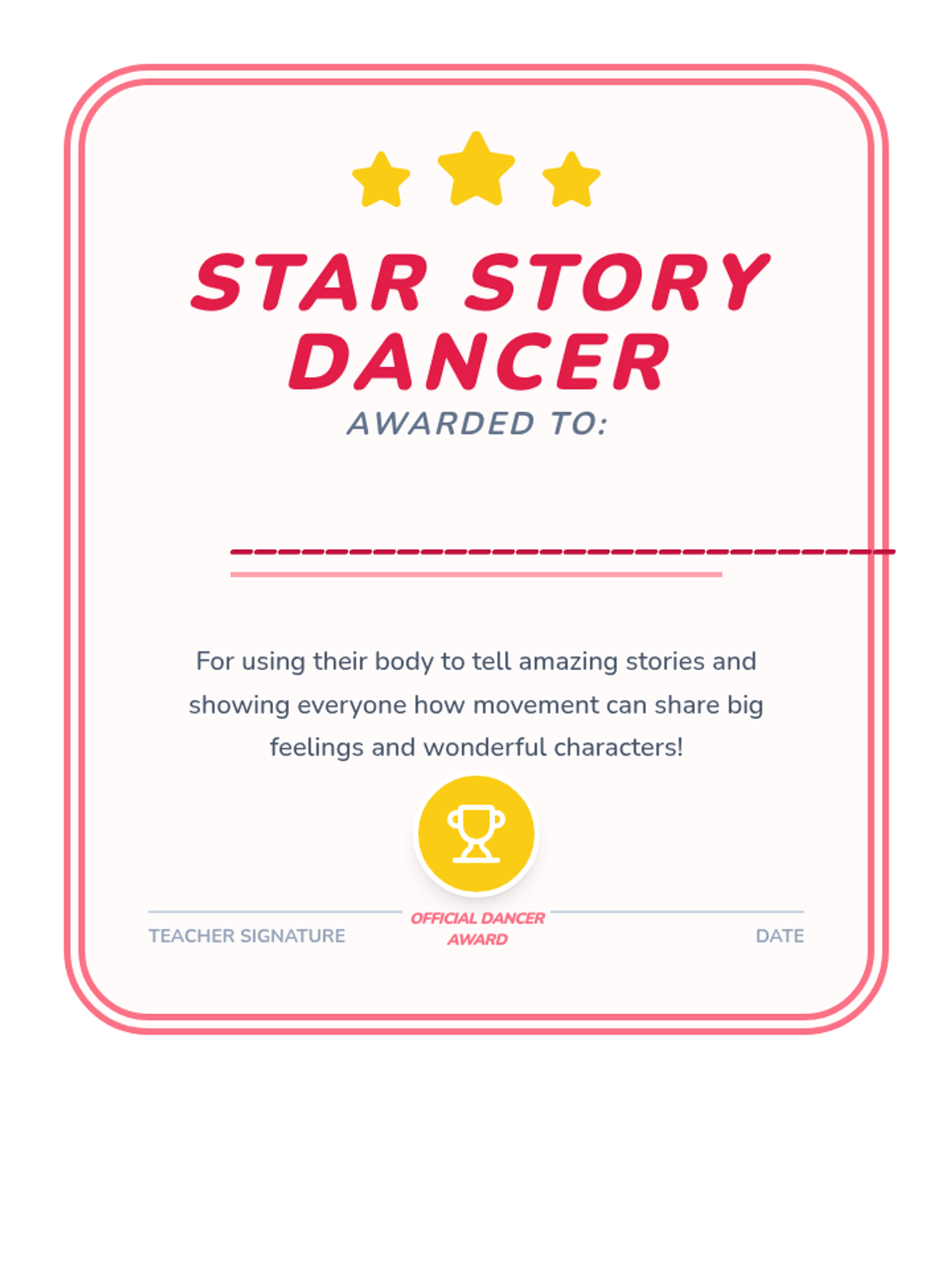
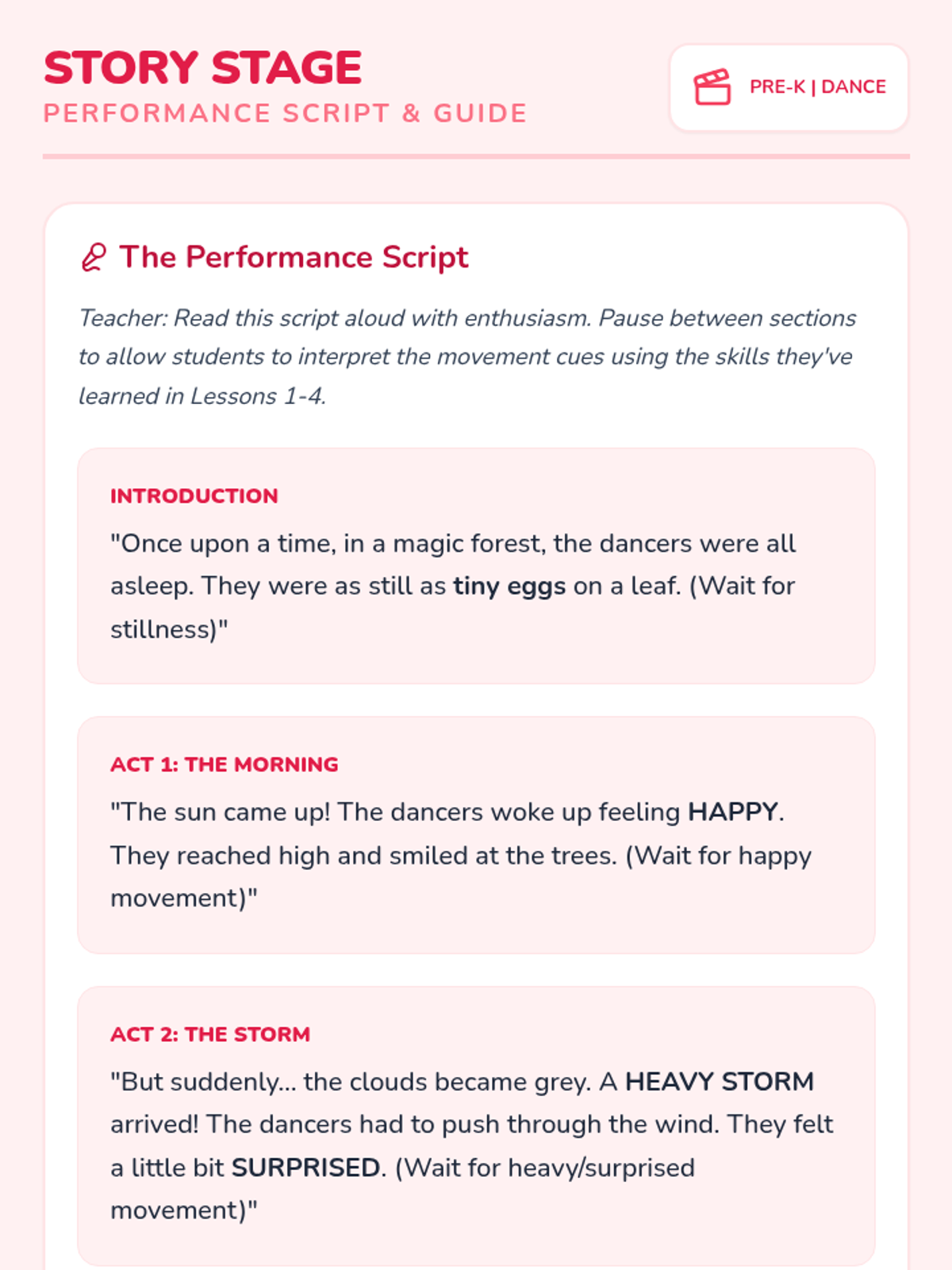
A celebratory performance award for Pre-K students to receive after completing the "Story Stage" narrative dance performance.
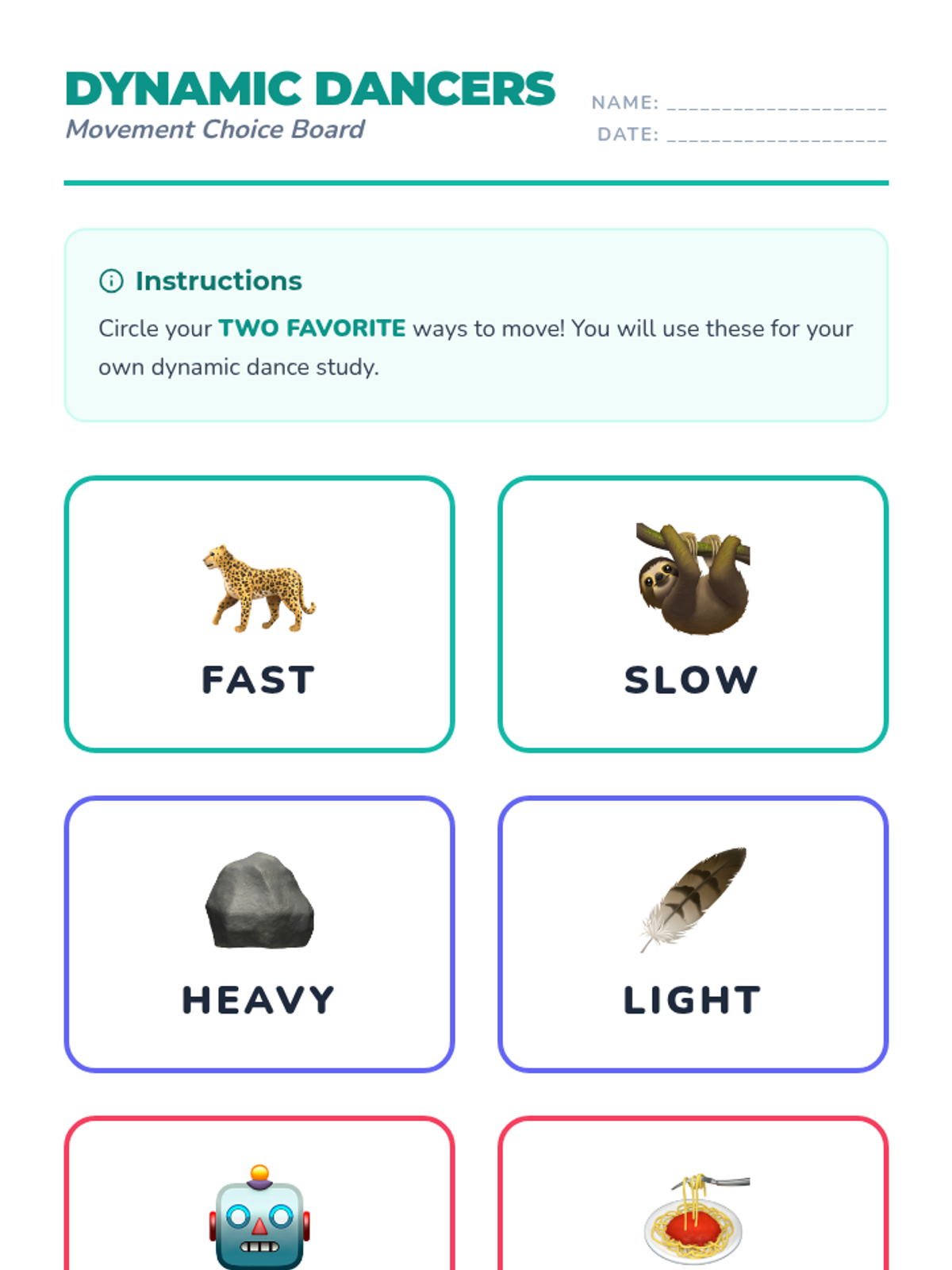
A student worksheet where Pre-K students can select their favorite movement qualities and draw themselves dancing.
A teacher guide for Lesson 5, including the final performance narrative script and musical cues for the class story-dance.
Instructional slides for Lesson 5 guiding students through selecting movement qualities and performing an improvised dance.
Colorful slides for the final Lesson 5 performance, setting the stage for the class narrative dance and providing visual cues for different story segments.
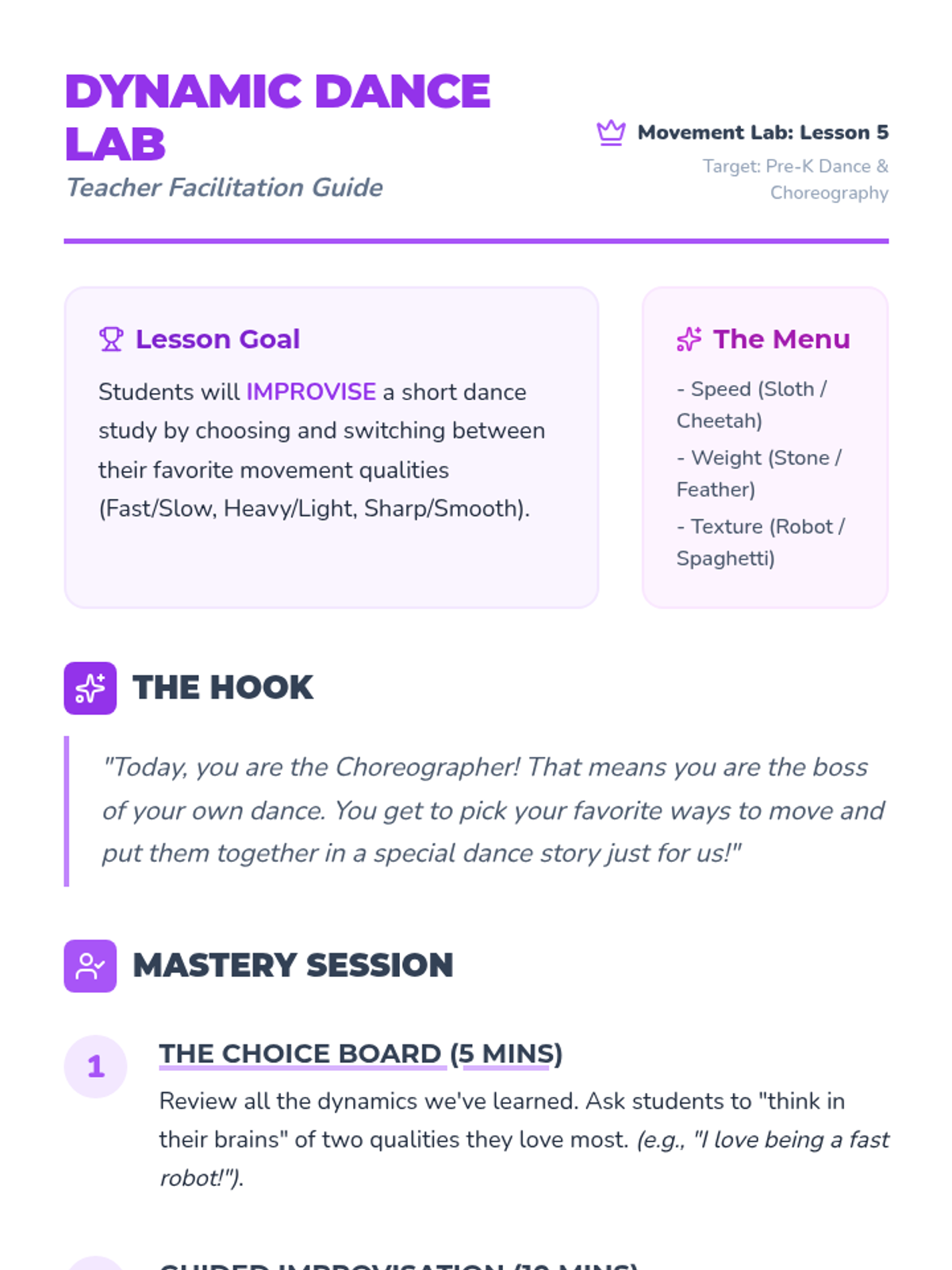
A teacher guide for Lesson 5 focusing on student-led improvisation and performance using learned movement qualities.
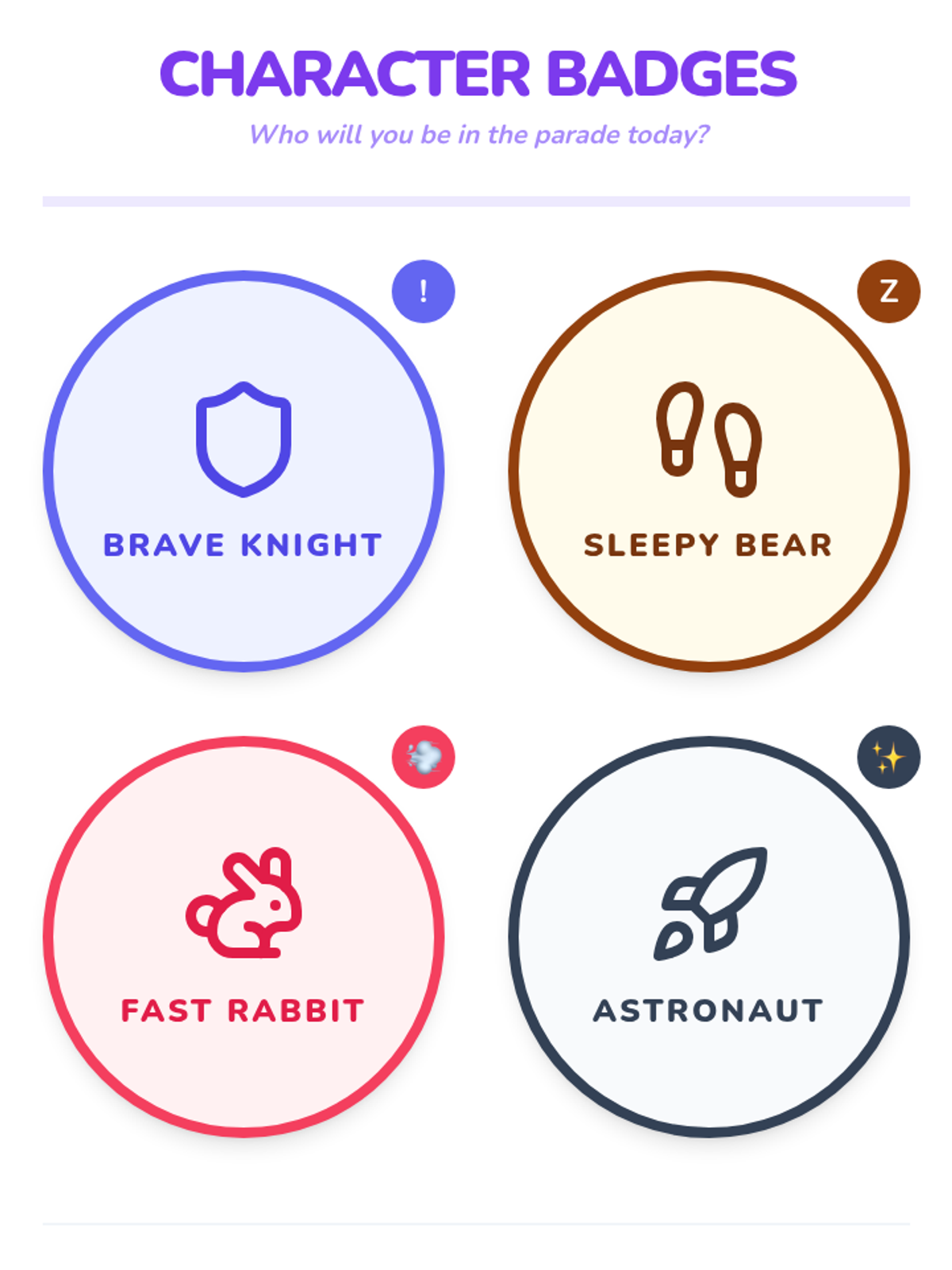
Circular badges with icons for Knight, Bear, Rabbit, and Astronaut to help Pre-K students stay focused on their character movement.
Instructional slides for Lesson 4 practicing auditory discrimination through instrument signals and movement dynamics.
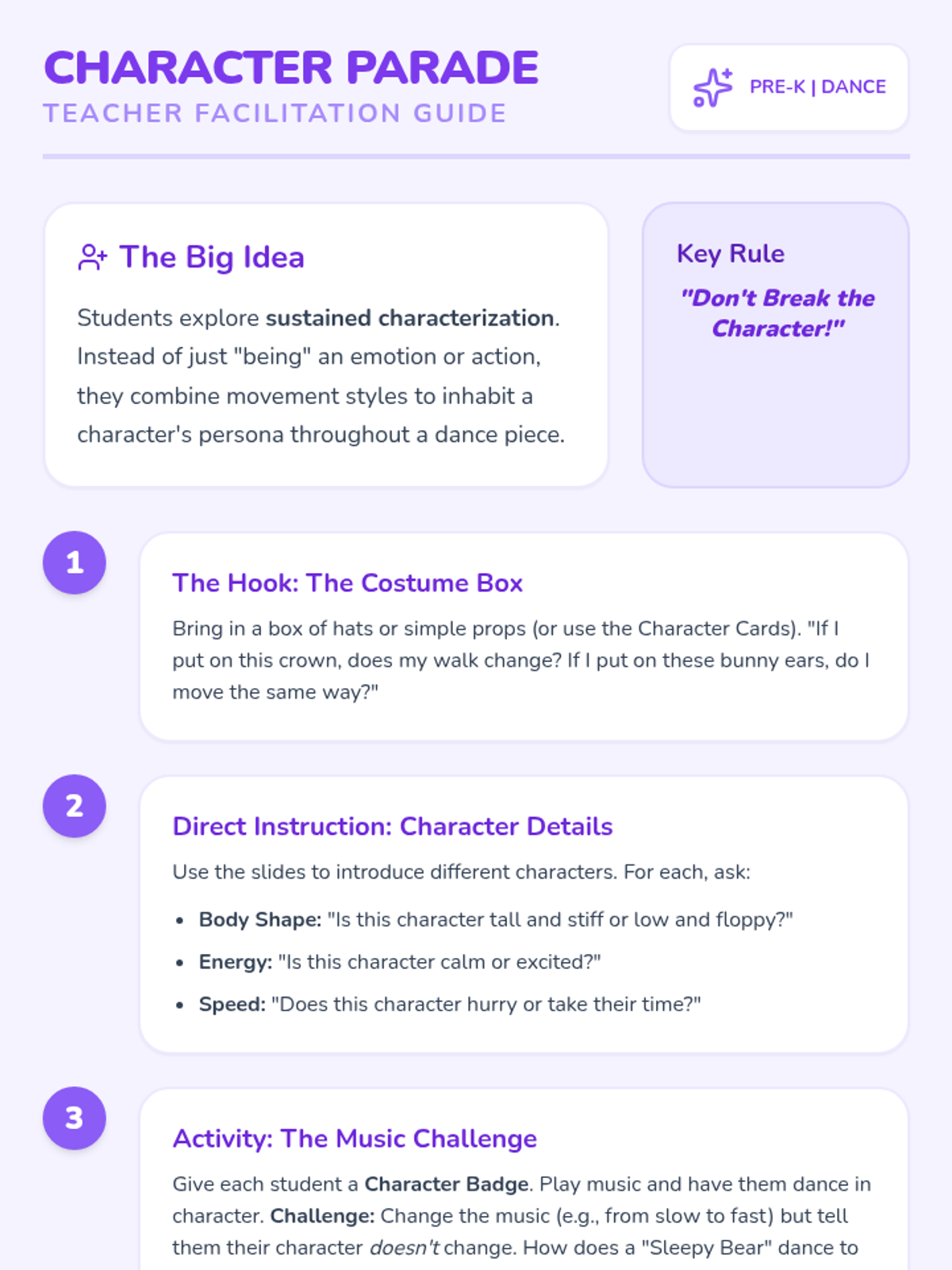
A teacher guide for Lesson 4 that focuses on building sustained characterization and staying in character during musical shifts.
Engaging slides for Lesson 4 that introduce character-specific movement styles and the concept of "staying in character" during music changes.
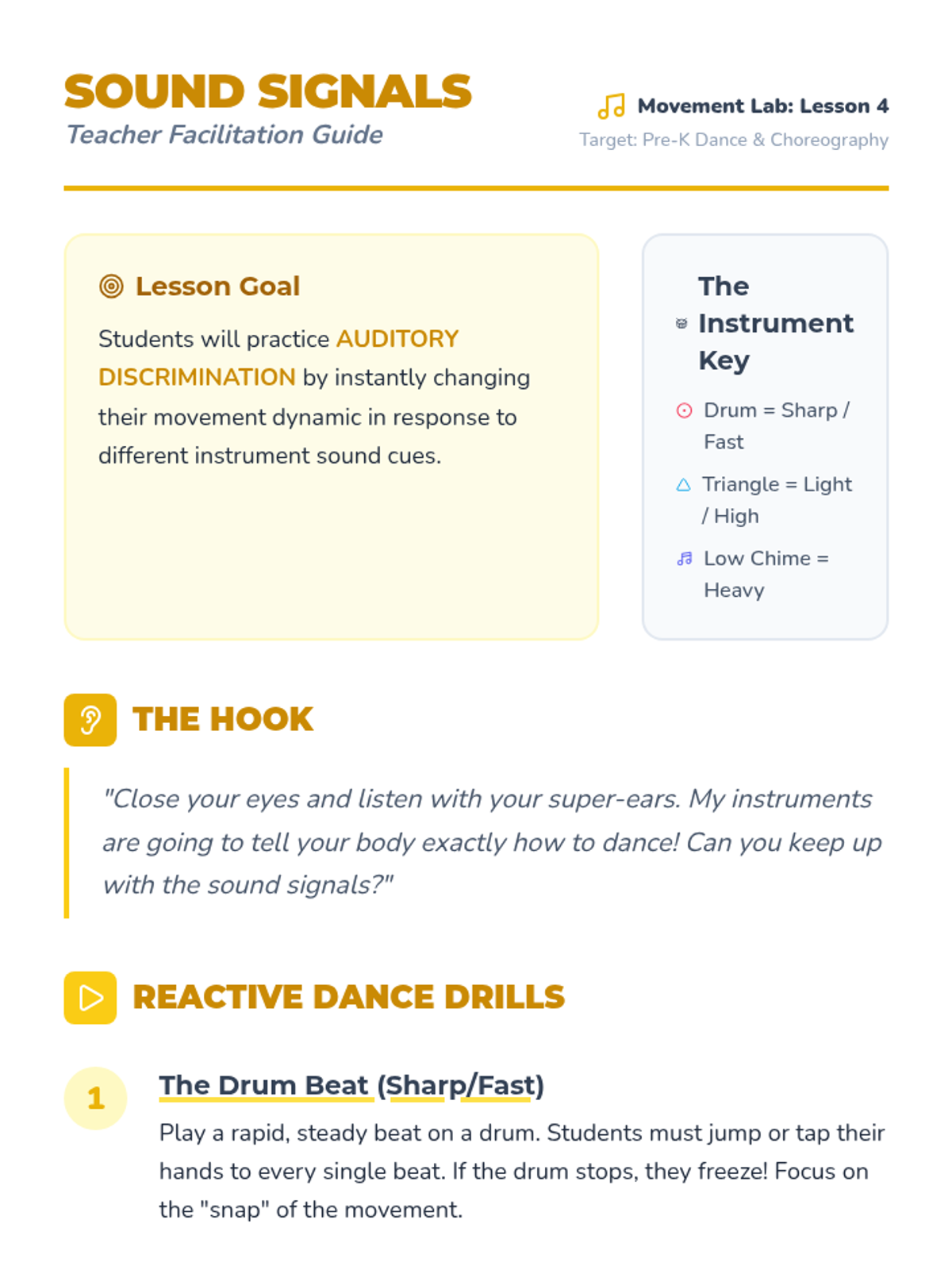
A teacher guide for Lesson 4 focusing on reacting to auditory sound cues with corresponding movement dynamics.
Instructional slides for Lesson 3 exploring sharp and smooth movement qualities through robot and spaghetti imagery.
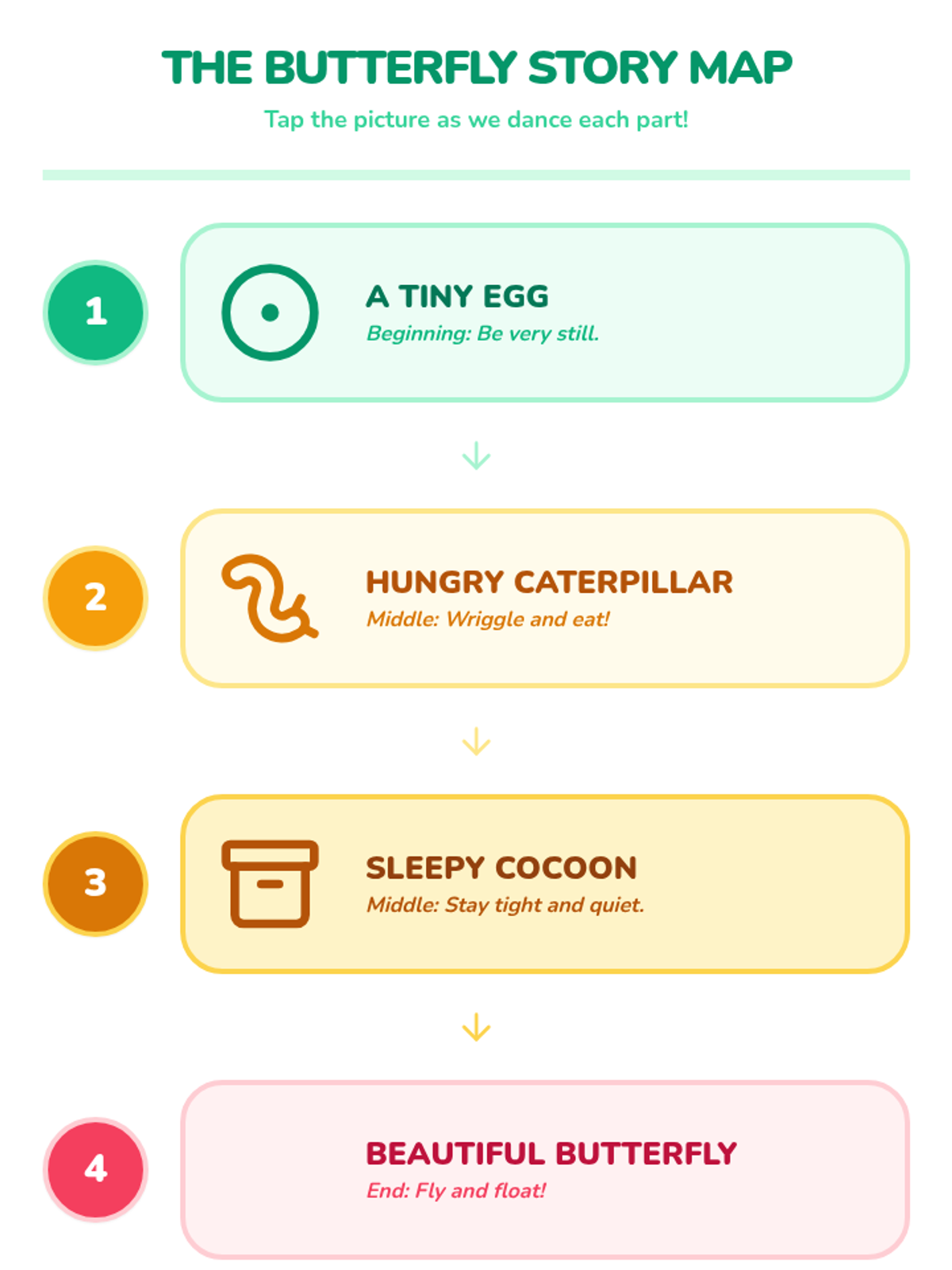
A visual sequencing mat that helps Pre-K students follow the beginning, middle, and end of the butterfly lifecycle dance.
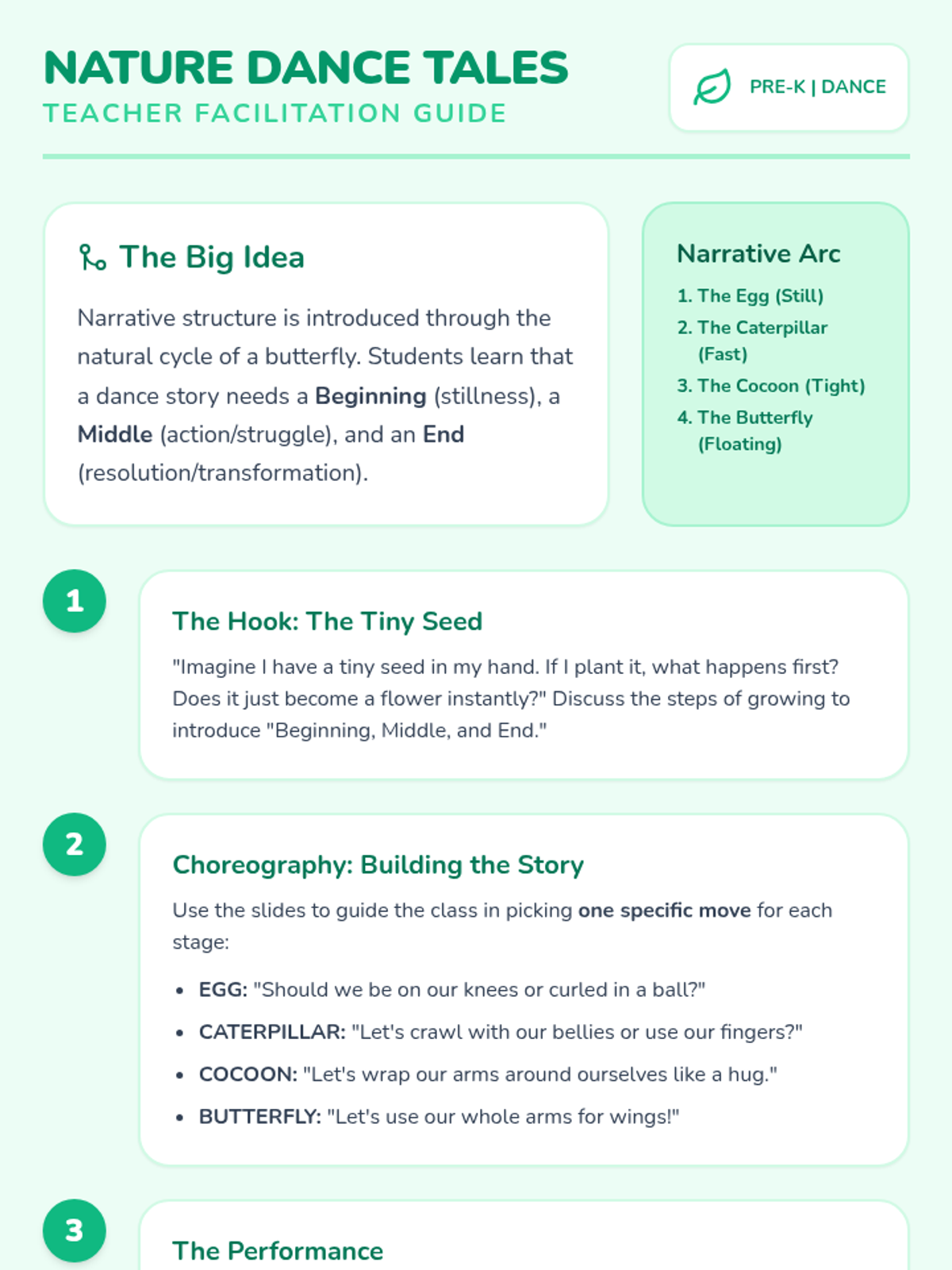
A comprehensive teacher guide for Lesson 3, providing a narrative script and movement prompts for choreographing a butterfly lifecycle dance.
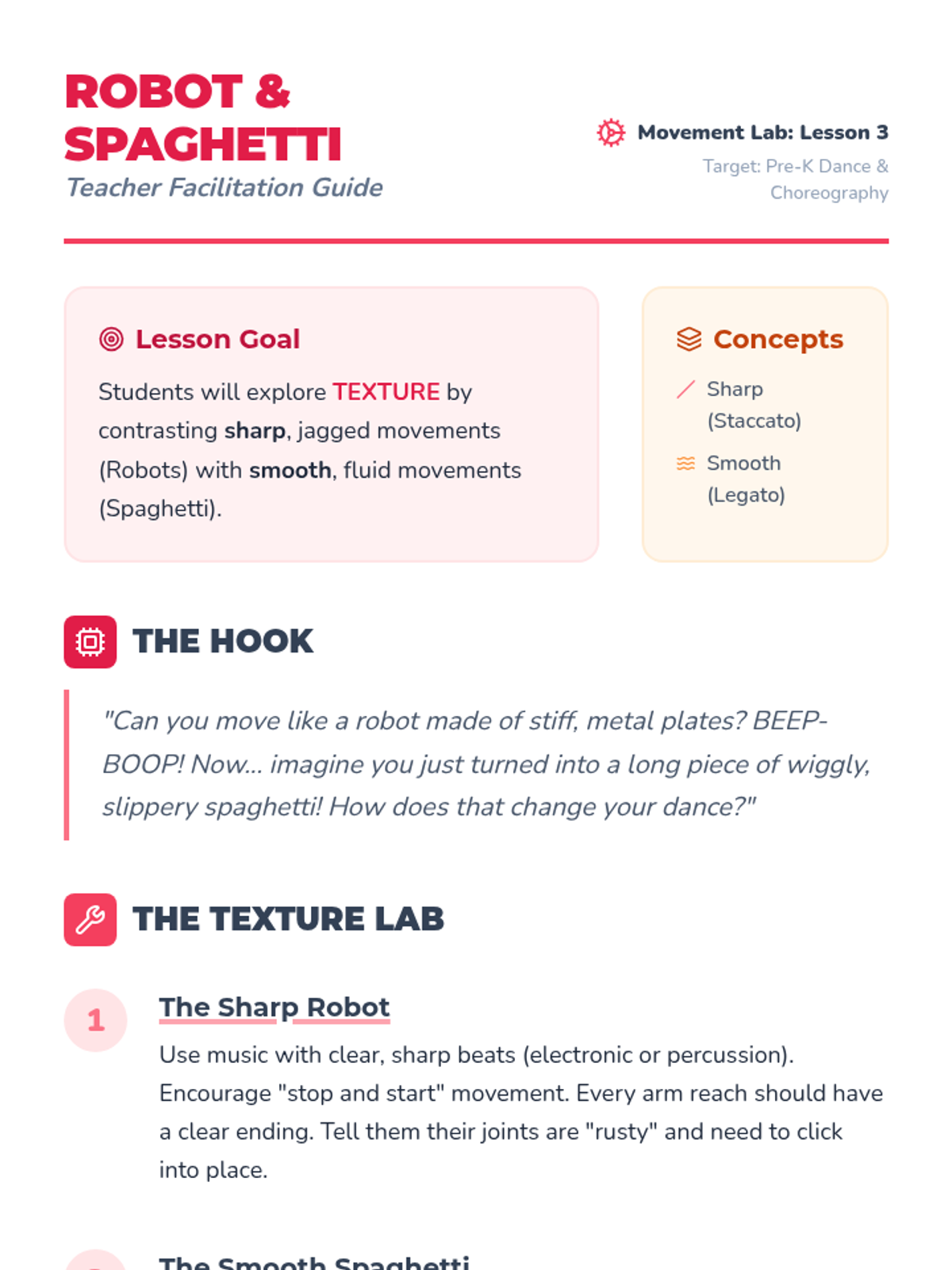
A teacher guide for Lesson 3 focusing on sharp and smooth movement qualities using robot and spaghetti imagery.
Visual aids for Lesson 3 detailing the four stages of a butterfly's lifecycle to guide the class's narrative choreography.
Instructional slides for Lesson 2 exploring heavy and light weight through giant and feather imagery.
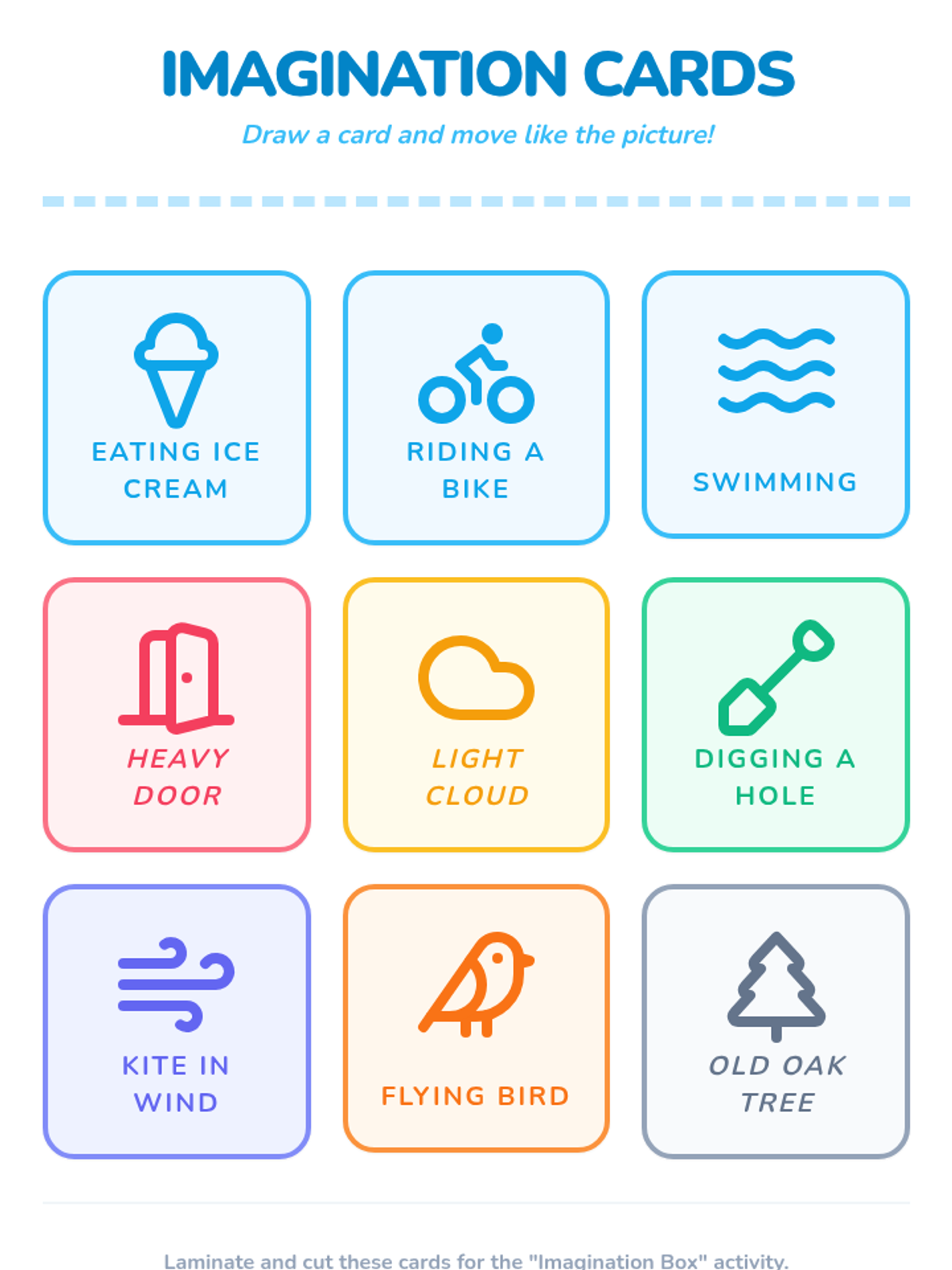
A set of 9 visual action cards for the "Imagination Box" activity, featuring diverse icons for students to represent through movement.
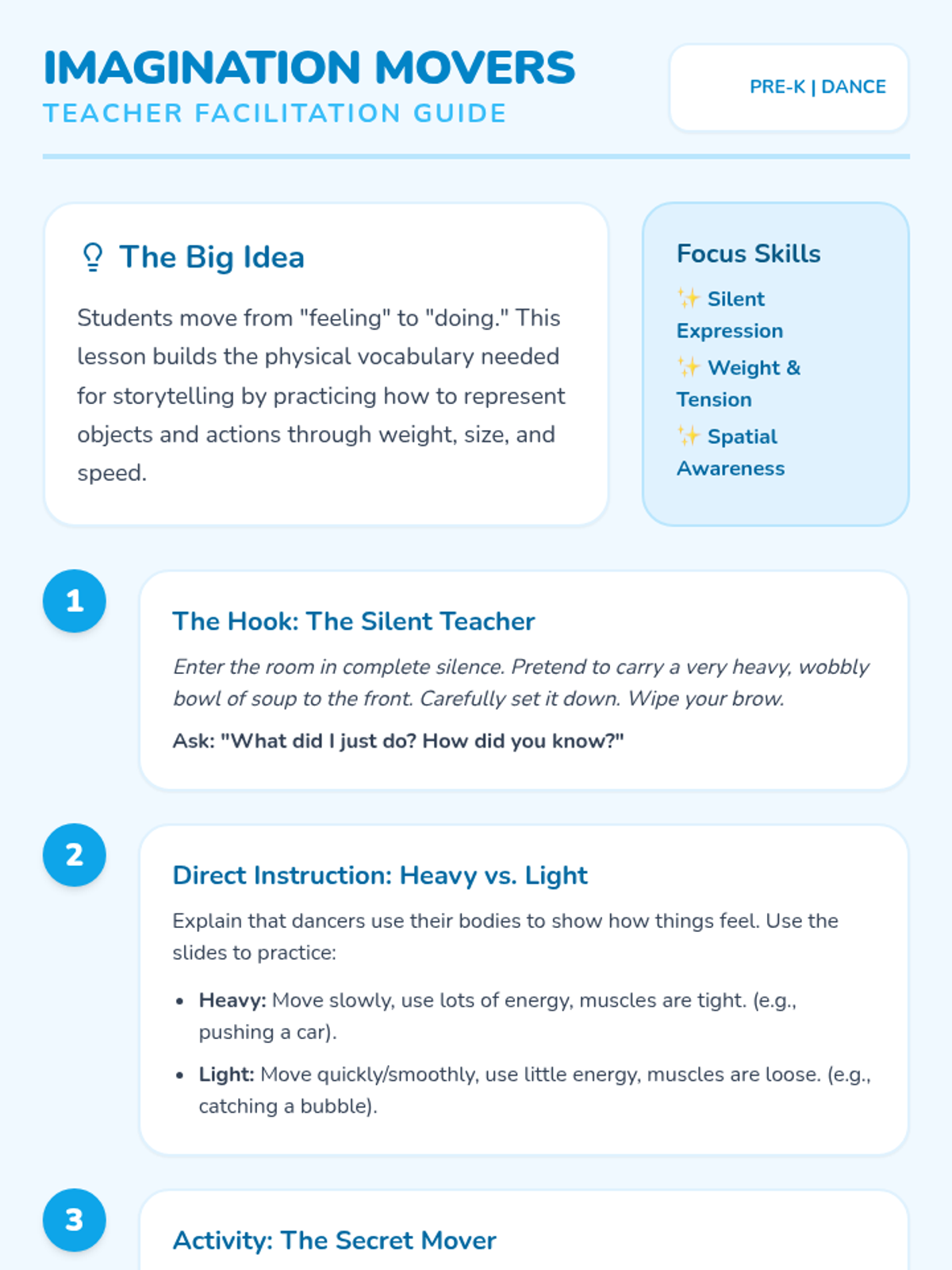
A teacher guide for Lesson 2 focusing on teaching pantomime and physical storytelling techniques to young learners.
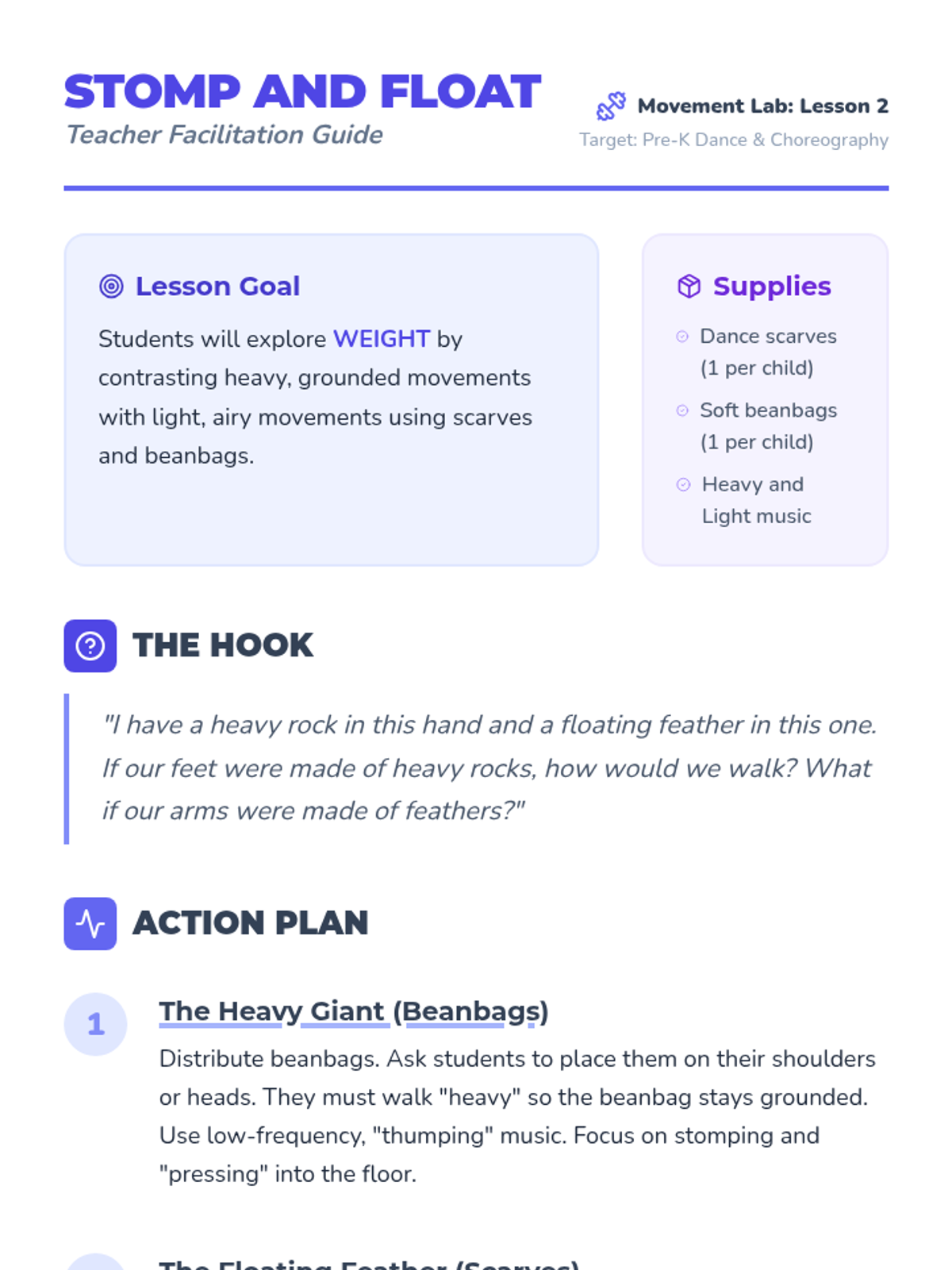
A teacher guide for Lesson 2 focusing on heavy and light movement dynamics using beanbags and scarves.
A drawing worksheet for the final lesson in the sequence. Students draw themselves striking their favorite "jazz shape" from the grand finale routine, providing a creative reflection on their learning.
Slides for Lesson 5: Strike a Pose. Guides students through creating different body shapes and outlines the final "Jazz Jungle" routine for their performance.
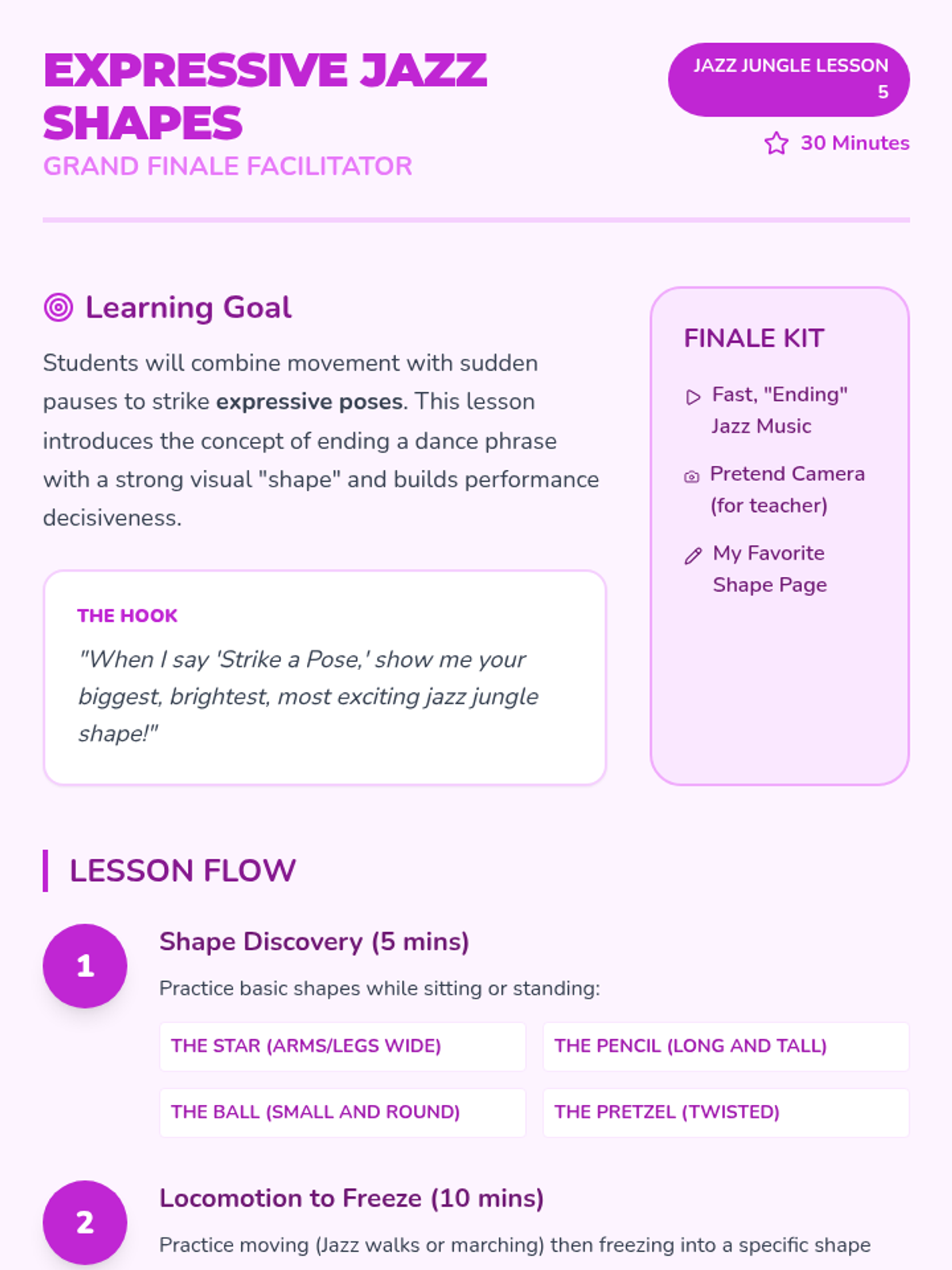
Teacher facilitator guide for Lesson 5: Expressive Jazz Shapes. Outlines the final cumulative routine that combines isolations, dynamics, and locomotion into a finished performance piece.
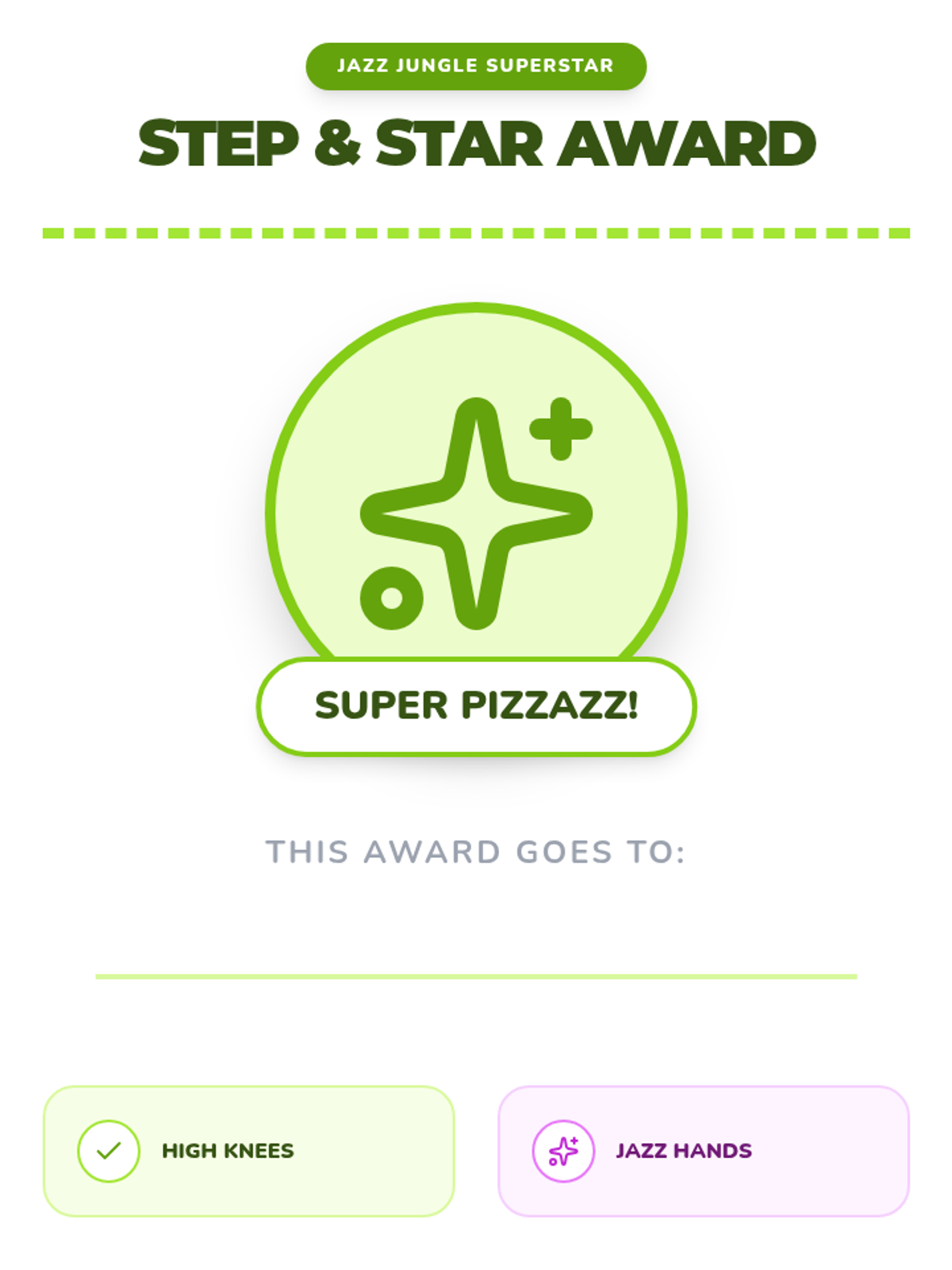
A commemorative "Step & Star Award" for Pre-K students to celebrate completing Lesson 4. Features check-boxes for "High Knees" and "Jazz Hands" achievements.
Slides for Lesson 4: Walking with Pizzazz. Features high-energy visuals for high knees and "sparkly" jazz hands to encourage stylized movement in Pre-K students.
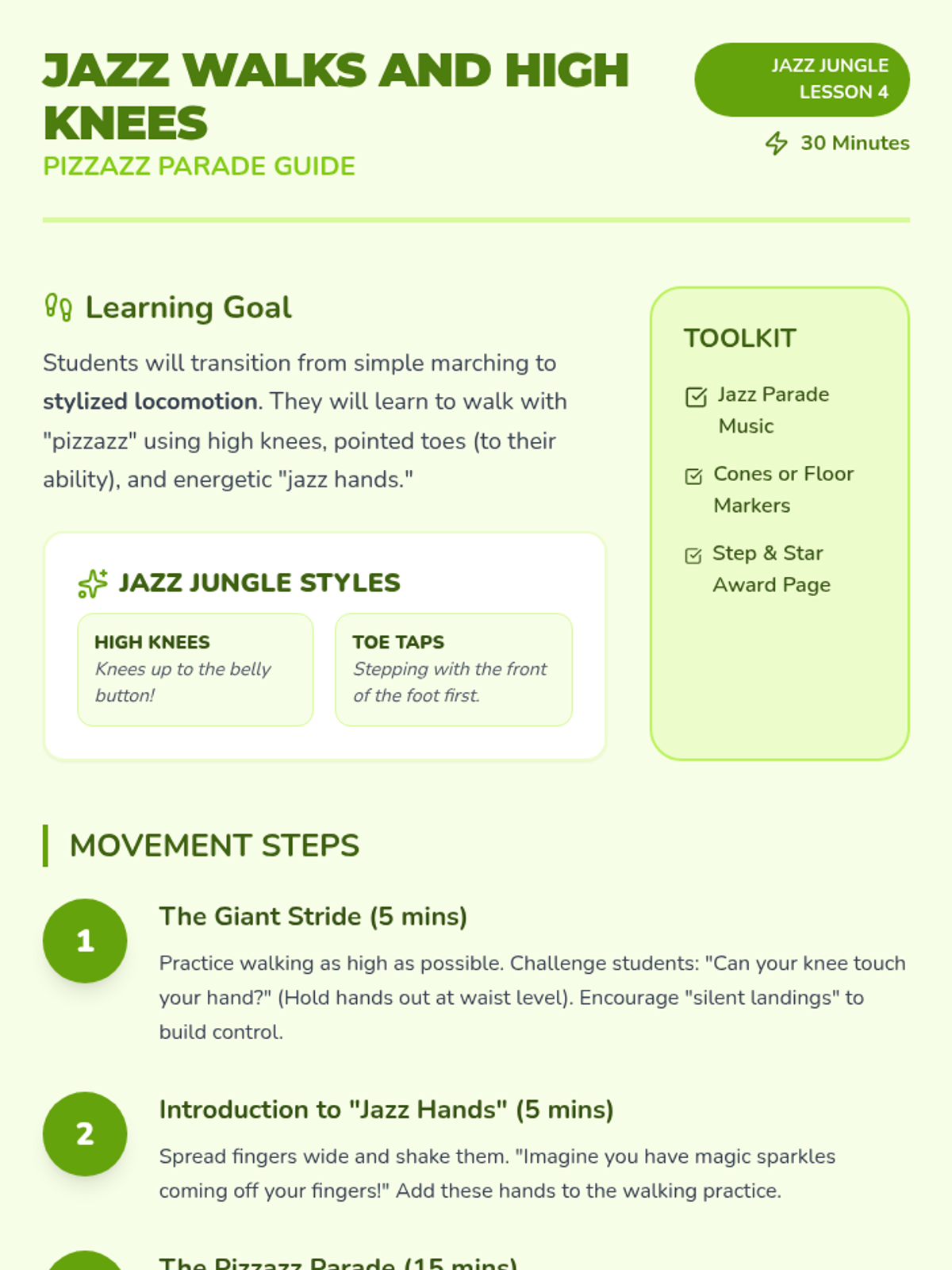
Teacher guide for Lesson 4: Jazz Walks and High Knees. Focuses on stylized locomotion, introducing the iconic "jazz hands" and combining them with high-knee marches for performance.
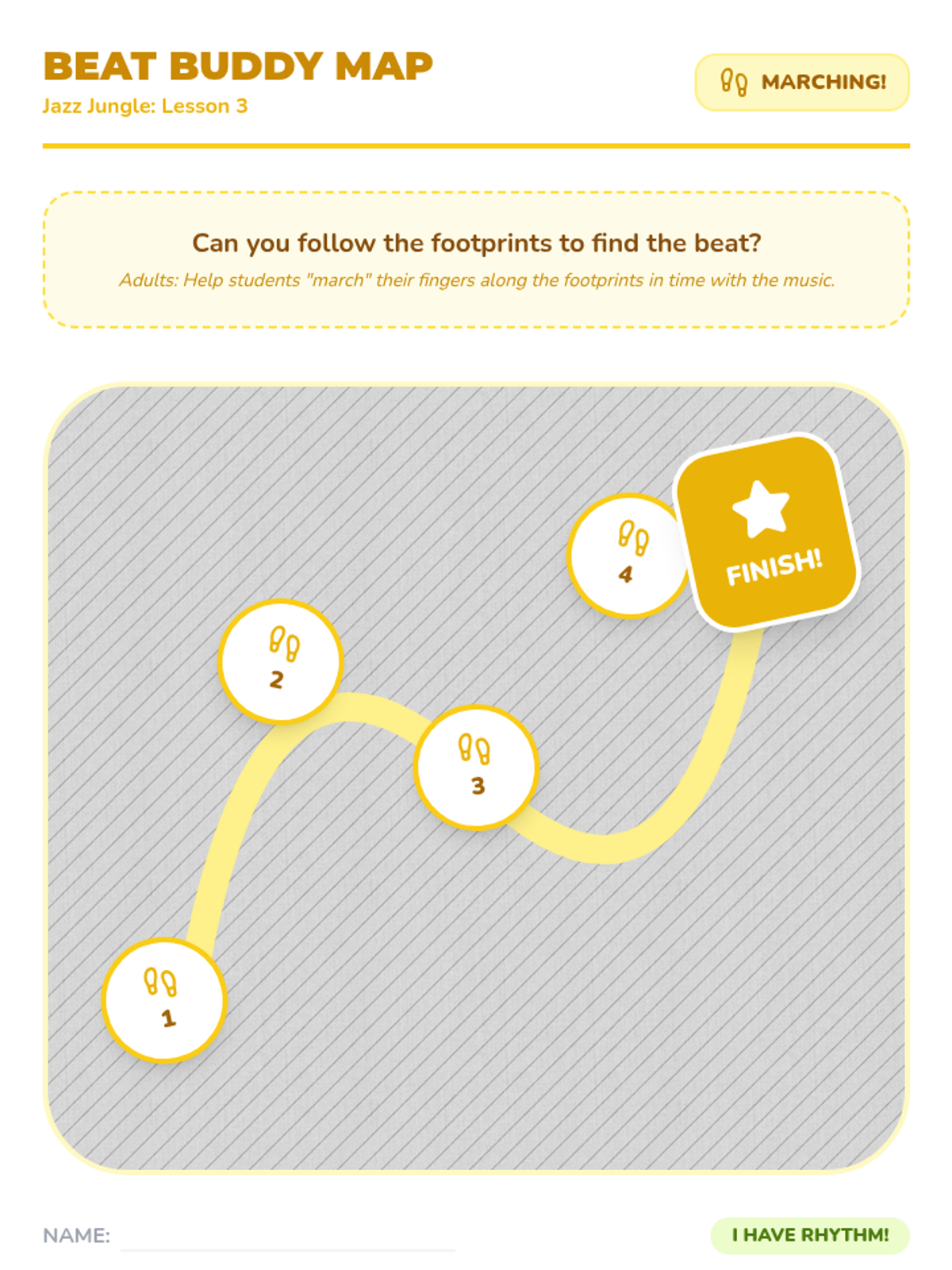
A visual "rhythm map" for Pre-K students to practice steady beat. Students can "walk" their fingers over numbered footprints in time with the music to reinforce the 1-2-3-4 beat structure.
Visual aids for Lesson 3: Finding the Beat. Features "The Heartbeat" concept with pulsing icons and clear 1-2-3-4 rhythm cues for classroom practice.
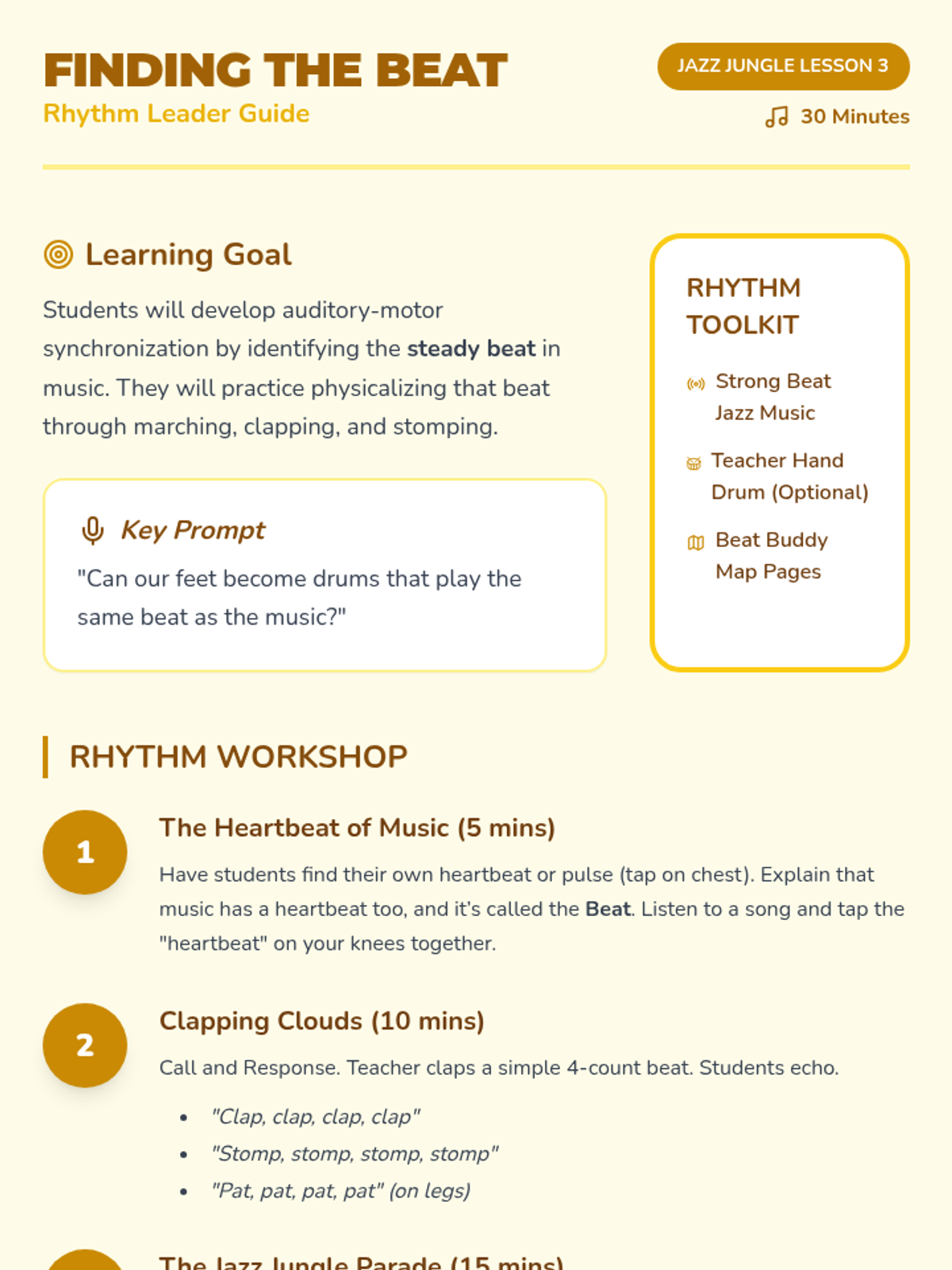
Rhythm Leader Guide for Lesson 3. Focuses on teaching the concept of a steady beat ("the heartbeat of music") through call-and-response clapping and a classroom-wide parade.
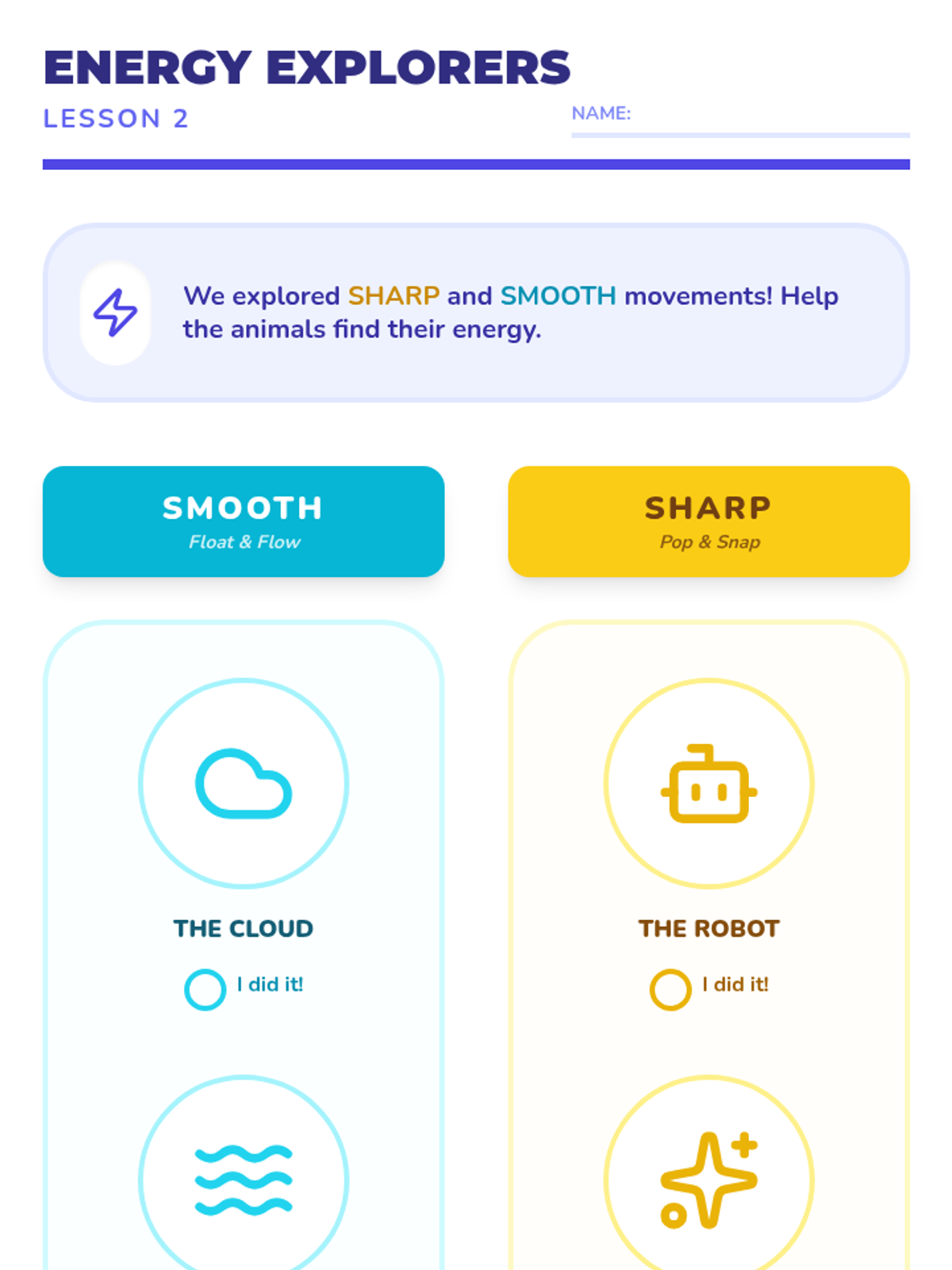
A student check-off sheet and drawing activity for Lesson 2. Students "check off" the movement qualities they practiced and draw a line that represents their favorite dynamic (smooth or sharp).
Slides for Lesson 2: Sharp vs Smooth. Uses high-contrast color coding (Cyan for Smooth, Yellow for Sharp) to visually reinforce movement concepts for Pre-K students.
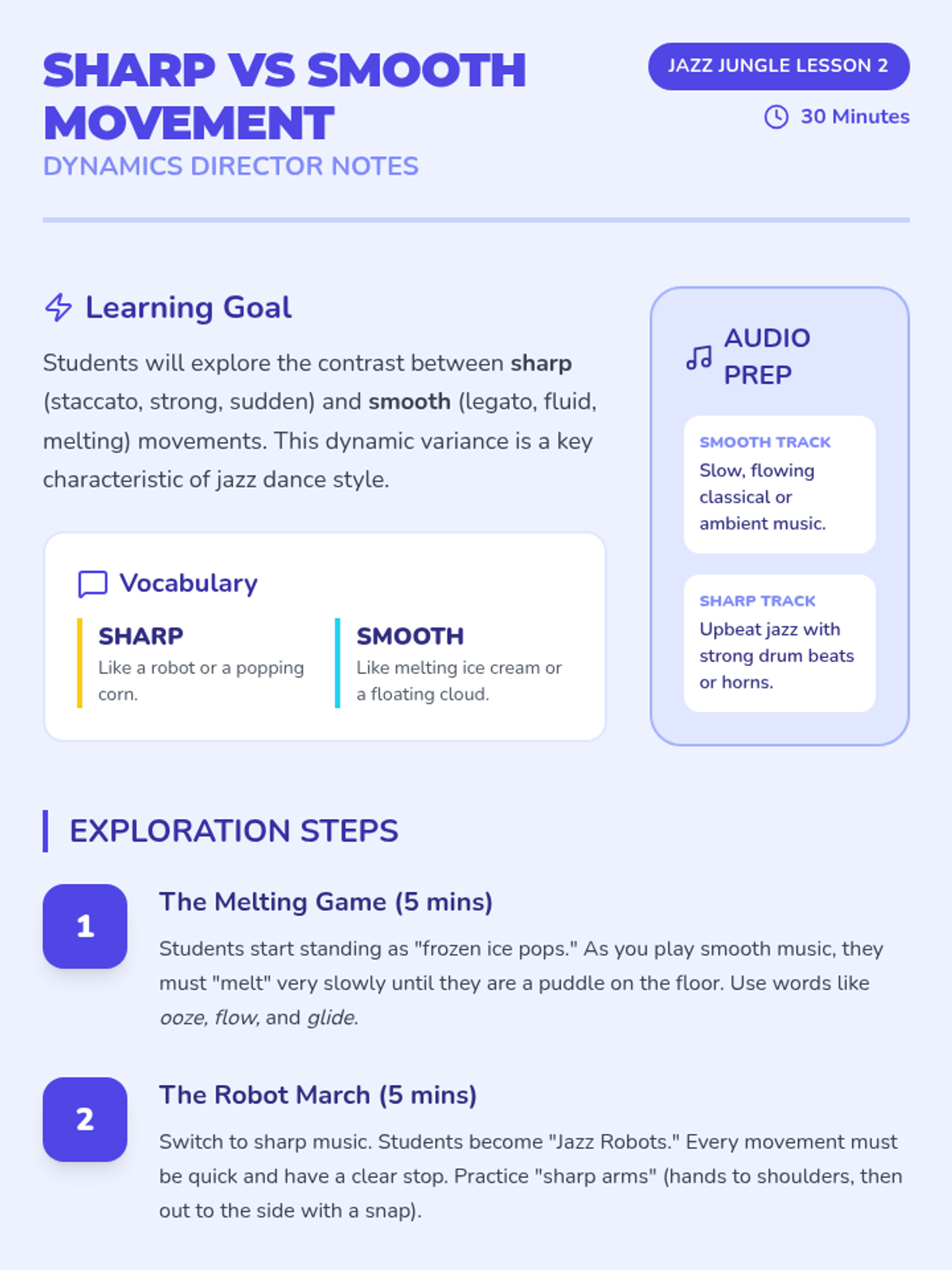
Teacher notes for Lesson 2: Sharp vs Smooth Movement. Provides specific imagery (ice pops, robots) and animal-themed dynamic exercises to help Pre-K students distinguish between movement qualities.
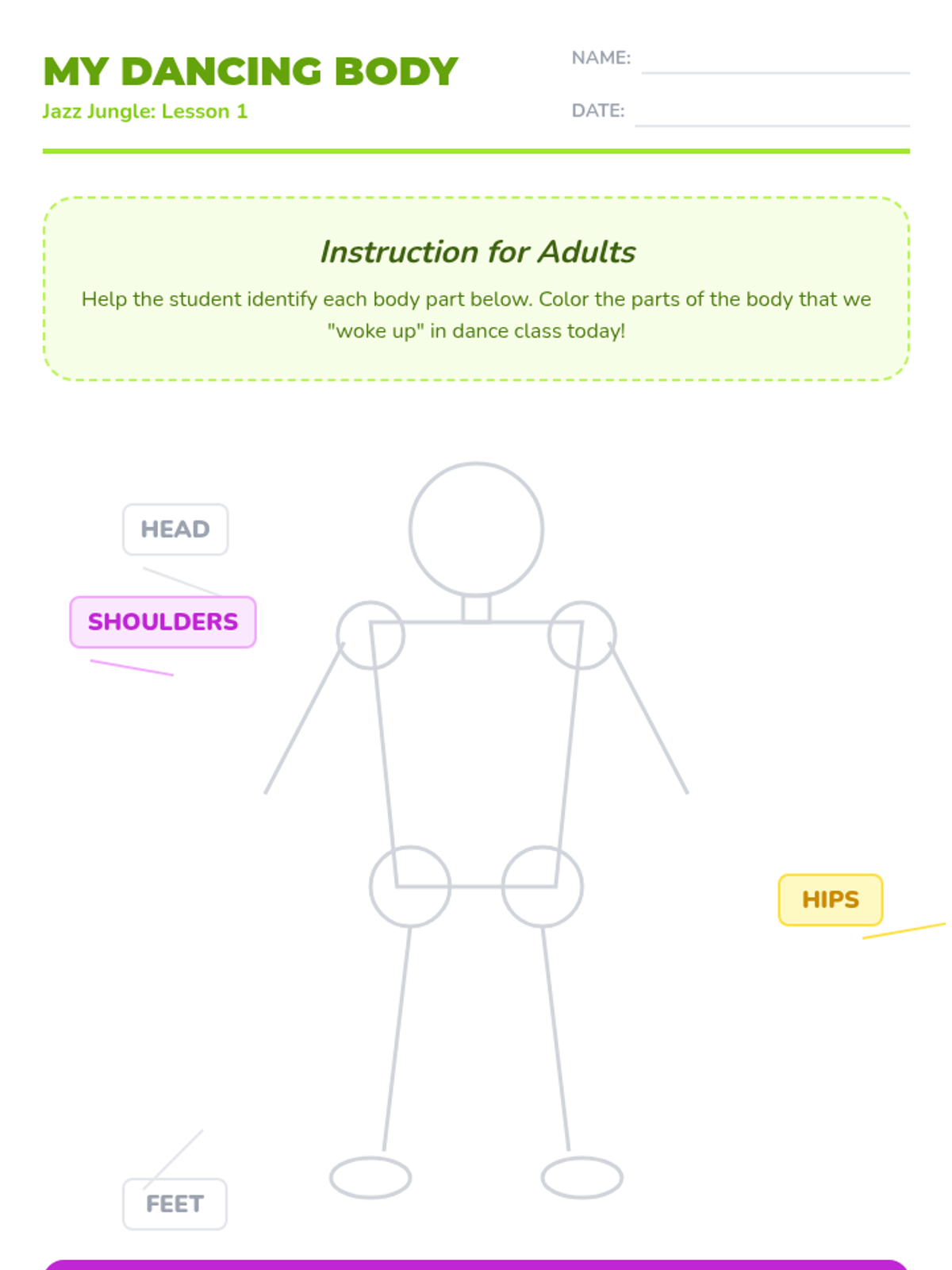
A Pre-K friendly coloring and identification worksheet for Lesson 1. Students color the specific body parts (shoulders, hips, head) that they learned to isolate during the lesson.
Visual aids for Lesson 1: Body Isolations. Designed for Pre-K with large text, bright colors, and clear icons to guide students through moving individual body parts.
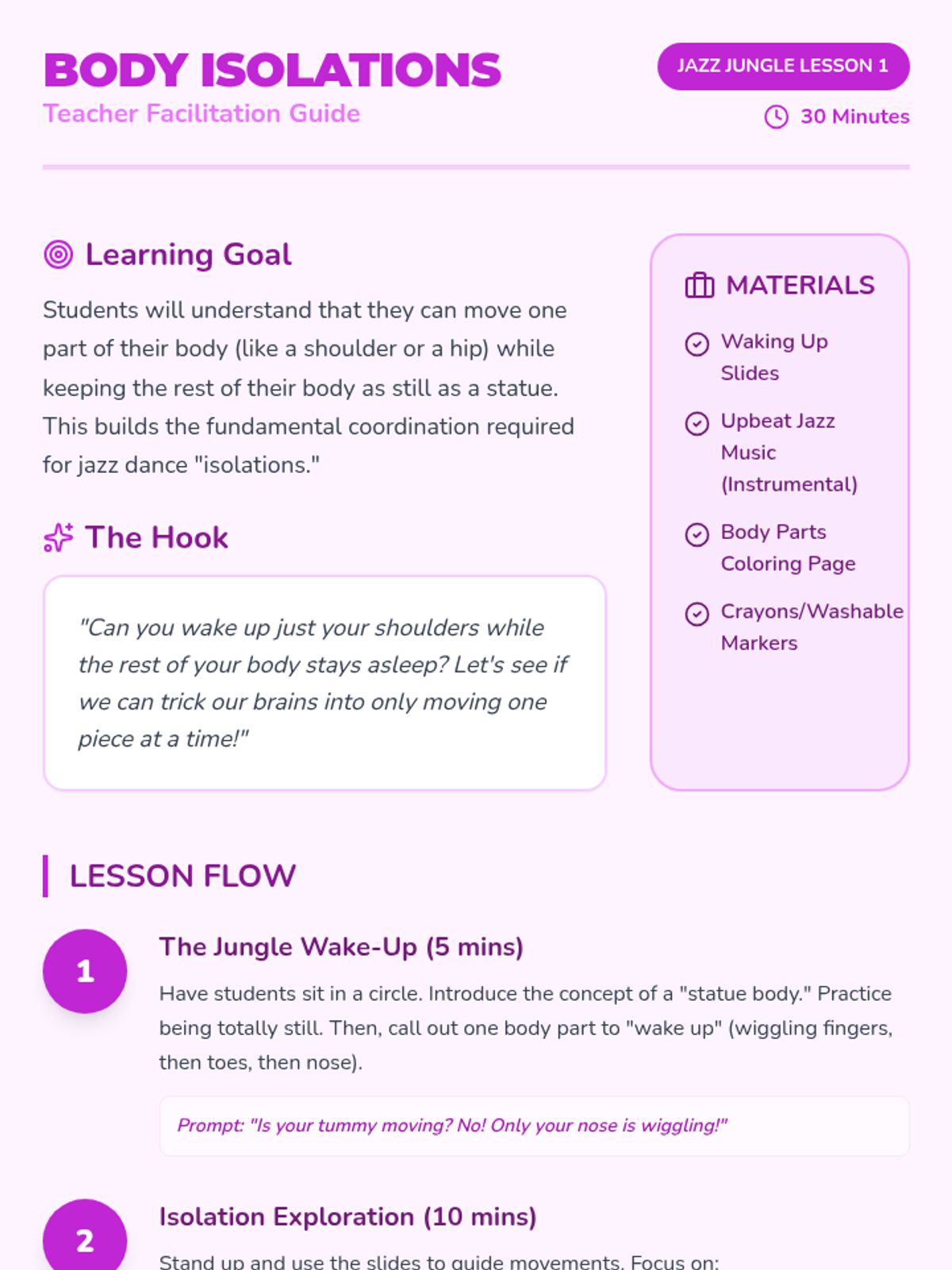
A comprehensive teacher facilitation guide for Lesson 1: Body Isolations. Includes learning goals, a structured lesson flow, and practical tips for managing Pre-K students during dance activities.
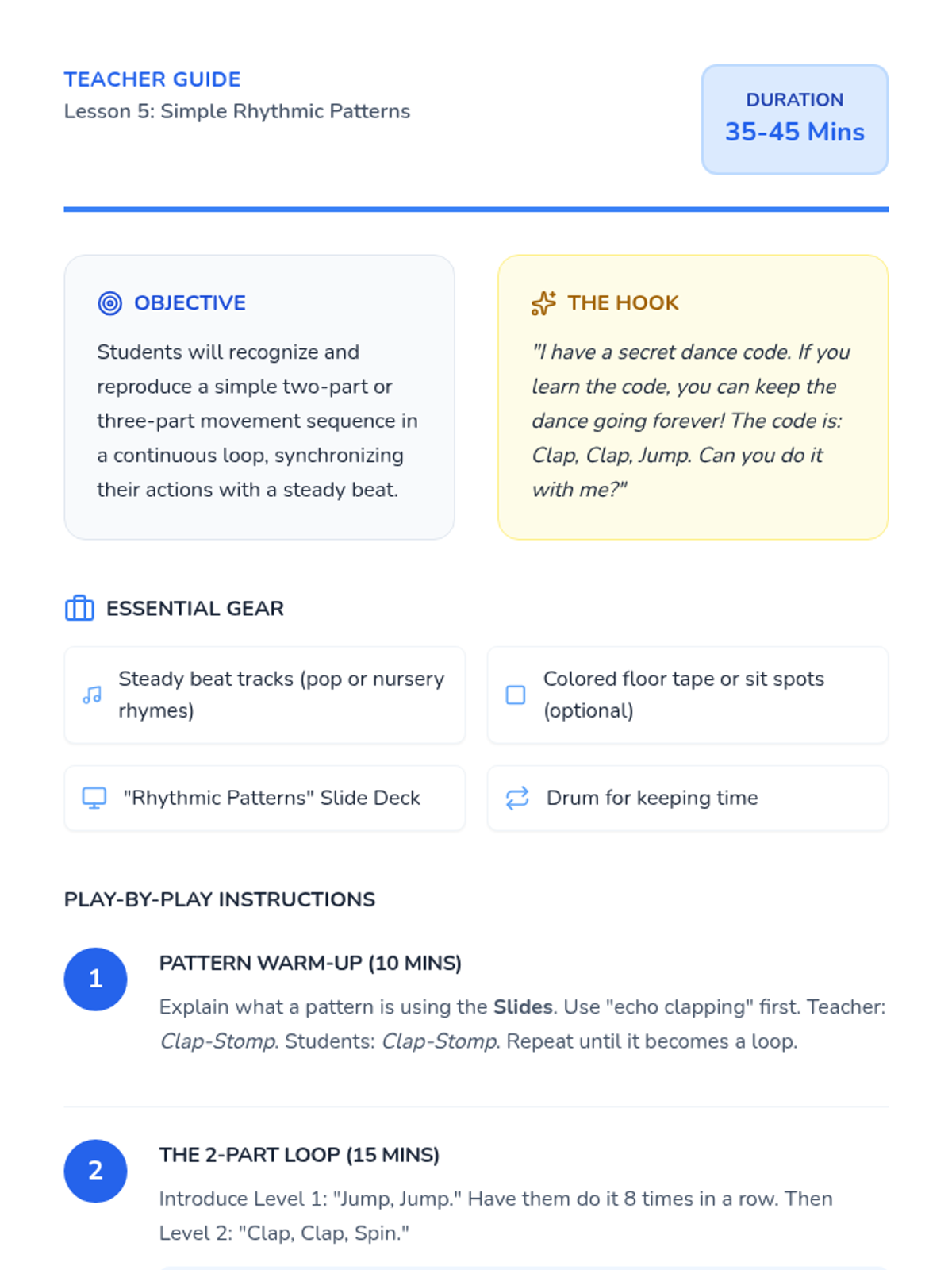
Teacher guidance for Lesson 5, focusing on building coordination and memory through the repetition of two and three-part movement sequences.
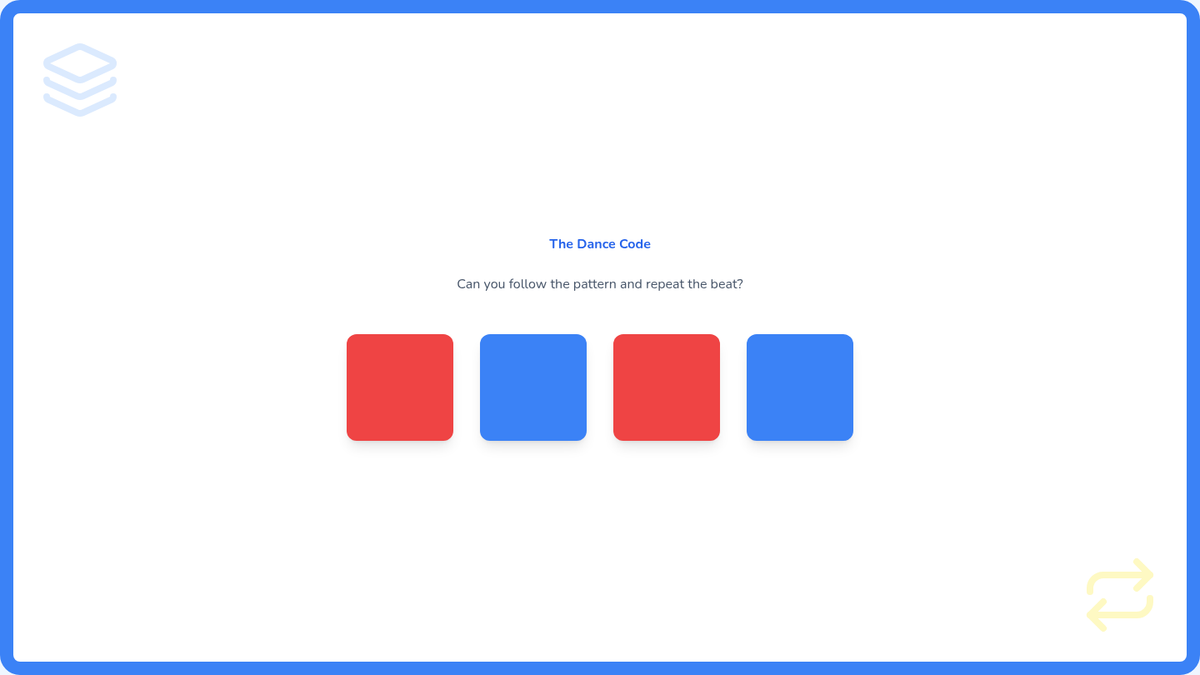
Visual aids for Lesson 5 to teach basic movement sequencing and pattern recognition using simple two and three-part loops.
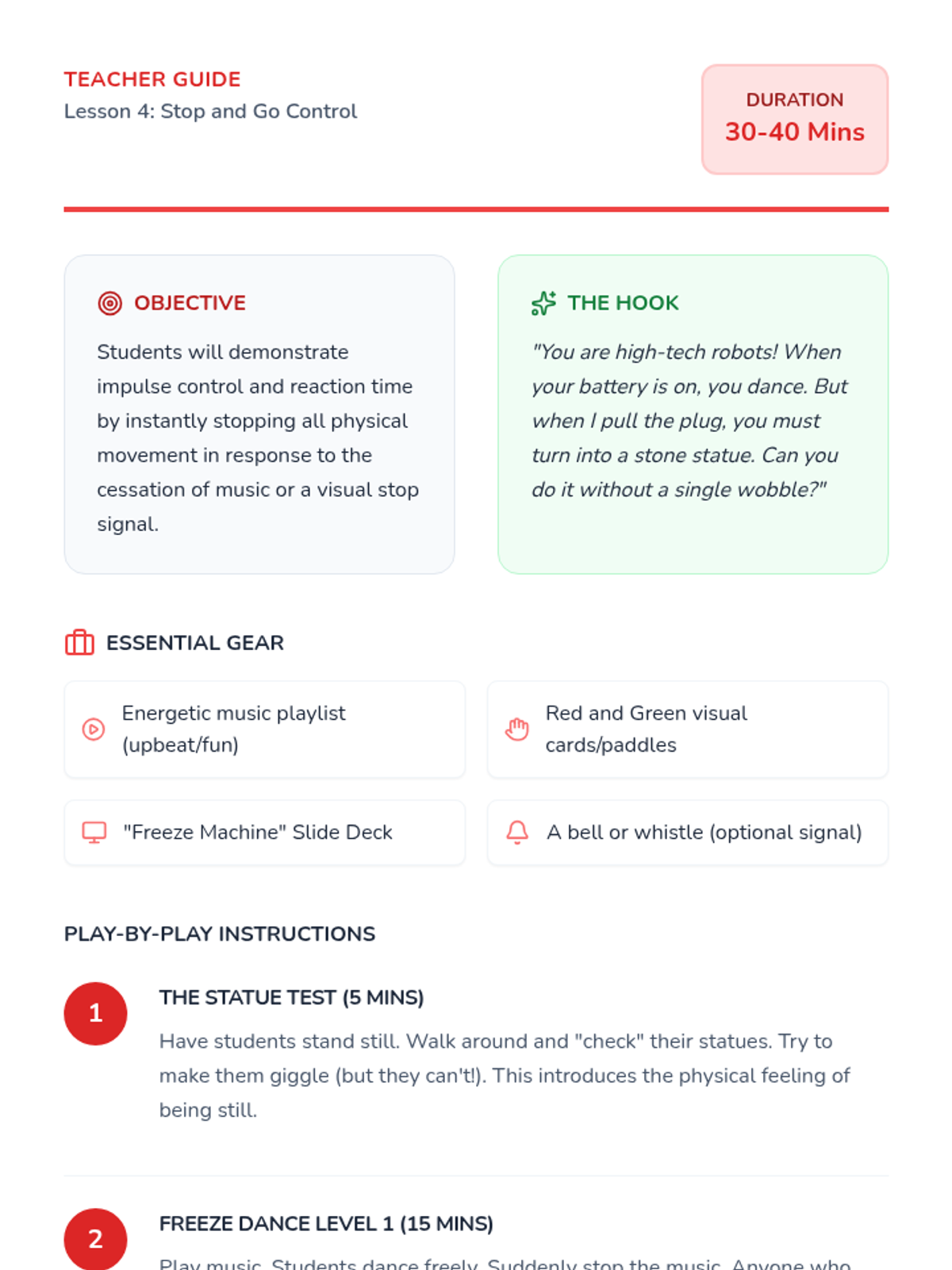
Teacher guidance for Lesson 4, utilizing 'Freeze Dance' to teach impulse control and reaction time through games and character-based freezing challenges.
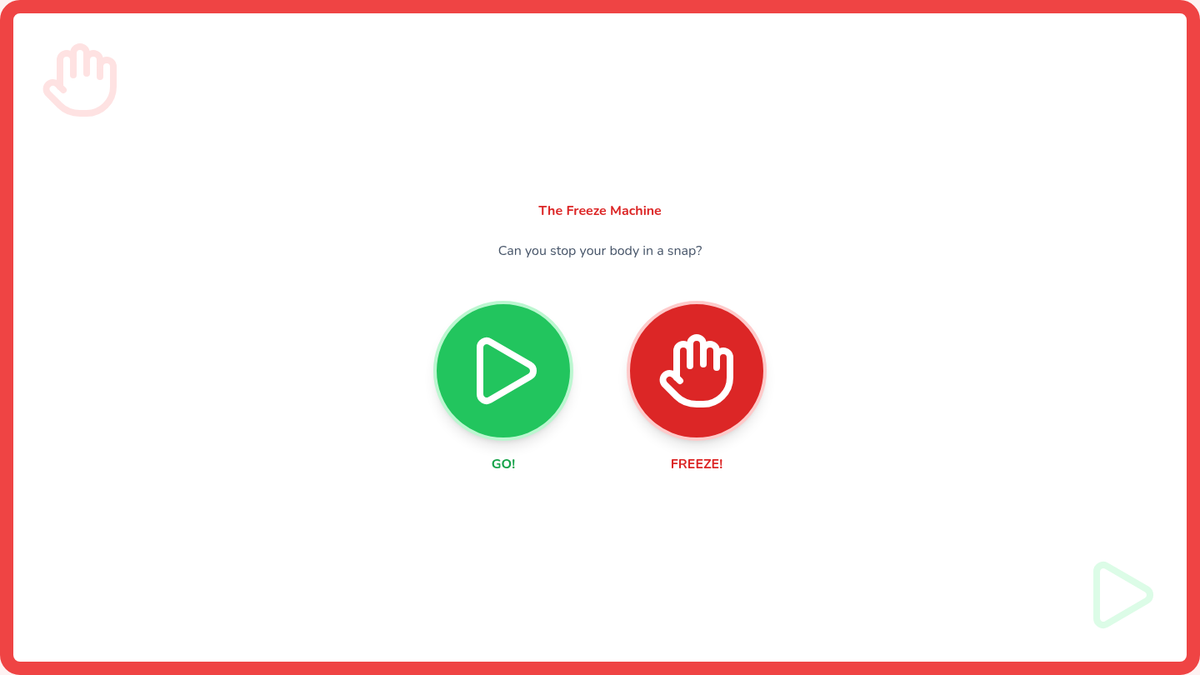
Visual aids for Lesson 4 to teach impulse control and reaction time using the classic Freeze Dance mechanic and robot imagery.
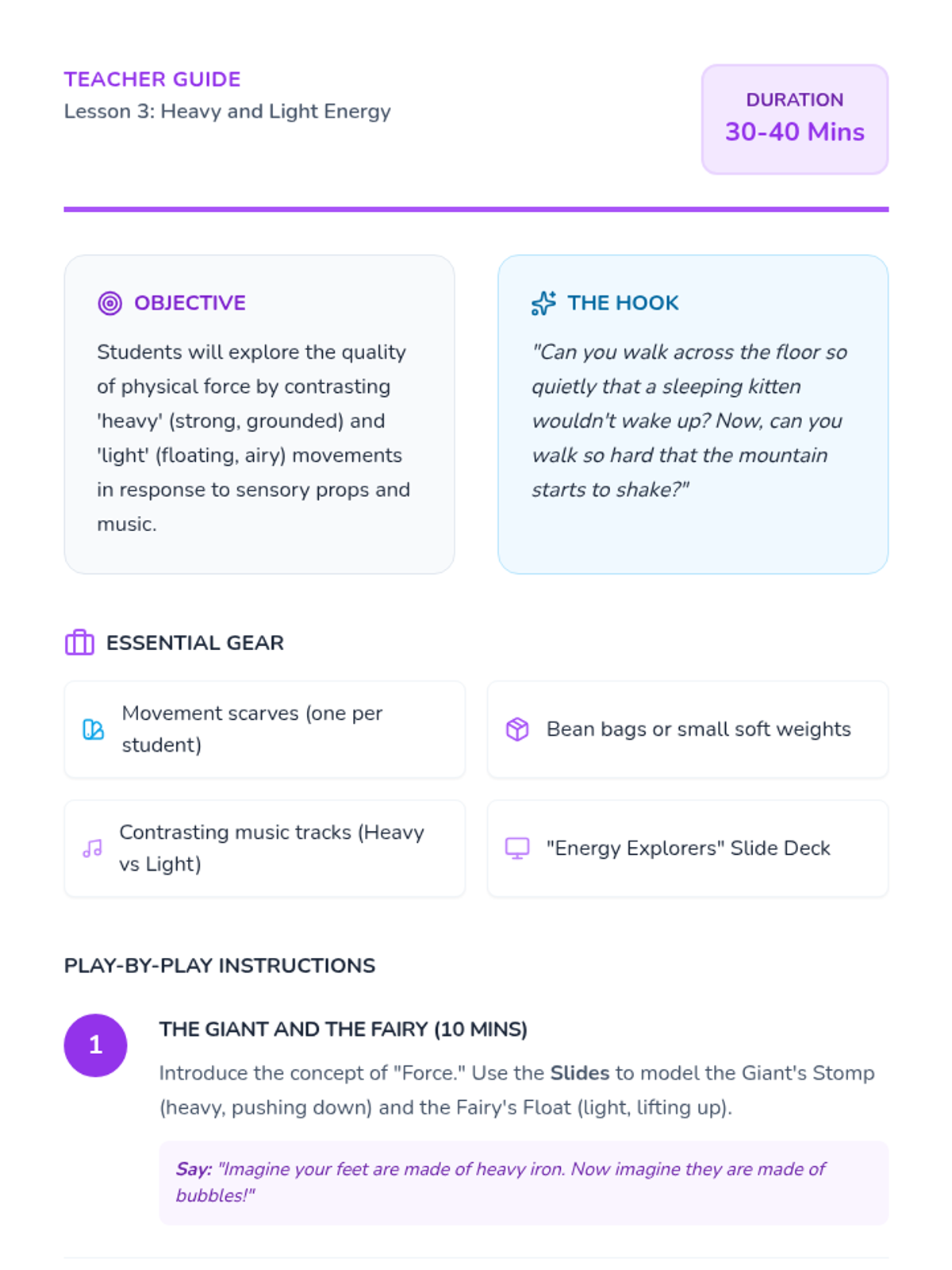
Teacher guidance for Lesson 3, providing structured activities using scarves and bean bags to explore heavy and light movement qualities.