Phonetic foundations through Pinyin and tones, character recognition, and essential grammar for all proficiency levels. Integrates cultural context with advanced reading, writing, and communicative strategies.
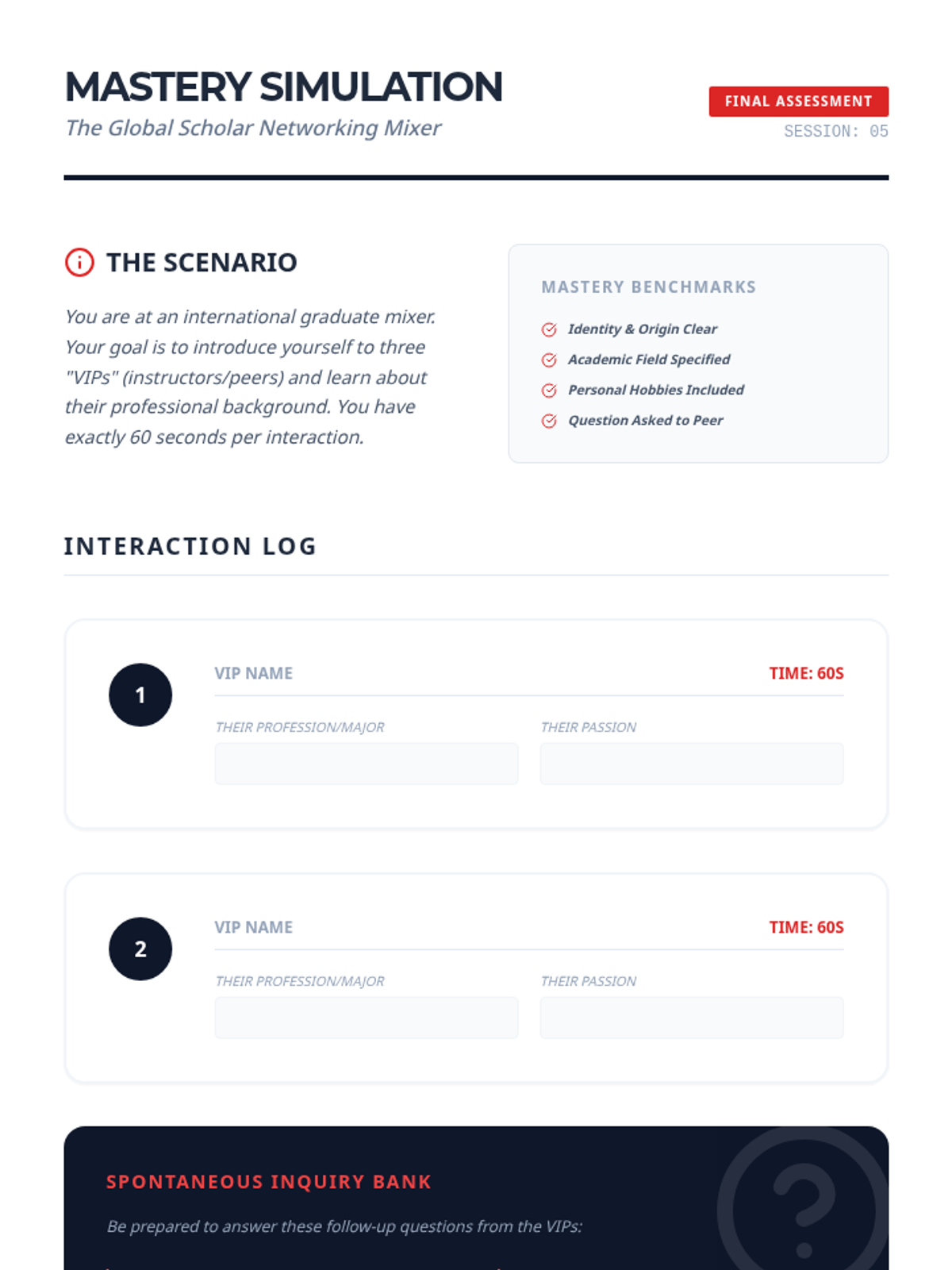
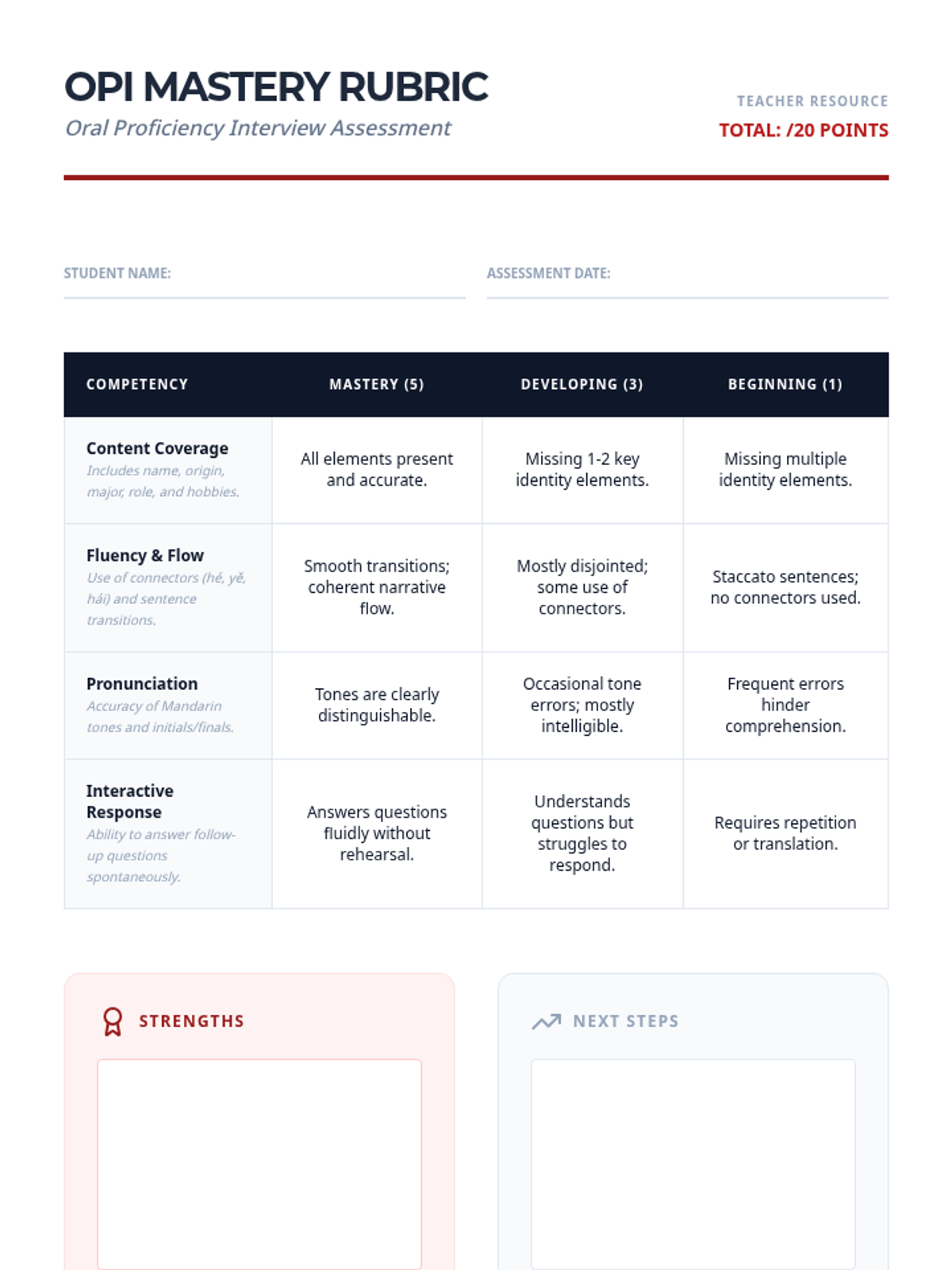
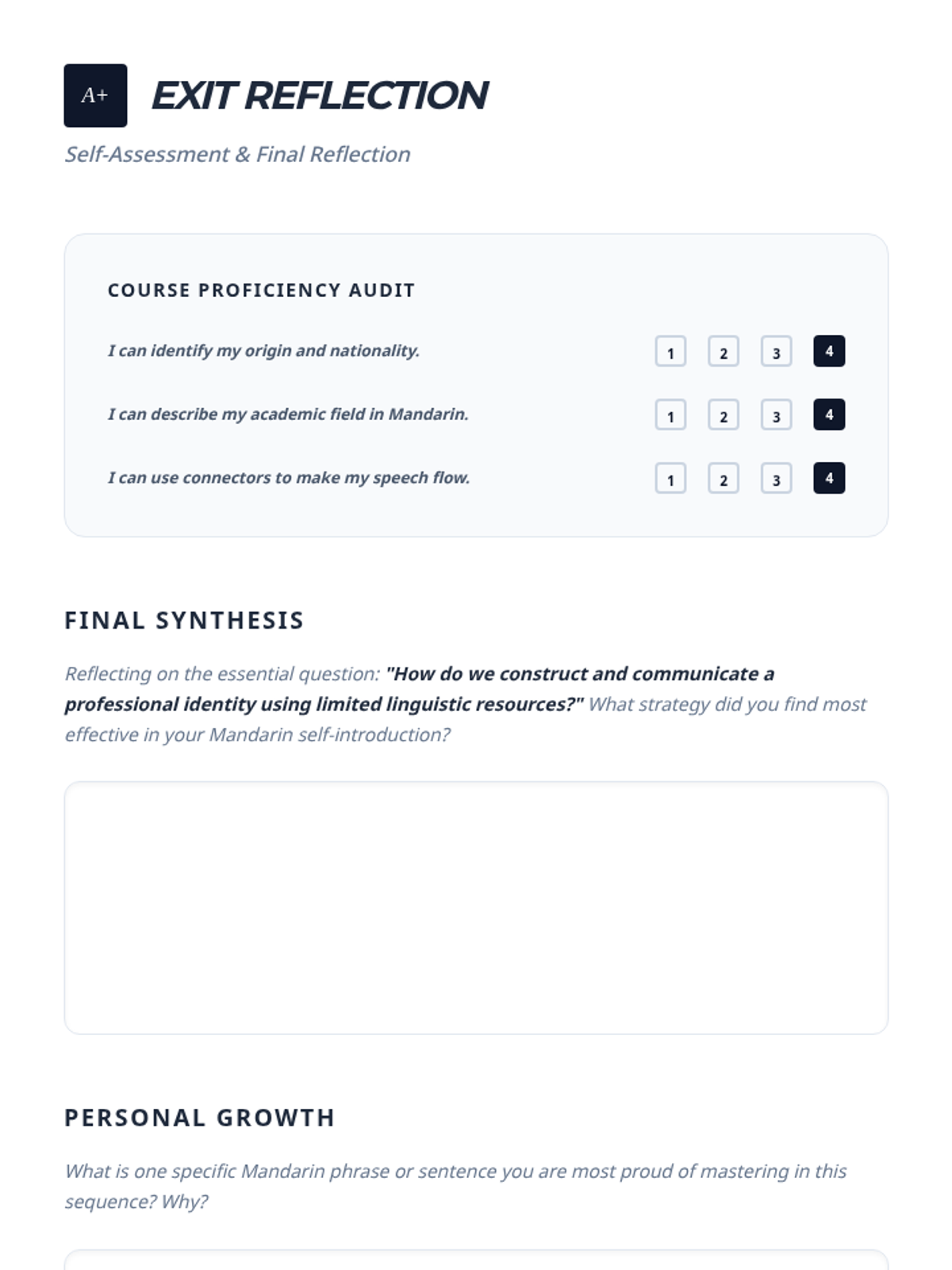
A mastery-based assessment where students perform their self-introductions in a simulated networking environment and respond to spontaneous questions.
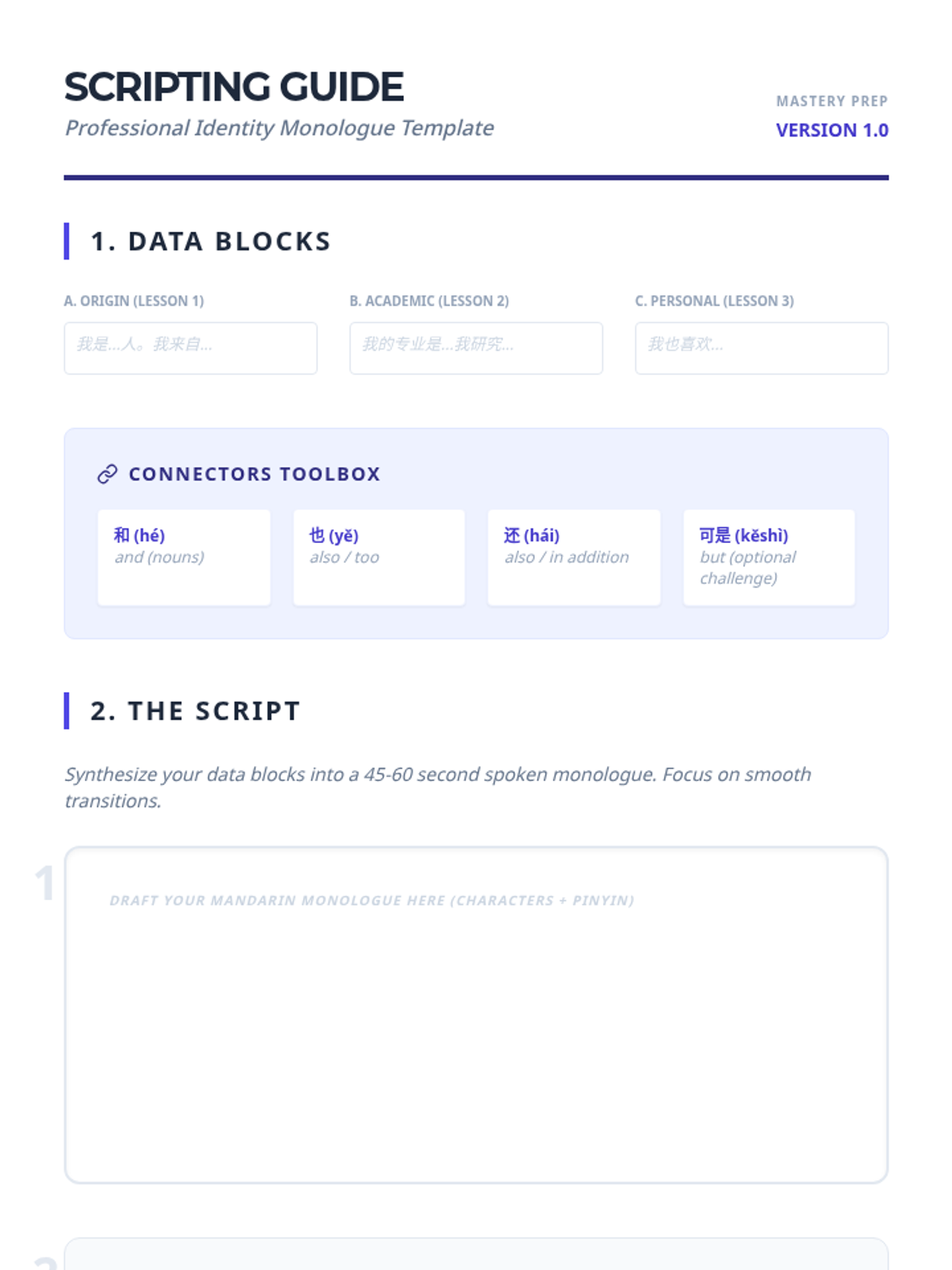
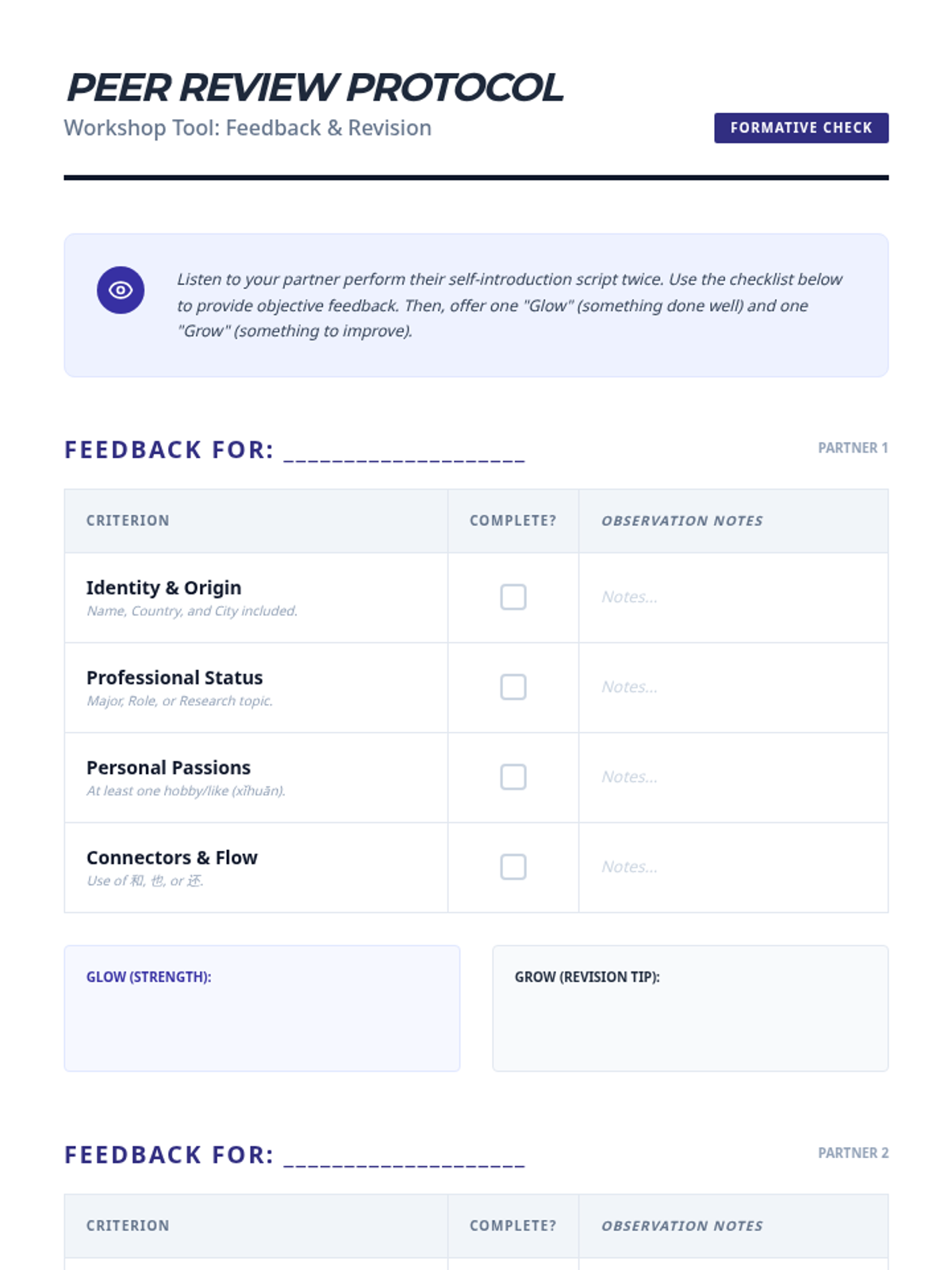
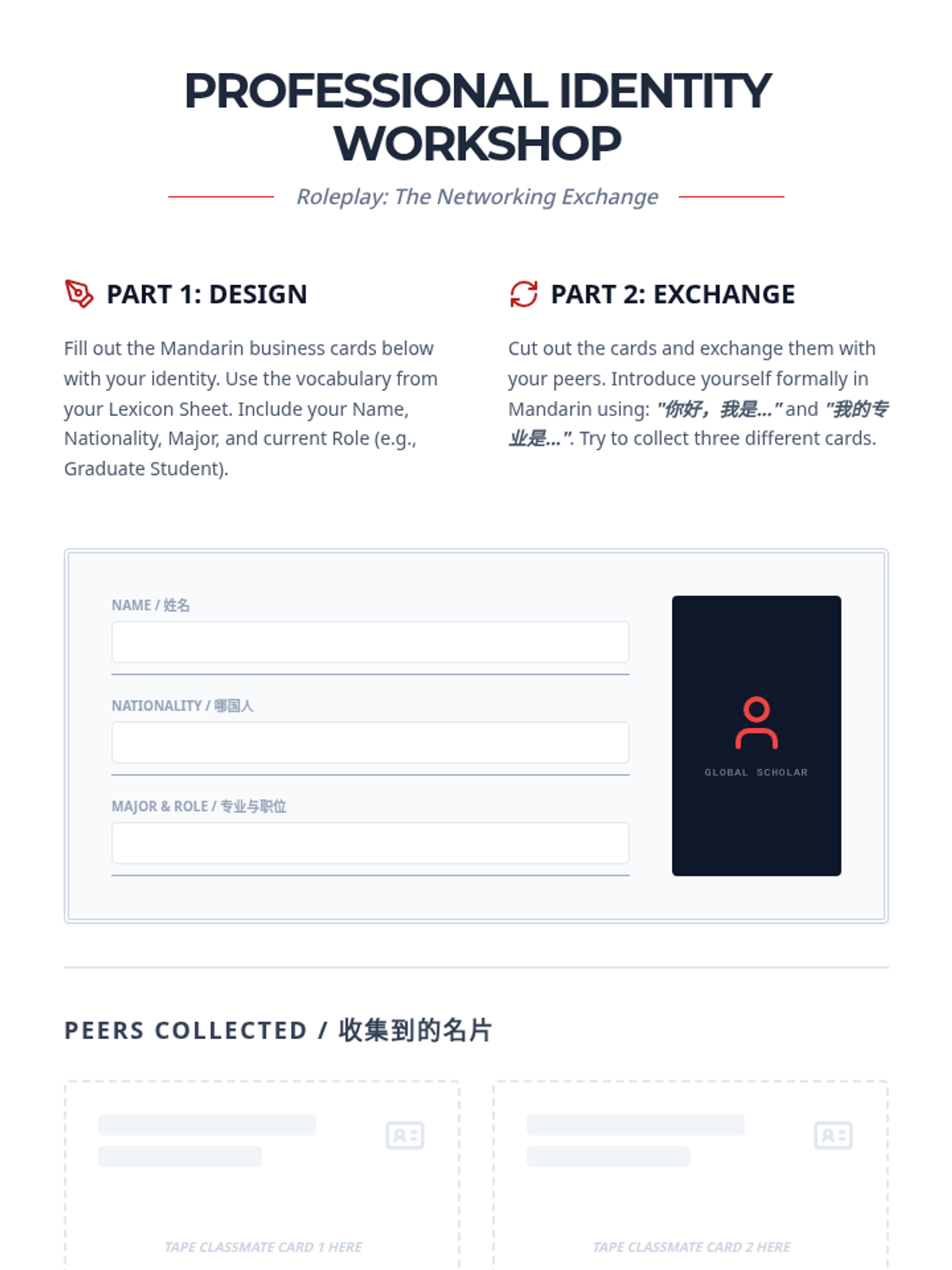
A synthesis workshop where students integrate geographic, professional, and personal information into a cohesive self-introduction script. Focuses on discourse markers and flow.
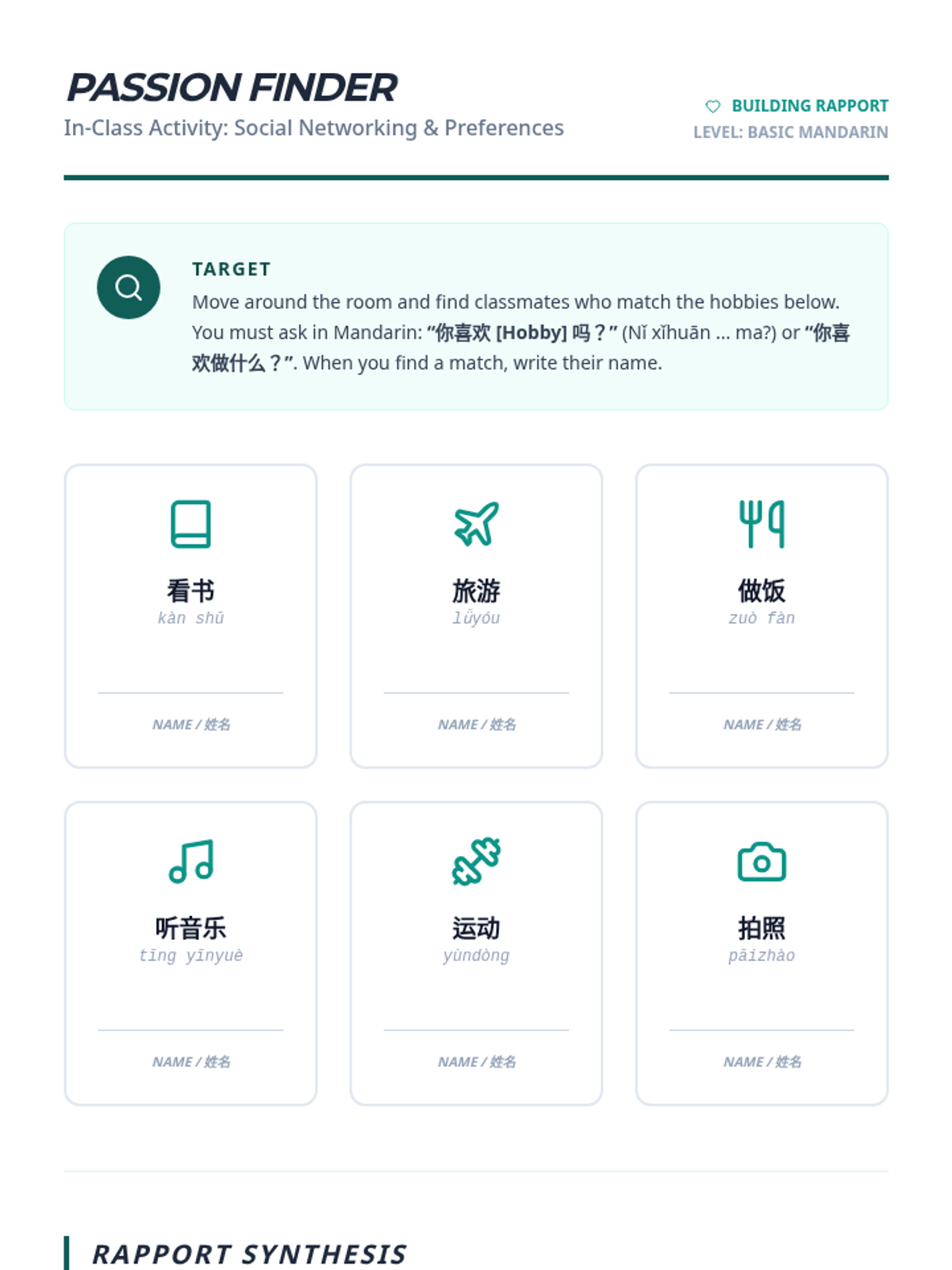
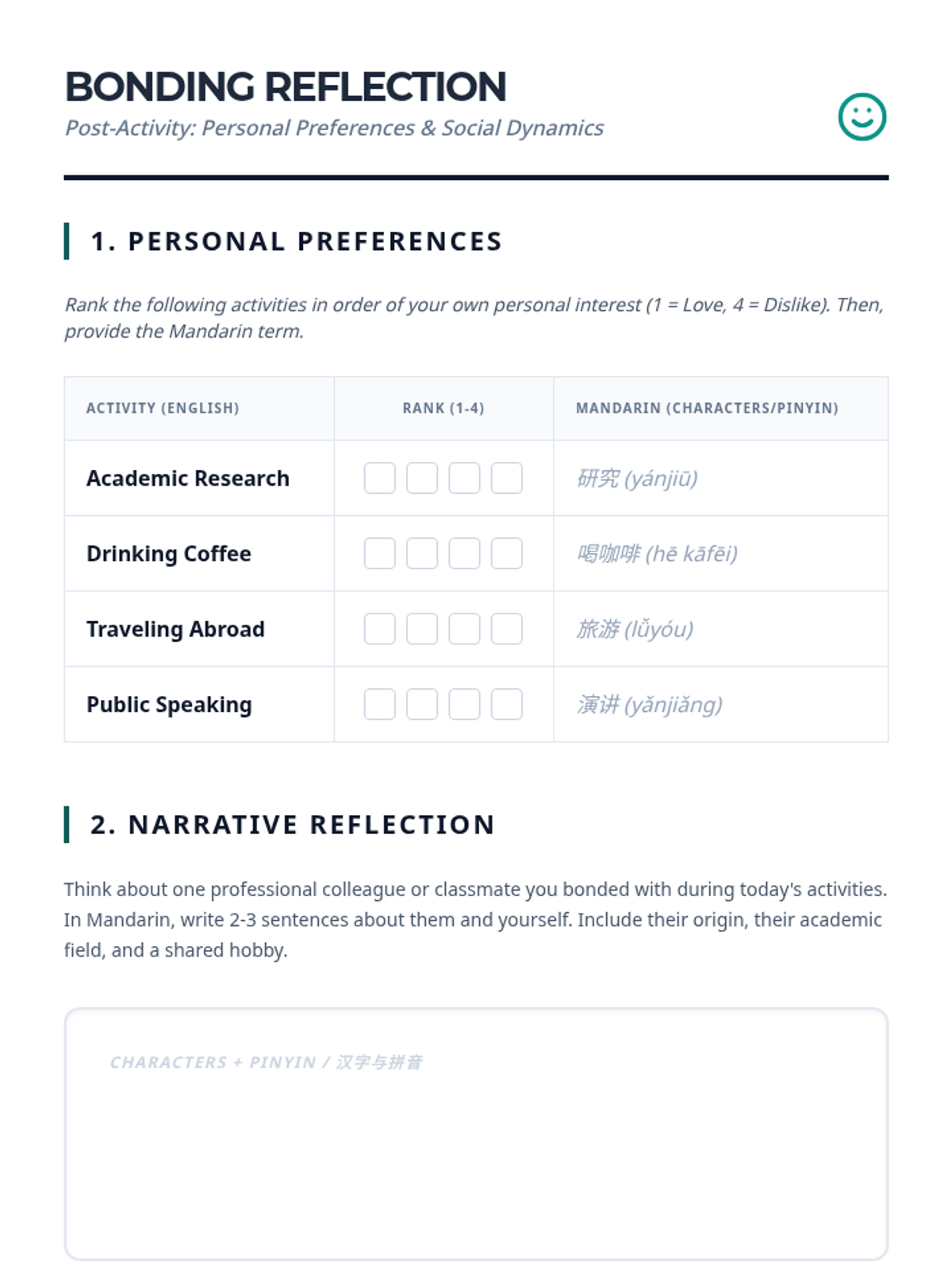
Introduces vocabulary for hobbies and personal preferences using 'xihuan'. Students practice informal social communication to build rapport.
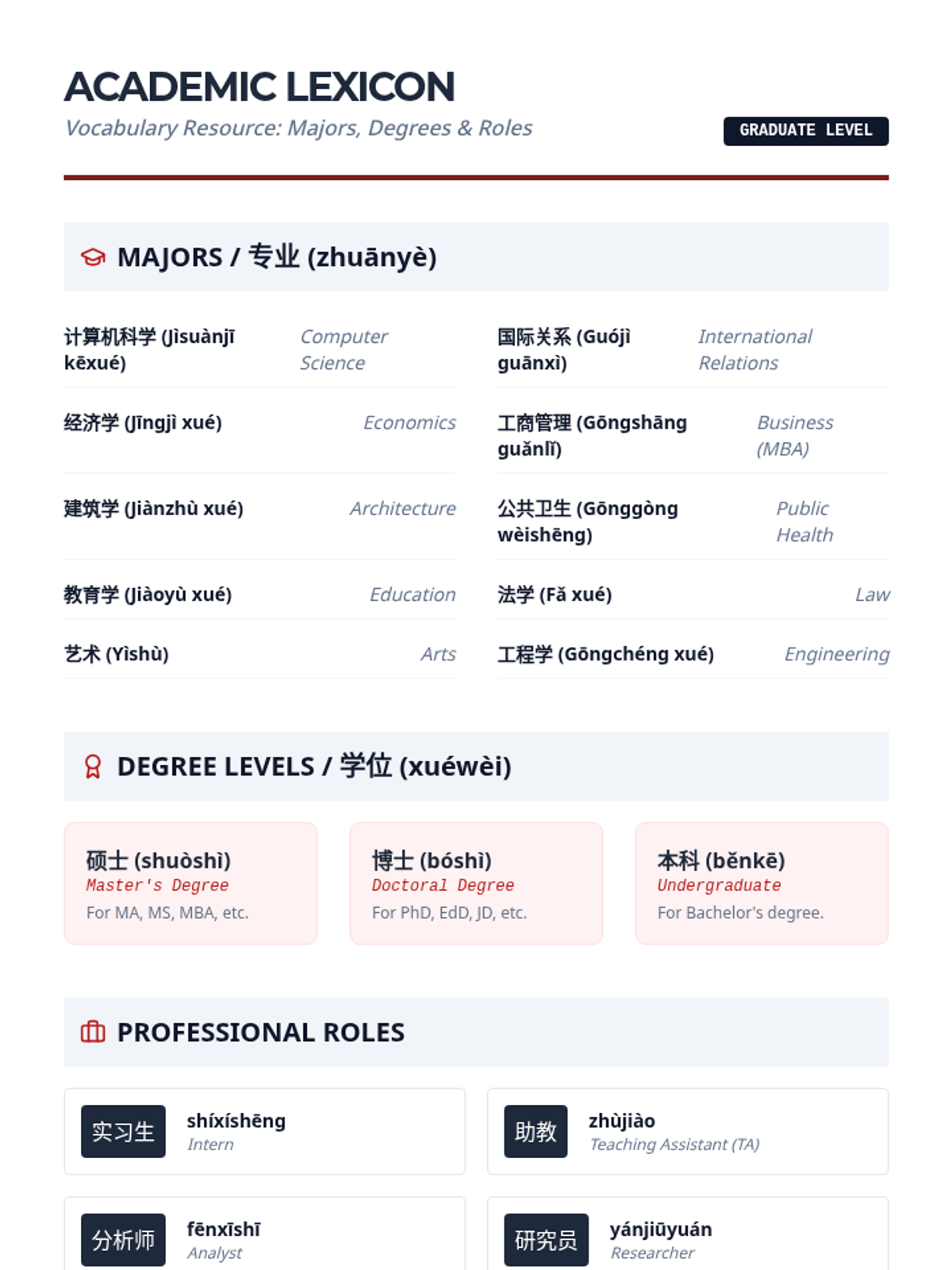
Focuses on academic and professional vocabulary relevant to graduate students. Students learn to discuss their majors, research interests, and professional roles.
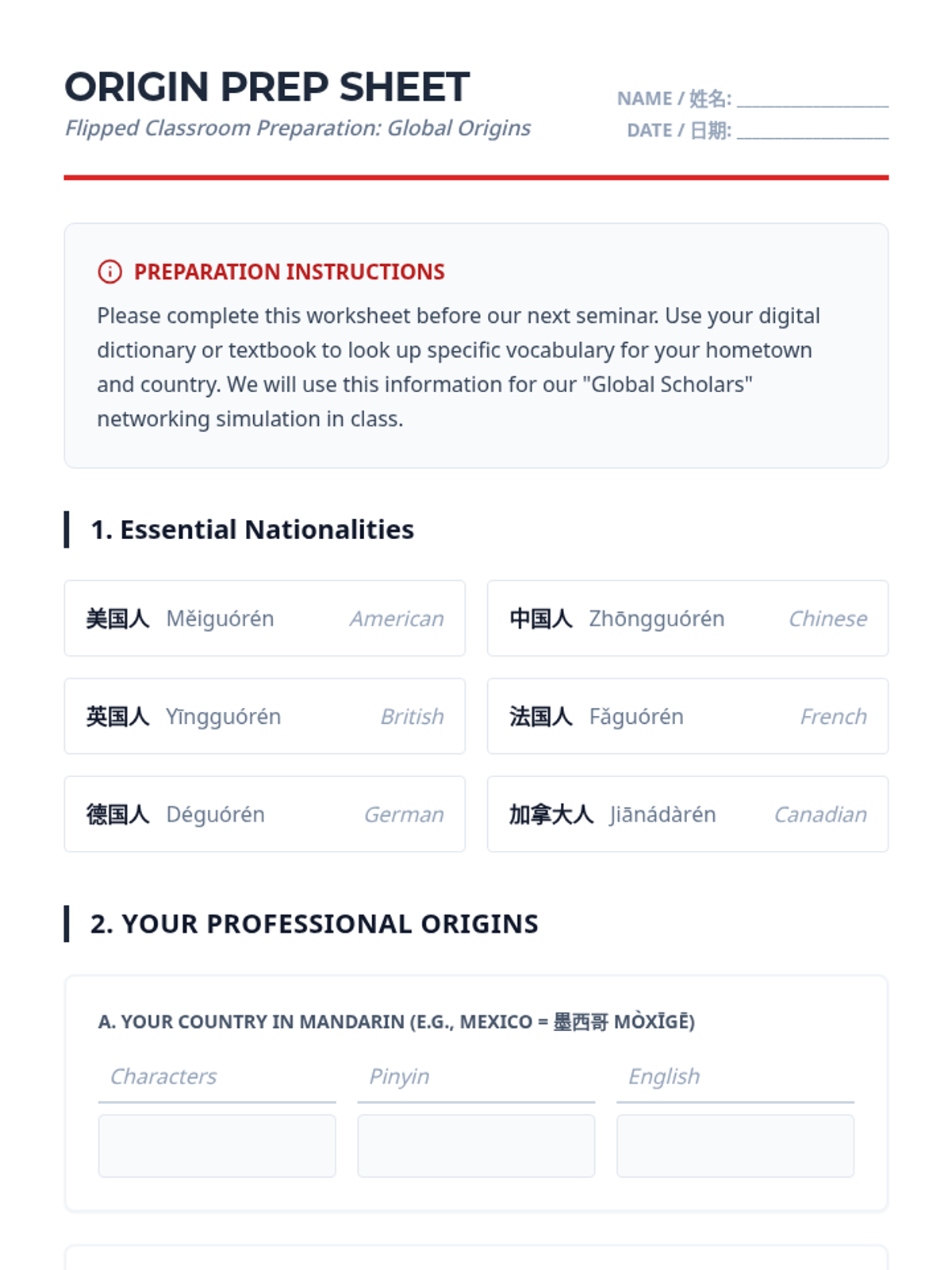
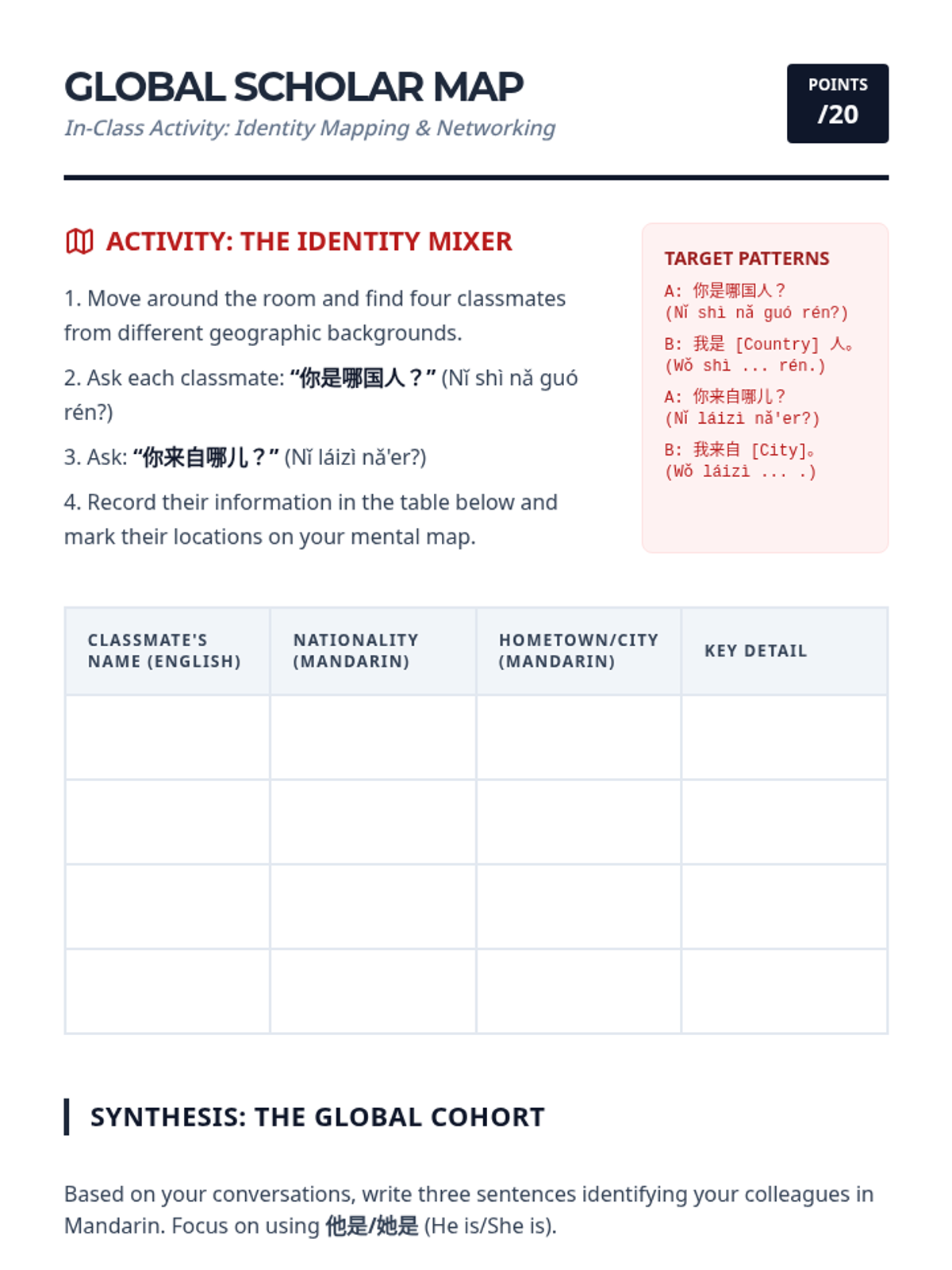
Students learn to identify their origins and nationalities using the 'Country + Person' (rén) construction and the verb 'shi' (to be). Includes geographic vocabulary and identification sentences.
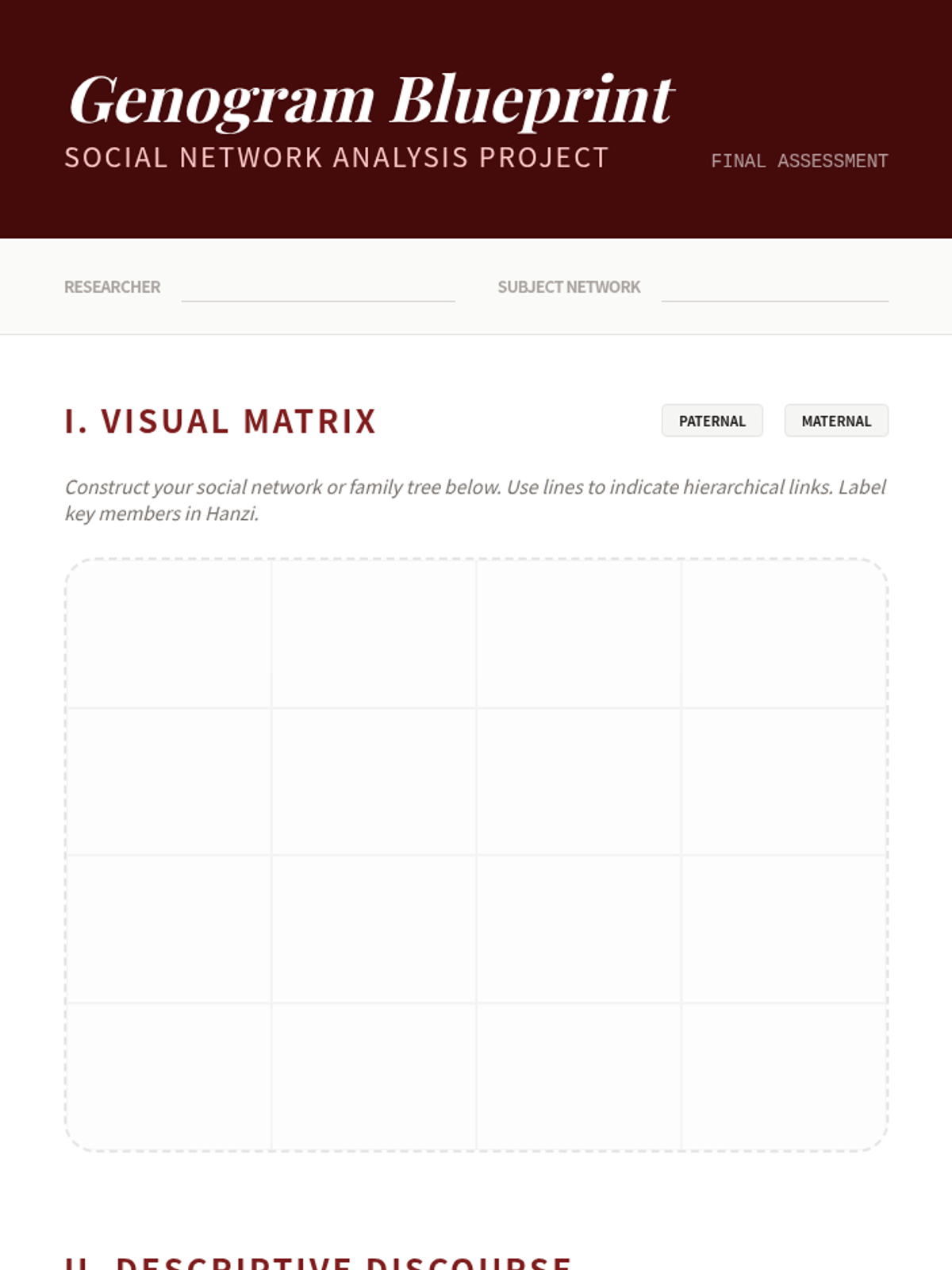
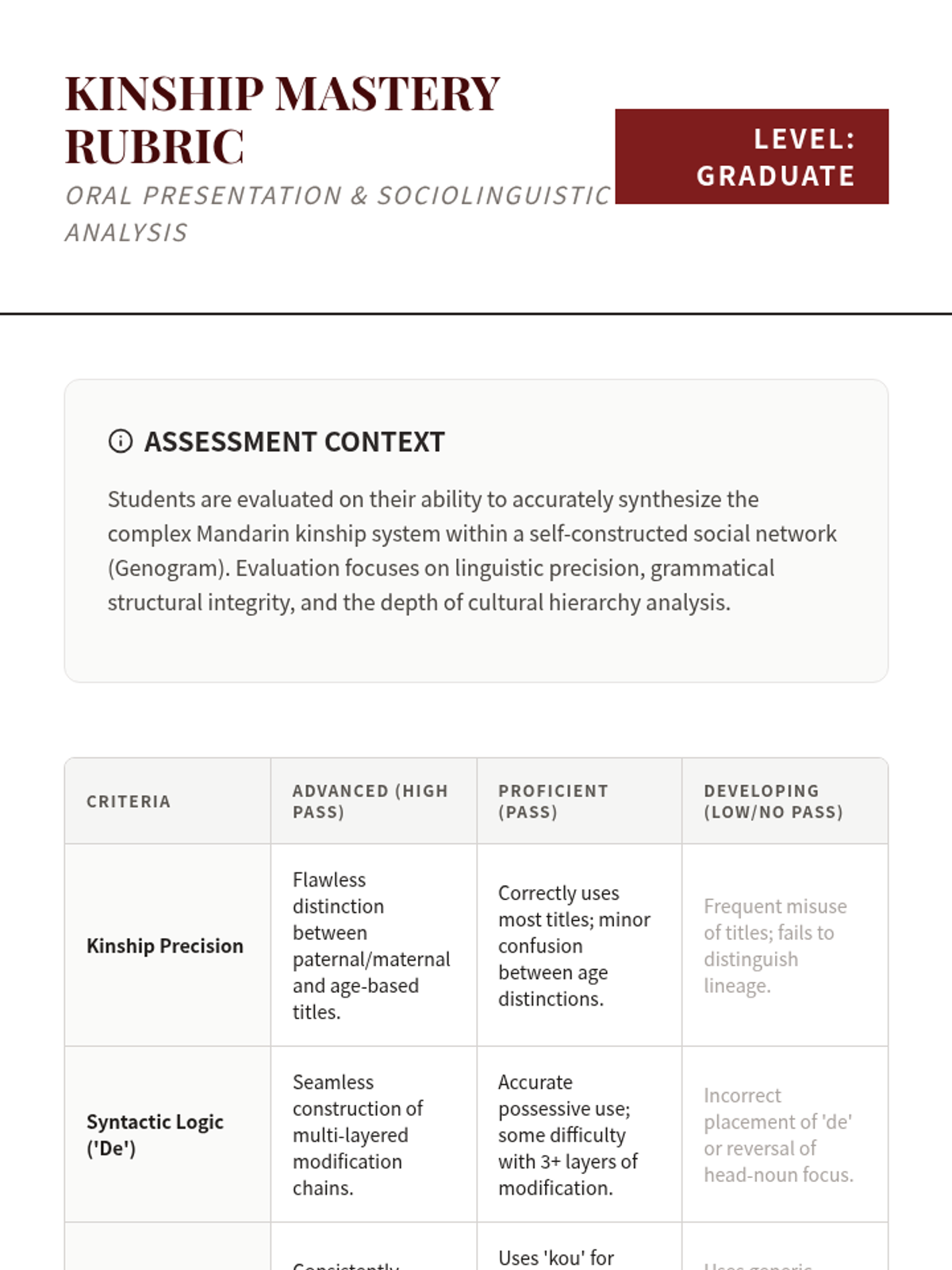
A project-based finale where students present social networks or genograms using the full range of kinship and grammatical structures learned.
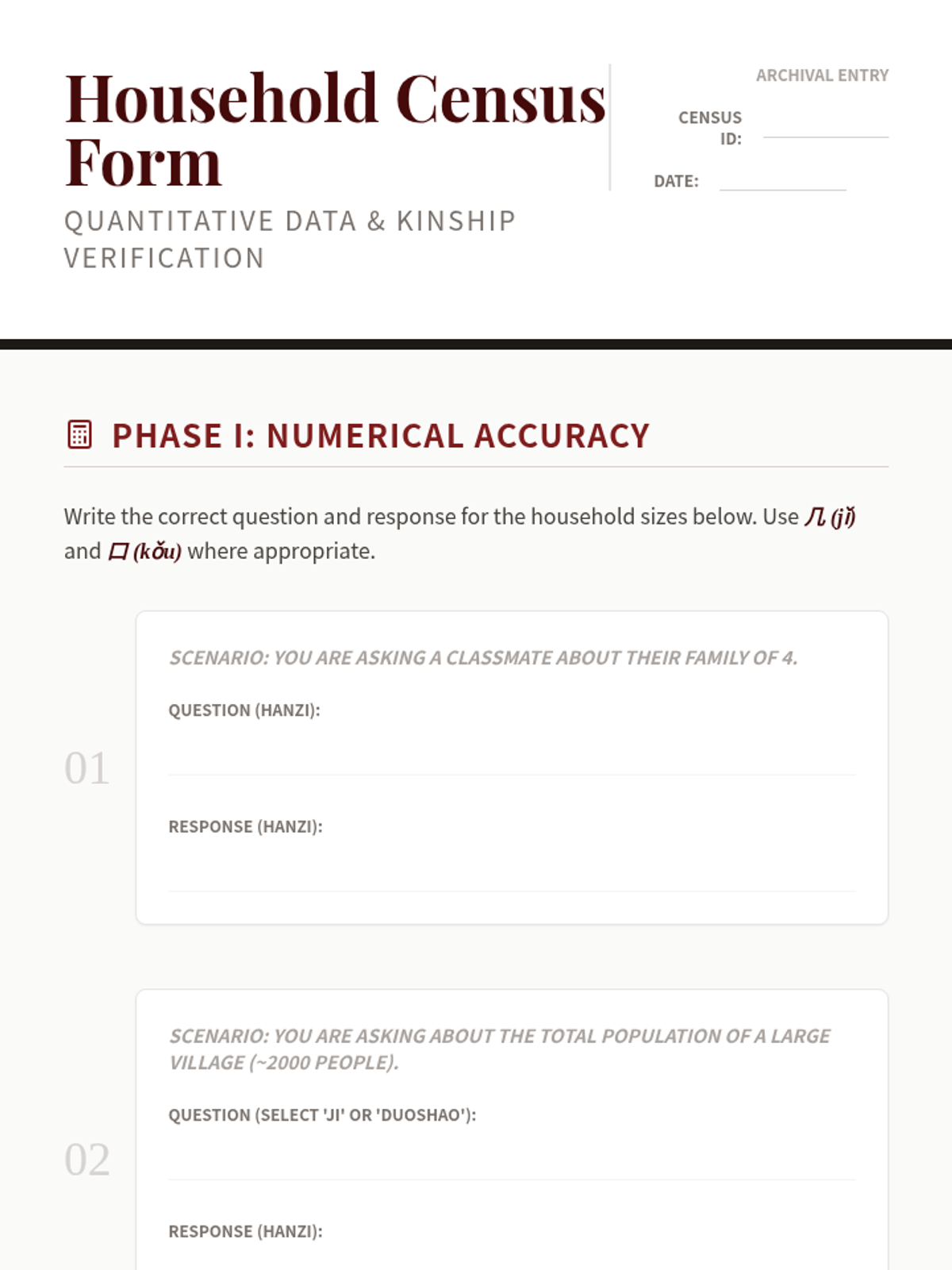
Covers quantifying people using the measure word 'kou' and distinguishing between 'ji' and 'duoshao' in questions.
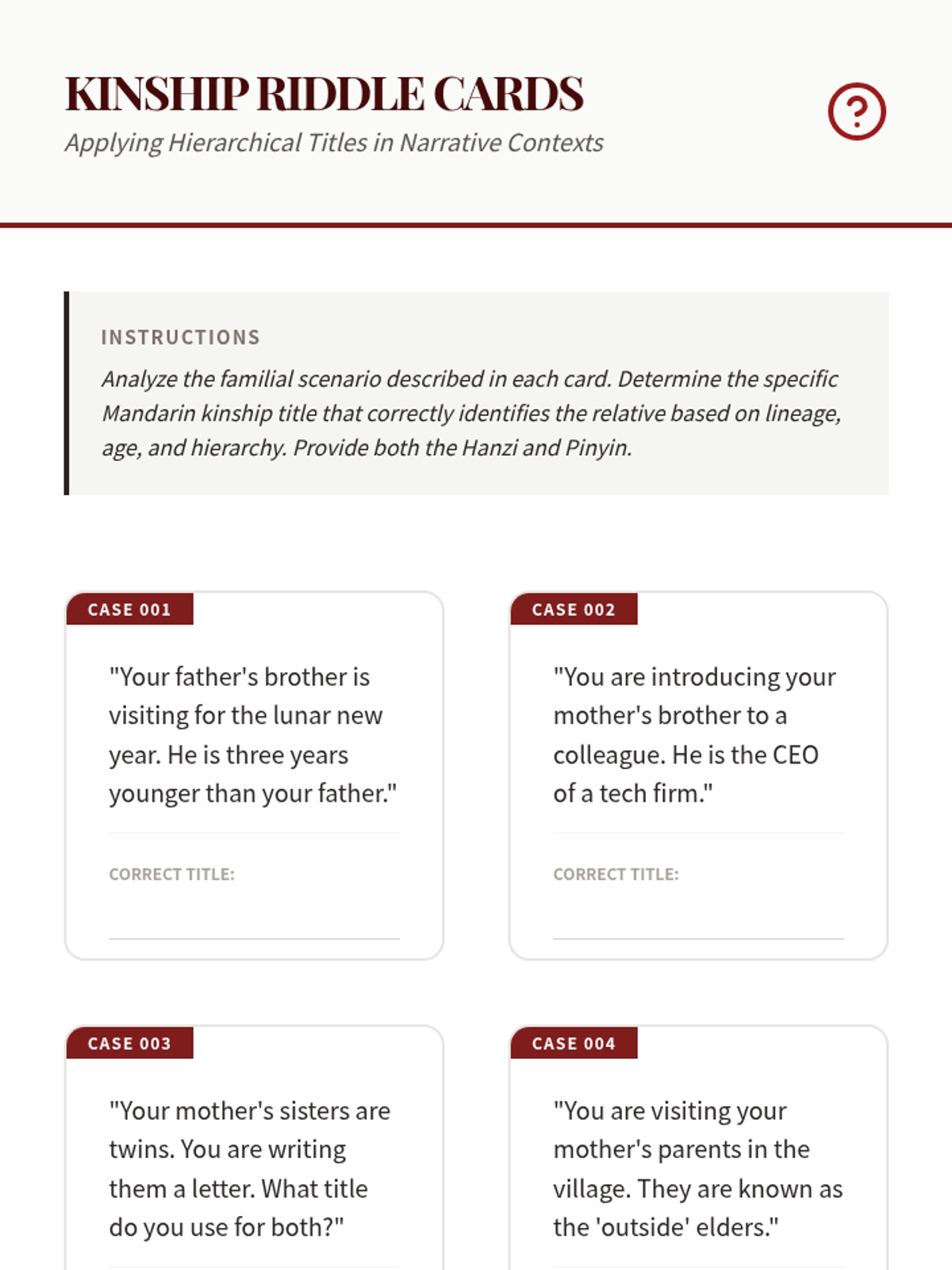
Explores the granular system of extended family titles, distinguishing between maternal/paternal and age-based hierarchies.
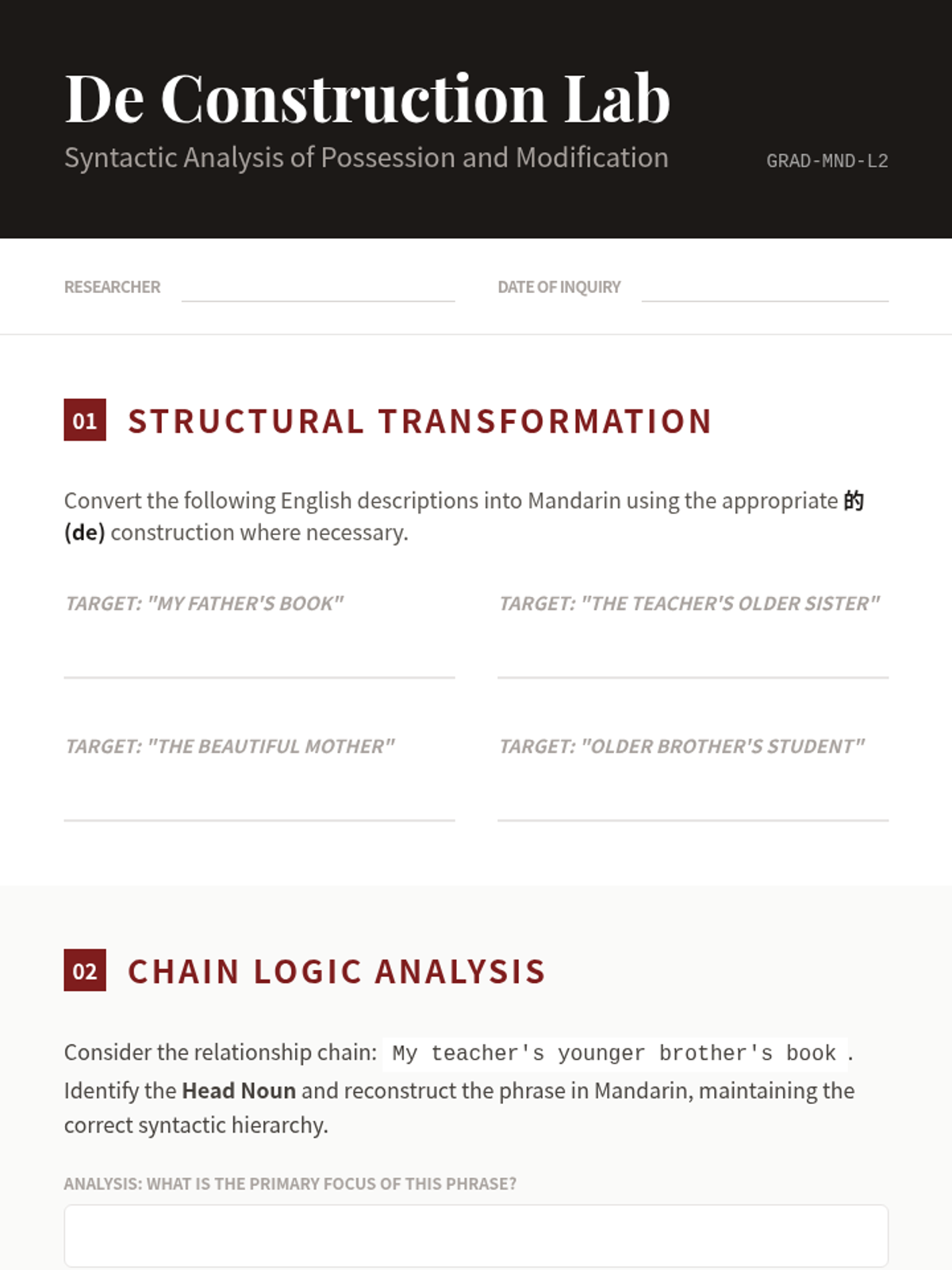
A focused grammar exploration of the possessive particle 'de', enabling students to describe complex relationships and attributes.
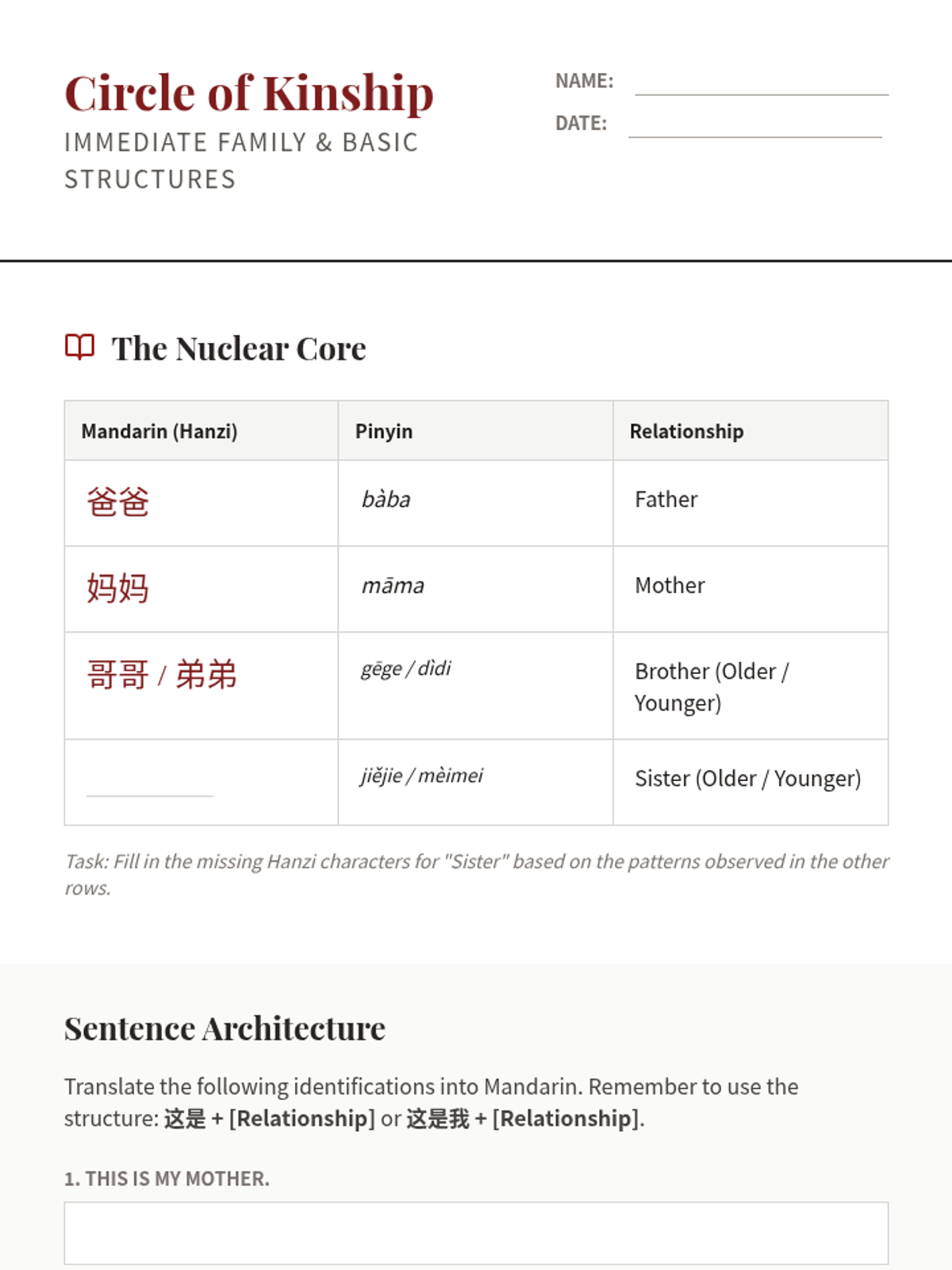
Introduces nuclear family vocabulary and basic 'This is my...' sentence structures, focusing on the structural patterns of Mandarin kinship terms.
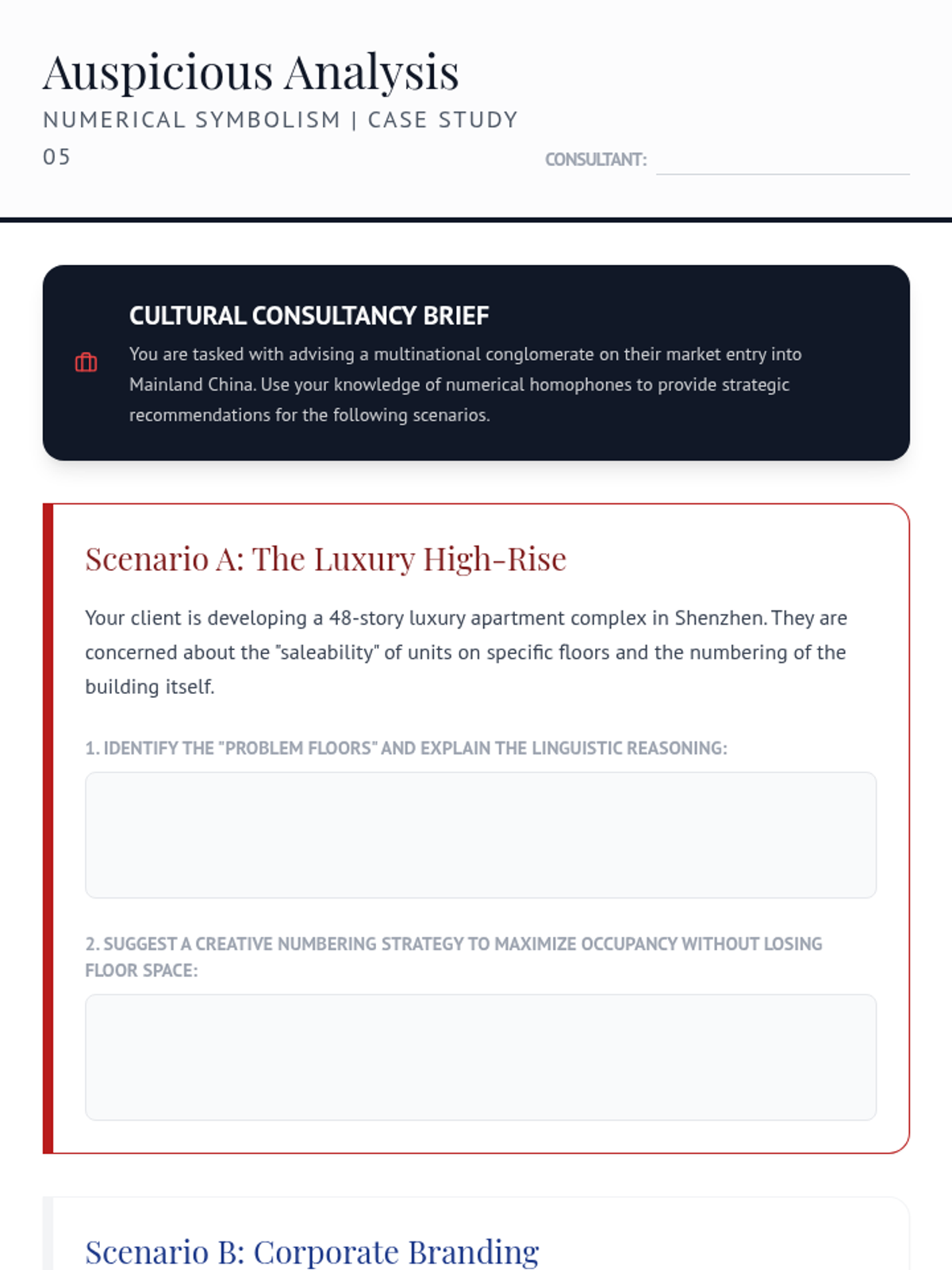
Examines the profound impact of lucky and unlucky numbers on business, architecture, and social behavior.
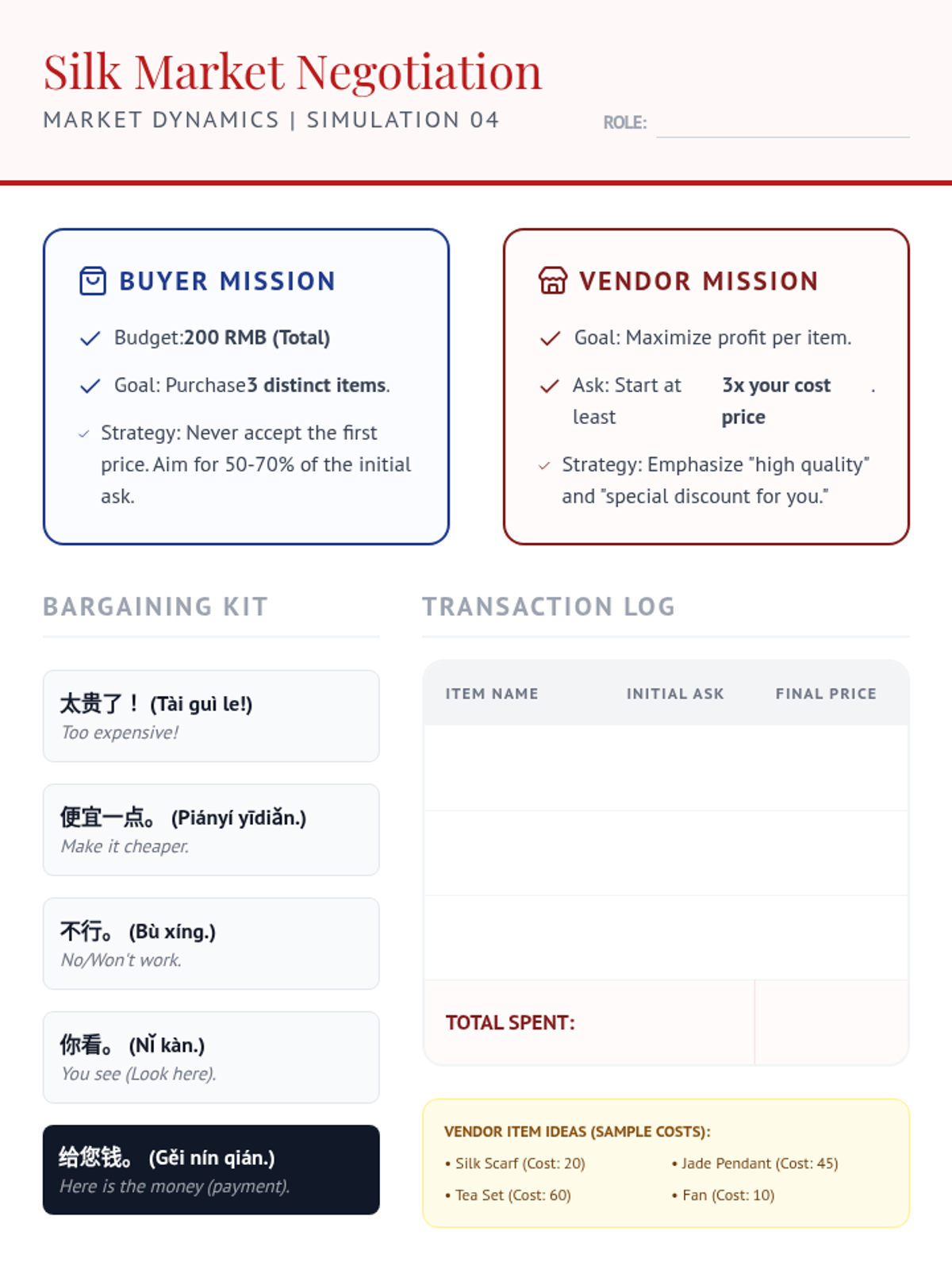
Introduces Renminbi currency, pricing structures, and the social art of market bargaining.
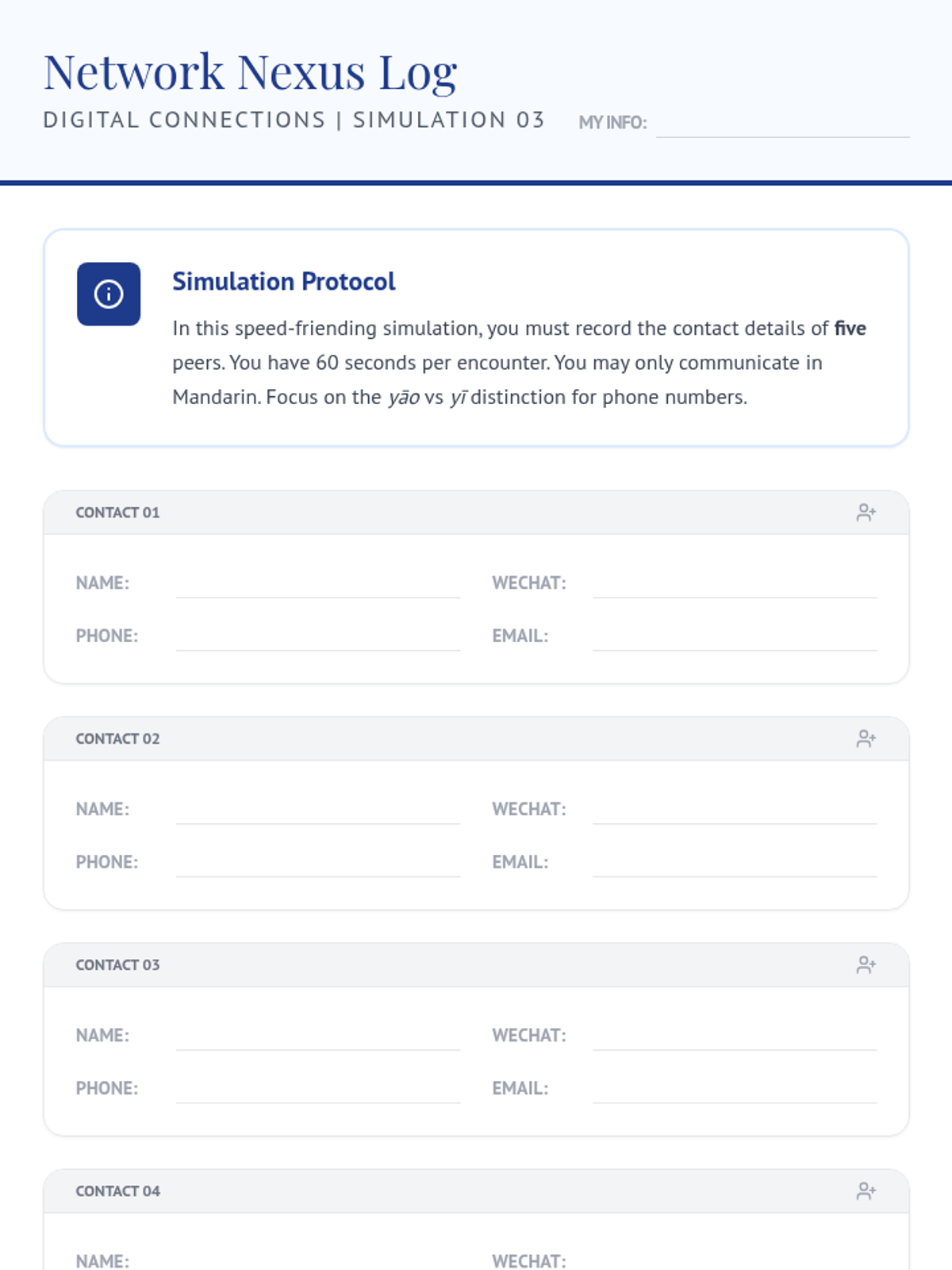
Practices the exchange of modern contact information, including phone numbers and digital IDs.
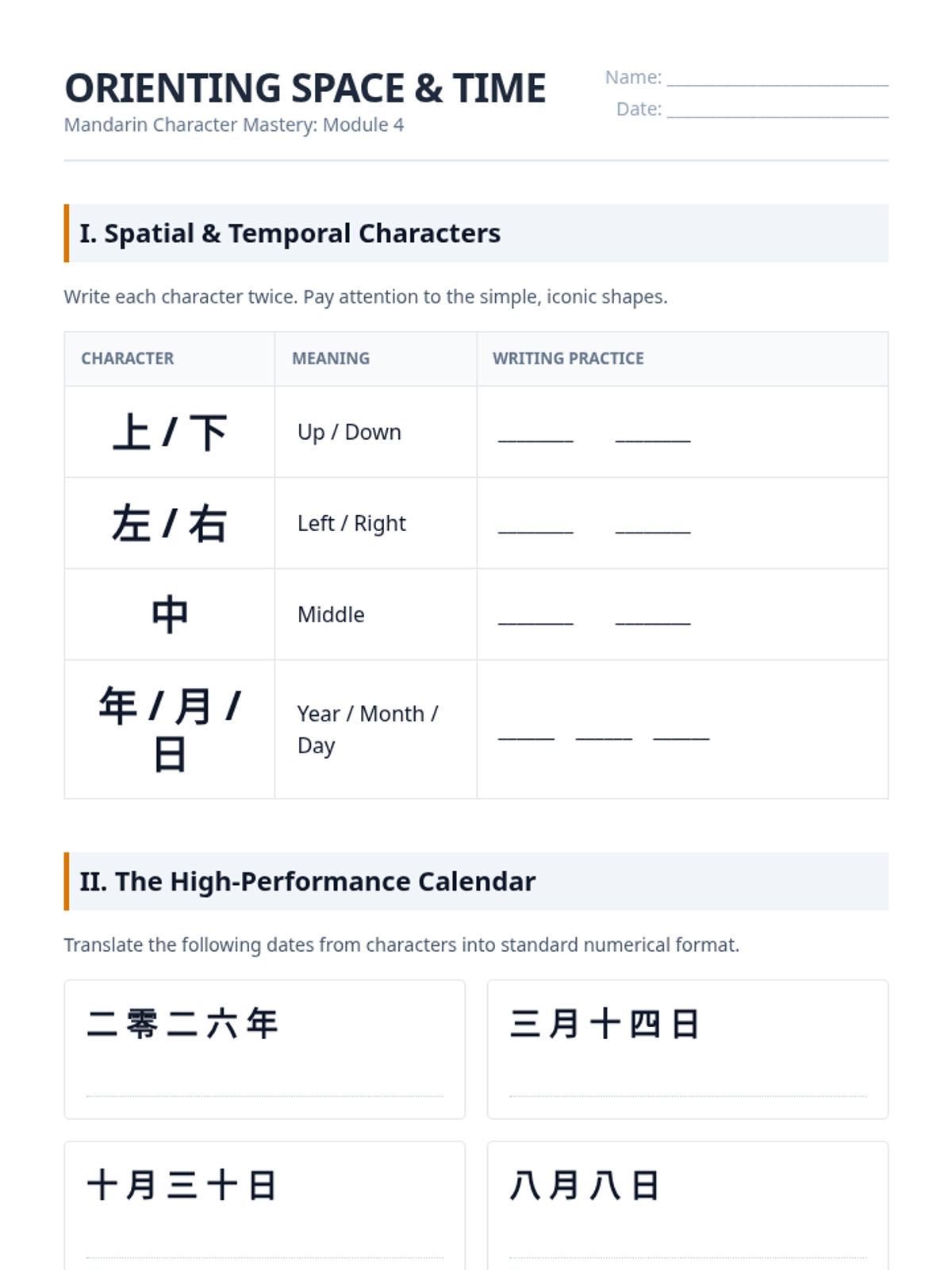
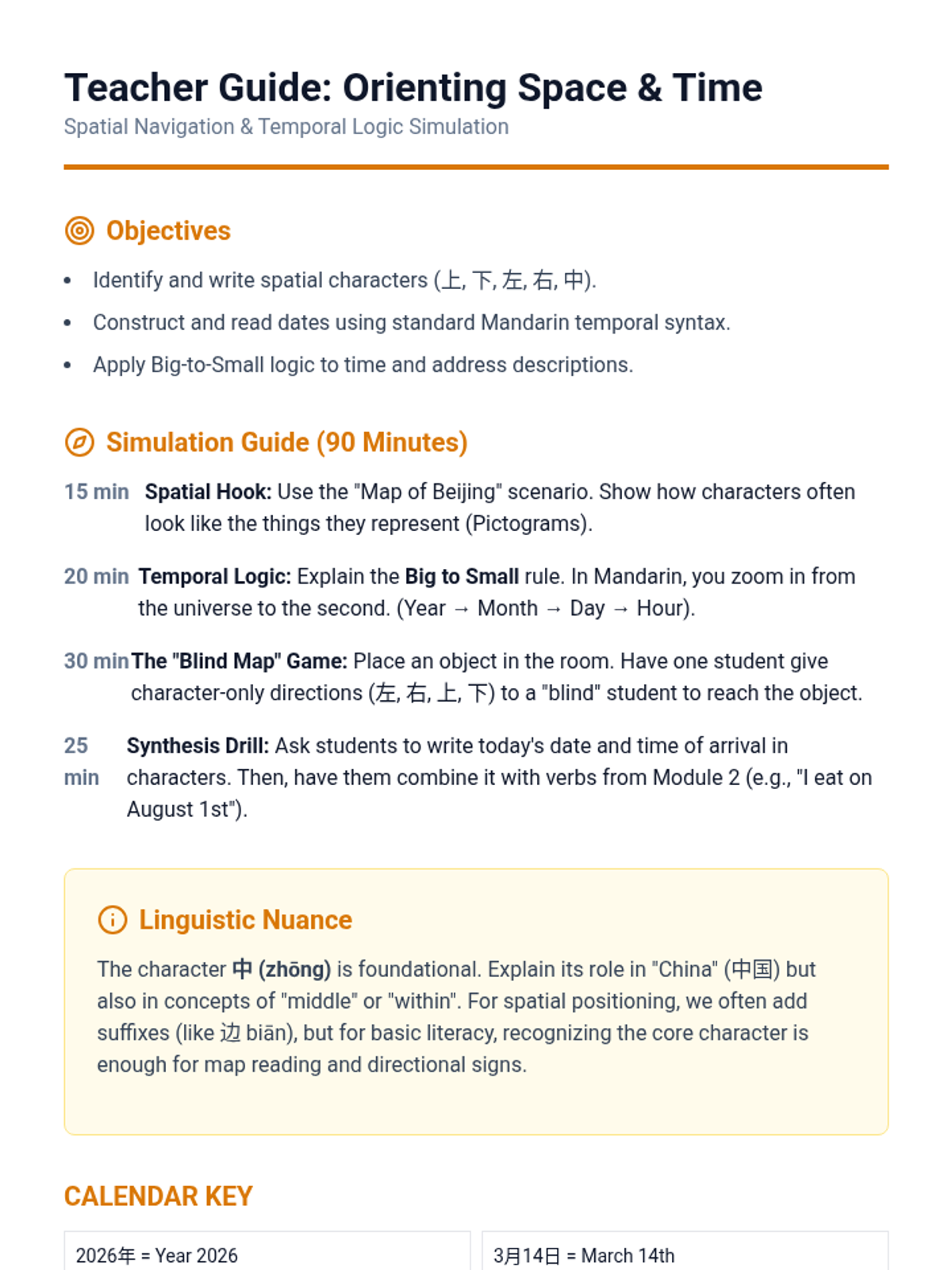
Explores the macro-to-micro logic of Chinese temporal syntax, from years down to minutes.
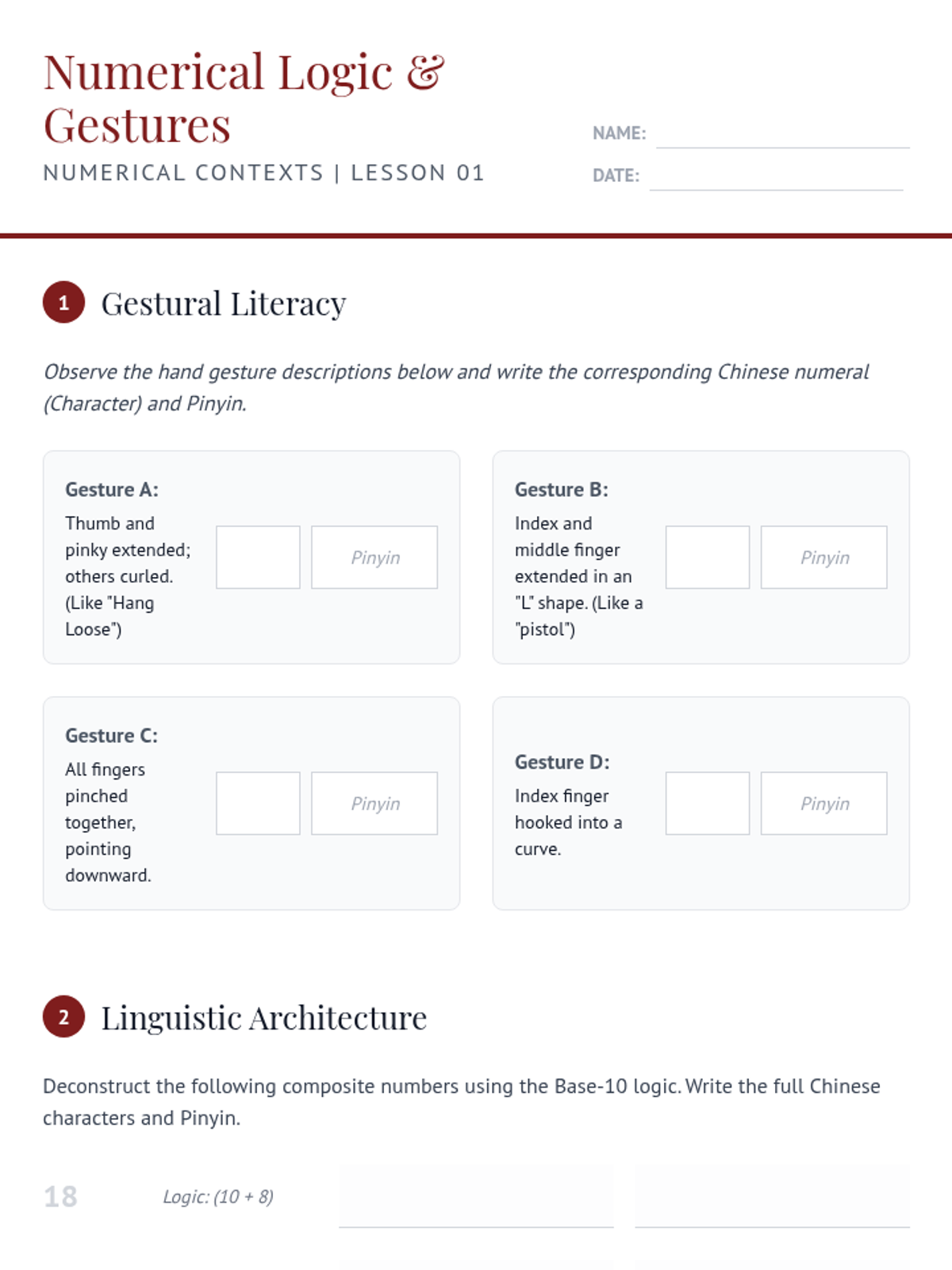
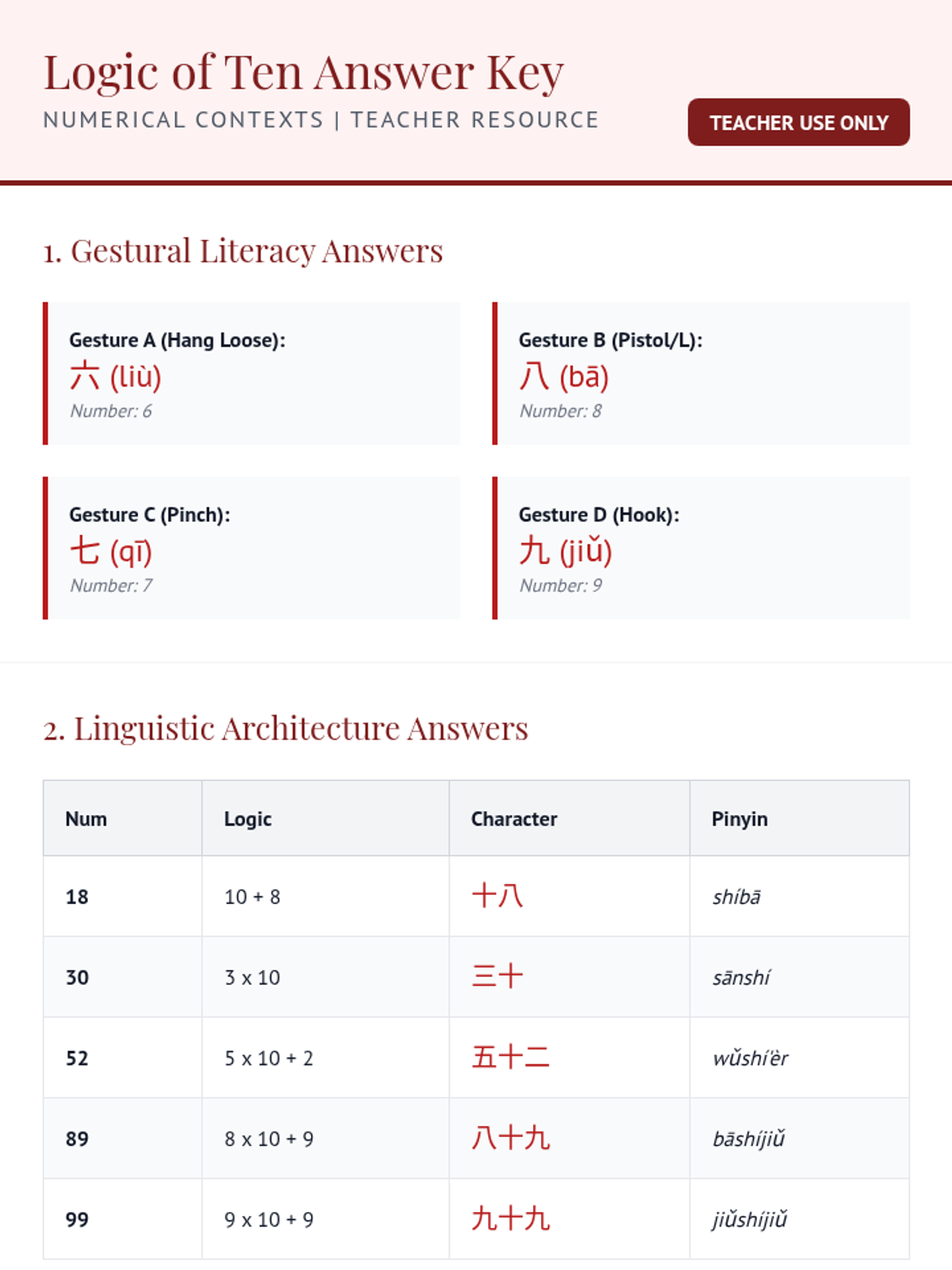
Focuses on the base-10 logical structure of Mandarin numbers and the unique cultural hand gestures for 1-10.
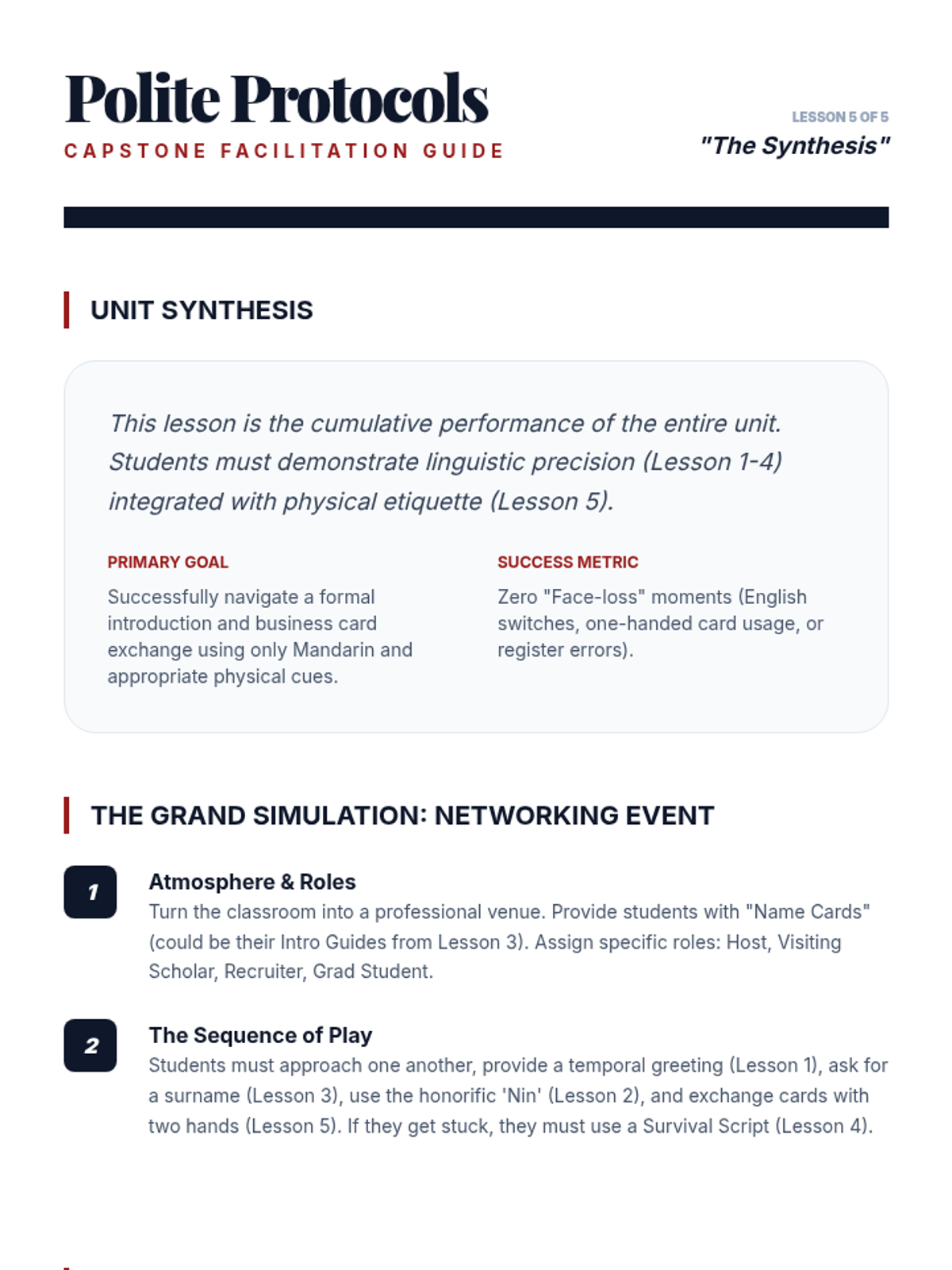
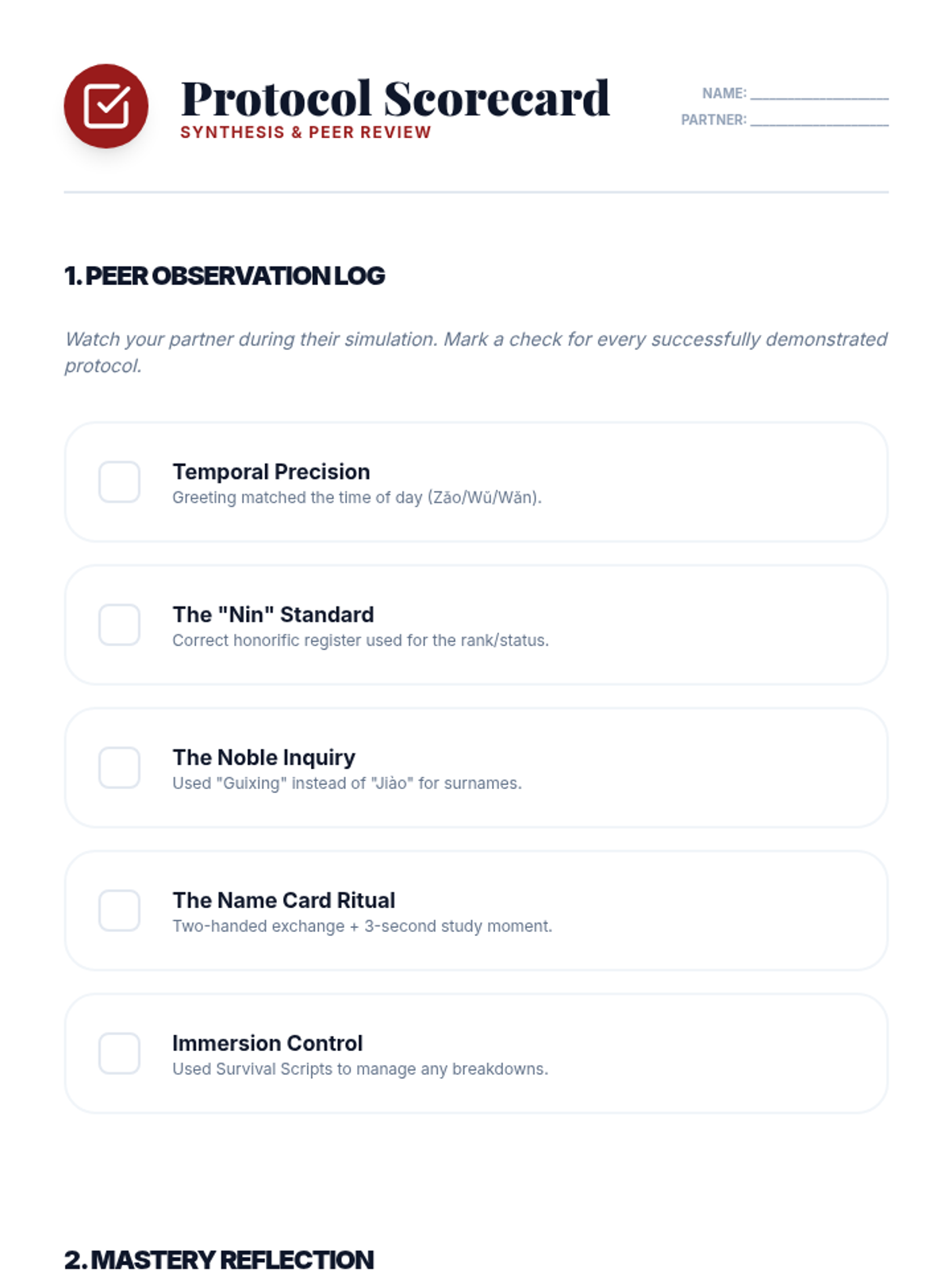
Synthesize verbal communication with physical etiquette, including business card exchanges and appropriate body language for professional settings.
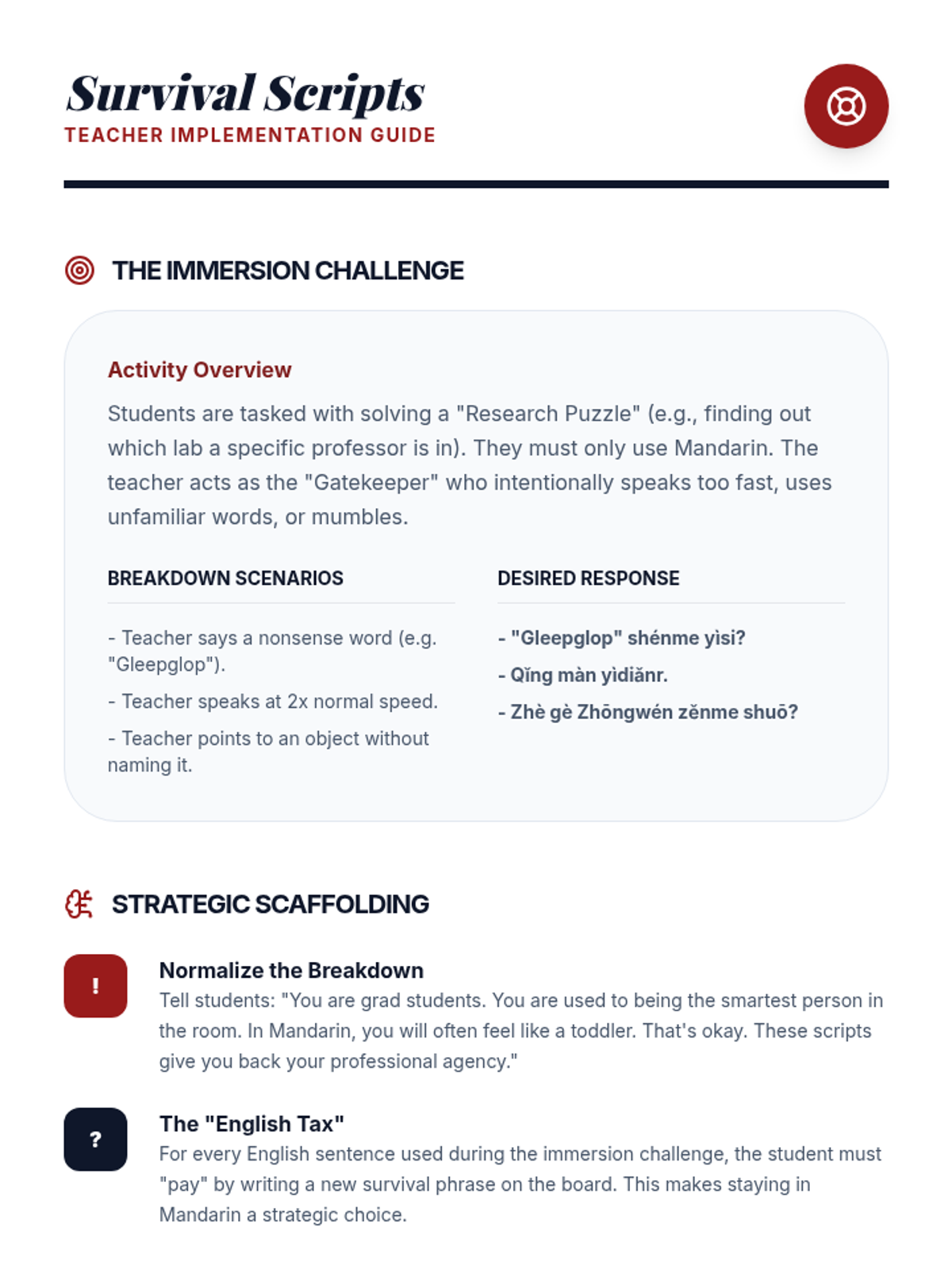
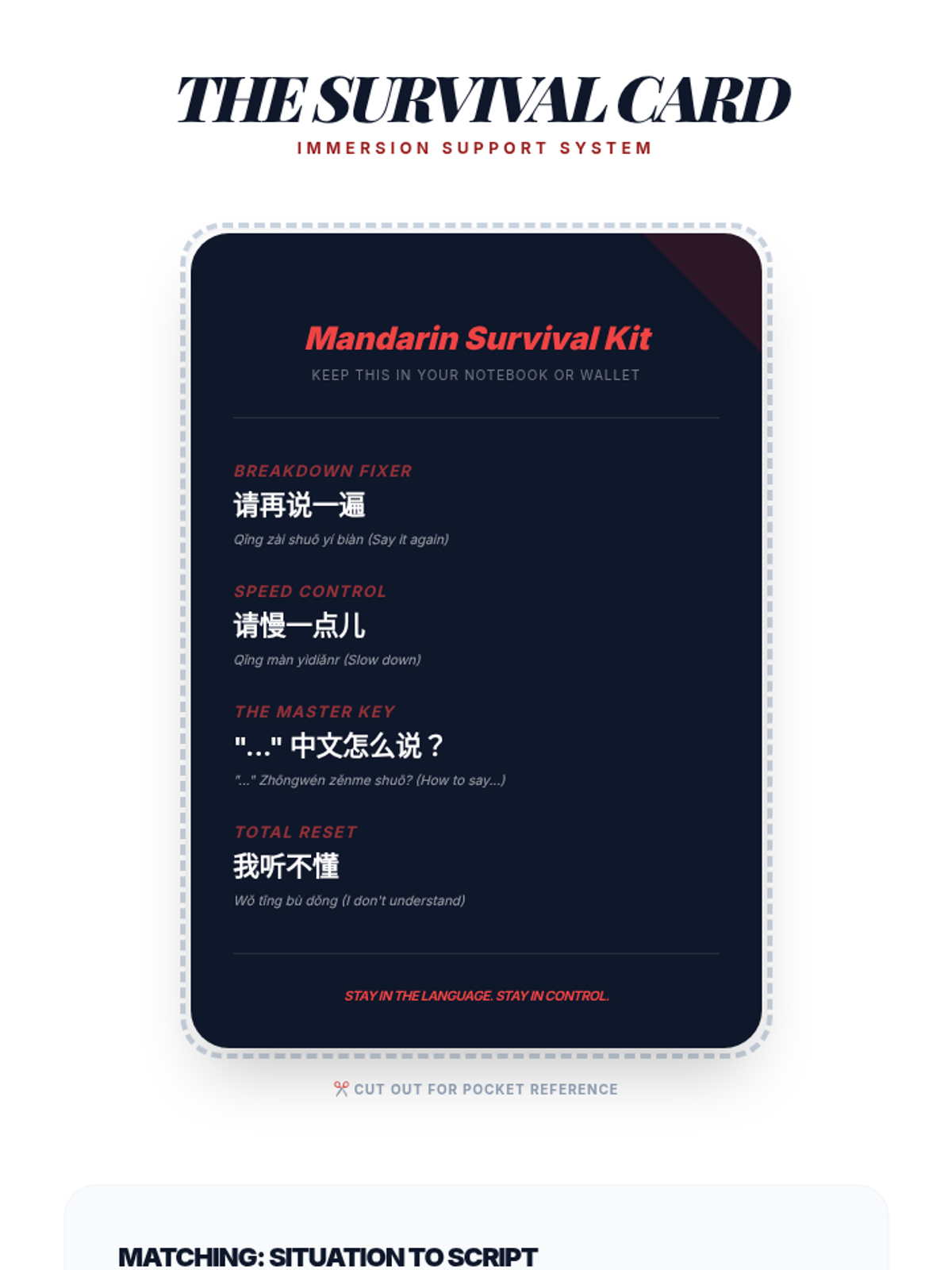
Equip students with essential phrases for navigating the language learning environment and managing communication breakdowns.
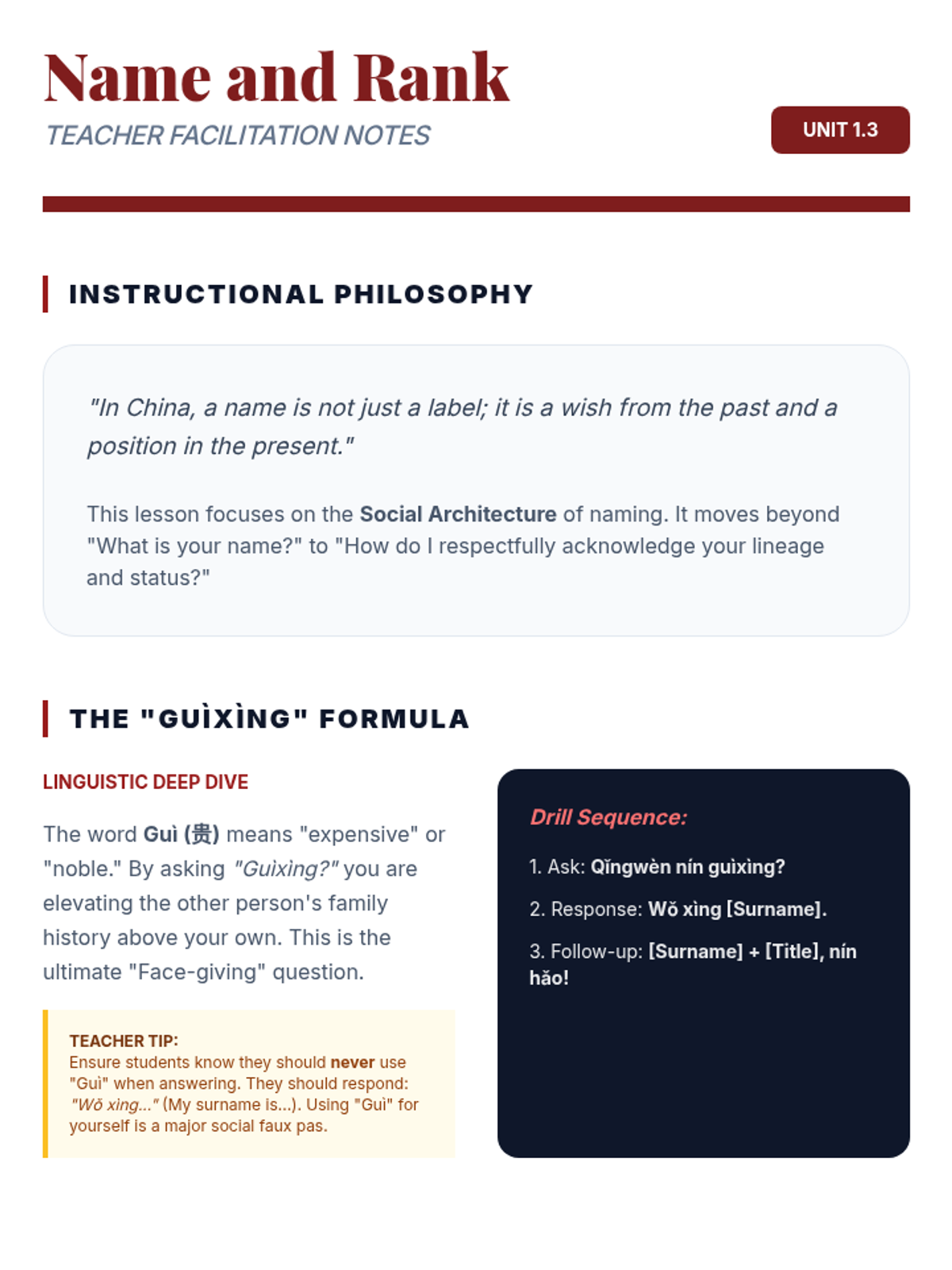
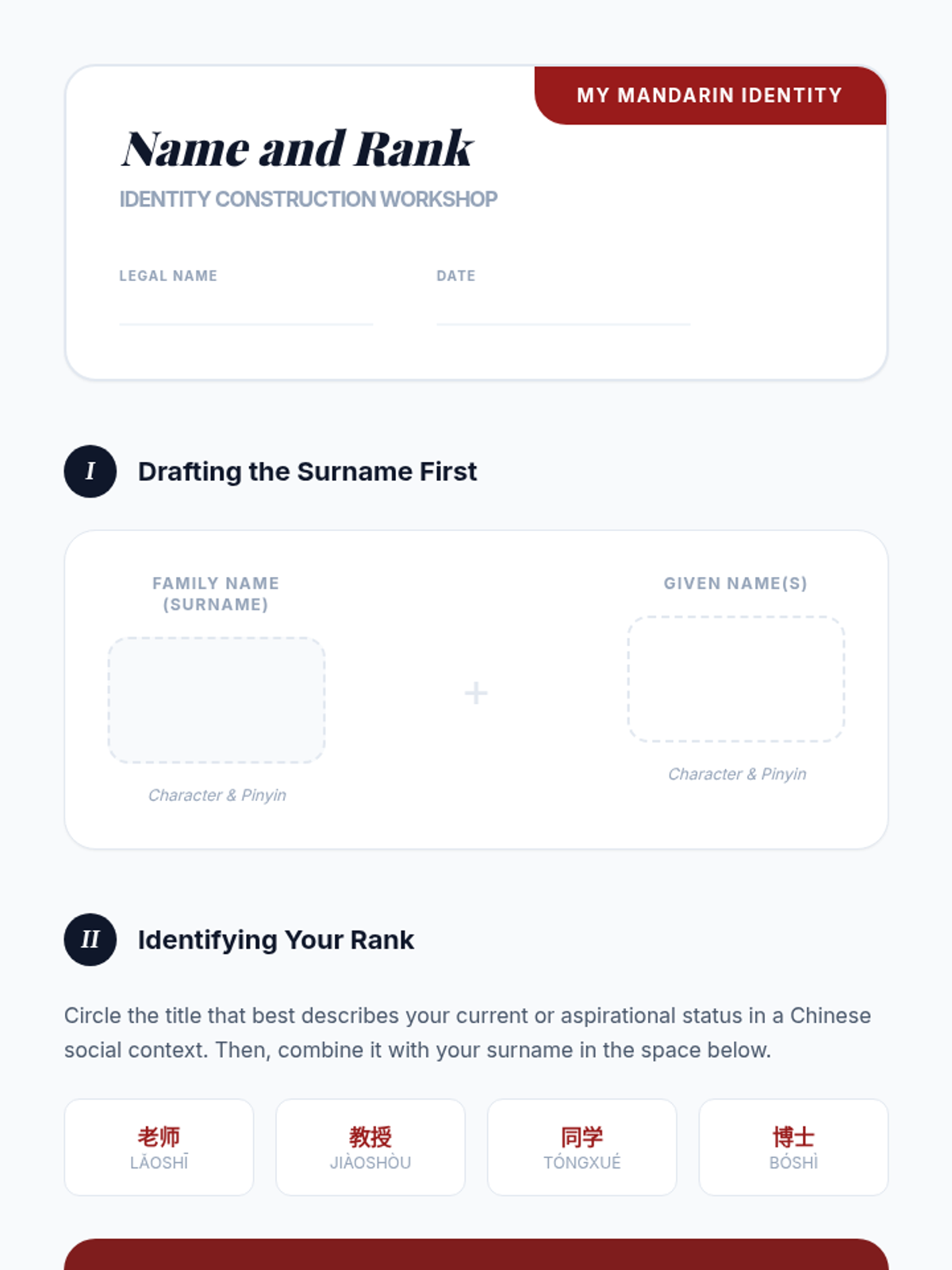
Learn the structures for introducing oneself and others using surnames, given names, and professional titles in a culturally appropriate manner.
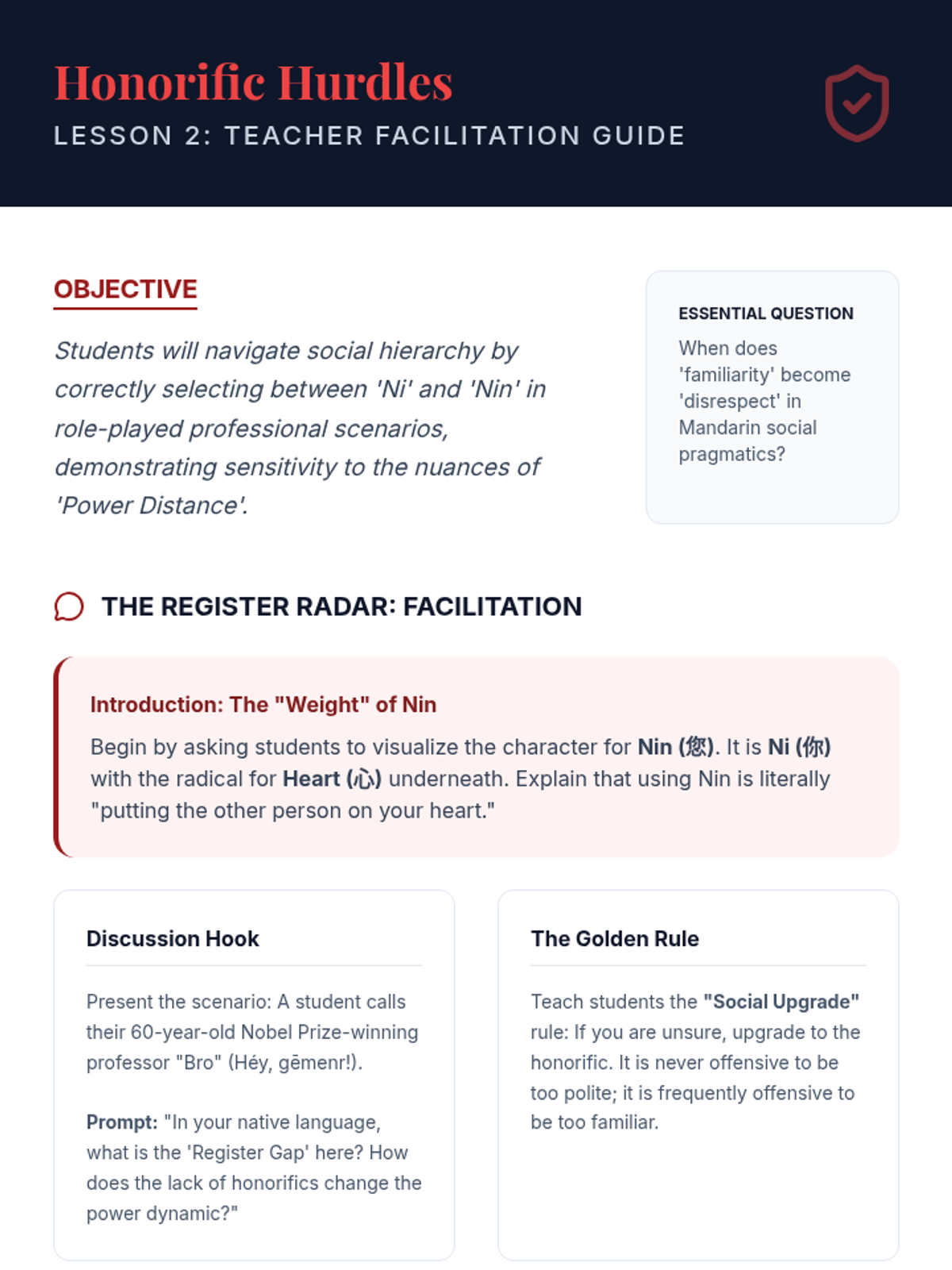
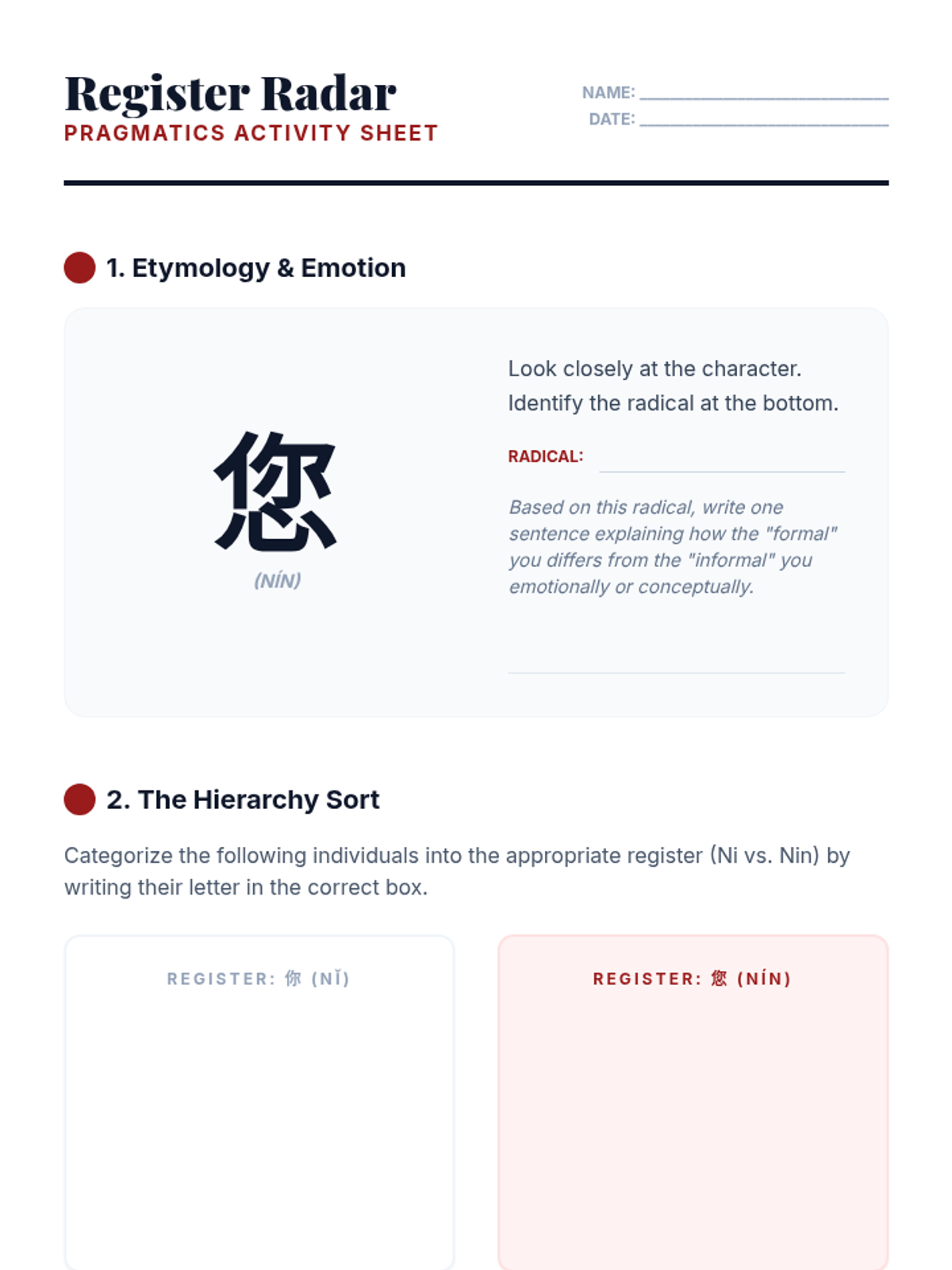
Master the distinction between formal and informal registers, focusing on the use of 'Ni' versus 'Nin' and the social implications of address.
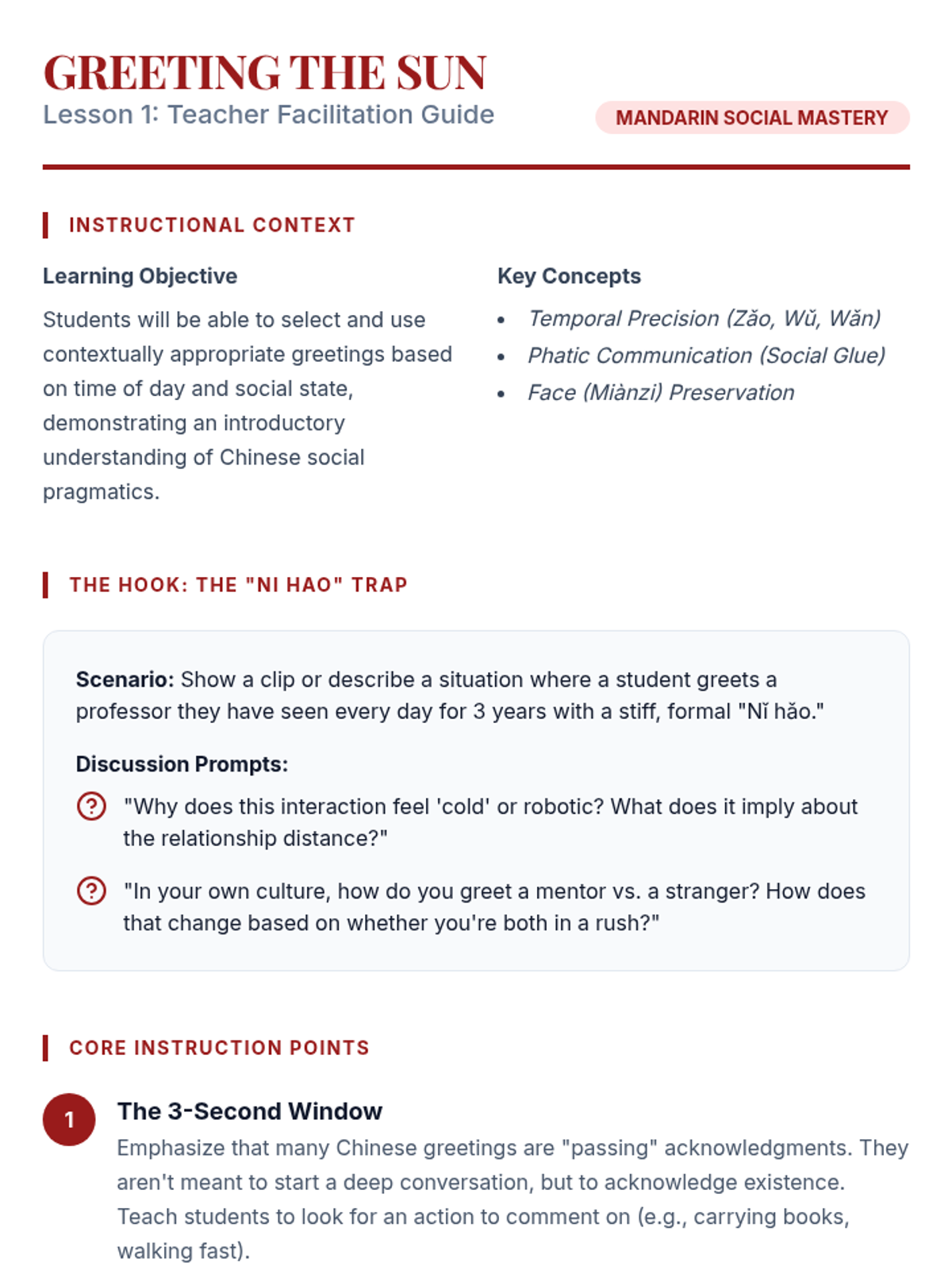
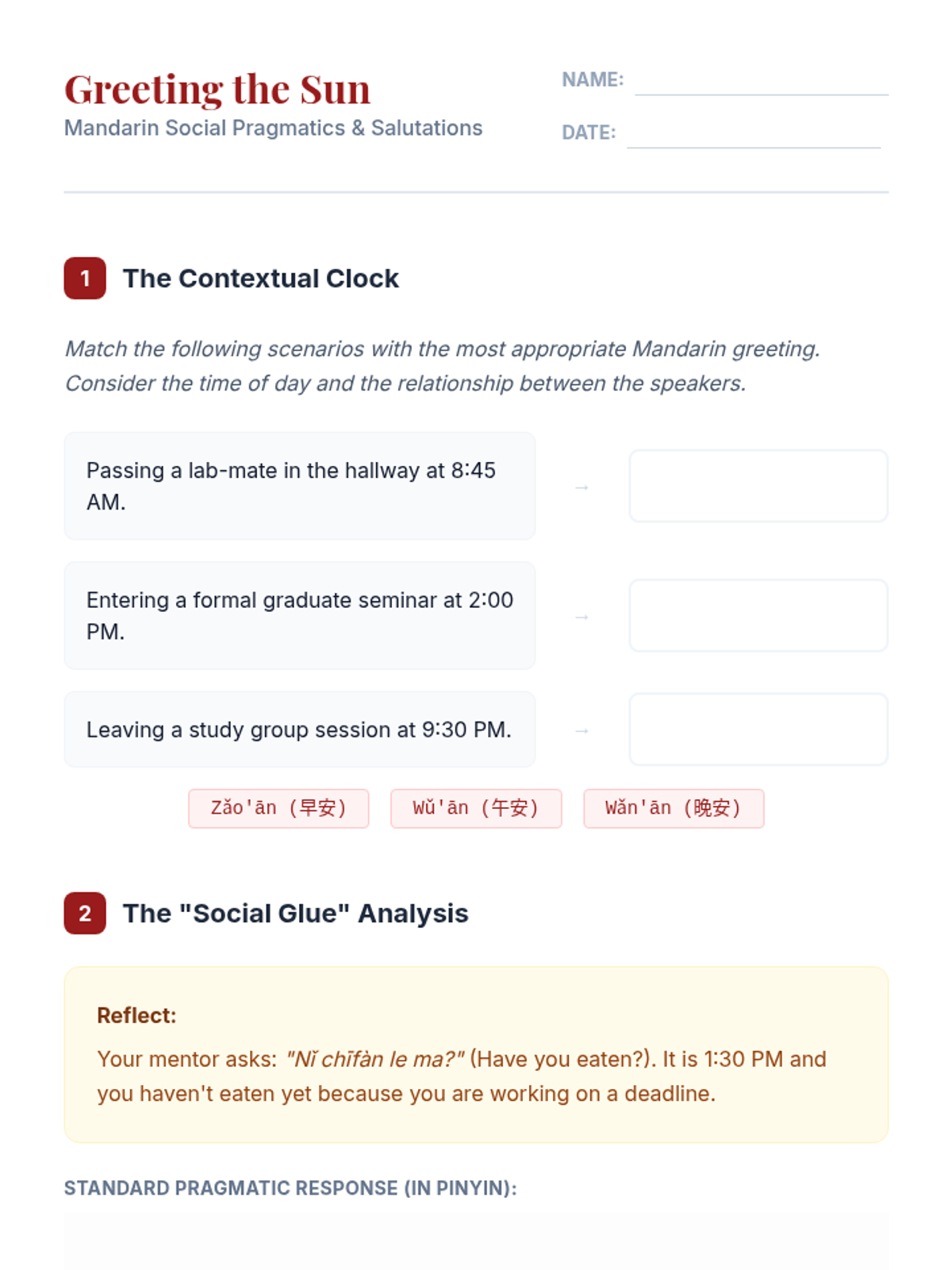
Explore the nuances of basic greetings in Mandarin, moving beyond 'Ni hao' to context-specific salutations for various times of day and social situations.
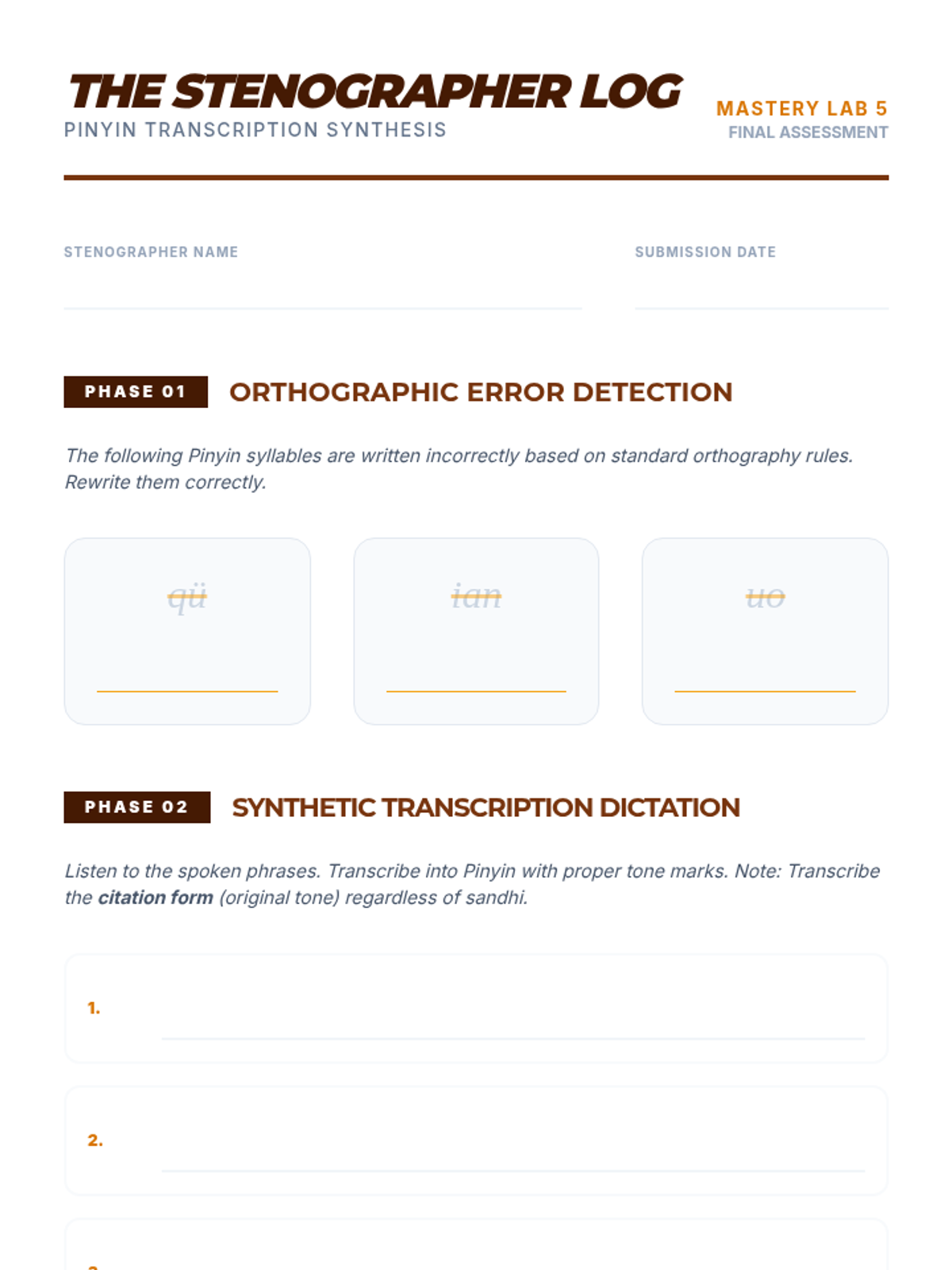
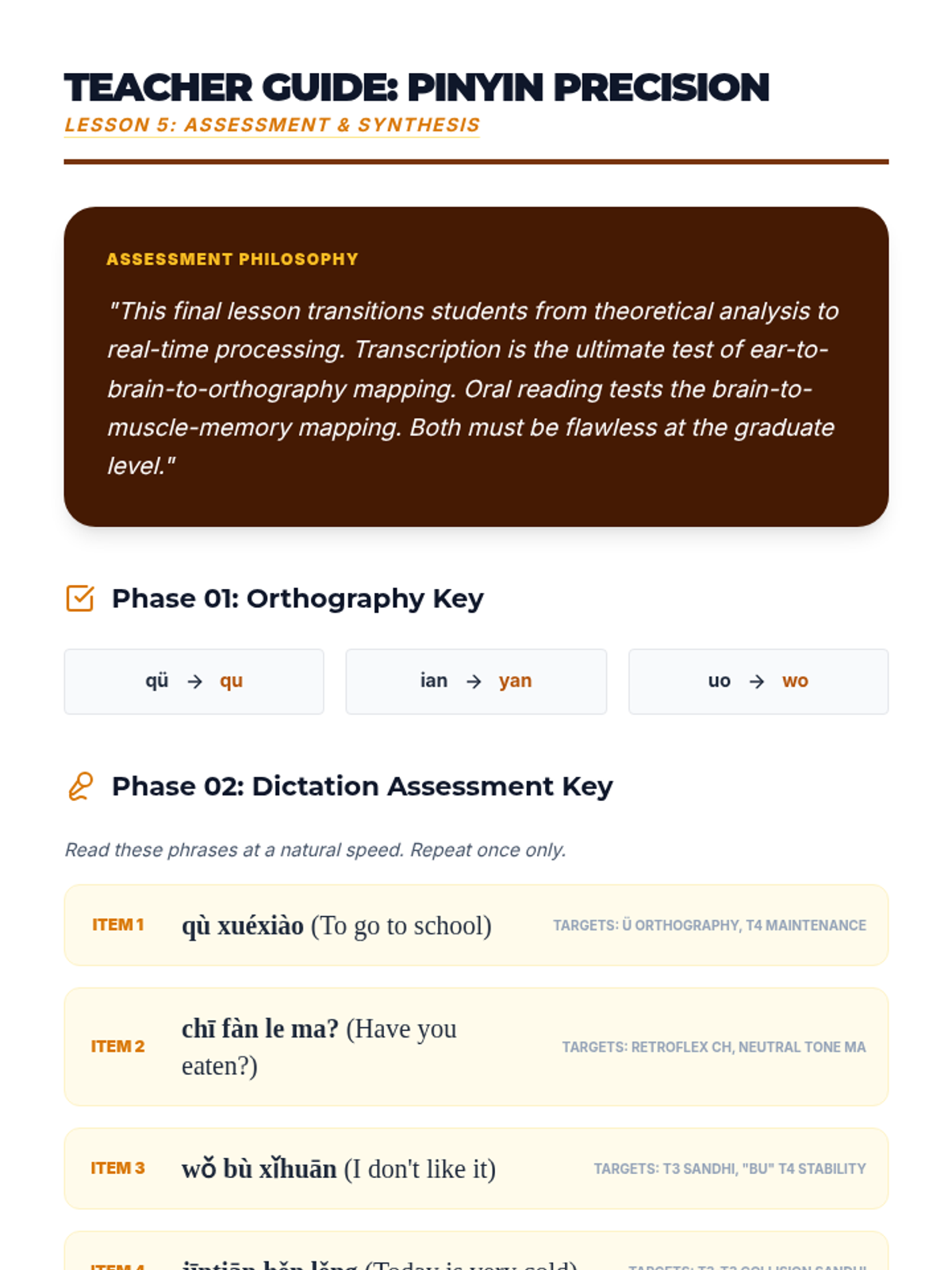
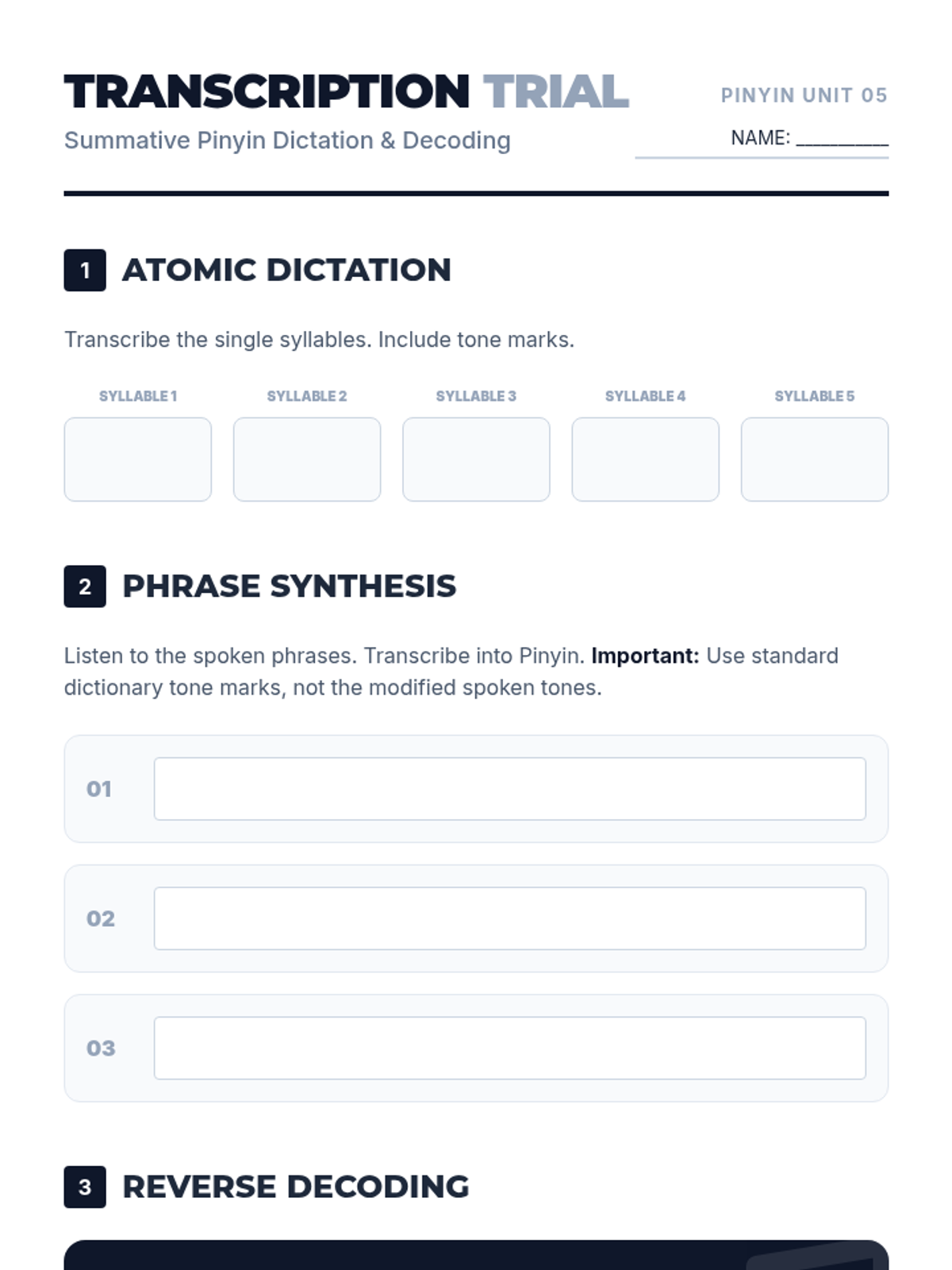
Synthesis of phonetic and tonal knowledge through rapid transcription of spoken Mandarin and fluent reading of Pinyin texts.
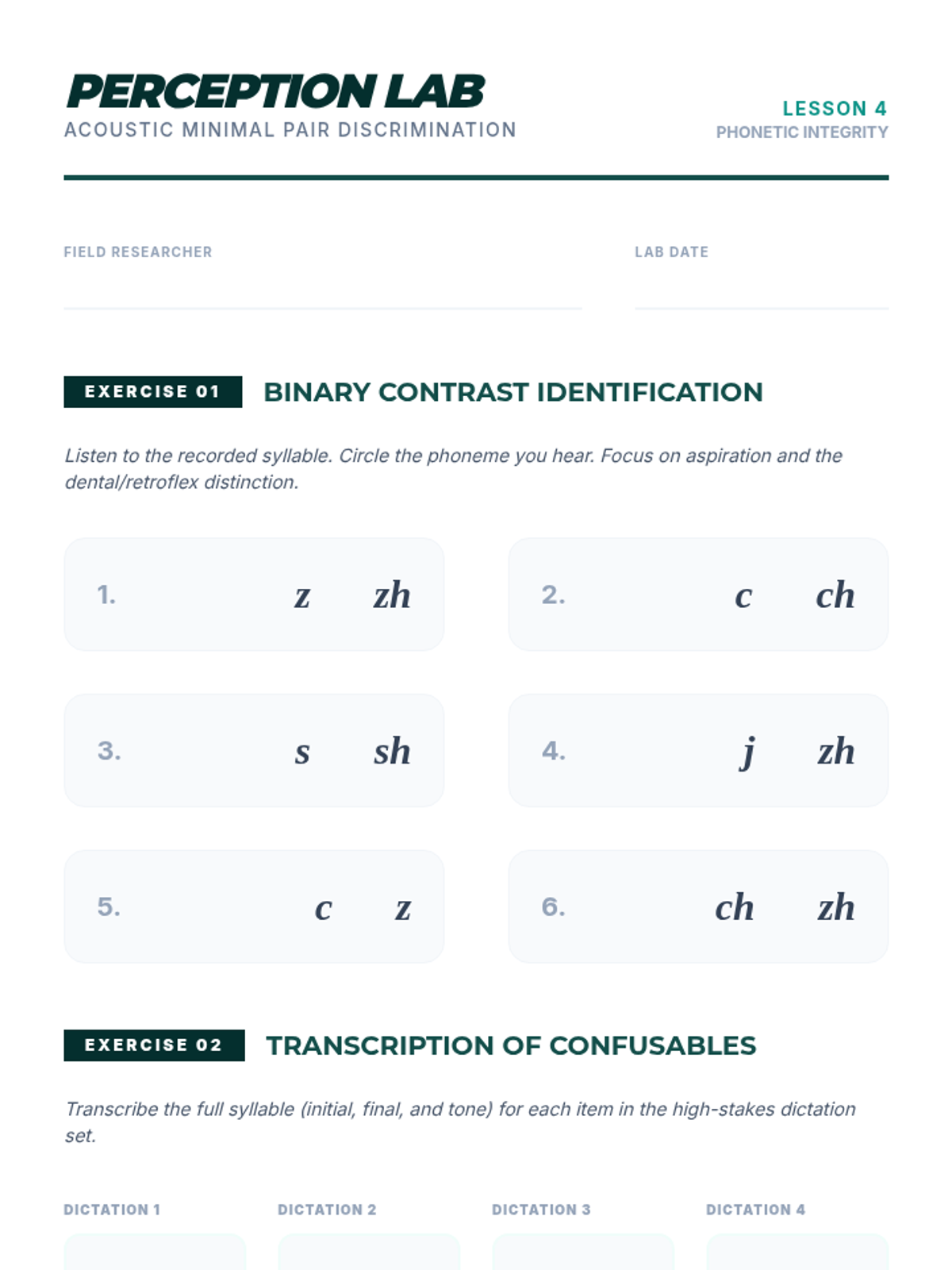
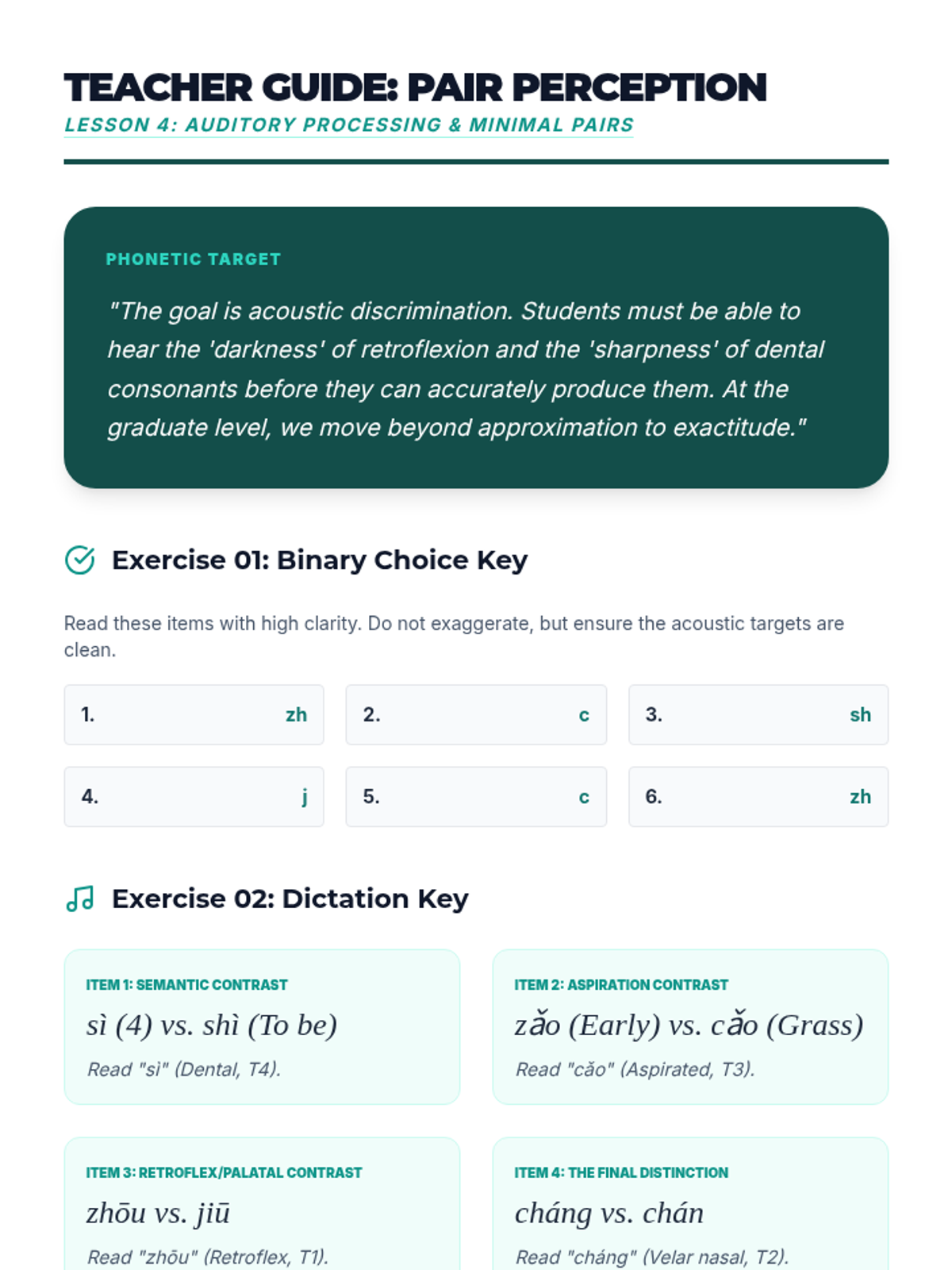
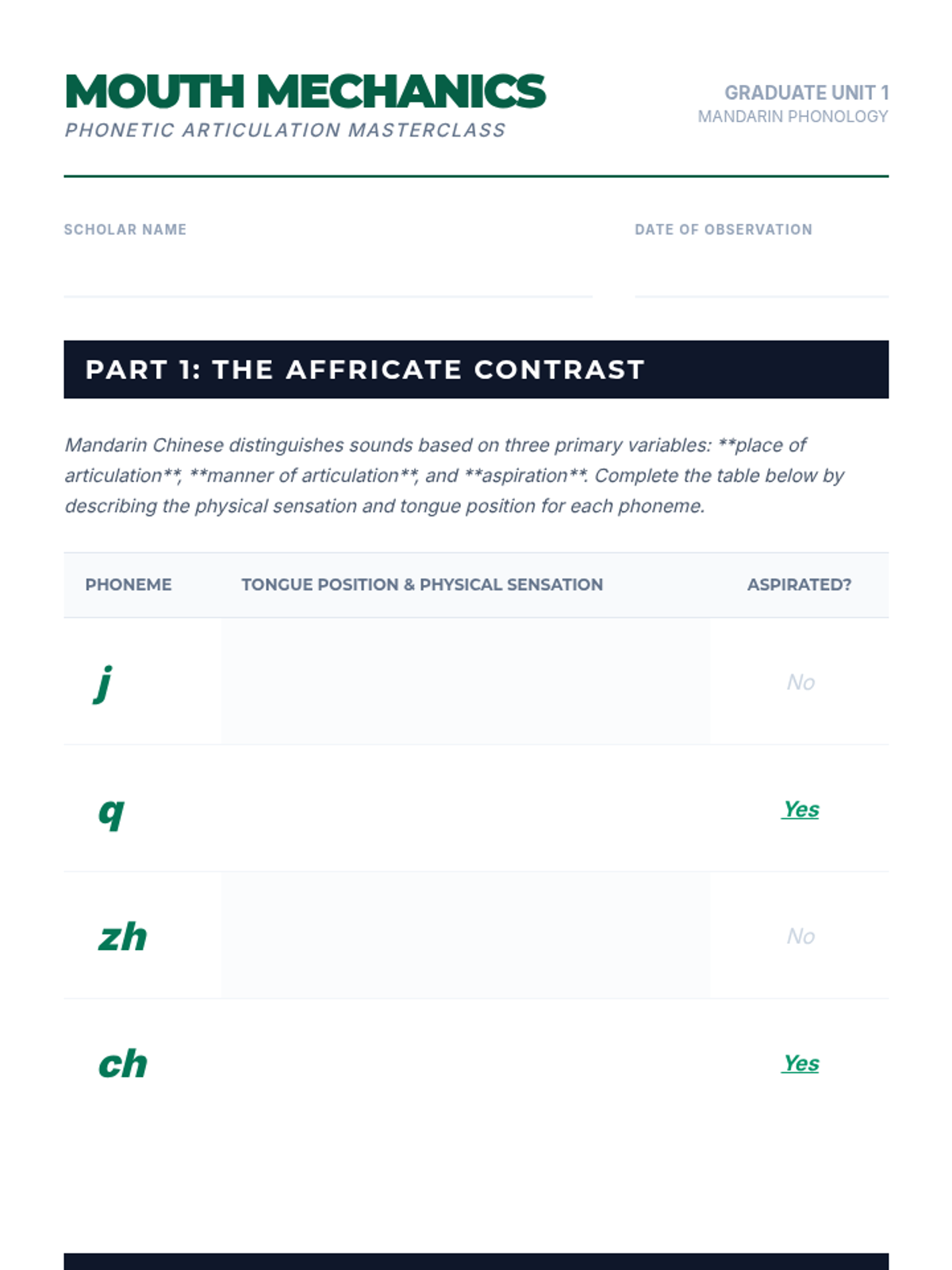
A deep dive into auditory discrimination of minimal pairs, focusing on aspiration and retroflexion contrasts to prevent phonetic fossilization.
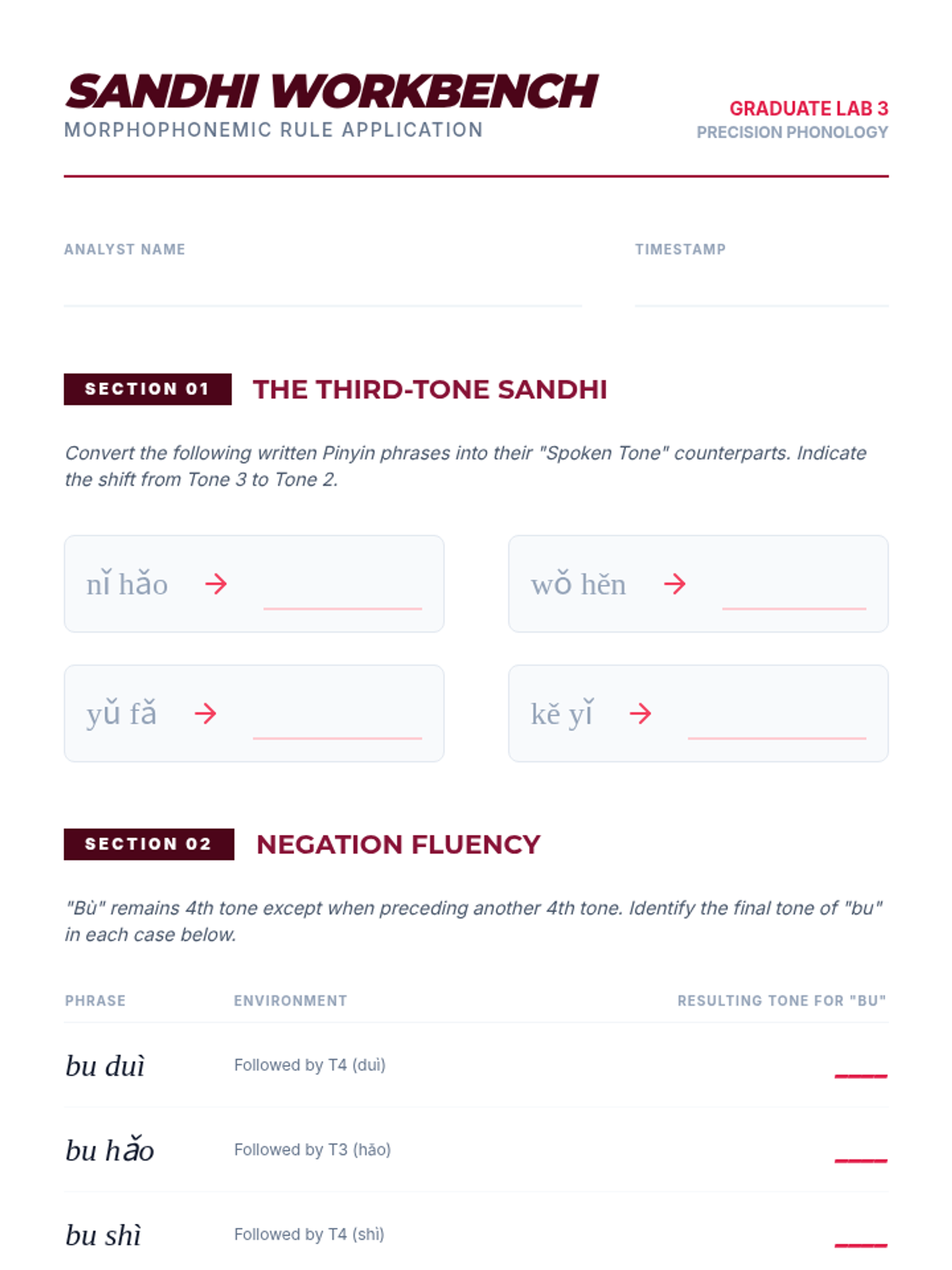
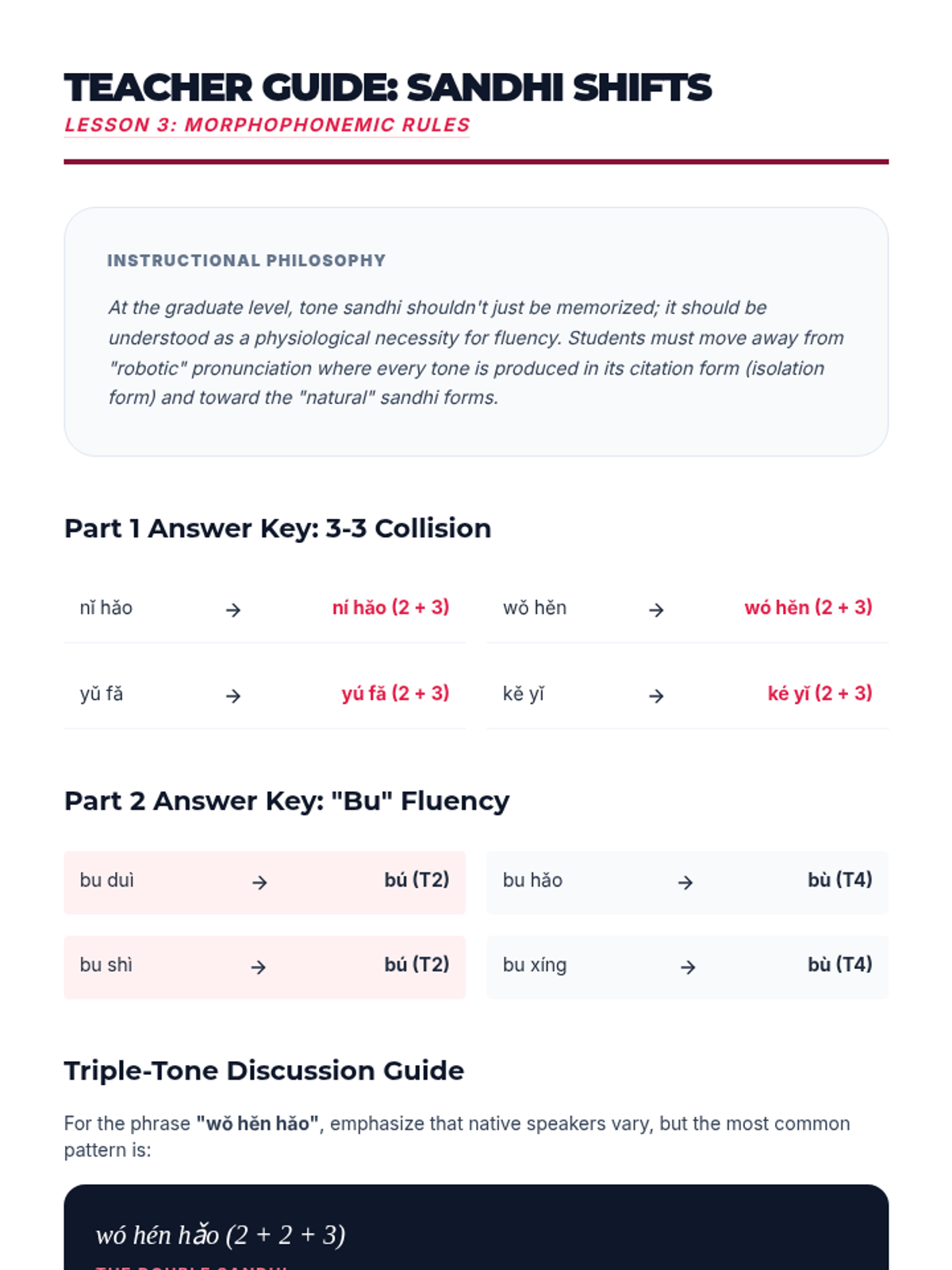
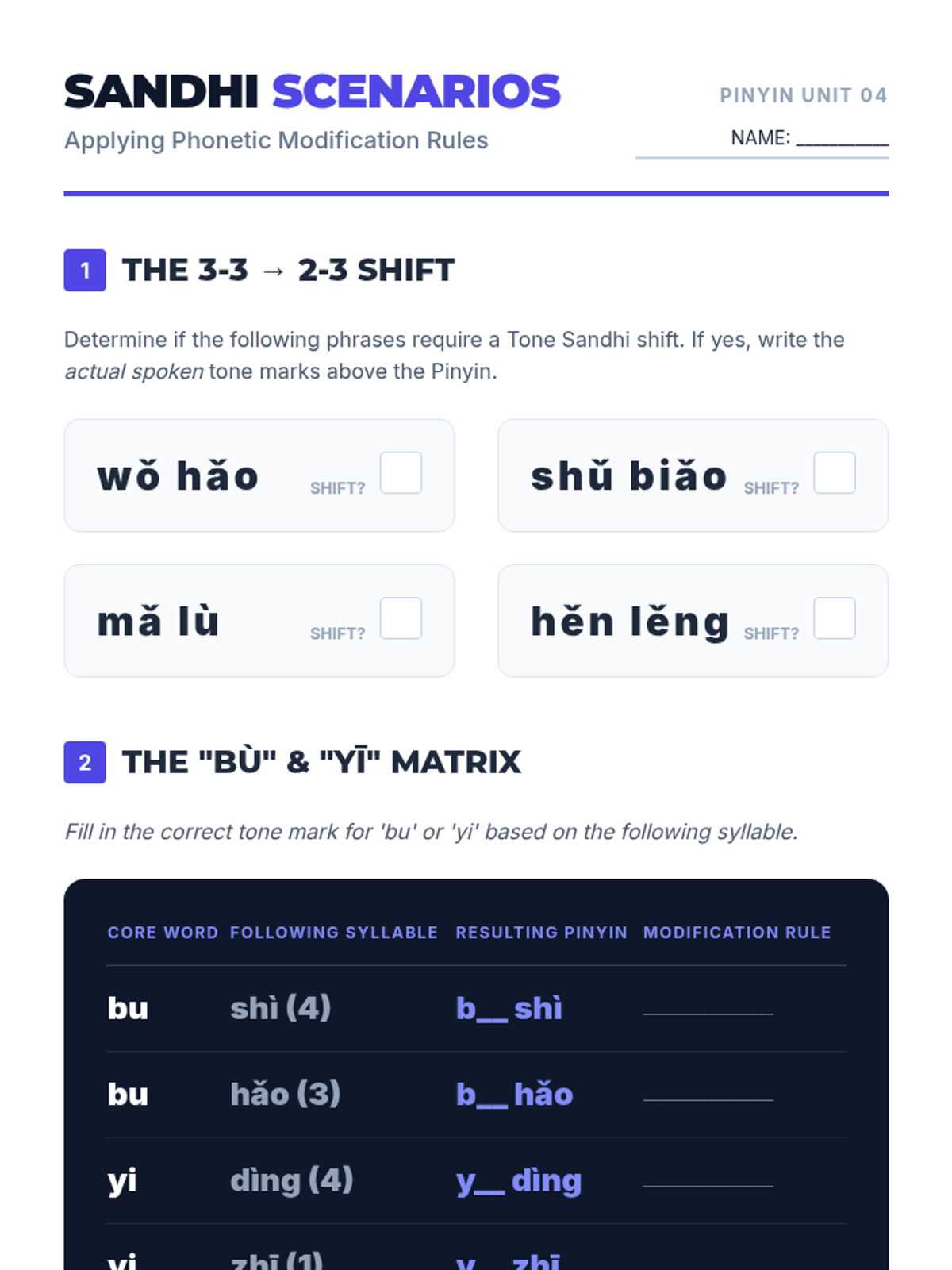
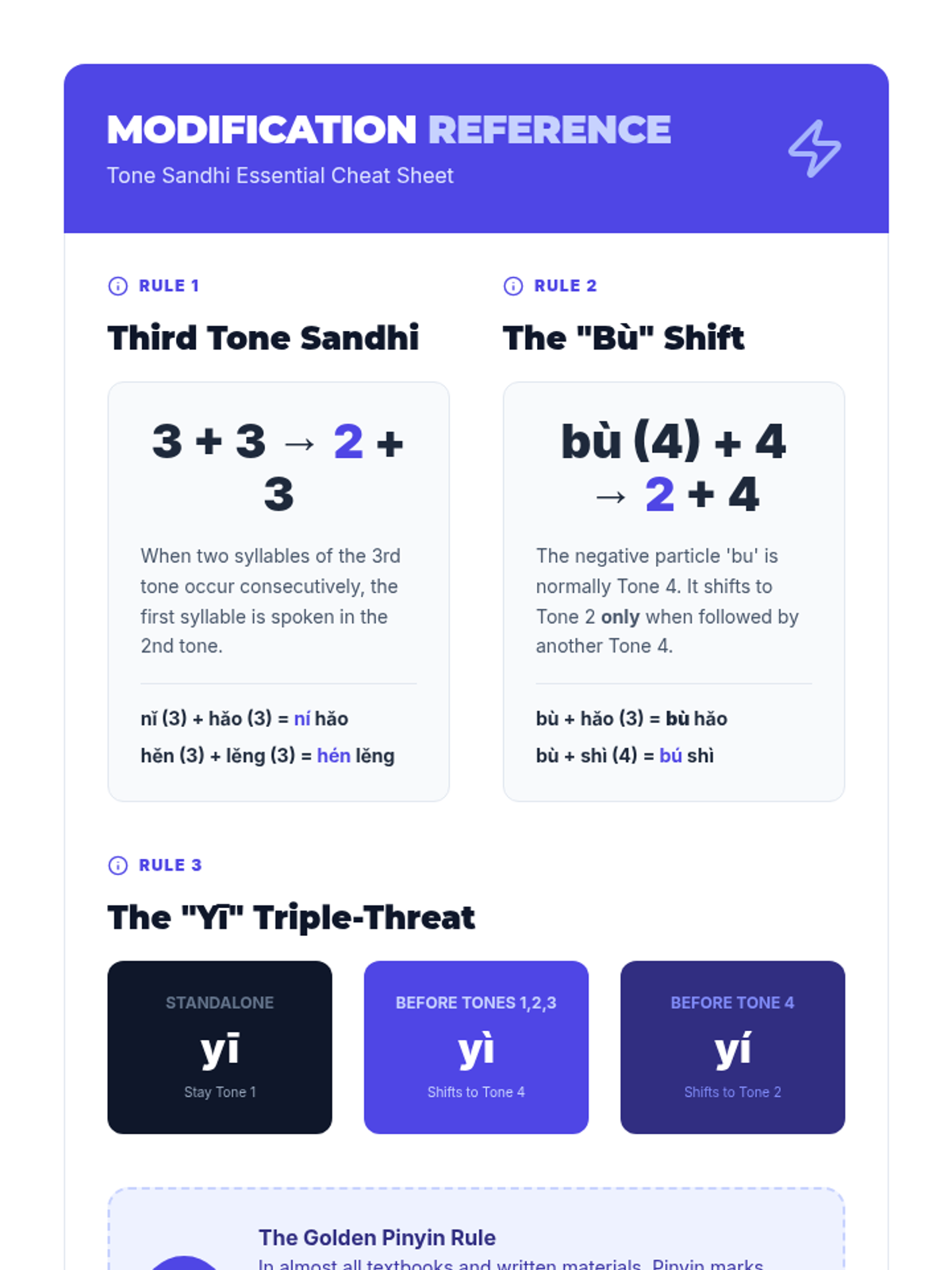
Investigating the morphophonemic rules of Mandarin, specifically the mandatory tone changes (sandhi) for Third Tone sequences and the particle 'bu'.
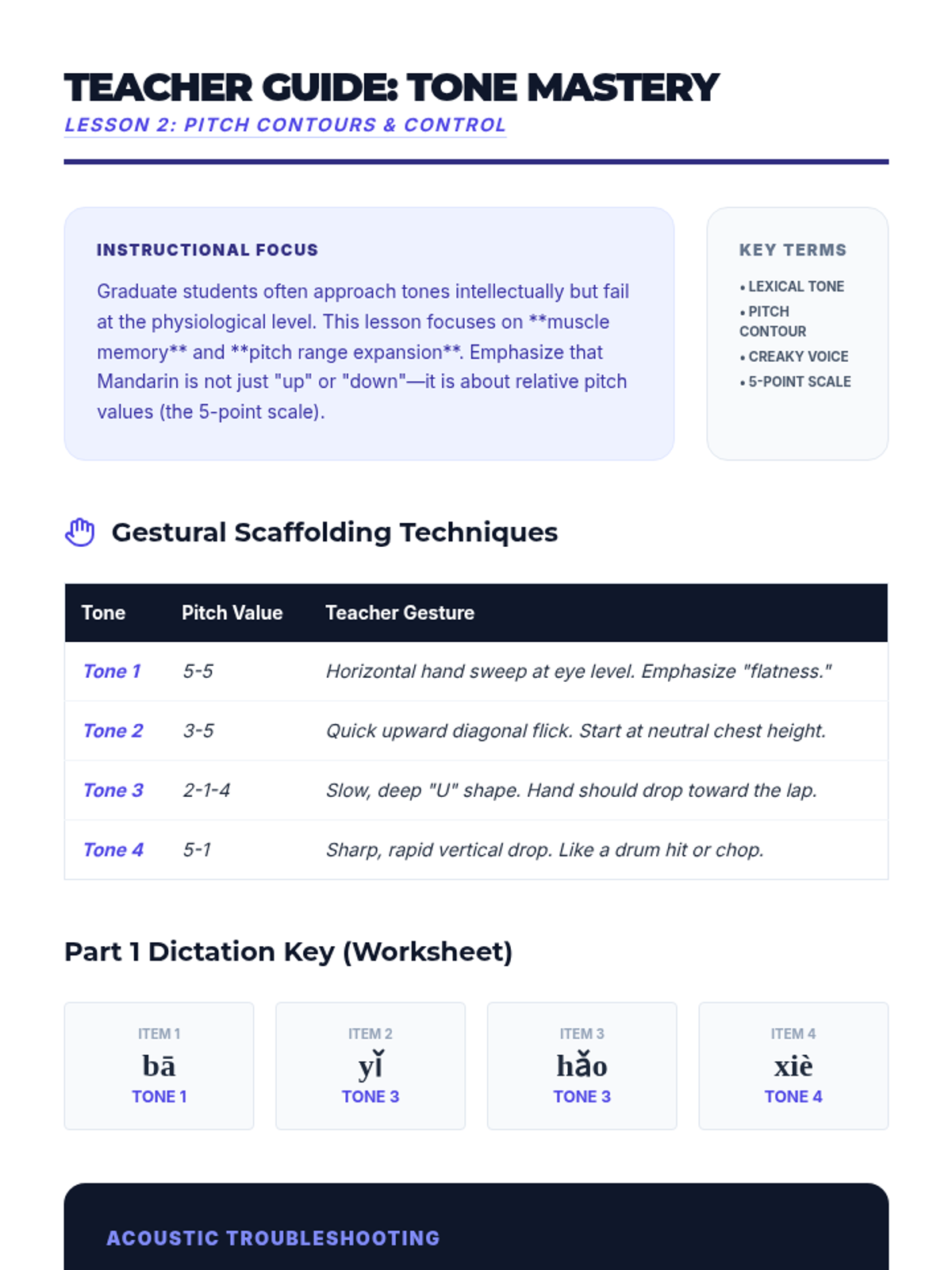
An exploration of the four lexical tones and the neutral tone, focusing on pitch contour maintenance and muscle memory development.
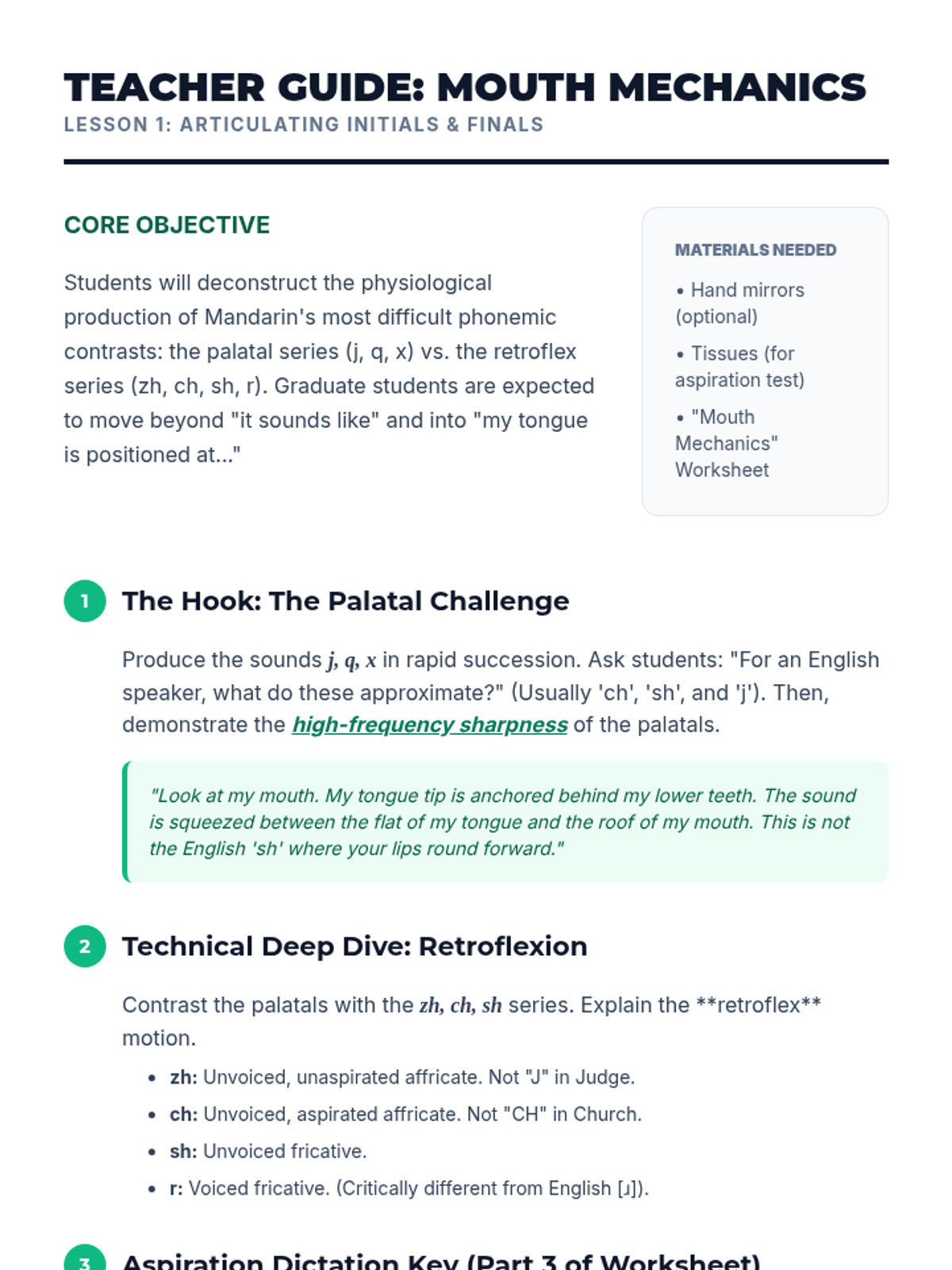
Students analyze the physiological placement and airflow for Mandarin initials and finals, contrasting the retroflex and palatal series using linguistic frameworks.
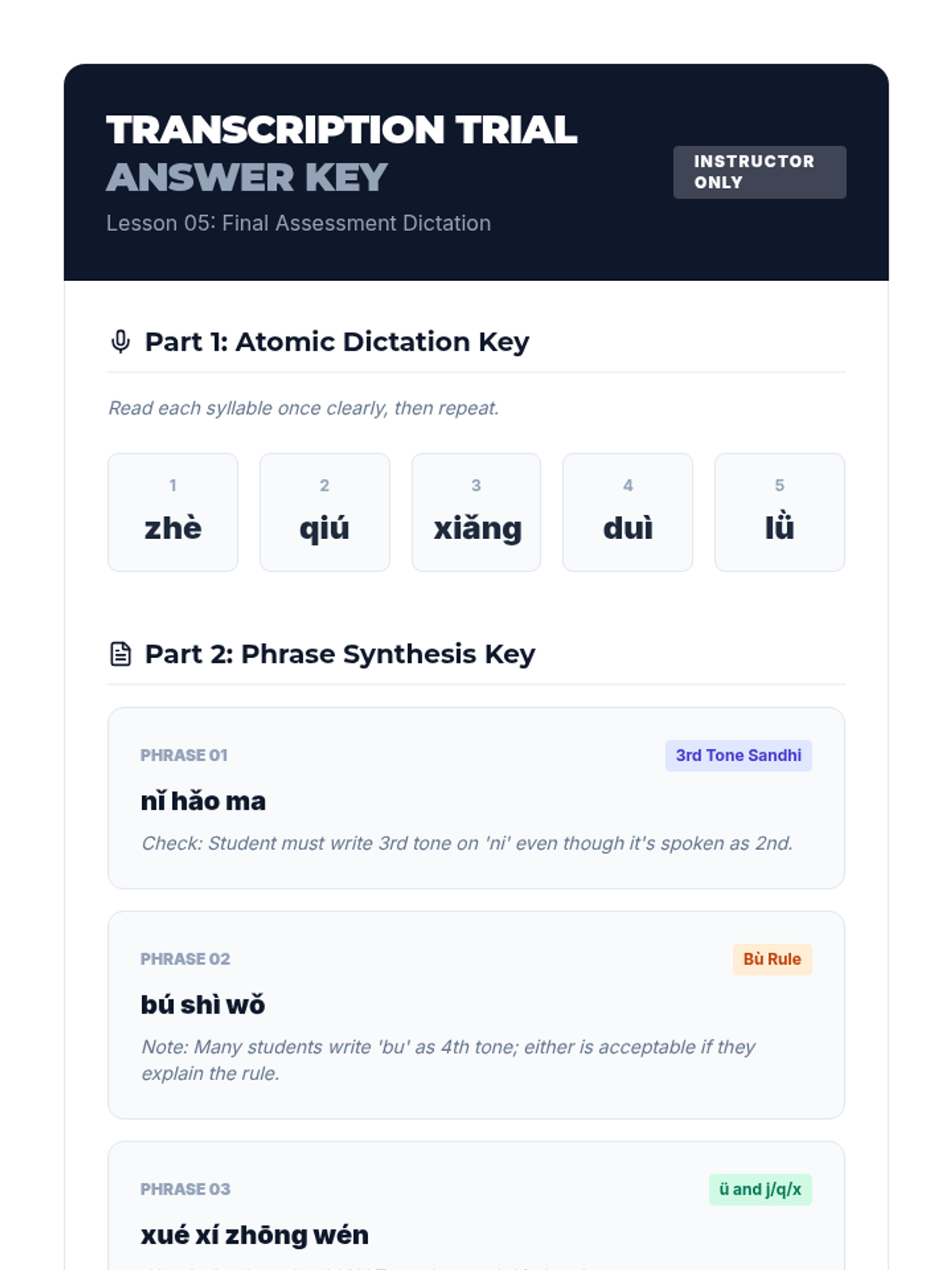
Synthesizes skills through transcription and dictation, reinforcing the connection between spoken Mandarin and Pinyin representation.
Investigates the phonetic rules of tone modification, including Third Tone Sandhi and the variations of 'bu' and 'yi'.
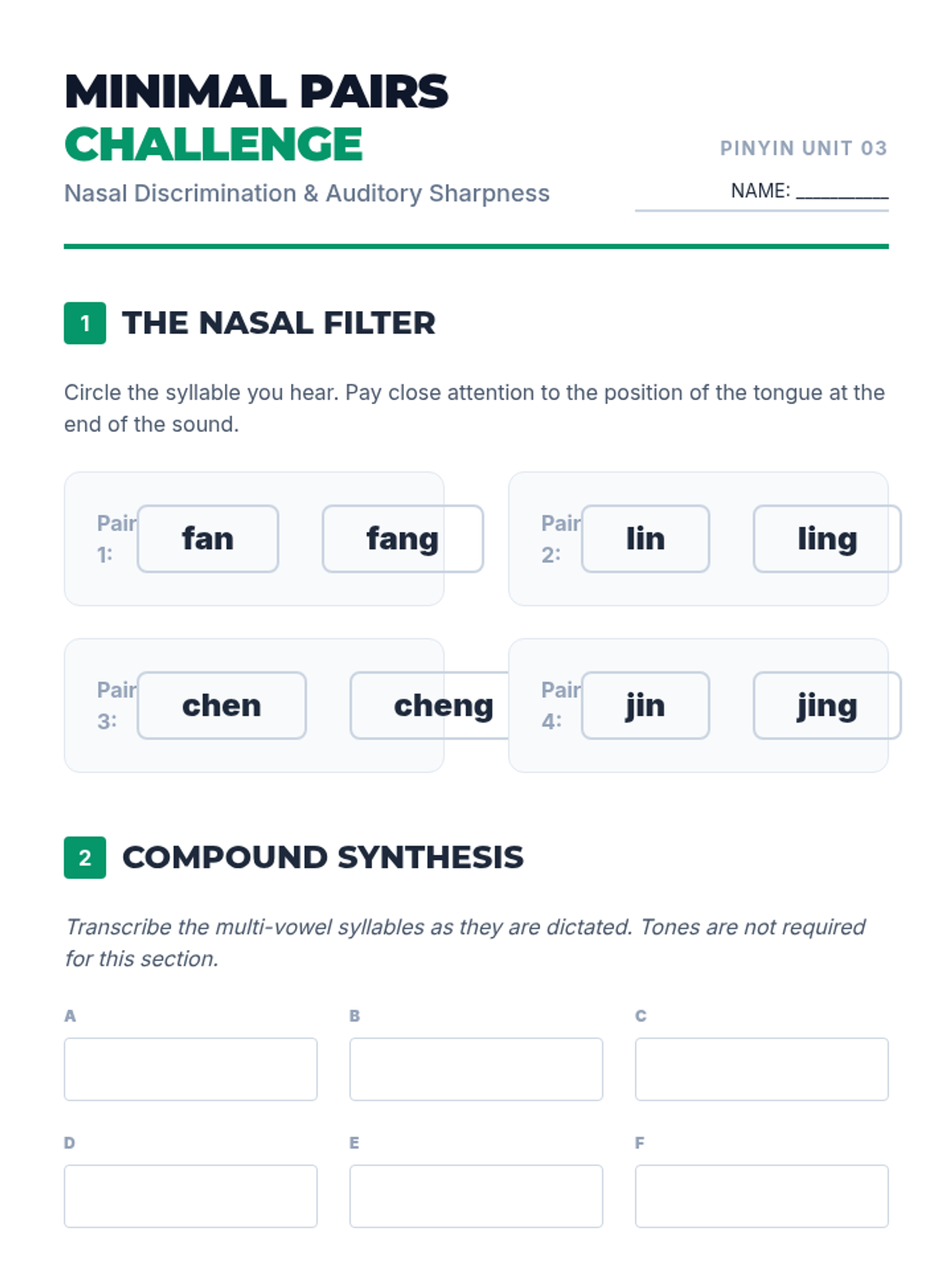
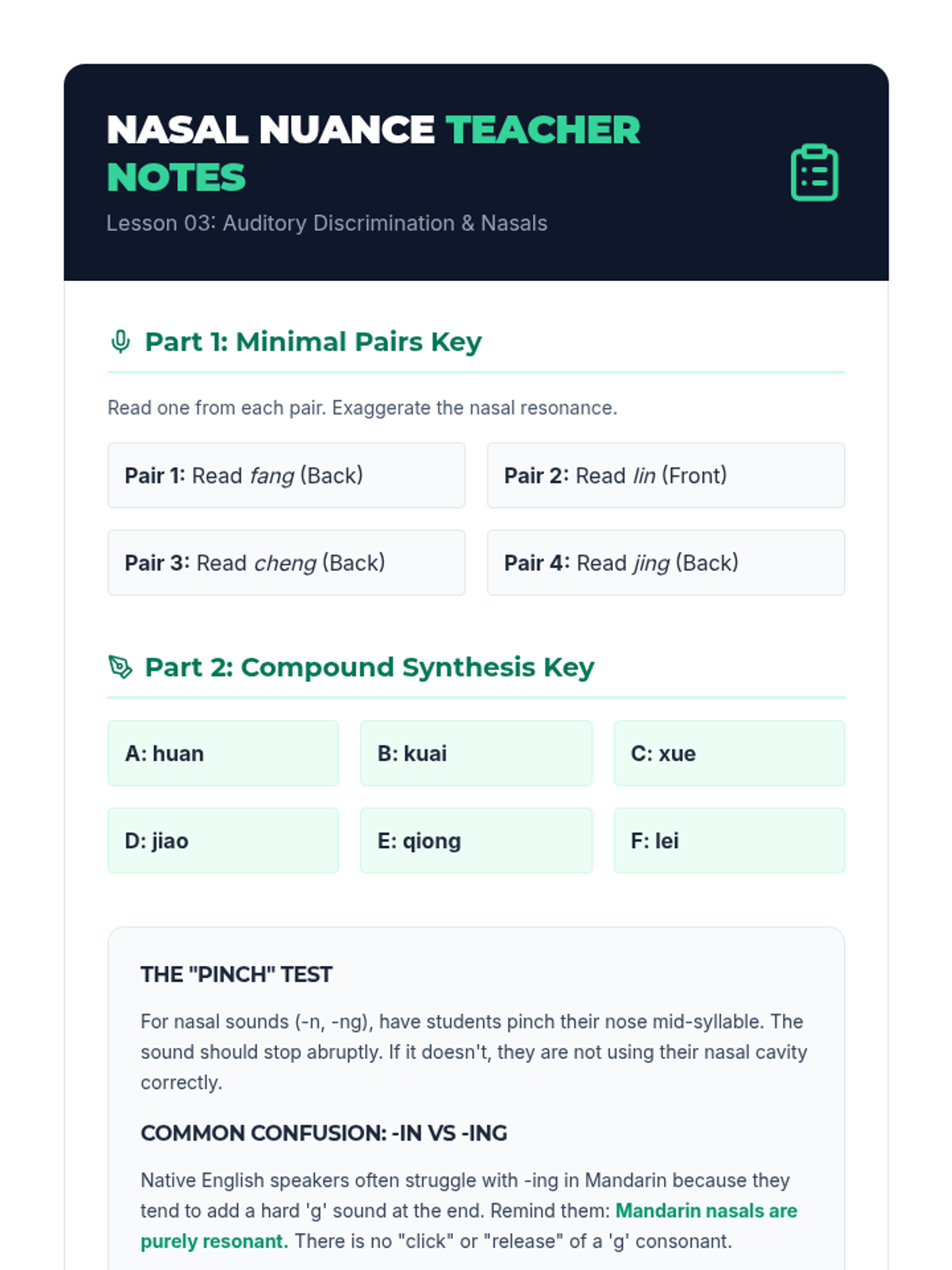
Covers complex vowel combinations and the distinction between front and back nasal endings (-n vs -ng) through auditory discrimination exercises.
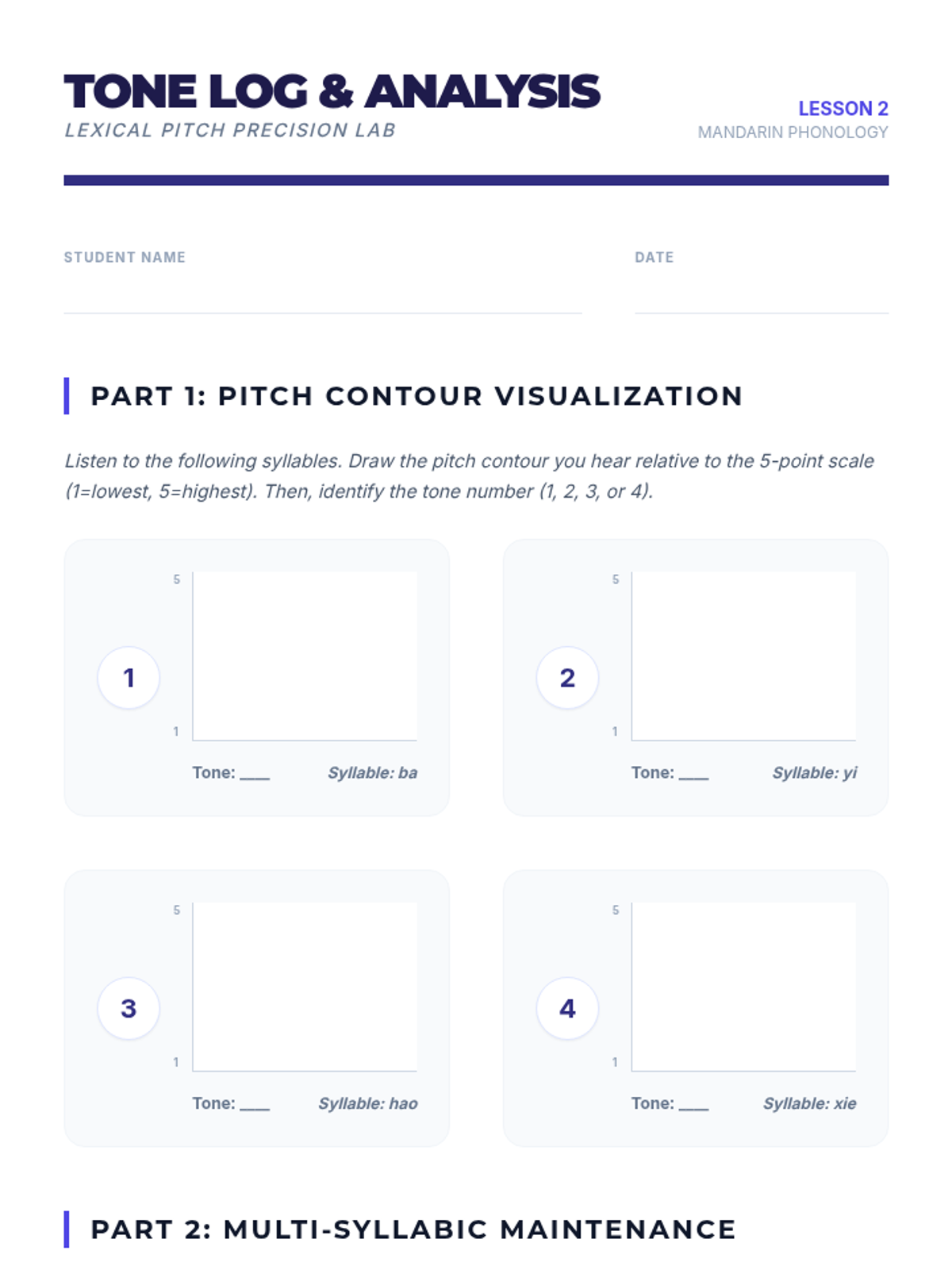
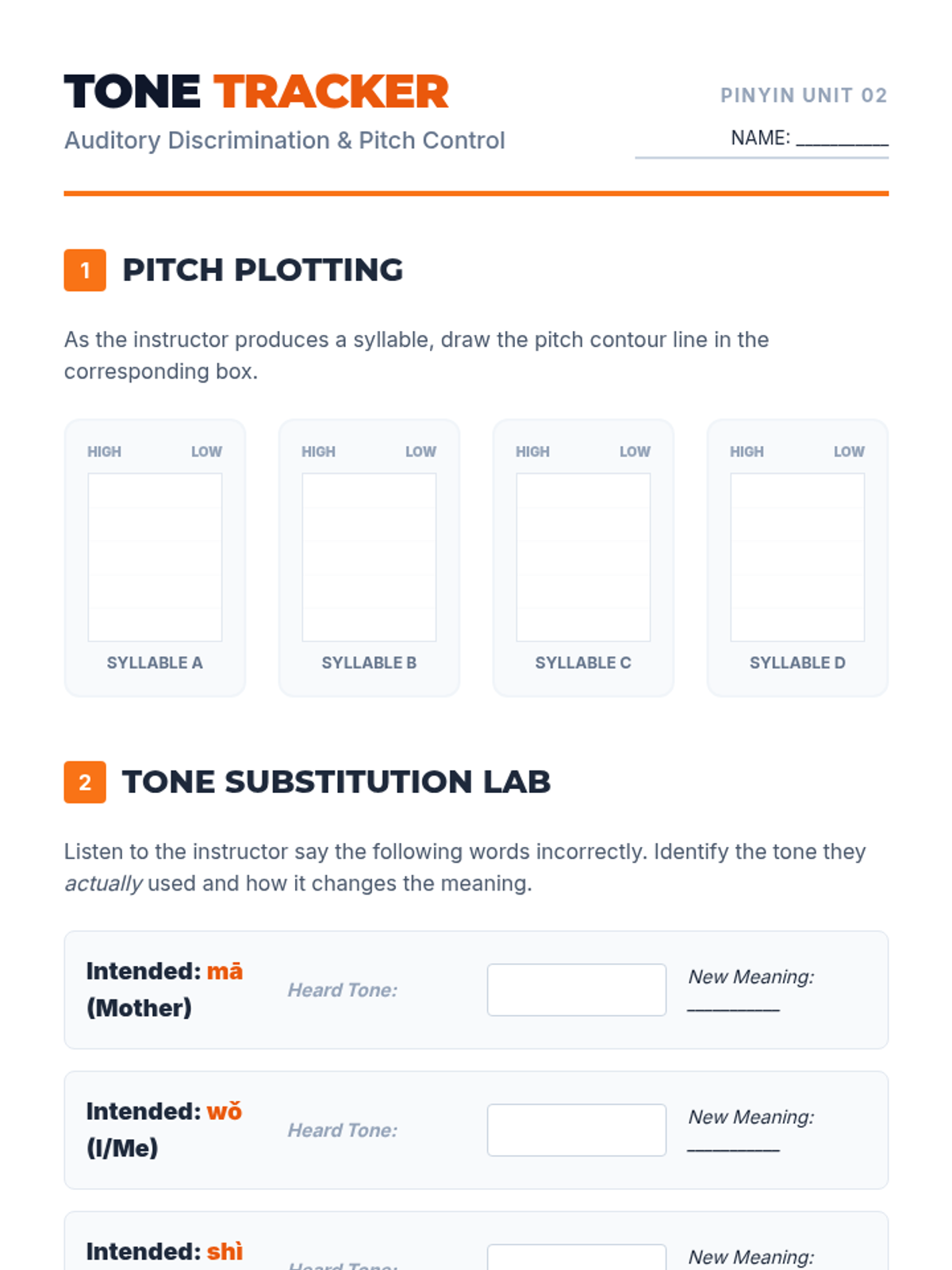
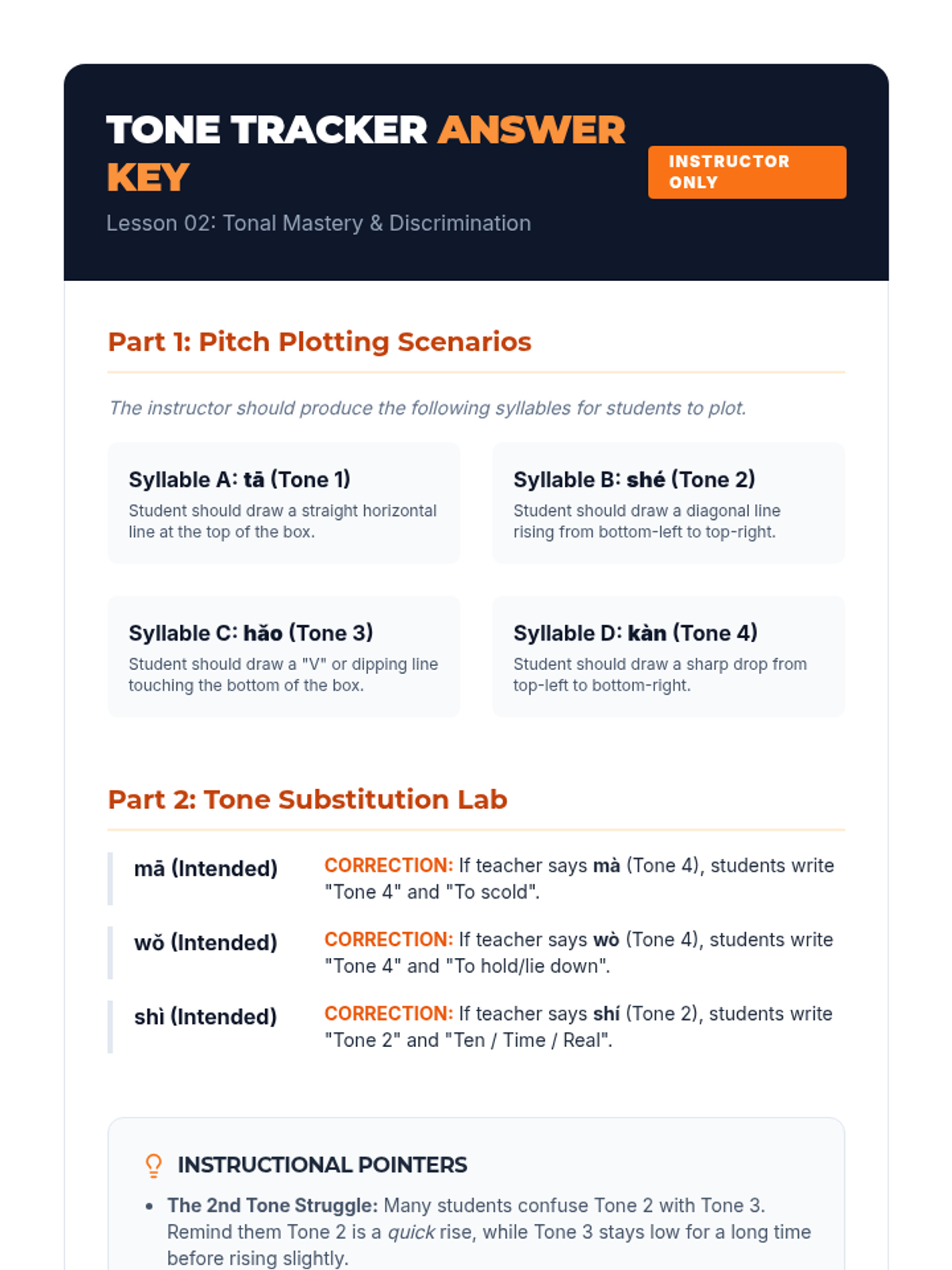
Isolates the four tones and the neutral tone using visual pitch contours, helping students master tonal production on single syllables.
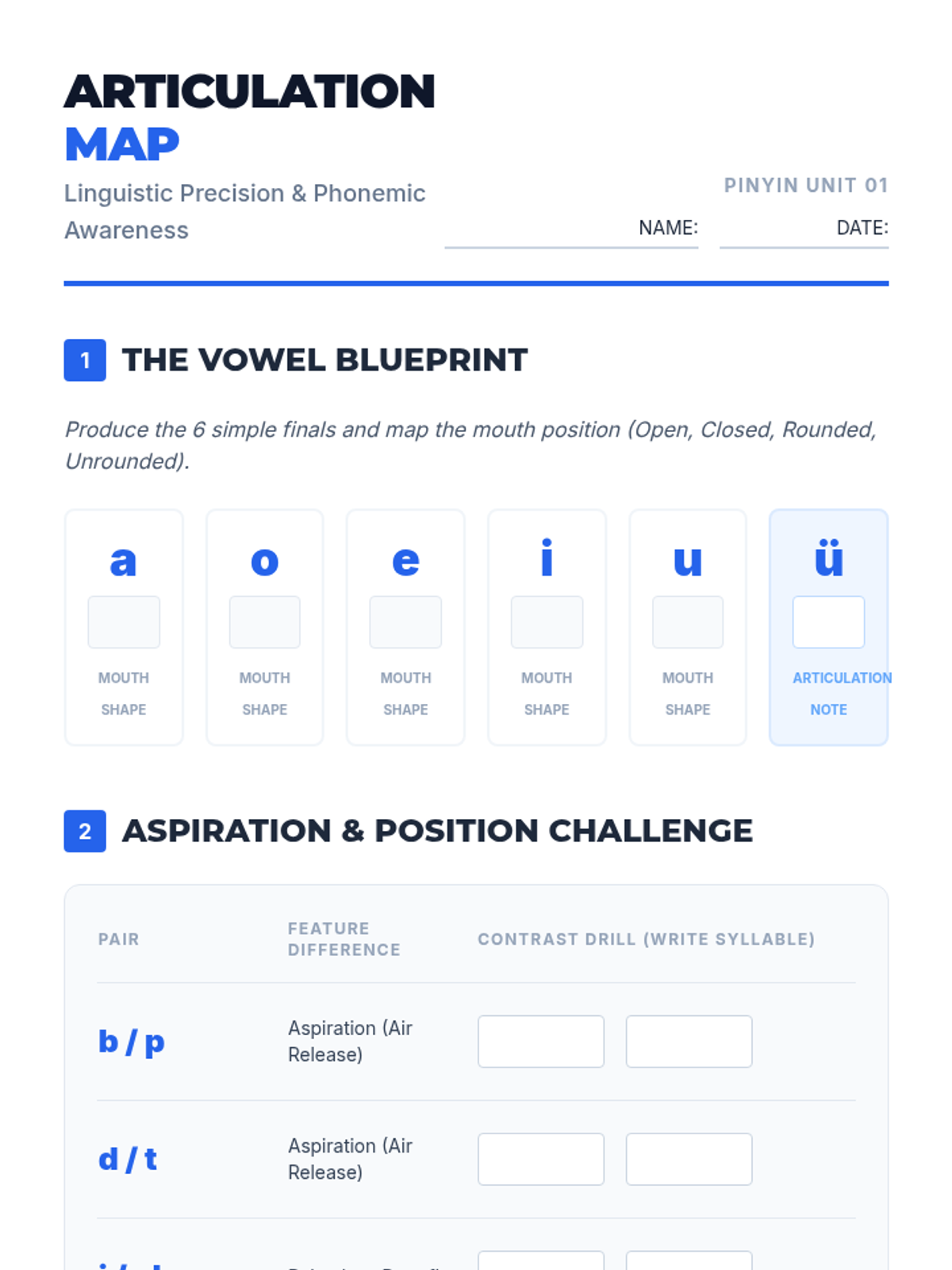
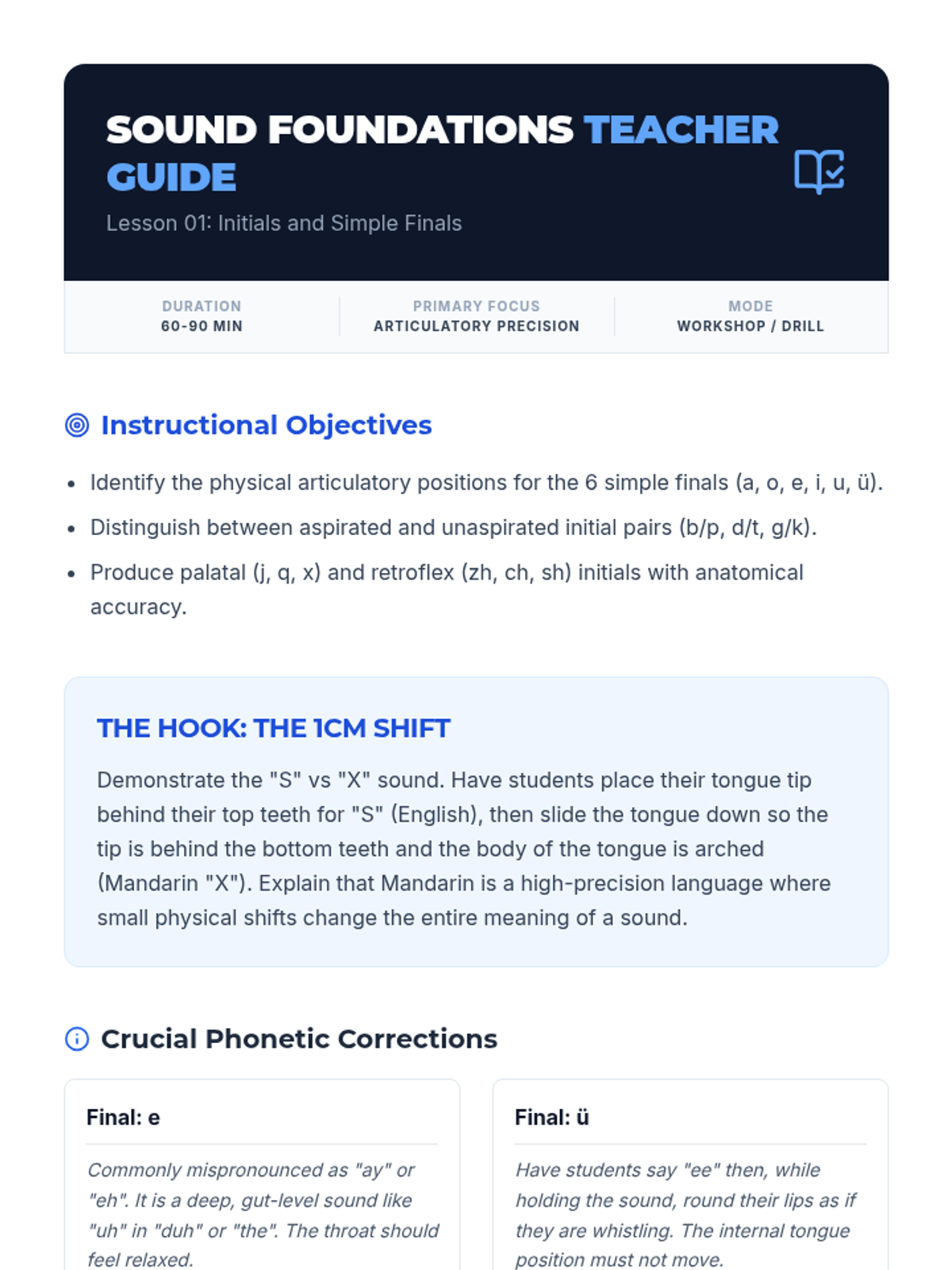
Focuses on the articulatory positions of Mandarin initials and simple finals, emphasizing phonemic awareness and correct mouth positioning for sounds unique to Mandarin.
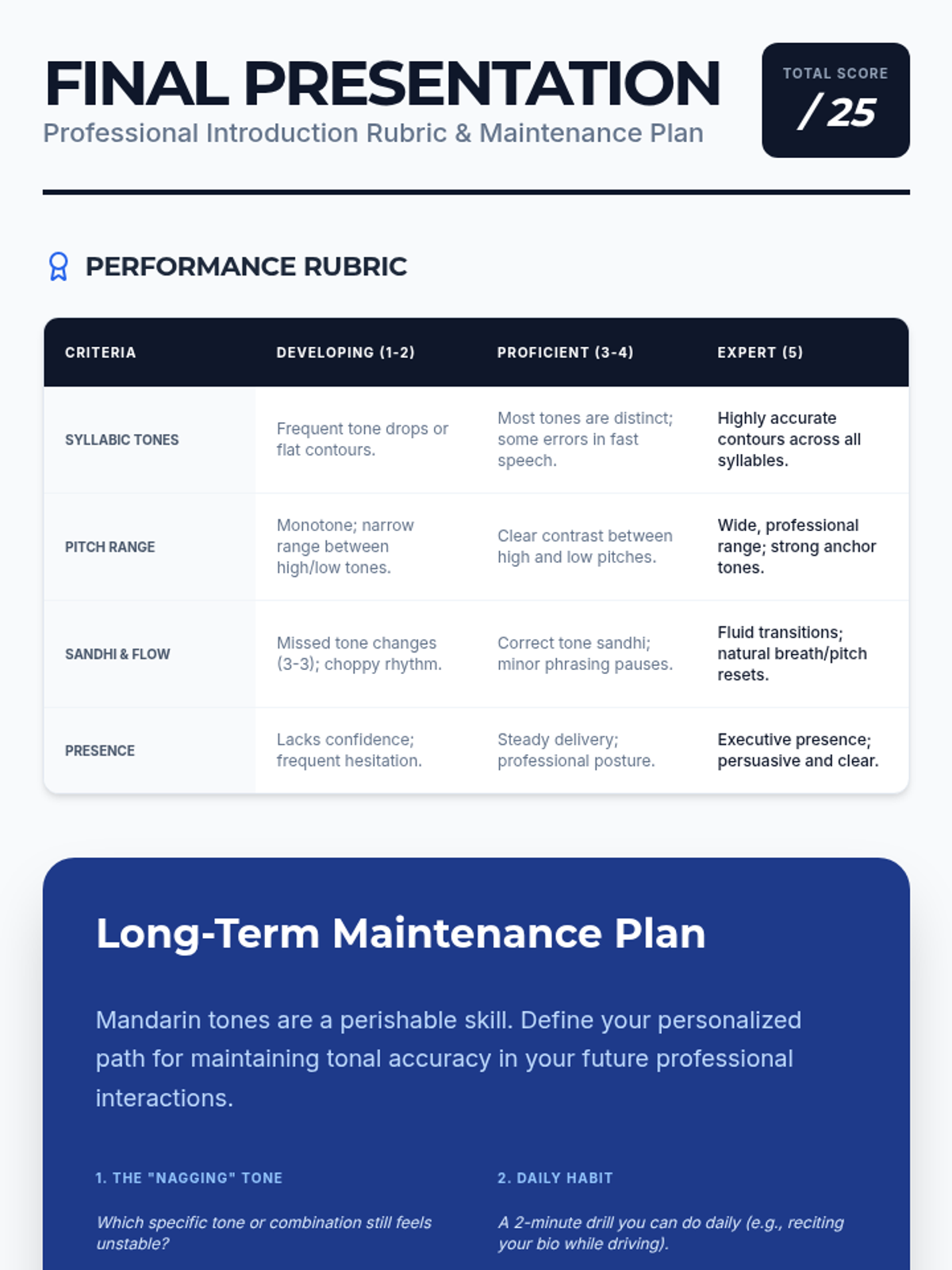
Final delivery of the professional introduction followed by the creation of a long-term maintenance plan.
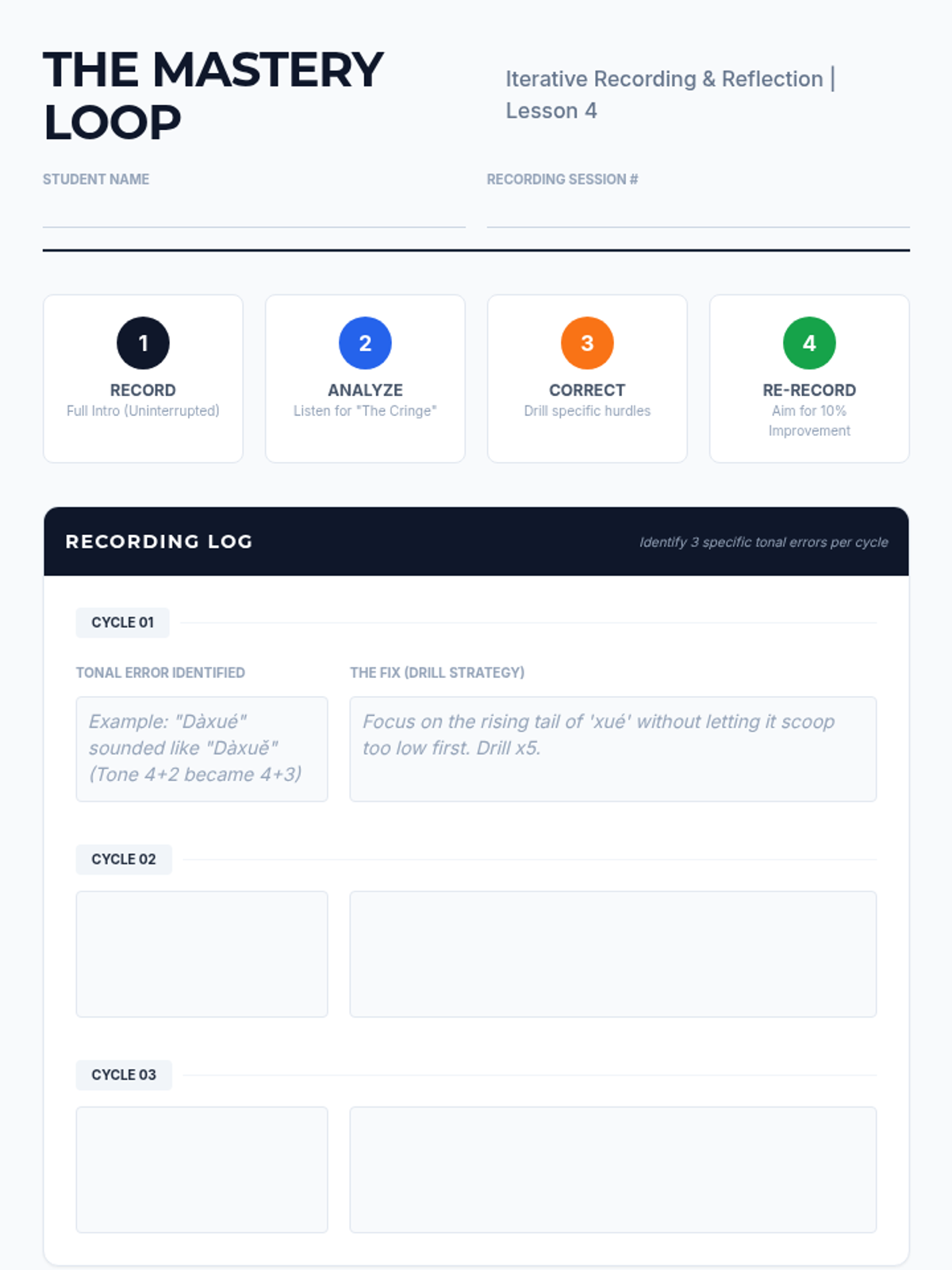
An iterative cycle of recording and self-correction to develop autonomous monitoring of tonal accuracy.
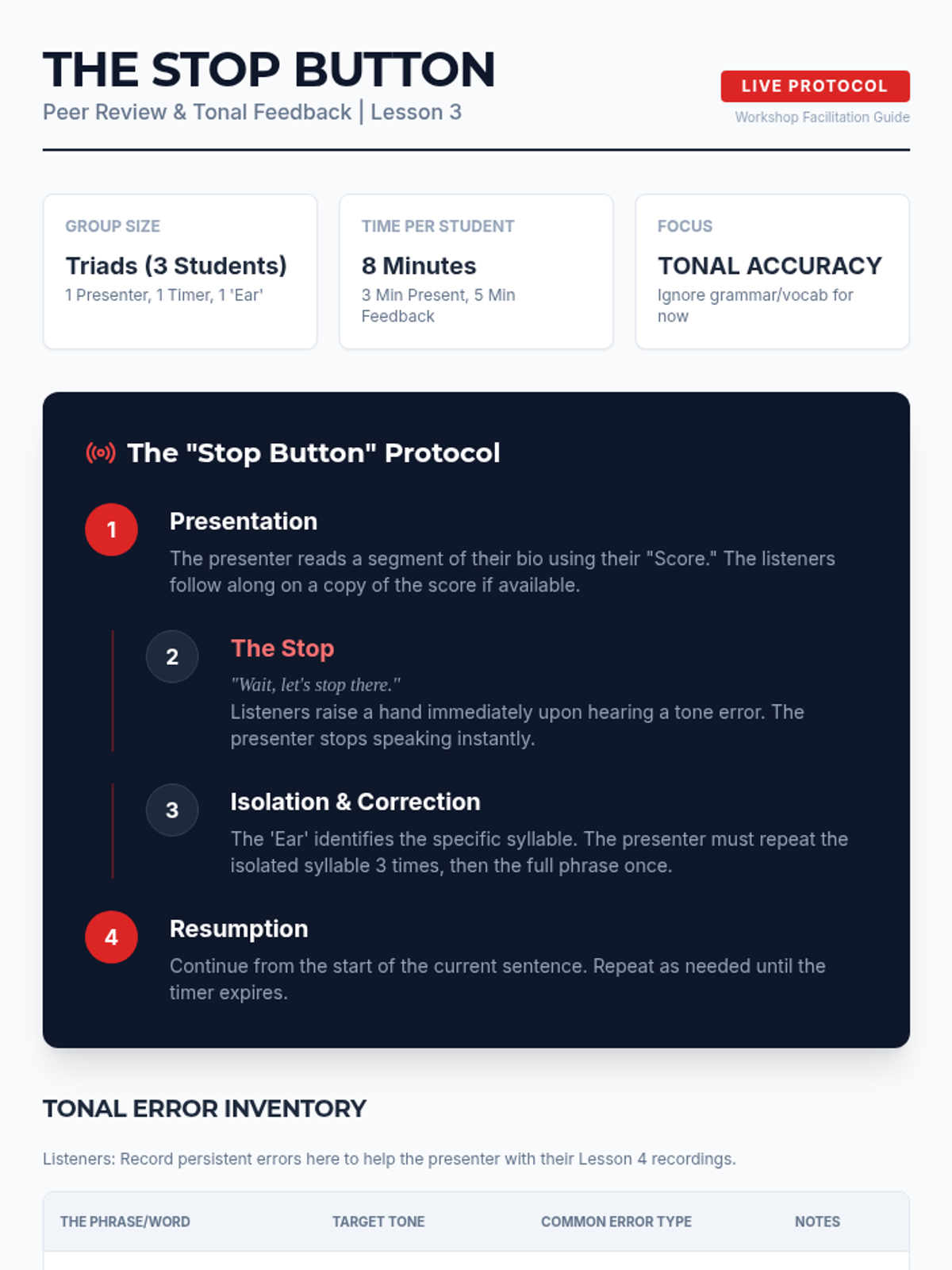
A peer-feedback workshop where students present segments of their bio and receive immediate tonal corrections.
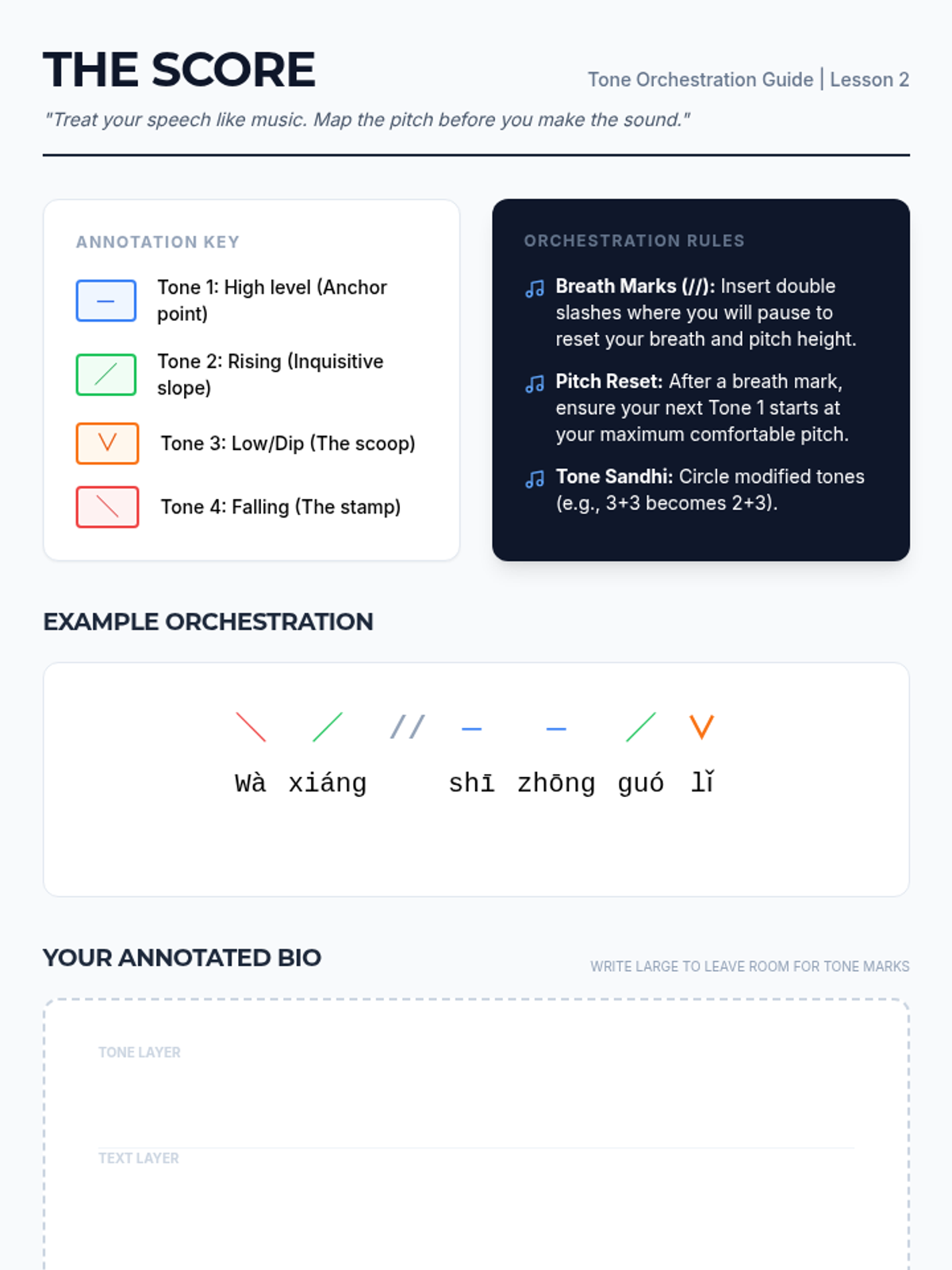
Students treat their written introduction like a musical score, marking up text with visual cues for pitch height and flow.
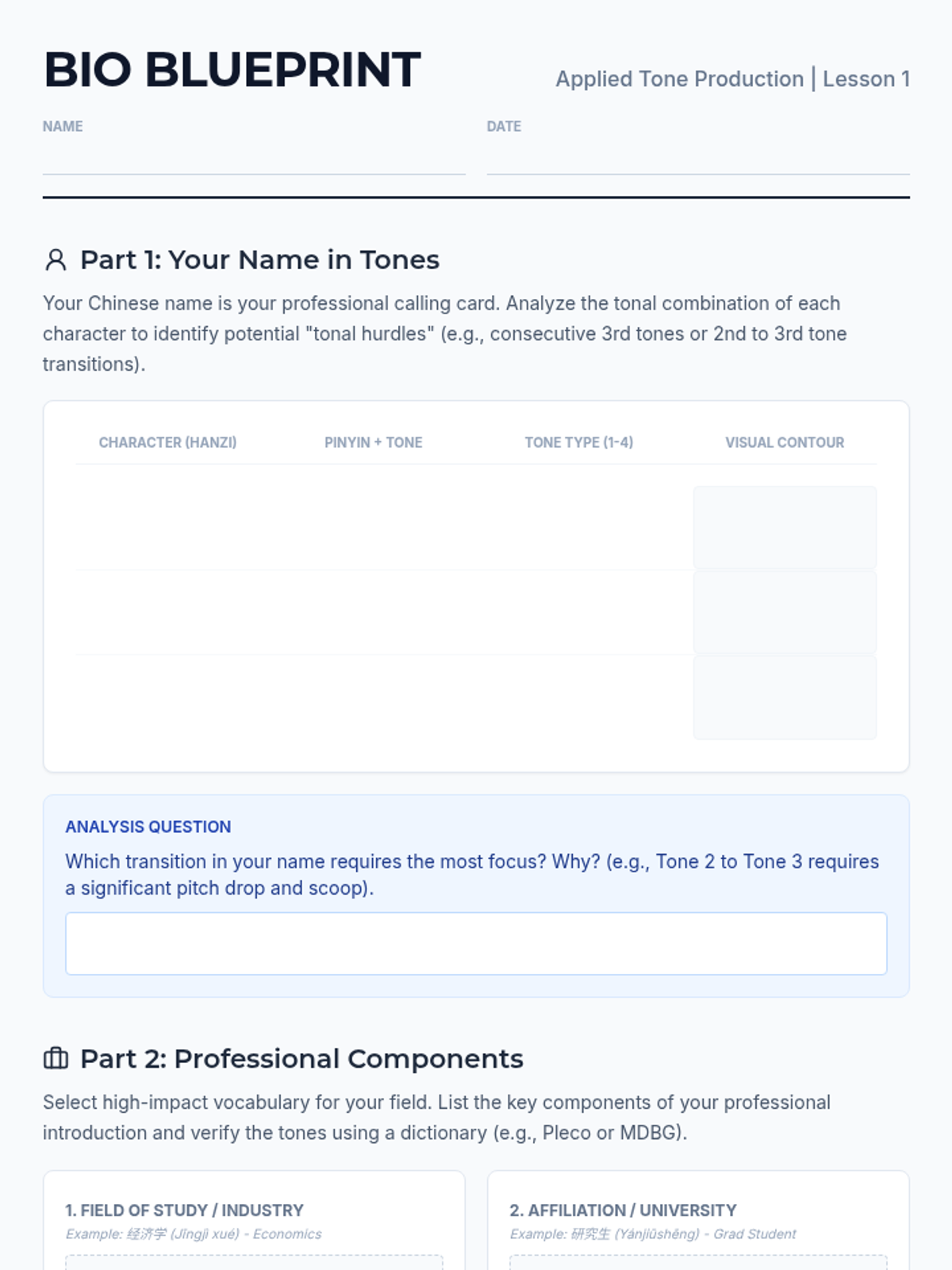
Students analyze professional introduction examples, select key vocabulary, and map the tonal requirements of their own names and affiliations.
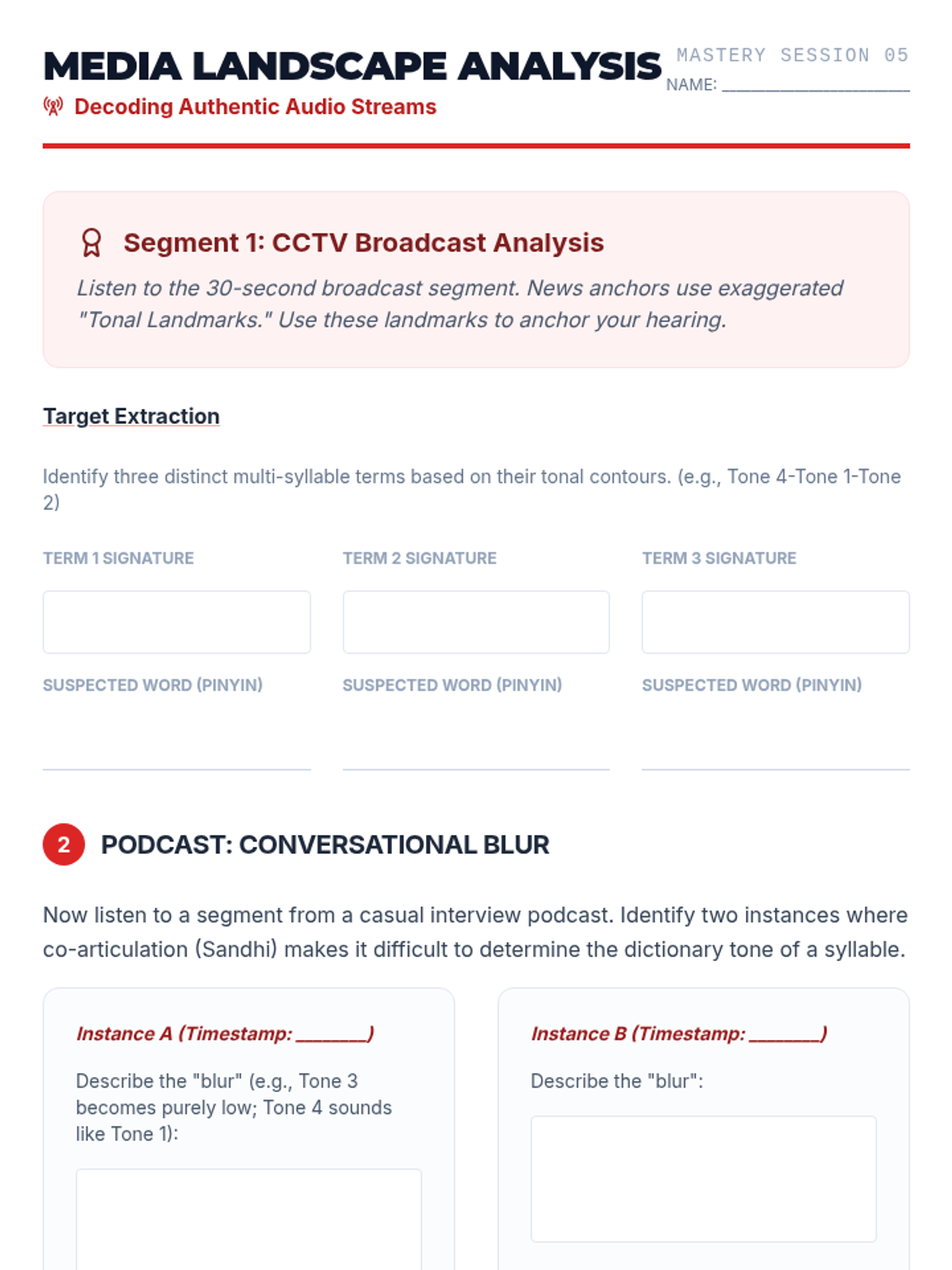
Applying tonal processing skills to authentic media sources, mapping the tonal landscape of natural, rapid speech.
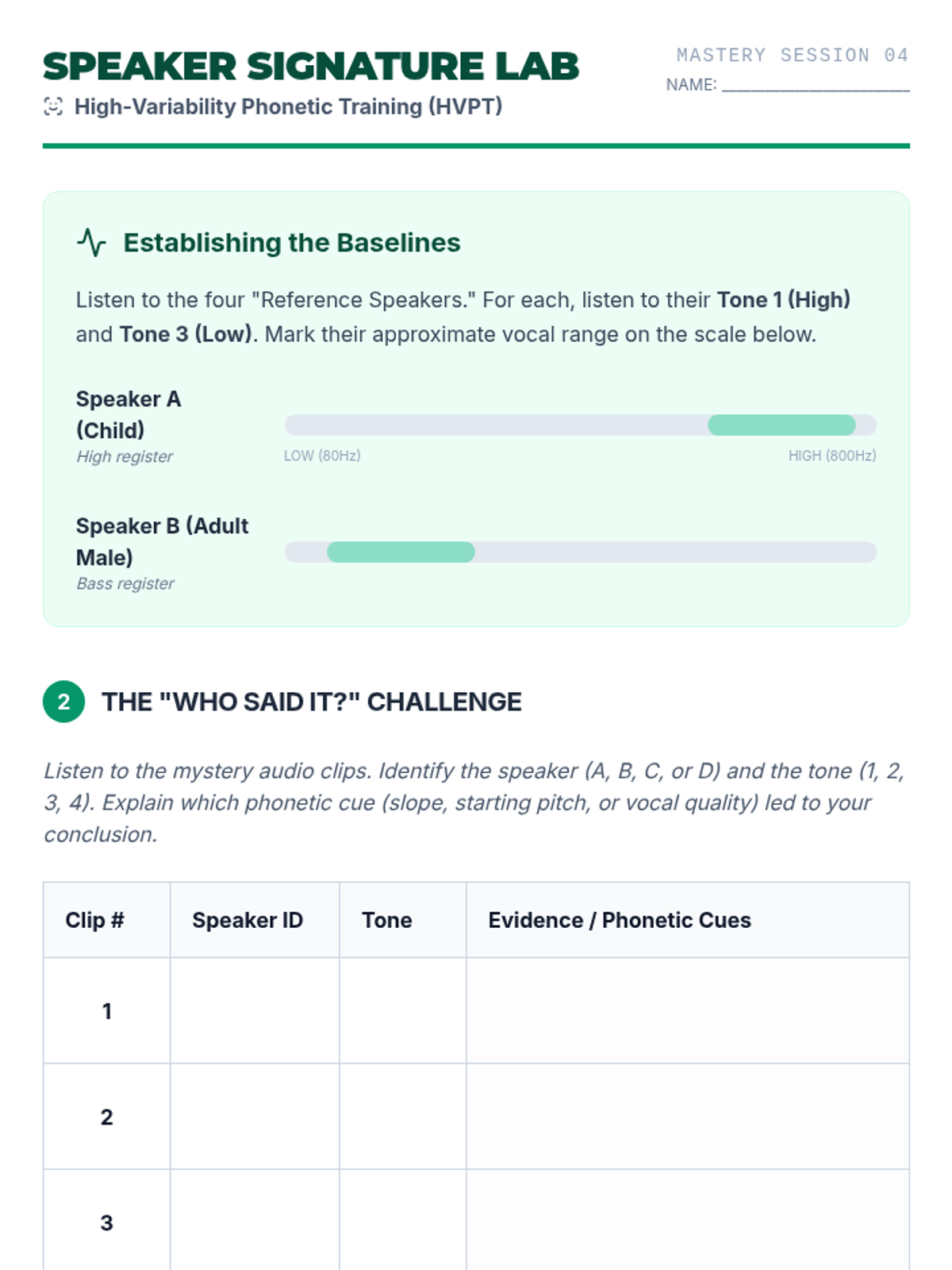
Training the ear to recognize tones across a wide variety of speaker types and vocal baselines to generalize phonetic knowledge.
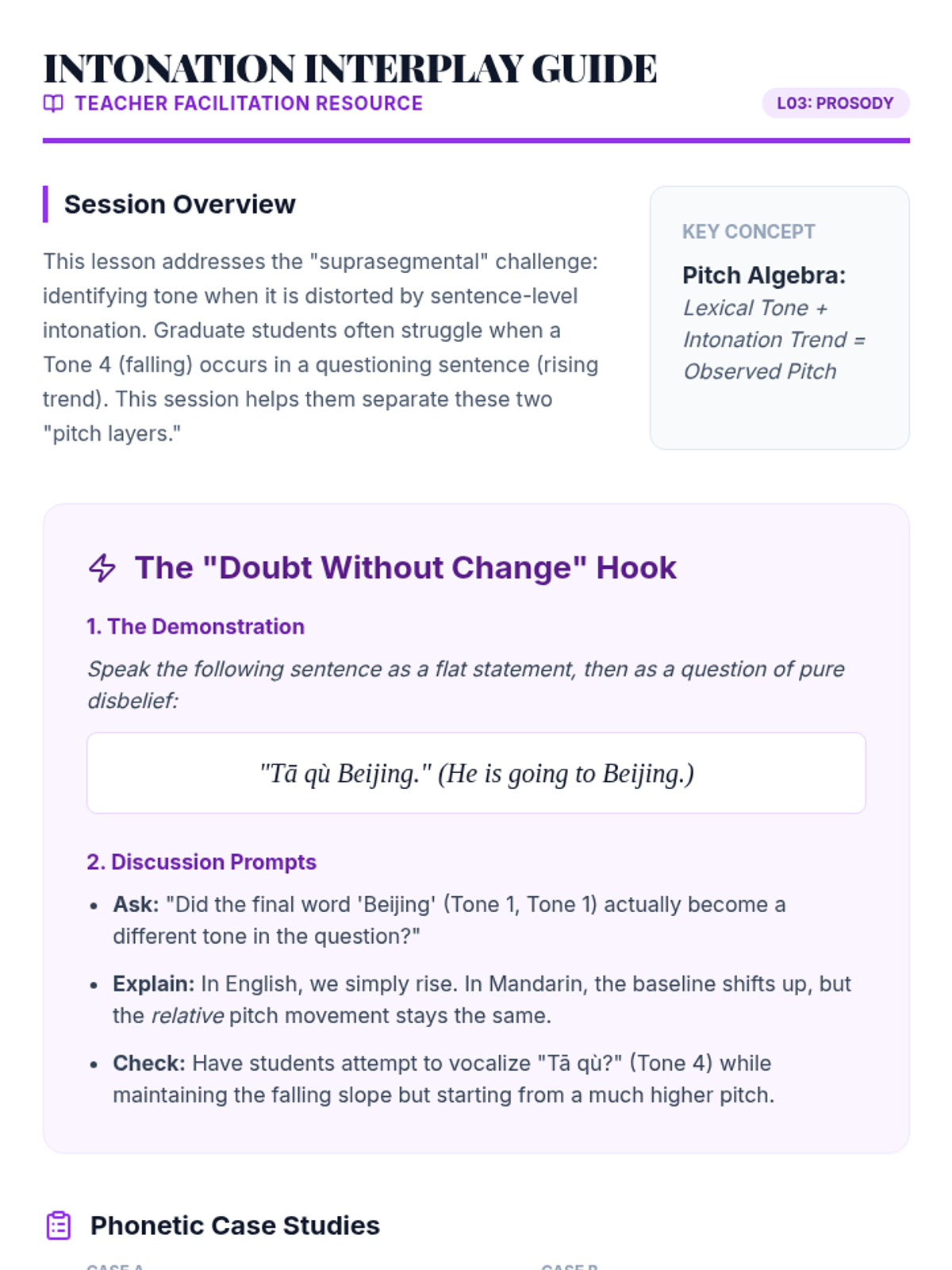
Exploring the relationship between lexical tones and sentence-level intonation, specifically how questions and emphasis interact with tone.
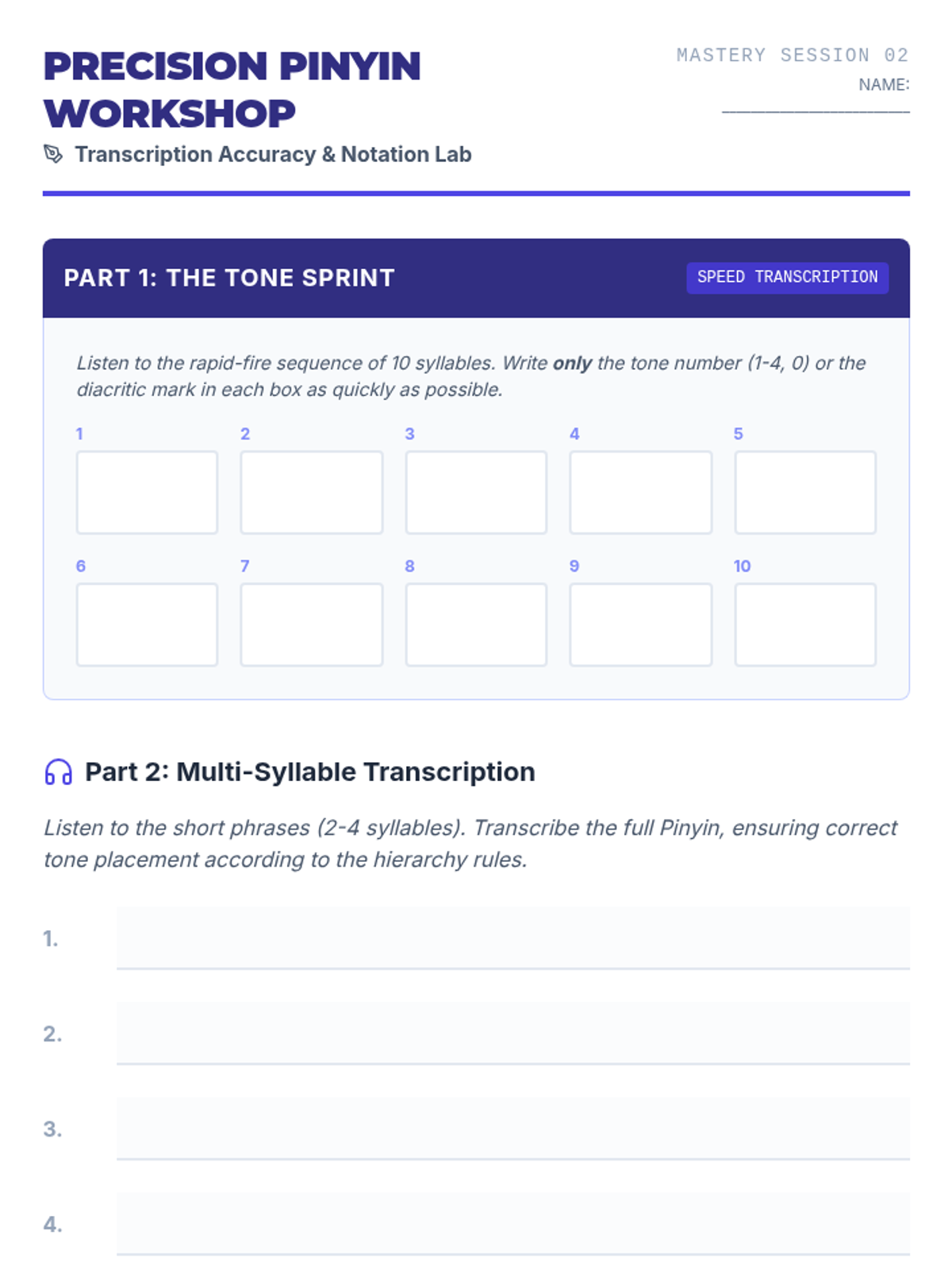
A rigorous workshop focusing on accurate Pinyin transcription of tones from audio stimuli, emphasizing detail and pattern recognition.
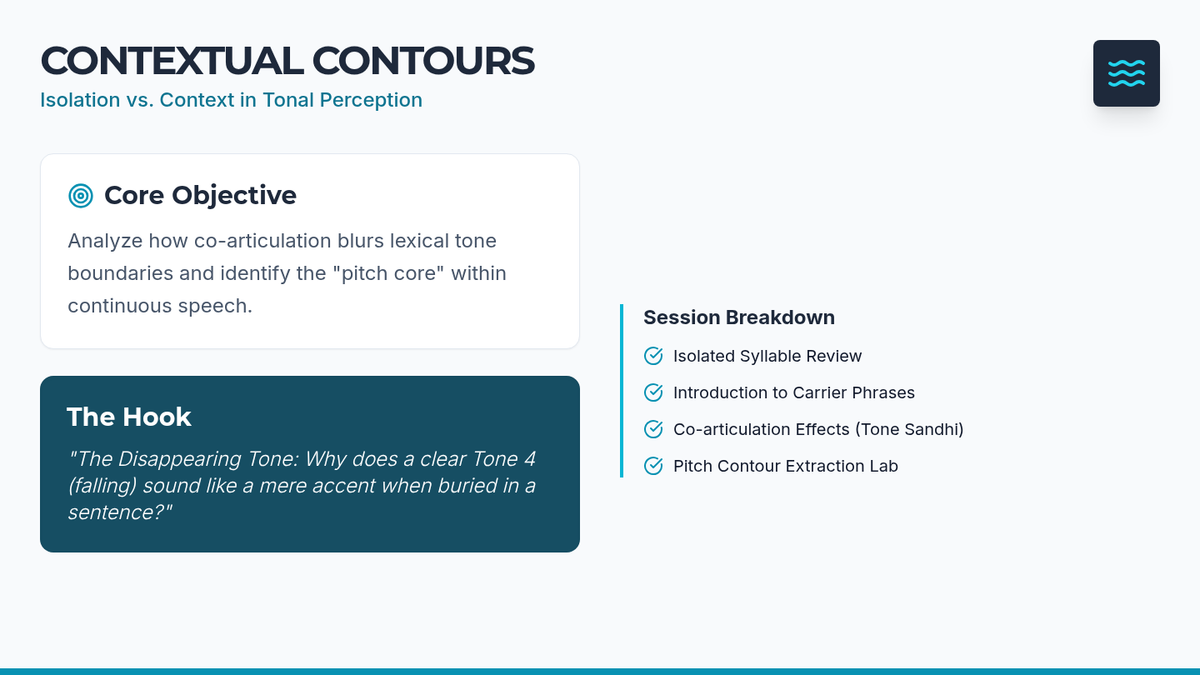
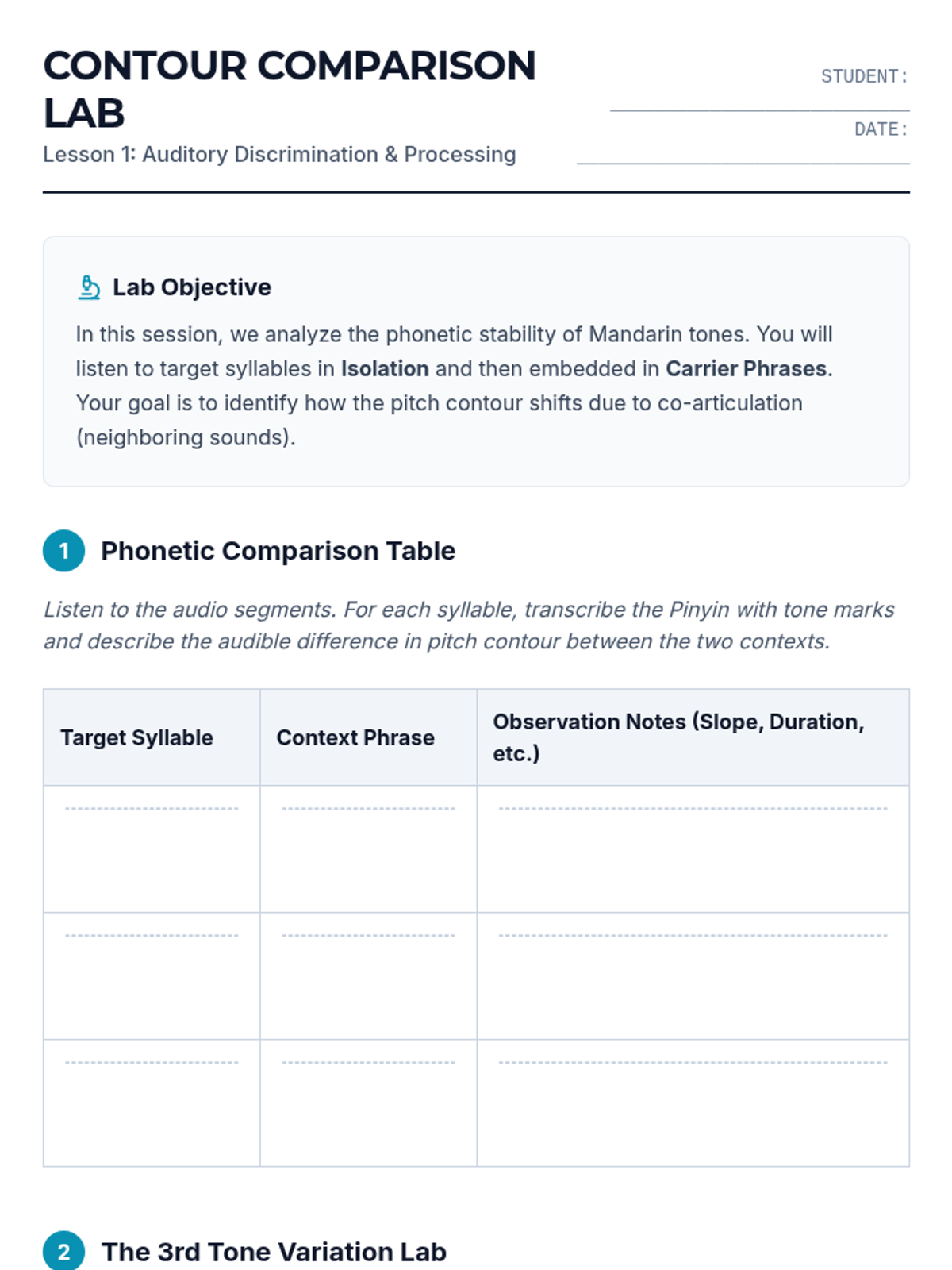
Students analyze the phonetic shifts of tones when moved from isolation into carrier phrases, focusing on co-articulation and pitch contour core.
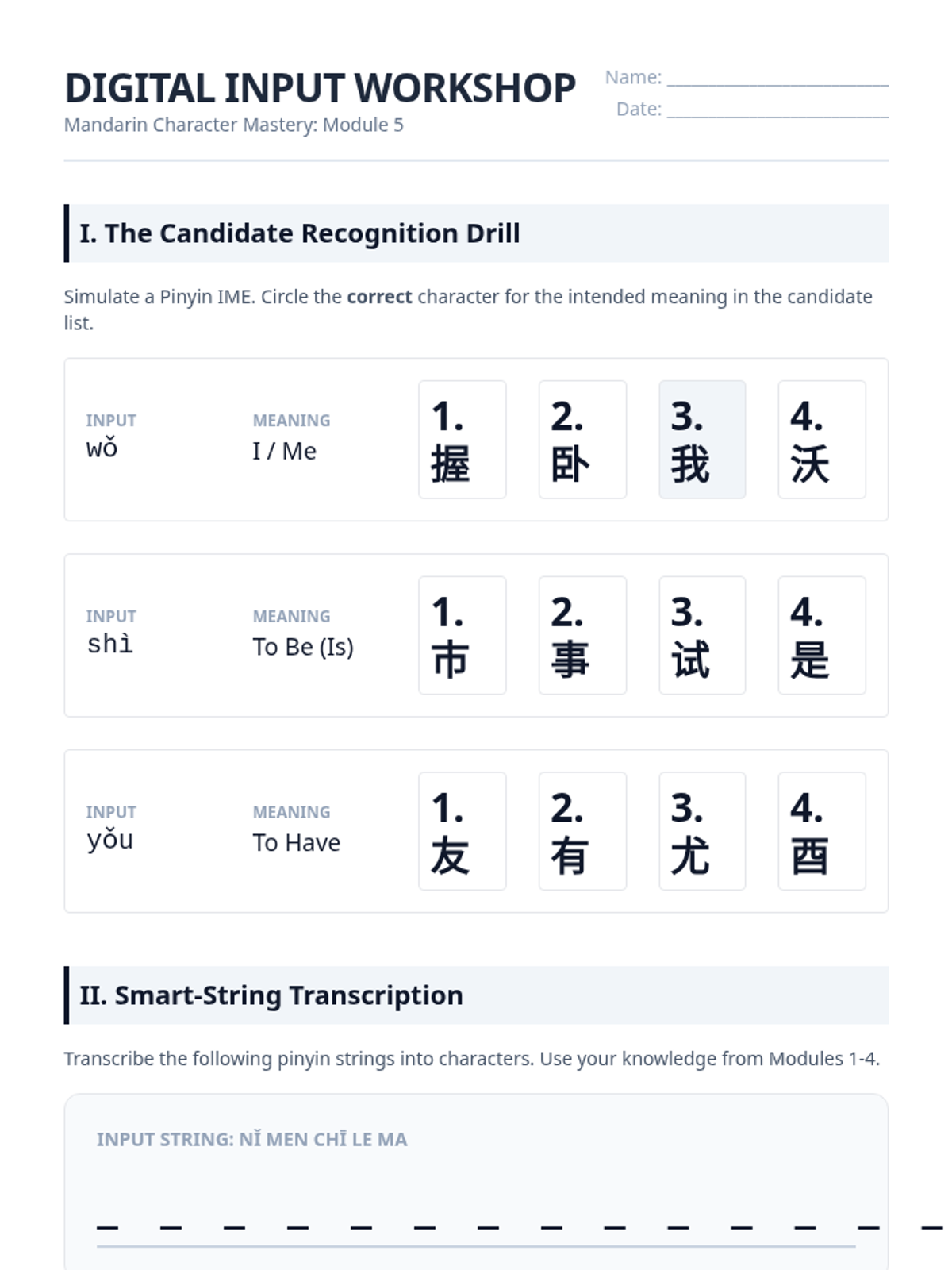
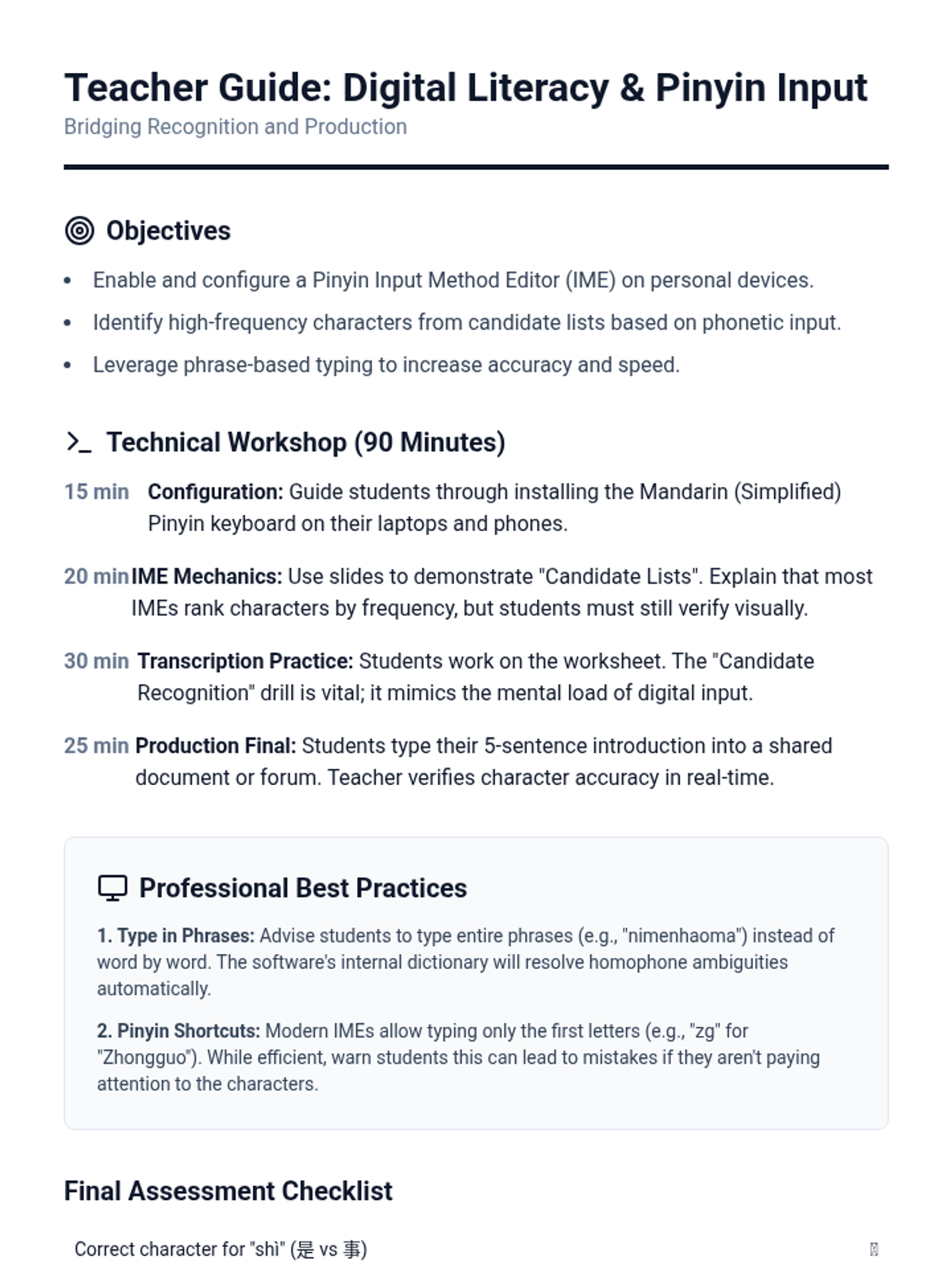
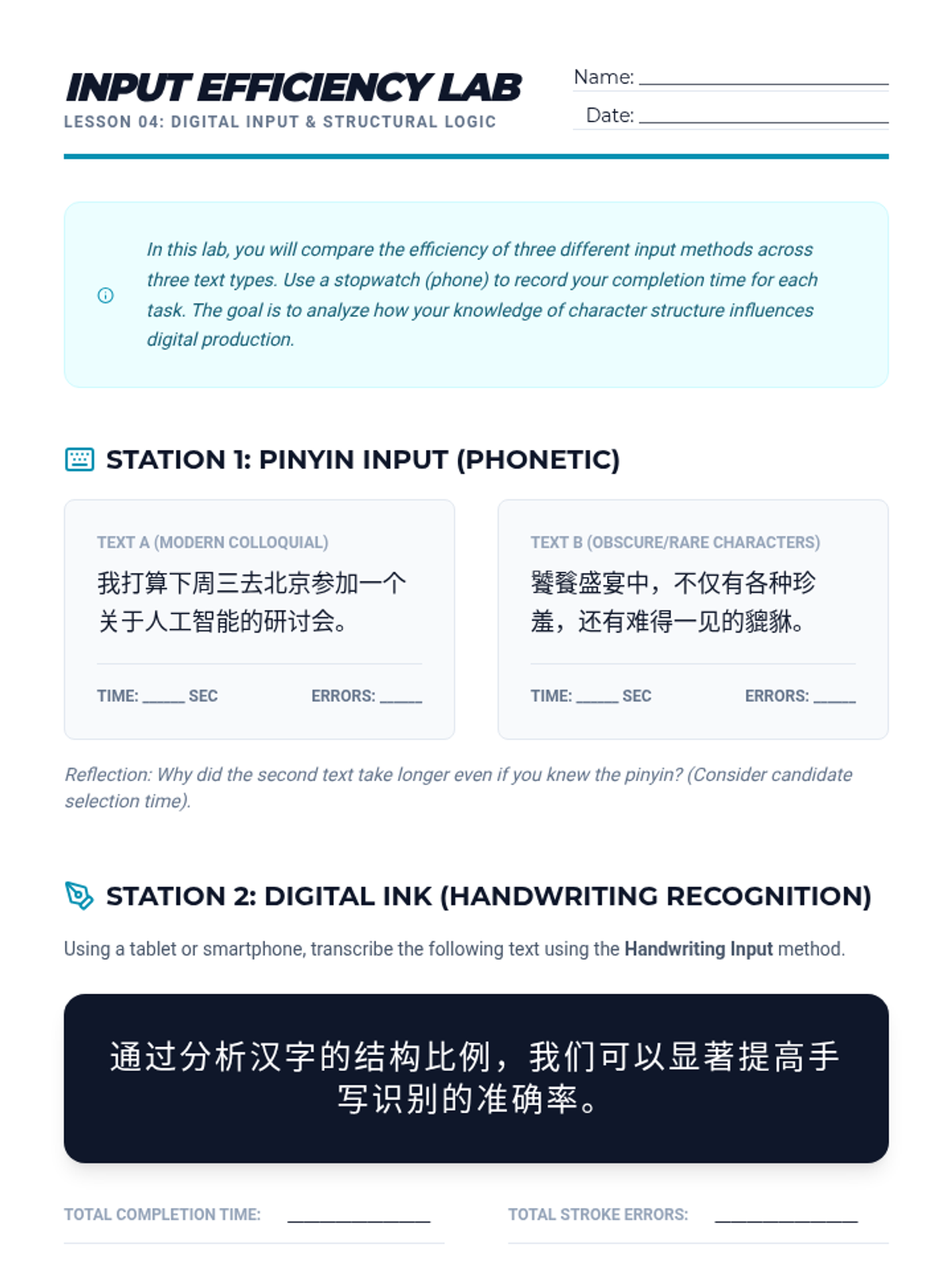
Recognizing the professional needs of graduate students, this lesson focuses on typing characters using Pinyin input methods on computers and smartphones. Students learn to recognize characters from predictive text lists, bridging the gap between phonetic knowledge and character recognition.
Learners acquire characters related to cardinal directions, spatial positioning (up, down, inside), and time markers (day, month, year). Activities include reading schedules and describing the relative location of objects.
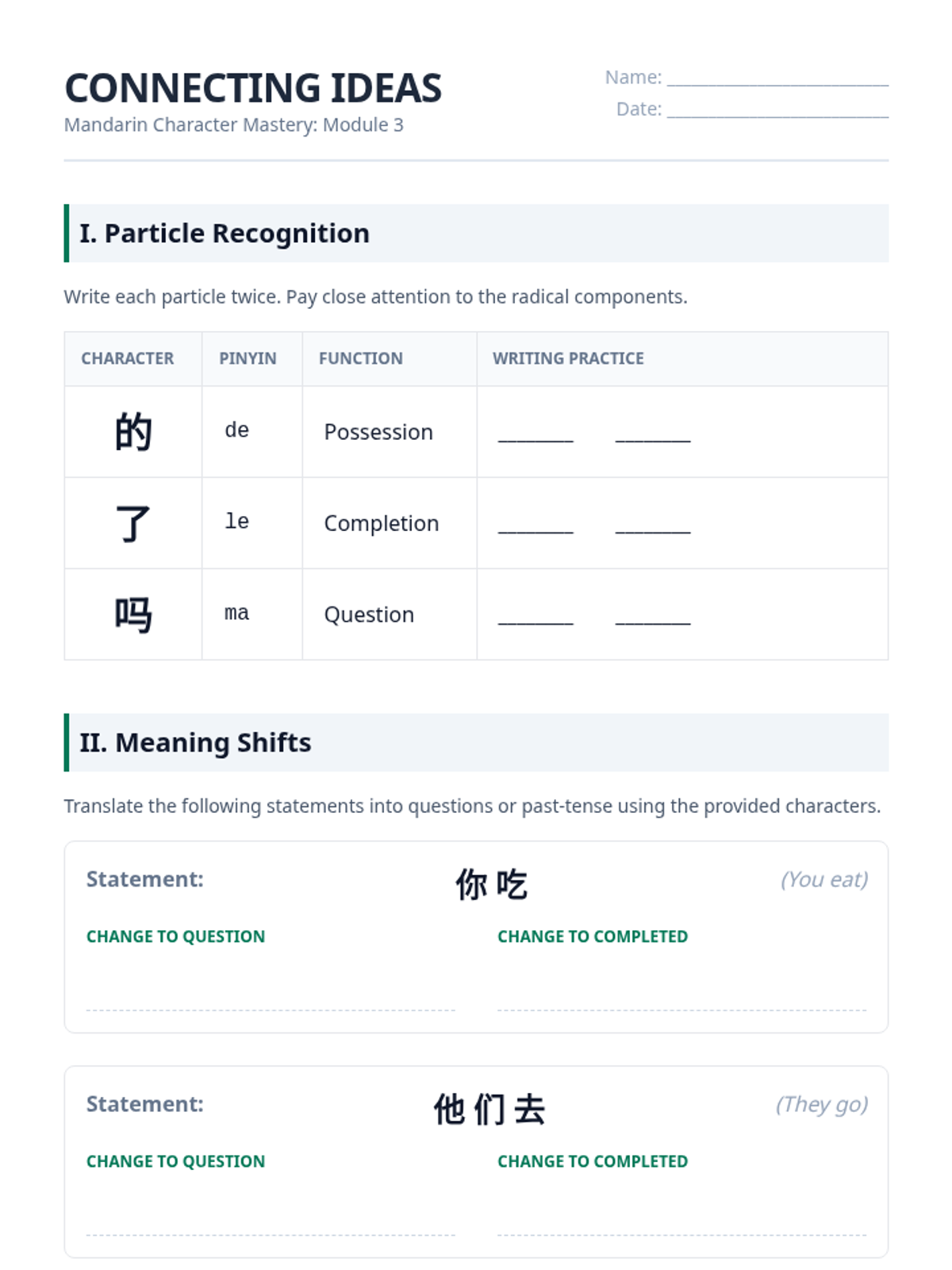
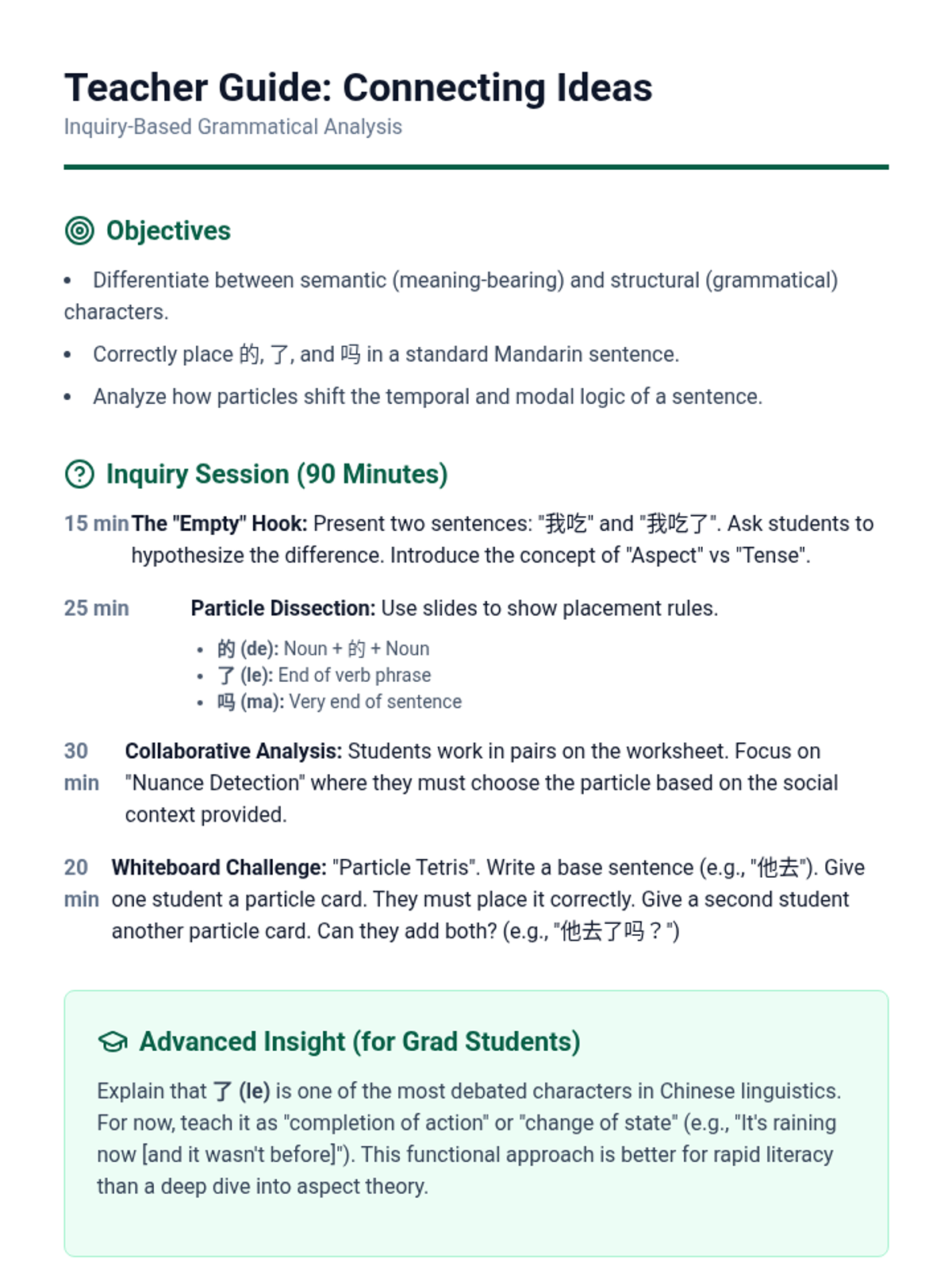
Students examine the function of 'empty words'—structural particles like 'de', 'le', and 'ma' that carry grammatical weight rather than semantic meaning. Through sentence analysis, learners understand how these characters alter the tense, possession, and mood of a phrase.
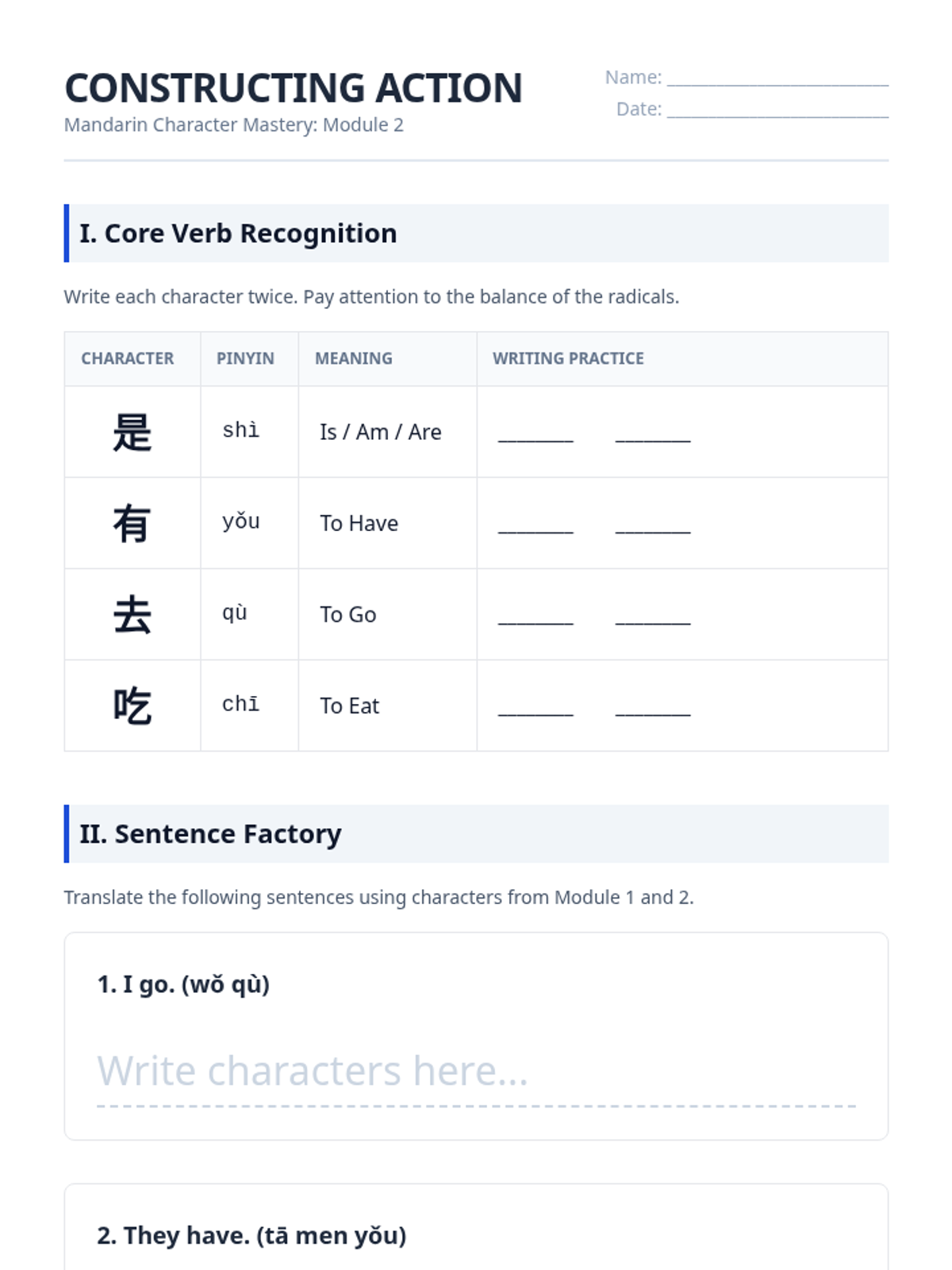
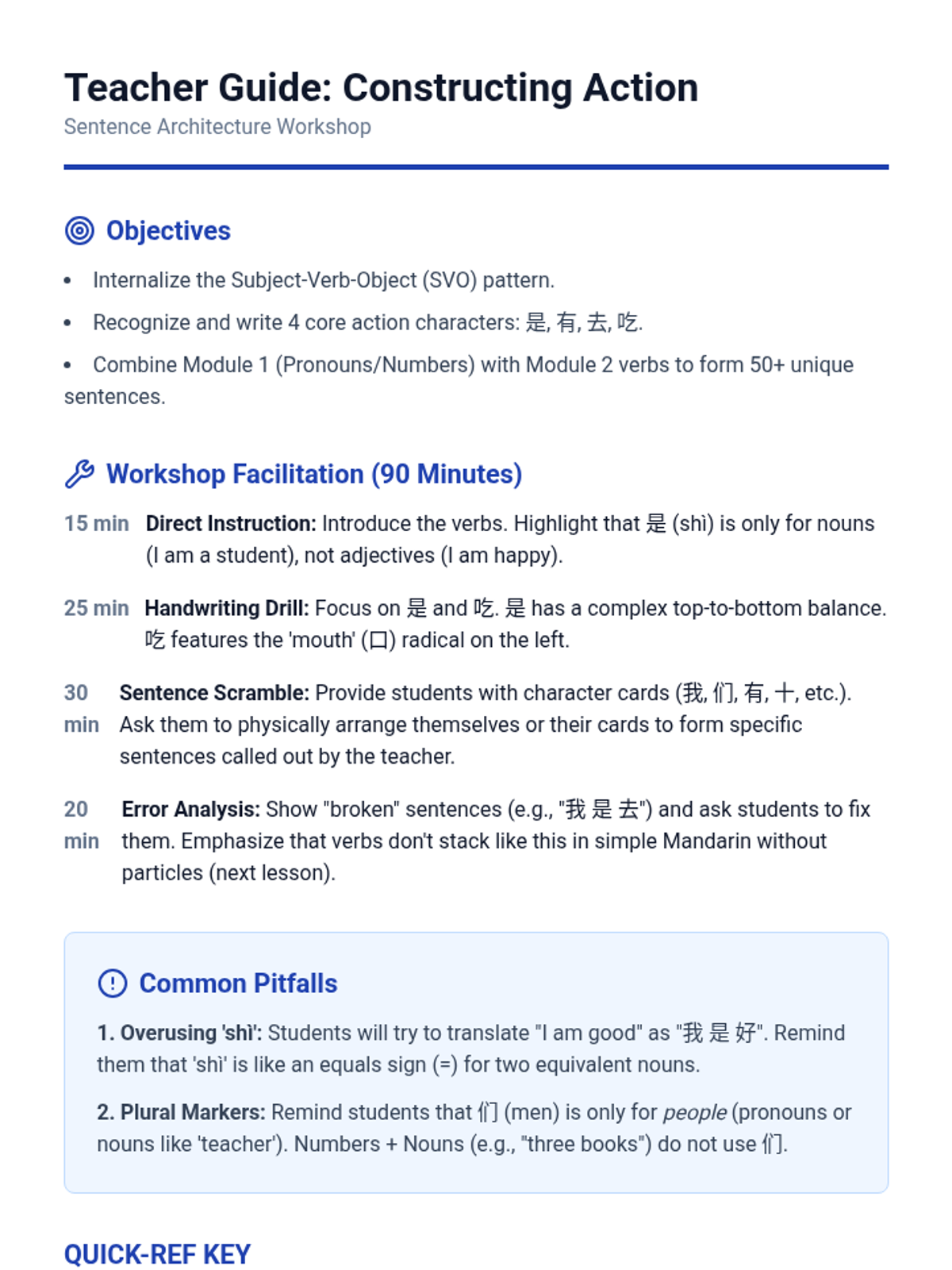
Introduces high-frequency verbs such as 'to comprise/is', 'to have', 'to go', and 'to eat'. Students practice placing these characters into Subject-Verb-Object structures to form complete declarative sentences.
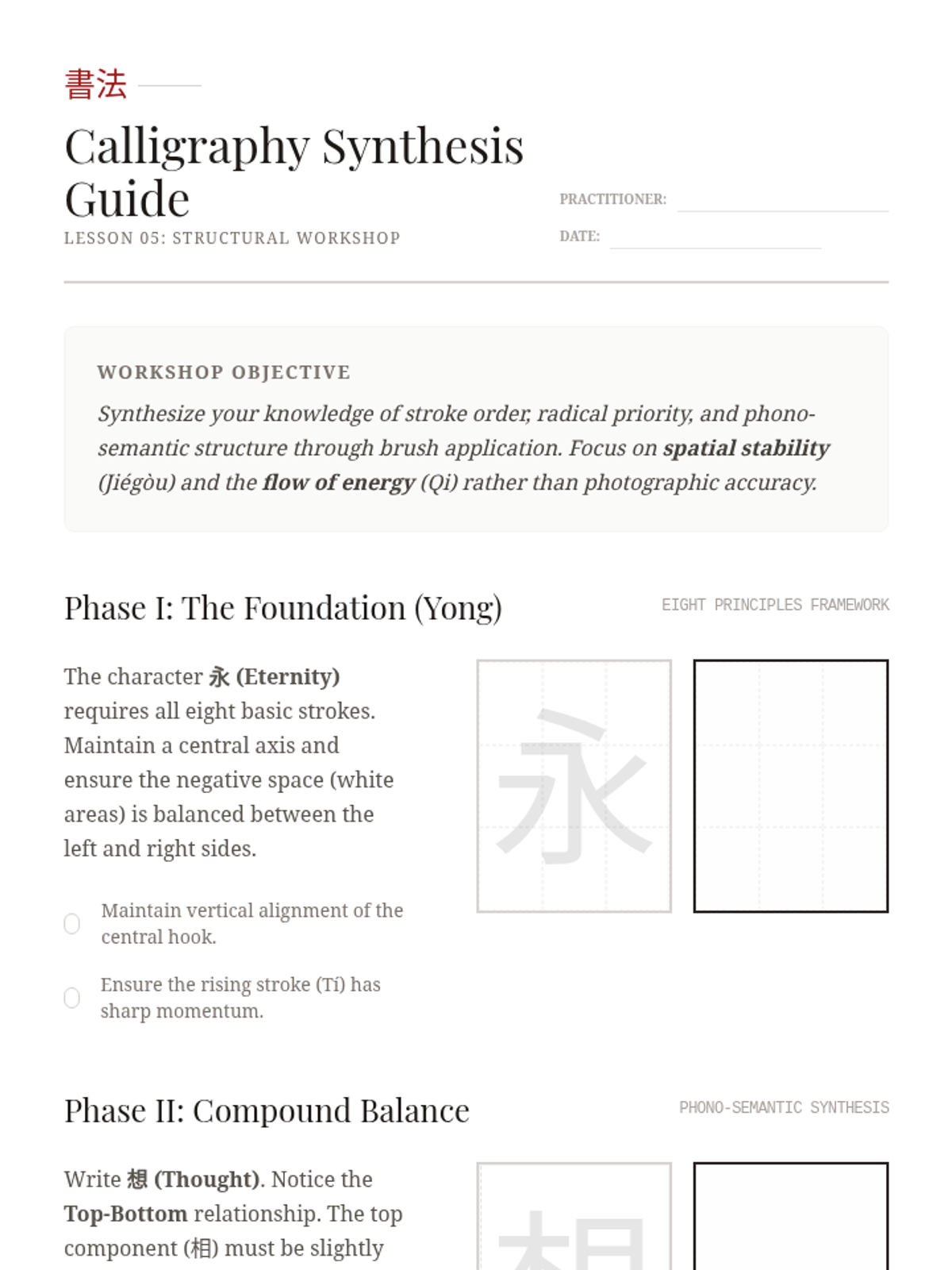
A culminating workshop applying theoretical knowledge of structure, balance, and 'qi' through brush calligraphy. Reinforces spatial relationships and character composition.
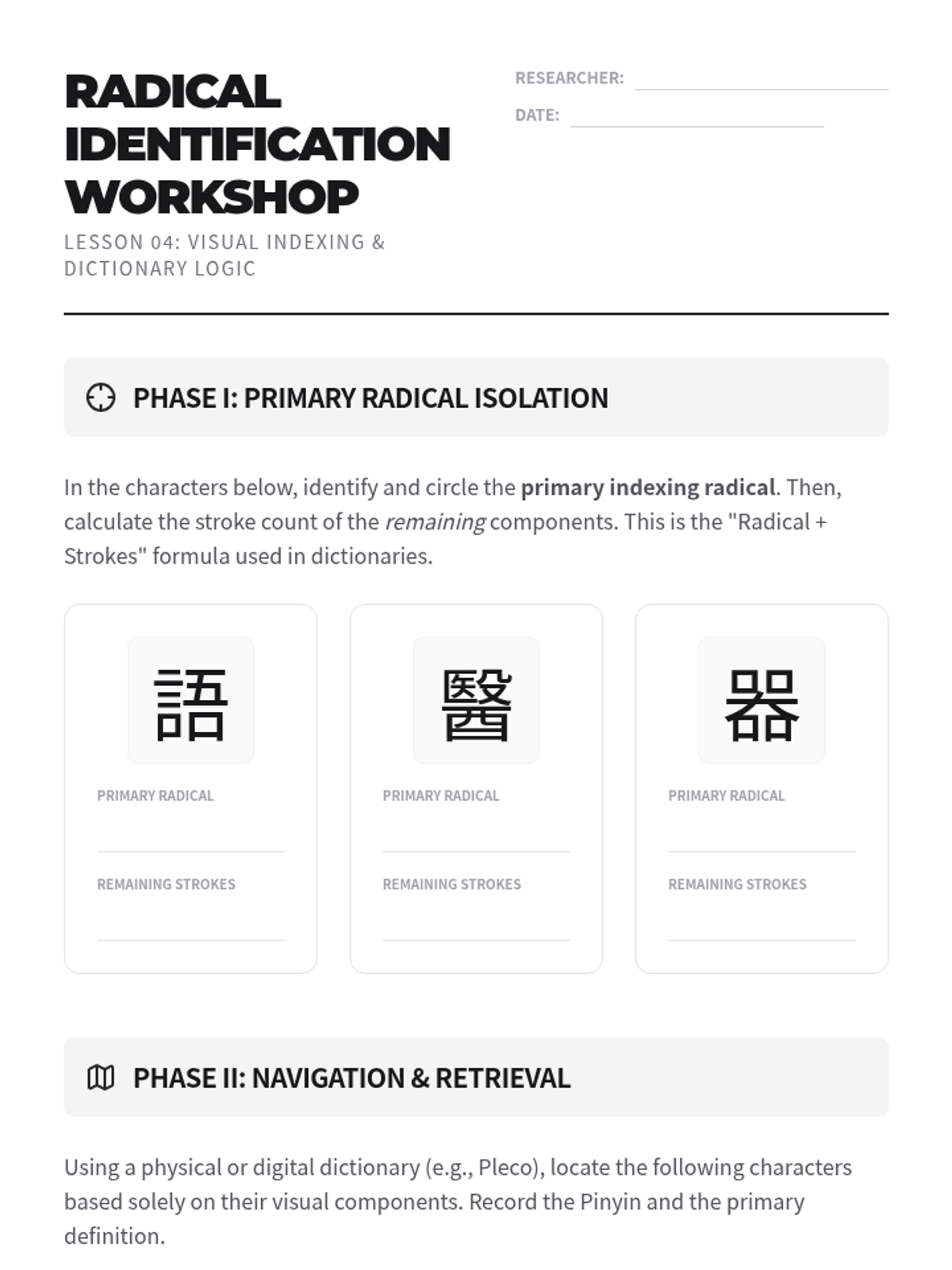
Mastery of the 214 Kangxi radicals and the logic of dictionary organization. Students practice retrieving information from physical and digital resources using visual components.
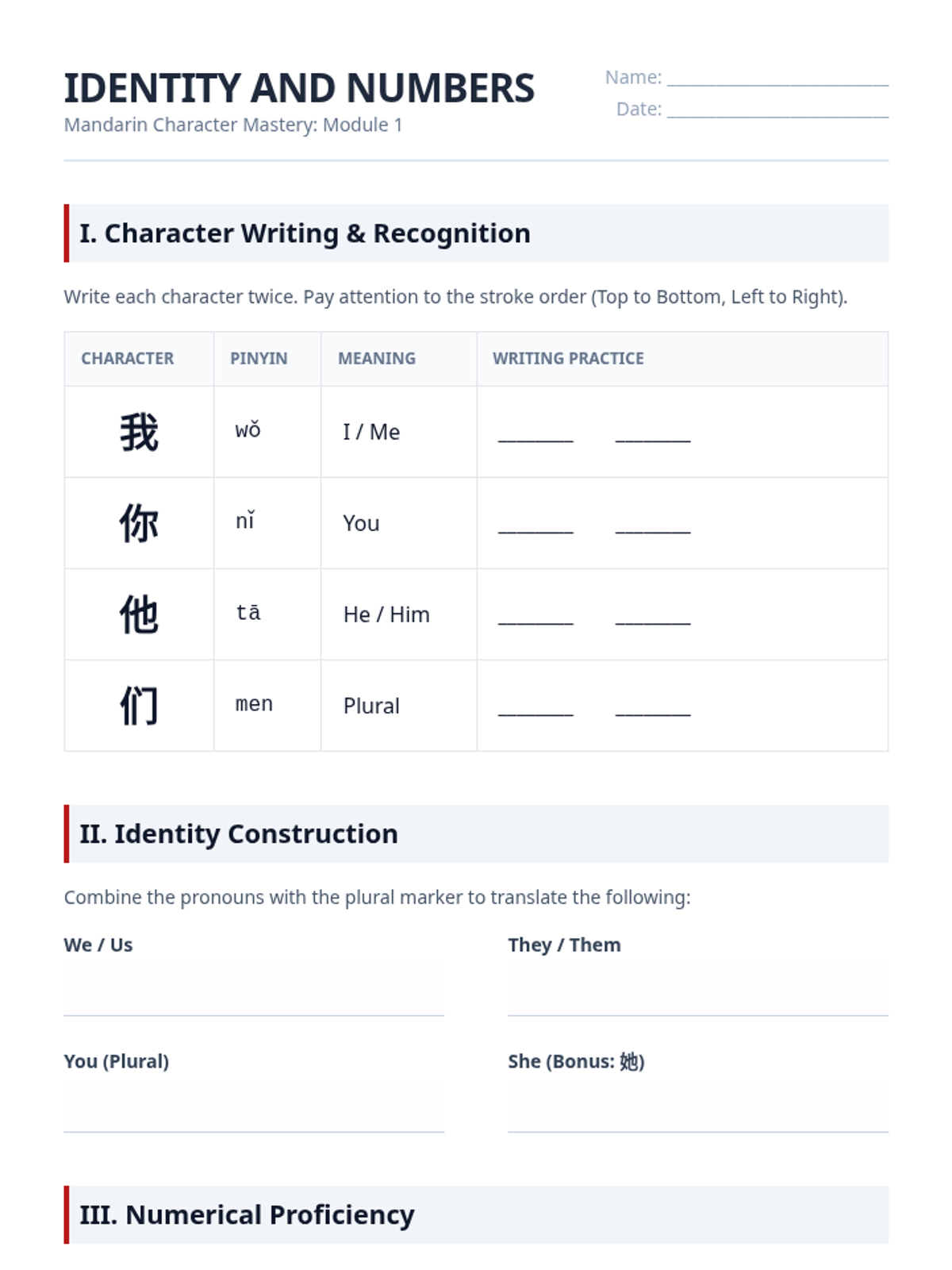
Focuses on the rapid mastery of personal pronouns and the numerical system to express identity, dates, and basic group concepts.
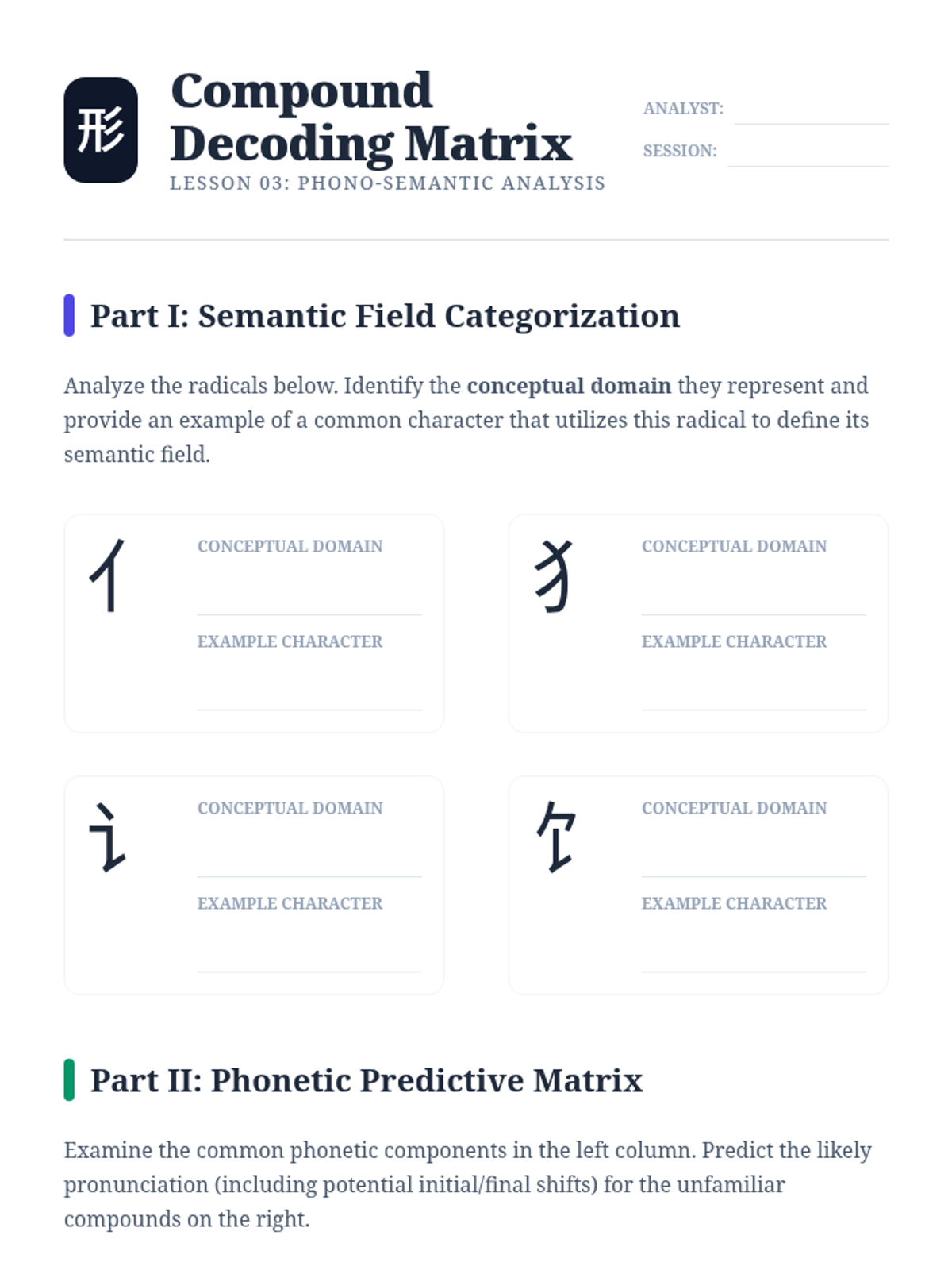
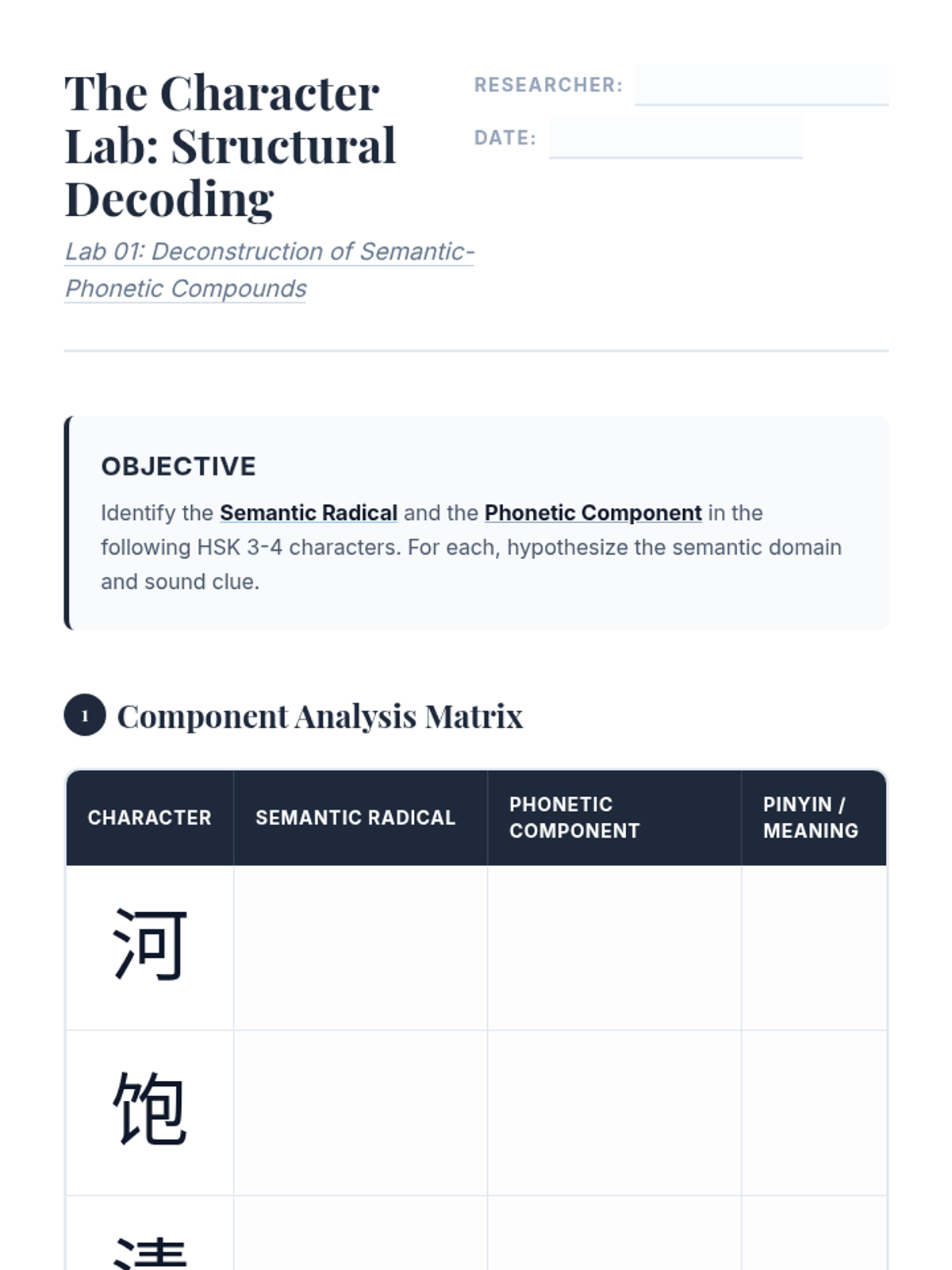
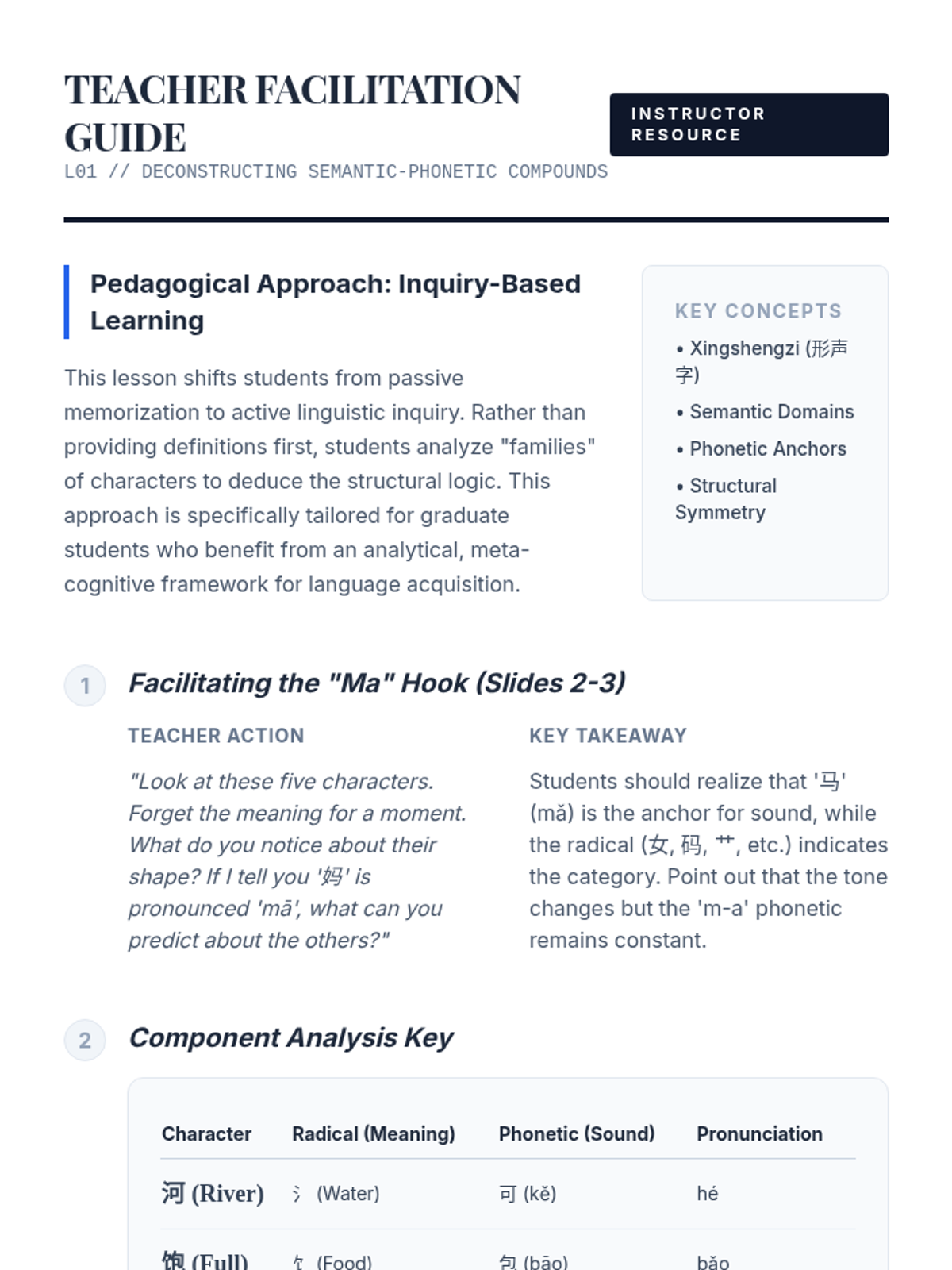
Focuses on phono-semantic compounds, identifying how semantic components suggest meaning and phonetic components suggest sound. Develops predictive skills for decoding unfamiliar characters.
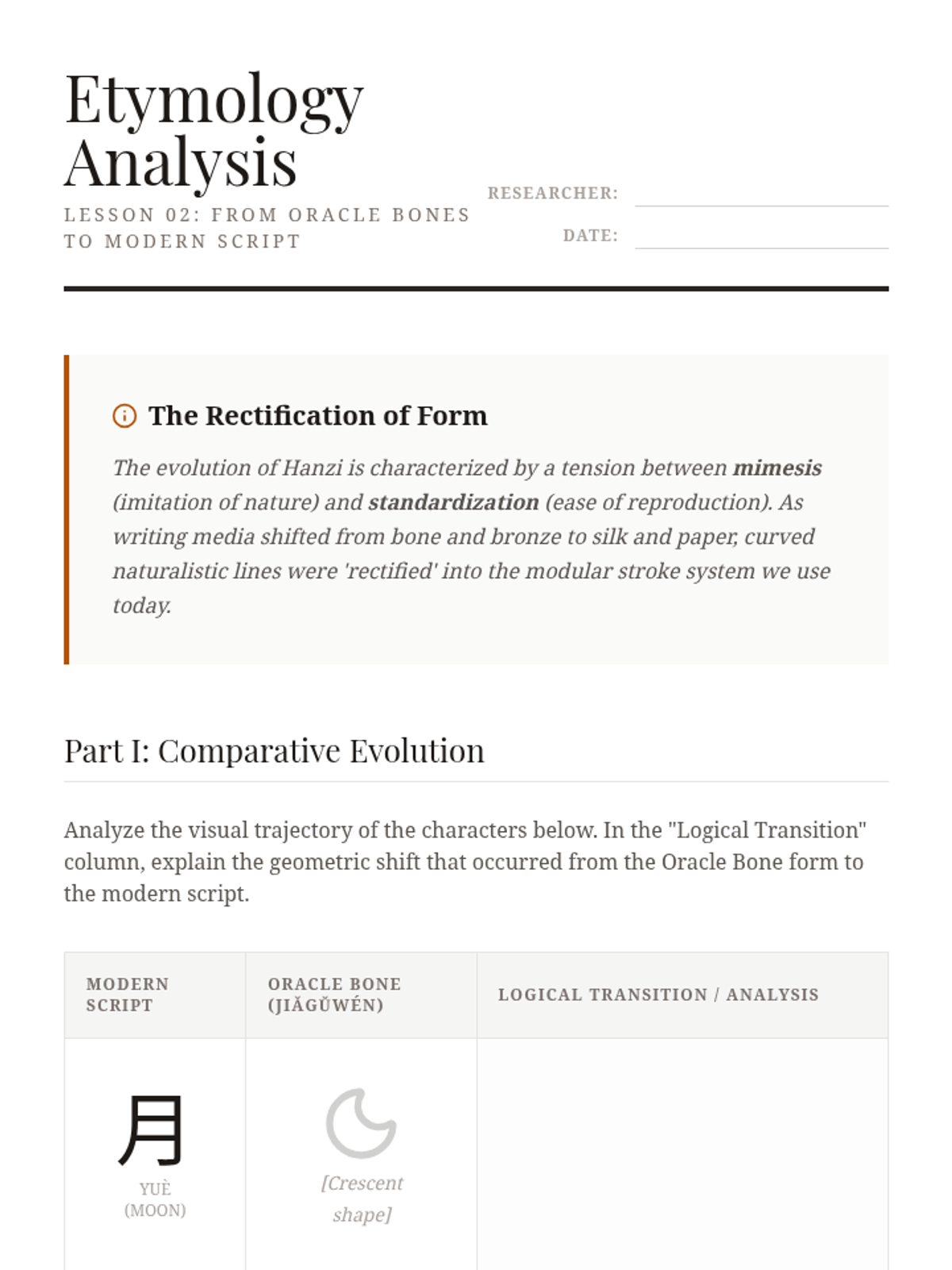
Learners explore the evolution of pictographs and ideographs from ancient oracle bone scripts to modern forms. Focuses on the visual representation of physical and abstract concepts.
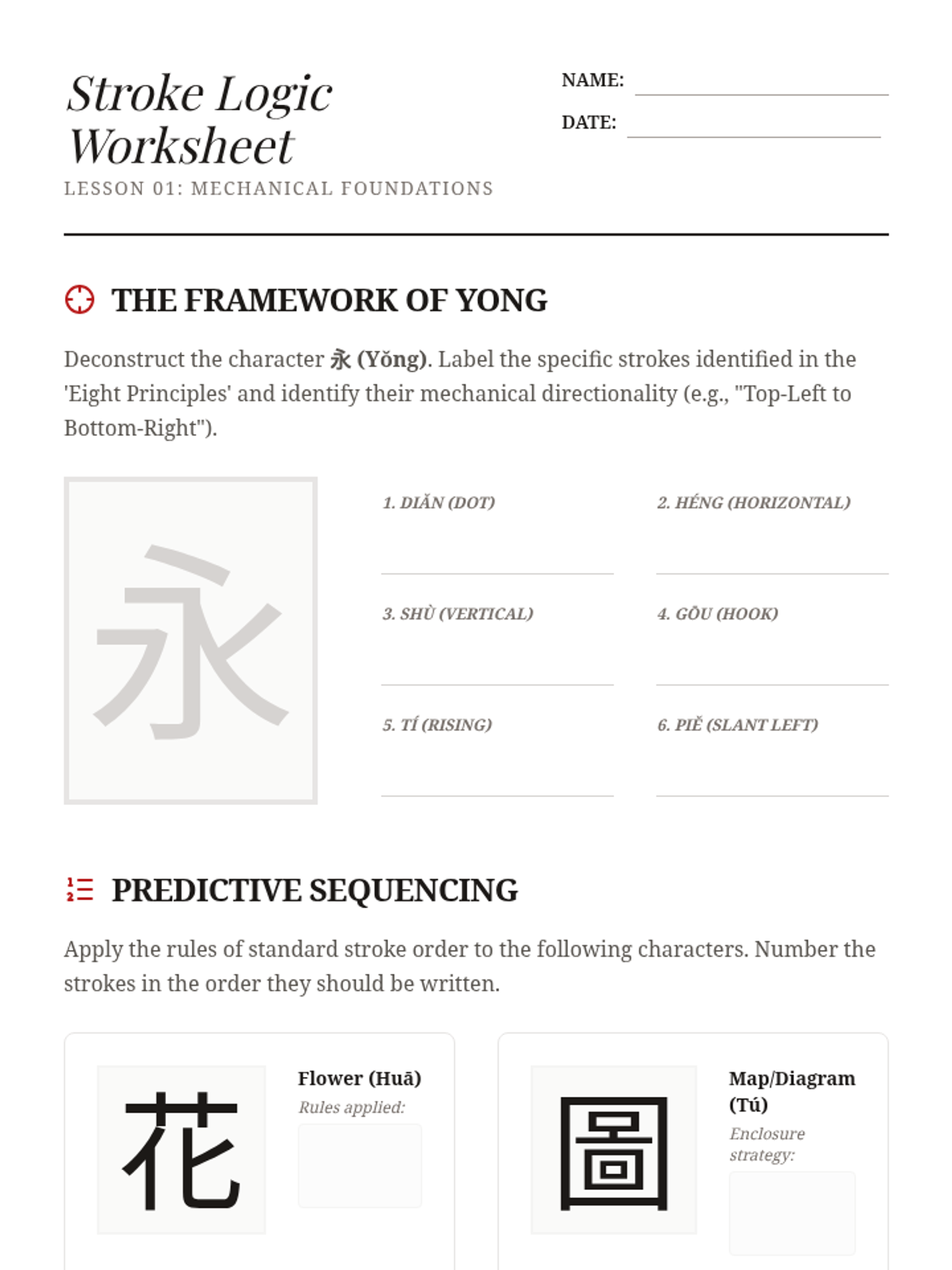
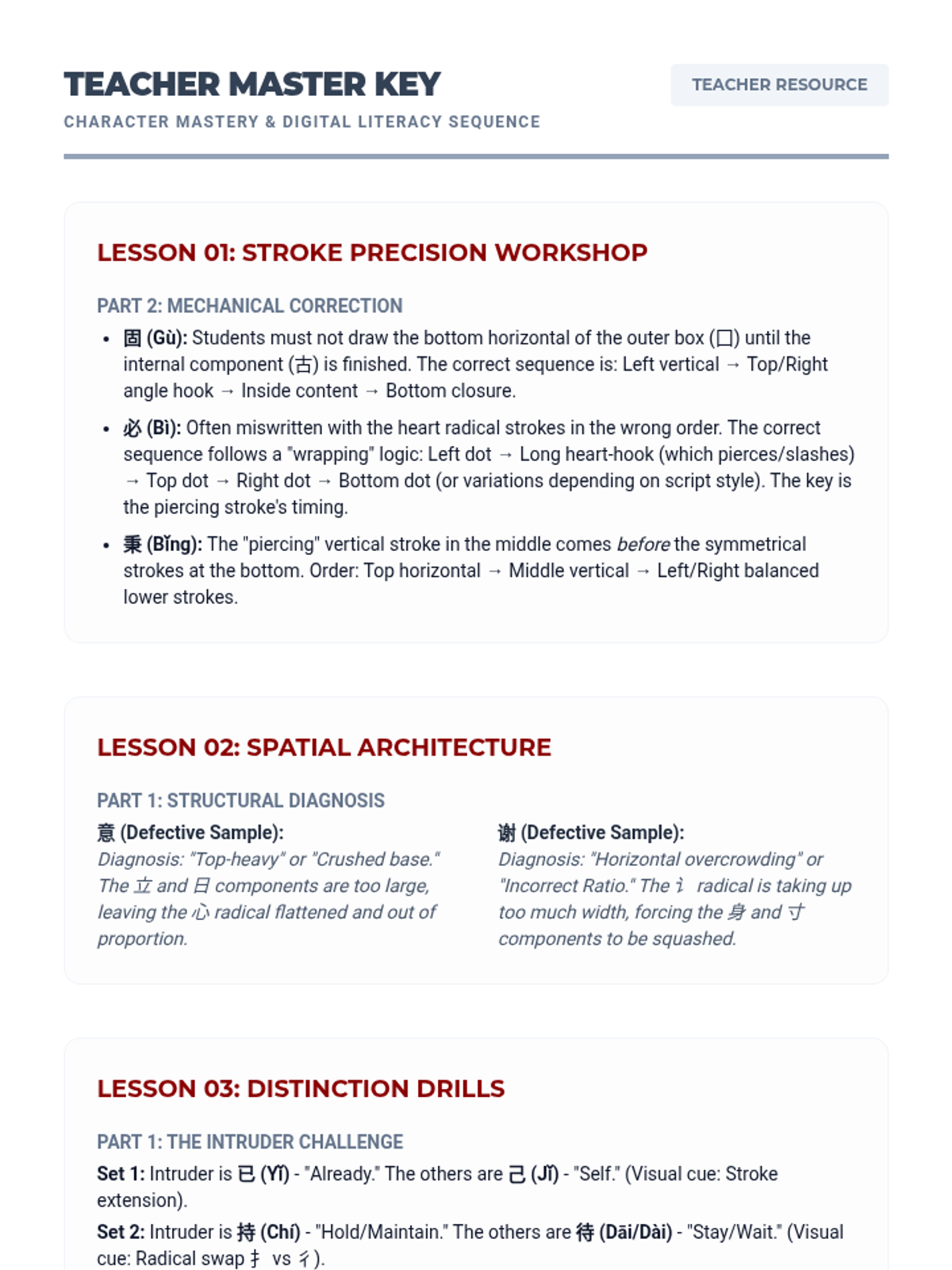
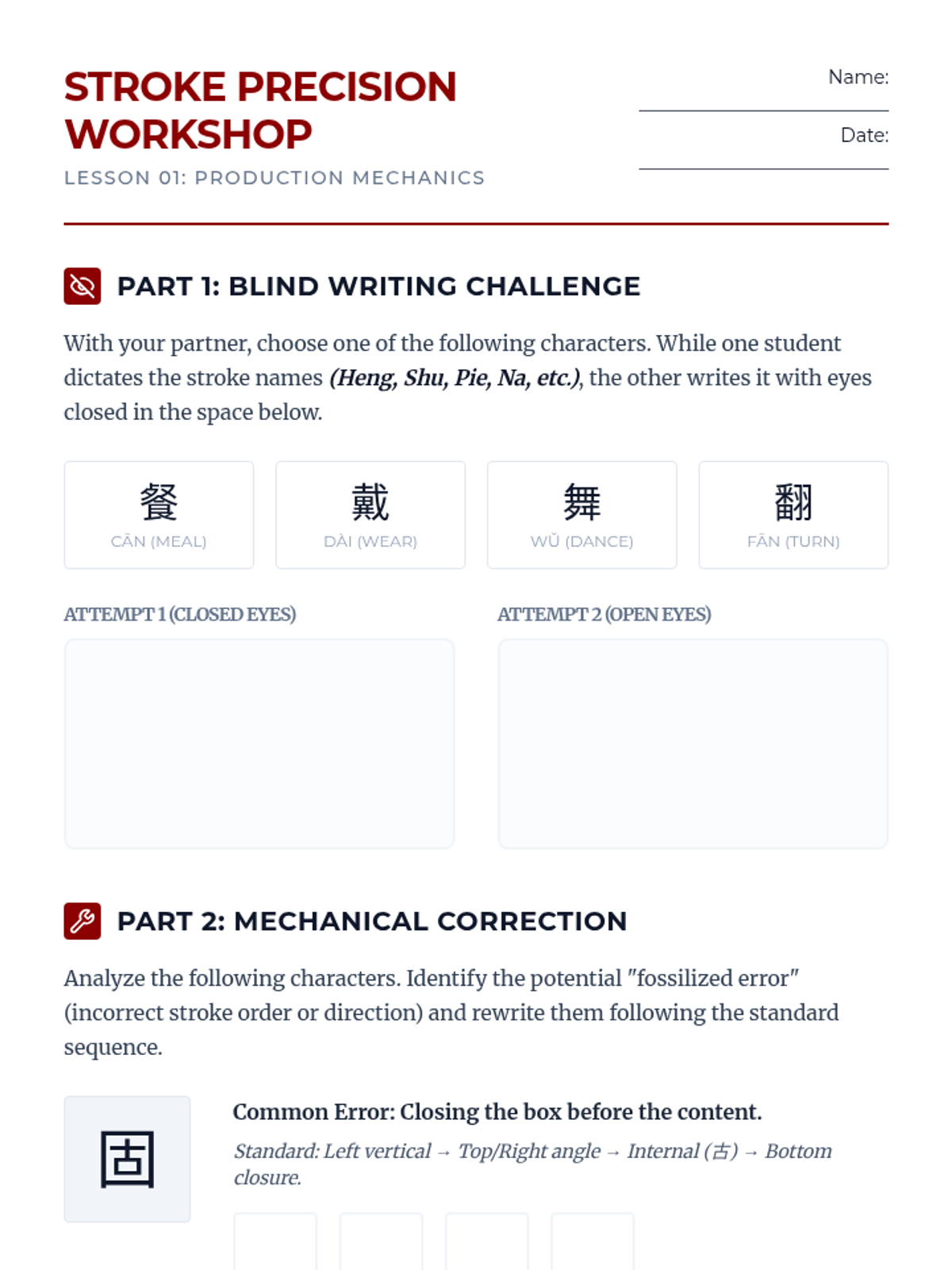
Students analyze the standard rules of stroke order and directionality using the 'Eight Principles of Yong' framework. Focuses on the mechanical logic that ensures fluid writing and digital recognition.
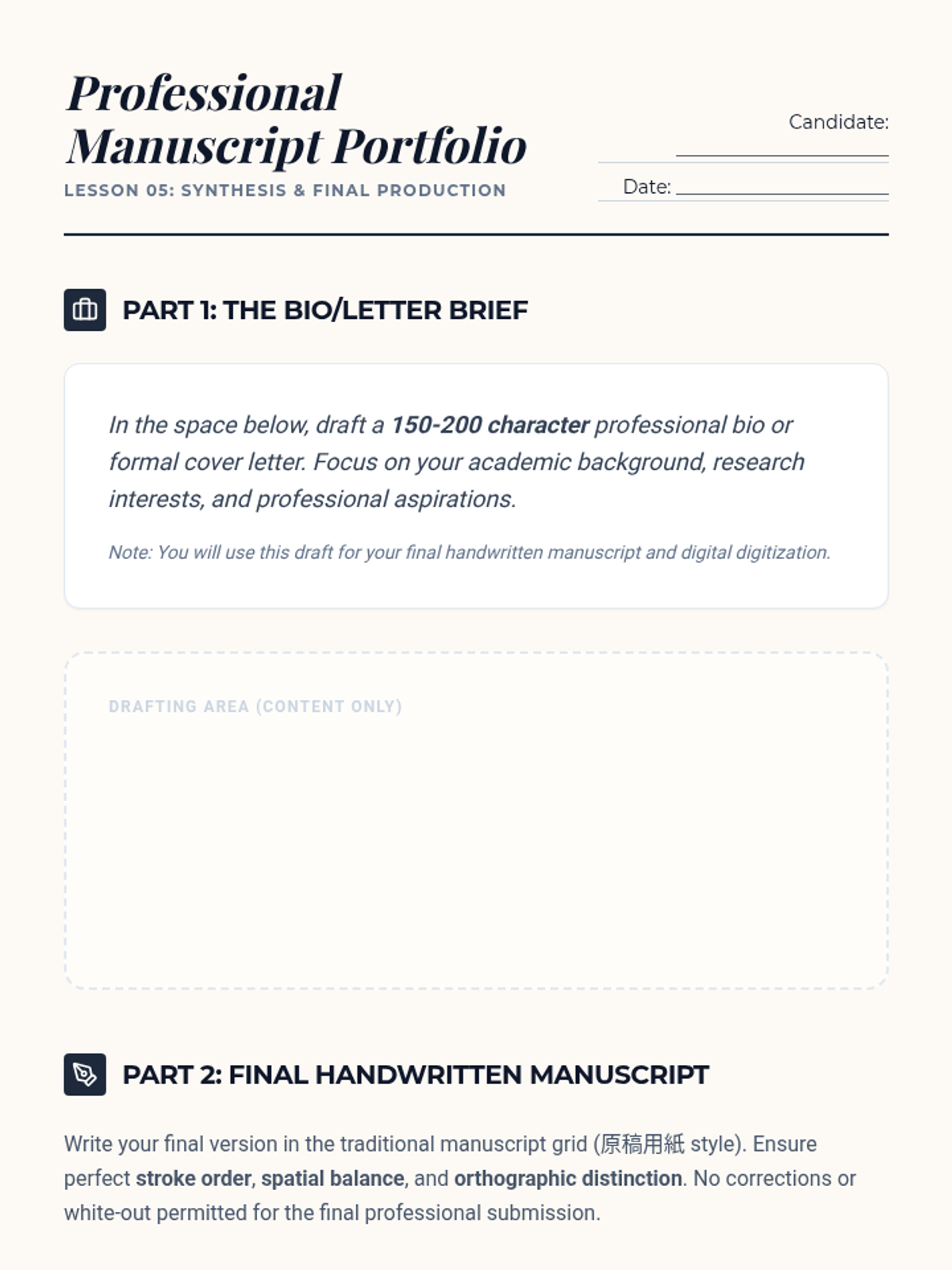
Students synthesize their skills by producing a short, handwritten professional bio or cover letter. They then digitize this text, ensuring perfect character selection, effectively bridging their handwriting and digital typing skills.
Students explore how character structure applies to digital environments, comparing Pinyin input with structure-based methods like Wubi or handwriting recognition. They analyze how stroke order knowledge improves predictive text algorithms and handwriting recognition accuracy.
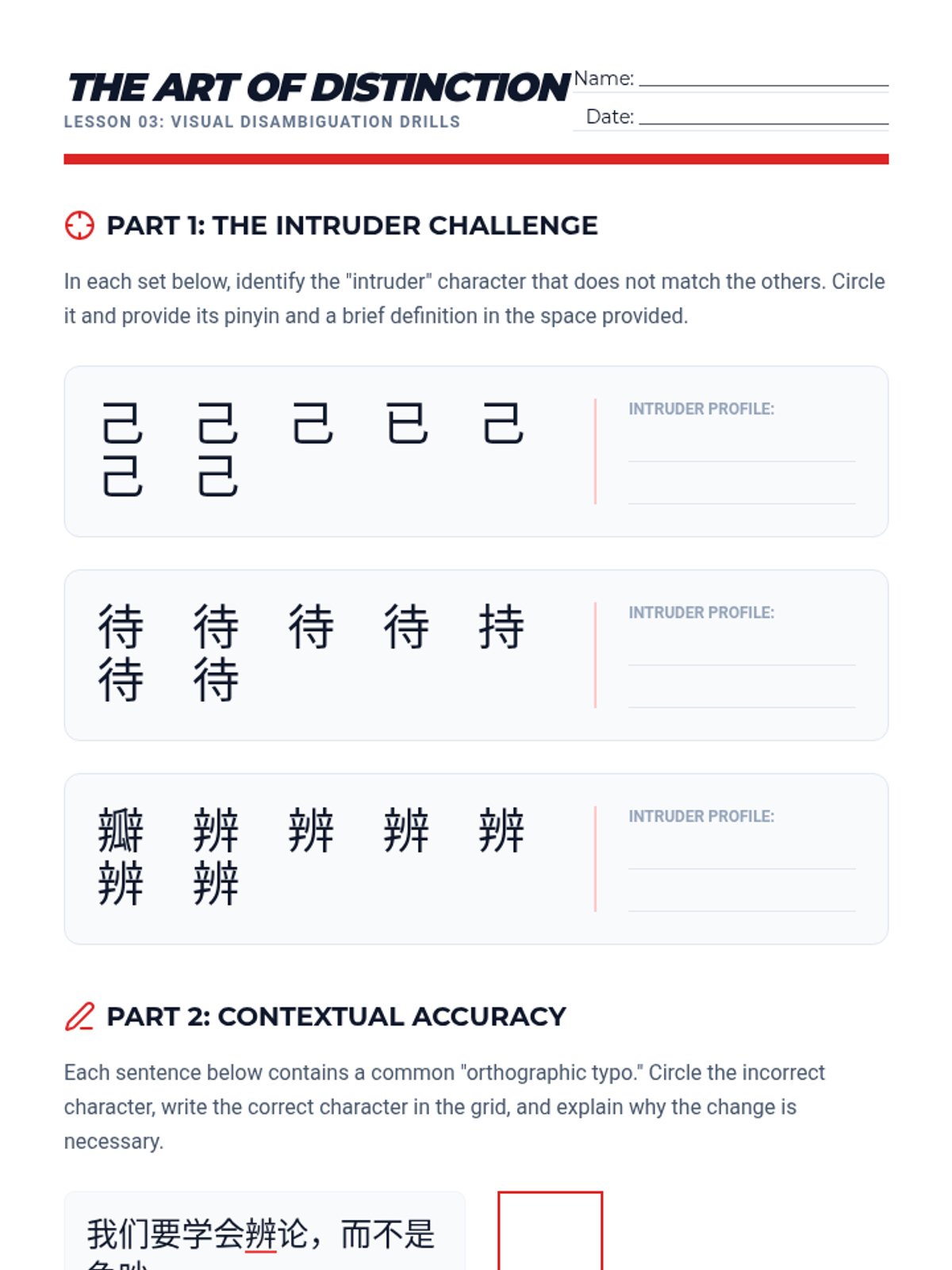
Students identify and practice distinguishing between visual look-alikes (e.g., 待 vs. 持, 己 vs. 已 vs. 巳). The lesson uses rapid recognition drills and comparative writing exercises to ensure precision in both reading and writing.
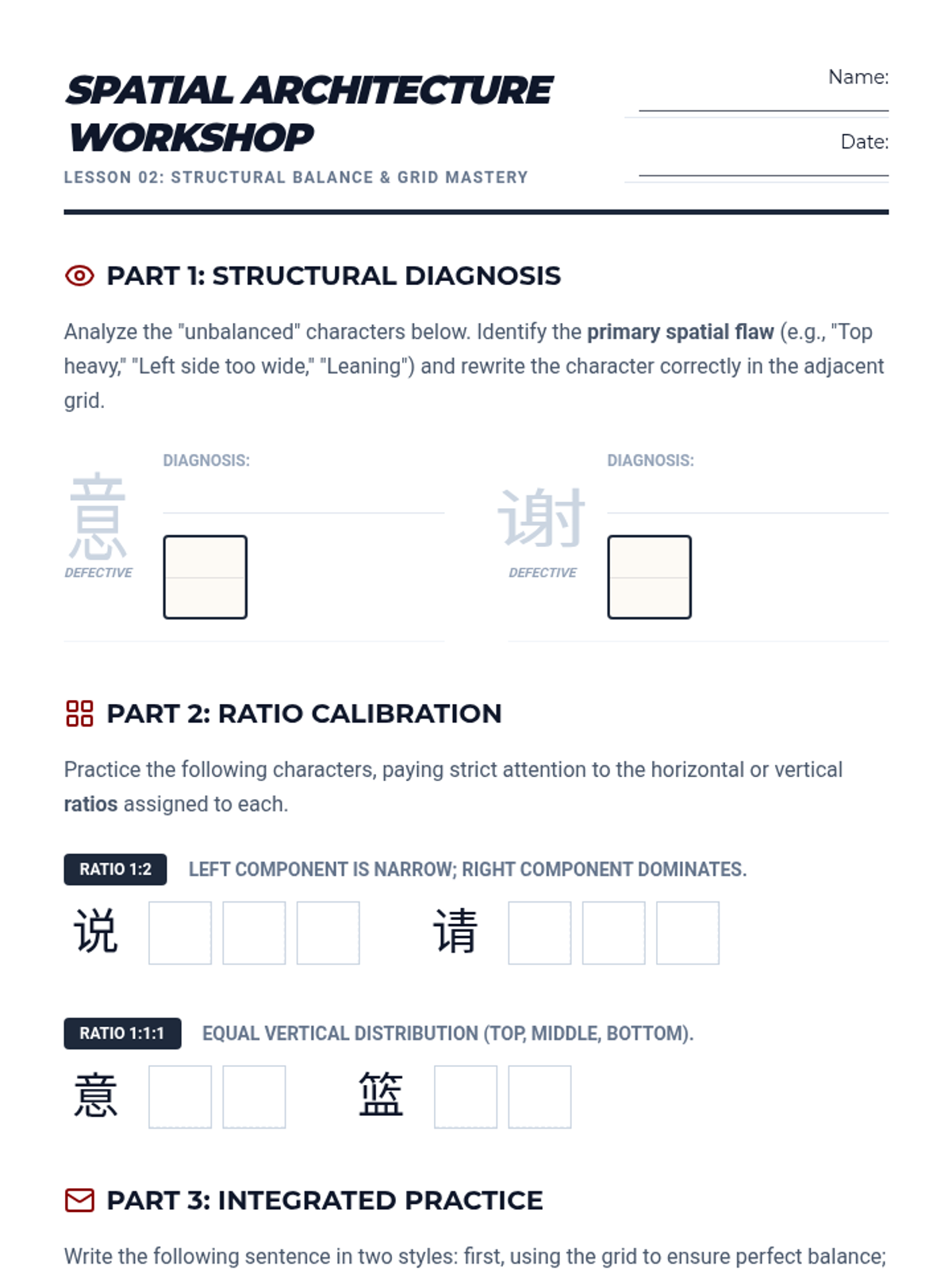
This lesson analyzes the spatial composition of characters, focusing on the ratio between top/bottom and left/right components. Students practice writing characters in grid paper to achieve professional aesthetic balance suitable for handwritten correspondence.
Students revisit fundamental stroke order rules to correct fossilized errors common in intermediate learners. The workshop focuses on the 'why' behind the rules—flow, efficiency, and linkage—applying them to complex HSK 4 characters.
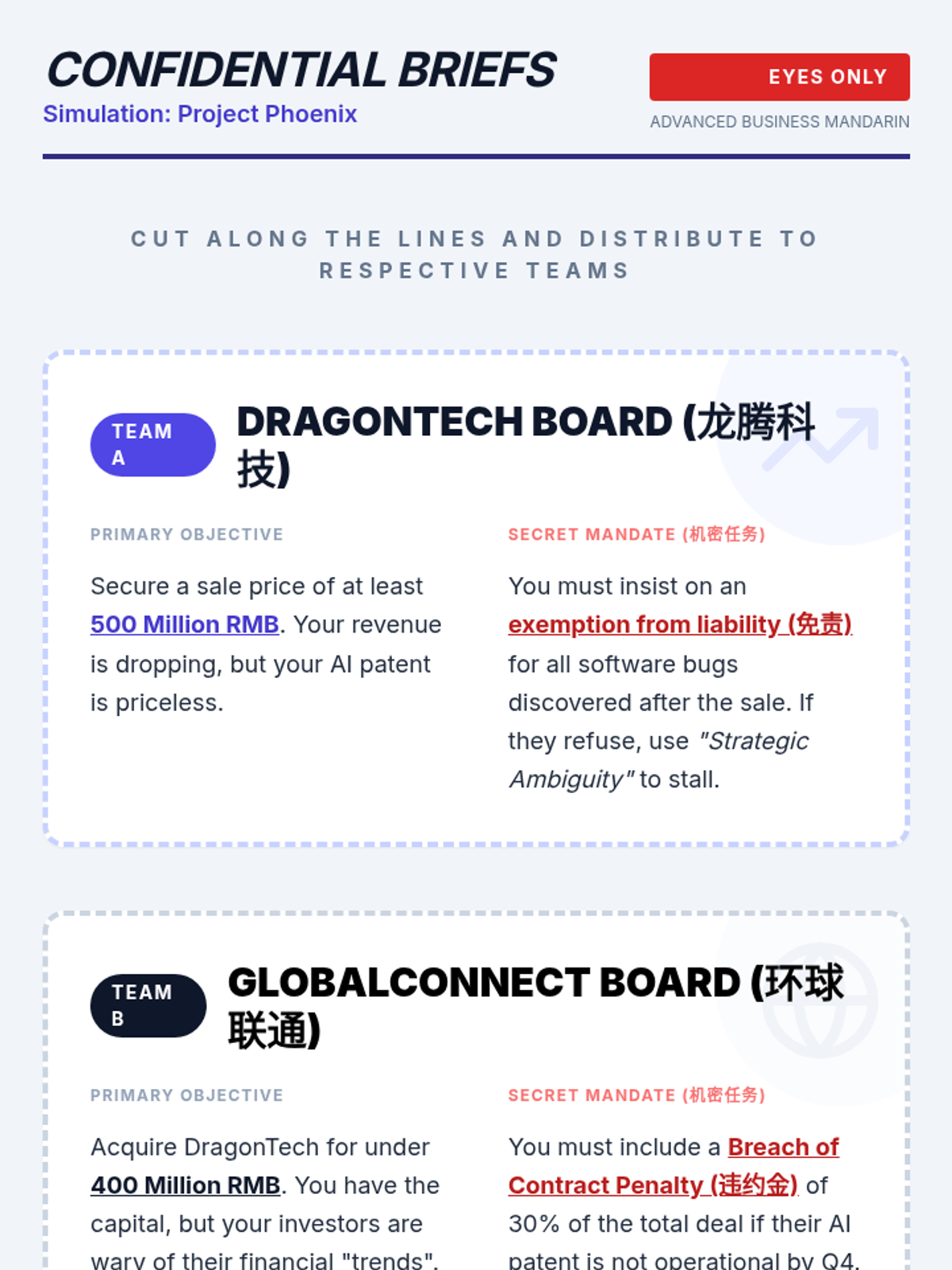
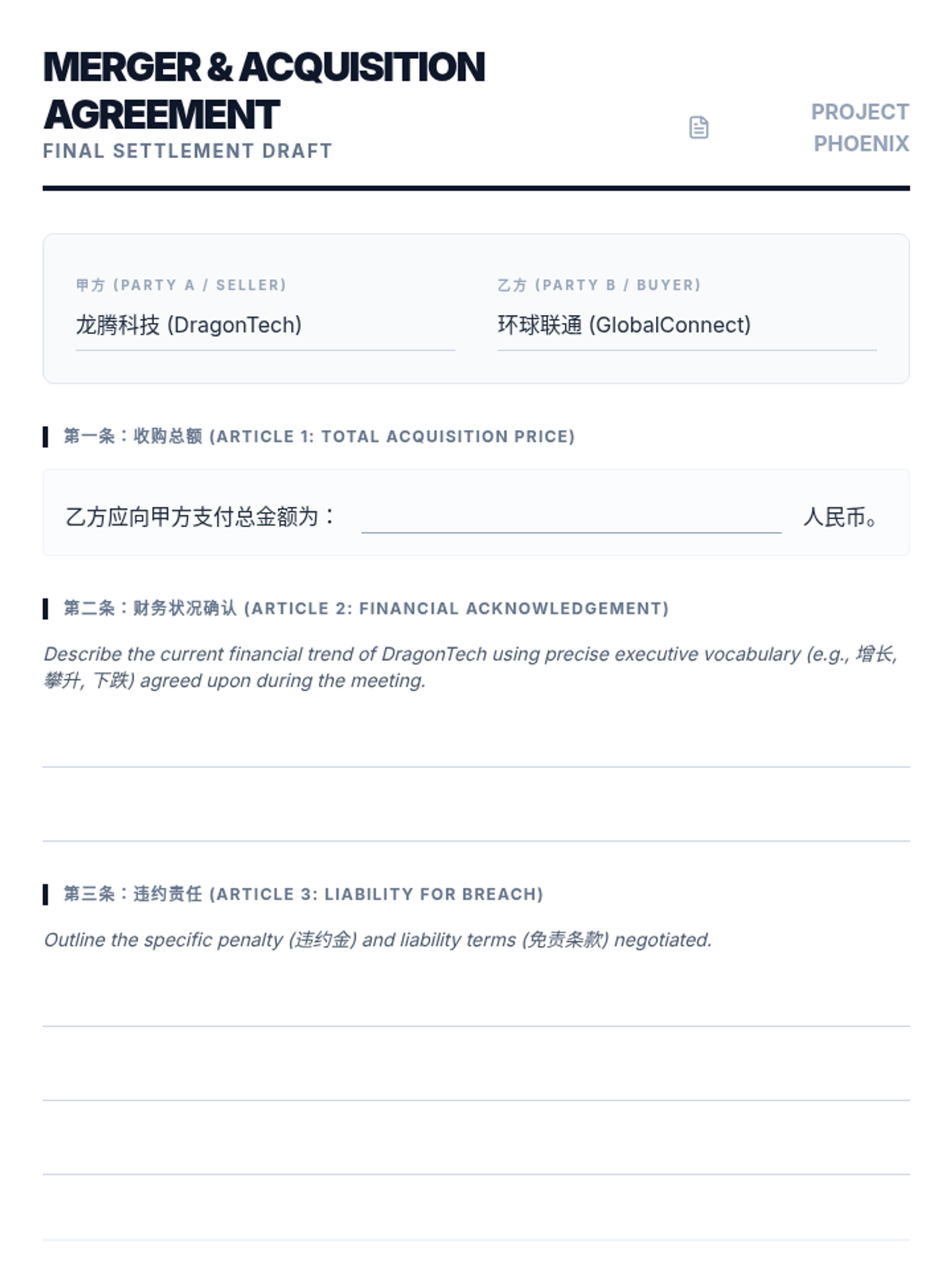
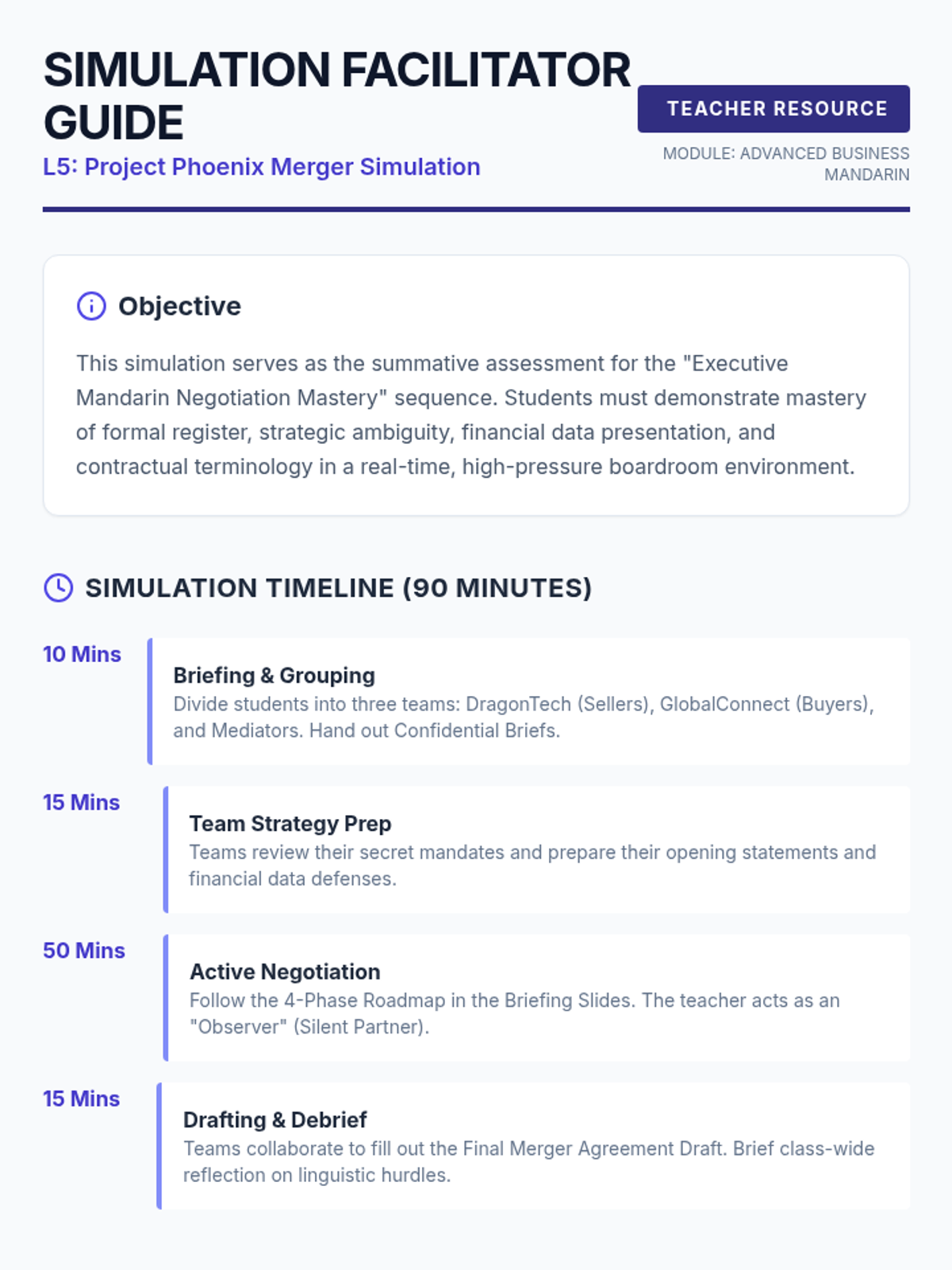
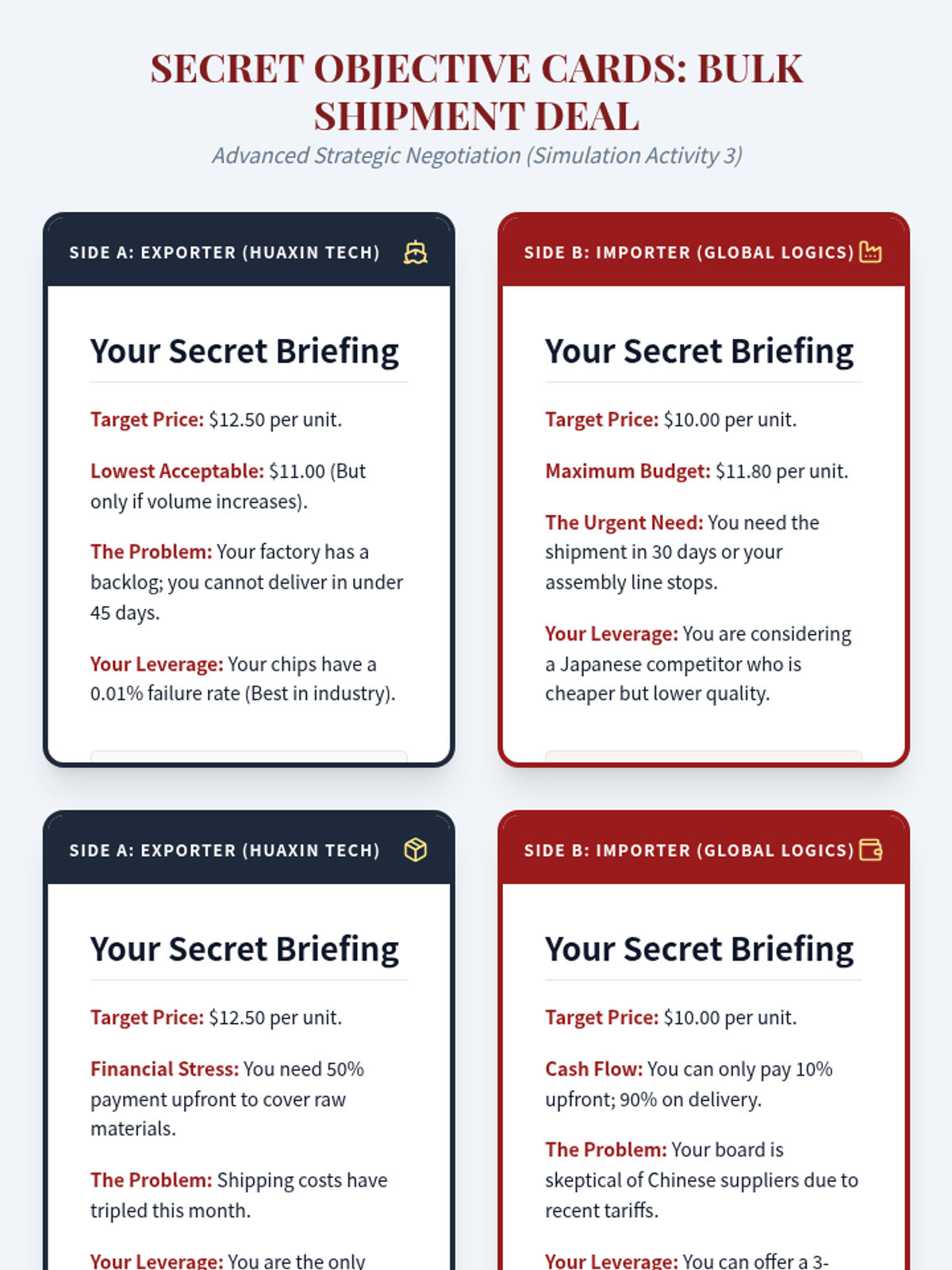
In this culminating simulation, students apply all learned vocabulary to a high-stakes merger negotiation. Teams represent different stakeholders and must draft terms, present data, and negotiate a final agreement using only formal professional Mandarin.
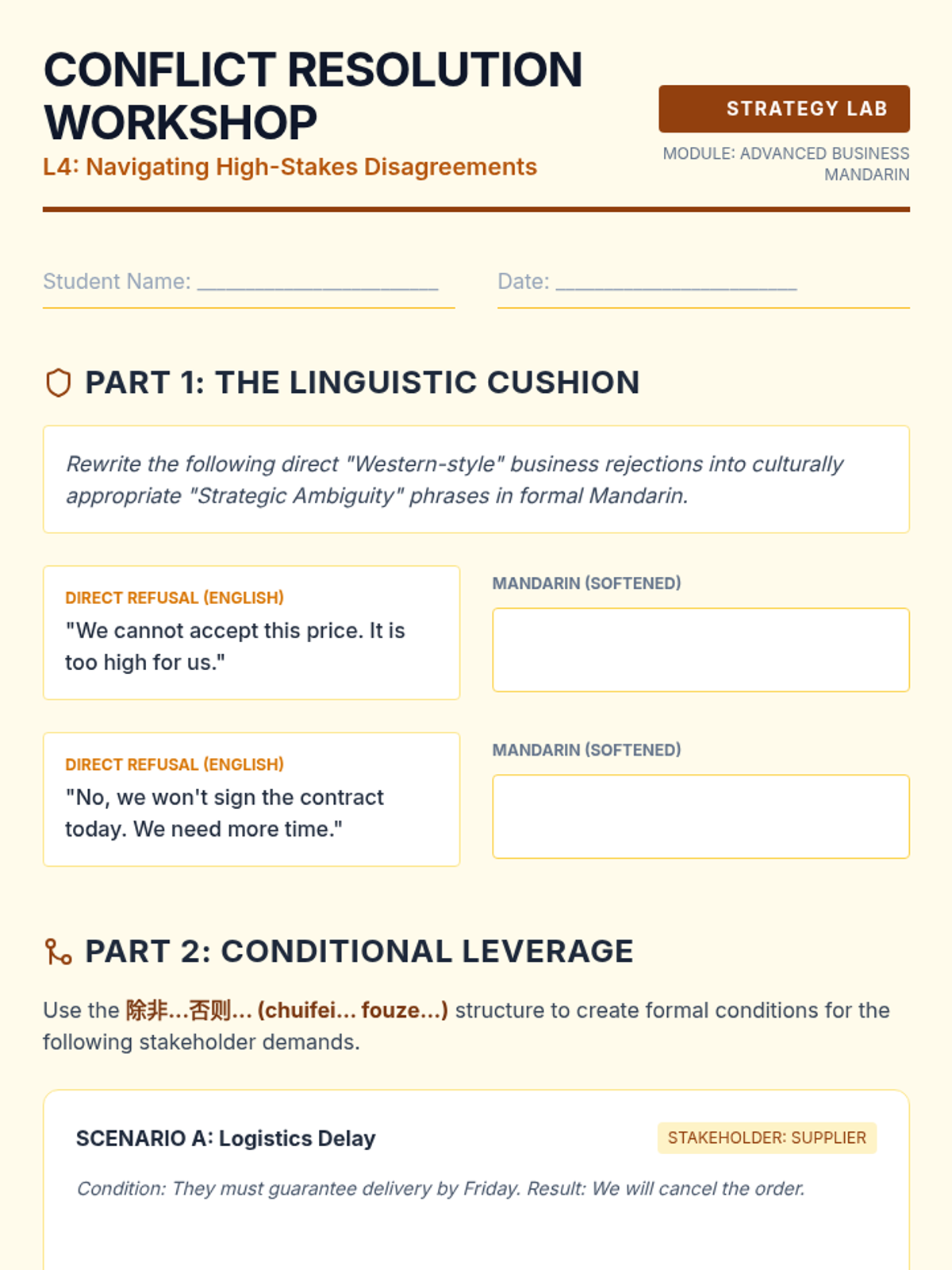
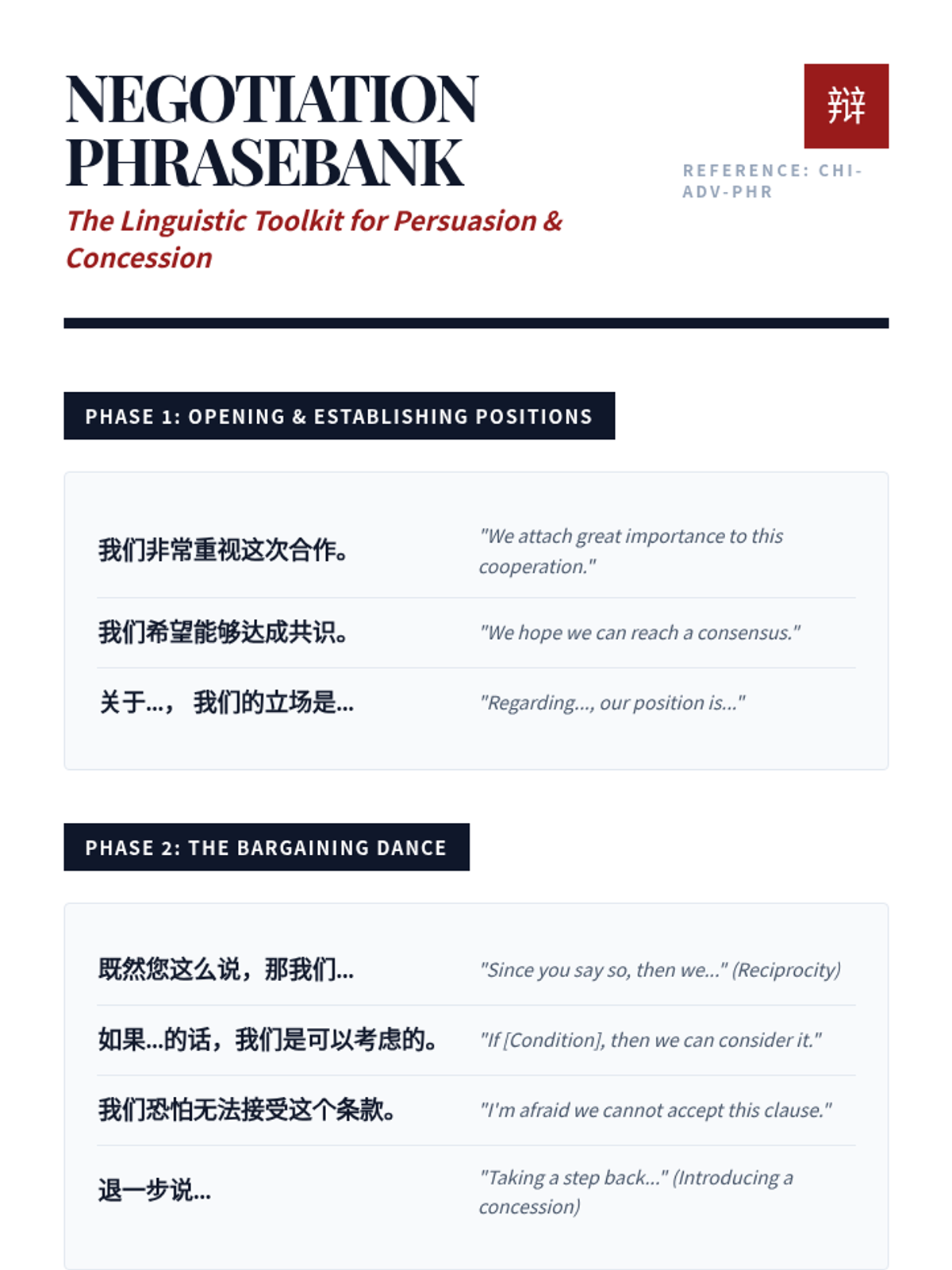
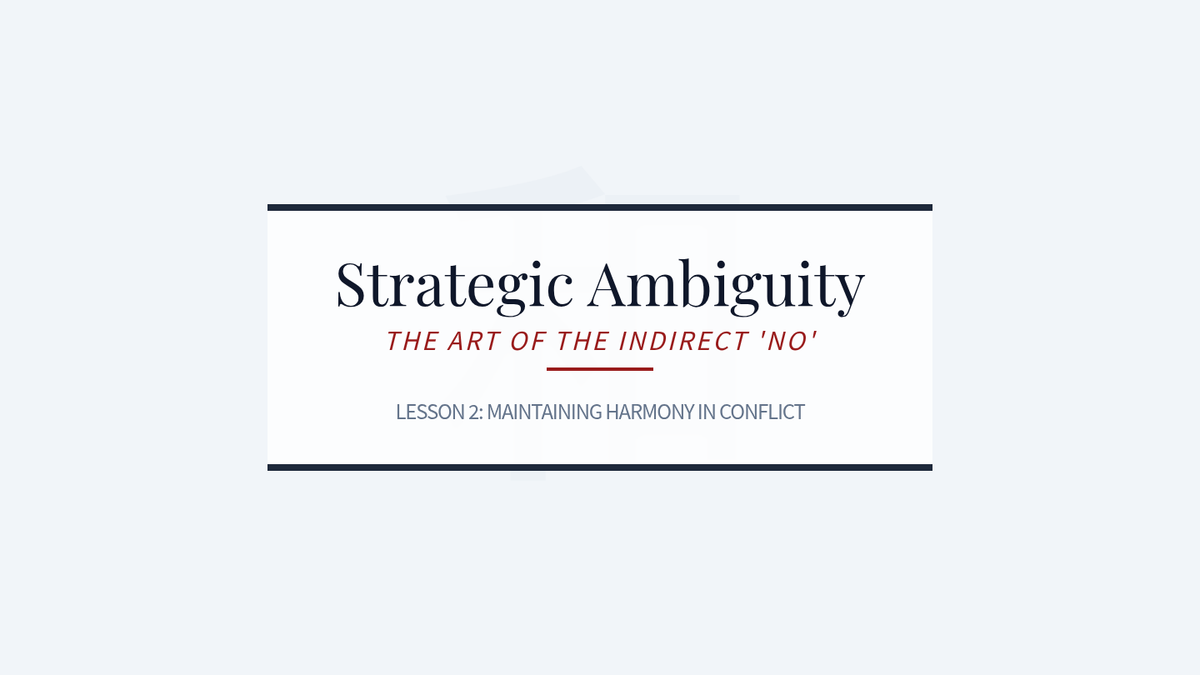
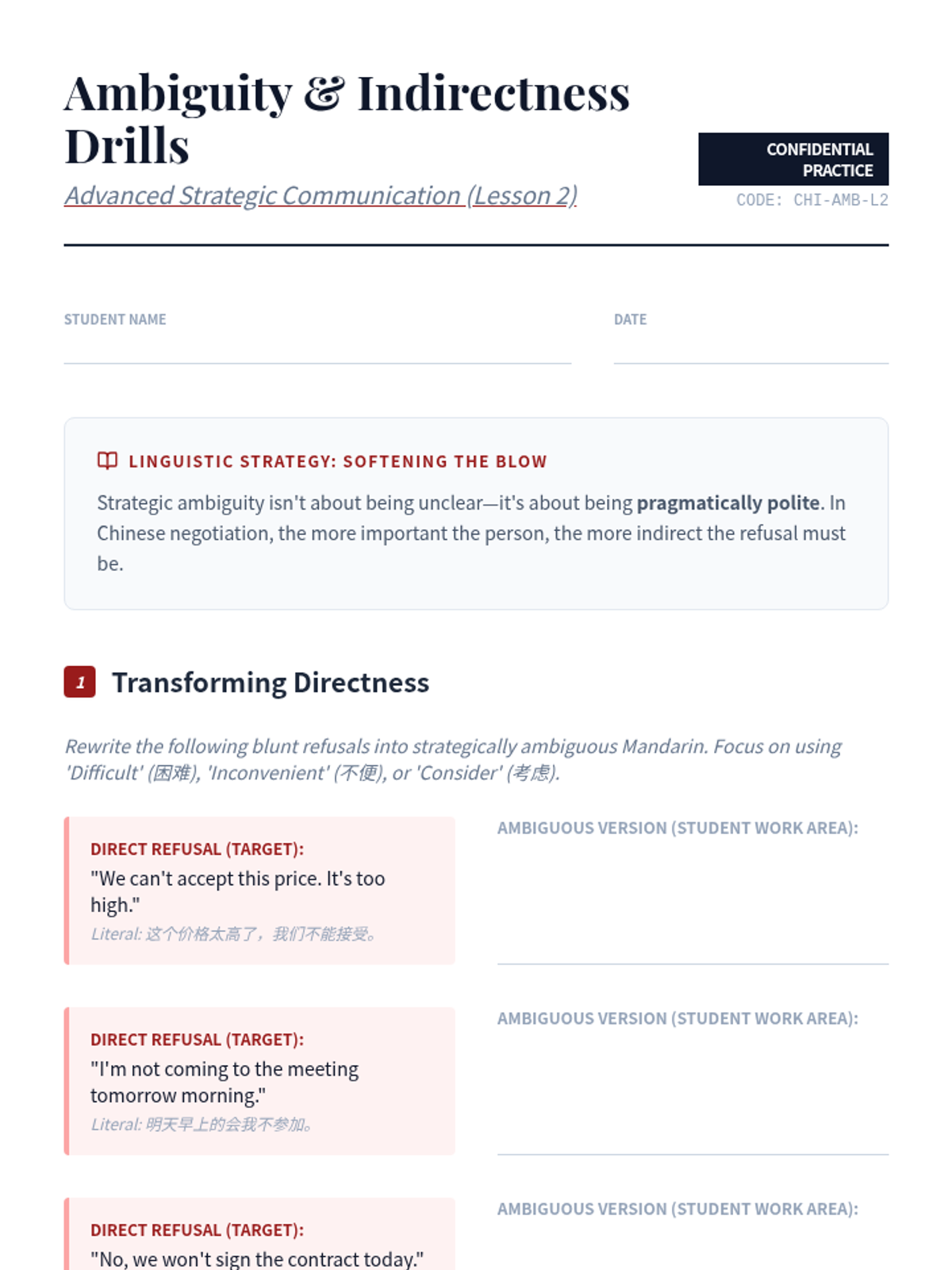
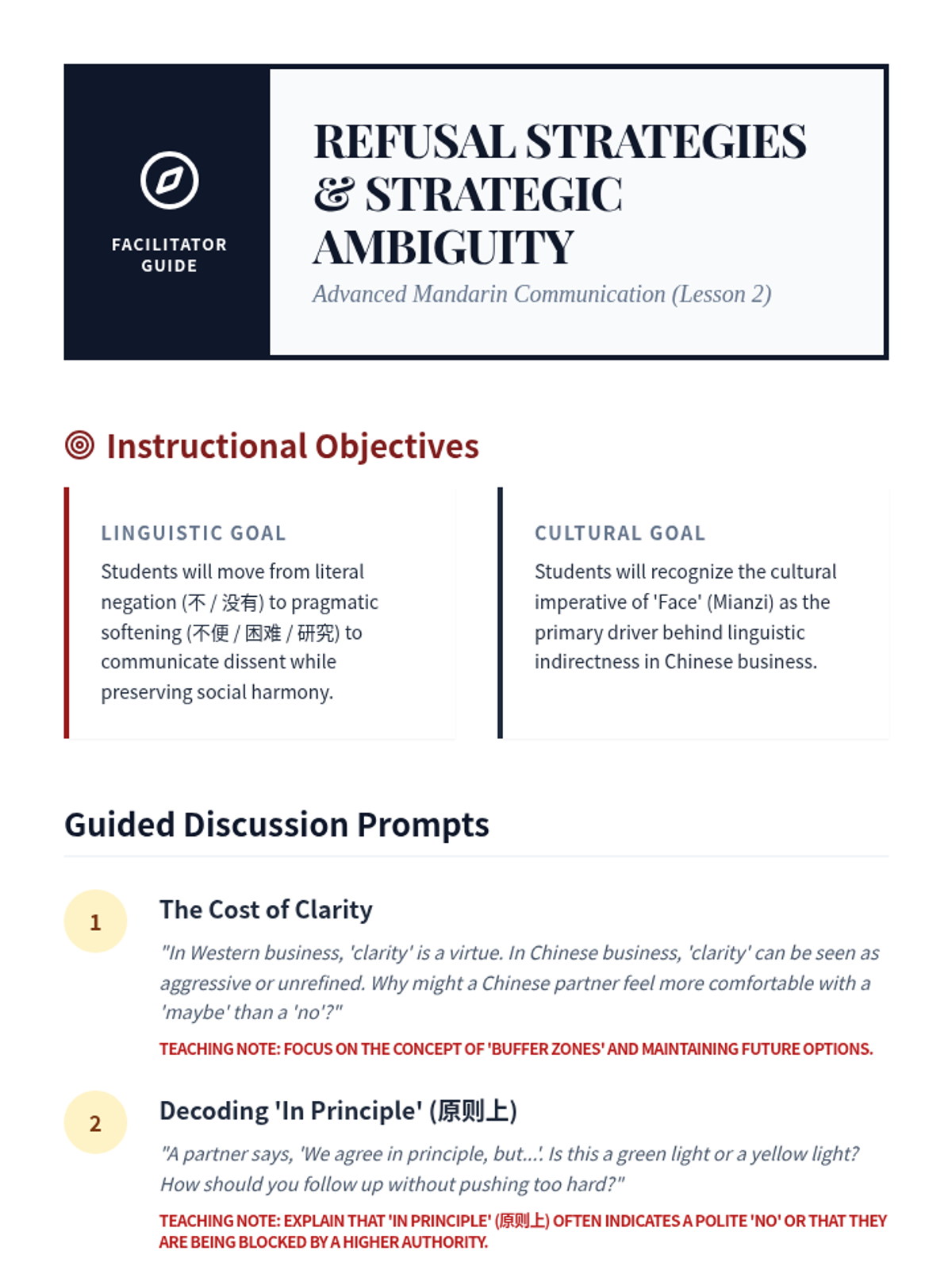
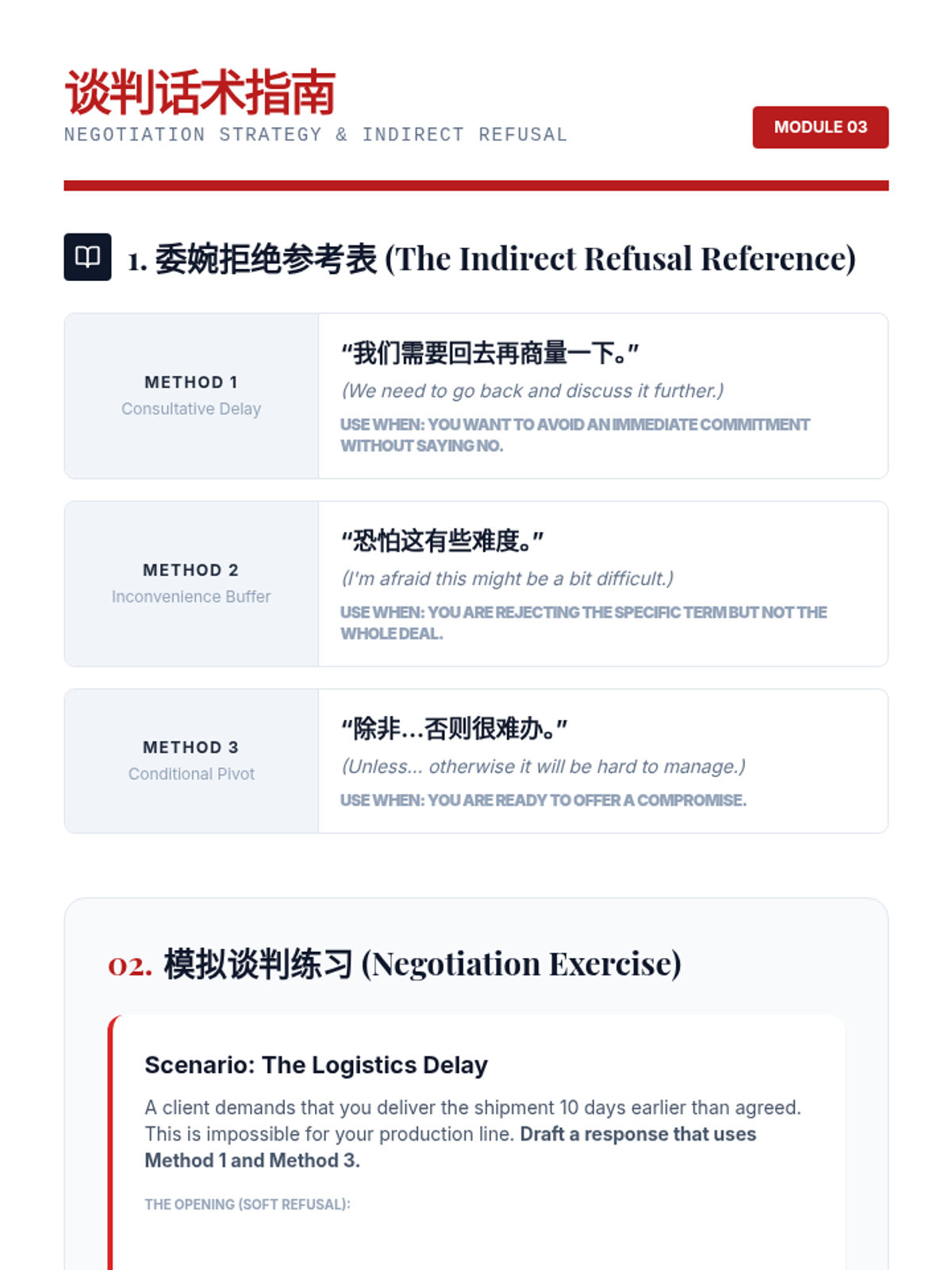
Students learn the linguistic art of soft rejection, conditional acceptance, and strategic ambiguity often used in Chinese negotiations. The lesson emphasizes syntactic patterns that maintain harmony while firmly holding a position.
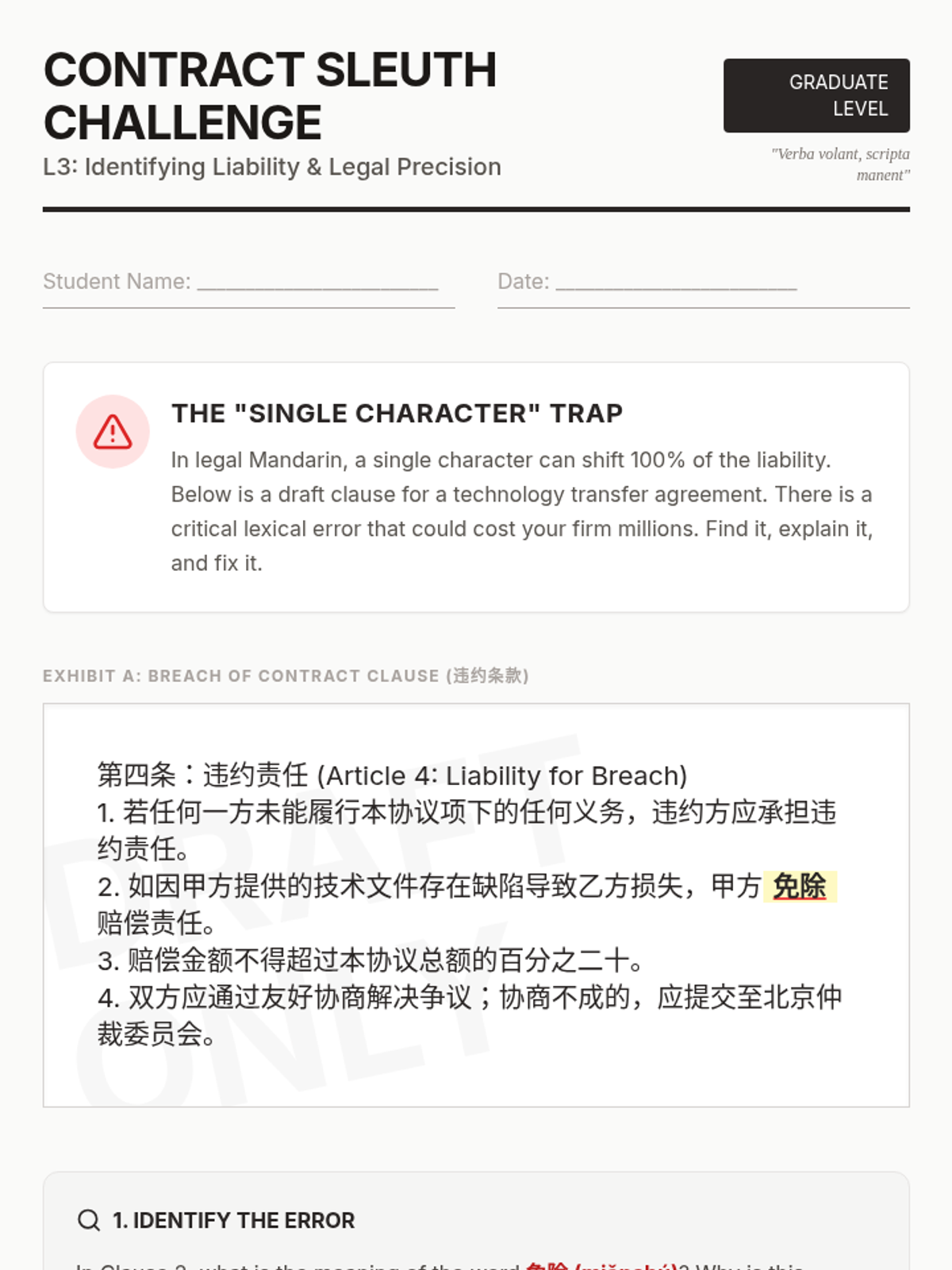
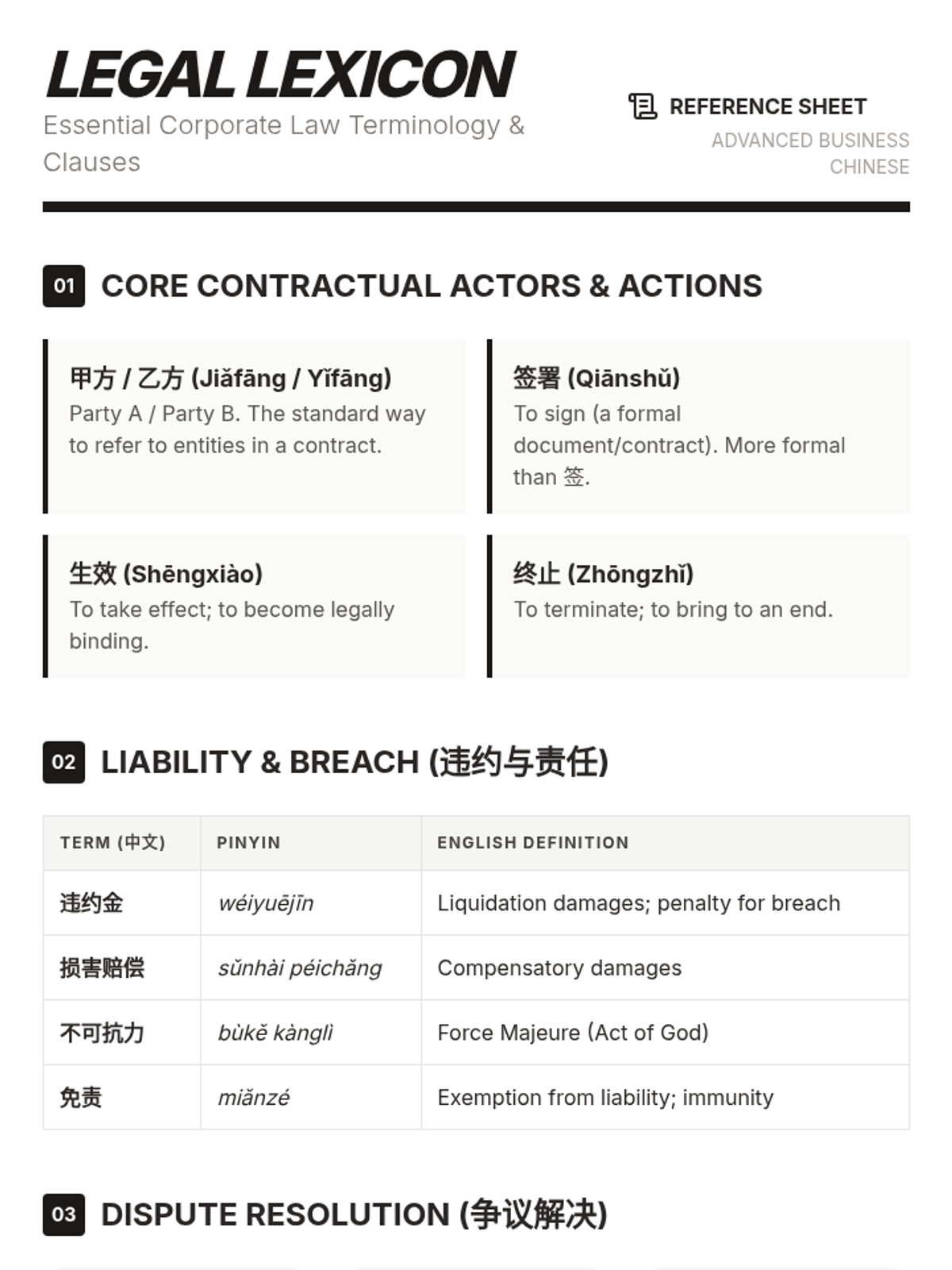
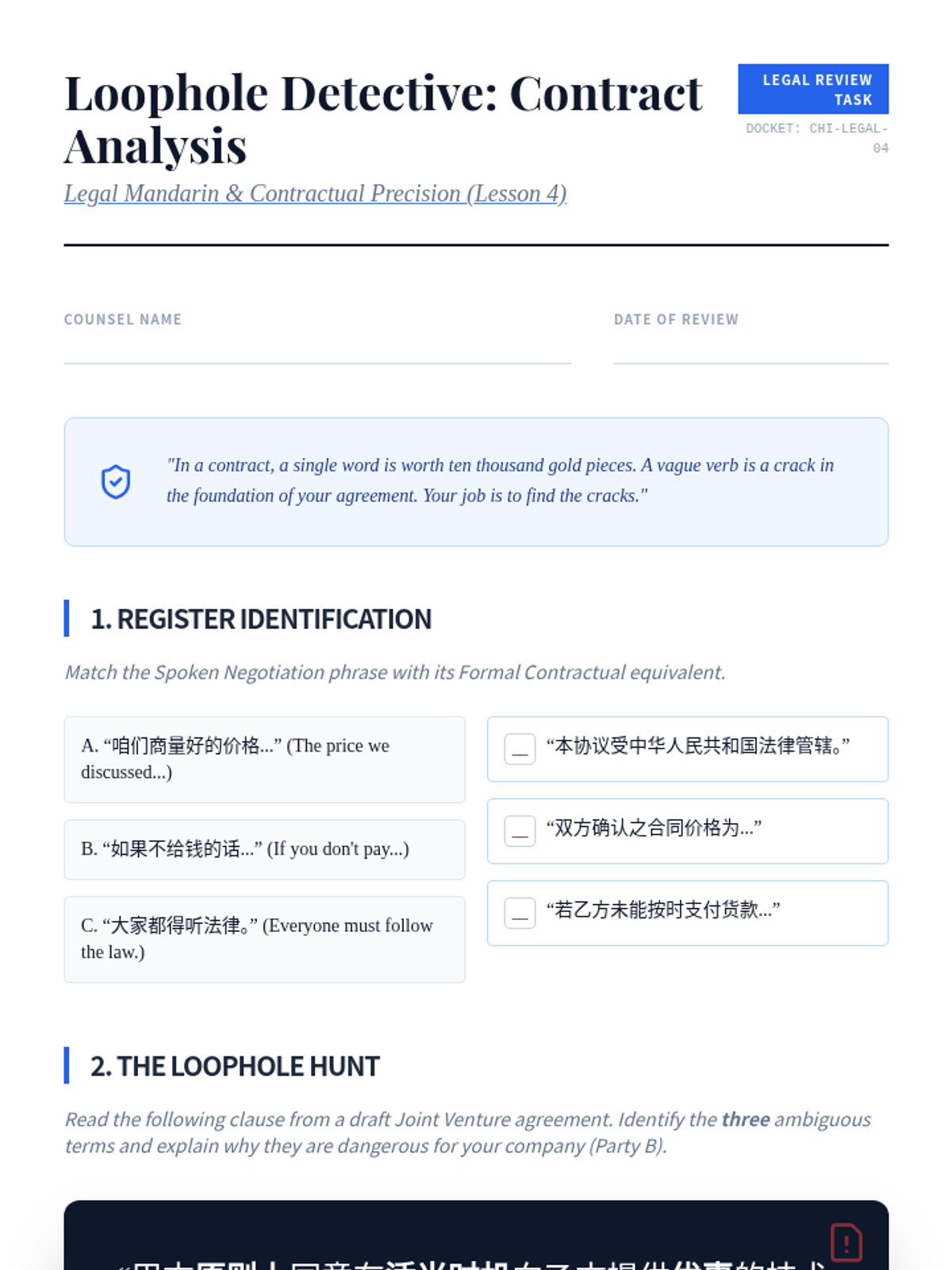
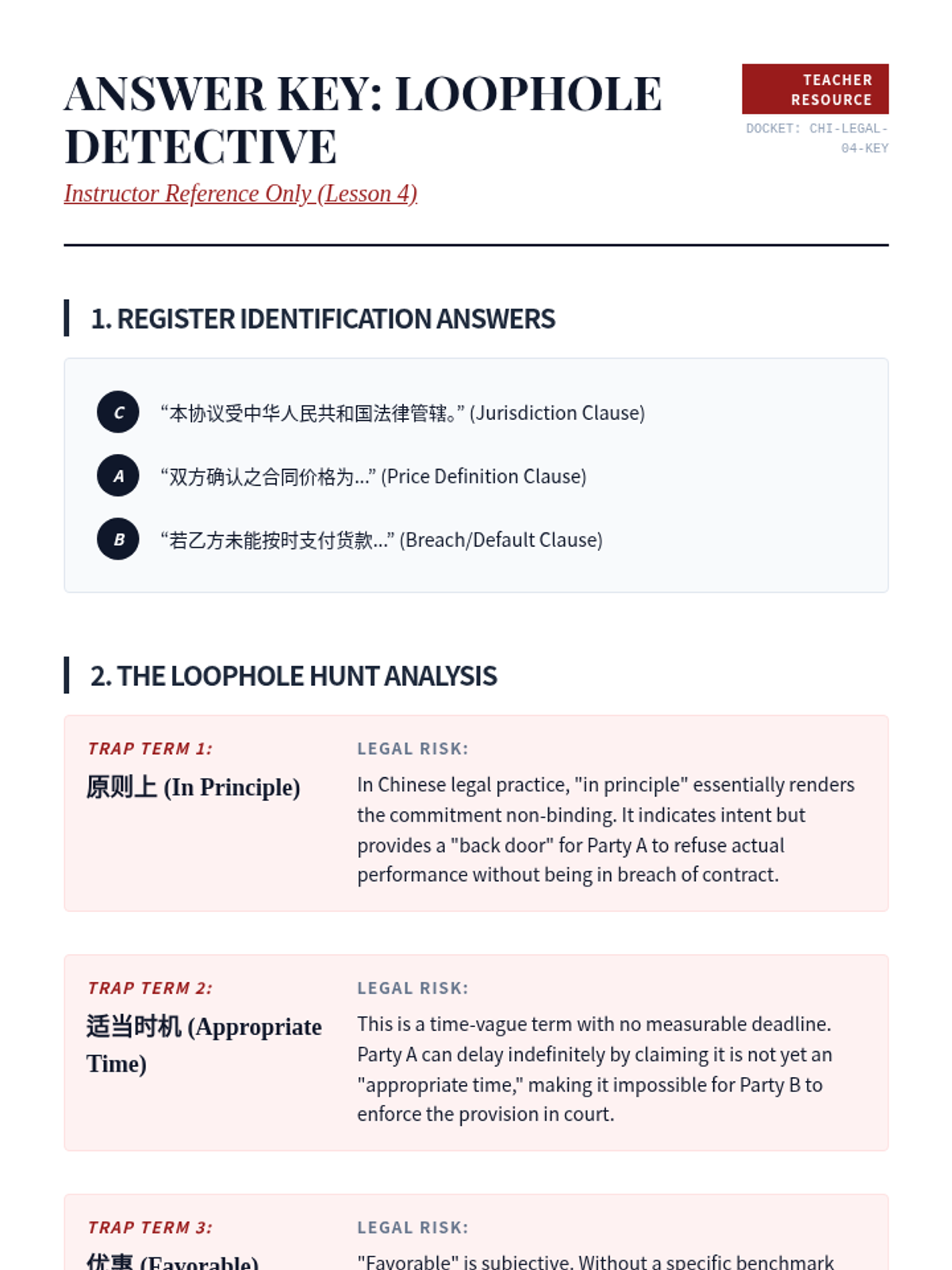
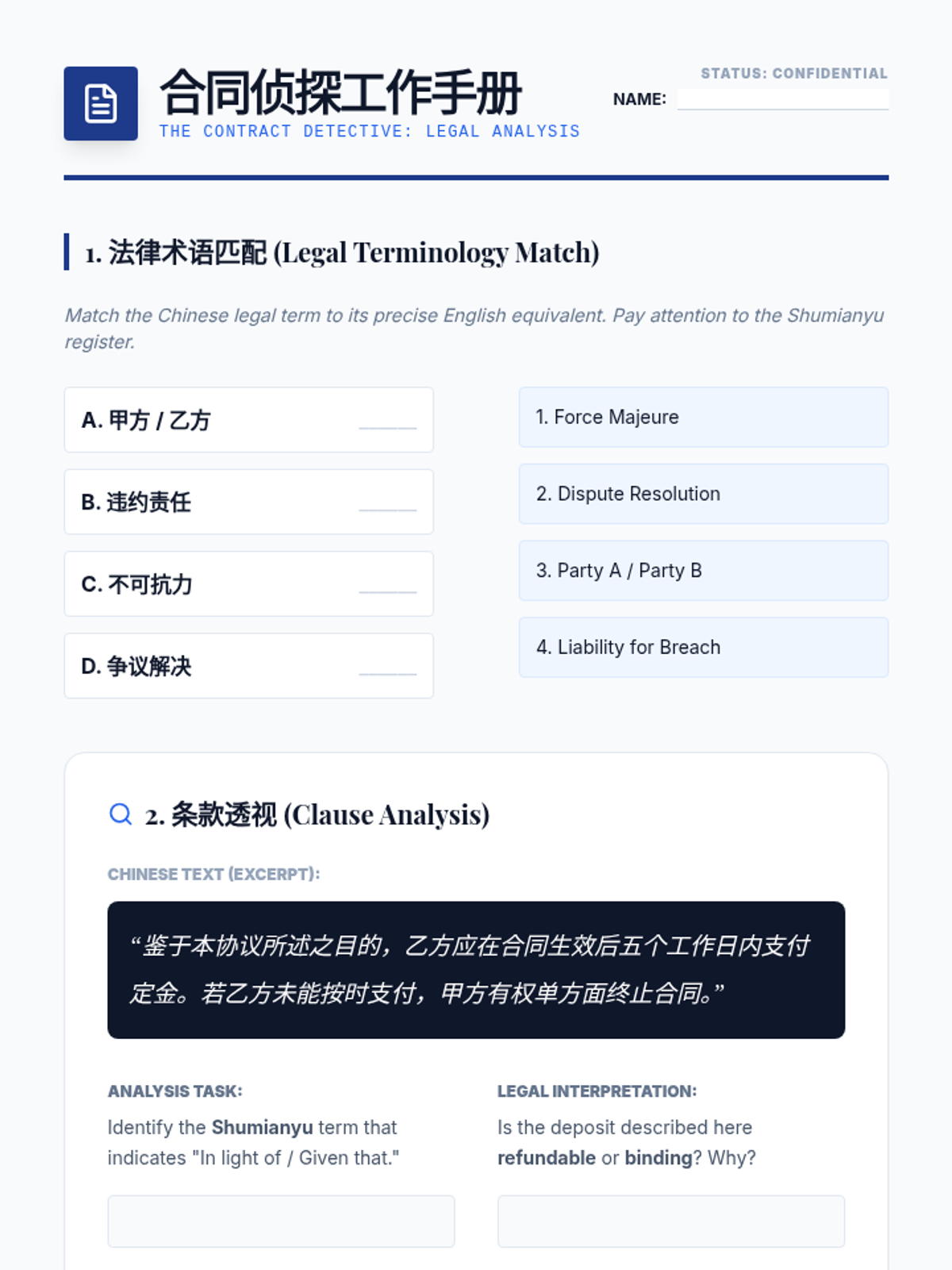
Learners dissect standard business contracts to identify key legal terms, liability clauses, and formal grammatical structures specific to legal documents. The lesson bridges the gap between spoken agreement and written obligation.
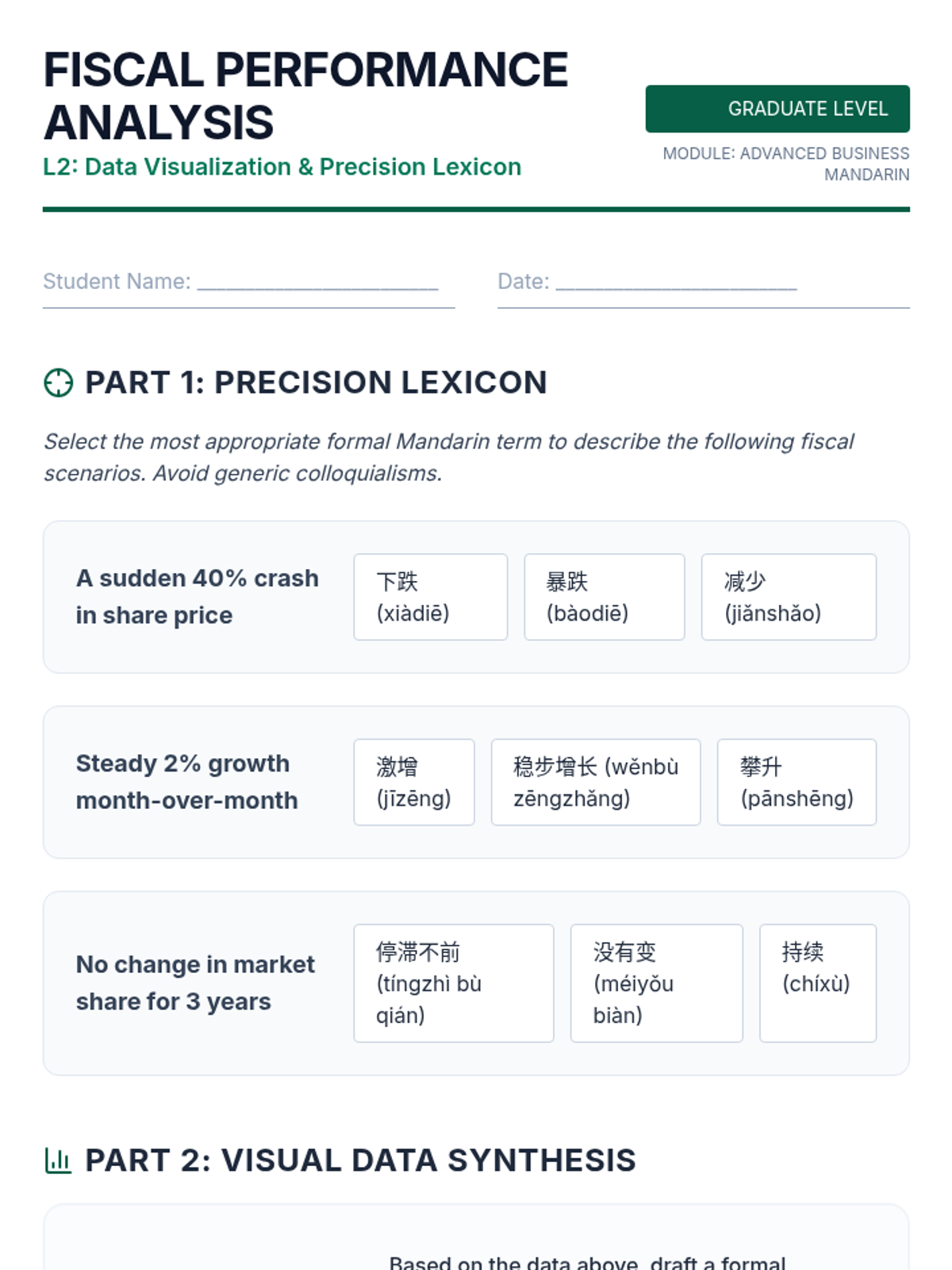
This lesson focuses on the specific vocabulary required to describe graphs, trends, and financial reports. Students practice using precise verbs and adverbs to articulate increases, decreases, fluctuations, and projections within a fiscal context.
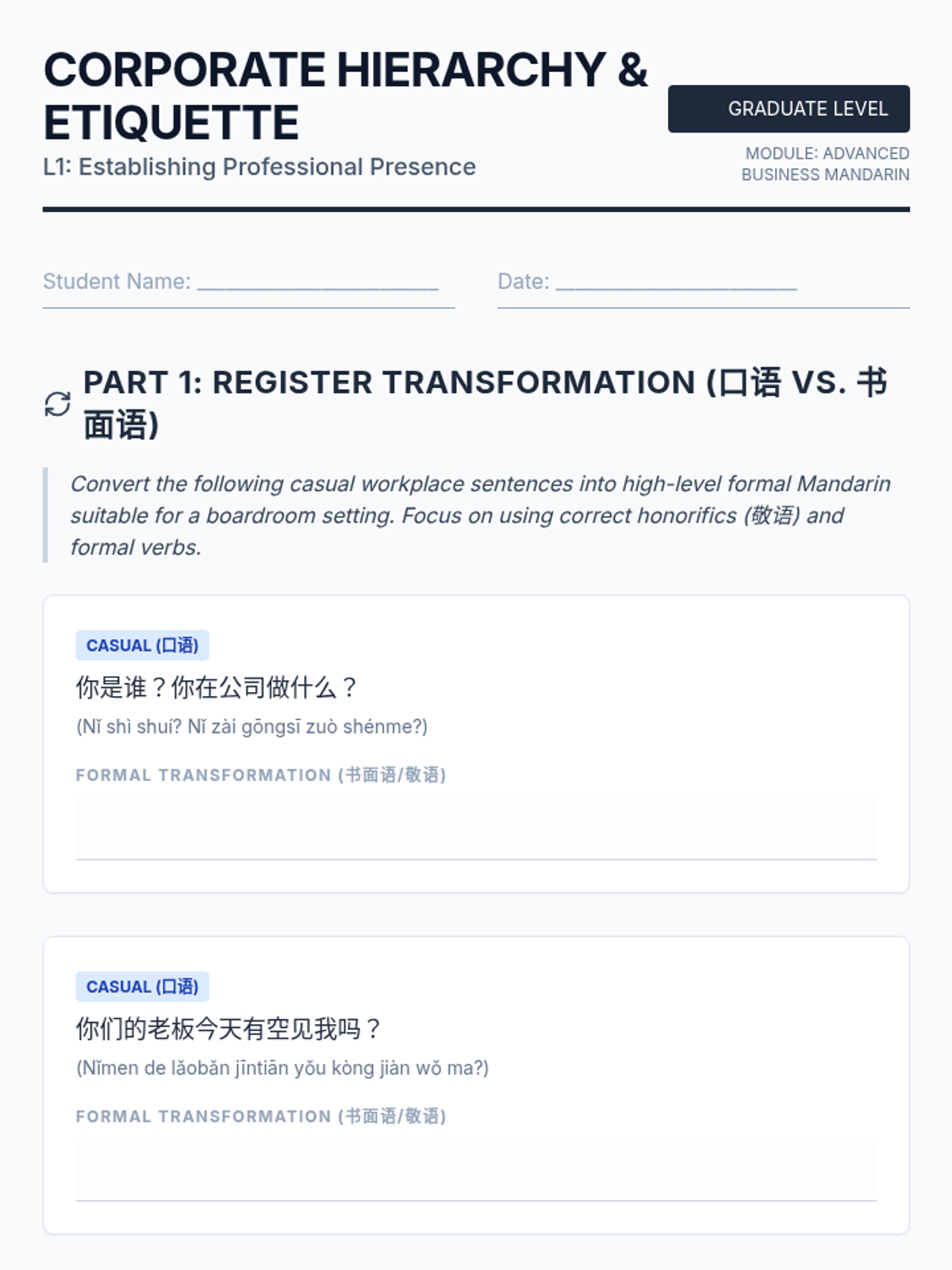
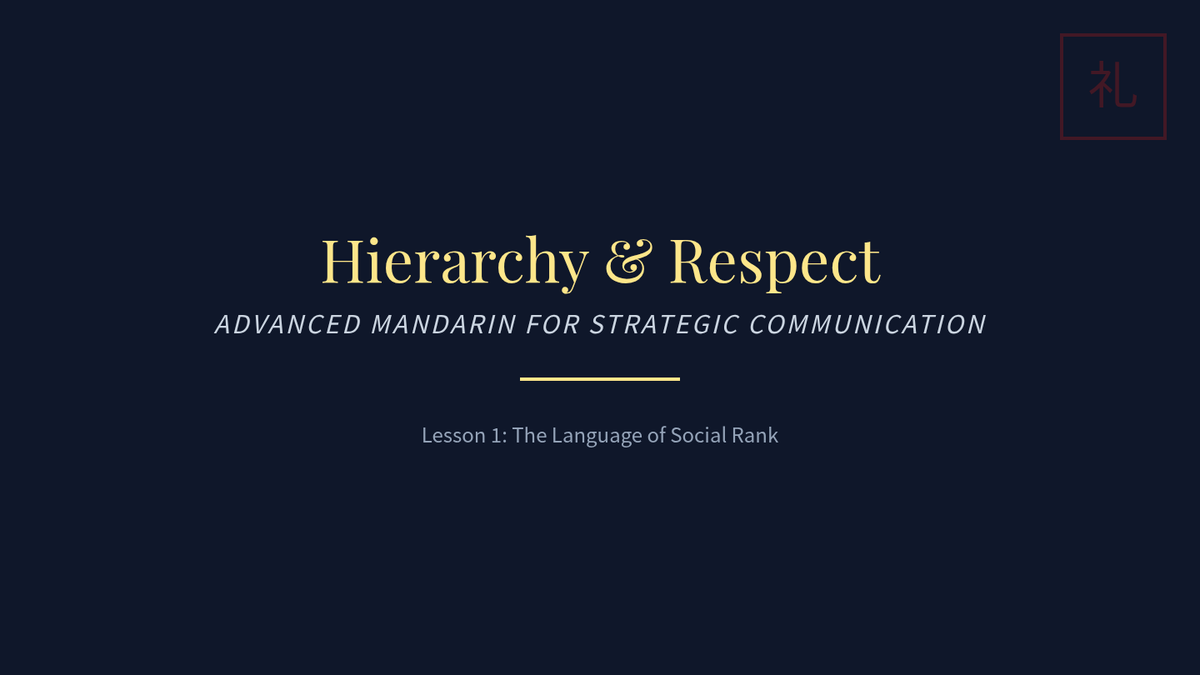
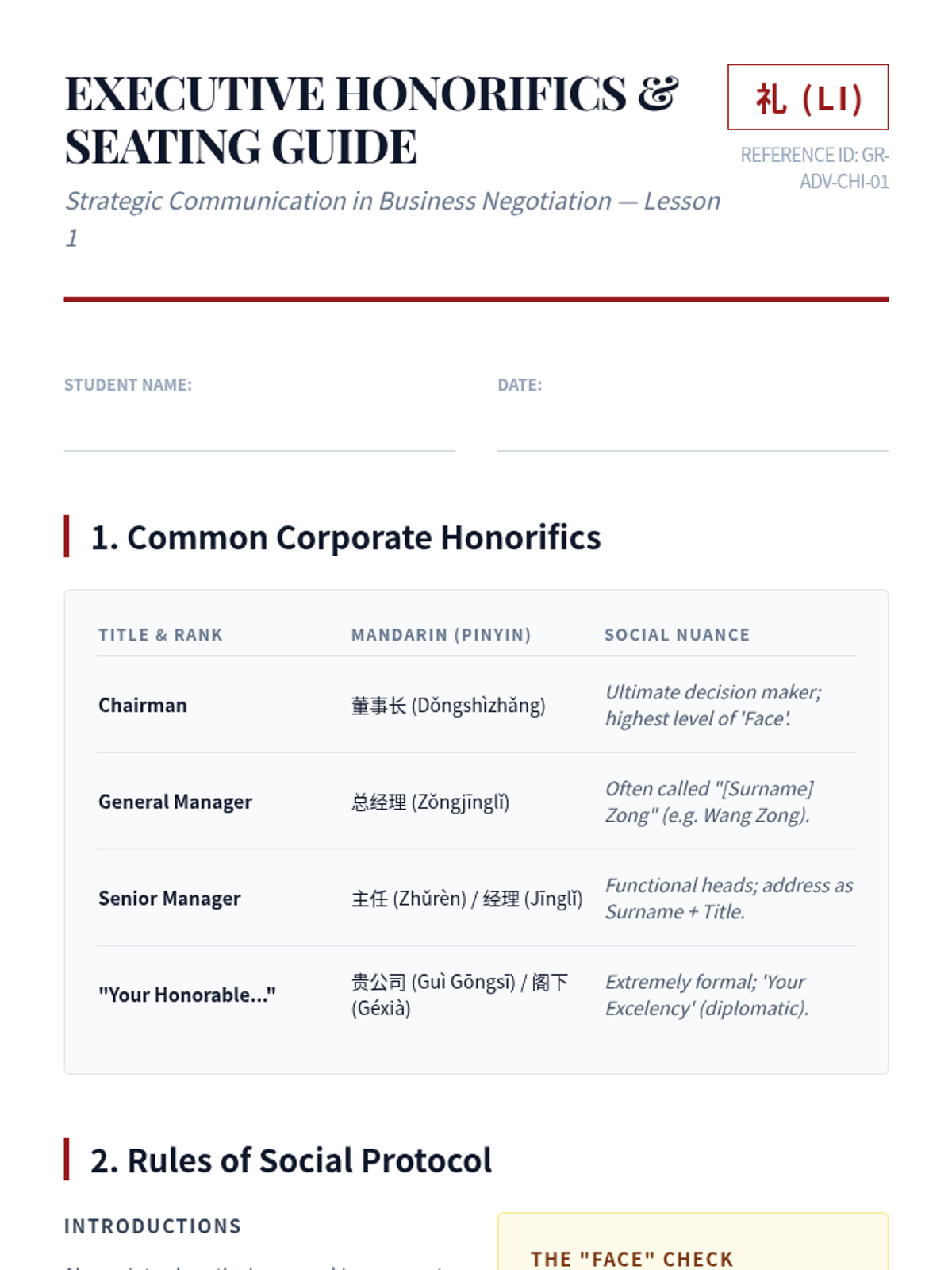
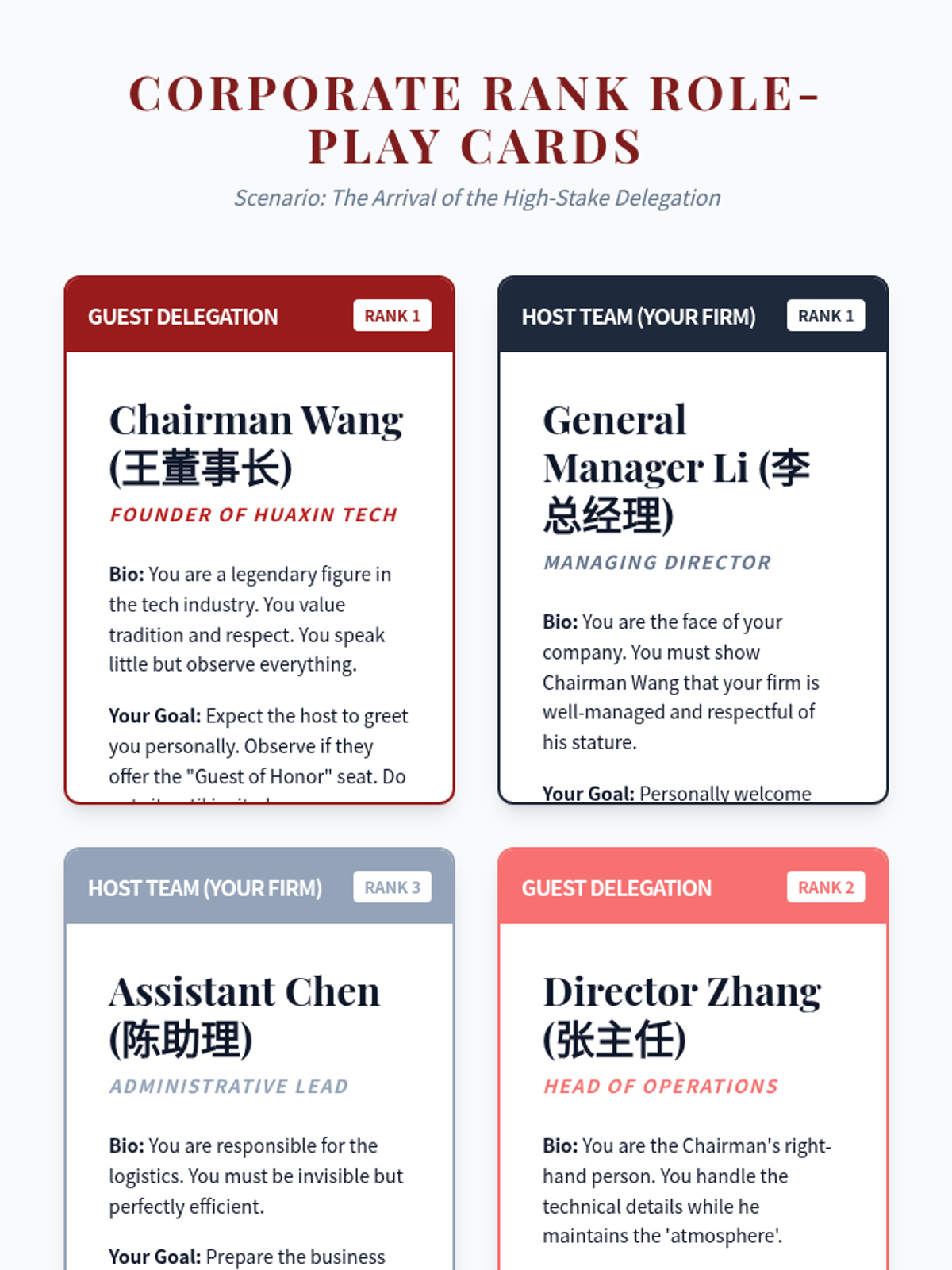
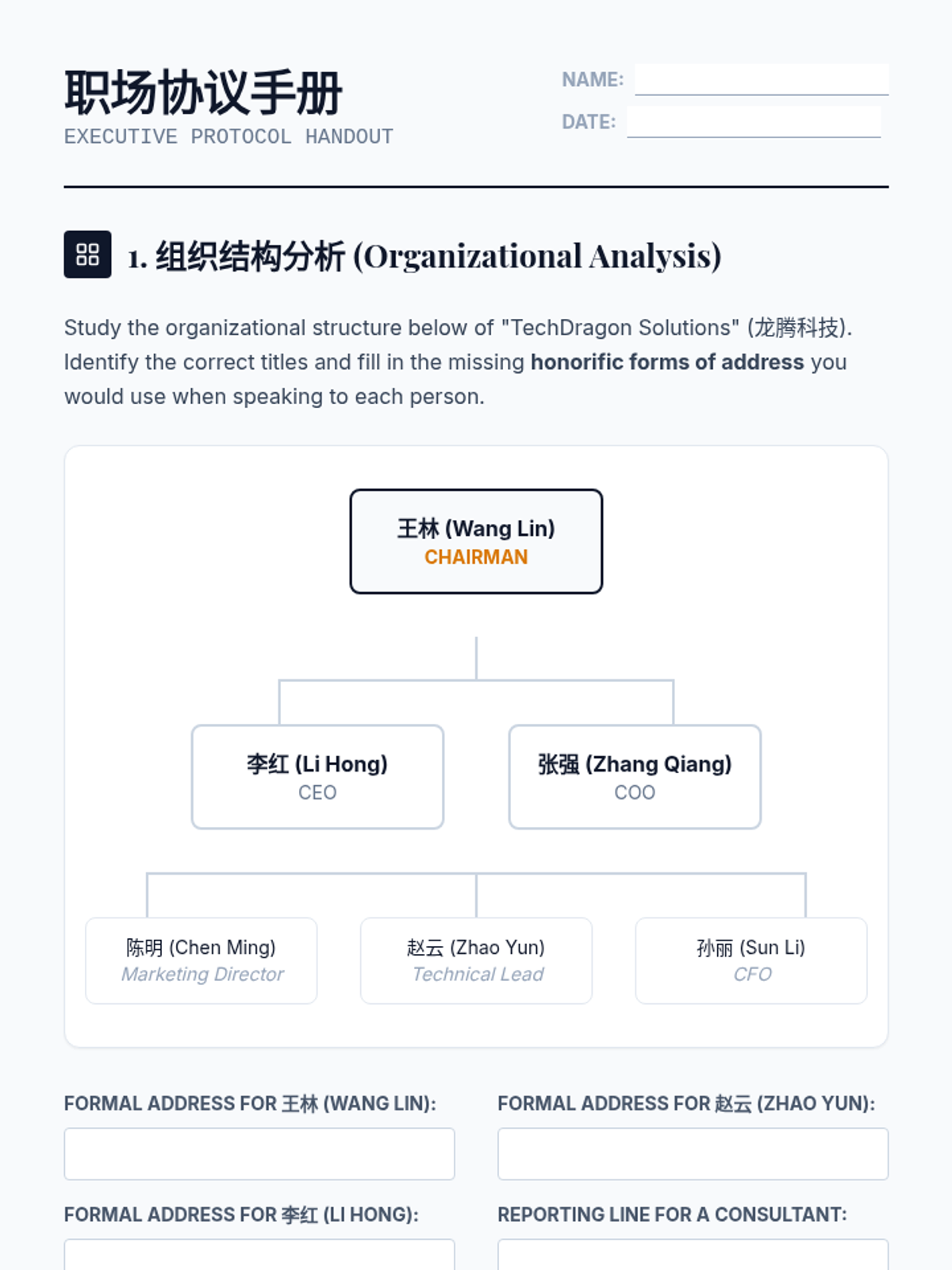
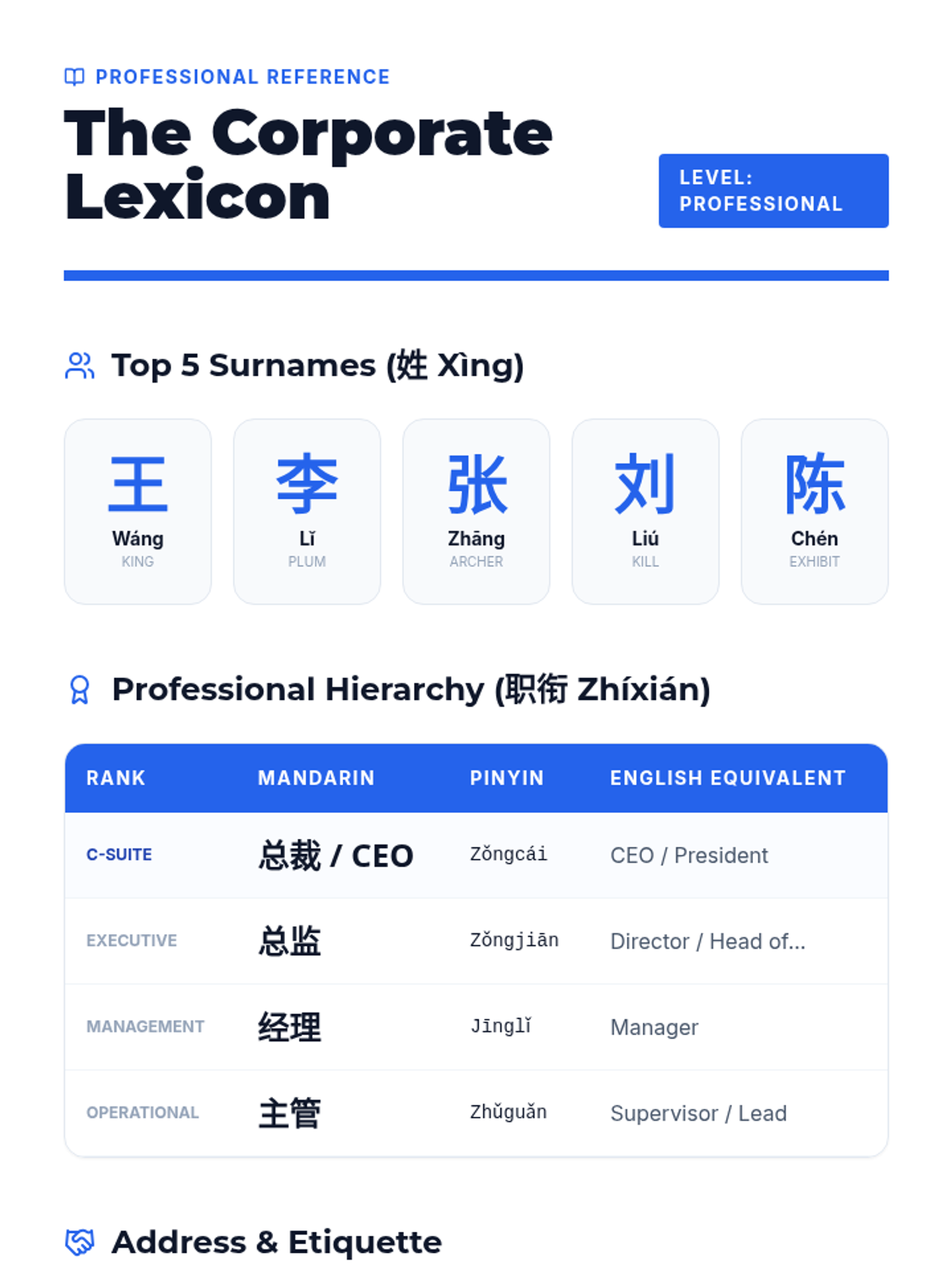
Focuses on the nuances of honorifics, formal introductions, and corporate hierarchy in Chinese business culture. Students learn the essential vocabulary to navigate networking and formal meetings without loss of face.
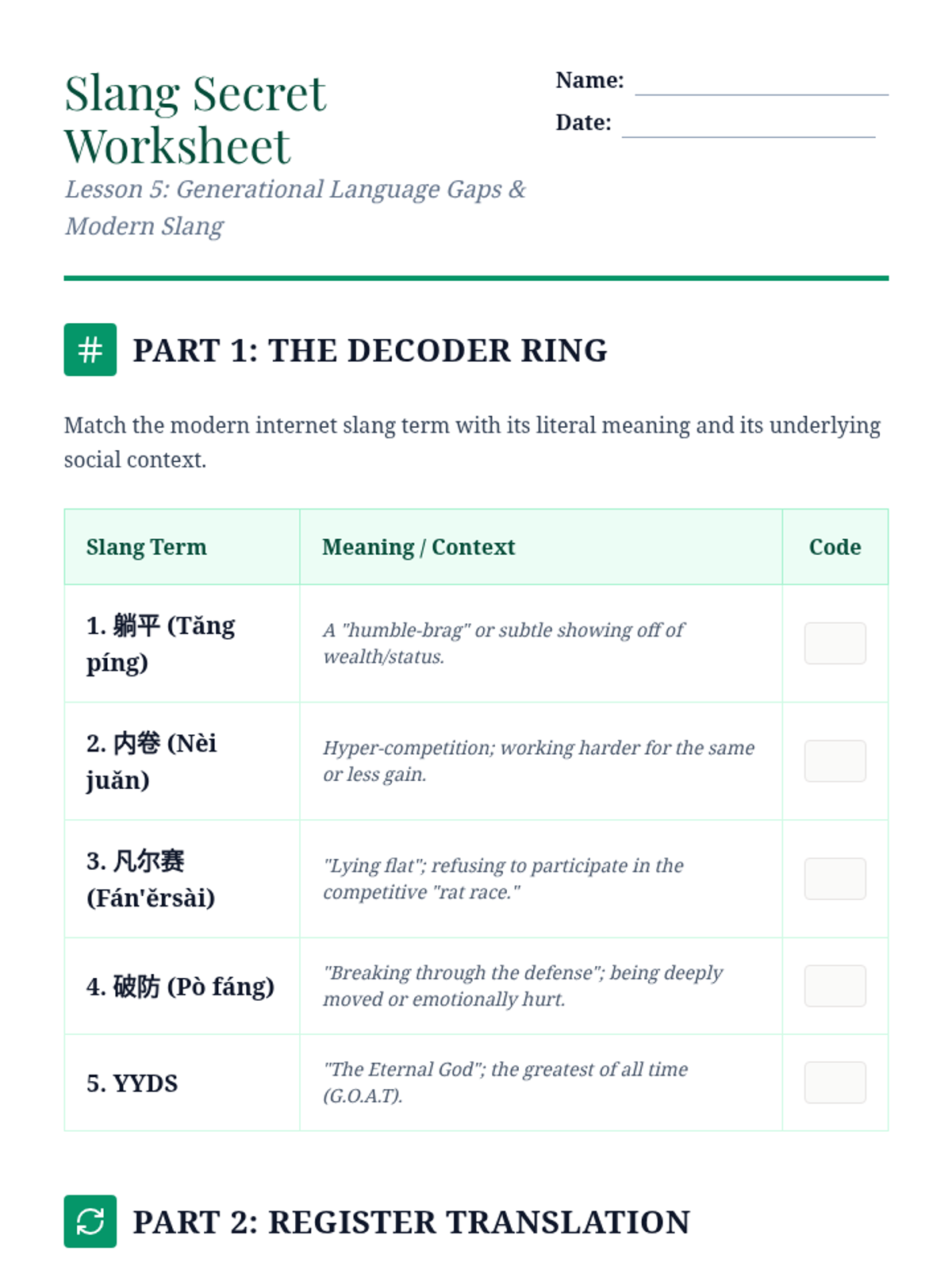
This lesson compares traditional idioms with modern internet slang, analyzing language evolution and practicing register adjustment based on the age and status of partners.
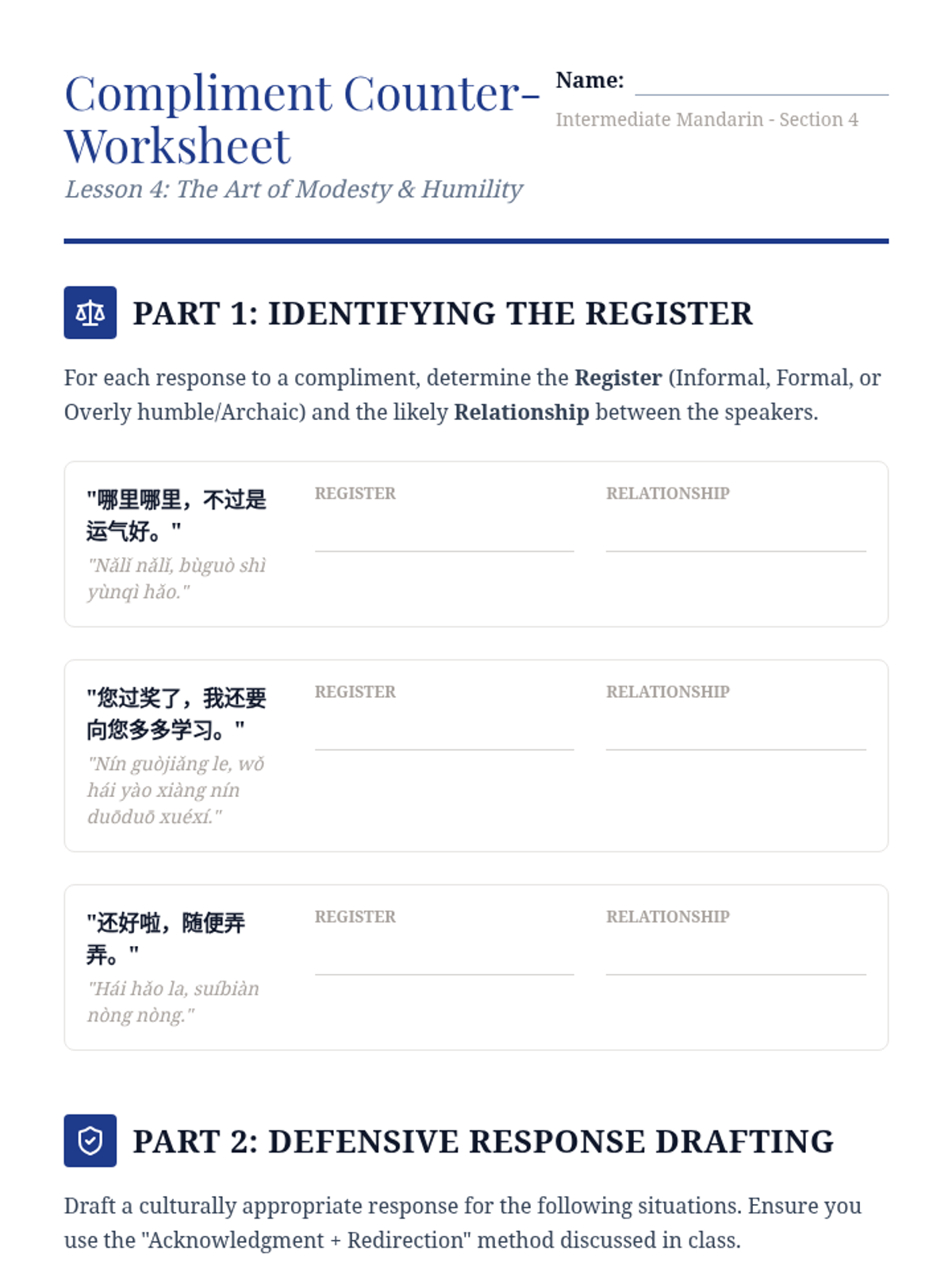
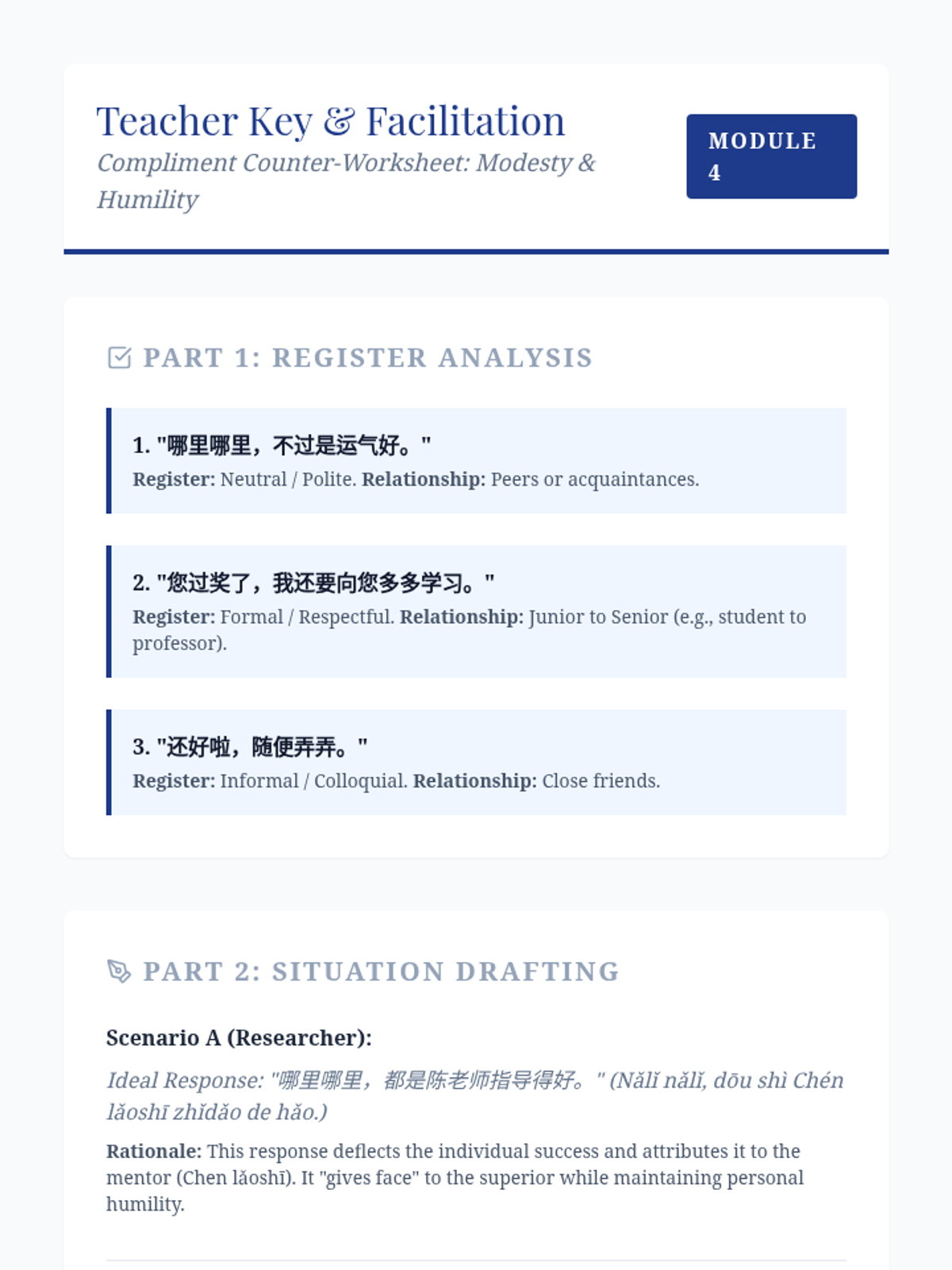
Students practice the cultural norm of deflecting compliments and expressing humility, covering specific phrases used to downplay achievements.
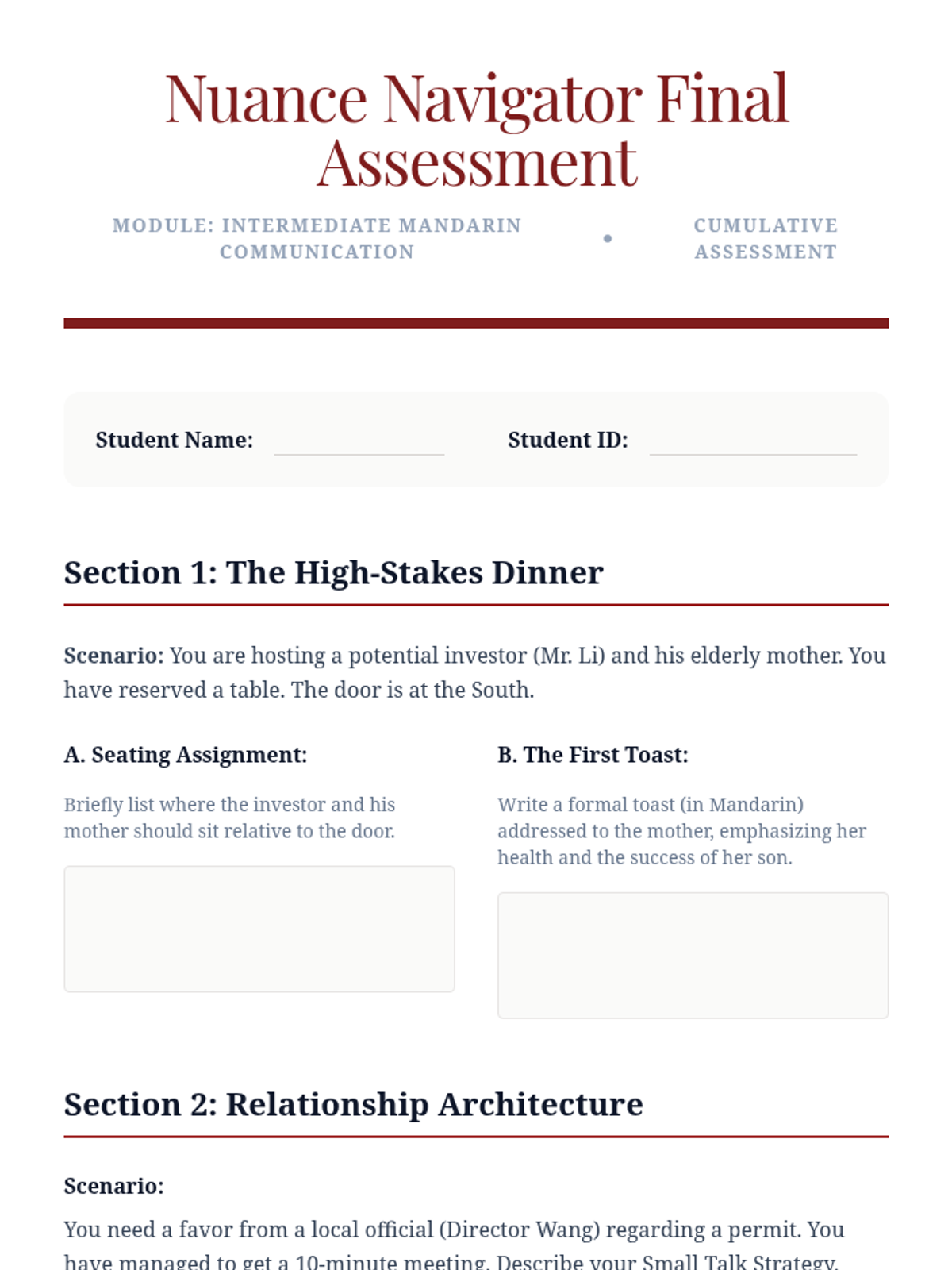
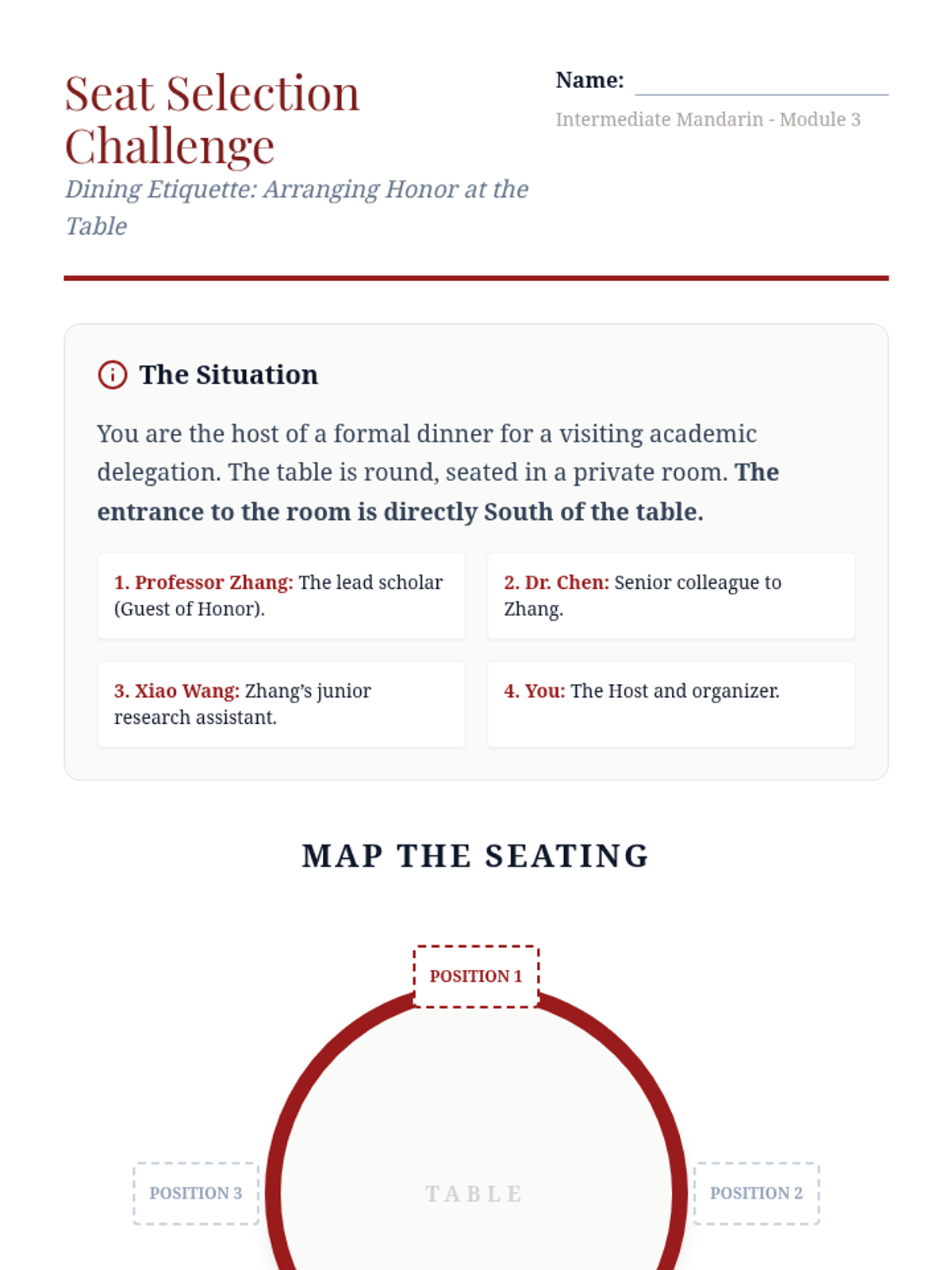
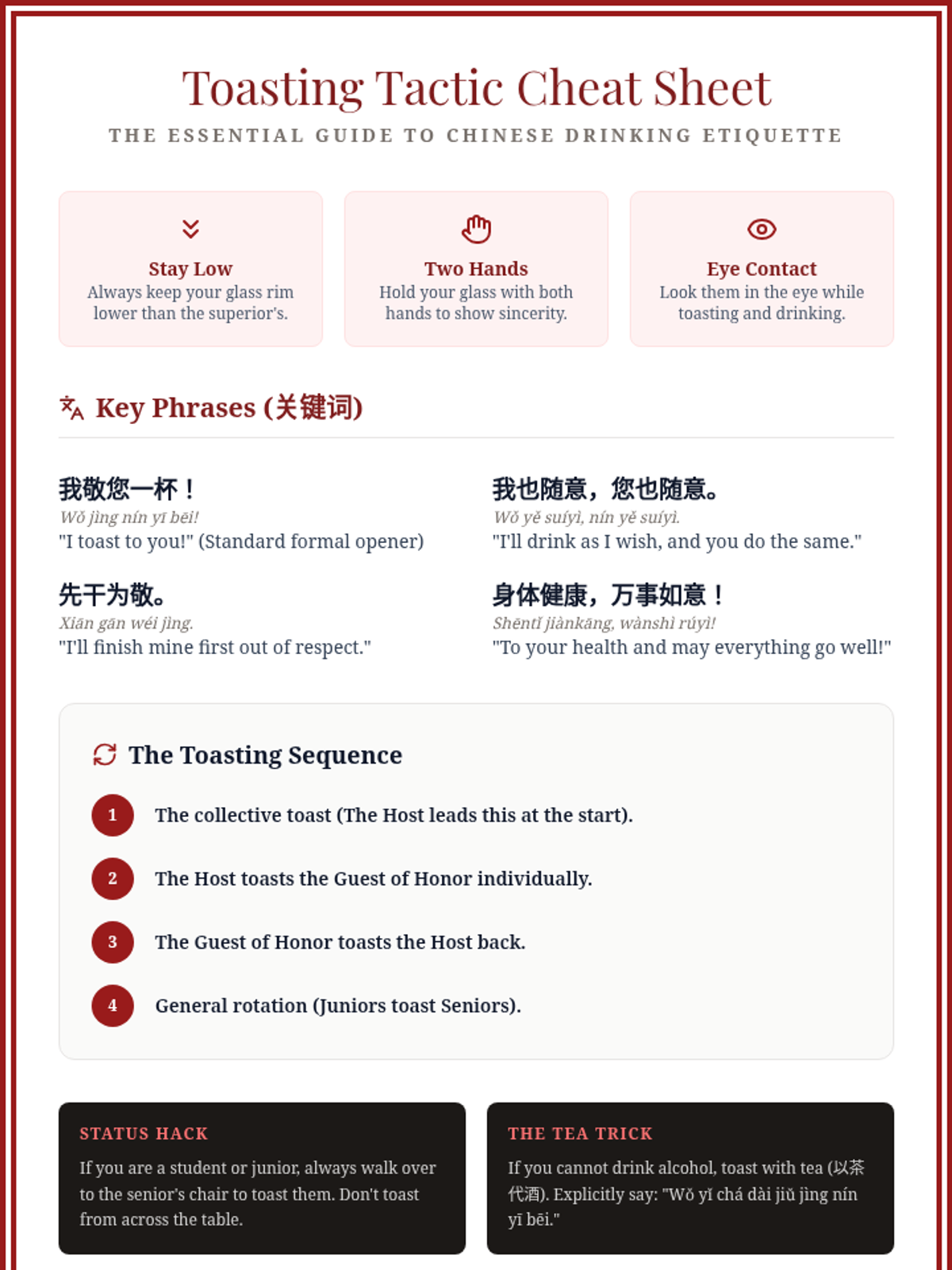
Students learn the intricate language of the Chinese dinner table, including seating arrangements, hosting duties, and the rhetoric of toasting.
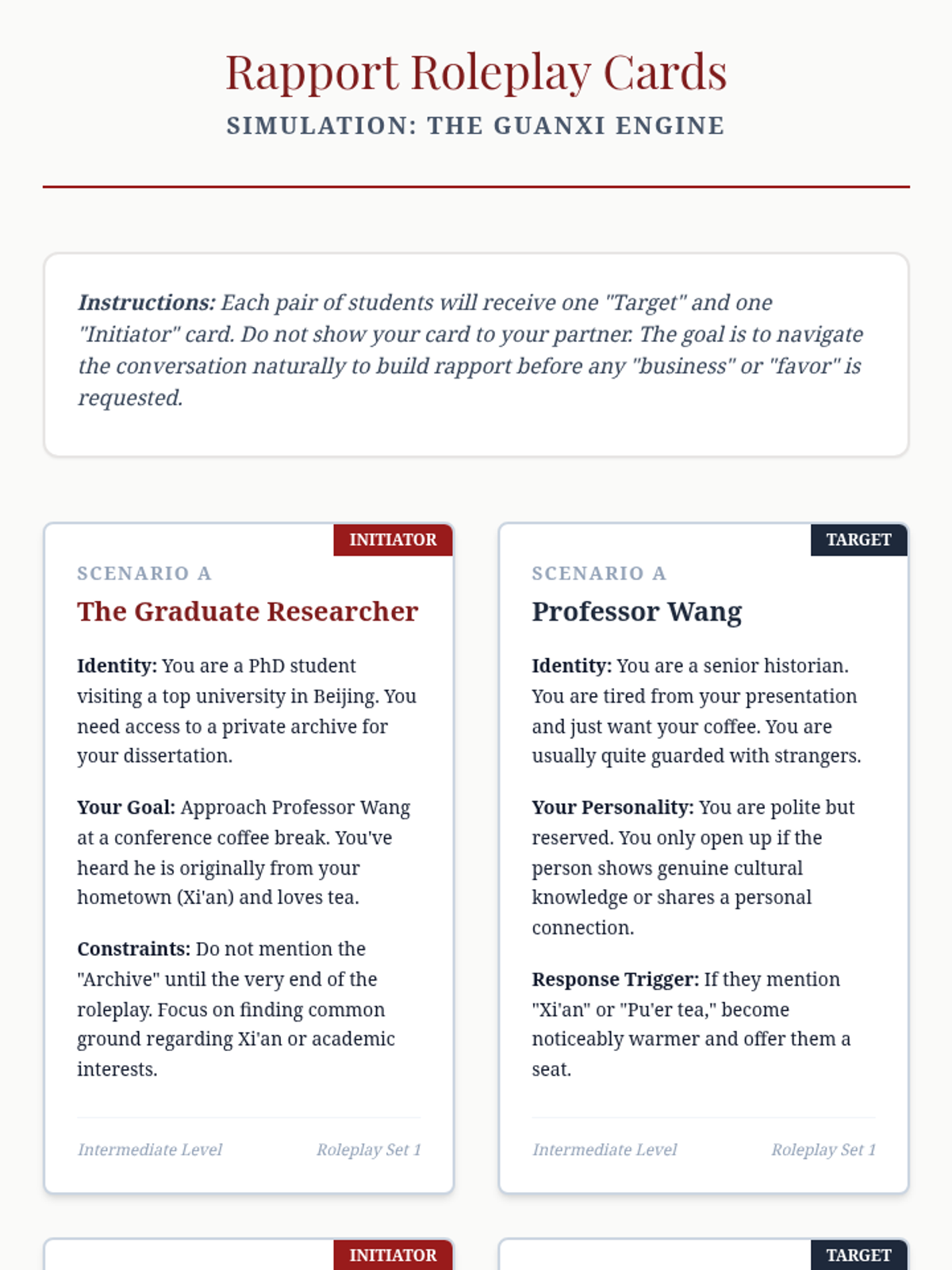
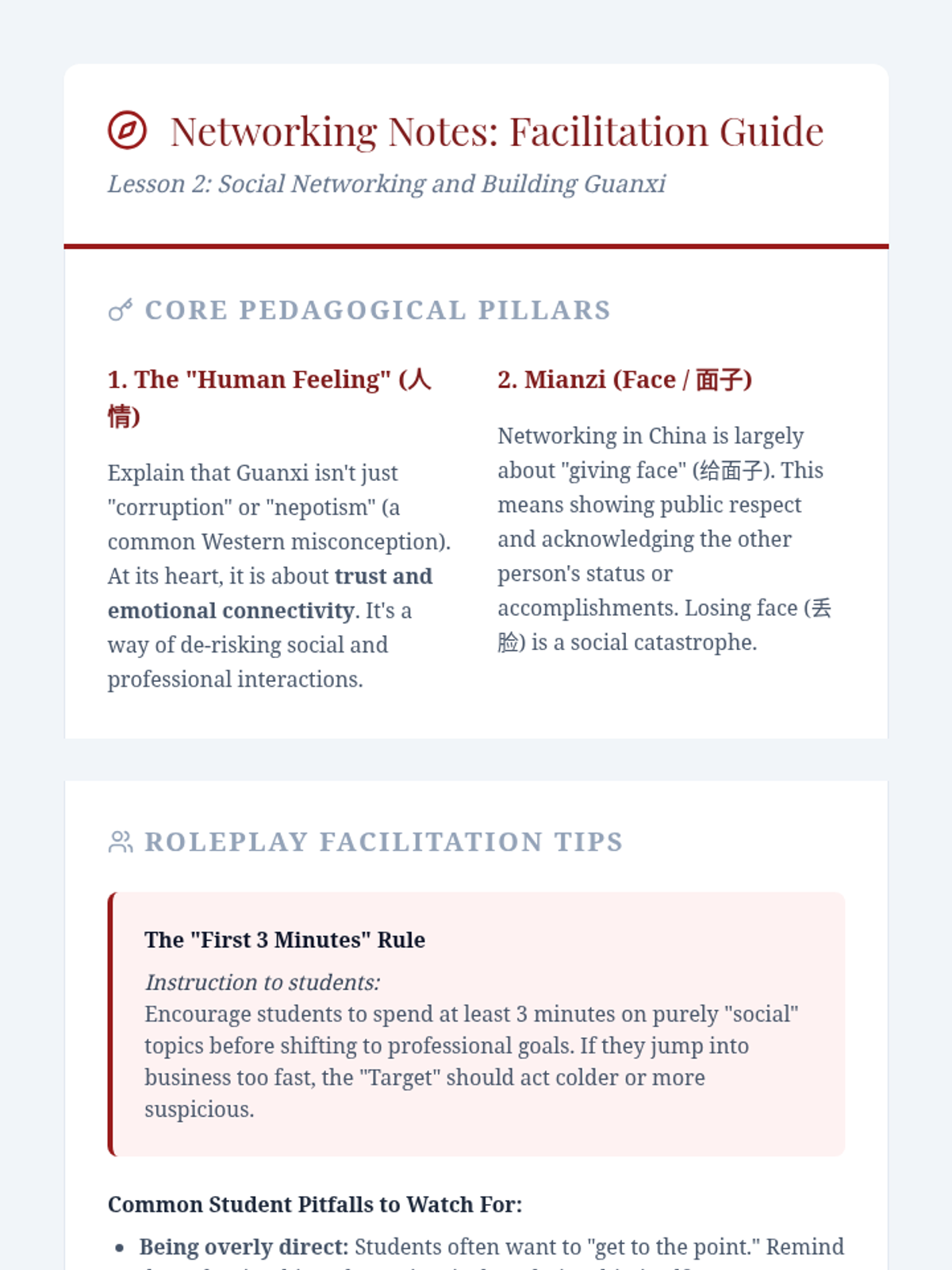
This lesson examines the vocabulary and sentence structures used to build rapport and cultivate relationships (Guanxi), practicing small talk that navigates privacy boundaries.
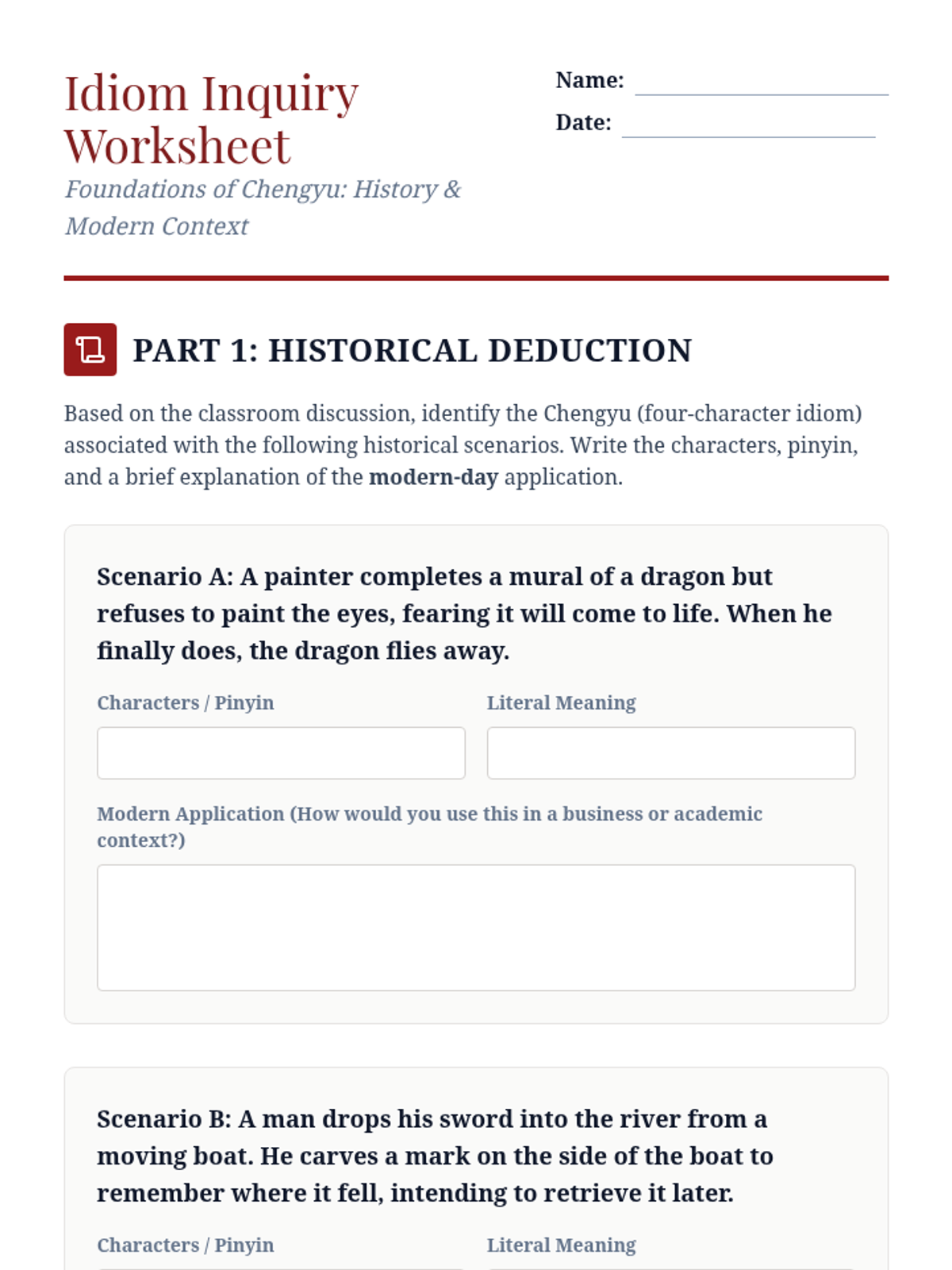
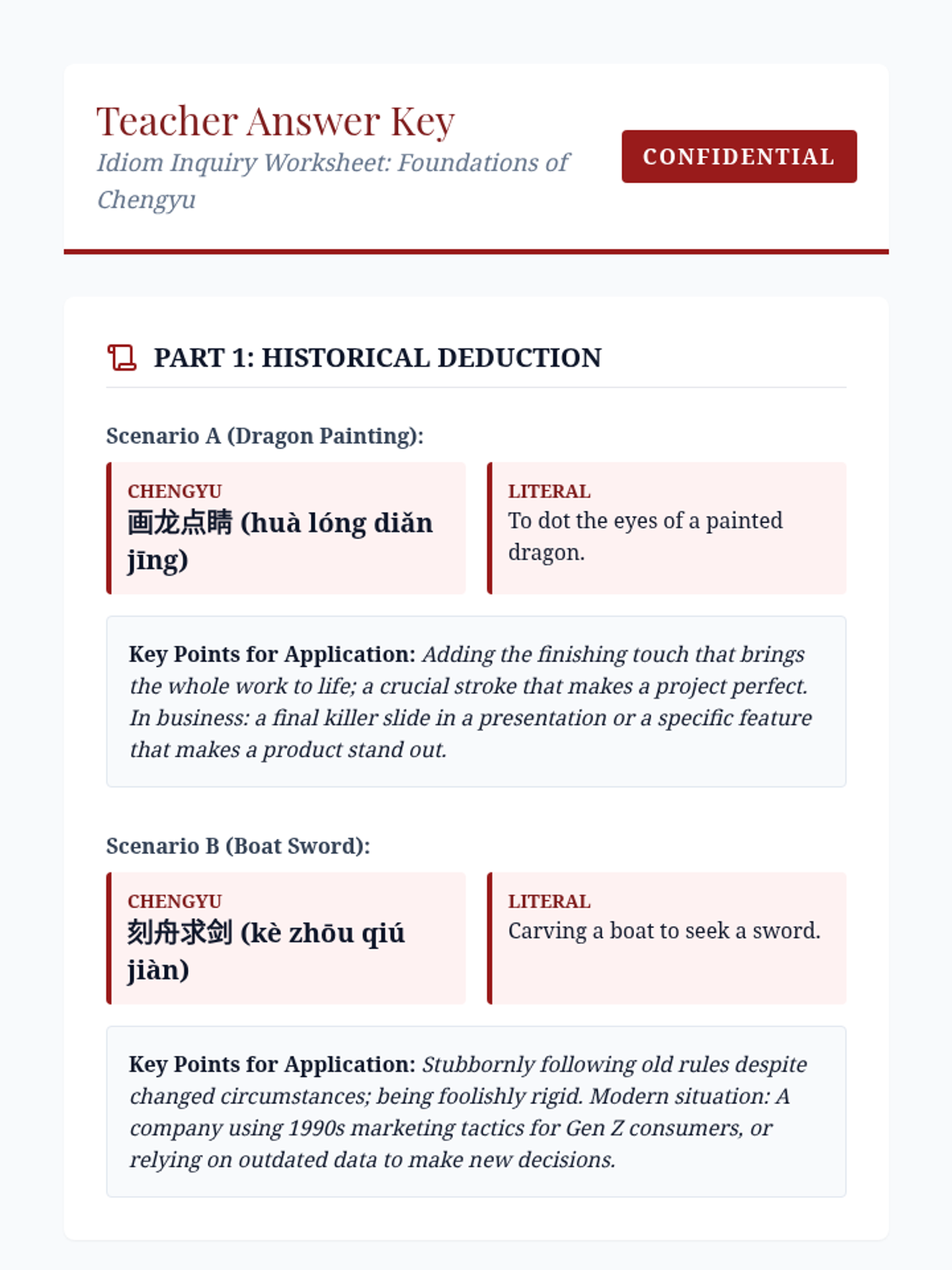
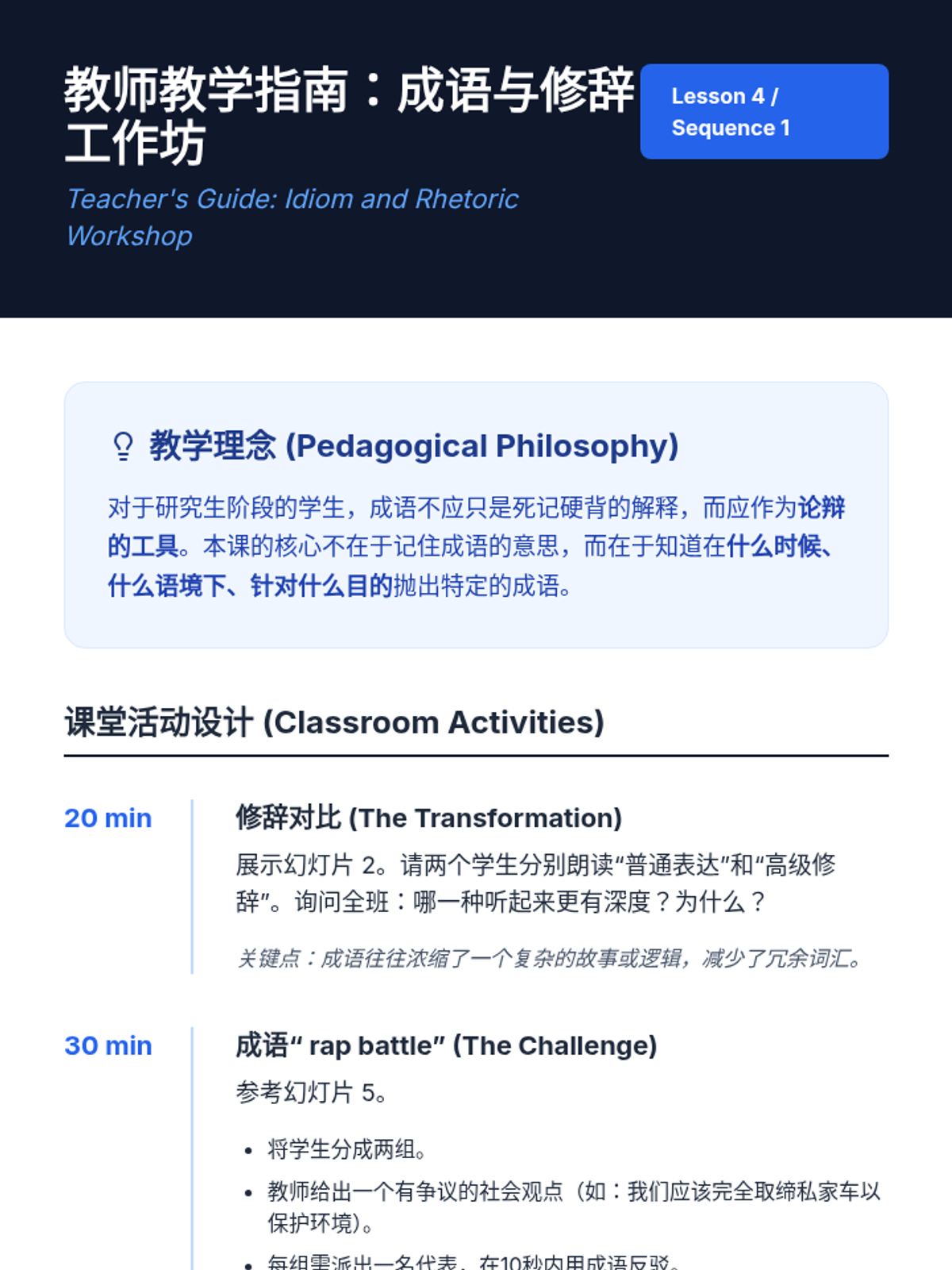
Students explore the stories behind common four-character idioms (Chengyu) and their modern-day applications, focusing on distinguishing between literary usage and appropriate conversational contexts.
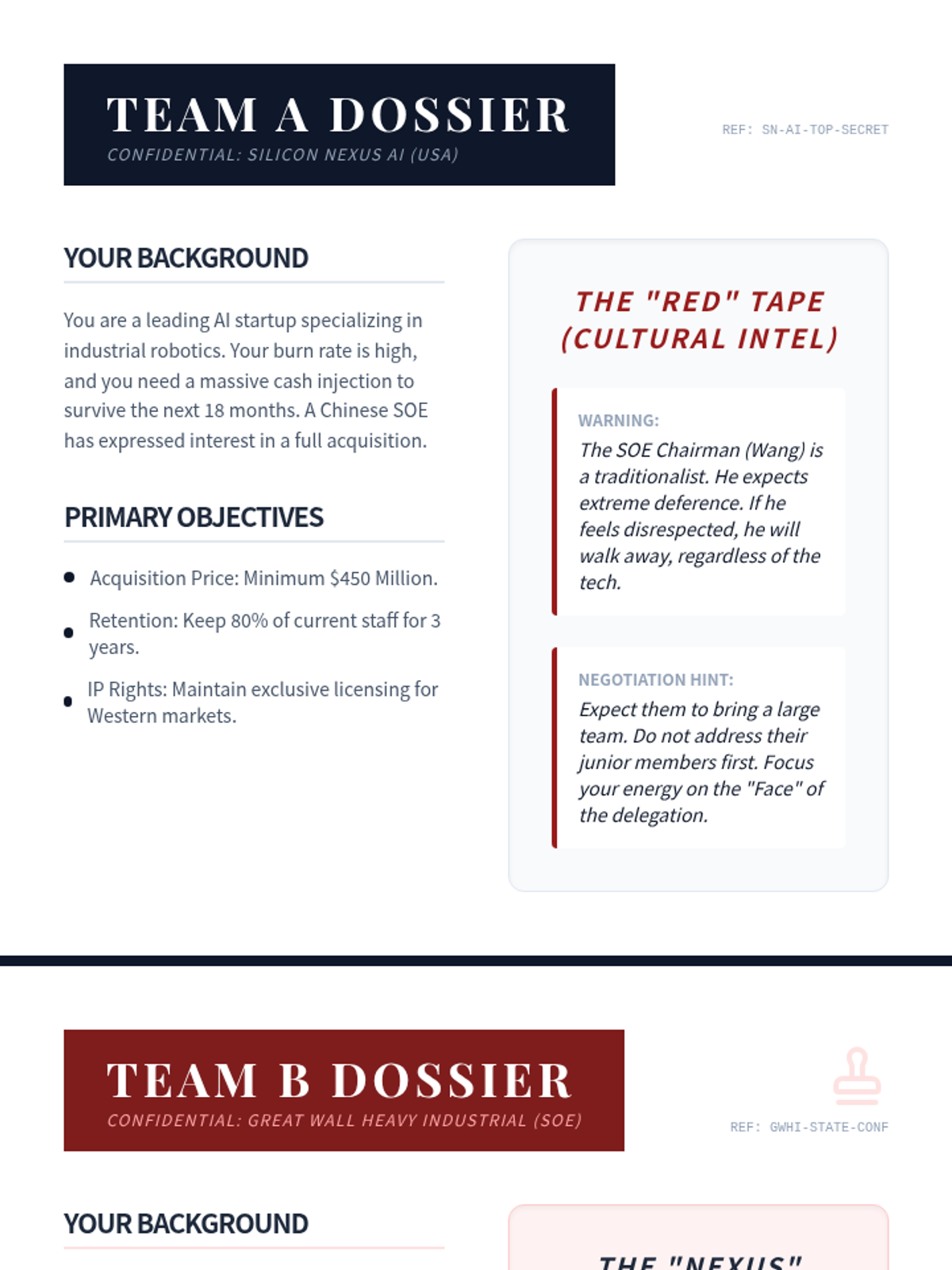
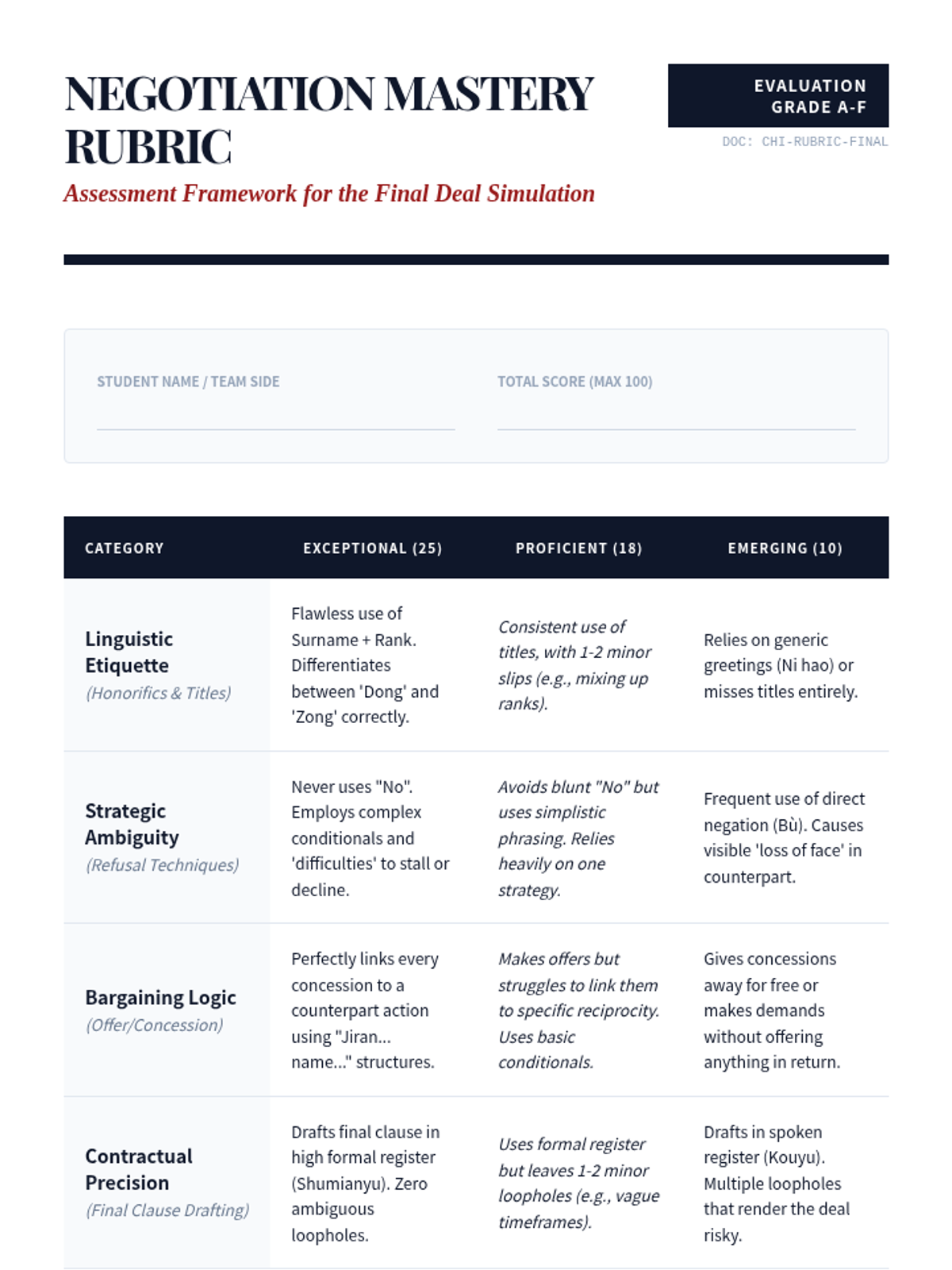
A comprehensive simulation where students apply all skills in a high-stakes merger negotiation between a foreign firm and a Chinese SOE.
Students bridge the gap between spoken negotiation and formal written Chinese in legal and contractual documents.
Focuses on the specific linguistic structures and conditional logic used in bargaining, concessions, and making counter-offers.
Learners master the art of indirect communication and strategic ambiguity to navigate conflict and maintain harmony (he) during disagreements.
Students explore the linguistic markers of social hierarchy and the importance of titles and honorifics in a Chinese business context.
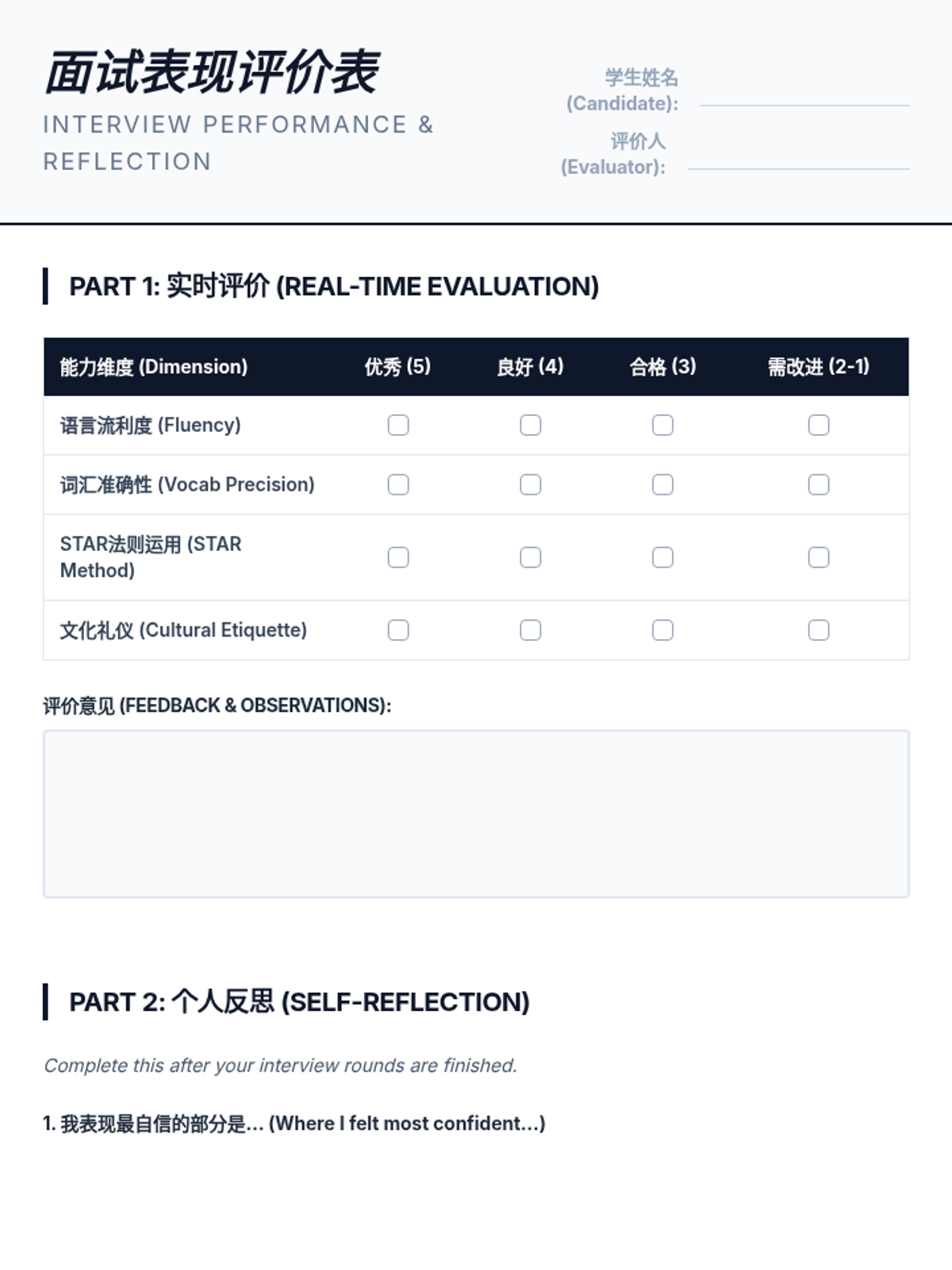
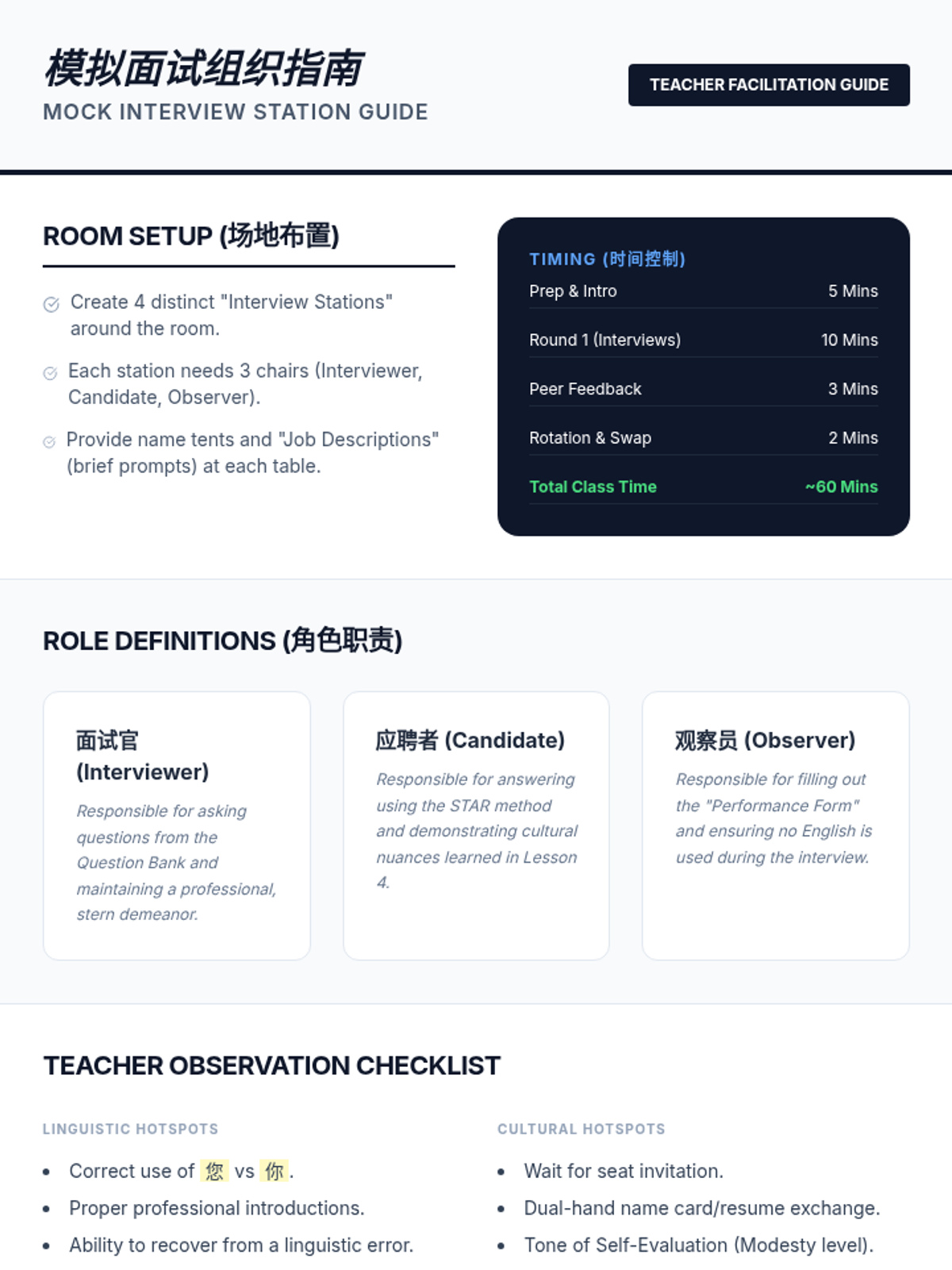
A cumulative simulation where students participate in a mock interview circuit to apply their skills and receive professional feedback.
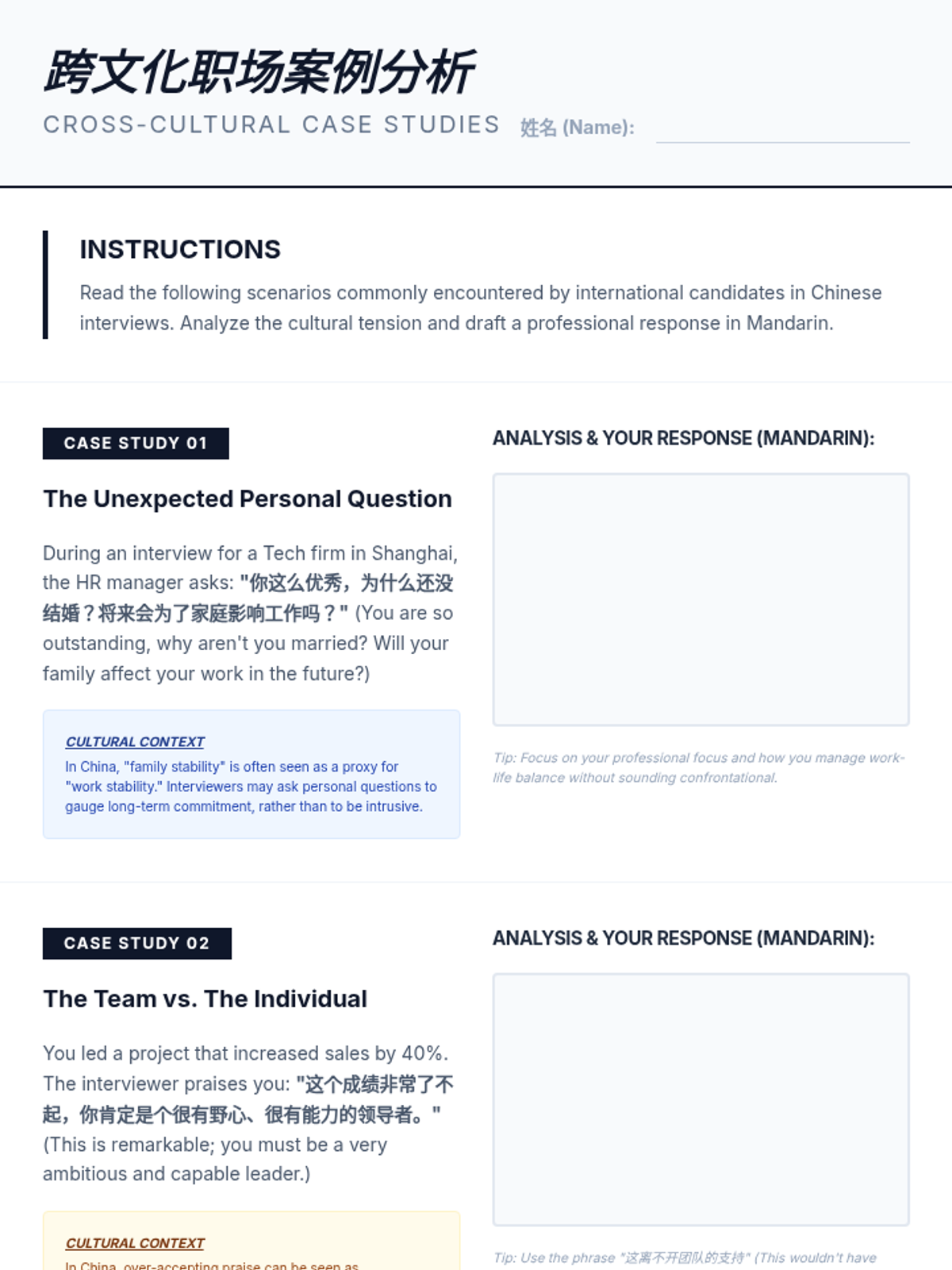
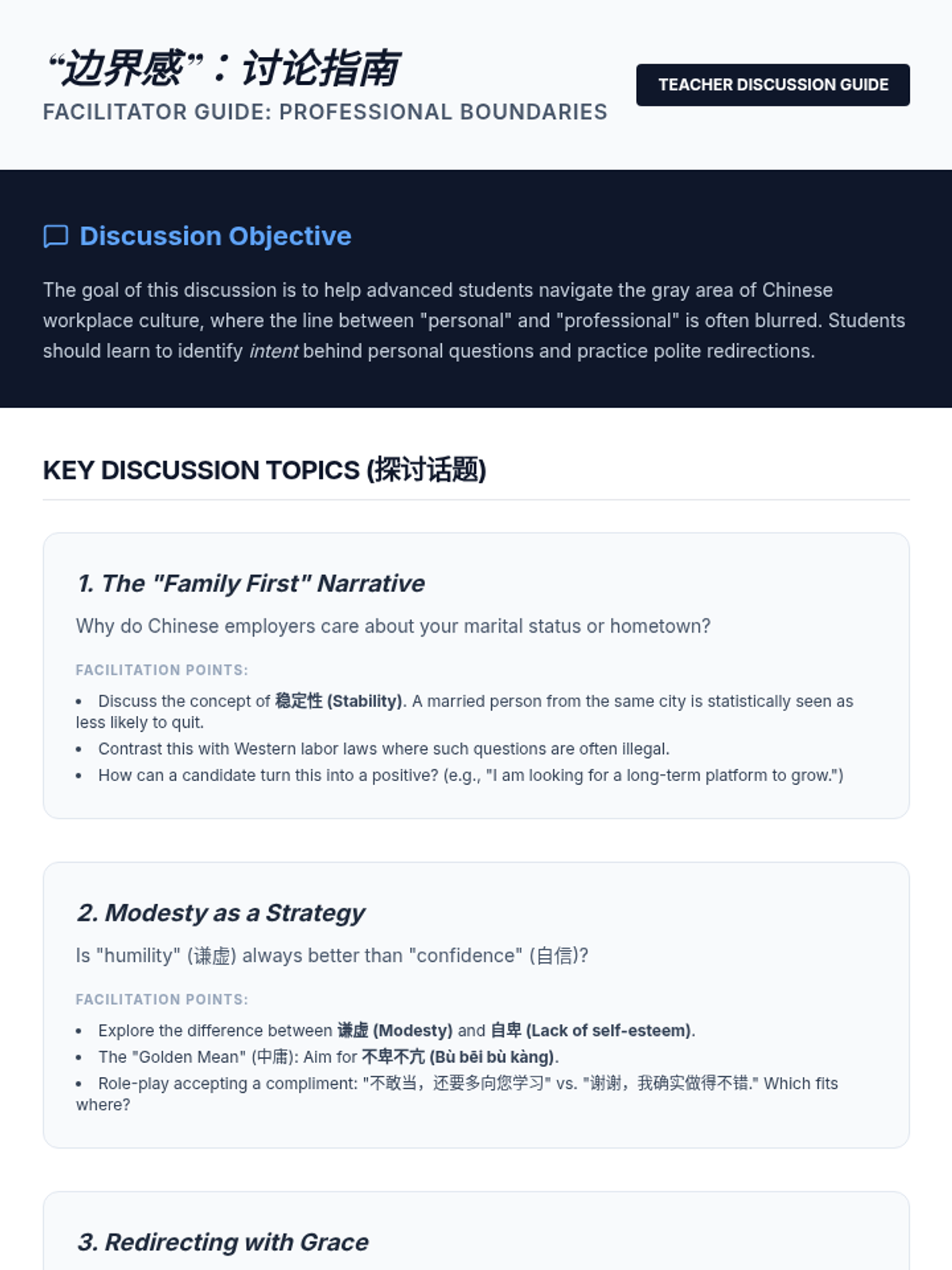
Explores the cultural nuances of Chinese professional interactions, including handling personal questions and navigating the balance between modesty and self-promotion.
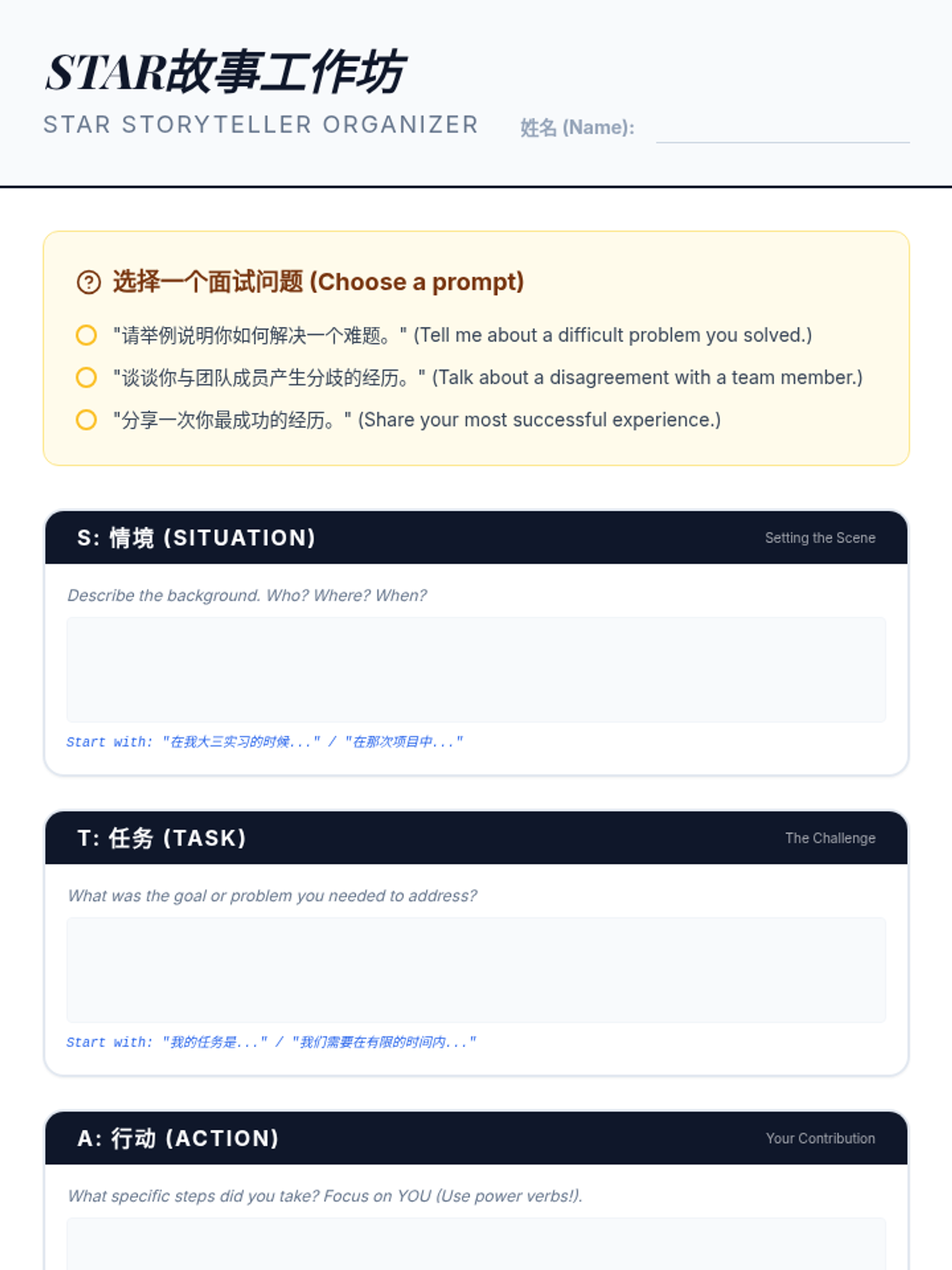
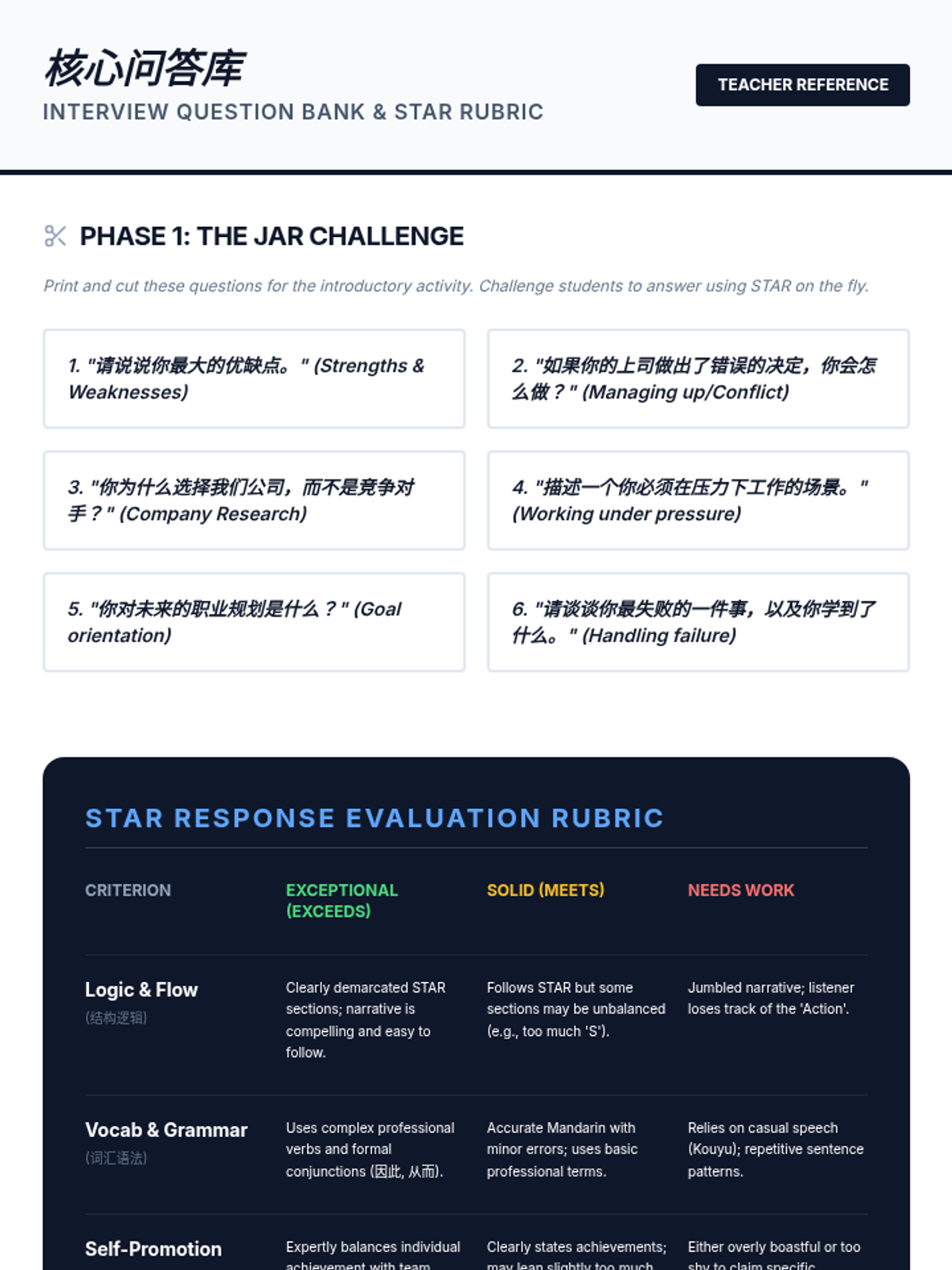
Students master the STAR method in Mandarin to provide structured, evidence-based answers to common and challenging interview questions.
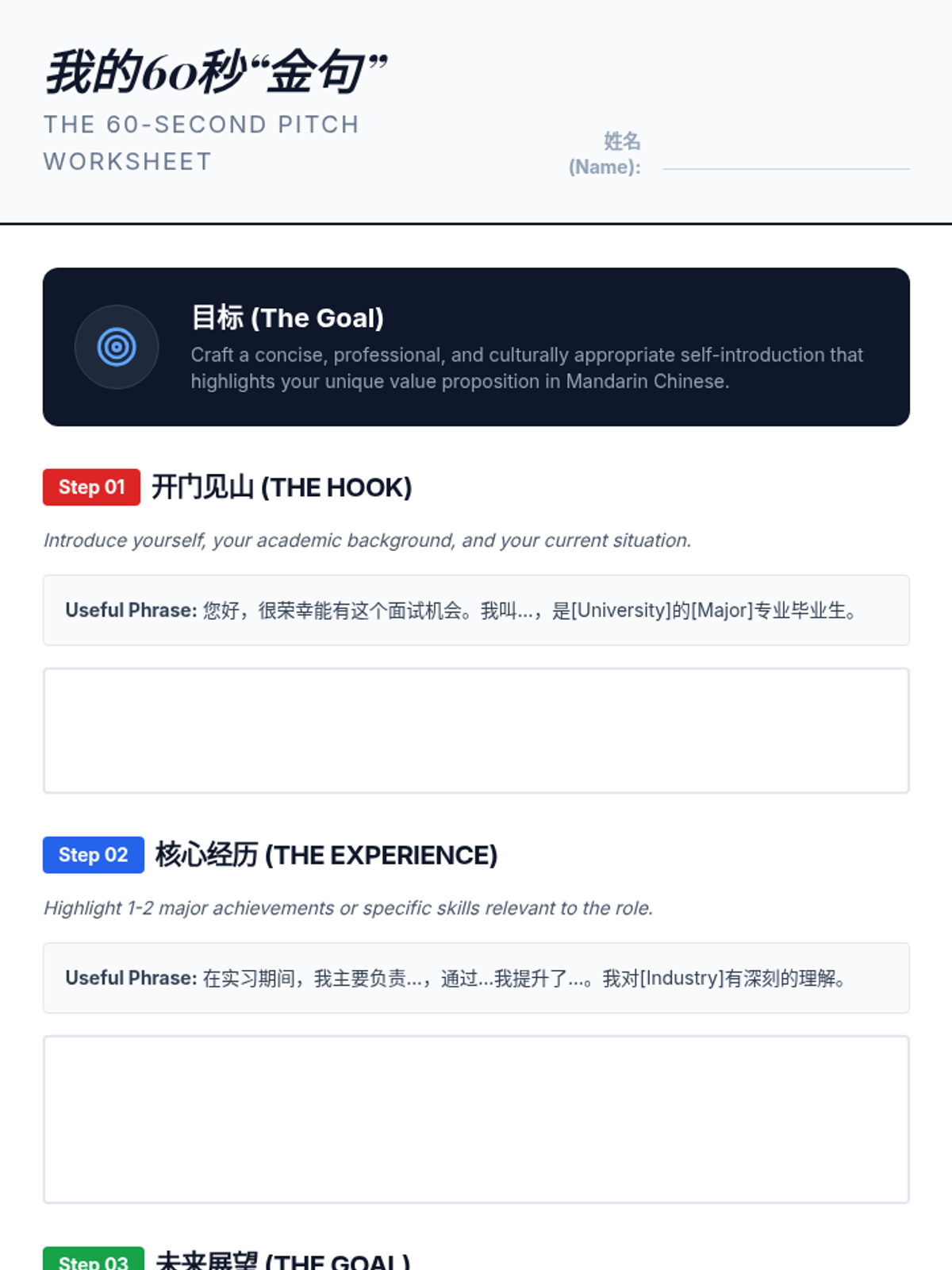
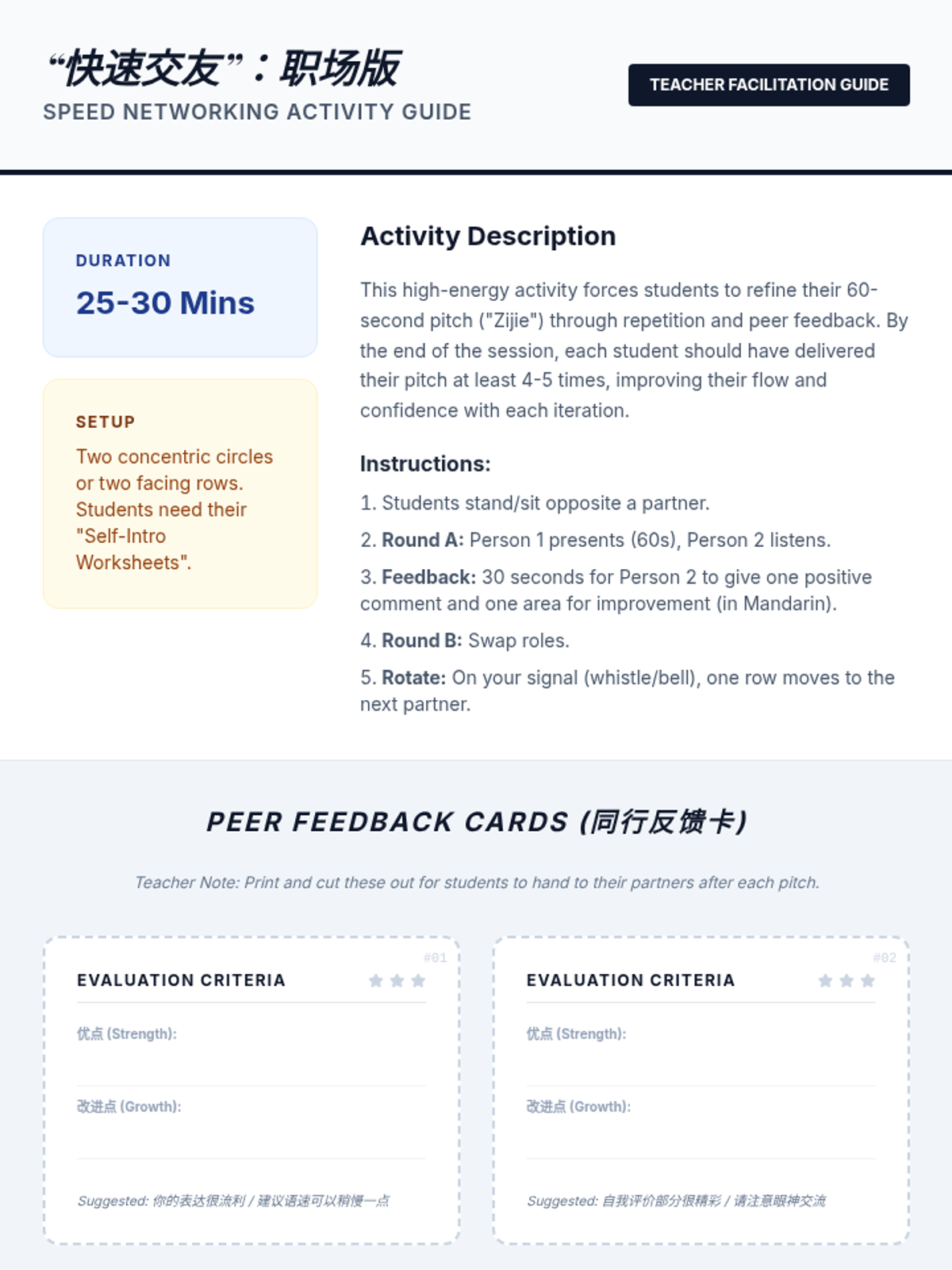
Focuses on creating a concise and impactful self-introduction (Zijie) that balances professional confidence with appropriate cultural humility.
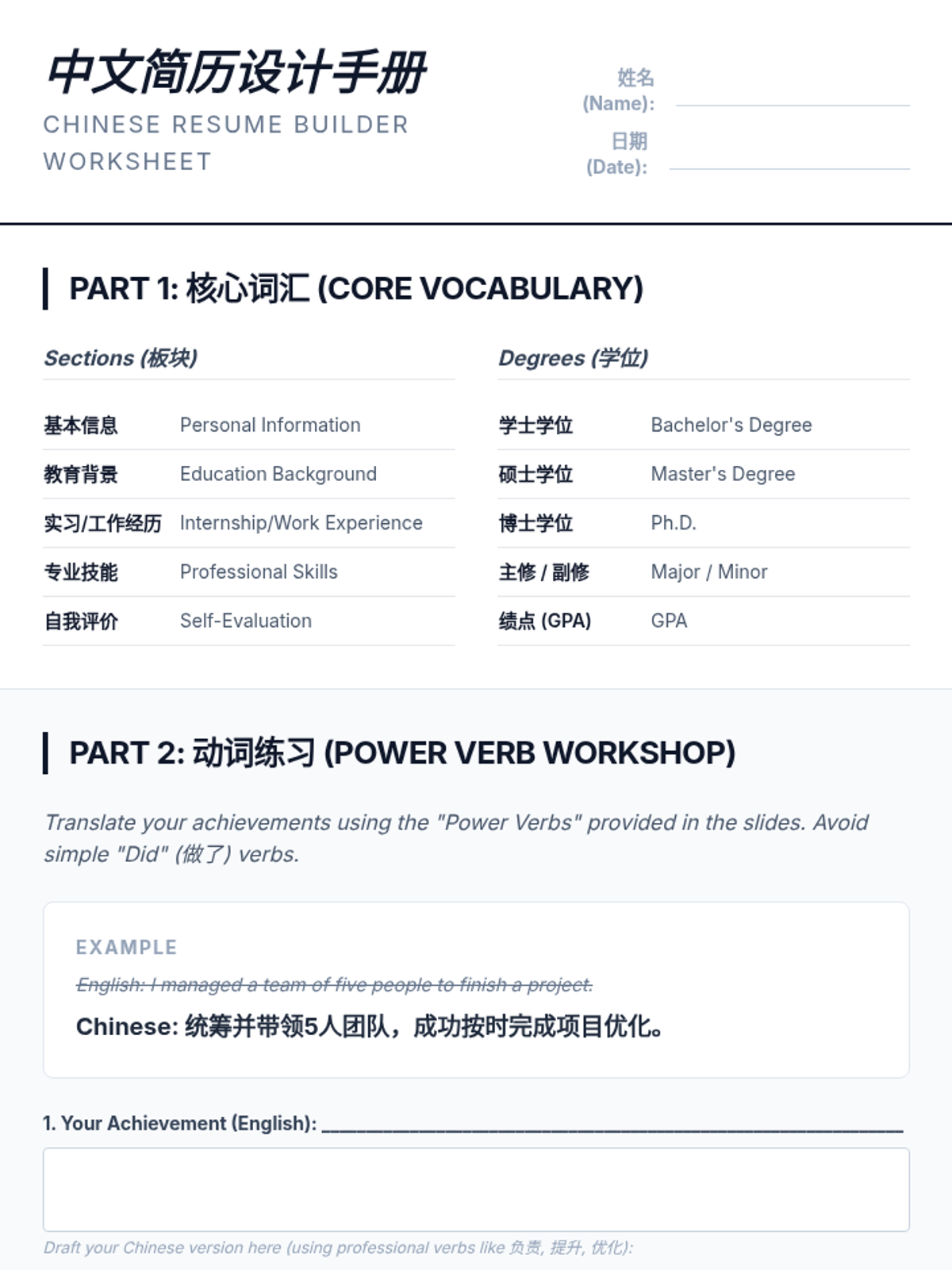
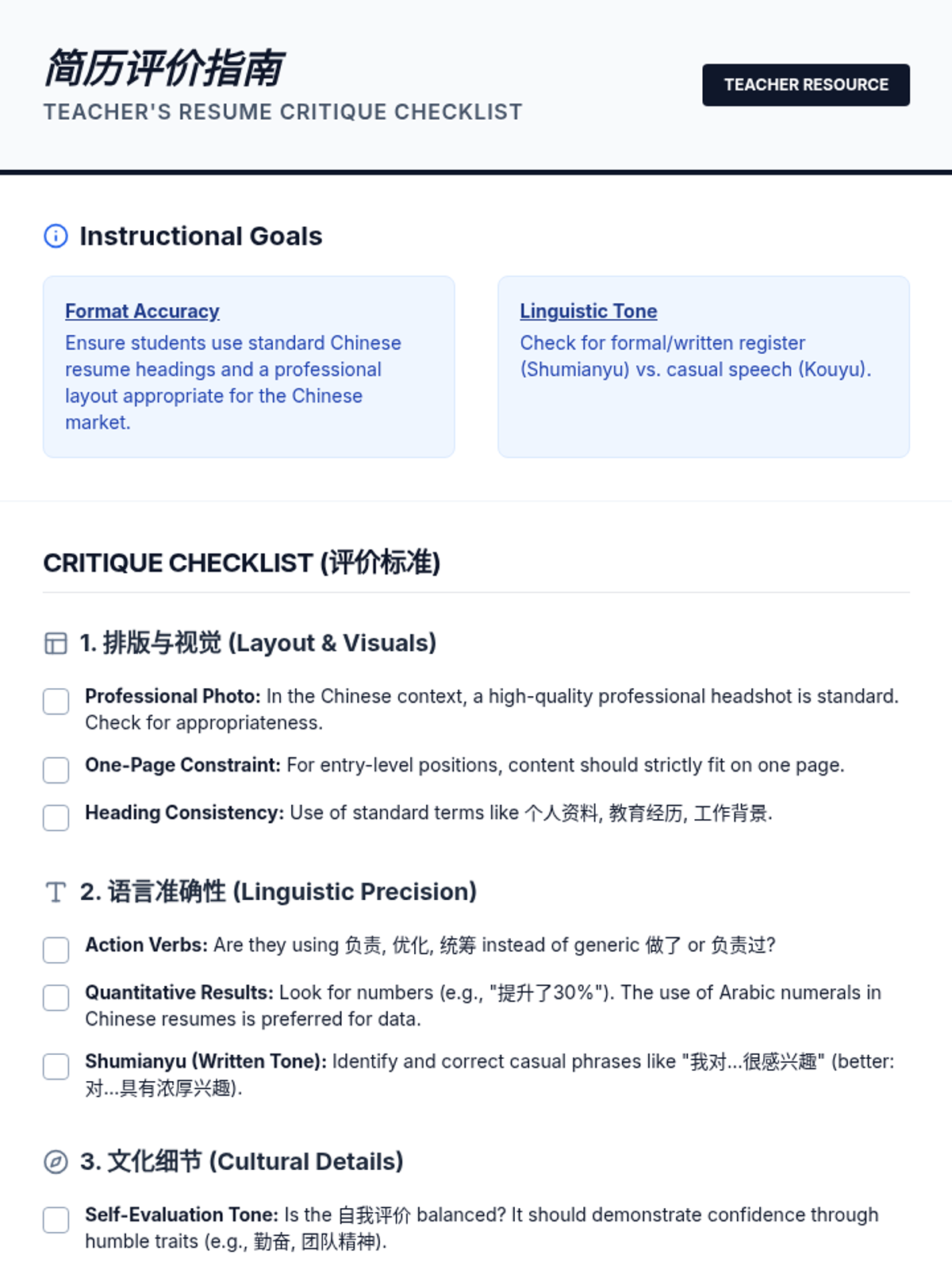
Students learn to translate their professional identity into the Chinese context by comparing Western and Chinese resume (Jianli) formats and mastering professional action verbs.
A culminating simulation where students negotiate a joint venture, synthesize all learned vocabulary, and draft a formal Memorandum of Understanding.
Dissects formal contracts and legal terminology in Mandarin, training students to identify precision language and potential liability in business agreements.
Explores the art of indirect refusal and strategic compromise in Mandarin, focusing on maintaining professional decorum and 'face' during tough bargaining.
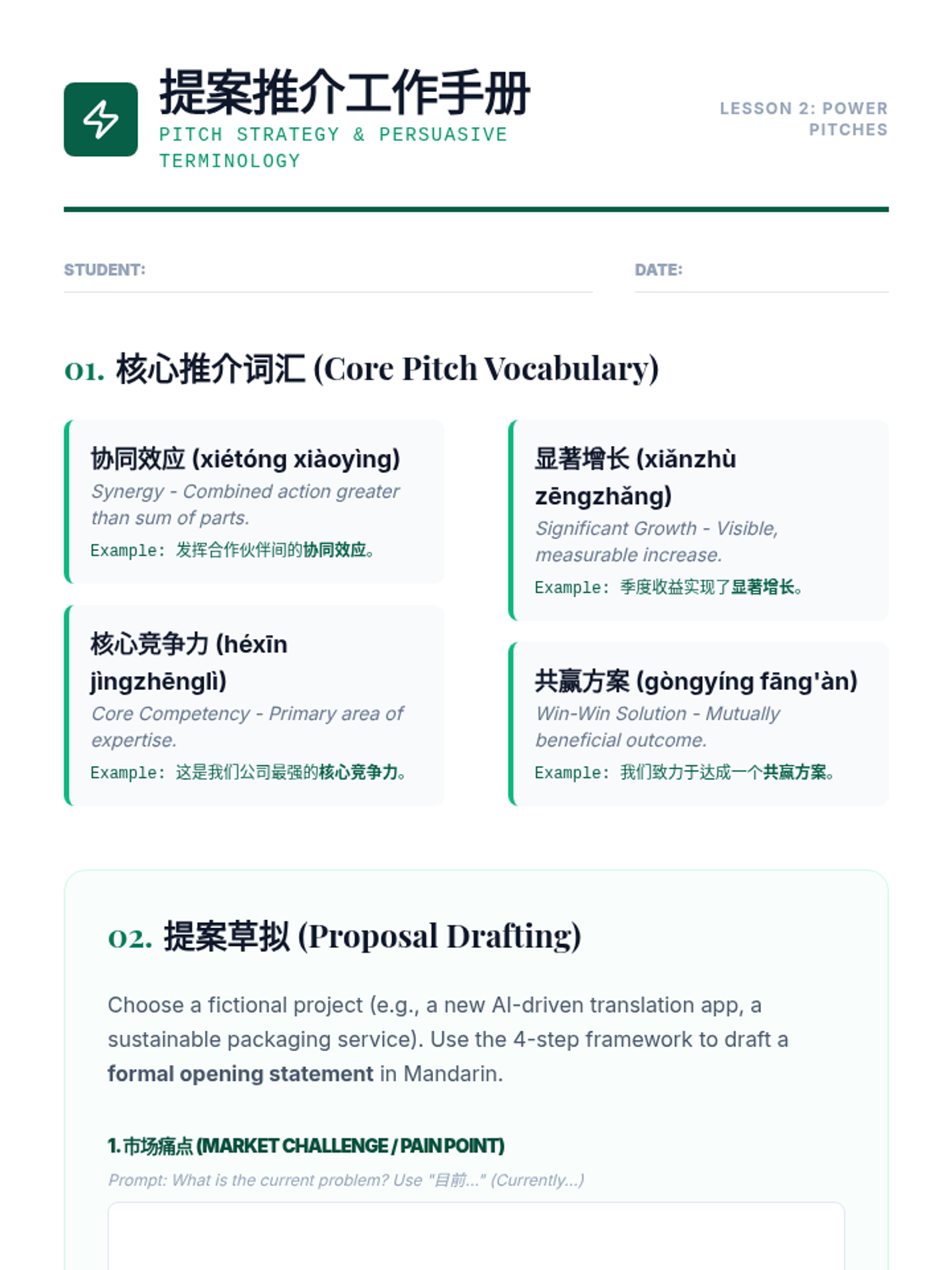
Focuses on the persuasive vocabulary and structural frameworks needed to pitch business proposals and present data with professional authority.
Students analyze organizational structures of major Chinese firms and master the honorifics and formal introductions required for high-level corporate interactions.
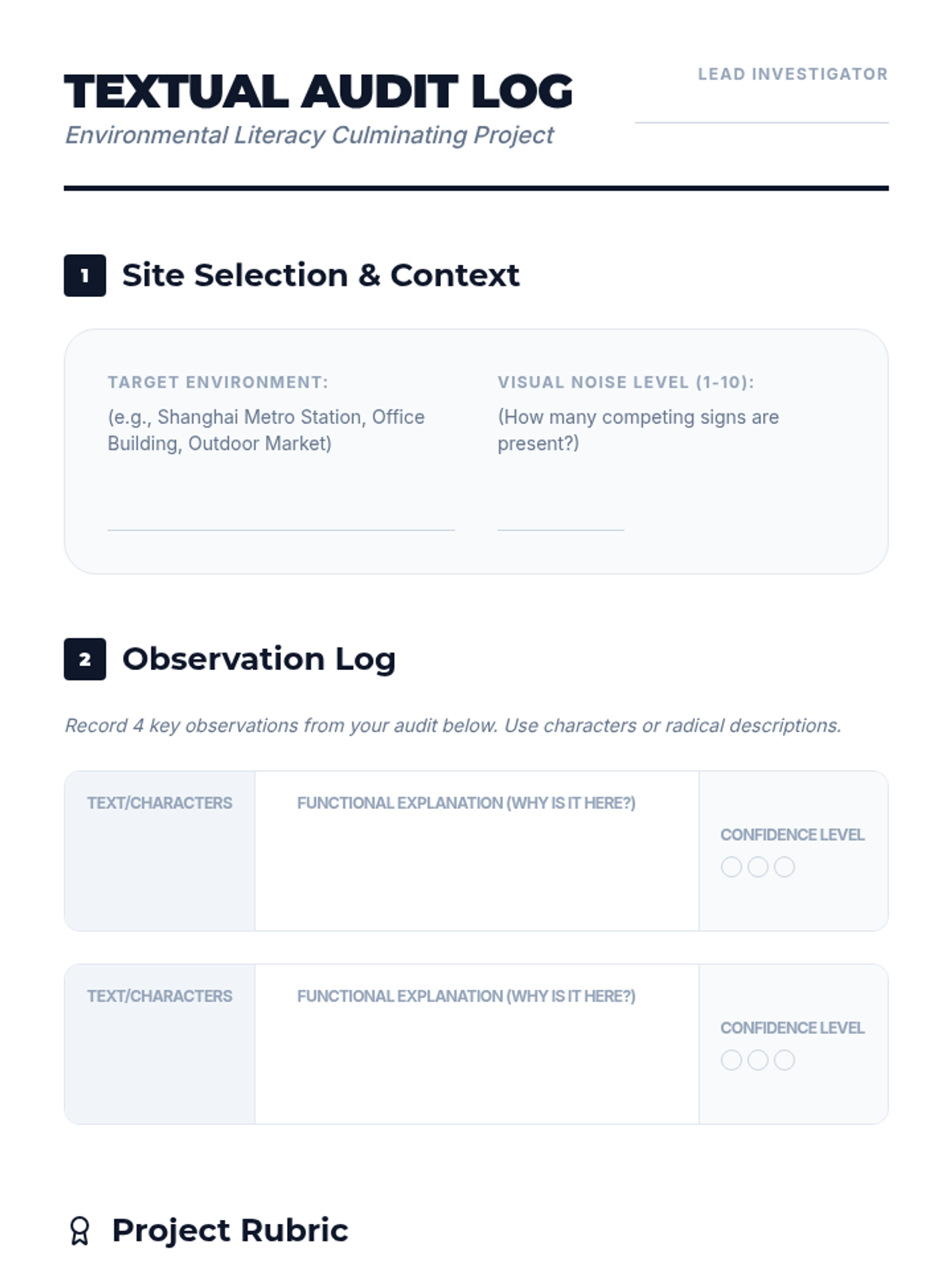
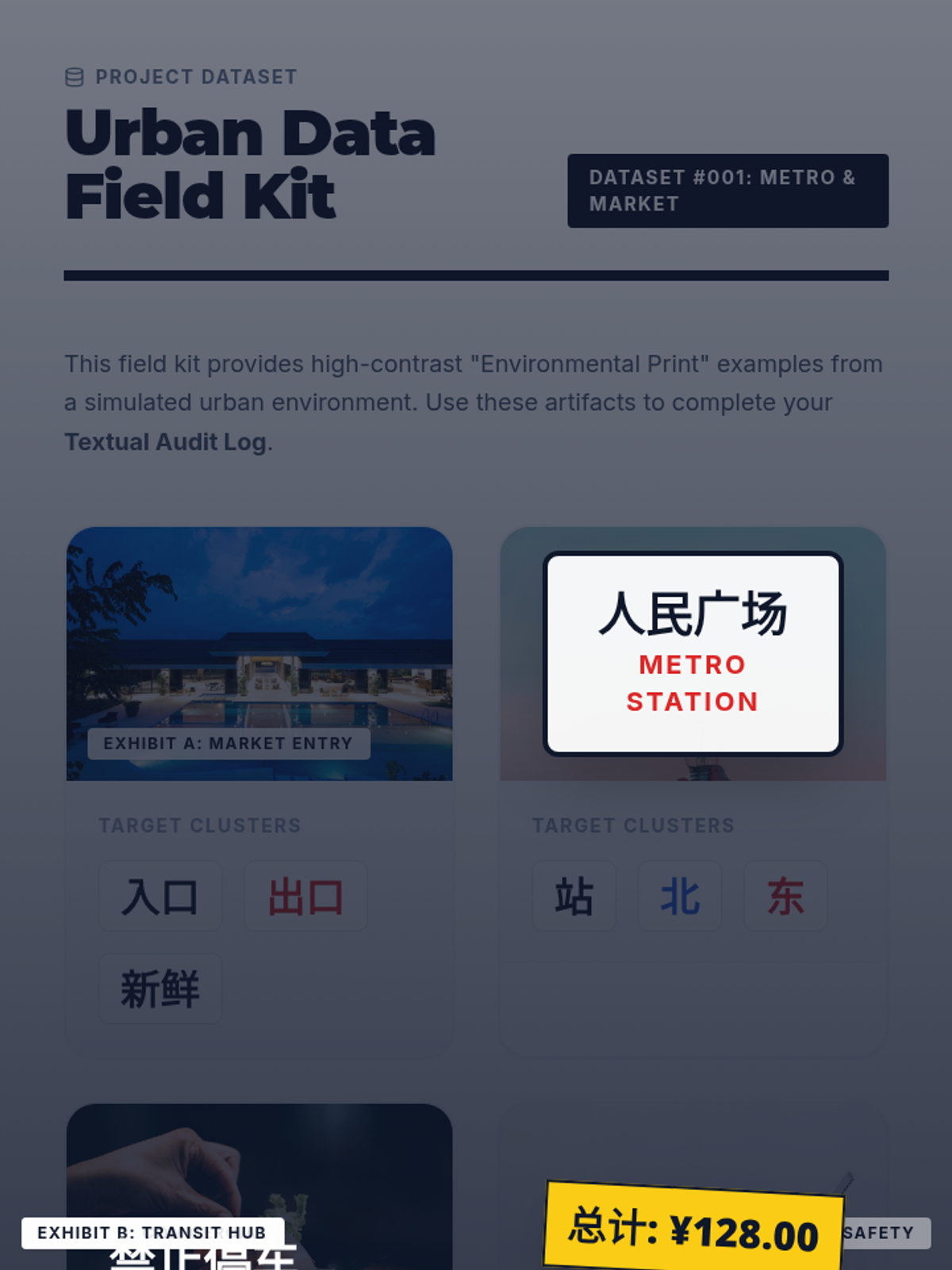
A culminating project where students perform a comprehensive text audit of a specific visual environment, documenting and explaining character functions.
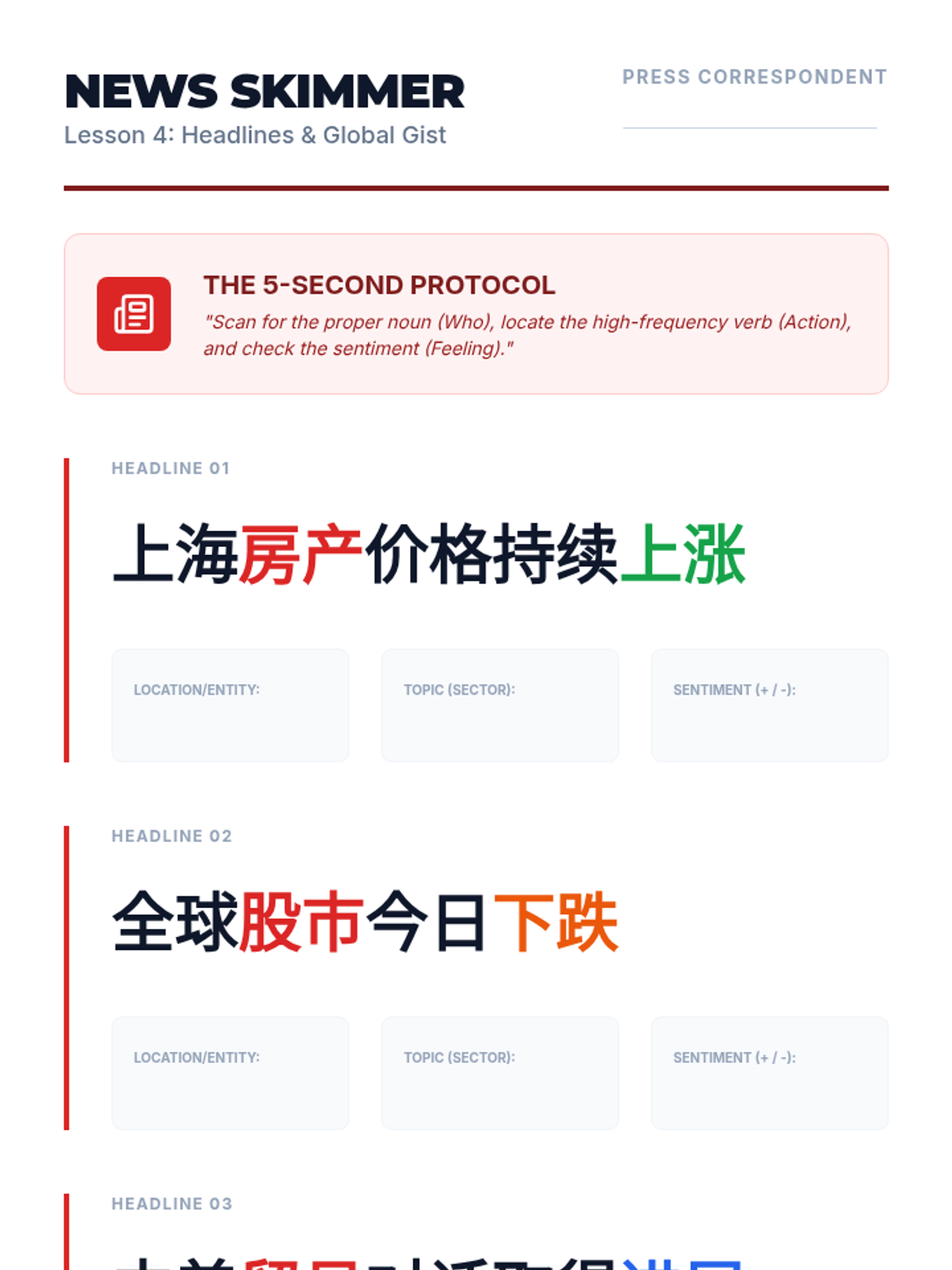
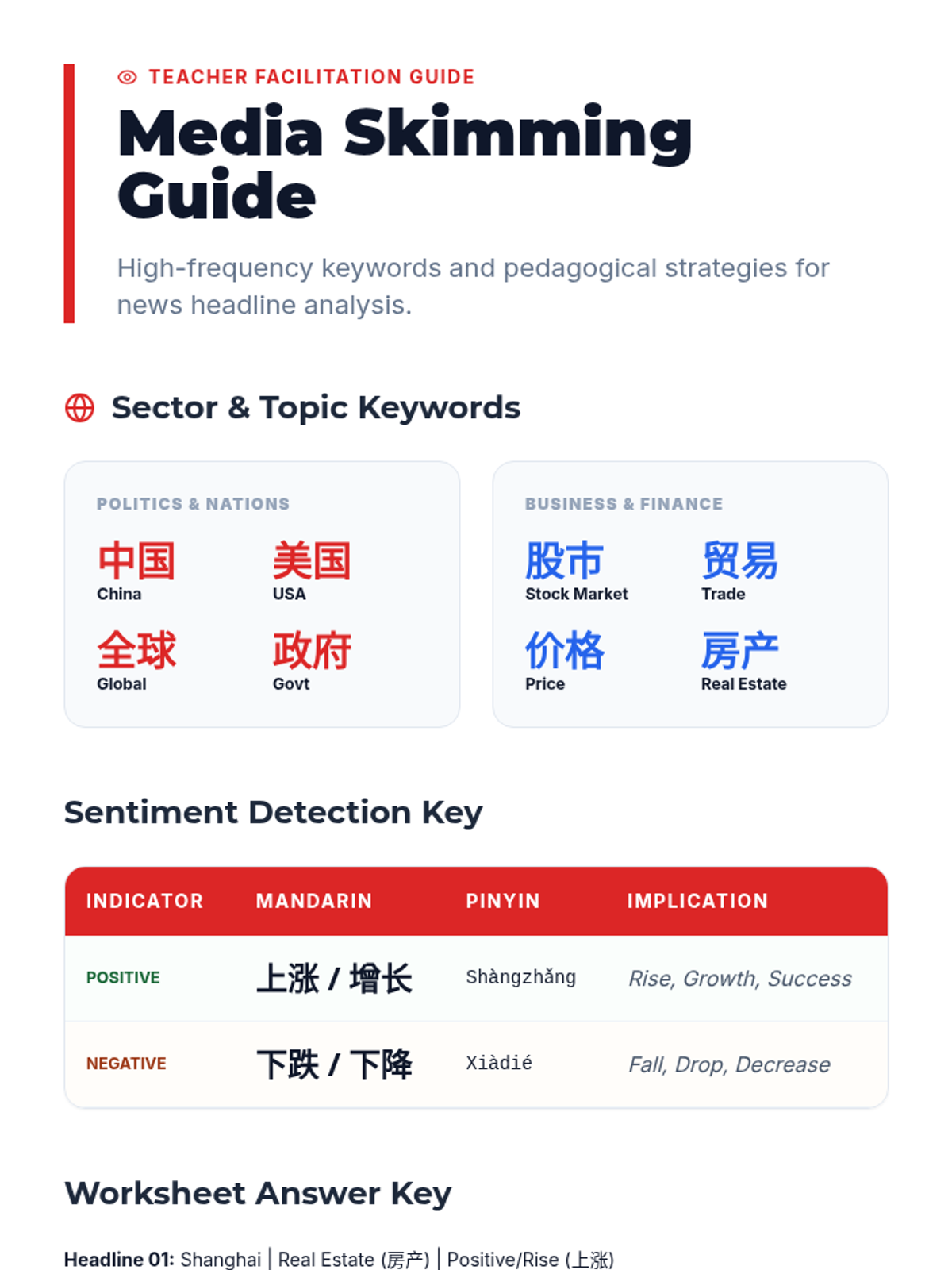
Students practice skimming techniques using newspaper headlines and social media trends to identify proper nouns and high-impact verbs.
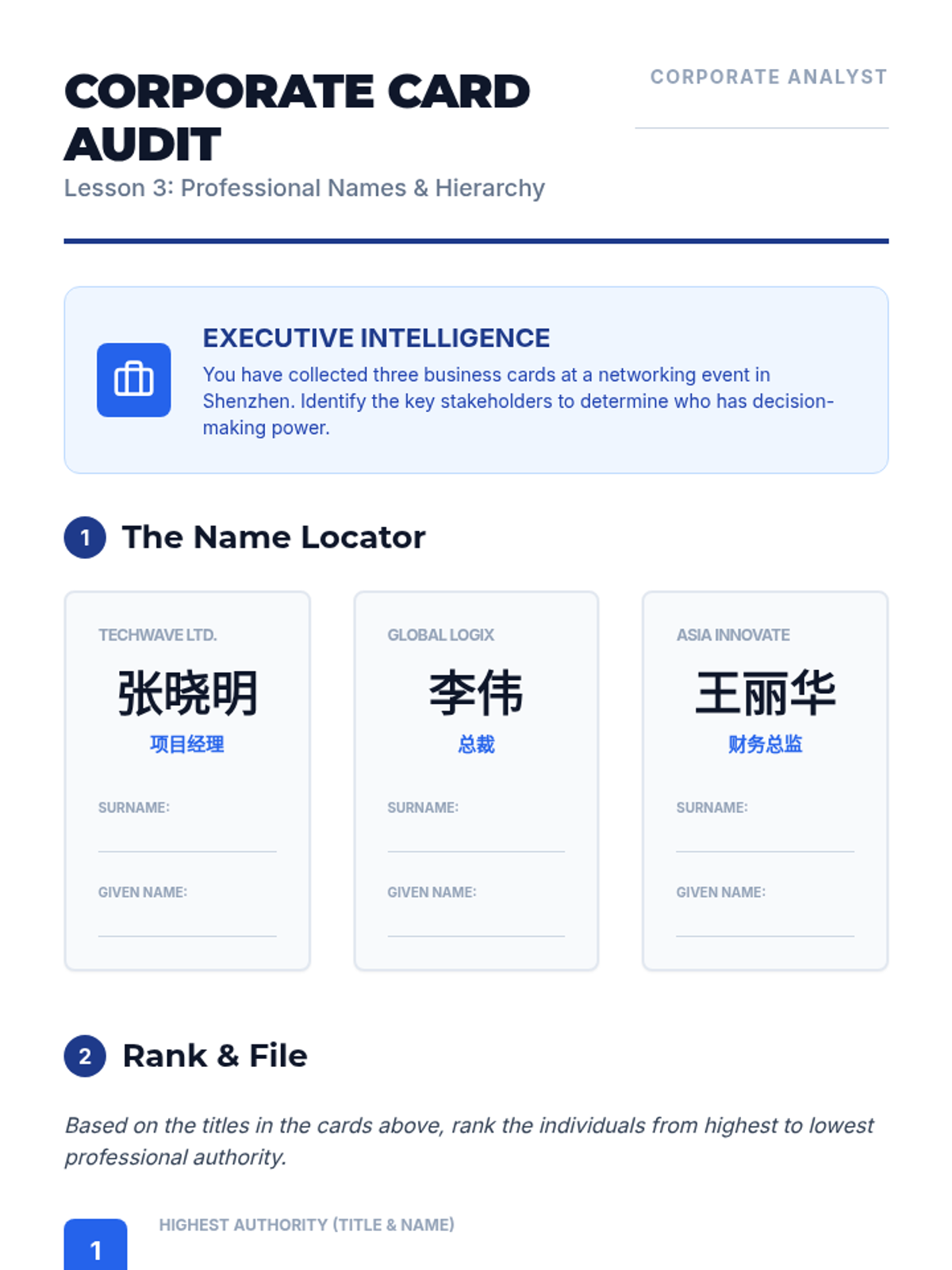
This lesson explores the structure of Chinese names and professional titles on business cards to navigate social and professional hierarchies.
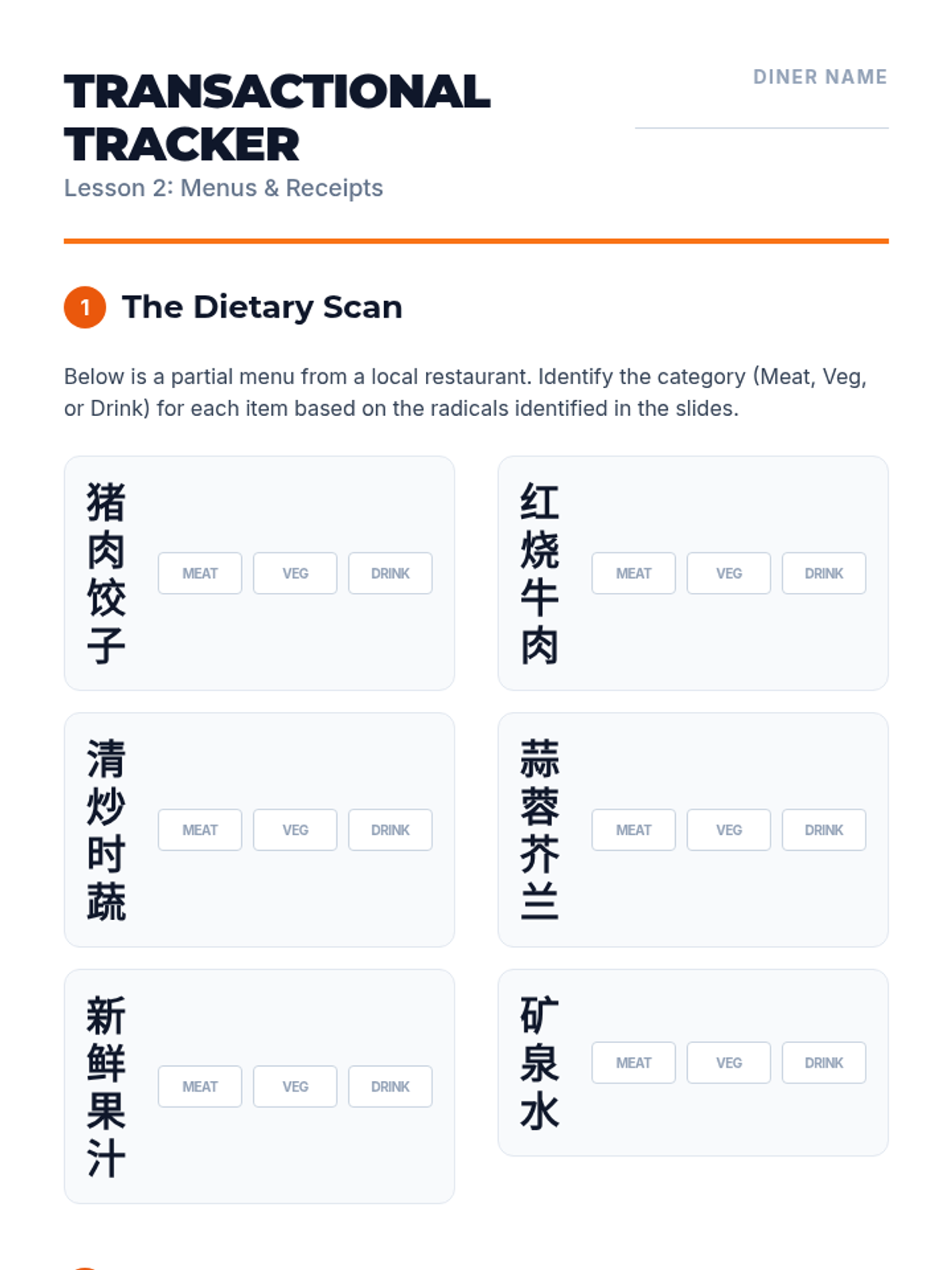
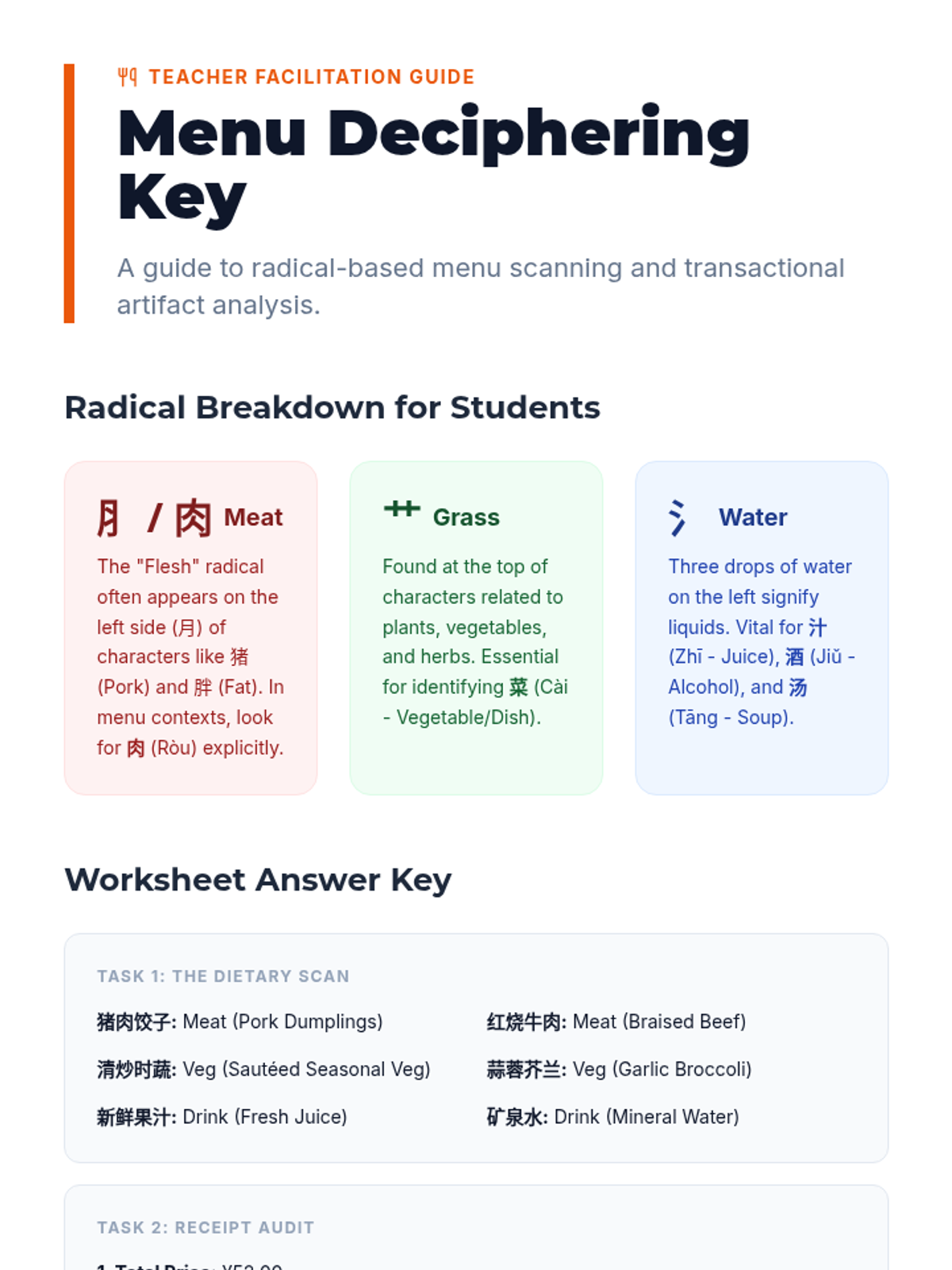
Learners analyze authentic menus and receipts to identify food categories and payment terminology, focusing on radical recognition for dietary choices.
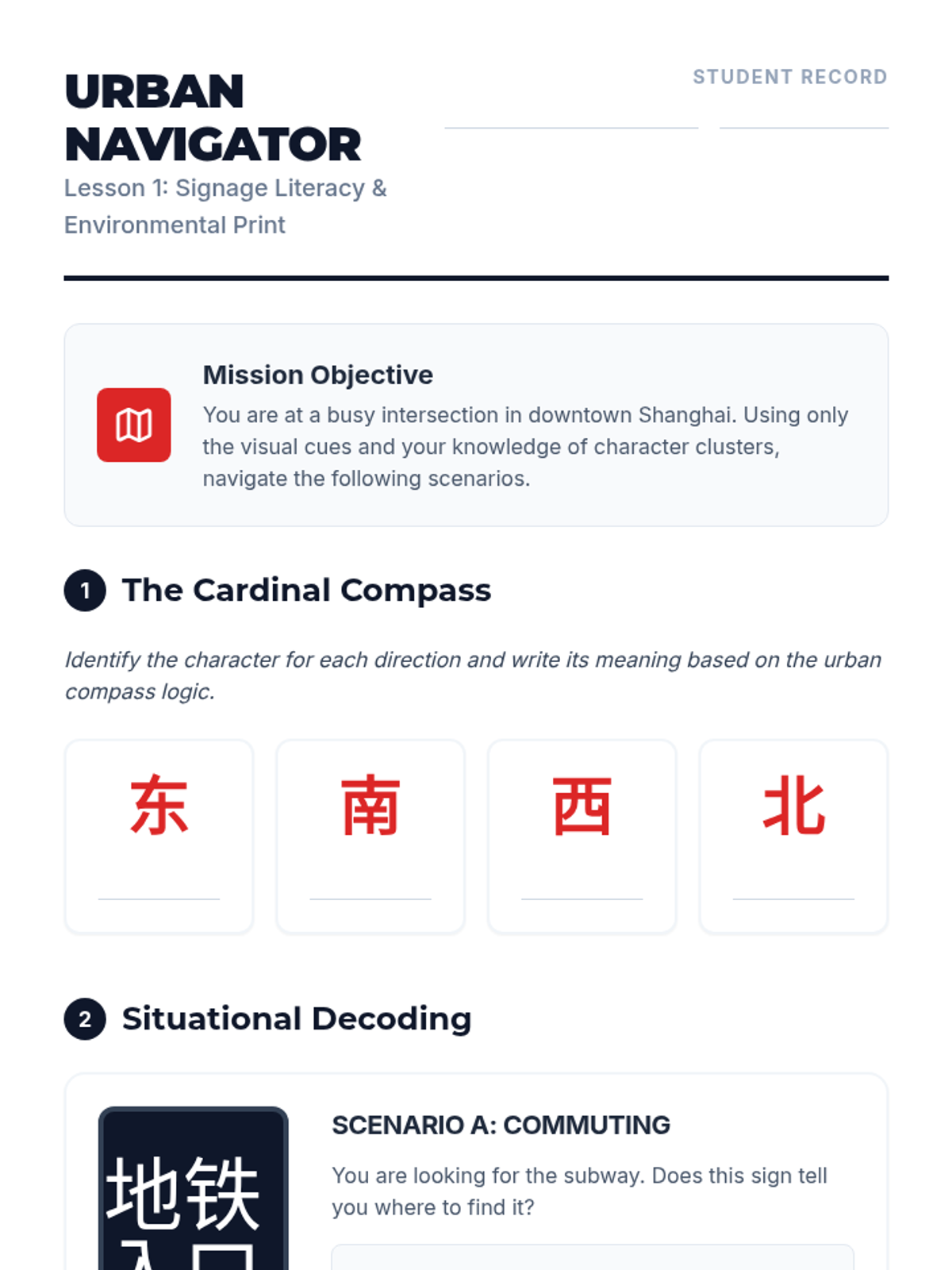
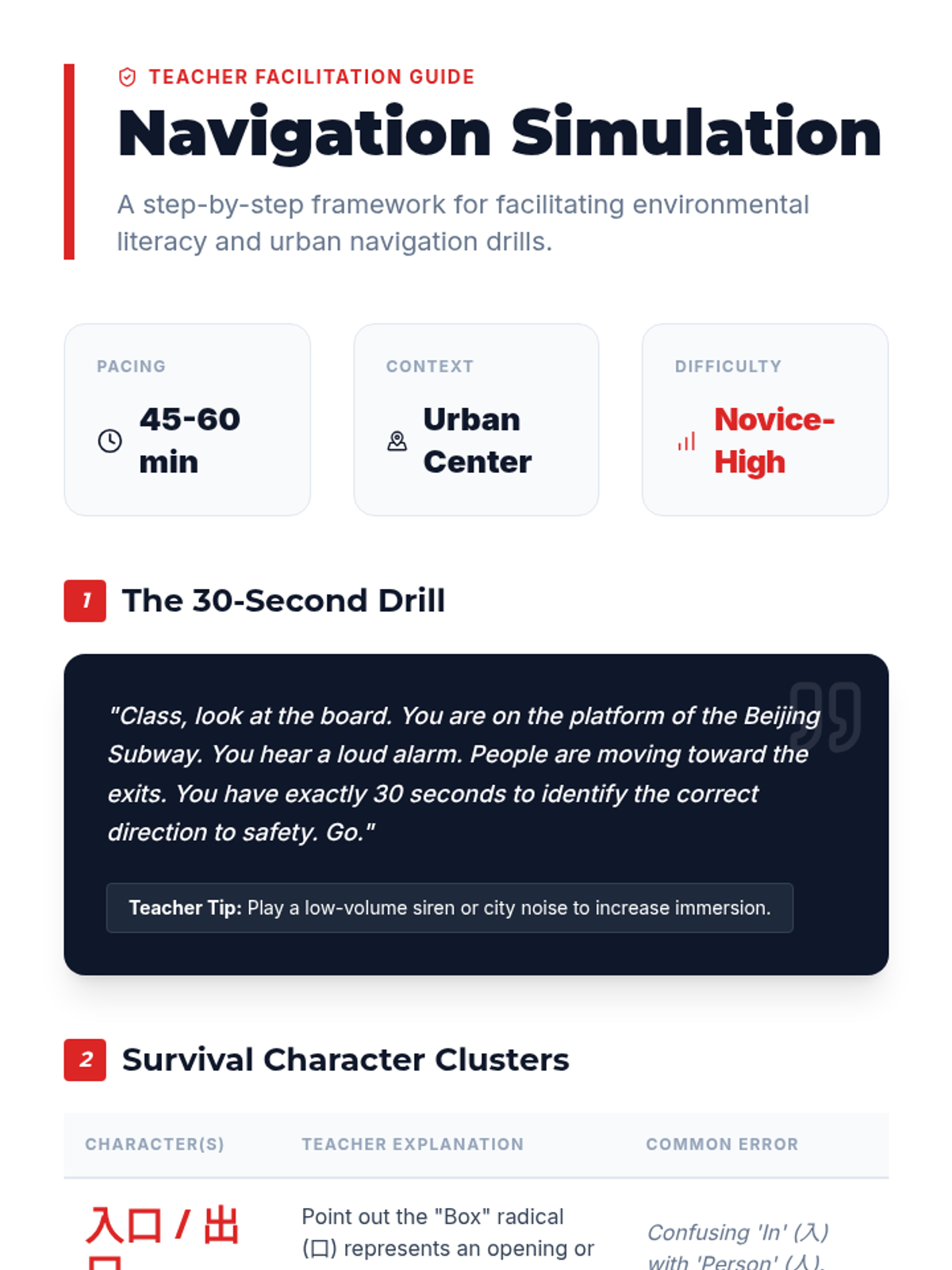
Students simulate navigating a Chinese city by decoding street signs, subway maps, and safety warnings. The lesson emphasizes spotting keywords amidst visual noise.
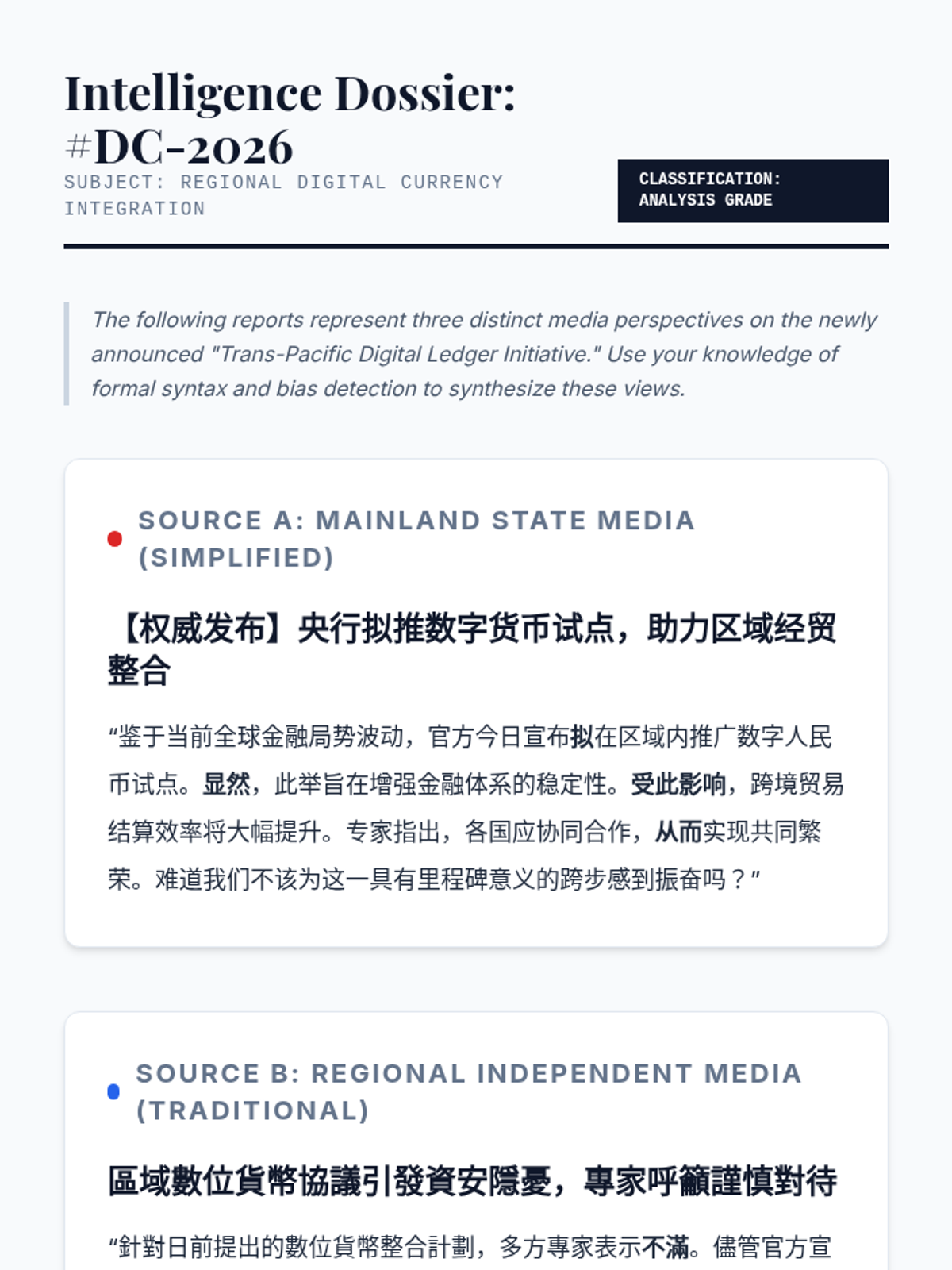
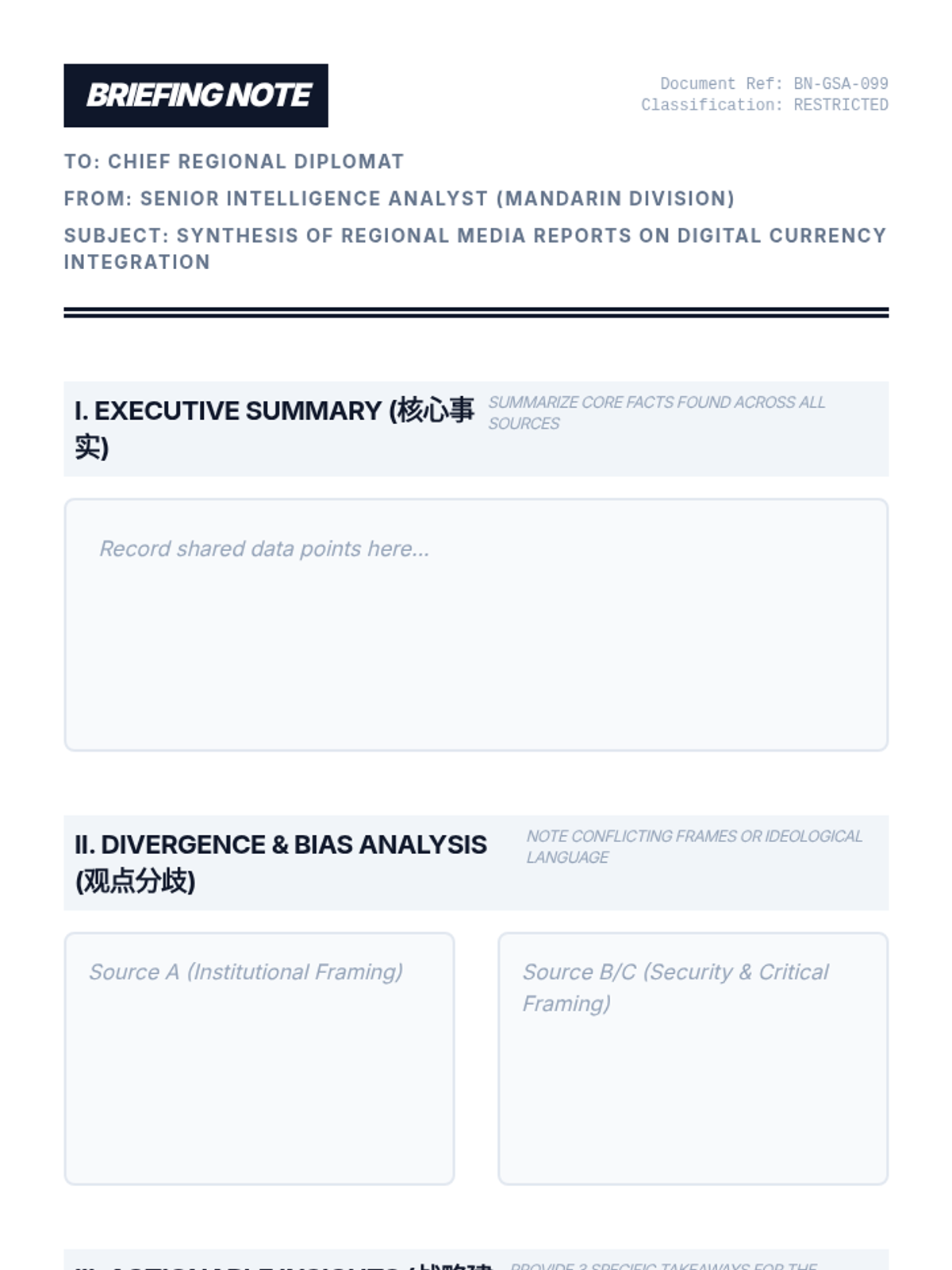
A culminating simulation where students synthesize information from multiple regional sources to create a professional executive summary of a current event.
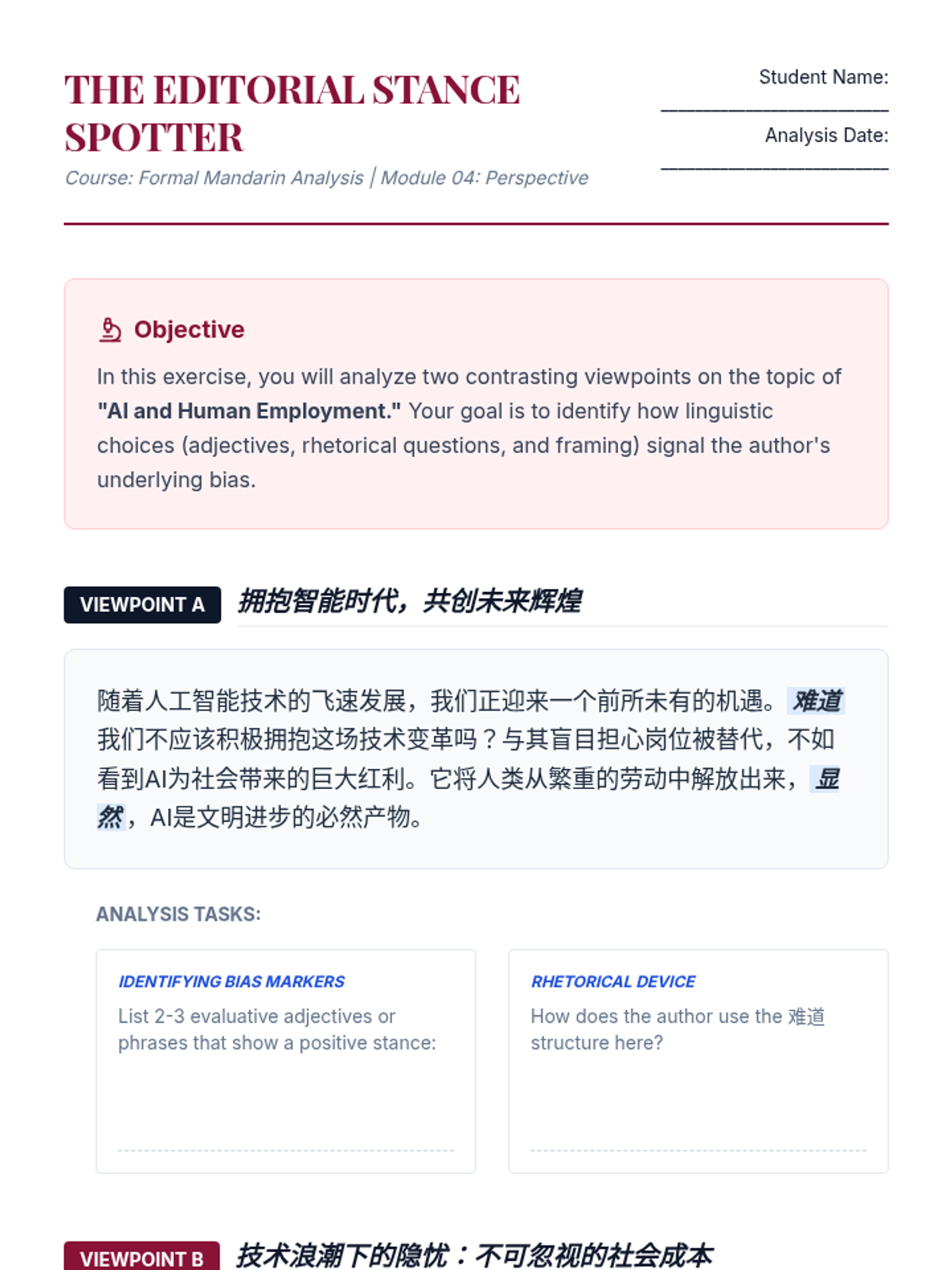
Develops critical reading skills to identify subjective language, rhetorical questions, and ideological framing within Chinese editorial and opinion pieces.
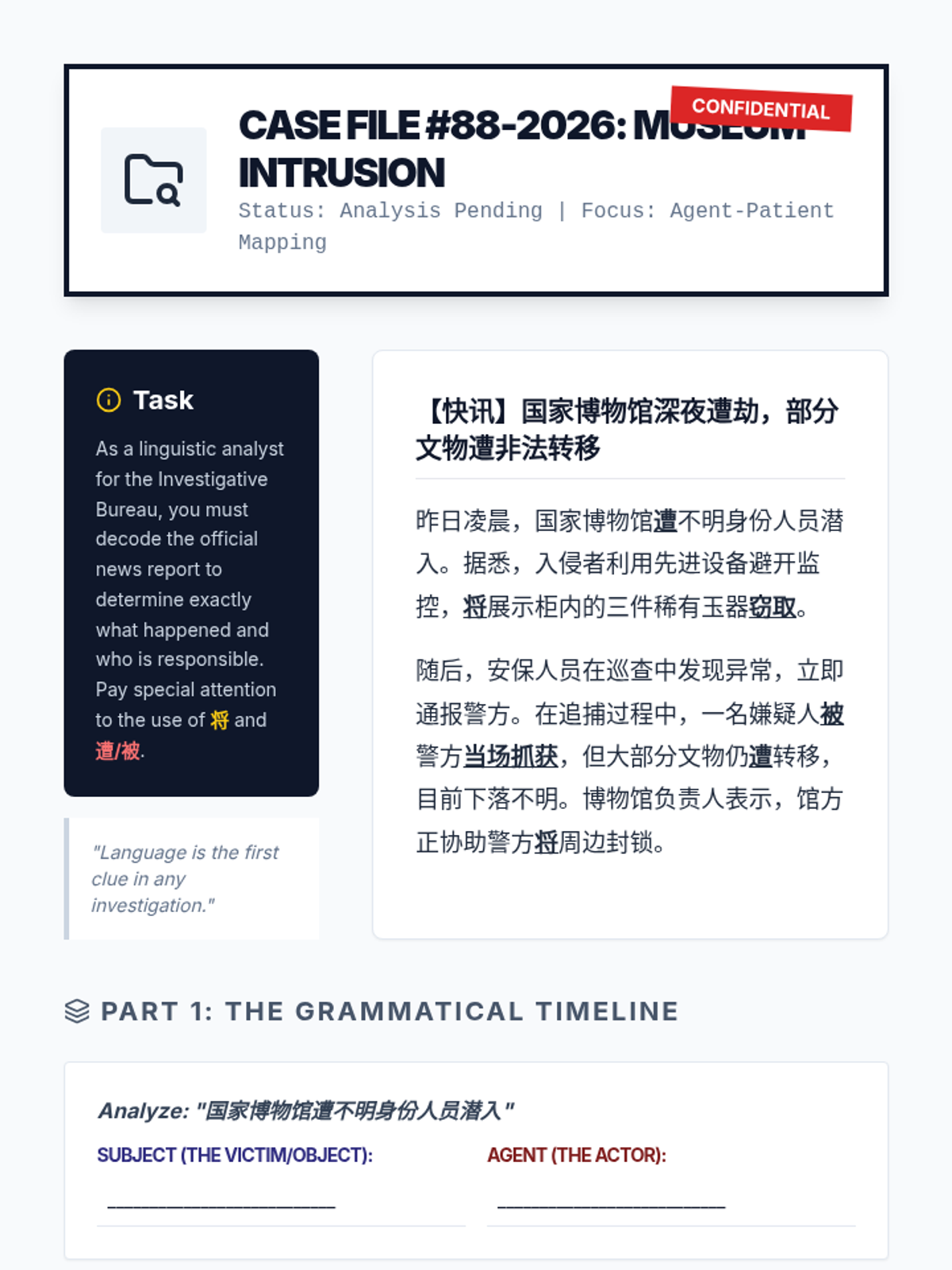
Analyzes the specific usage of 'ba' and 'bei' structures in formal reports of crime, accidents, and legal proceedings to clarify agency and impact.
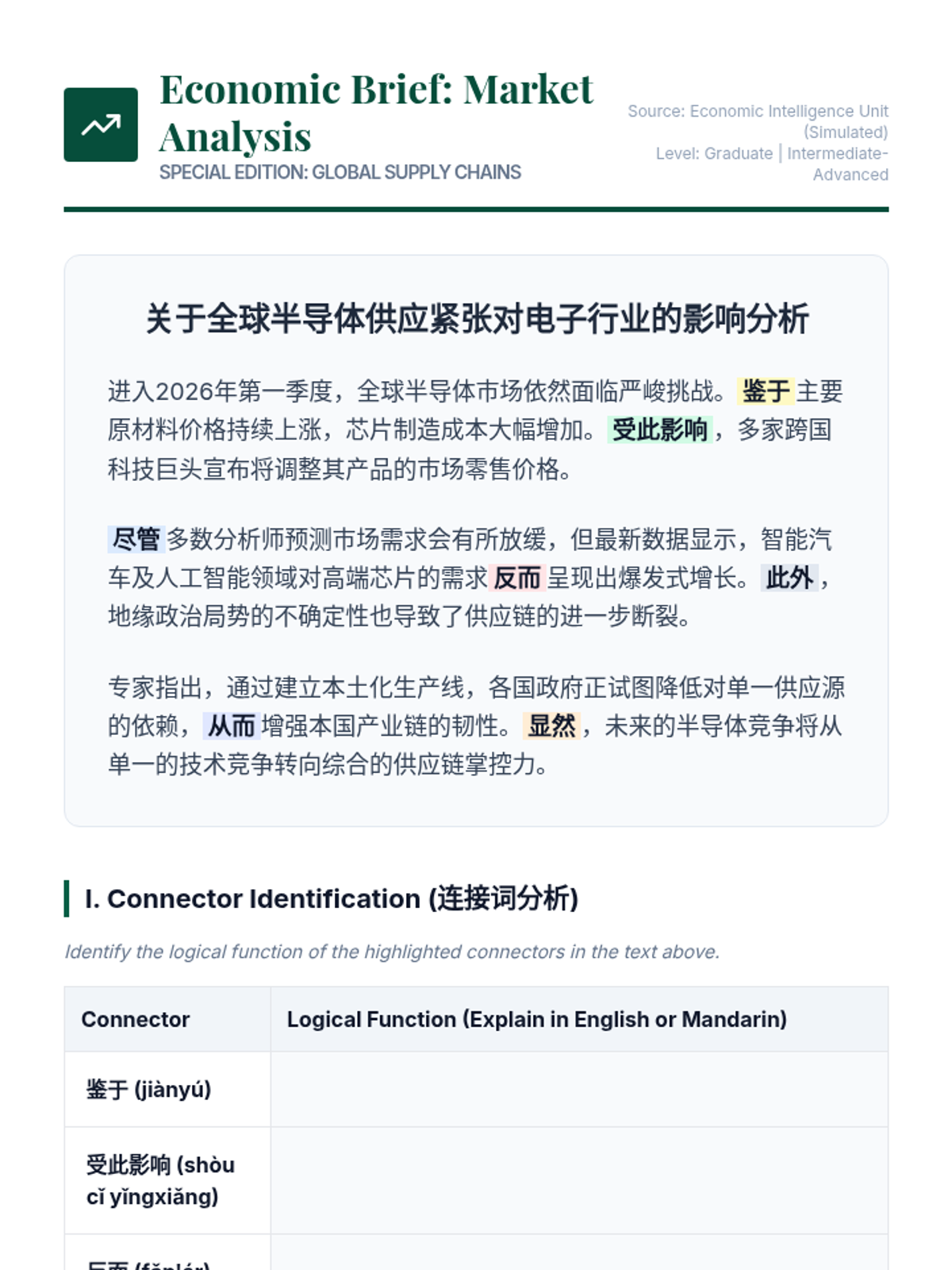
Explores formal logical connectors (shumianyu) used in financial and economic journalism to express causation, concession, and sequential logic.
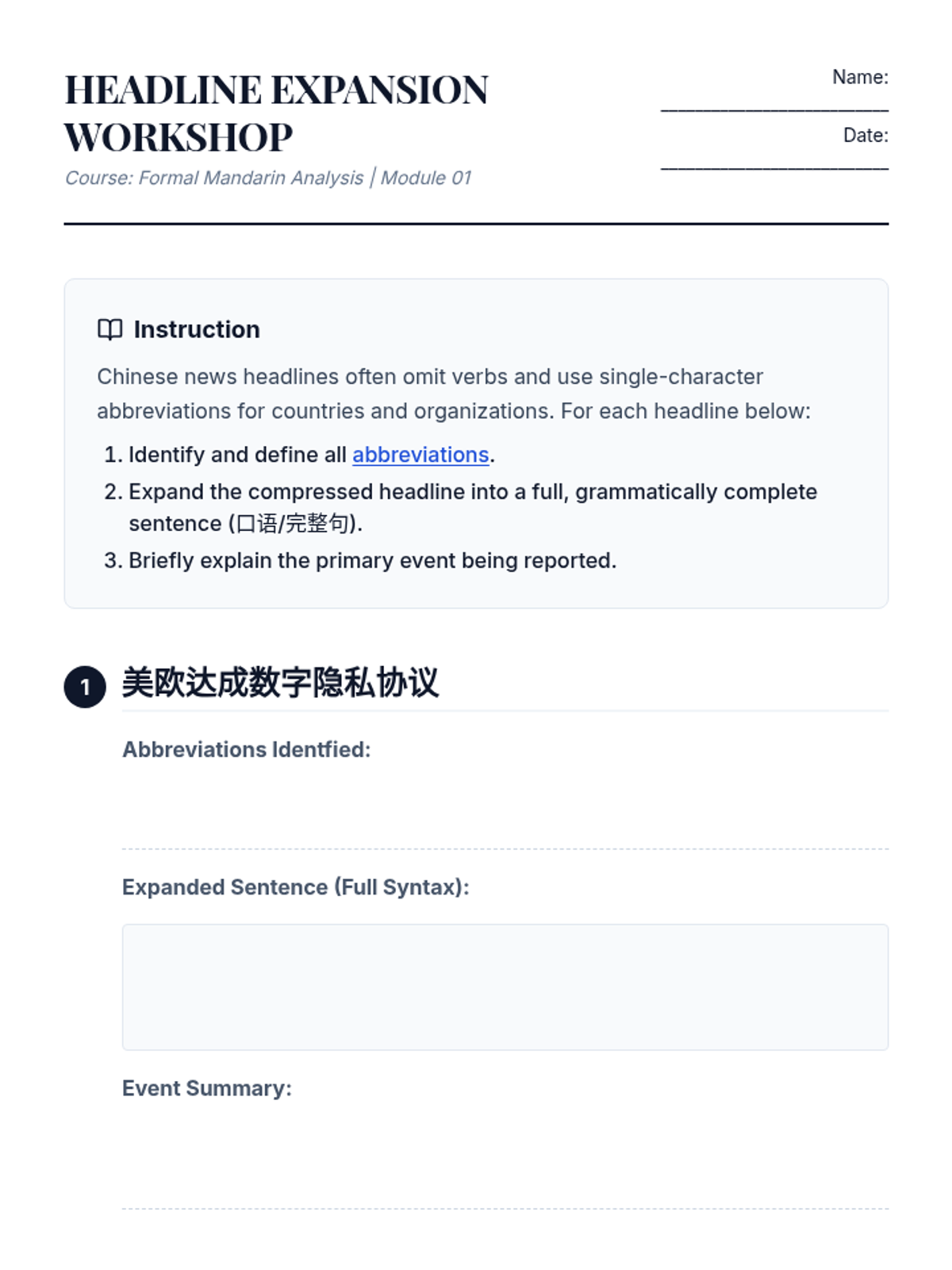
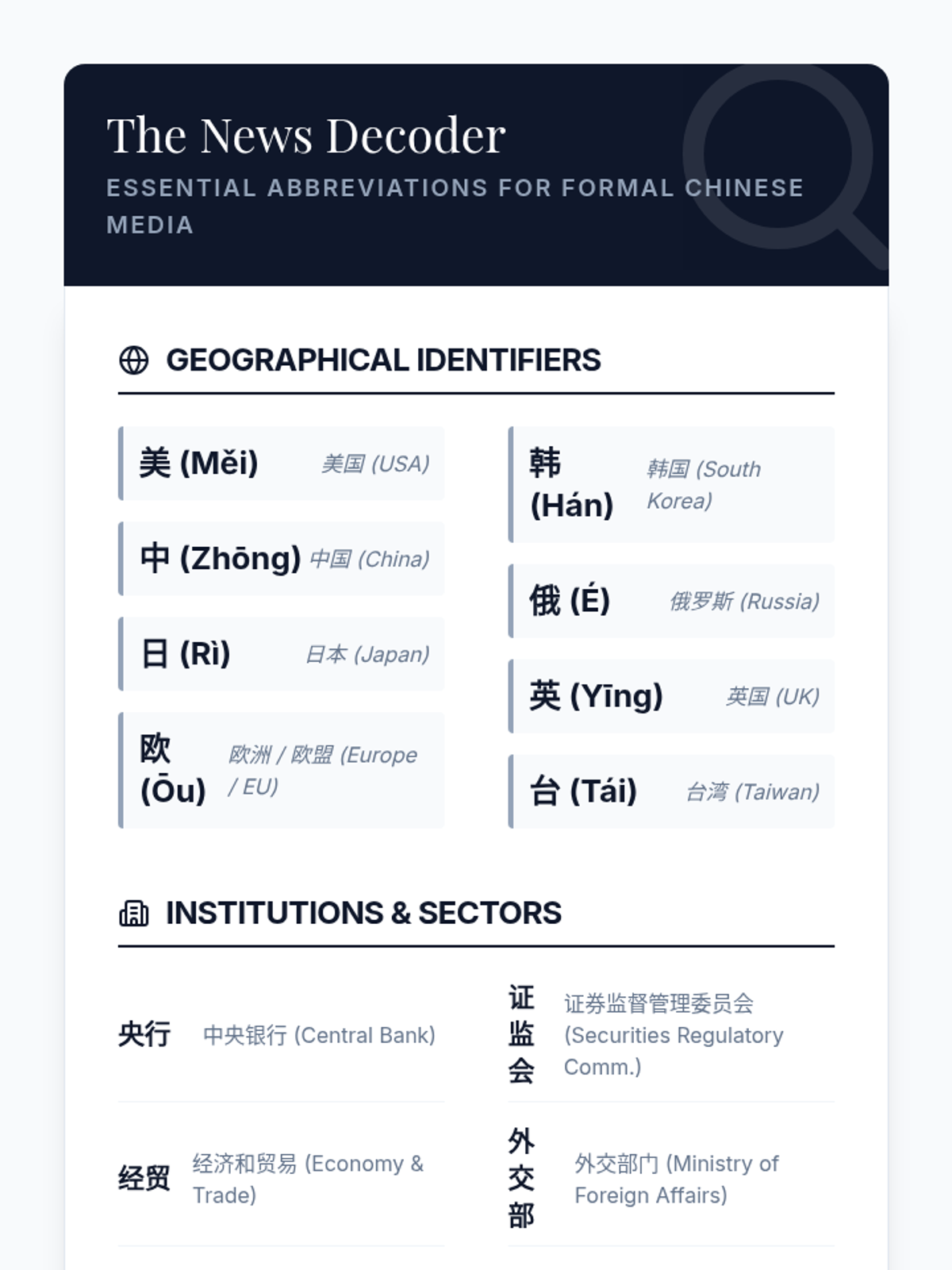
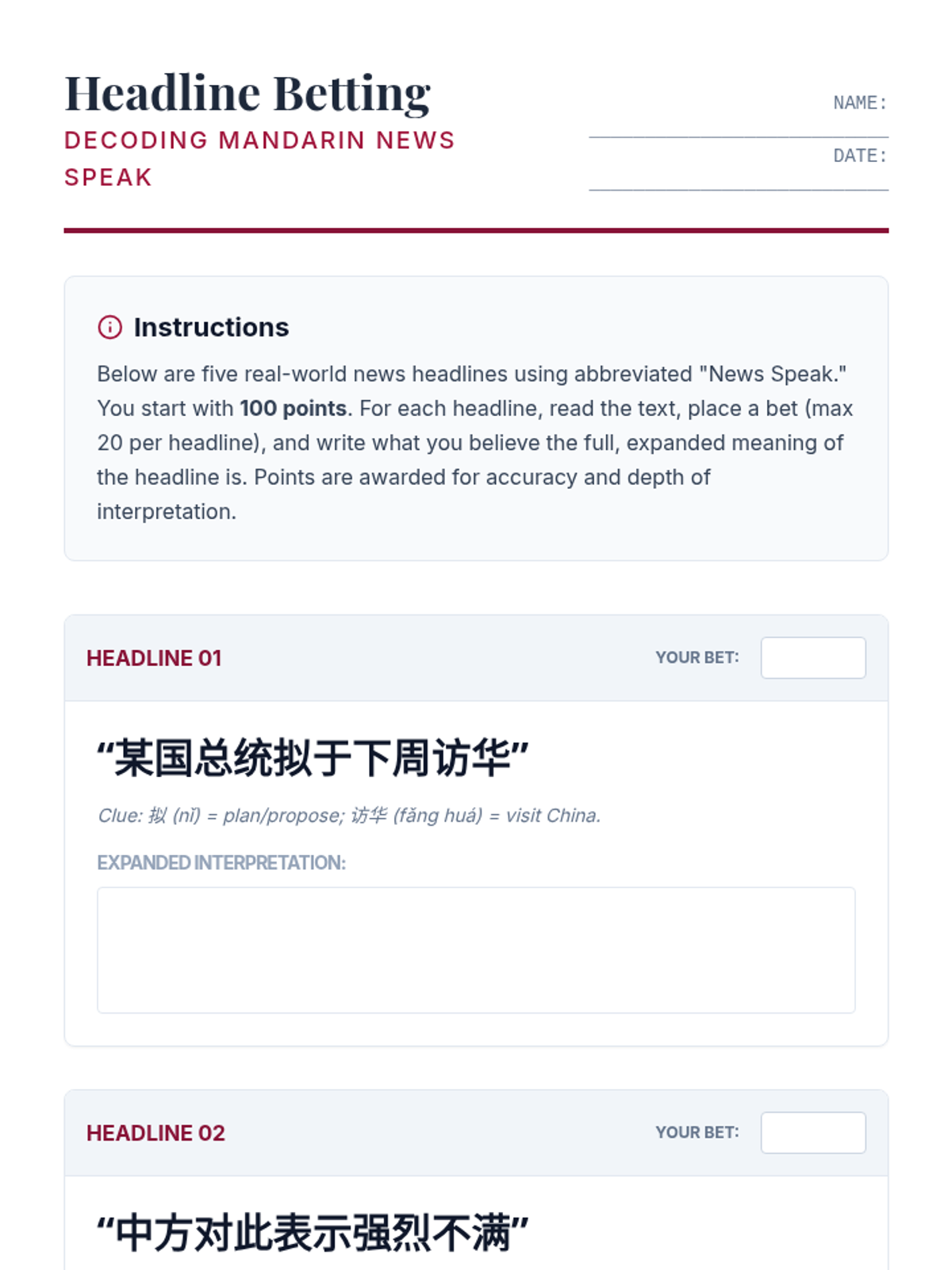
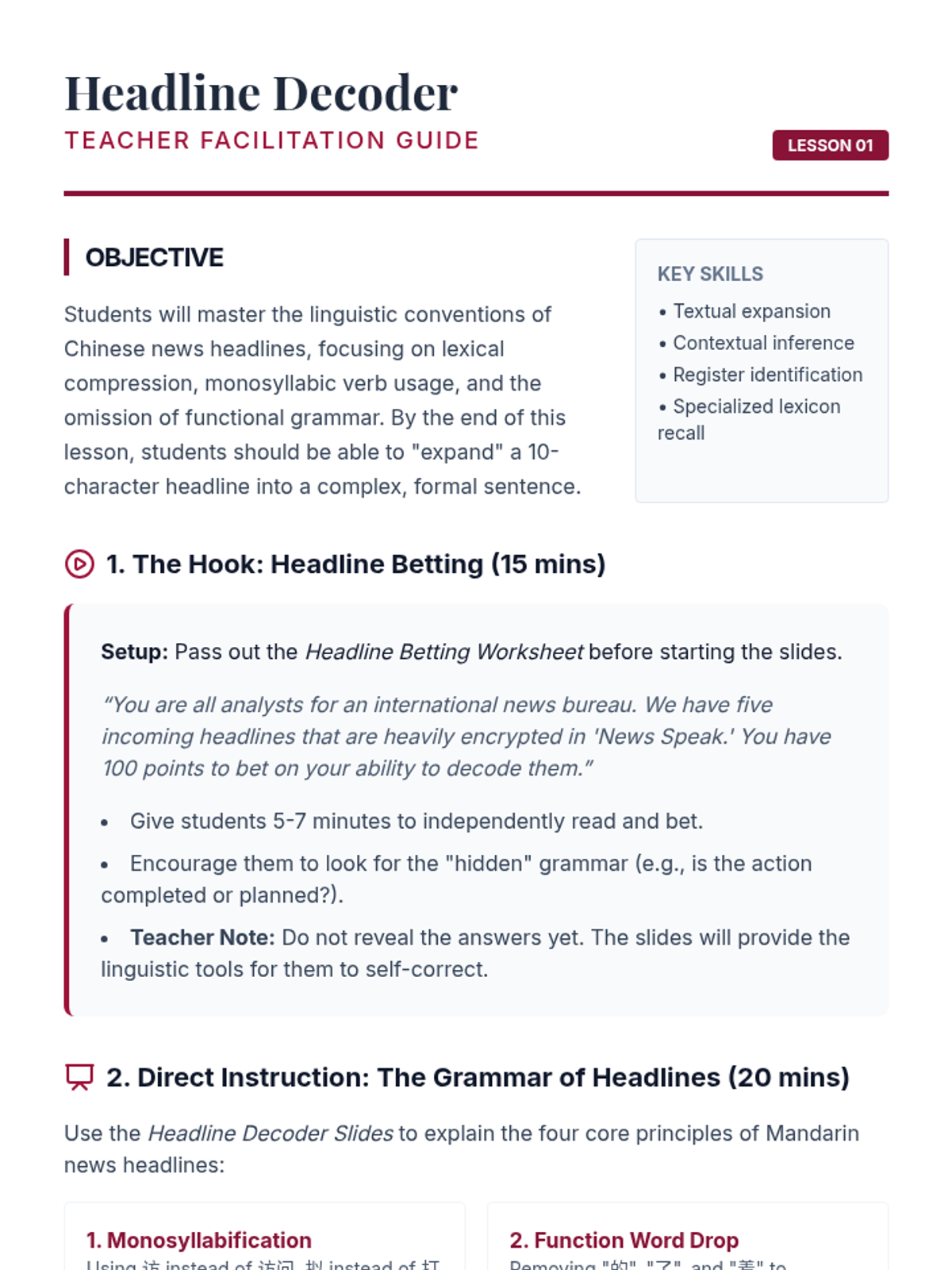
Focuses on the high-density syntax of Chinese news headlines, teaching students to decode abbreviations and expand compressed phrases into full grammatical structures.
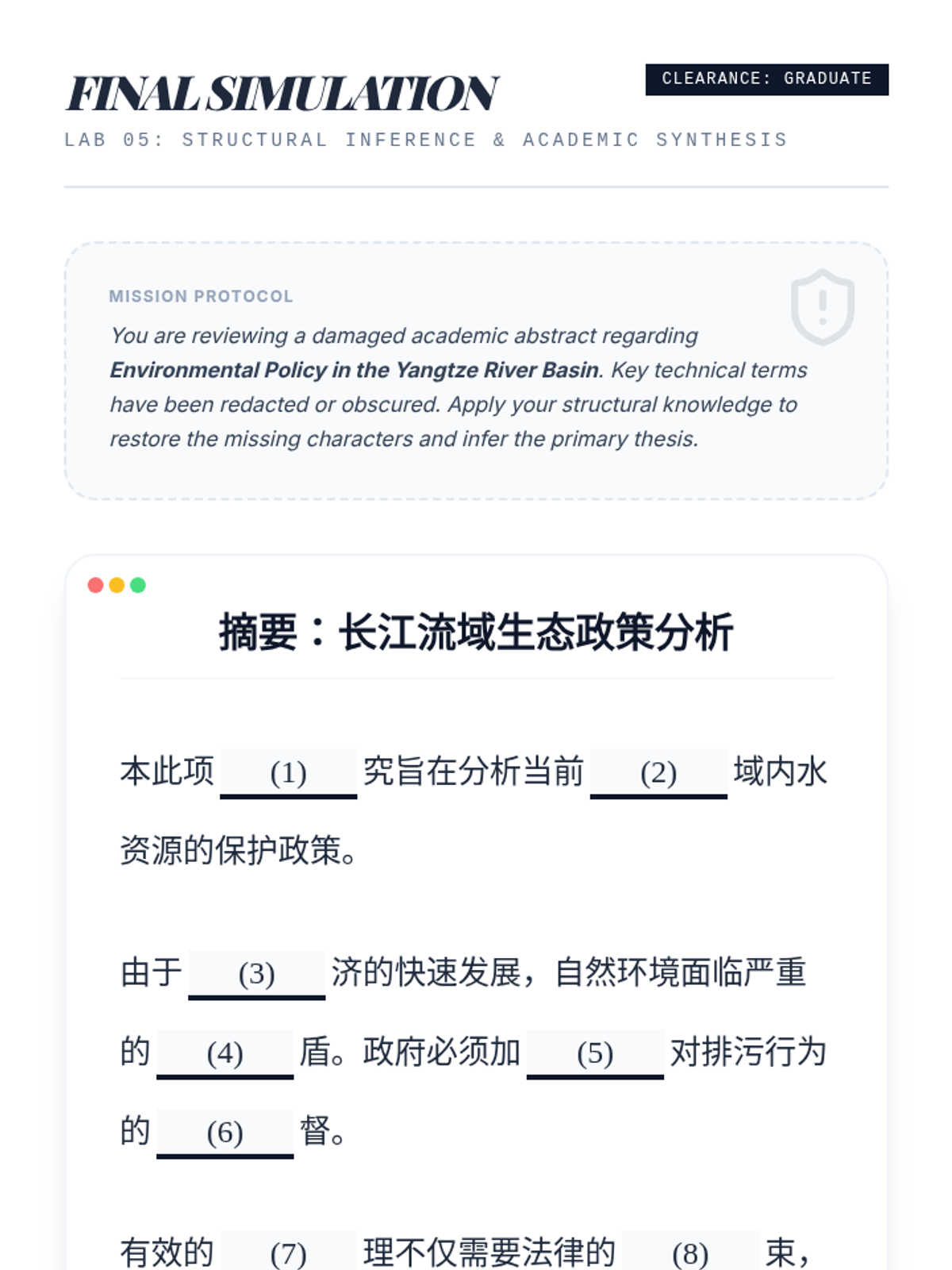
A culminating simulation where students apply structural knowledge to decode specialized academic texts and infer meanings of unfamiliar vocabulary.
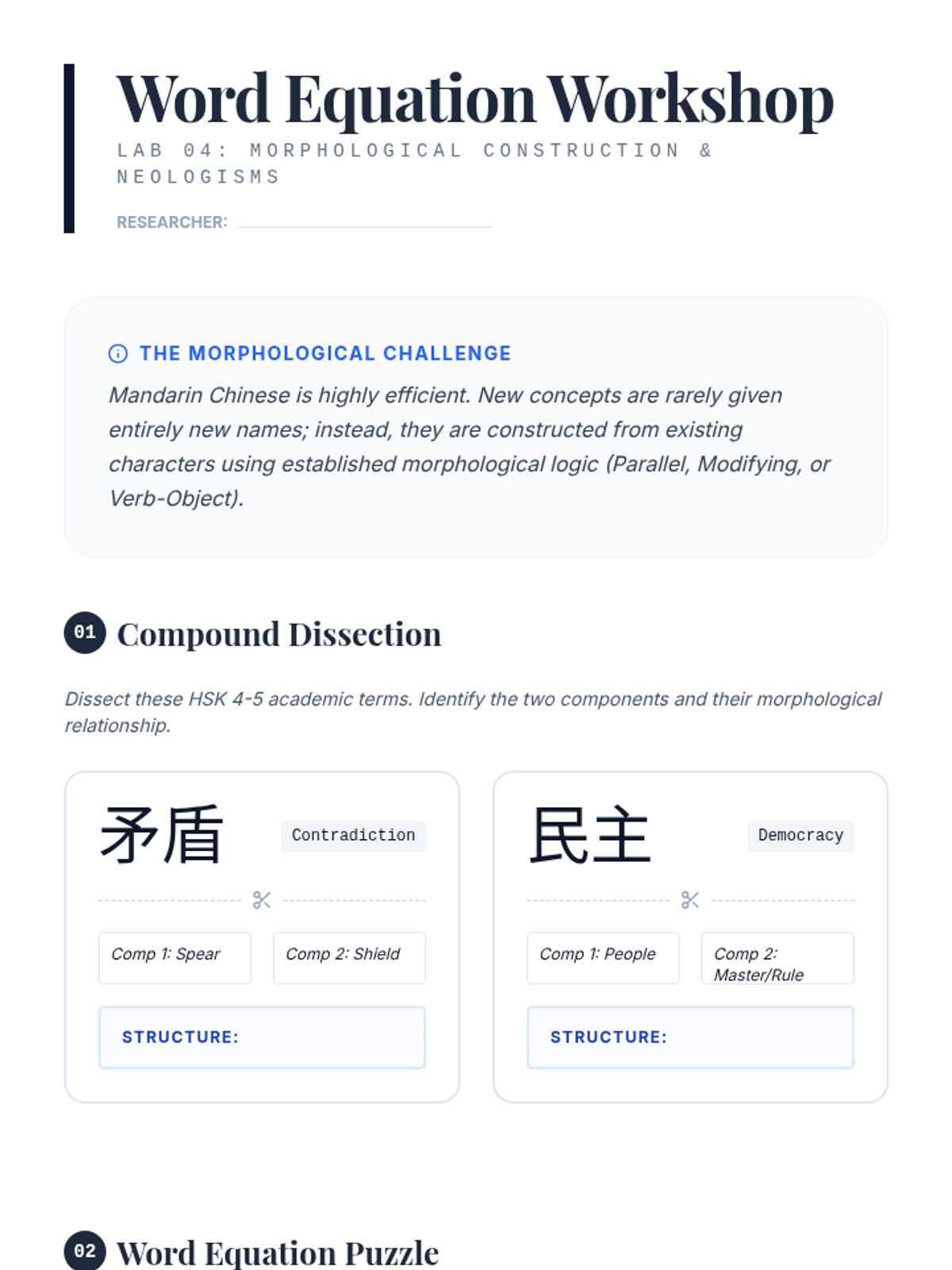
Analyzes the internal logic of two-character compound words, focusing on parallel, modifying, and verb-object morphological structures.
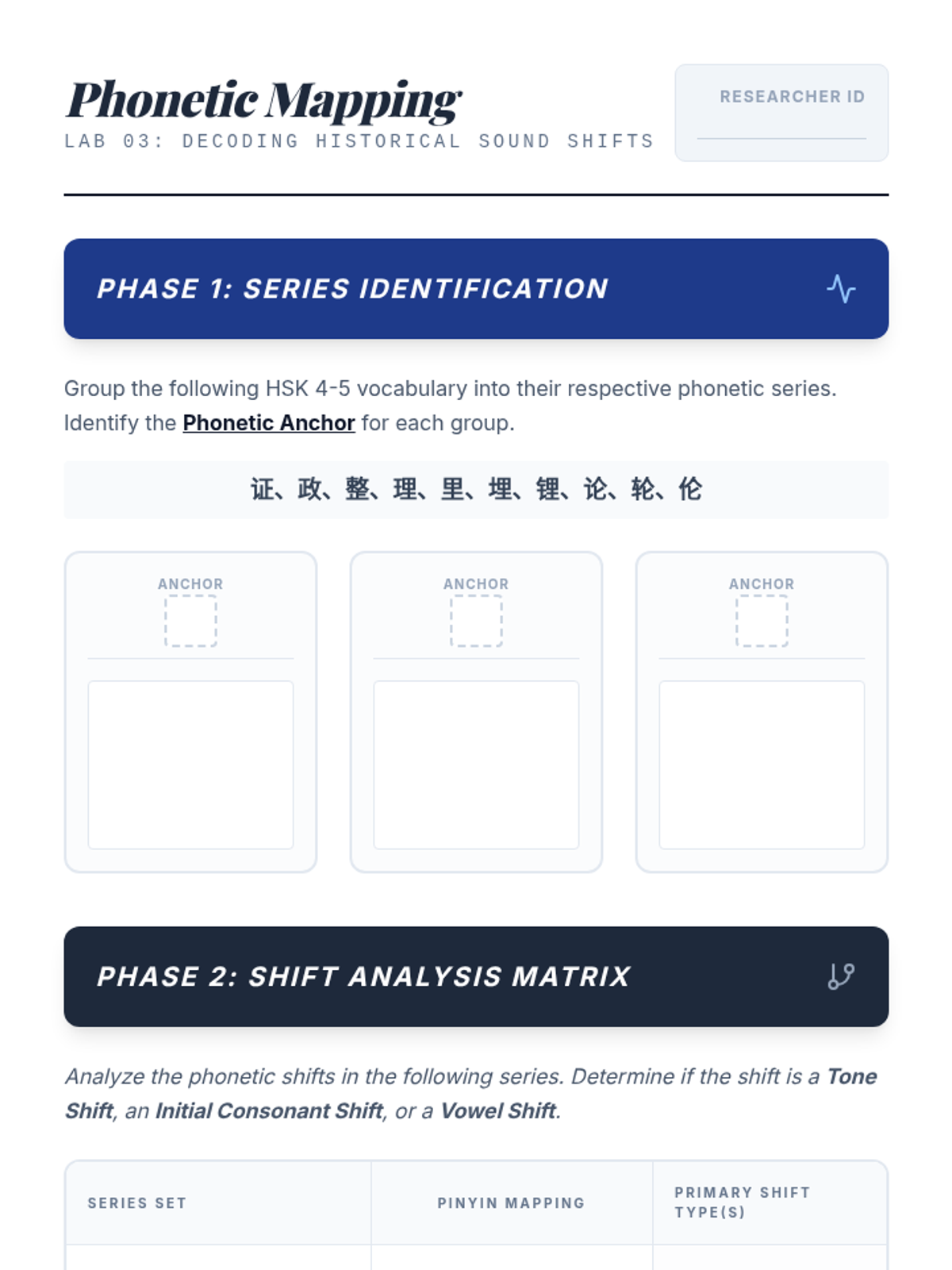
Investigates phonetic series and historical sound shifts to help students predict pronunciation of unfamiliar characters.
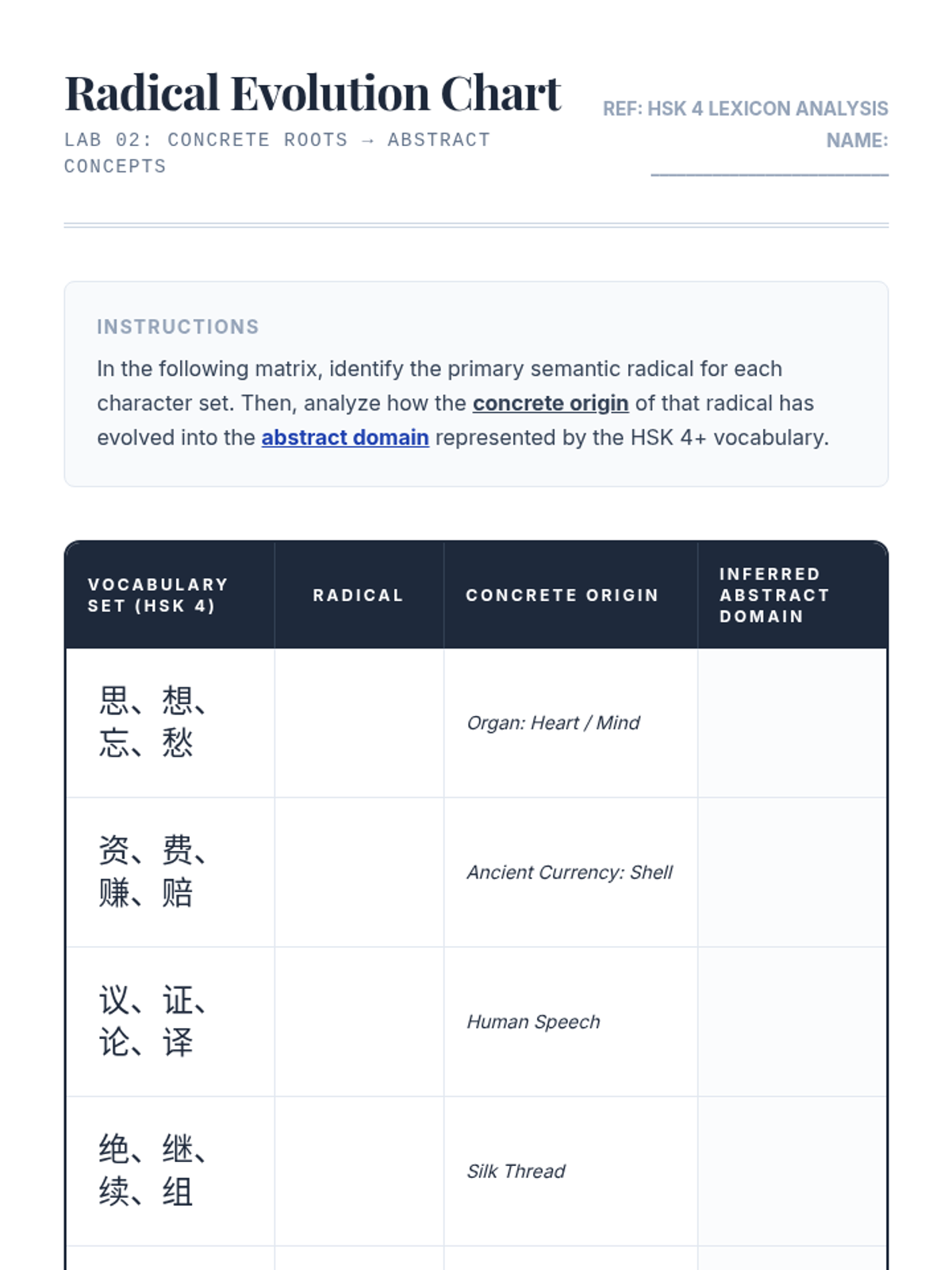
Focuses on high-frequency semantic radicals in abstract and academic vocabulary, tracing the evolution from concrete roots to complex conceptual representations.
Students examine the architecture of semantic-phonetic characters, distinguishing between the meaningful radical and the sound-bearing component through HSK 3 vocabulary analysis.
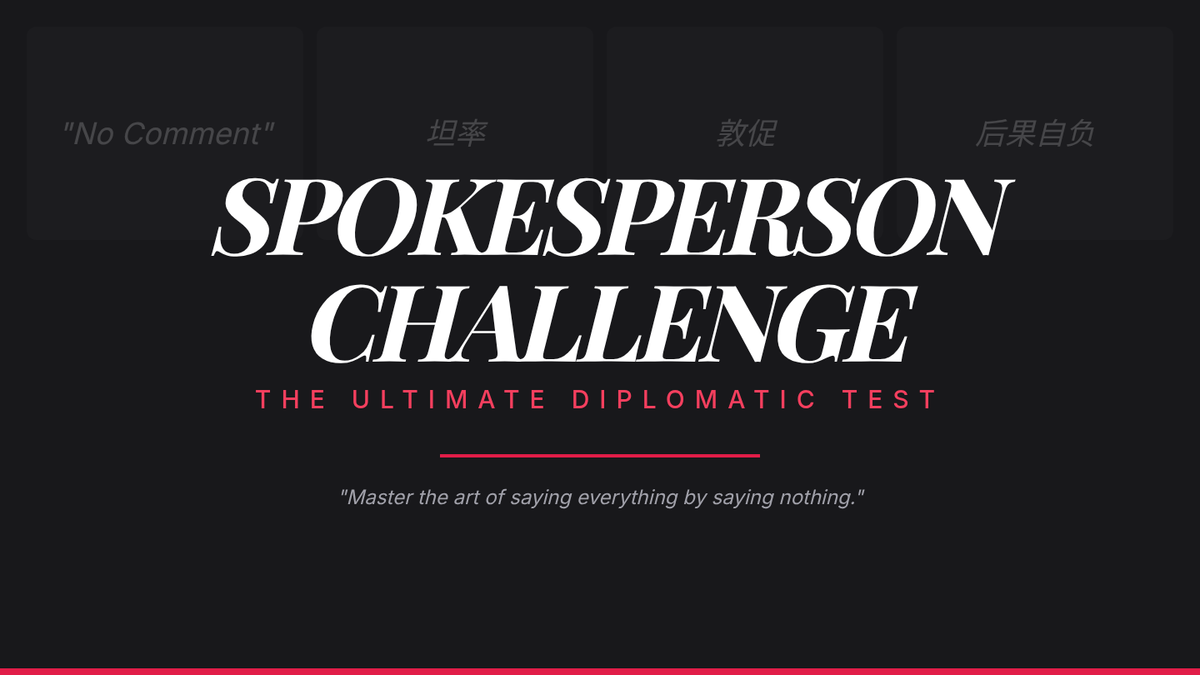
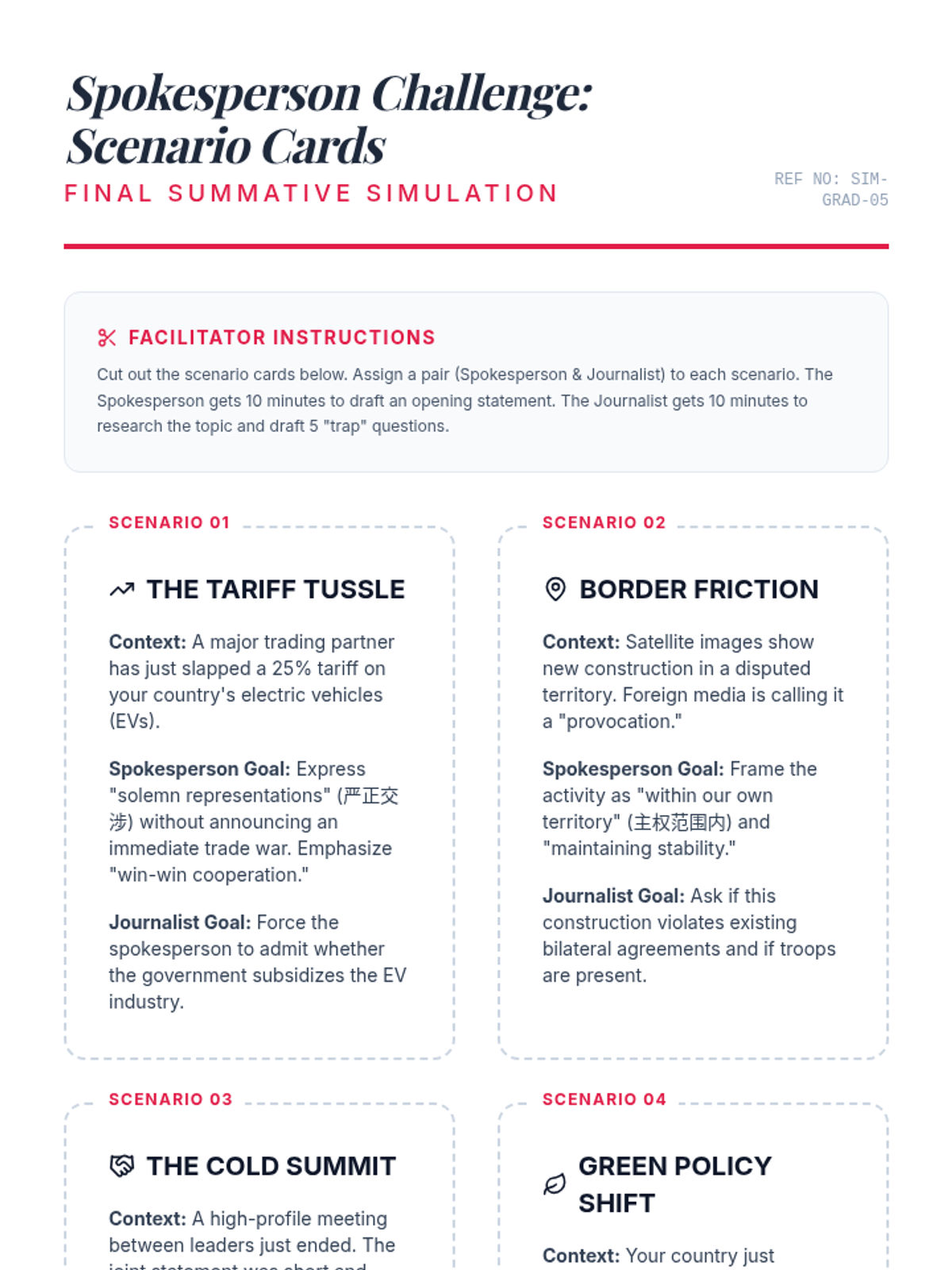
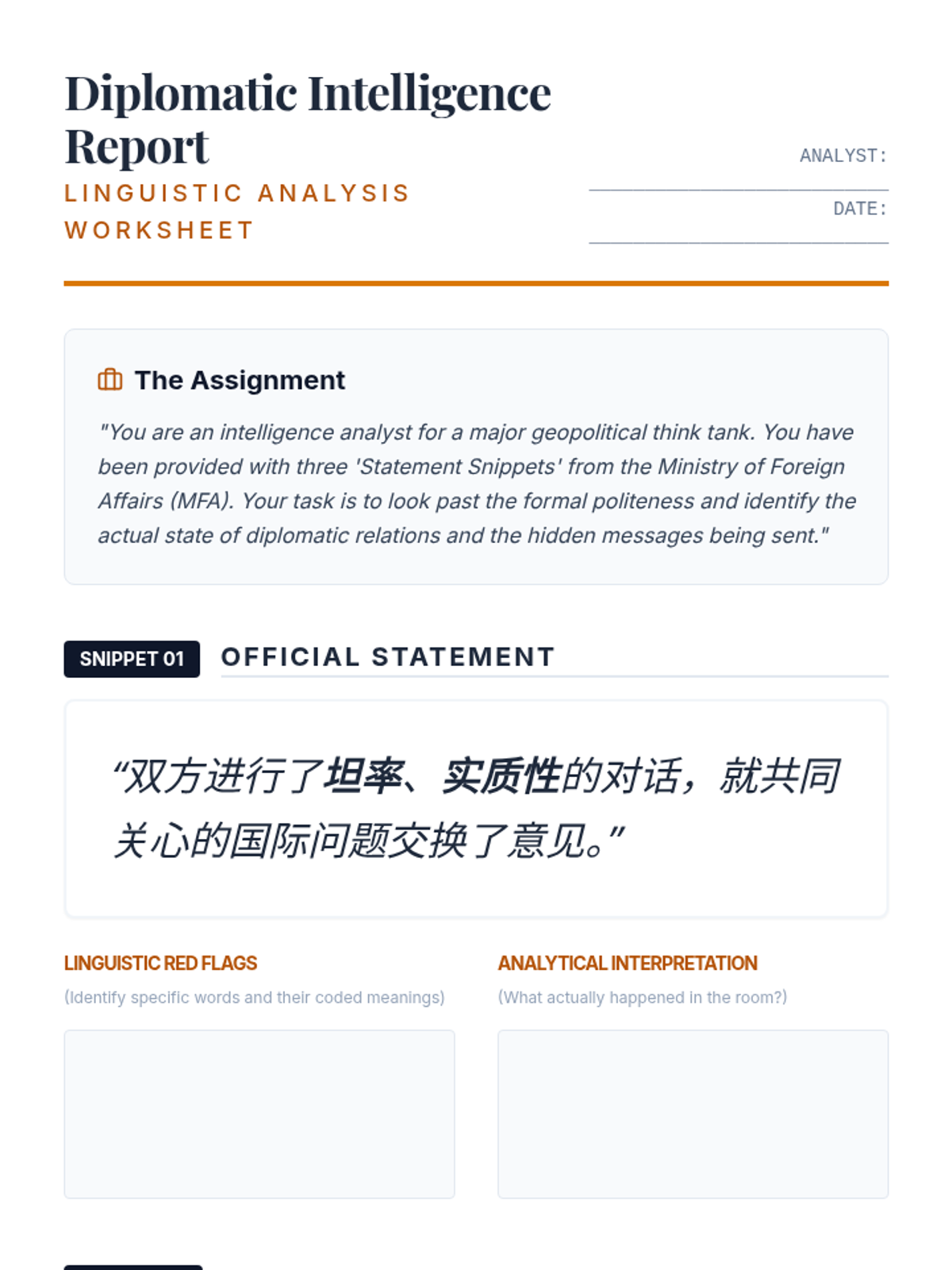
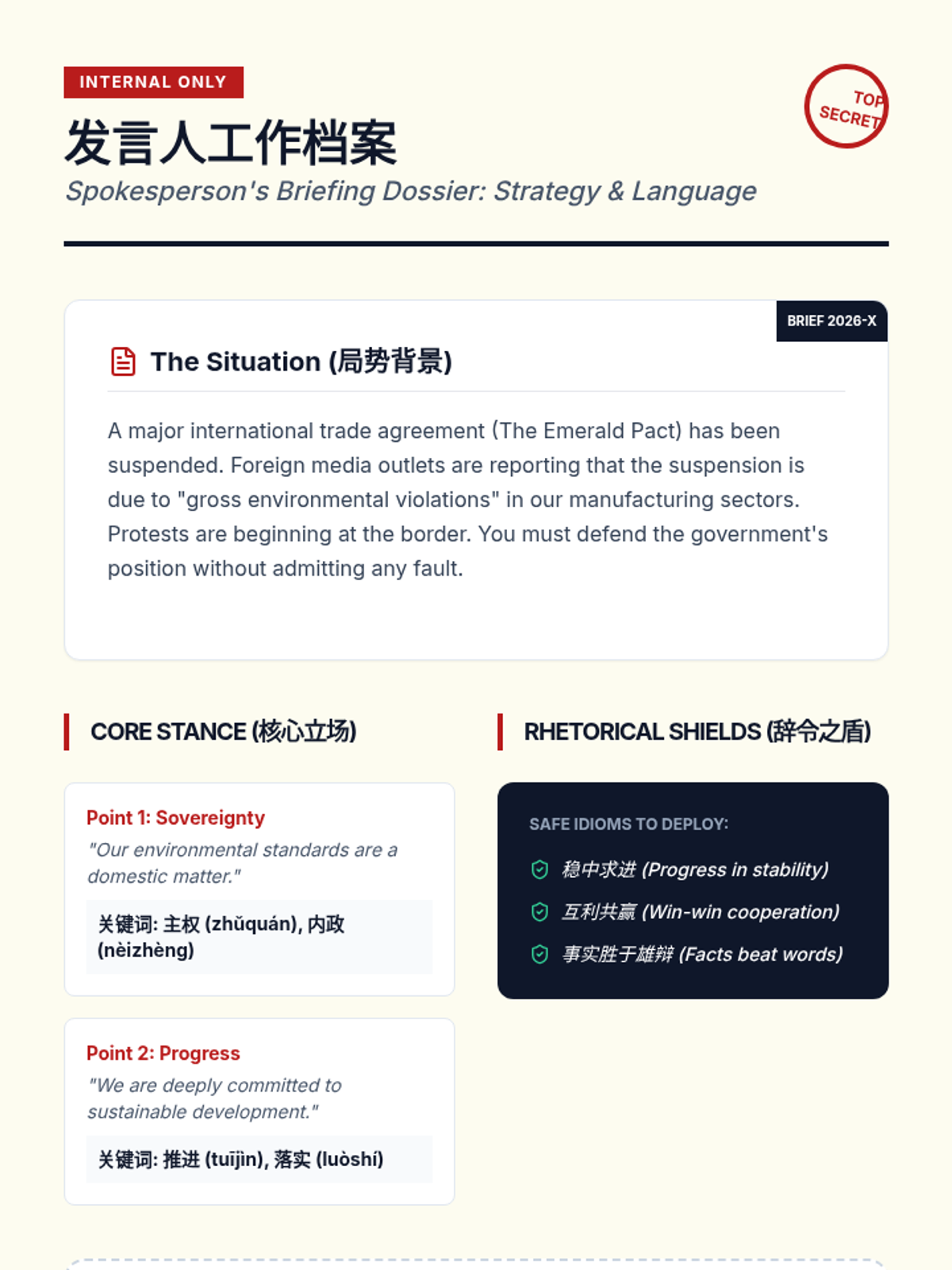
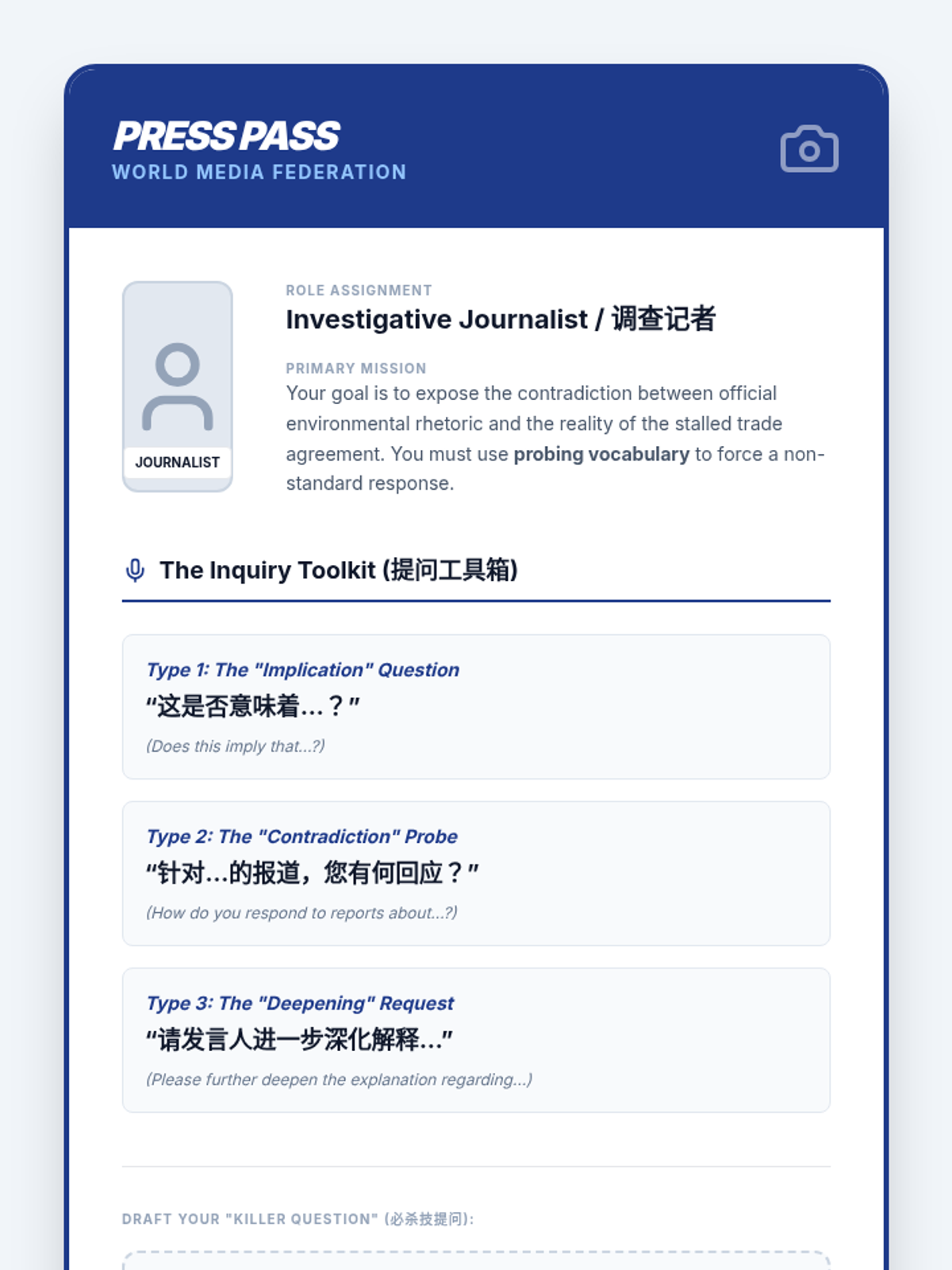
In a culminating simulation, students act as spokespersons or journalists, using formal diplomatic registers to draft statements, ask questions, and handle inquiries.
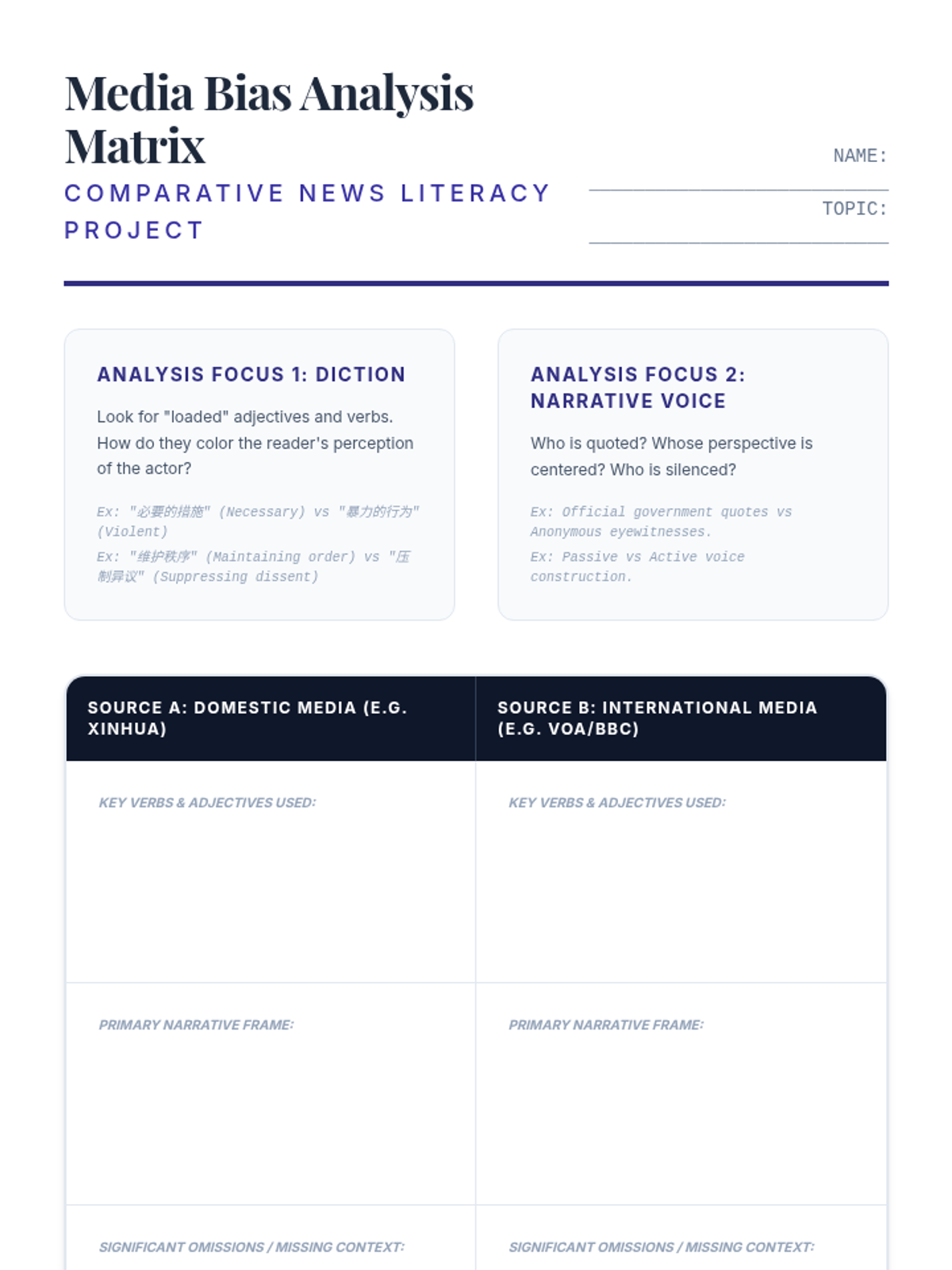
Students compare domestic and international Chinese-language media reports on the same events to identify bias, framing, and intended audience through word choice analysis.
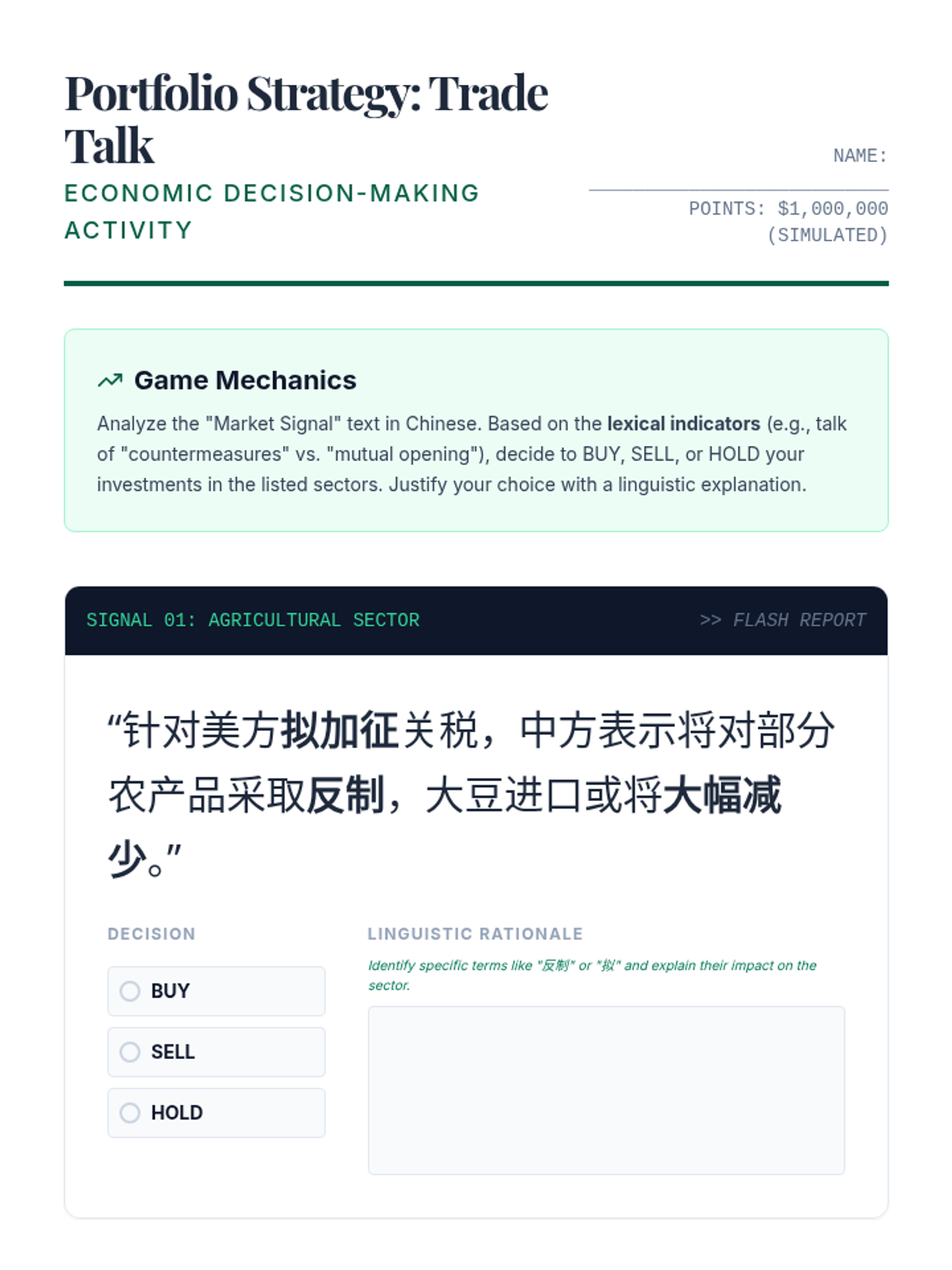
Focusing on financial news, students master the vocabulary of trade, tariffs, and fiscal policy while analyzing the intersection of politics and global economics.
This lesson analyzes the standardized vocabulary of diplomacy, teaching students to interpret the severity of international relations through specific adjectives and formulaic phrases.
Students learn the abbreviated grammar and specialized vocabulary unique to Chinese news headlines, practicing the expansion of compressed text into full sentences.
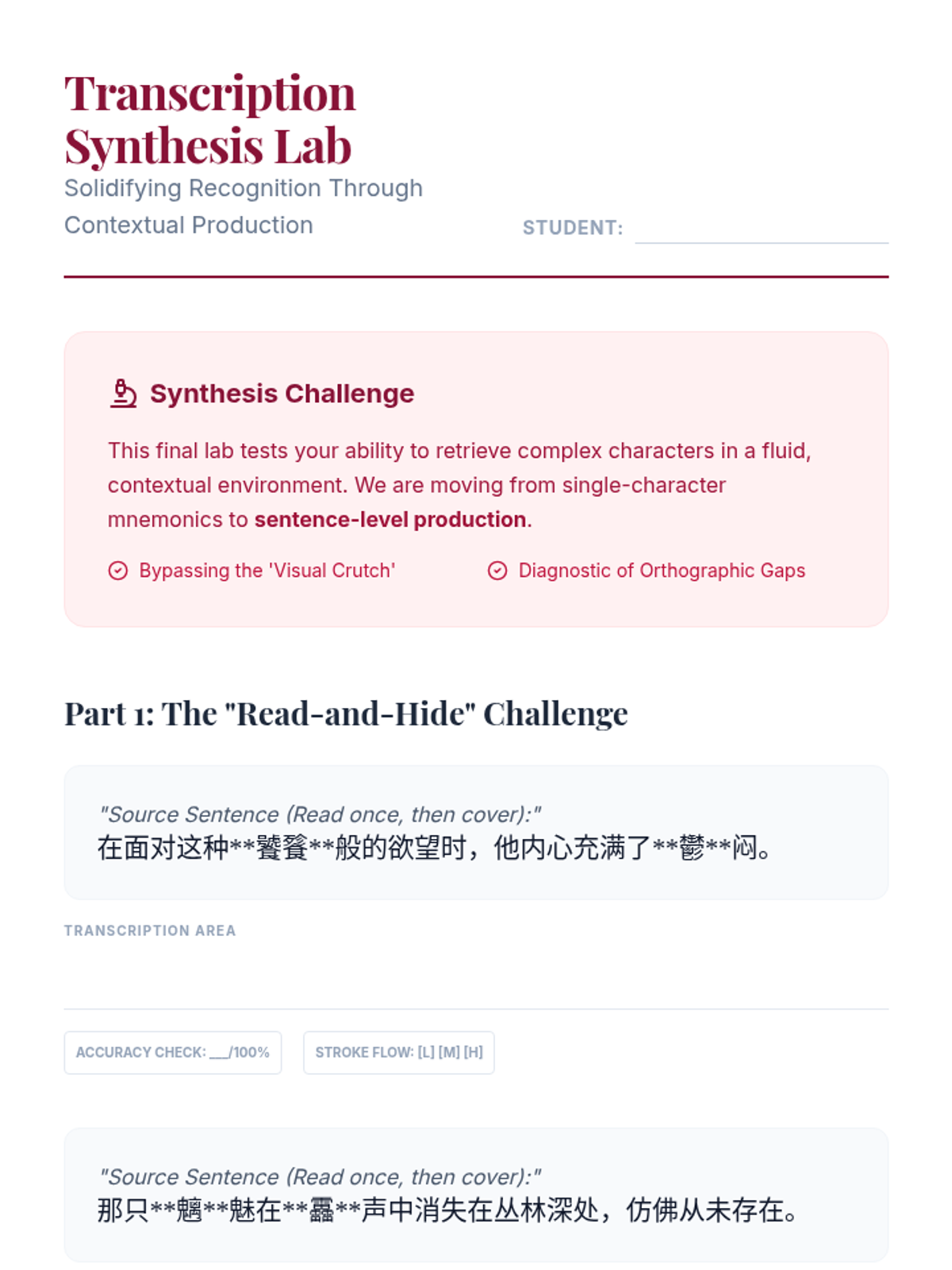
Students practice writing specifically to aid reading recognition. They transcribe short paragraphs of text. The act of production is used to solidify passive recognition skills.
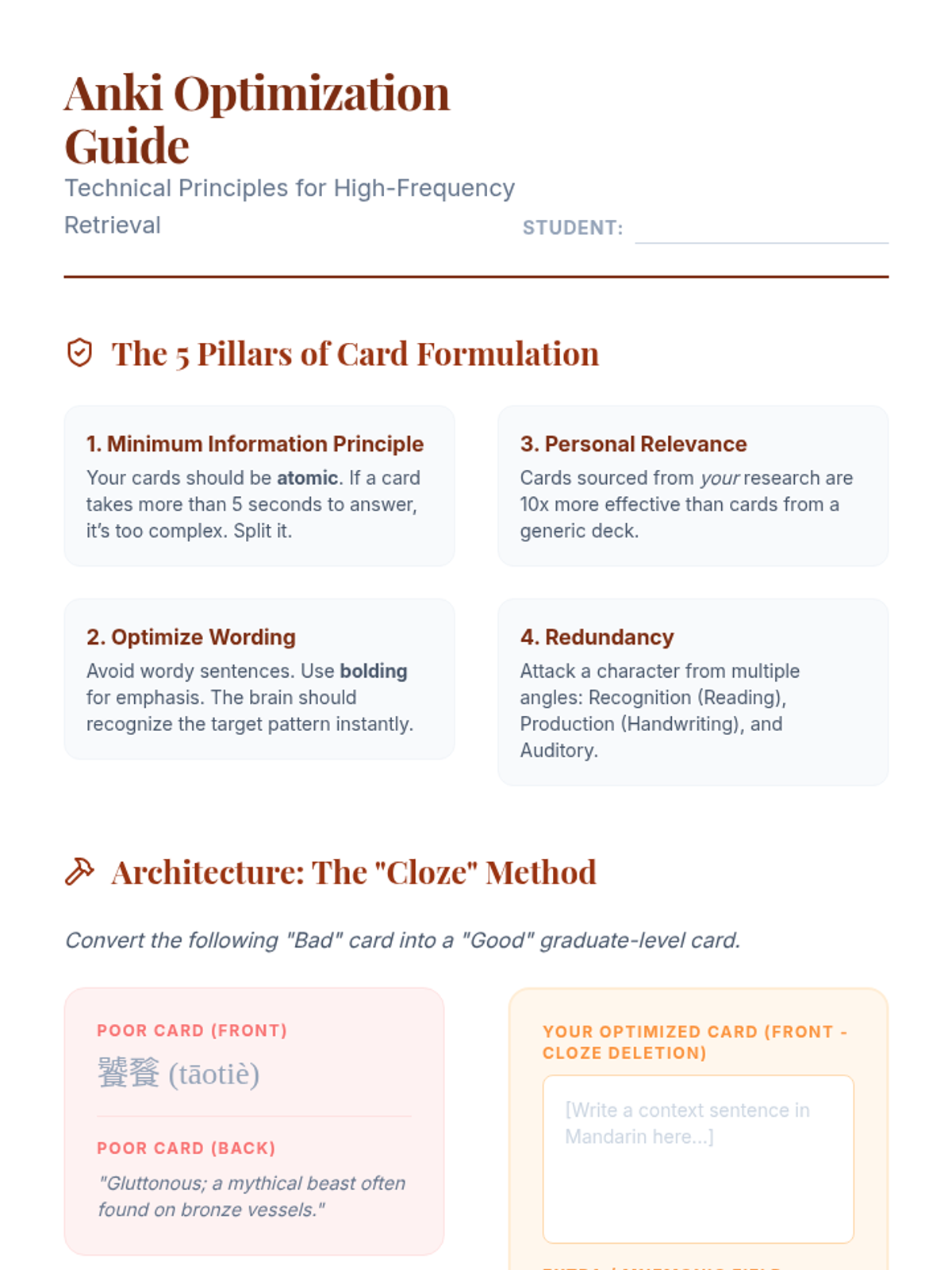
This technical lesson teaches students how to optimize their study time using SRS algorithms (like Anki). They learn to create high-quality flashcards that focus on context and cloze deletion rather than simple translation.
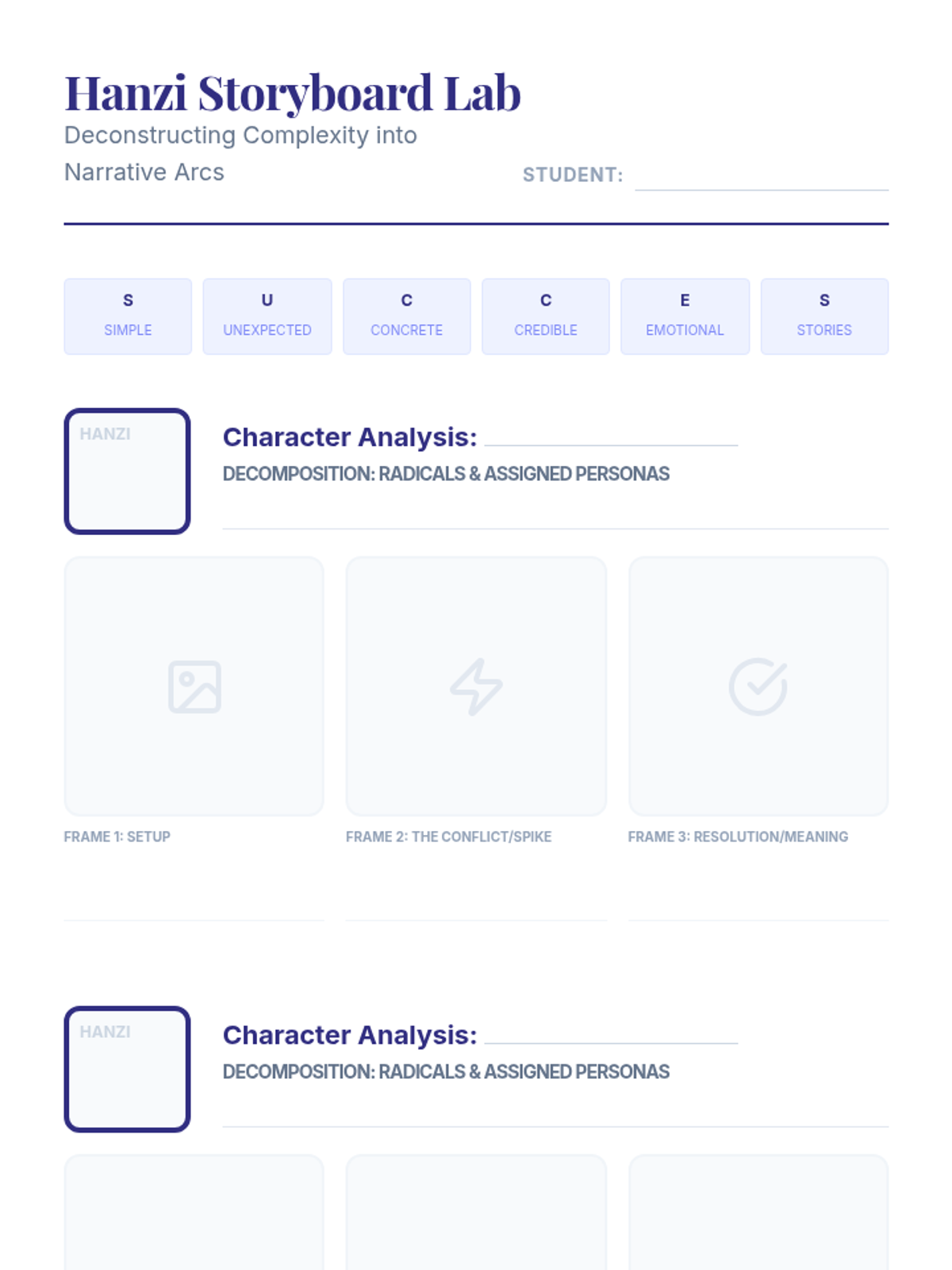
Students break characters down into their smallest functional units and assign meanings to 'meaningless' shapes to facilitate recall. They share their mnemonic stories with peers to find the most 'sticky' narratives.
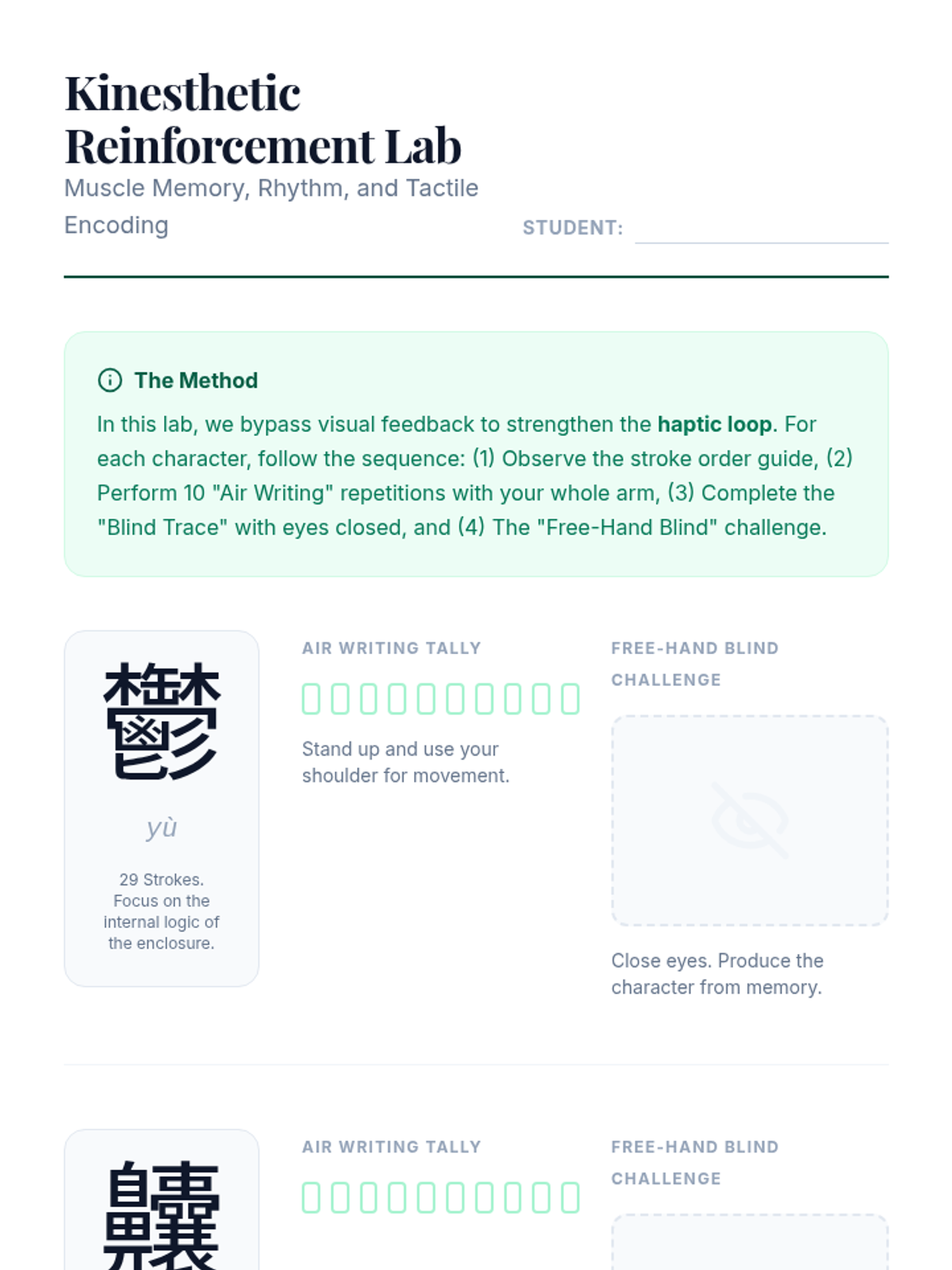
Students explore the relationship between correct stroke order and muscle memory, focusing on the rhythm of production and kinesthetic reinforcement.
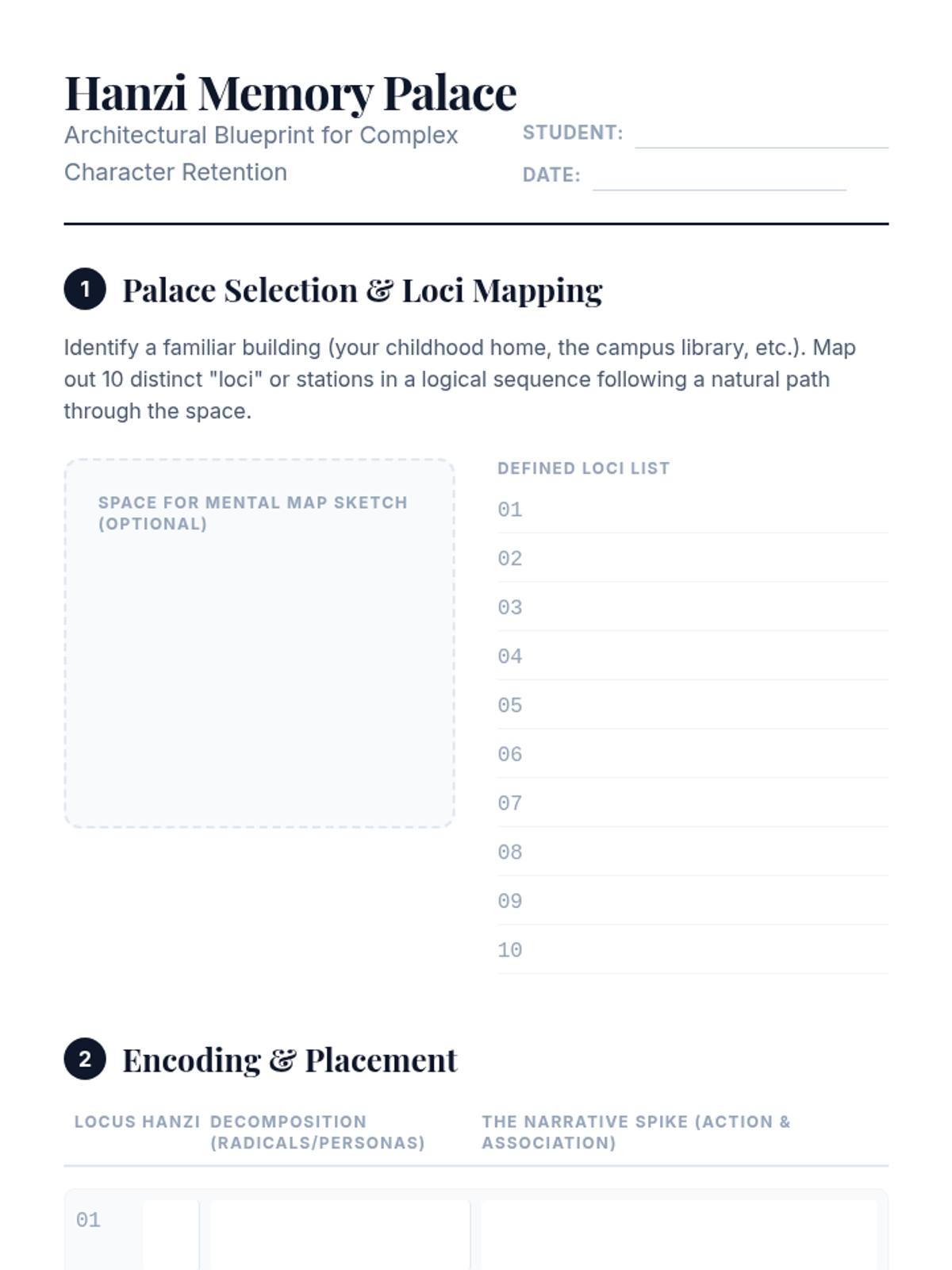
Students learn to adapt the Method of Loci for Chinese character components, creating spatial narratives to encode complex Hanzi into long-term memory.
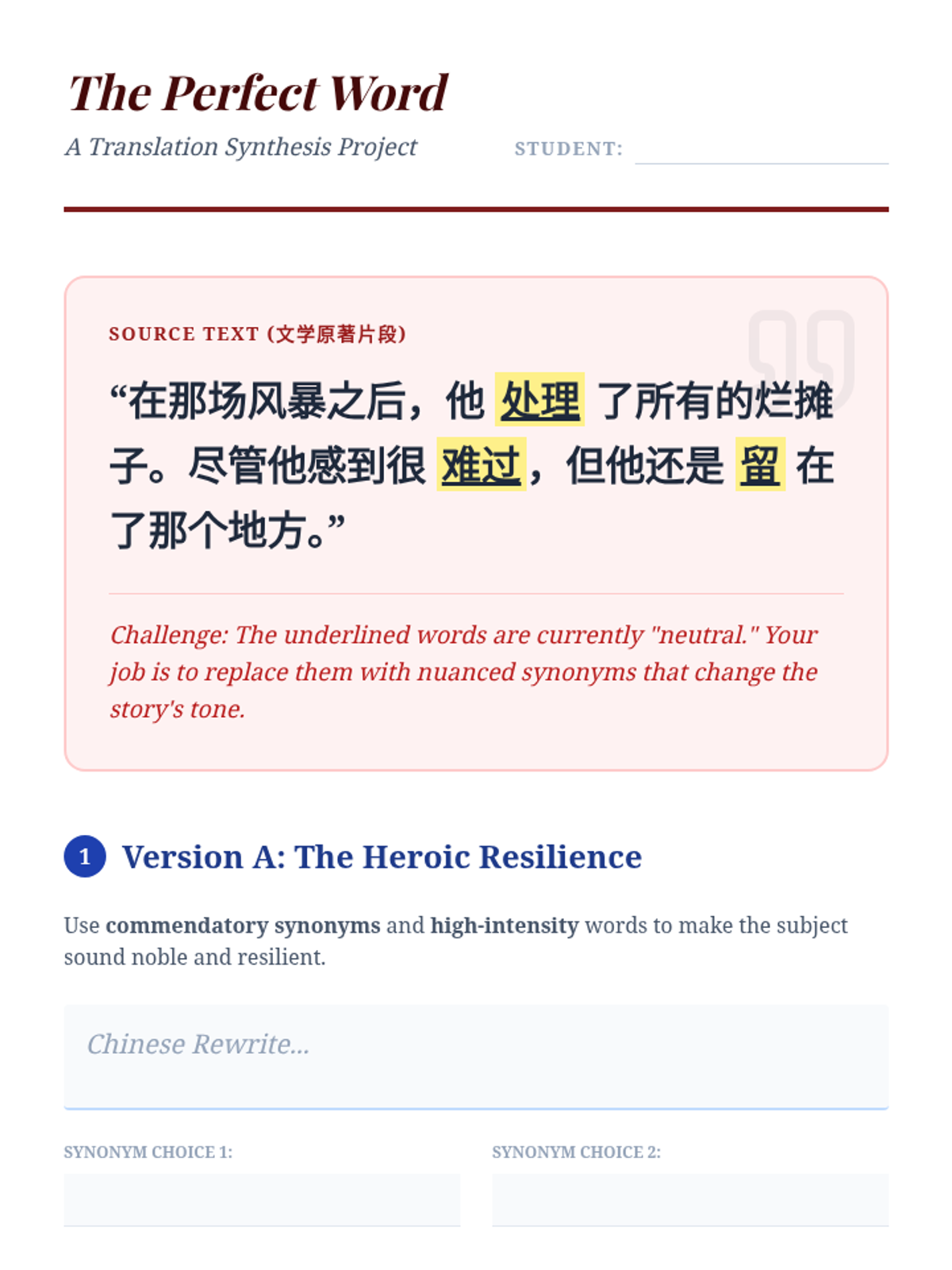
Students synthesize their learning by analyzing literary translations and producing their own nuanced versions of Chinese texts.
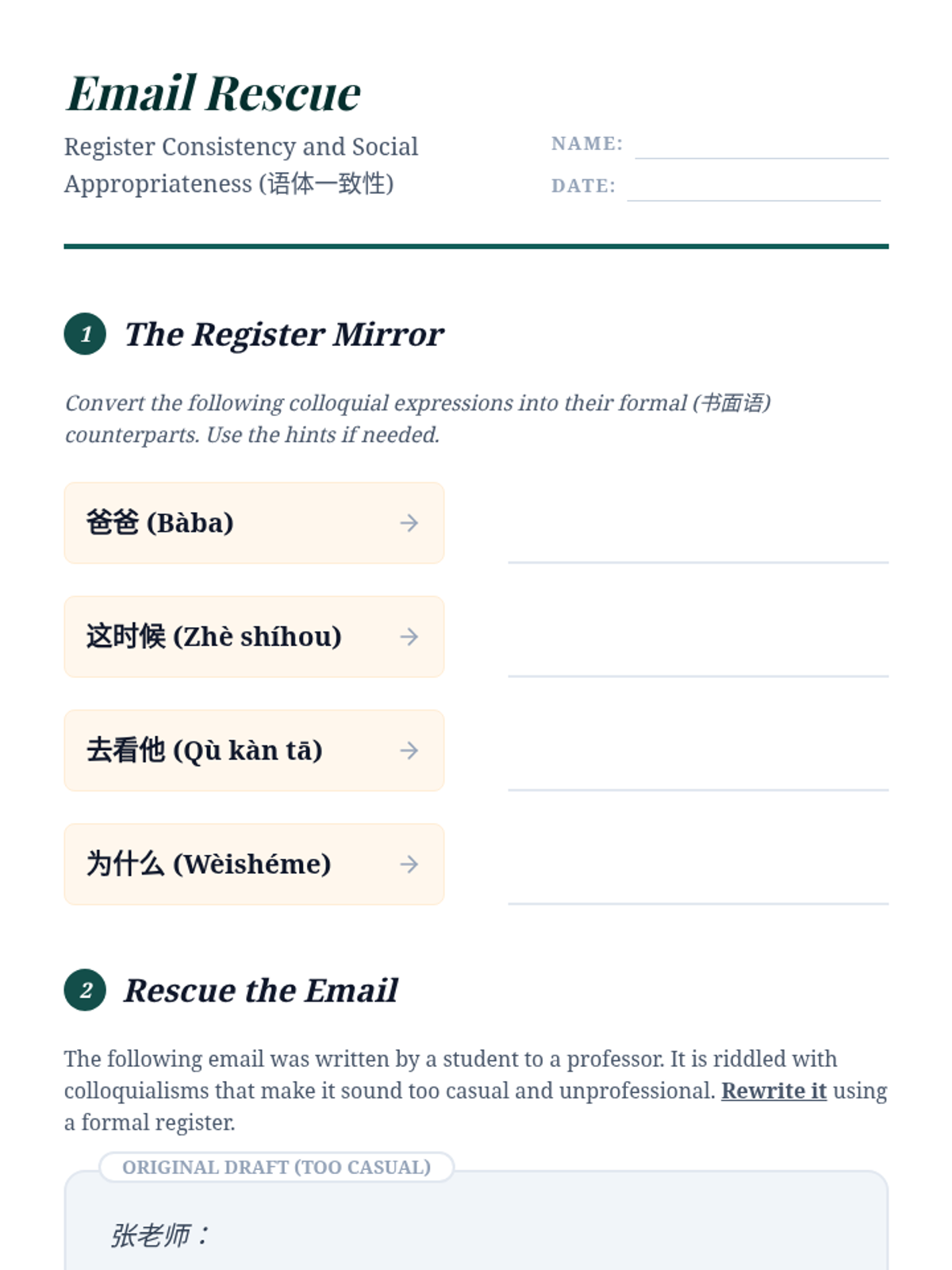
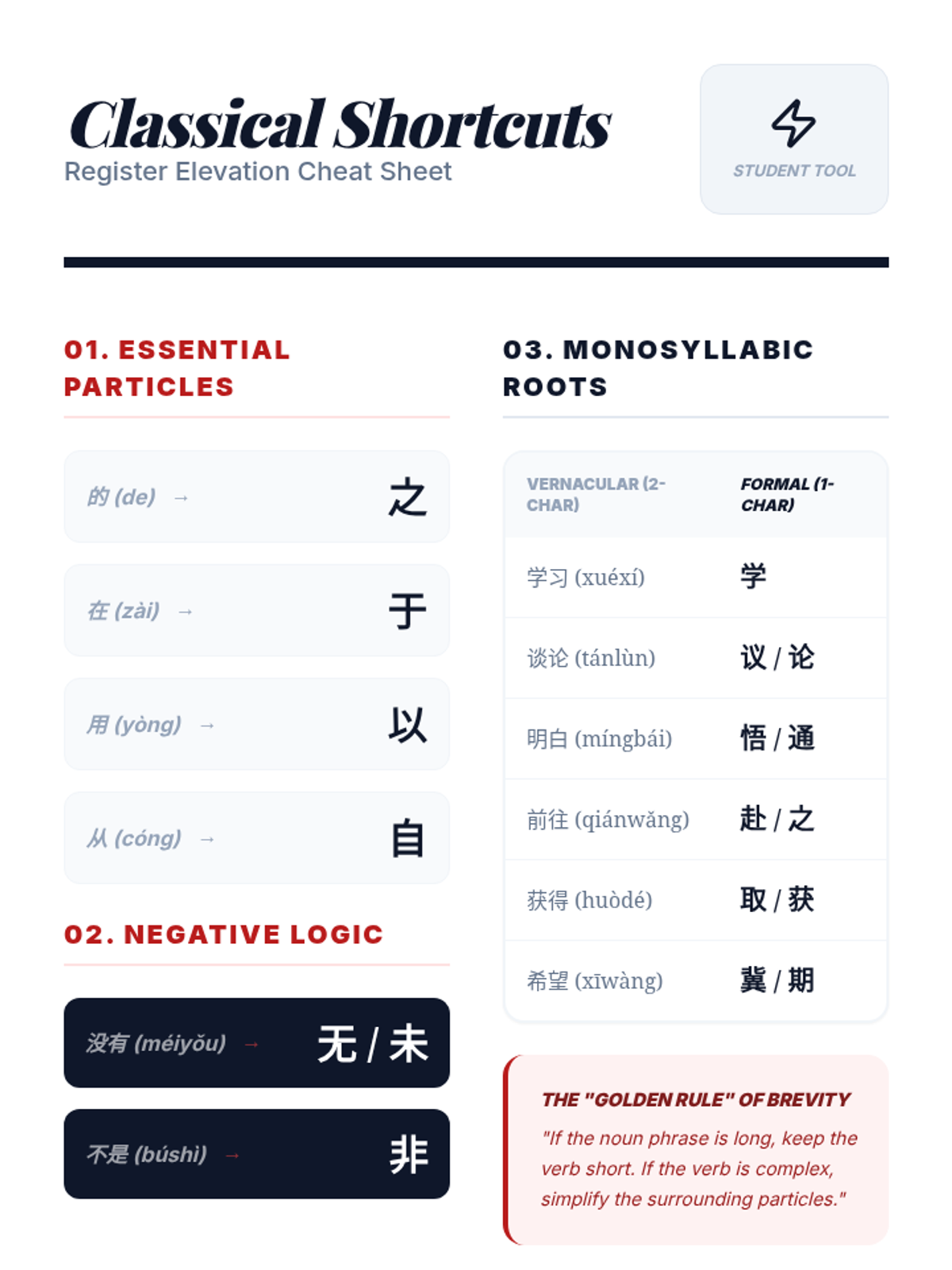
Focusing on register, students identify pairs of synonyms used in formal versus informal contexts and practice adjusting their writing accordingly.
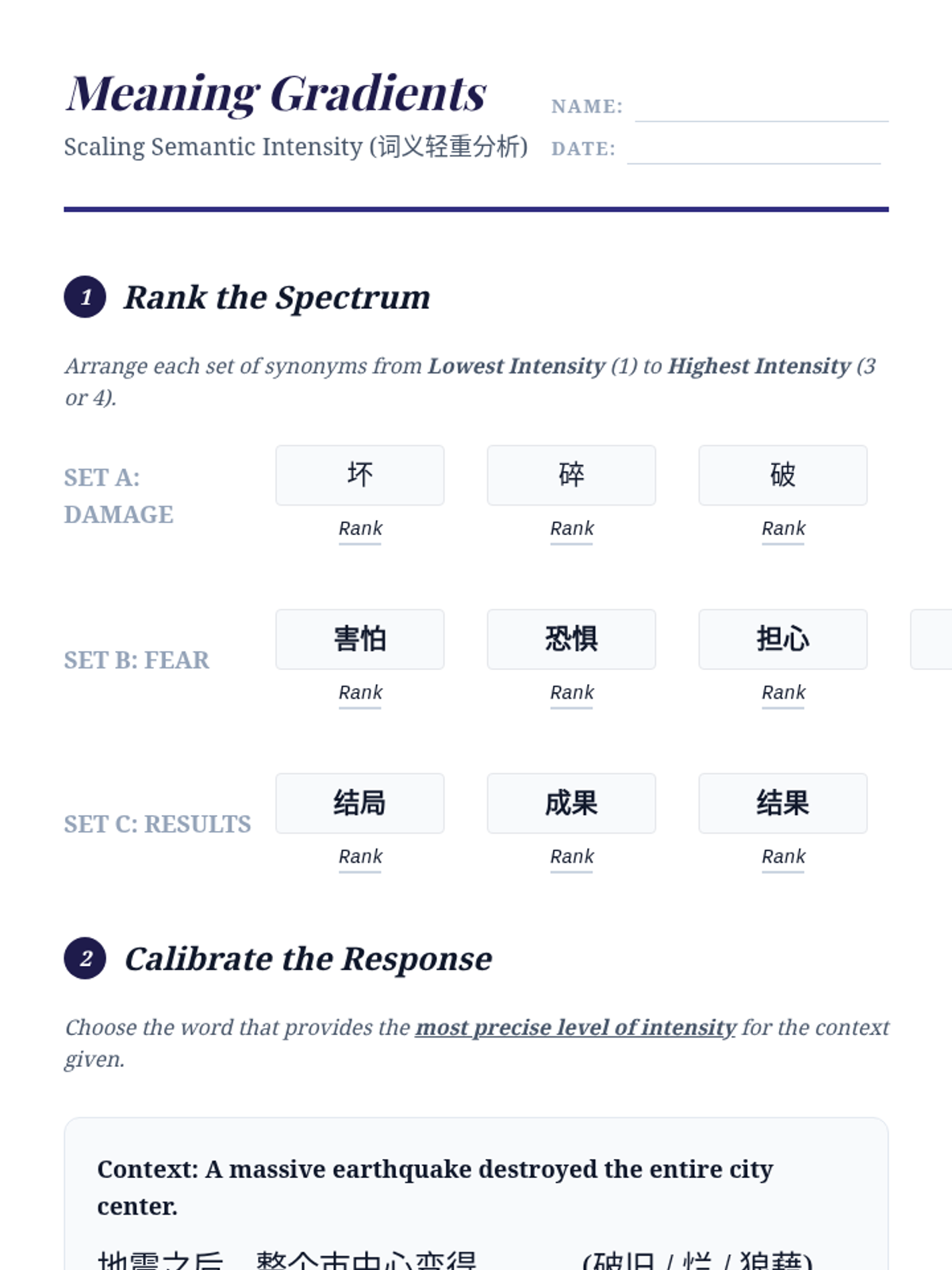
Students learn to rank synonyms along a spectrum of intensity and degree to express precise levels of emotion and action.
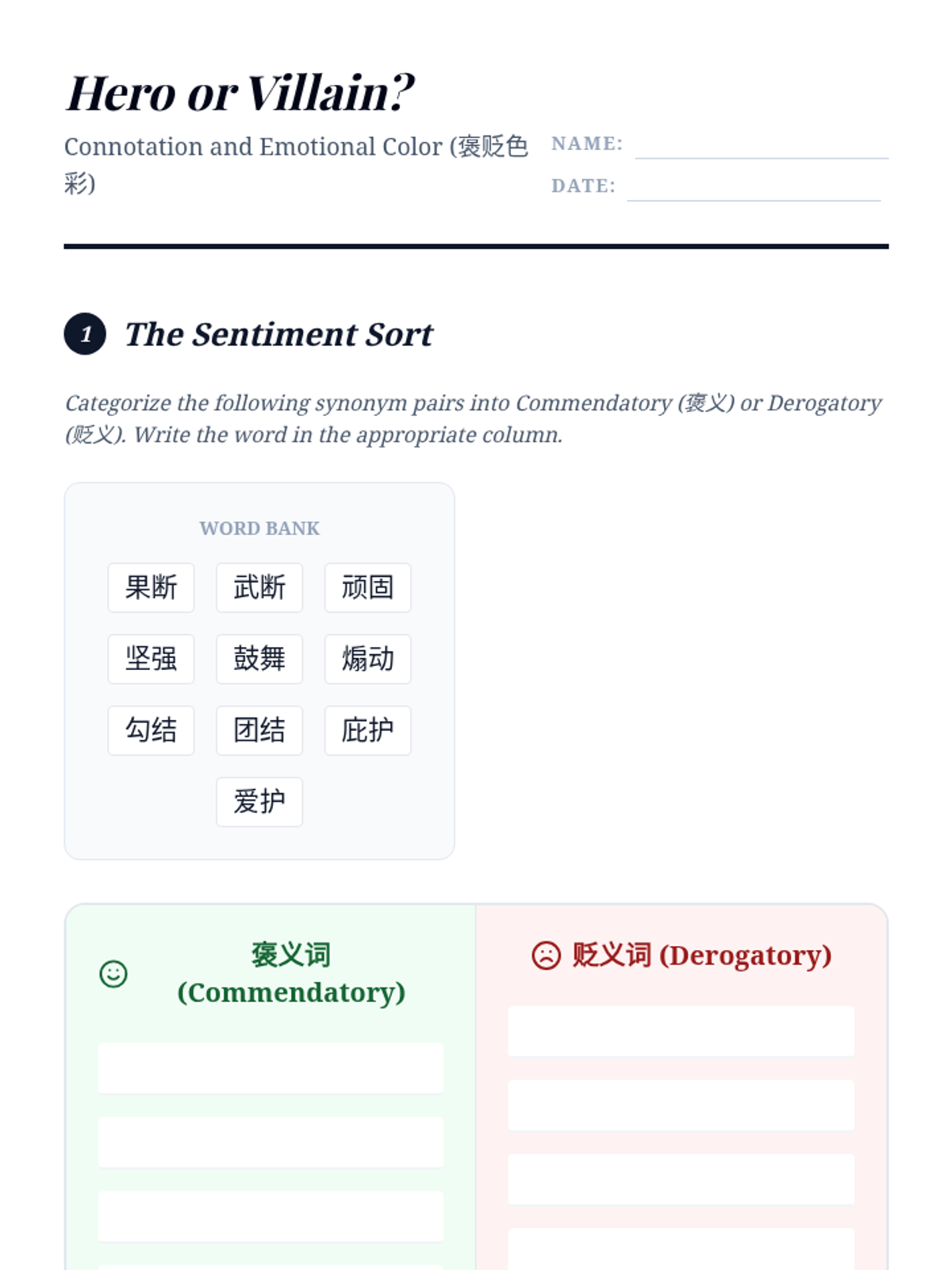
An exploration of the emotional weight of words, teaching students to distinguish between commendatory and derogatory synonyms.
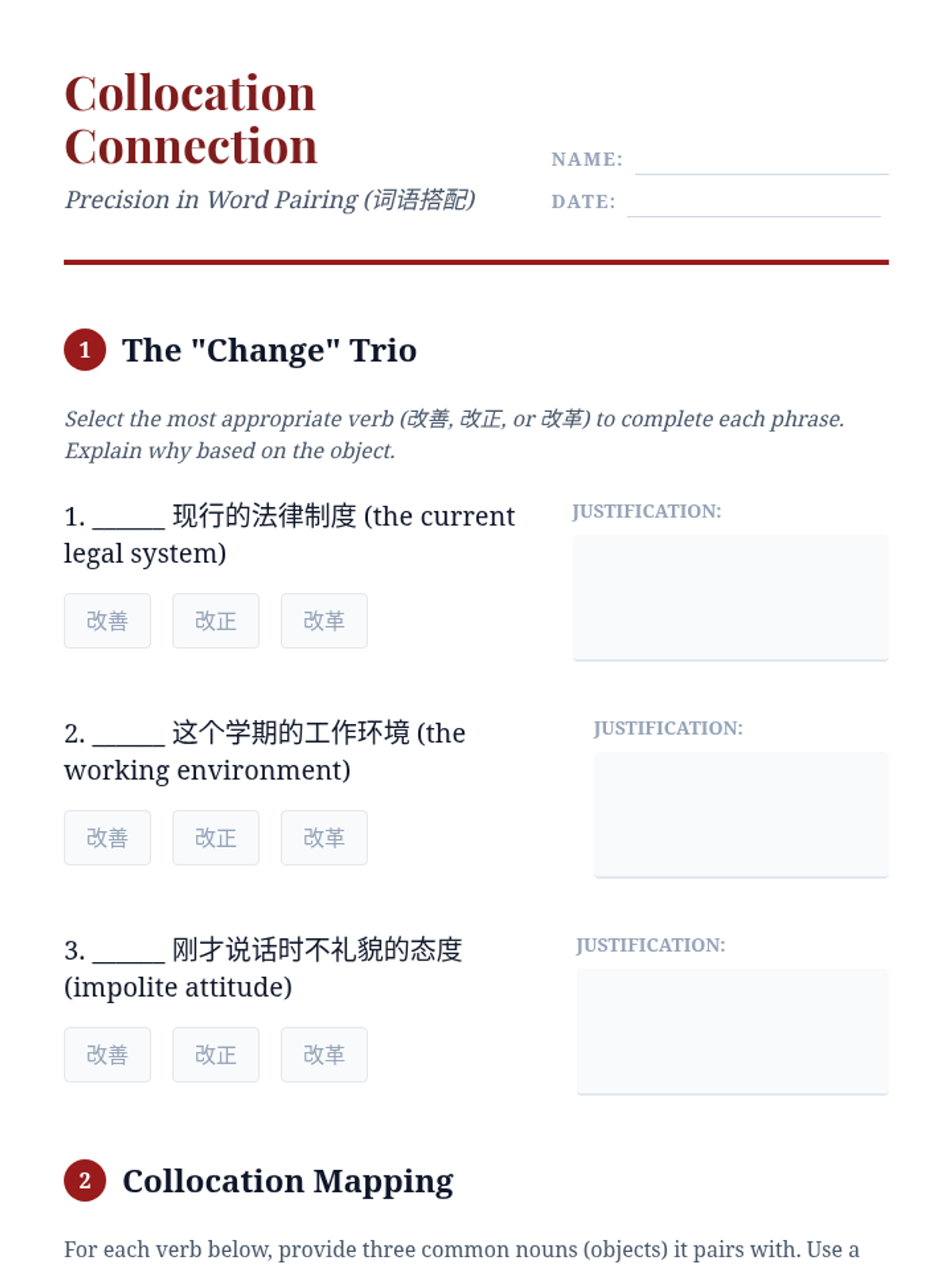
Students explore the vital role of collocations in synonym selection, focusing on how abstract verbs pair with specific objects.
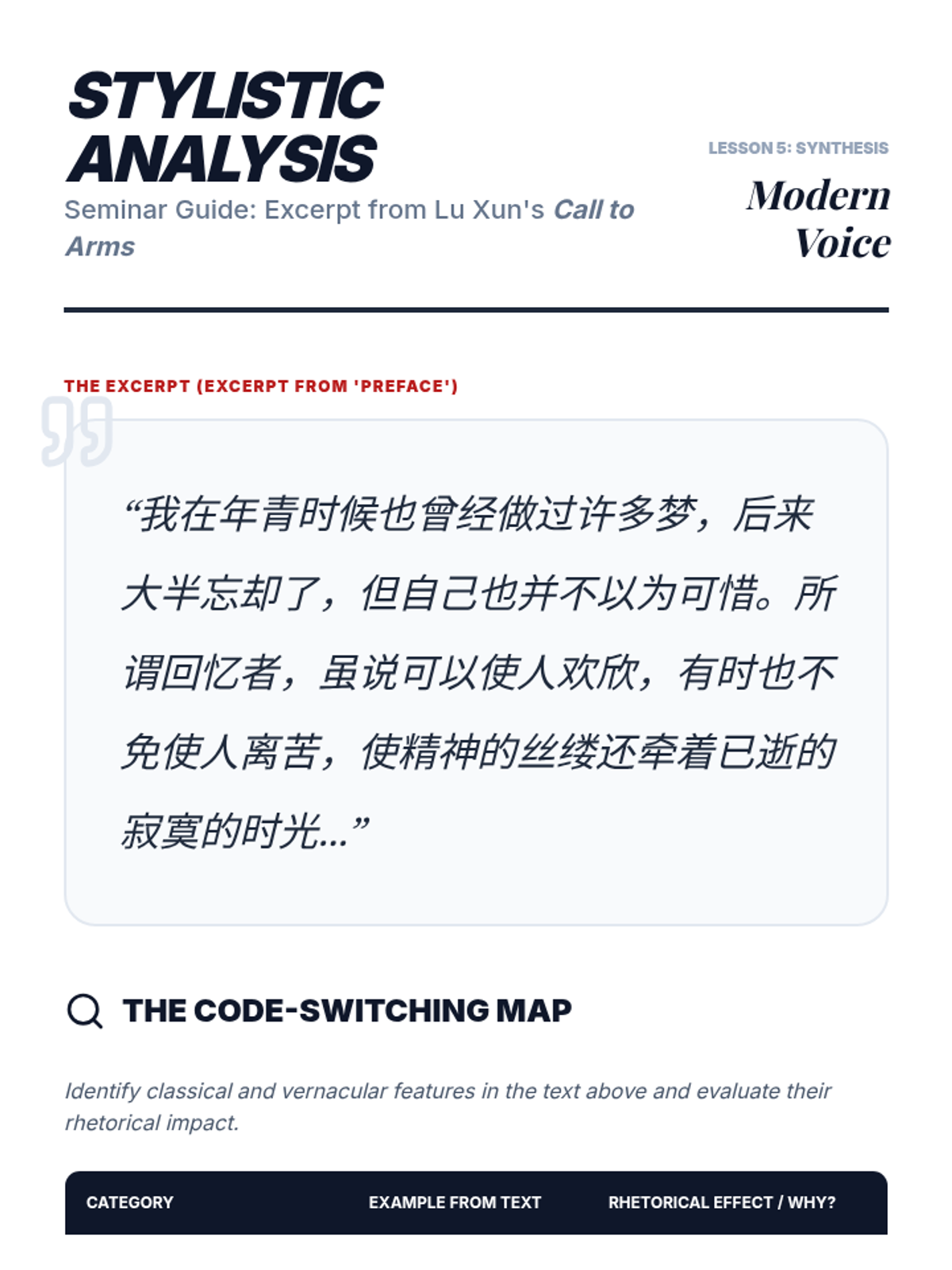
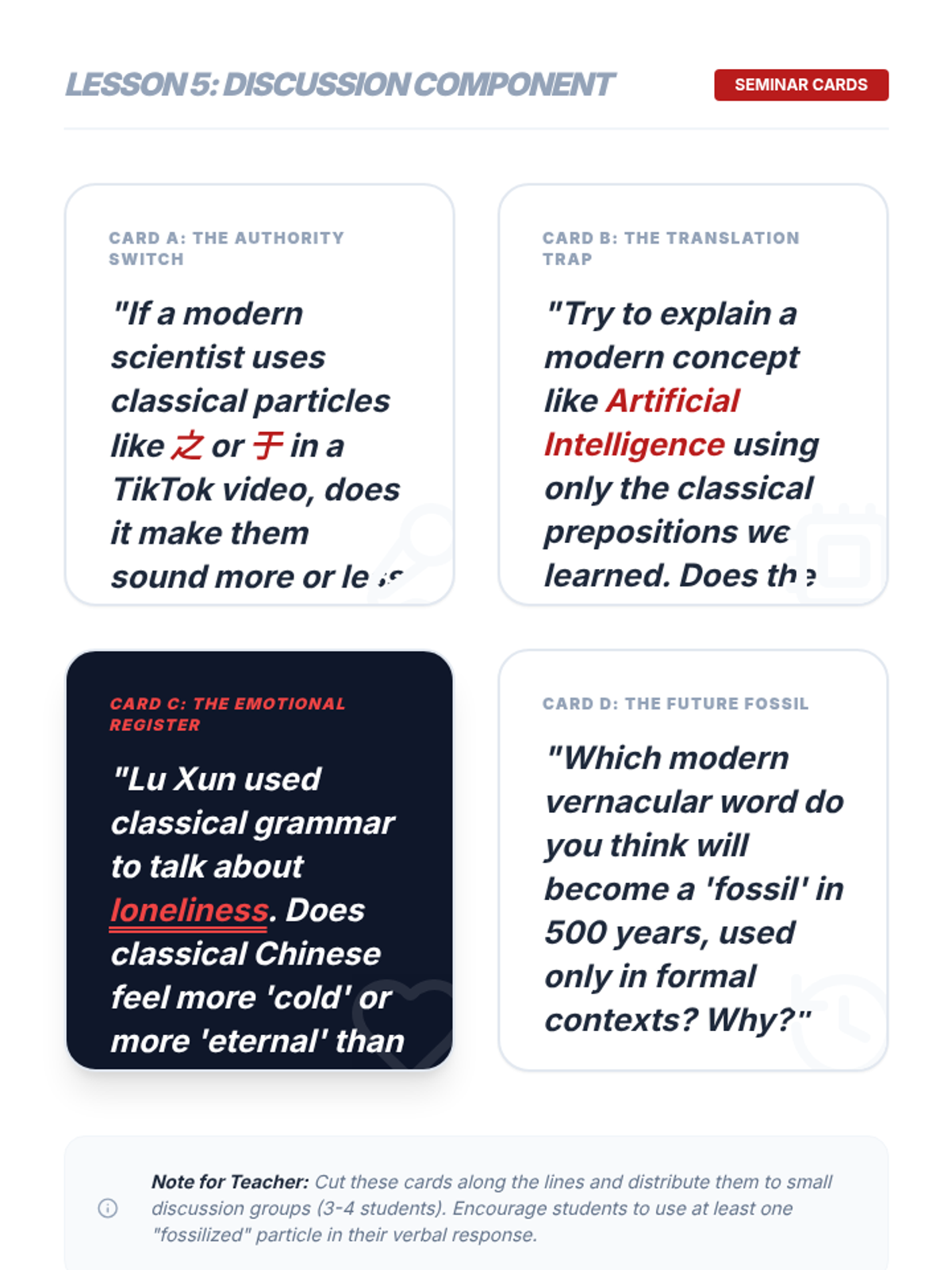
A seminar-style analysis of 20th-century 'semi-classical' prose. Students explore the stylistic effects of blending vernacular and classical registers in influential academic and political texts.
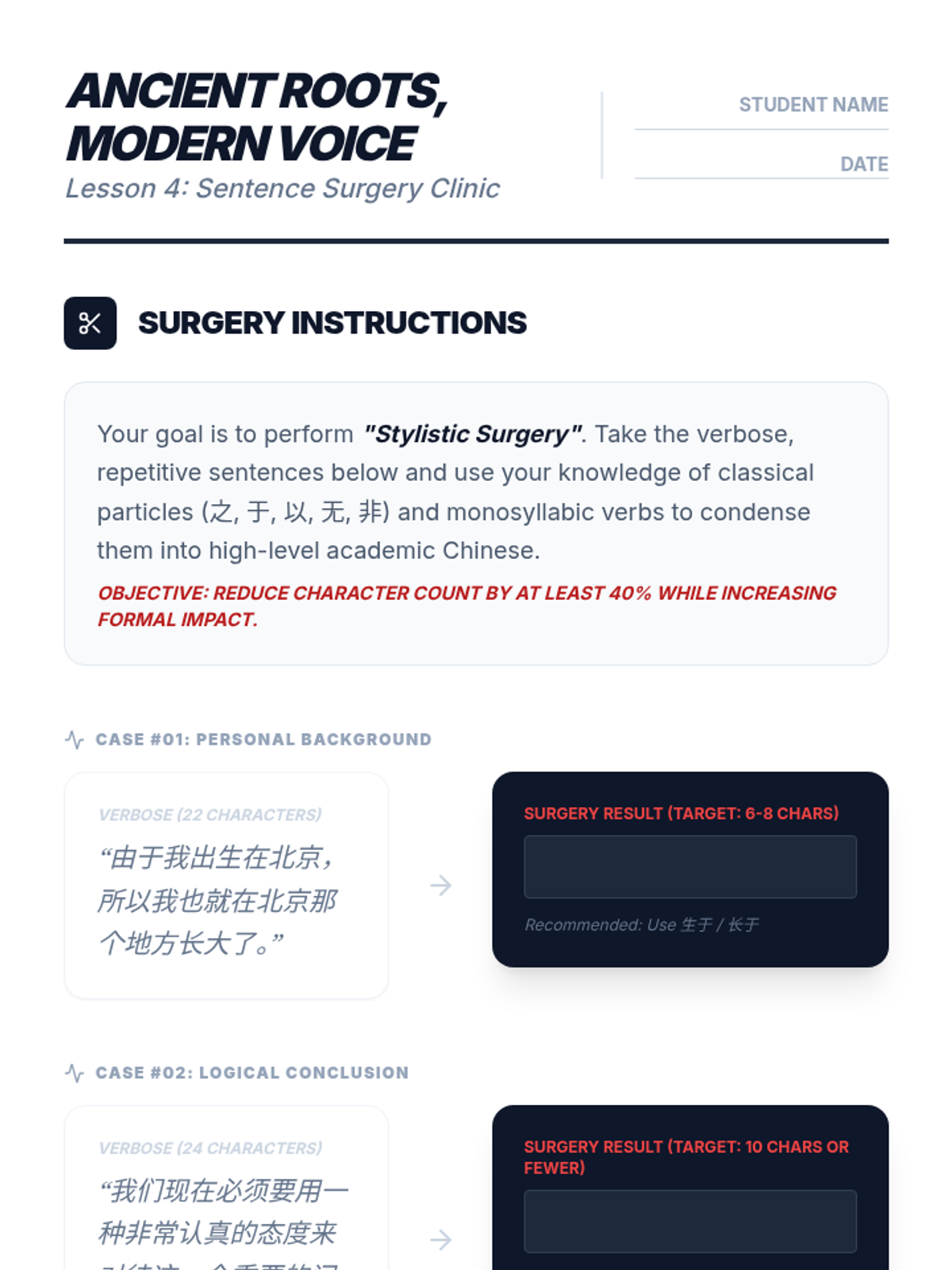
Focusing on the inherent brevity of Classical Chinese, students learn to condense verbose modern sentences using classical structures. The lesson emphasizes professional editing and stylistic precision.
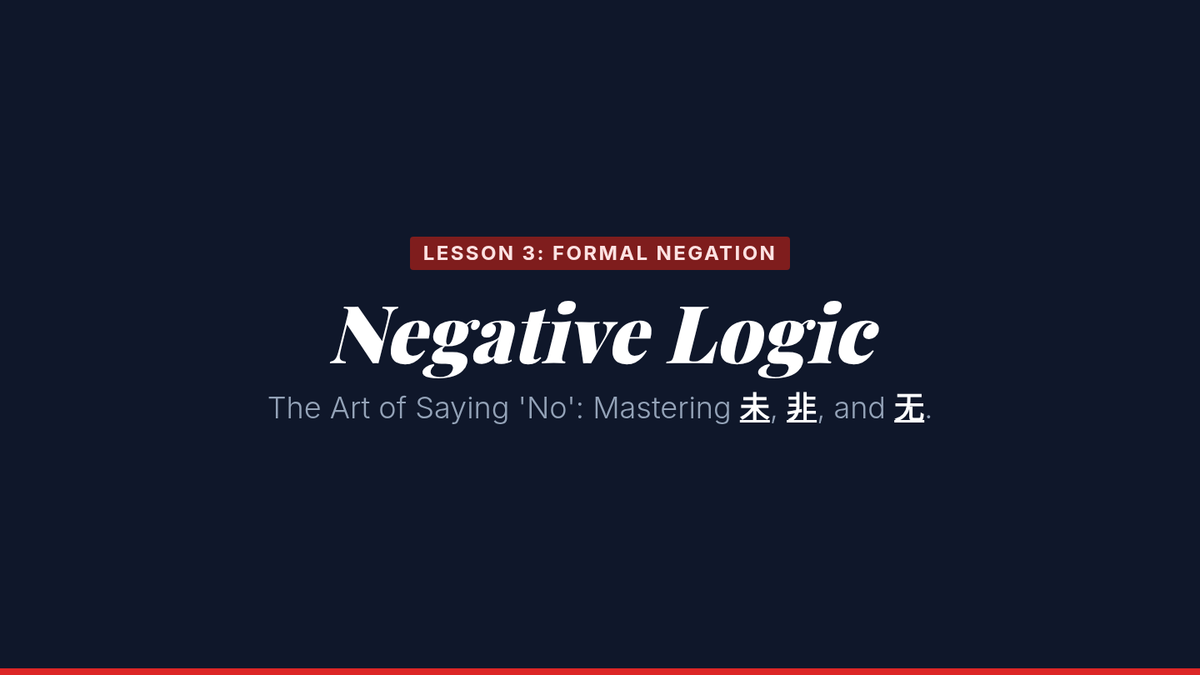
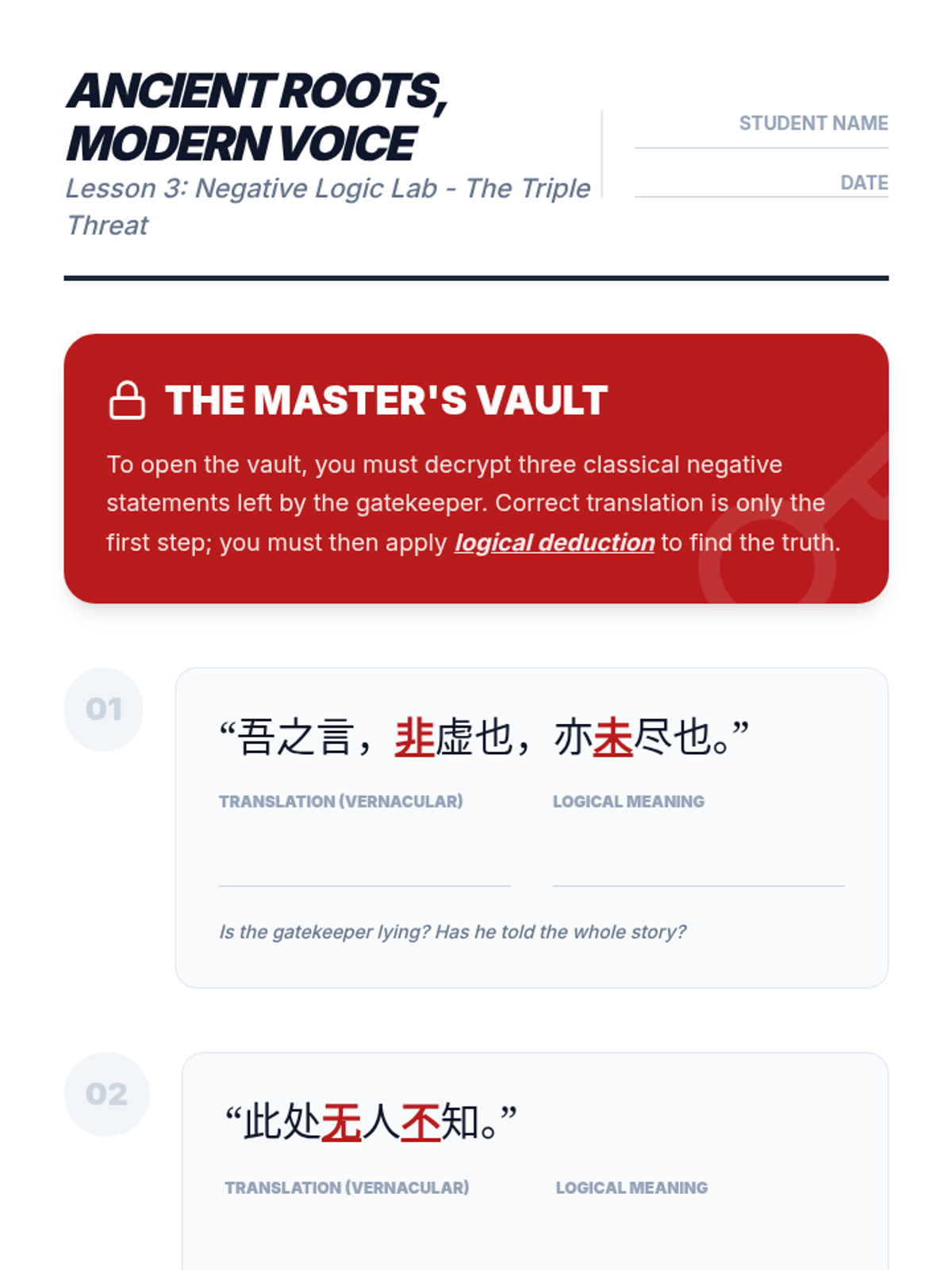
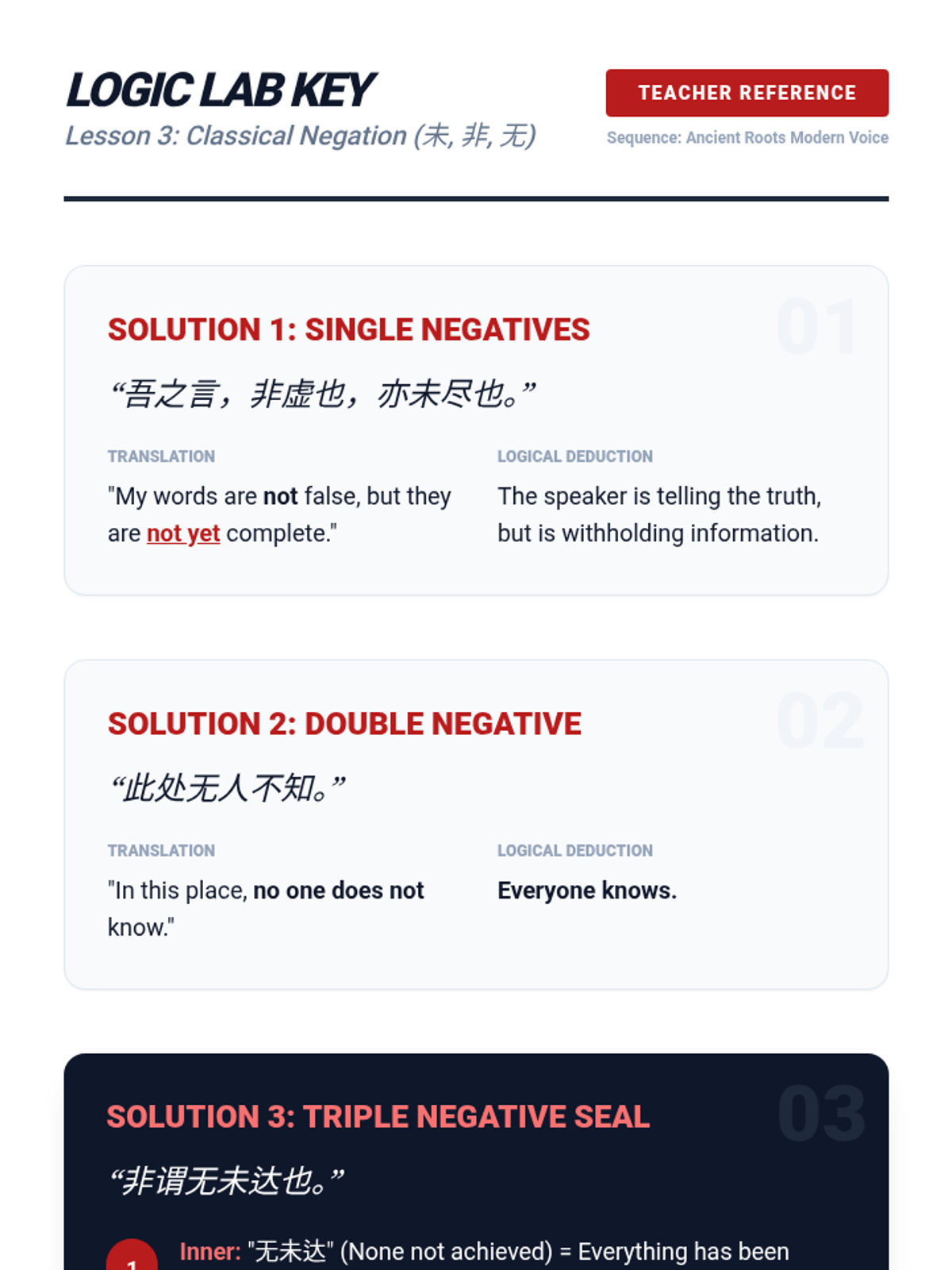
Students master advanced negation markers (未, 非, 无) and the logic of double and triple negatives. The lesson uses logic puzzles to challenge comprehension of formal negative constructions.
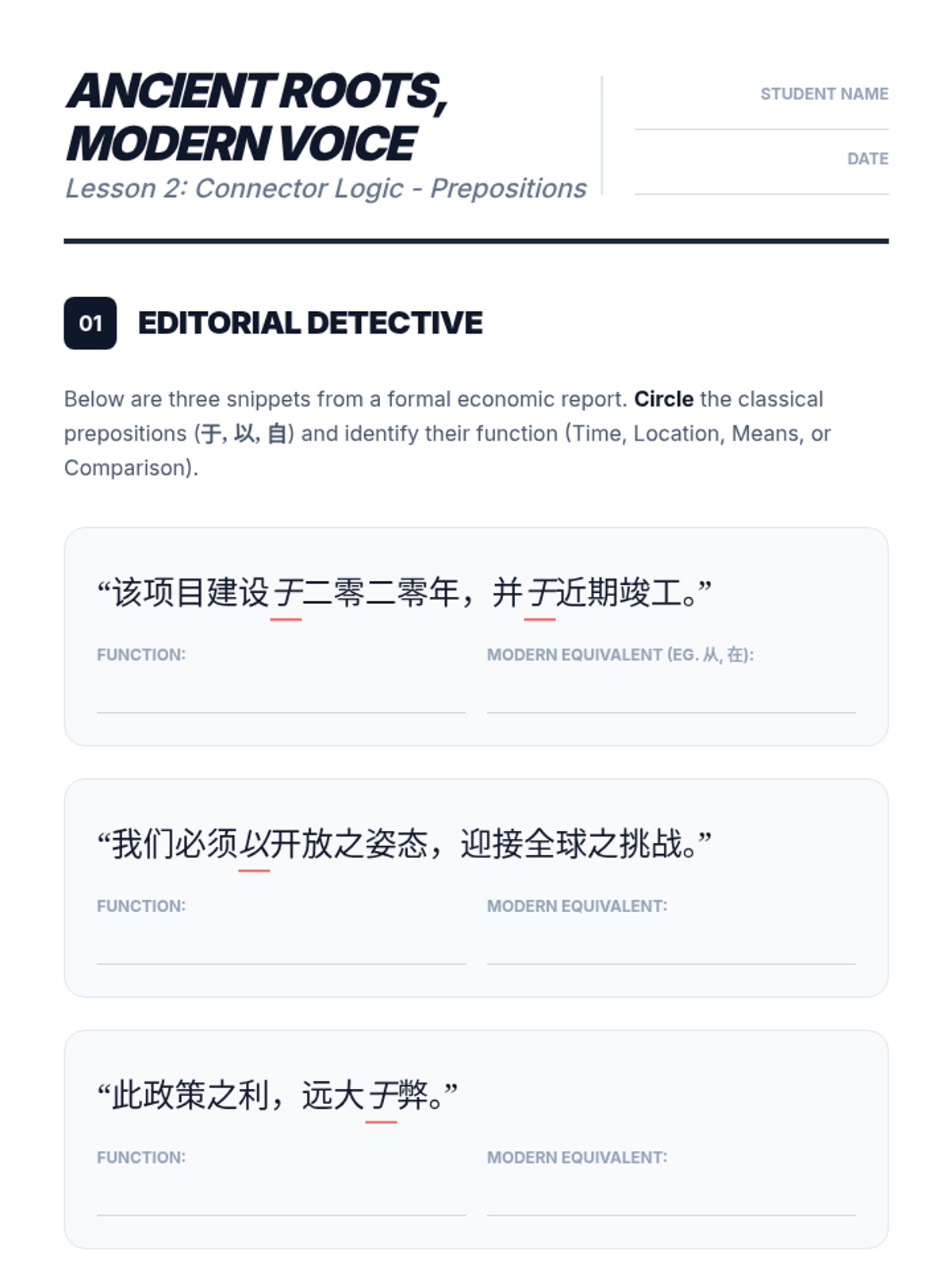
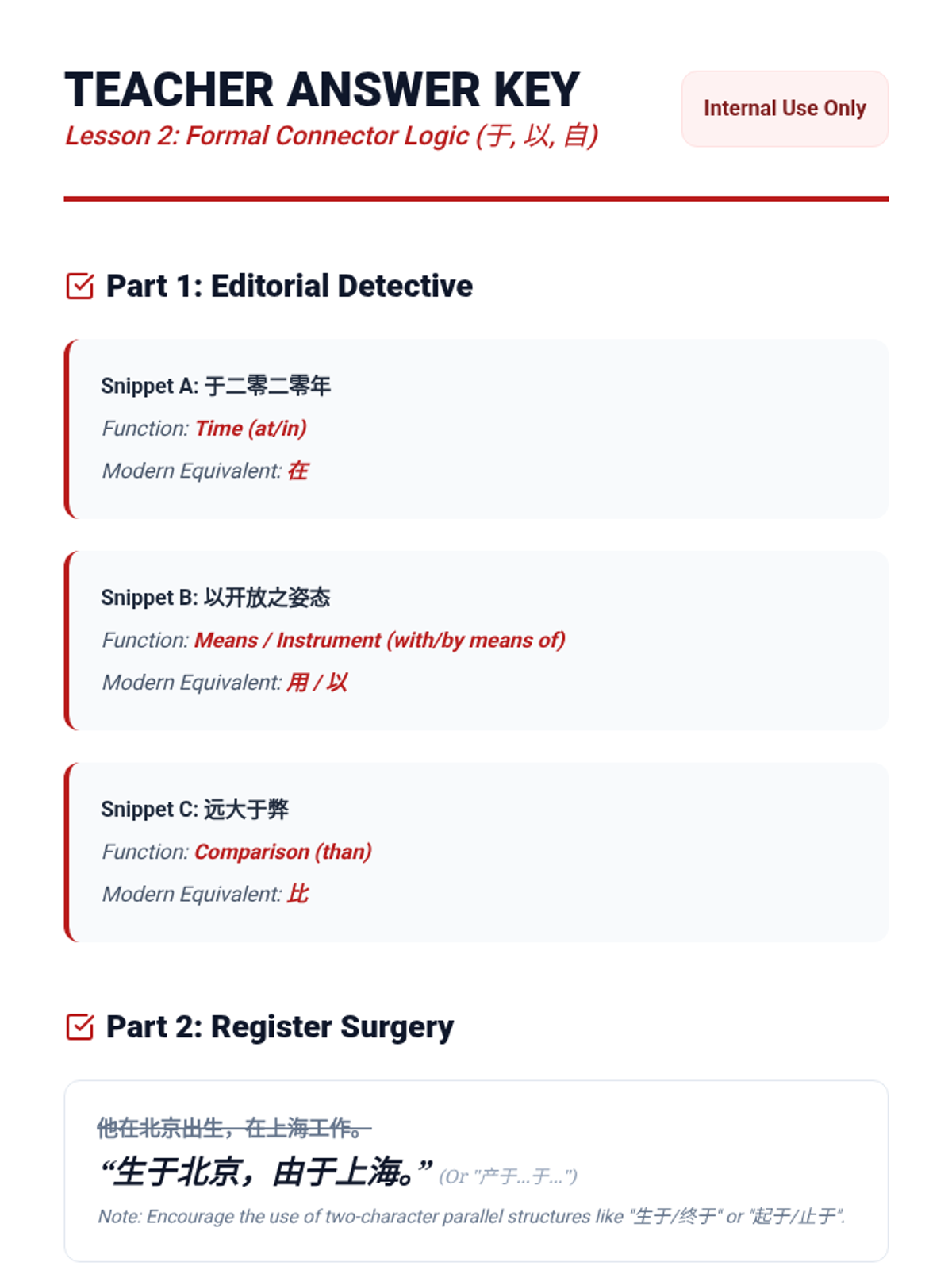
This lesson focuses on classical prepositions like 'yu' (于), 'yi' (以), and 'zi' (自) that persist in formal news and legal writing. Students analyze how these particles dictate sentence structure and logic.
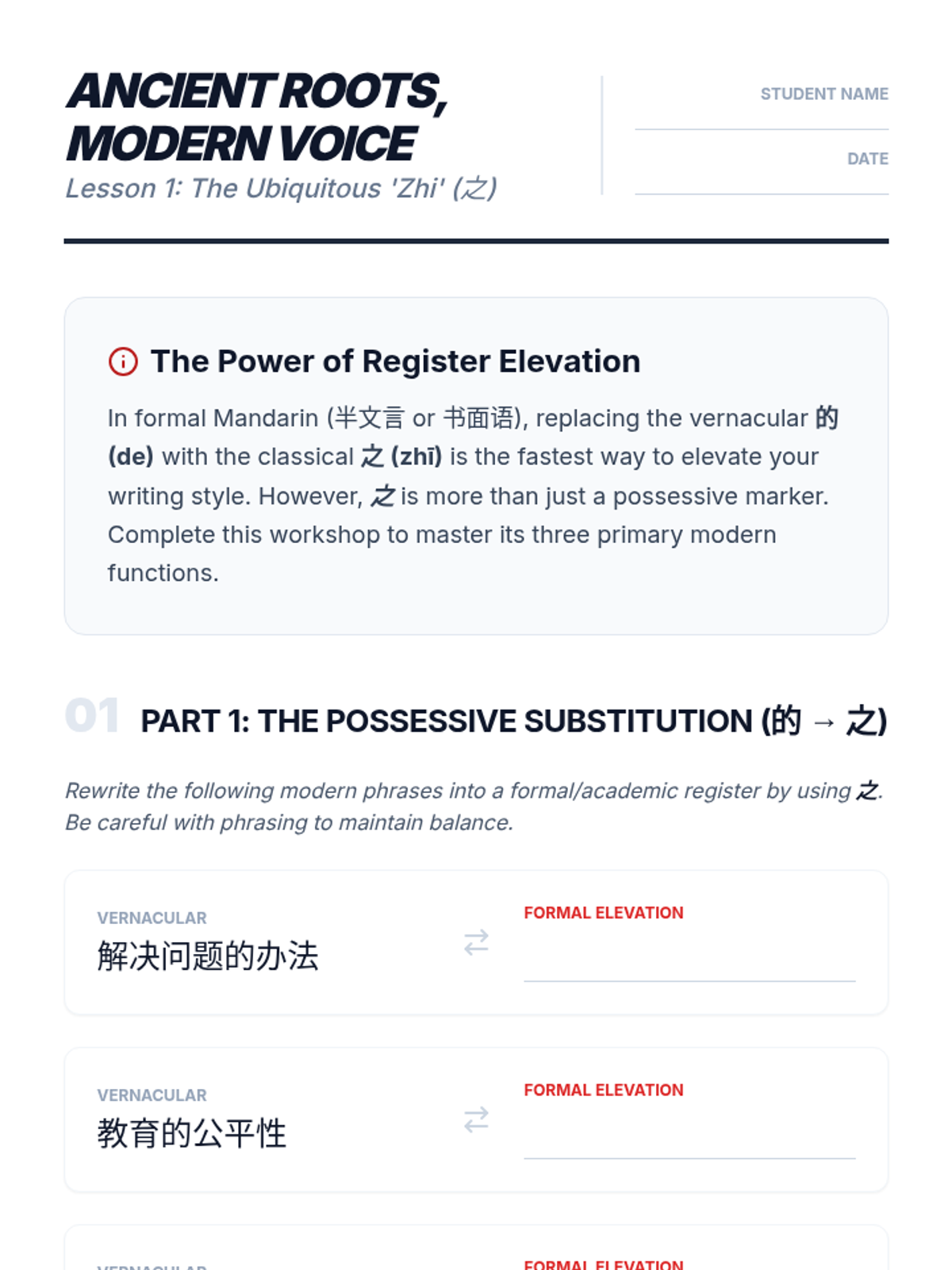
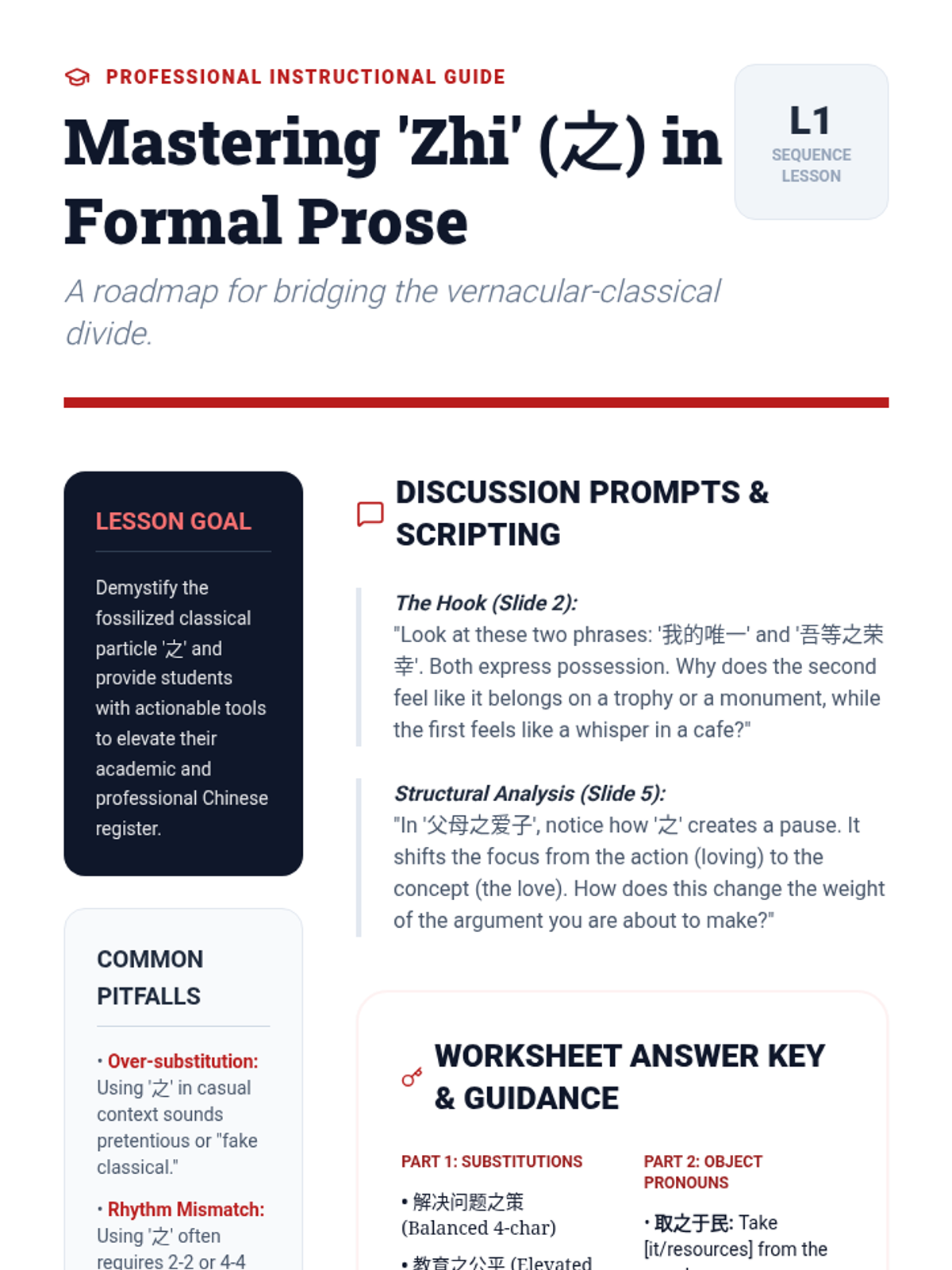
Students investigate the versatile particle 'zhi' (之), exploring its roles as a possessive marker, pronoun, and nominalizer in modern formal contexts. The lesson focuses on register elevation through strategic substitution.
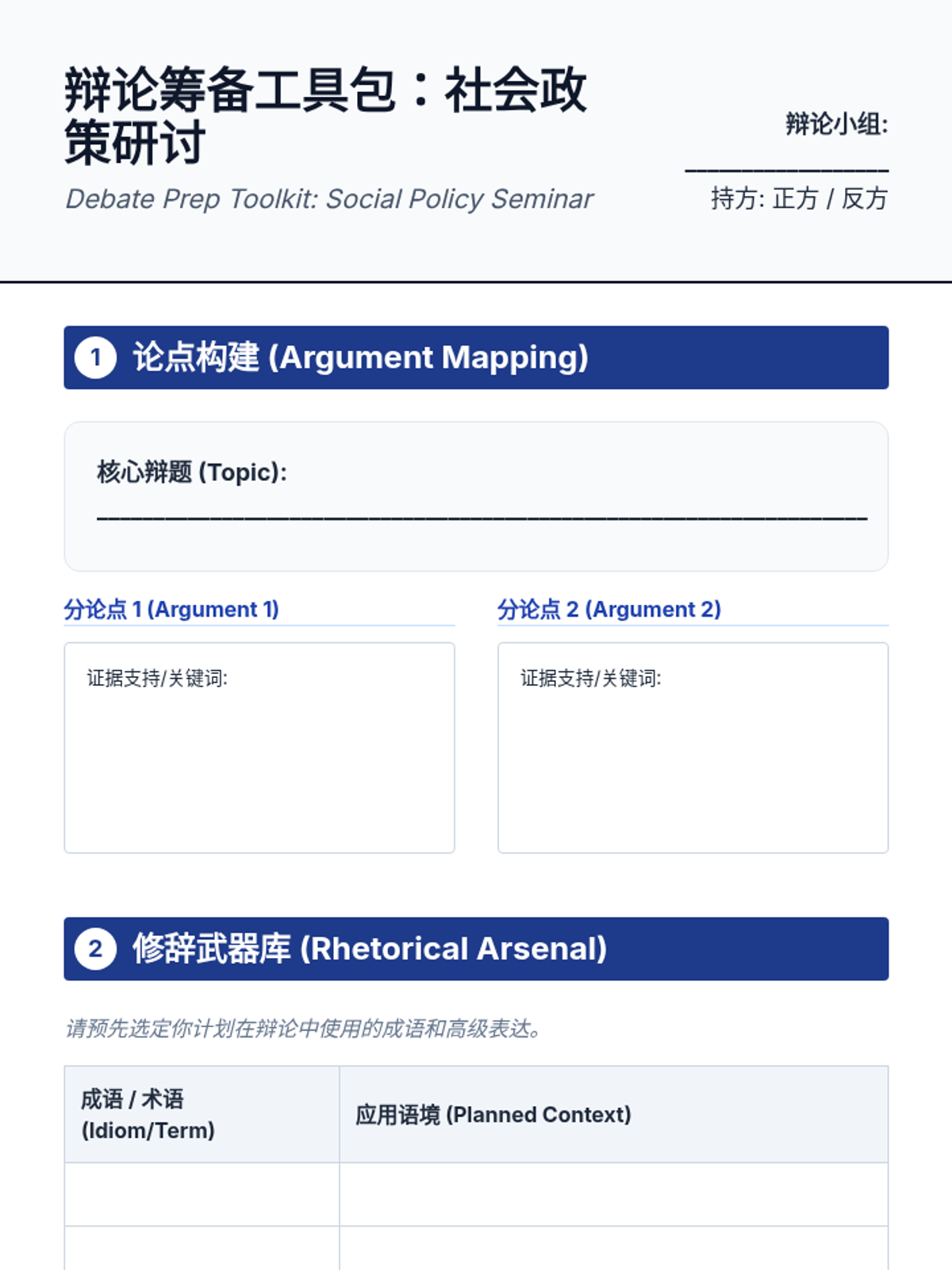
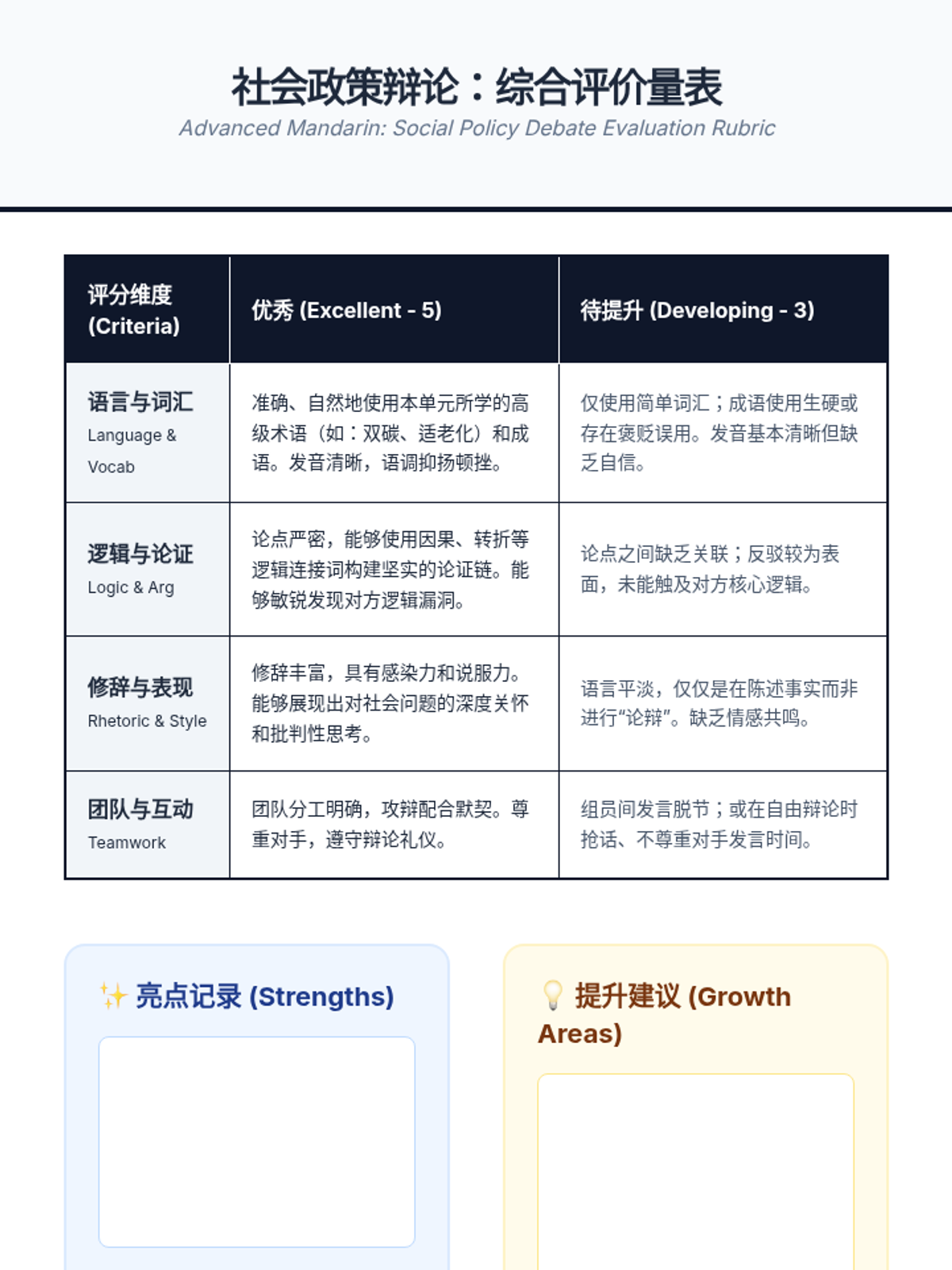
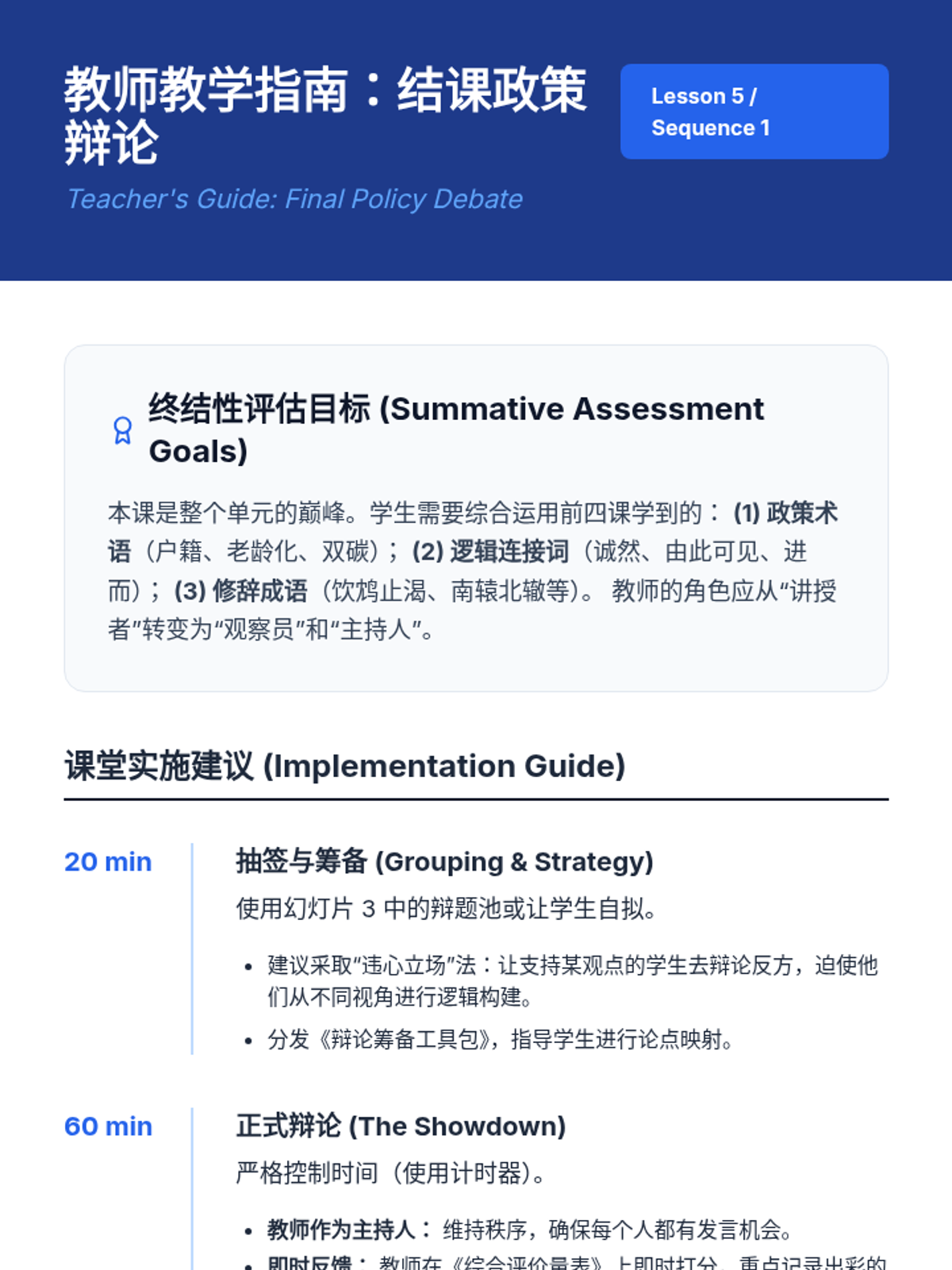
The sequence concludes with a formal debate where students synthesize learned vocabulary and rhetorical structures to argue for or against specific social policy proposals.
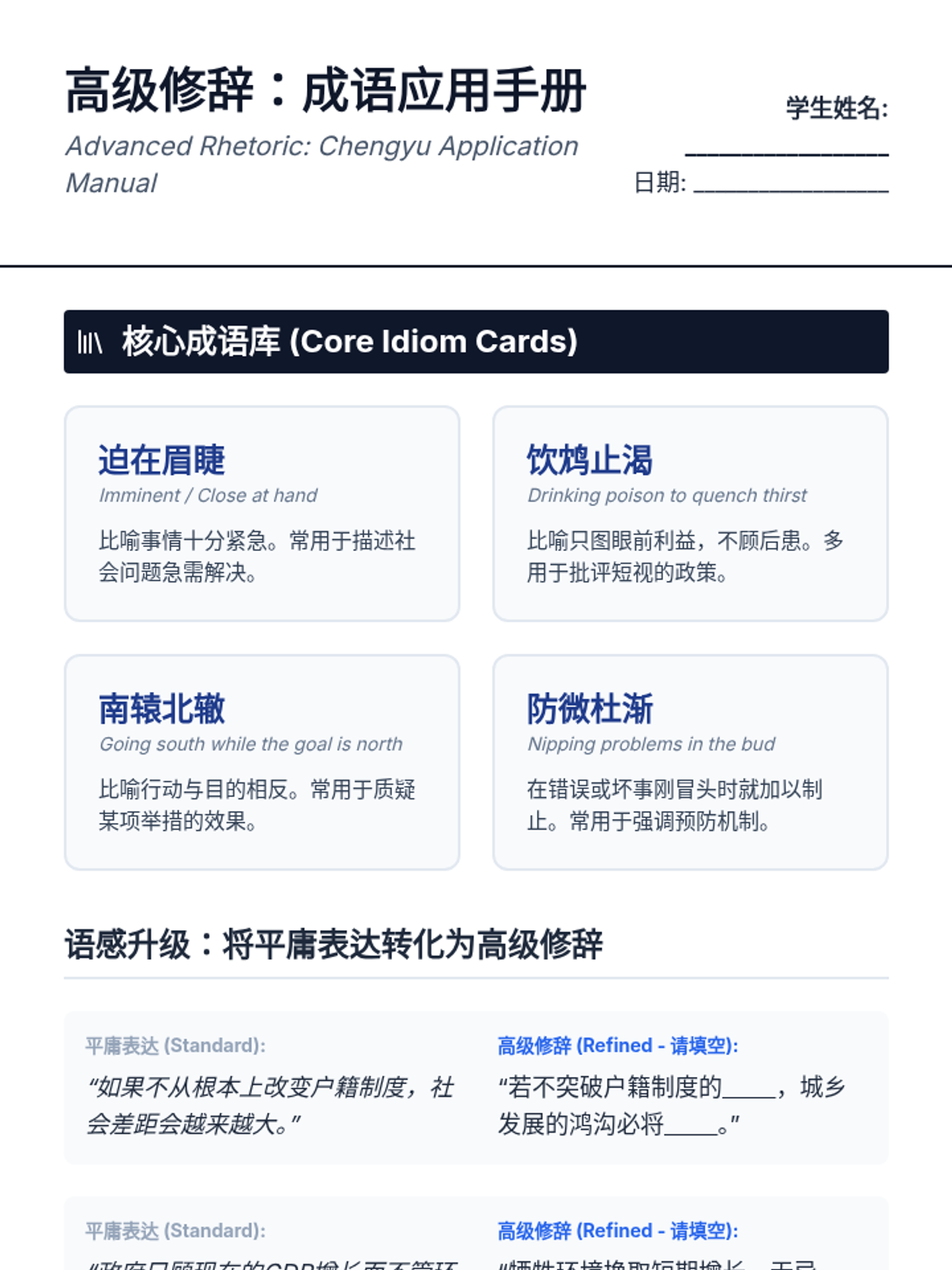
A workshop focused on integrating Chengyu (idioms) and advanced conjunctions to strengthen persuasive arguments and demonstrate cultural erudition in public debate.
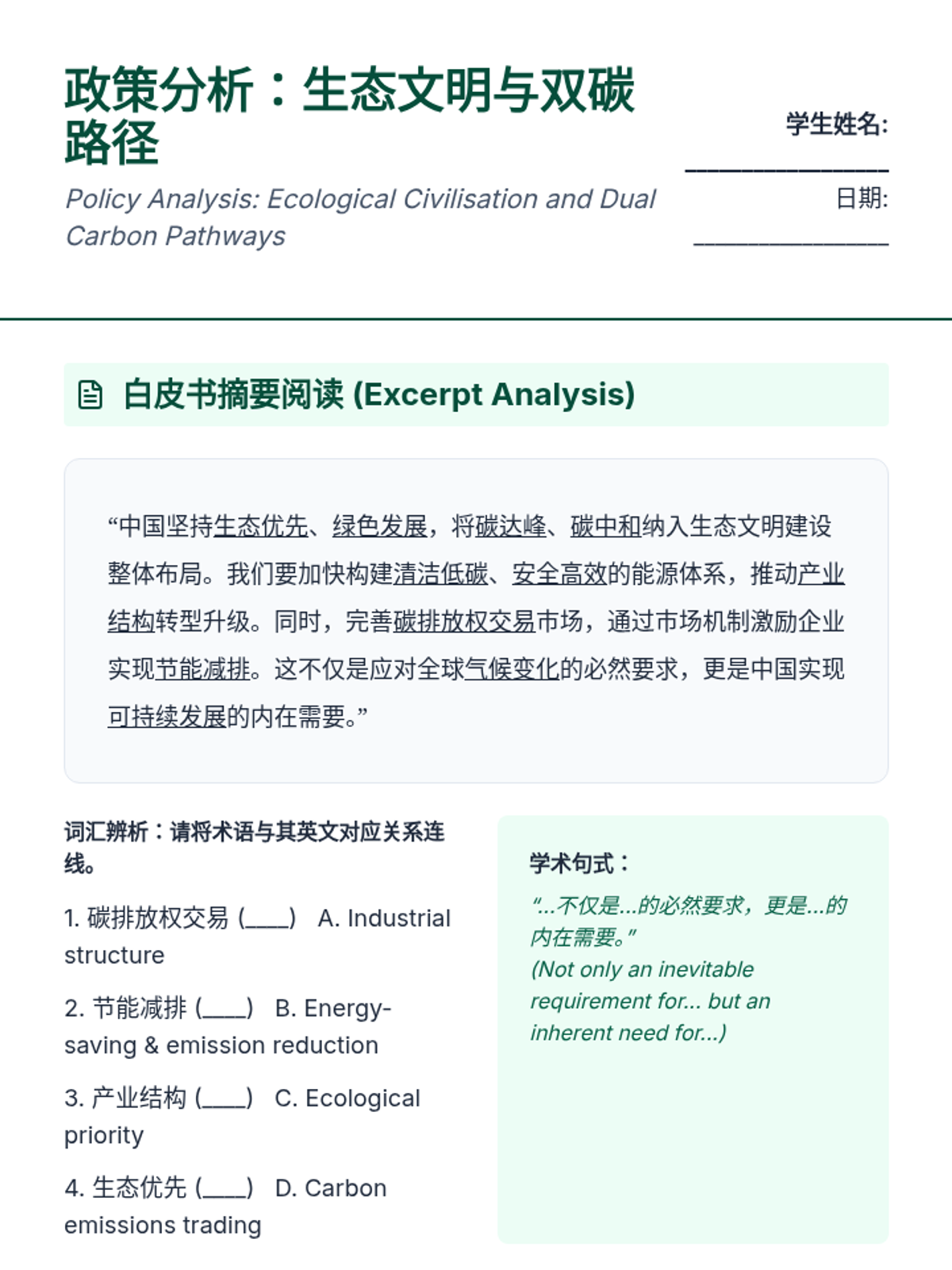
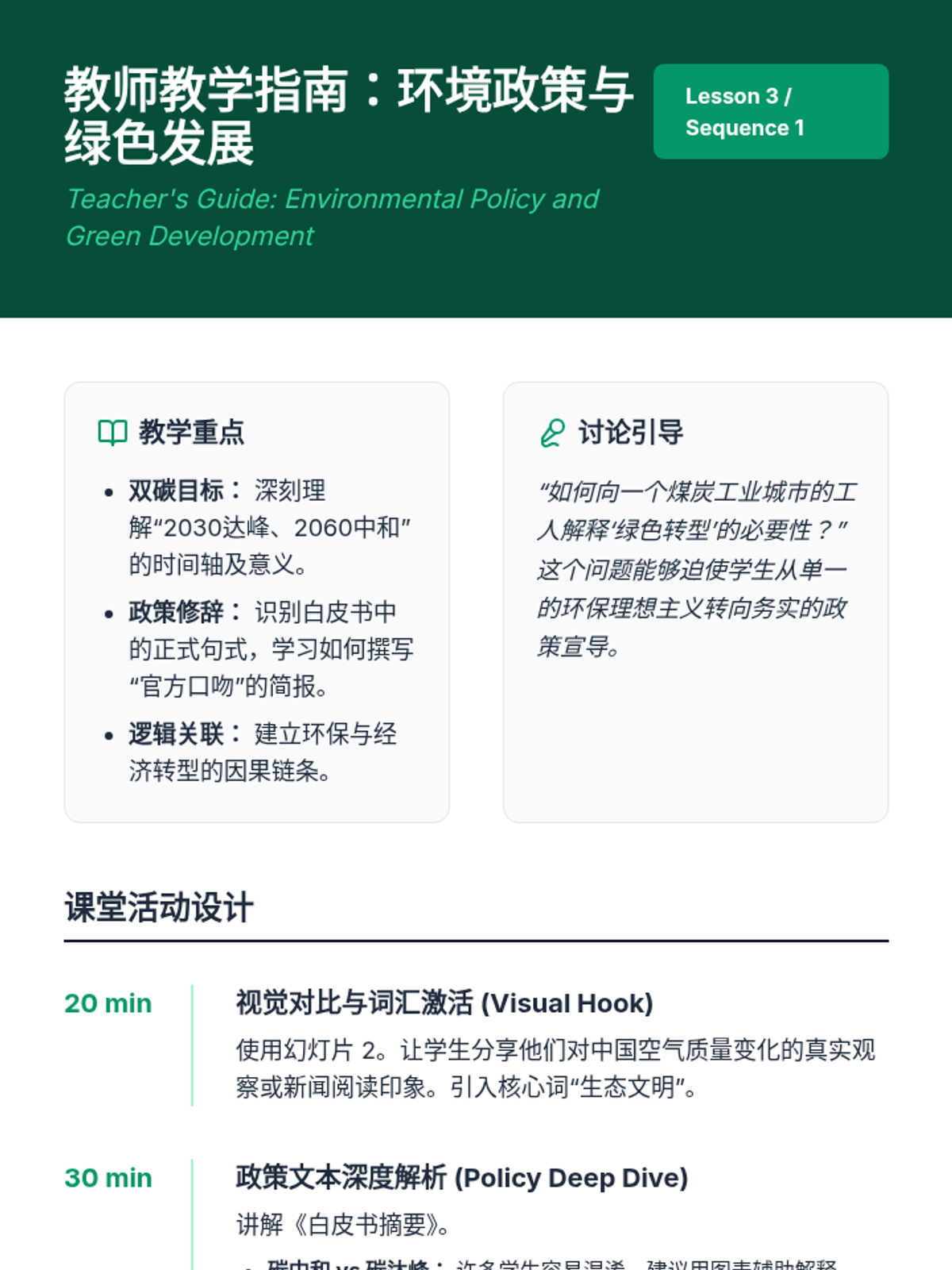
Students explore the lexicon of environmental science and government policy, focusing on sustainable development, carbon neutrality, and pollution metrics through policy analysis.
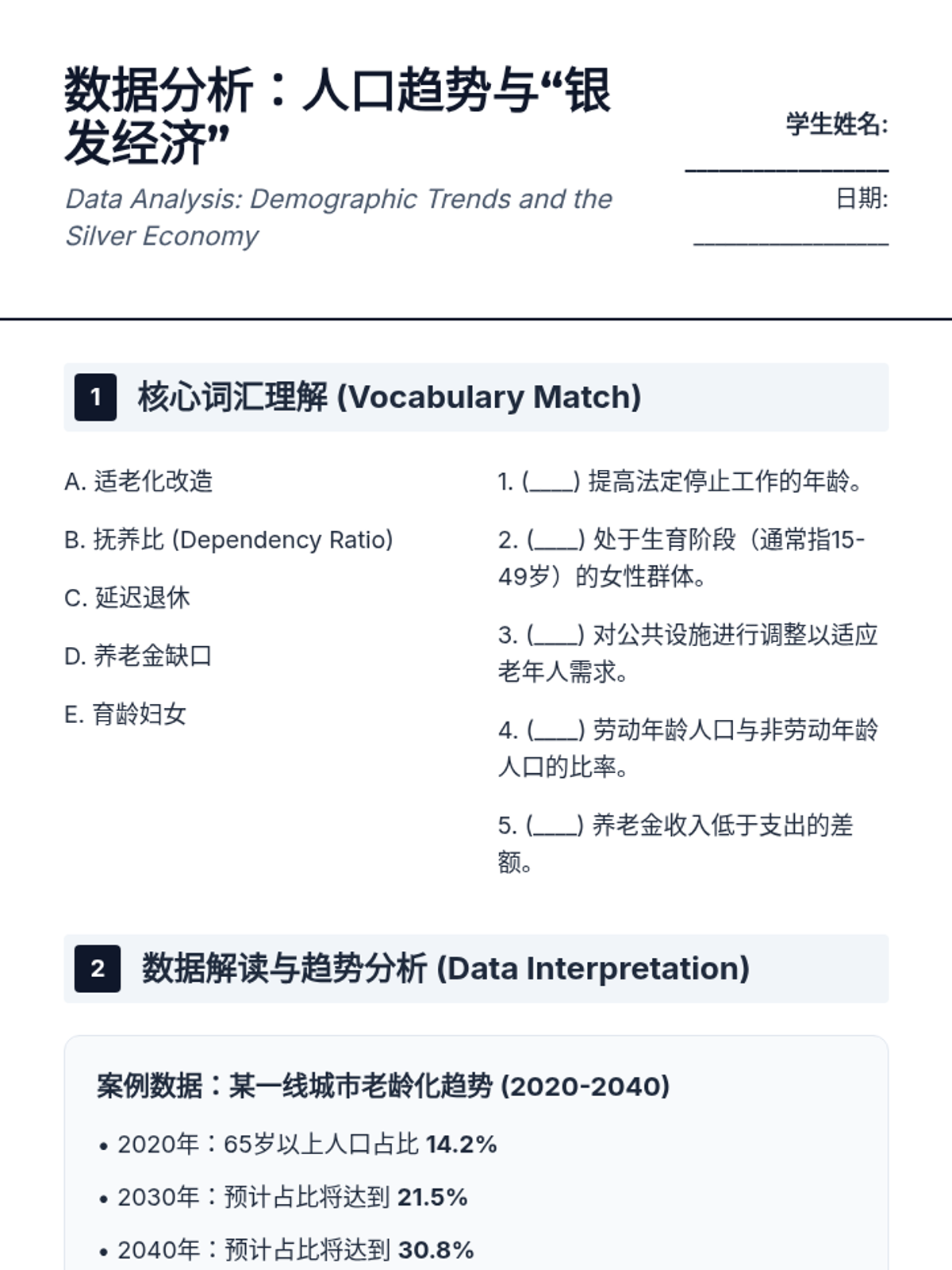
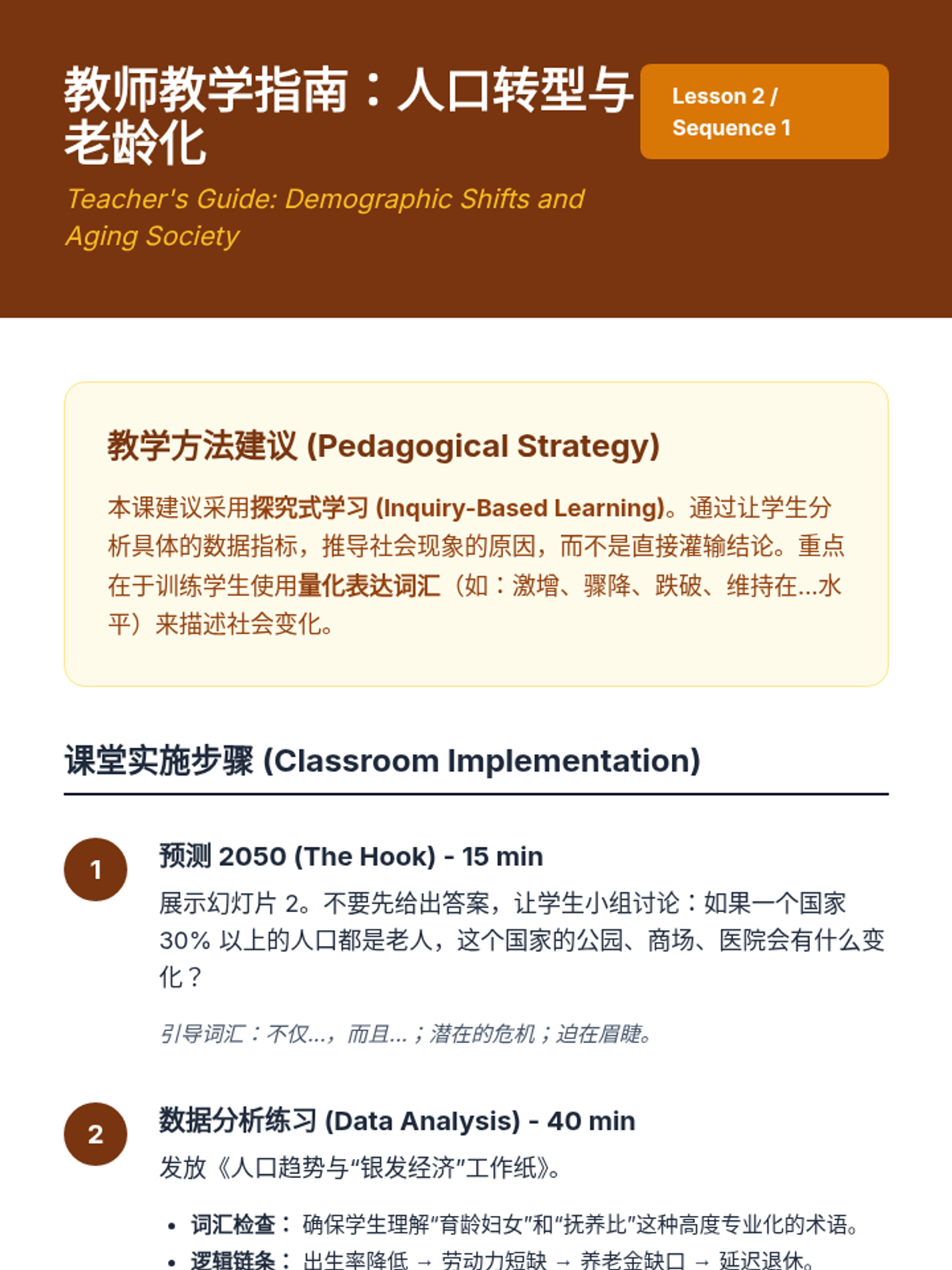
Focusing on demographic trends and the 'aging society,' this lesson introduces terminology for healthcare policy, pension systems, and the 'silver economy' using statistical analysis.
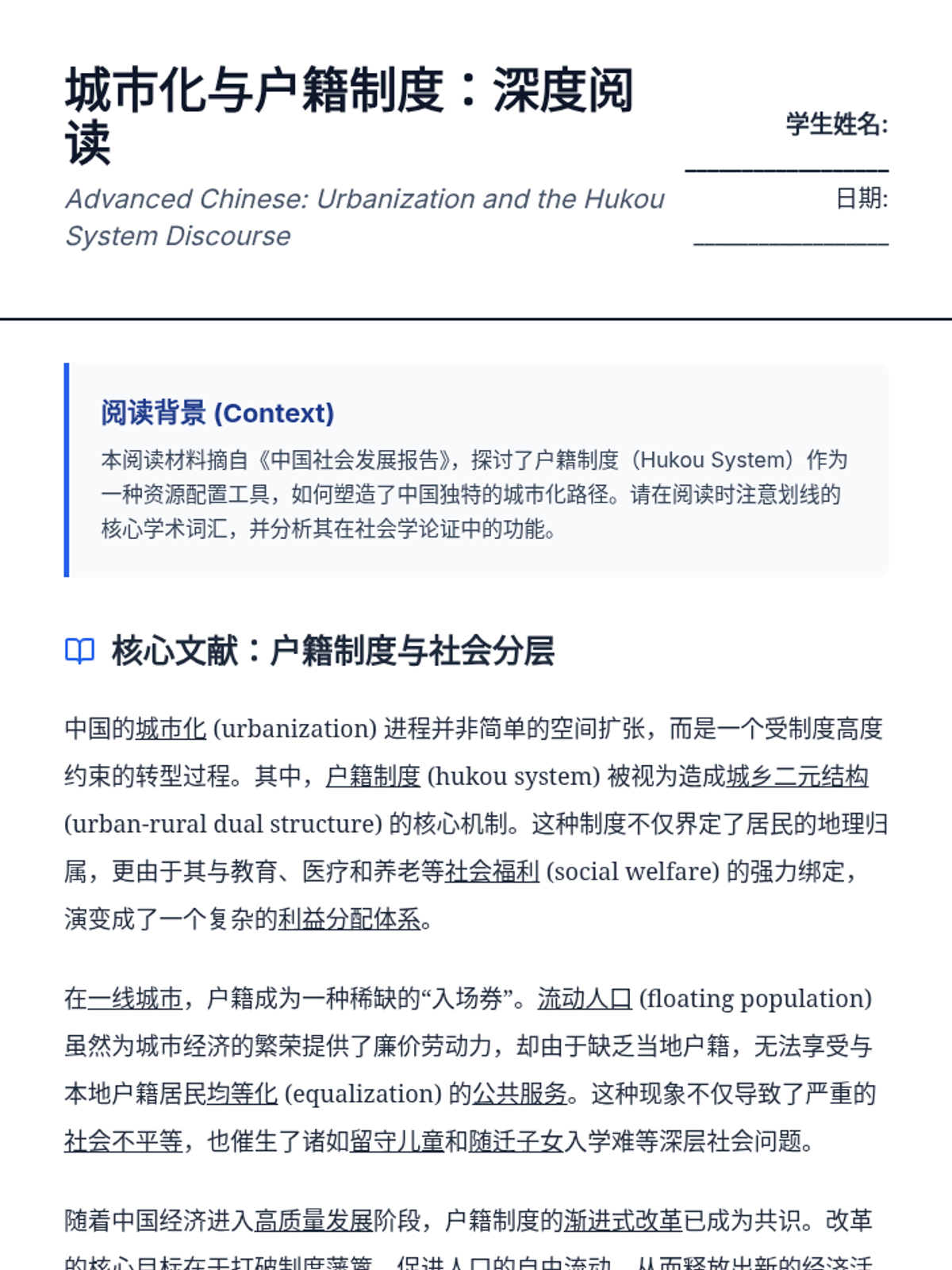
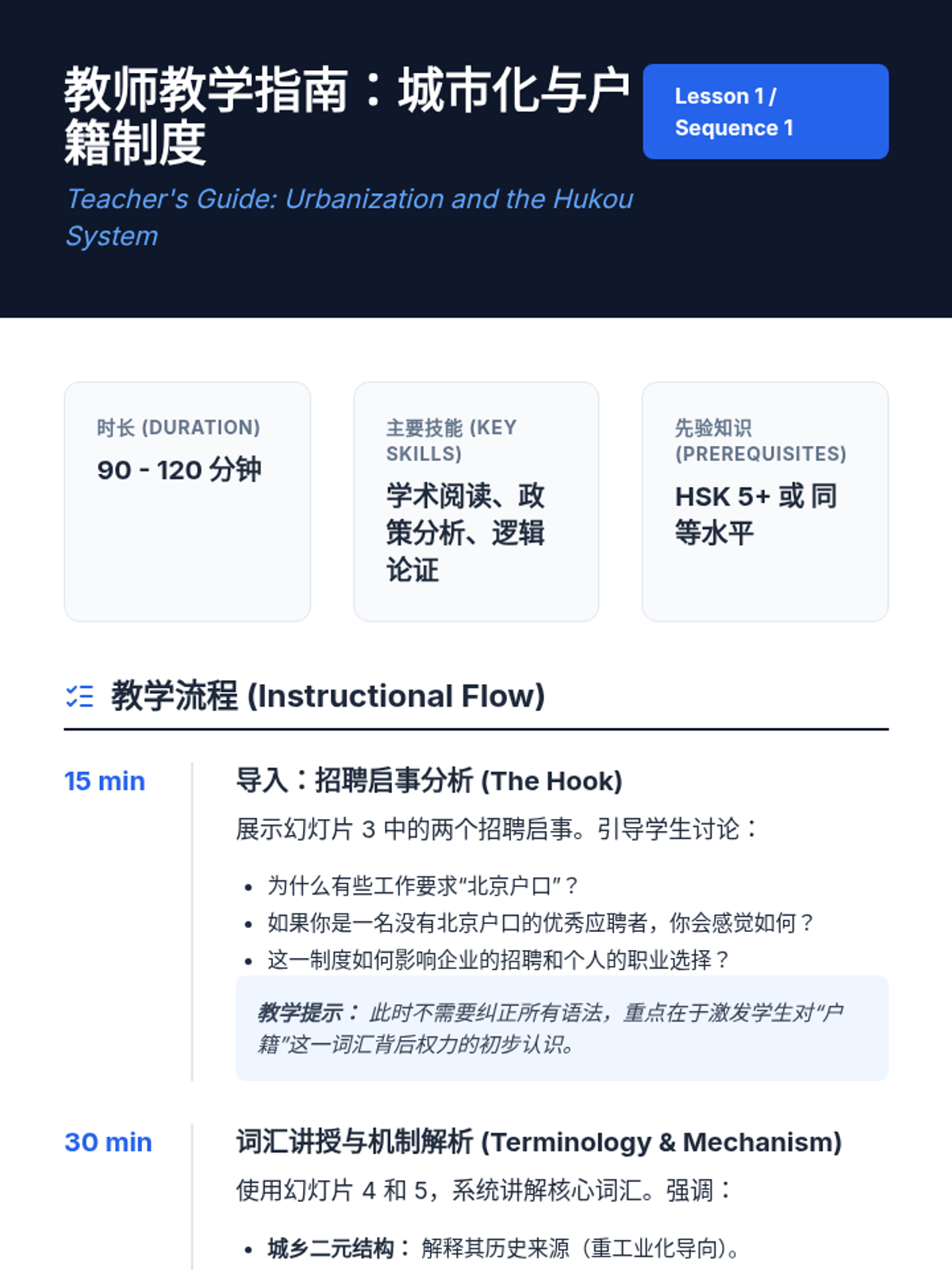
Students examine the vocabulary surrounding China's rapid urbanization and the household registration (hukou) system, focusing on socioeconomic terminology and academic reading comprehension.
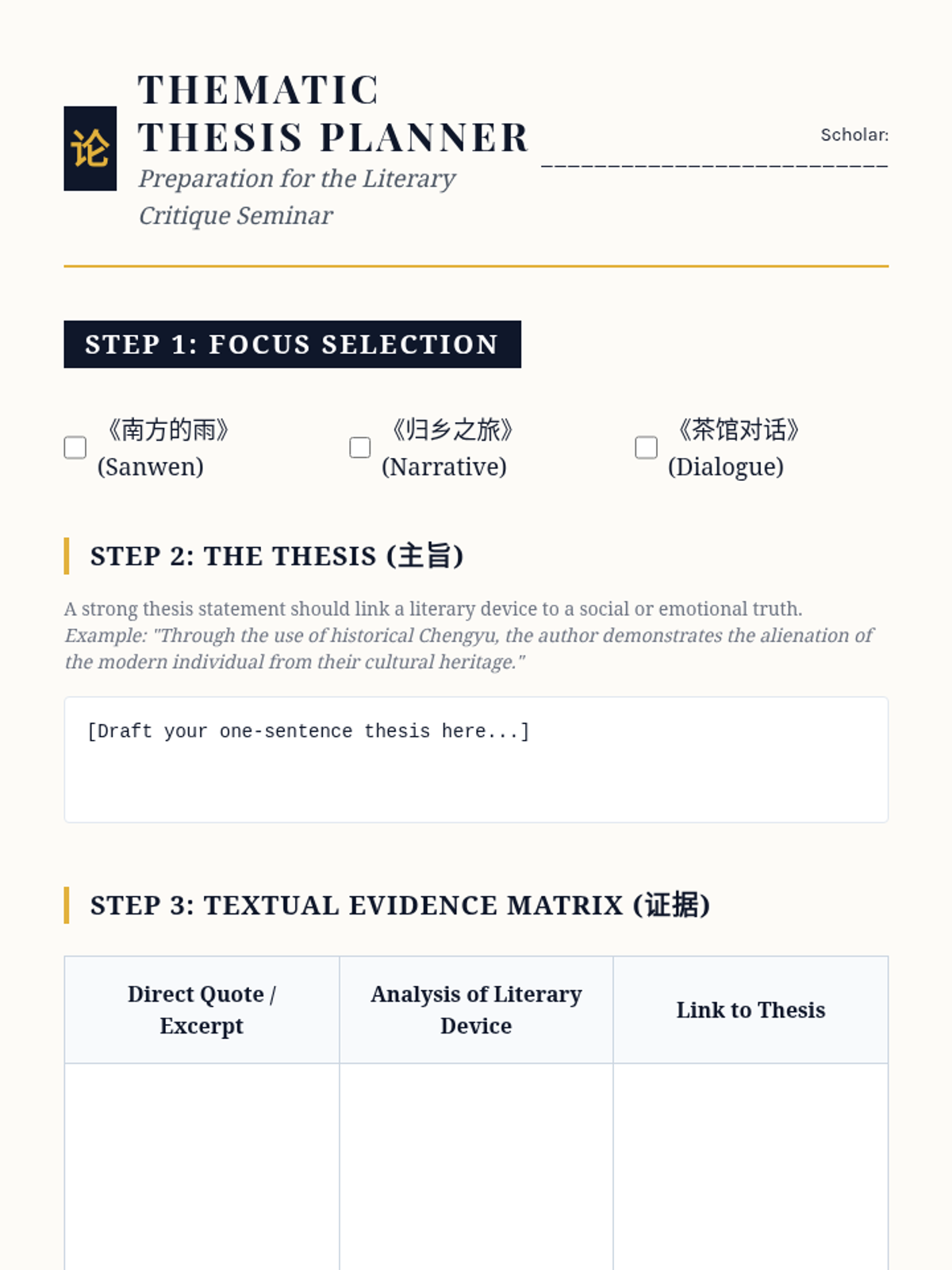
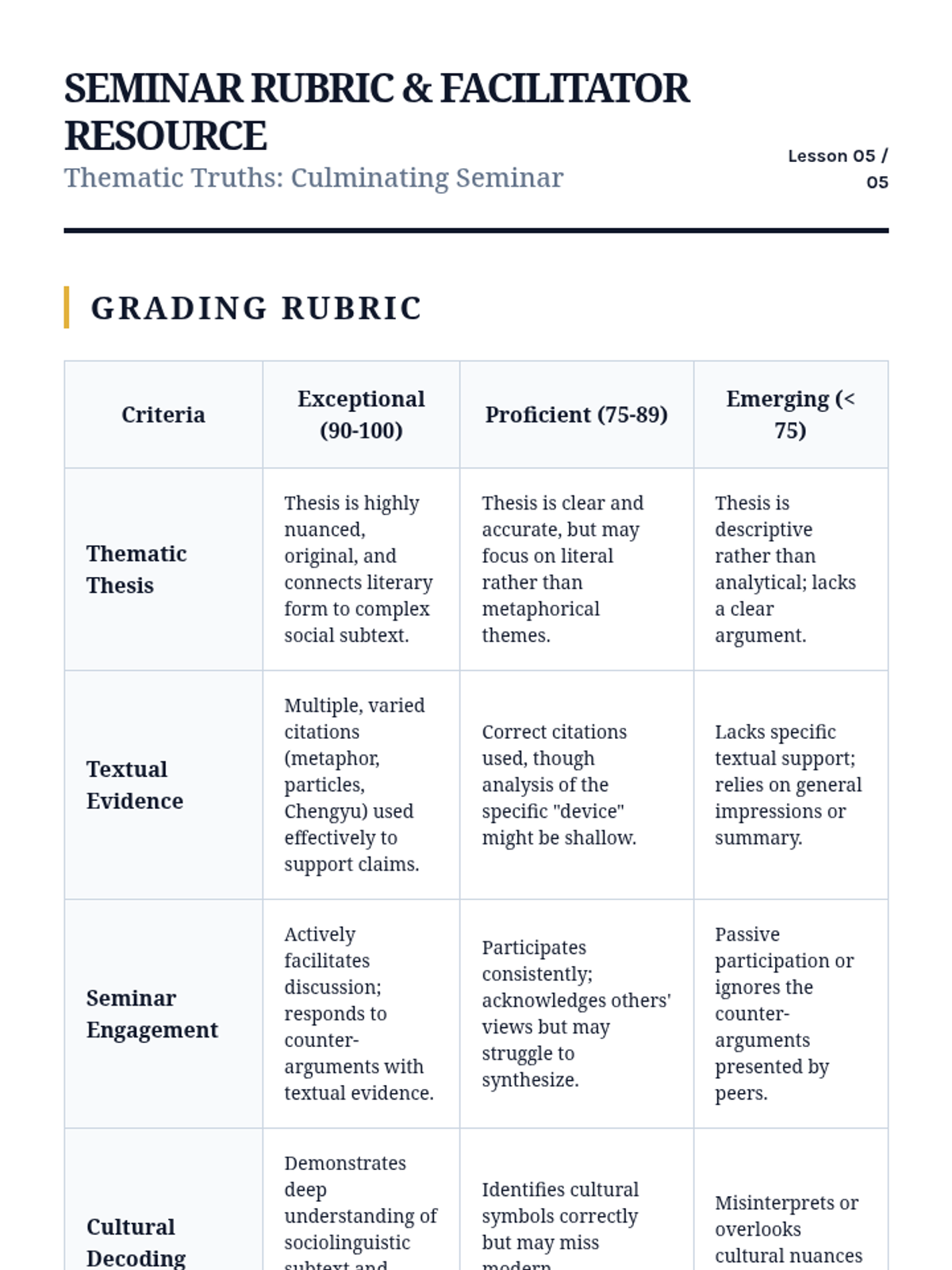
A culminating seminar where students present thematic critiques of selected texts, defending their interpretations with evidence-based literary analysis.
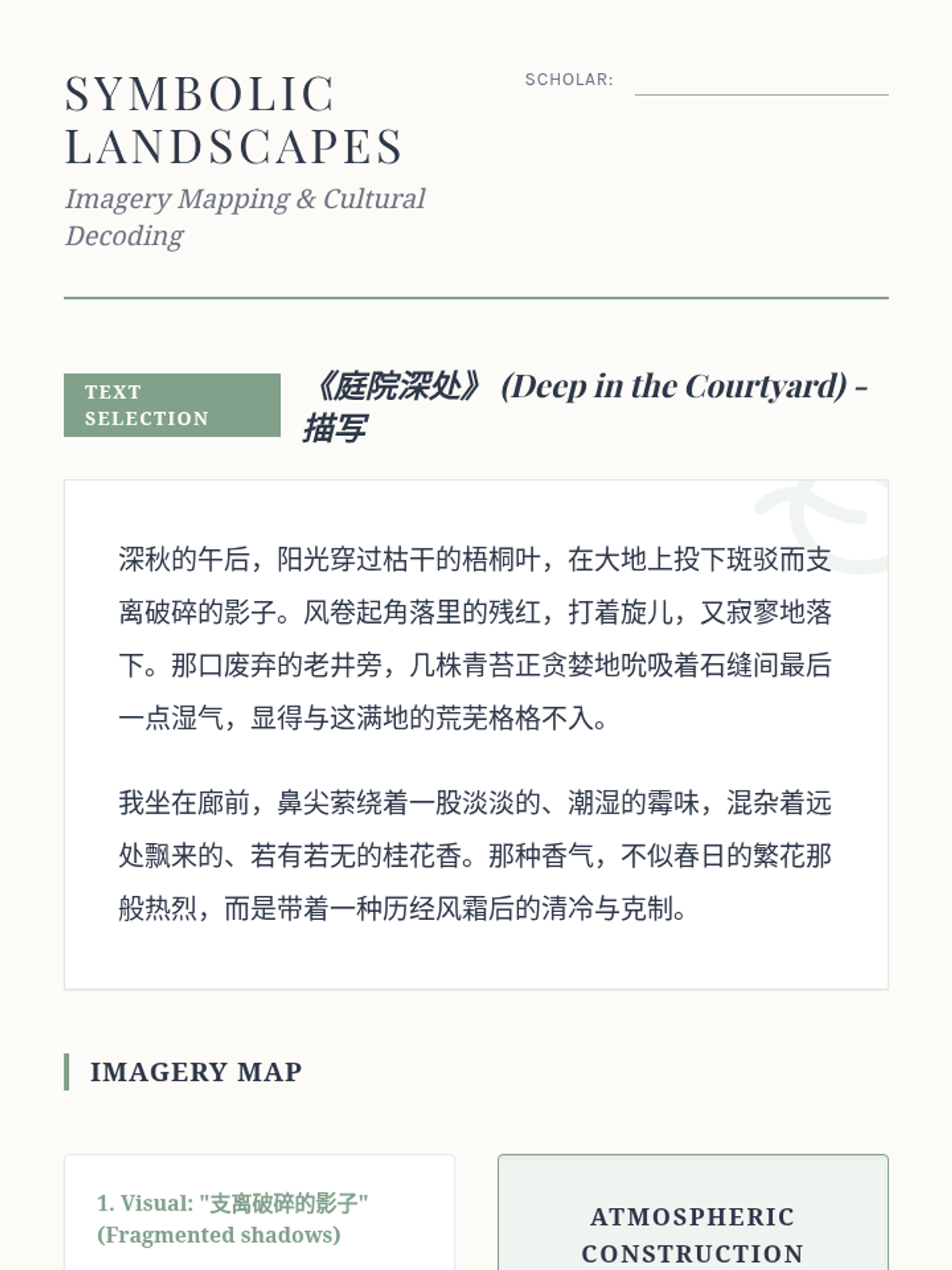
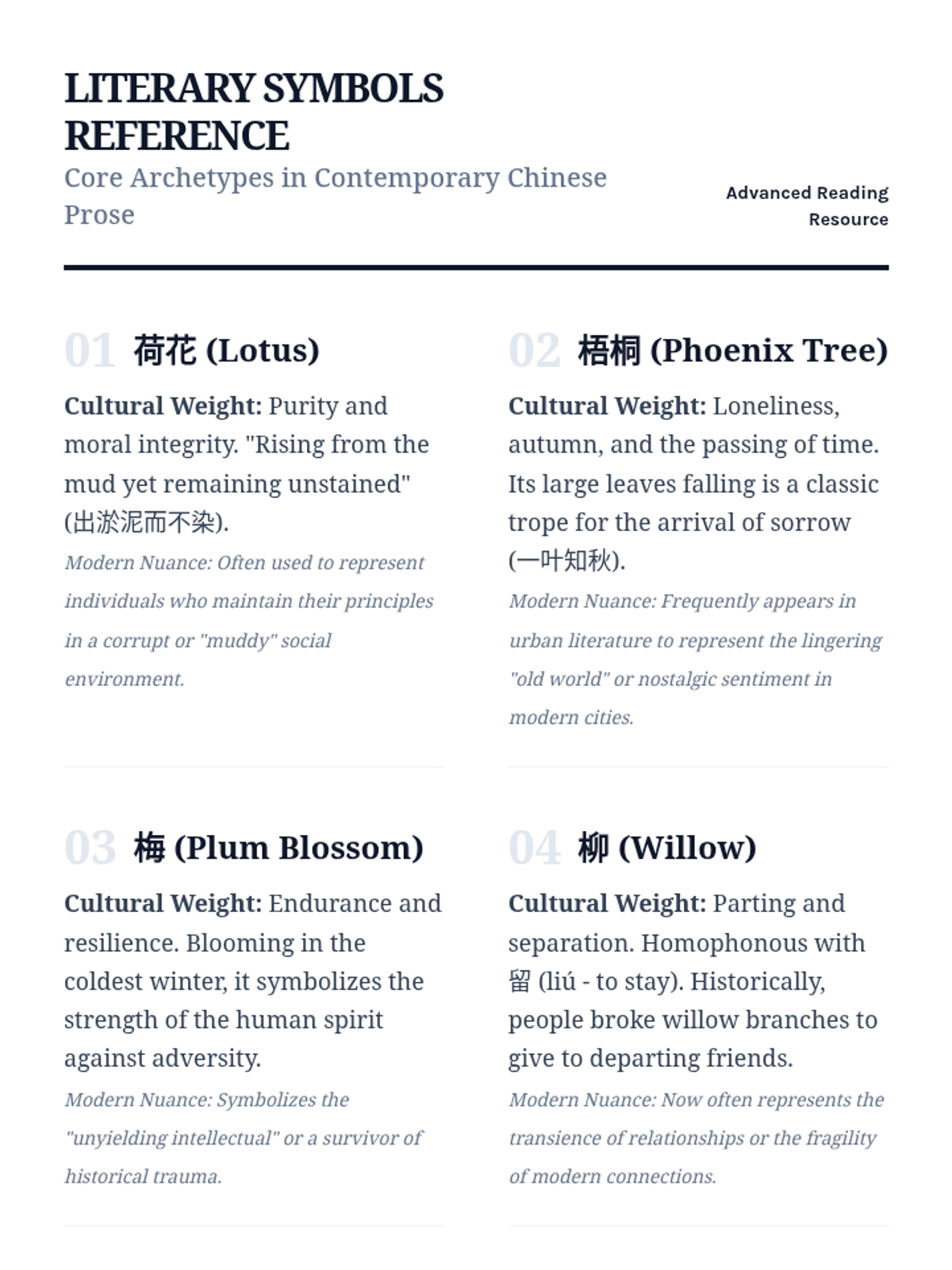
Decoding cultural symbols and sensory metaphors in descriptive passages to understand how mood and atmosphere are constructed in Chinese literature.
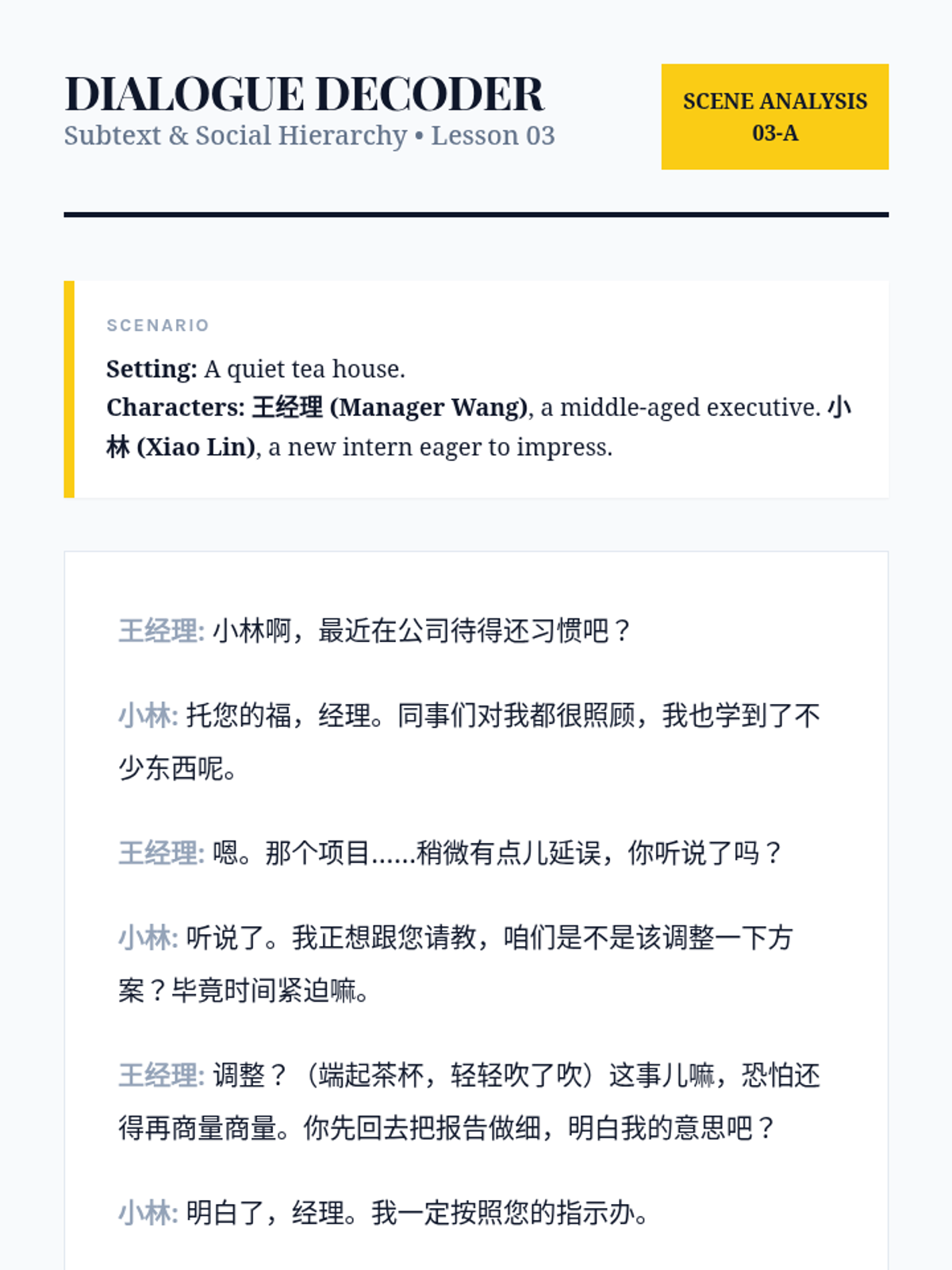
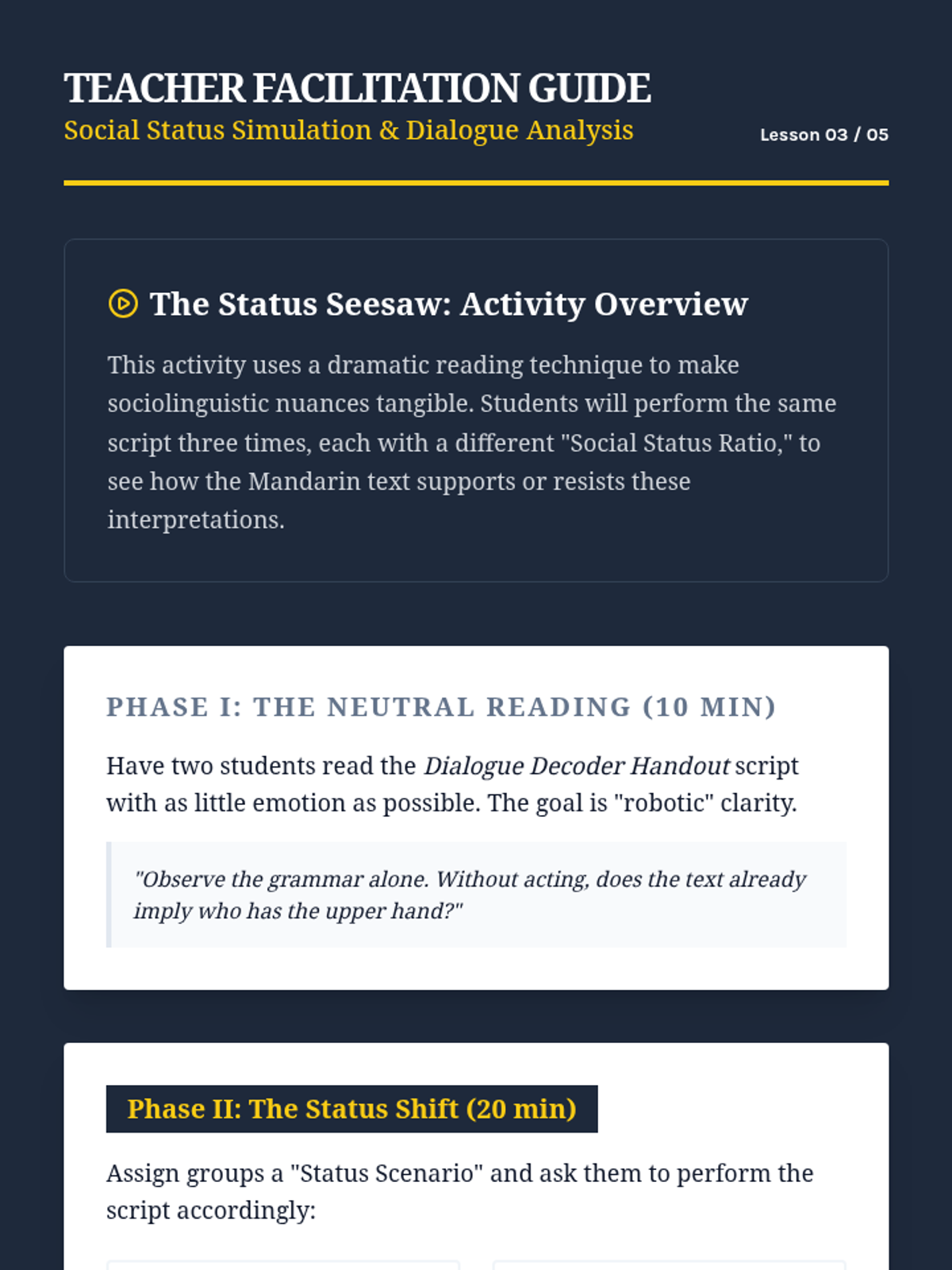
Examining social hierarchy, power dynamics, and emotional subtext within dialogue through the lens of honorifics and sentence particles.
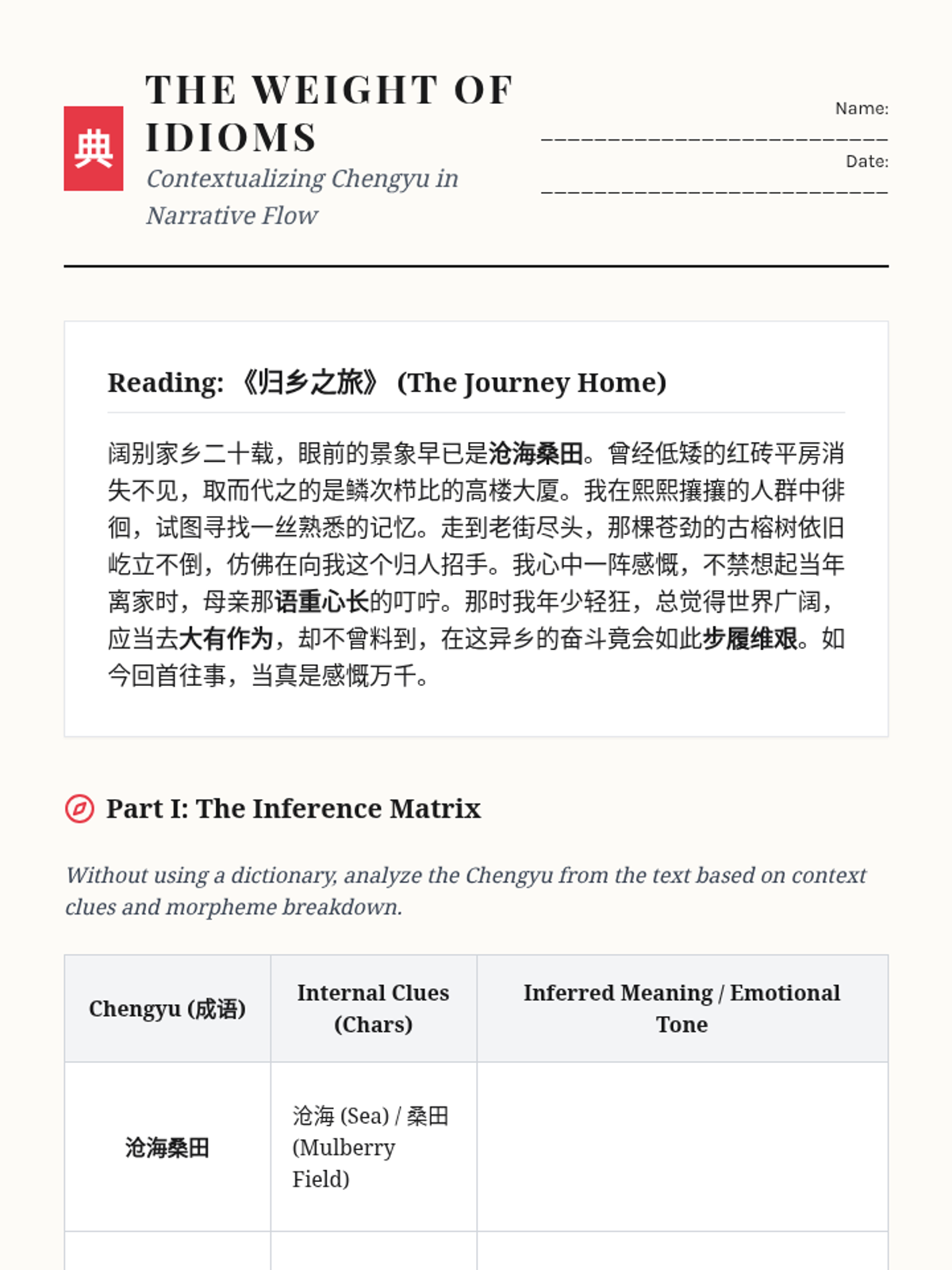
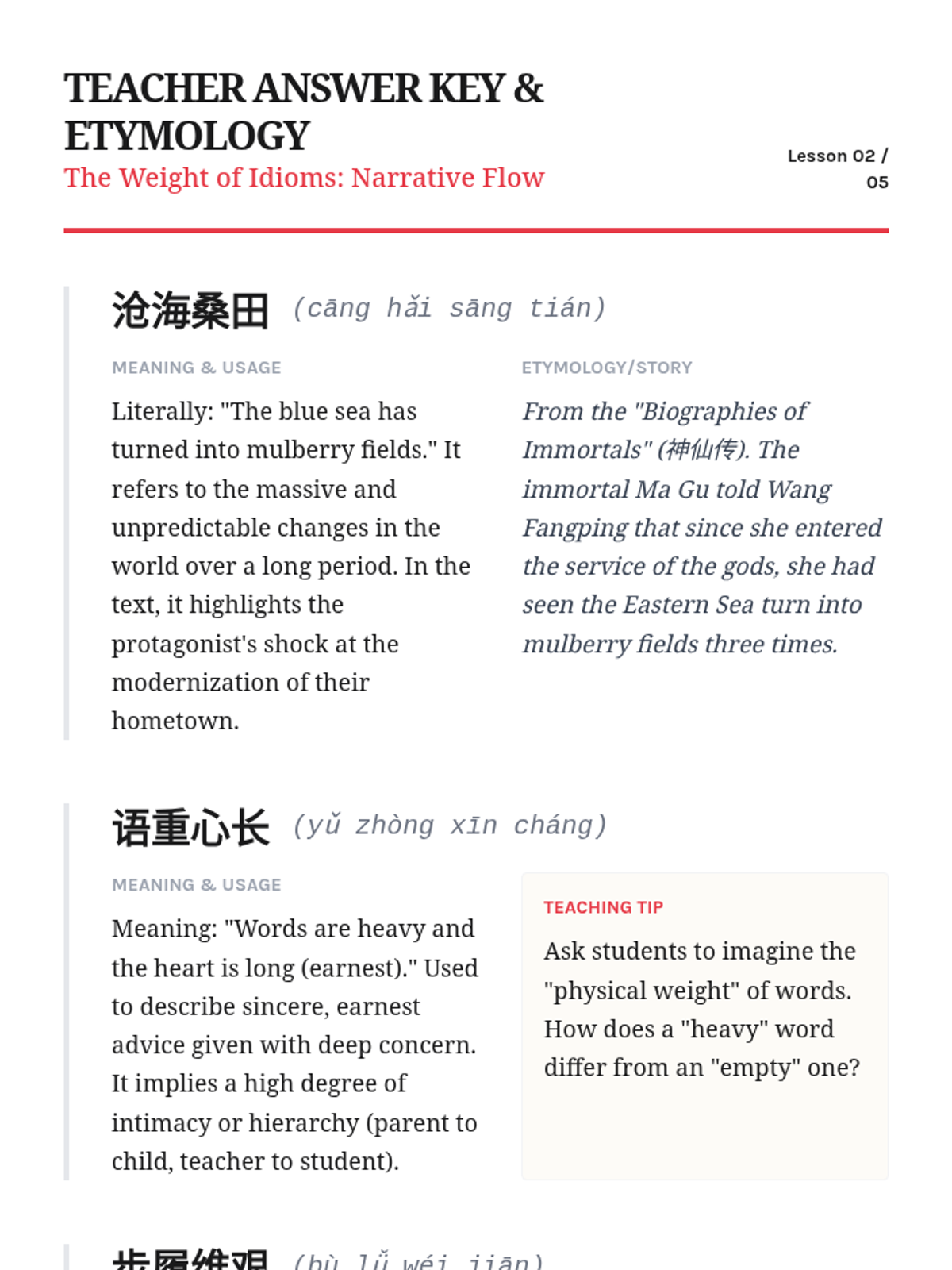
Analyzing the integration of four-character idioms (Chengyu) within narrative prose, exploring their historical weight and modern emotional resonance.
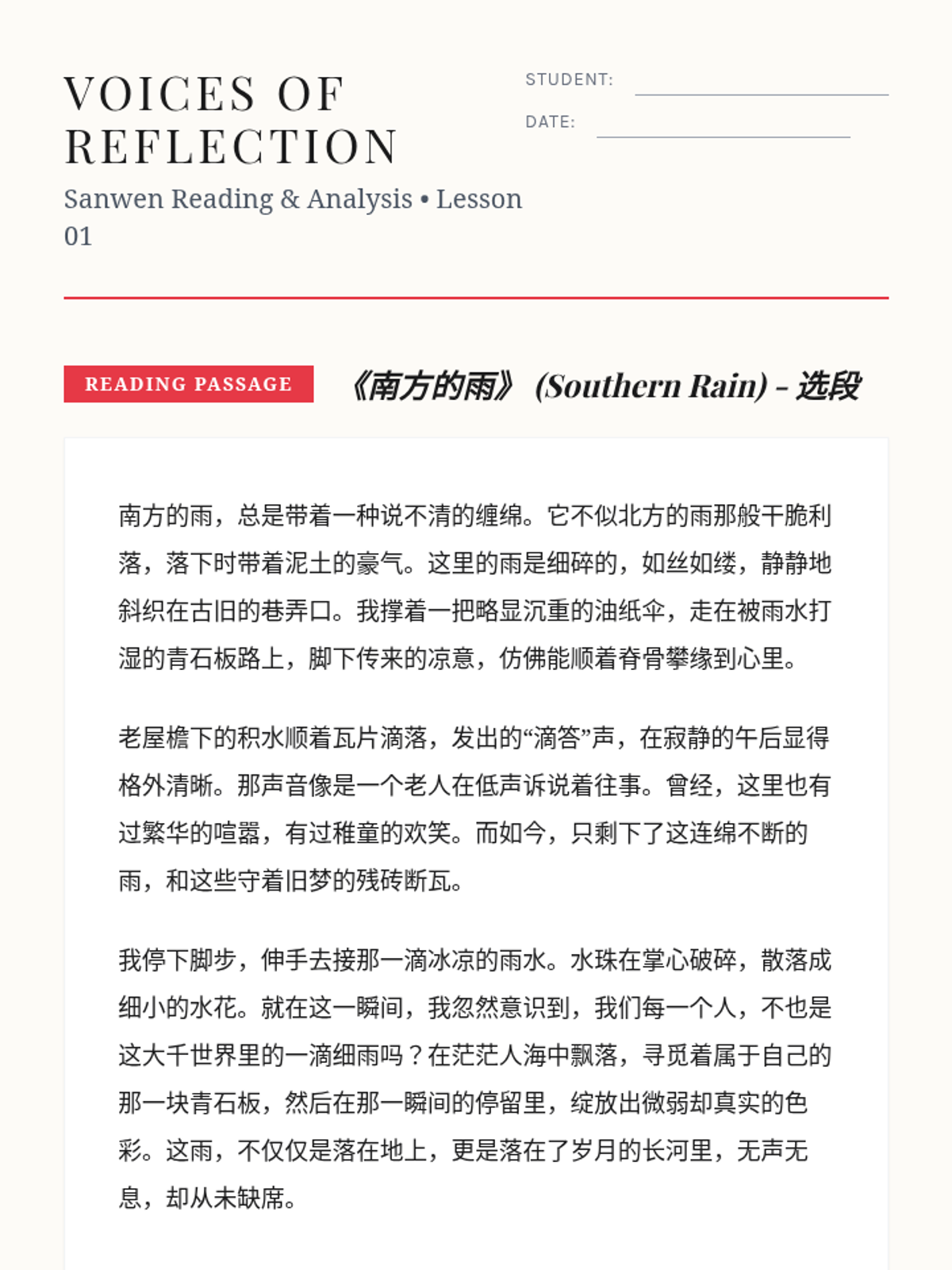
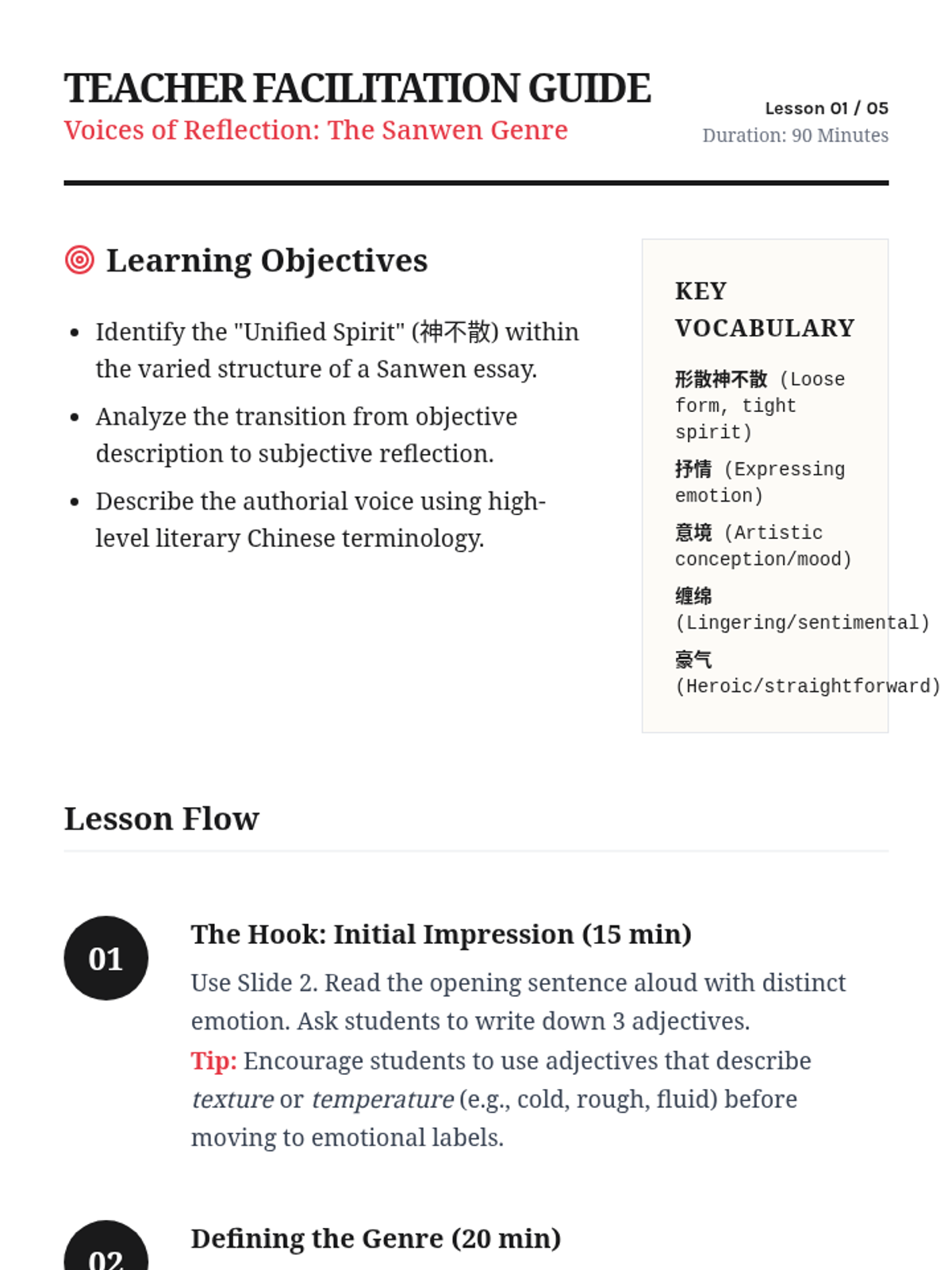
Introduction to the reflective 'Sanwen' genre, focusing on tone, authorial voice, and the transition from description to reflection in contemporary prose.
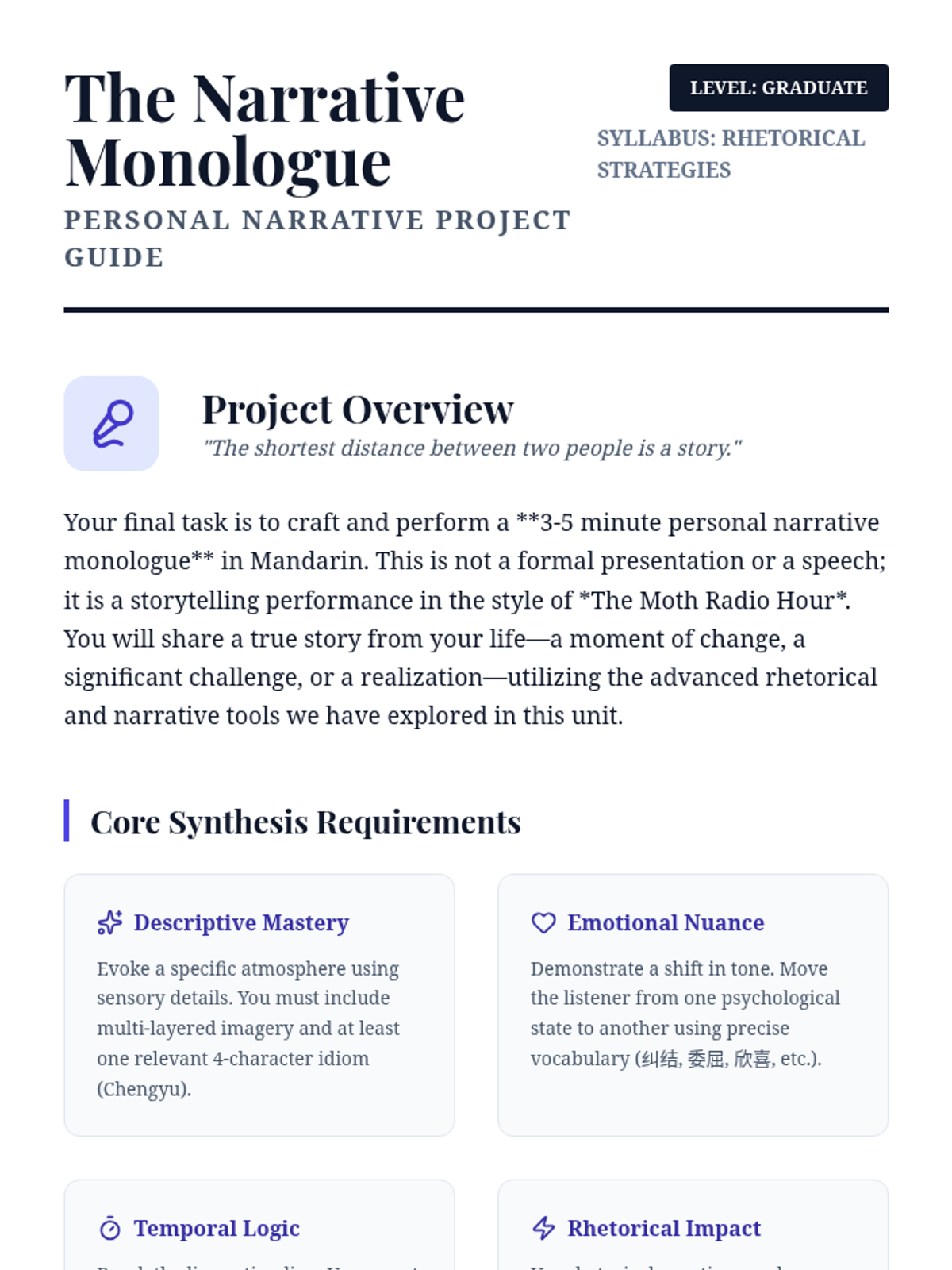
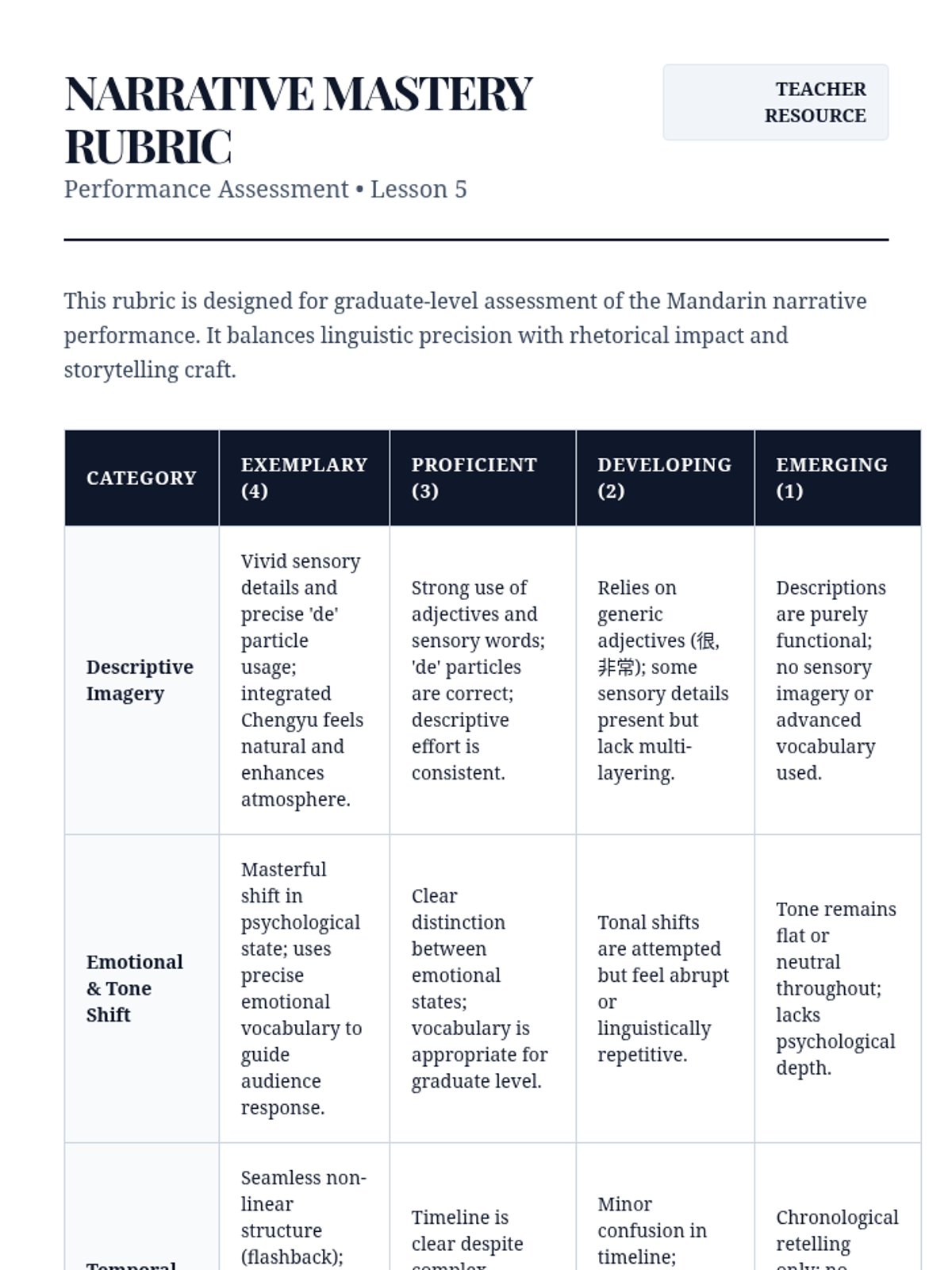
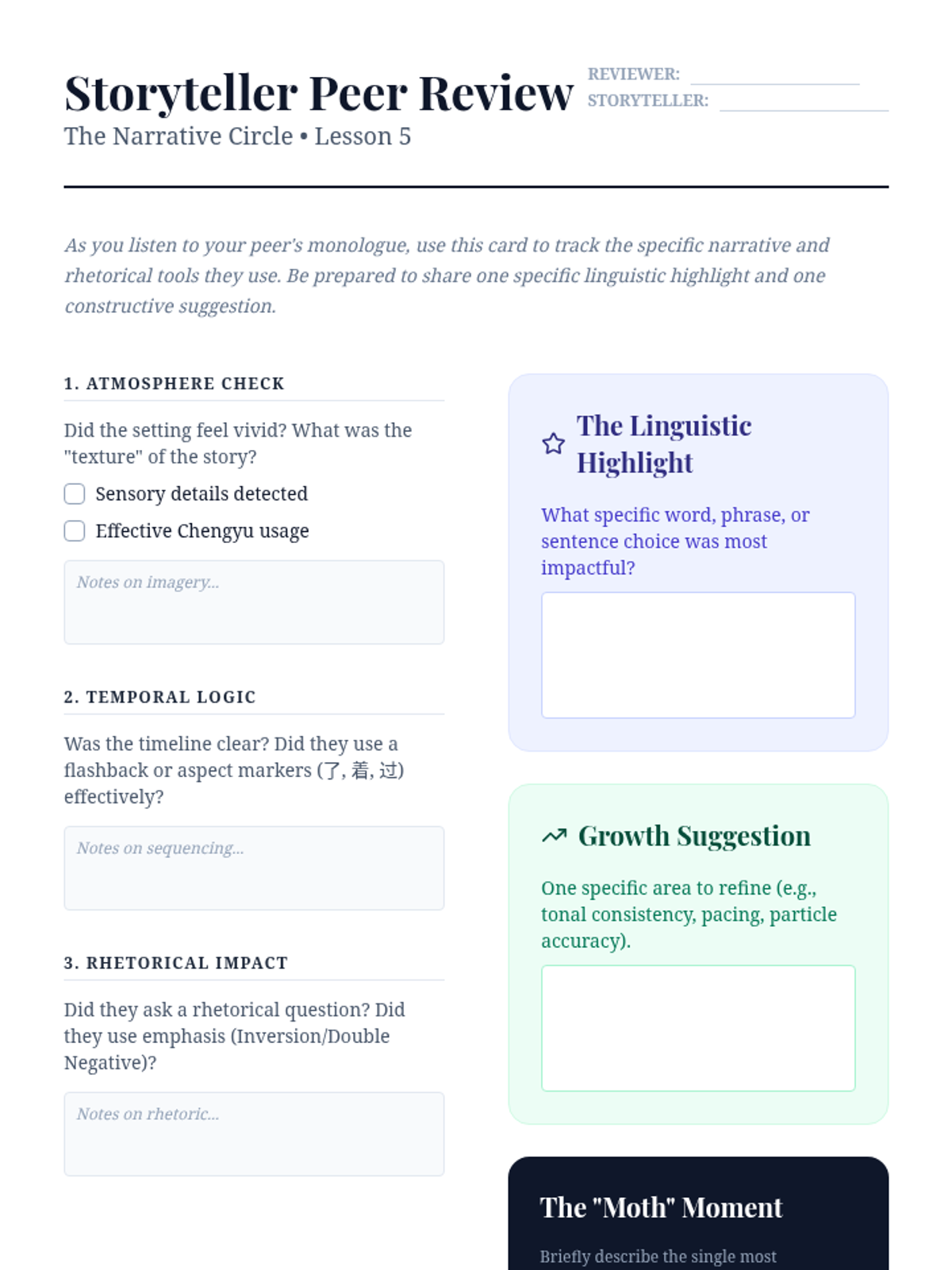
Synthesizes descriptive, emotional, and temporal skills into a polished personal narrative performance, involving peer feedback and mastery-based refinement.
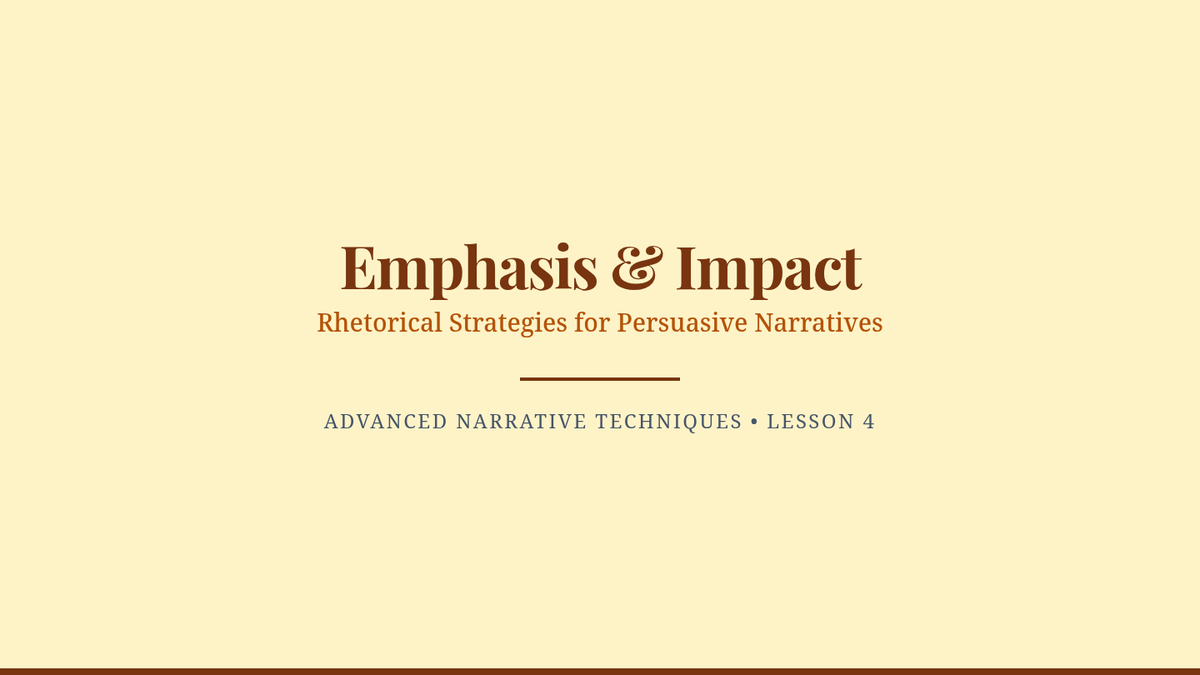
Explores rhetorical devices common in Chinese speech, such as rhetorical questions and repetition for emphasis, analyzing monologues for persuasive impact.
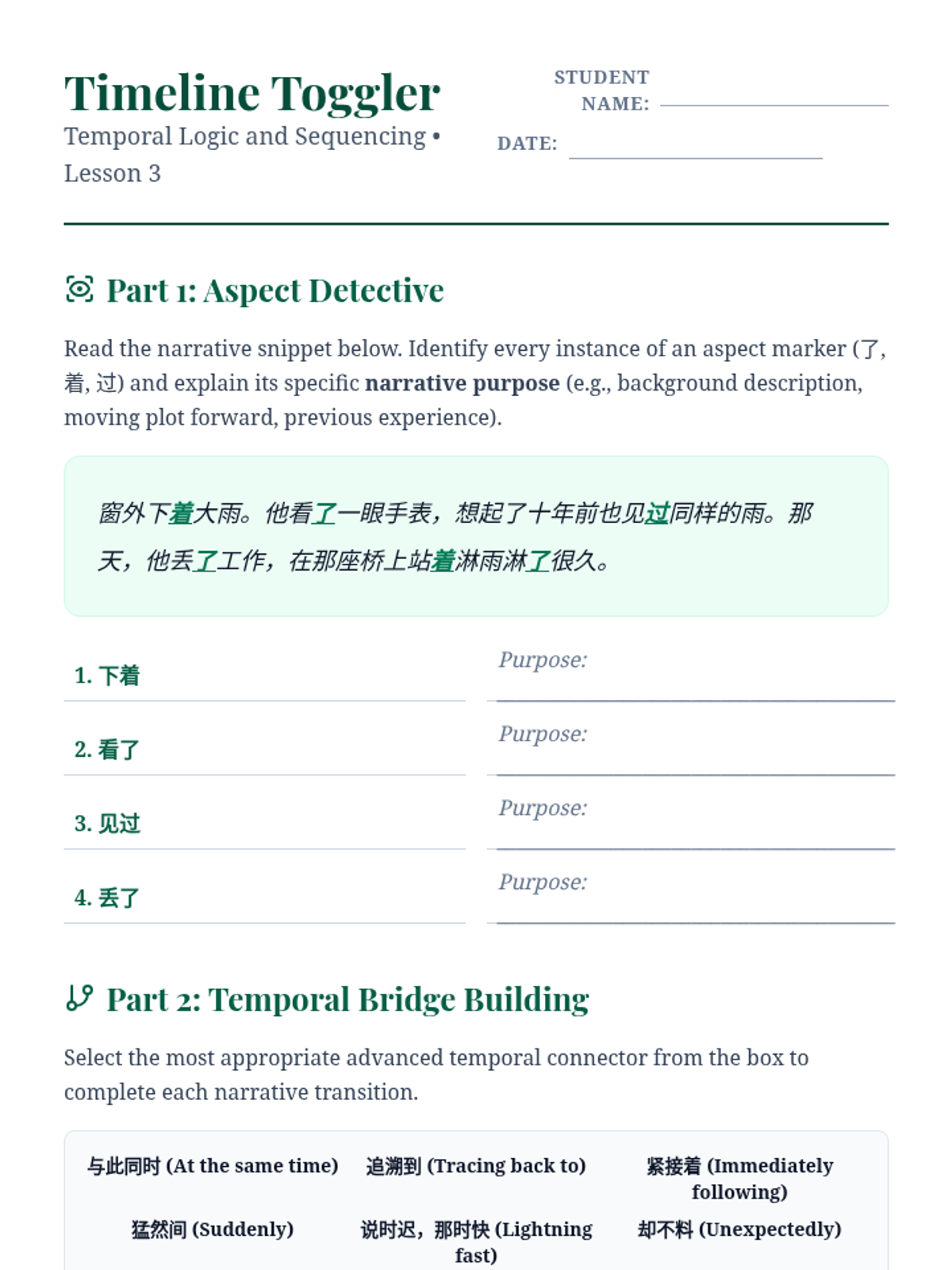
Masters the use of aspect markers and temporal connectors to manipulate story timelines, including flashbacks, simultaneous actions, and foreshadowing.
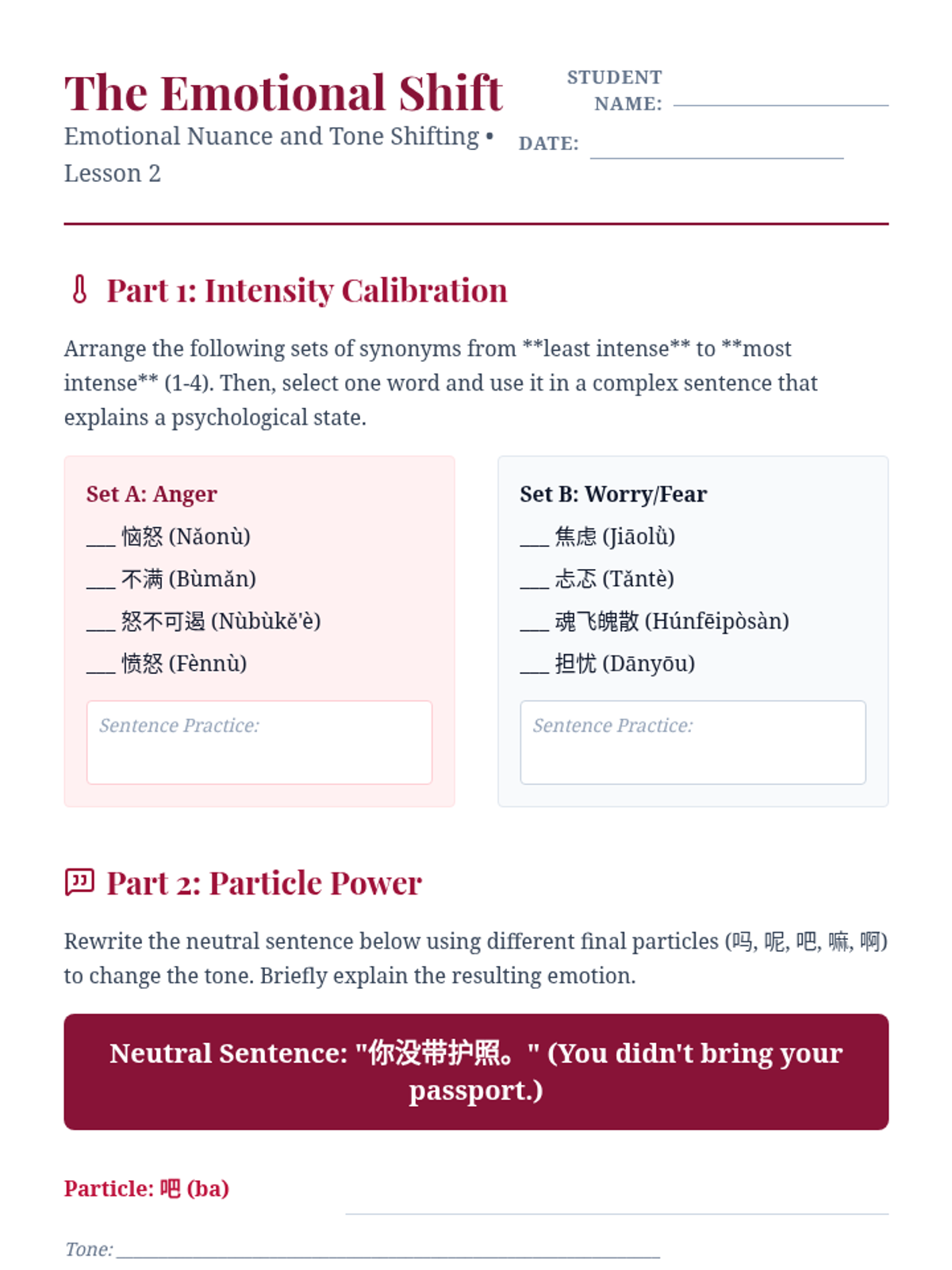
Focuses on vocabulary related to emotions and psychological states, teaching students to shift the tone of a story and analyze how word choice affects listener response.
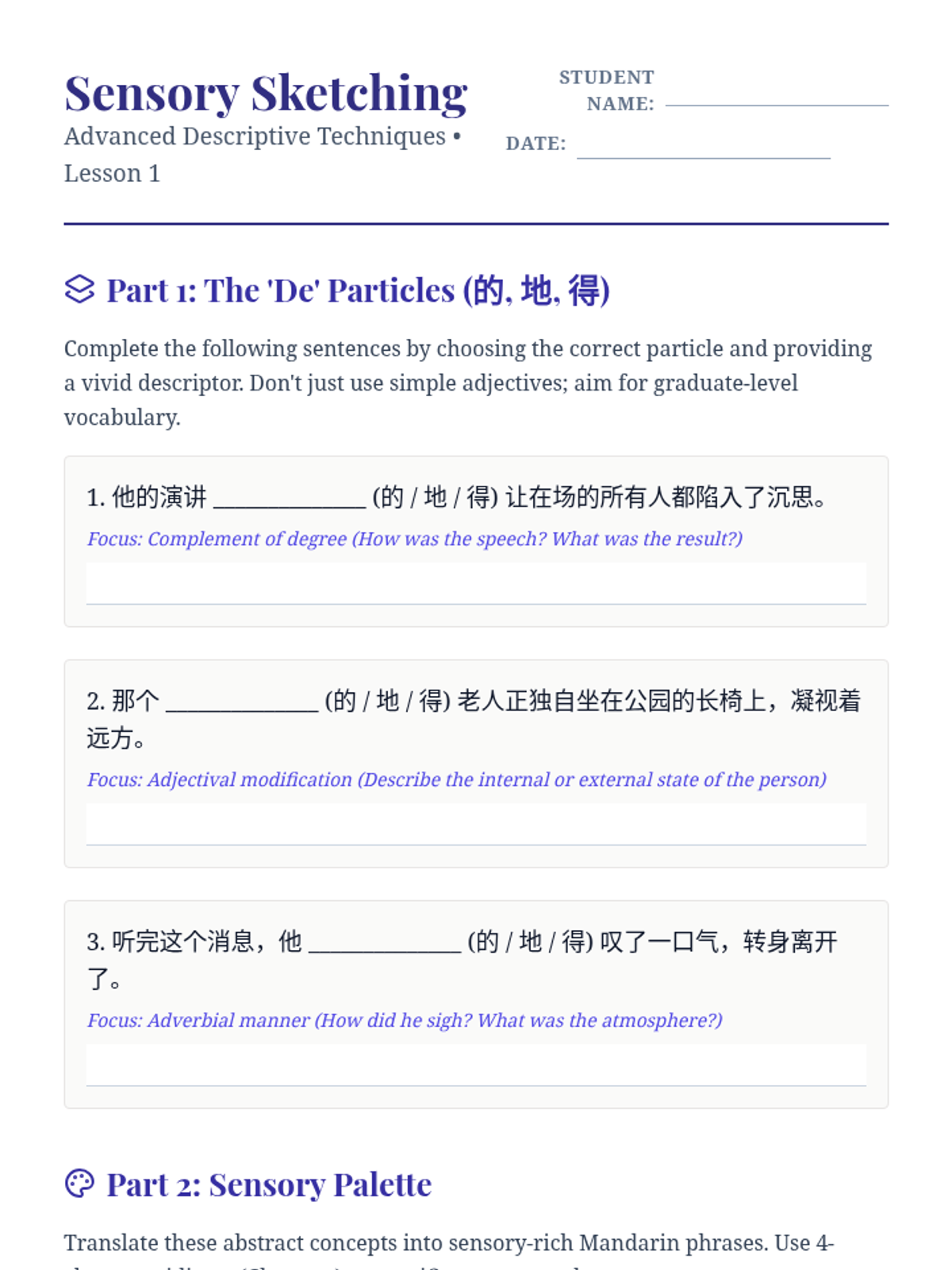
Students expand their vocabulary of adjectives and adverbs to describe people, places, and atmospheres vividly, utilizing descriptive particles to create multi-layered imagery.
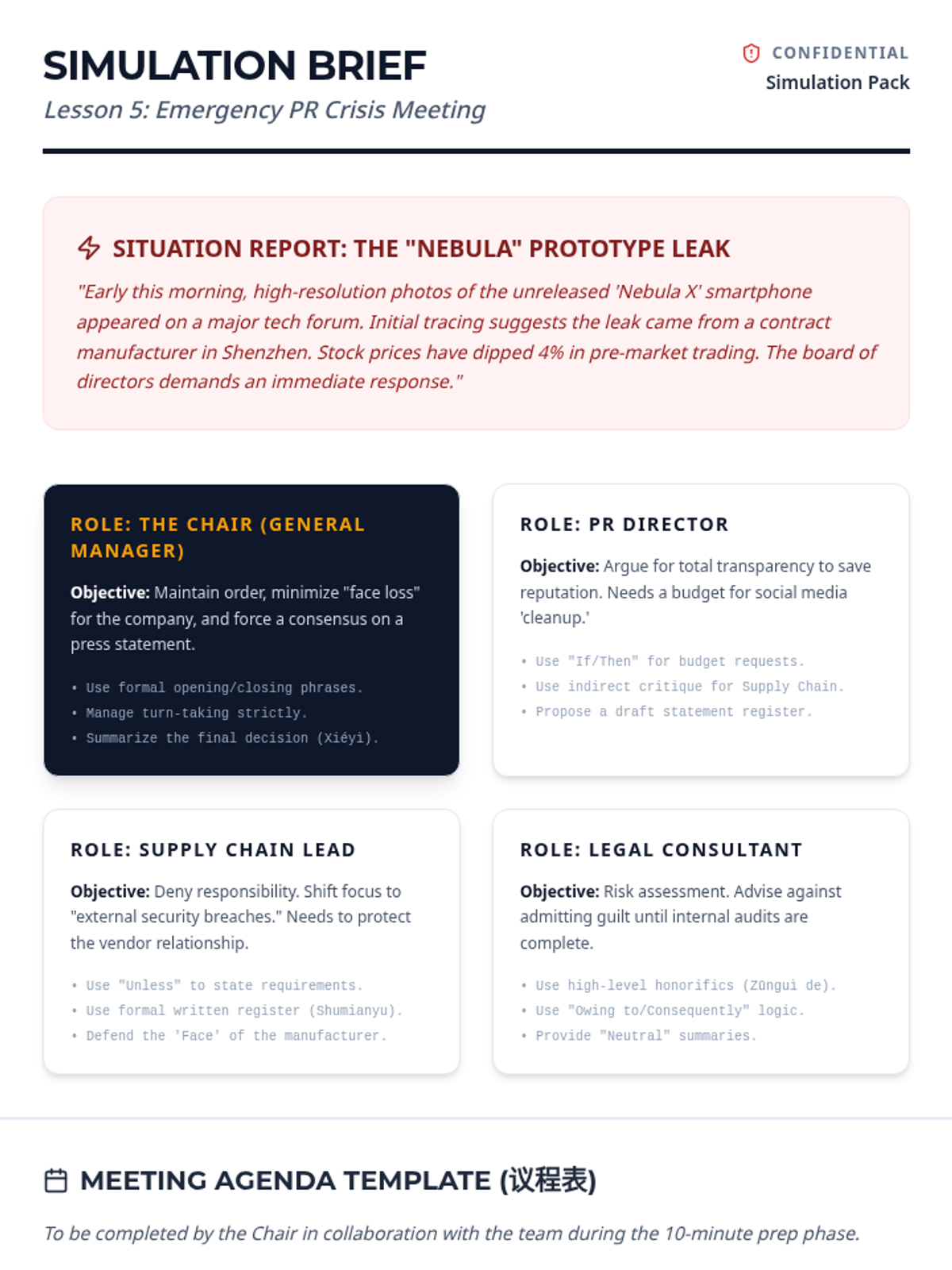
A culminating simulation where students chair and participate in formal meetings, synthesizing skills in hierarchy, negotiation, and formal speech registers.
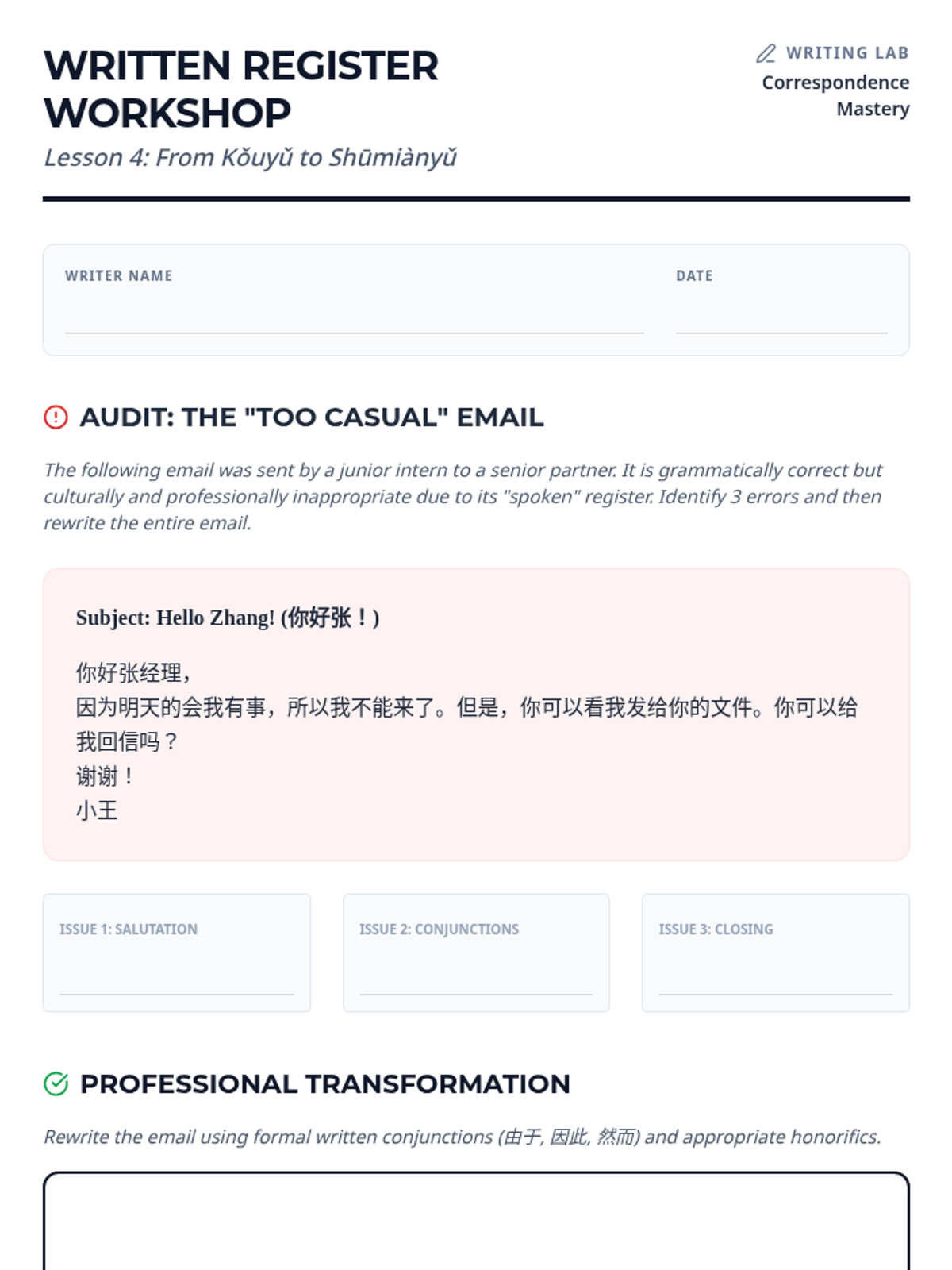
Students bridge the gap between spoken Mandarin and formal written Chinese (Shumianyu) used in professional emails, reports, and digital correspondence.
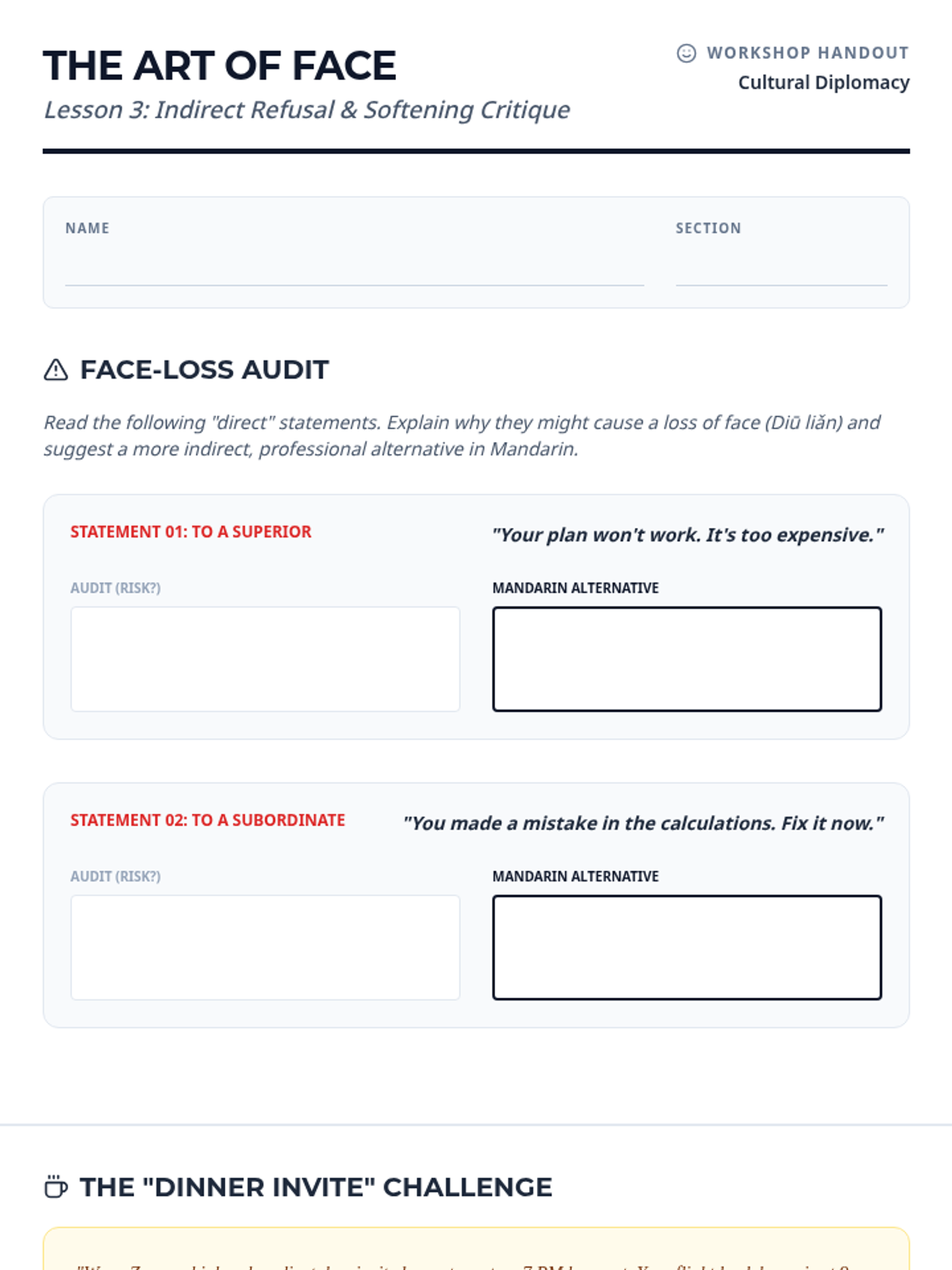
Focusing on the concept of 'mianzi' (face), students learn how to deliver negative news or refuse requests using softeners and indirect language patterns.
In this culminating simulation, students act as spokespeople or journalists. They must use precise political/economic vocabulary to ask and answer questions on current events.