Comprehensive French language instruction spanning basic literacy to advanced oral and written communication. Strengthens grammar, vocabulary, and cultural understanding through targeted exercises in listening, reading, and composition.
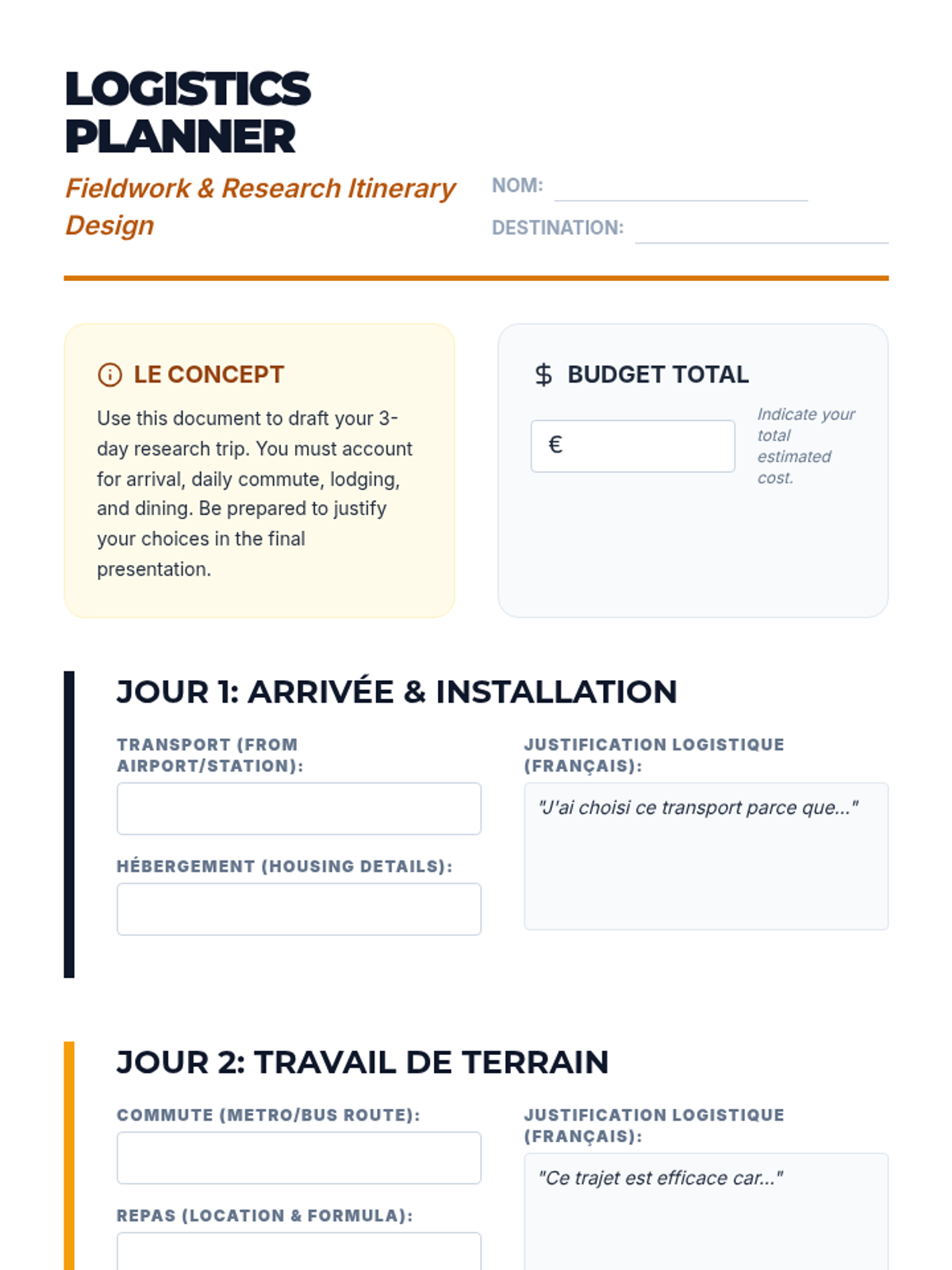
The capstone project where students synthesize their learning to present a detailed 3-day research itinerary, justifying their logistical choices in French.
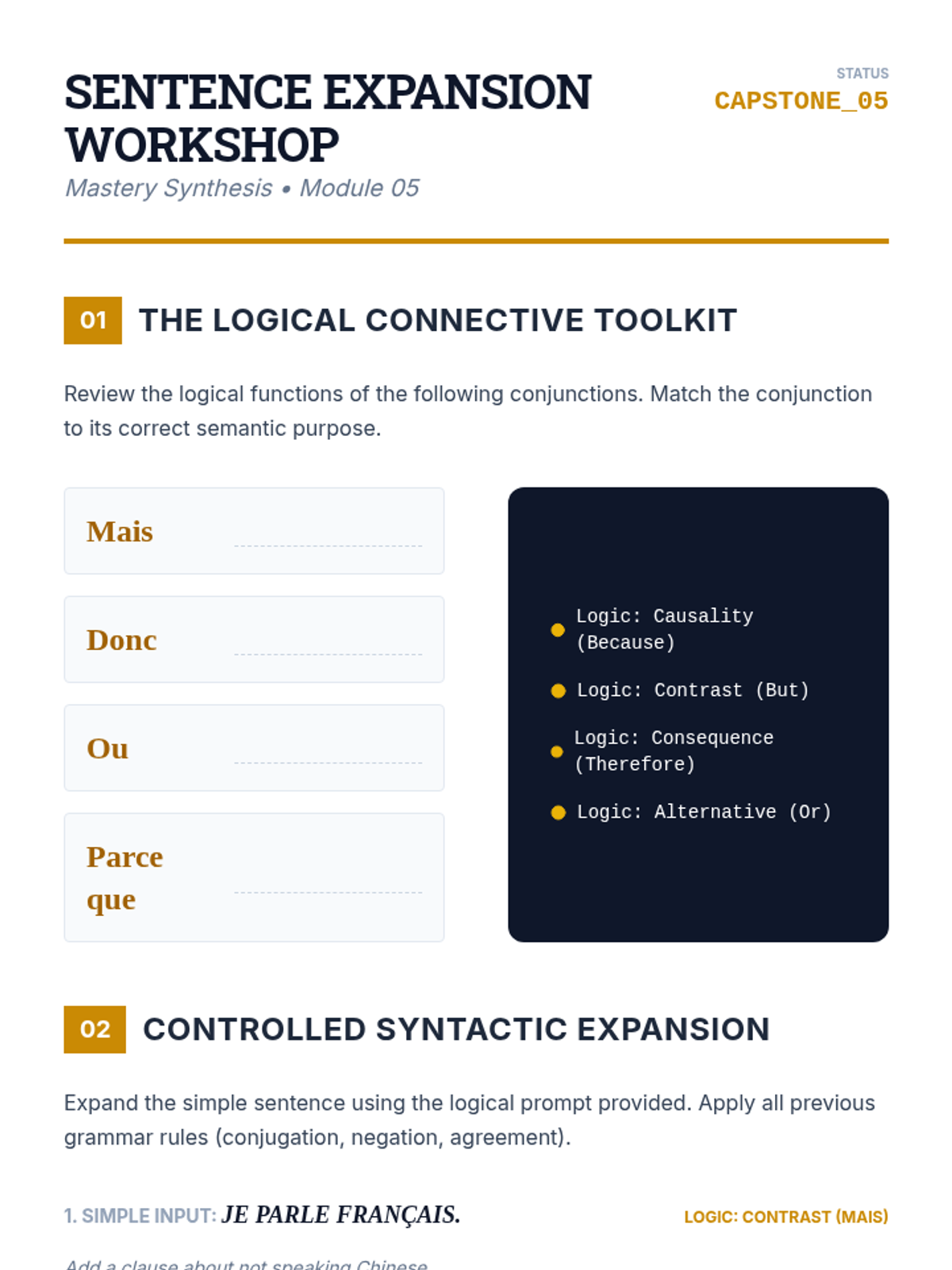
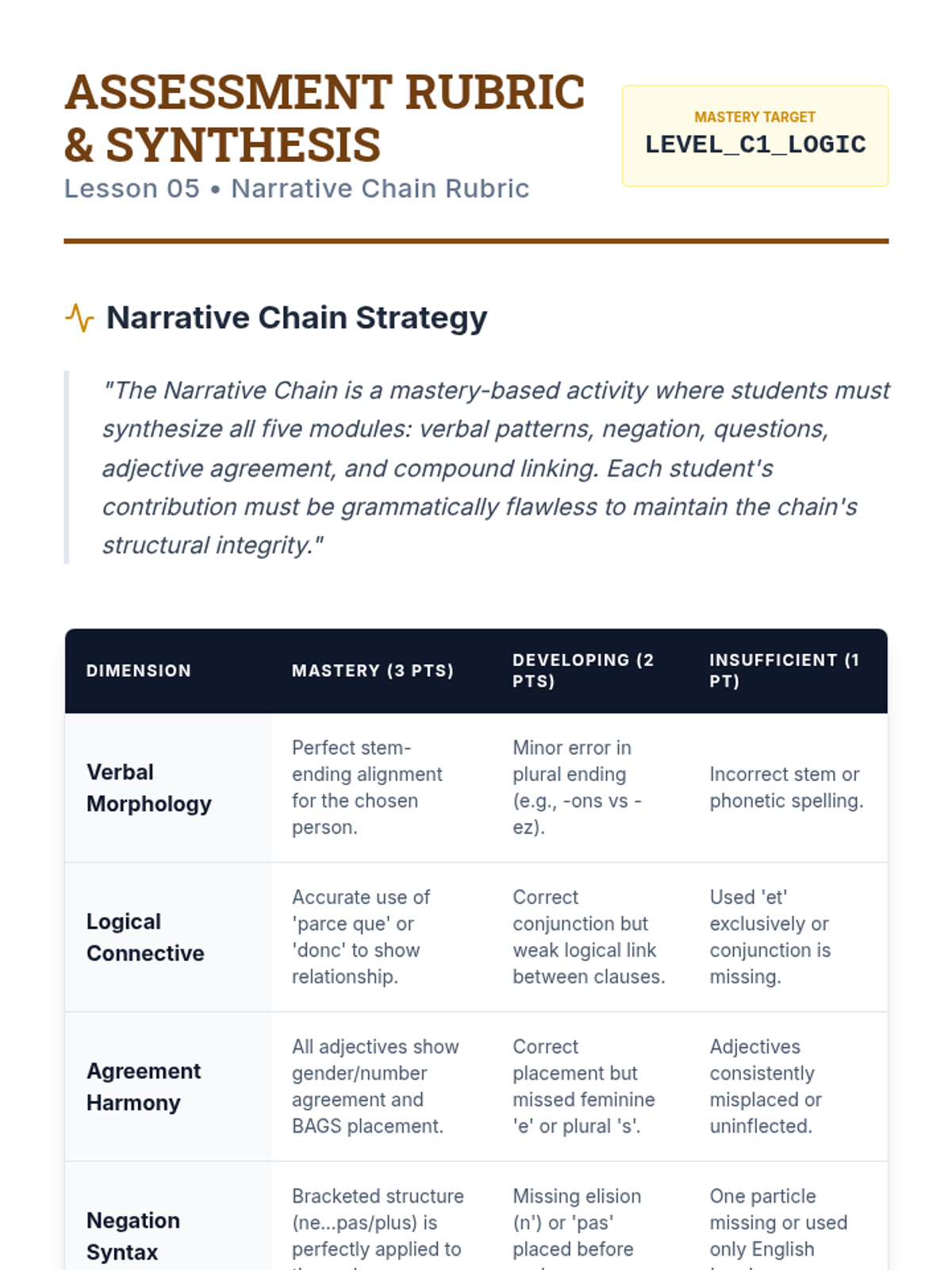
Synthesizes previous knowledge to build fluid, compound sentences using logical conjunctions for mature communication.
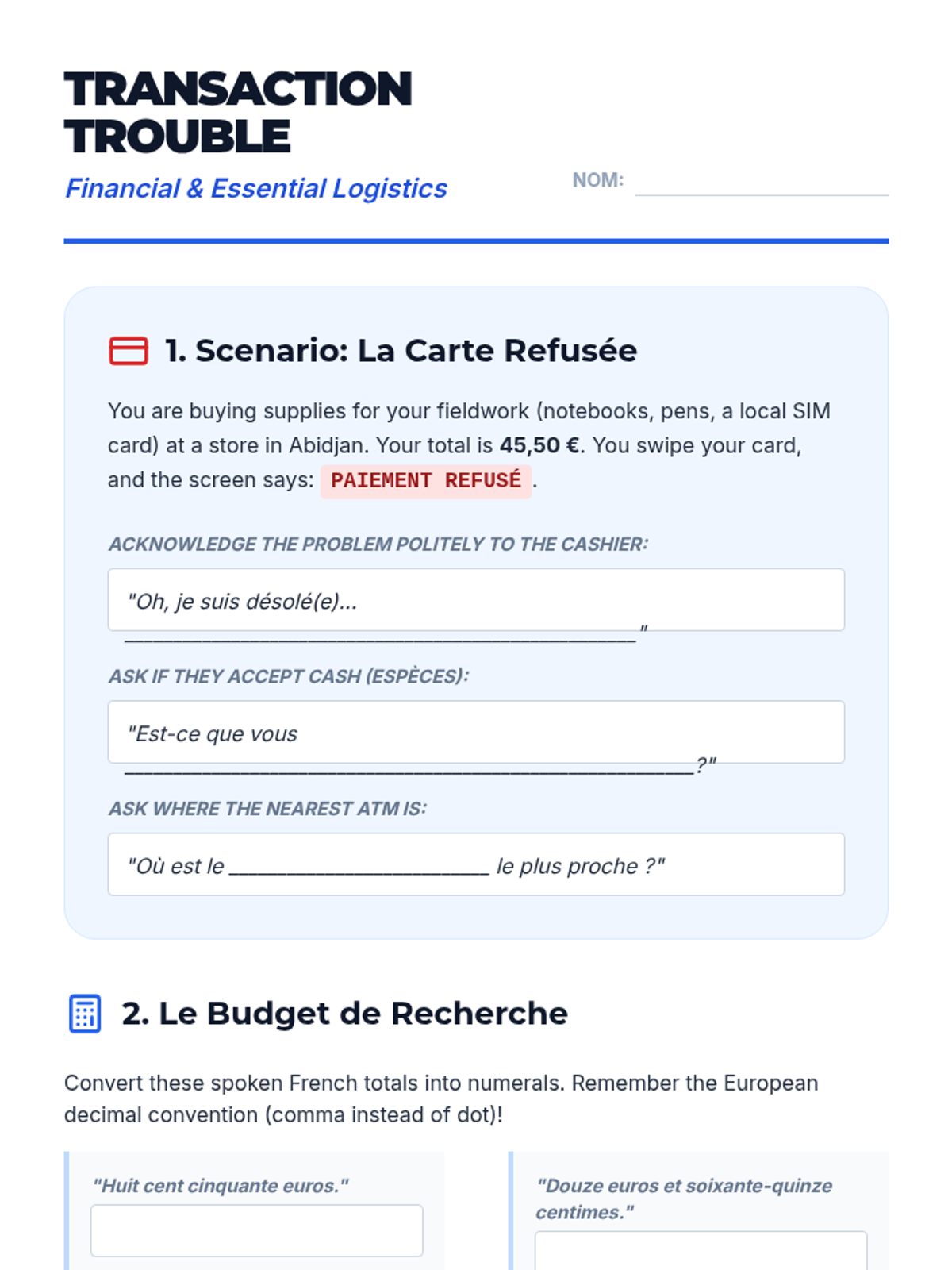
Covers the practicalities of money management, shopping, and essential services like pharmacies, with a focus on numbers and transactional problem-solving.
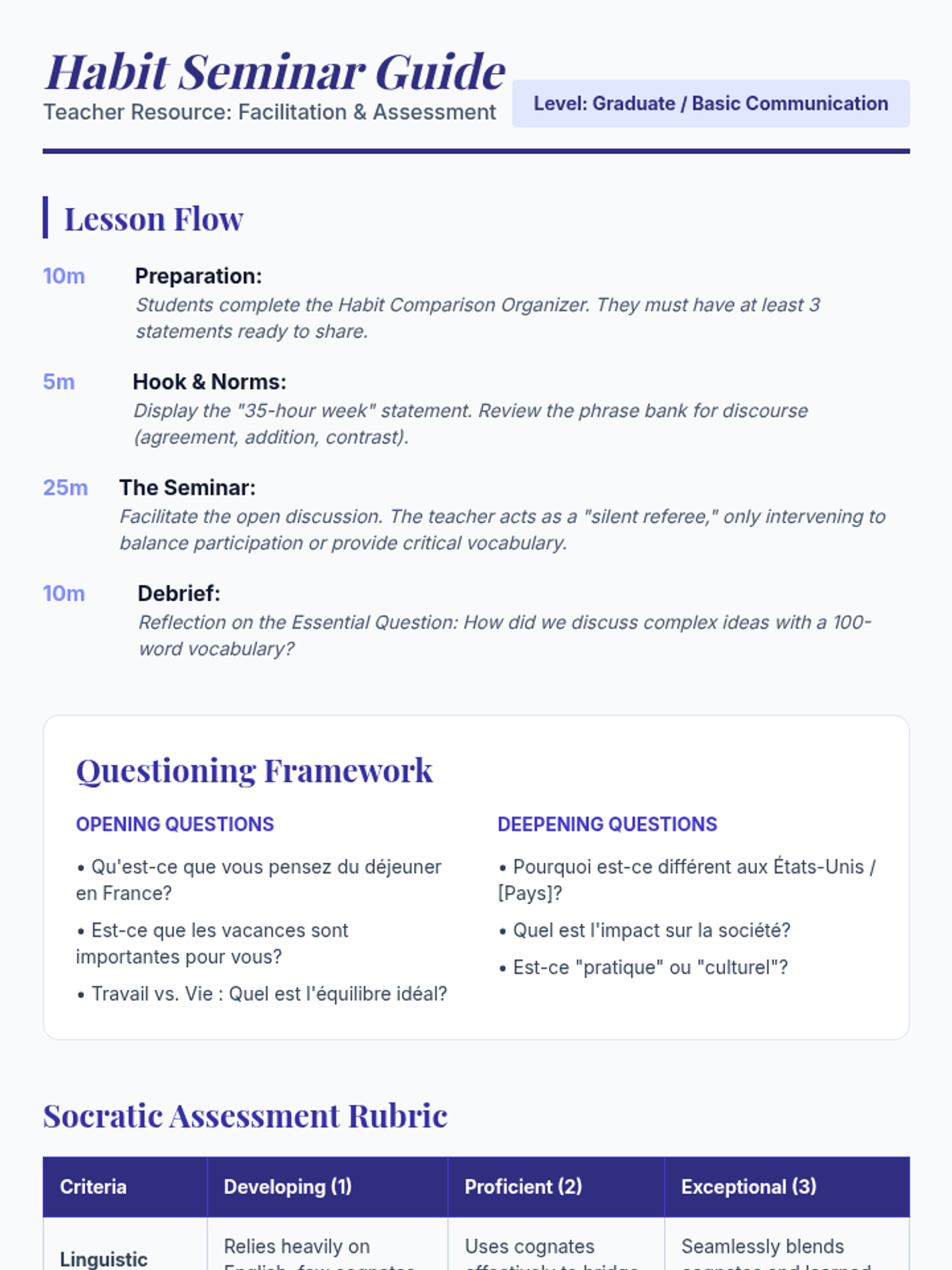
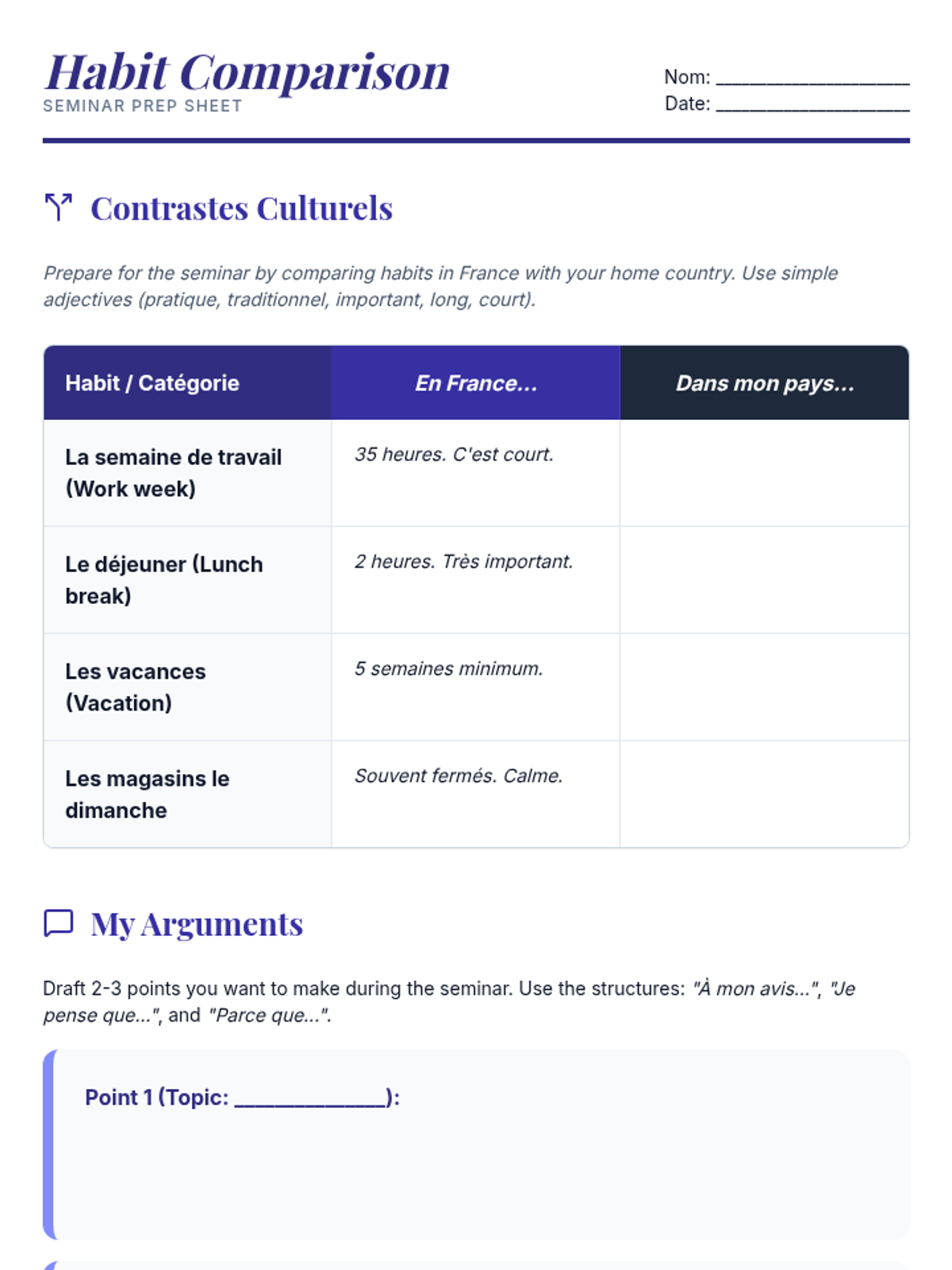
A simplified Socratic seminar comparing daily routines and work-life balance in France versus the students' home countries.
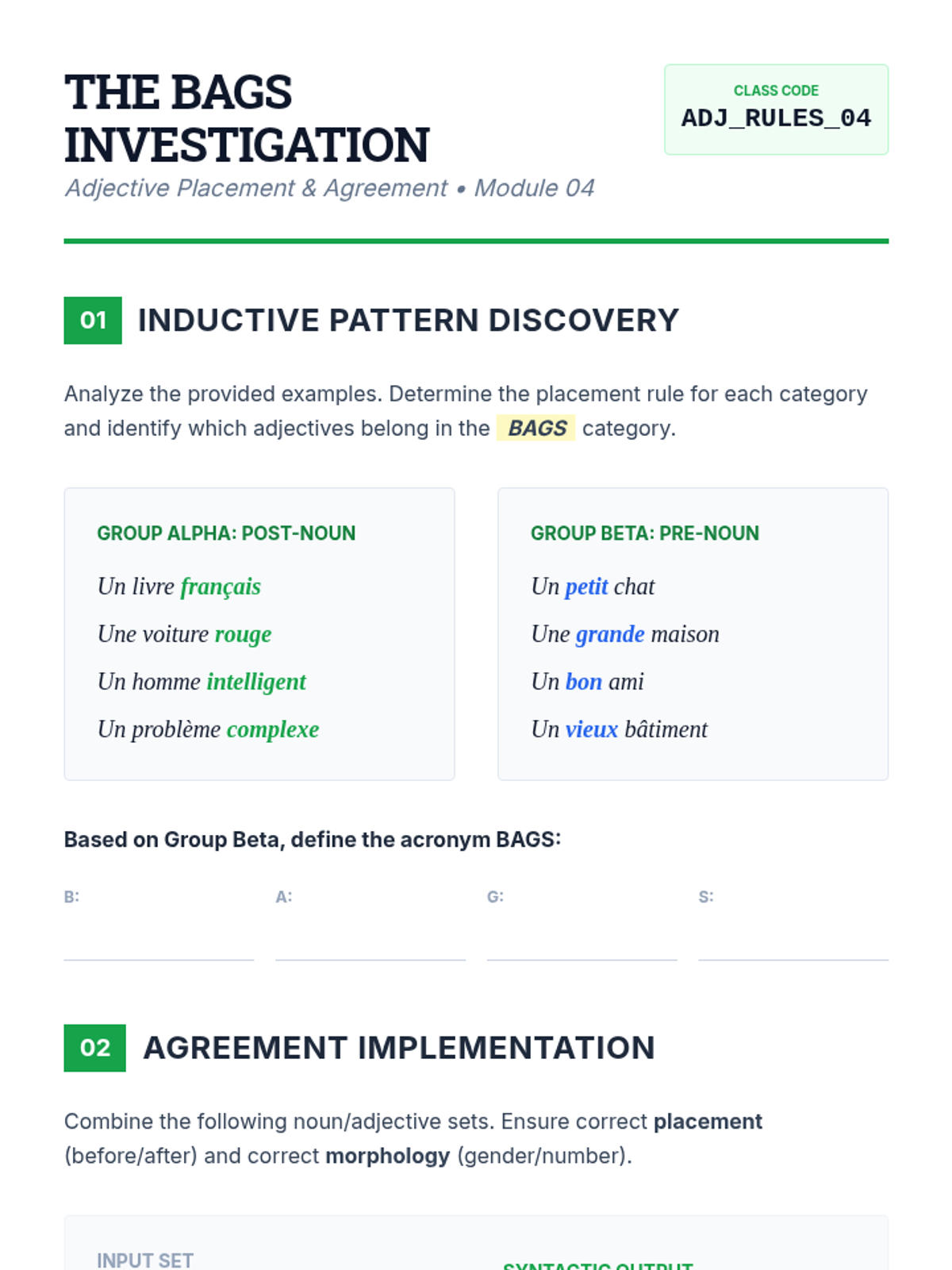
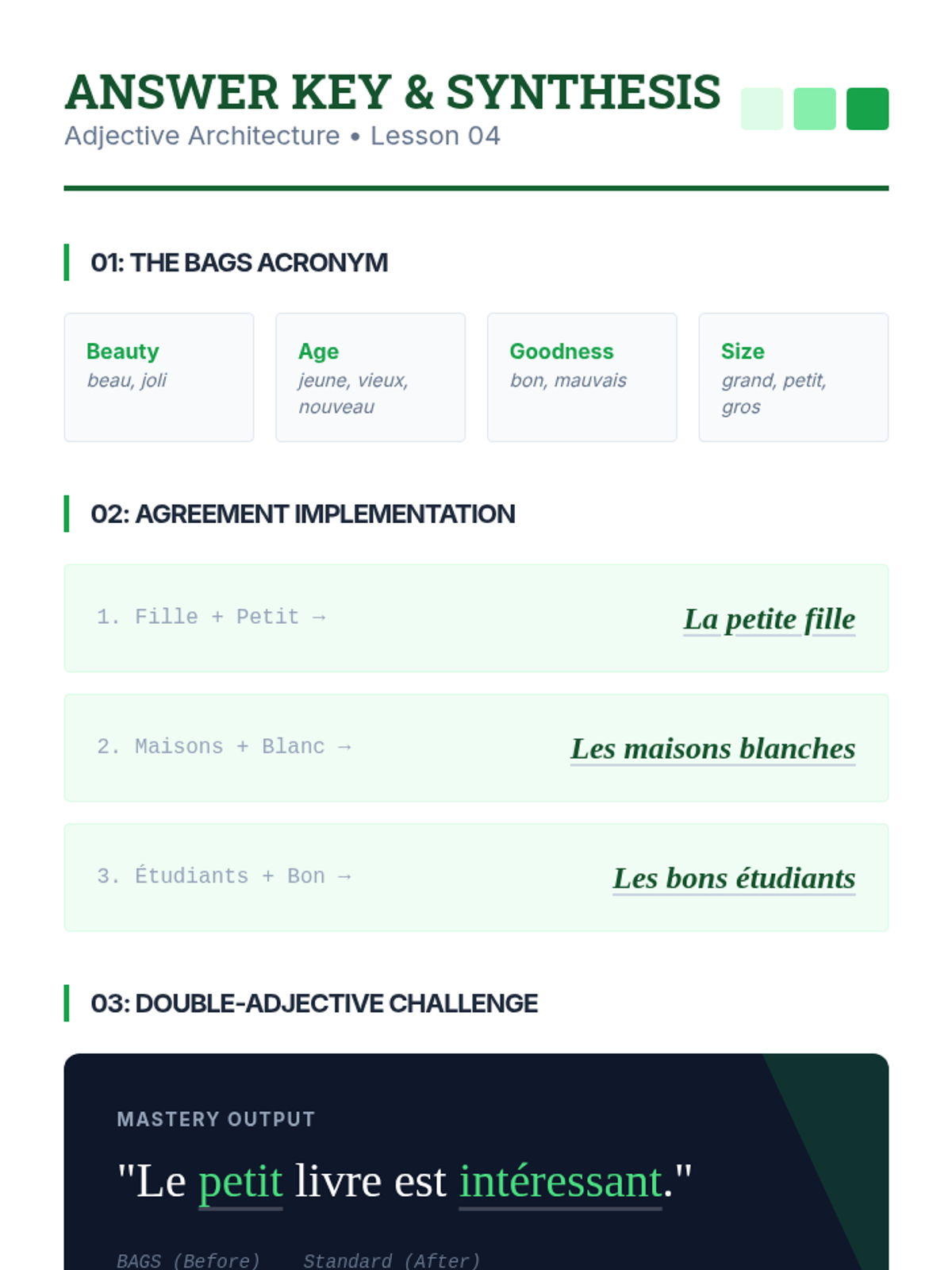
Investigates the placement and agreement of adjectives, focusing on the BAGS rule and gender/number harmony.
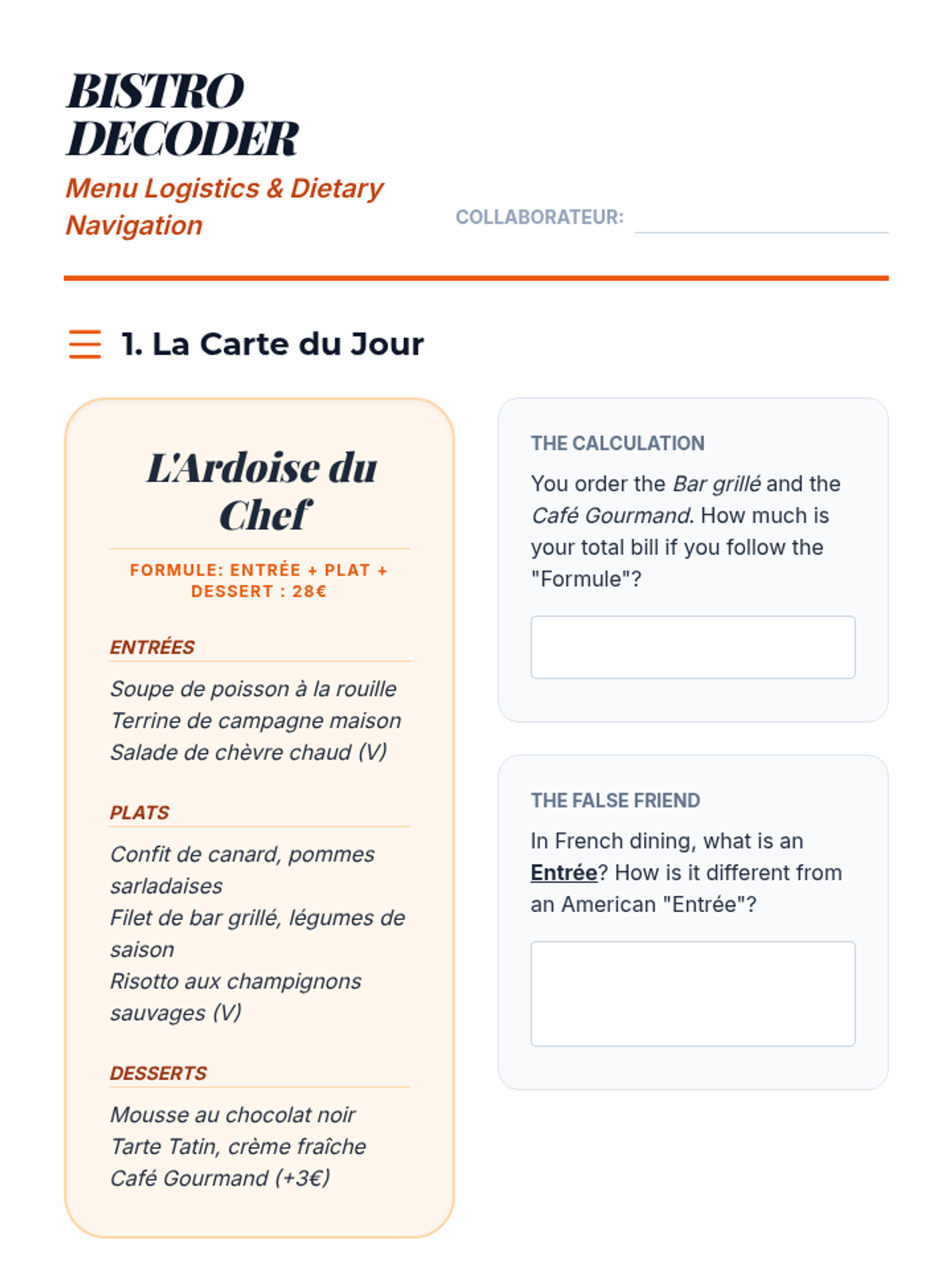
An exploration of French culinary structures and dining etiquette, equipping students with the skills to decode menus and express dietary needs effectively.
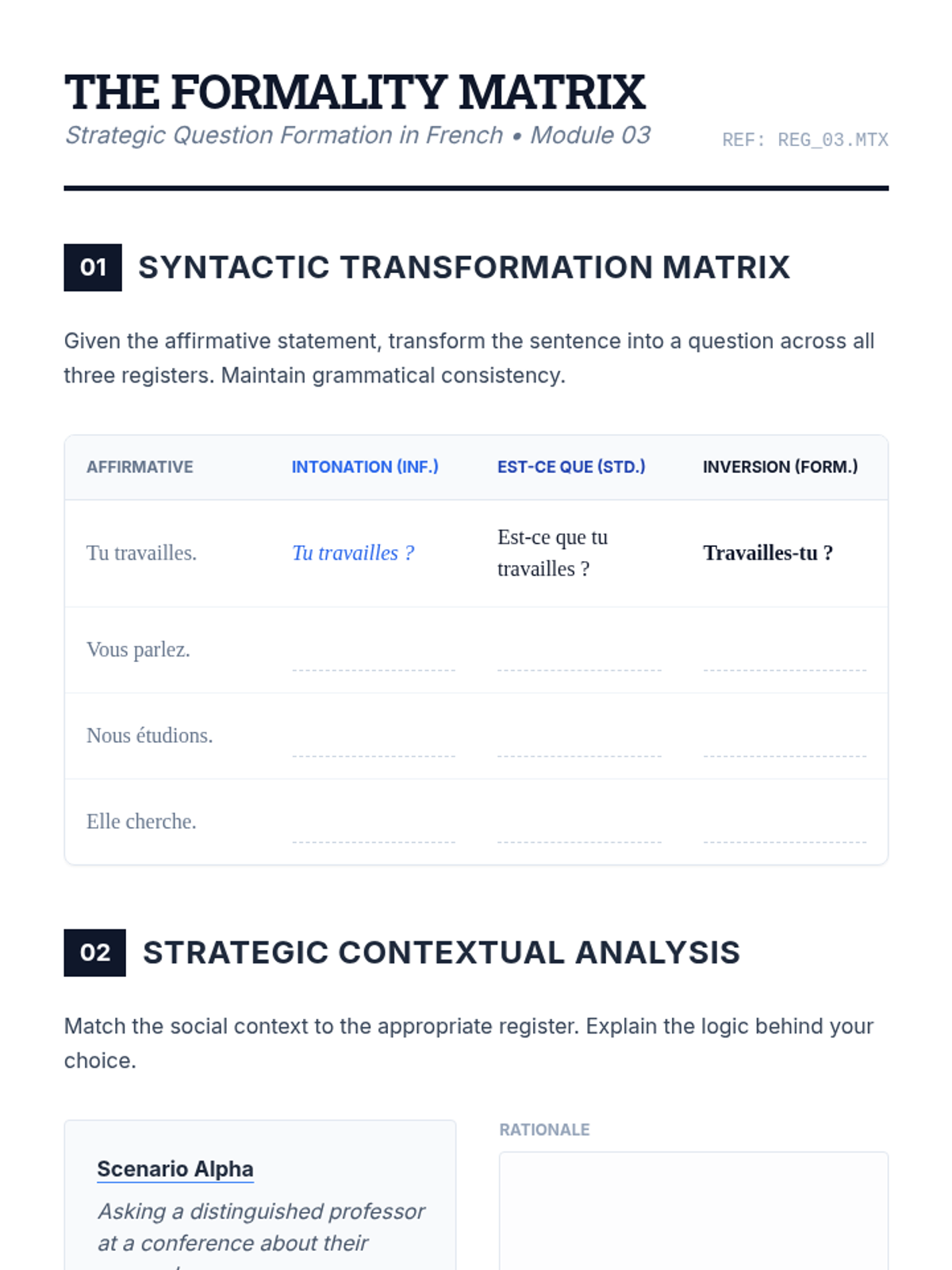
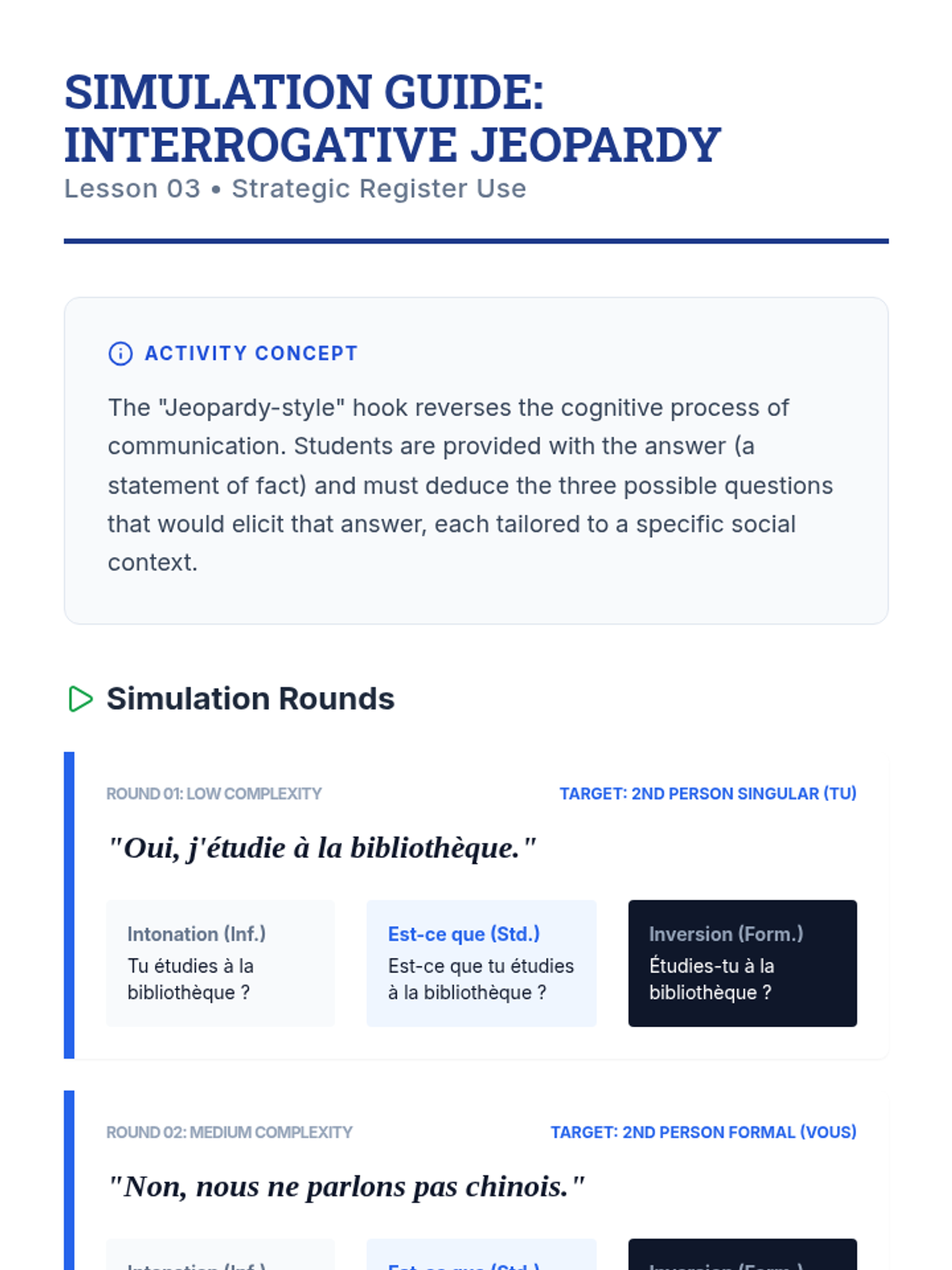
Explores the three registers of question formation in French and the social contexts that dictate their use.
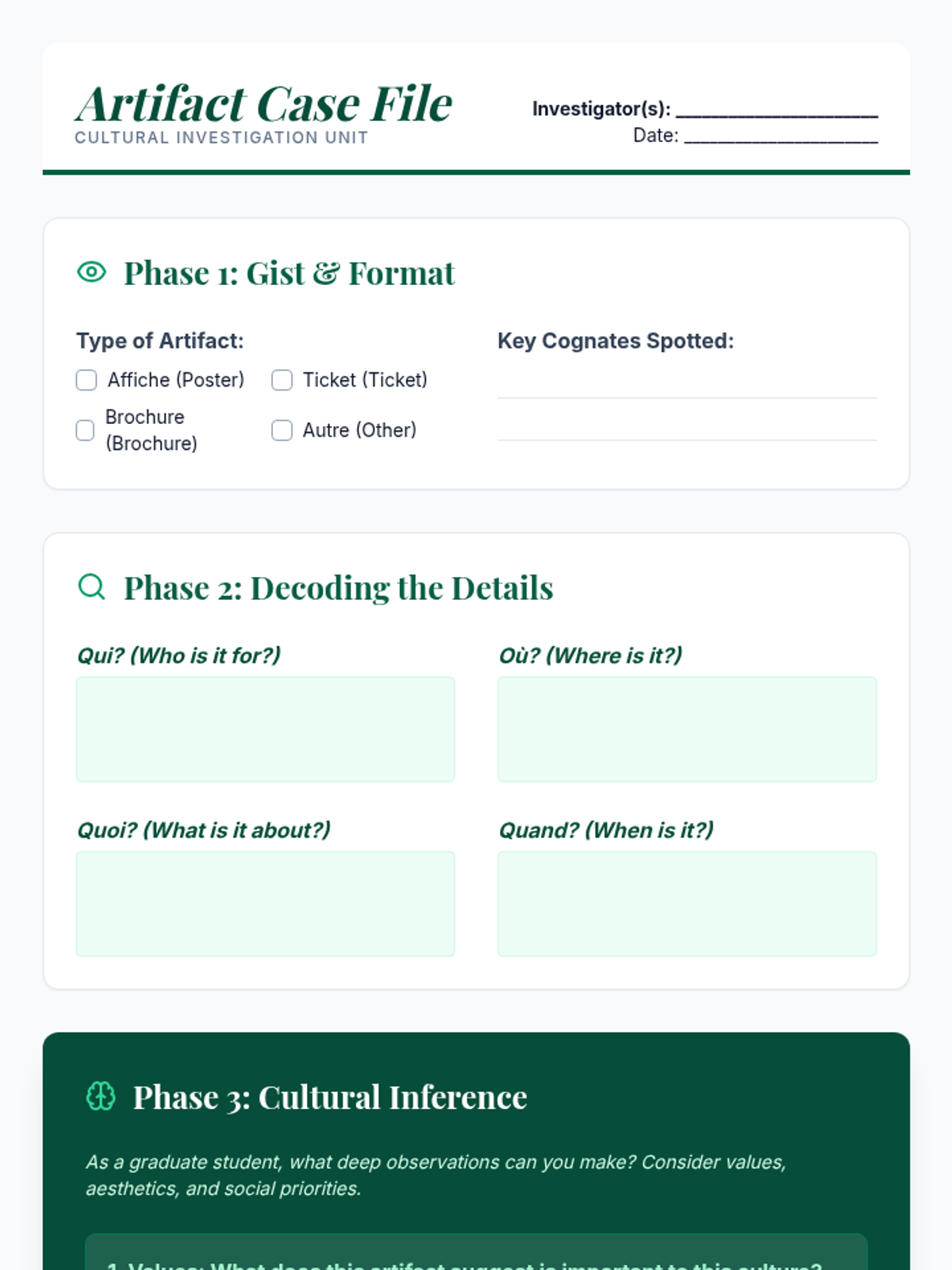
Groups analyze authentic cultural documents like museum flyers and event posters to extract key information and infer cultural values.
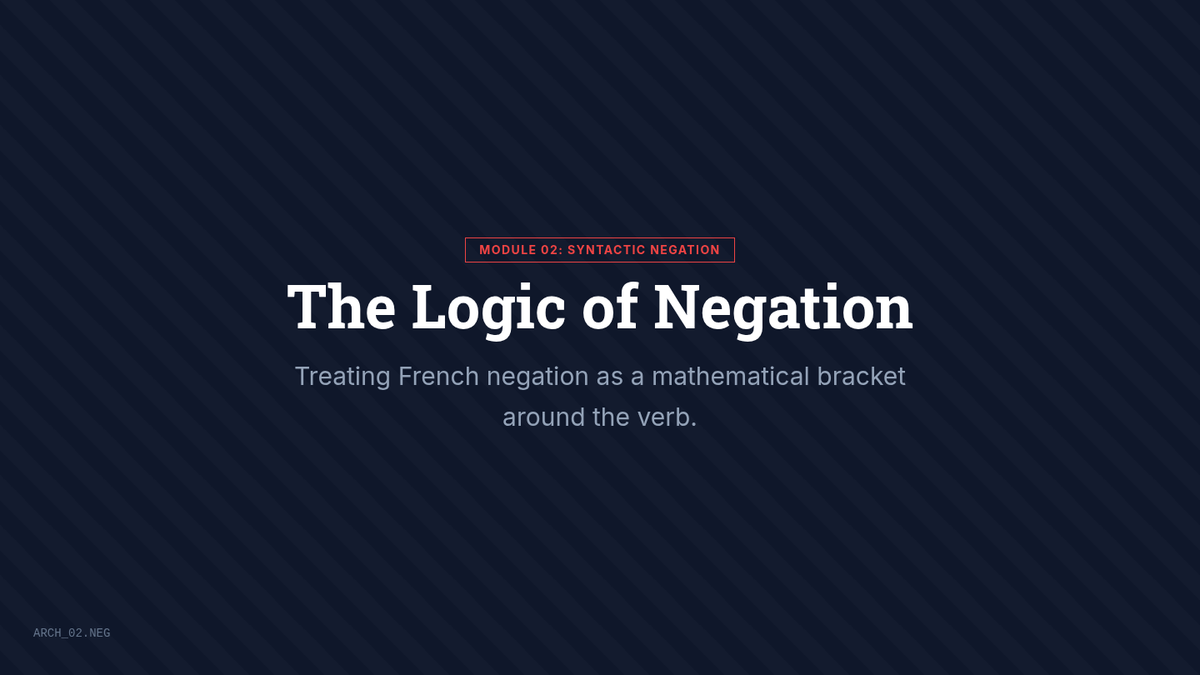
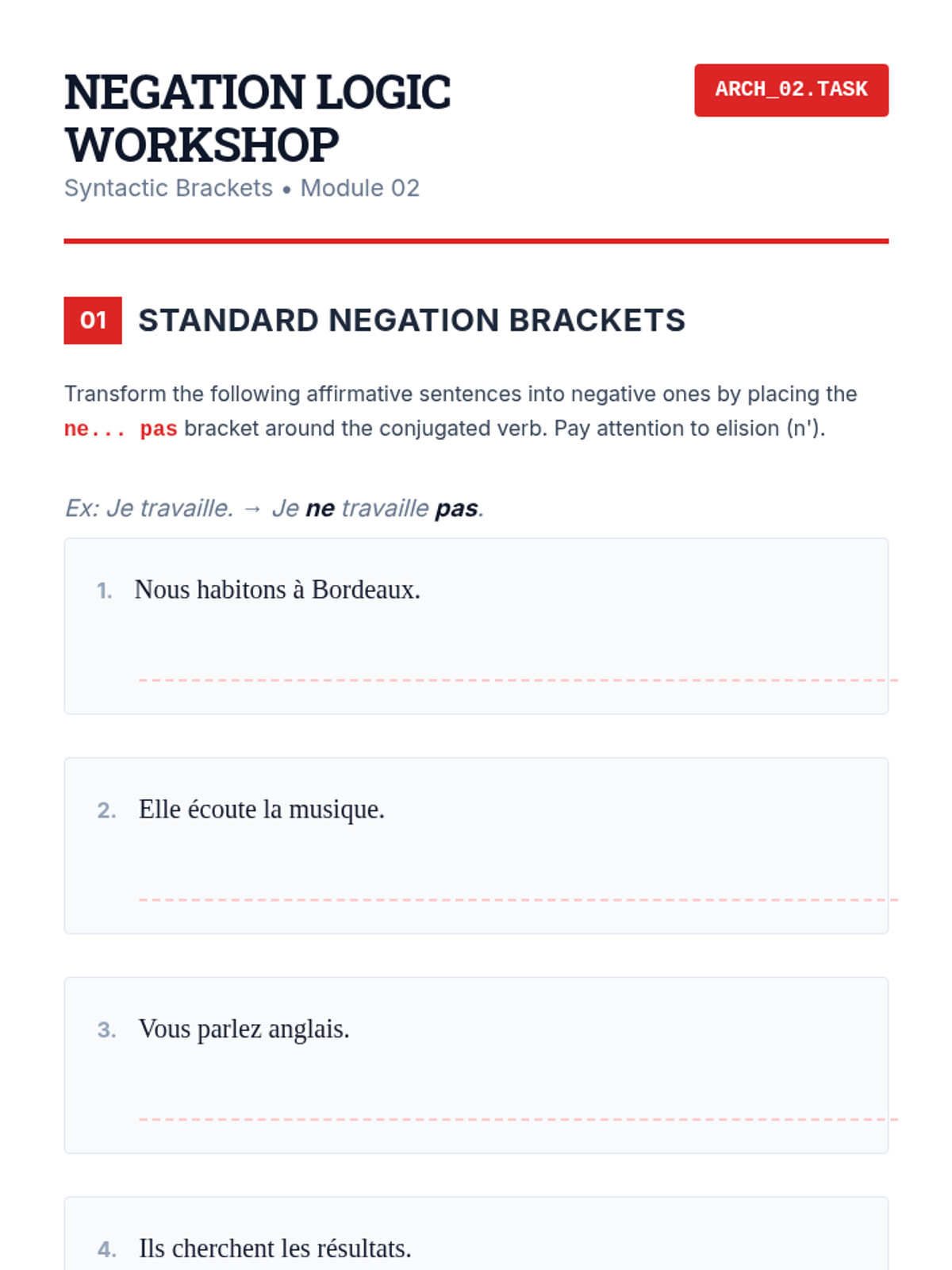
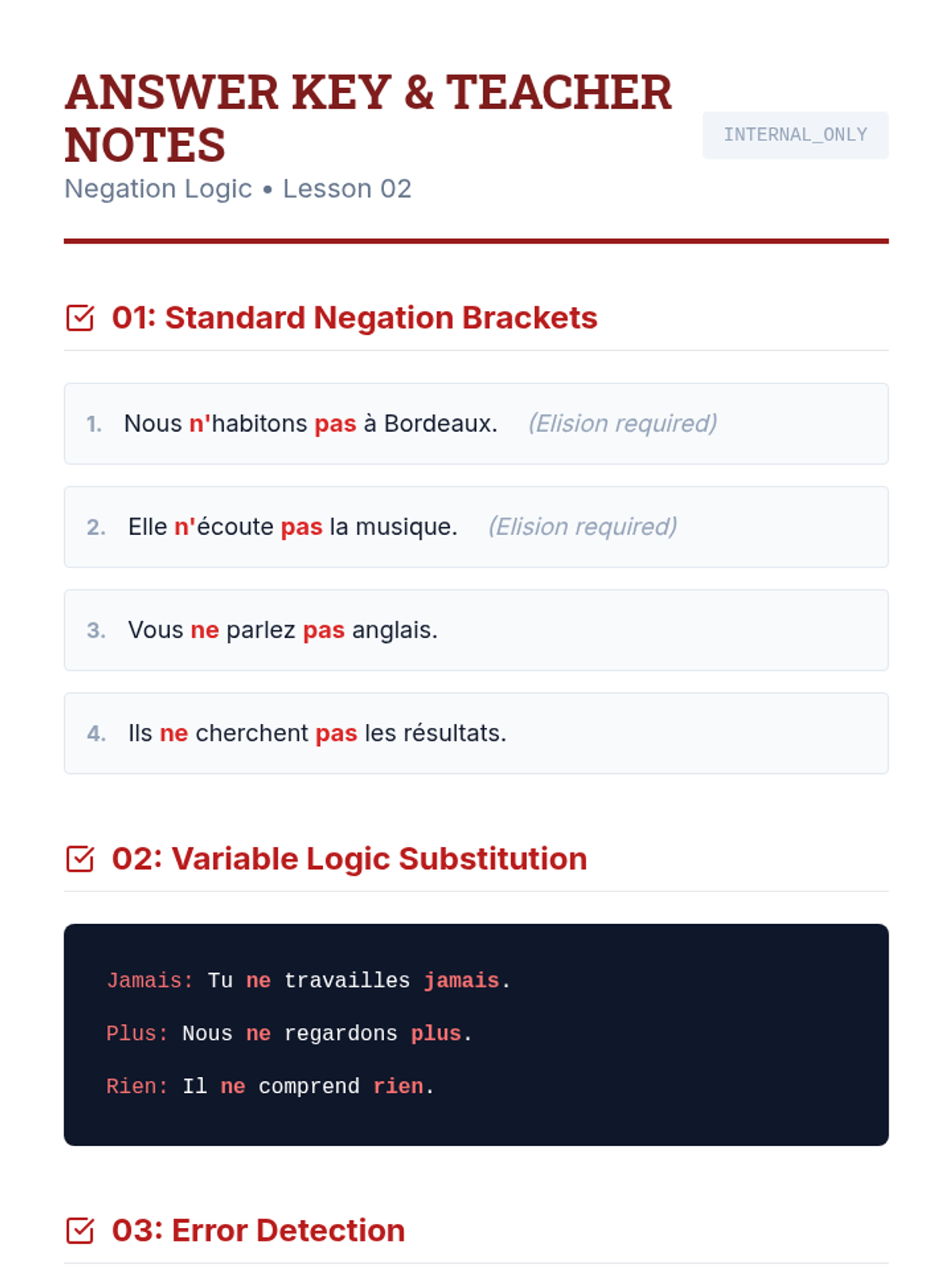
Focuses on the 'sandwich' or 'bracket' logic of French negation, exploring standard and advanced negative structures.
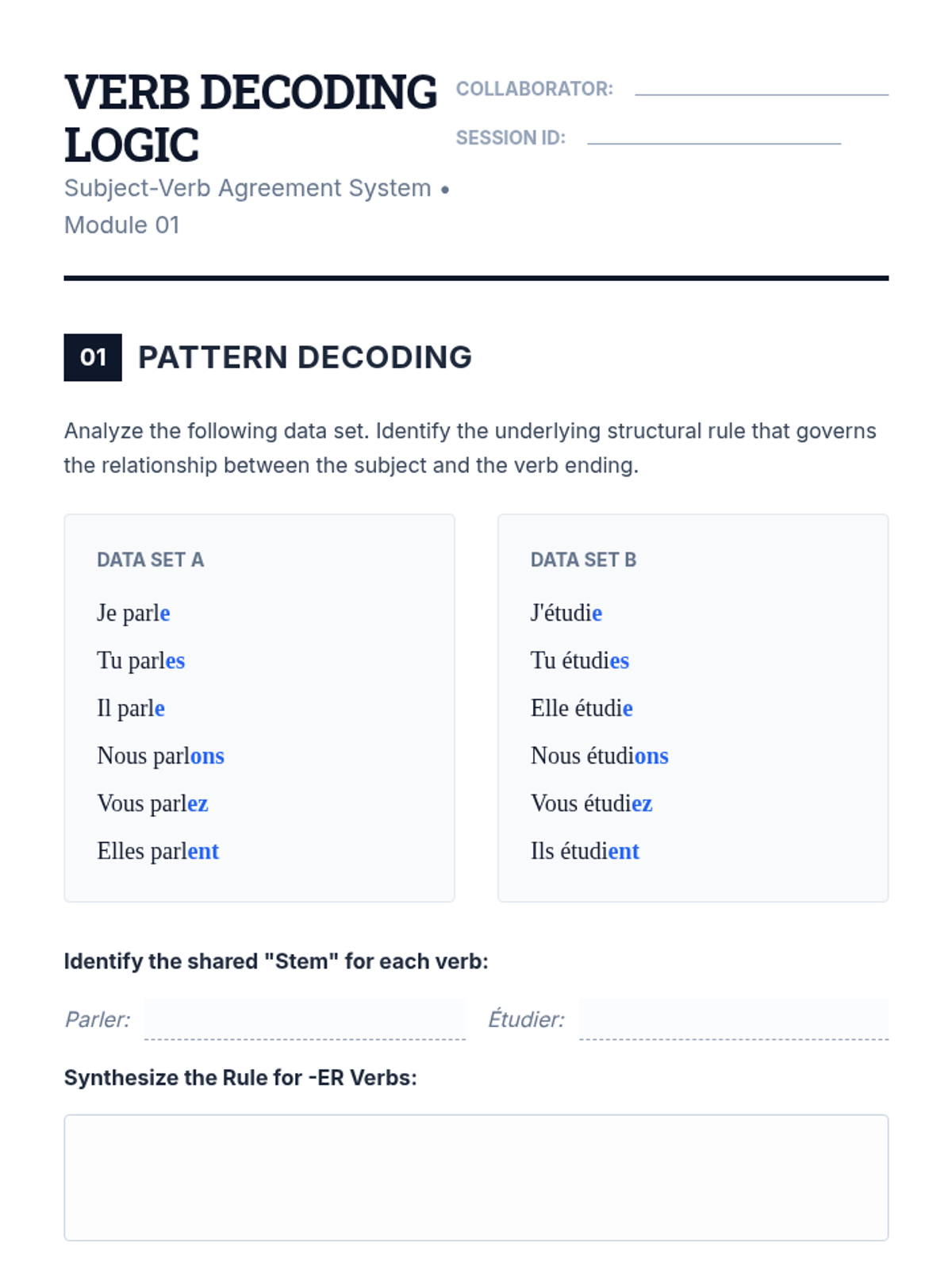
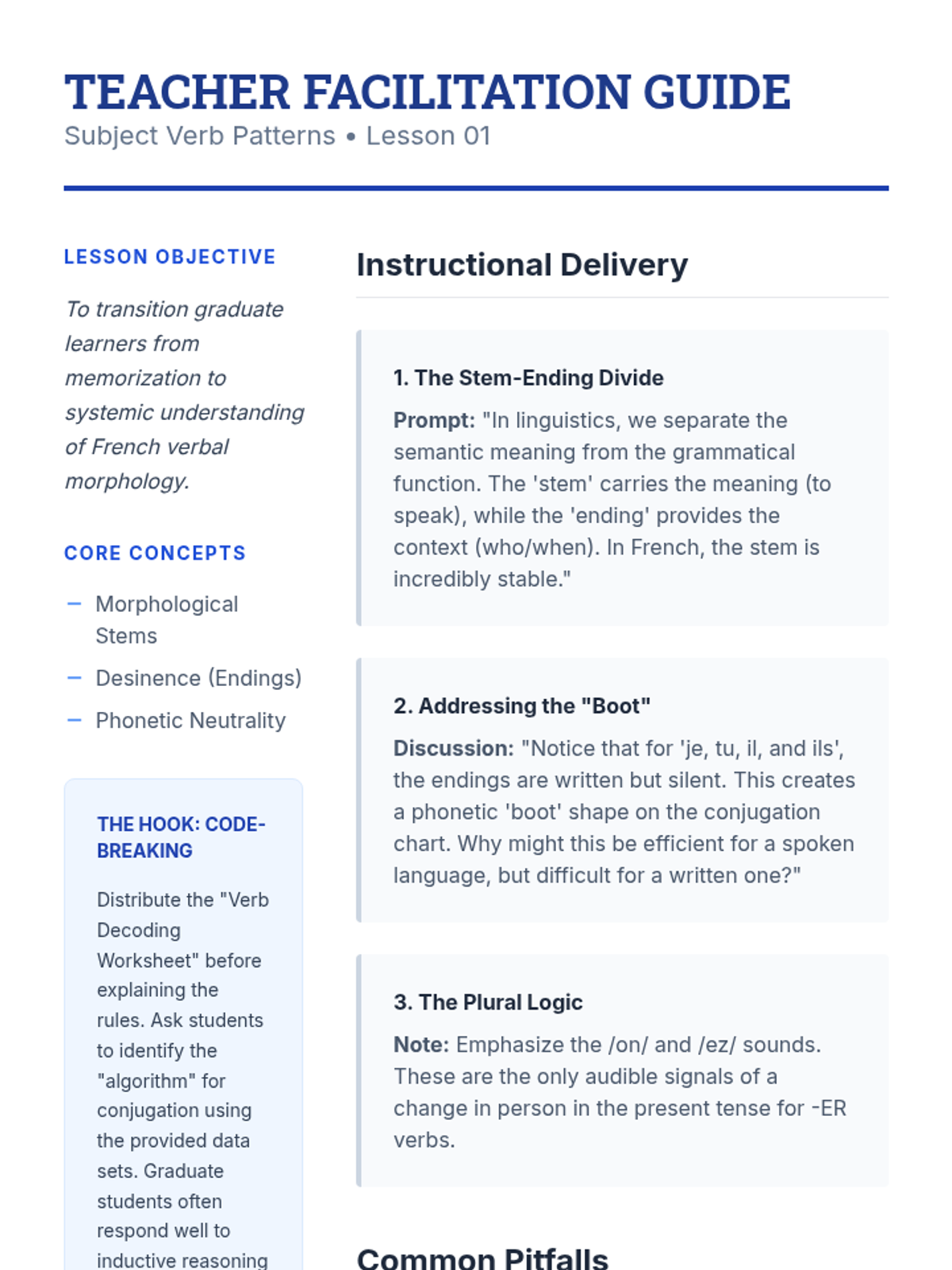
Students analyze regular -ER verb patterns and subject pronouns, treating conjugation as a predictable system of rules rather than a list to memorize.
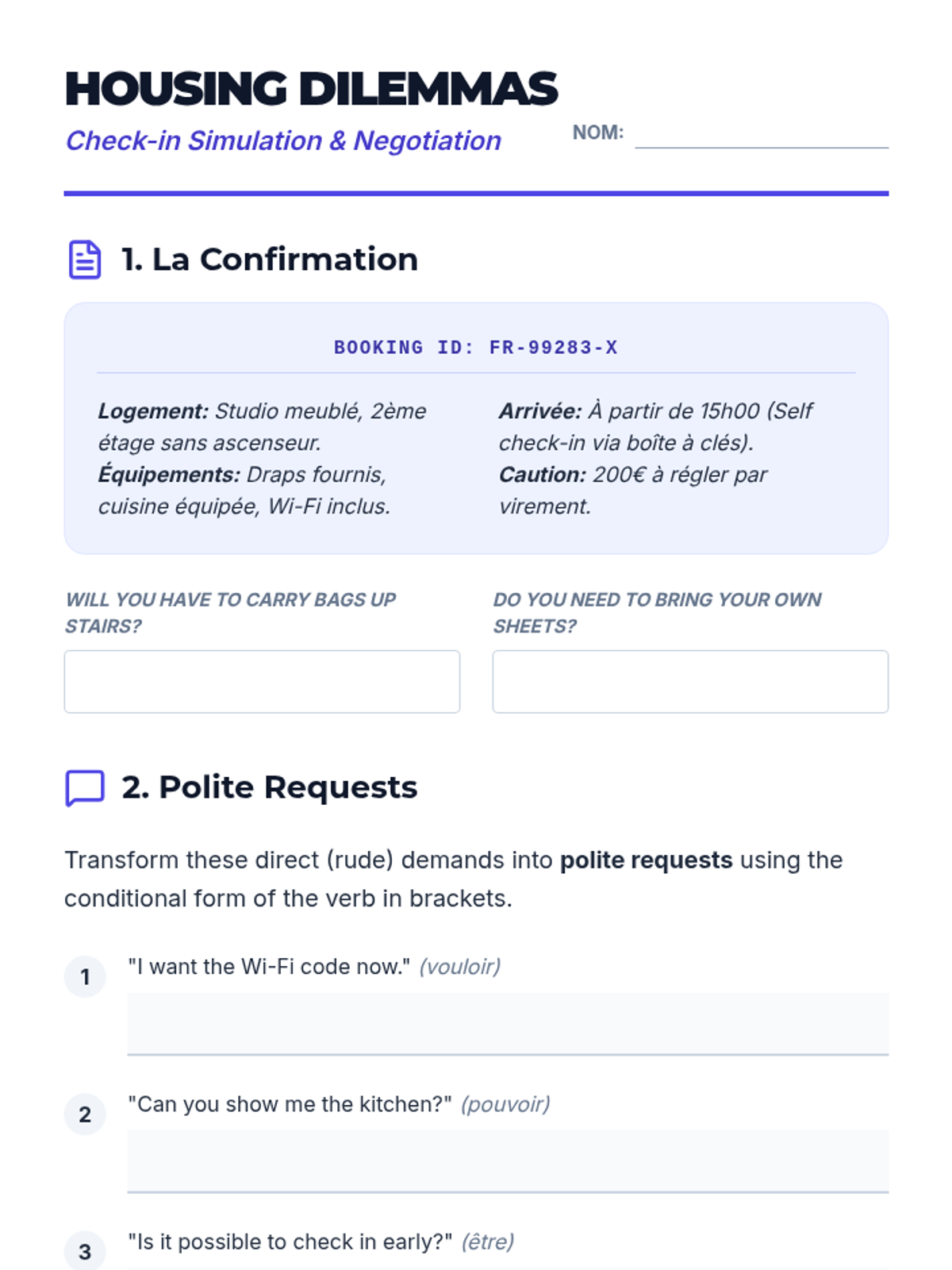
Focuses on the linguistics of temporary housing, covering check-in procedures, amenity inquiries, and using the polite conditional to resolve accommodation issues.
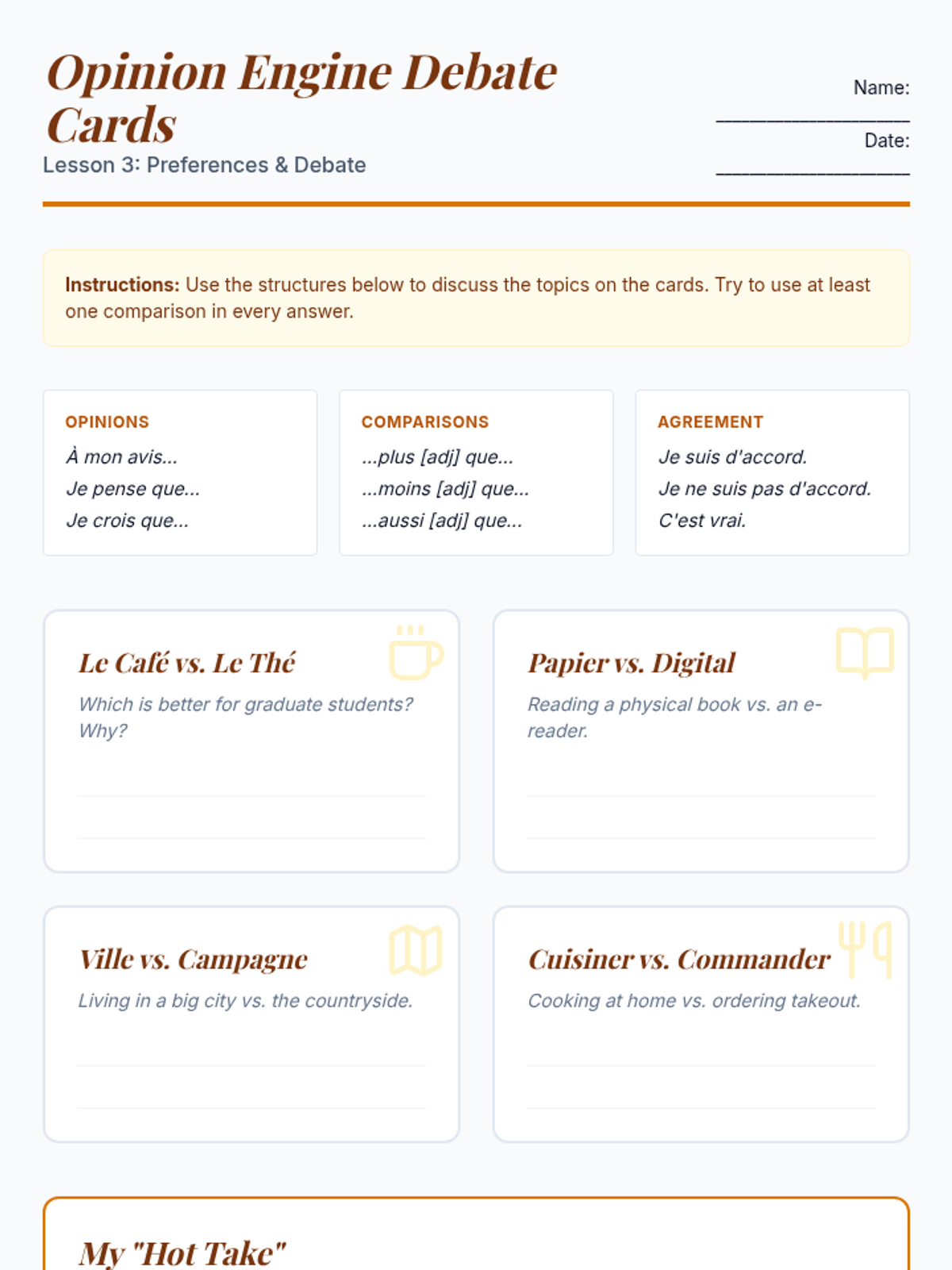
Students learn the linguistic structures needed to express preferences and opinions, applying them to low-stakes cultural debates and art.
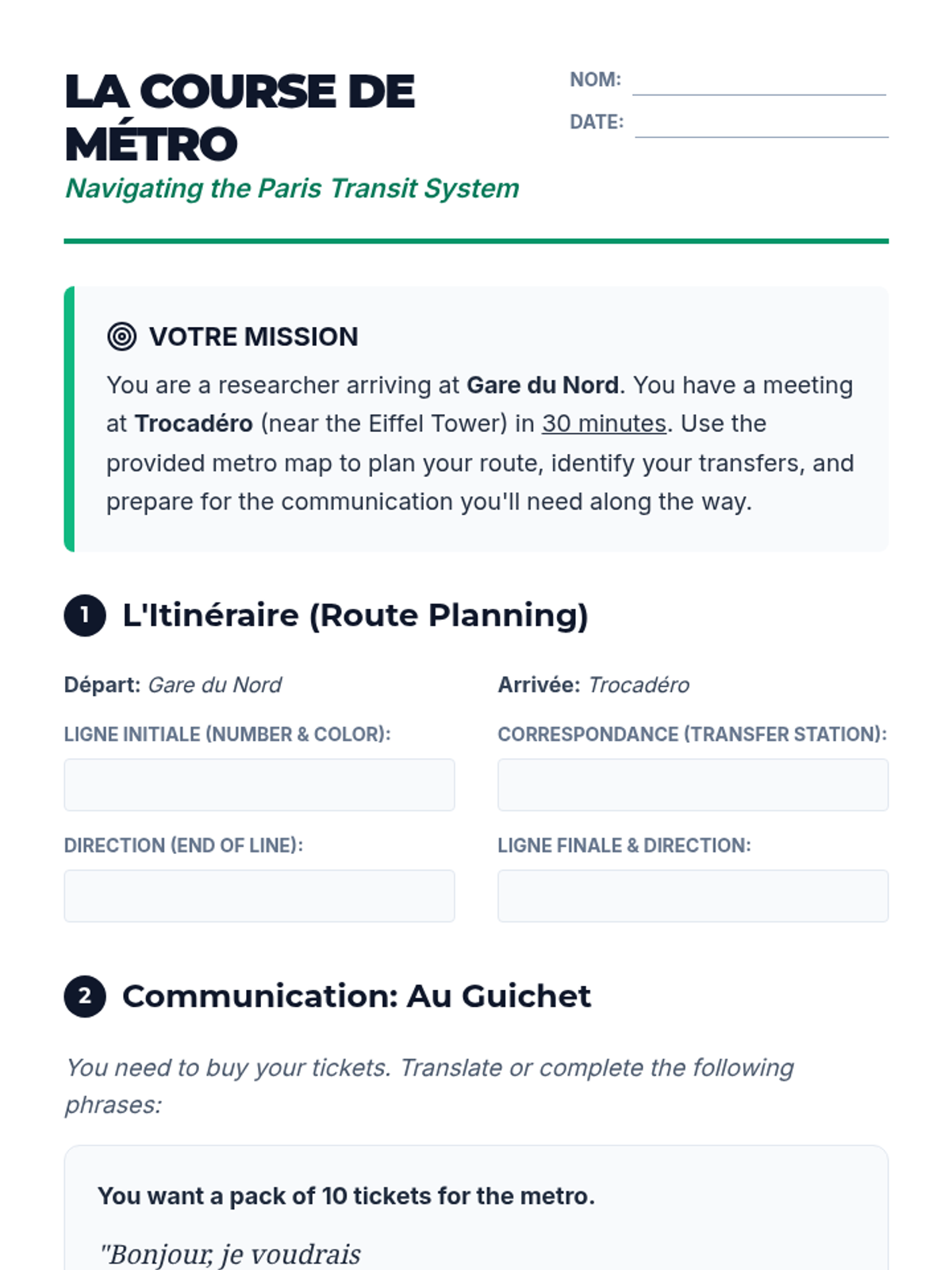
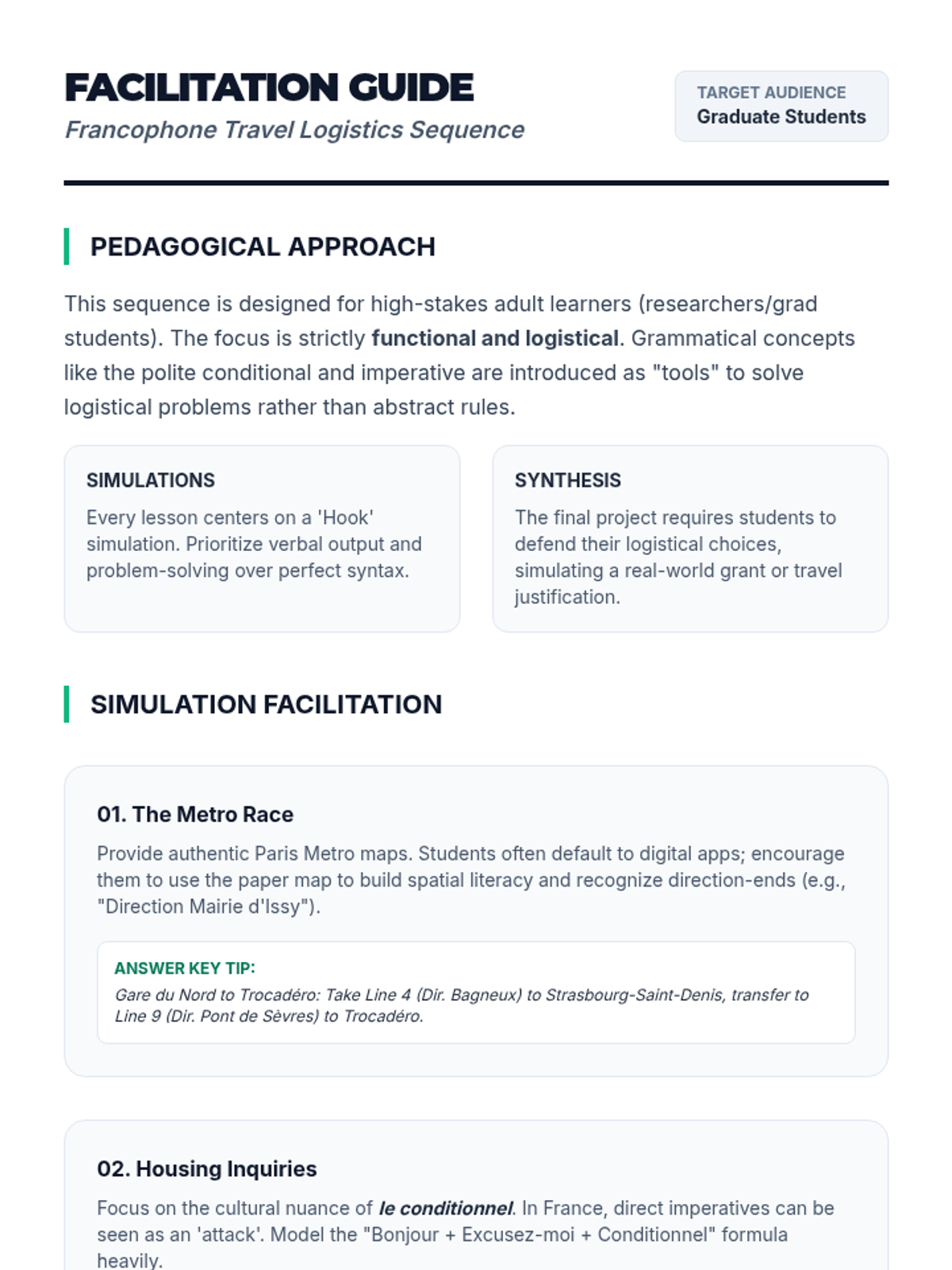
Students master the complexities of Francophone urban transit, focusing on map interpretation, route optimization, and essential communication for buying tickets and understanding announcements.
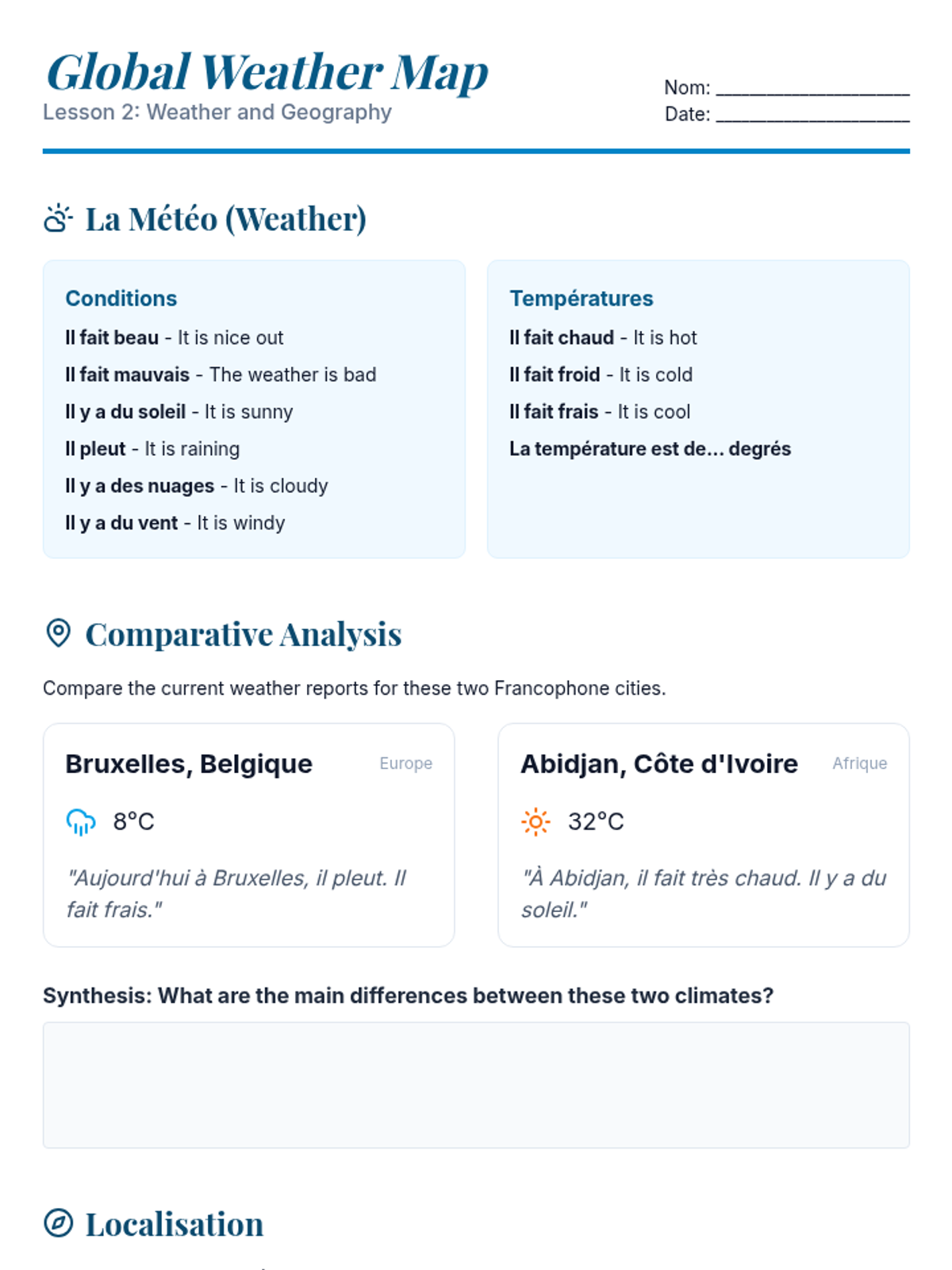
Students explore the geography of the Francophone world through weather patterns and regional reports, practicing descriptive language and spatial vocabulary.
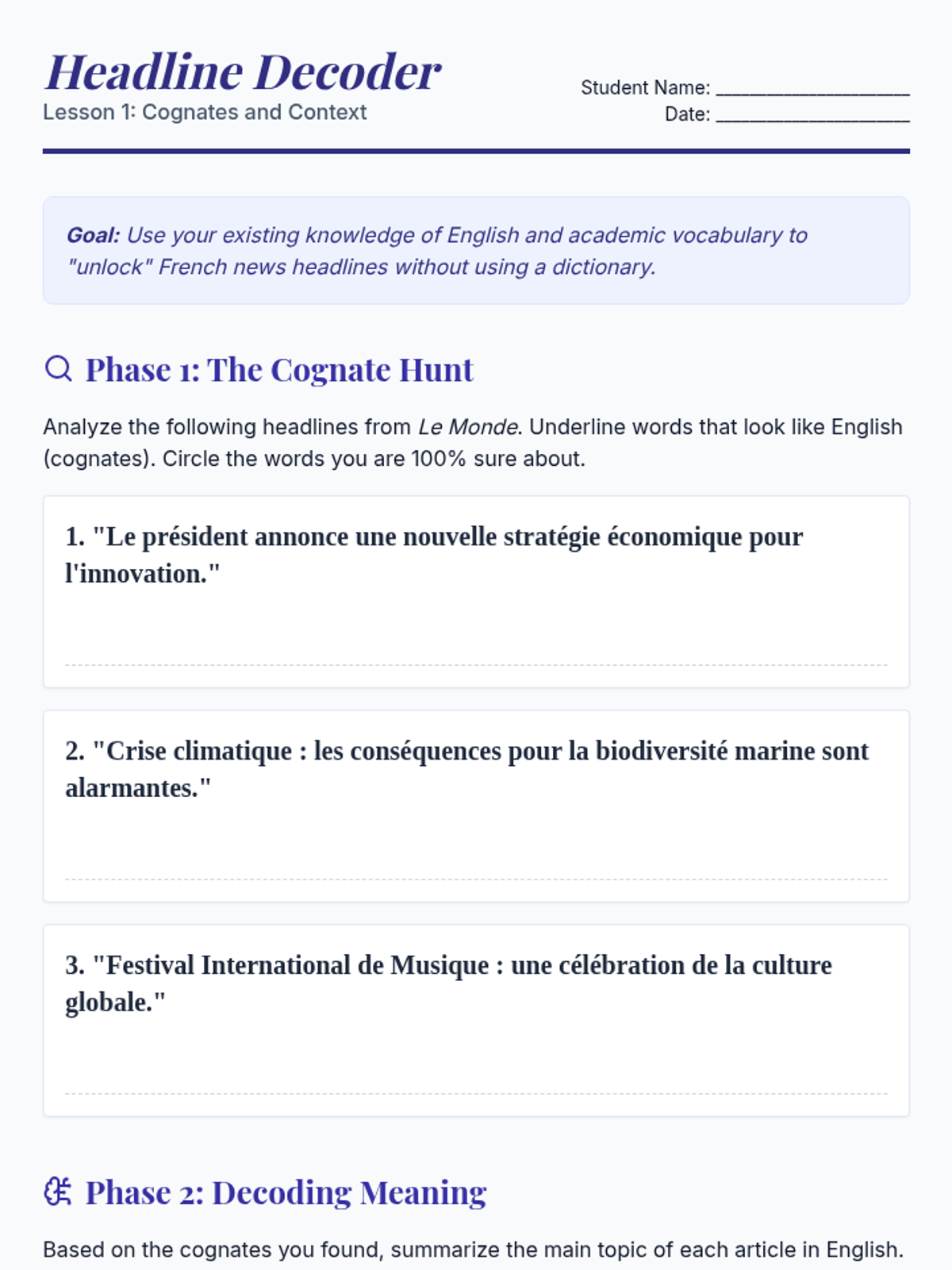
Students use cognates and context clues to decode real French headlines from major news outlets, building immediate literacy and confidence.
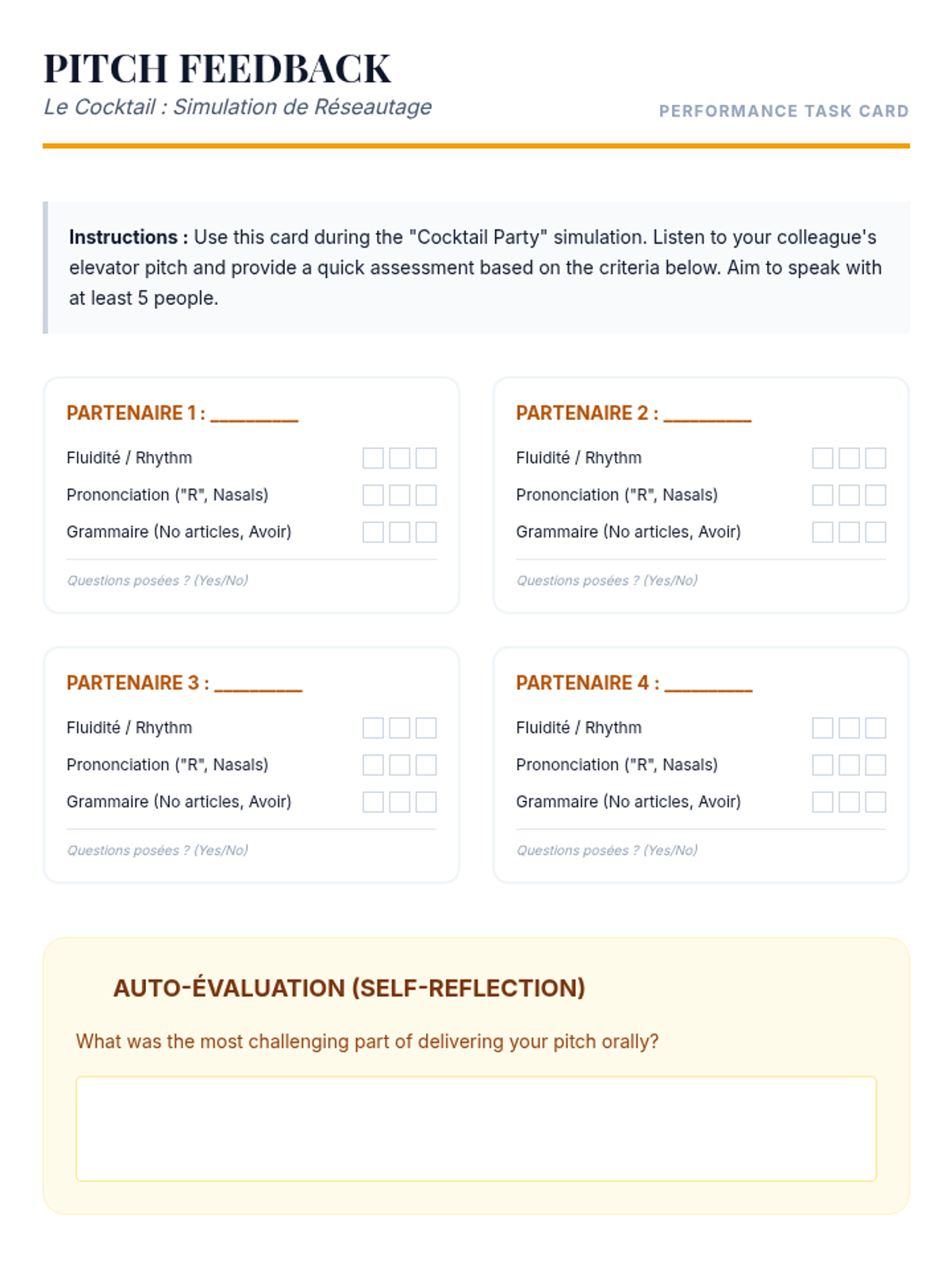
The culmination of the sequence where students refine their pronunciation and deliver a memorized oral professional pitch in a simulated networking environment.
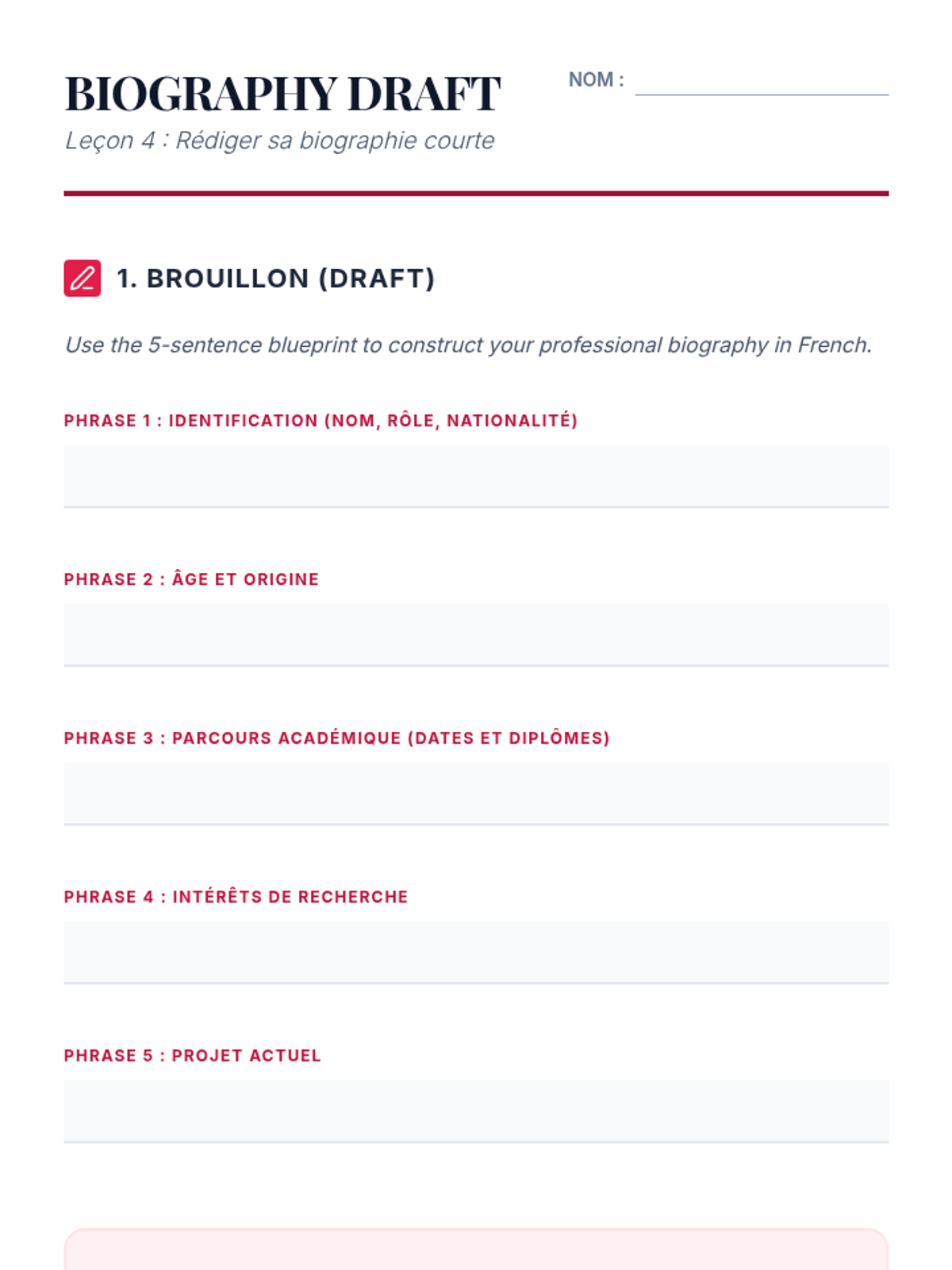
Integrates previous learning into a cohesive five-sentence professional biography through a workshop-style drafting and peer-review process.
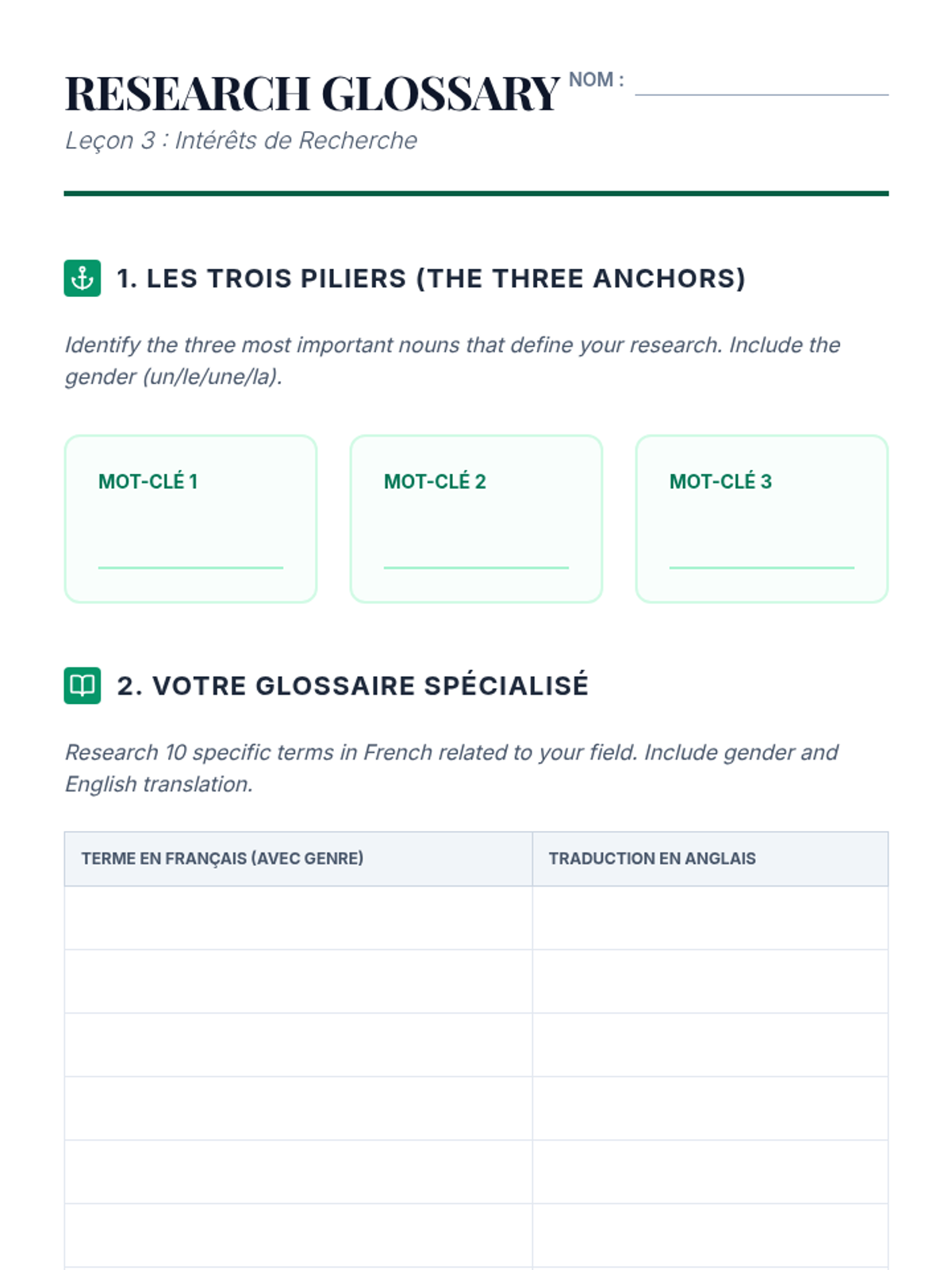
Guides students in building a specialized vocabulary of nouns related to their specific research fields and practicing phrases to express academic interests.
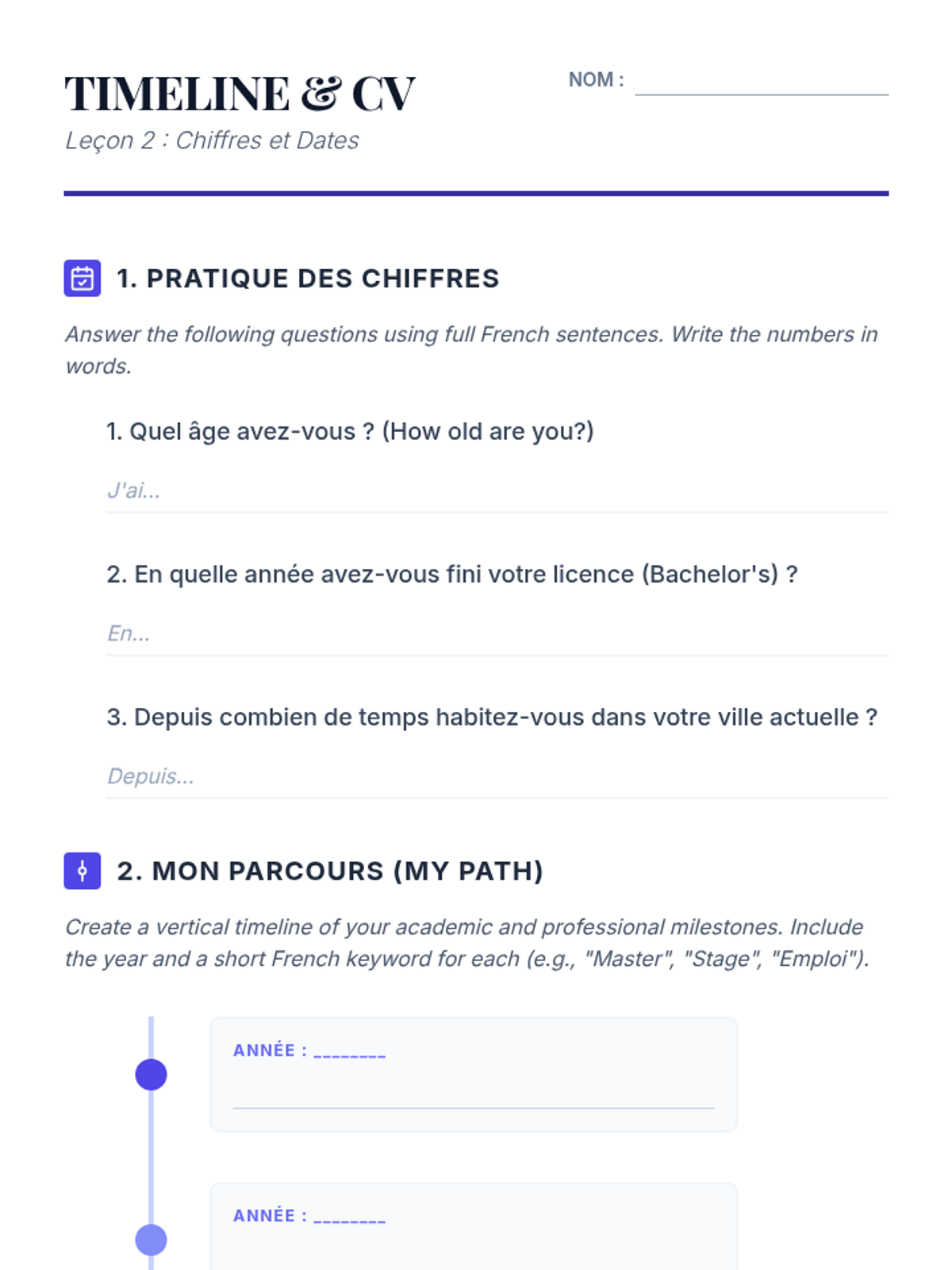
Teaches numbers, dates, and the verb 'avoir' for age to help students construct a chronological timeline of their academic and professional career.
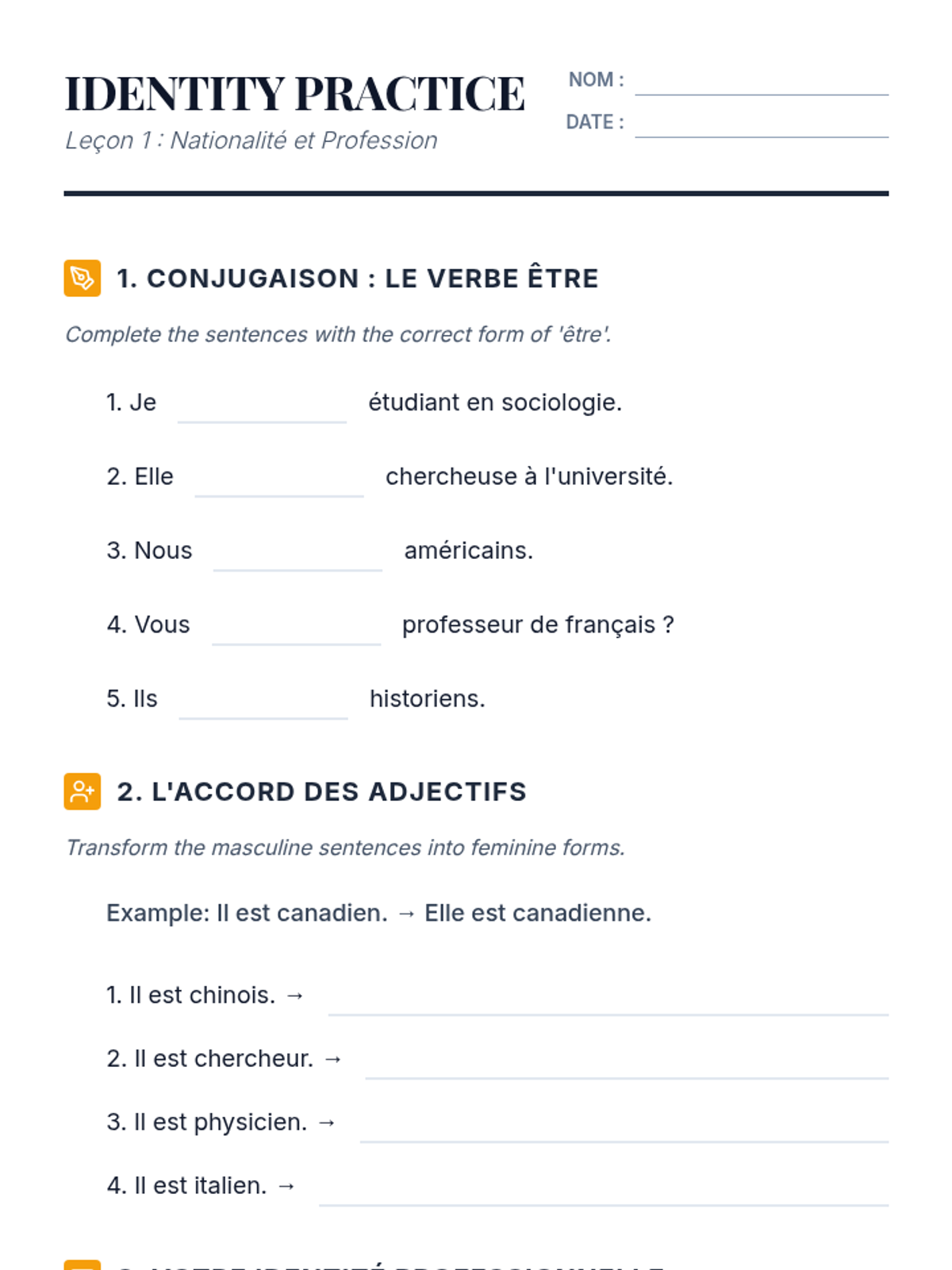
Focuses on the verb 'être', nationality adjectives, and professions, emphasizing the lack of articles in French professional self-identification.
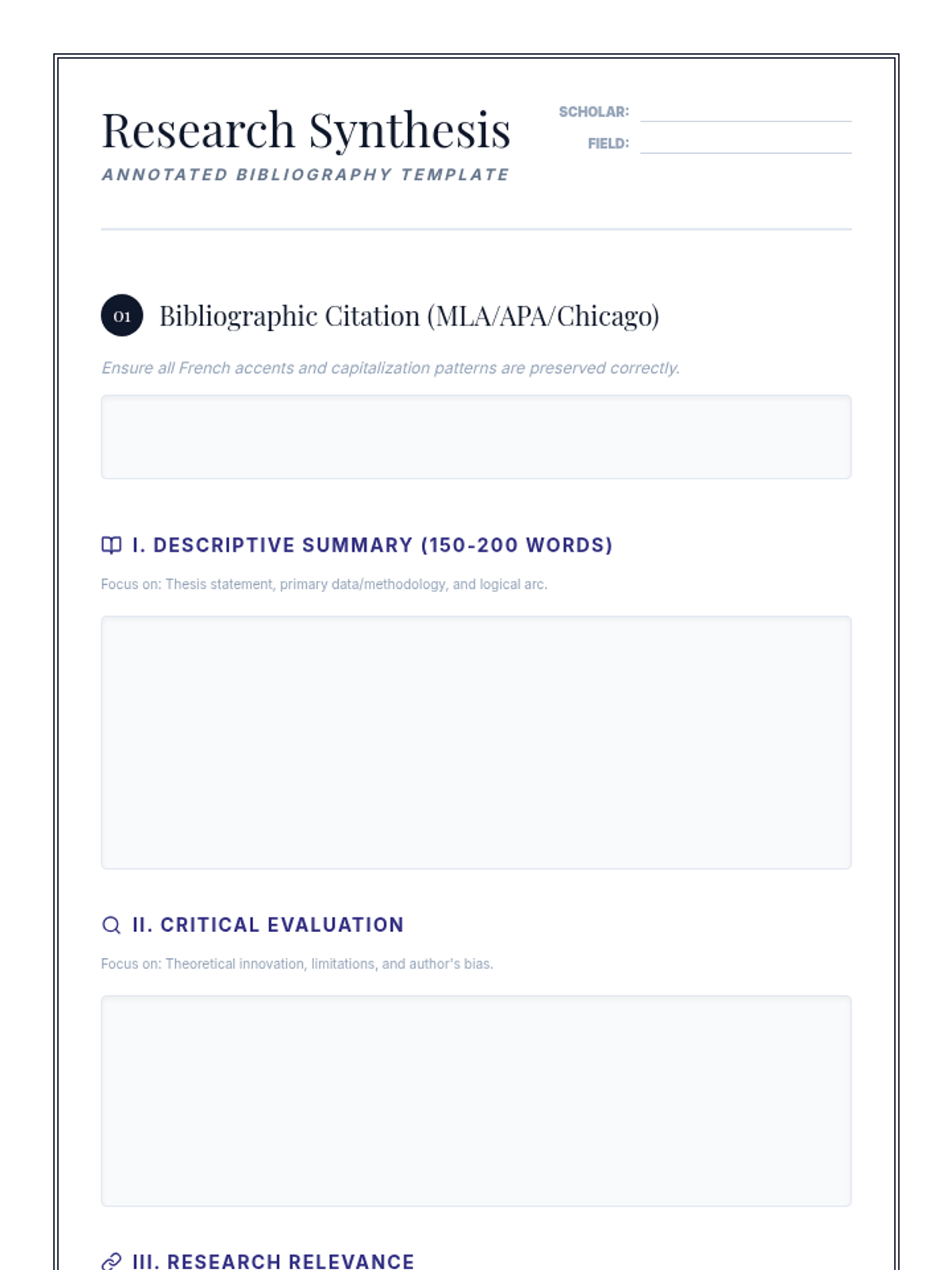
Students synthesize their skills to create an annotated bibliography entry for a French source in their own research field.
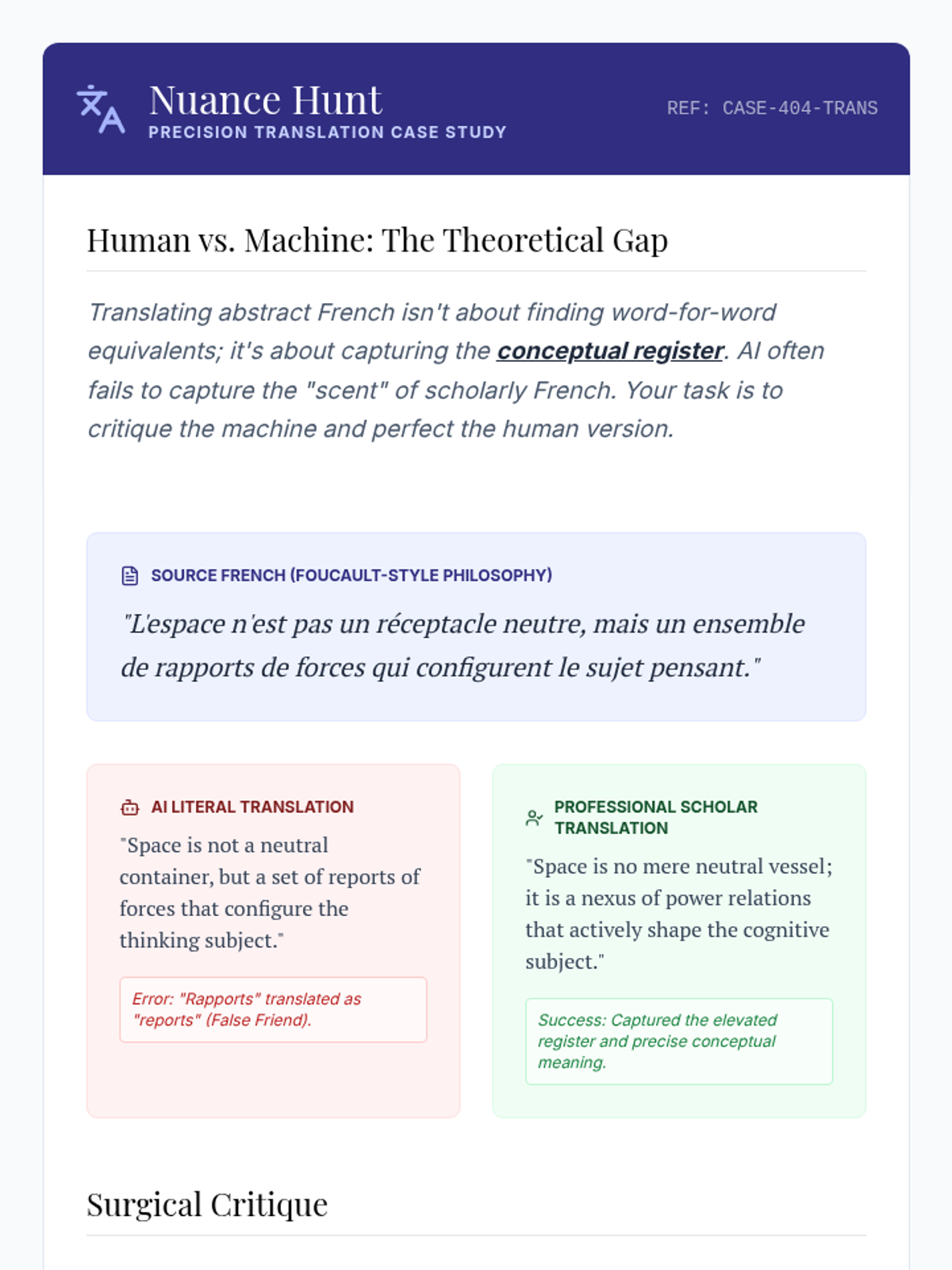
Students practice precise translation of abstract concepts, focusing on maintaining nuance and avoiding literal 'translationese'.
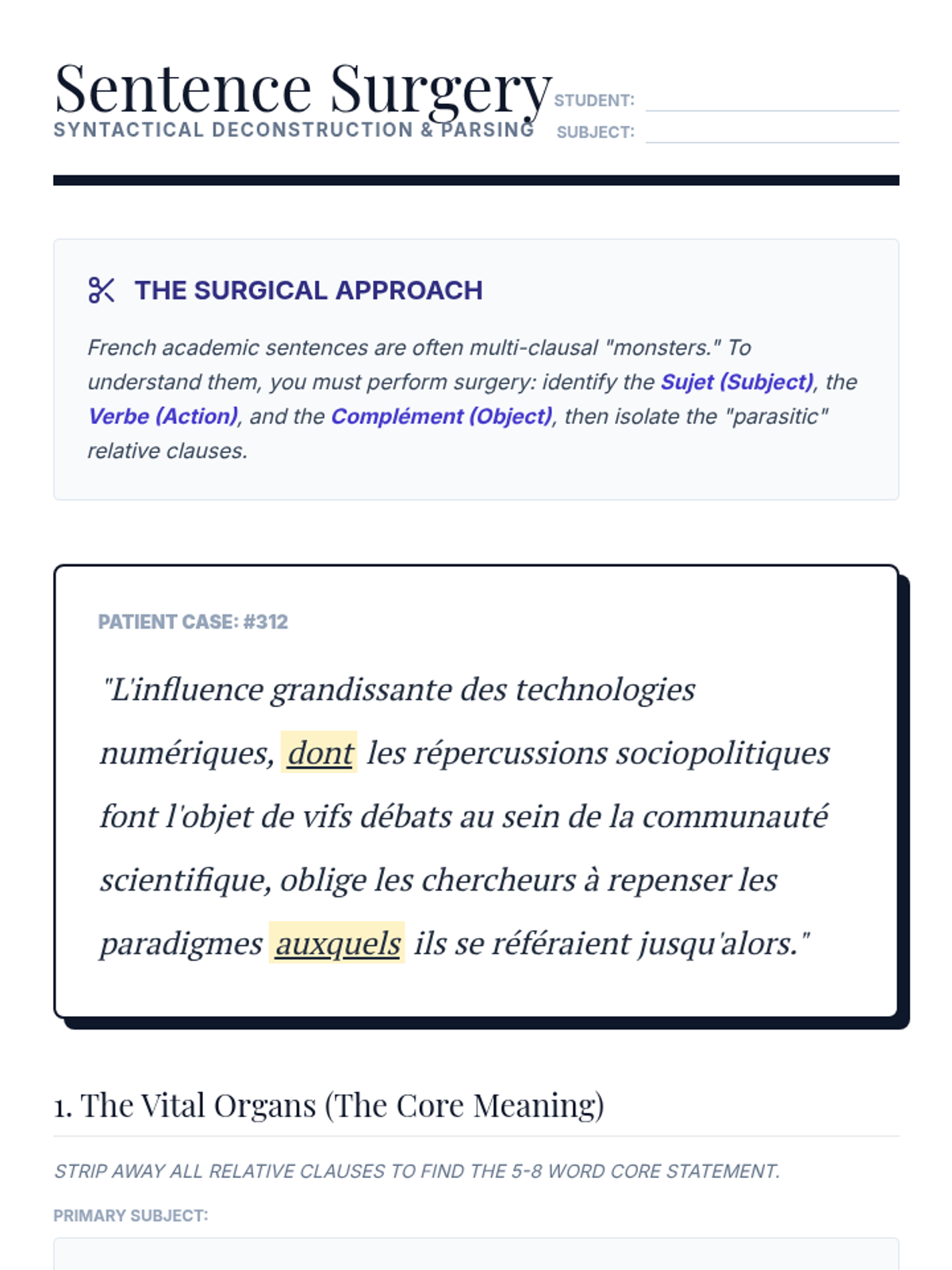
This lesson focuses on parsing long, complex French sentences by identifying core components and relative clauses.
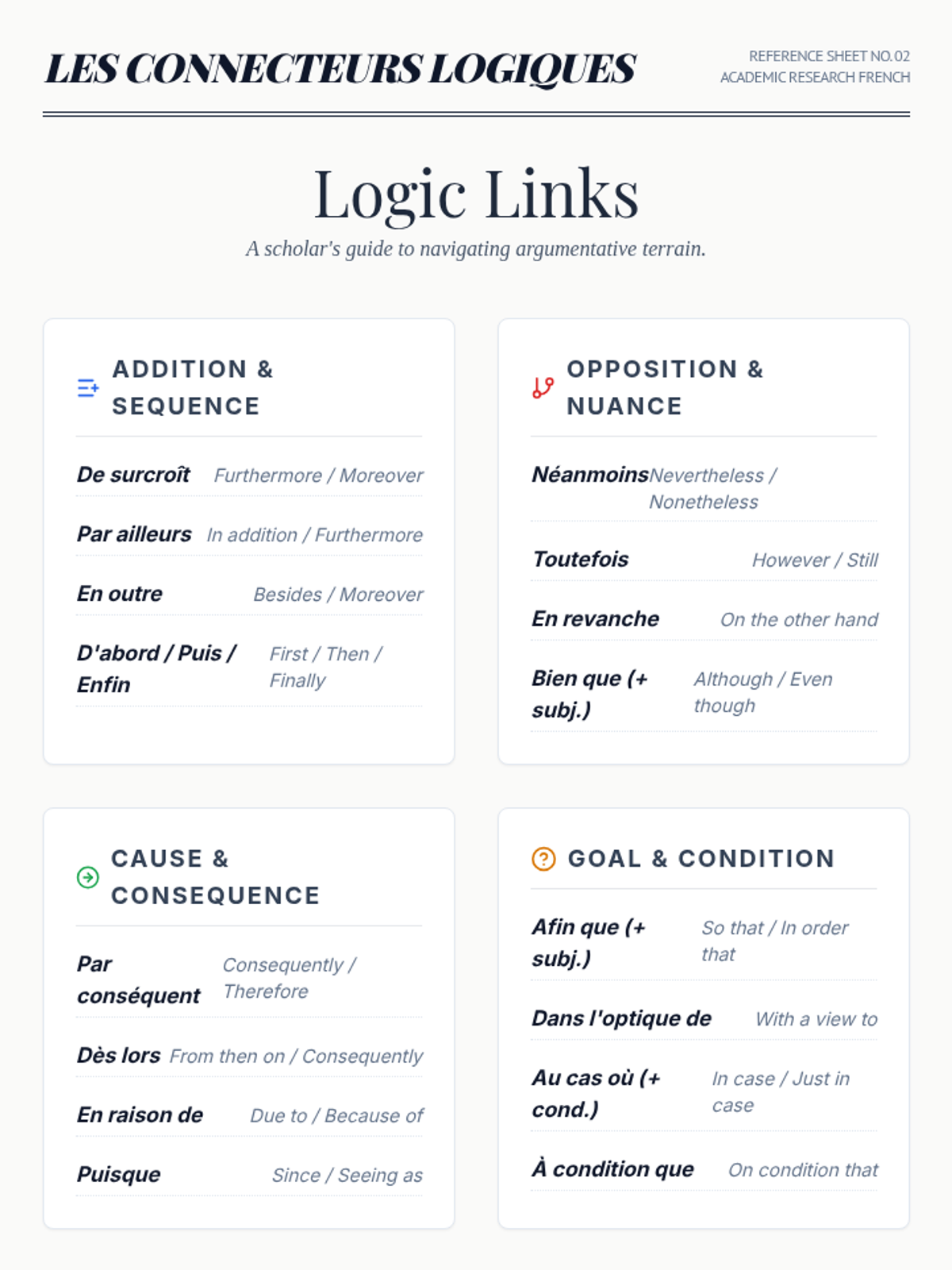
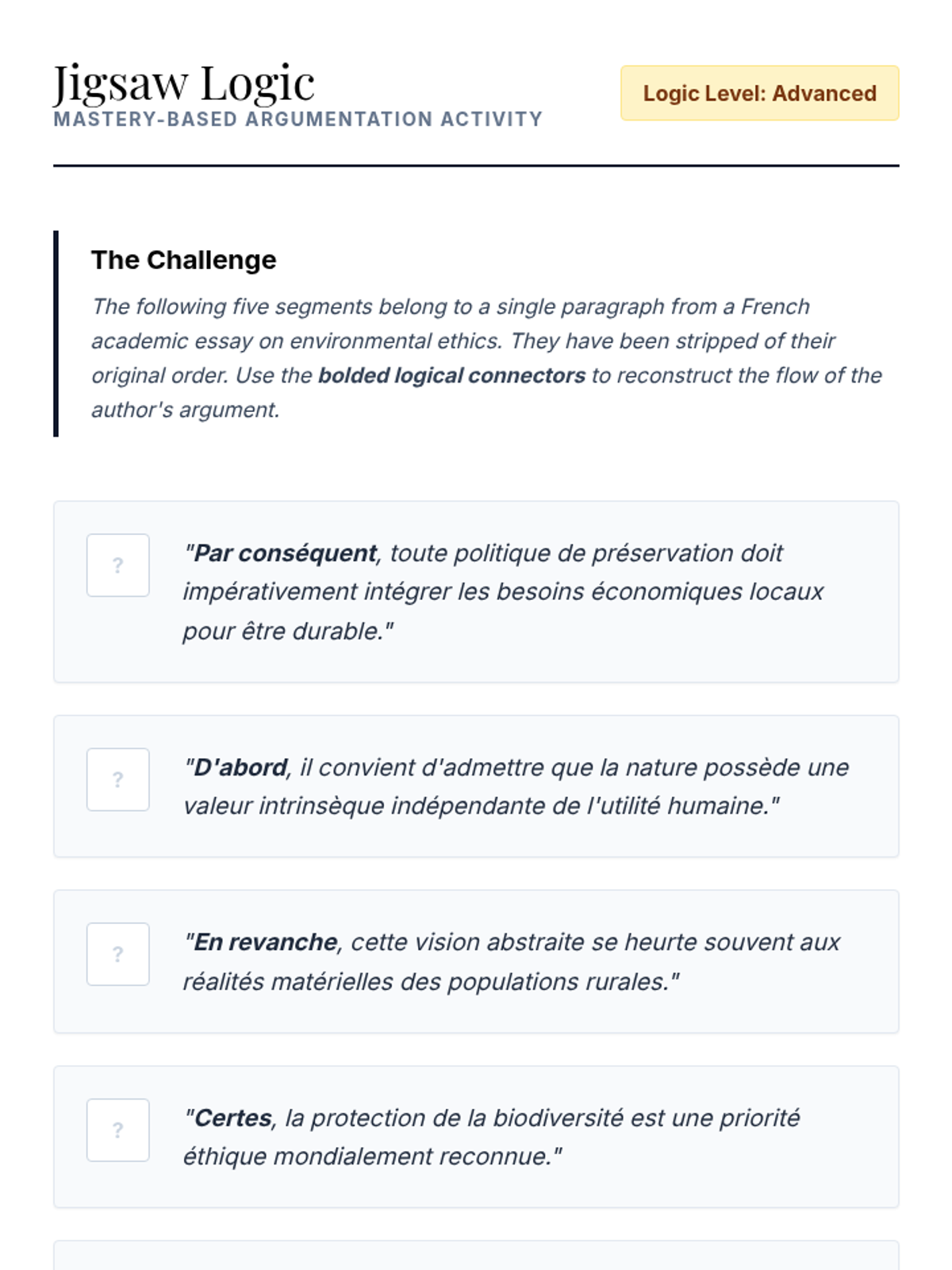
Students analyze logical connectors (les connecteurs logiques) to map out the structure and flow of academic arguments.
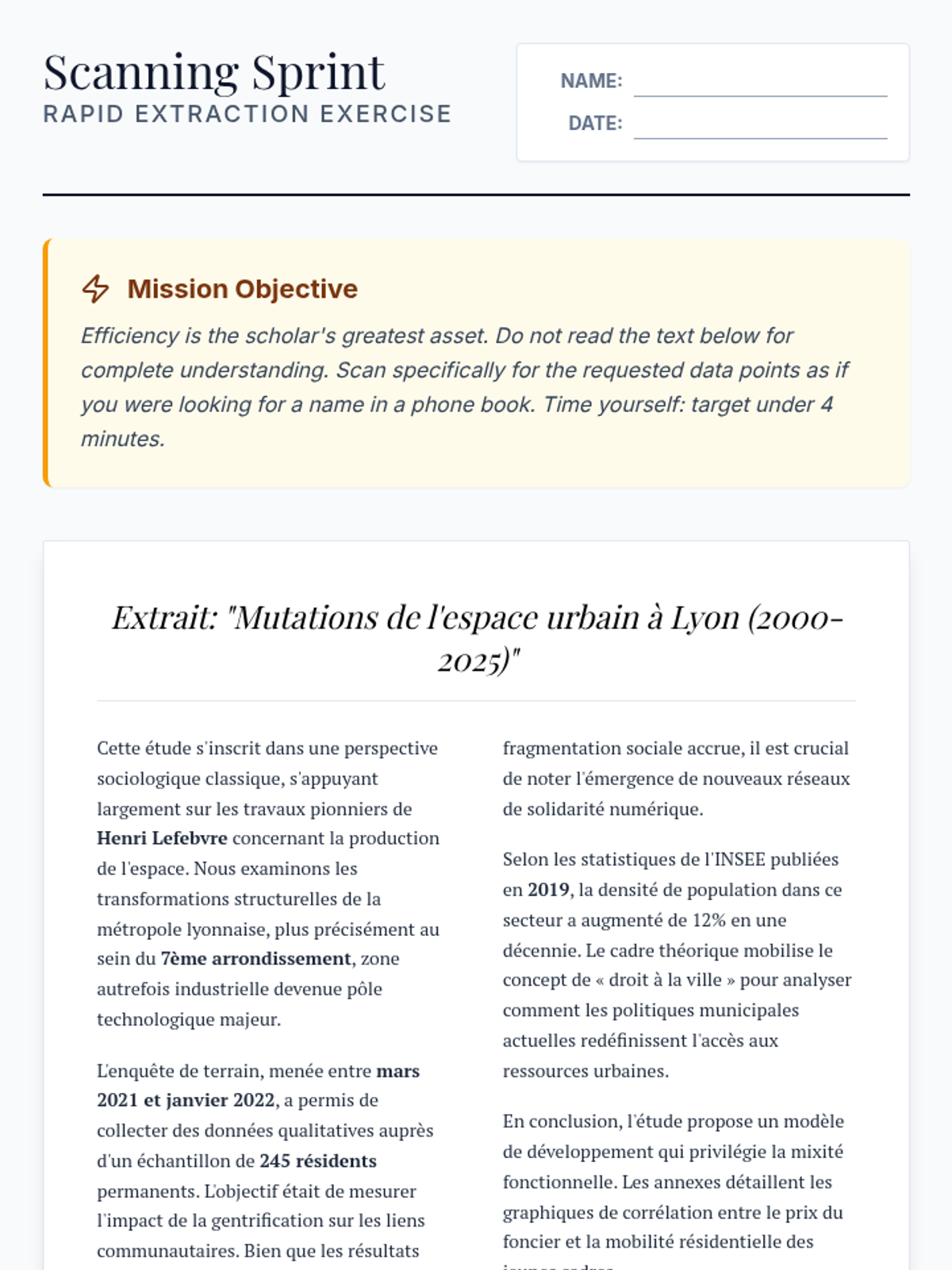
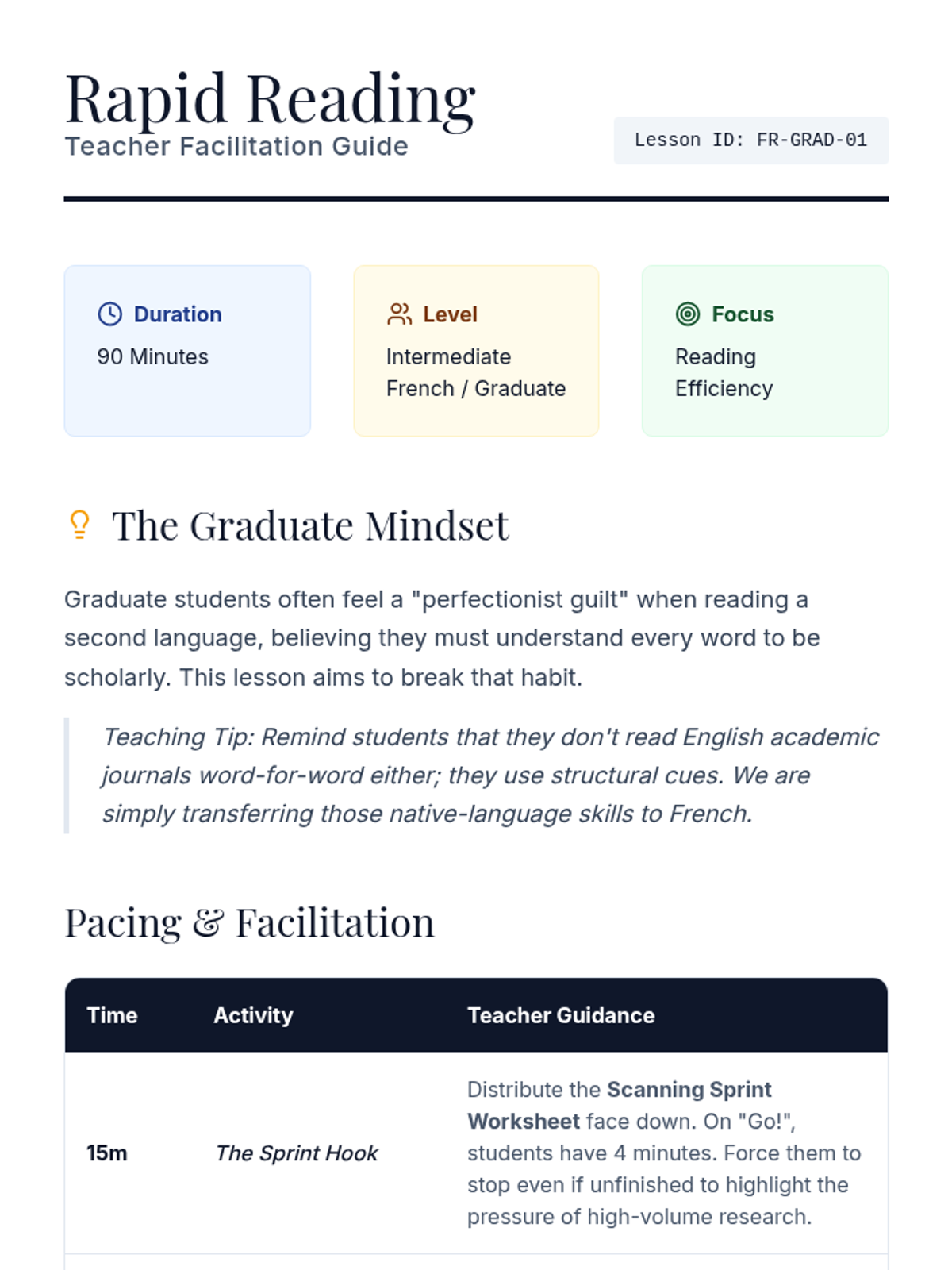
Students practice rapid reading techniques using academic abstracts to identify key terminology and data without getting bogged down in every word.
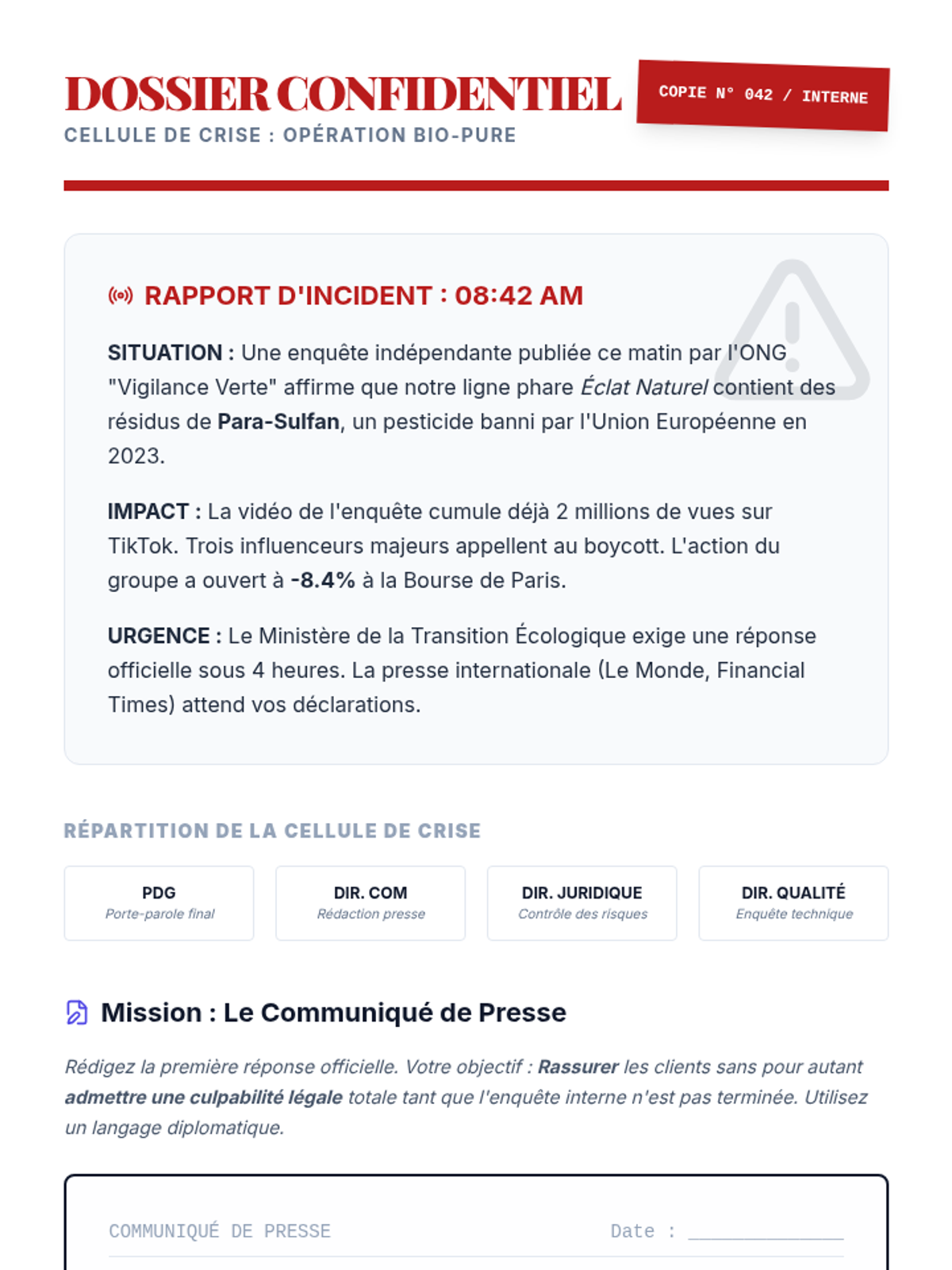
A culminating simulation where students apply diplomatic language and strategic communication to manage a corporate crisis and address the media.
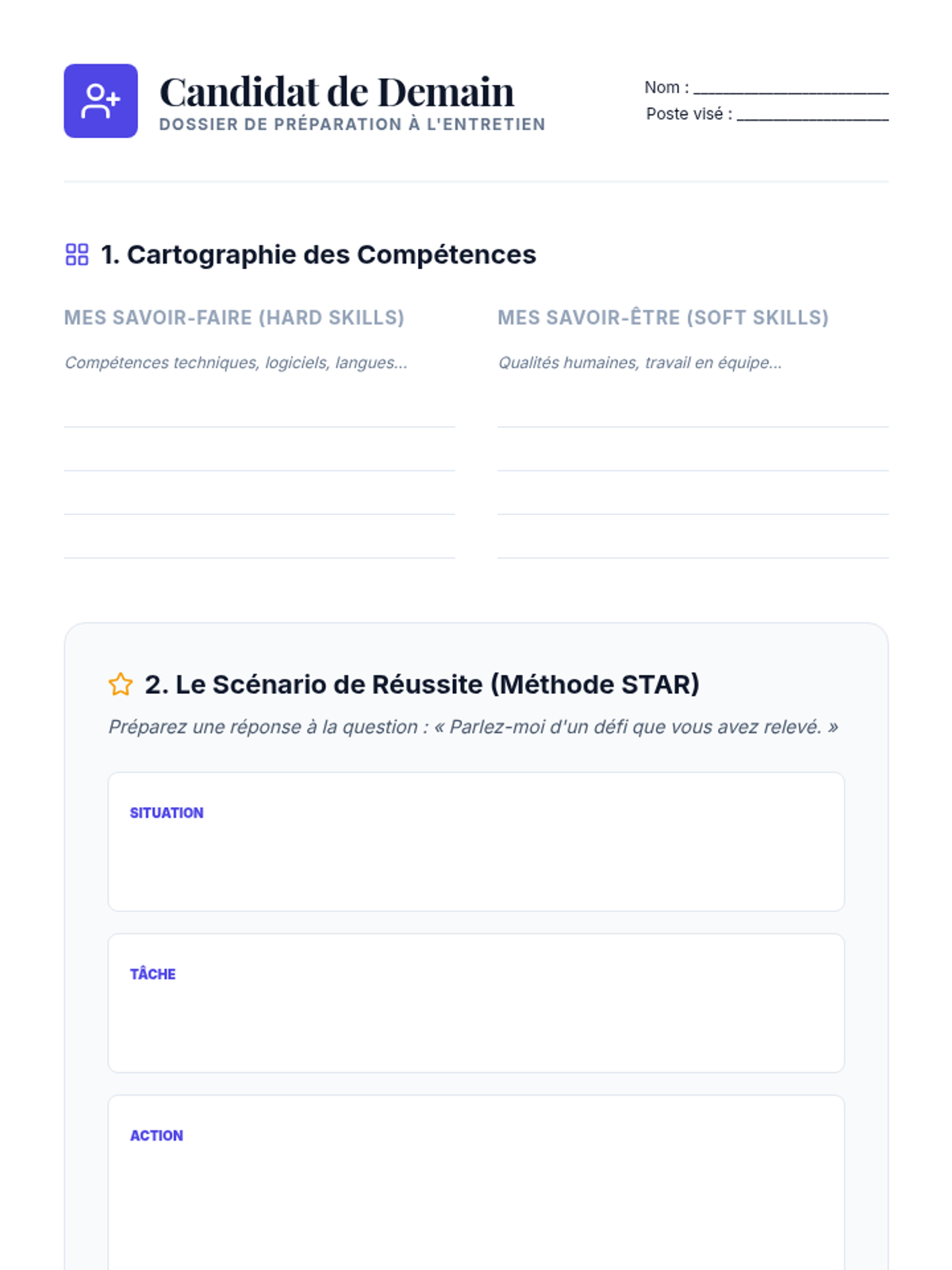
Covers the recruitment process, competency descriptions, and behavioral interview techniques in a Francophone professional context.
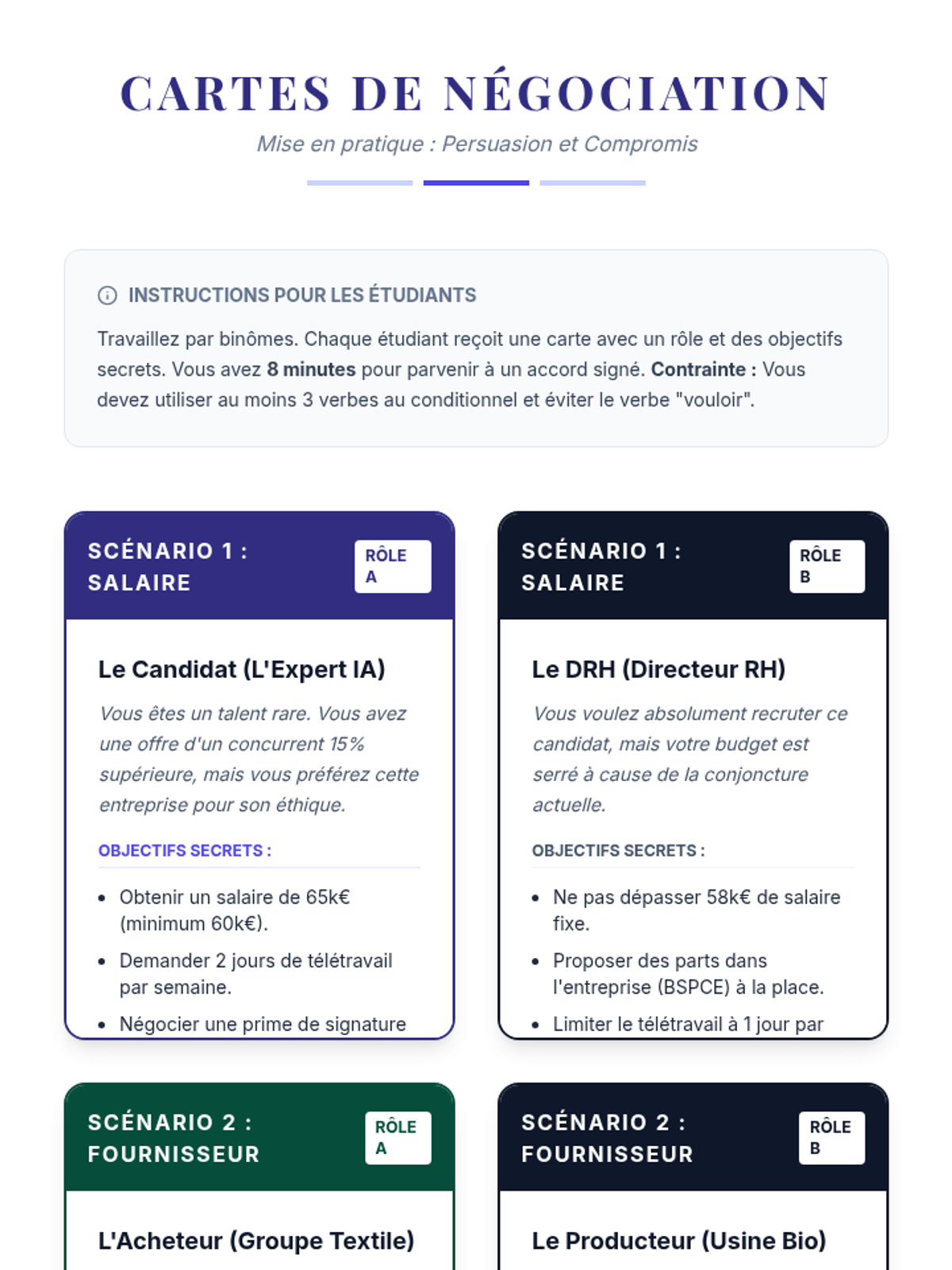
Explores the language of persuasion and bargaining, emphasizing the use of the conditional mood to maintain professional politeness during high-stakes negotiations.
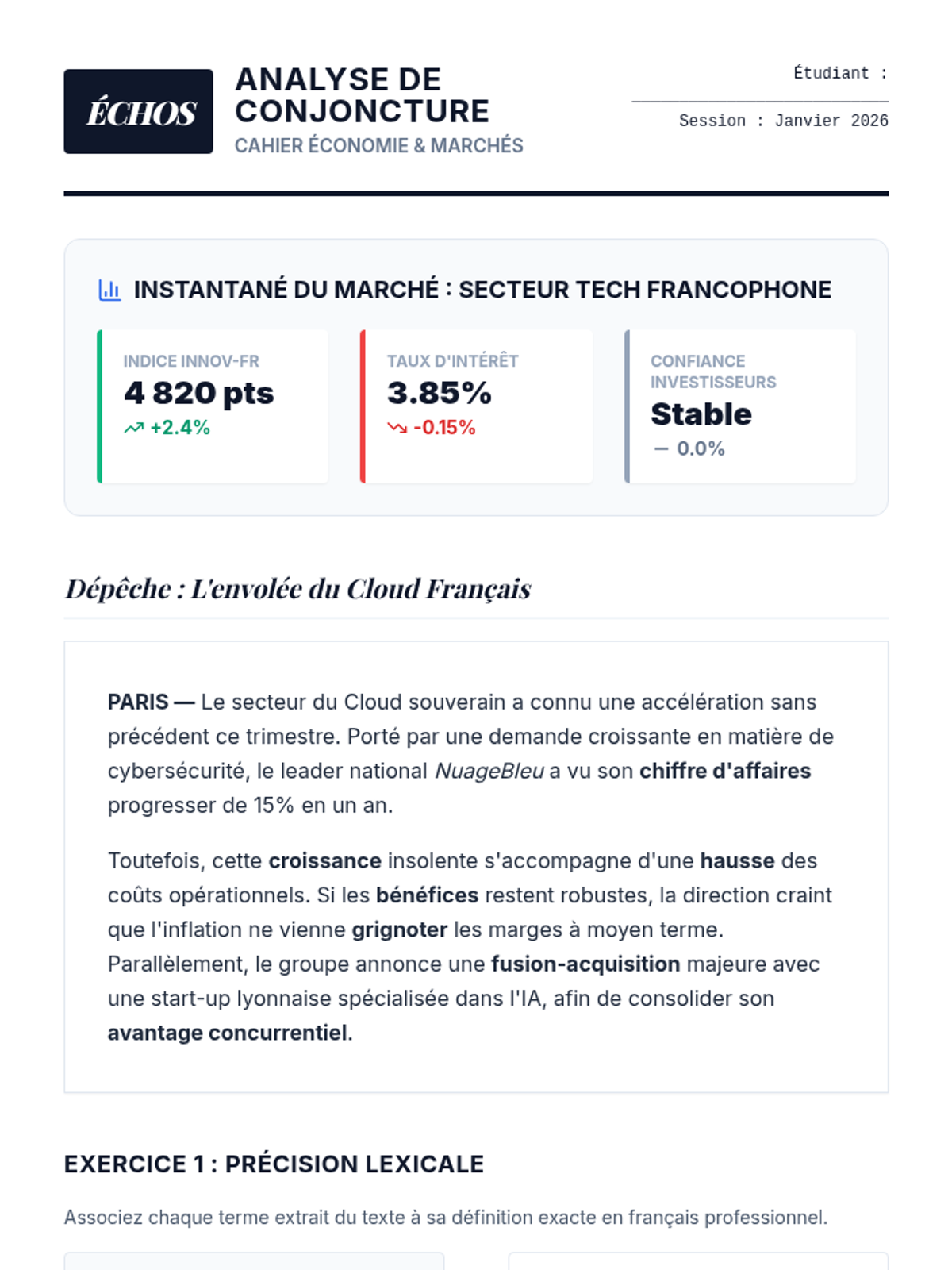
Focuses on the precise terminology needed to describe economic trends, financial data, and corporate strategy using advanced verbs and adverbs of change.
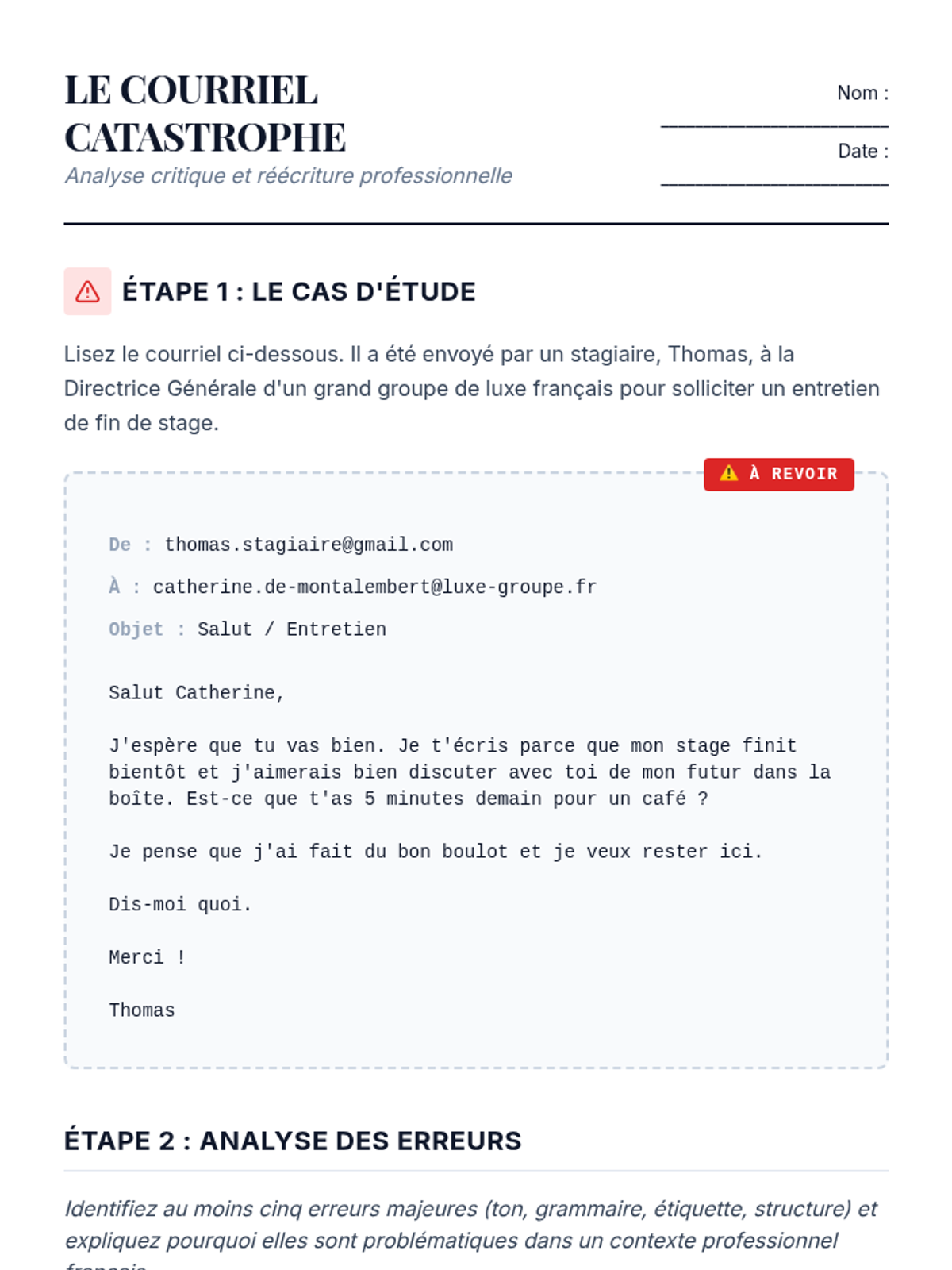
Students master the rigid structures and formal registers required for French professional emails and letters, including essential opening and closing formulas.
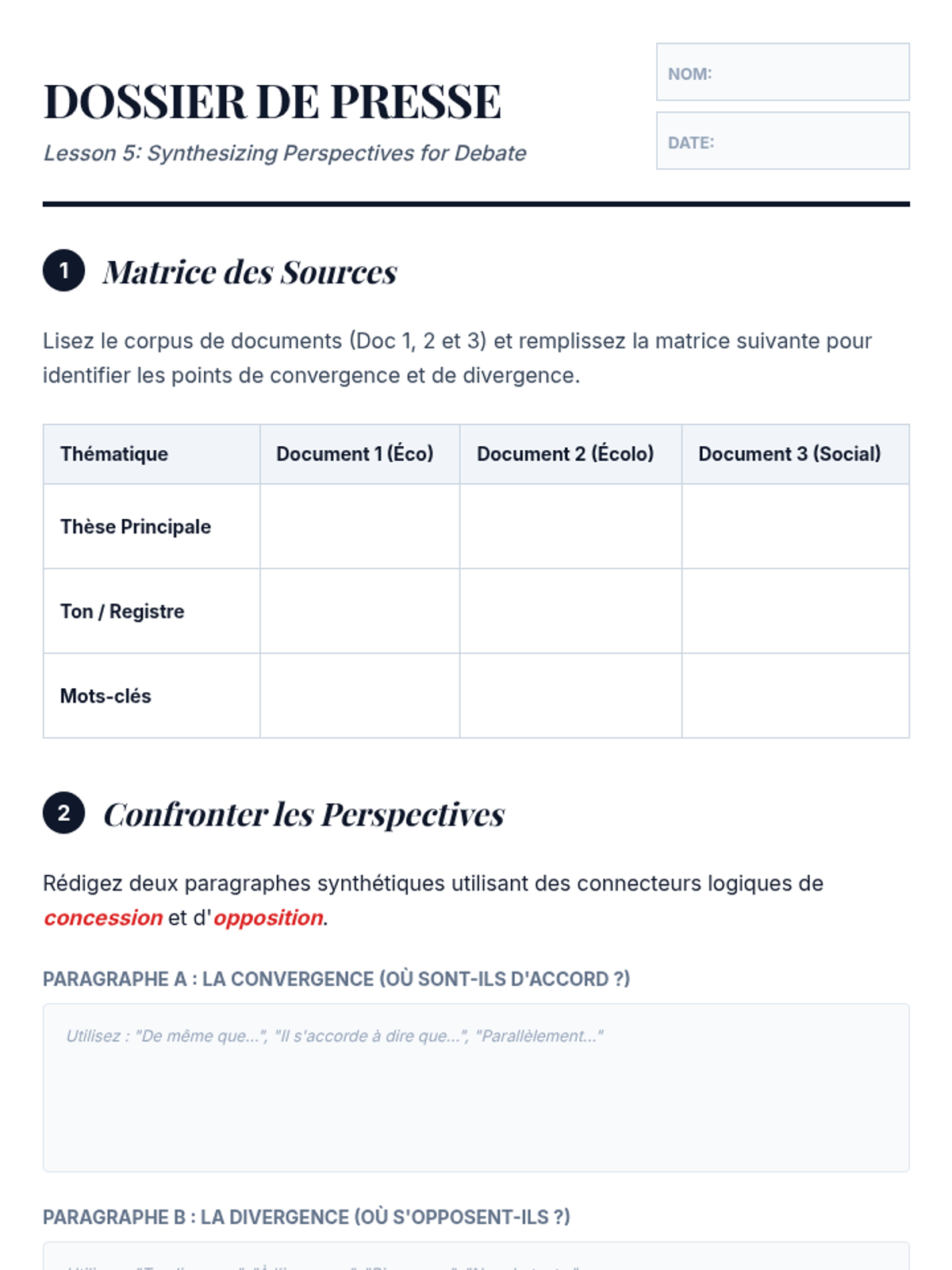
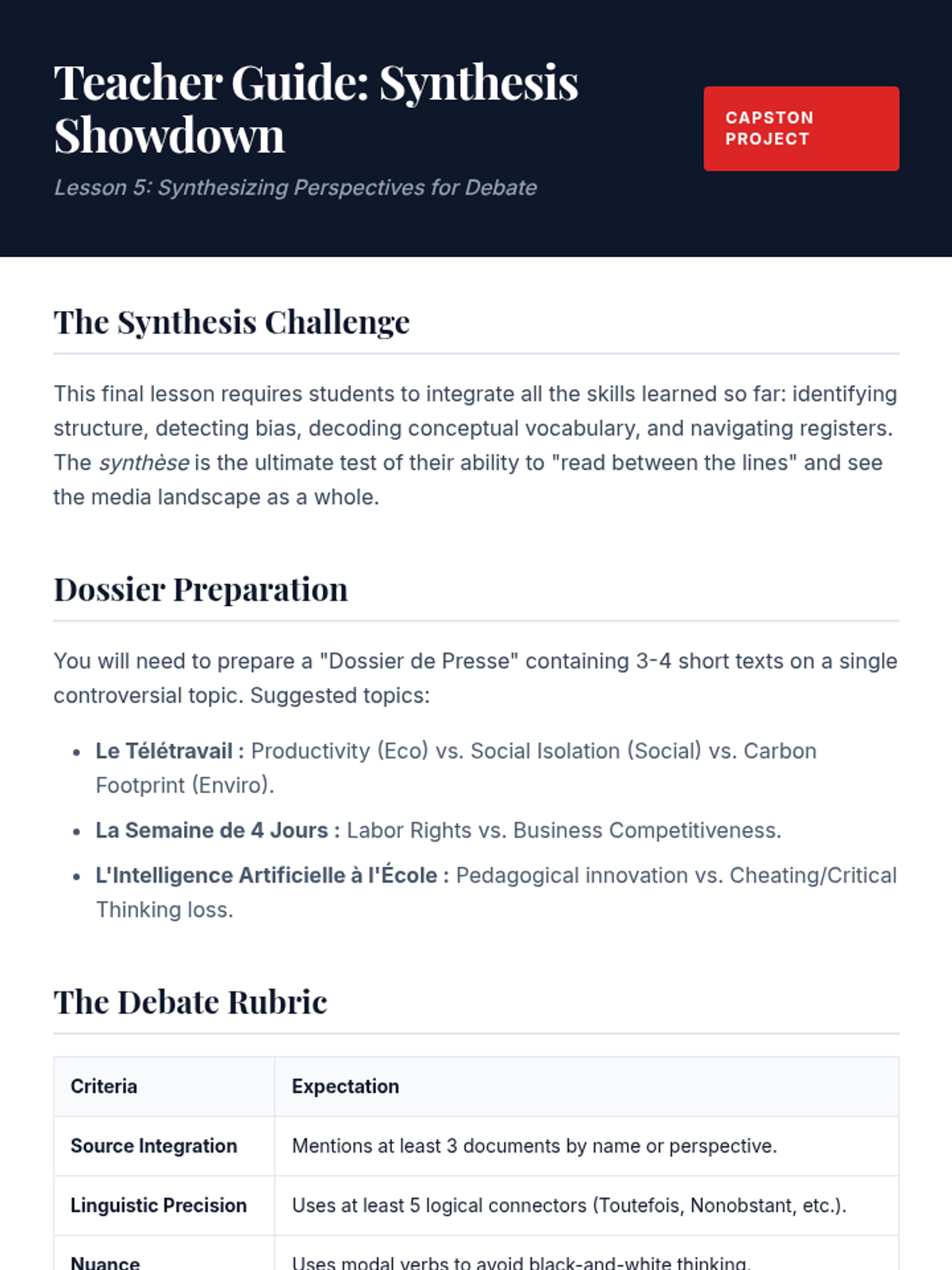
Culminating lesson where students synthesize information from multiple sources to prepare for a debate or written synthesis.
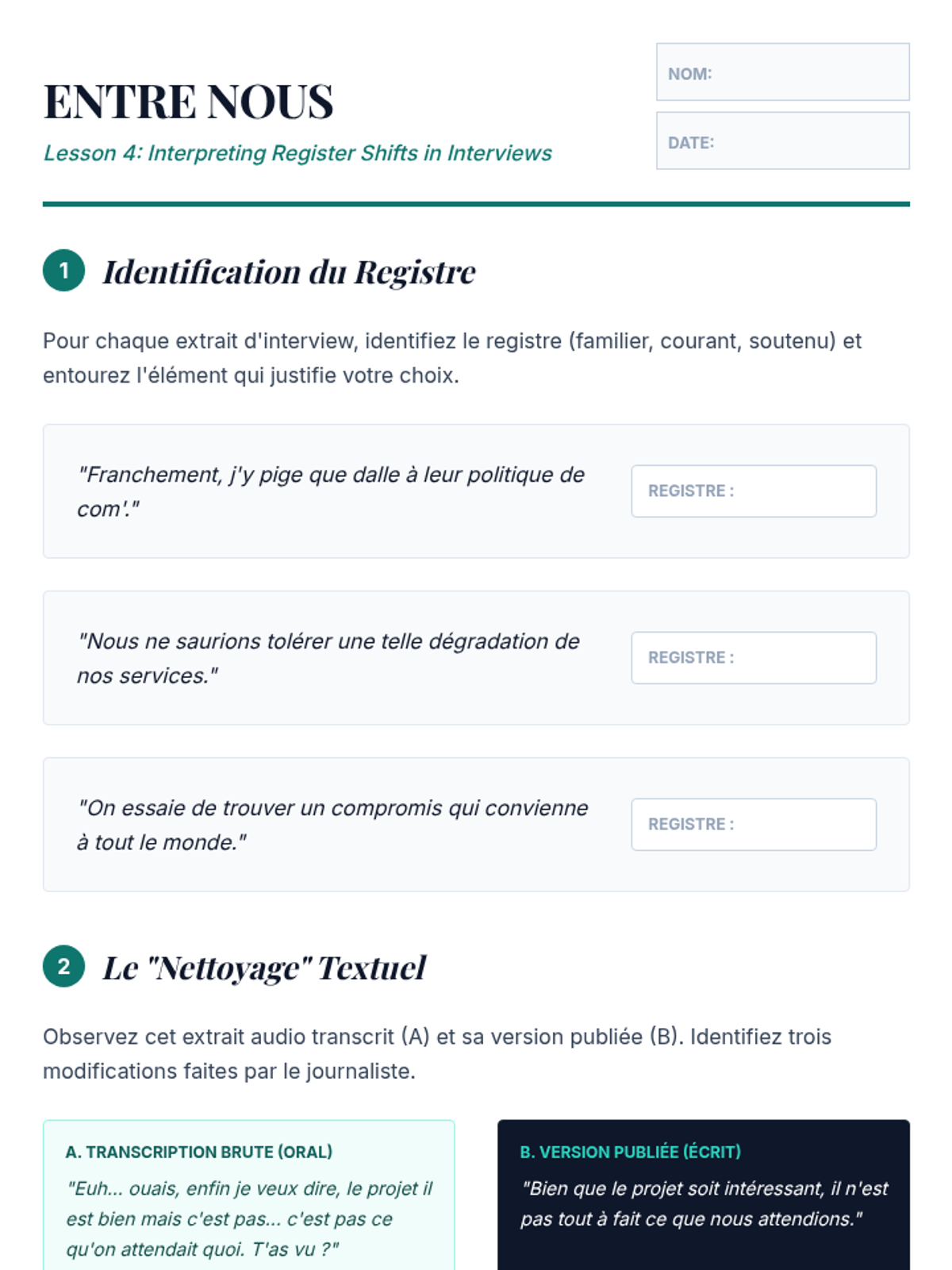
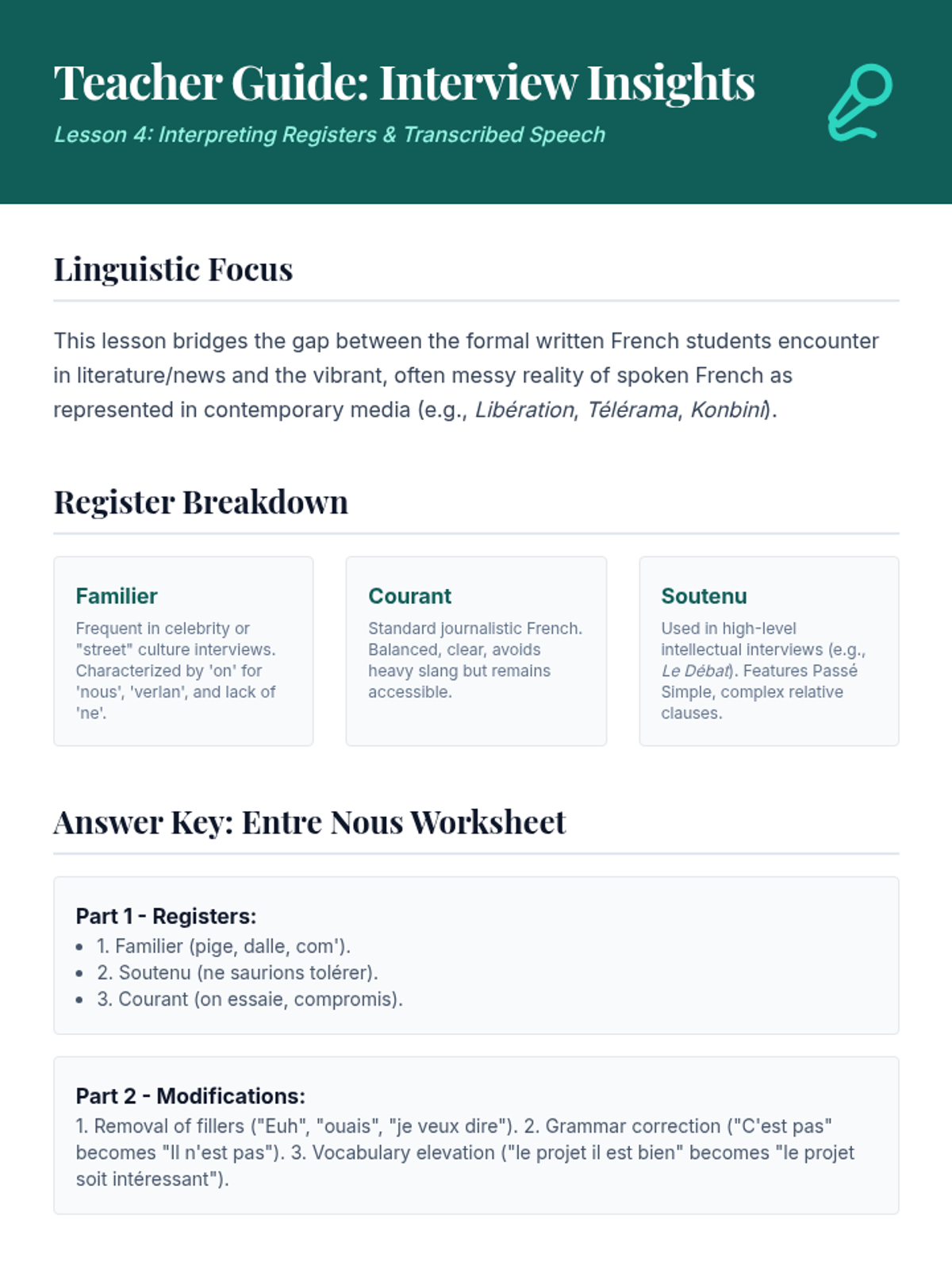
Focuses on reading interviews and transcribed speech, identifying register shifts and the representation of spoken French.
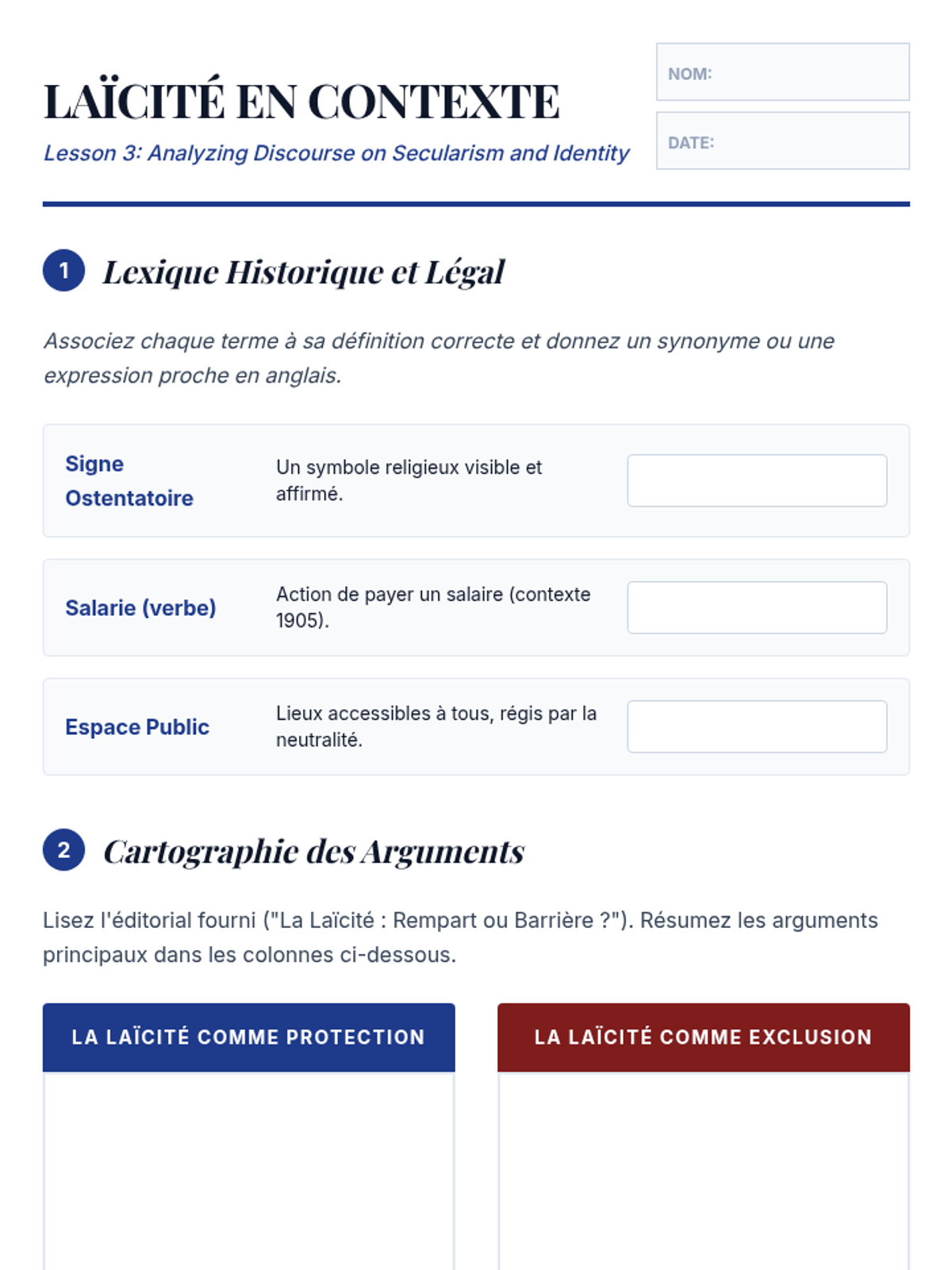
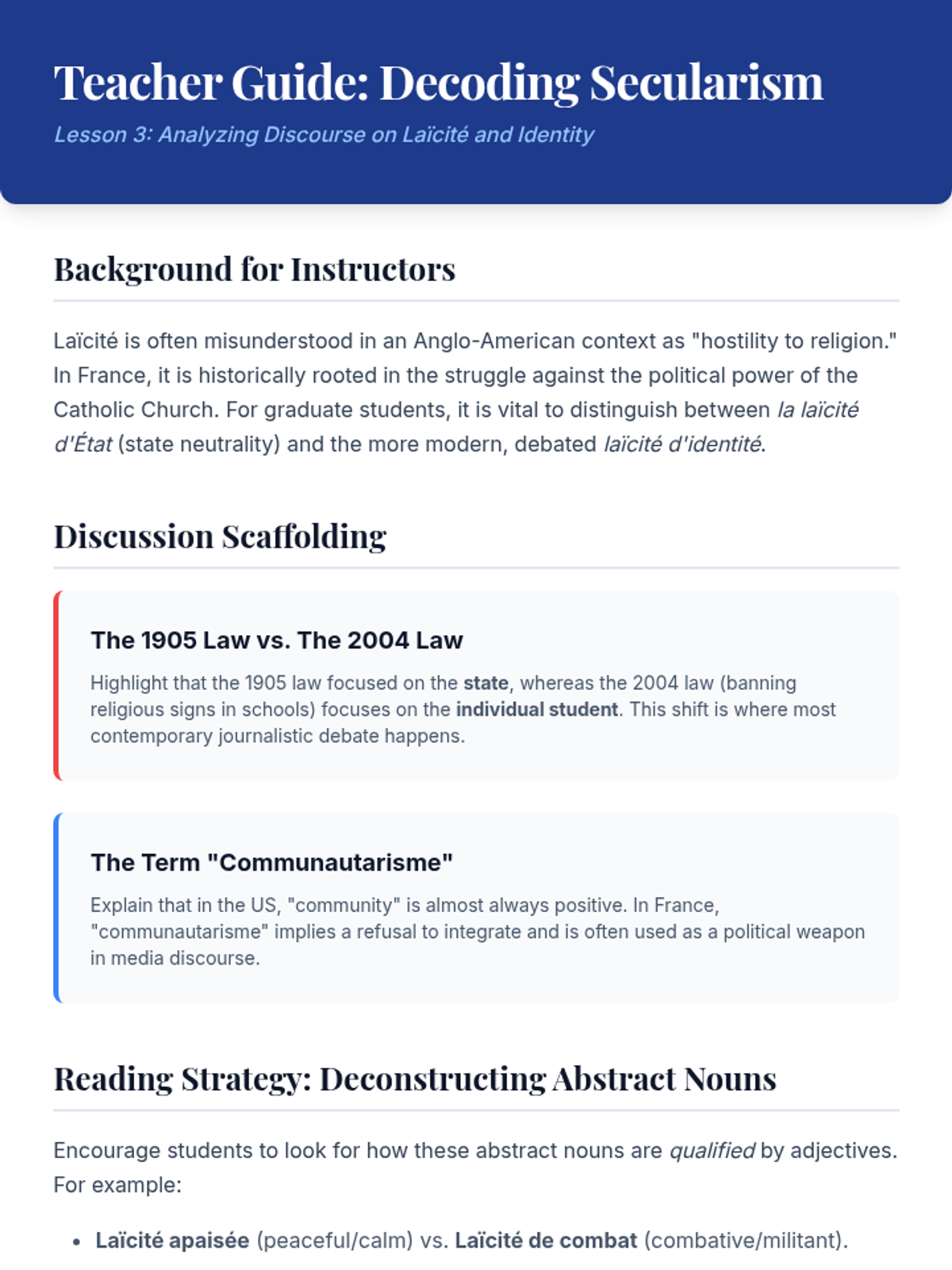
Students read complex texts regarding the French concept of secularism, decoding historical and legal vocabulary.
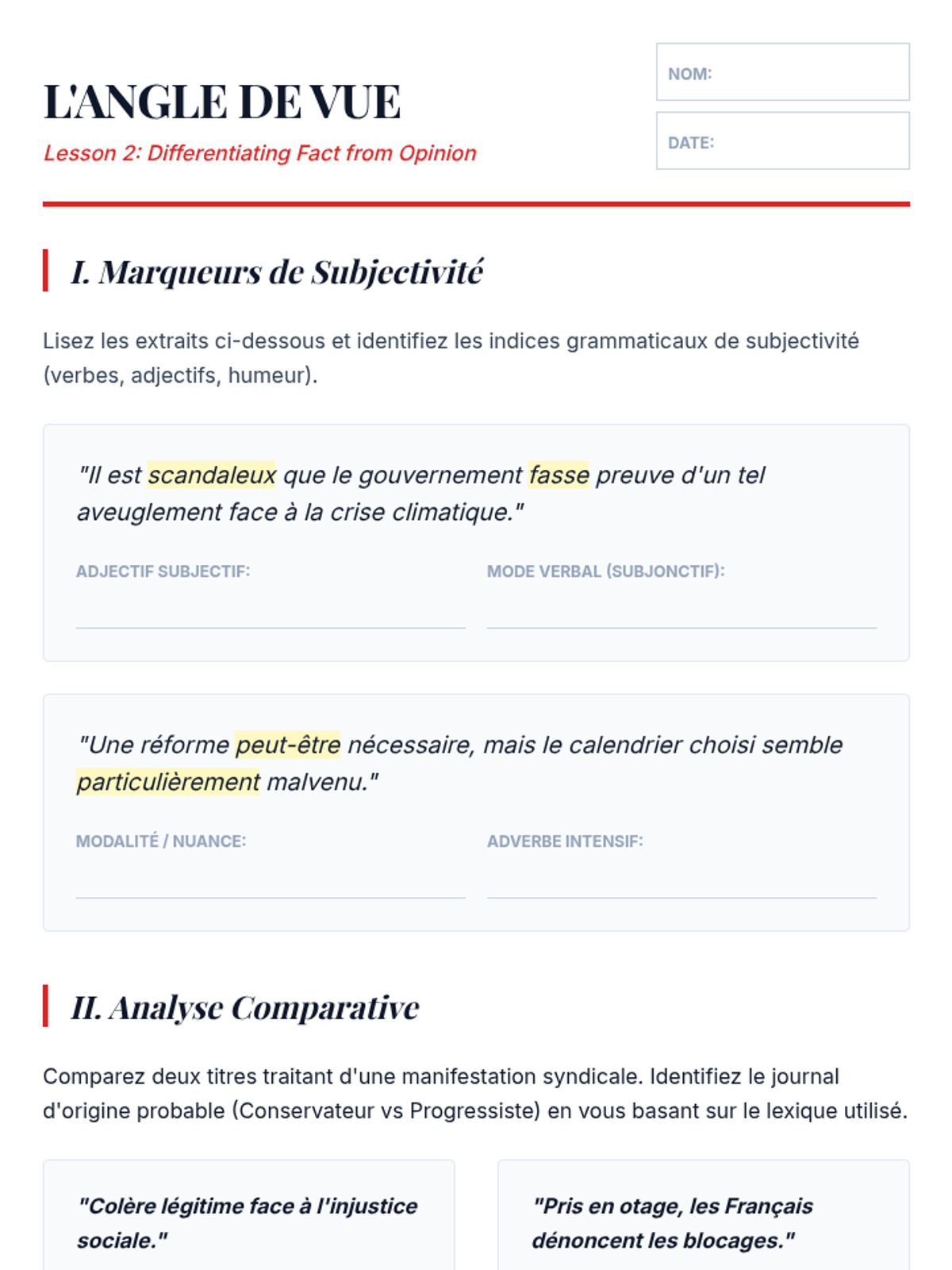
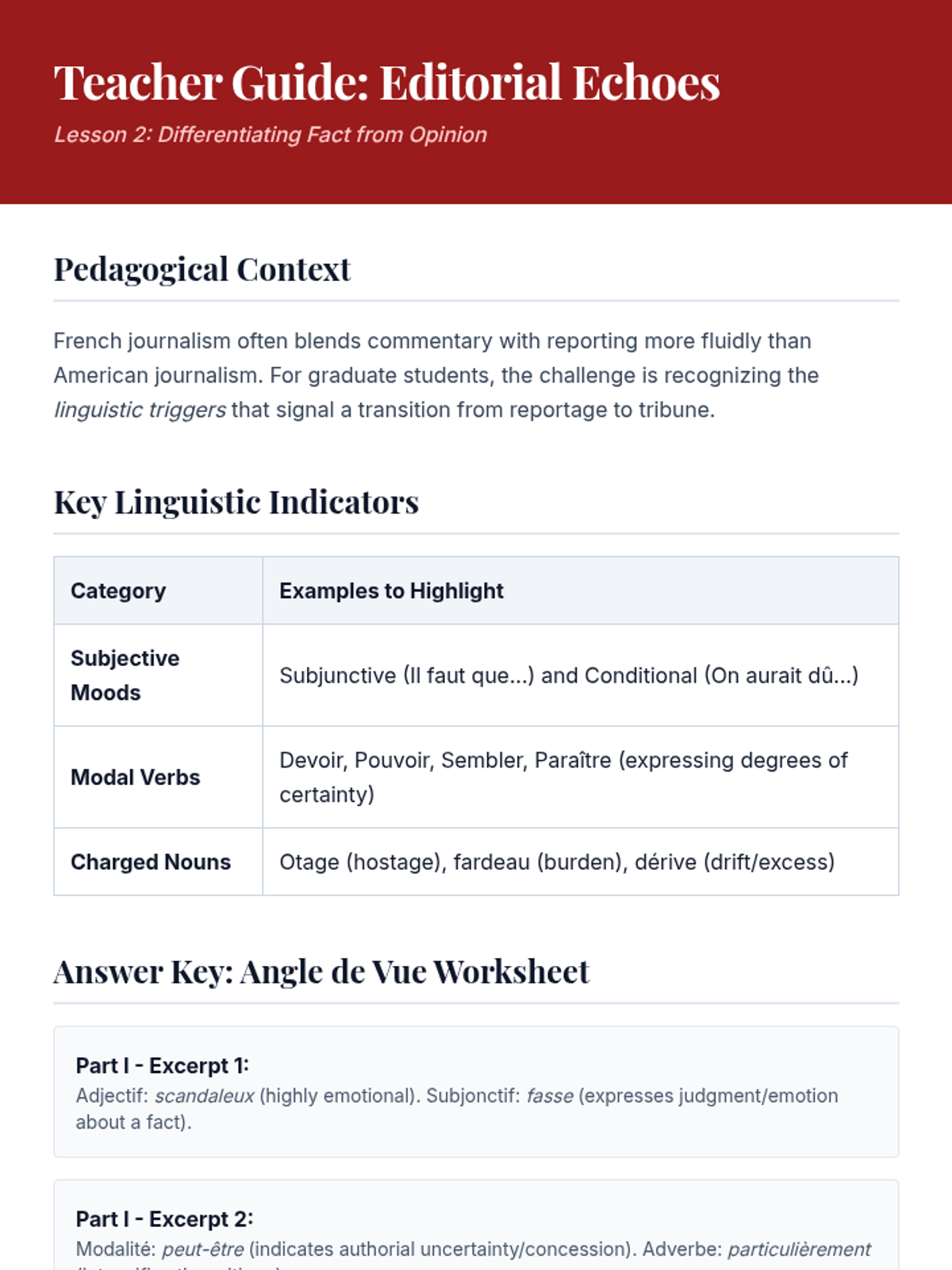
Learners examine 'les tribunes' (op-eds) to distinguish objective reporting from subjective argumentation through linguistic markers.
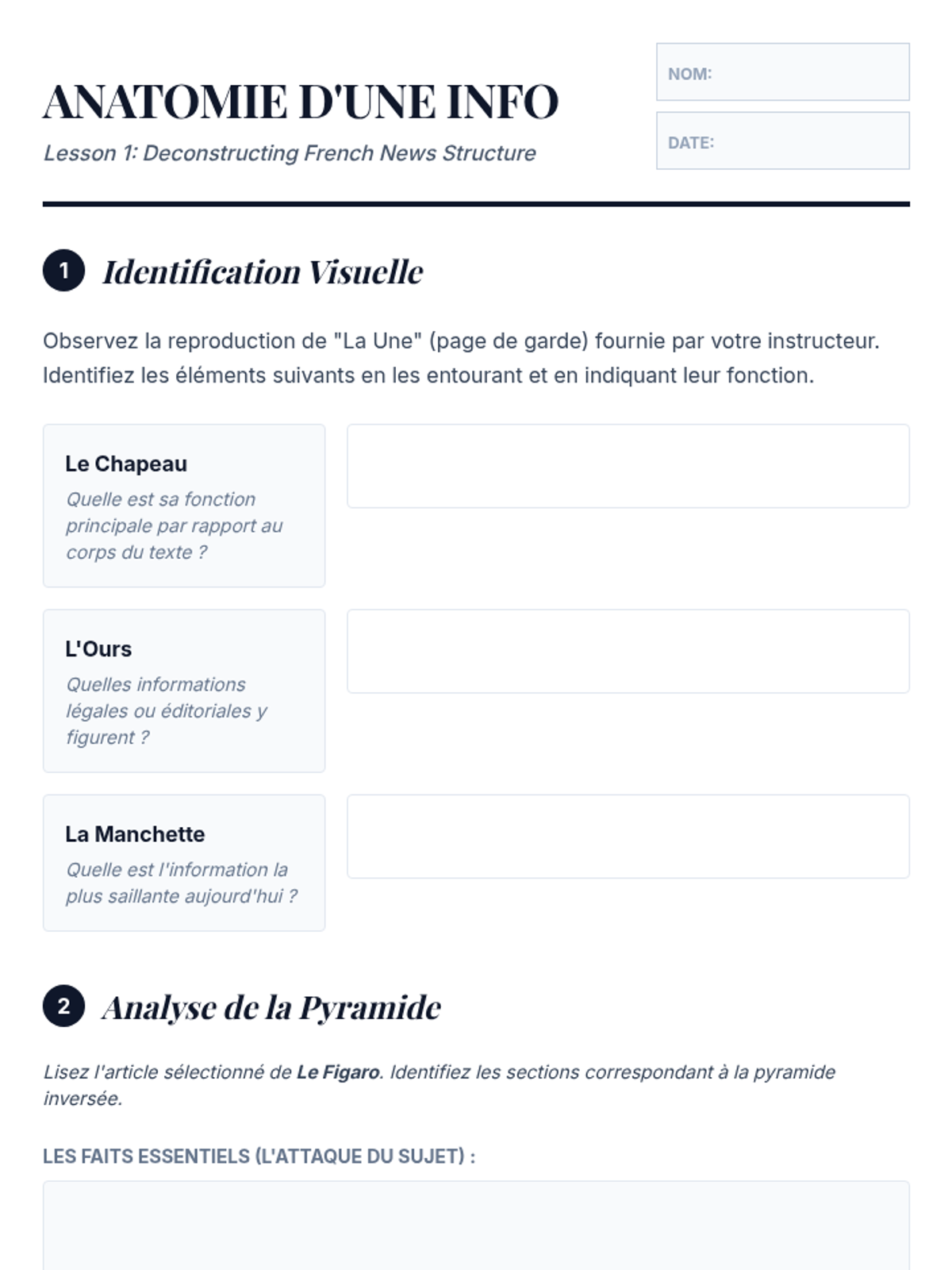
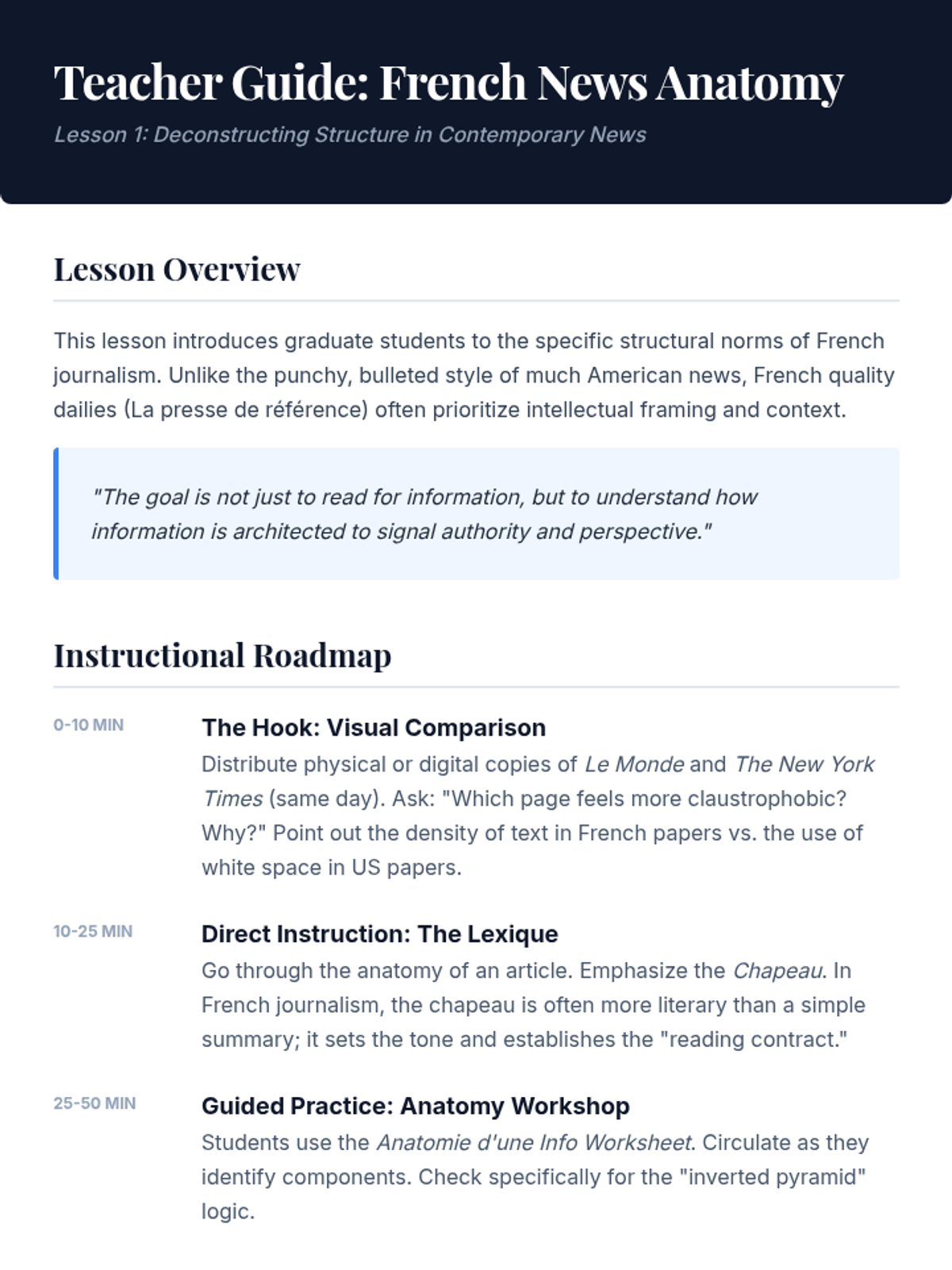
Students analyze the layout and structural components of articles from major newspapers like Le Monde and Le Figaro, identifying the 'chapeau' and inverted pyramid structure.
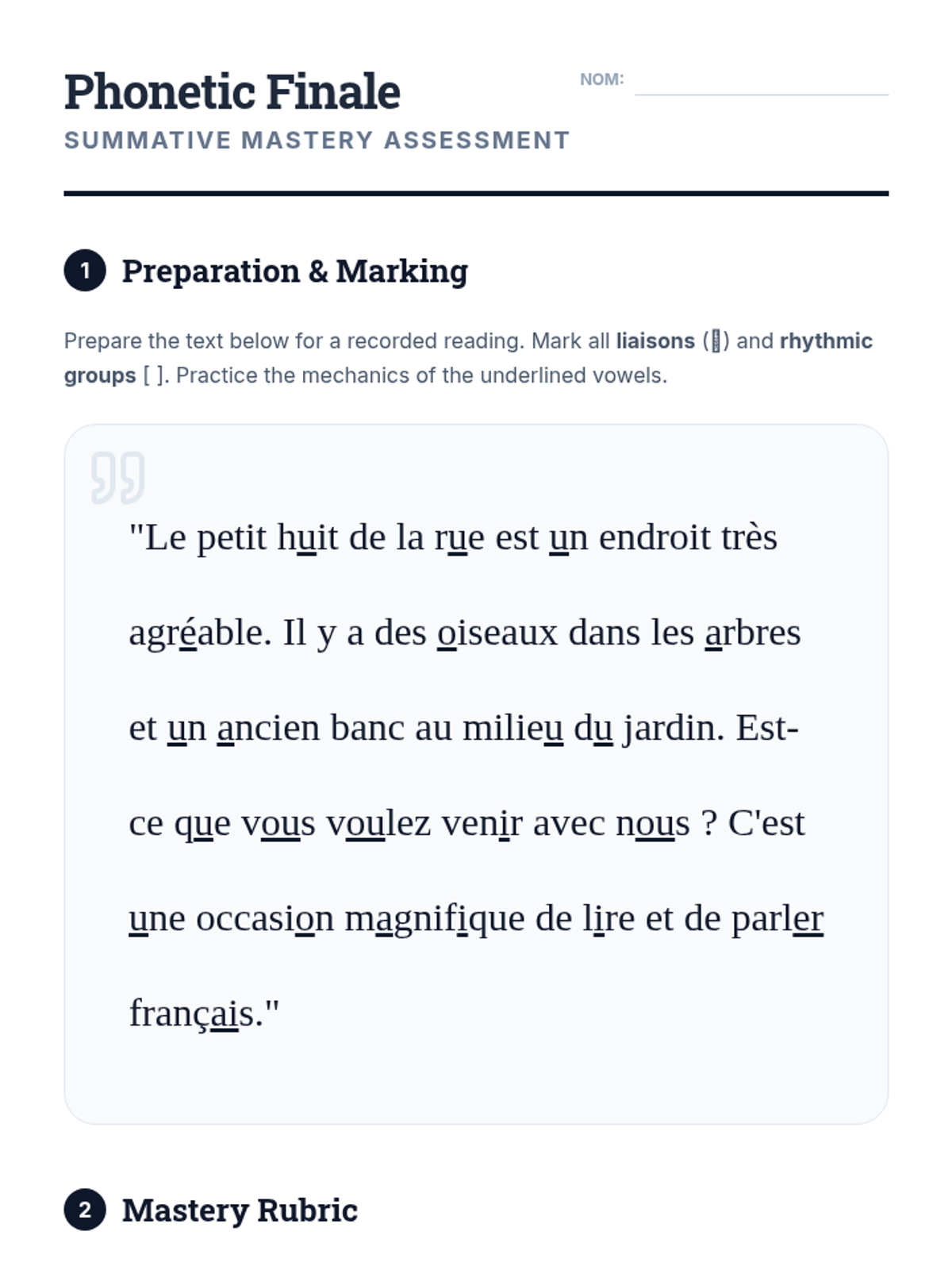
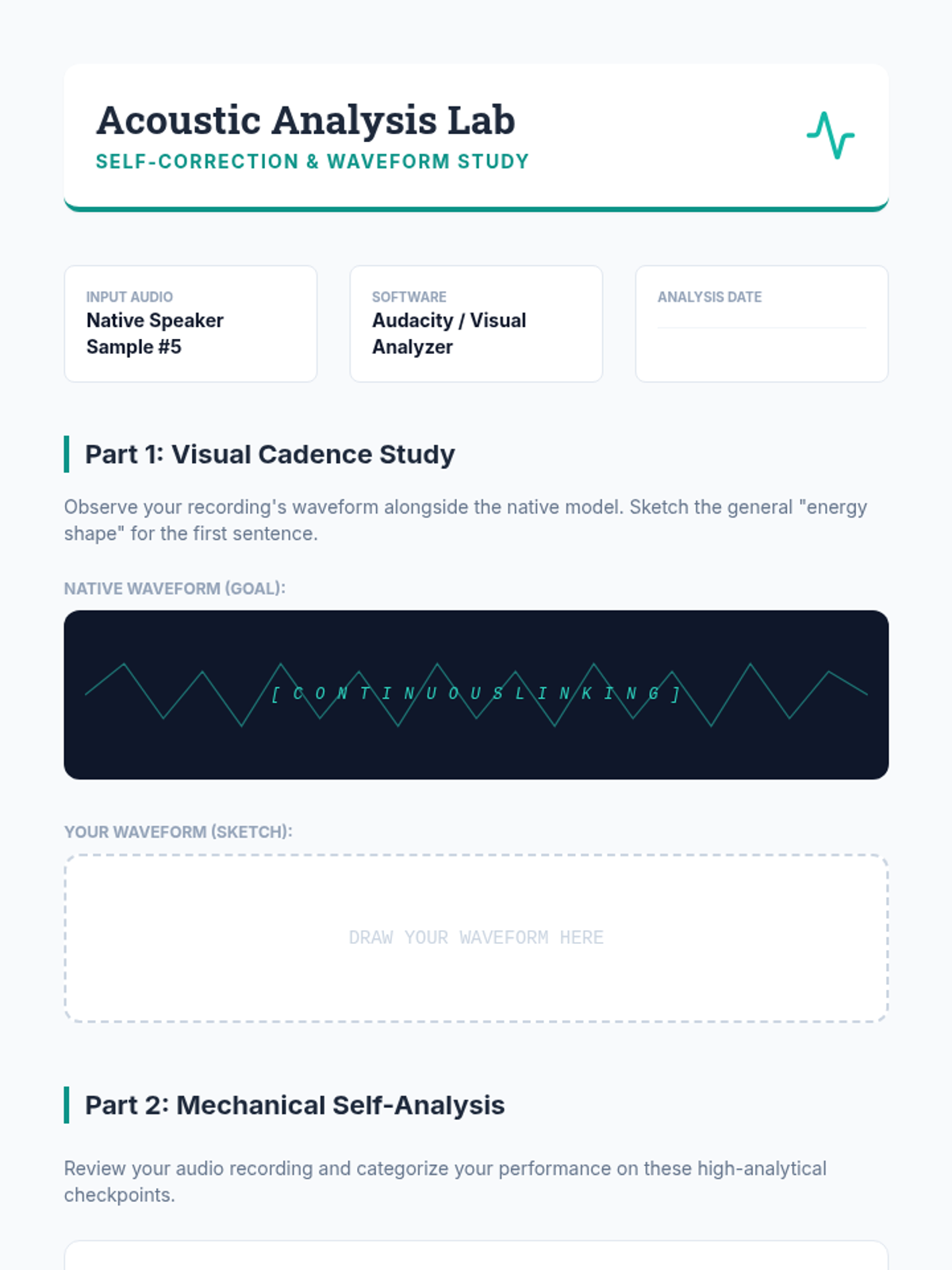
The culmination of the sequence where students use shadowing techniques to internalize native speed. They perform a final reading assessment and conduct a self-analysis of their recording.
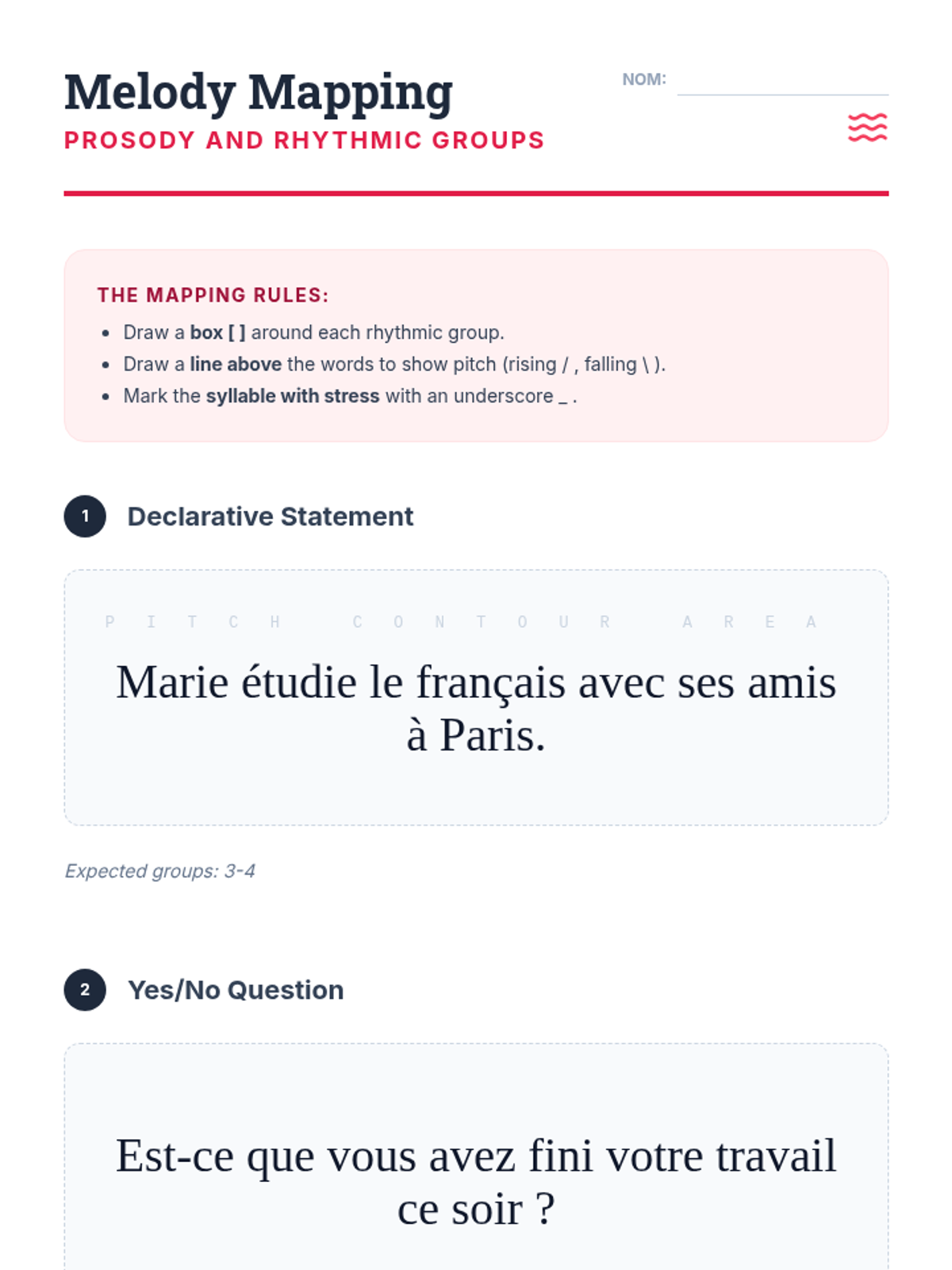
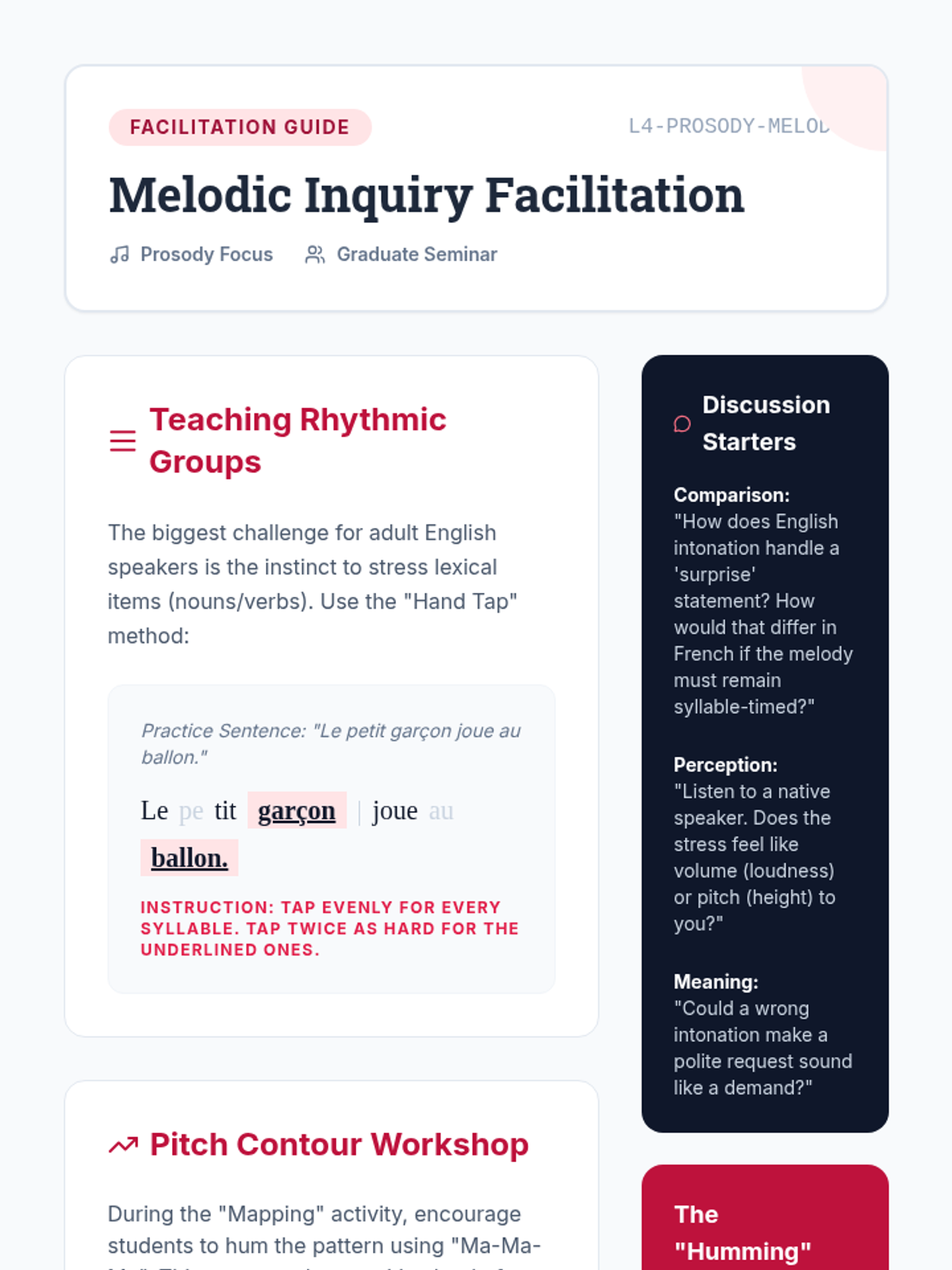
Study of French prosody, focusing on the rise and fall of pitch in statements versus questions. Students map pitch contours and practice rhythmic grouping.
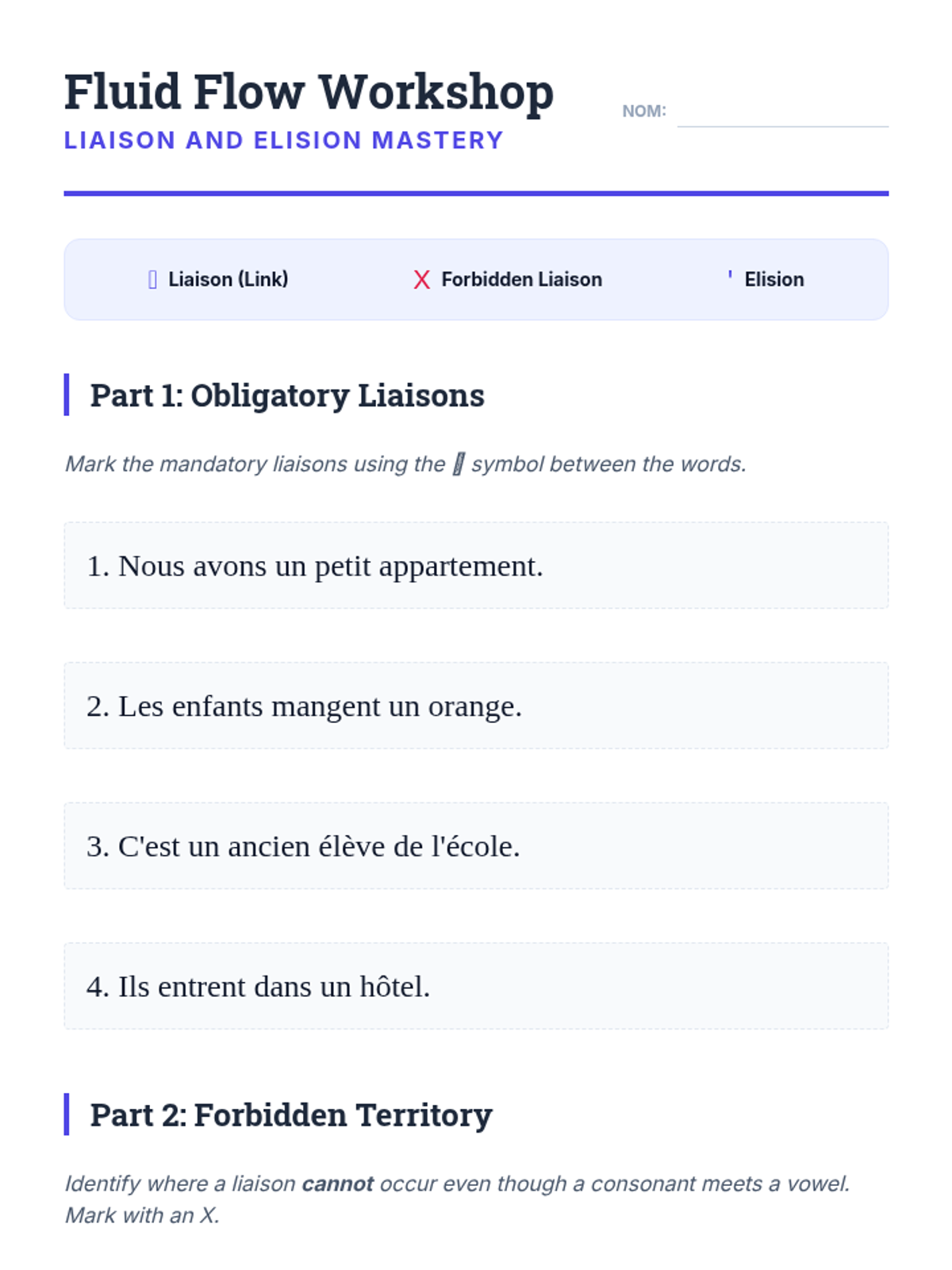
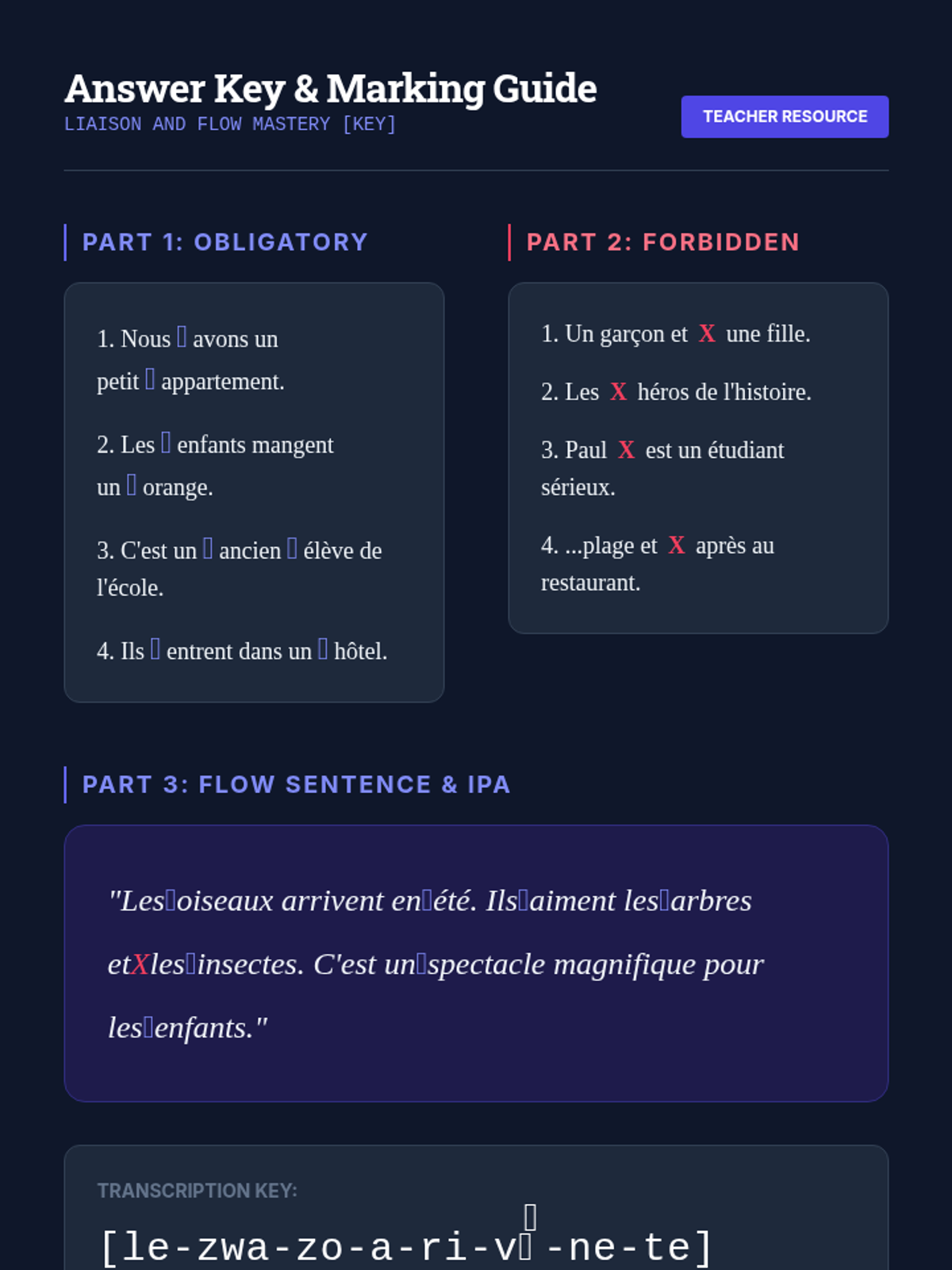
Exploration of the rules governing liaison and elision to achieve the characteristic fluid sound of French. Students practice marking and executing word connections.
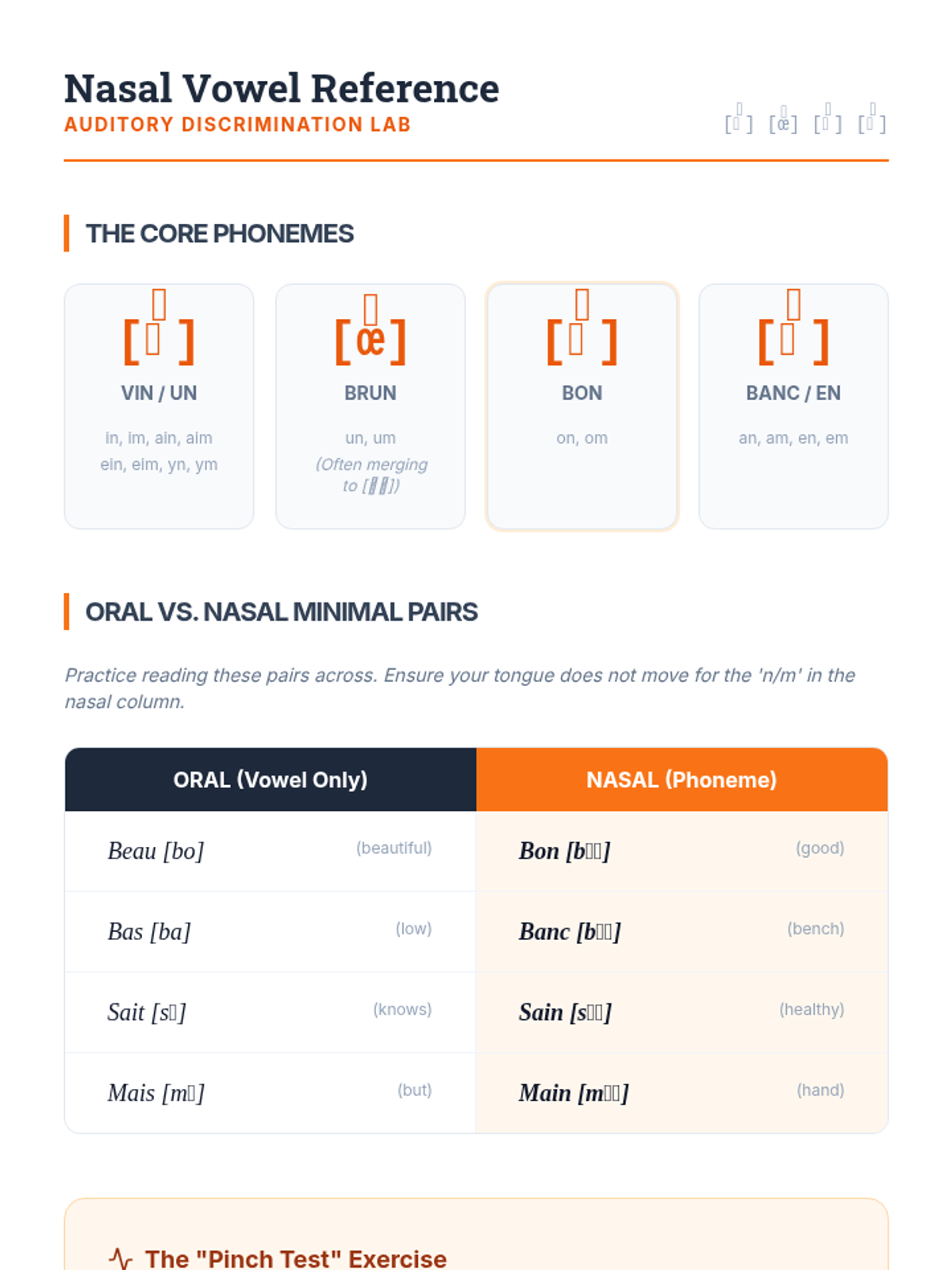
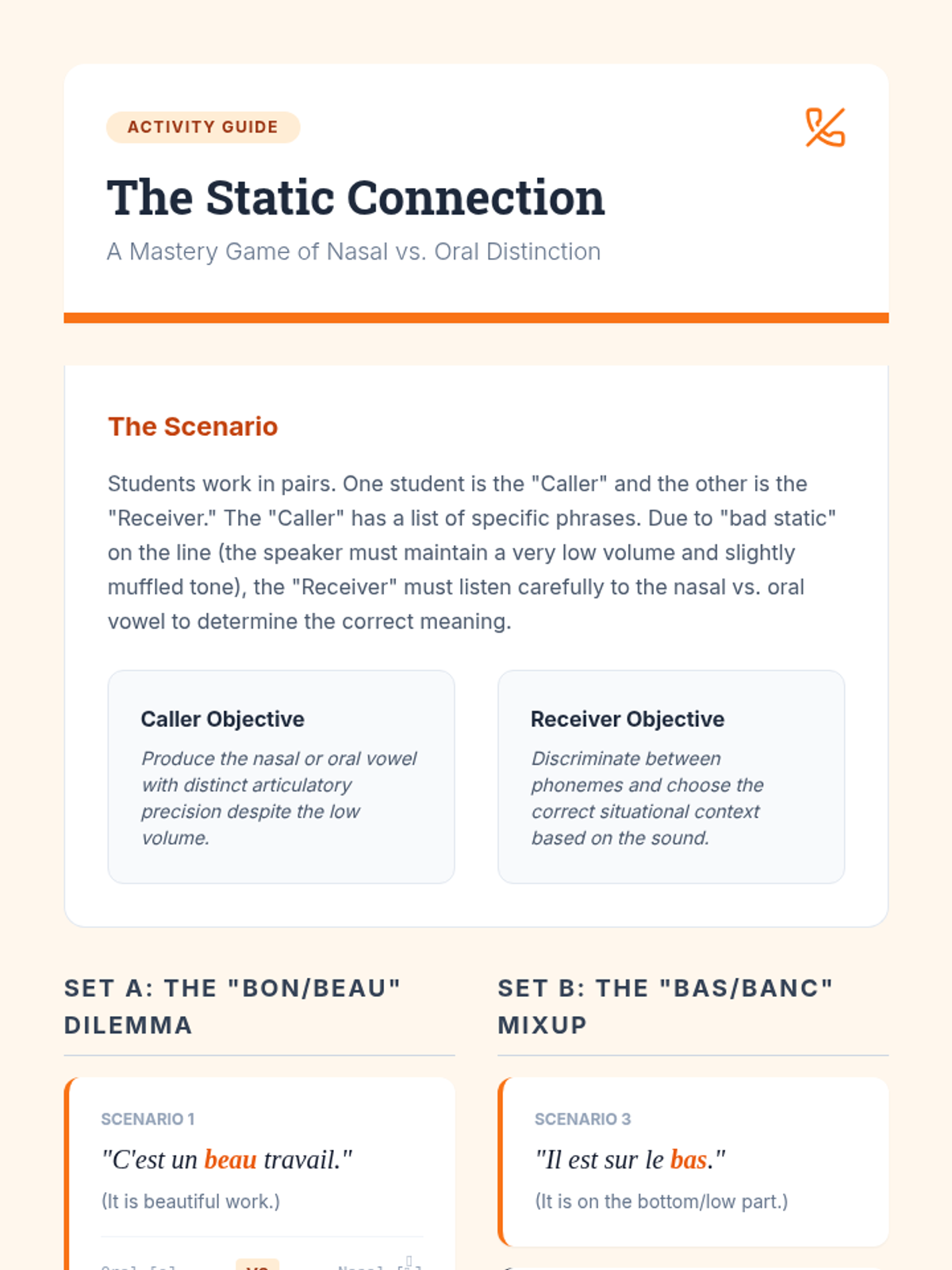
A deep dive into the four primary nasal vowels of French. Students learn to control airflow and distinguish nasal sounds through minimal pair exercises.
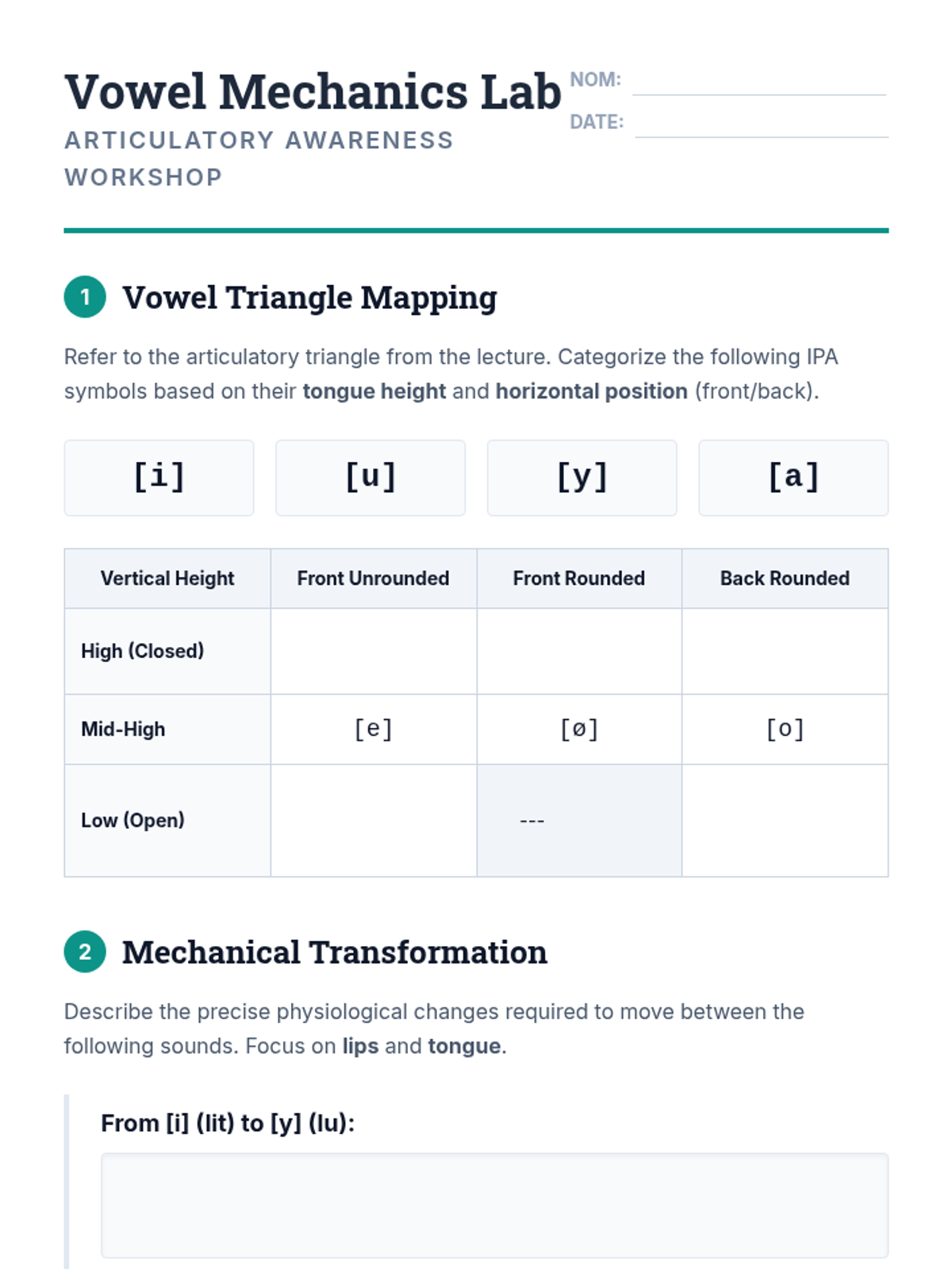
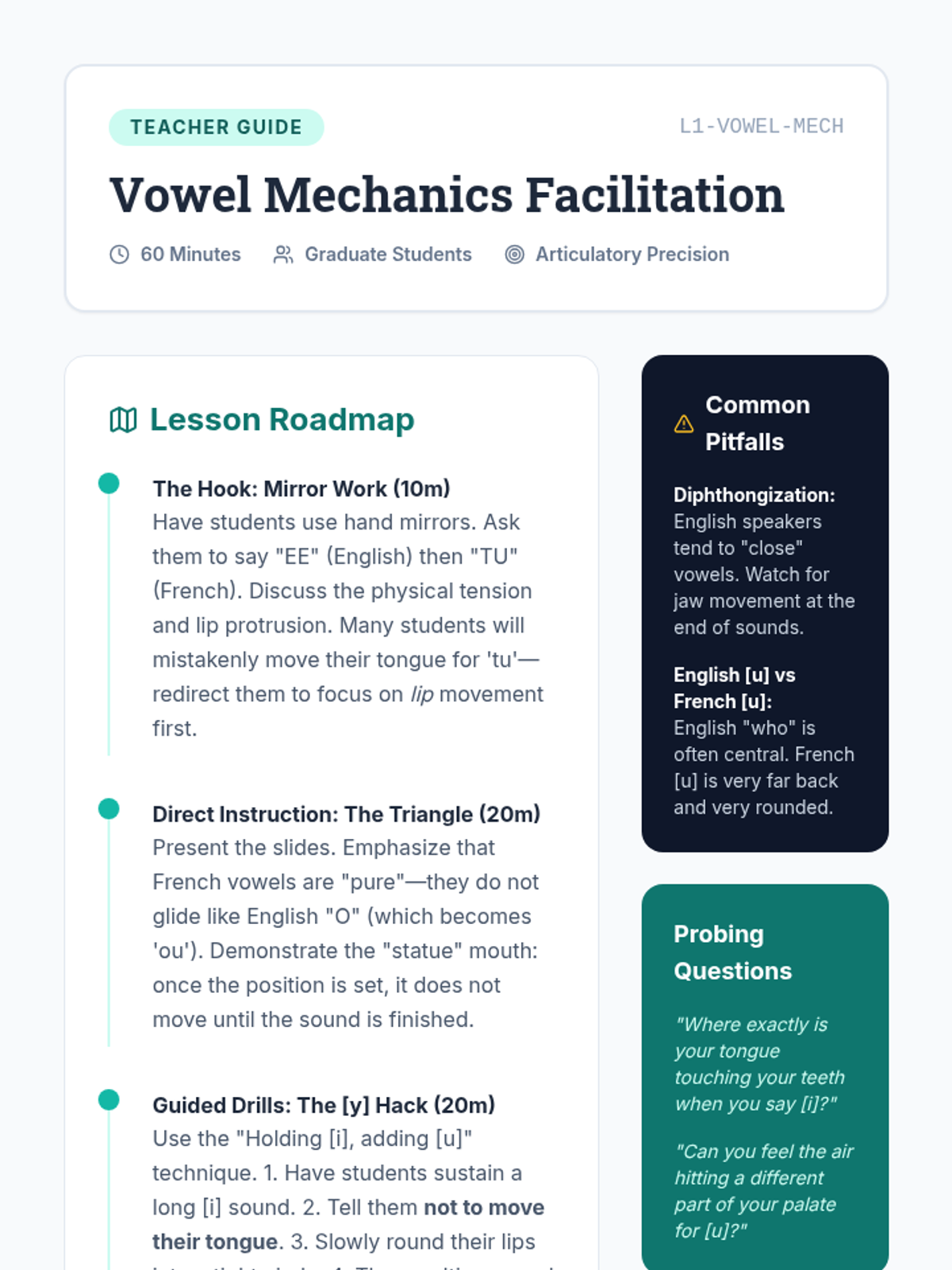
Students analyze the French vowel triangle and the mechanics of lip rounding and tongue height. Using the International Phonetic Alphabet (IPA), they practice producing pure vowels like [y] and [u].
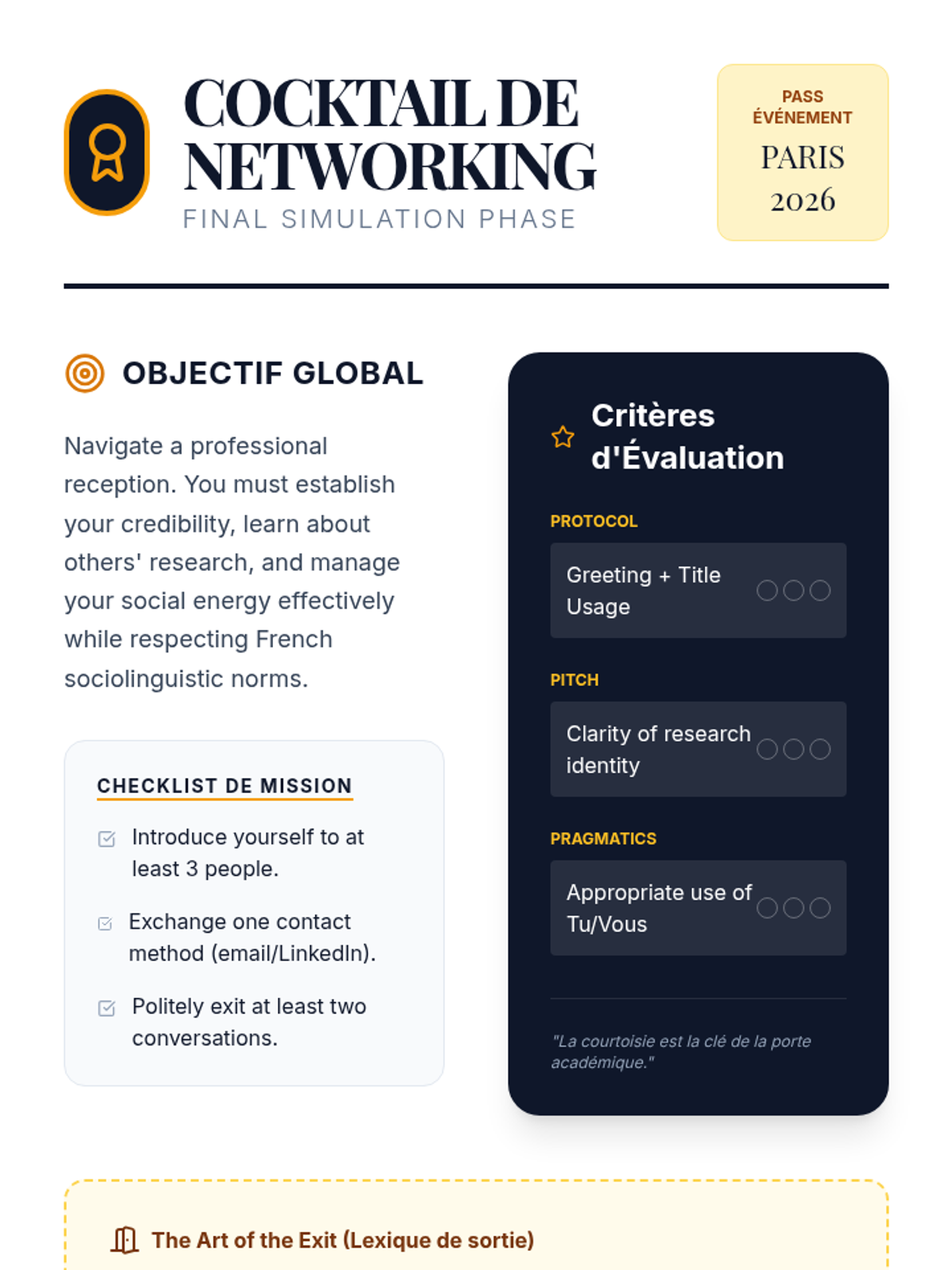
A culminating conference simulation where students practice networking, exchanging information, and professional exits.
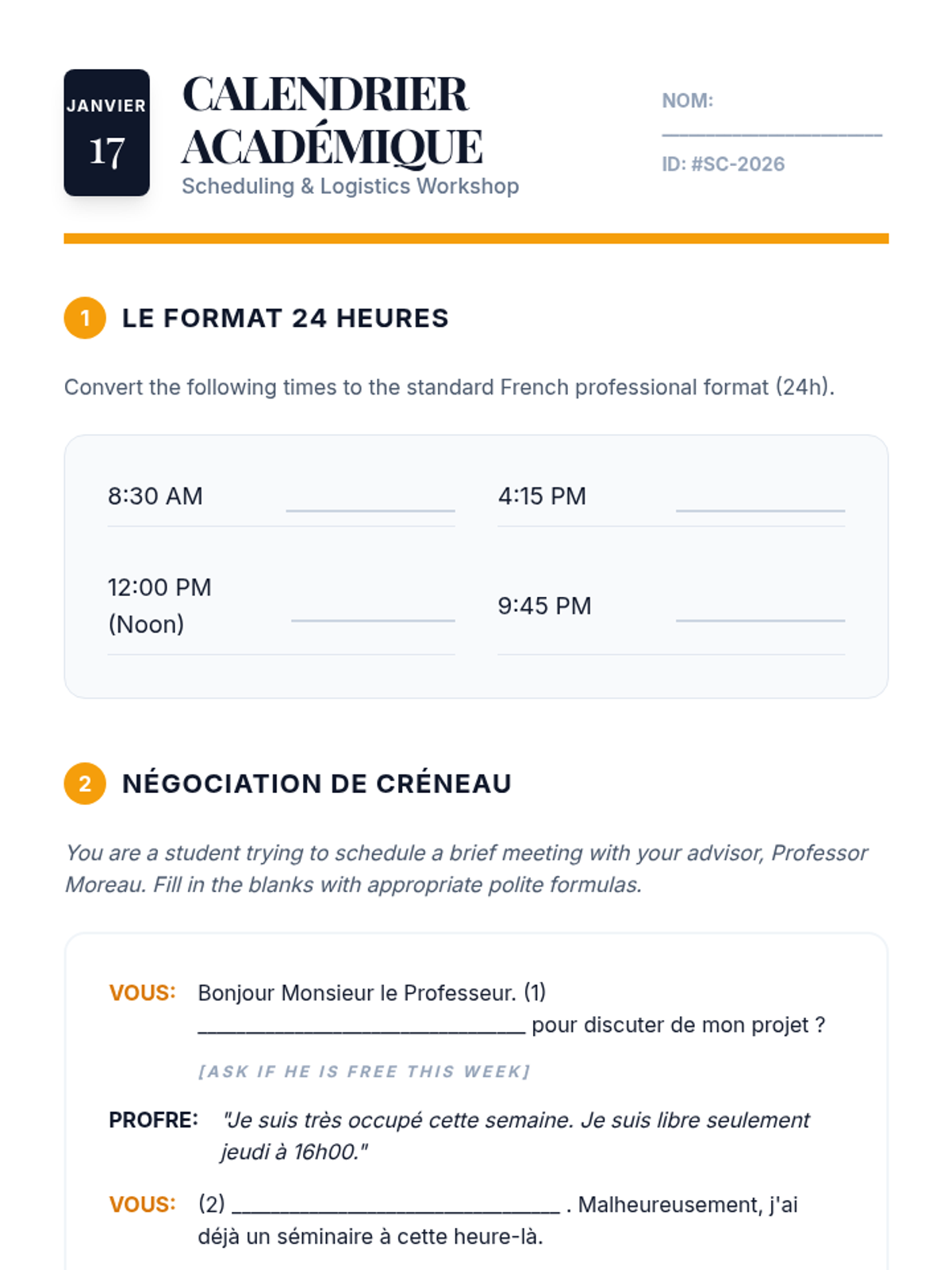
Practical skills for coordinating meetings, including expressing dates, times, and availability using polite French formulas.
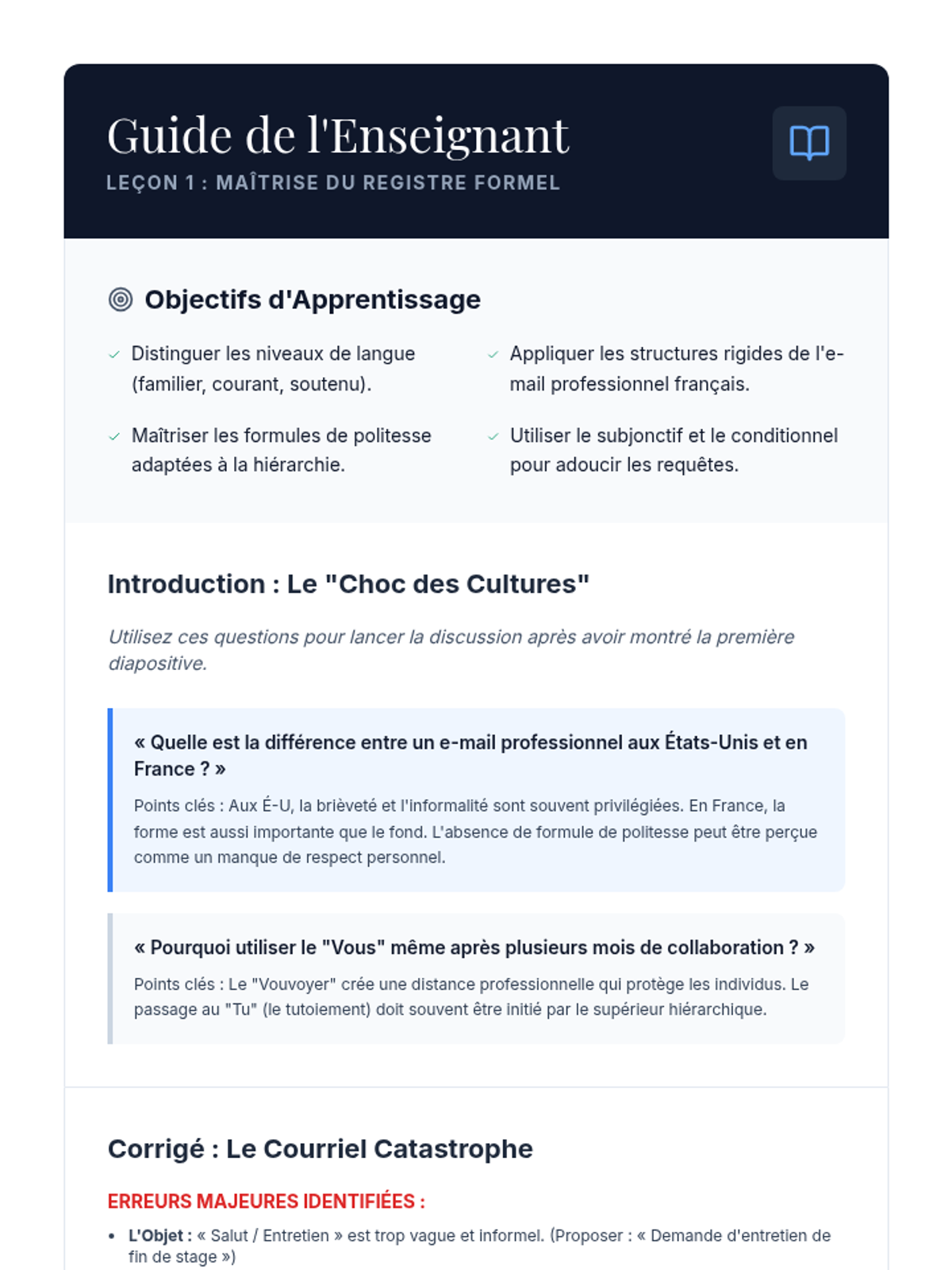
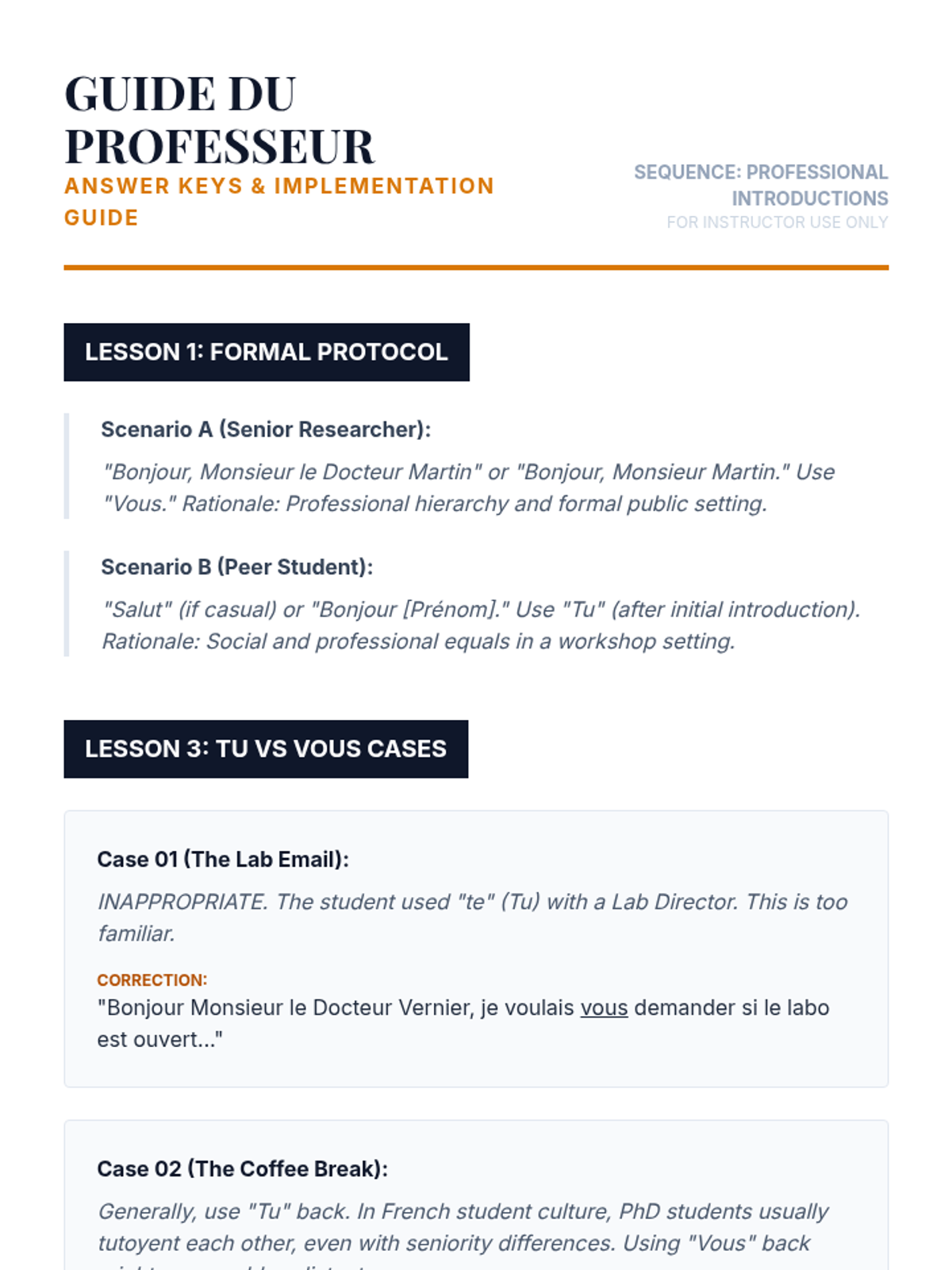
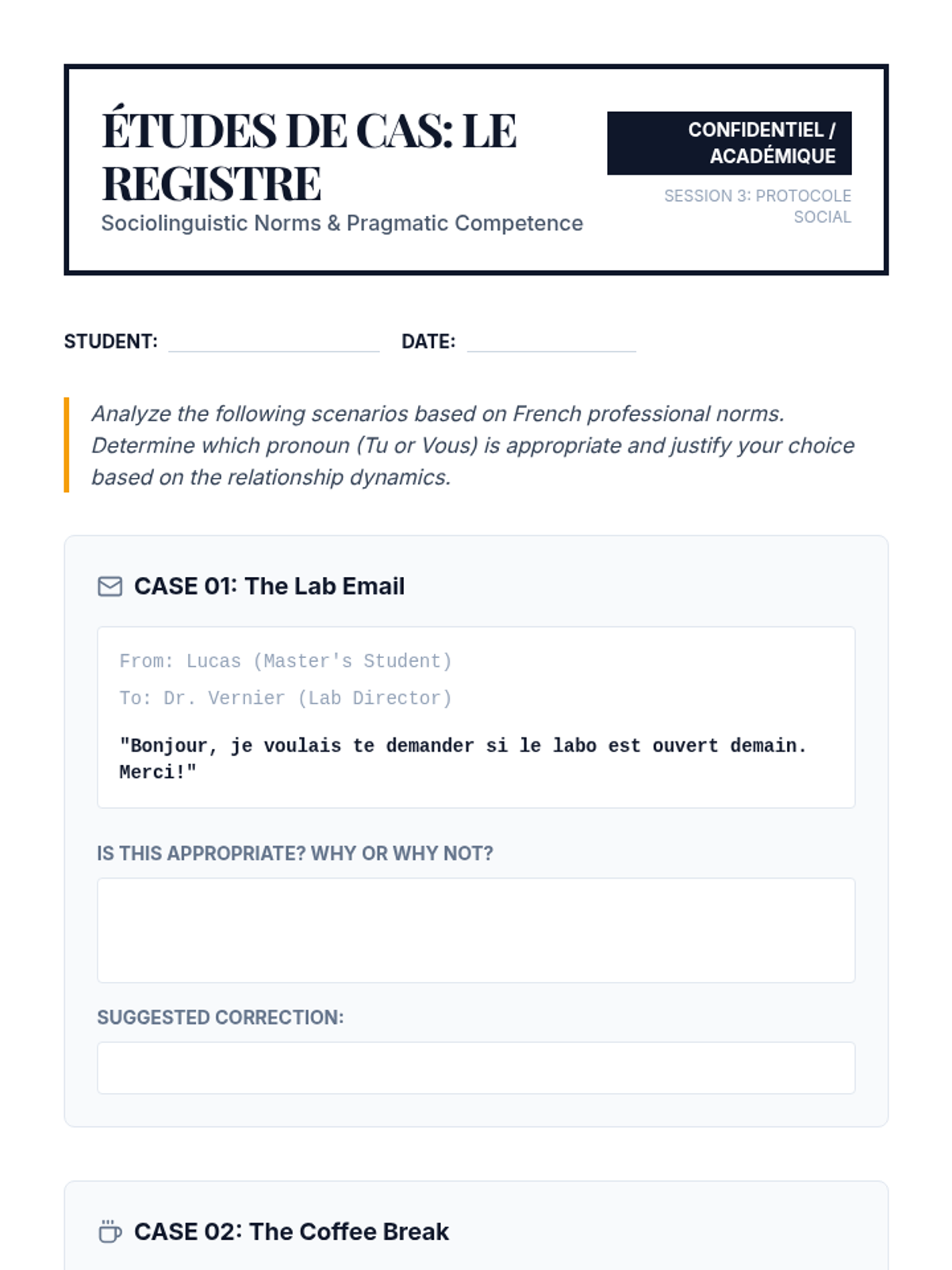
An in-depth look at the 'Tu' vs. 'Vous' dynamic in French professional culture through case studies and protocol analysis.
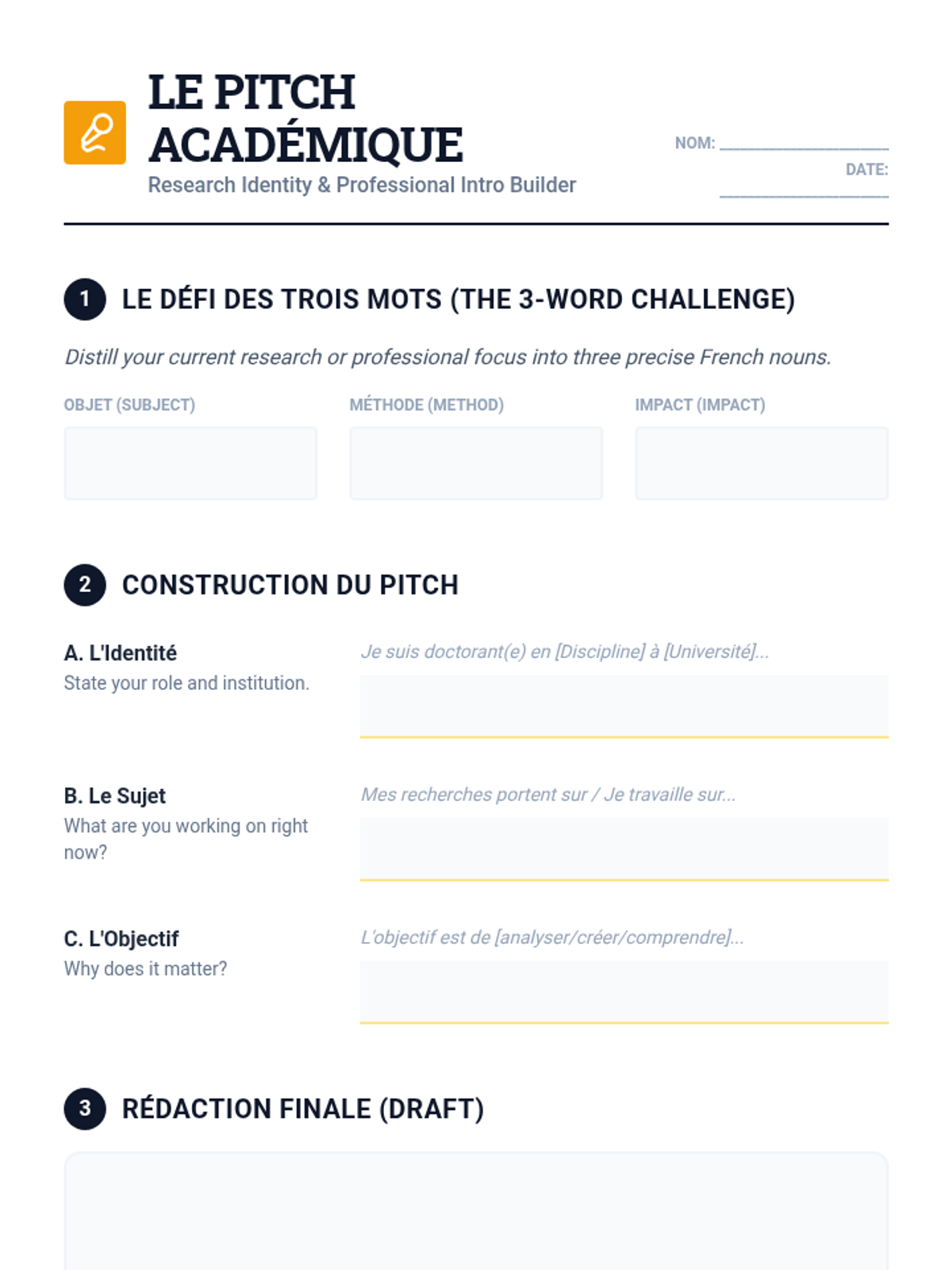
Participants develop a concise 30-second introduction of their research interests or professional background using specific academic vocabulary.
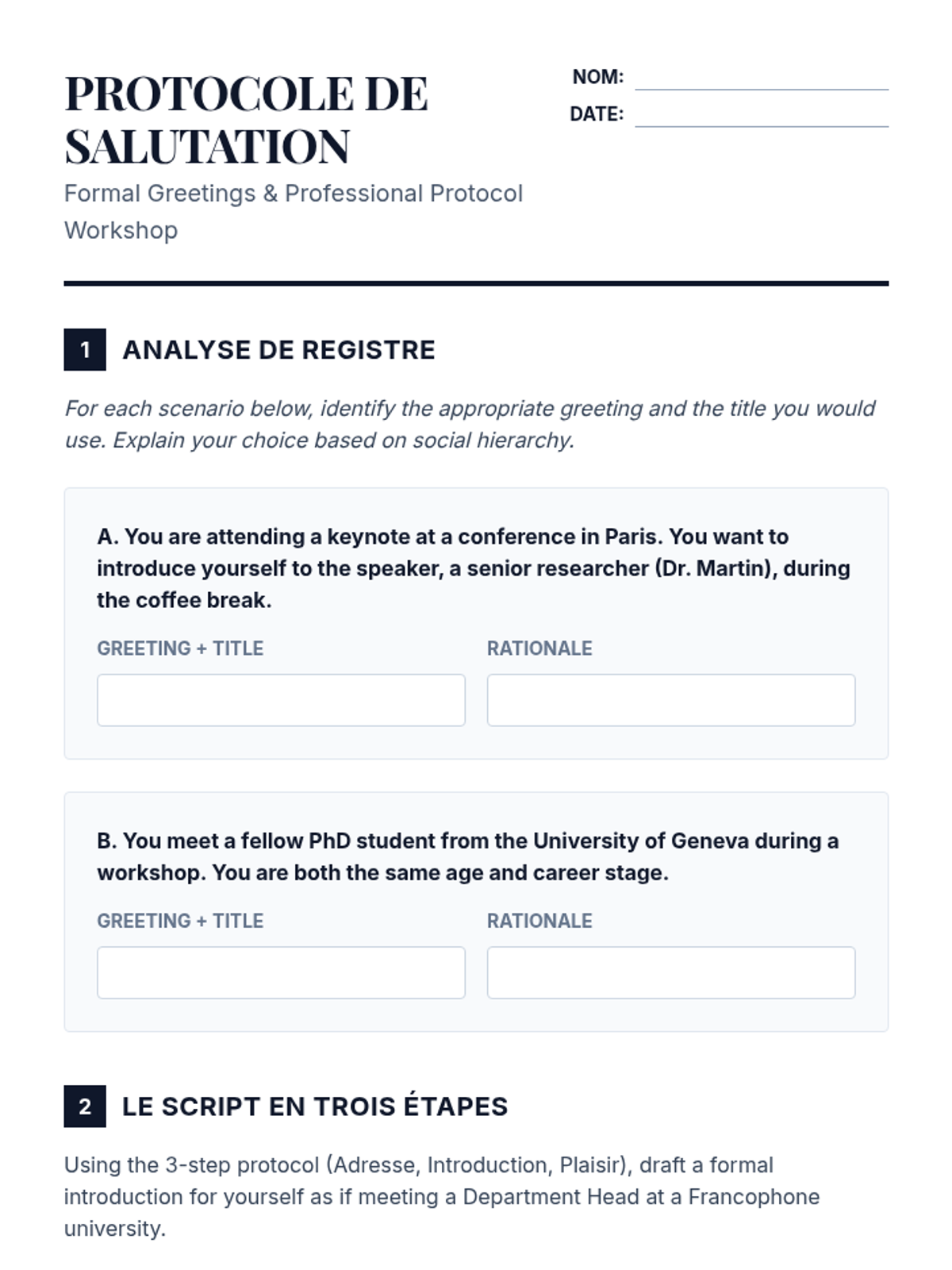
Students analyze the hierarchy of French titles and greetings, practice opening conversations with appropriate formality, and distinguish between registers.
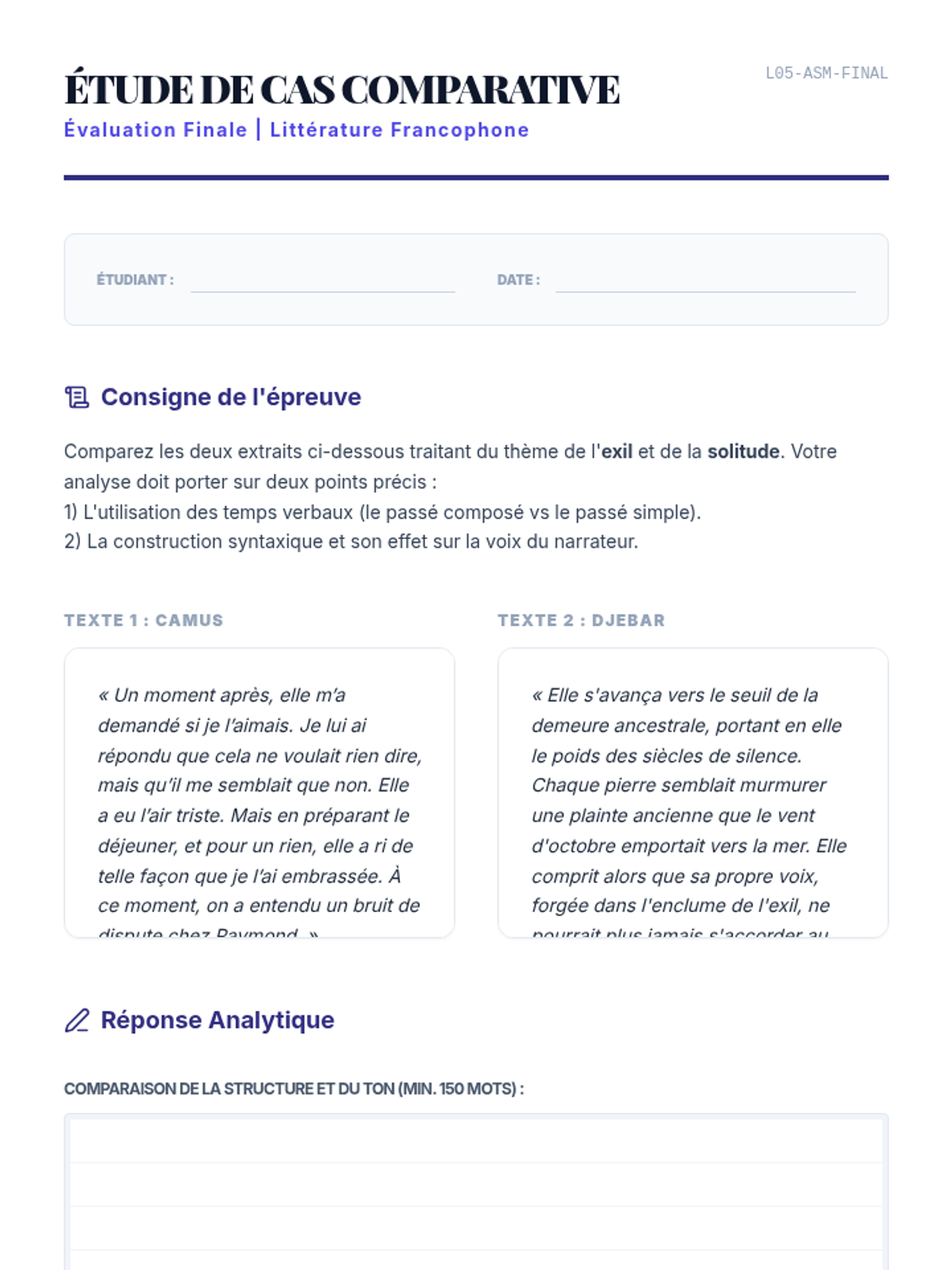
Synthesize skills by performing a comparative analysis of two Francophone texts, focusing on register, tone, and thematic expression of exile.
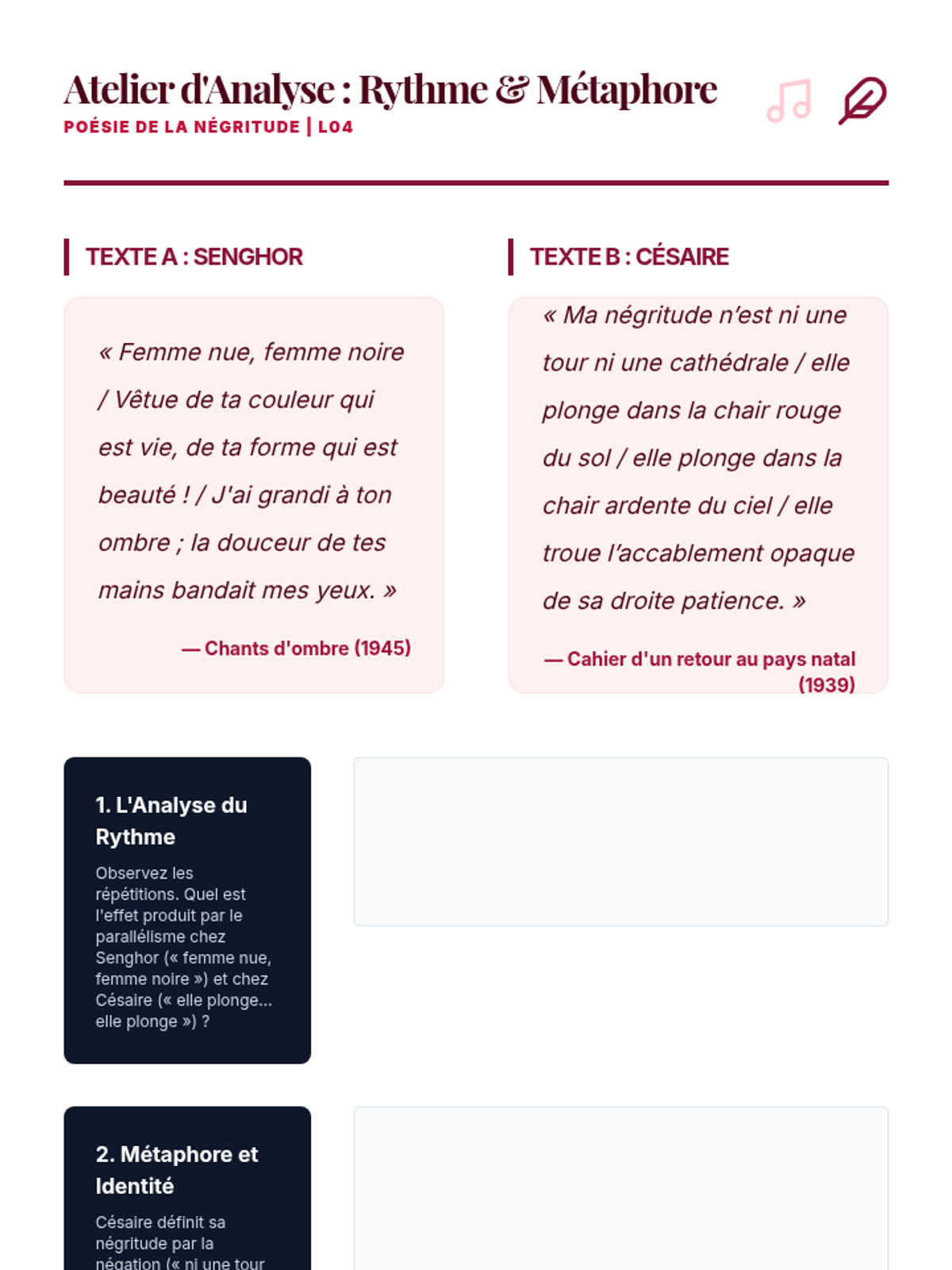
Explore the rhythmic and subversive power of Negritude poetry through the works of Césaire and Senghor, focusing on metaphor and linguistic identity.
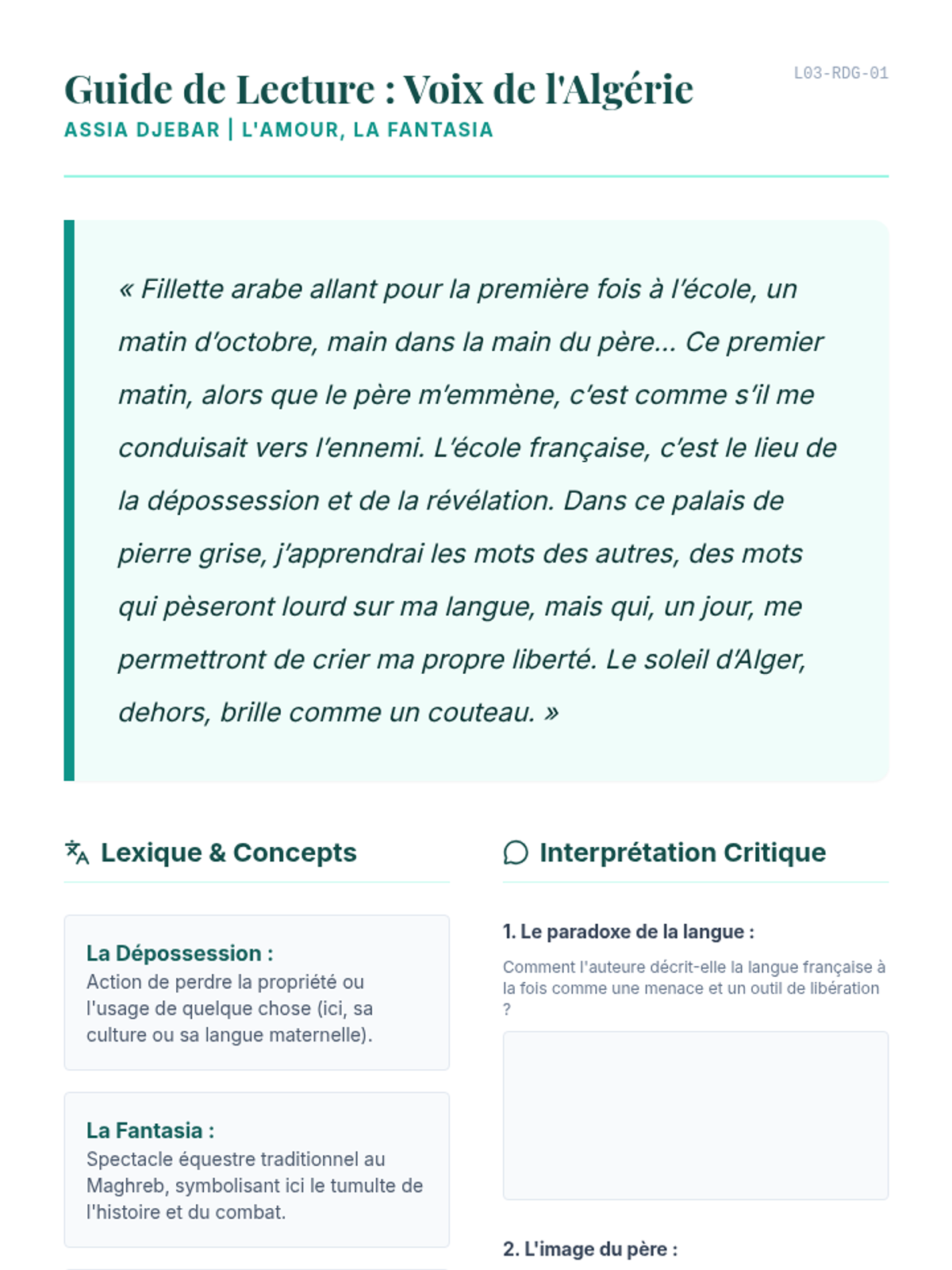
Analyze post-colonial narratives by Djebar and Ben Jelloun, focusing on descriptive imagery, sensory vocabulary, and the construction of identity.
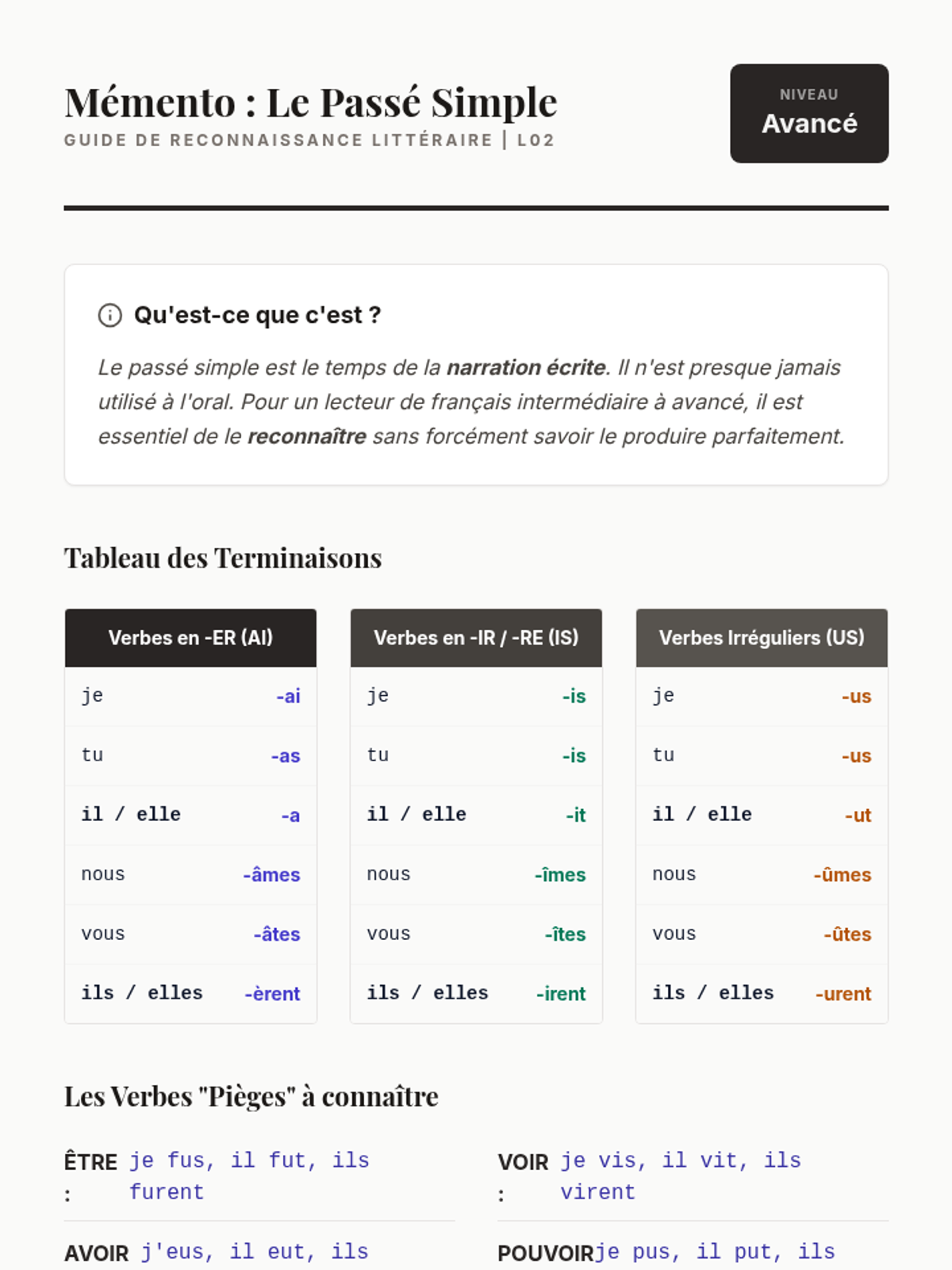
A mastery-focused lesson on identifying and interpreting the 'passé simple' in 19th and 20th-century French literature to understand narrative distance.
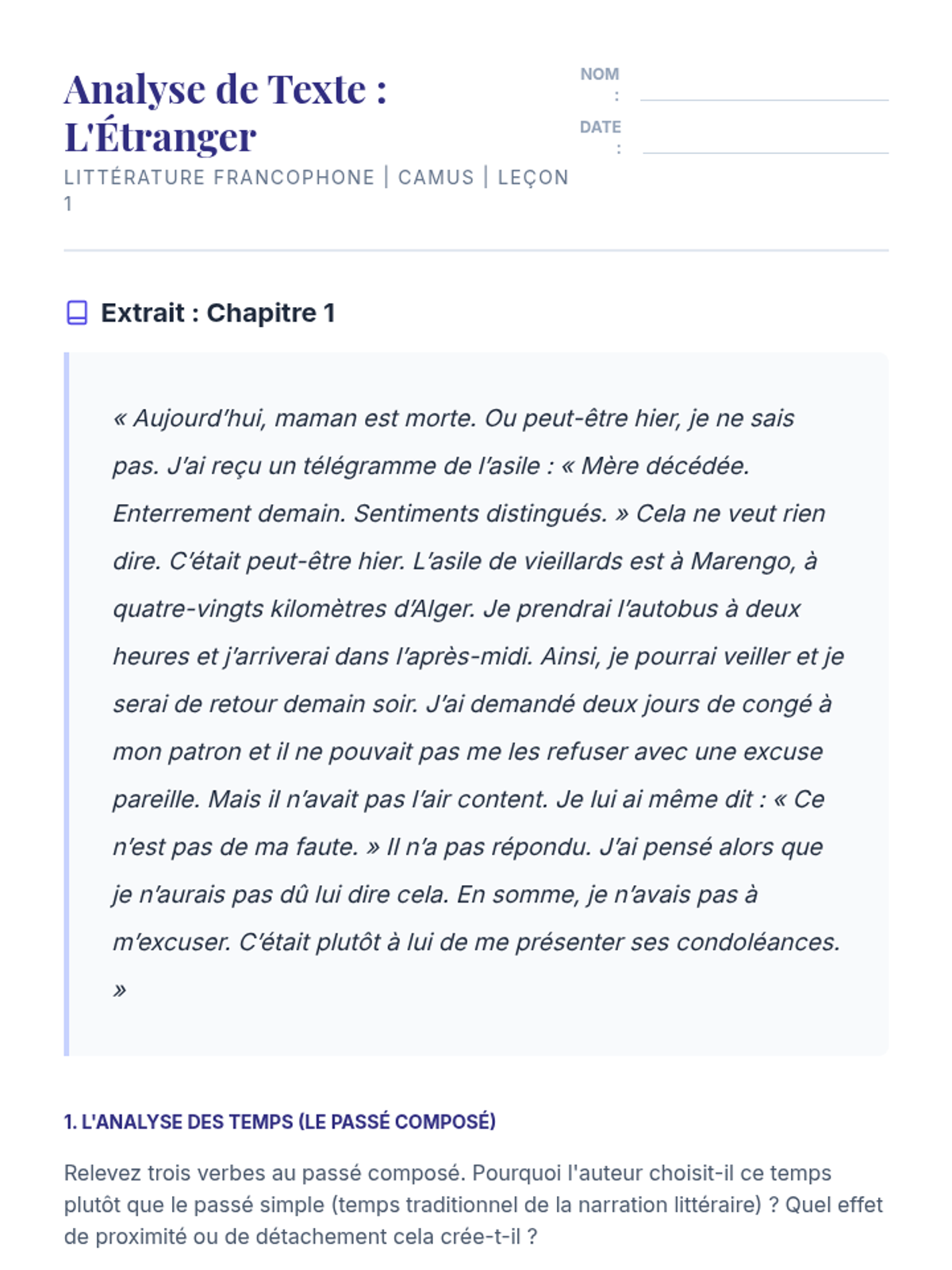
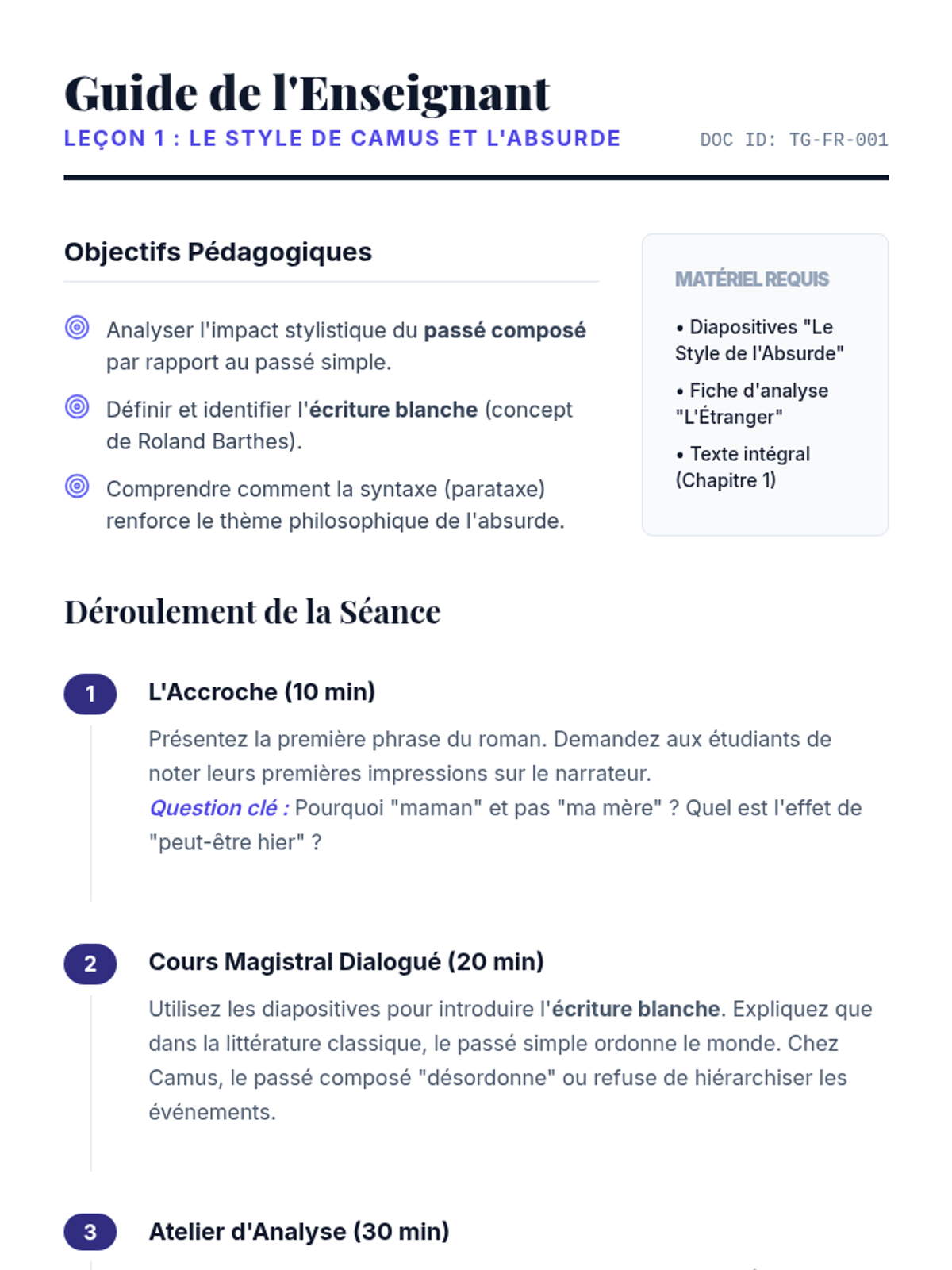
Examine the opening of Camus' 'L'Étranger' to understand how grammatical choices like the 'passé composé' create existential detachment and 'écriture blanche'.
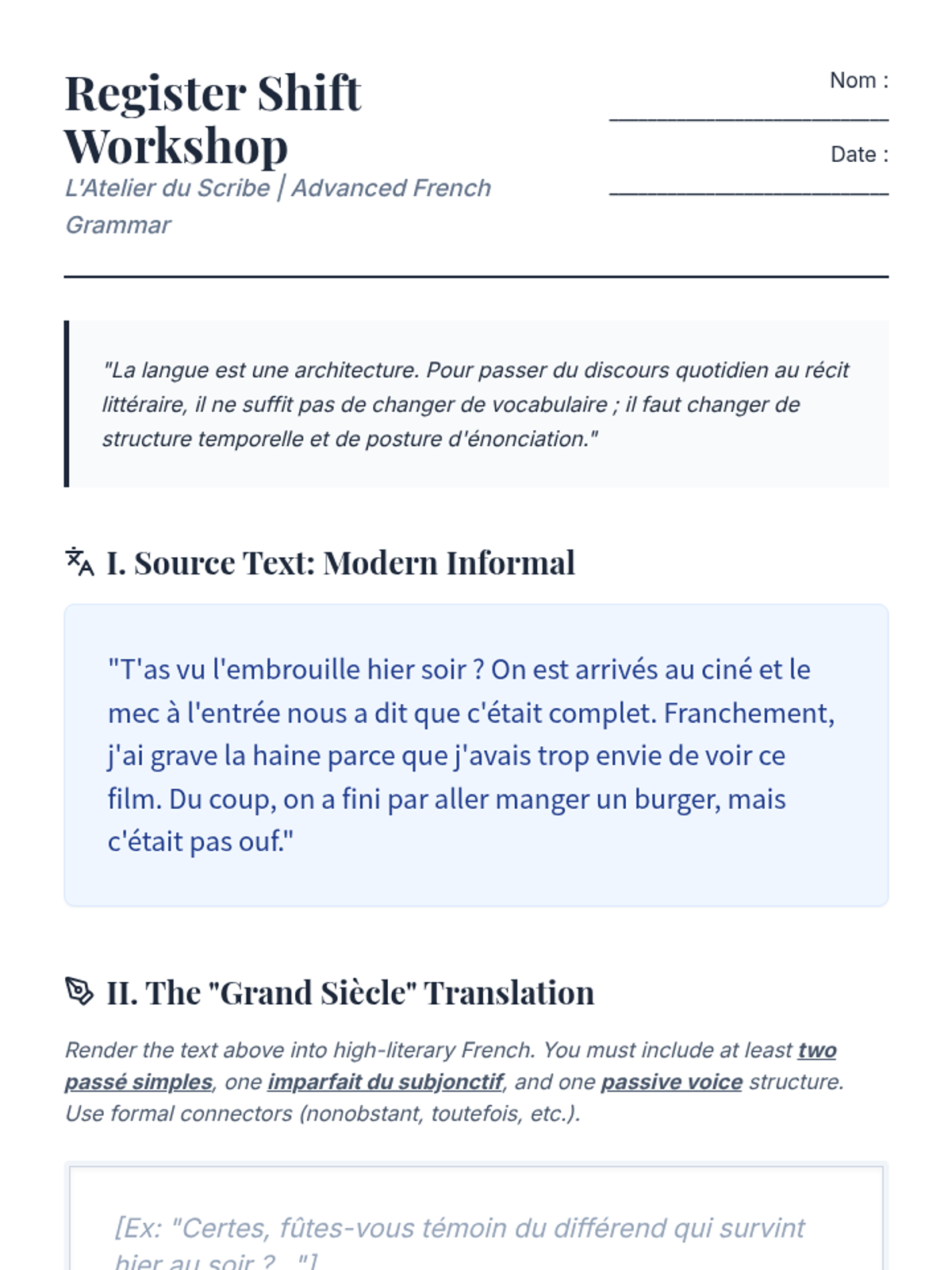
A bidirectional translation workshop moving between informal spoken French and high-literary style, applying all learned structures to elevate register.
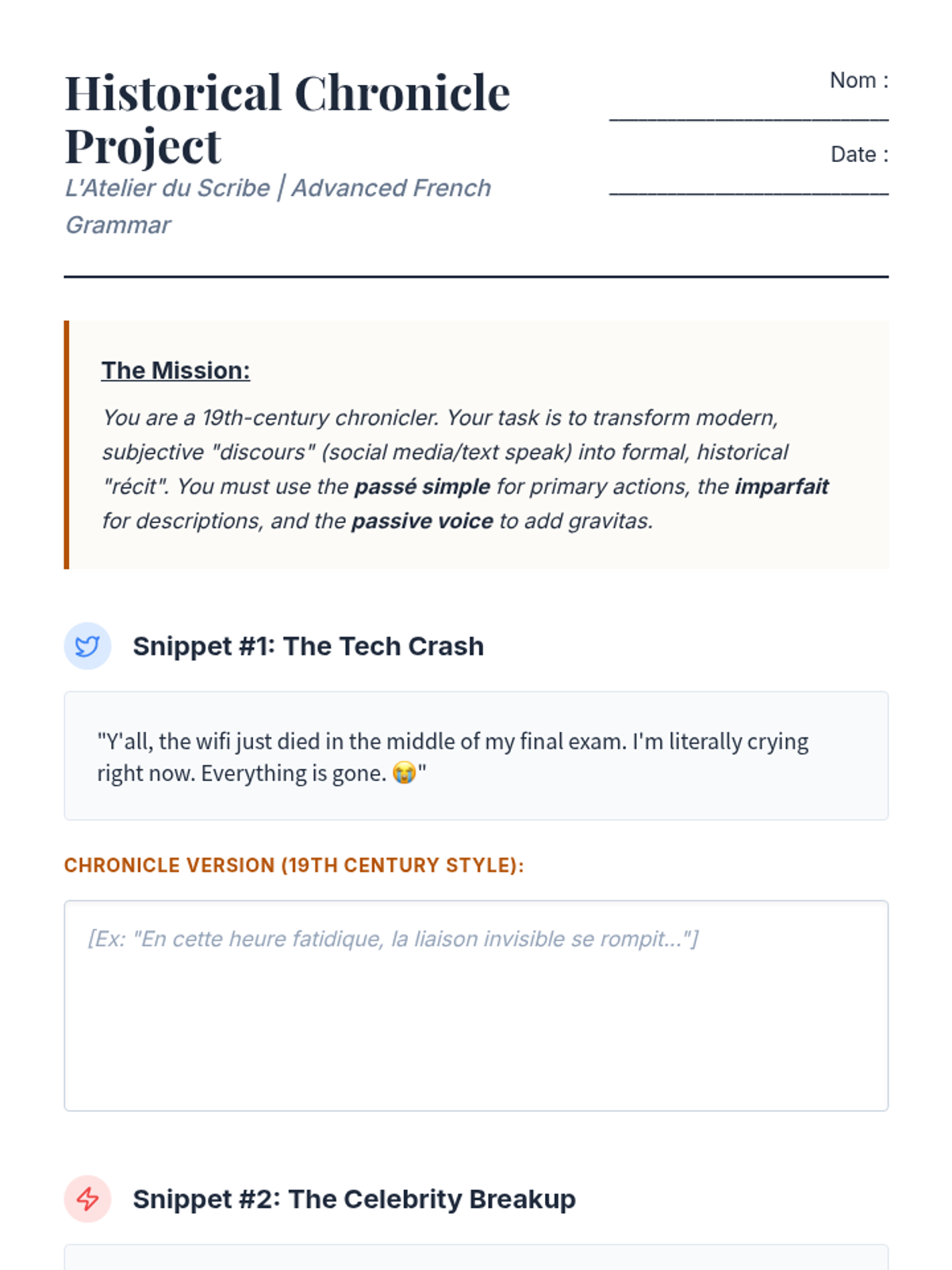
Students analyze the linguistic distinction between 'récit' and 'discours' and practice transforming modern news into 19th-century chronicles.
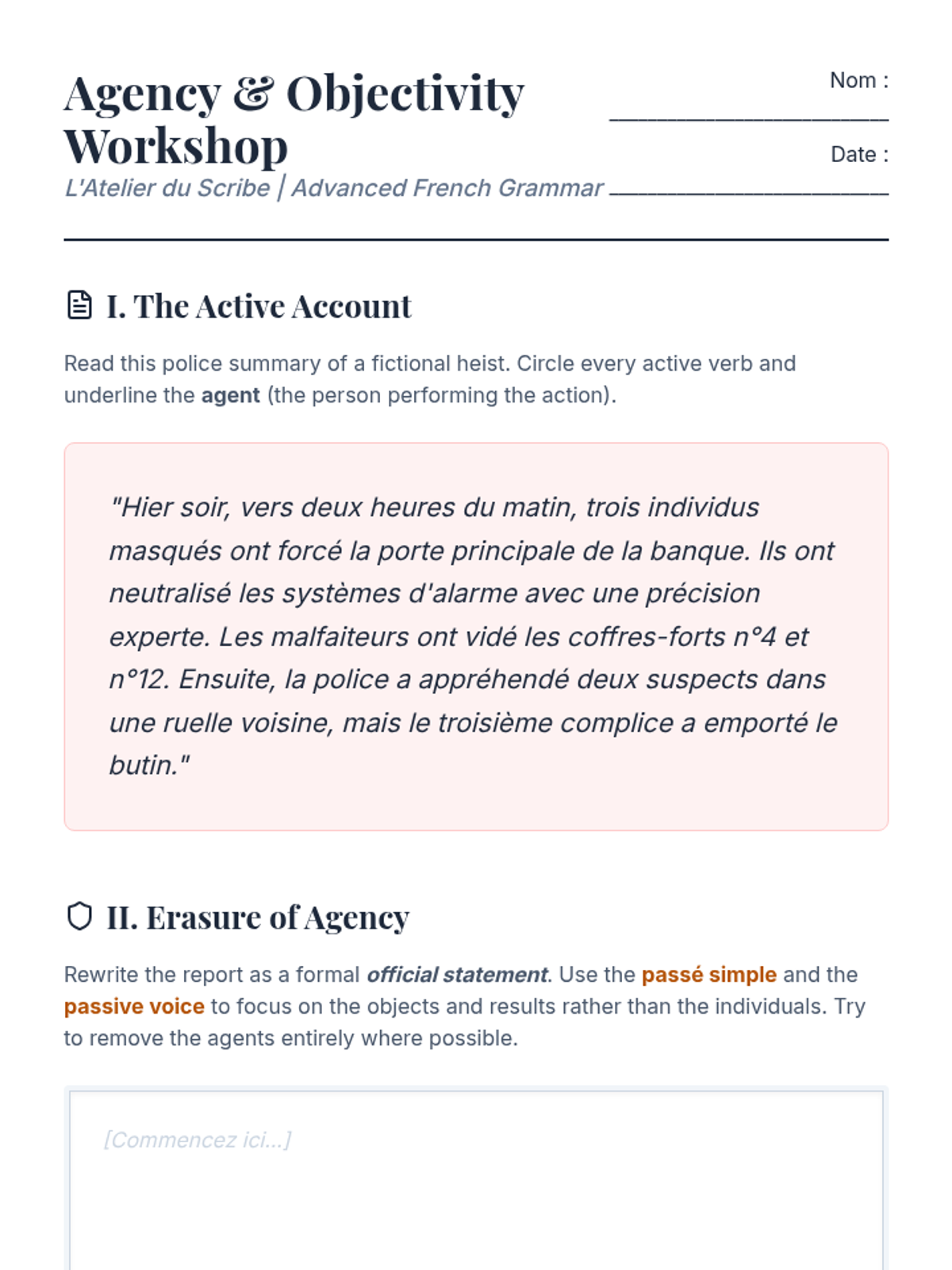
A workshop on using the passive voice to control agency and objectivity in formal writing, with a focus on maintaining literary tense consistency.
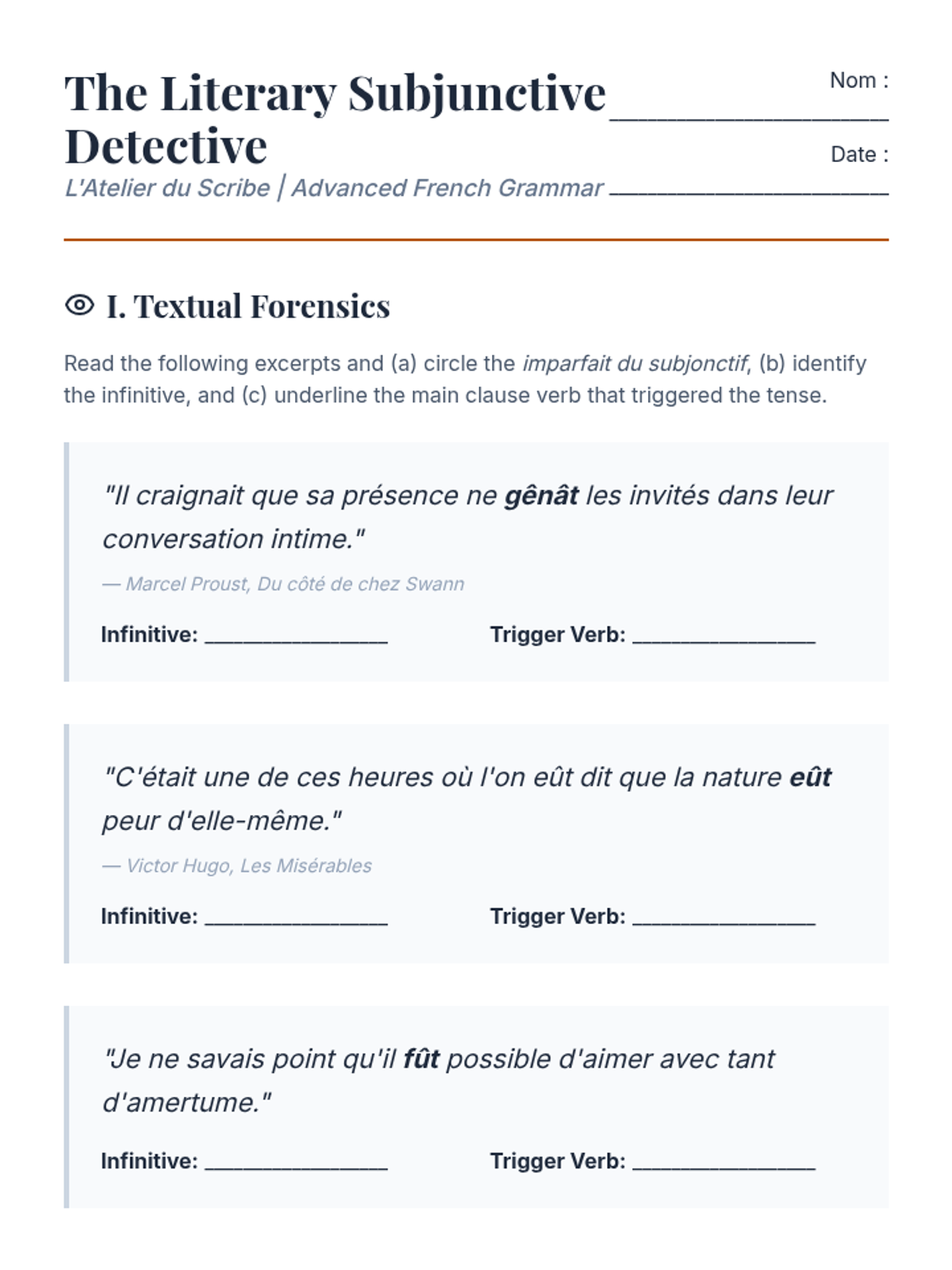
An exploration of the imparfait du subjonctif, its triggers through 'concordance des temps', and its socio-stylistic weight in presidential oratory and classic literature.
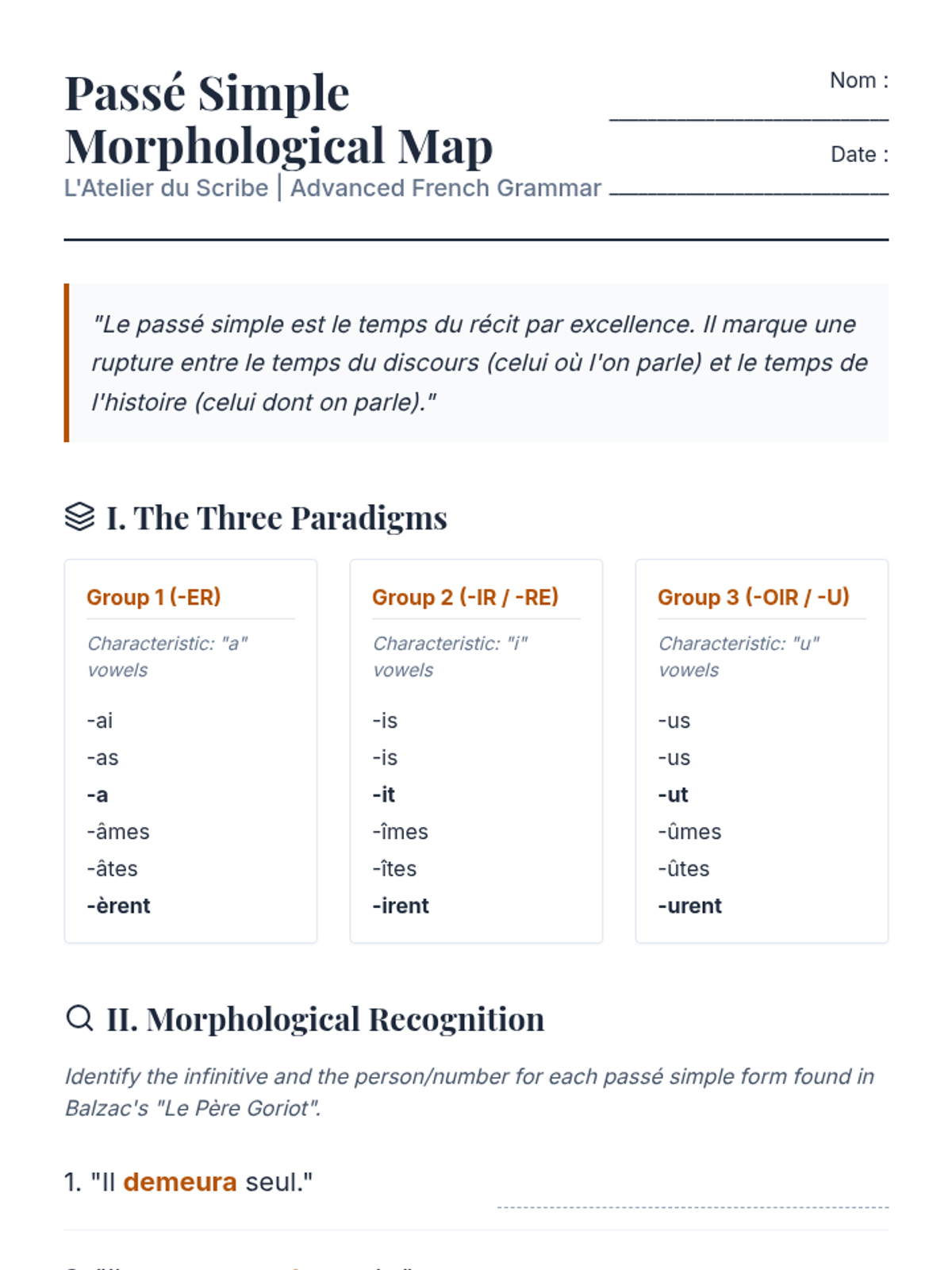
Students systematically review the irregular morphology of the passé simple, focusing on recognition in 19th-century texts. They explore the 'L'Étranger' effect and the tense's role in establishing narrative distance.
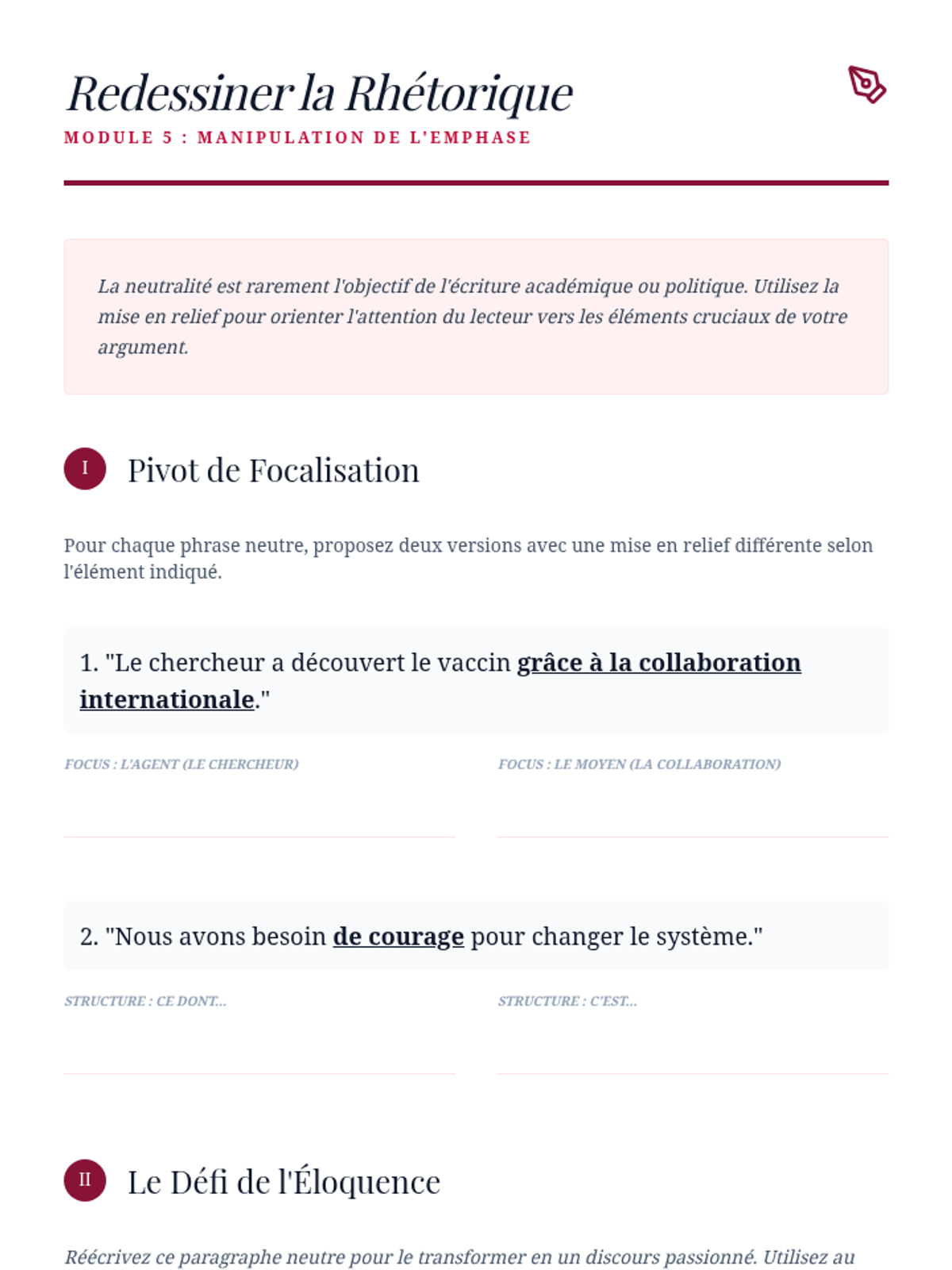
Exploring 'mise en relief' (cleft sentences) to manipulate focus and rhetorical emphasis in both spoken and written academic French.
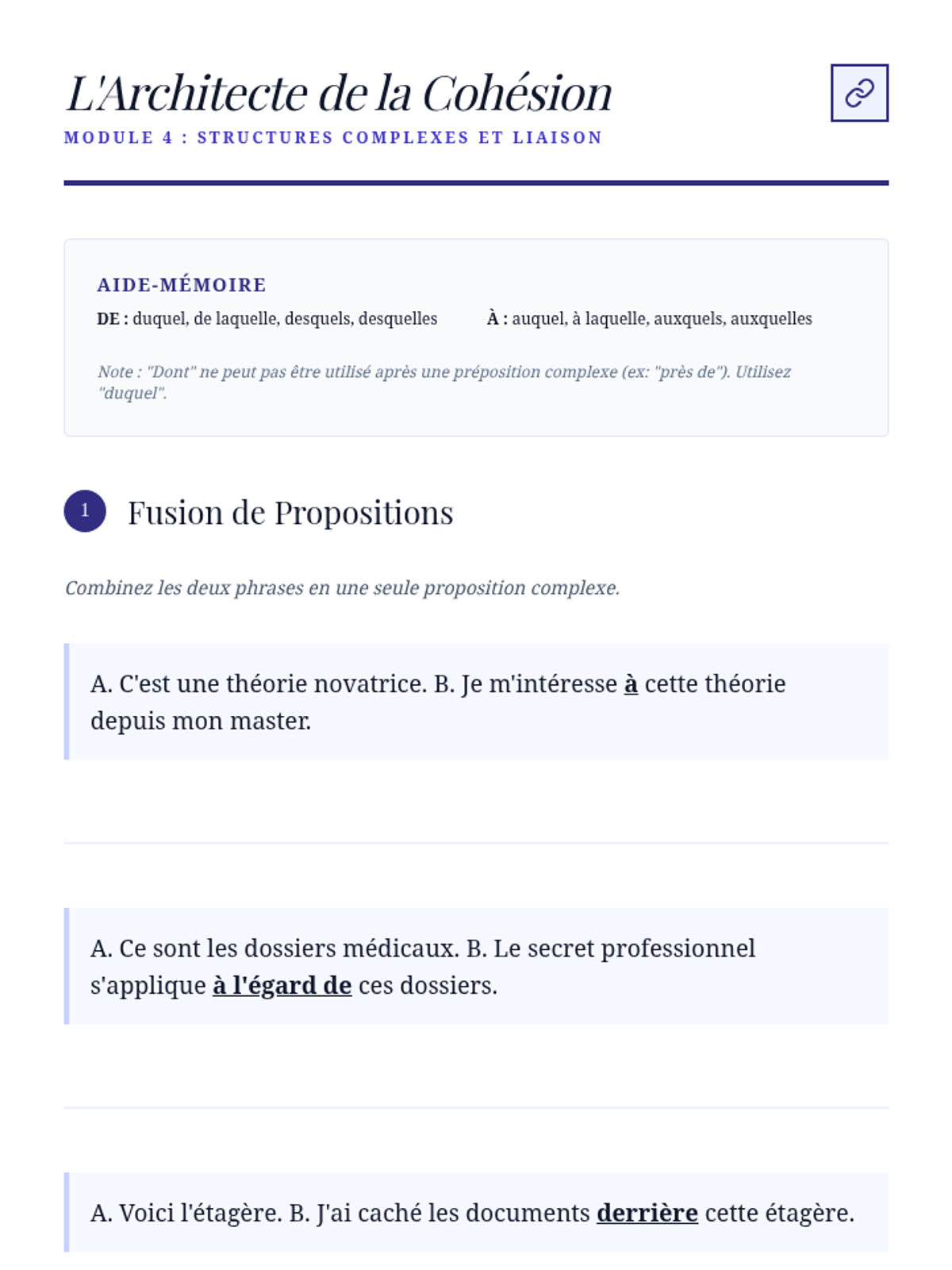
A deep dive into complex relative pronouns (lequel, auquel, duquel) and their role in creating cohesive, sophisticated sentence structures.
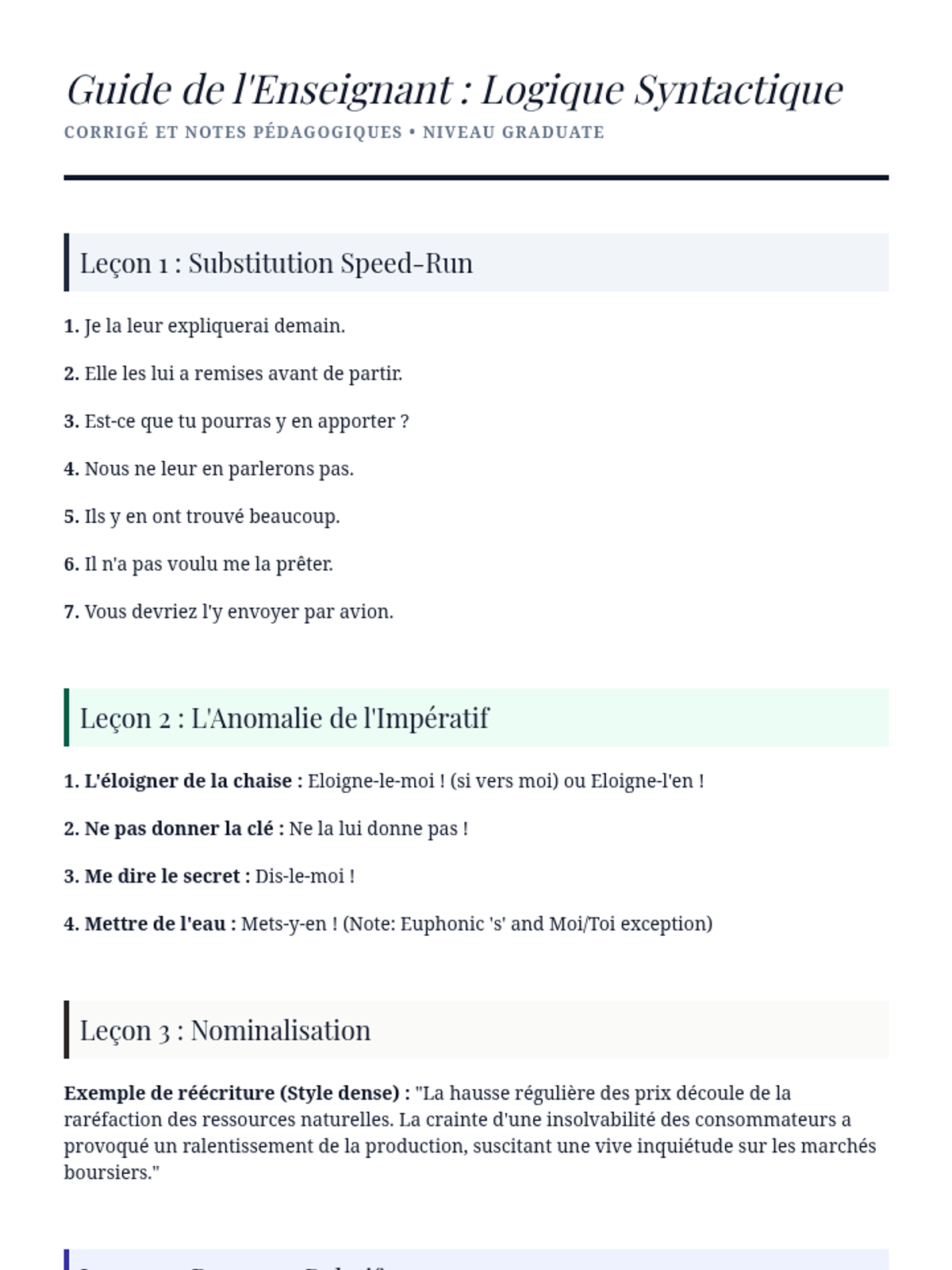
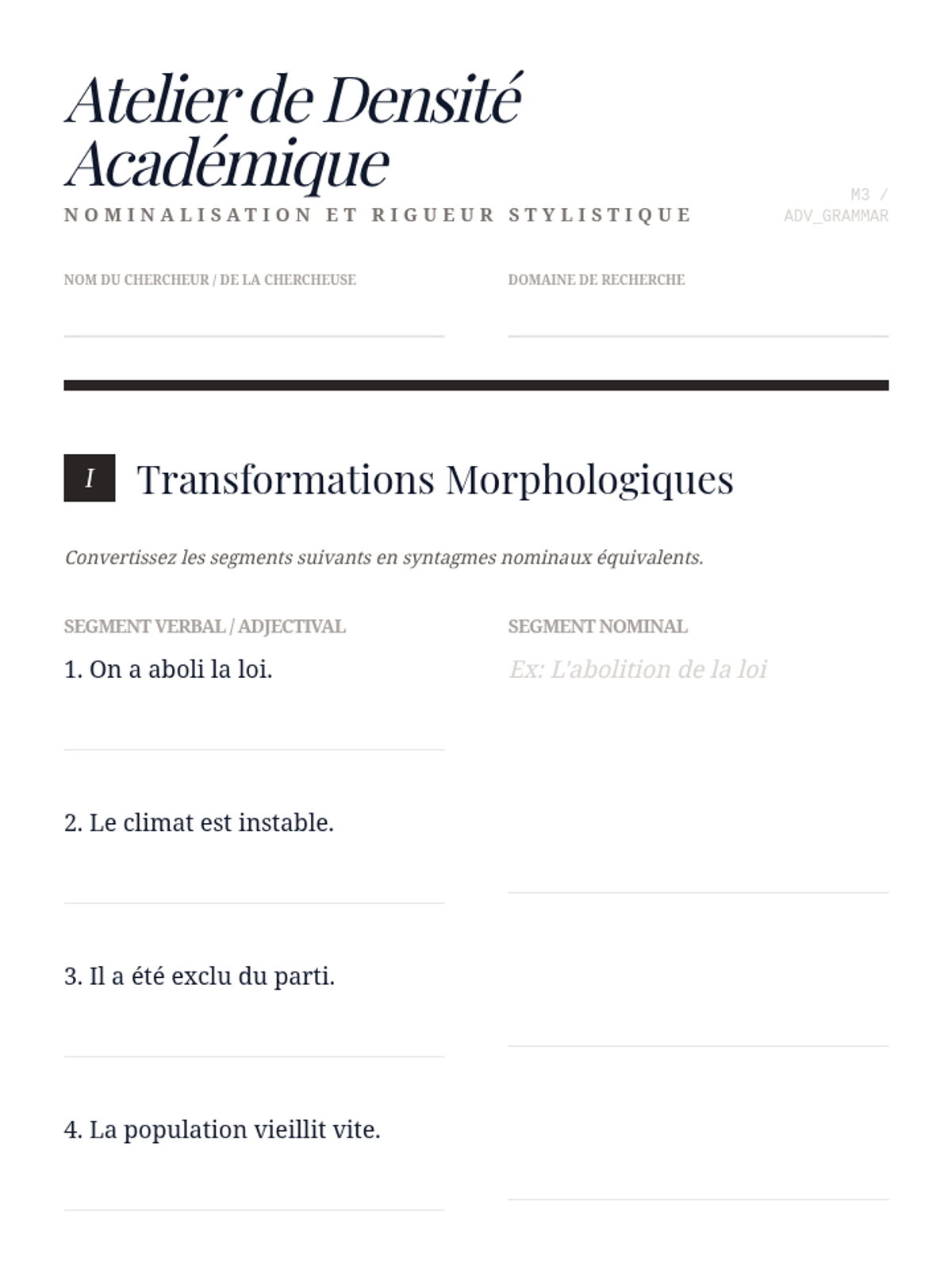
A workshop-style lesson on transforming verbal and adjectival phrases into noun phrases to create dense, academic-style French prose.
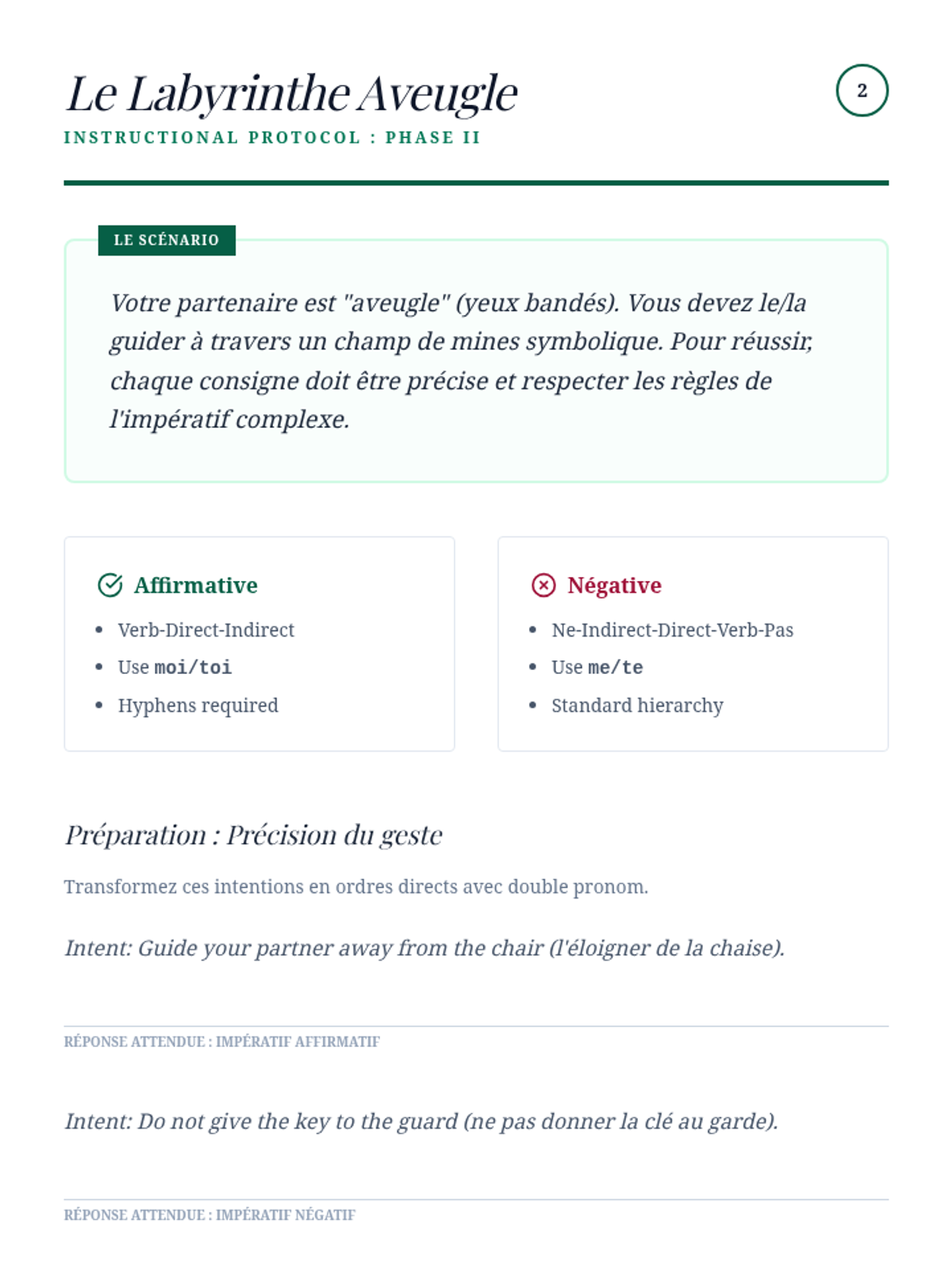
An analysis of the syntactic shifts in the imperative mood, comparing affirmative and negative structures and the use of stressed pronouns.
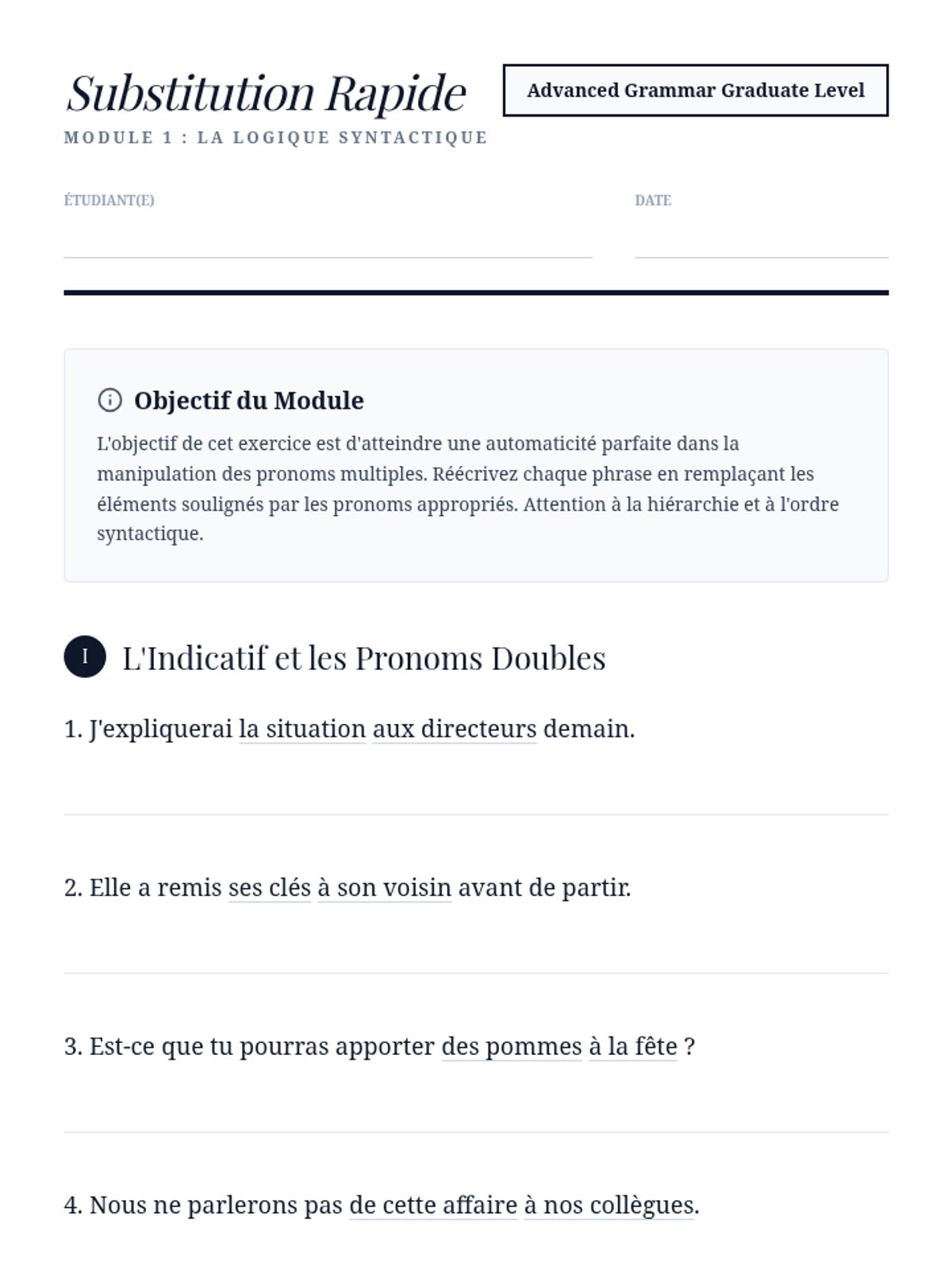
A rigorous review of the hierarchy of French object pronouns, including 'y' and 'en', designed to build automaticity in complex substitution.