Vocabulary, grammar, and cultural contexts for Spanish language acquisition across all proficiency levels. Develops skills in reading, writing, speaking, and listening through structured linguistic analysis and practice.
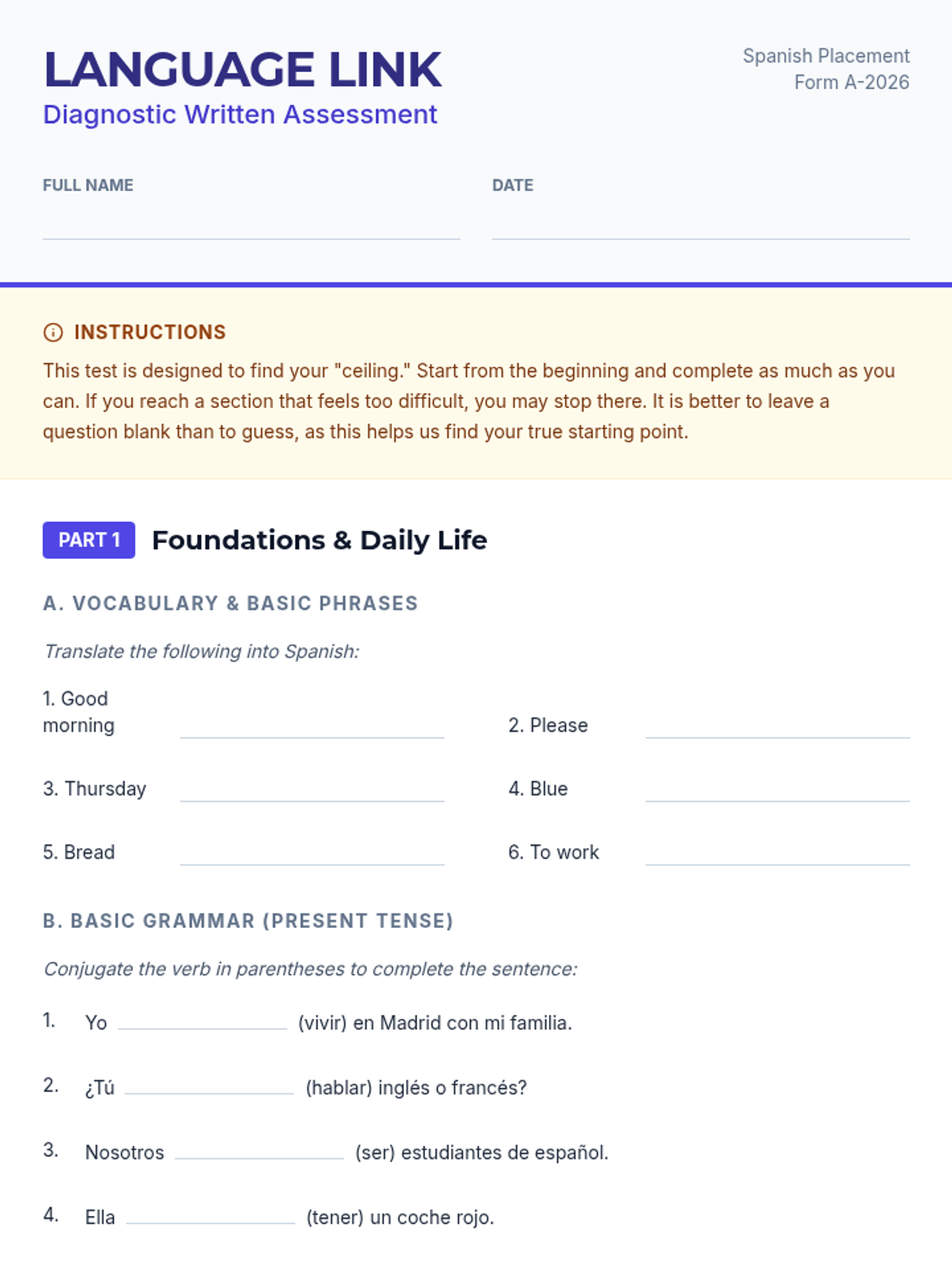
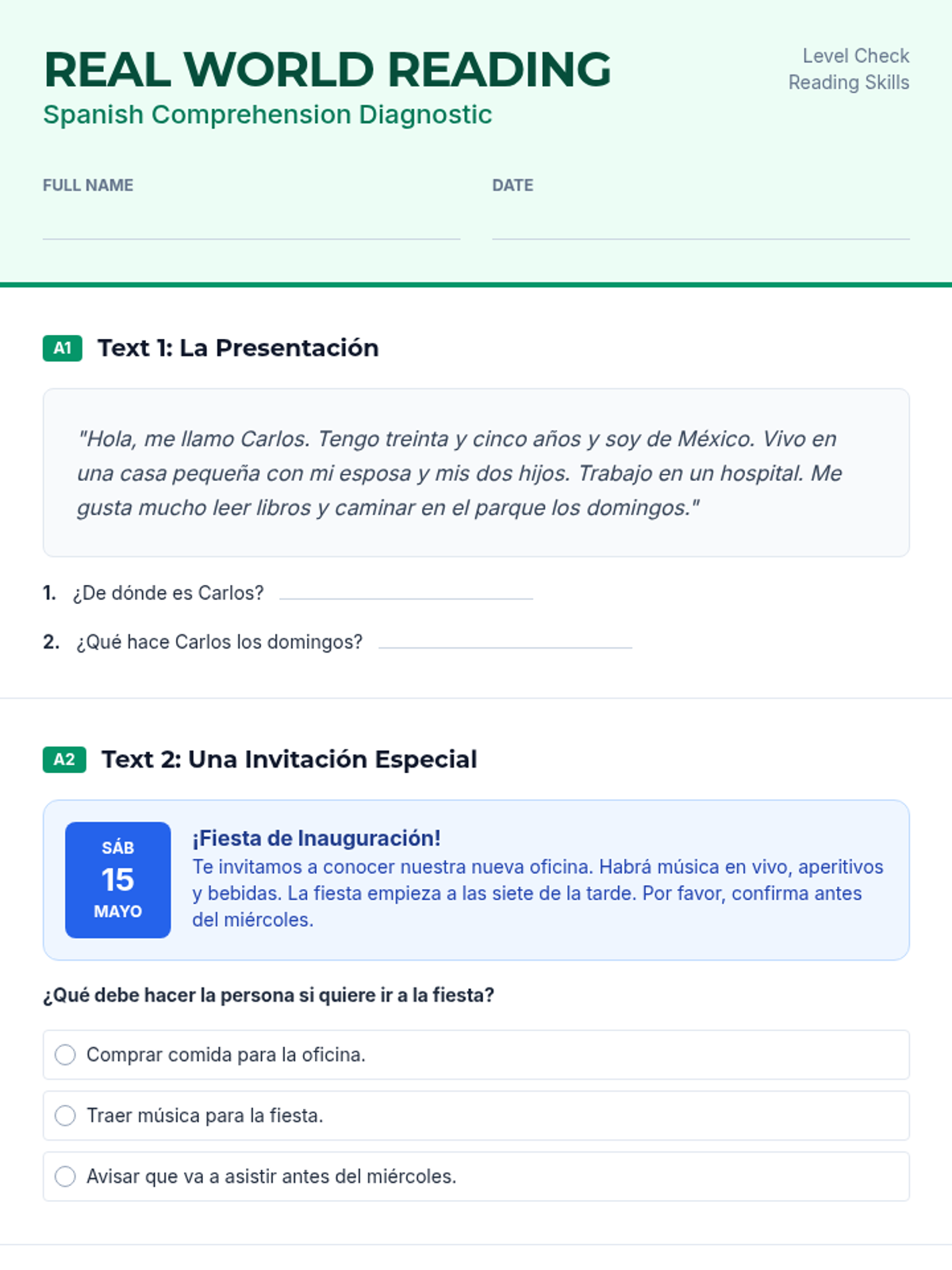
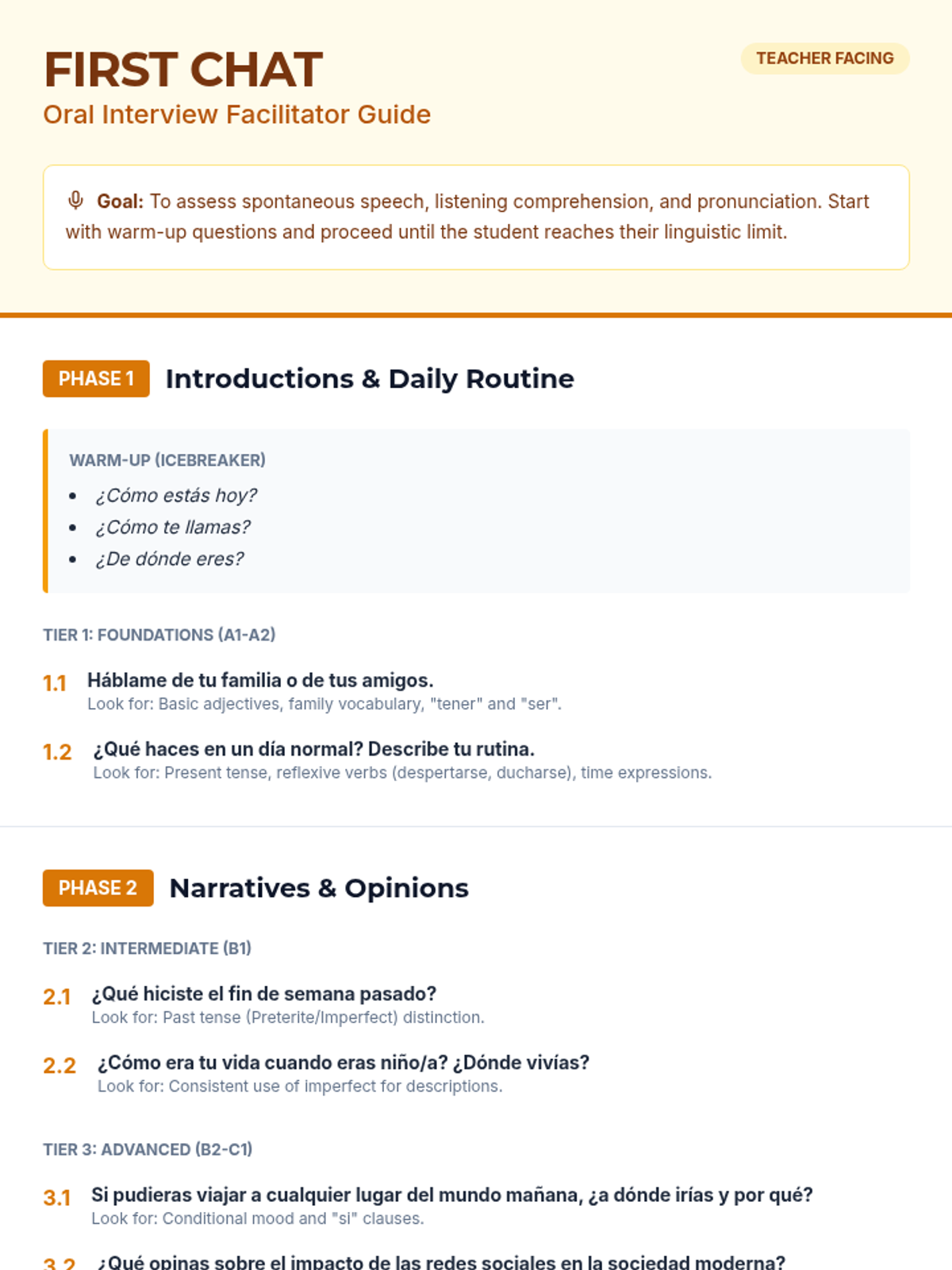
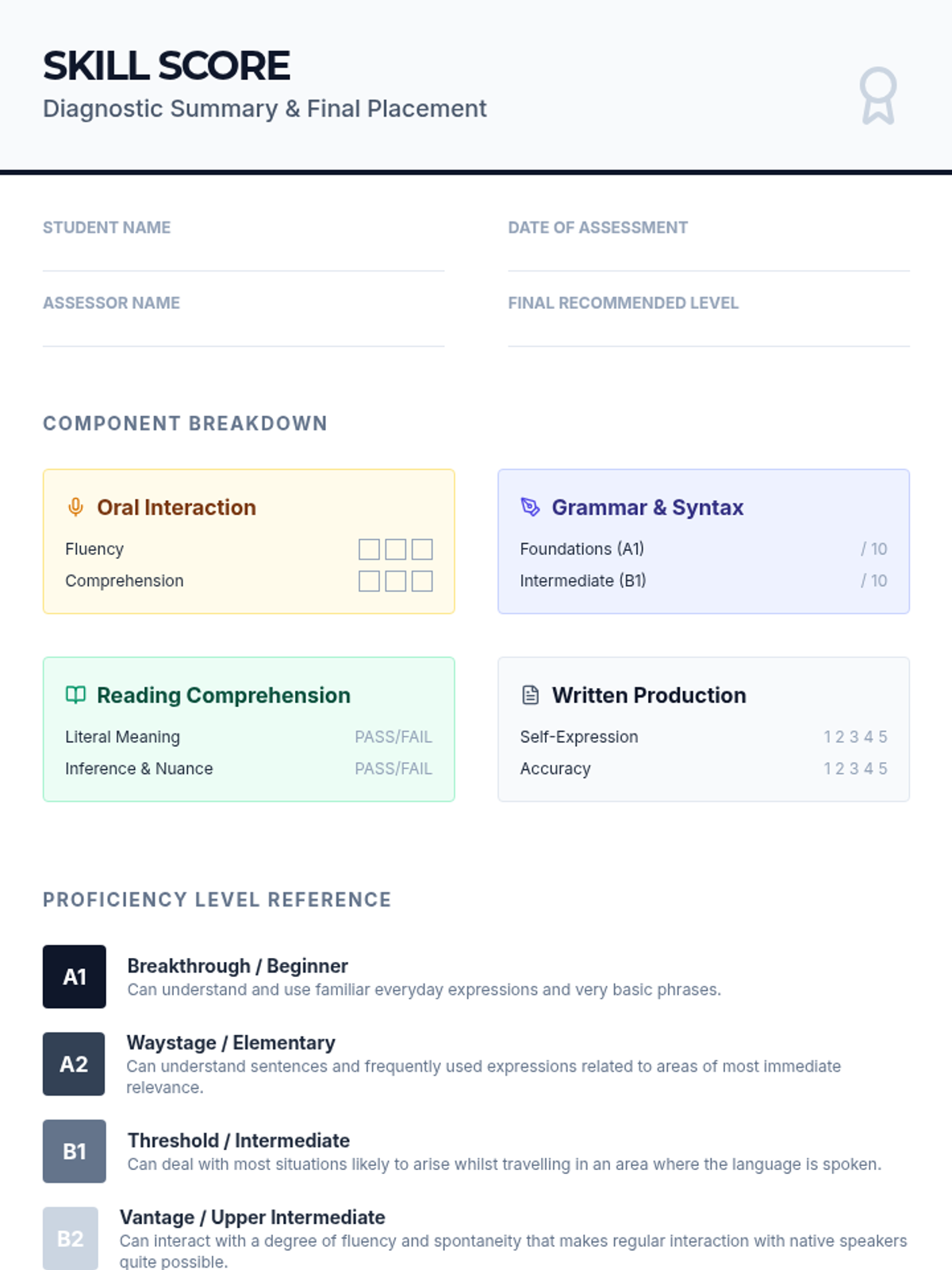
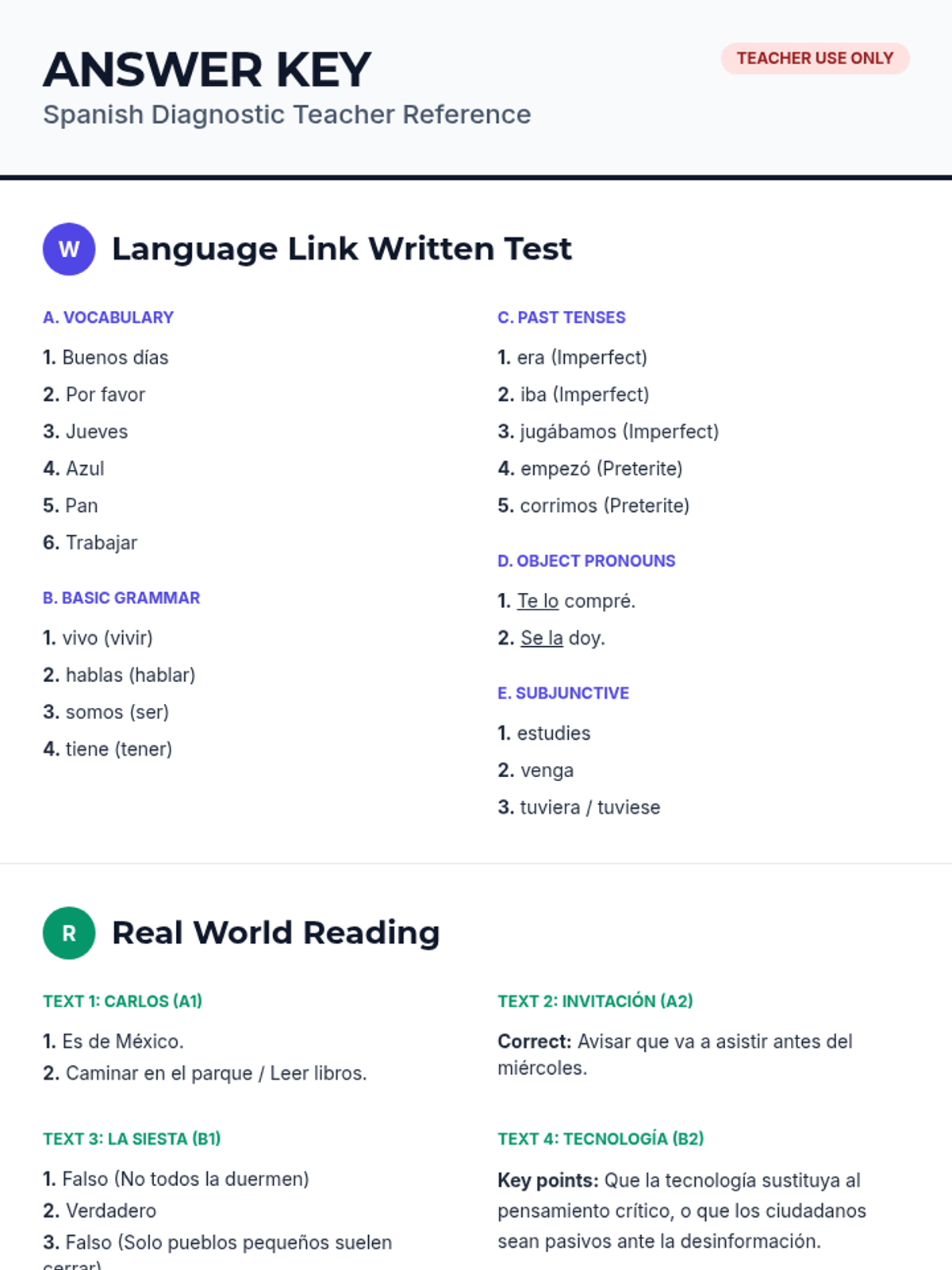
A comprehensive diagnostic assessment suite designed for adult learners to determine their current Spanish proficiency level across reading, writing, listening, and speaking. The materials move from foundational basics to advanced structures to provide a clear placement for the learner.
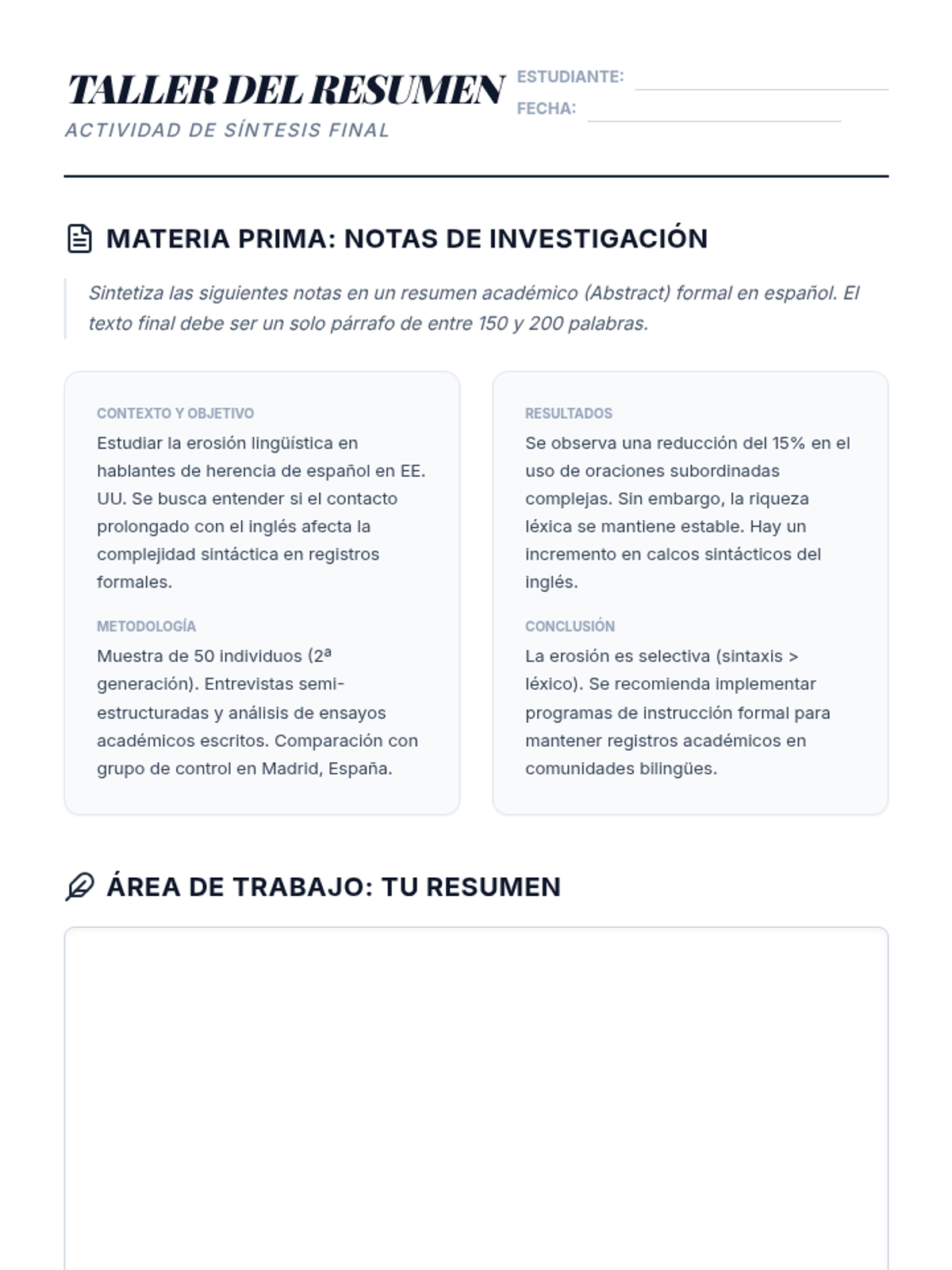
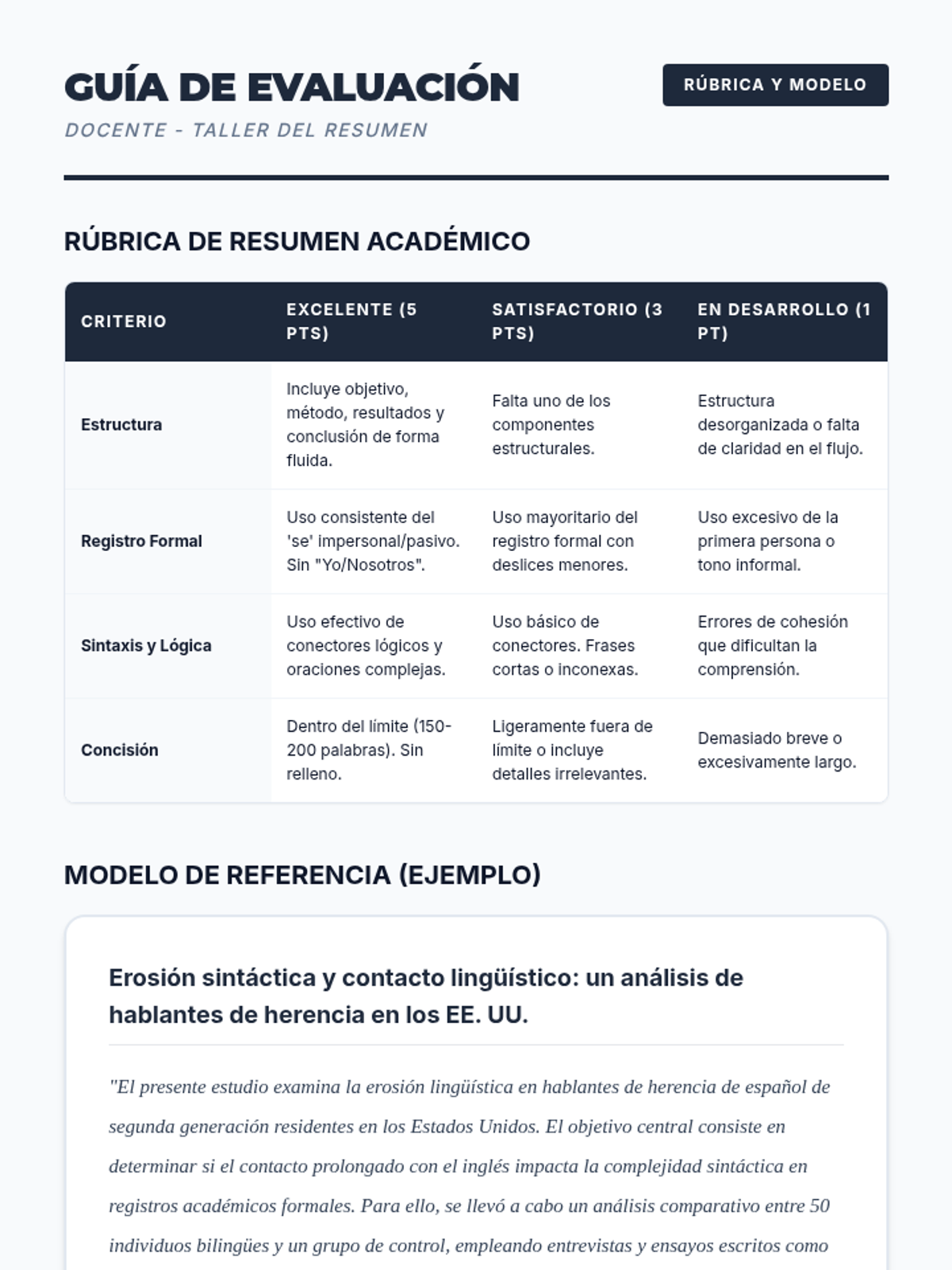
A culminating workshop where students synthesize research findings into formal academic abstracts in Spanish.
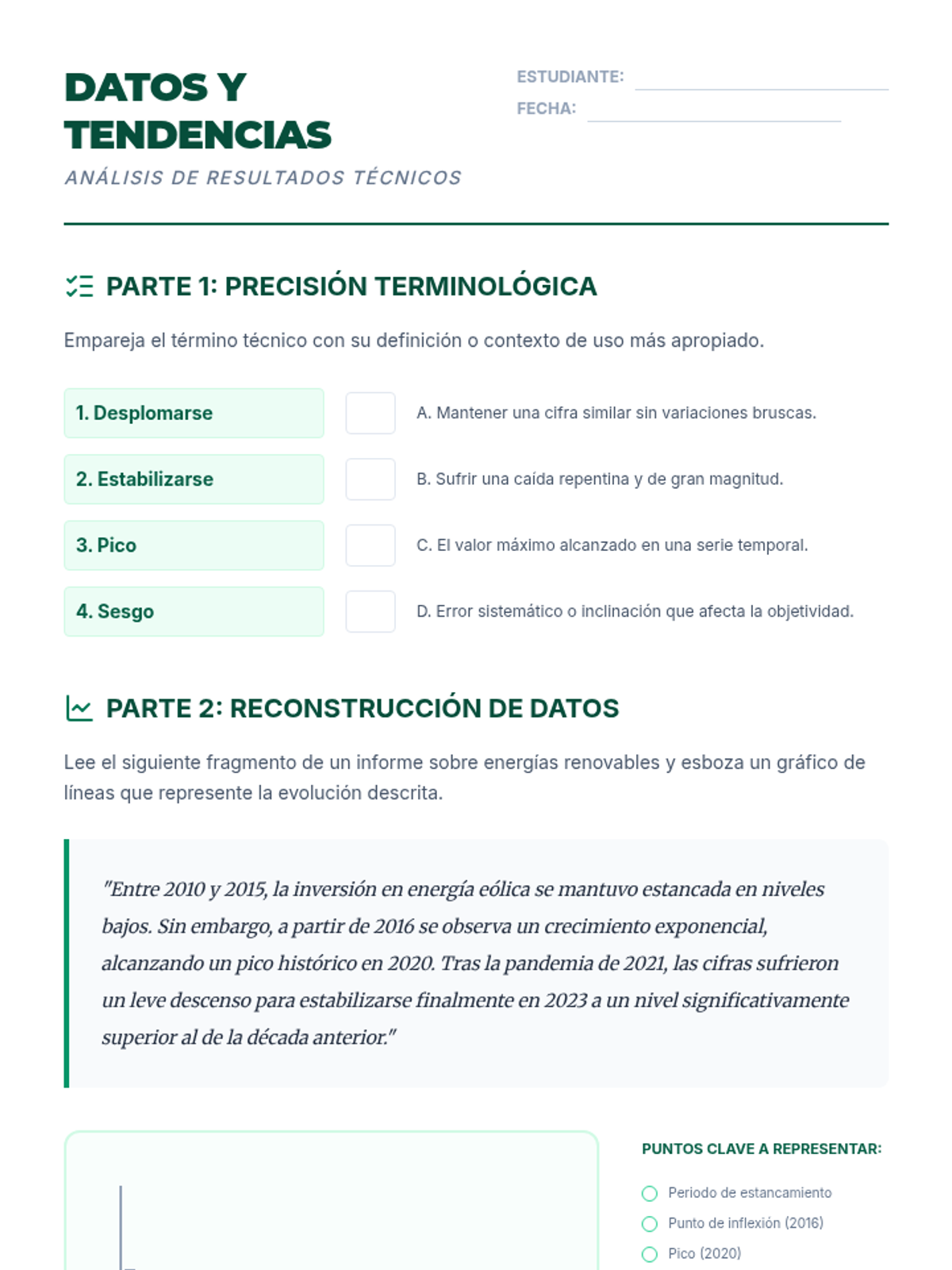
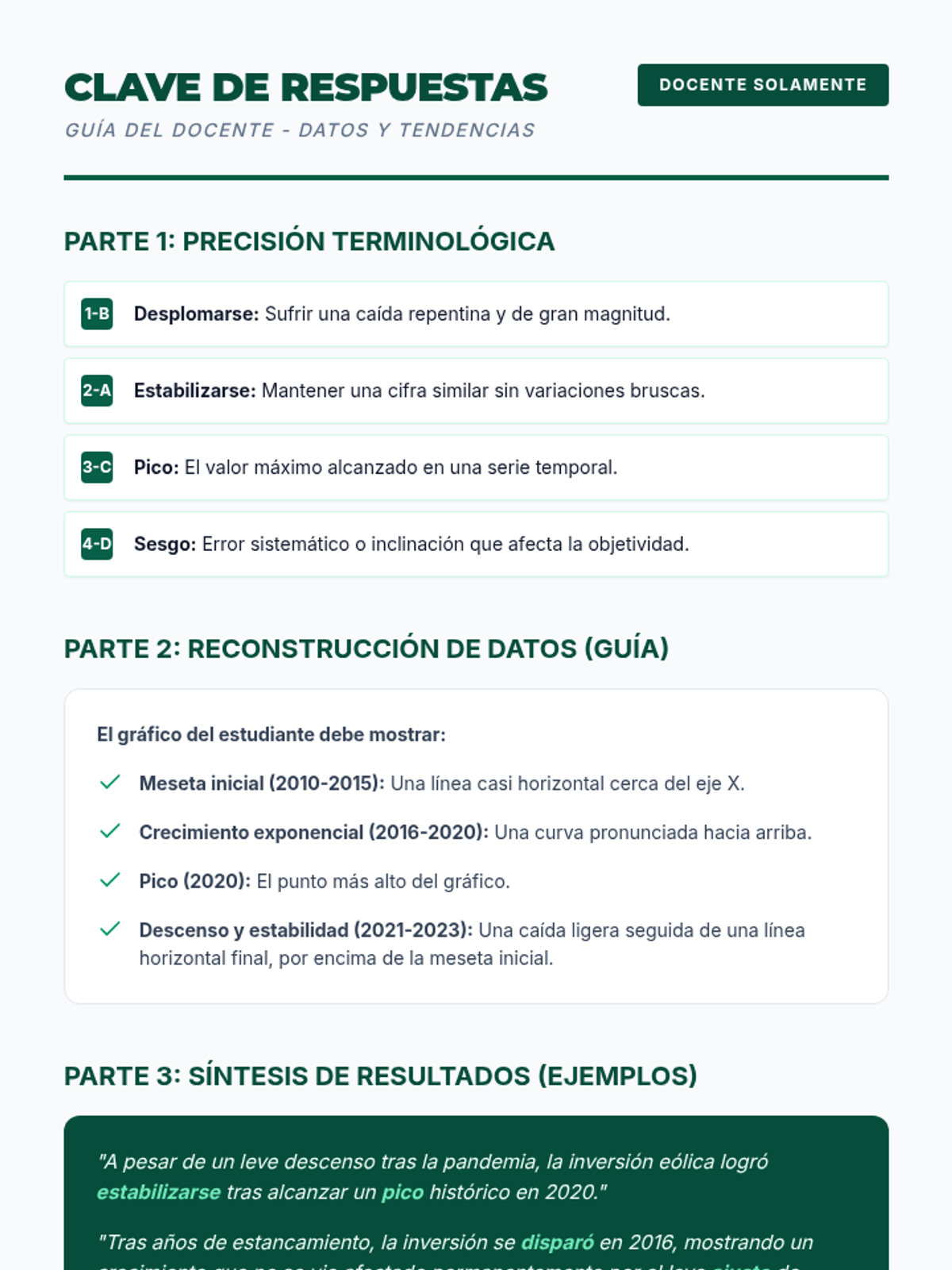
Focuses on the vocabulary of data description and the synthesis of graphical information with technical prose.
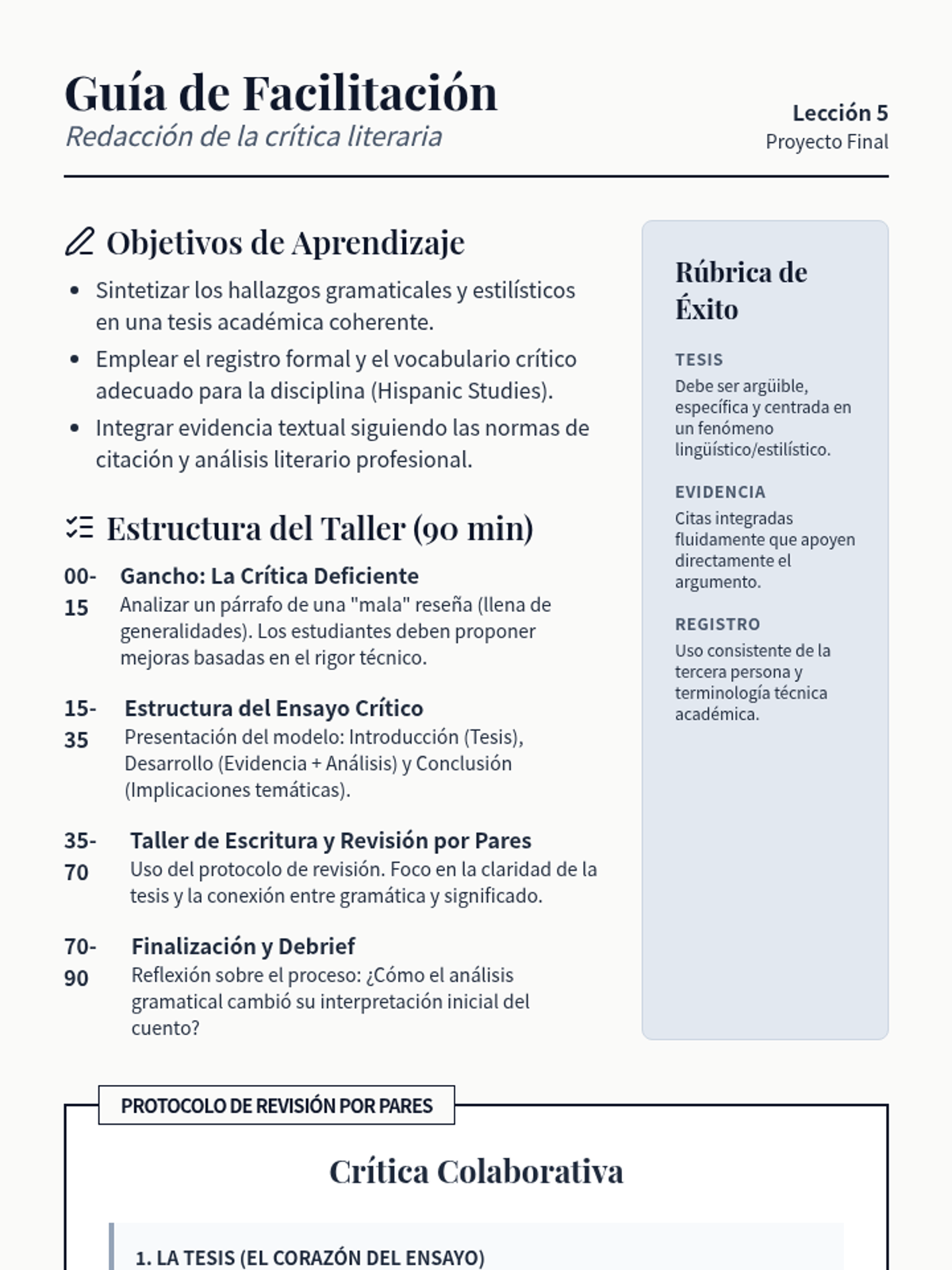
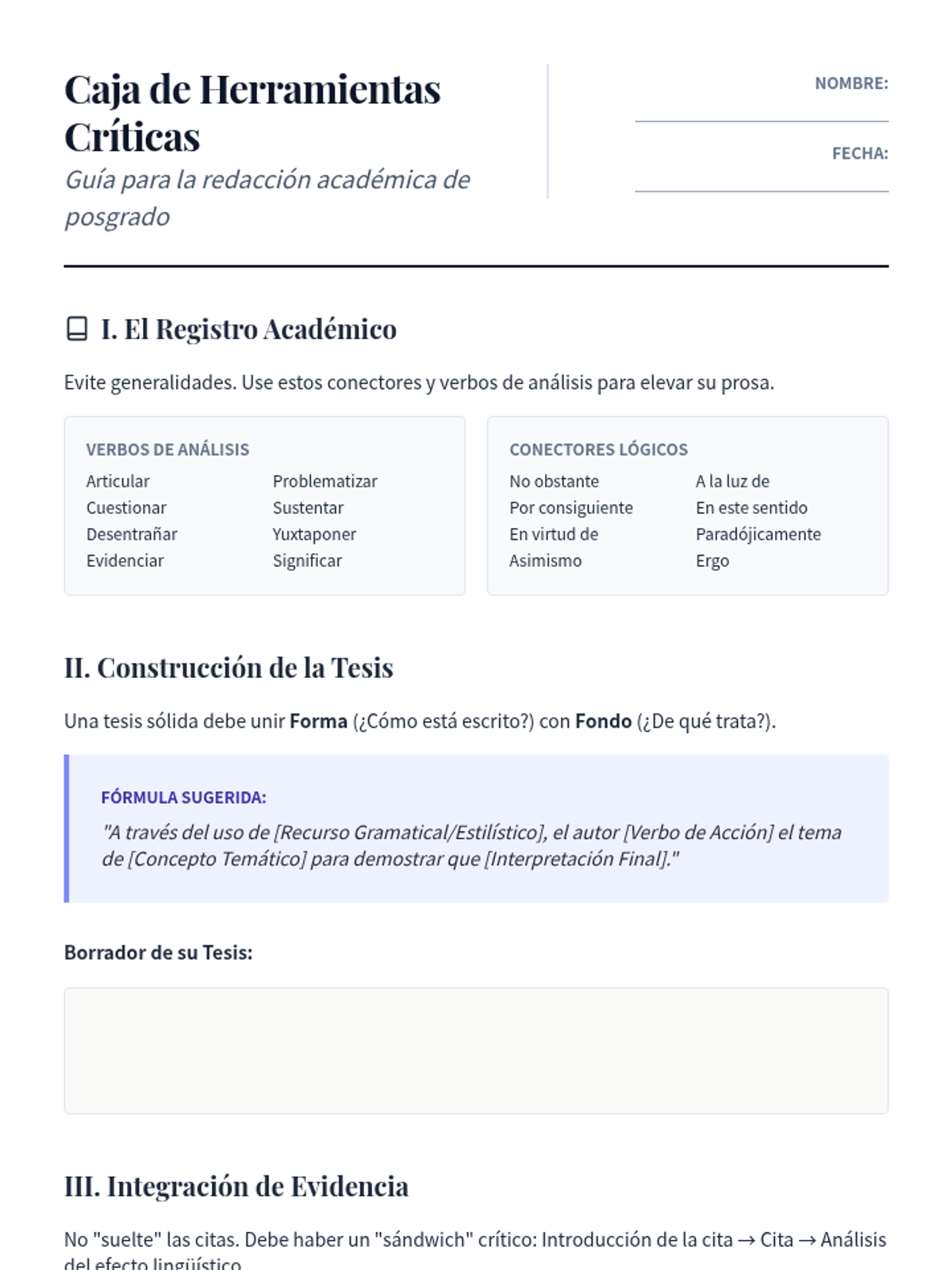
Synthesizes previous analysis into a formal academic essay. Students focus on thesis development, textual evidence, and the conventions of Hispanic literary criticism.
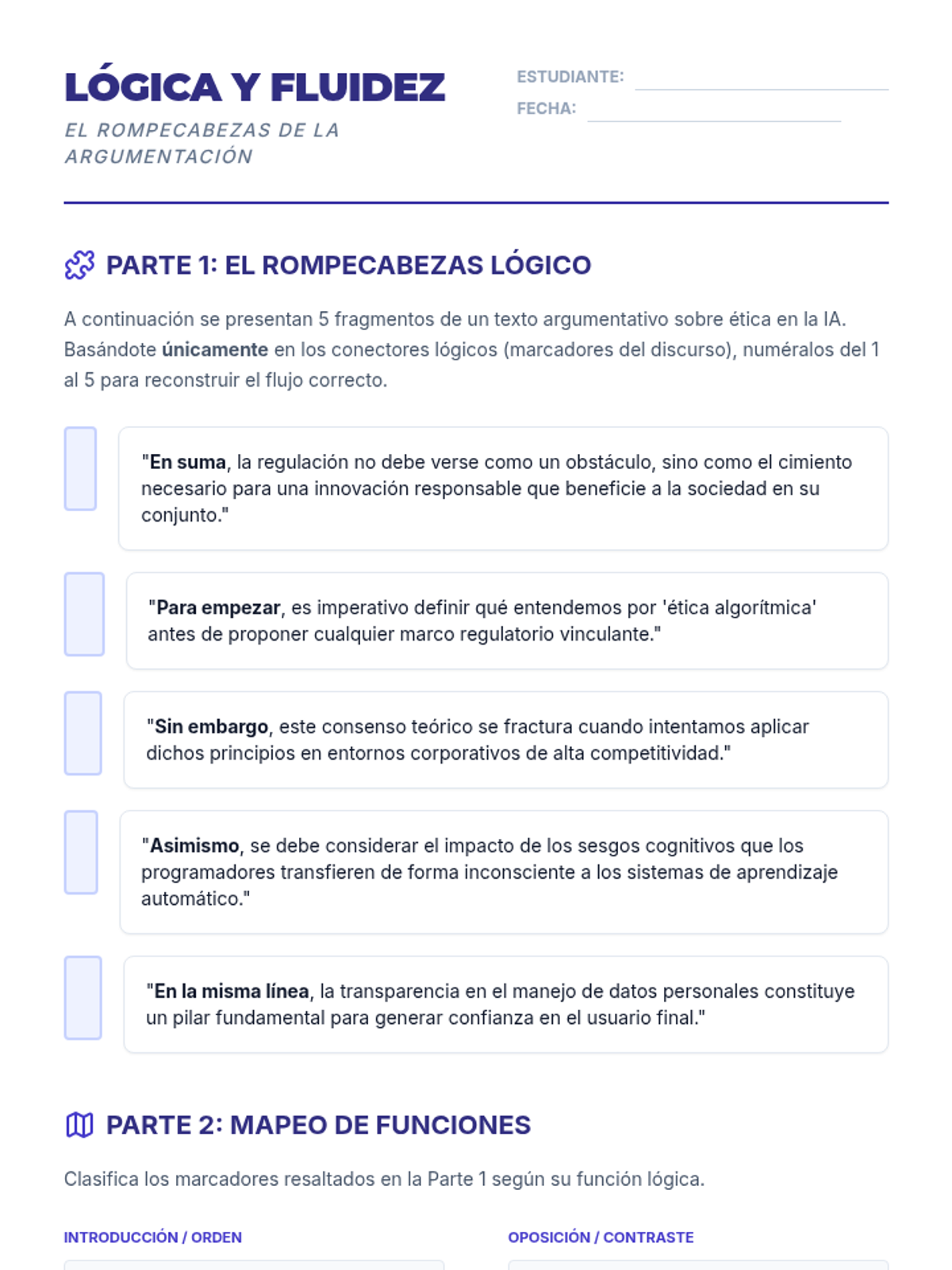
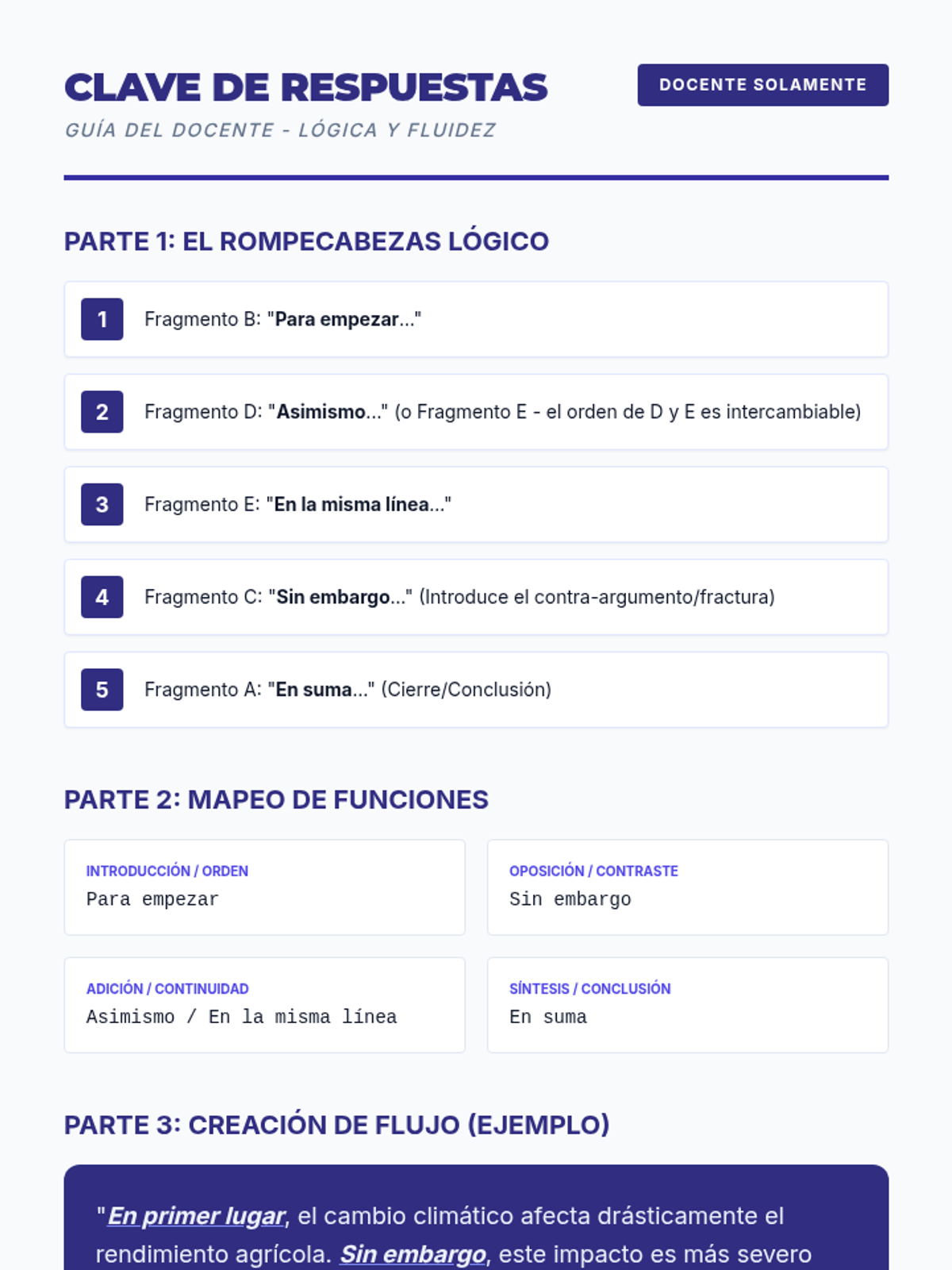
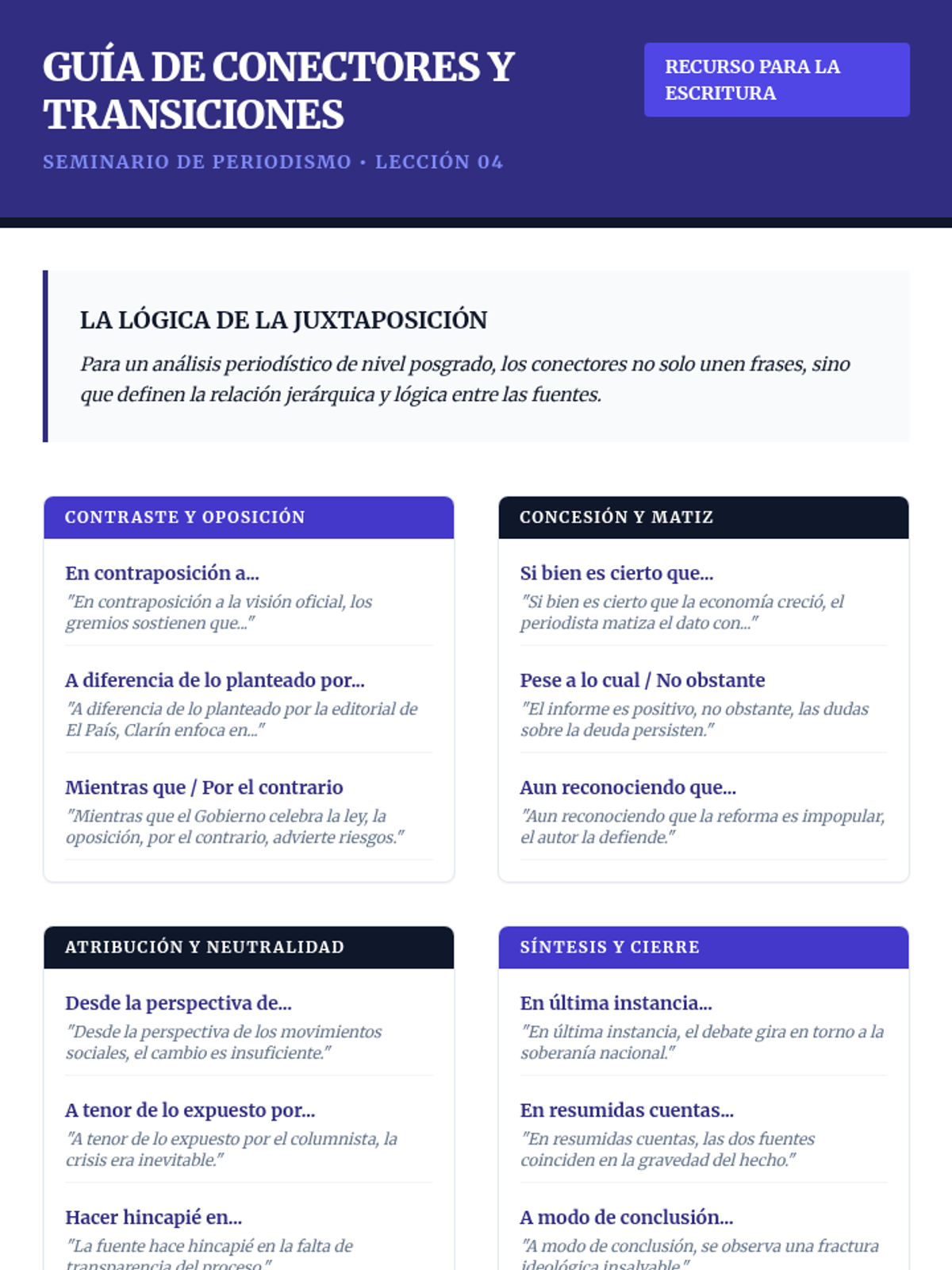
Explores the logical connectors and discourse markers essential for tracing and constructing sophisticated arguments in Spanish.
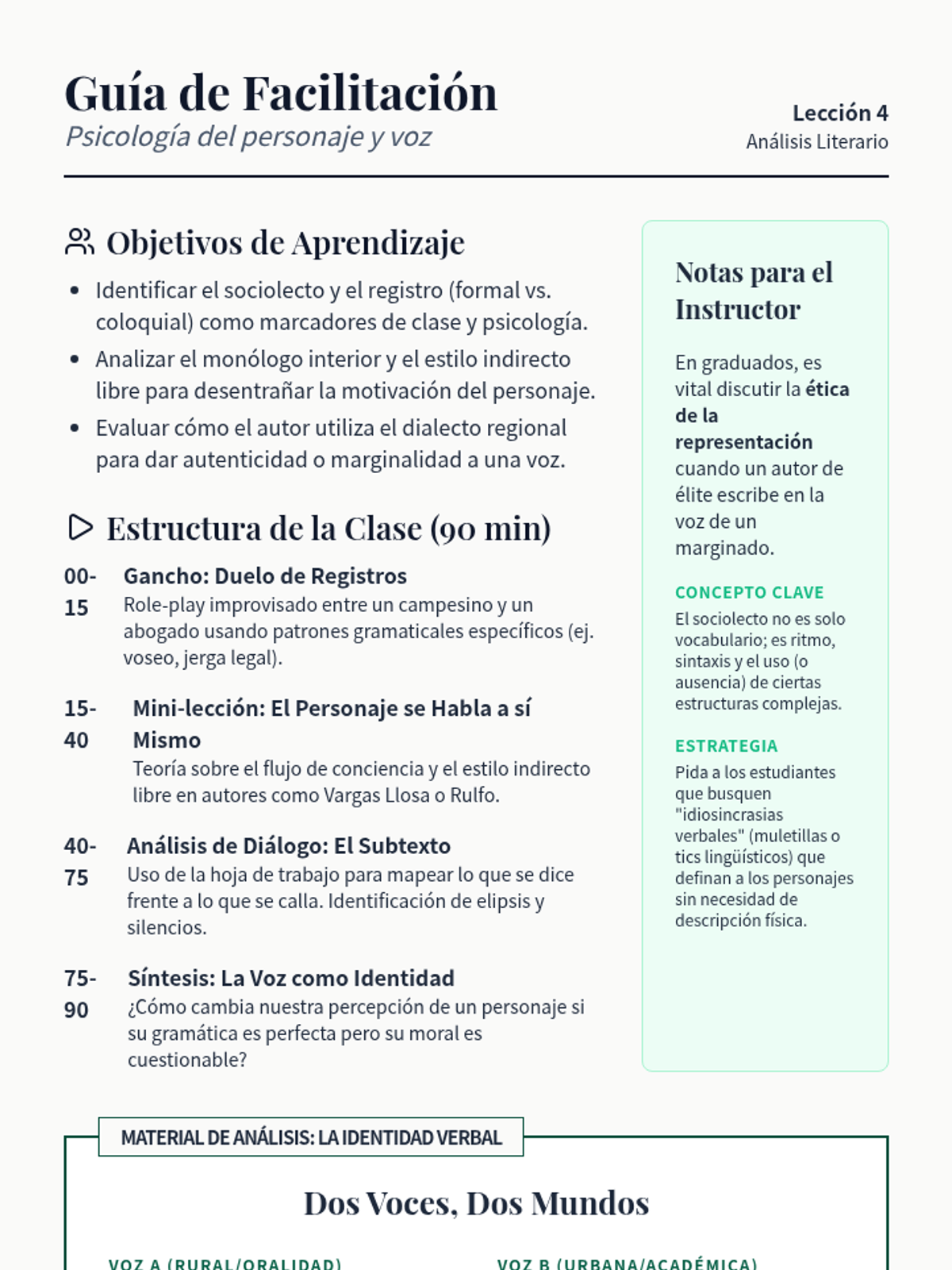
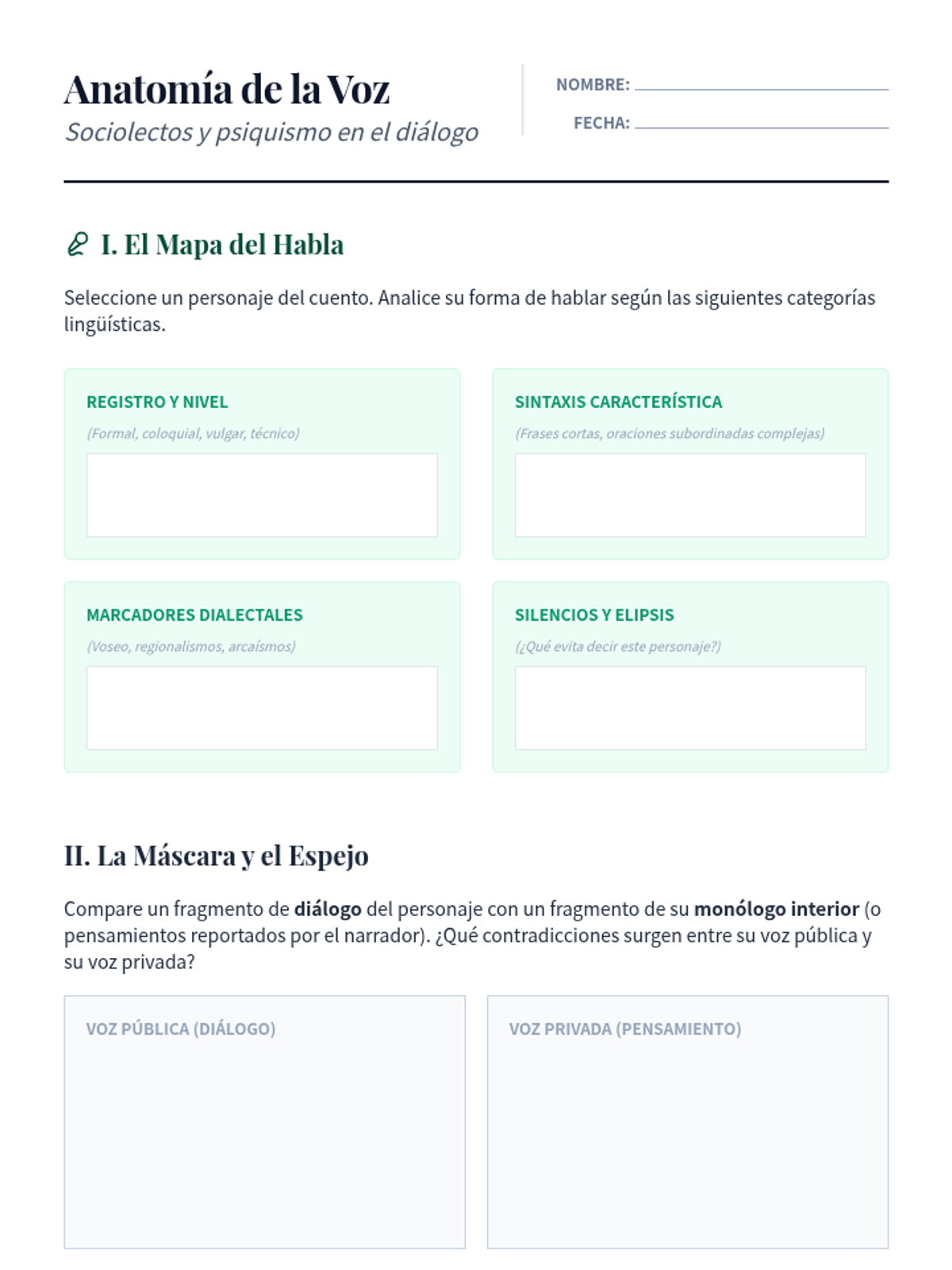
Examines character depth through dialogue, internal monologue, and sociolect. Students analyze how register shifts and colloquialisms reveal psychological motivation and social standing.
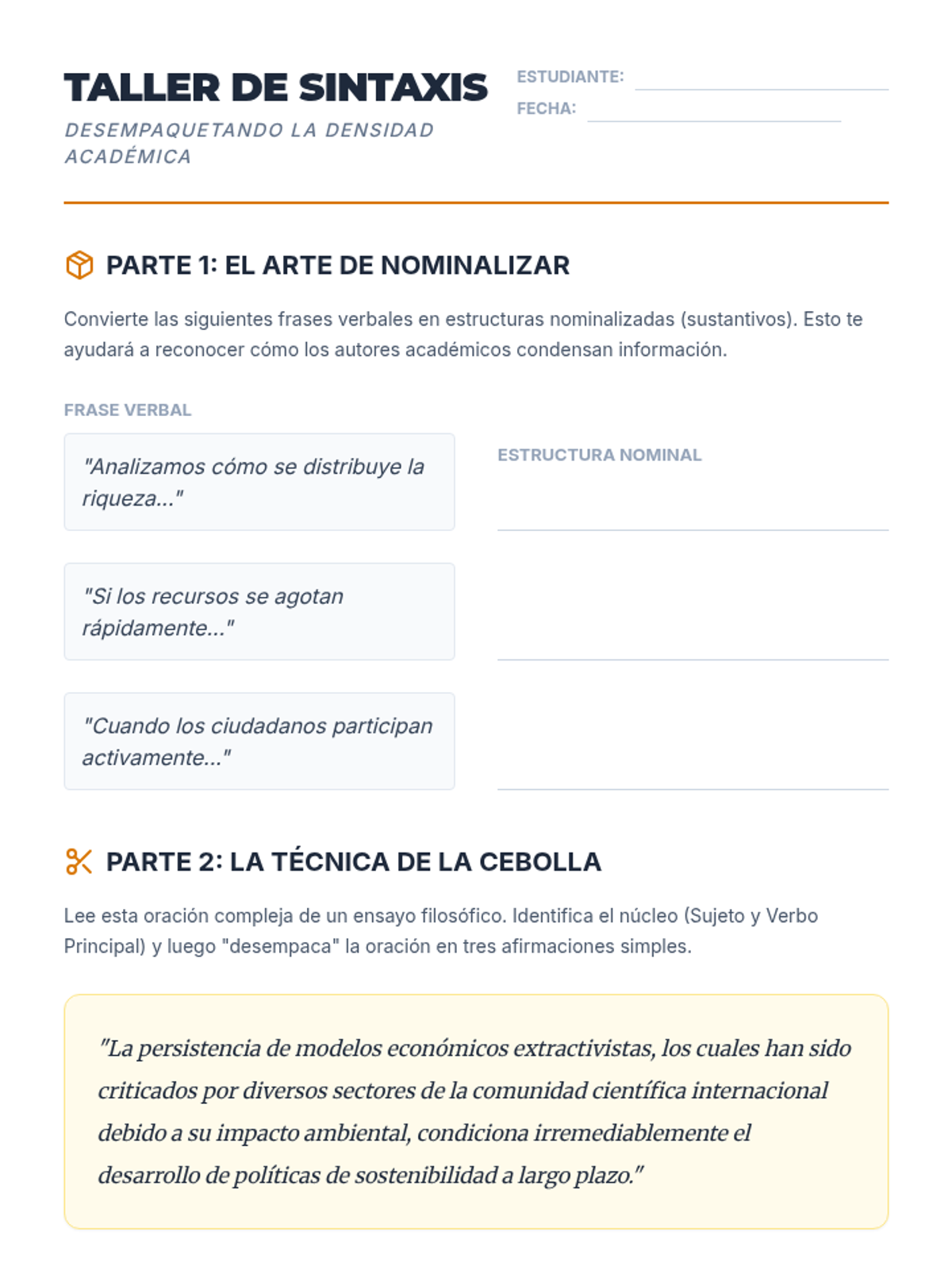
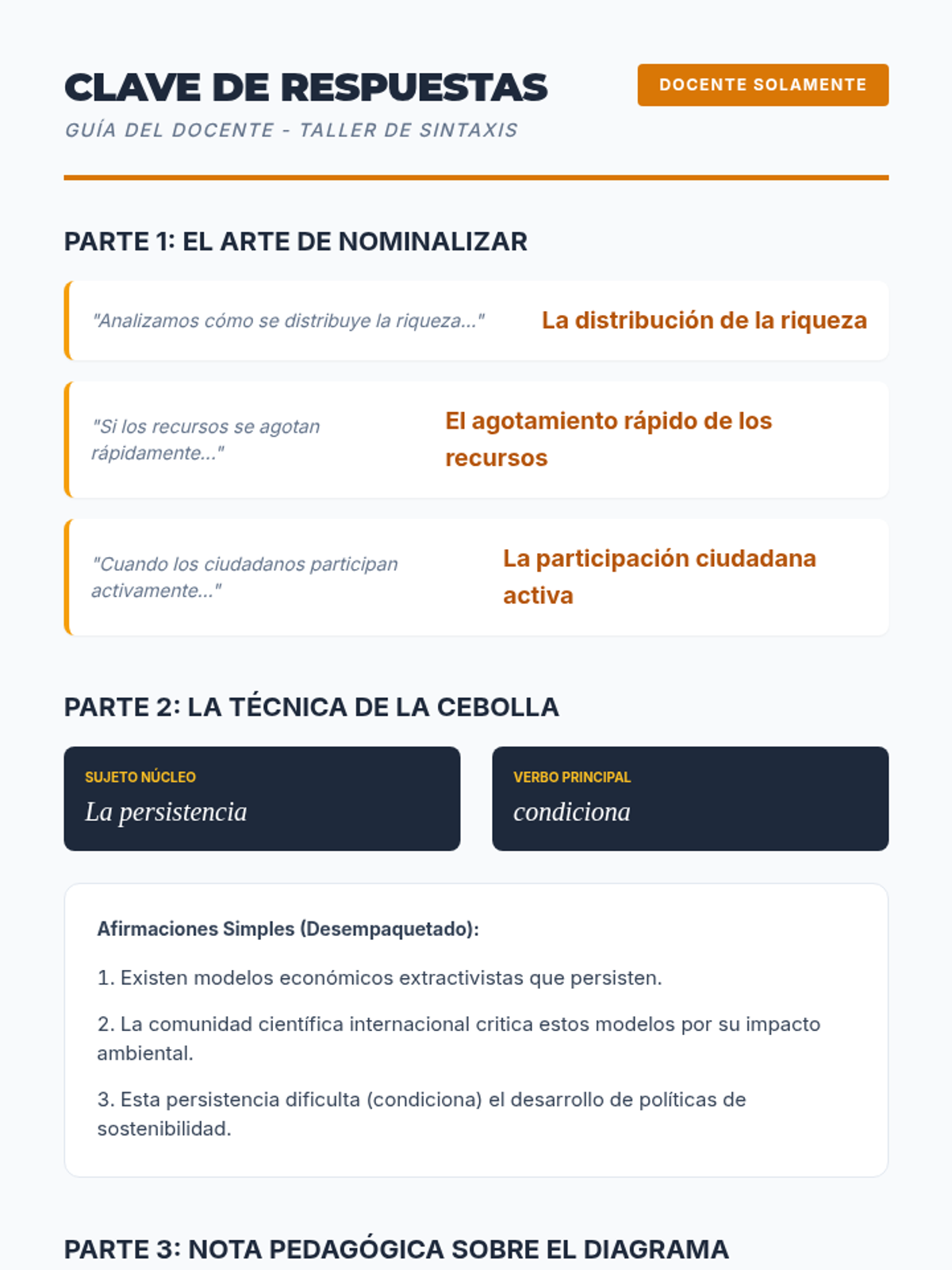
A workshop focused on parsing long, convoluted sentences and understanding how nominalization functions in formal academic Spanish.
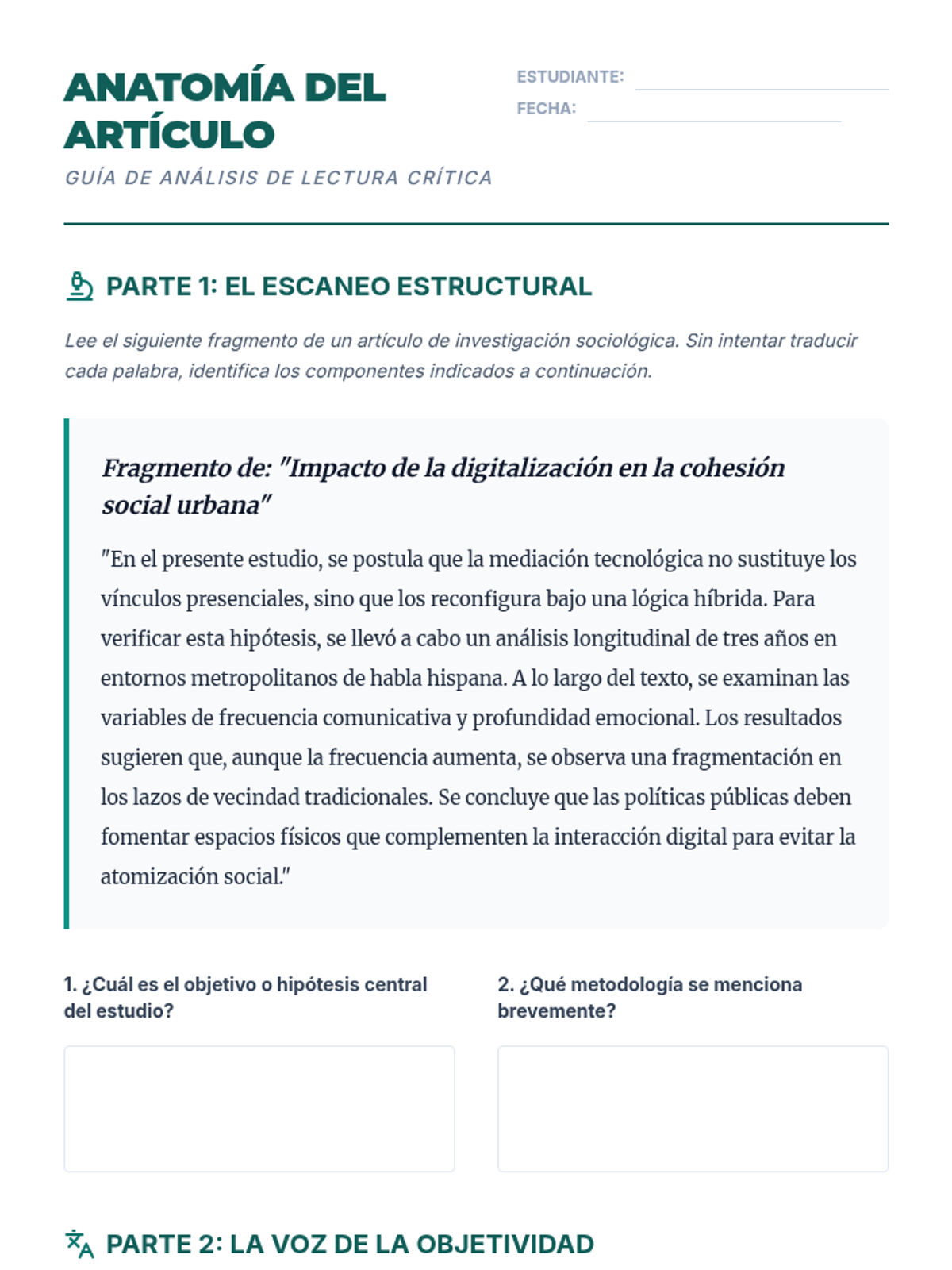
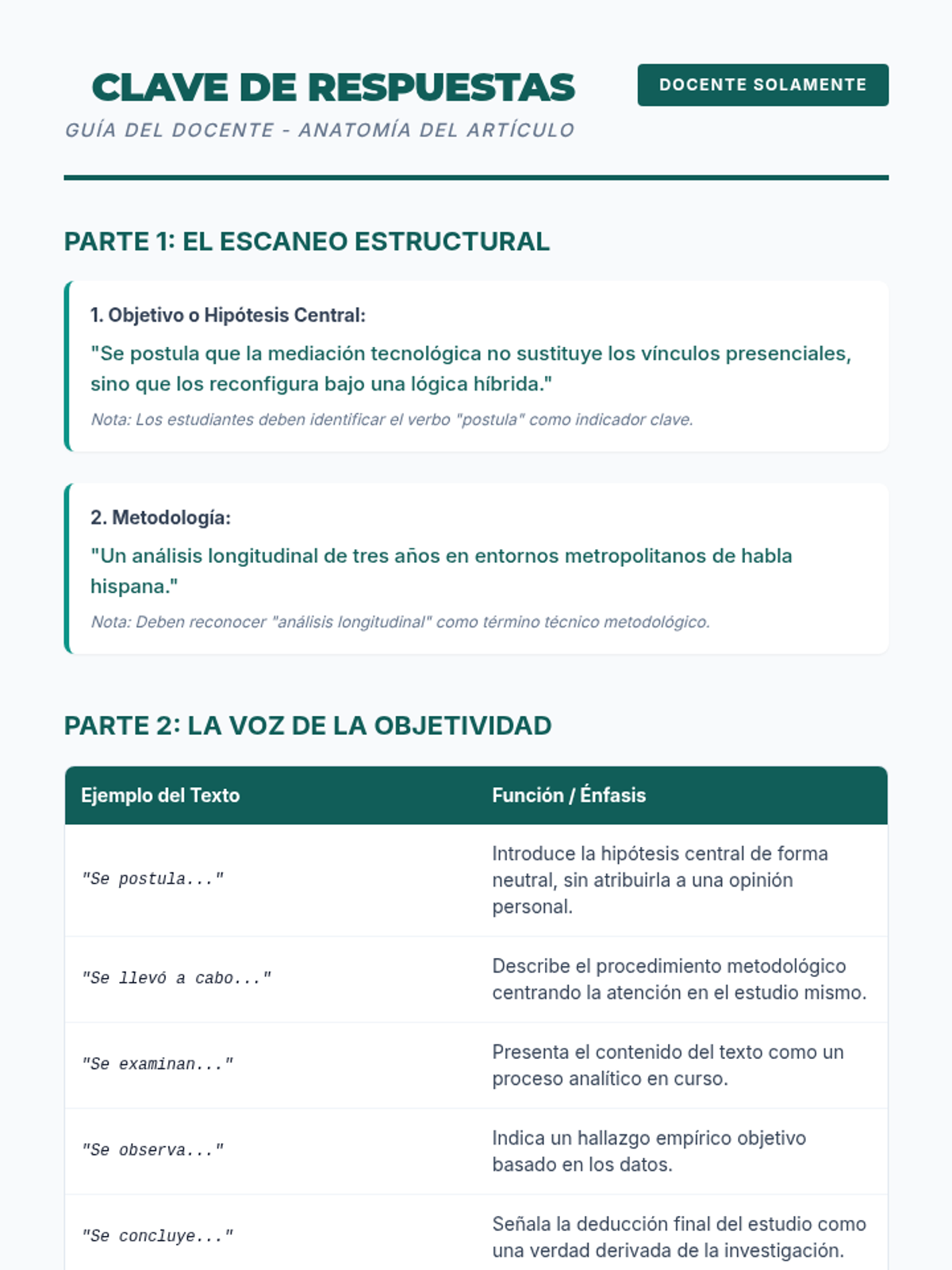
Students learn to identify the structural components of research articles while mastering formal grammatical structures like 'se impersonal' and passive constructions.
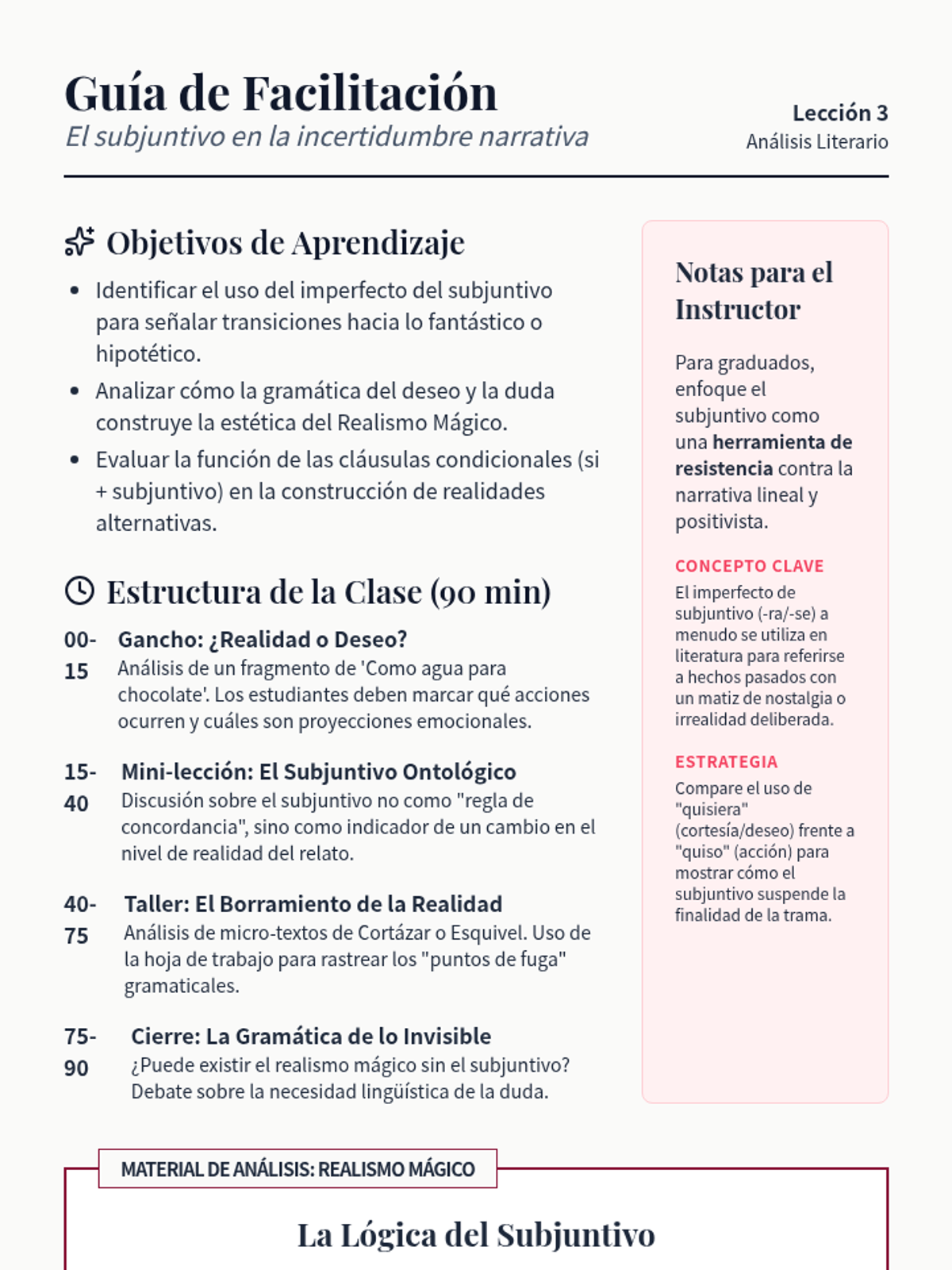
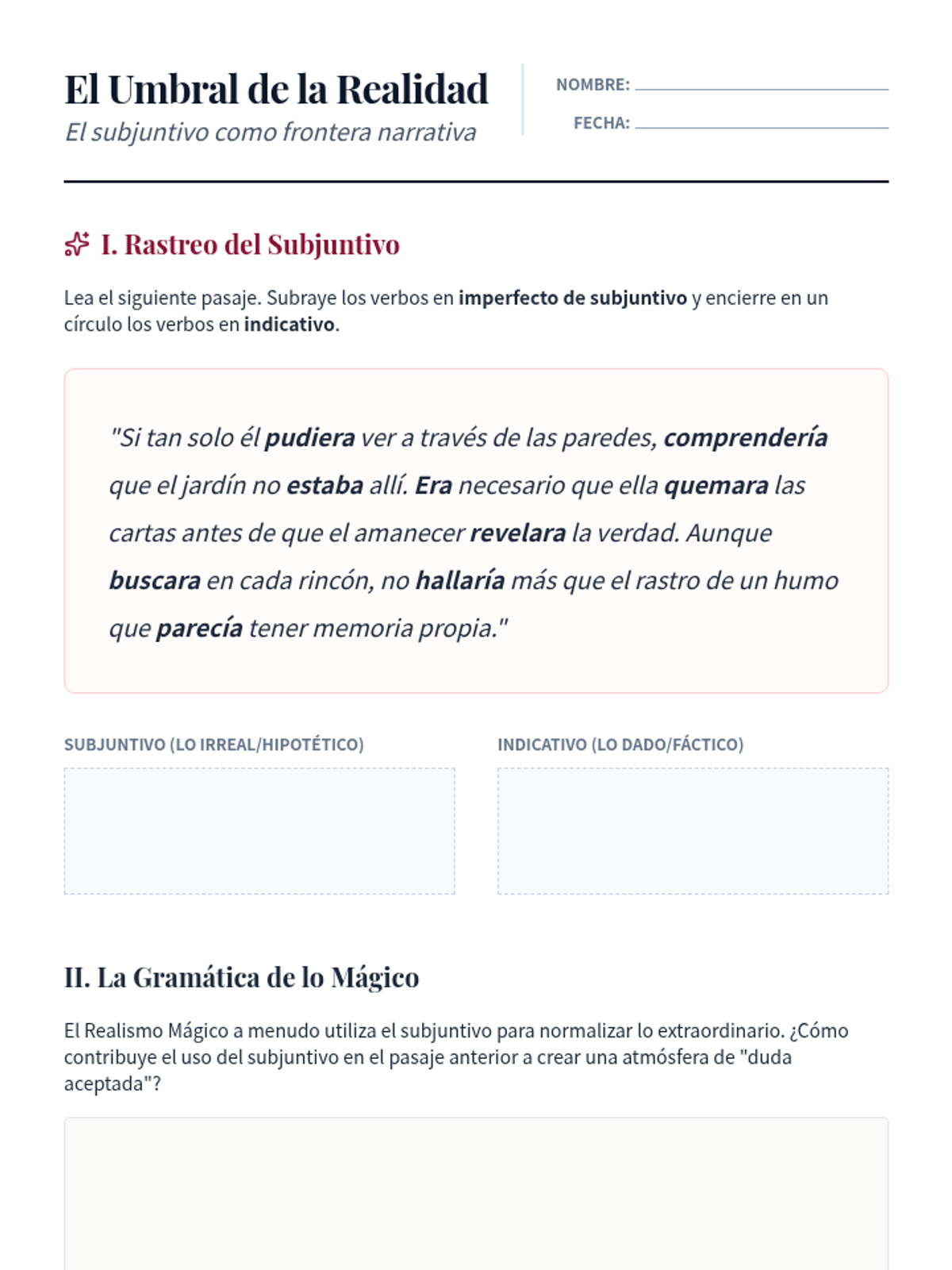
Investigates the role of the imperfect subjunctive in creating narrative uncertainty and magical realism. Students analyze how grammatical shifts signal transitions between reality and the hypothetical or magical.
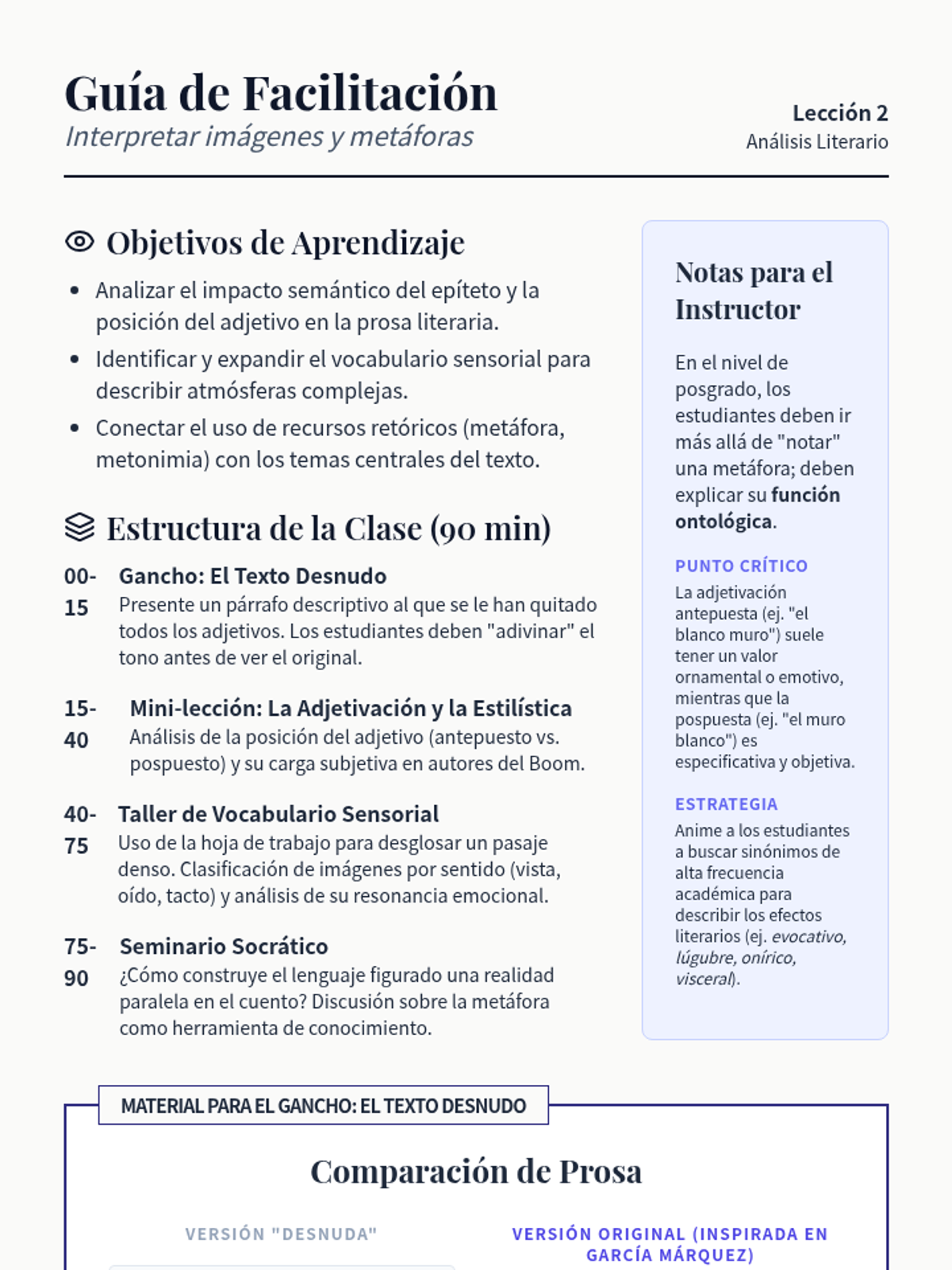
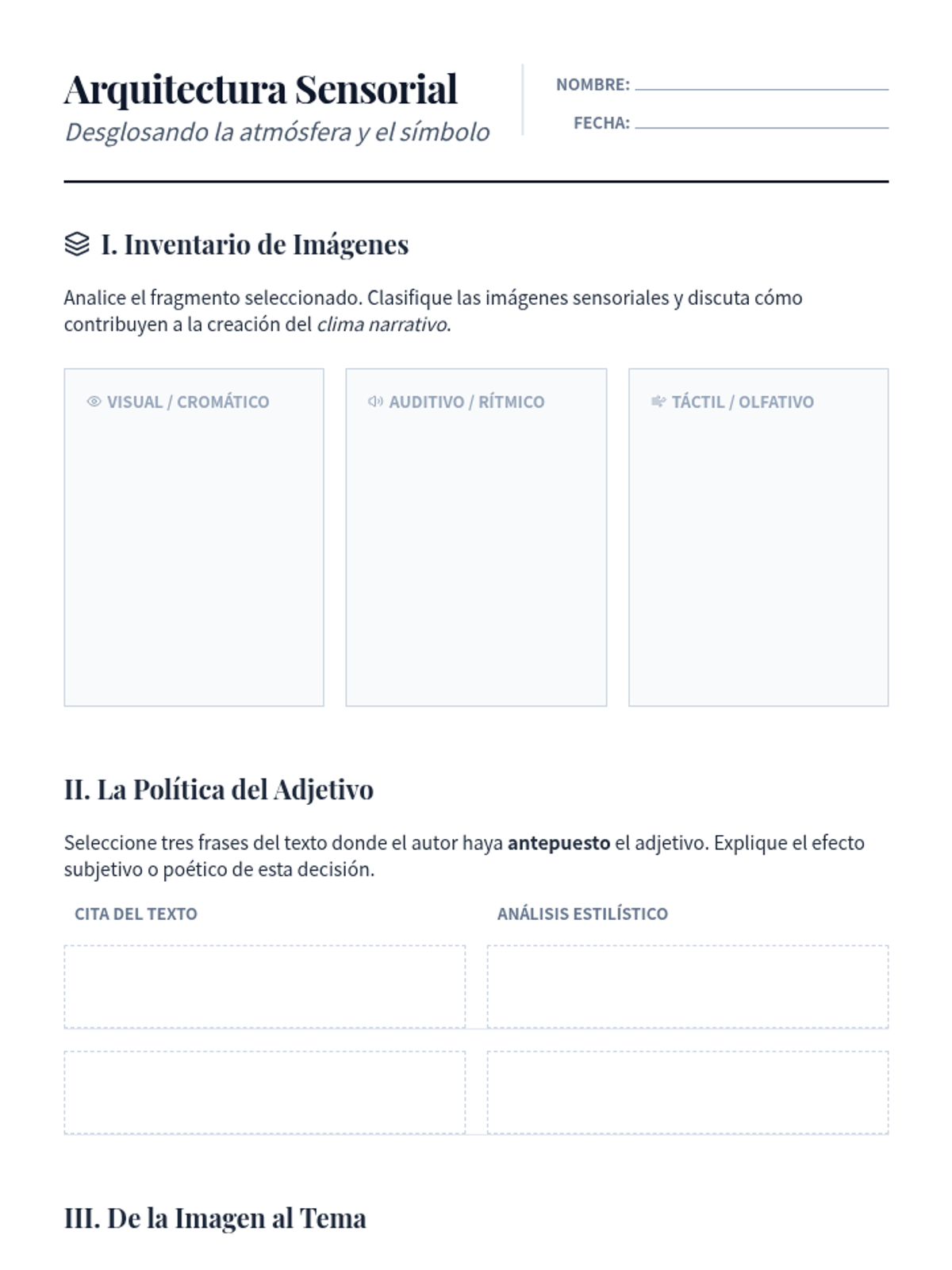
Explores sensory vocabulary, metaphor, and adjective placement in literary descriptions. Students practice close reading to identify how linguistic choices build atmosphere and emotional resonance.
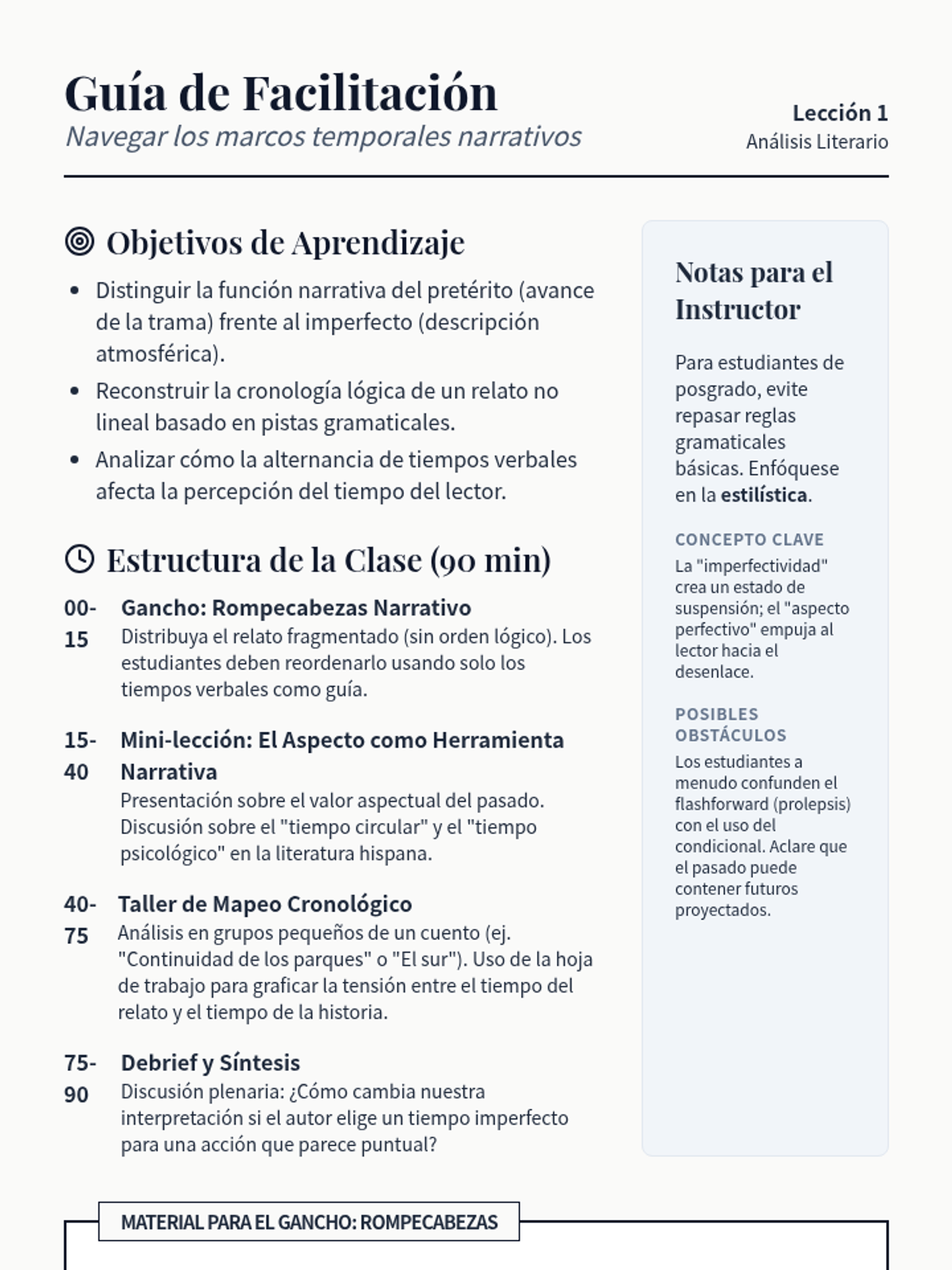
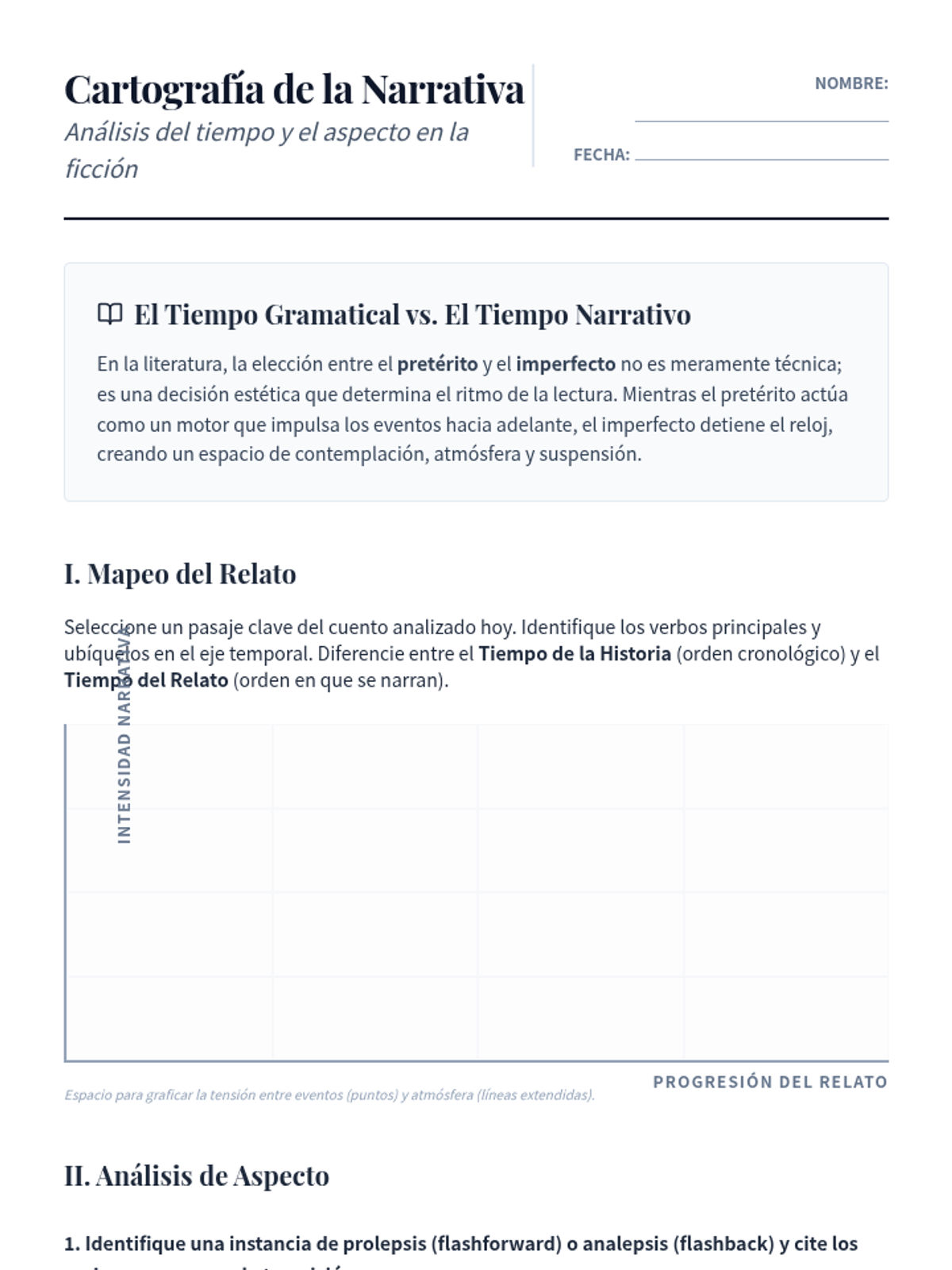
Focuses on the interplay between preterite and imperfect tenses in non-linear narratives. Students learn to map plot timelines against grammatical structures to understand how authors manipulate time.
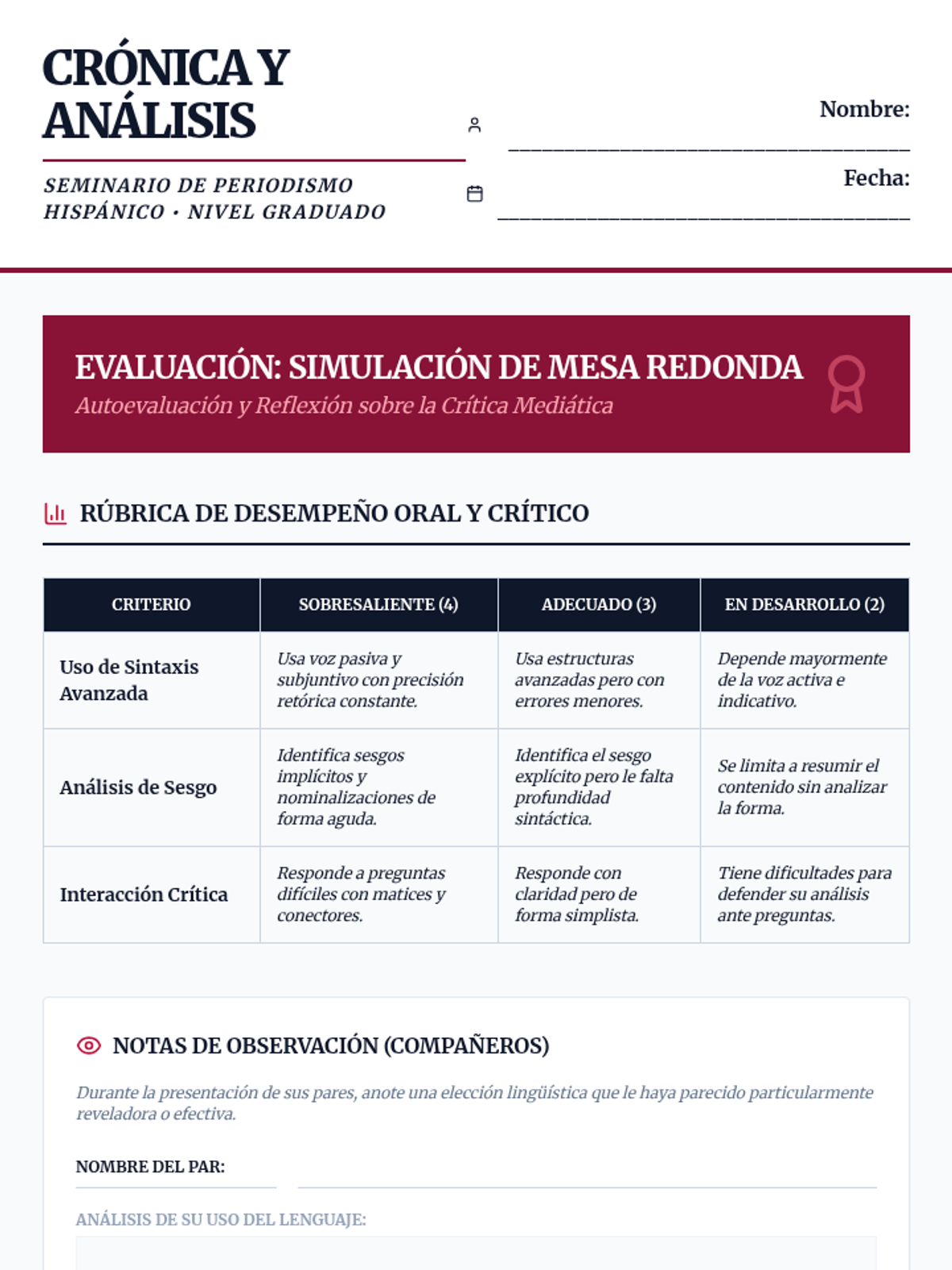
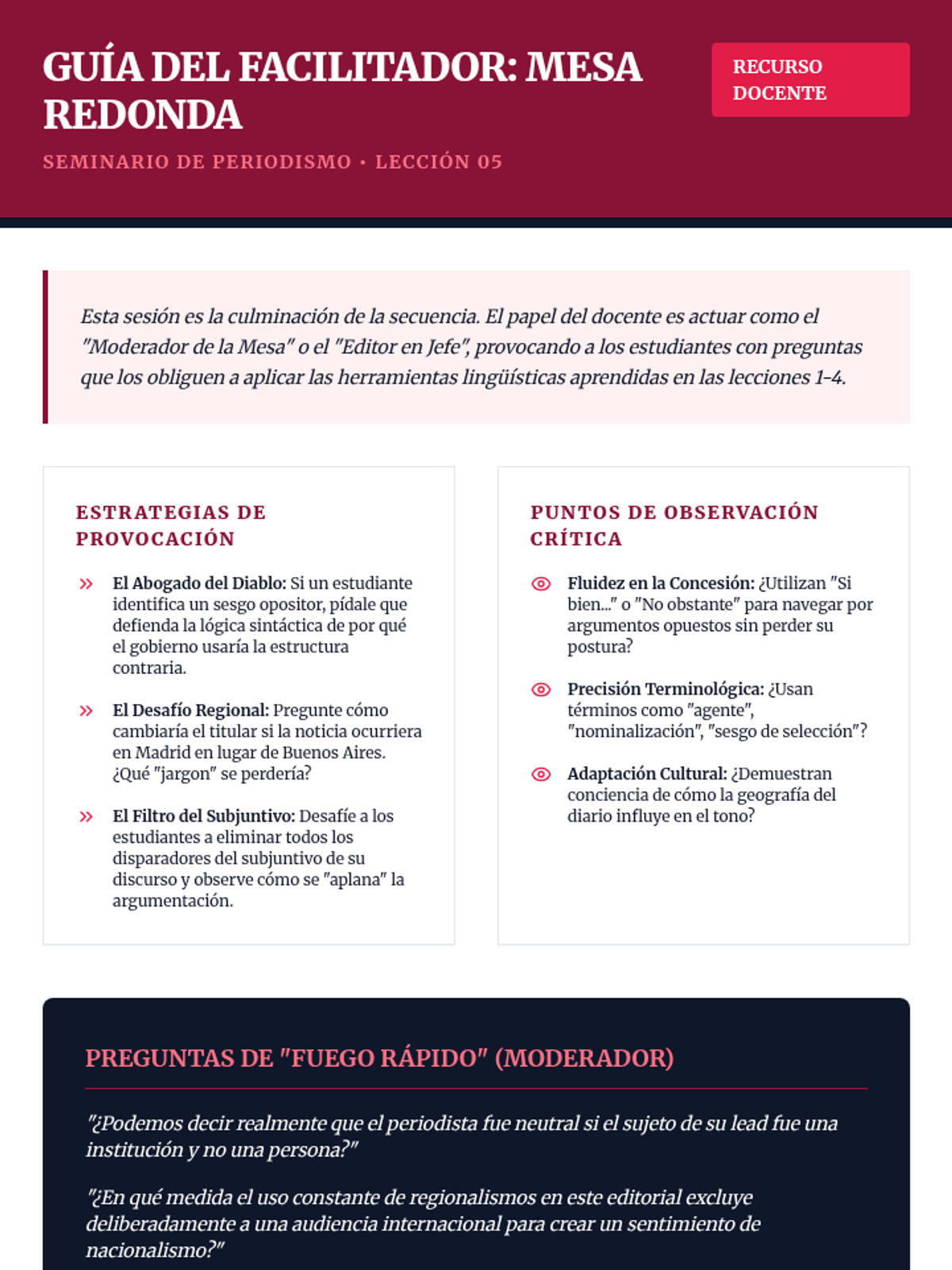
A culminating session where students present a brief analysis of a current event and field questions in a simulated press conference. The focus is on oral application of media literacy vocabulary.
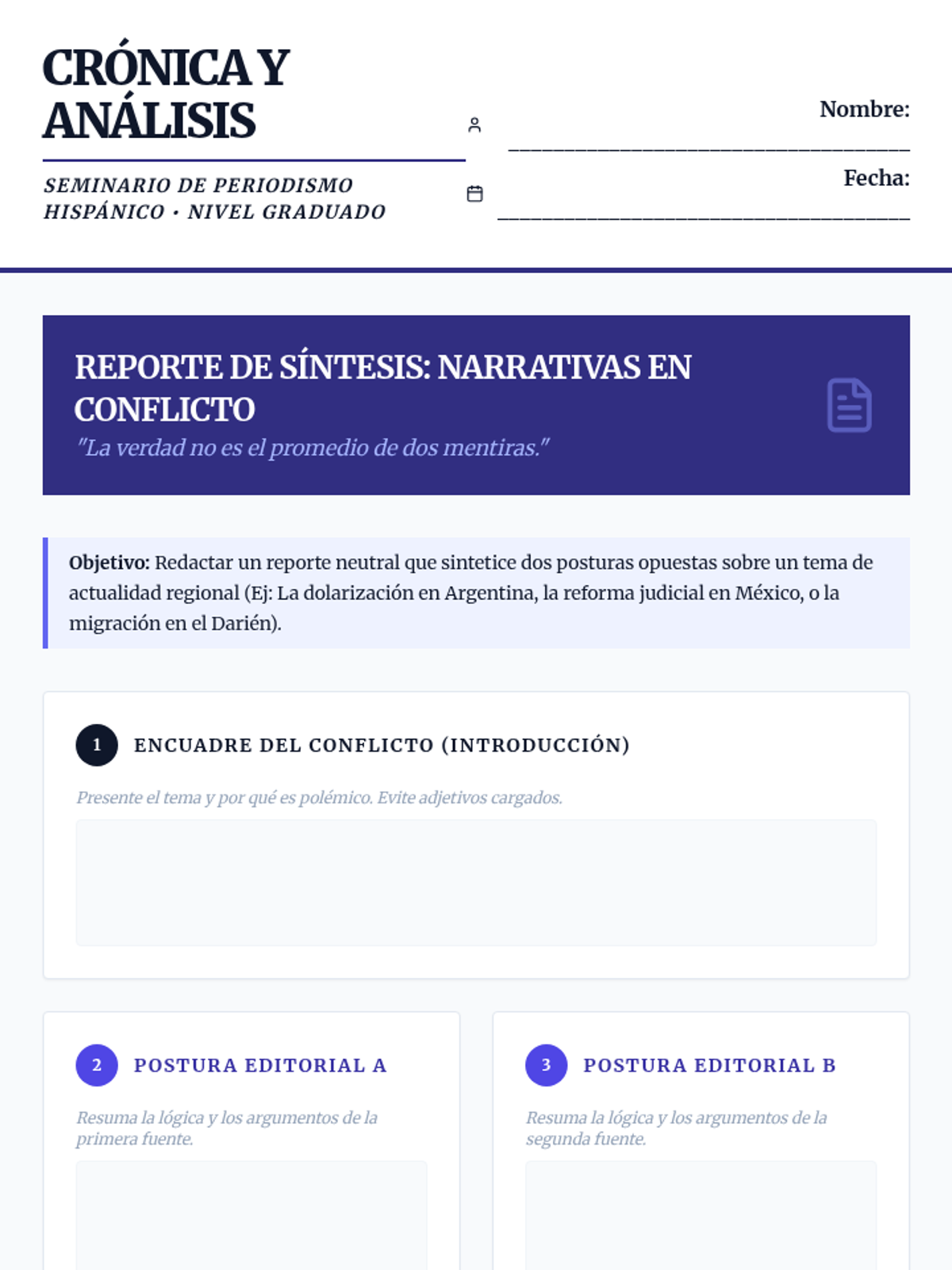
Students select two articles with opposing viewpoints and draft a synthesis report. The focus is on using sophisticated transition words to juxtapose arguments effectively in Spanish.
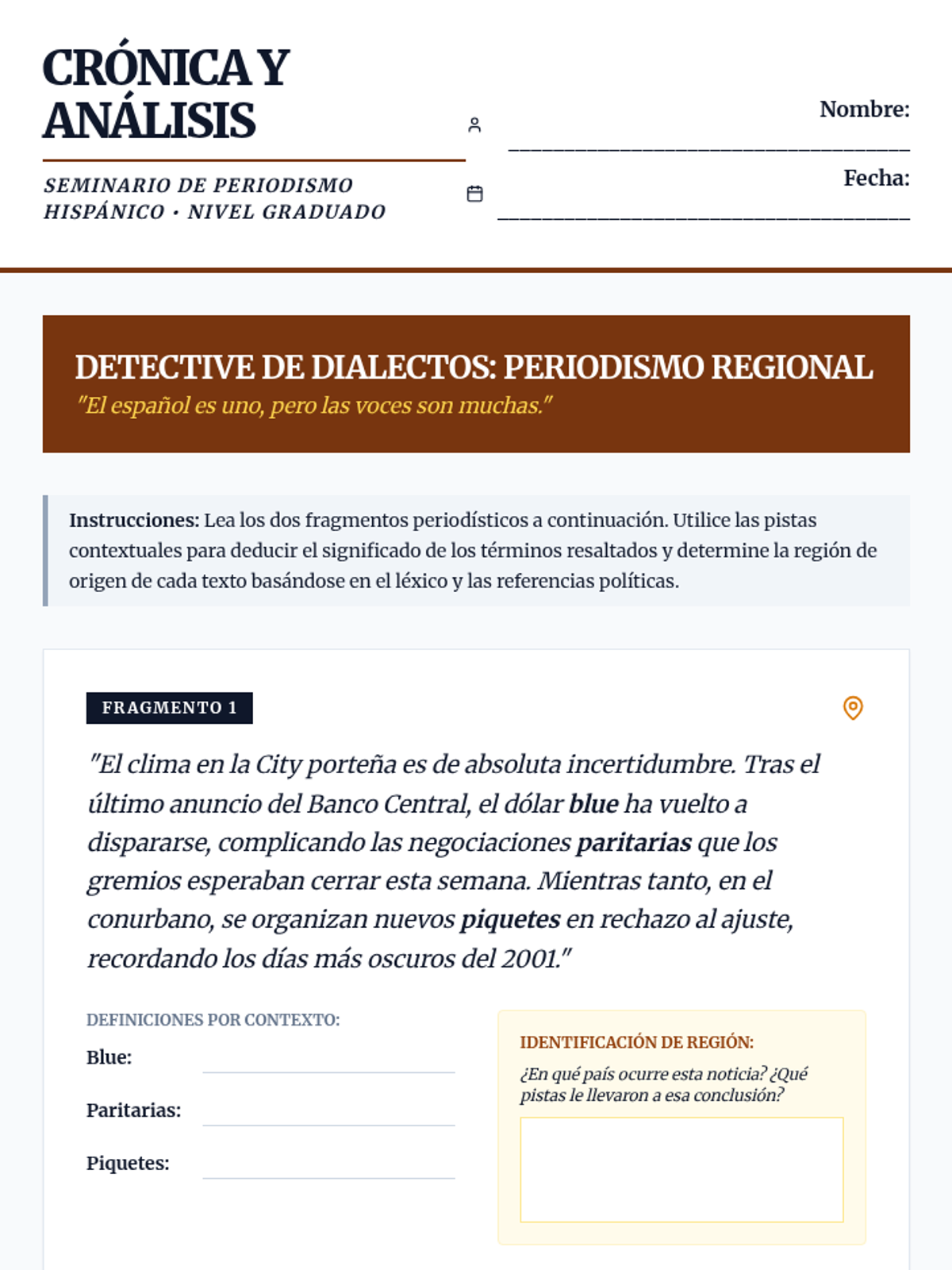
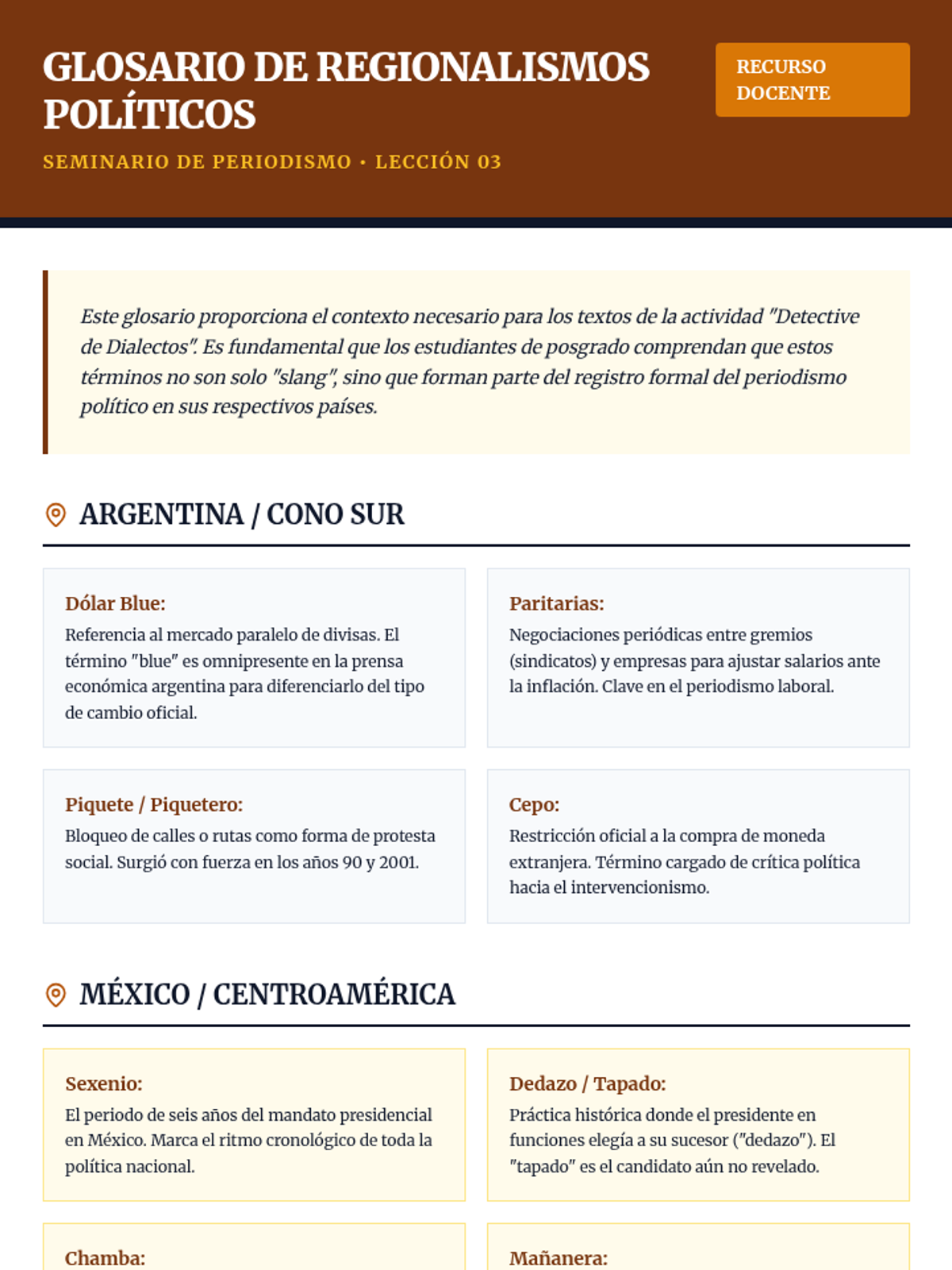
This lesson explores how regionalisms and culturally specific references affect comprehension. Students decode articles containing political jargon from the Southern Cone and the Caribbean.
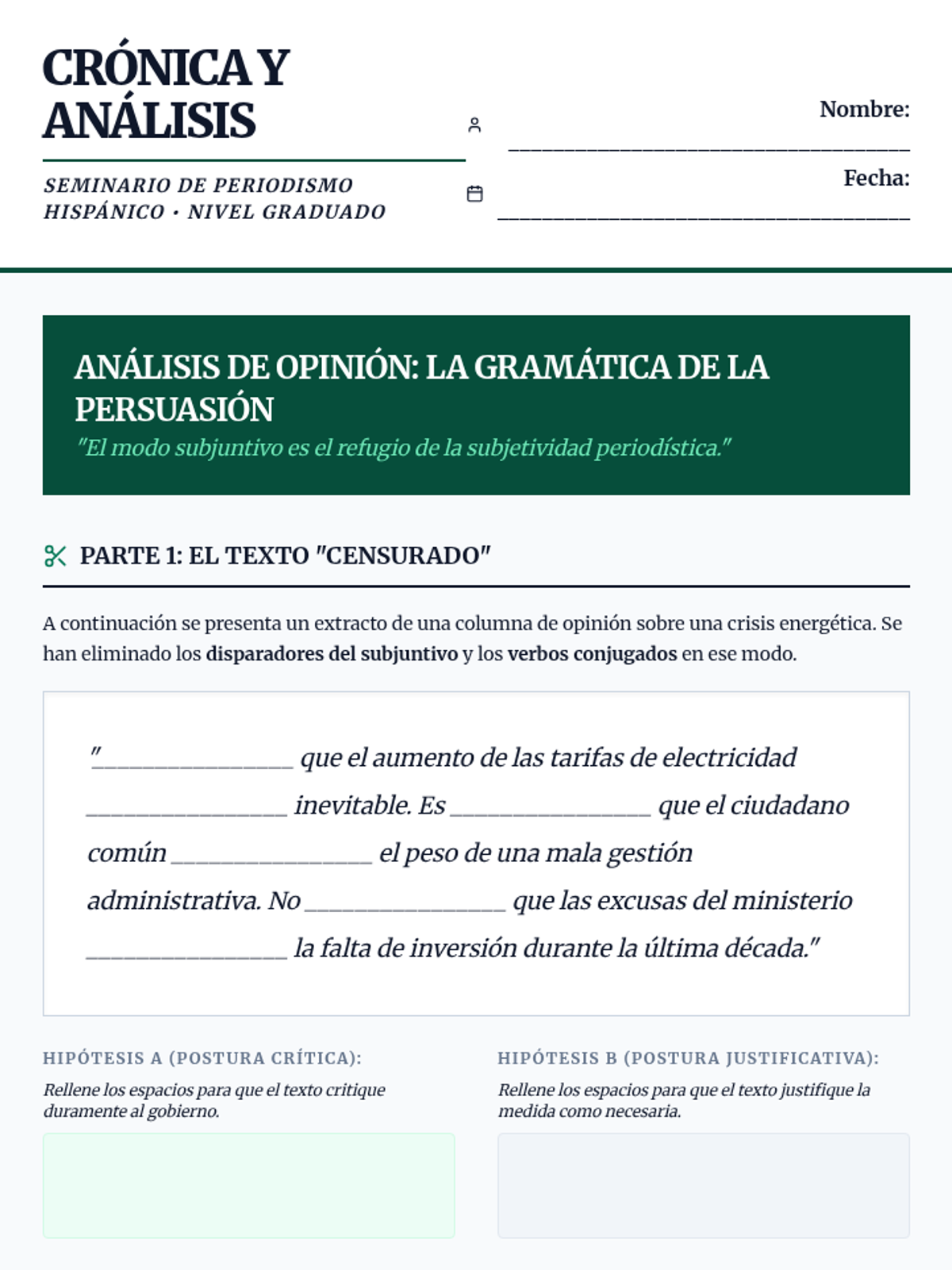
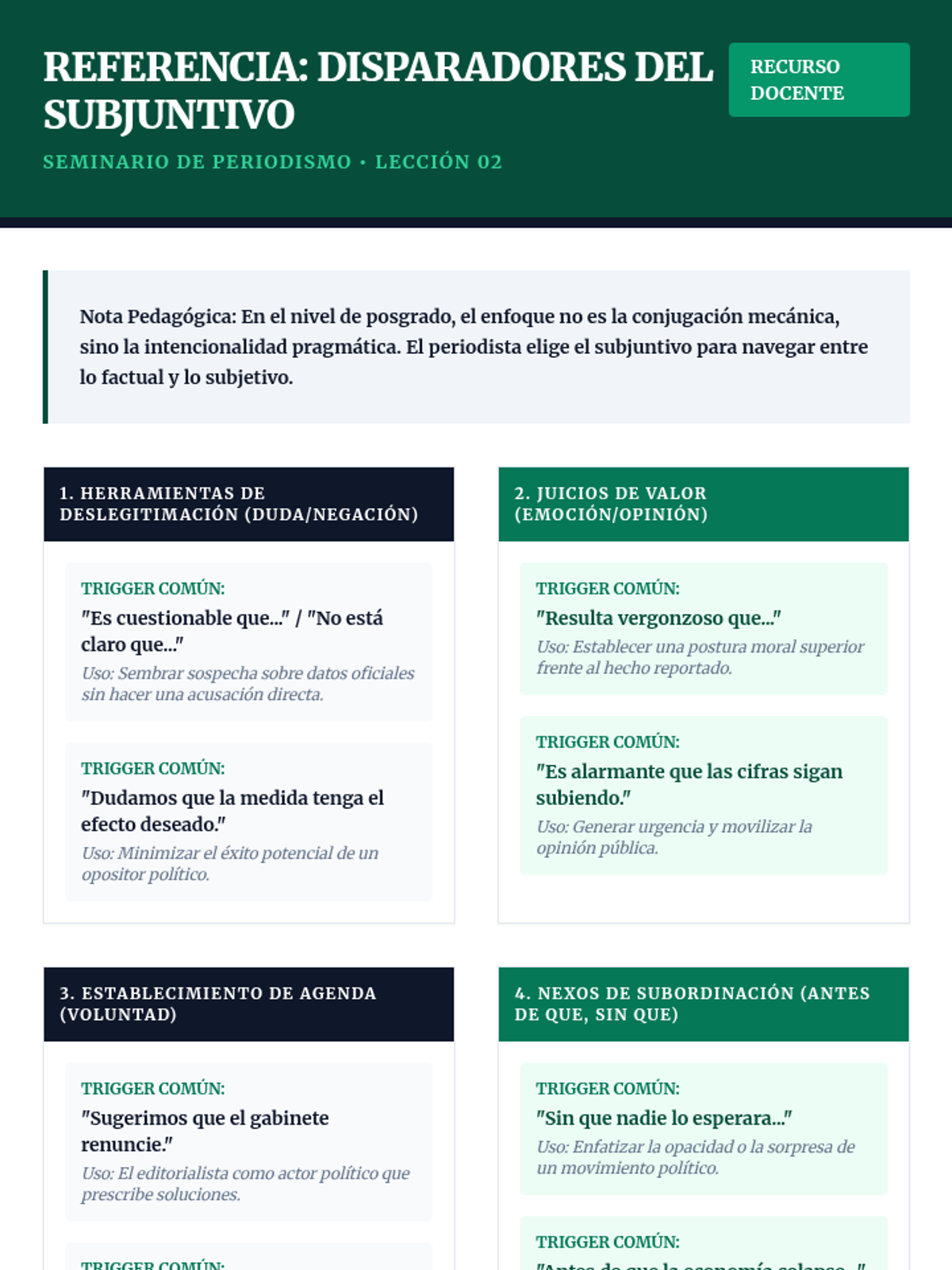
Learners compare objective news reports with opinion columns to analyze how the subjunctive mood signals subjectivity and persuasion. The lesson focuses on identifying triggers that shift the reader's perception of truth.
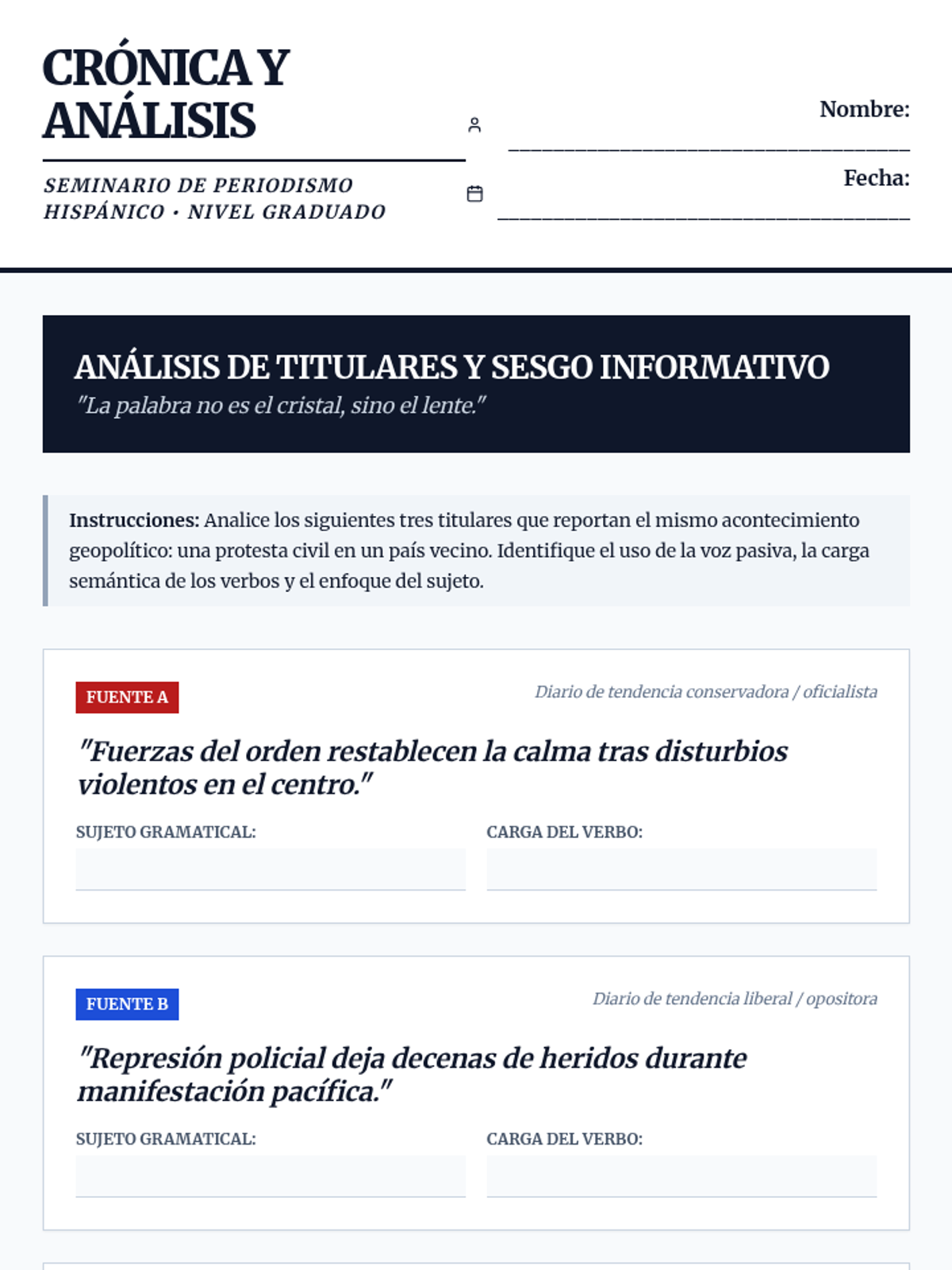
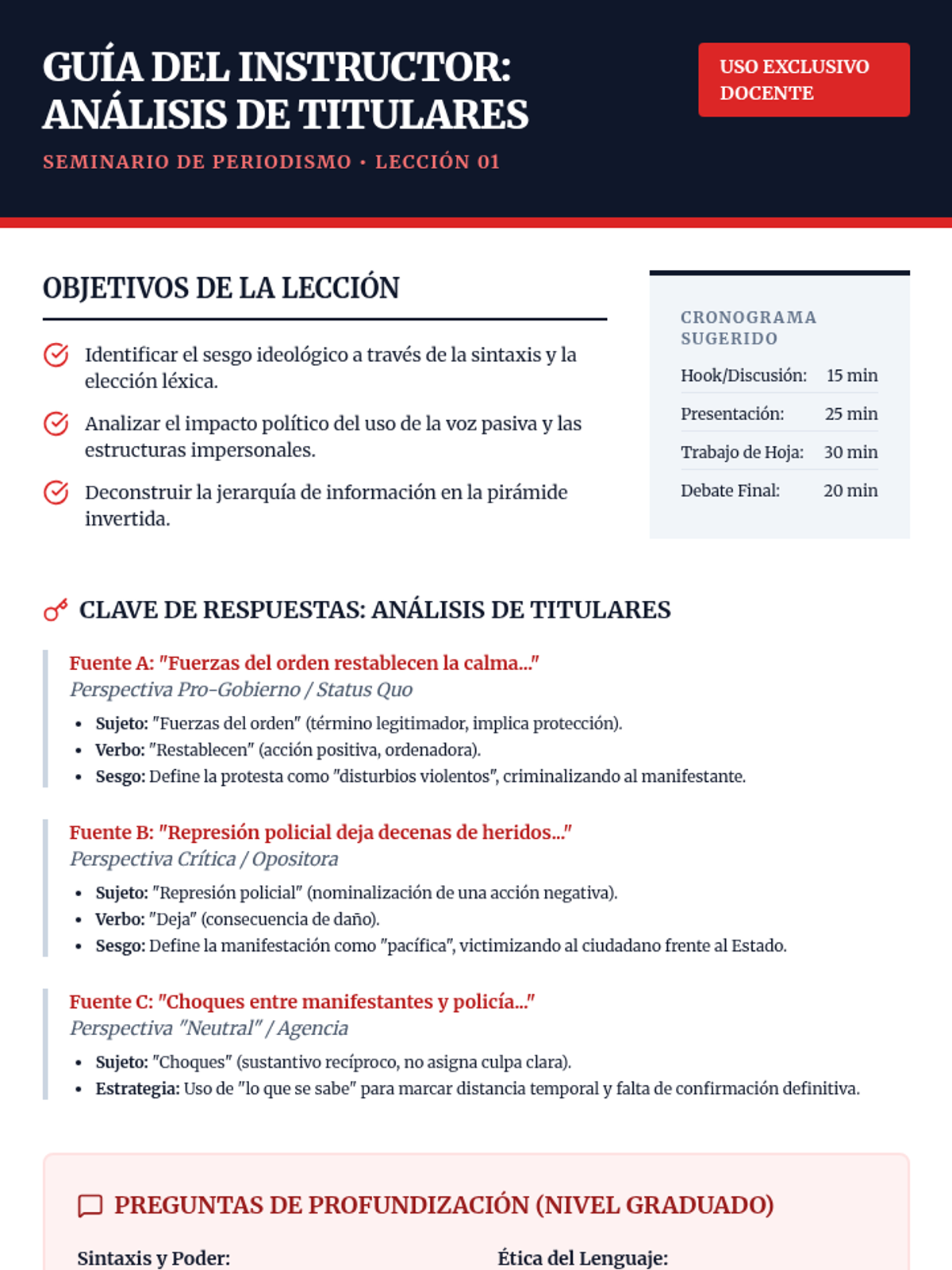
Students analyze headlines from diverse Spanish-language newspapers to identify passive voice and vocabulary bias. They practice predicting article content based on syntactic cues and summarizing the inverted pyramid structure.
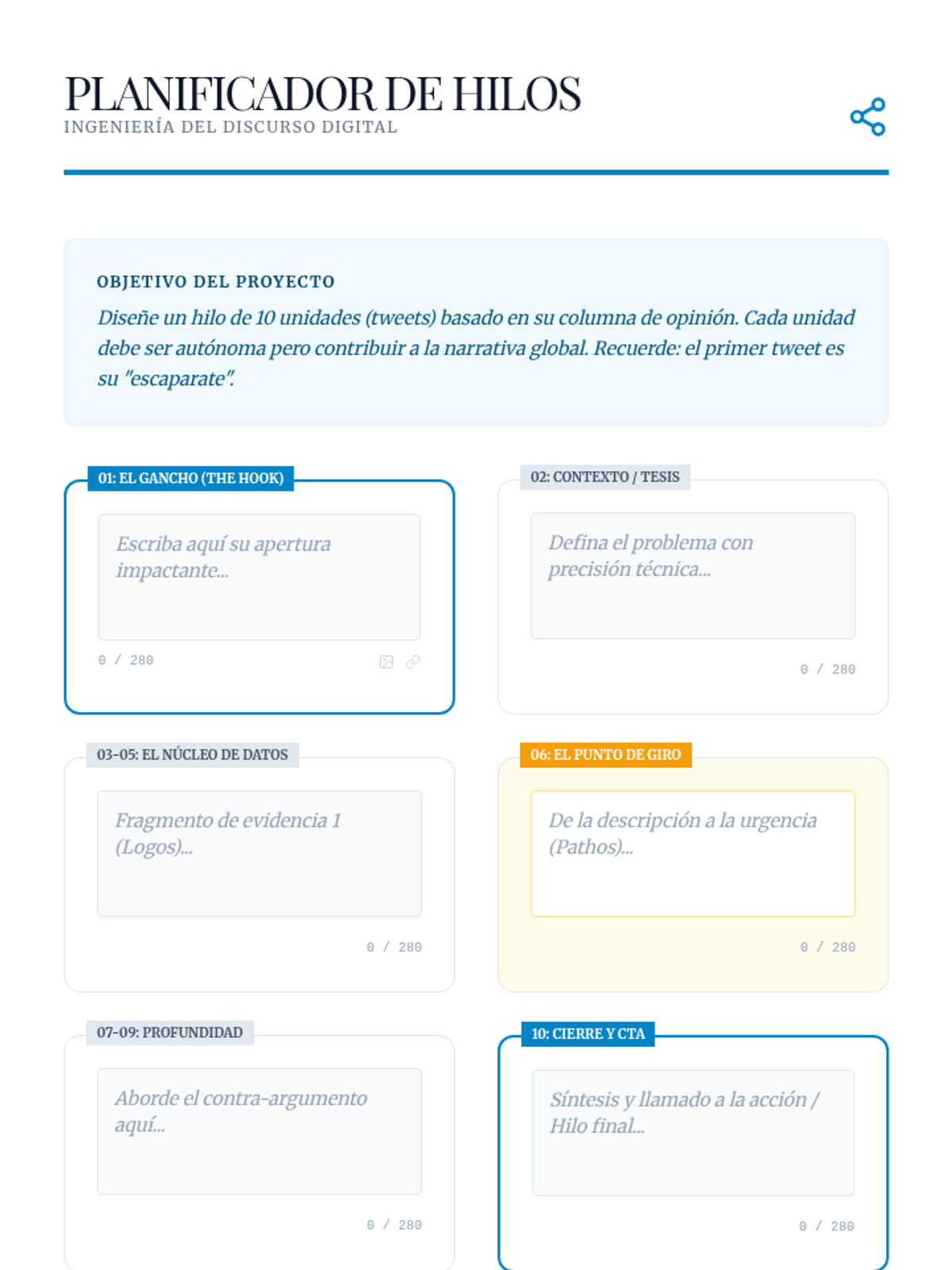
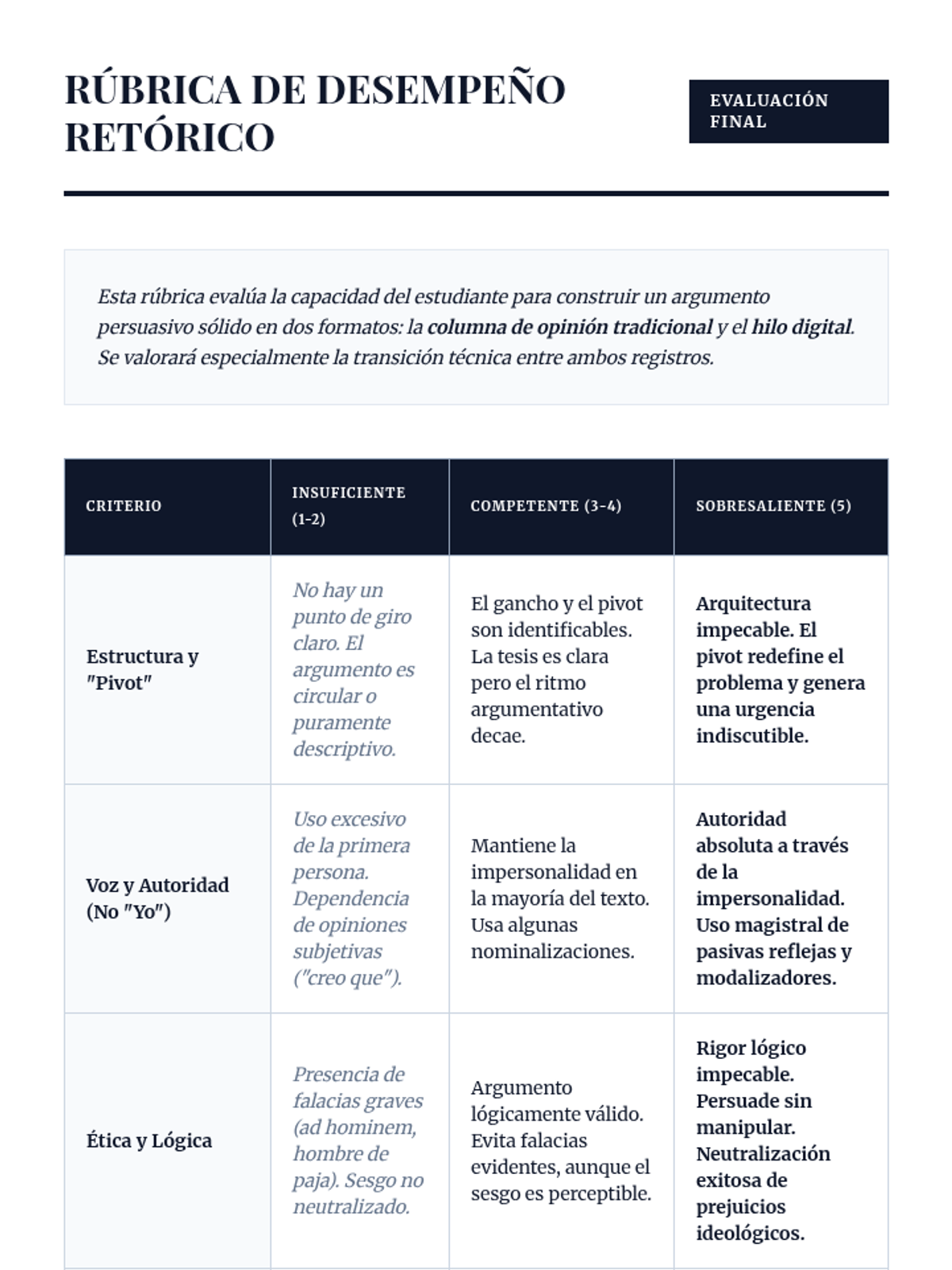
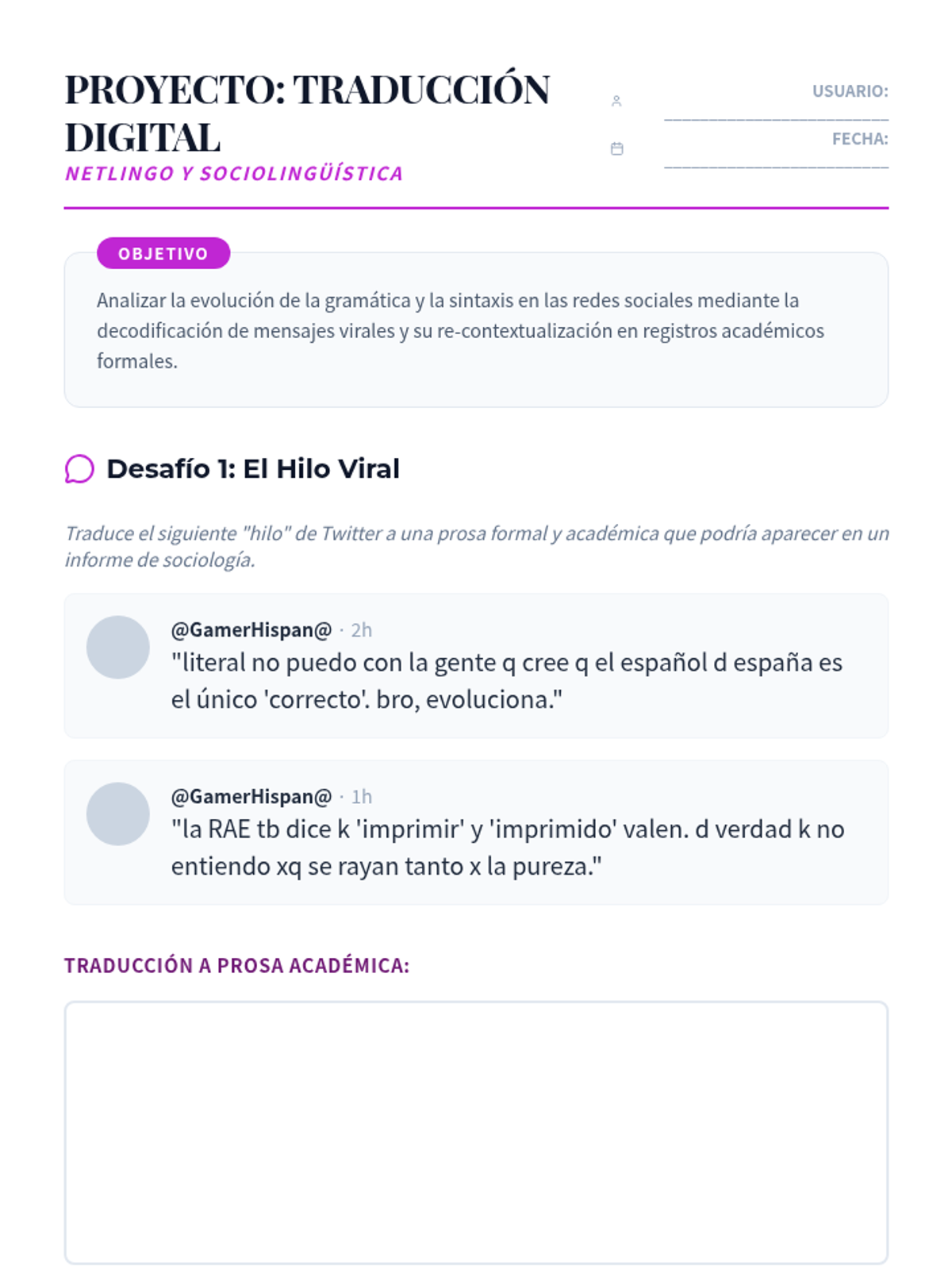
Adapting traditional rhetoric for digital platforms like blogs and social media threads, focusing on conciseness and academic rigor.
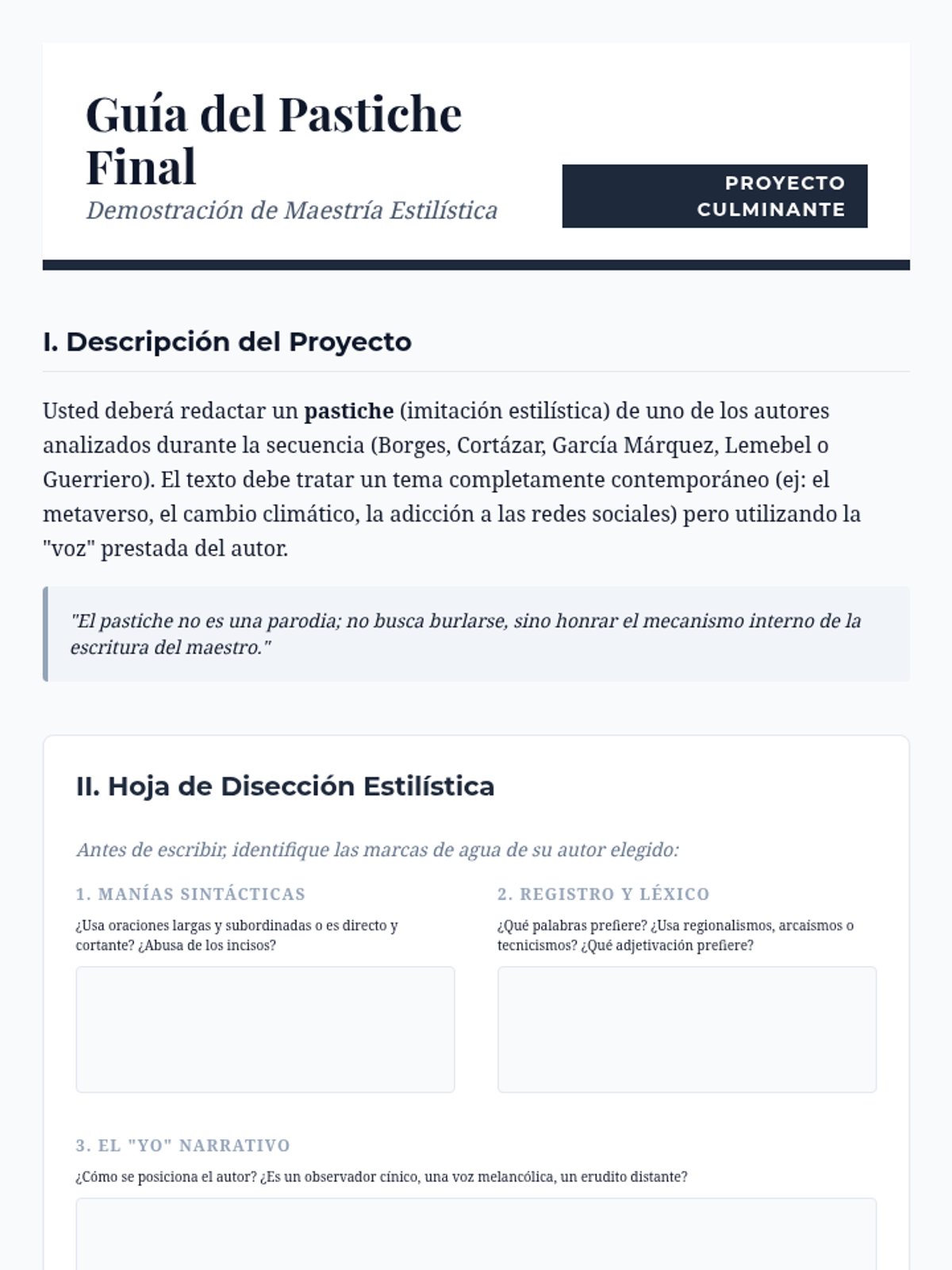
The culmination of the sequence where students demonstrate mastery by imitating the style of a master author. This pastiche exercise requires deep syntactical and lexical analysis of specific literary voices.
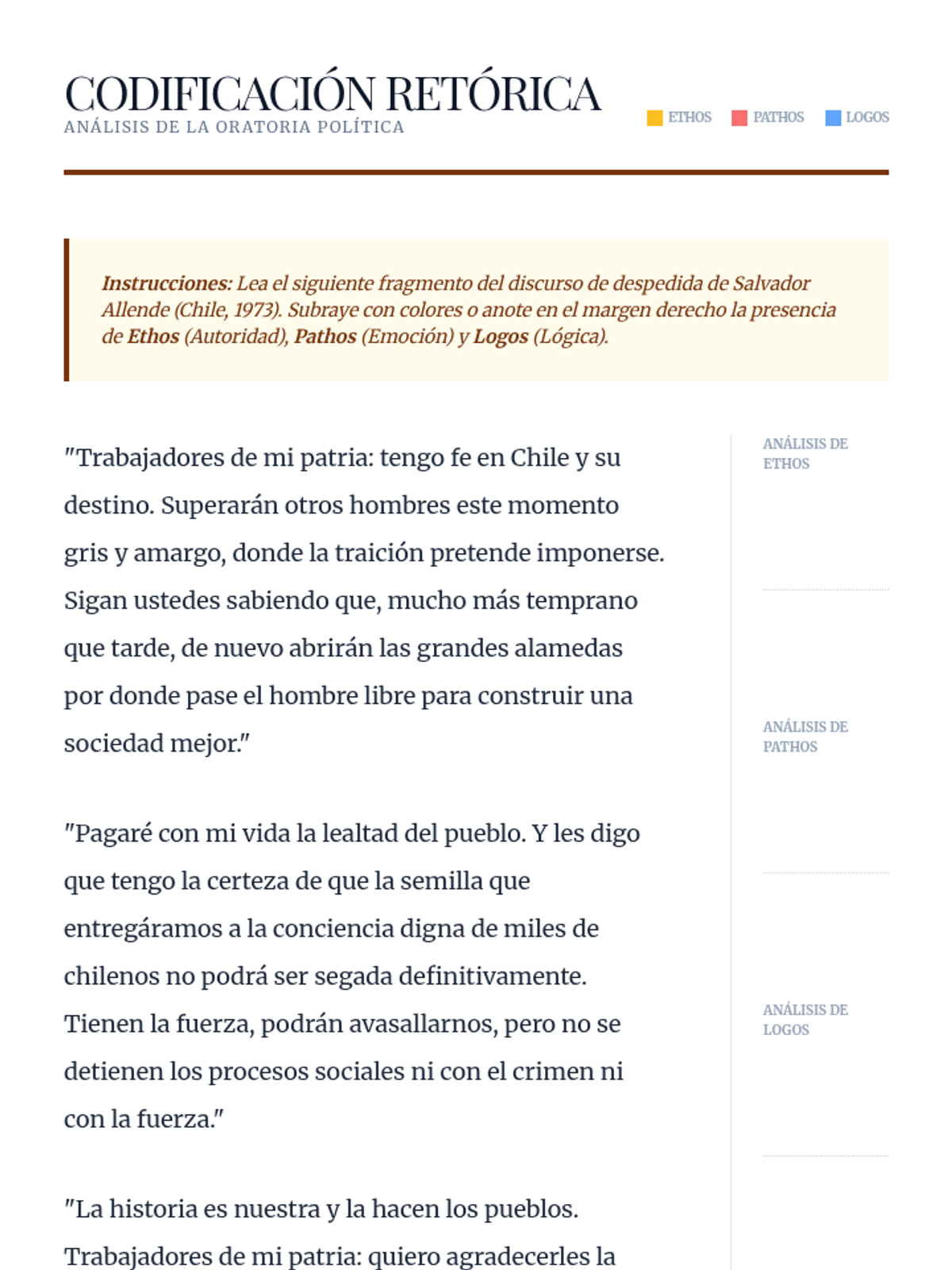
Students analyze transcripts of famous Latin American speeches to identify and code appeals to ethos, pathos, and logos.
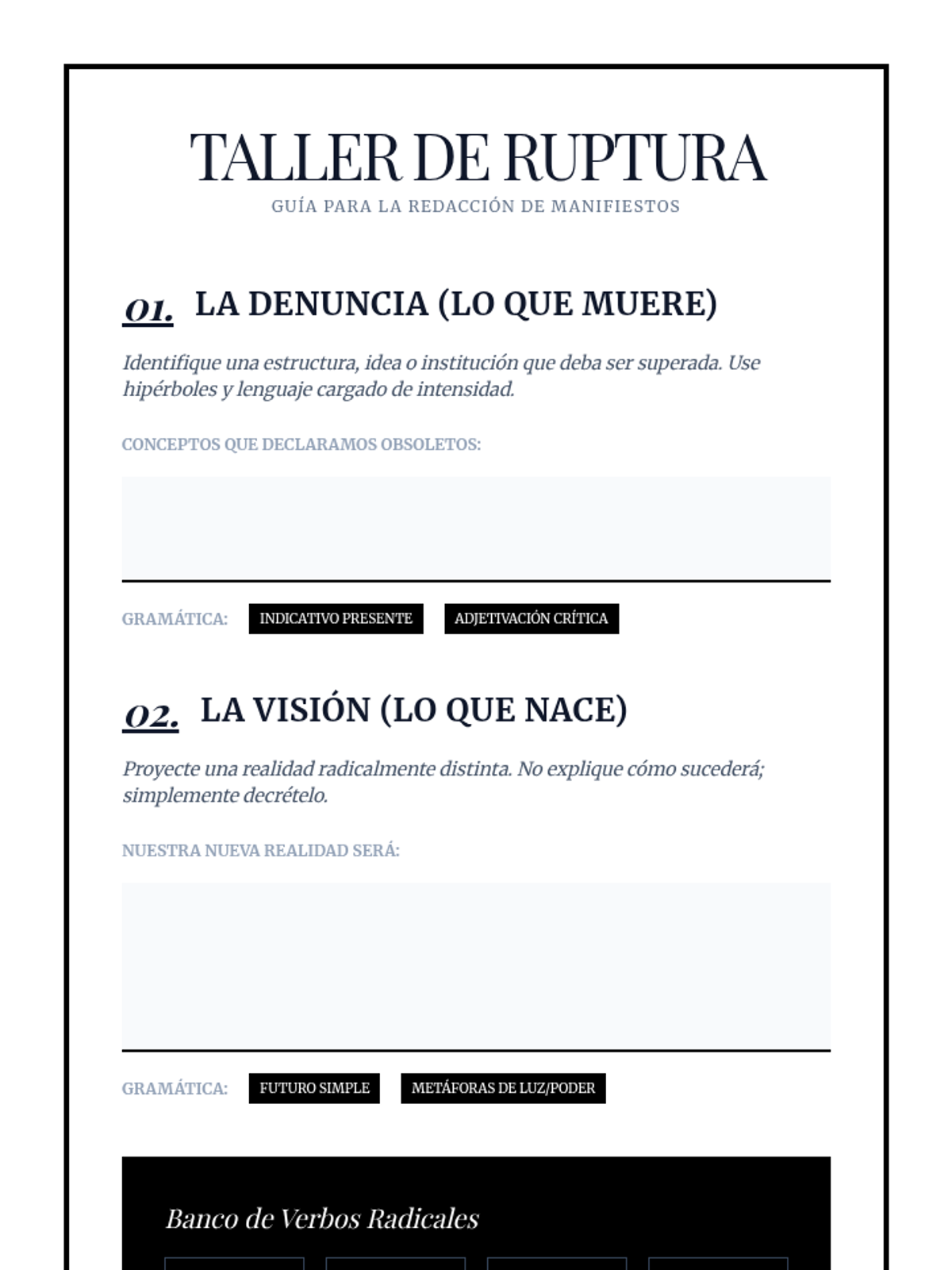
An exploration of the manifesto genre, analyzing imperative language and visionary writing through historical and artistic examples.
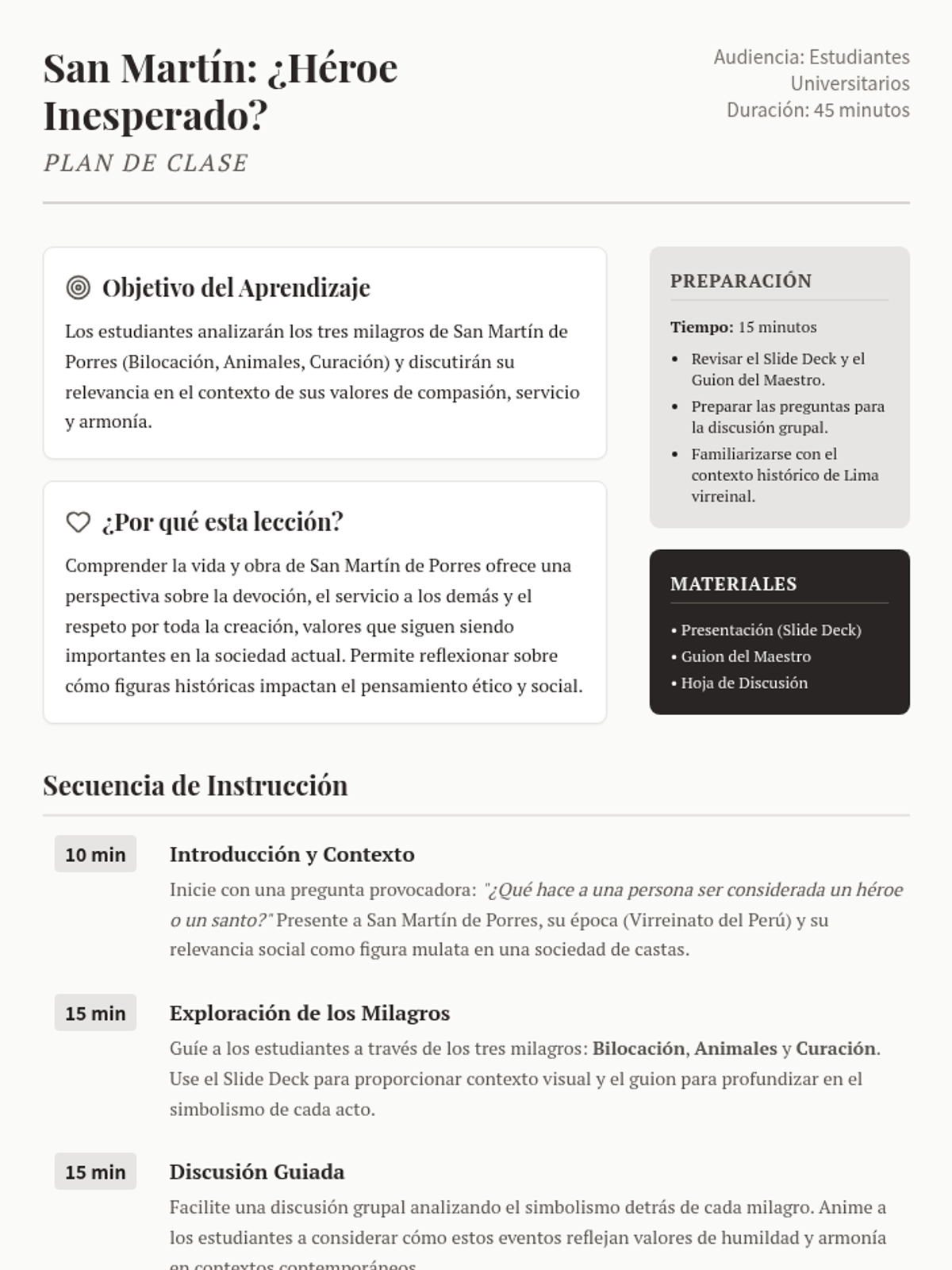
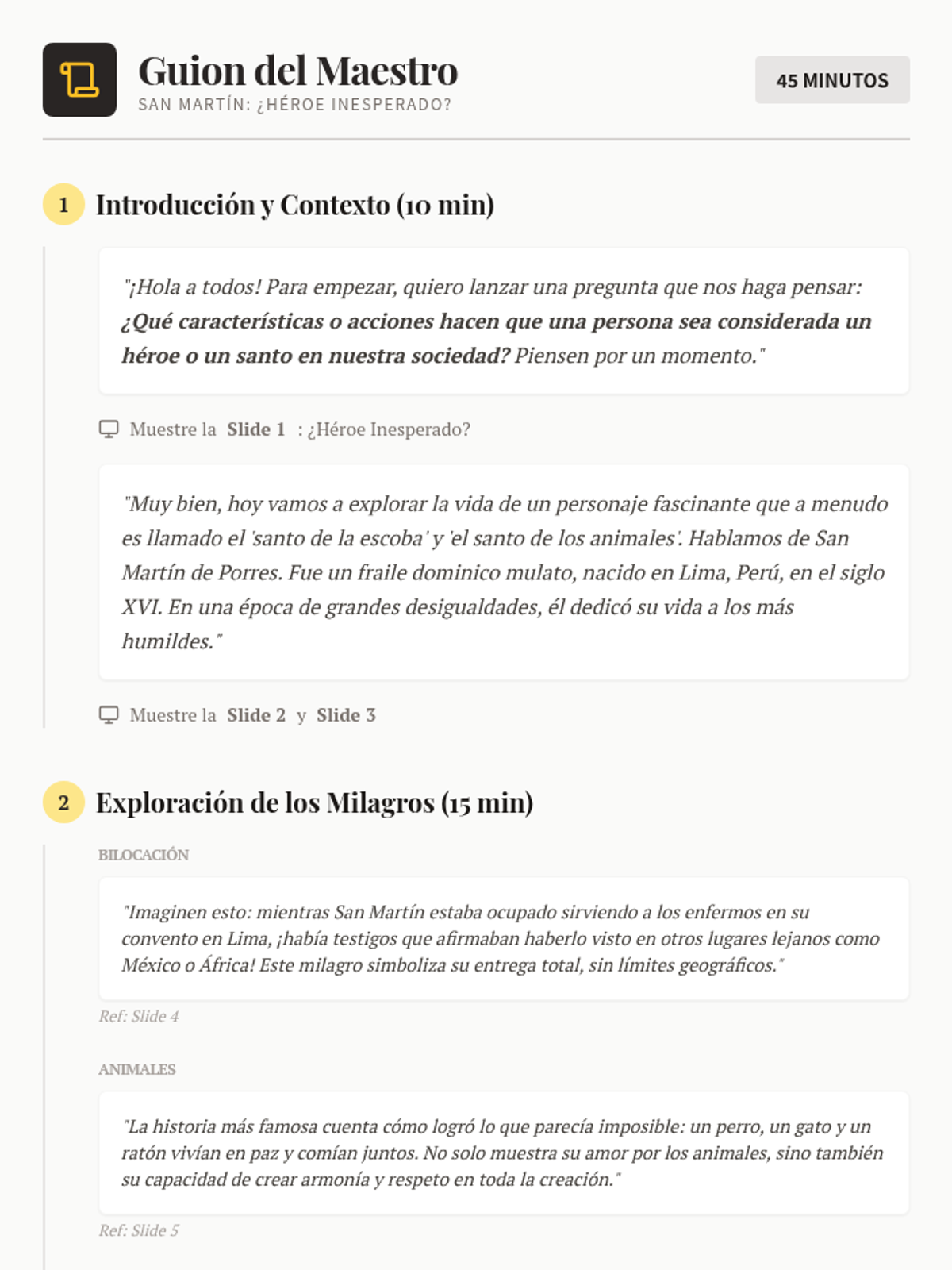
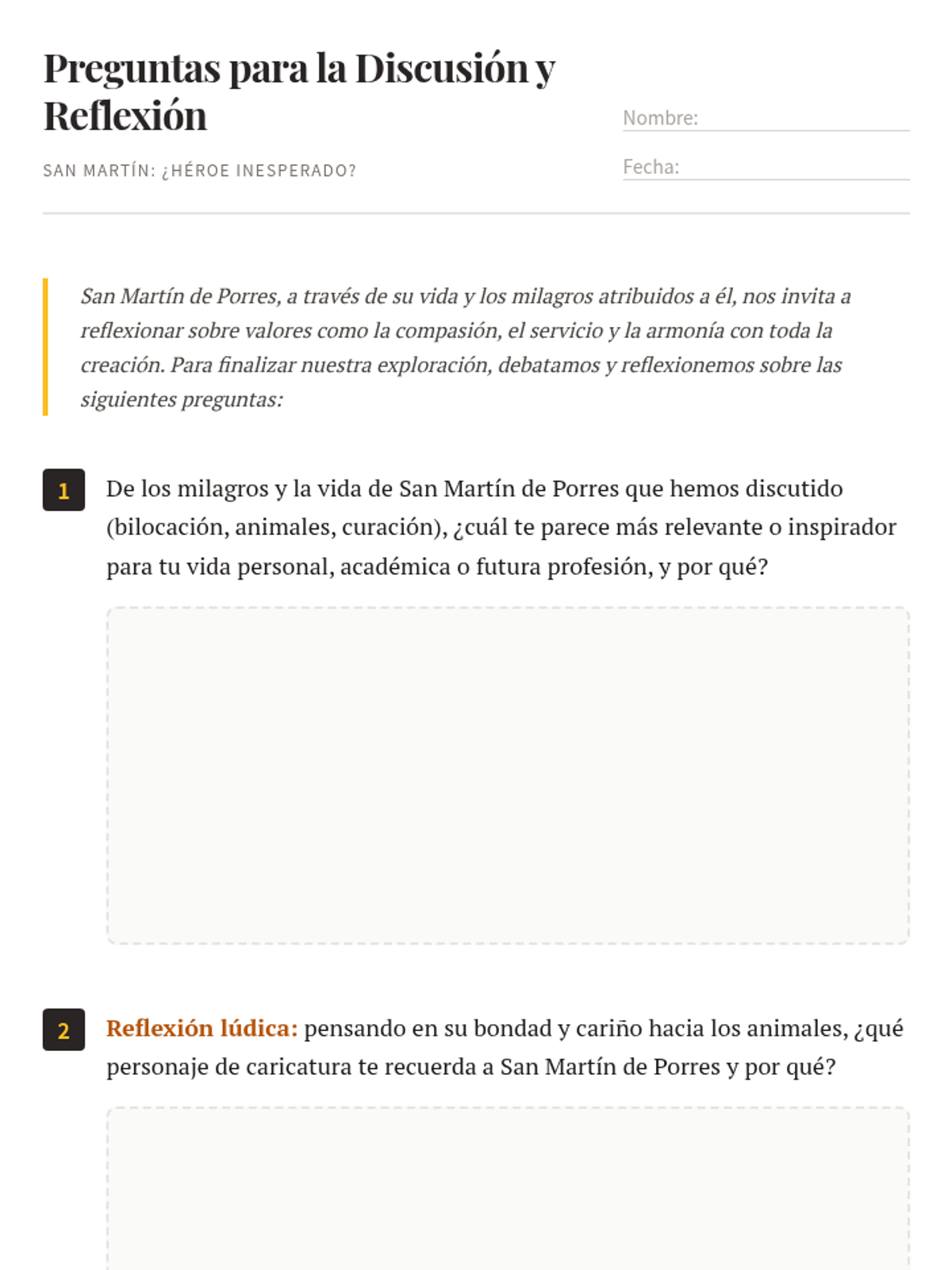
Una exploración crítica de la vida y los milagros de San Martín de Porres para estudiantes universitarios, enfocada en los valores de compasión, humildad y armonía.
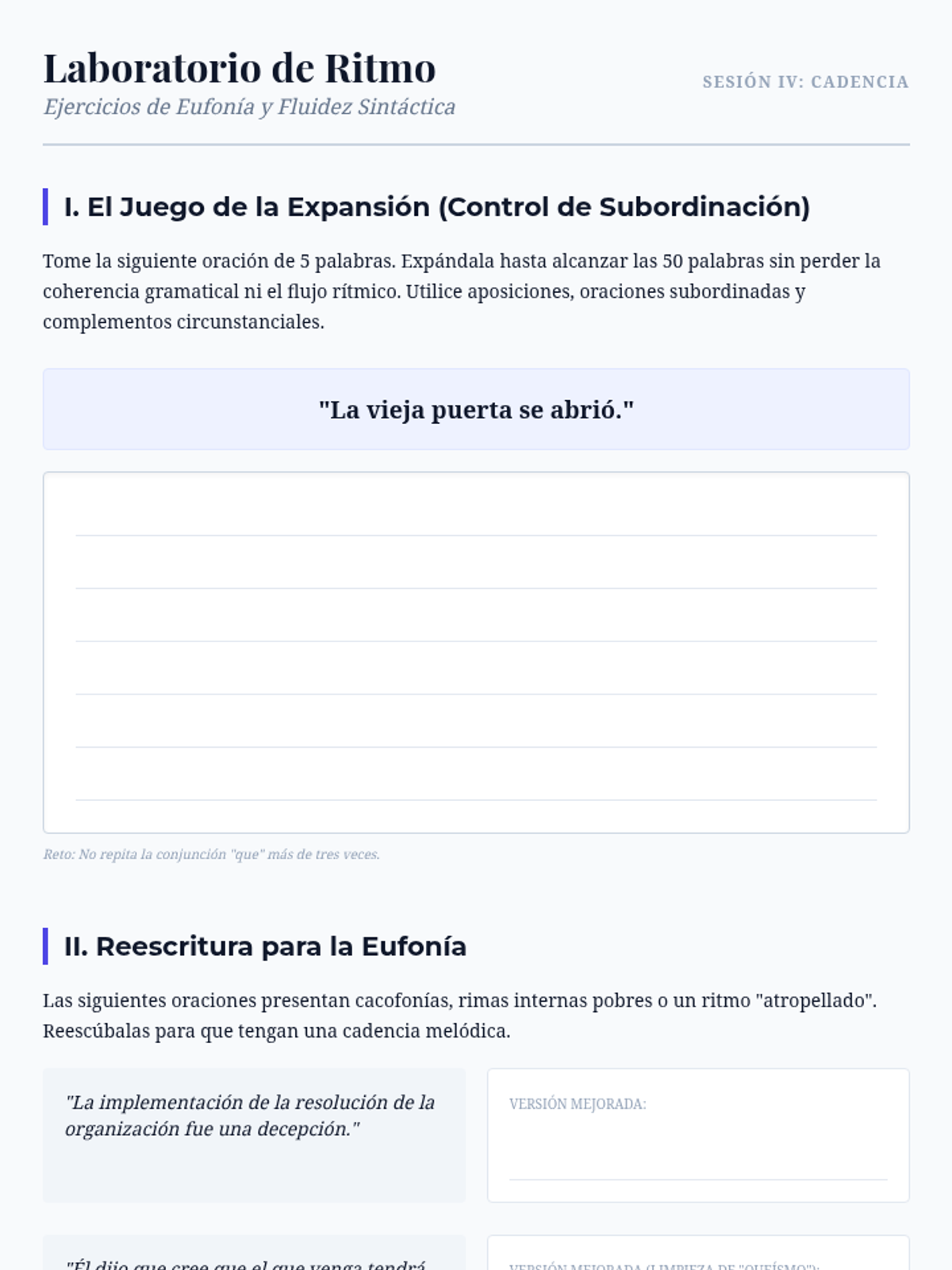
Focusing on the musicality of prose, students experiment with sentence length, syllabic rhythm, and euphonic flow. They learn to manipulate syntax to control the reader's pace and emotional engagement.
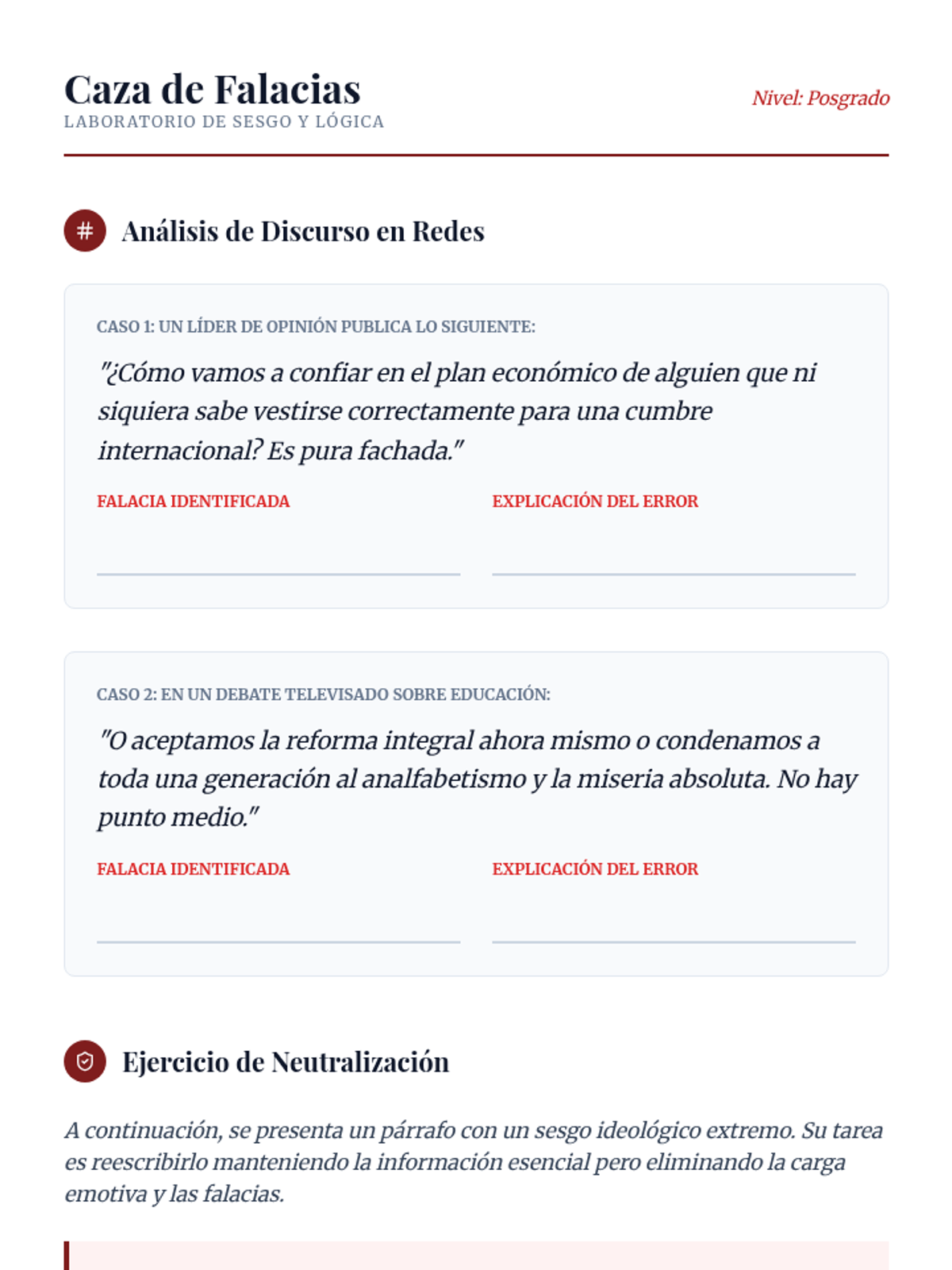
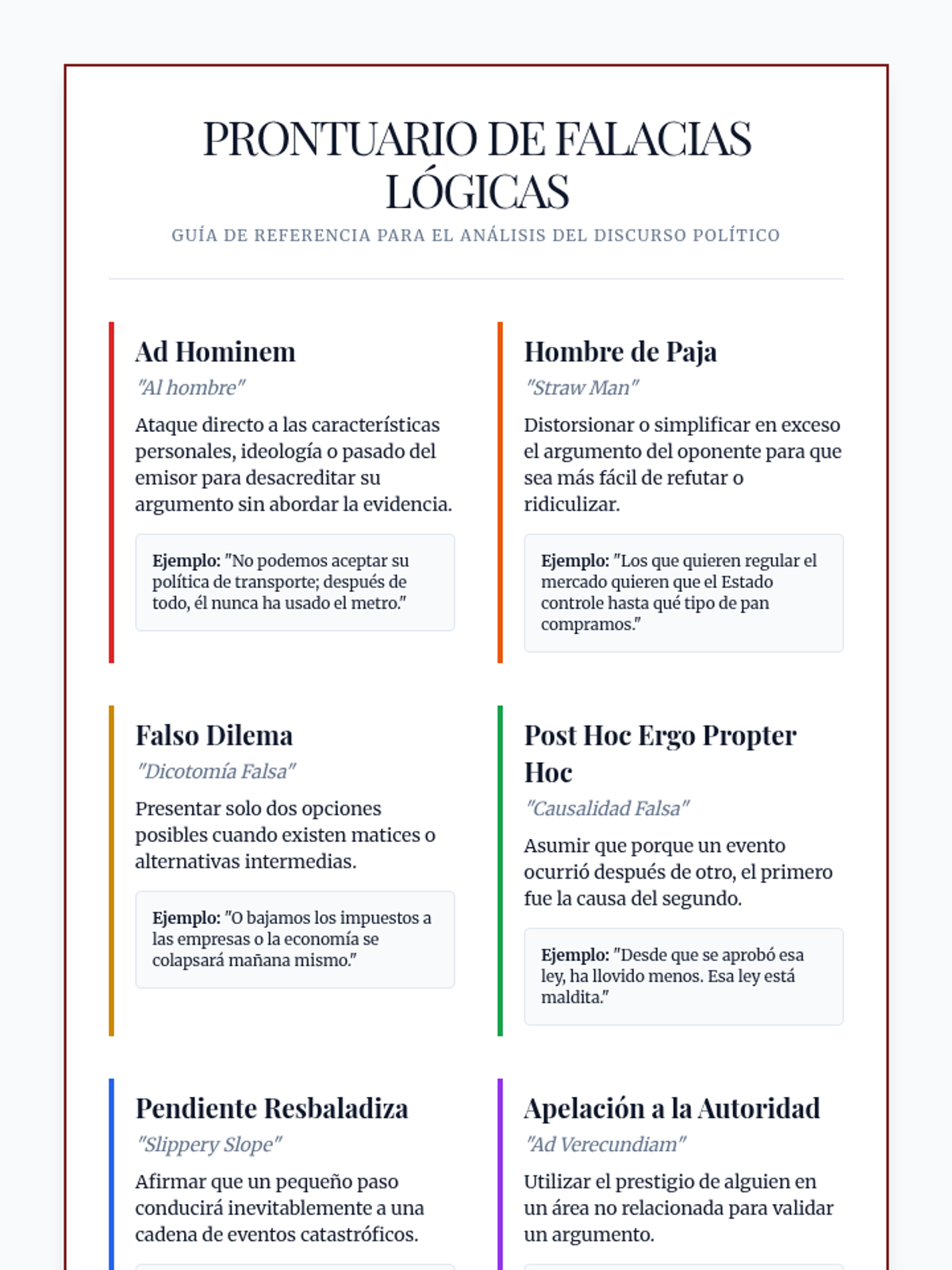
Students learn to identify common logical fallacies and analyze texts for subtle bias and emotive language within Spanish-language political debates.
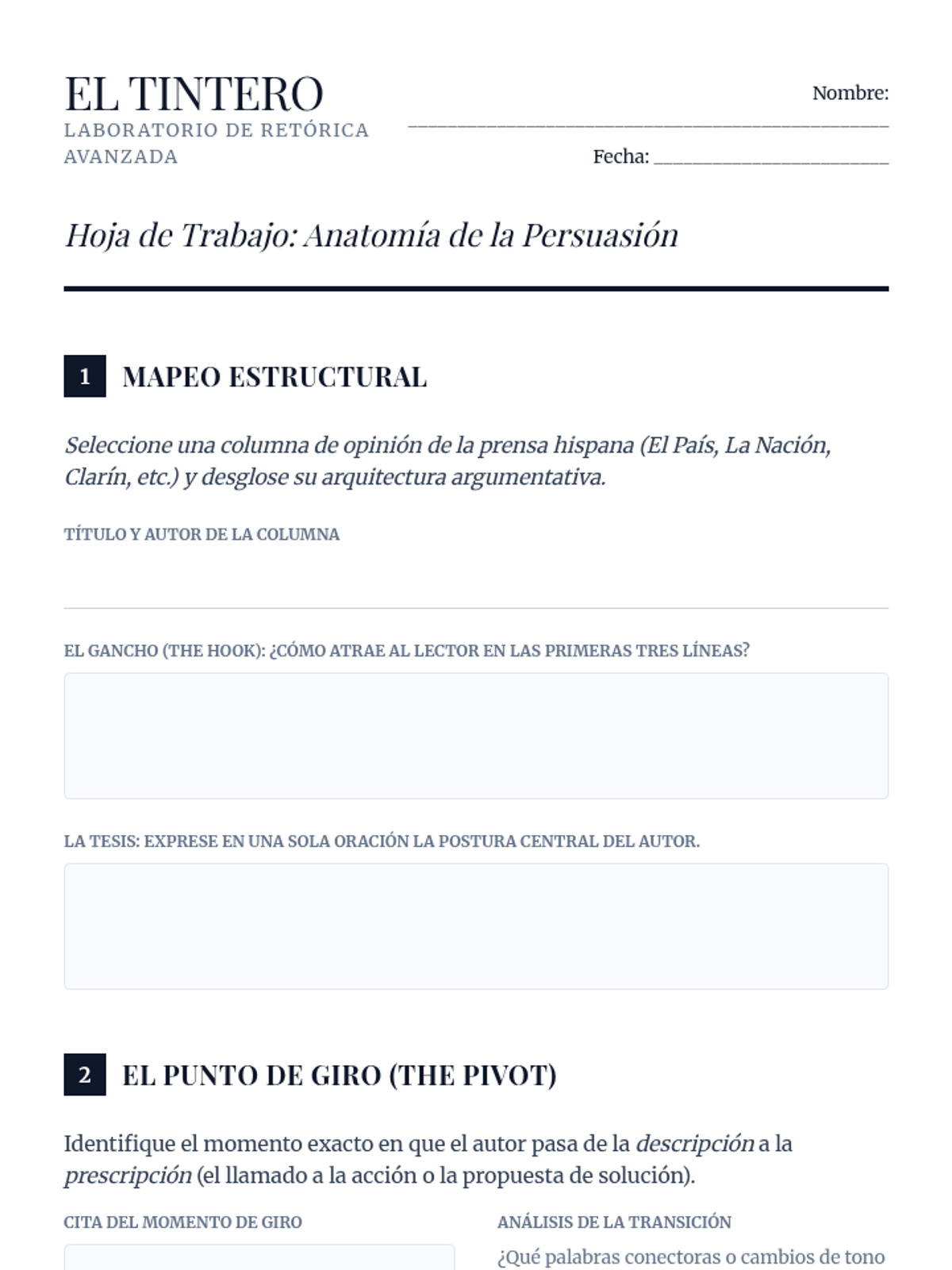
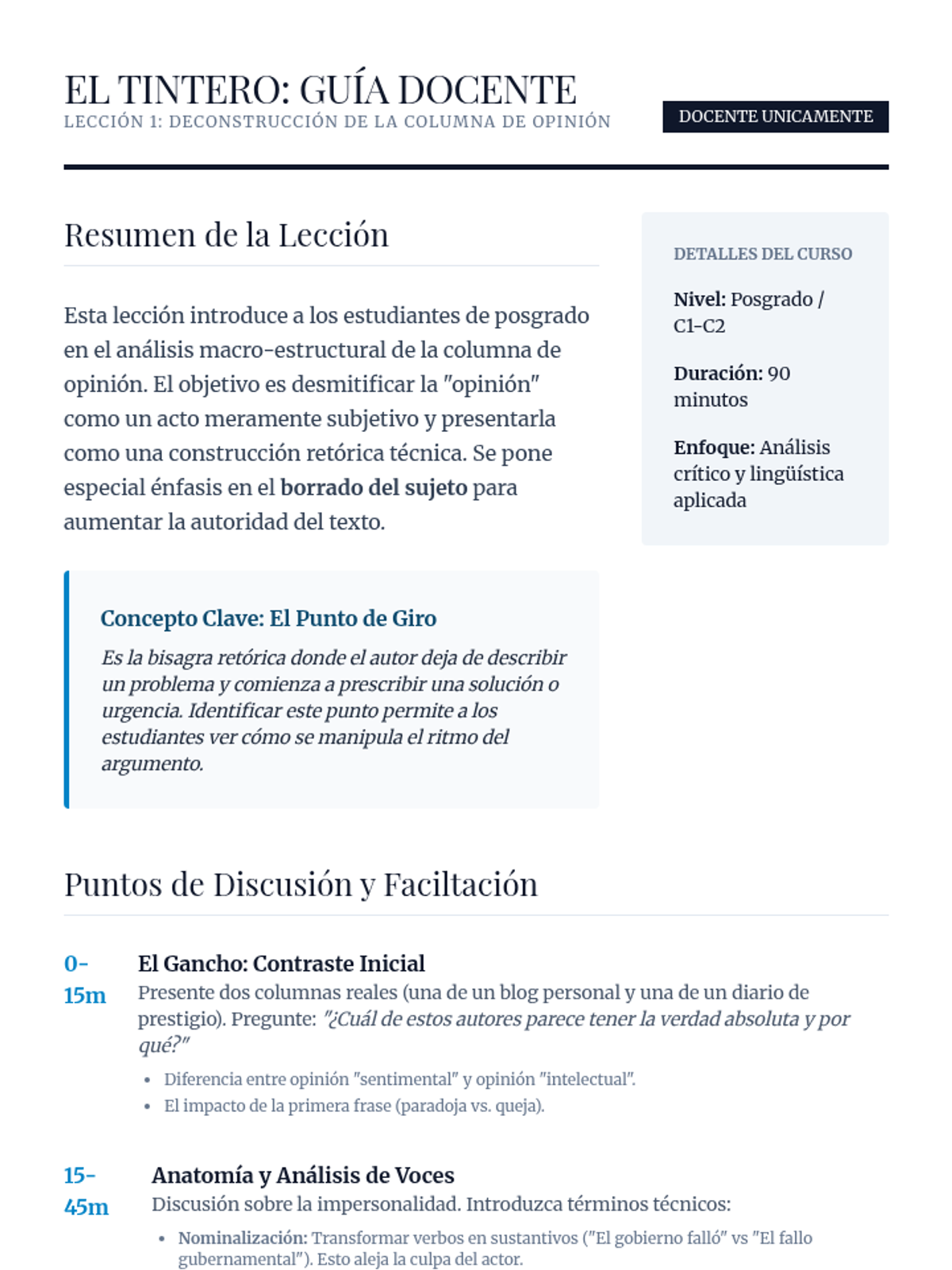
Students examine opinion pieces from major newspapers to diagram their rhetorical structure and identify structural elements like the hook and the pivot.
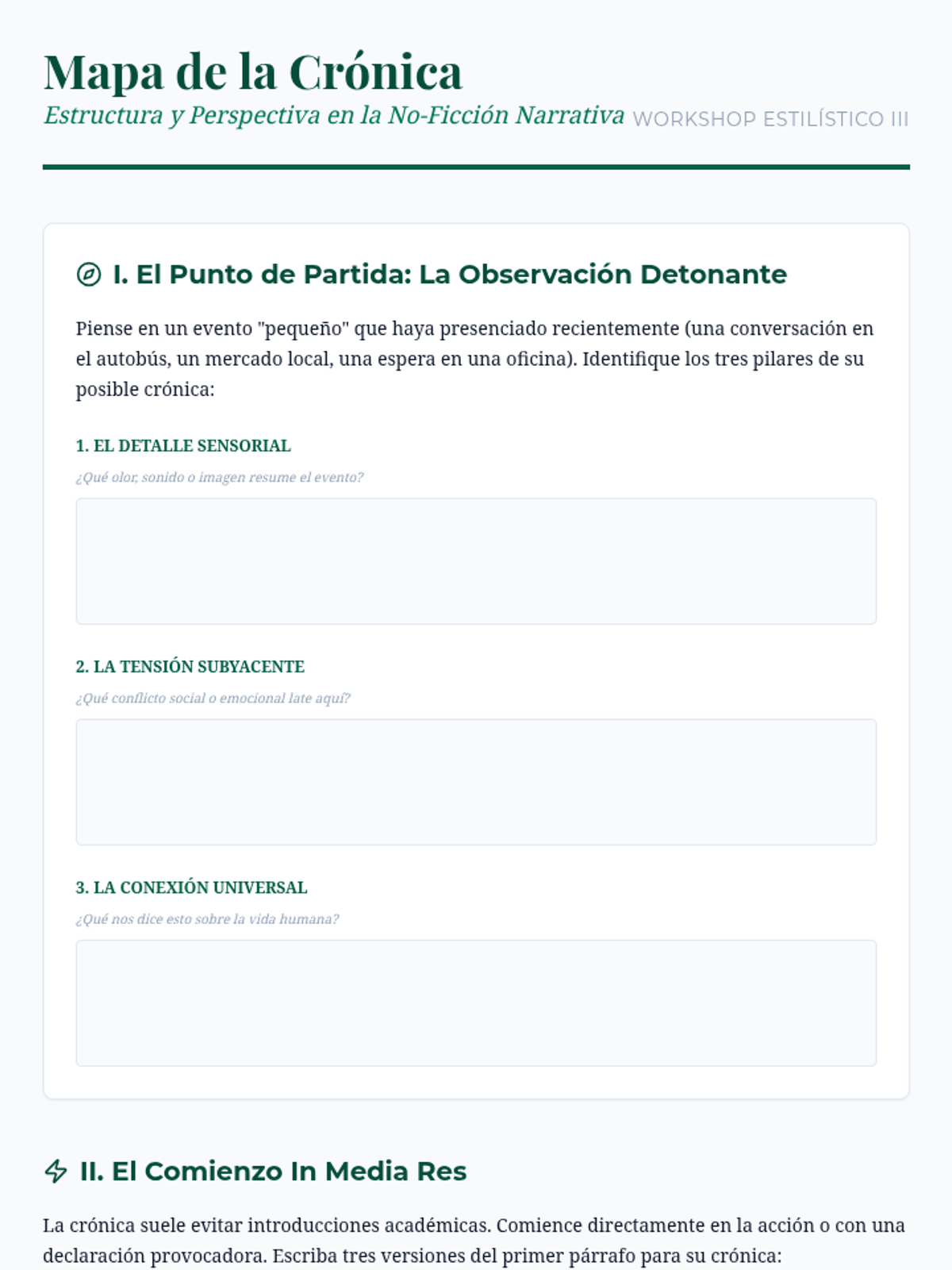
An exploration of the Latin American 'crónica', blending journalistic reporting with literary flair. Students learn to weave personal observation with social commentary to create compelling narrative non-fiction.
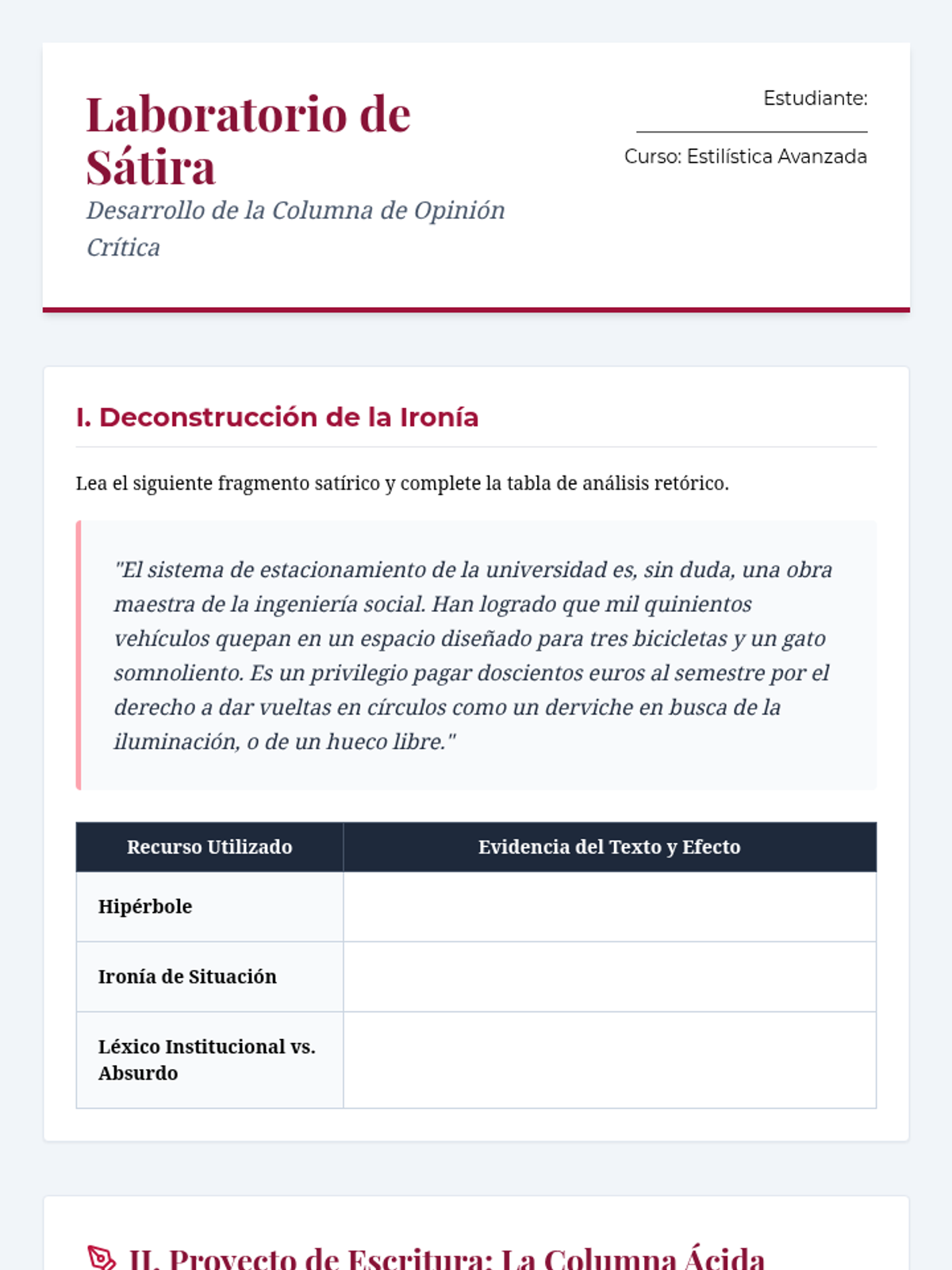
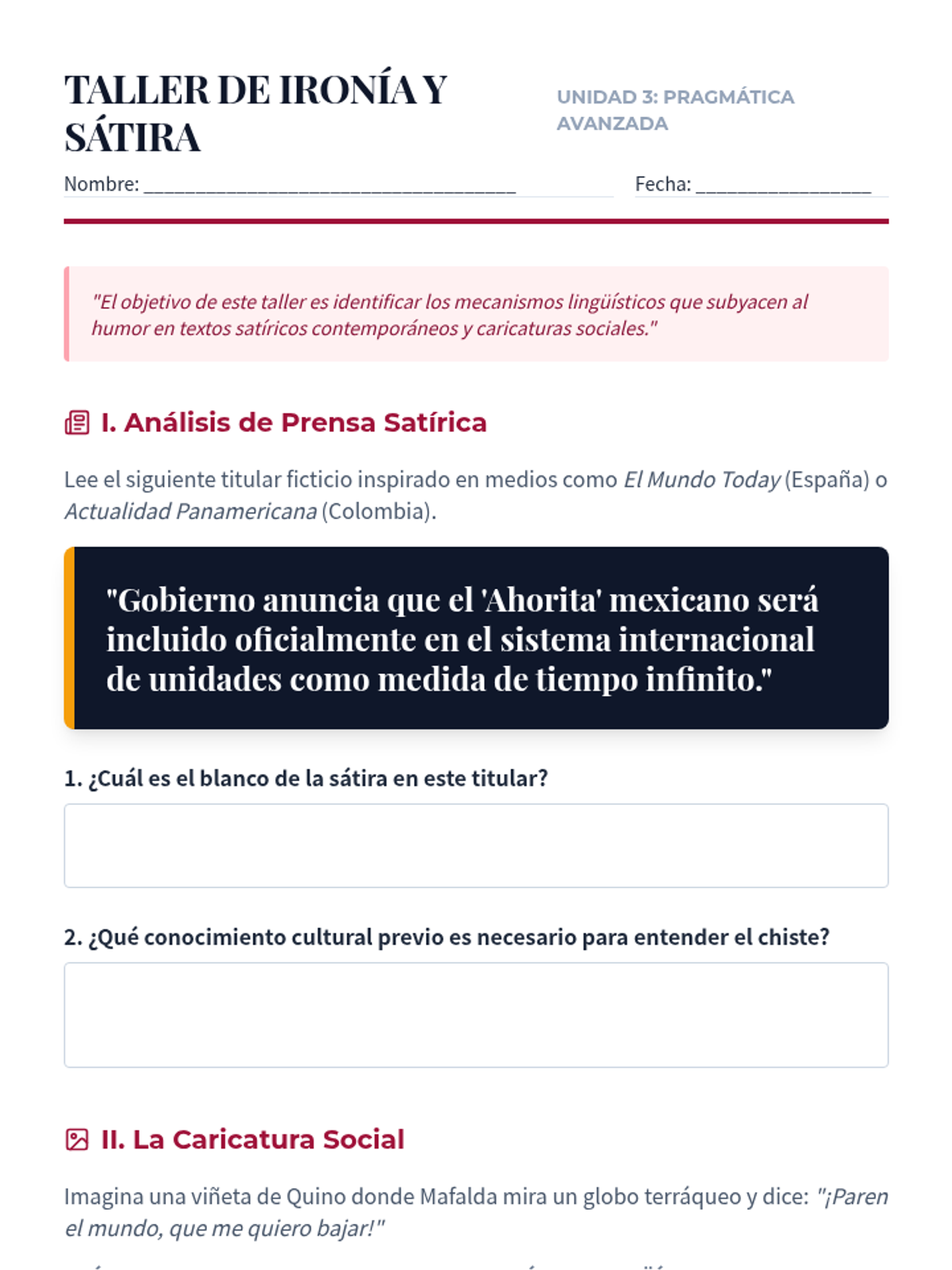
Deconstructing the mechanics of humor and satire in Spanish writing. Students identify tonal shifts and rhetorical devices like litotes and hyperbole to craft their own satirical pieces on contemporary issues.
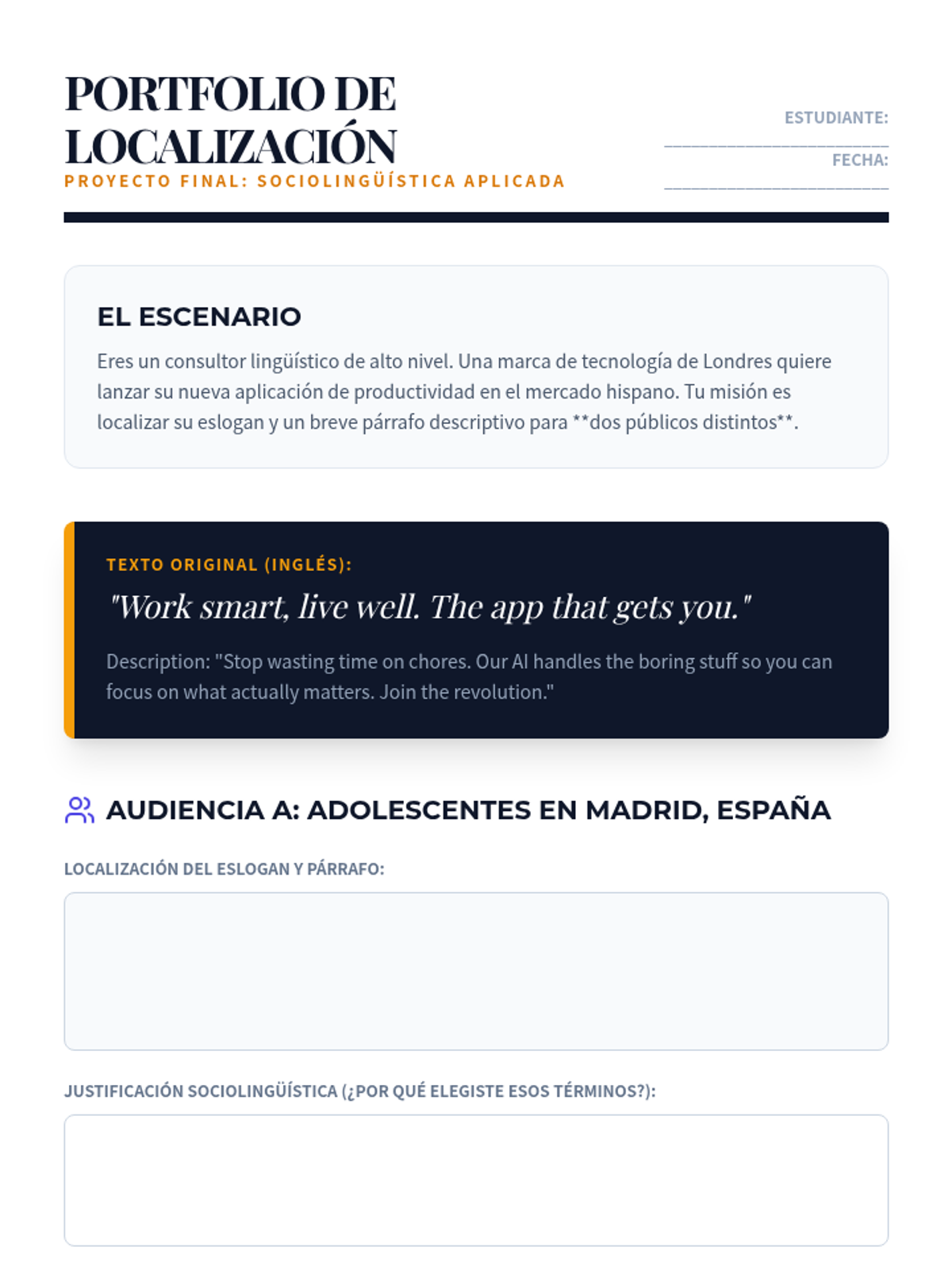
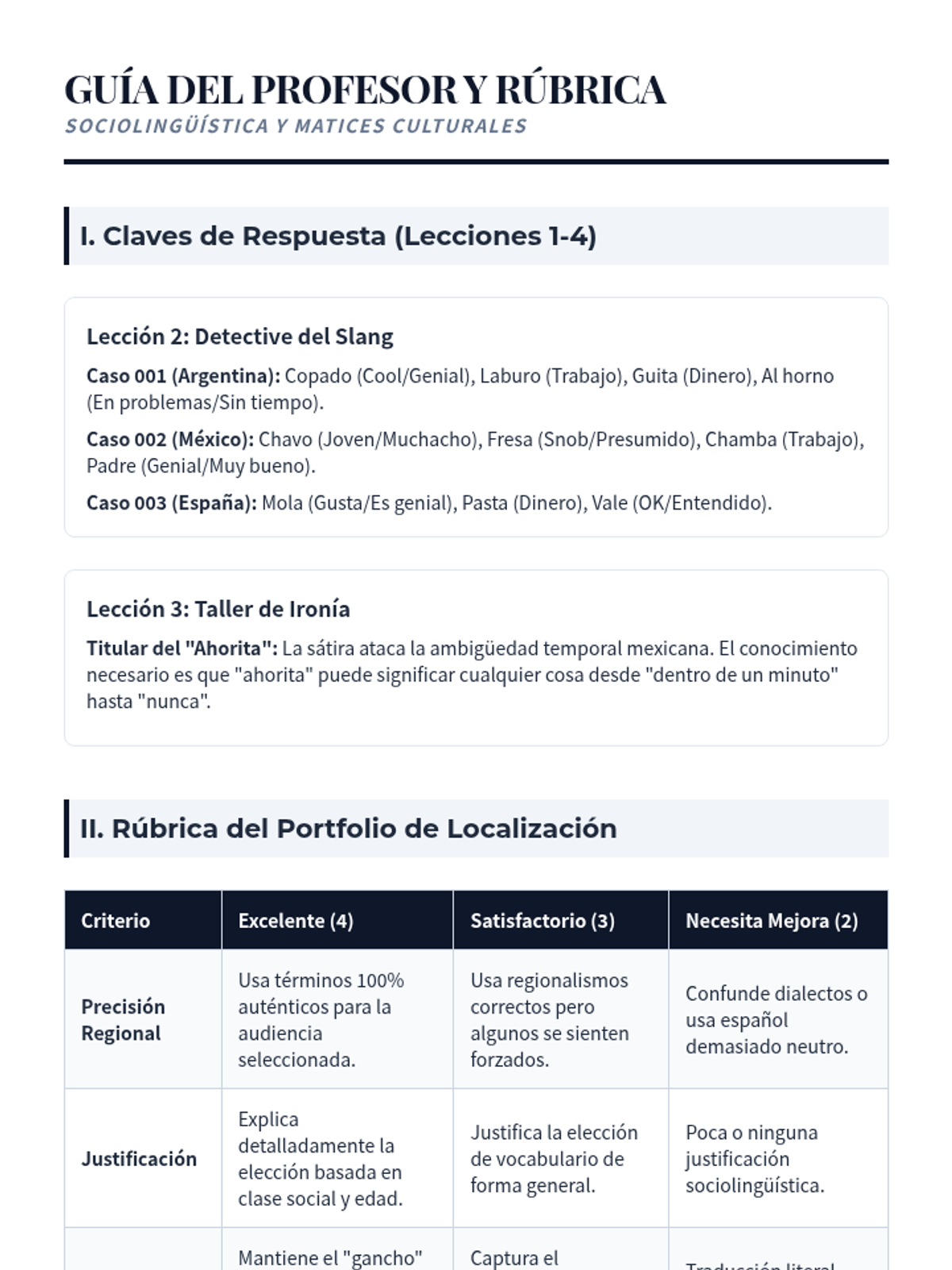
A culminating workshop where students localize English texts for specific Spanish-speaking audiences, justifying their sociolinguistic choices.
An examination of abbreviations, hashtags, and meme culture in Spanish digital spaces and their relationship to standard grammar.
Students identify and analyze linguistic mechanisms of humor, irony, and sarcasm in Spanish satirical texts and comic strips.
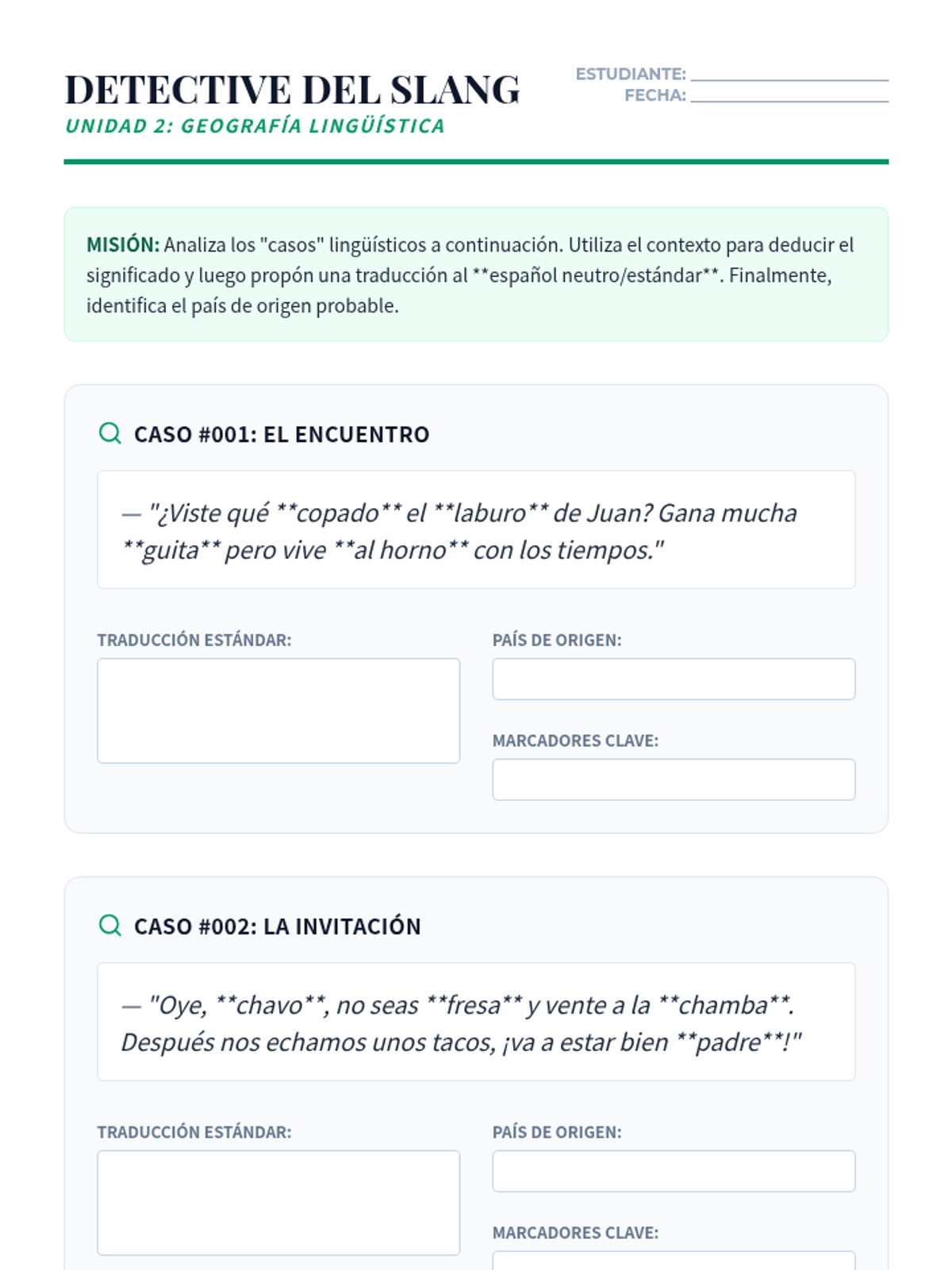
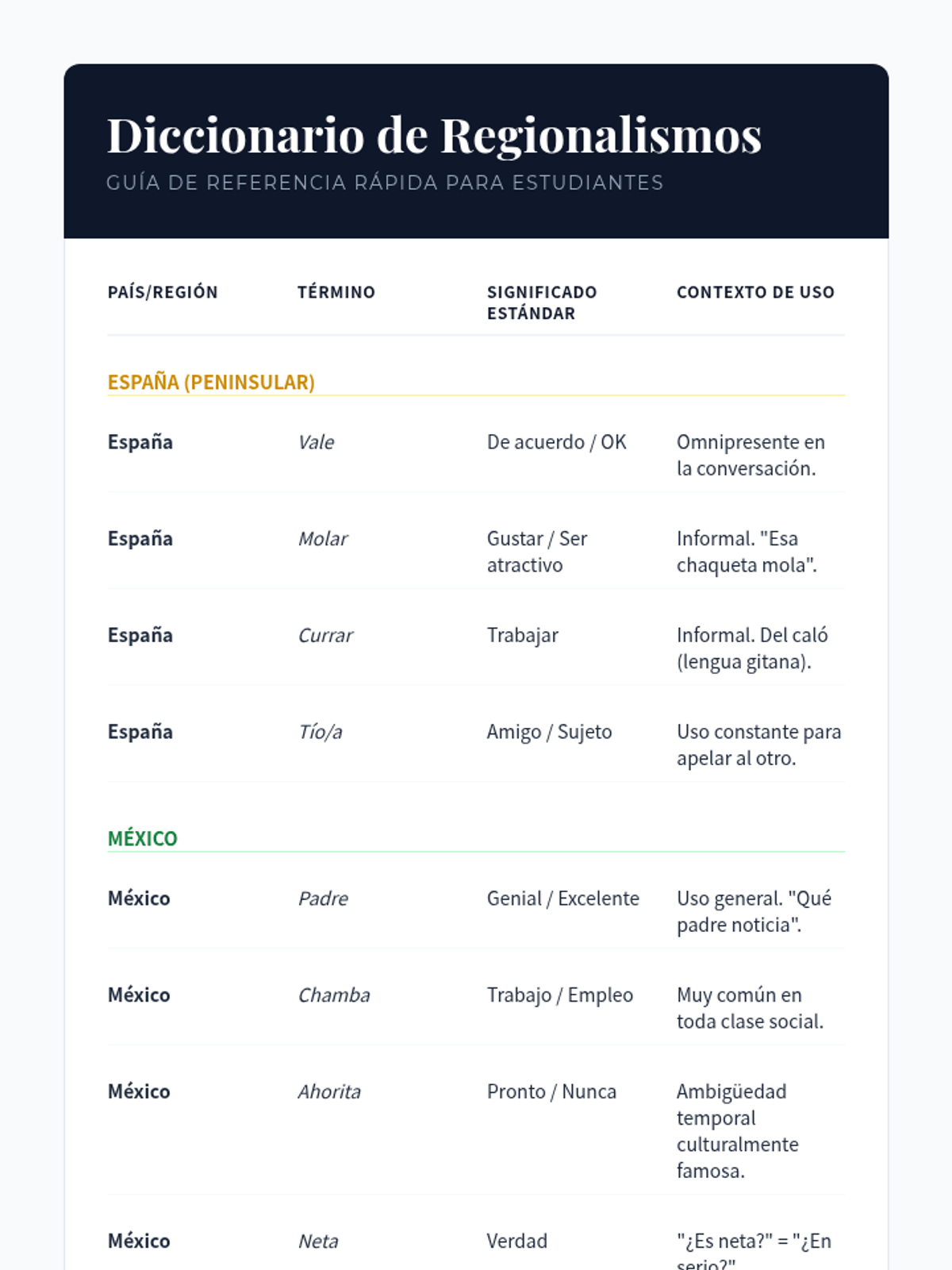
Learners explore regional lexicons from Spain, Mexico, and Argentina, deducing meanings of idioms through context and historical analysis.
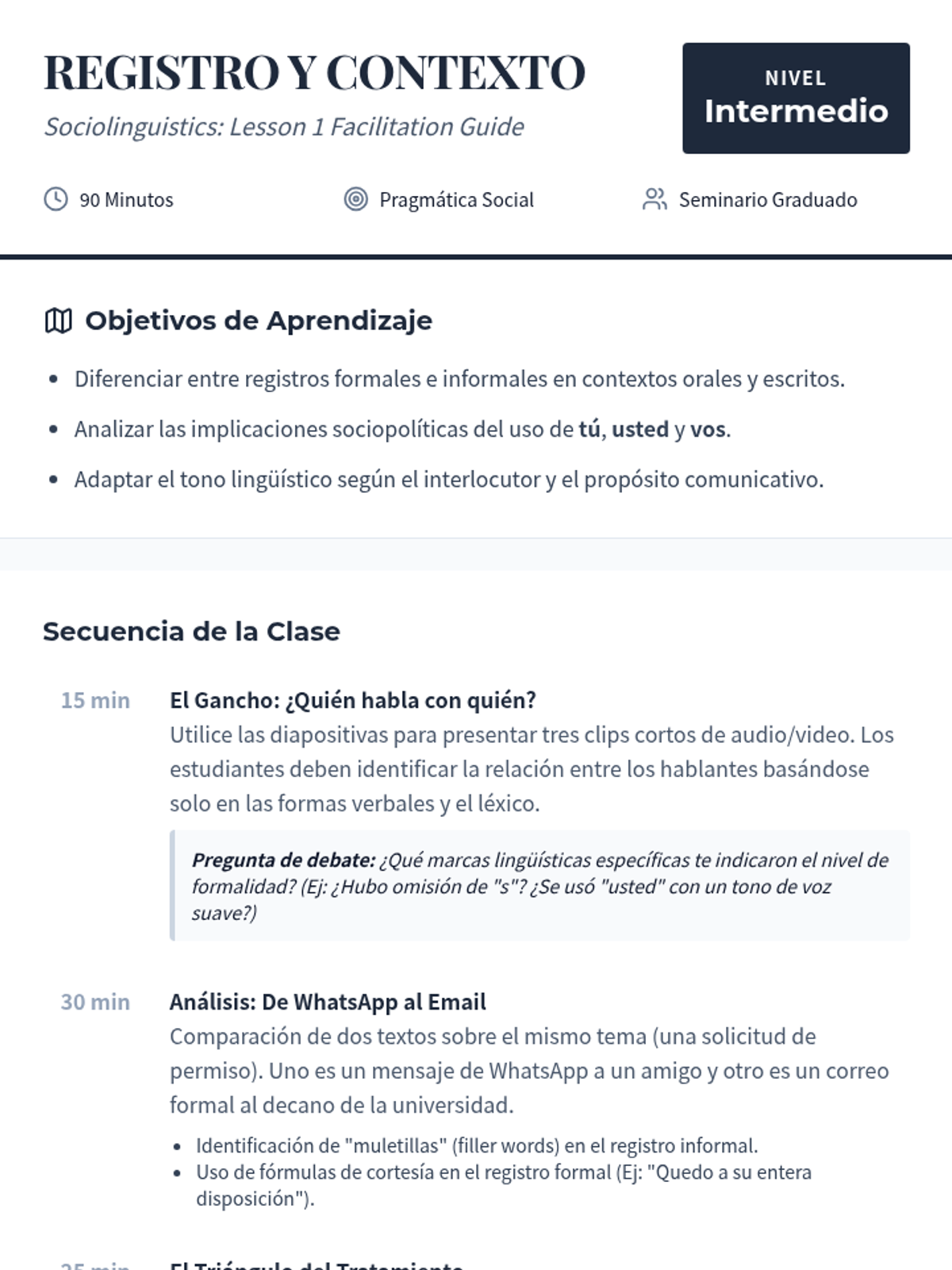
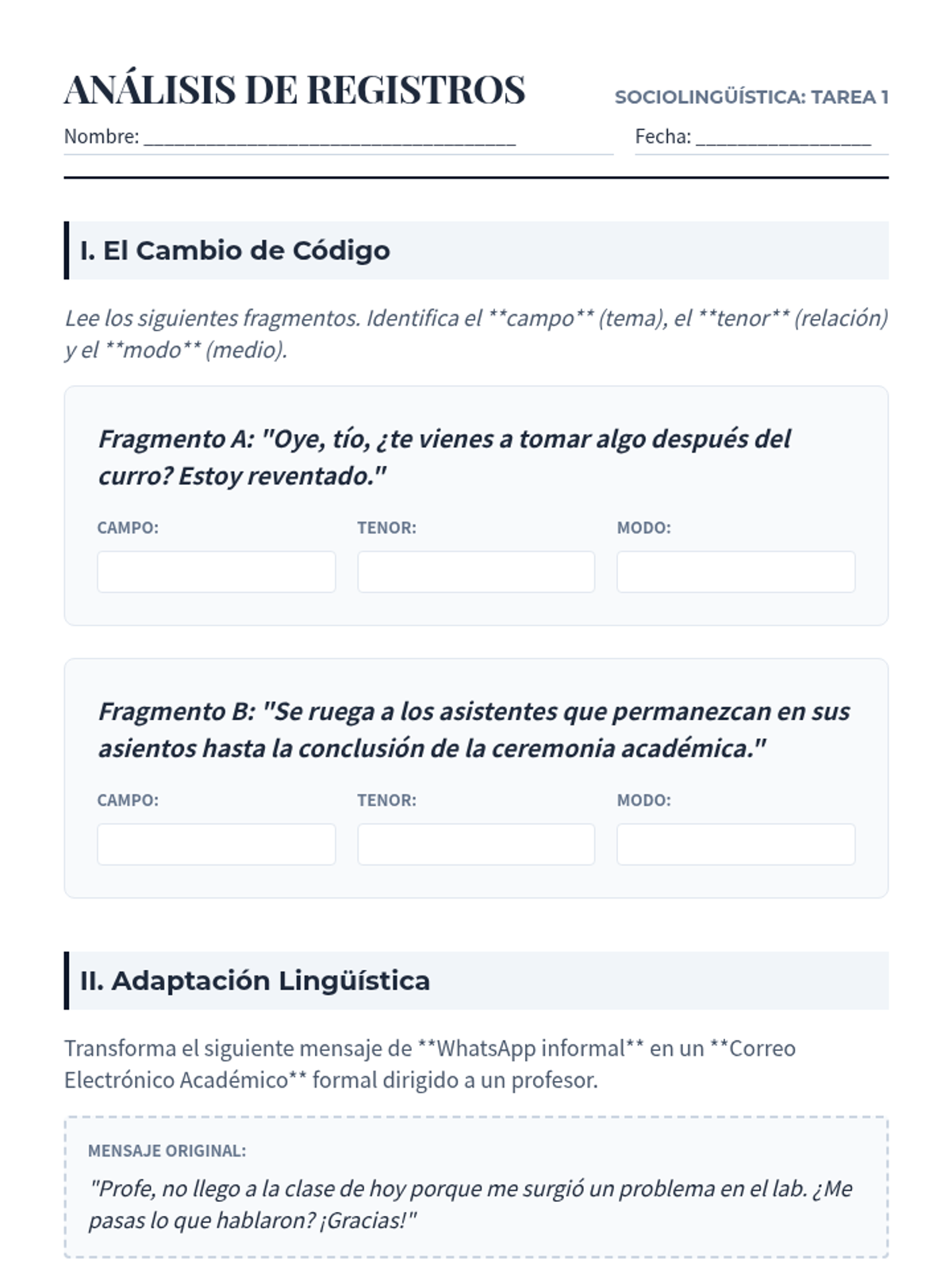
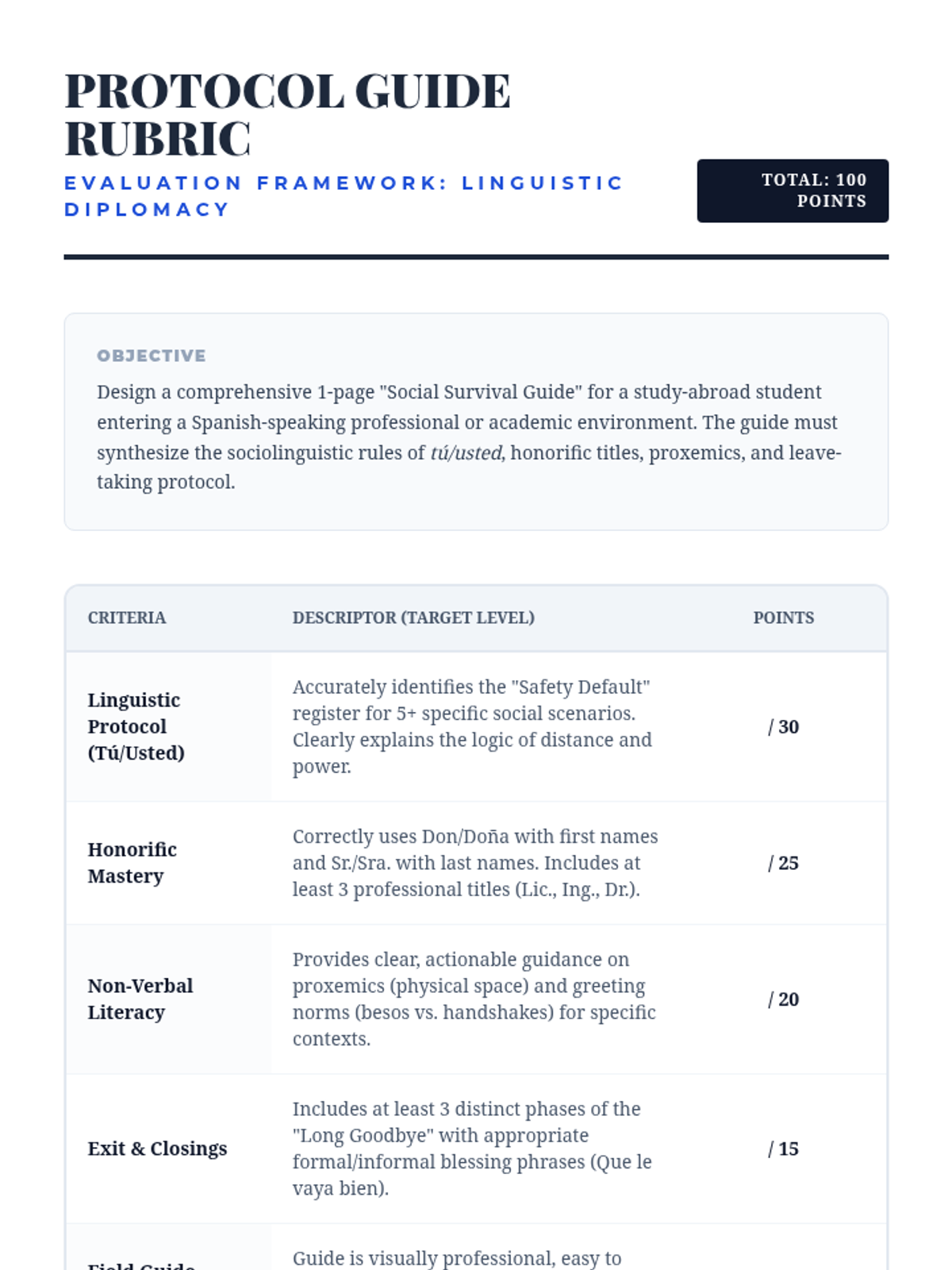
Students analyze the grammatical and lexical shifts between formal and informal Spanish, focusing on 'tú', 'usted', and 'vos' and their social implications.
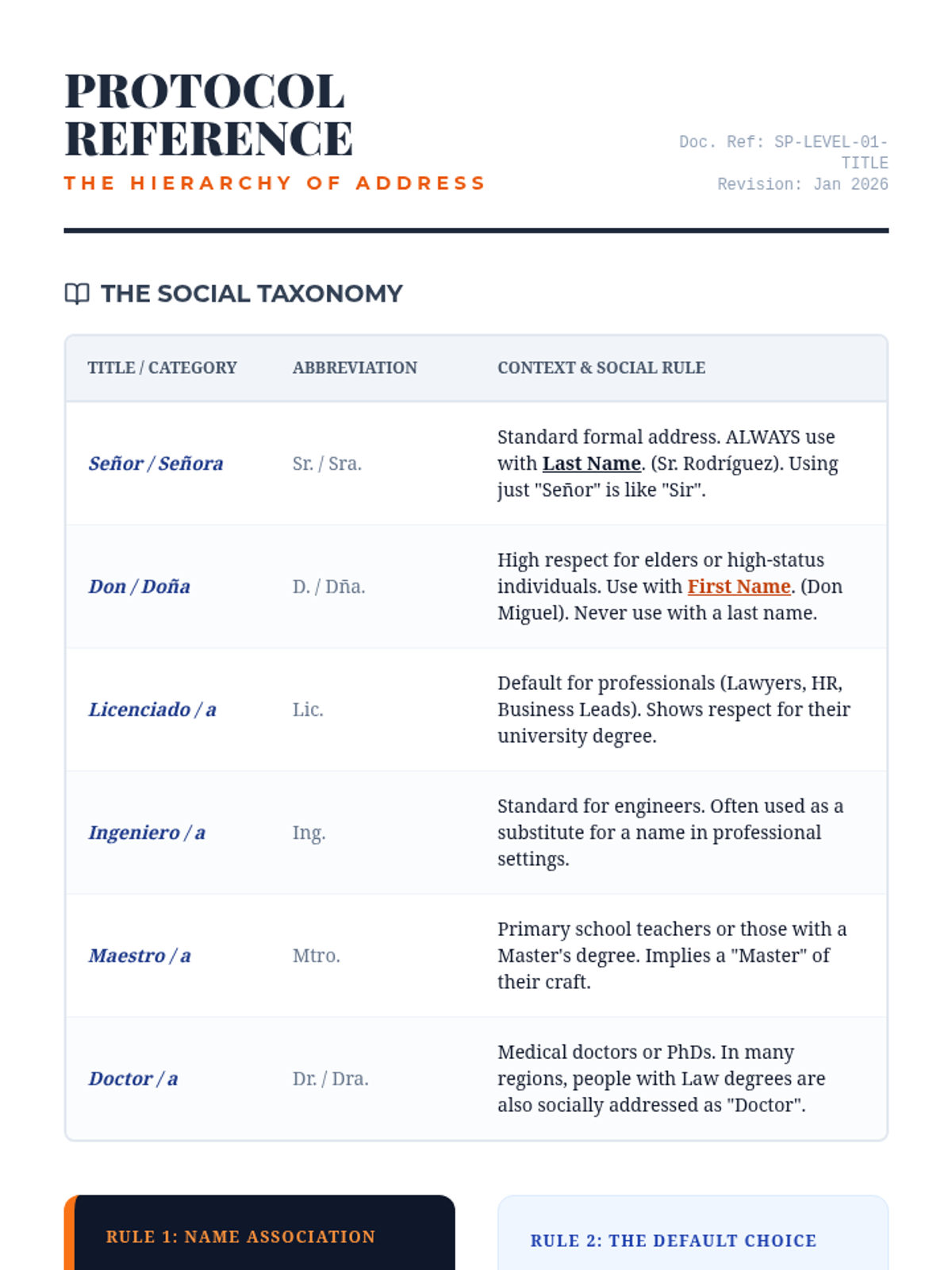
Students apply their knowledge to analyze recorded interactions and create a 'Protocol Guide' to navigate social hierarchy in Spanish-speaking environments.
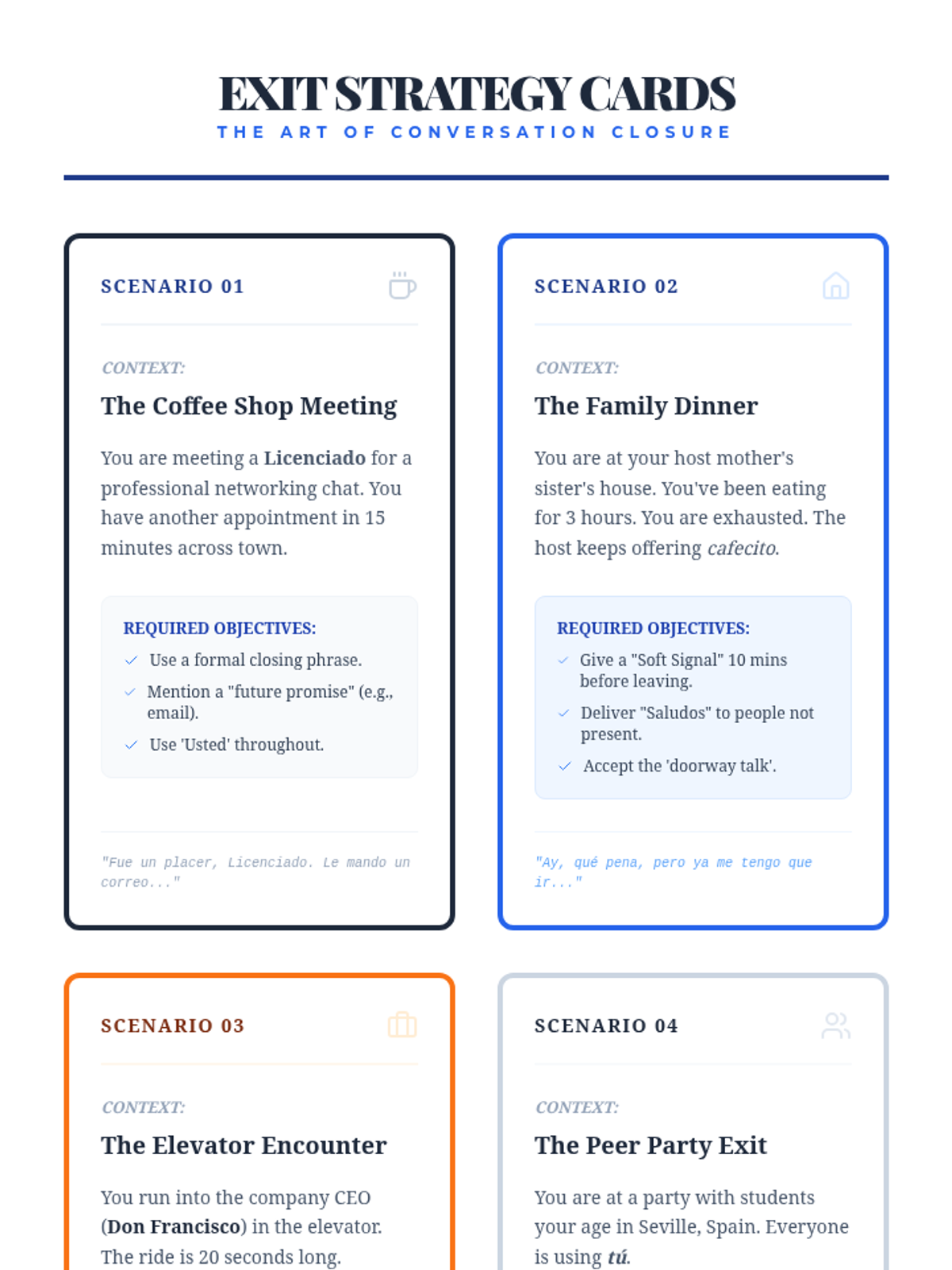
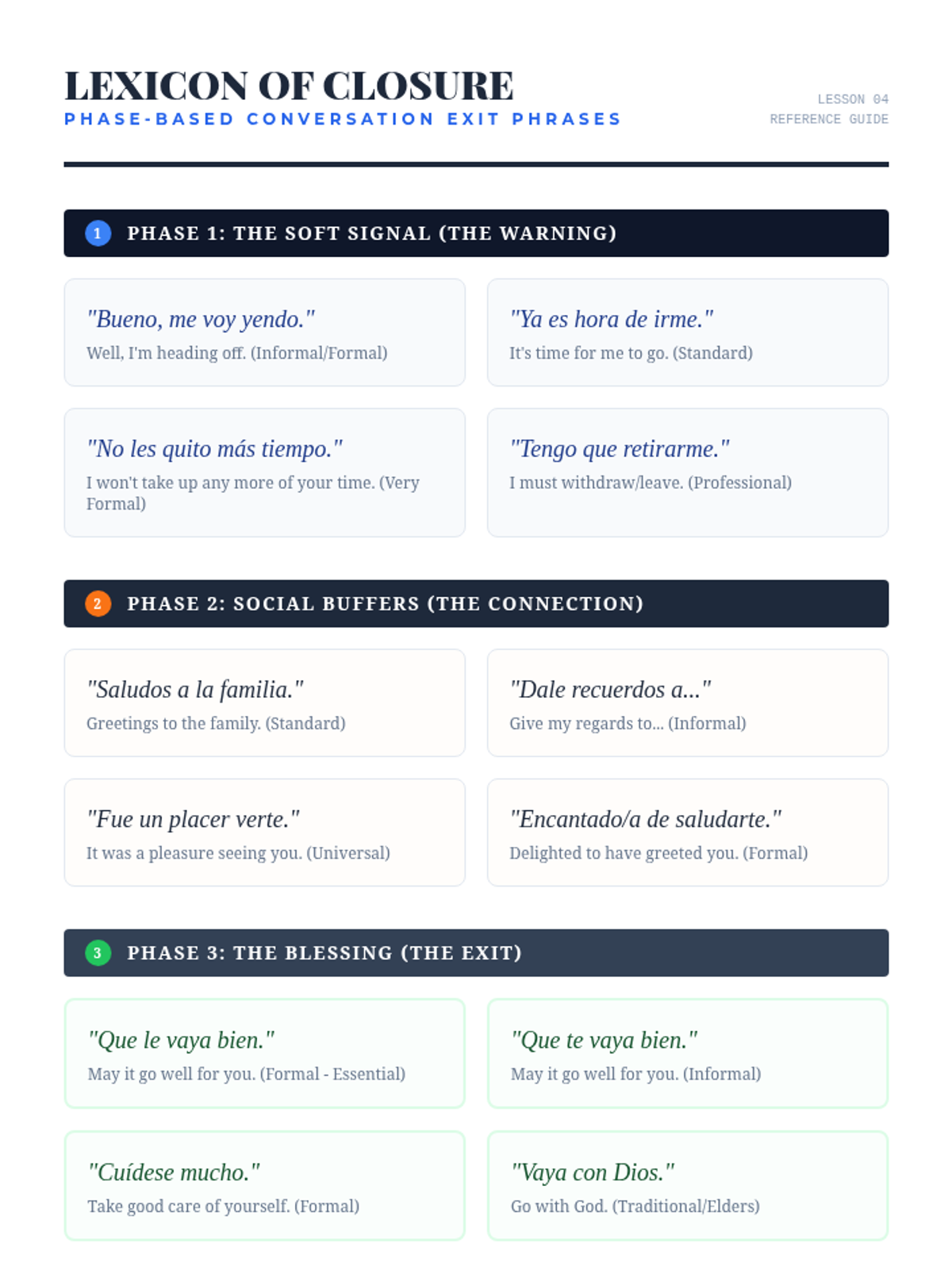
Students practice the 'long goodbye' and learn specific phrases for polite conversation closure in Hispanic contexts, contrasting them with more abrupt cultural norms.
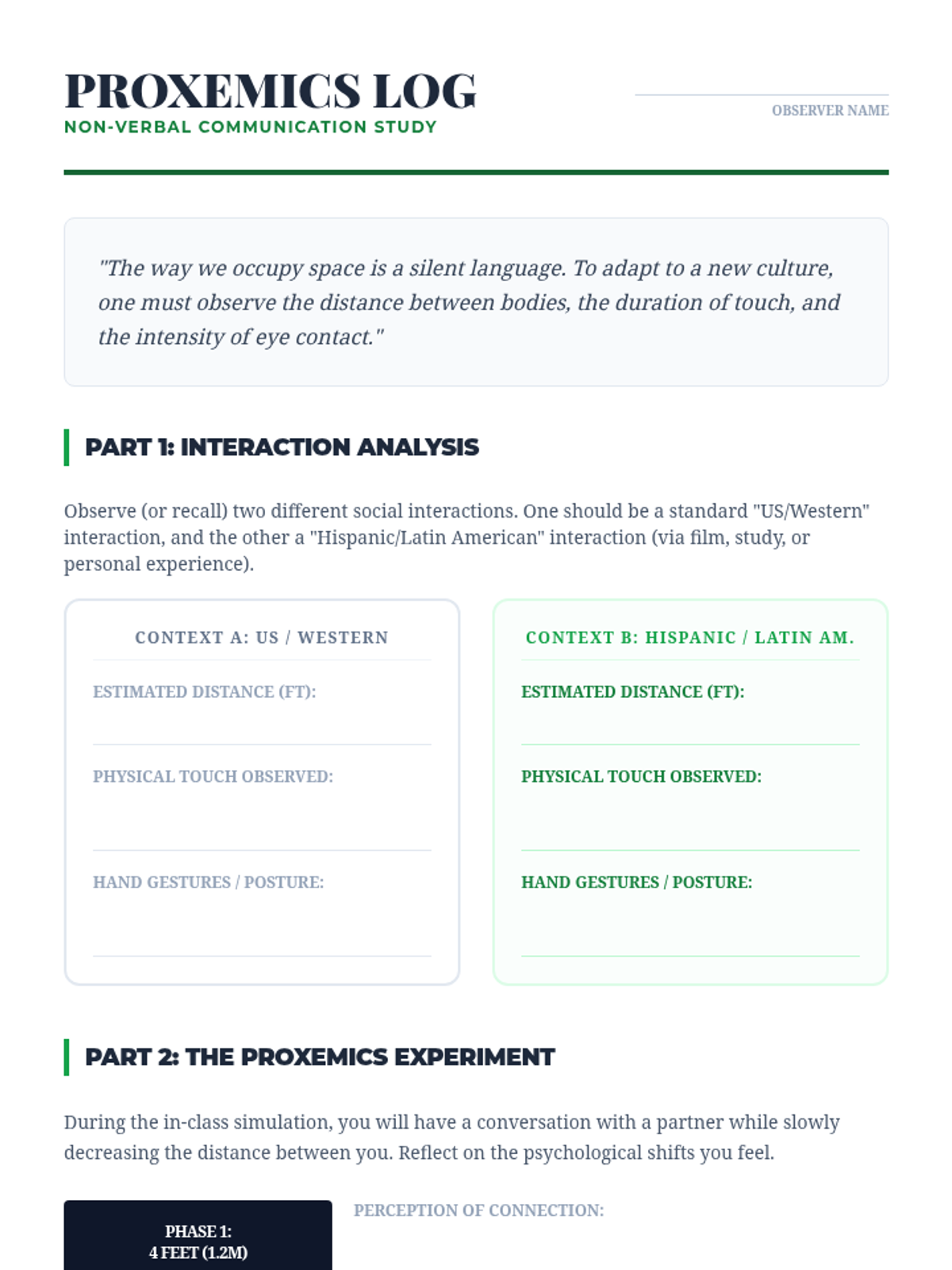
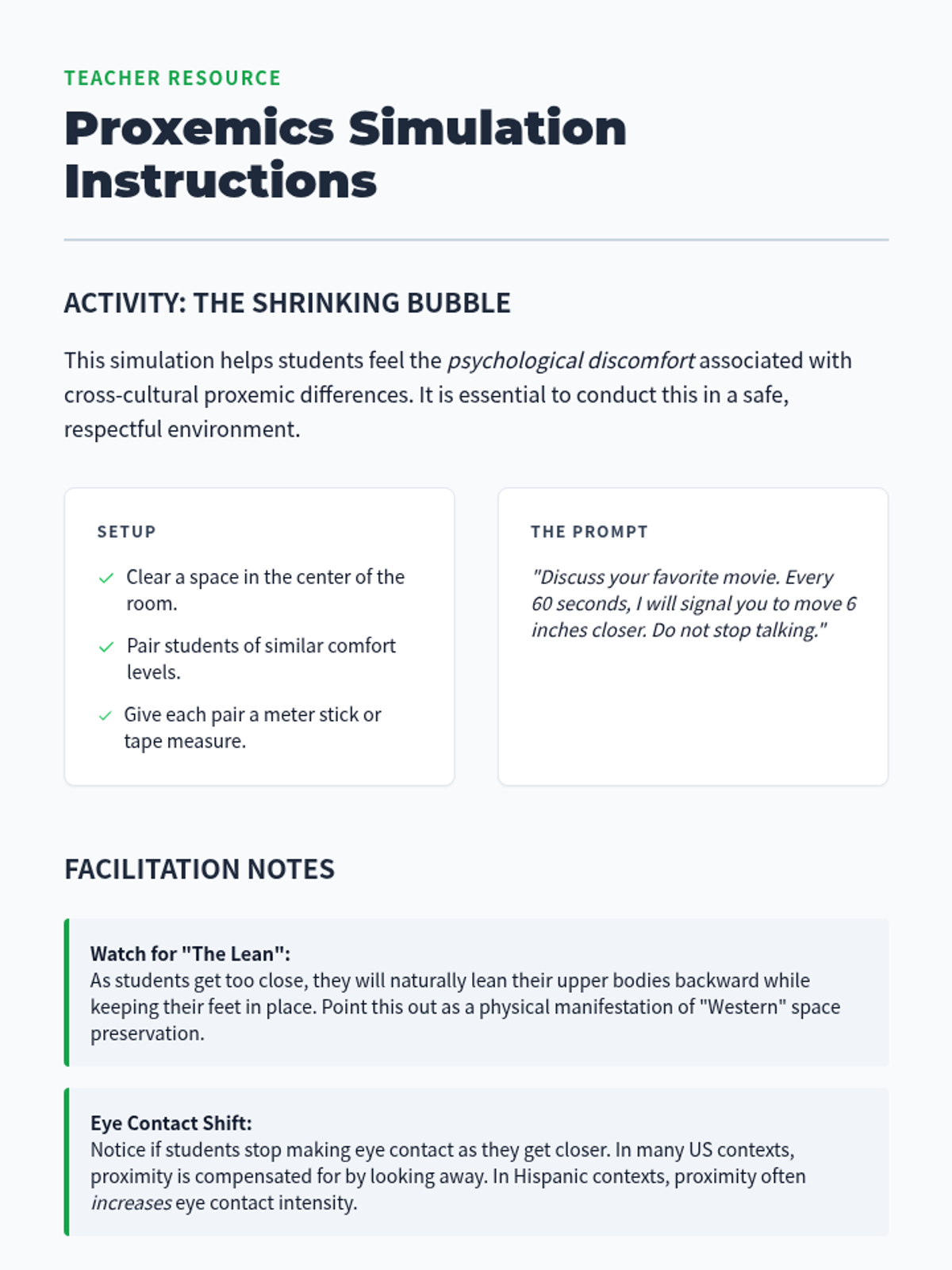
This lesson focuses on non-verbal communication, including greetings like cheek kisses and the concept of proxemics in Hispanic cultures compared to the US.
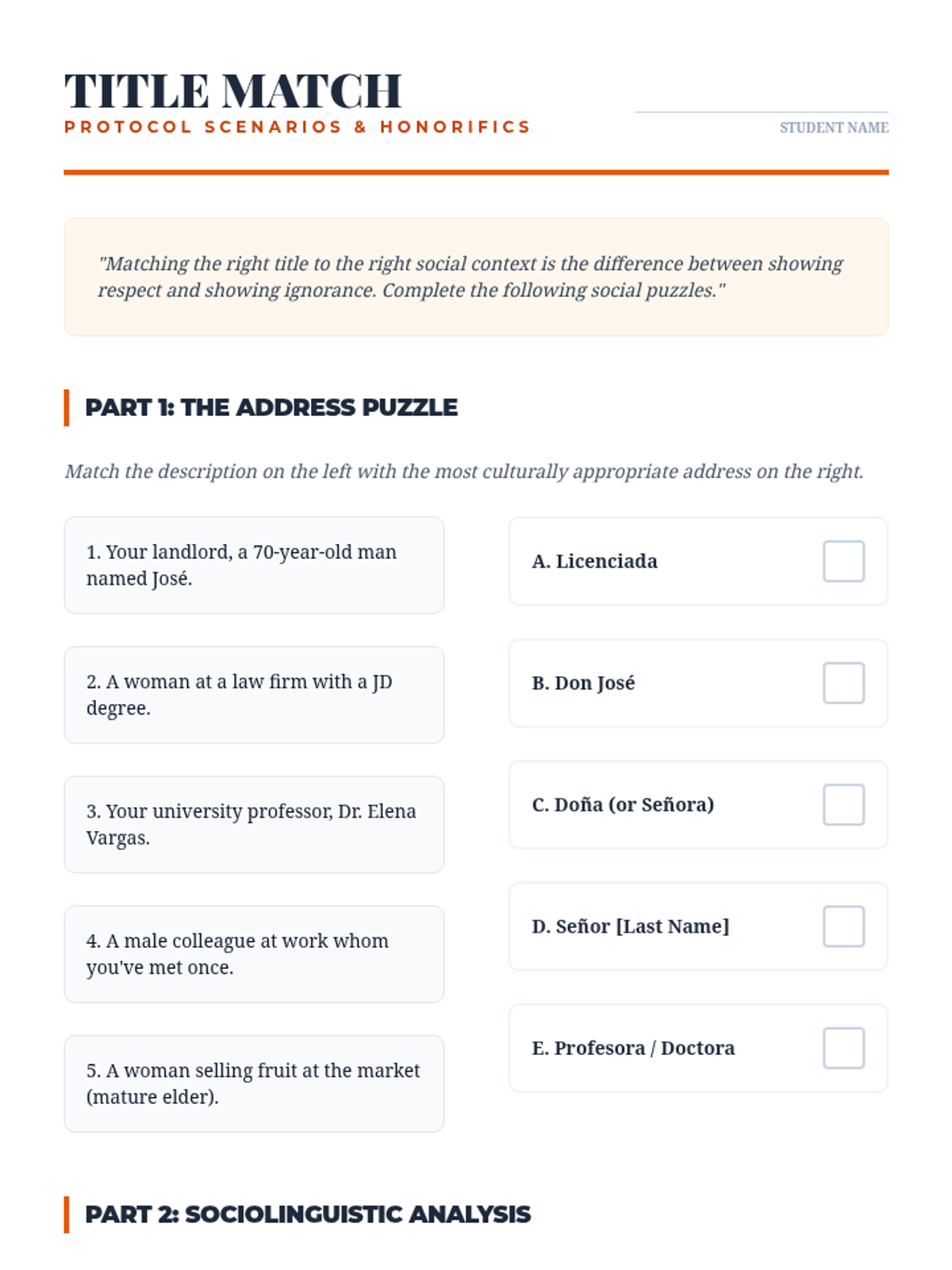
Students learn professional and social titles such as Don/Doña and Señor/Señora, emphasizing their use in academic and business settings to demonstrate respect.