Vocabulary, grammar, and cultural contexts for Spanish language acquisition across all proficiency levels. Develops skills in reading, writing, speaking, and listening through structured linguistic analysis and practice.
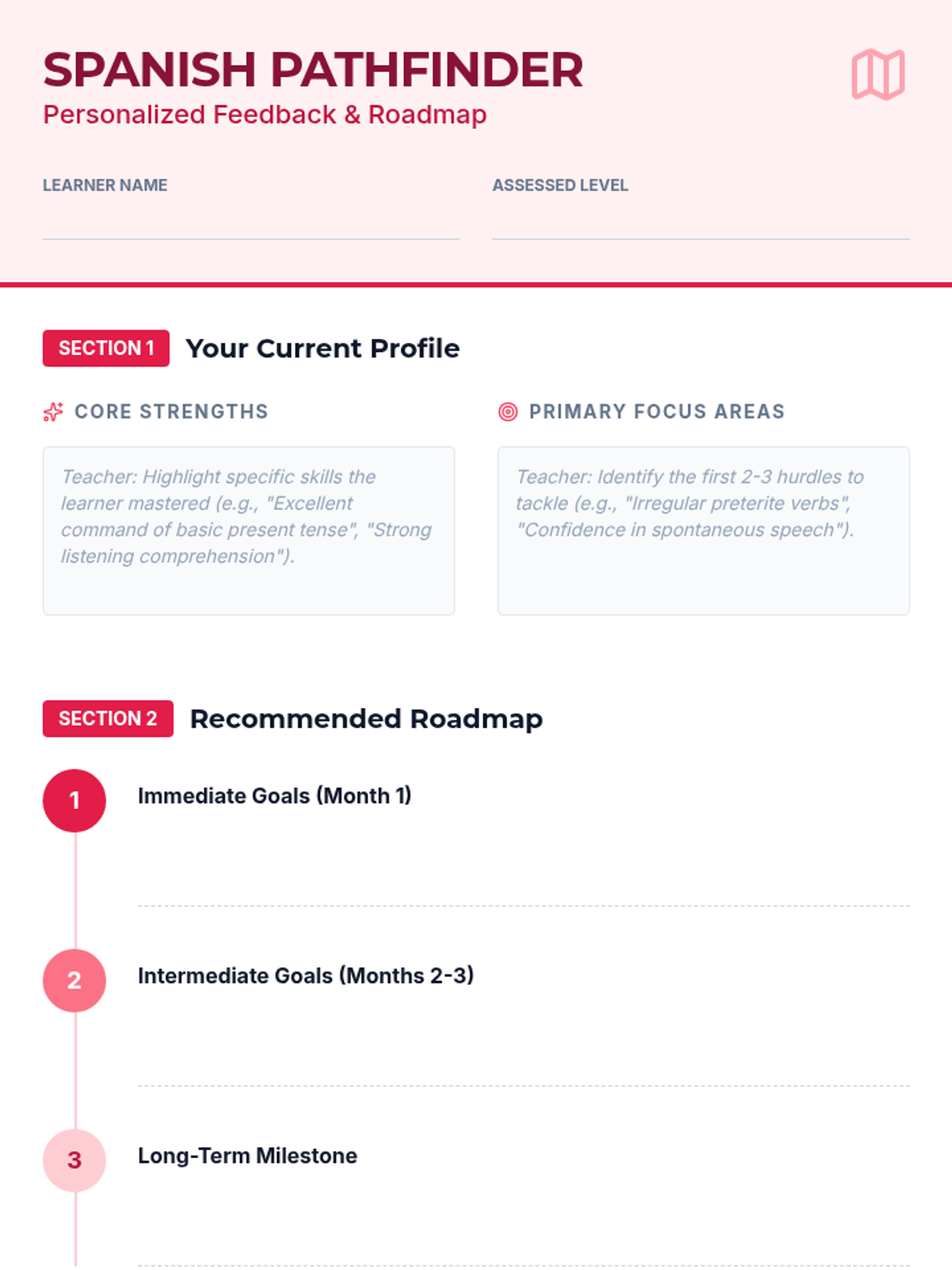
A personalized feedback and roadmap document for adult learners following their Spanish diagnostic. Includes sections for strengths, focus areas, a tiered learning roadmap, and a learner self-reflection space.
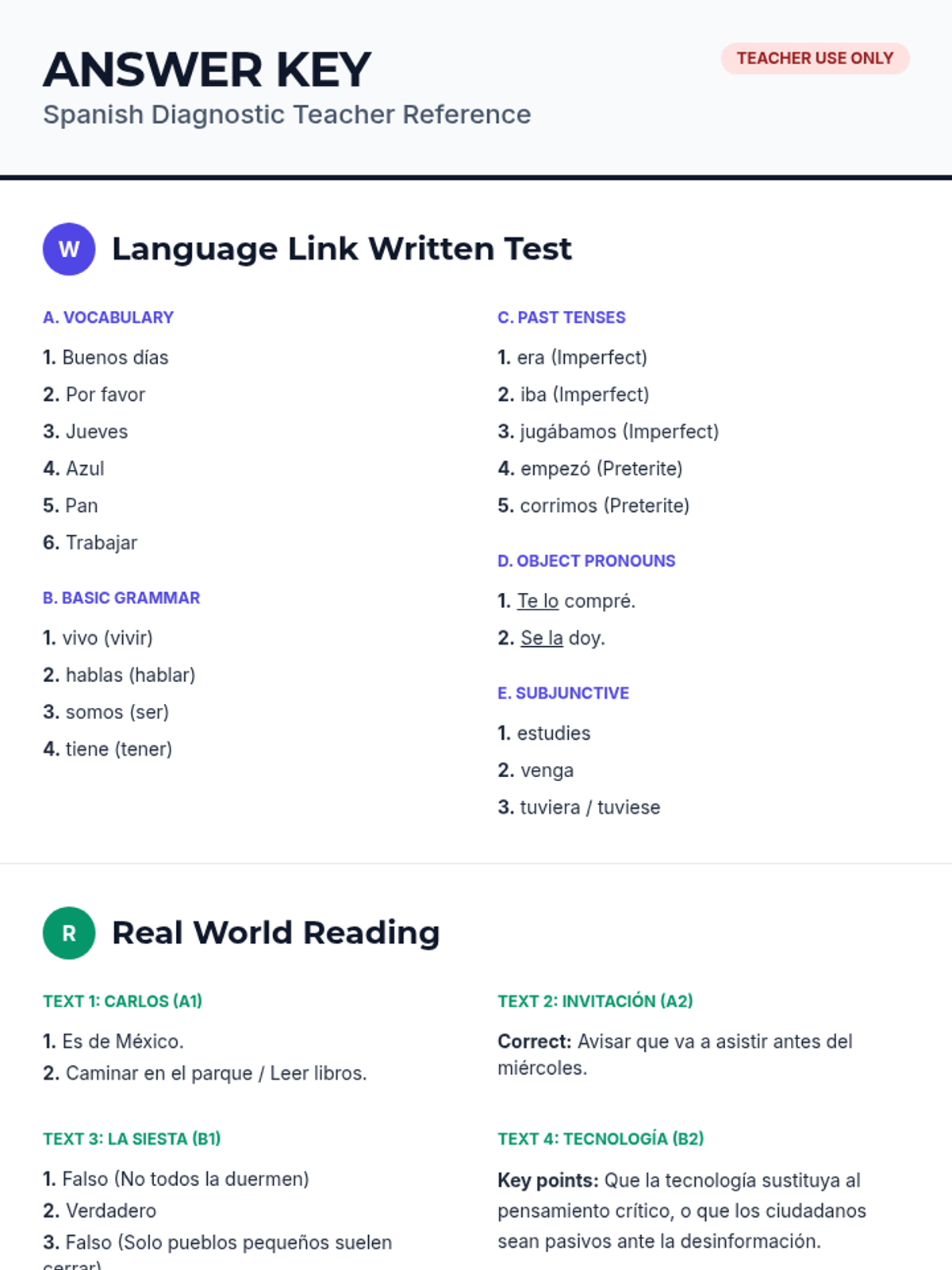
A teacher-facing answer key for the Spanish written and reading diagnostic tests. Includes correct responses for vocabulary, grammar, and reading comprehension sections, along with grading guidance for the instructor.
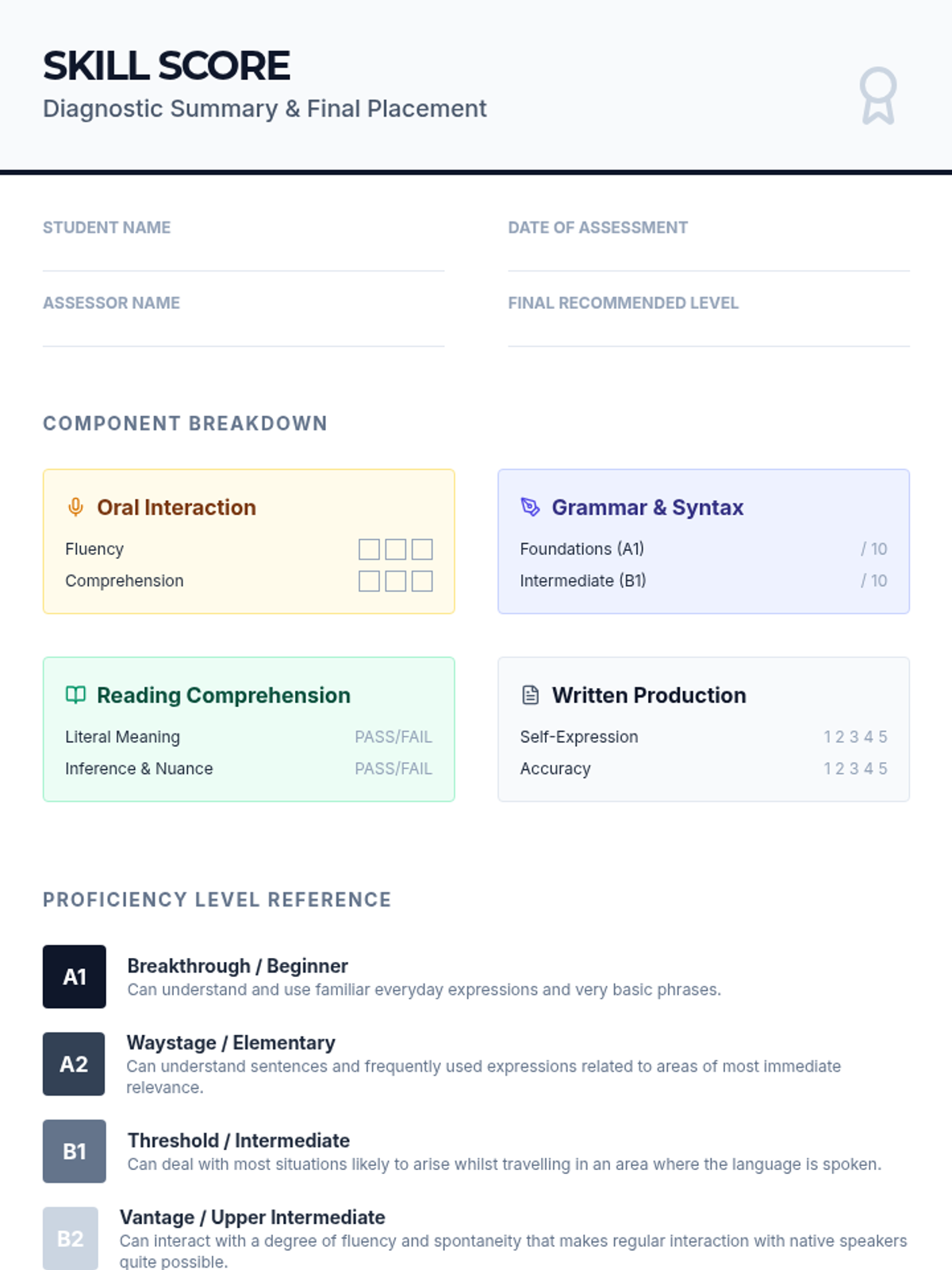
A comprehensive summary document for instructors to aggregate results from the 4-skill diagnostic. Includes scoring fields for oral, written, reading, and production components, along with a proficiency level reference guide for final placement.
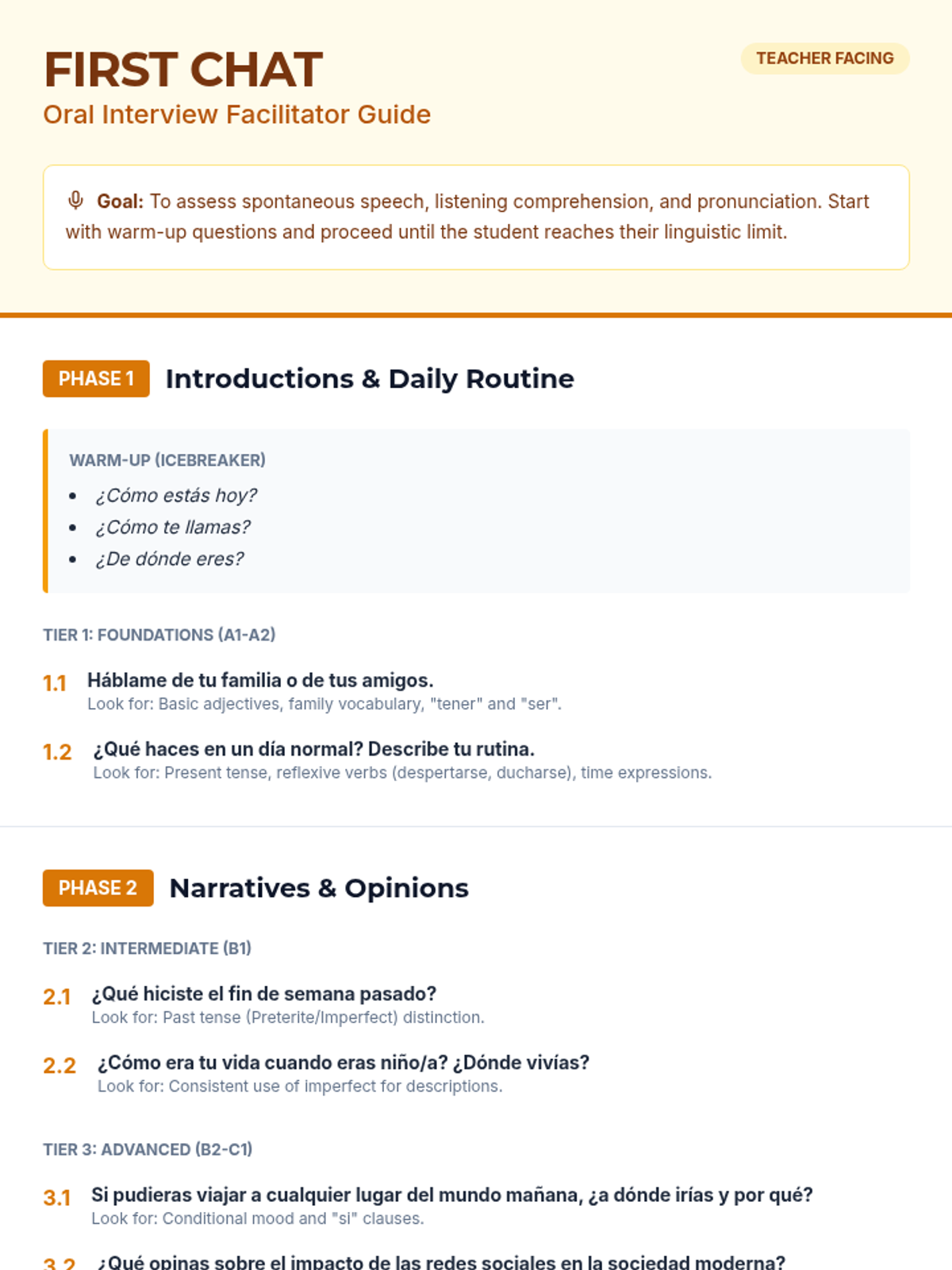
A facilitator guide for conducting oral diagnostic interviews. Includes tiered questions from basic introductions (A1) to complex social opinions (B2/C1), evaluation criteria for fluency, grammar, and vocabulary, and a notes section for teachers.
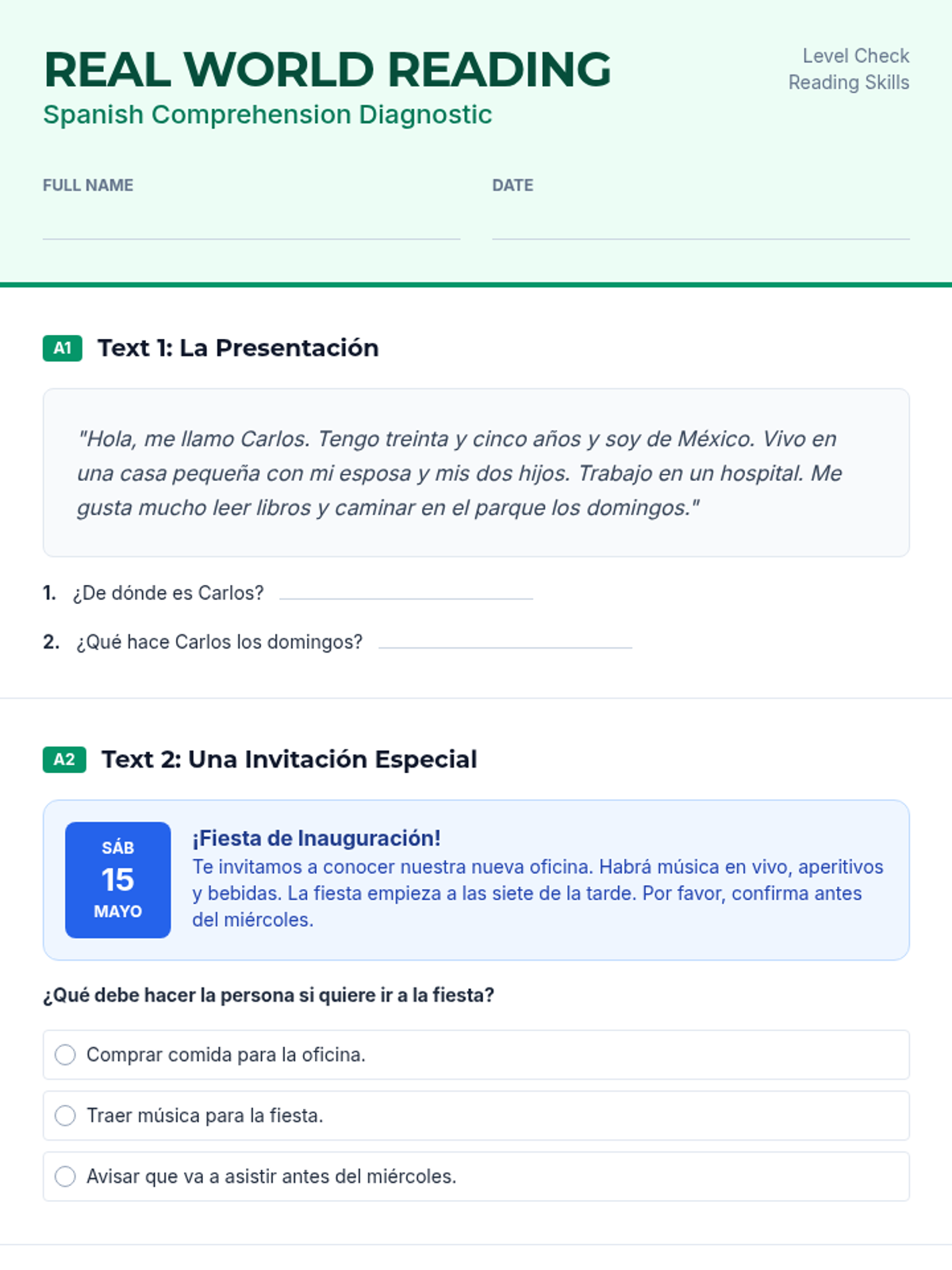
A reading comprehension diagnostic featuring four tiered texts (A1 to B2 level) ranging from a personal bio and a social invitation to cultural commentary and a critical opinion piece. Includes multiple choice, true/false, and short answer questions.
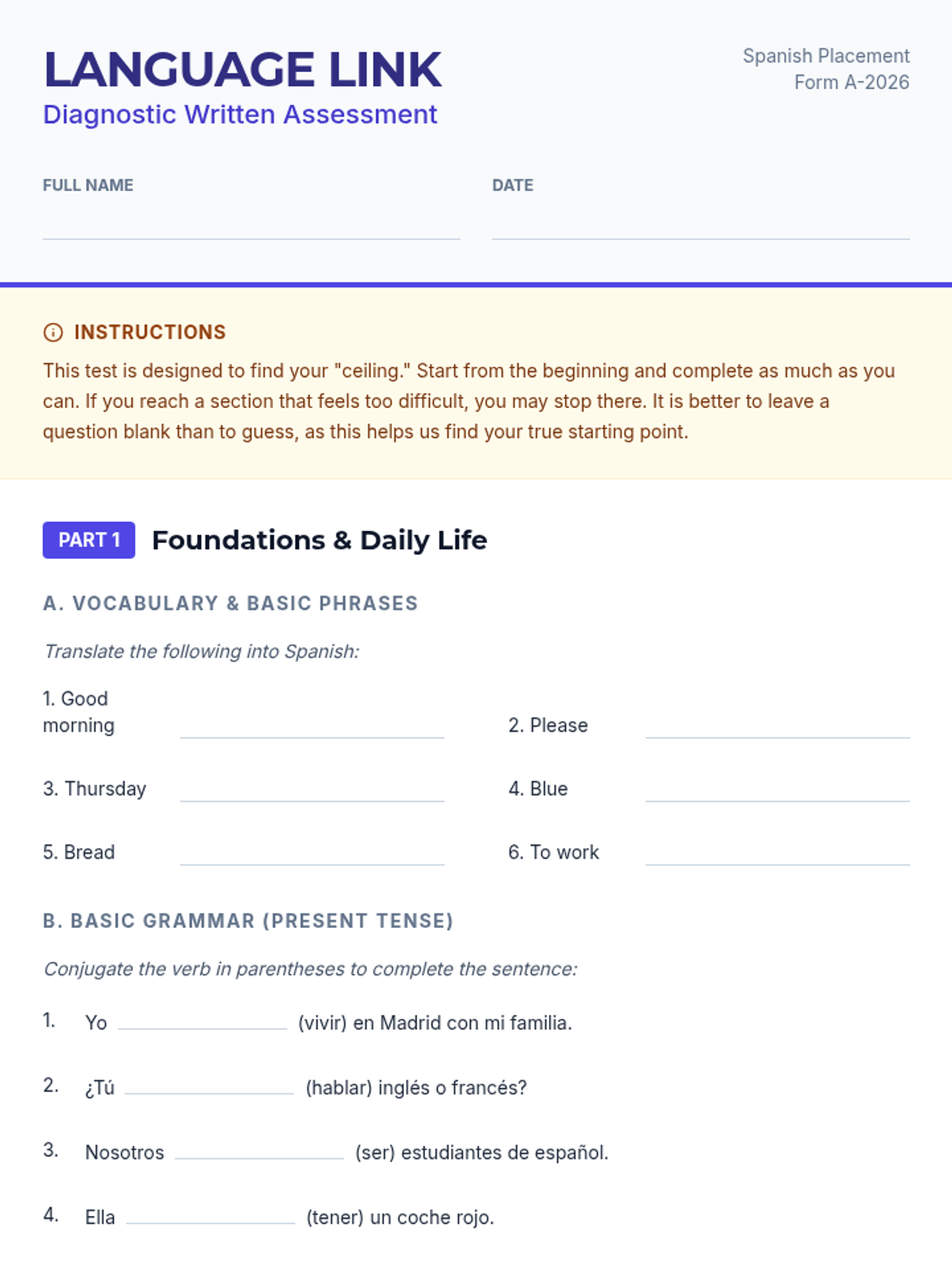
A tiered written diagnostic test for adult learners covering vocabulary, basic present tense, past narratives (Preterite/Imperfect), object pronouns, and the subjunctive mood. Includes a free writing section for holistic assessment.
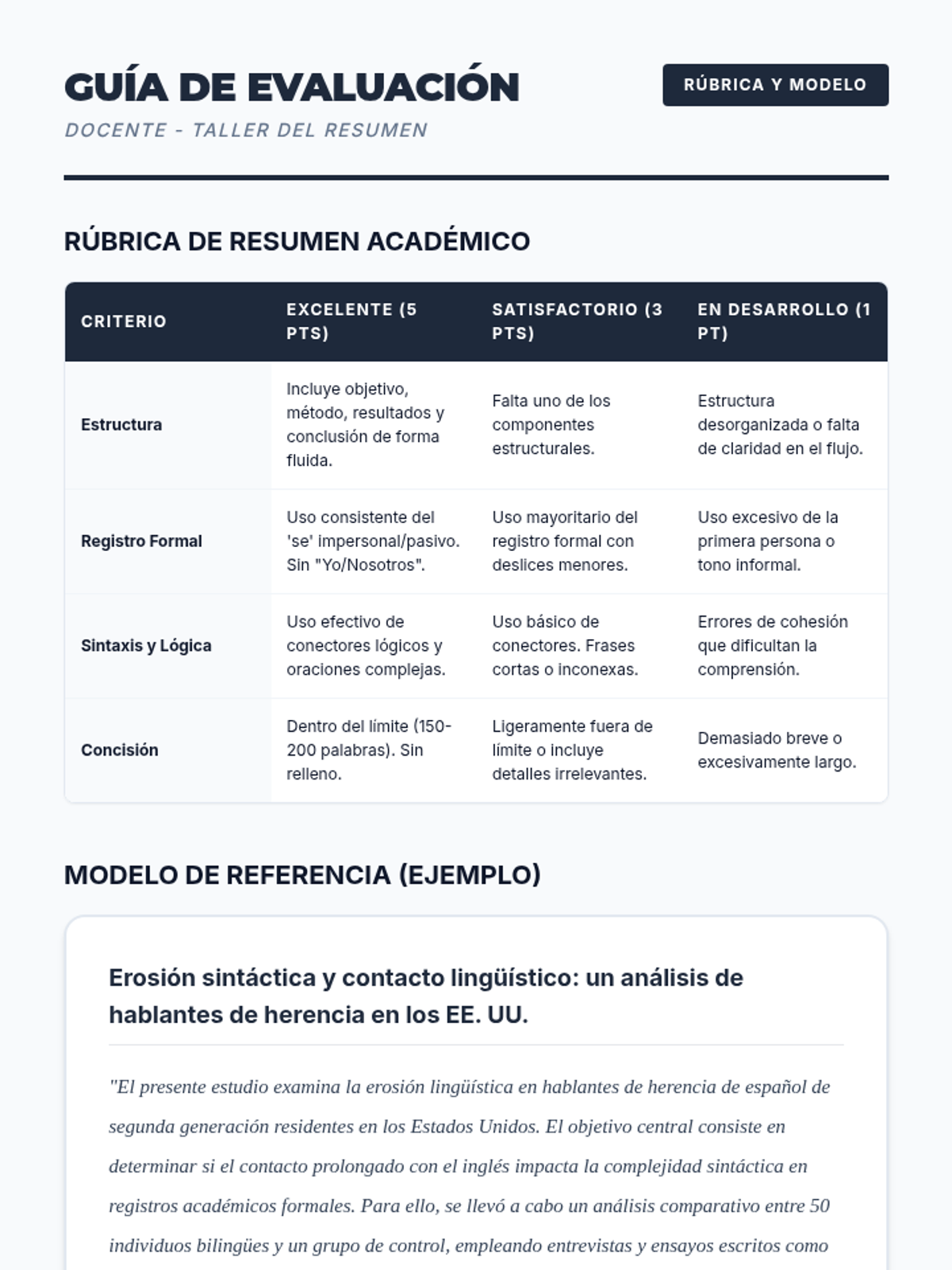
Answer key and teacher guide for the Lesson 5 Abstract Workshop Worksheet.
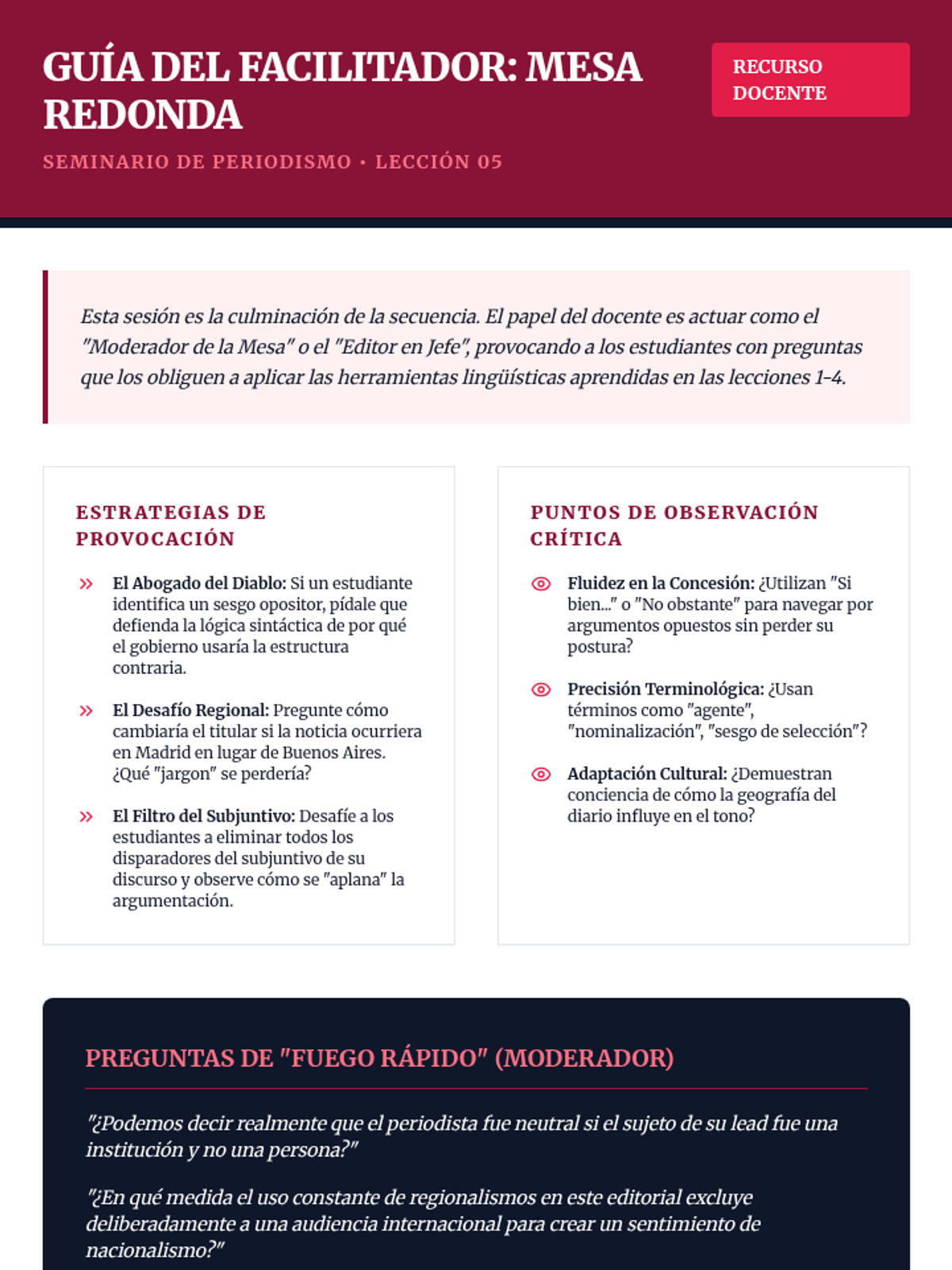
A facilitation guide for the final roundtable simulation, providing instructional strategies and discussion prompts for the teacher.
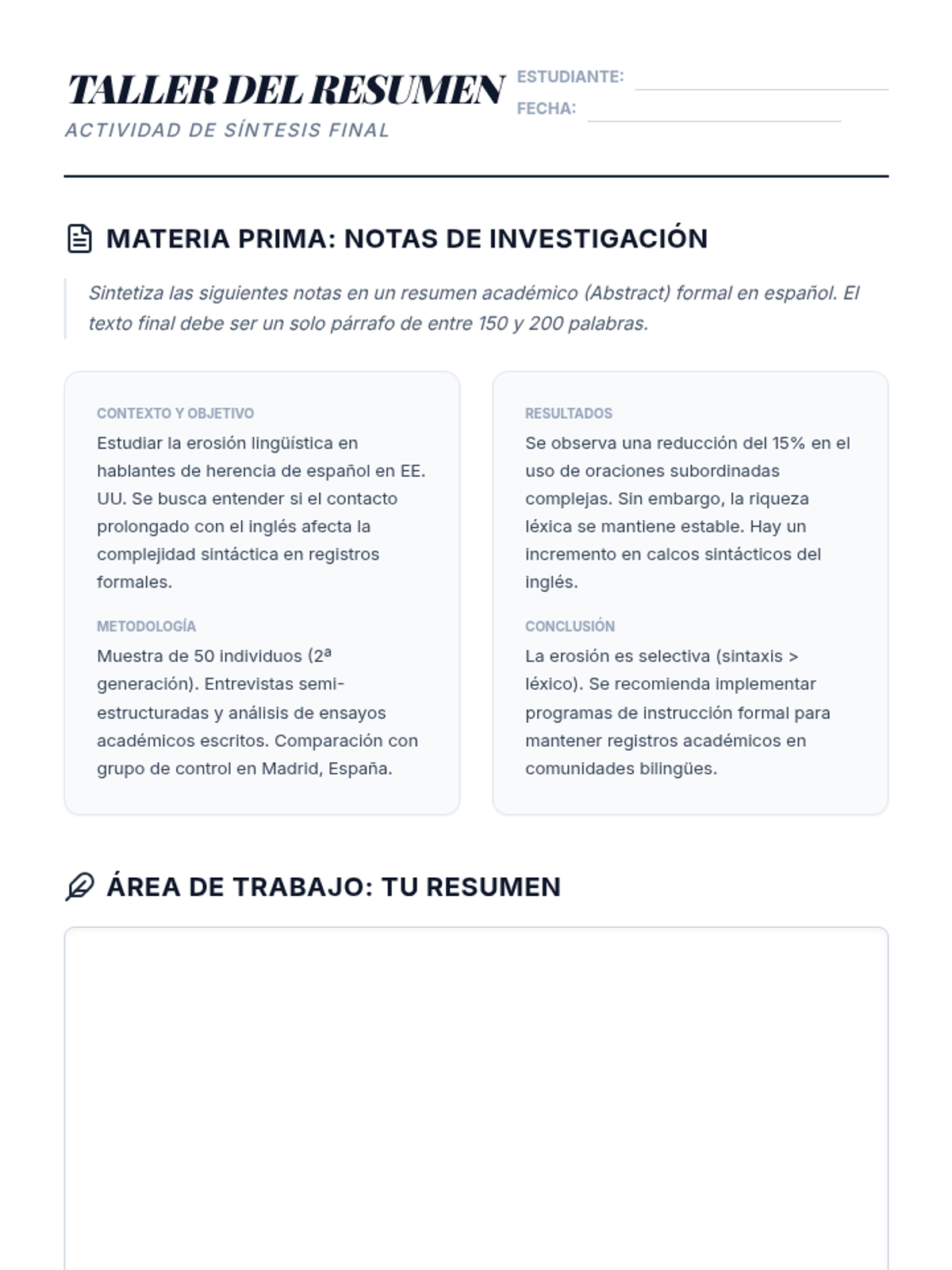
Culminating workshop activity where students synthesize research notes into a formal academic abstract in Spanish.
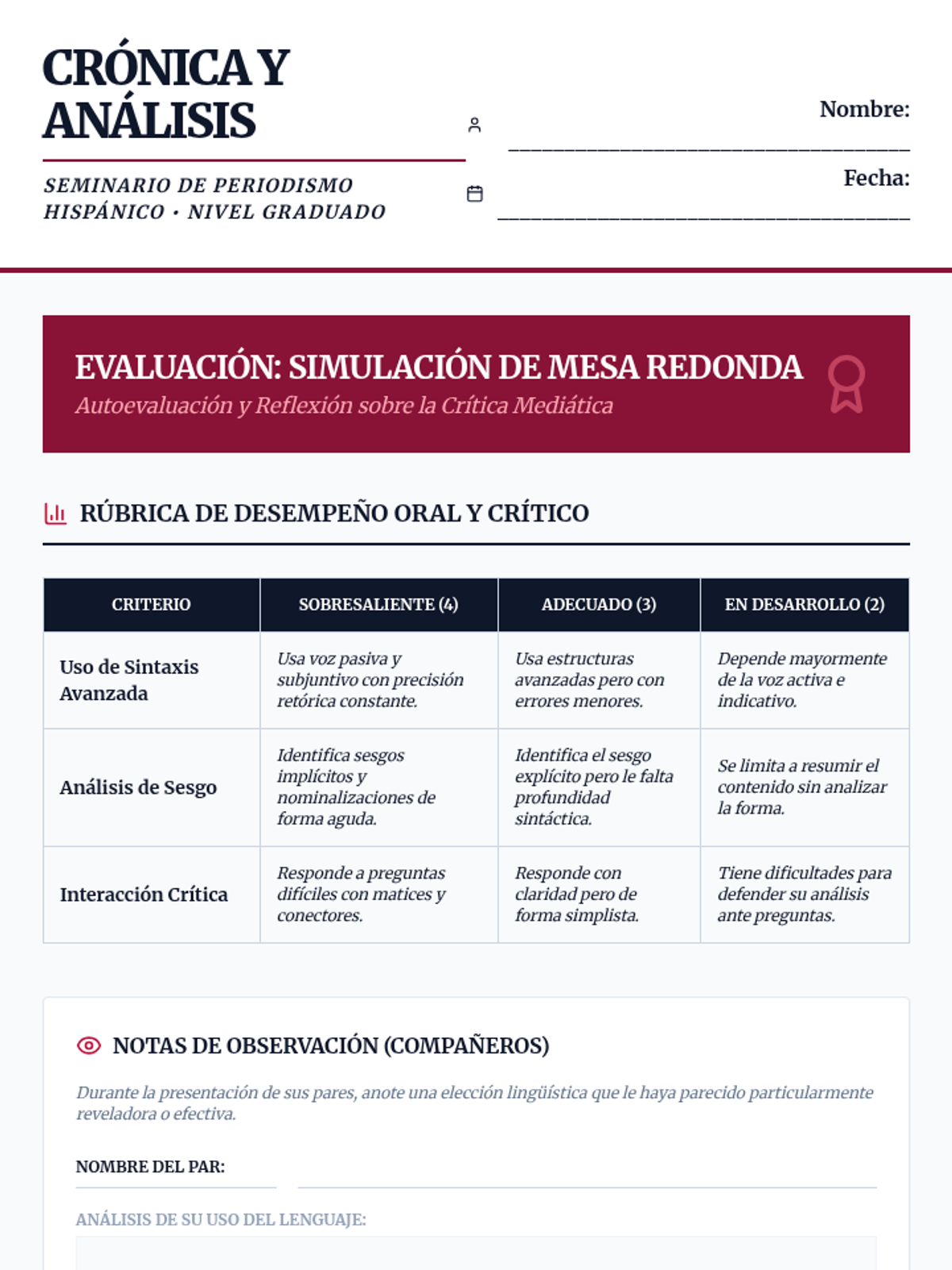
A final assessment document for graduate students to reflect on their performance in the roundtable simulation and self-assess their media literacy skills.
A slide deck for Lesson 5 (Drafting the Literary Critique) providing instructional guidance on thesis construction, avoiding pitfalls, and the peer review process.
A slide presentation for the final roundtable simulation, outlining rules, discussion prompts, and evaluation criteria for graduate media literacy.
Slides for Lesson 5 covering abstract structure, synthesis skills, and the formal register required for academic publishing in Spanish.
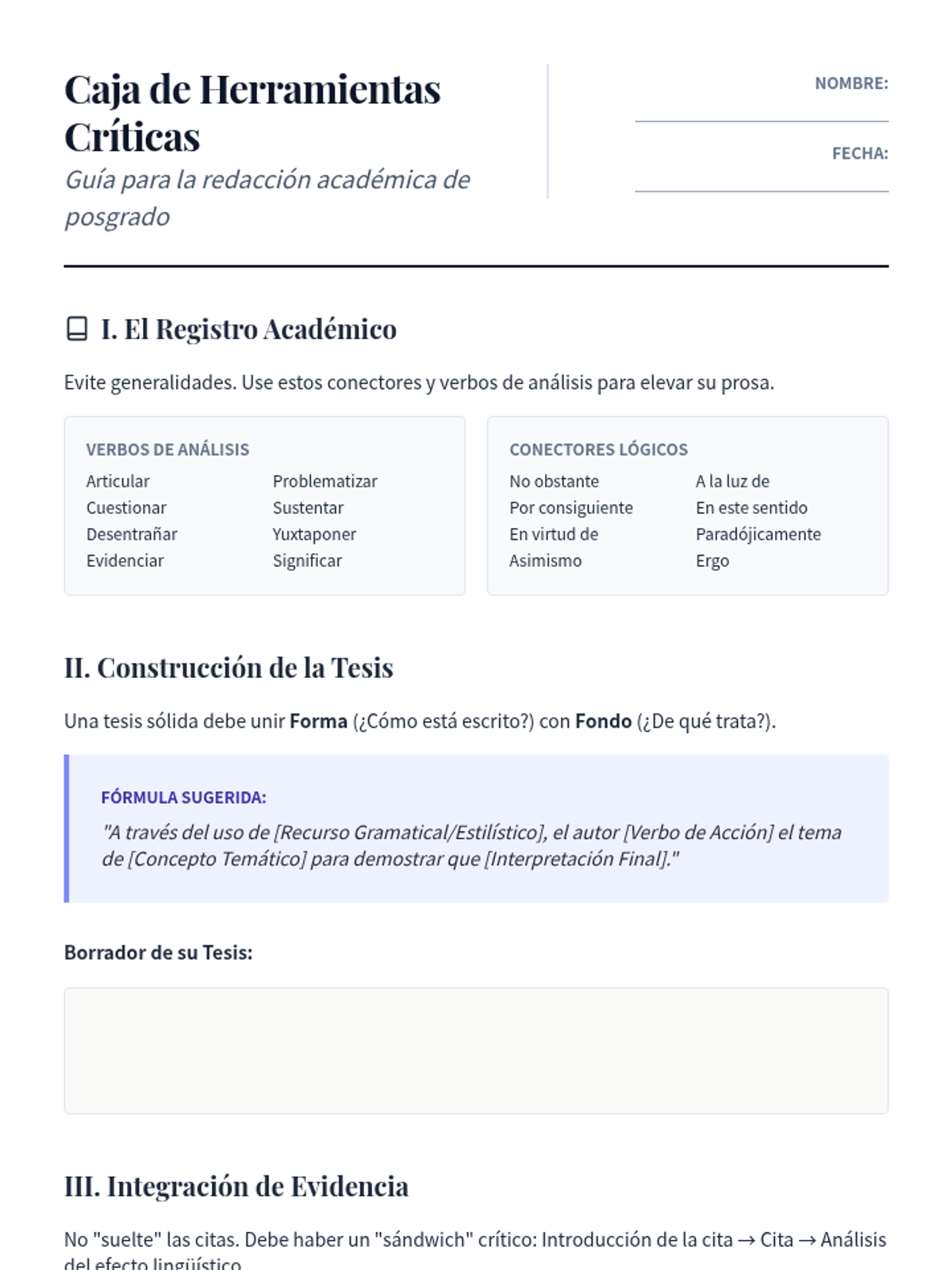
A student reference sheet and toolkit for Lesson 5, providing academic vocabulary, thesis construction formulas, and evidence integration strategies for writing a literary critique.
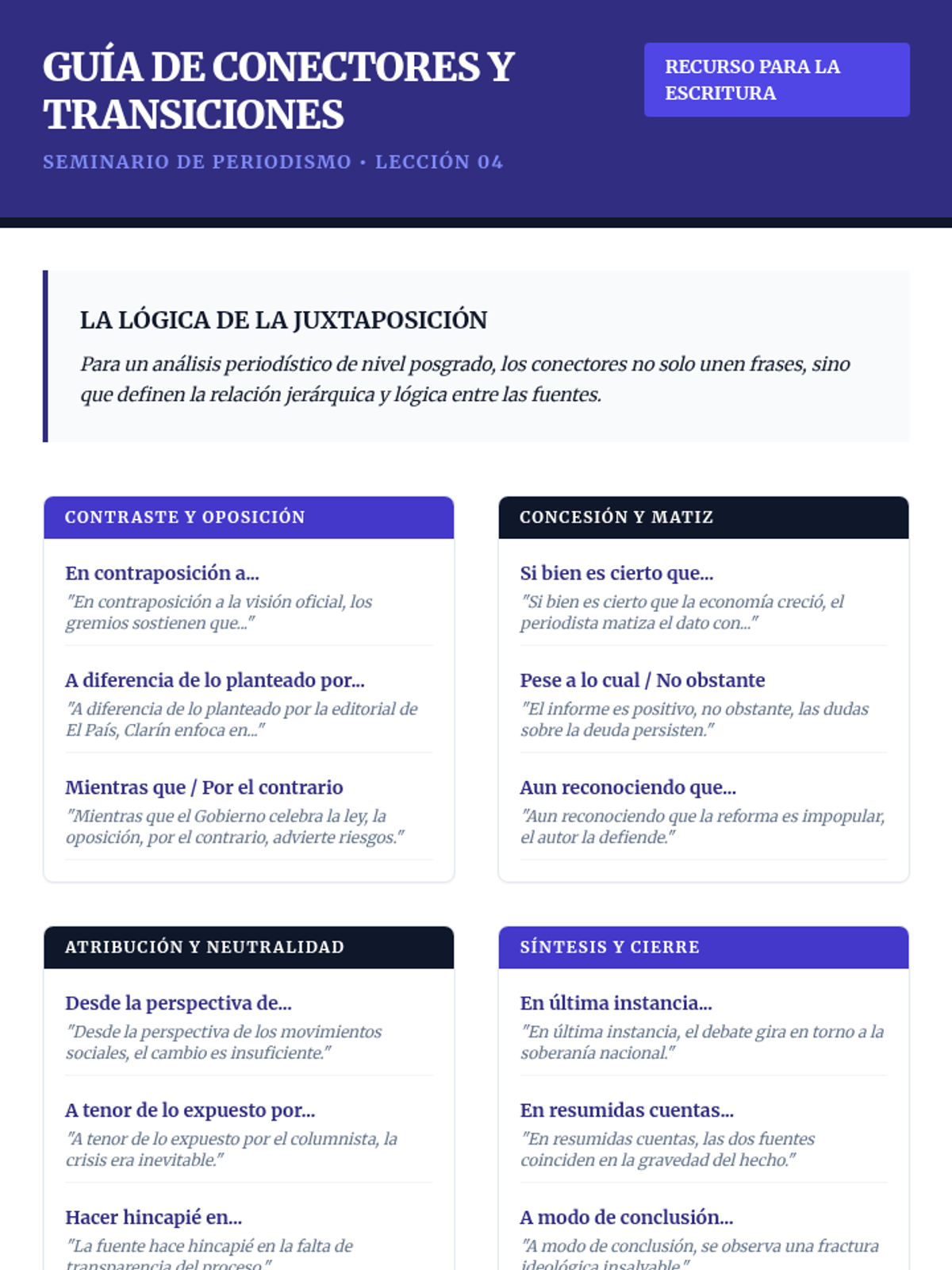
A reference guide for graduate students listing advanced Spanish connectors and transition phrases for professional-level journalistic synthesis.
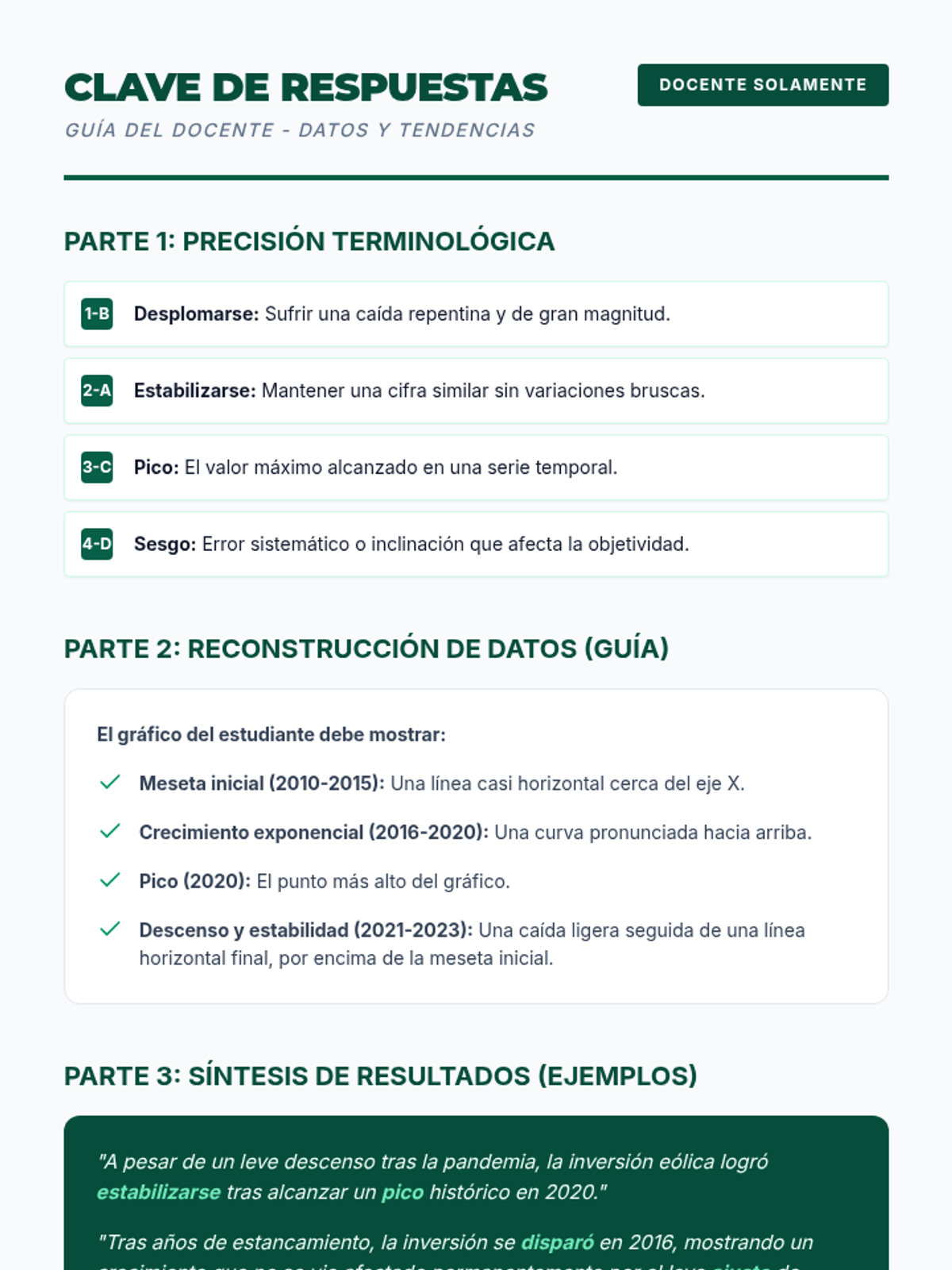
Answer key and teacher guide for the Lesson 4 Data and Trends Worksheet.
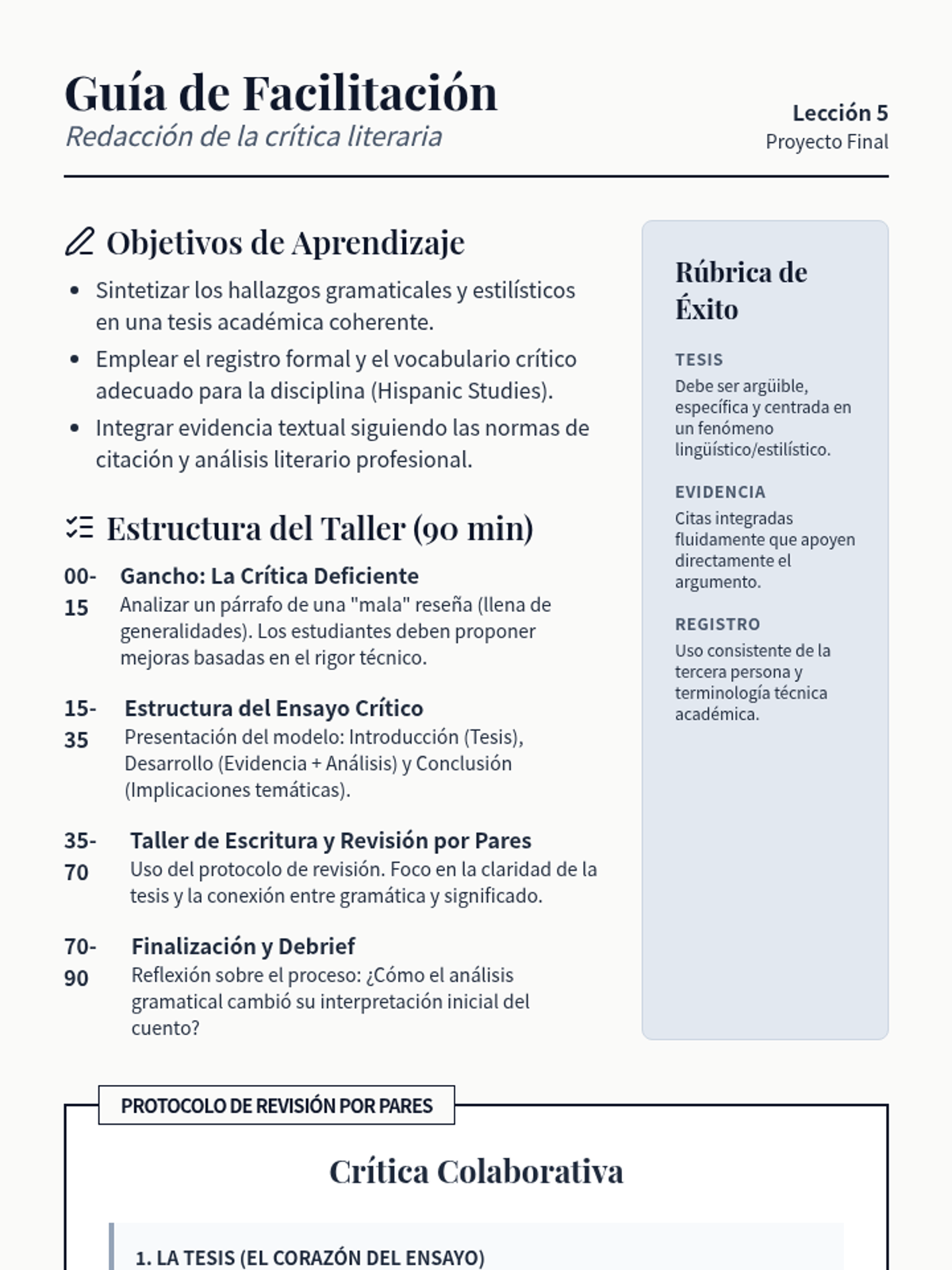
A teacher facilitation guide and peer review protocol for Lesson 5, focusing on the construction of a formal literary critique in Spanish.
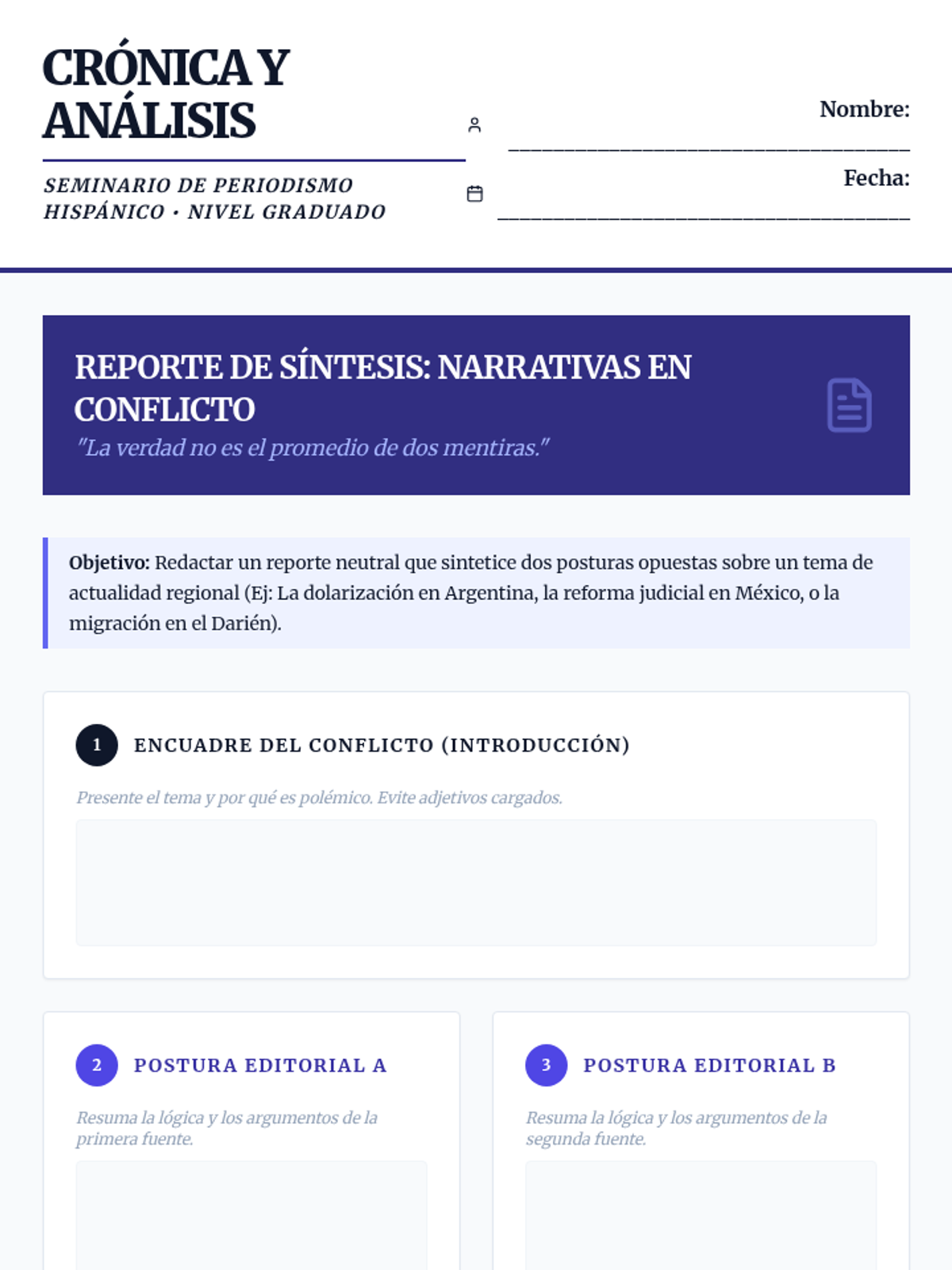
A structured template for graduate students to practice drafting a neutral synthesis report based on conflicting news sources.
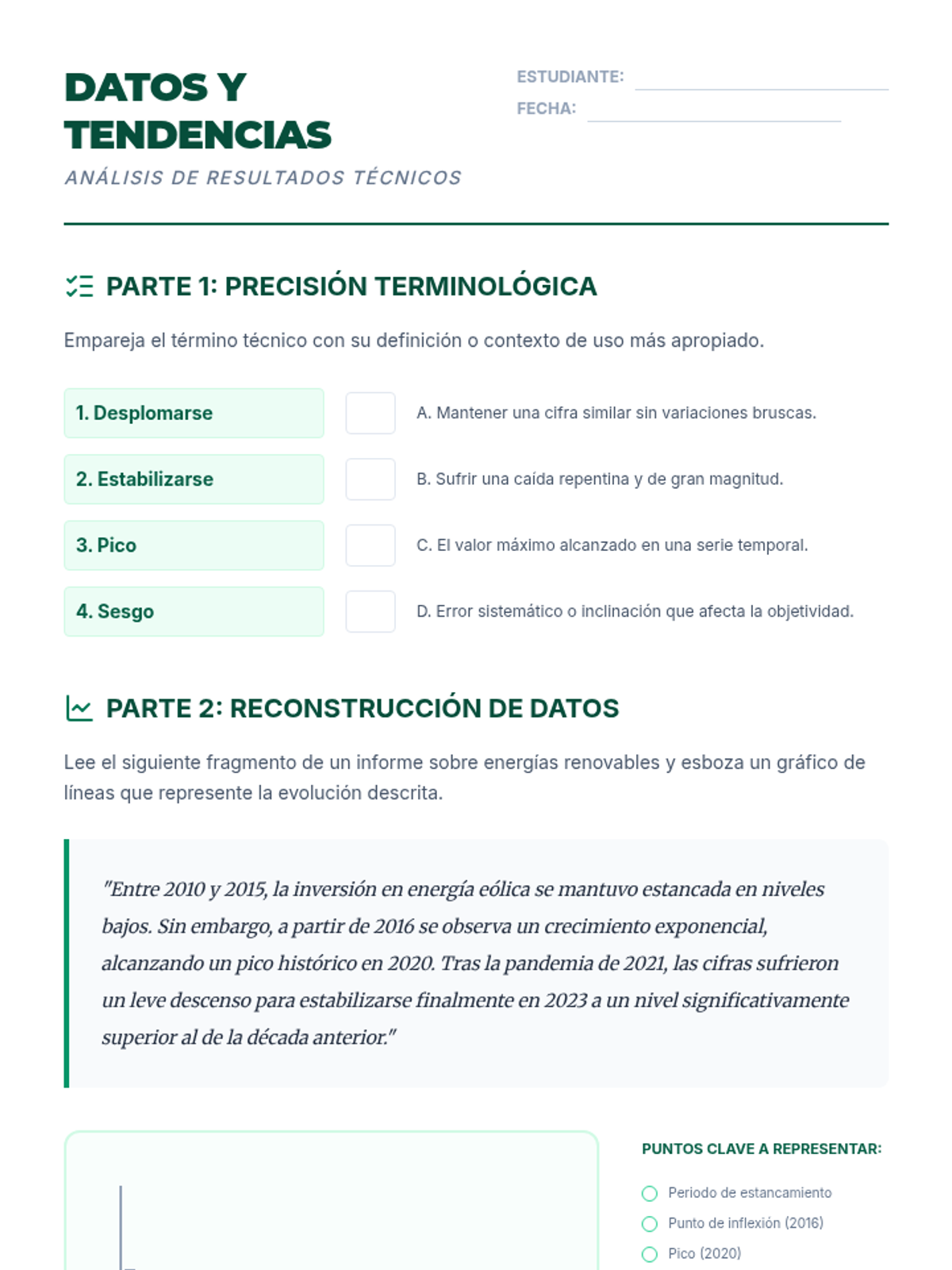
Worksheet for Lesson 4 where students interpret technical prose to reconstruct visual data and practice data description vocabulary.
A slide deck for Lesson 4 (Character Psychology and Voice) focused on sociolects, register shifts, and the tension between public and private voices in Spanish literature.
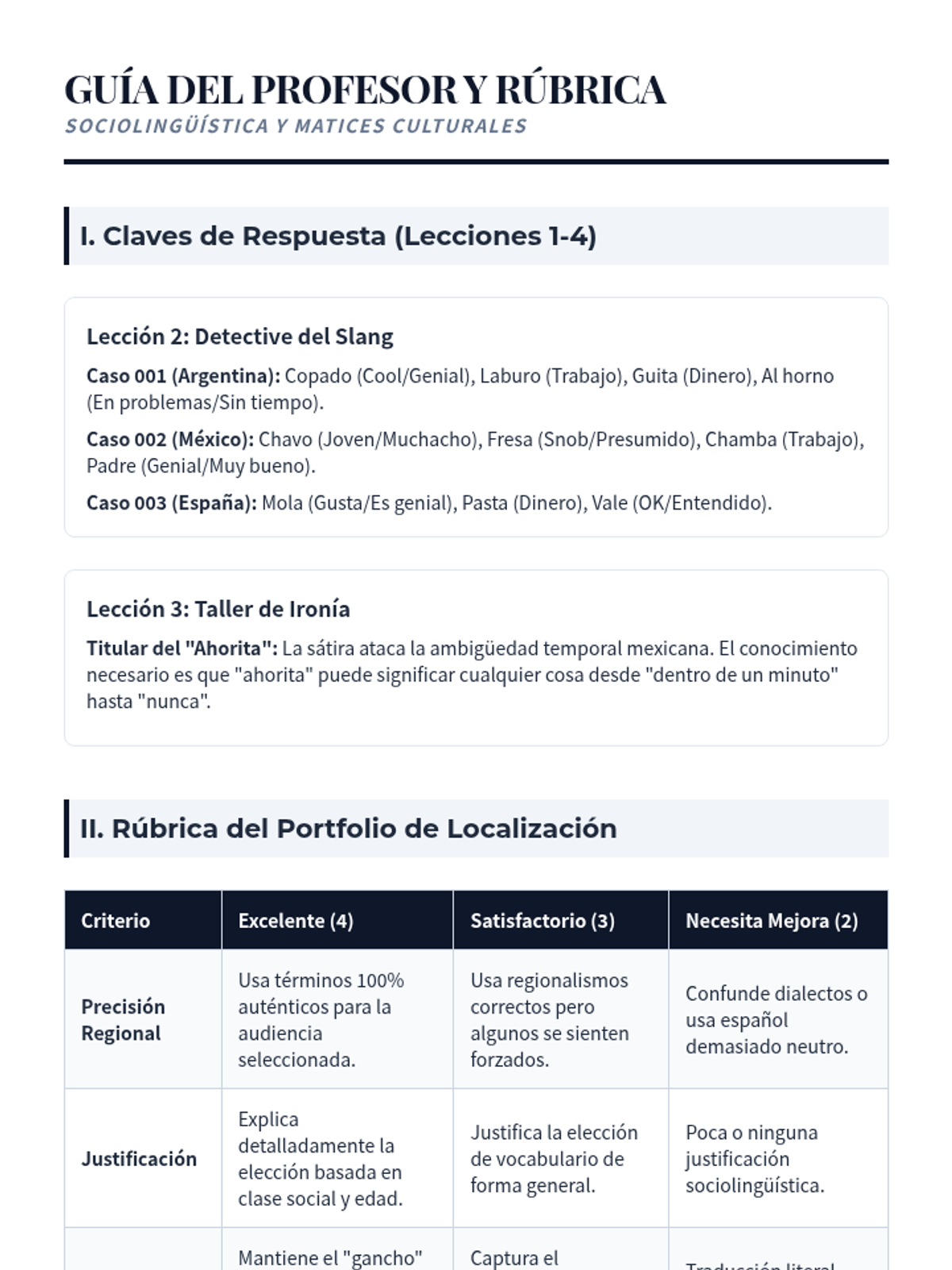
A comprehensive answer key and grading rubric for the entire sequence, providing teacher guidance on assessing regionalisms, irony, and localization.
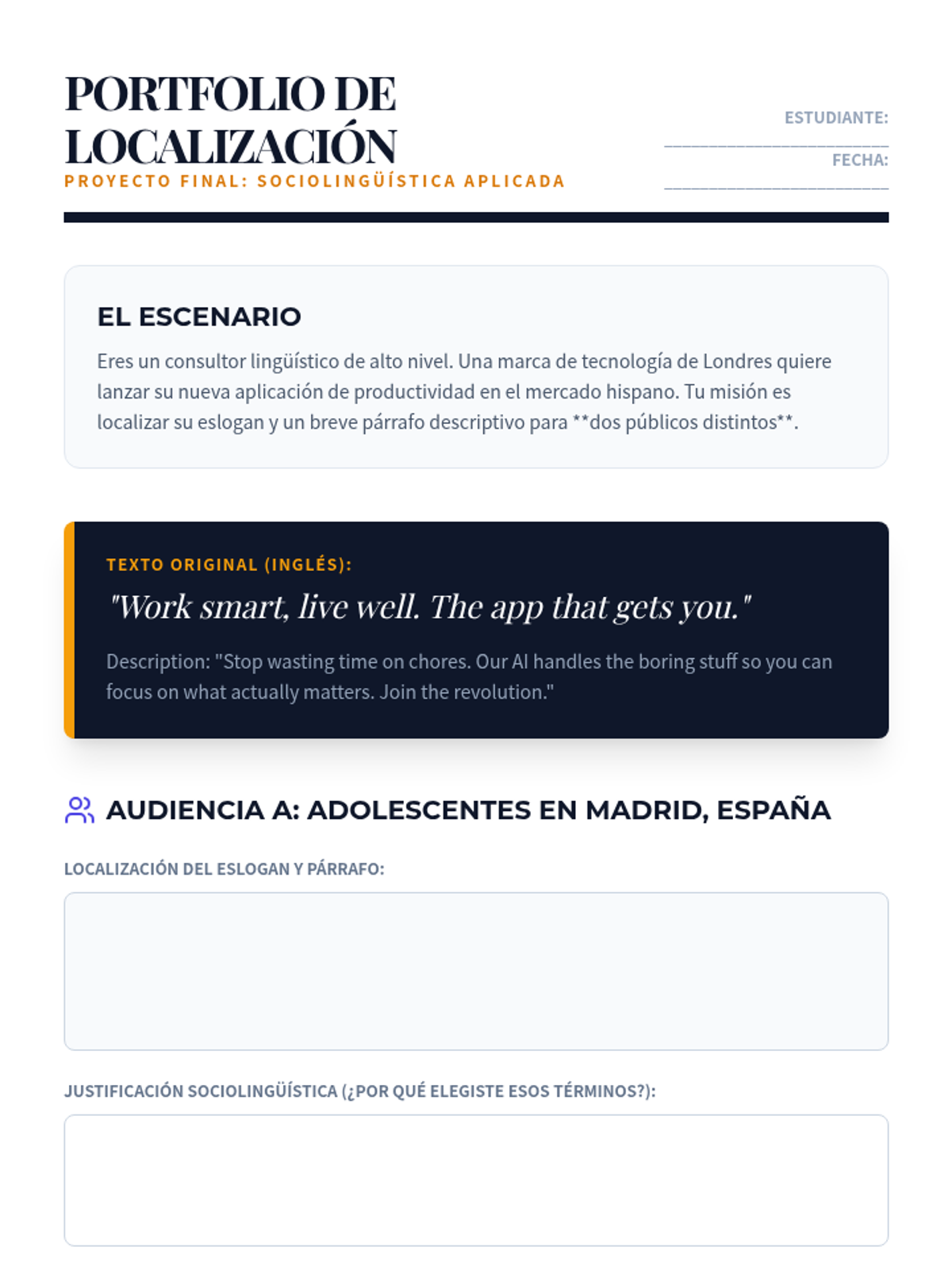
A student workshop portfolio for Lesson 5 where students localize a tech product description for two distinct Spanish-speaking audiences and justify their choices.
A slide deck for Lesson 5 exploring the principles of localization, translation vs. localization, and regional linguistic choices for marketing and media.
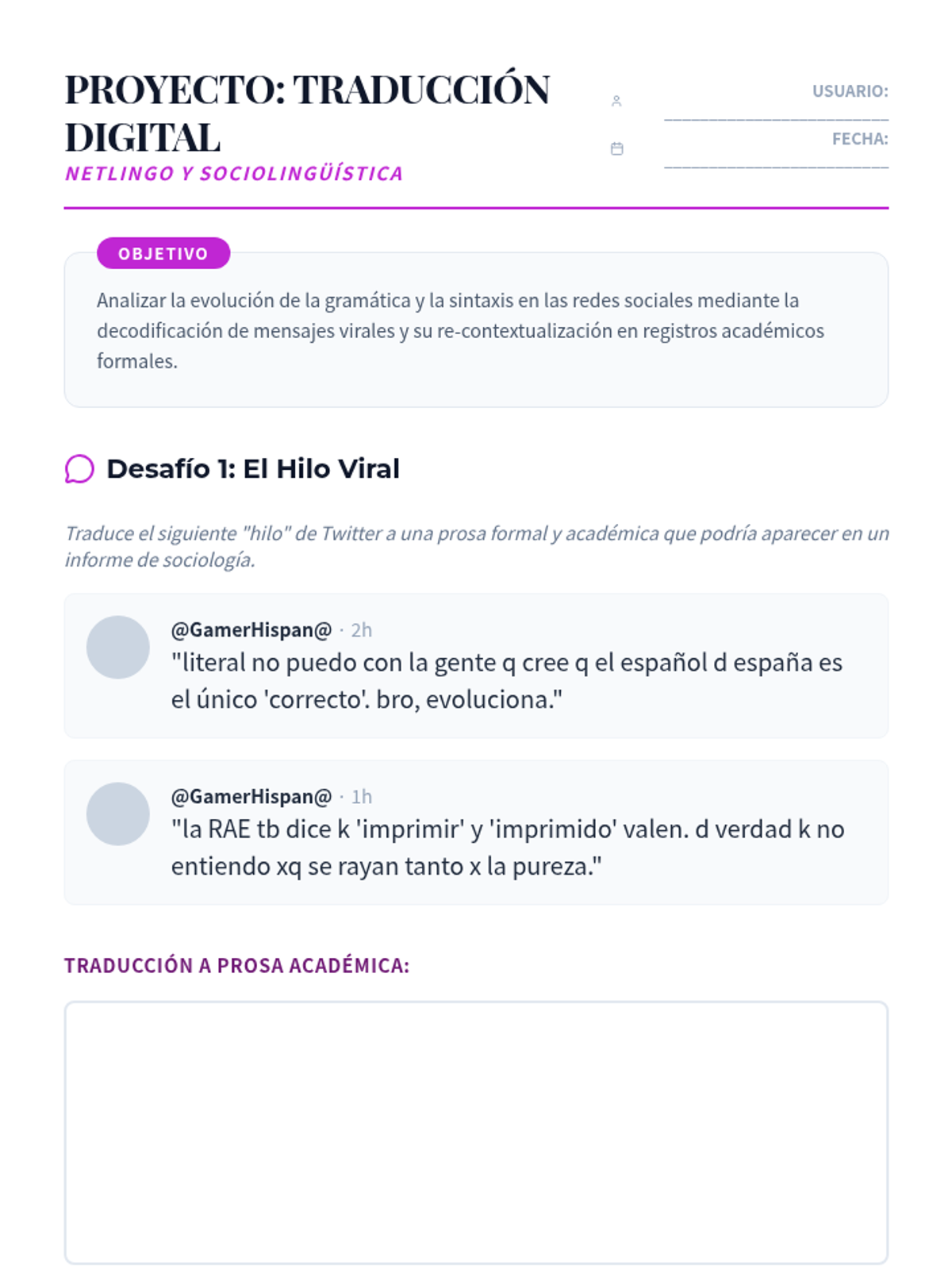
A student worksheet for Lesson 4 where students 'translate' viral social media threads into formal academic prose and analyze digital identity markers.
A slide deck for graduate students focusing on advanced Spanish connectors and strategies for synthesizing conflicting journalistic narratives.
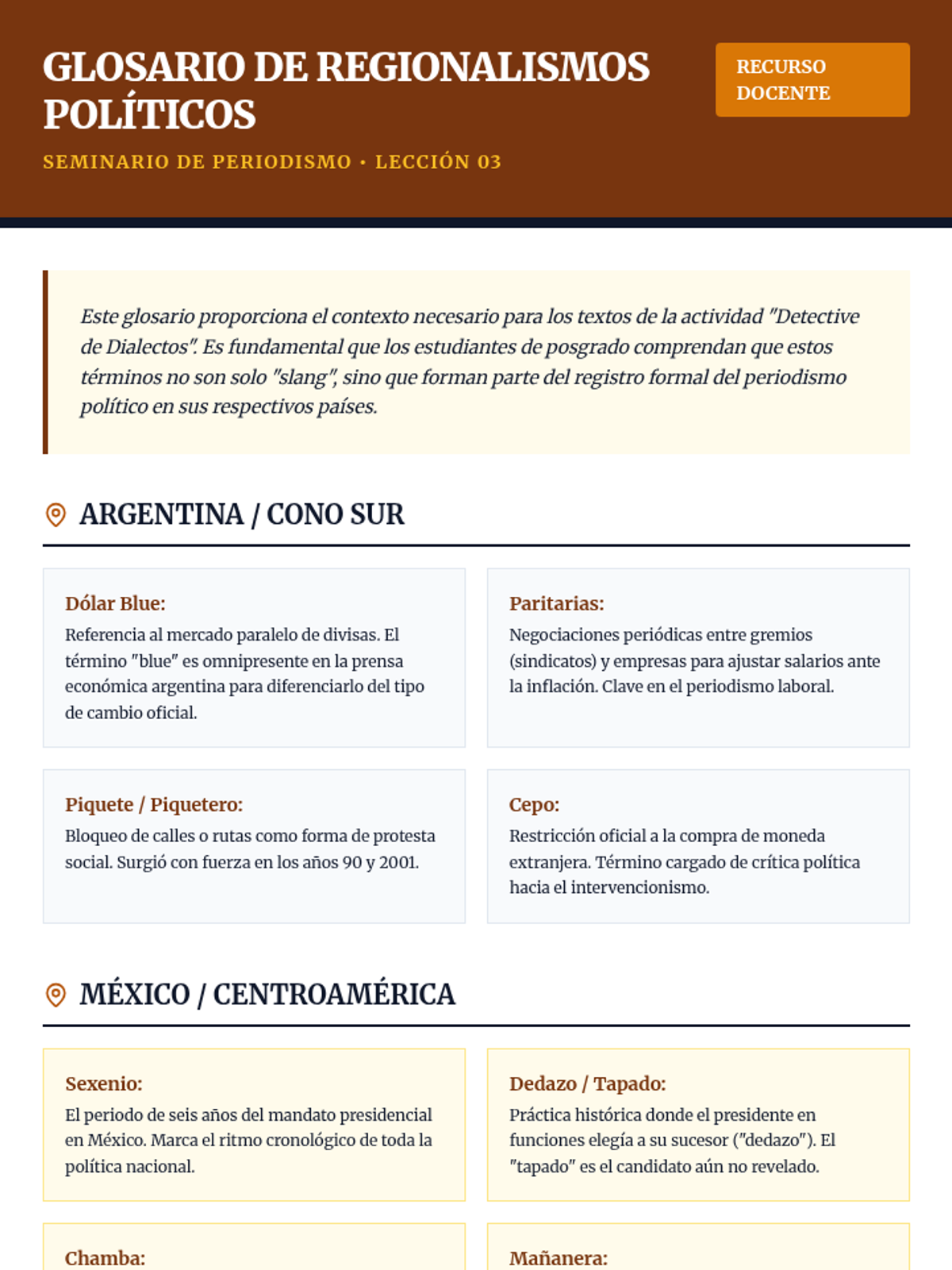
A teacher-facing glossary defining key regional and political terms used in Hispanic journalism, categorized by region (Argentina and Mexico).
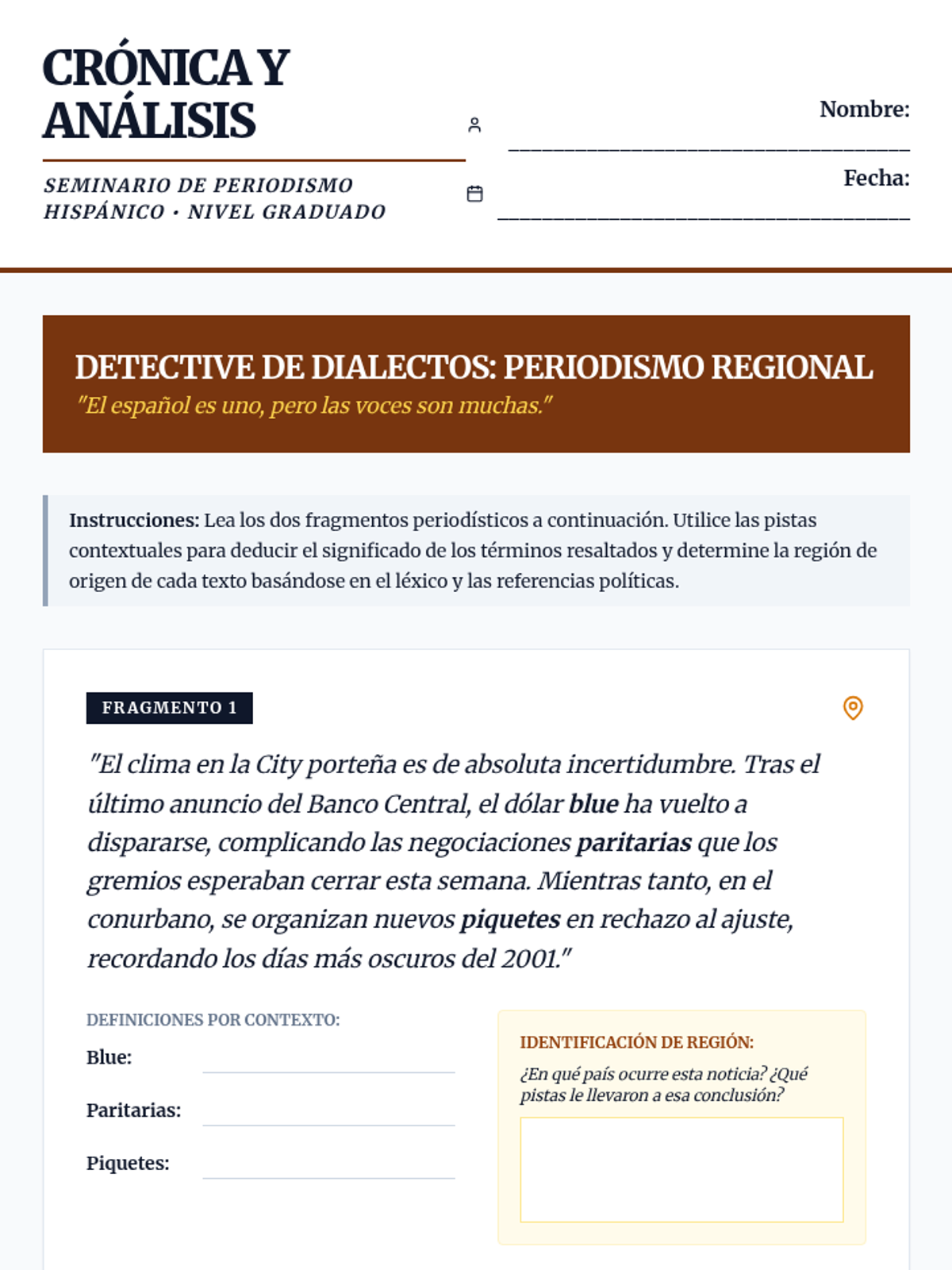
A graduate-level activity for decoding regionalisms and political jargon in authentic news reports from Argentina and Mexico.
A visual exploration of regionalisms, political jargon, and cultural references in Spanish-language journalism across the Hispanic world.
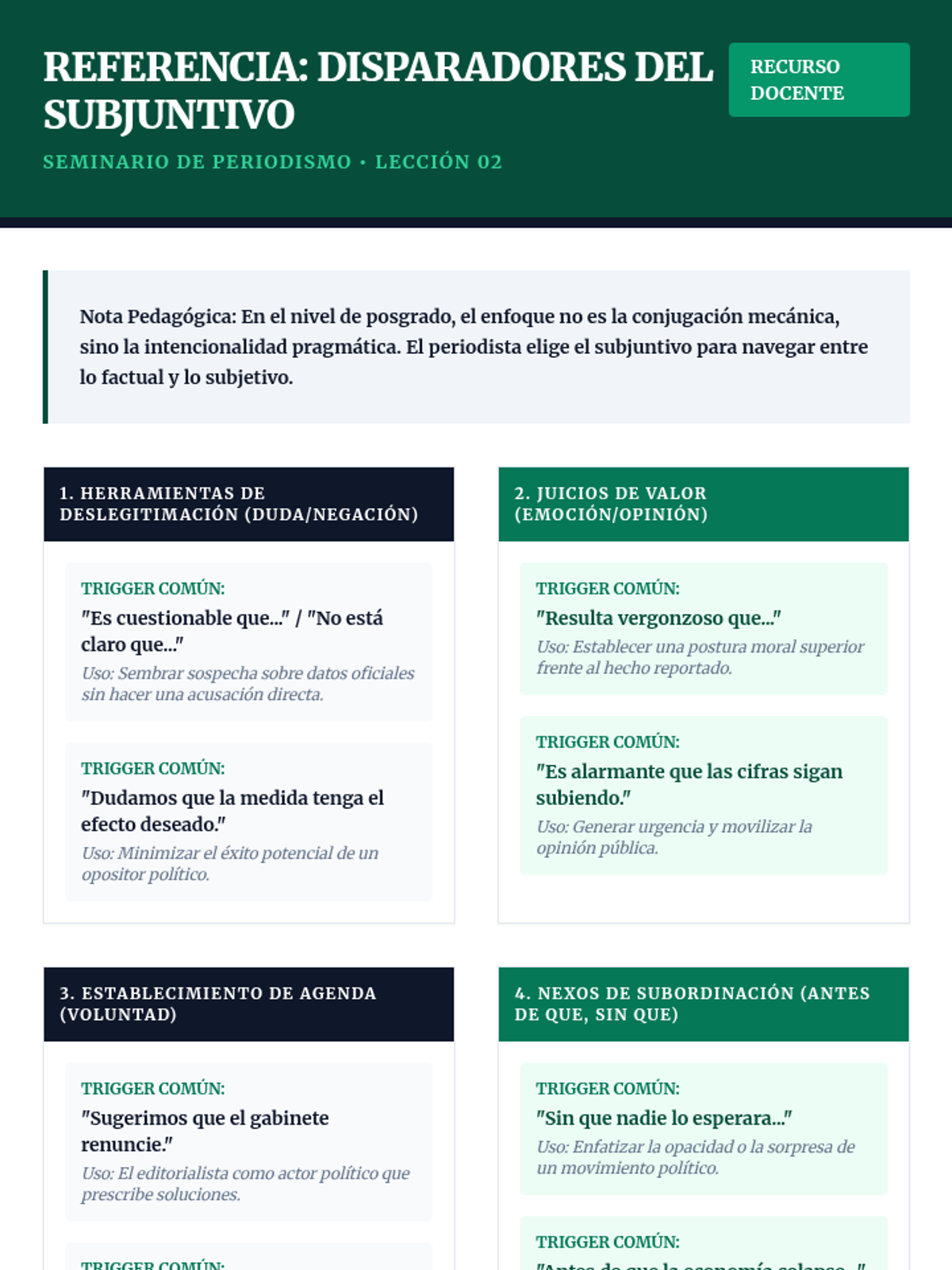
A teacher resource summarizing the pragmatic and rhetorical functions of the subjunctive mood in Spanish journalism.
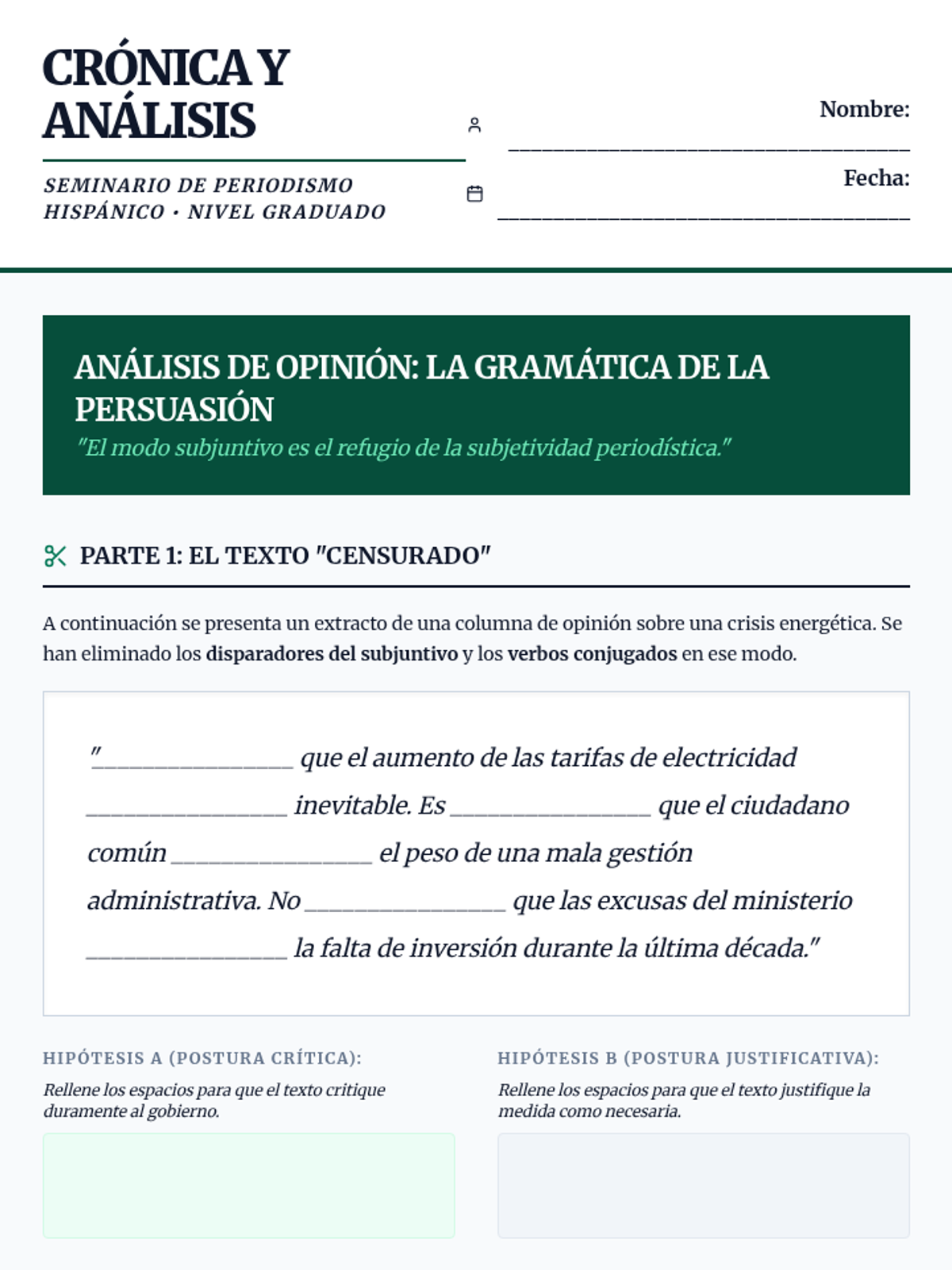
A student worksheet for identifying and analyzing the use of the subjunctive mood in Spanish opinion pieces and editorials.
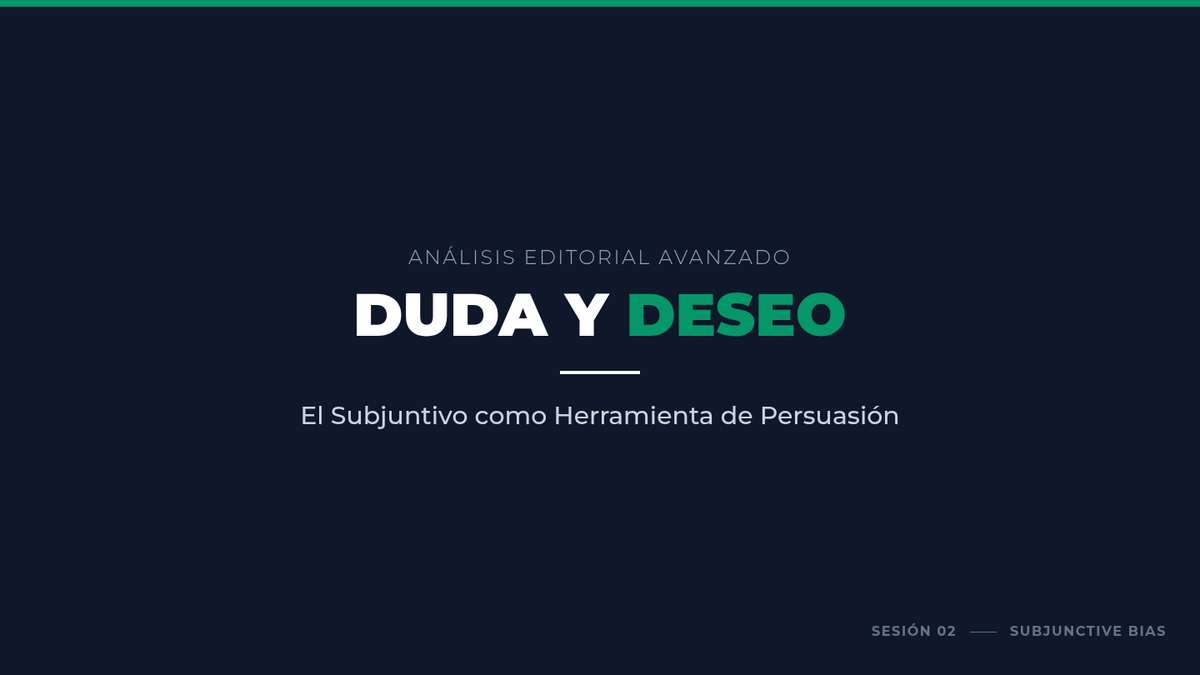
A slide presentation for graduate students on the use of the subjunctive mood as a tool for subjectivity and persuasion in Spanish editorials.
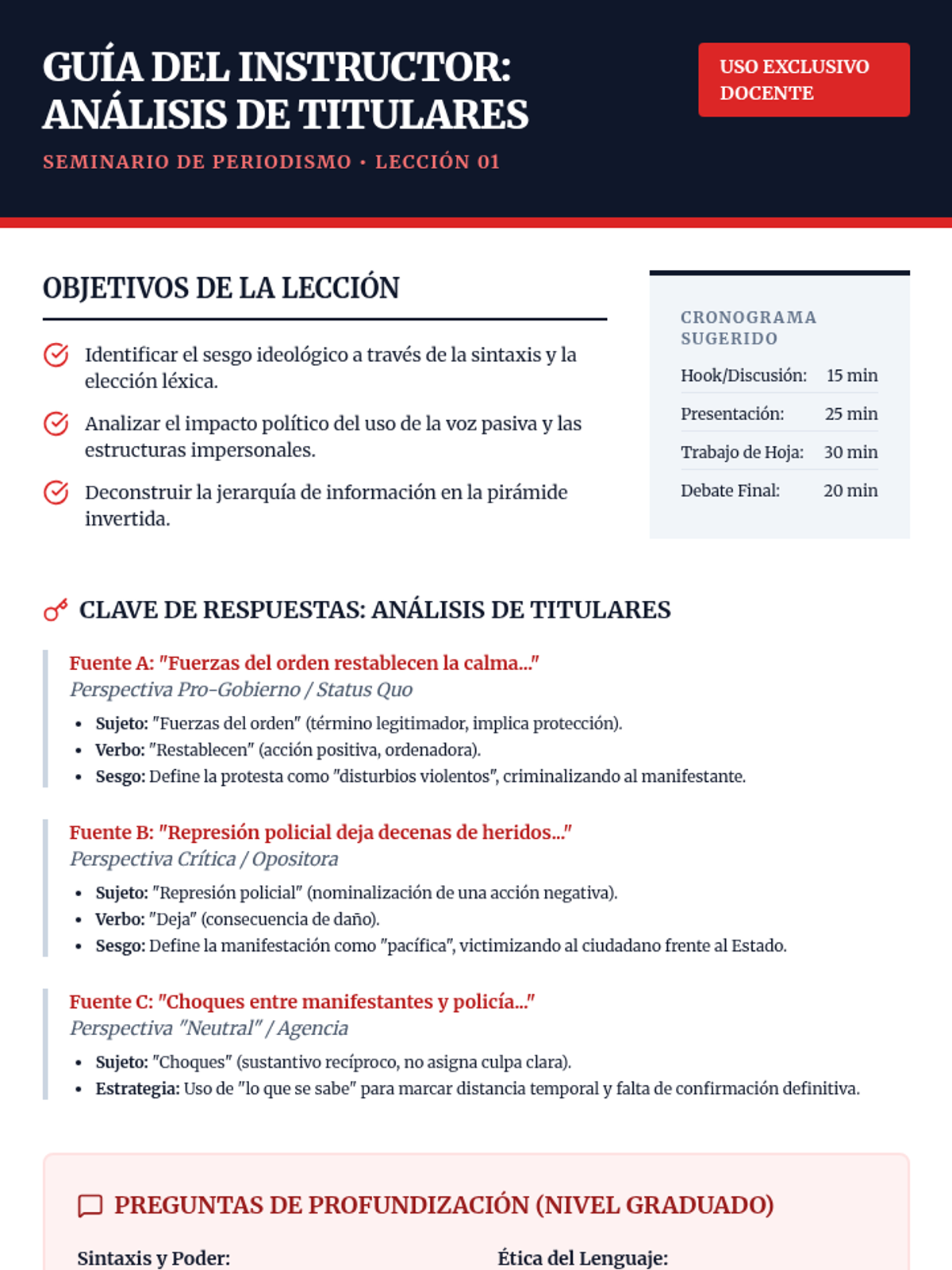
A comprehensive teacher guide for the Headline Analysis lesson, providing answer keys, discussion prompts, and pedagogical strategies for graduate-level instruction.
A visual presentation for graduate students covering the linguistic power of syntax in journalism, focusing on passive voice and the inverted pyramid structure.
Slides for Lesson 4 focusing on data description vocabulary and correlating technical prose with graphical information.
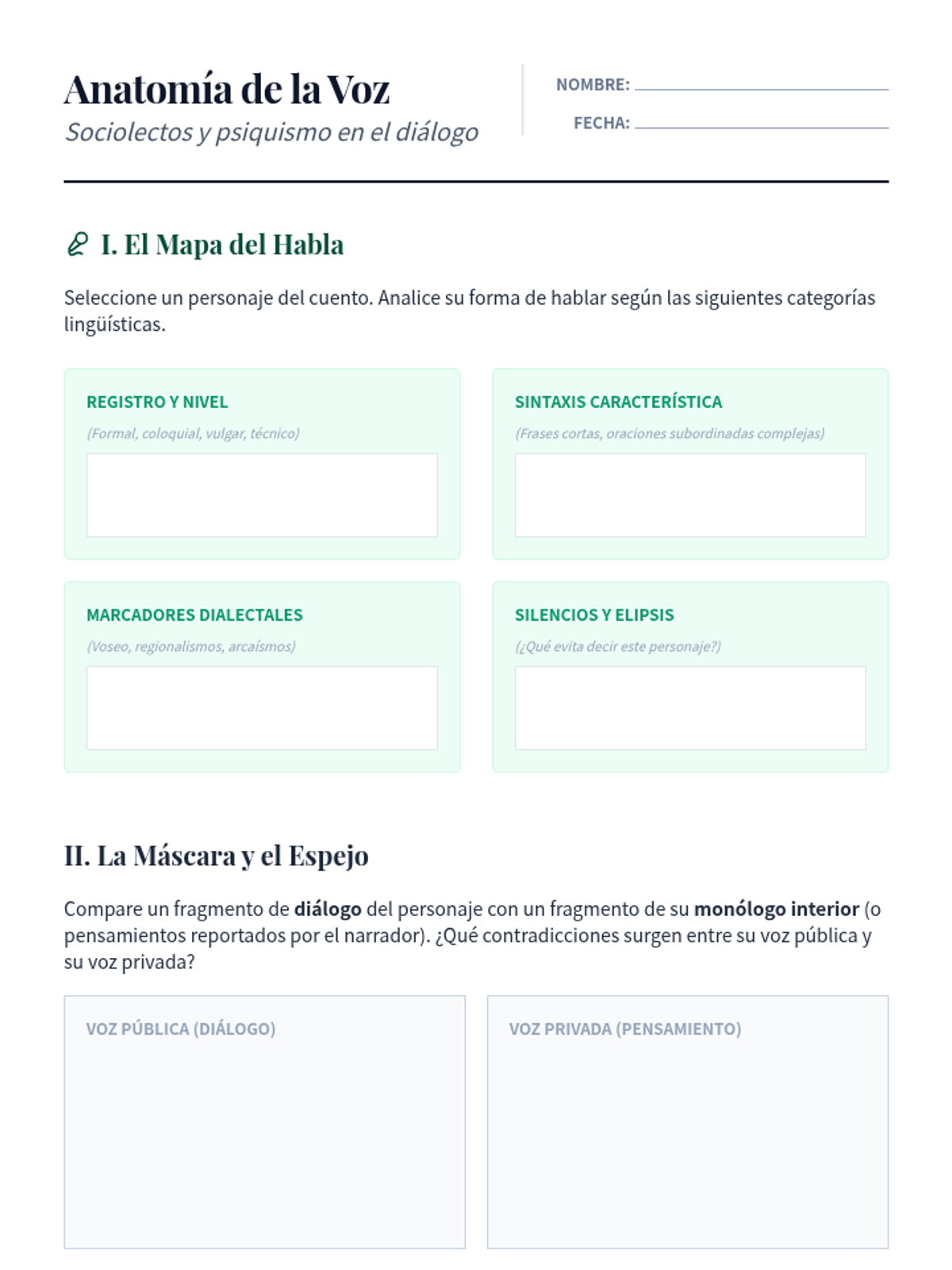
A student worksheet for Lesson 4 focusing on sociolect analysis, dialogue vs. inner monologue comparison, and character motivation in Spanish literature.
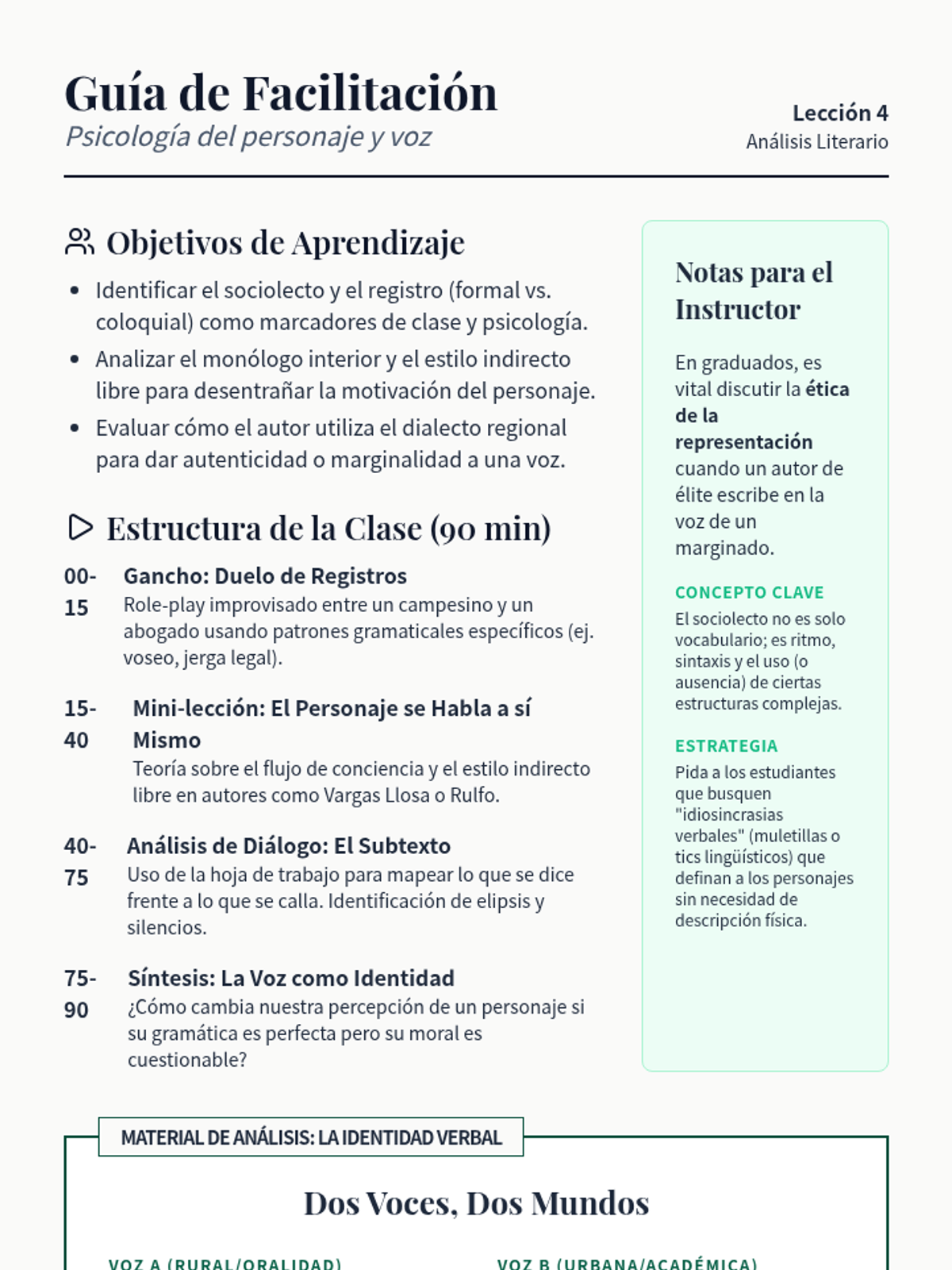
A teacher facilitation guide and character voice analysis material for Lesson 4, focusing on sociolects, registers, and psychological depth in Spanish literary dialogue.
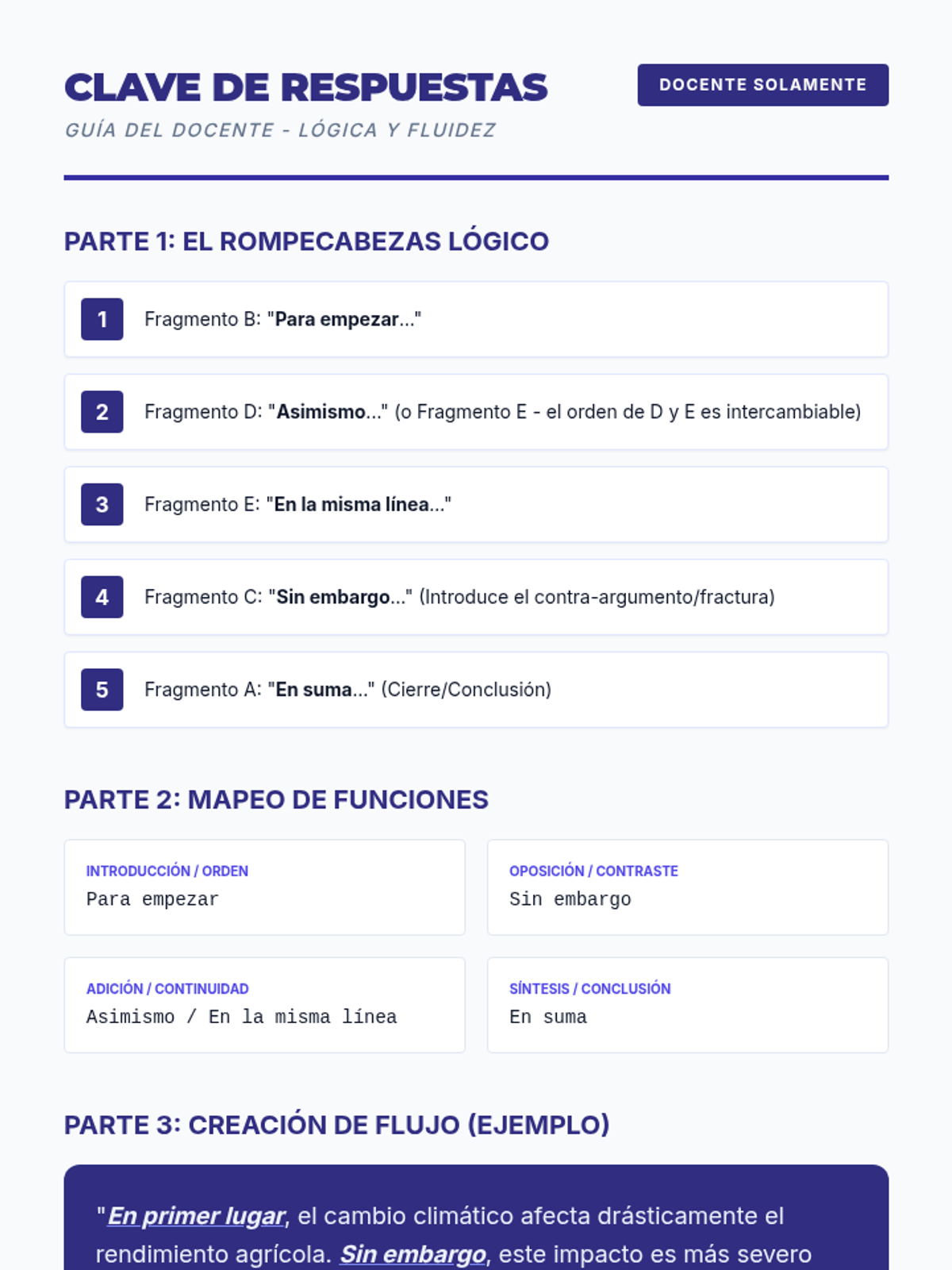
Answer key and teacher guide for the Lesson 3 Logic and Flow Worksheet.
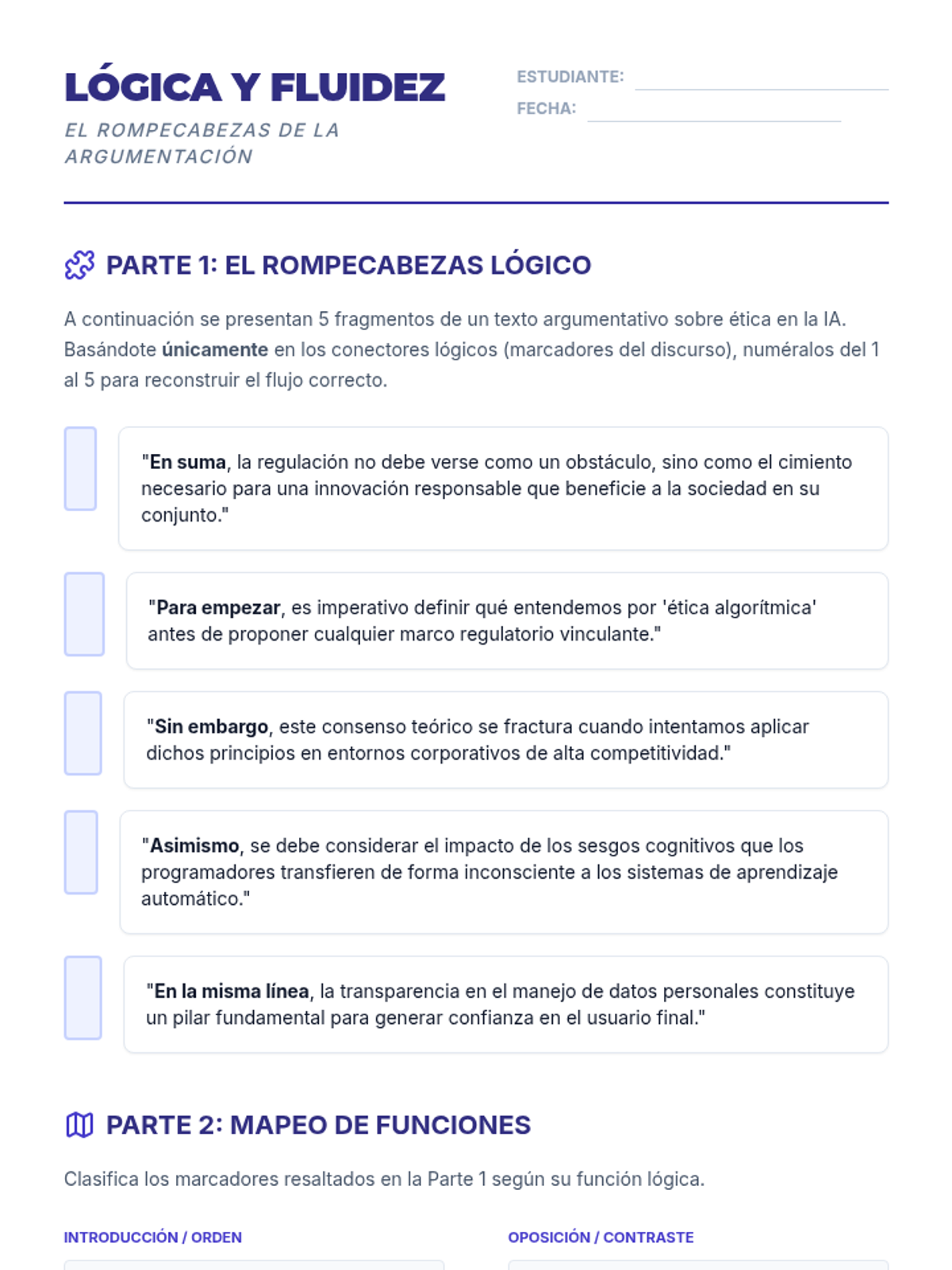
Worksheet for Lesson 3 focusing on logical connectors and tracing argumentative flow in academic Spanish essays.