Vocabulary, grammar, and cultural contexts for Spanish language acquisition across all proficiency levels. Develops skills in reading, writing, speaking, and listening through structured linguistic analysis and practice.
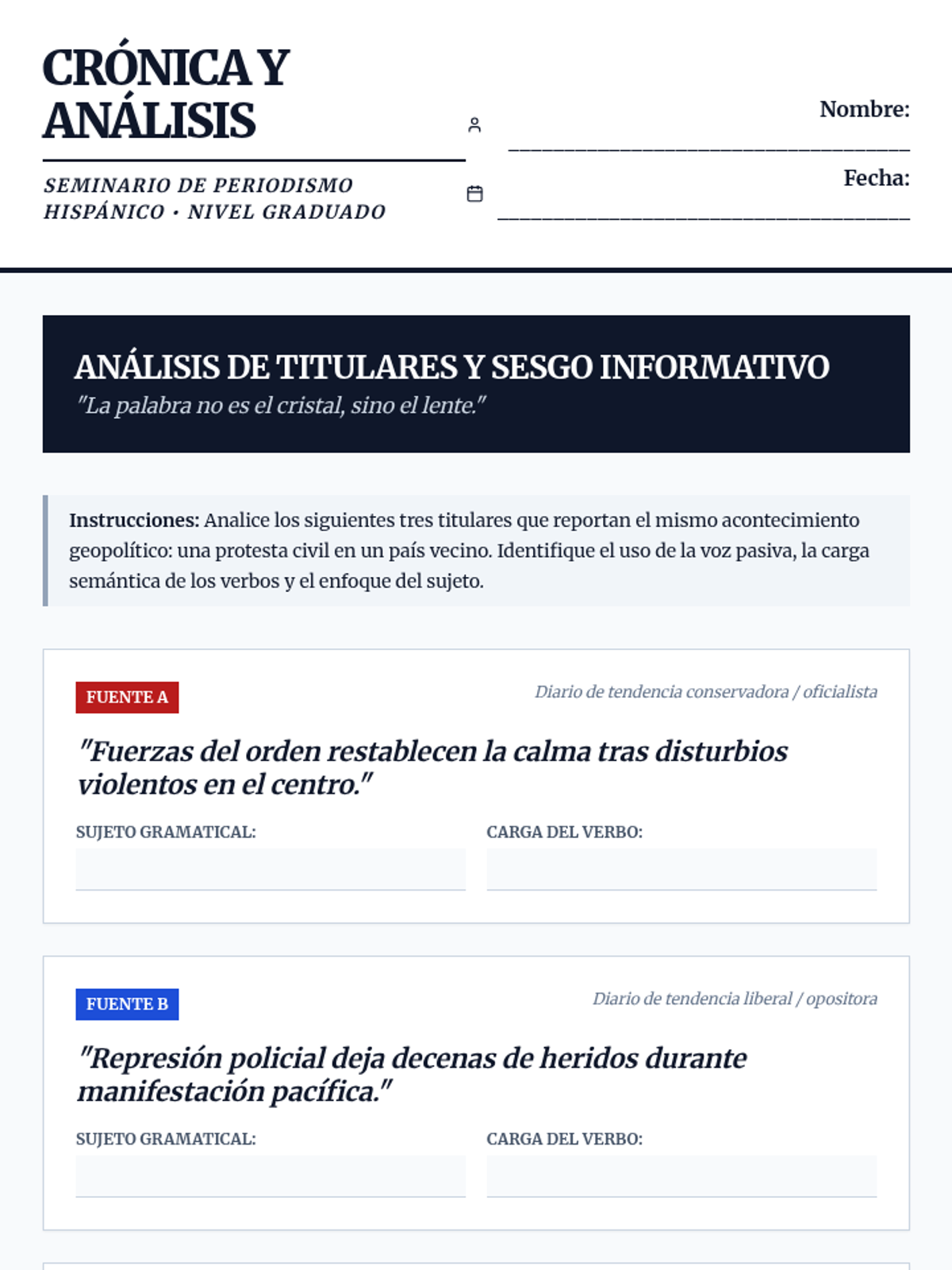
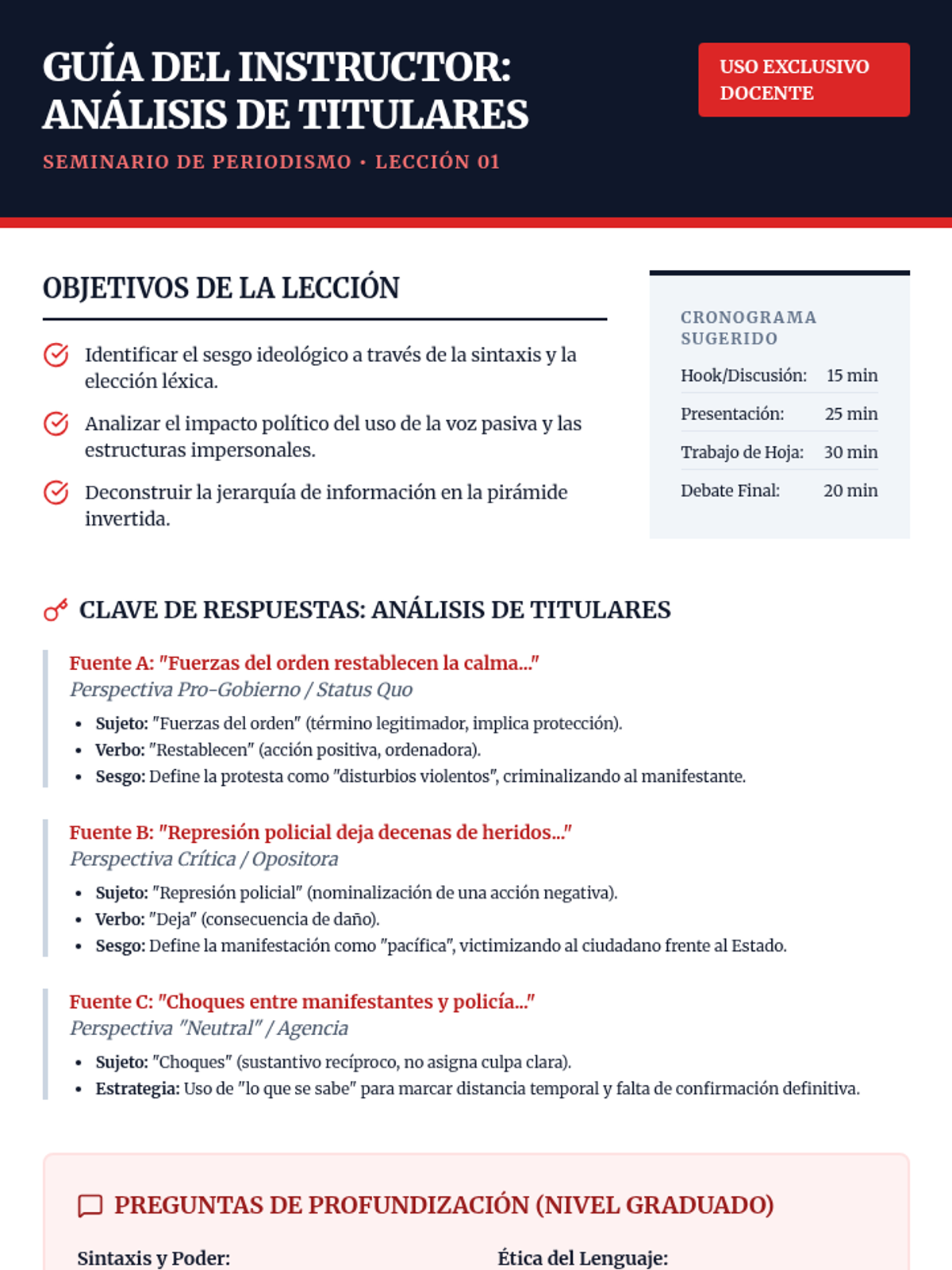
This graduate-level sequence examines how linguistic choices, syntax, and grammatical structures like the subjunctive mood shape political narratives in Spanish-language journalism. Students analyze authentic texts from various Hispanic regions to deconstruct bias, recognize regionalisms, and synthesize conflicting perspectives.
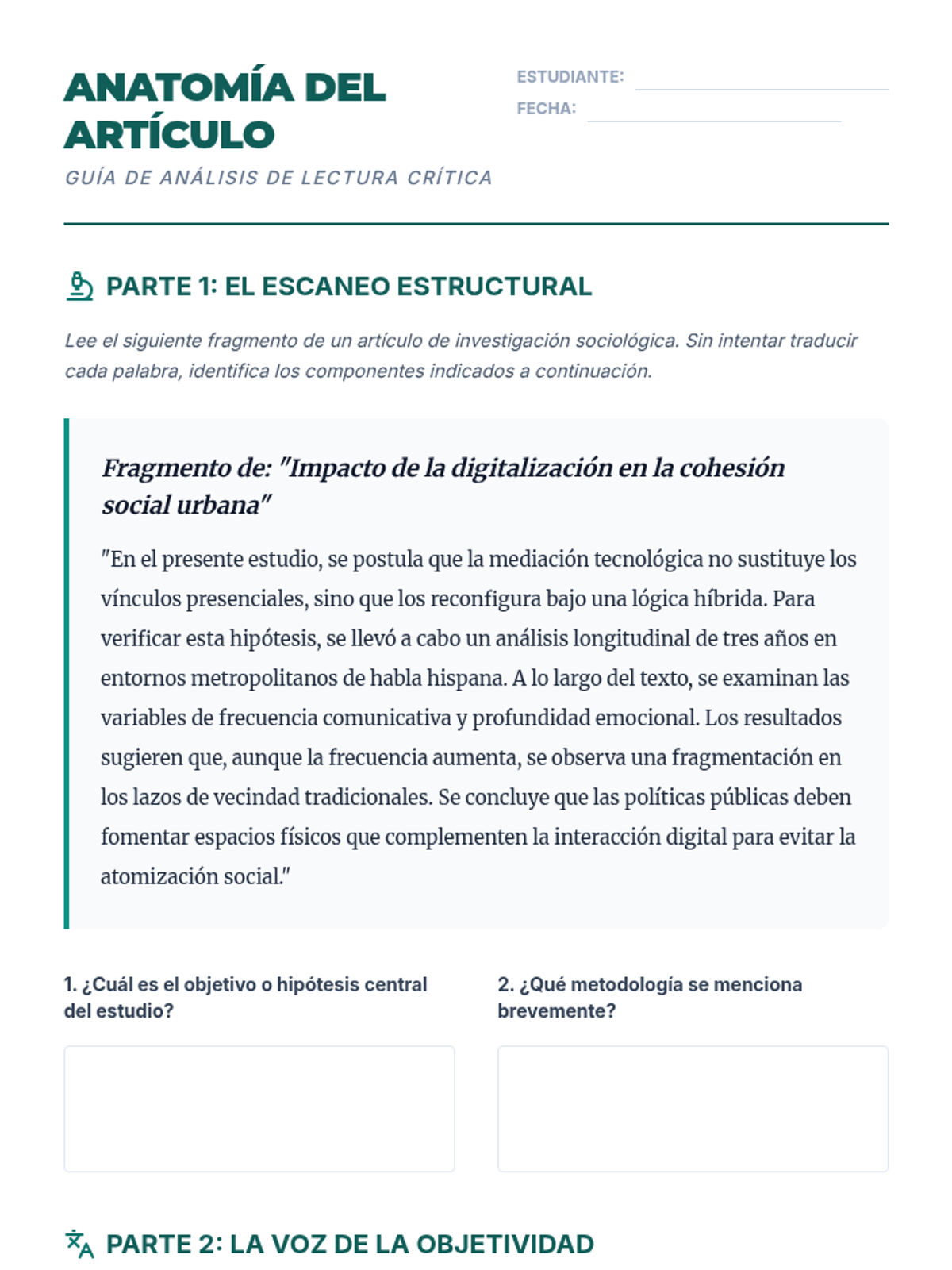
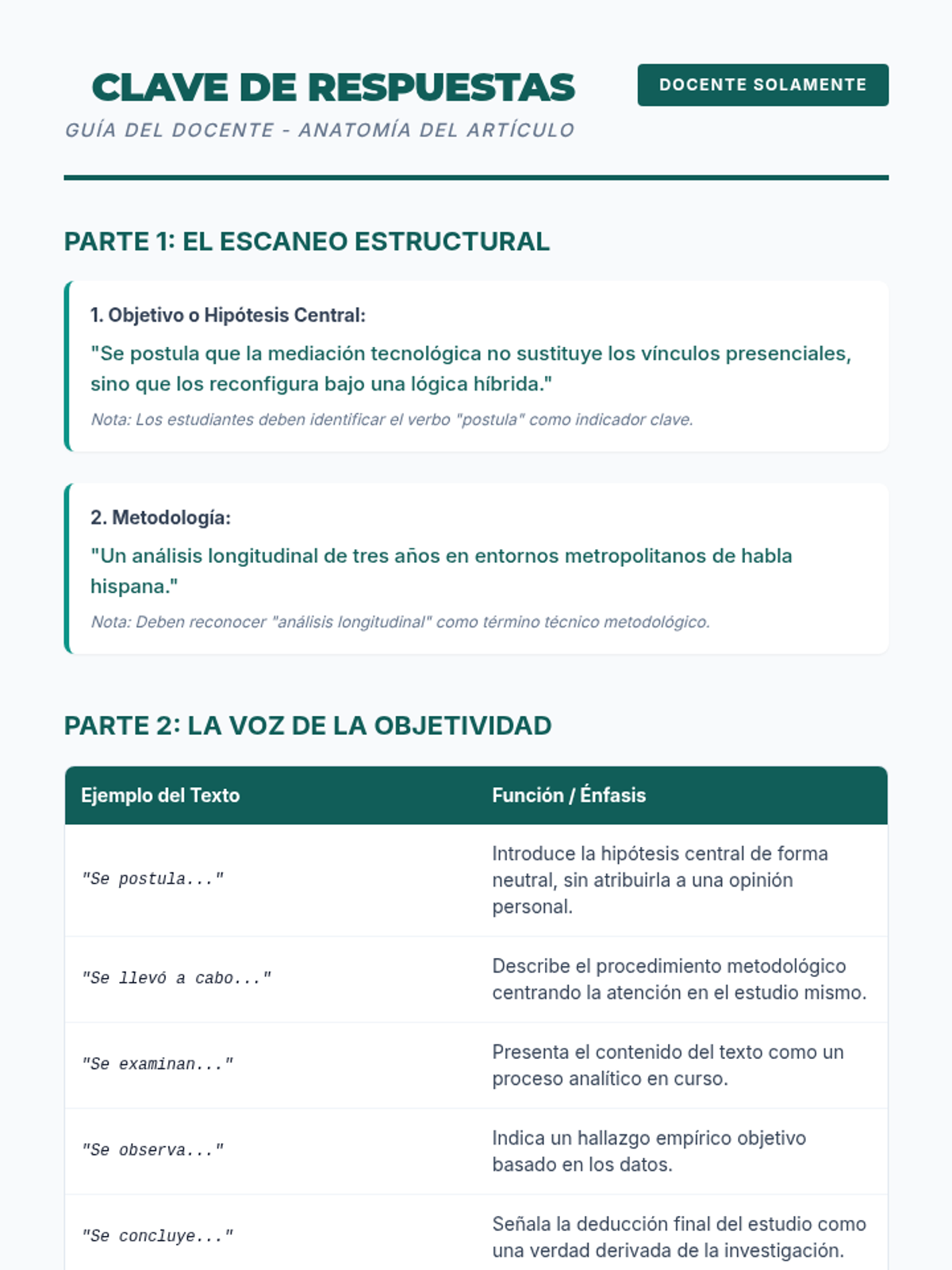
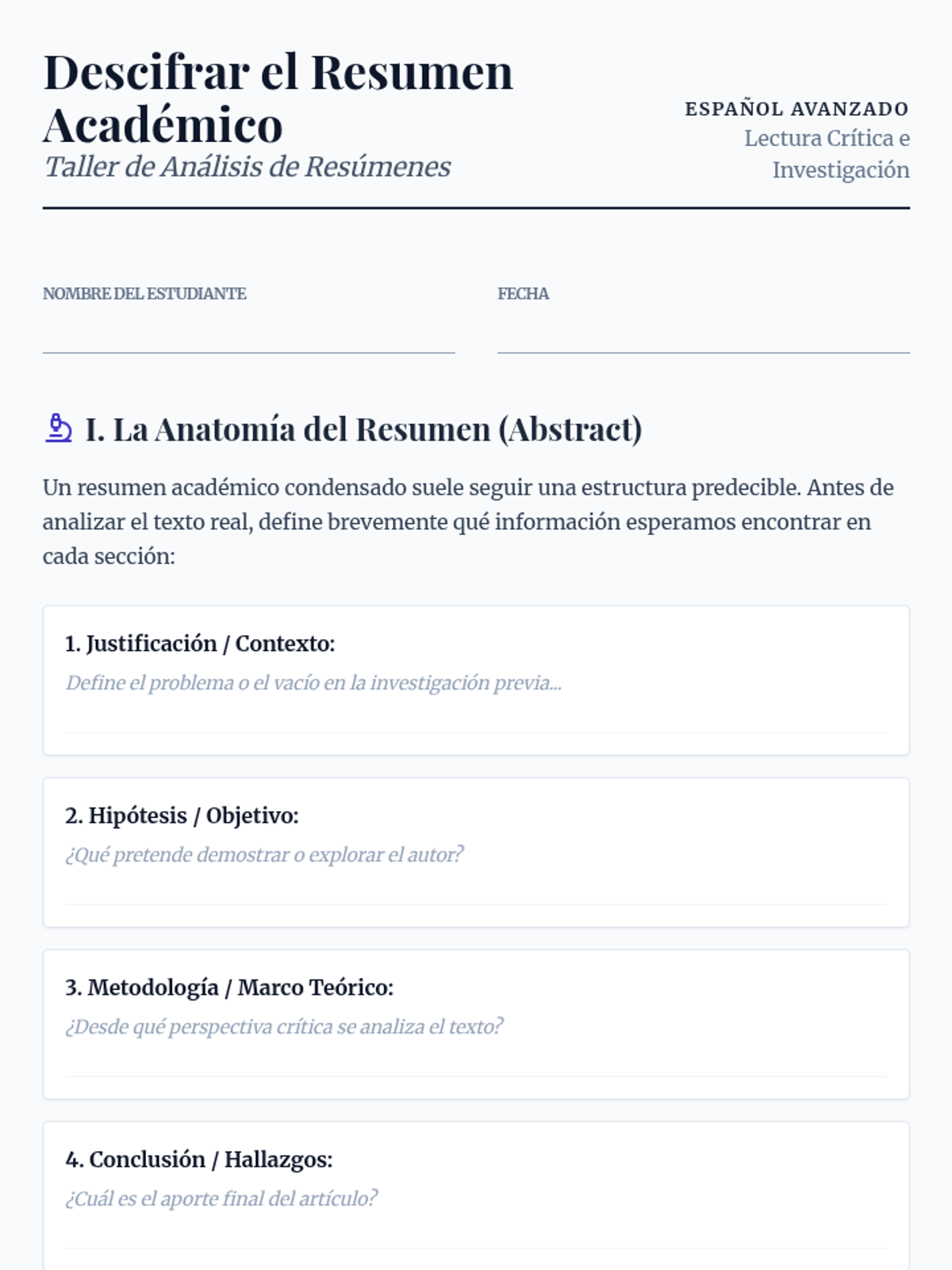
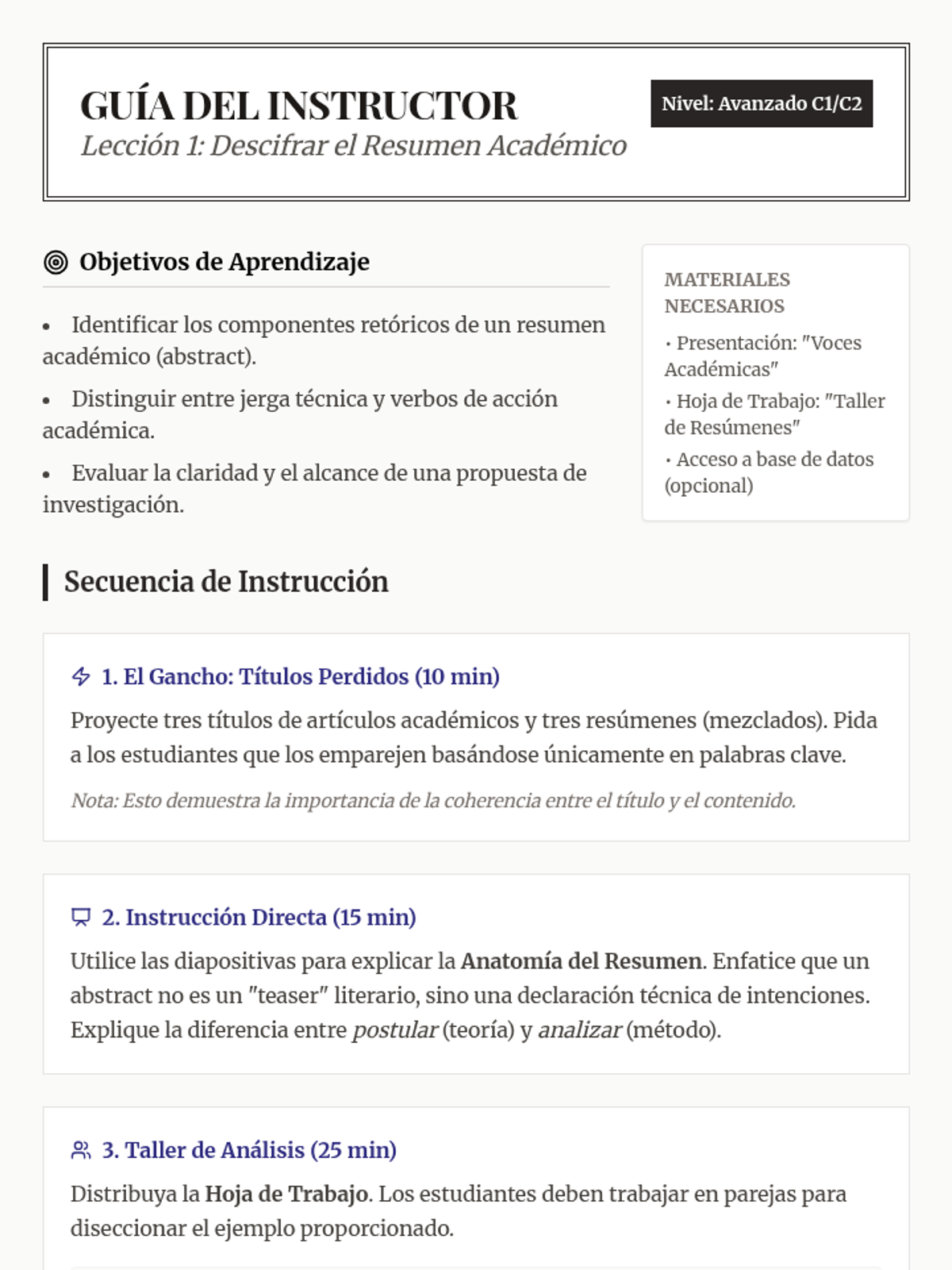
A specialized sequence for graduate students focused on decoding and synthesizing complex academic and technical texts in Spanish, covering article structure, syntax, argumentation, and data interpretation.
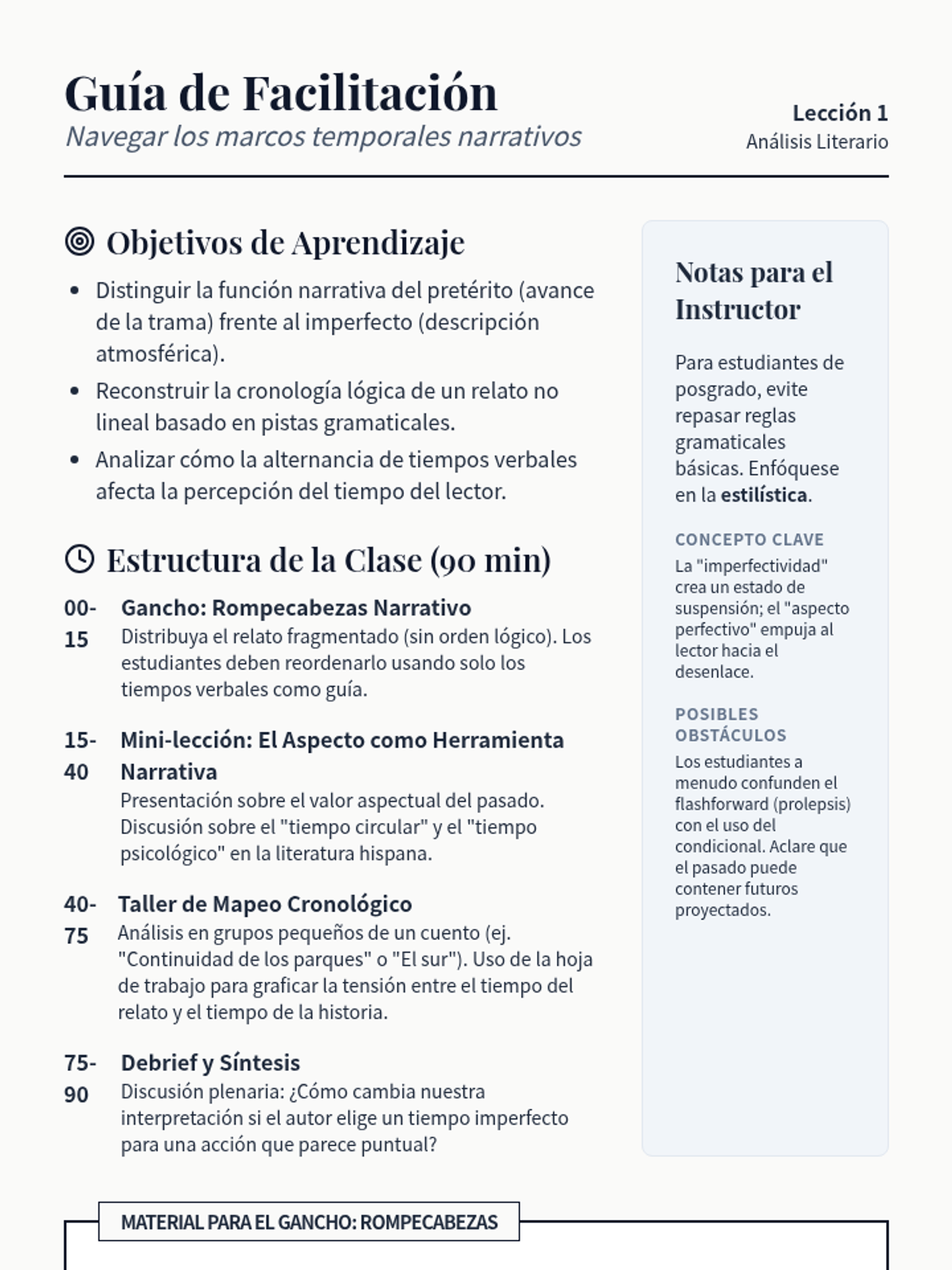
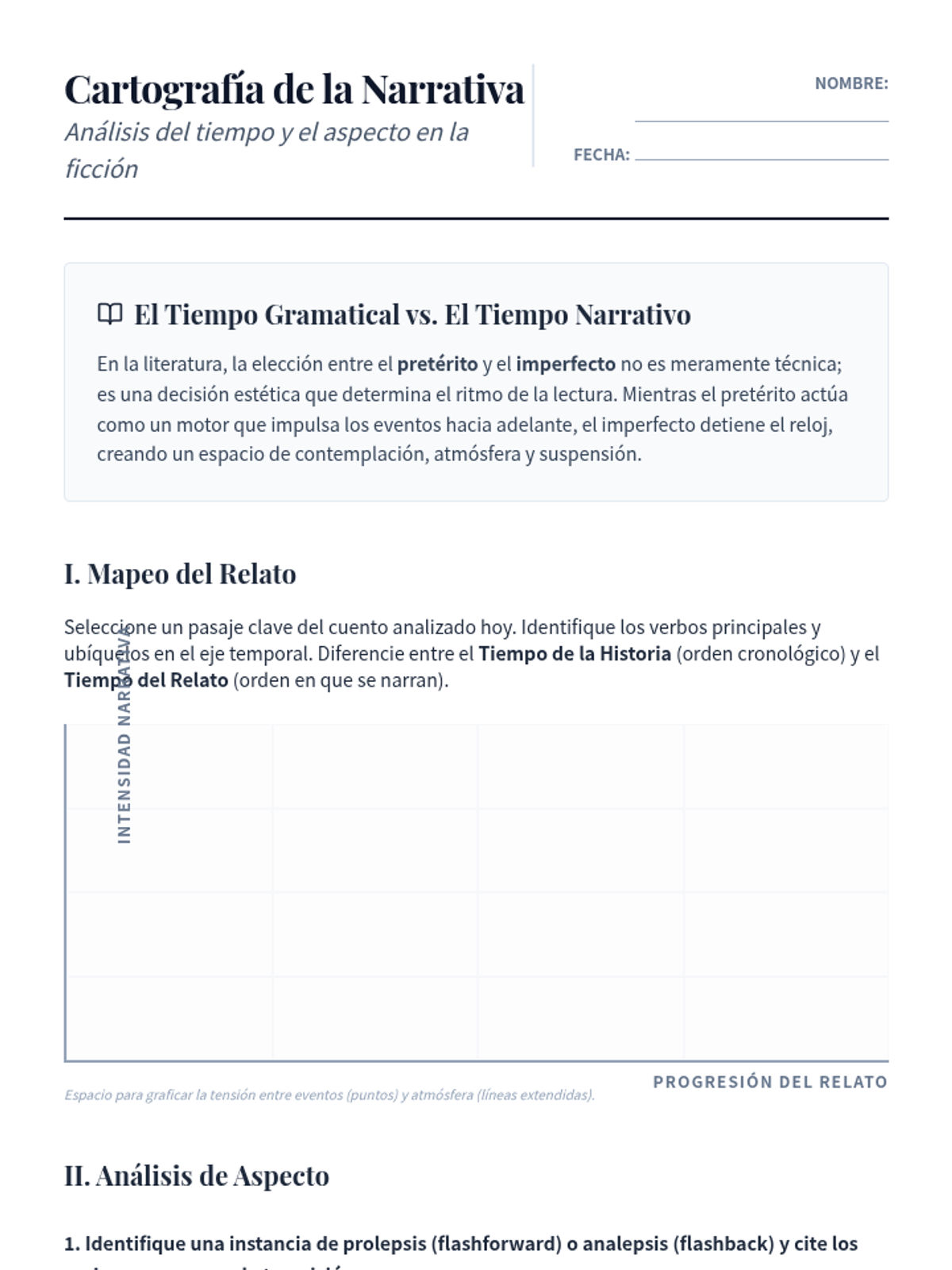
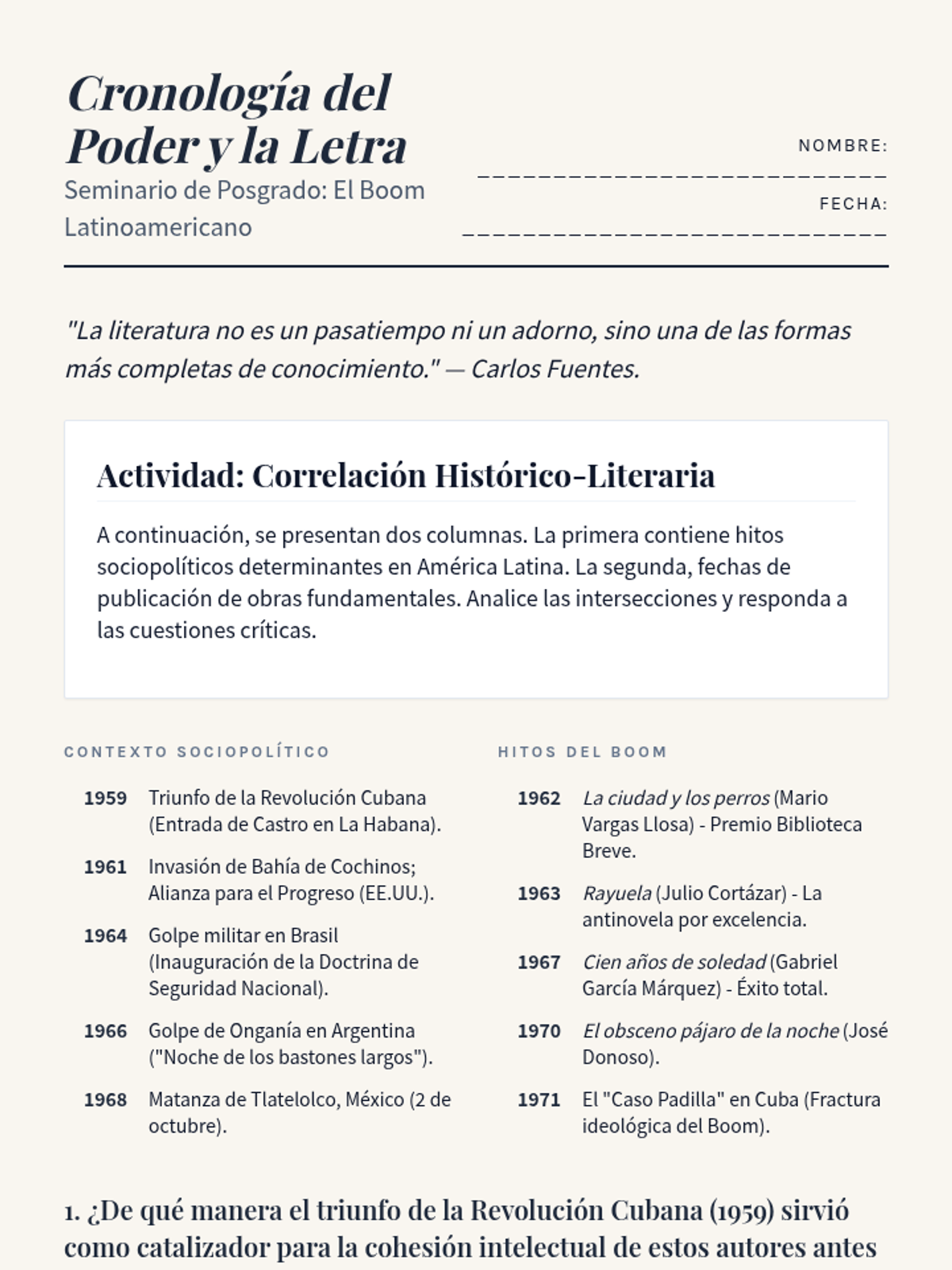
A comprehensive graduate-level sequence exploring the intersection of Spanish grammar and literary analysis. Students analyze the works of Boom and Post-Boom authors to master narrative timeframes, descriptive imagery, the subjunctive of uncertainty, and character voice, culminating in a formal literary critique.
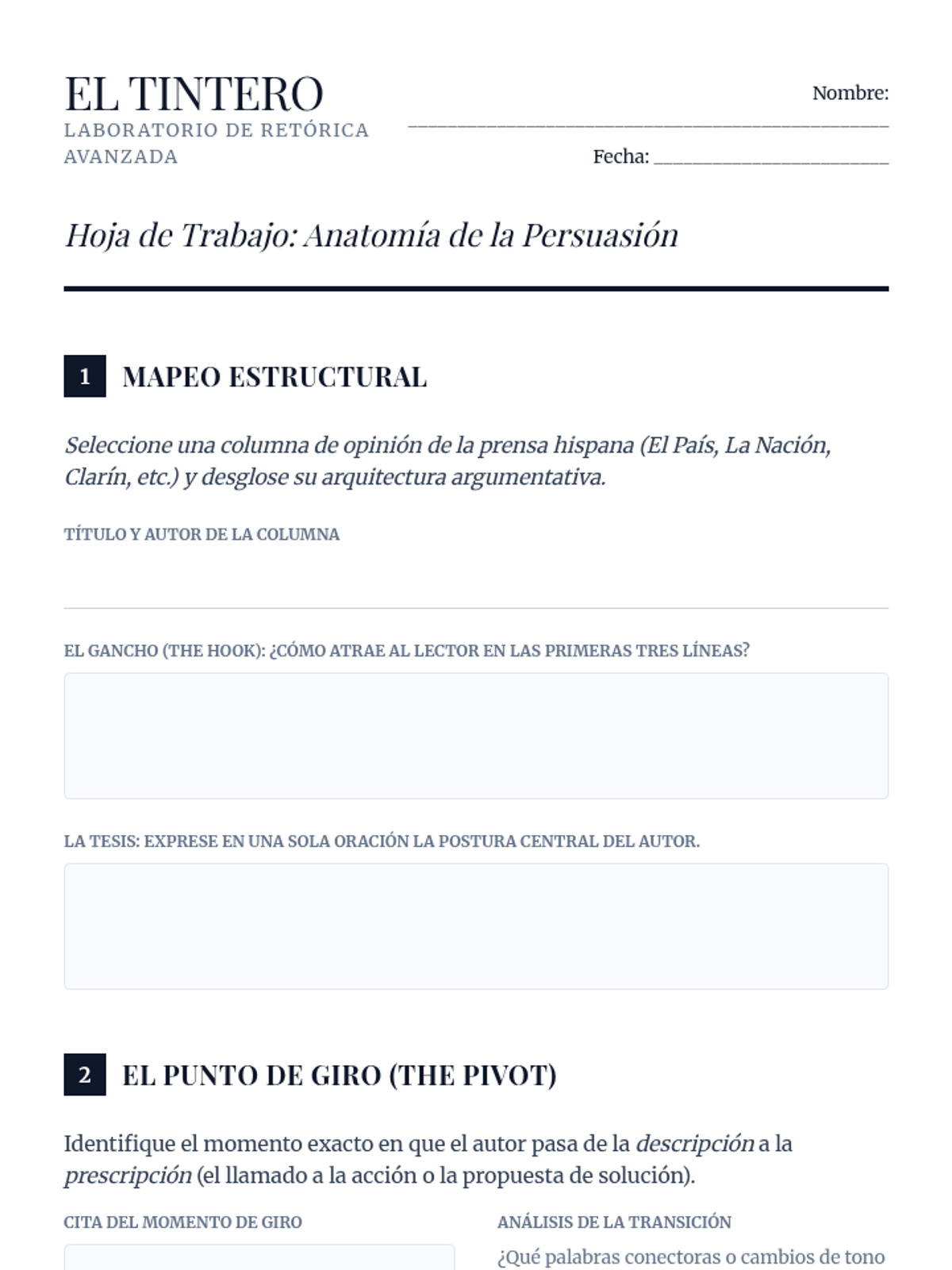
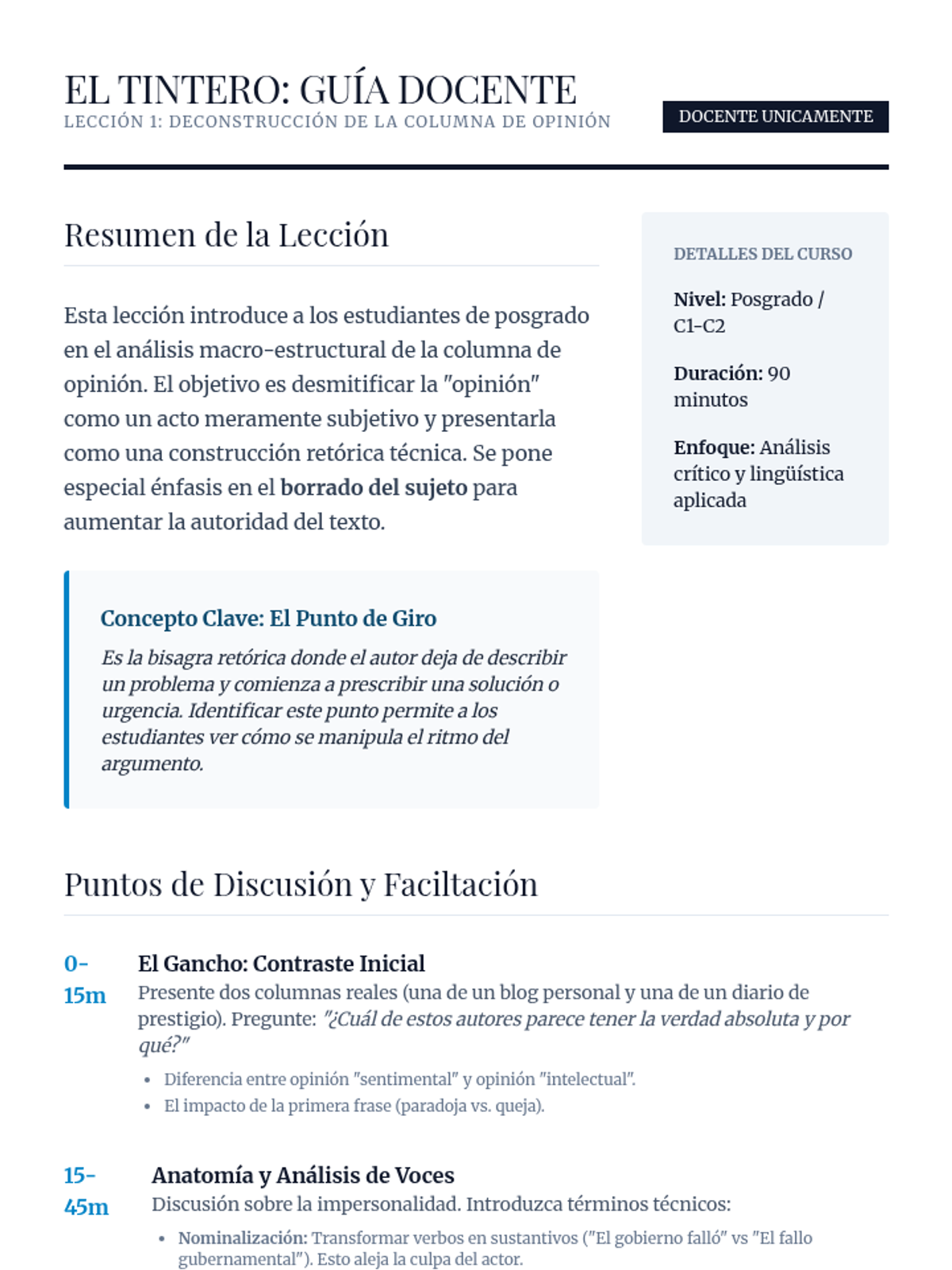
Focuses on analyzing and producing public discourse in Spanish, covering op-eds, manifestos, speeches, and digital rhetoric with an emphasis on rhetorical strategies and ethics.
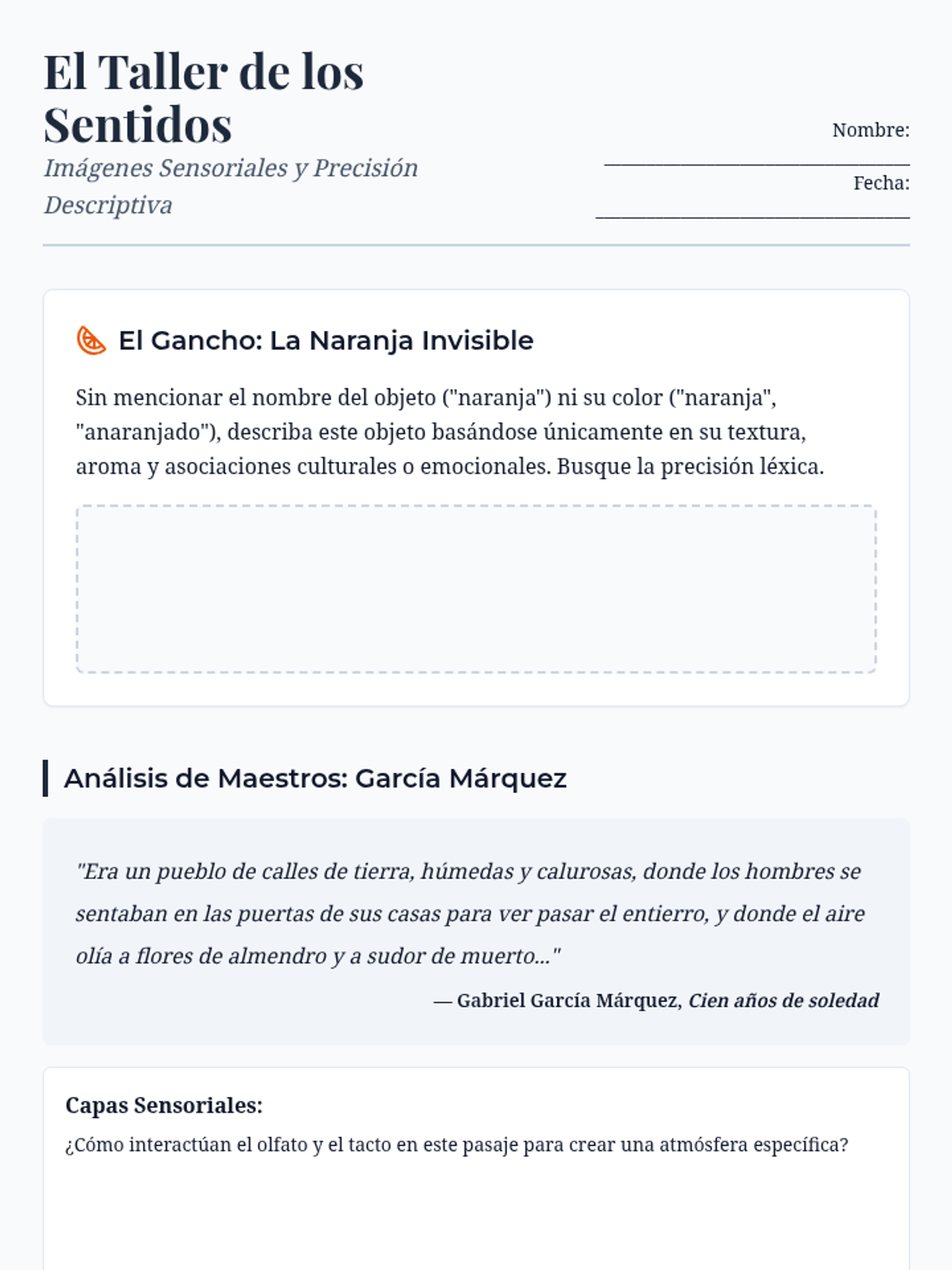
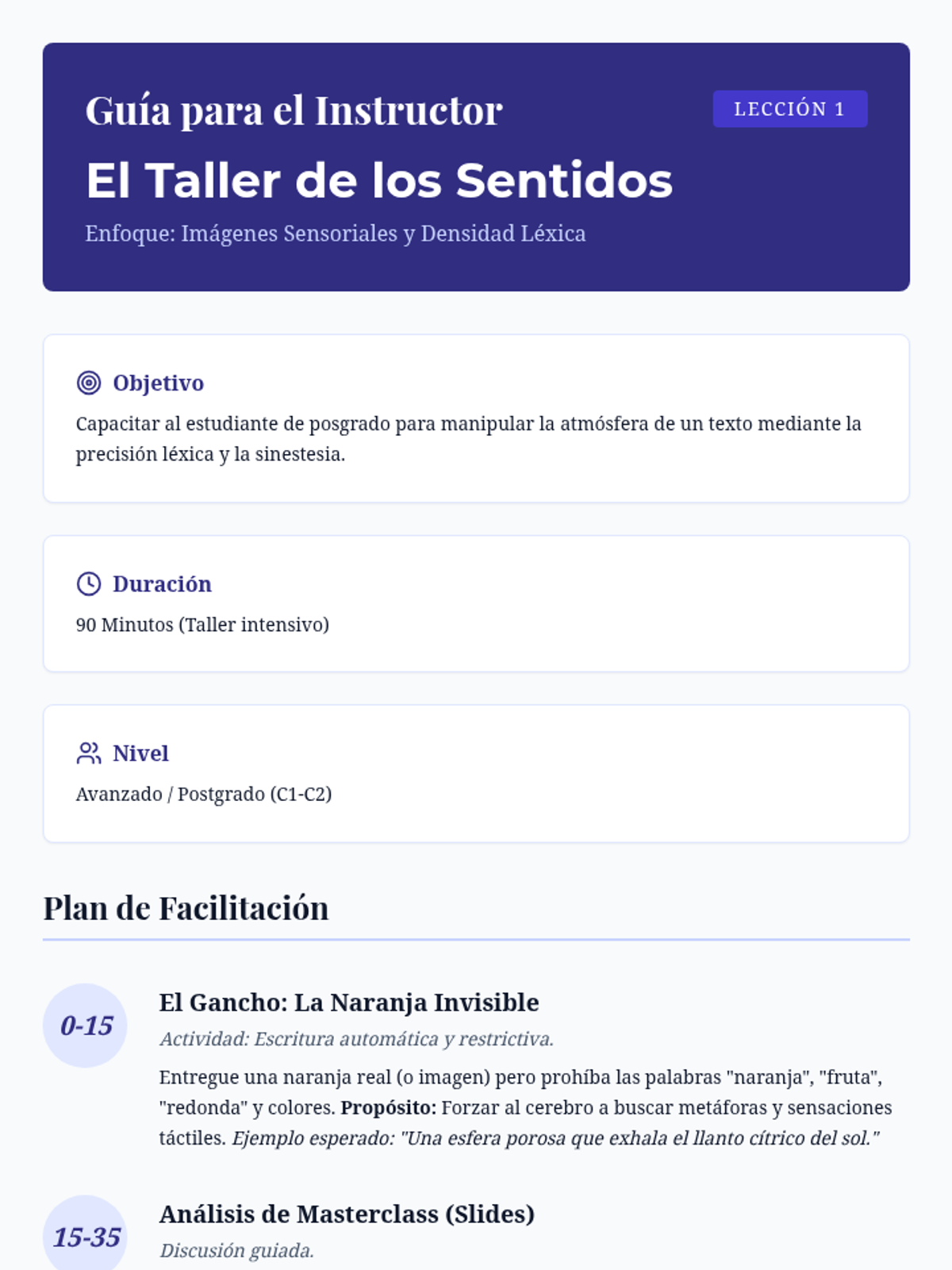
An advanced writing sequence for graduate students focusing on stylistics, narrative voice, and creative non-fiction in Spanish. Students analyze master works from Hispanic authors to develop a sophisticated personal voice and technical mastery of prose rhythm, irony, and sensory detail.
A comprehensive graduate-level sequence focused on mastering the formal register, syntactic complexity, and rhetorical traditions of academic Spanish for research and publication.
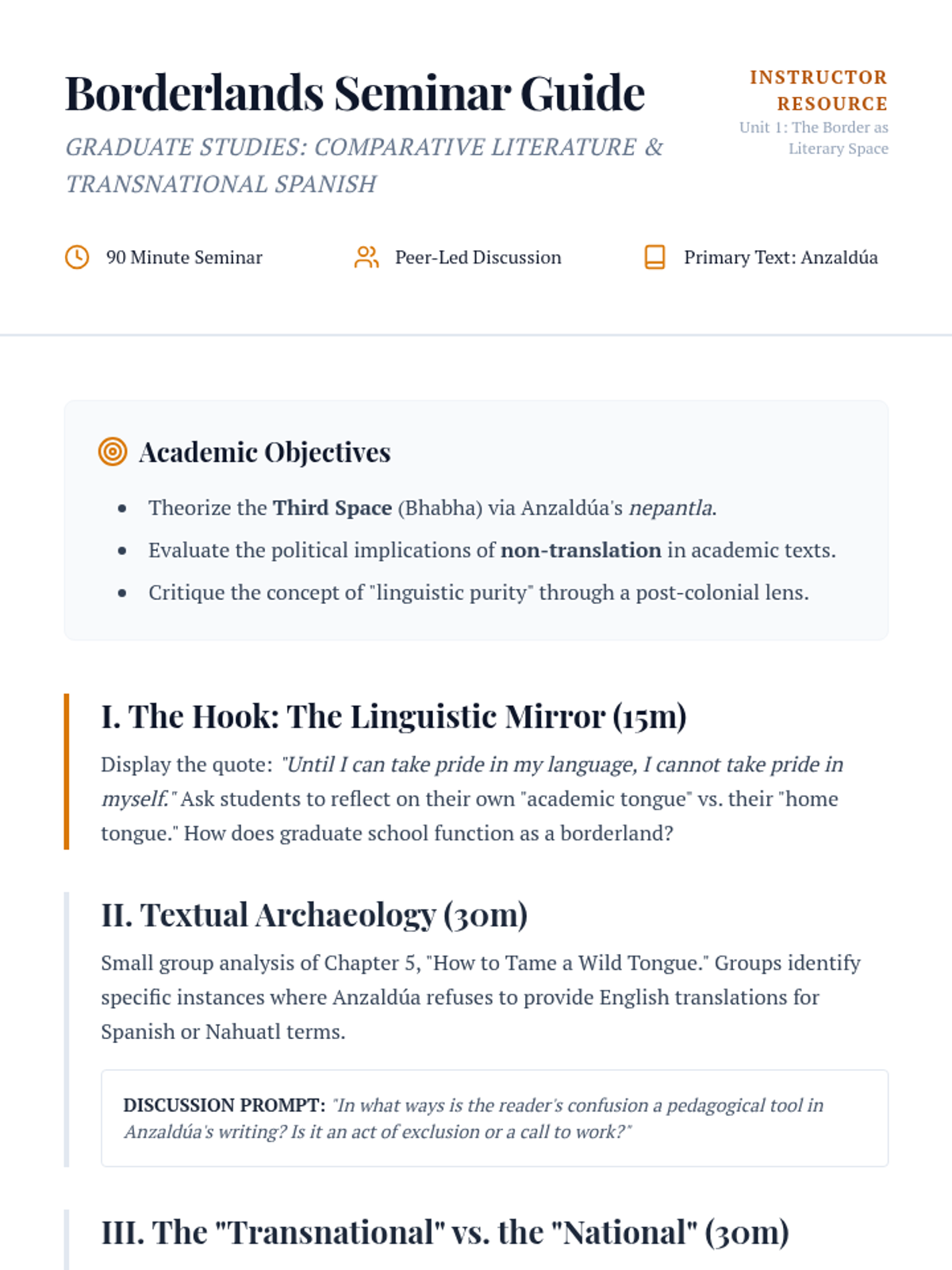
A graduate-level investigation into how migration, borders, and translation redefine the Spanish literary canon through the lens of transnational and comparative literature.
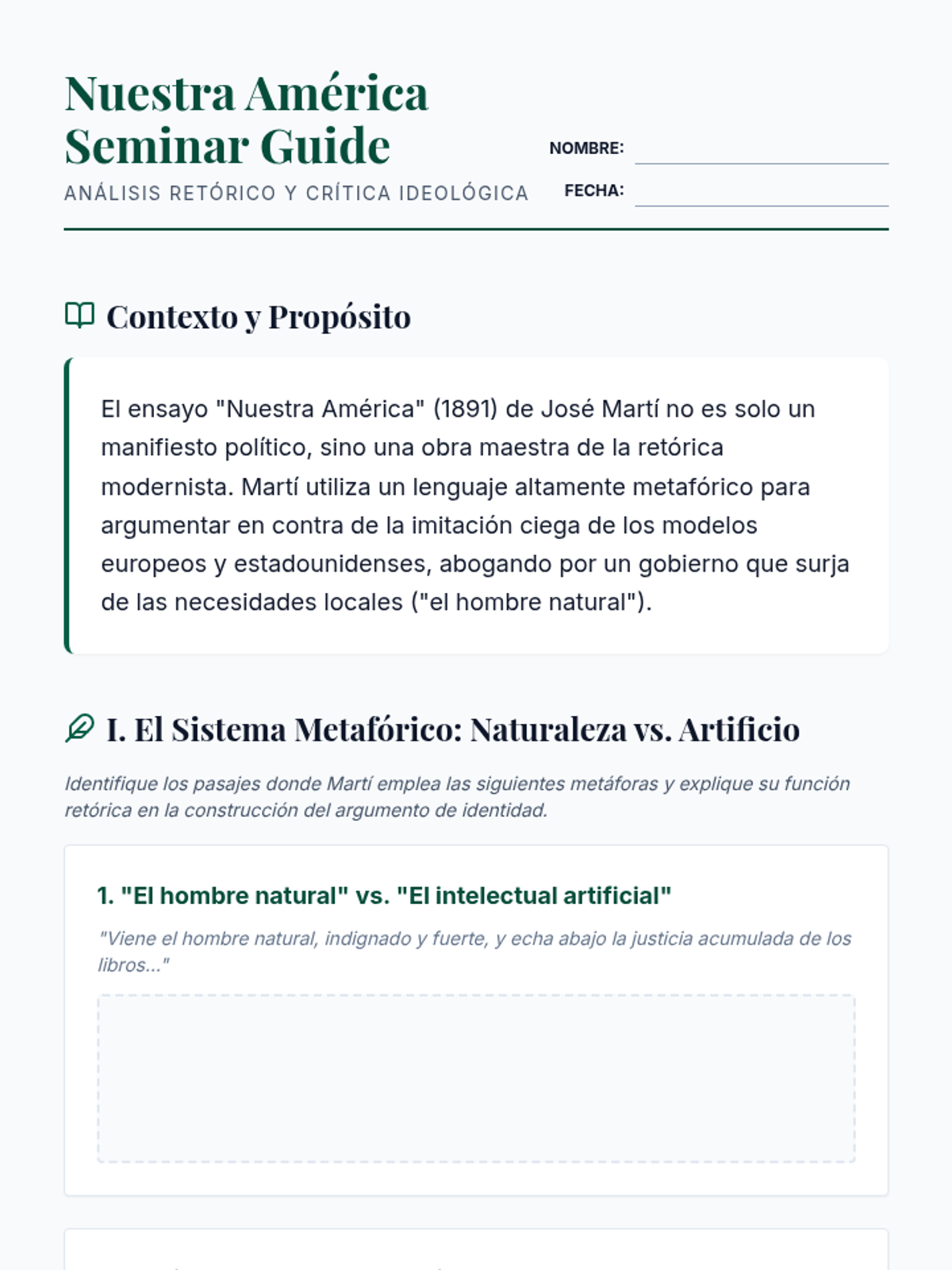
This advanced Spanish sequence explores the Latin American essay as a tool for identity construction and intellectual debate. Graduate students will analyze rhetorical strategies across two centuries, from Martí's 19th-century nation-building to contemporary decolonial theory.
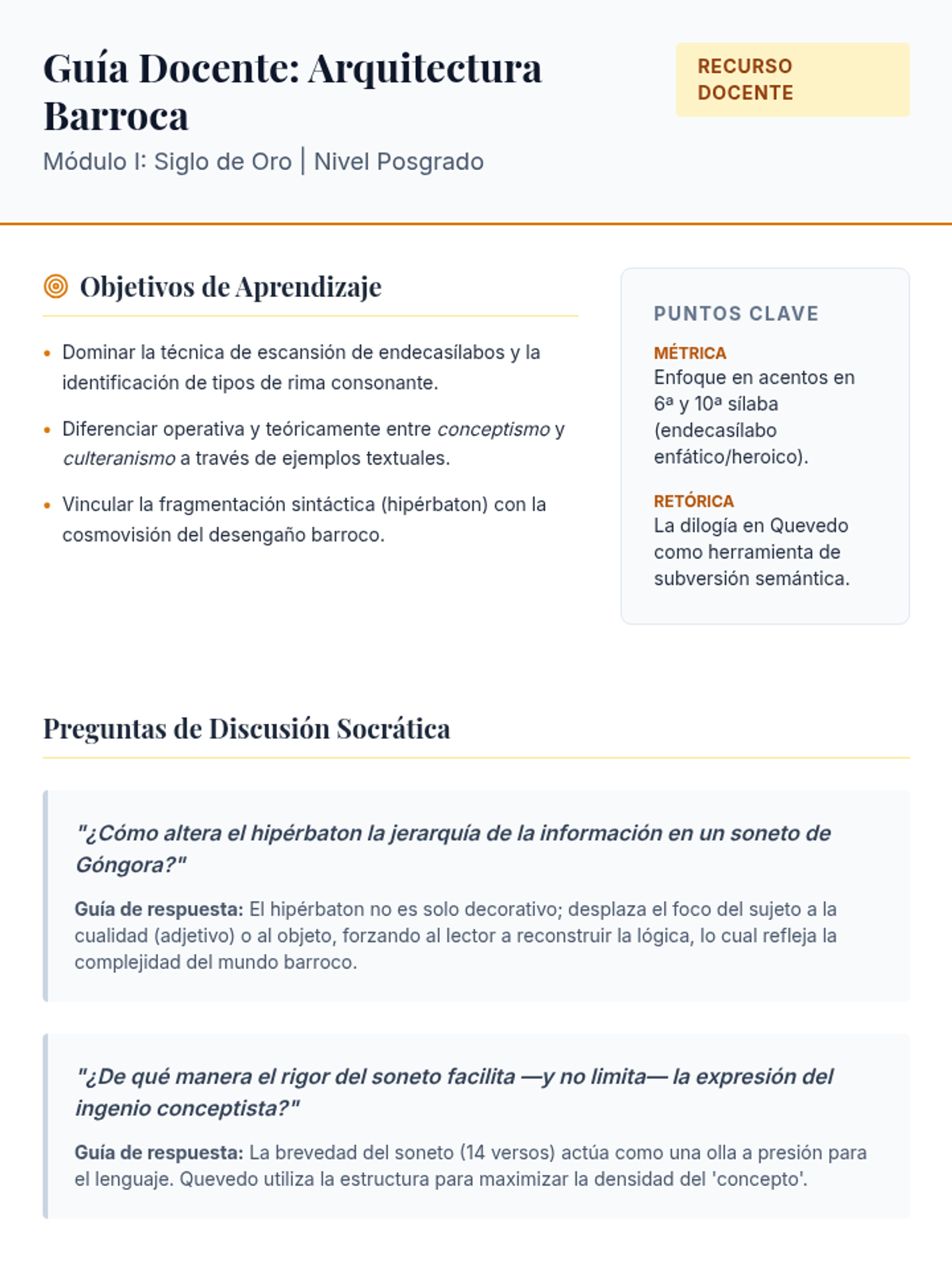
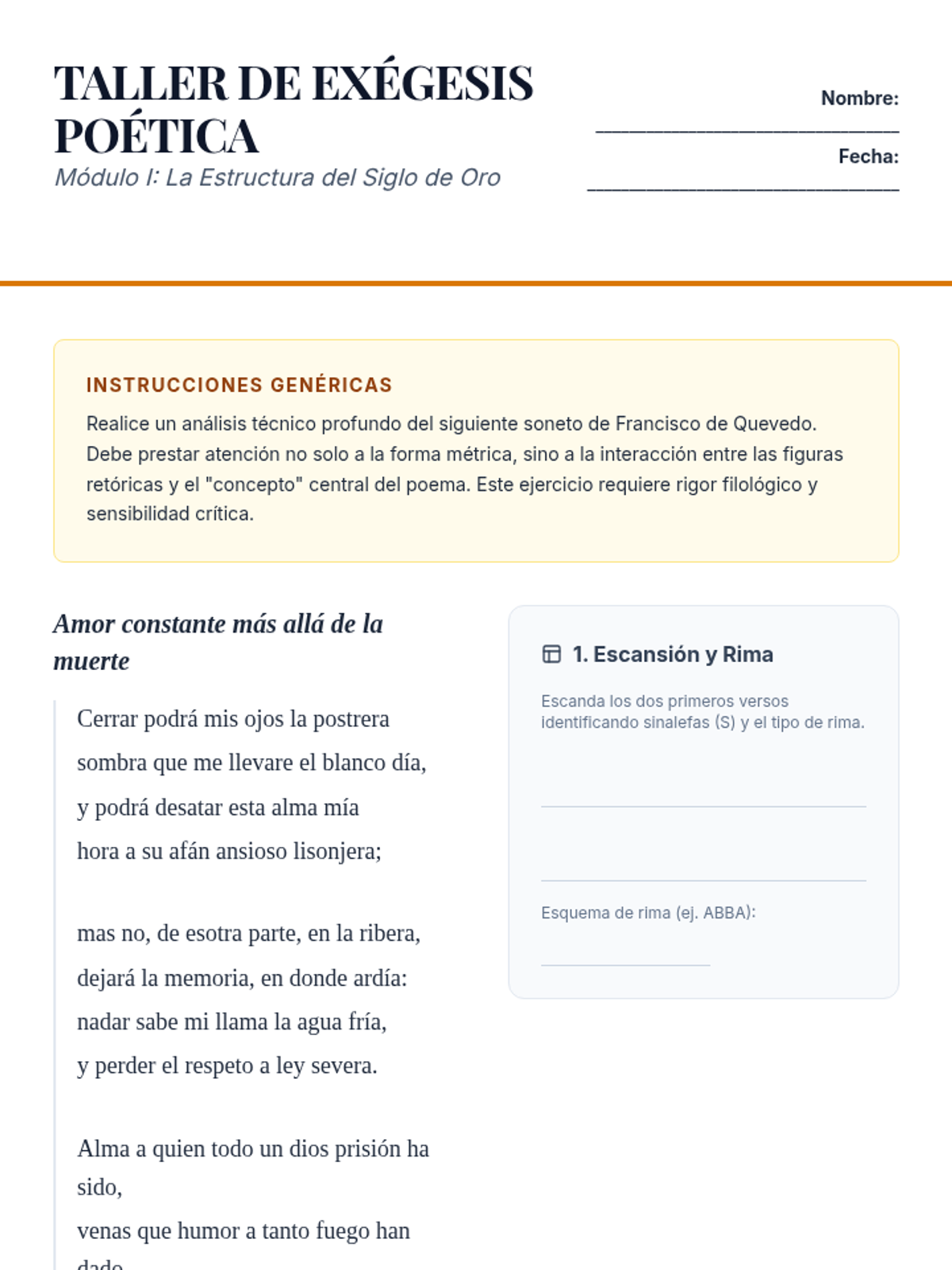
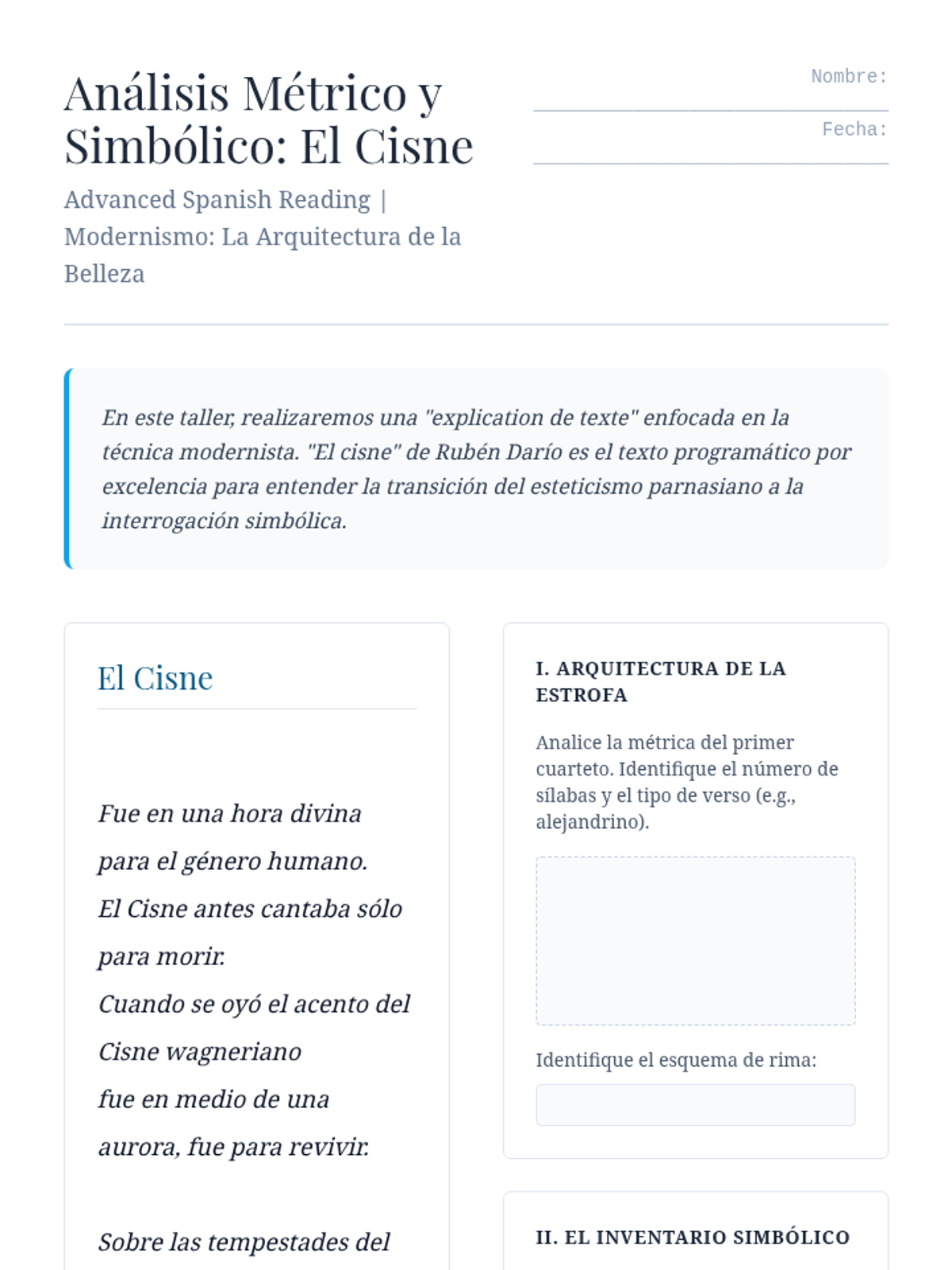
An intensive workshop for graduate students exploring the evolution of Spanish poetic stylistics from the Golden Age to contemporary 'antipoesía'. The sequence focuses on the 'explication de texte' methodology, linking formal linguistic choices to historical and philosophical shifts.
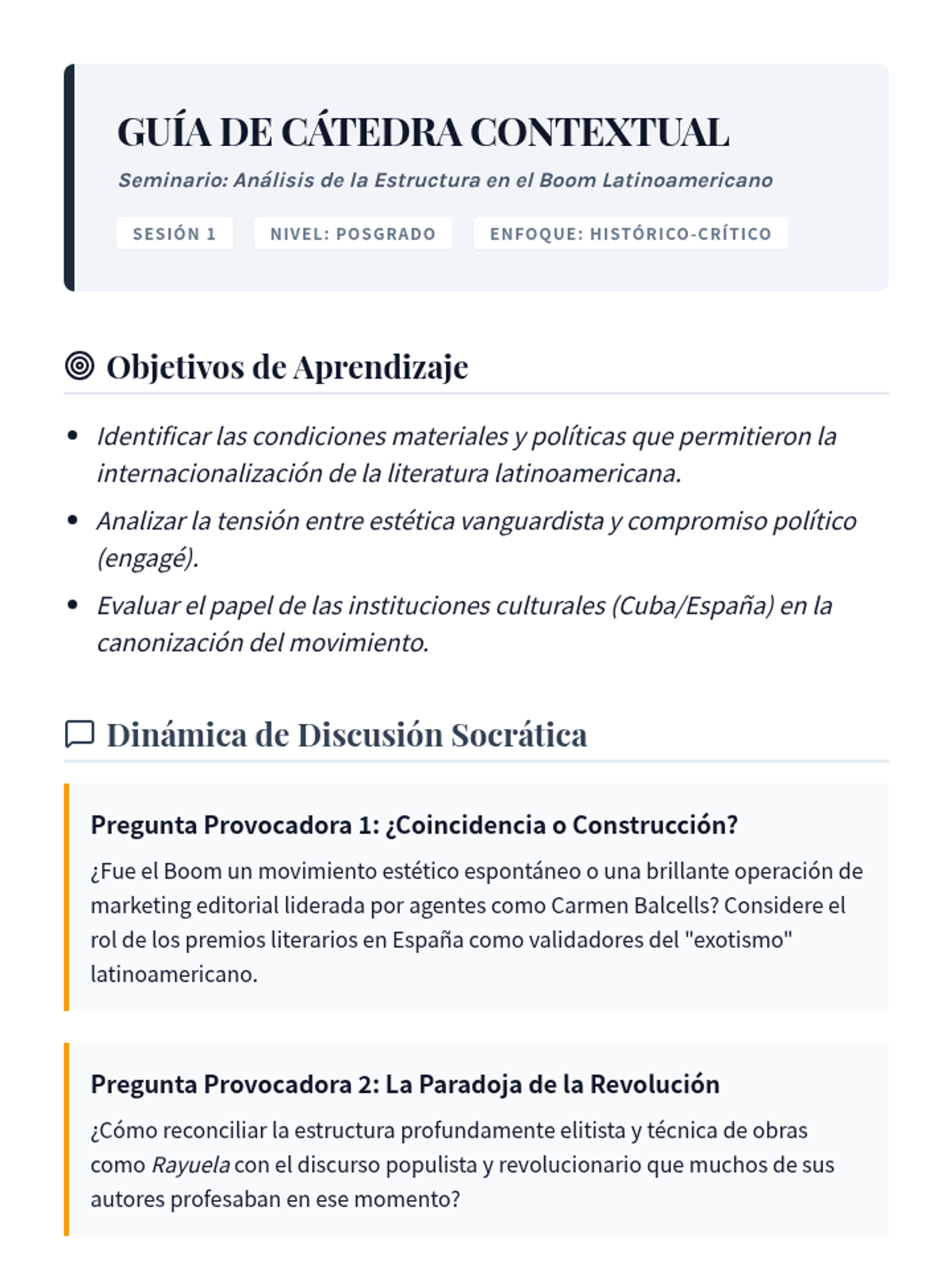
This advanced seminar sequence explores the evolution of narrative structures in 20th and 21st-century Latin American literature. Graduate students analyze how authors like Borges, Cortázar, Rulfo, and Enríquez use stylistic innovation to critique power, history, and social reality.
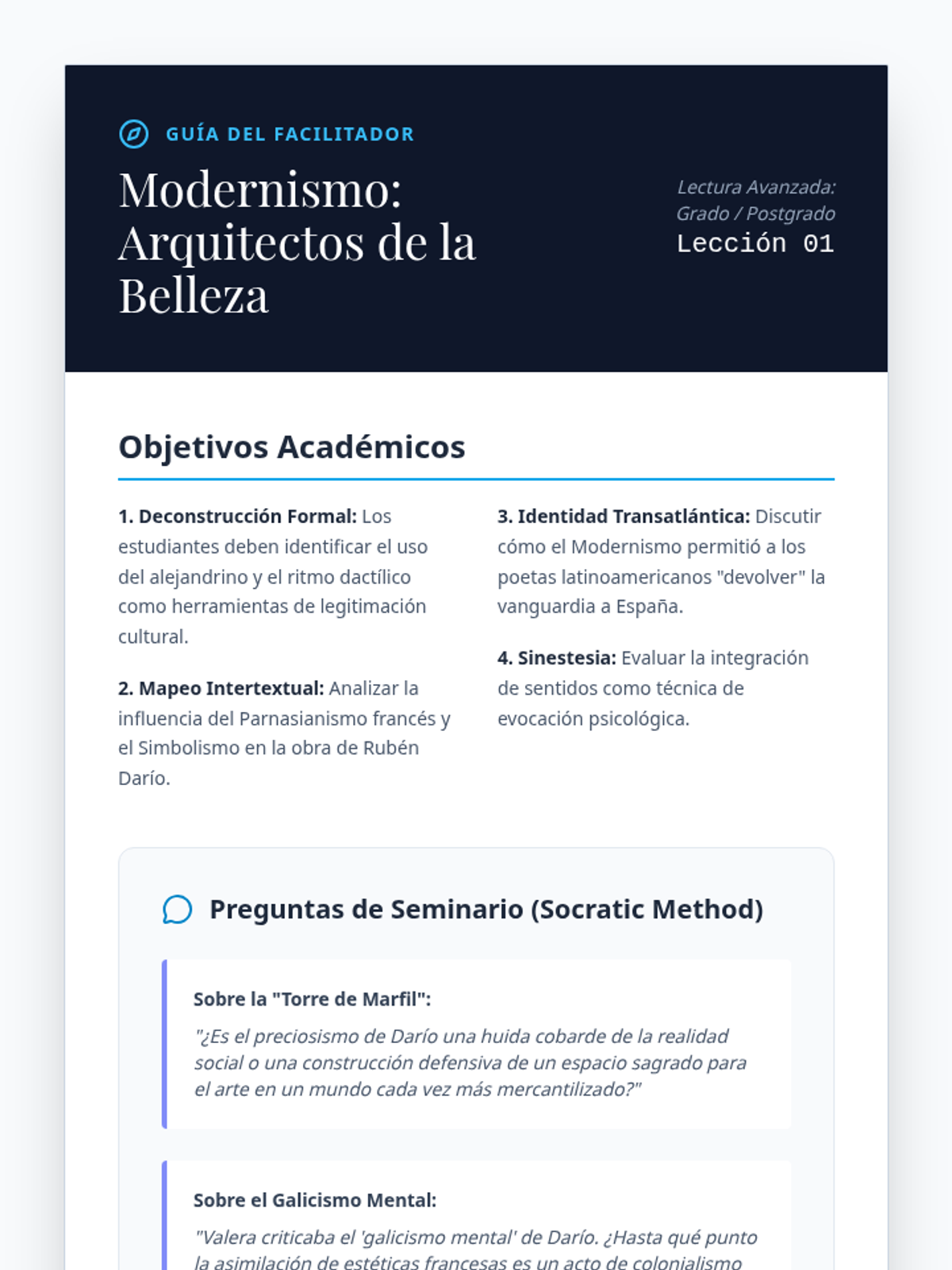
This sequence for graduate students explores the evolution of Hispanic poetry from the late 19th century to the present. Students analyze the radical shifts in form and voice, from the aesthetic perfection of Modernismo to the deconstructive impulses of the Vanguardia and the ironic democratization of Anti-poetry. The unit culminates in a mastery-level 'explication de texte' where students demonstrate advanced analytical skills.
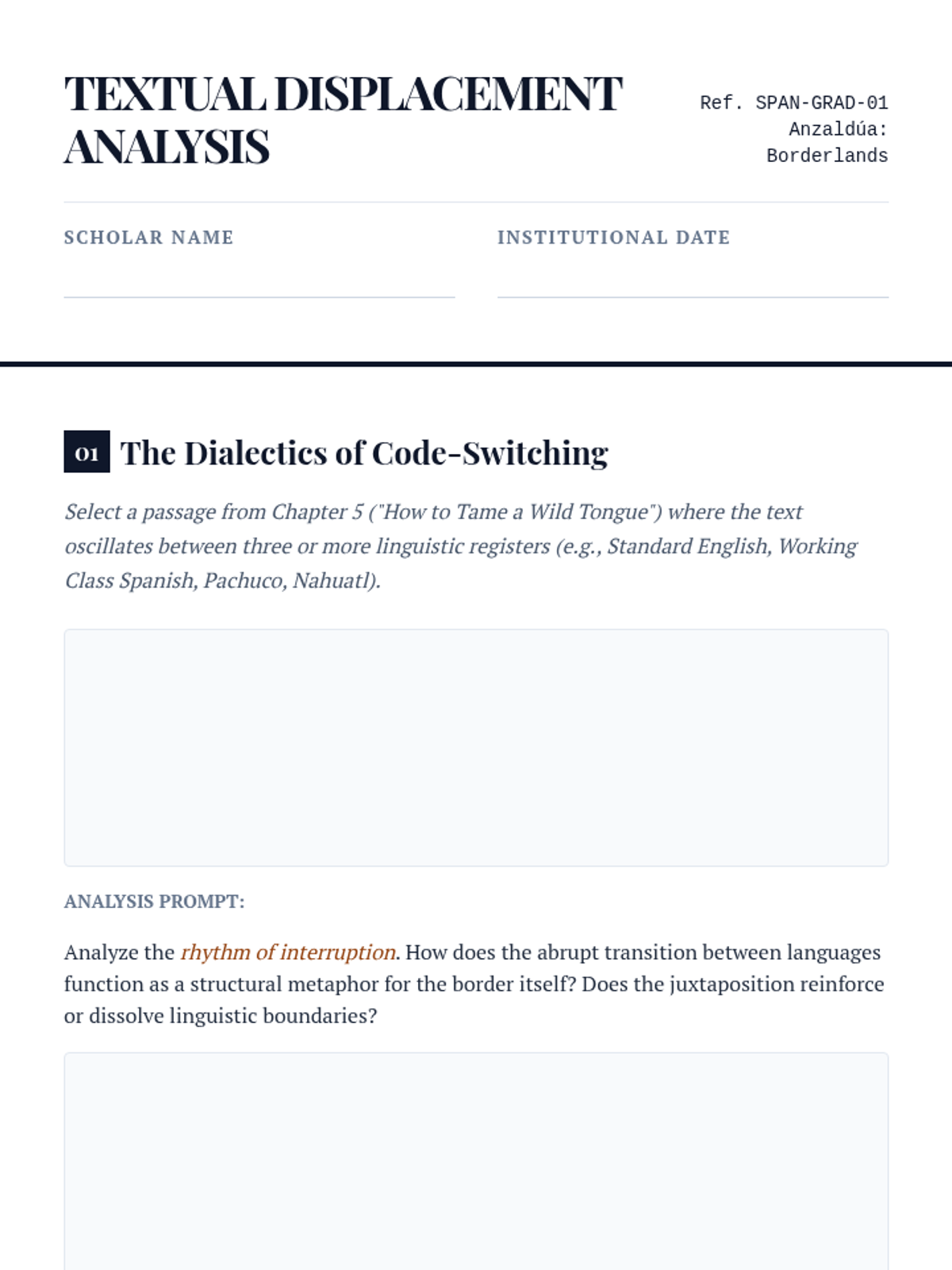
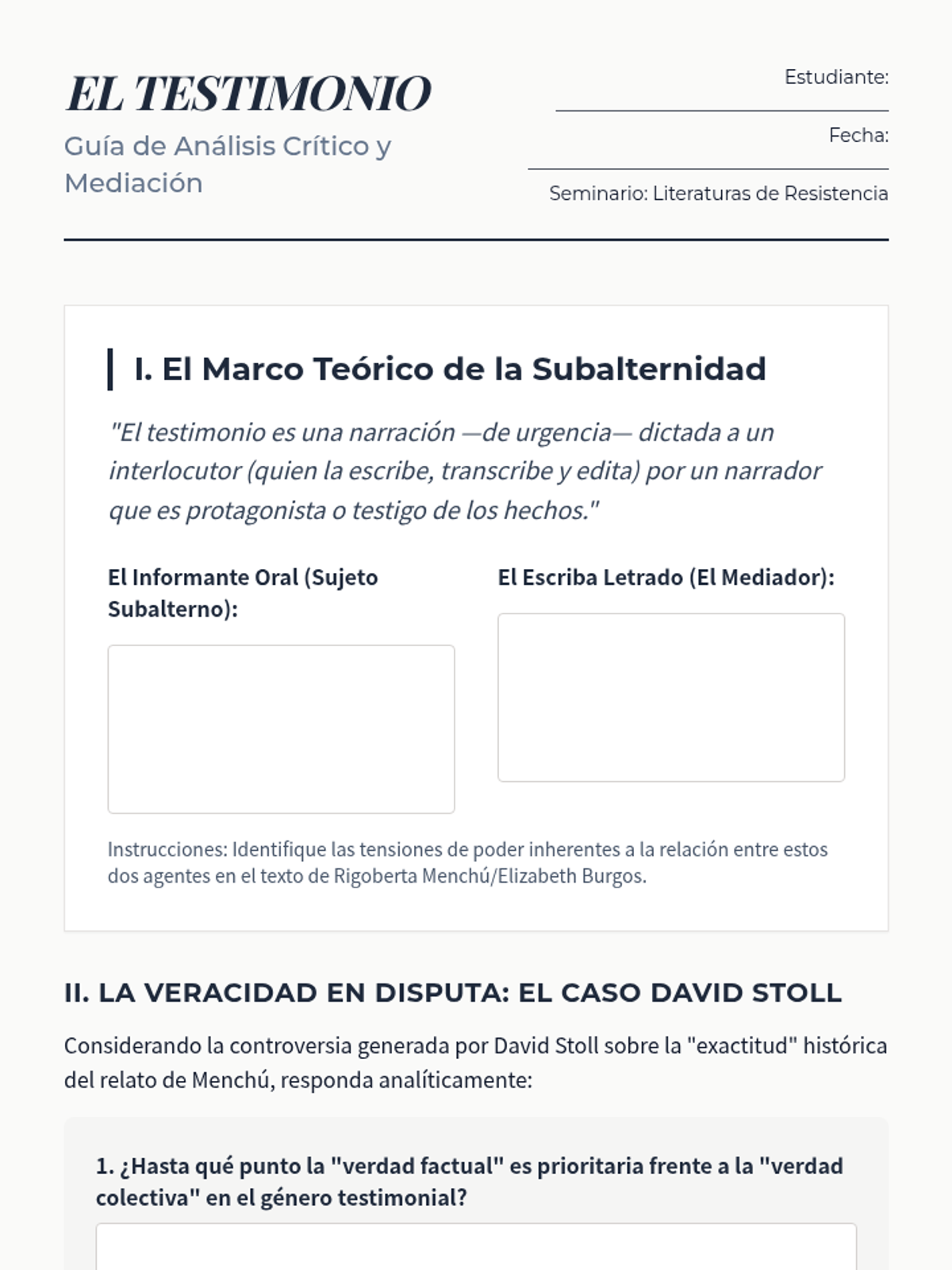
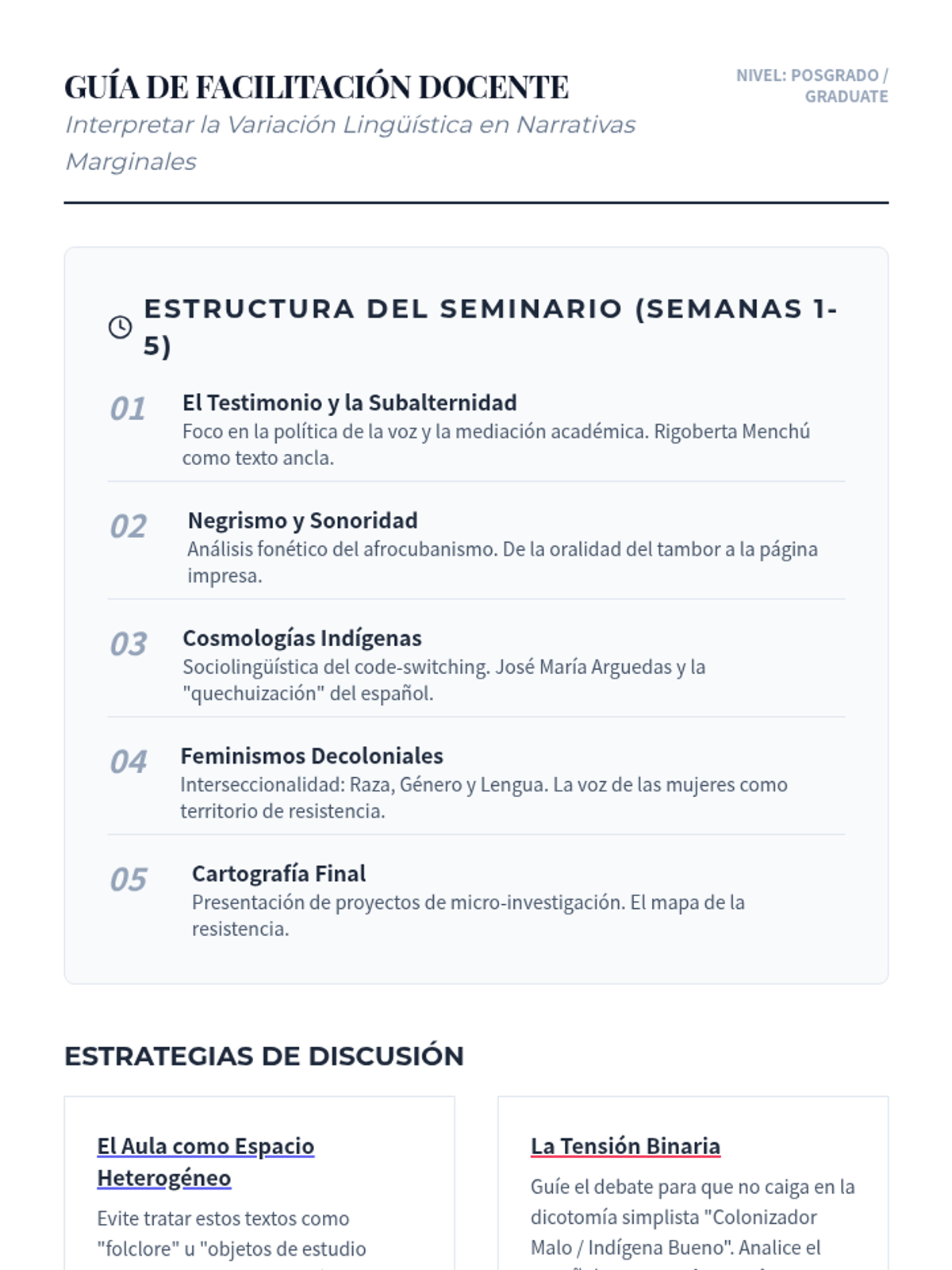
An advanced graduate-level sequence exploring how Afro-Latinx and Indigenous authors use Spanish as a tool of resistance, subverting colonial structures through testimonio, negrismo, and linguistic code-switching to represent marginalized worldviews.
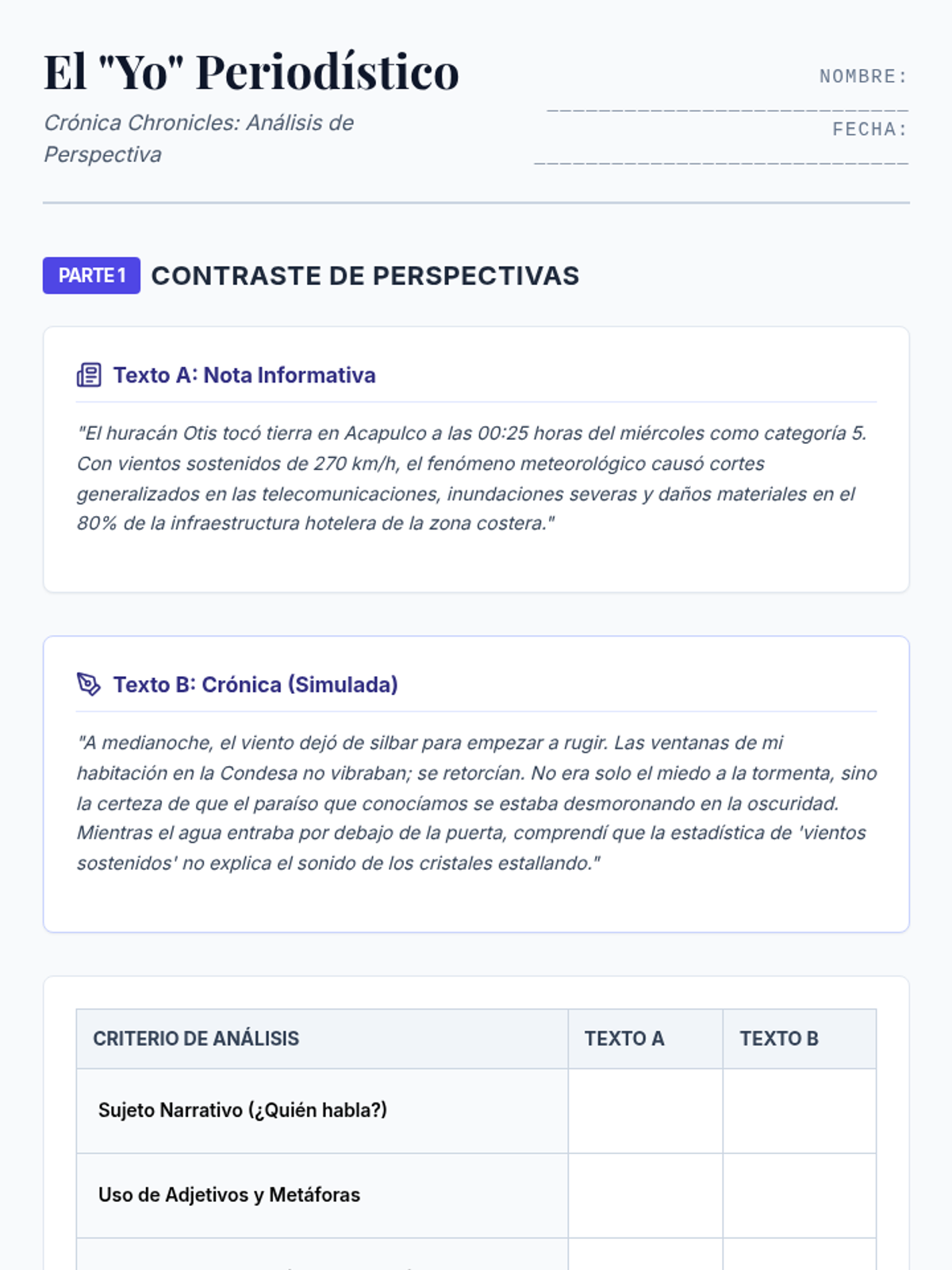
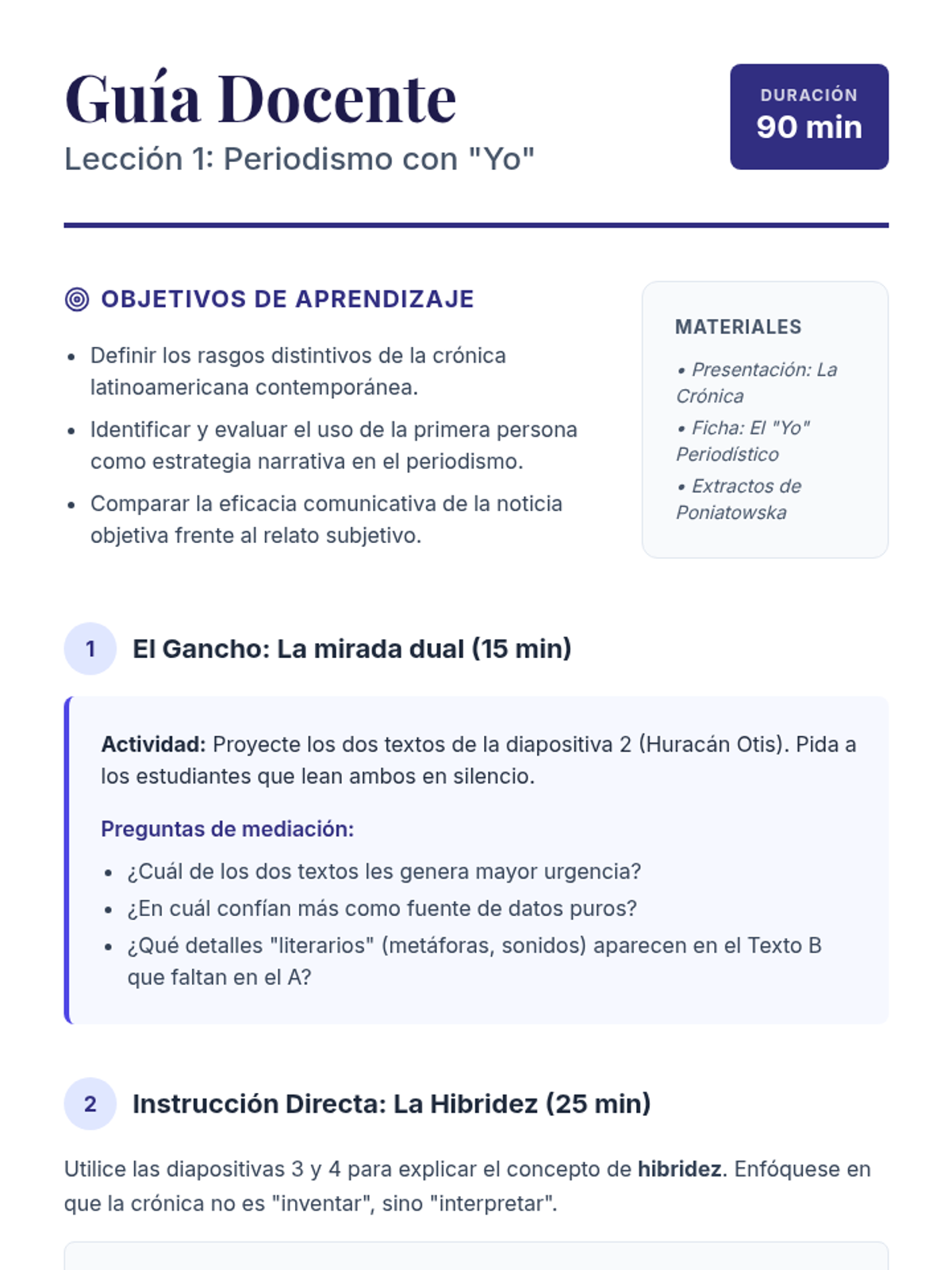
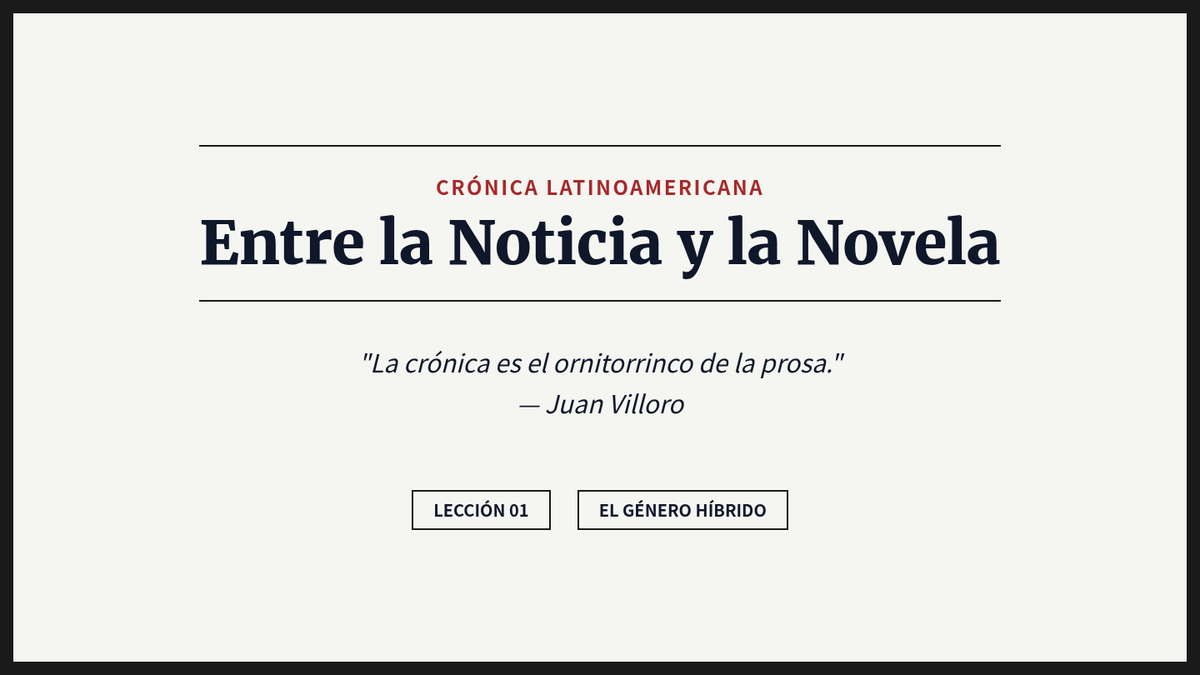
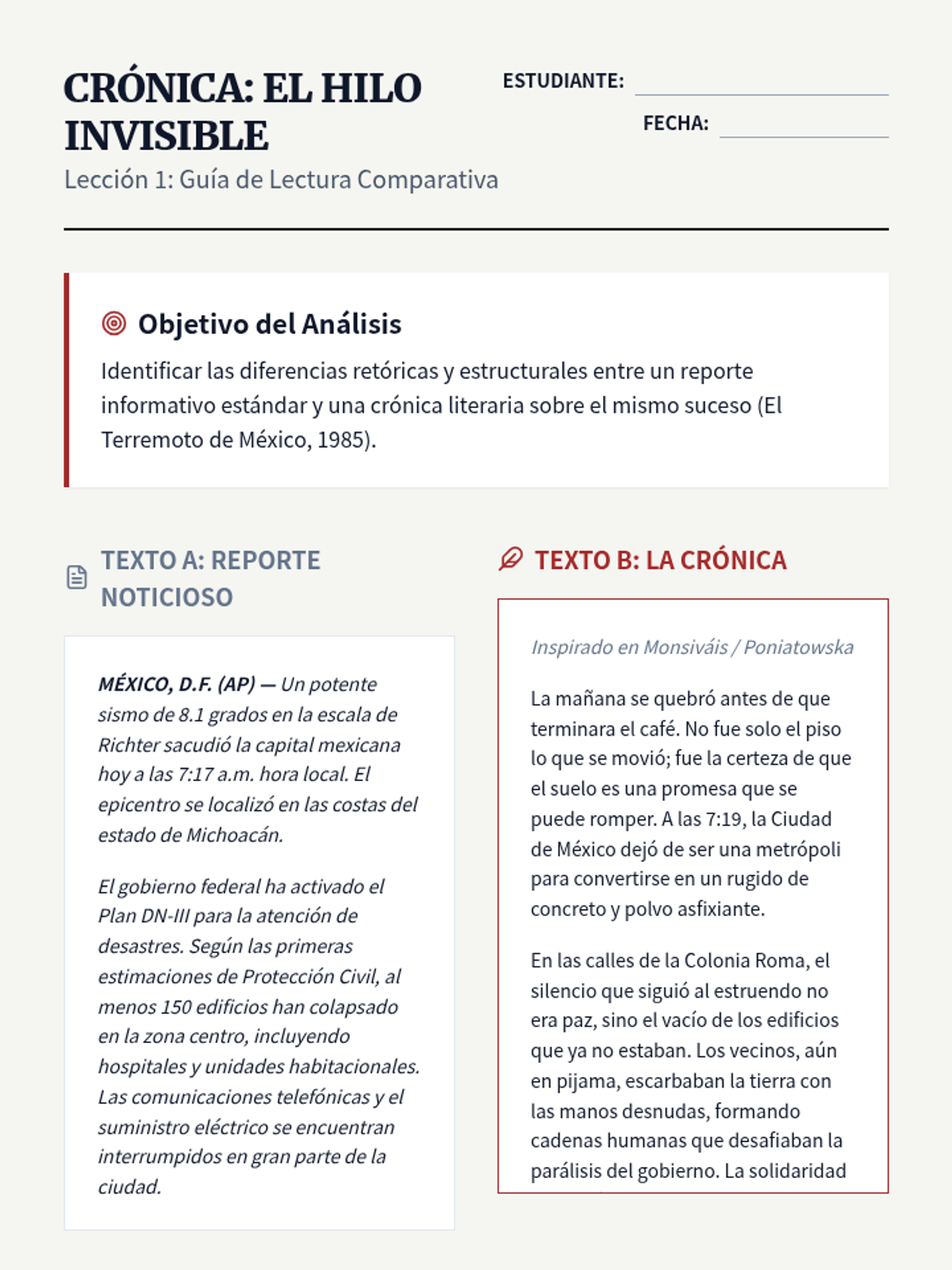
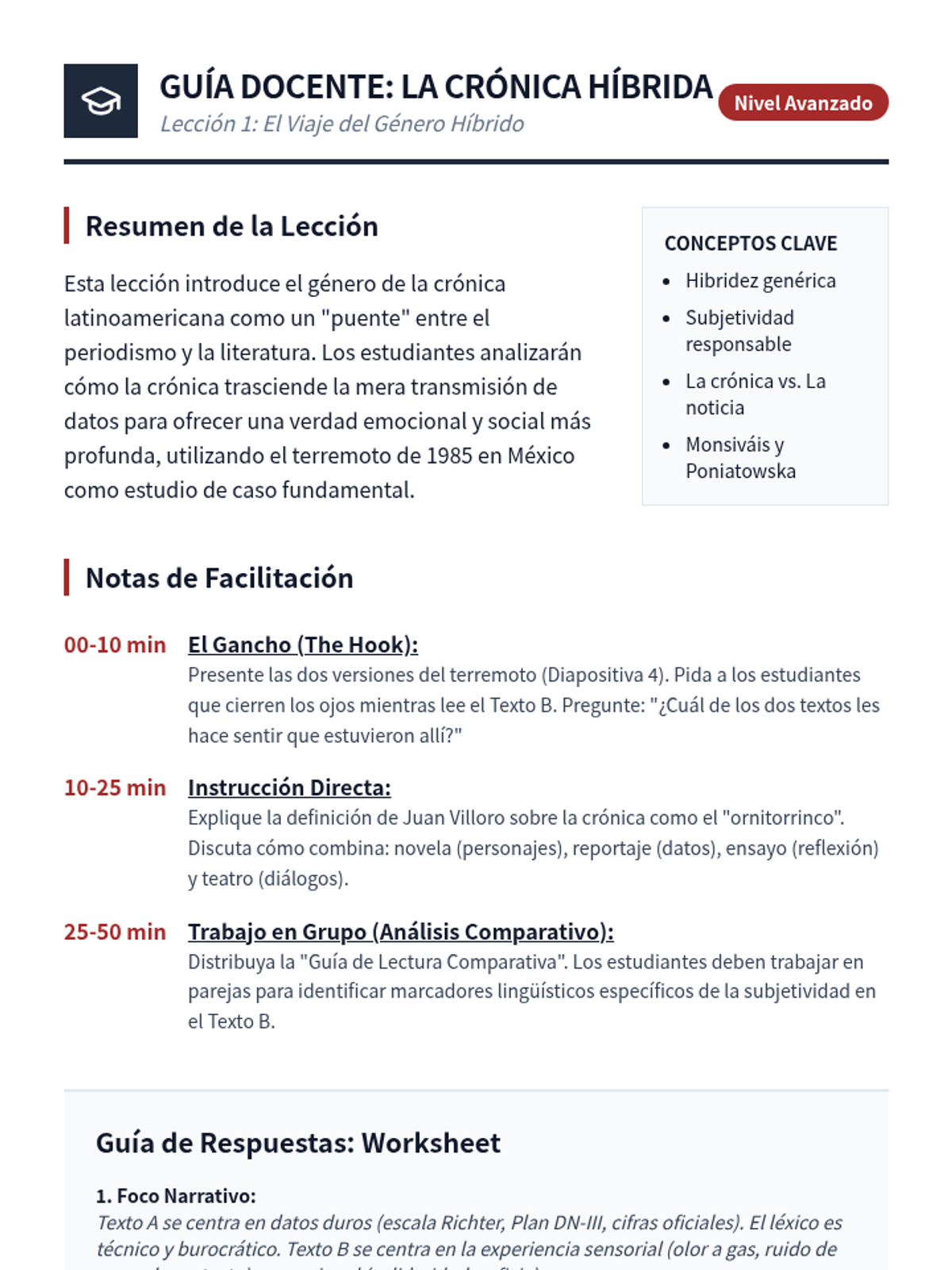
This advanced Spanish sequence explores the Latin American 'crónica', examining the intersection of literature and journalism. Students analyze subjectivity, literary devices in non-fiction, social critique, and the ethical responsibilities of the chronicler.
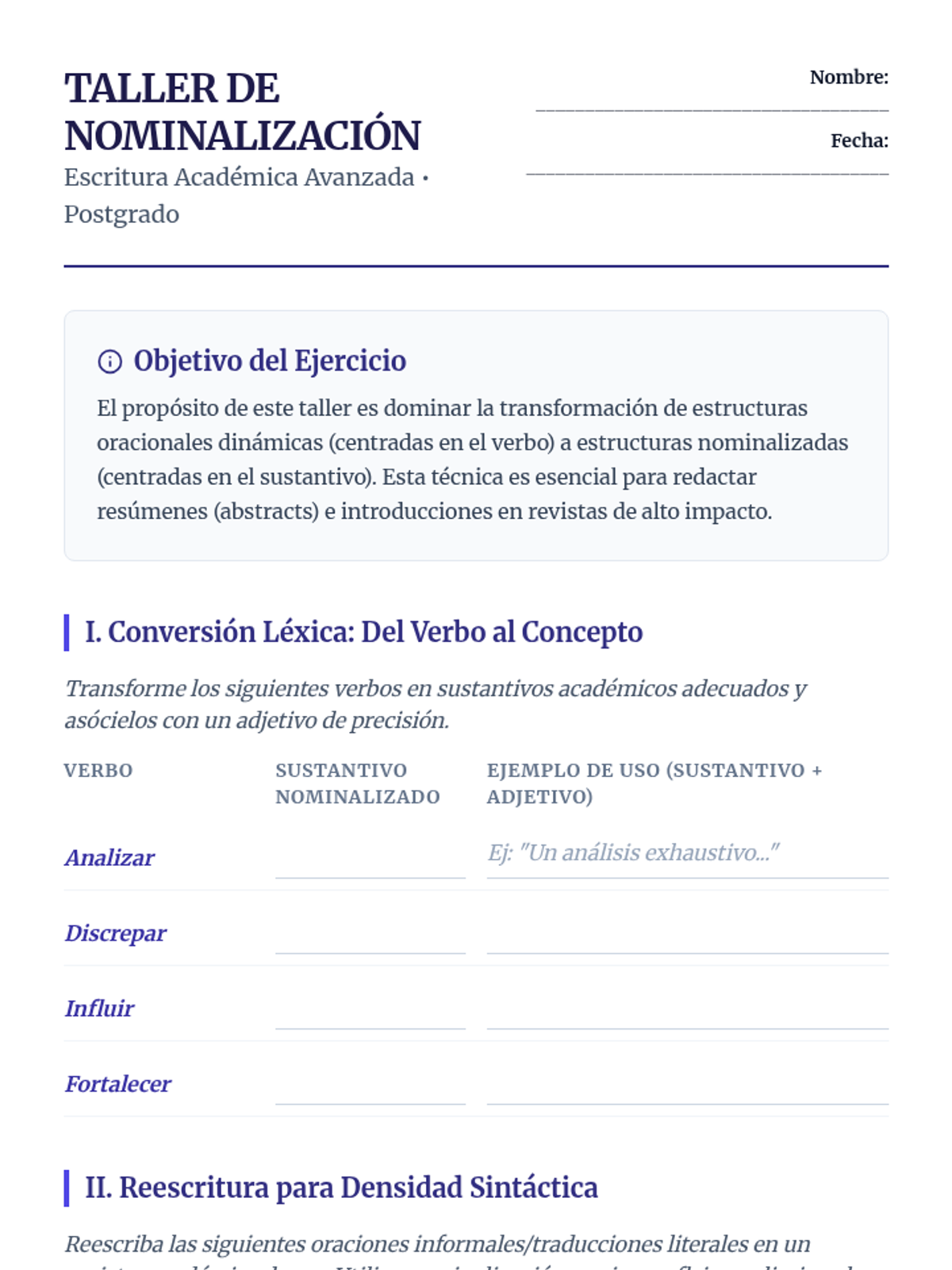
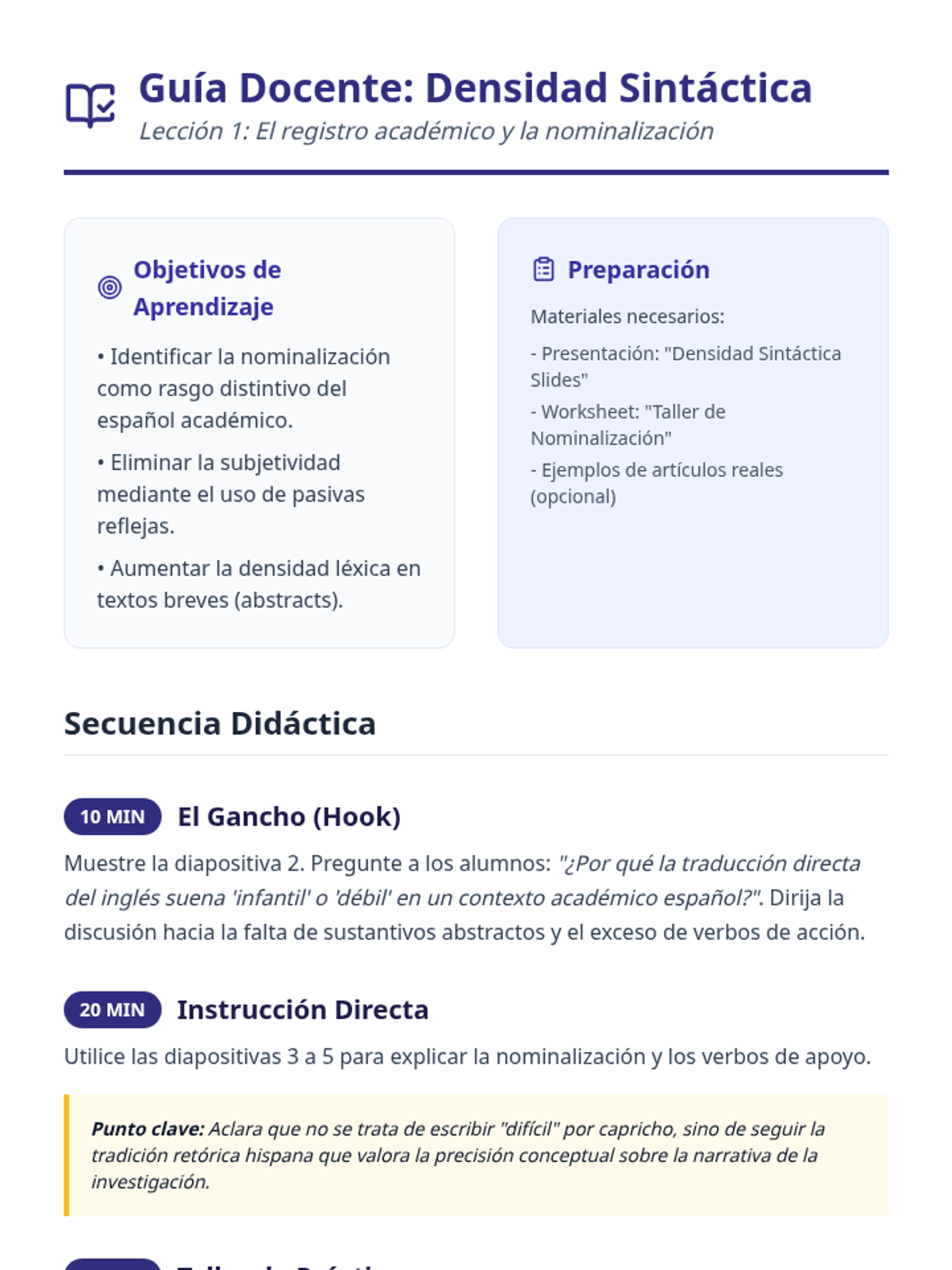
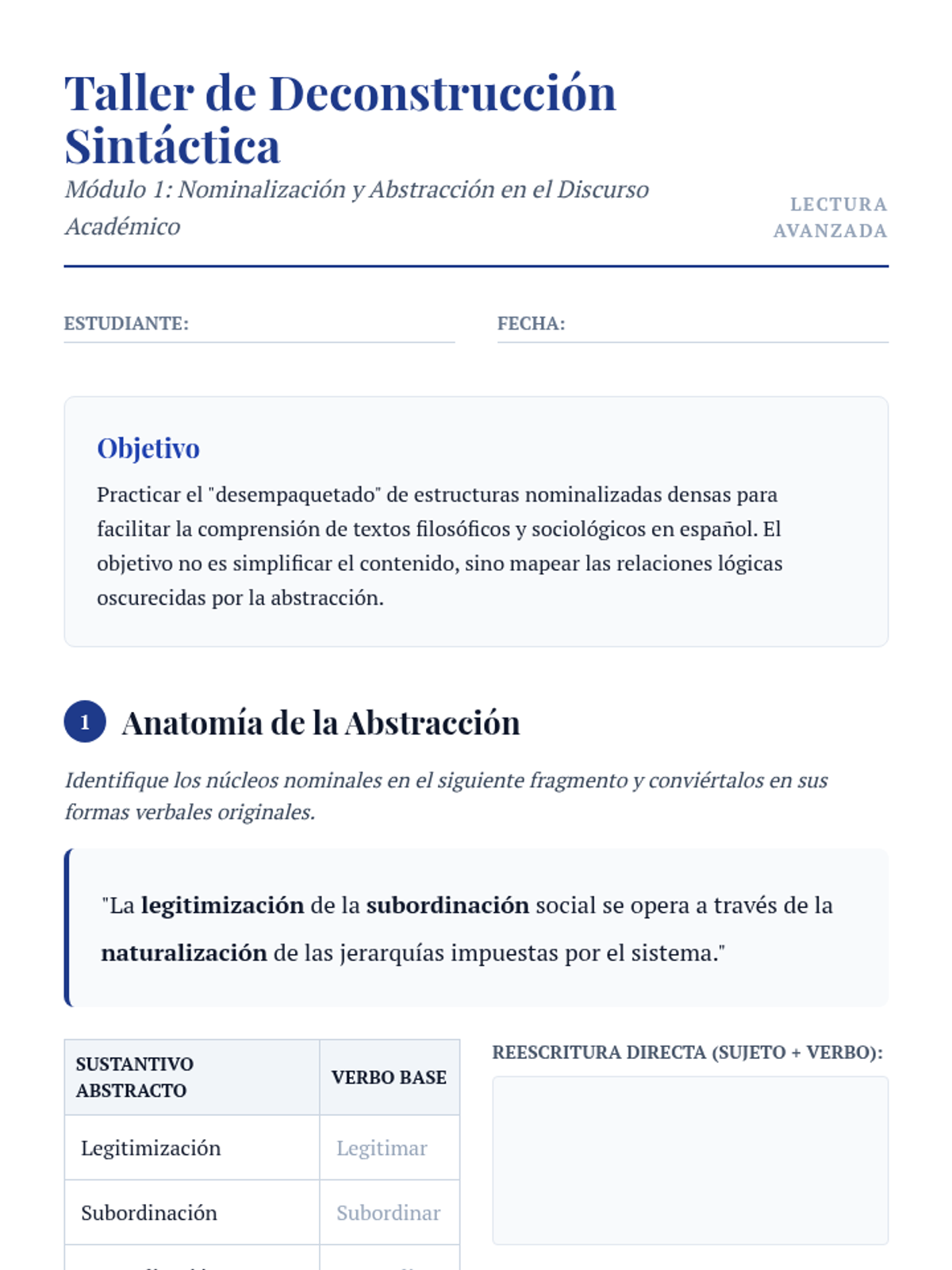
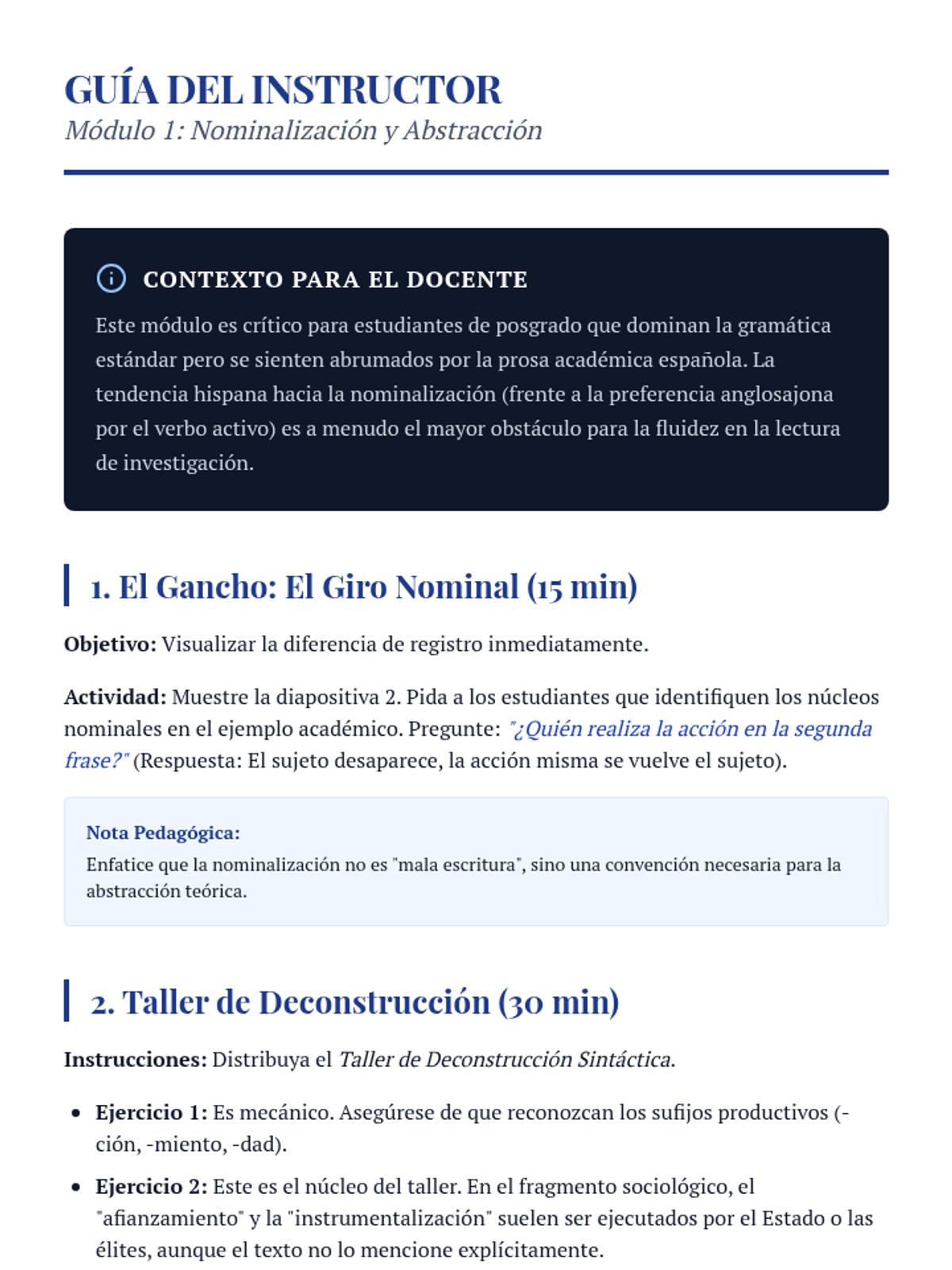
This graduate-level sequence focuses on the rhetorical and syntactic complexities of Spanish academic discourse. Students will master the deconstruction of nominalized structures, the analysis of discourse markers, and the cultural nuances of Hispanic vs. Anglophone scholarly styles to enhance both their reading comprehension and academic production.
This advanced graduate sequence explores the structural and thematic complexities of the Latin American Boom. Students analyze how icons like García Márquez and Cortázar used magical realism and non-linear narratives to critique sociopolitical realities in mid-20th century Latin America.
This advanced Spanish sequence trains undergraduate students to engage with literary criticism as a scholarly genre. Students progress from decoding academic abstracts to synthesizing complex literature reviews and constructing annotated bibliographies, transforming from passive readers into active scholarly participants.
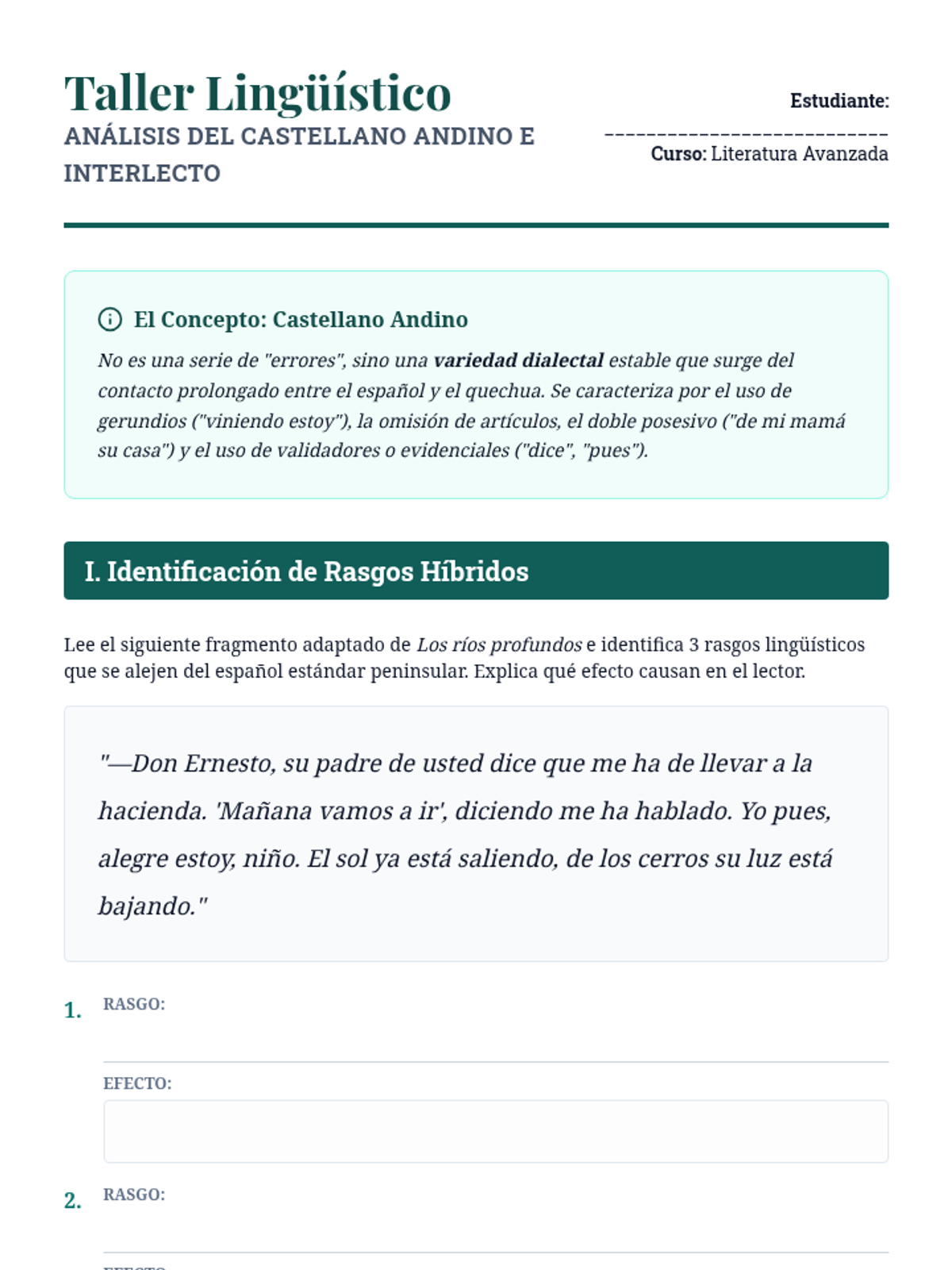
A comprehensive exploration of indigenous representation in Spanish literature, examining the shift from early Indigenismo to contemporary indigenous self-representation. Students analyze sociolinguistic hybridity, cultural cosmovisions, and the political dimensions of land and identity in the post-colonial Andes and beyond.
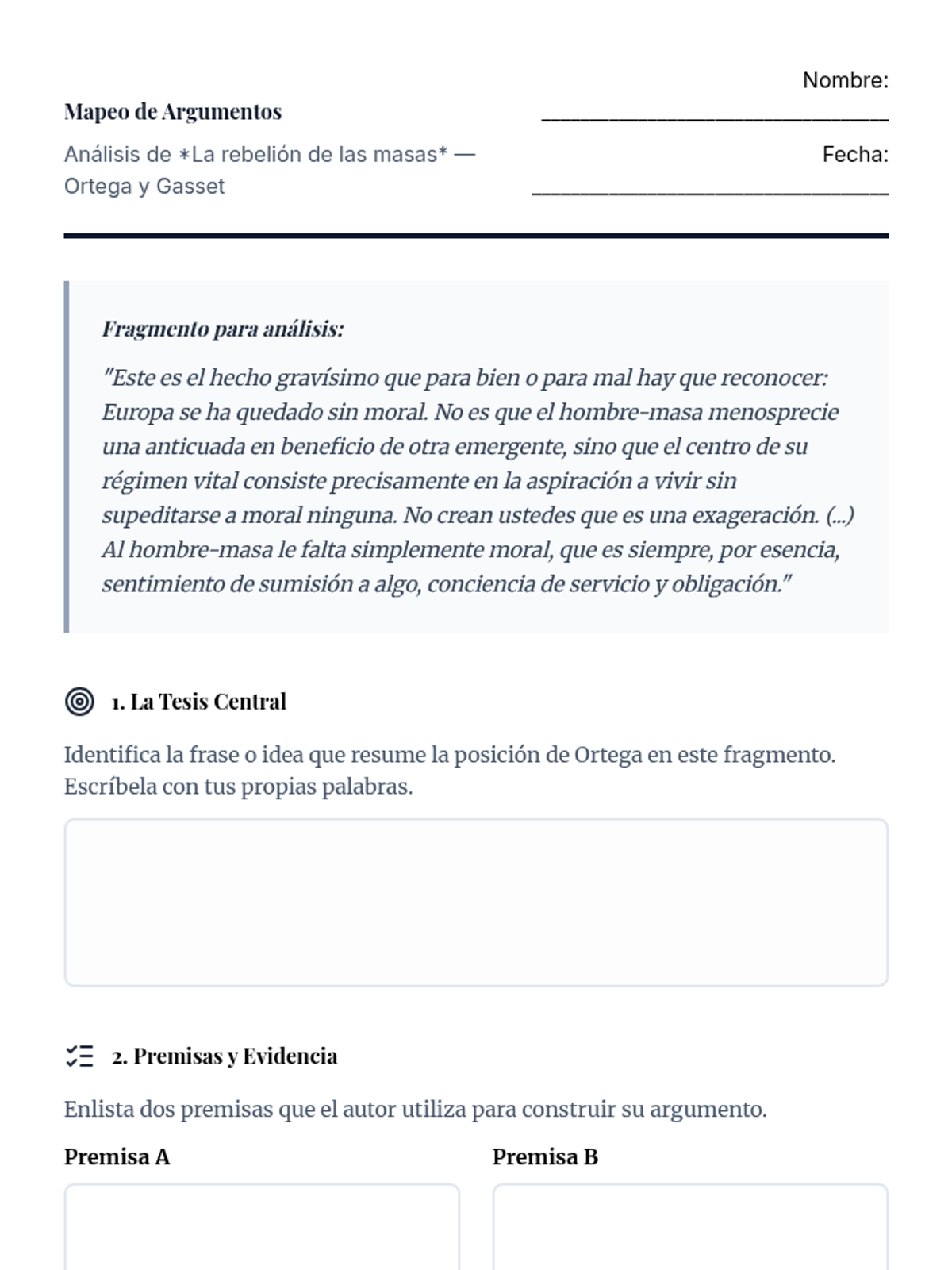
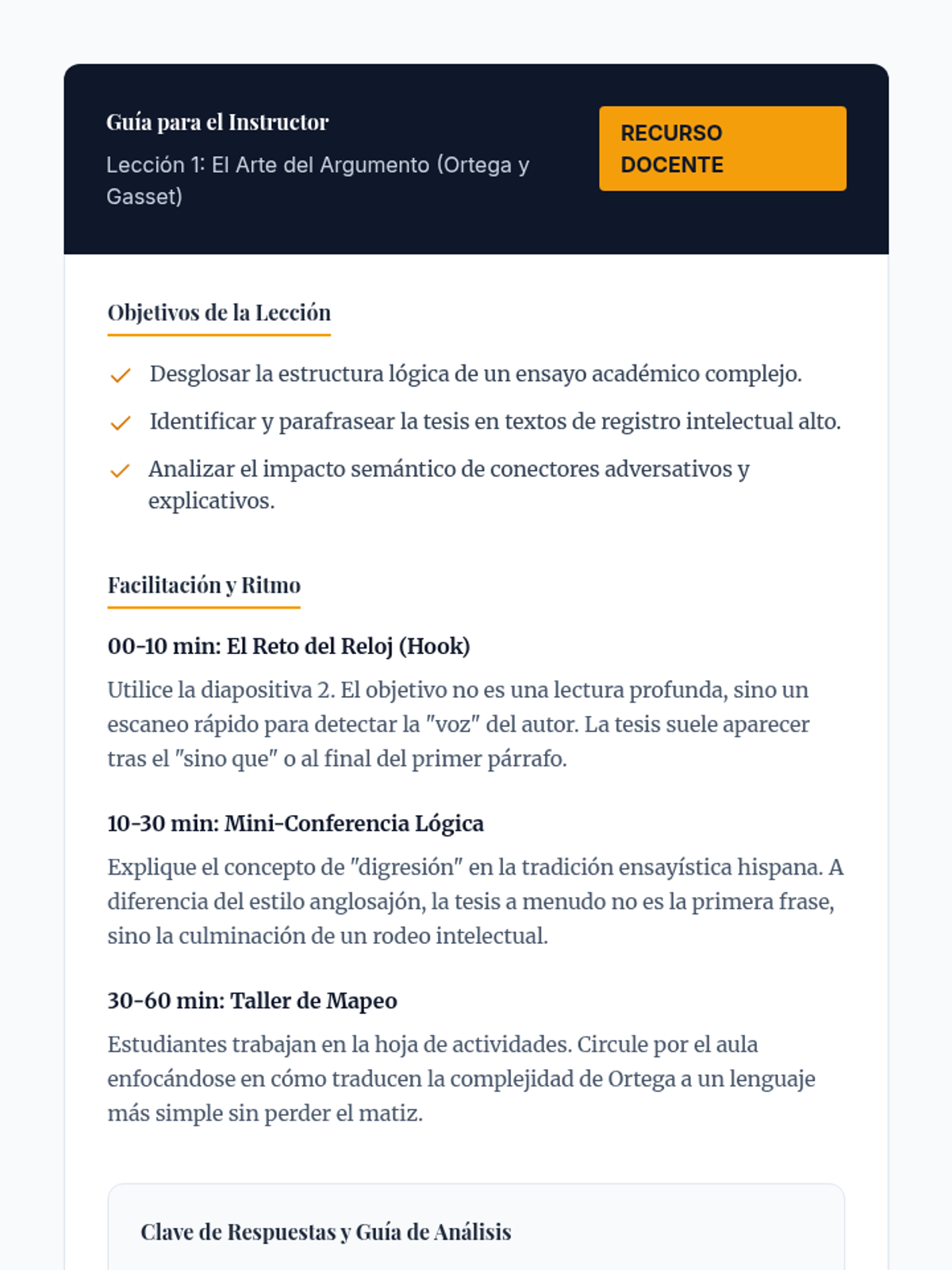
An advanced Spanish reading sequence for undergraduates focusing on the deconstruction of socio-political essays. Students analyze rhetorical strategies, metaphors of identity, and contemporary political discourse to build critical thinking and high-level academic writing skills.
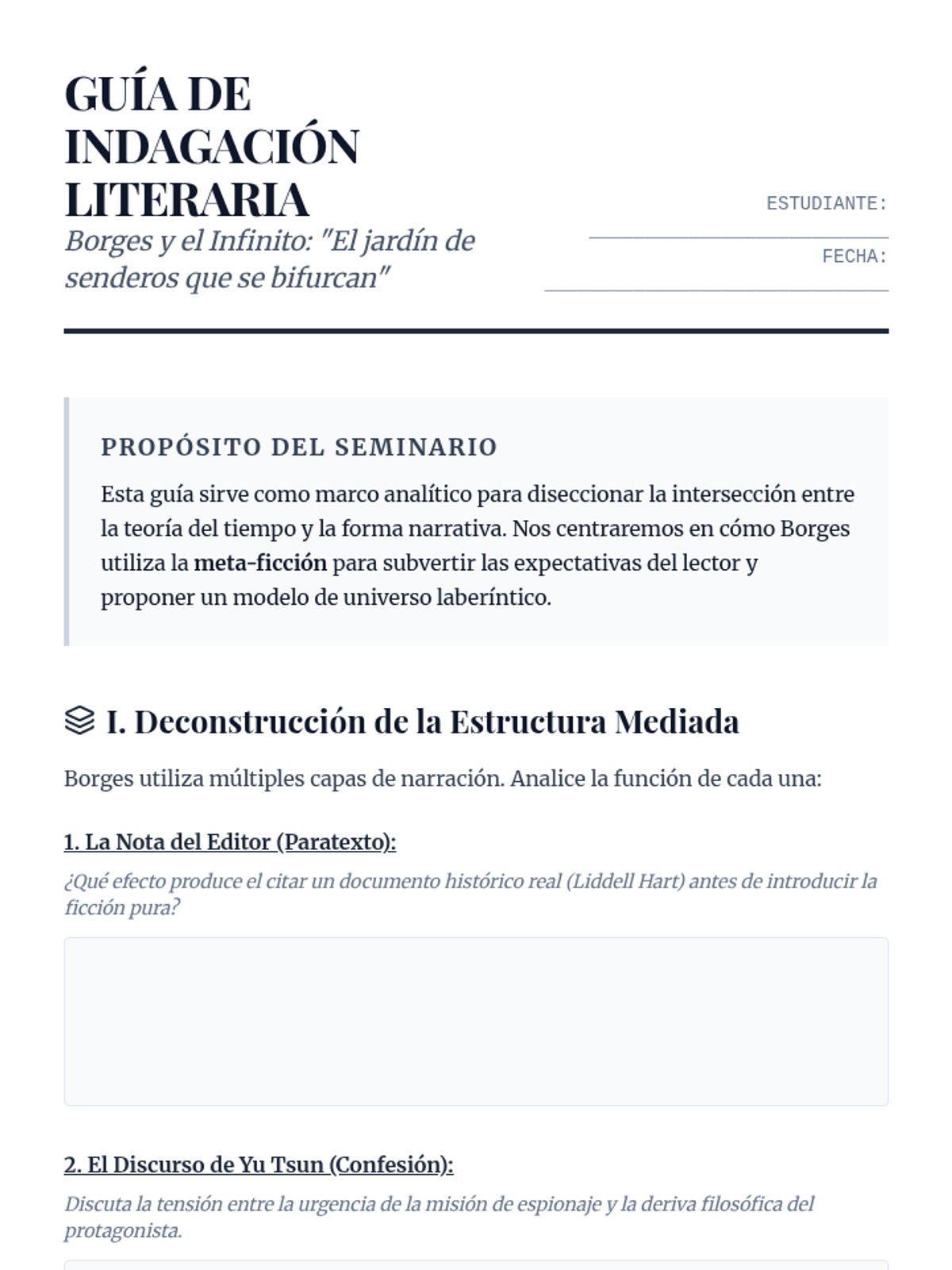
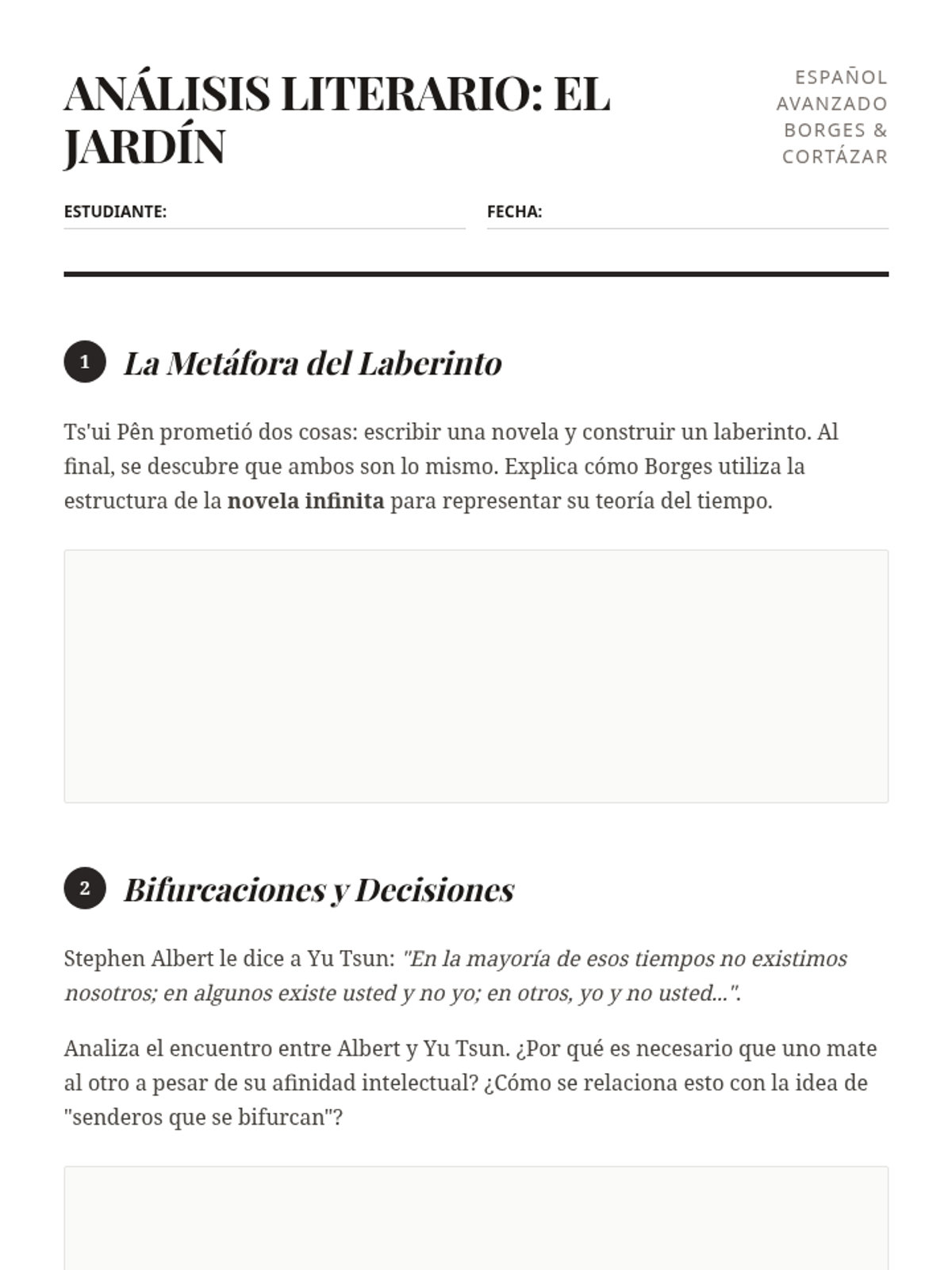
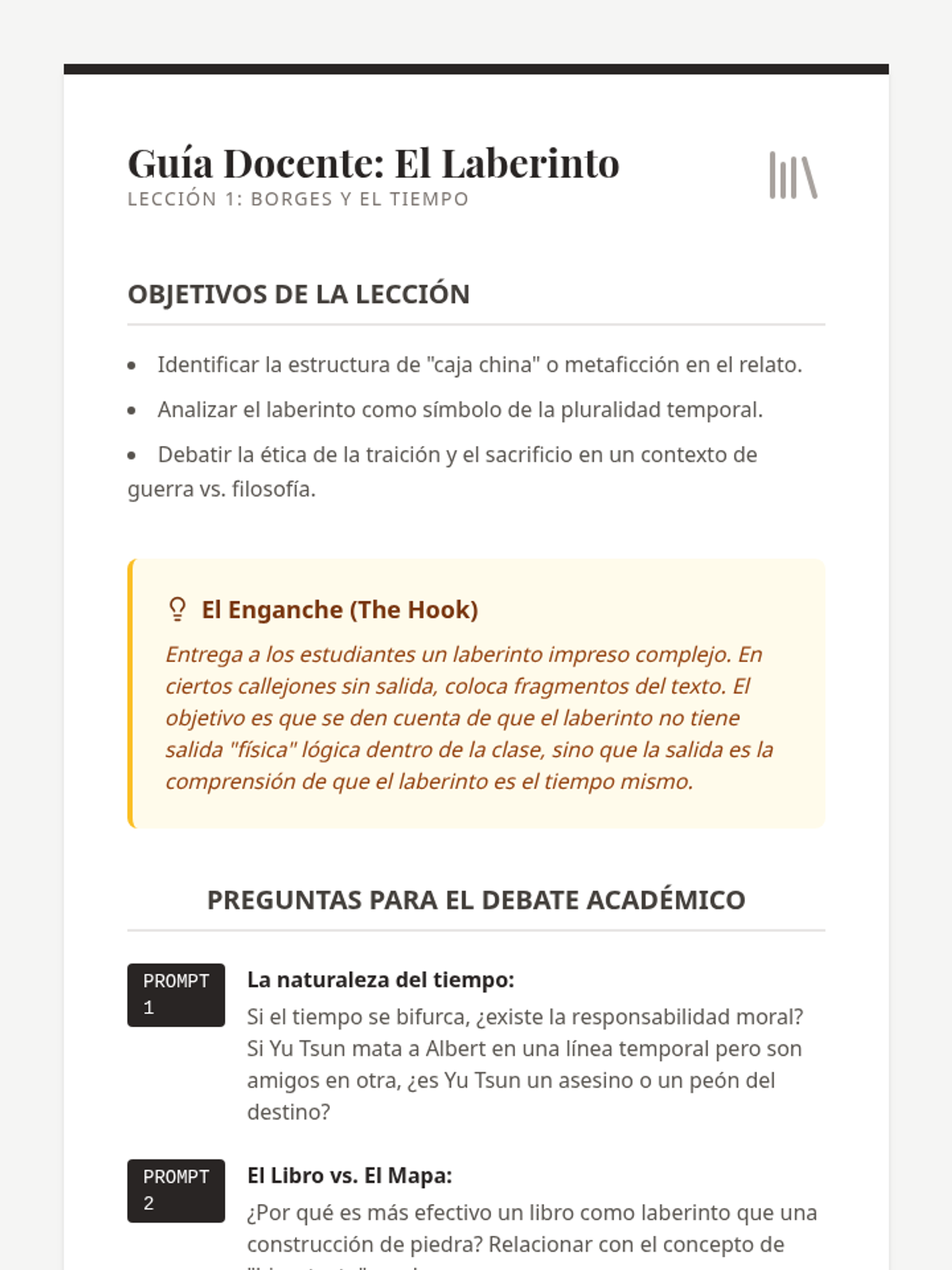
An advanced undergraduate Spanish literature sequence exploring metaphysical themes in the short stories of Borges and Cortázar, focusing on labyrinths, identity, intertextuality, and the fantastic.
This advanced Spanish sequence explores the Latin American 'Crónica' genre, analyzing how authors blend journalistic rigor with literary techniques to create powerful social narratives. Students will investigate the tension between objectivity and subjectivity while developing critical reading skills for complex non-fiction texts.
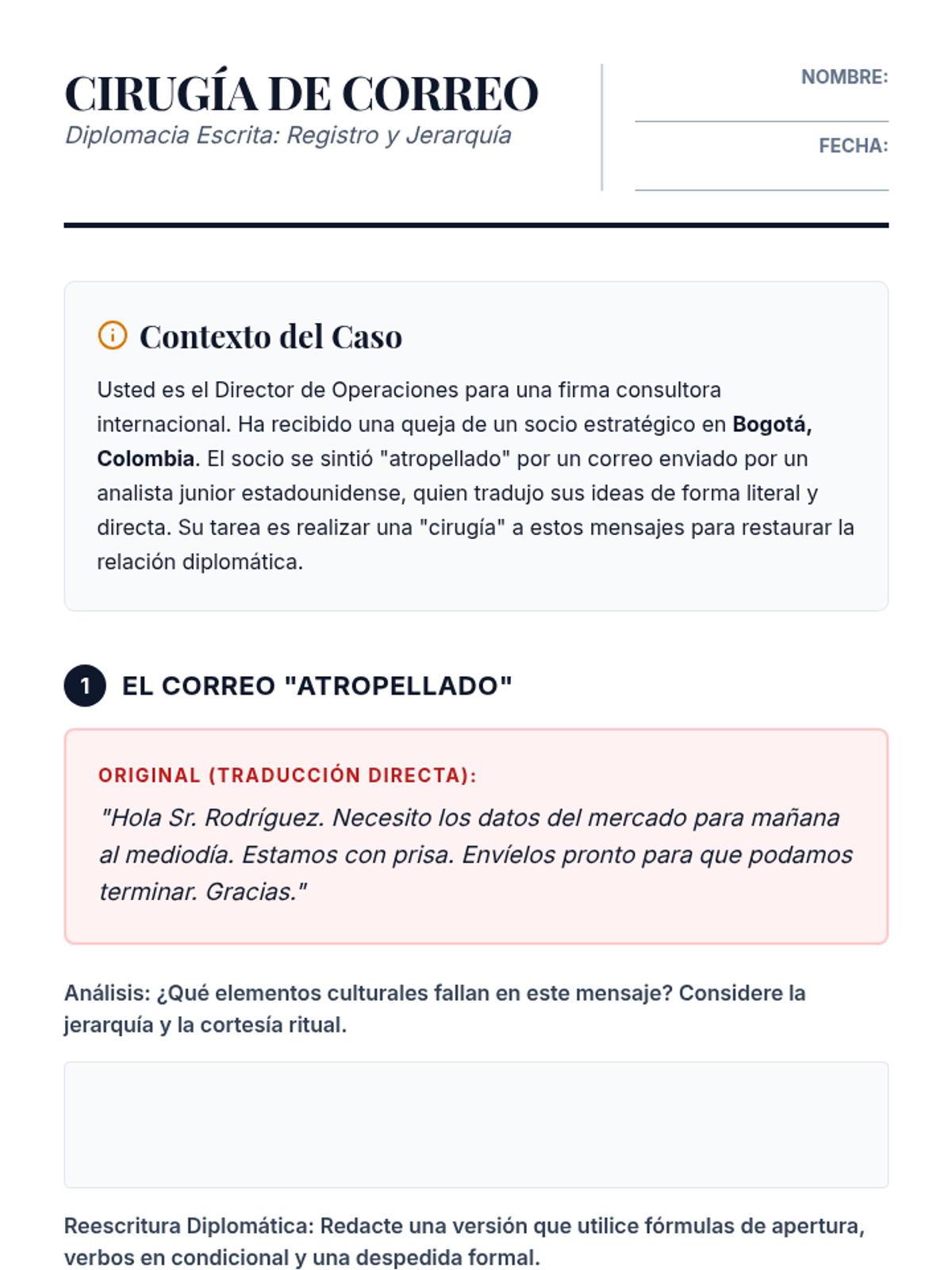
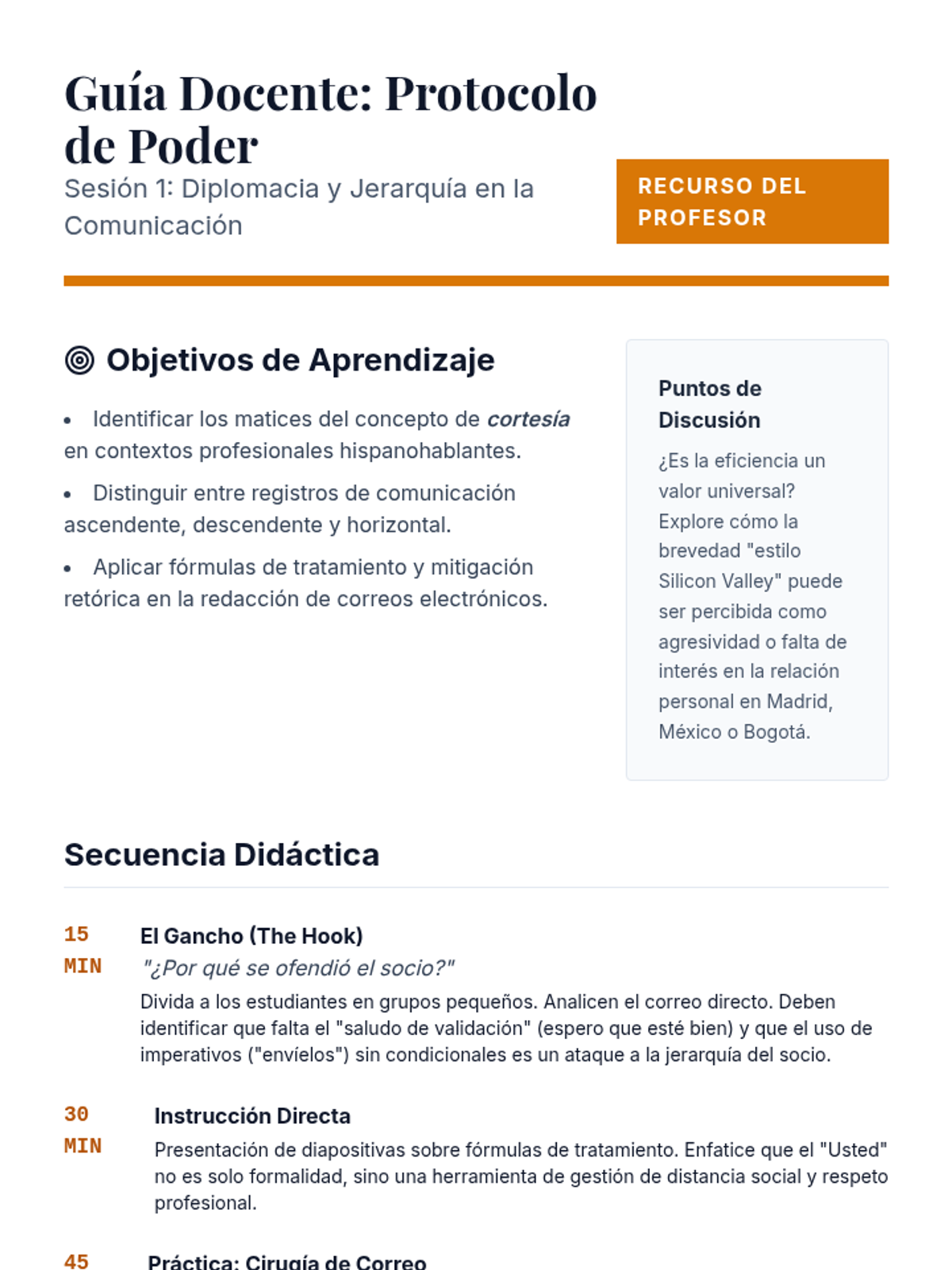
A graduate-level sequence focused on the nuances of professional and technical writing in Spanish, emphasizing cultural expectations, hierarchical registers, and persuasive strategies for international business and diplomatic contexts.
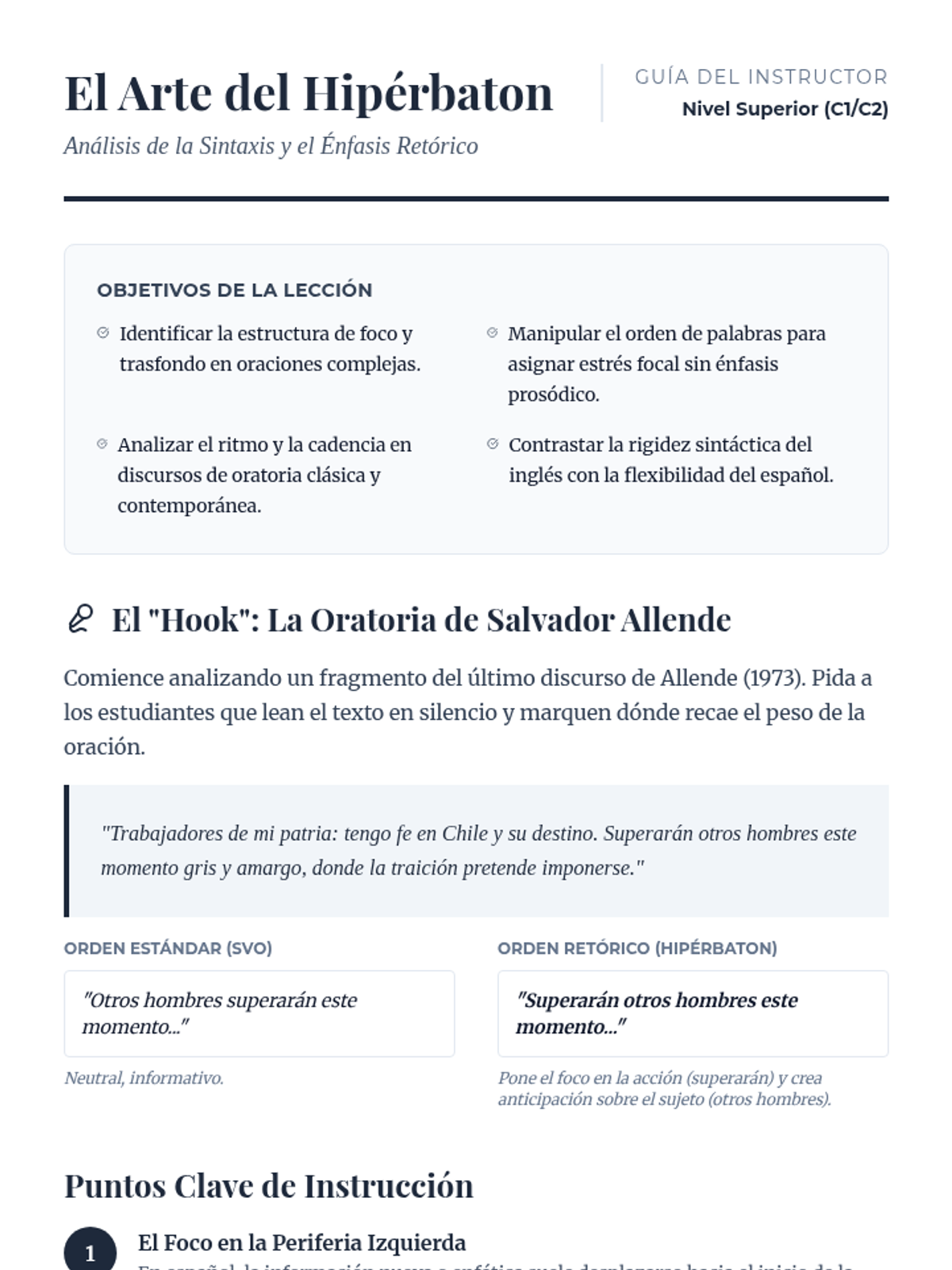
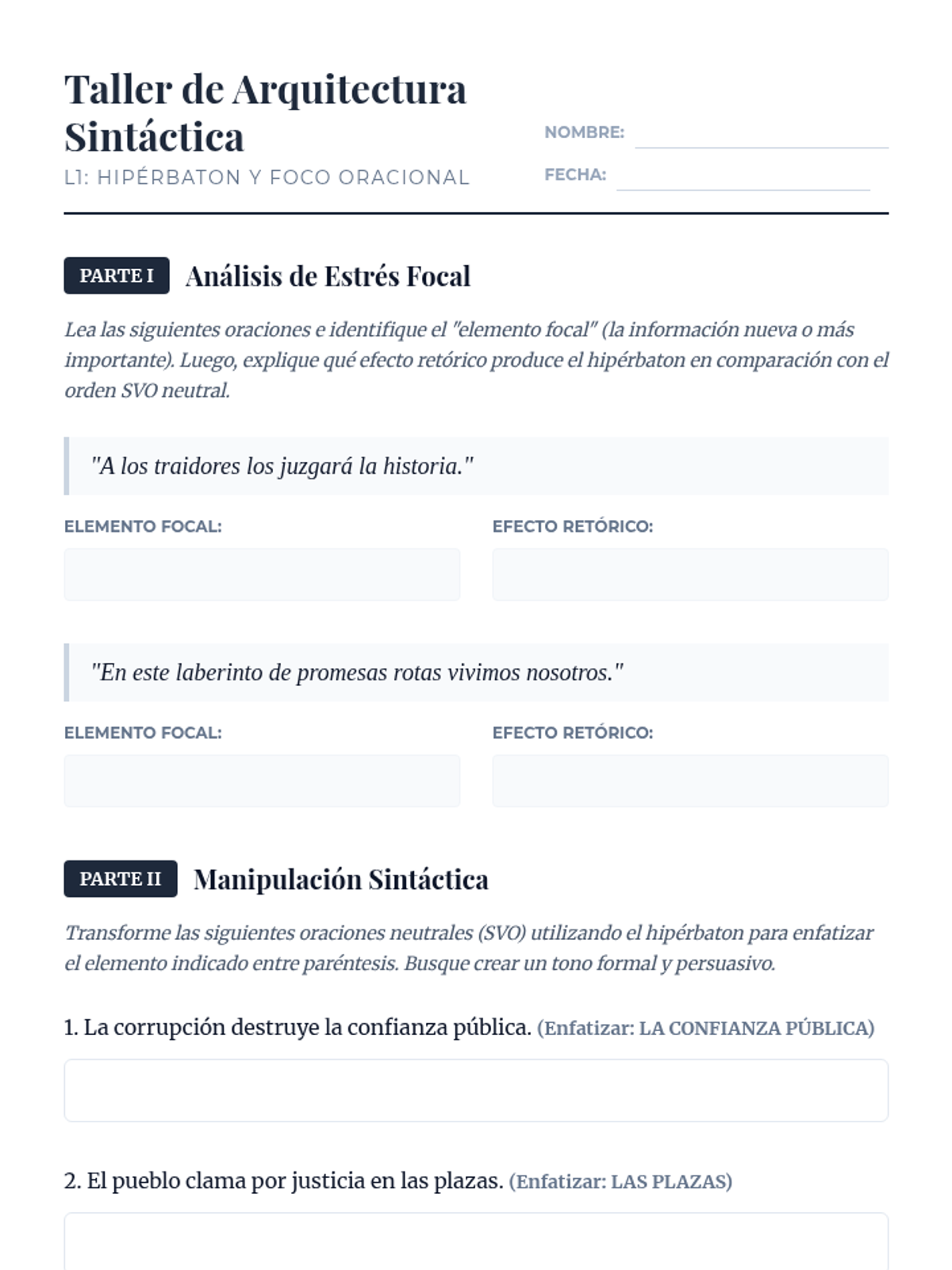
This advanced Spanish grammar sequence for graduate students focuses on superior-level fluency through the mastery of syntax, word order, and rhetorical devices. Students learn to manipulate language for emphasis, cohesion, and persuasive power, moving from sentence-level mechanics to sophisticated discourse organization.
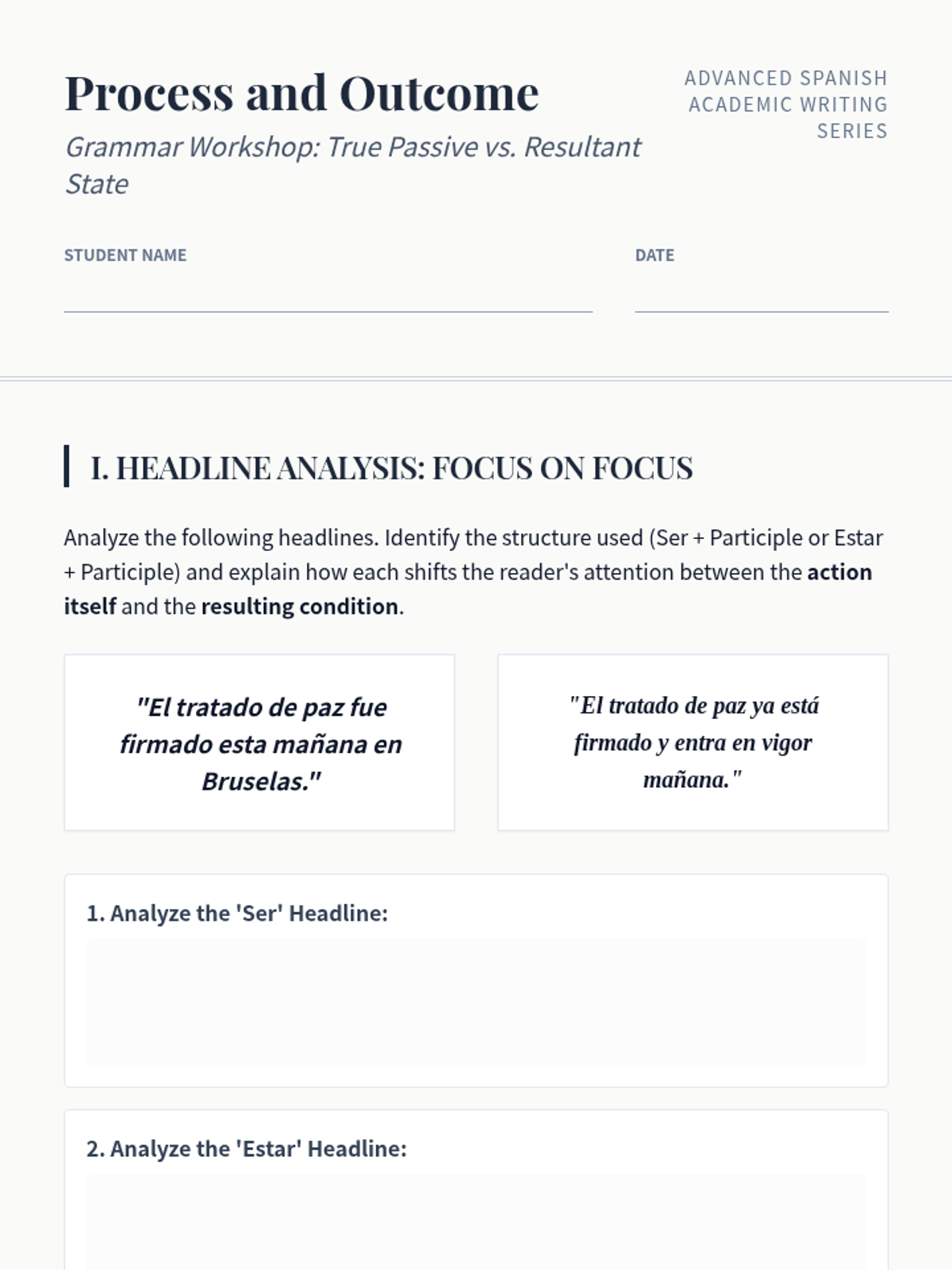
A comprehensive sequence for graduate students focusing on the grammatical tools required to achieve an objective academic tone in Spanish research writing. Students master the nuances of passive voice, impersonal 'se', and nominalization to enhance the authority and density of their scholarly work.
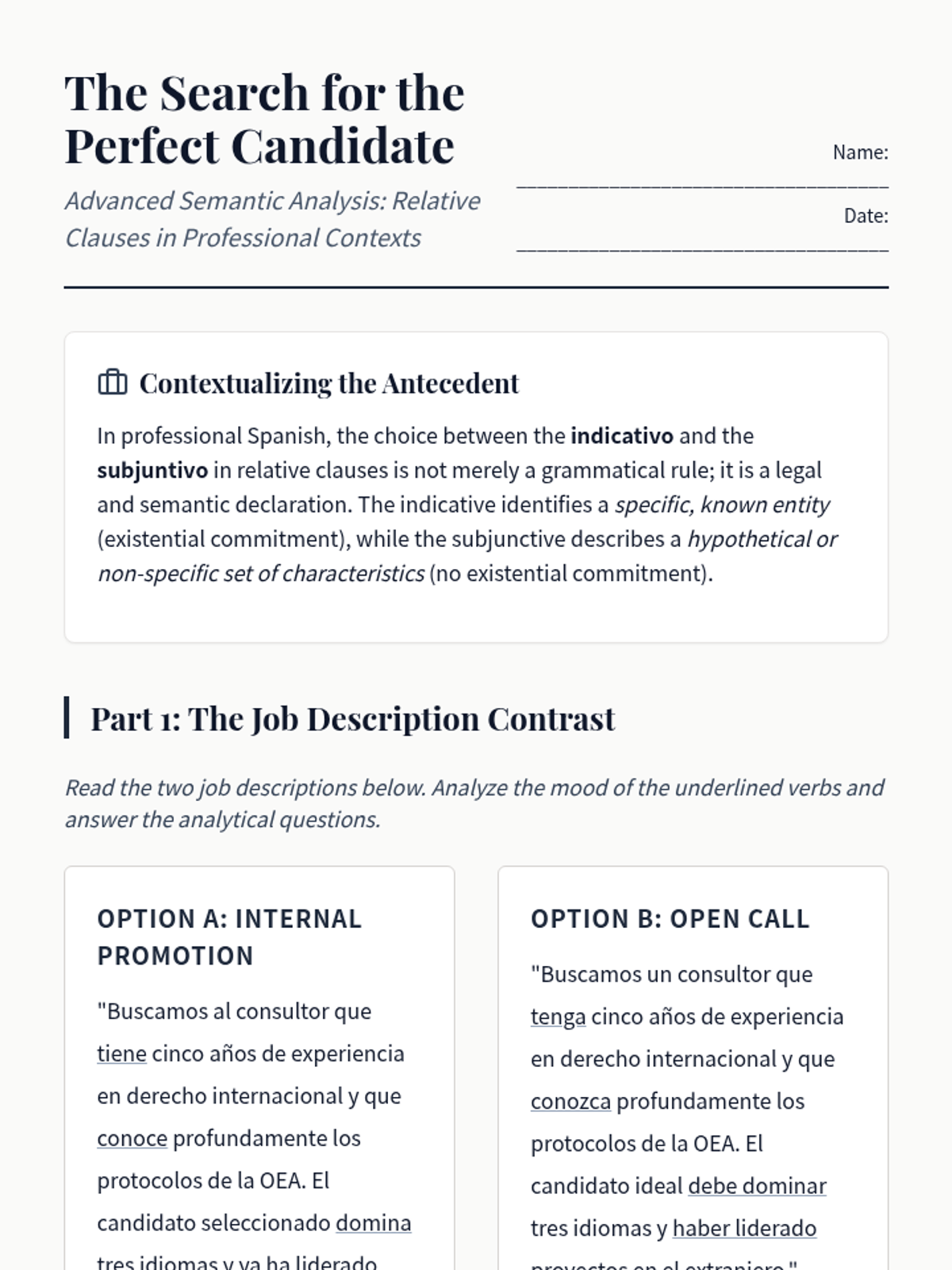
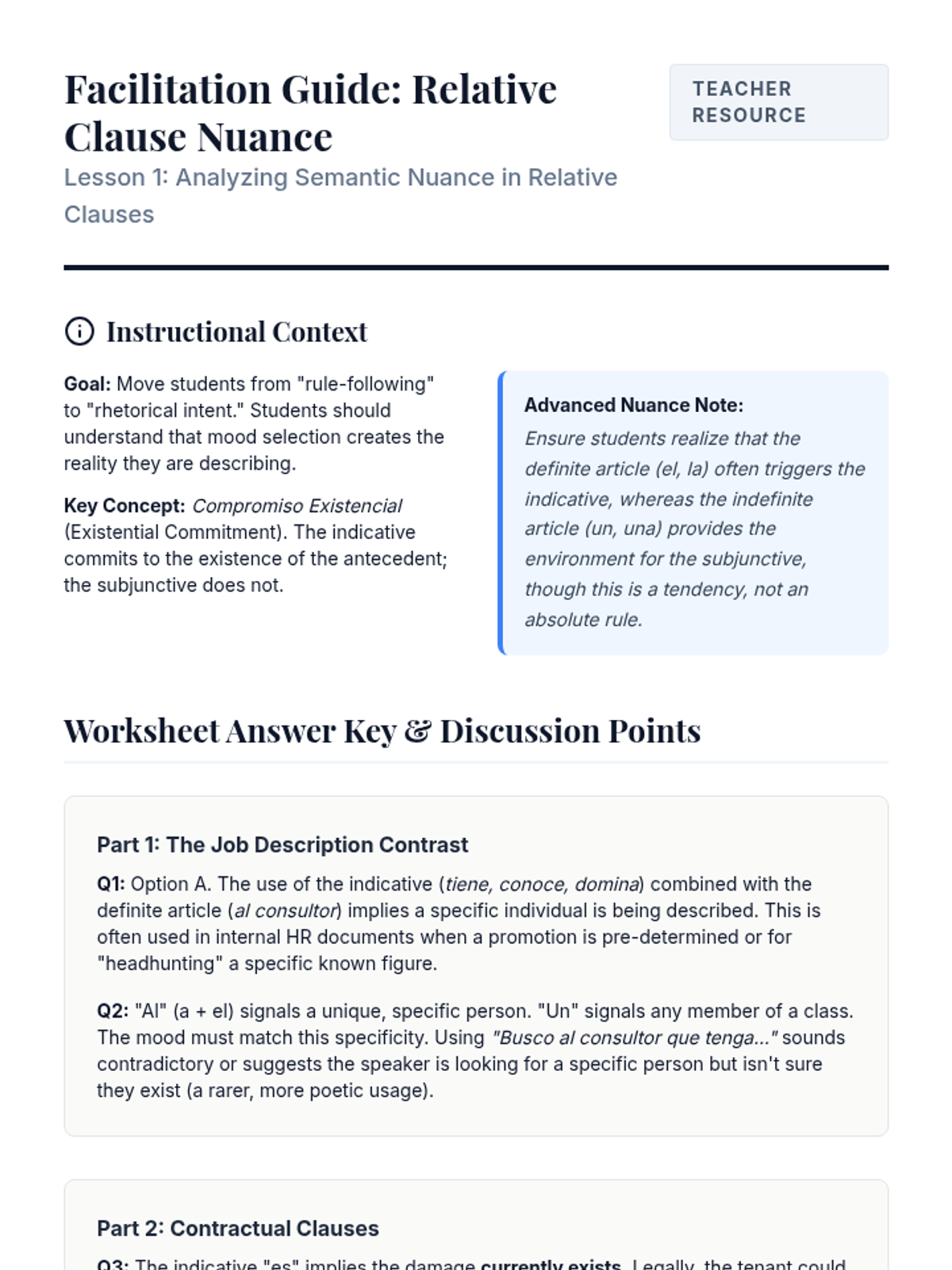
This advanced Spanish grammar sequence for graduate students explores the semantic nuances and rhetorical power of the subjunctive mood in professional and academic contexts. Students progress from analyzing subtle shifts in meaning in relative and adverbial clauses to mastering the strategic use of mood in formal diplomatic and policy discourse.
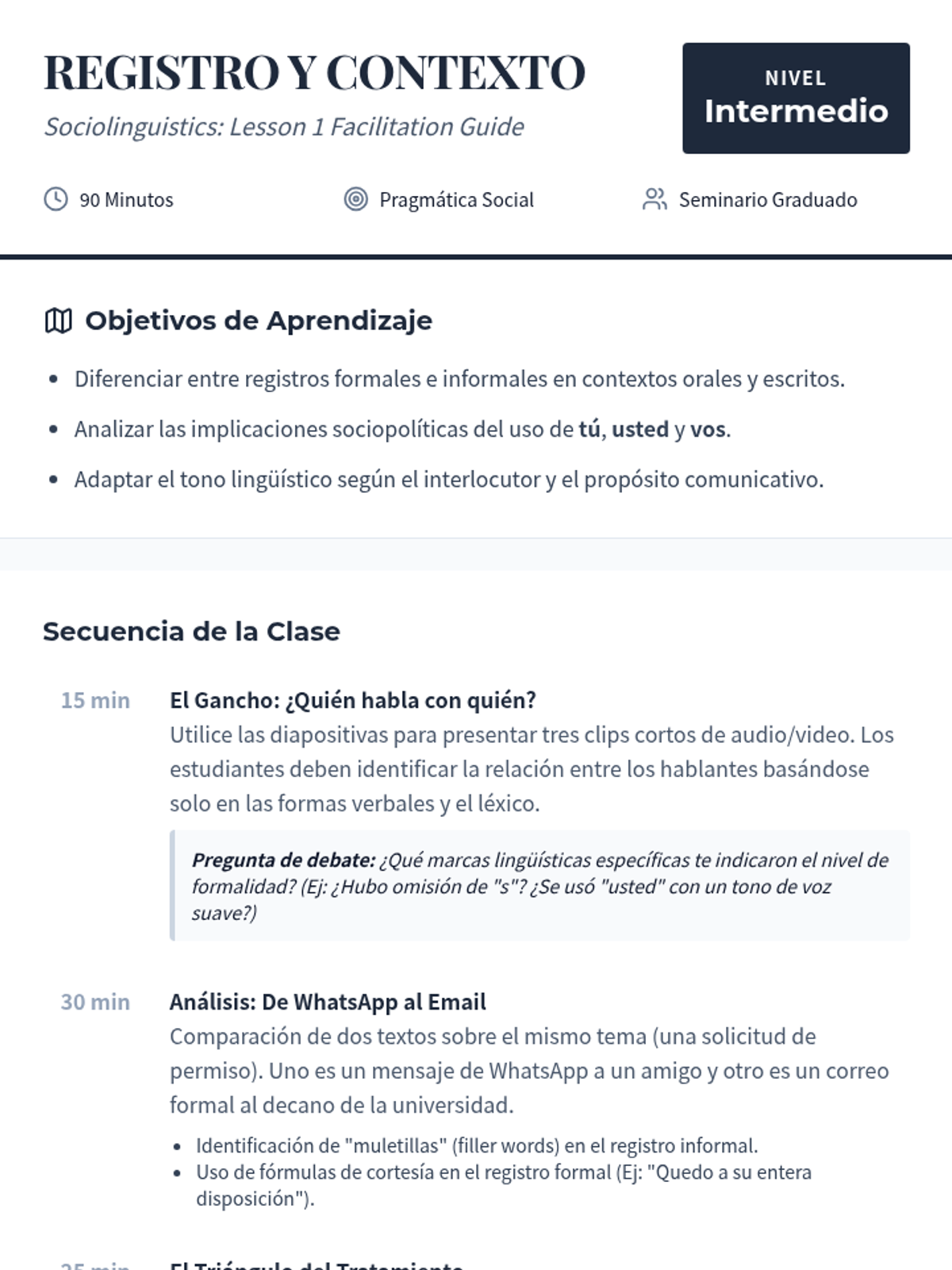
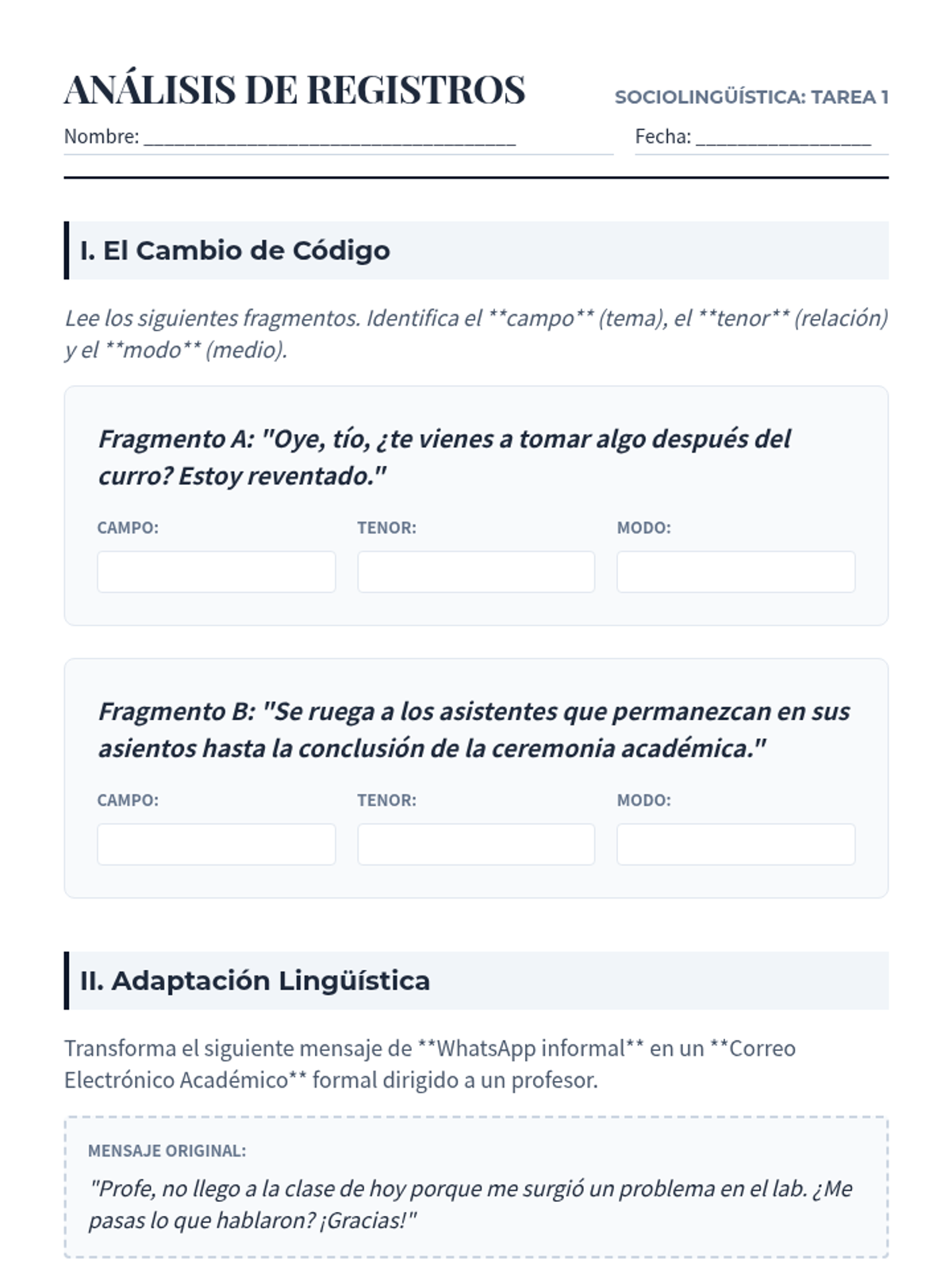
This sequence explores the diversity of the Spanish language through a sociolinguistic lens, focusing on how culture, geography, and class influence communication for intermediate learners at the graduate level. Students analyze registers, regional slang, humor, and digital communication to understand the link between identity and language.
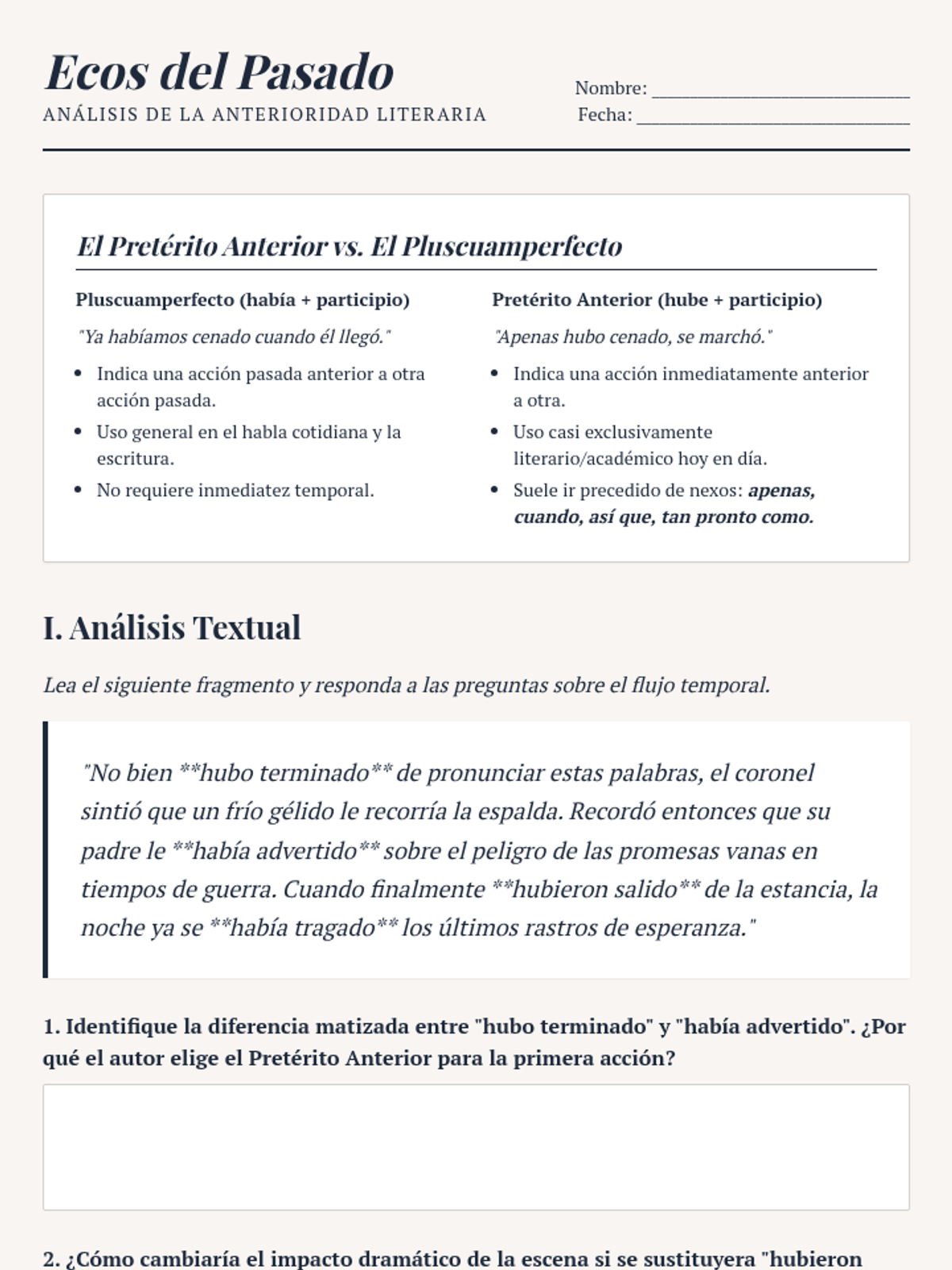
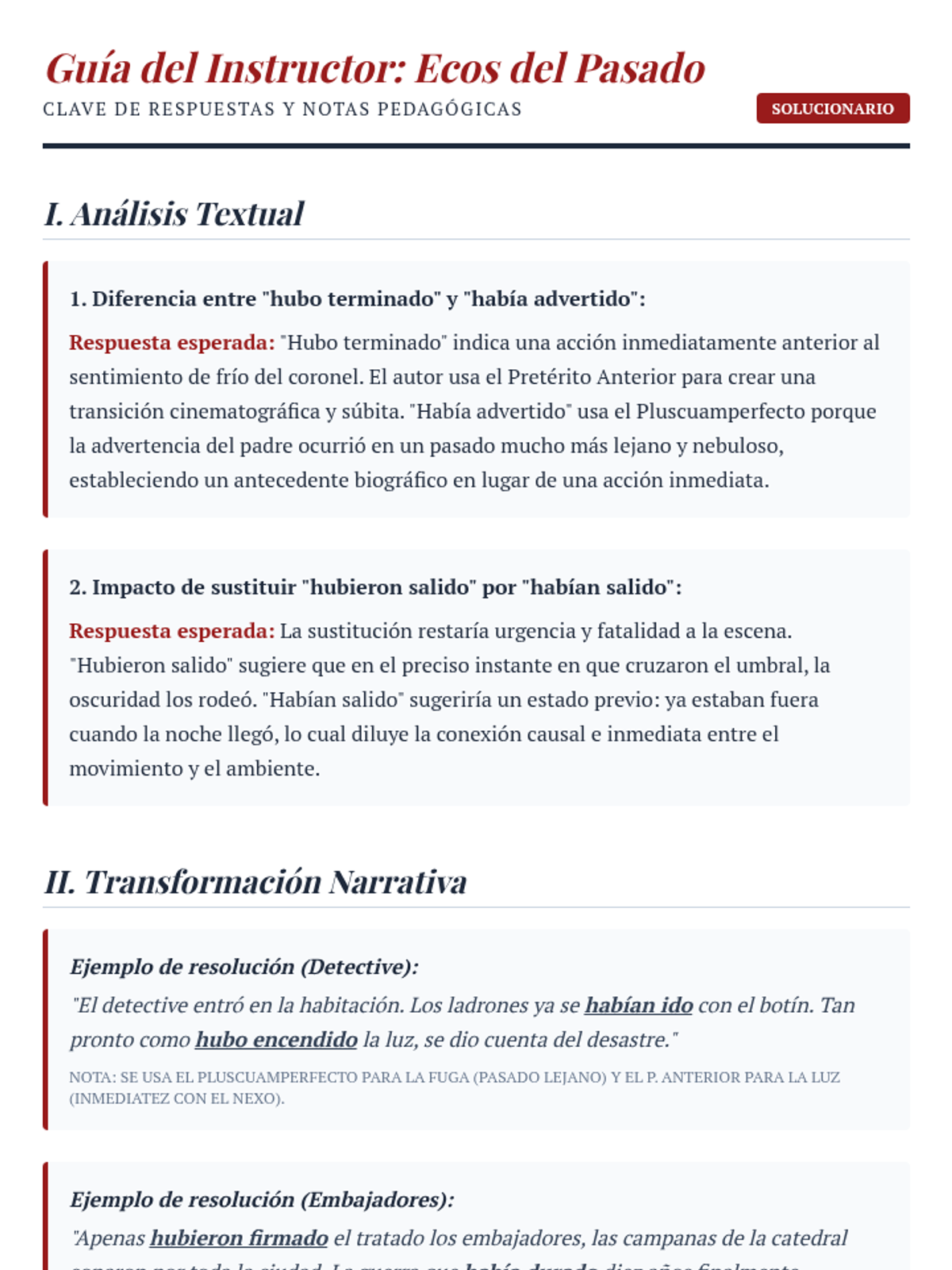
This advanced Spanish grammar sequence explores the sophisticated use of compound tenses in narrative and analytical writing. Graduate students will master the nuances of anteriority, probability, and temporal flow through literary analysis and creative application.
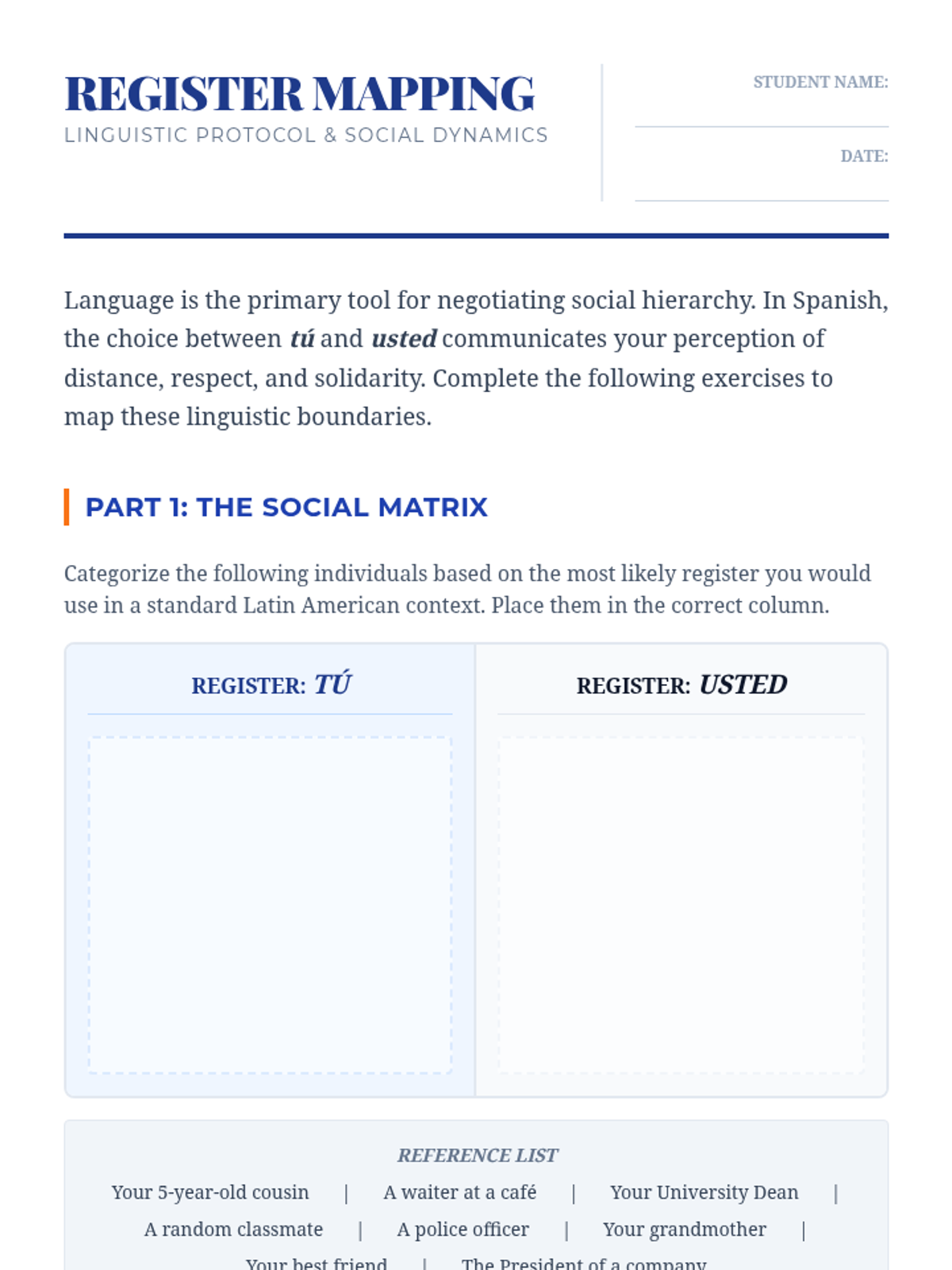
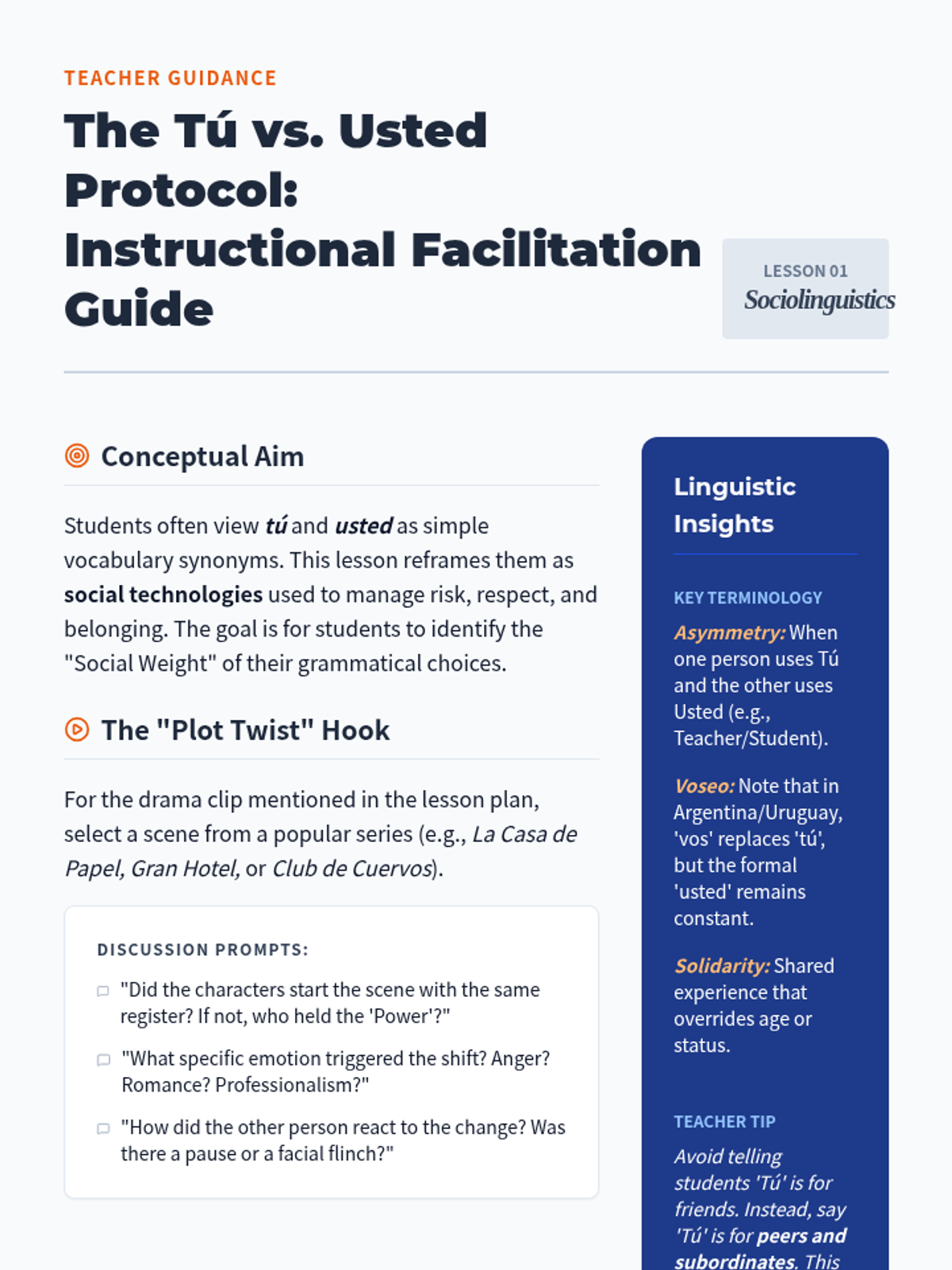
This sequence explores the sociolinguistic nuances of Spanish, focusing on the distinction between formal (usted) and informal (tú) registers. Students analyze social hierarchy and cultural values to understand how grammatical choices dictate relationship dynamics and avoid cultural faux pas.
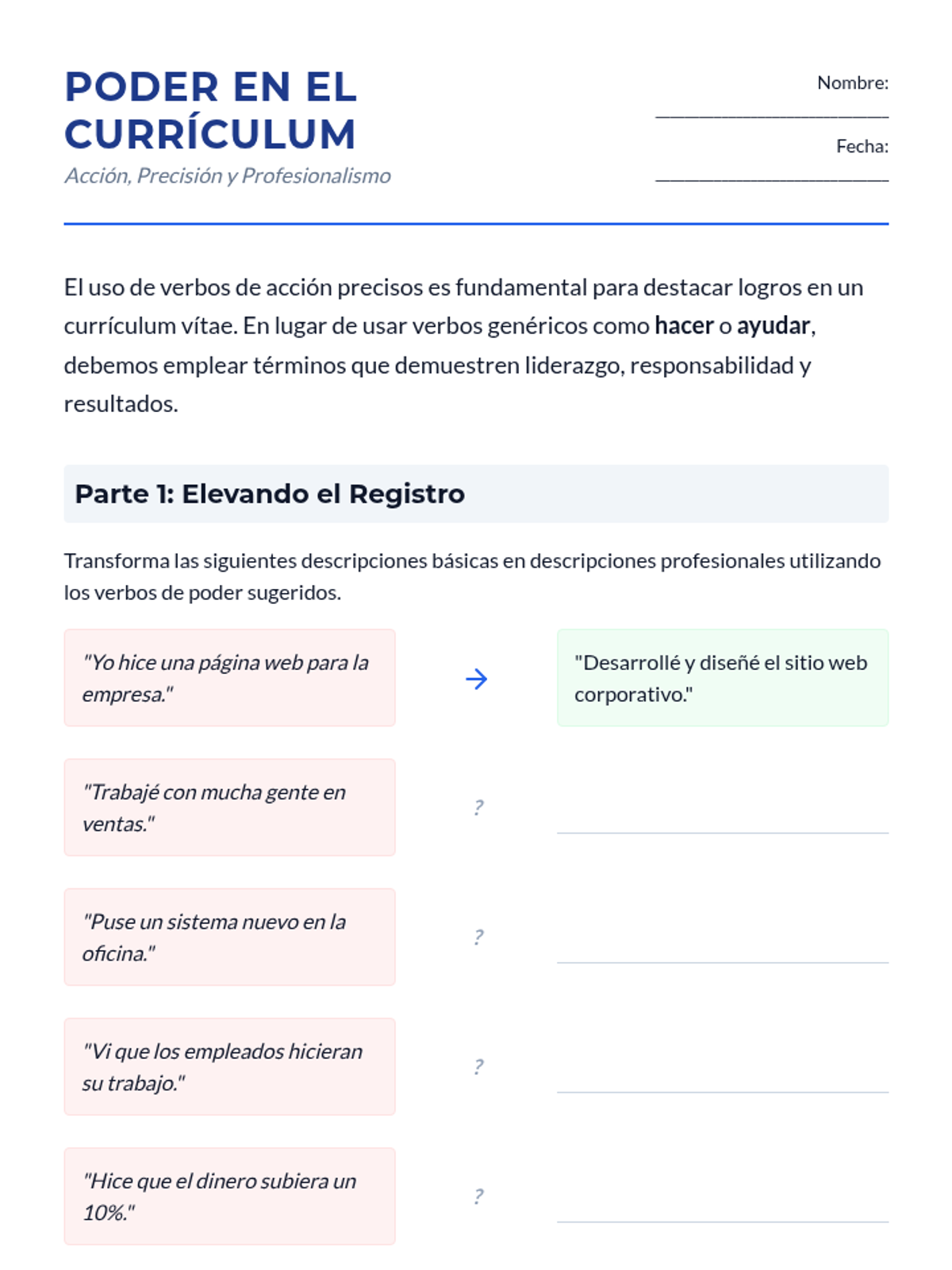
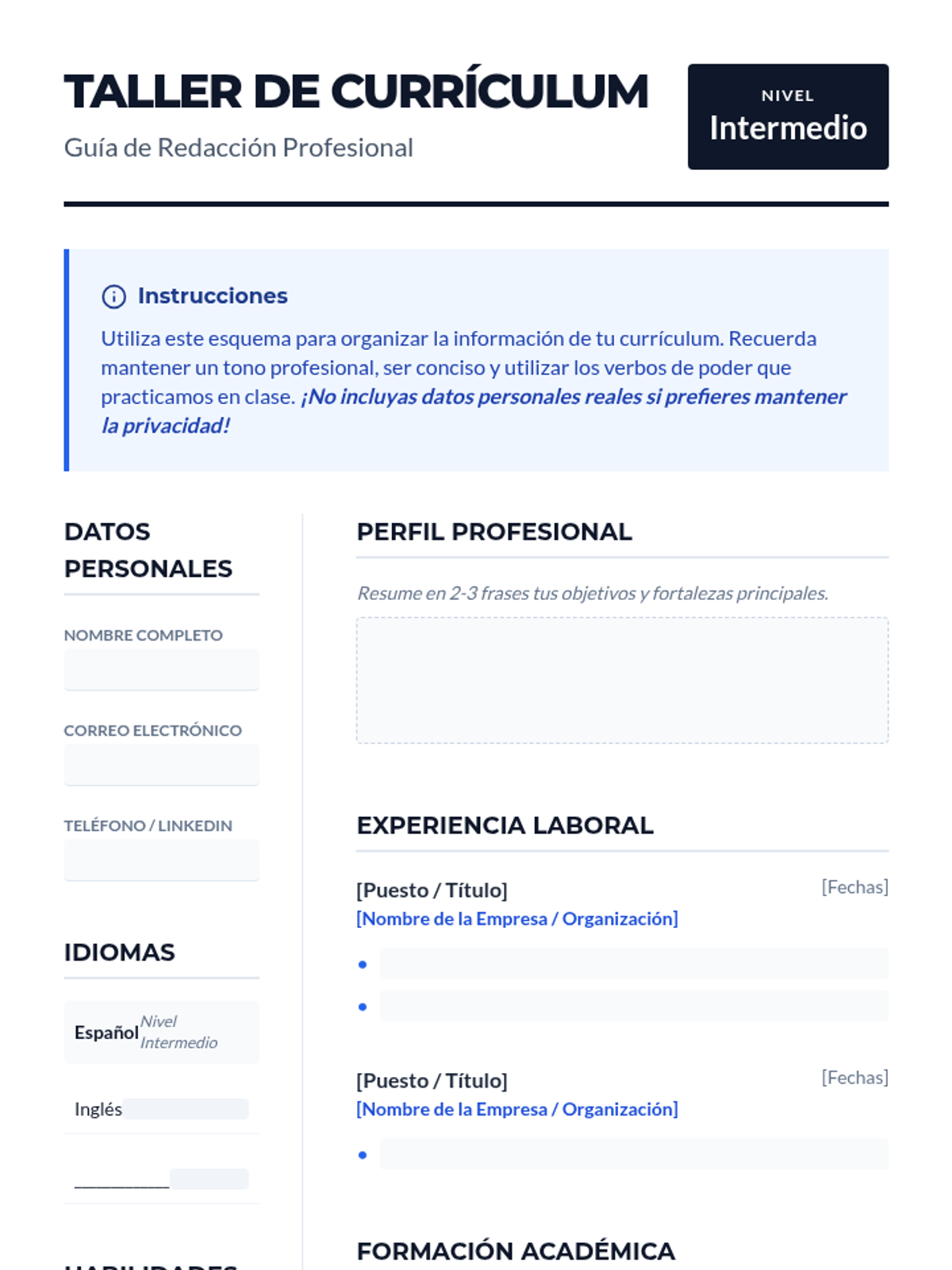
This sequence prepares intermediate Spanish students for professional environments by focusing on specialized vocabulary, formal registers, and workplace communication protocols. Students progress from written self-presentation in CVs and cover letters to oral proficiency in interviews and workplace negotiations.