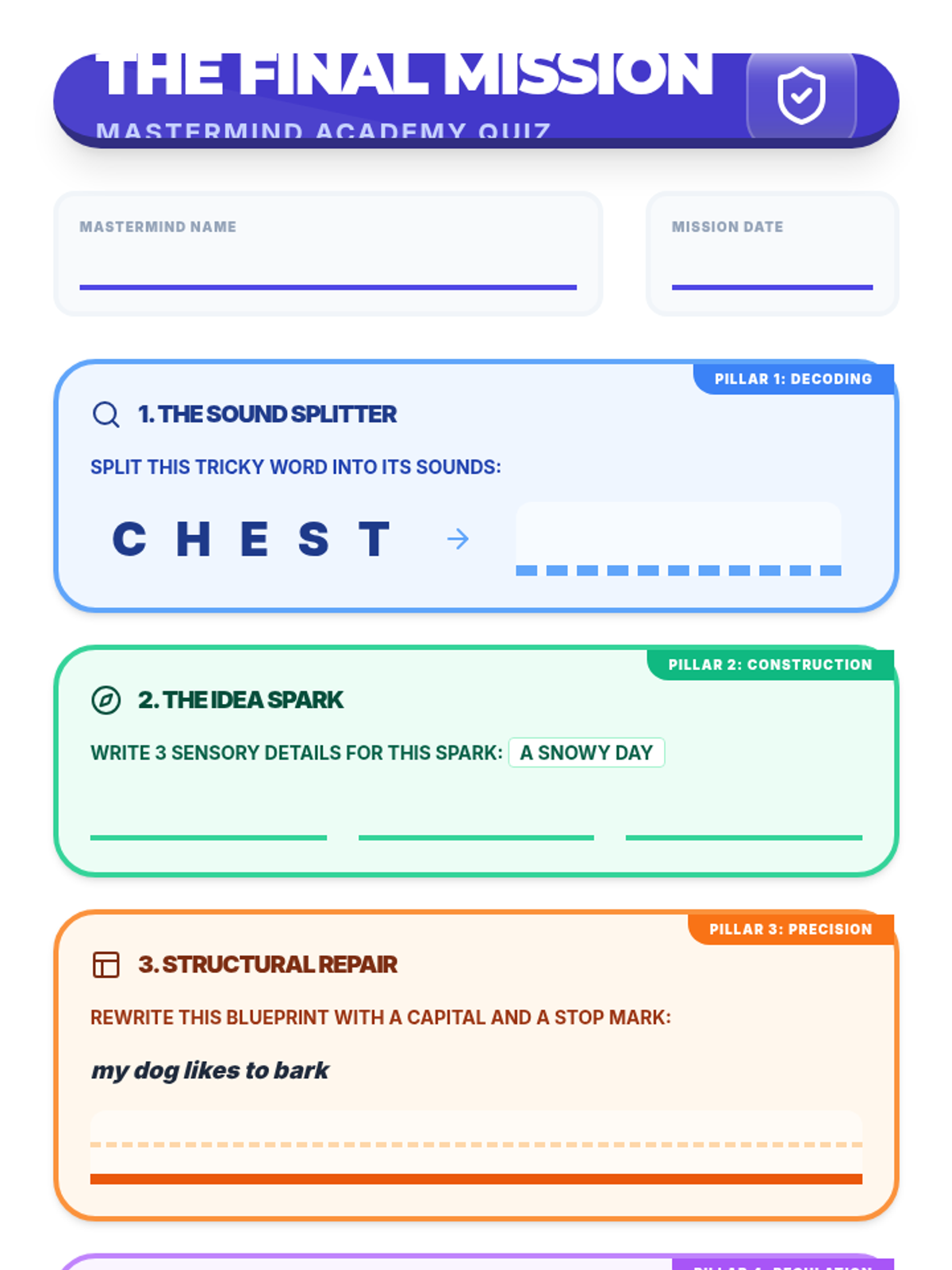
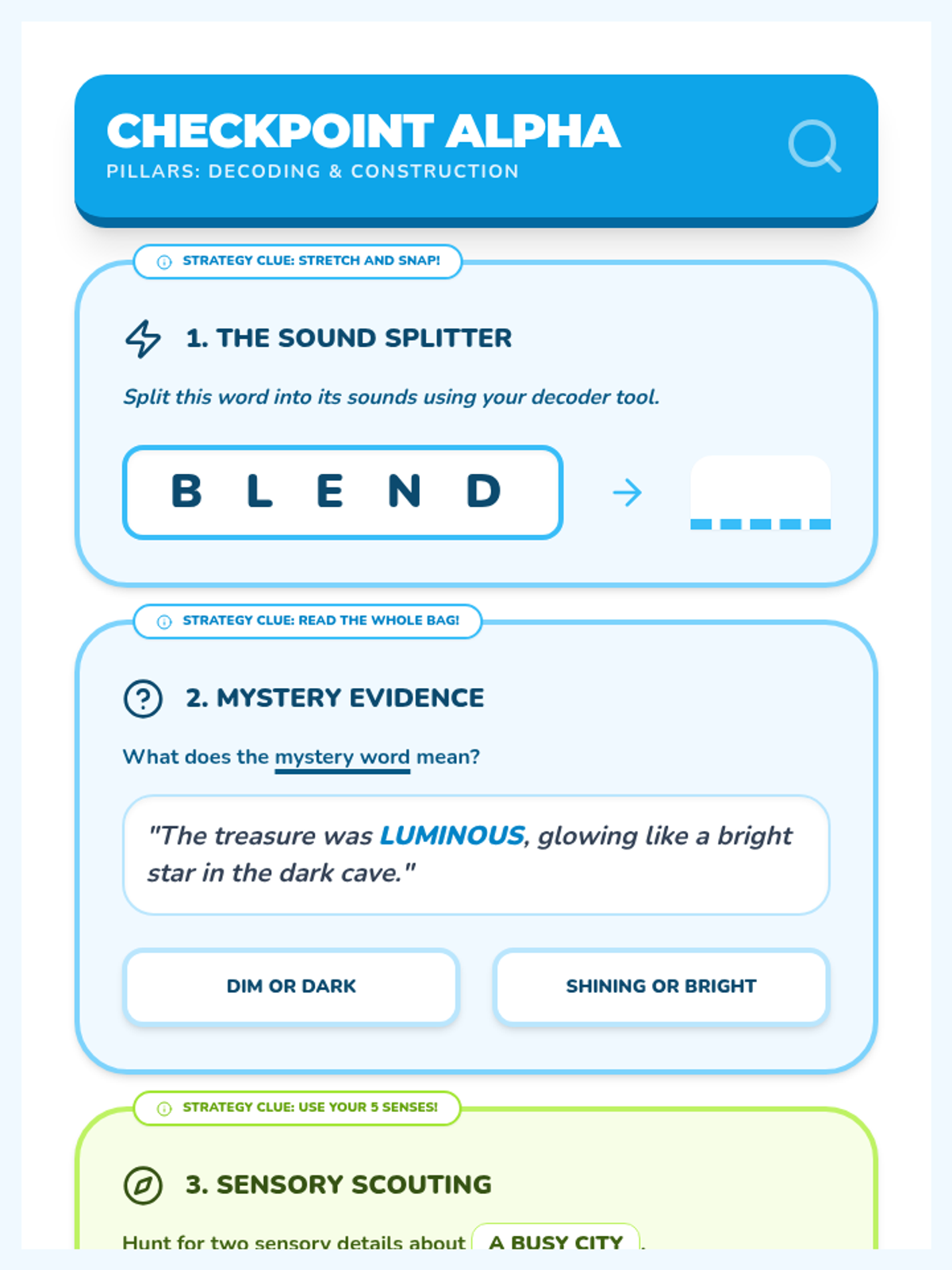
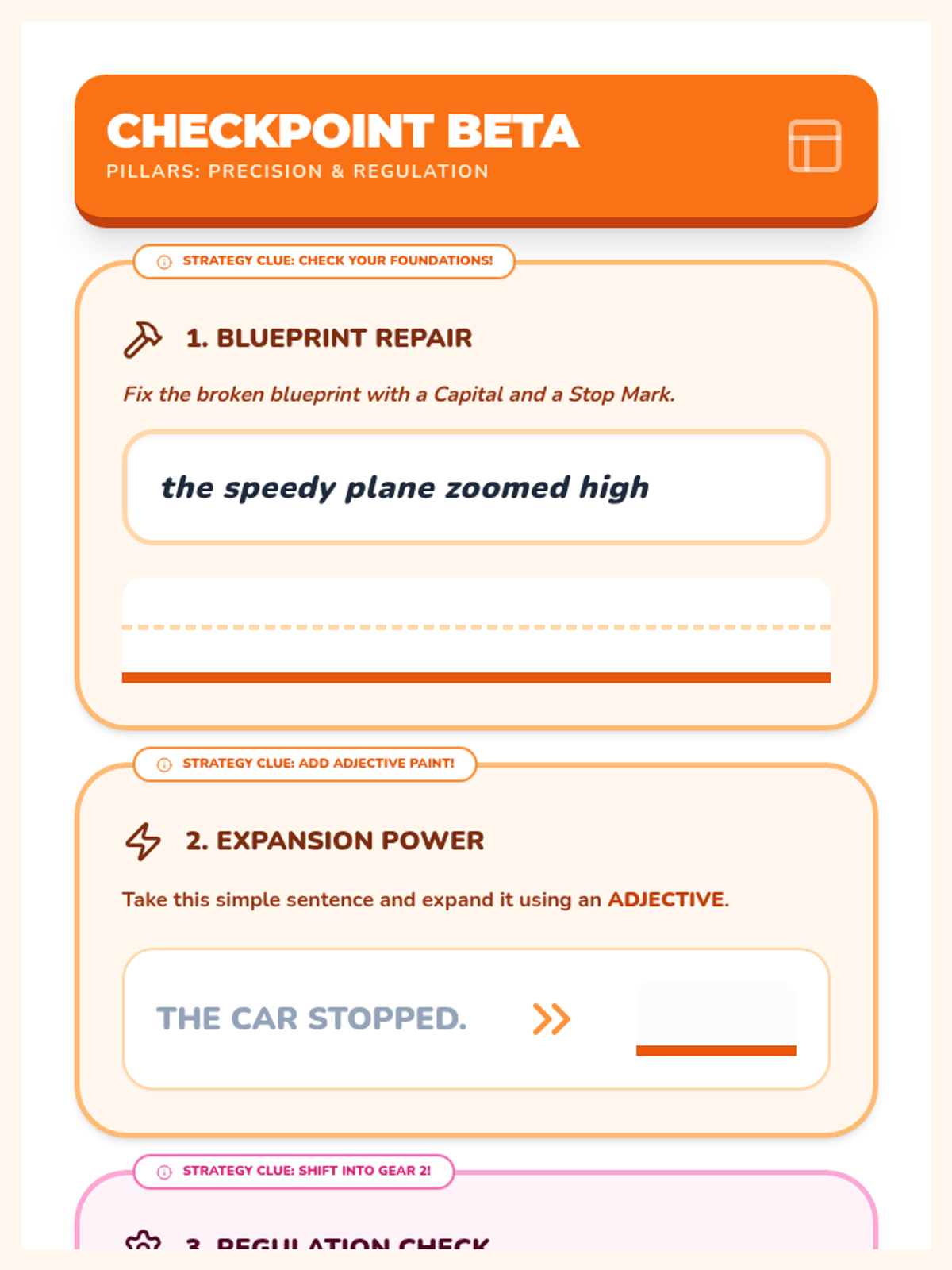
Sentence structure fundamentals, subject-verb agreement, and precise usage of parts of speech including pronouns, conjunctions, and adjectives. Targets technical accuracy through mastery of capitalization, punctuation, spelling, and verb mood.
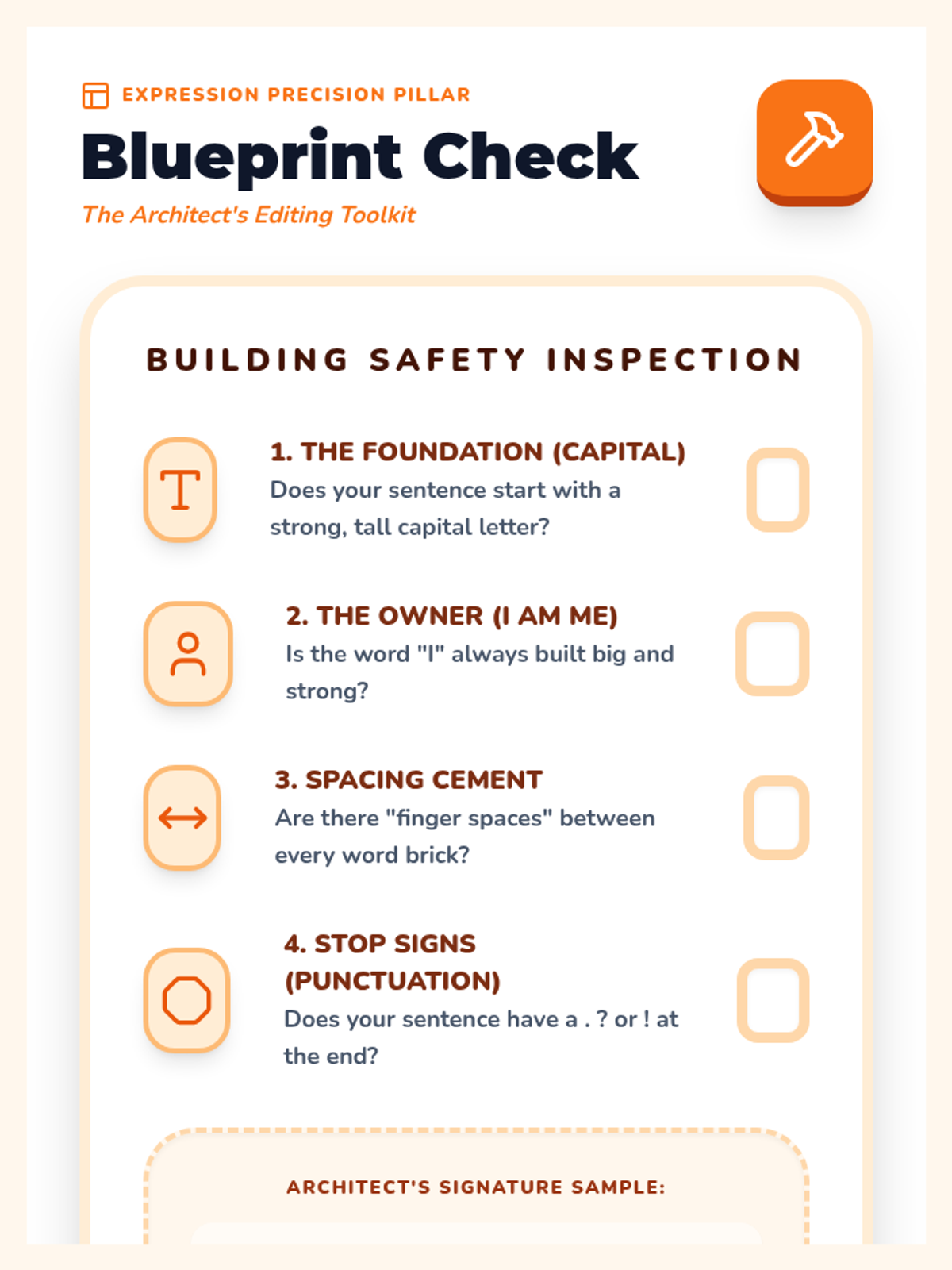
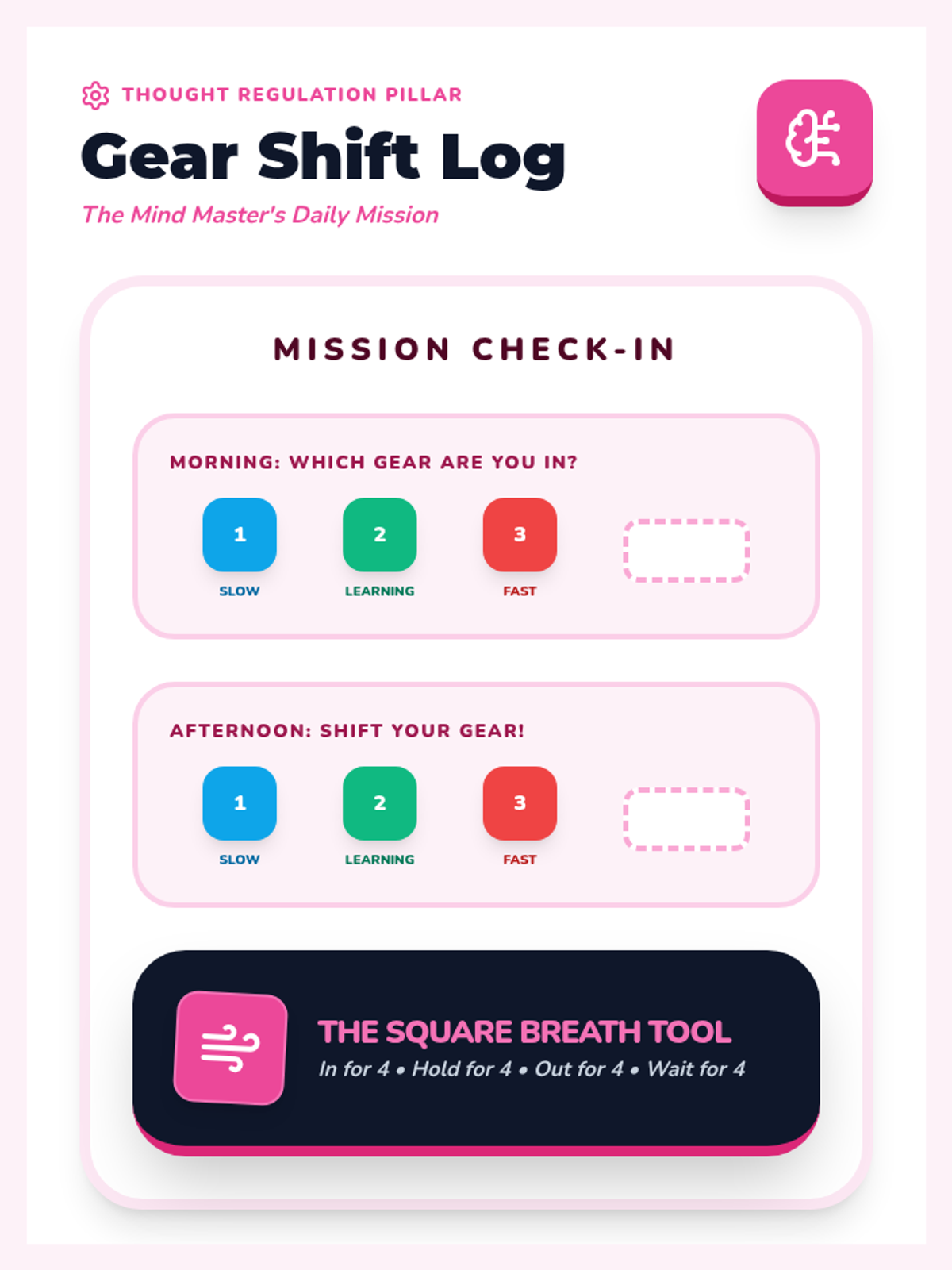
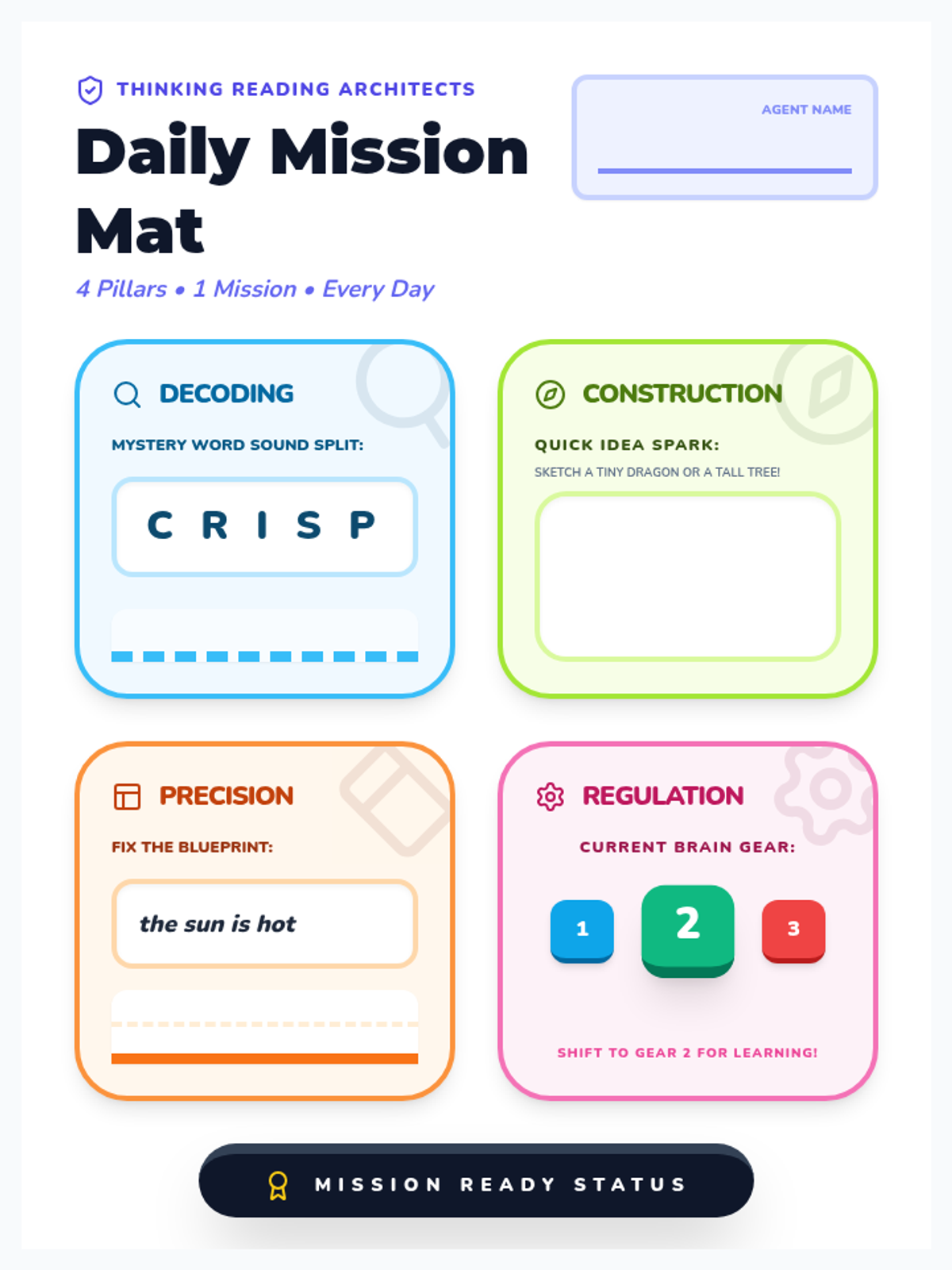
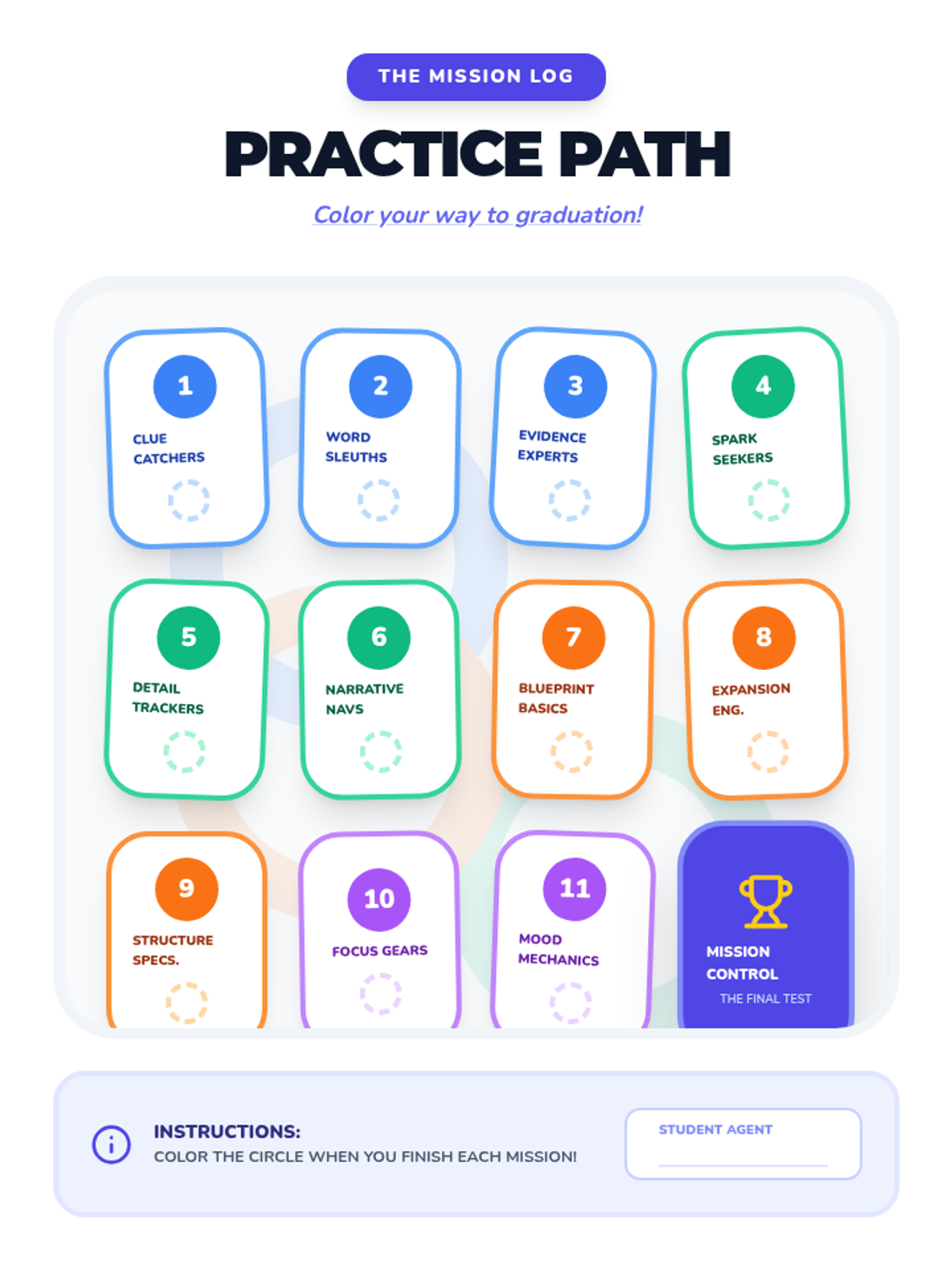
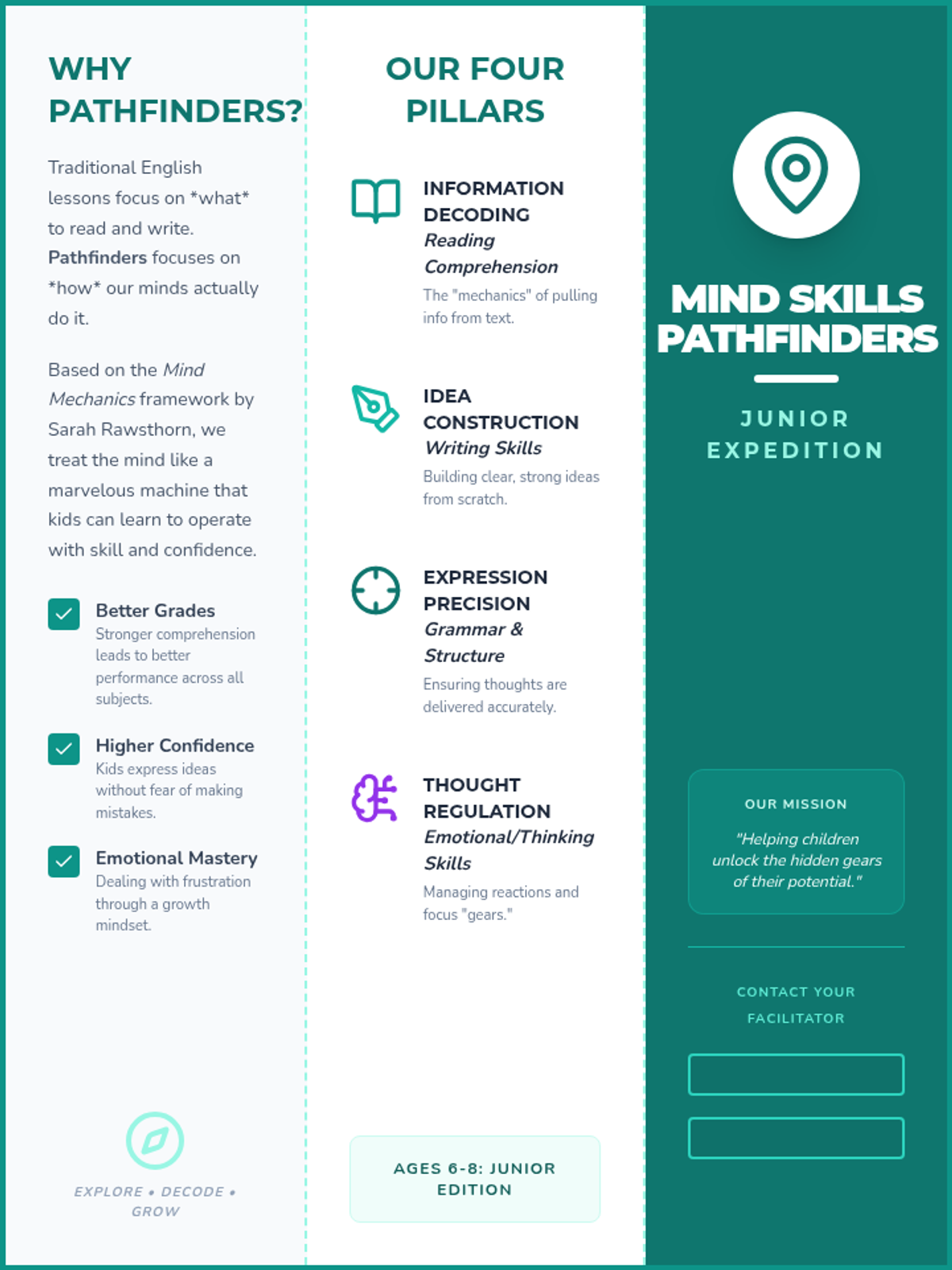
The starting point for all student agents, featuring the mission briefing and essential toolkits for the four program pillars.
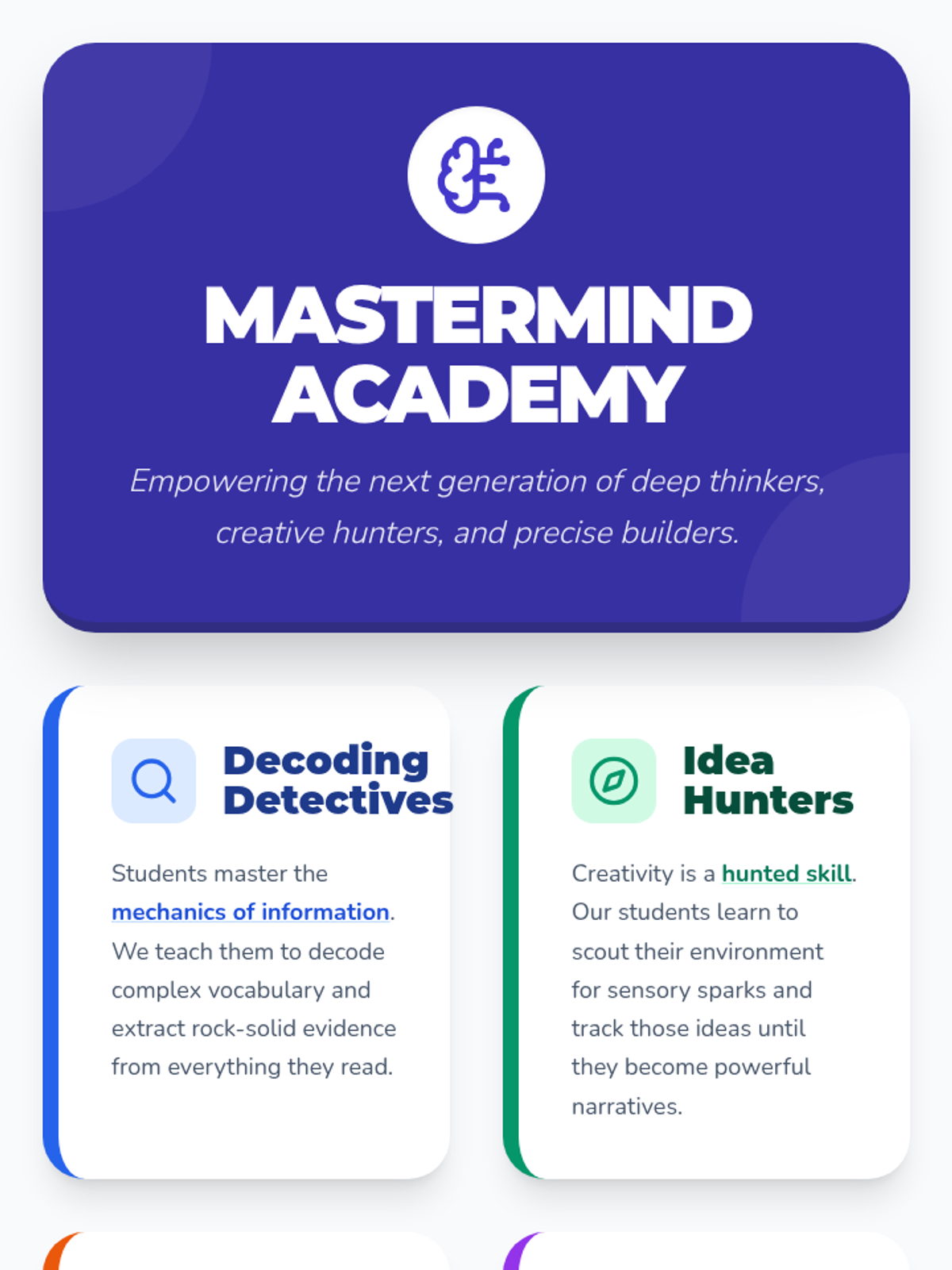
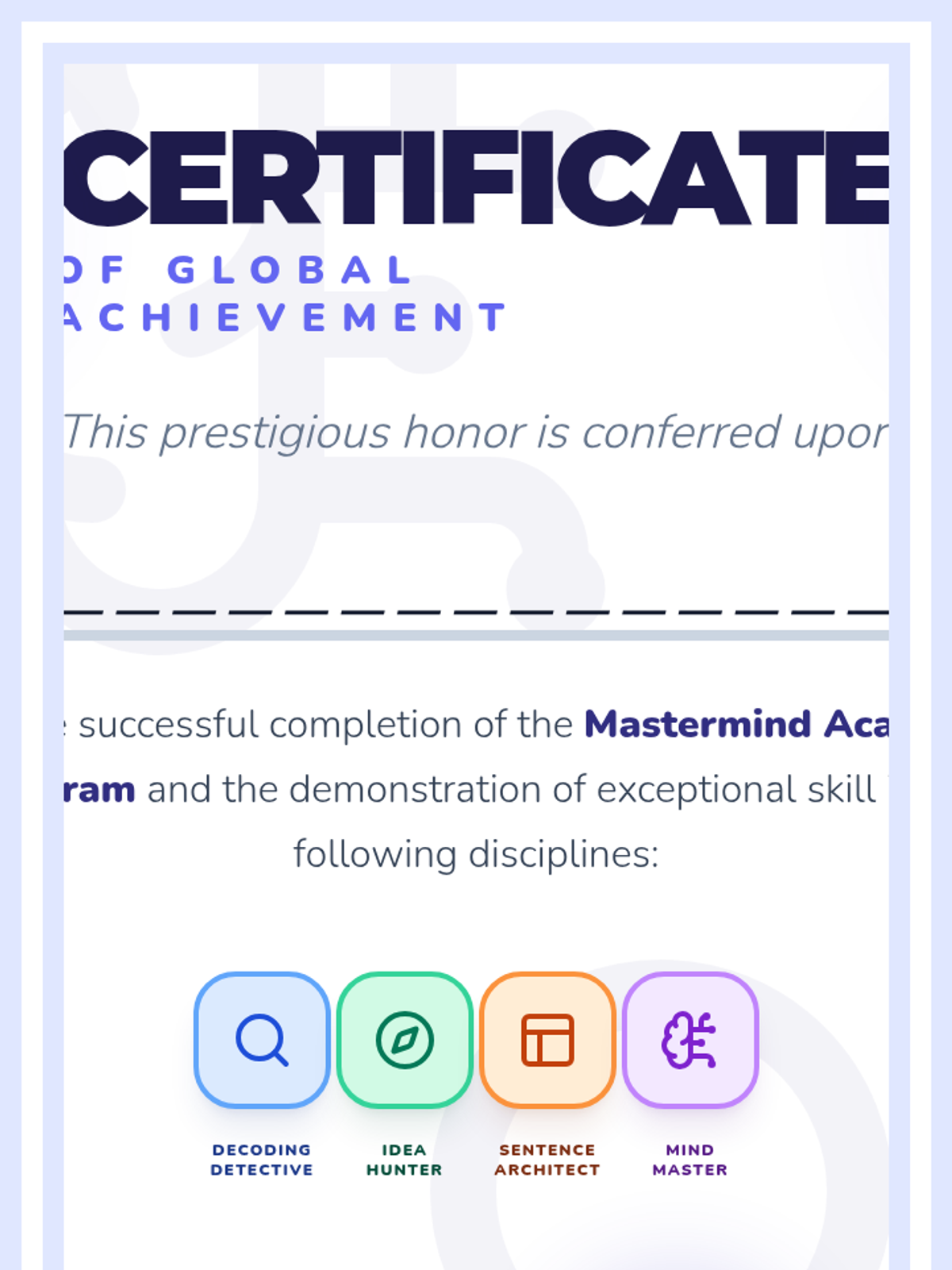
Program-wide materials for the Mastermind Academy, including the parent information brochure and the student graduation certificate.
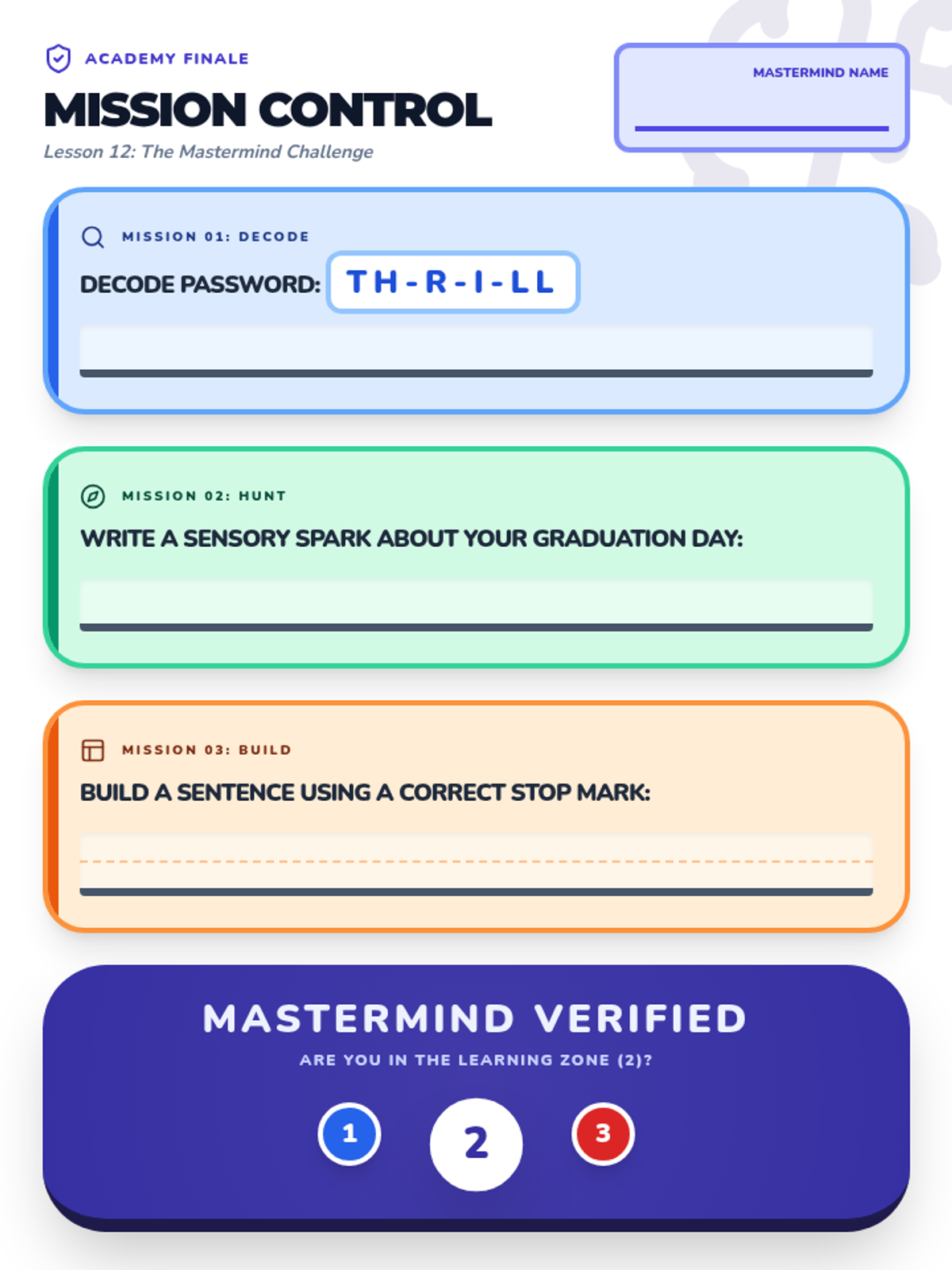
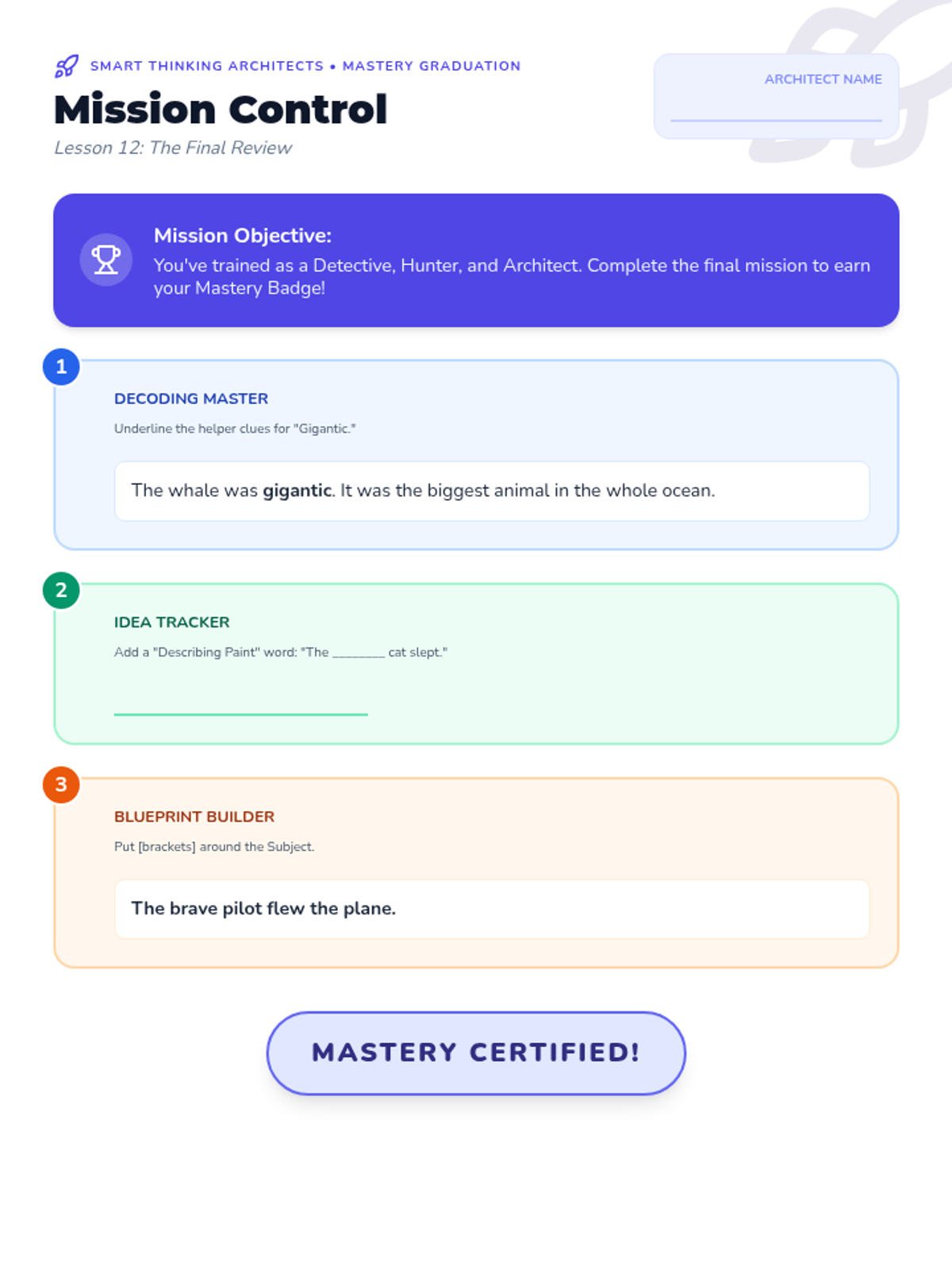
A final review and celebration of the skills learned throughout the Mastermind Academy program.
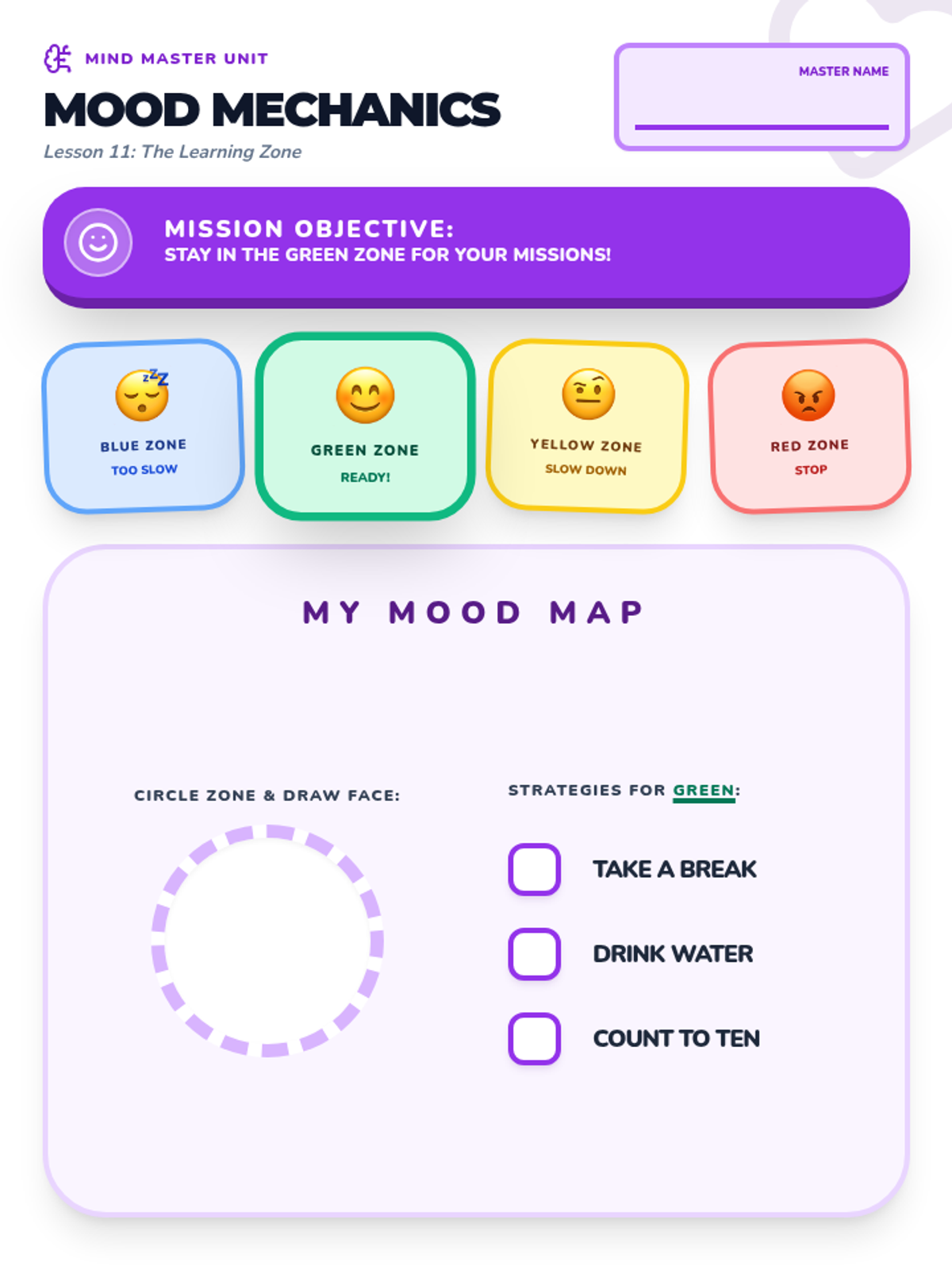
Students learn to identify and regulate their emotions to stay in the "learning zone."
Mind masters learn to switch their "brain gears" to focus on the task at hand and ignore distractions.
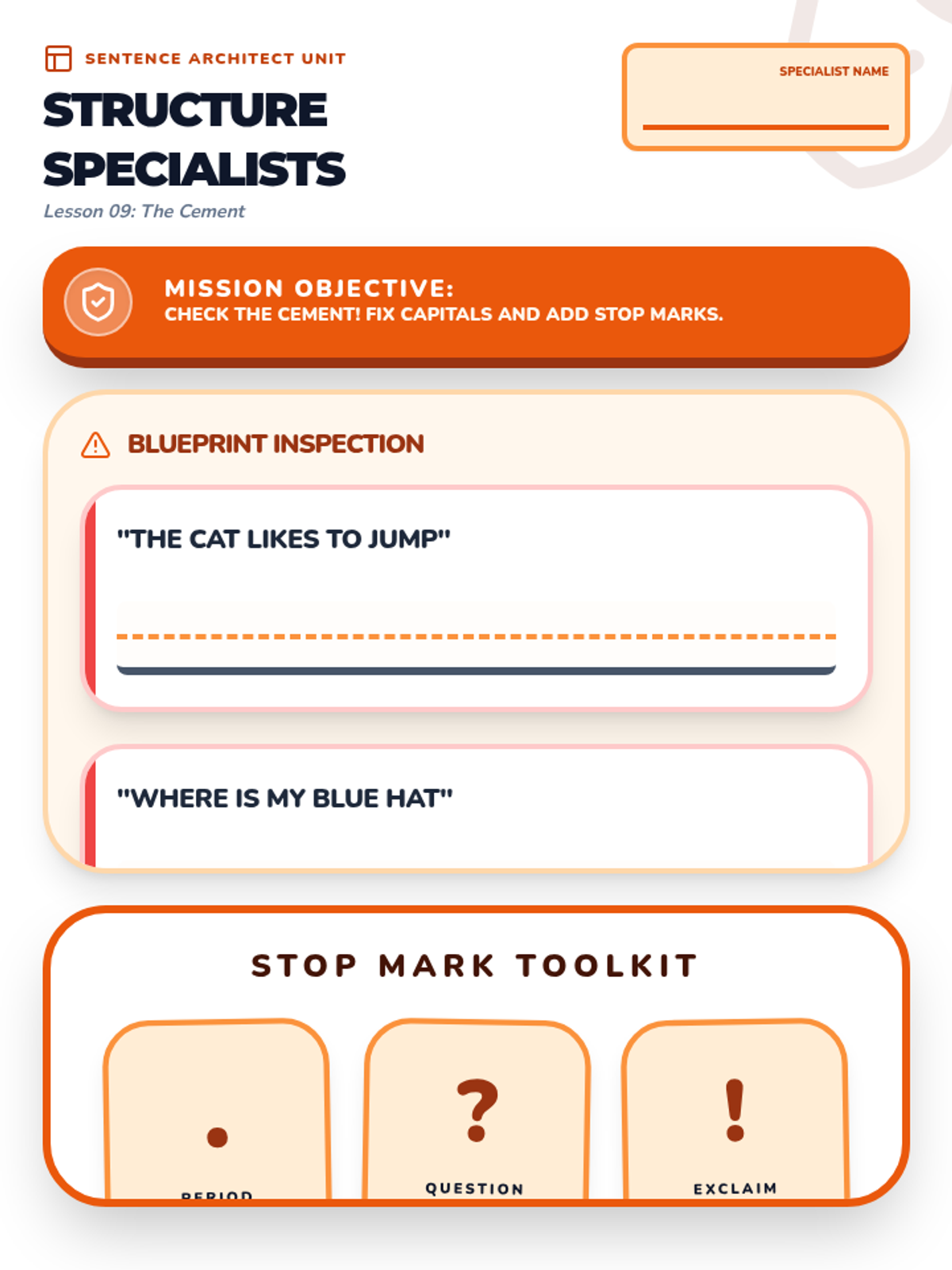
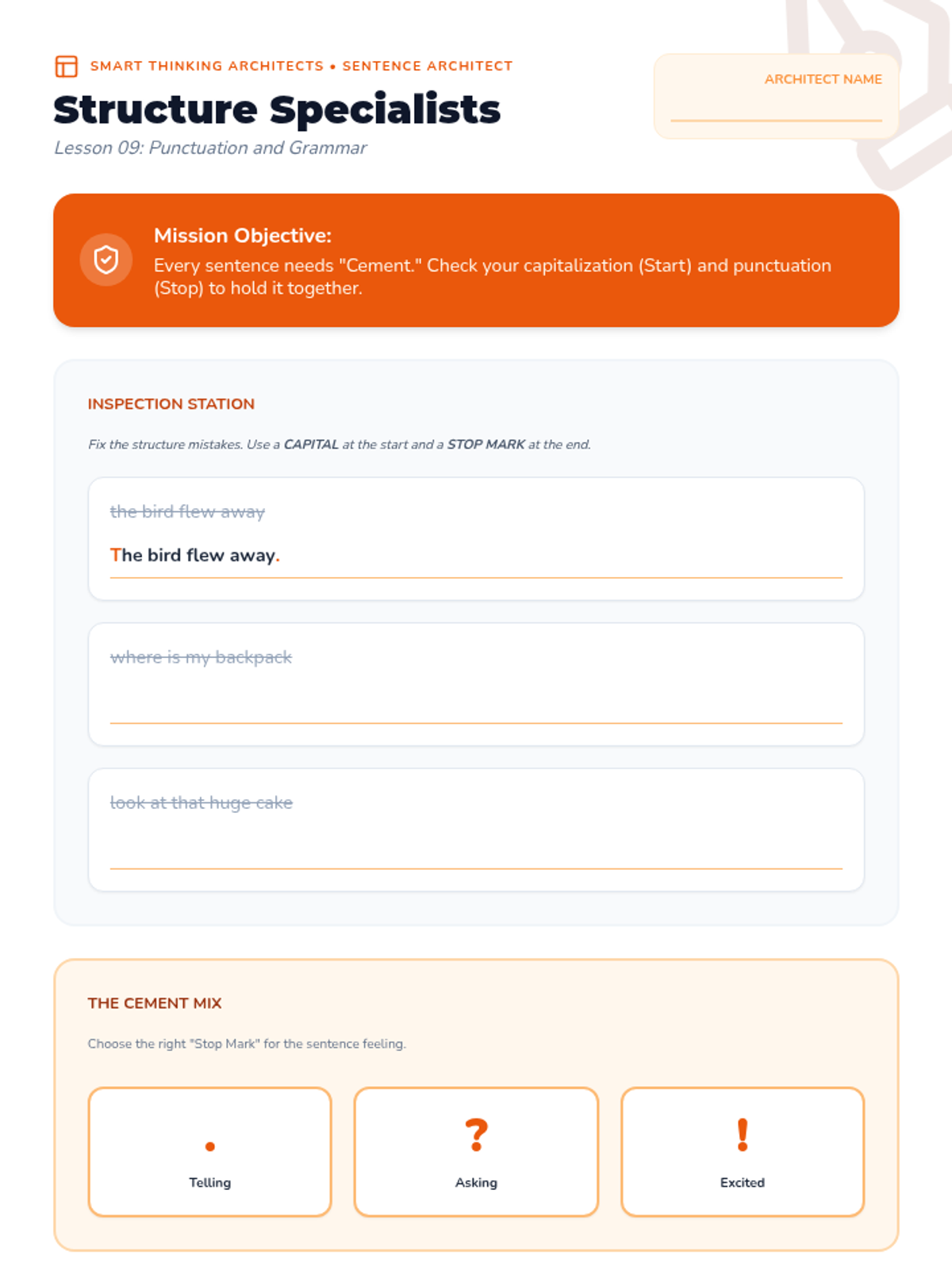
Specialists focus on the "cement" of writing: punctuation, capitalization, and grammar rules.
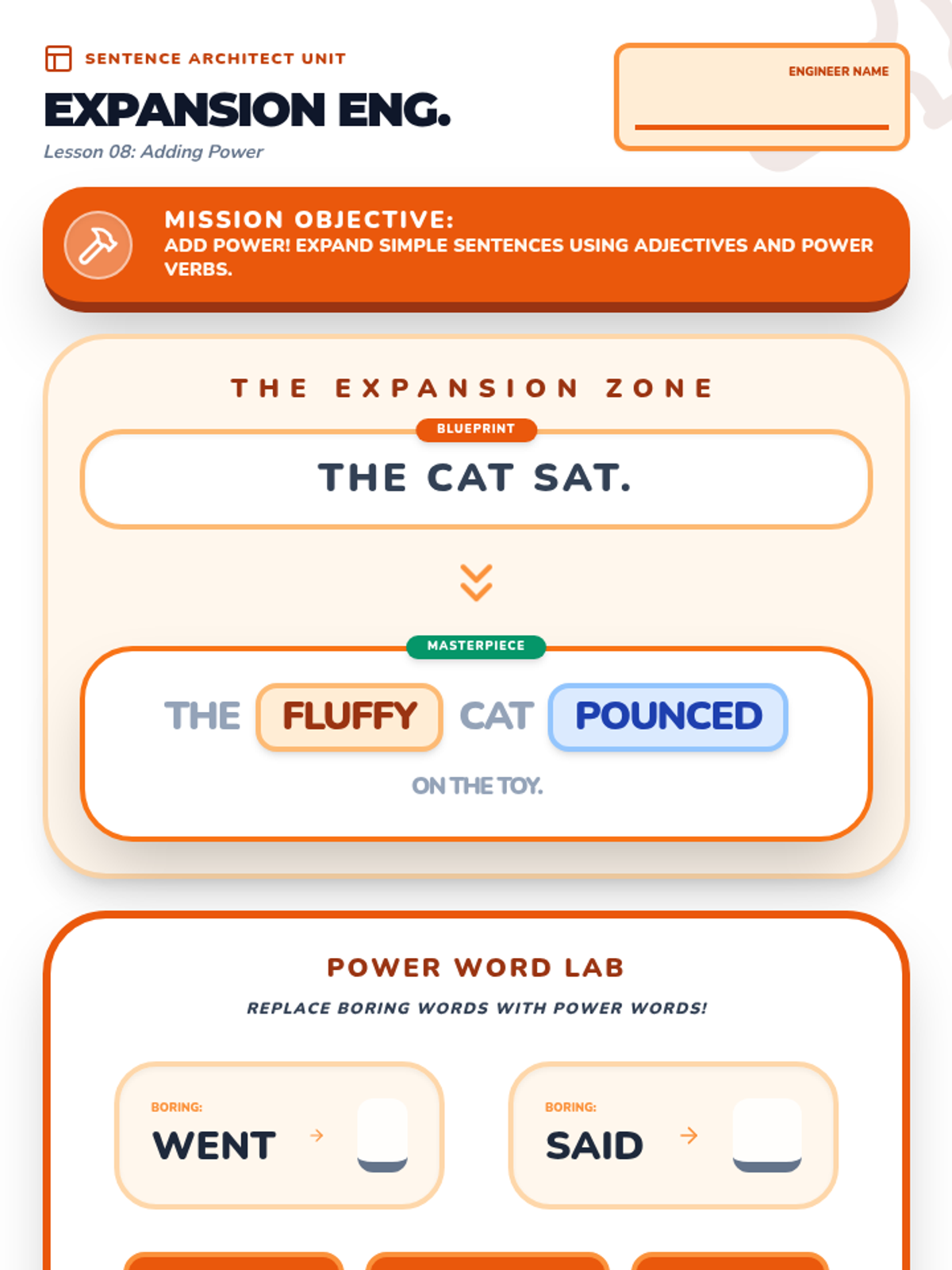
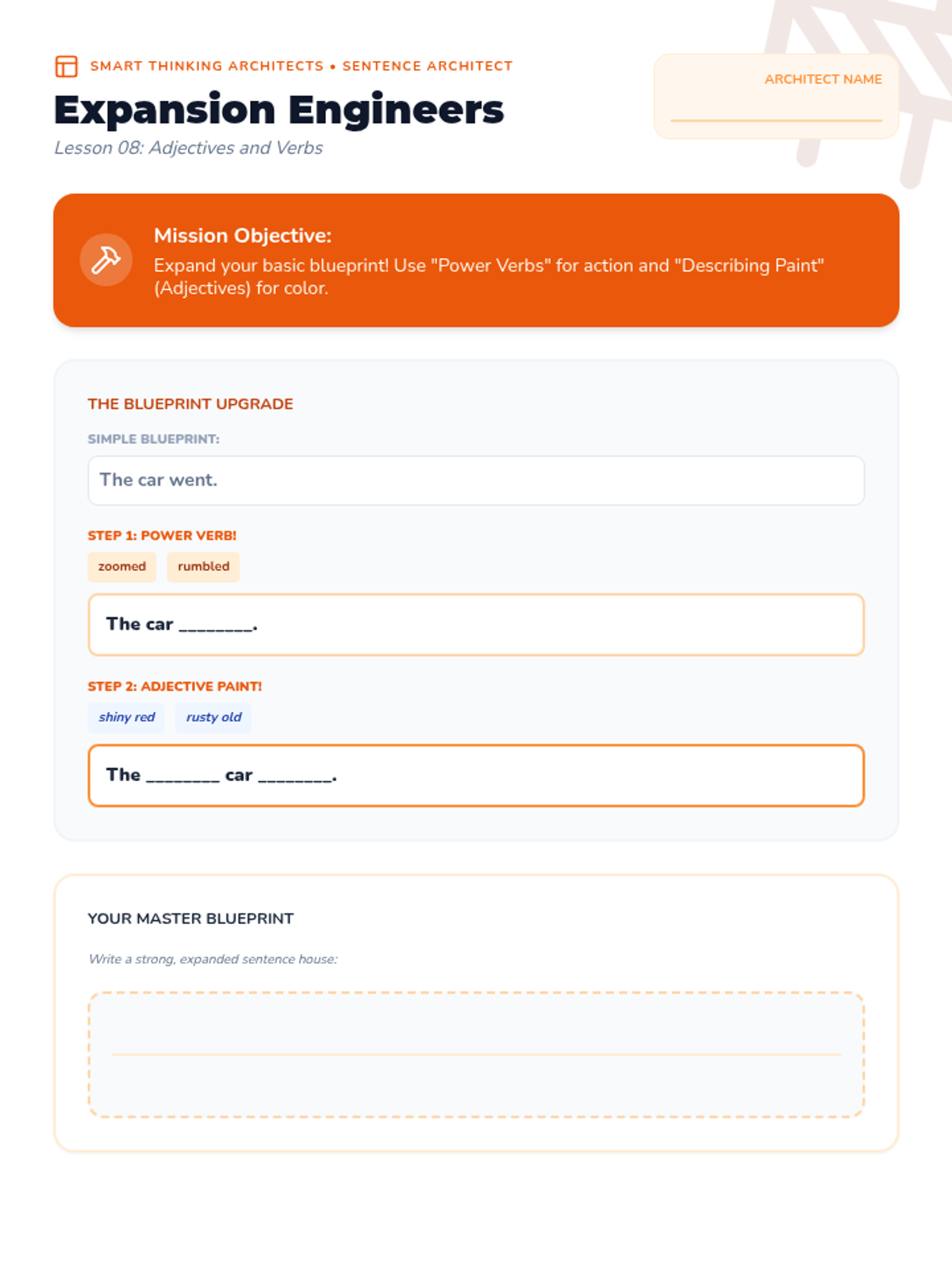
Engineers learn to expand their simple "blueprints" by adding descriptive adjectives and powerful verbs.
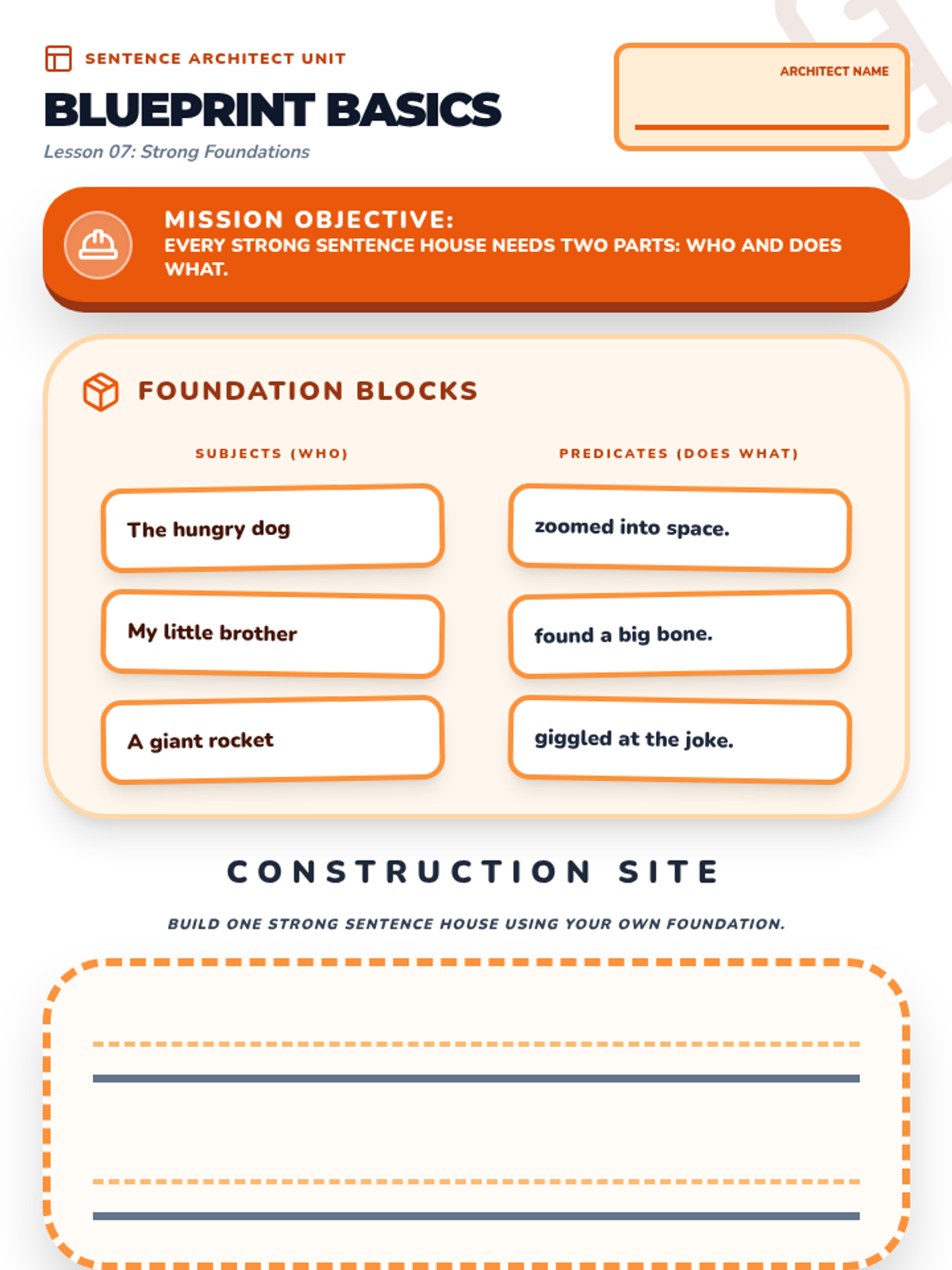
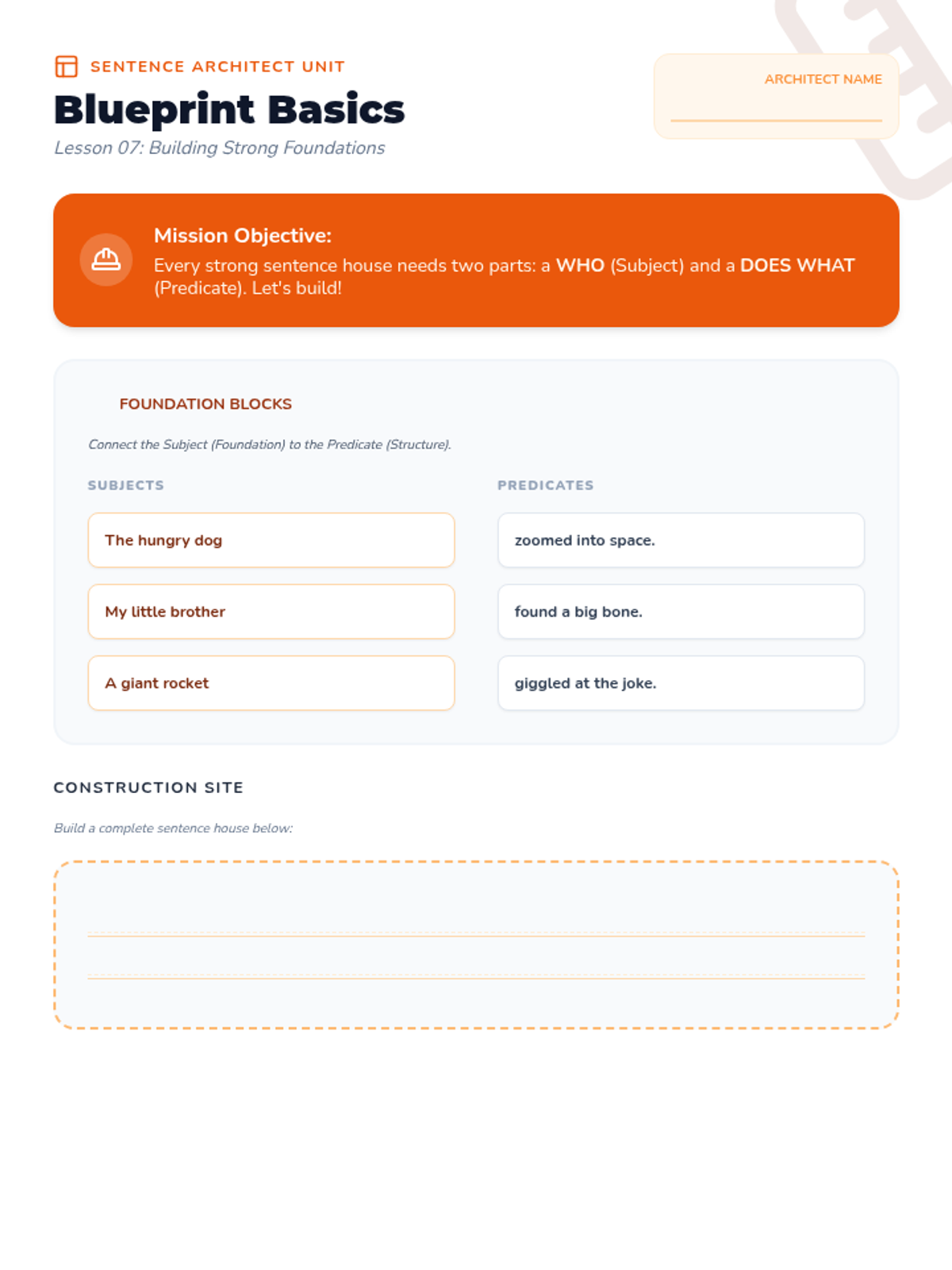
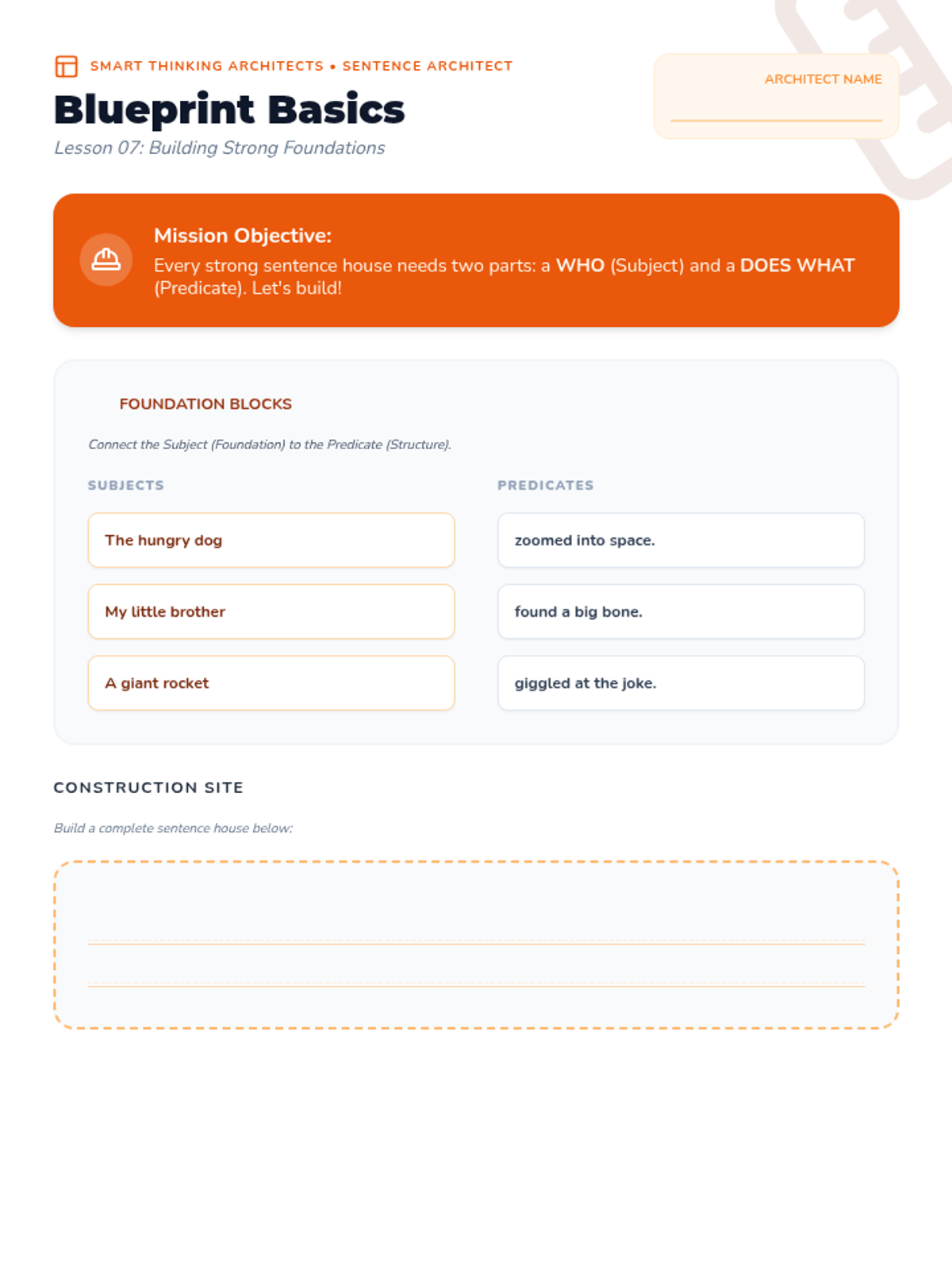
Sentence architects learn the foundations of a strong sentence, including subjects and predicates.
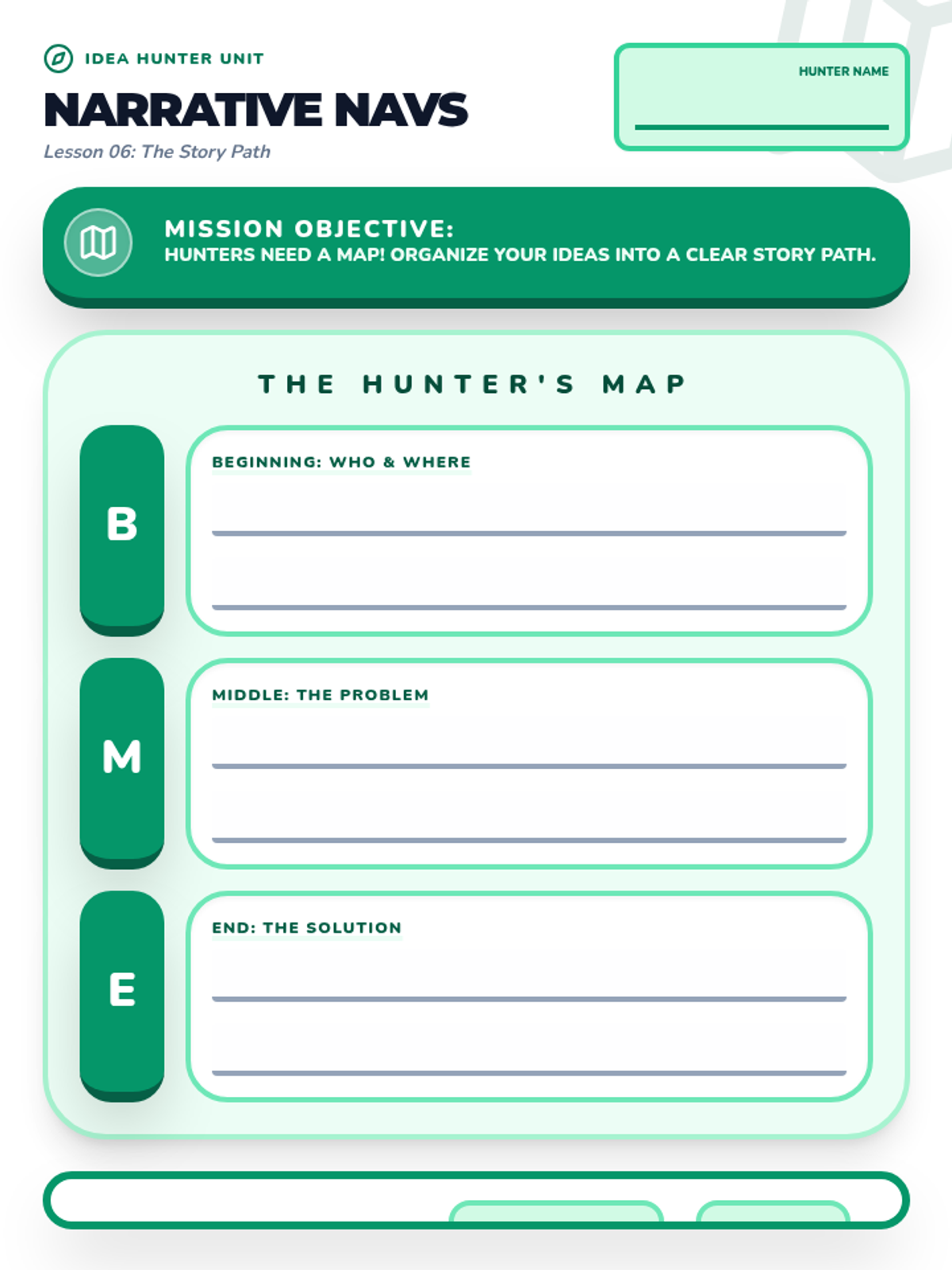
Explorers learn to organize their hunted ideas into a clear beginning, middle, and end.
Hunters learn to track down specific details that make their ideas stronger and more vivid.
Idea hunters head into the wild to find "sparks" of inspiration for their writing using their senses.
Detectives learn to pull specific information and evidence from texts to solve comprehension cases.
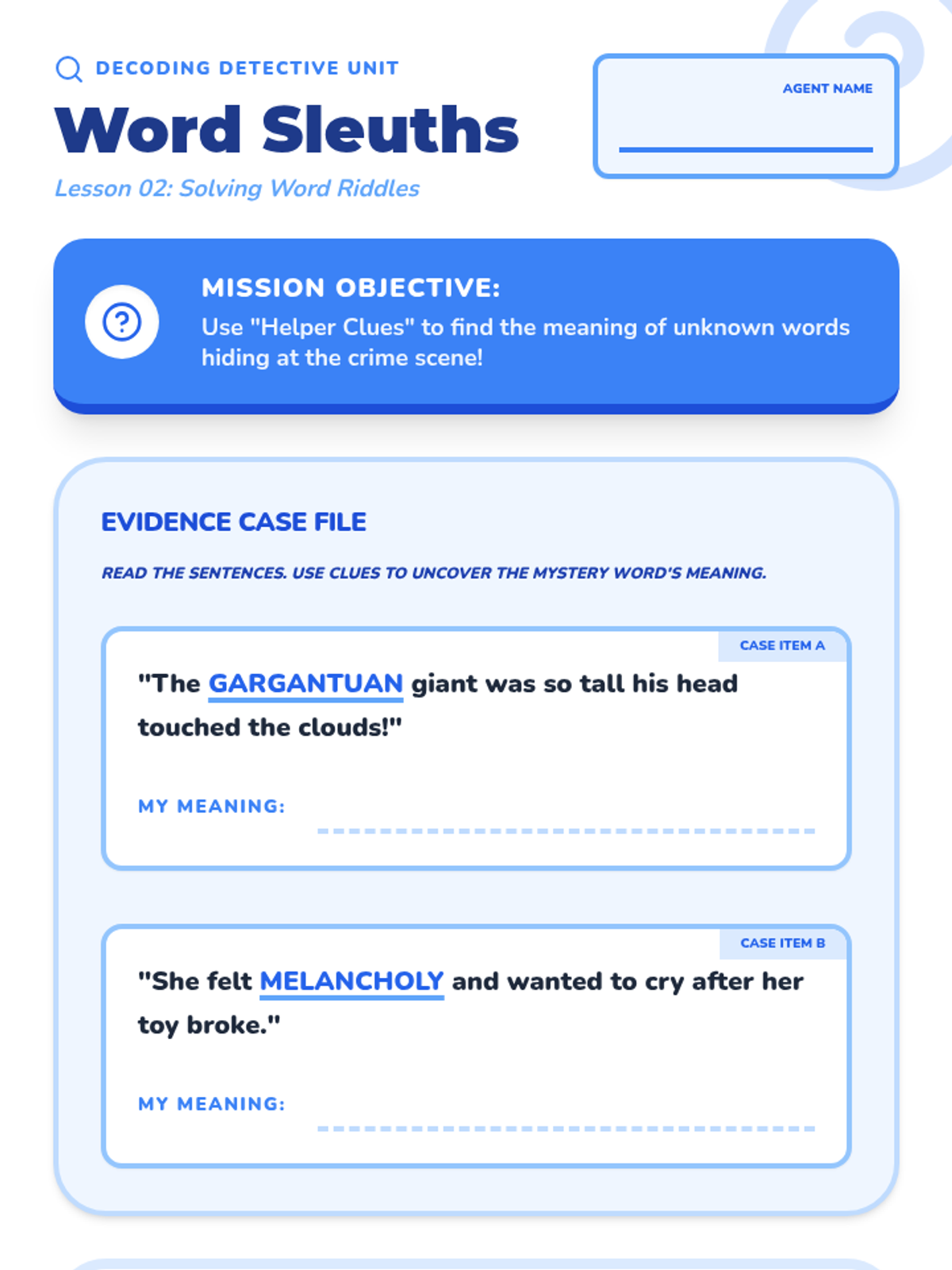
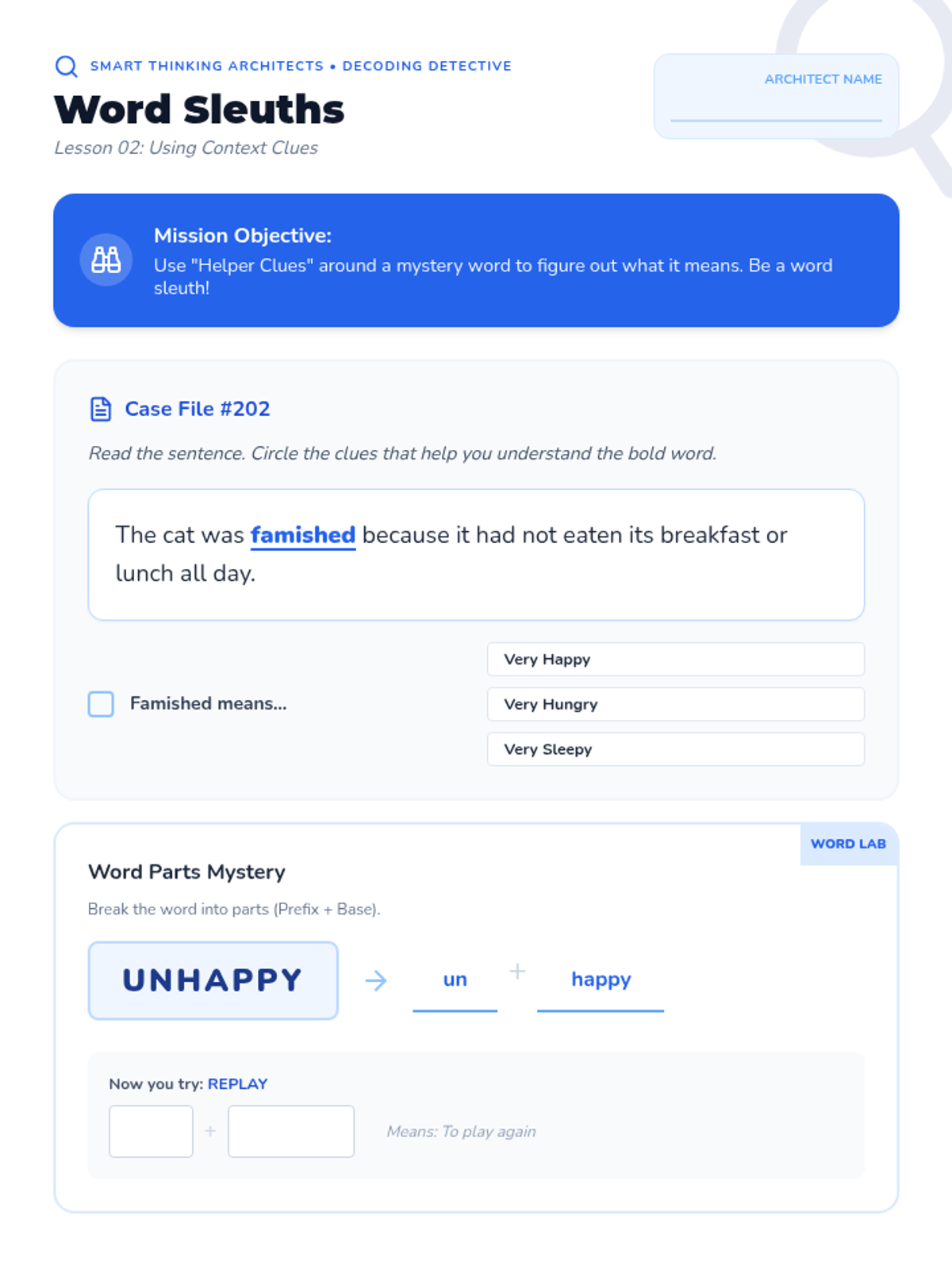
Young sleuths learn how to use context clues and word parts to uncover the meaning of tricky vocabulary.
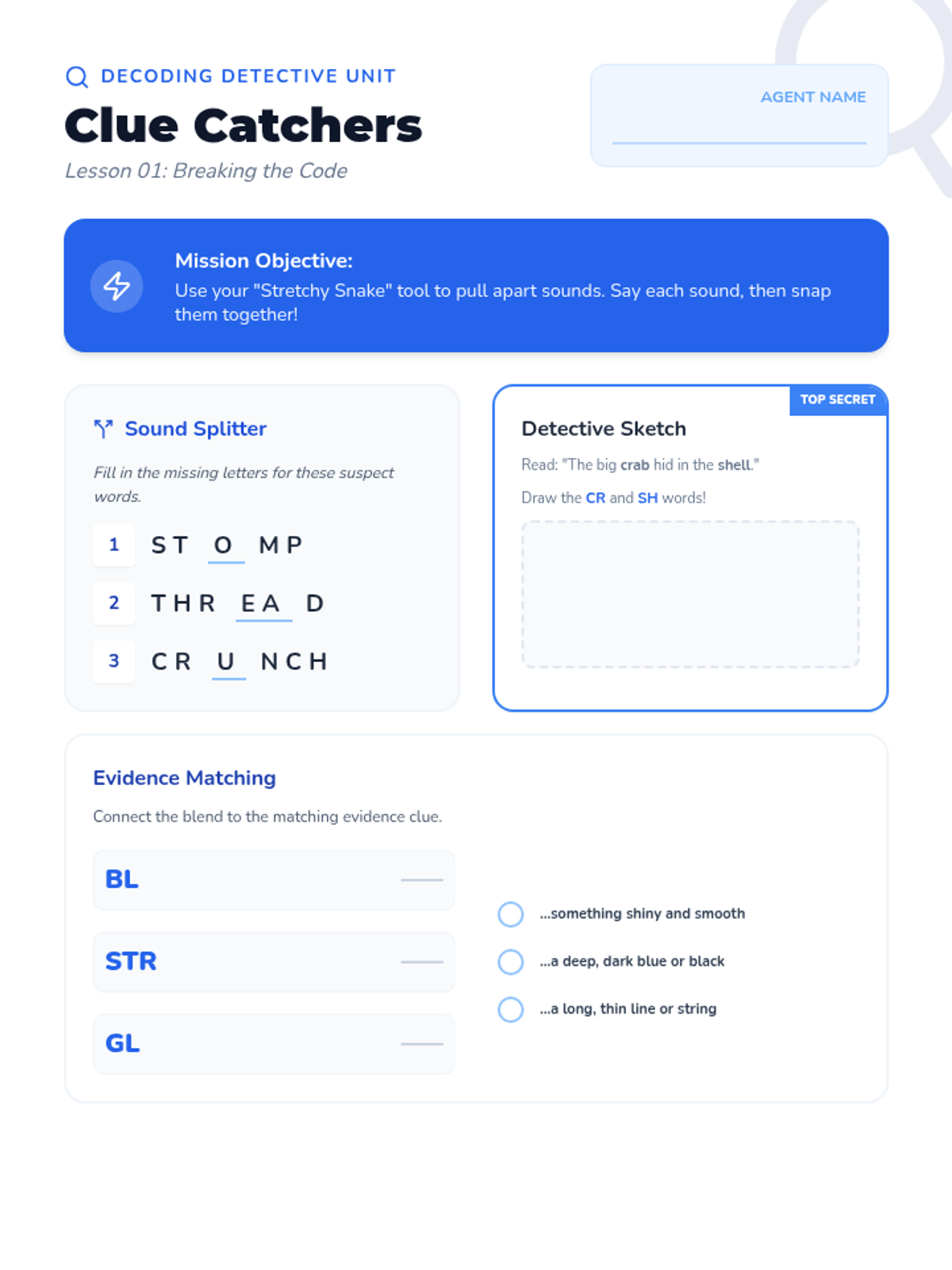
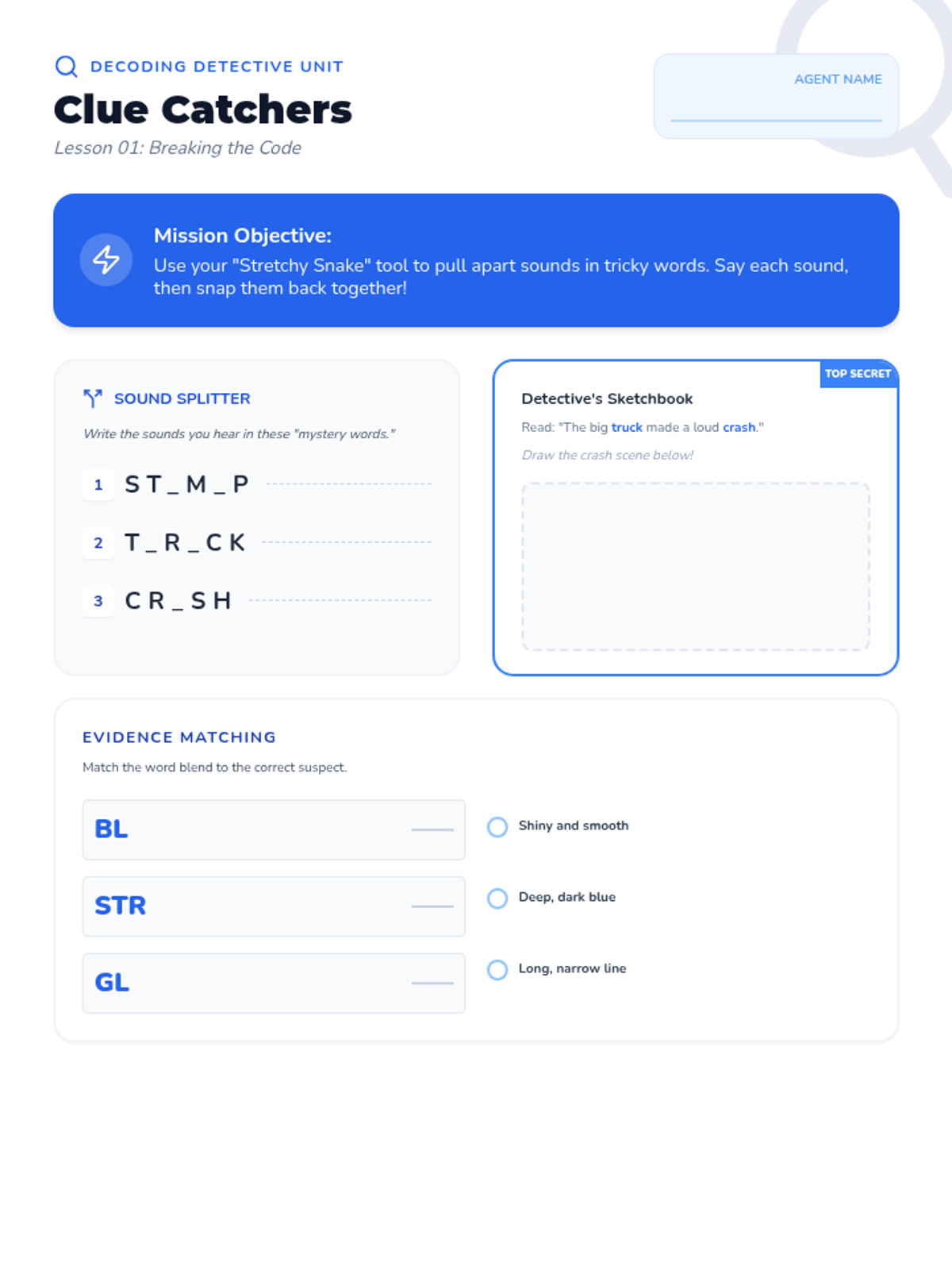
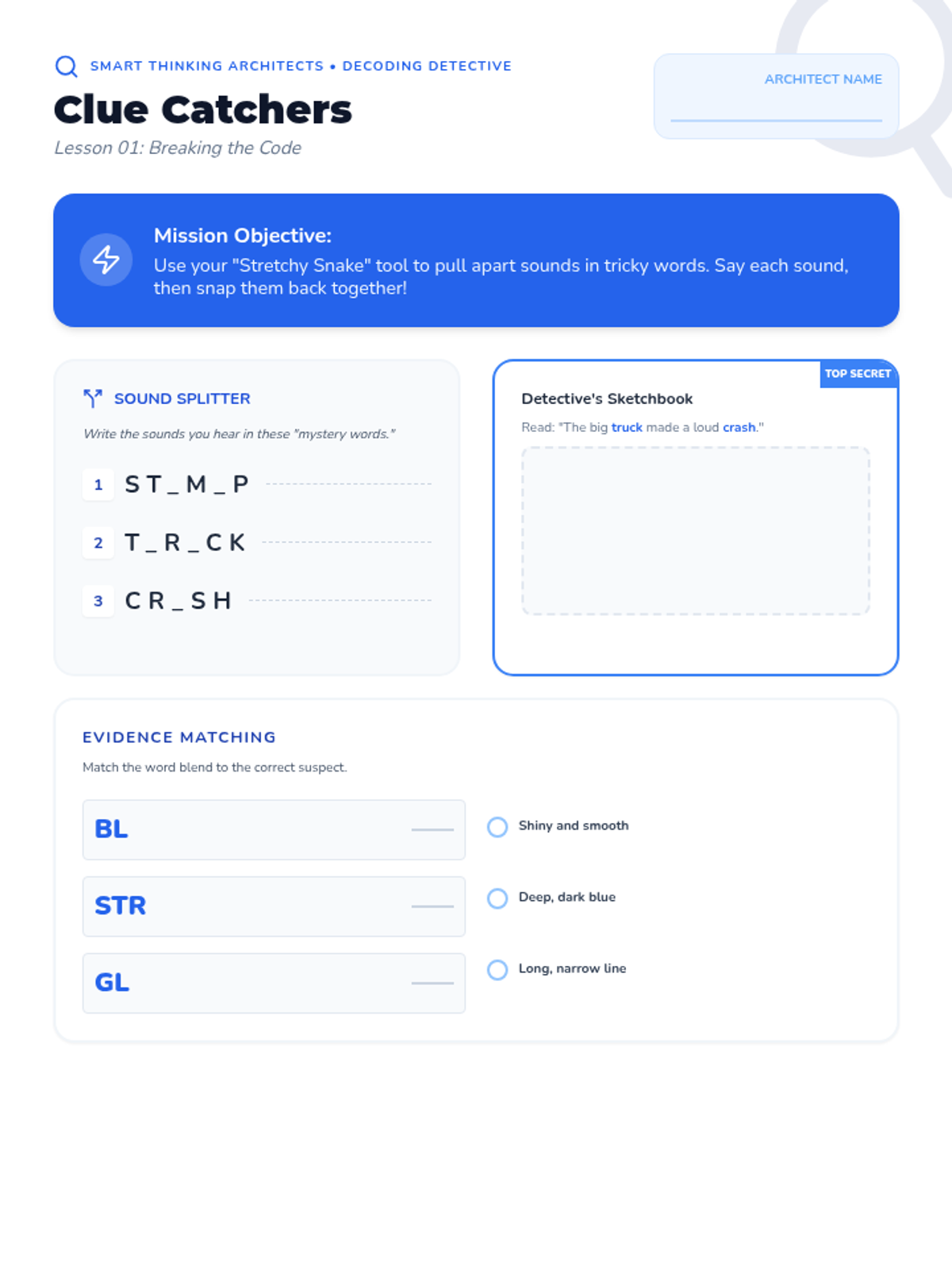
Students become Clue Catchers, using detective strategies to decode unfamiliar words and sounds in text.
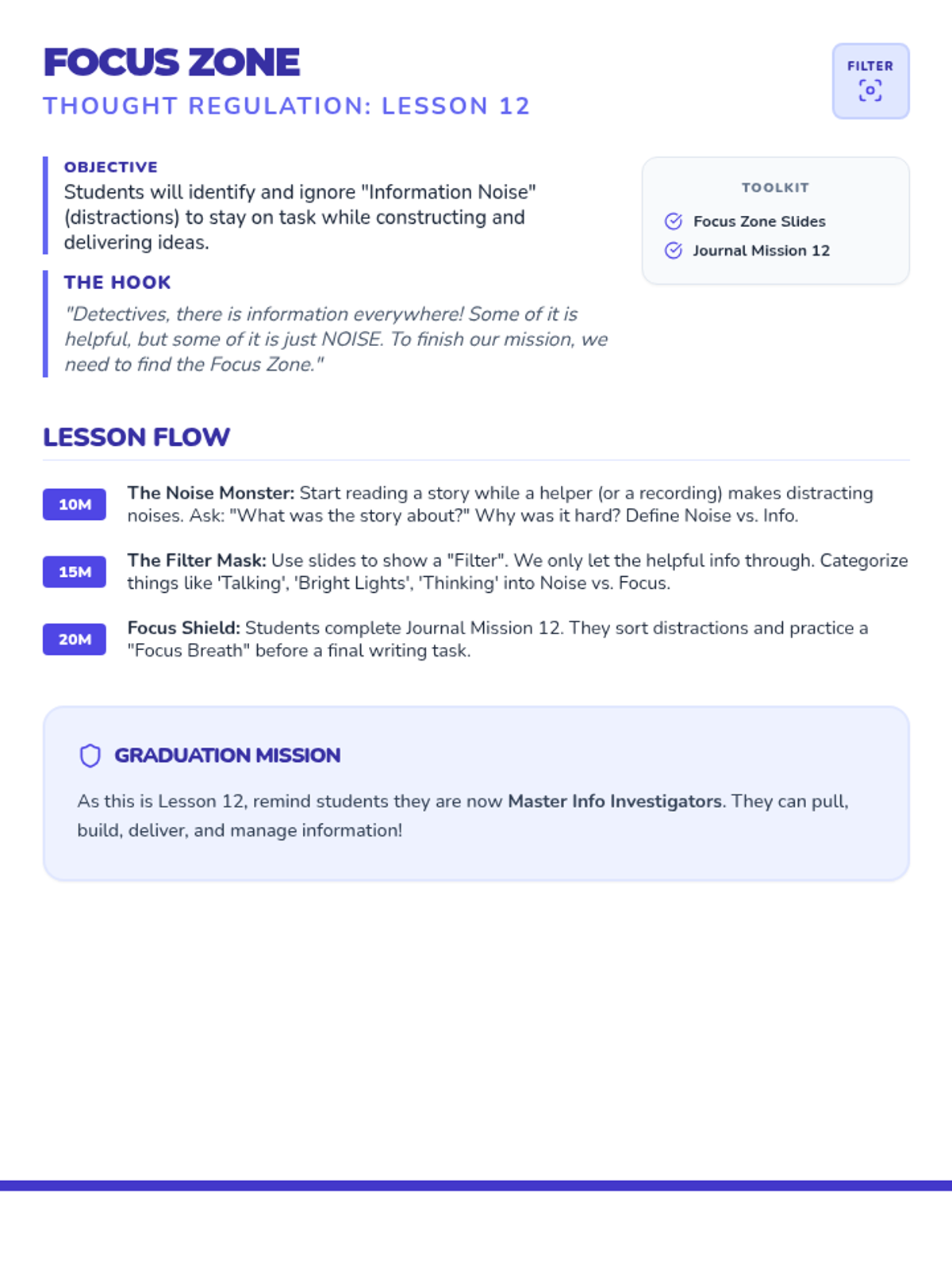
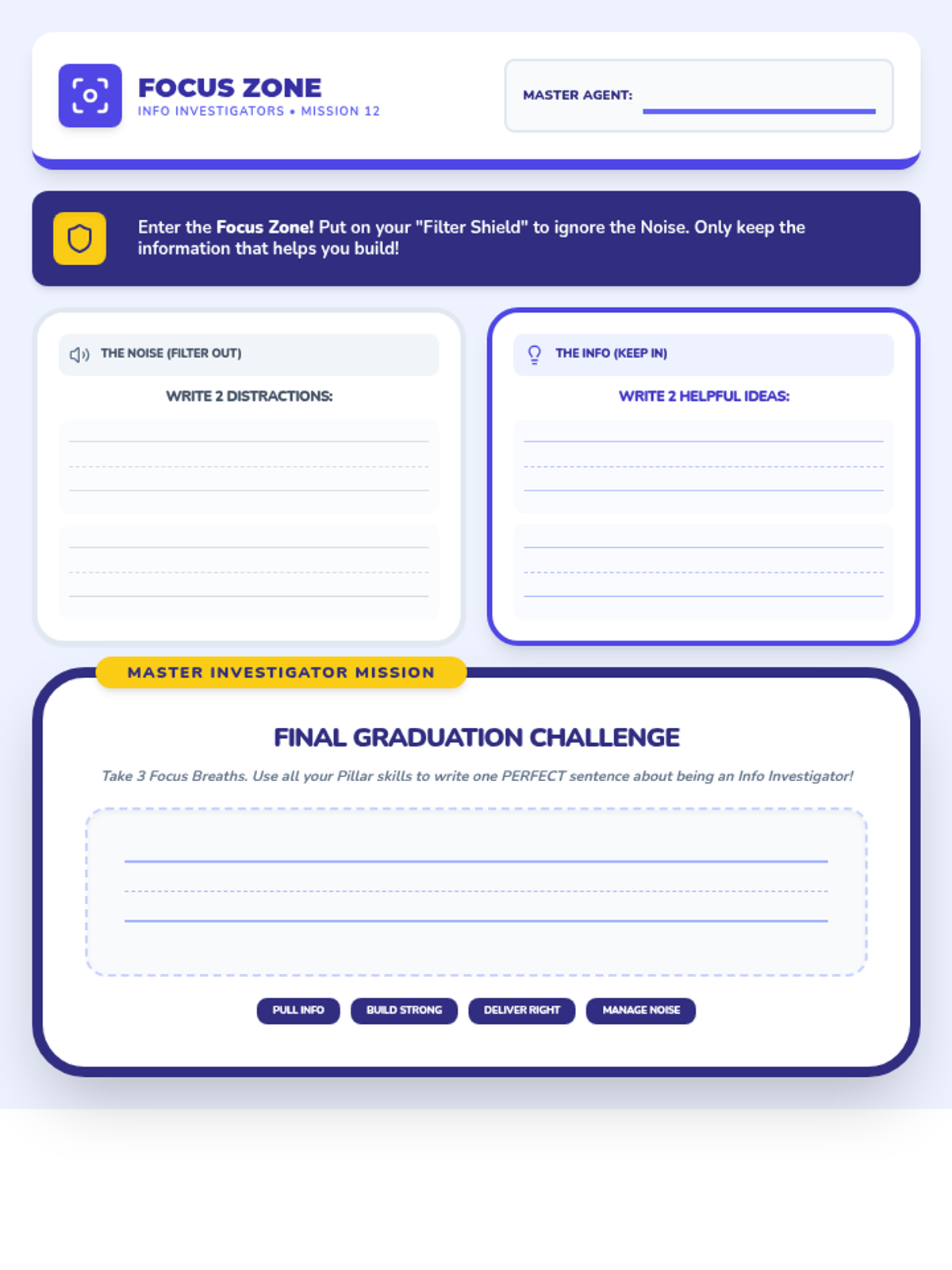
Students learn to filter distractions to stay in the focus zone while building information.
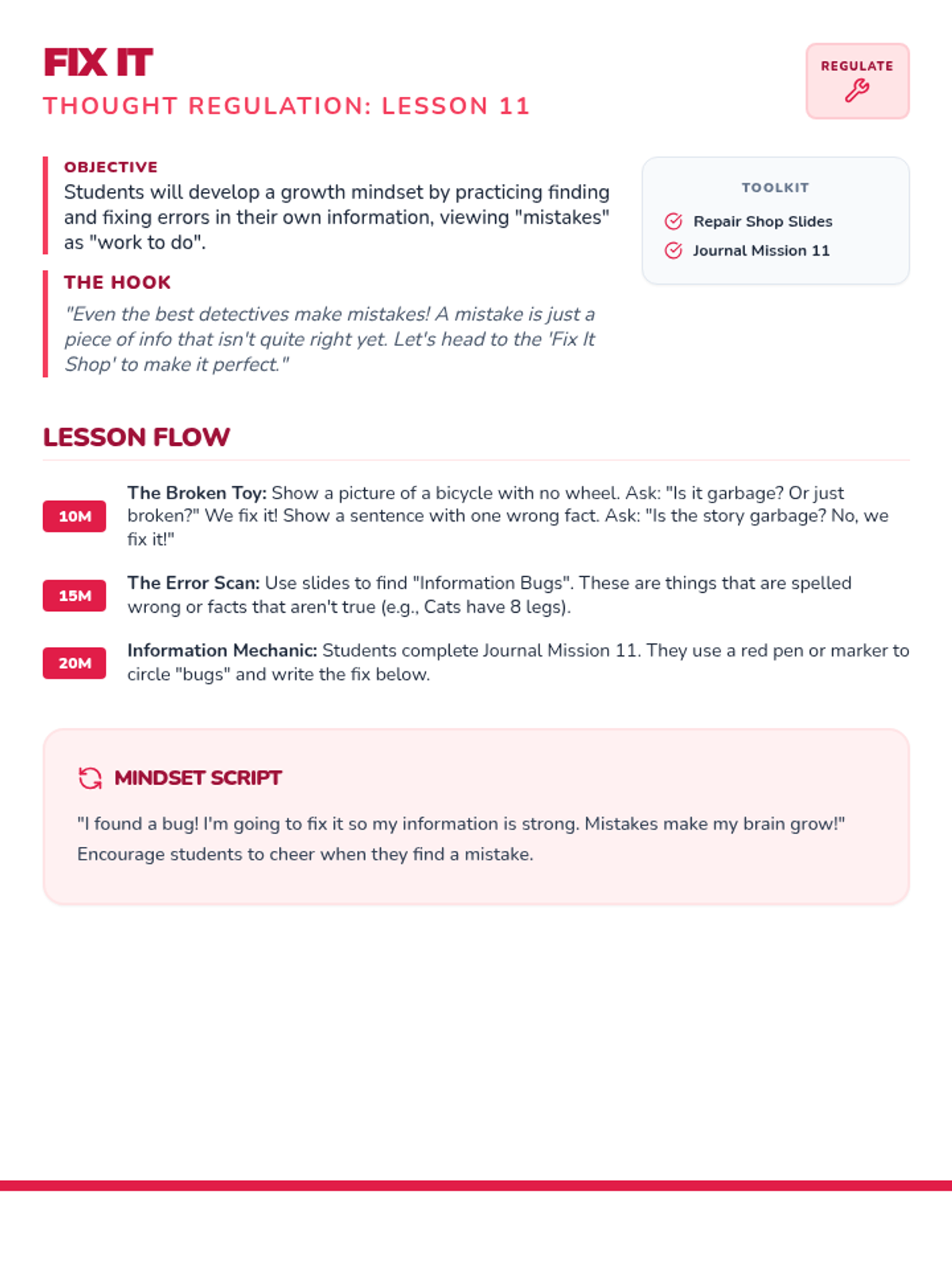
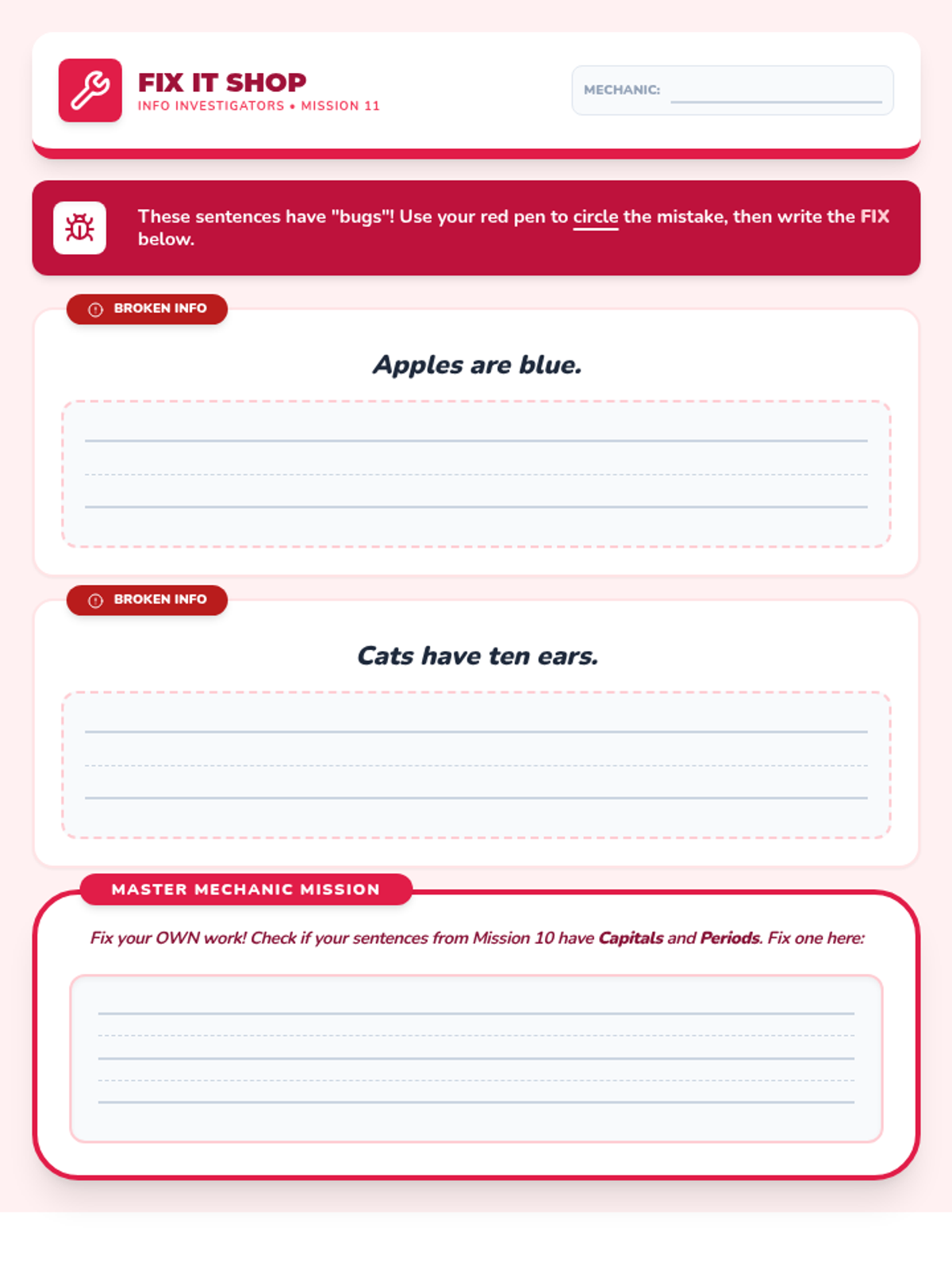
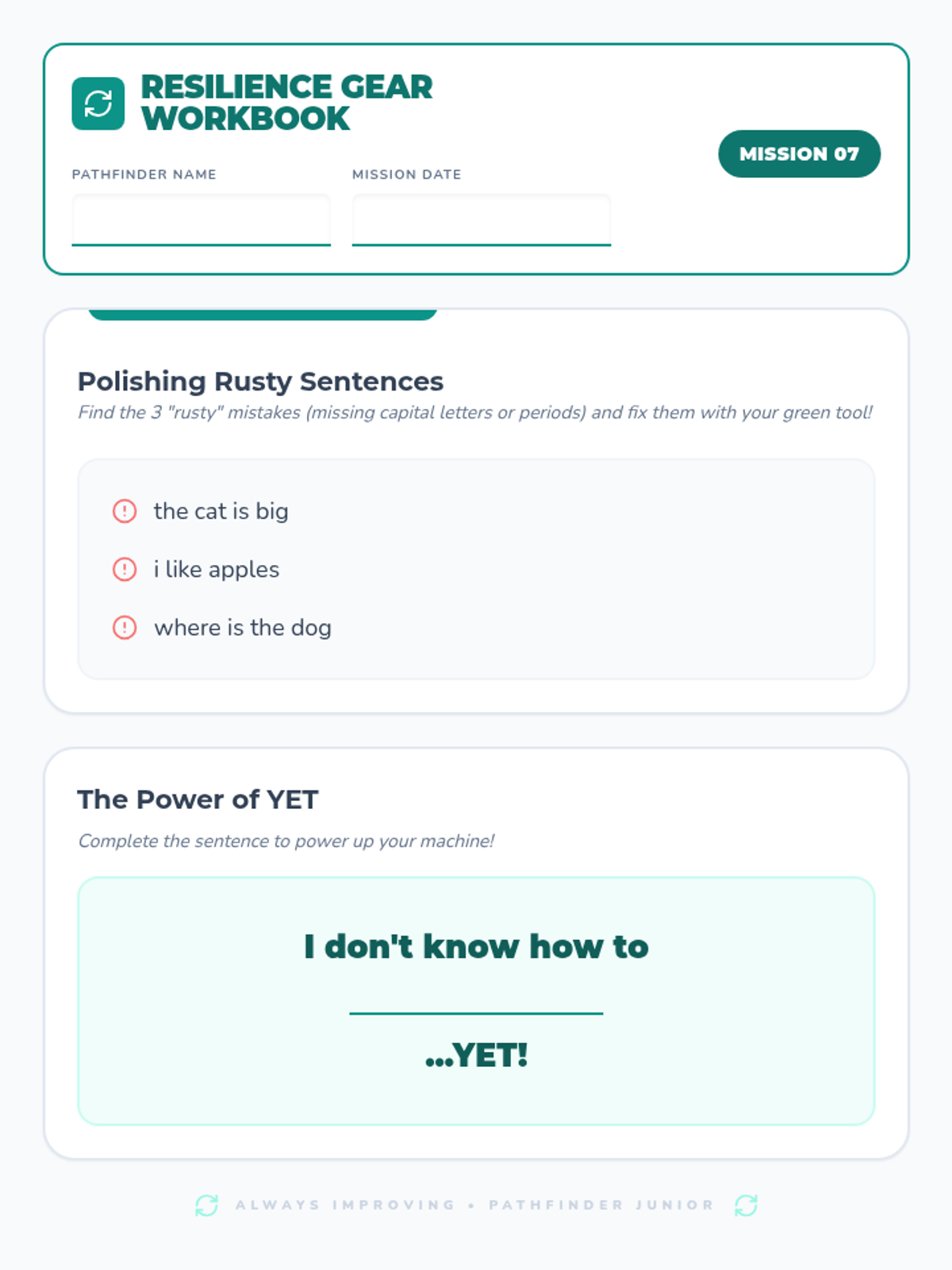
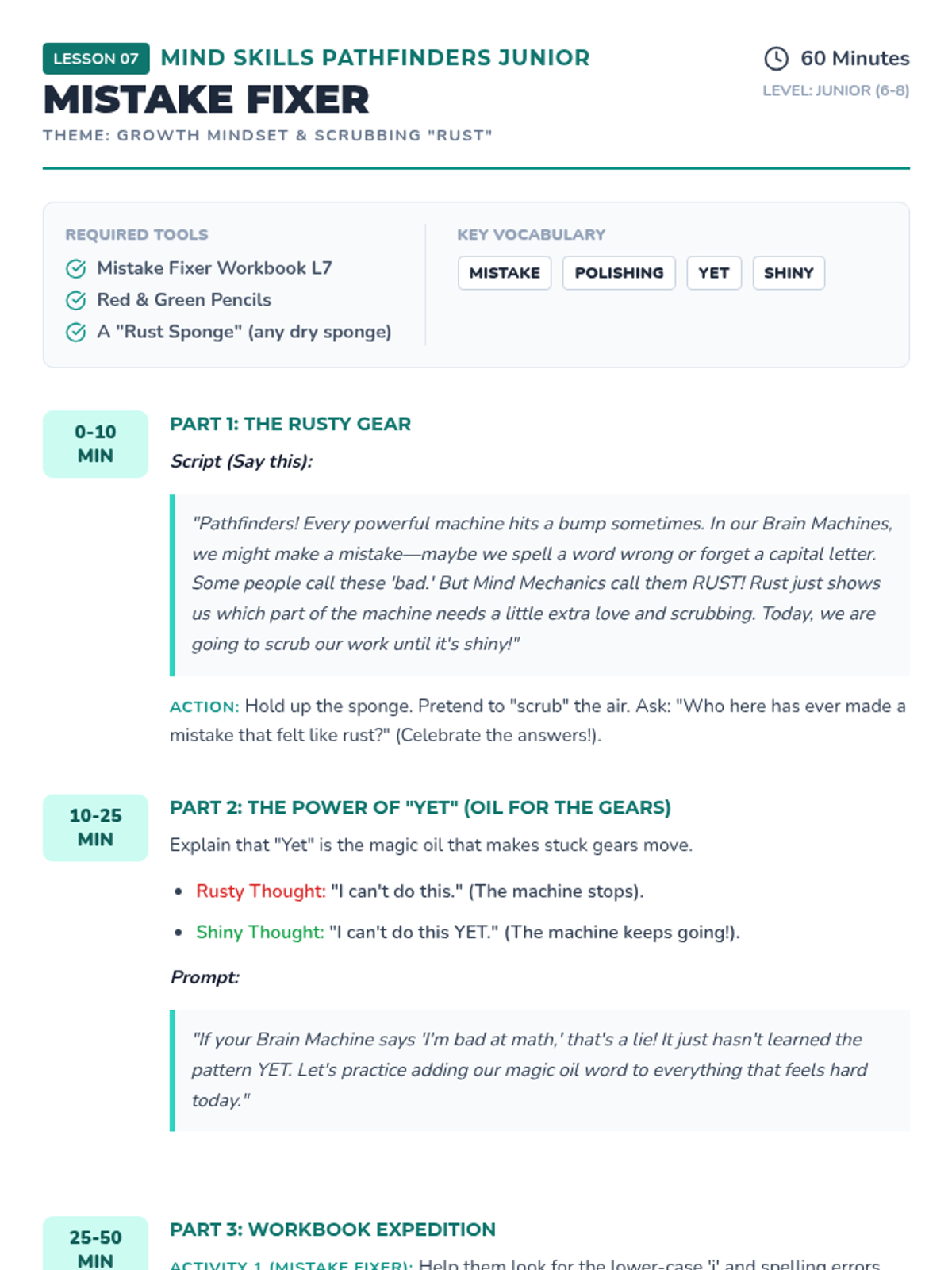
Students develop growth mindset strategies for repairing mistakes in information projects.
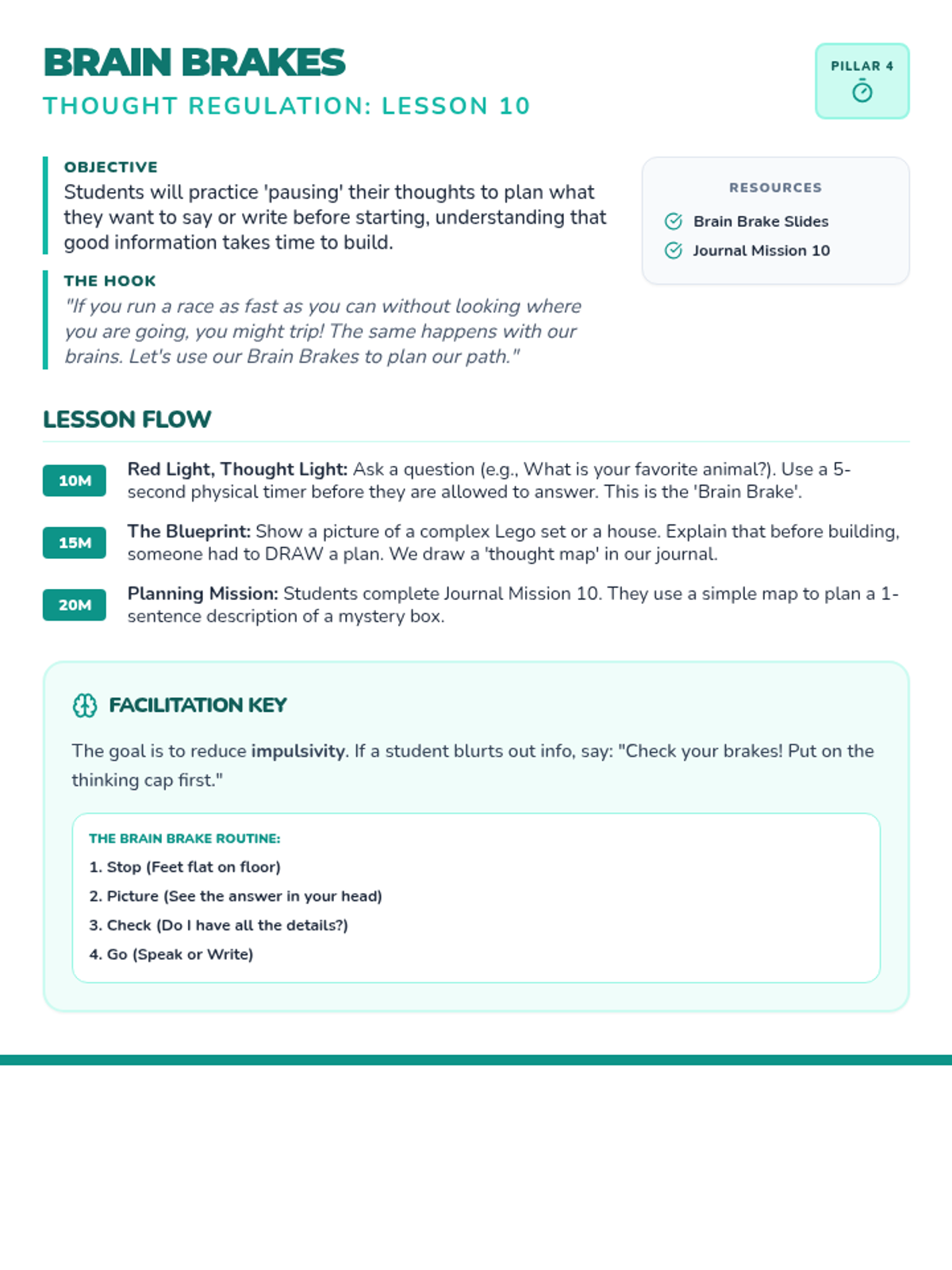
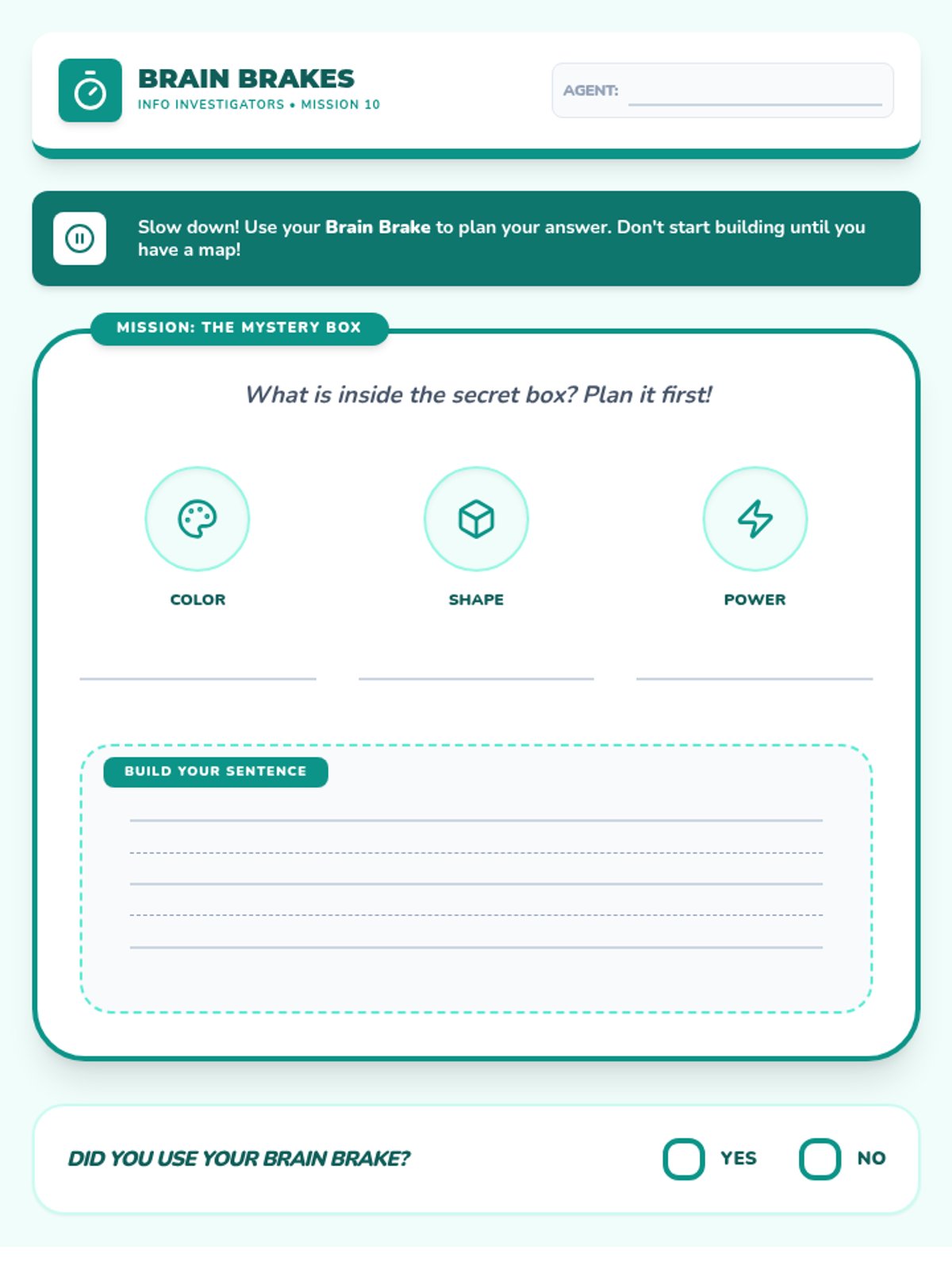
Students practice 'pausing' their thoughts to plan what they want to build before starting.
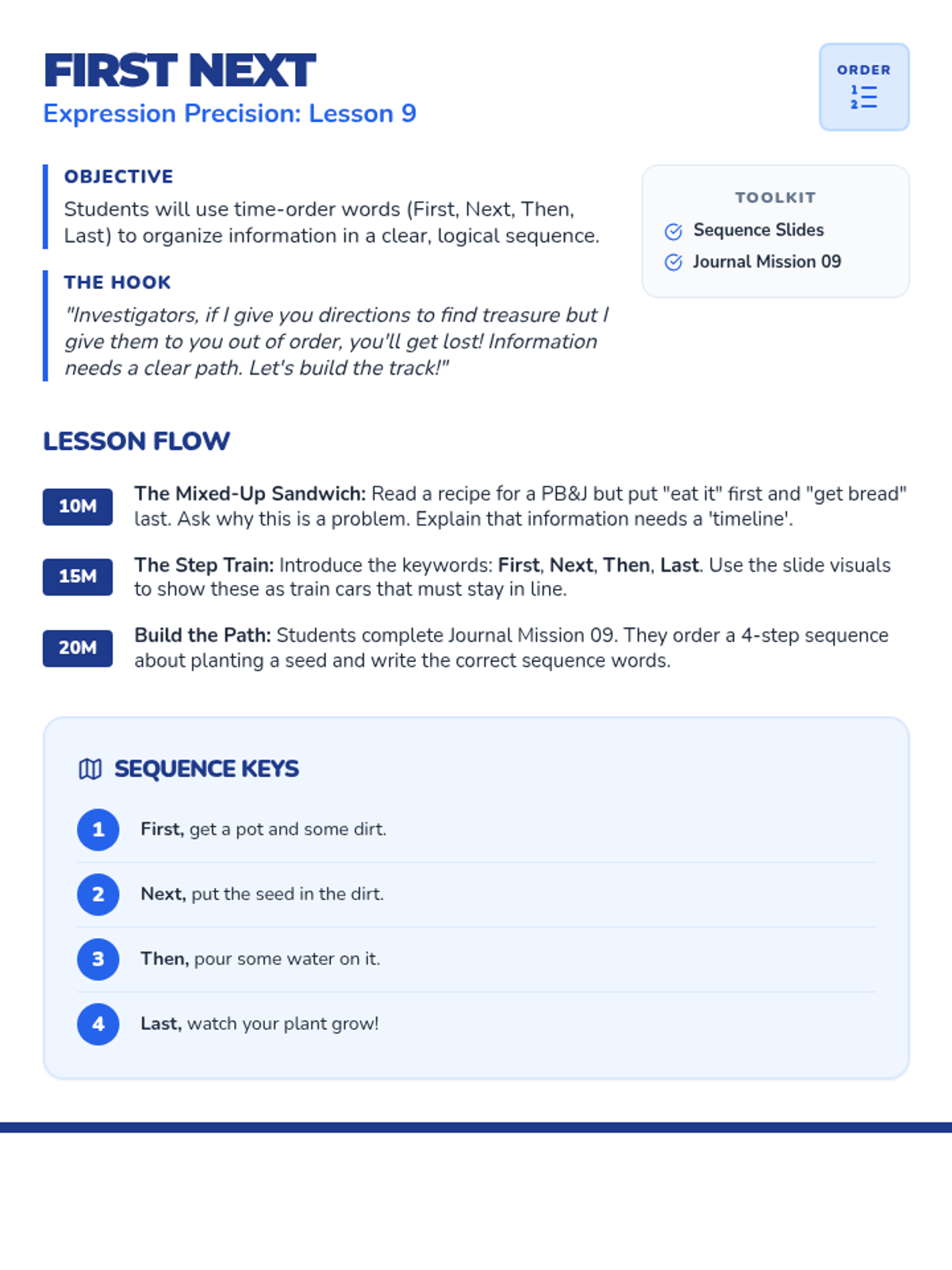
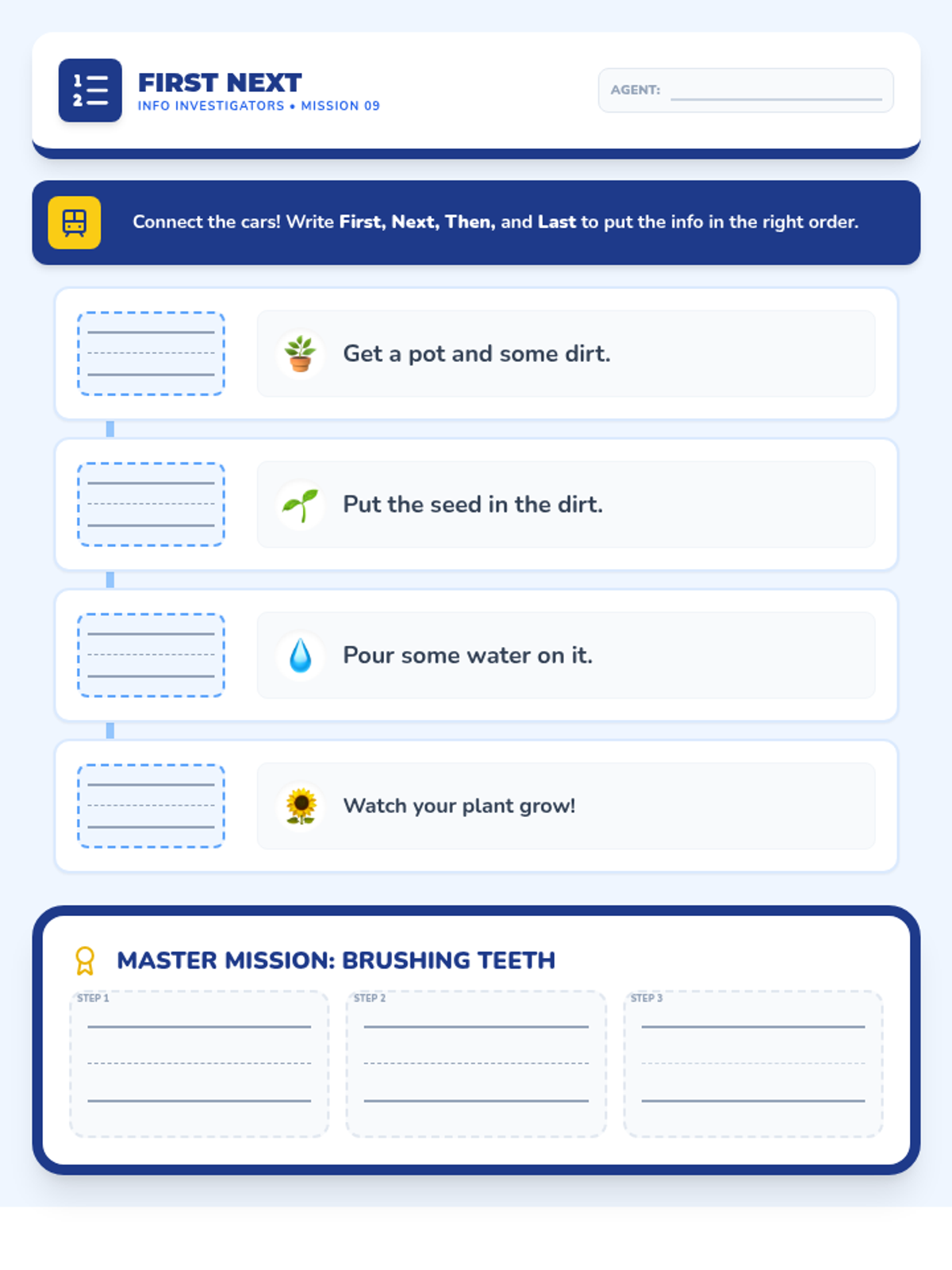
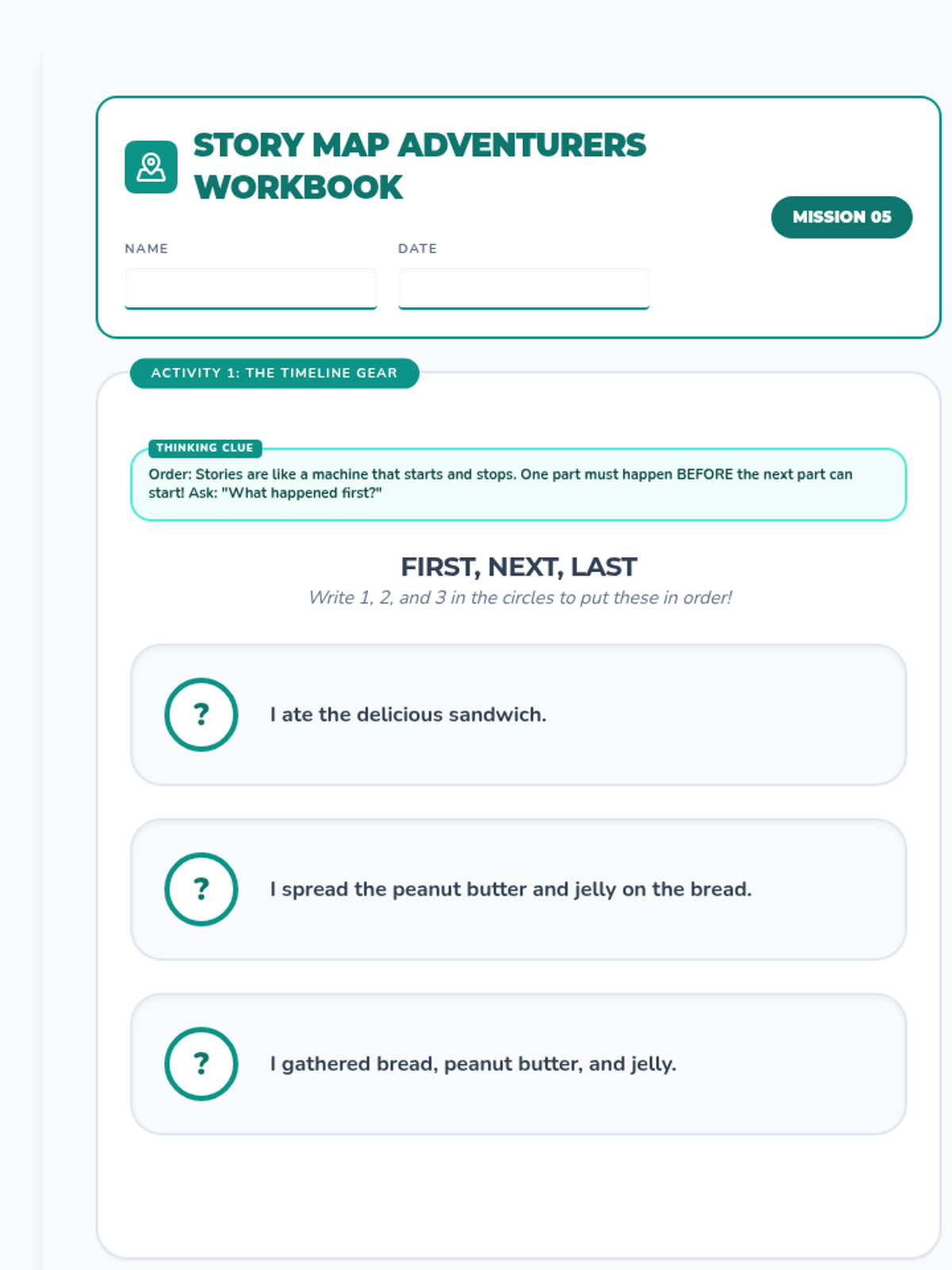
Students learn to organize information chronologically using sequence markers like first, next, and last.
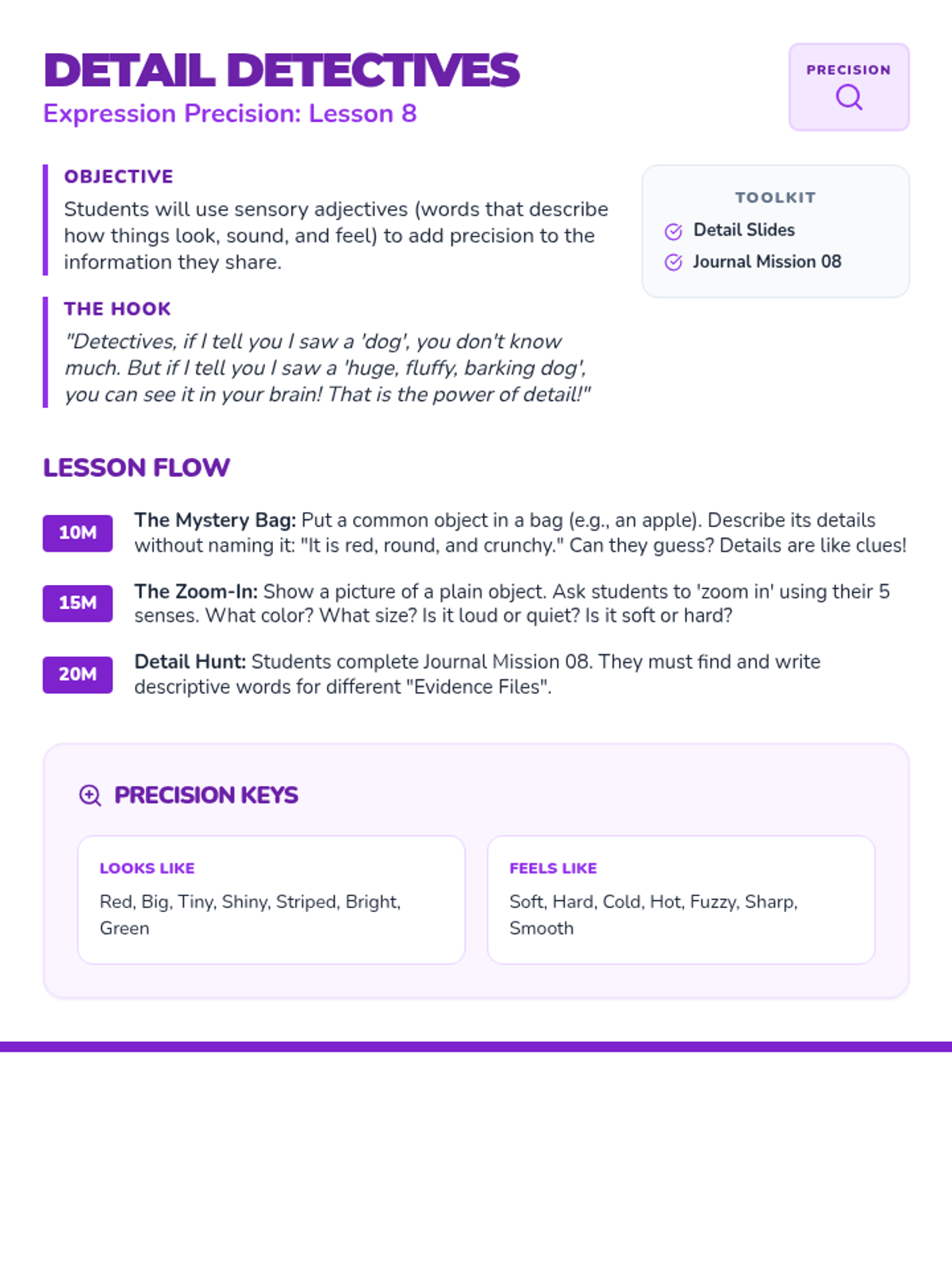
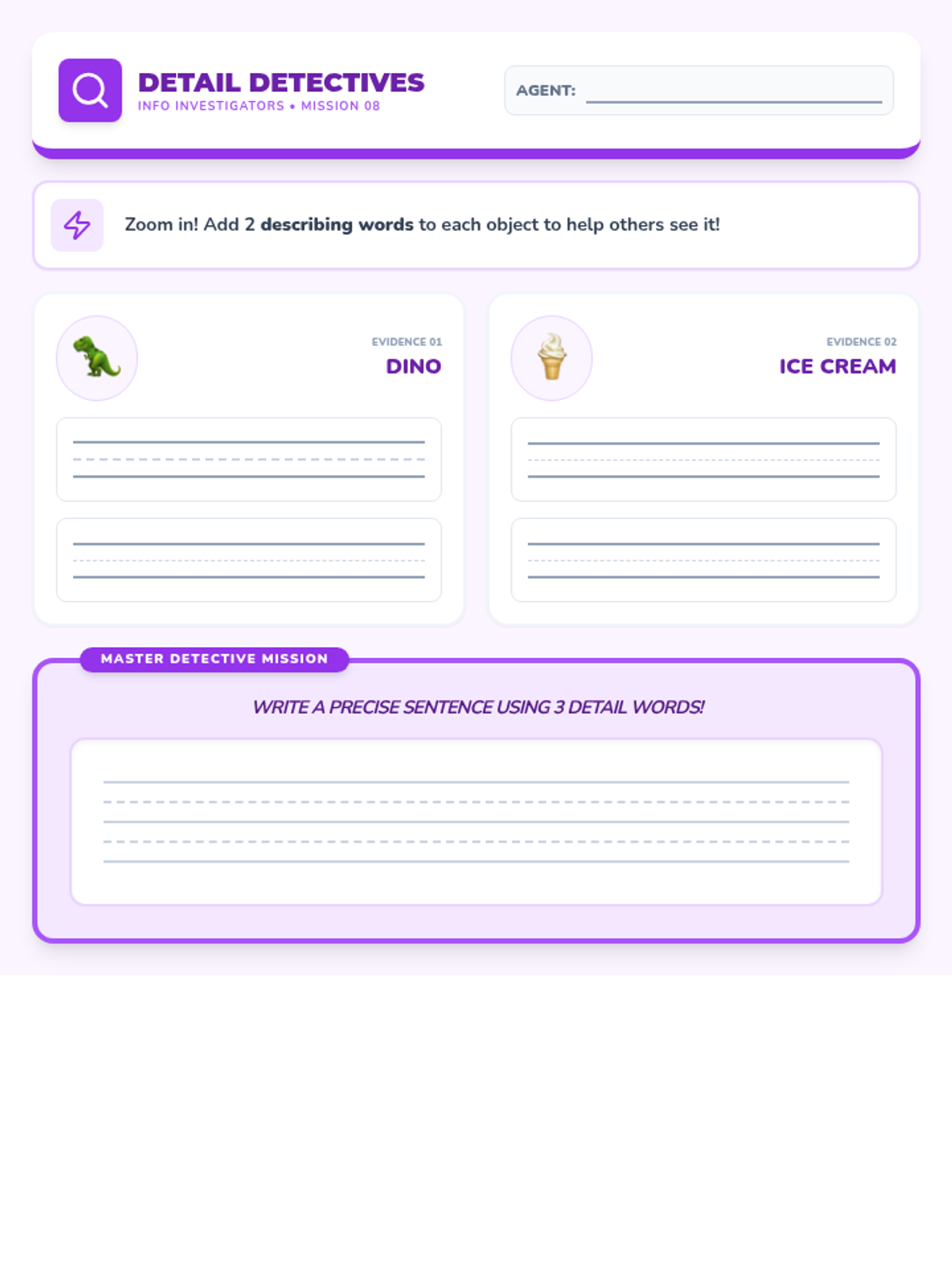
Students use sensory adjectives to add precision and clarity to their information architecture.
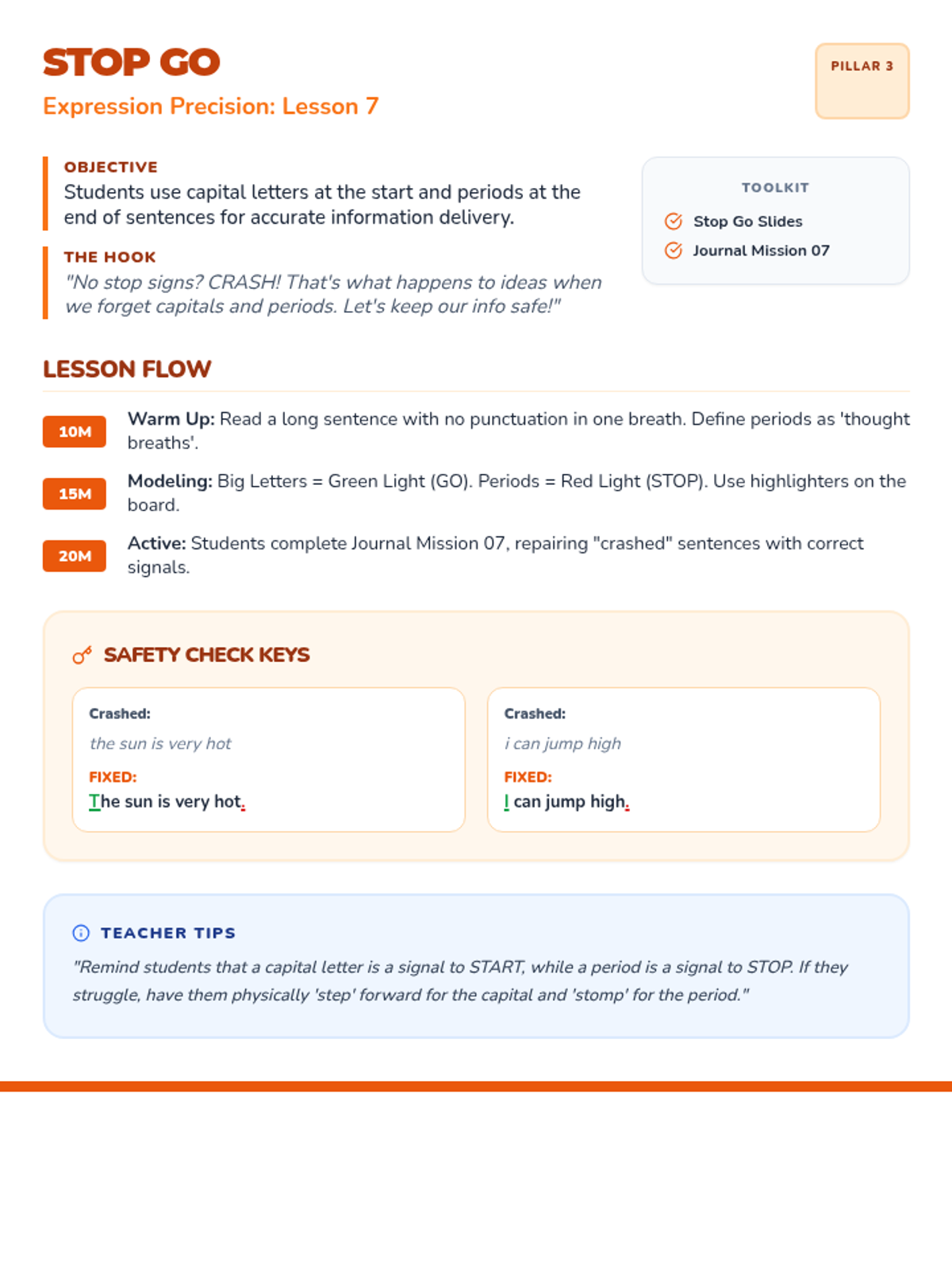
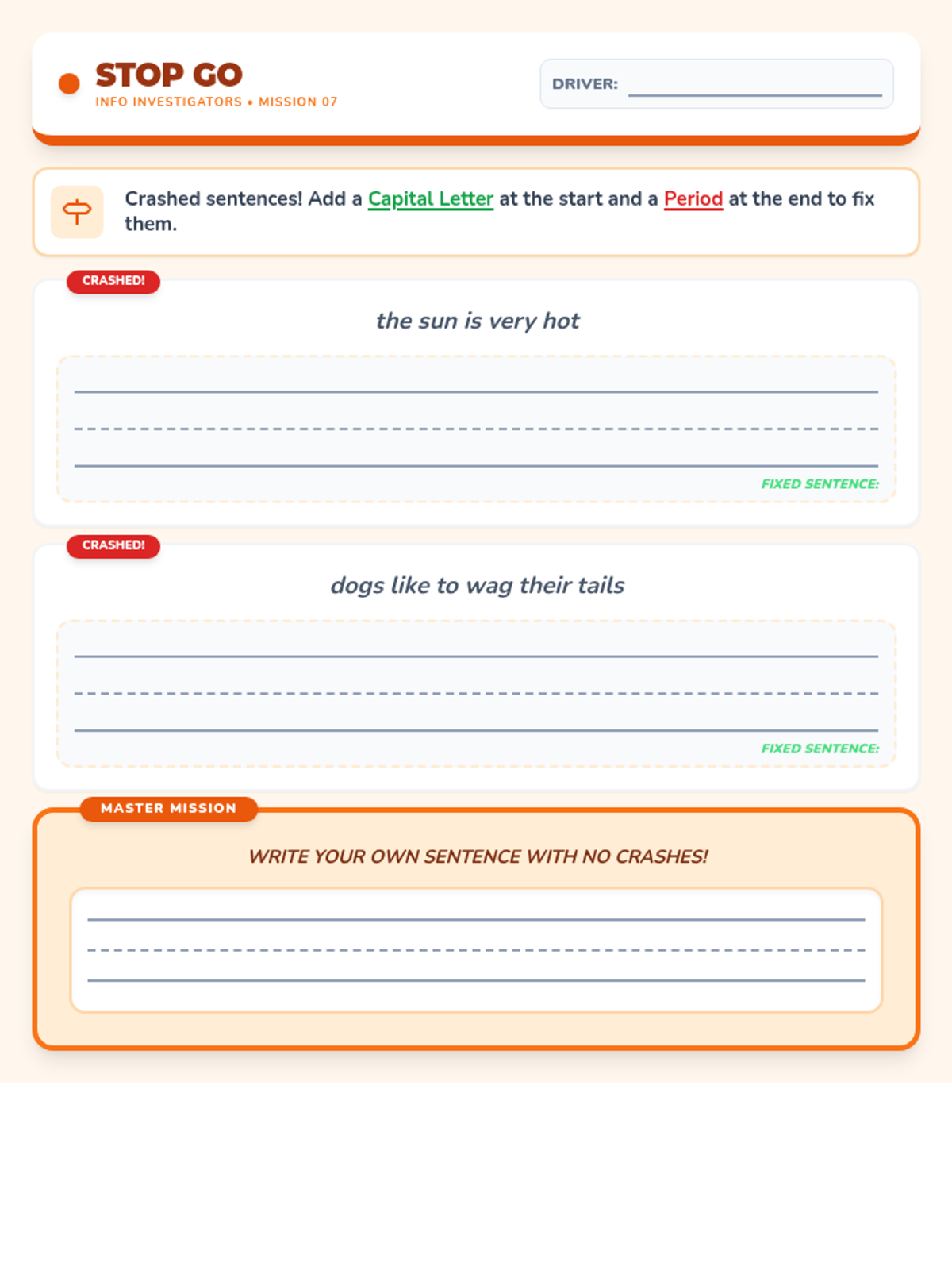
Students master the mechanics of capital letters and periods to signal the start and end of information projects.
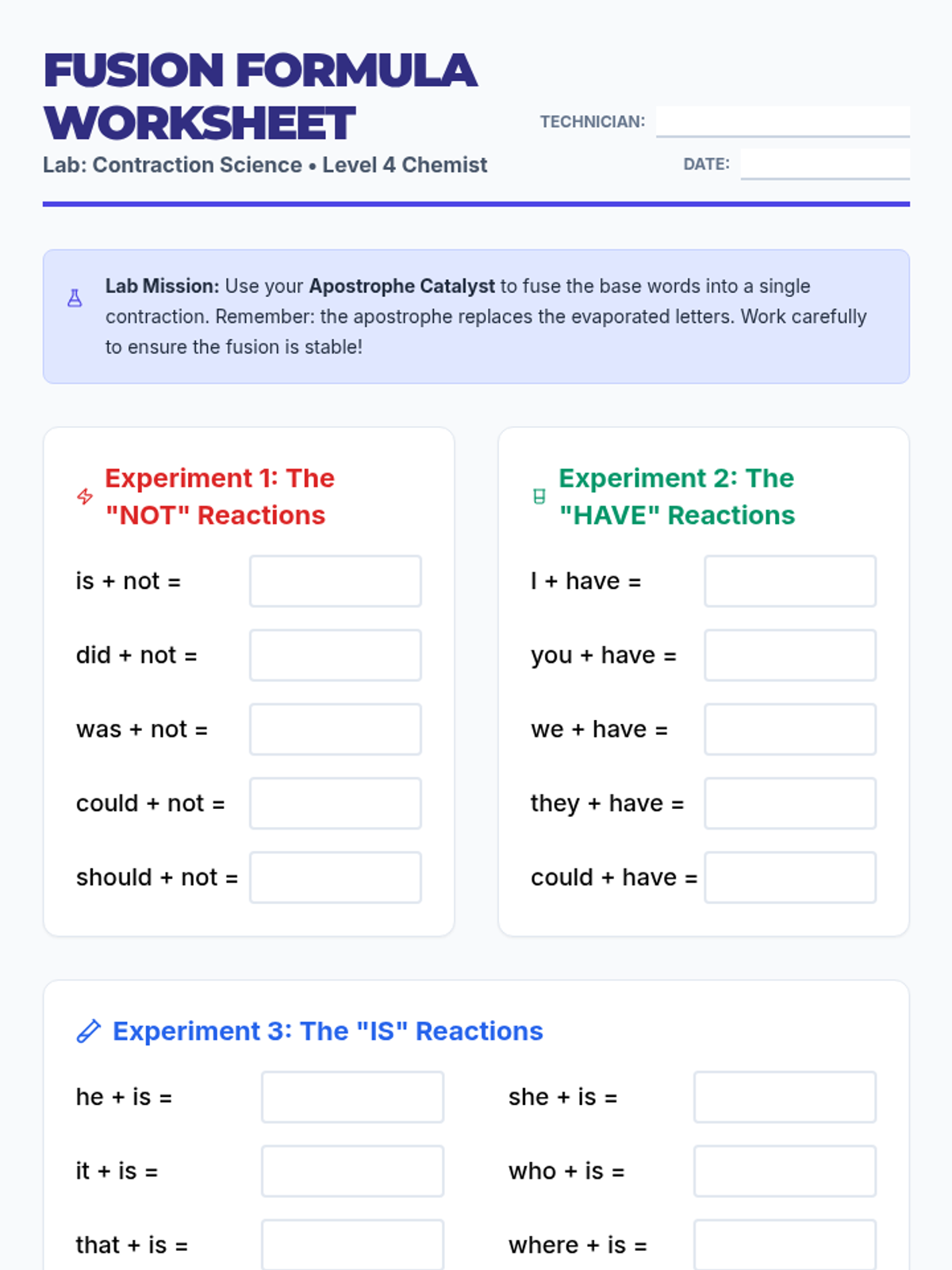
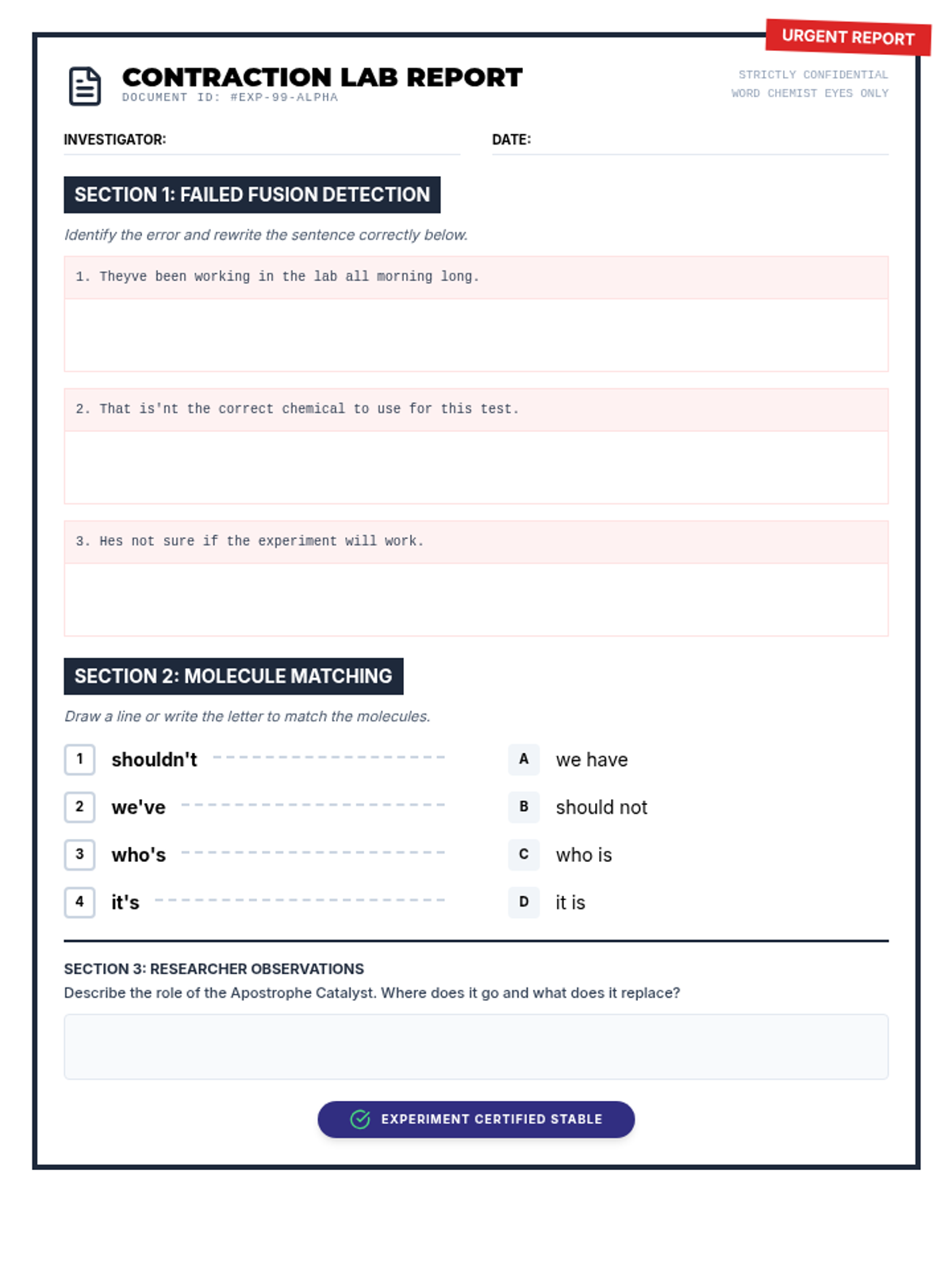
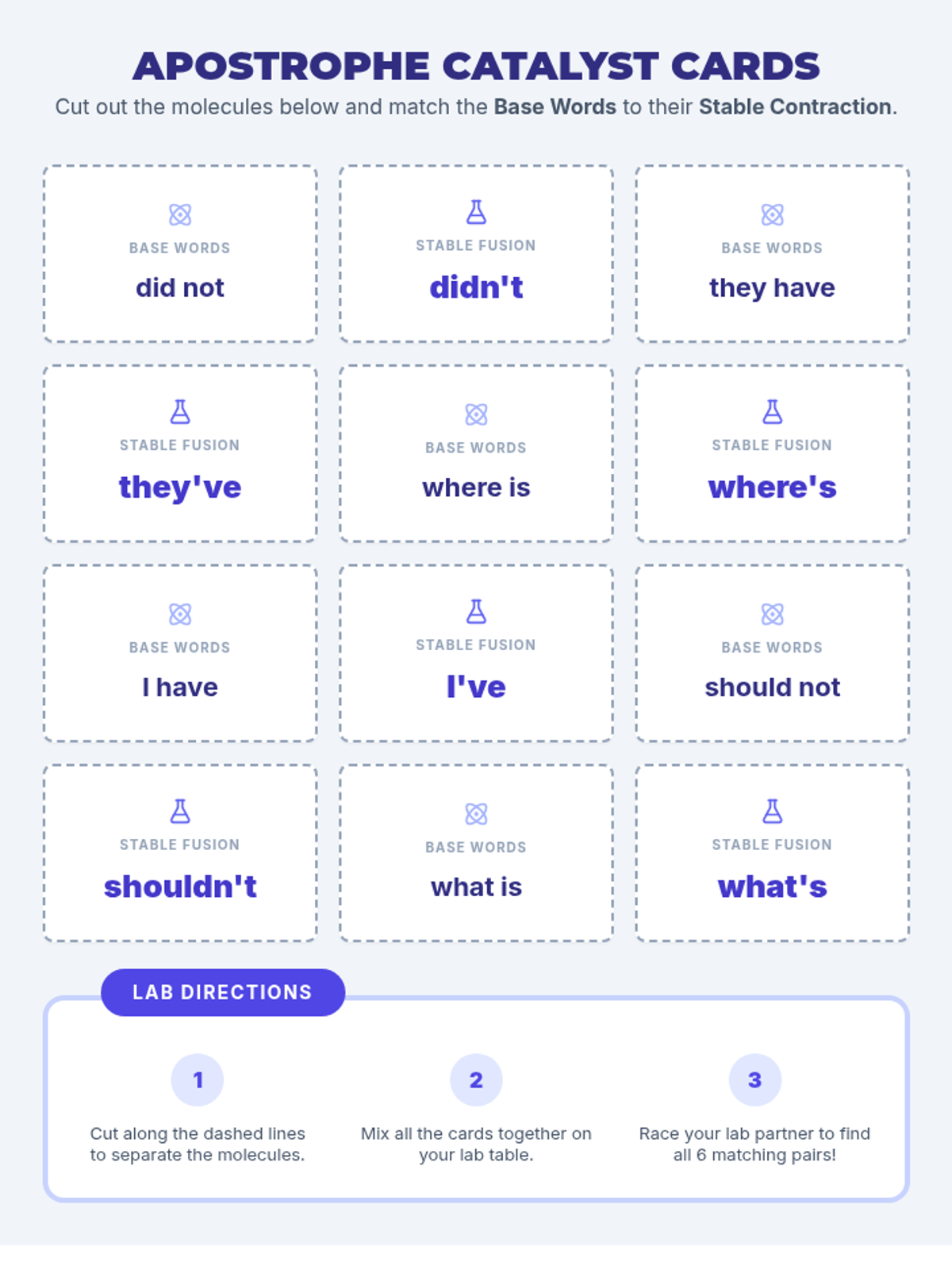
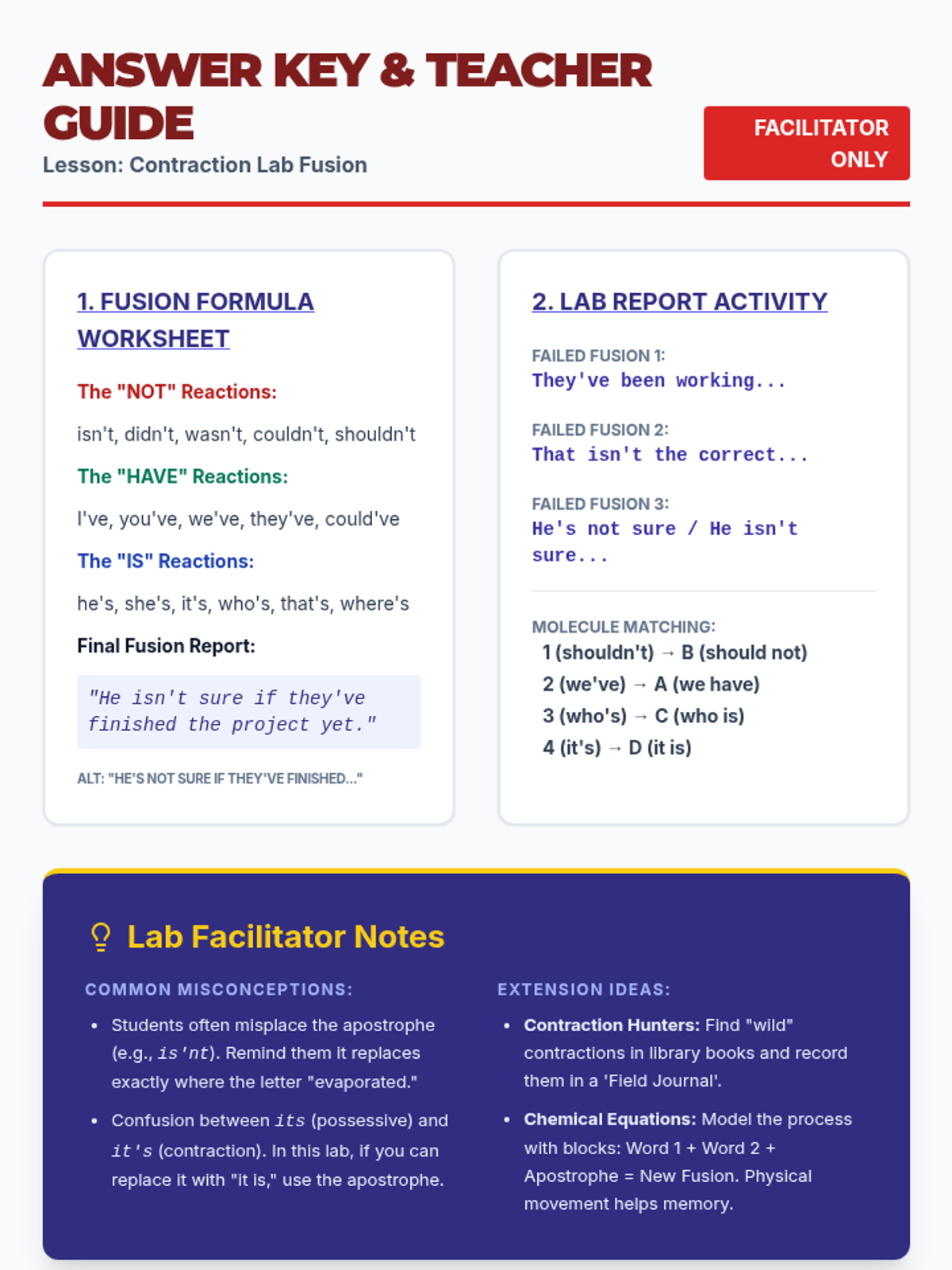
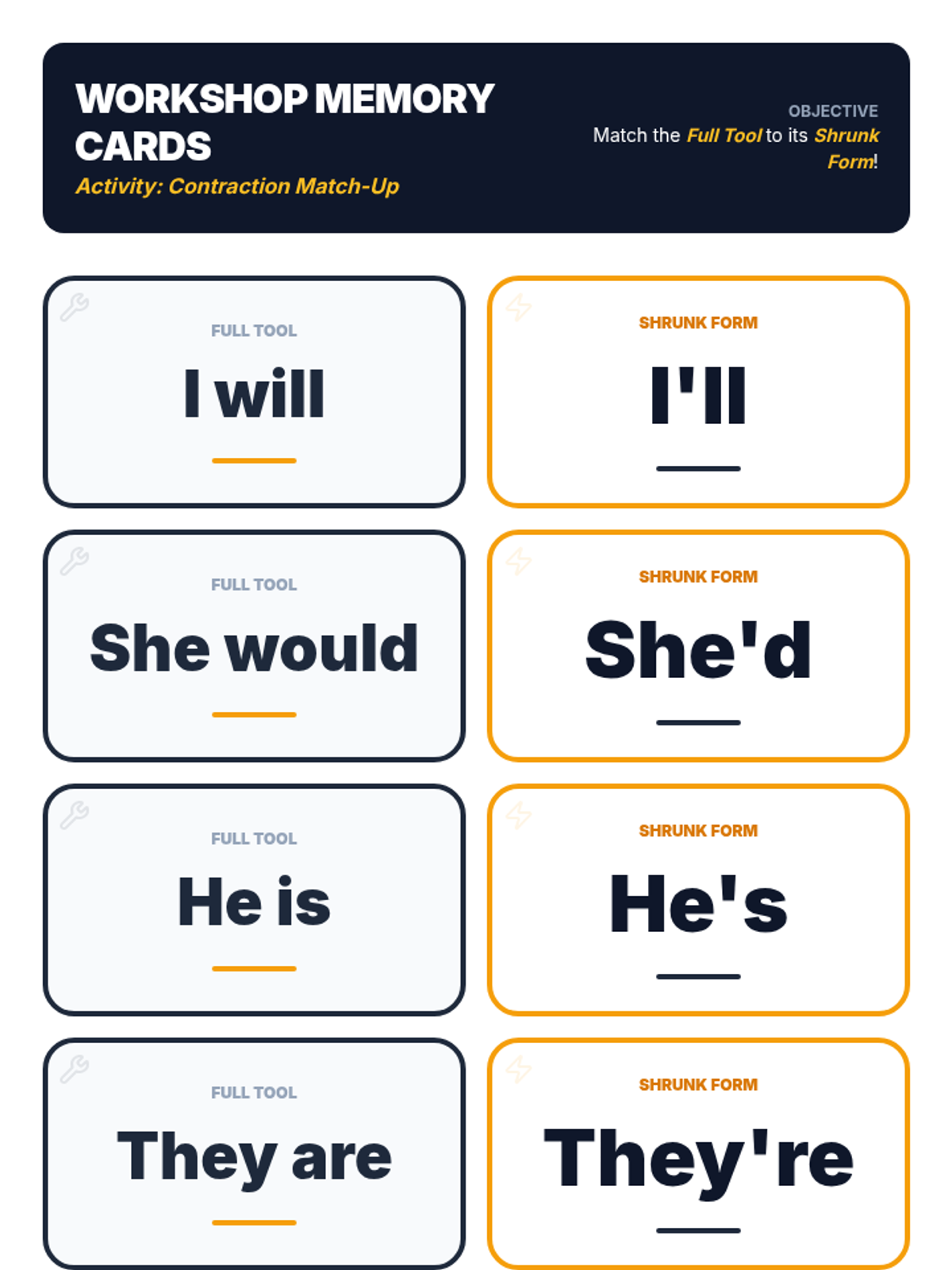
A high-energy, science-themed lesson where students become 'Word Chemists' to fuse words together using the power of the apostrophe. Focuses on contractions formed with 'not', 'have', and 'is'.
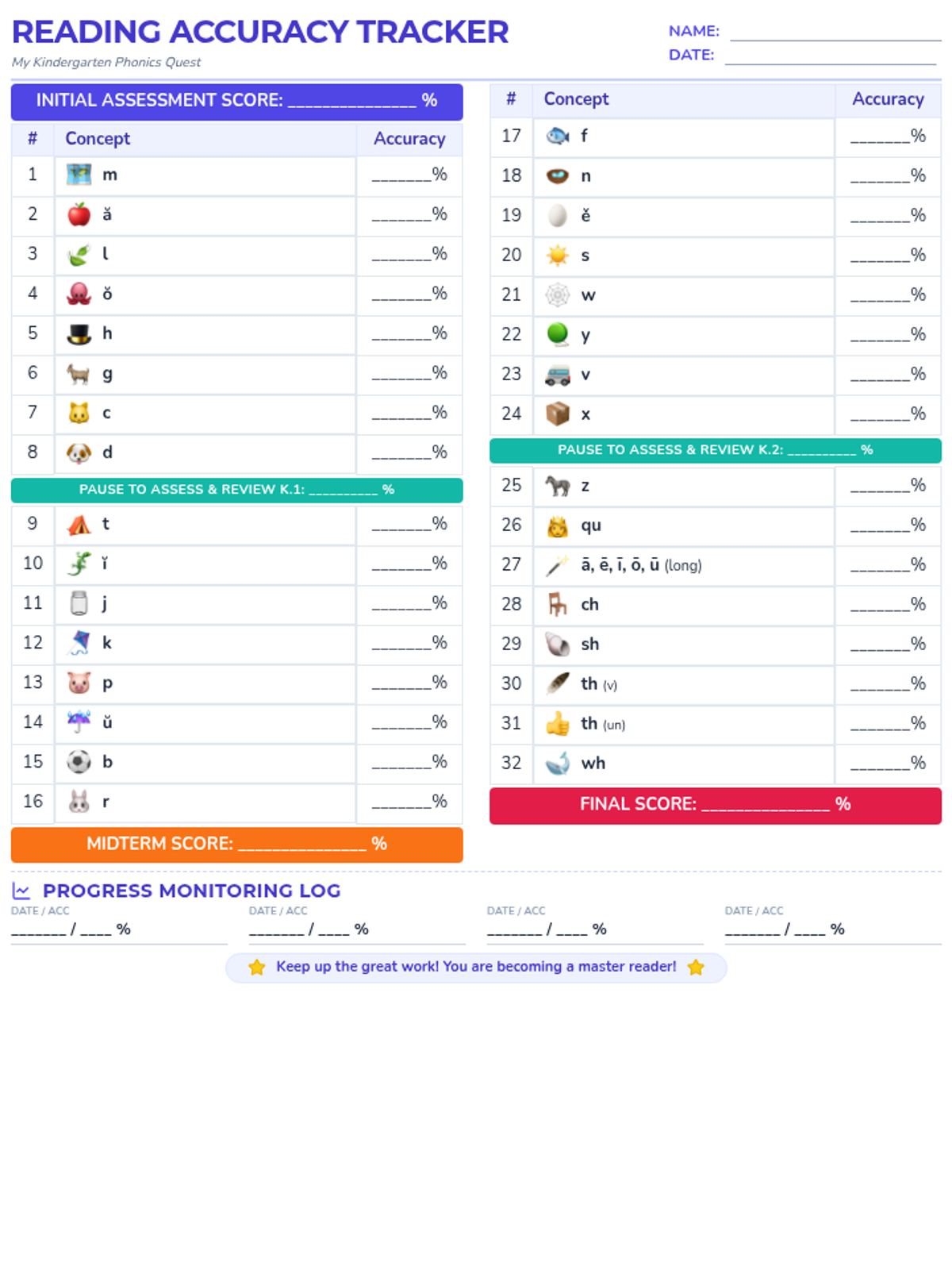
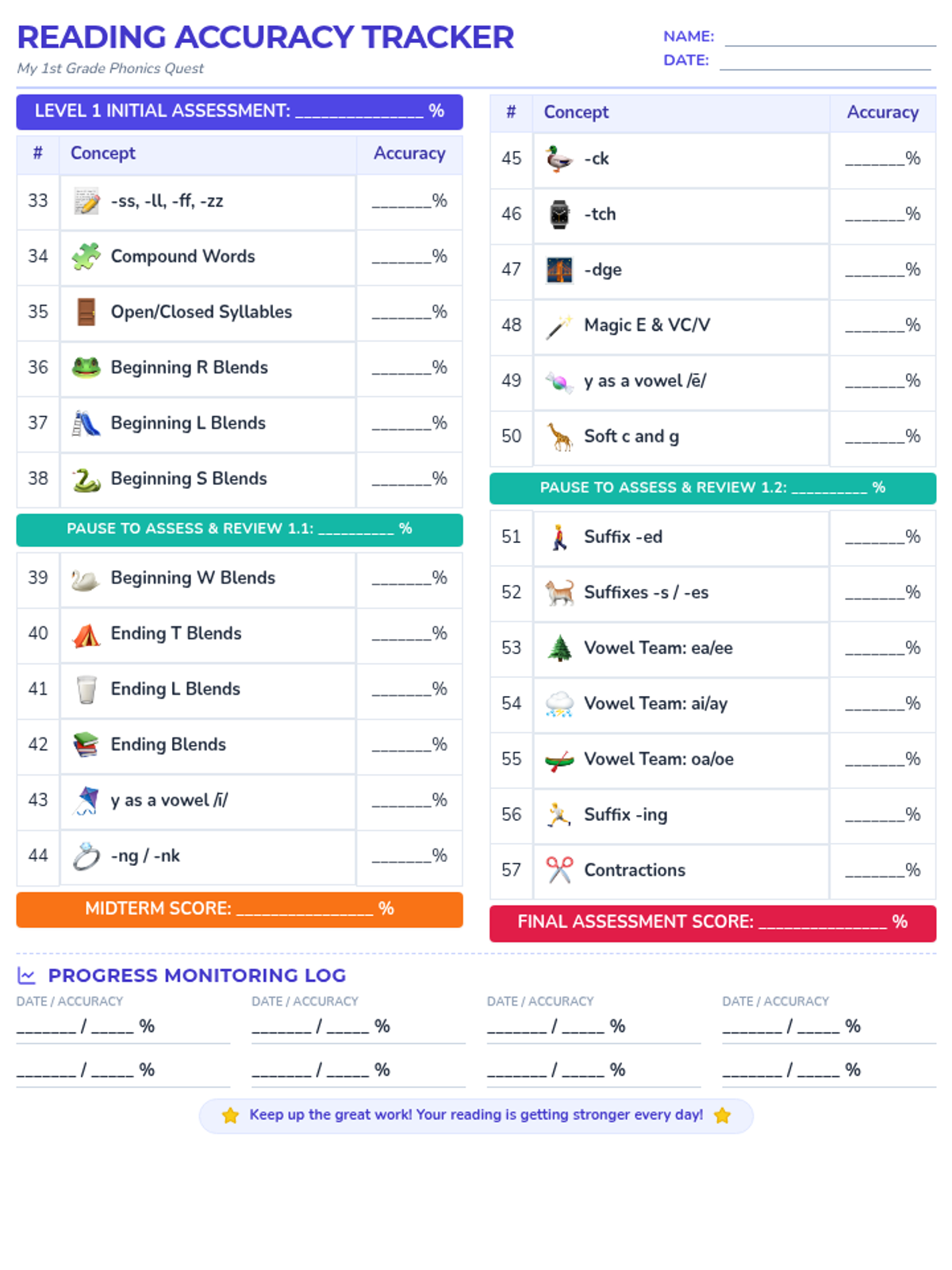
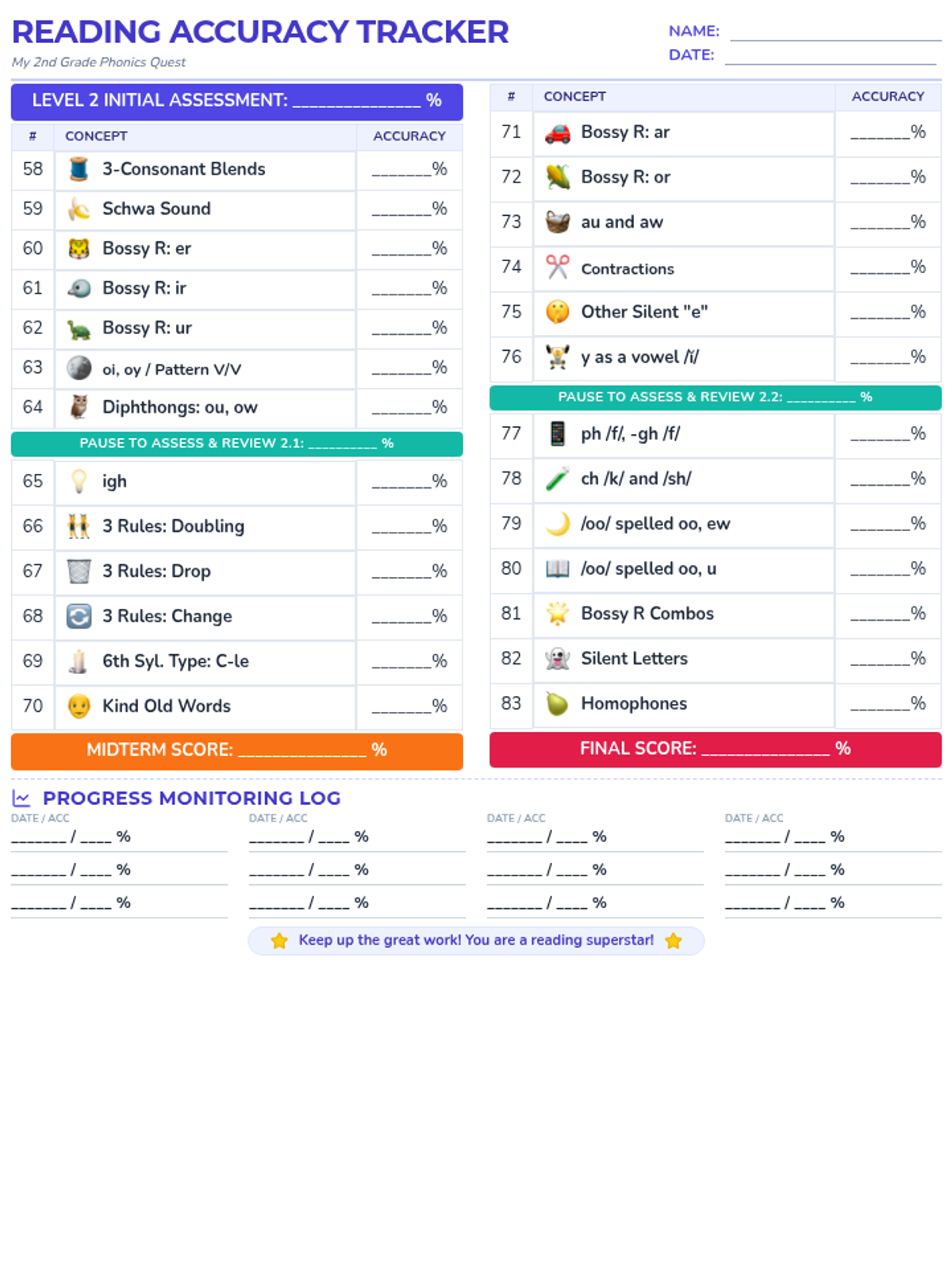
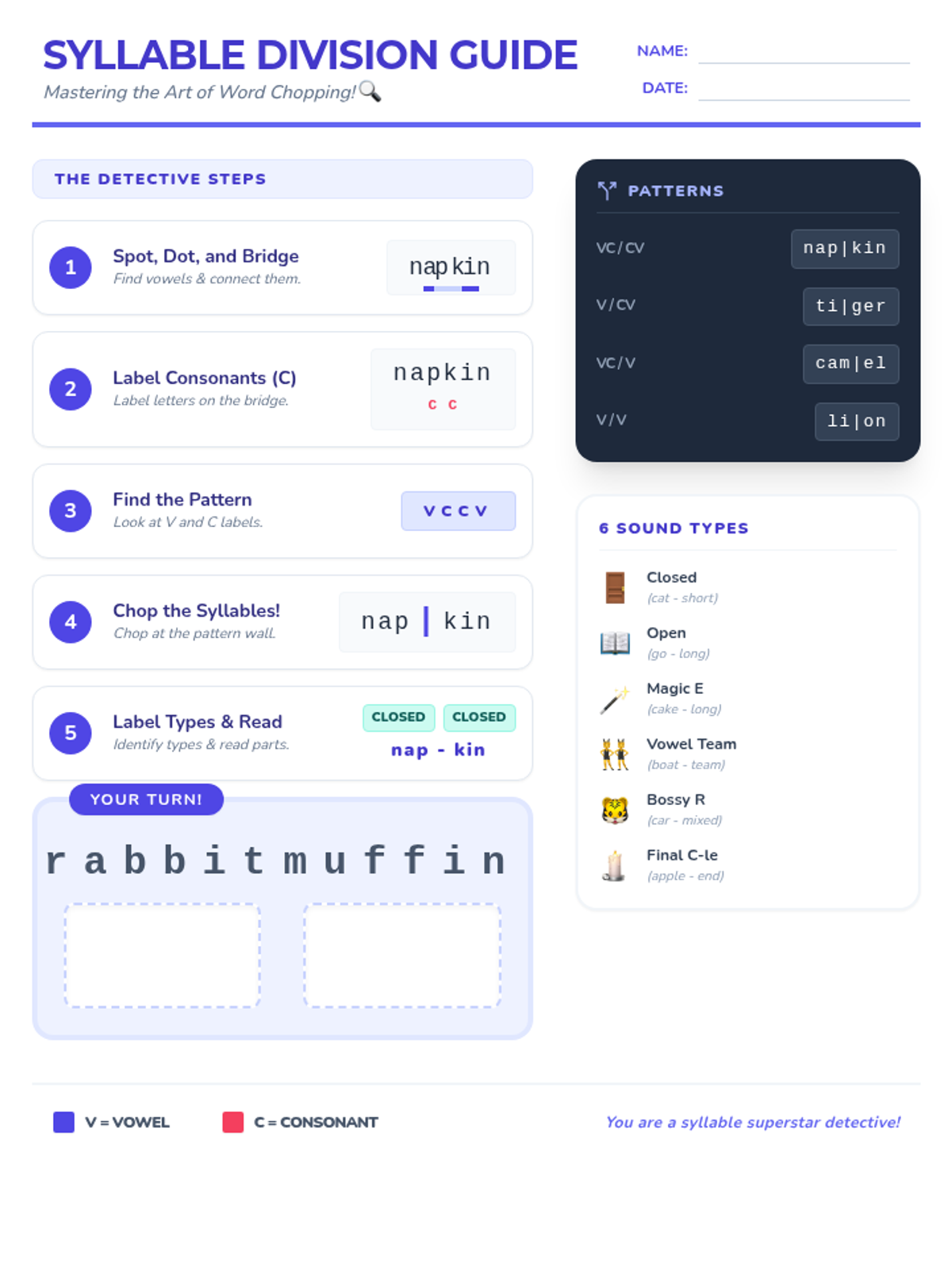
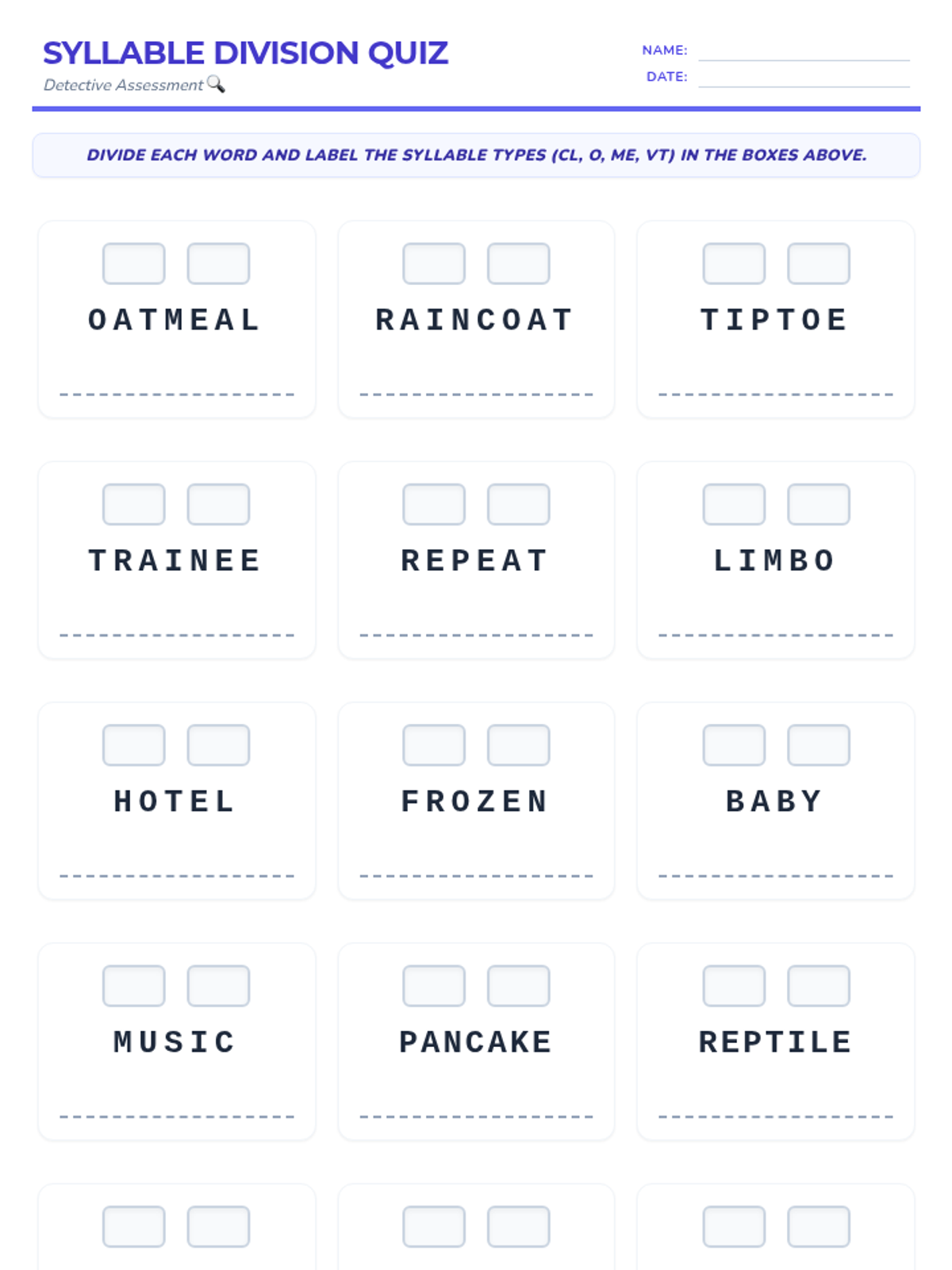
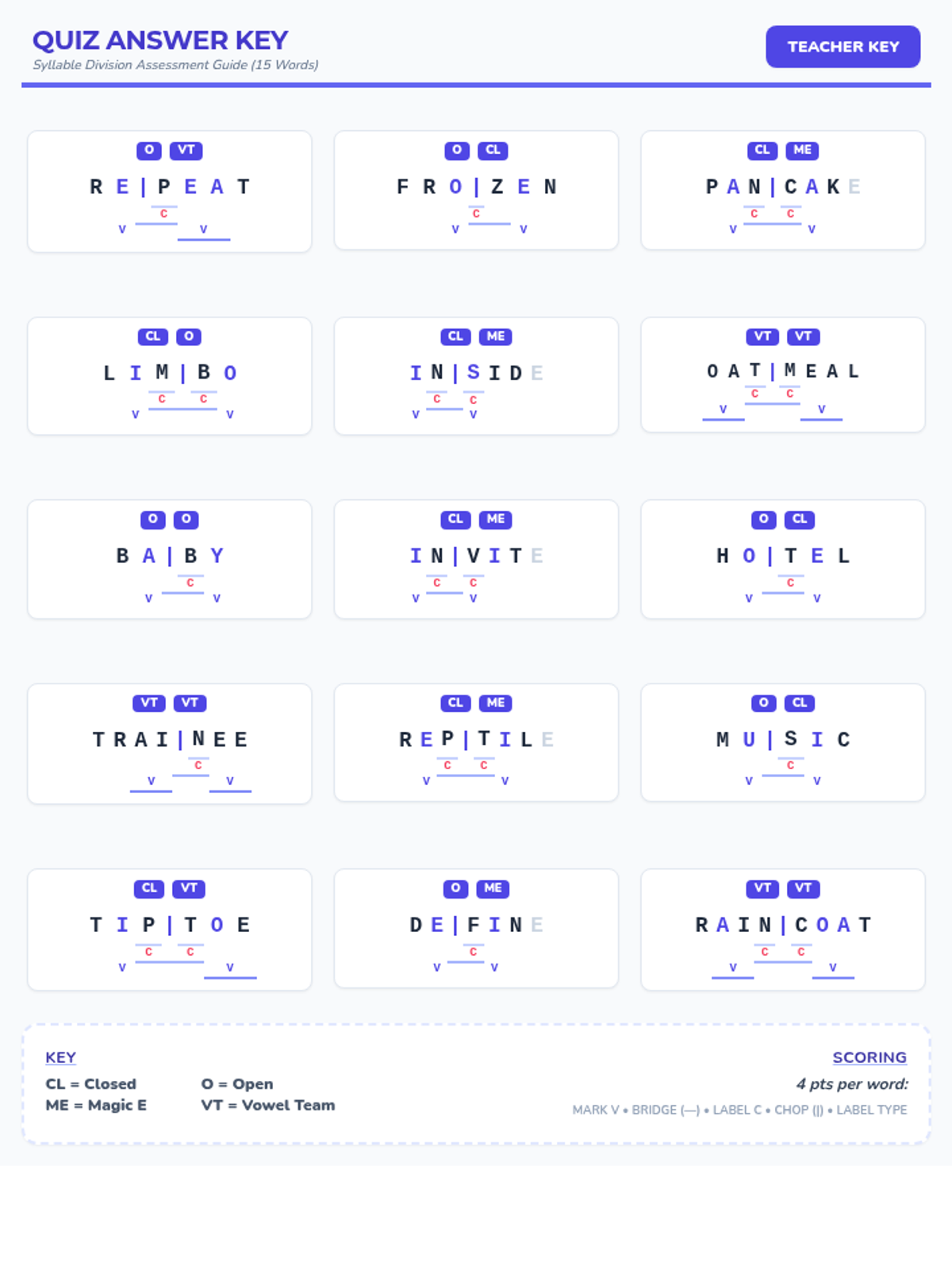
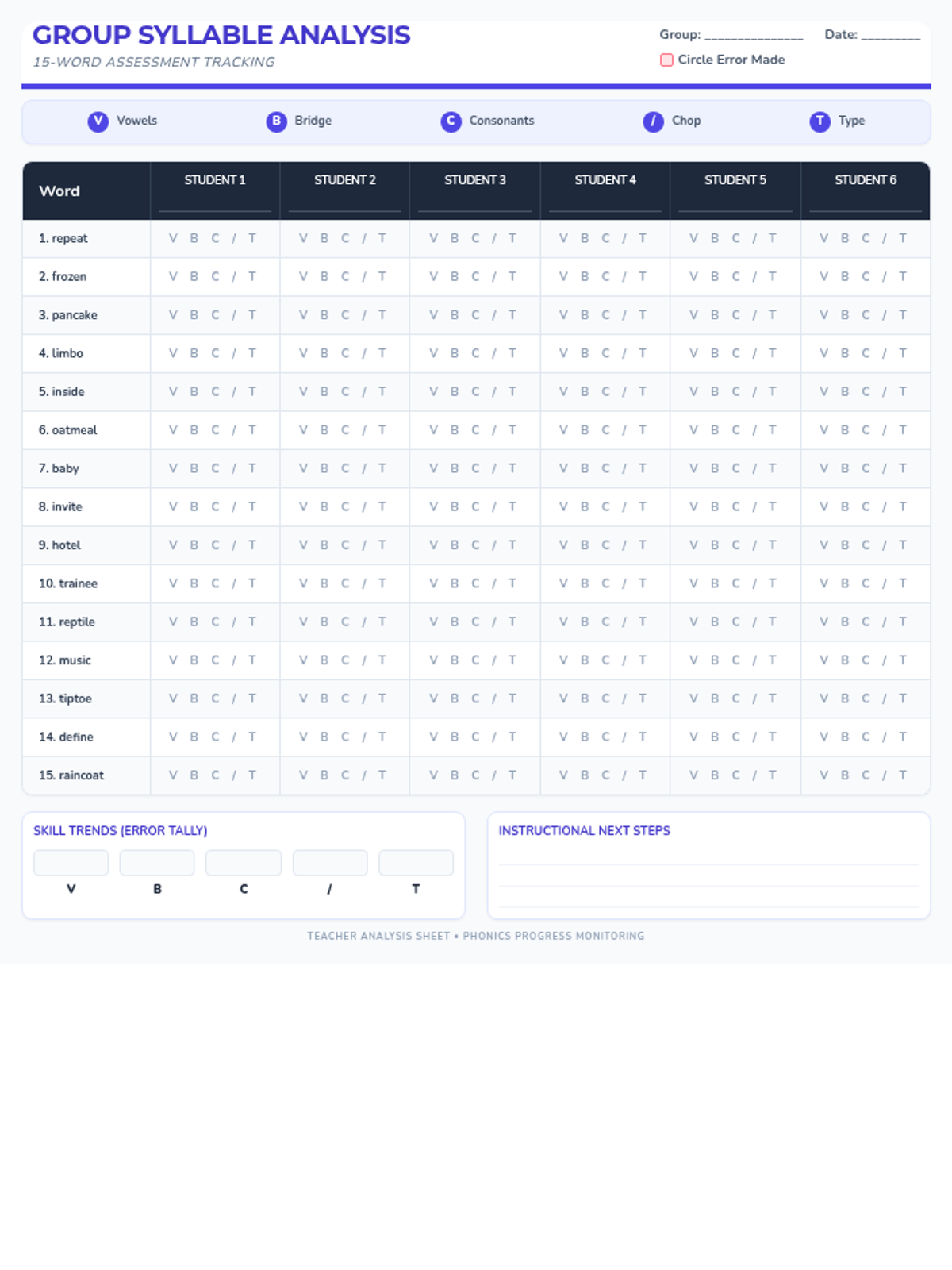
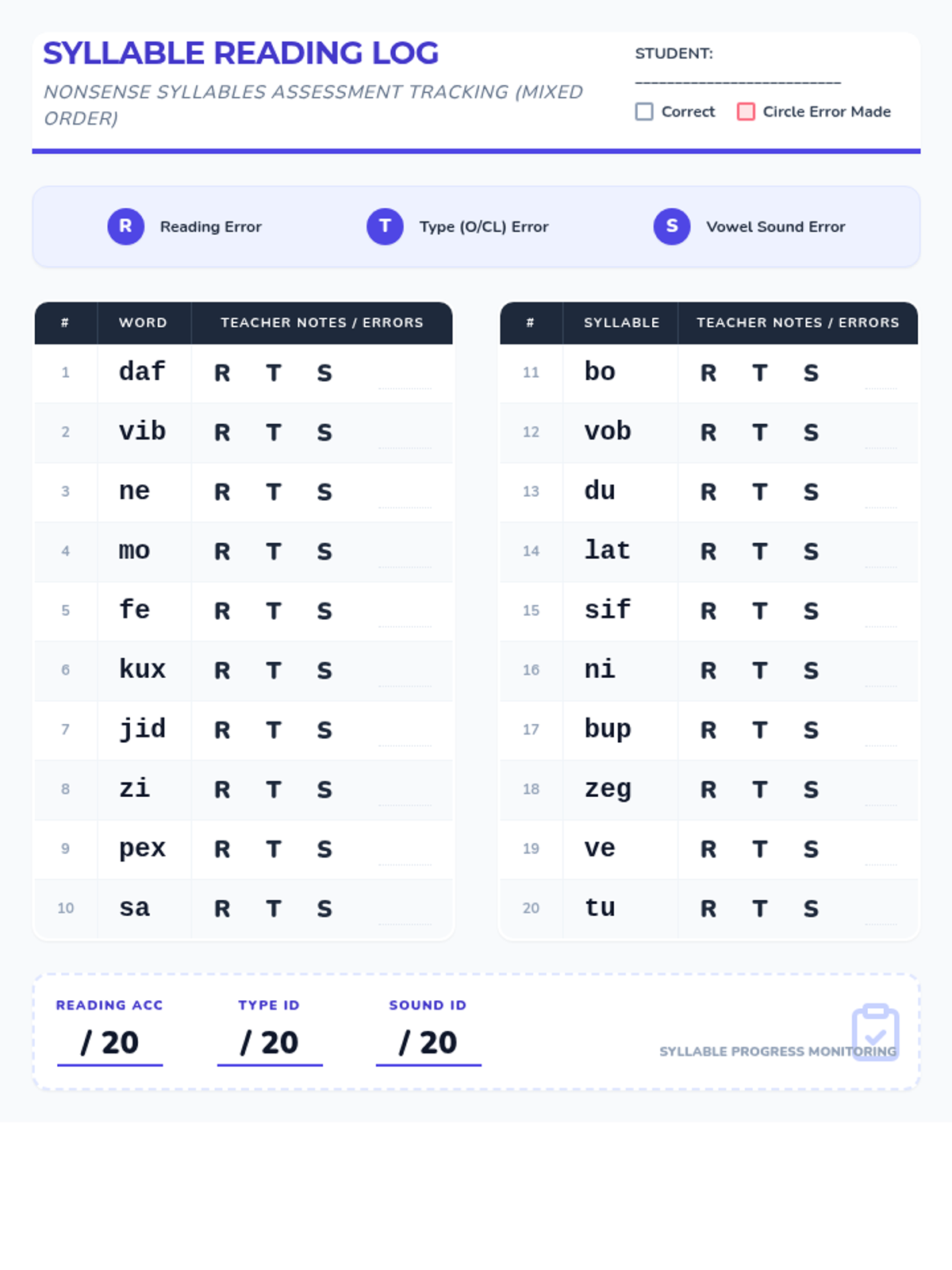
A collection of reading accuracy trackers for Kindergarten and 1st Grade students to monitor their phonics progress.
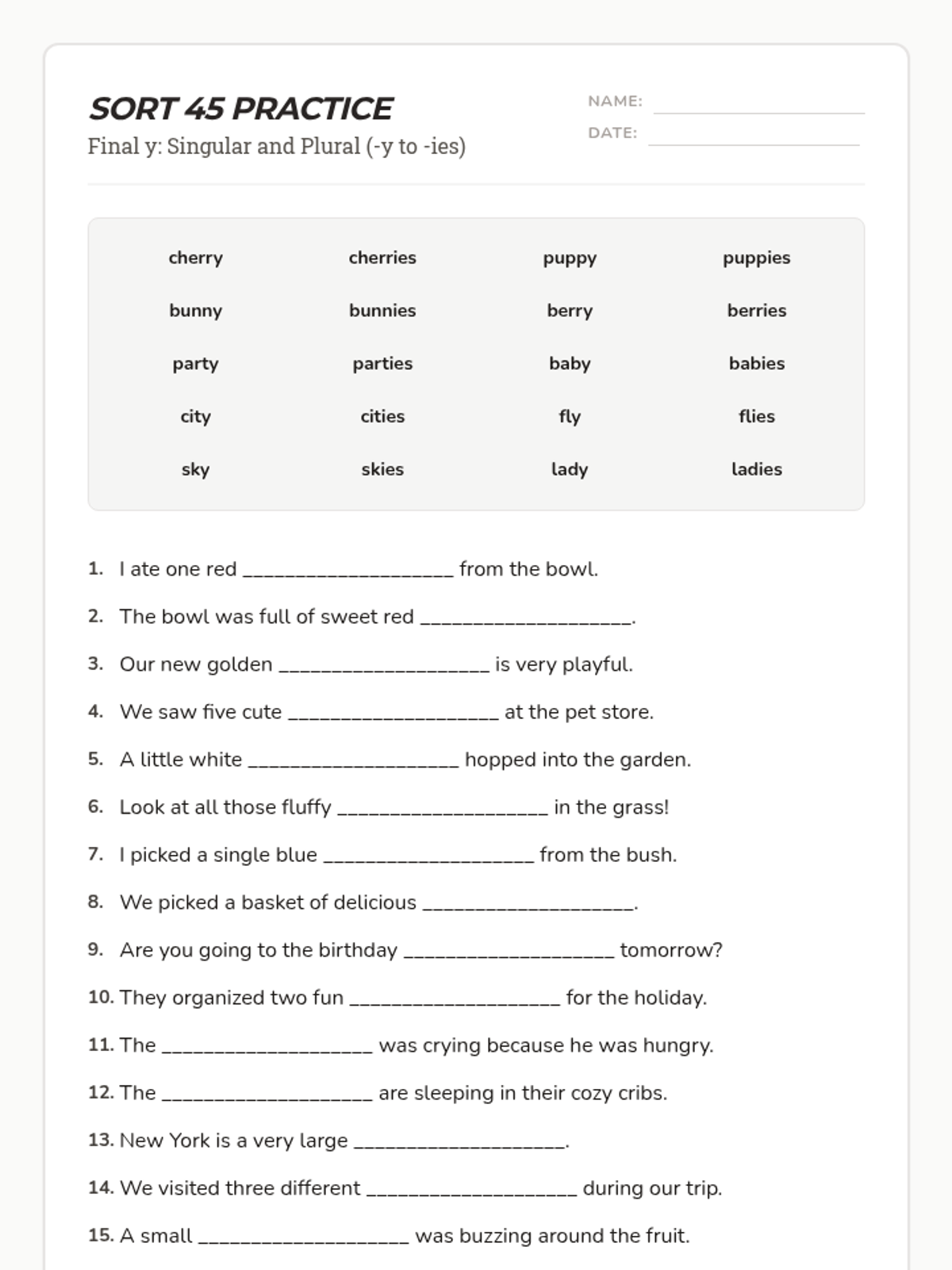
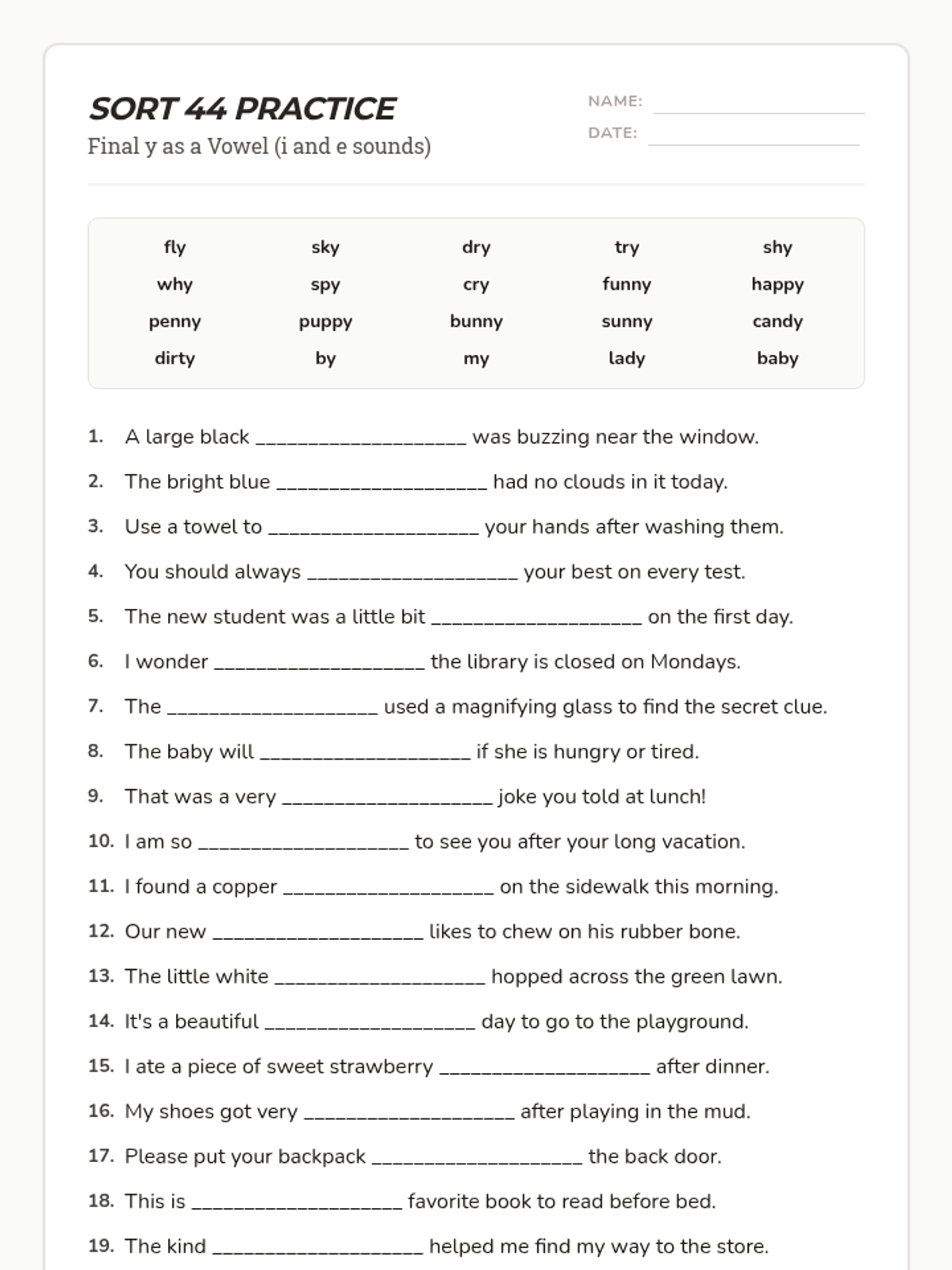
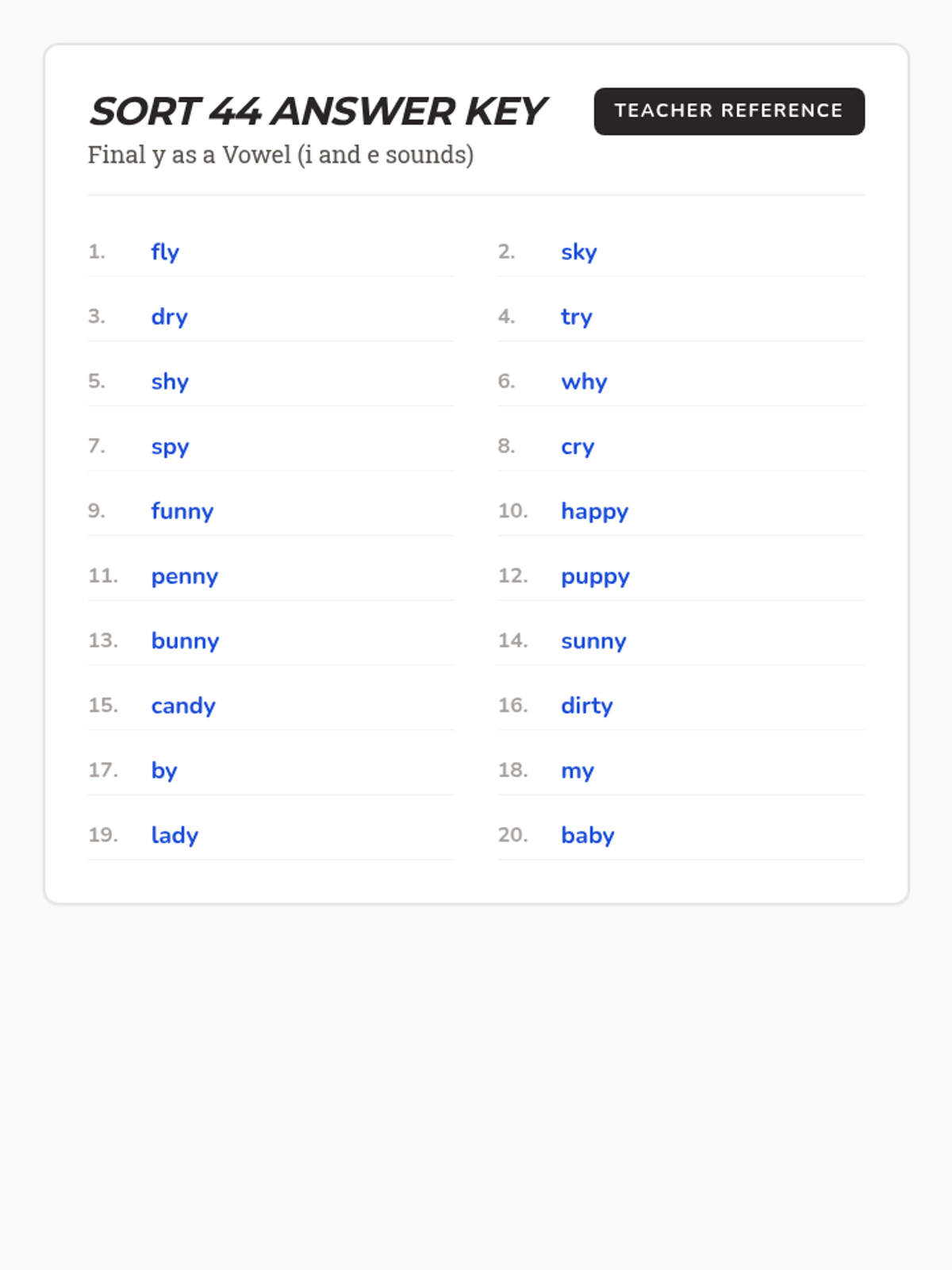
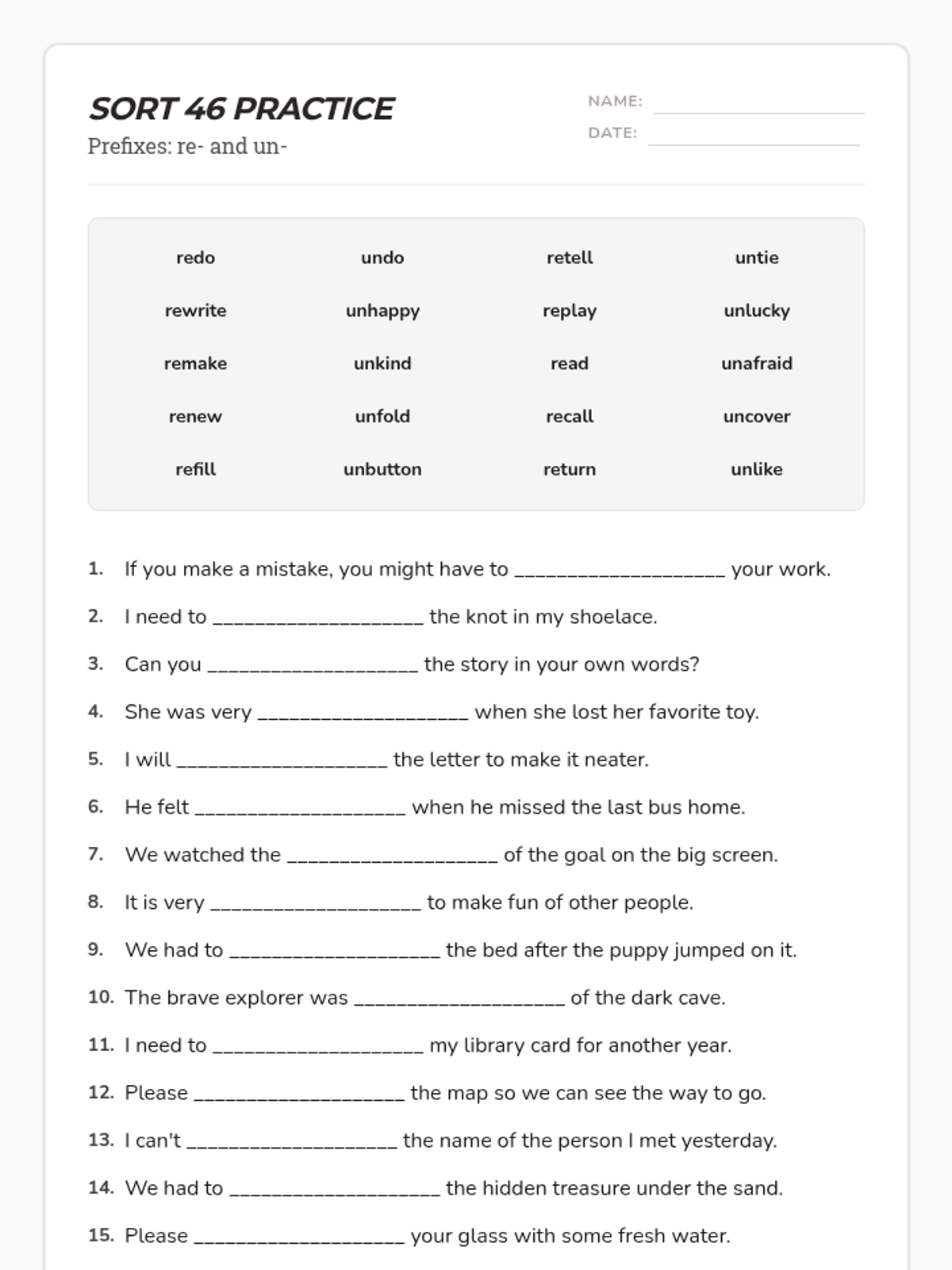
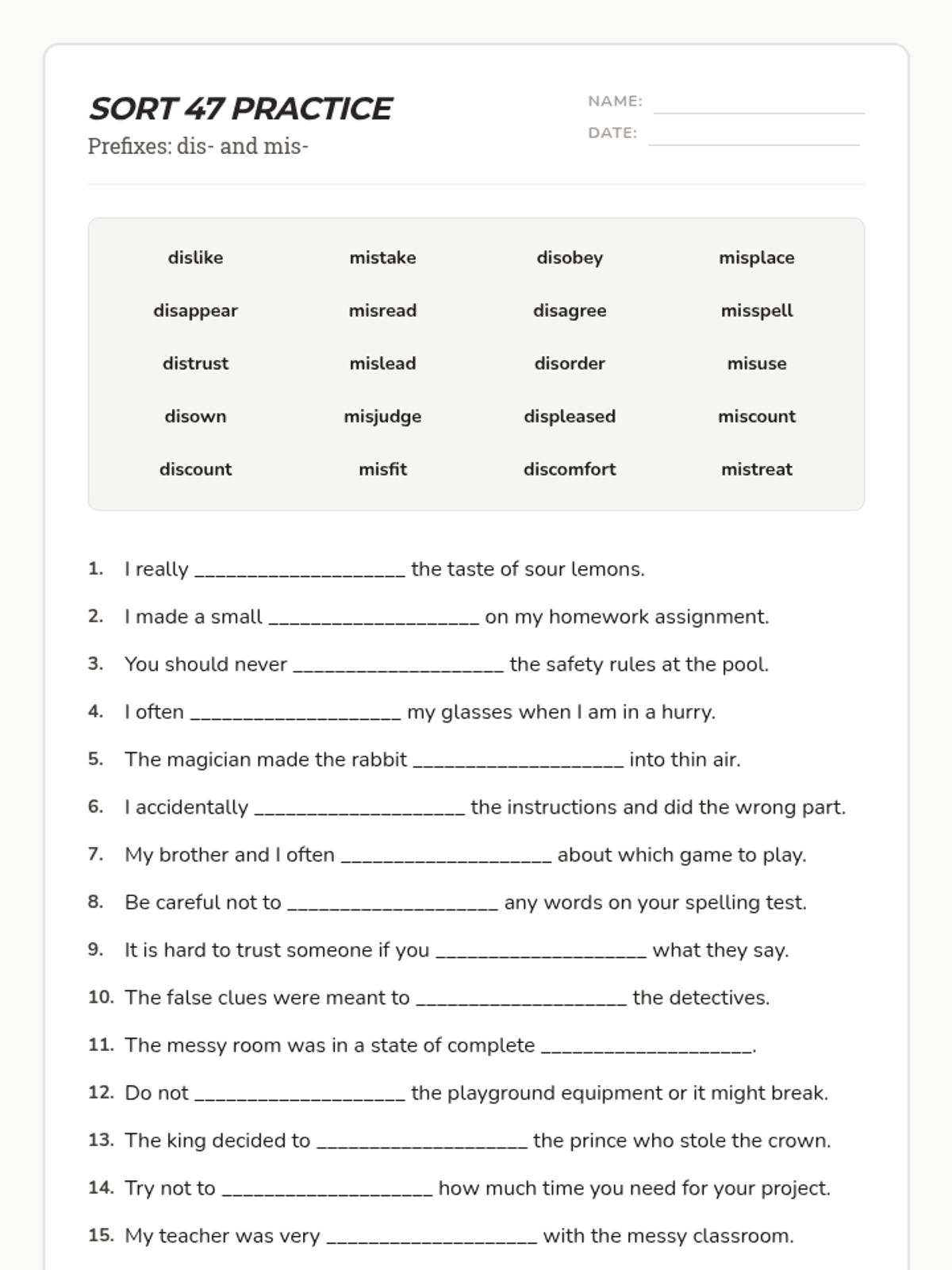
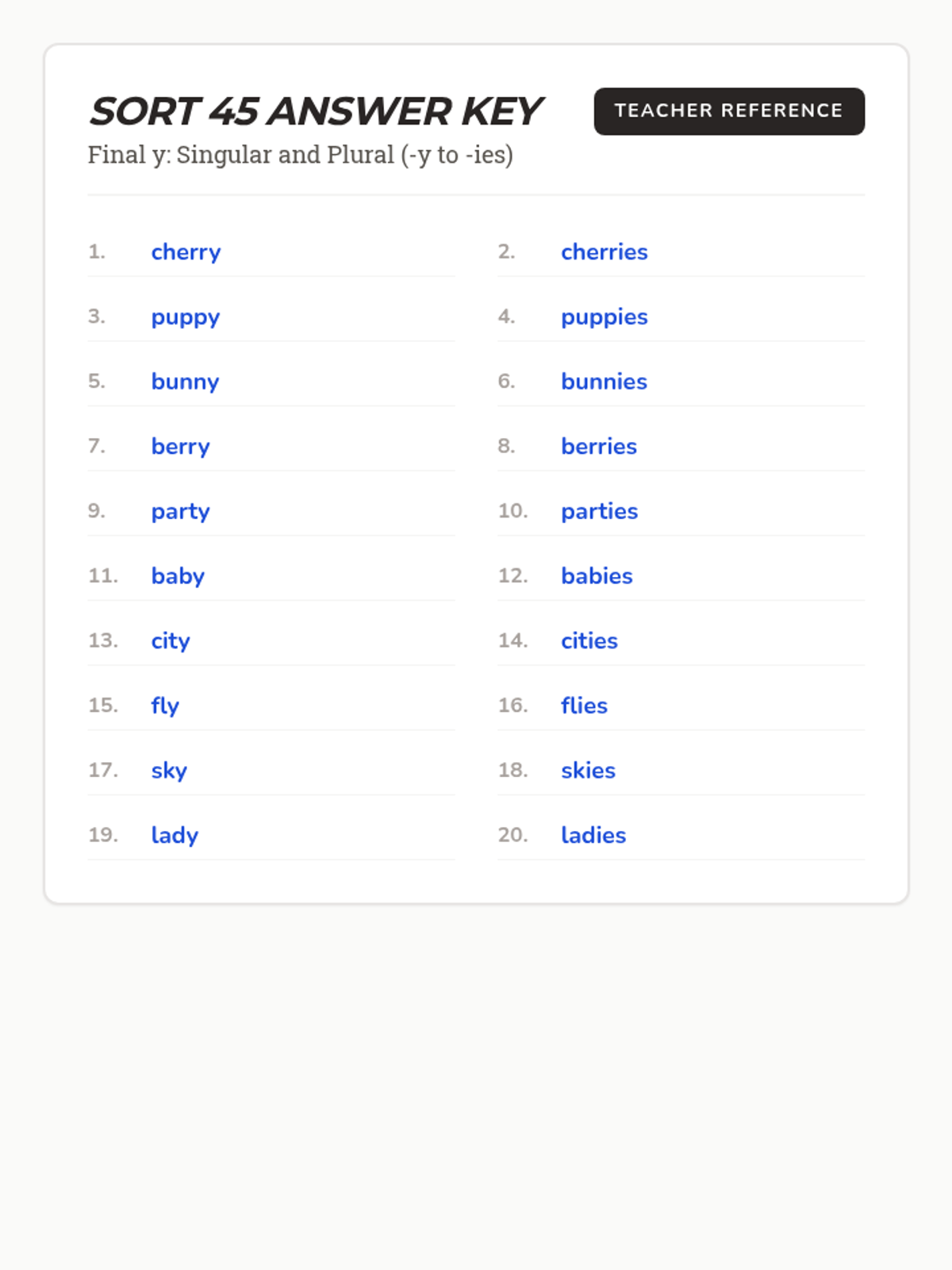
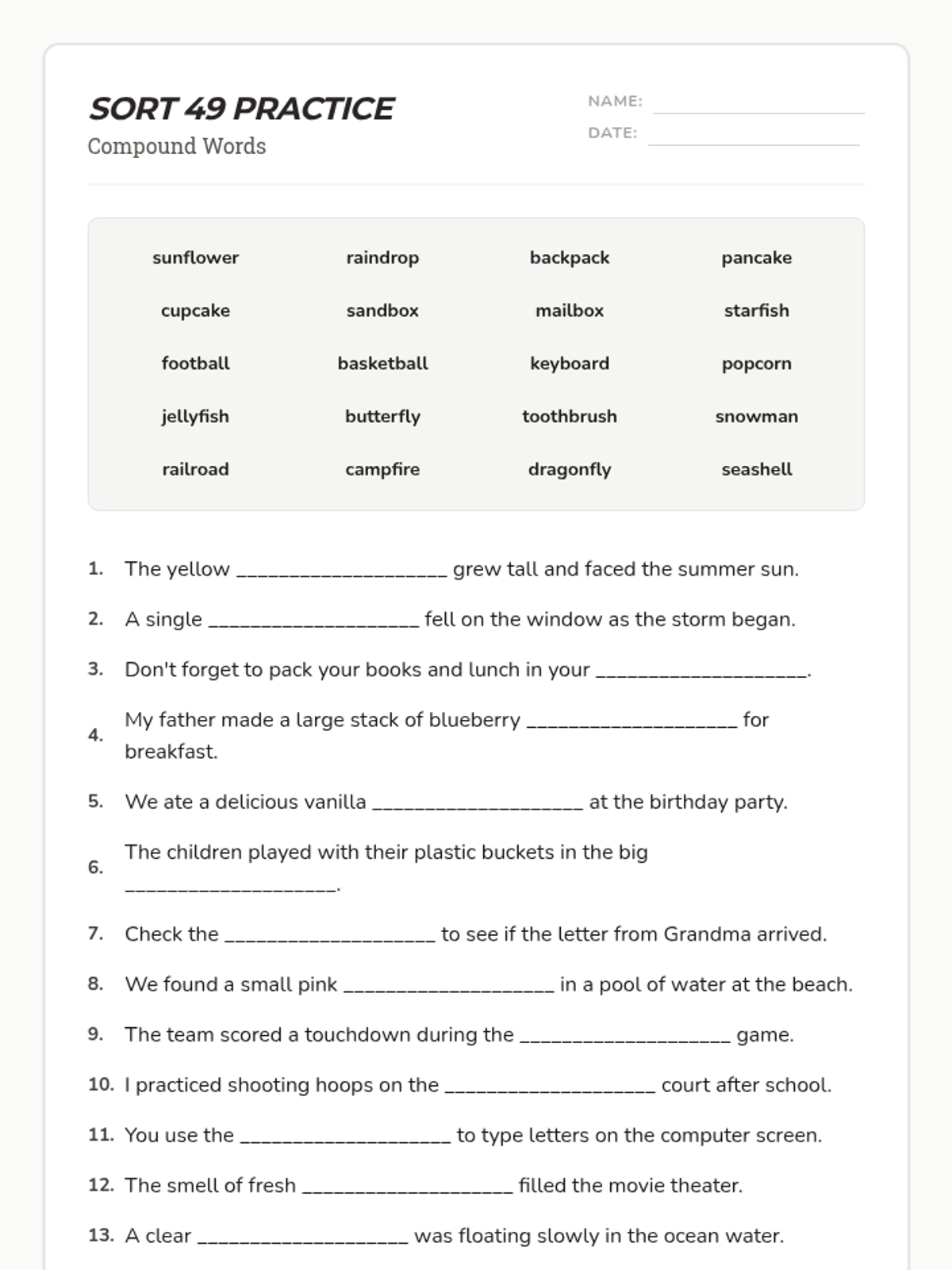
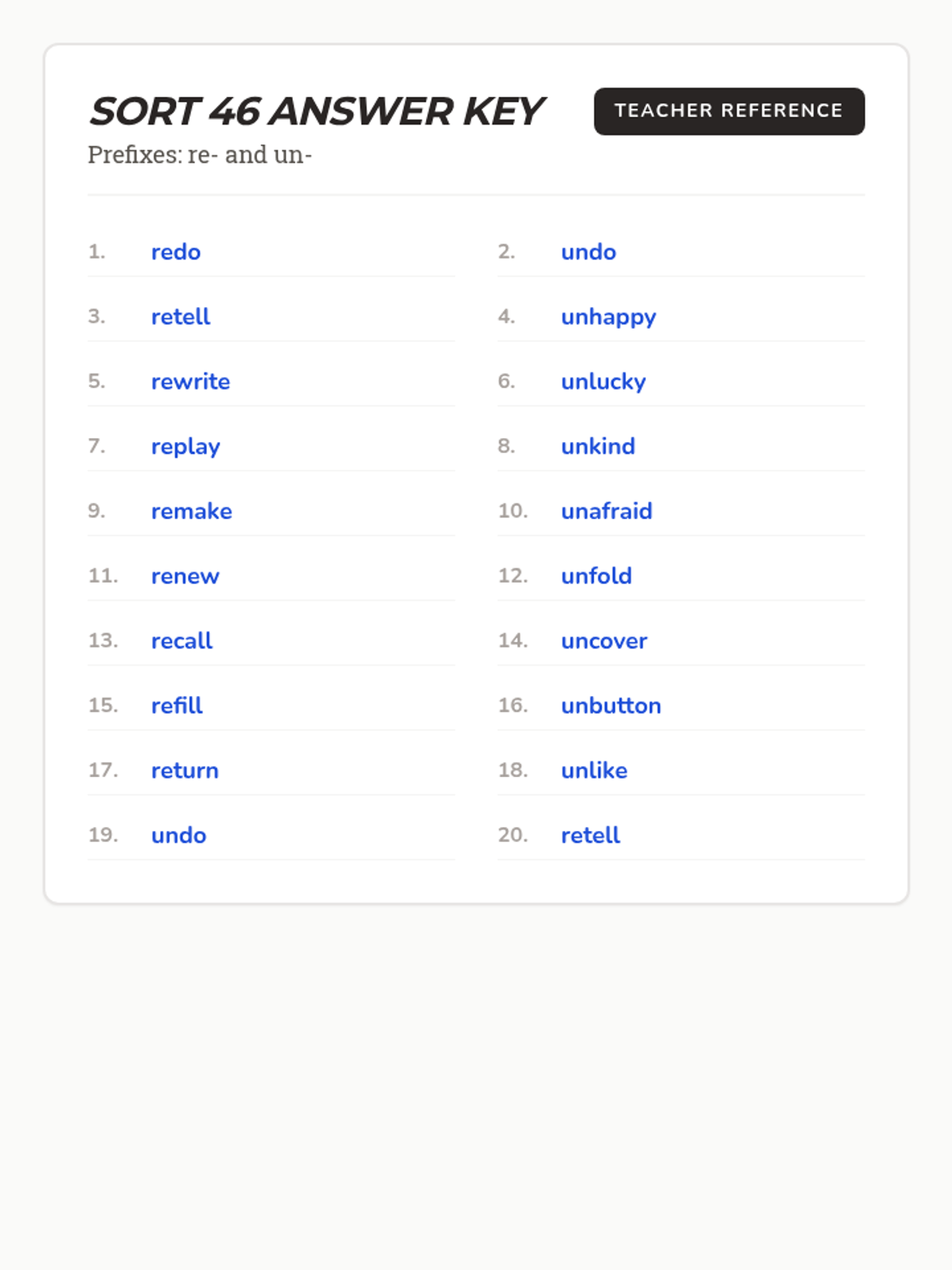
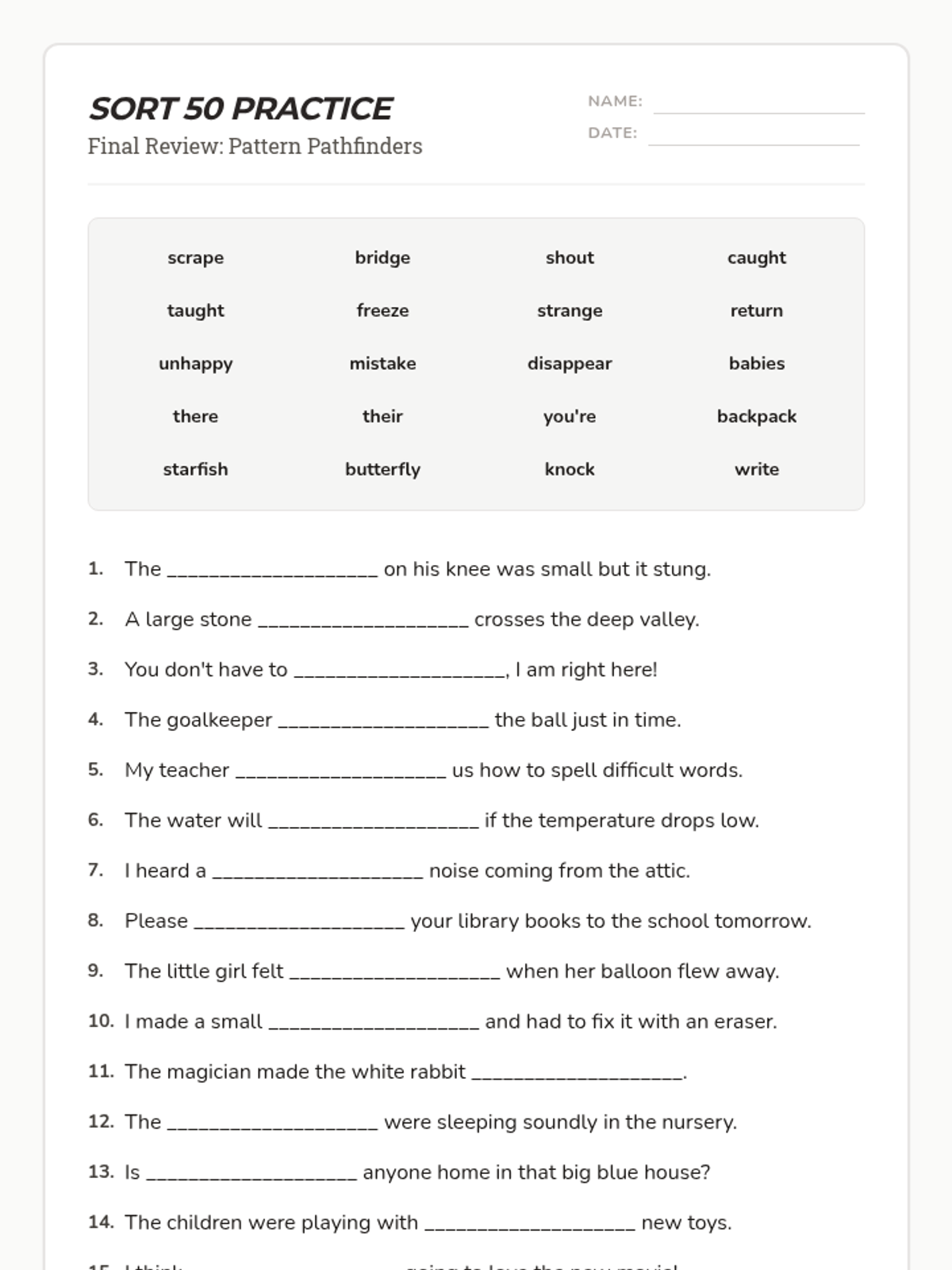
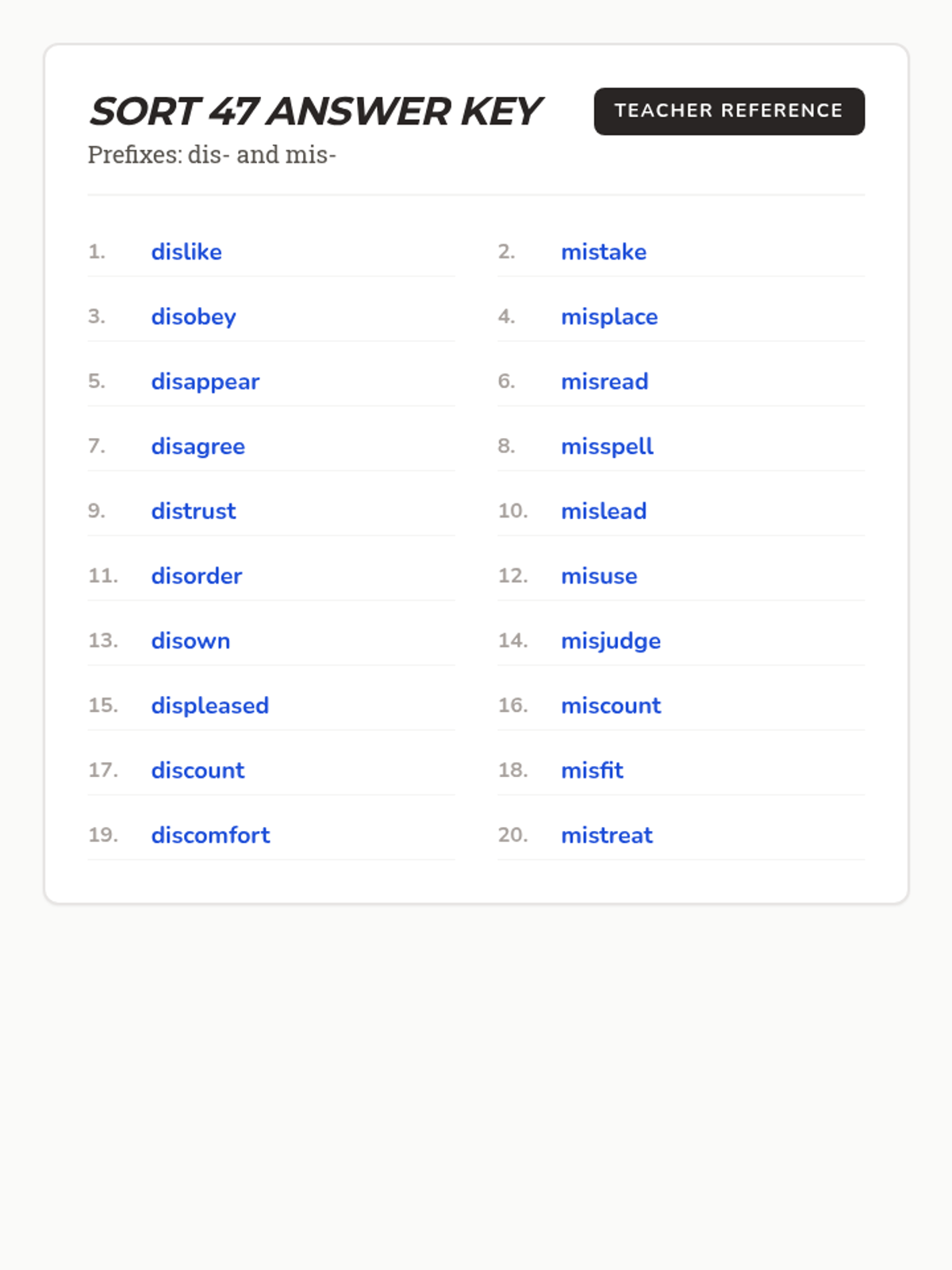
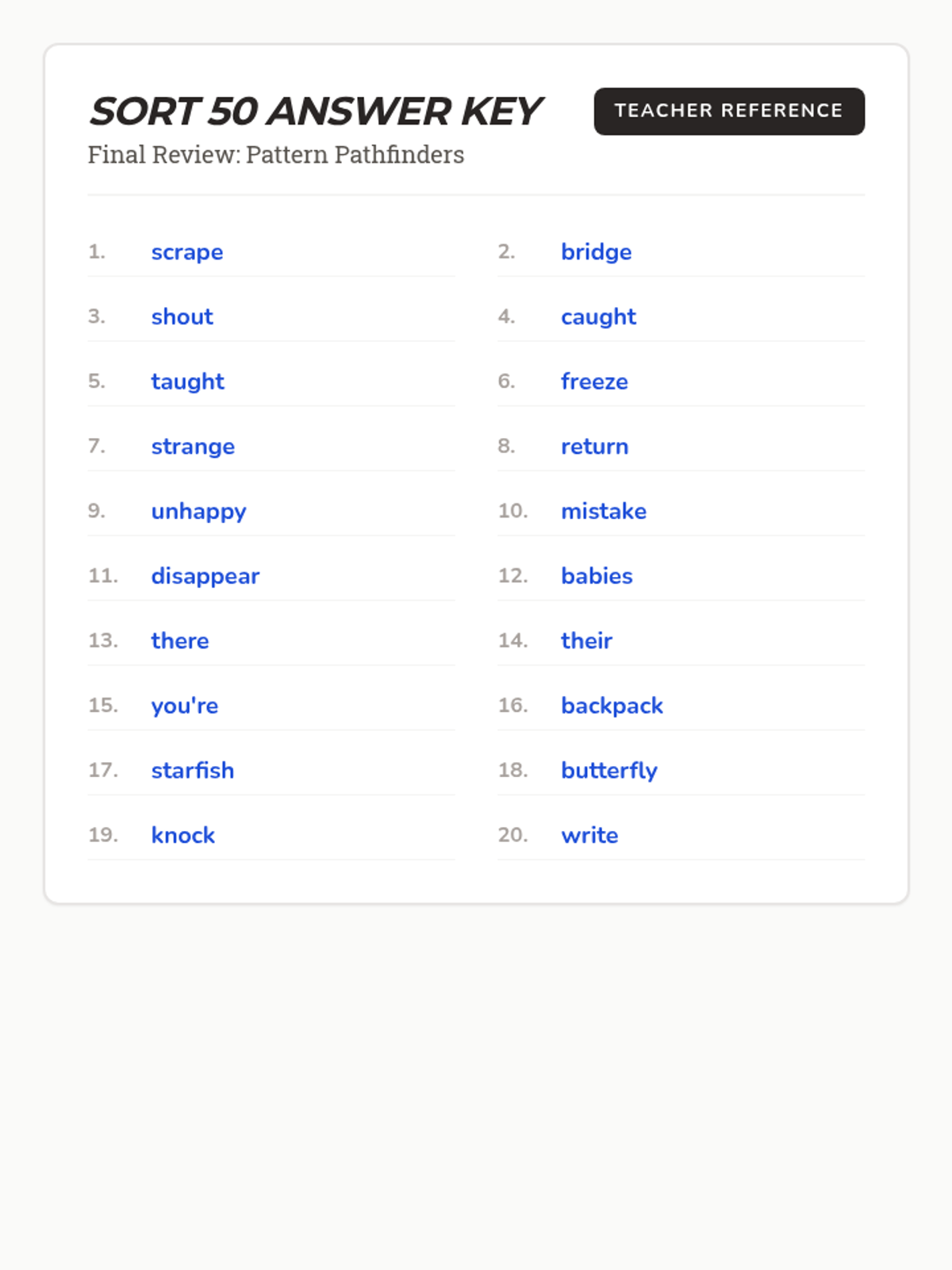
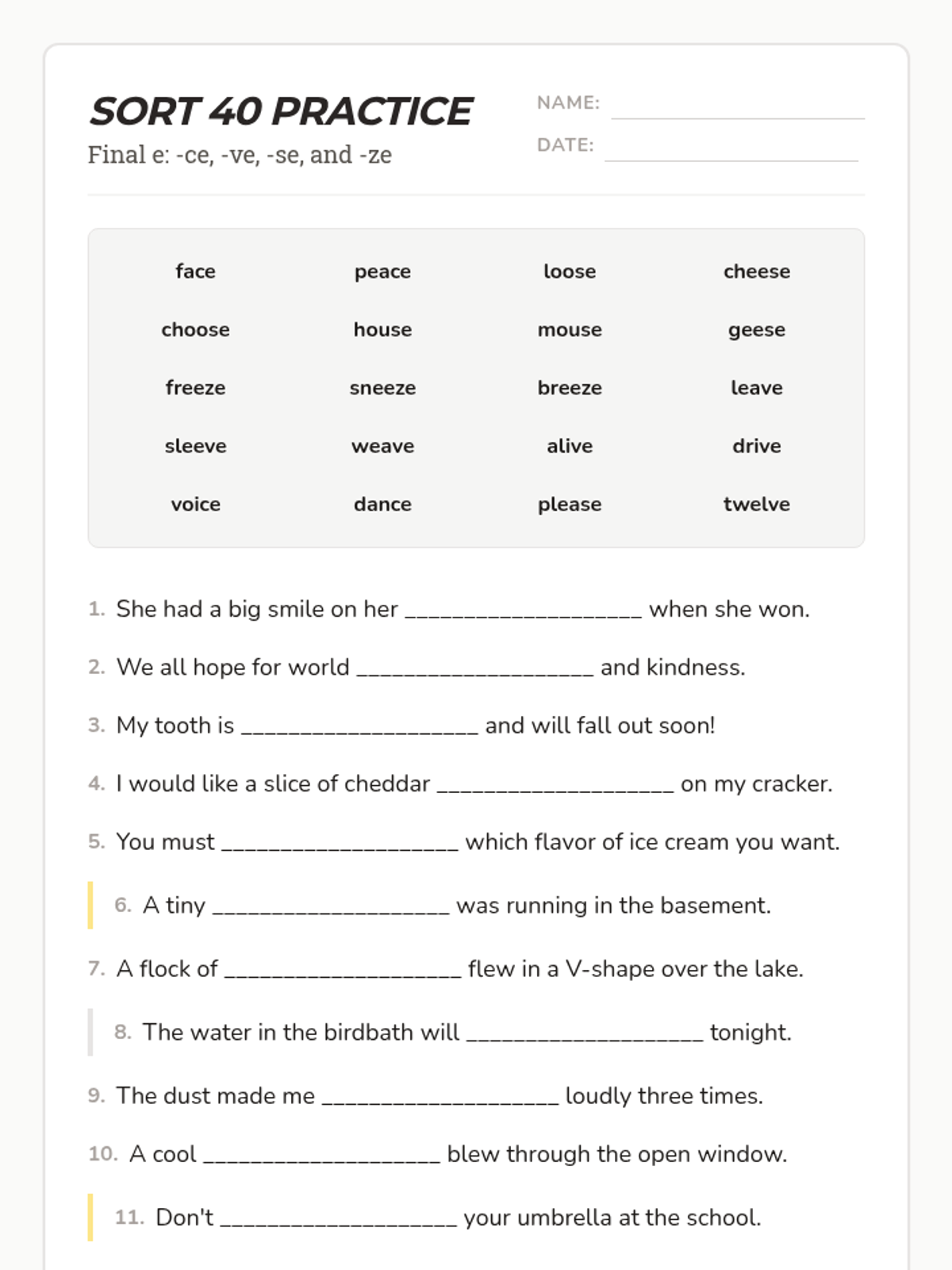
Covers final y as a vowel, plural endings with -ies, common prefixes (re-, un-, dis-, mis-), and a comprehensive review of patterns from Sorts 13-50.
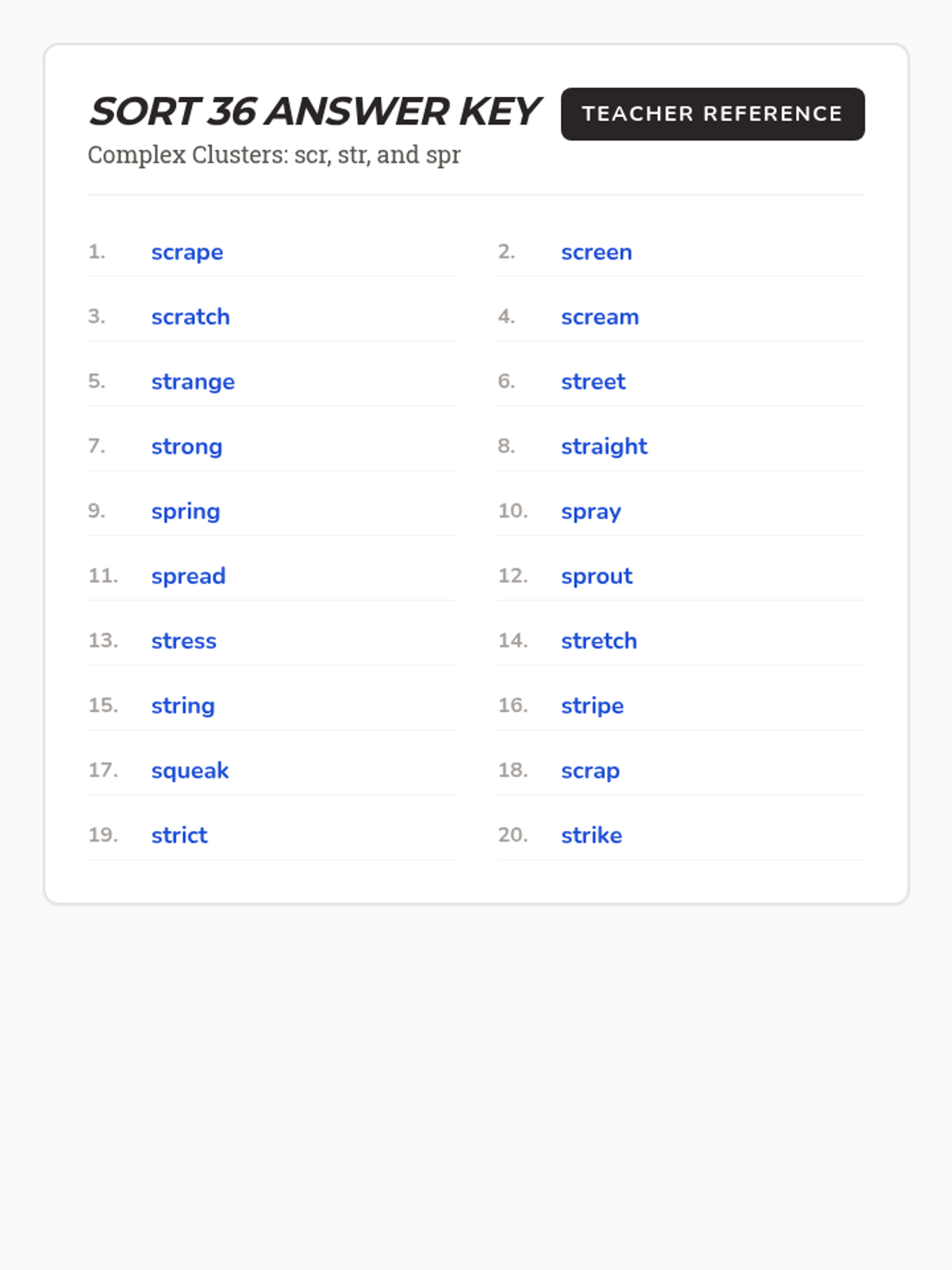
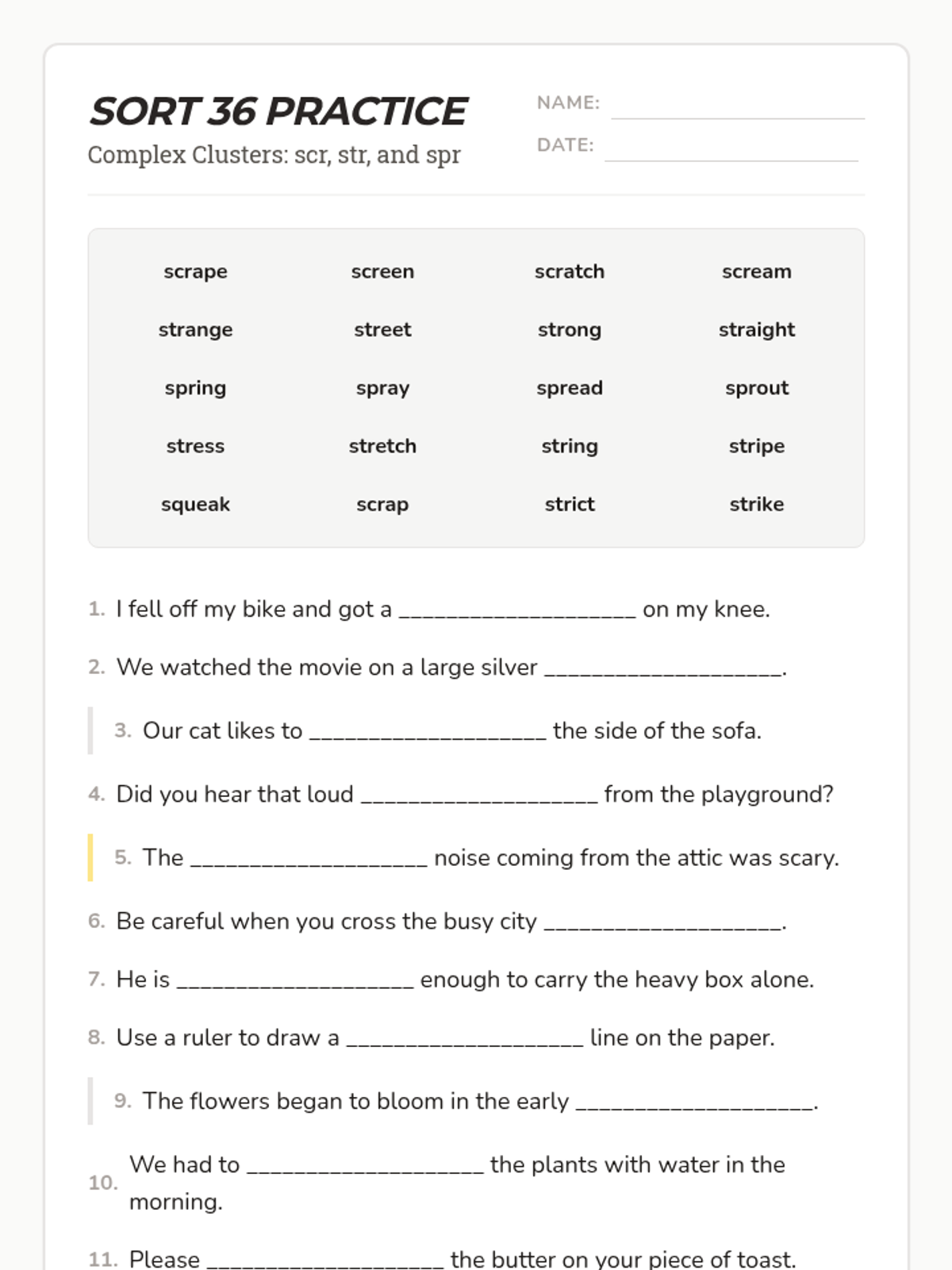
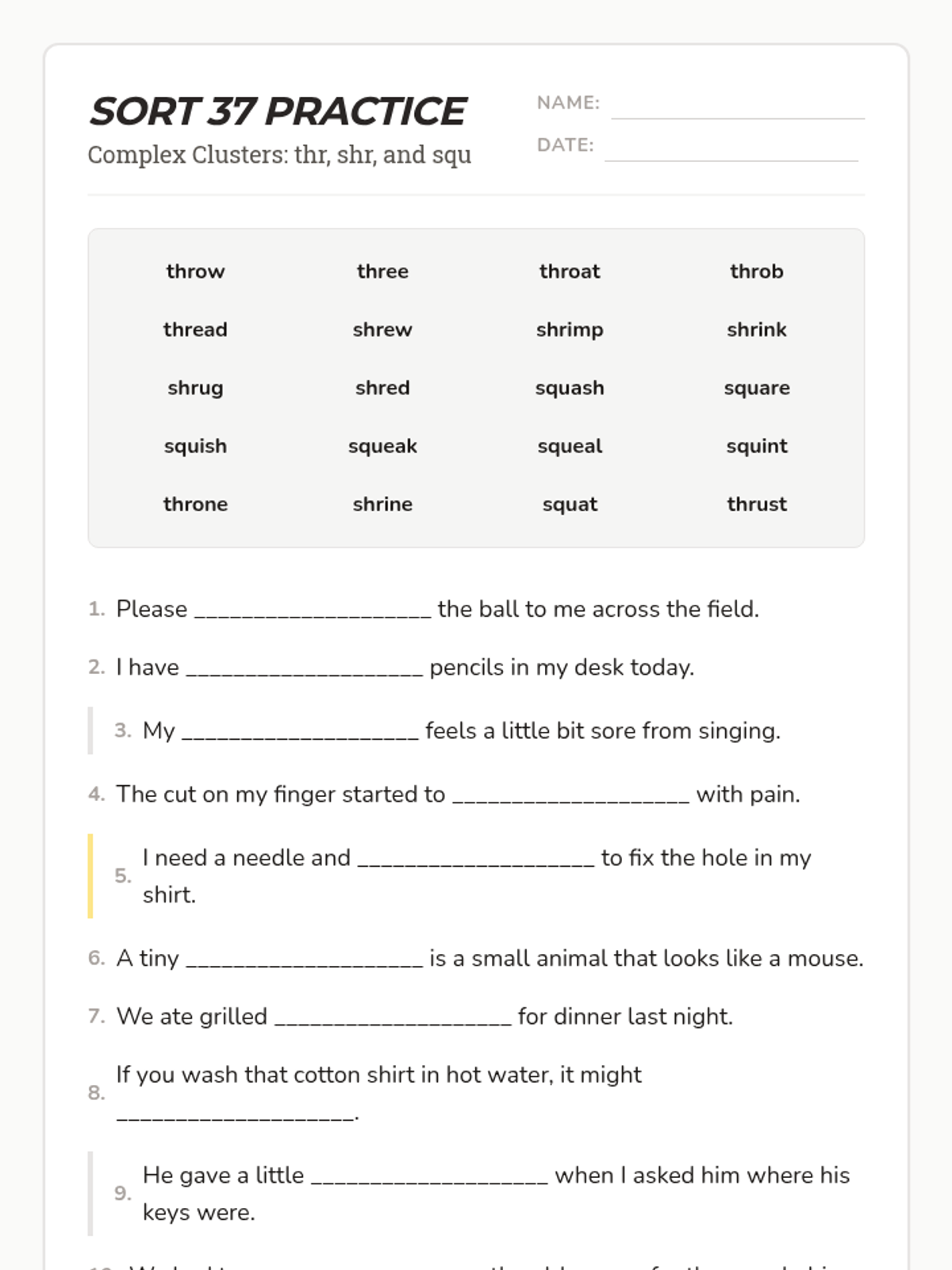
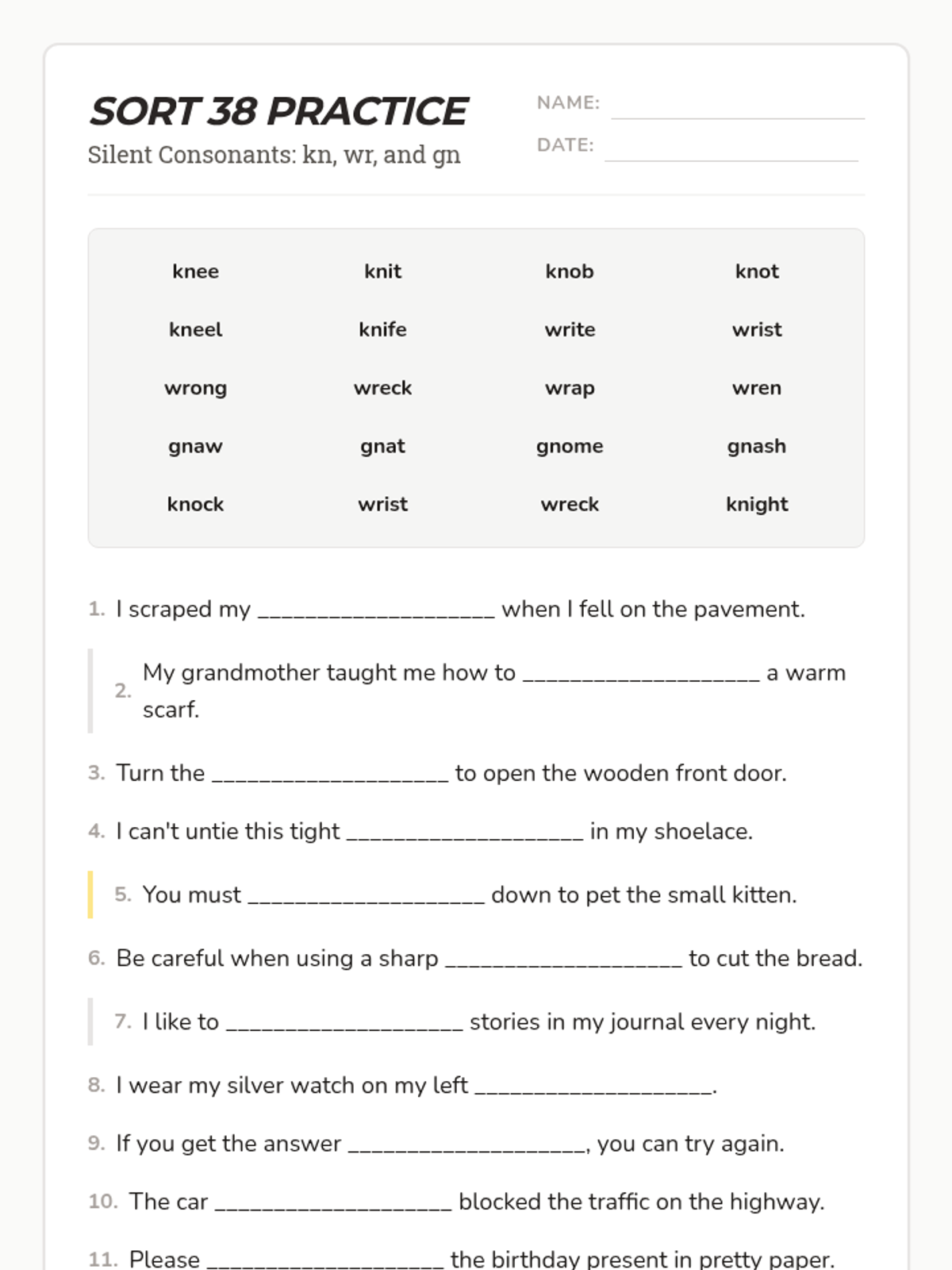
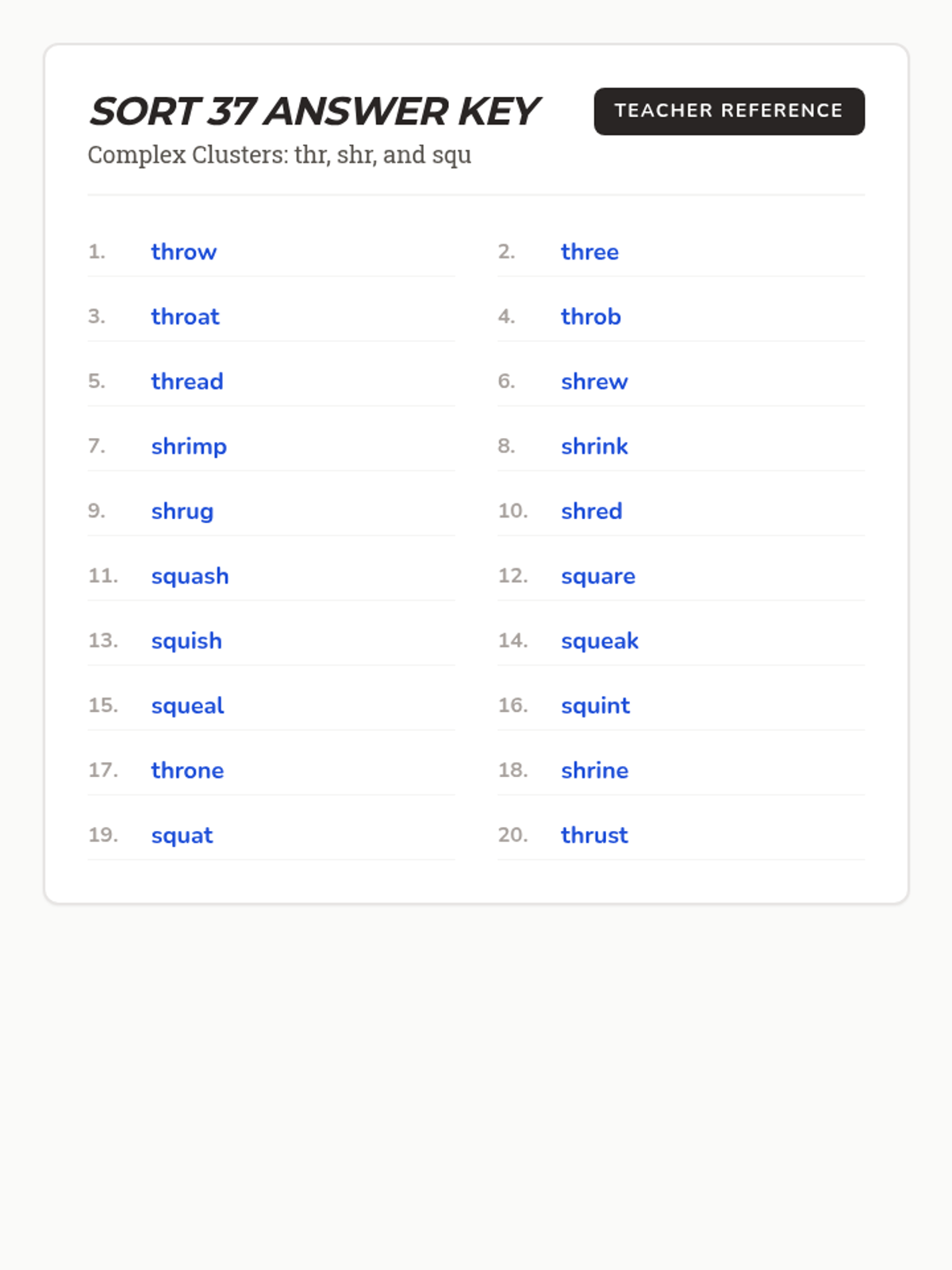
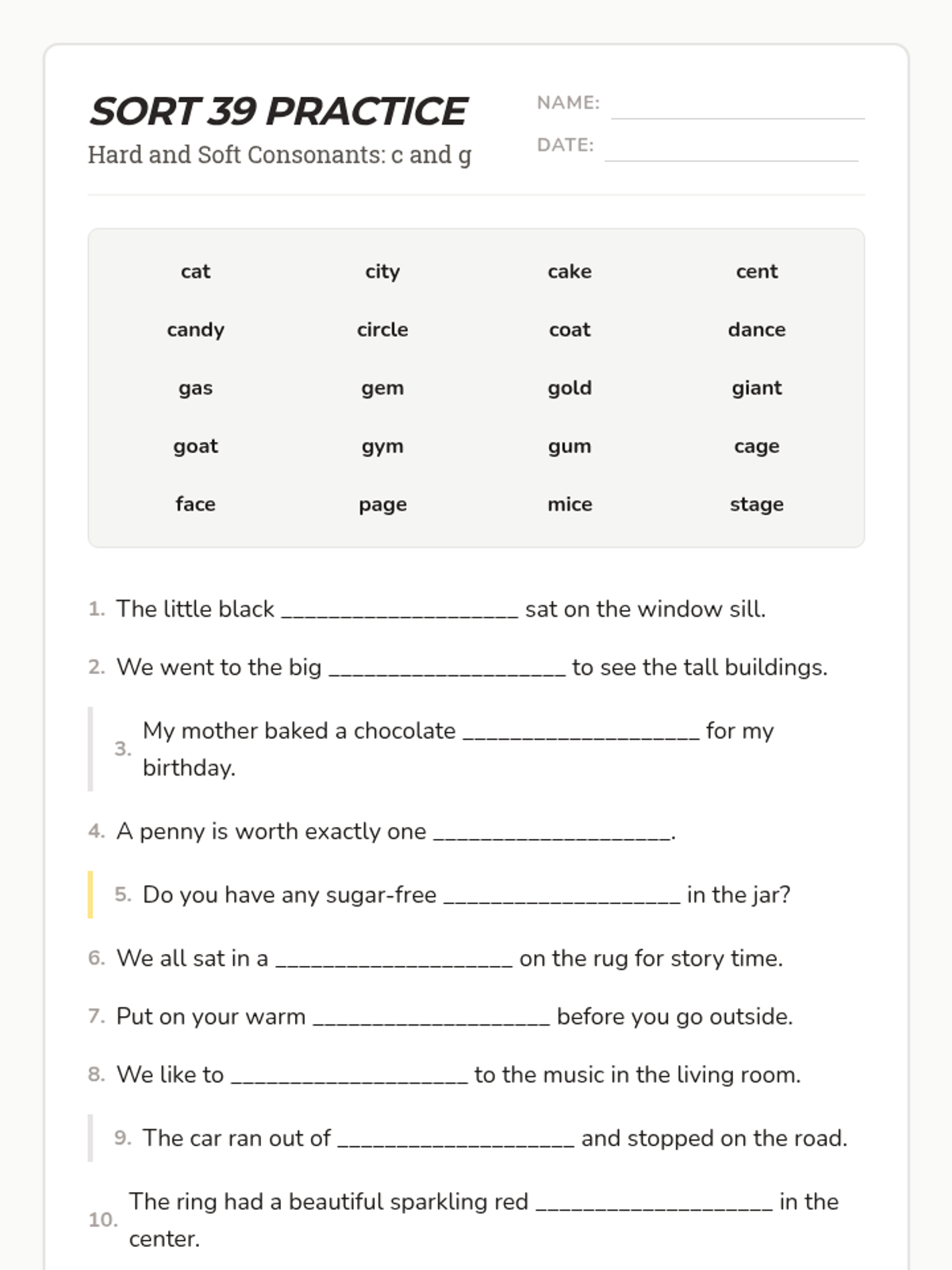
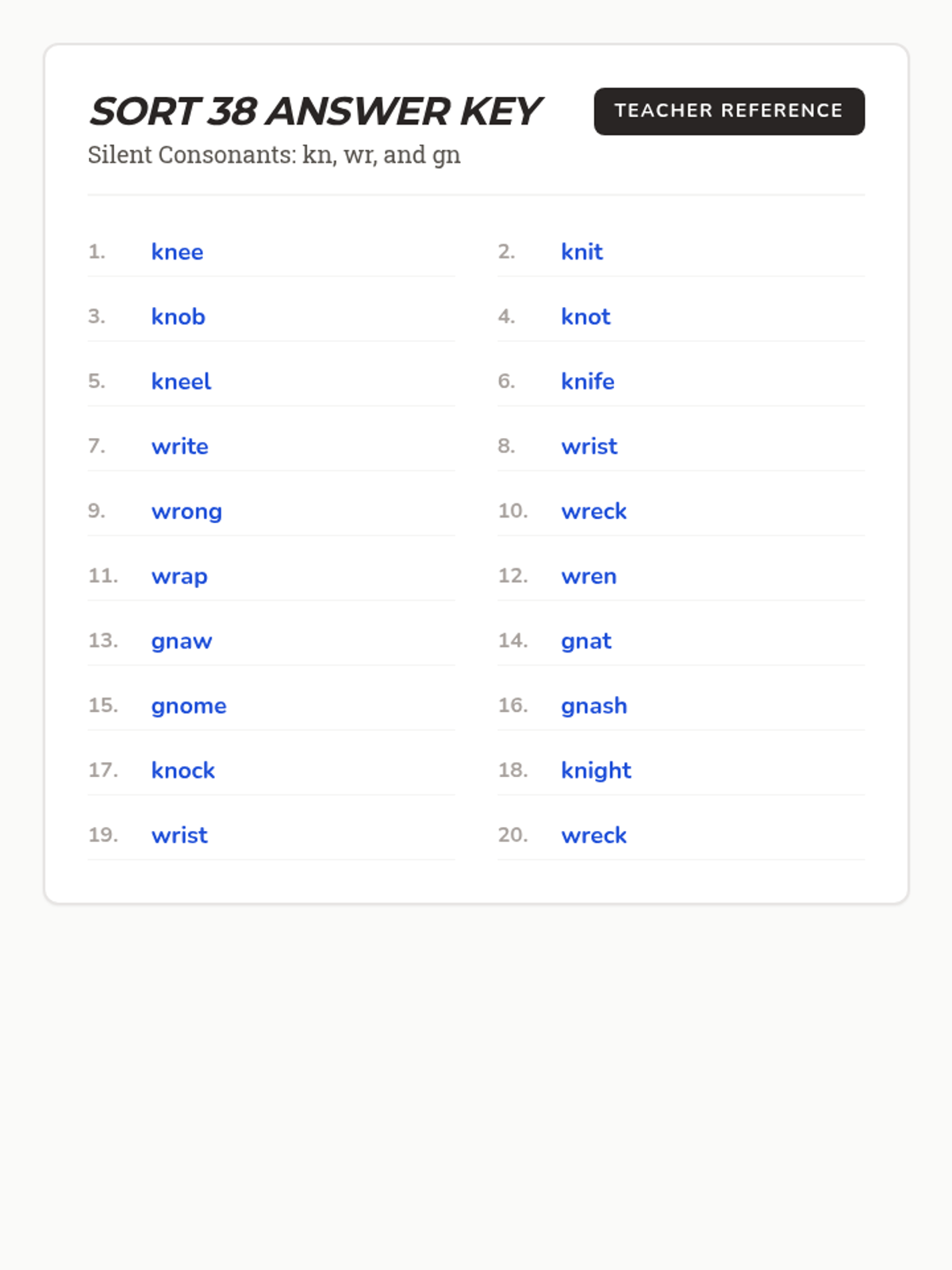
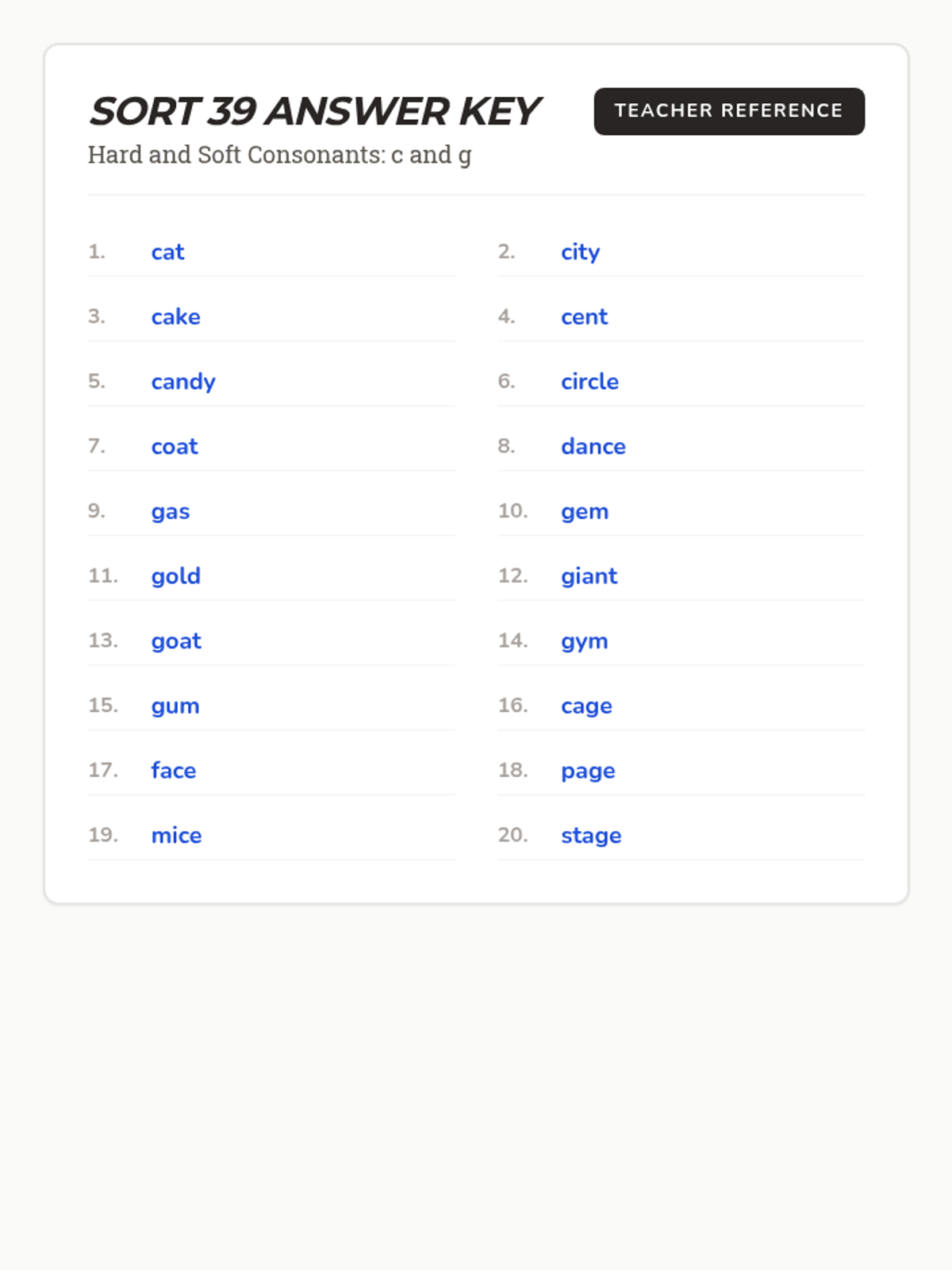
Focuses on complex consonant clusters including triple blends (scr, str, spr, thr, shr, squ), silent consonants (kn, wr, gn), and variations of hard/soft c and g. Students will practice these intricate spelling patterns through context.
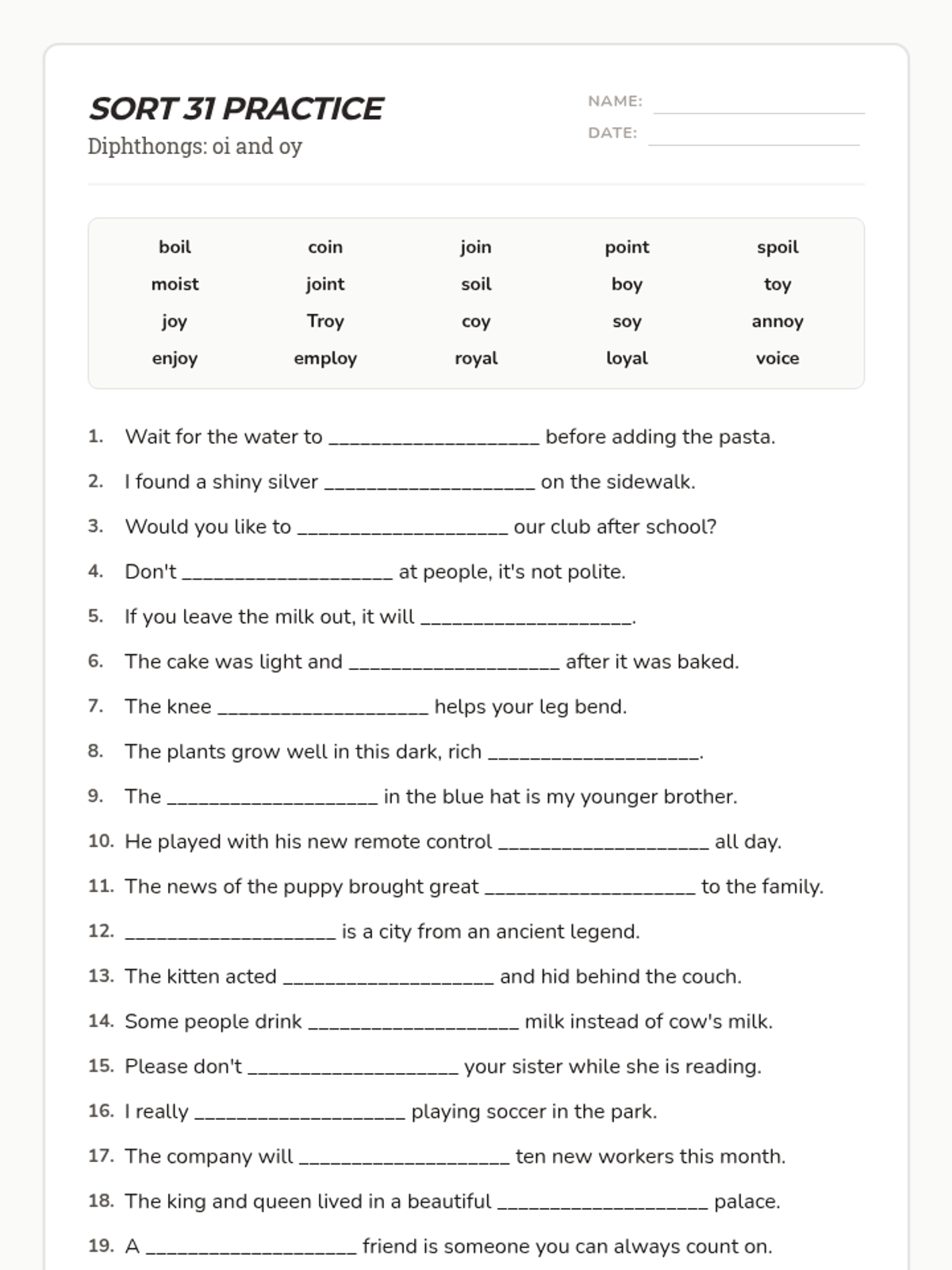
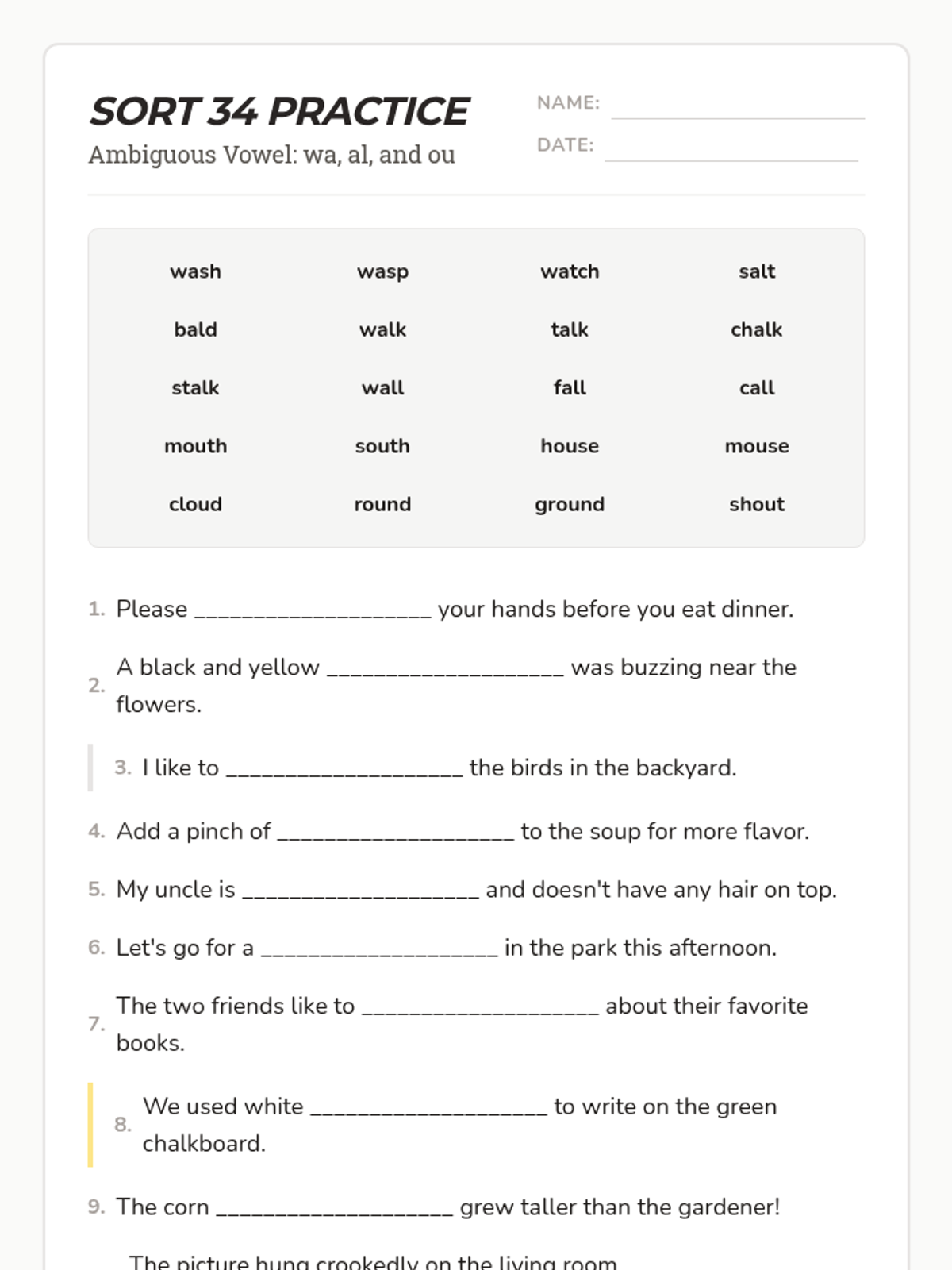
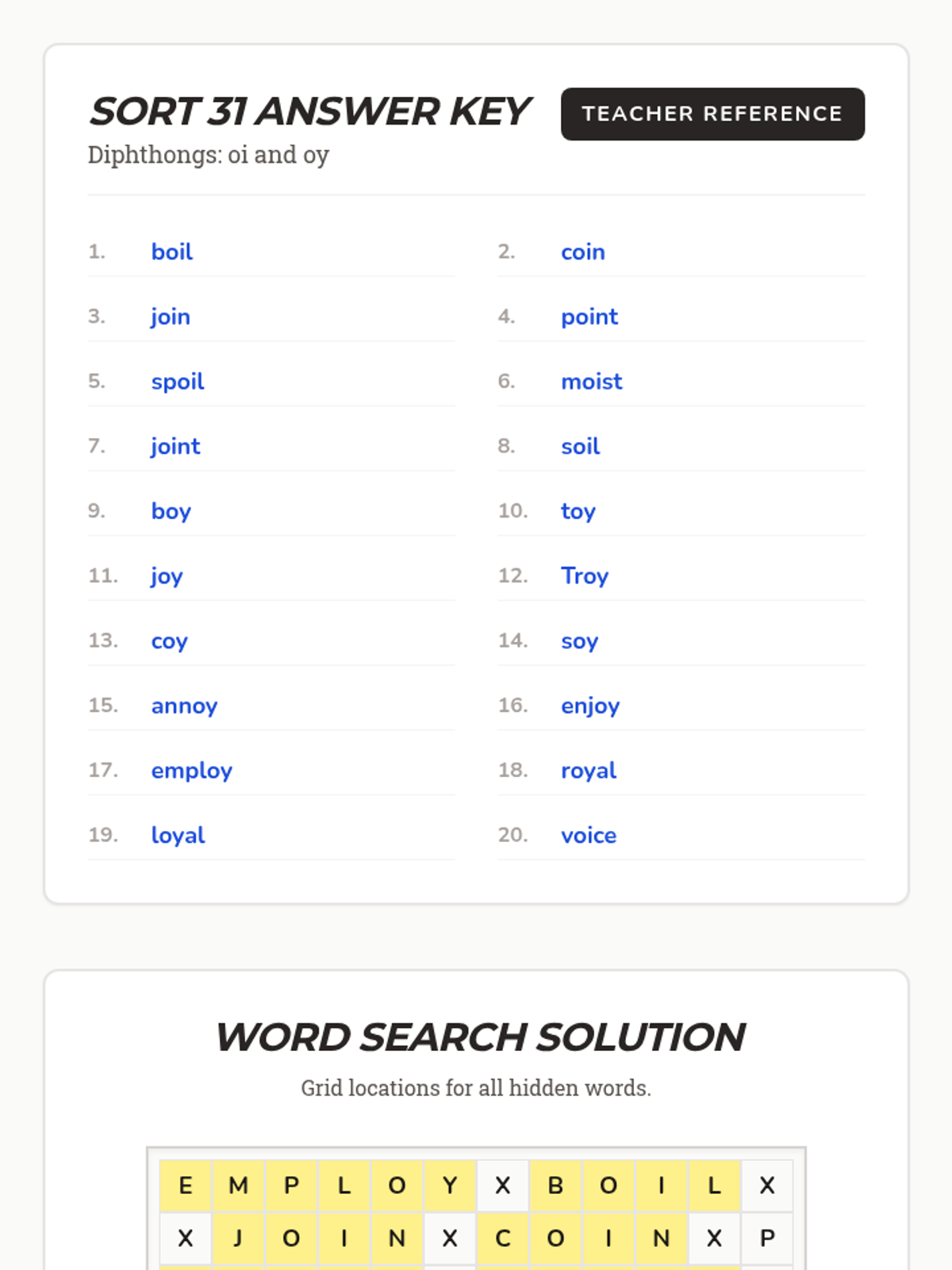
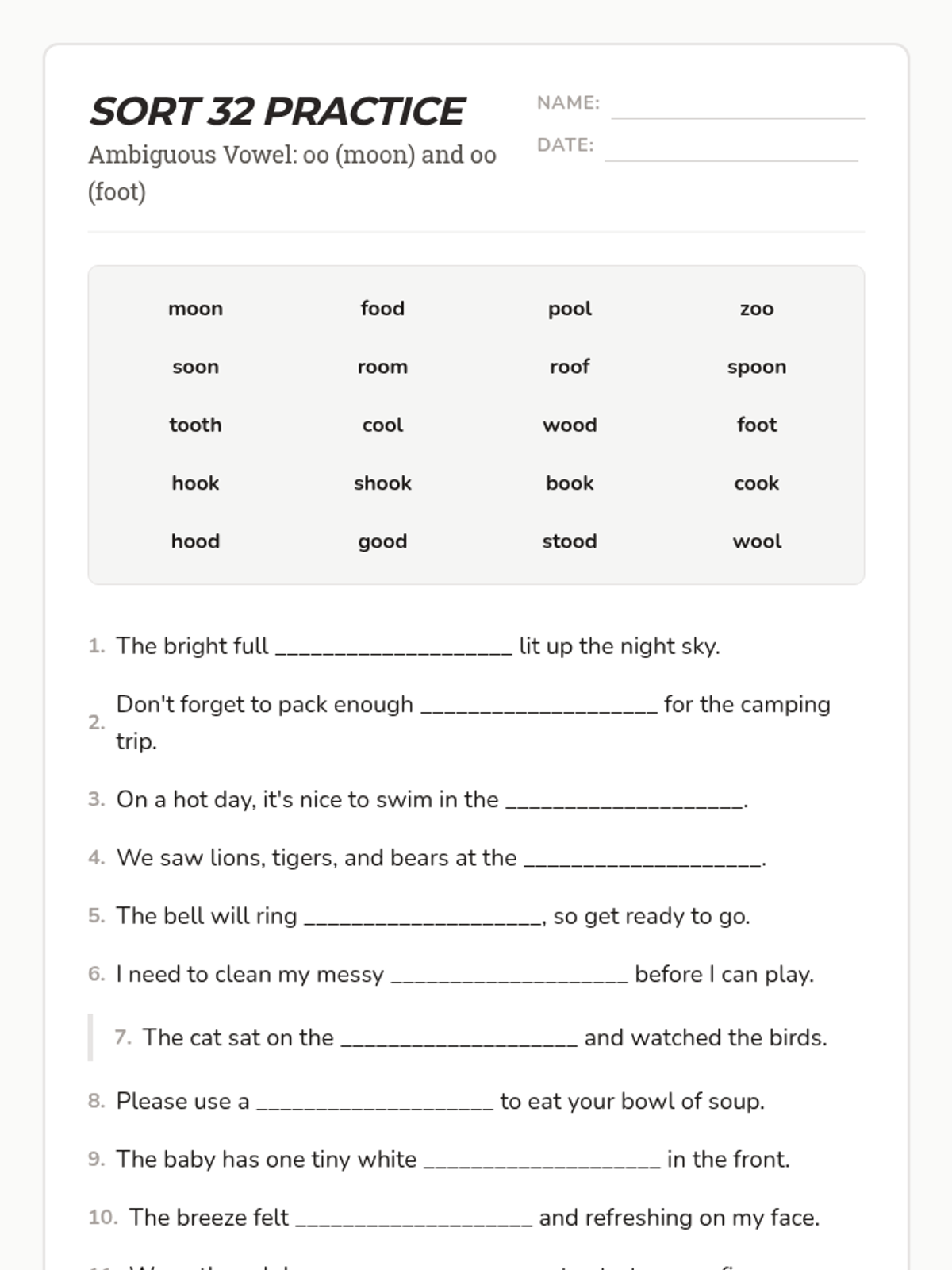
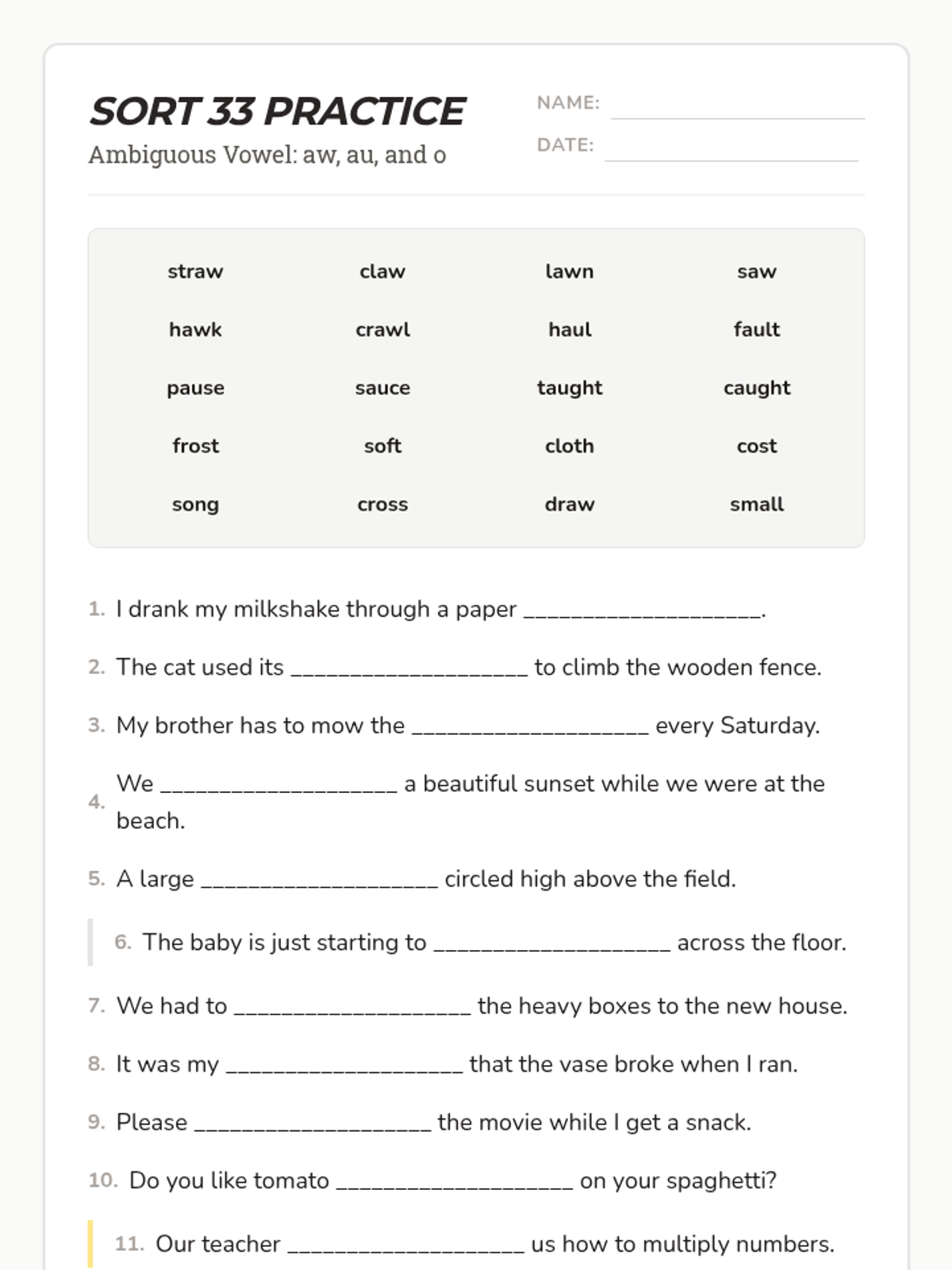
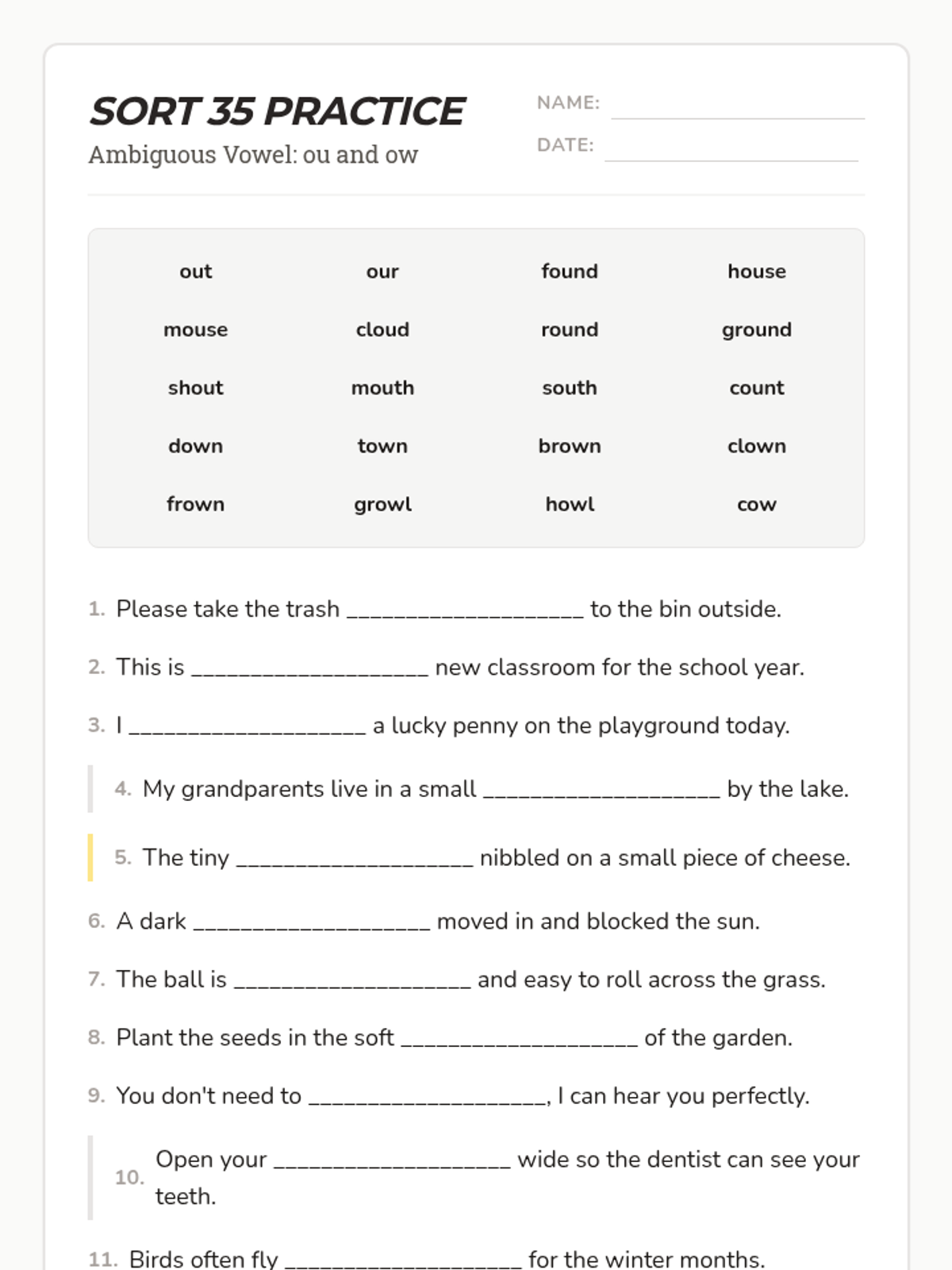
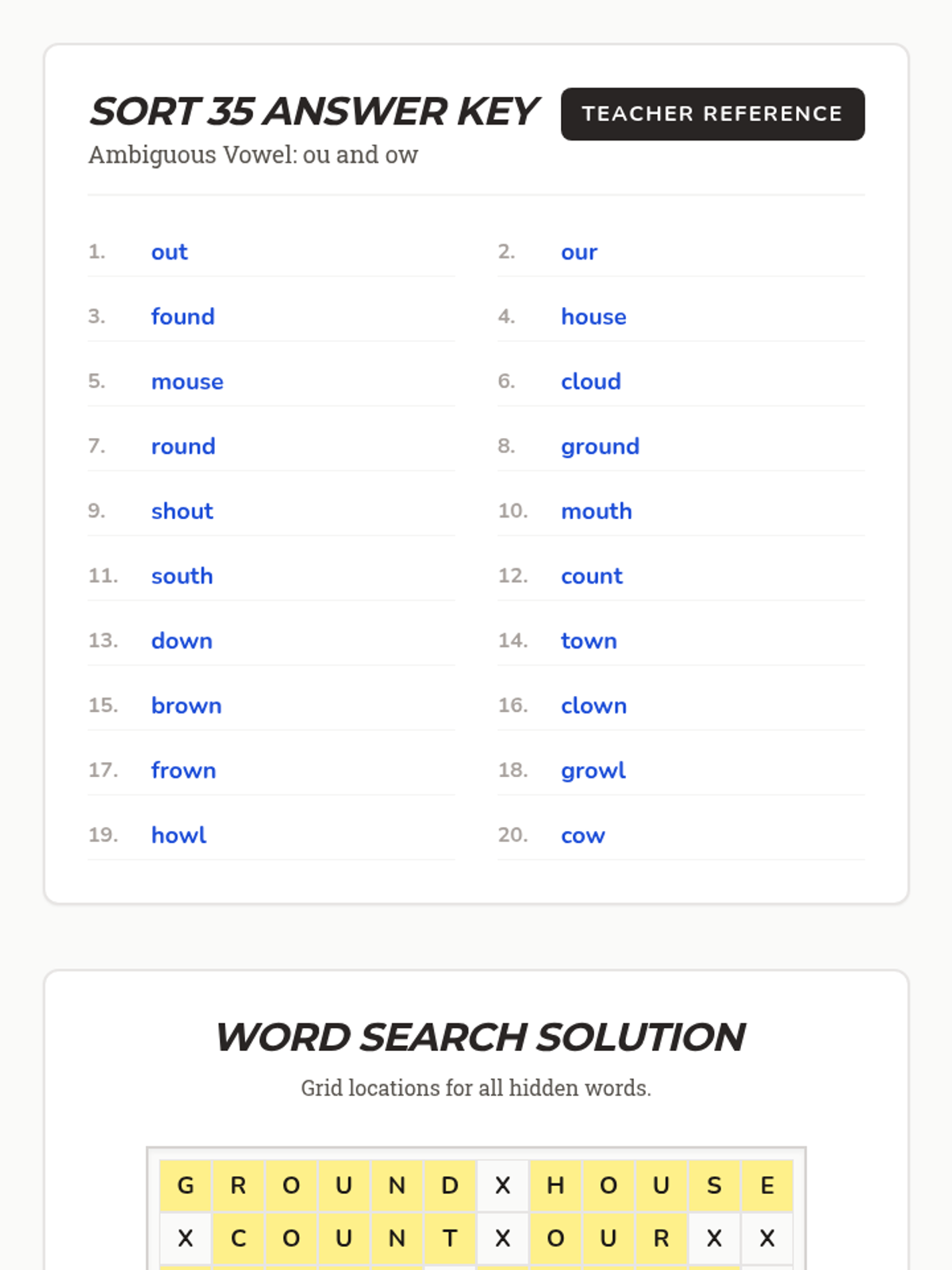
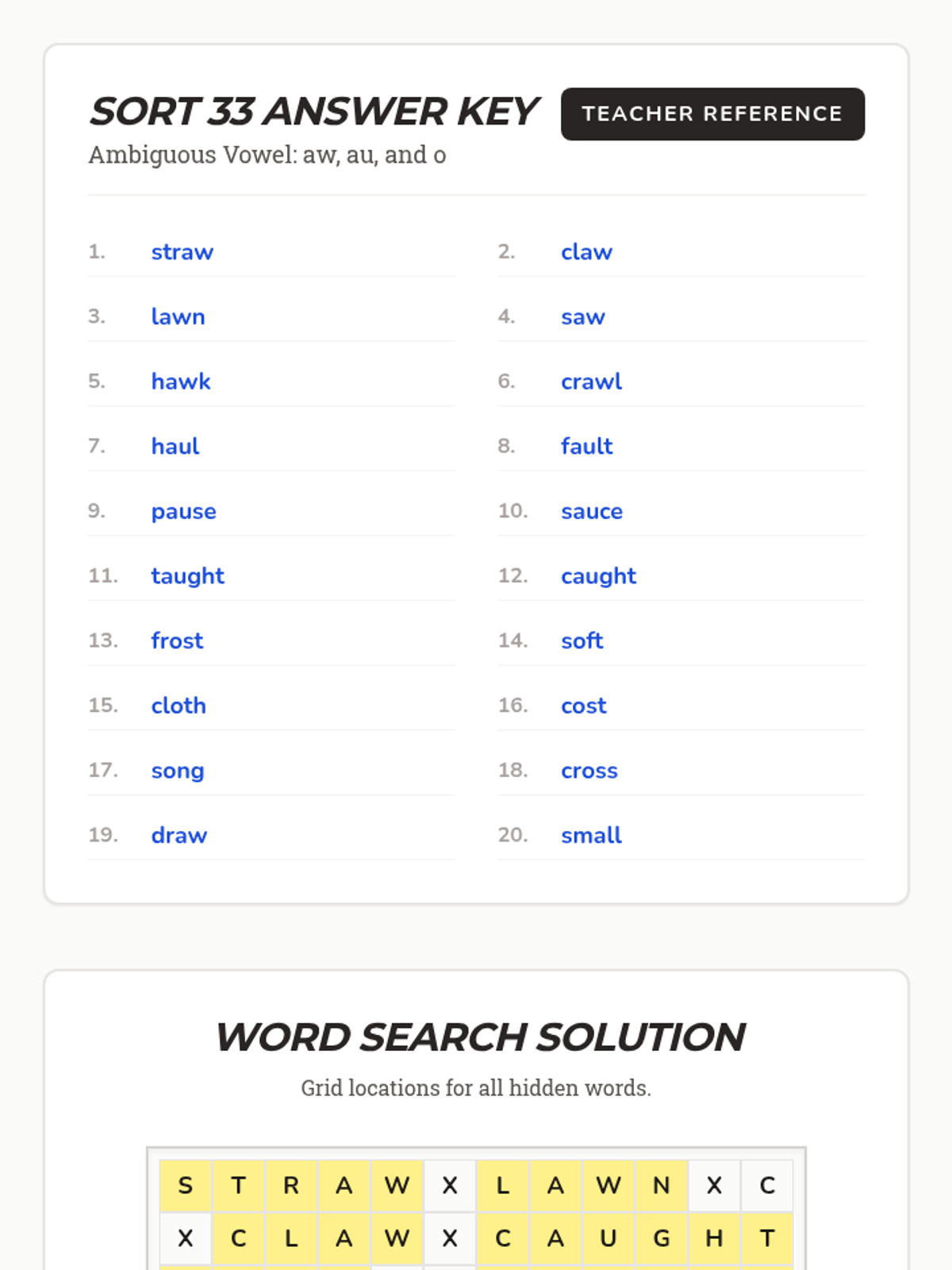
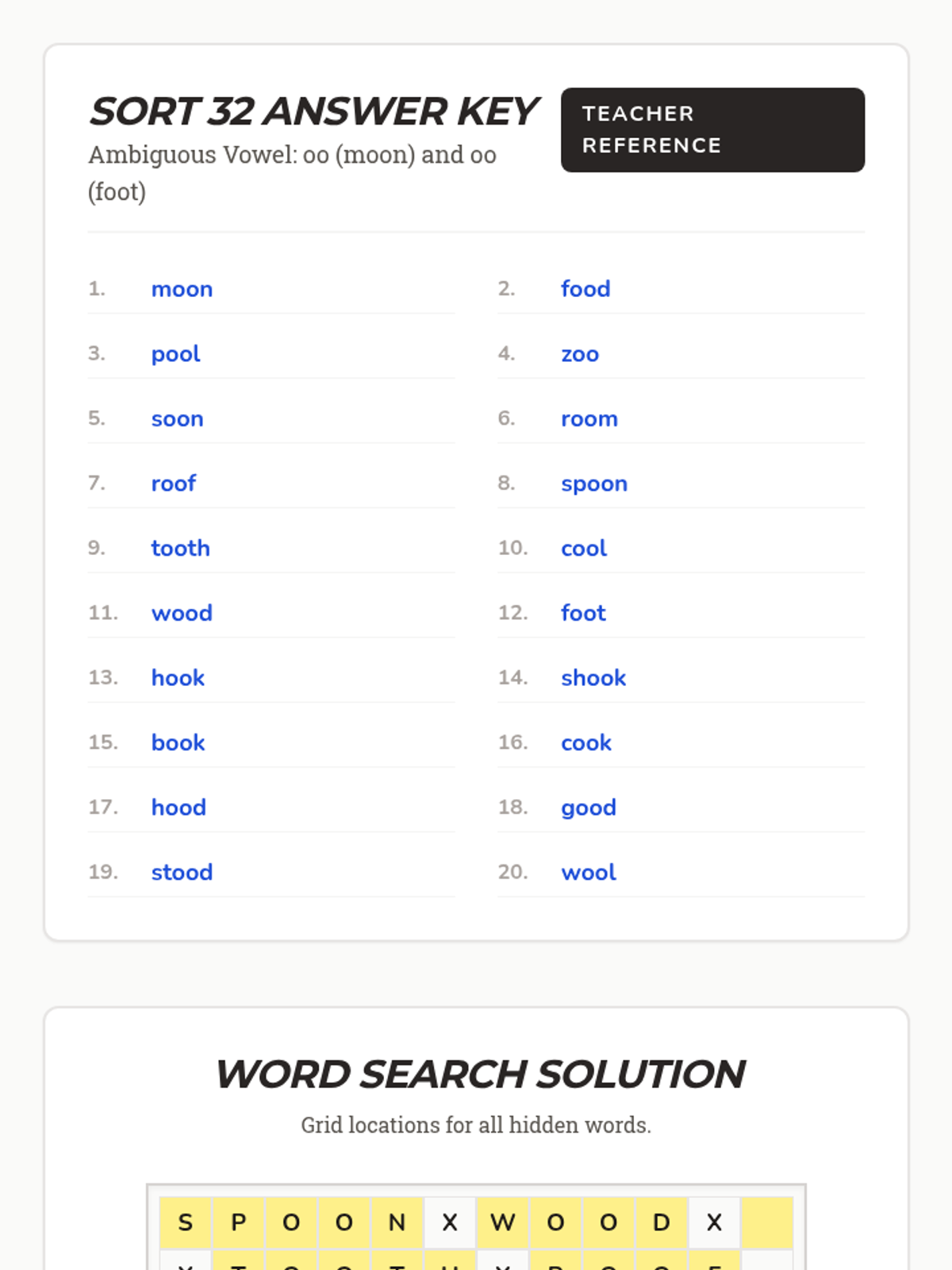
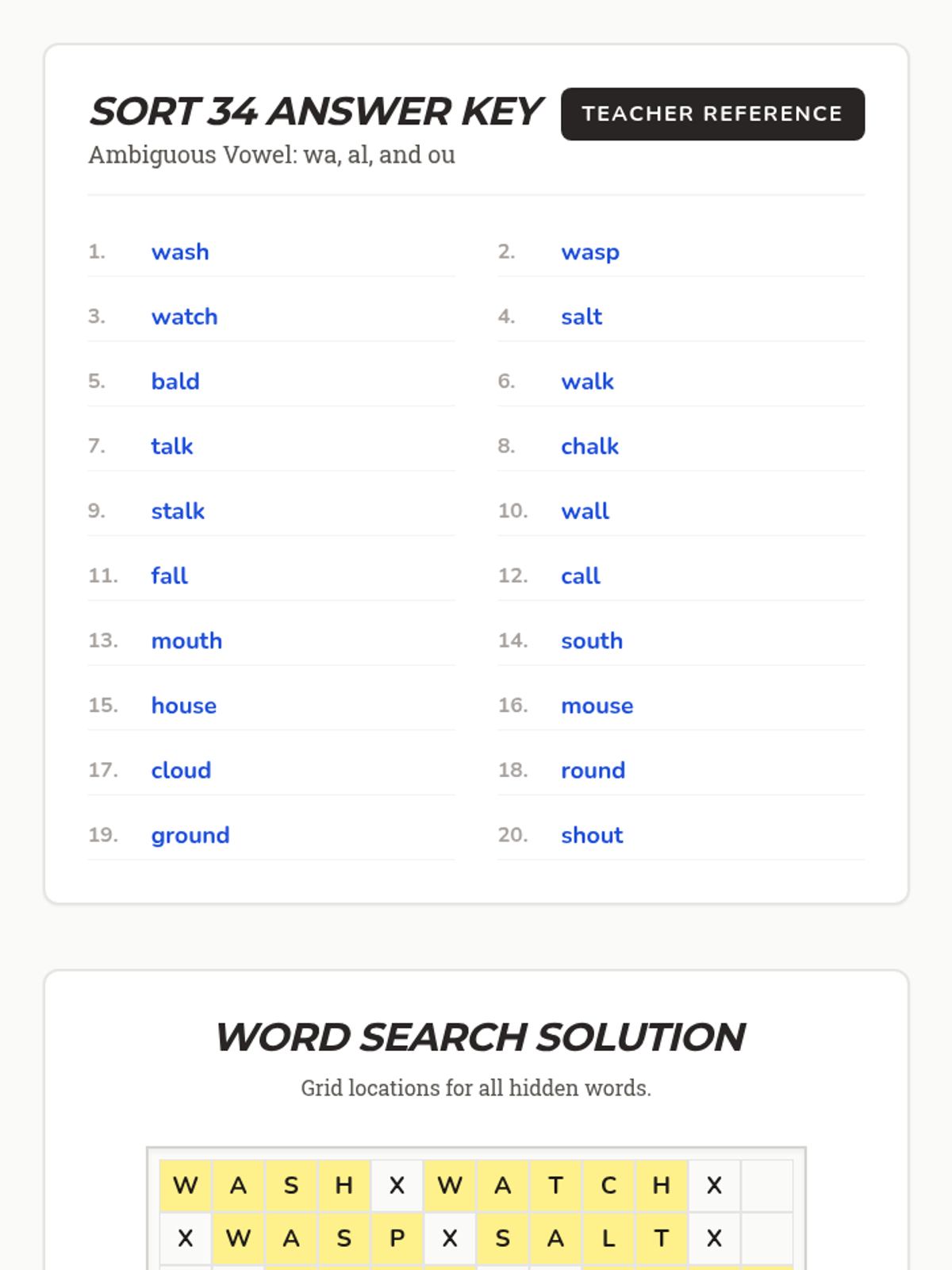
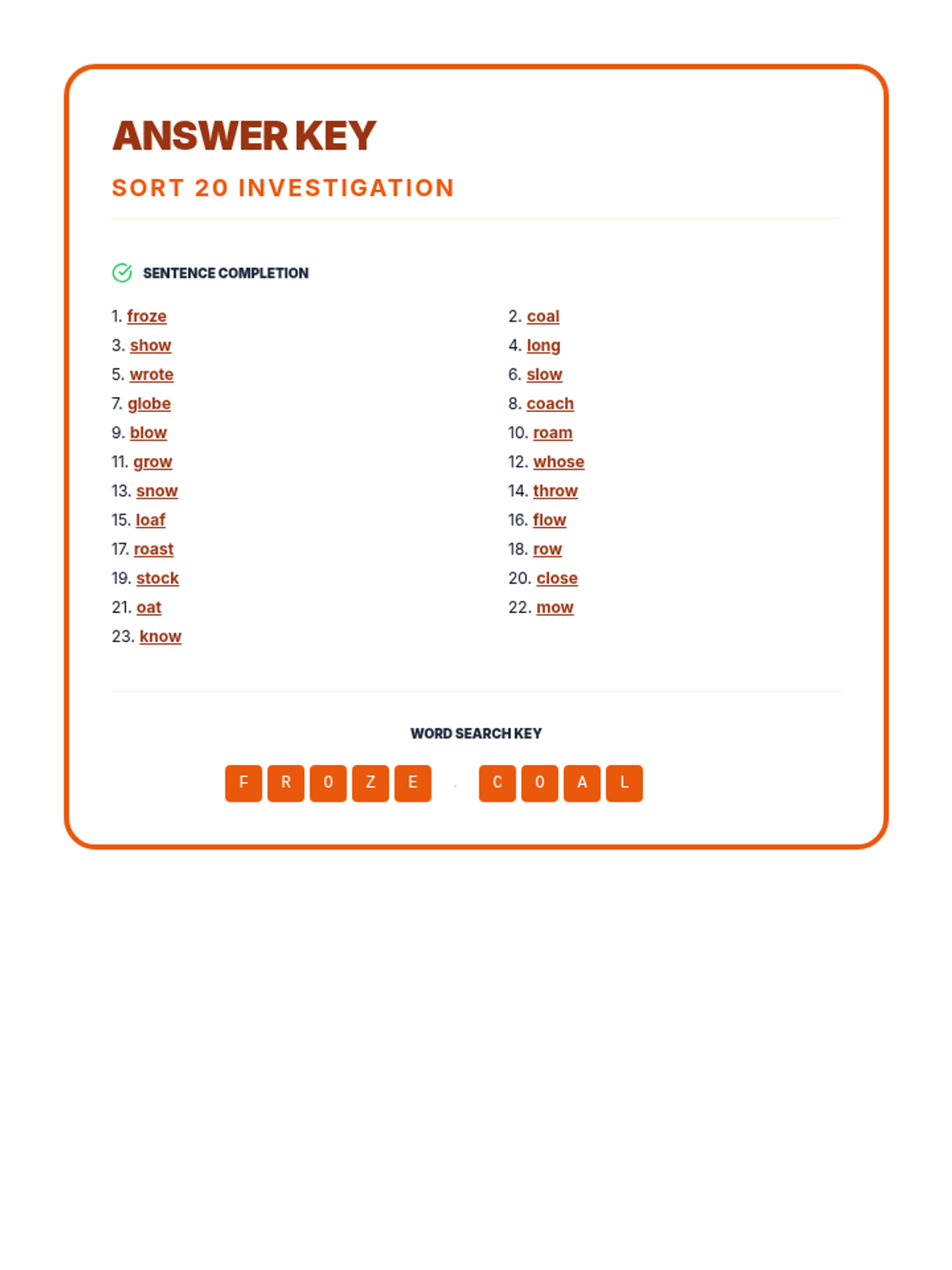
This lesson explores diphthongs and ambiguous vowel patterns including oi, oy, oo, aw, au, wa, al, and ou/ow. Students will practice identifying these sounds through context and word searches.
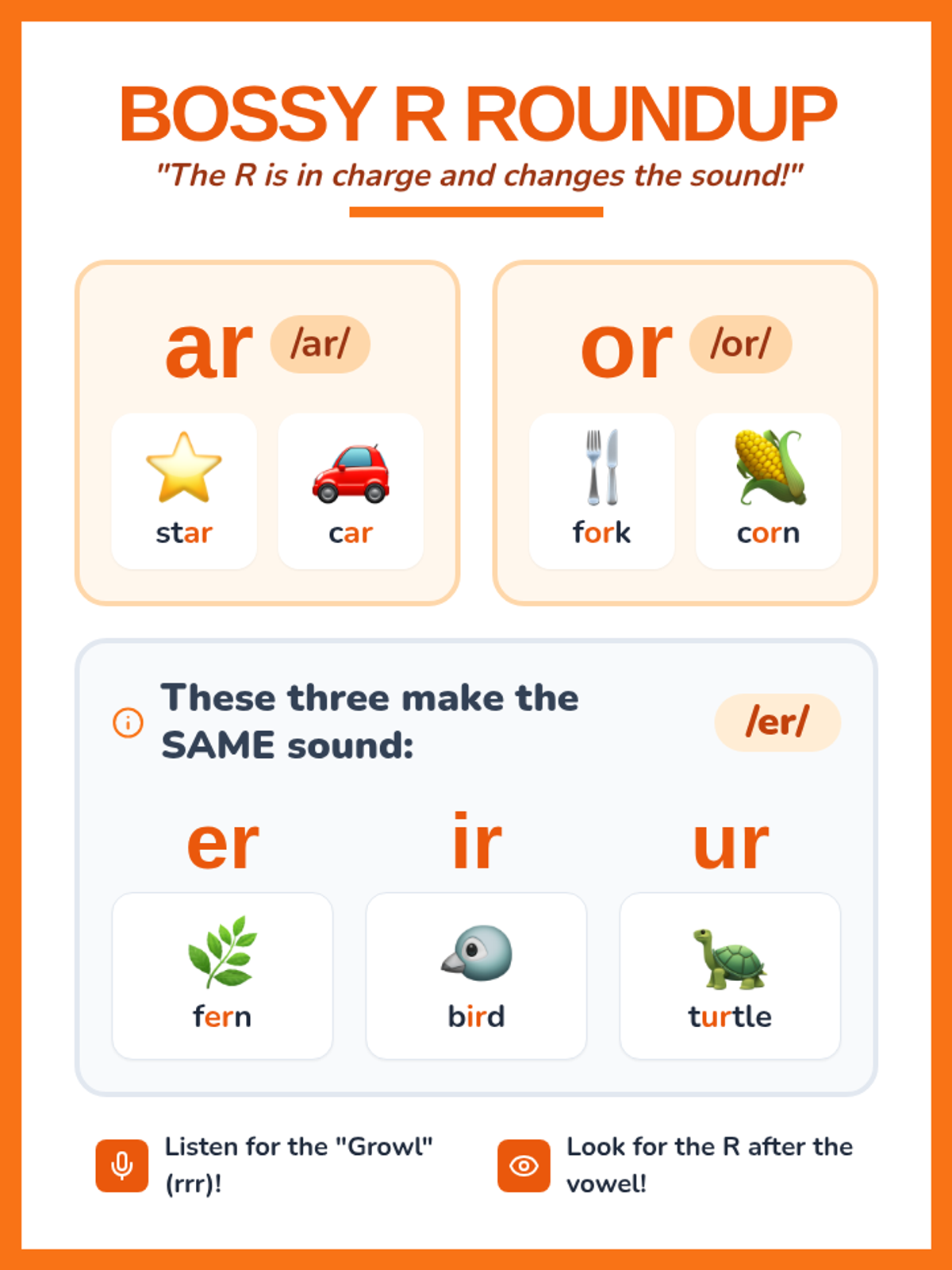
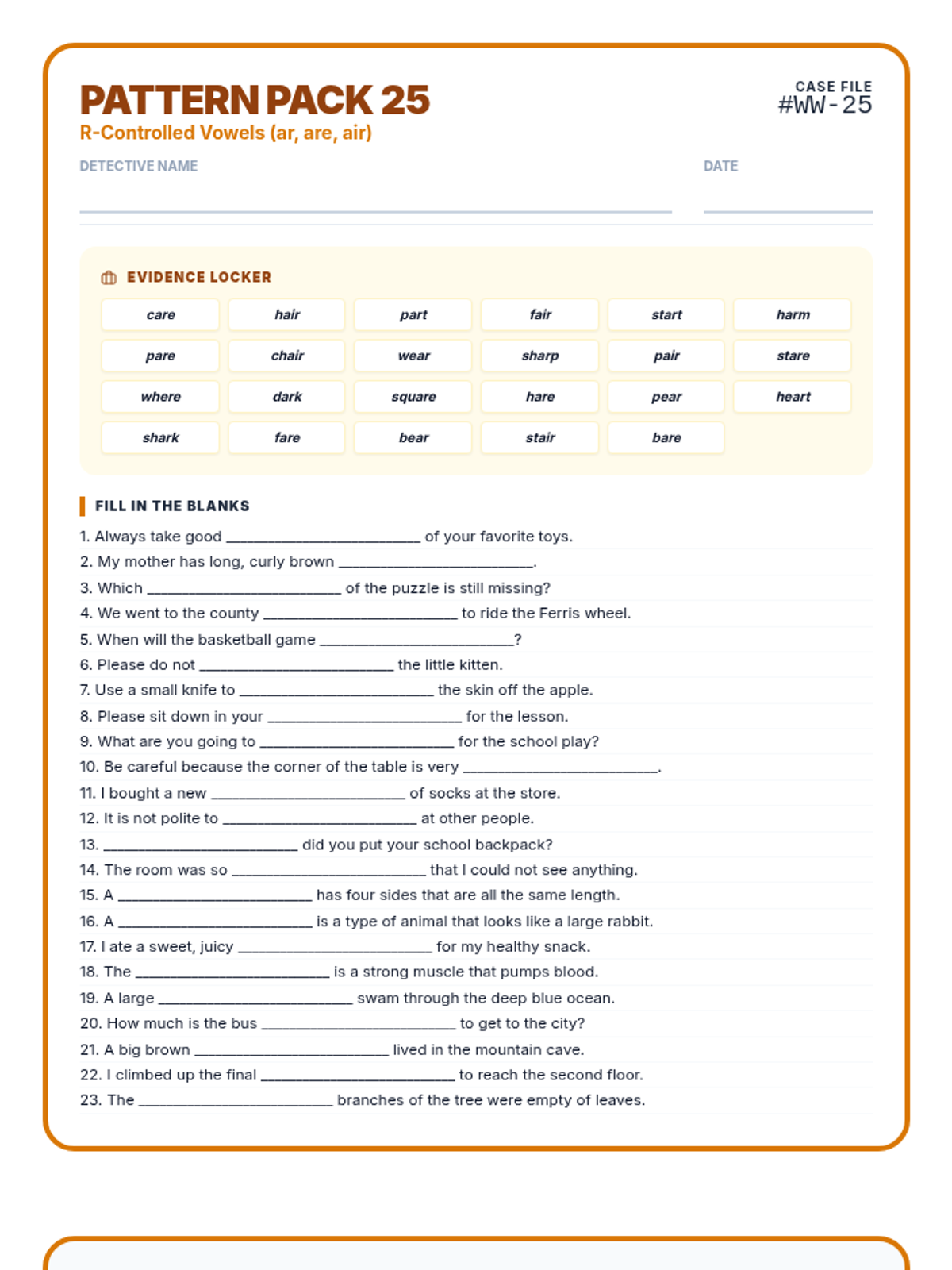
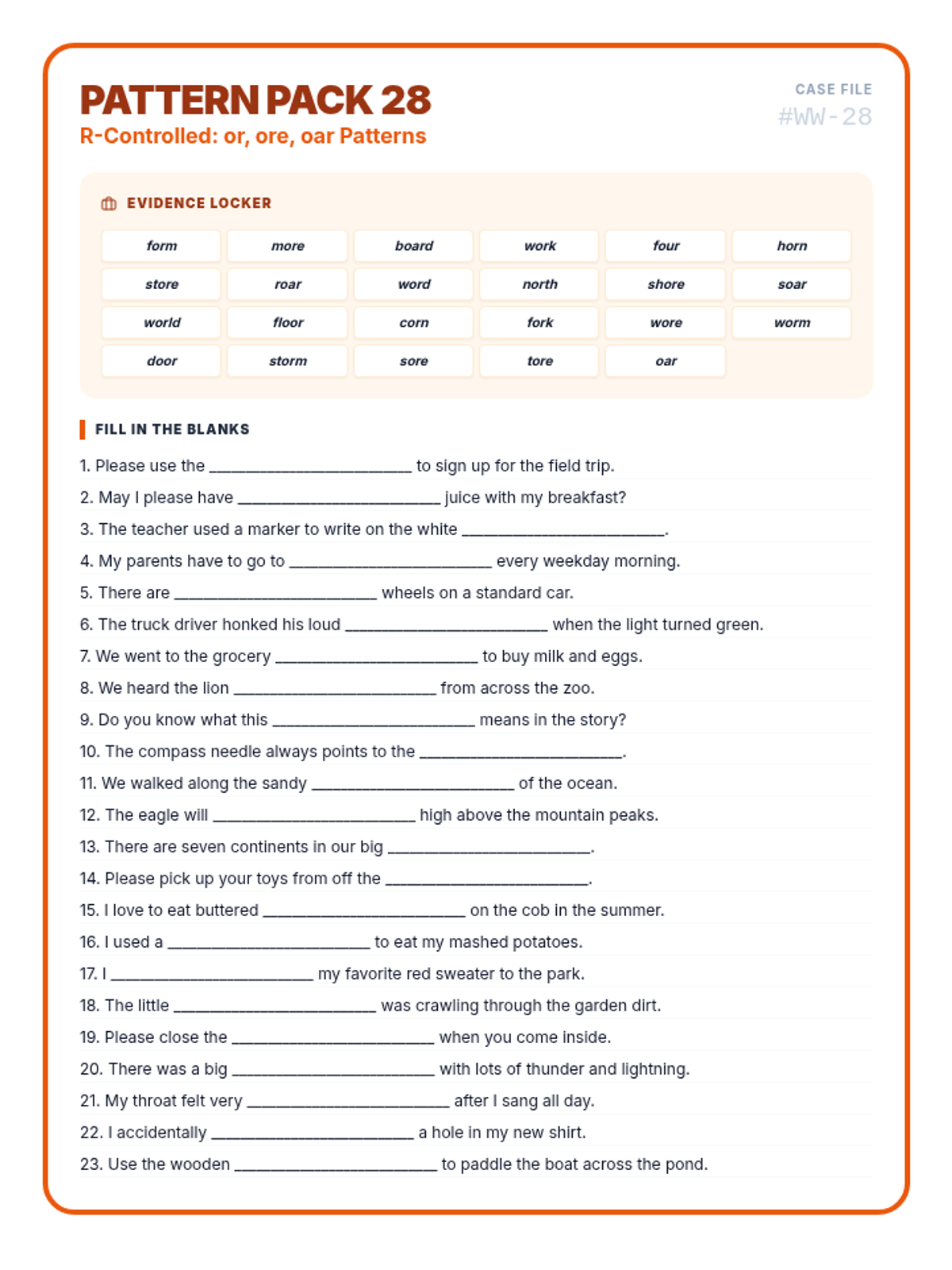
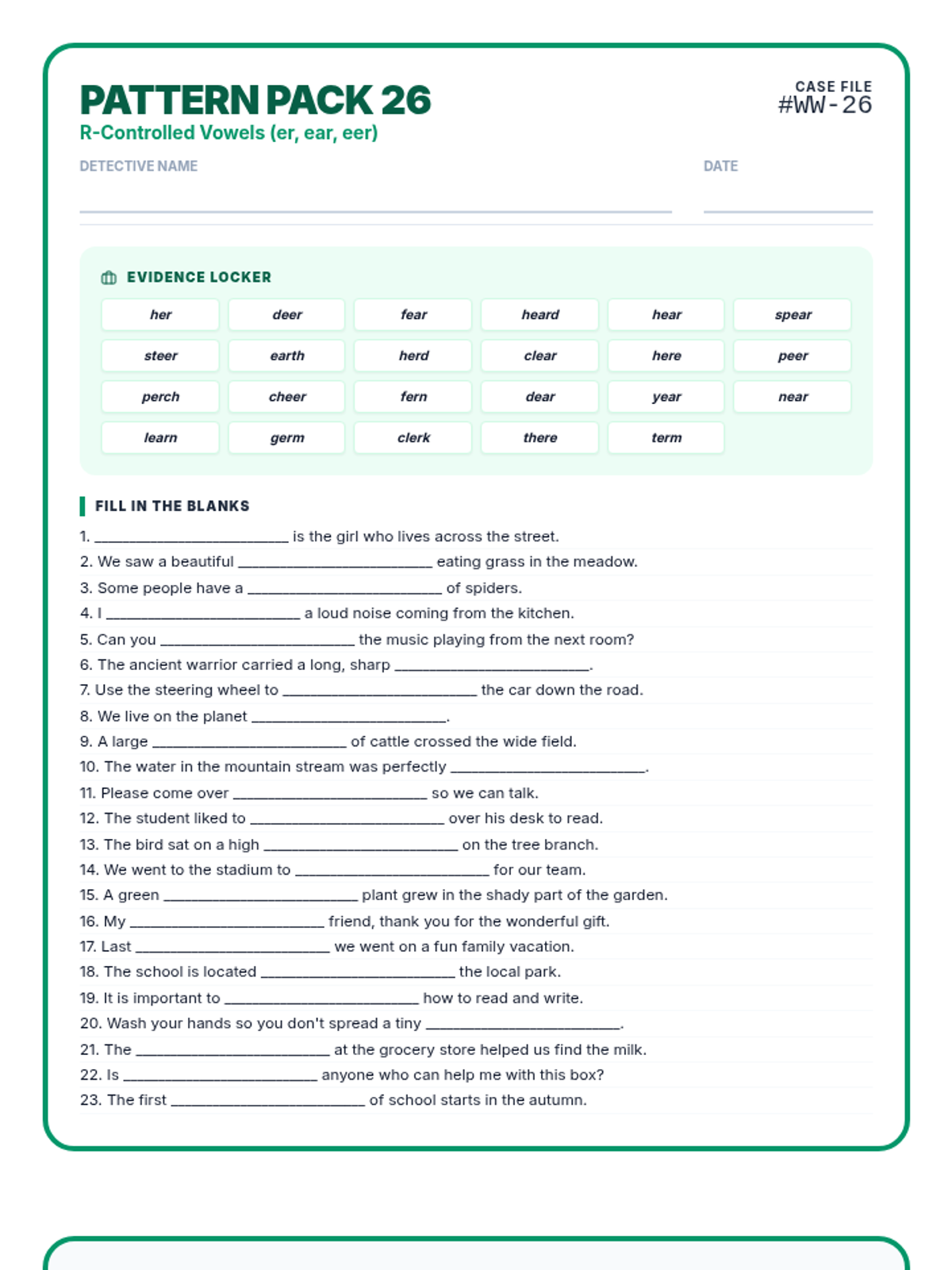
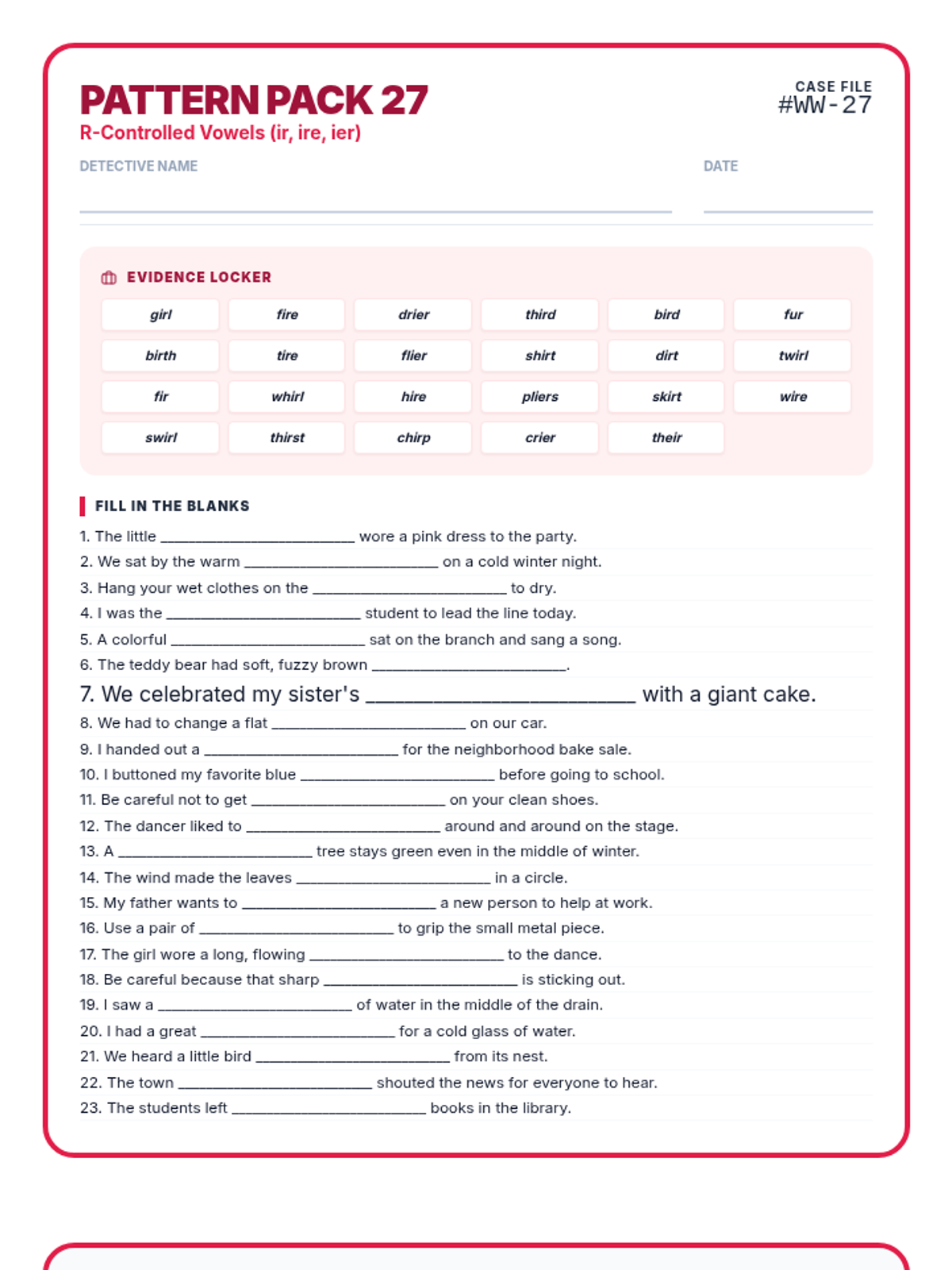
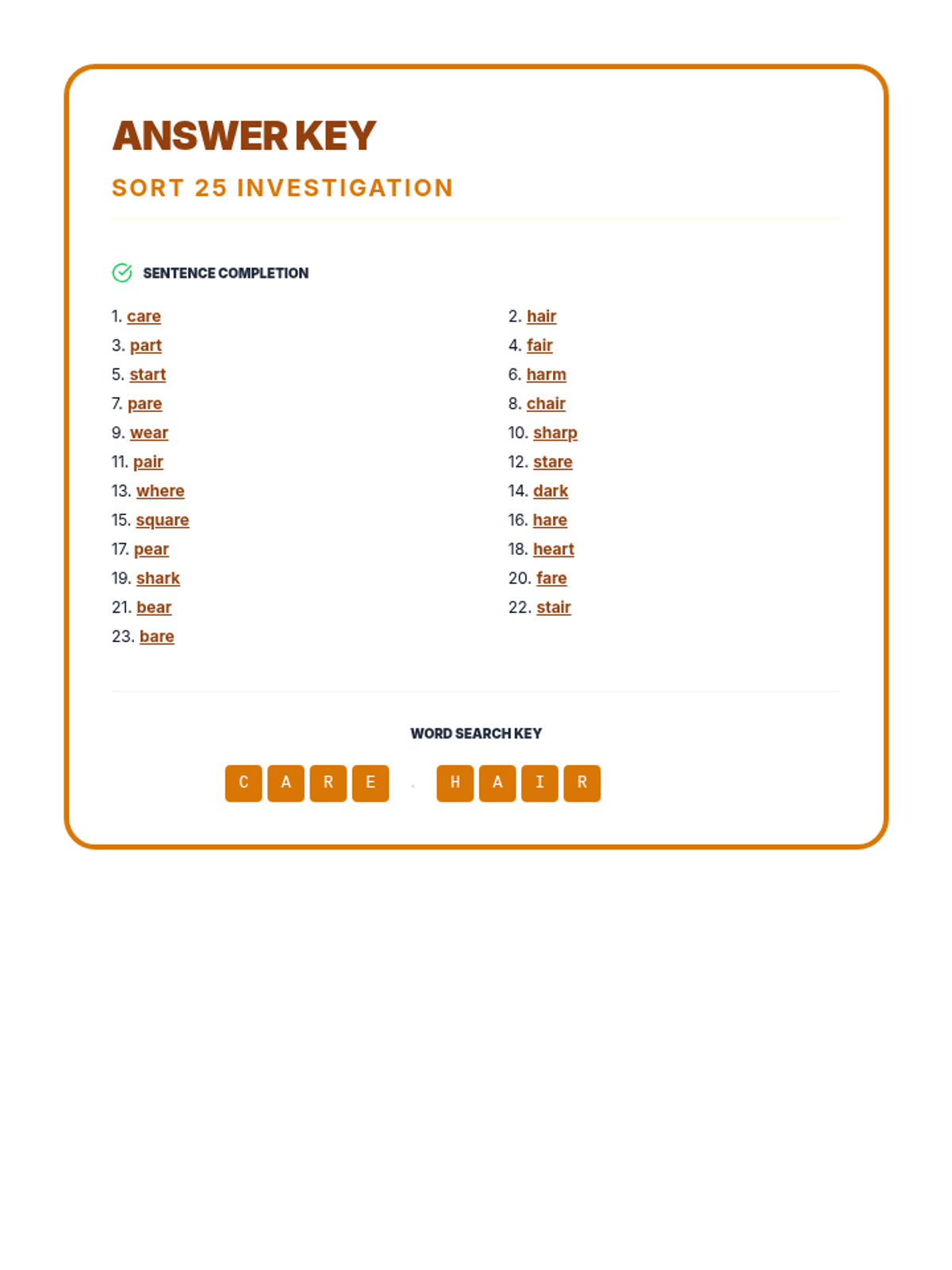
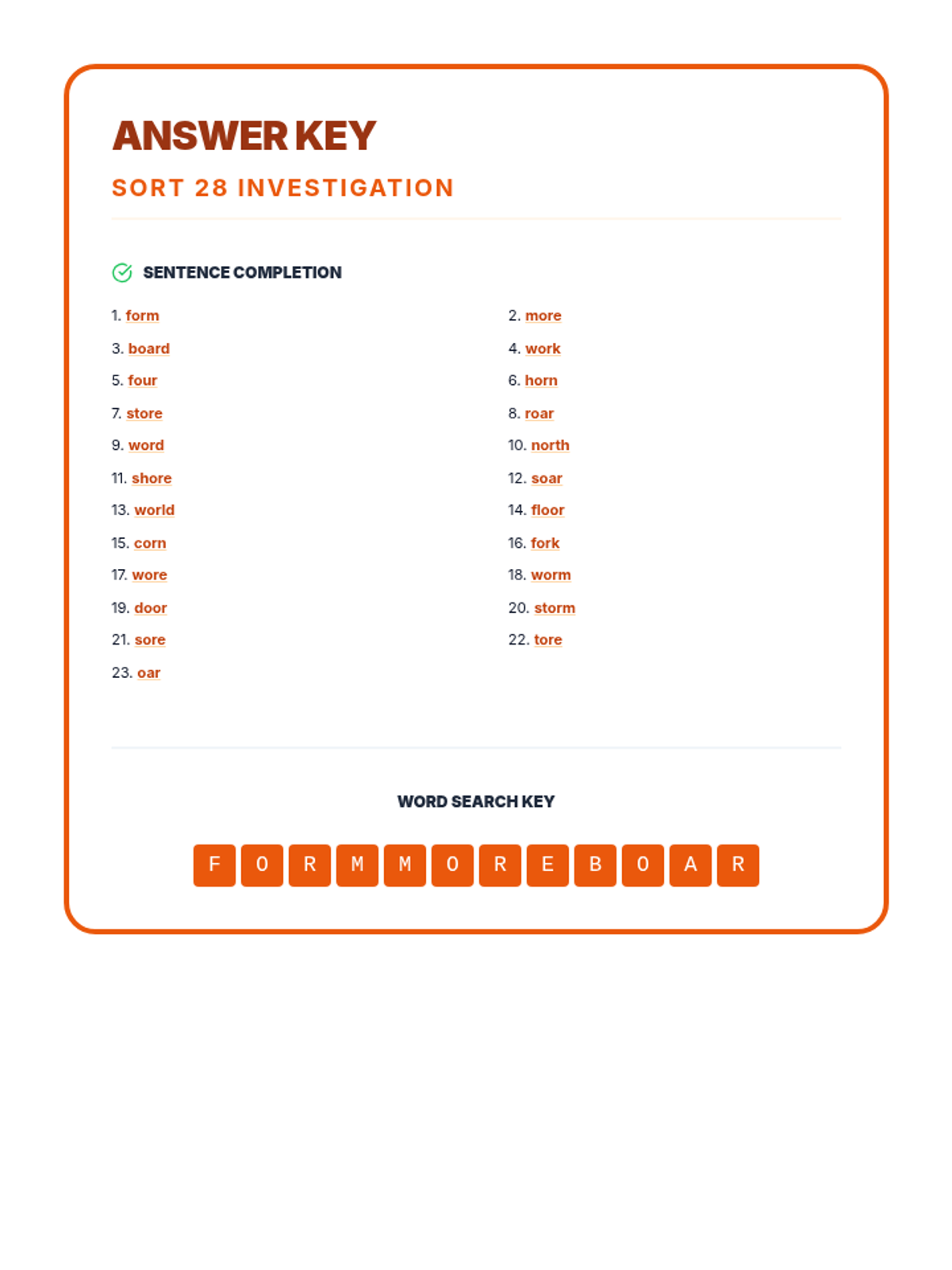
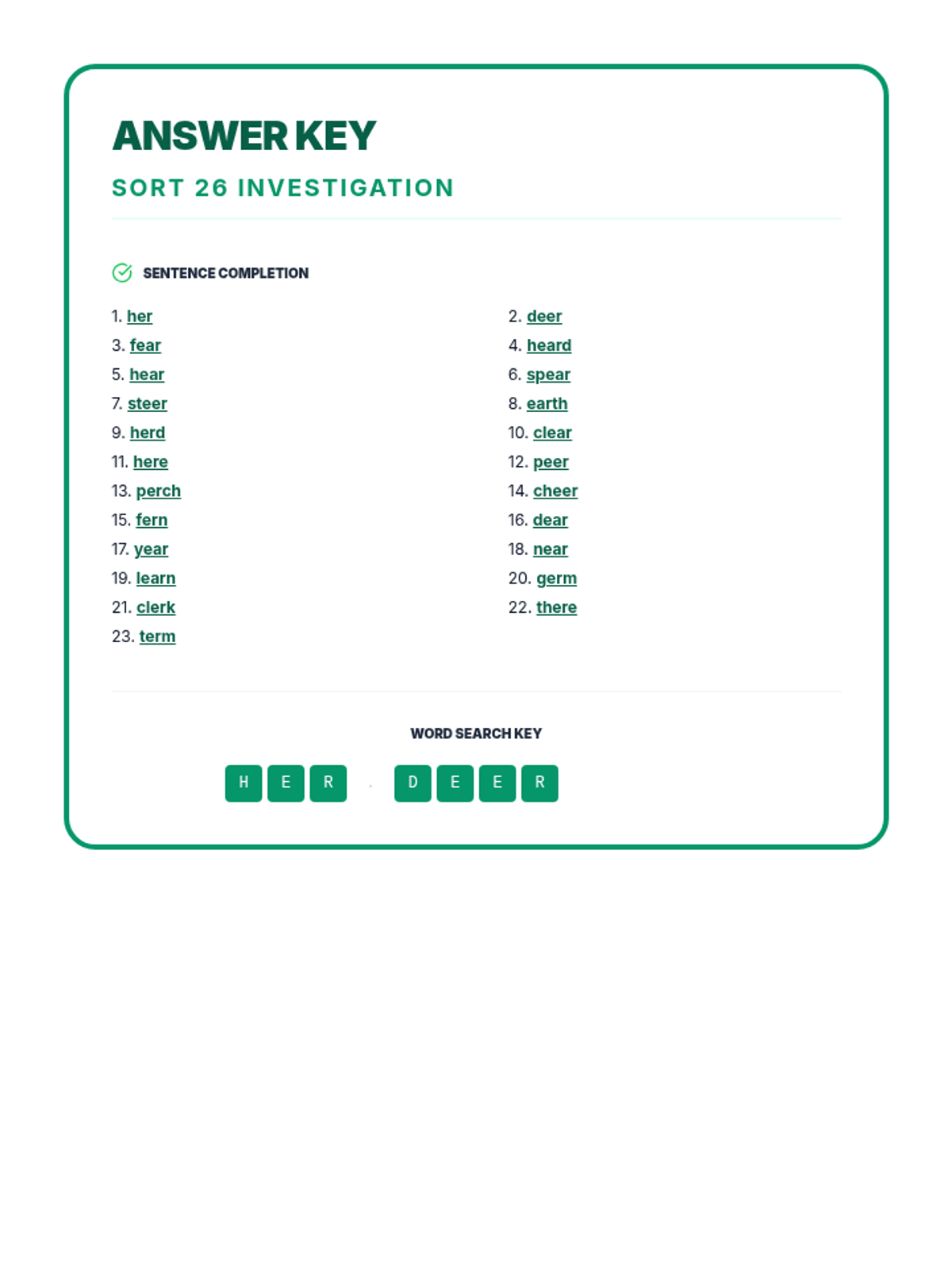
Investigation into r-controlled vowel patterns including ar, are, air, er, ear, eer, ir, ire, ier, or, ore, oar, and ur patterns.
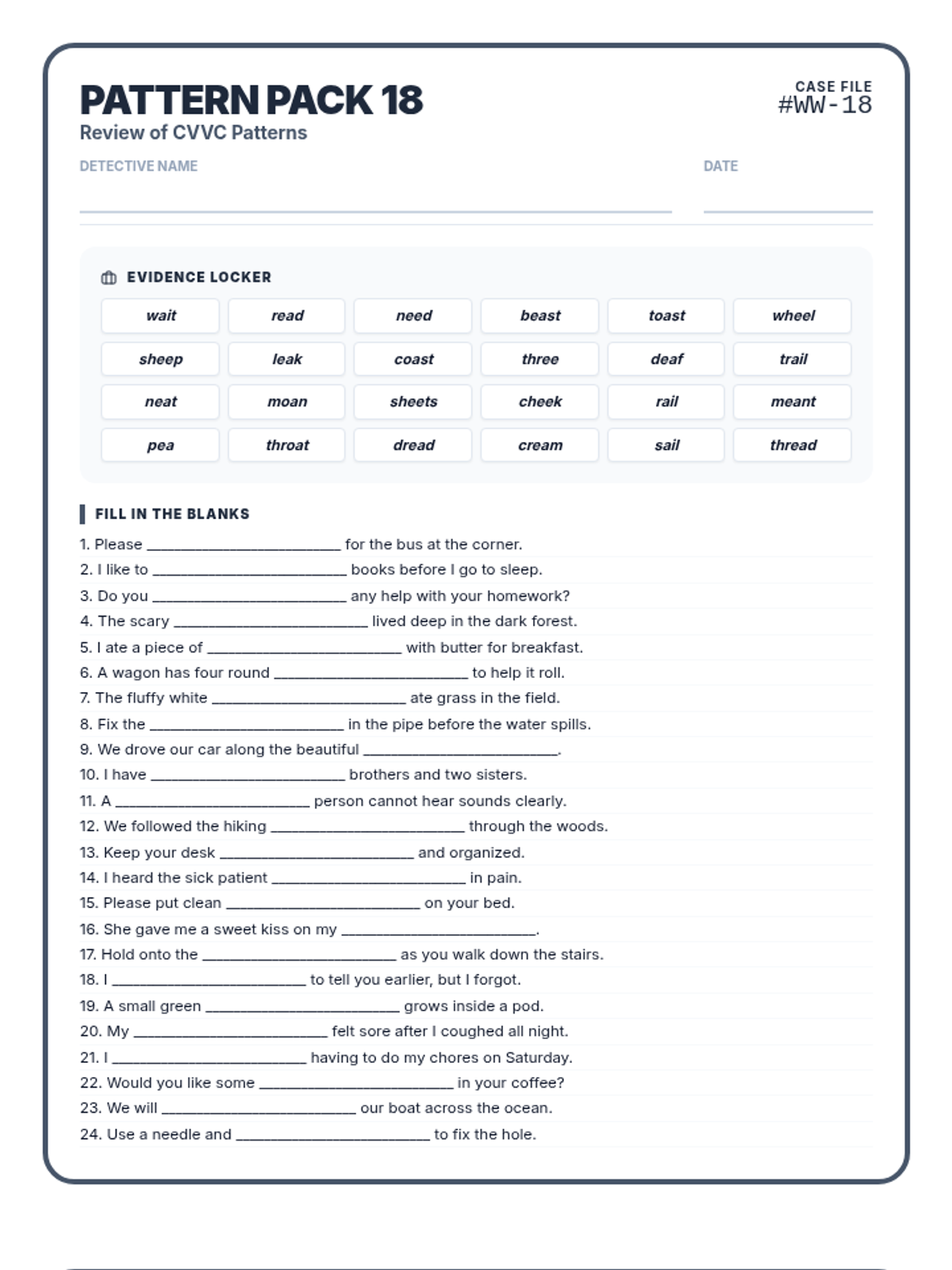
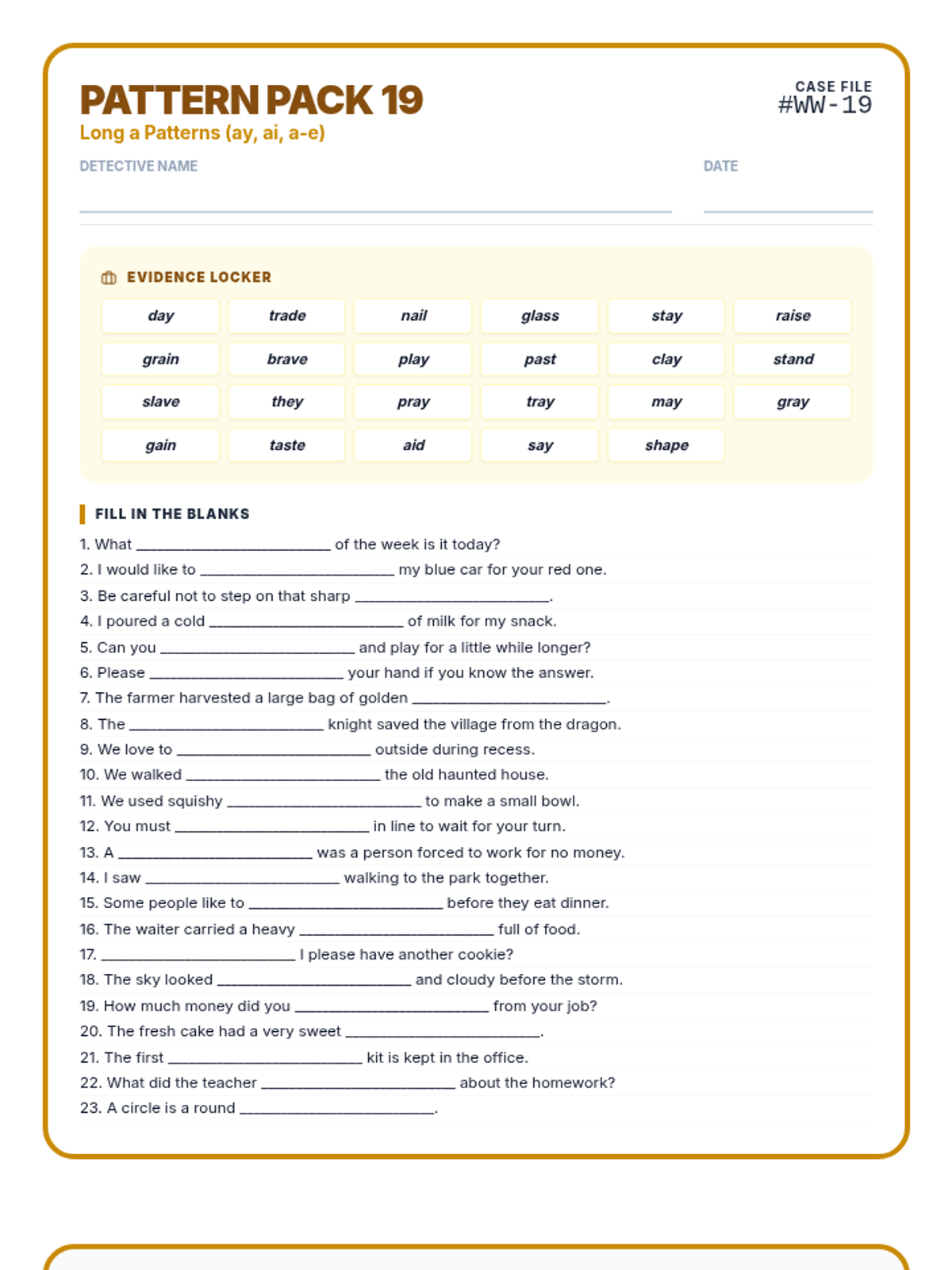
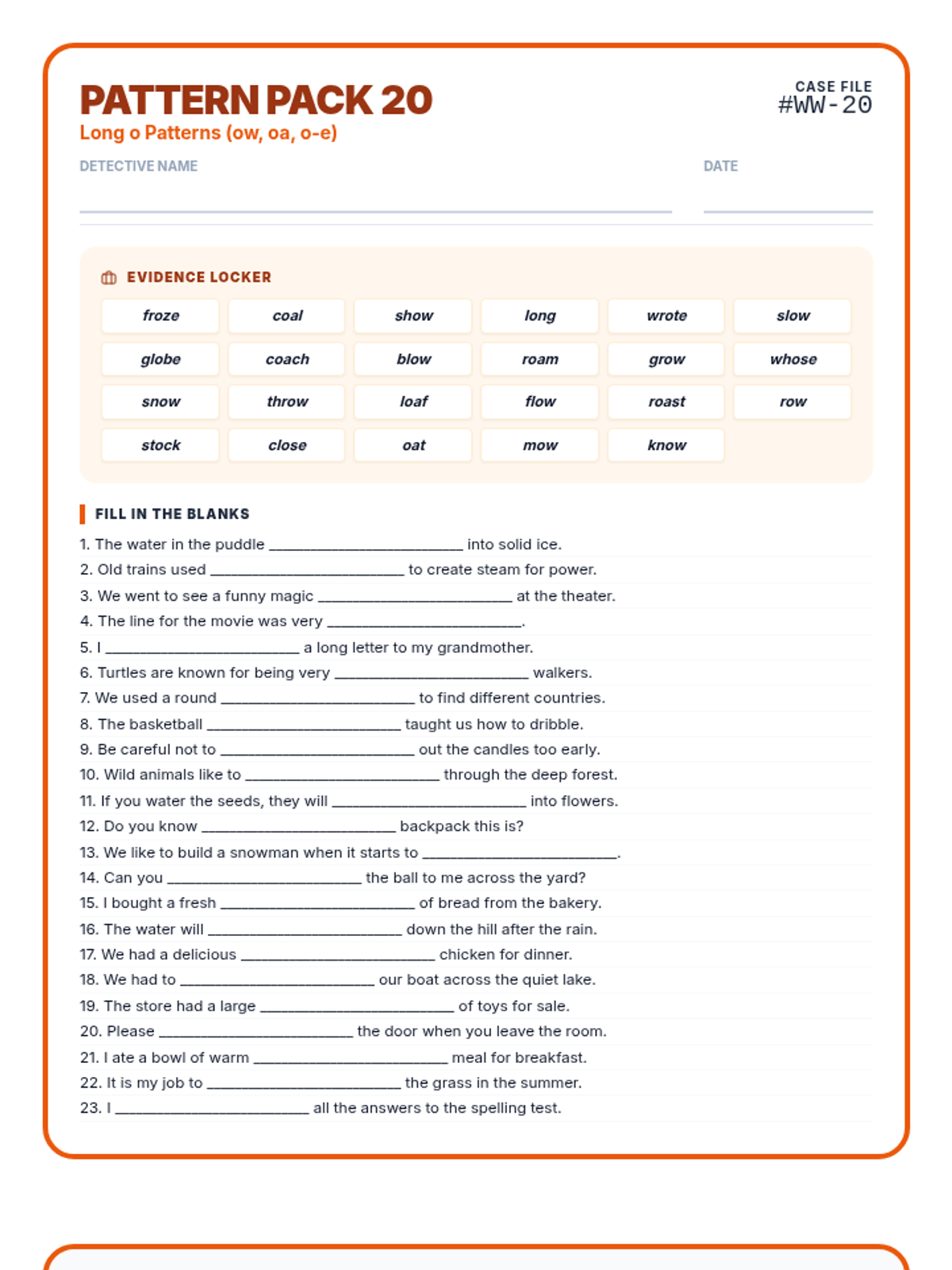
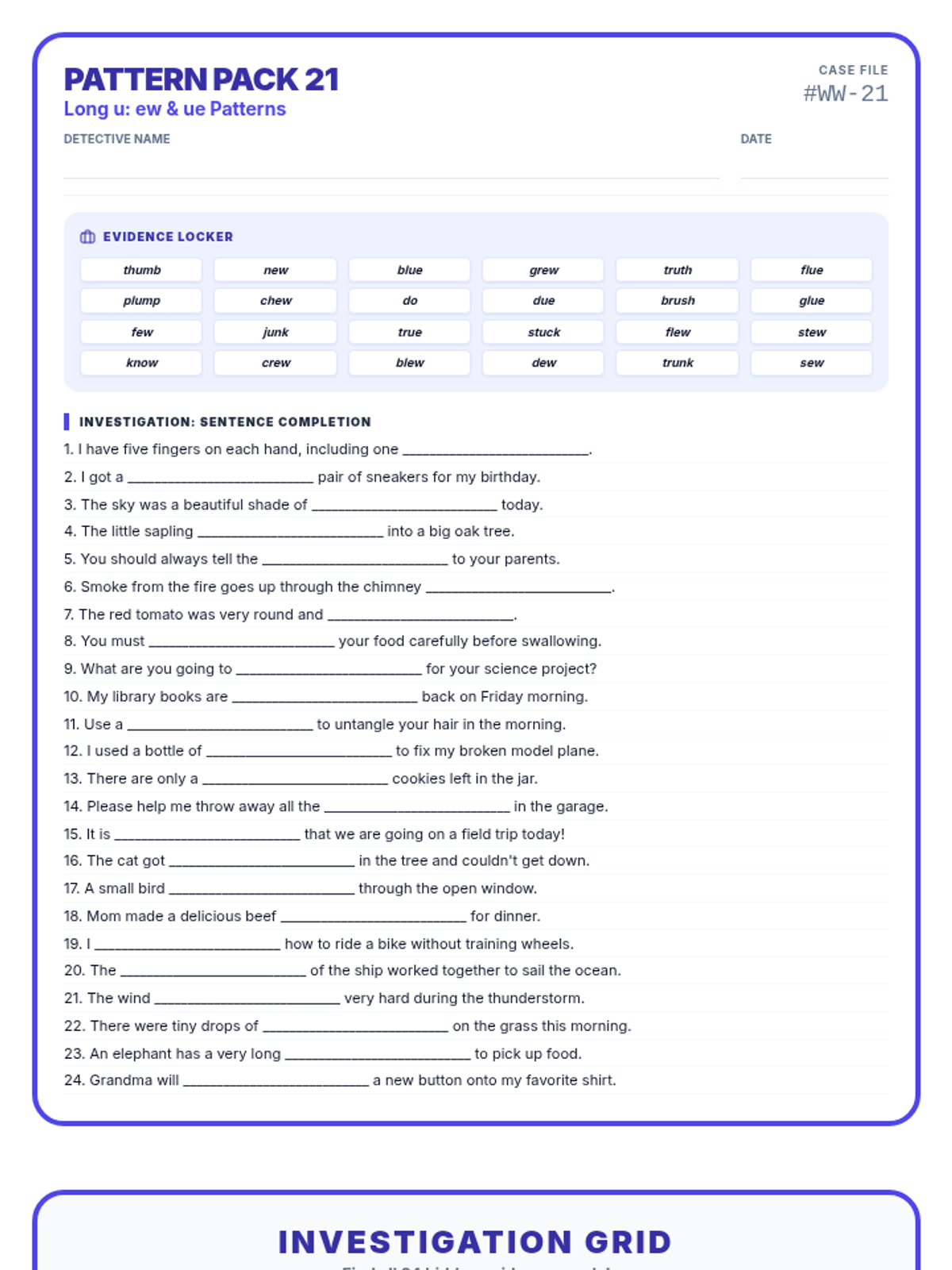
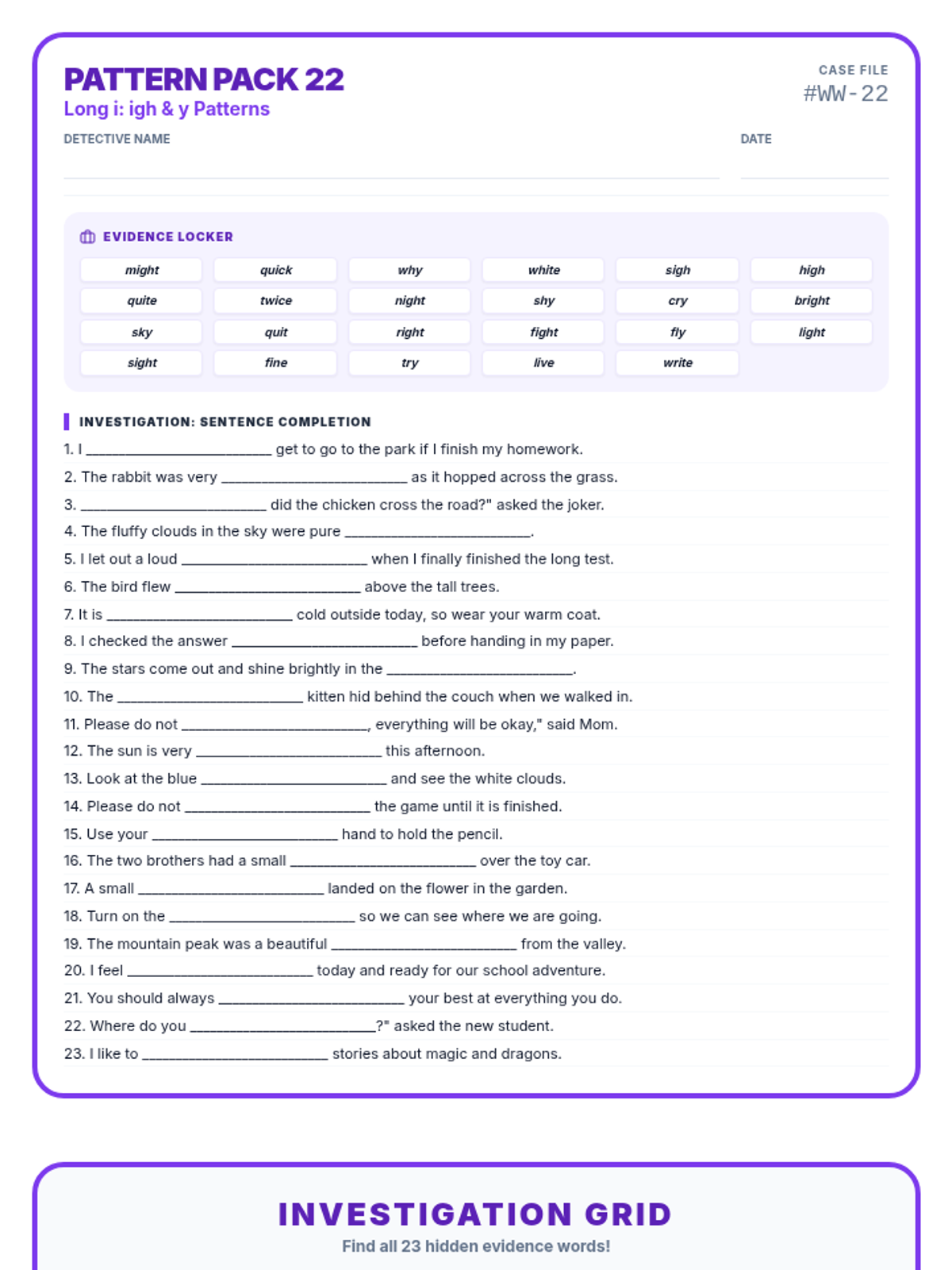
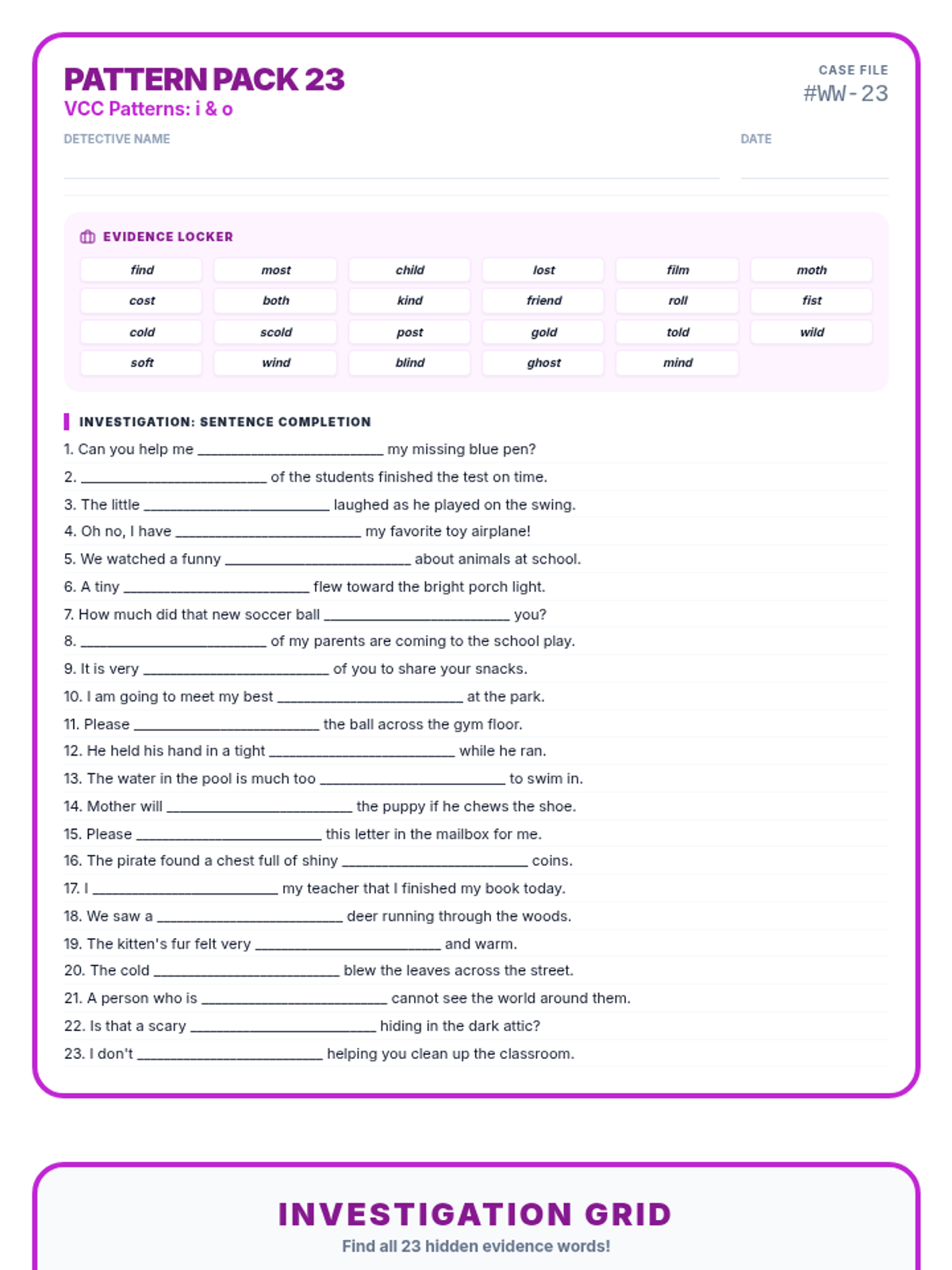
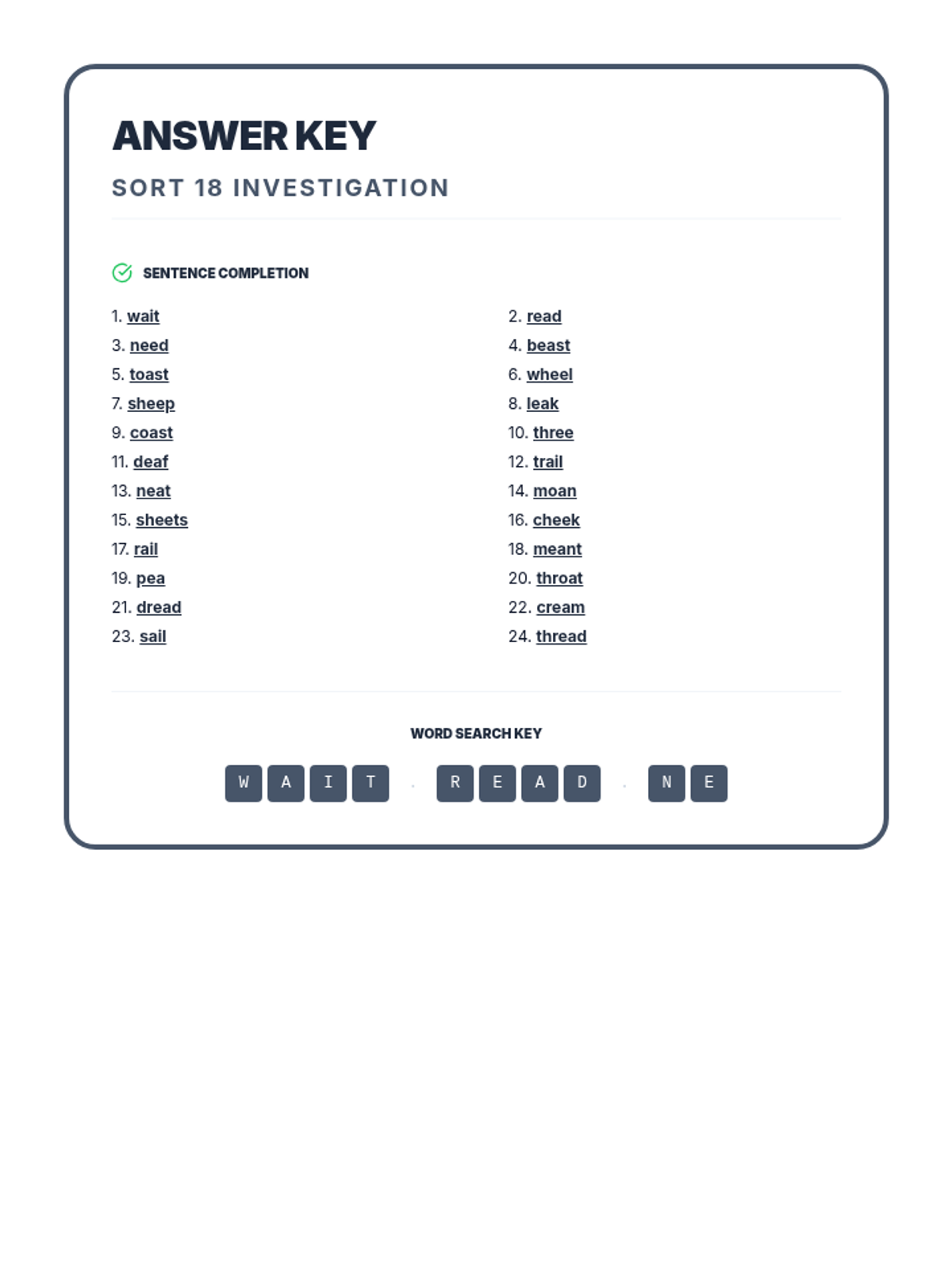
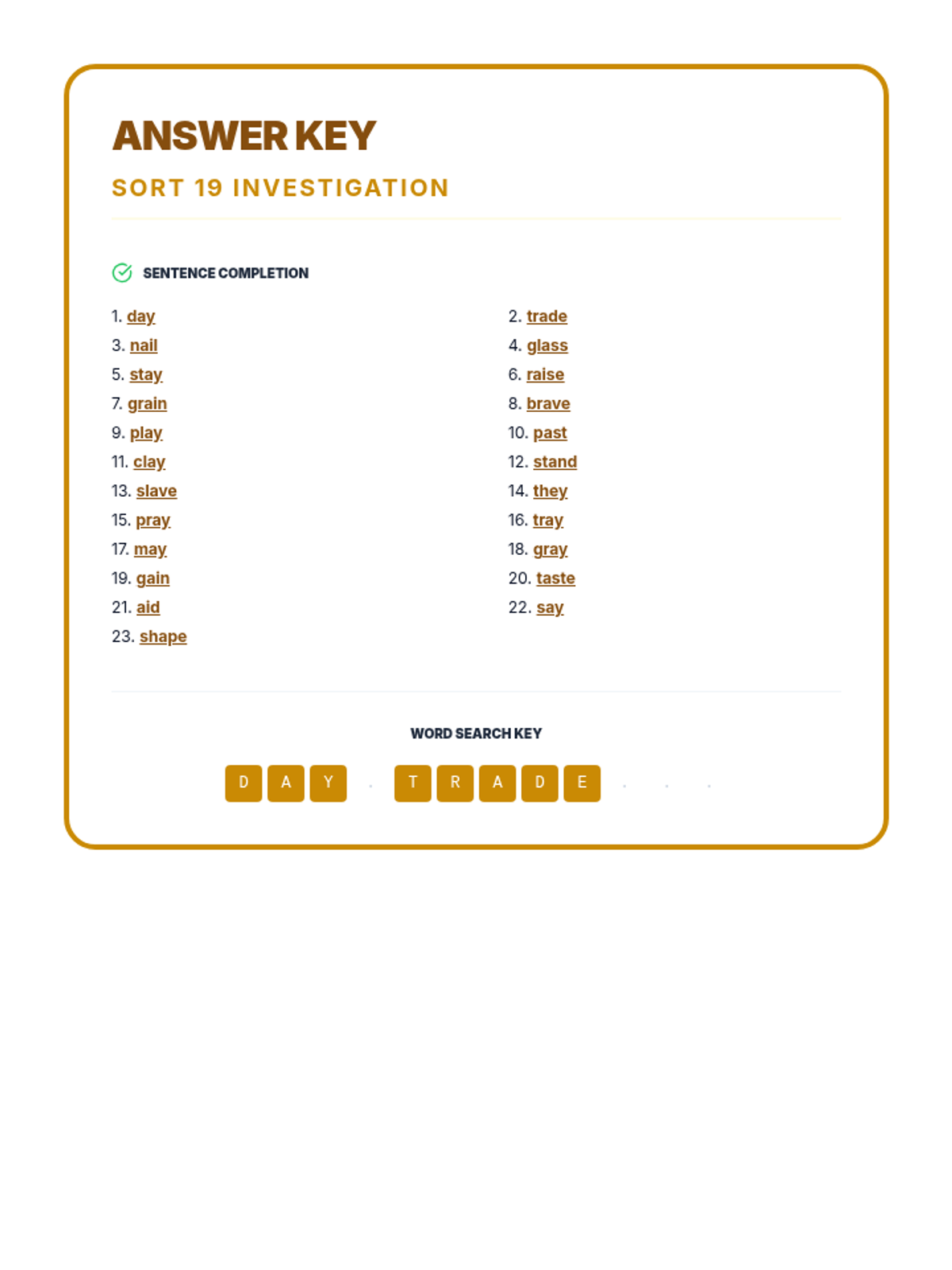
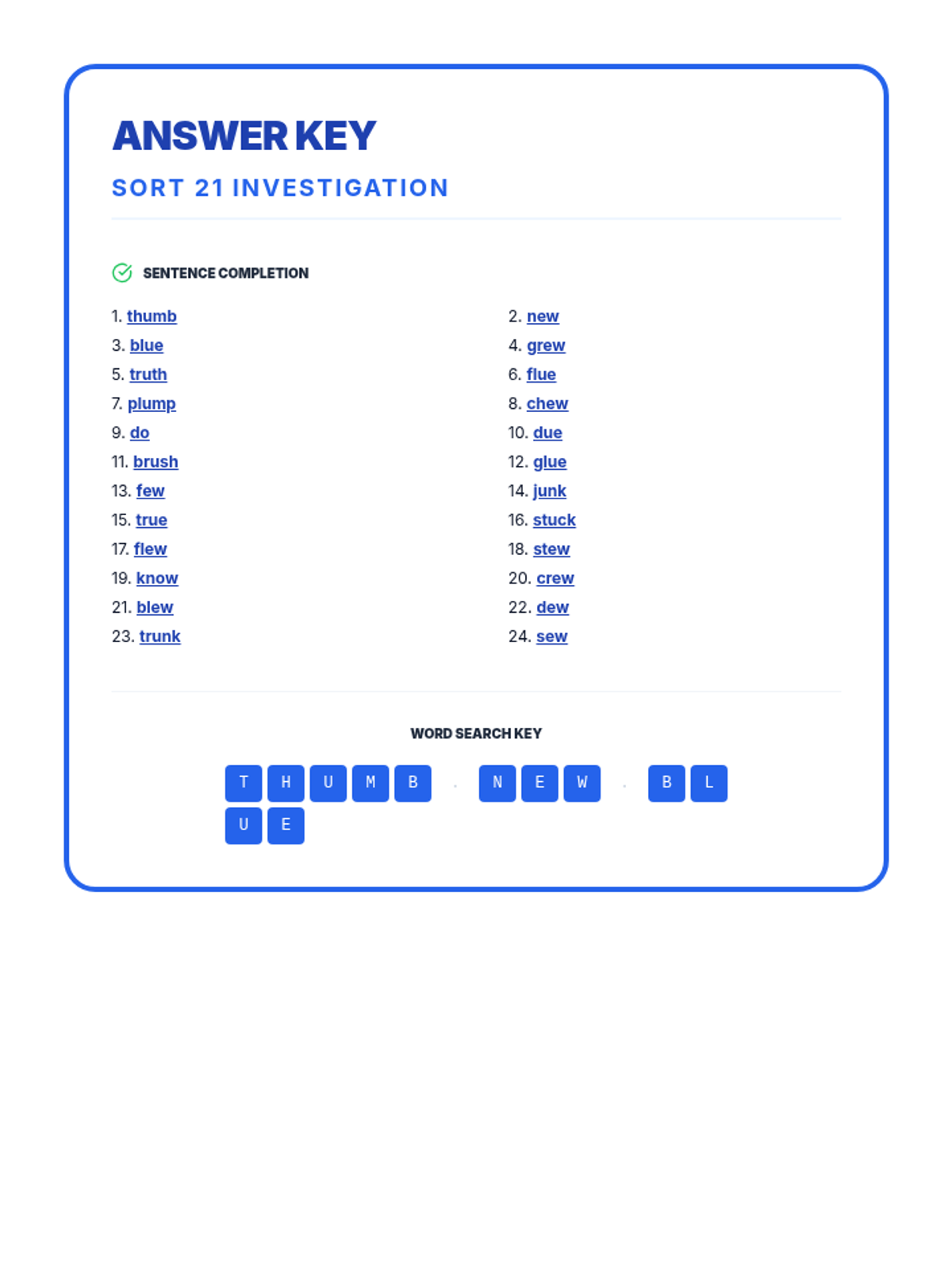
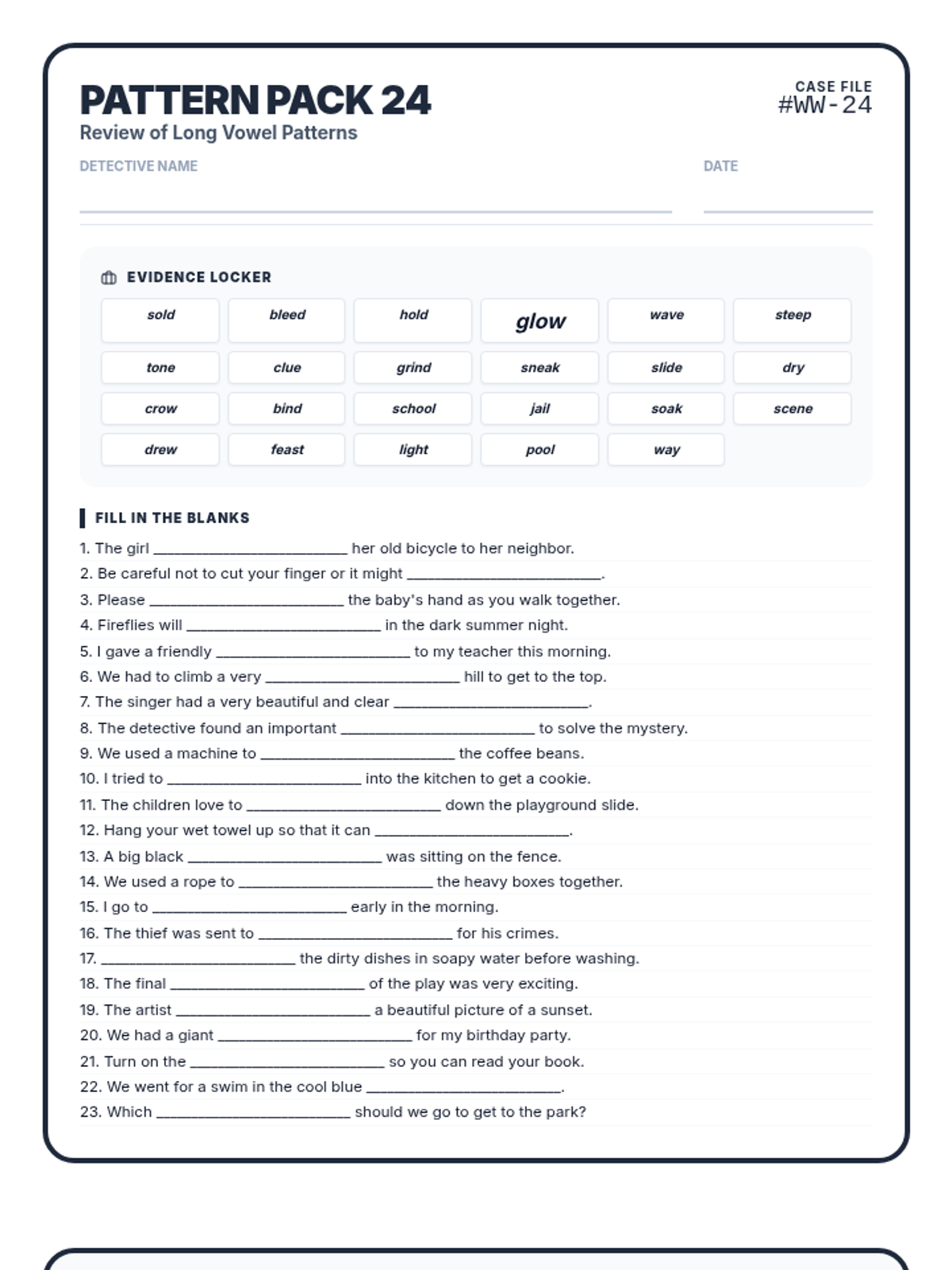
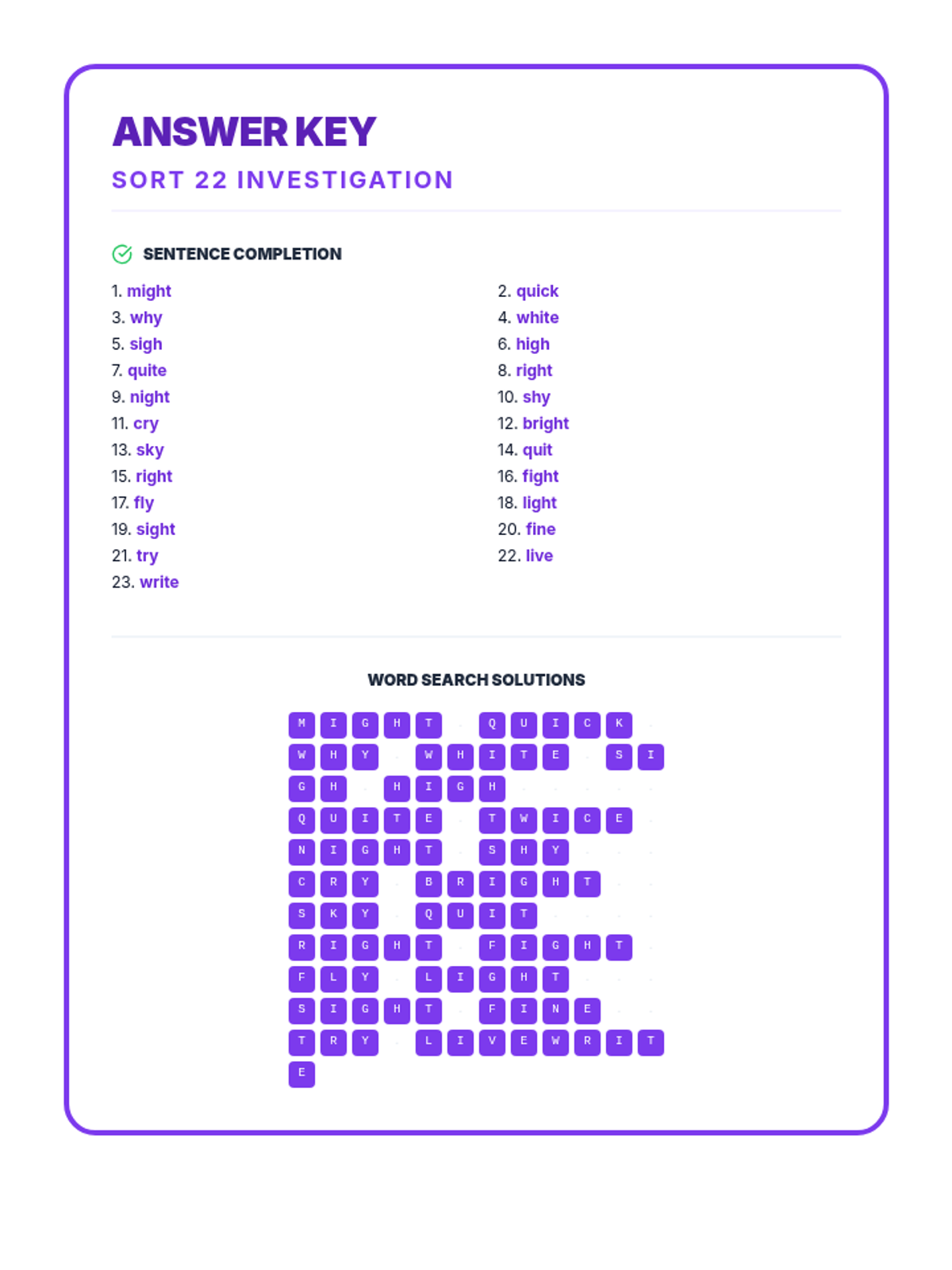
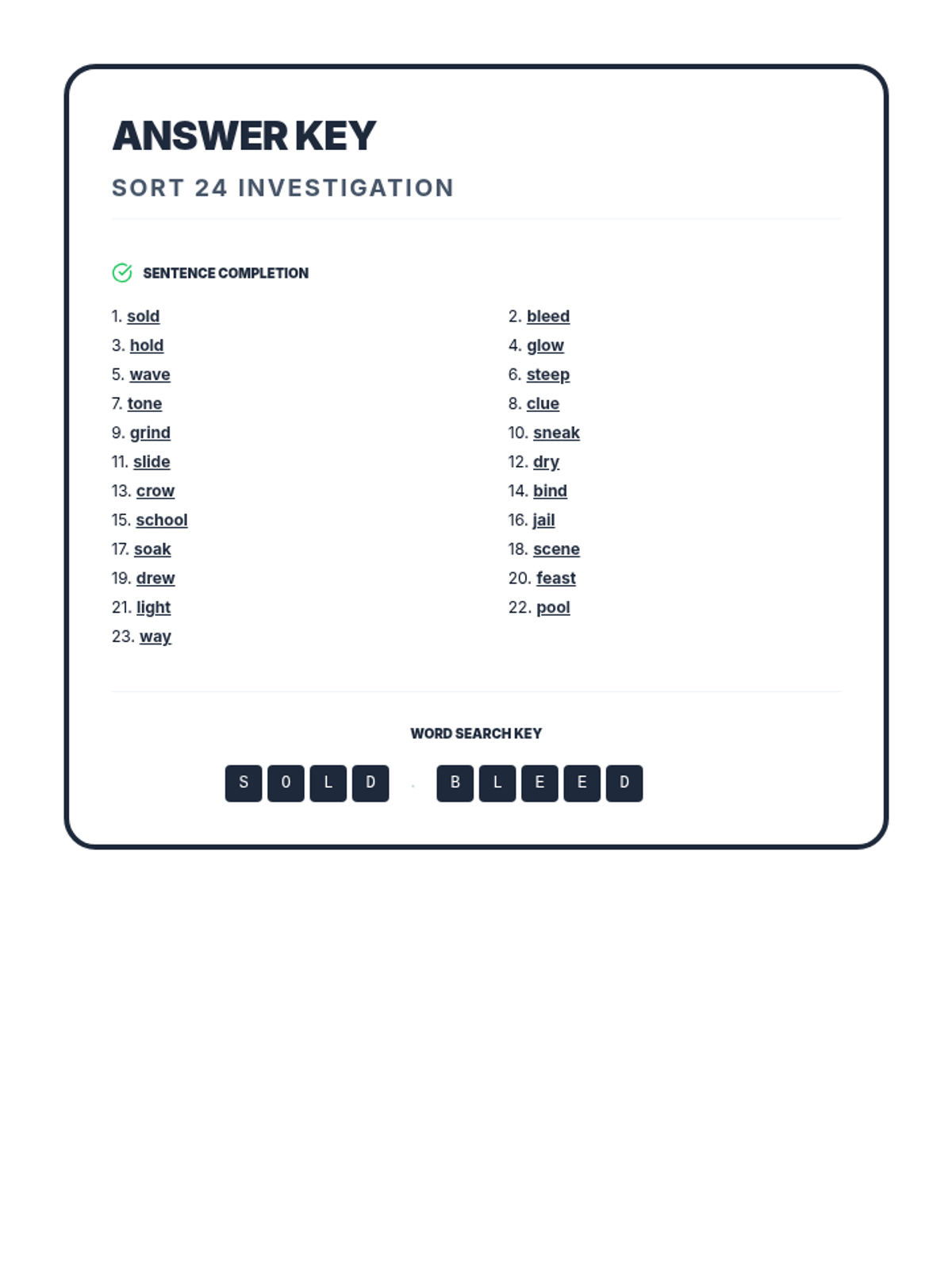
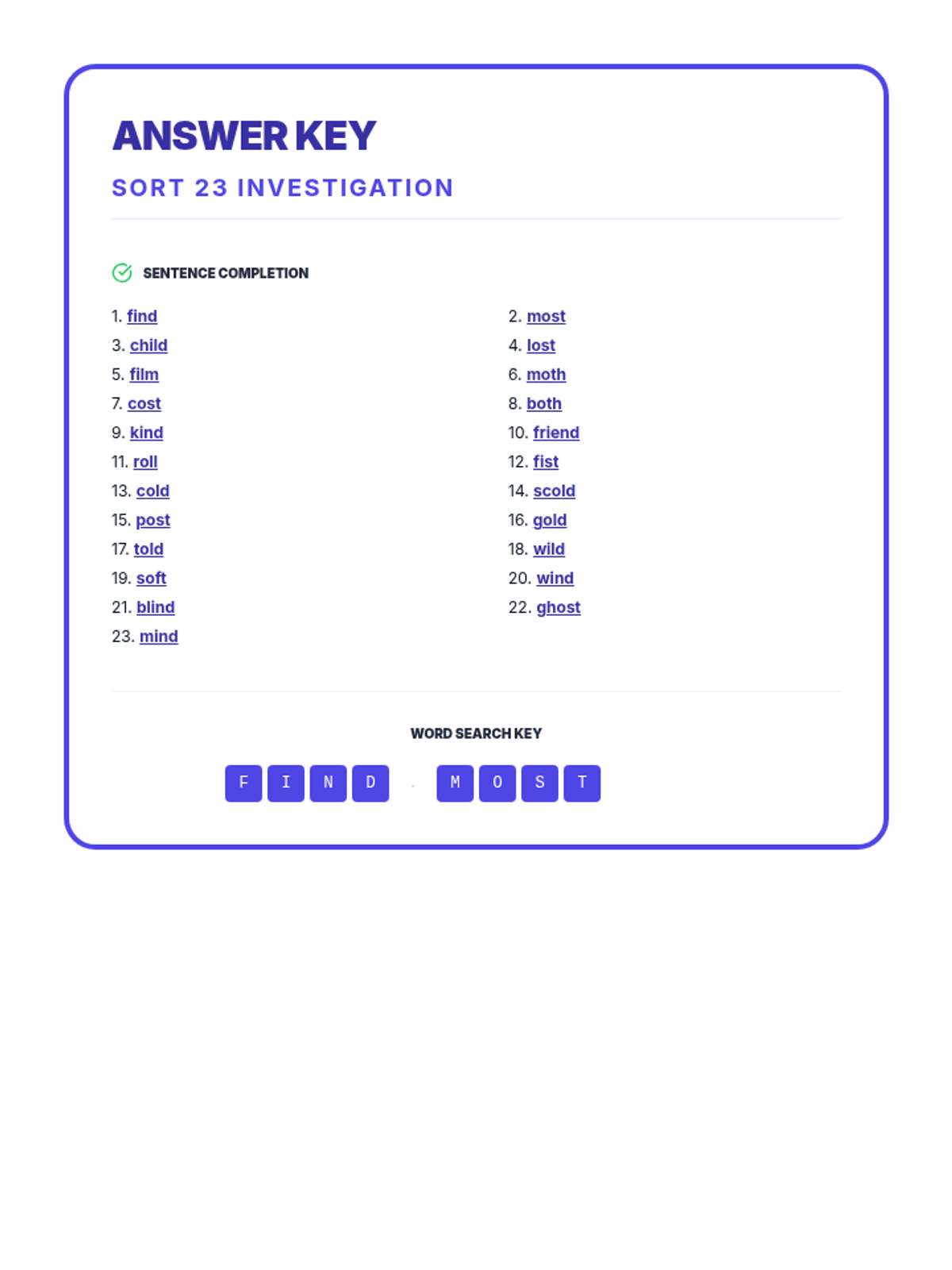
Review of CVVC patterns and introduction to open syllables with long a, o, u, and i patterns across Sorts 18-24.
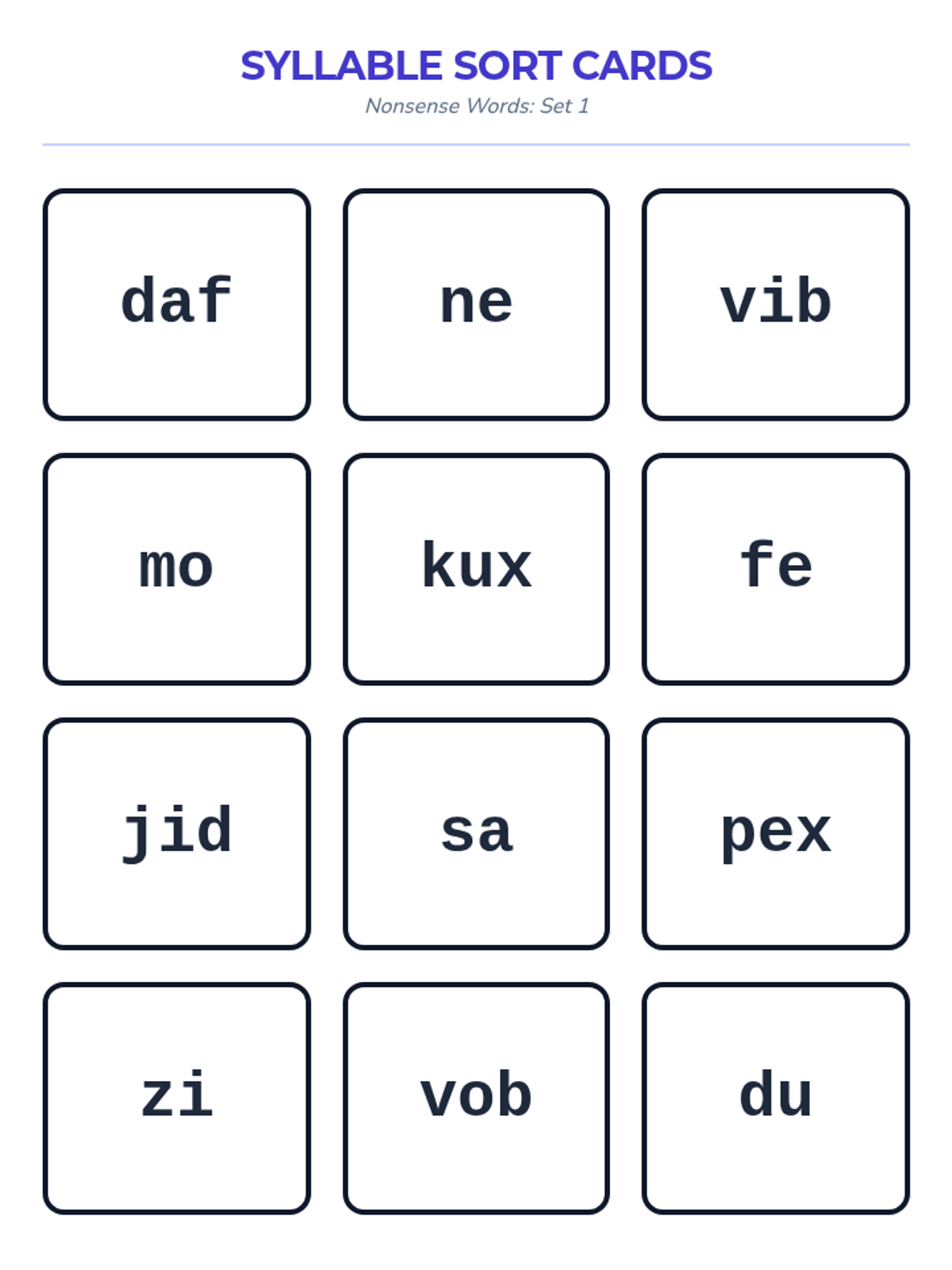
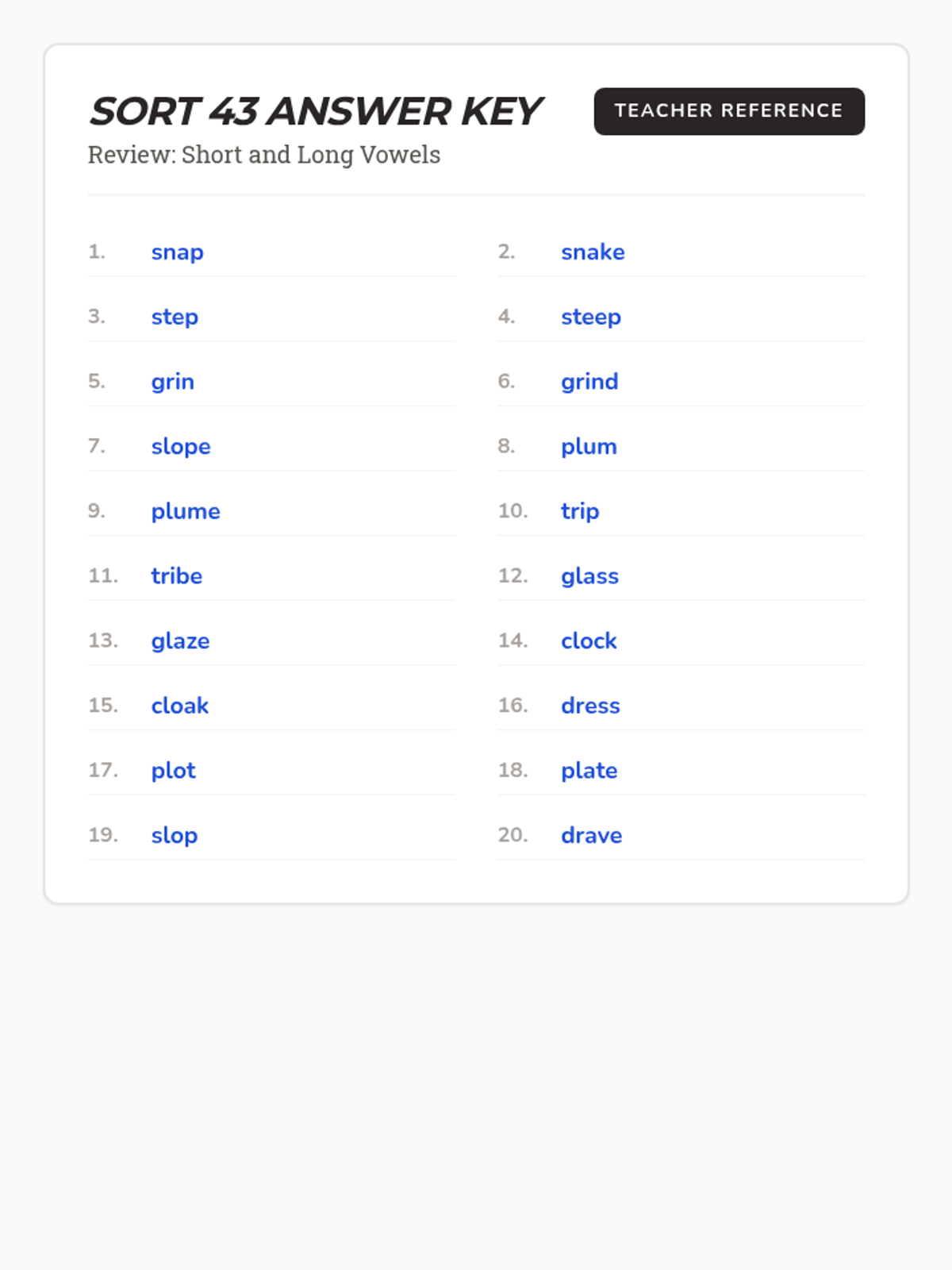
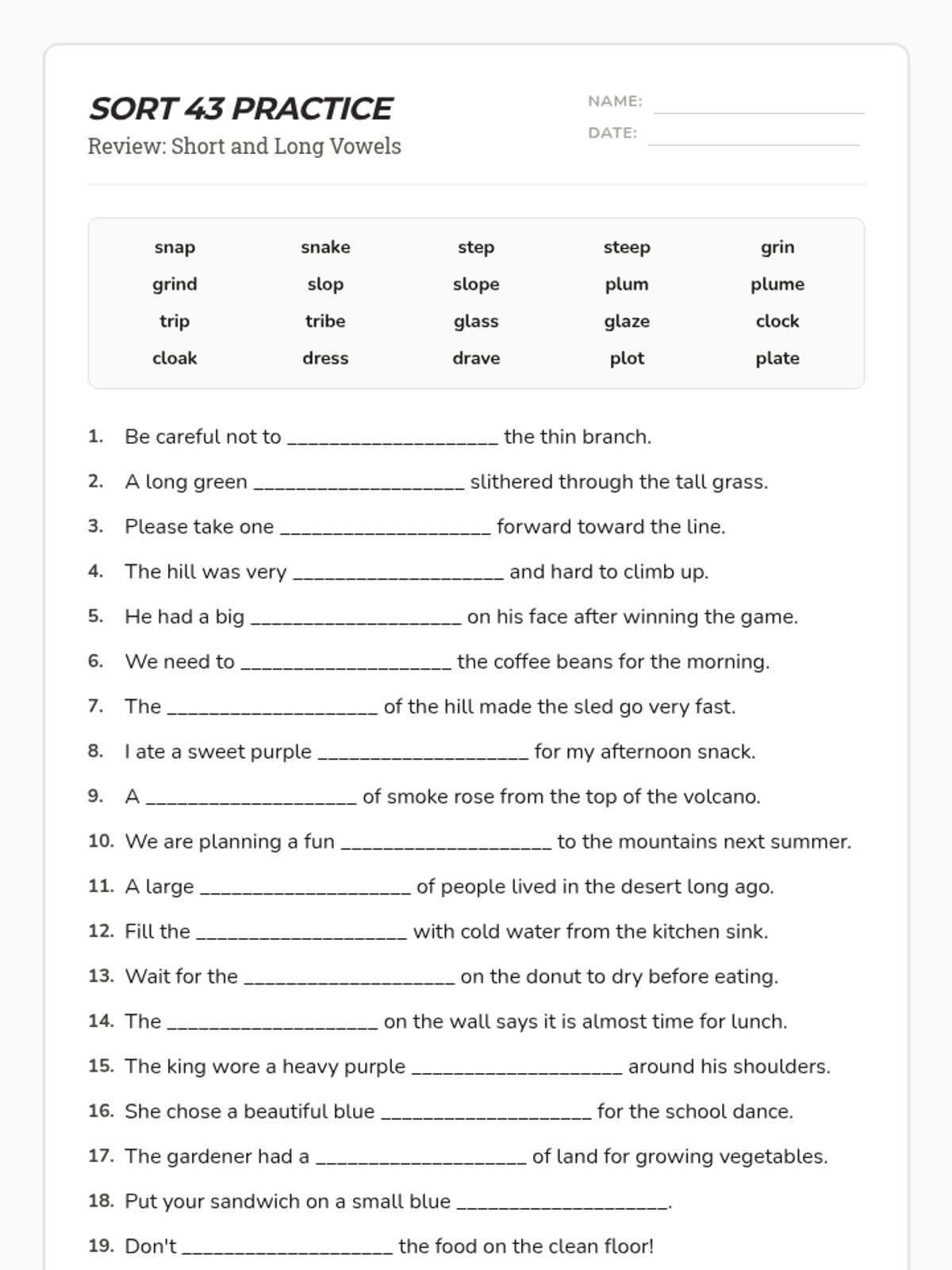
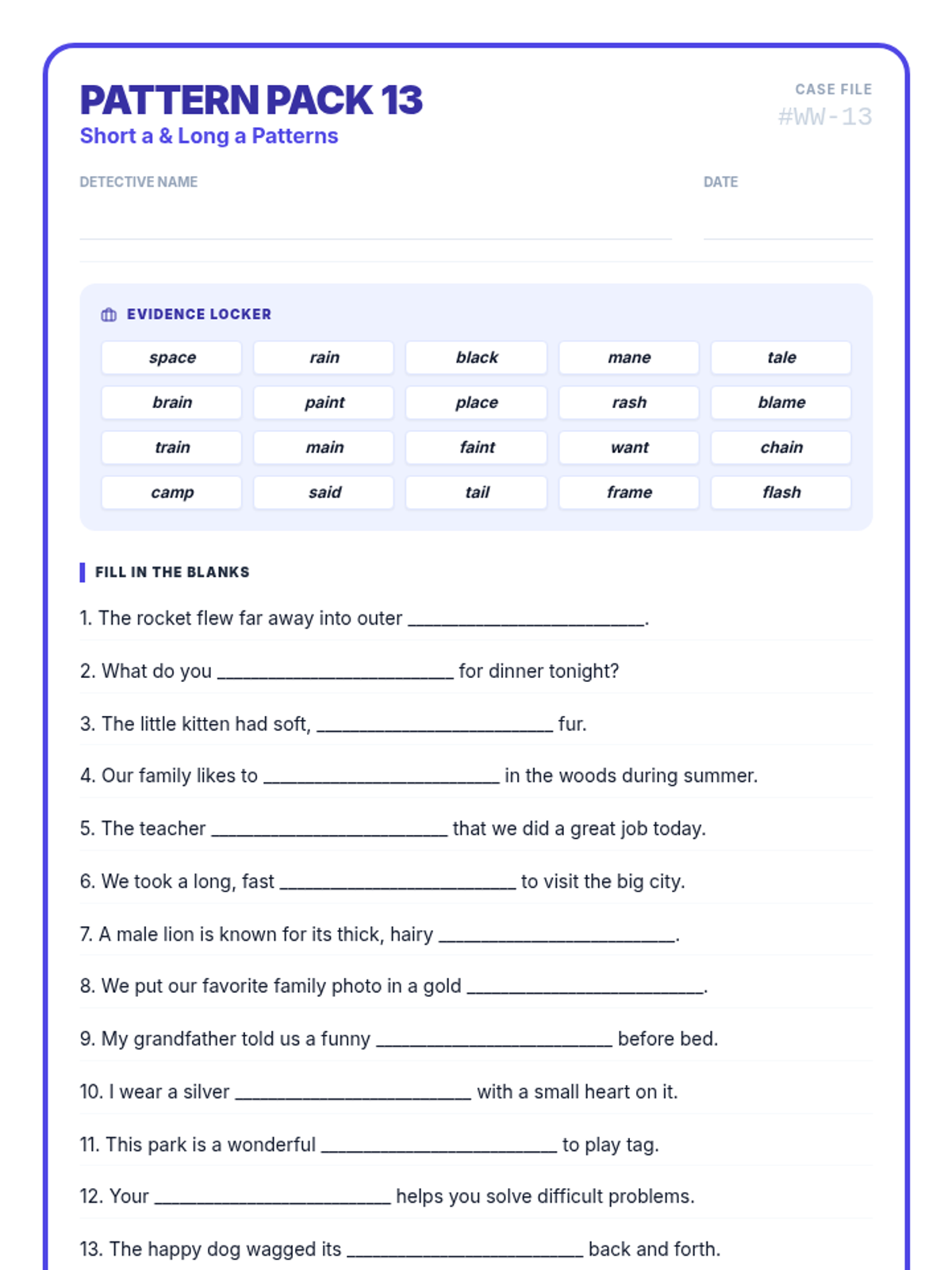
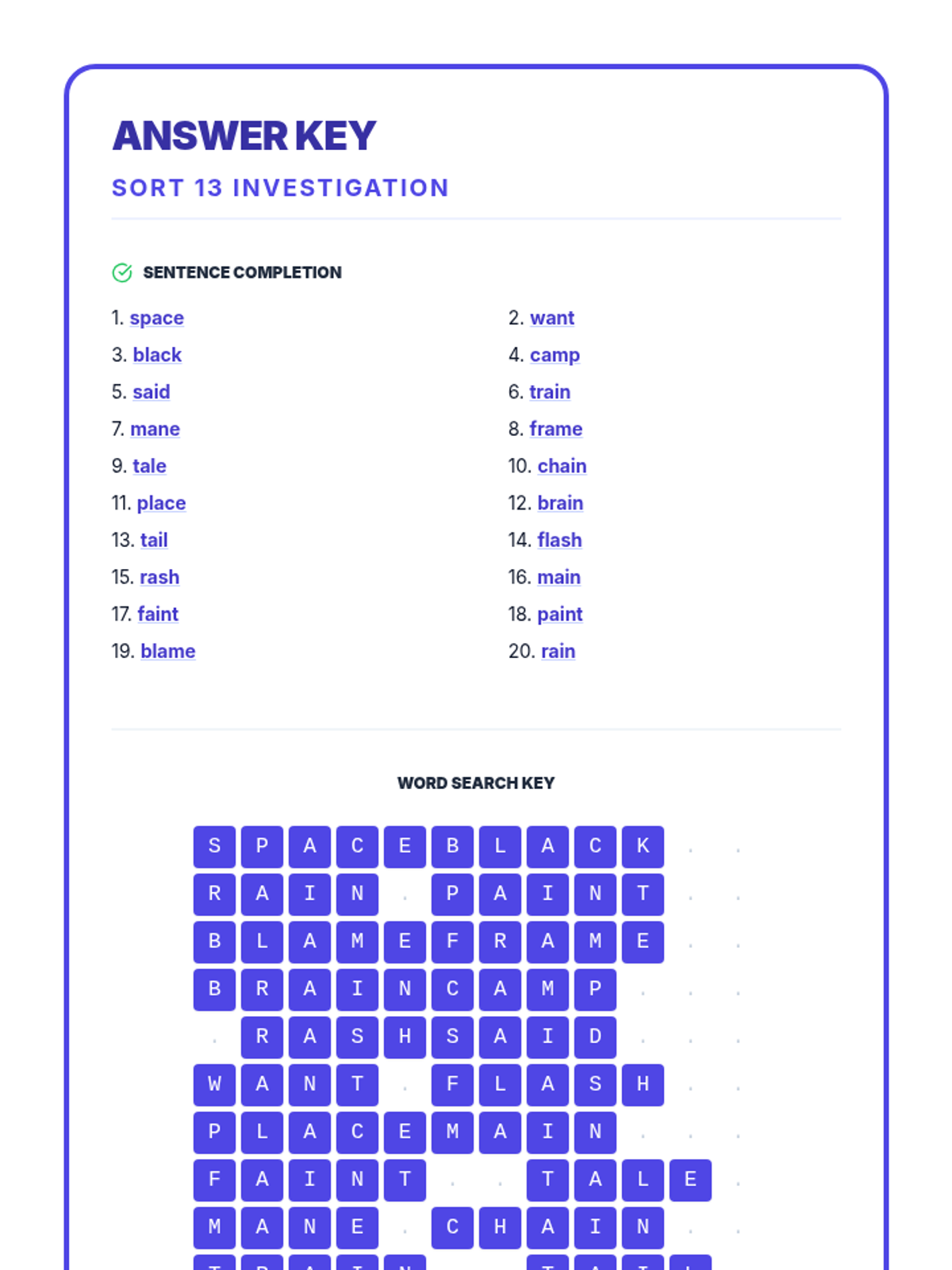
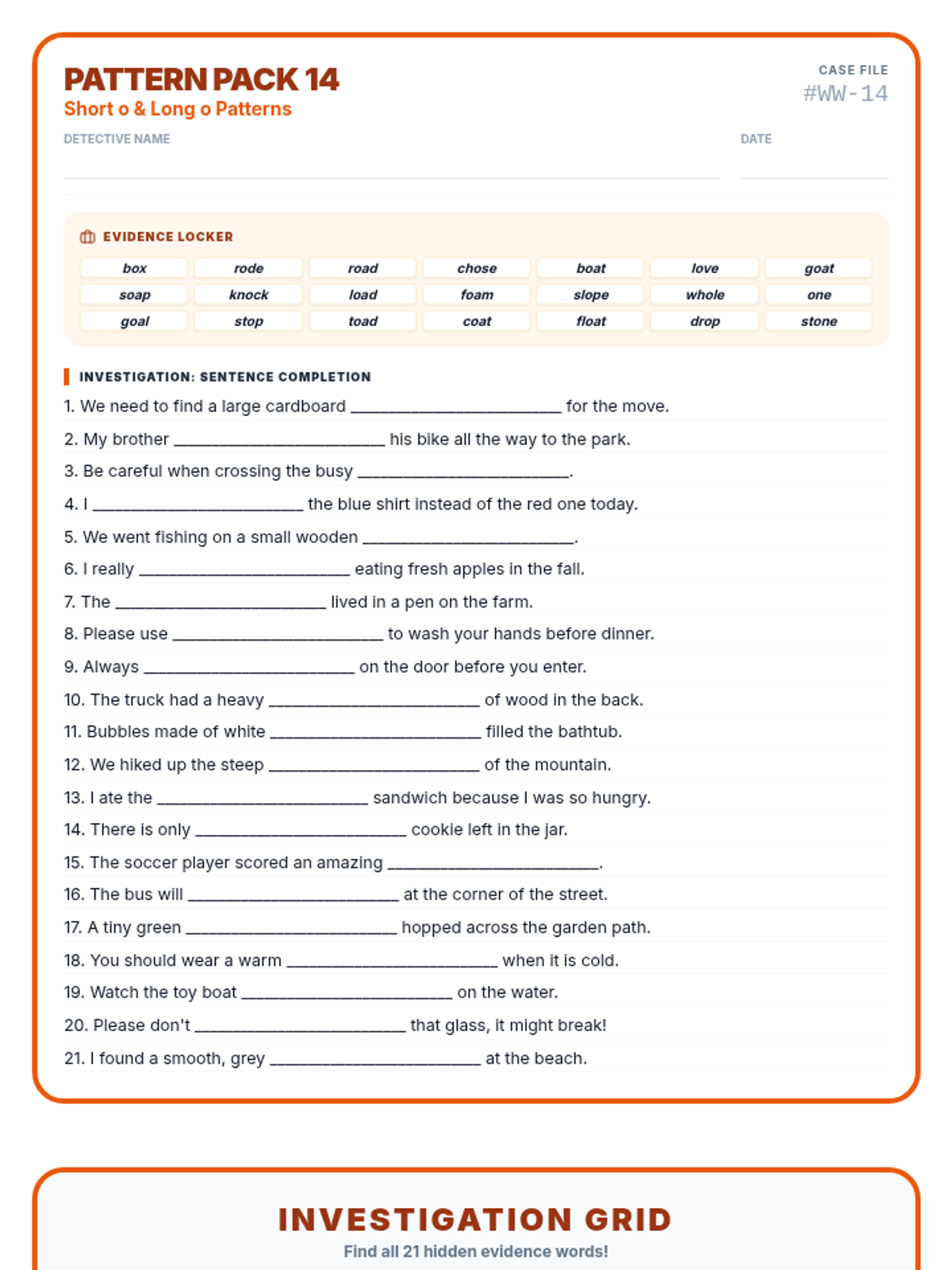
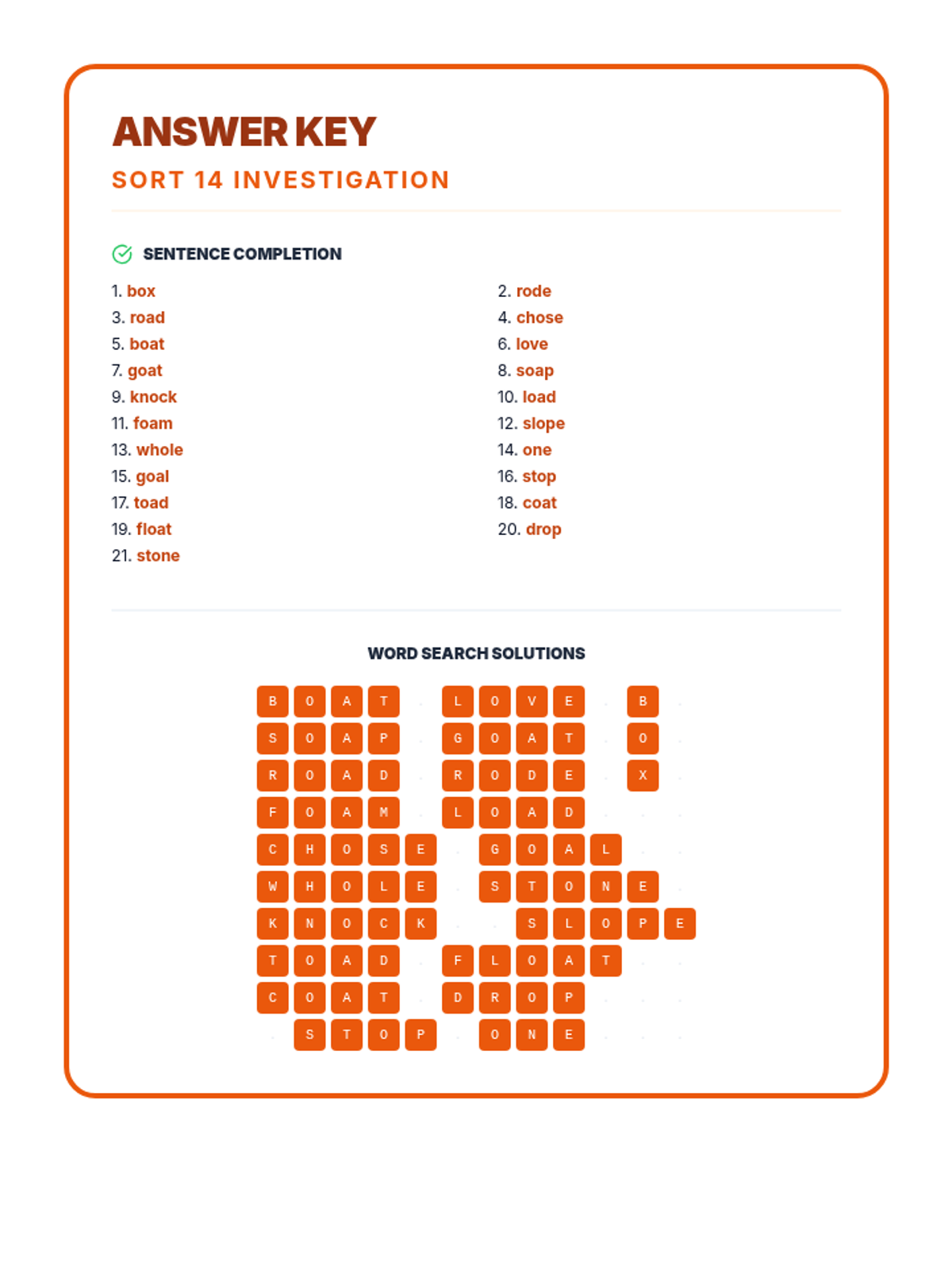
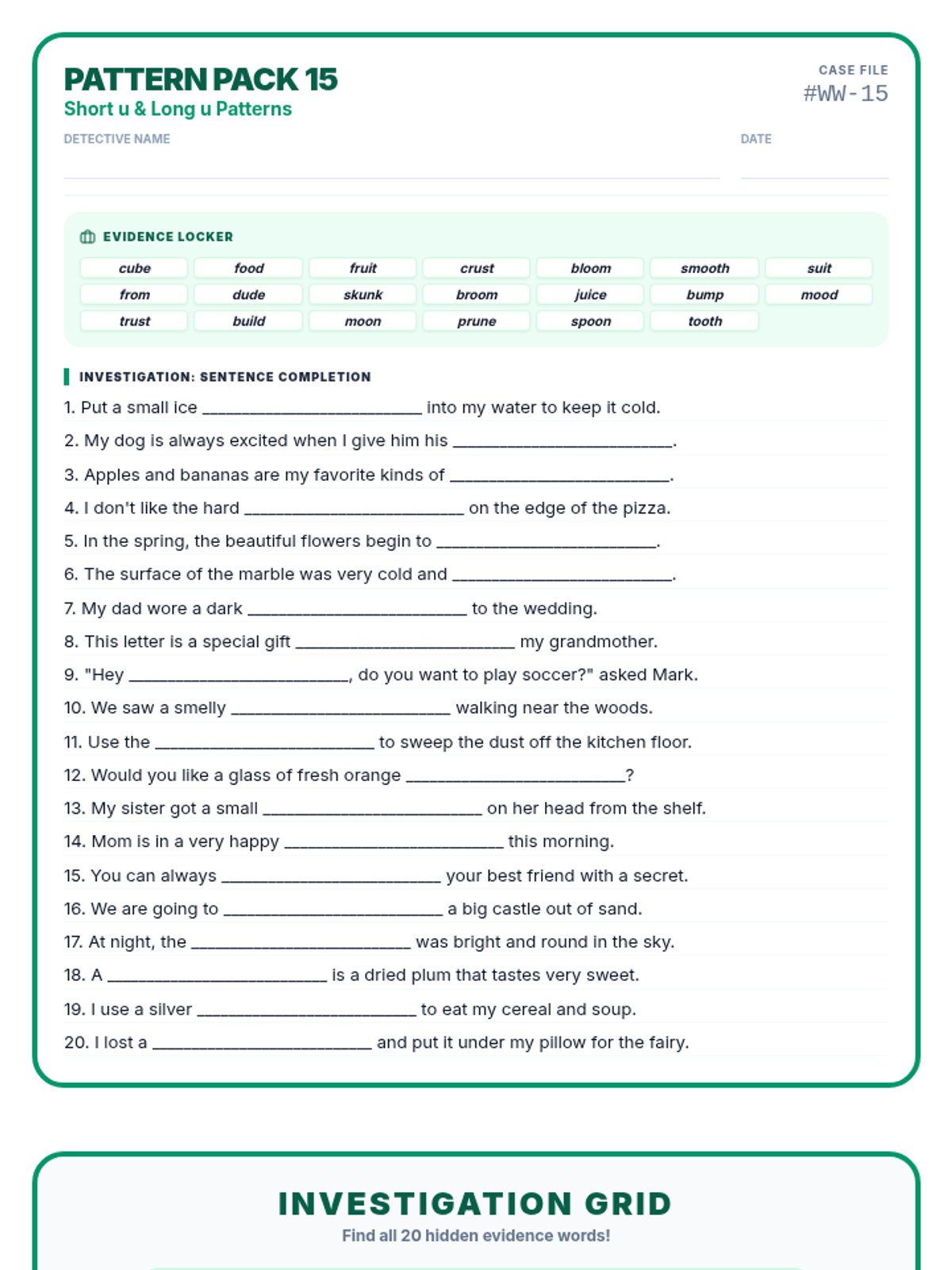
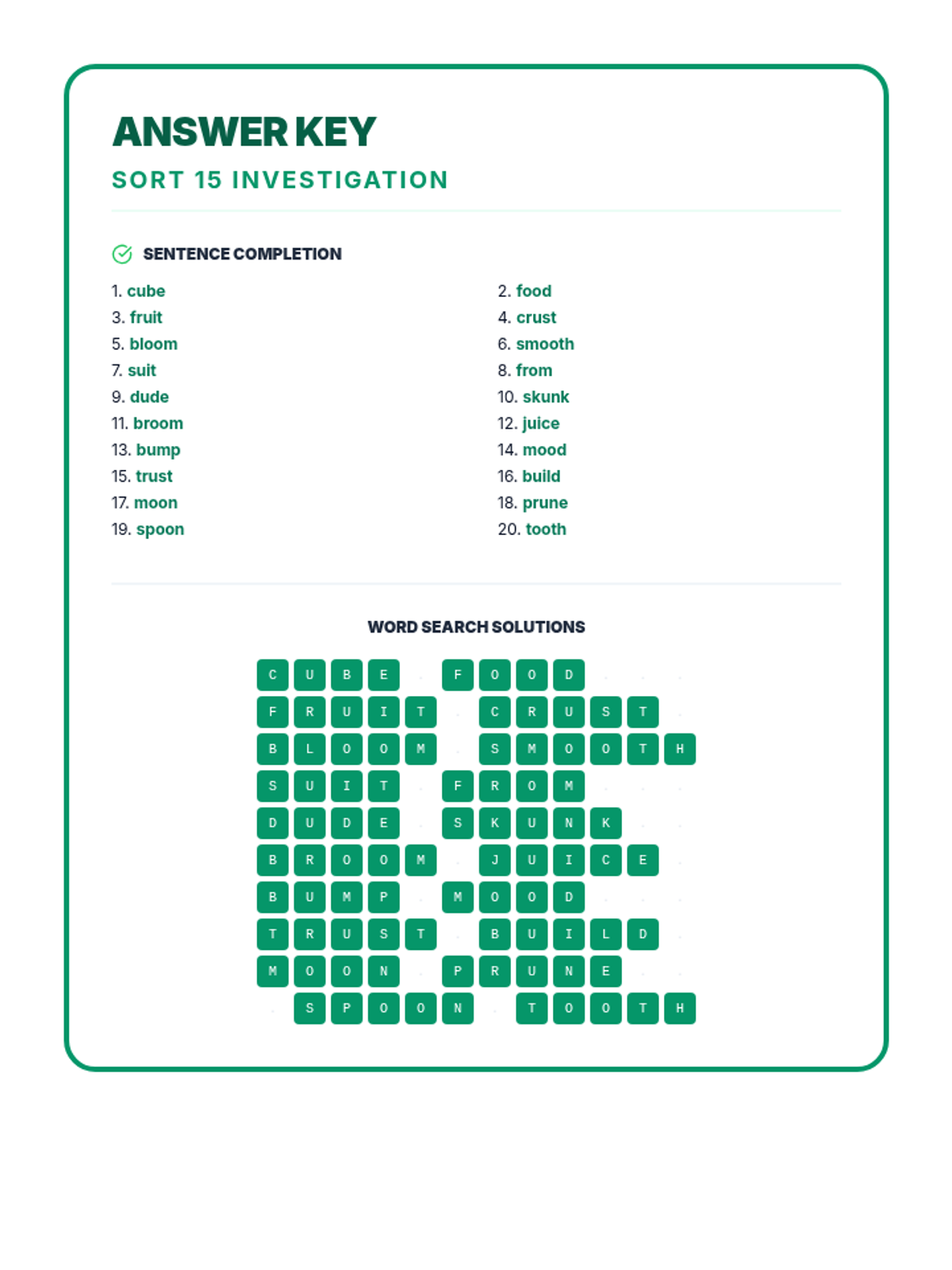
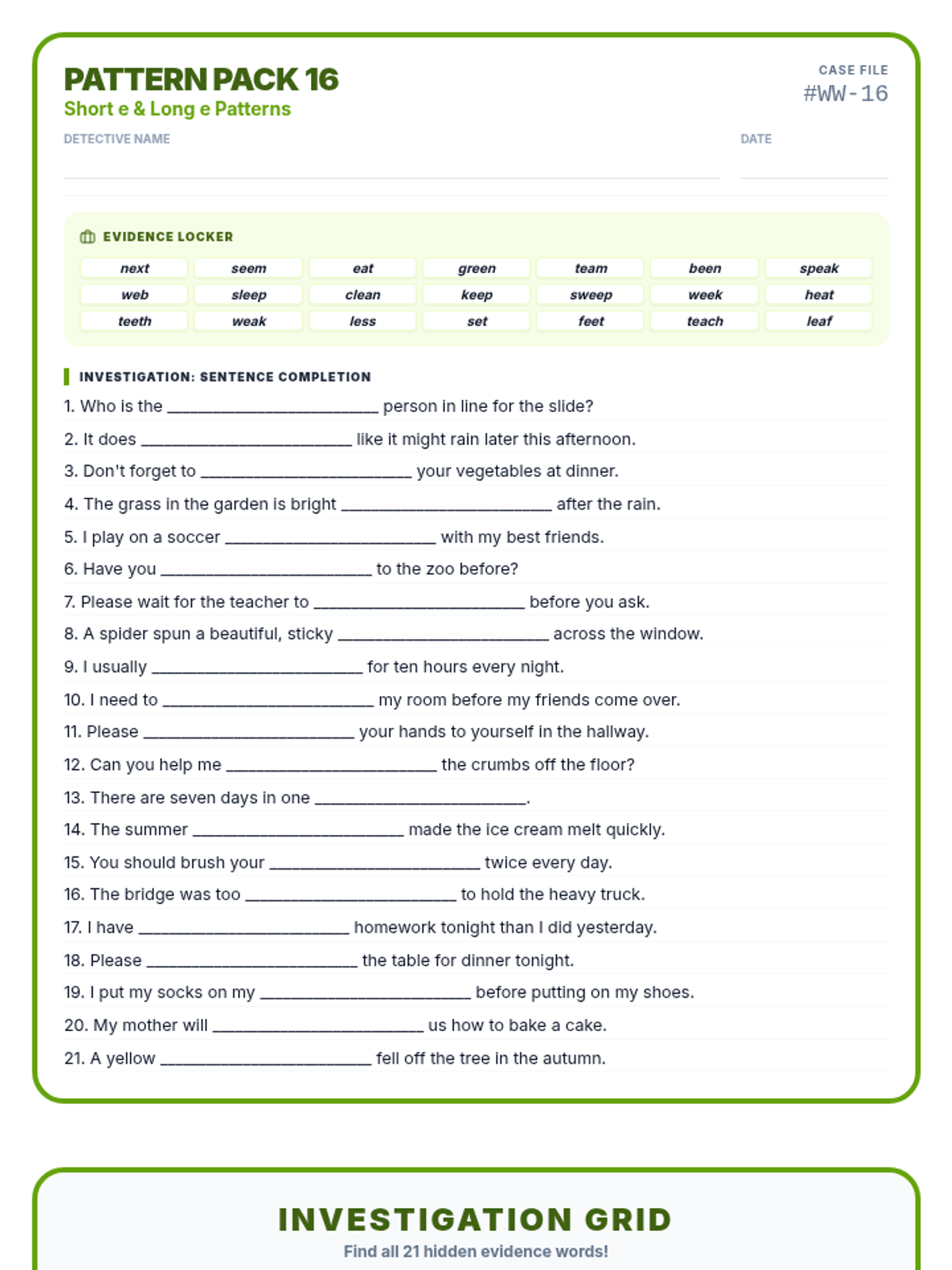
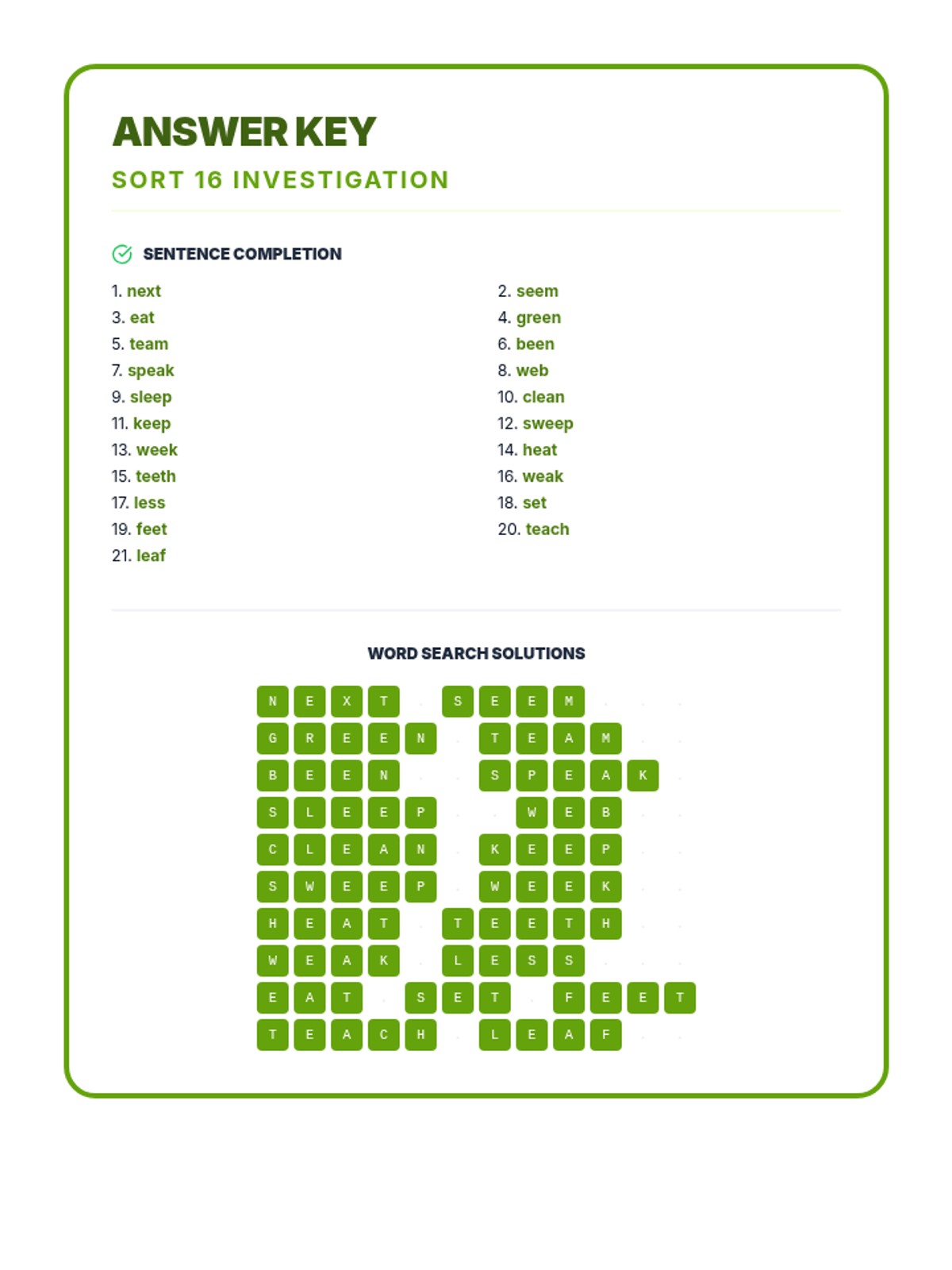
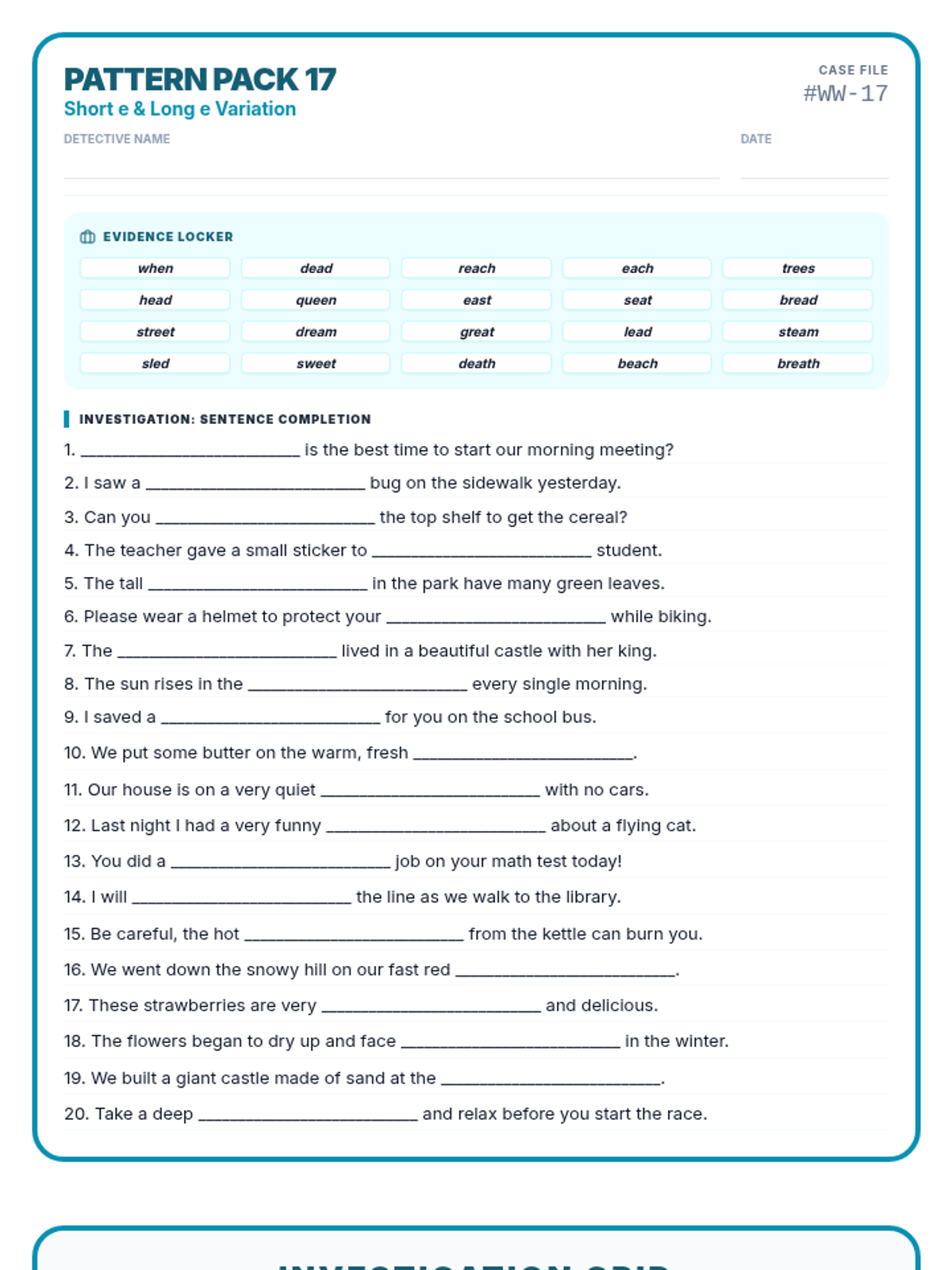
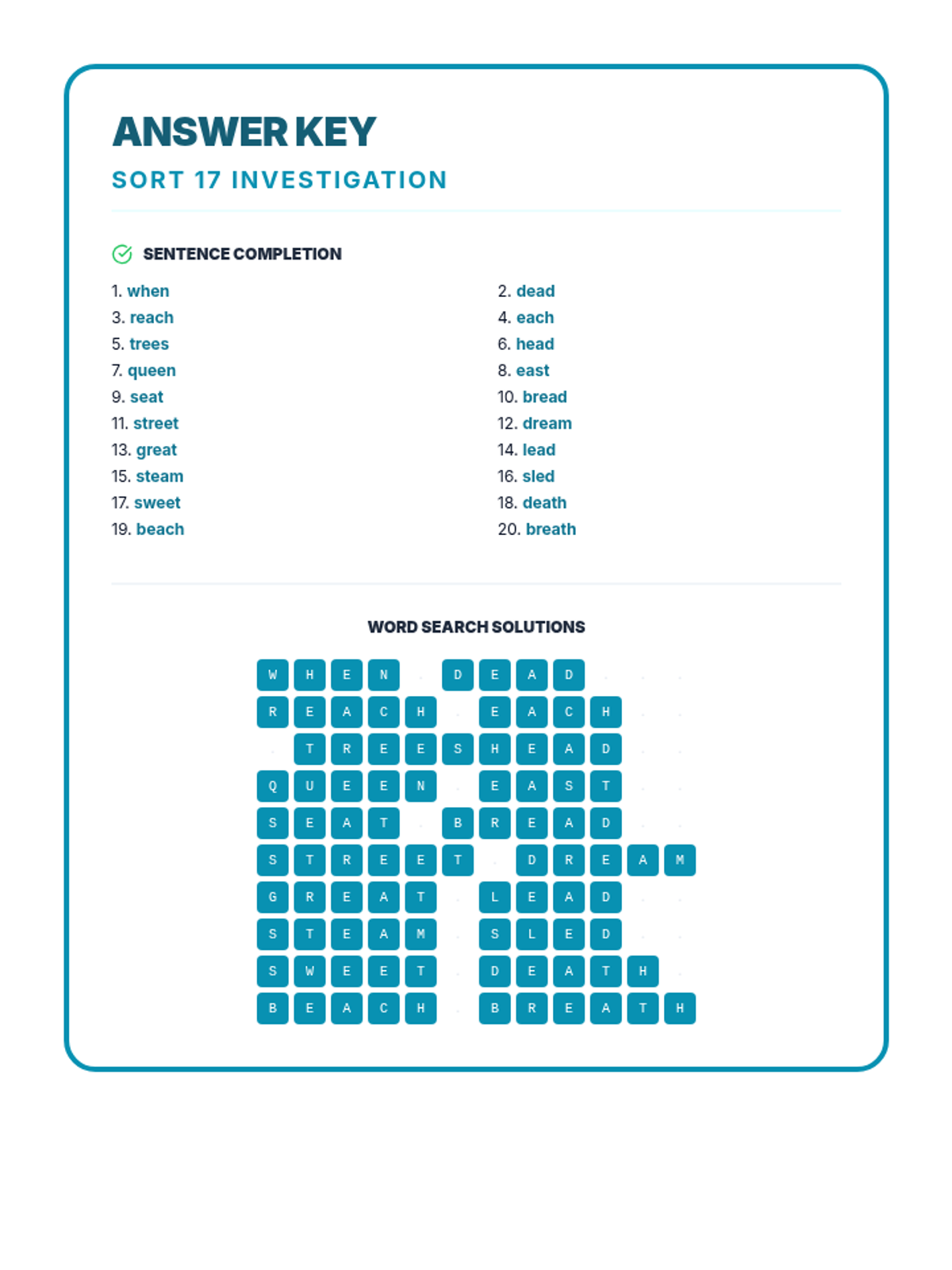
Foundational practice for Sorts 13-17, focusing on short and long vowel patterns including CVCe and CVVC for a, o, u, and e.
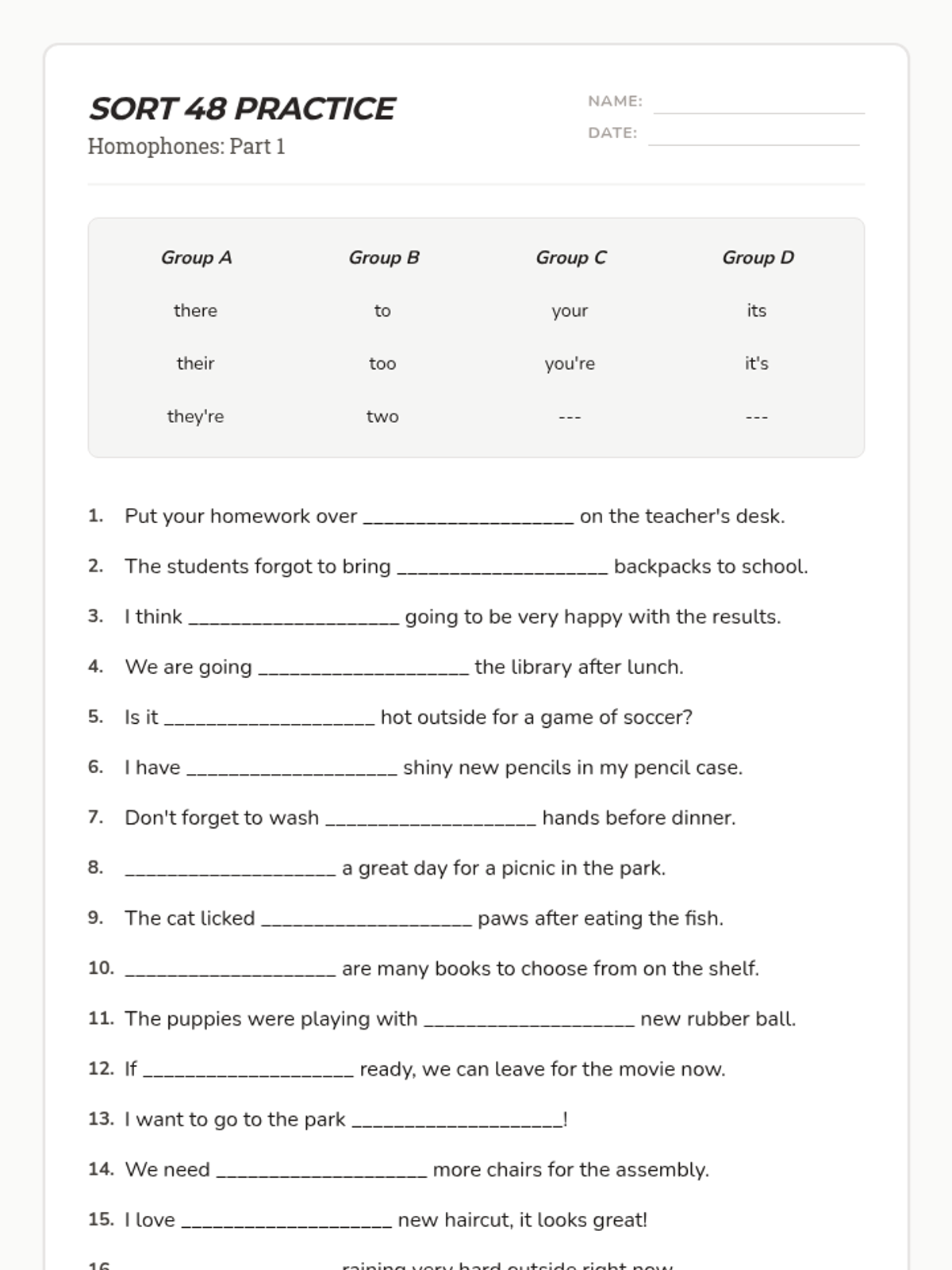
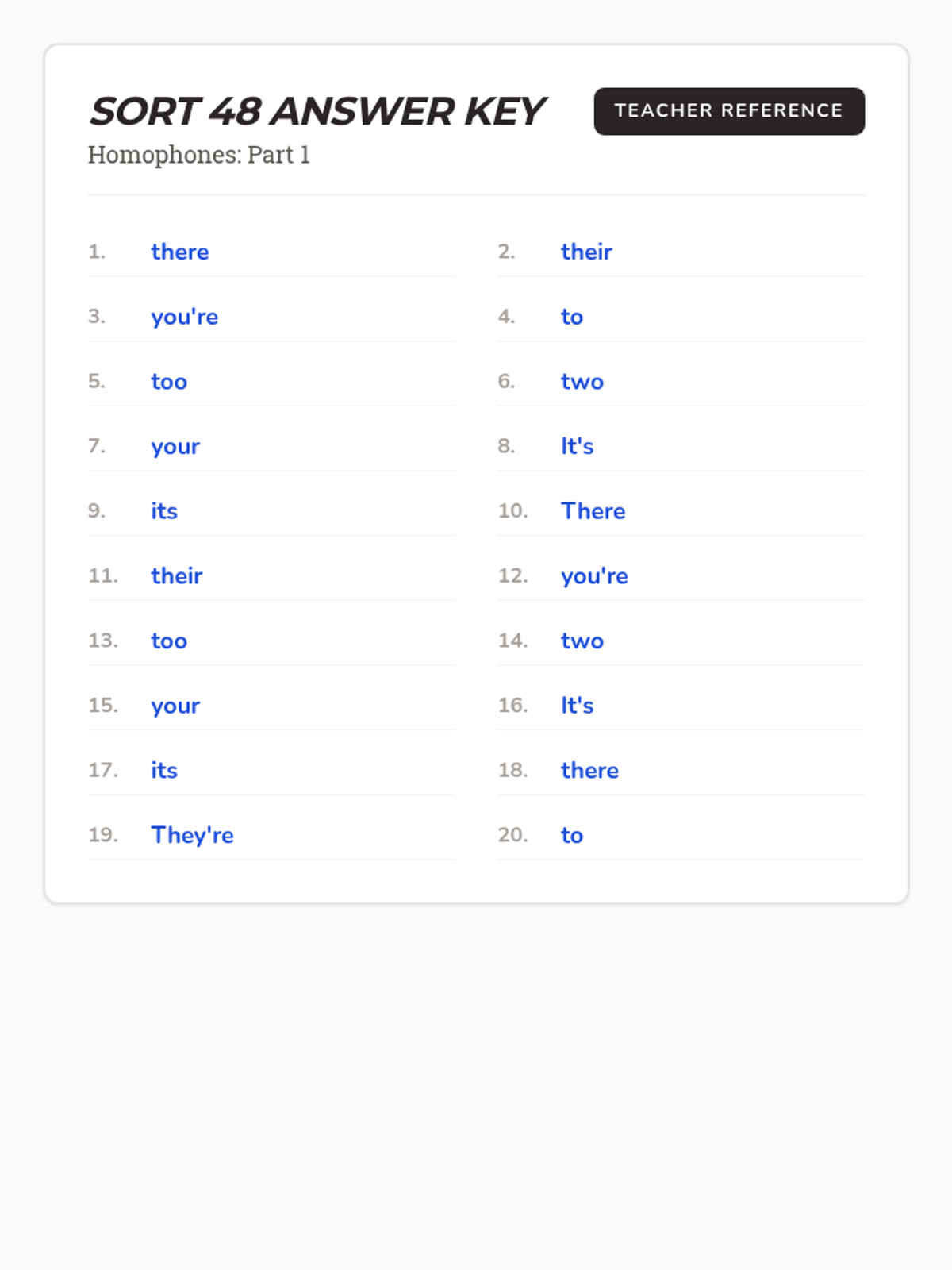
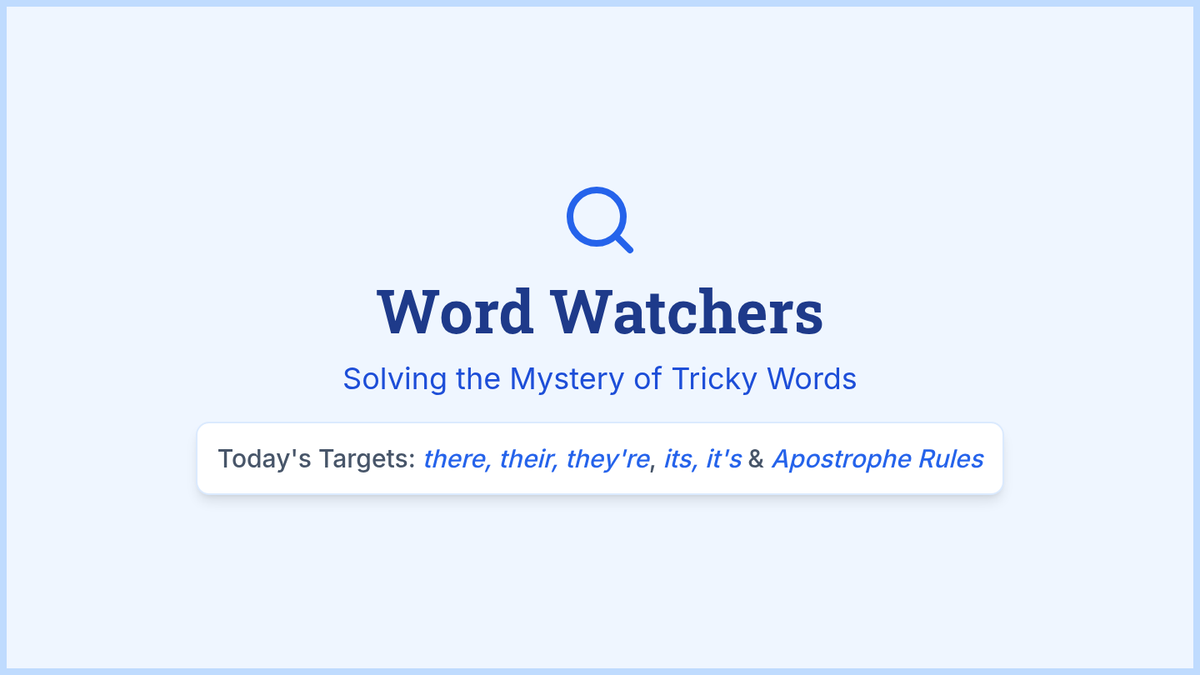
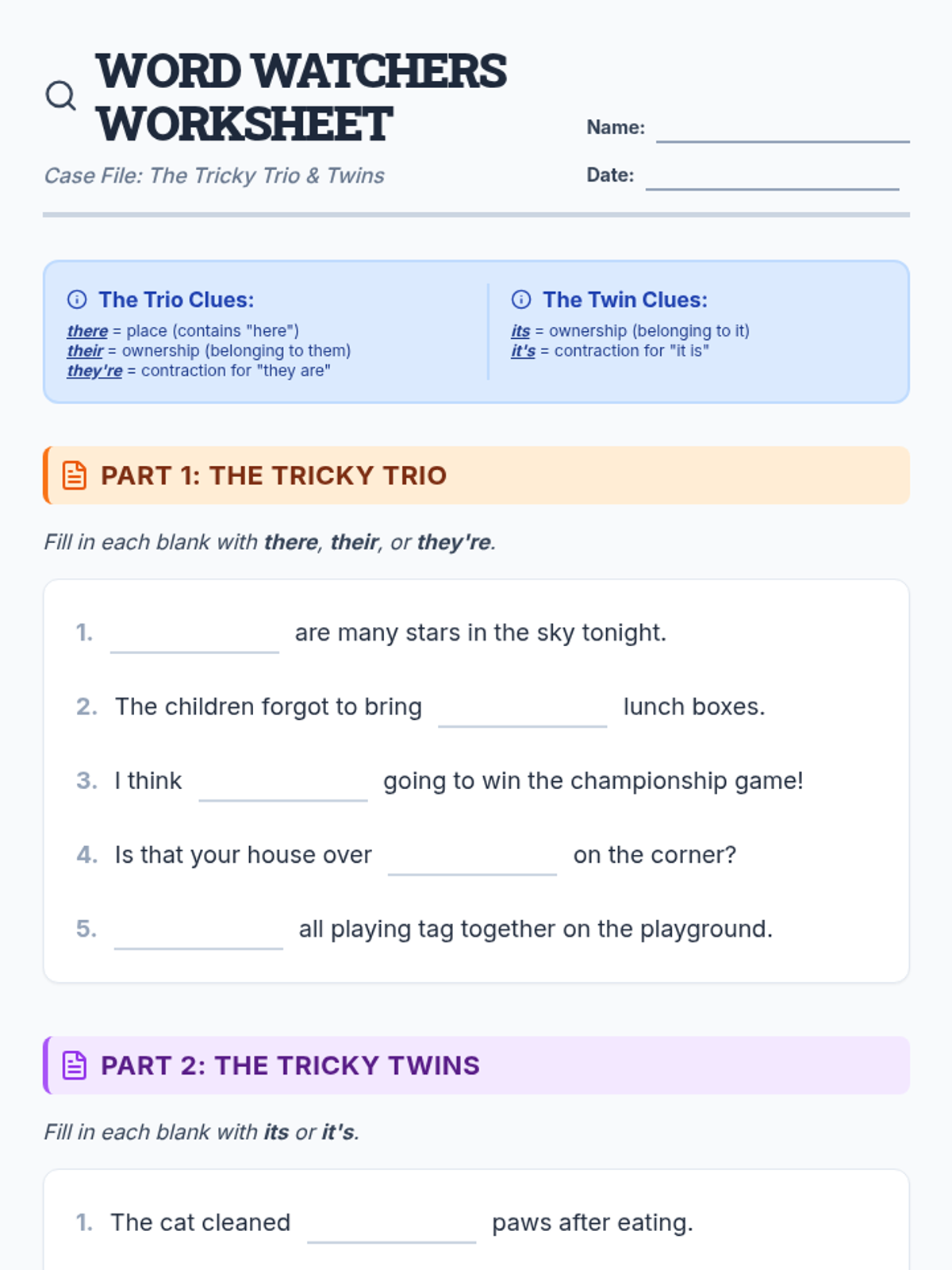
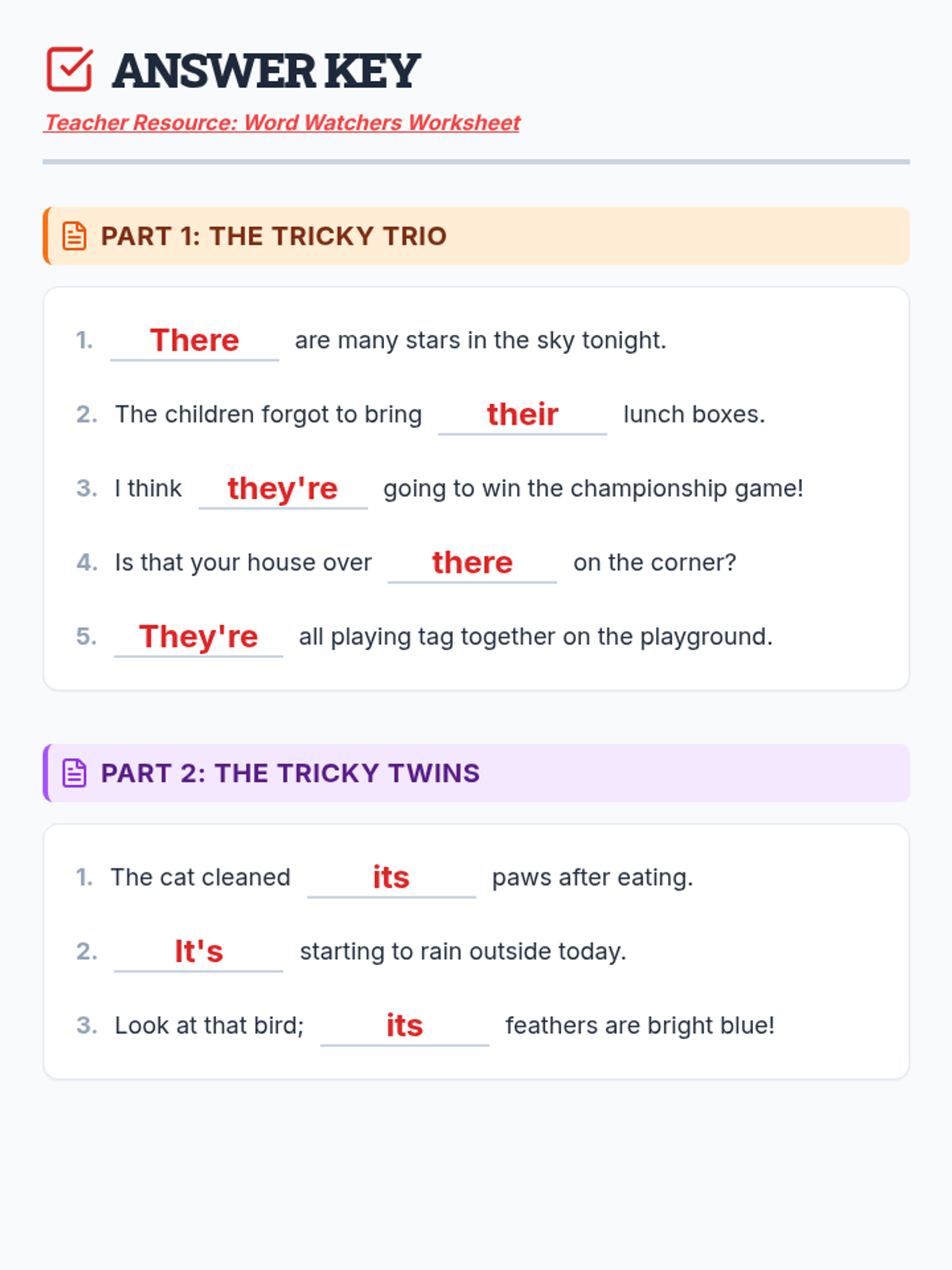
A lesson focused on distinguishing between common homophones and contractions: there/their/they're and its/it's for third-grade students. Includes visual aids and hands-on practice.
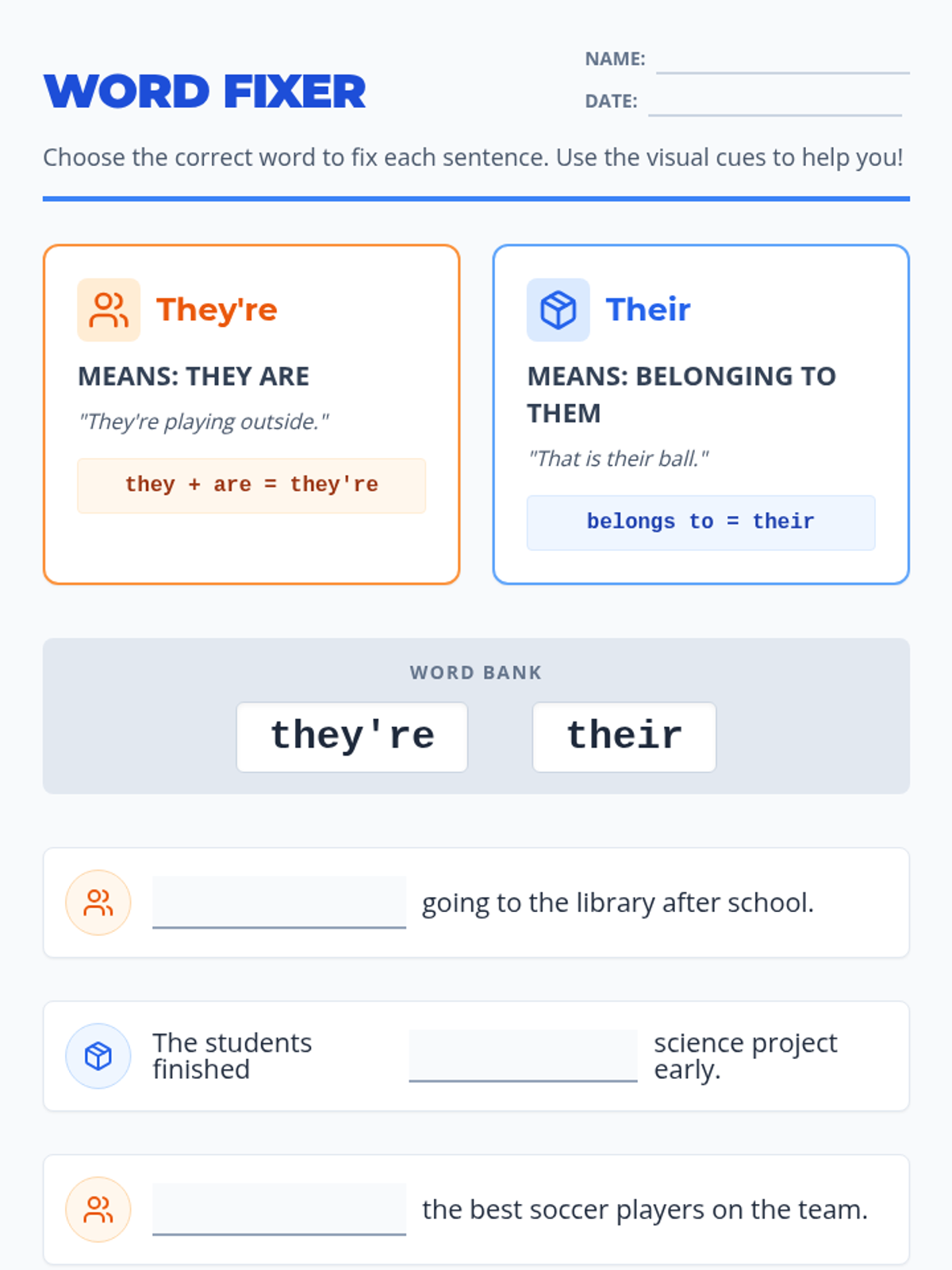
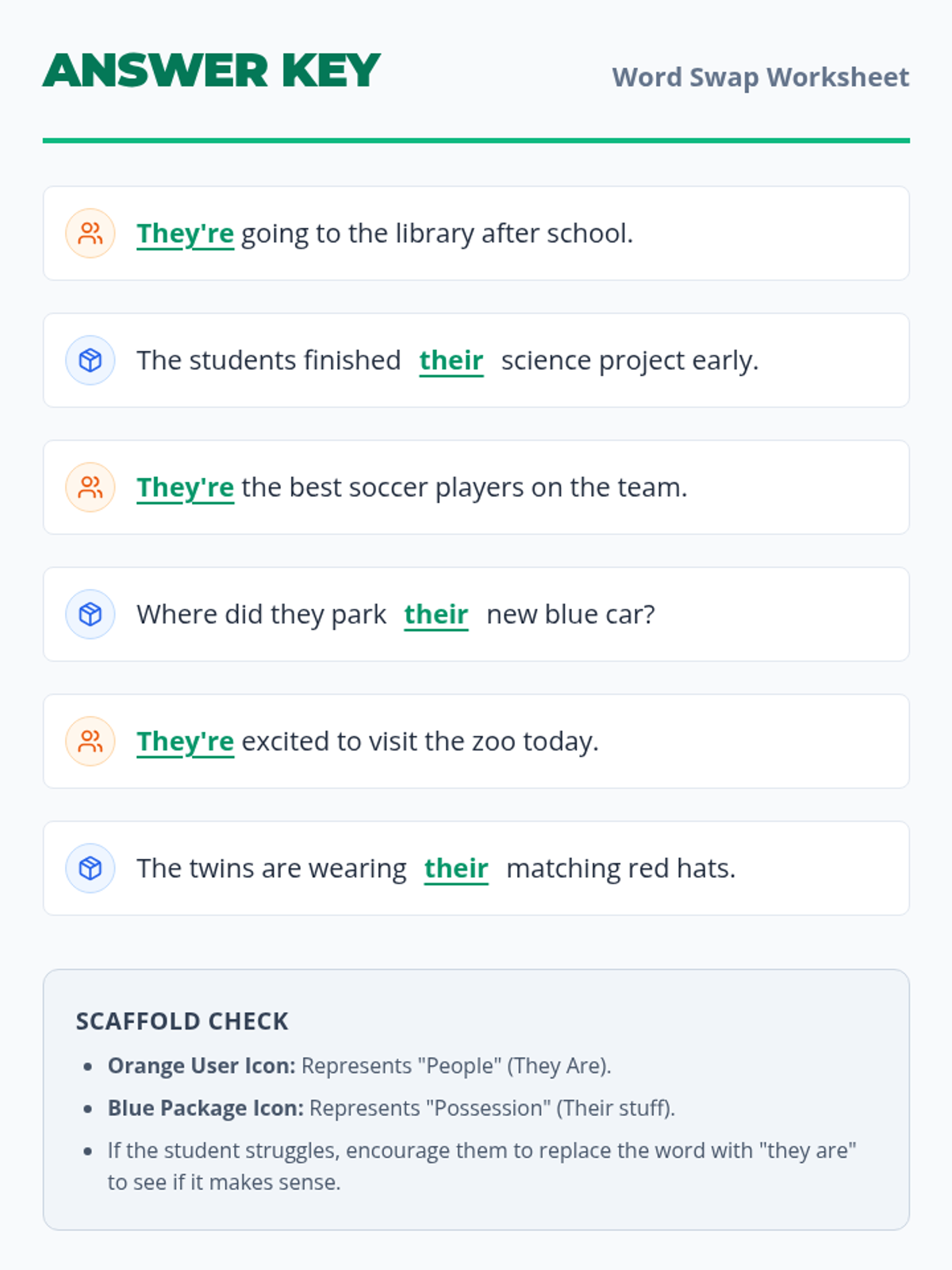
A lesson focused on distinguishing between the homophones 'they're' and 'their' using visual cues and contextual practice.
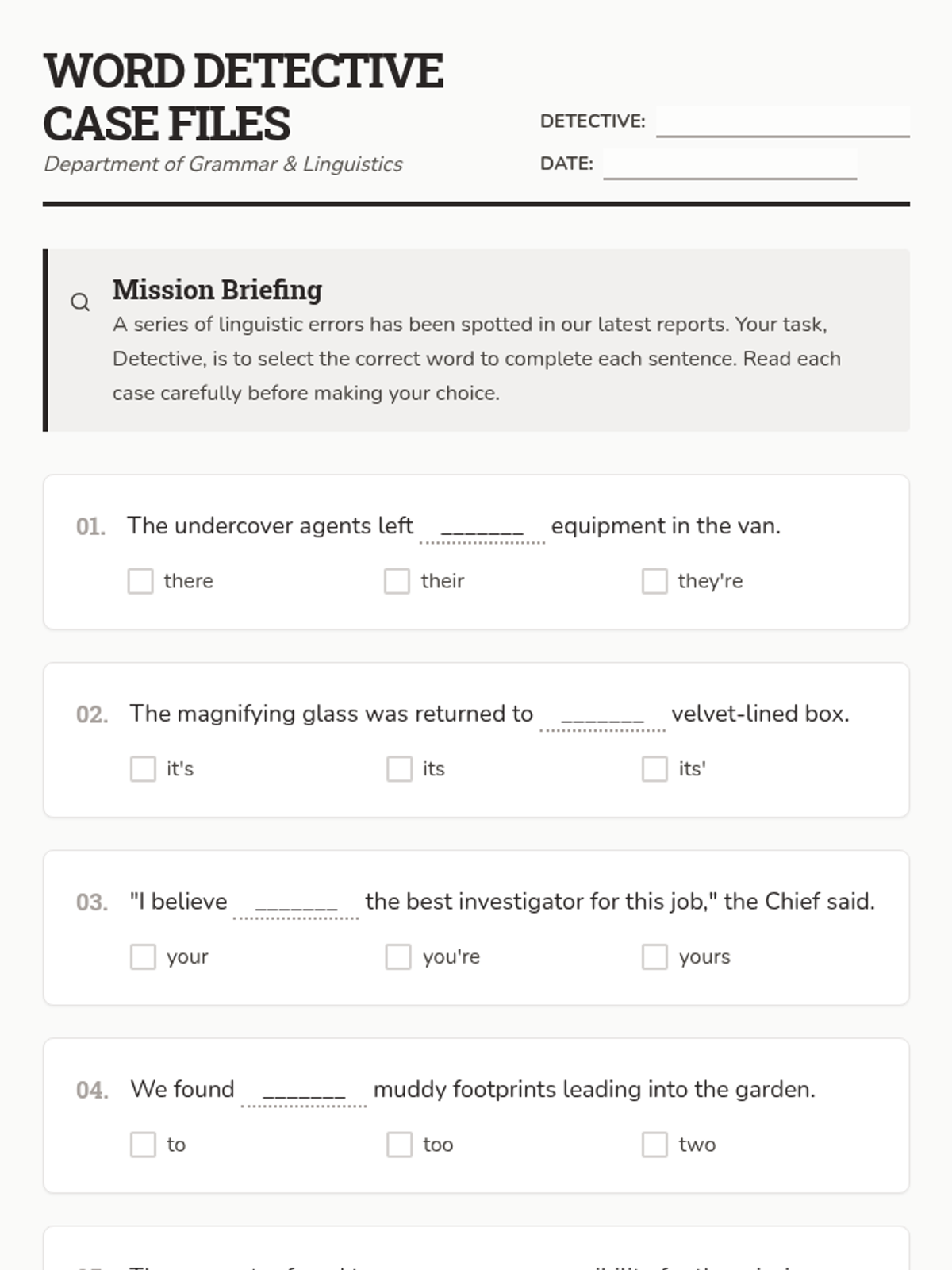
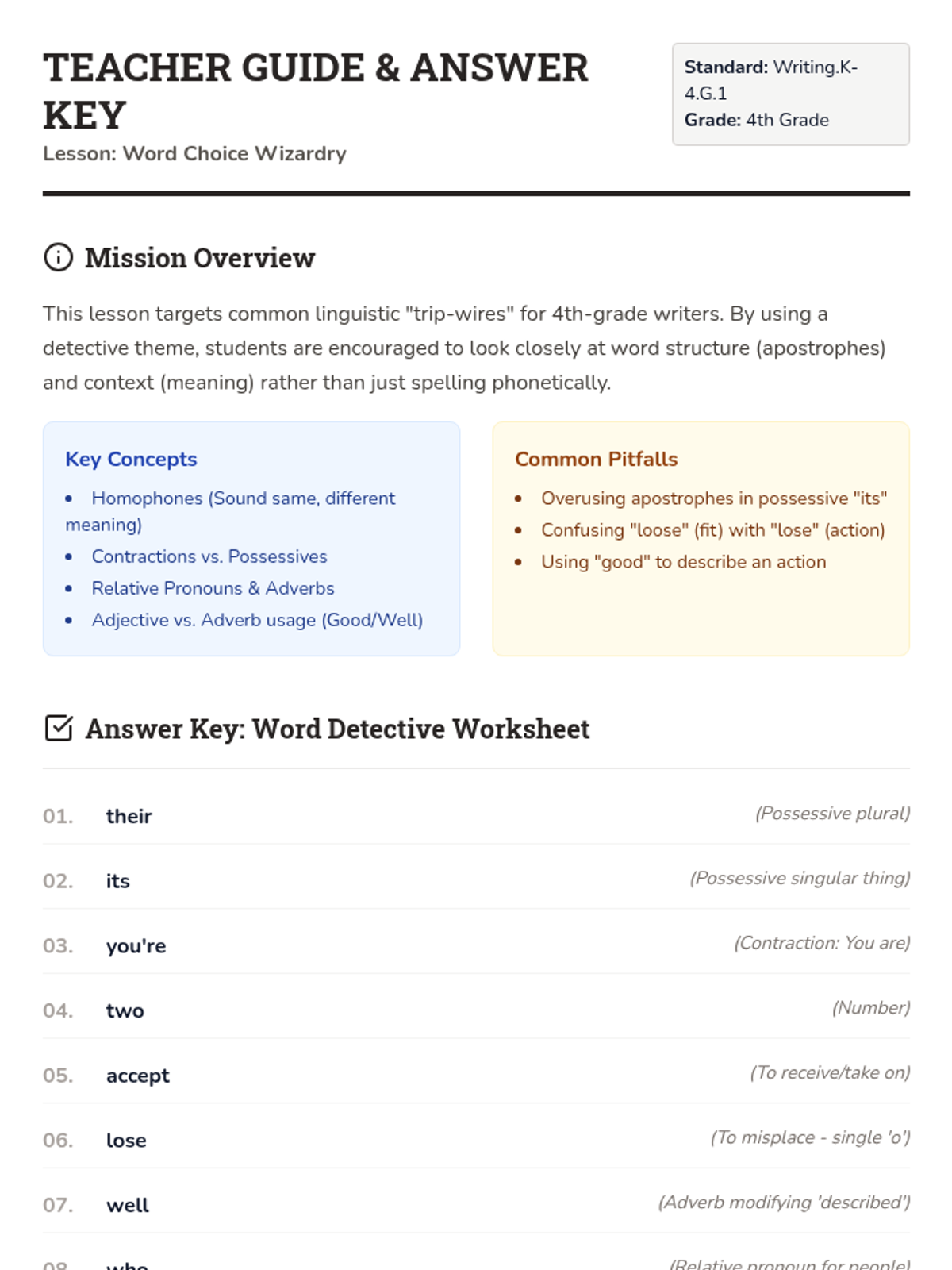
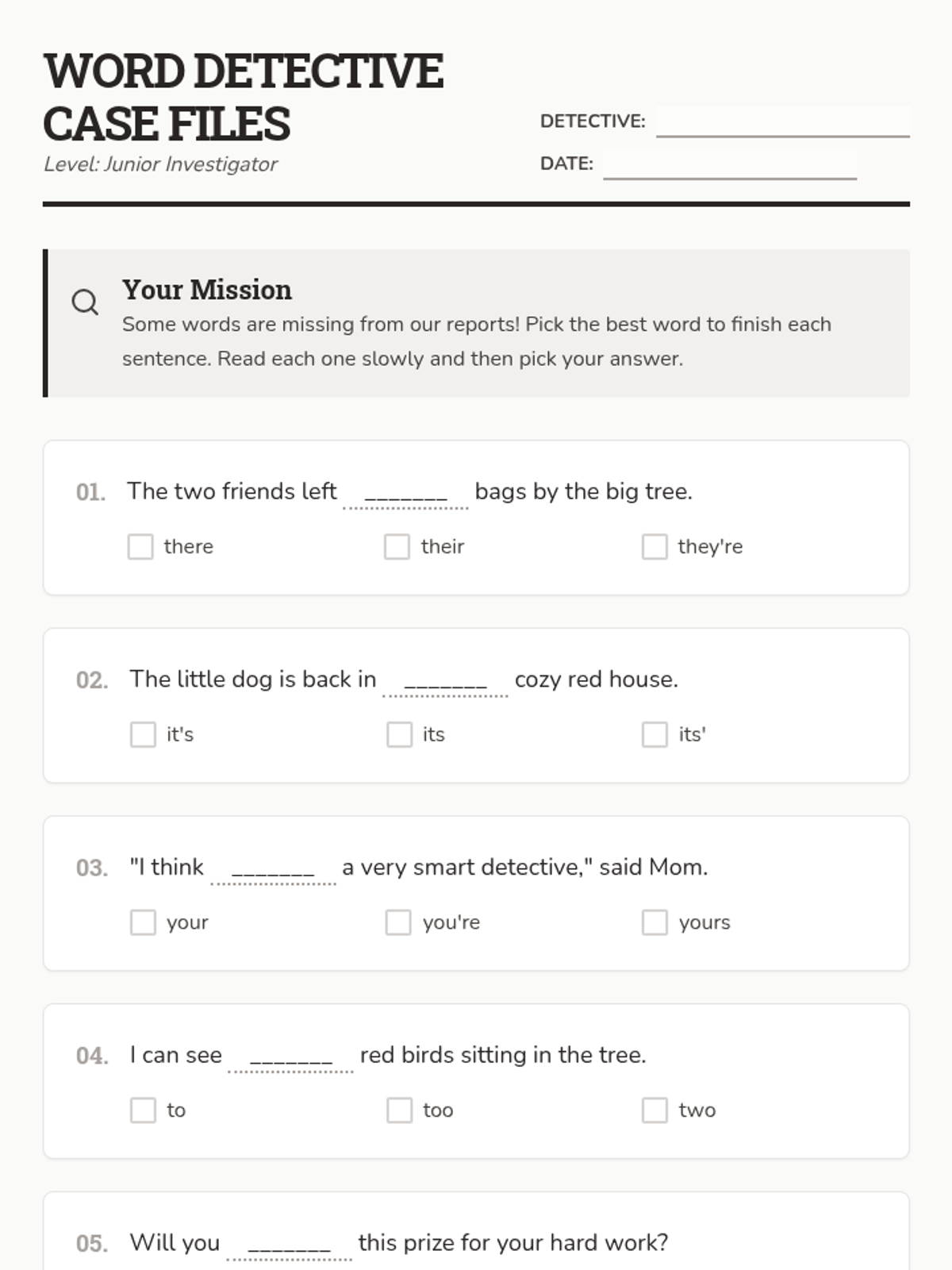
A lesson focused on common word usage errors, homophones, and frequently confused words for 4th-grade writers. Students practice identifying and using the correct words in context through detective-themed scenarios.
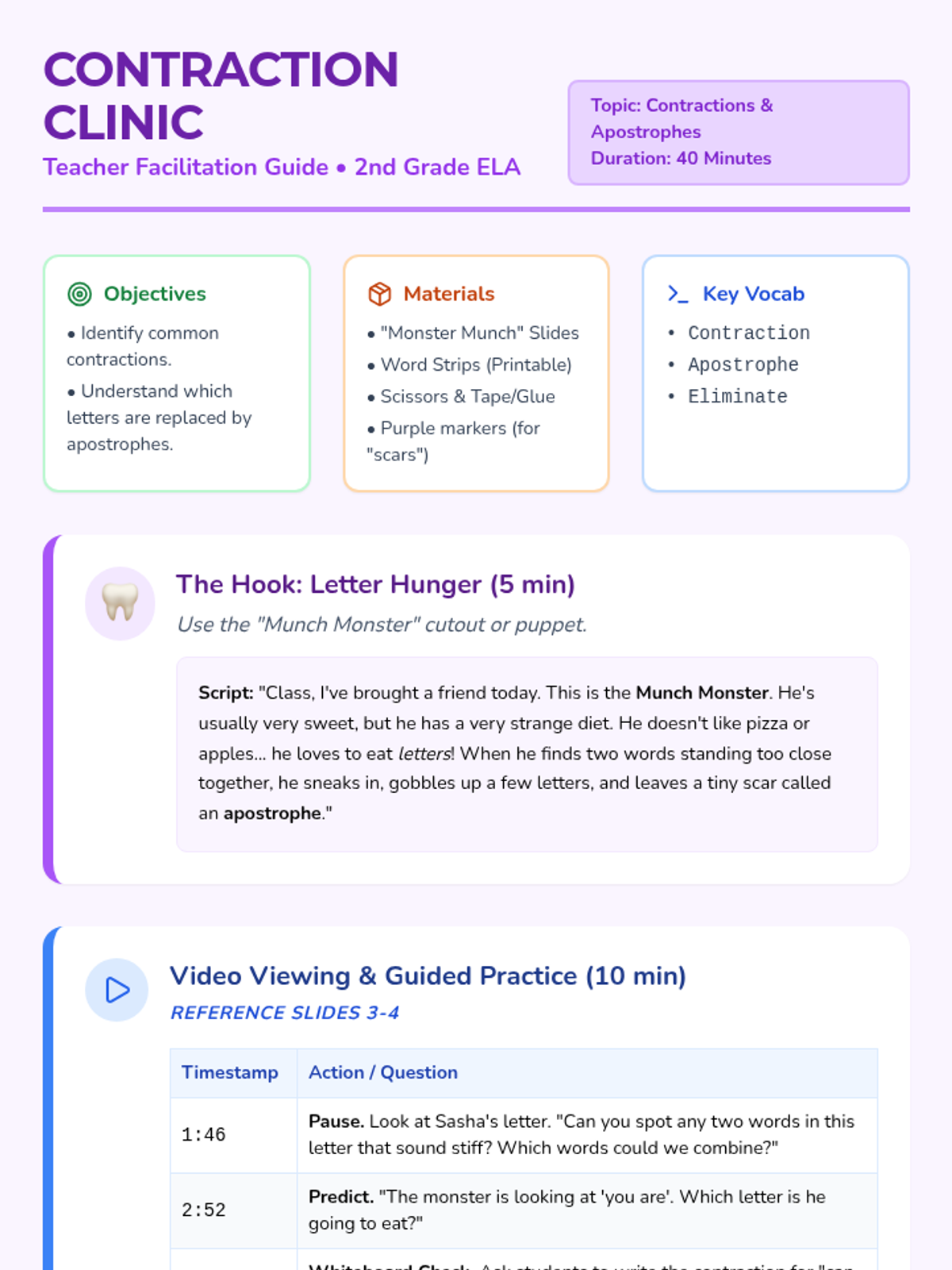
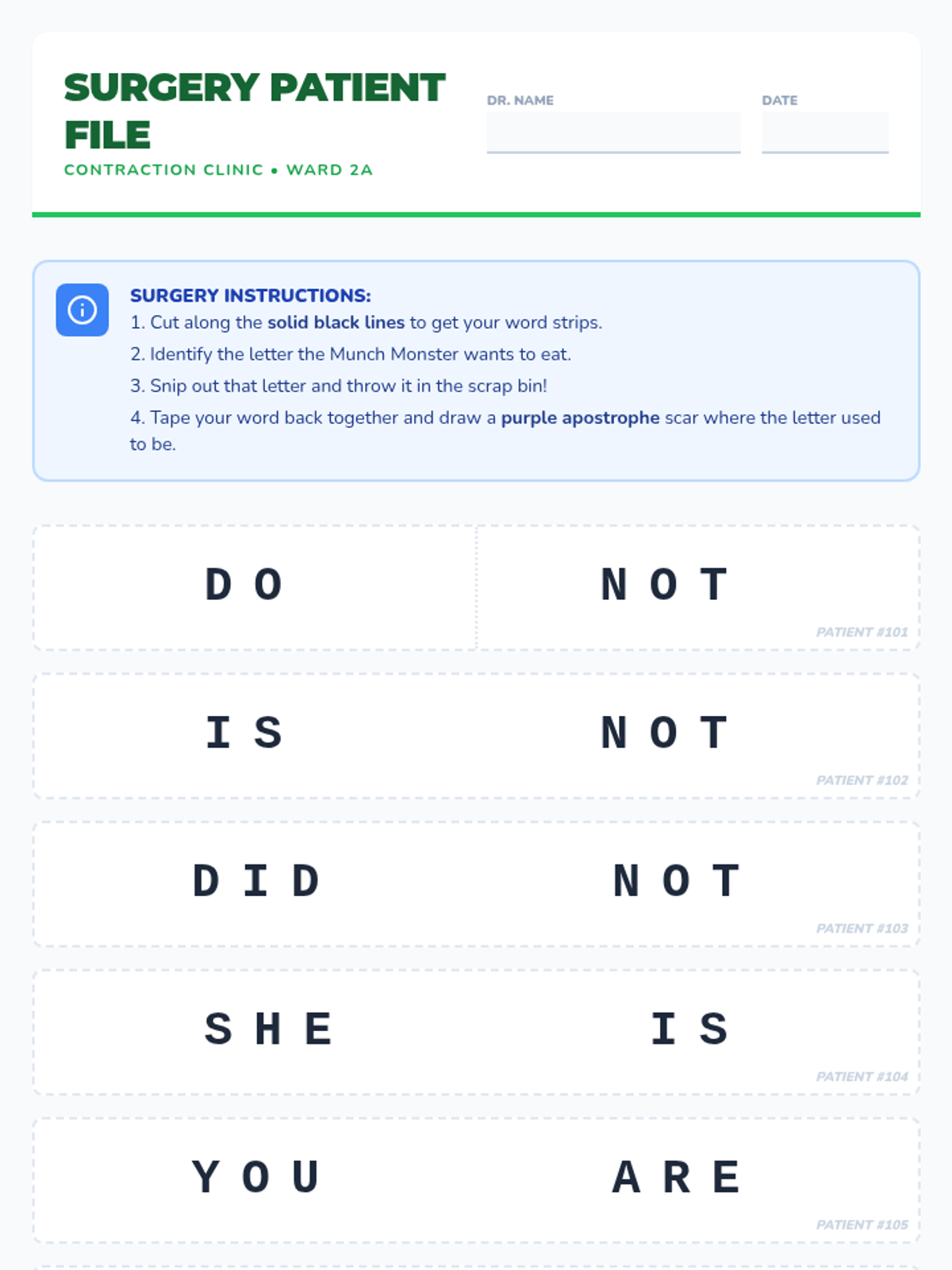
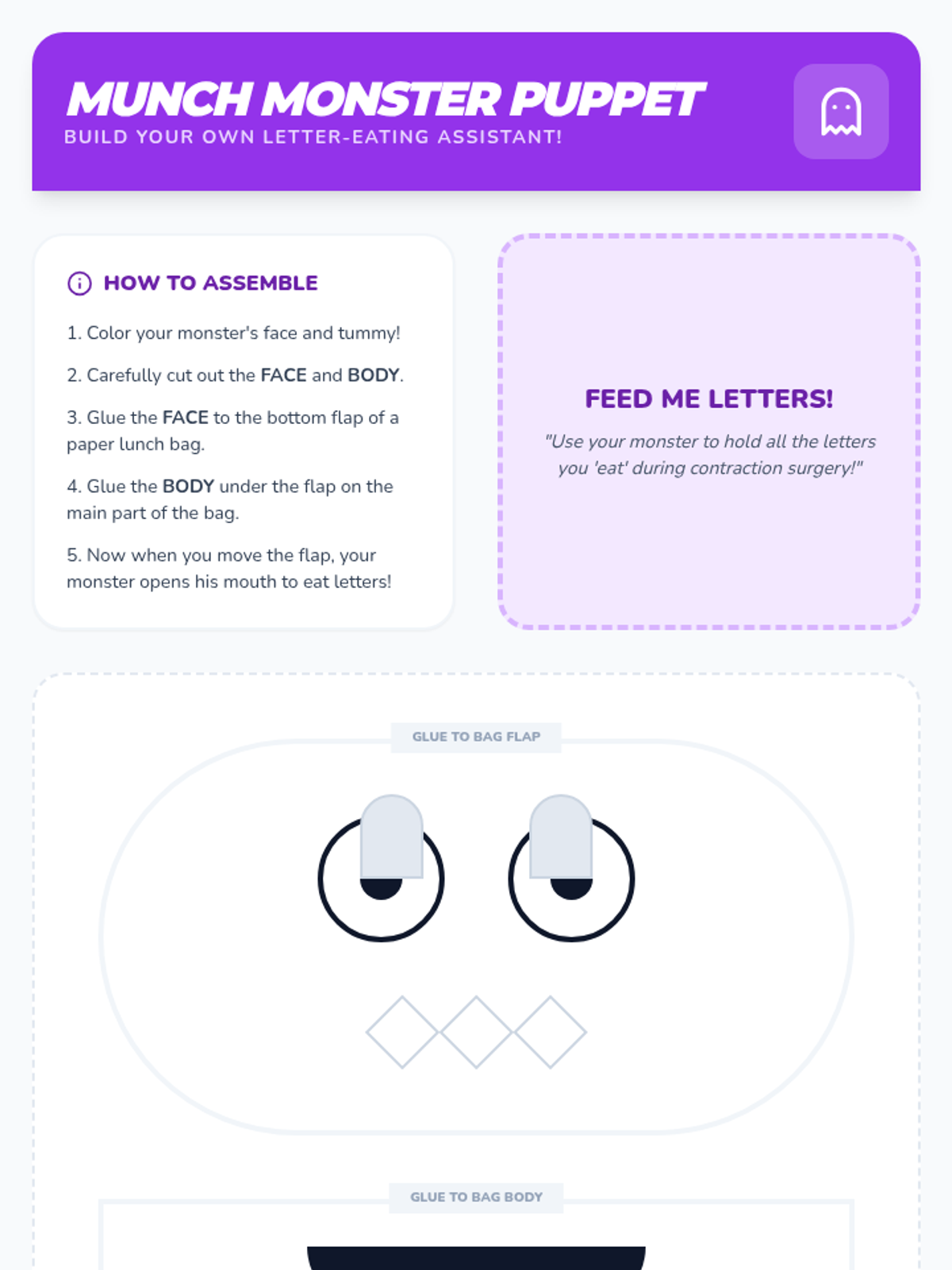
A 2nd-grade ELA lesson where students act as "word surgeons" to help a letter-eating monster create contractions. Includes a video hook, hands-on cutting activity, and guided discussion.
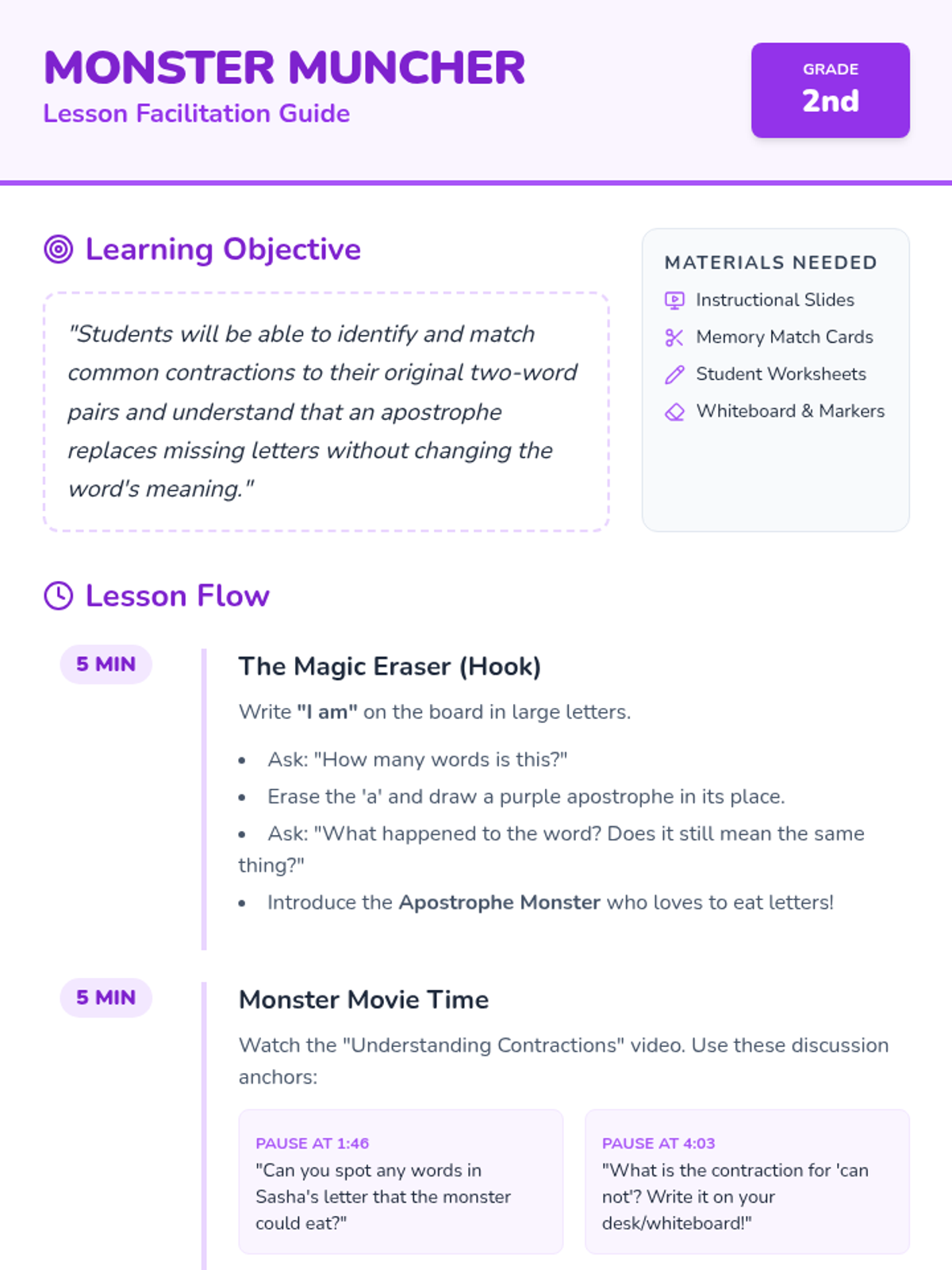
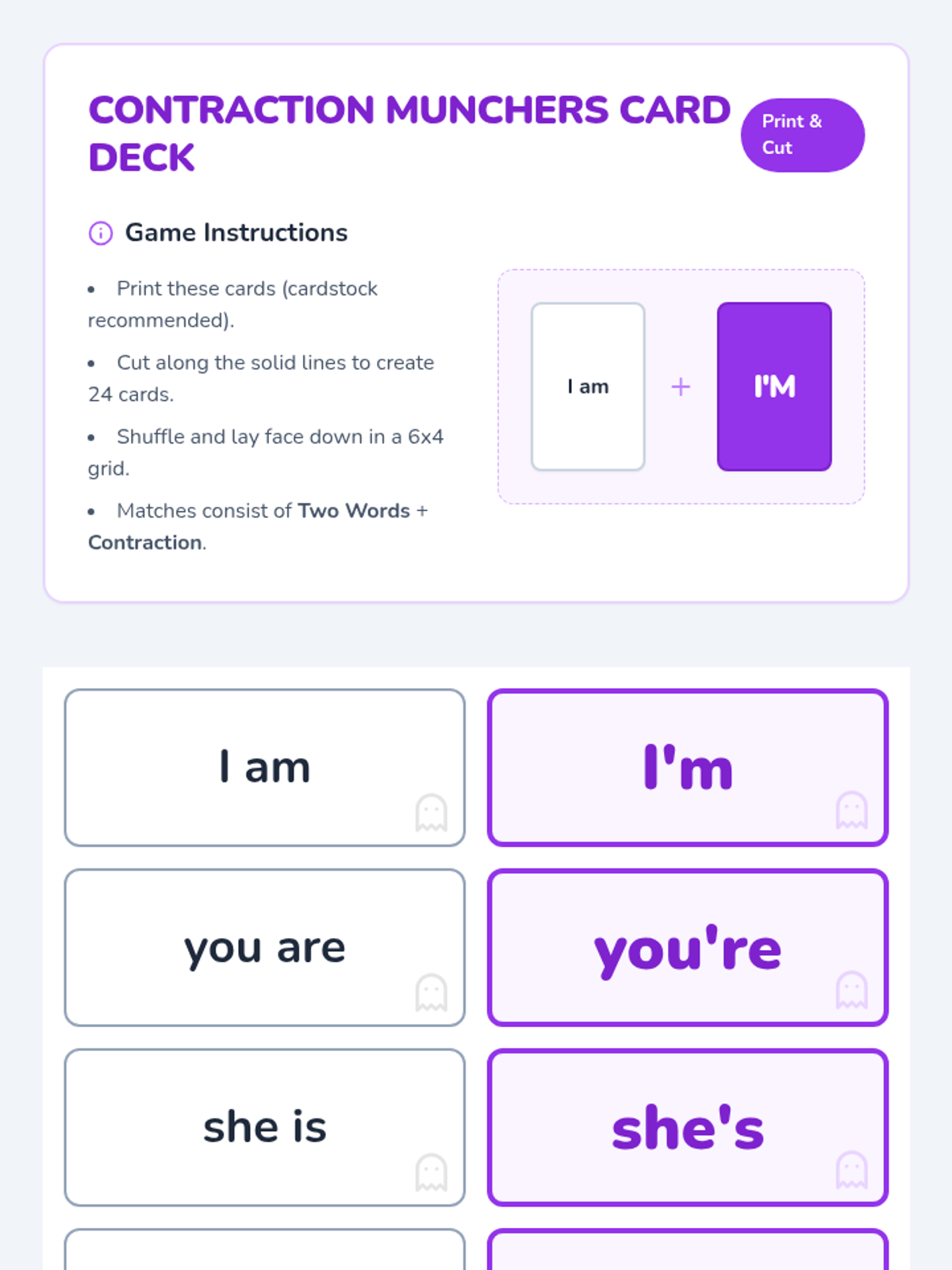
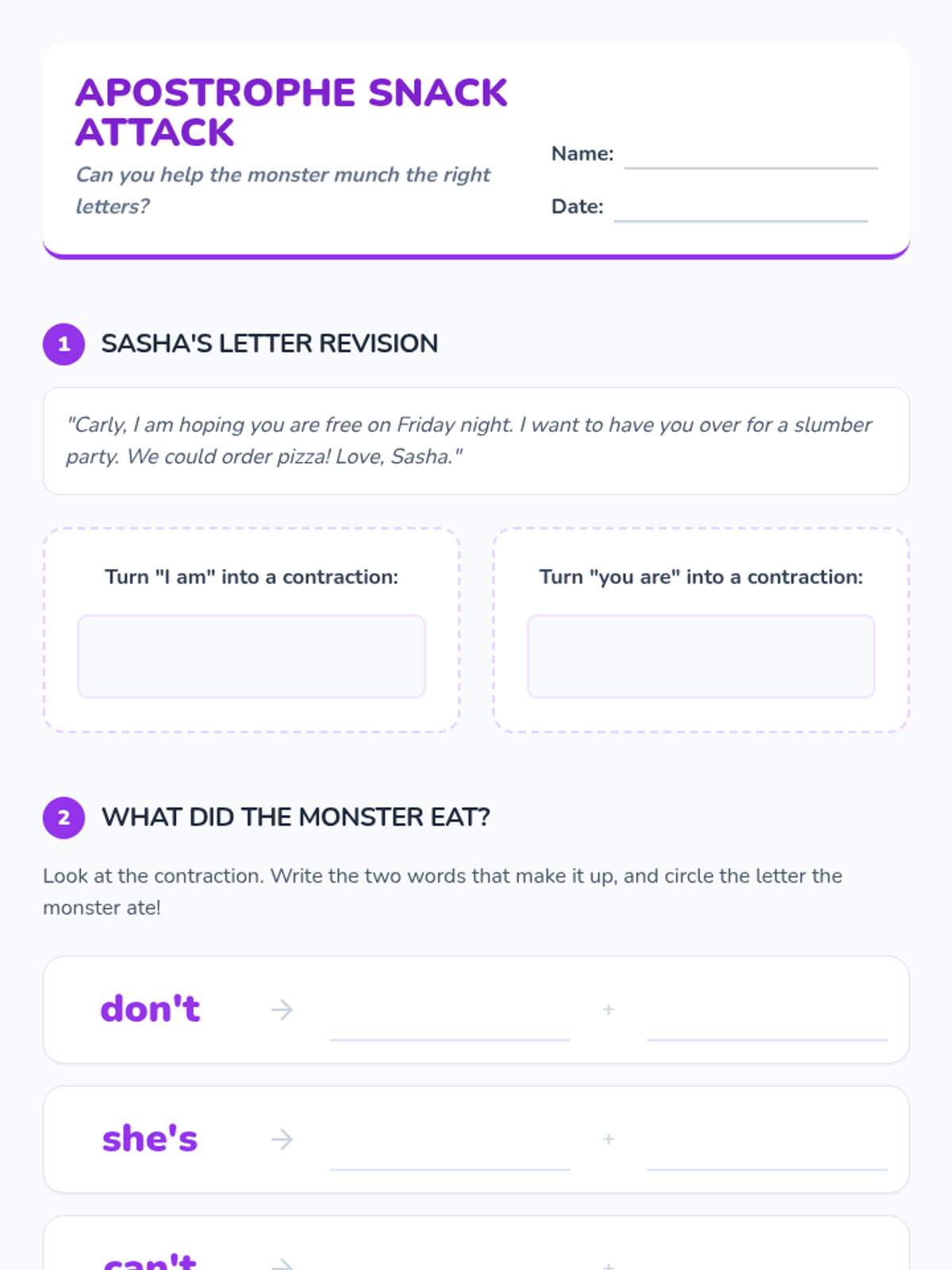
A fun, monster-themed lesson for 2nd graders to master contractions through a 'monster apostrophe' concept, featuring a video and a memory match game.
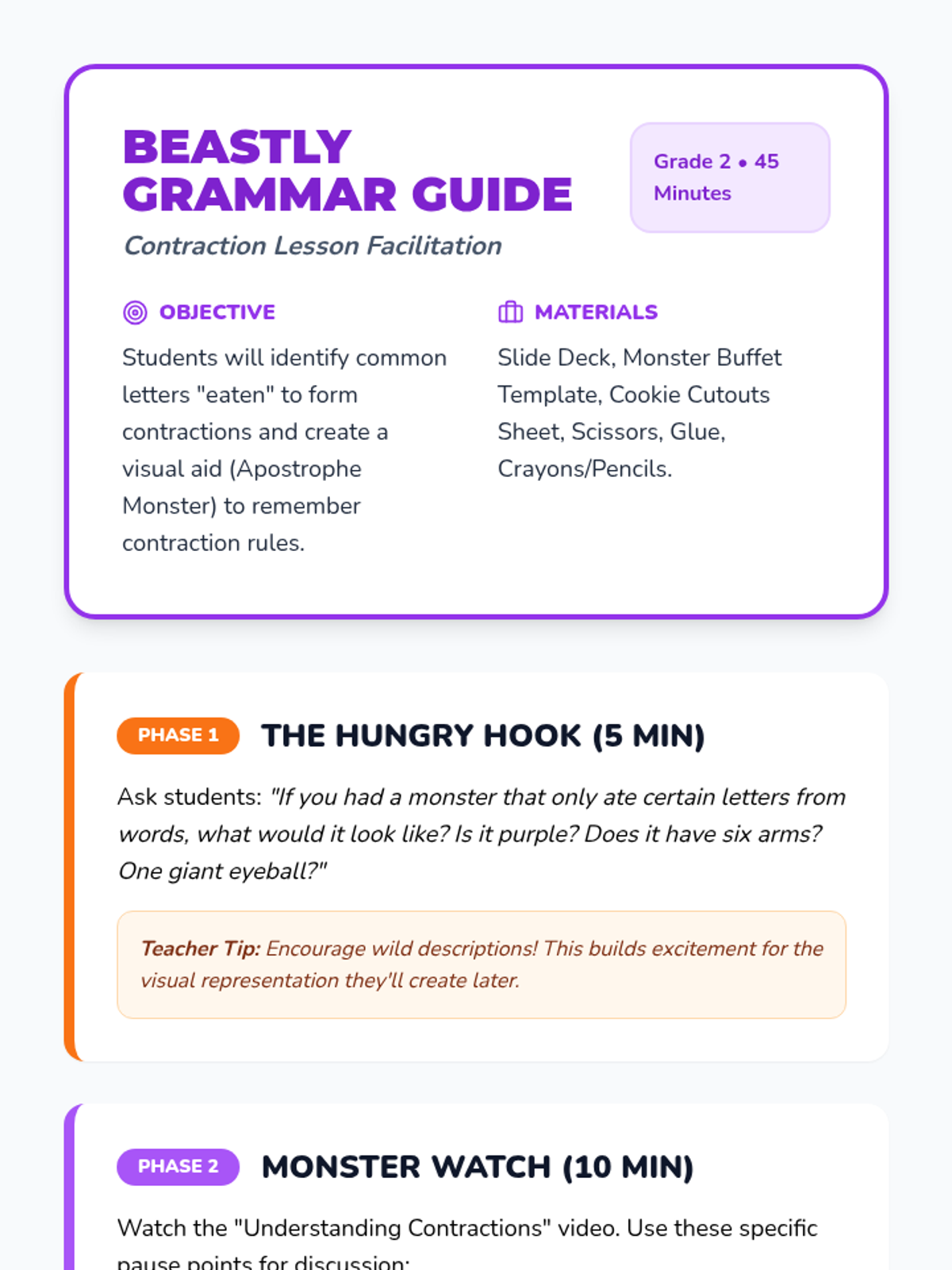
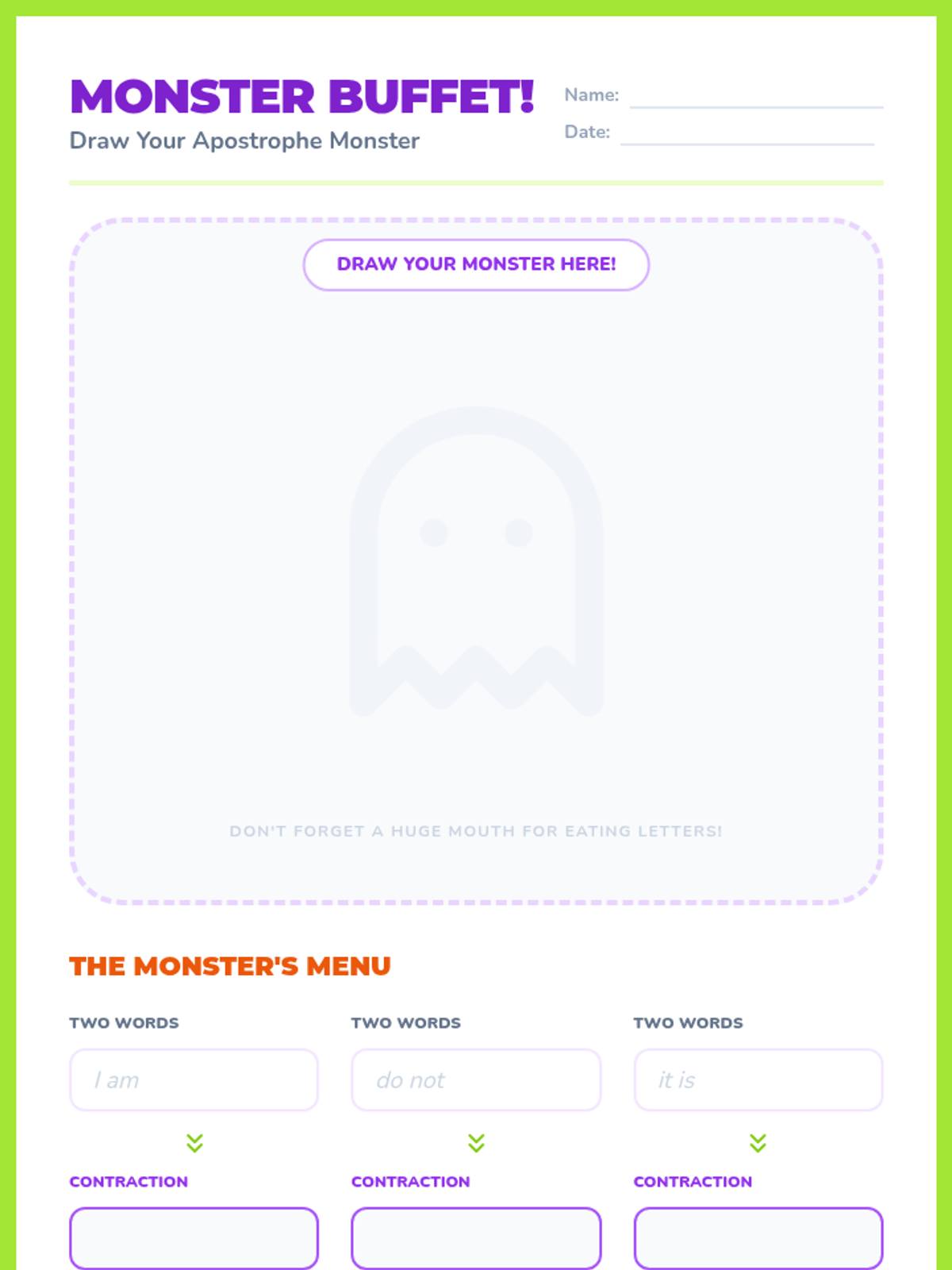
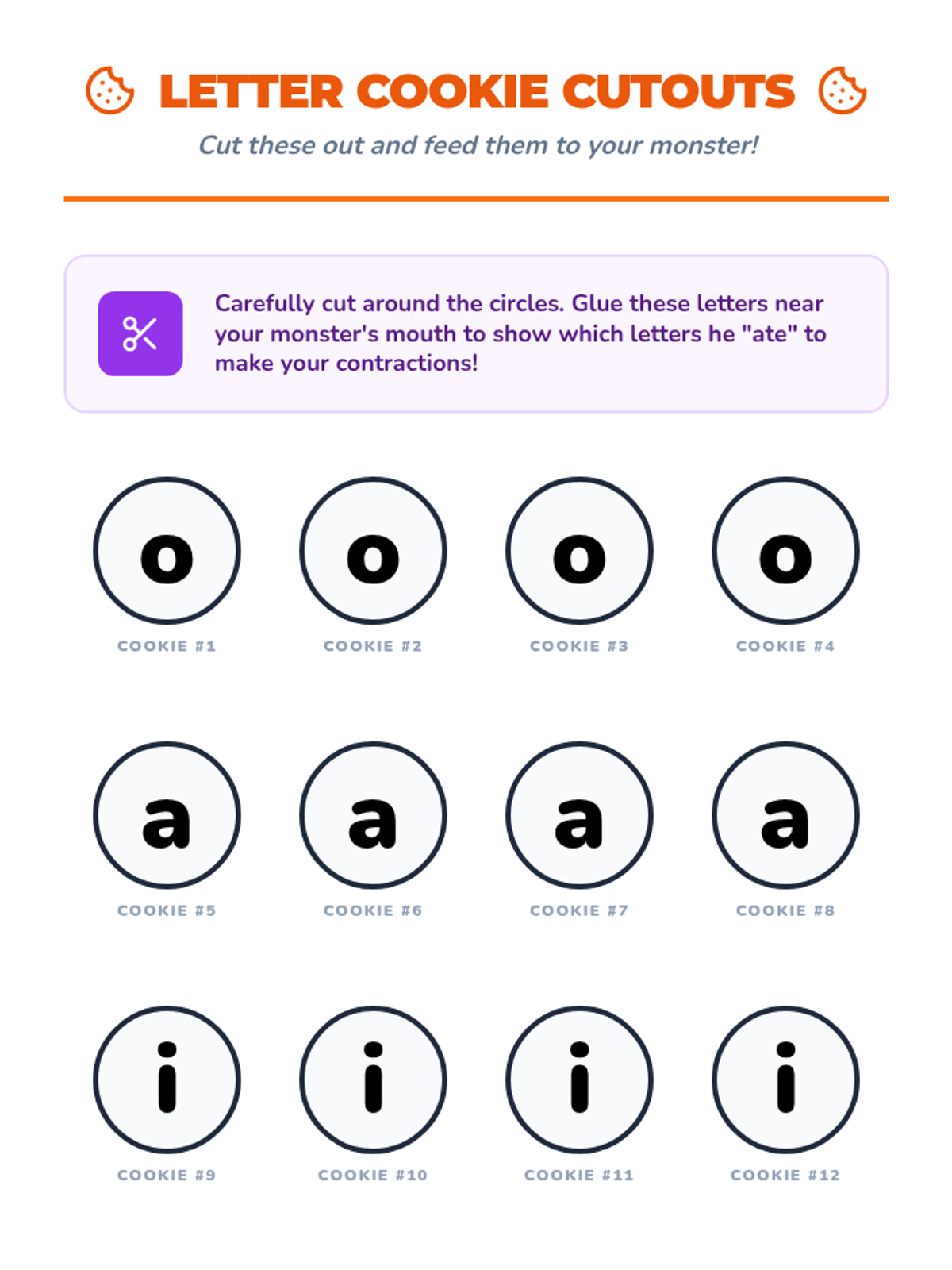
A whimsical 2nd-grade lesson where students learn about contractions by creating their own 'Apostrophe Monsters' that eat letters to make new words. Includes a video-guided discussion and a creative art activity.
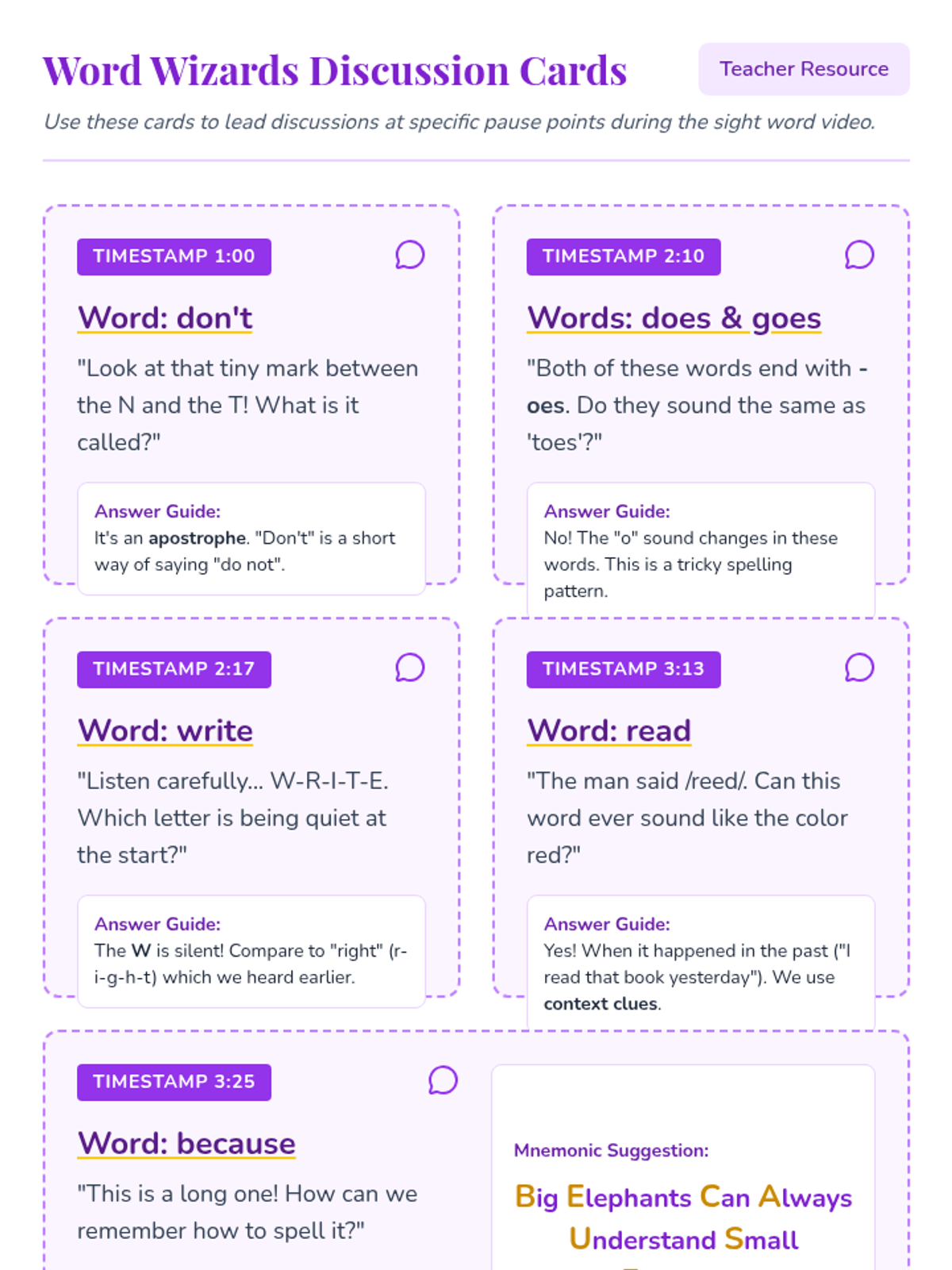
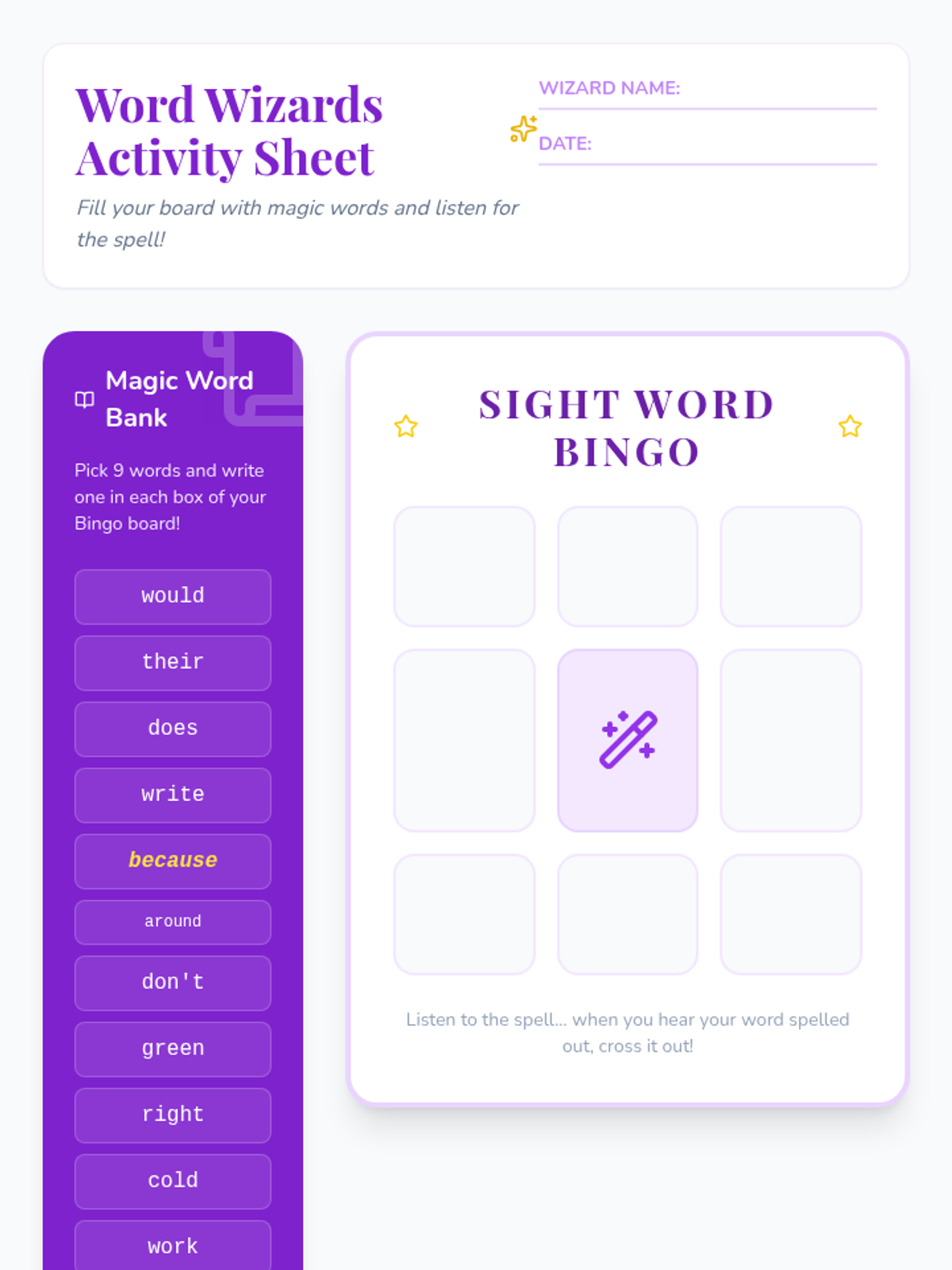
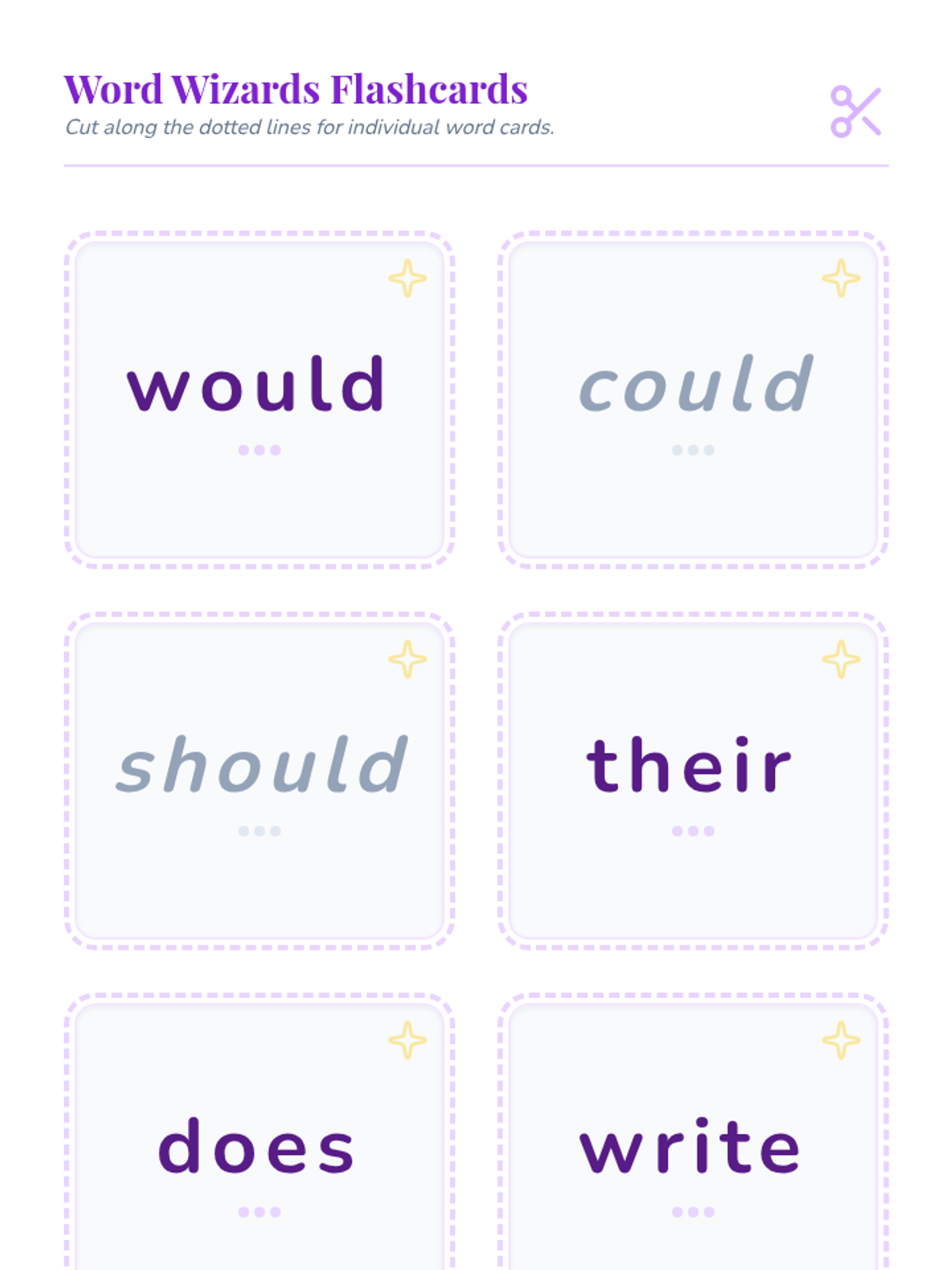
A 1st/2nd grade intervention lesson focused on mastering 5 high-frequency sight words through rhythmic spelling, interactive video viewing, and bingo. Students practice recognizing, spelling, and writing 'would', 'their', 'does', 'write', and 'because'.
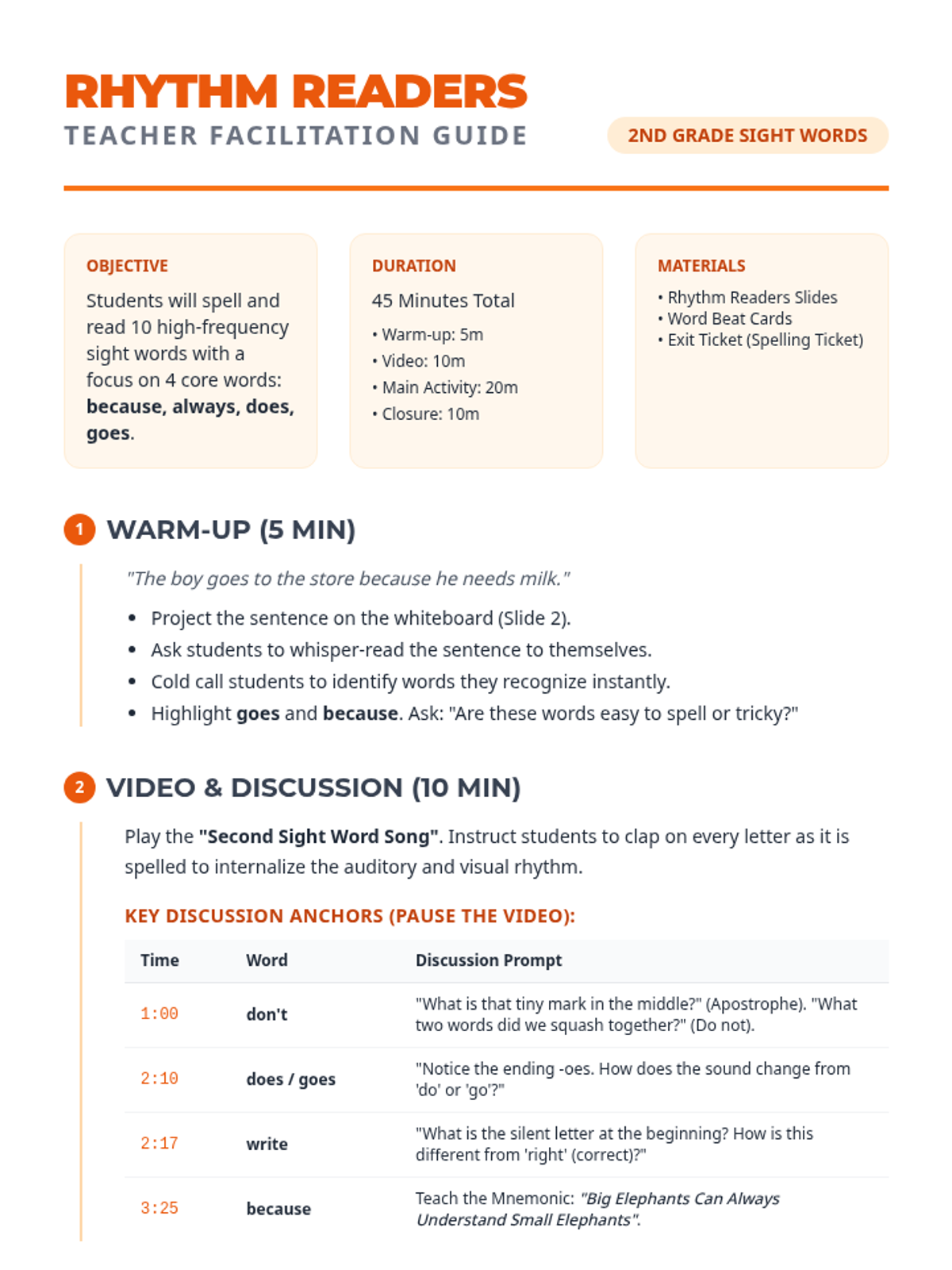
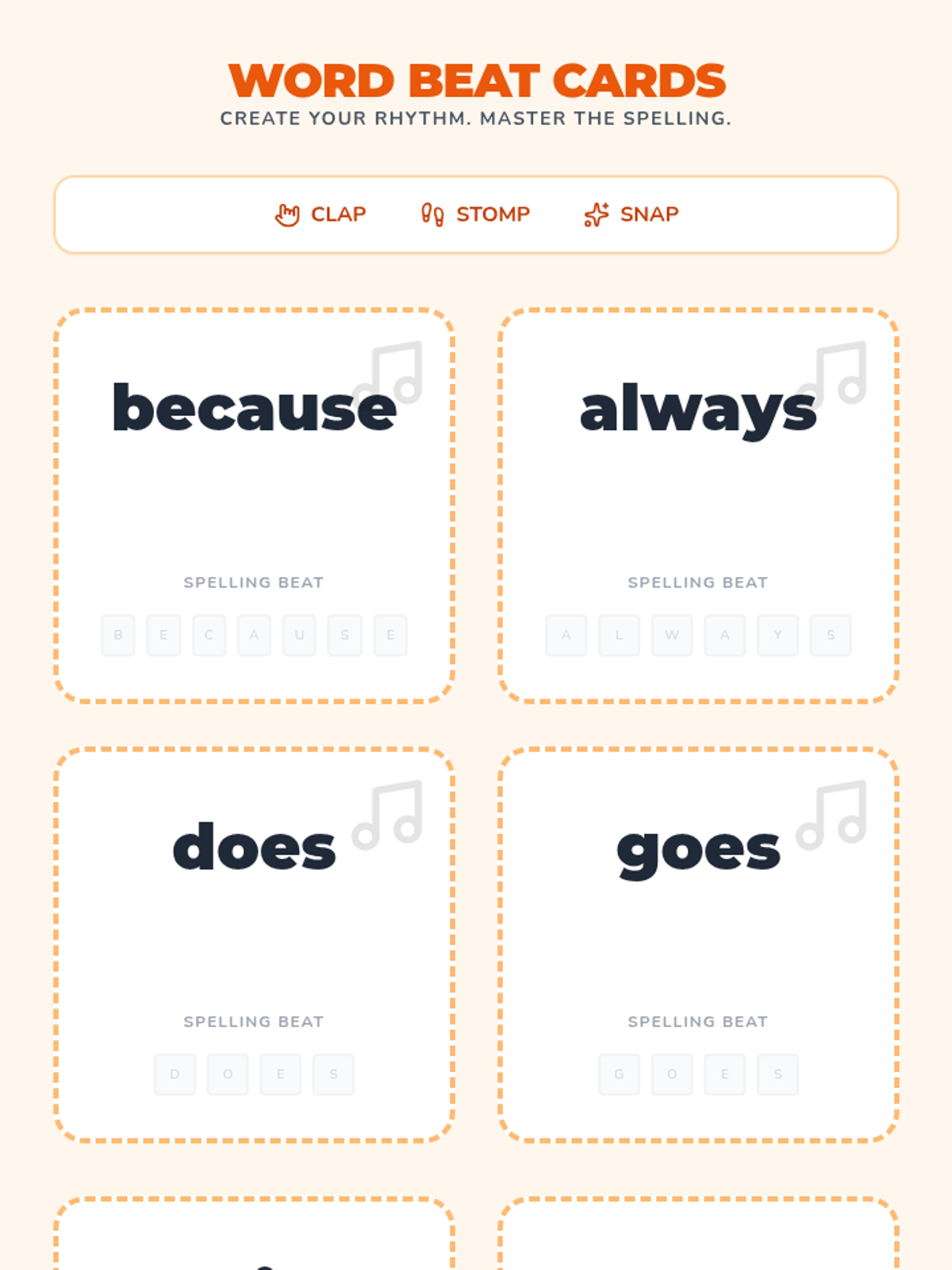
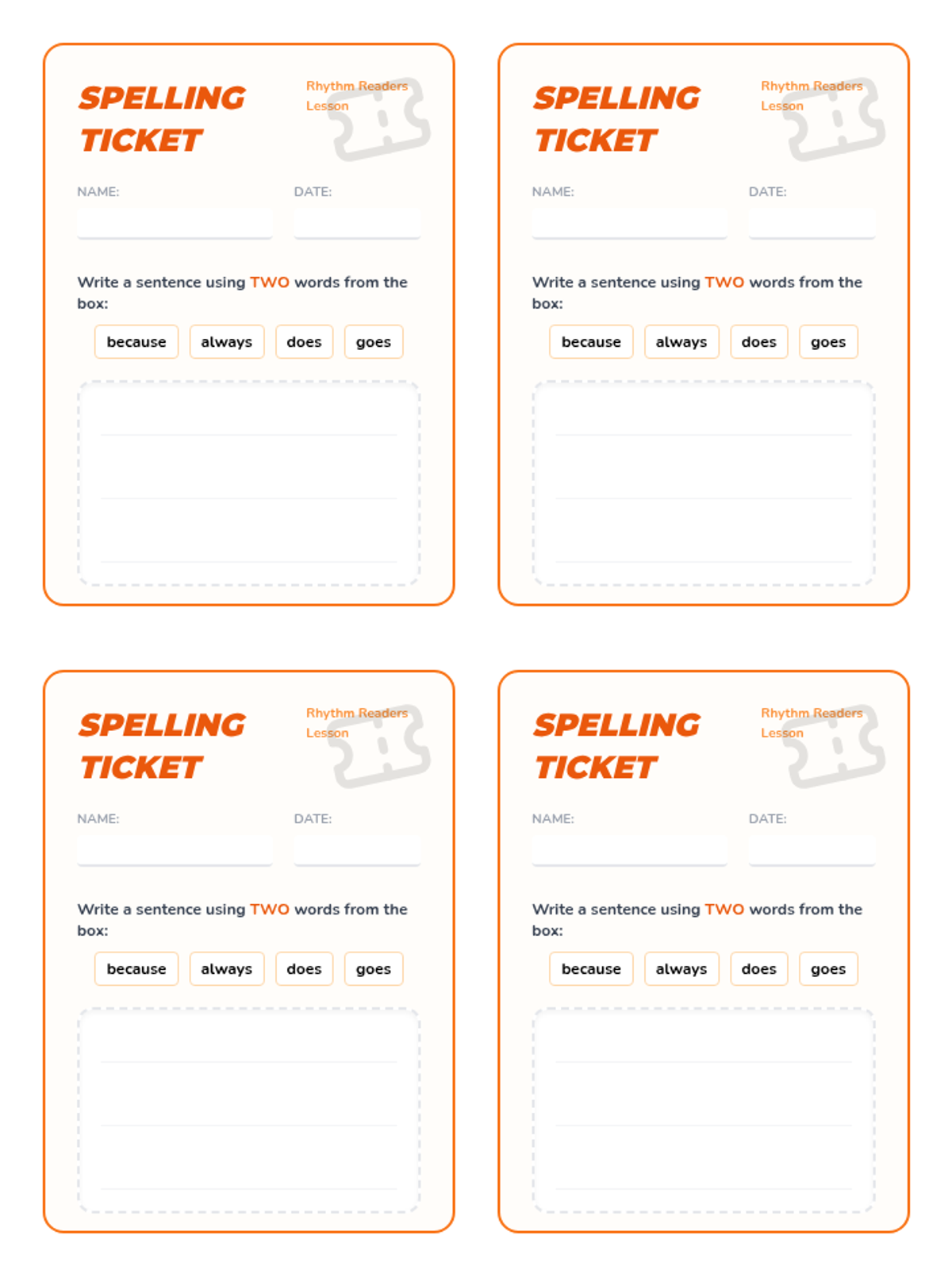
A rhythmic 2nd-grade lesson focused on spelling and reading sight words through music, body percussion, and movement. Students will master high-frequency words like 'because', 'always', 'does', and 'goes' using a high-energy video and collaborative performance.
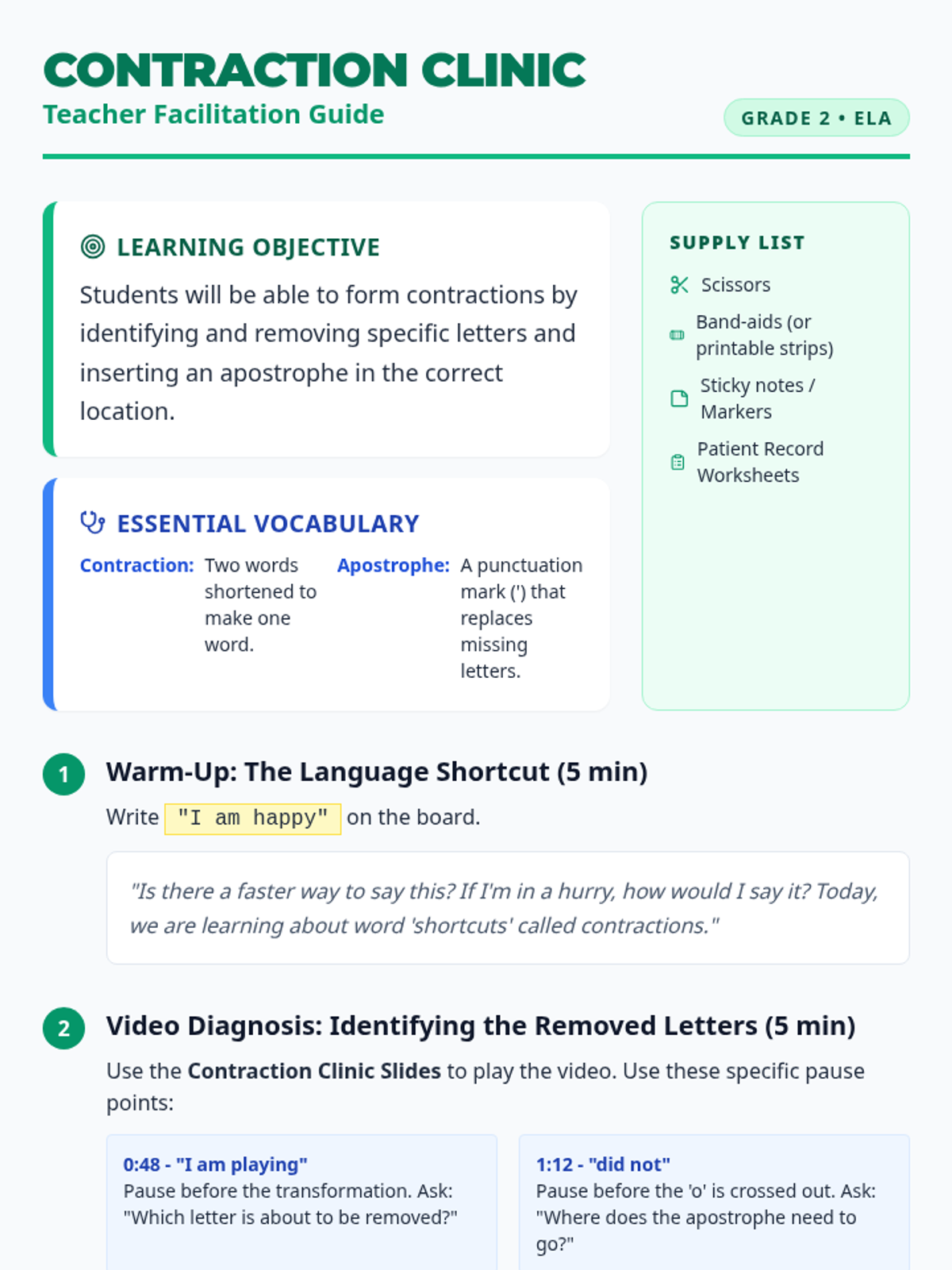
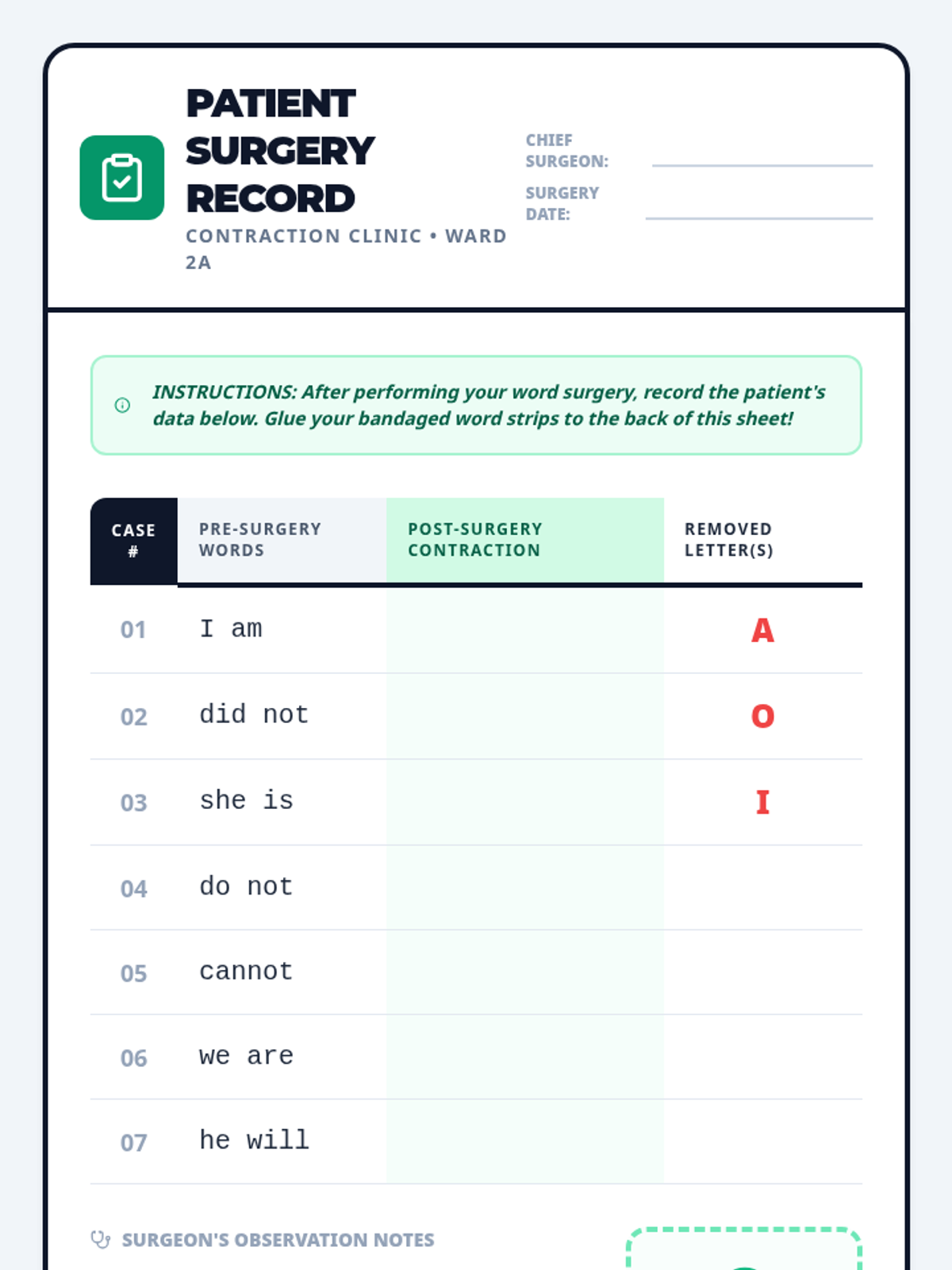
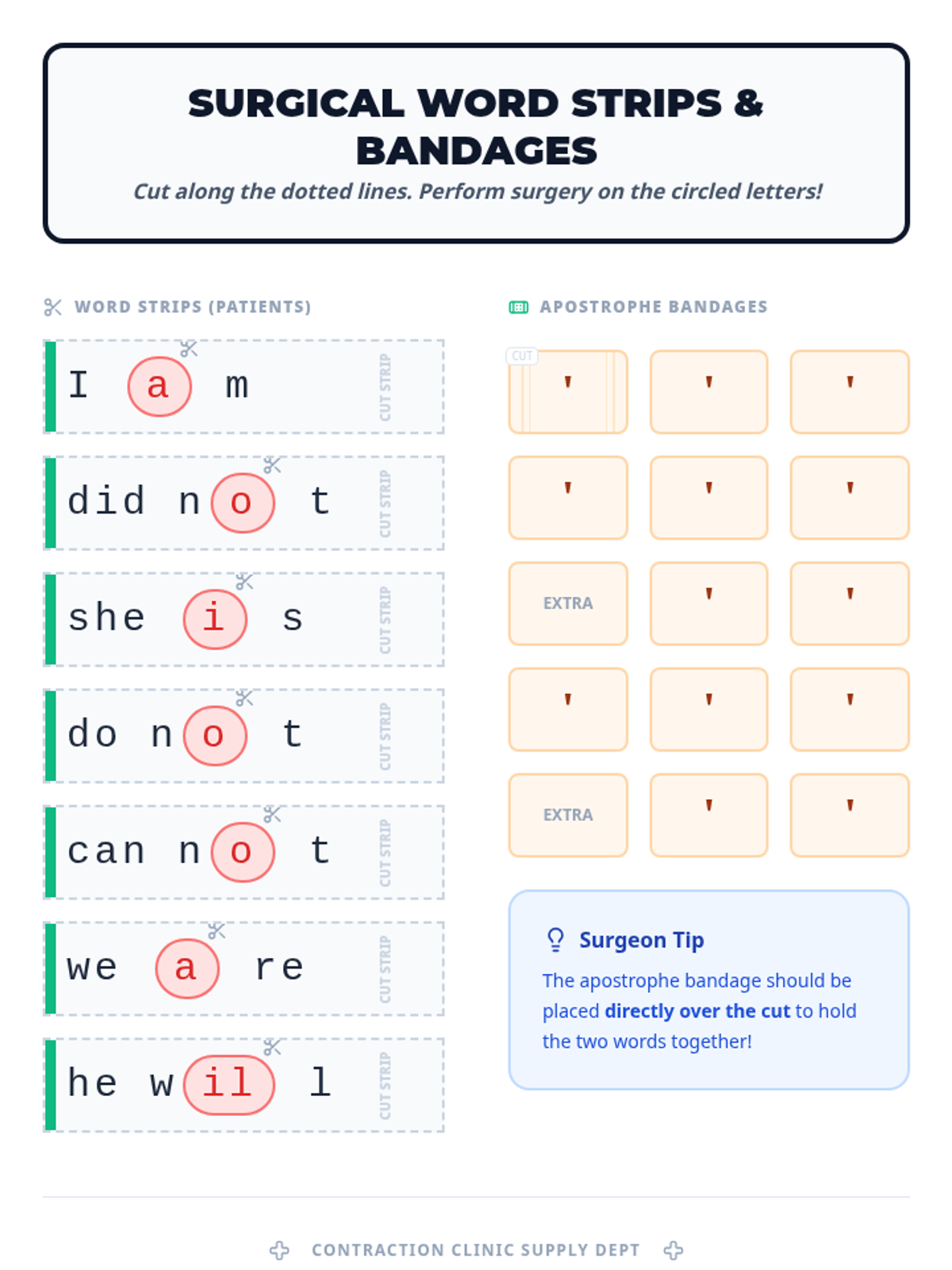
A medical-themed lesson where 2nd-grade students become 'surgeons' to perform 'Contraction Surgery,' removing letters and 'bandaging' words back together with apostrophes. includes a video guide, hands-on activity, and student recording sheets.
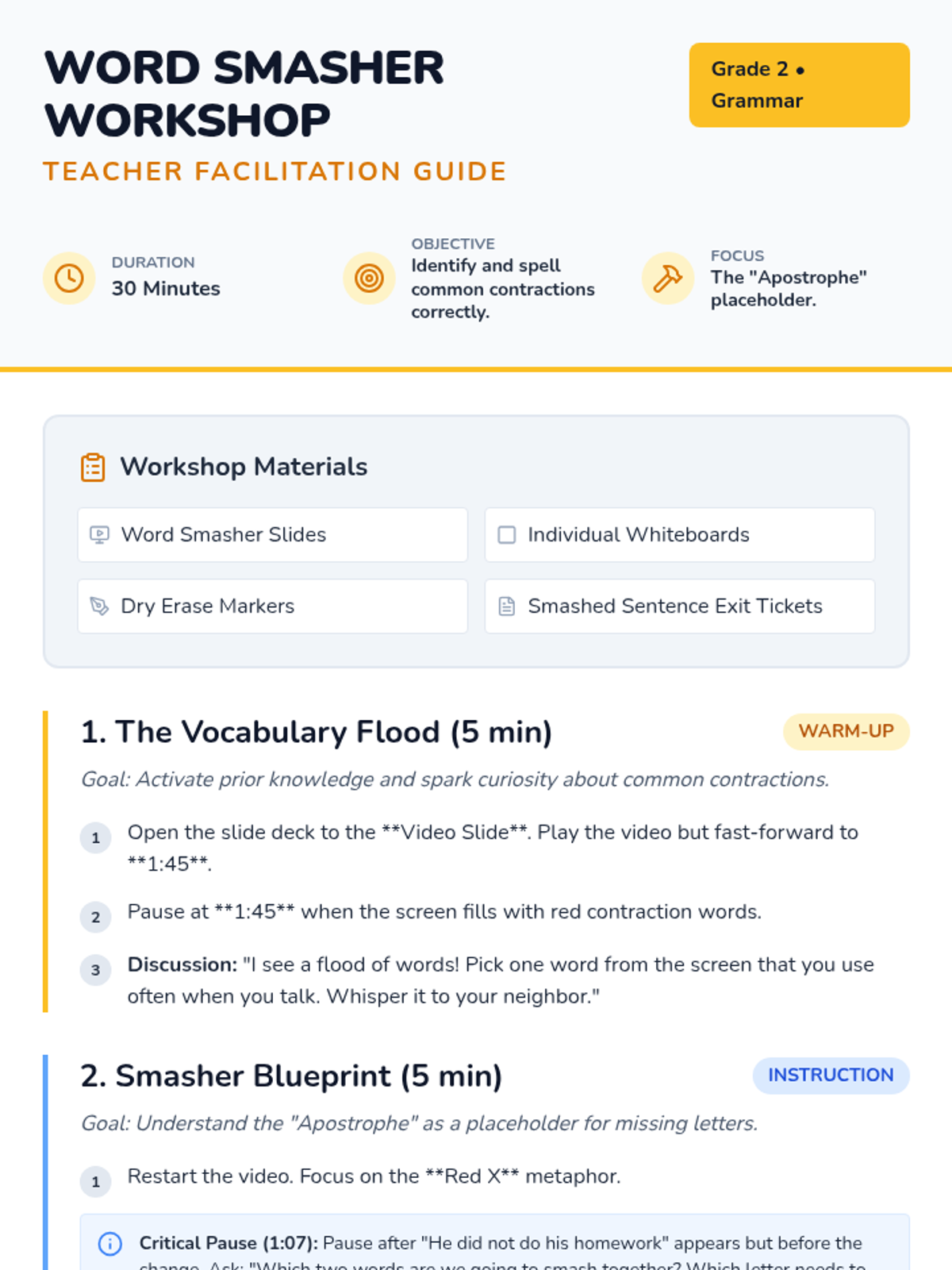
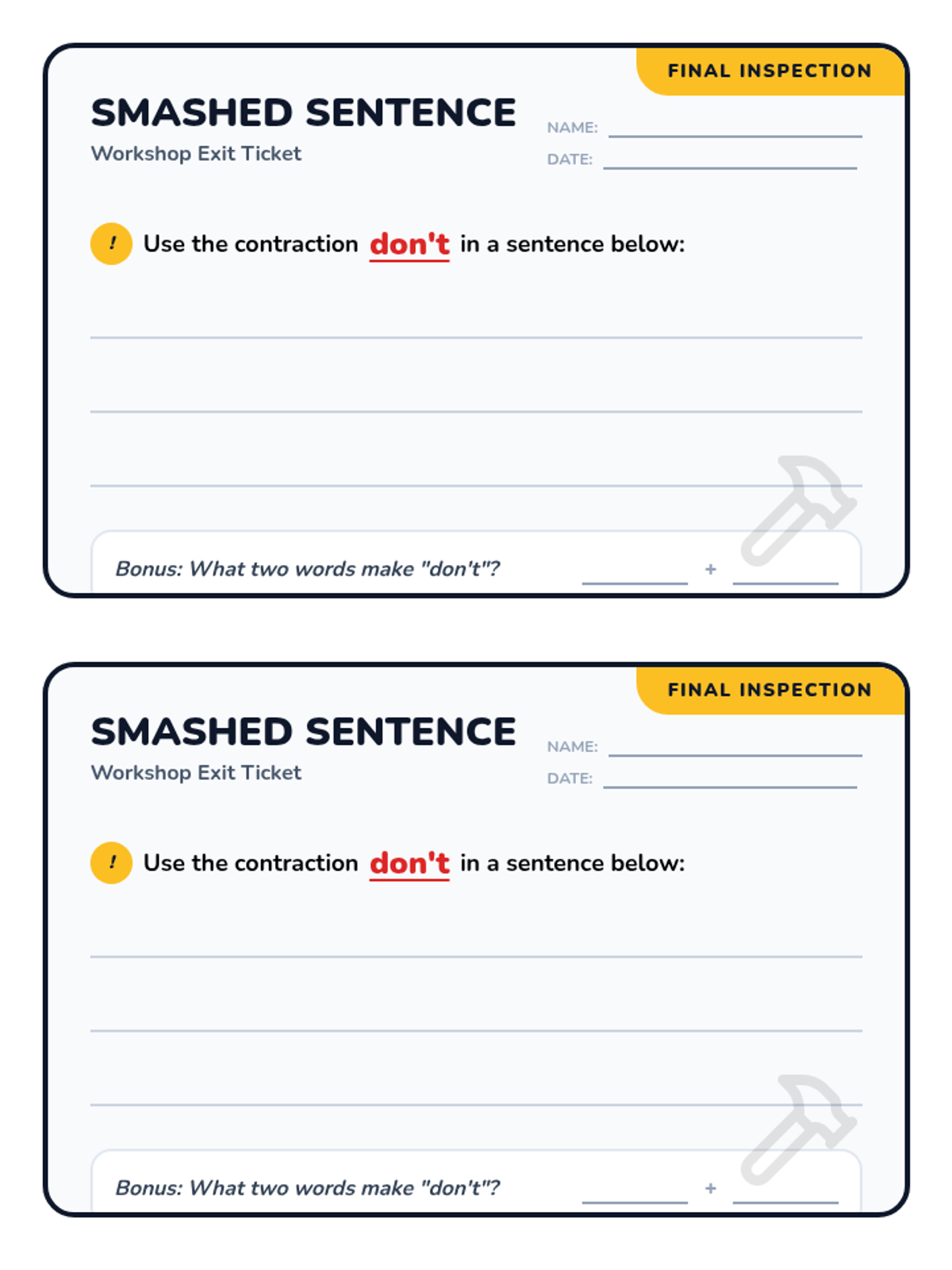
A 2nd-grade grammar lesson where students become 'Word Smashers,' learning how to use apostrophes to combine words into contractions through video analysis and interactive whiteboard practice.
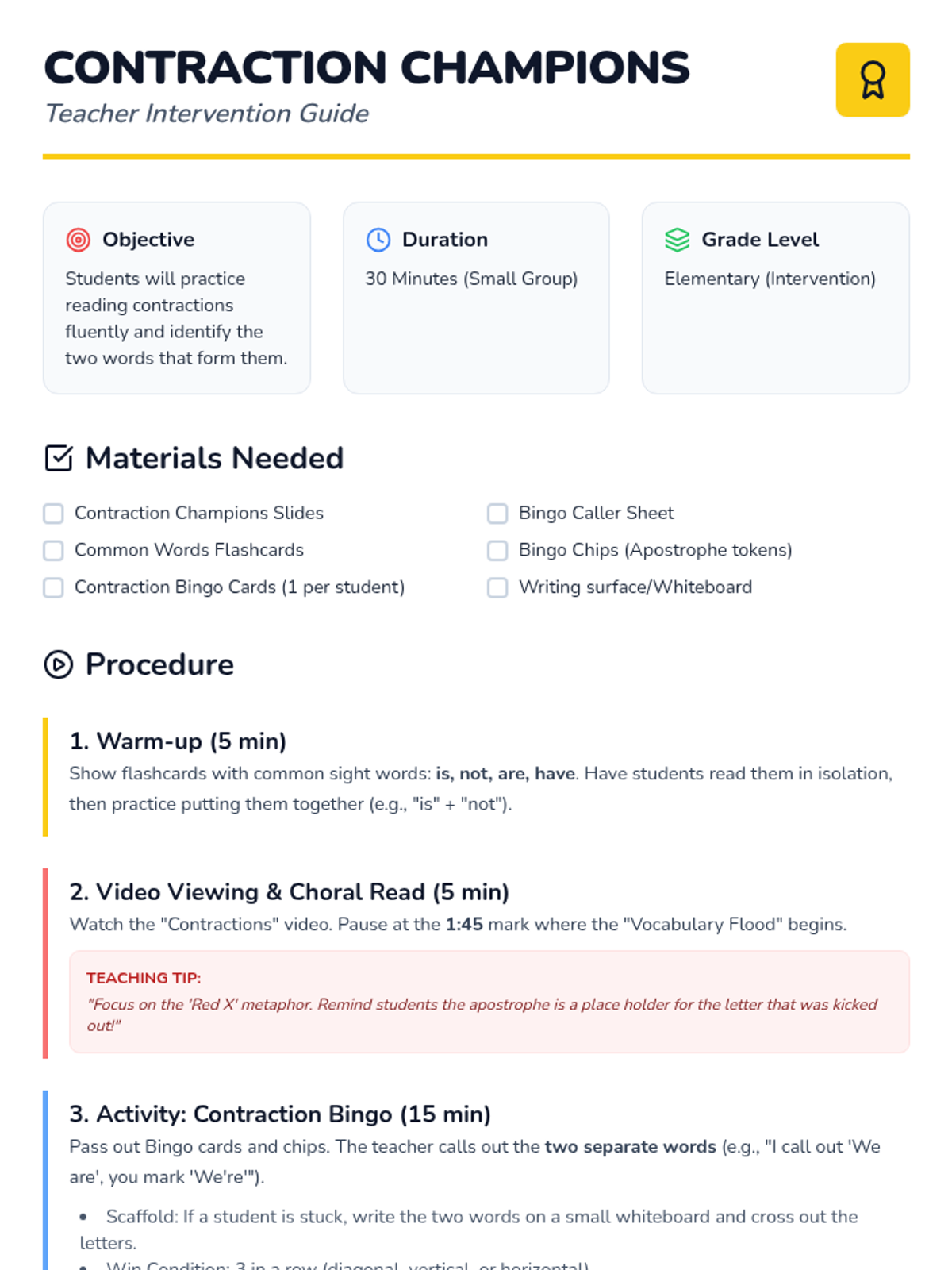
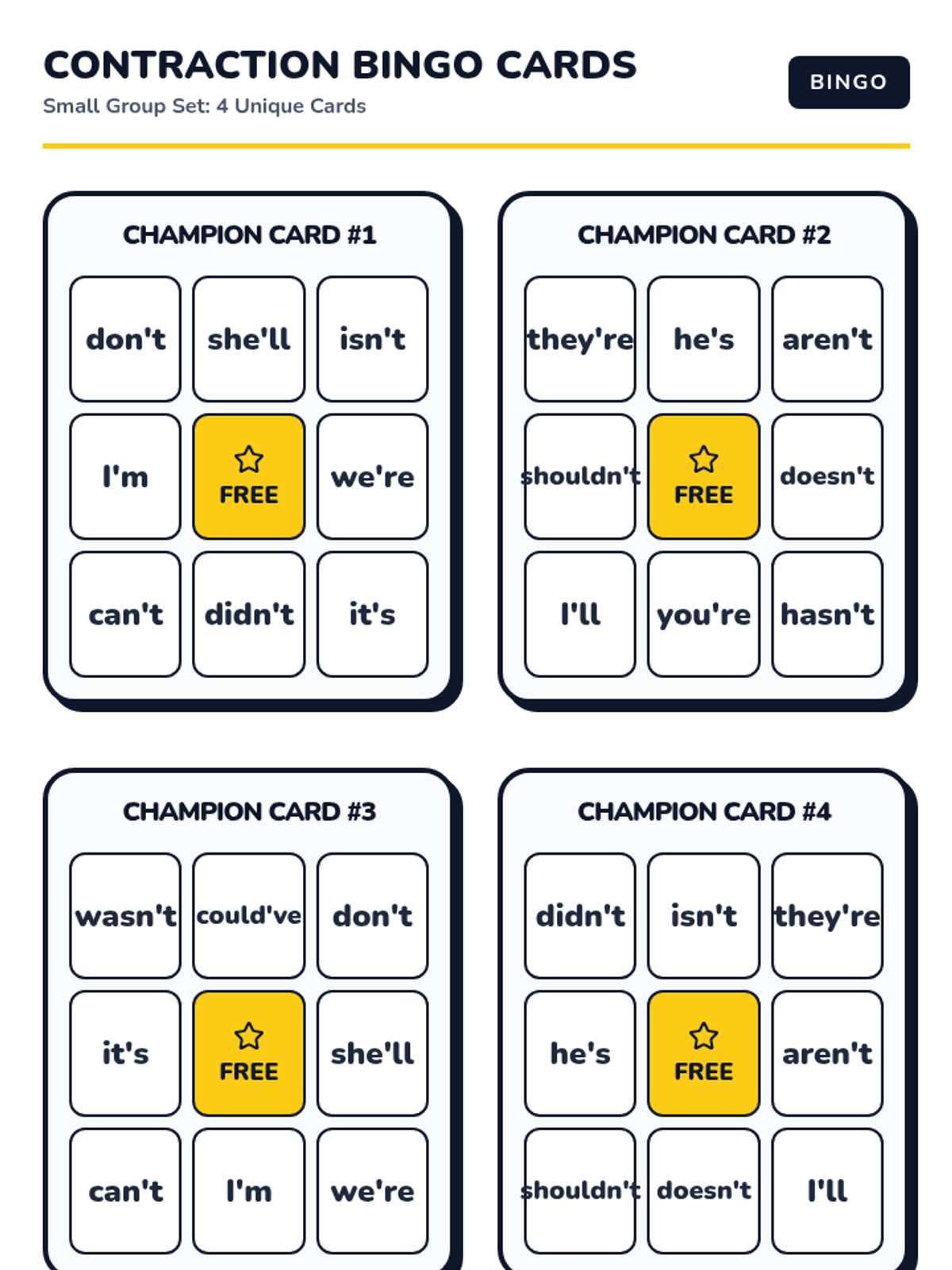
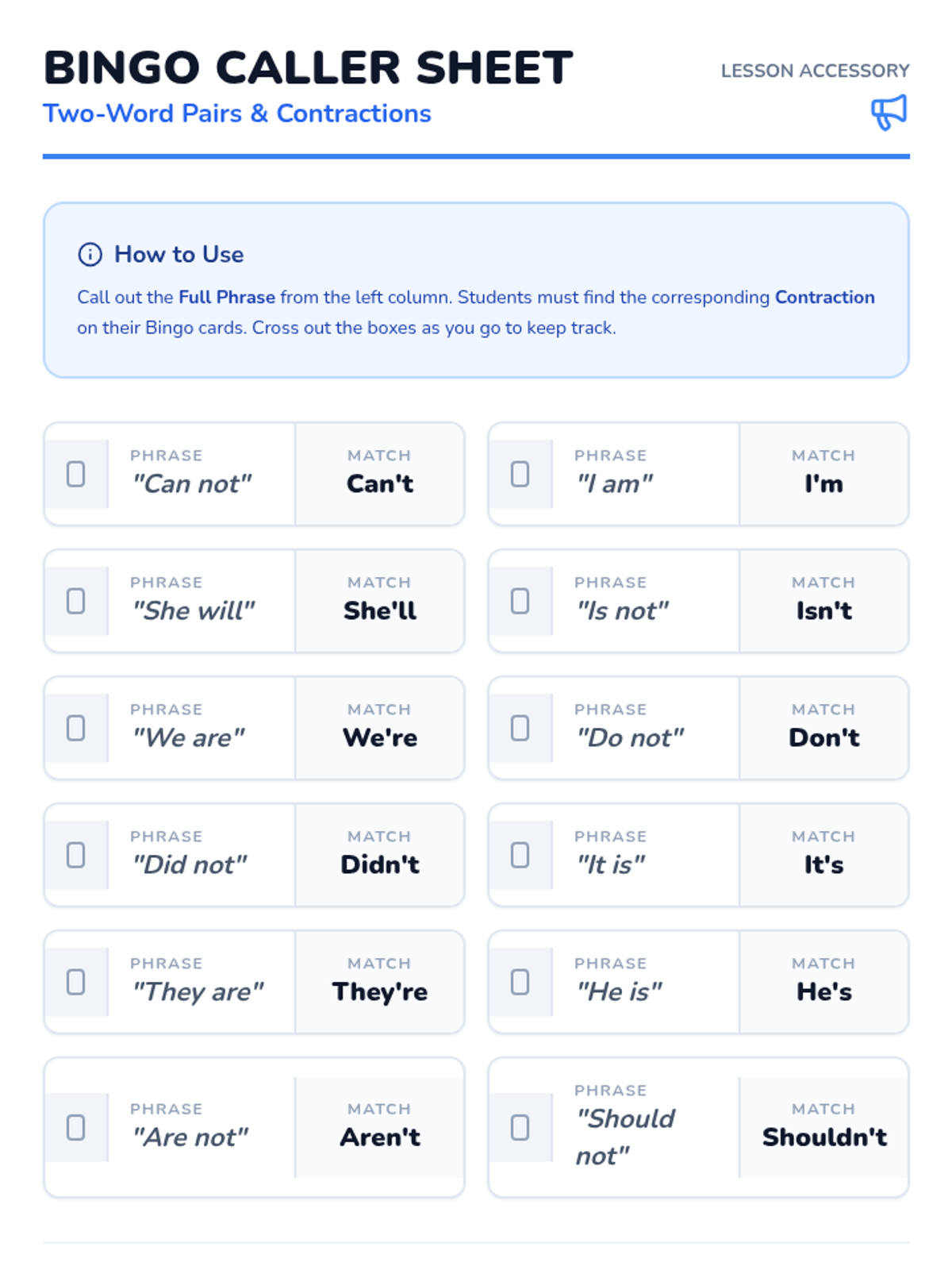
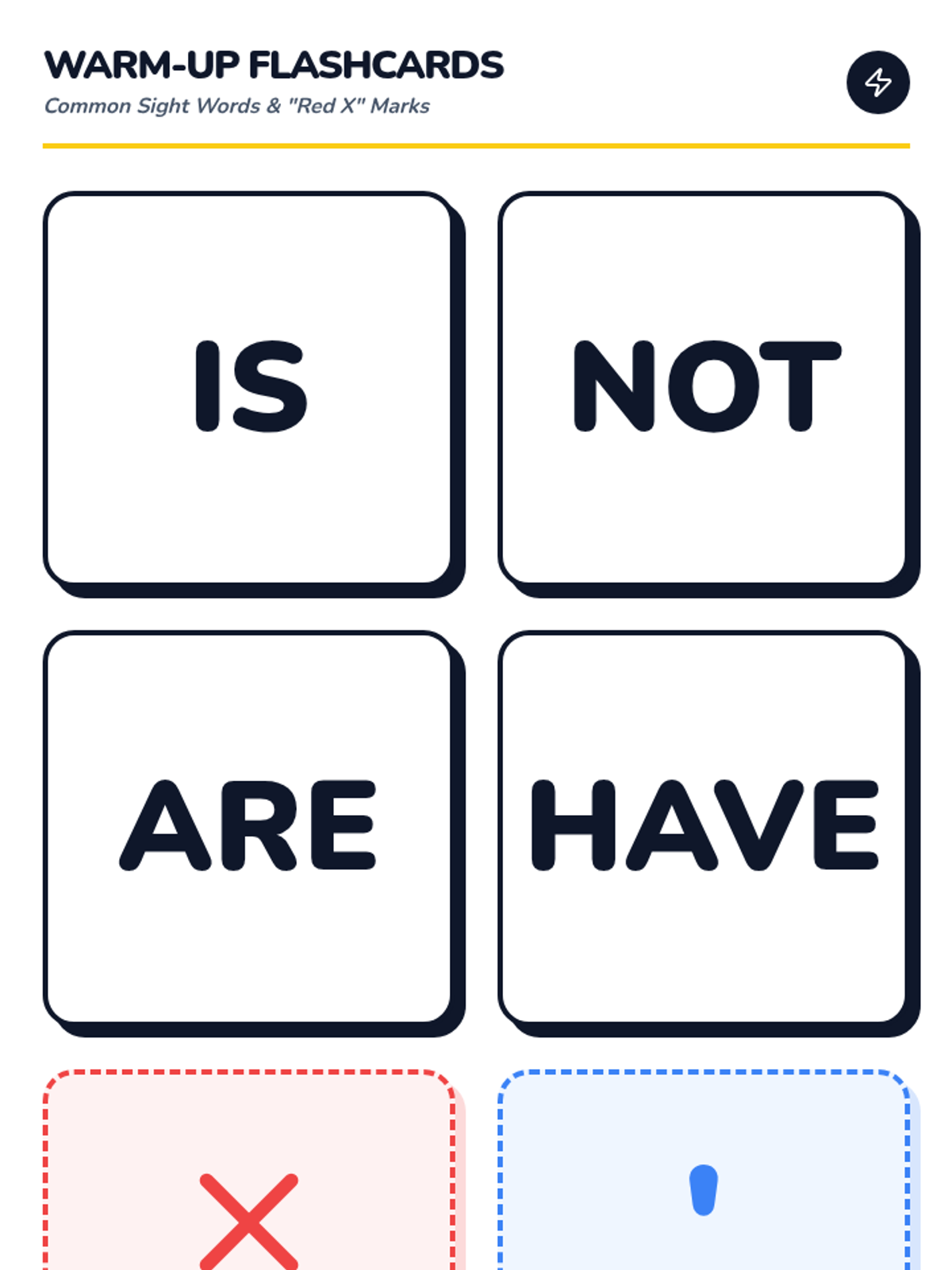
A small-group intervention lesson focused on reading and identifying contractions fluently using visual aids, video analysis, and a Bingo game.
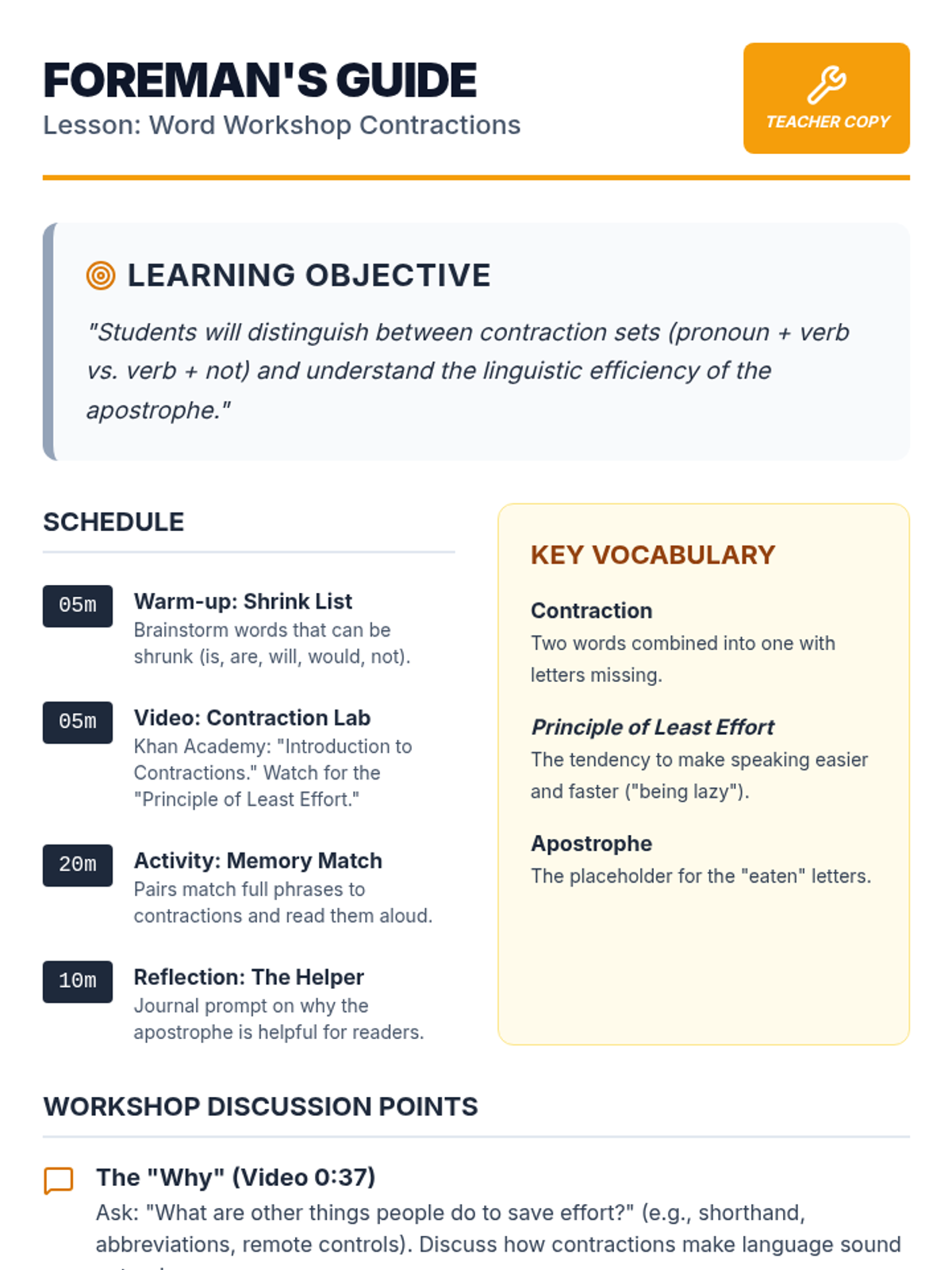
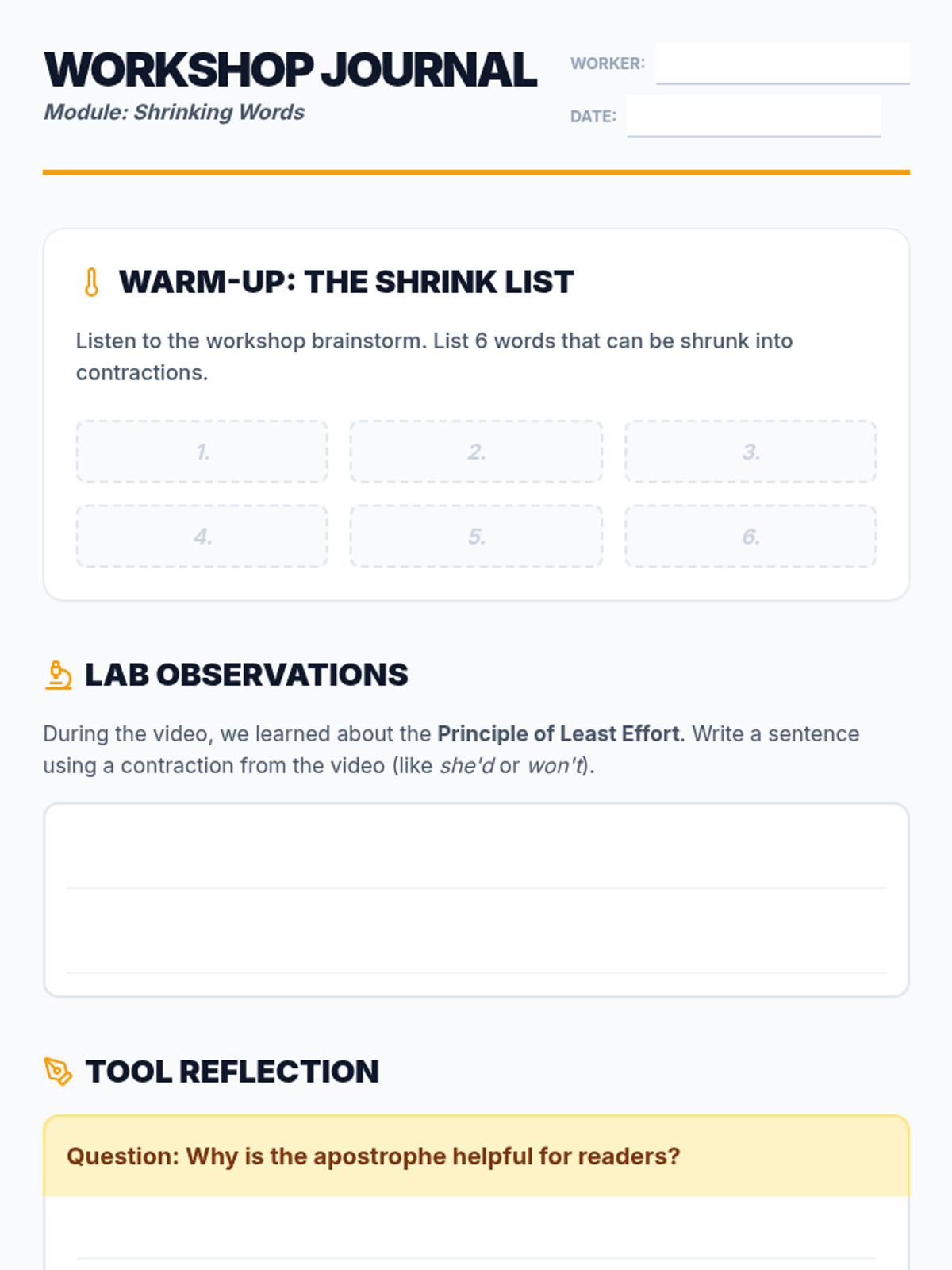
Students explore the linguistic 'Principle of Least Effort' to understand why we use contractions, specifically distinguishing between pronoun-verb and verb-not combinations. The lesson includes a video-guided discussion, a collaborative memory game, and a reflective journaling session.
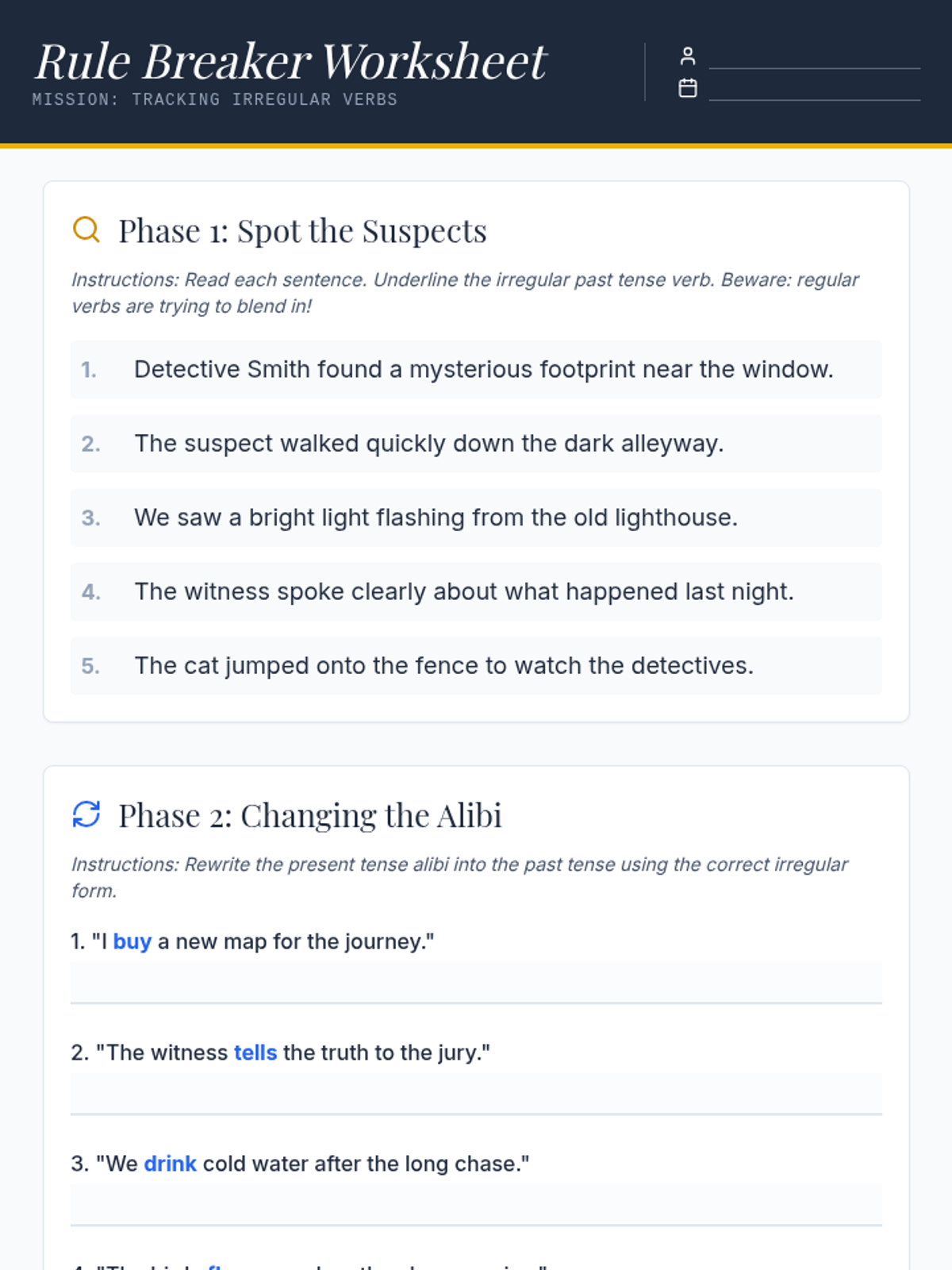
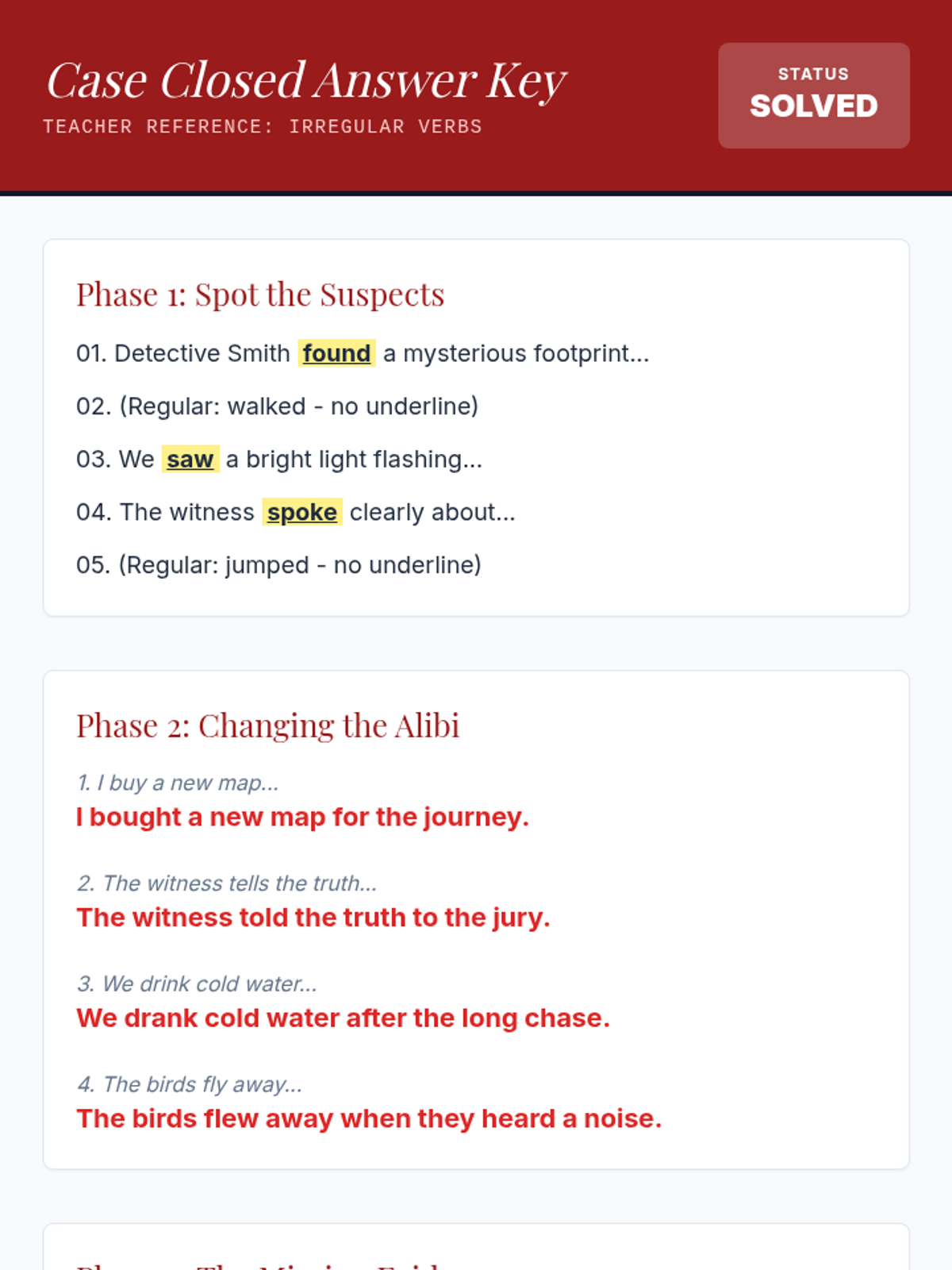
A friendly mystery-themed lesson where second graders become 'Verb Detectives' to find and fix common irregular past tense verbs like 'went', 'saw', and 'ate'.
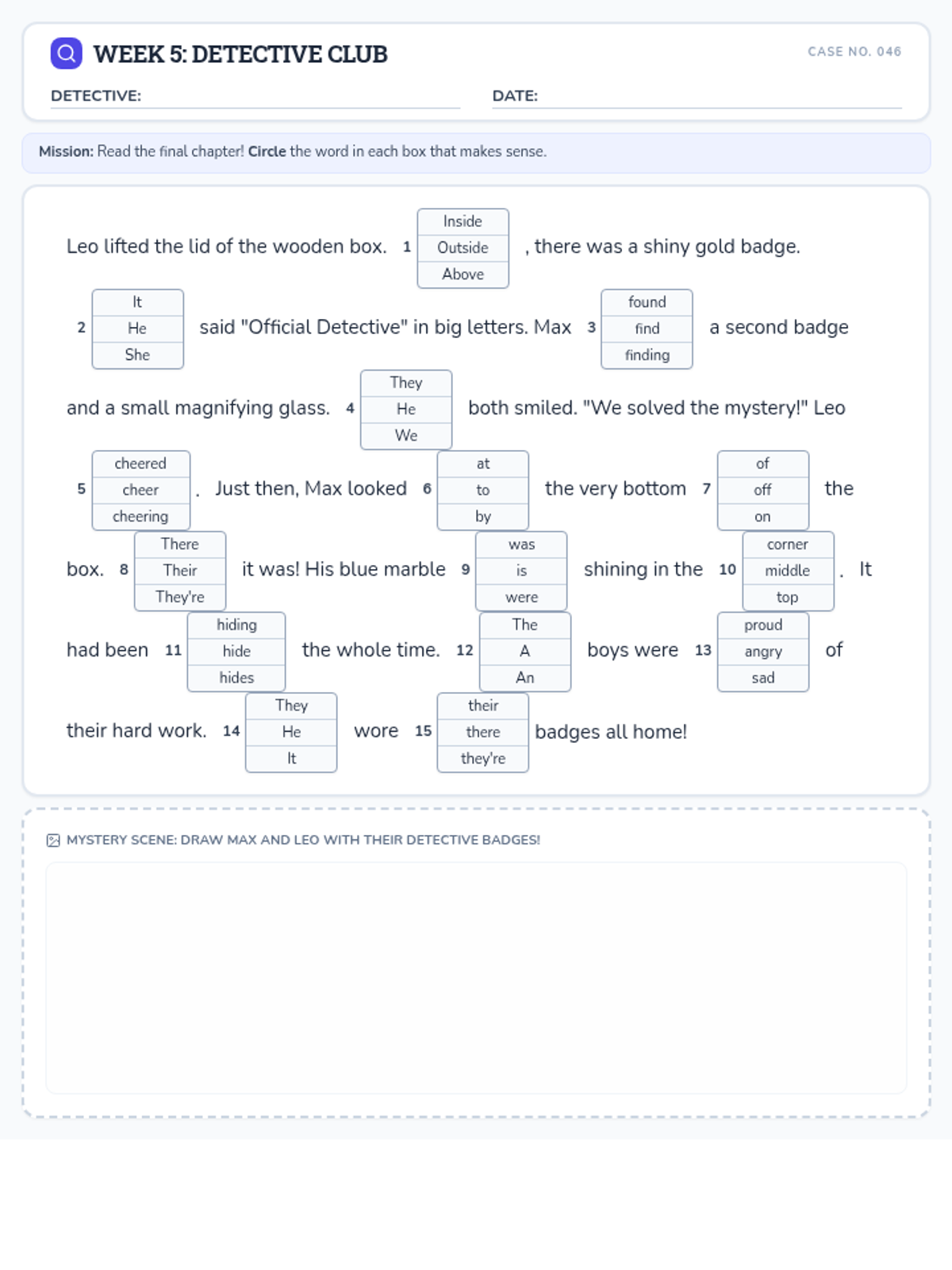
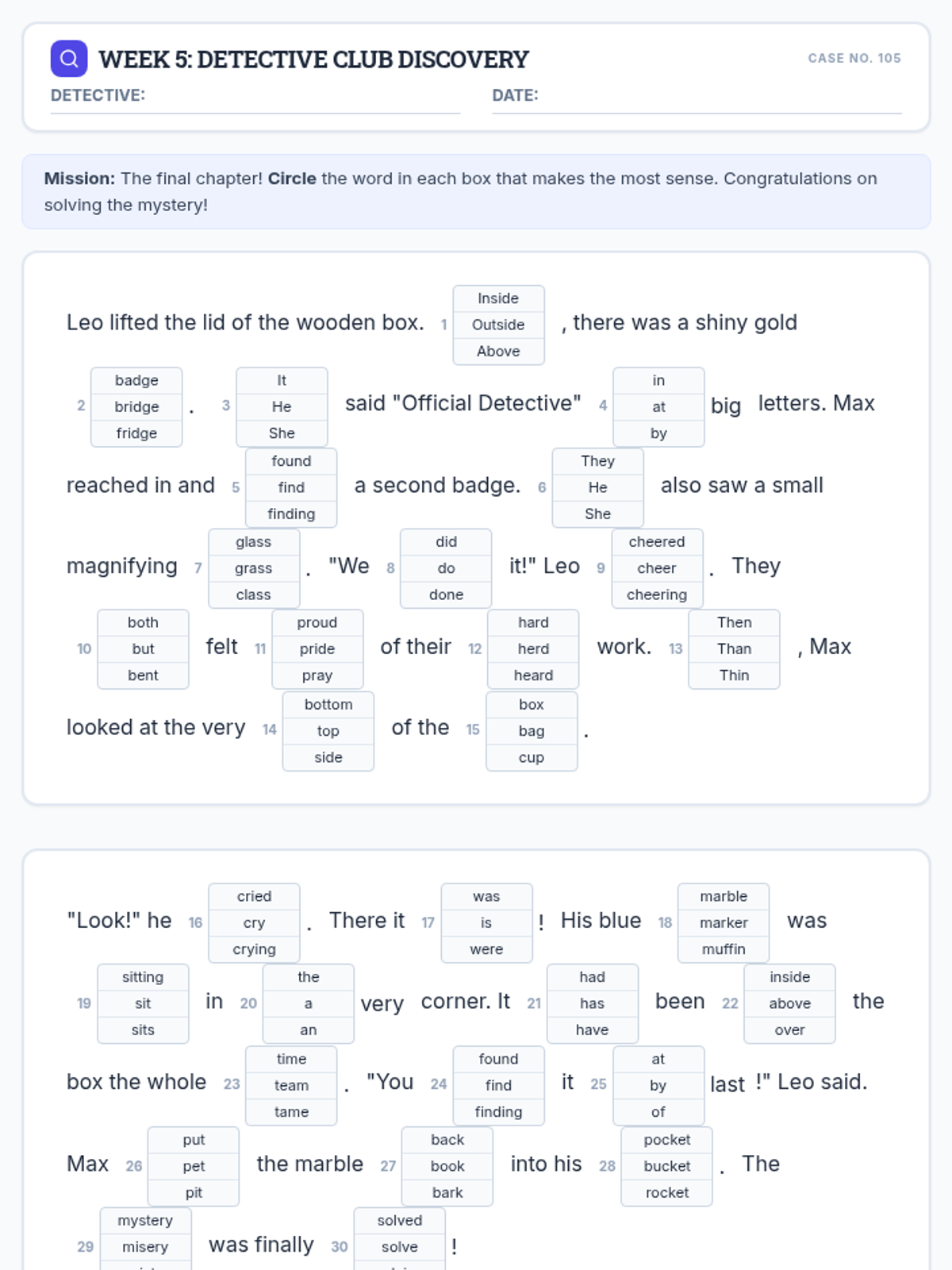
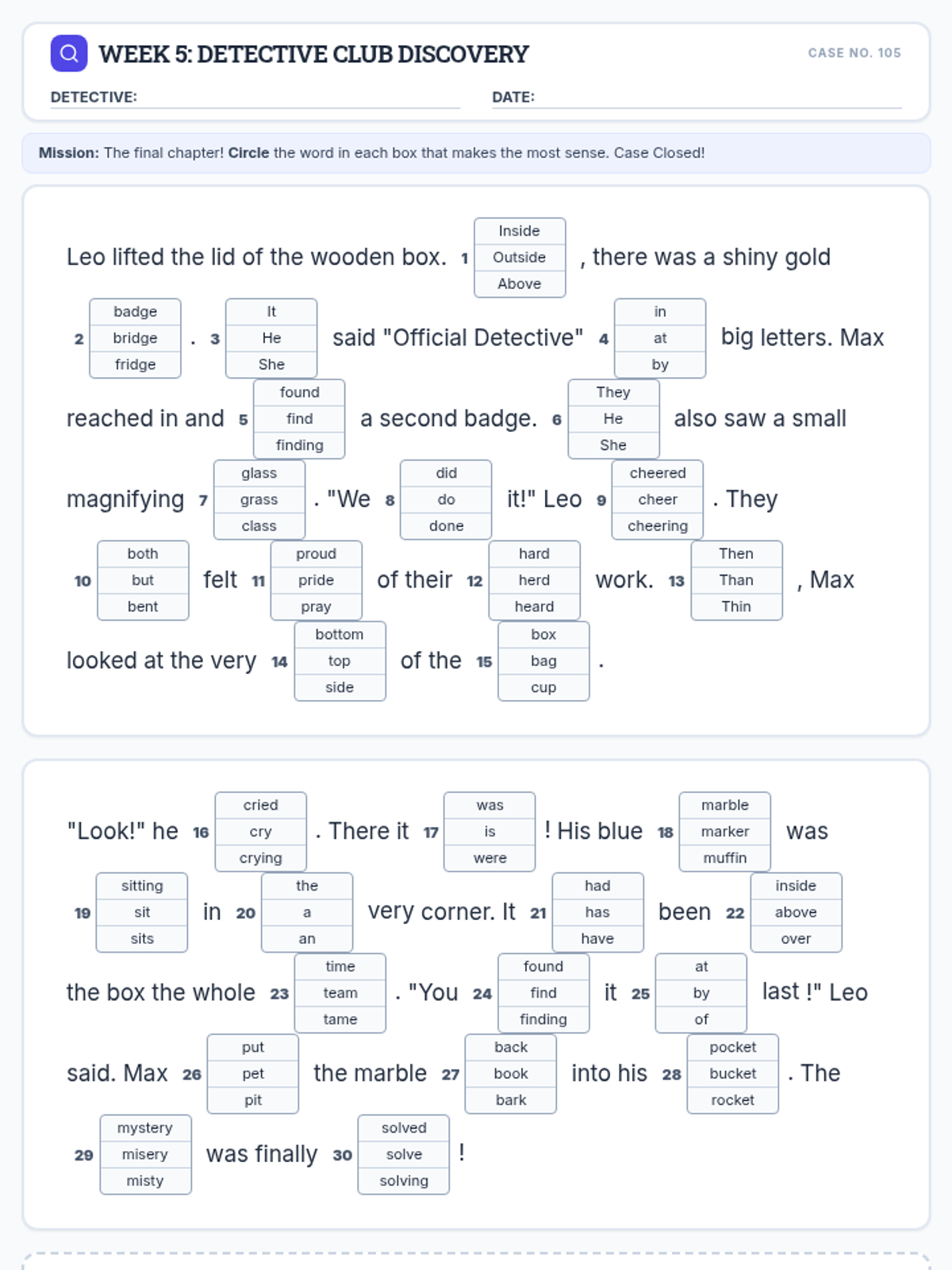
The final clue leads the boys to a surprising discovery that rewards their hard work and detective skills.
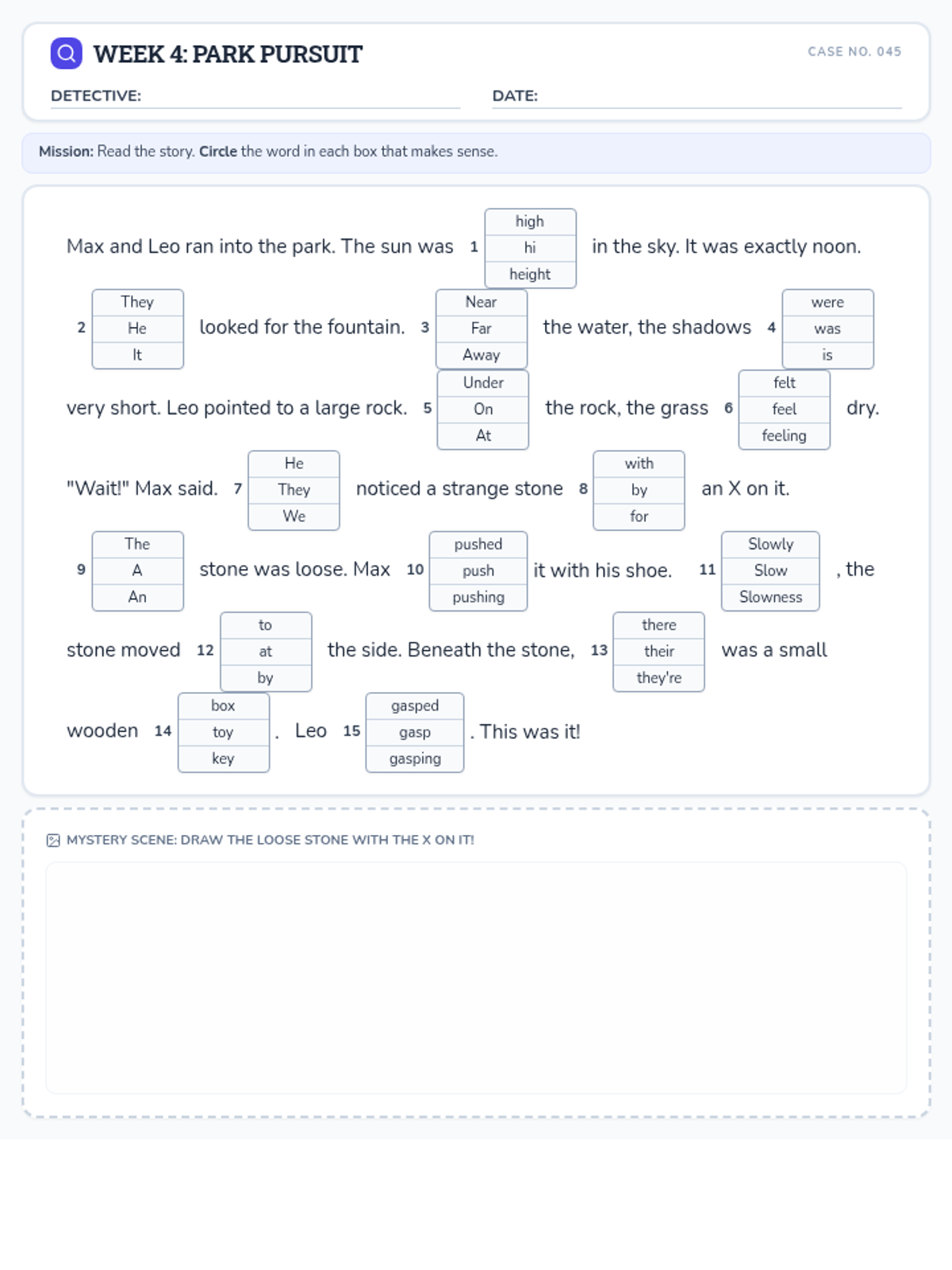
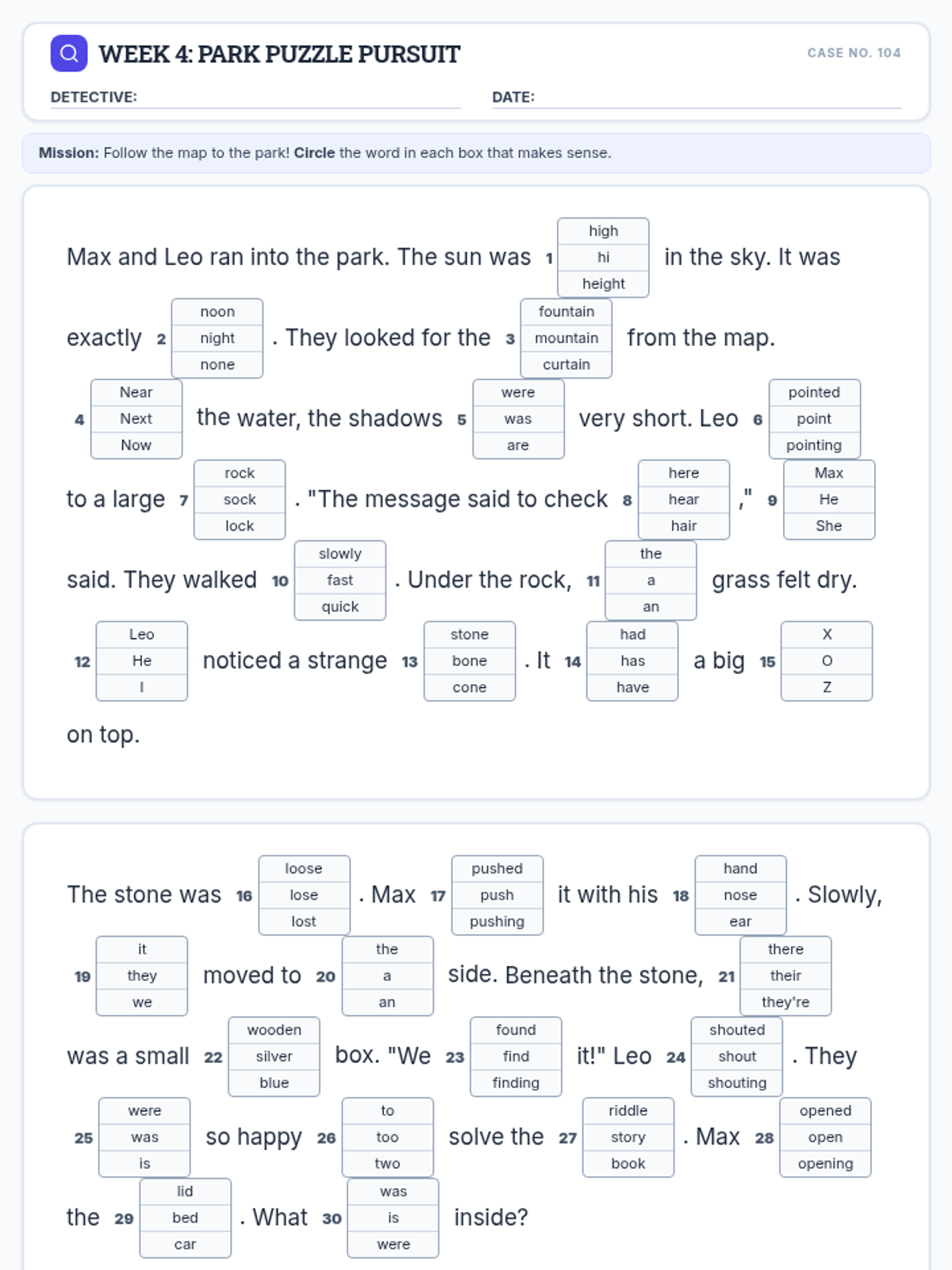
Max and Leo follow the map to the park, where they must solve a riddle about shadows and loose stones.
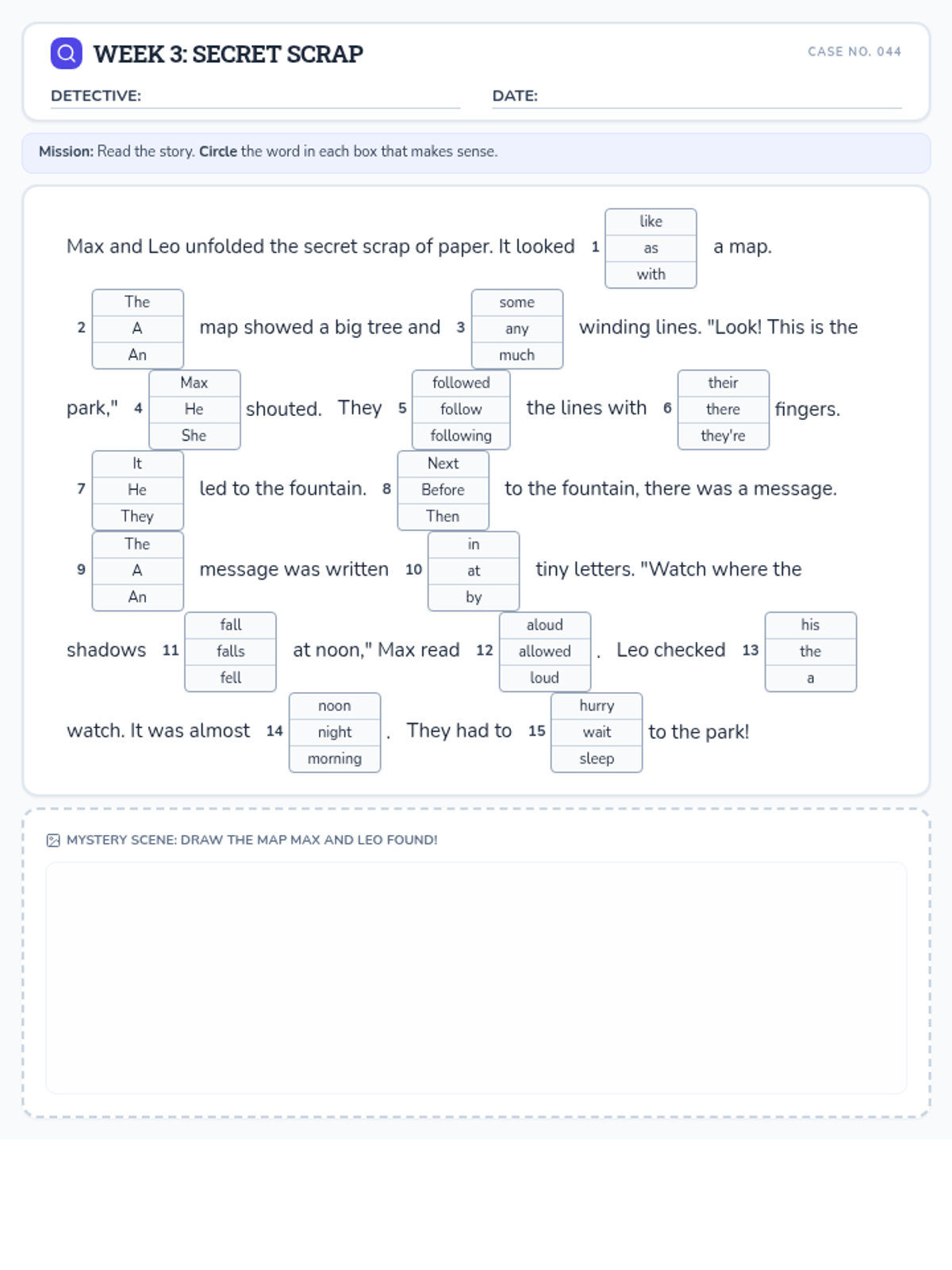
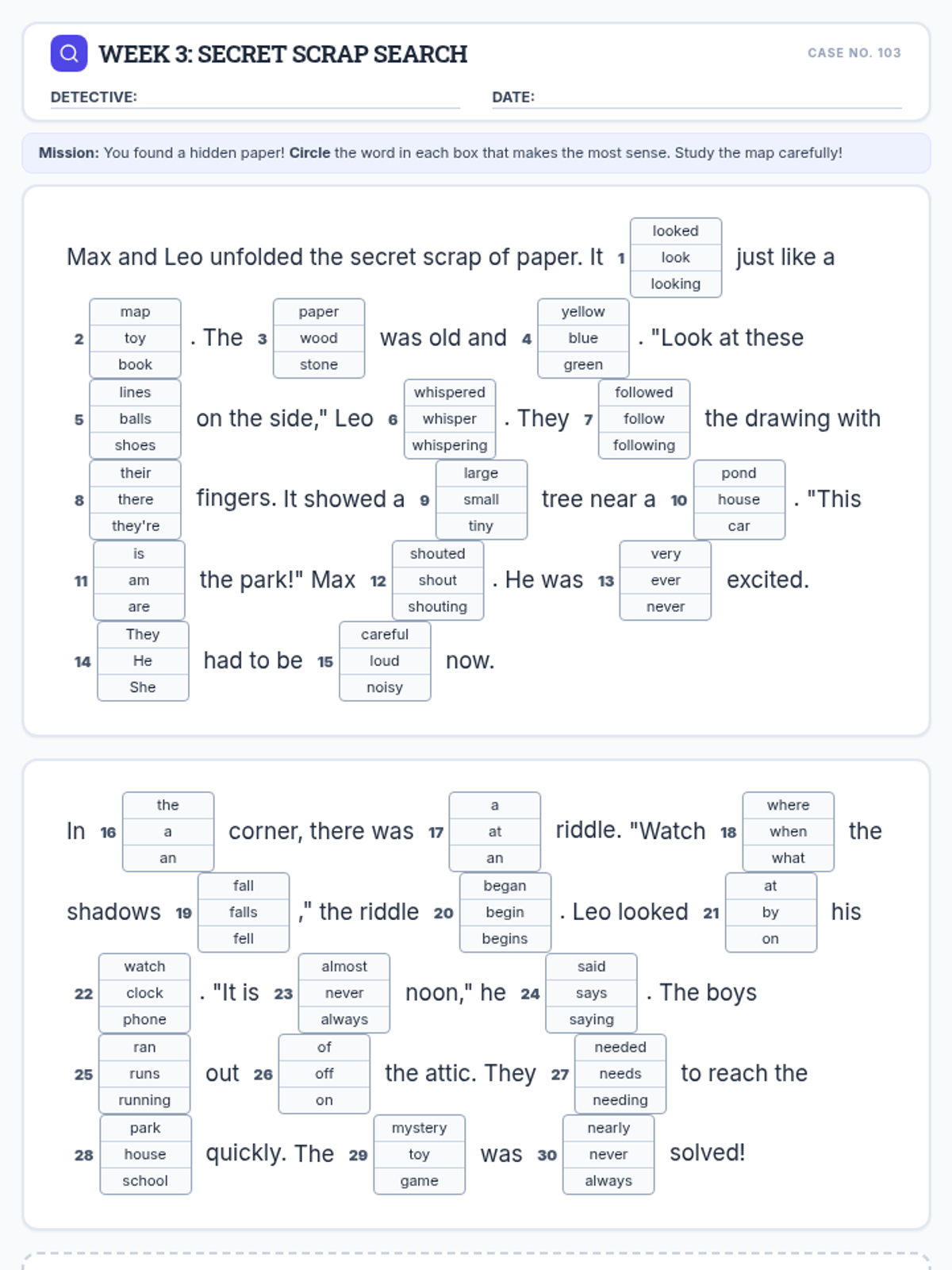
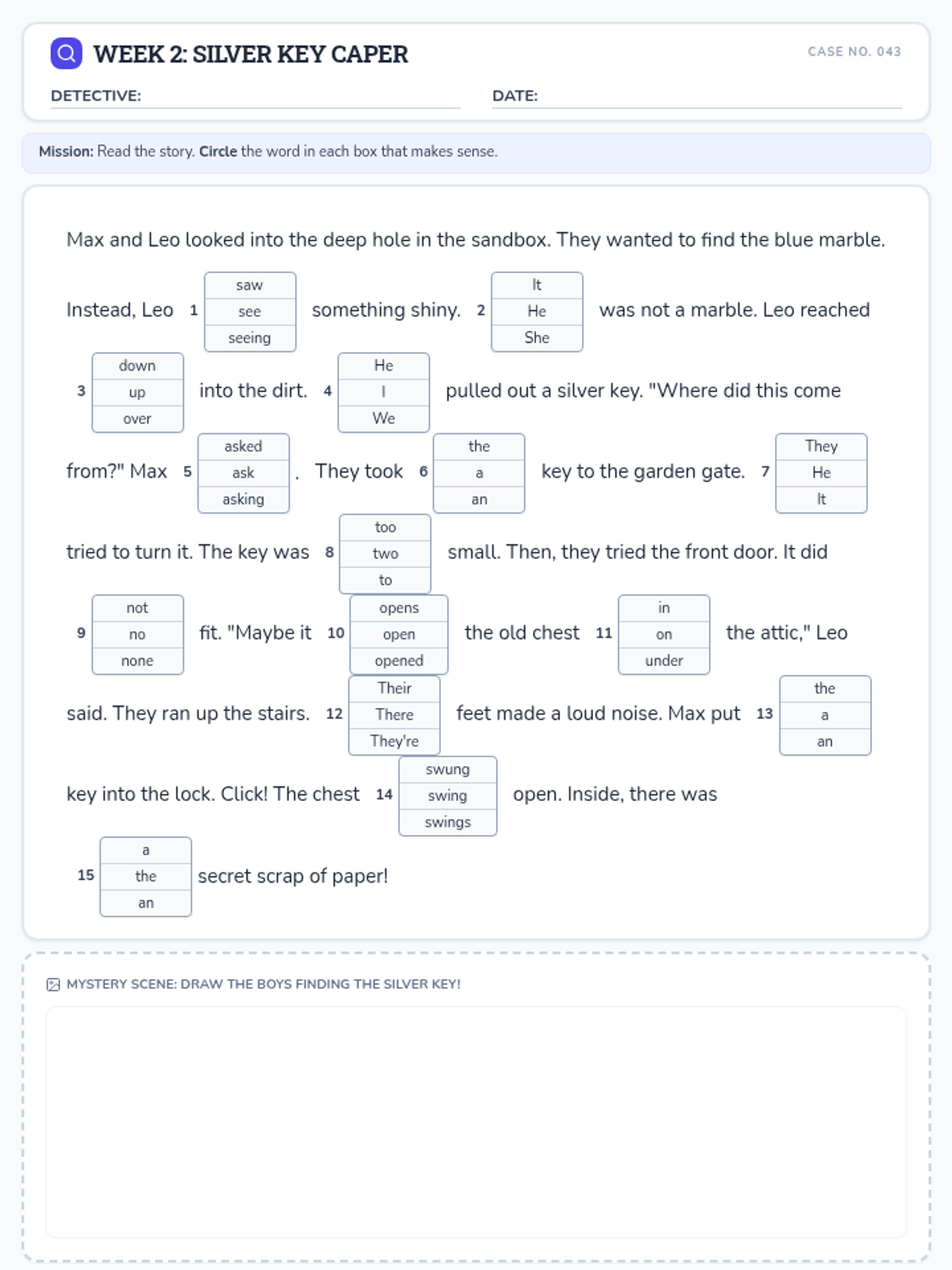
The silver key opens an old chest in the attic, revealing a secret scrap of paper that looks like a hidden map.
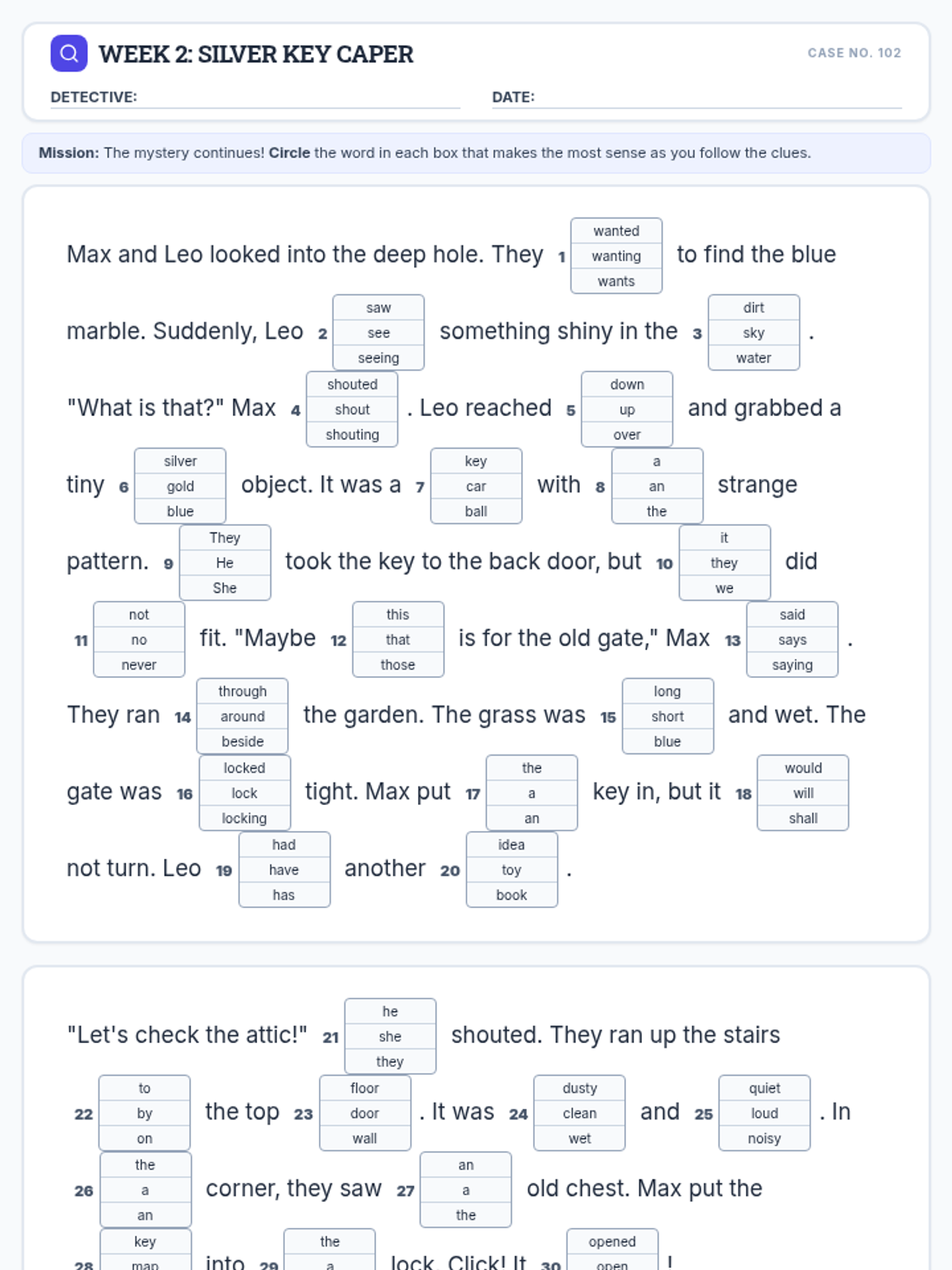
While searching for the marble, Max and his friend Leo find a mysterious silver key hidden in the garden grass.
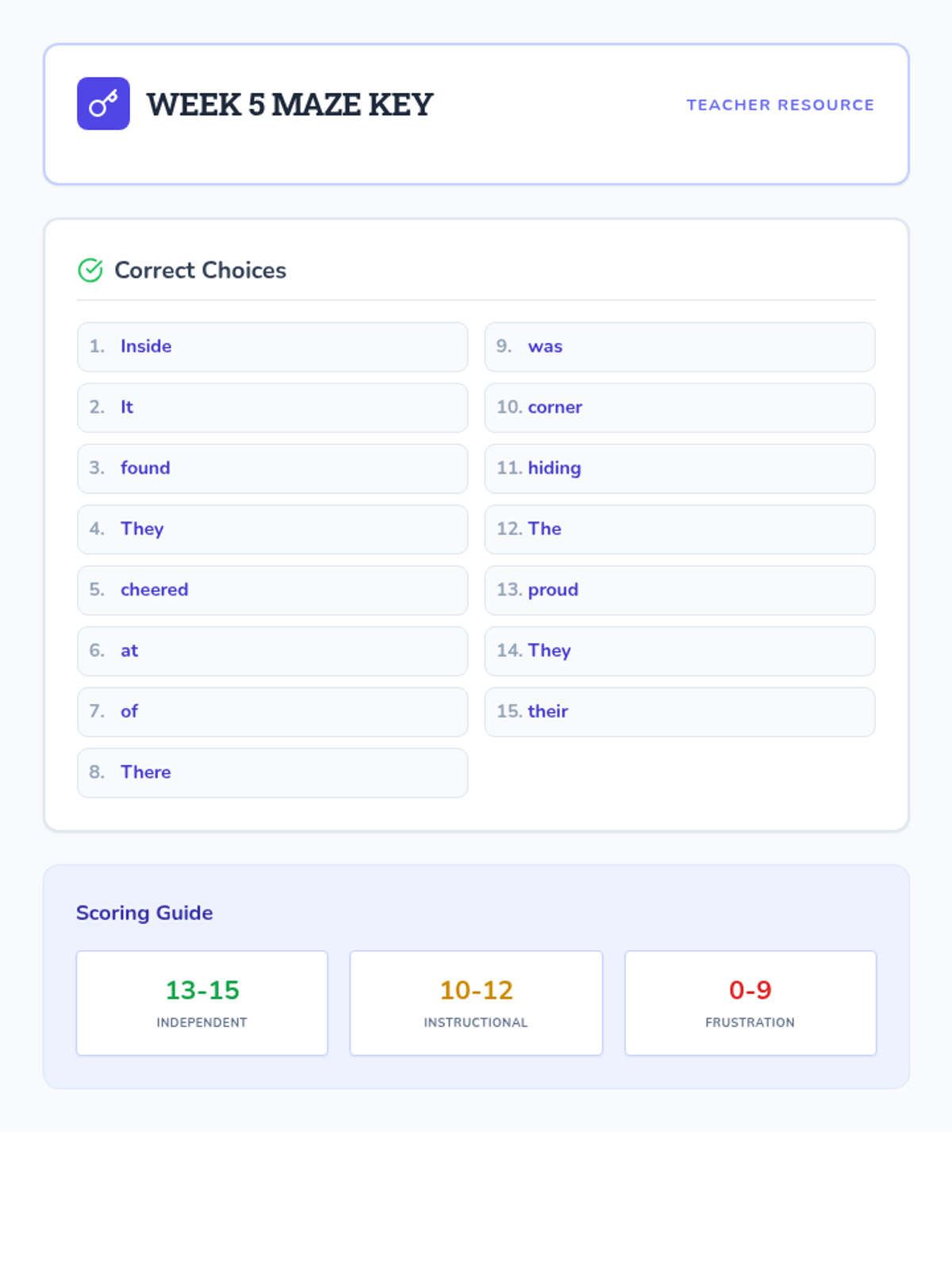
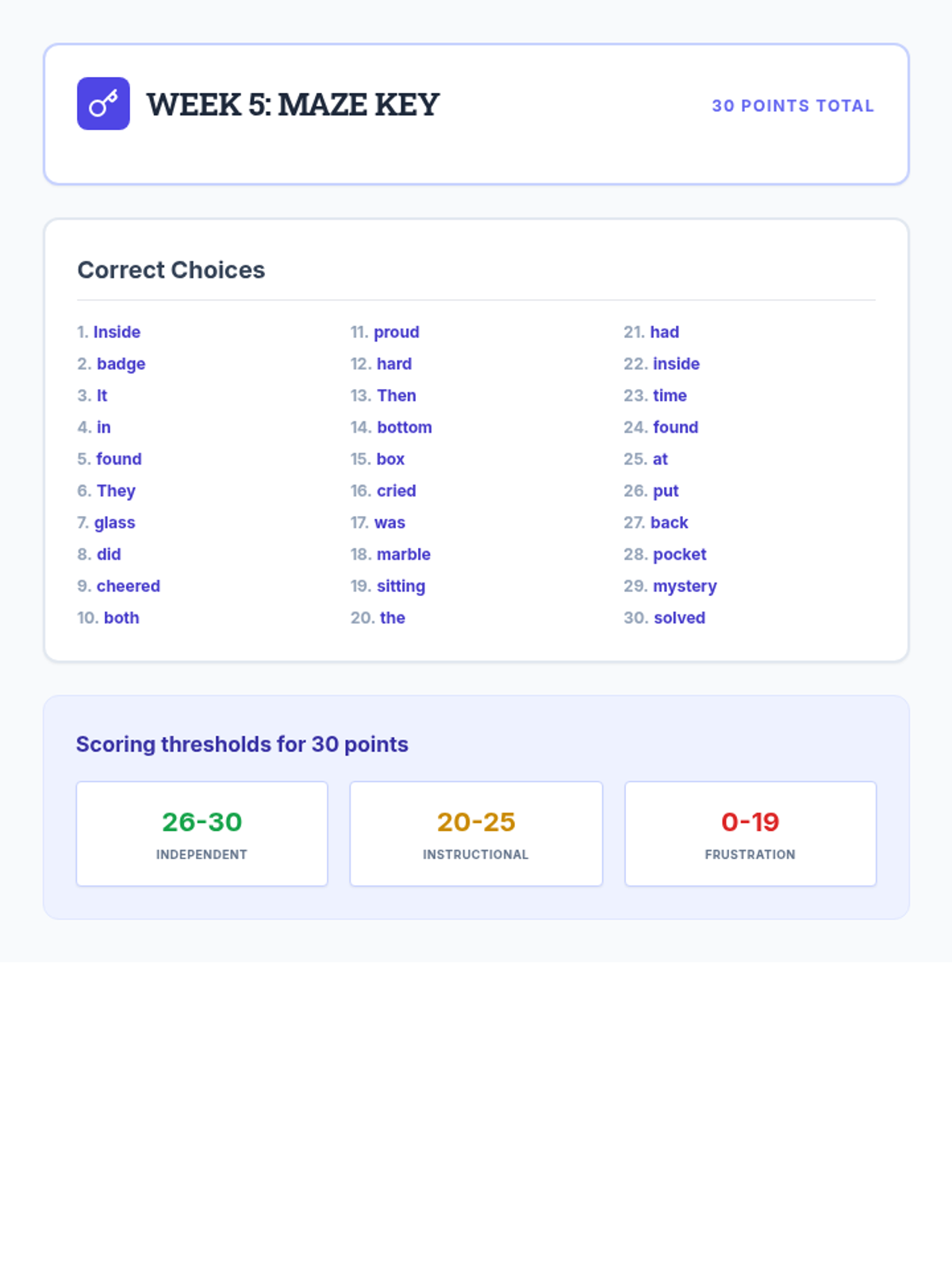
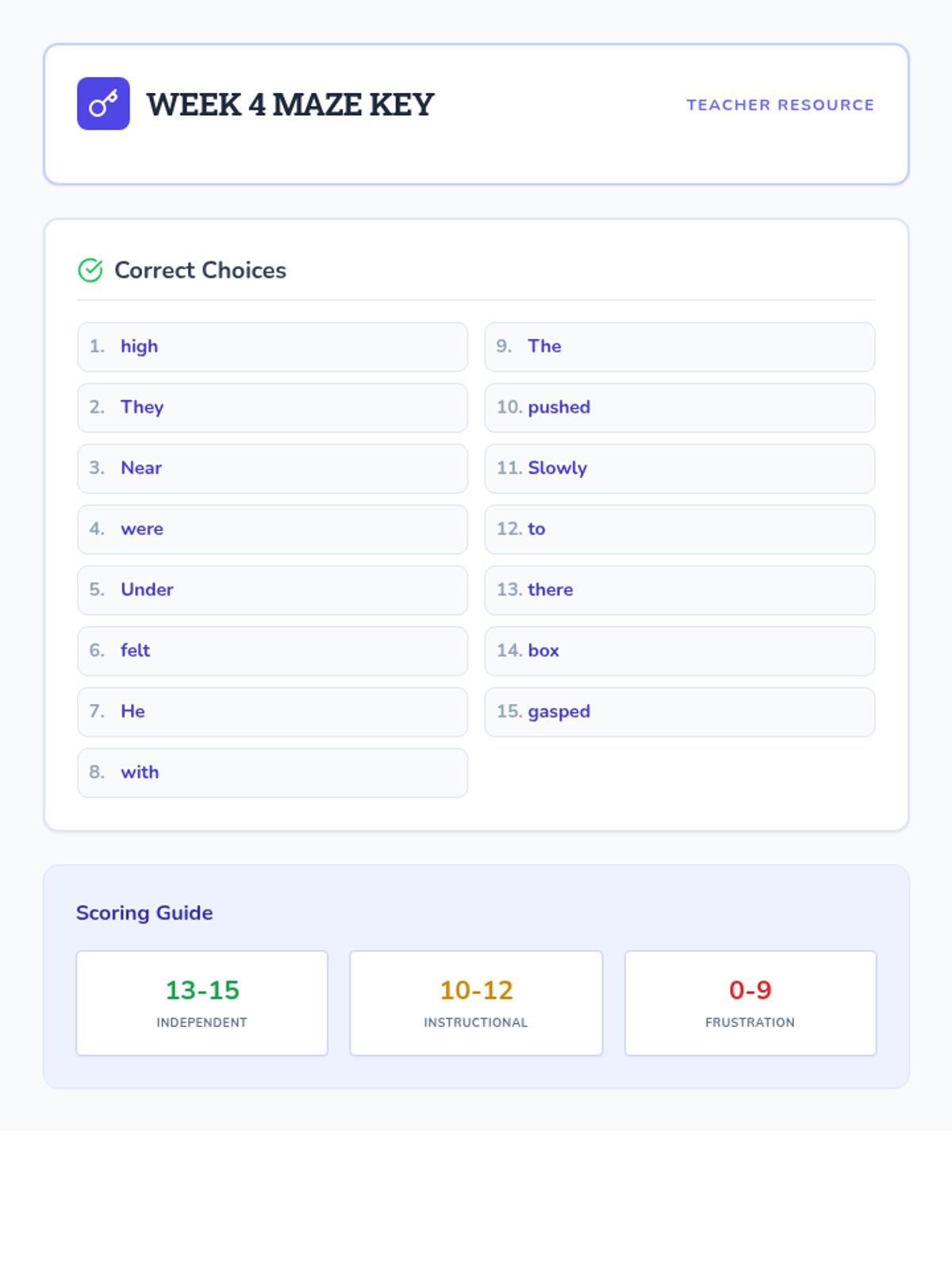
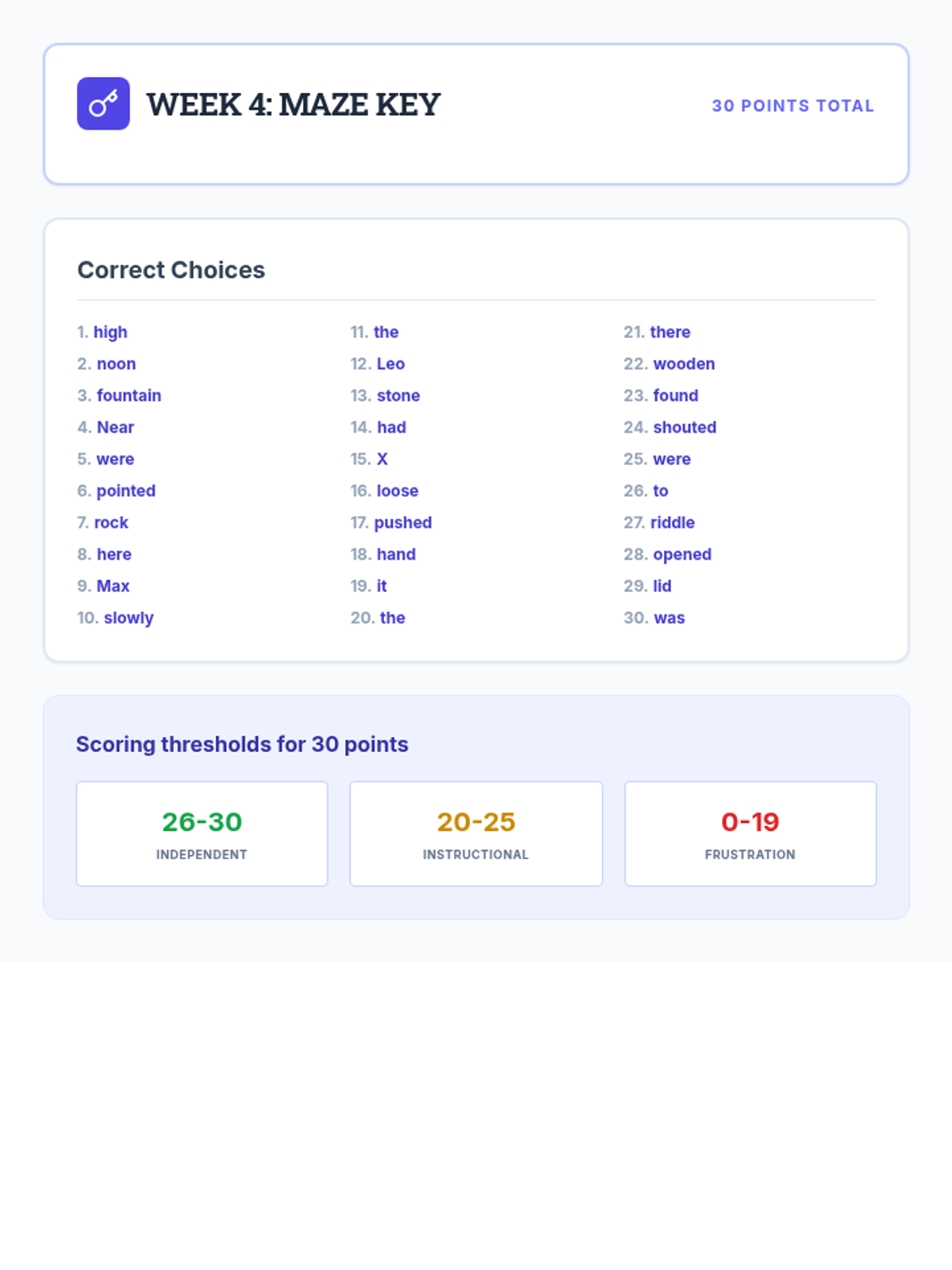
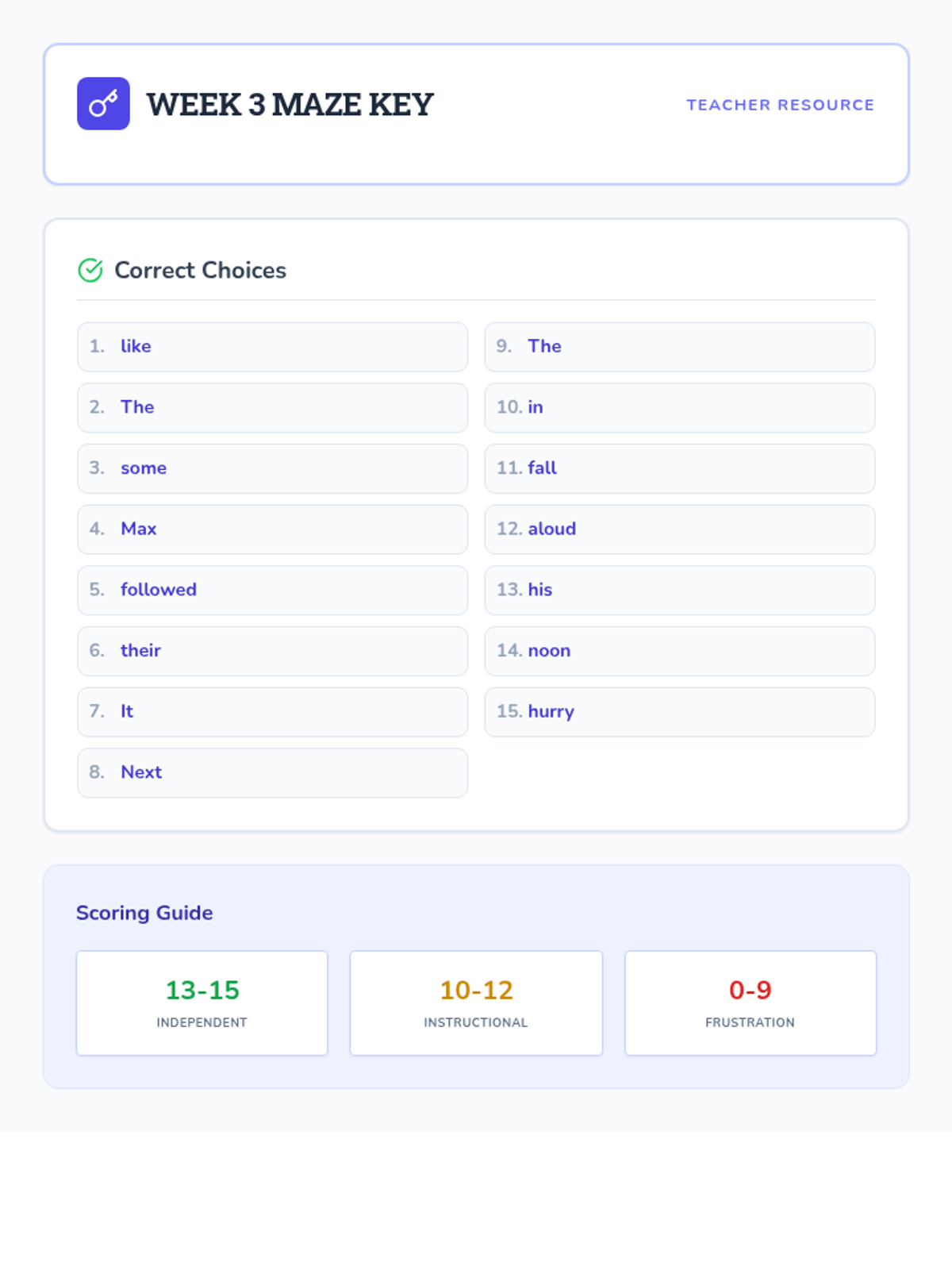
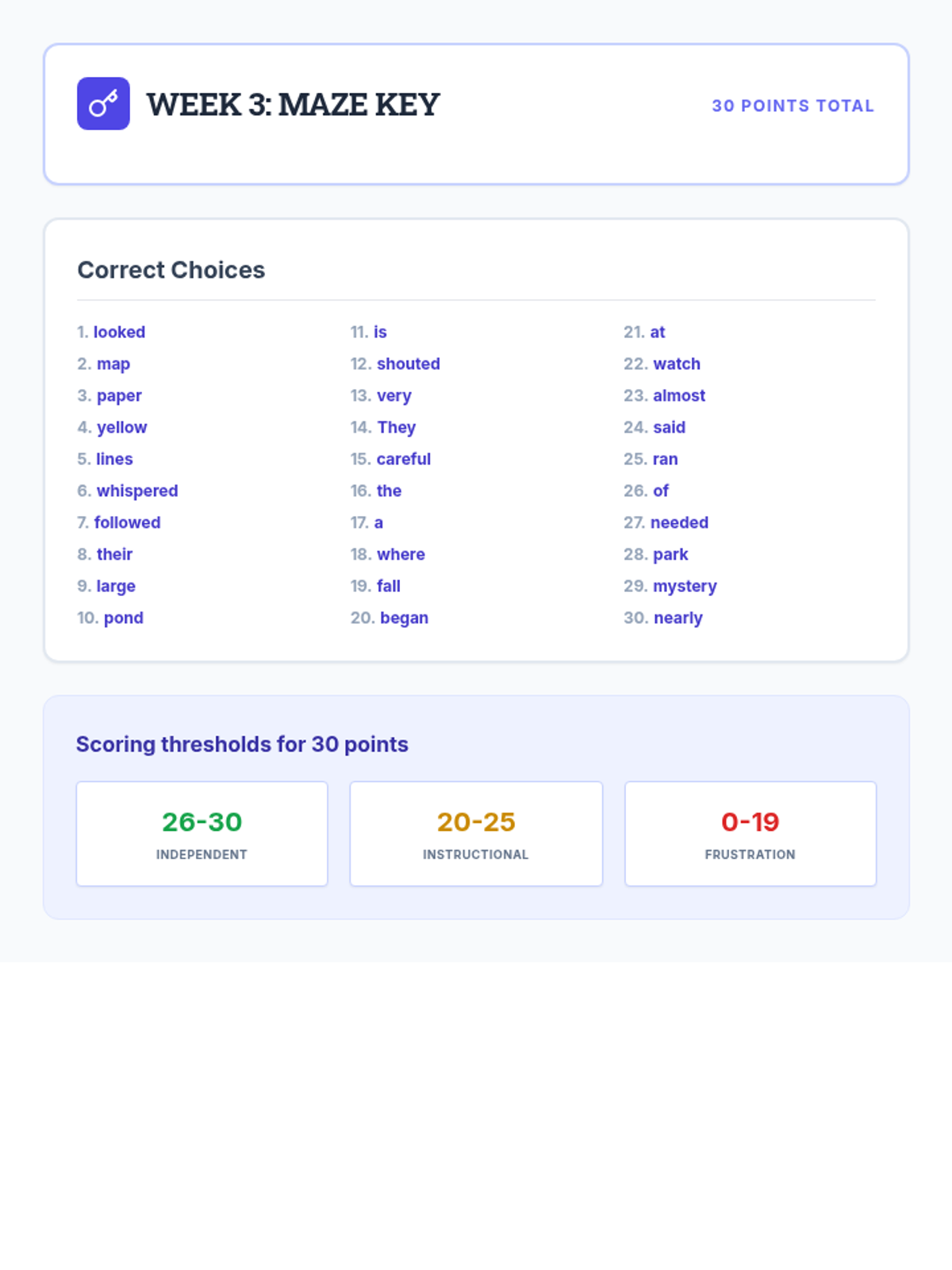
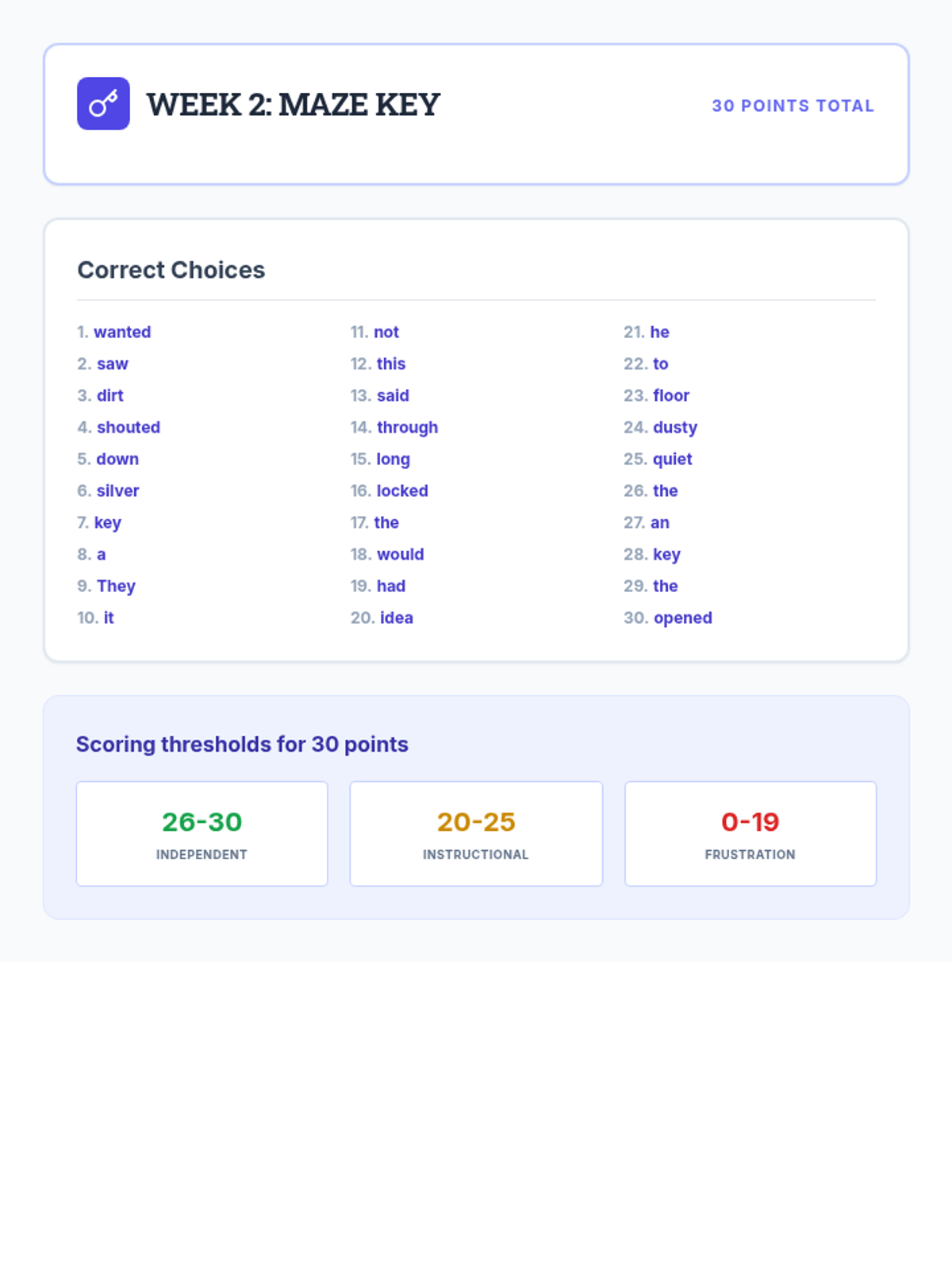
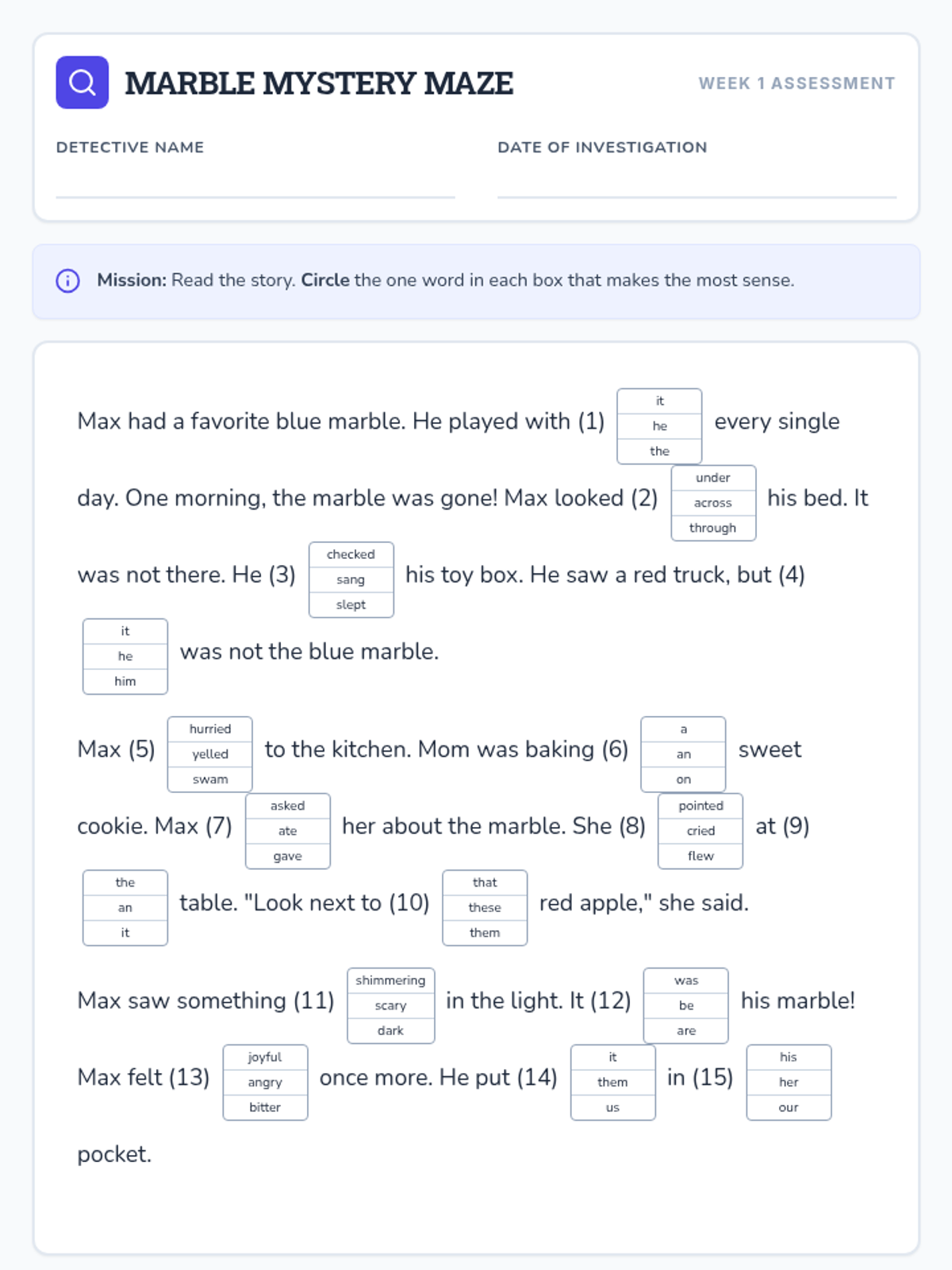
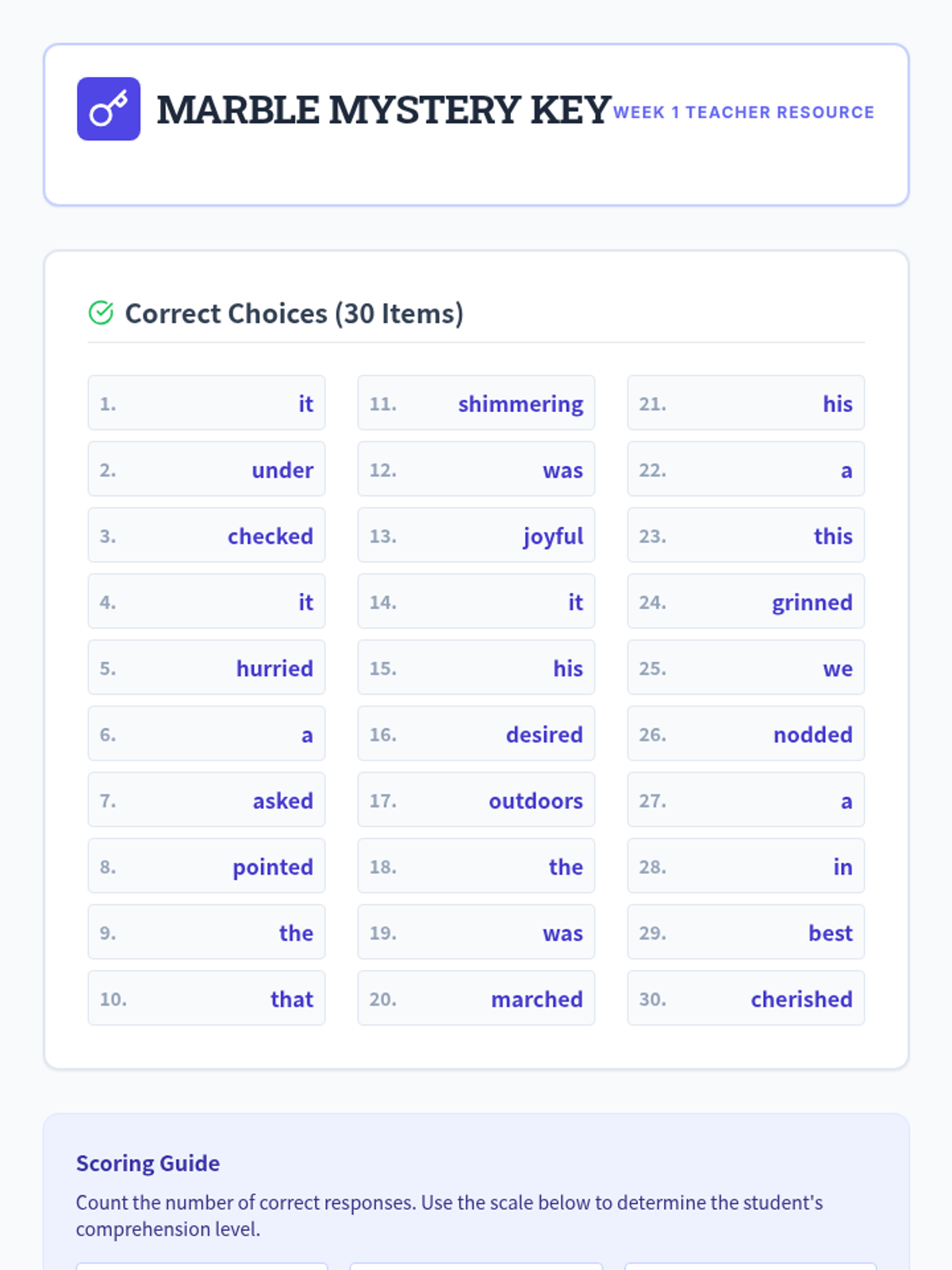
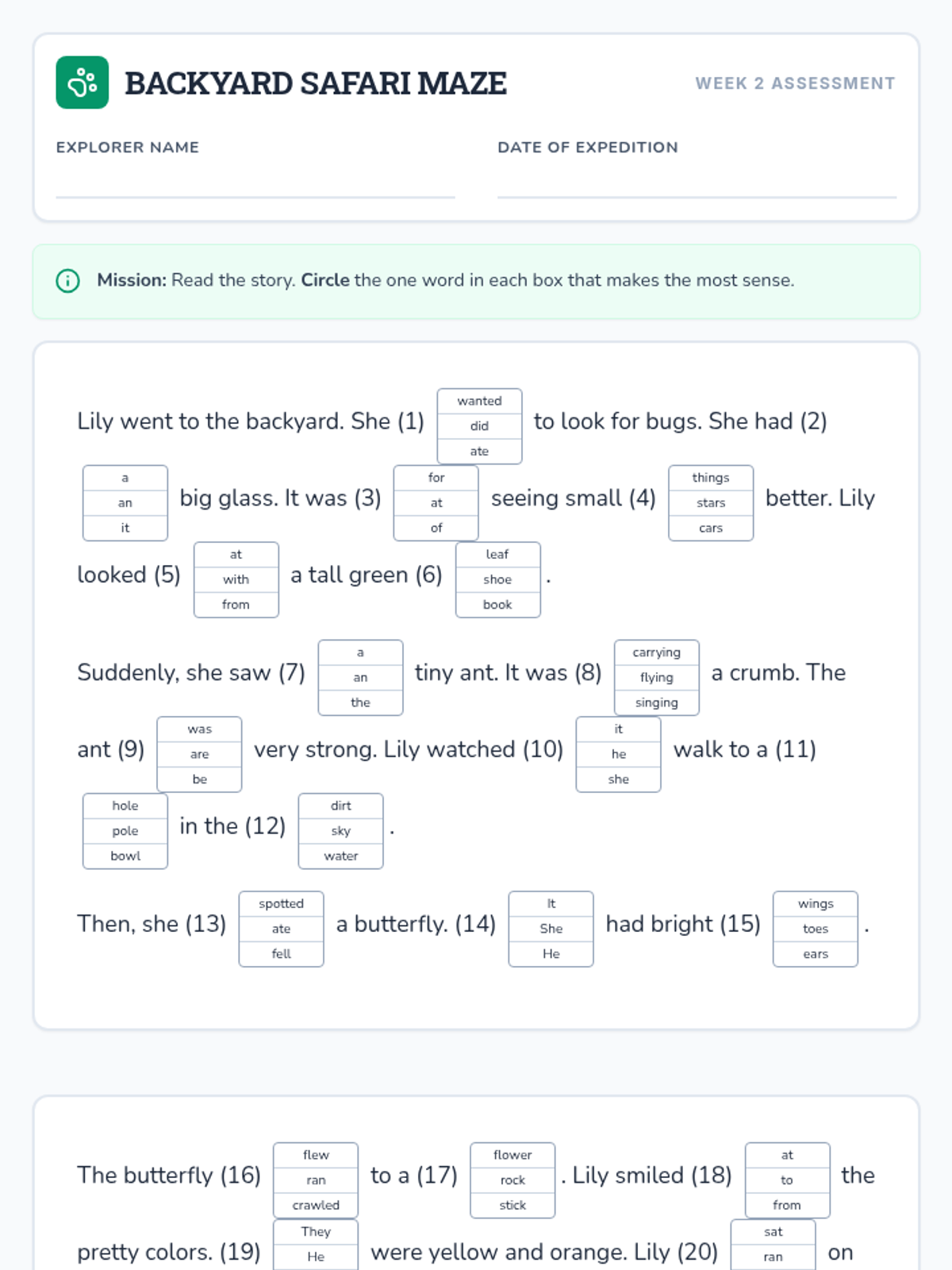
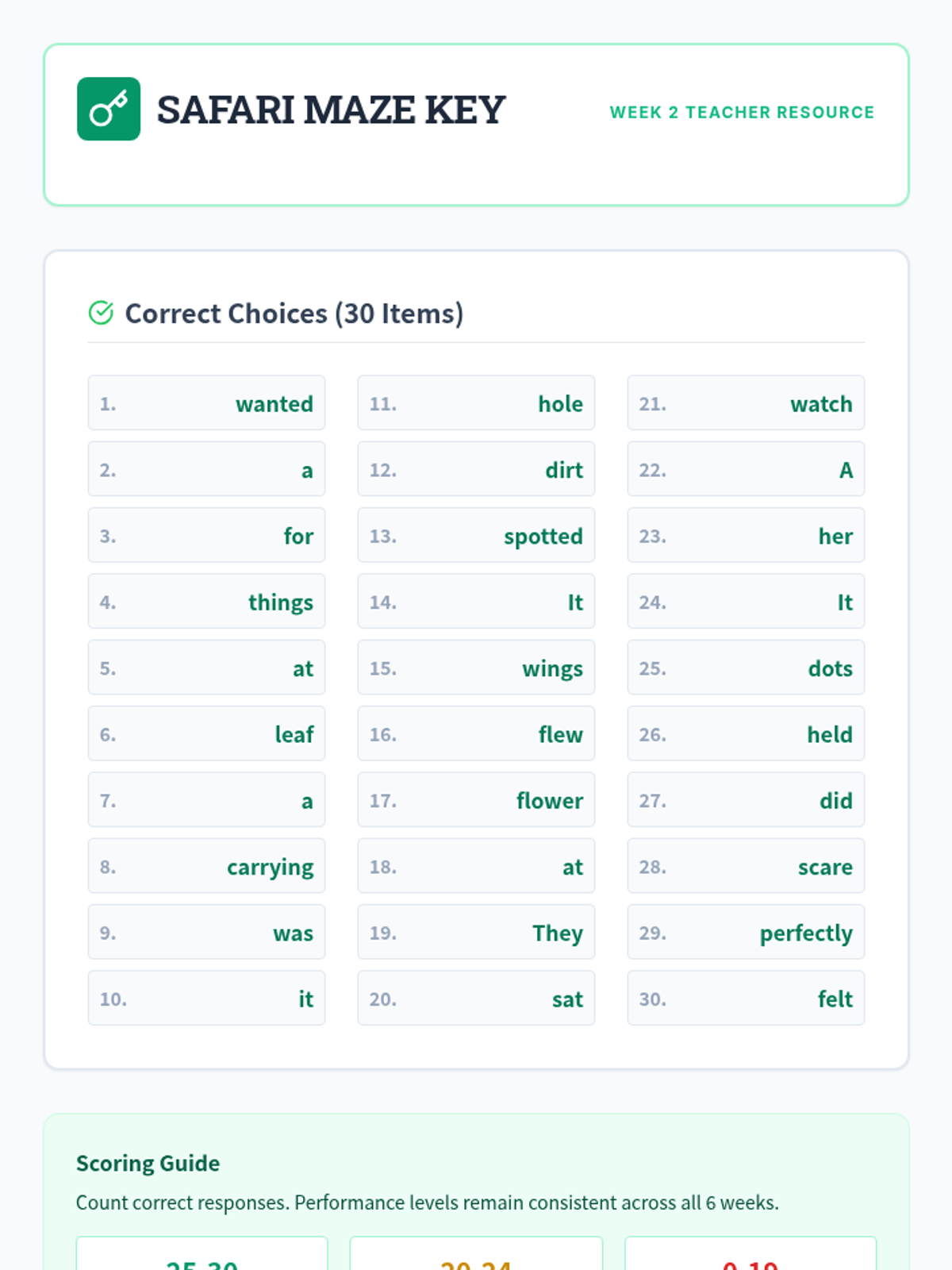
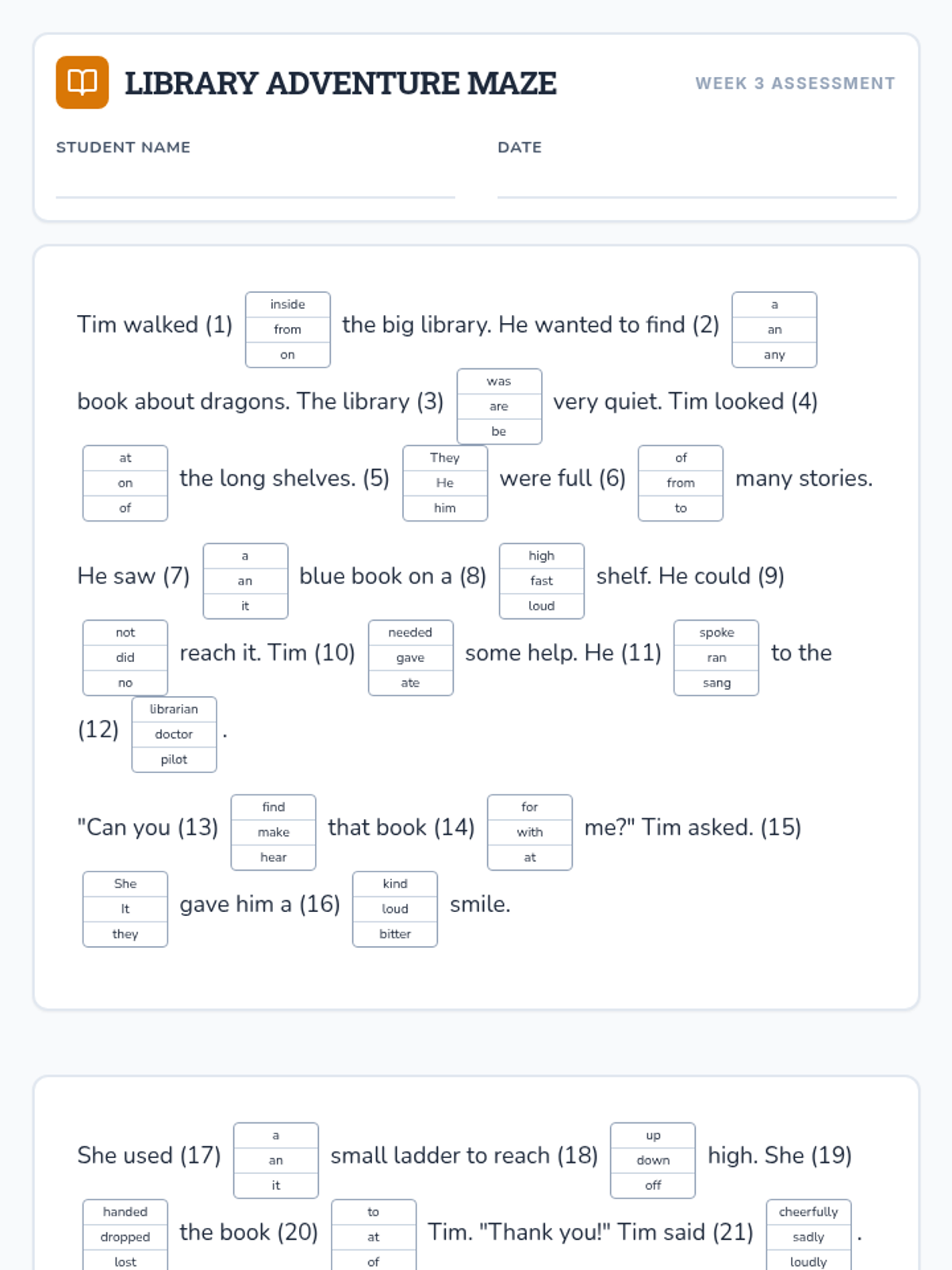
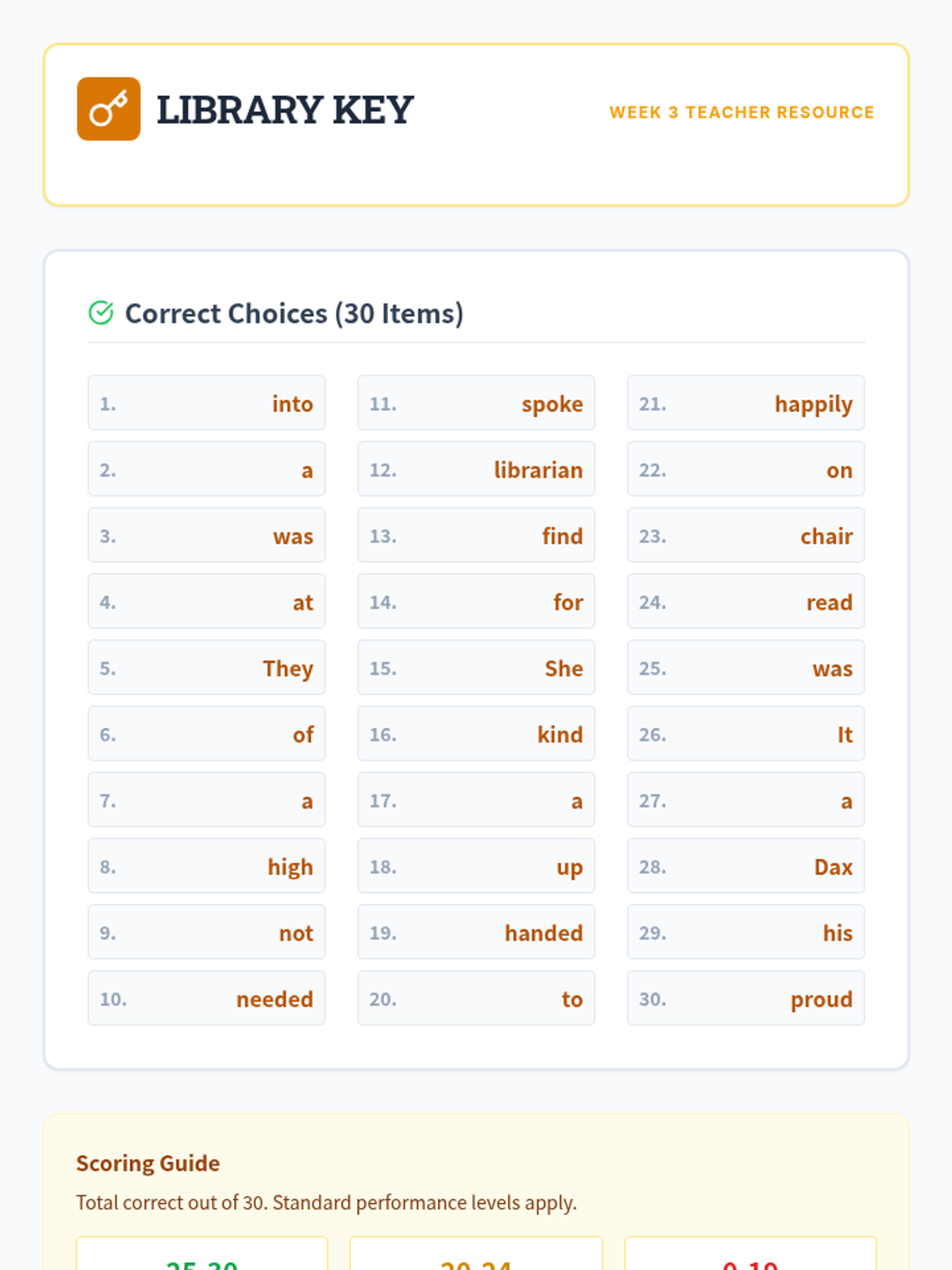
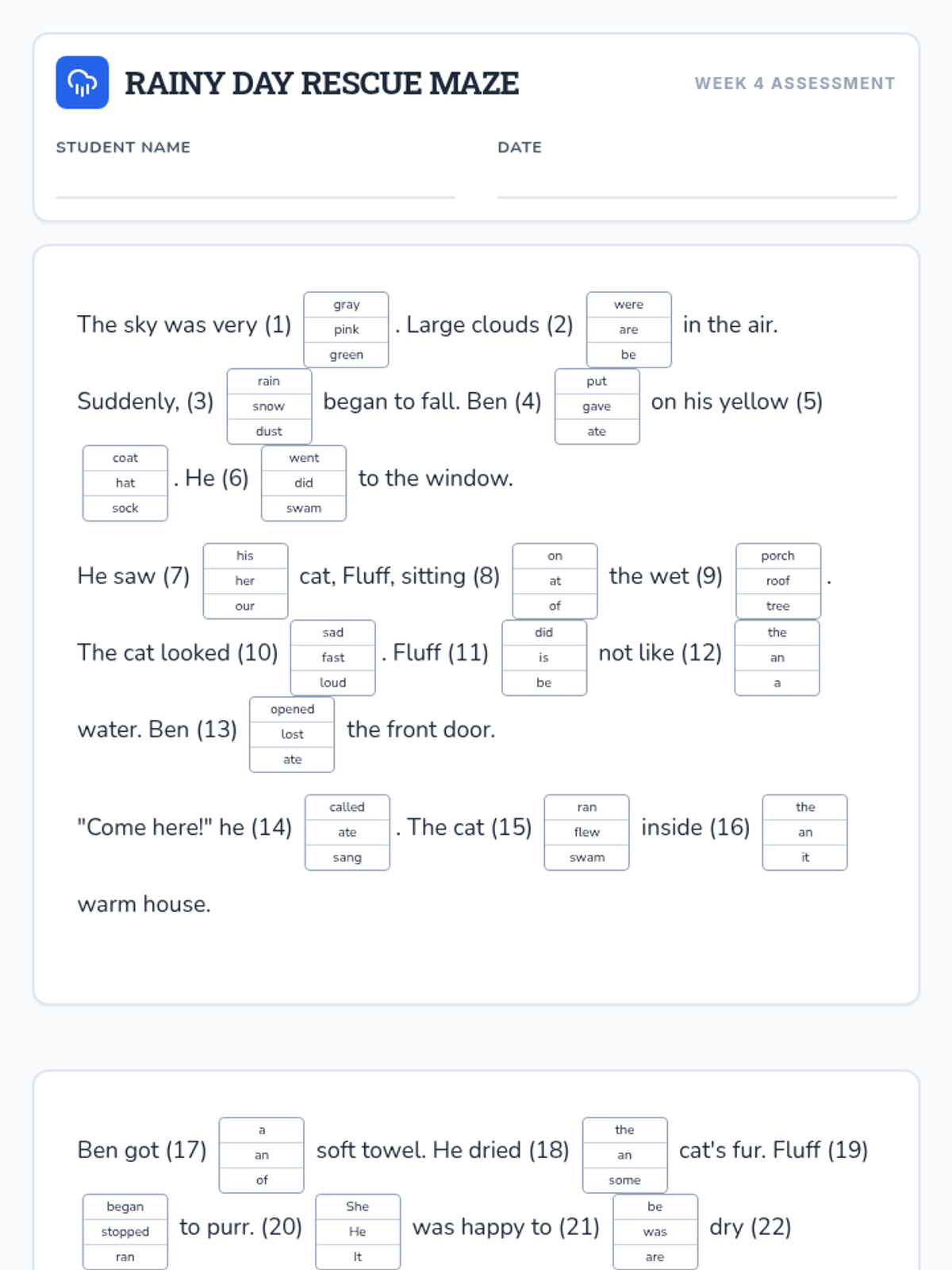
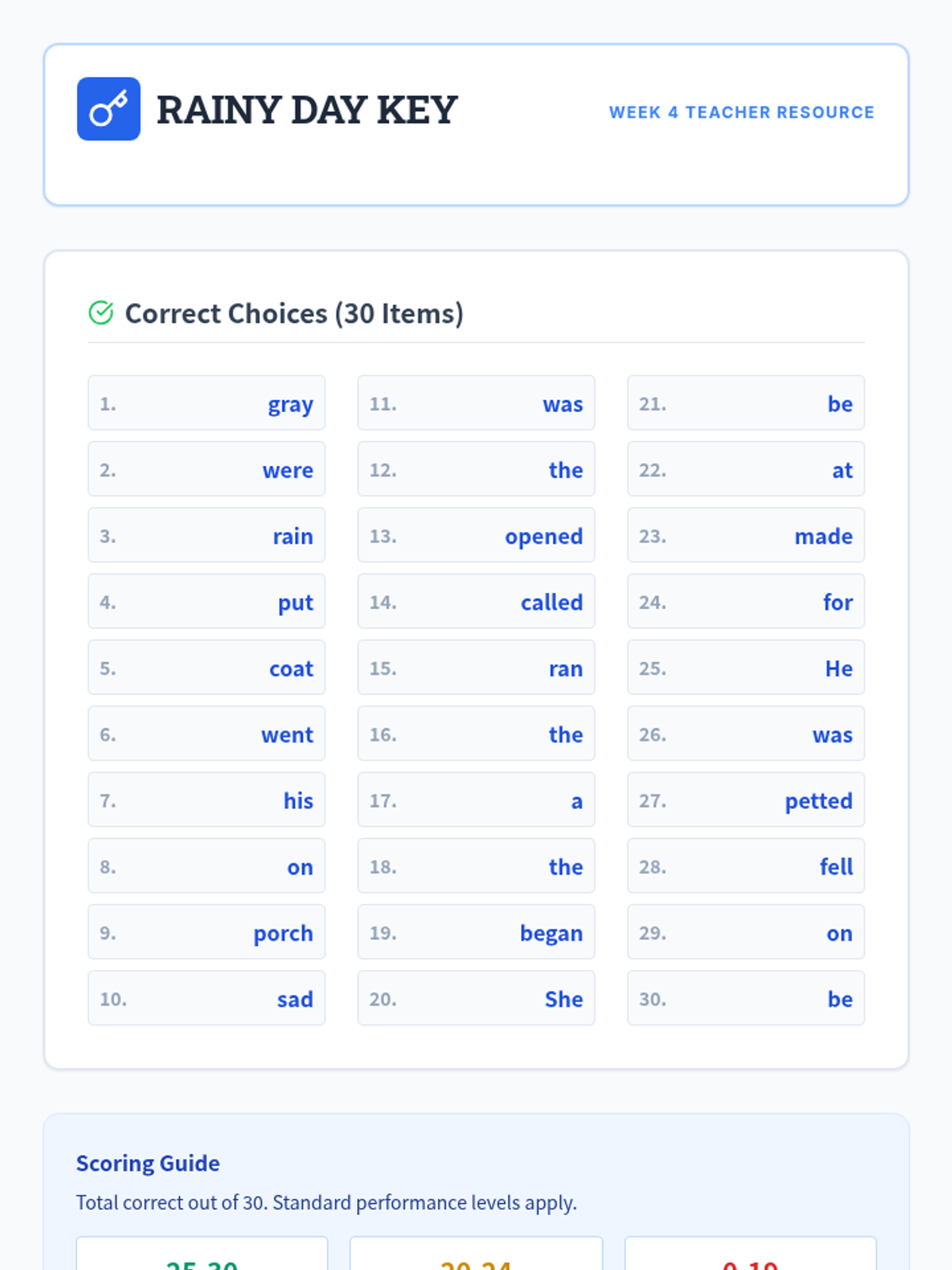
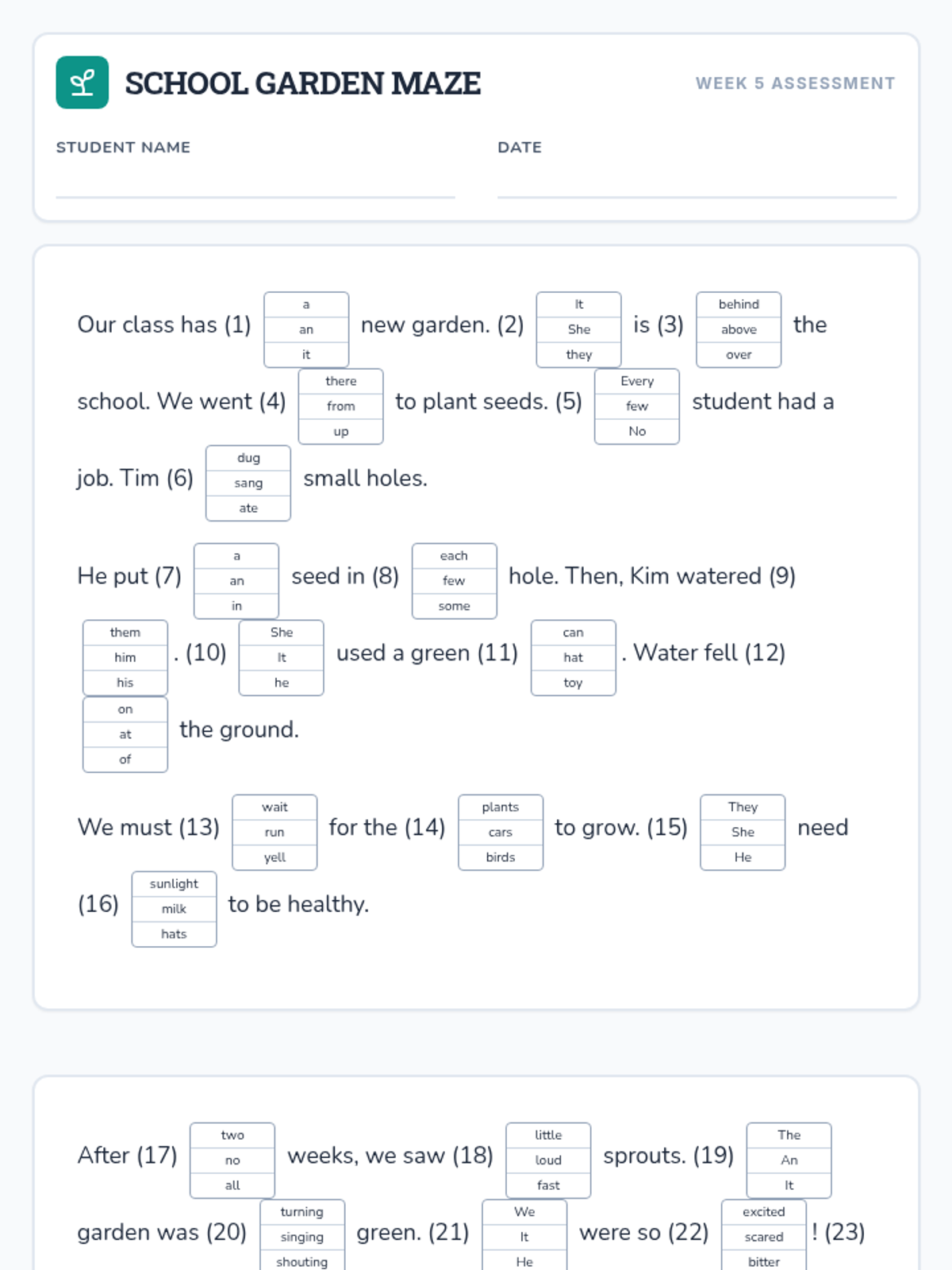
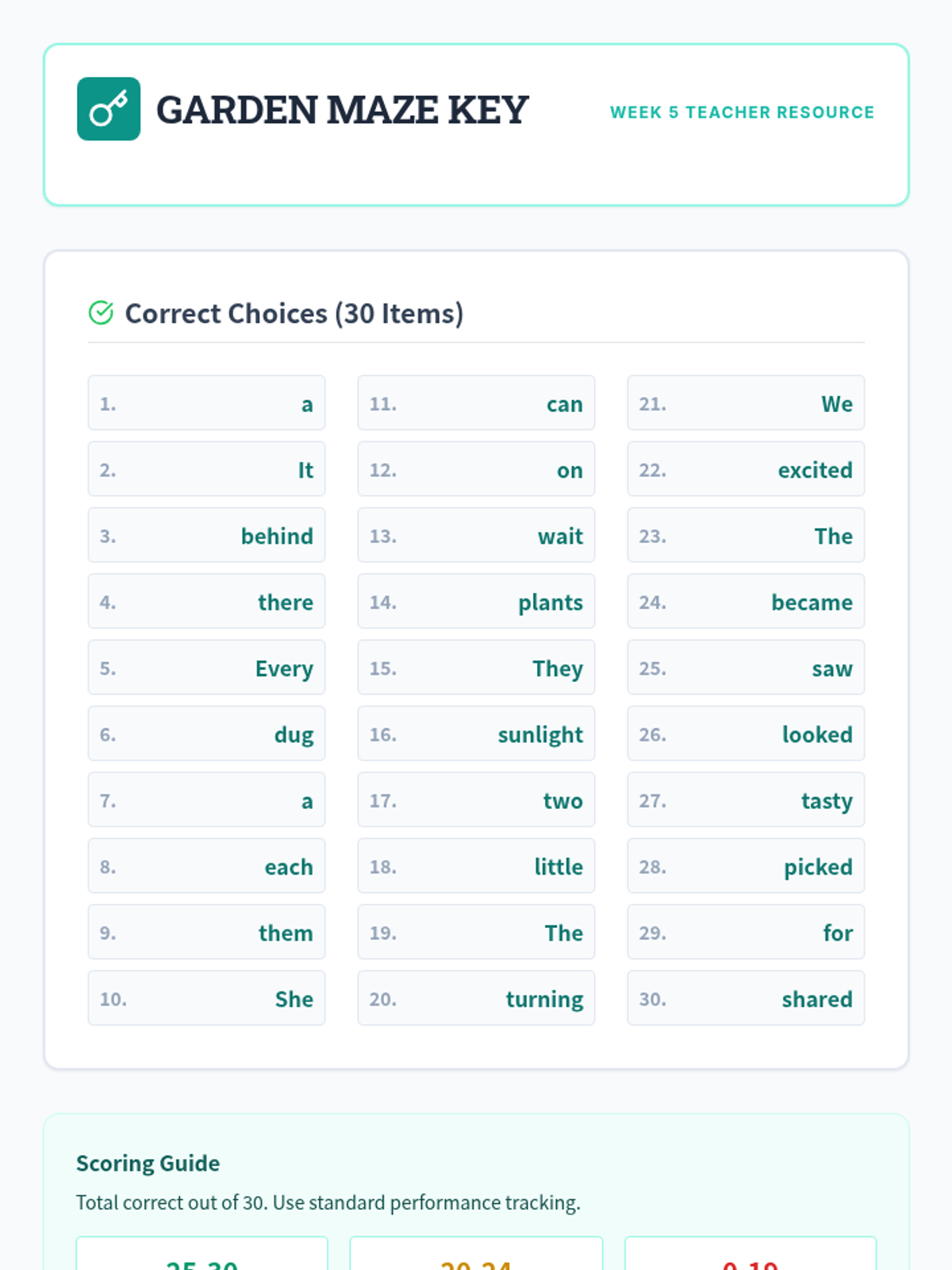
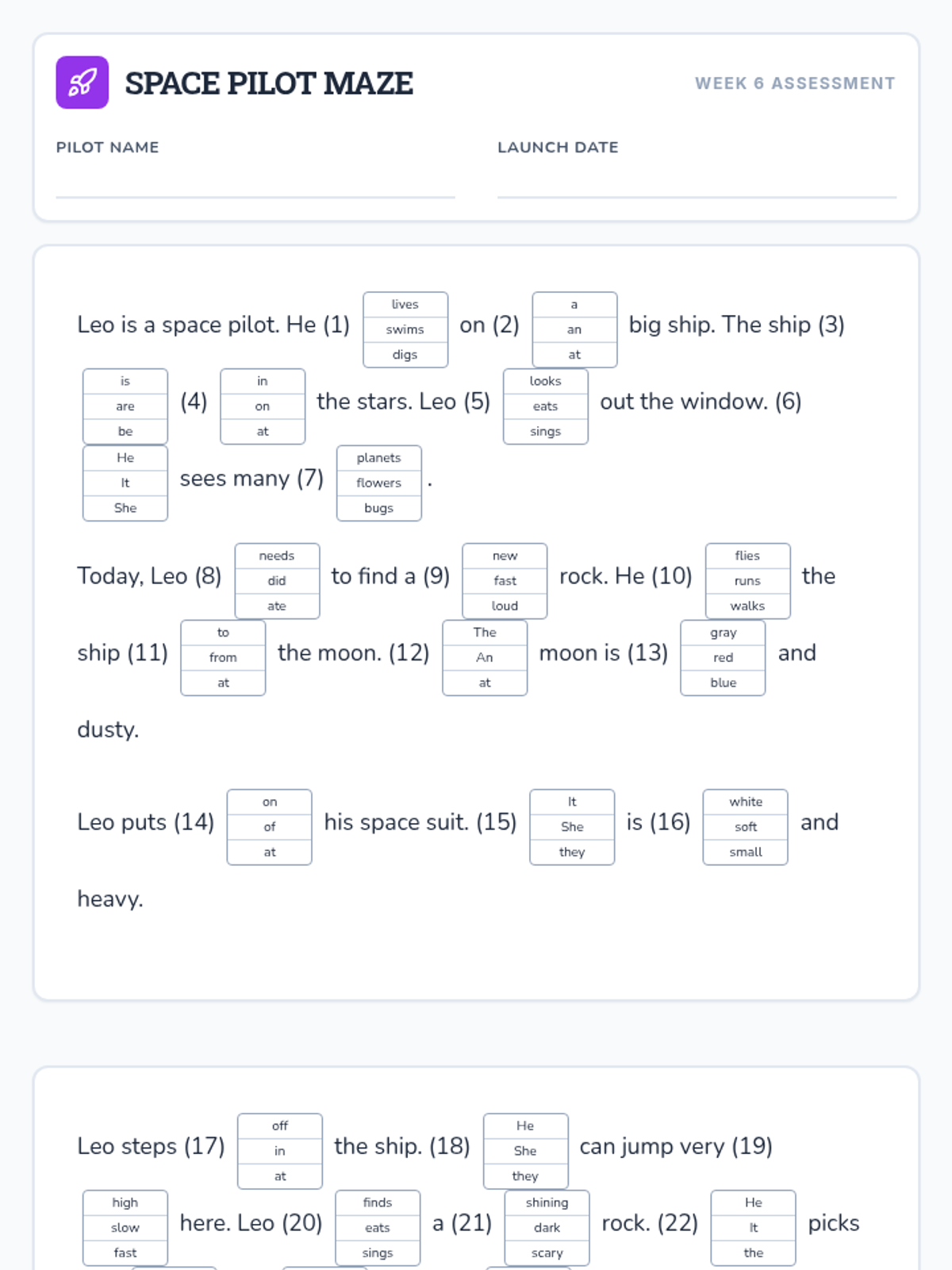
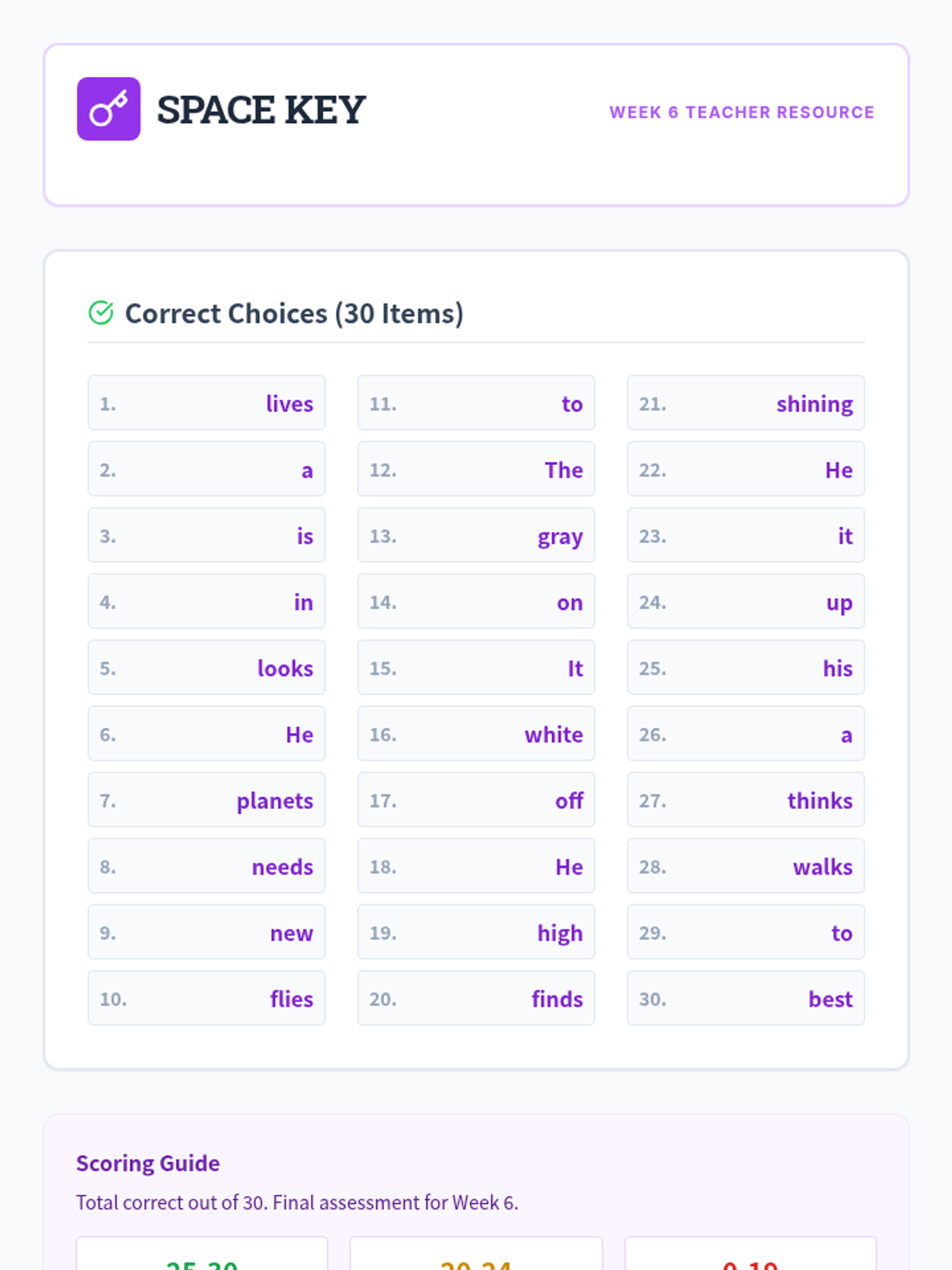
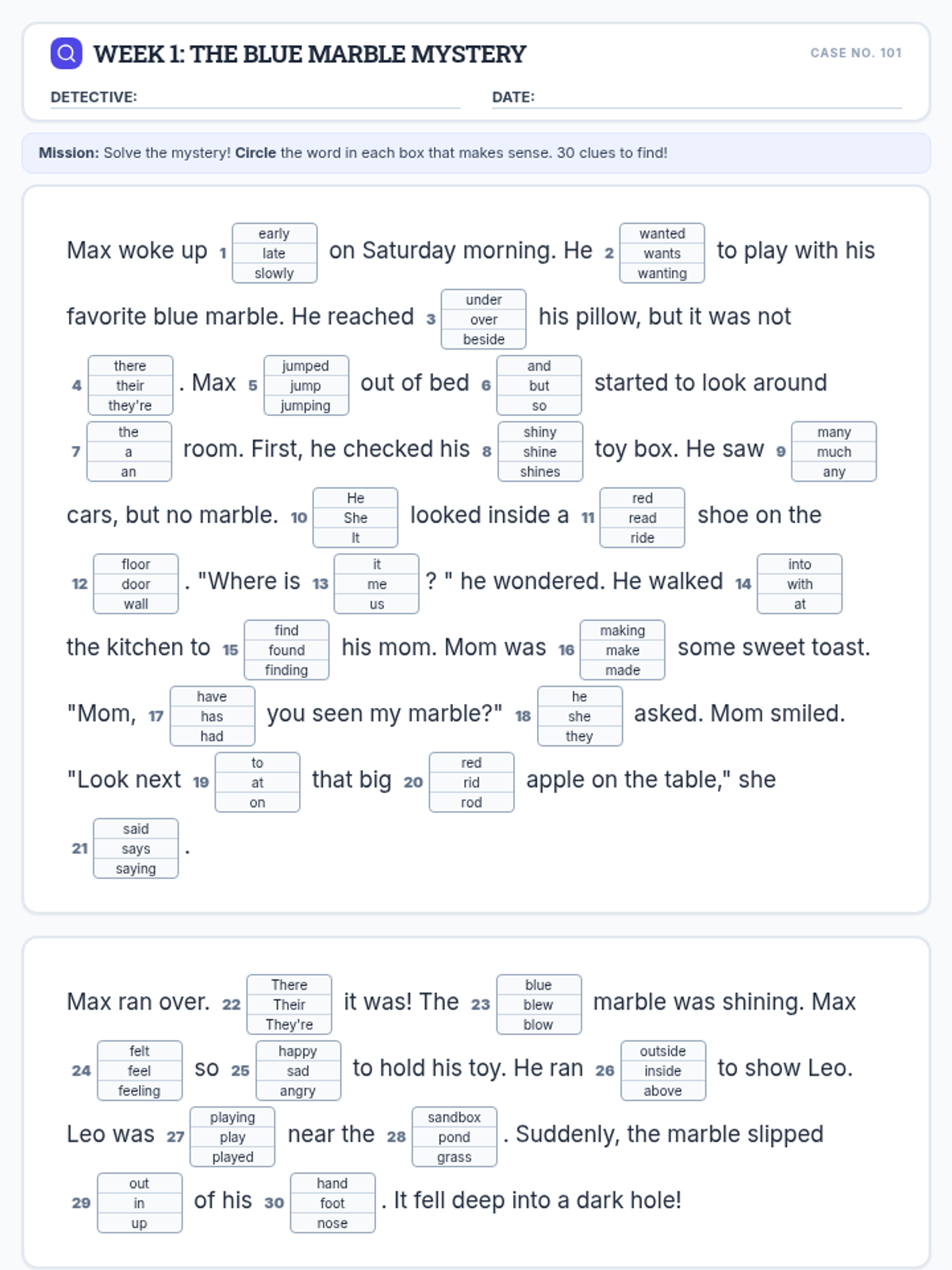
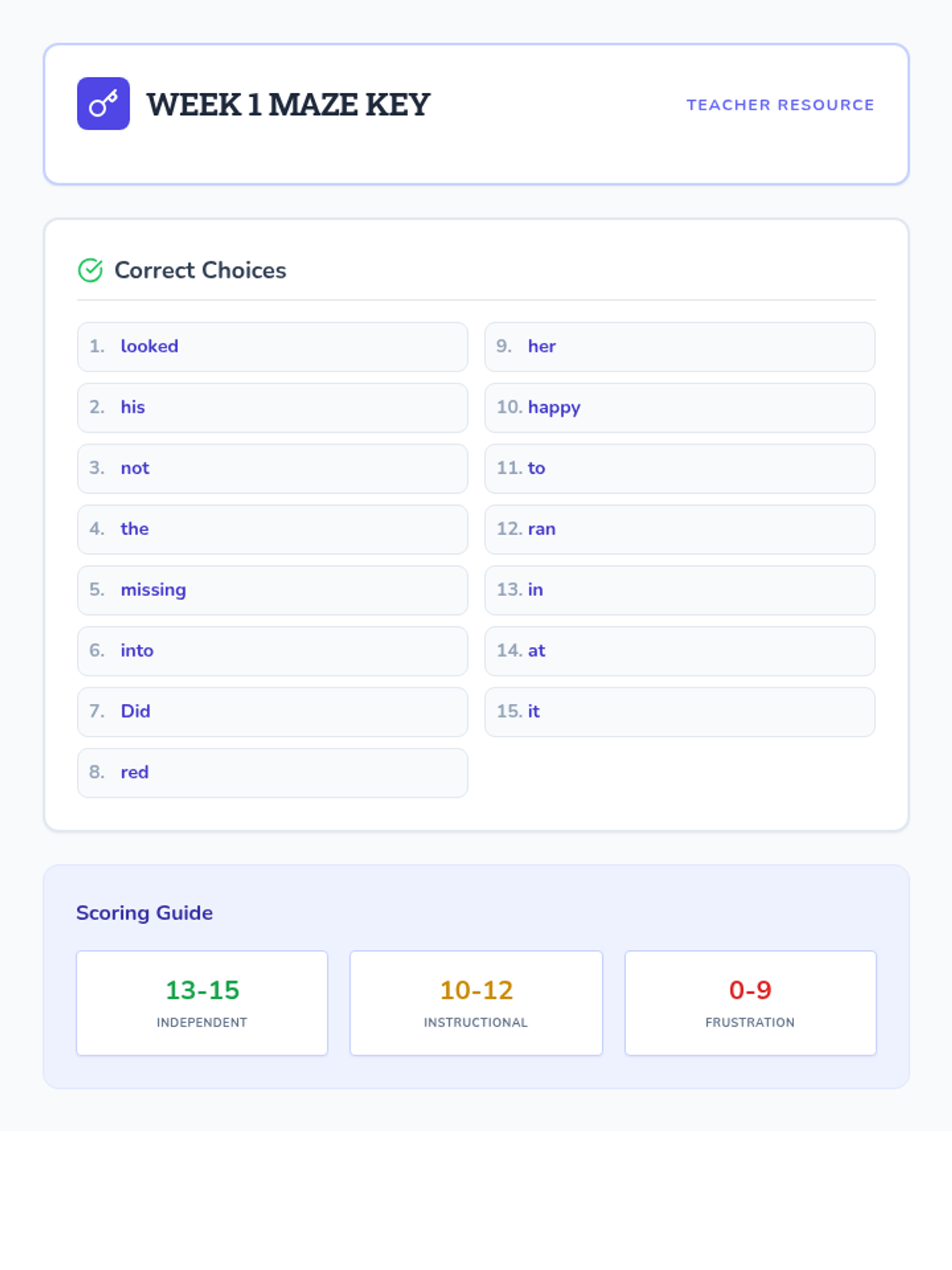
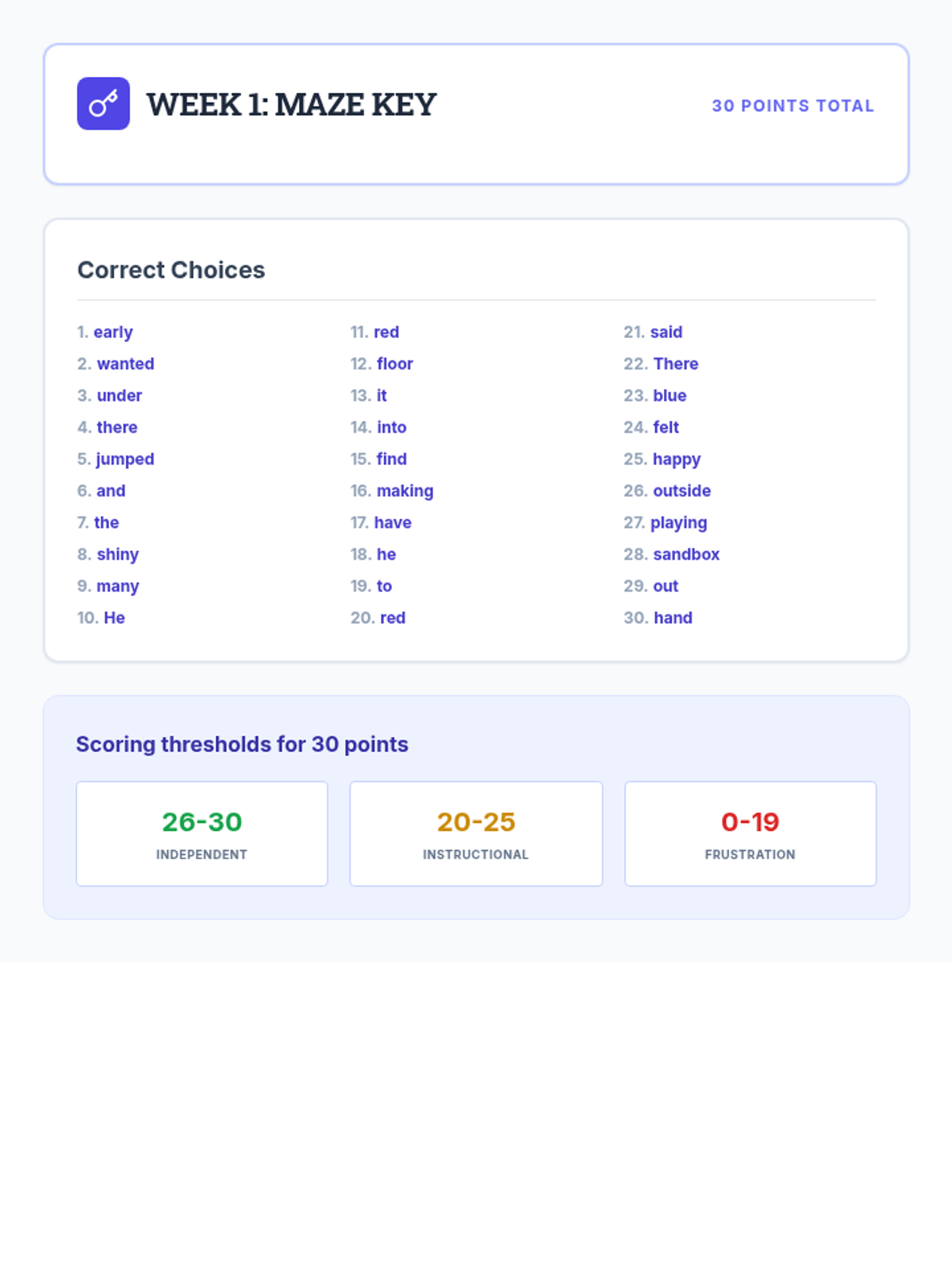
A reading intervention lesson focused on story comprehension using a maze assessment format, where students select the correct word to complete a narrative.
The case begins as Max searches for his favorite blue marble and discovers that some mysteries are harder to solve than they look.
A high-level overview of the Wild Writing Adventure curriculum, including teacher guides, scope and sequence, and implementation strategies.
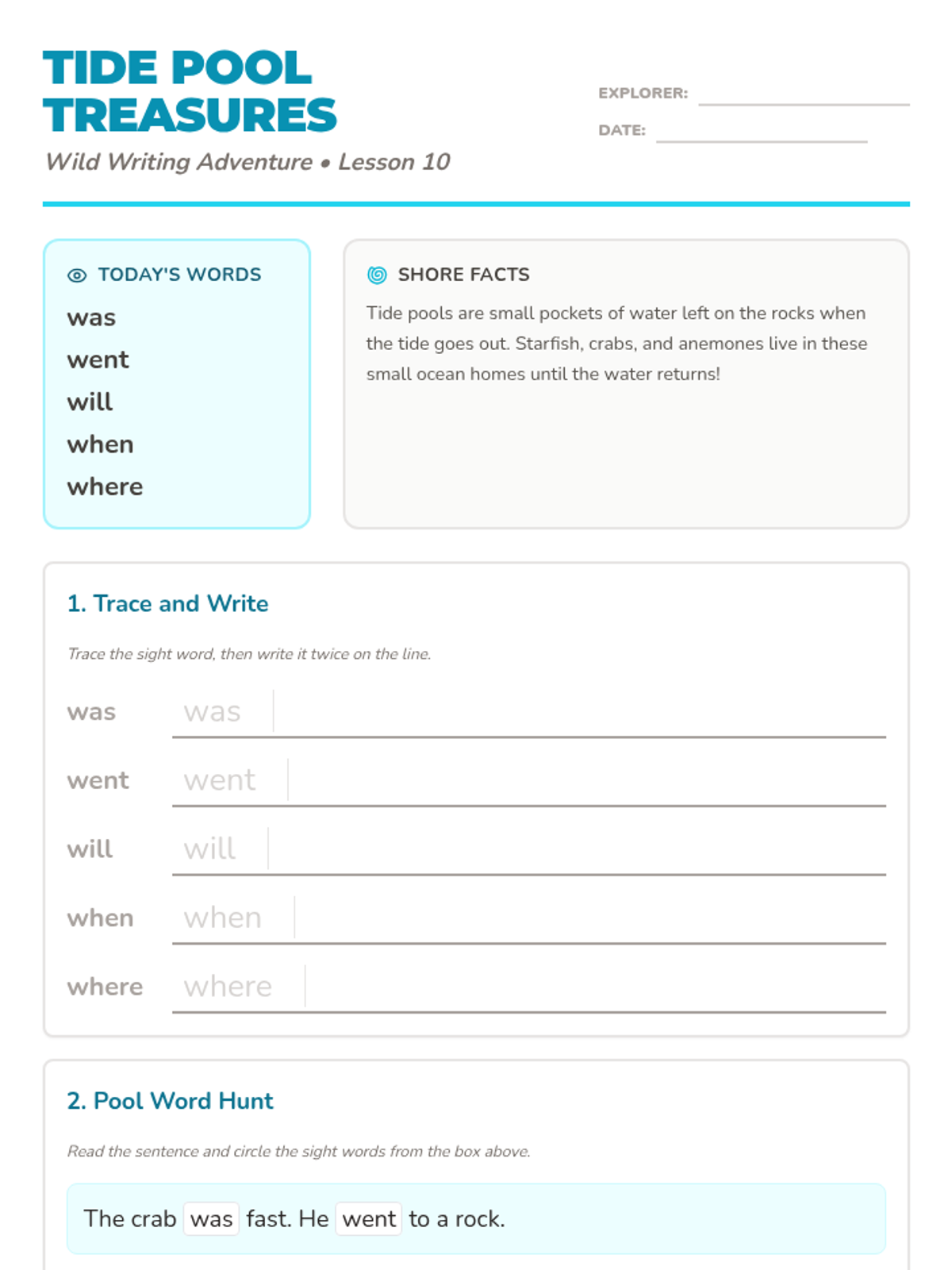
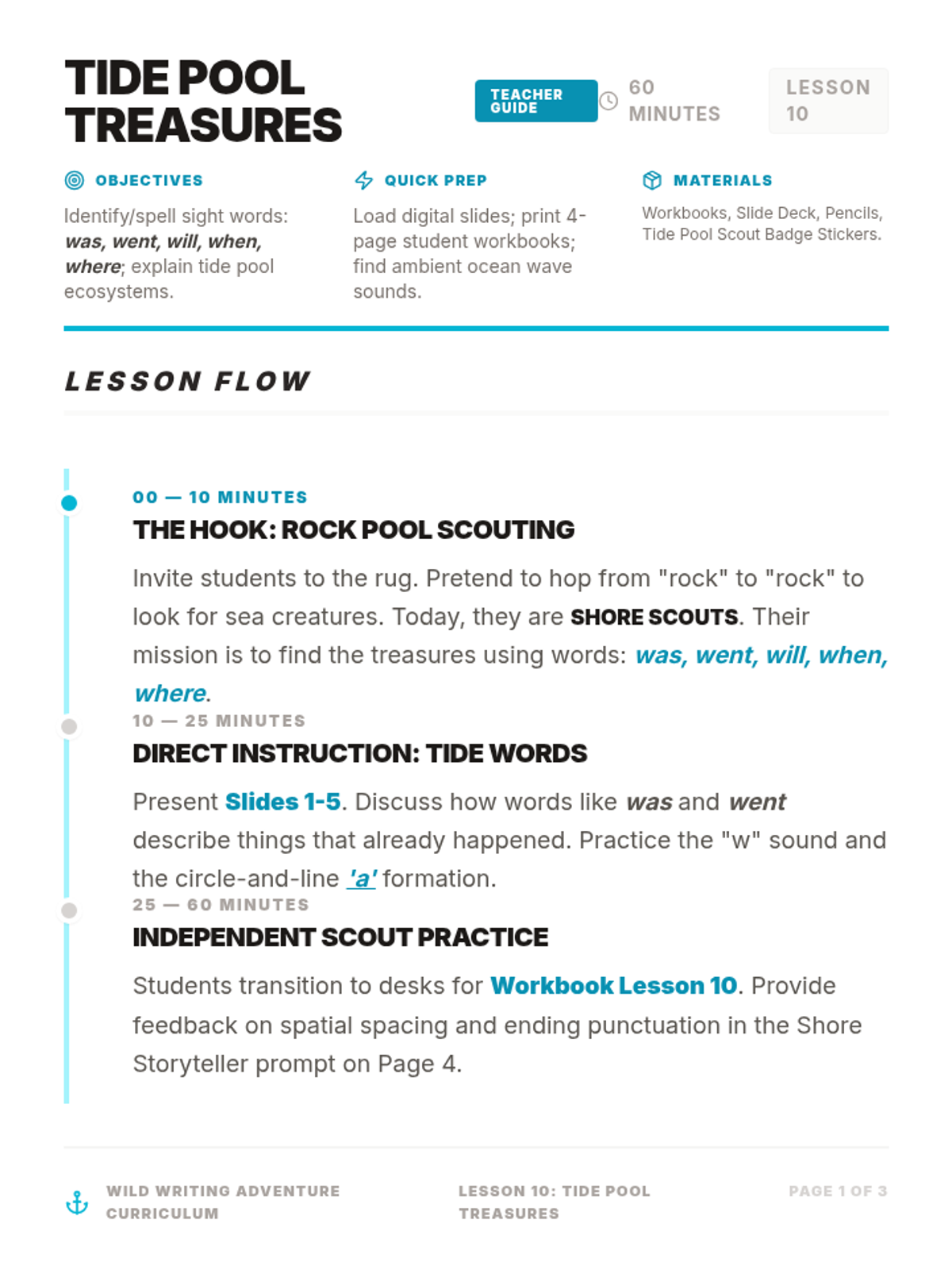
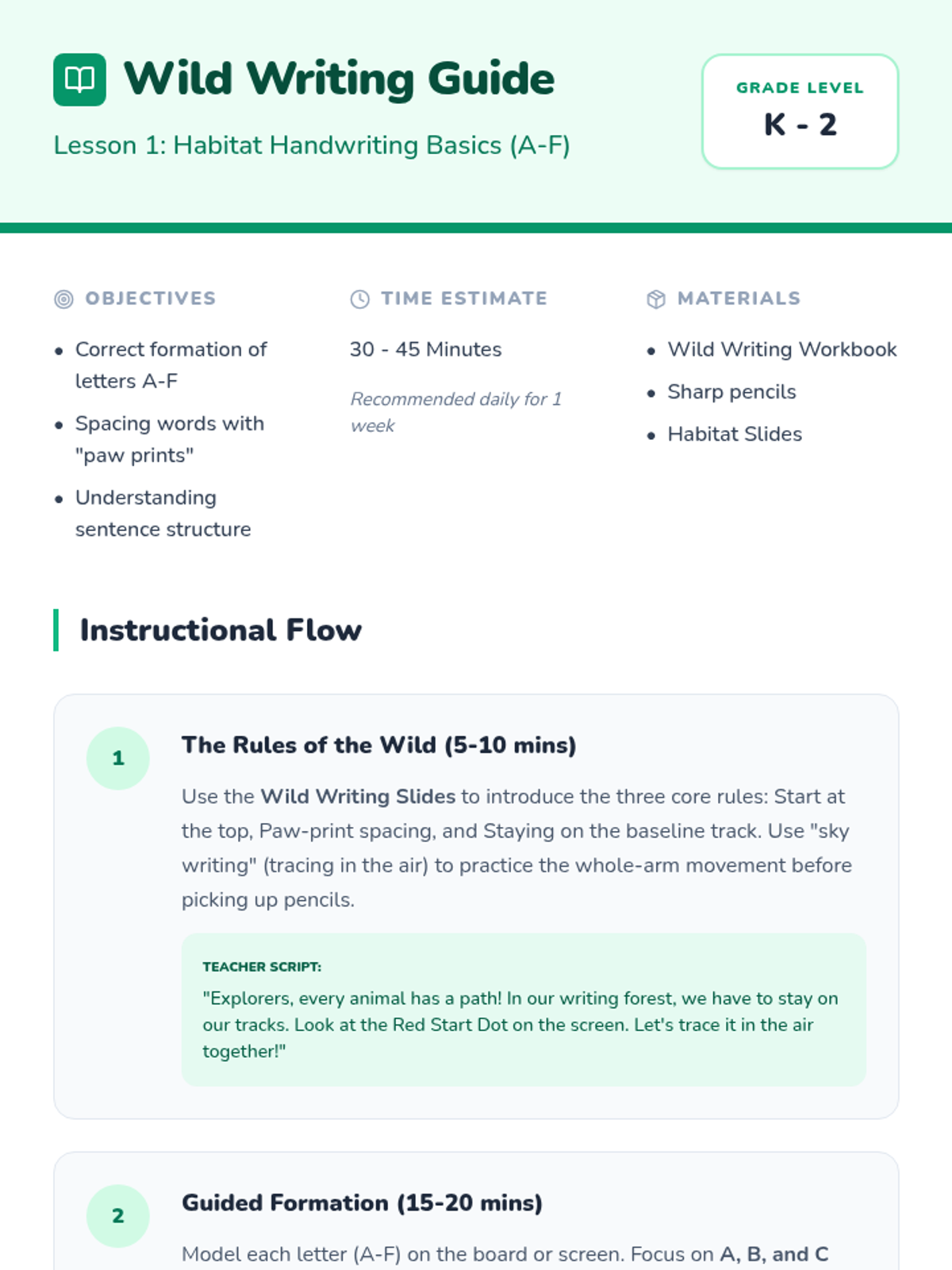
Explore the rocky shore to discover sight words while meeting starfish, crabs, and sea anemones in colorful tide pools.
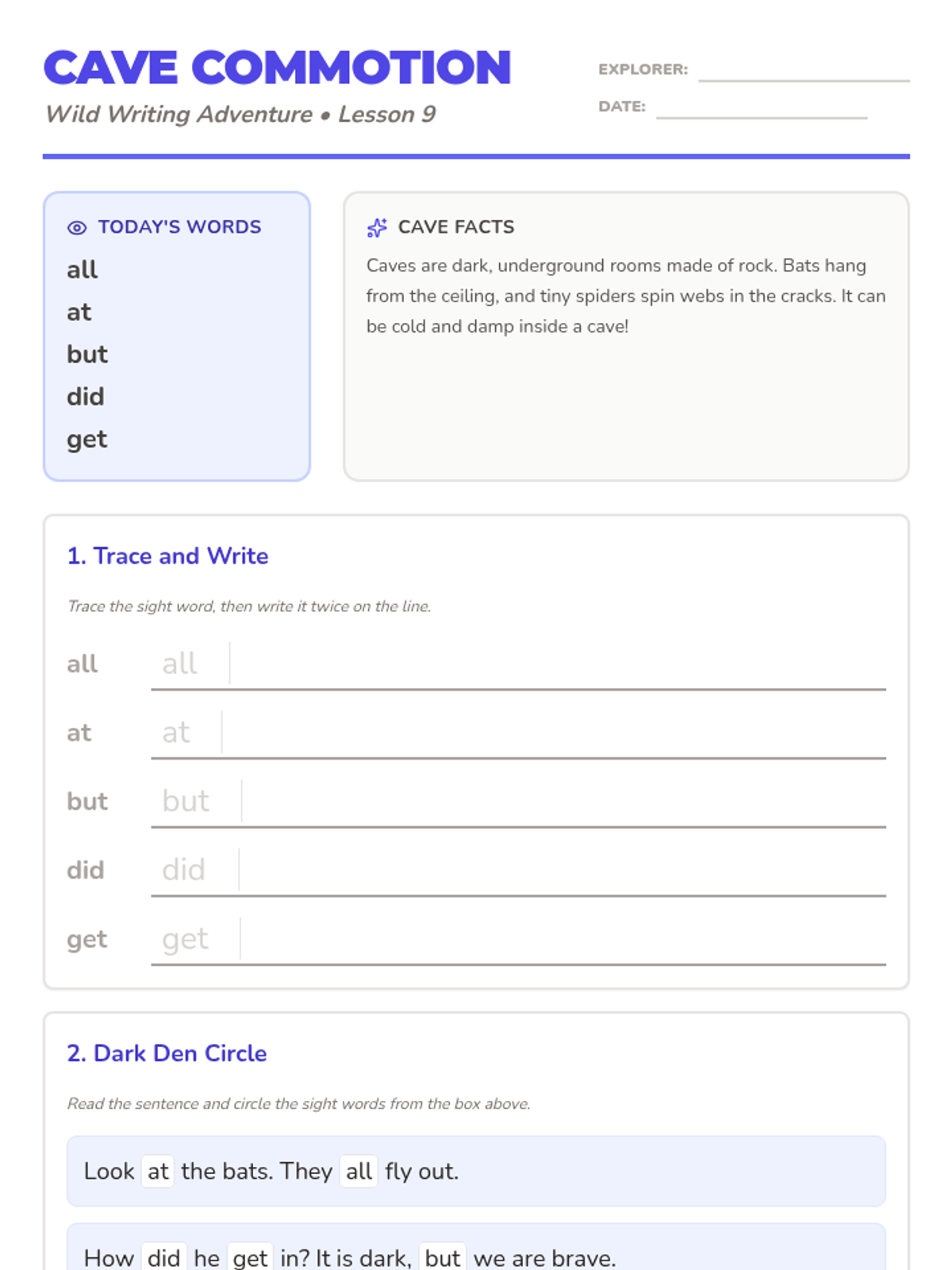
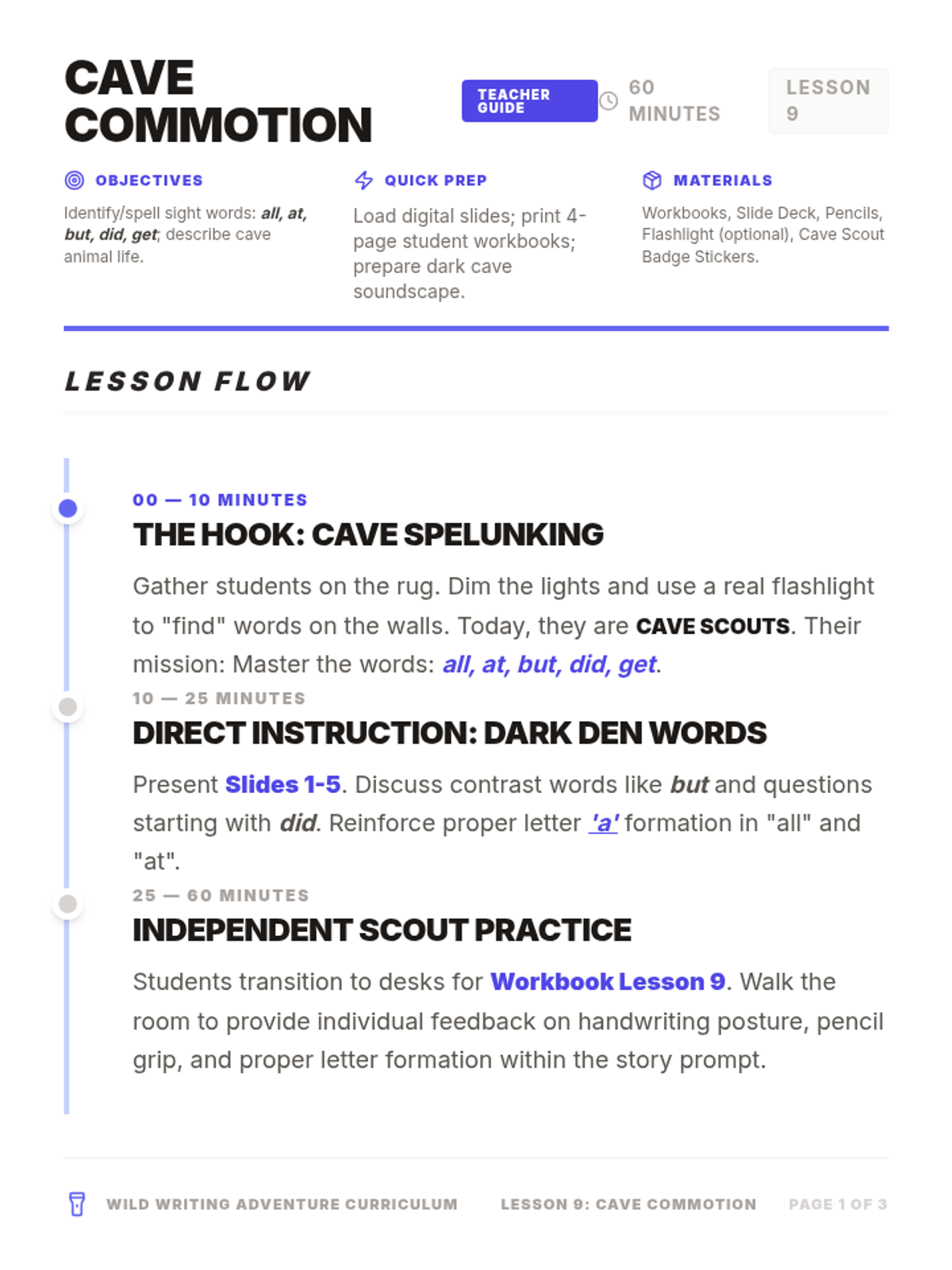
Venture into the mysterious world of caves to master essential sight words while meeting bats, spiders, and salamanders.
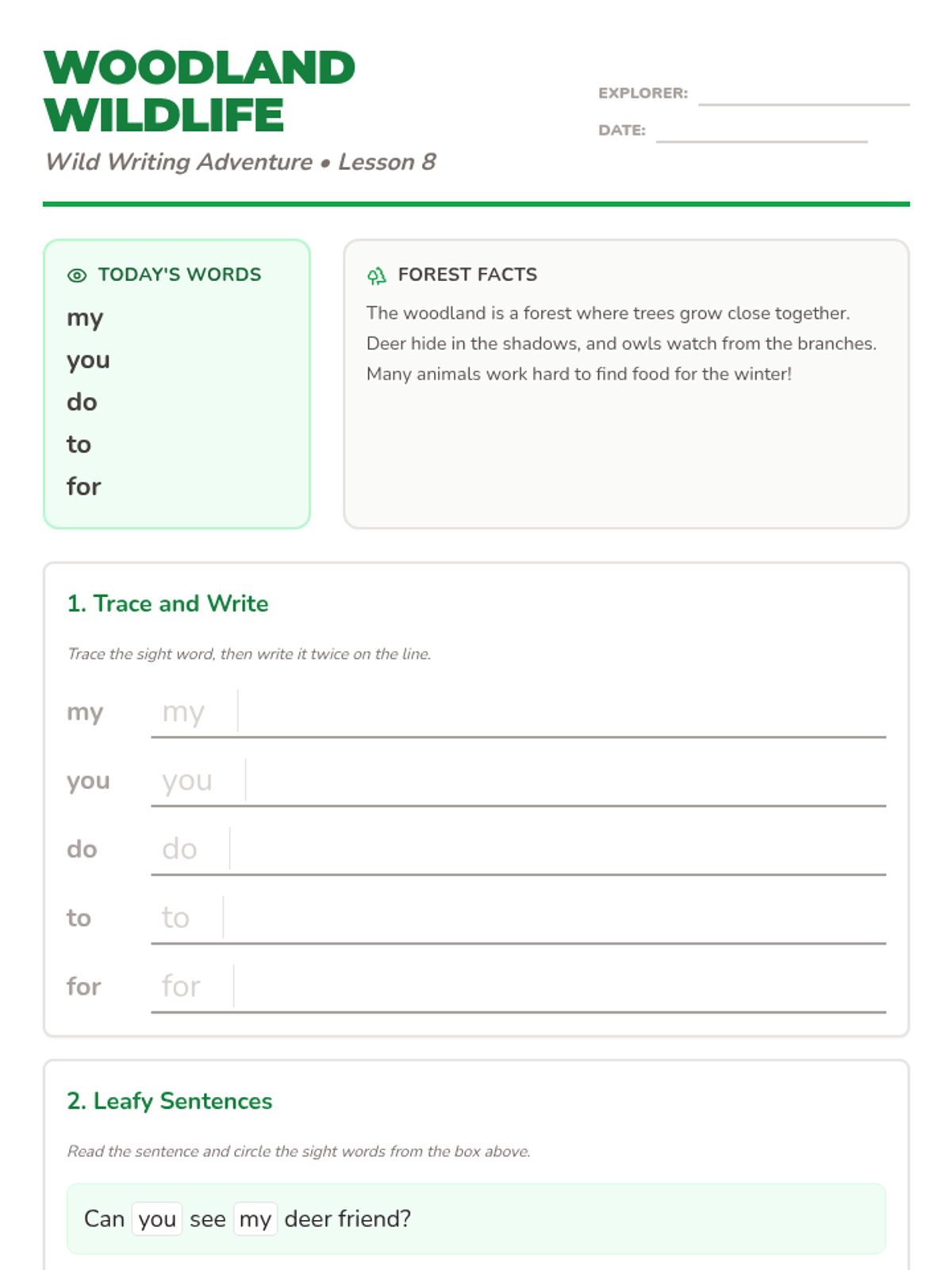
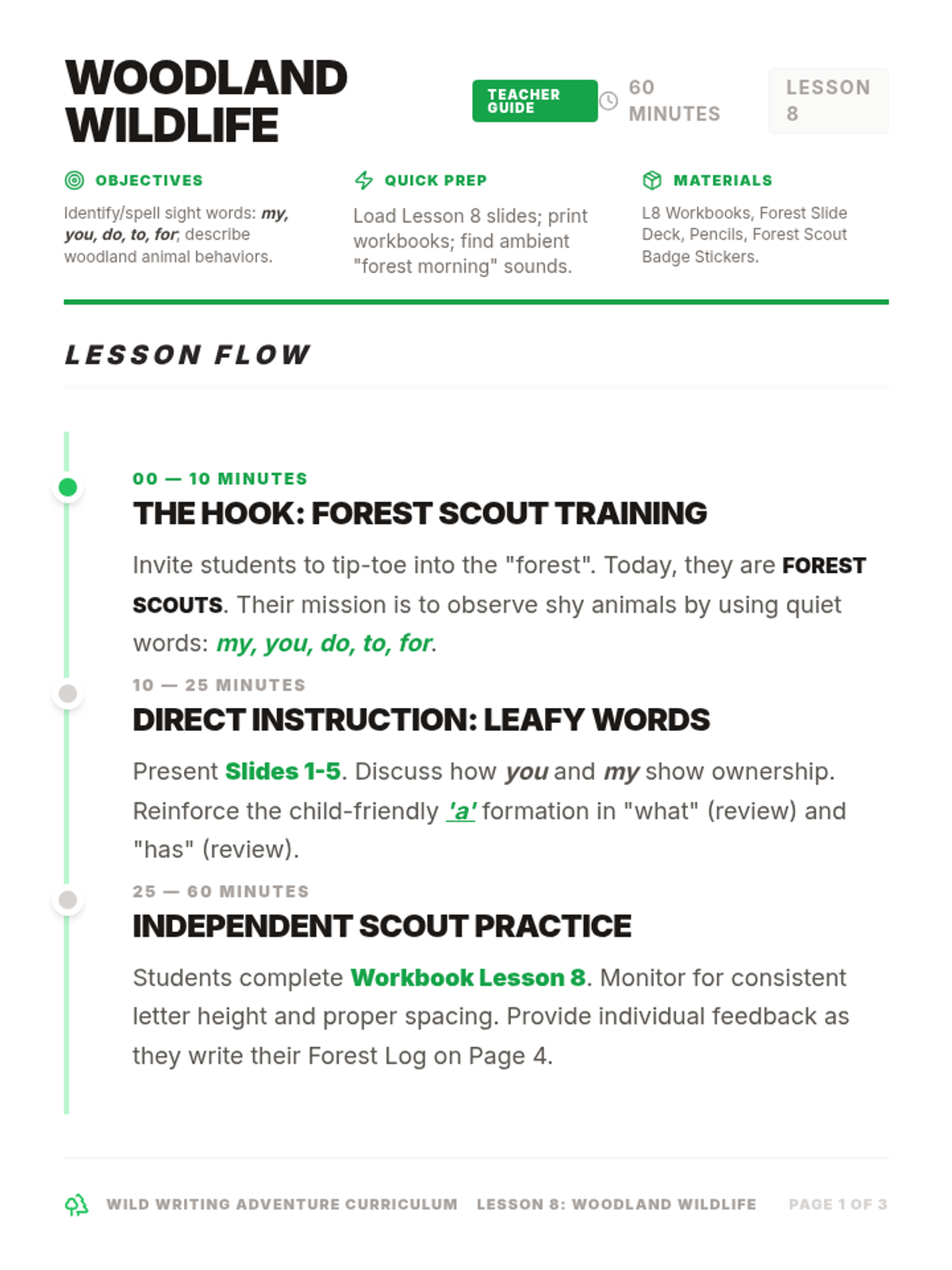
Explore the leafy woodland forest to master essential sight words while meeting graceful deer, wise owls, and busy woodpeckers.
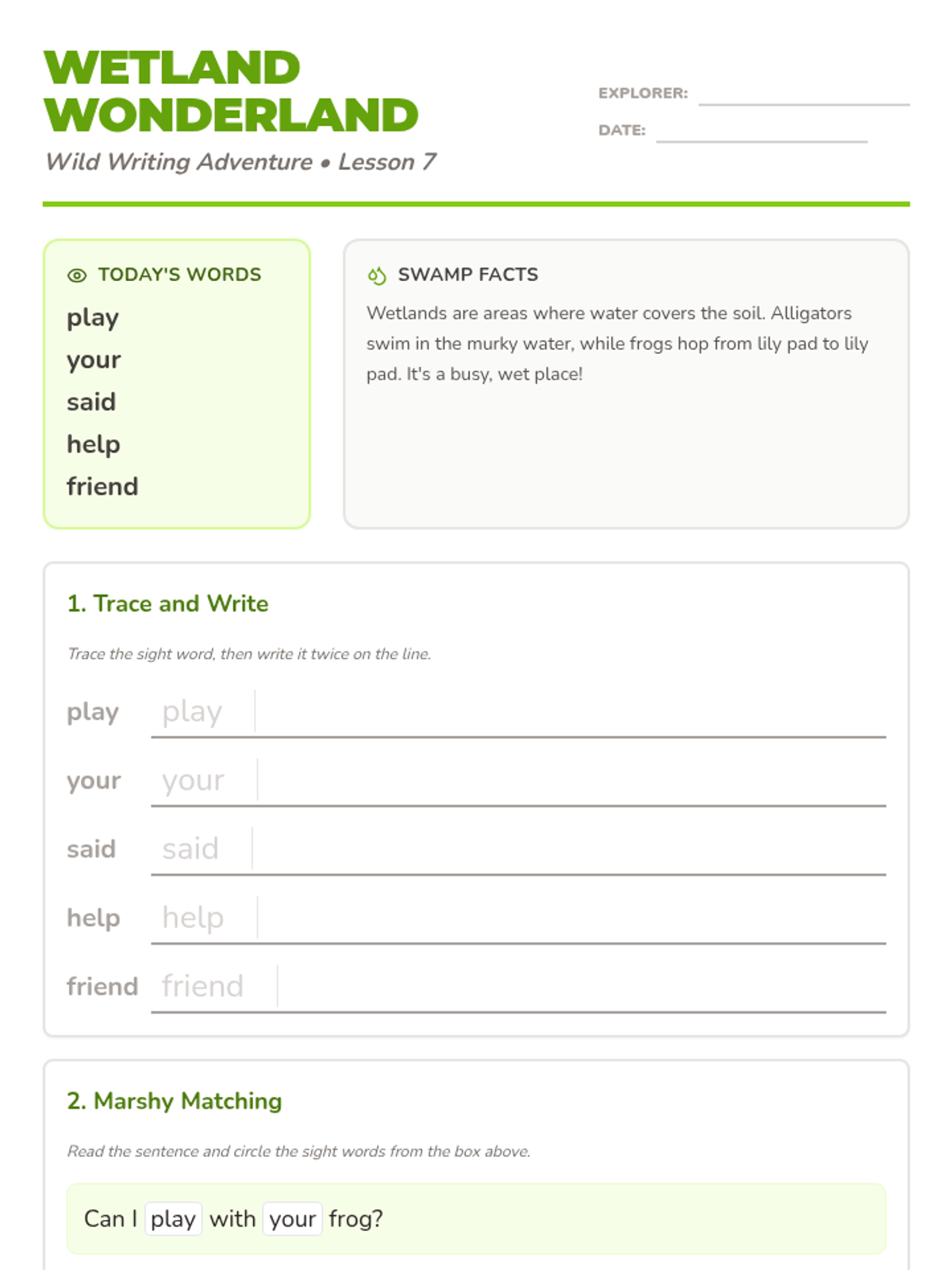
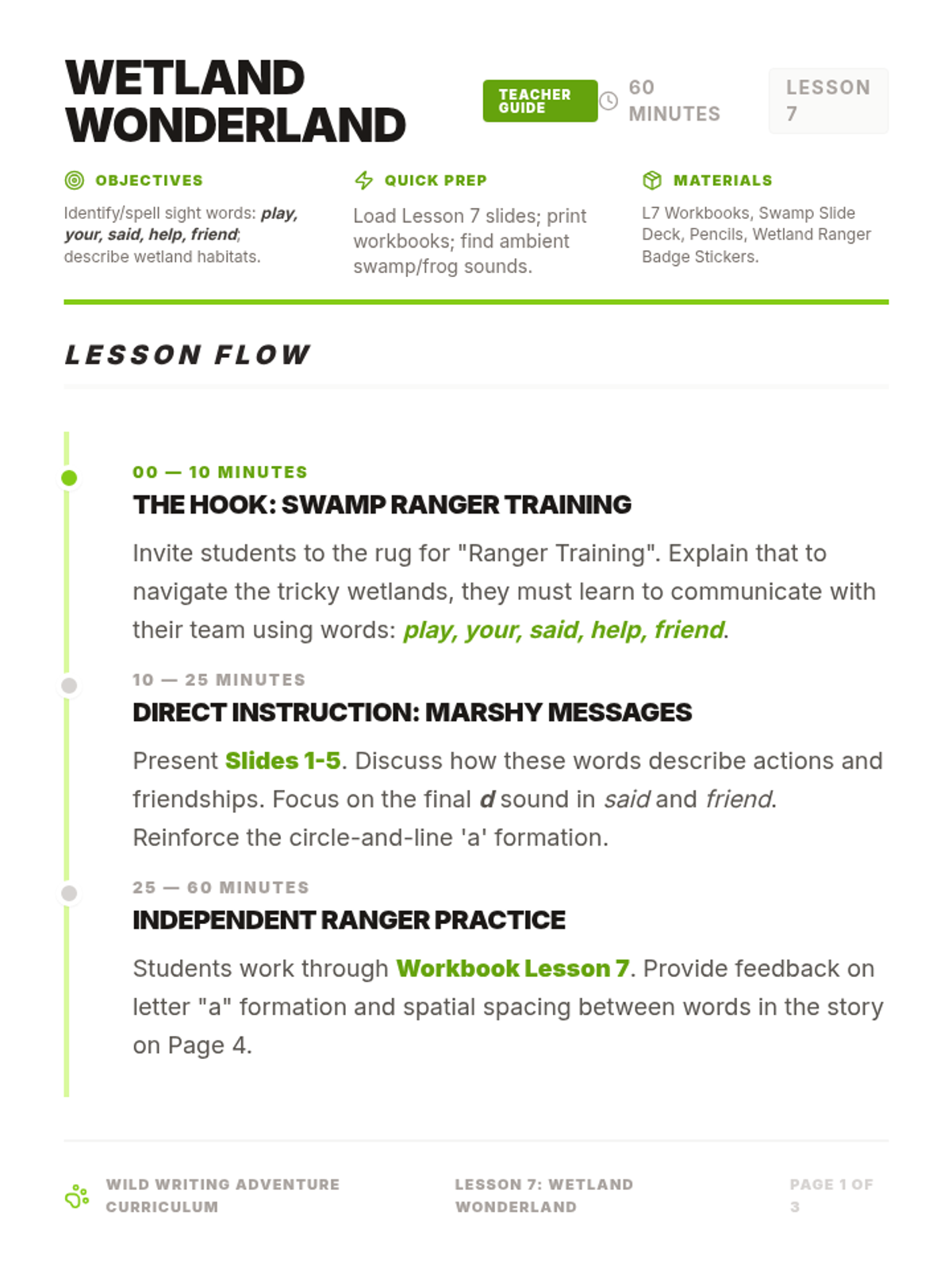
Squelch through the marshy wetlands to master descriptive sight words while spotting alligators, frogs, and dragonflies.
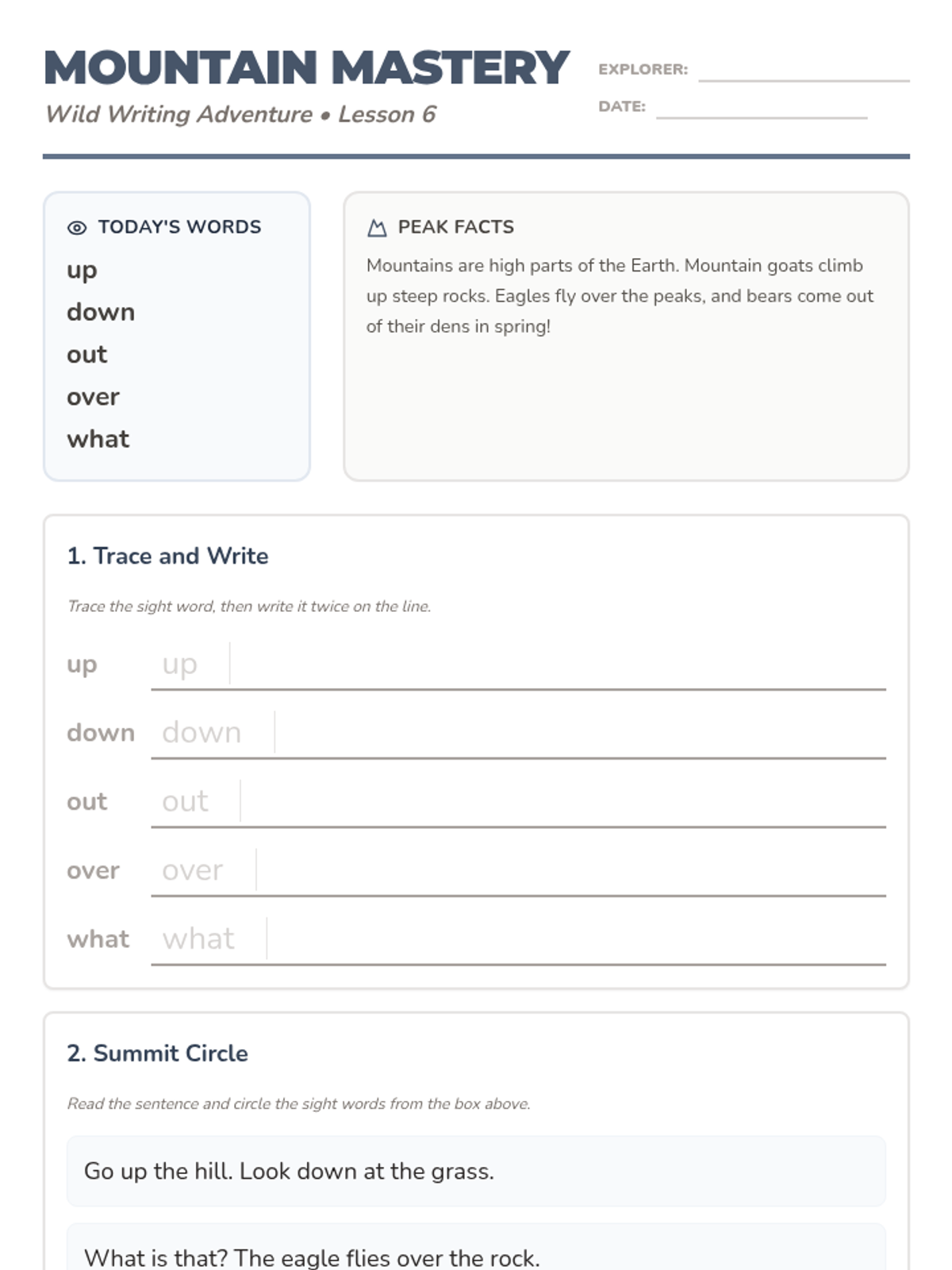
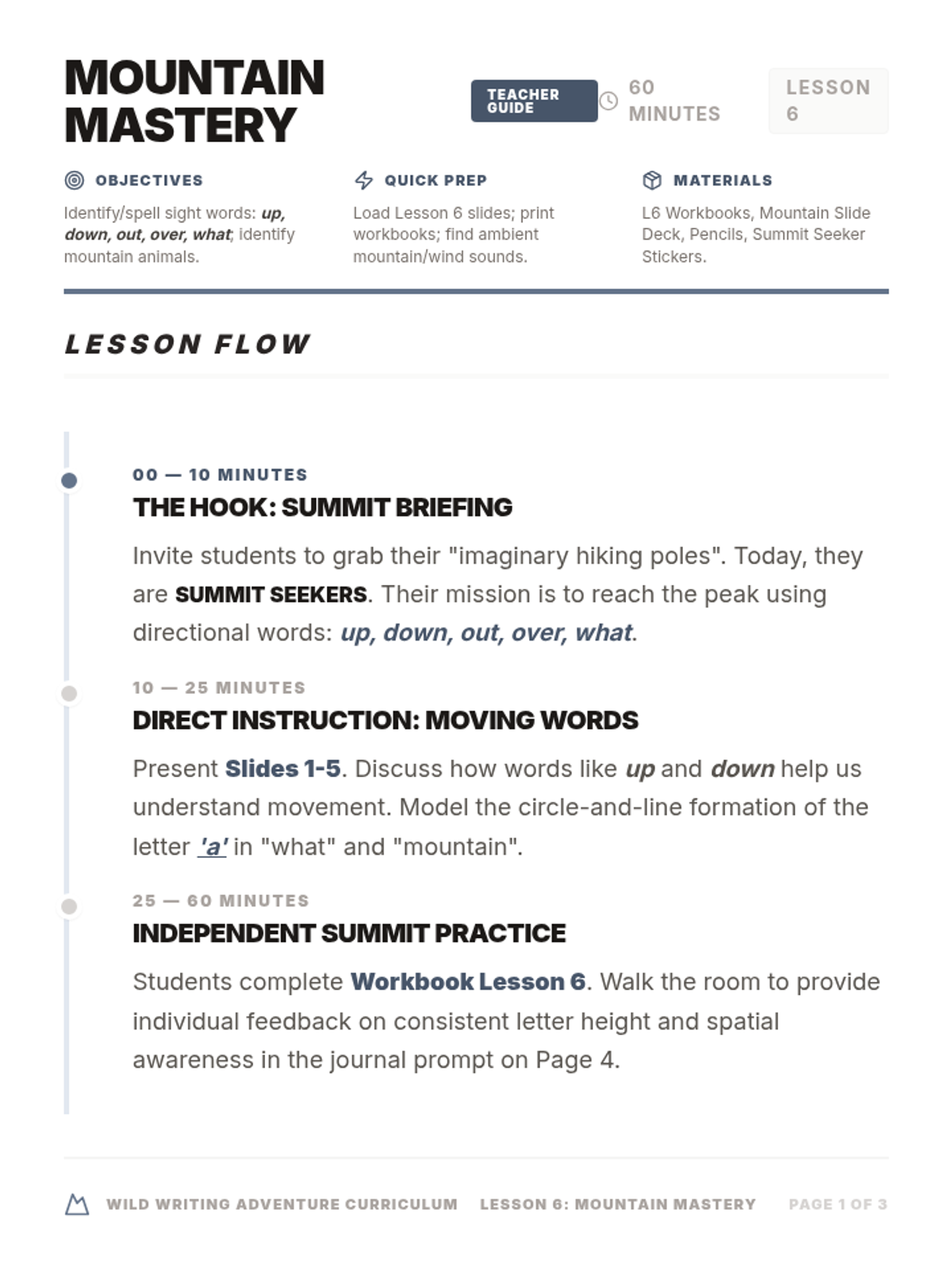
Climb to the highest peaks to master directional sight words while meeting mountain goats, eagles, and black bears.
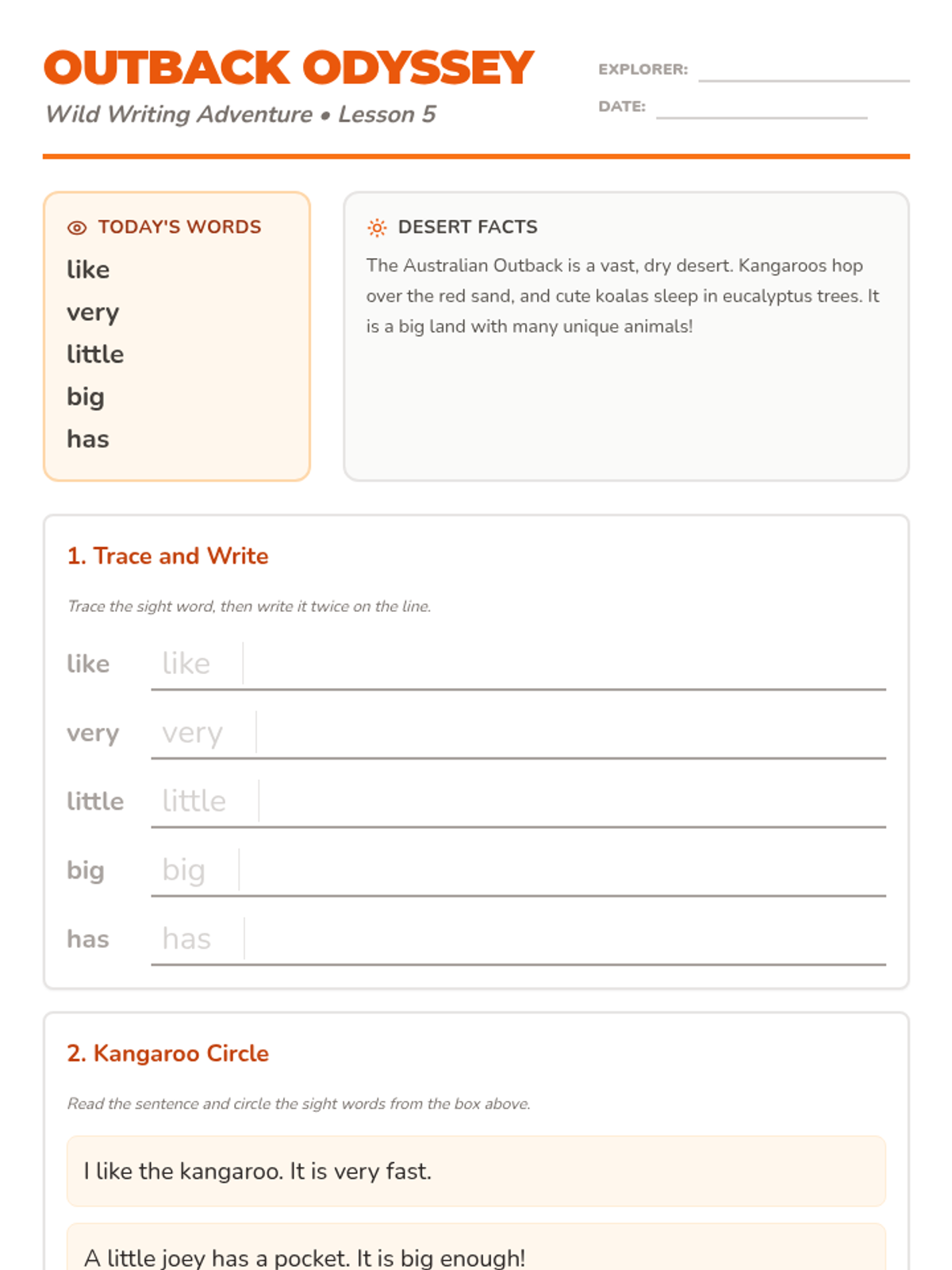
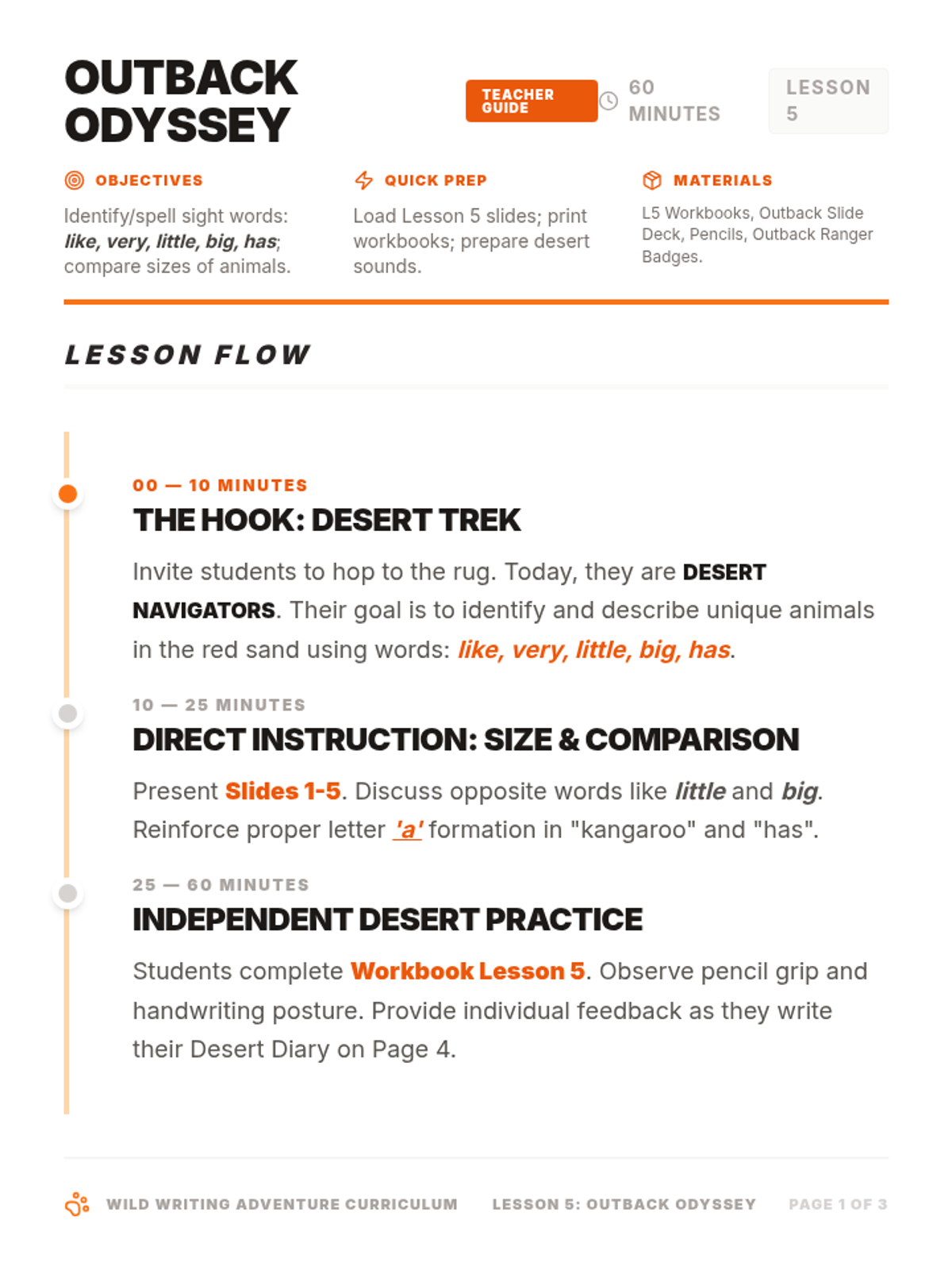
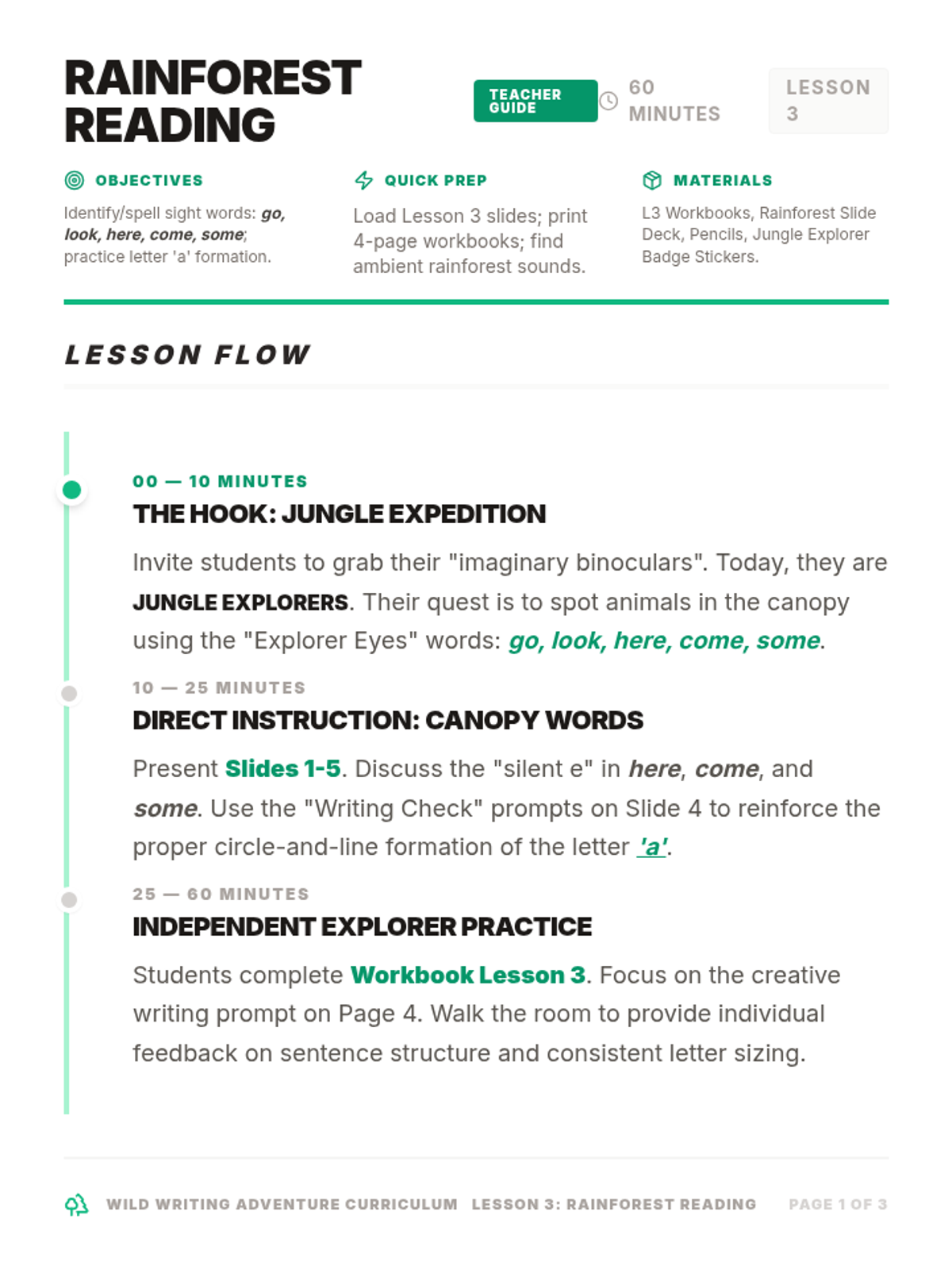
Hop through the sun-drenched Australian Outback to master new sight words while meeting kangaroos, koalas, and wombats.
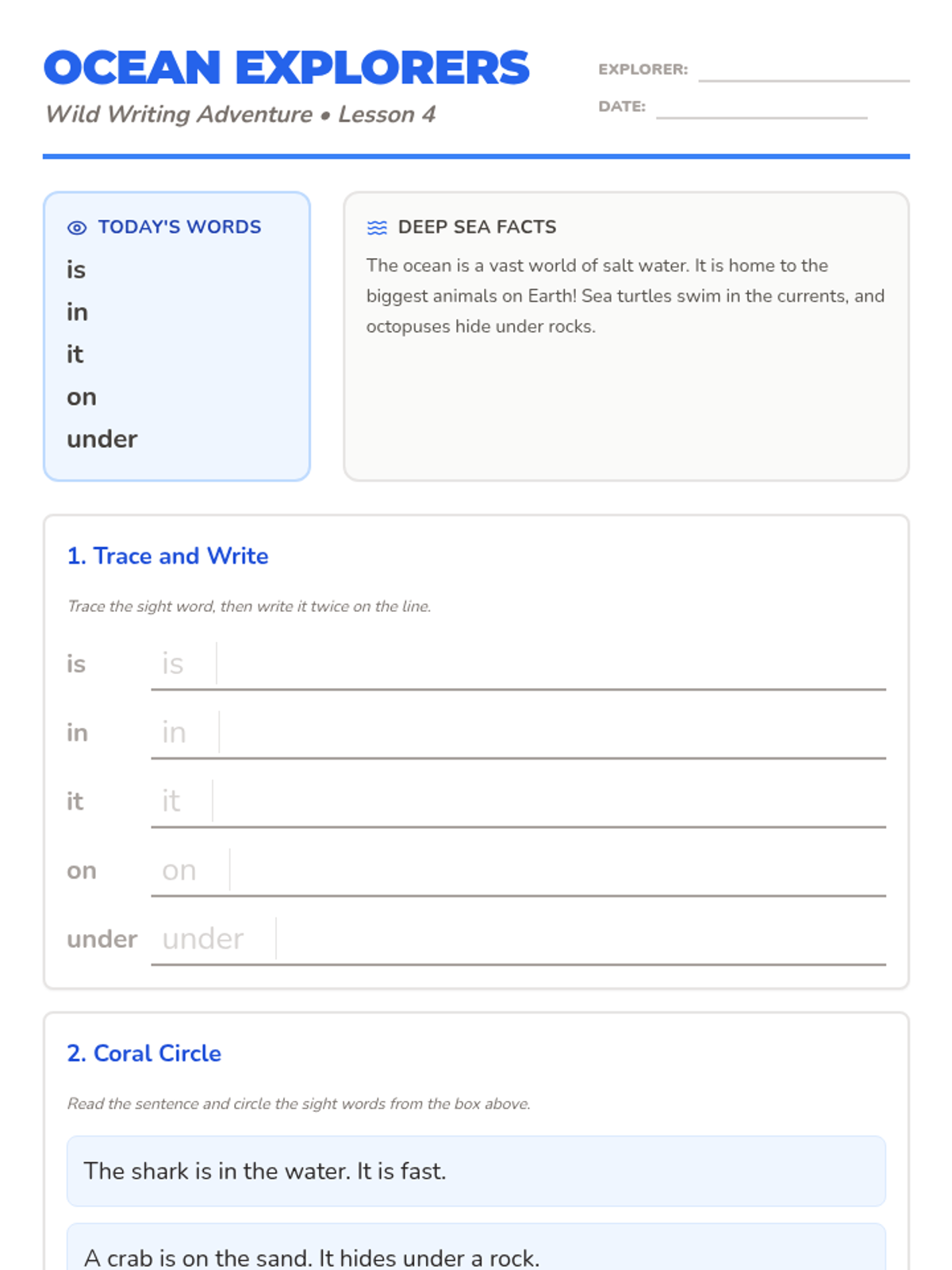
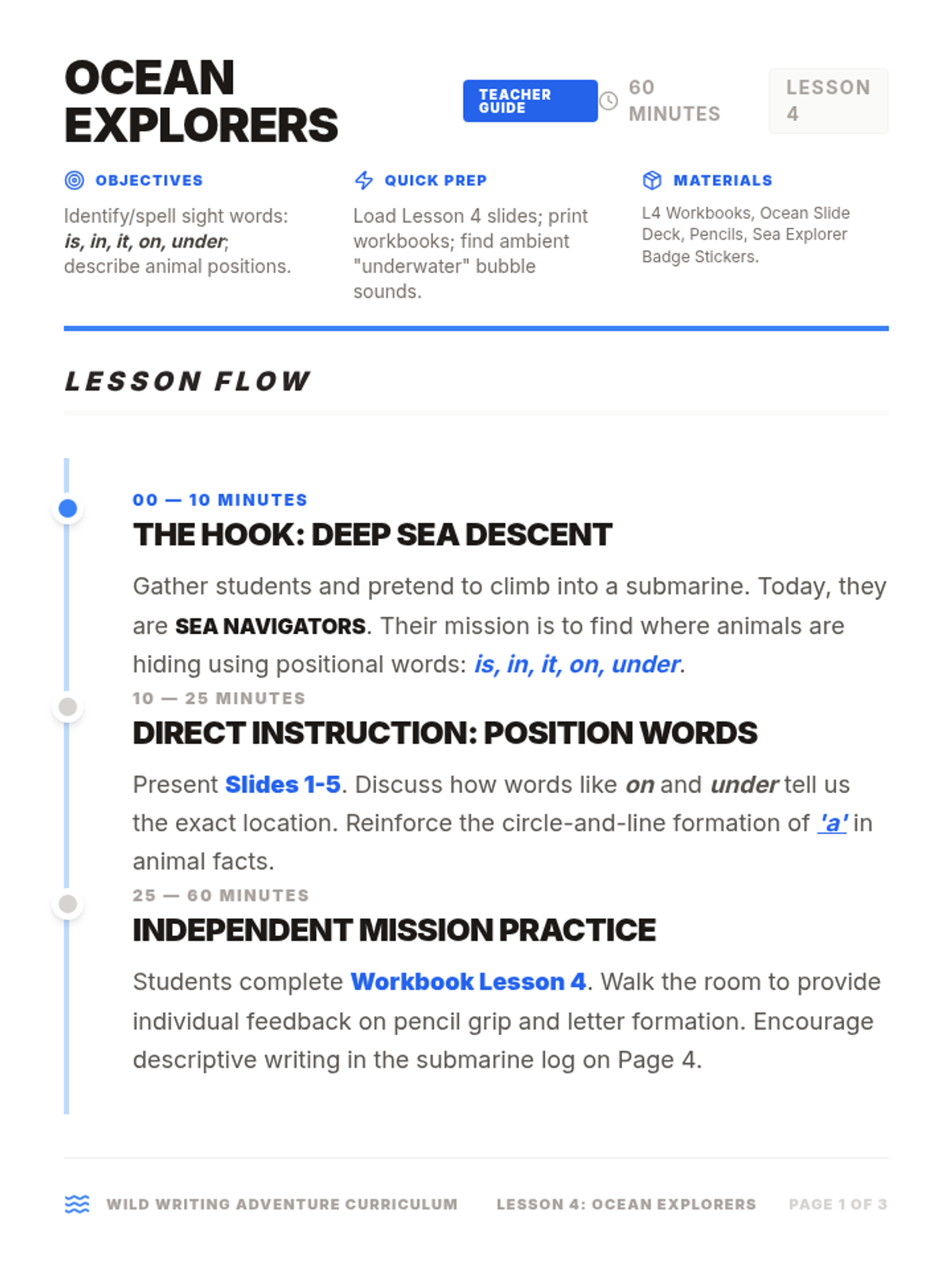
Dive into the deep blue ocean to master positional sight words while discovering sea turtles, sharks, and octopuses.
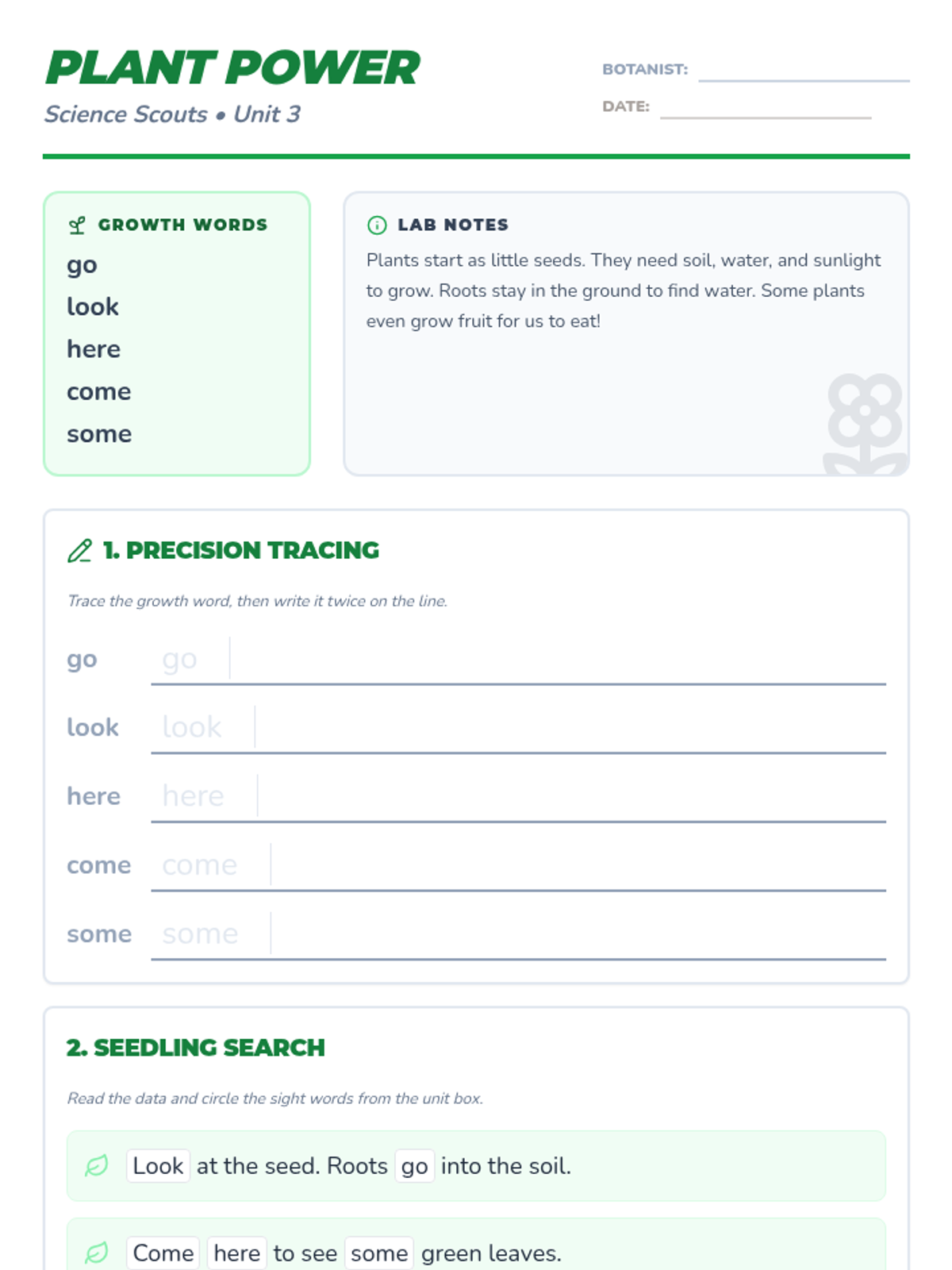
Investigate the life cycle of plants and the essentials for growth while mastering sight words and scientific observation.
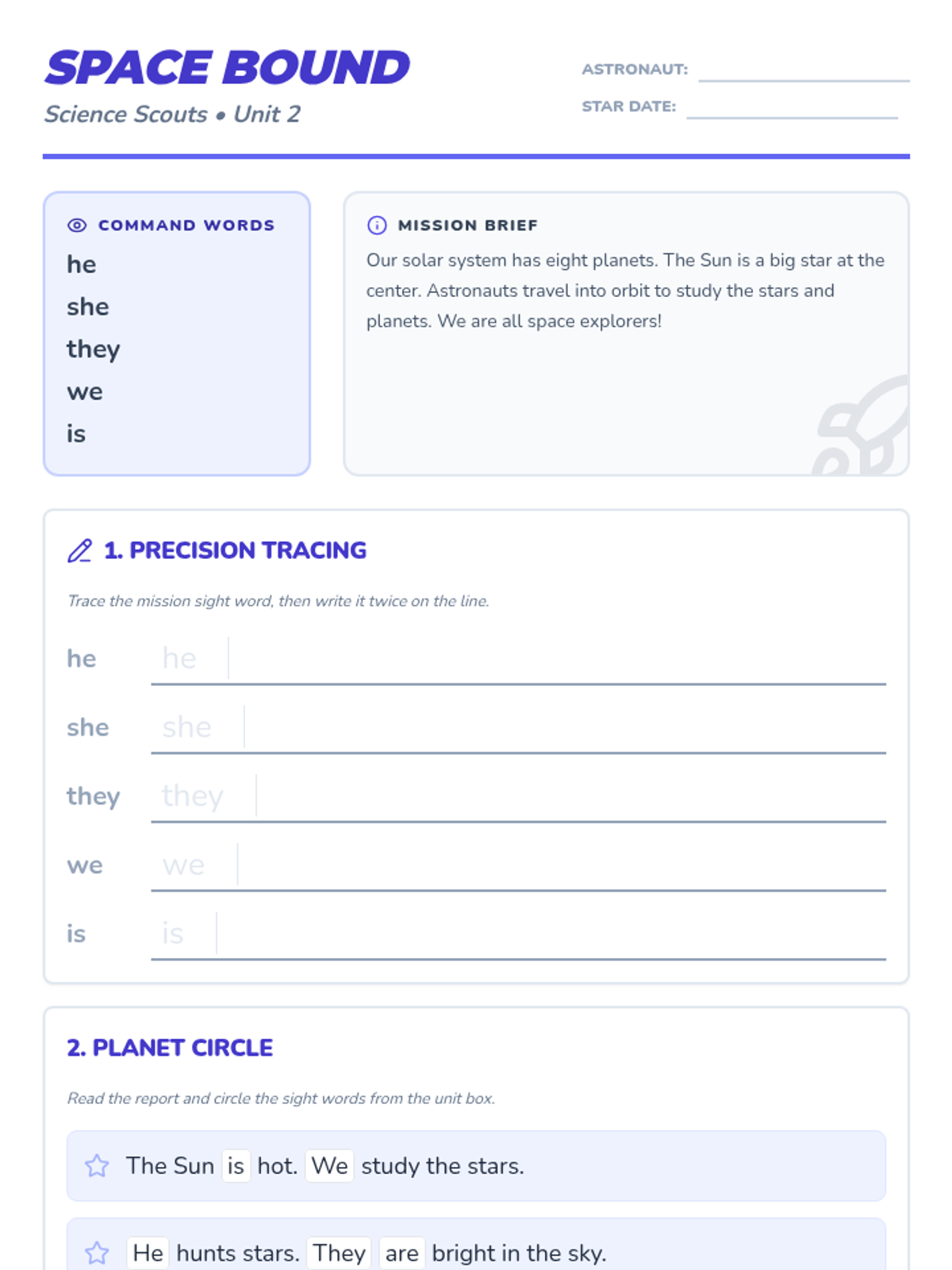
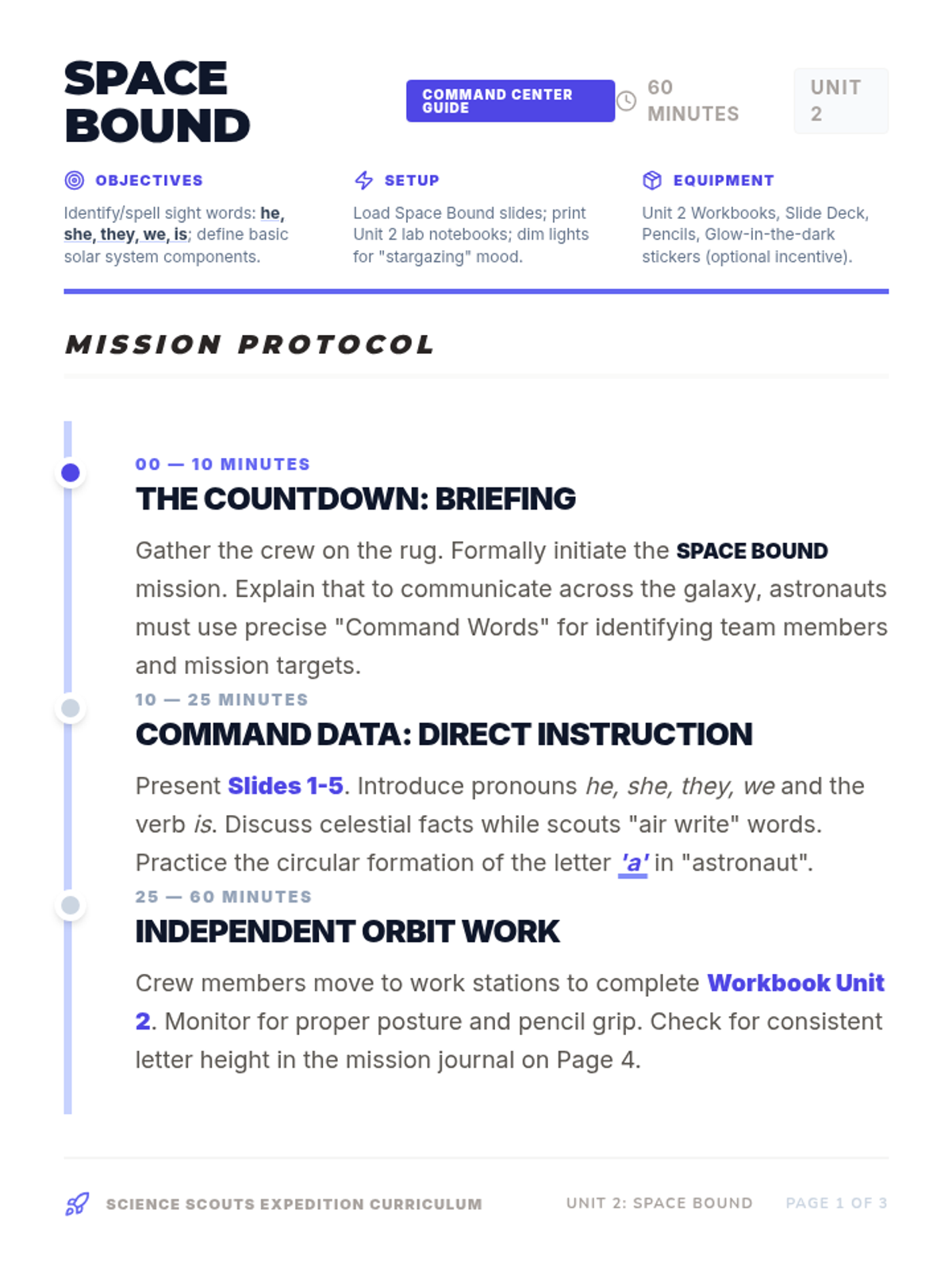
Launch into orbit to explore planets and stars while mastering high-frequency sight words and scientific terminology.
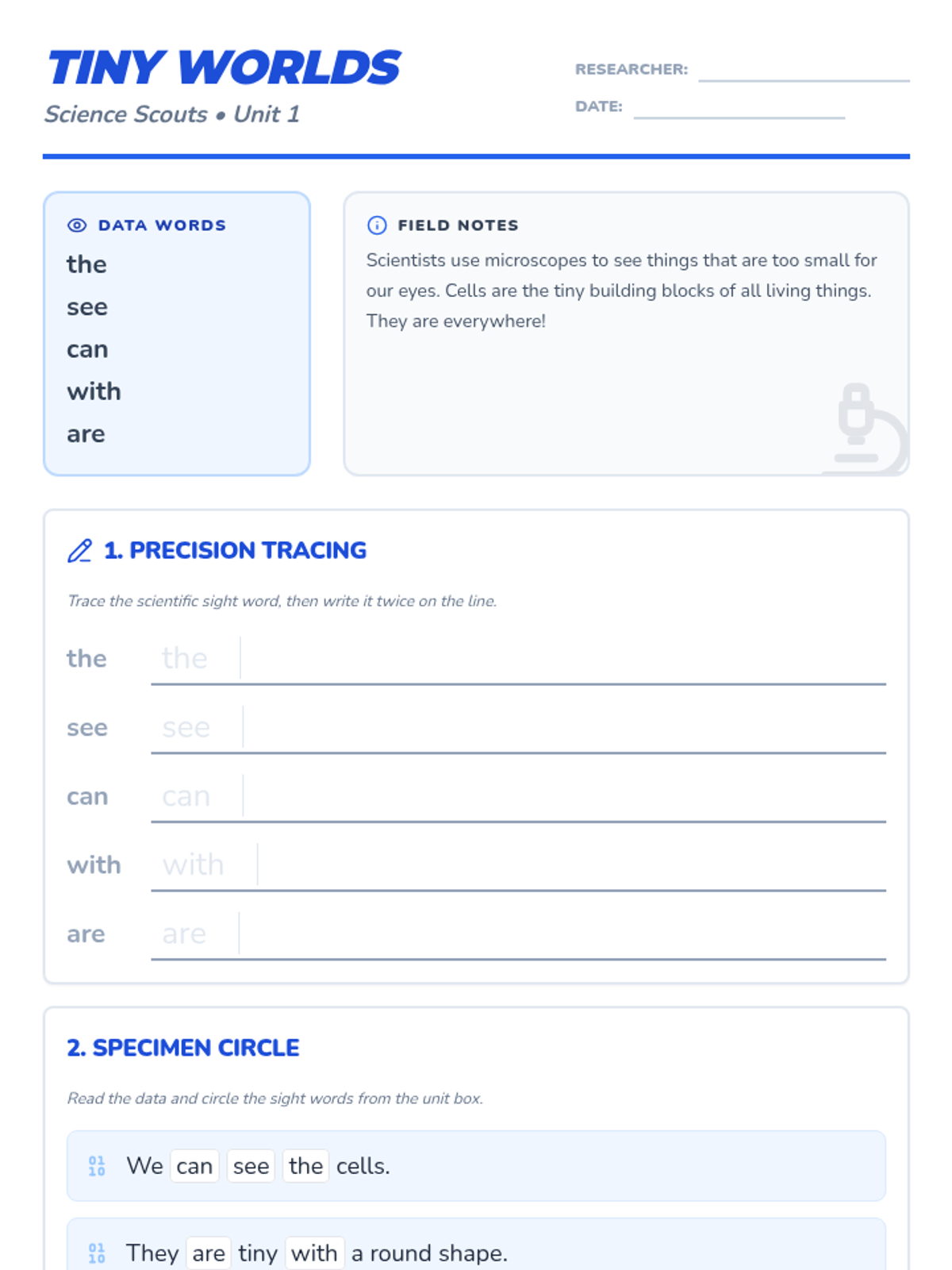
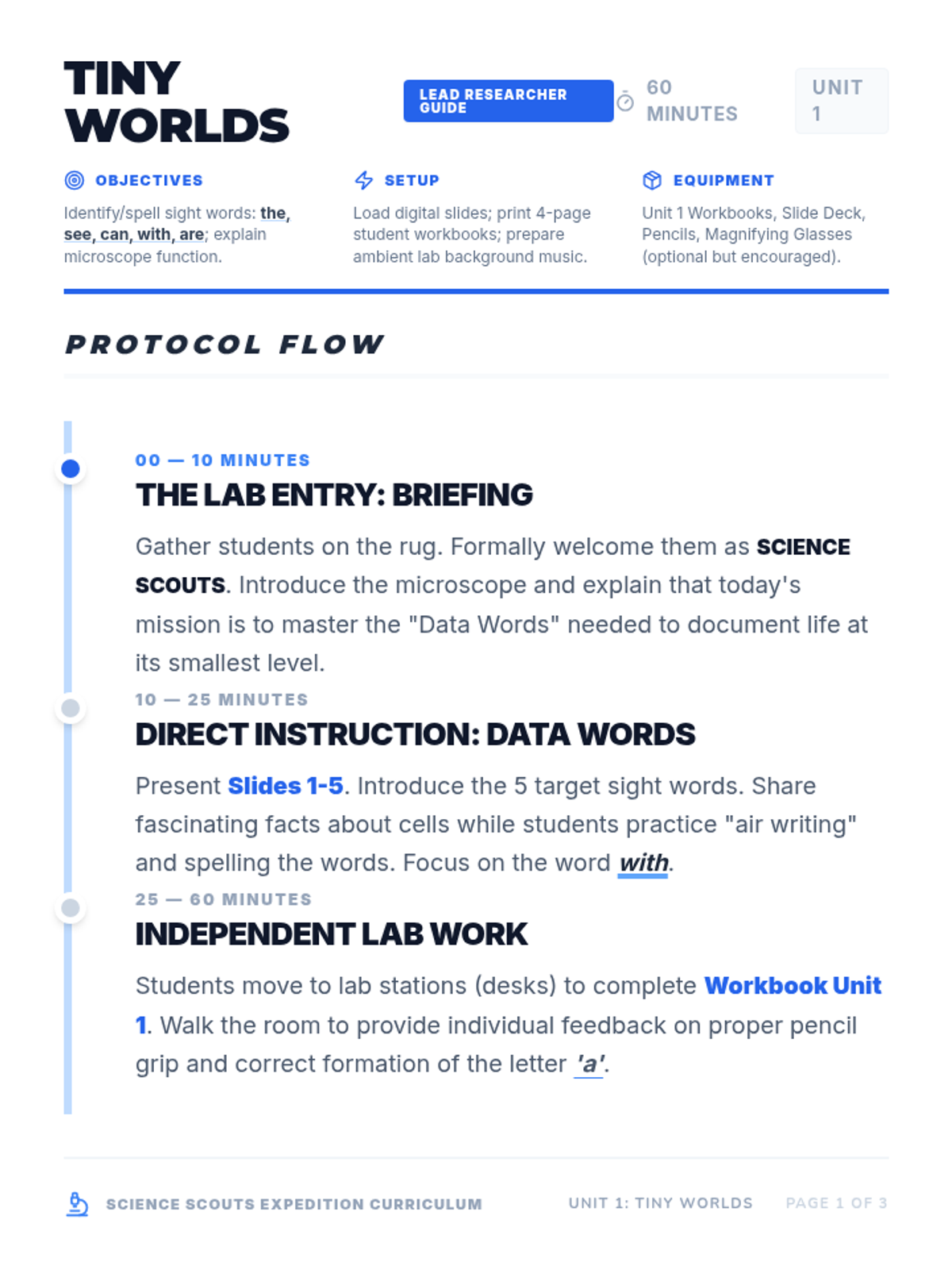
Dive into the invisible world of cells and microscopes to master essential sight words while discovering how scientists see tiny things.
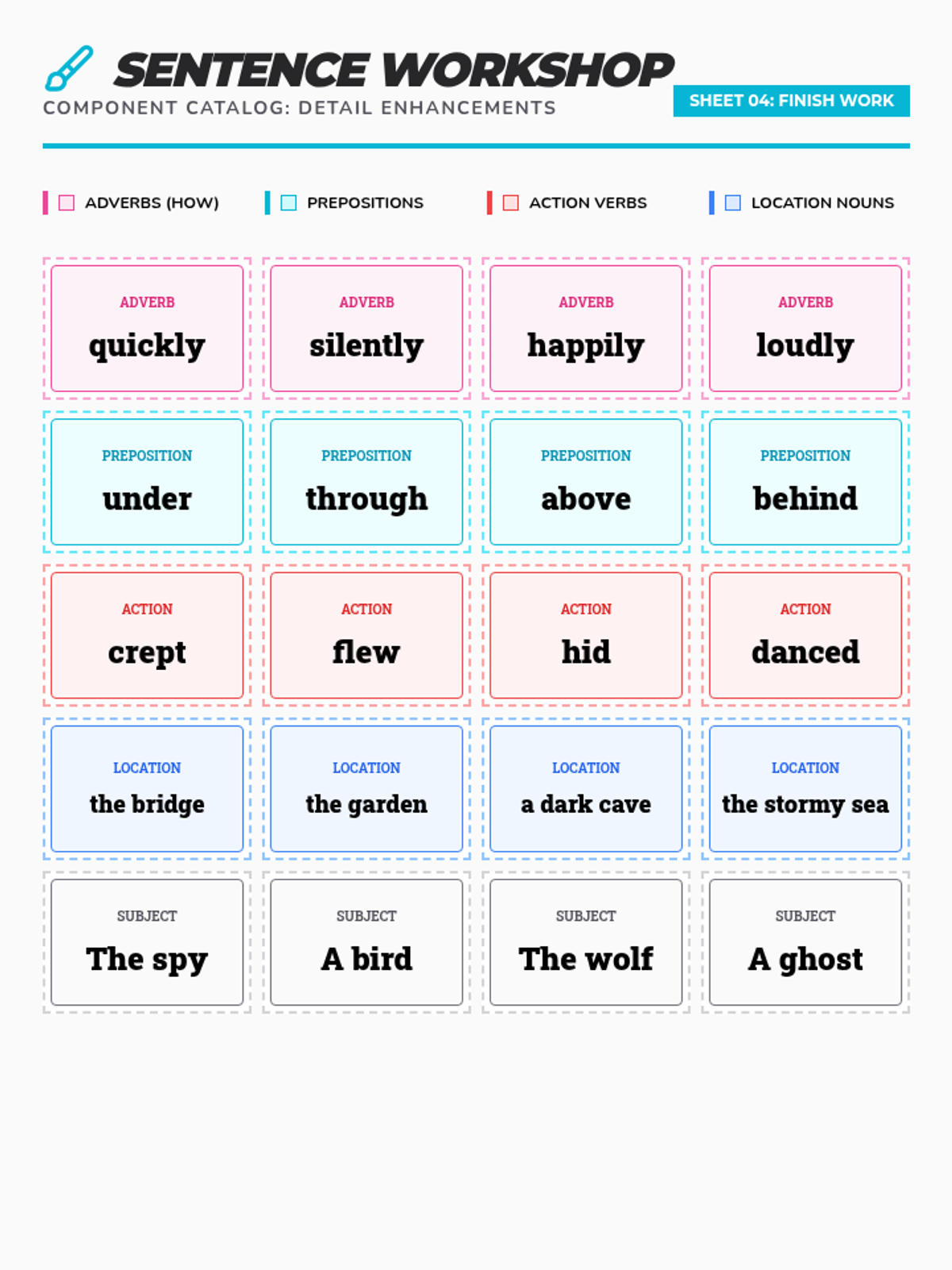
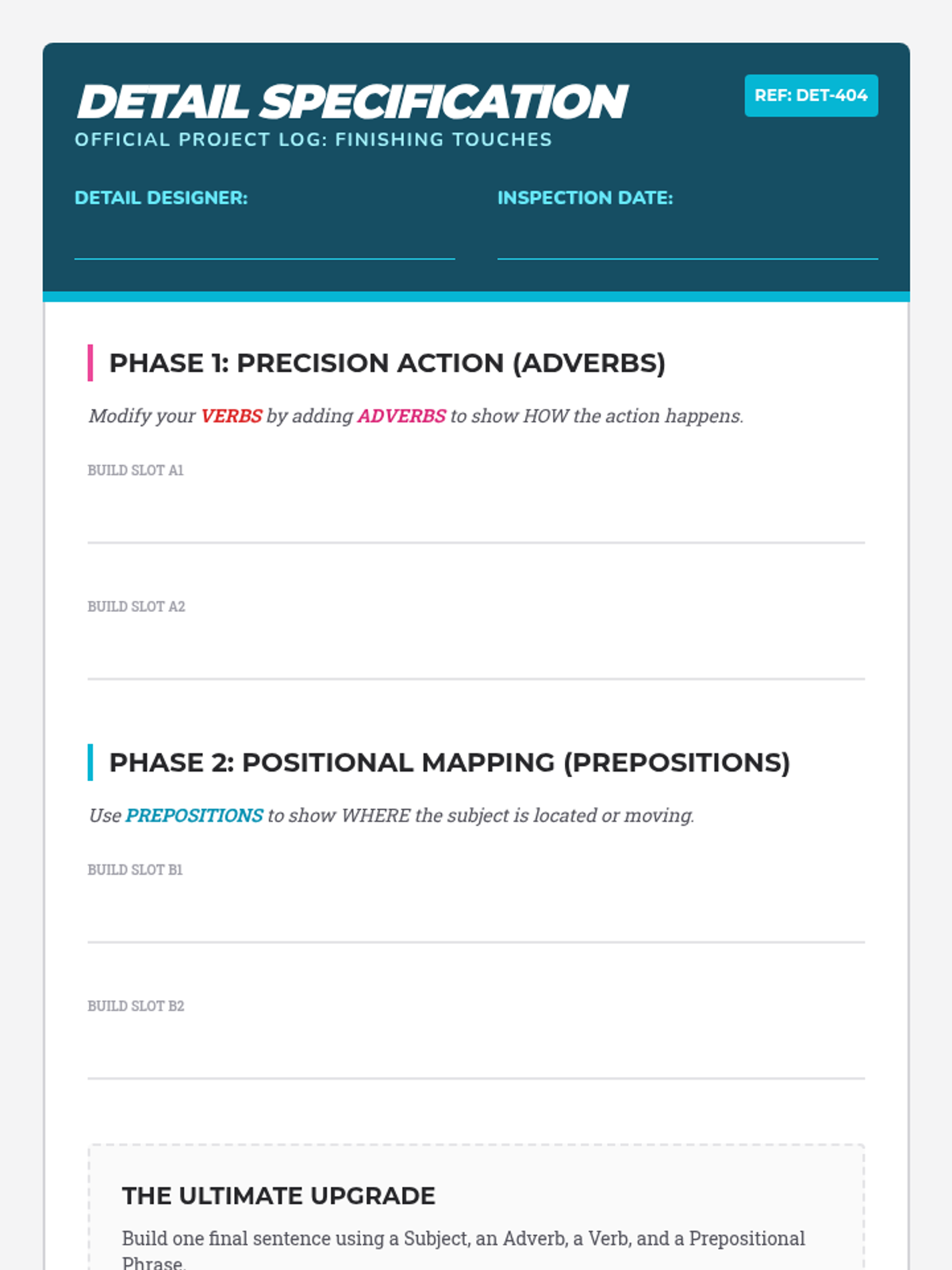
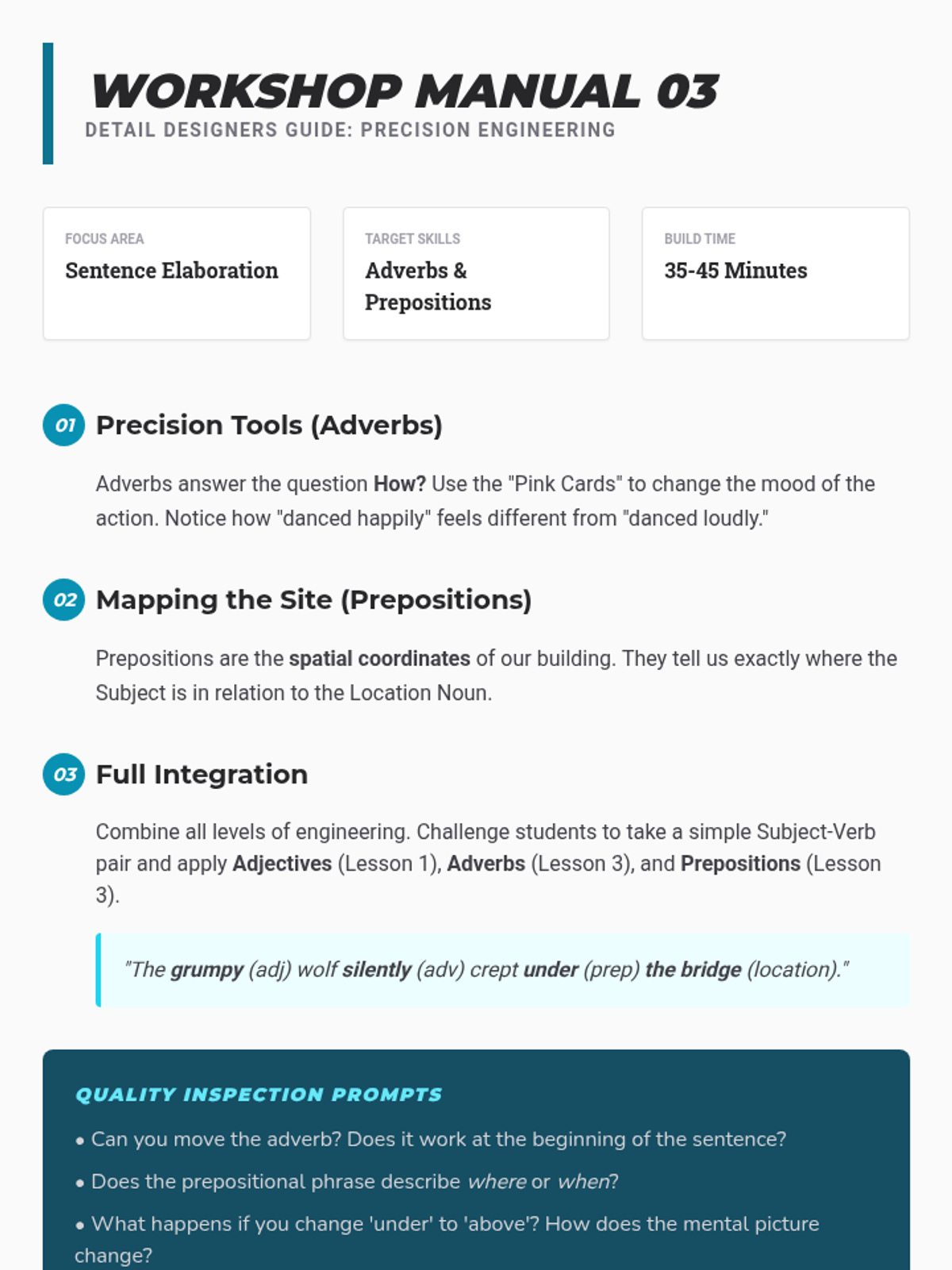
A workshop focused on enhancing sentence detail using adverbs and prepositional phrases to specify how, when, and where actions take place.
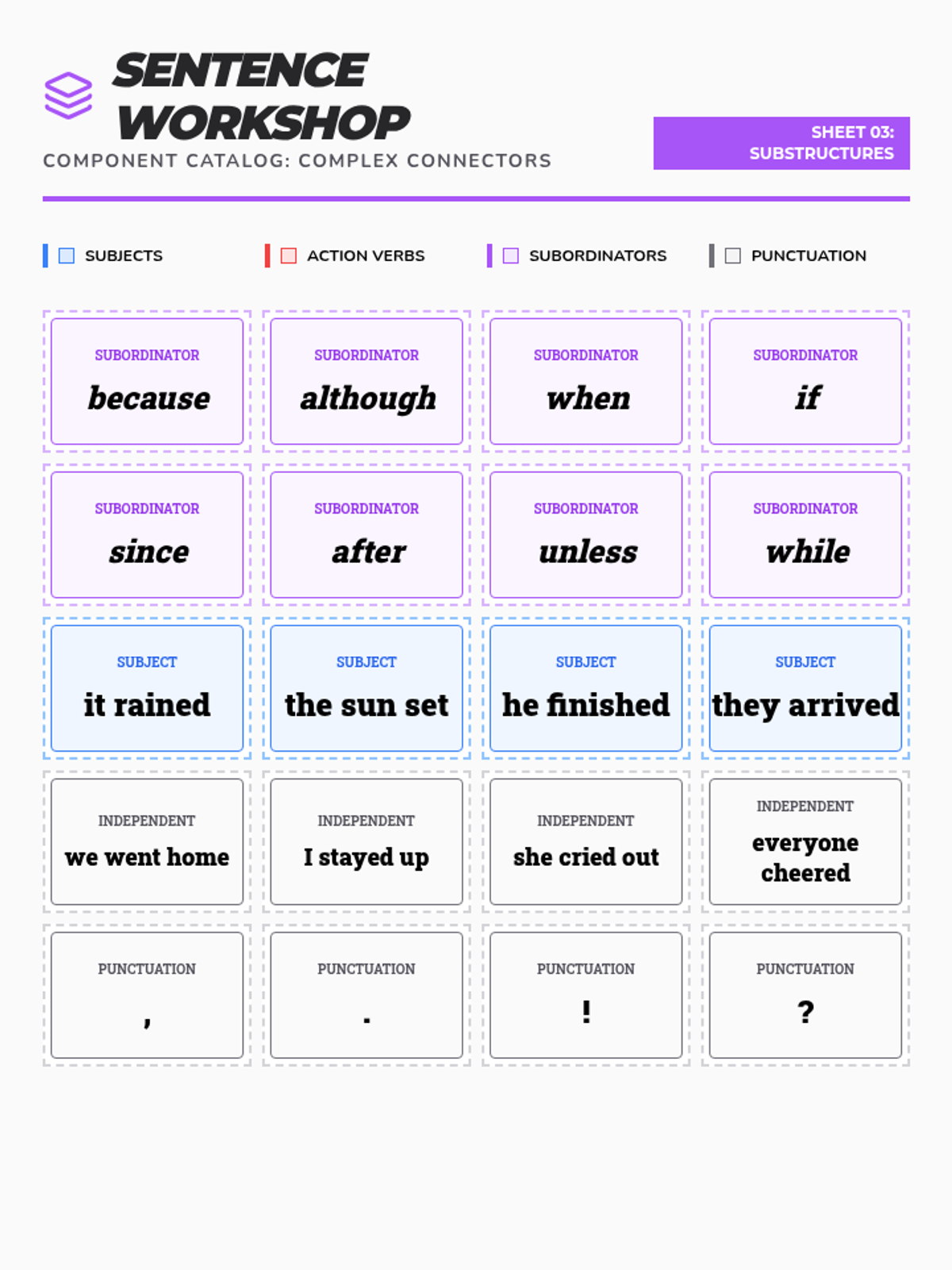
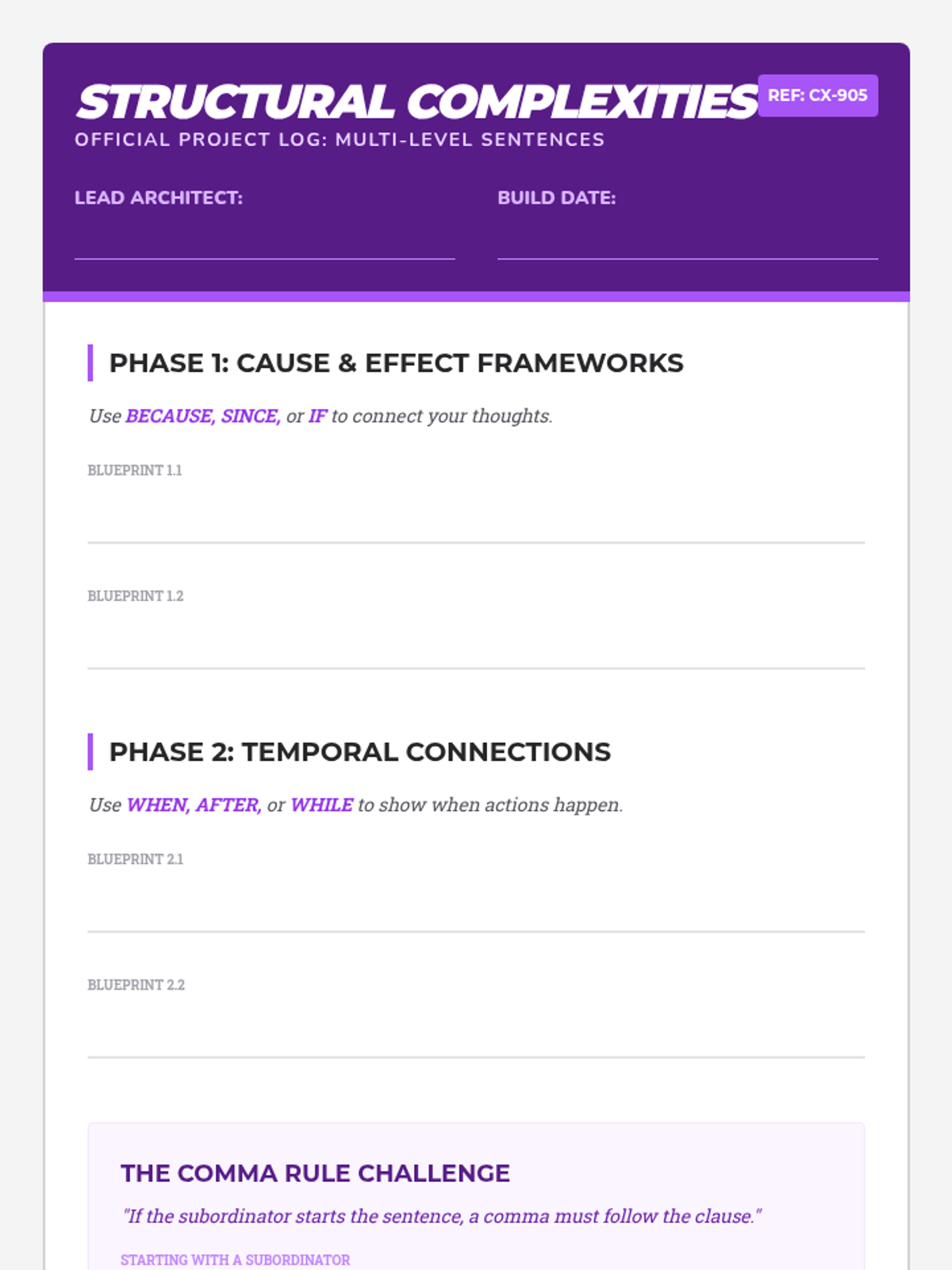
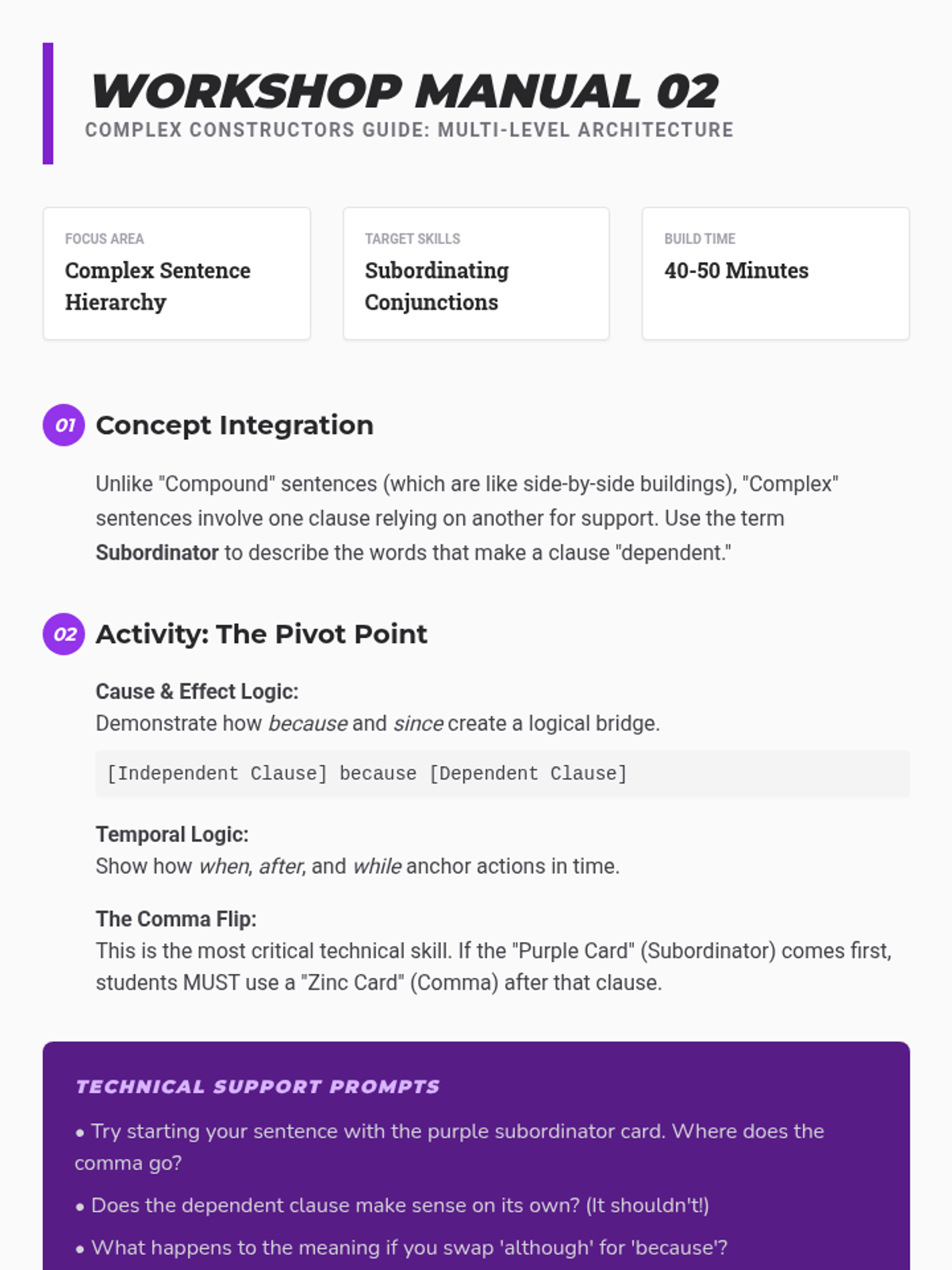
A workshop focused on building complex sentences using subordinating conjunctions to show cause and effect or time relationships.
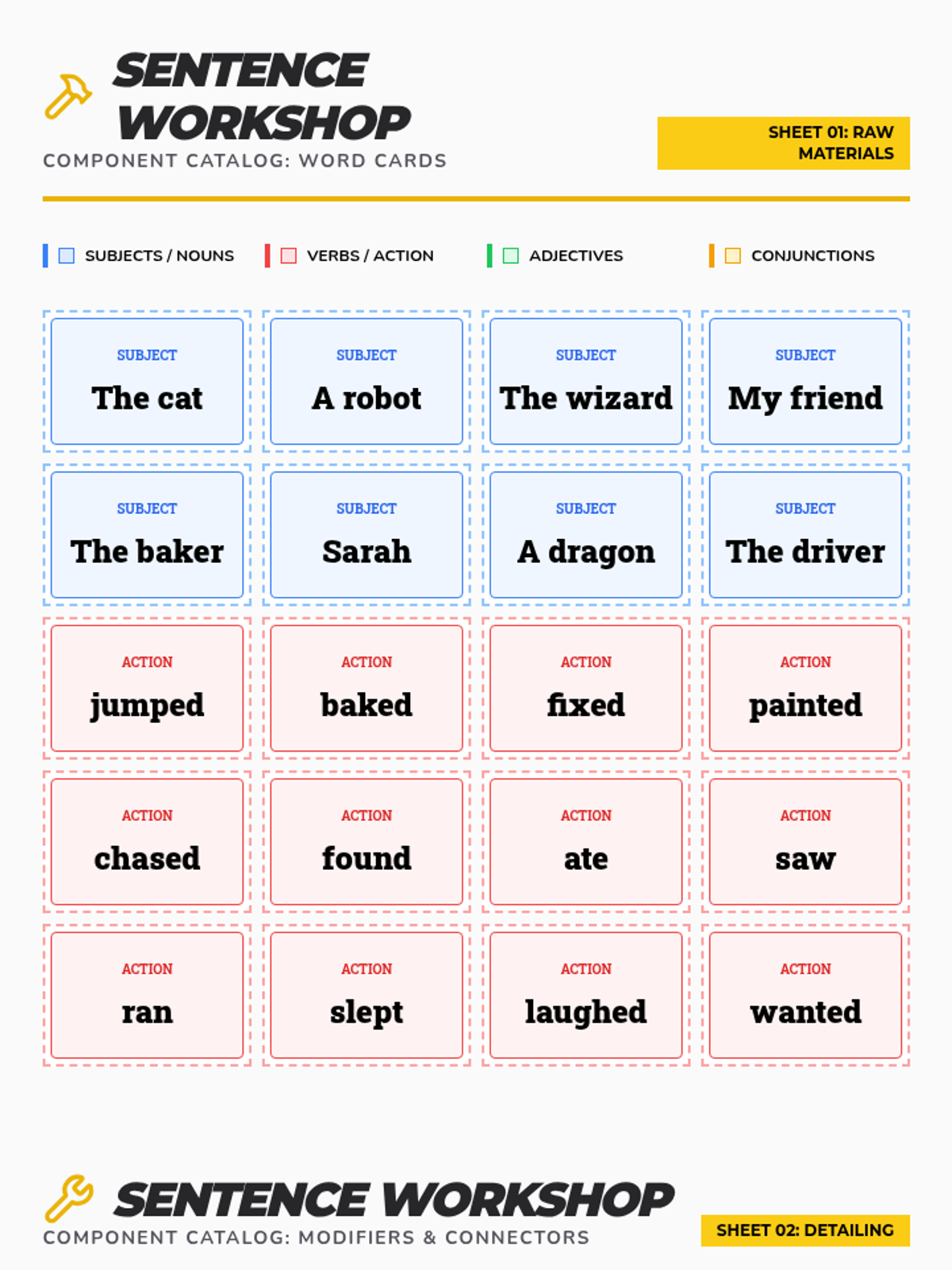
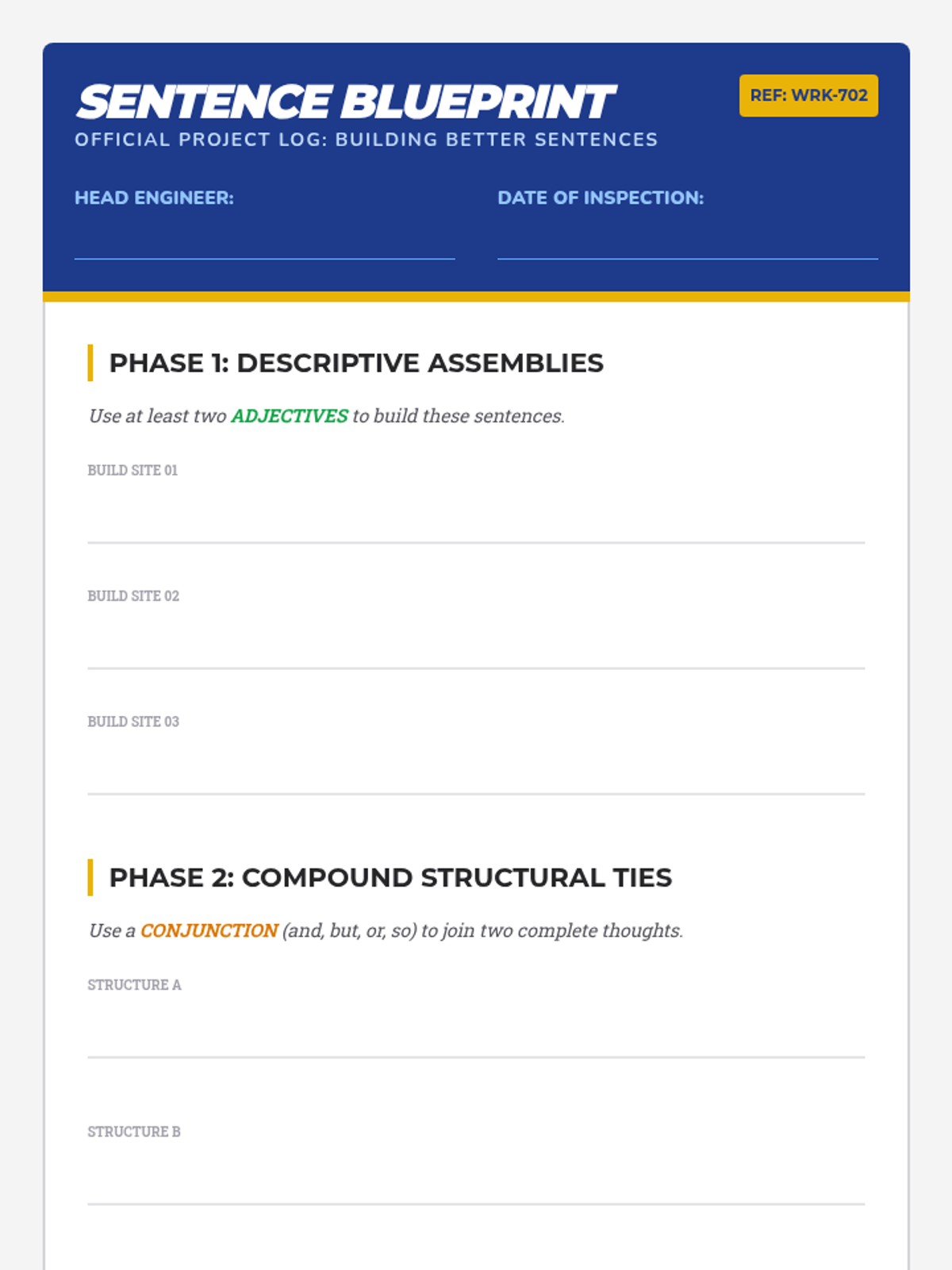
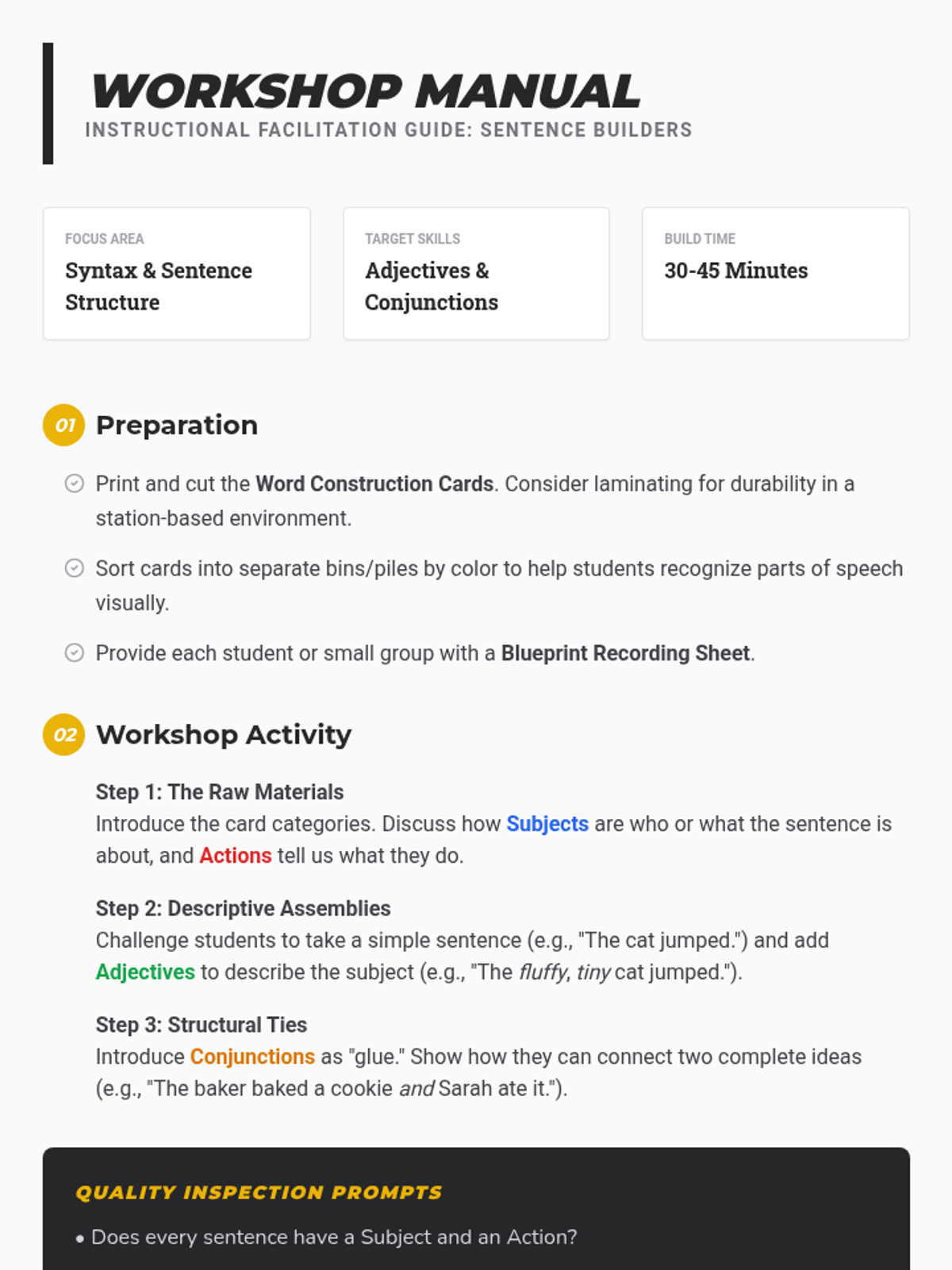
A hands-on workshop where students use word cards to construct compound sentences and descriptive phrases, focusing on conjunctions and adjectives.
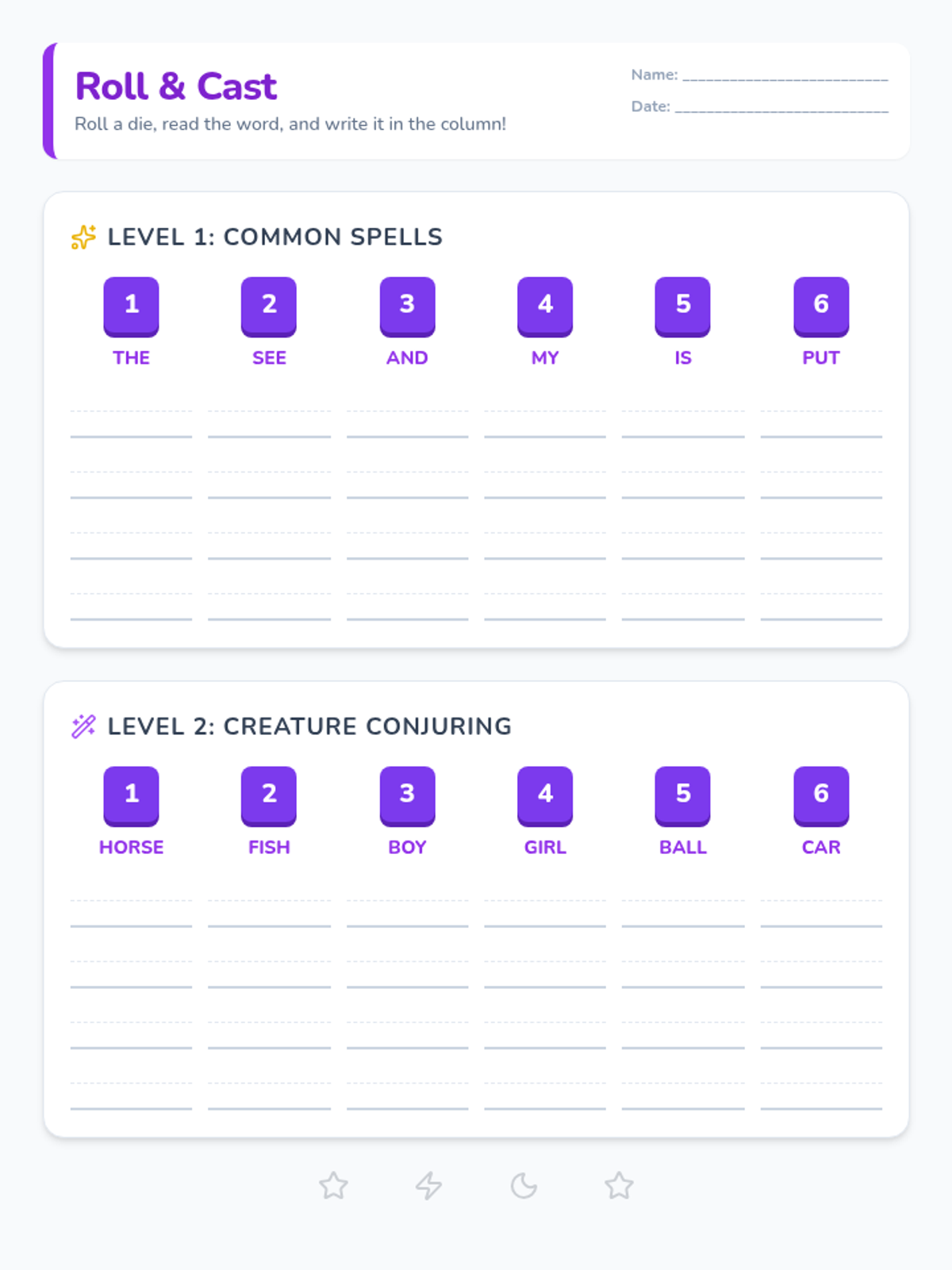
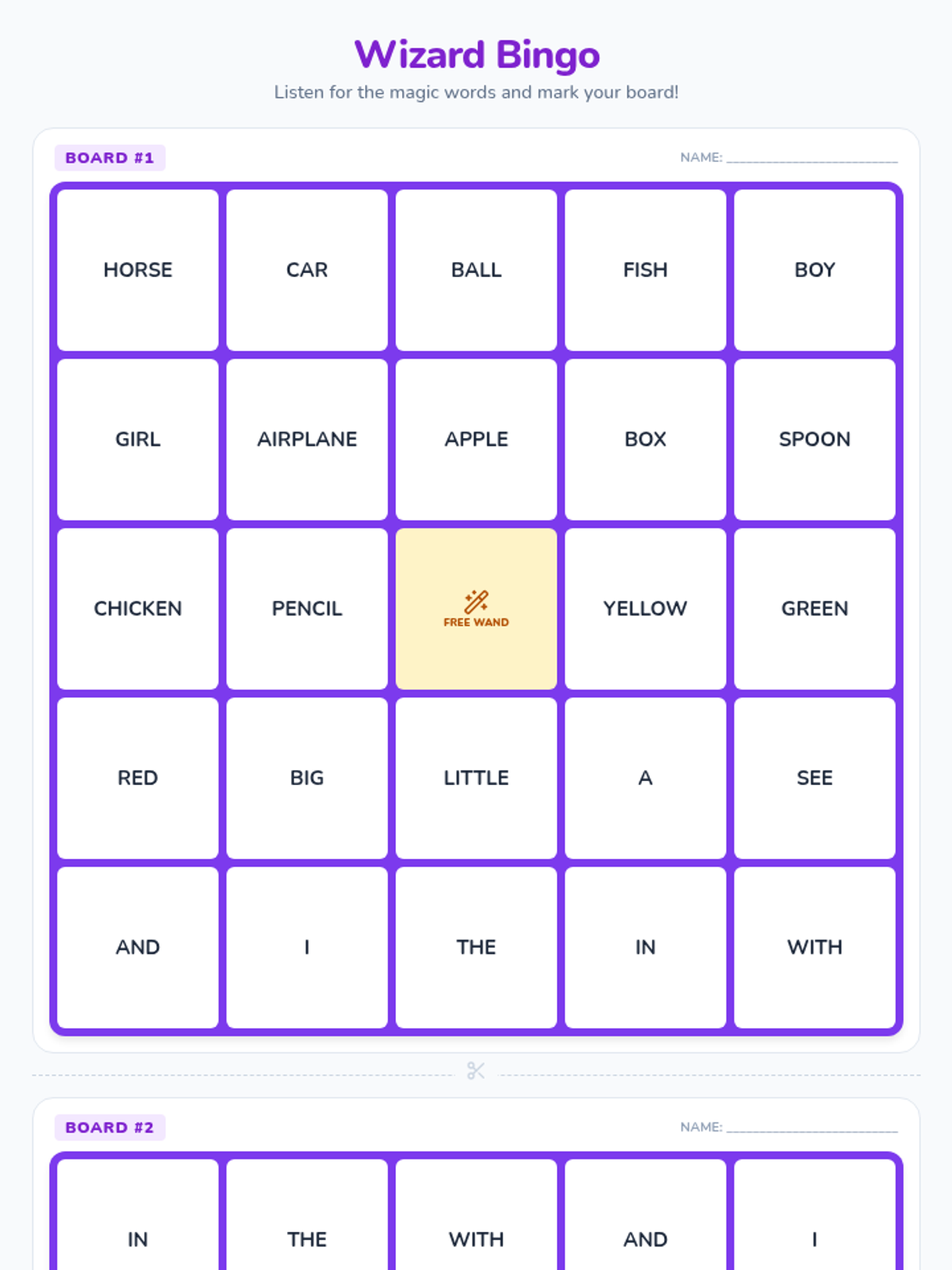
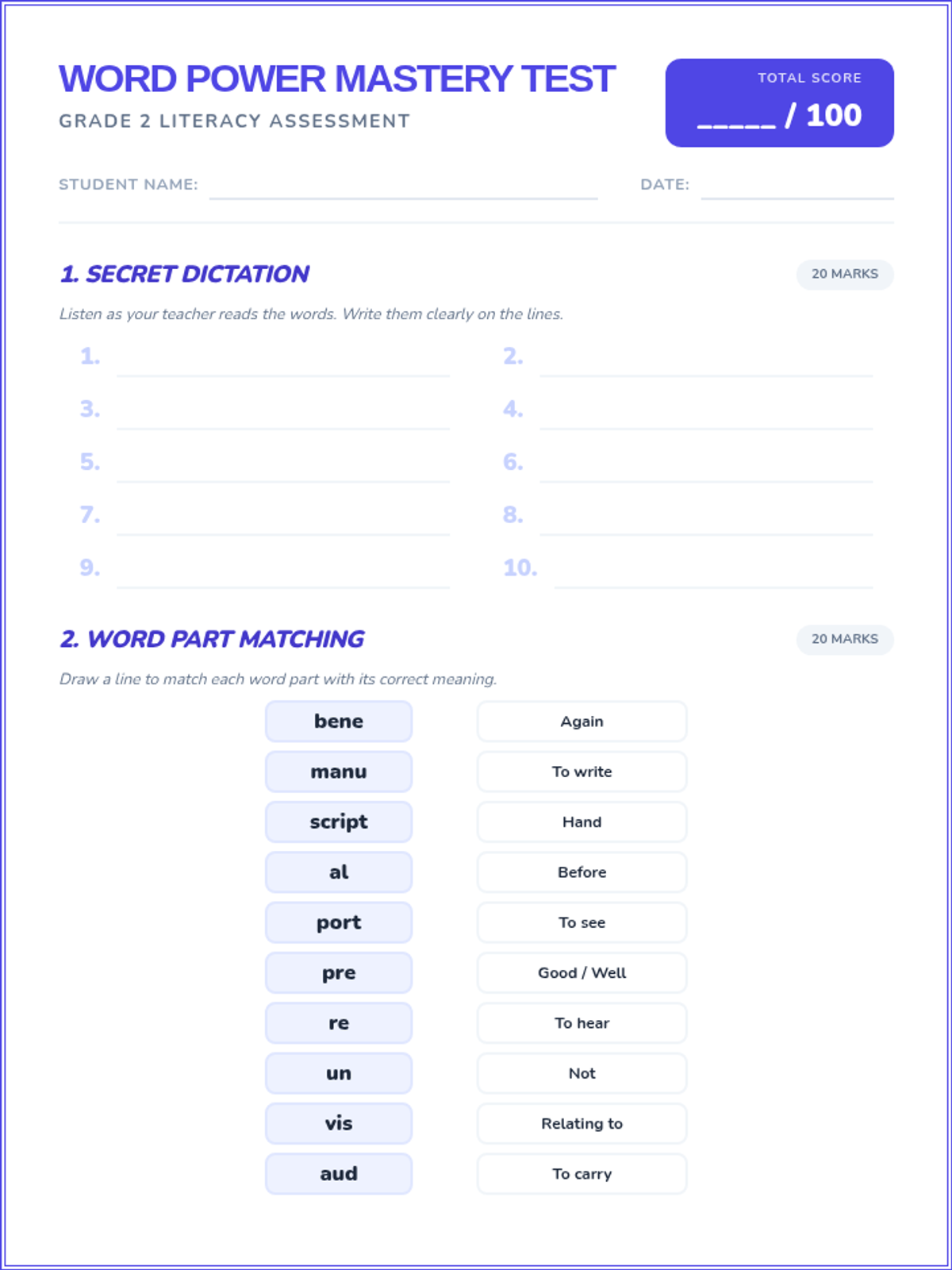
A comprehensive set of foundational literacy materials focused on 27 key sight words and nouns, covering word recognition, handwriting, sentence structure, and phonics.
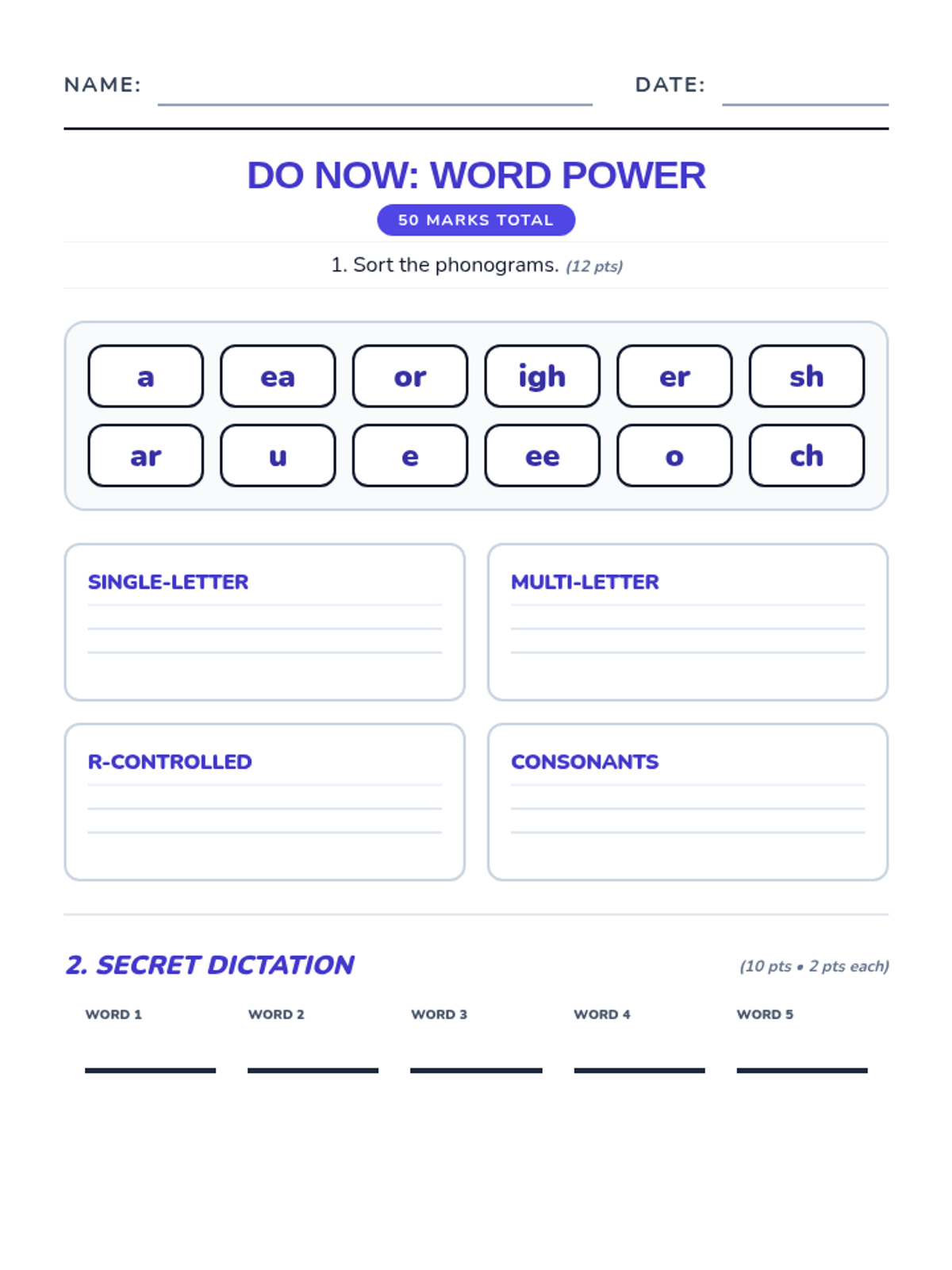
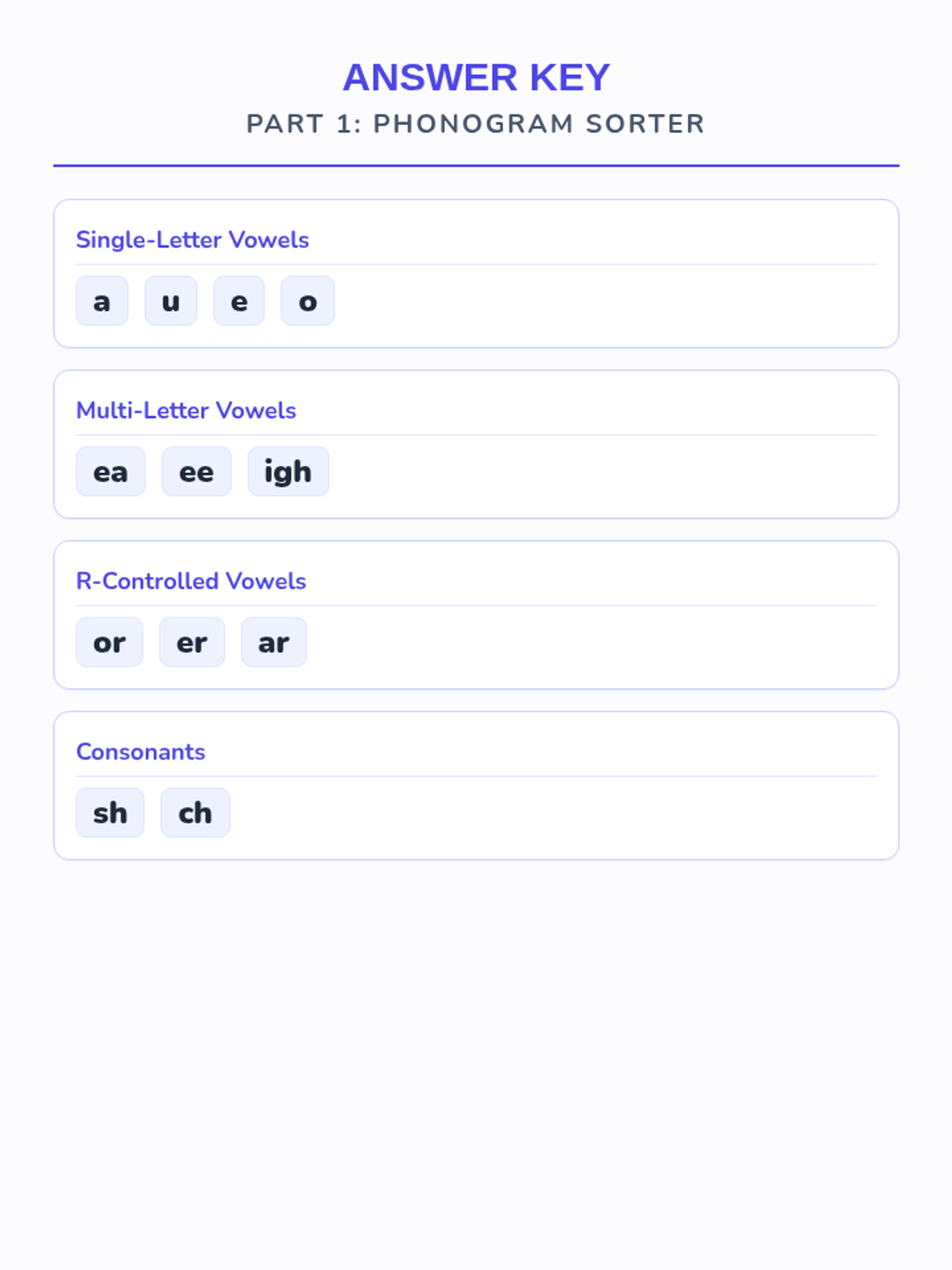
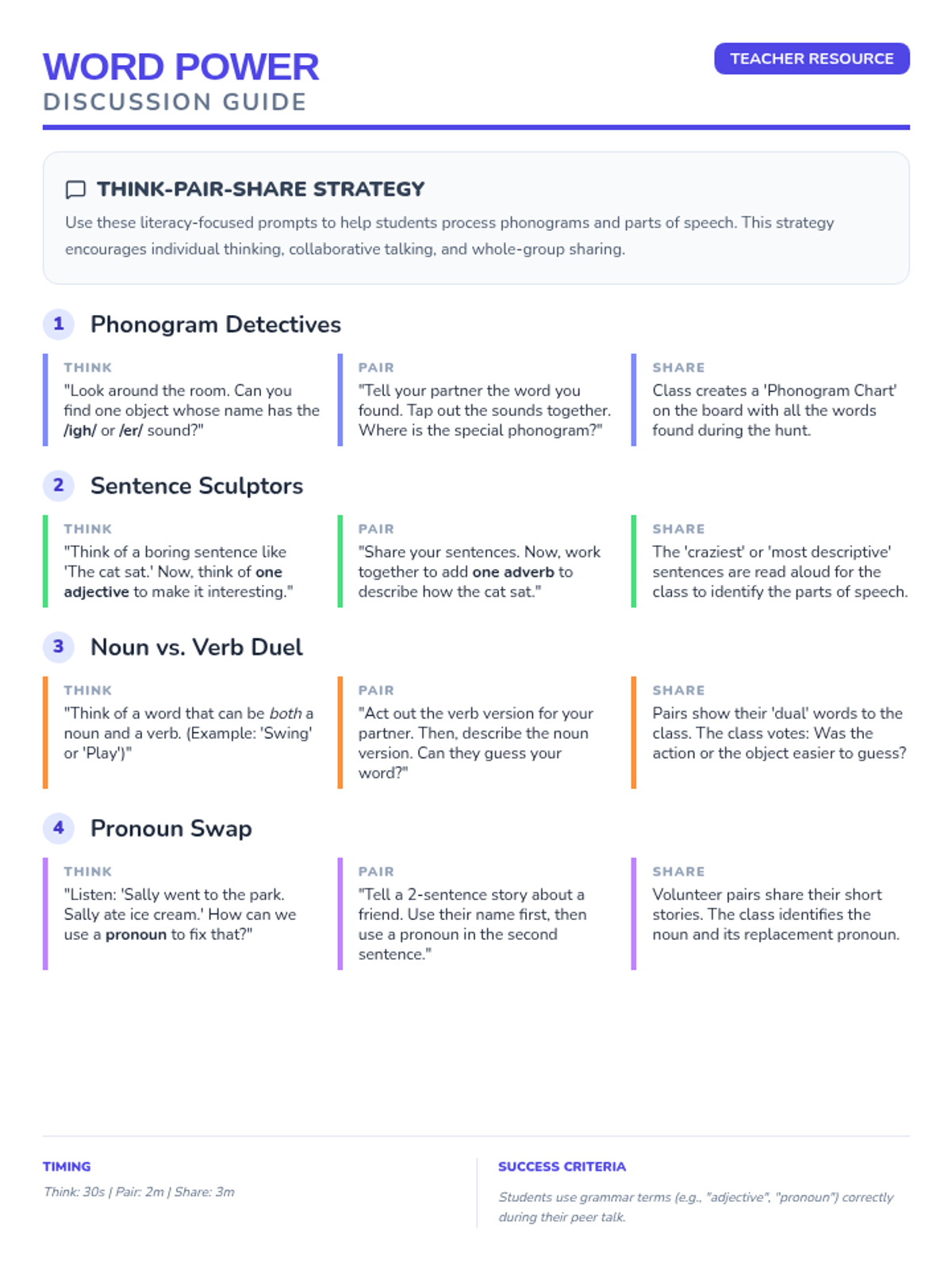
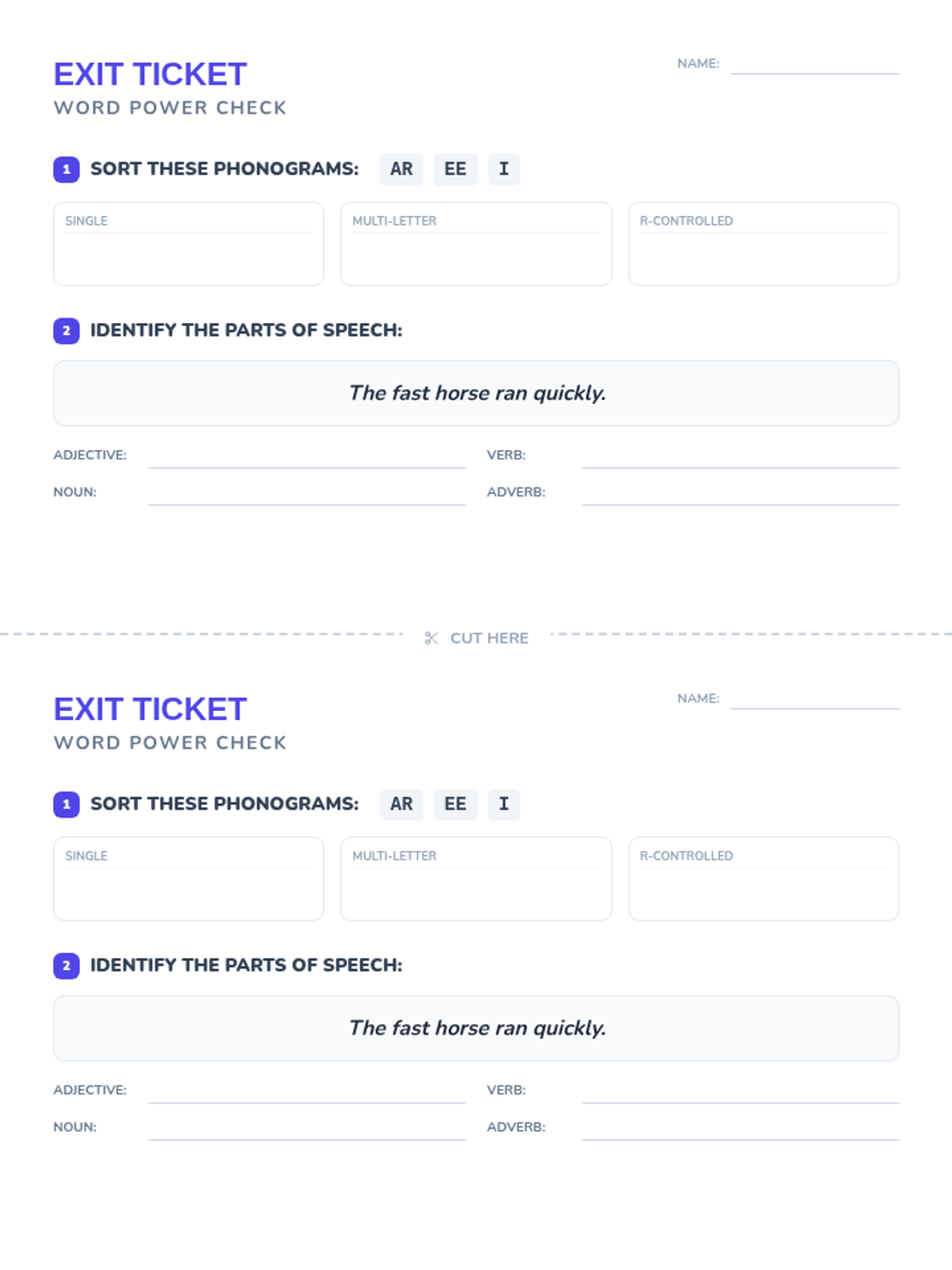
A two-part foundational literacy lesson focusing on phonogram categorization and identifying parts of speech in simple sentences.
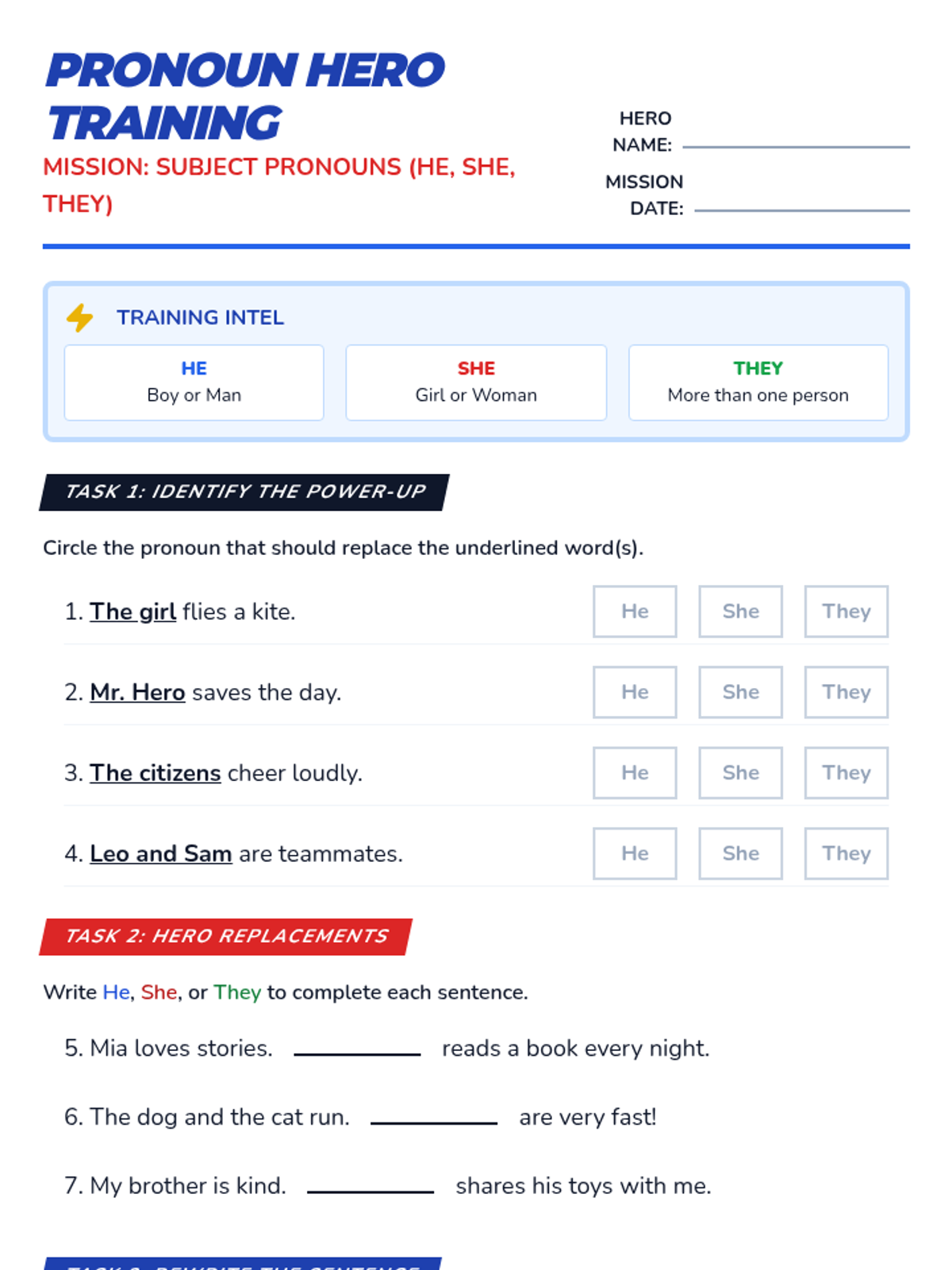
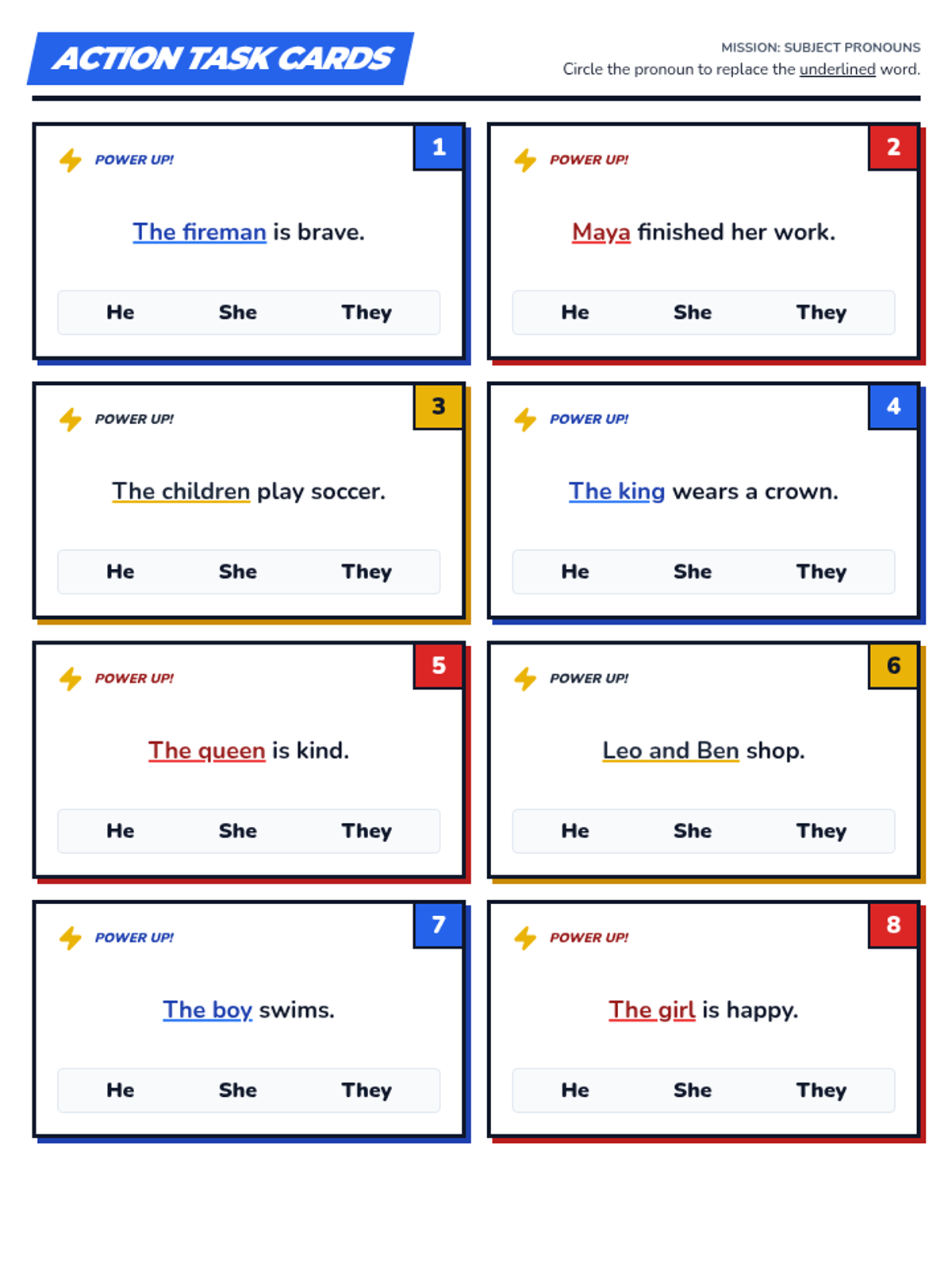
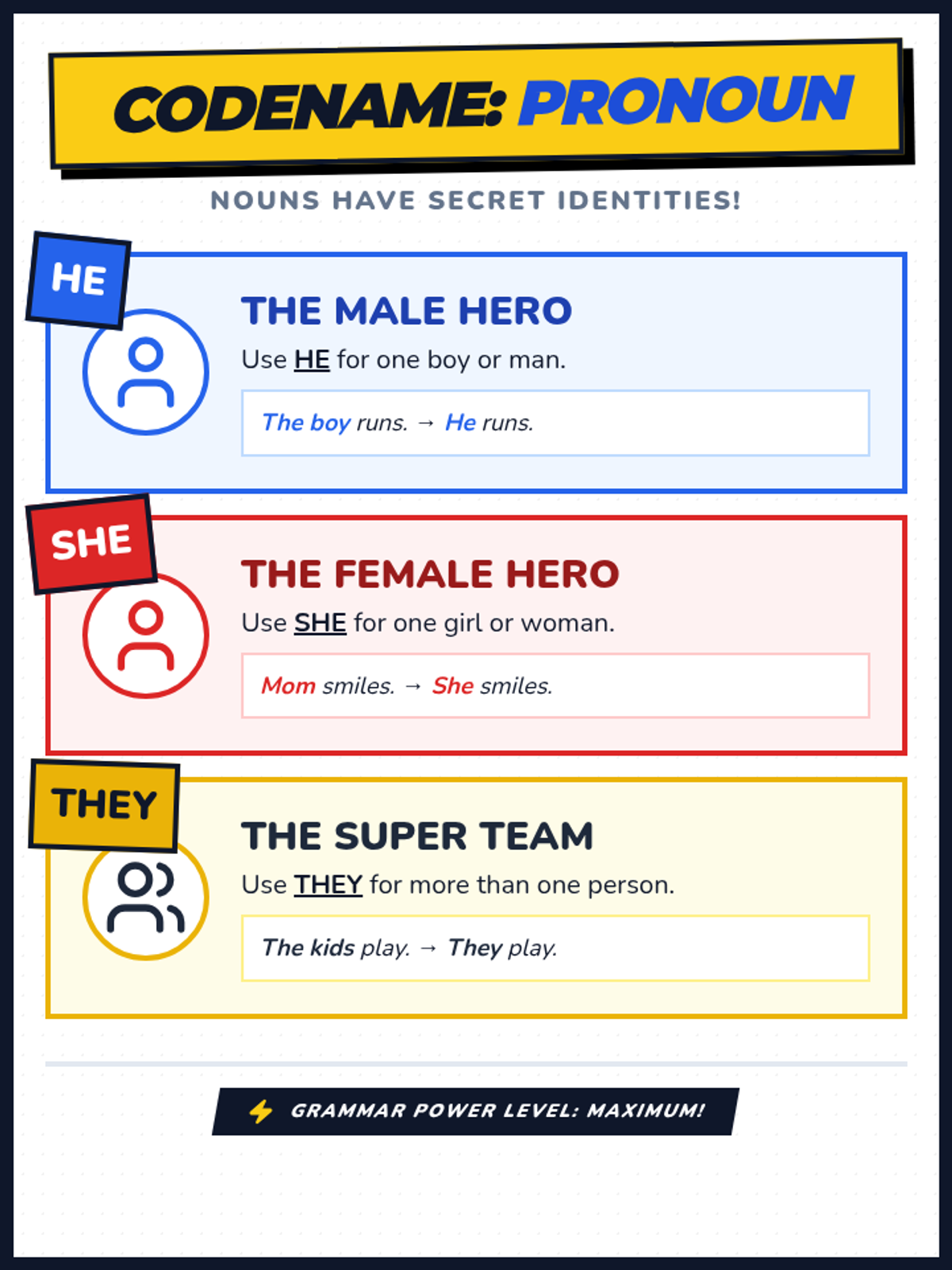
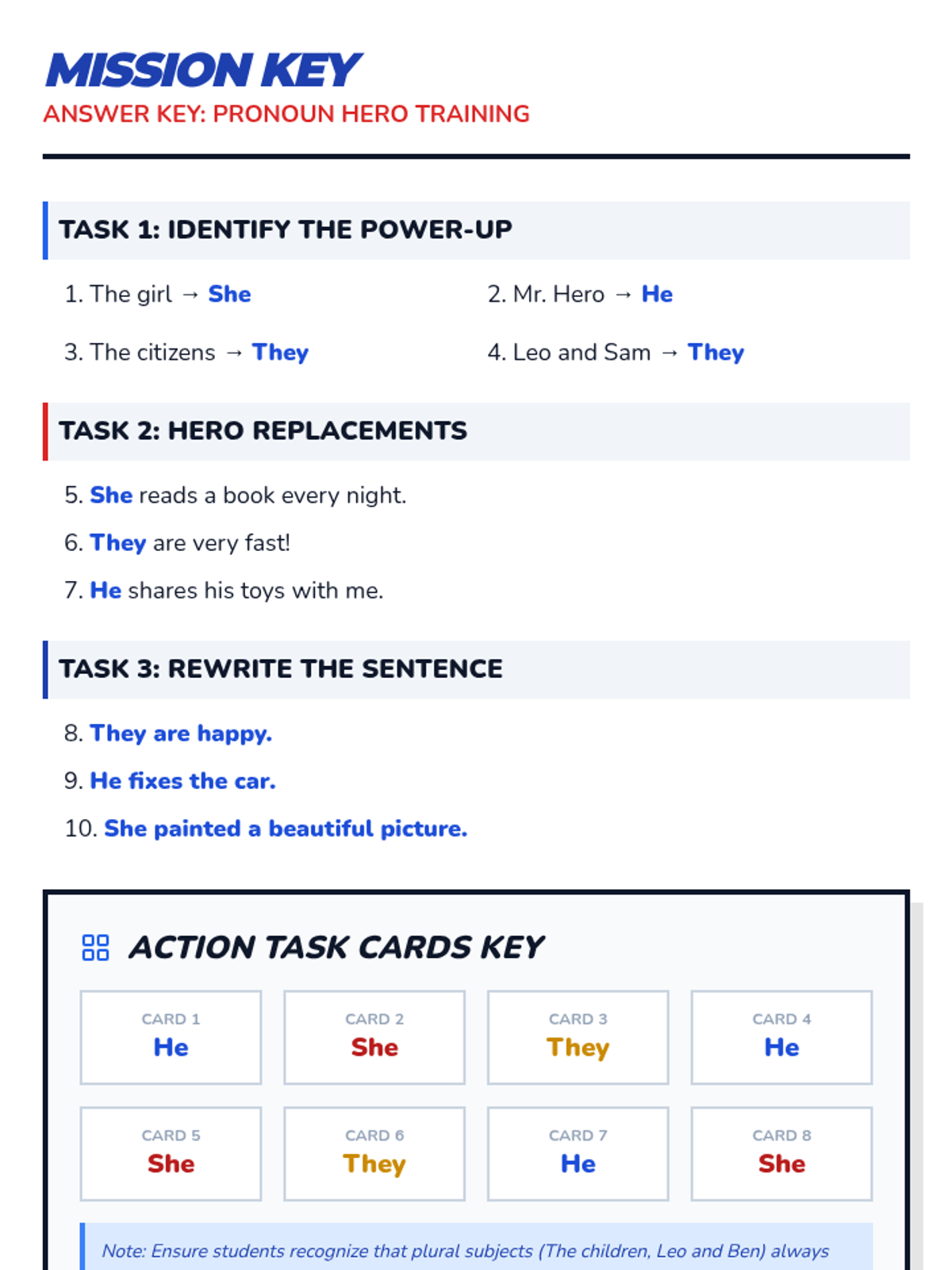
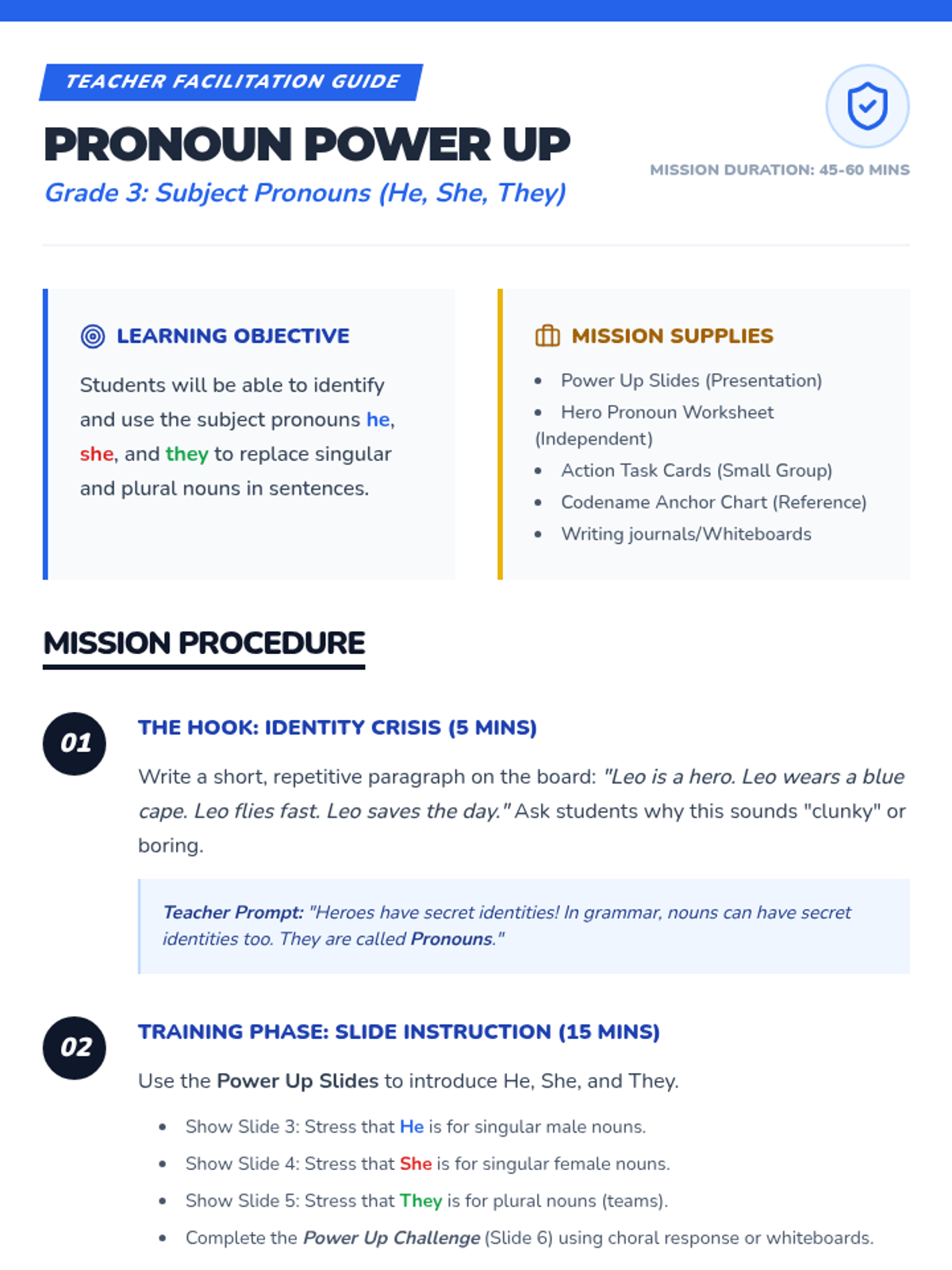
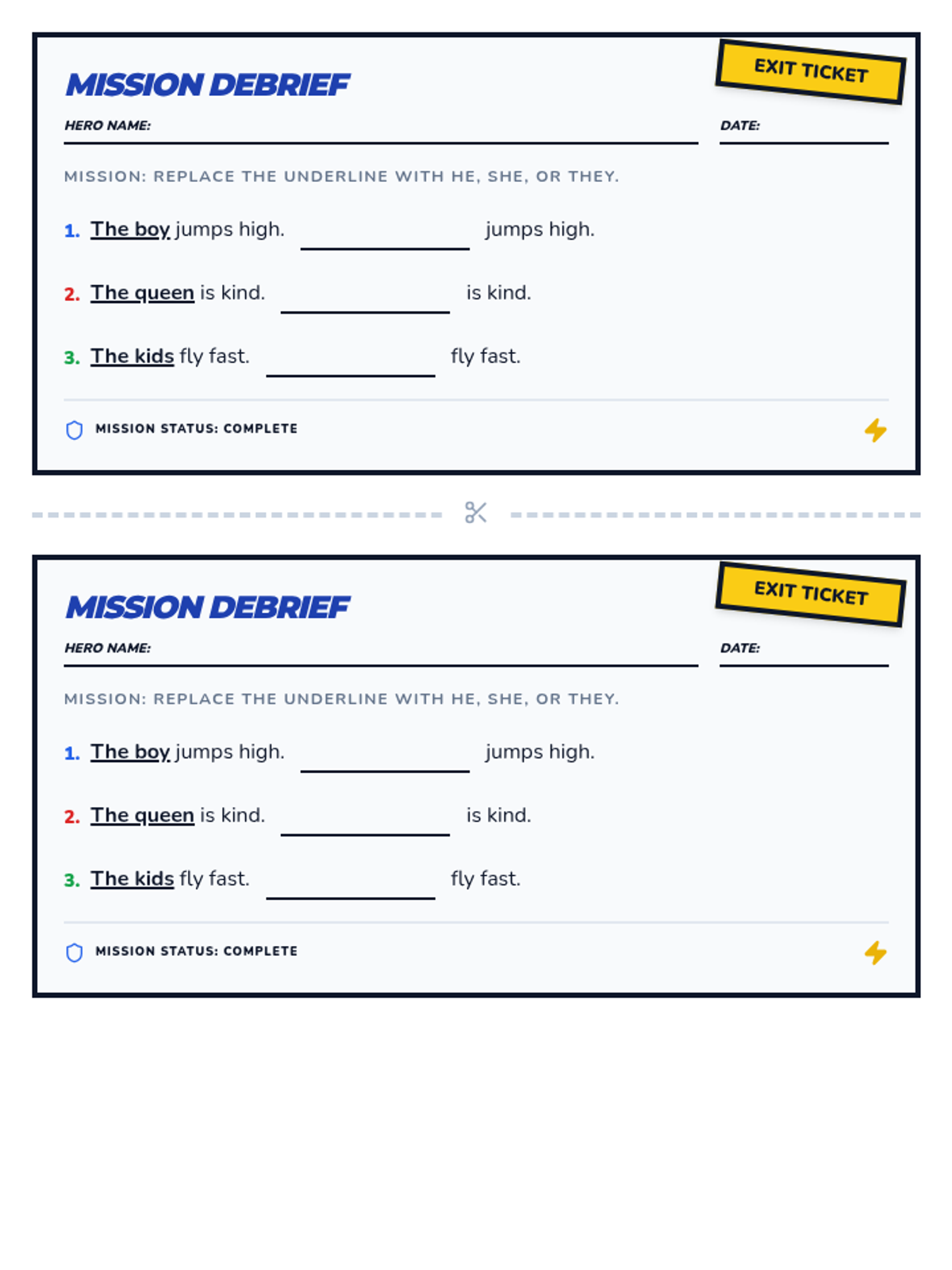
A superhero-themed lesson introducing subject pronouns (he, she, they). Students learn how these pronouns 'power up' sentences by replacing repetitive nouns.
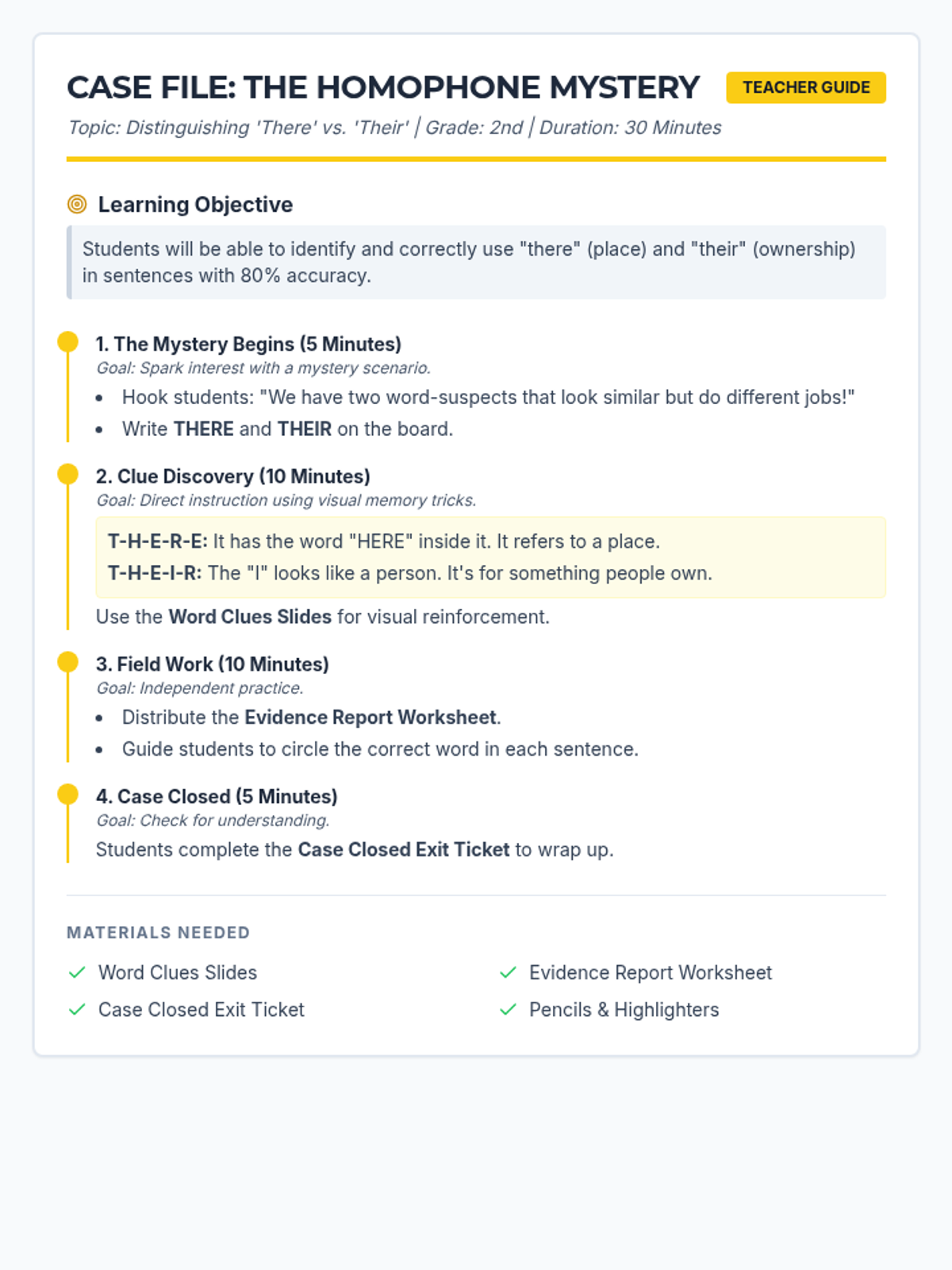
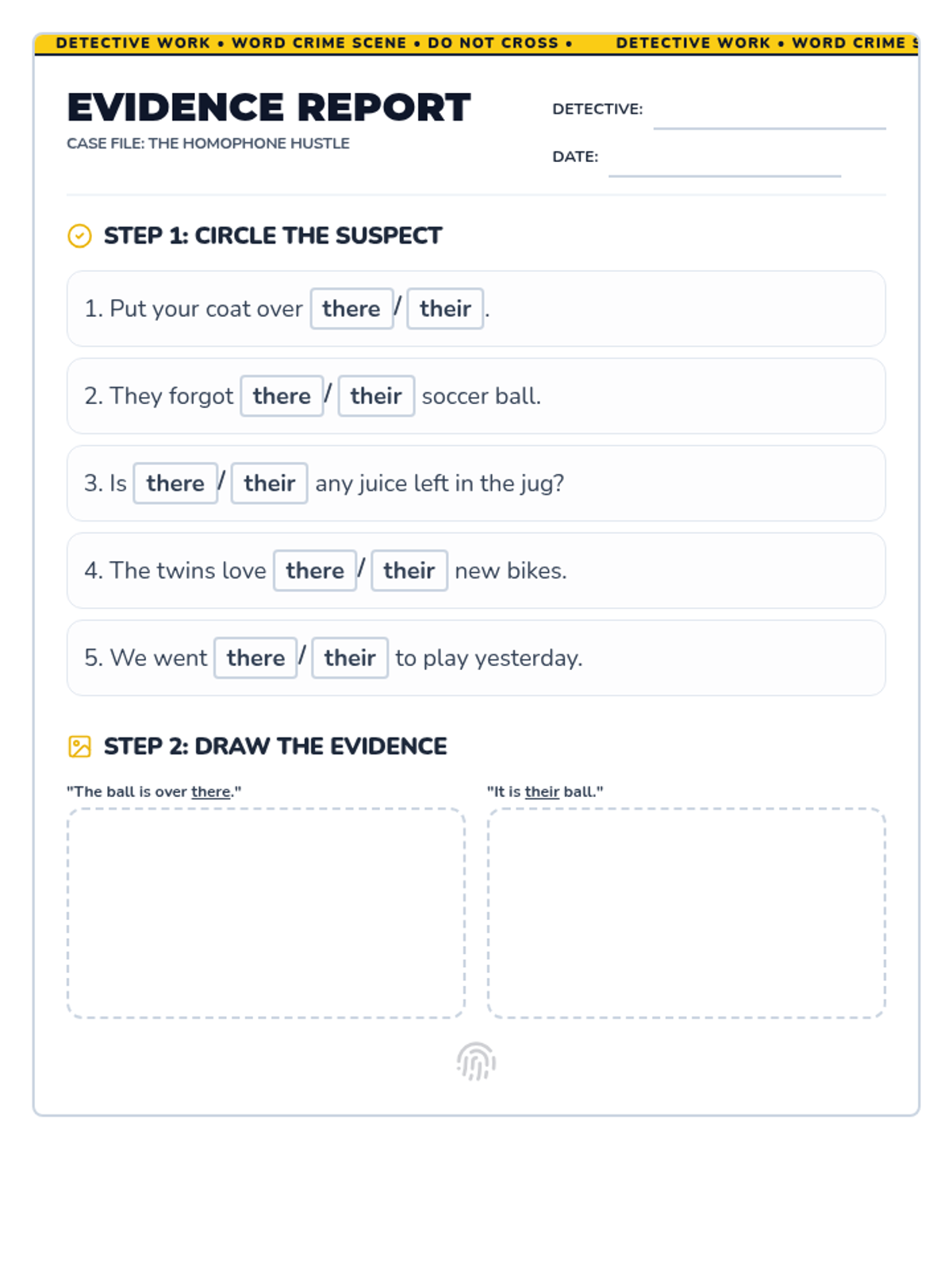
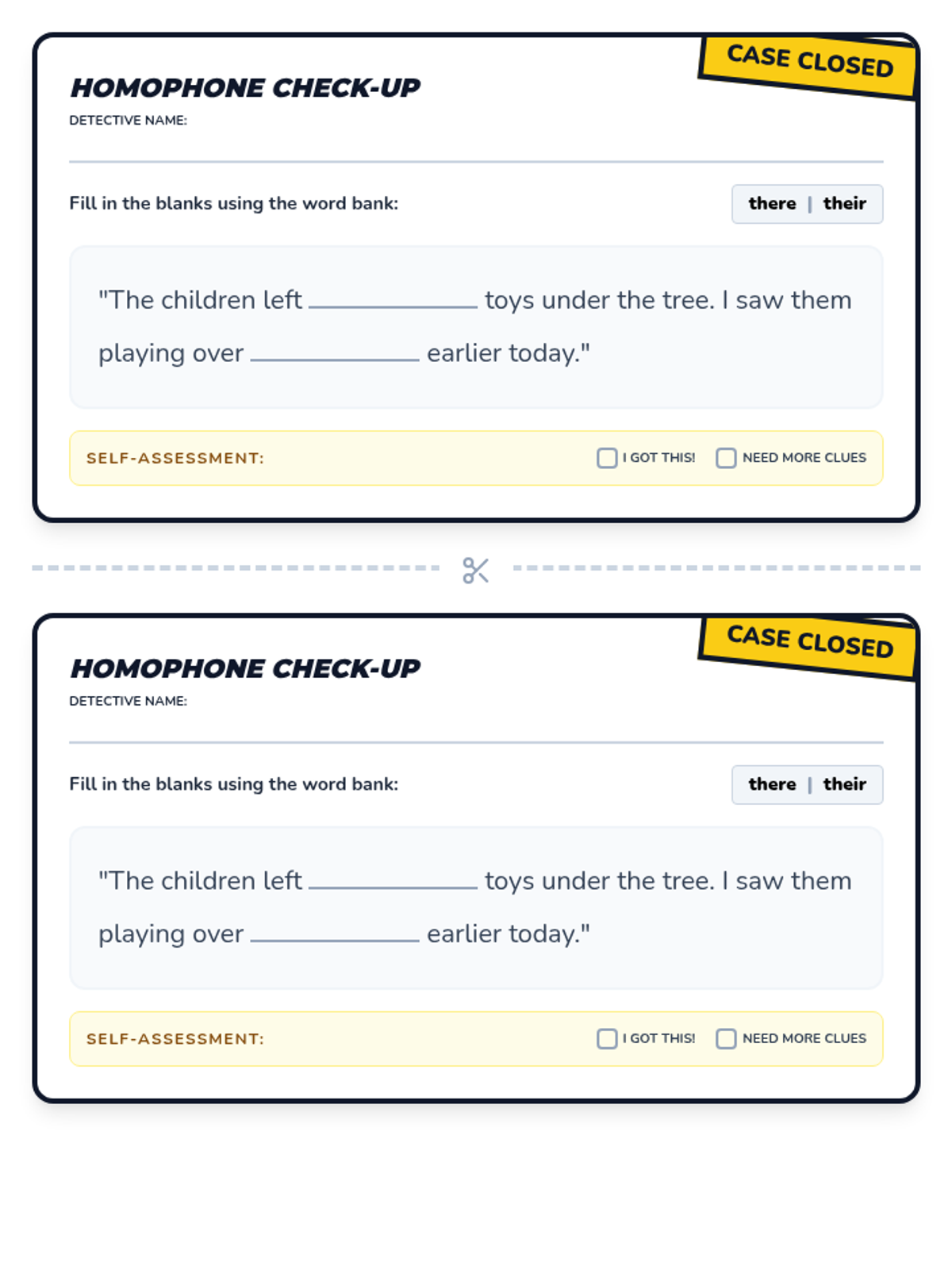
A mystery-themed lesson for 2nd graders to master the difference between 'there' and 'their' through interactive investigation and practice.
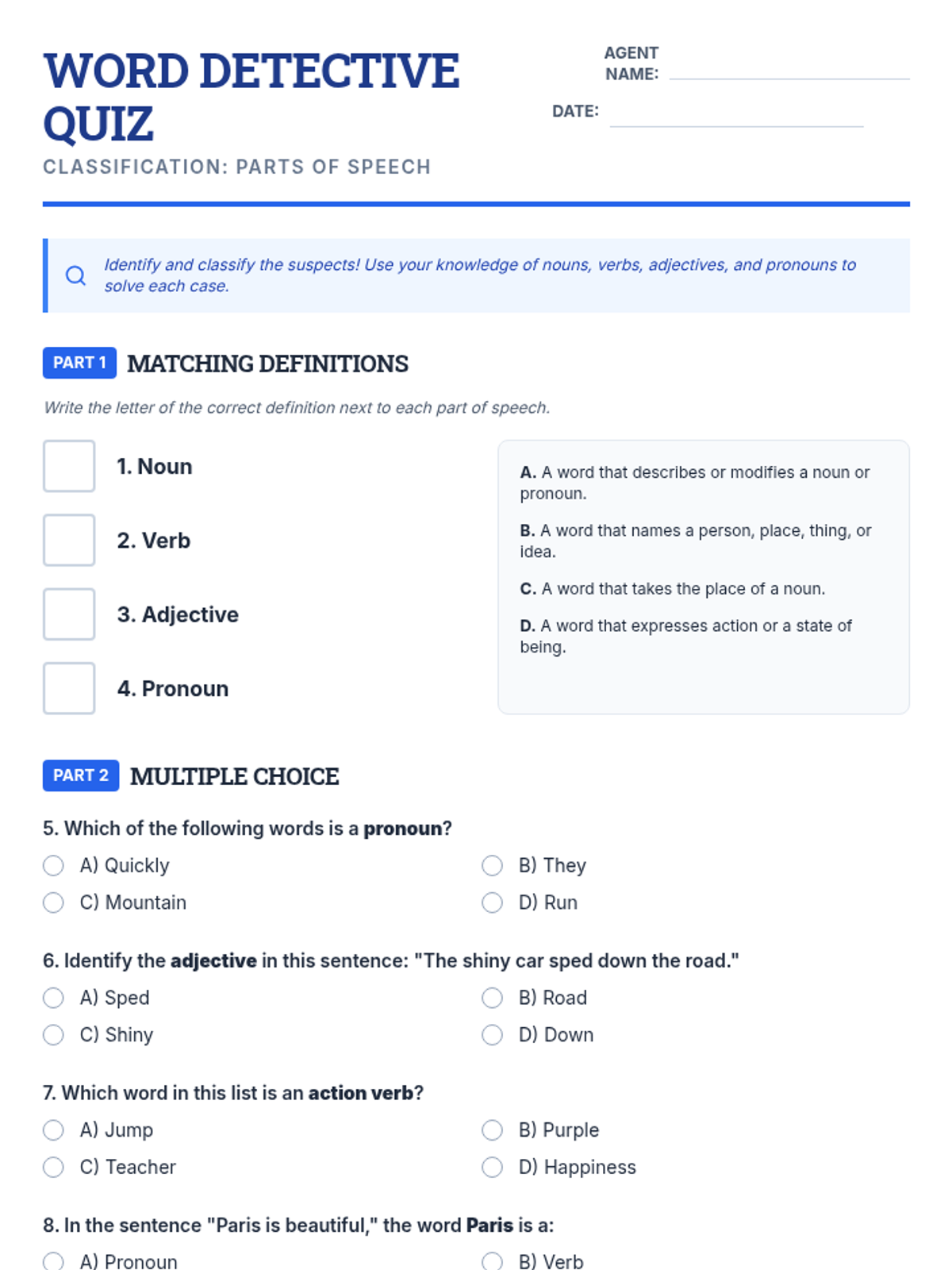
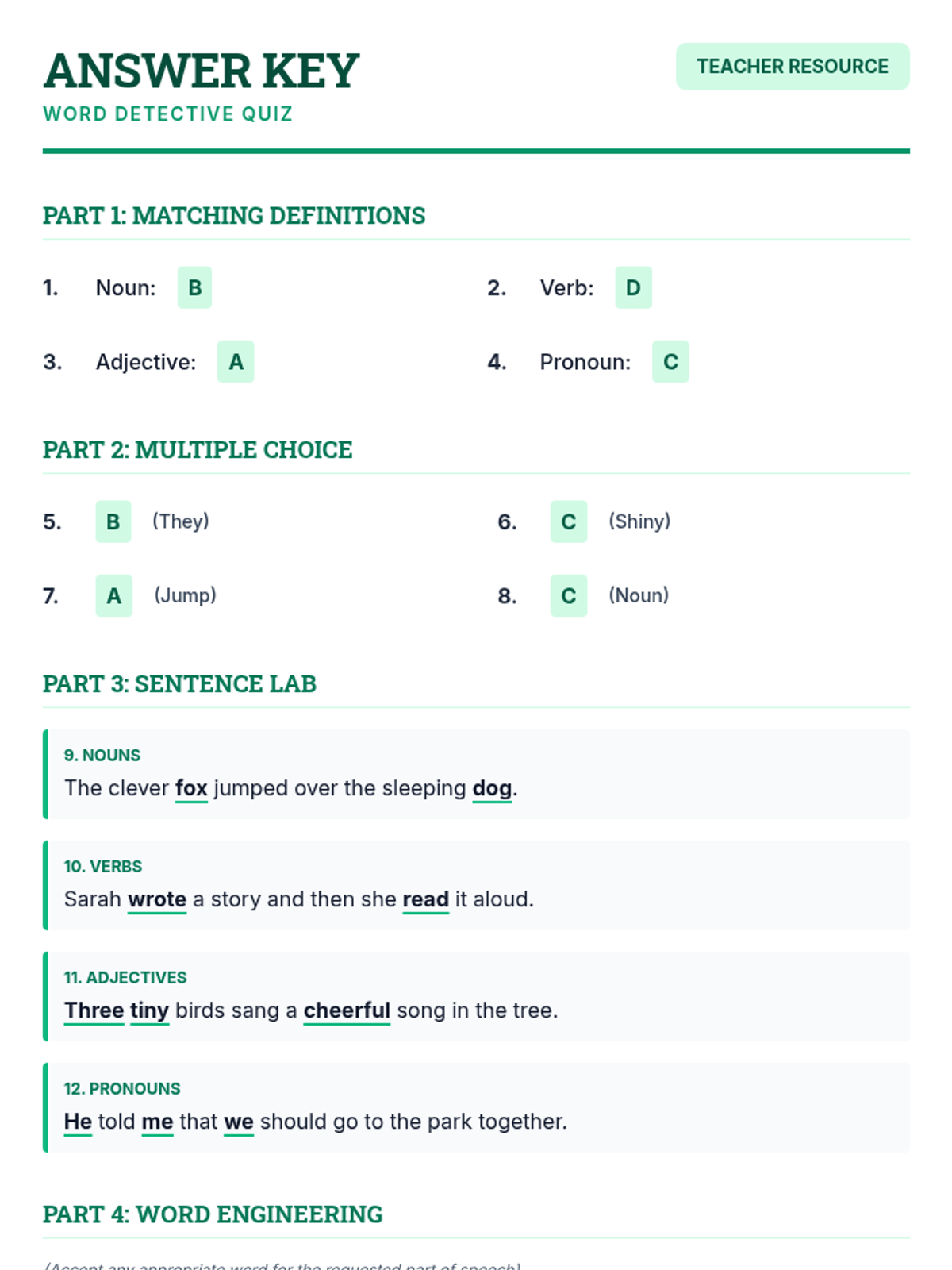
A comprehensive quiz covering the four foundational parts of speech: nouns, verbs, adjectives, and pronouns. Includes matching, multiple choice, identification, and creative fill-in-the-blank questions.
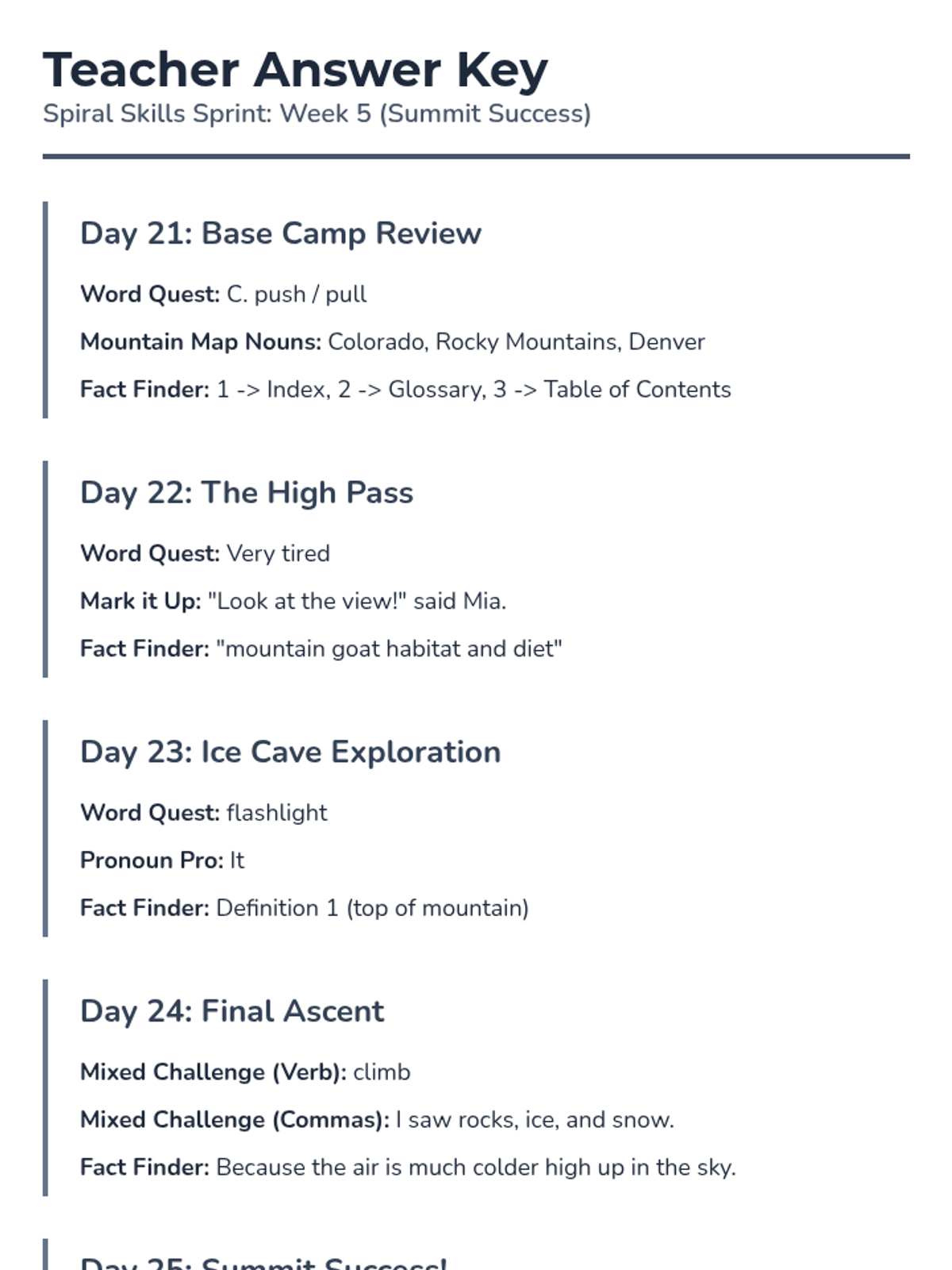
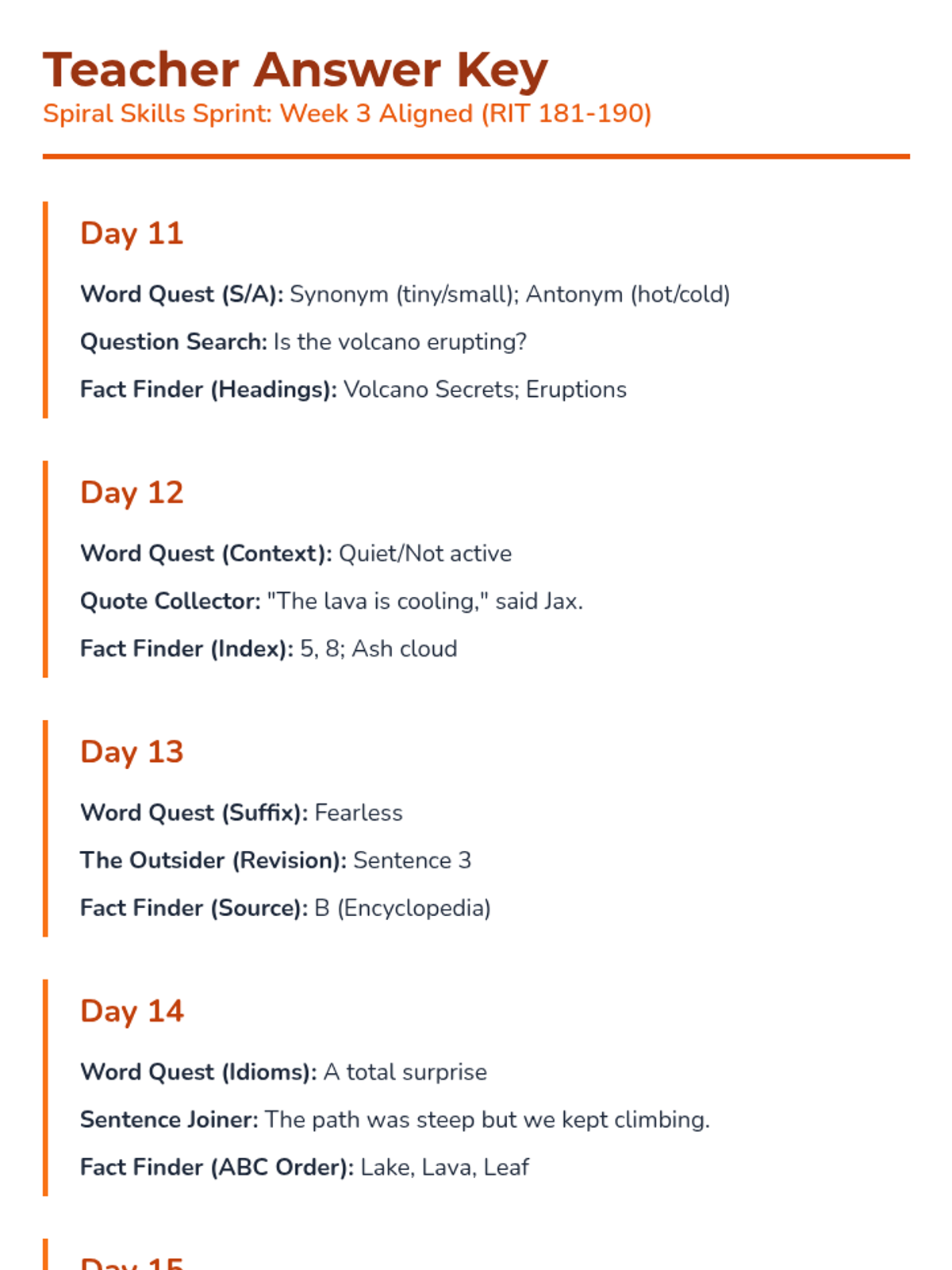
The final week provides comprehensive review and simulated NWEA-style practice items to build test-taking confidence and stamina.
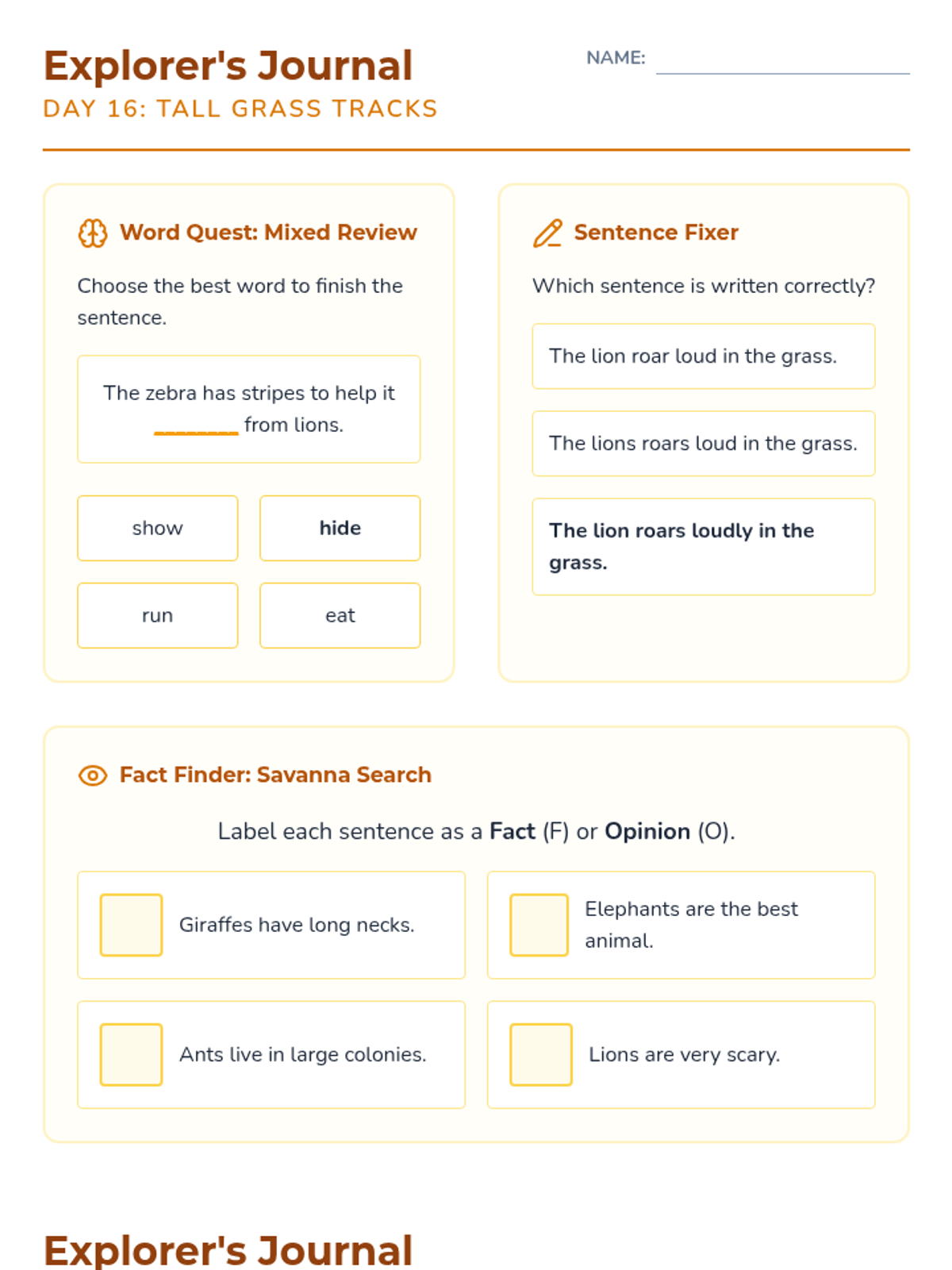
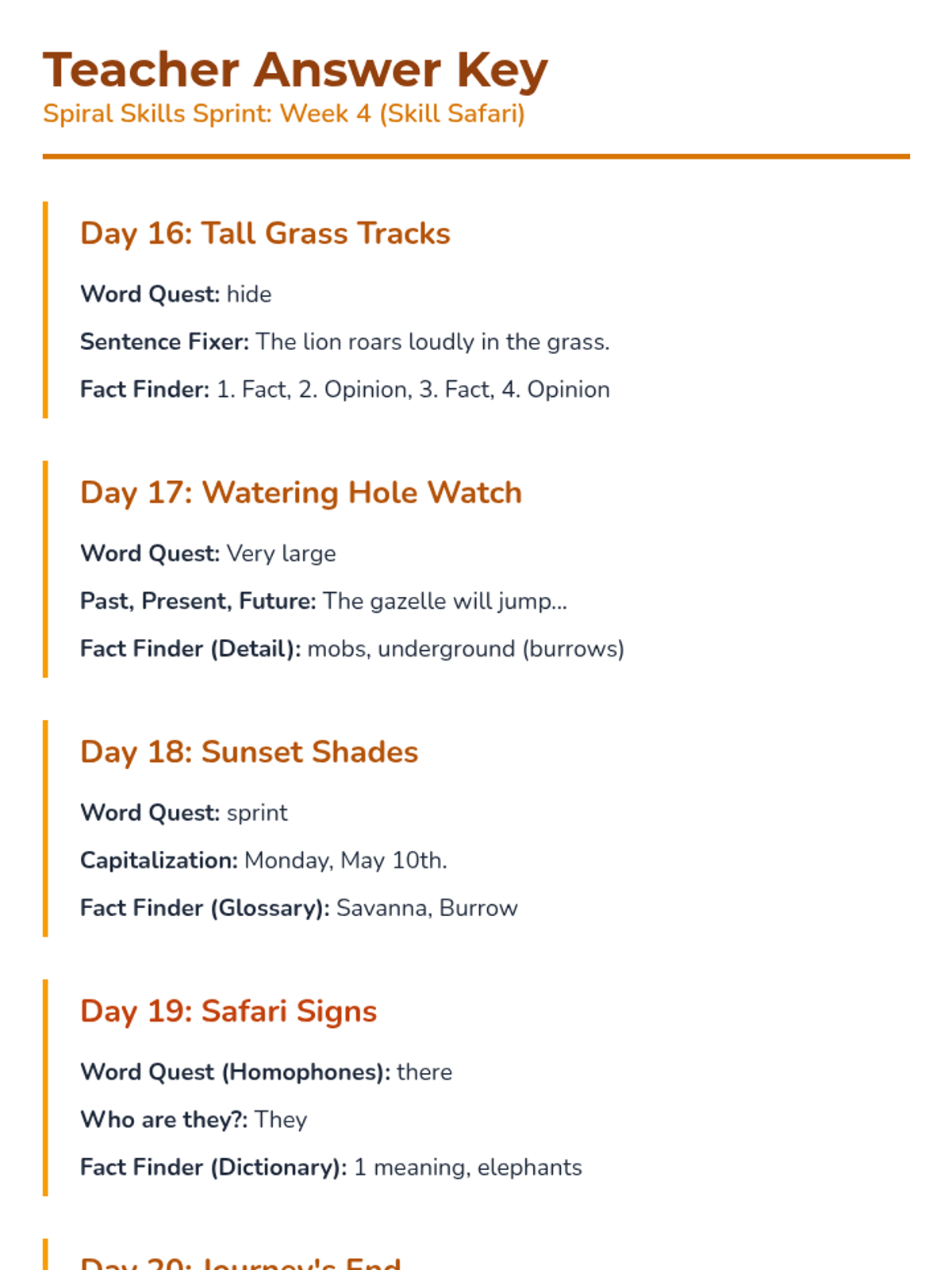
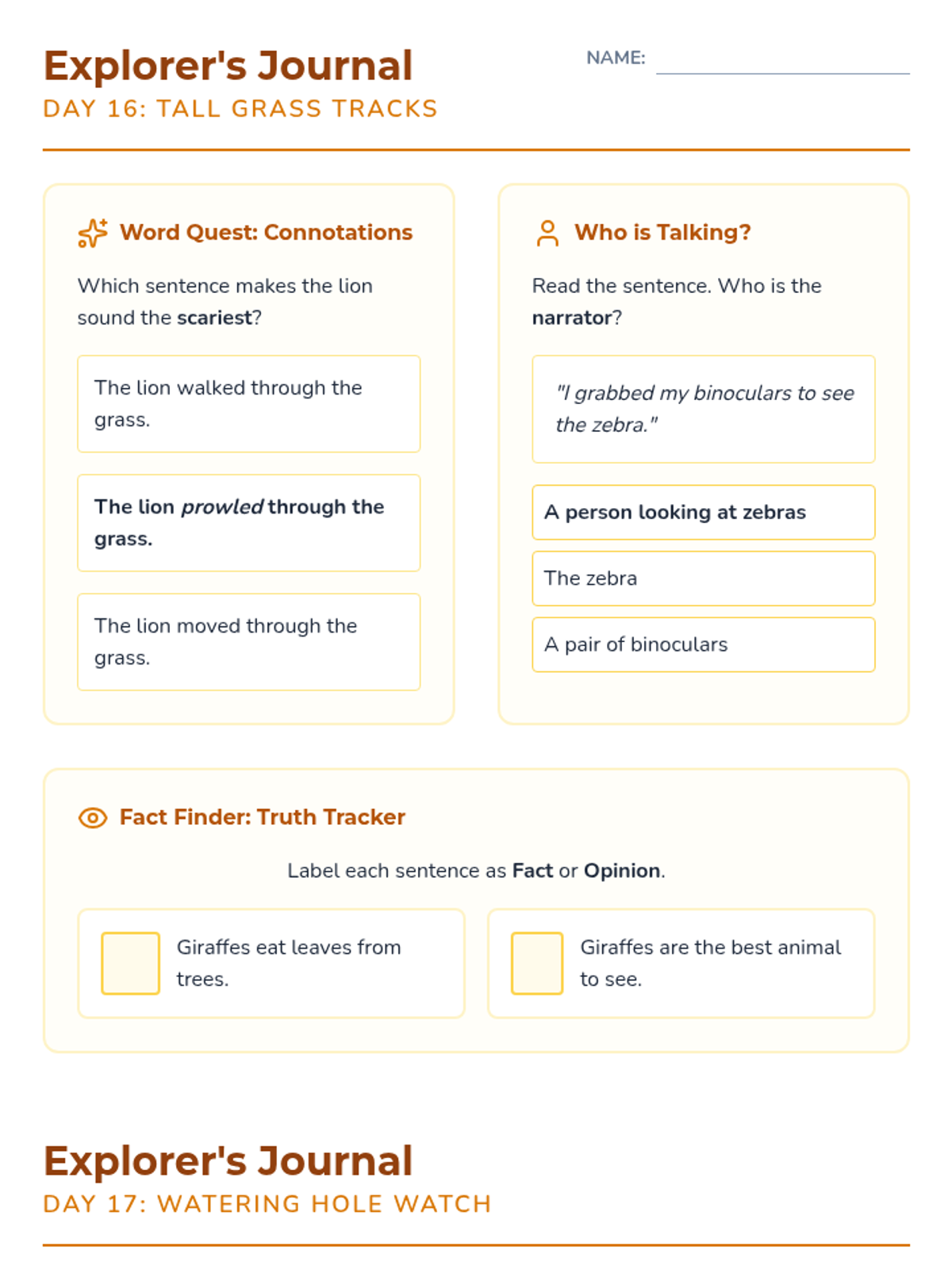
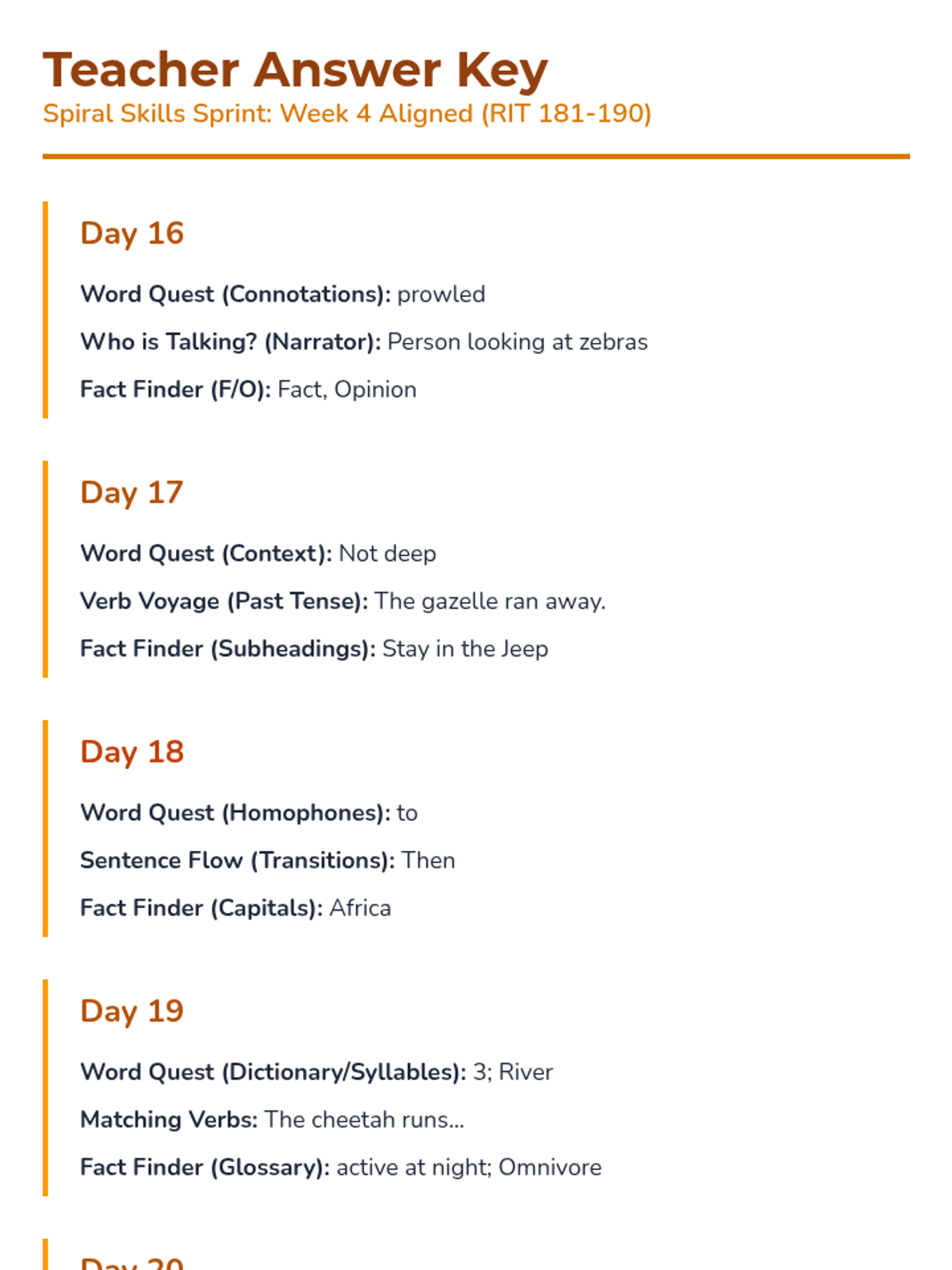
Week 4 integrates all previously learned skills through mixed practice and real-world application, such as note-taking from short passages and using dictionary entries.
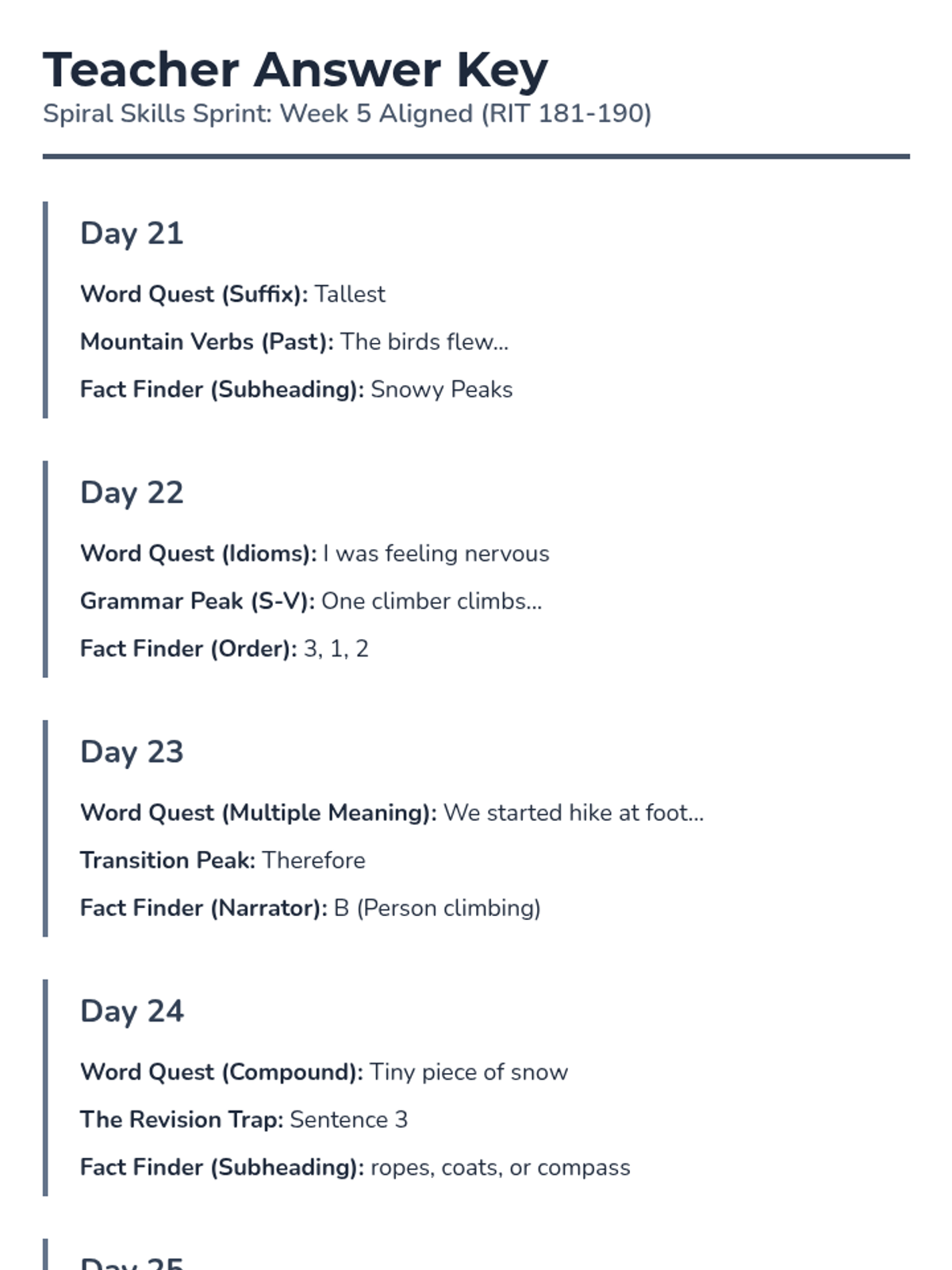
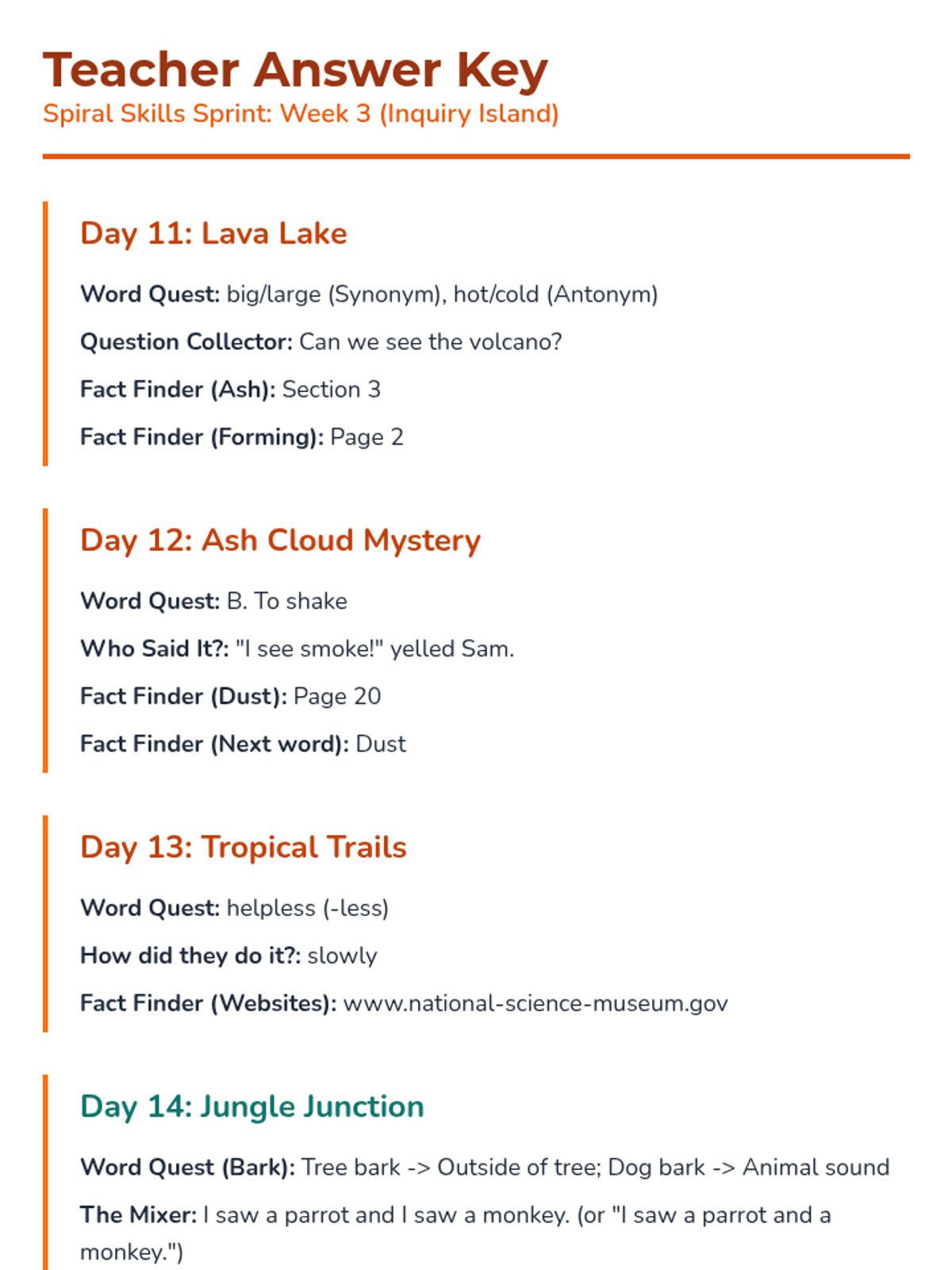
The third week dives deeper into complex word parts and research tools like indexes and glossaries, while introducing basic quotation marks and sentence combining.
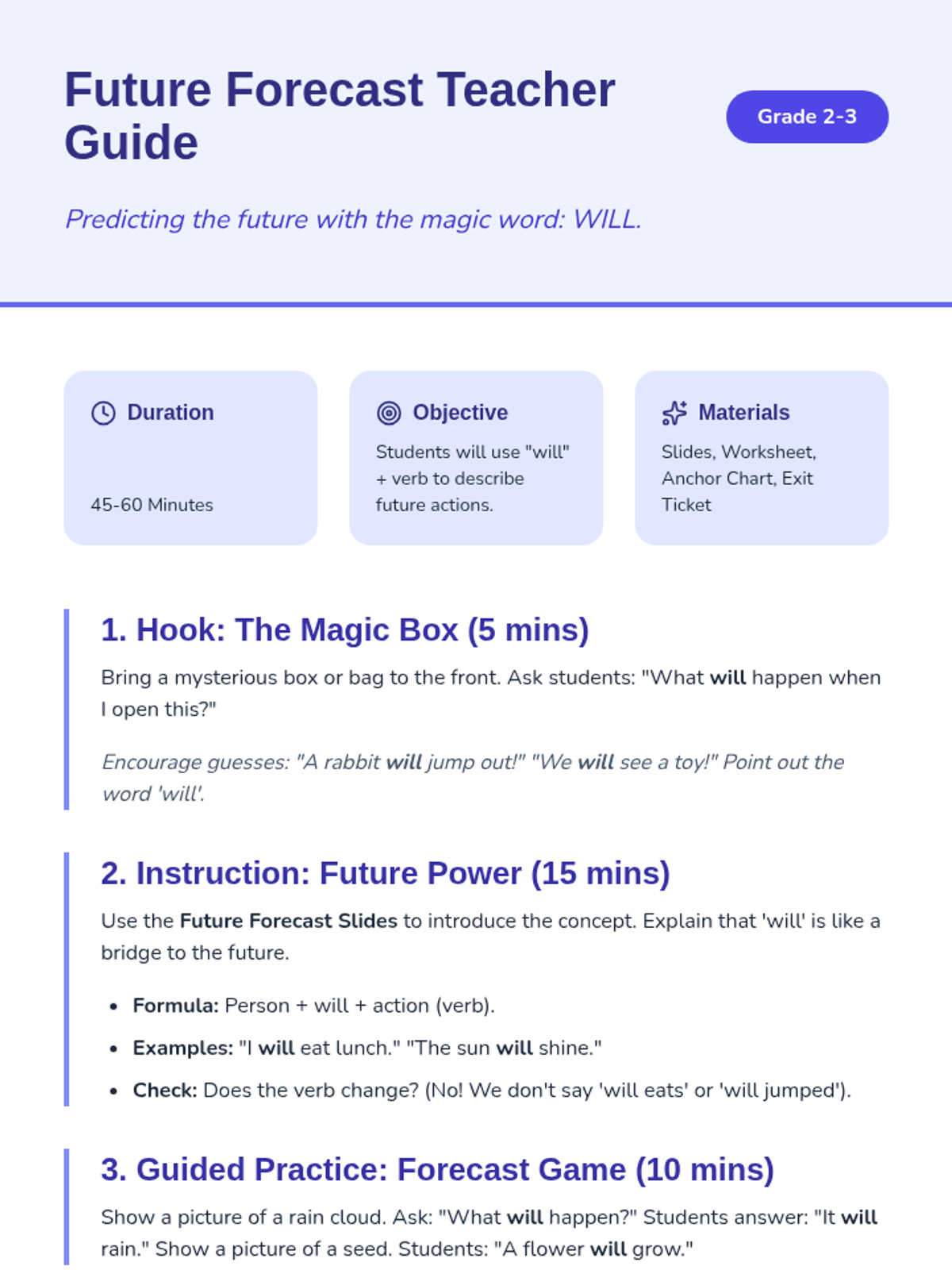
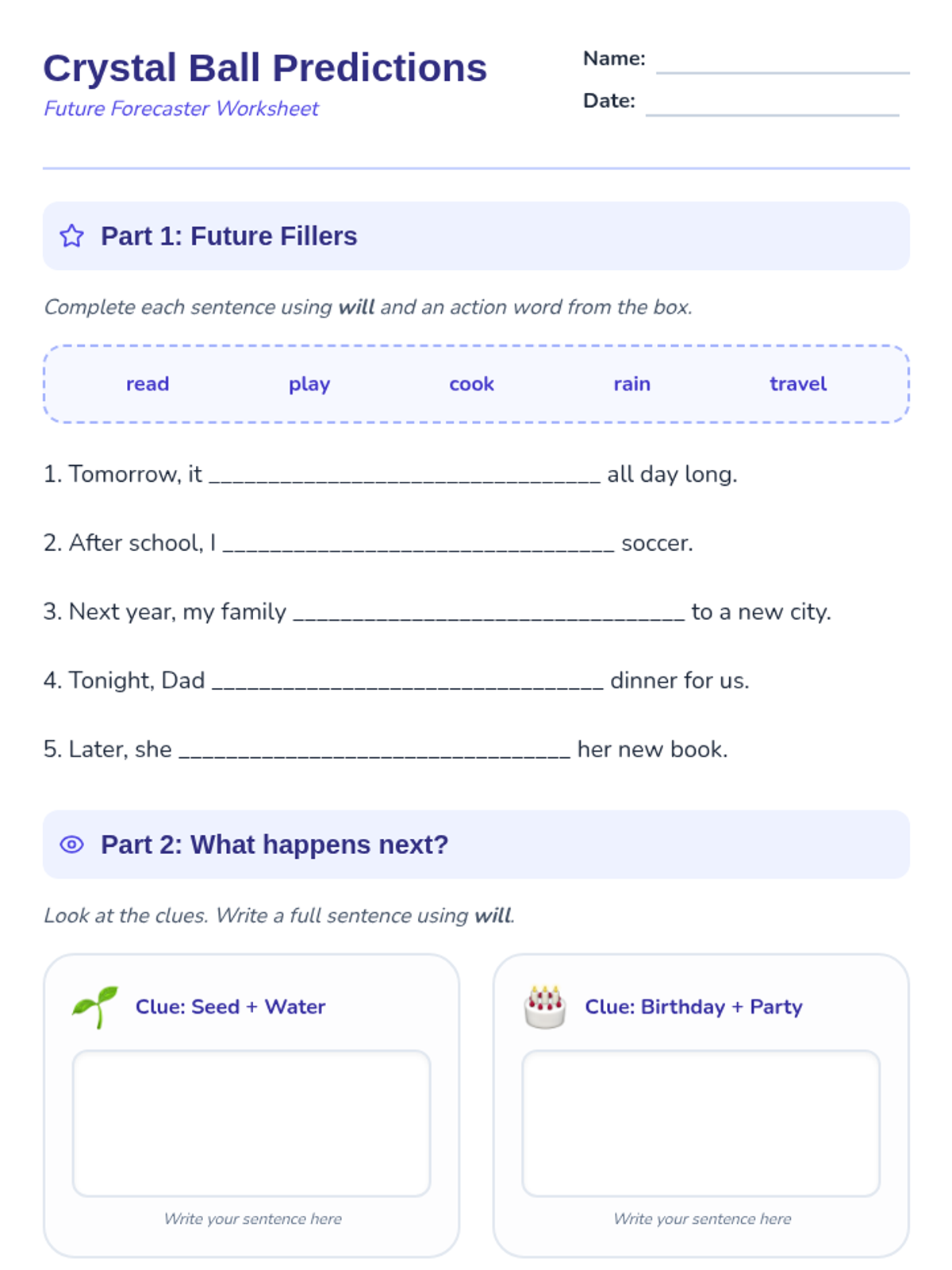
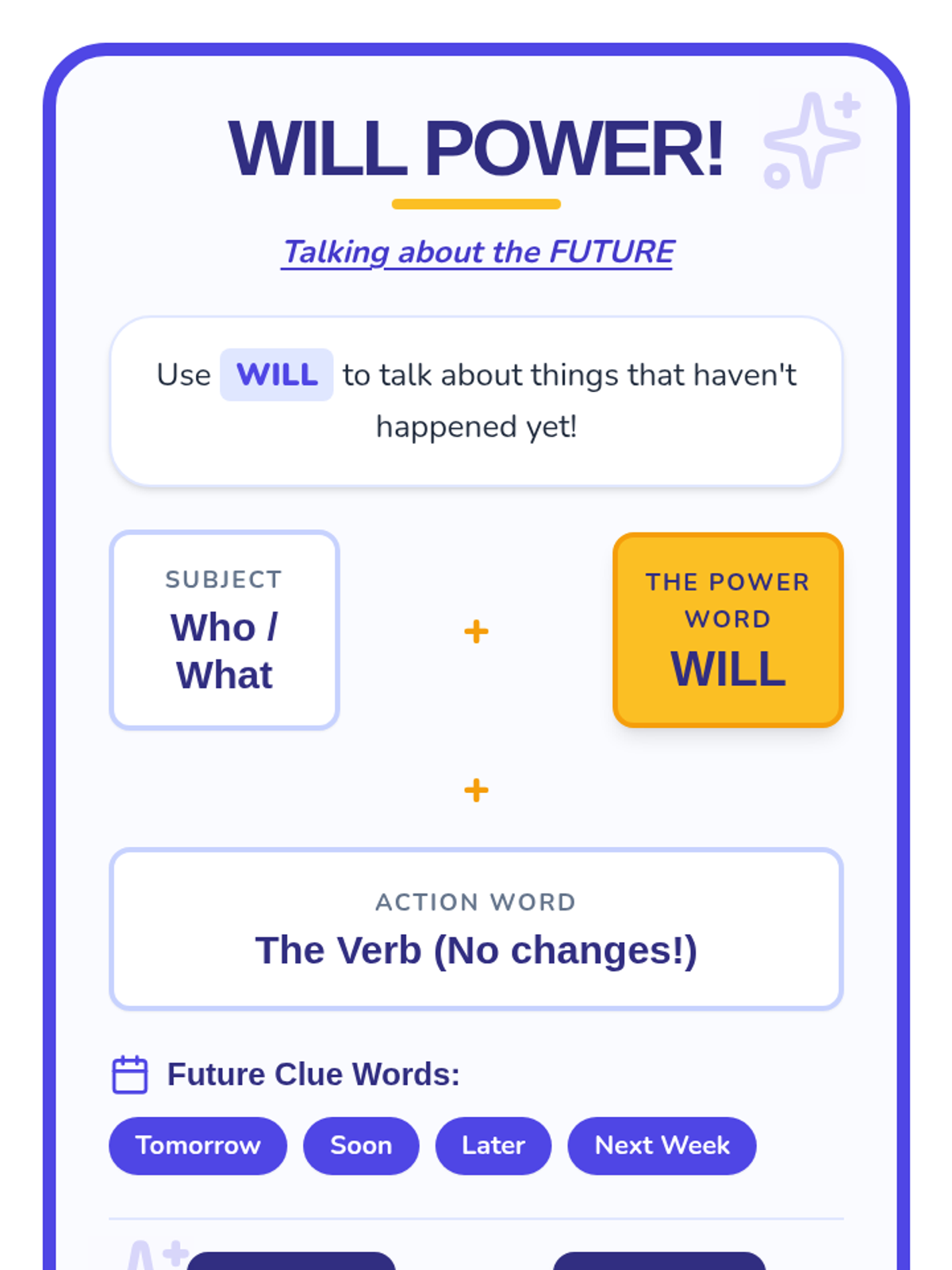
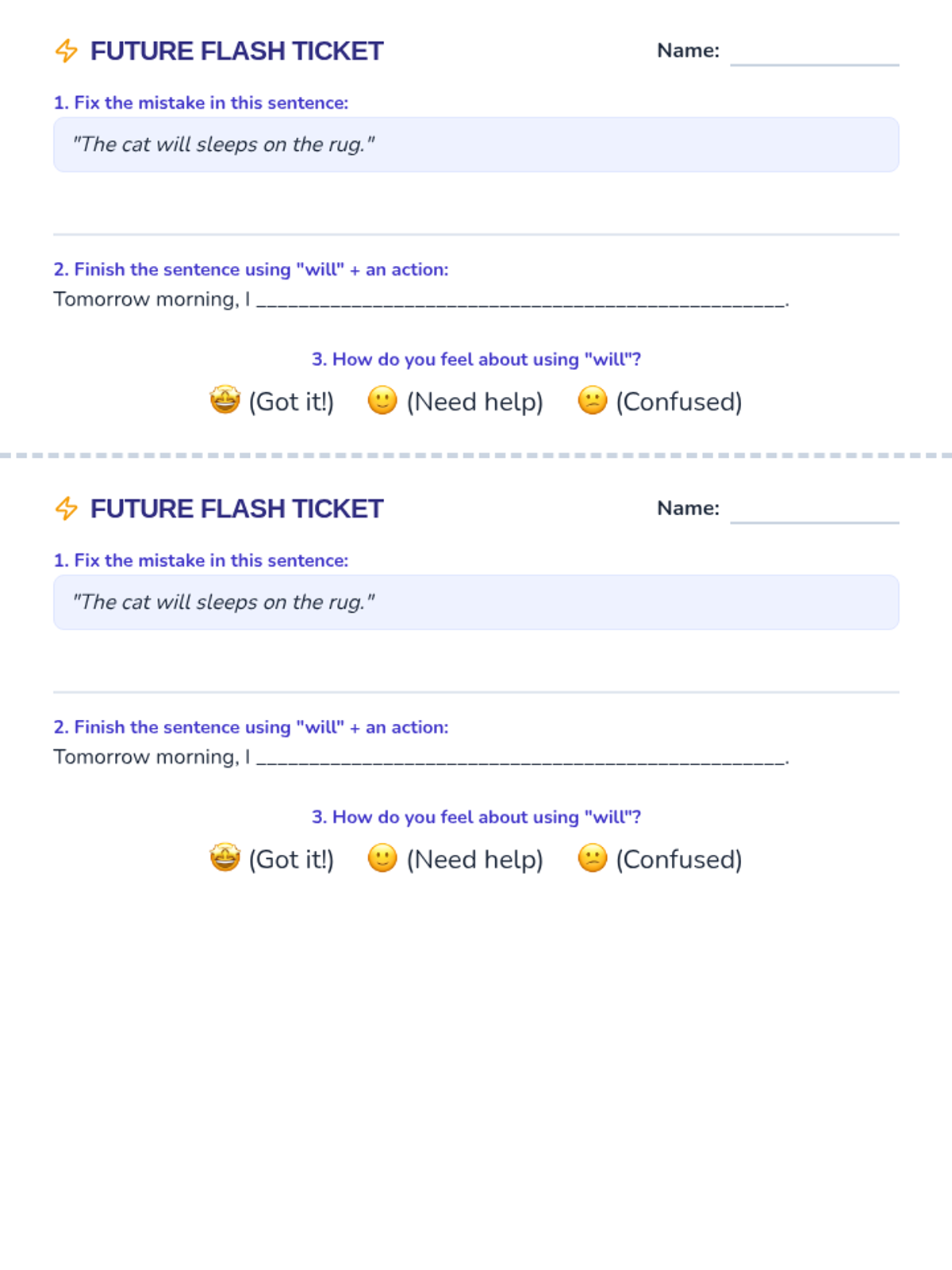
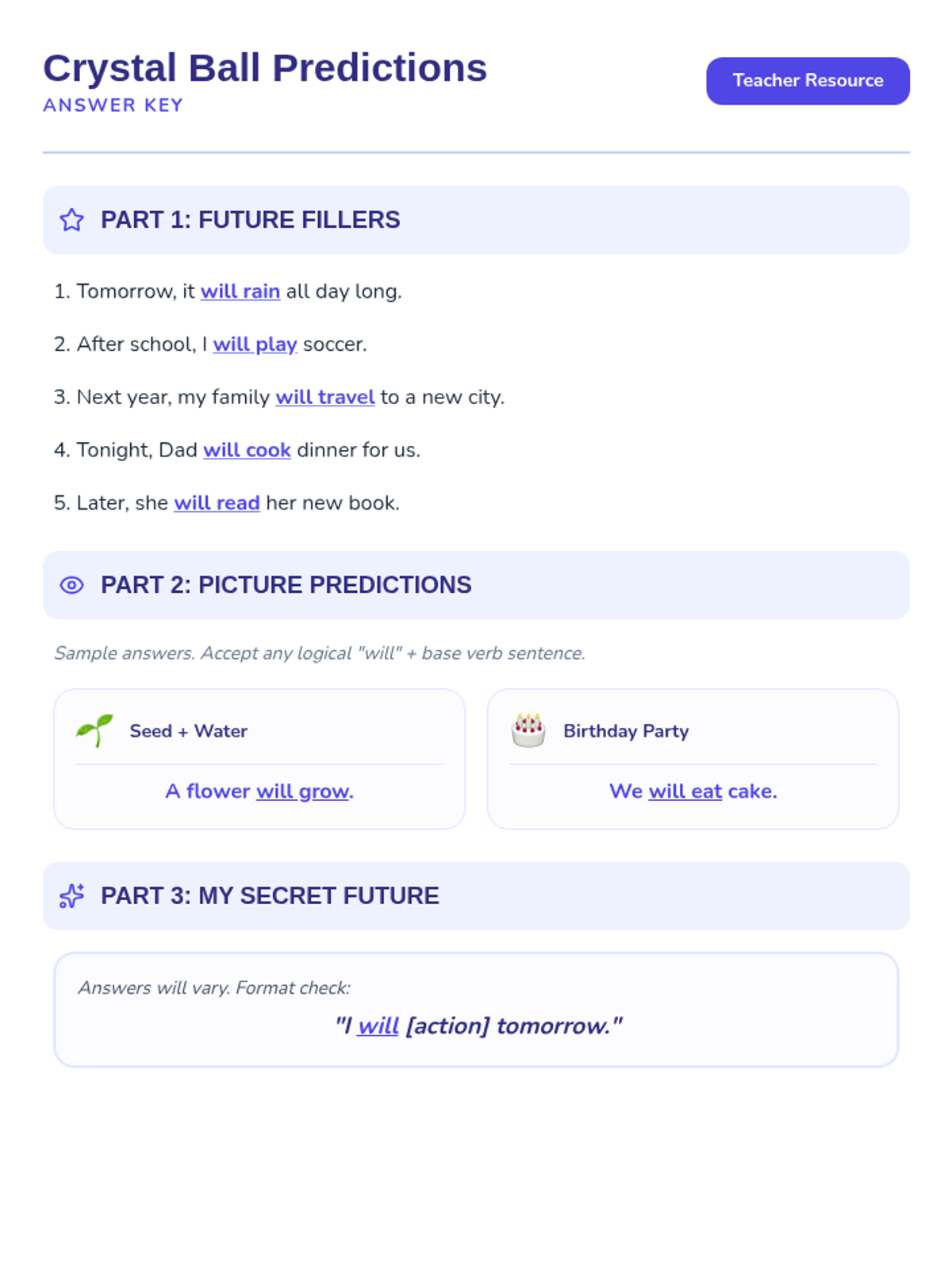
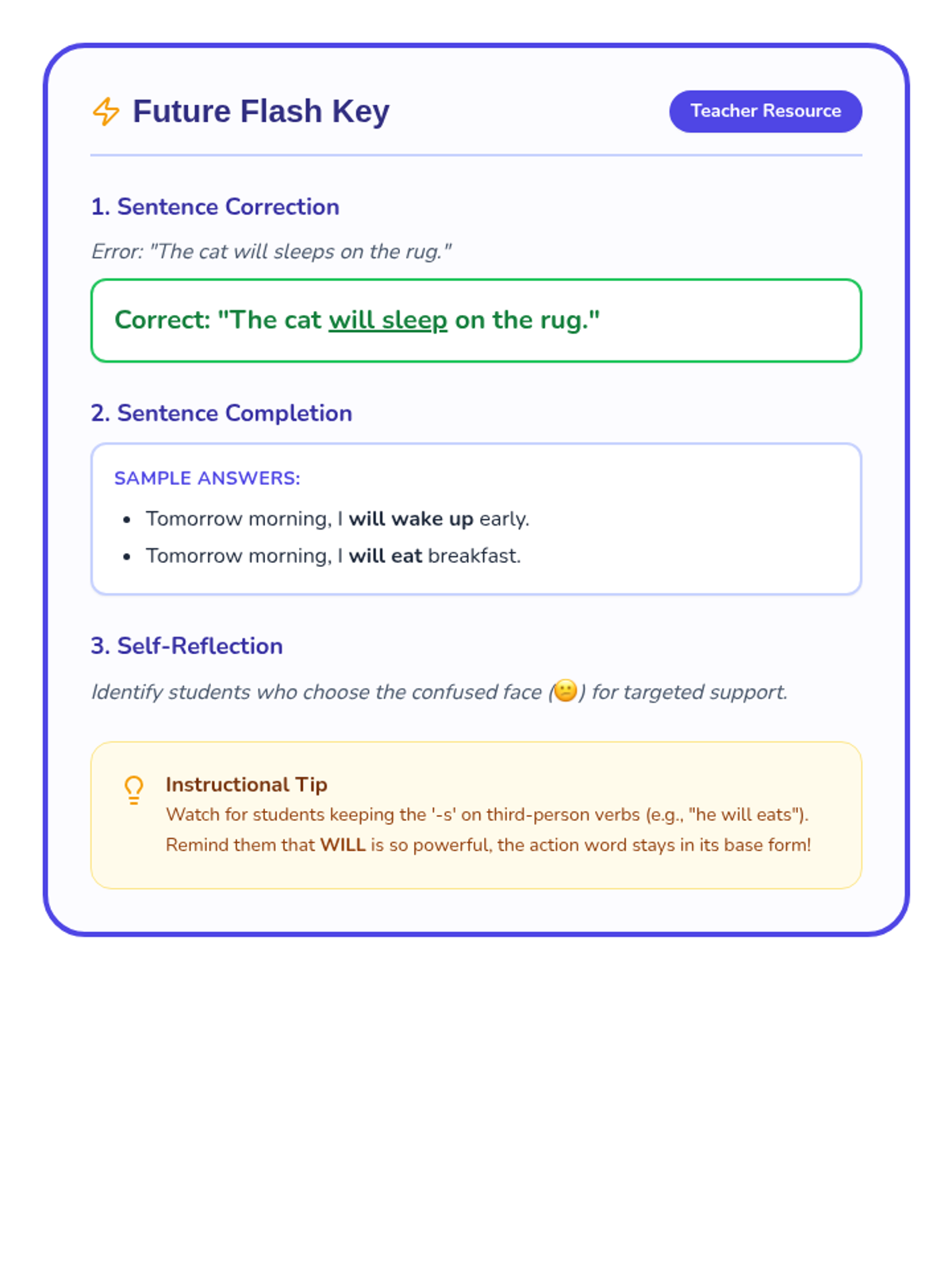
A magical introduction to using 'will' for future tense, where students become 'Future Forecasters' to predict what happens next.
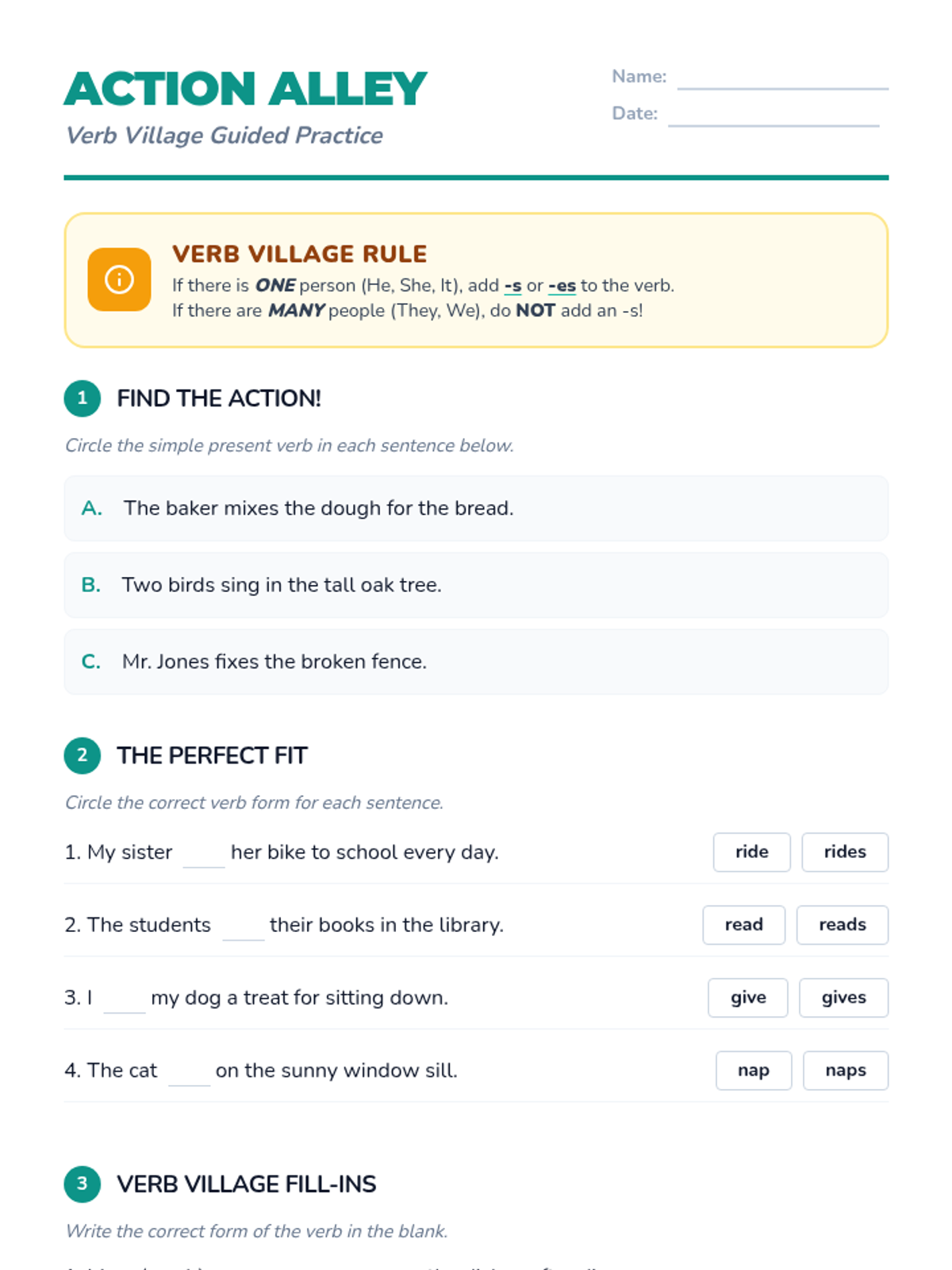
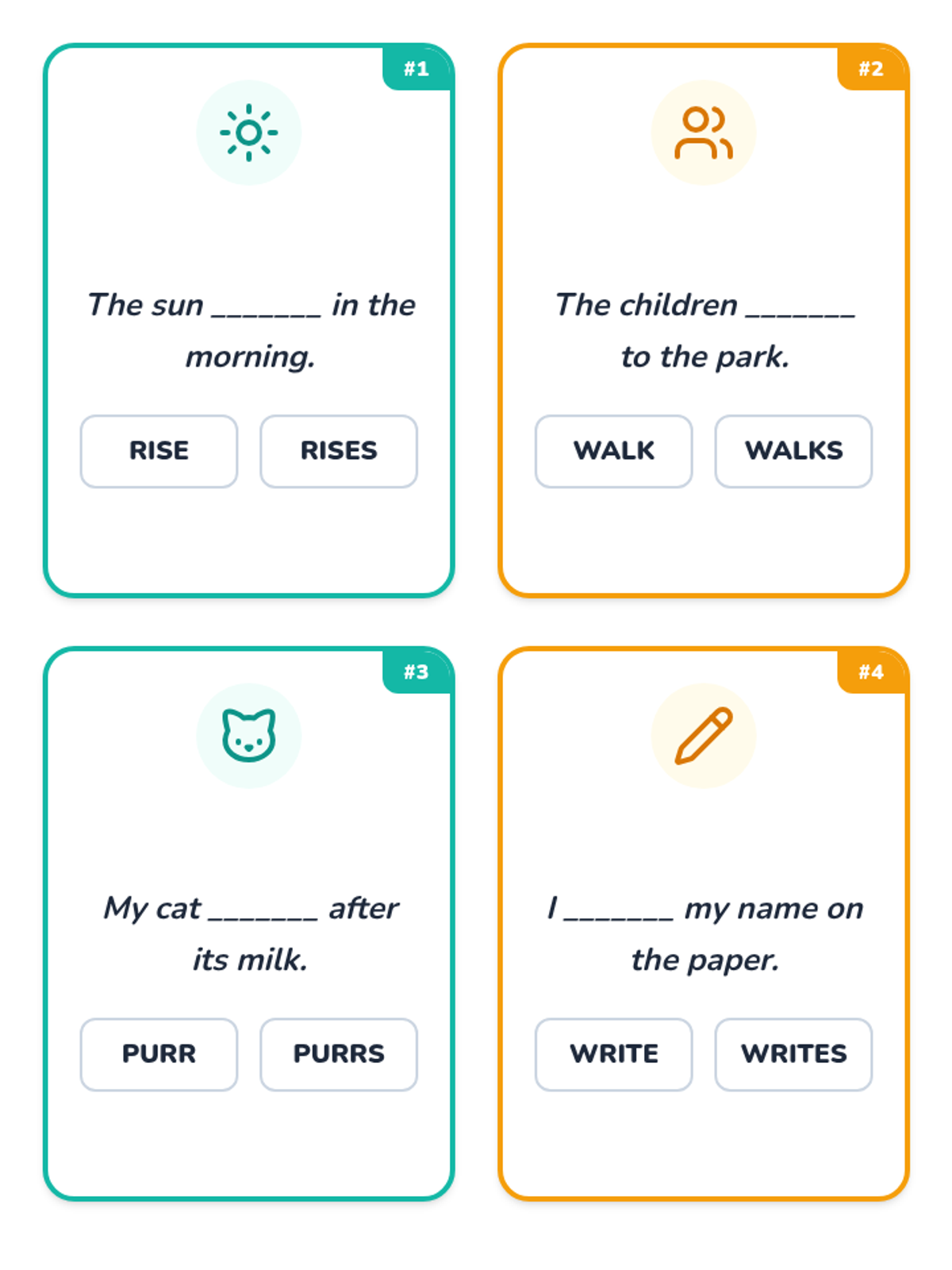
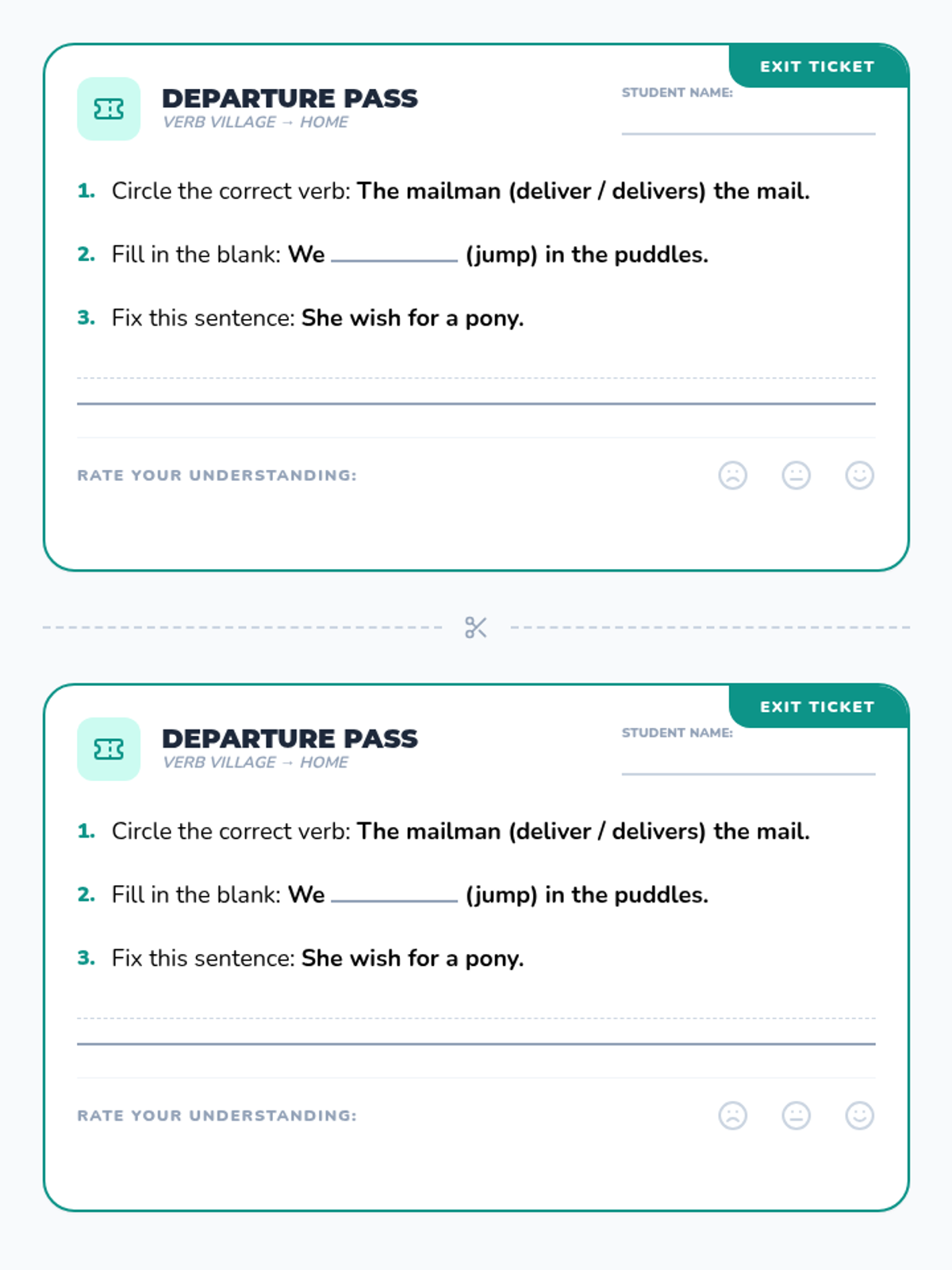
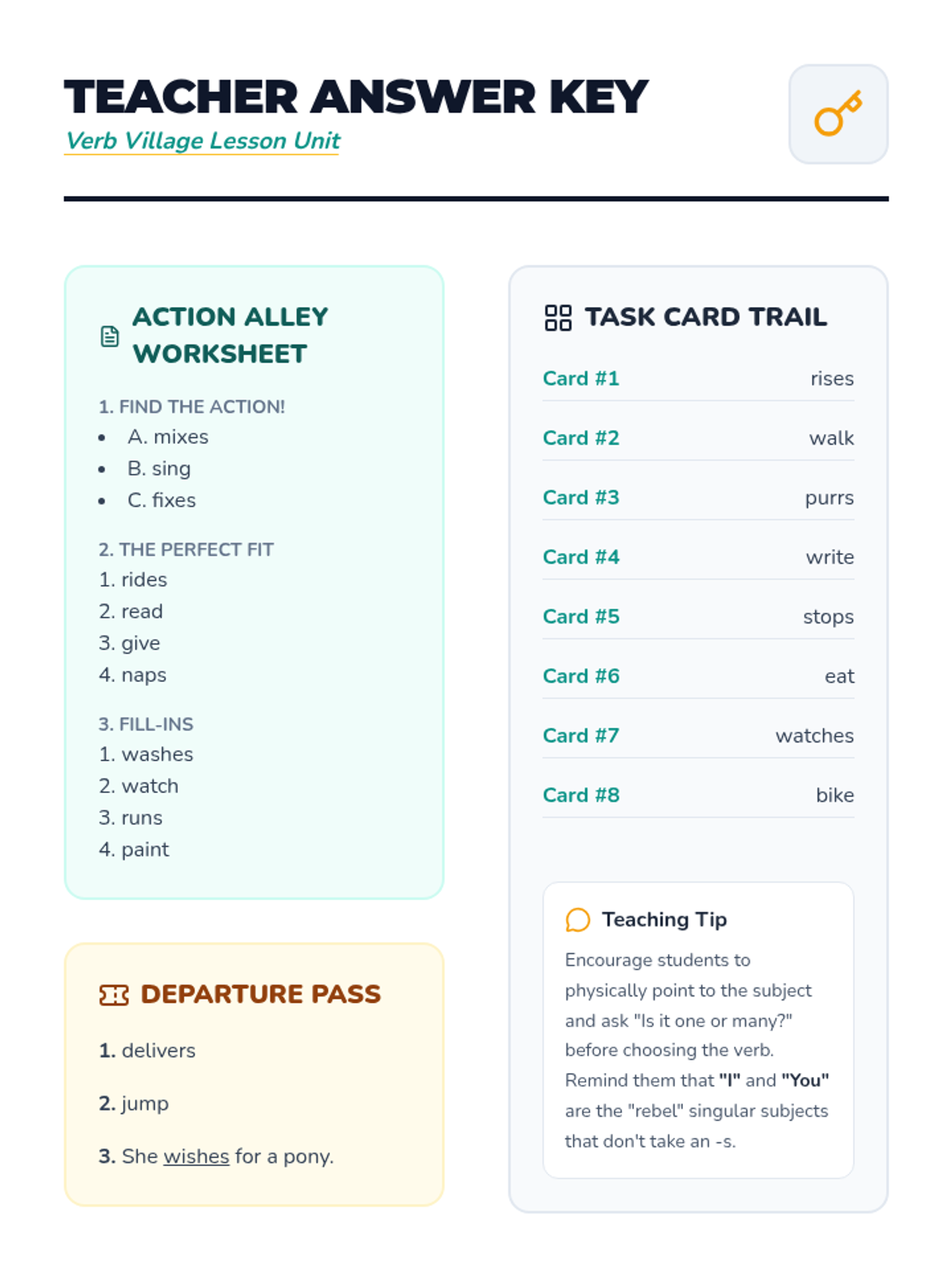
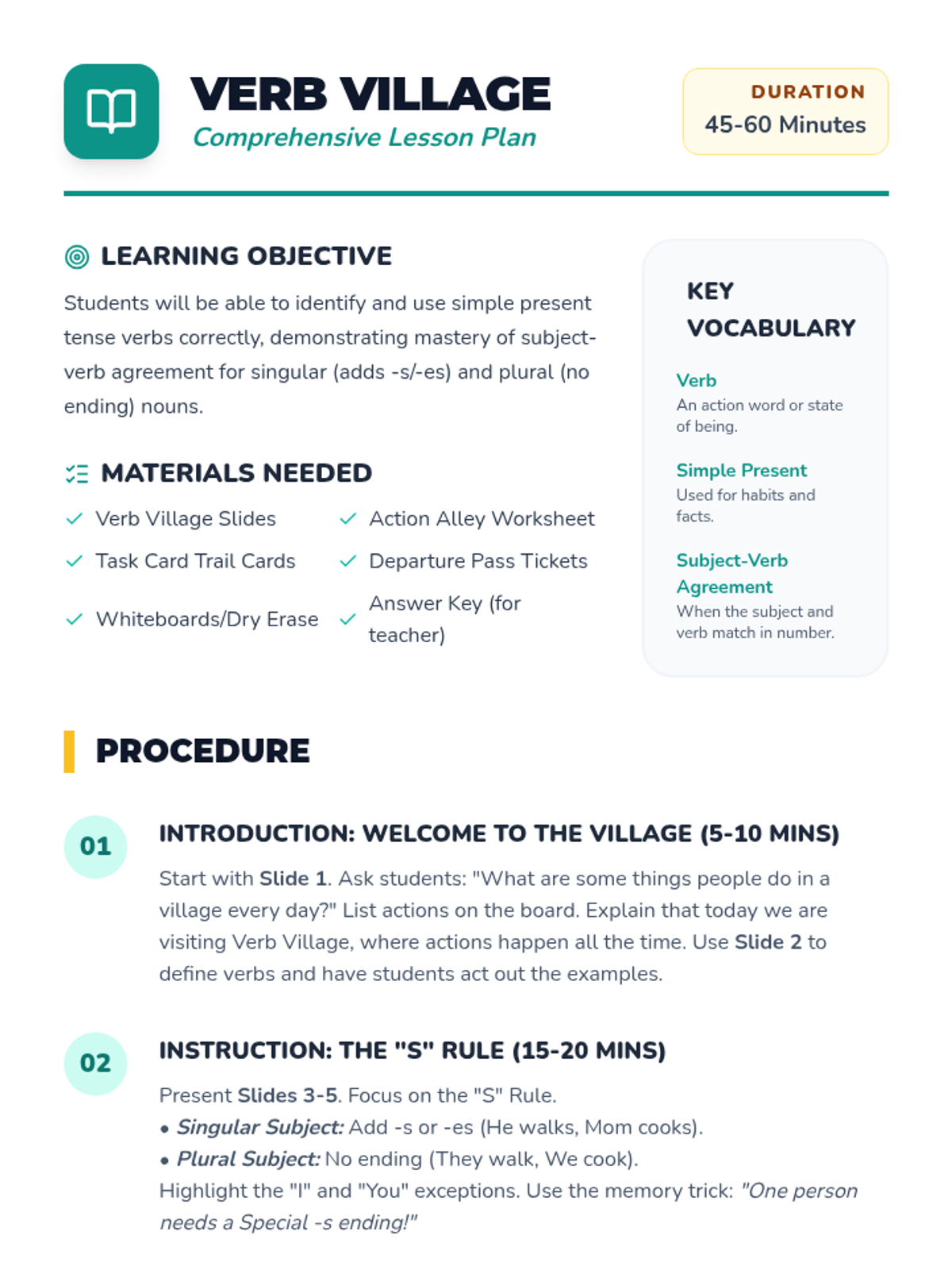
Students will learn to use simple present tense verbs correctly, focusing on subject-verb agreement for singular and plural nouns.
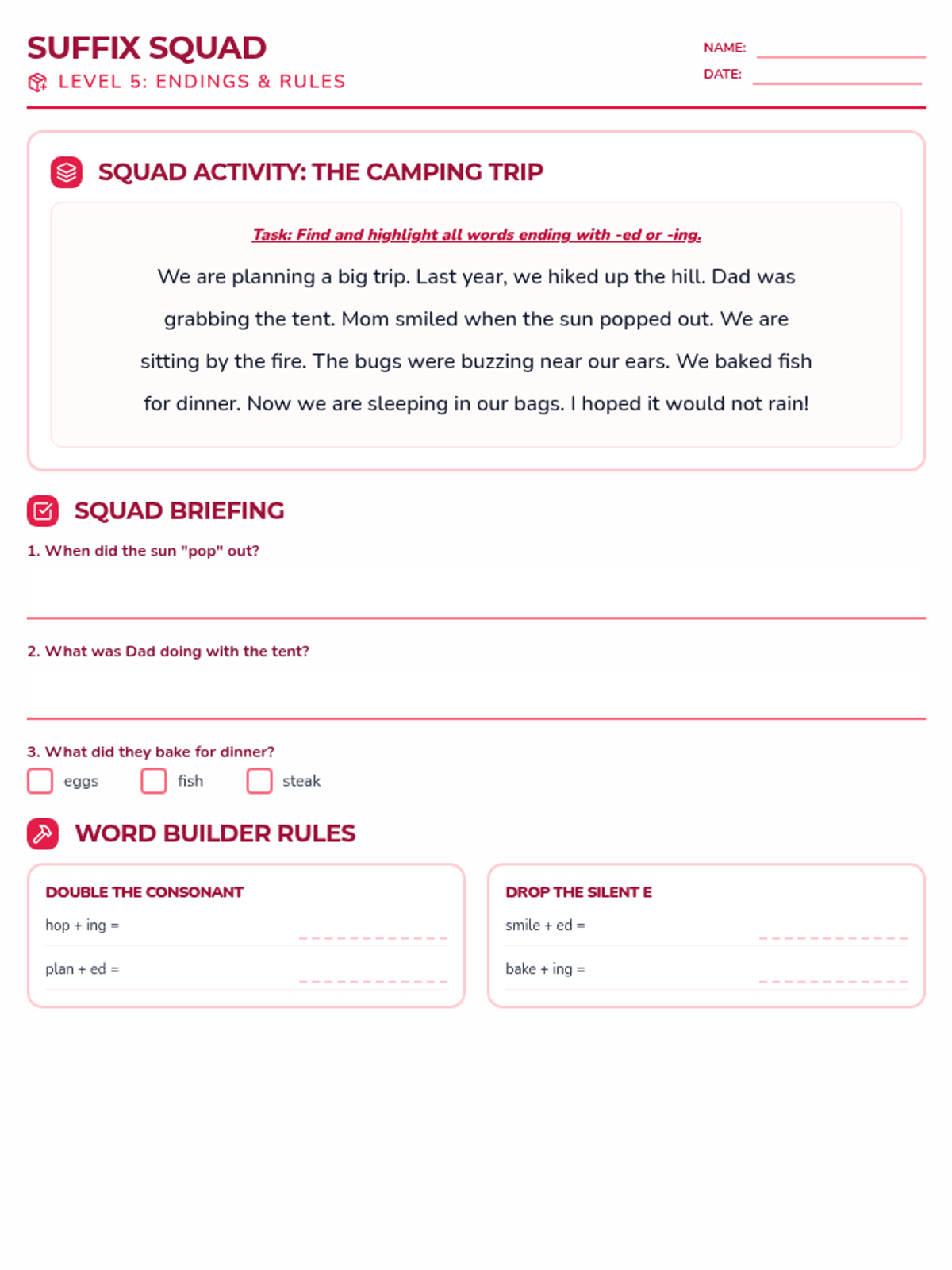
Applying common suffixes (-s, -es, -ed, -ing) and mastering spelling rules like doubling consonants and dropping the silent e.
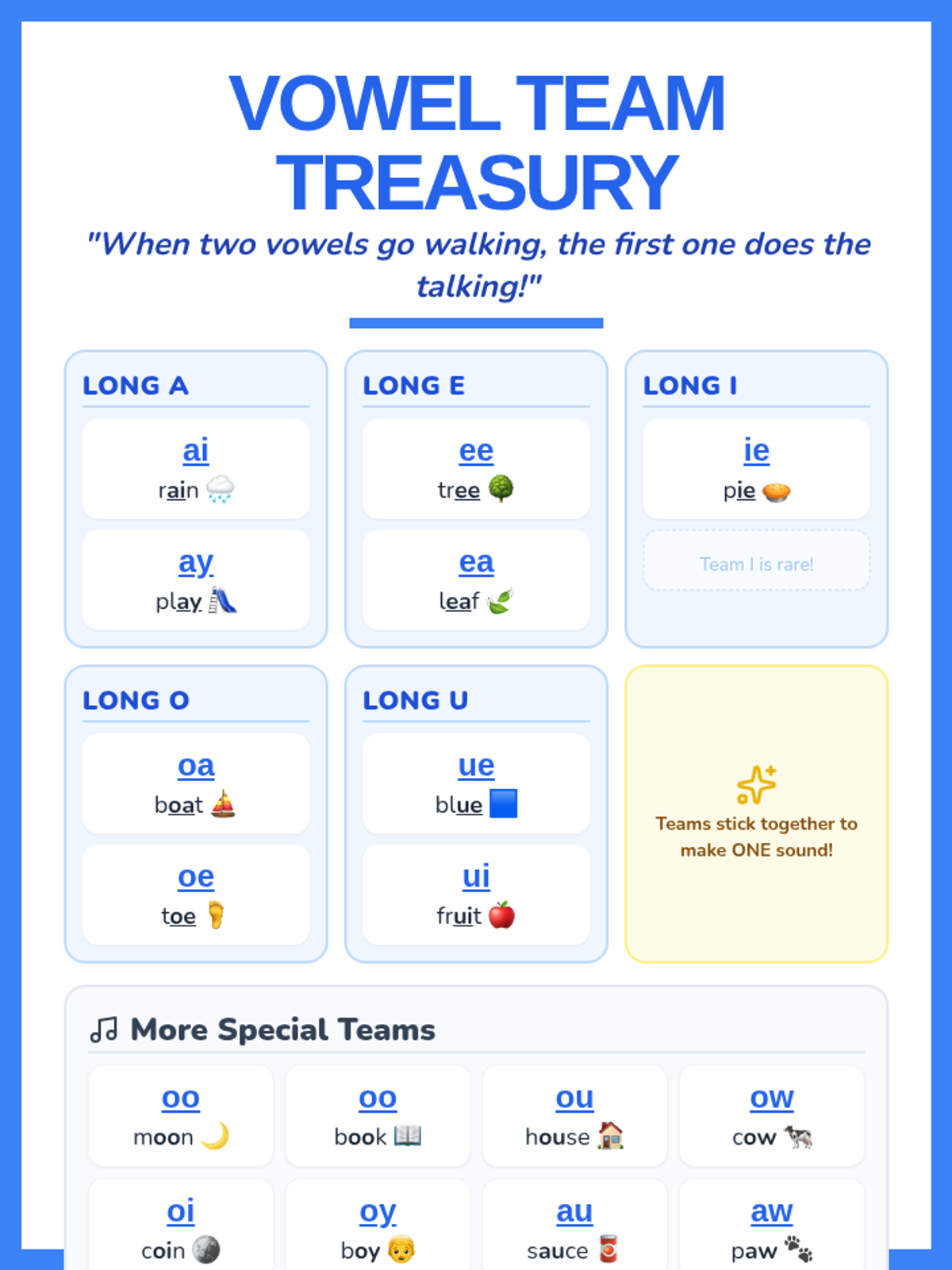
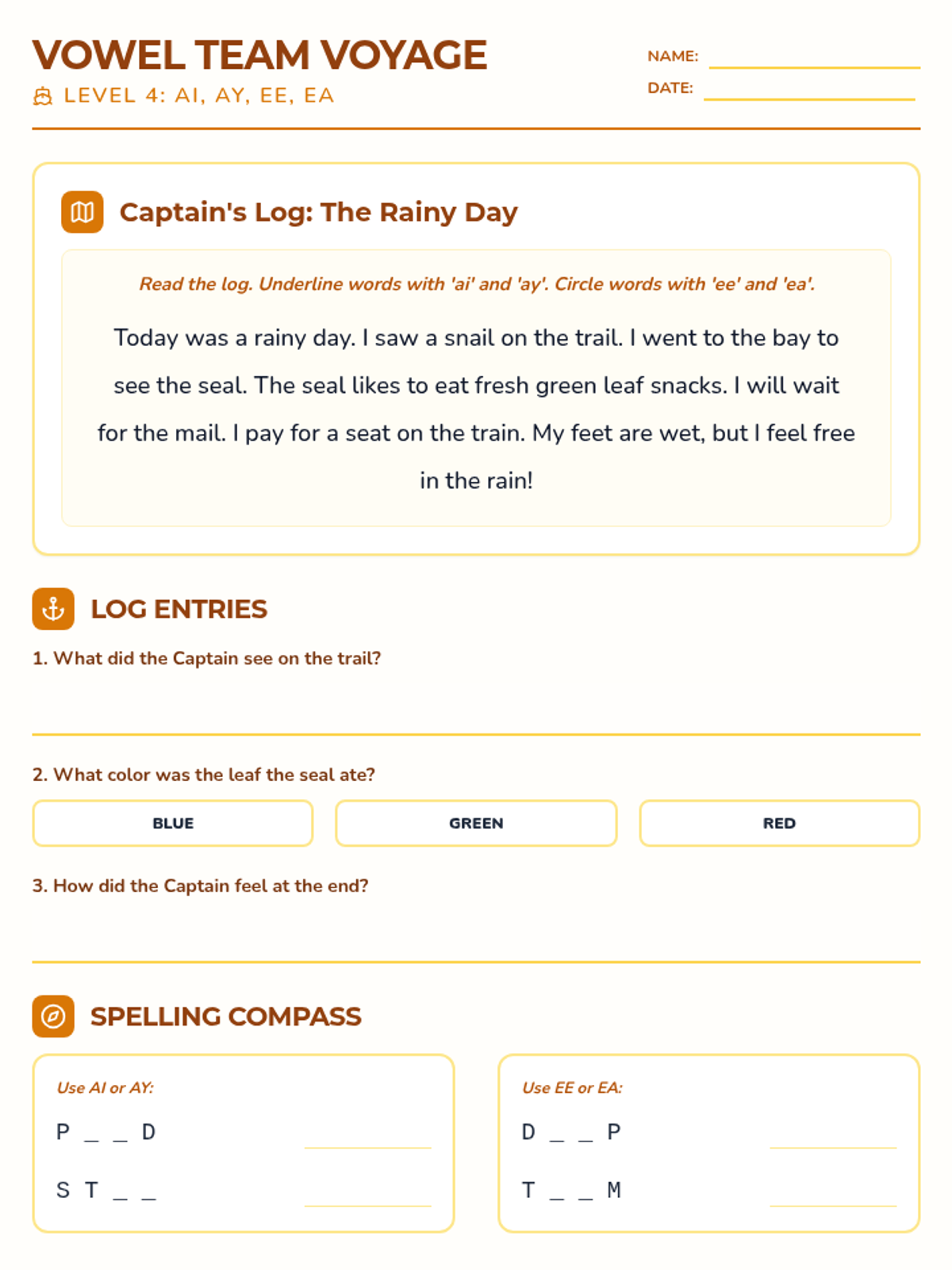
Exploring common vowel teams like ai, ay, ee, and ea, and understanding how vowel combinations create long vowel sounds.
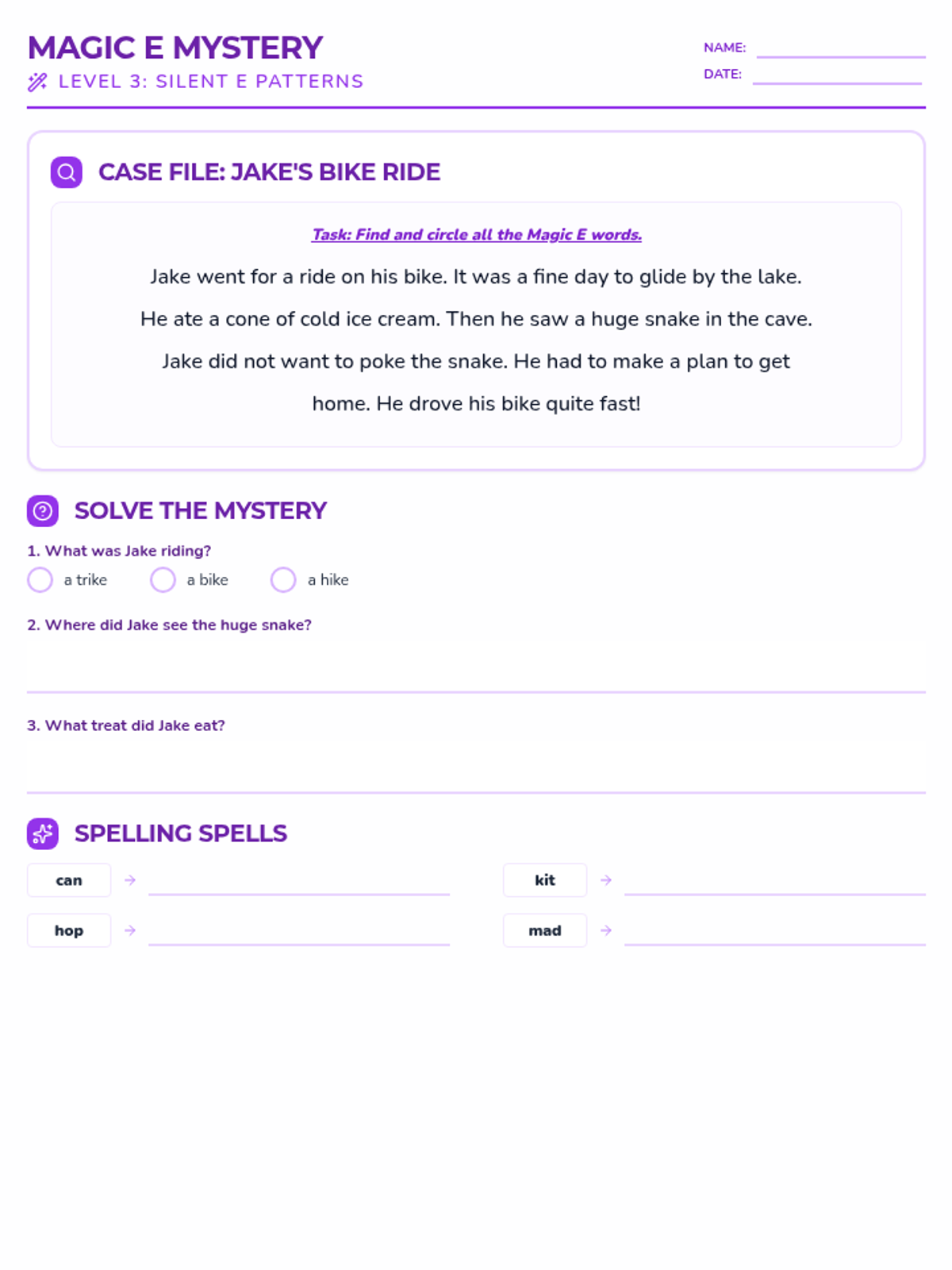
Learning the role of silent e in changing vowel sounds from short to long, focusing on common CVCE patterns.
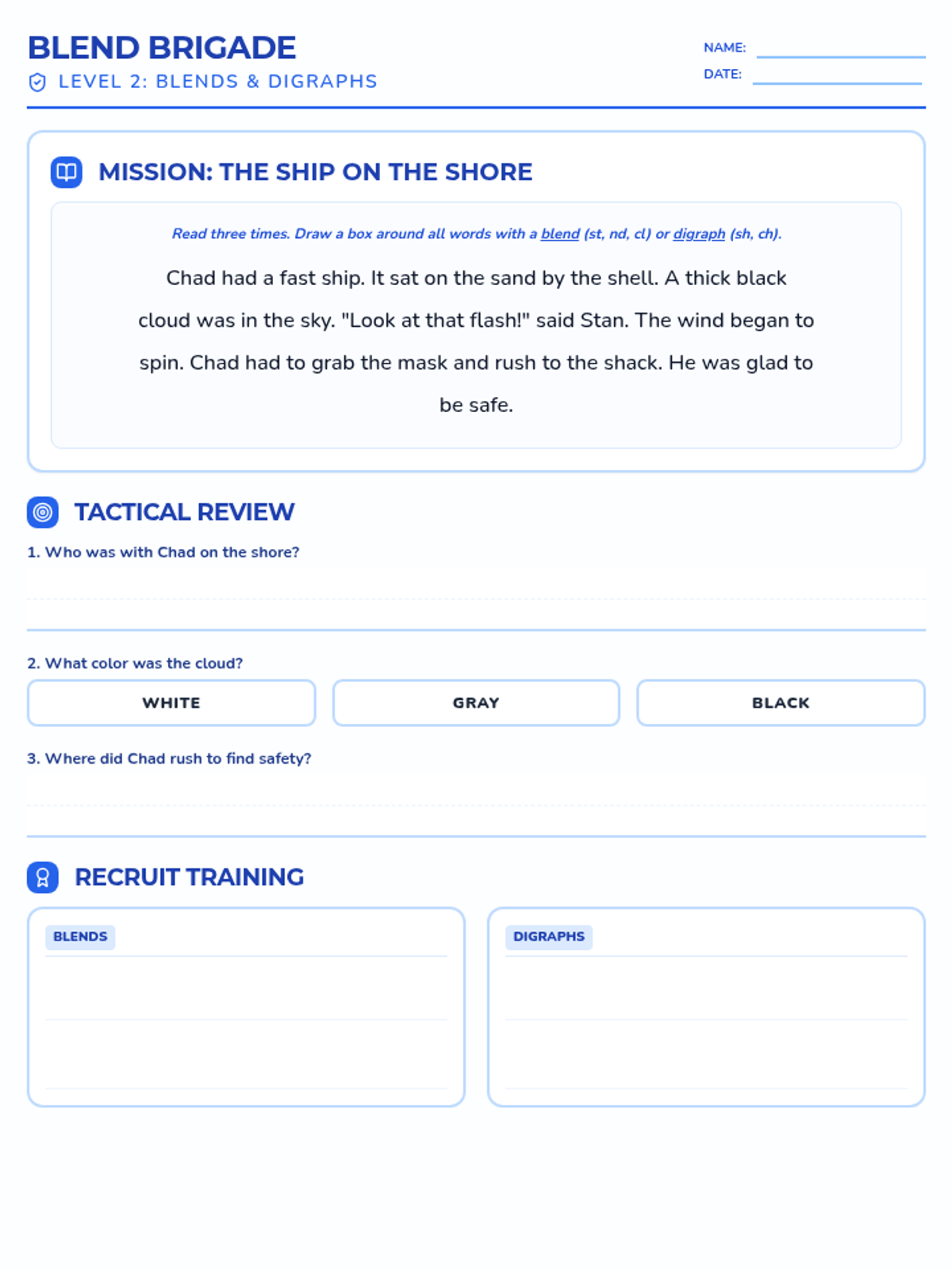
Developing proficiency with consonant blends (bl, st, fr) and digraphs (ch, sh, th, wh) to decode and spell more complex single-syllable words.
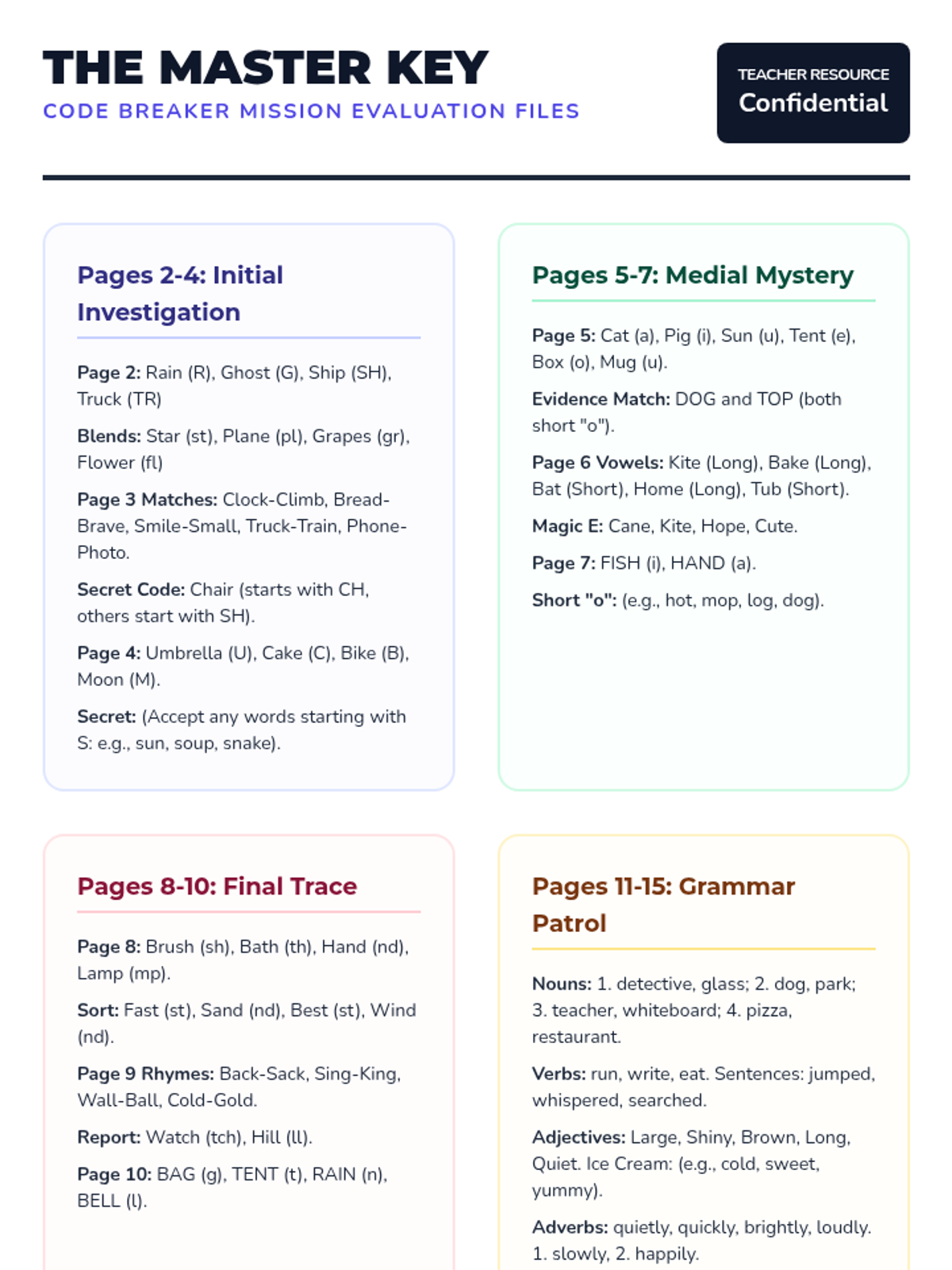
A comprehensive 2nd-grade literacy practice set focused on phonics (beginning, middle, and ending sounds), grammar (nouns, verbs, adjectives, adverbs), and reading comprehension. Designed with a fun "Code Breaker" detective theme to engage students in essential IRead skills.
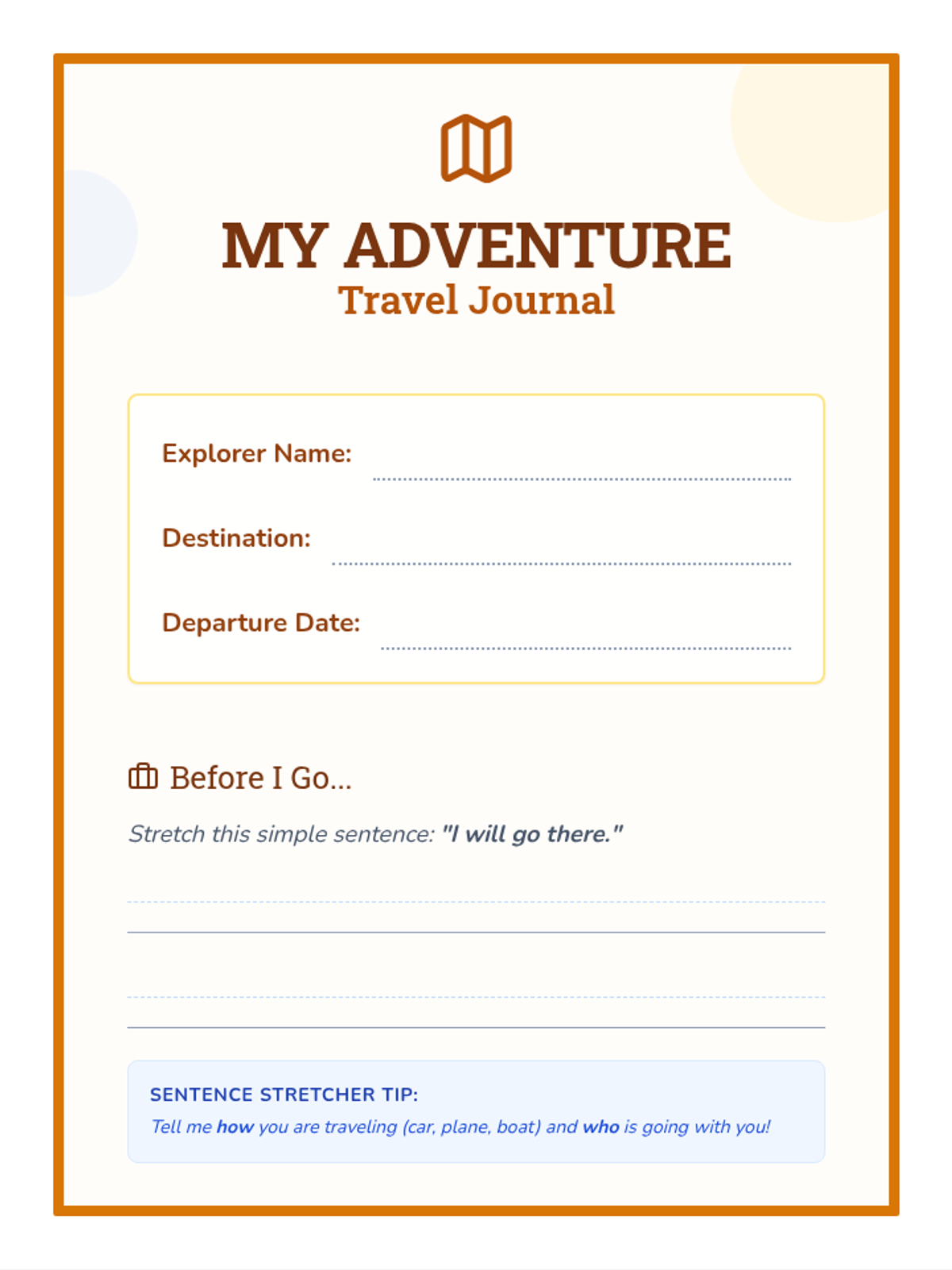
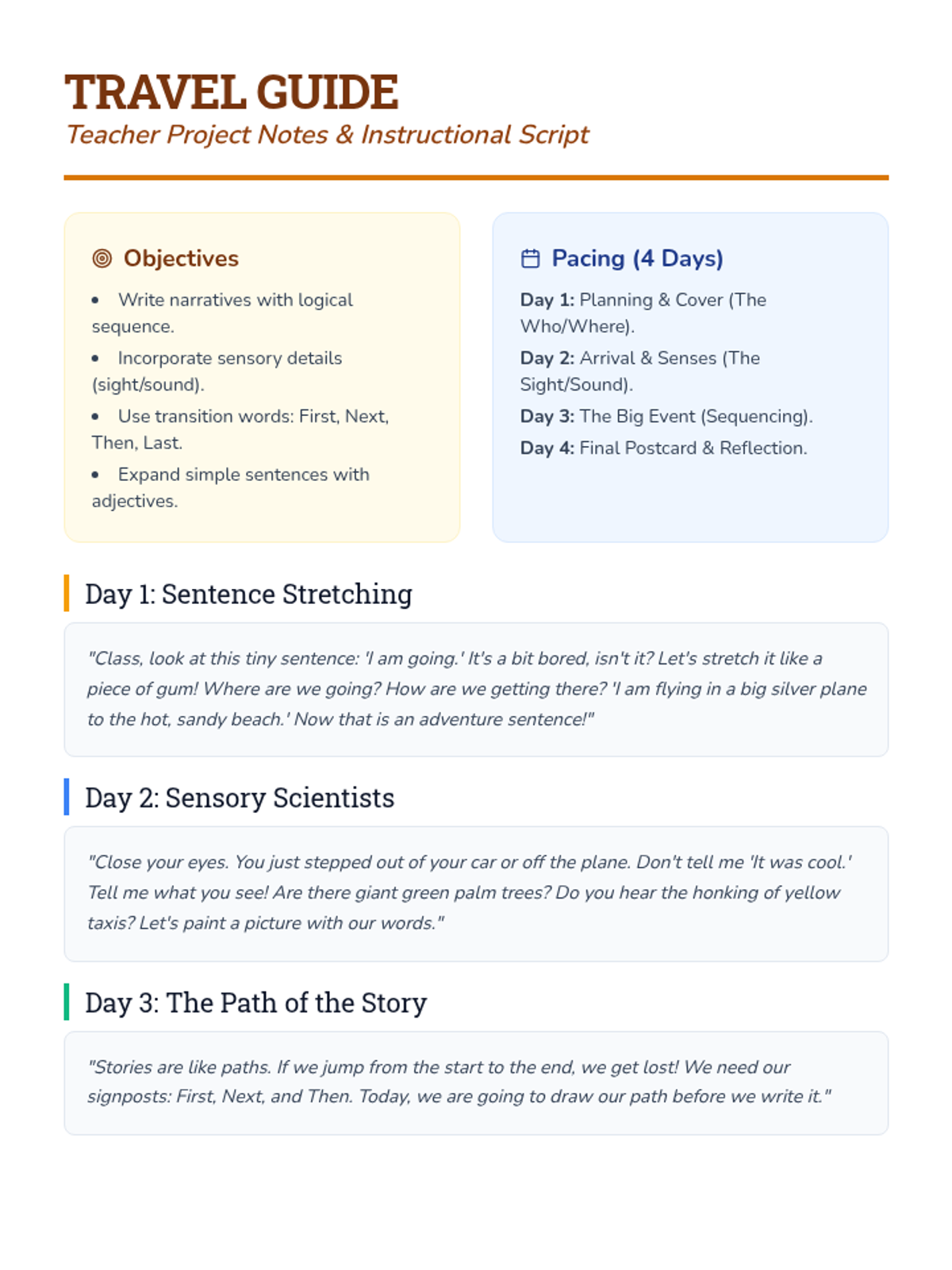
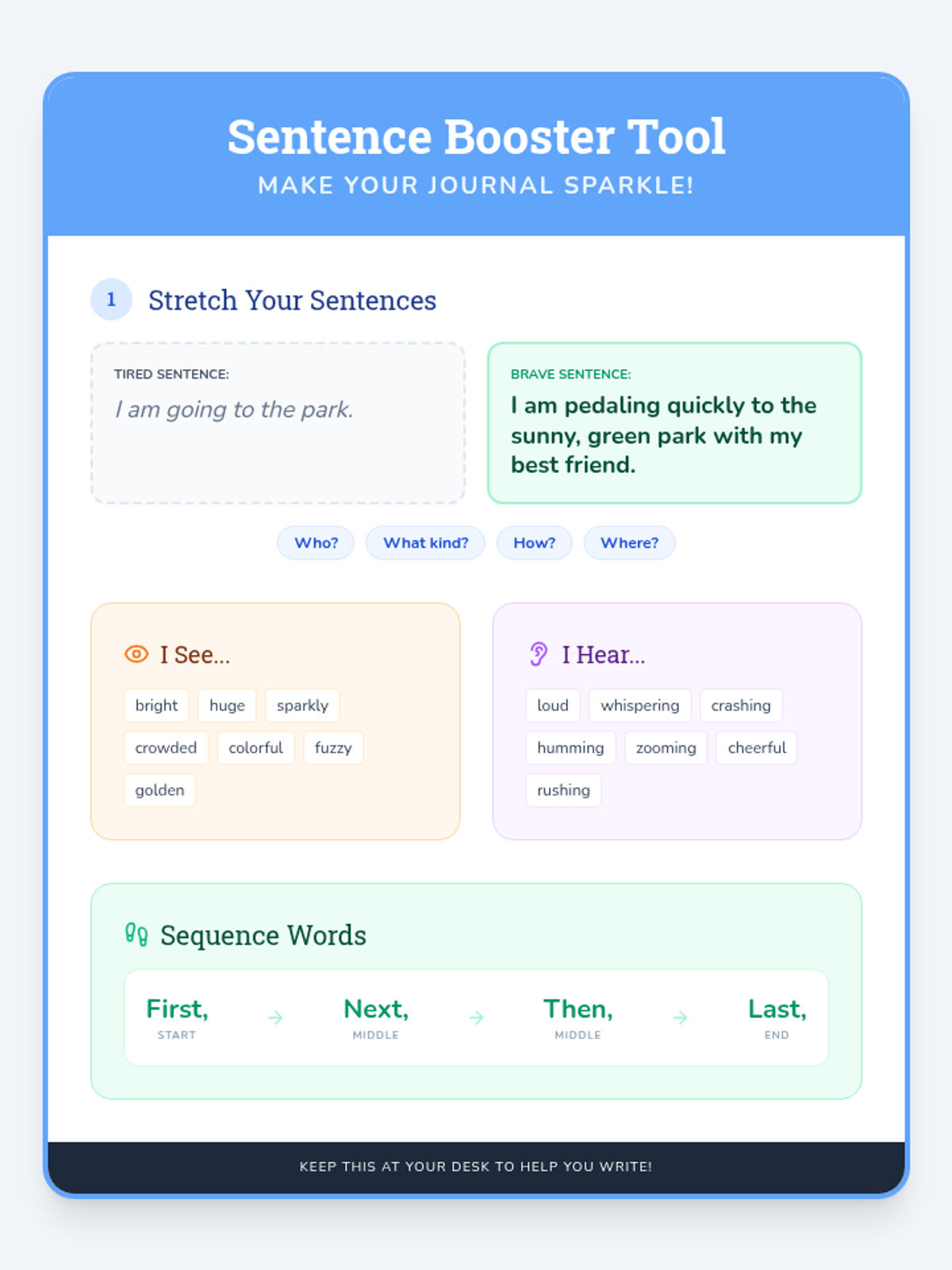
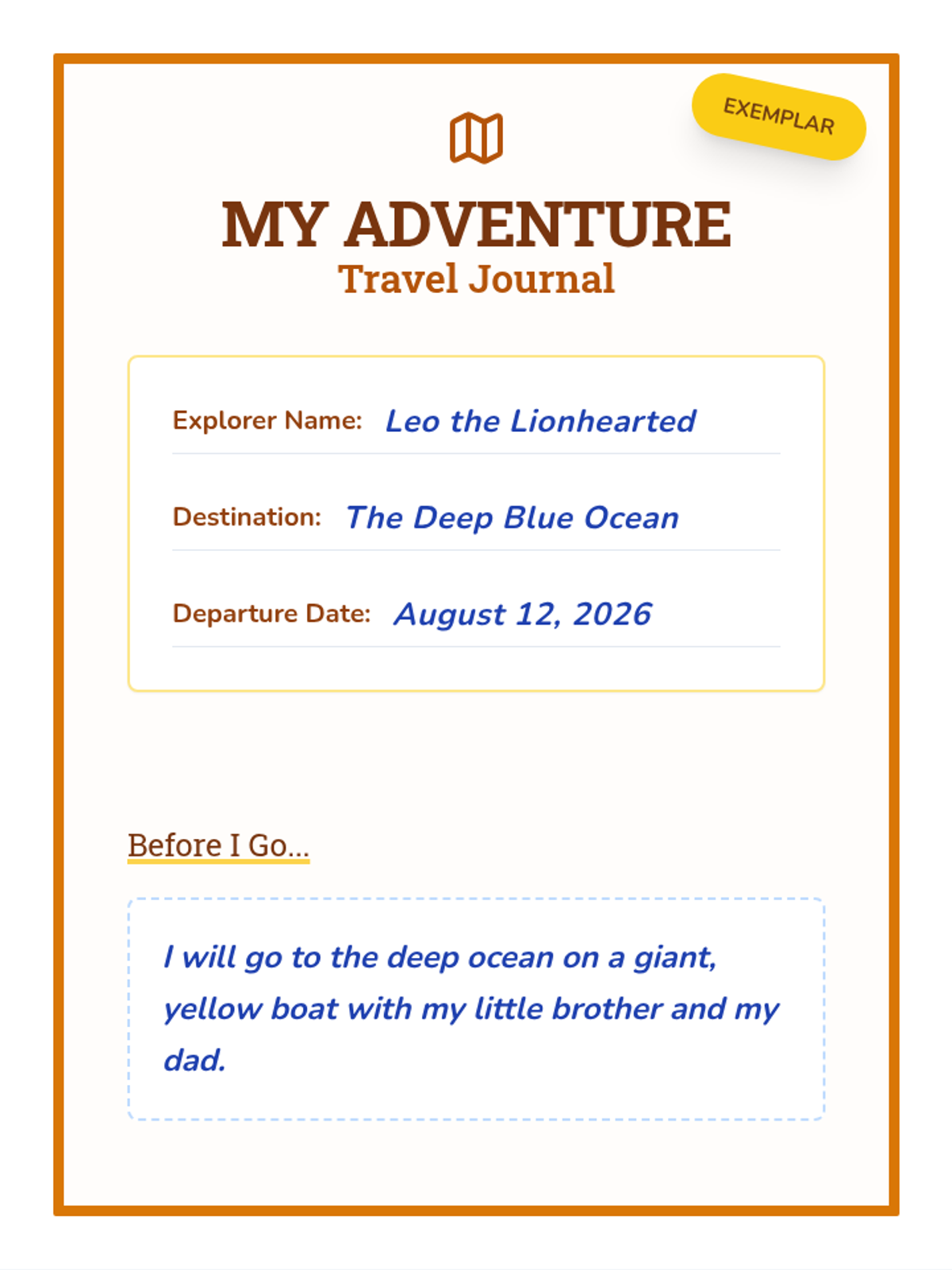
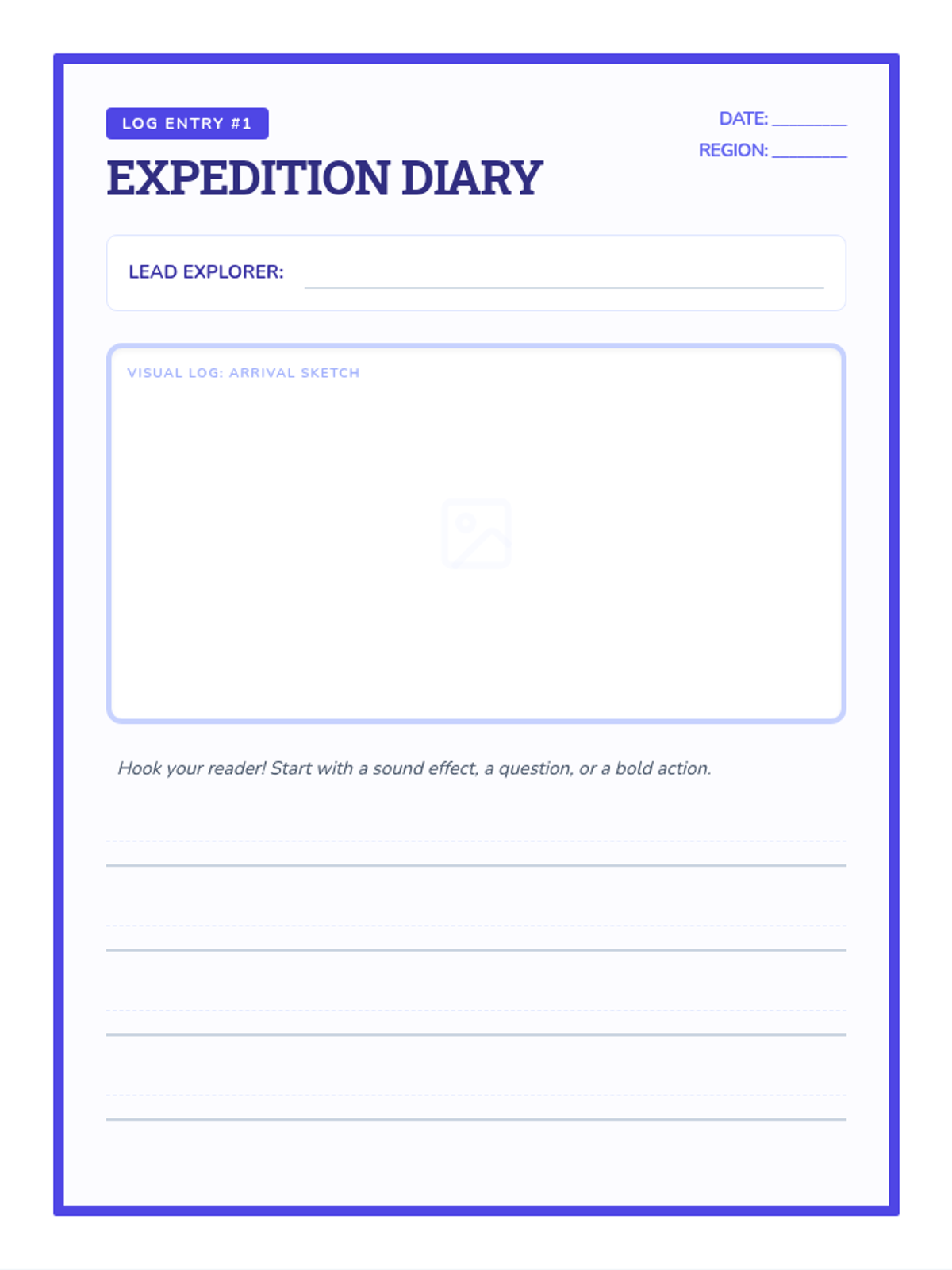
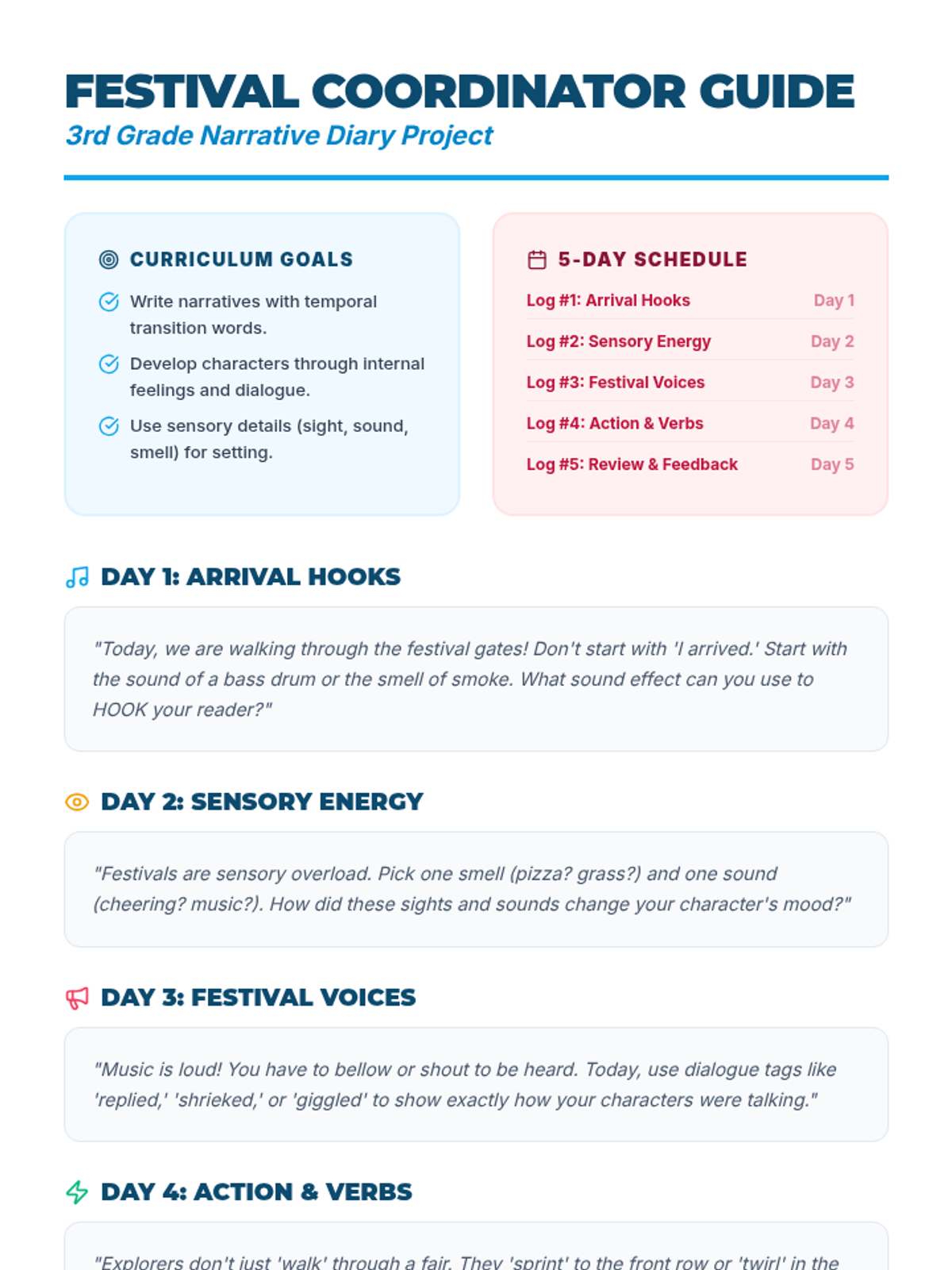
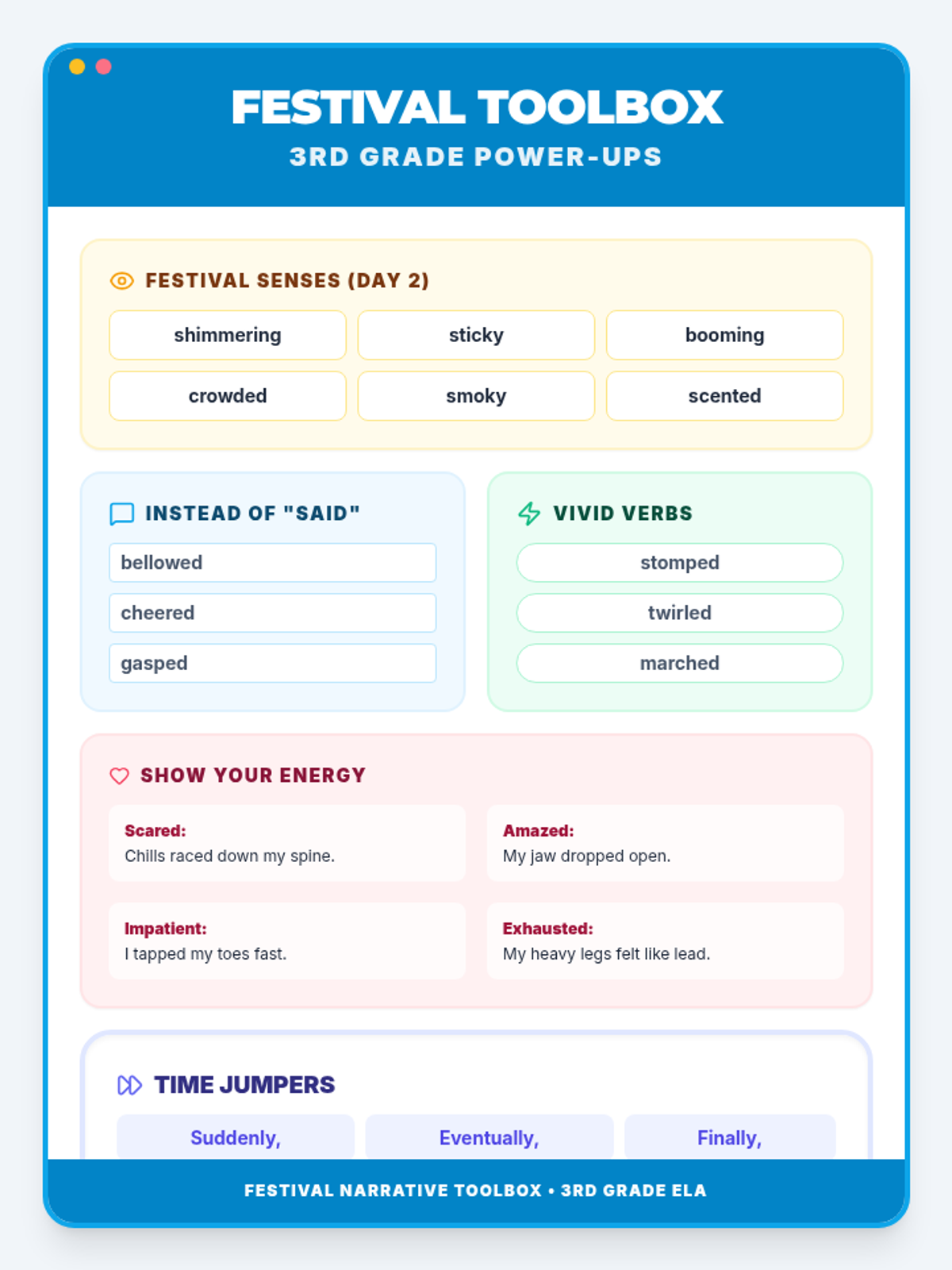
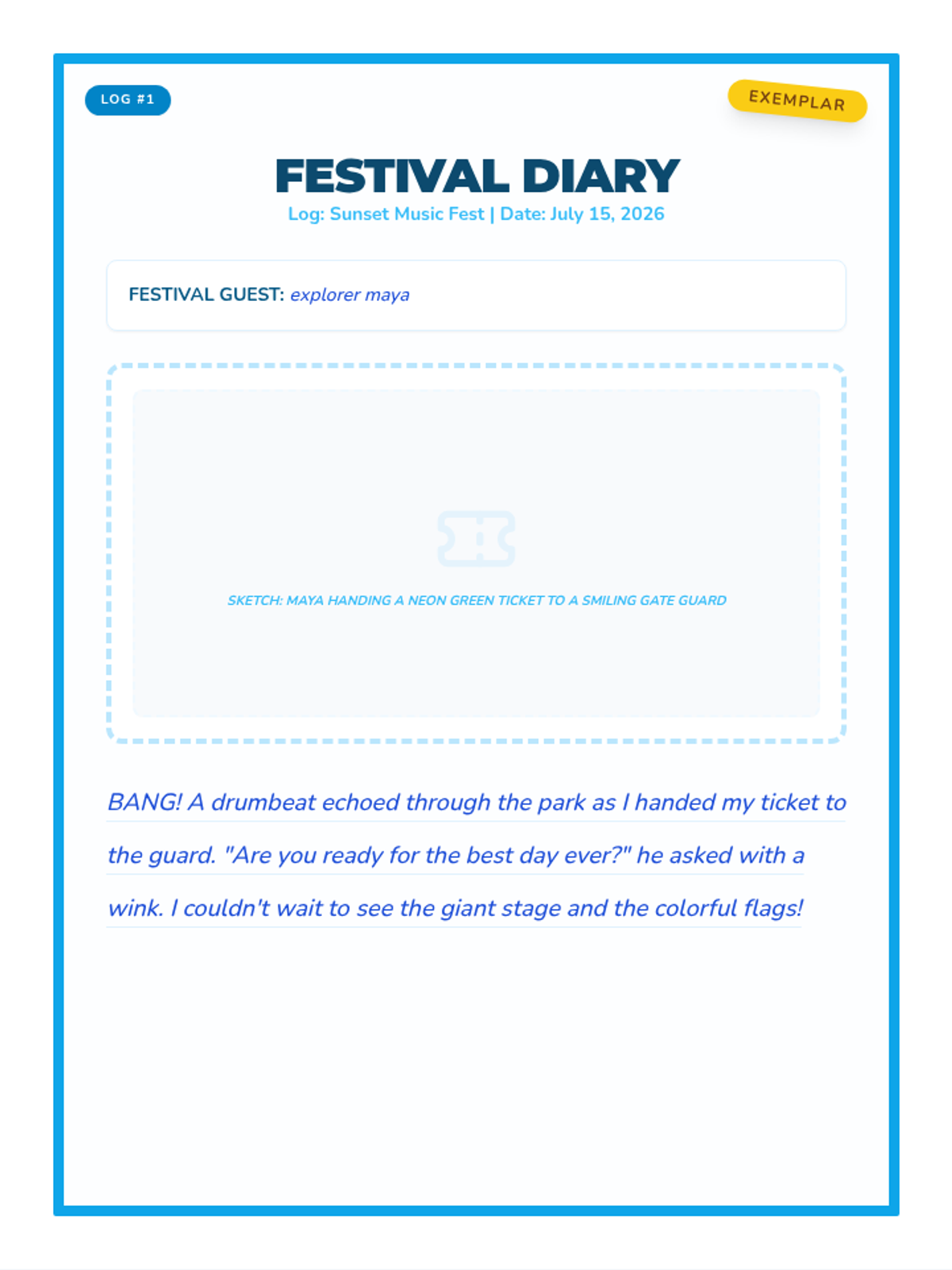
A multi-day ELA project for 2nd graders to practice narrative writing, sensory details, and sentence expansion through a creative travel journal format.
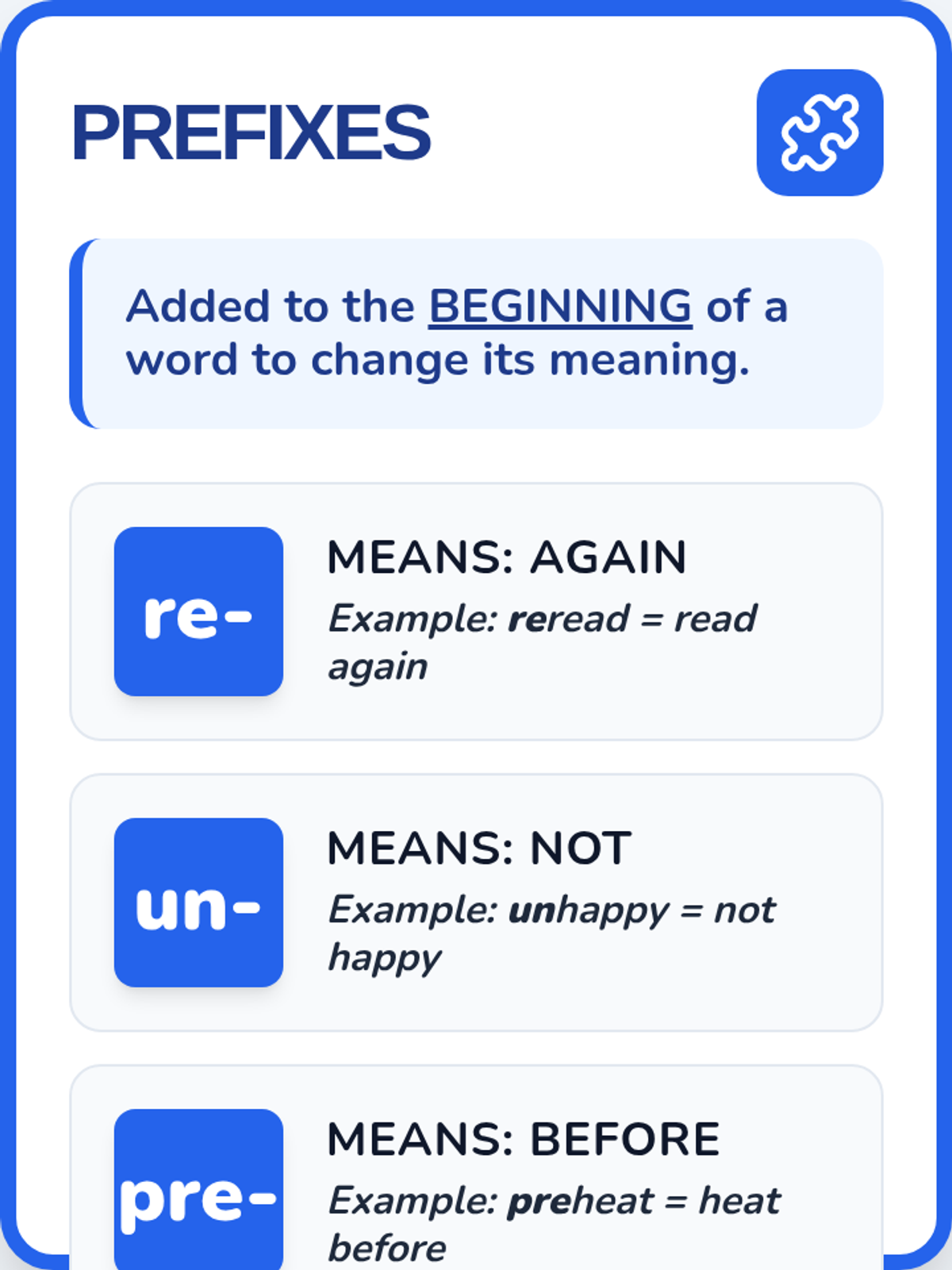
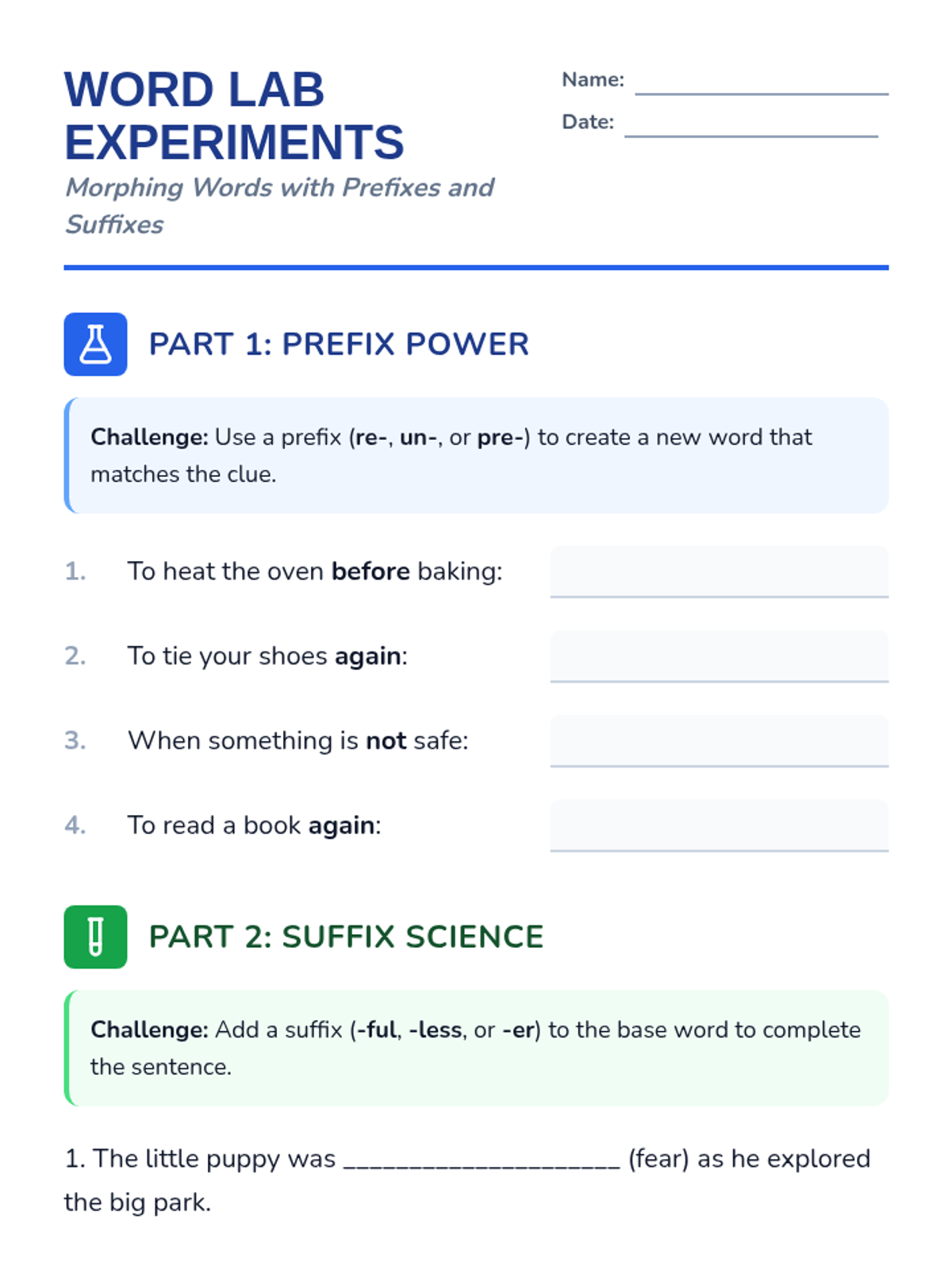
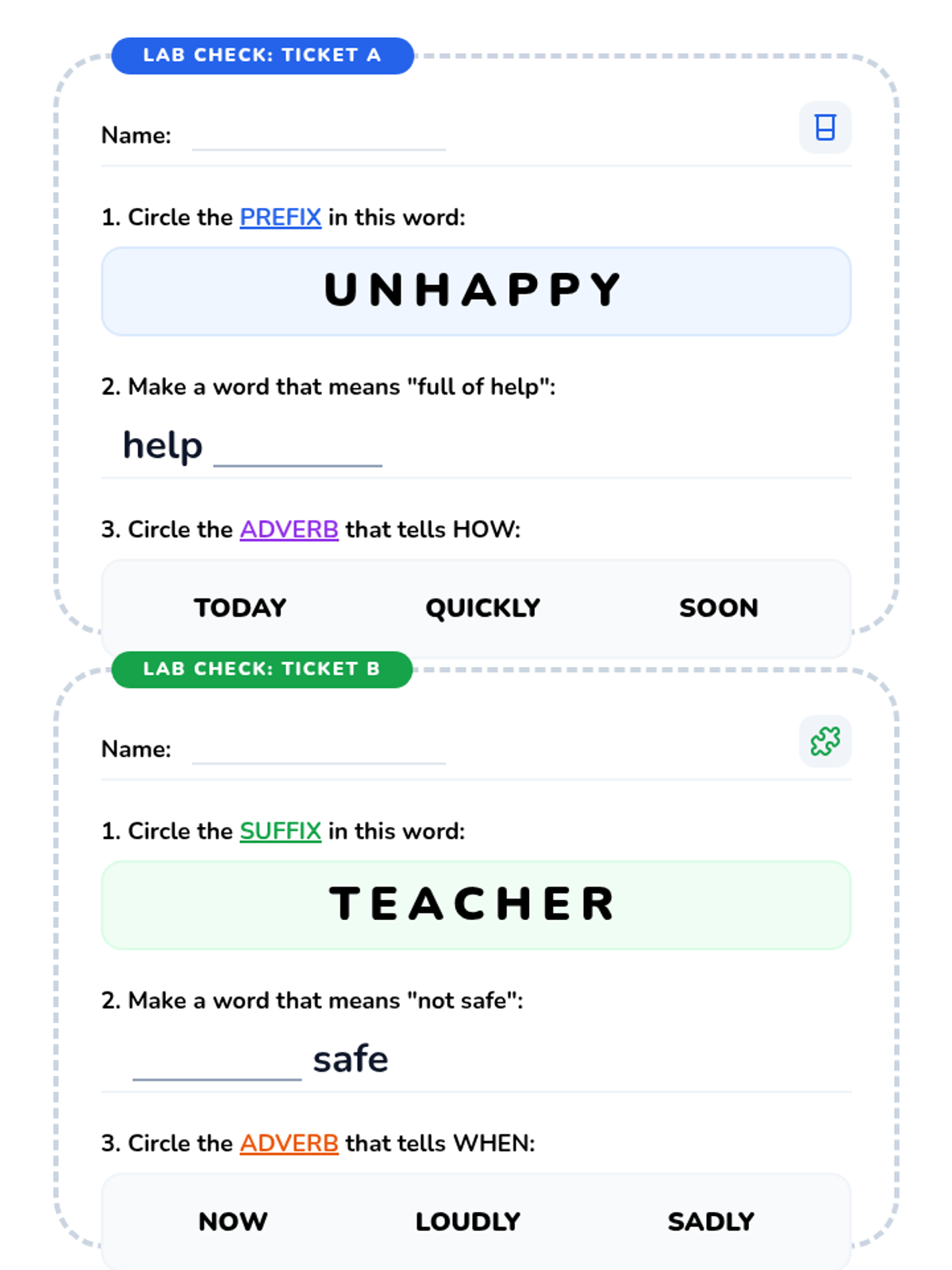
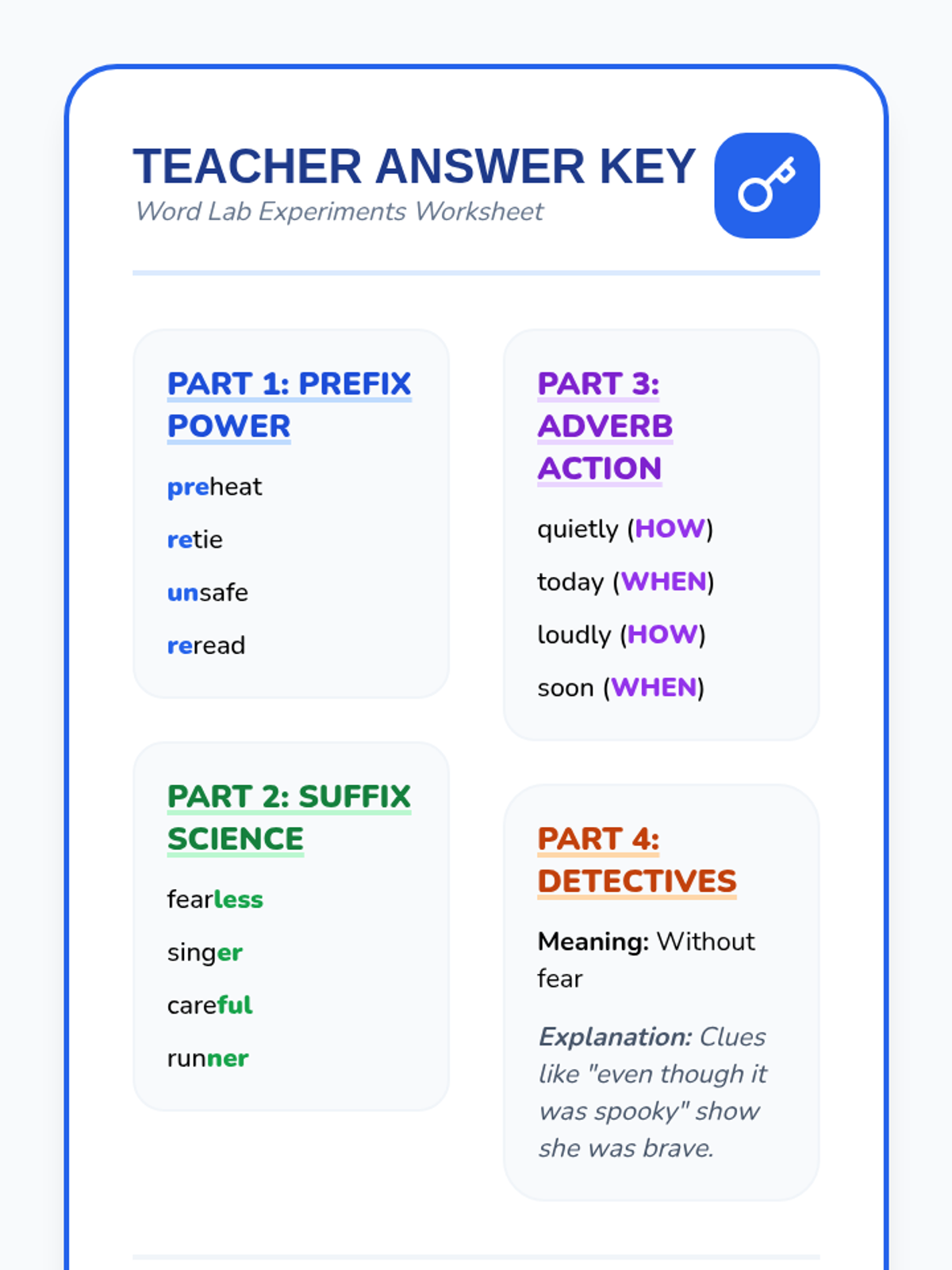
In this lesson, students explore the building blocks of words (re-, un-, pre-, -ful, -less, -er) and learn how adverbs of manner and time add detail to sentences, all while using context clues to solve linguistic mysteries.
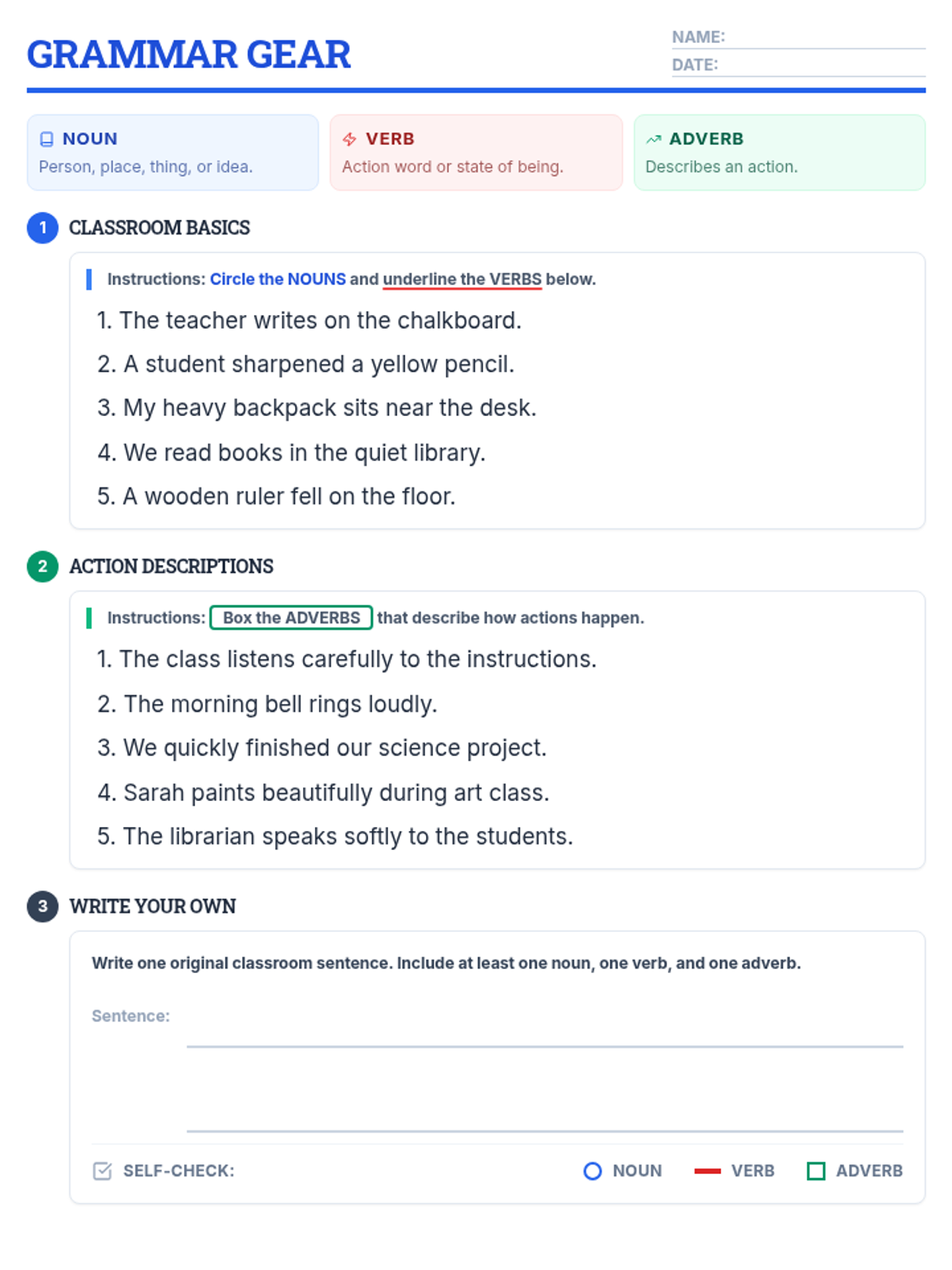
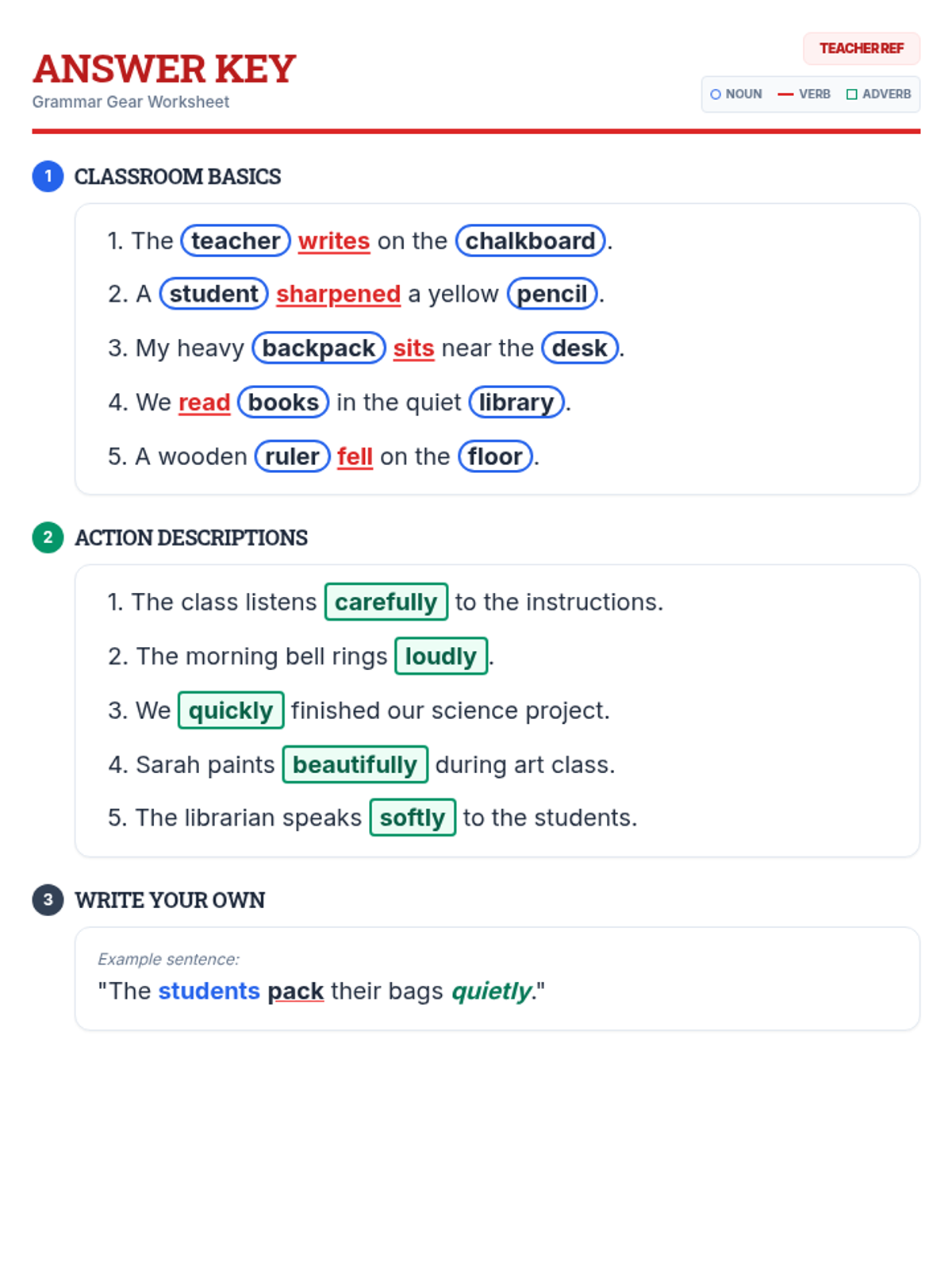
A focused lesson on identifying nouns, verbs, and adverbs using classroom-themed sentences. Students practice identifying parts of speech through circling and underlining activities.
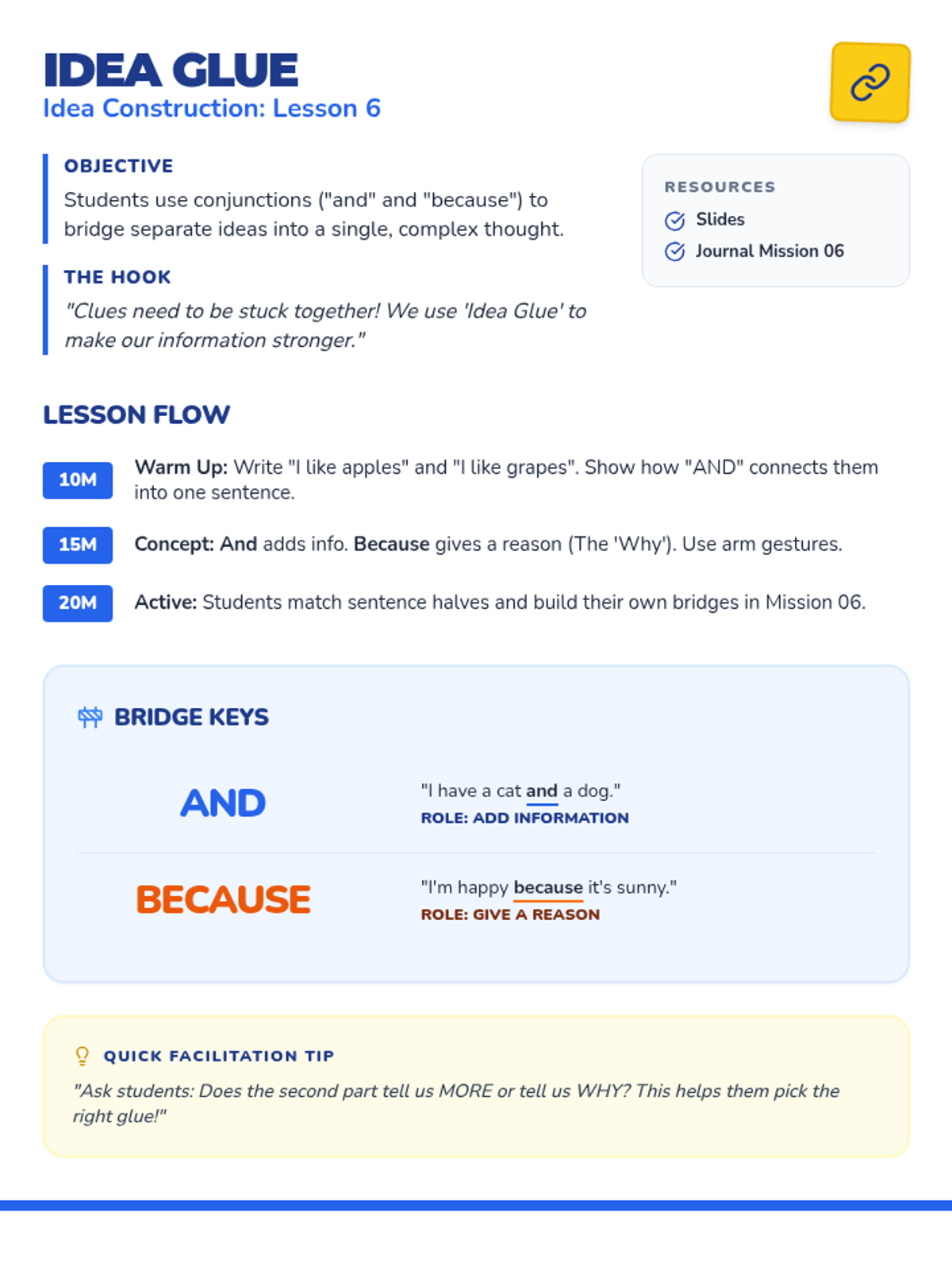
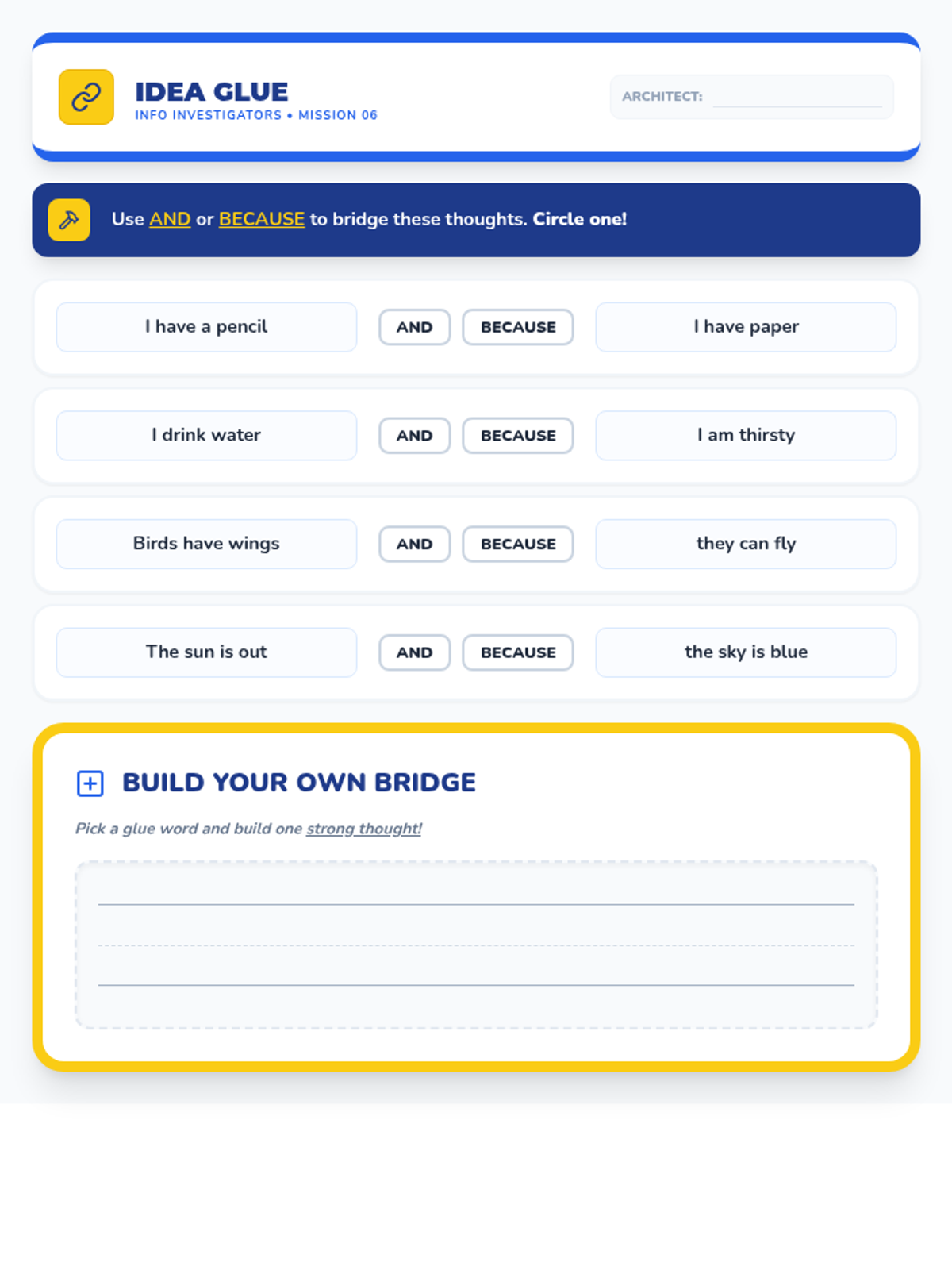
Students learn to use 'Idea Glue' like 'and' and 'because' to connect their thoughts into stronger structures.
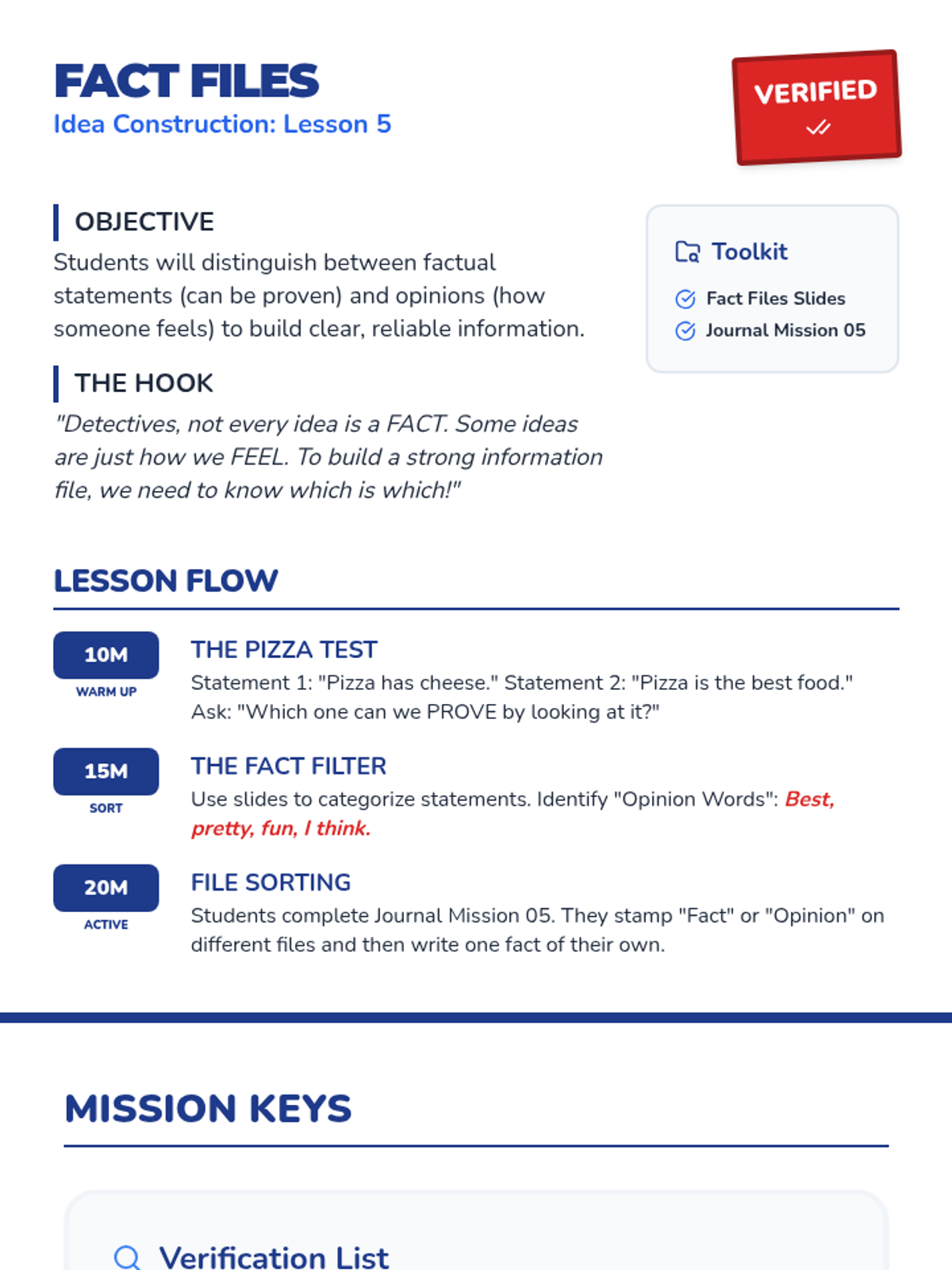
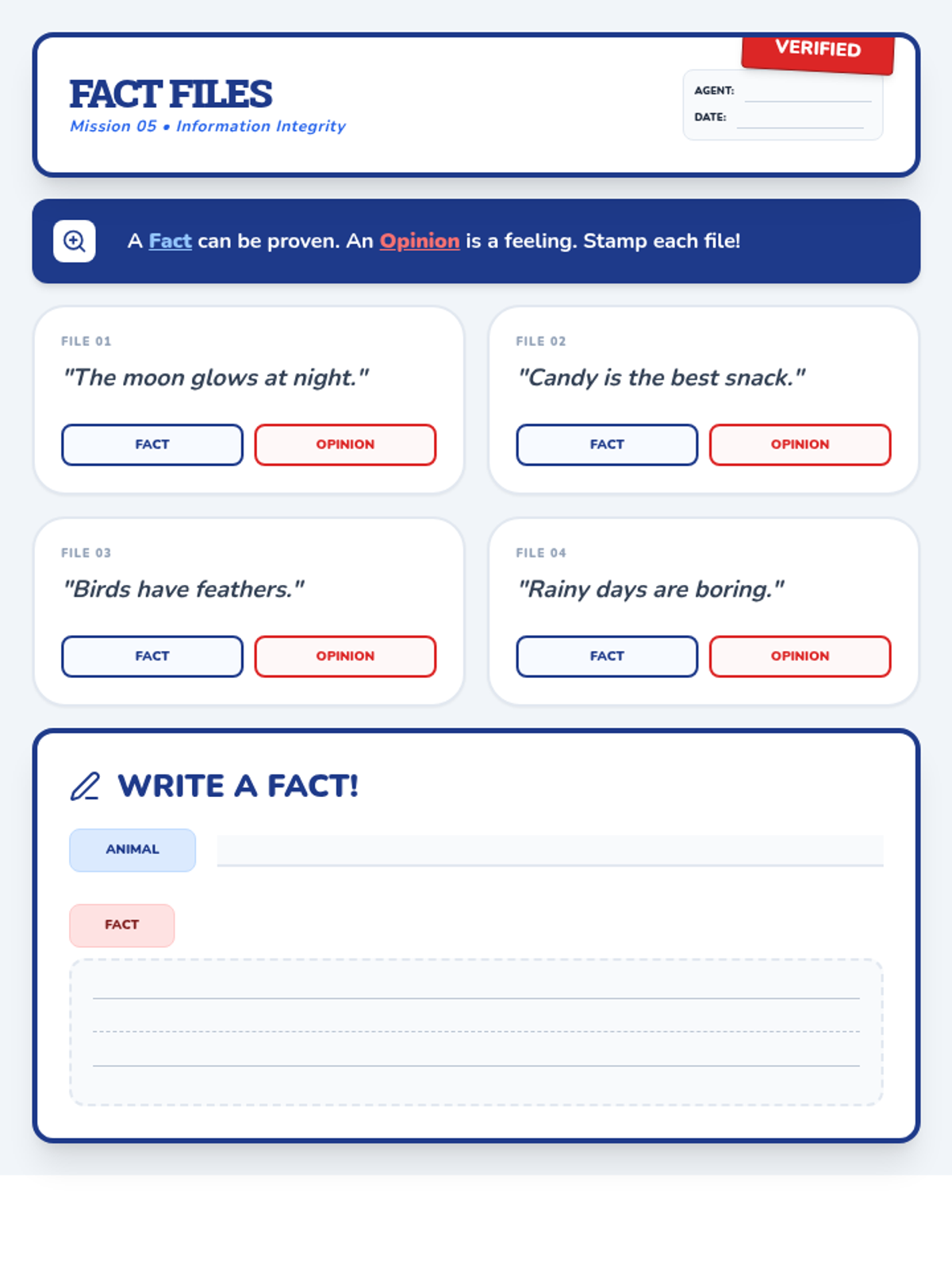
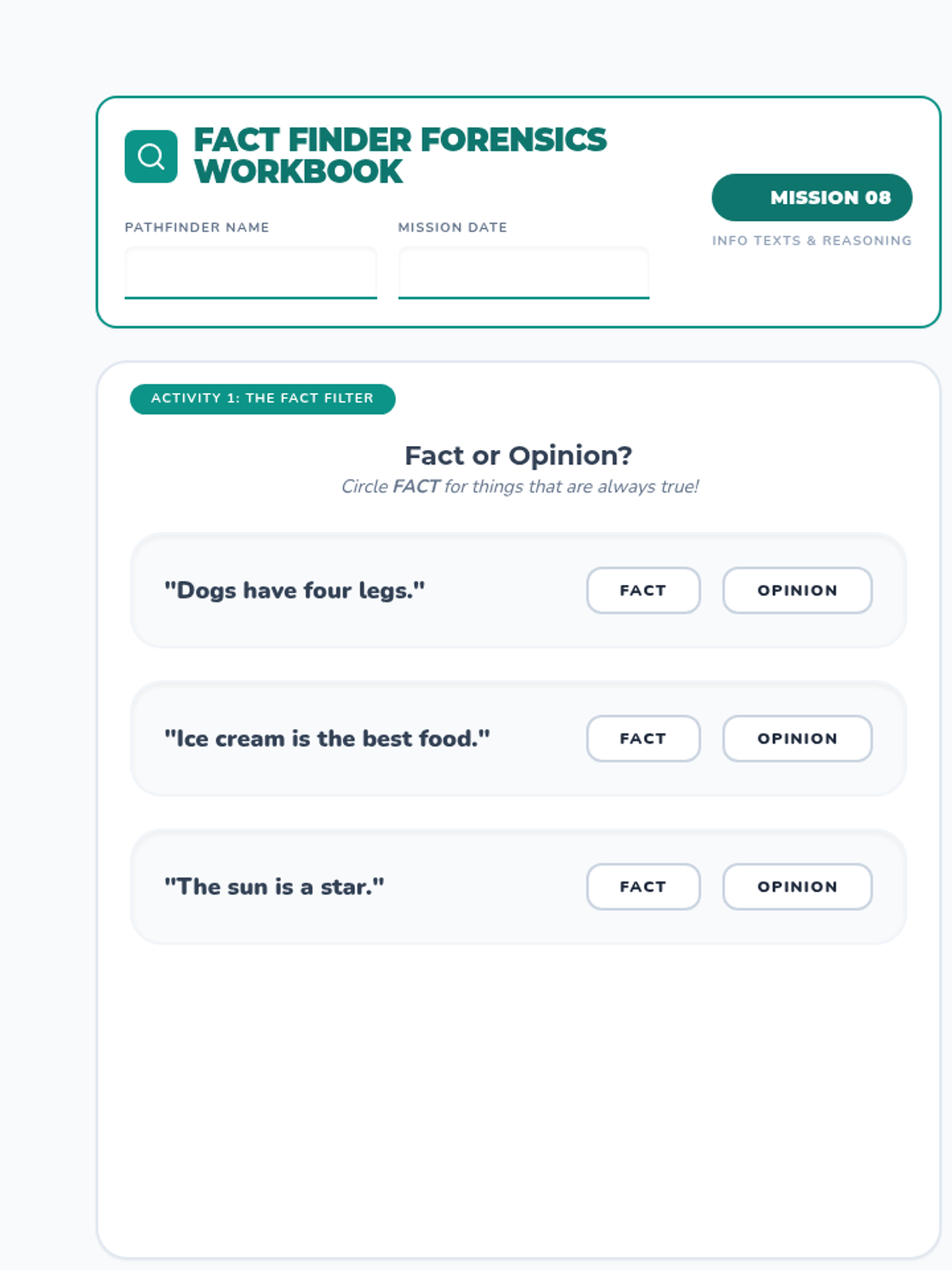
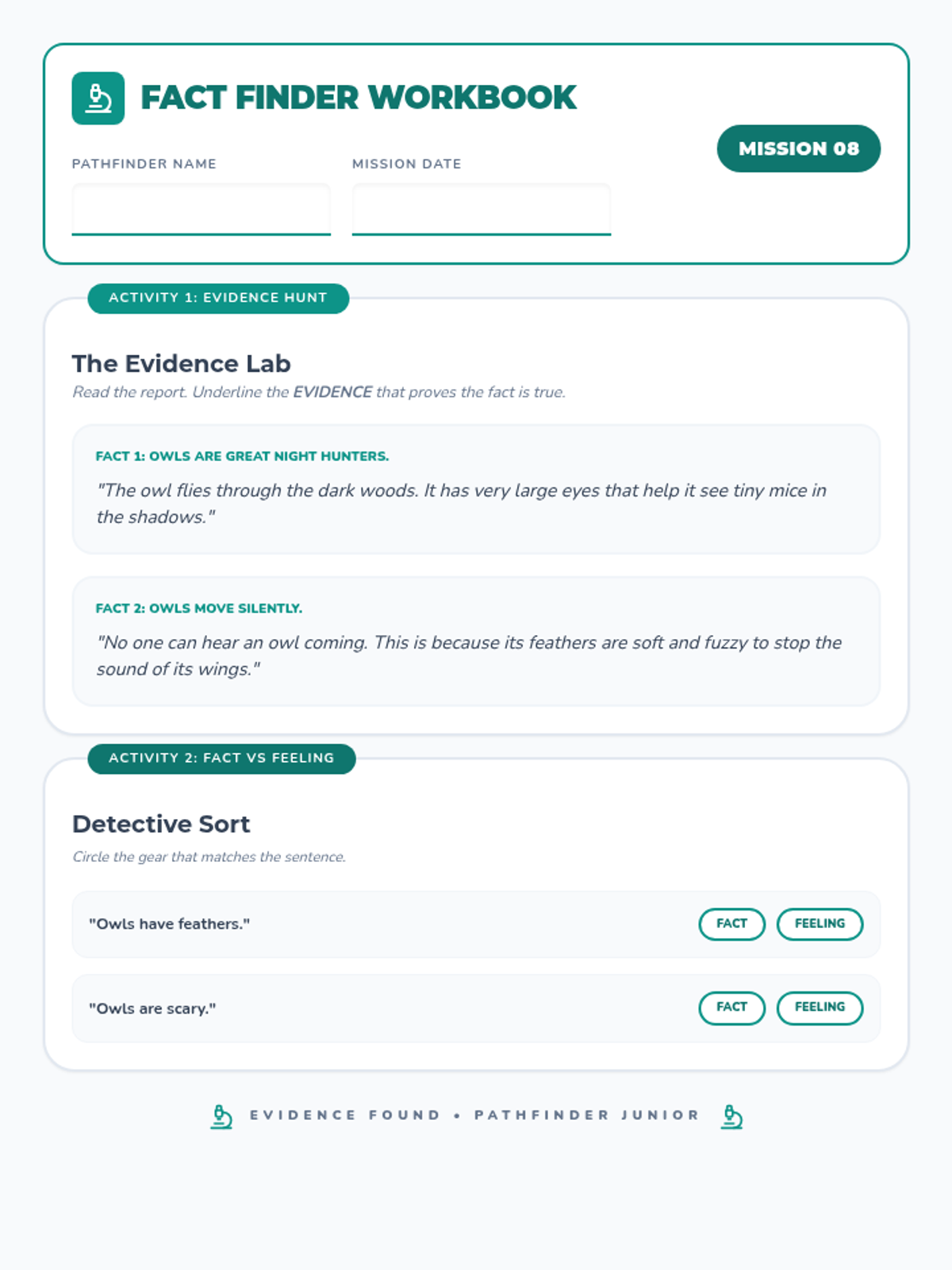
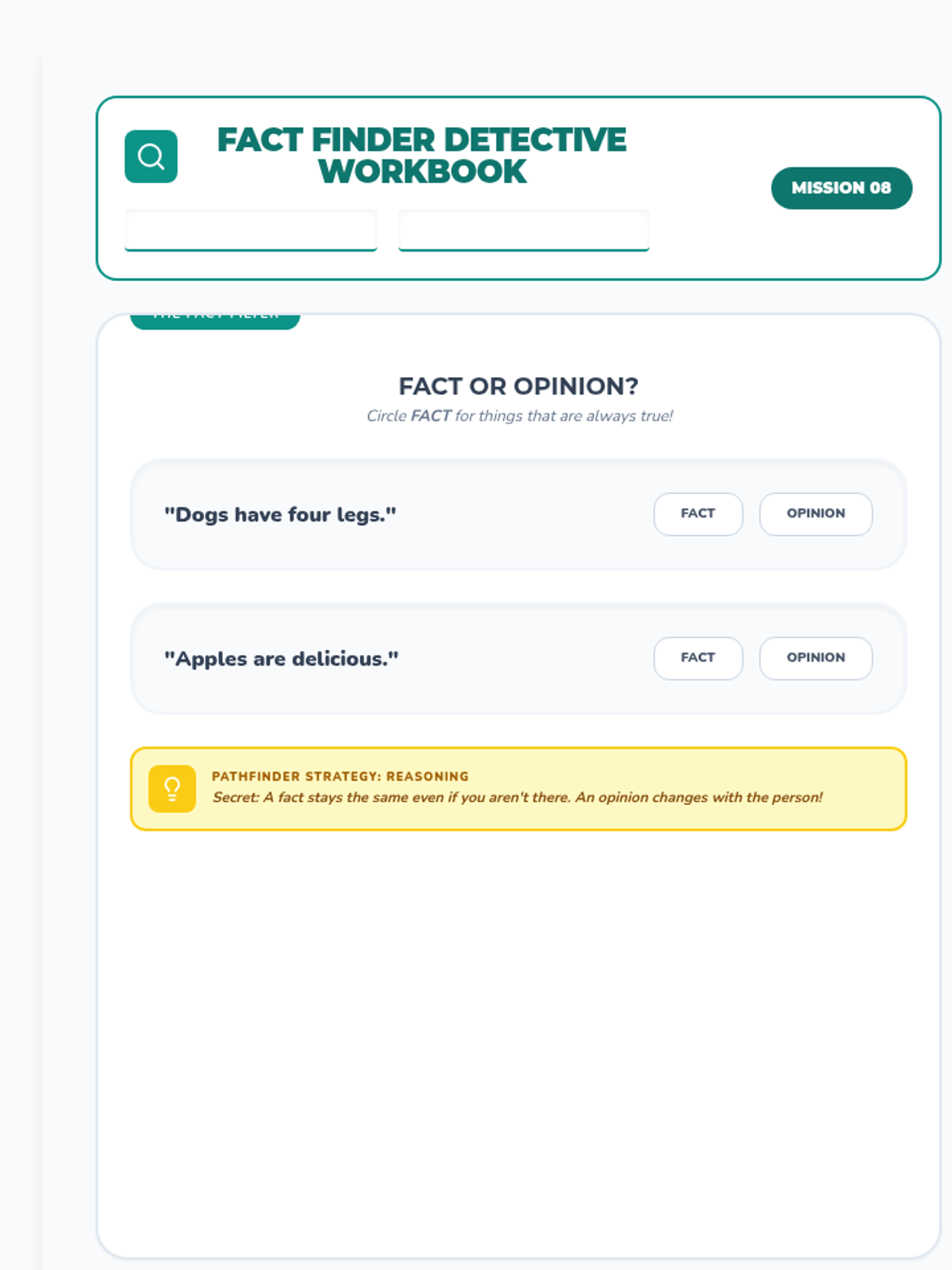
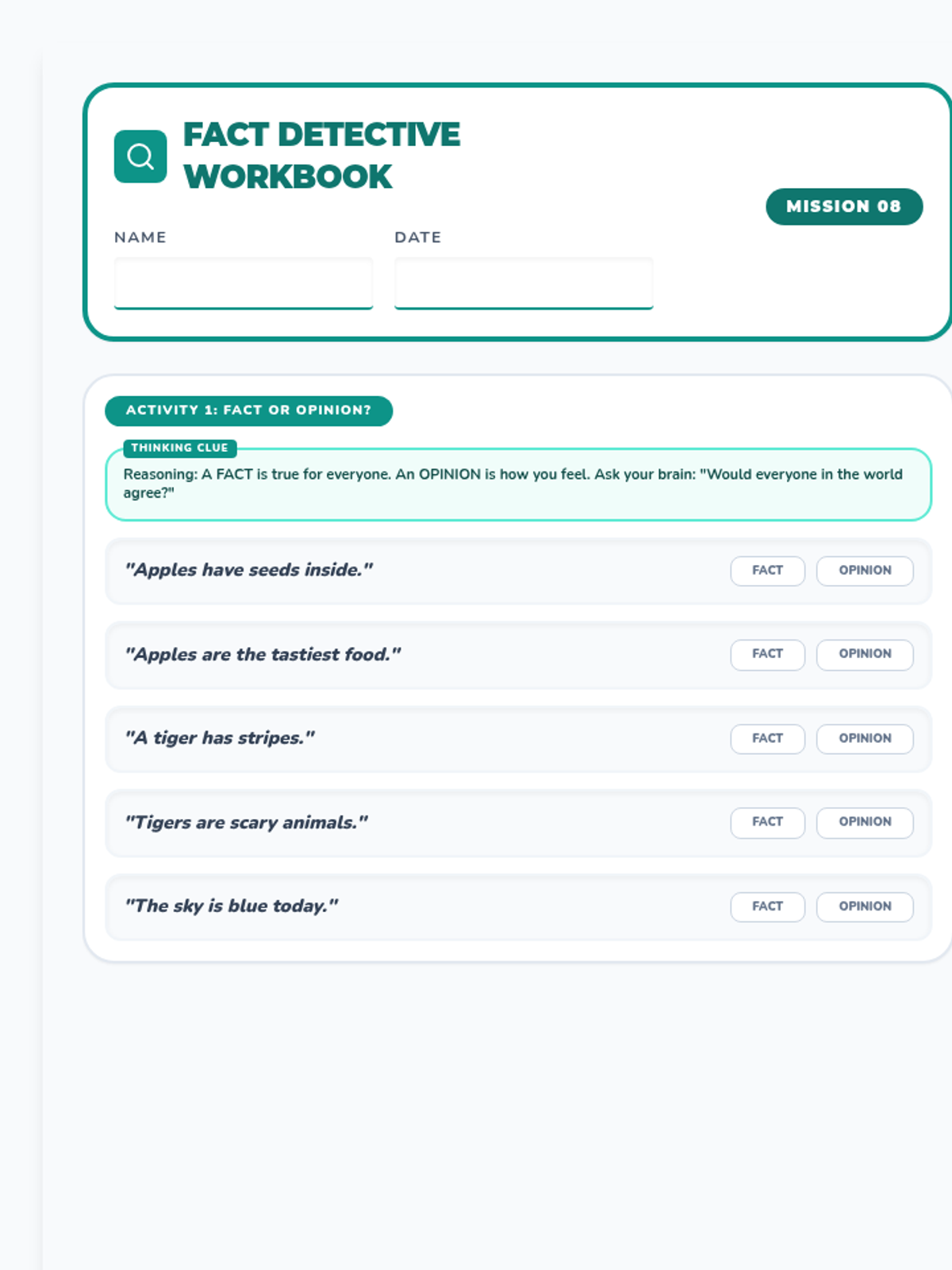
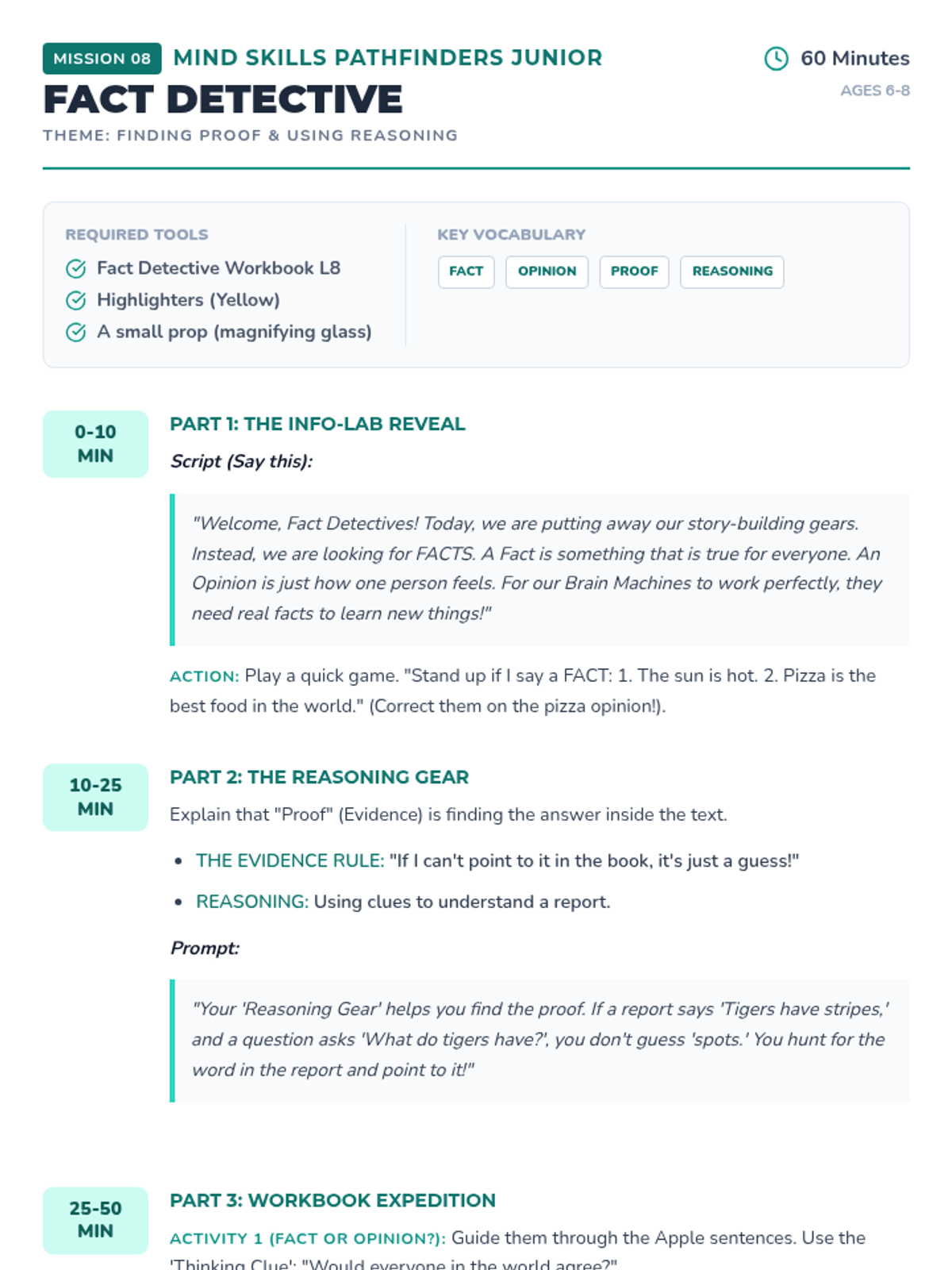
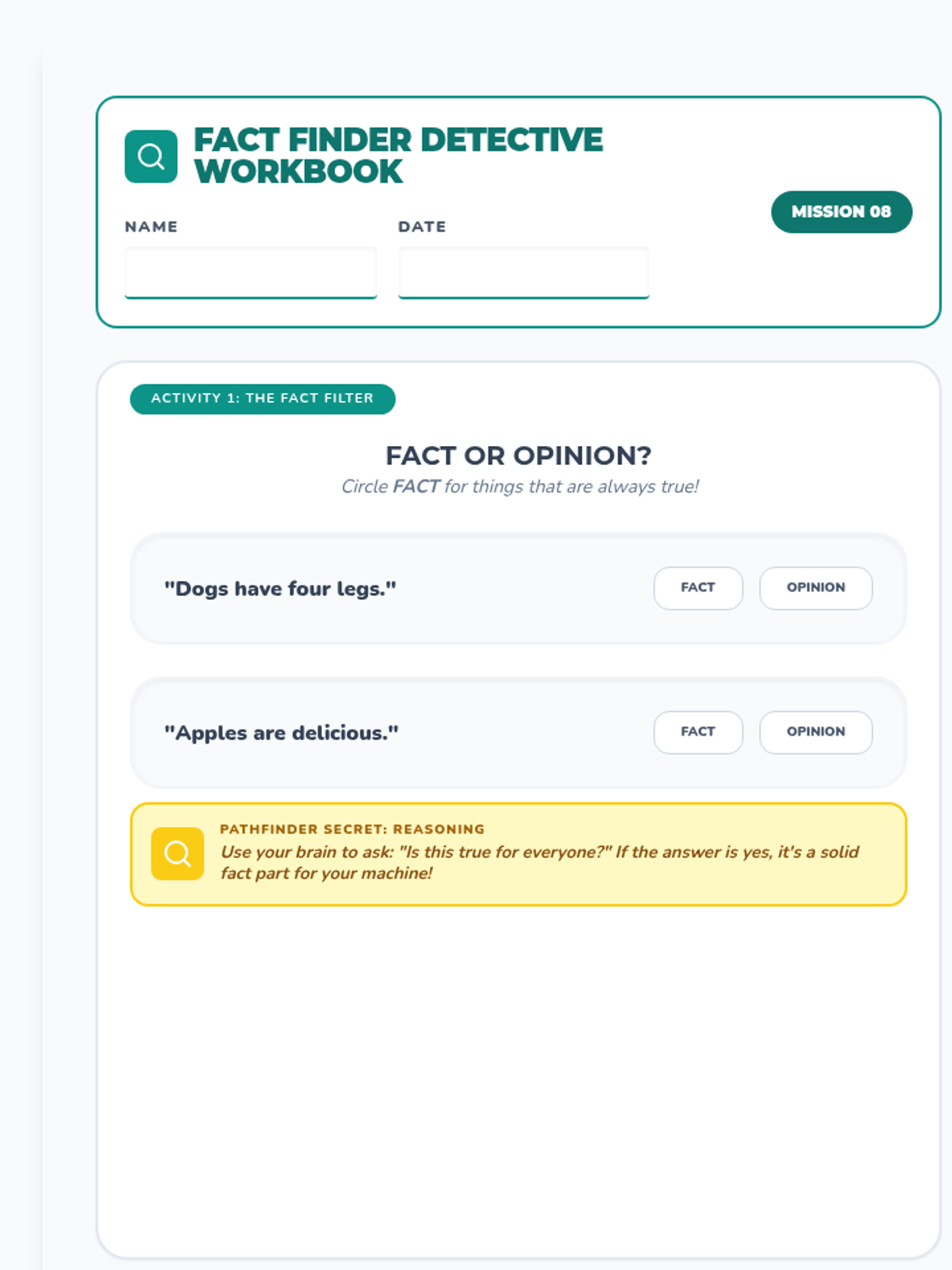
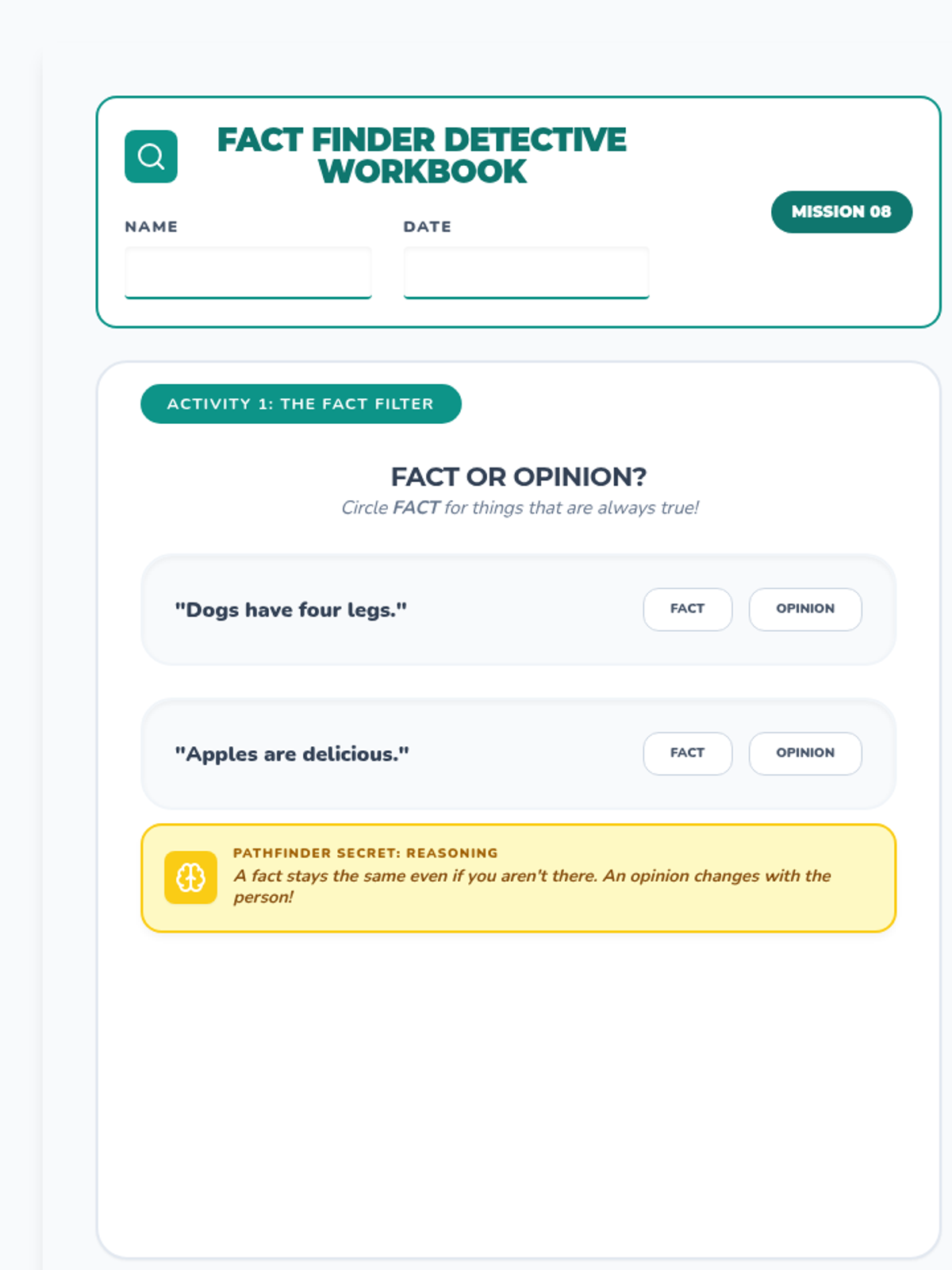
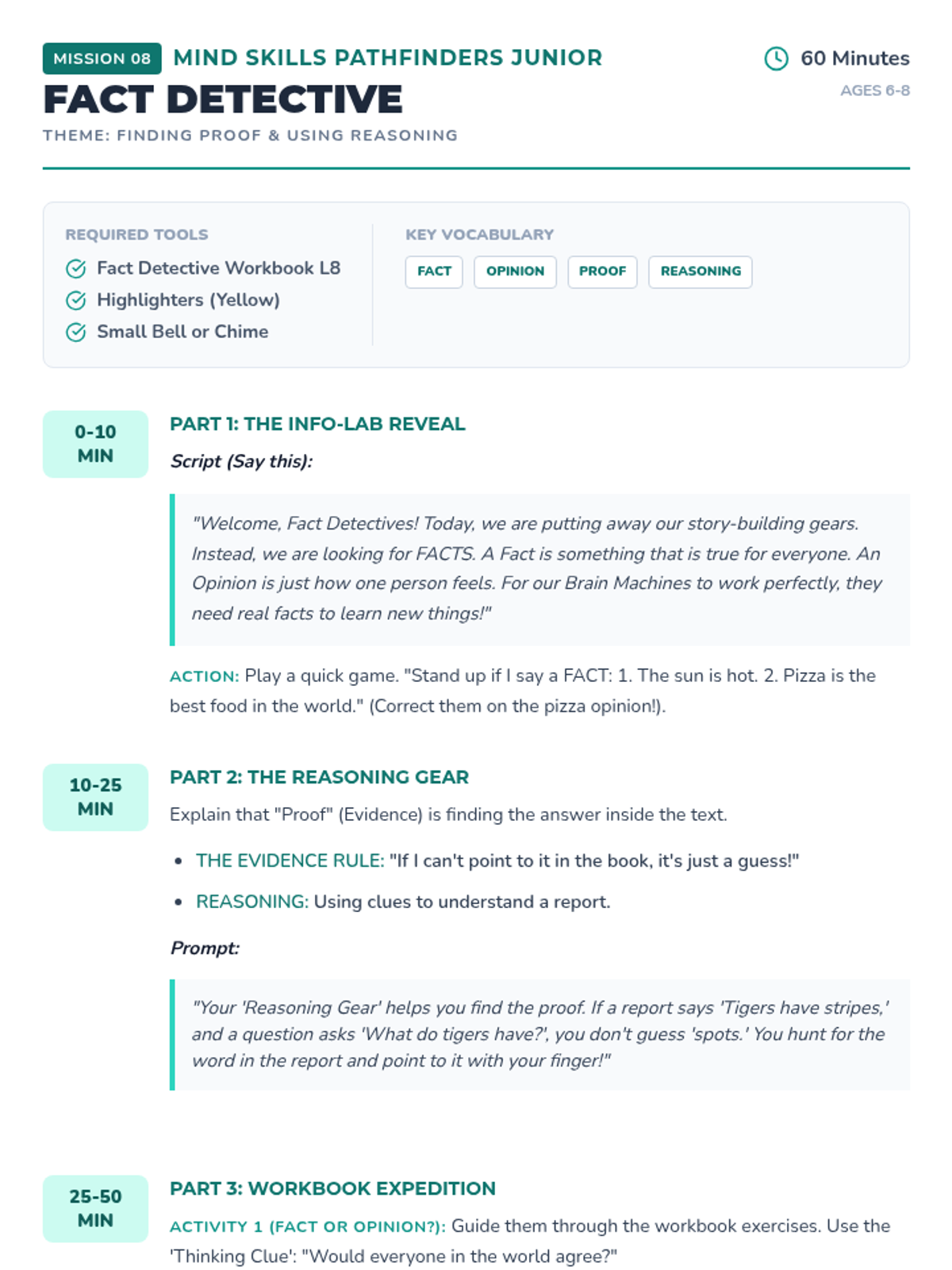
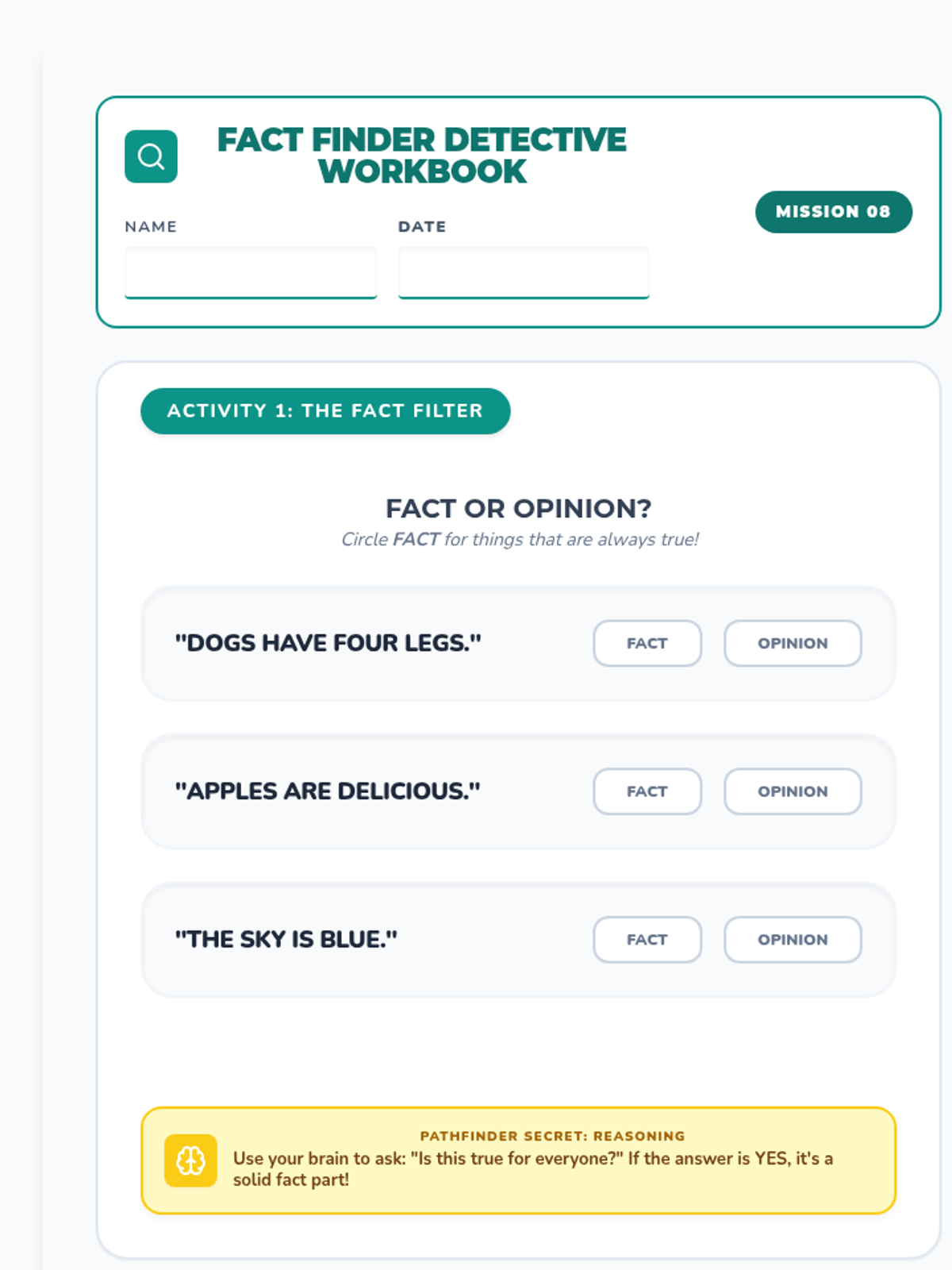
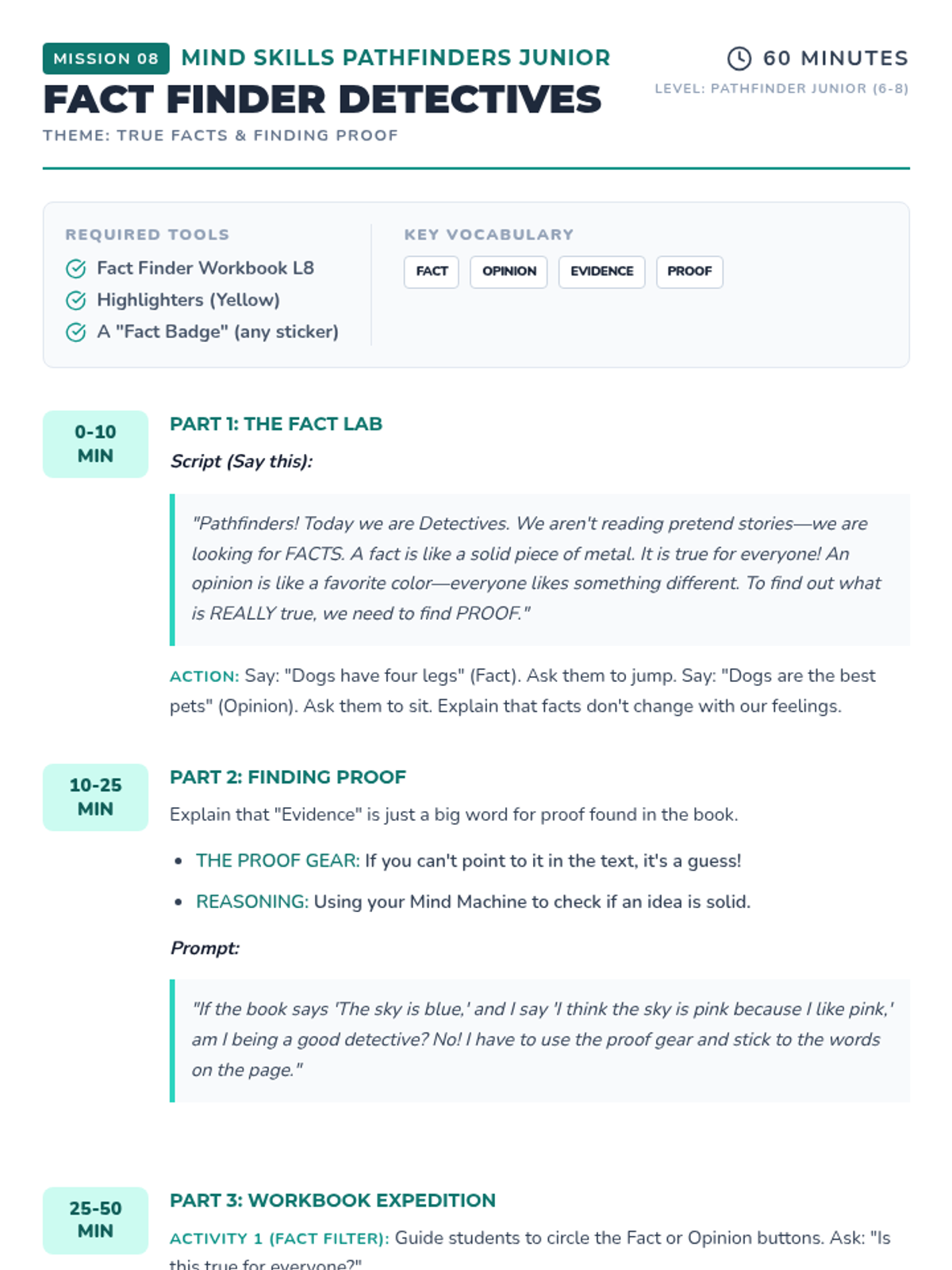
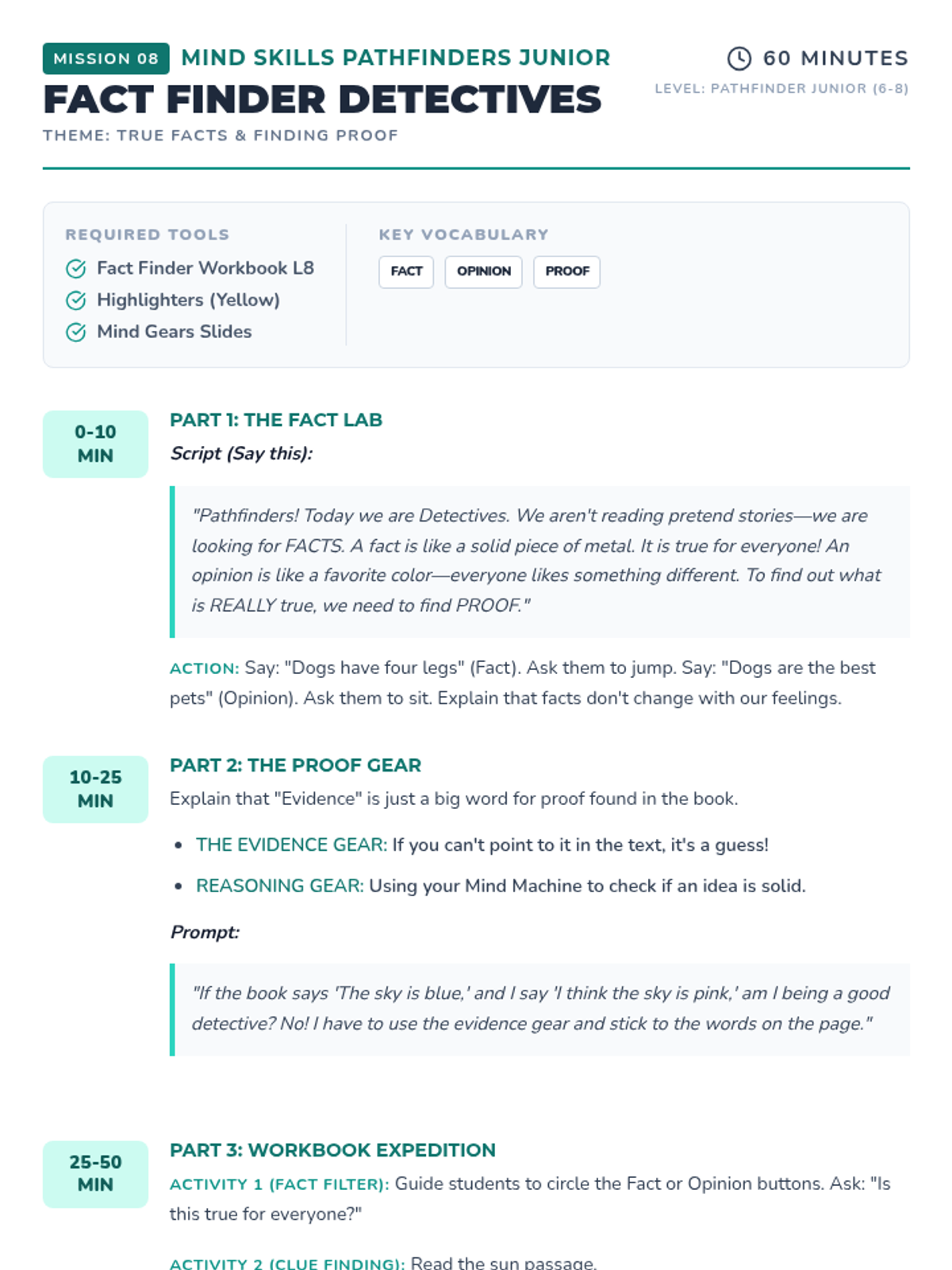
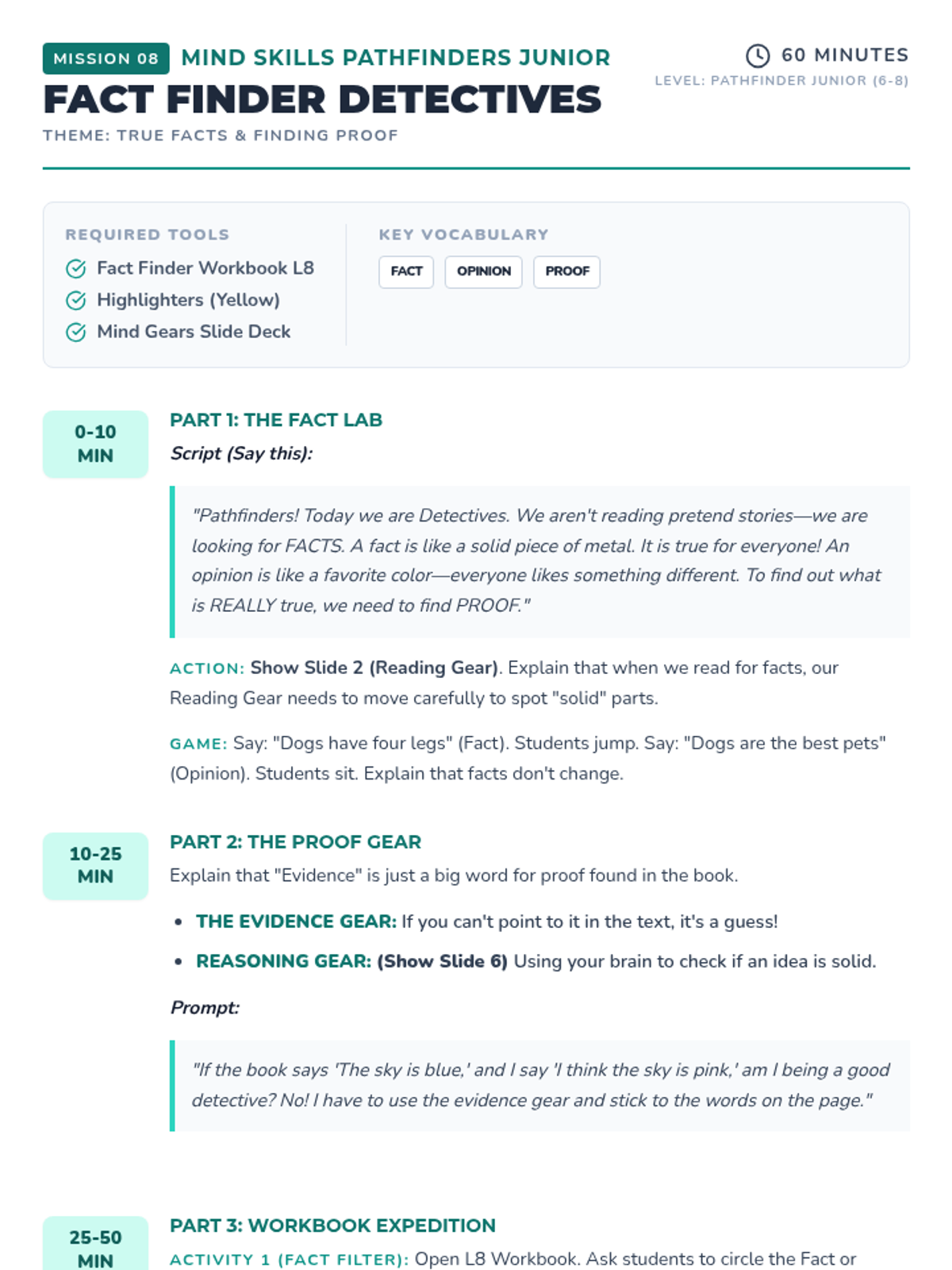
Students practice identifying and writing factual statements versus opinions to build reliable projects.
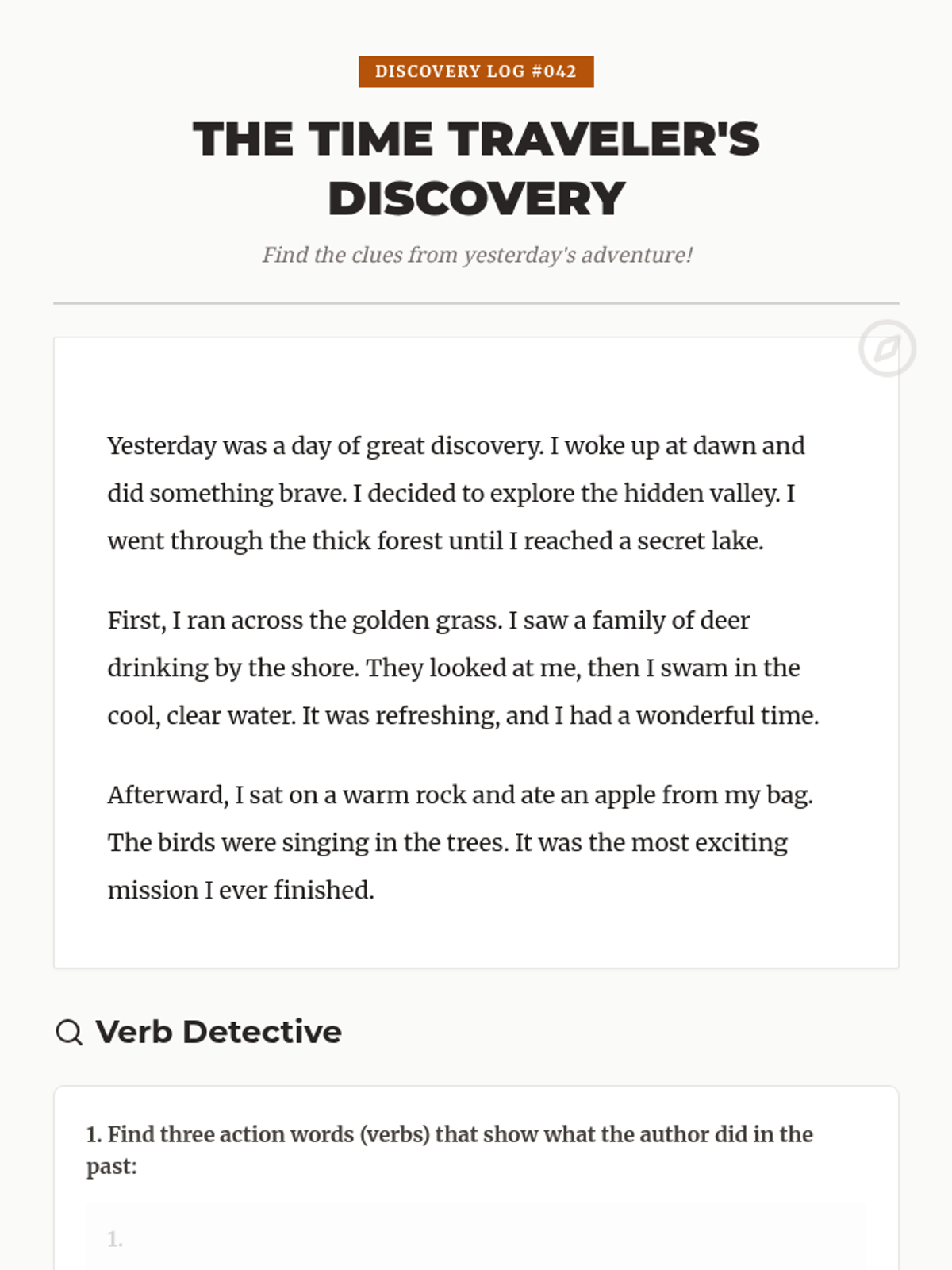
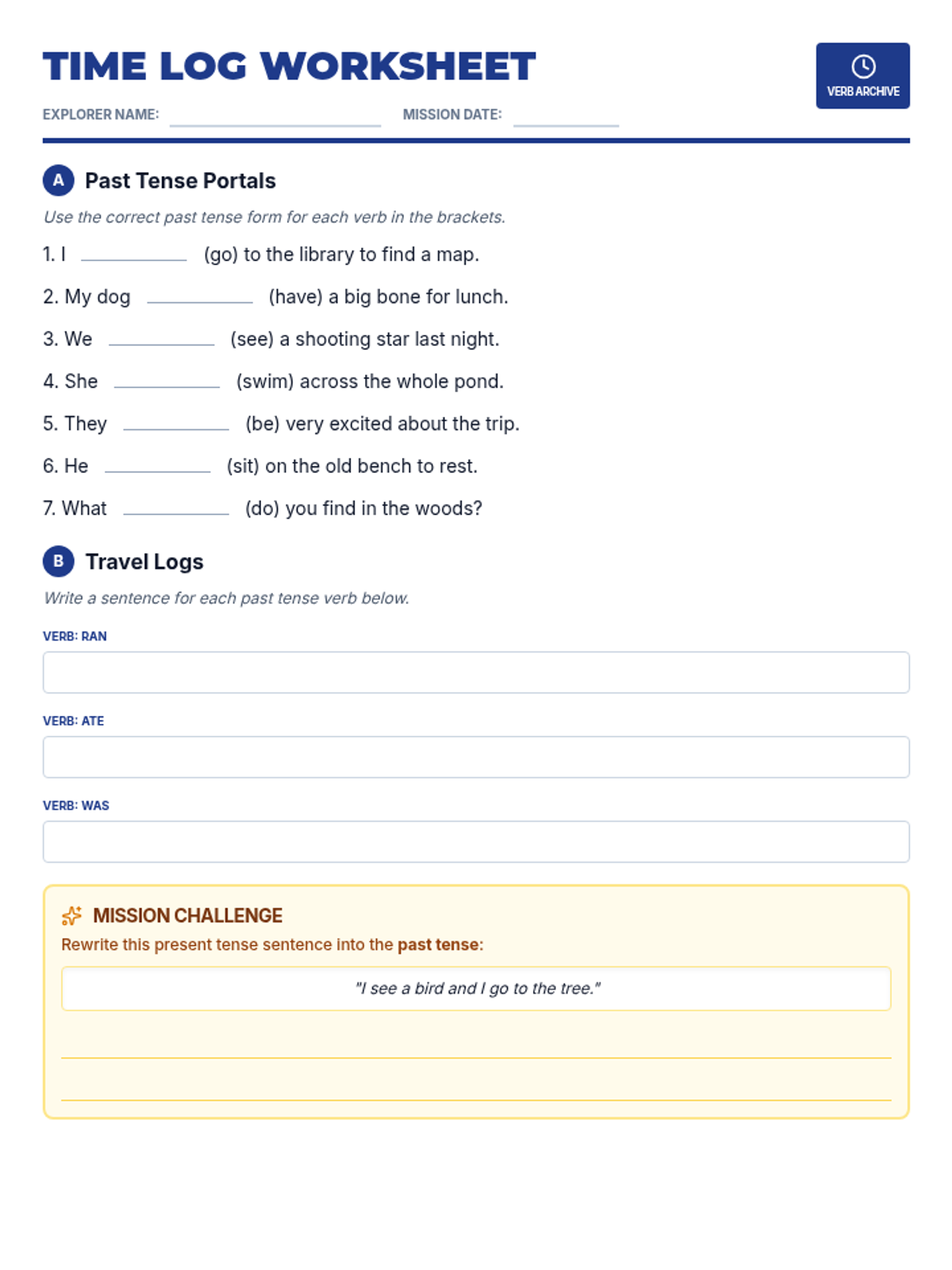
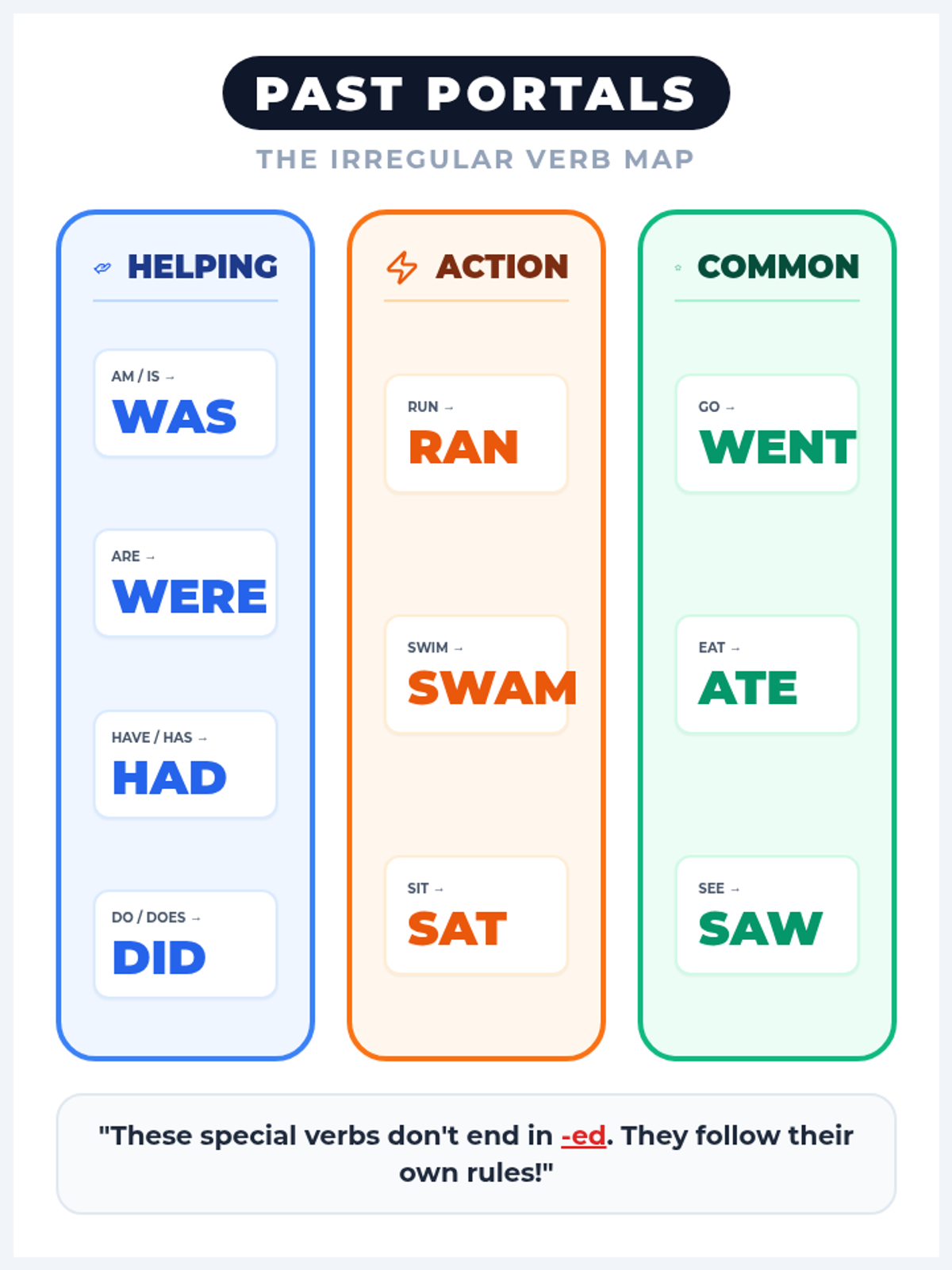
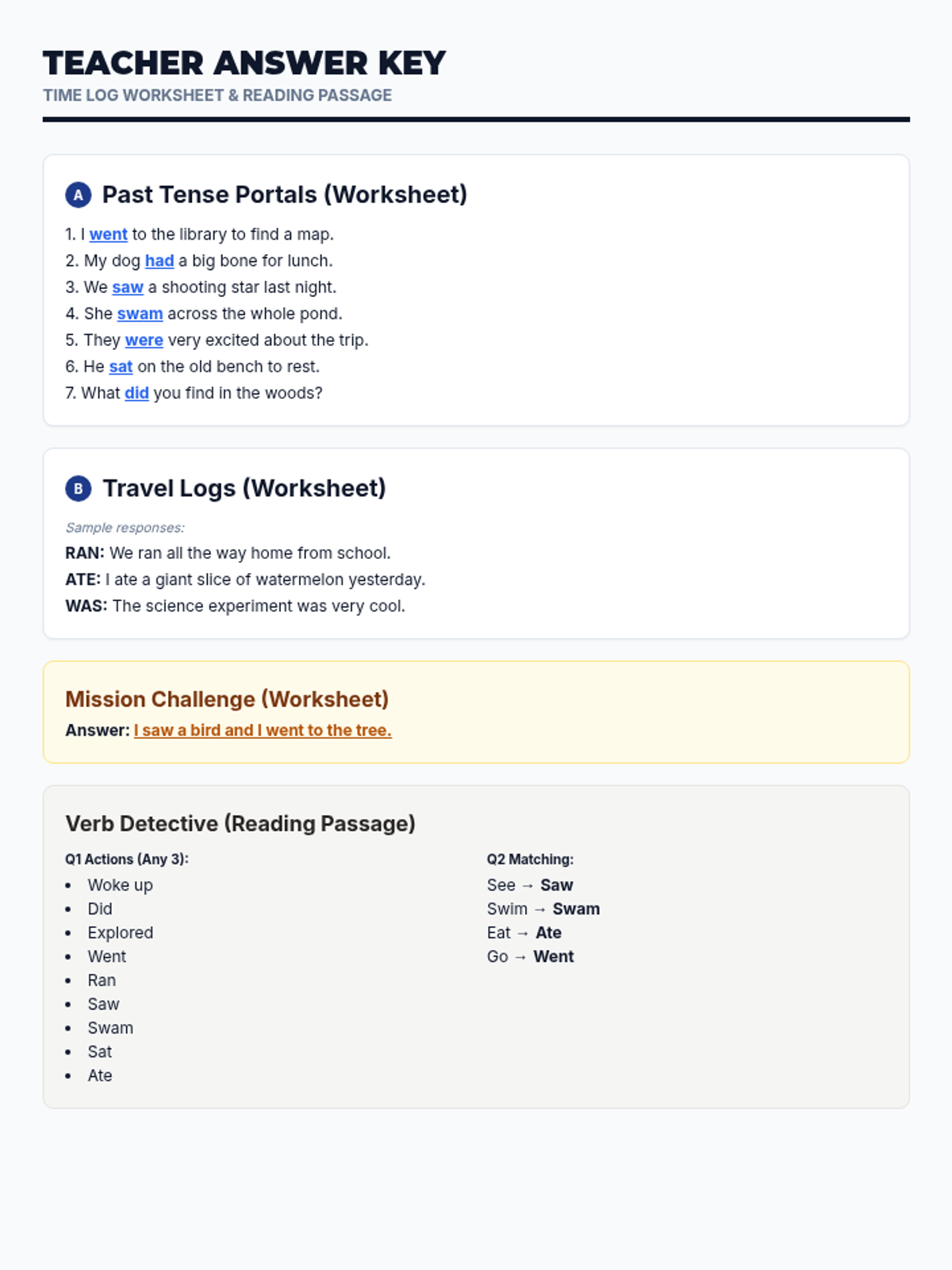
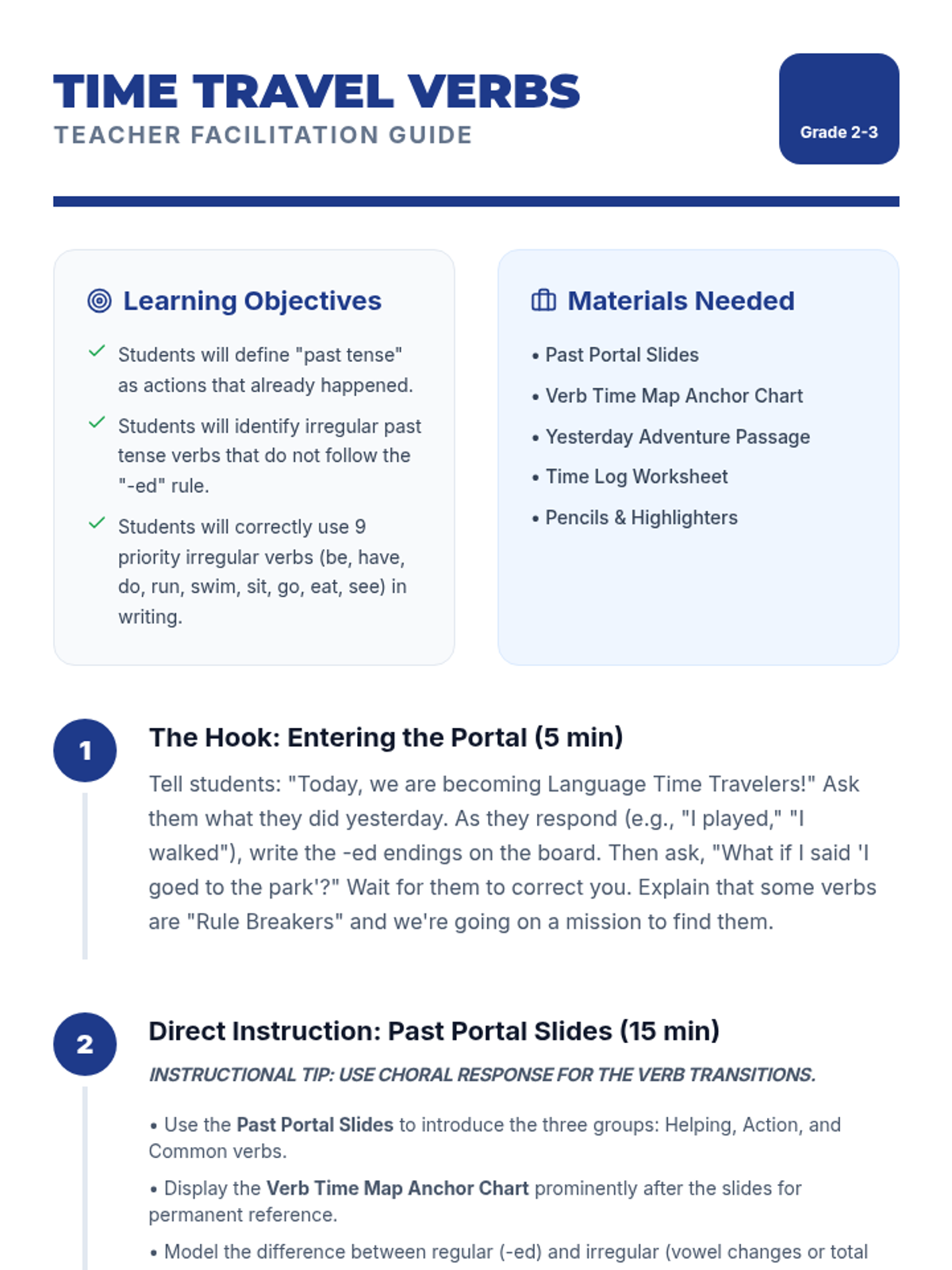
A comprehensive lesson on simple past tense verbs focusing on common irregular forms (be, have, do, run, swim, sit, go, eat, see) for 2nd and 3rd grade students. Includes visual instruction, reading practice, and application activities.
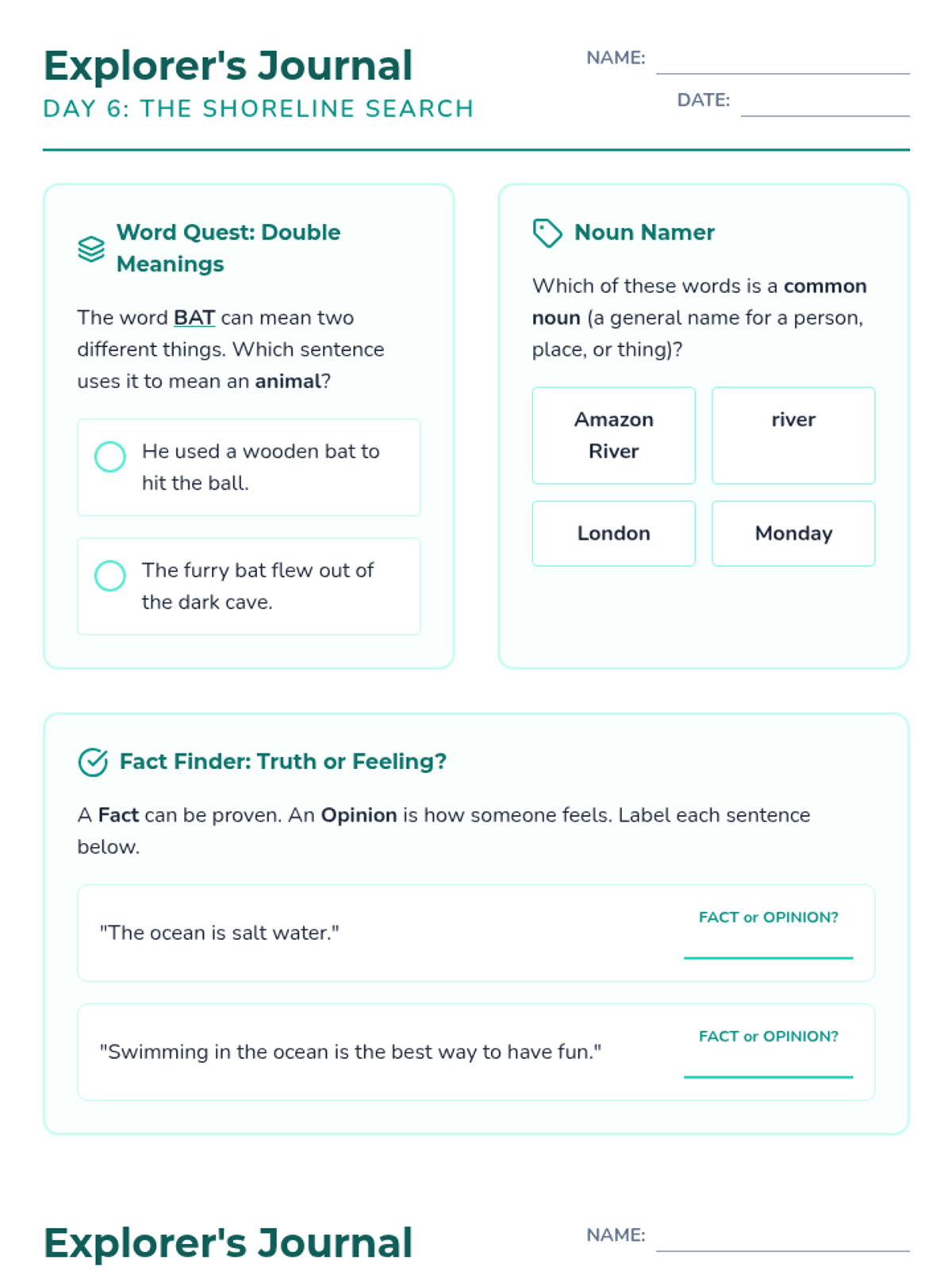
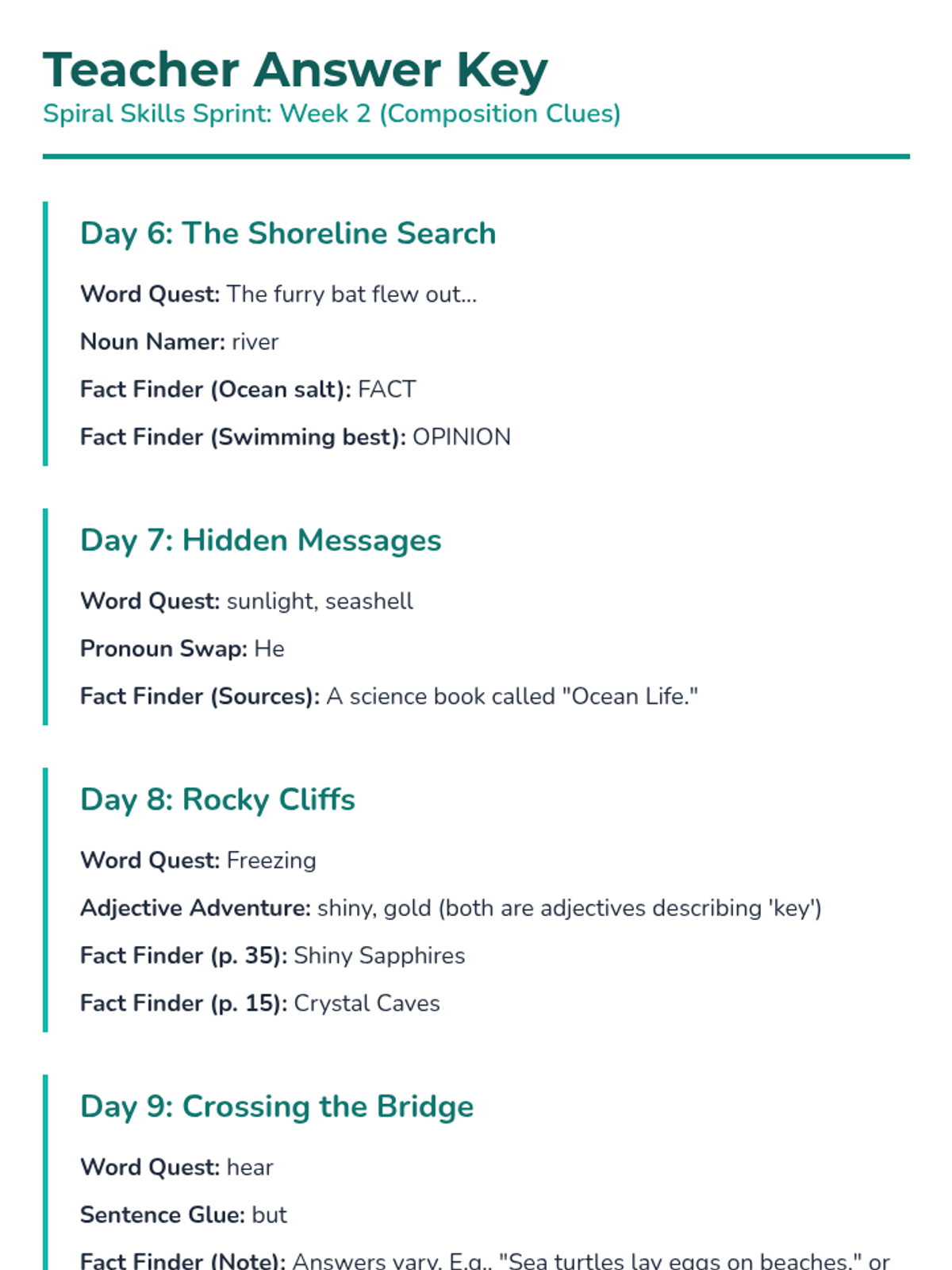
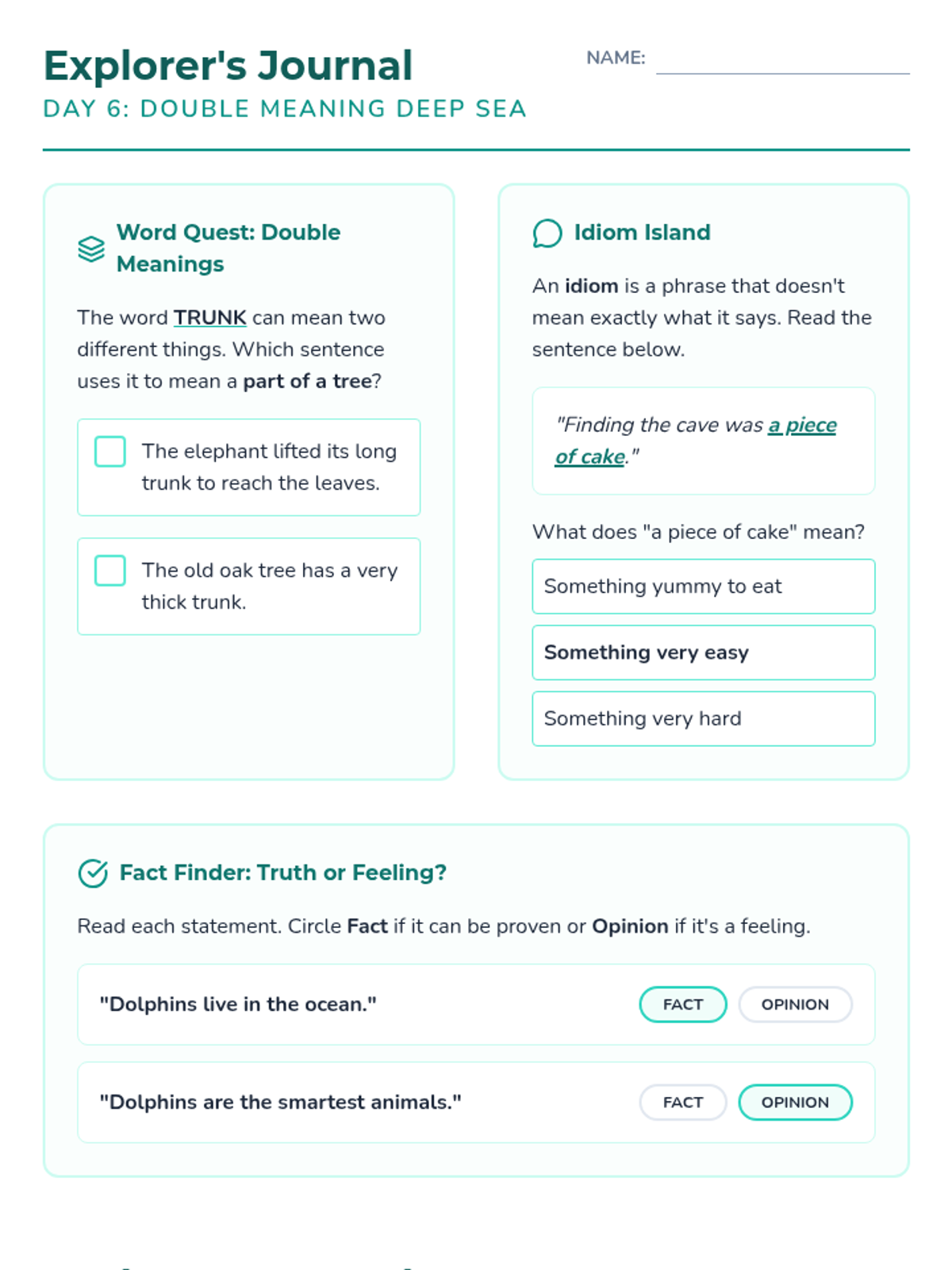
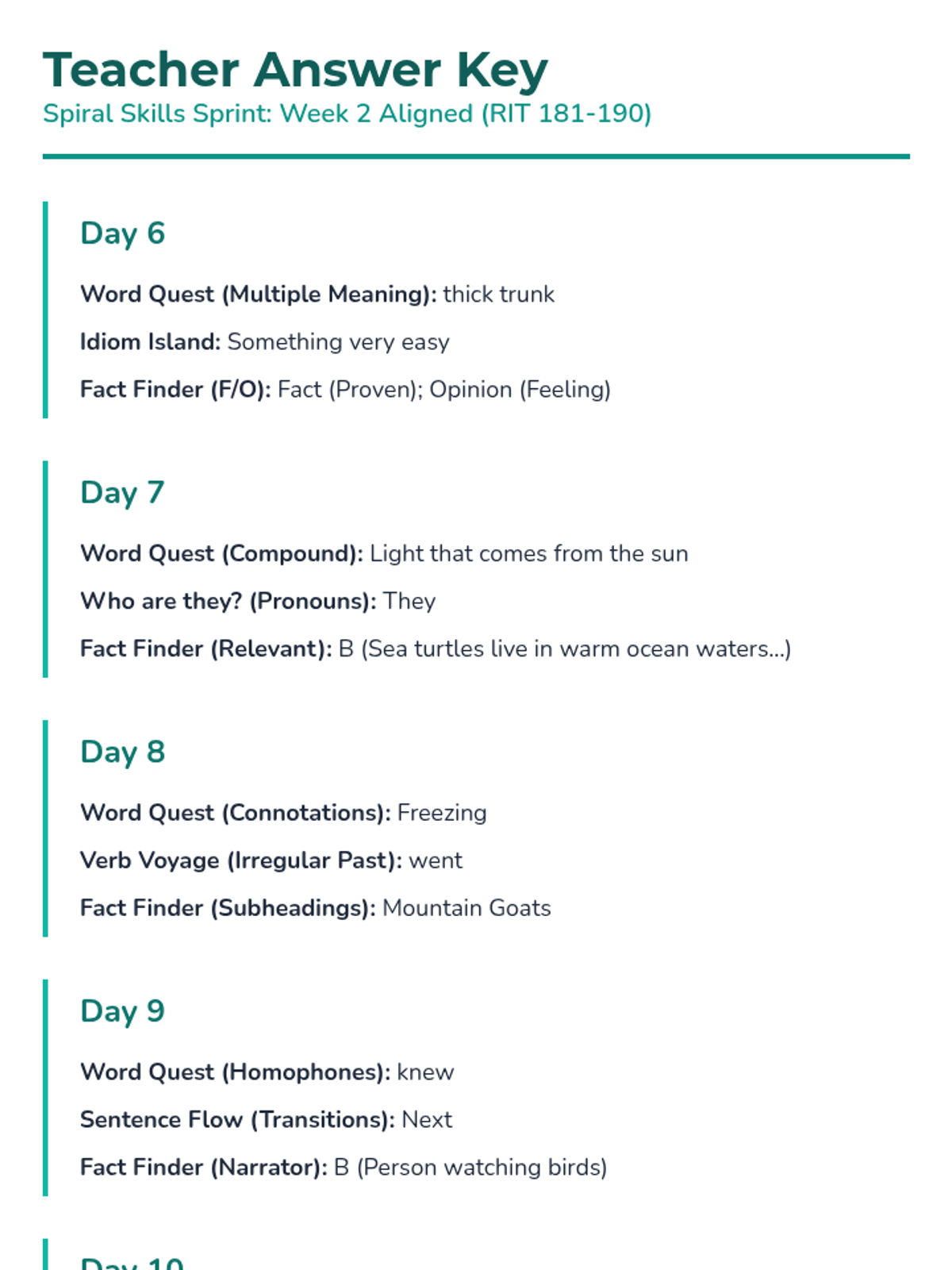
Week 2 shifts focus toward sentence structure and identifying reliable information sources, covering compound words, pronouns, and fact versus opinion.
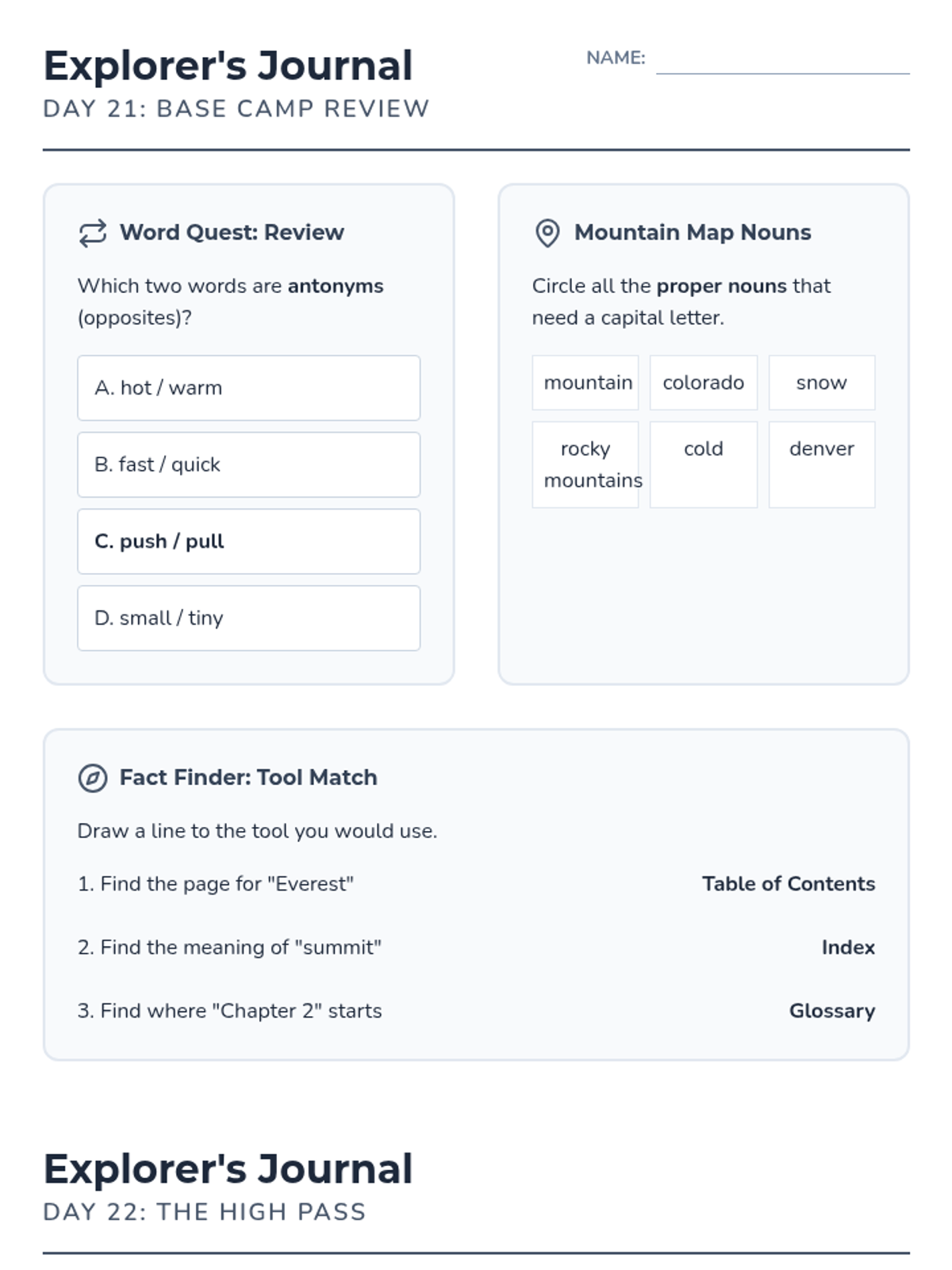
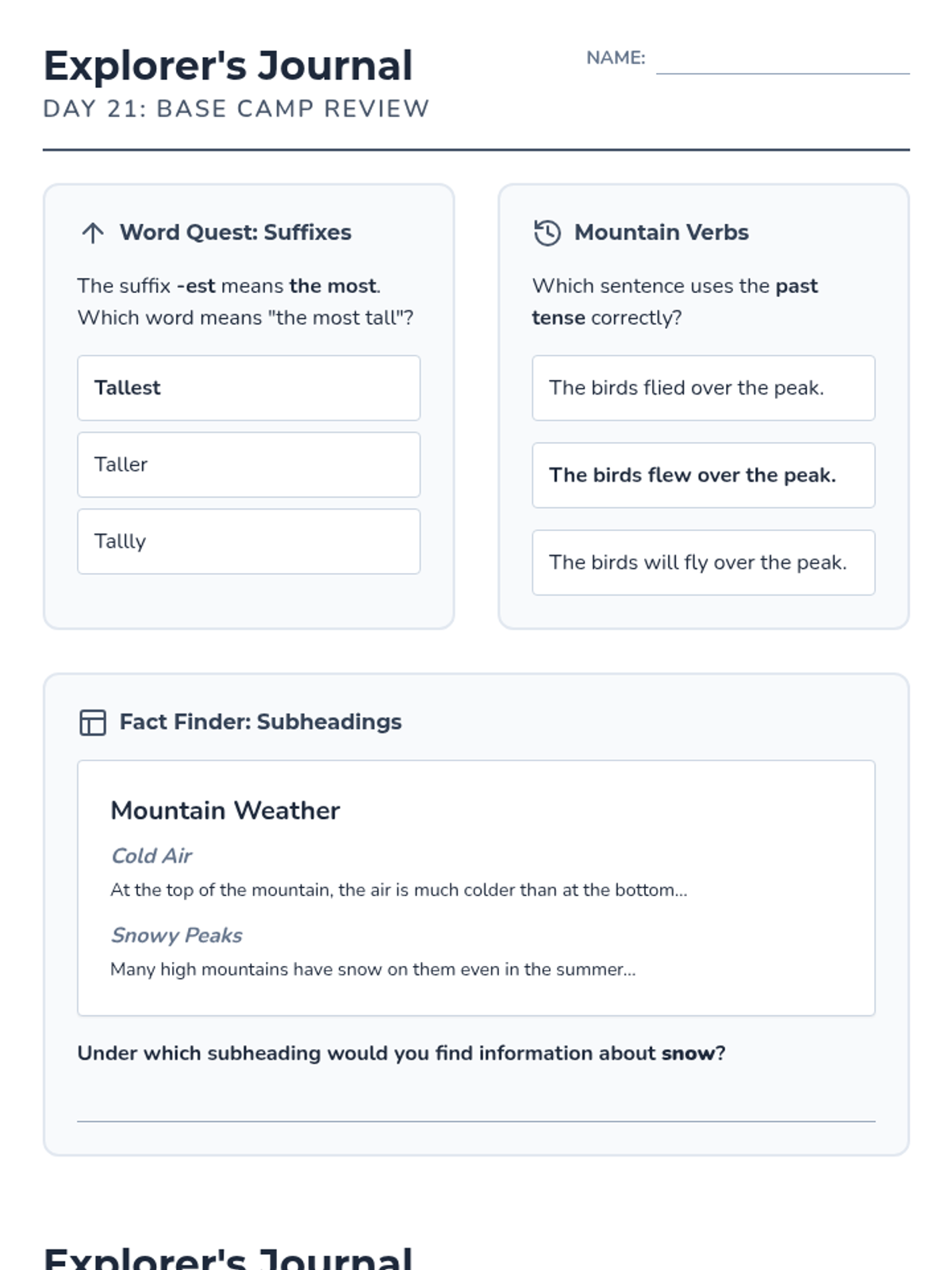
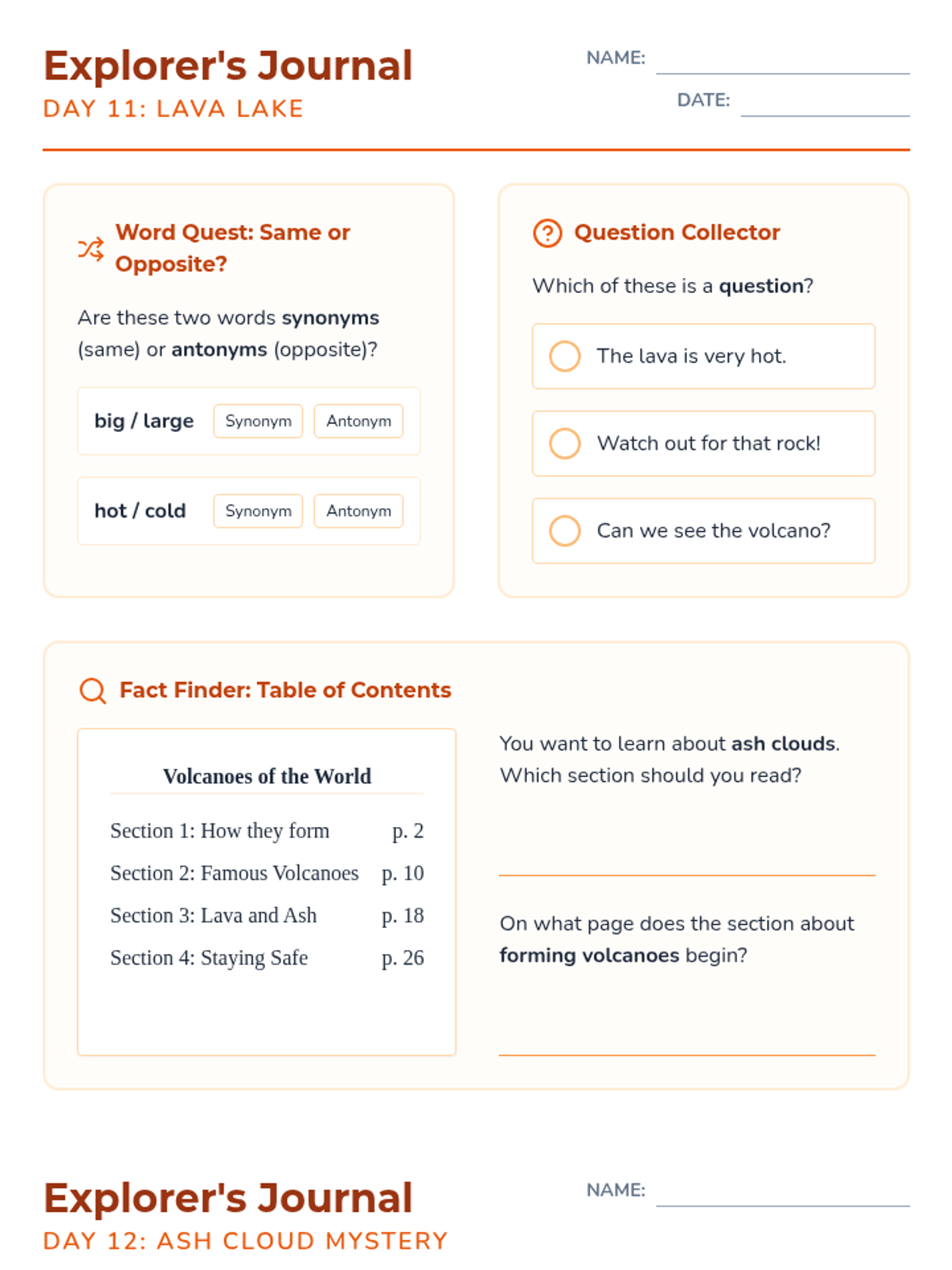
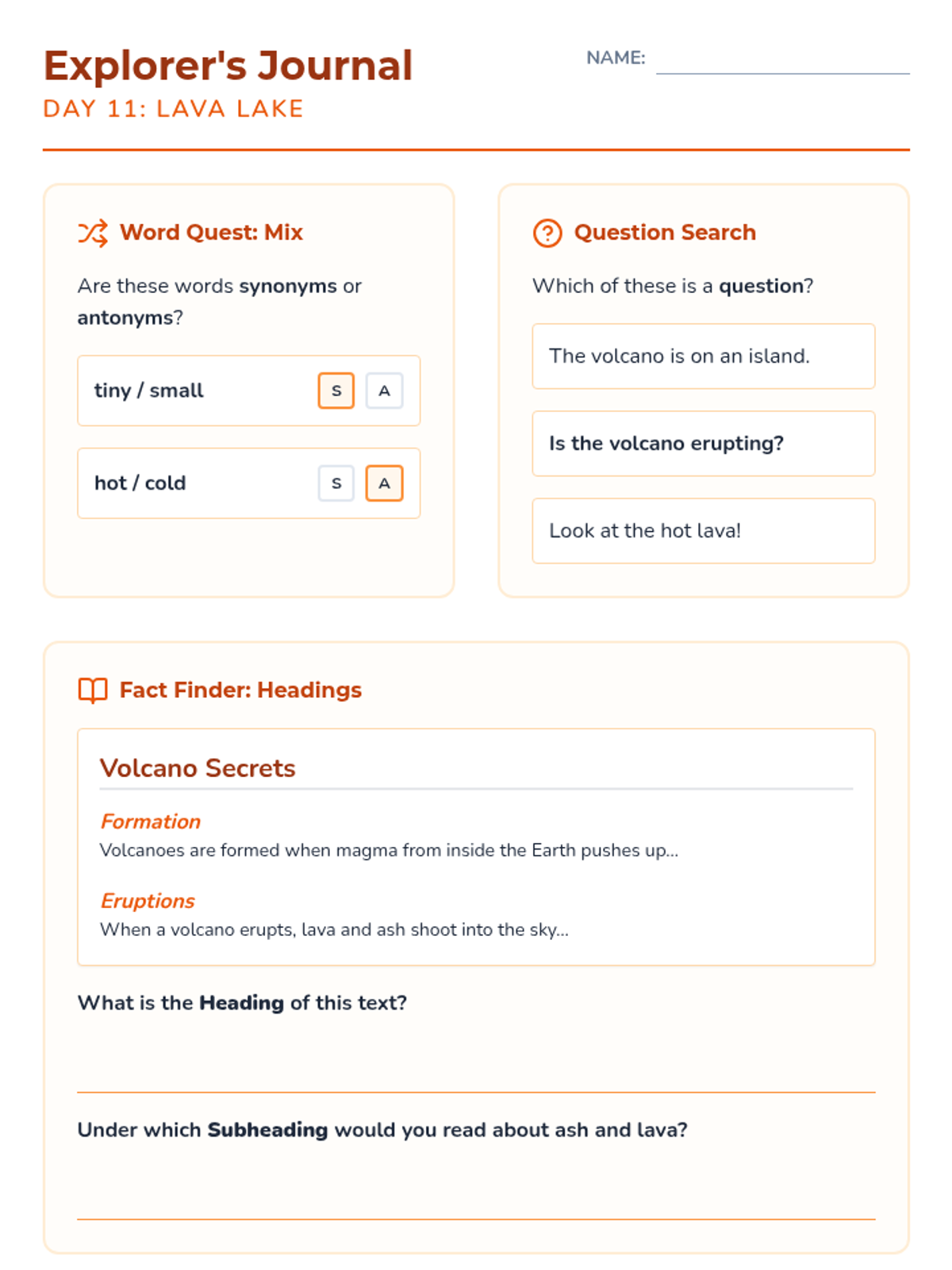
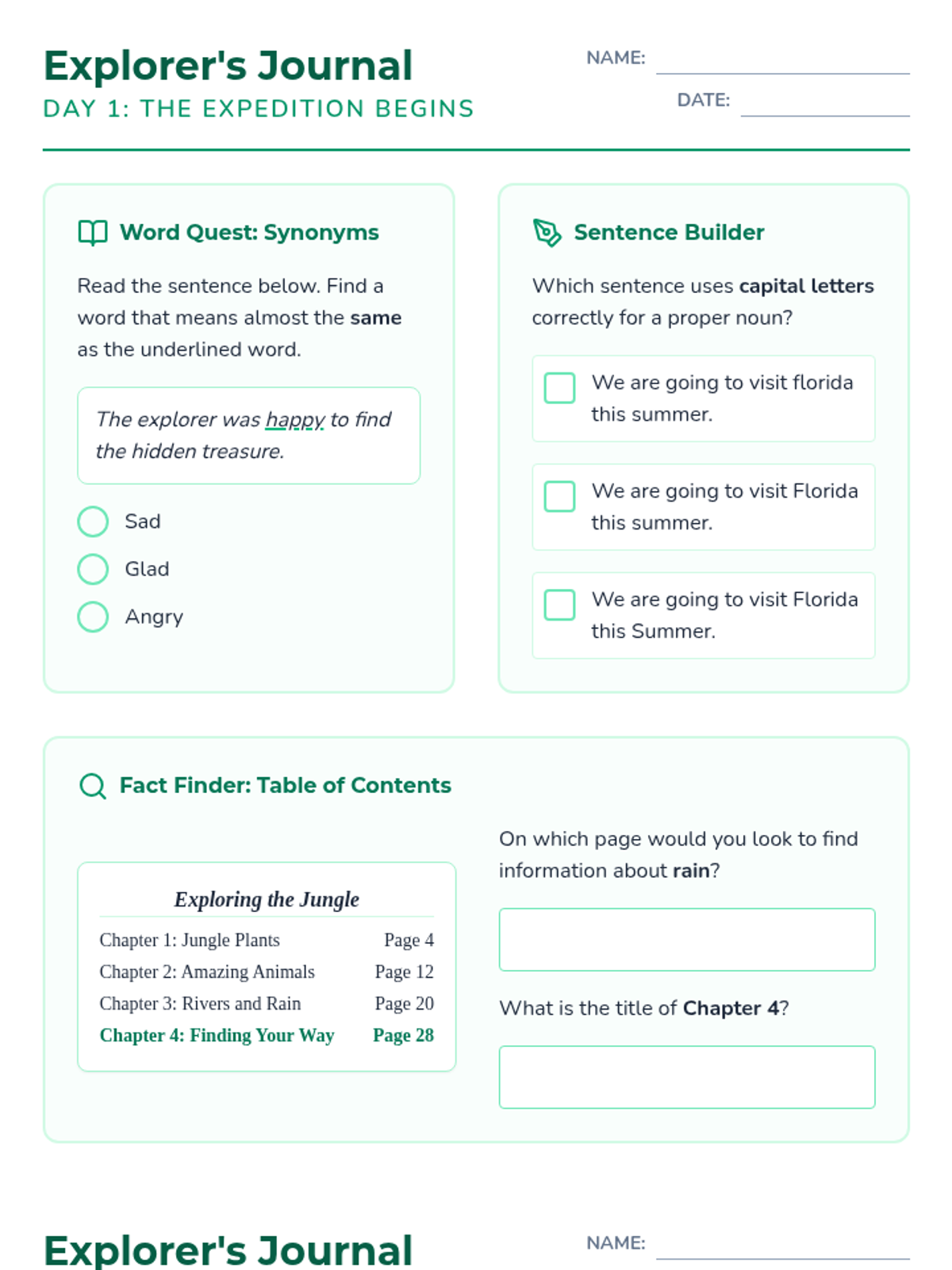
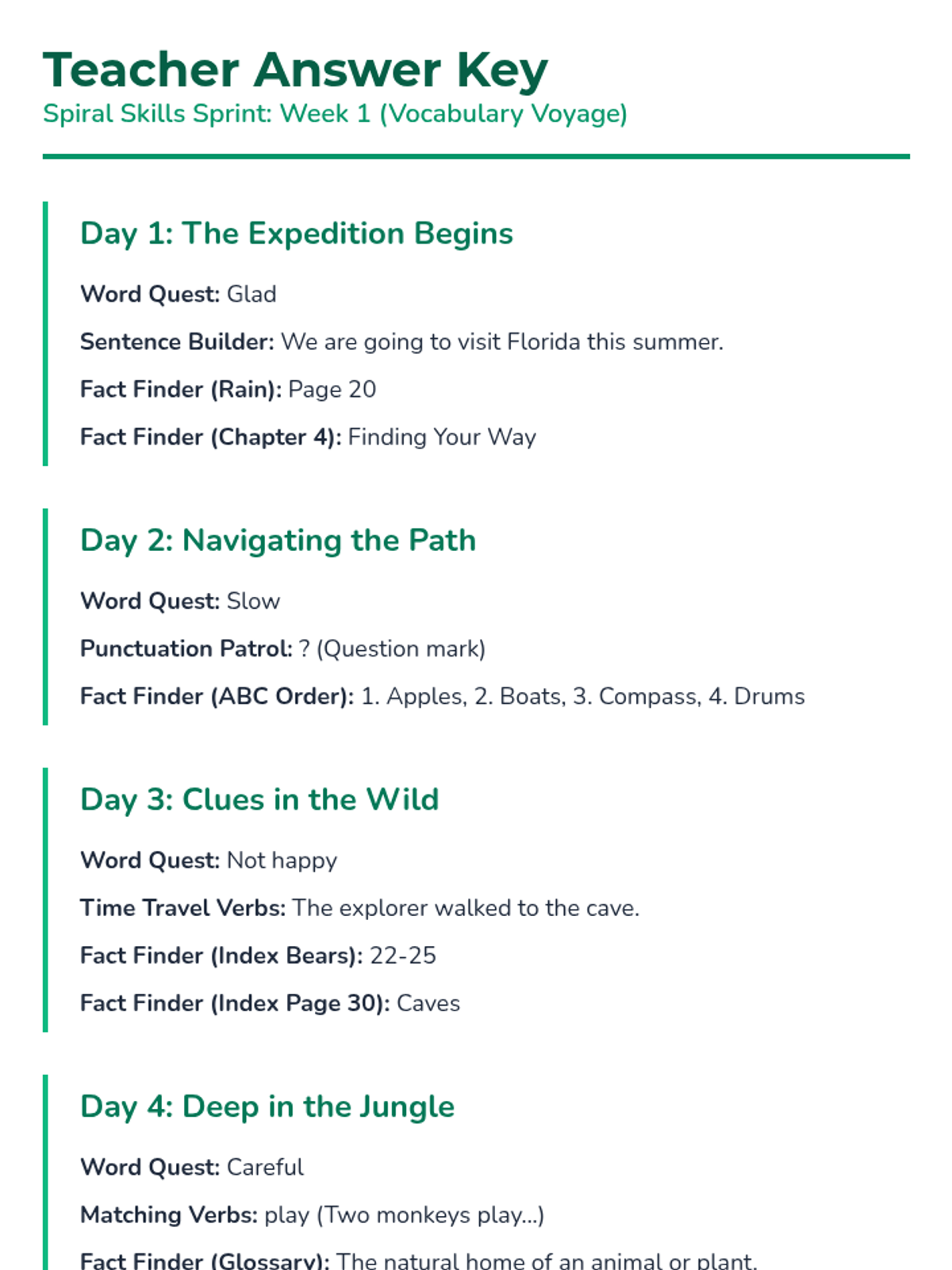
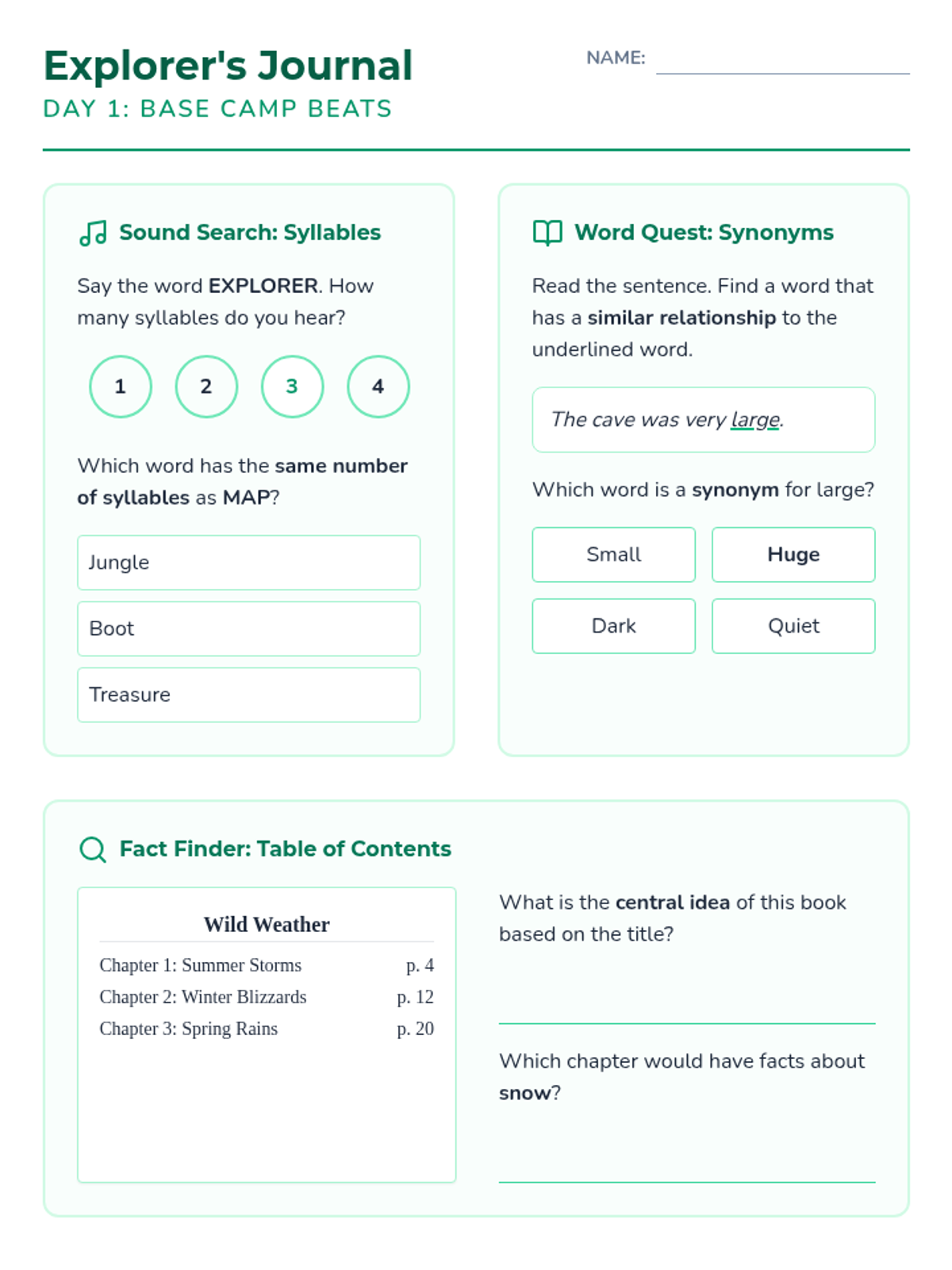
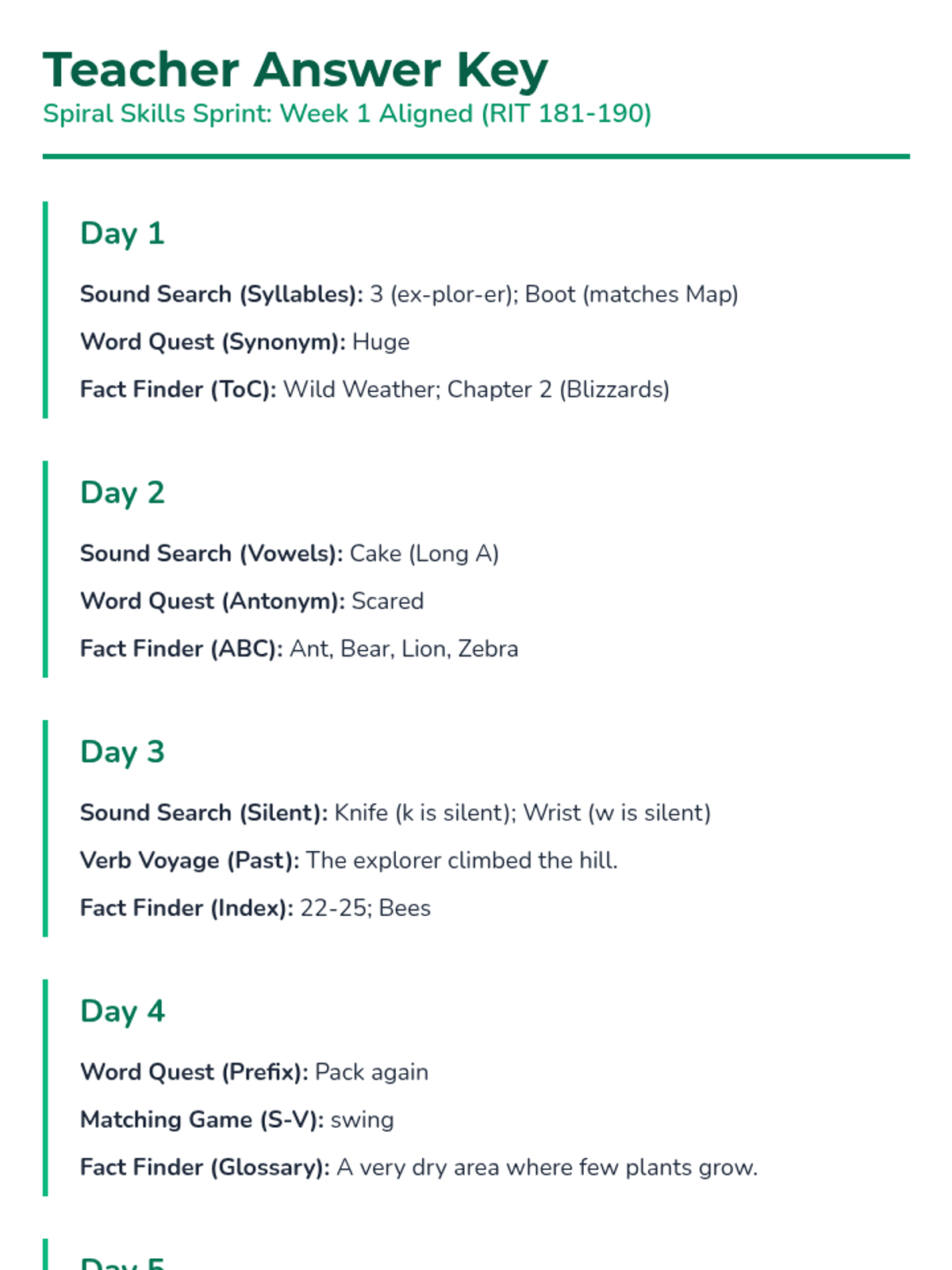
The first week of the Spiral Skills Sprint focuses on establishing foundational vocabulary and research habits, including synonyms, proper nouns, and navigating a Table of Contents.
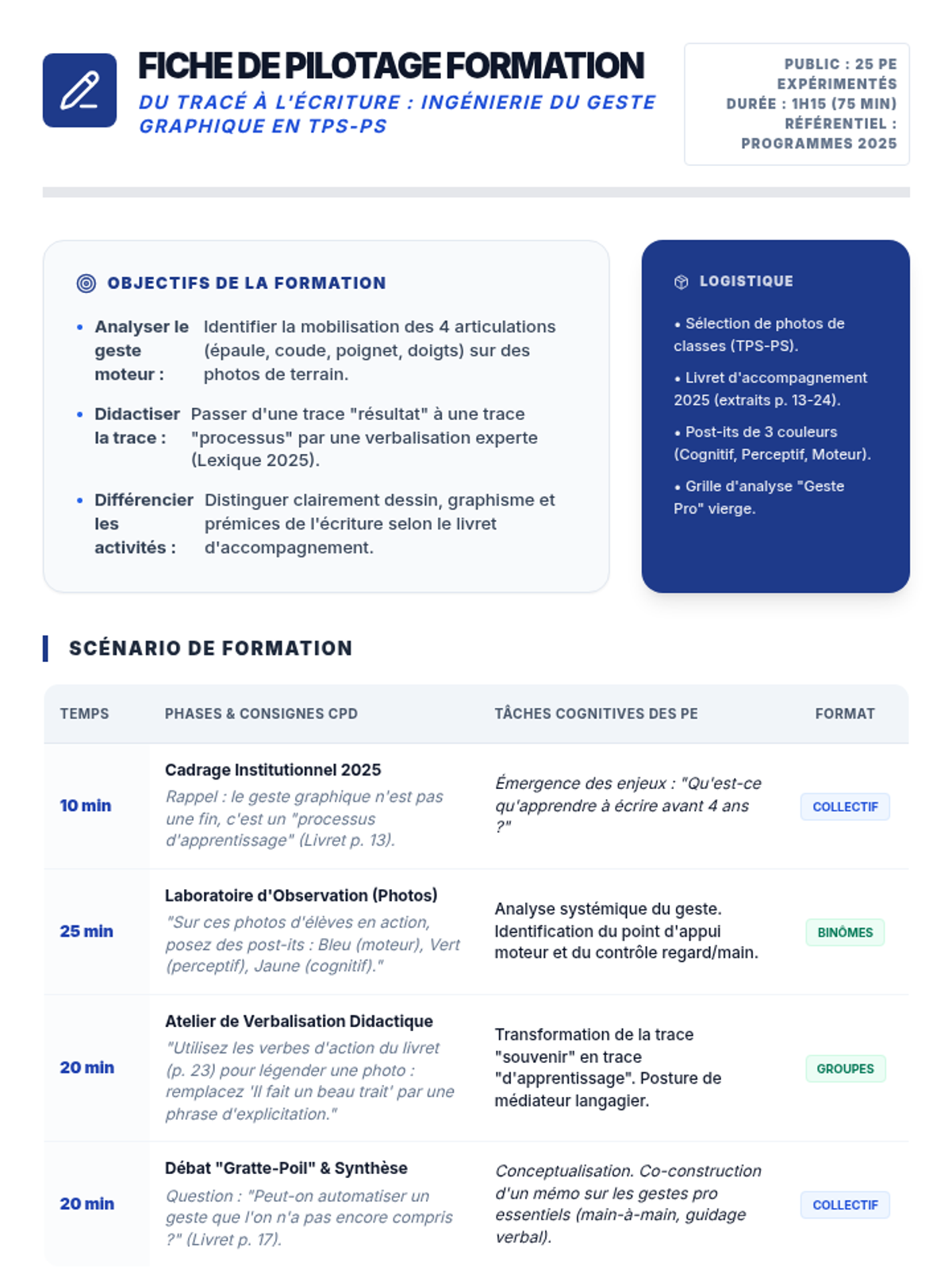
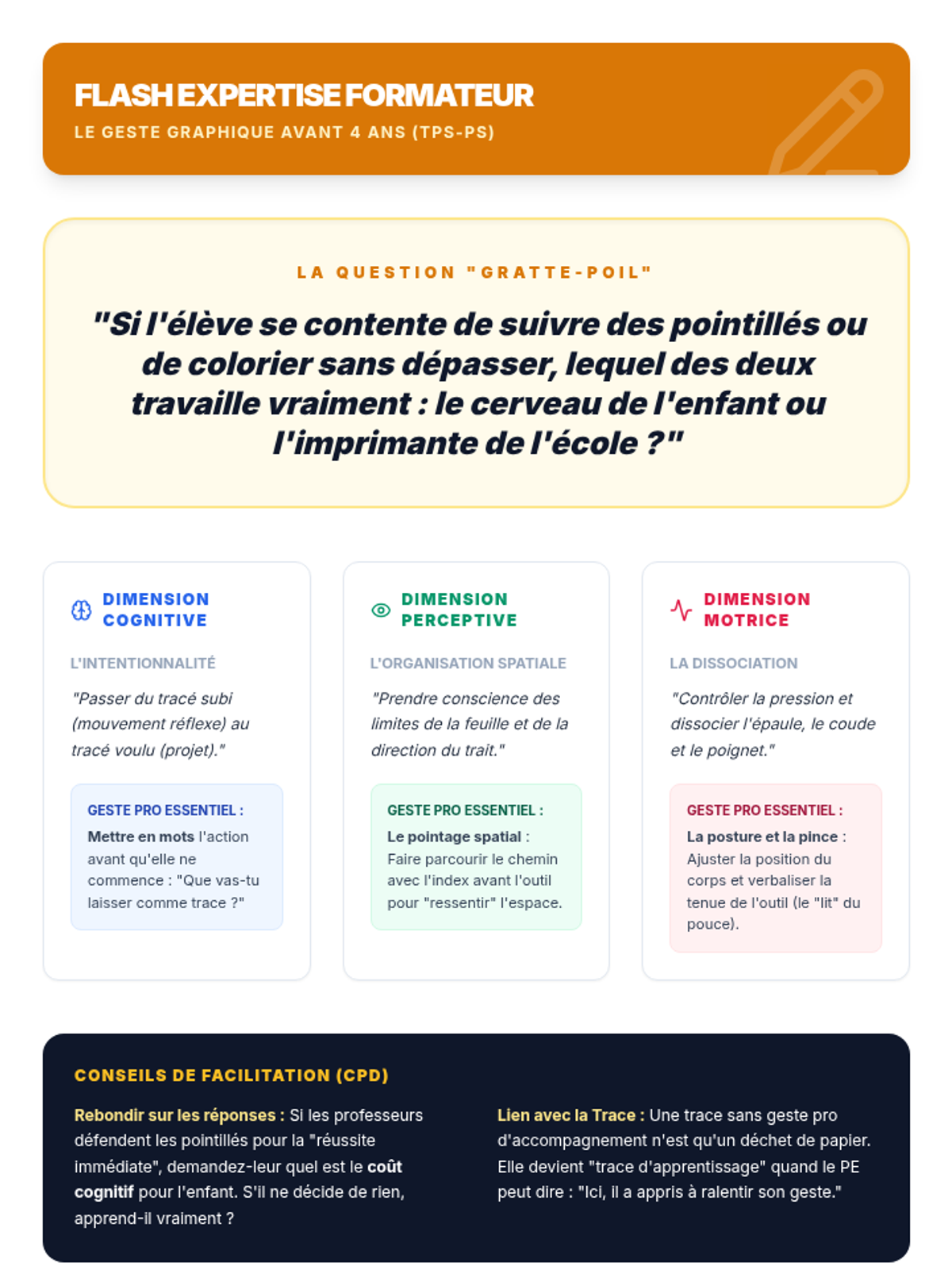
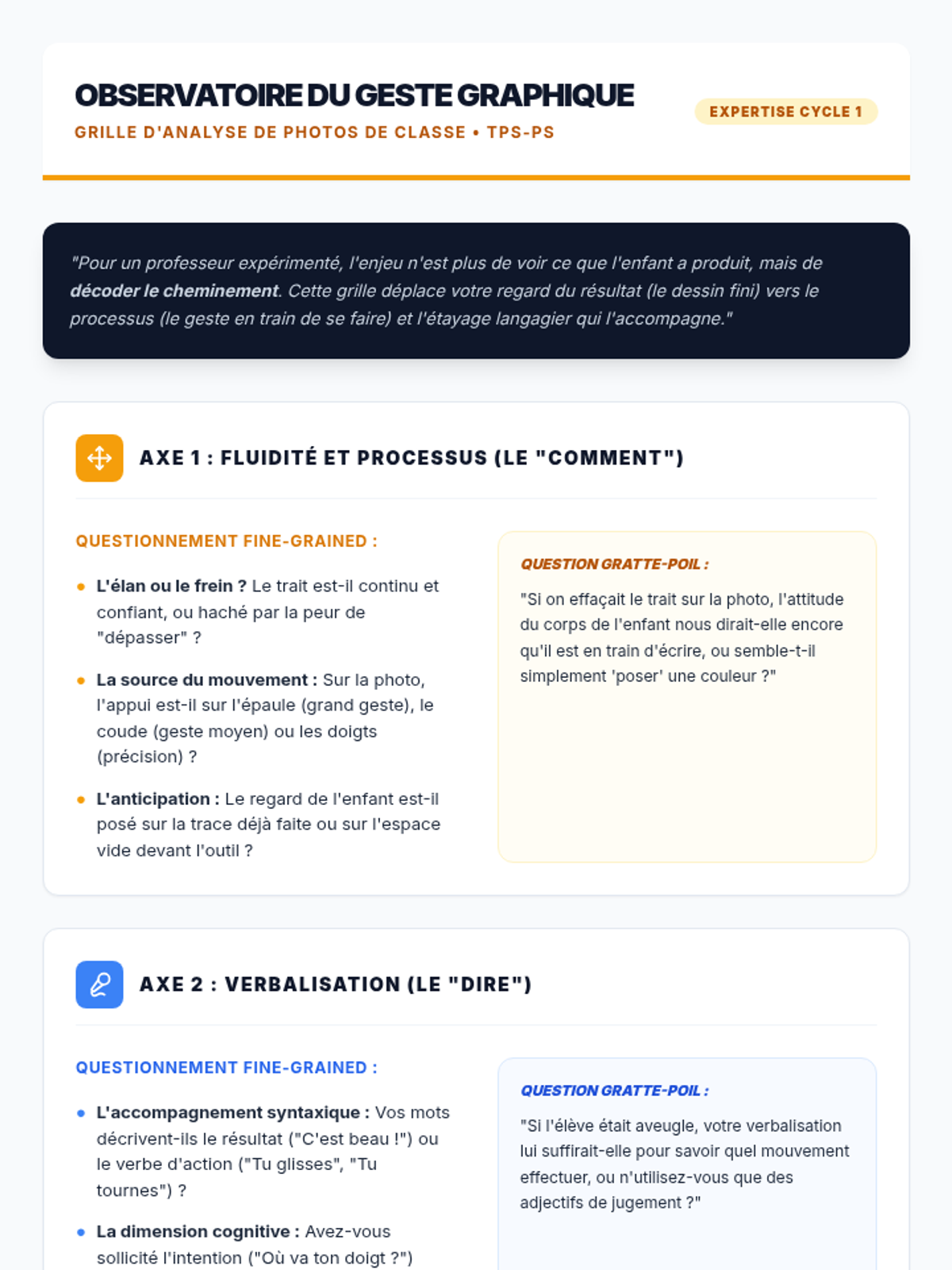
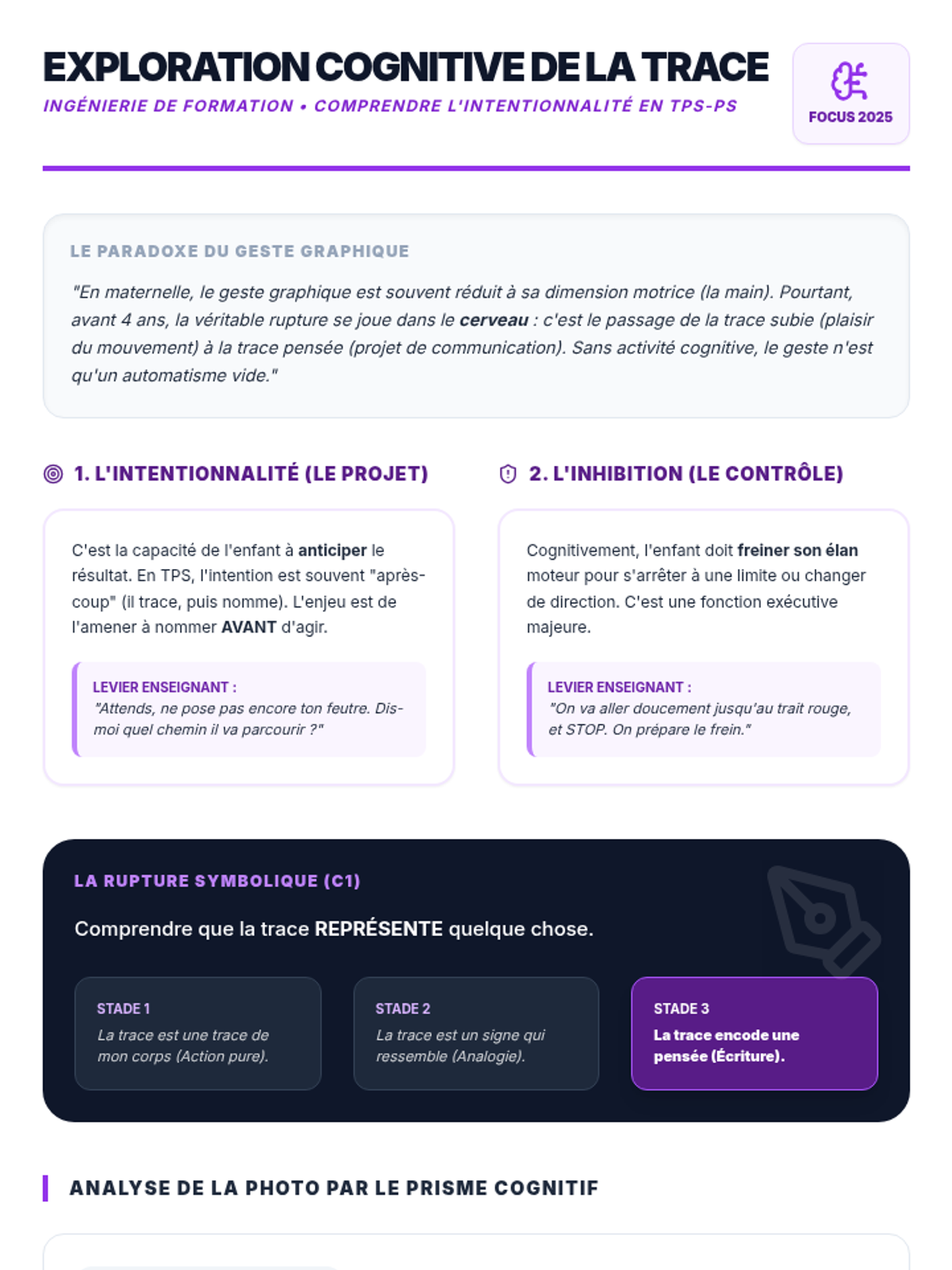
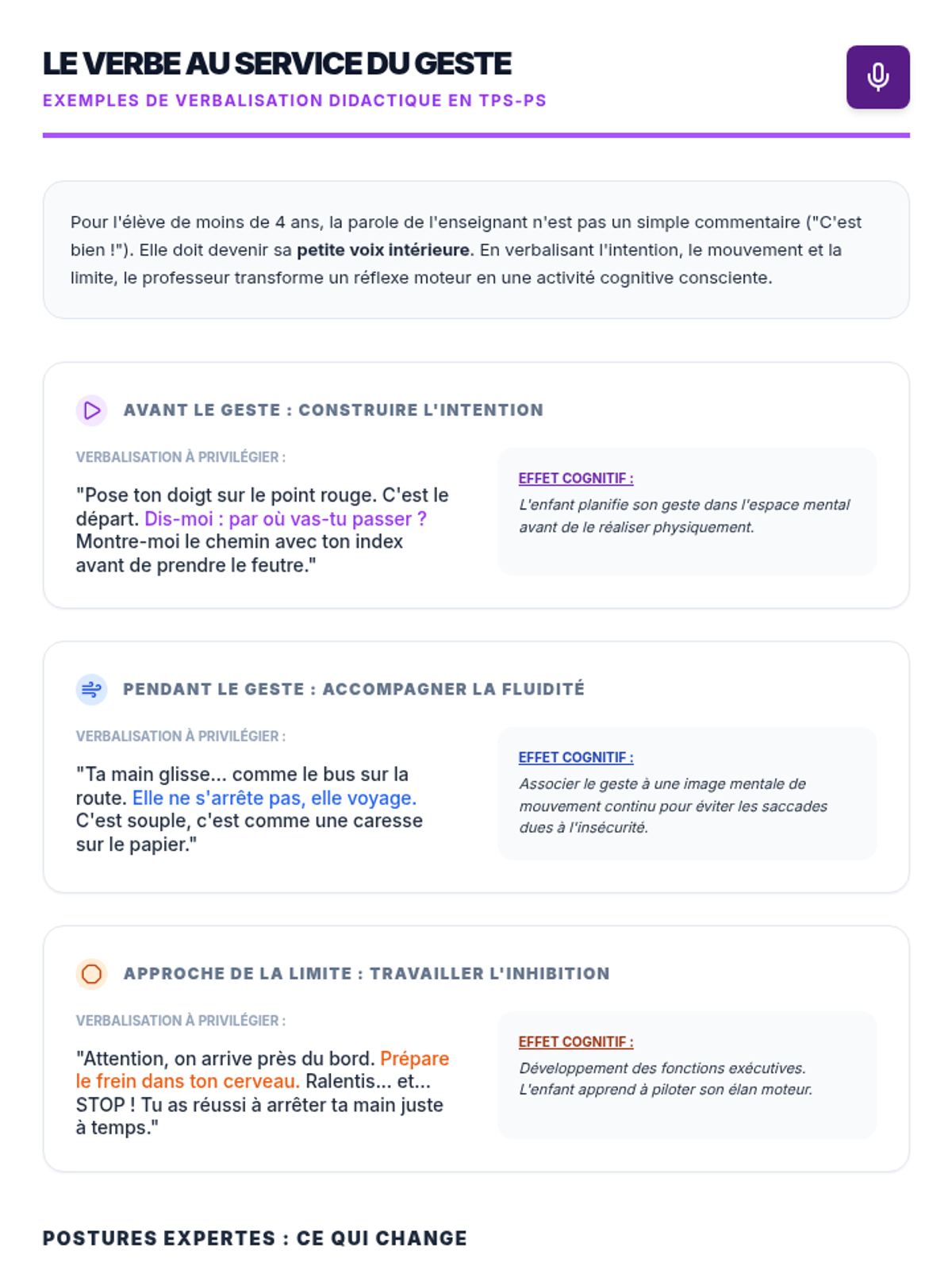
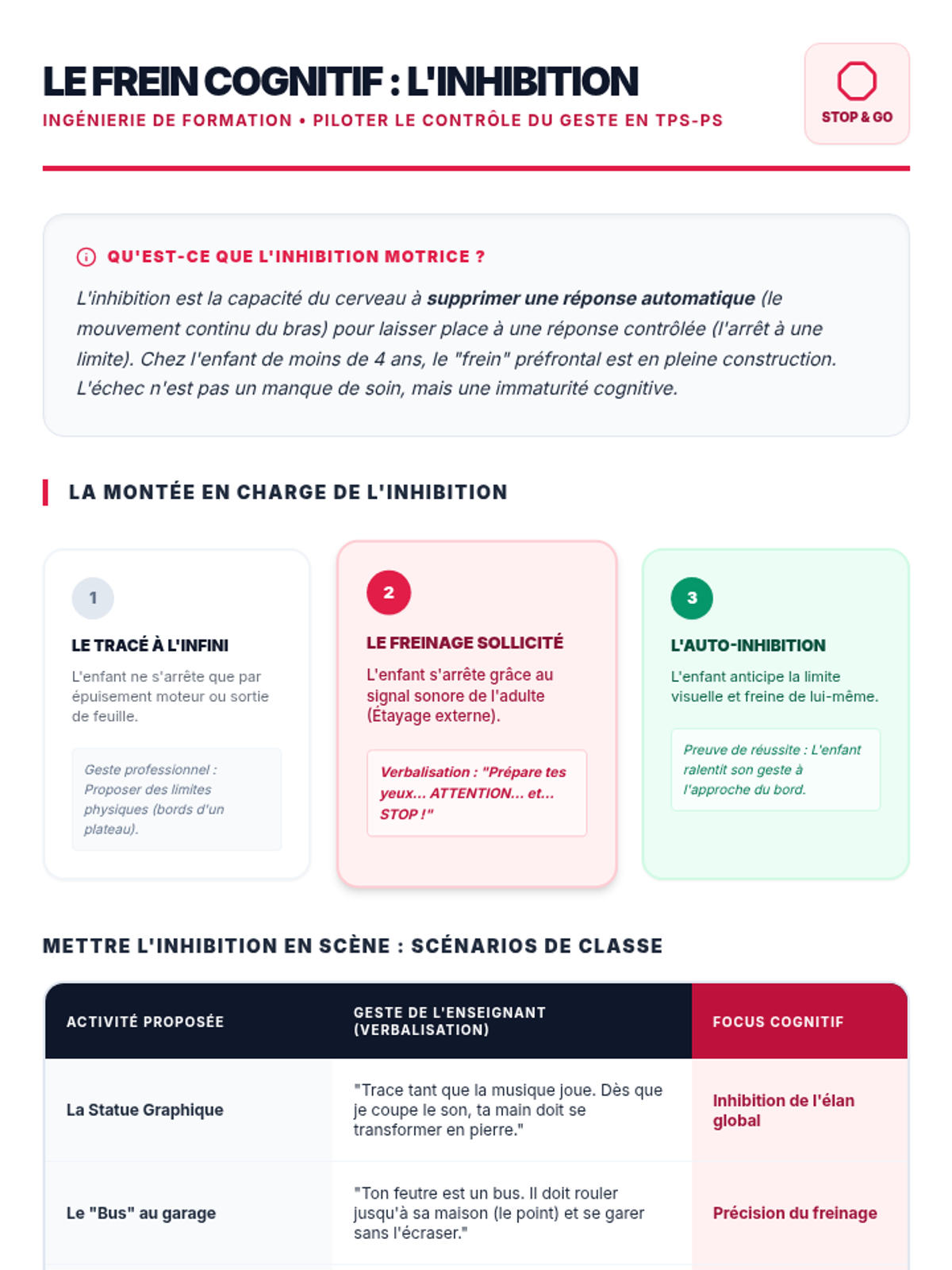
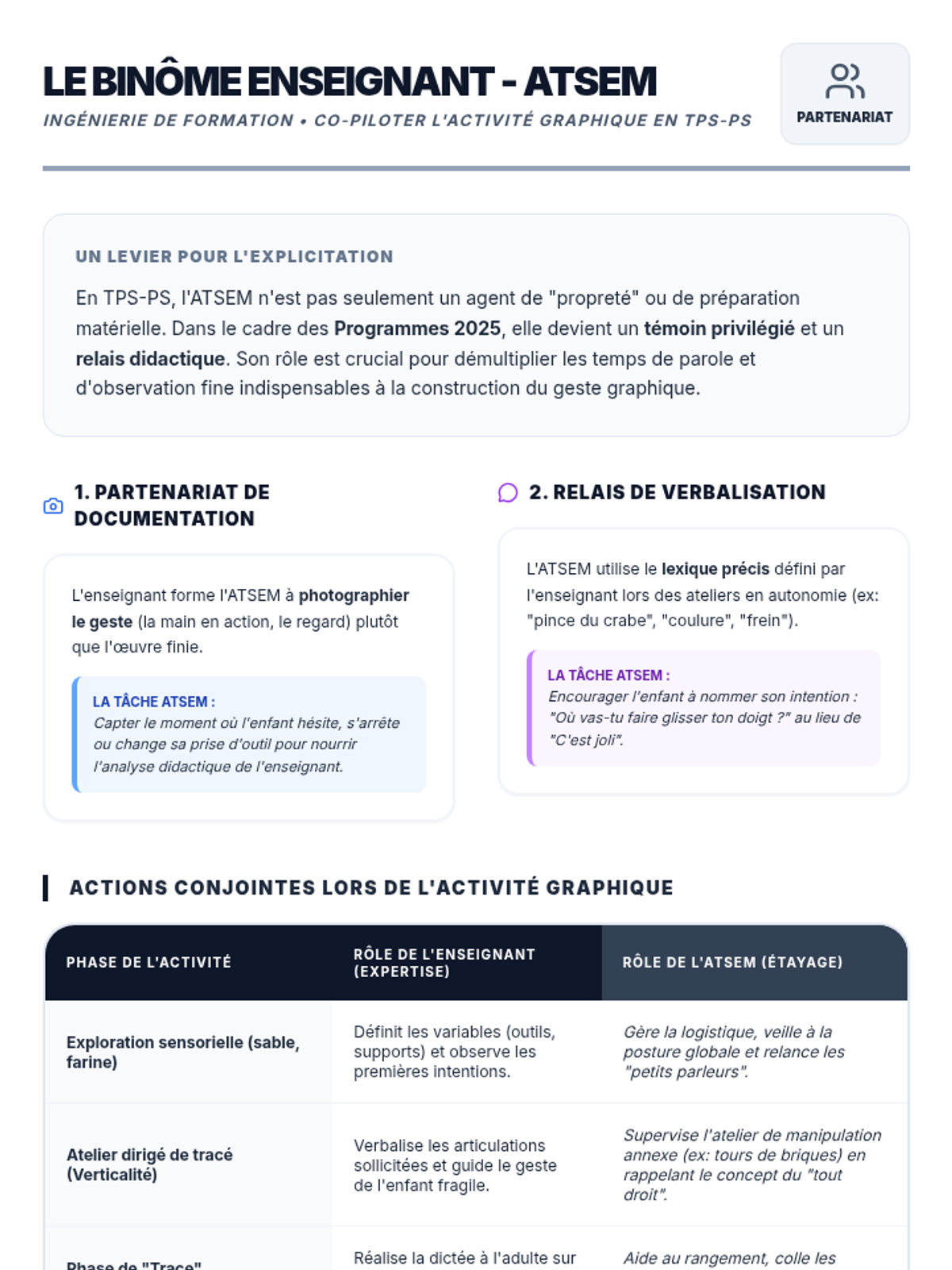
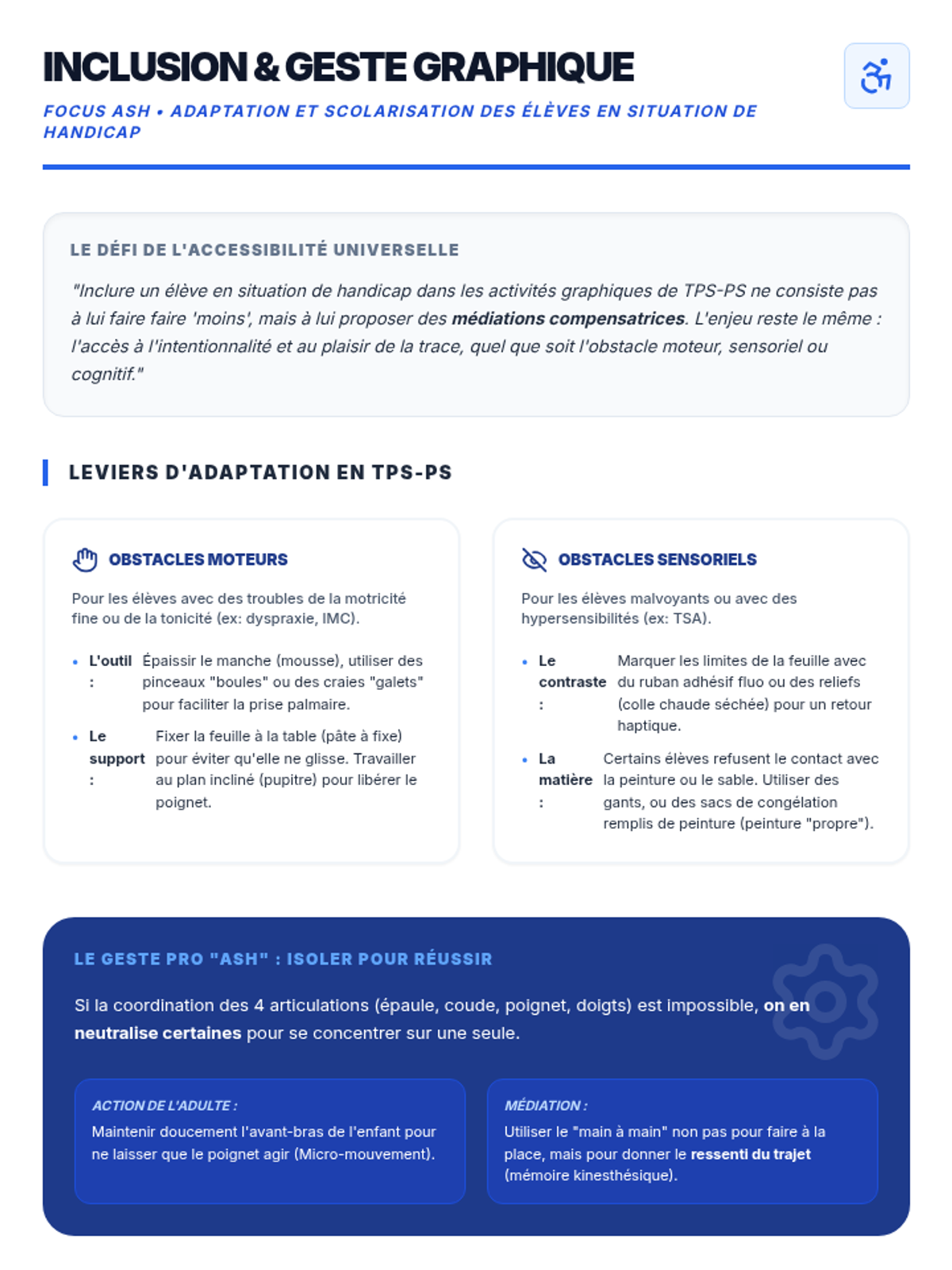
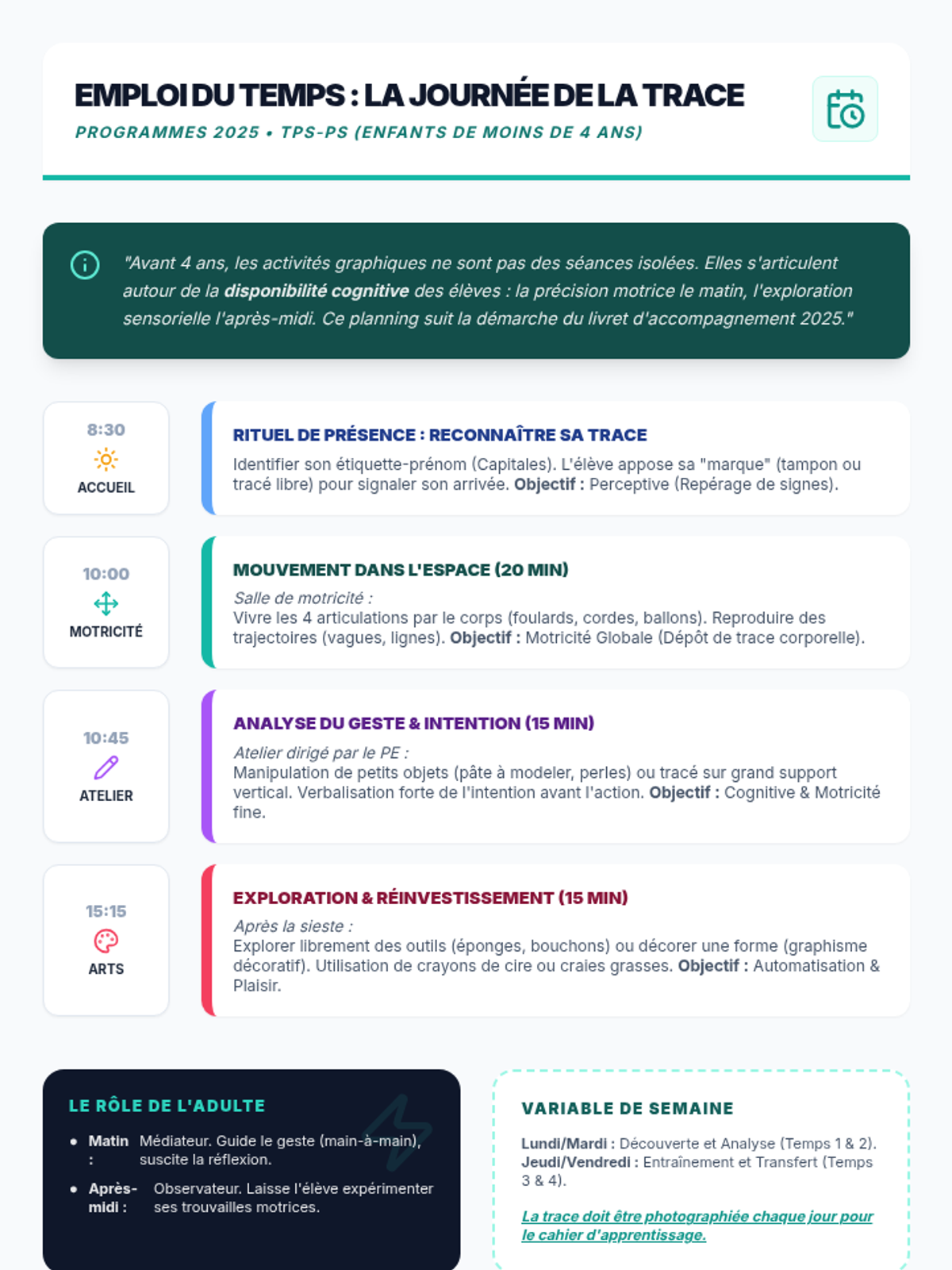
Cette formation pour les professeurs de TPS-PS vise à professionnaliser la conception des "traces" d'activités (cahiers de vie, affichages). En s'appuyant sur les photos de classe et les guides 2025, les enseignants apprennent à rendre les apprentissages explicites pour les élèves et les familles.
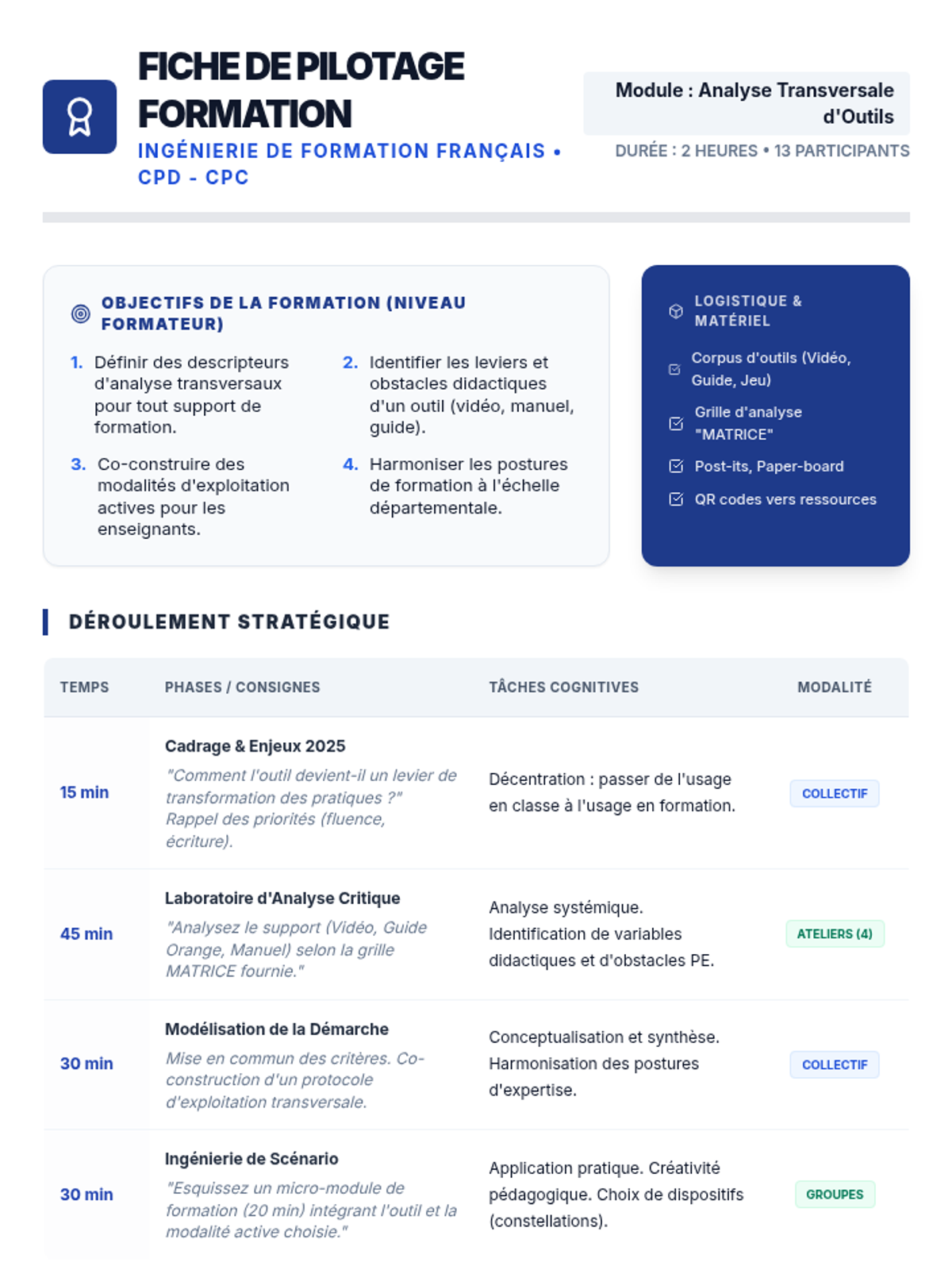
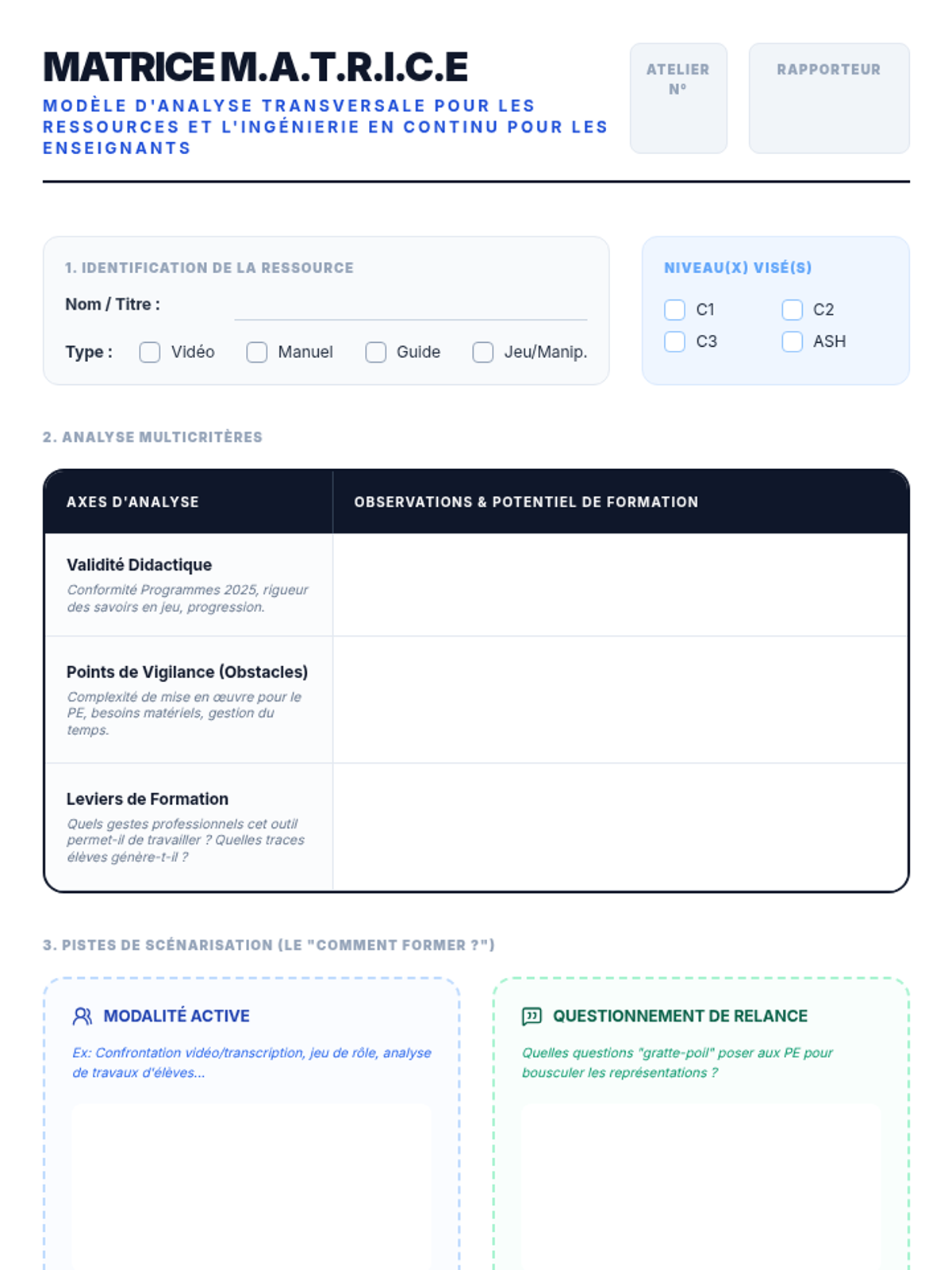
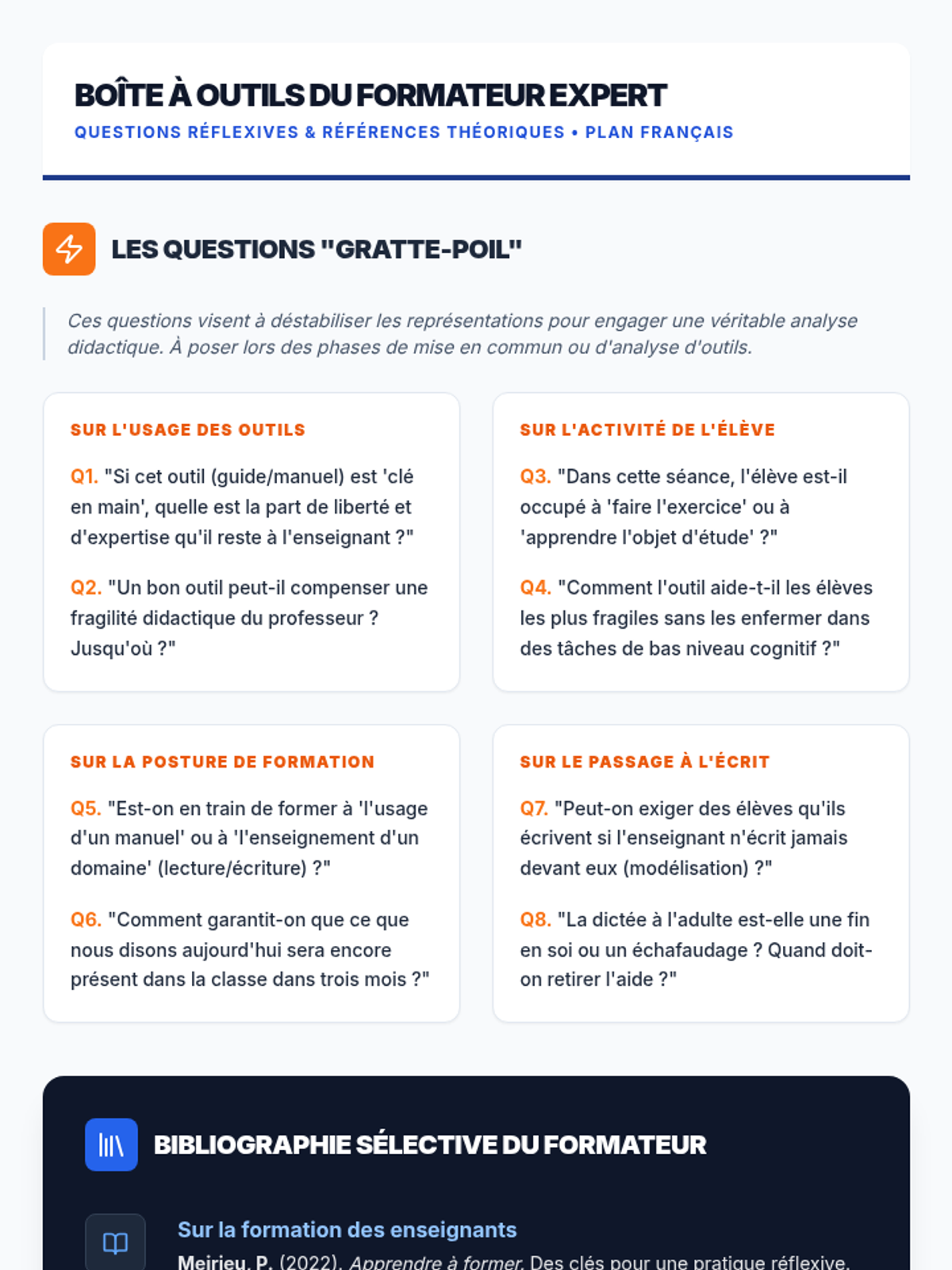
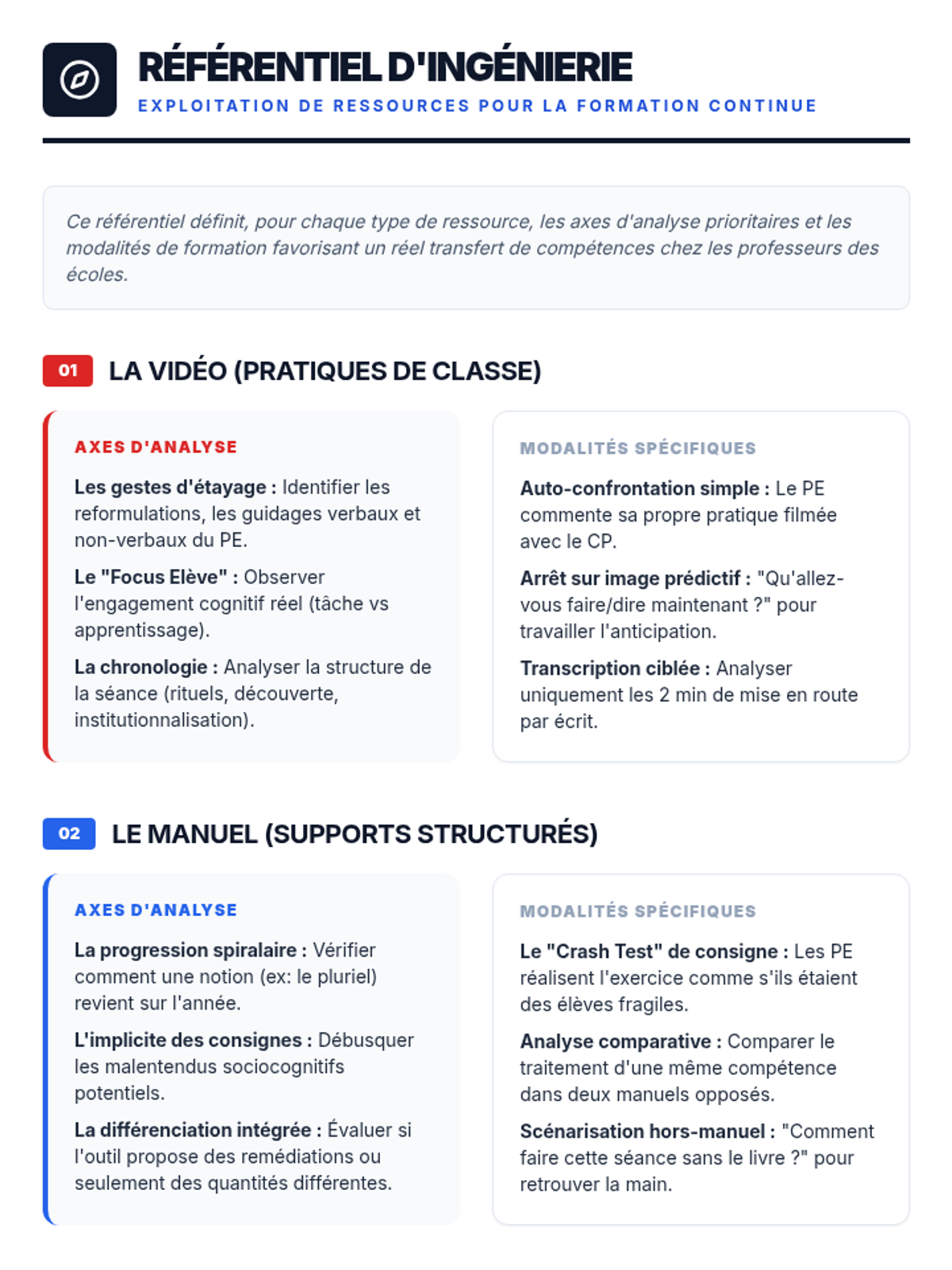
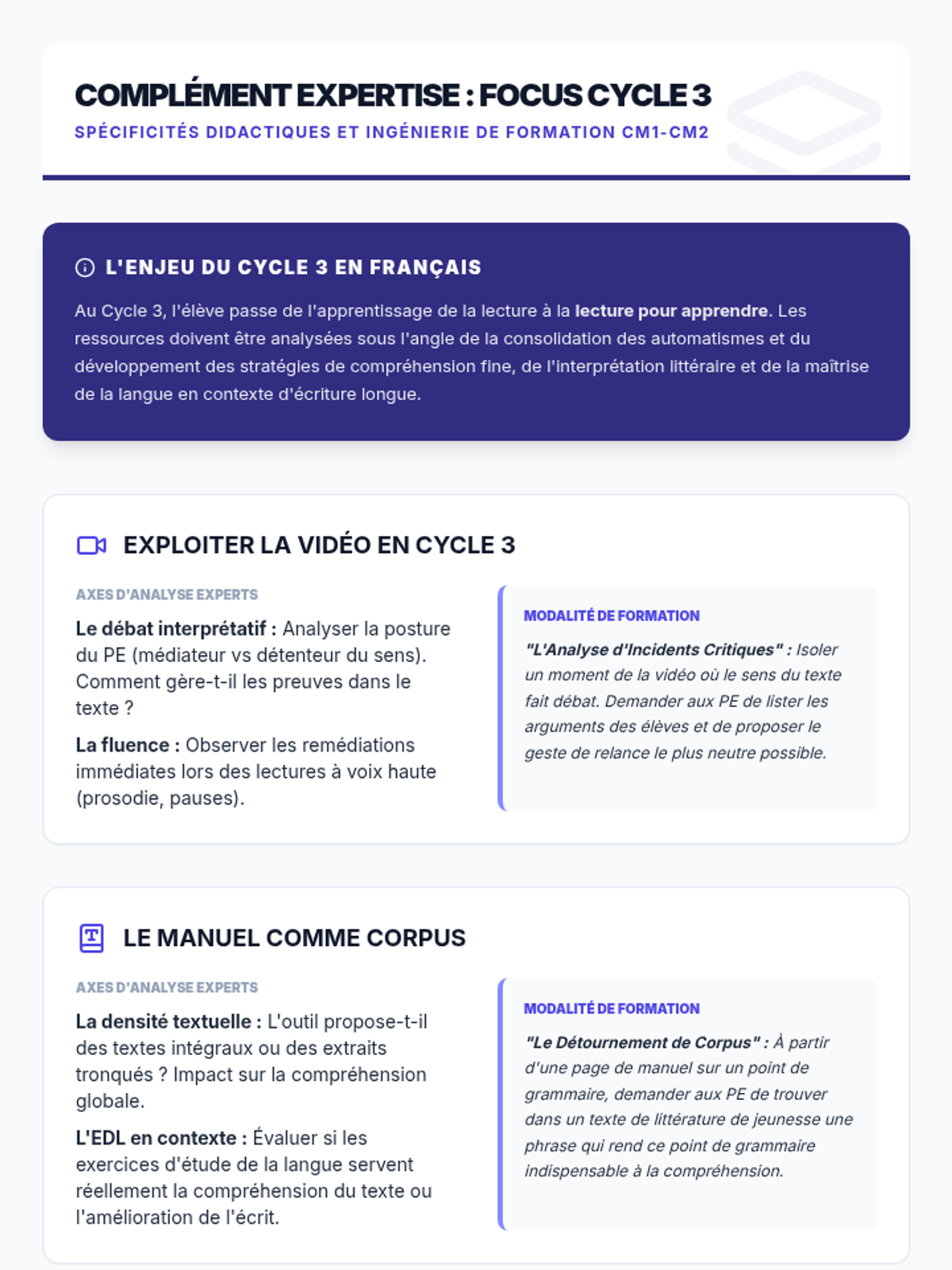
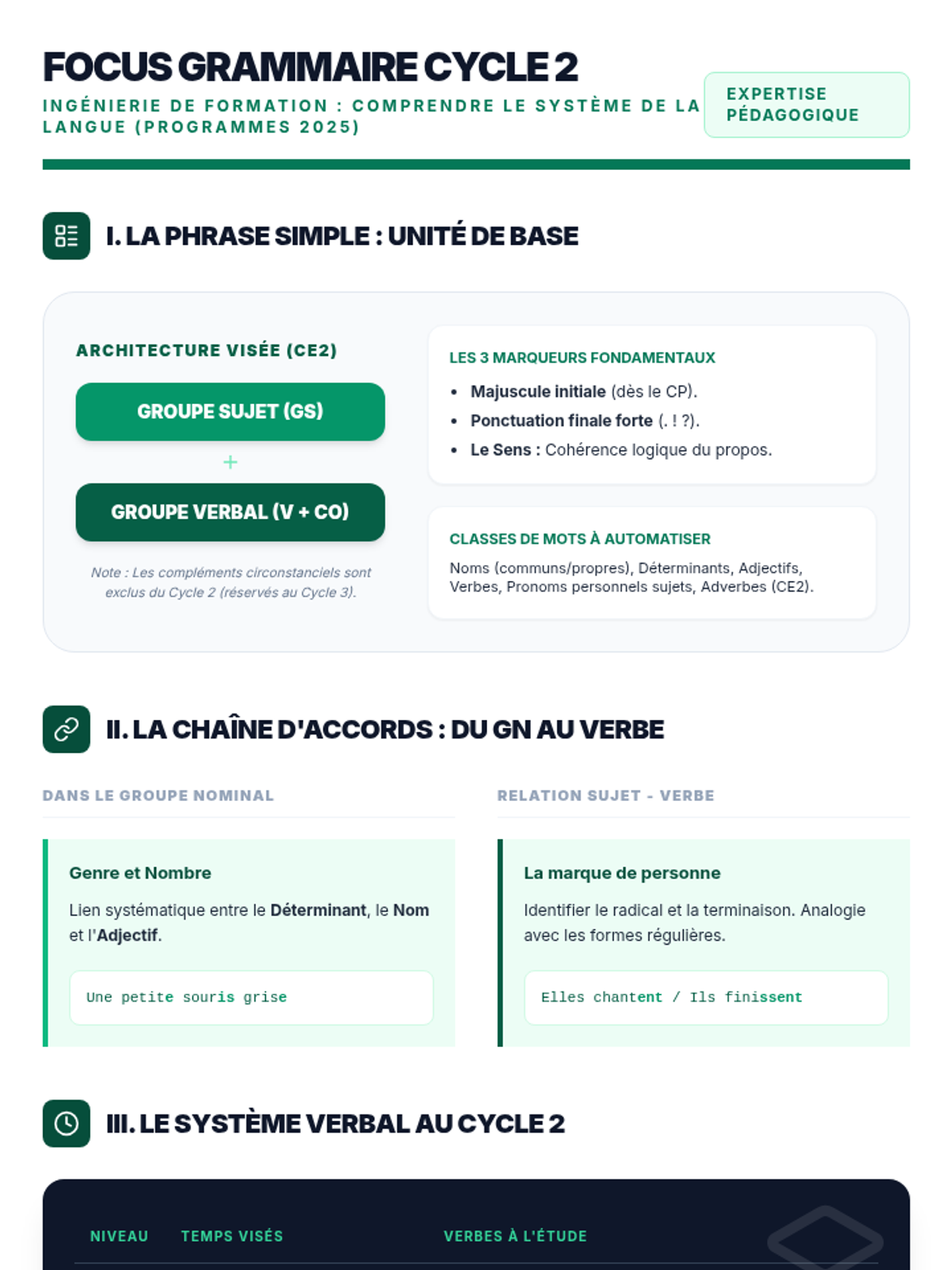
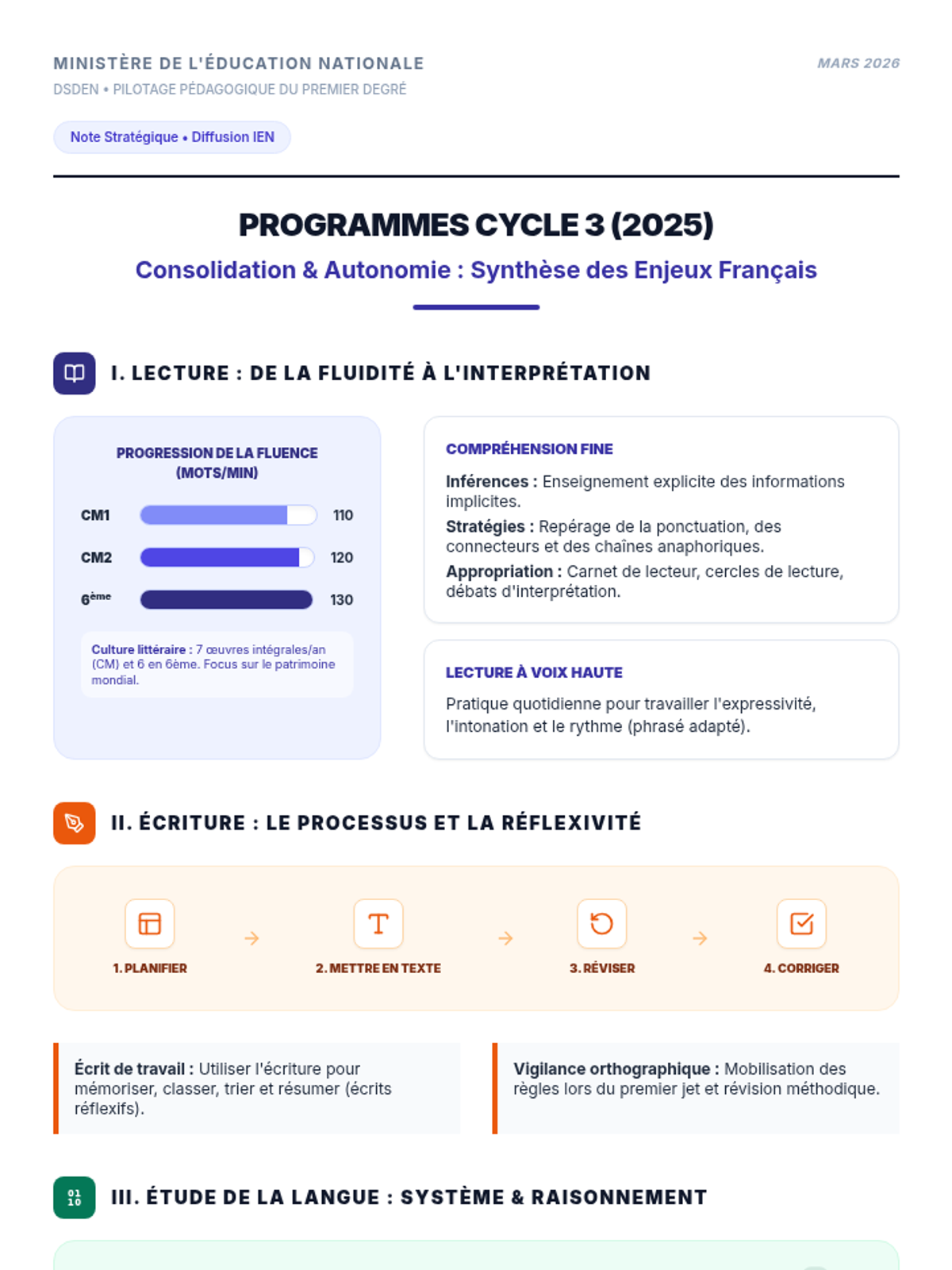
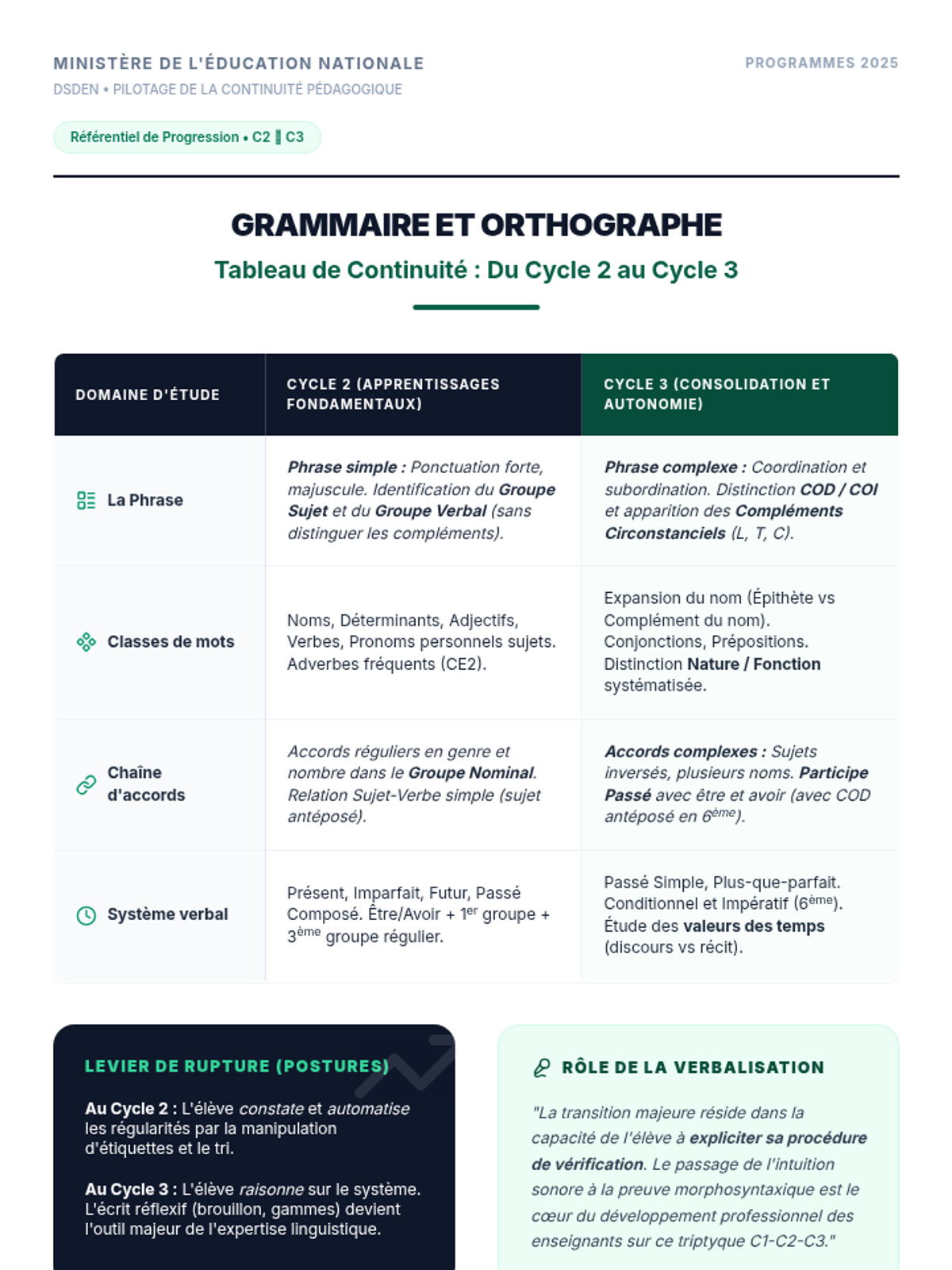
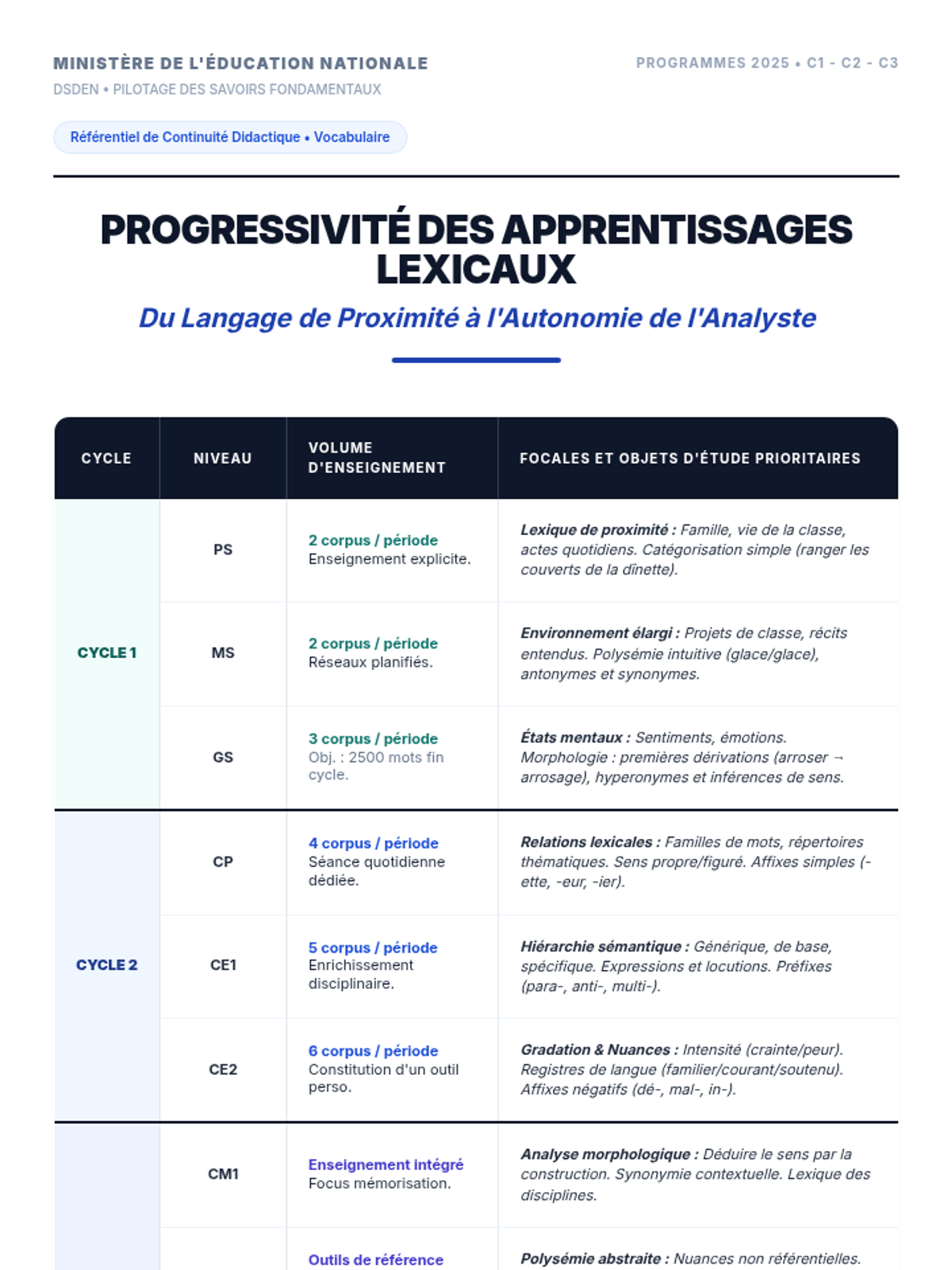
Cette formation vise à outiller les conseillers pédagogiques pour l'analyse et l'exploitation de ressources diverses (vidéos, manuels, guides) dans le cadre de la formation continue des professeurs des écoles en français, conformément aux orientations stratégiques nationales.
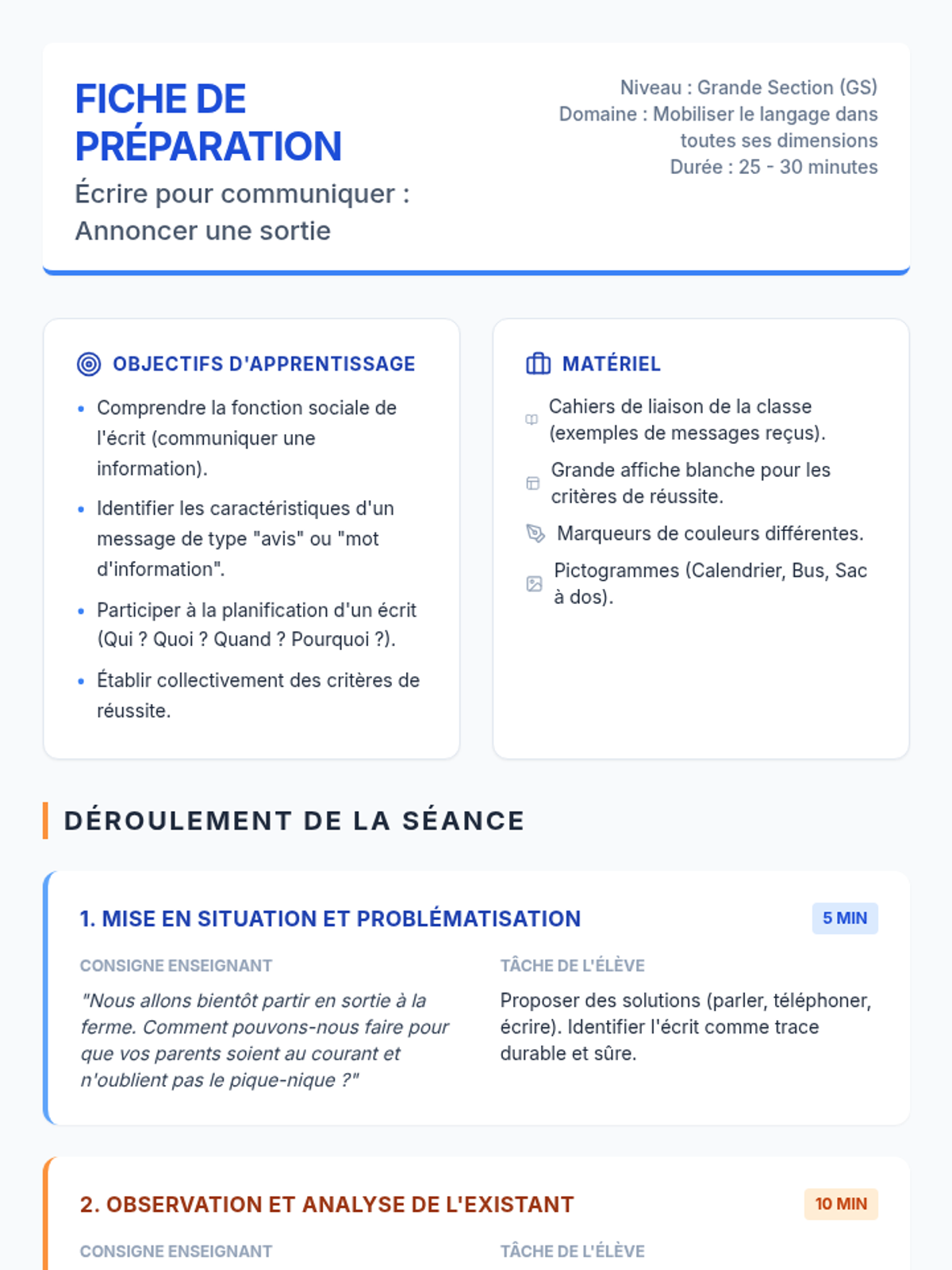
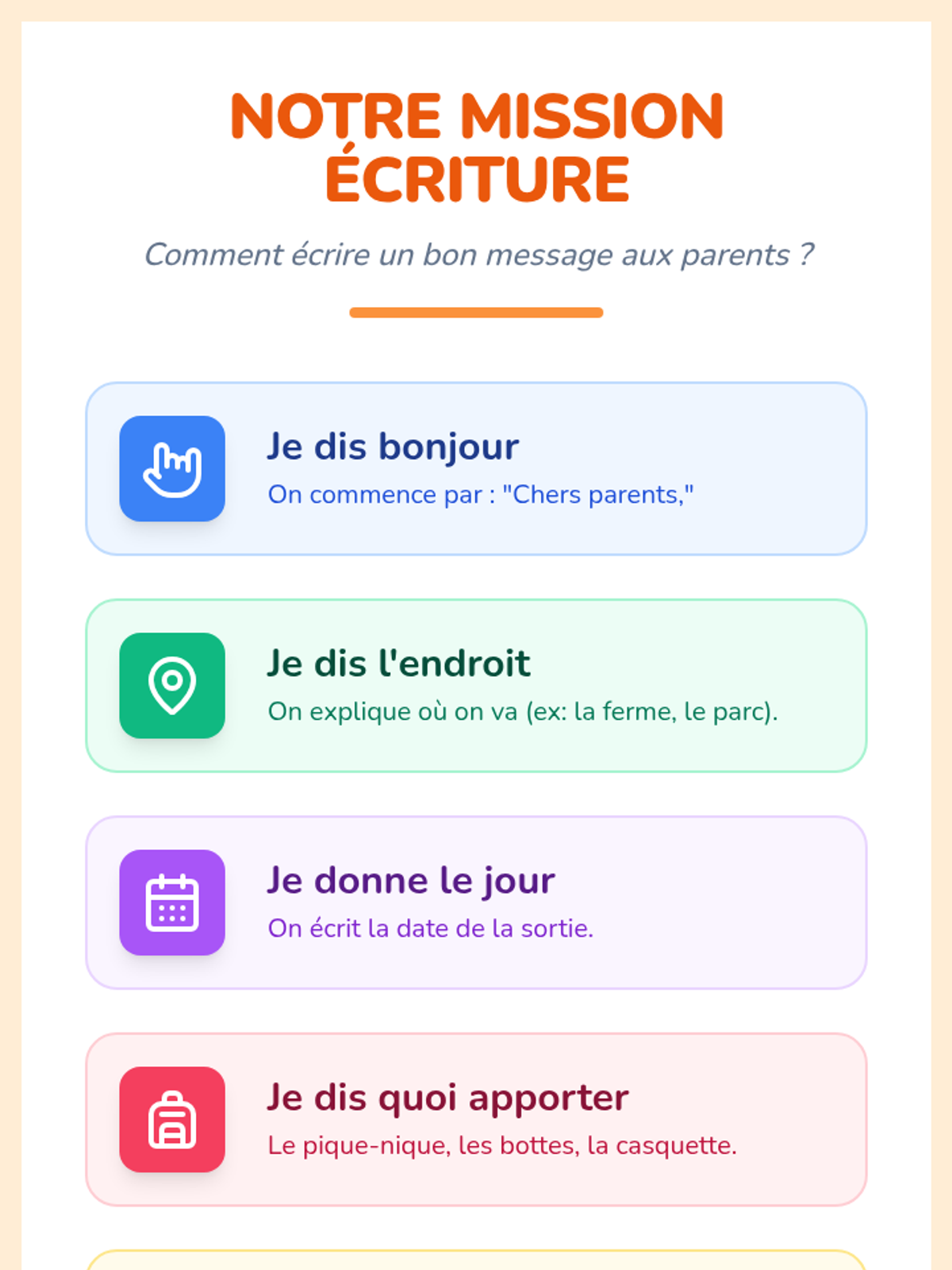
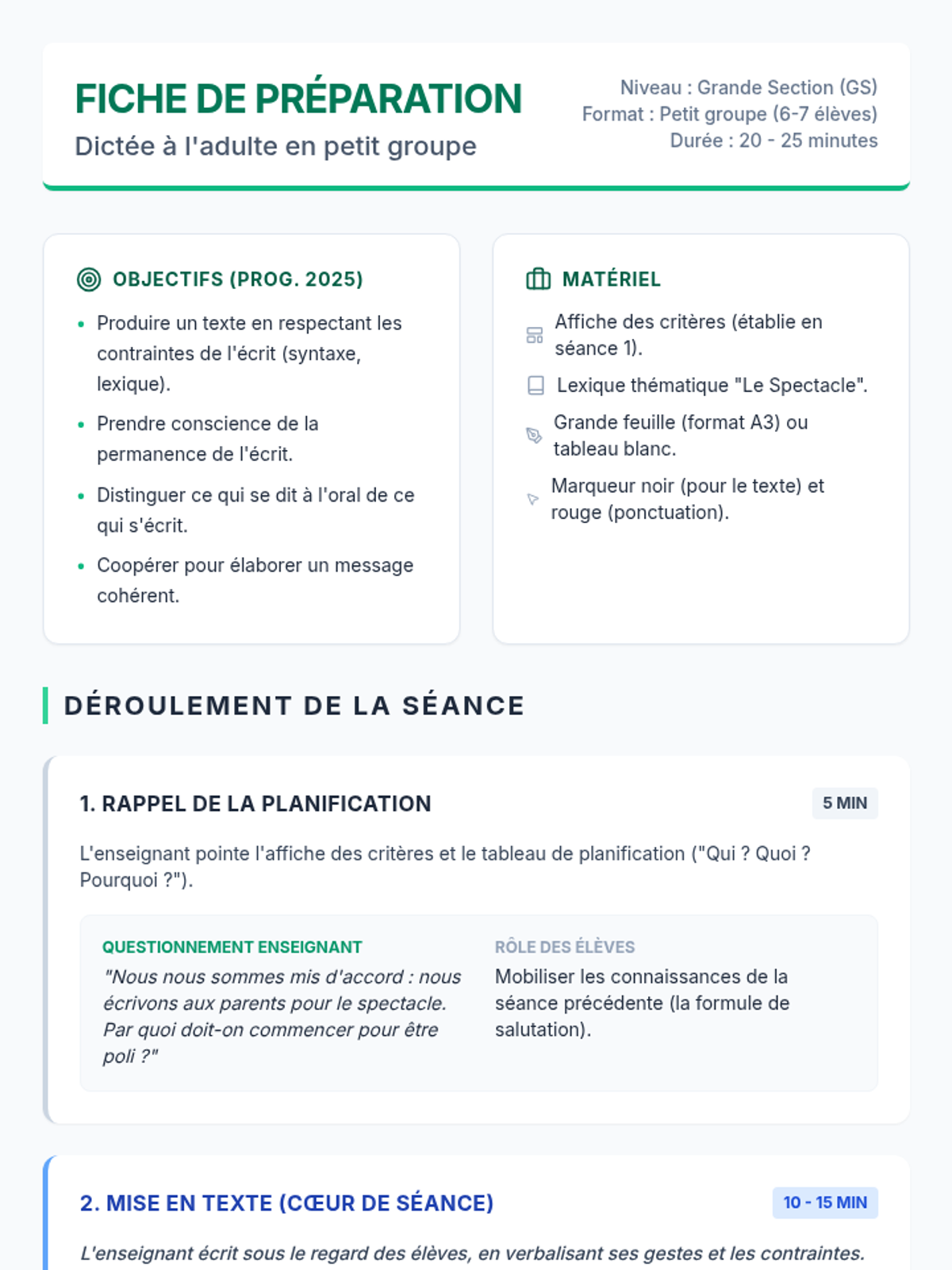
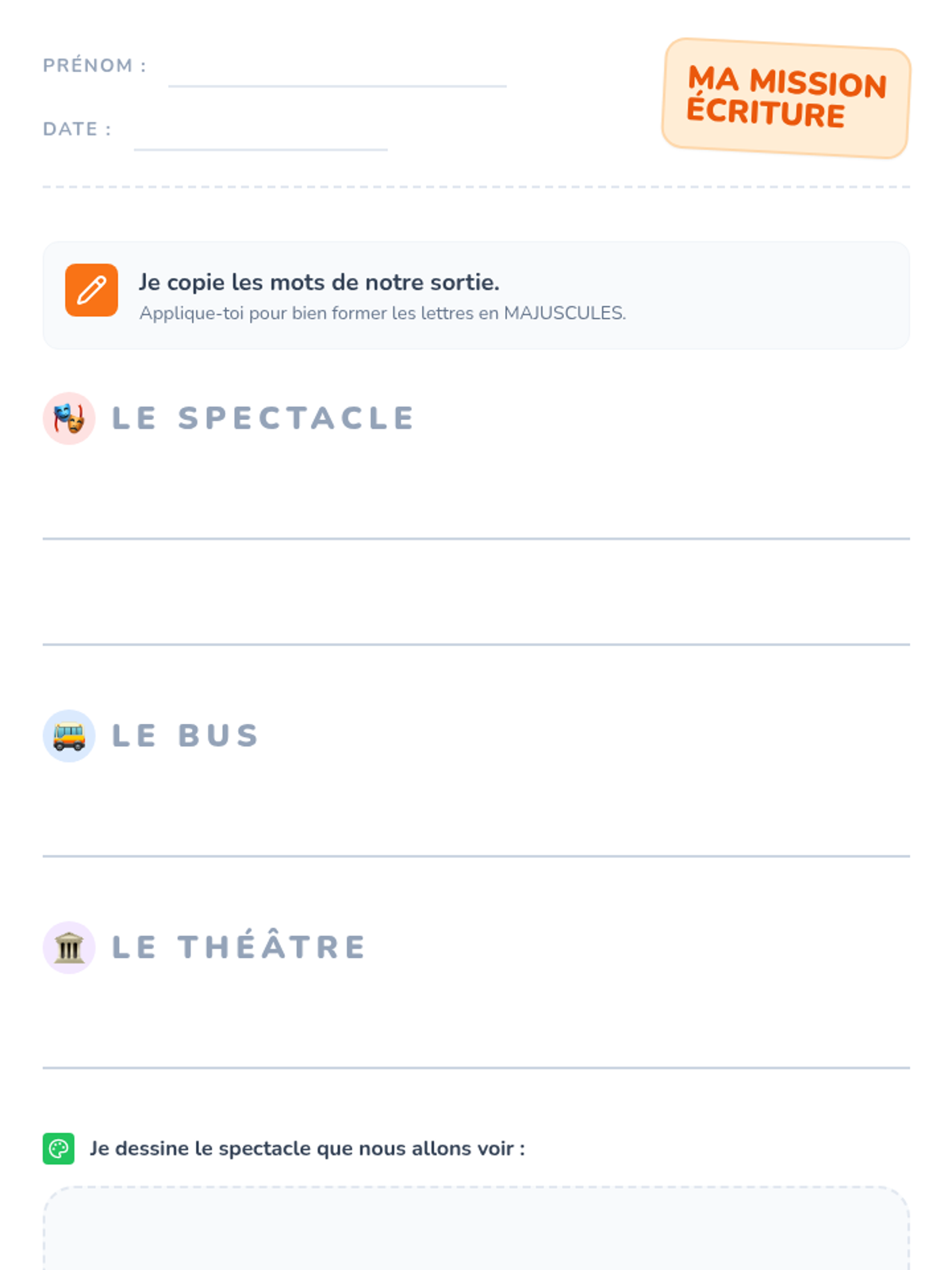
Cette leçon vise à introduire un projet d'écriture authentique en Grande Section : rédiger un message aux parents pour annoncer une sortie scolaire. Elle s'appuie sur l'observation de messages existants pour définir des critères de réussite et initier la planification selon les programmes 2025.
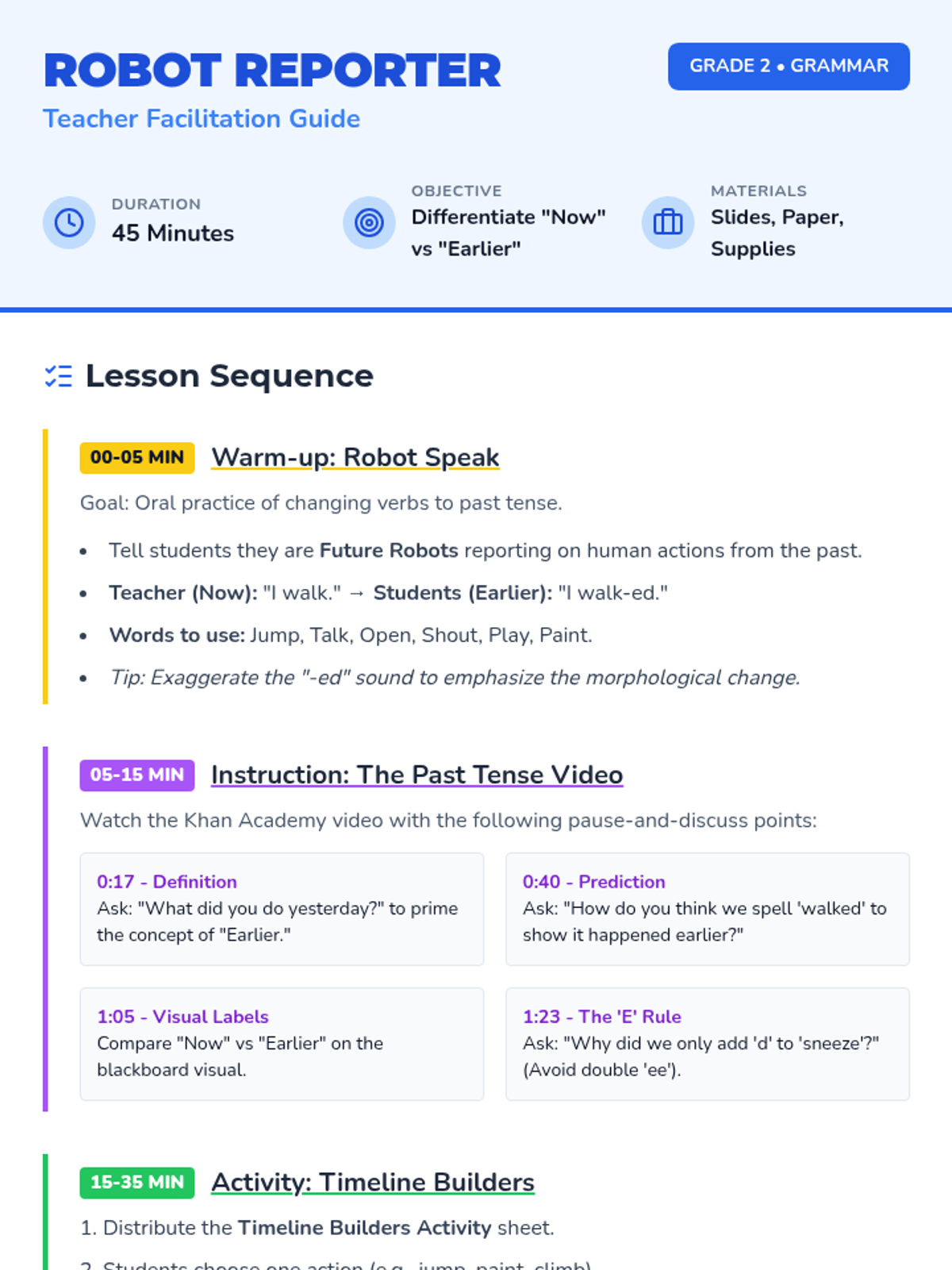
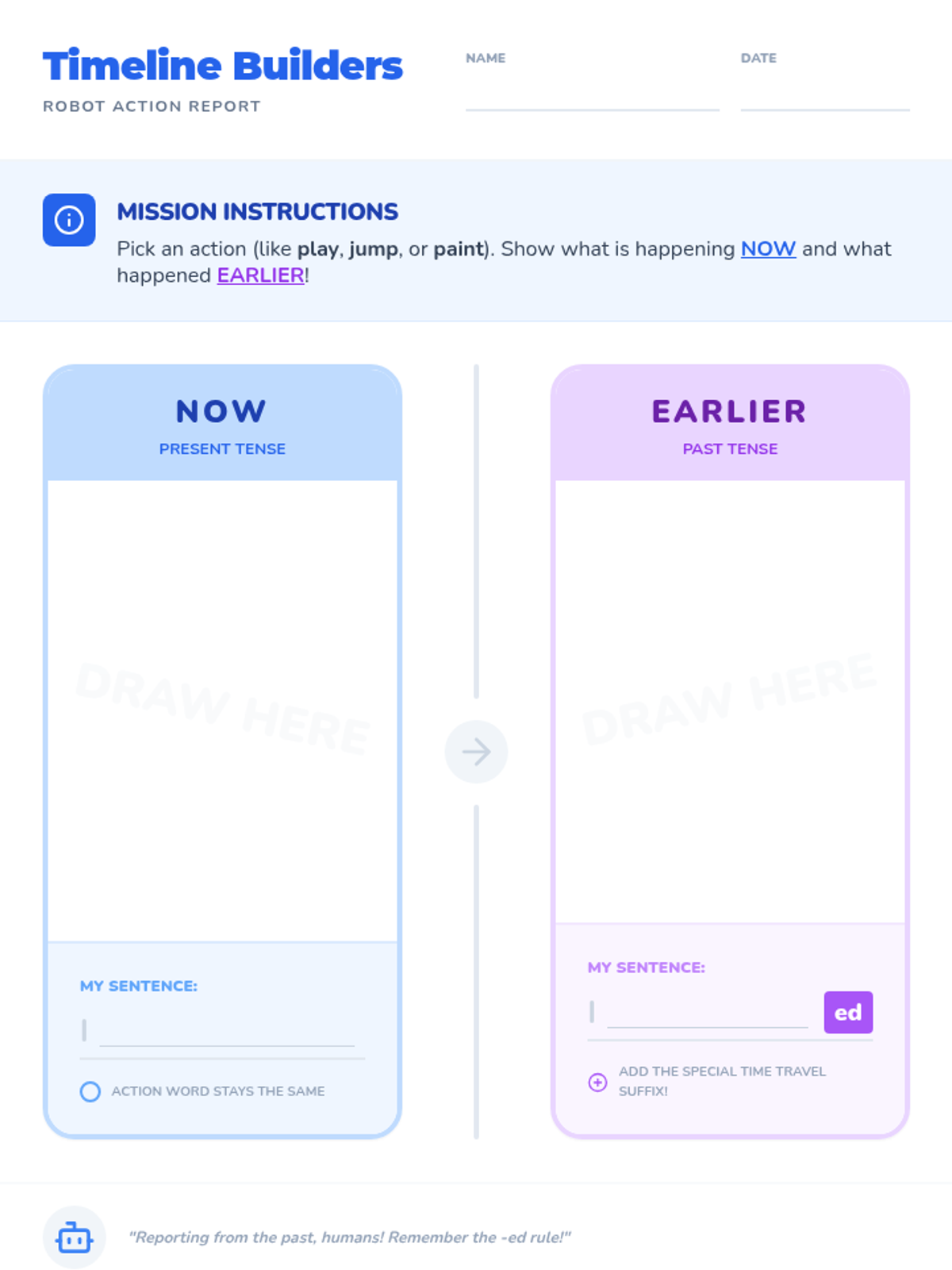
Students learn to identify and form past tense verbs by comparing 'now' actions with 'earlier' actions, using the -ed suffix and a 'Robot Speak' warm-up.
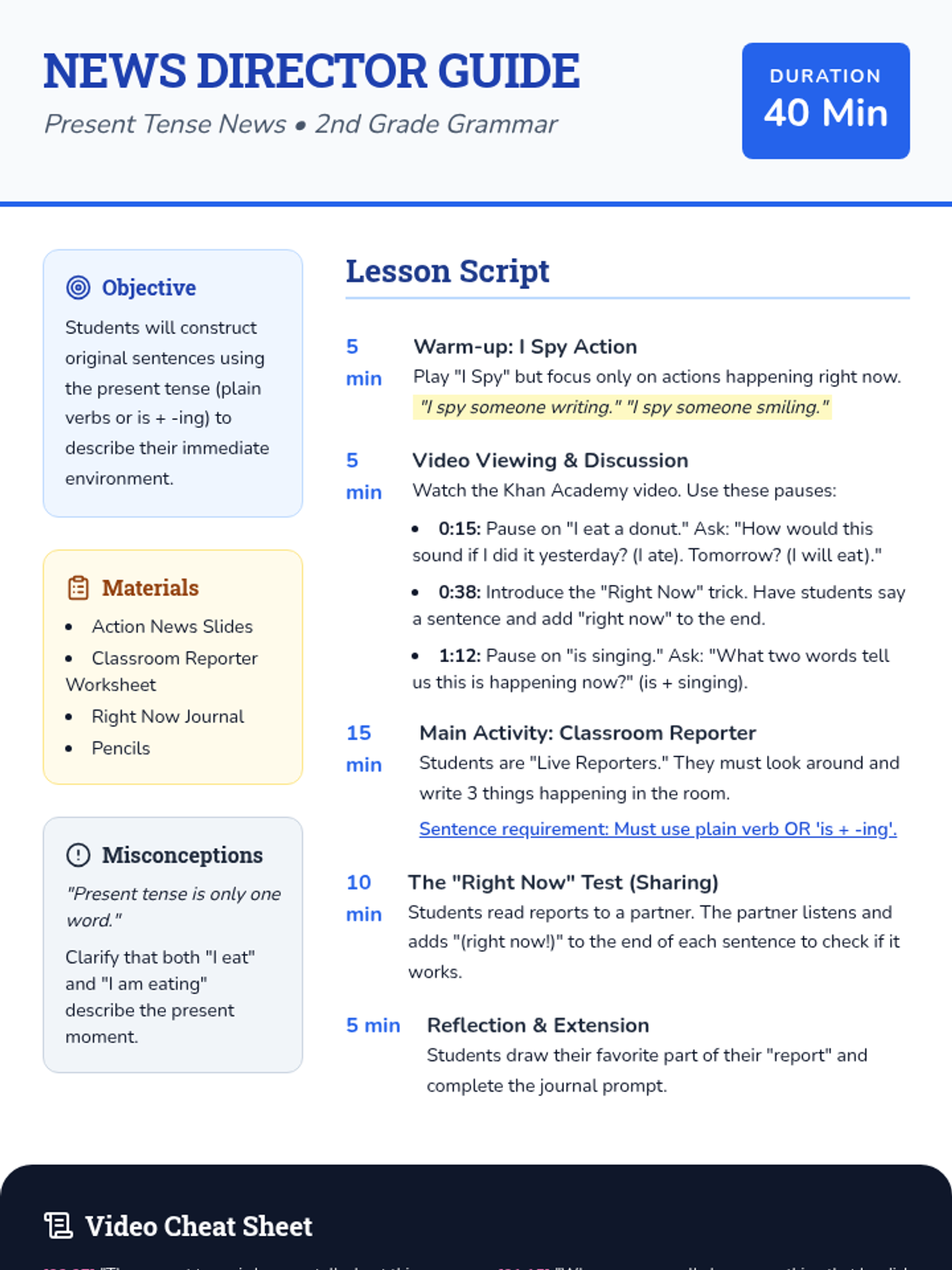
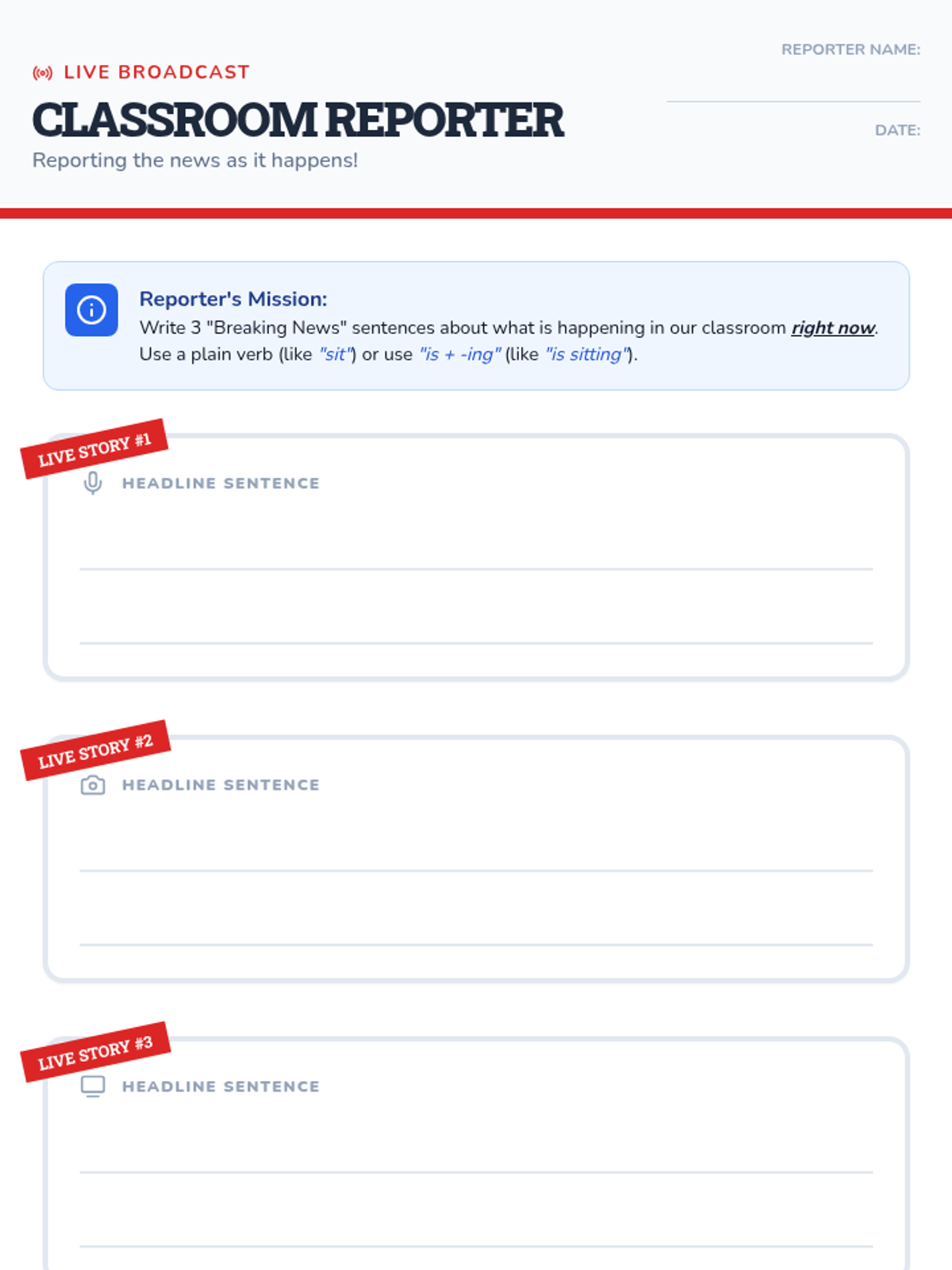
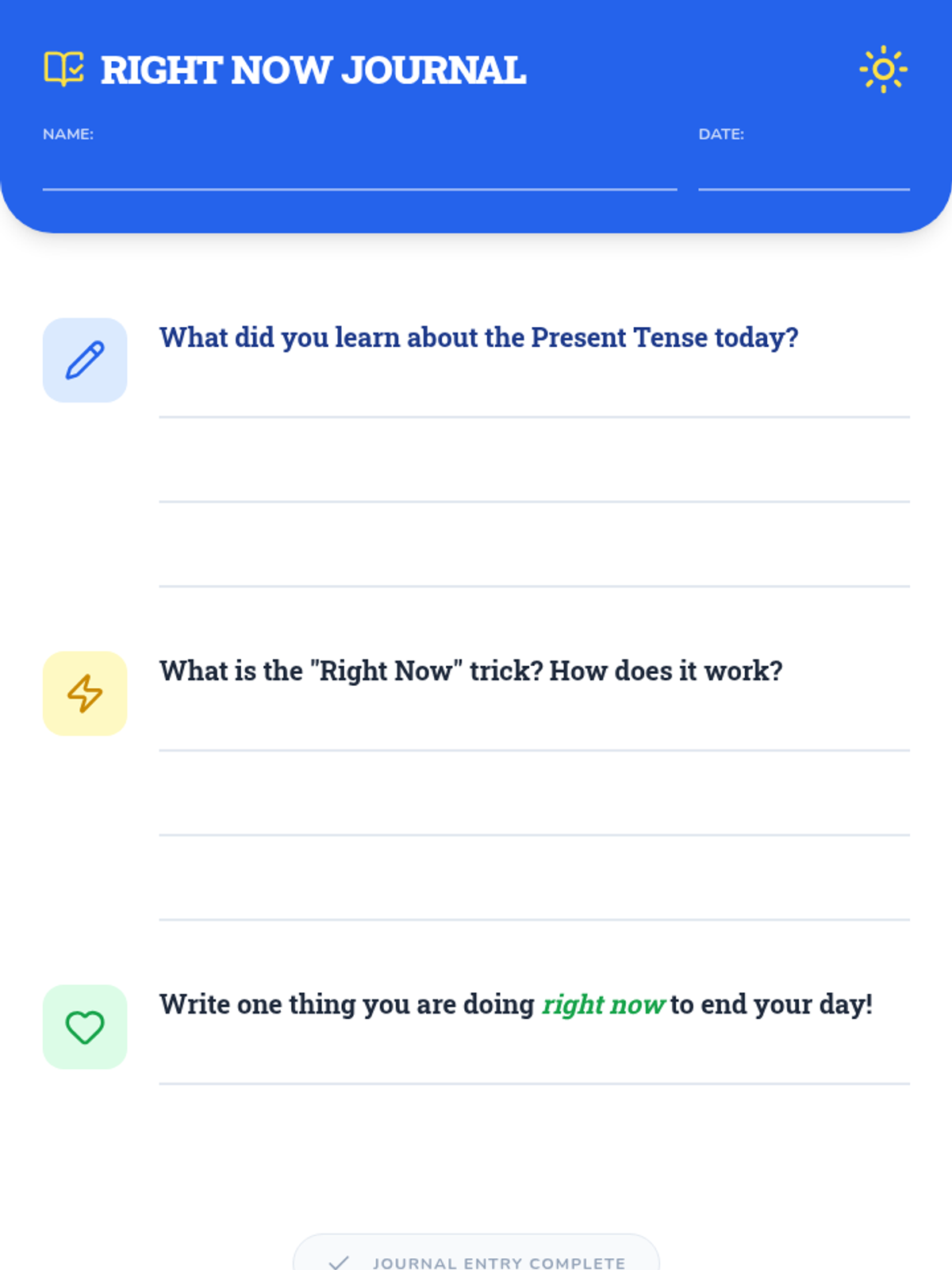
Students learn to identify and construct sentences in the present tense by becoming classroom reporters. They use the 'right now' test and explore different present tense verb forms through a Khan Academy video and live reporting activity.
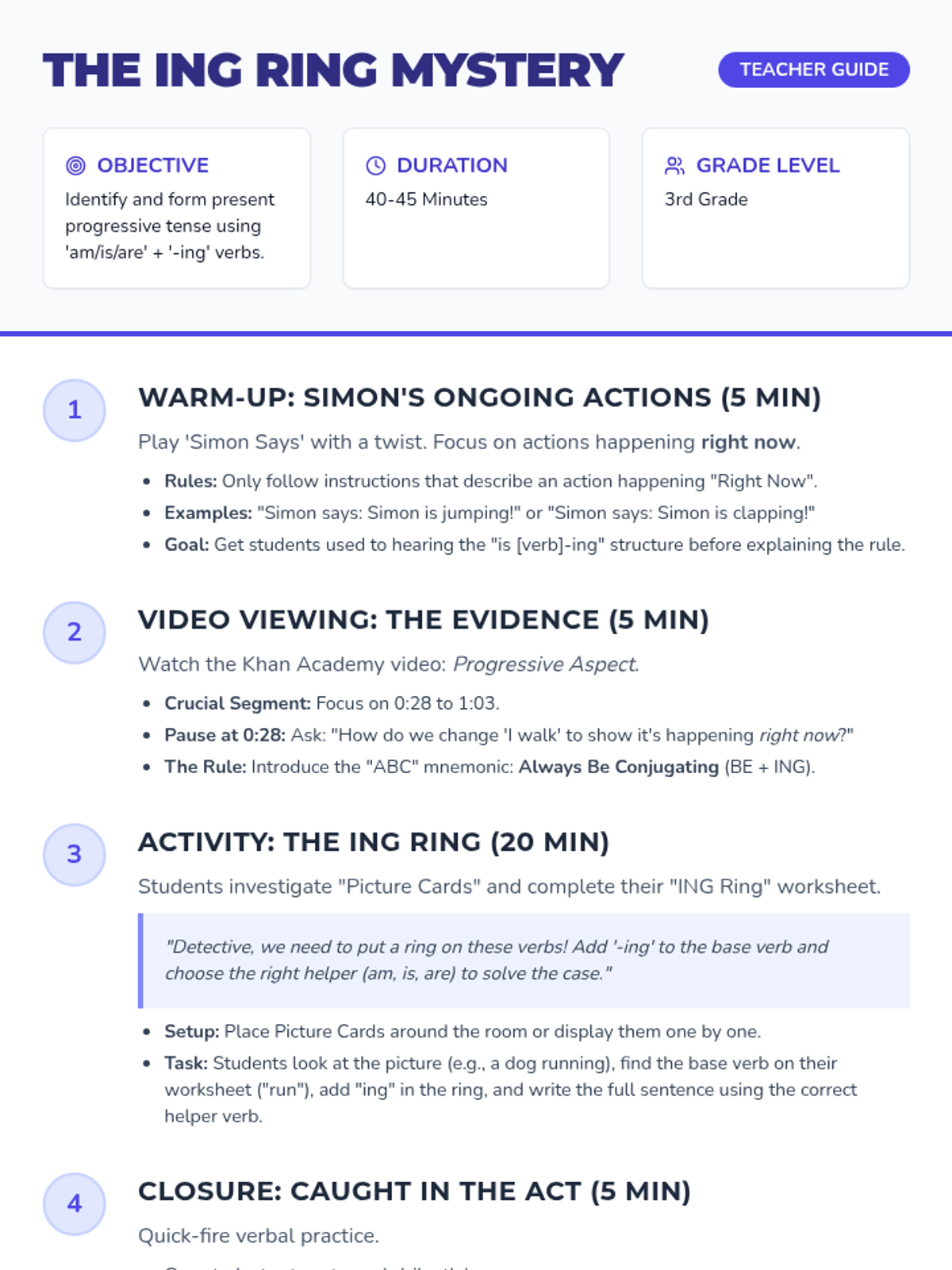
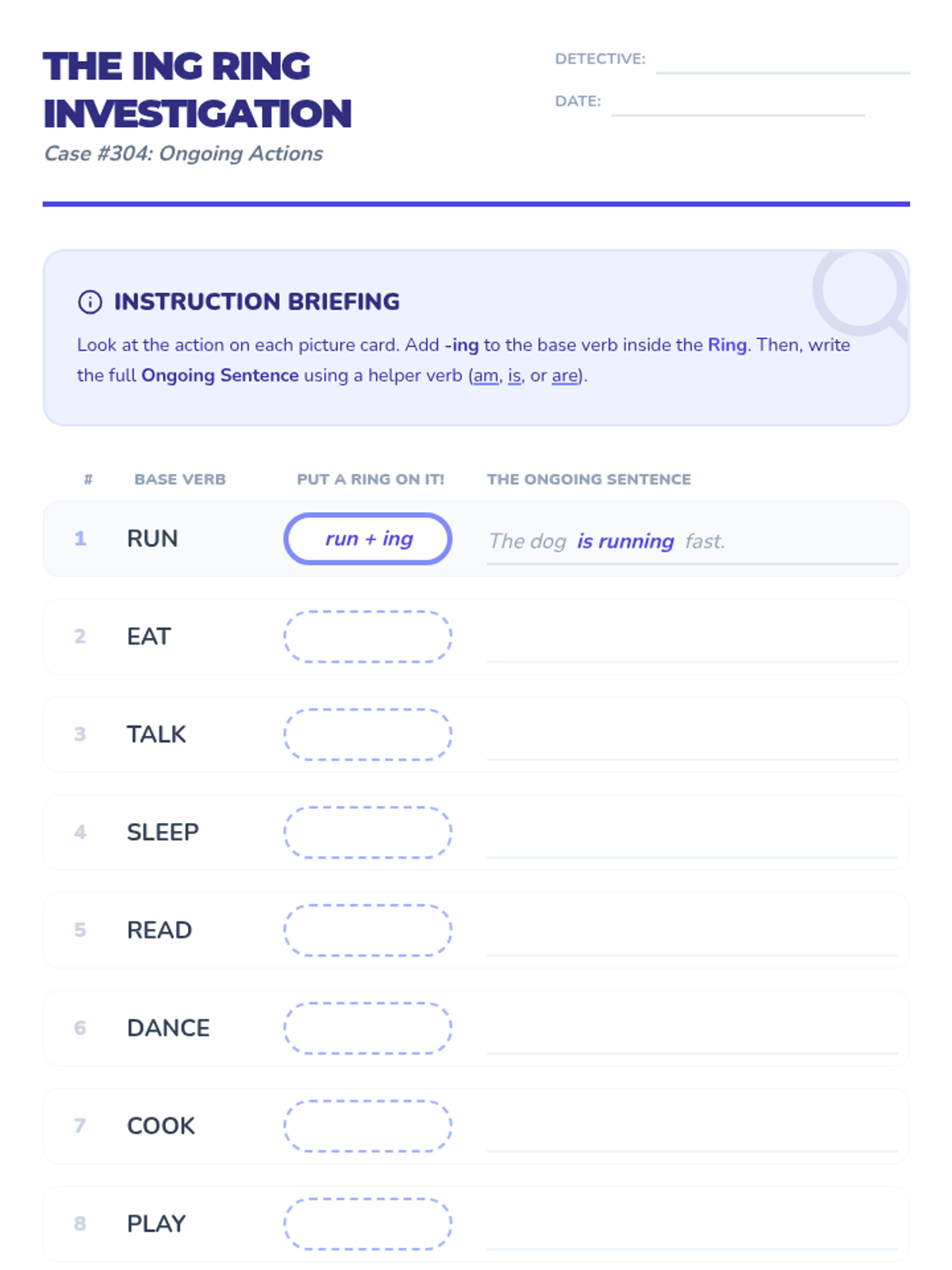
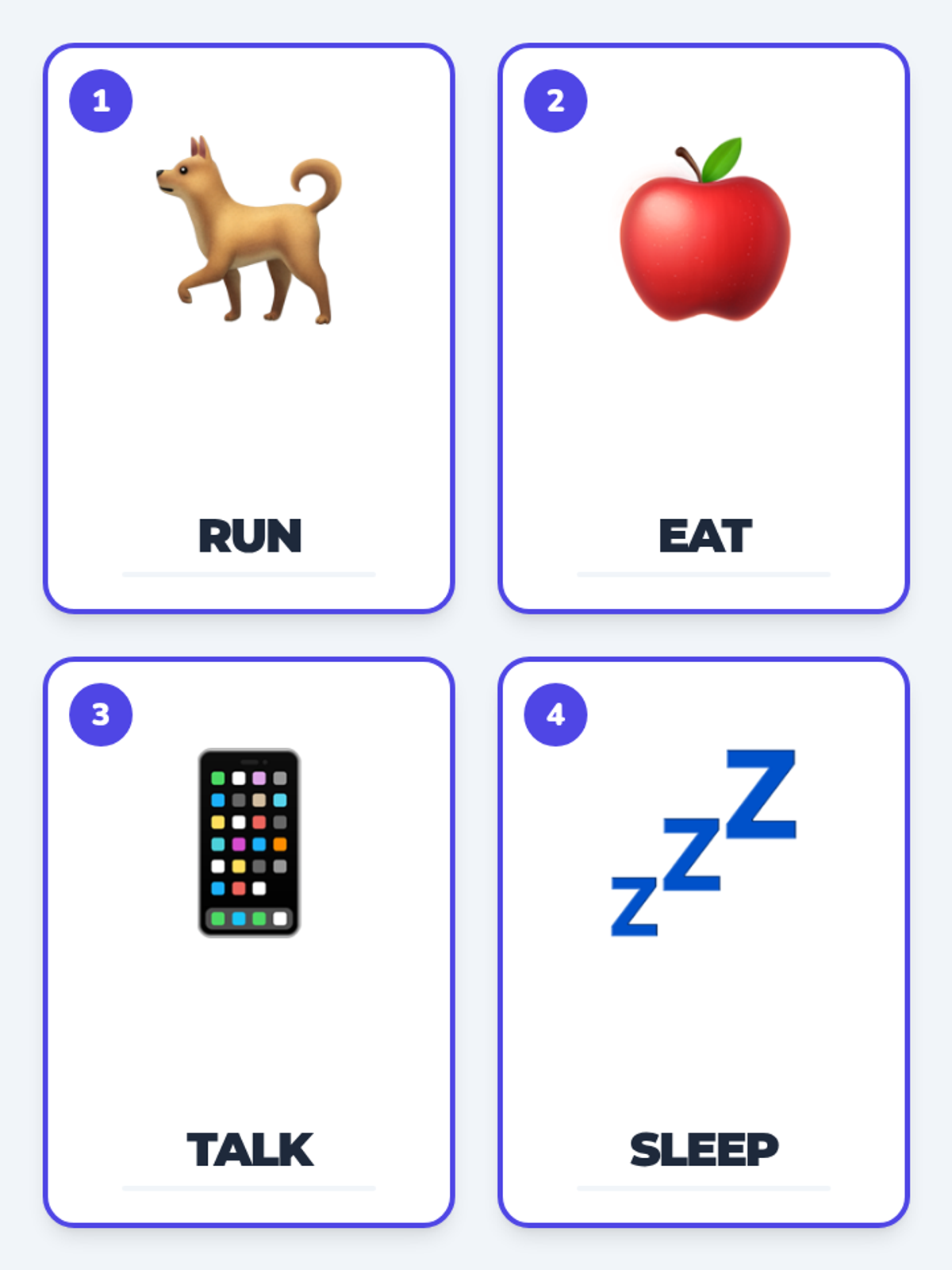
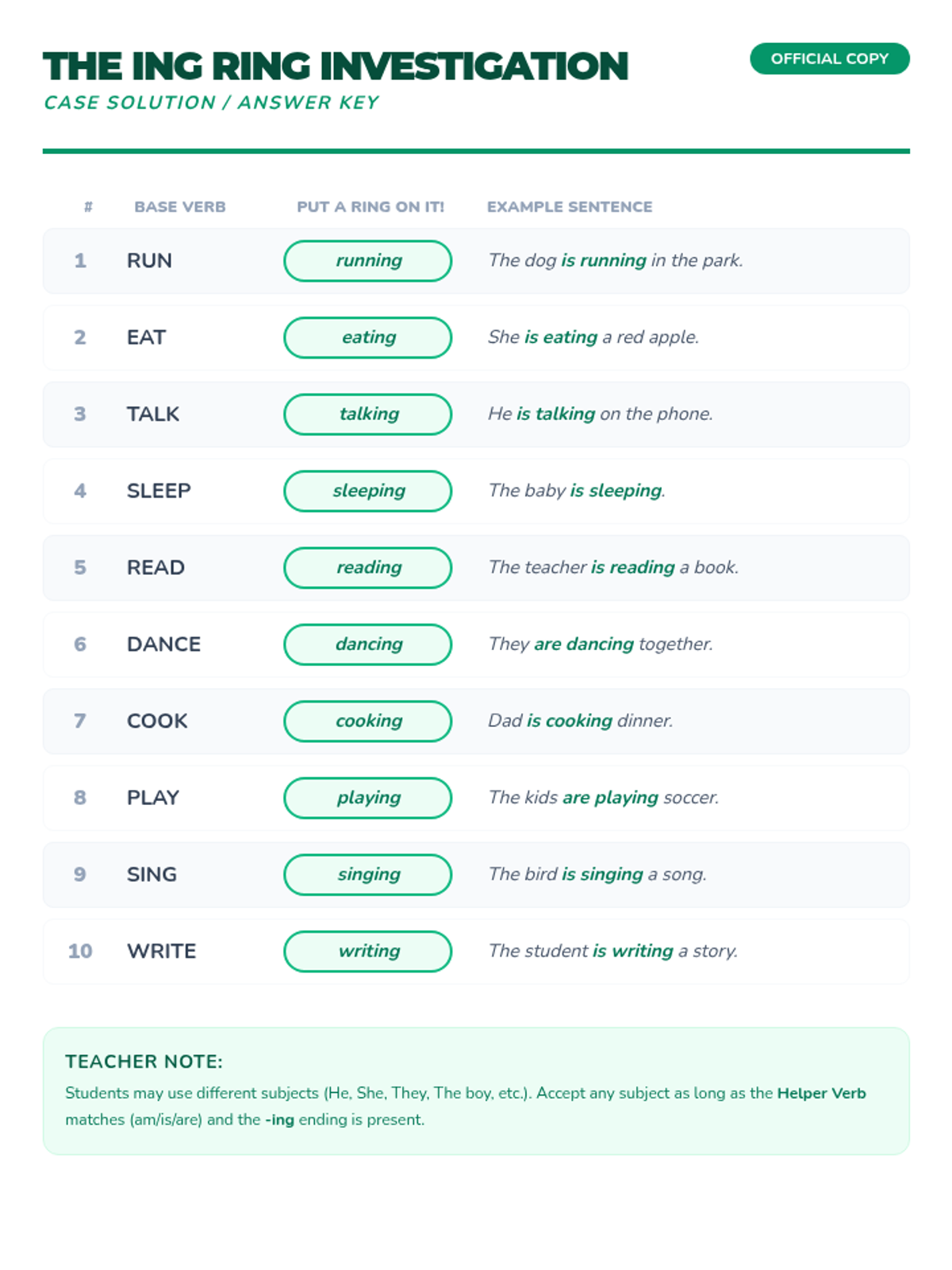
Students will investigate the 'ongoing' world of present progressive verbs. Through a 'Simon Says' warm-up, a video breakdown, and a 'put a ring on it' activity, students will master the use of 'am/is/are' plus '-ing' verbs to describe actions happening right now.
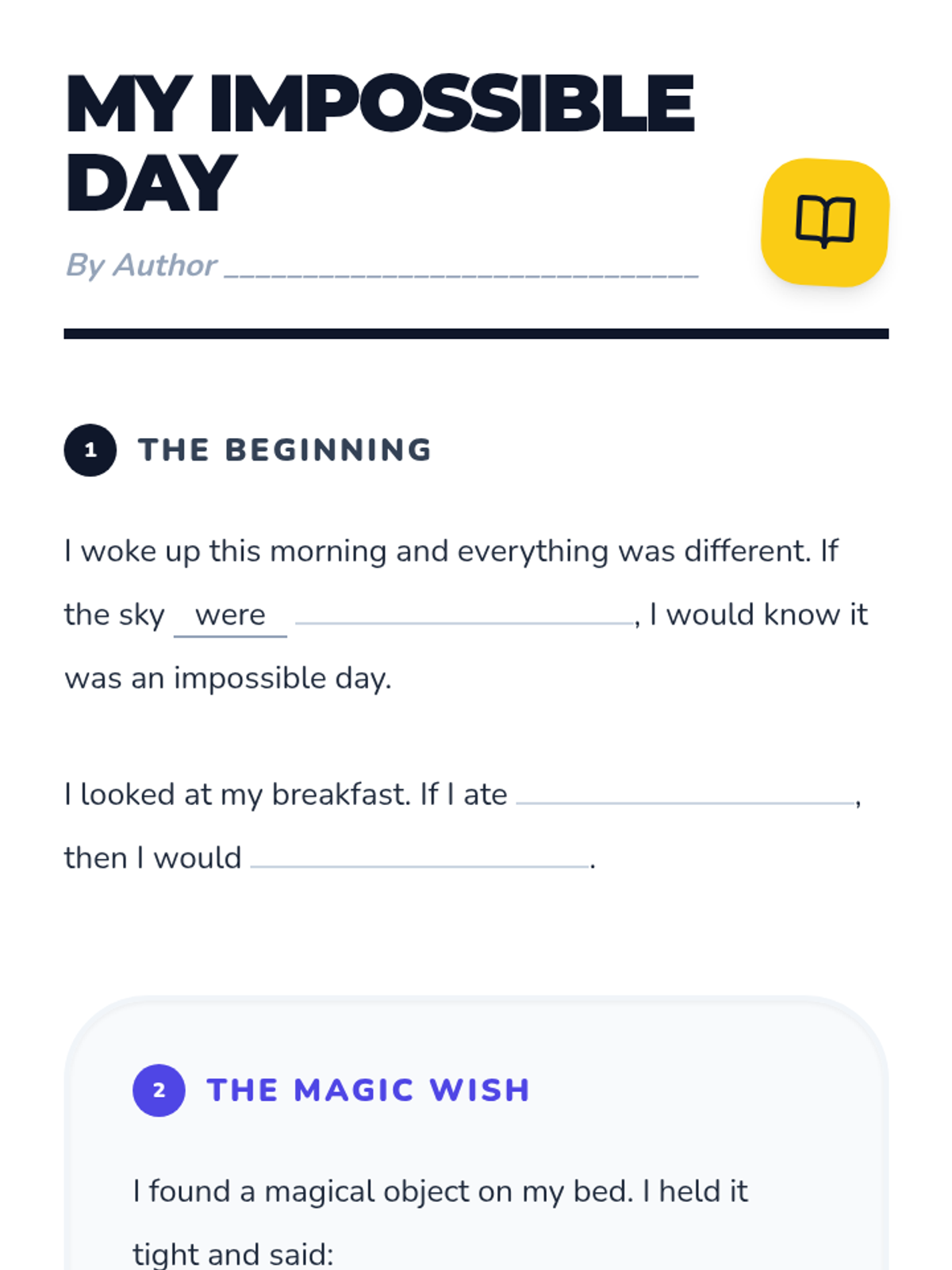
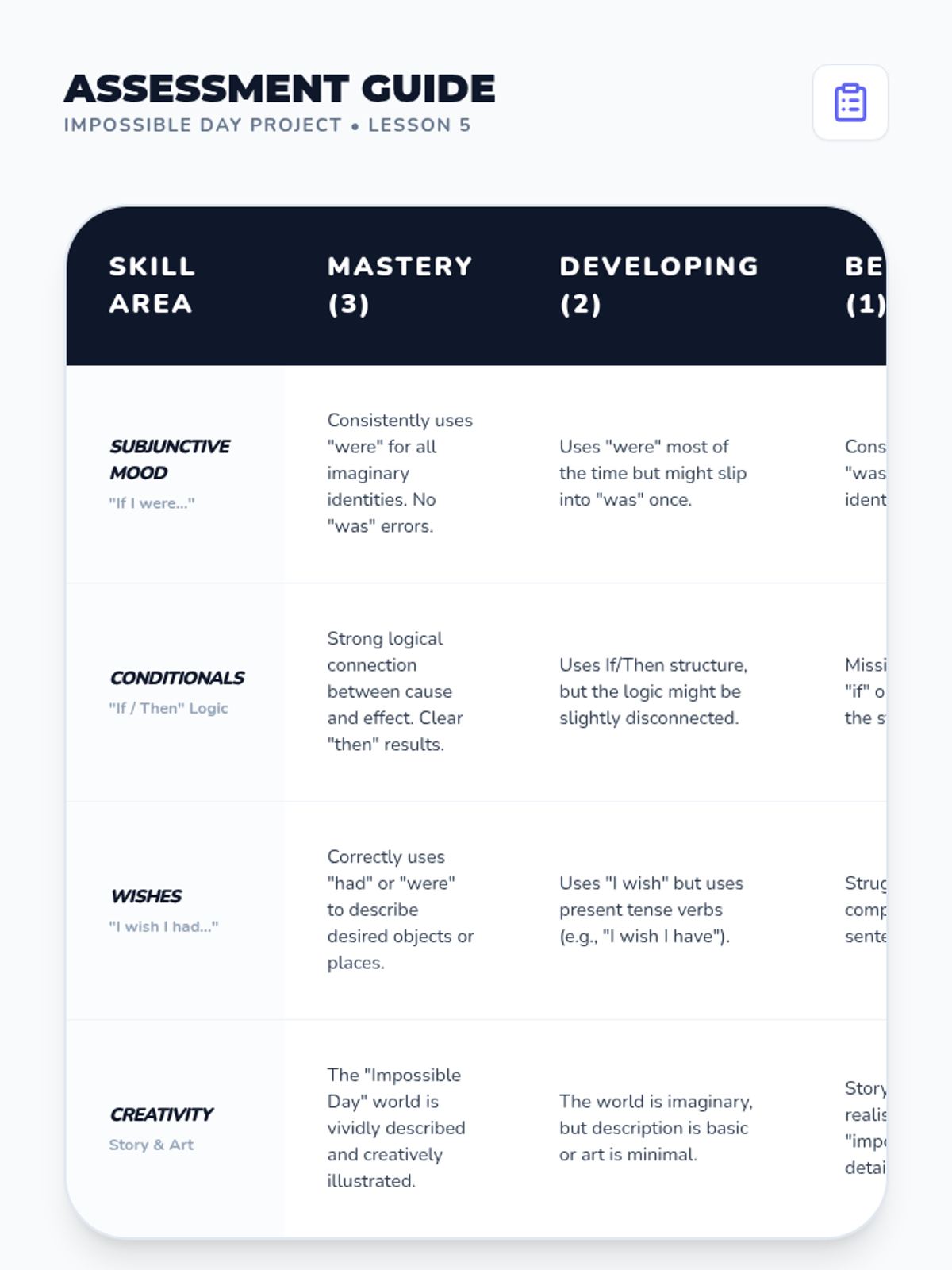
The cumulative project where students combine all learned moods to write and illustrate a story about an impossible day where the world works differently.
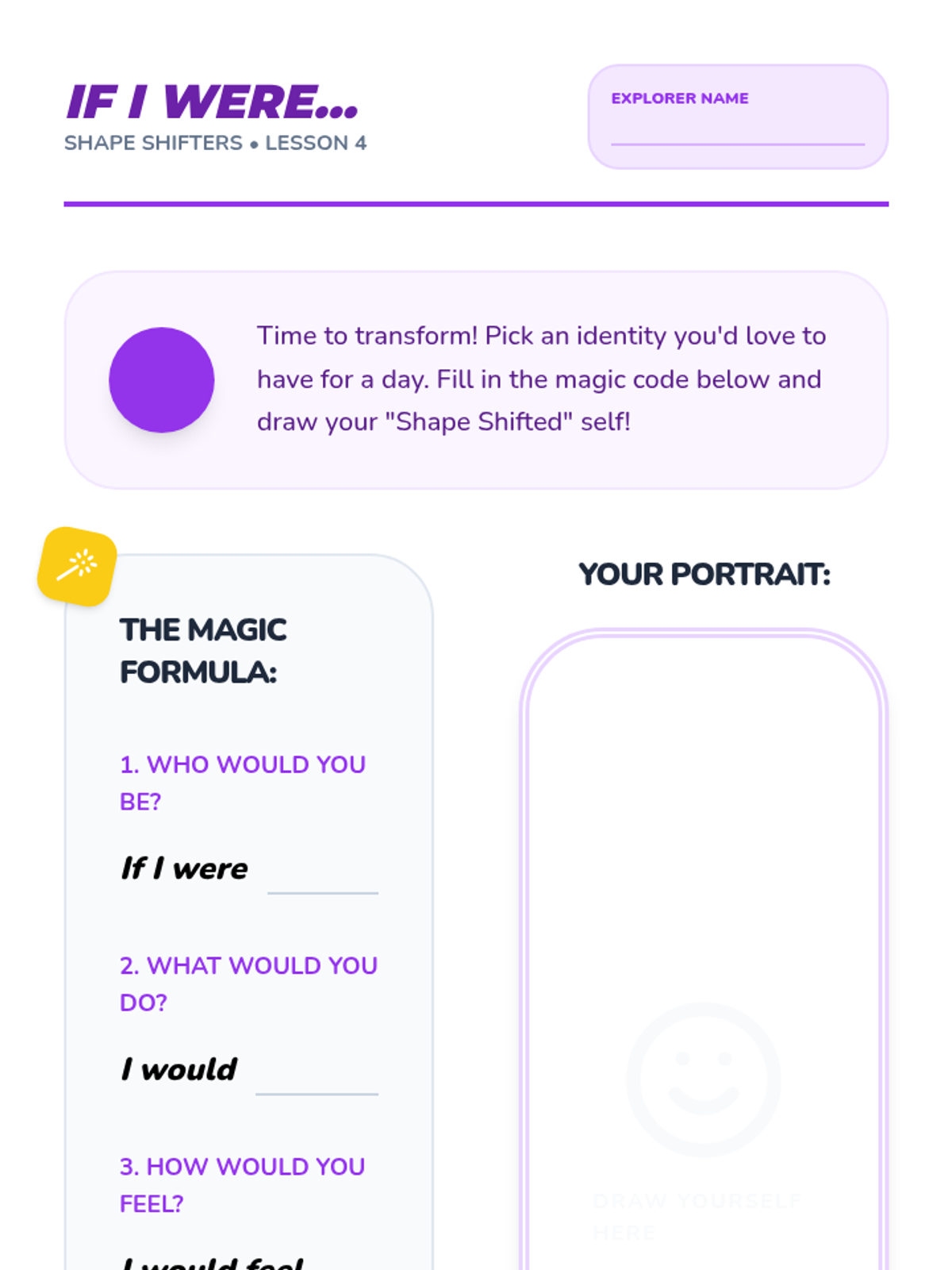
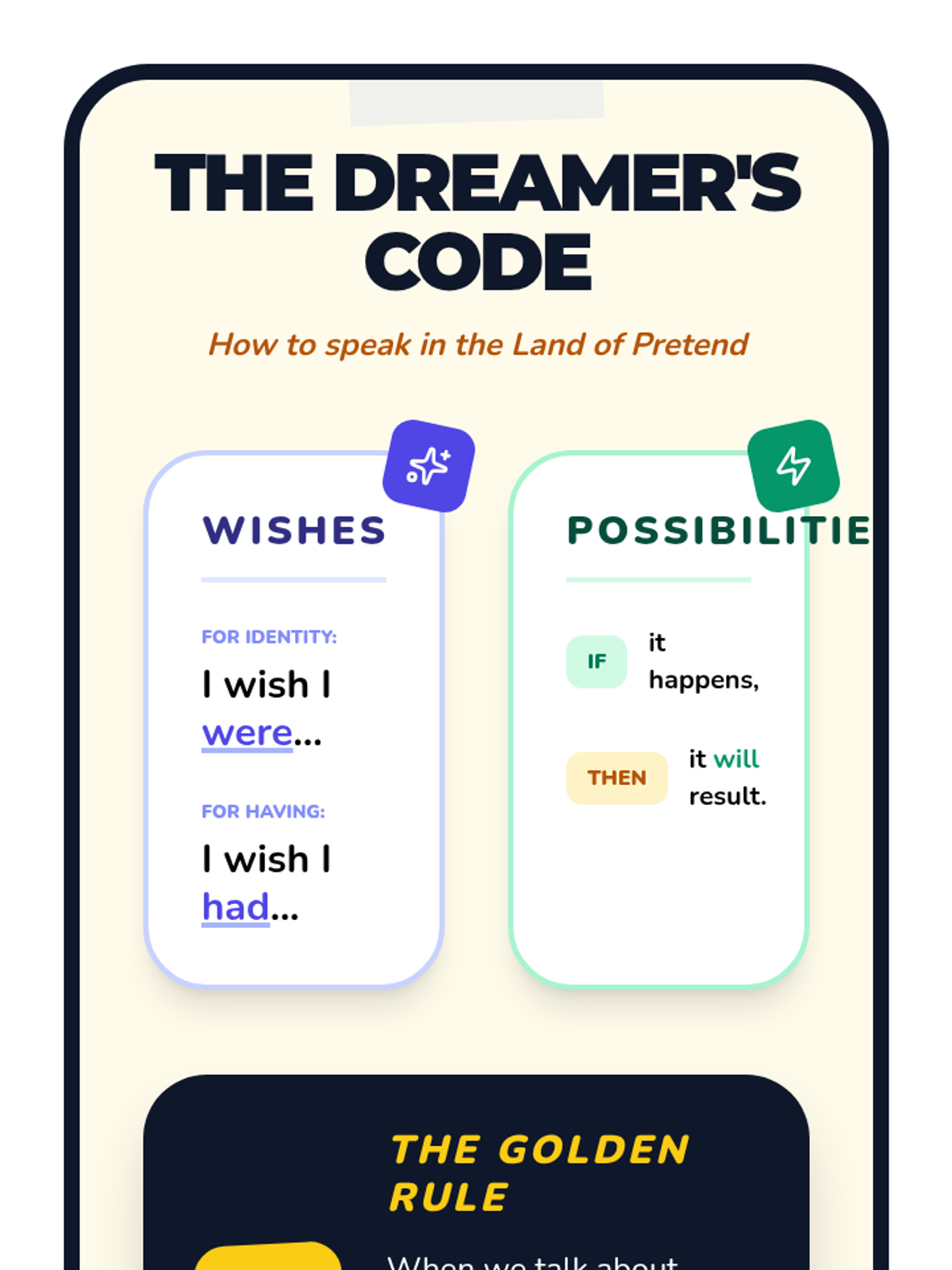
Specifically targets the 'If I were' subjunctive pattern. Students learn why we use 'were' instead of 'was' for imaginary identities and practice this through role-play and creative sentence building.
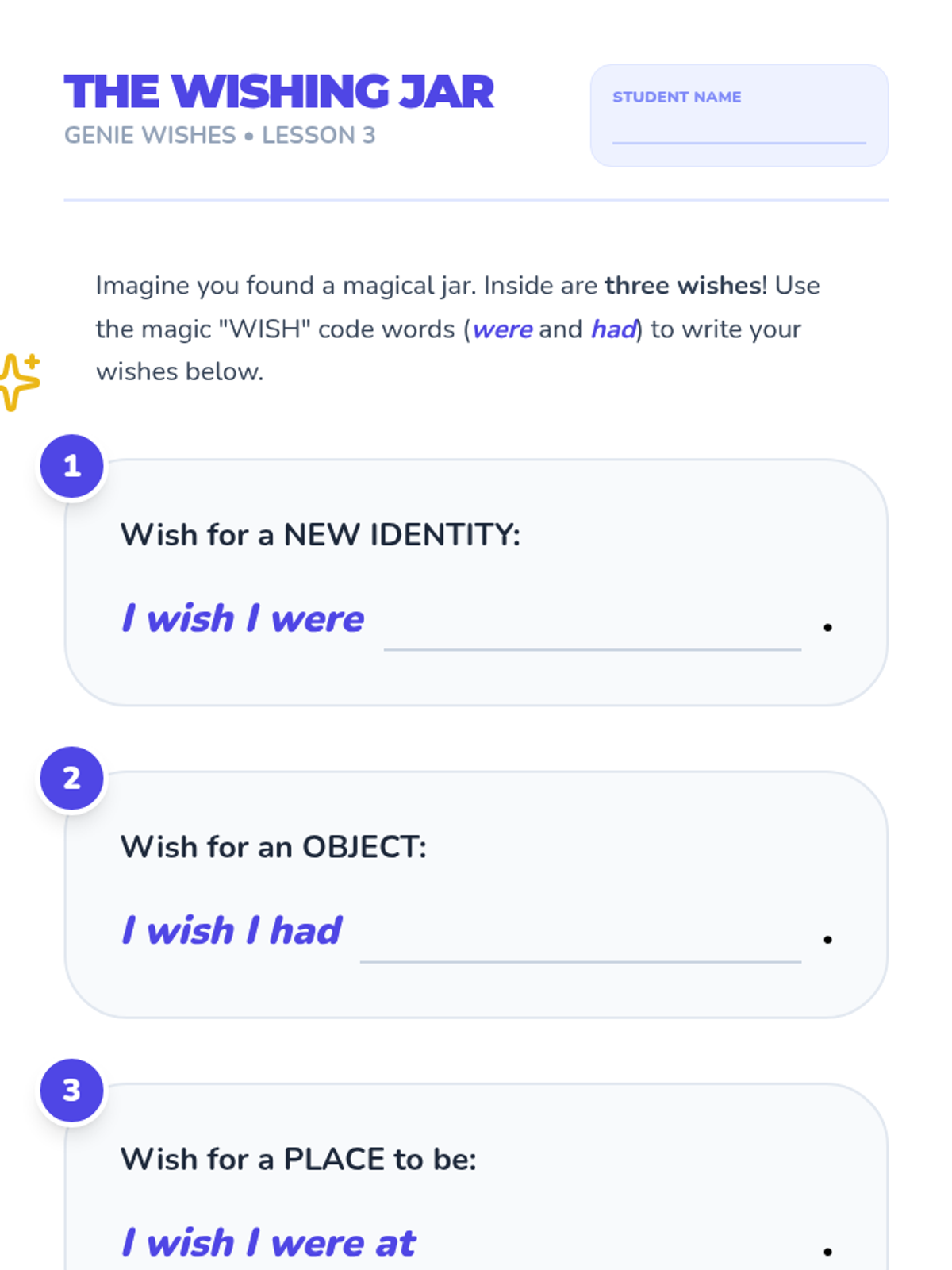
Introduces students to expressing desires using 'I wish' frames. Students explore the genie's lamp metaphor to practice correct verb usage when describing things they want to happen.
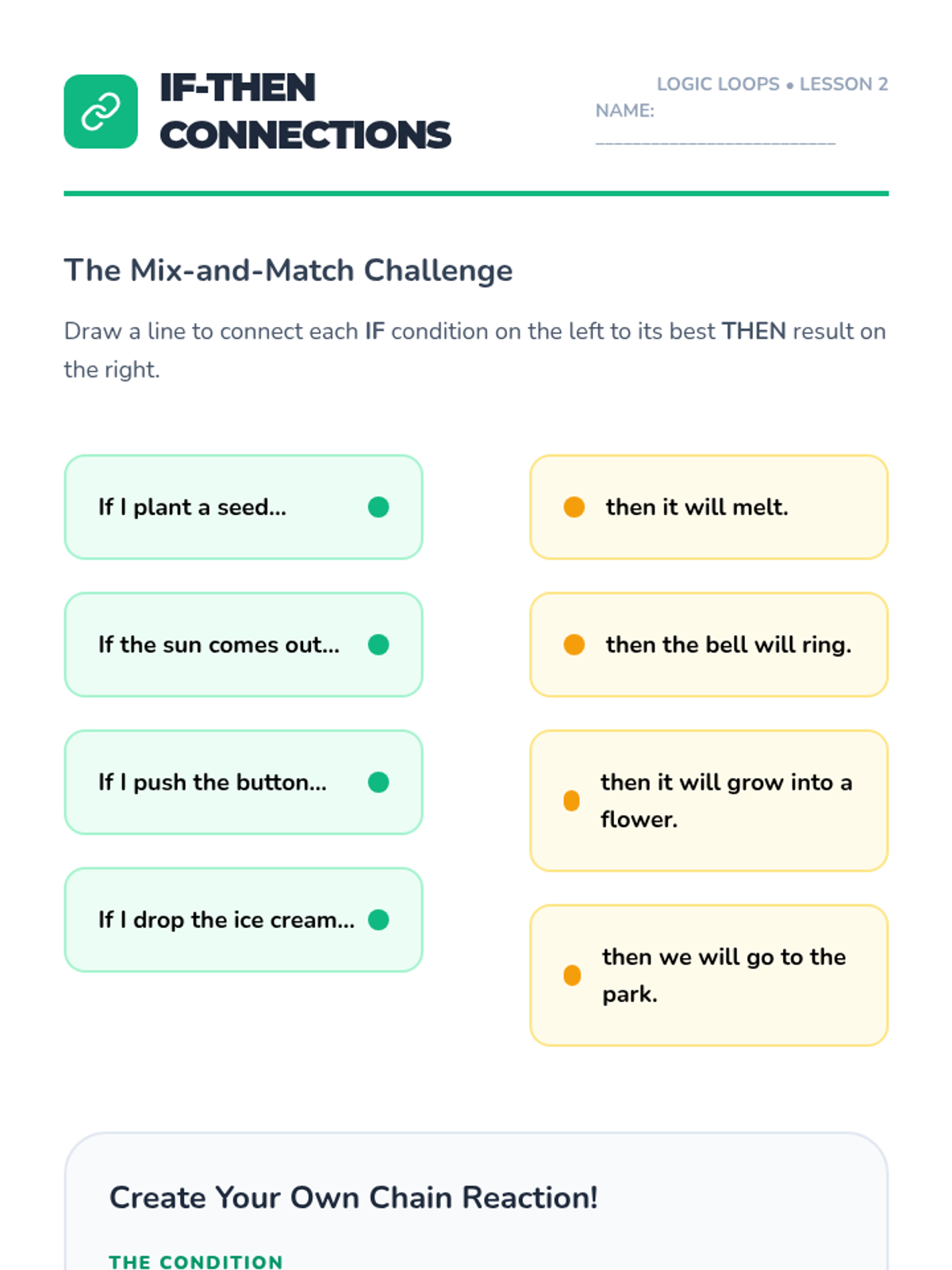
Focuses on the logical structure of conditional sentences. Students use 'if' to state a condition and 'then' to show the result, practicing cause-and-effect relationships in their writing.
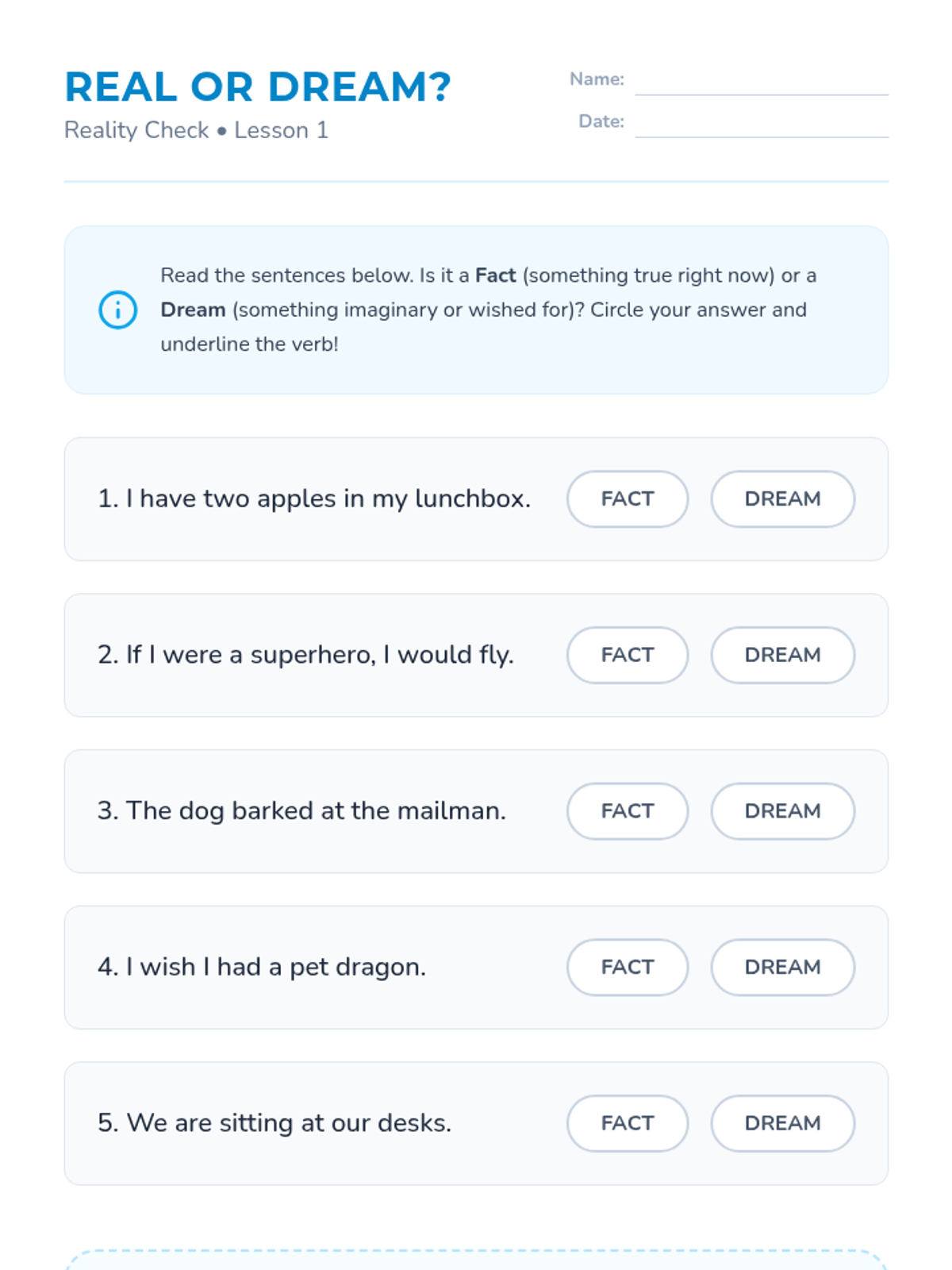
Students distinguish between reality and imagination, learning that verbs change when we talk about things that aren't currently true. This foundational lesson uses a 'magic box' hook to spark inquiry into 'what if' scenarios.
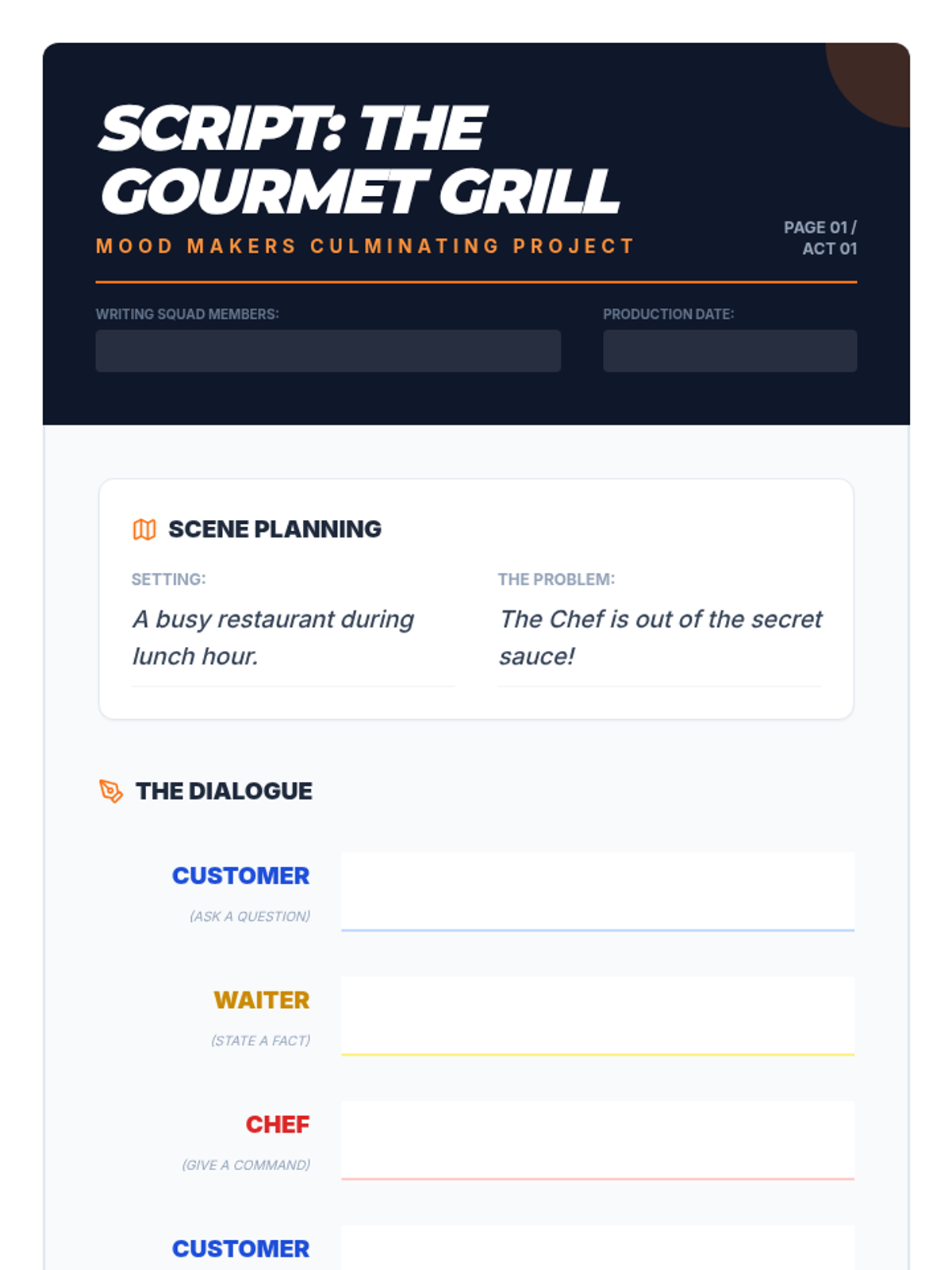
In a culminating project, students write and perform a restaurant-themed skit that requires the use of all three moods: statements, questions, and commands.
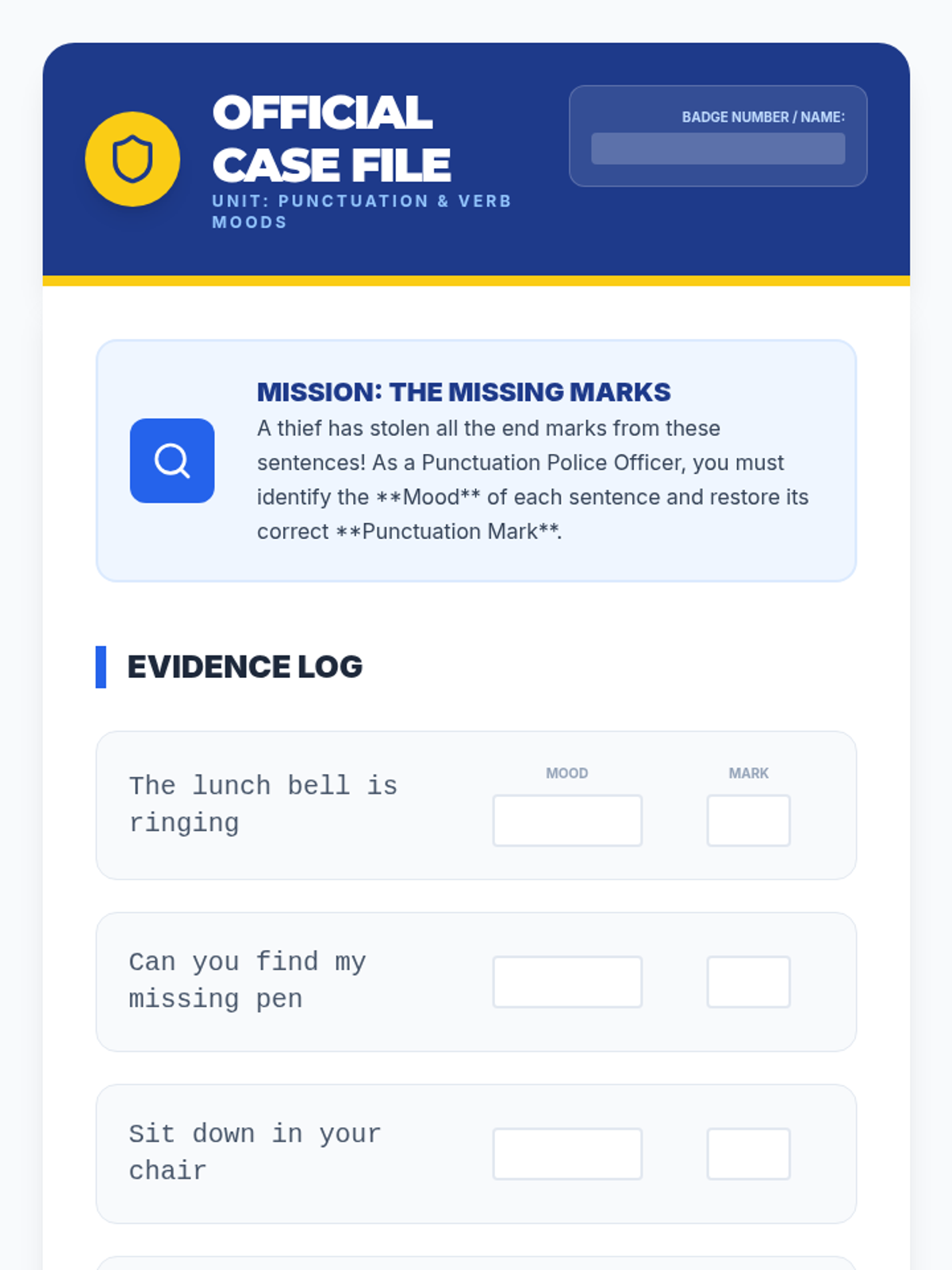
Students connect end punctuation to grammatical moods, acting as 'Punctuation Police' to correct sentences with missing or incorrect marks.
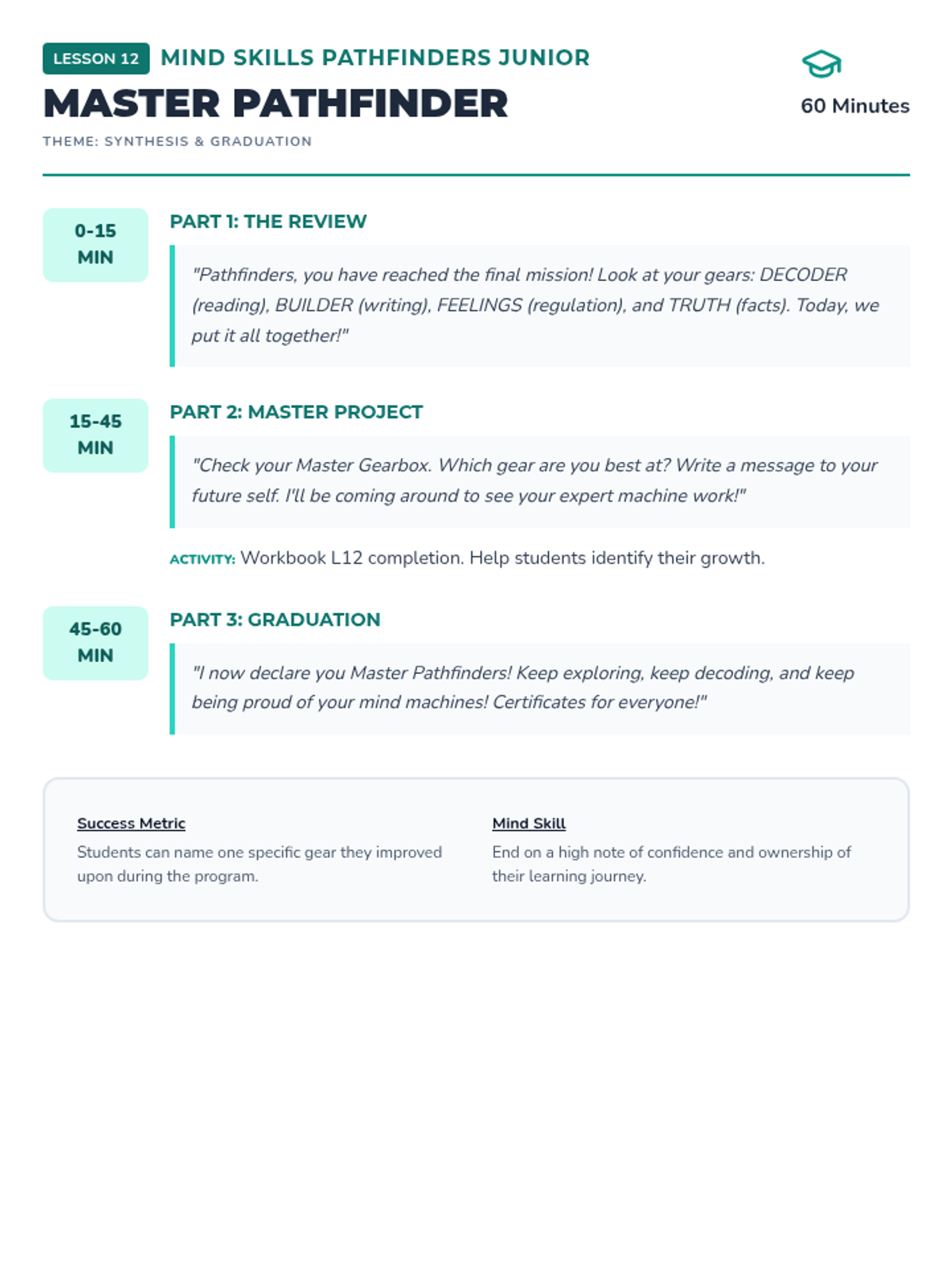
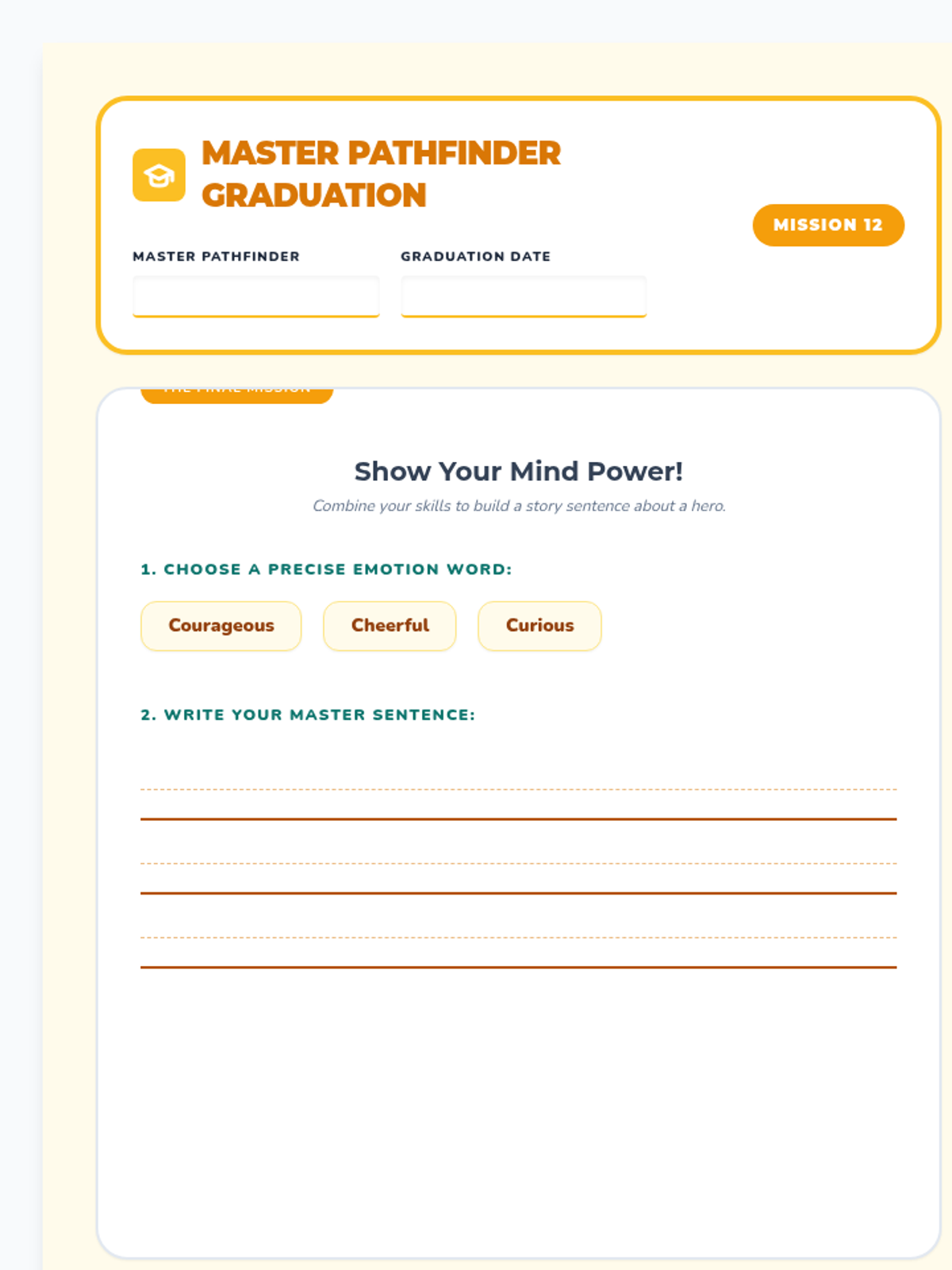
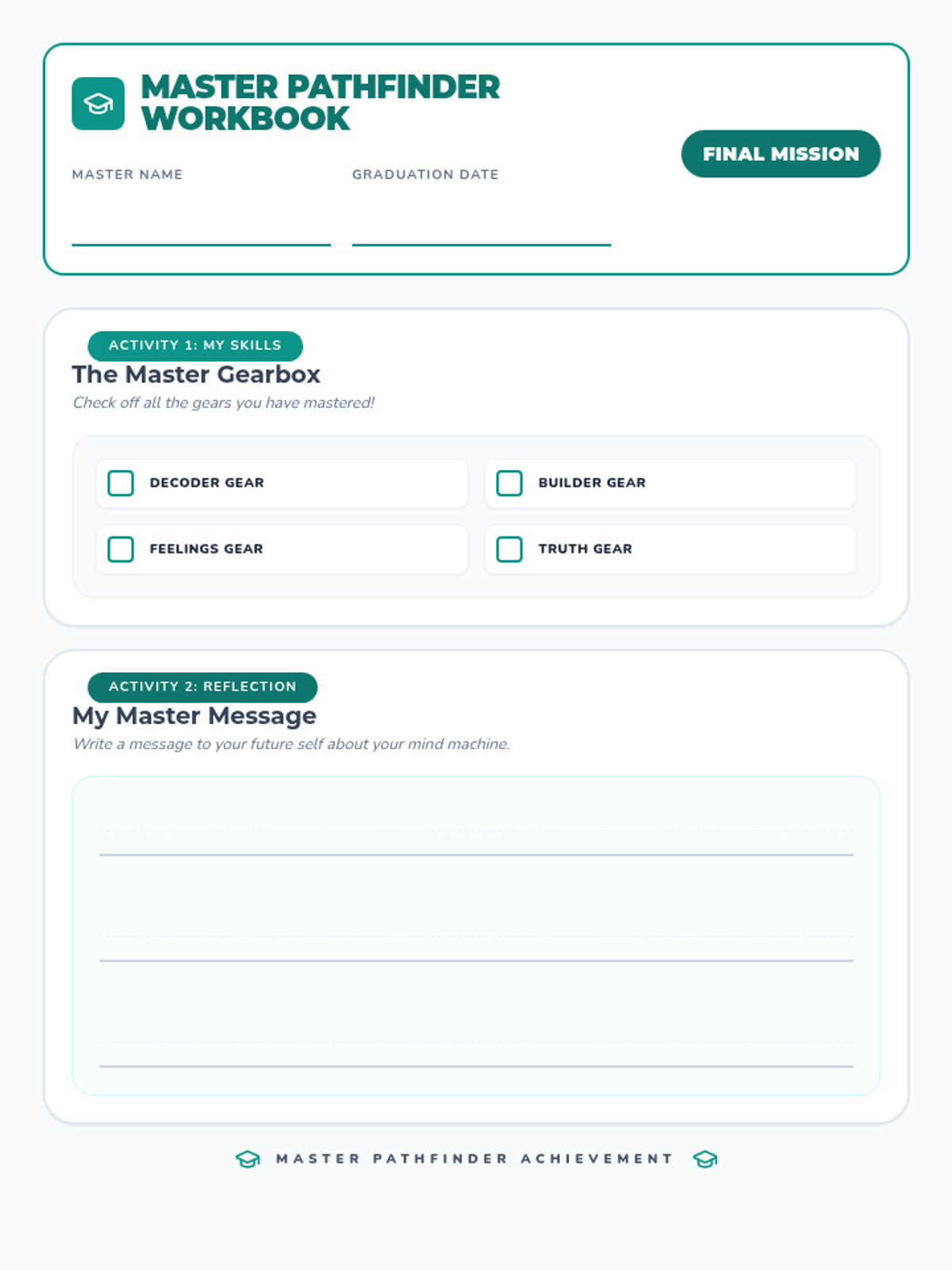
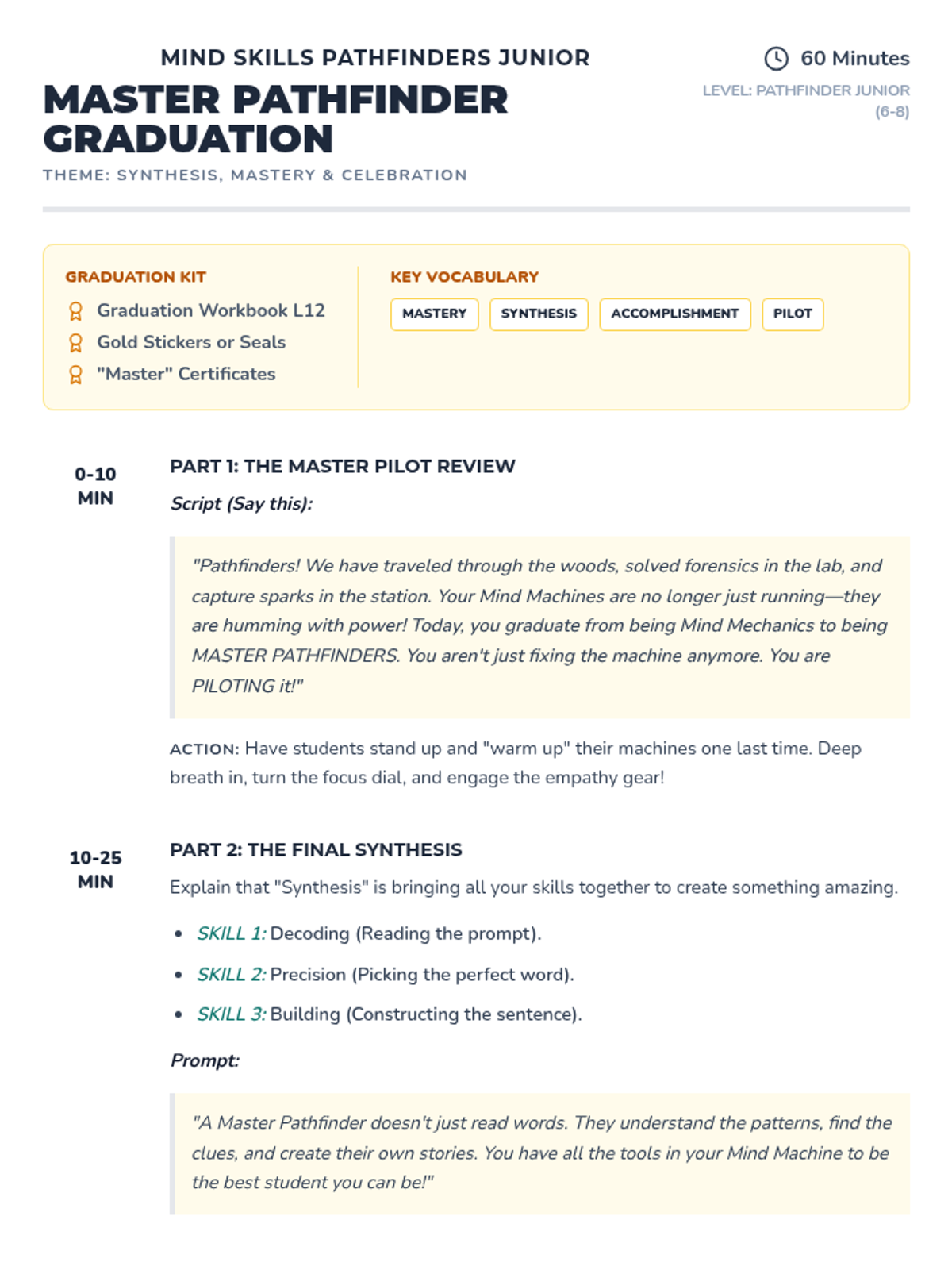
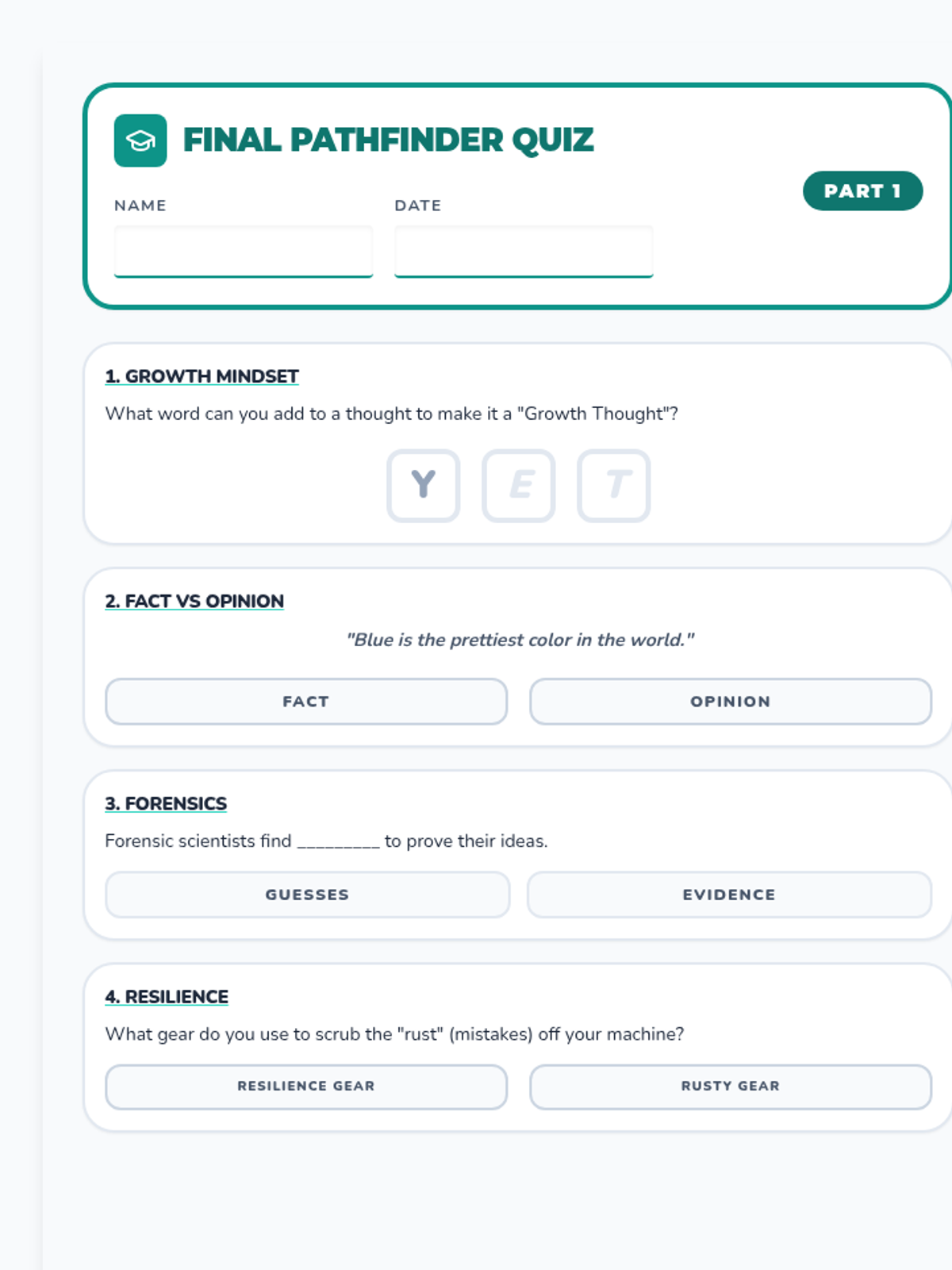
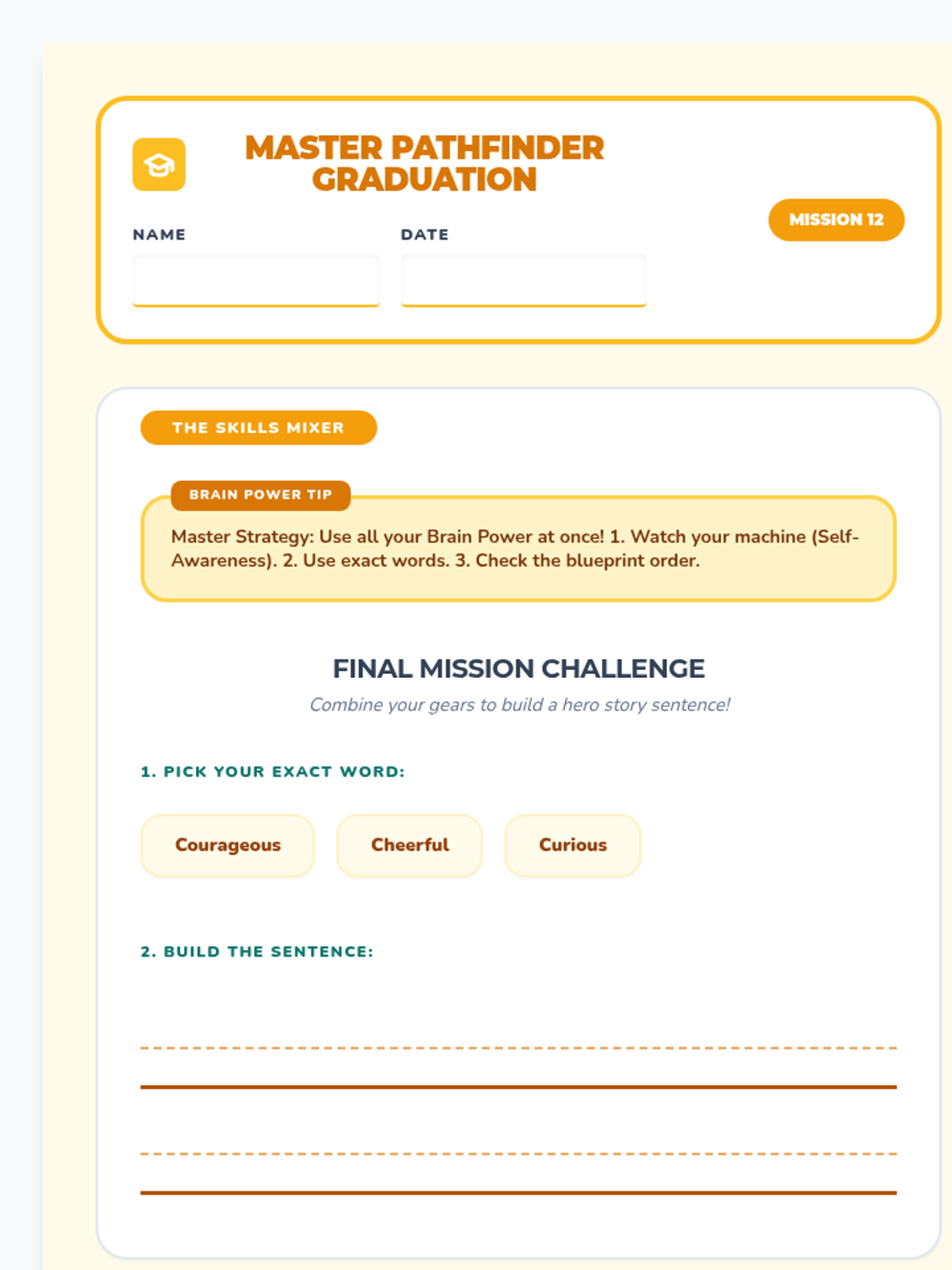
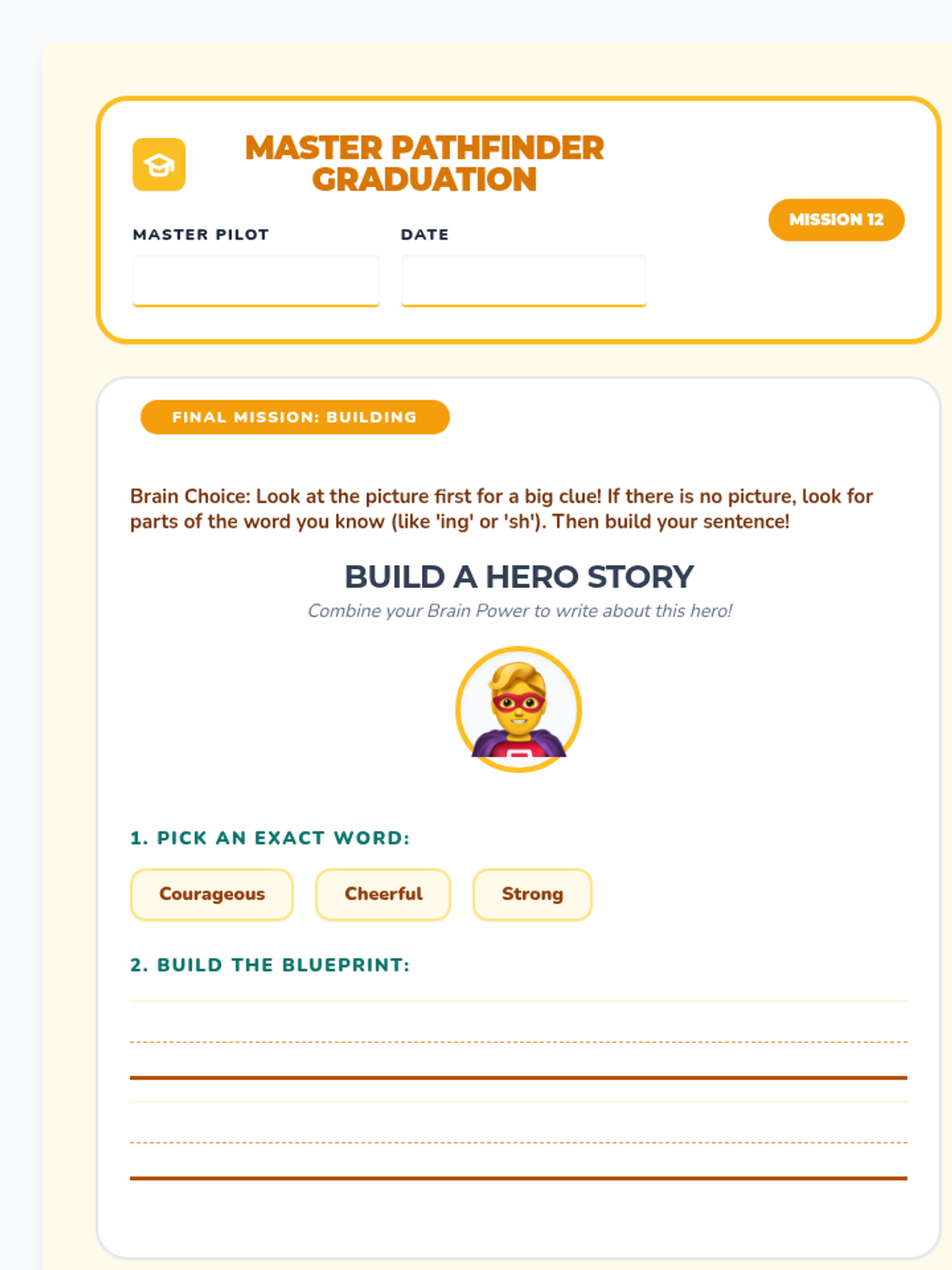
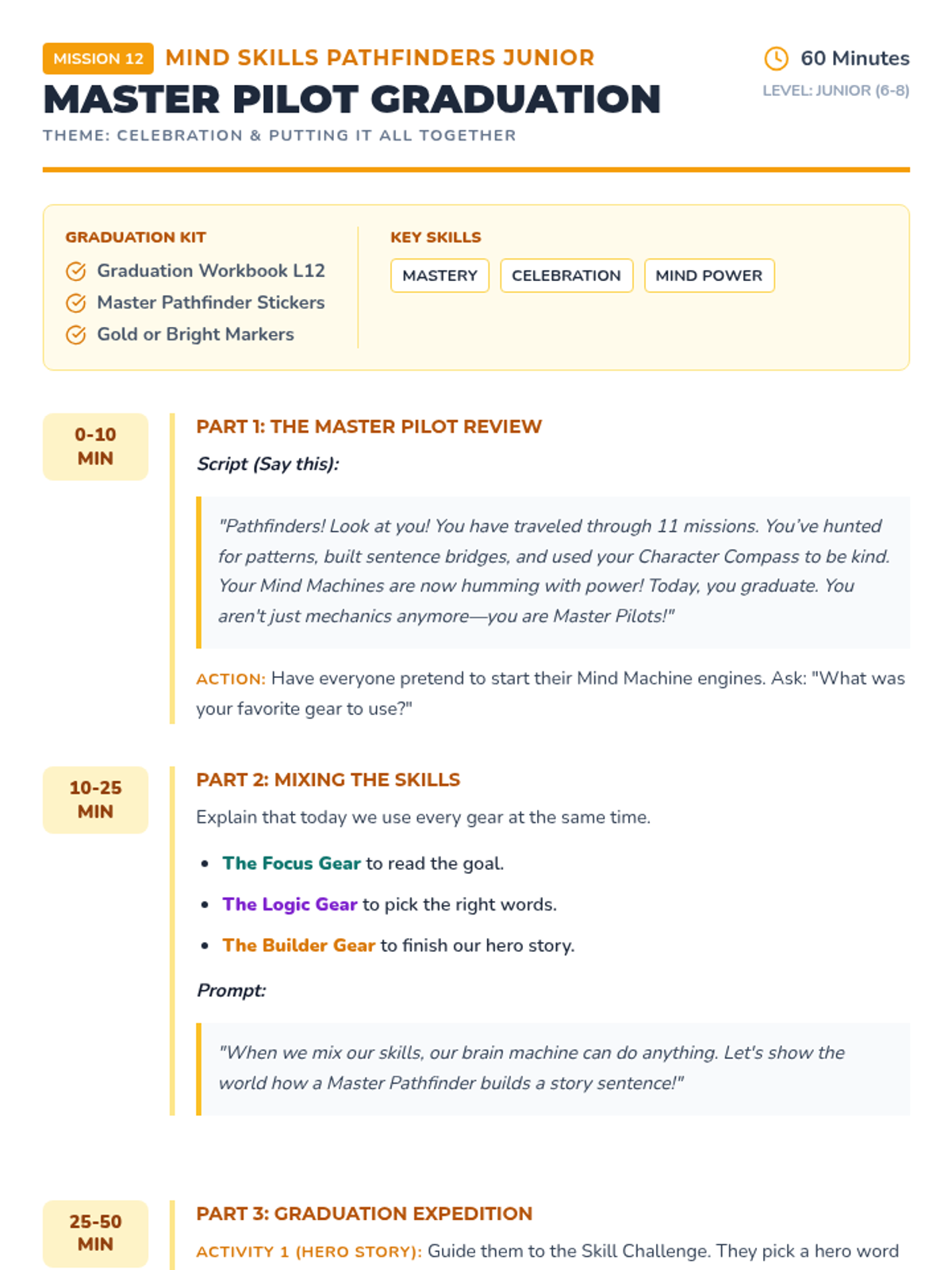
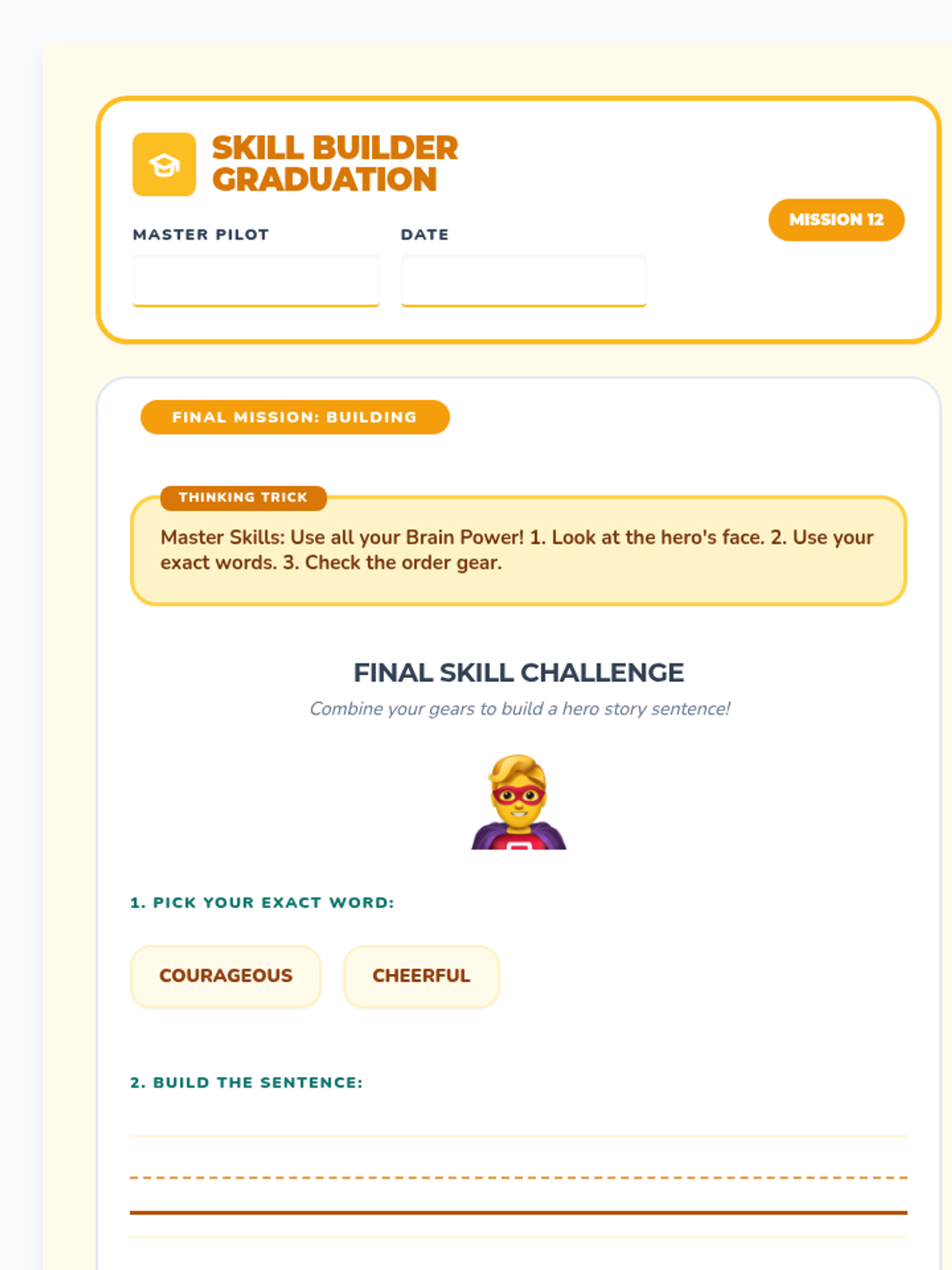
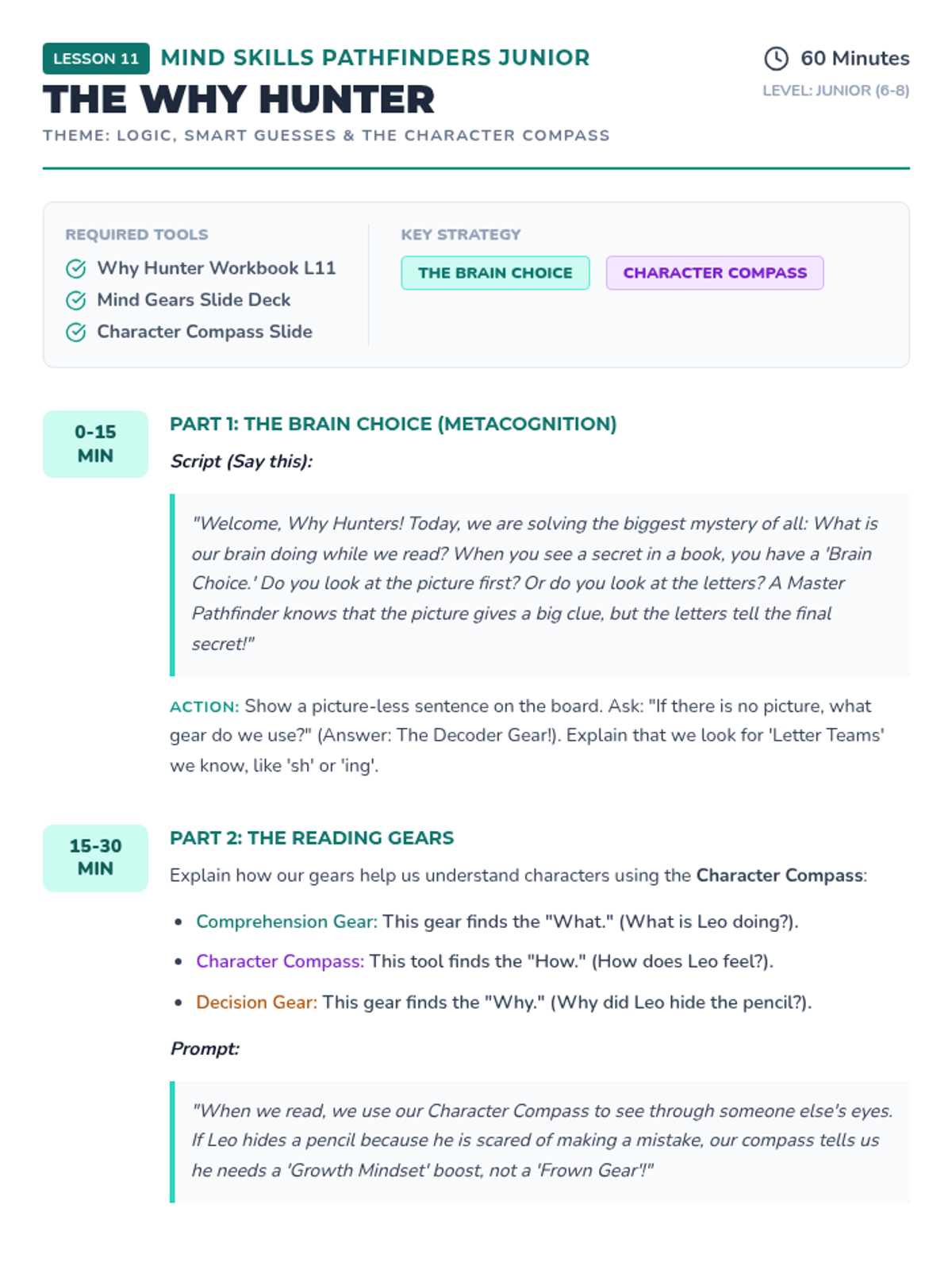
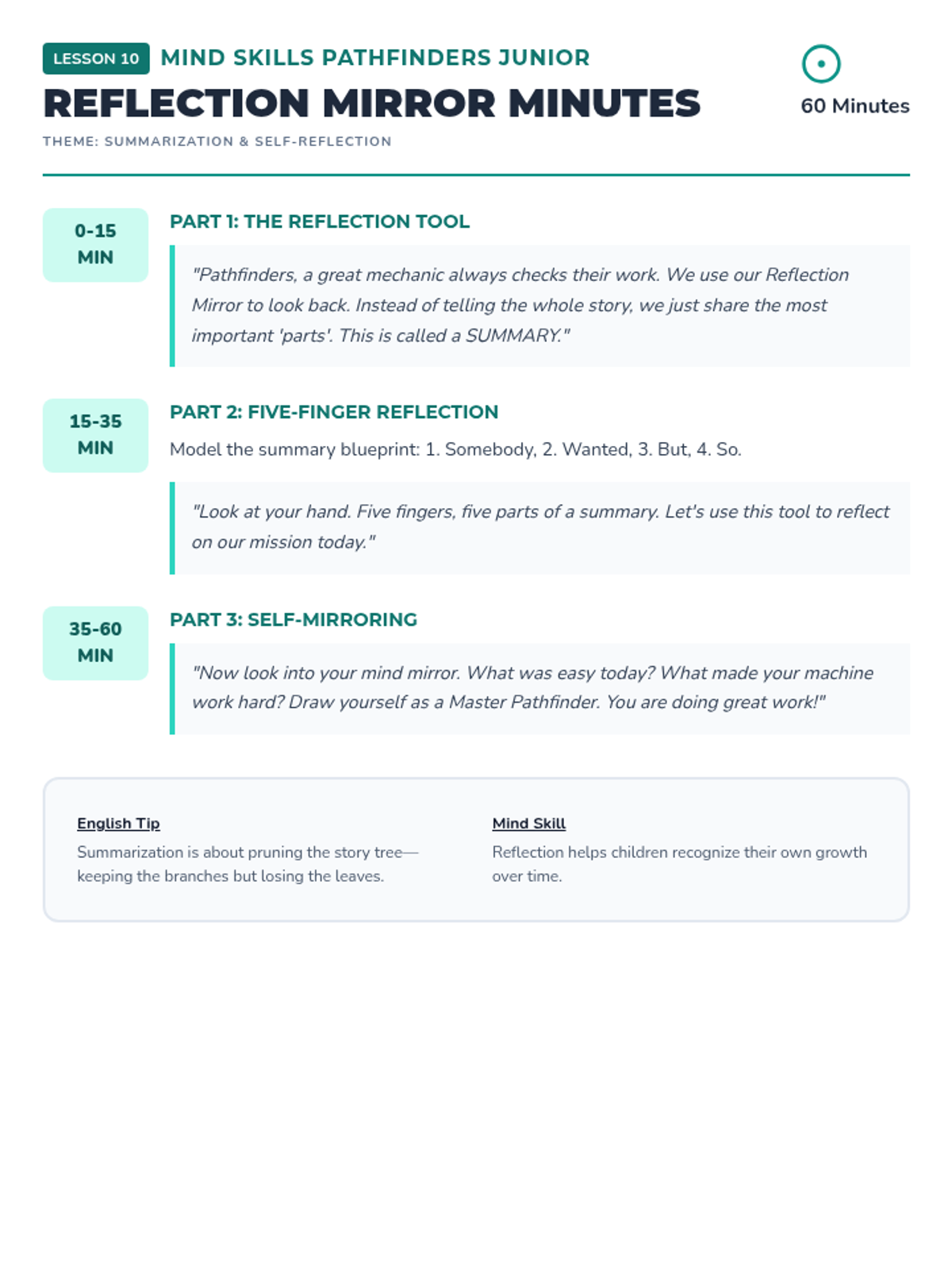
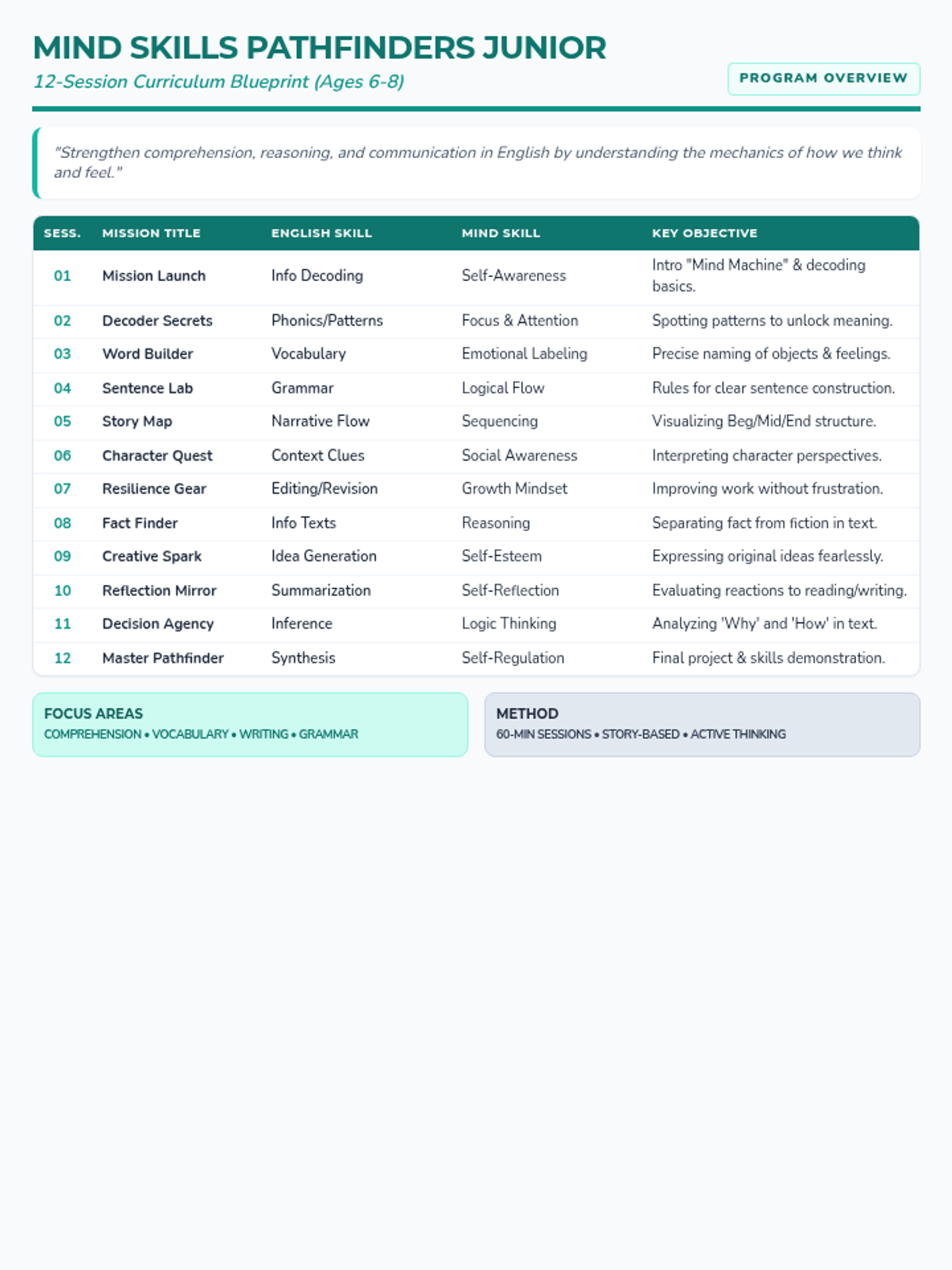
A celebratory final session where students demonstrate their 'Master Pathfinder' skills and receive recognition for their growth in thinking and English.
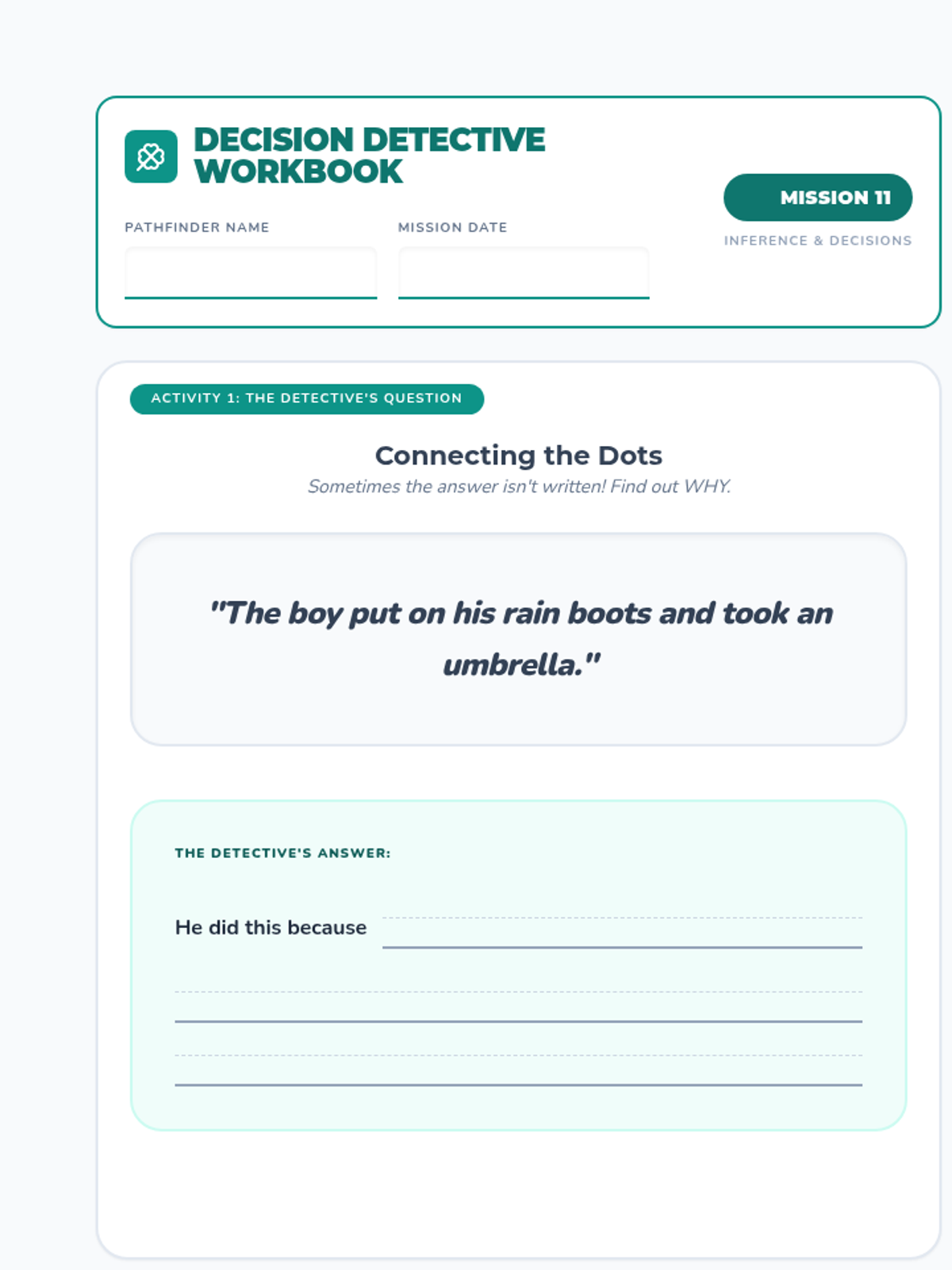
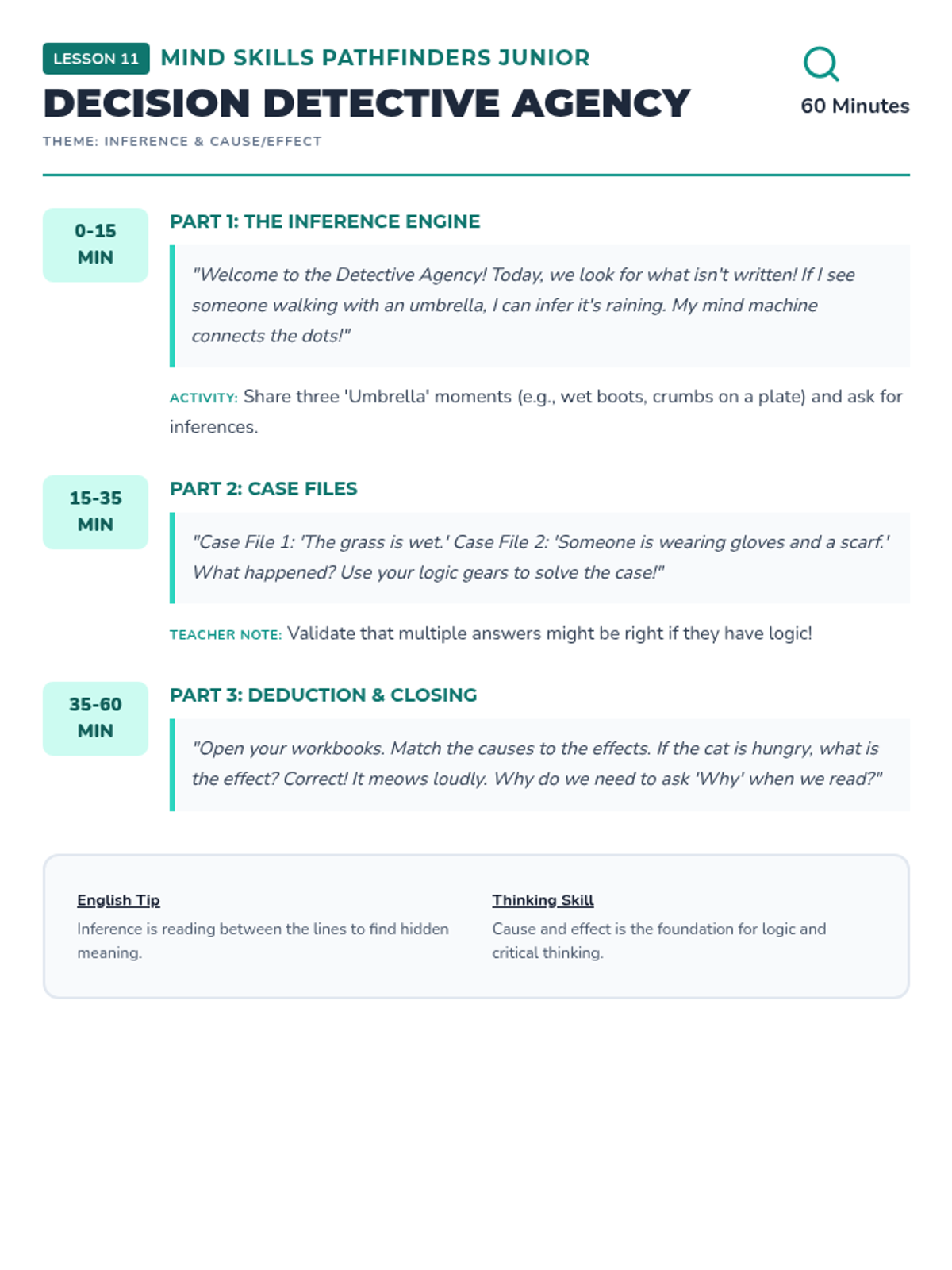
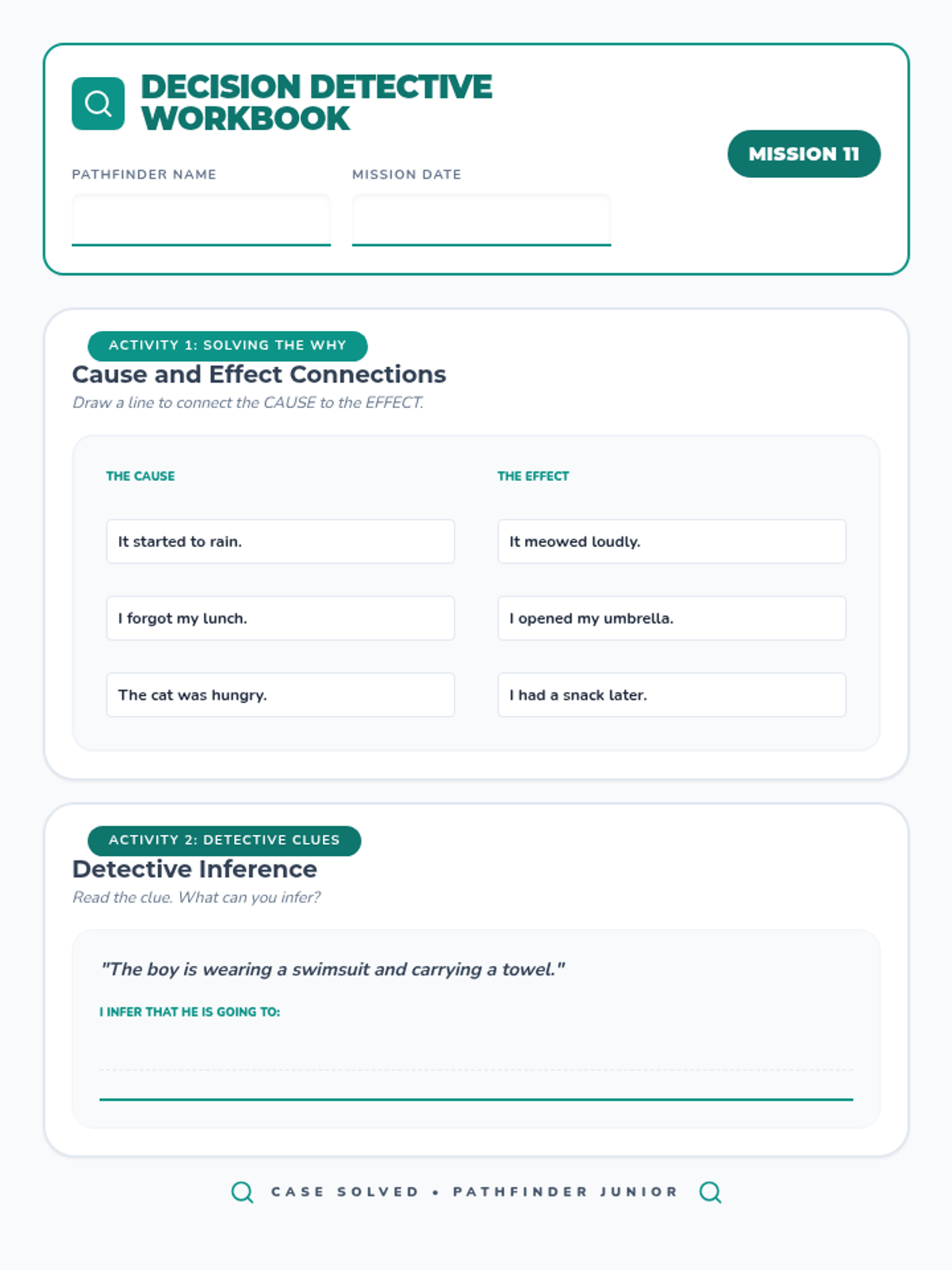
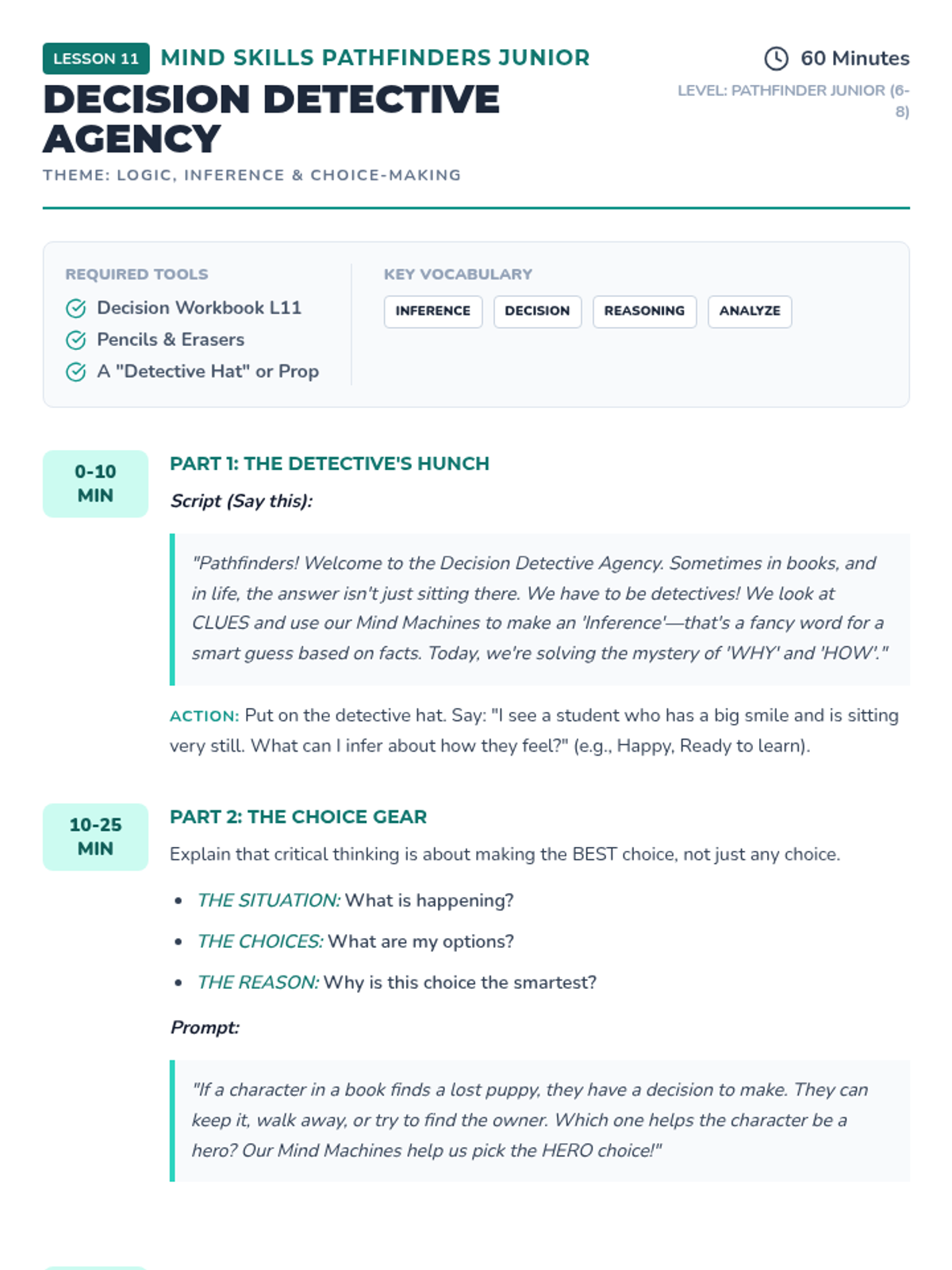
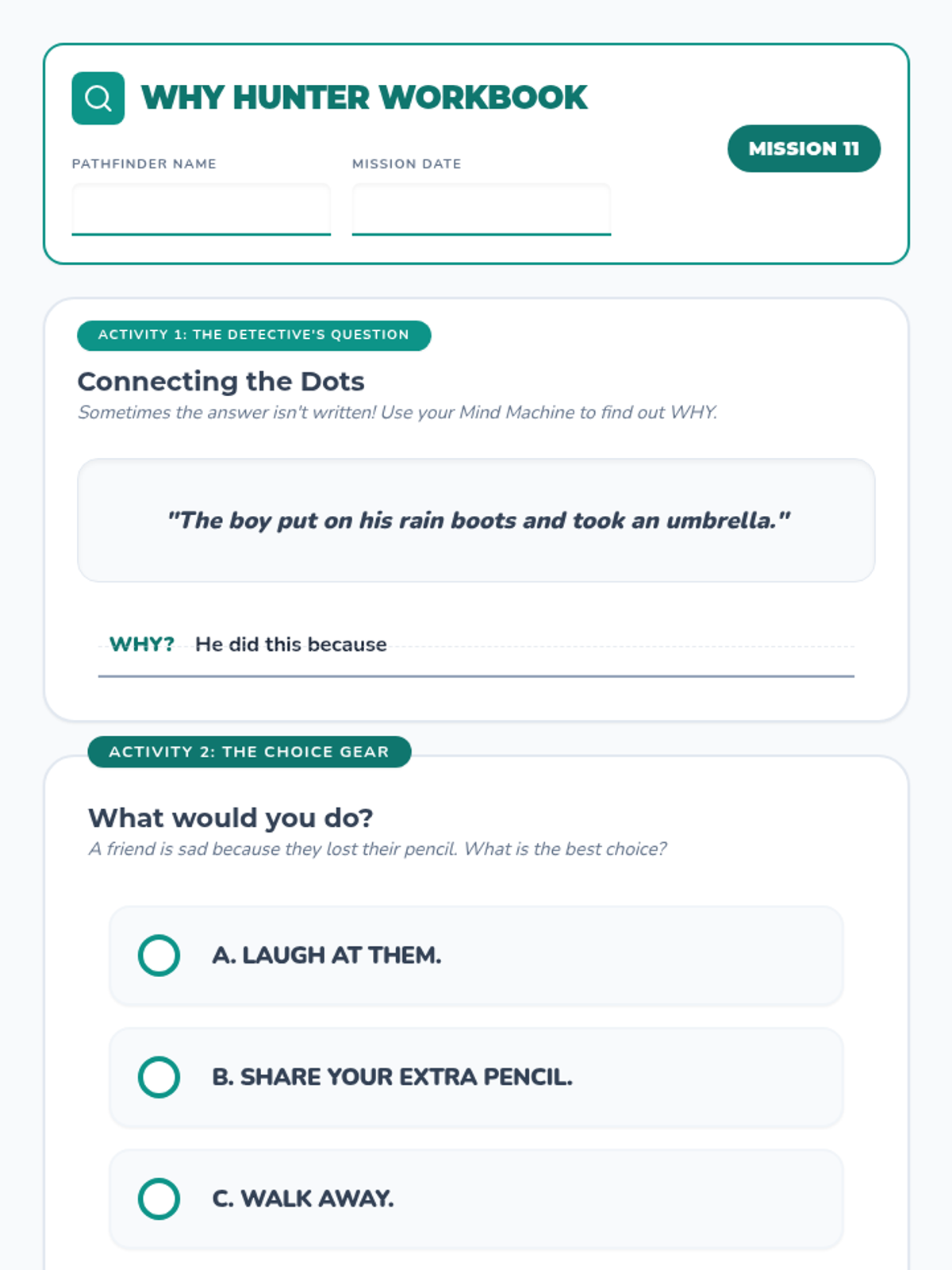
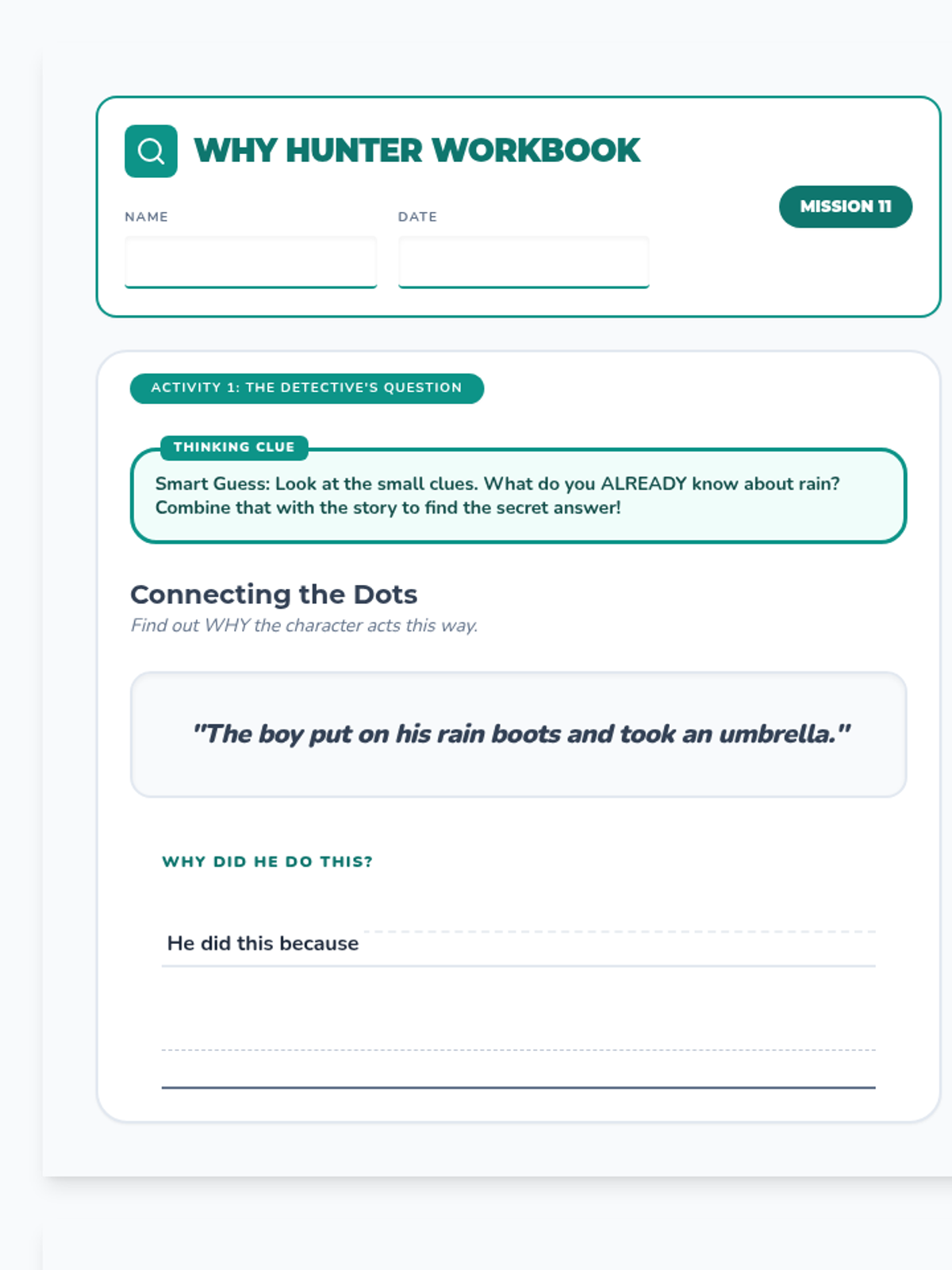
Focuses on logic and decision-making by asking 'why' and 'how' questions about texts to understand cause and effect.
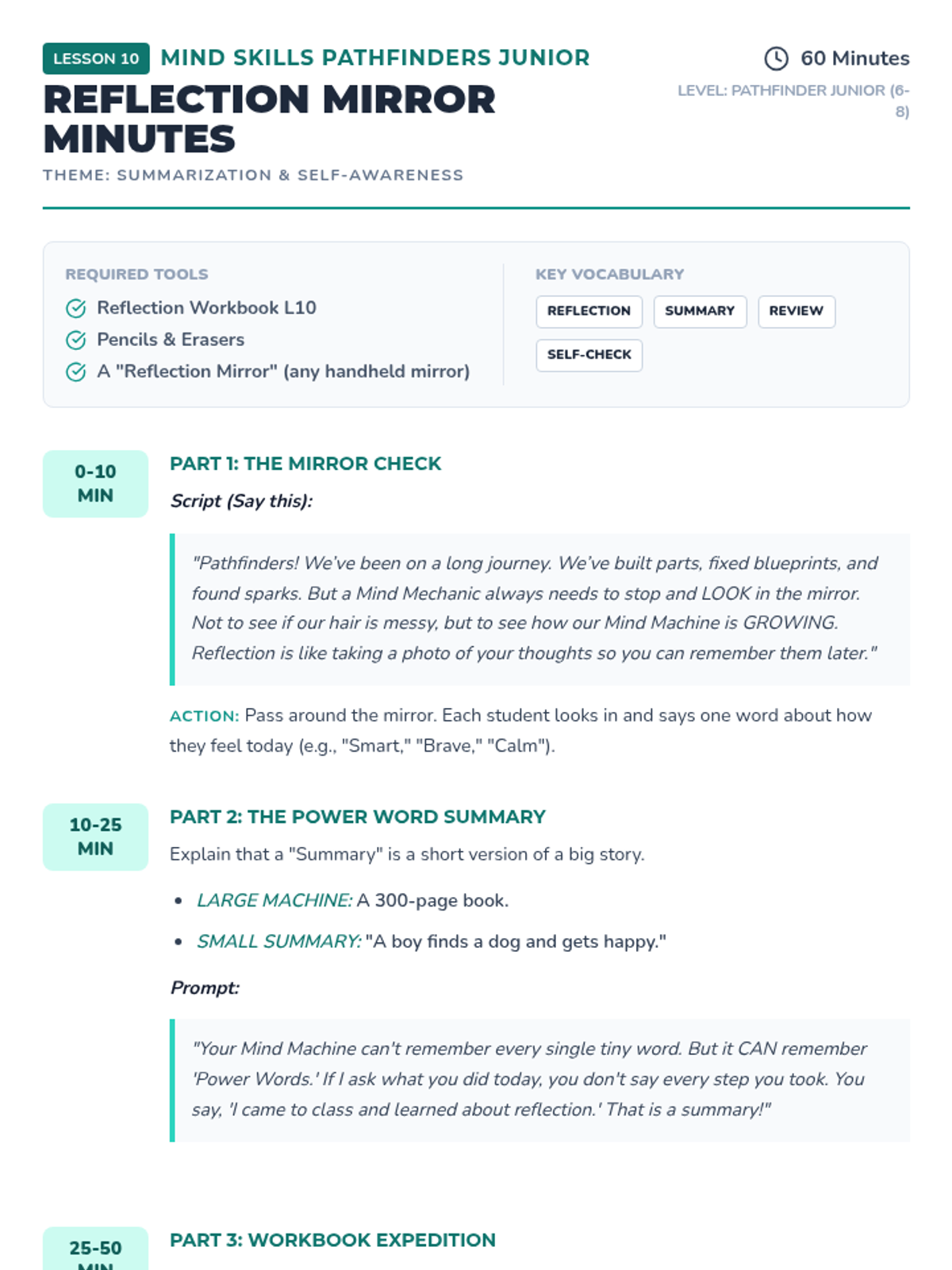
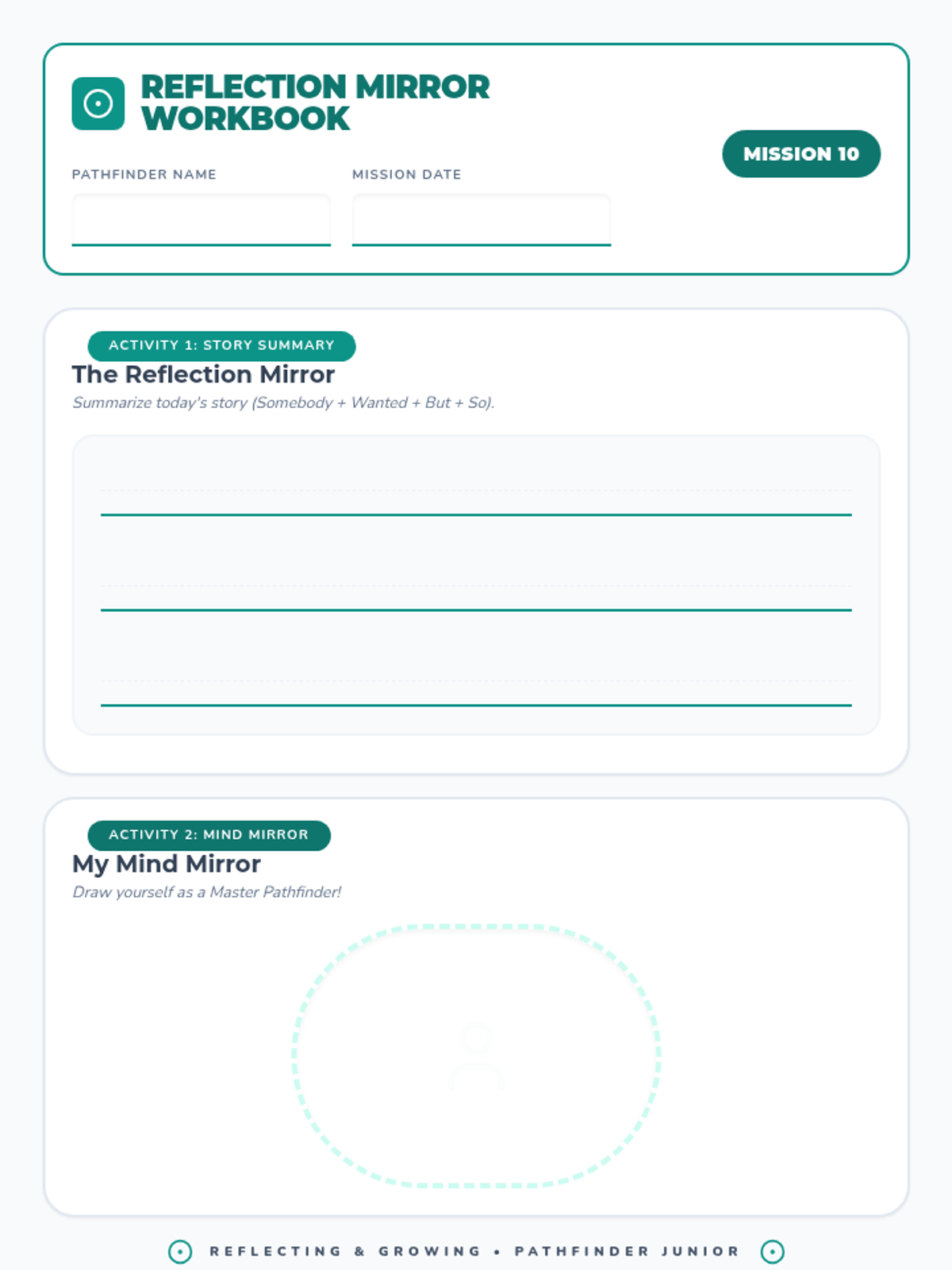
Deepens self-awareness through journaling and reflection, helping students recognize their own reactions and thoughts while reading and writing.
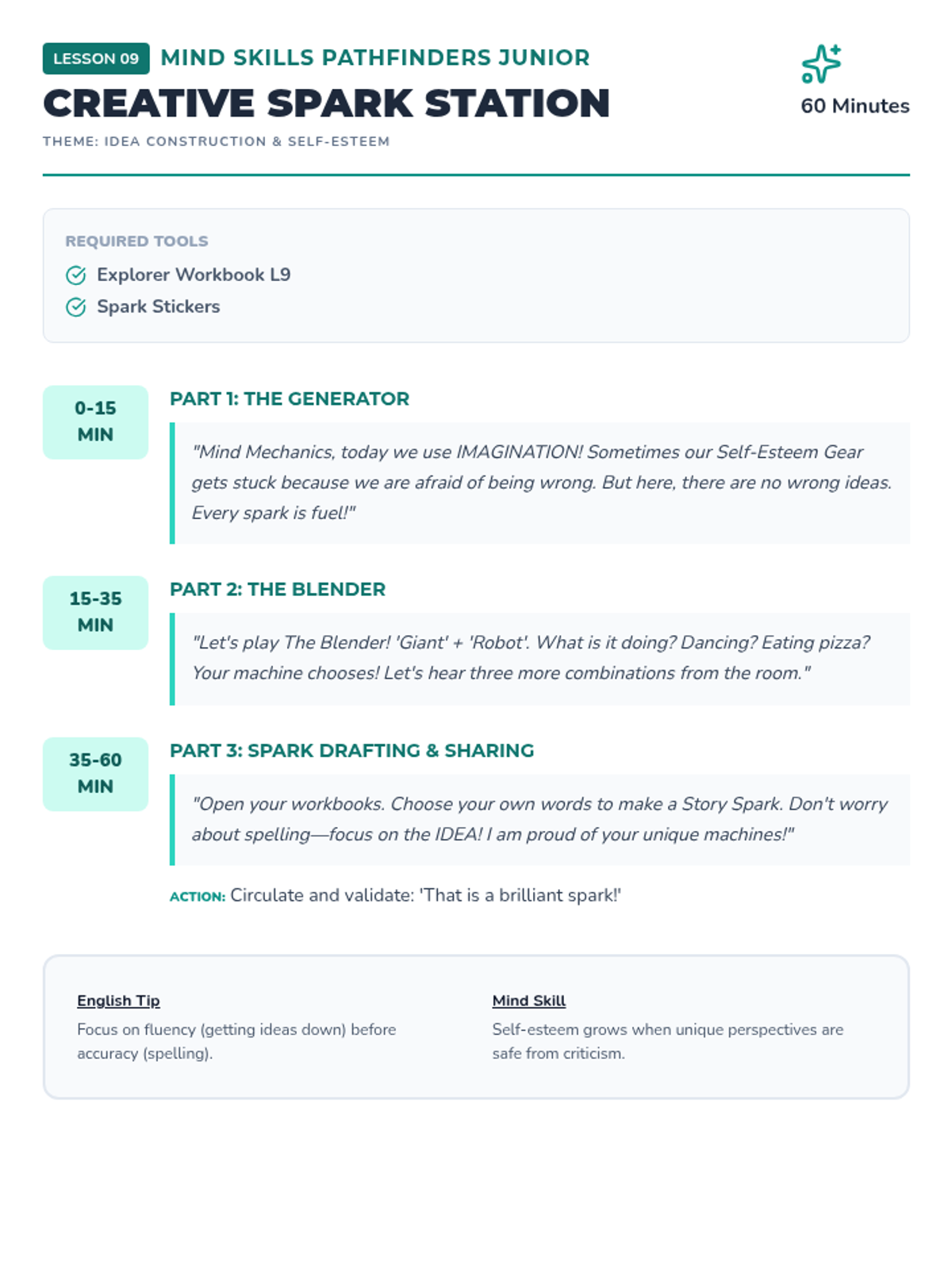
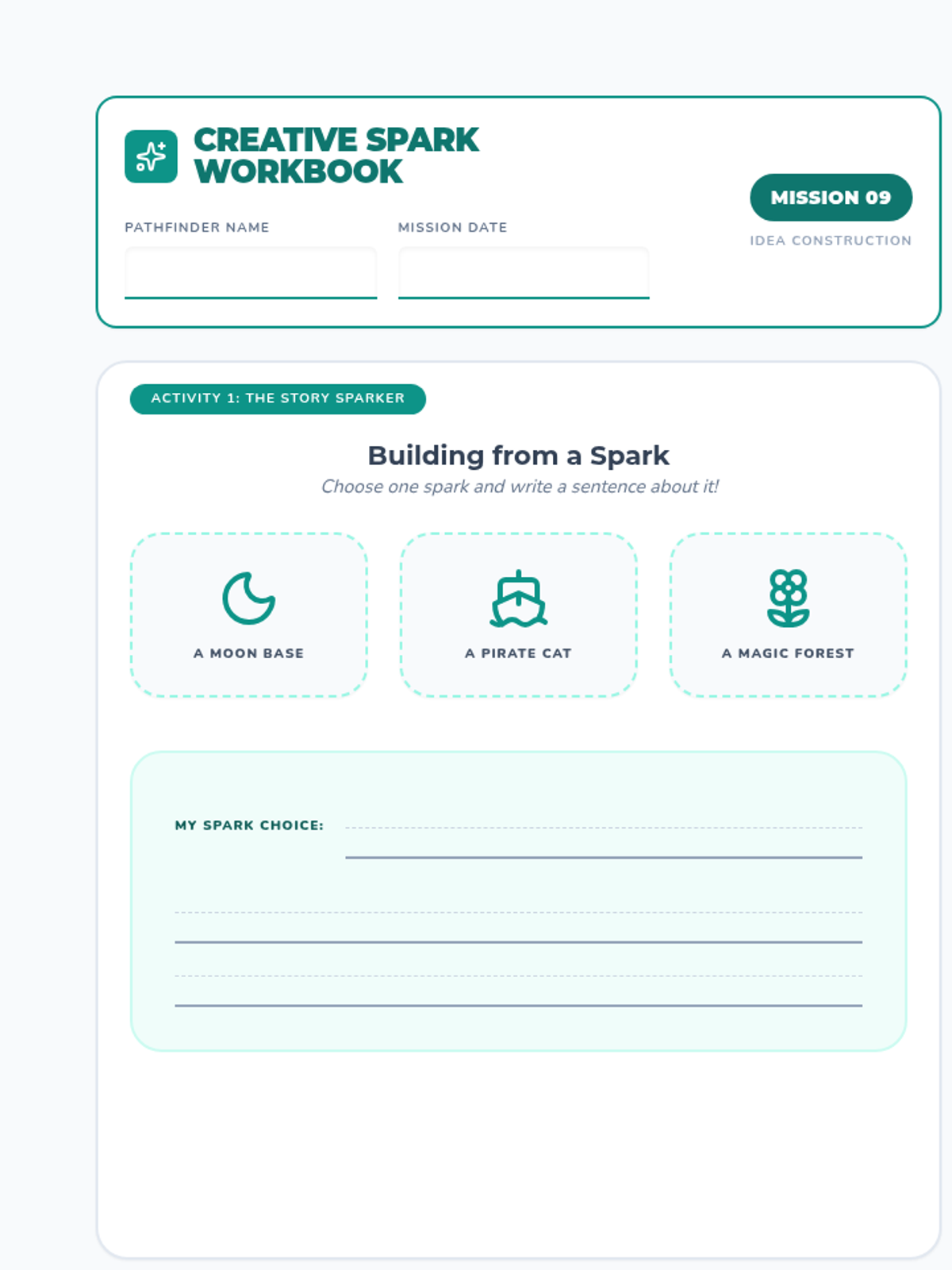
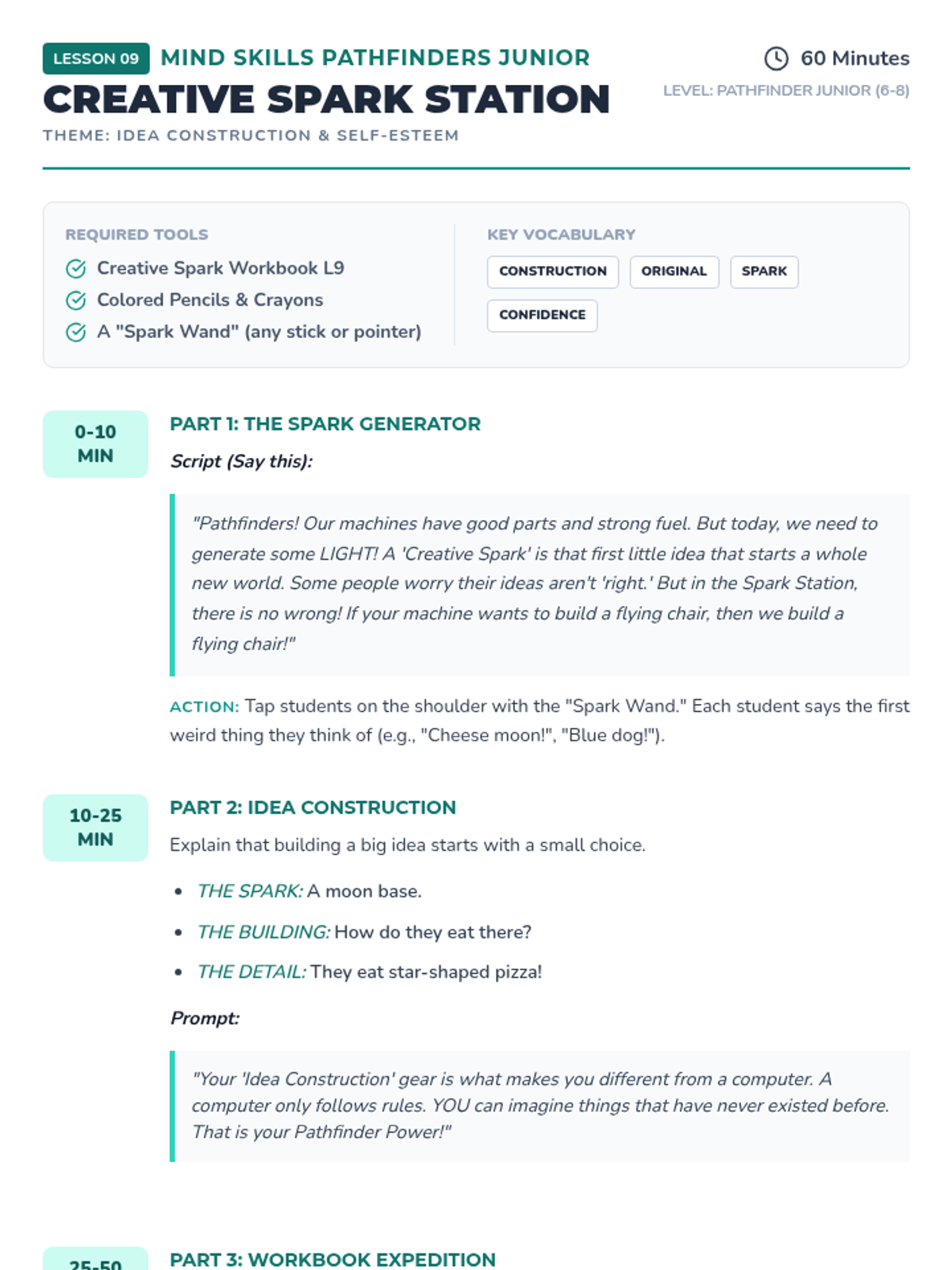
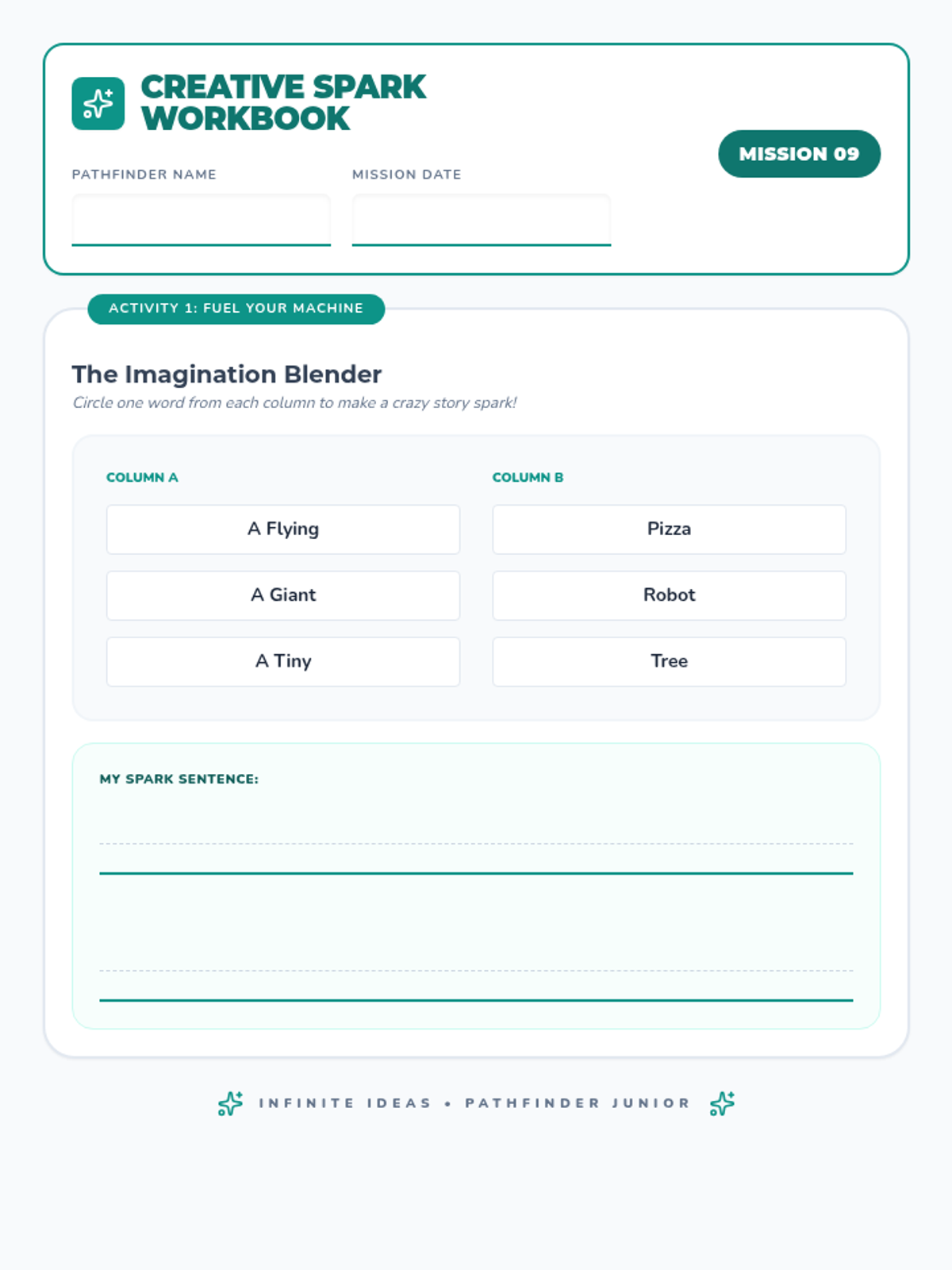
Encourages idea construction and creative writing, showing students how to fuel their mind machines with imagination to create original stories.
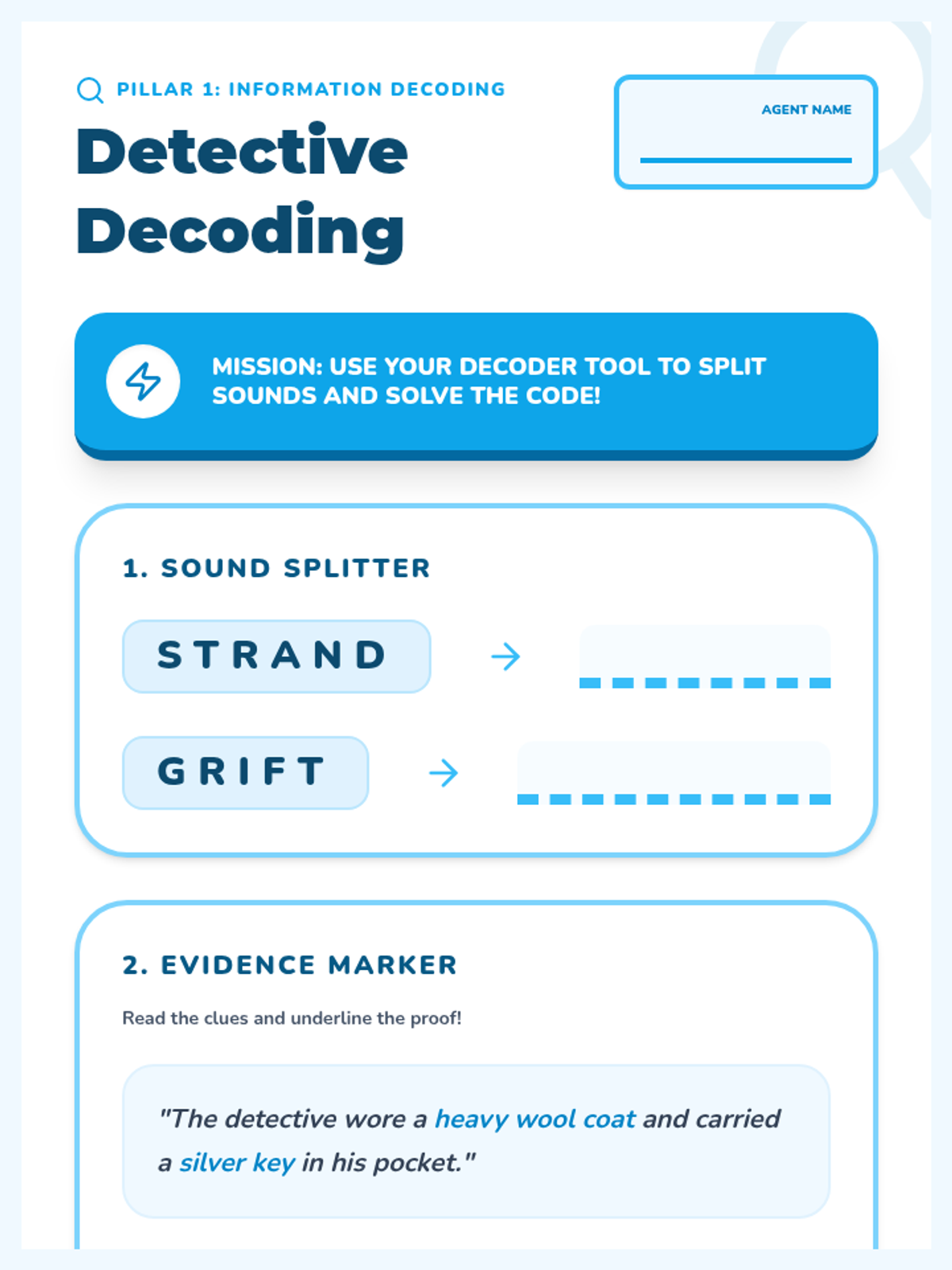
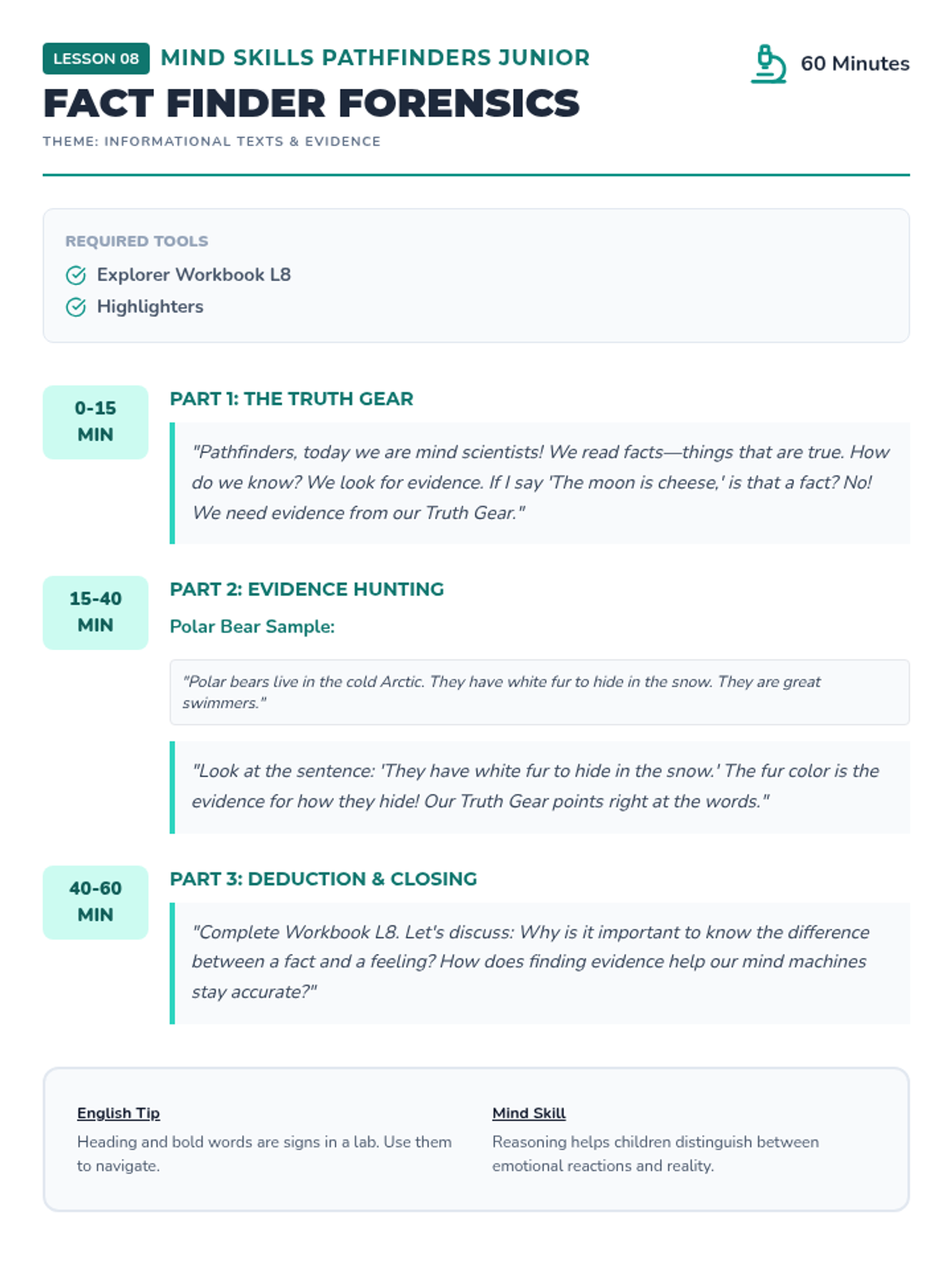
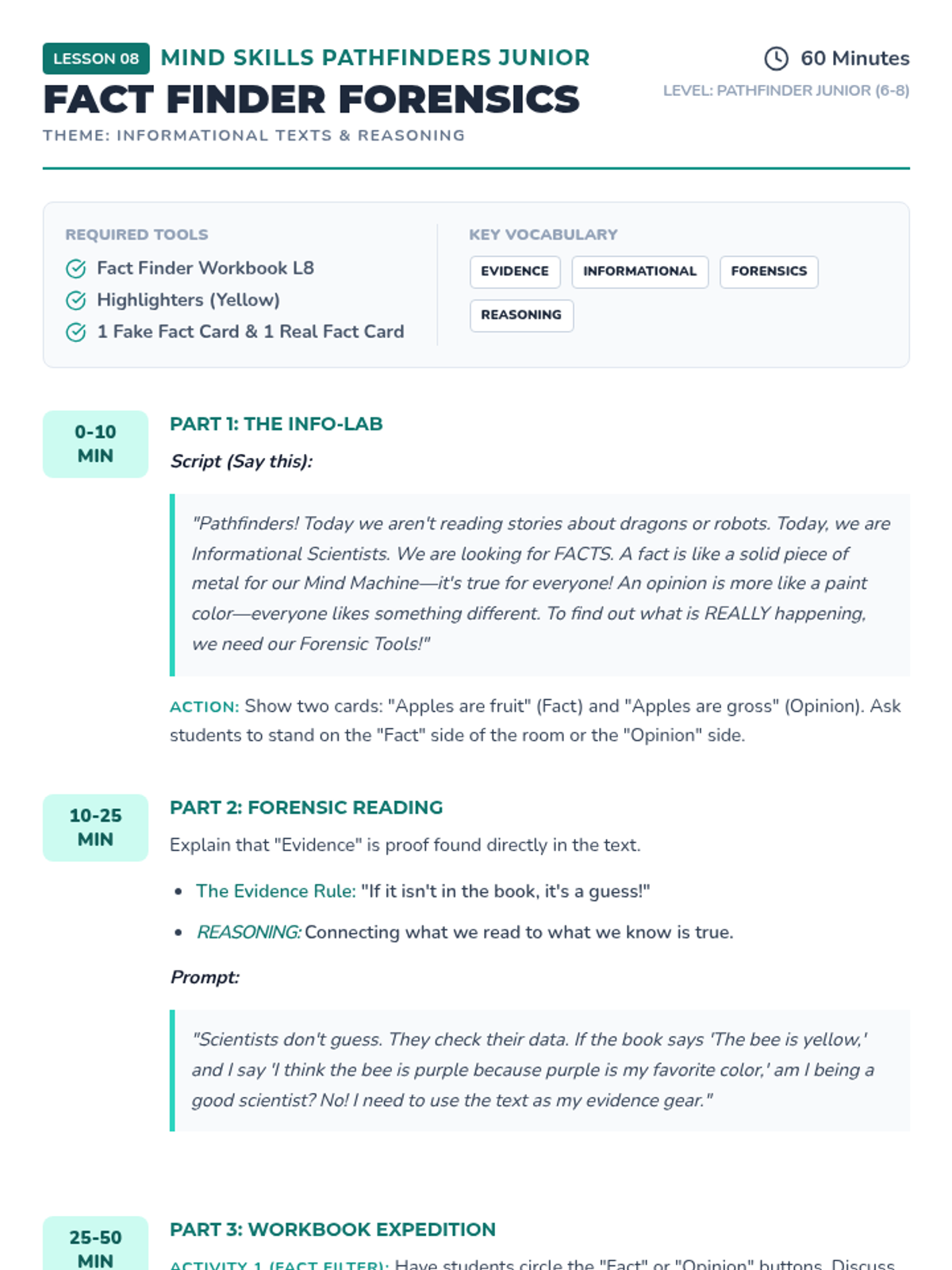
Develops information decoding skills by teaching students to search for facts and evidence within a text, much like a forensic scientist.
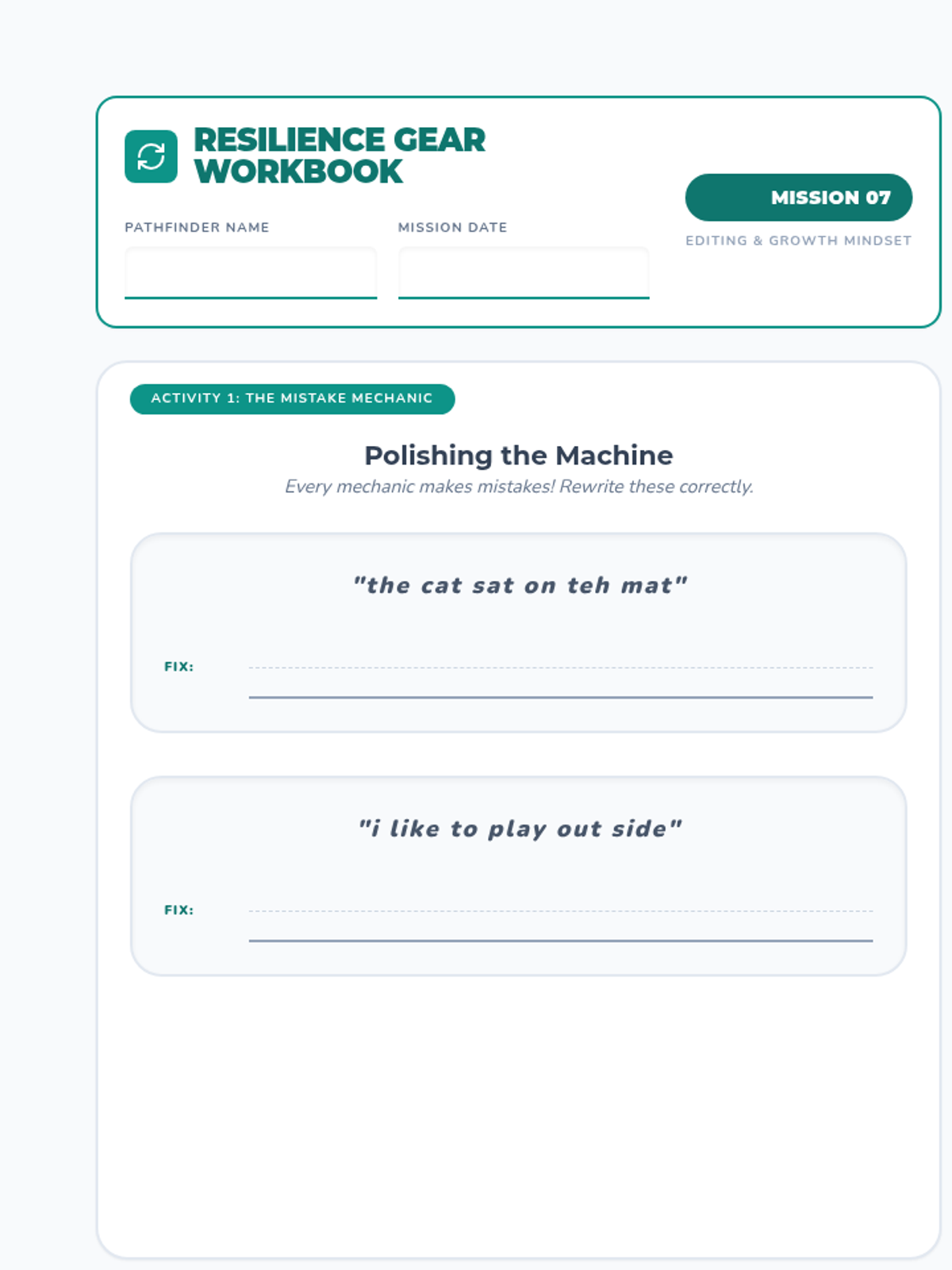
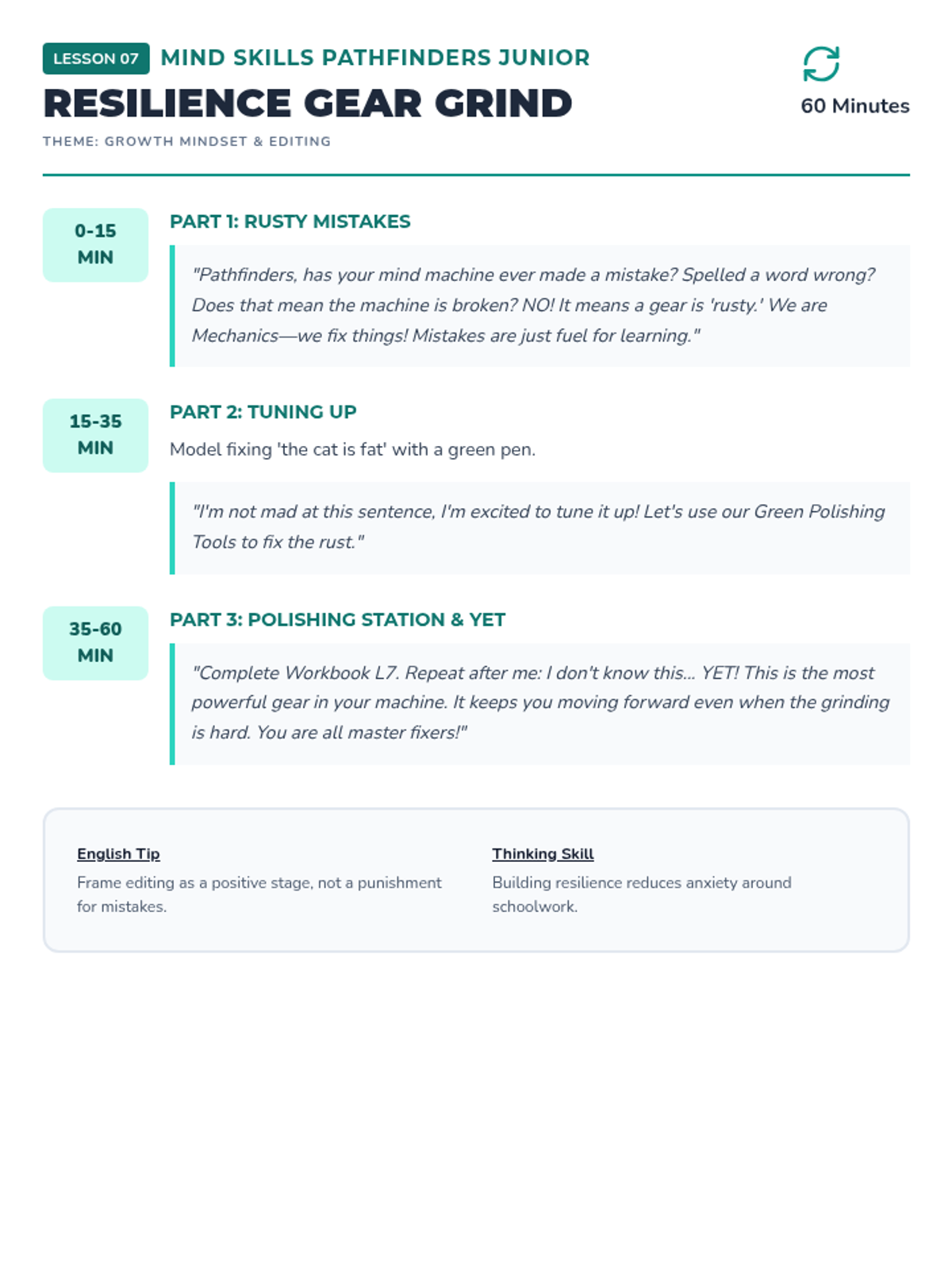
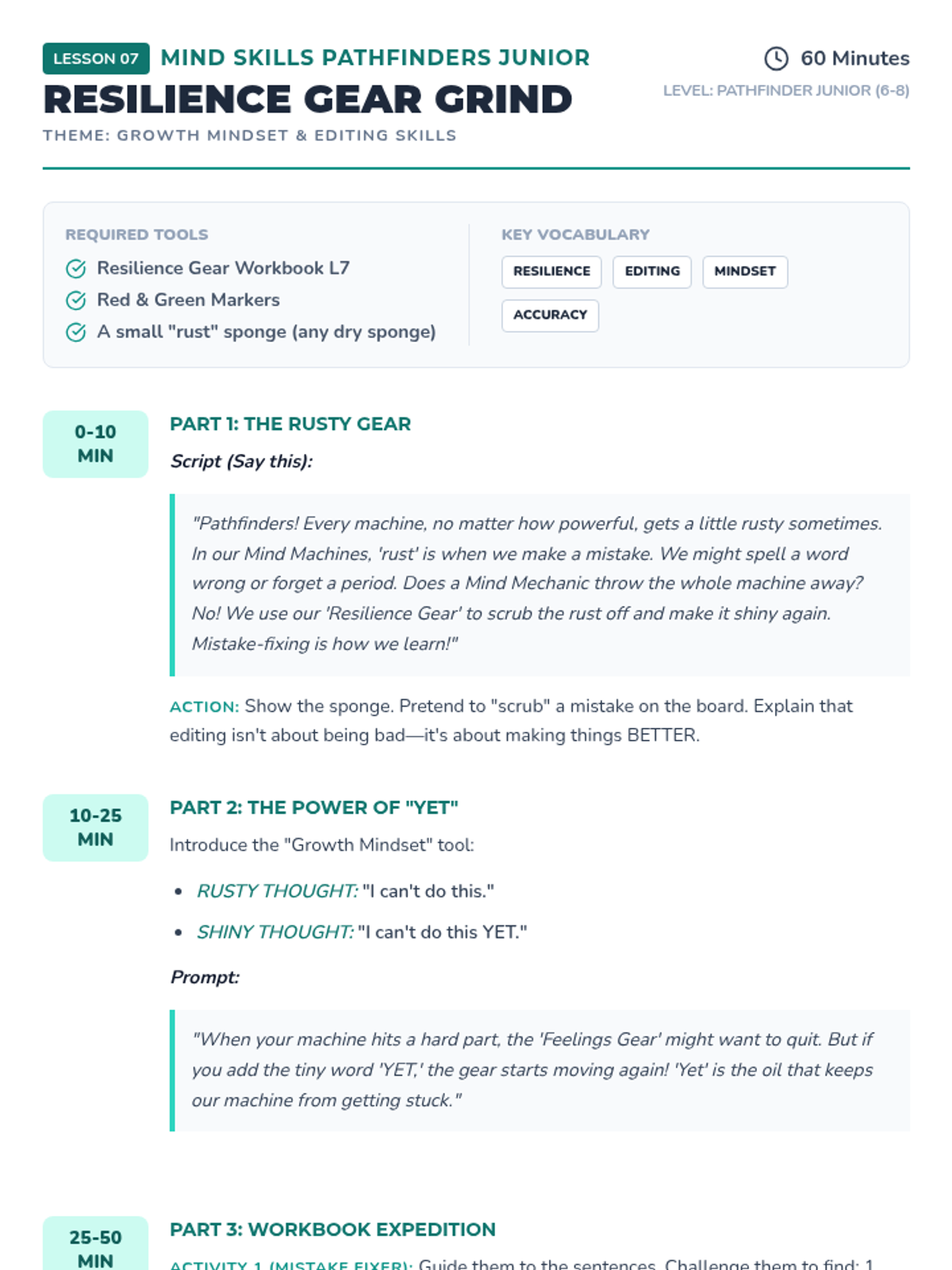
Introduces the growth mindset by comparing resilience to a gear that helps us keep moving forward even when we encounter 'rusty' mistakes.
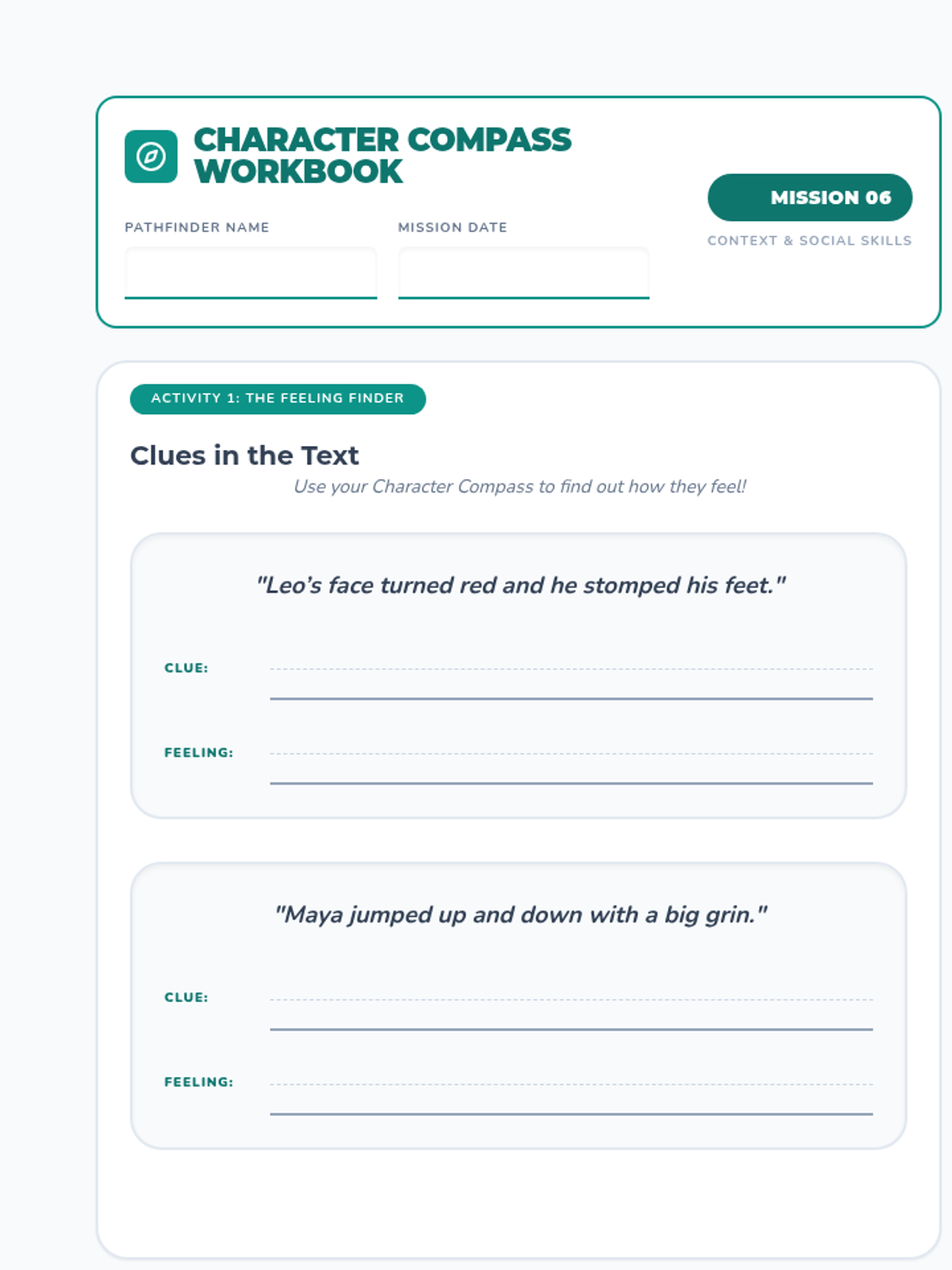
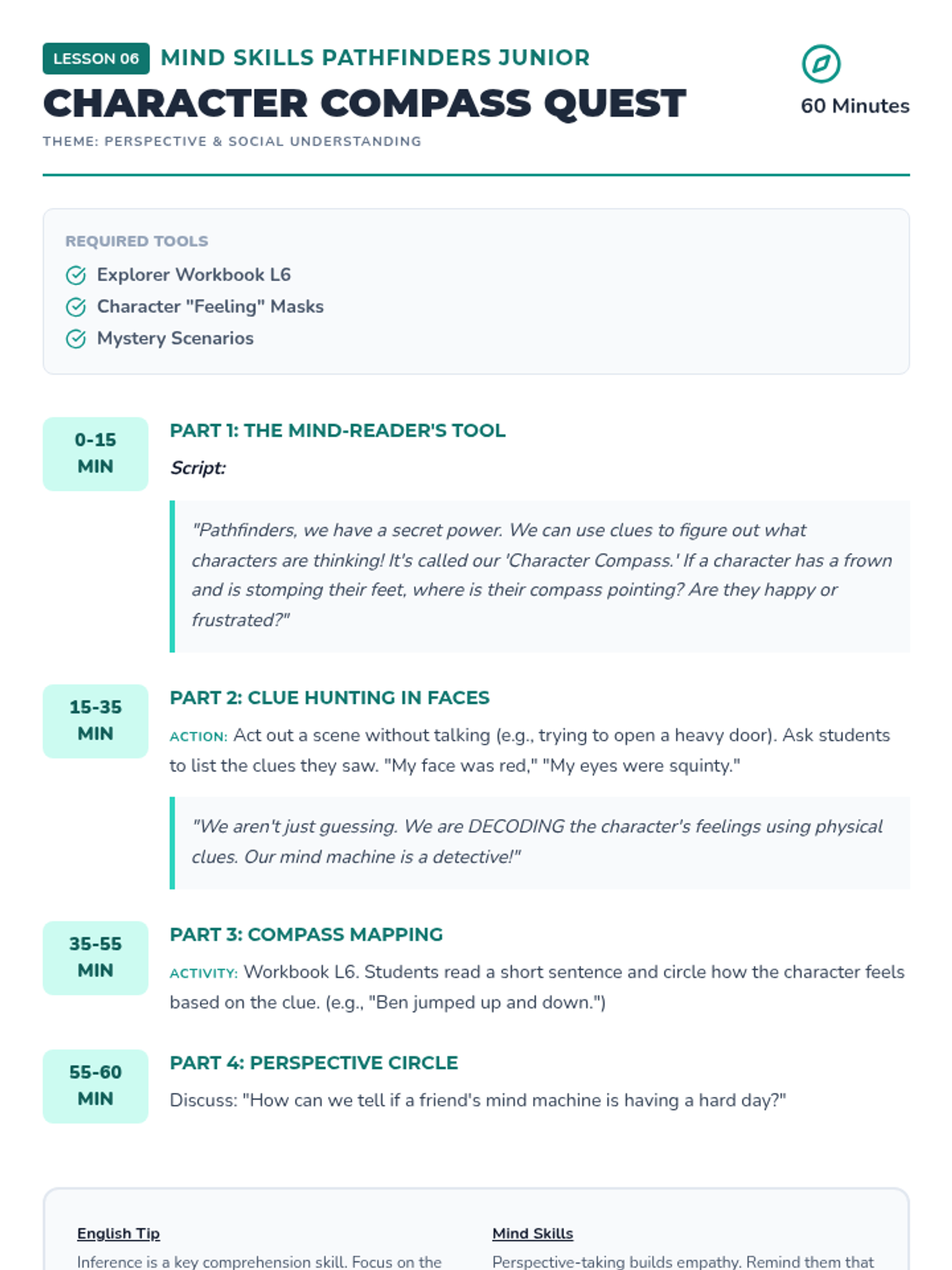
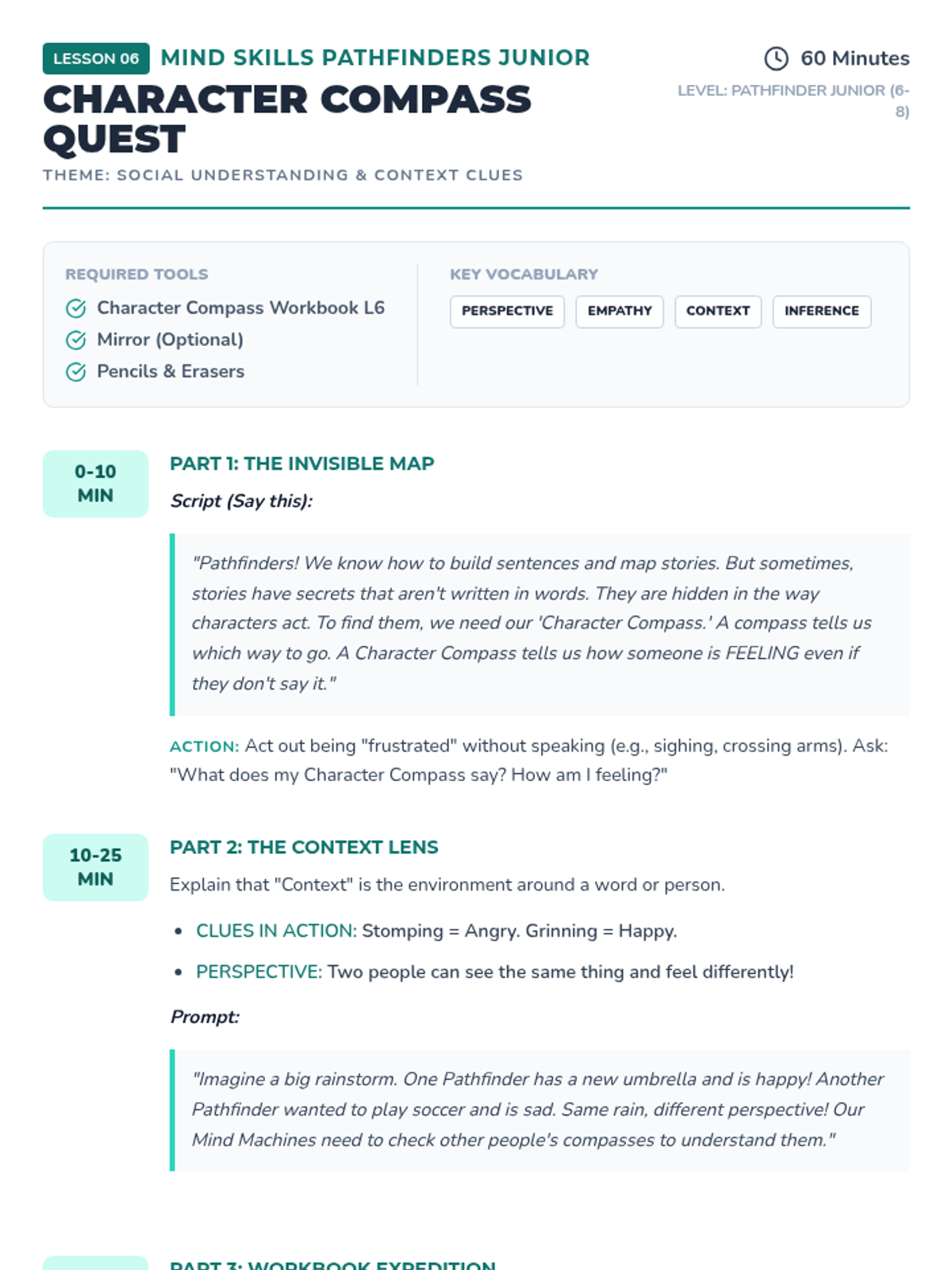
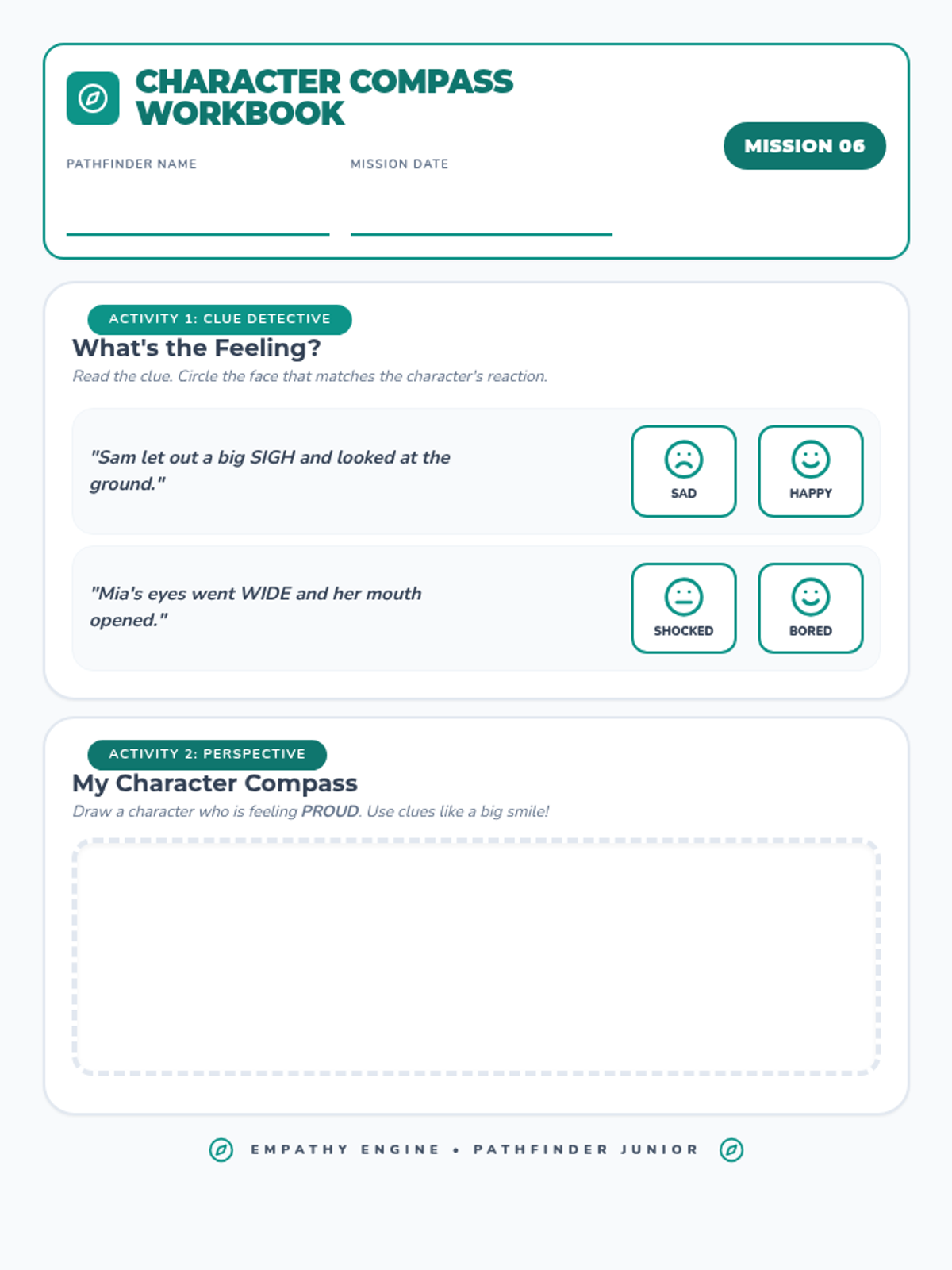
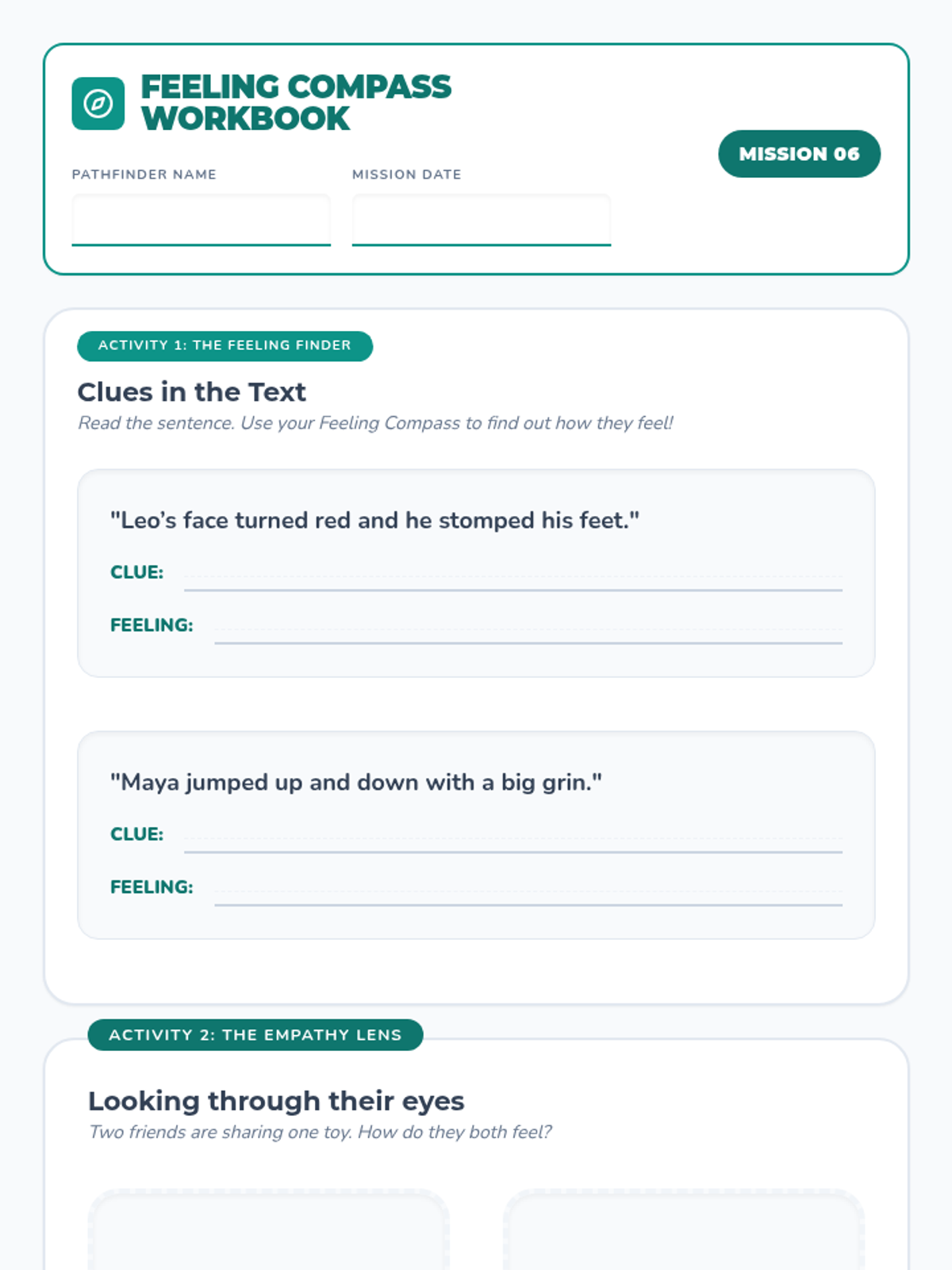
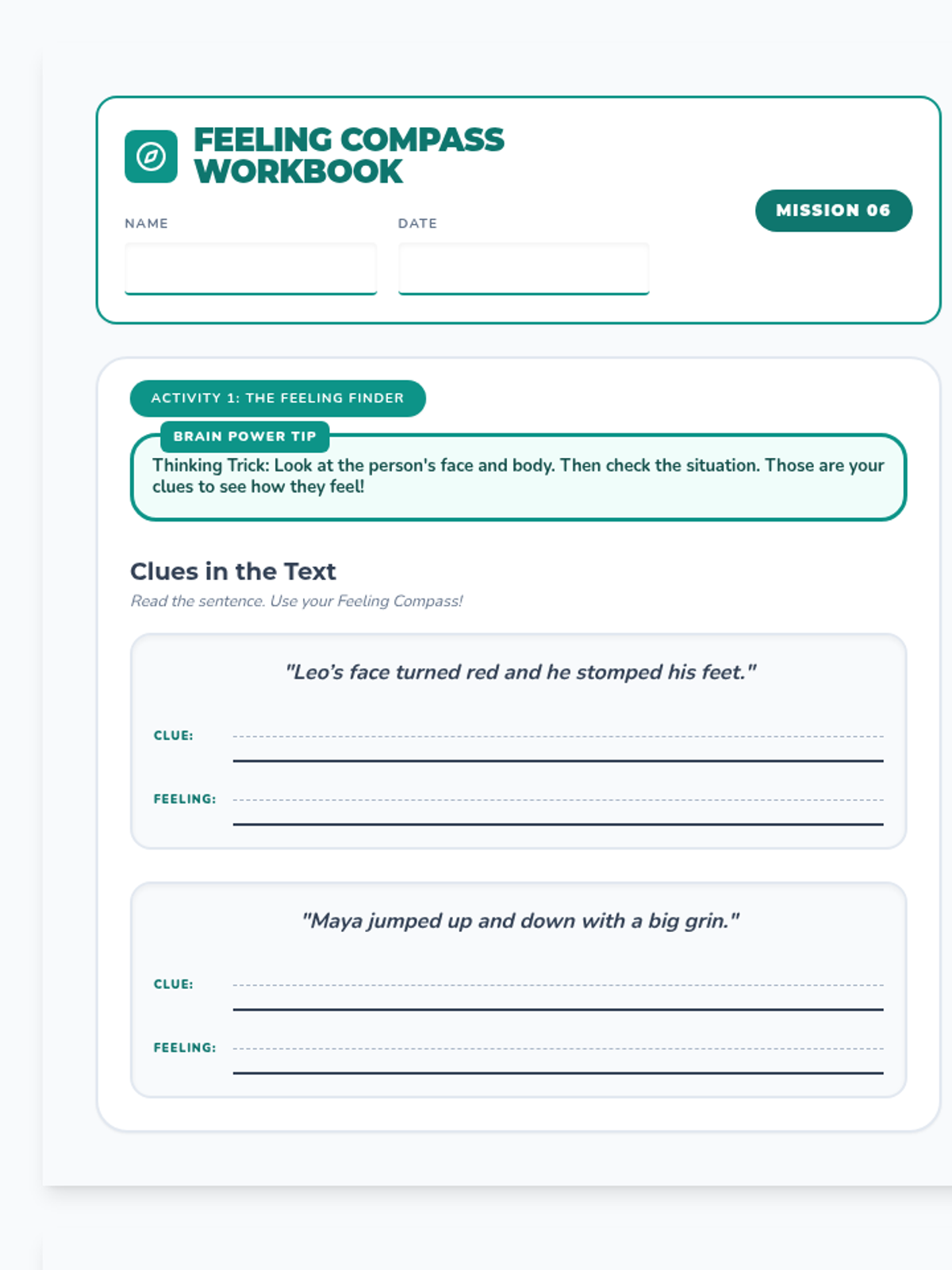
Explores social understanding by teaching students how to use their 'internal compass' to interpret character feelings and perspectives in texts.
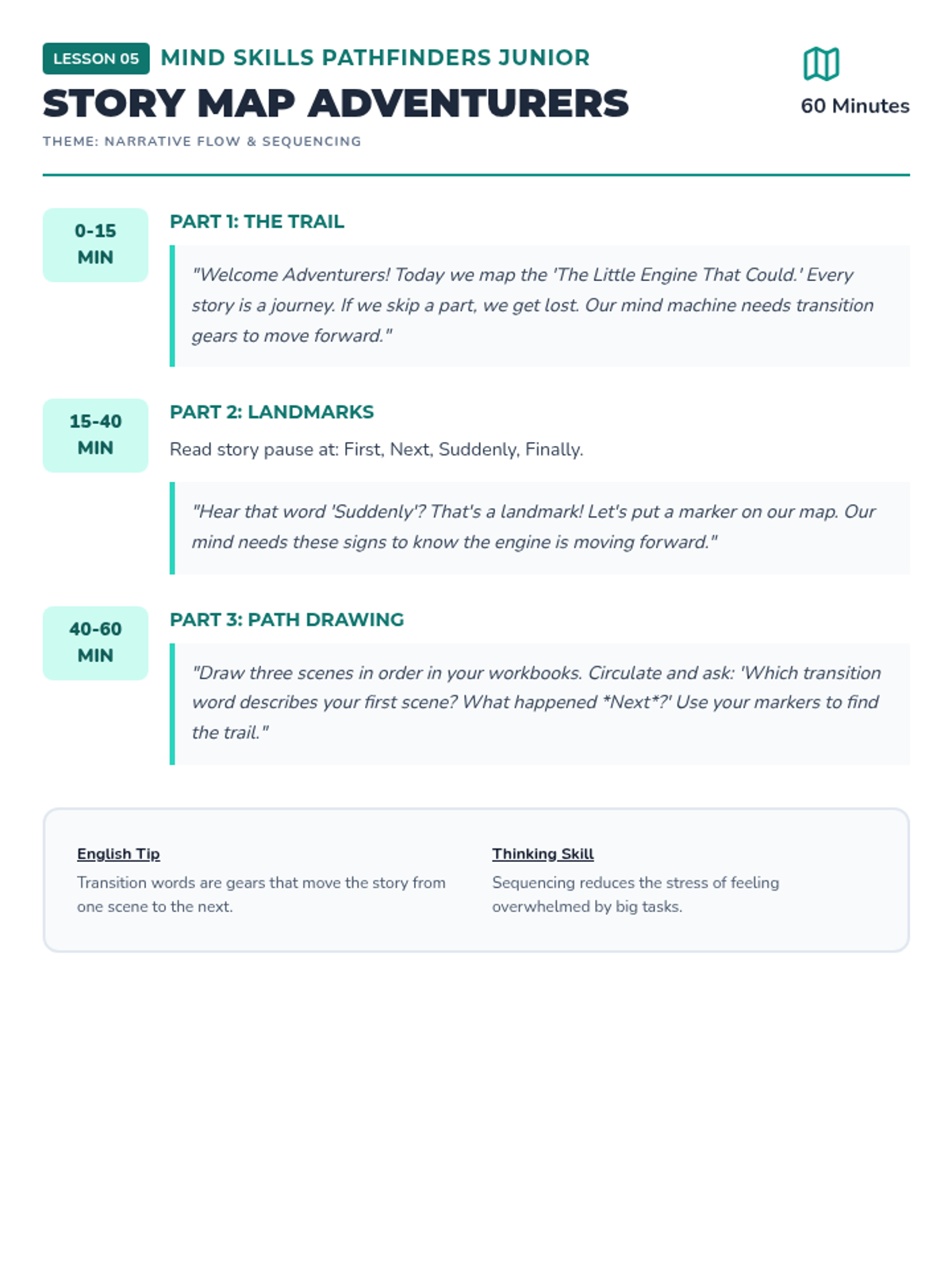
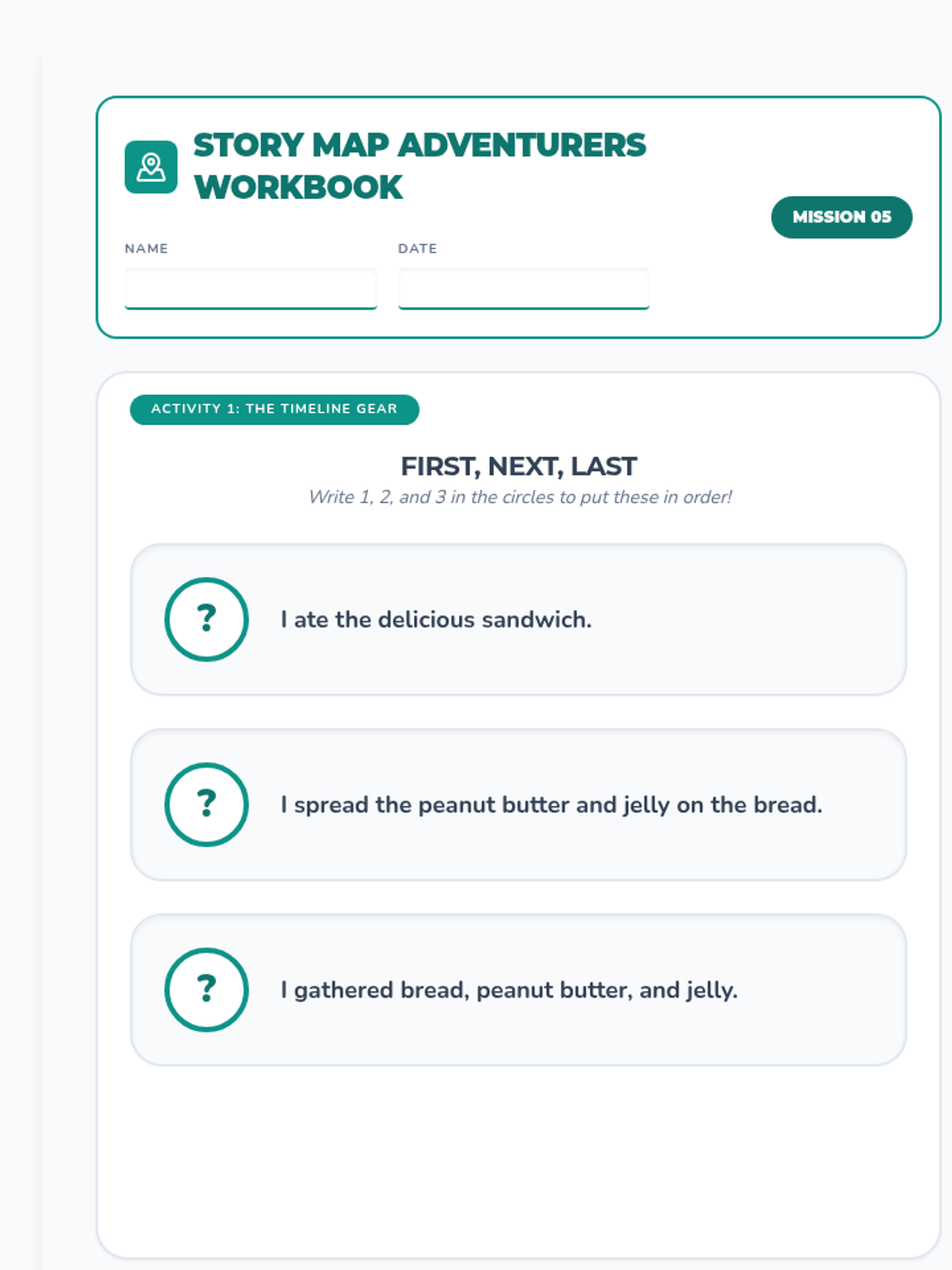
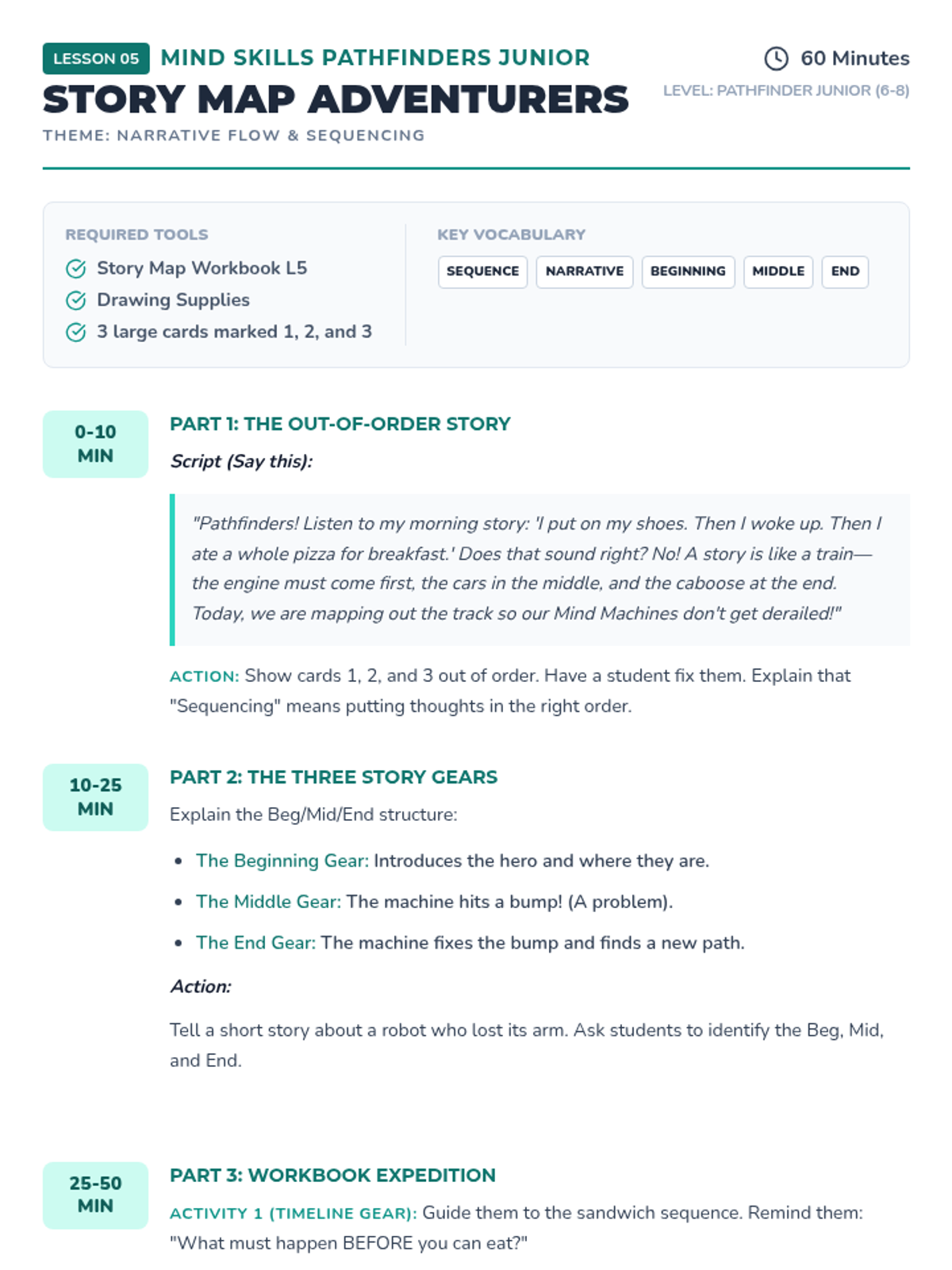
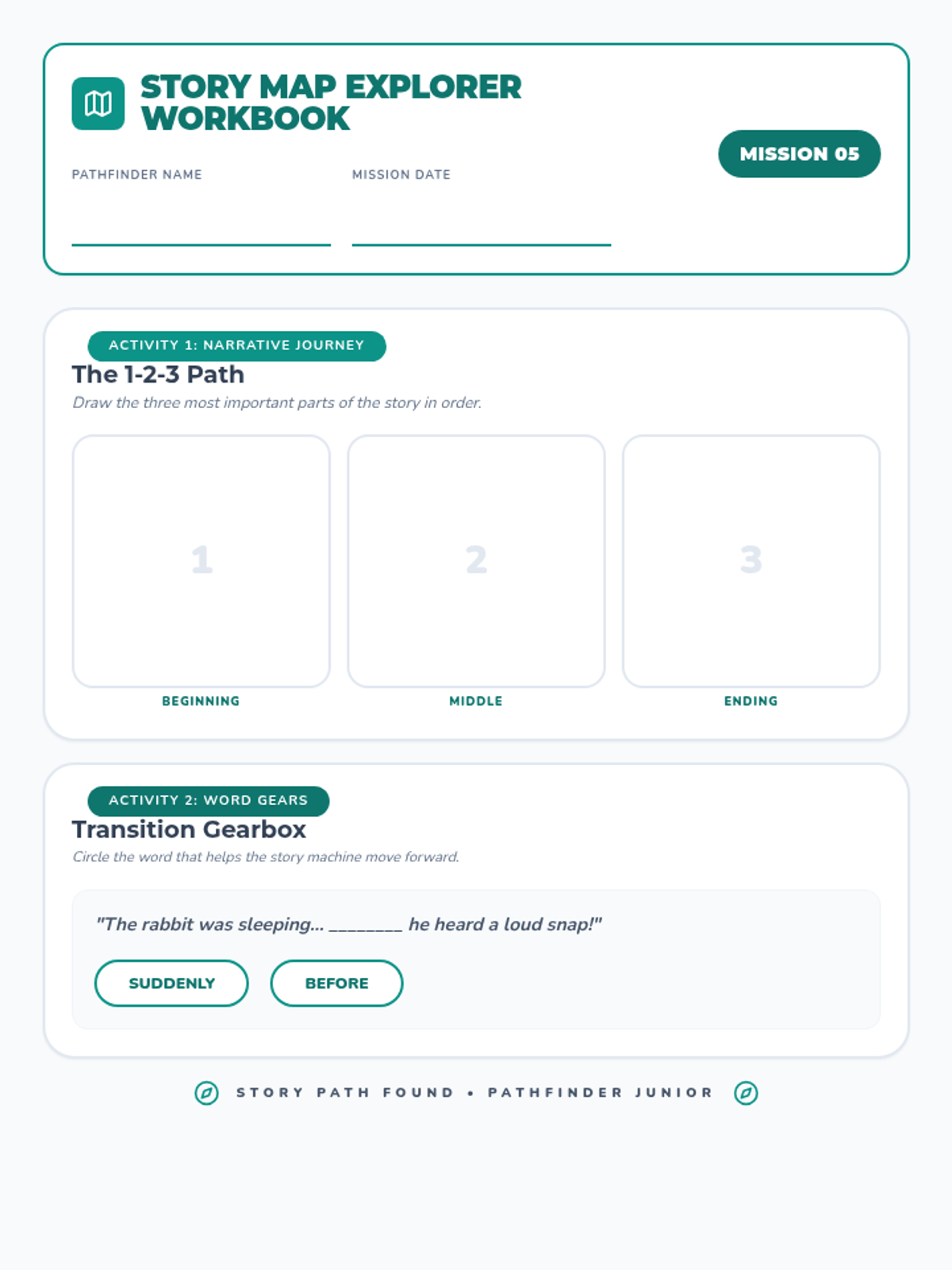
Uses story mapping to help students visualize narrative flow and understand how different parts of a story connect to form a whole.
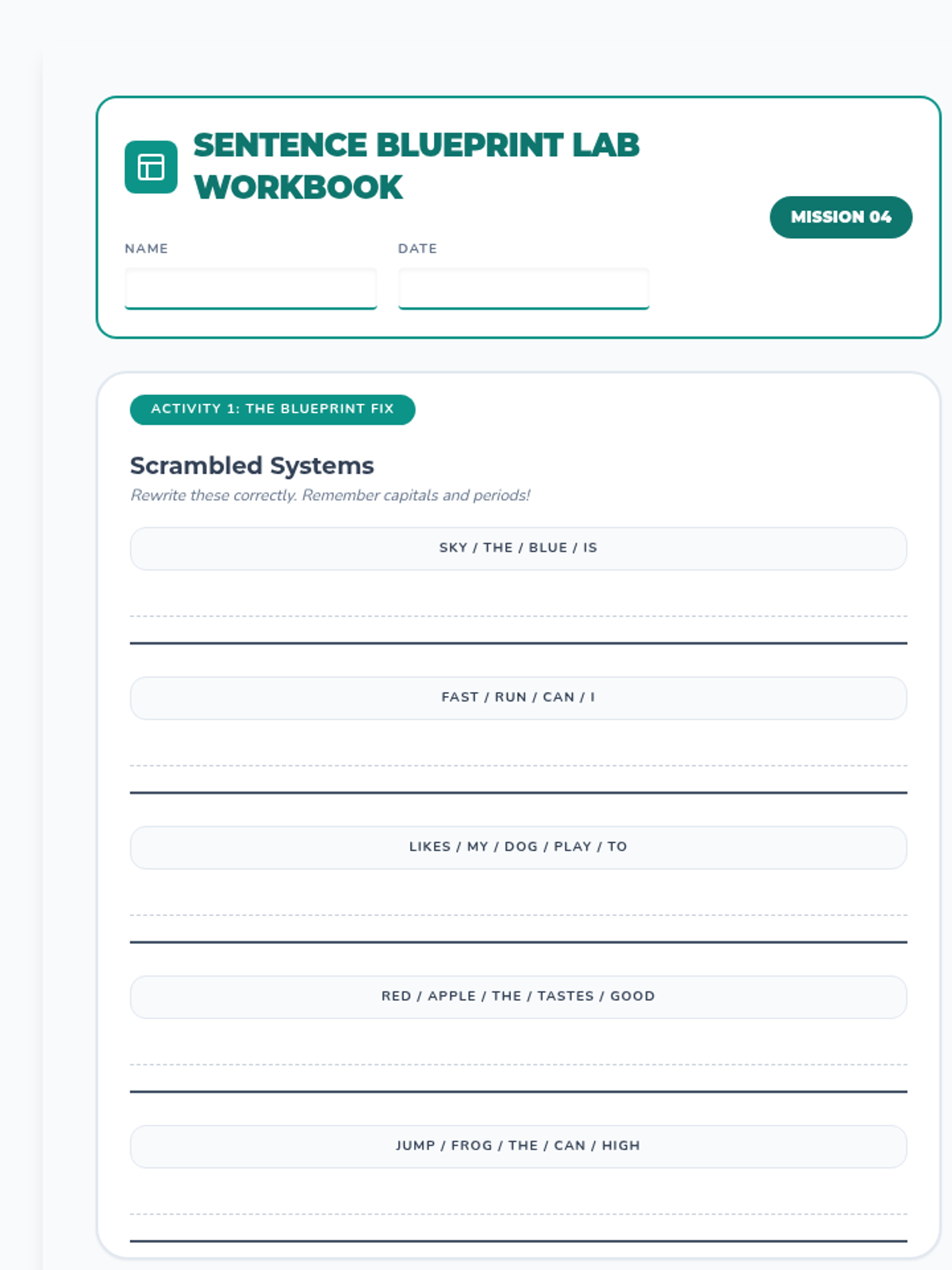
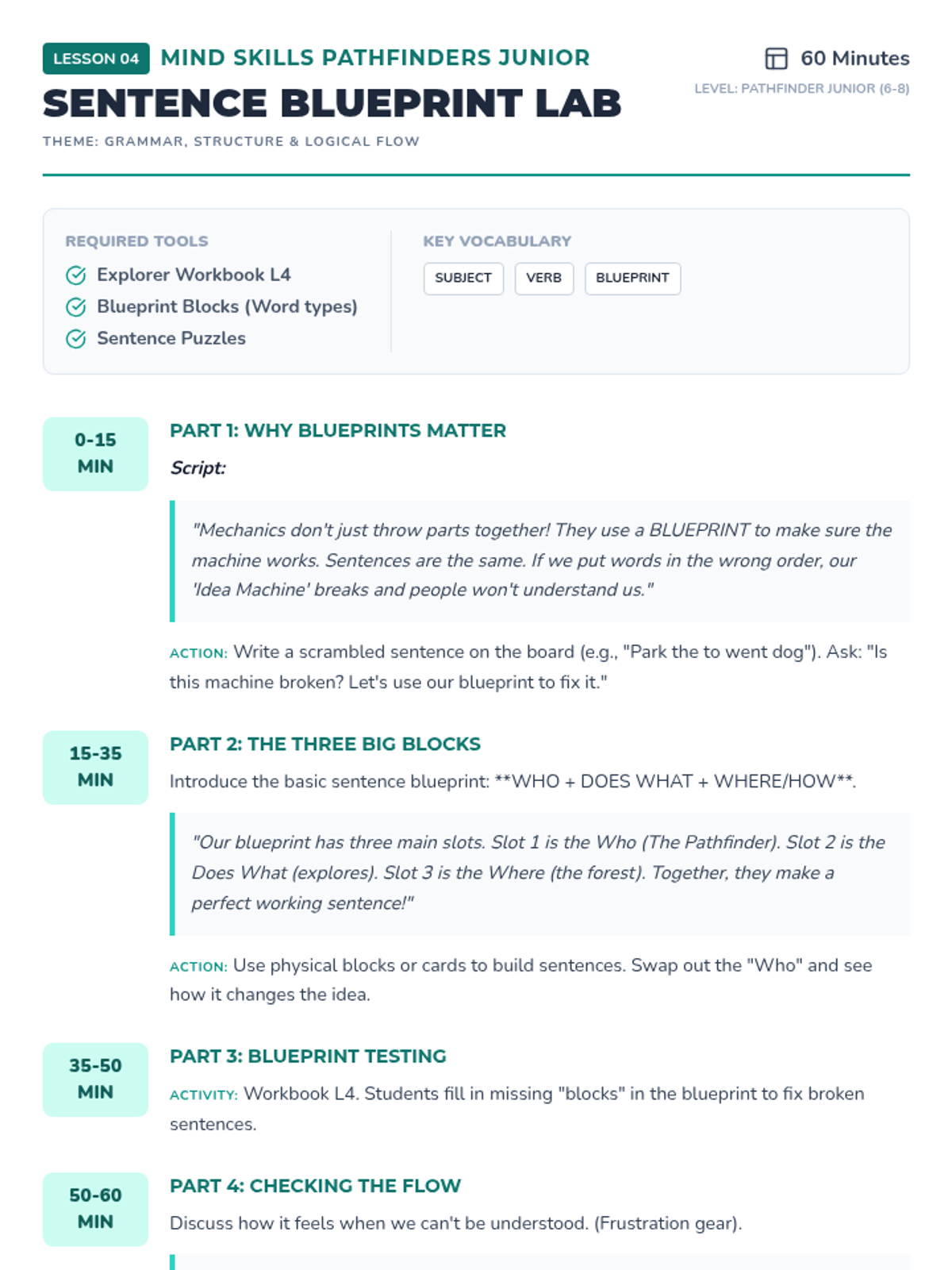
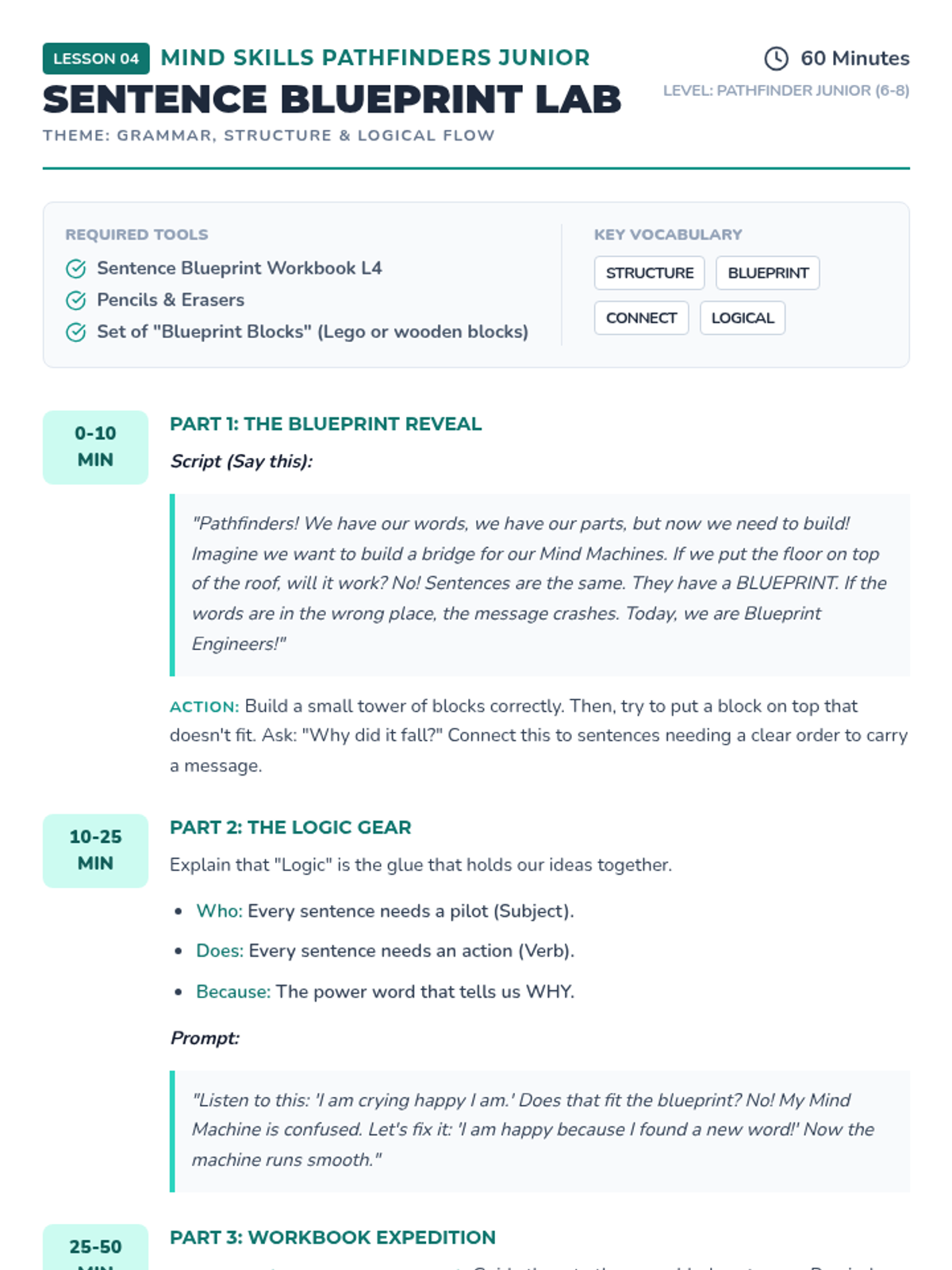
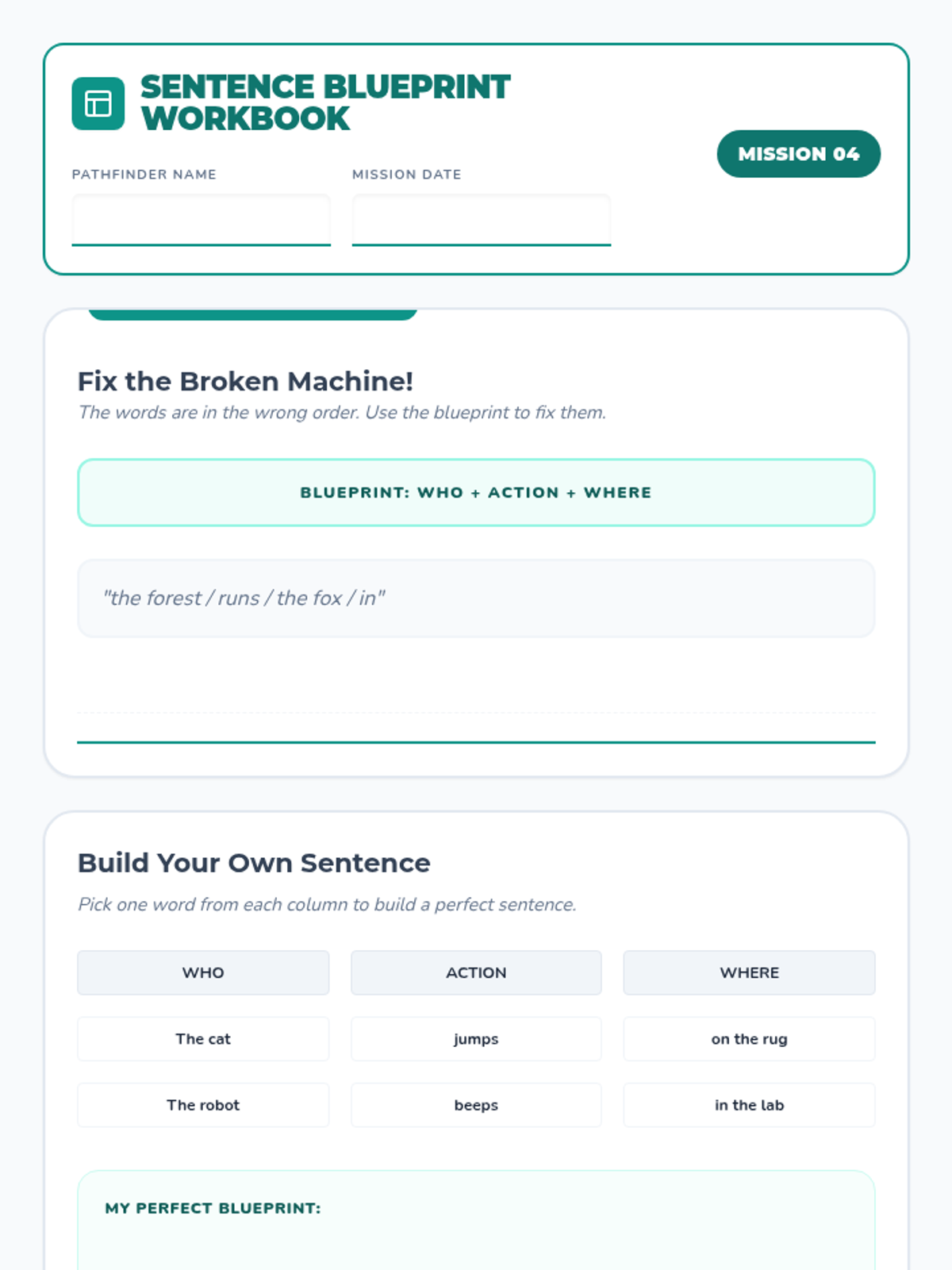
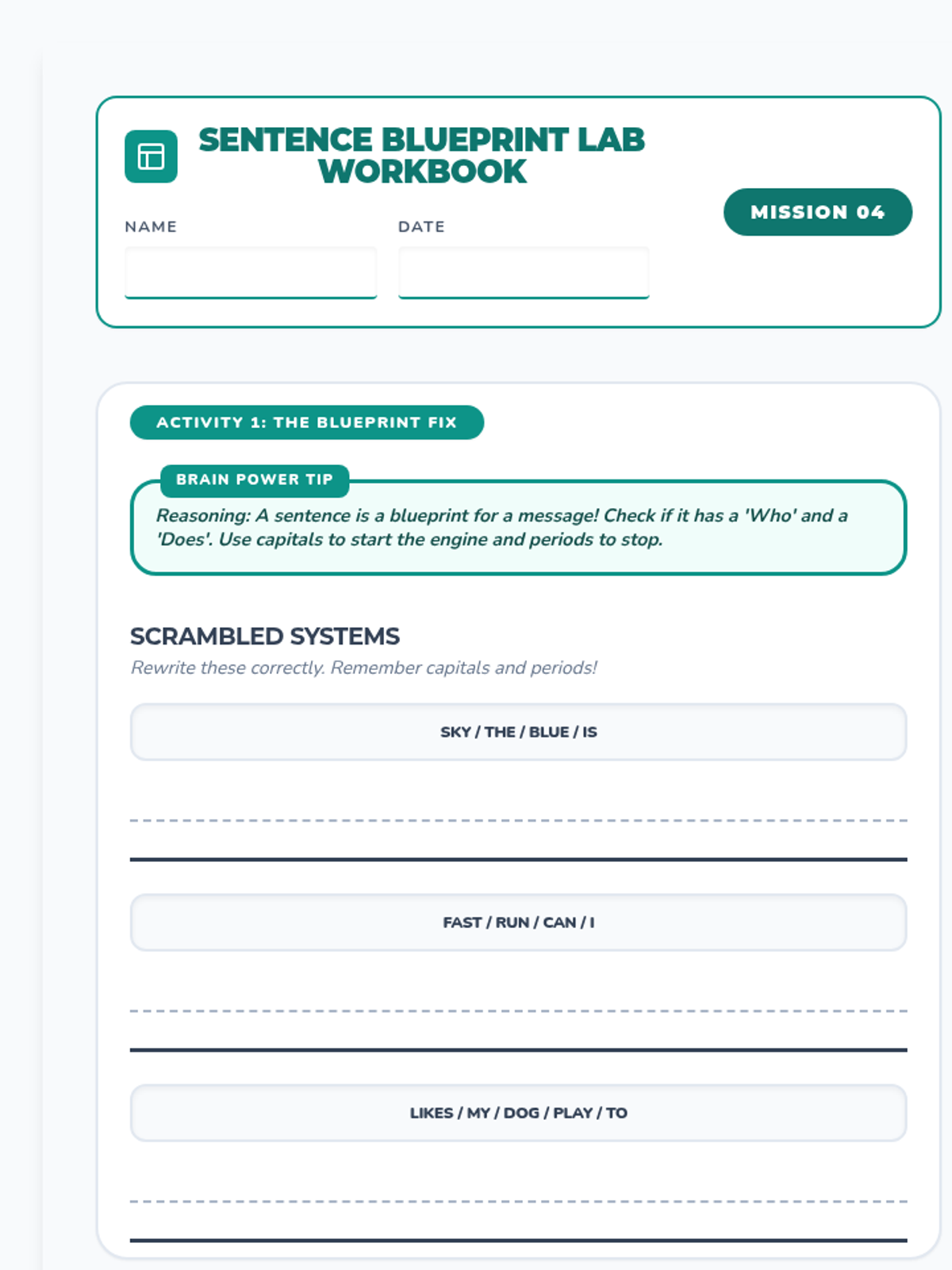
Teaches basic grammar and sentence structure as the 'blueprints' that help us express ideas clearly so others can understand our thoughts.
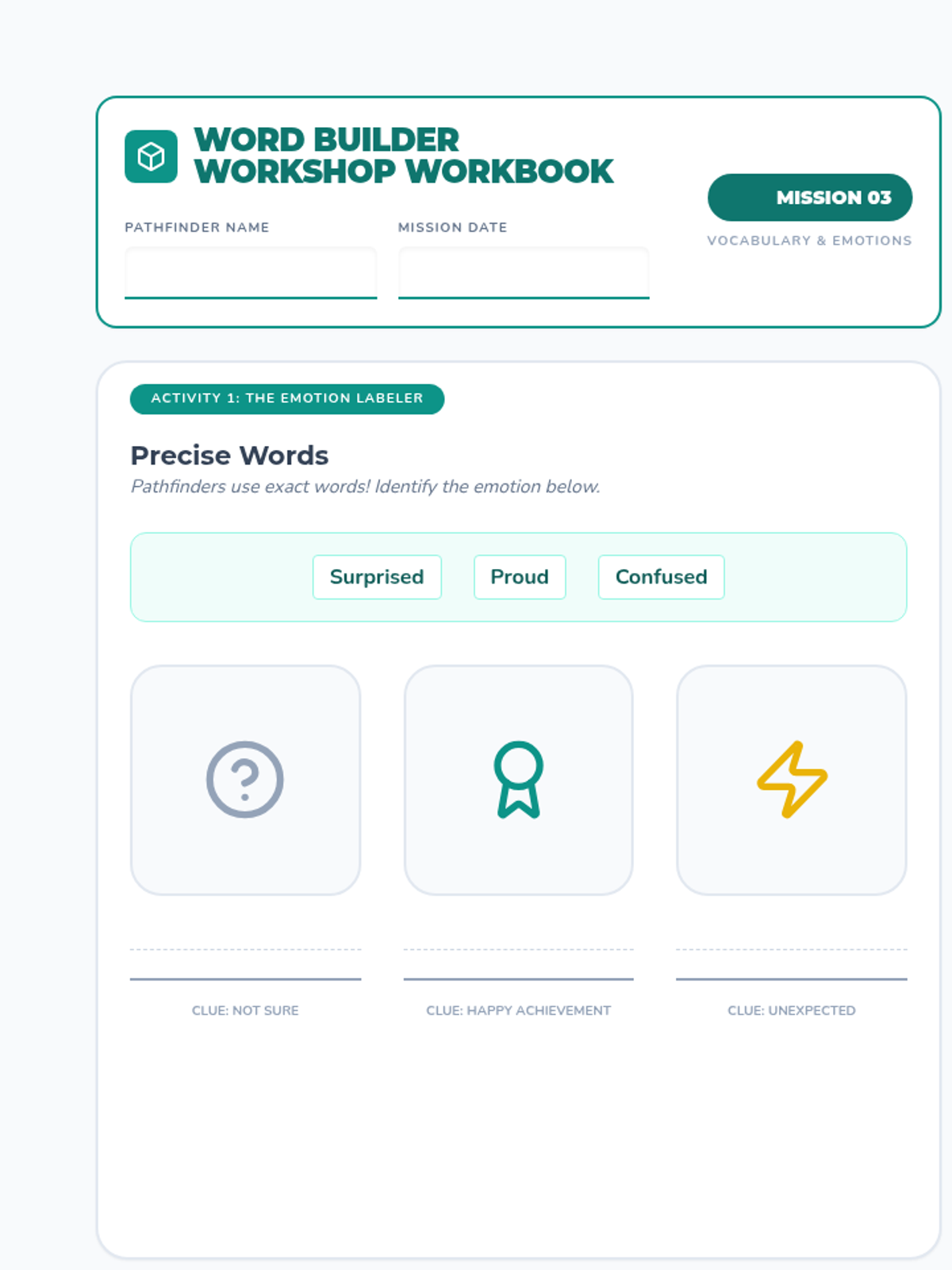
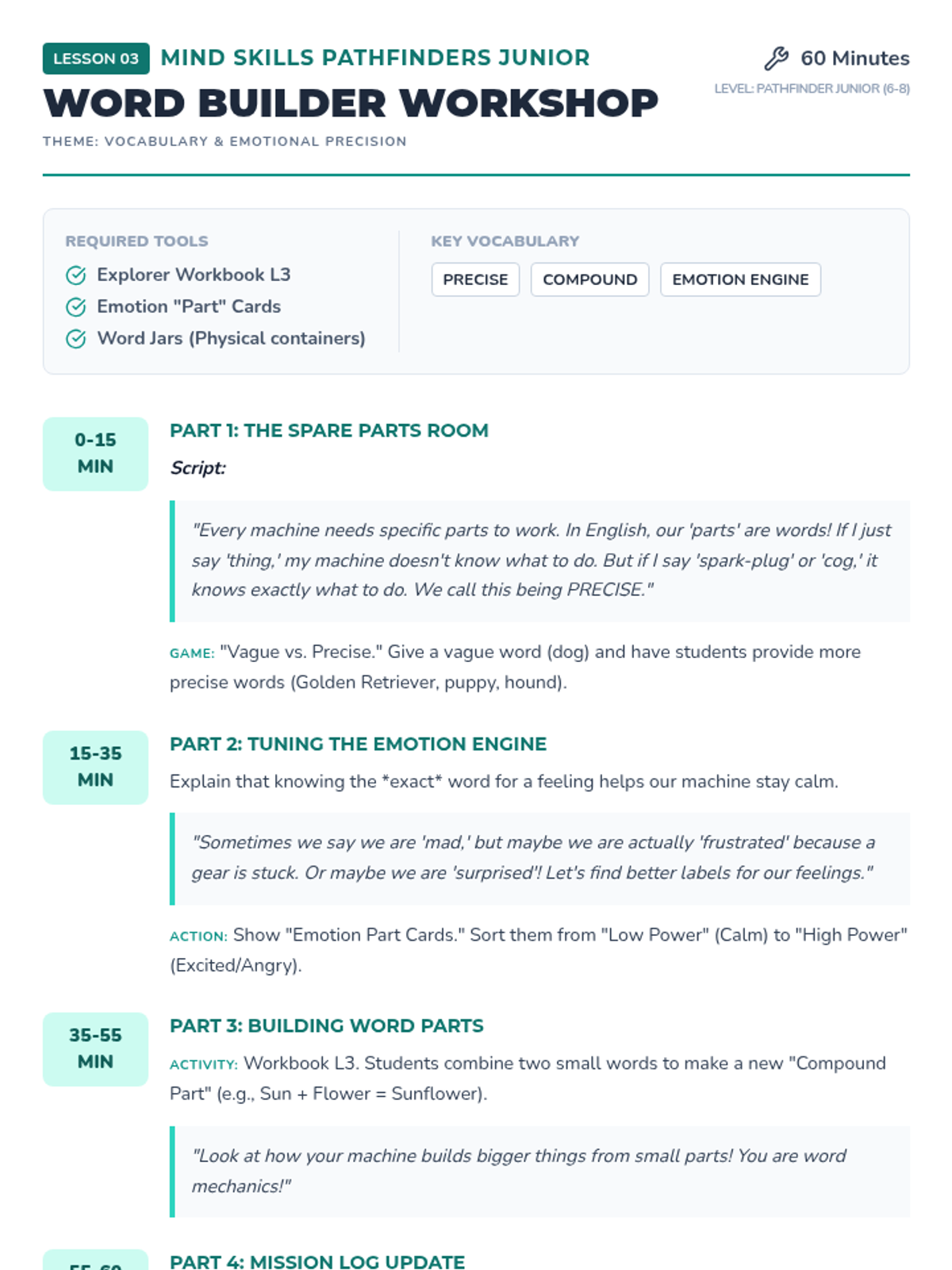
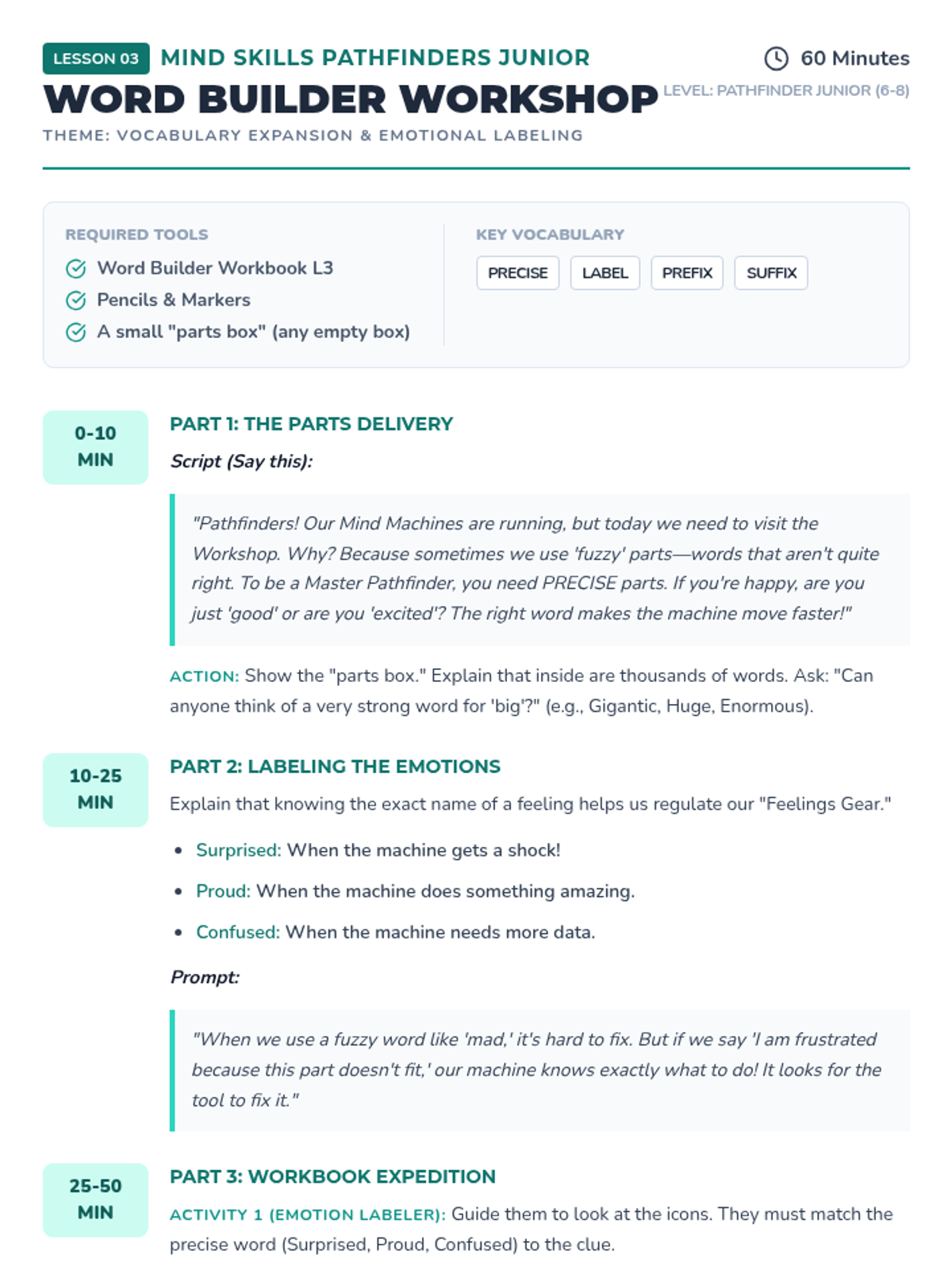
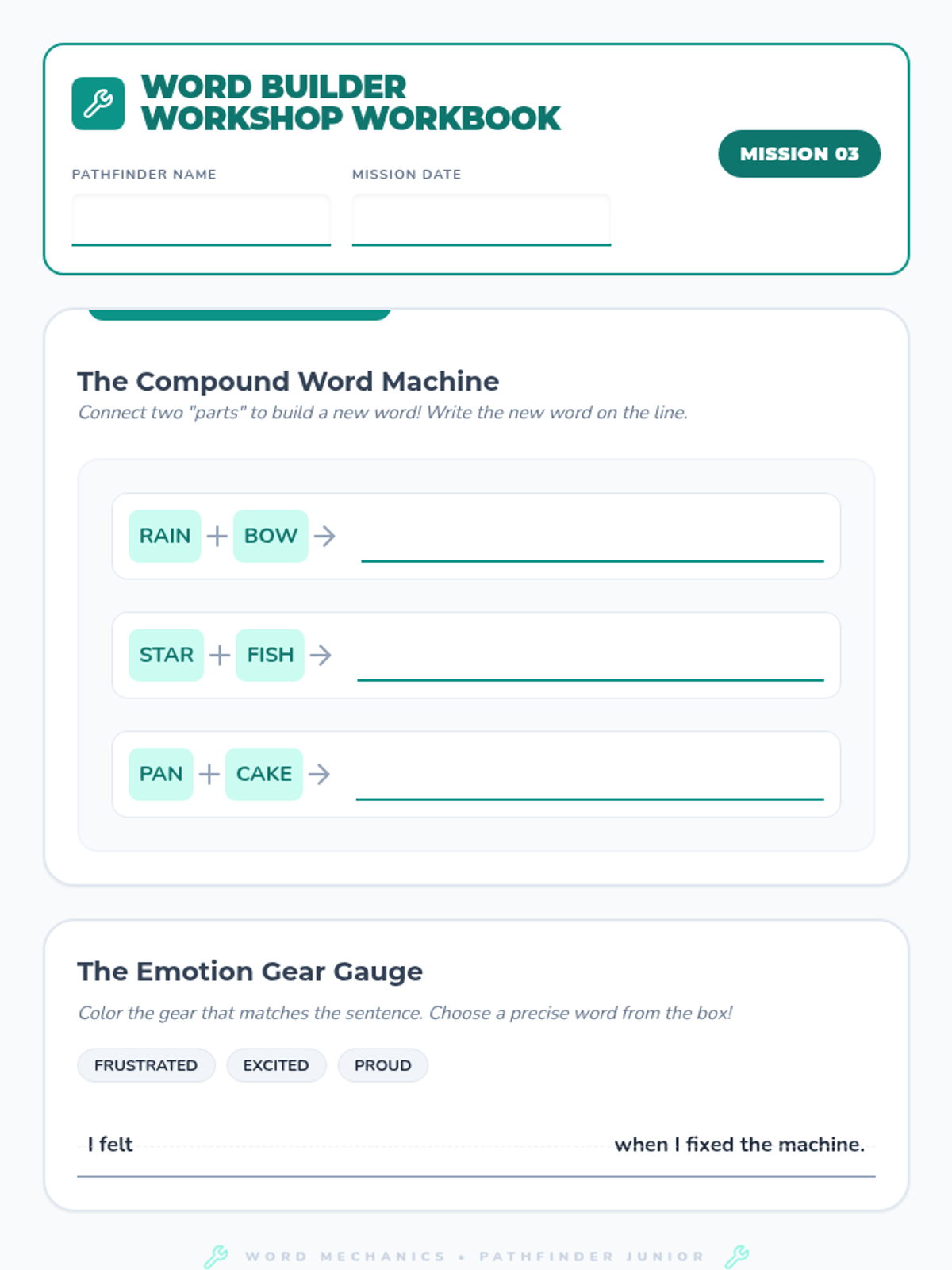
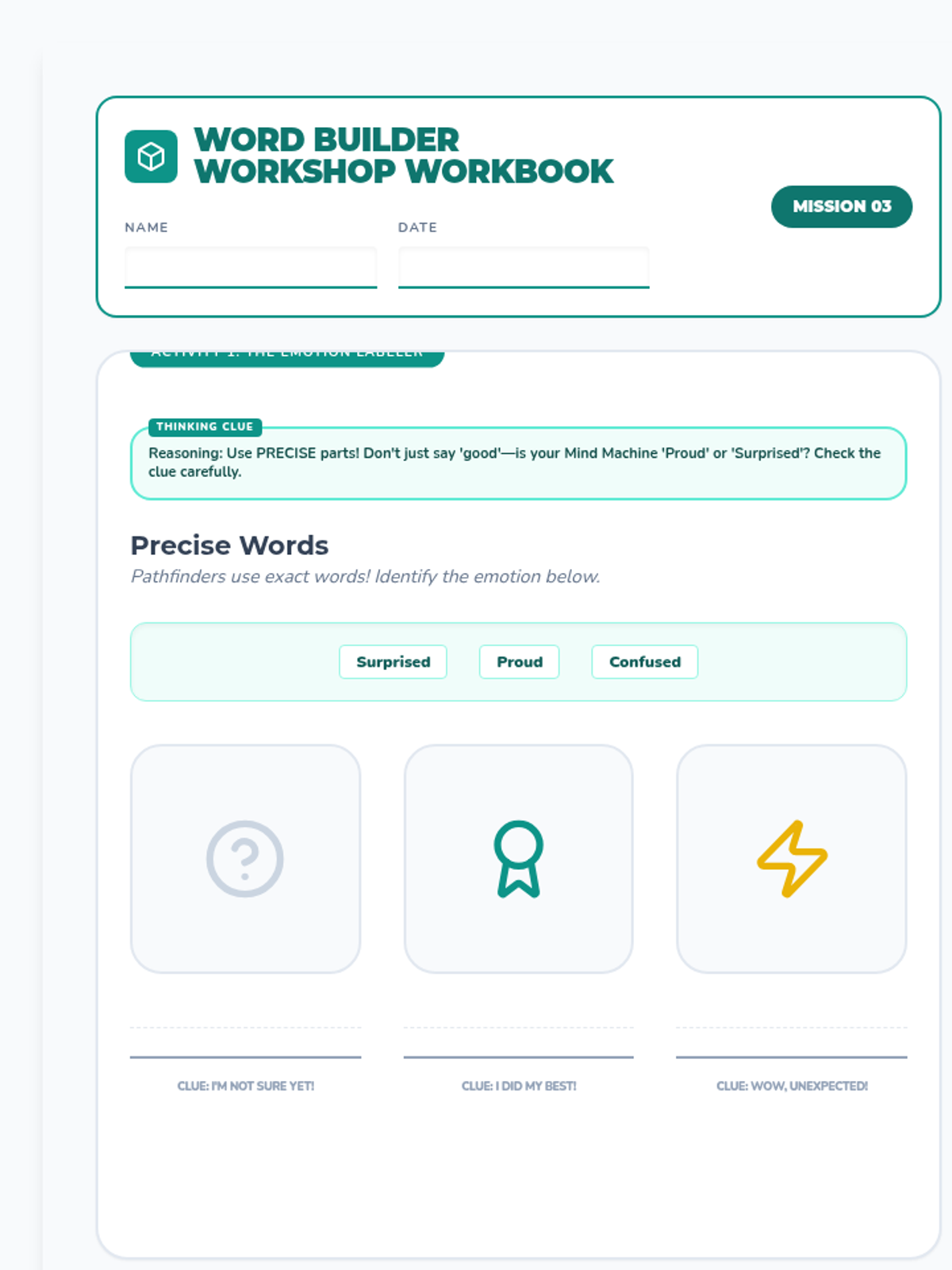
Introduces vocabulary building through the lens of 'parts' for our mind machines, focusing on labeling emotions and objects with precision.
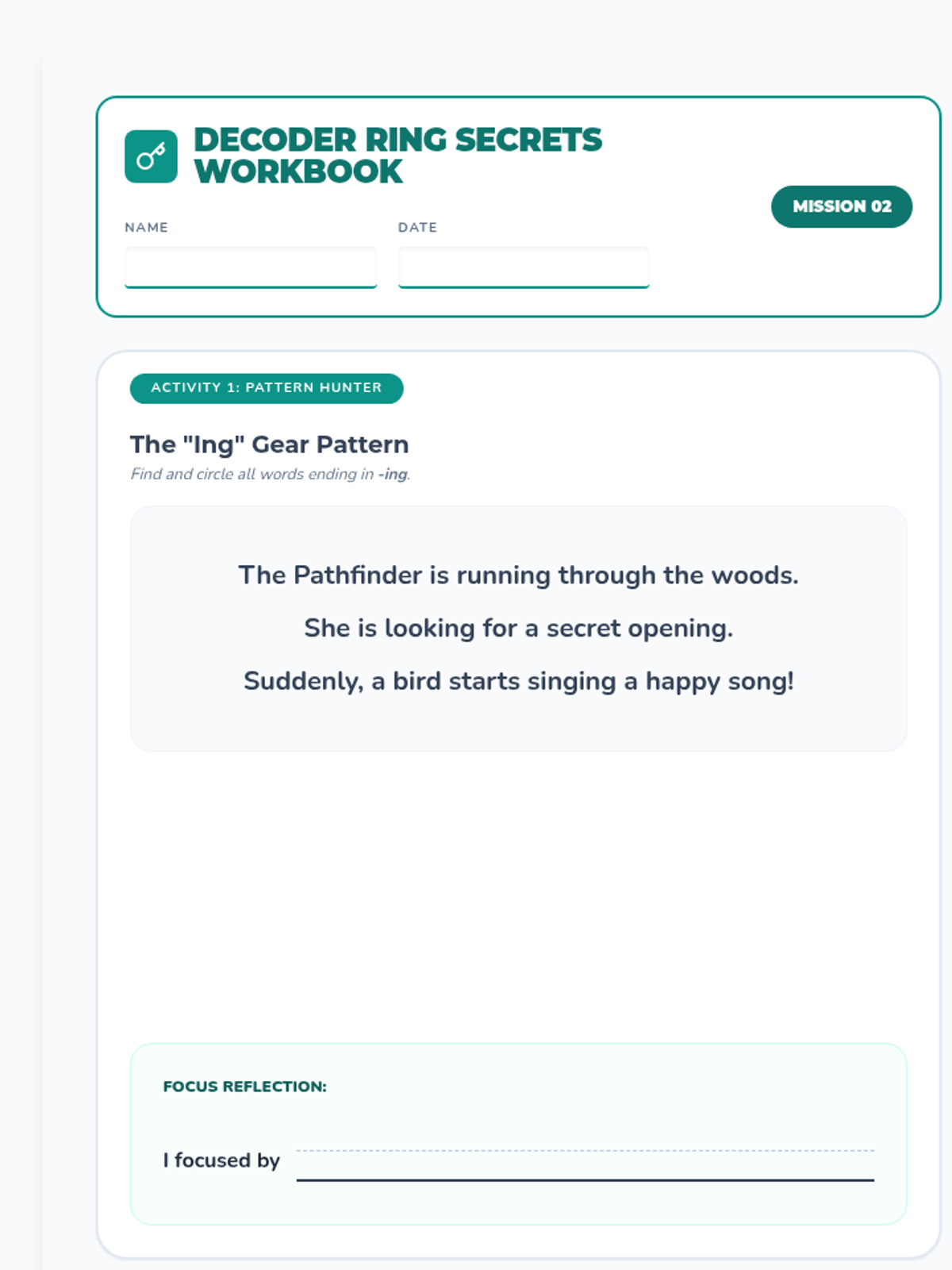
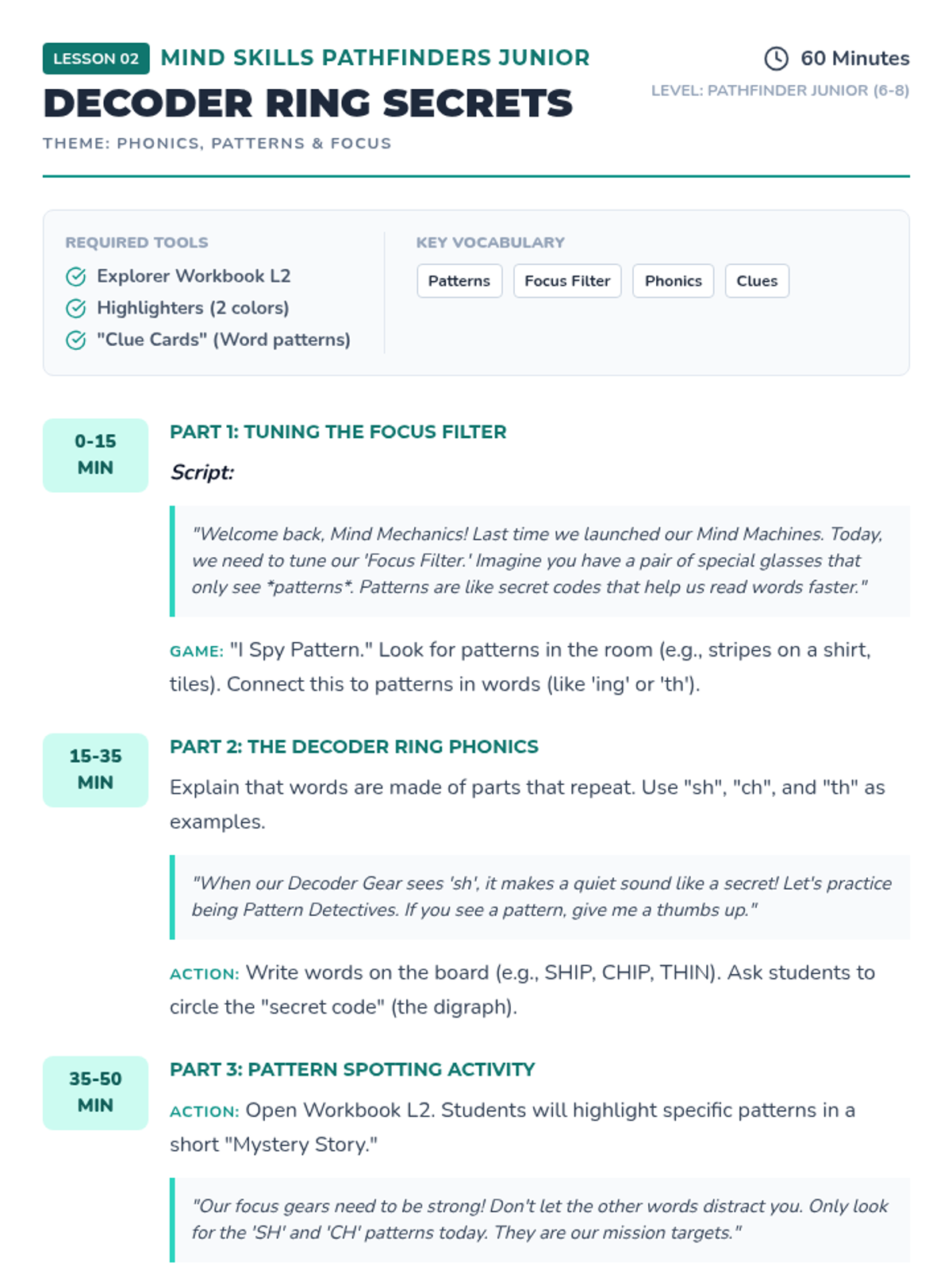
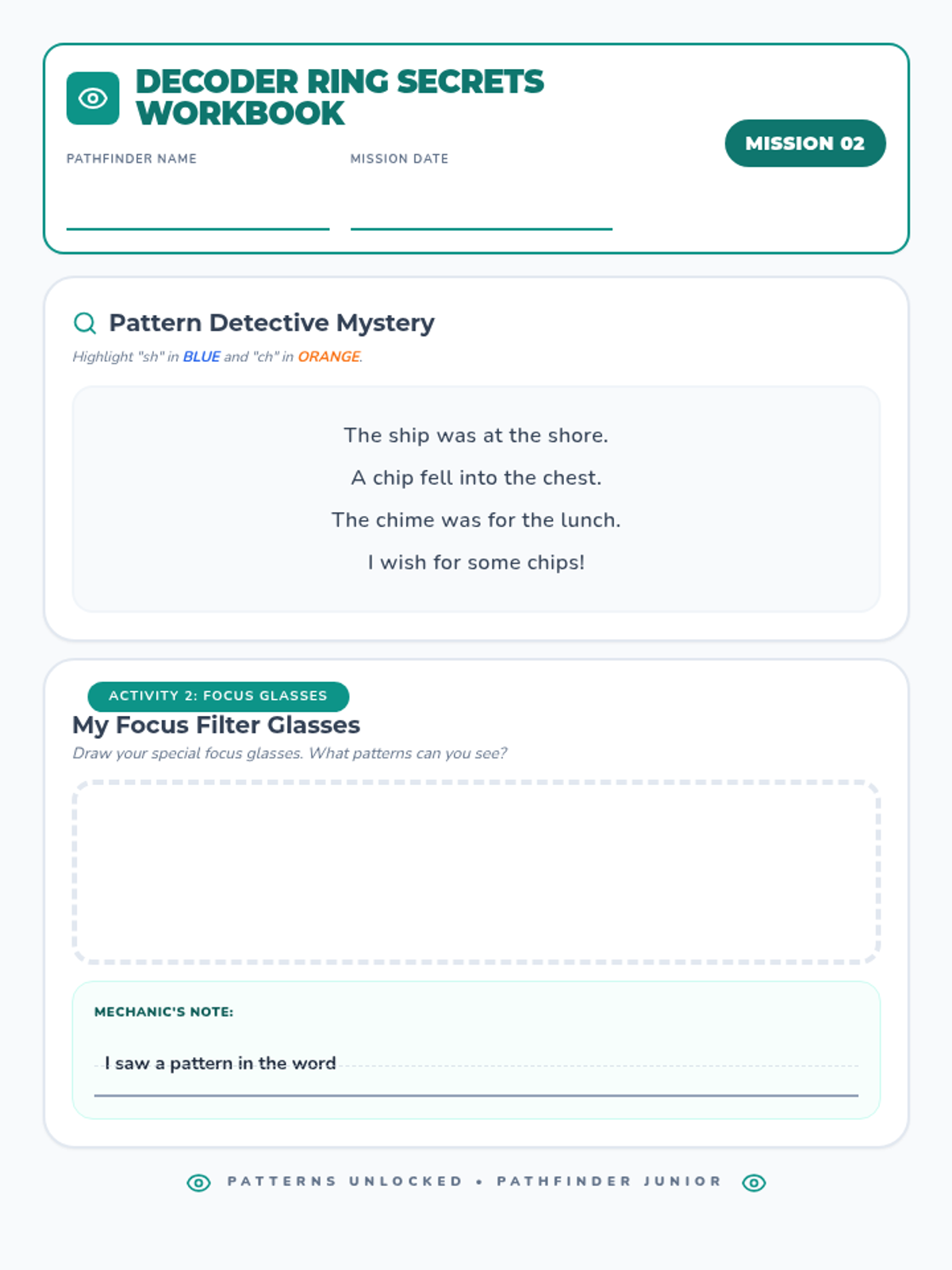
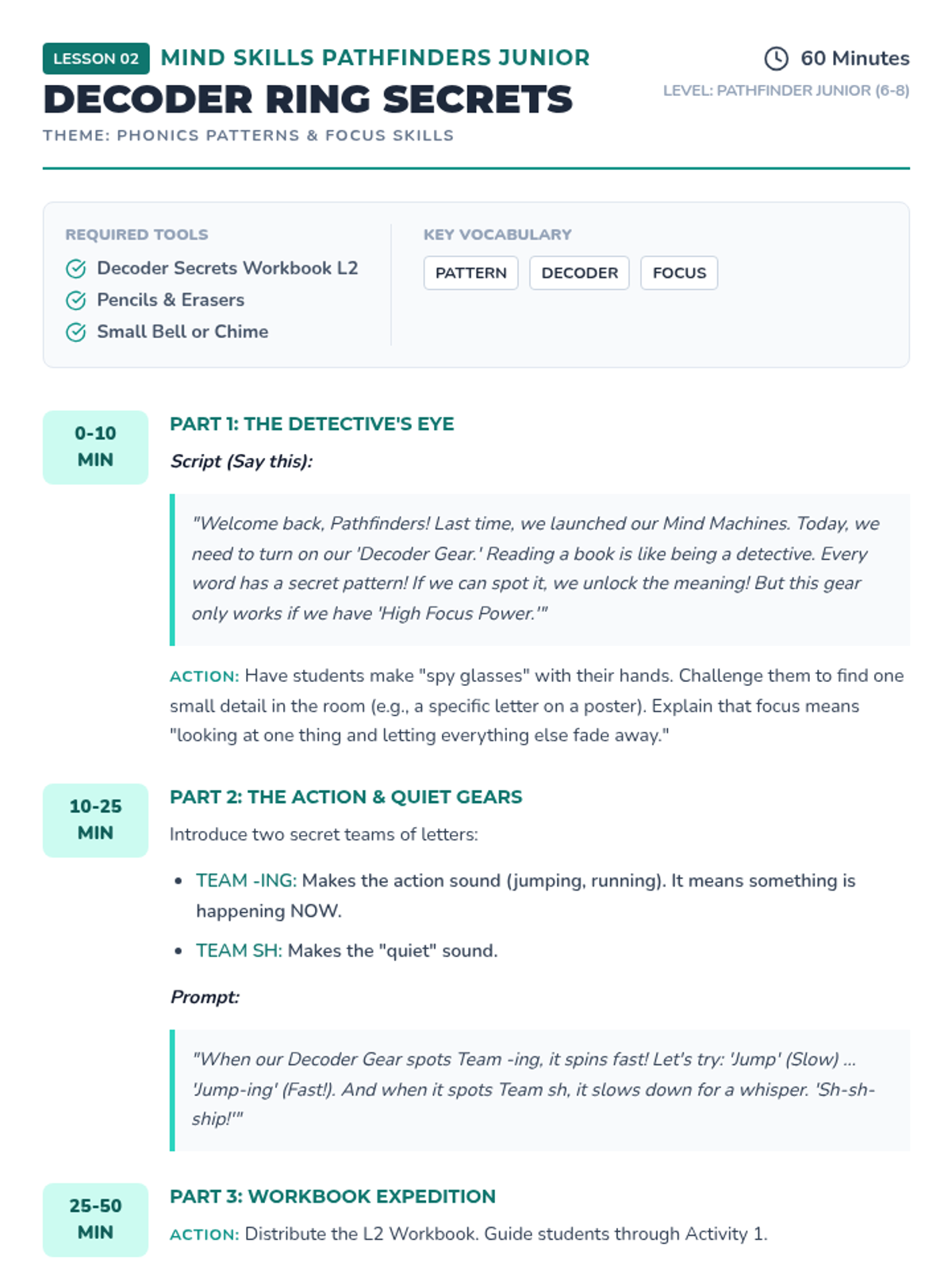
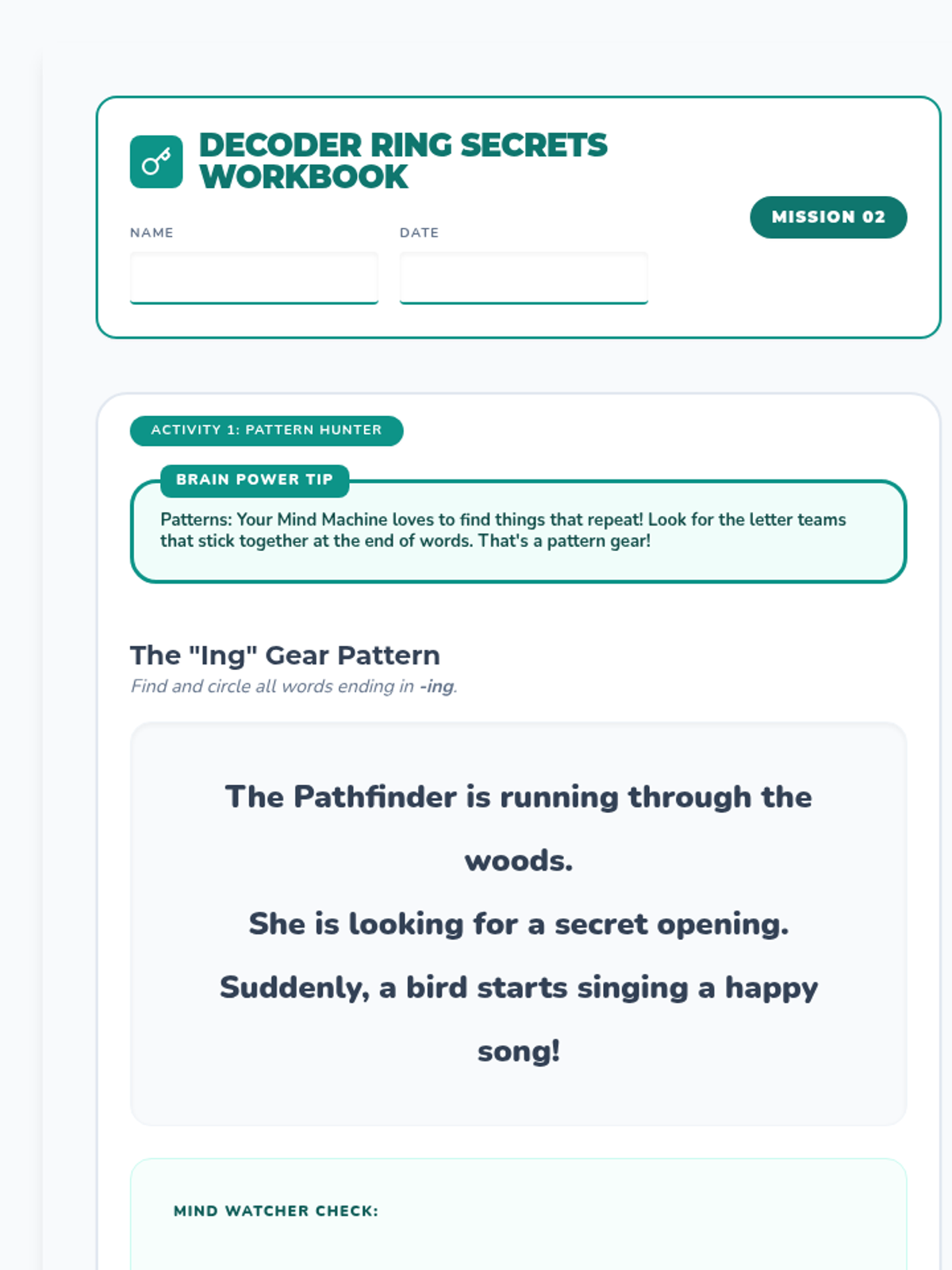
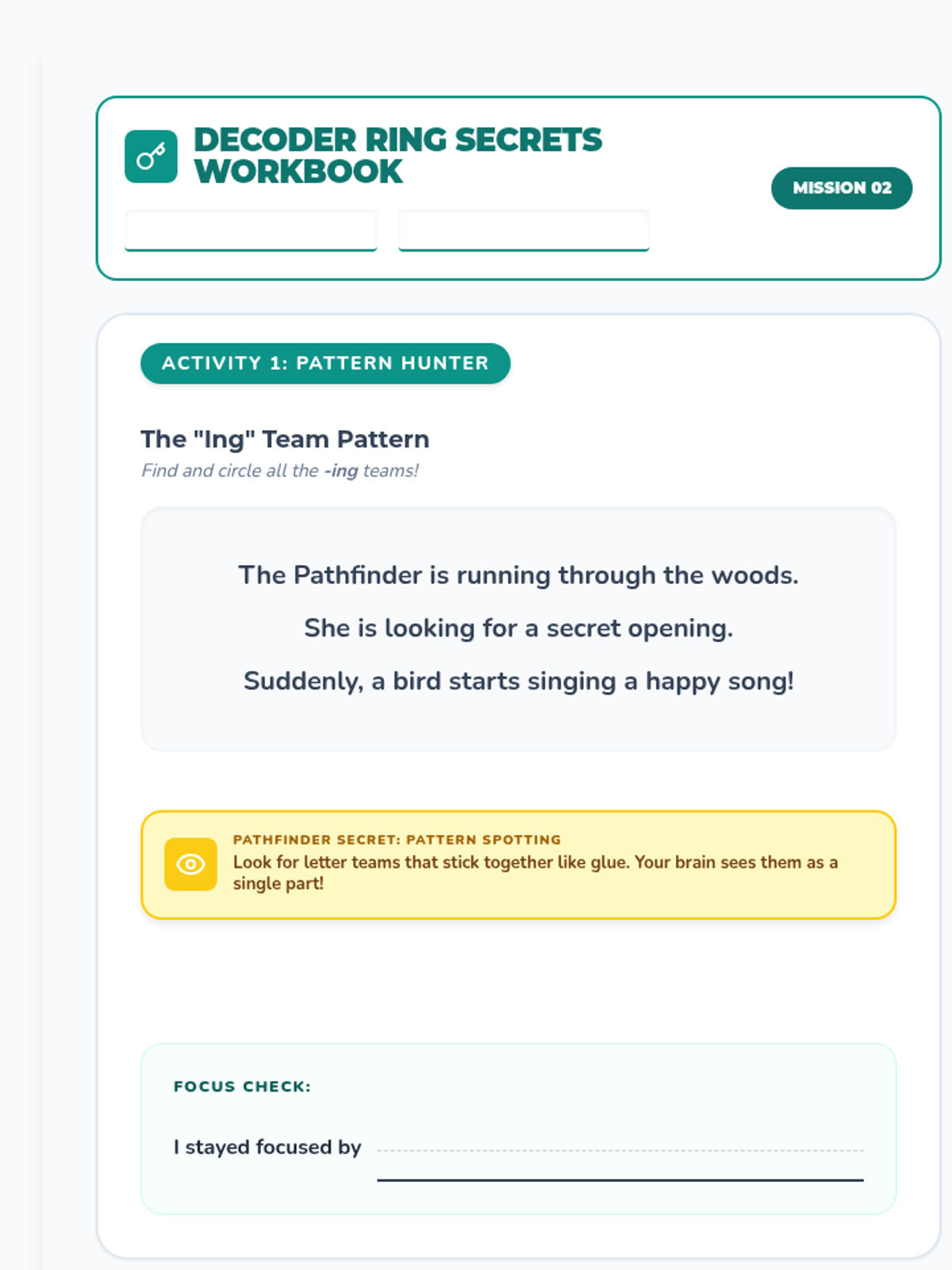
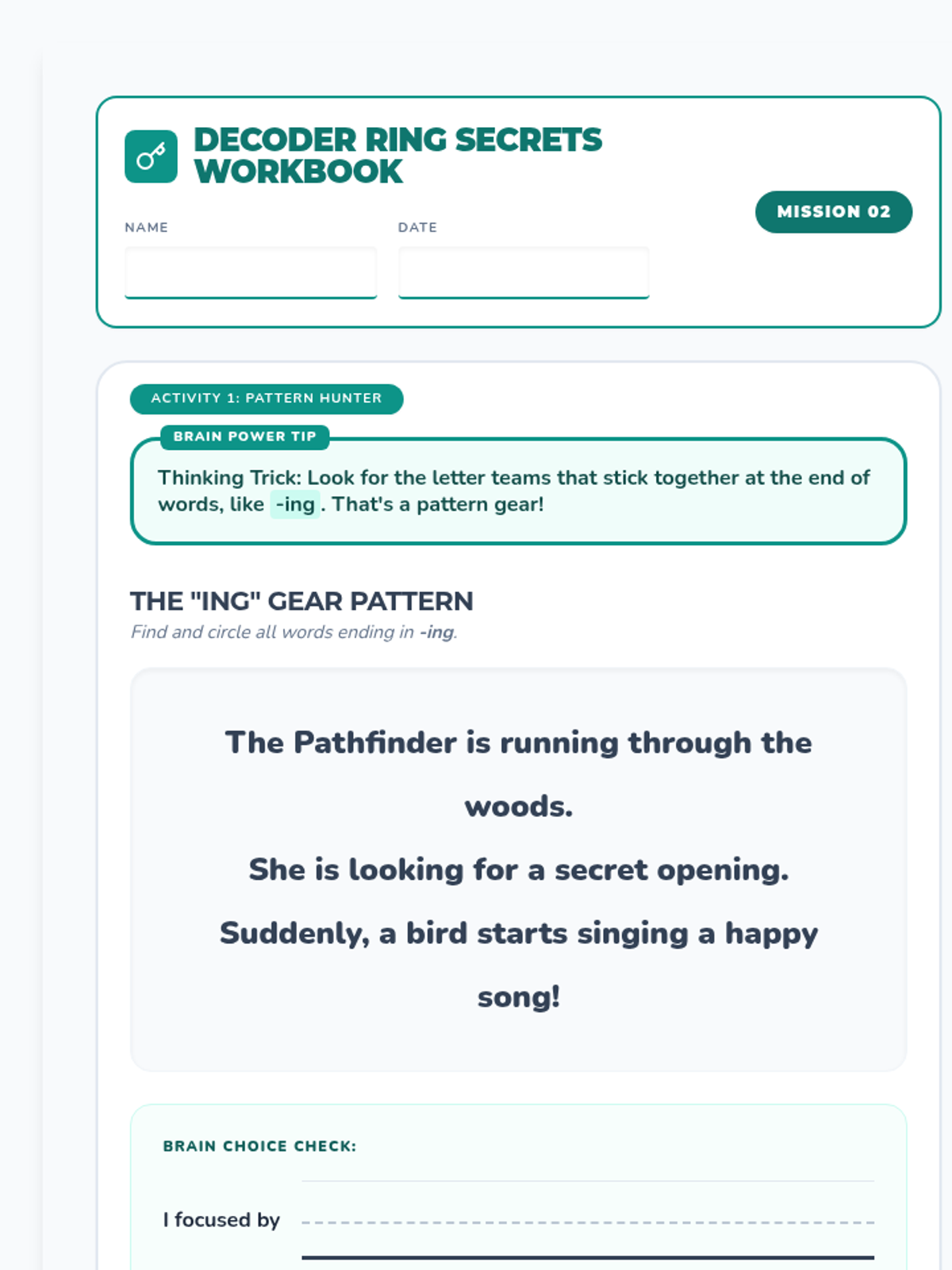
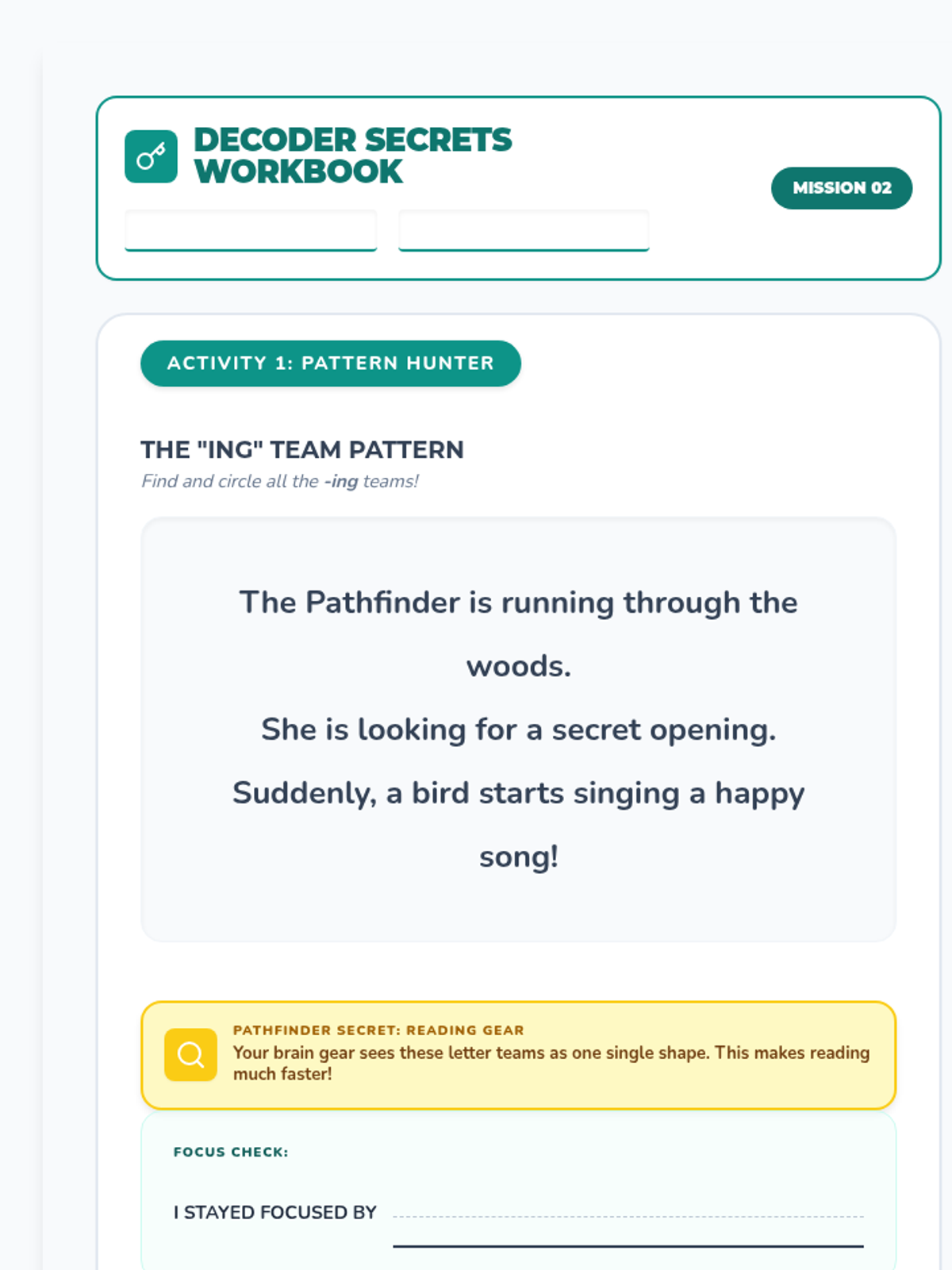
Focuses on phonics and pattern spotting in text, teaching students that reading is a form of detective work where we look for clues to unlock meaning.
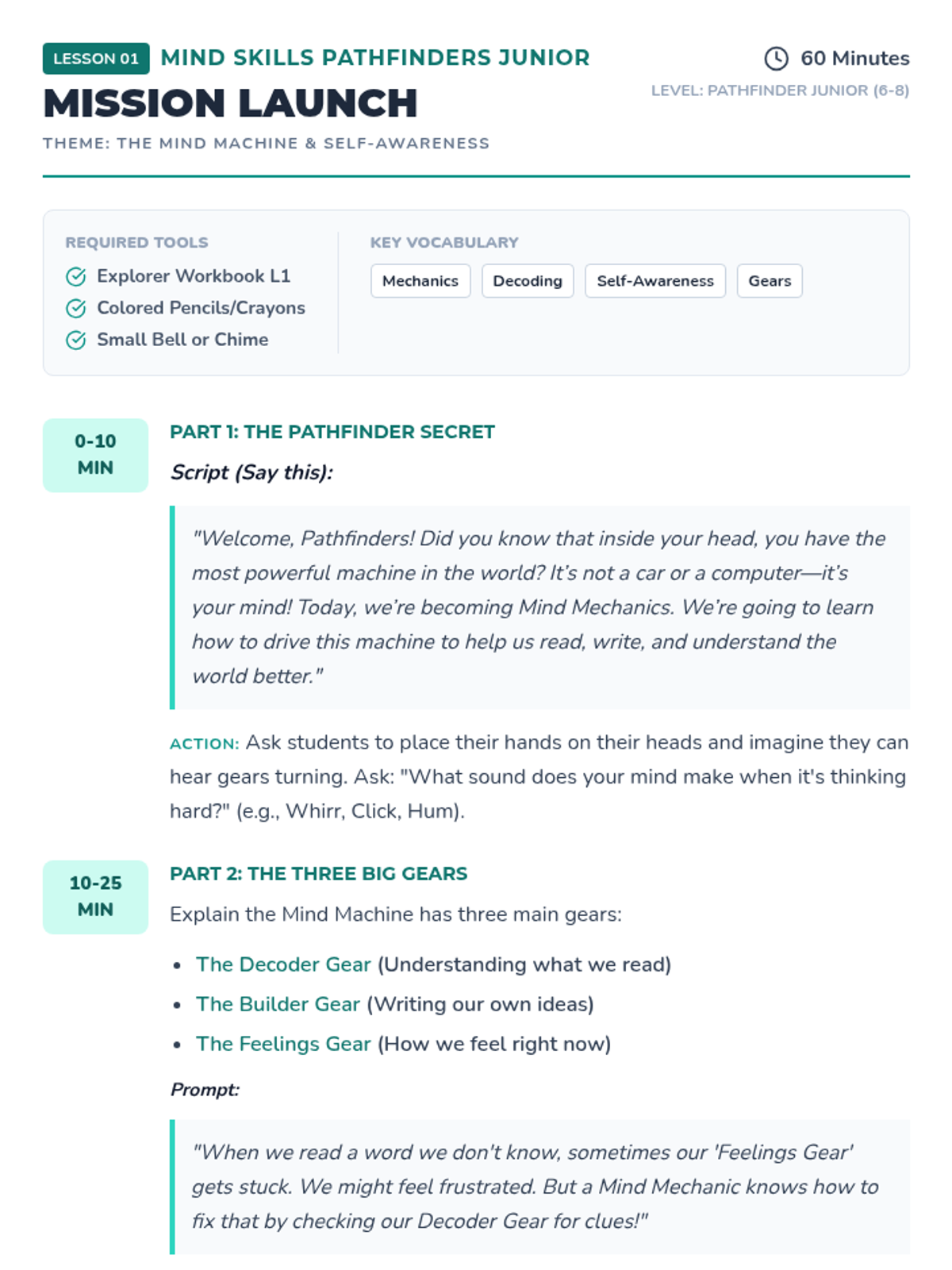
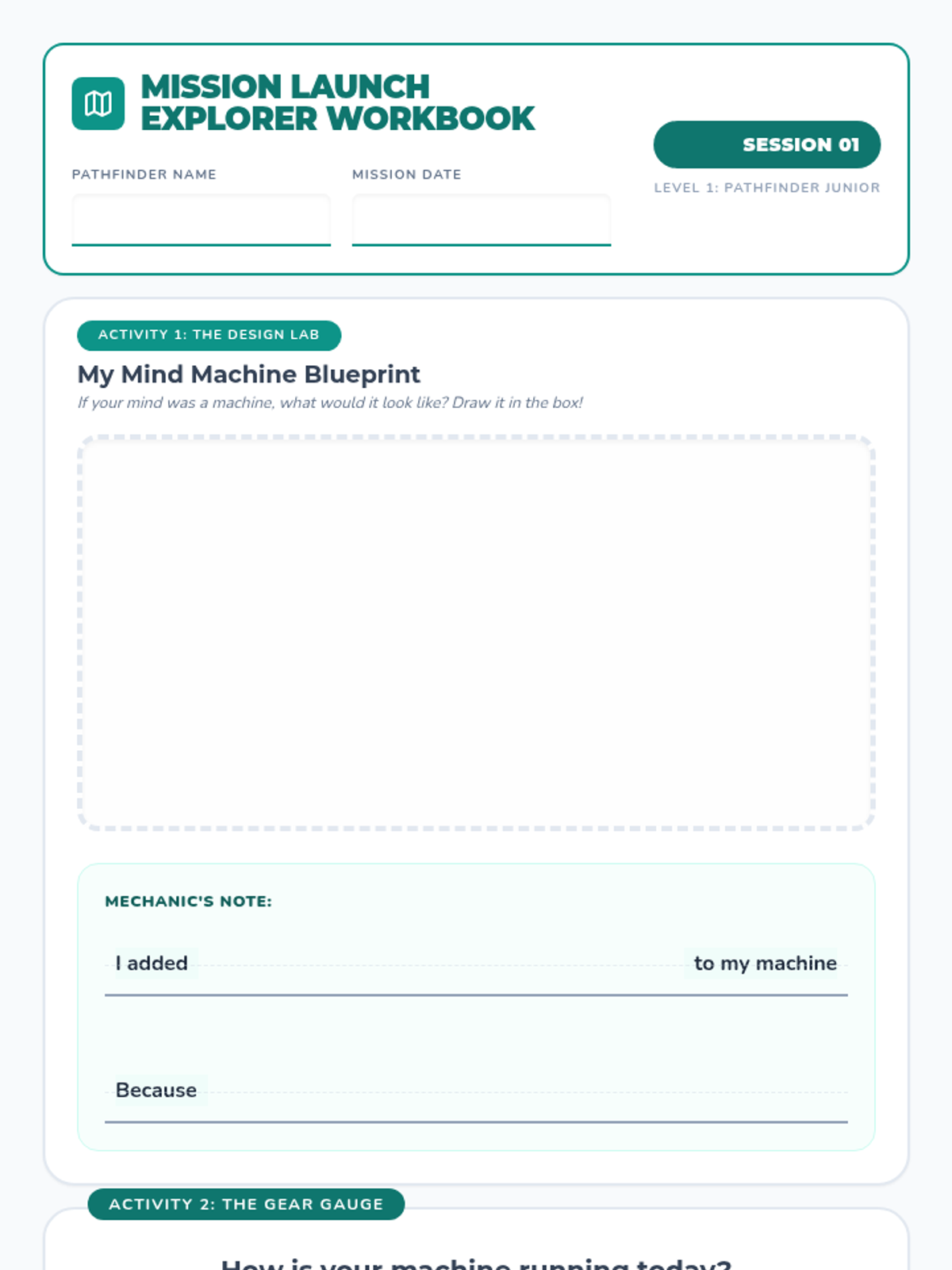
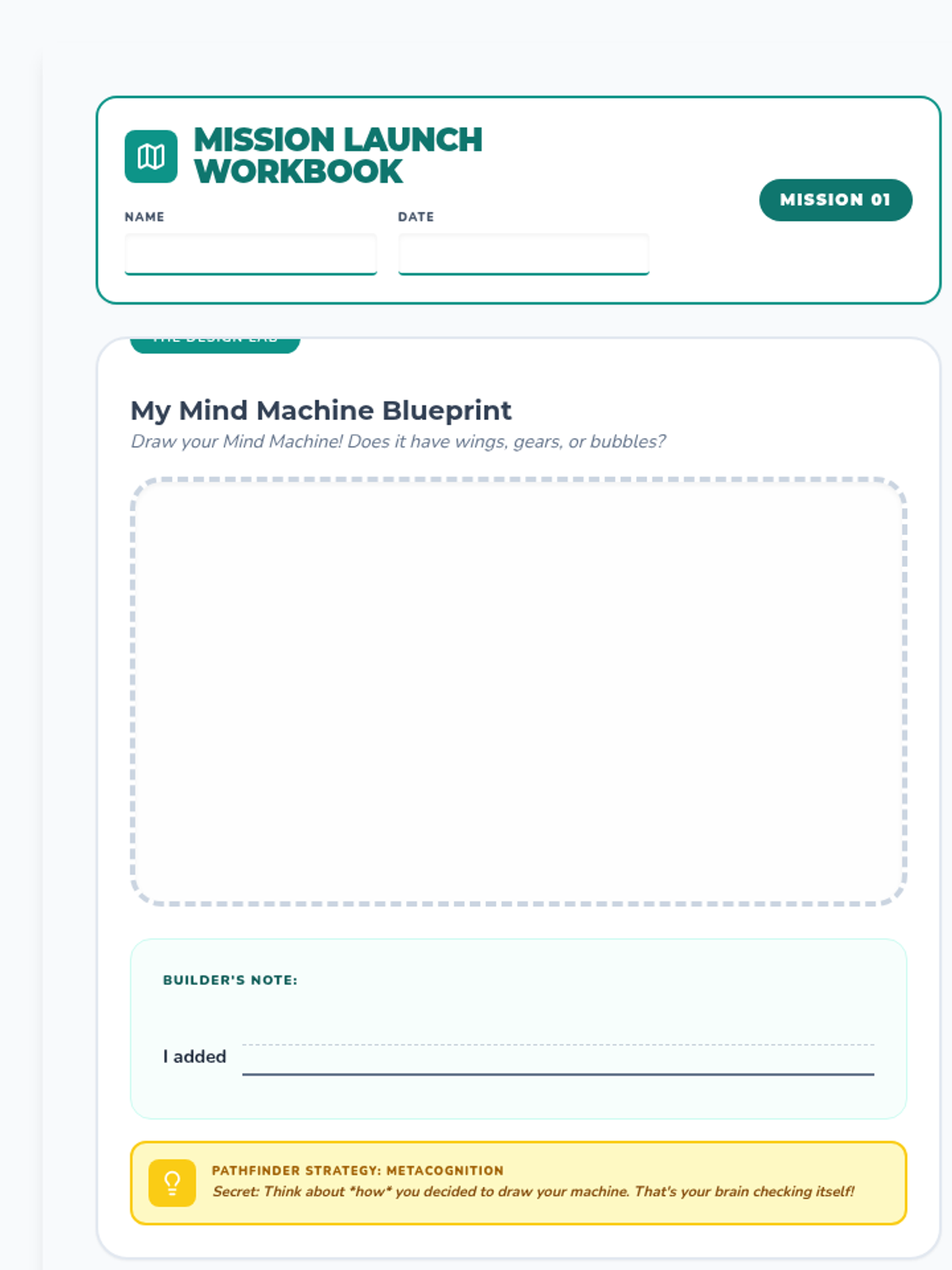
An introductory lesson where students become 'Pathfinders,' learning that their minds are like incredible machines with gears they can control. Focuses on self-awareness and the basics of how we decode stories.
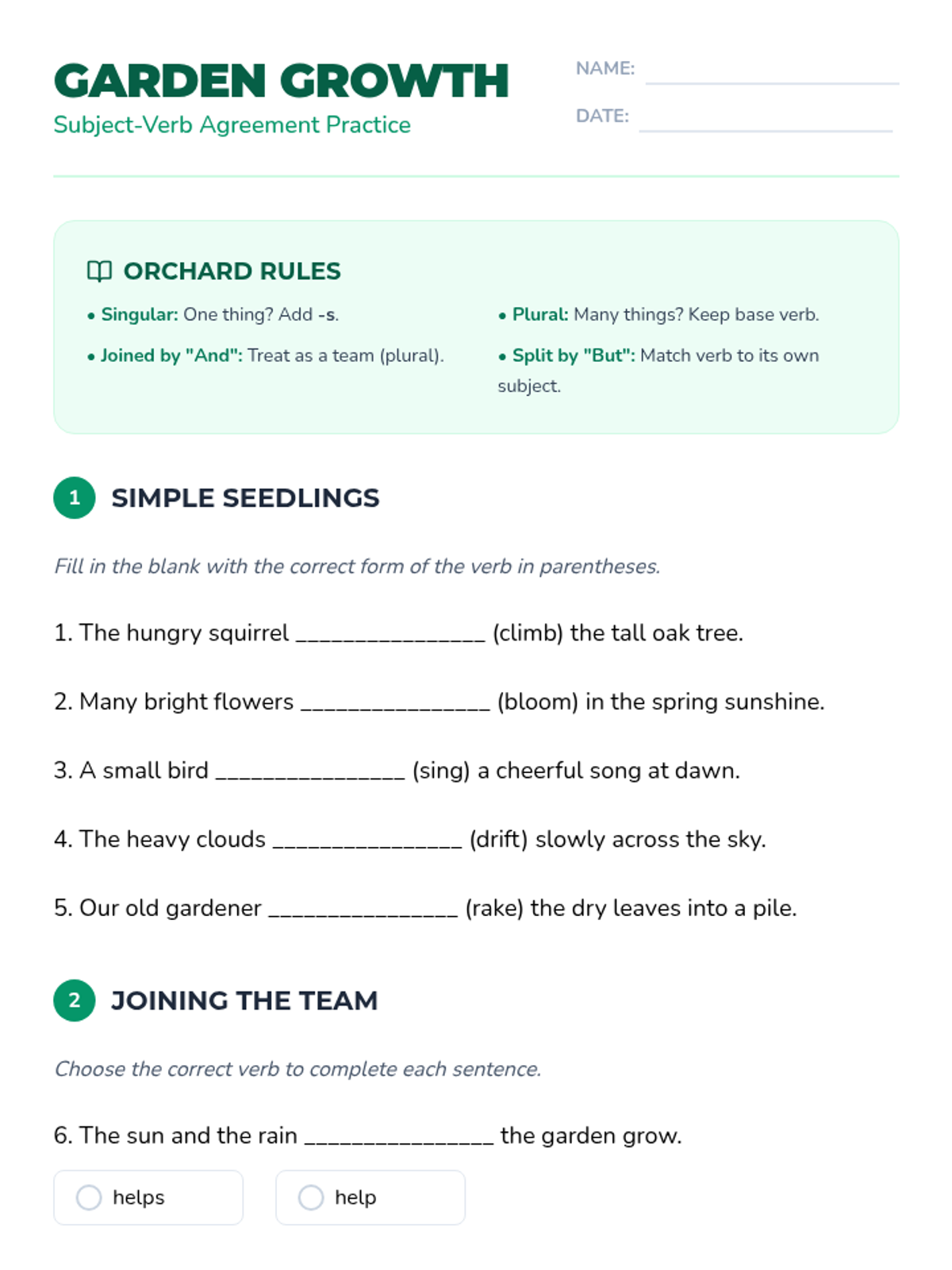
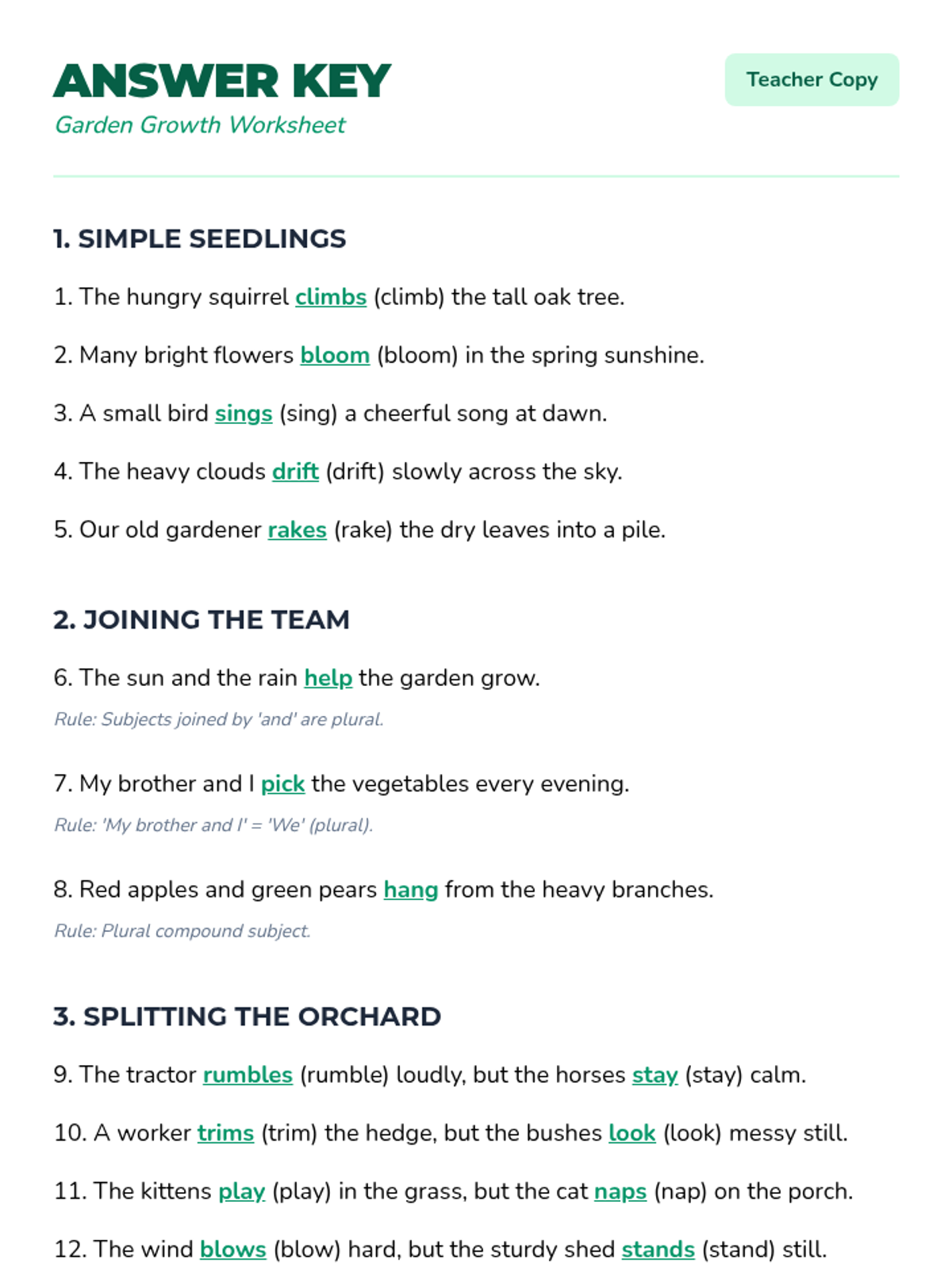
A comprehensive lesson on subject-verb agreement featuring simple sentences and compound sentences using 'and' and 'but'. Includes instructional slides, a practice worksheet, and an answer key.
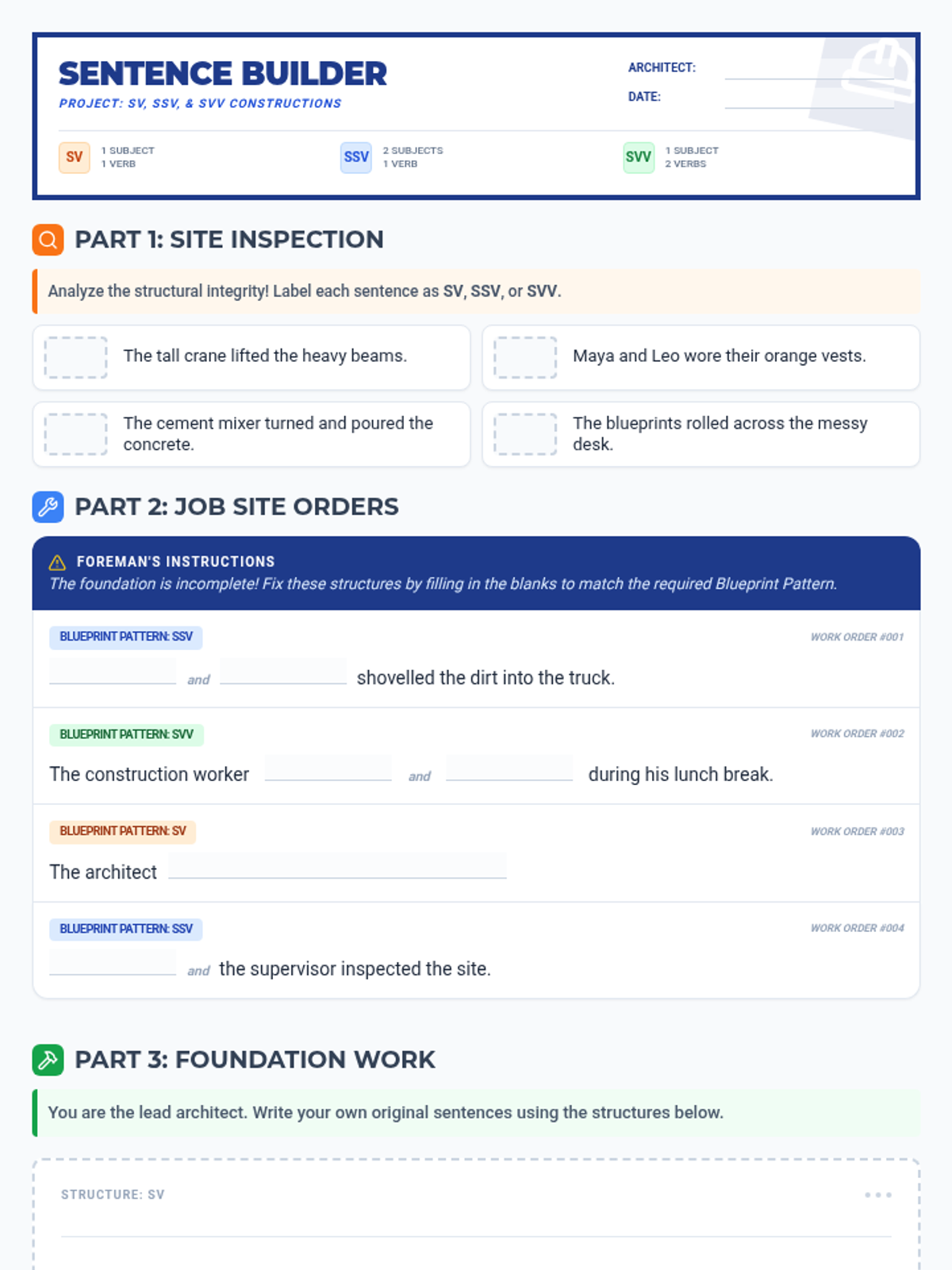
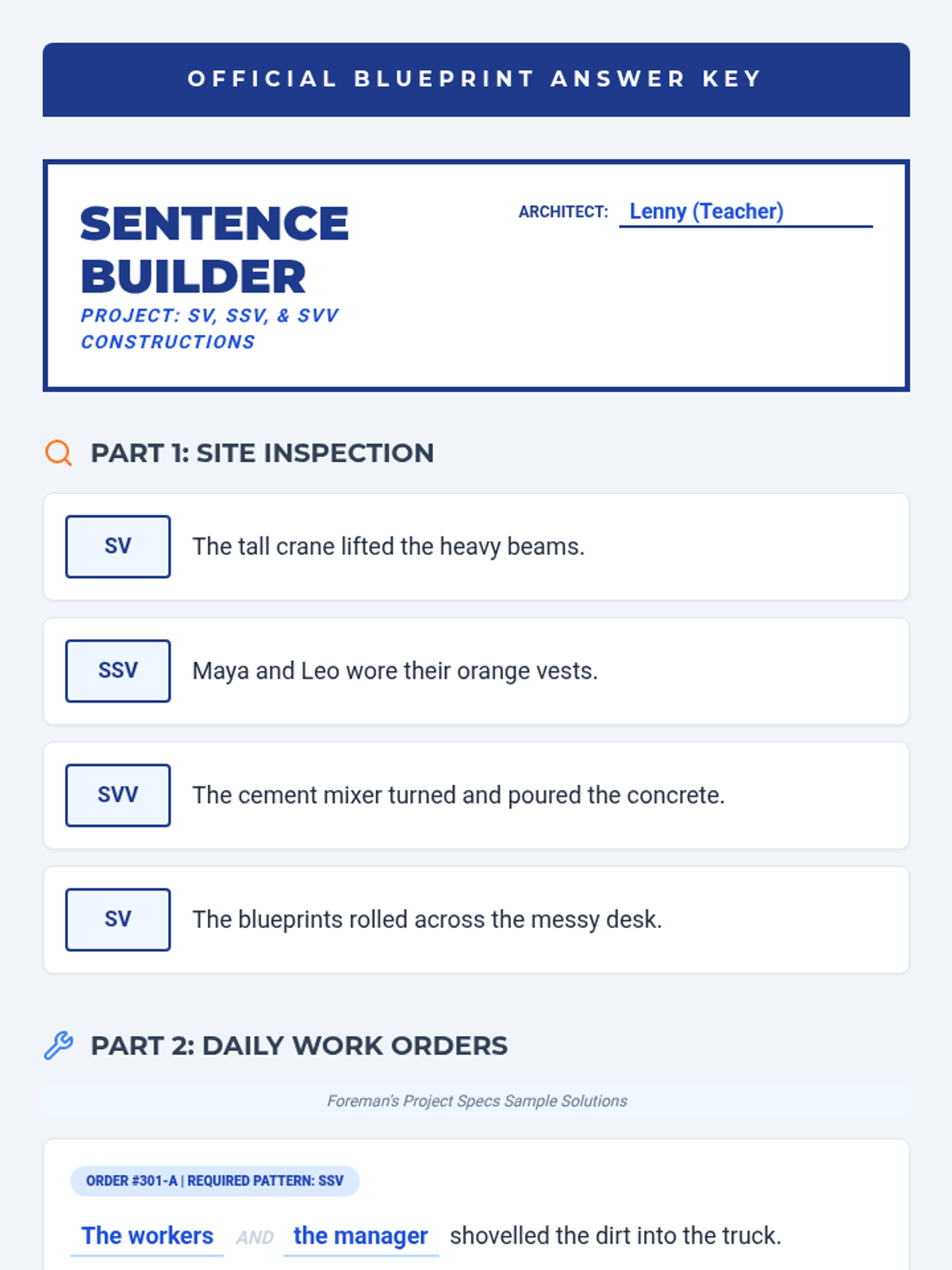
A lesson focused on mastering SV, SSV, and SVV sentence patterns through structured practice and construction-themed activities.
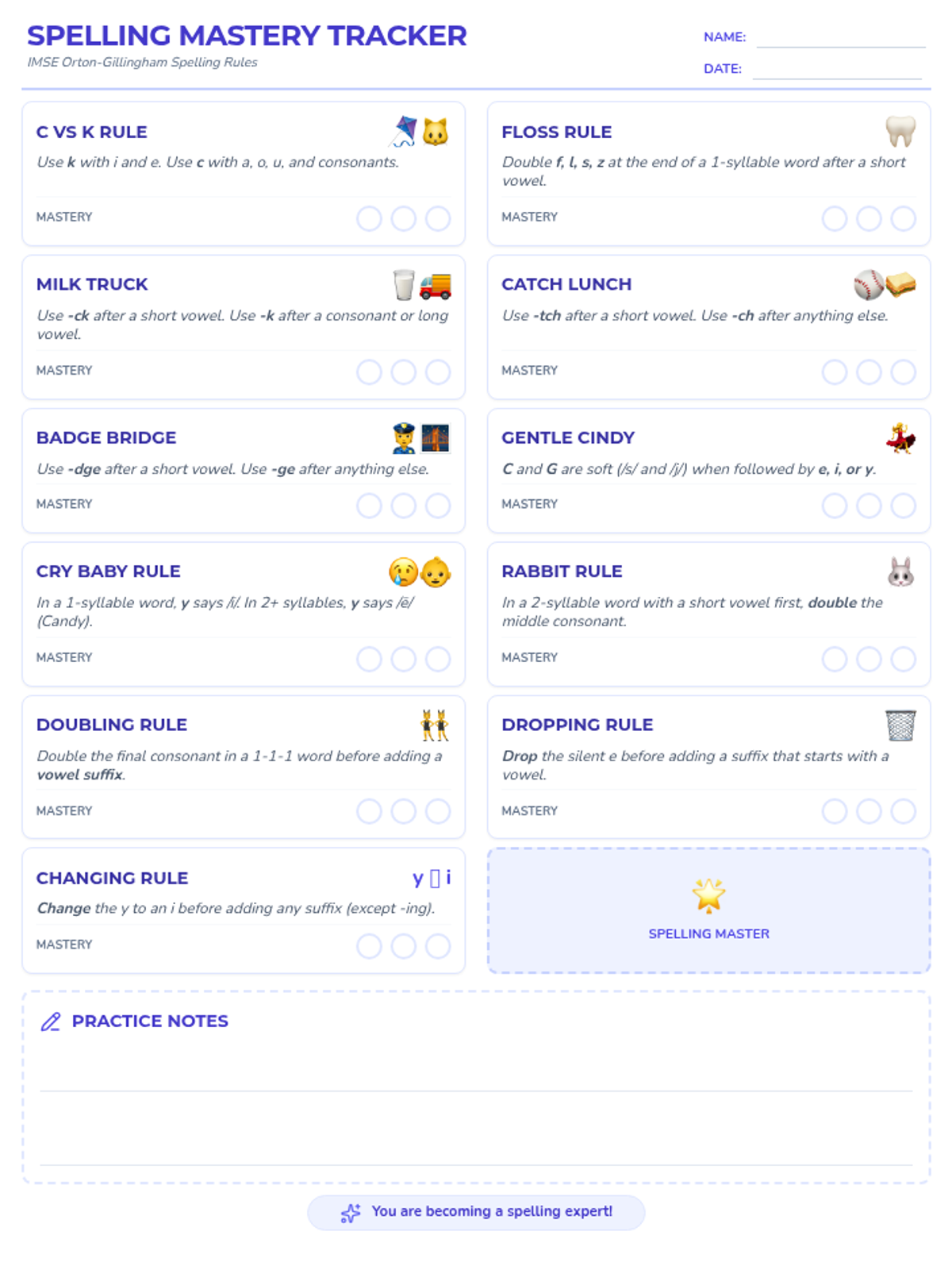
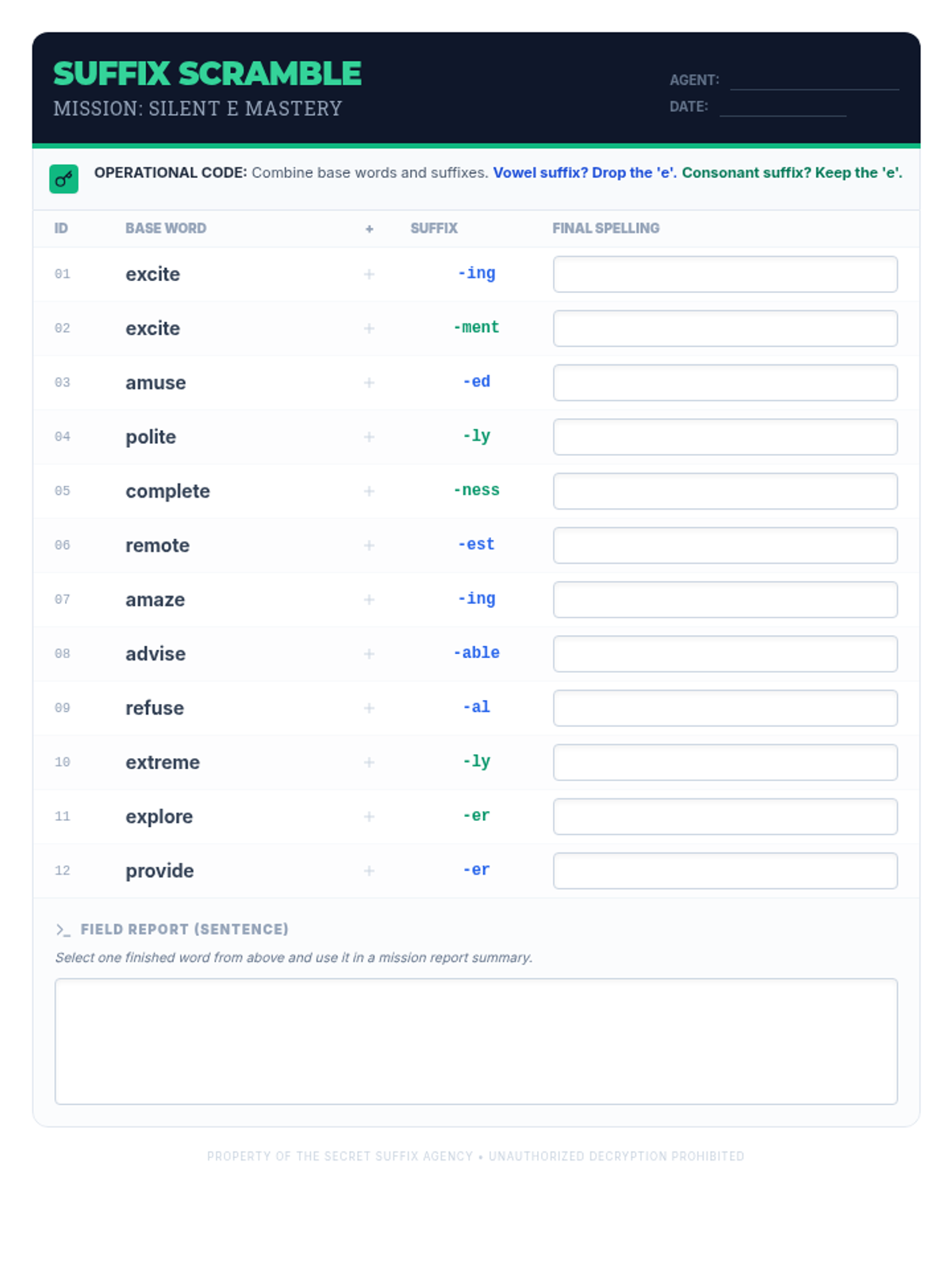
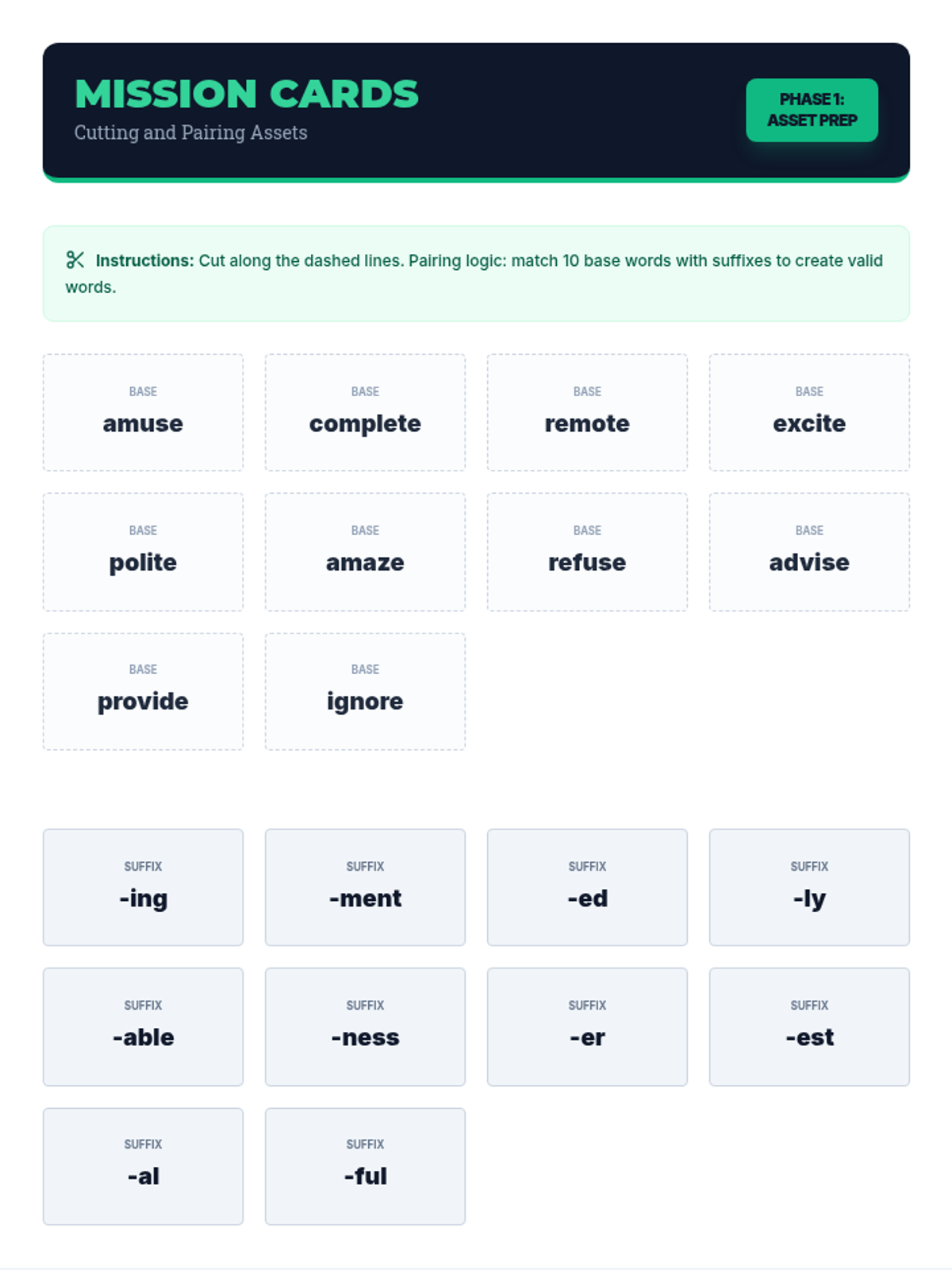
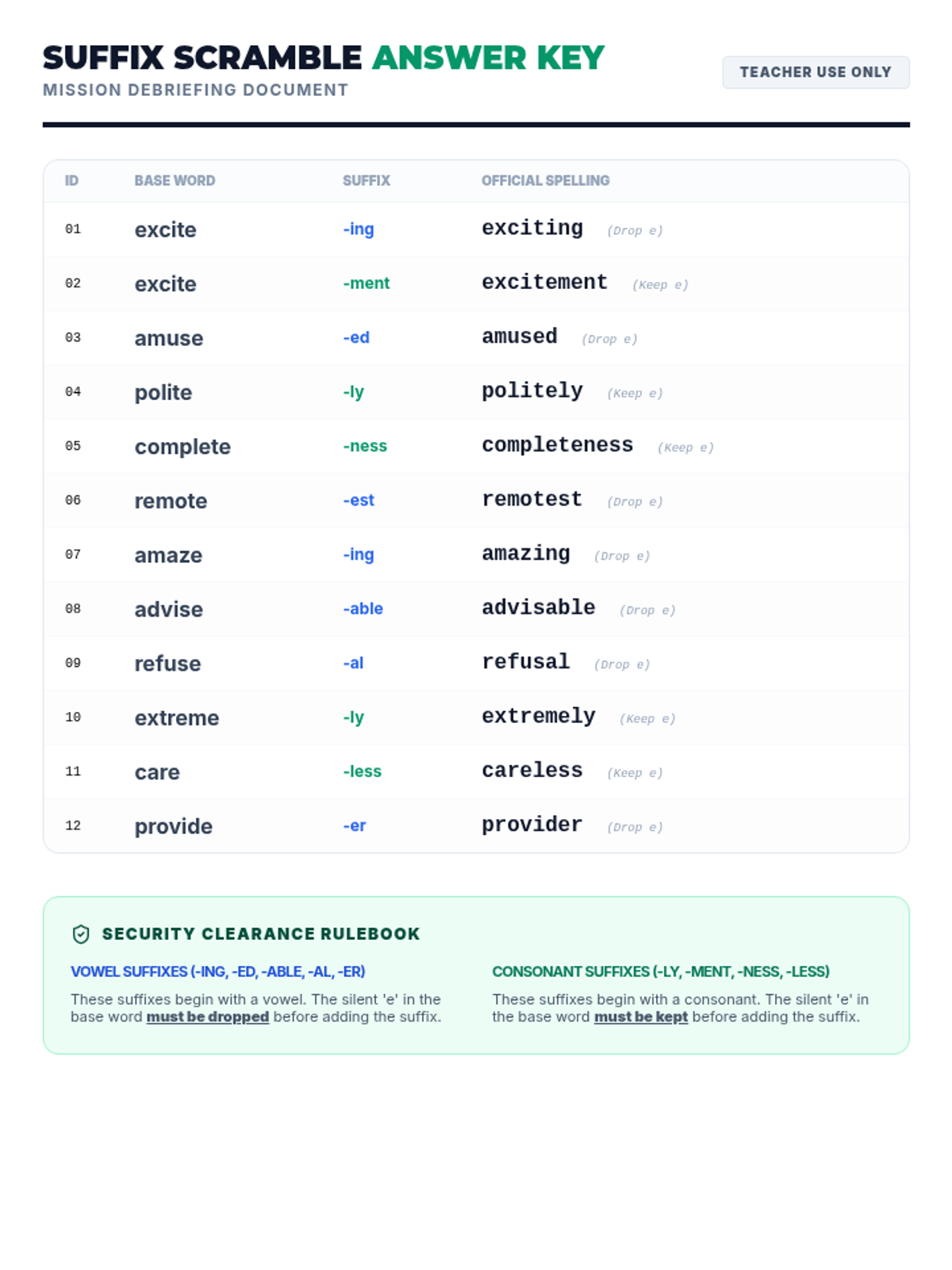
A comprehensive lesson on adding suffixes to multi-syllabic words ending in a silent 'e', focusing on the rules for dropping or keeping the 'e' based on the suffix type.
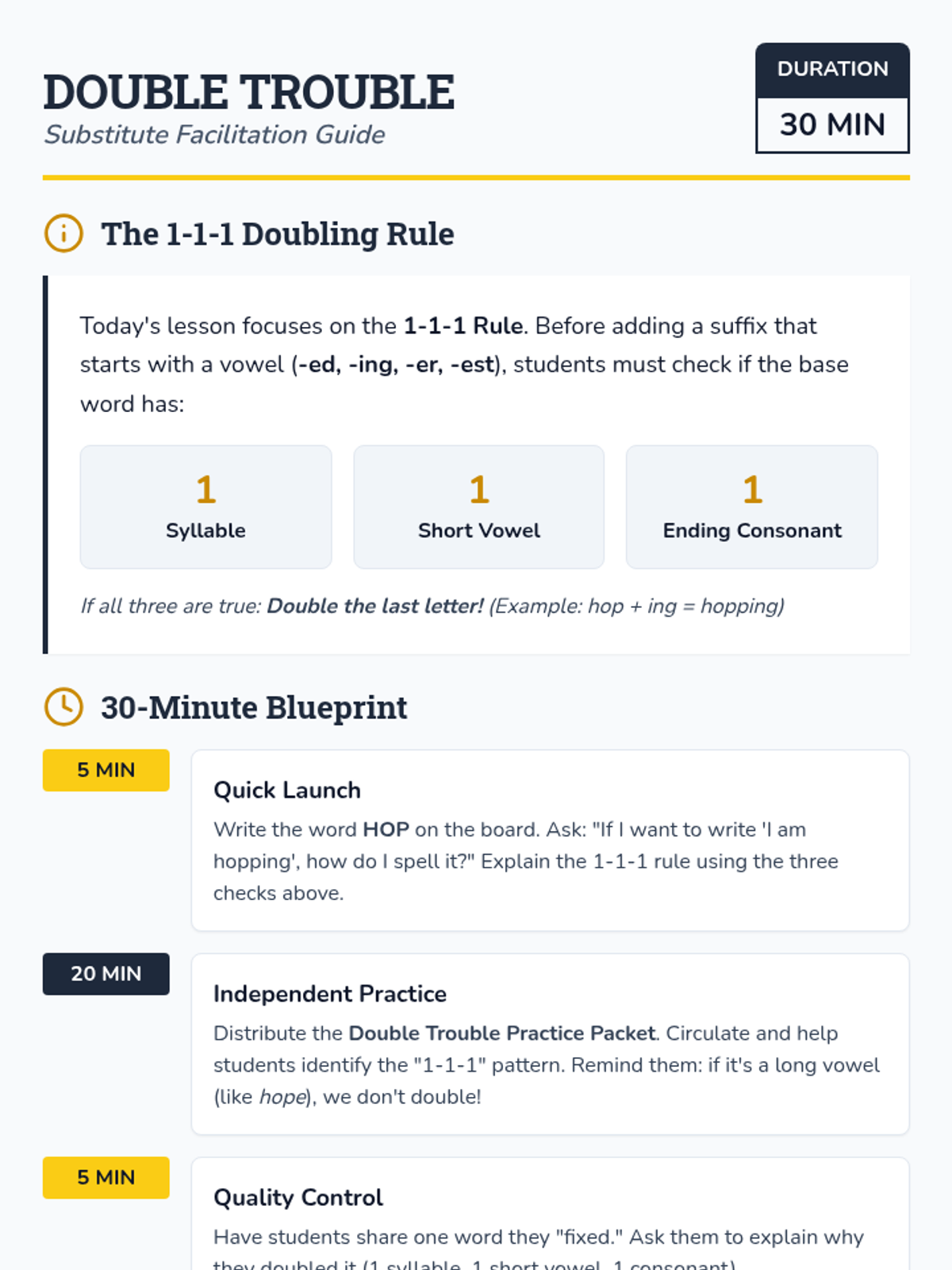
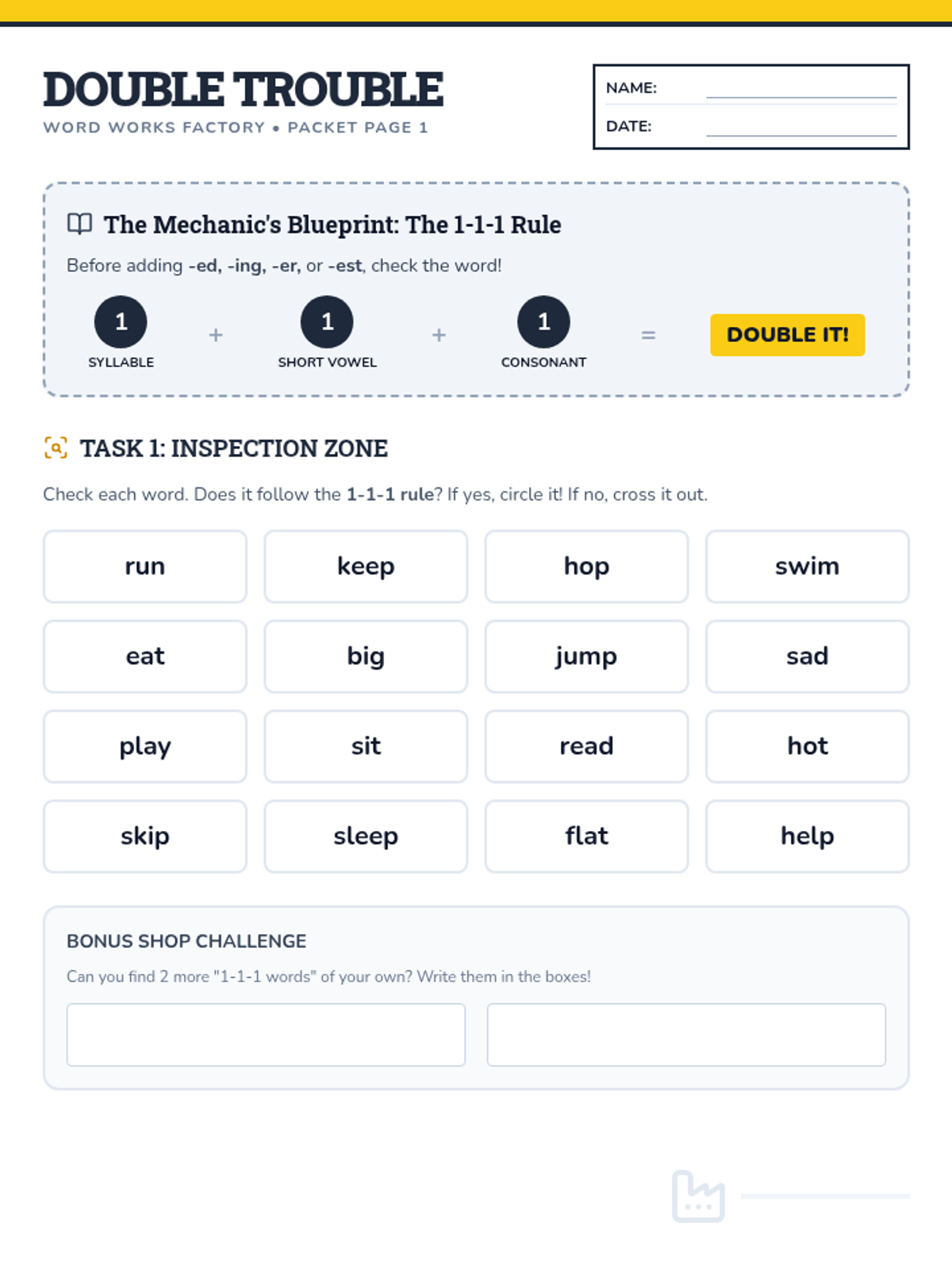
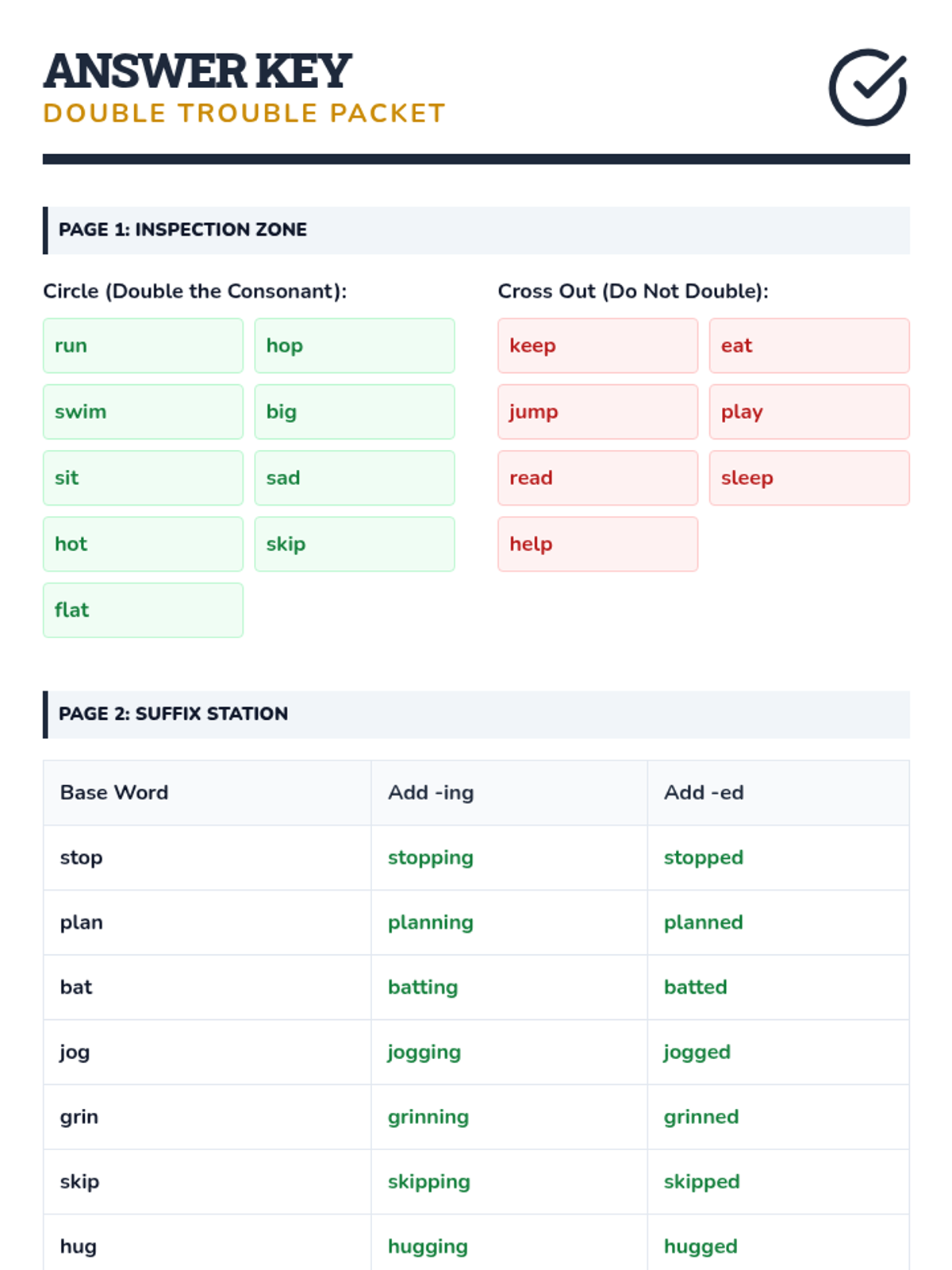
A quick-fire 30-minute sub plan focusing on the 1-1-1 doubling rule for suffixes -ed, -er, -est, and -ing. Students act as 'Word Mechanics' to fix words before they leave the factory.
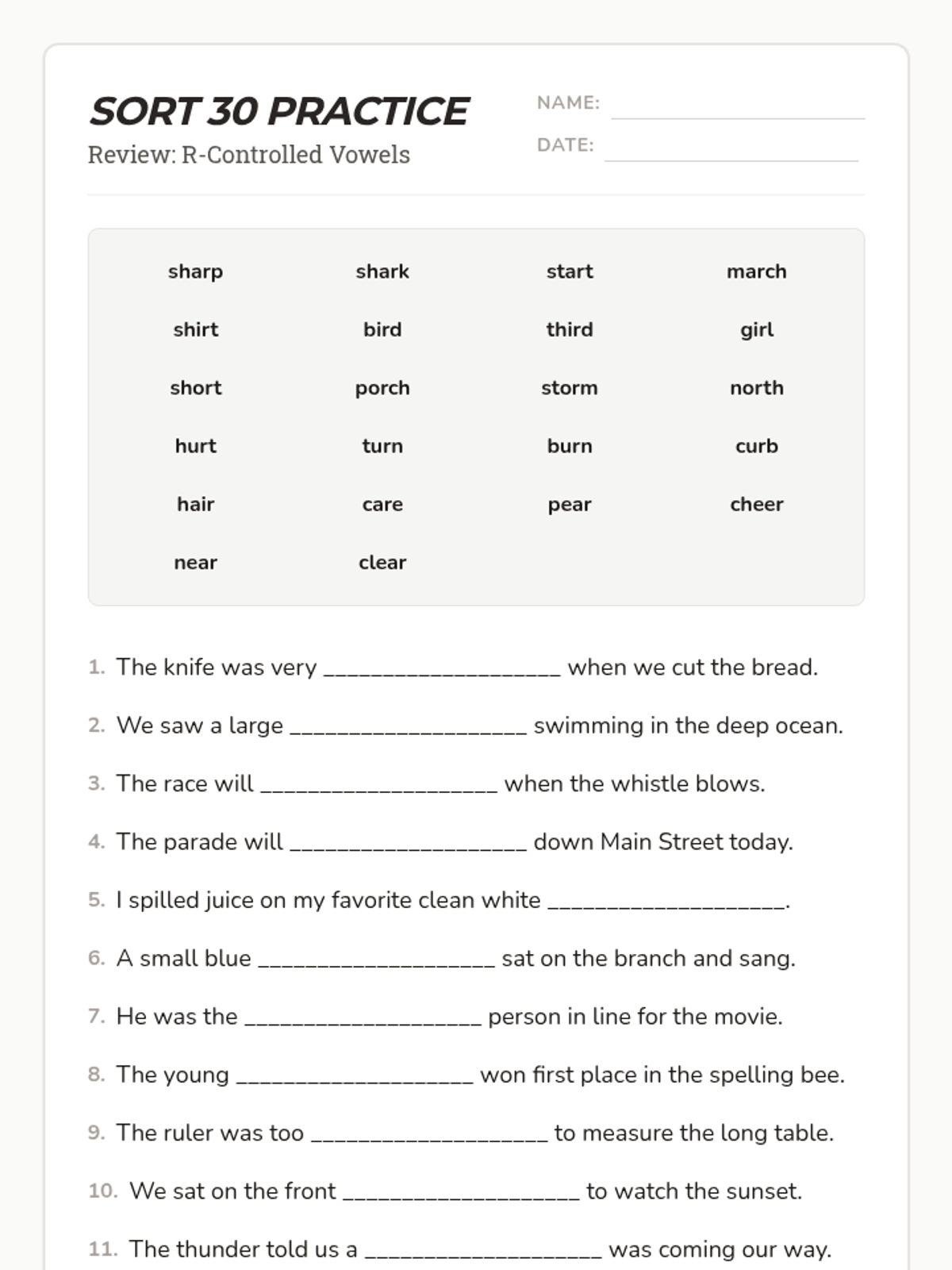
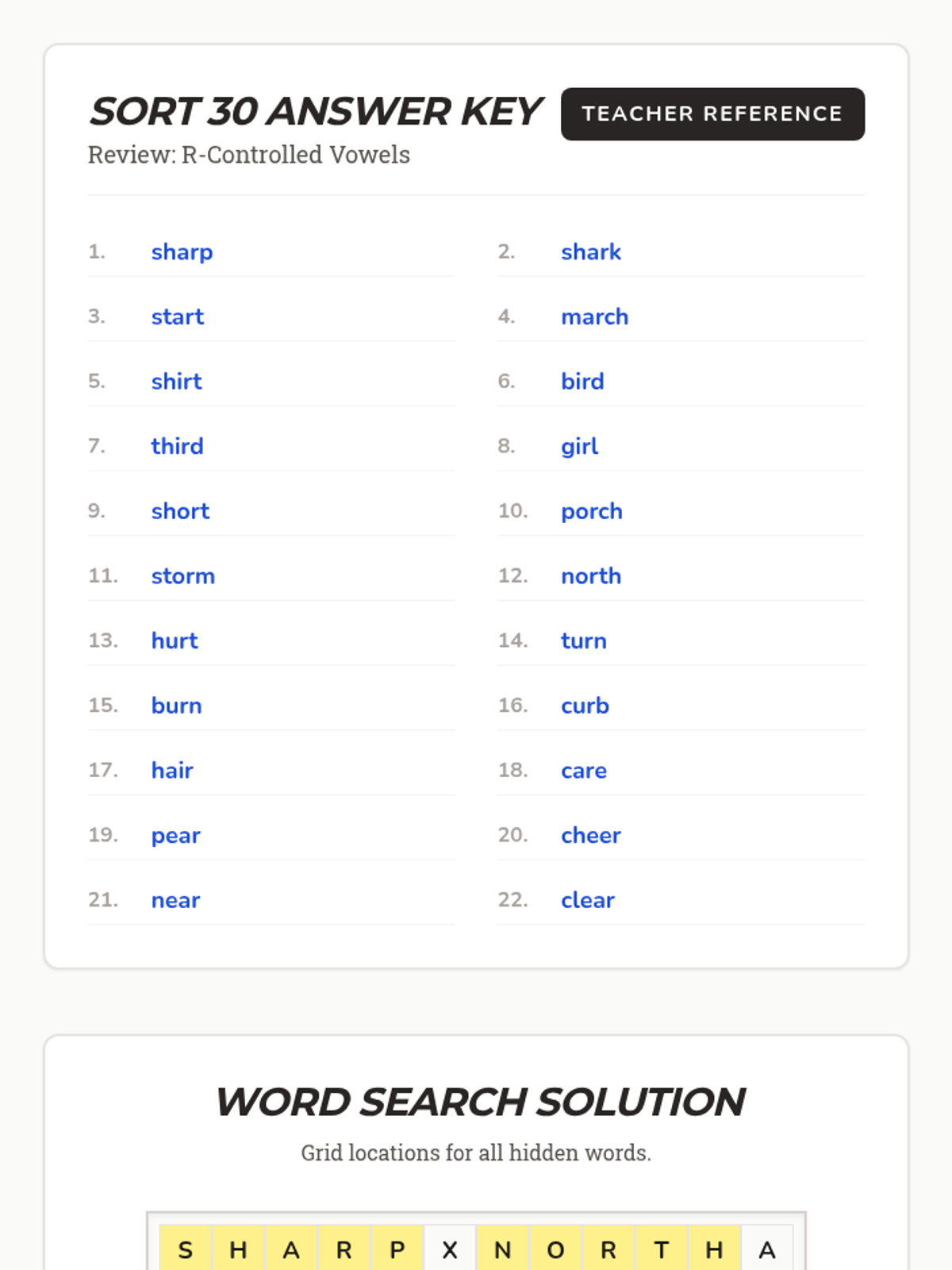
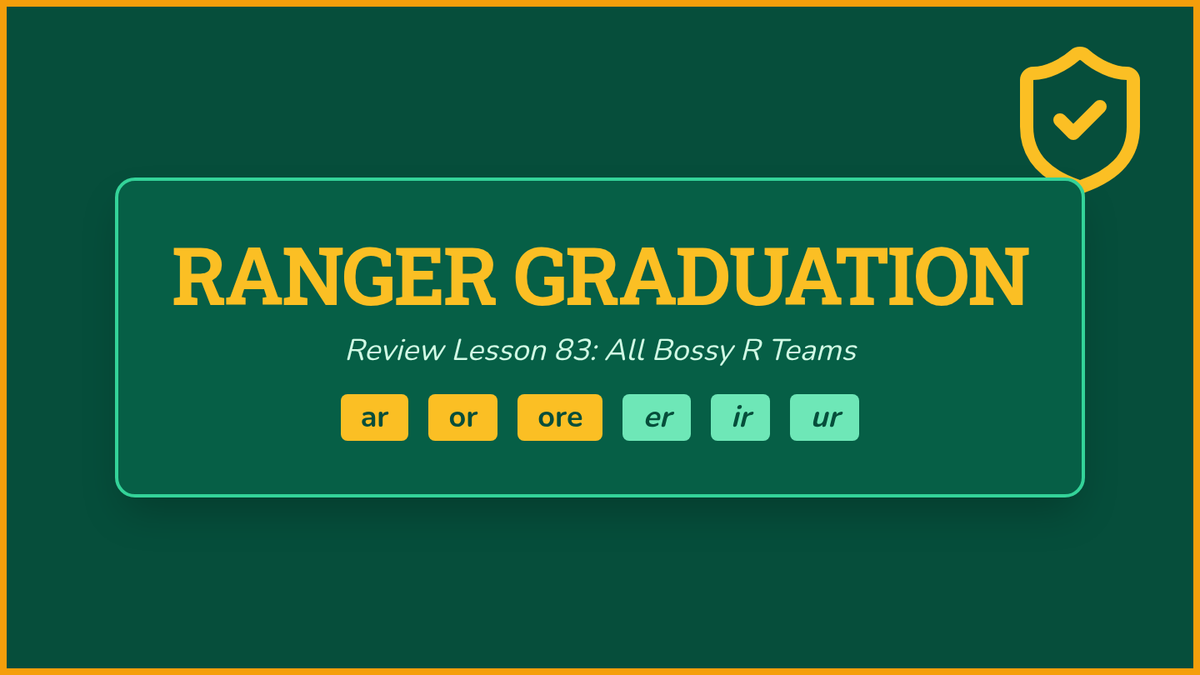
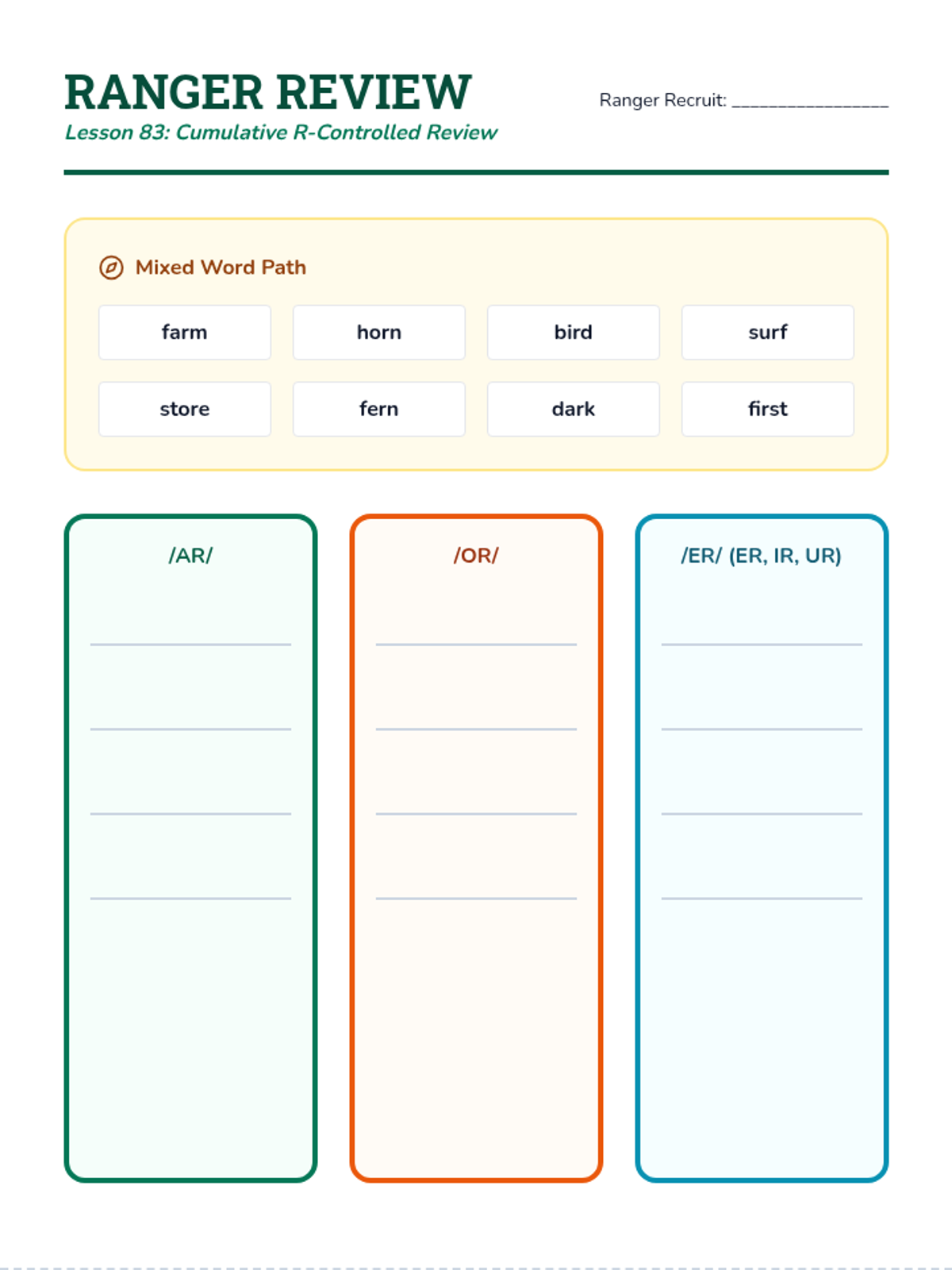
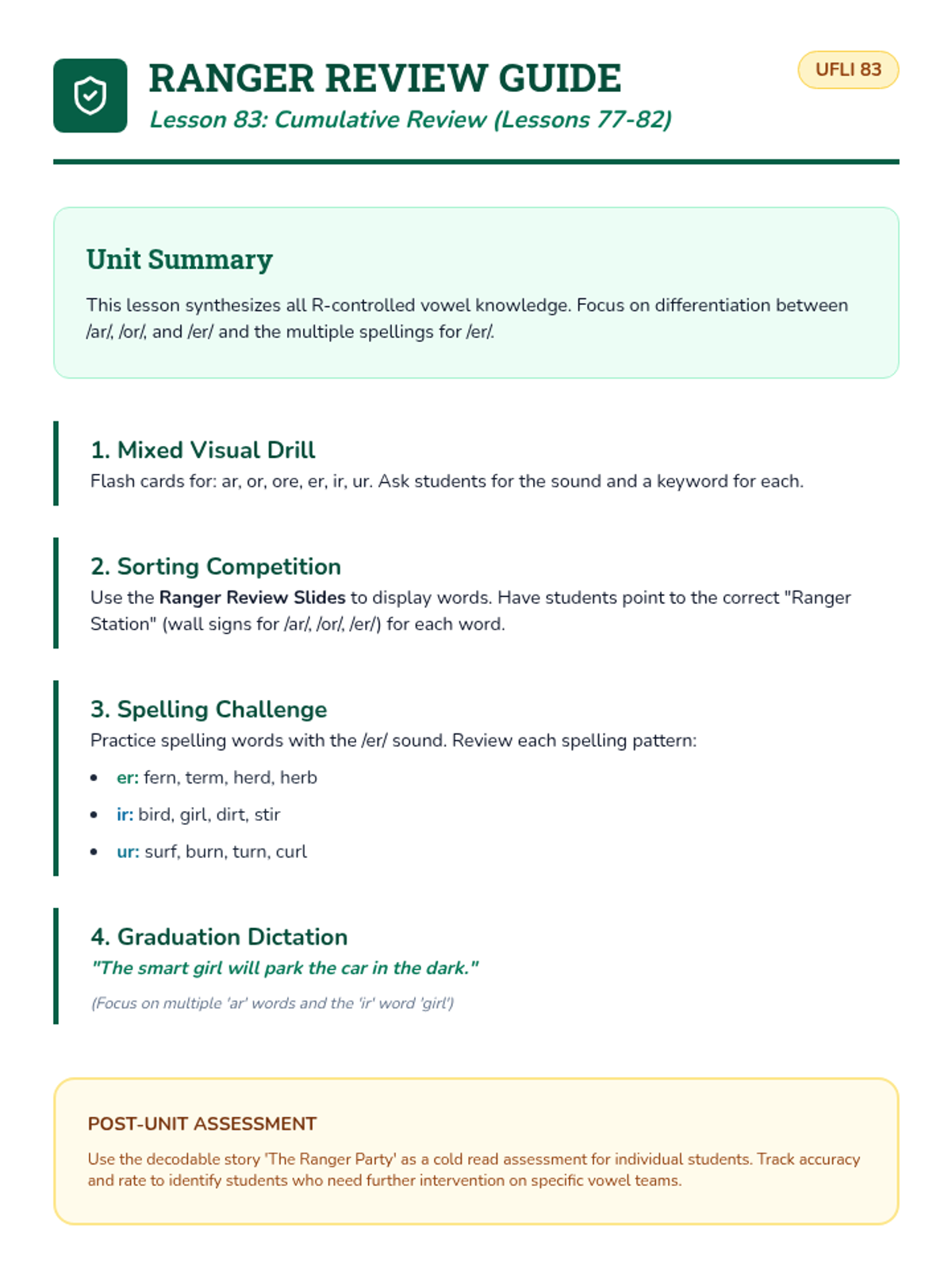
A cumulative review of all R-controlled vowels (ar, or, ore, er, ir, ur) through games and mixed decoding practice.
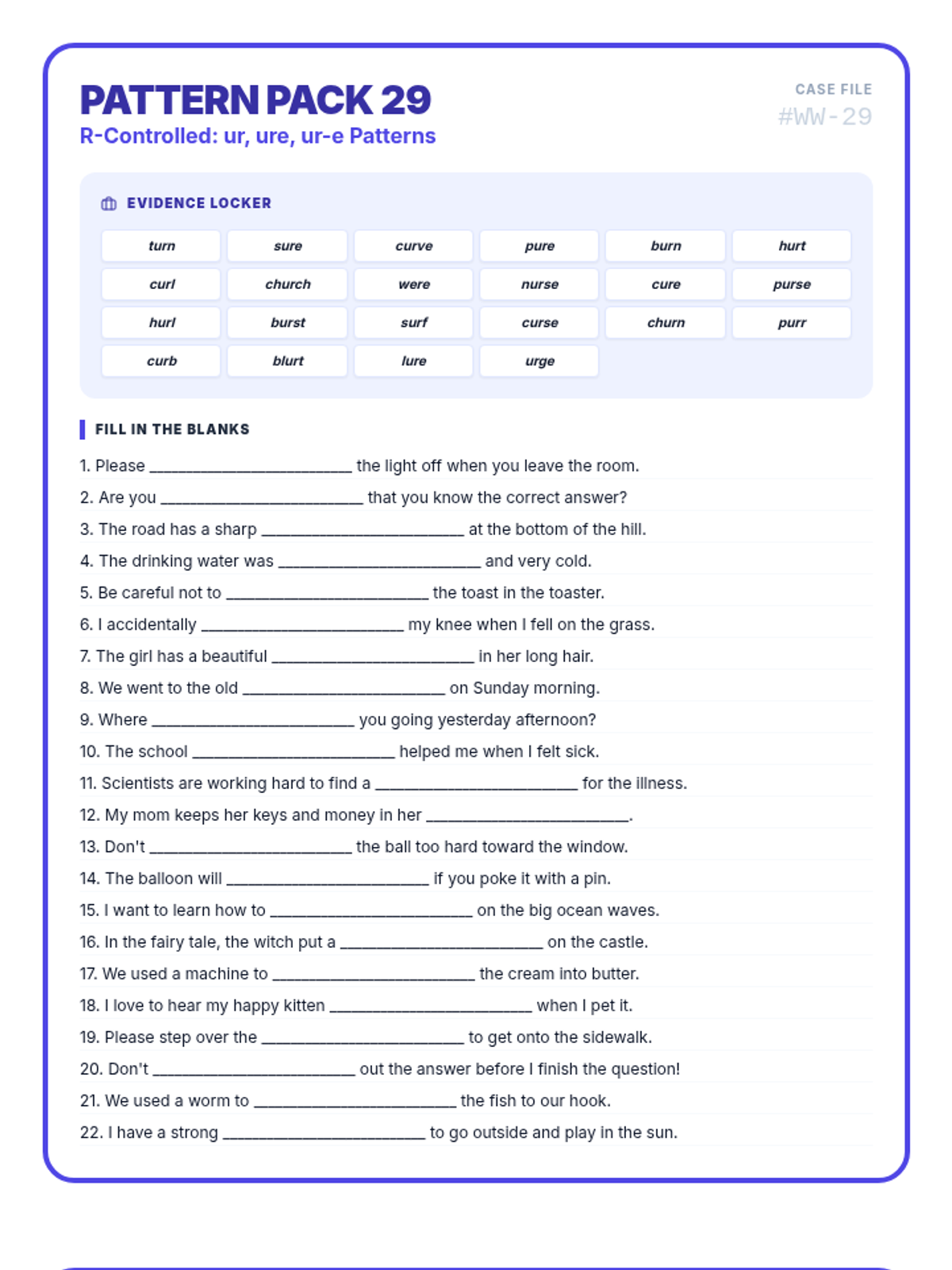
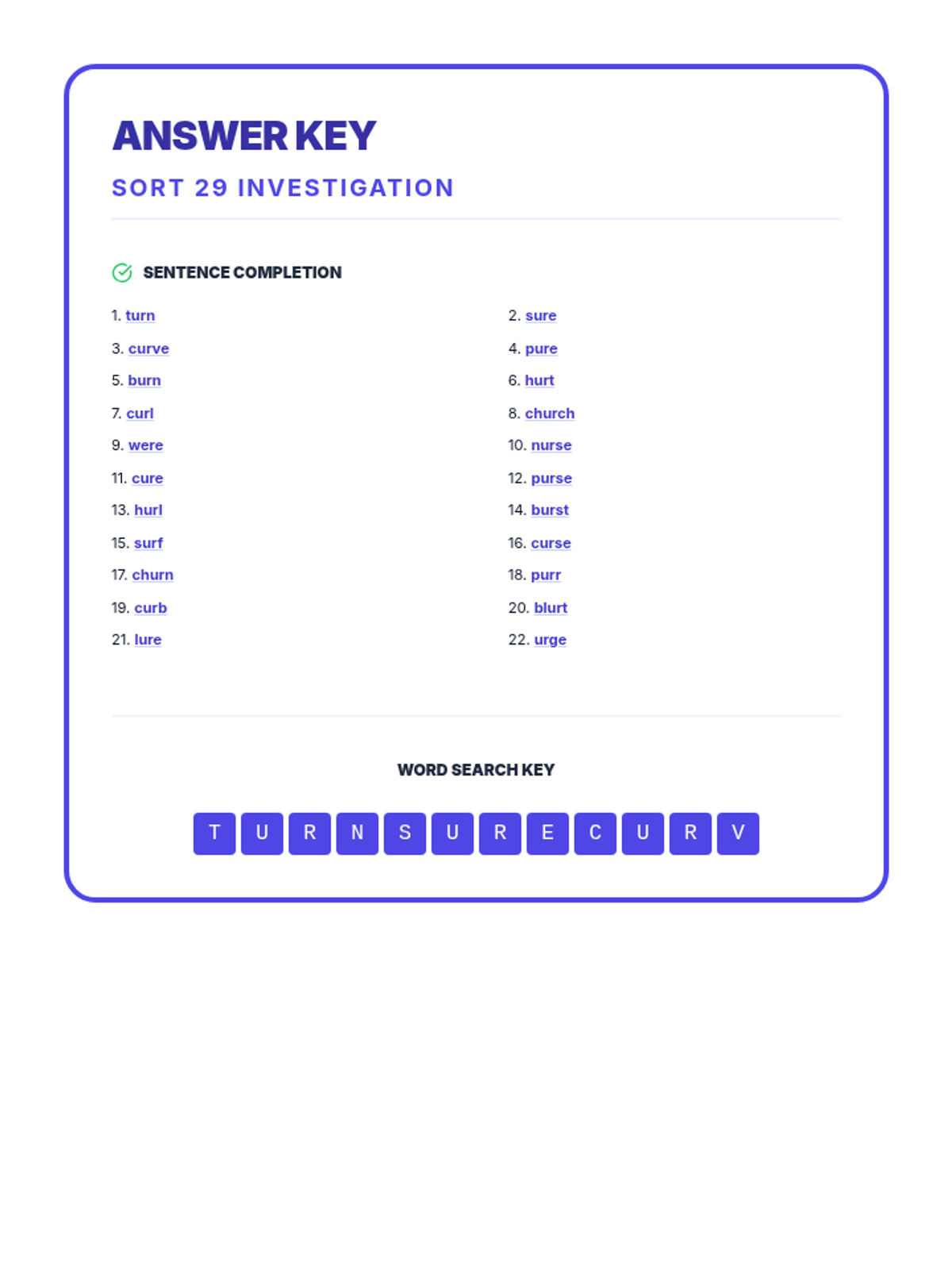
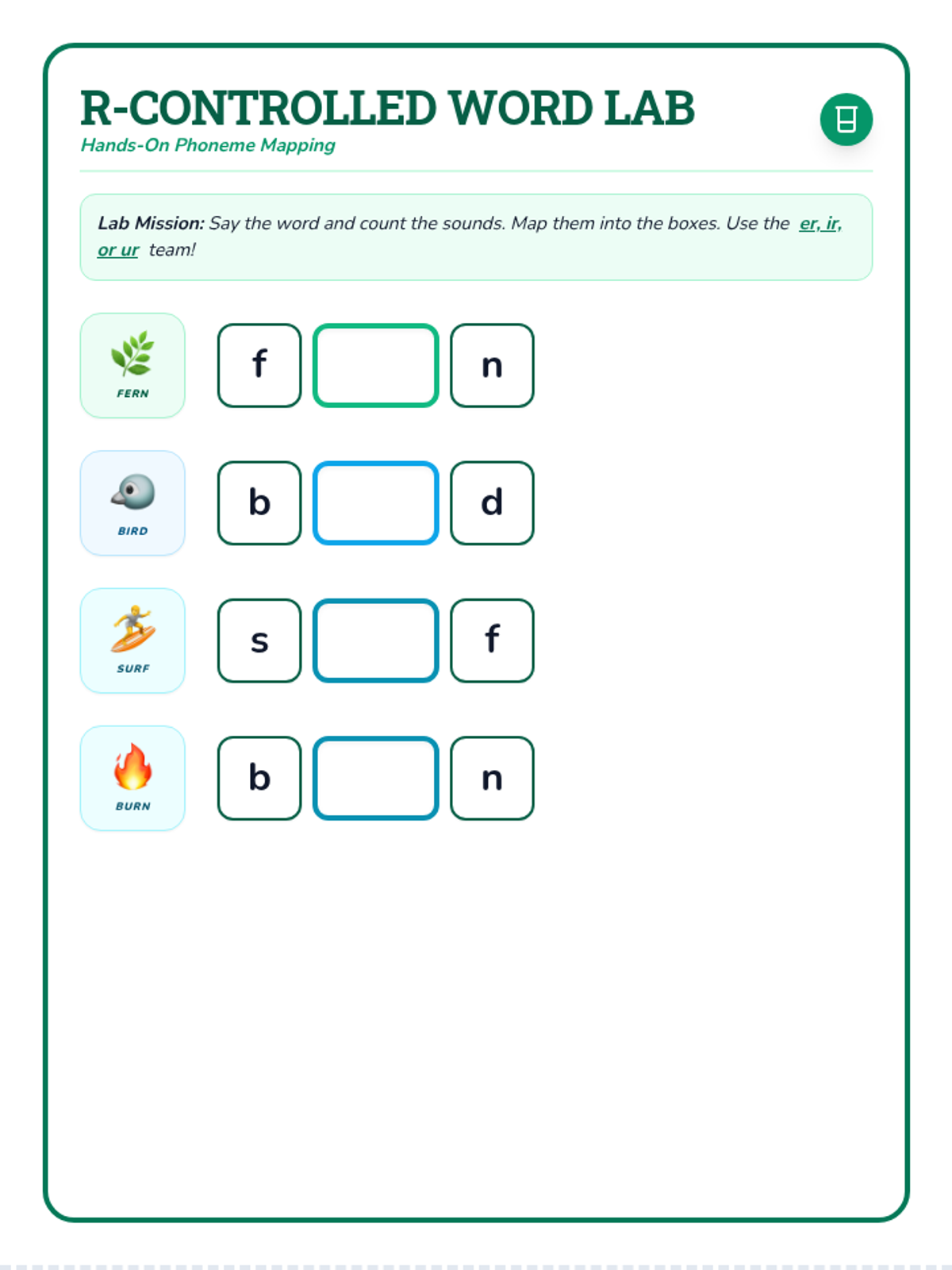
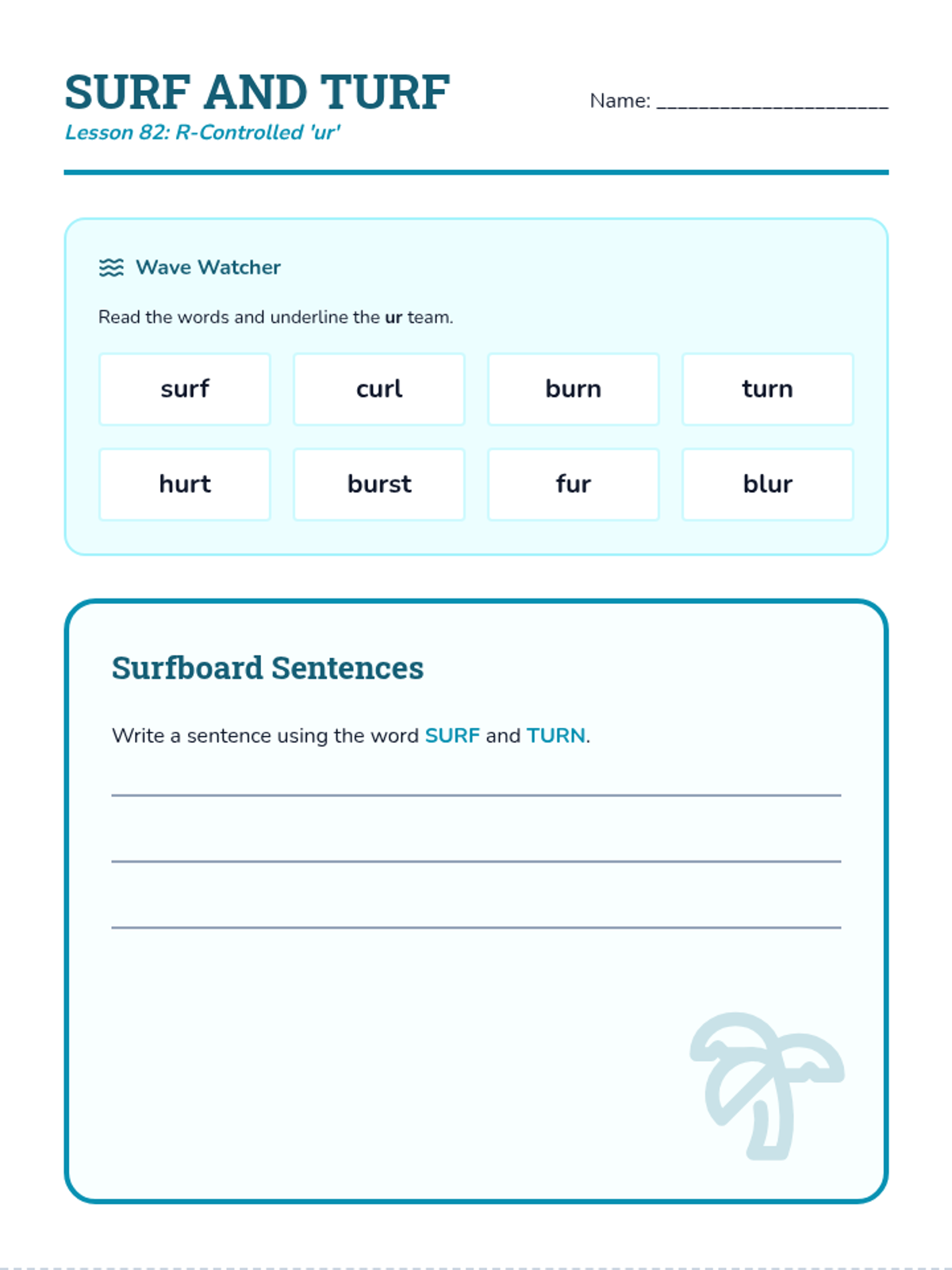
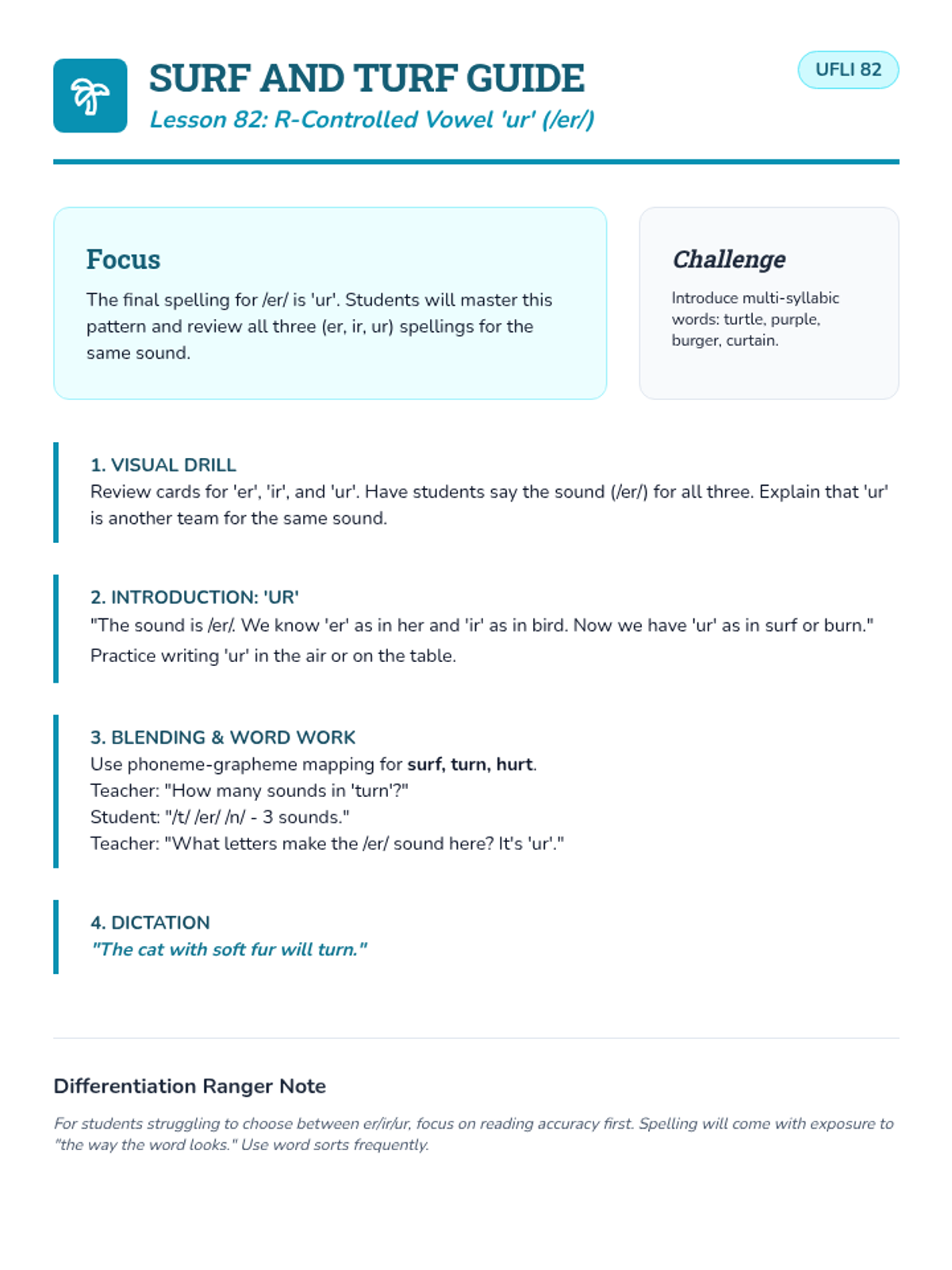
The final common /er/ spelling, 'ur' as in 'surf' and 'burn'. Practice with all /er/ variations.
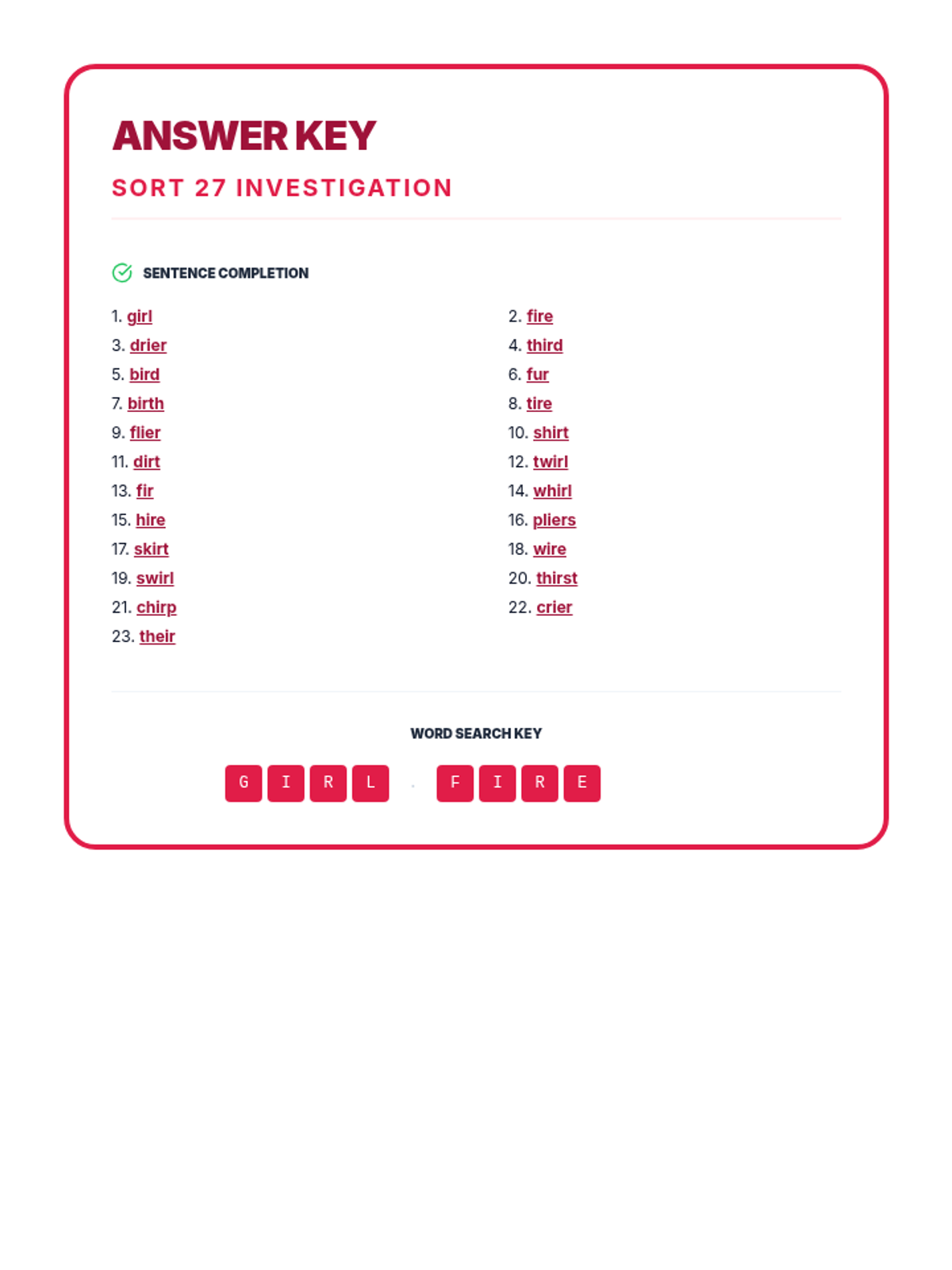
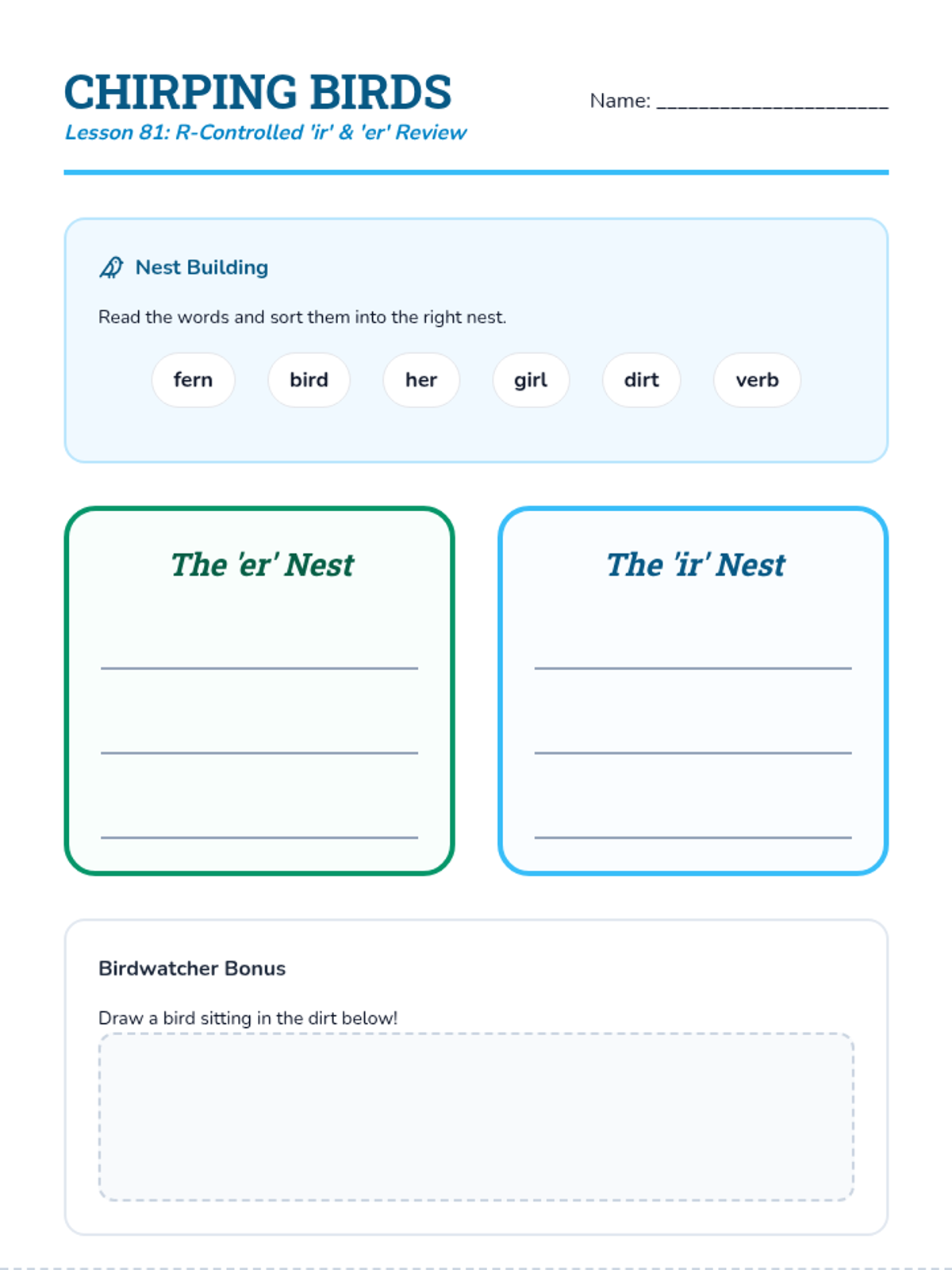
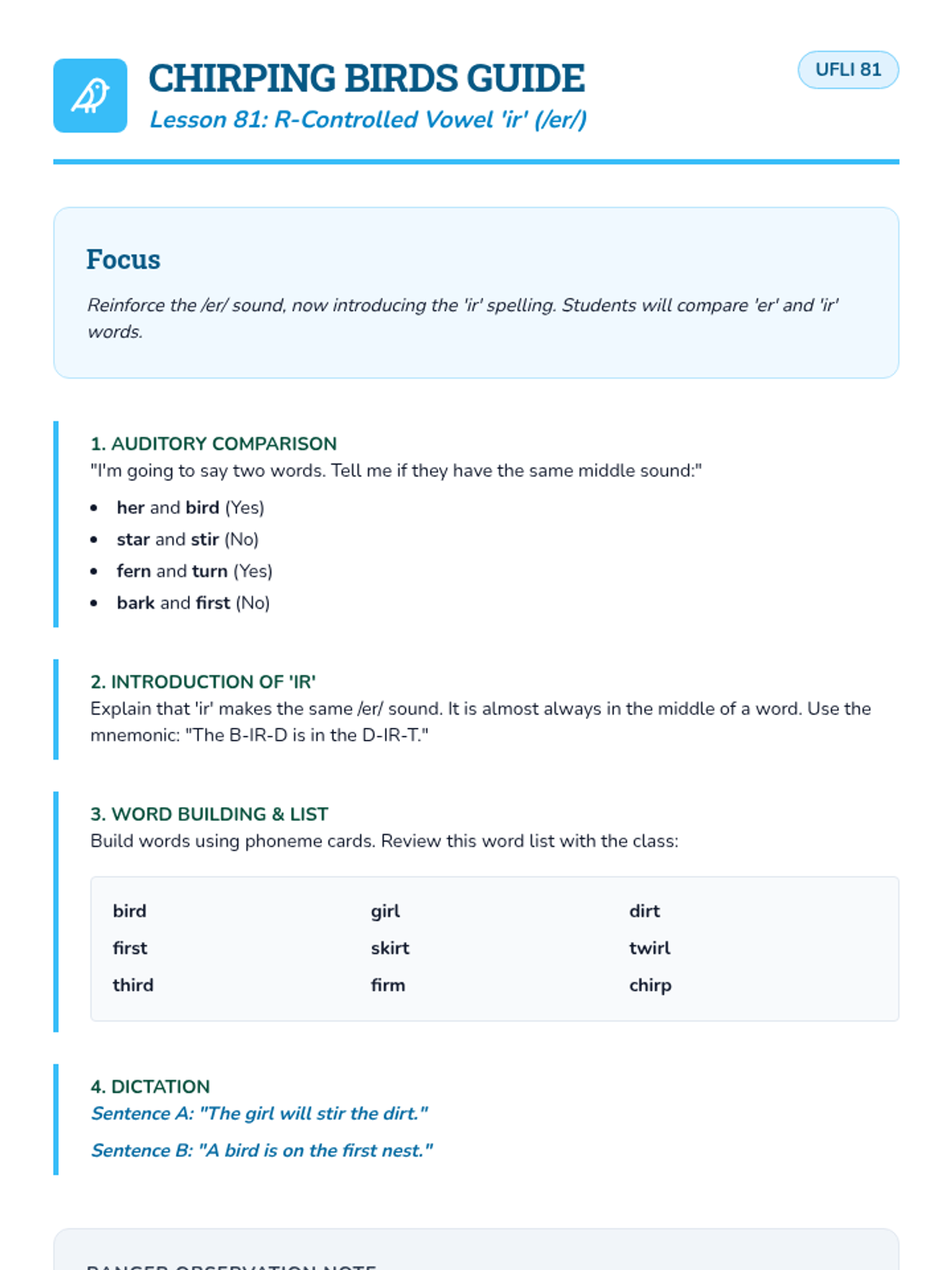
Learning the /er/ sound spelled with 'ir' as in 'bird' and 'dirt'. Comparing with 'er' words.
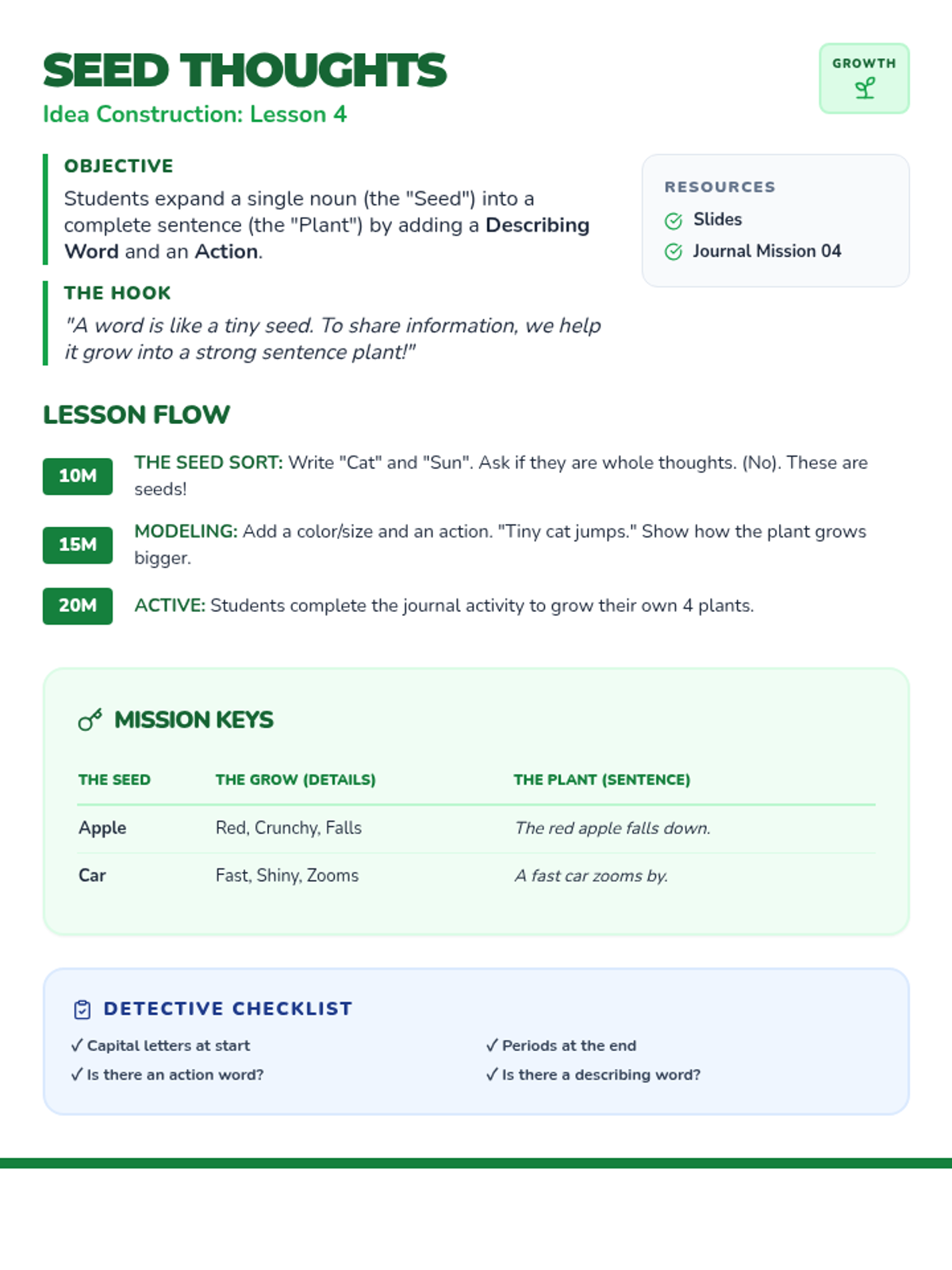
Students learn to expand a single 'seed' into a complete, descriptive sentence project.
Students explore how visual blueprints (images) and text work together to provide complete information.
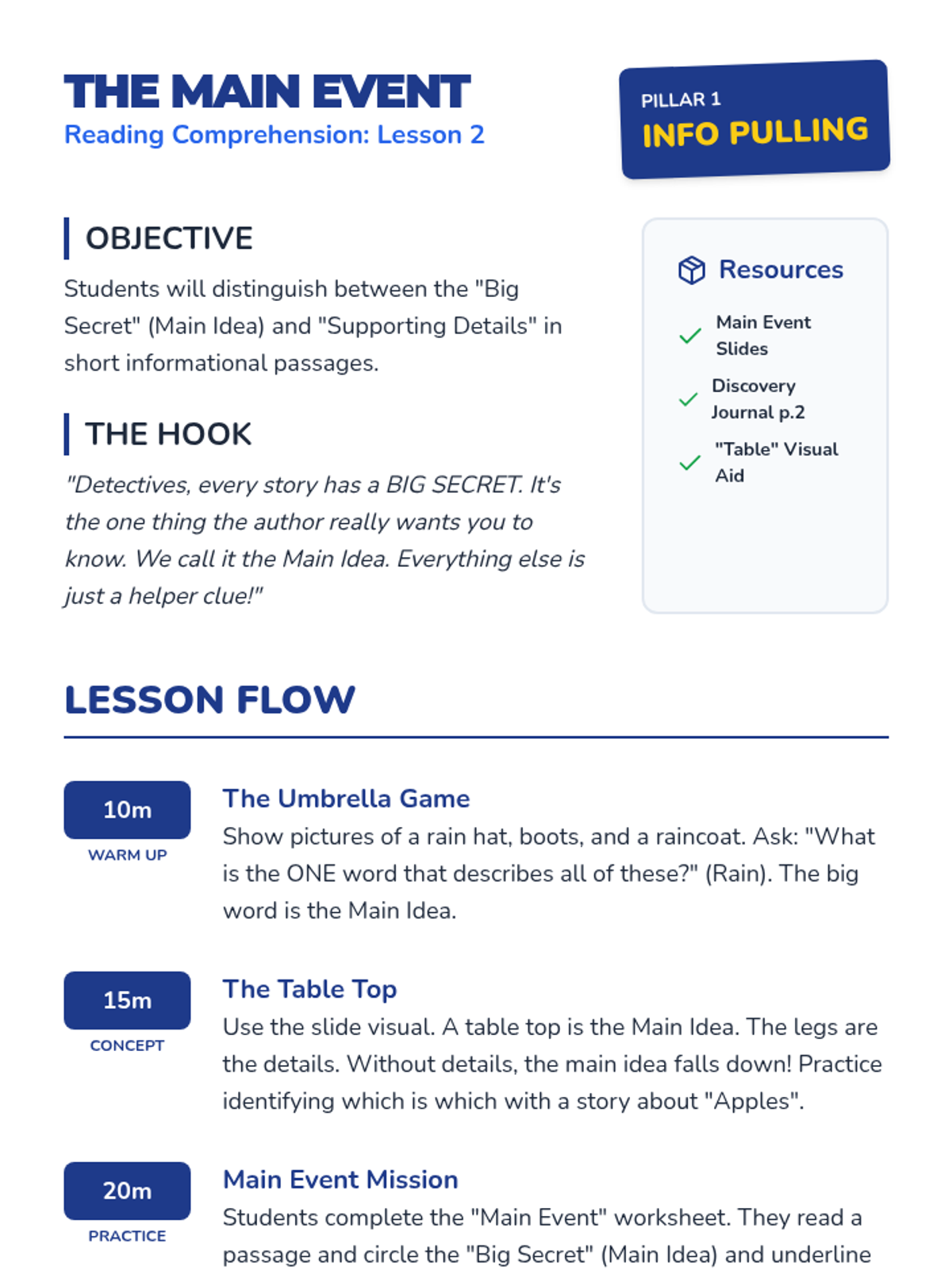
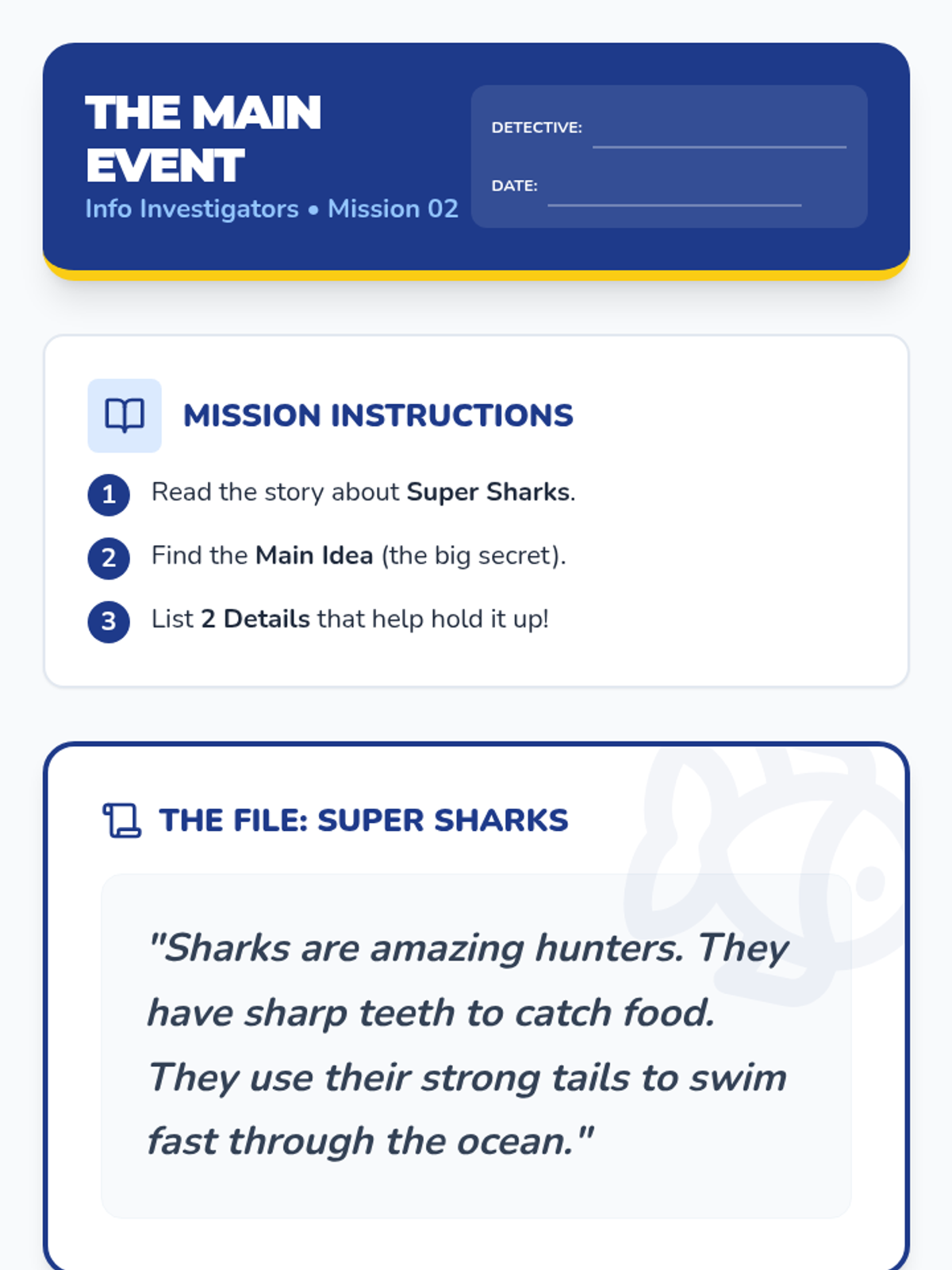
Students learn how to find the 'foundation' (main idea) of a text and the details that support it.
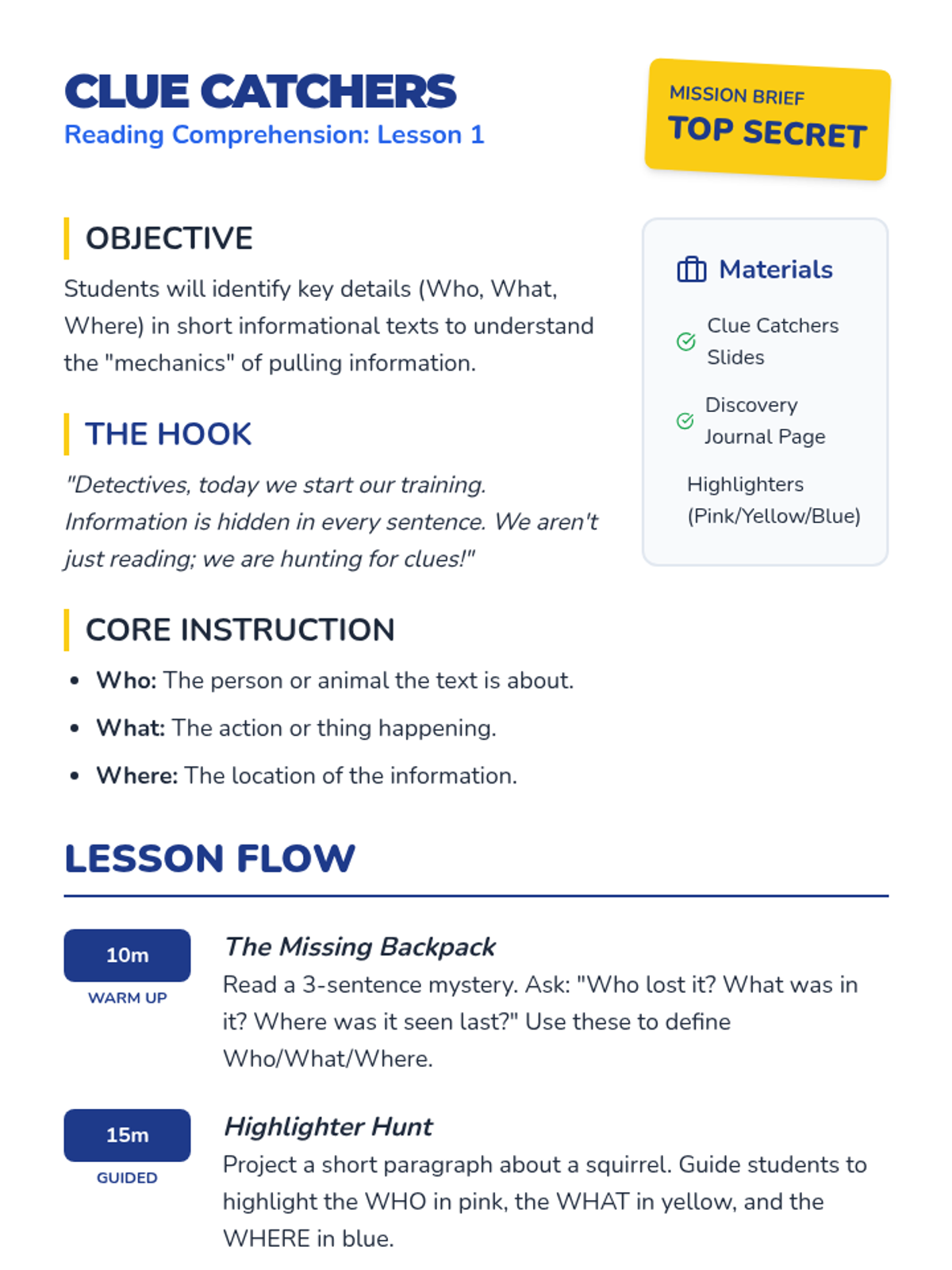
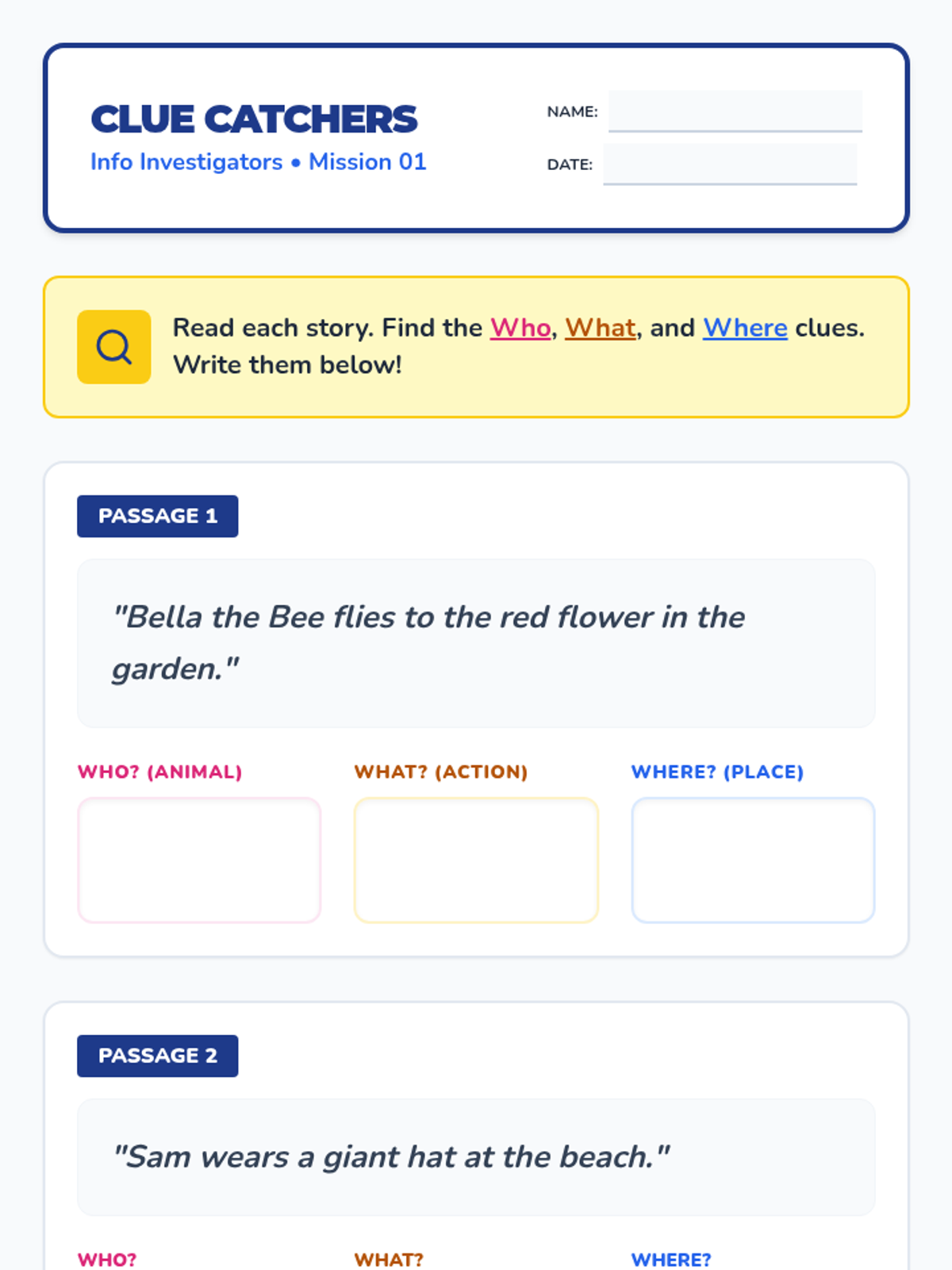
Students learn to identify key building blocks in a text by looking for 'clues' that answer who, what, and where.
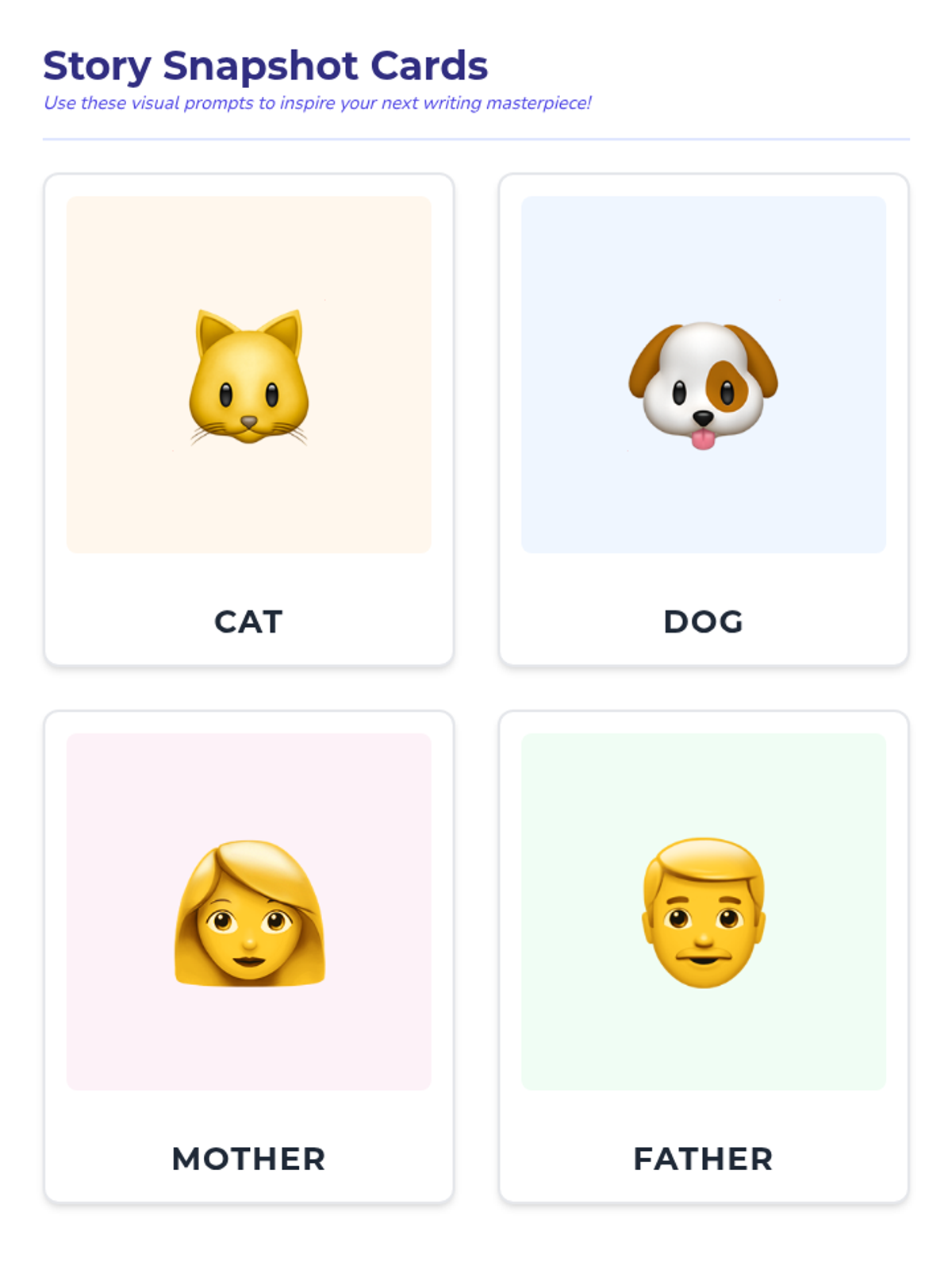
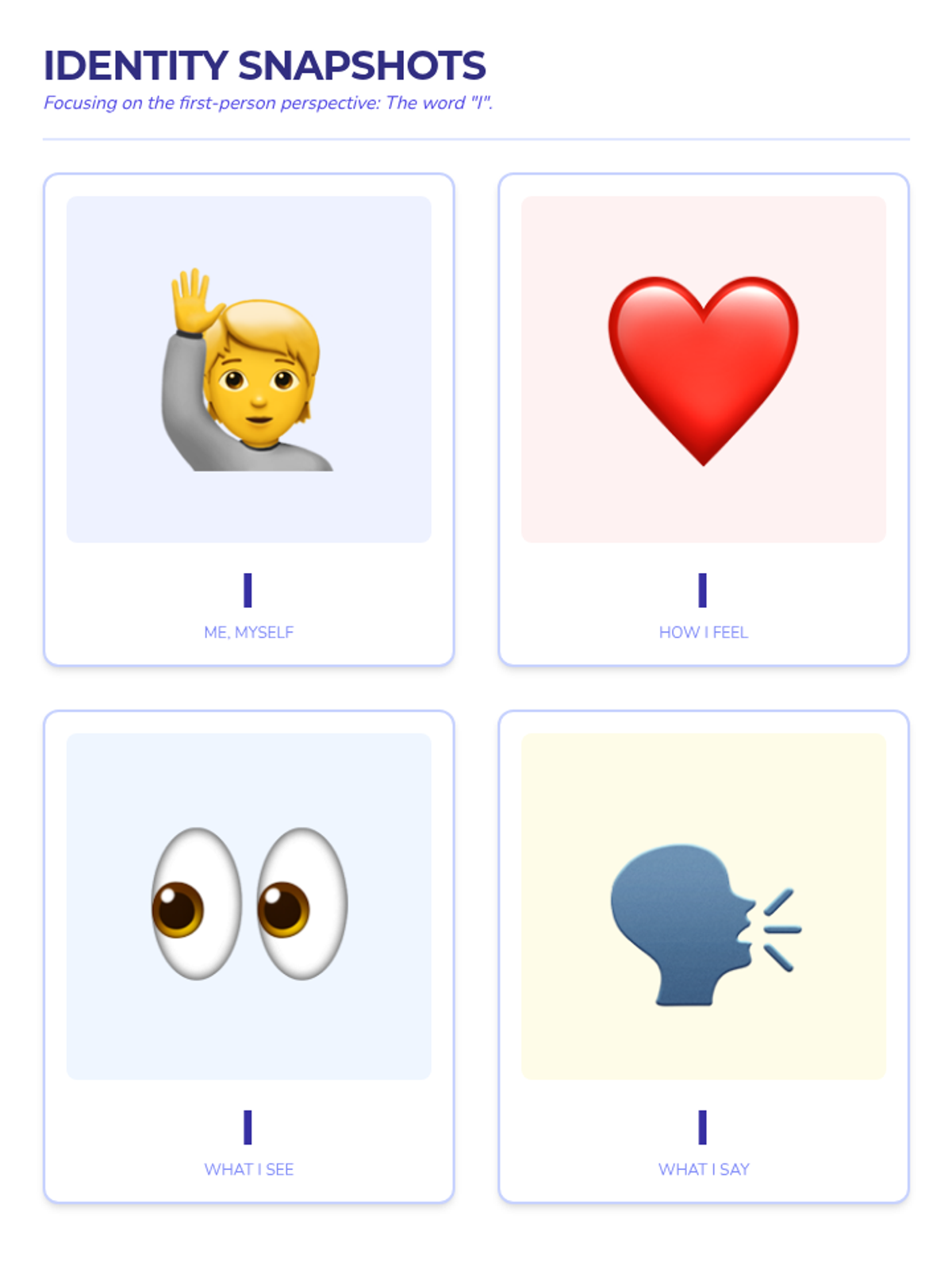
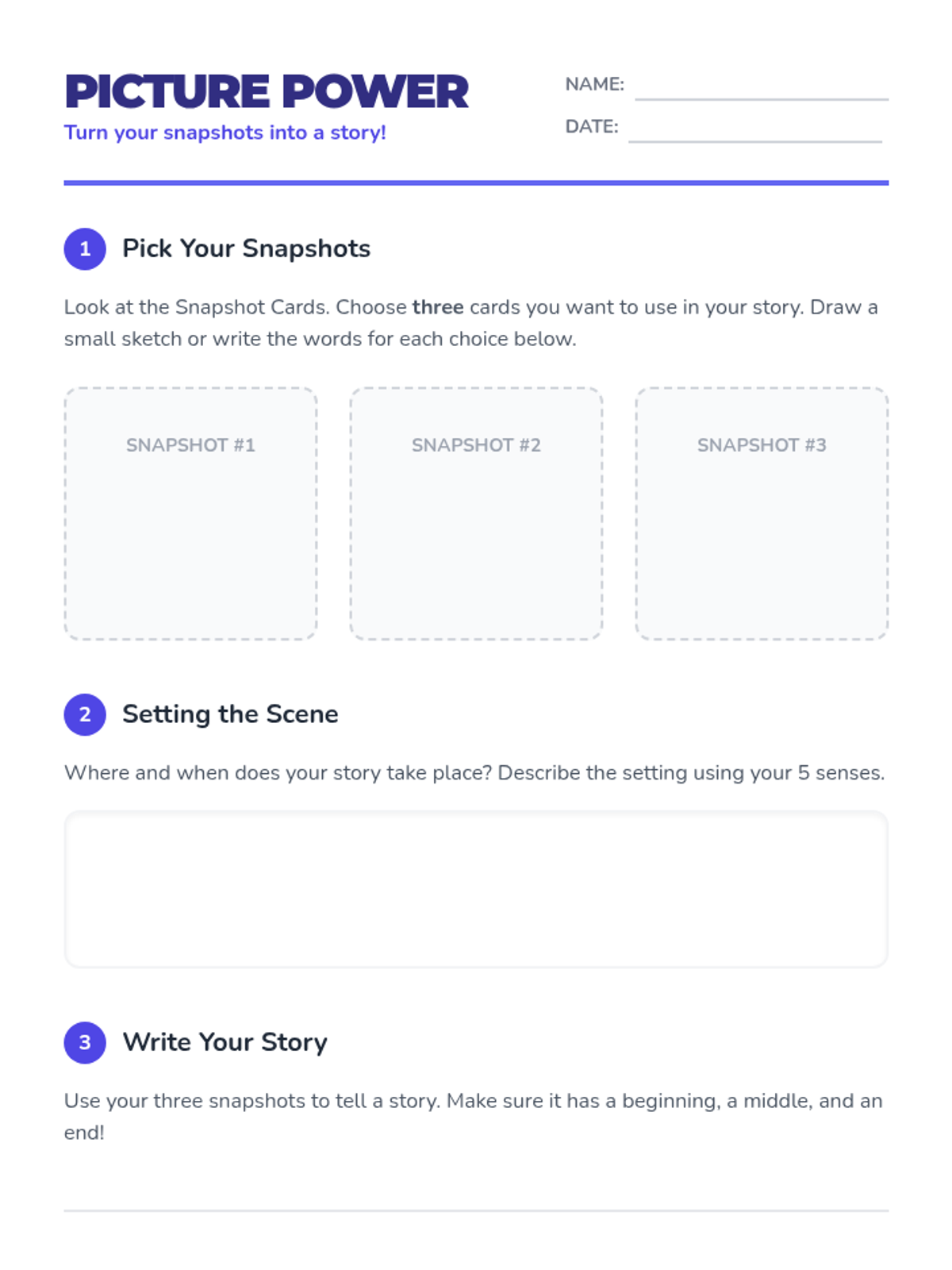
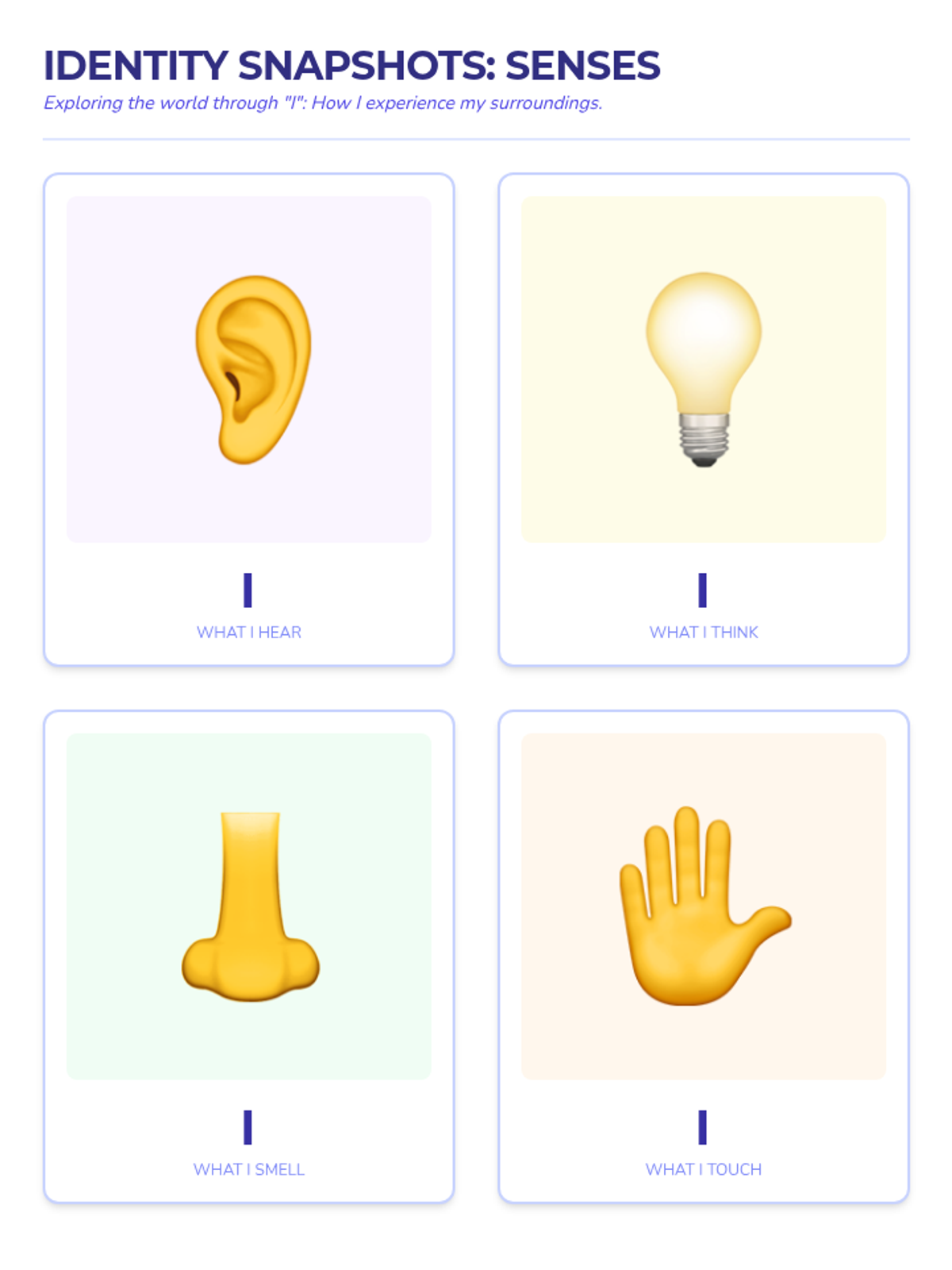
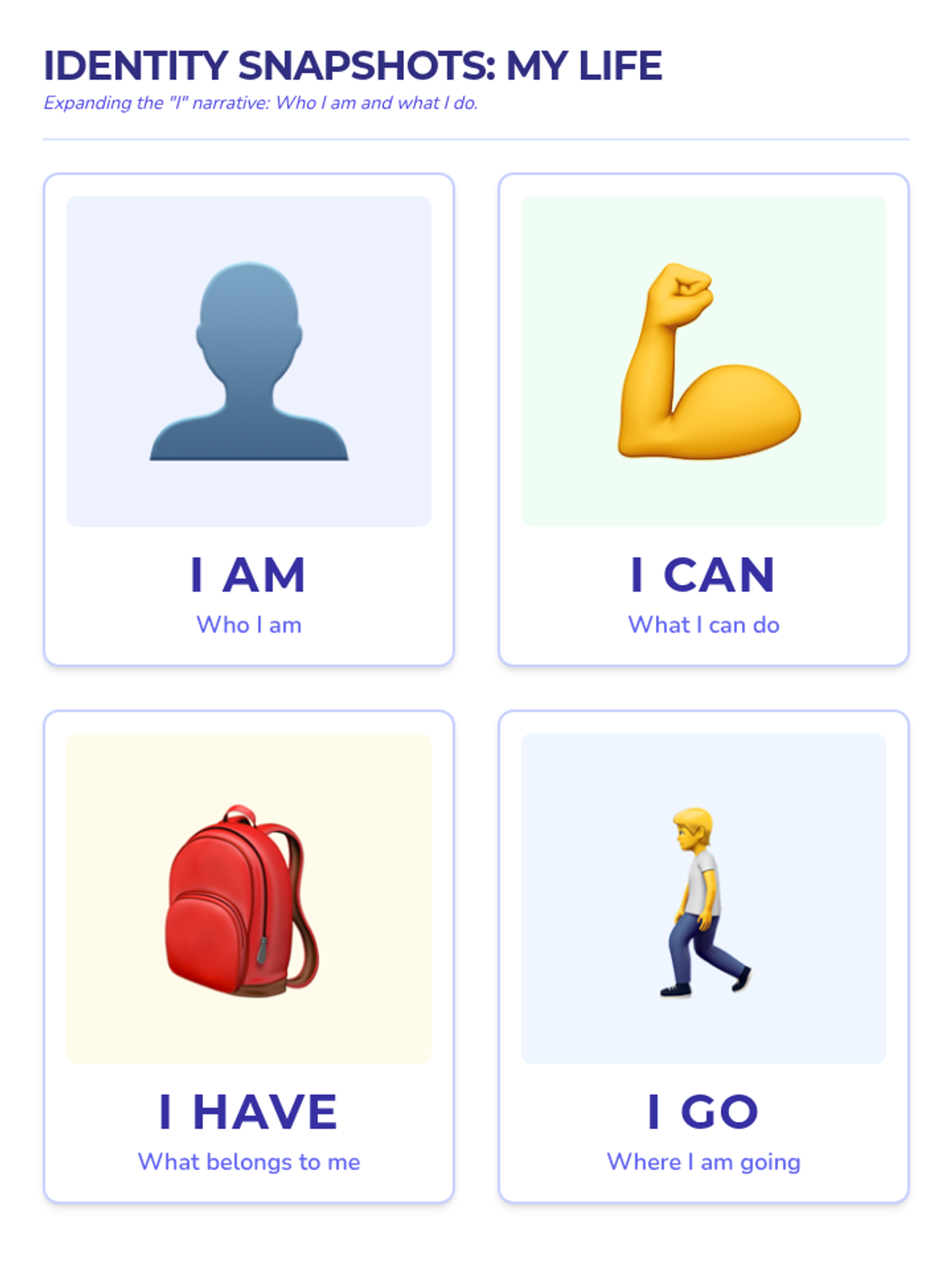
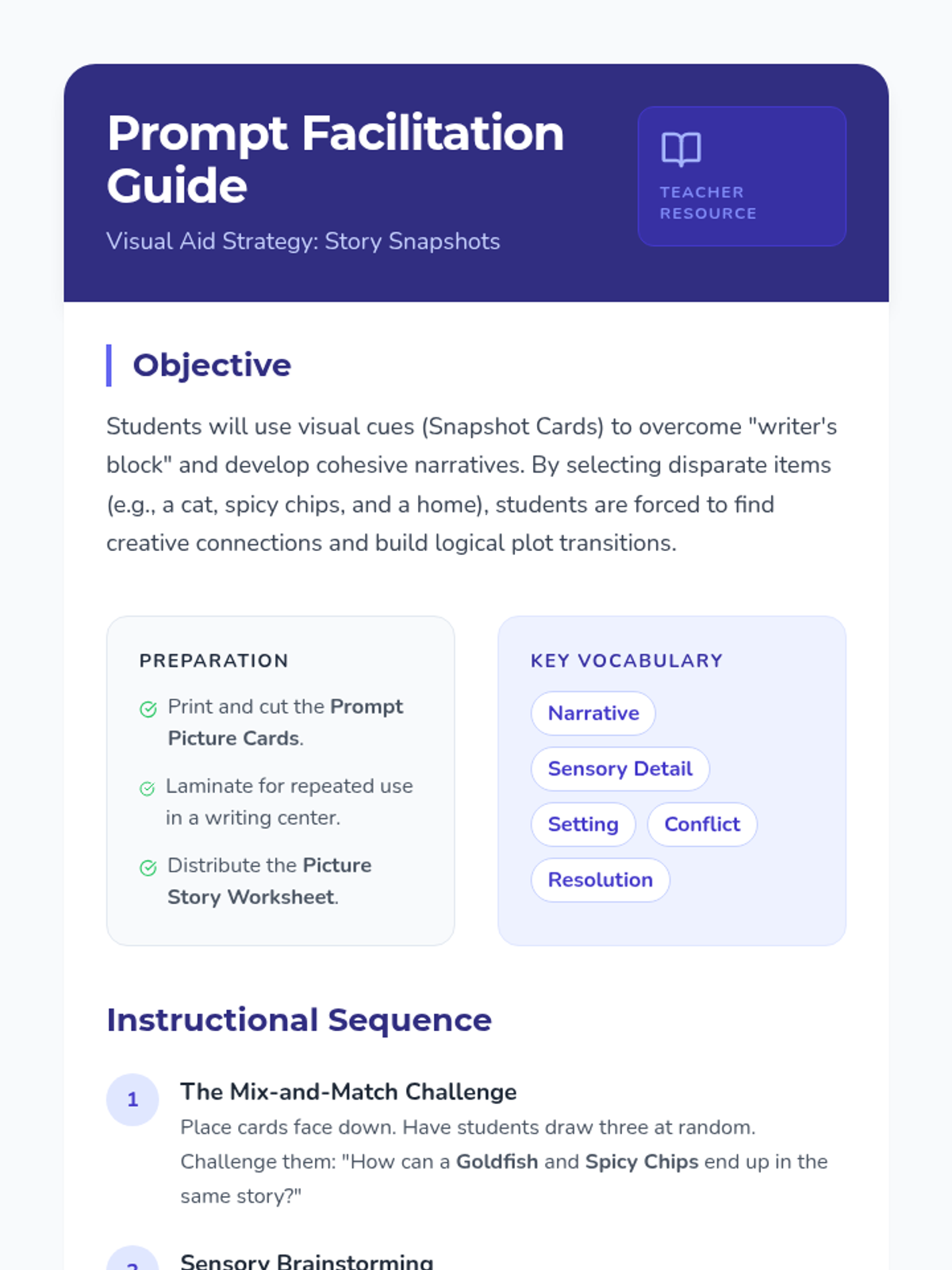
A lesson focused on using visual prompts to spark descriptive and narrative writing. Students use a set of visual cards to generate ideas, describe settings, and build characters for their stories.
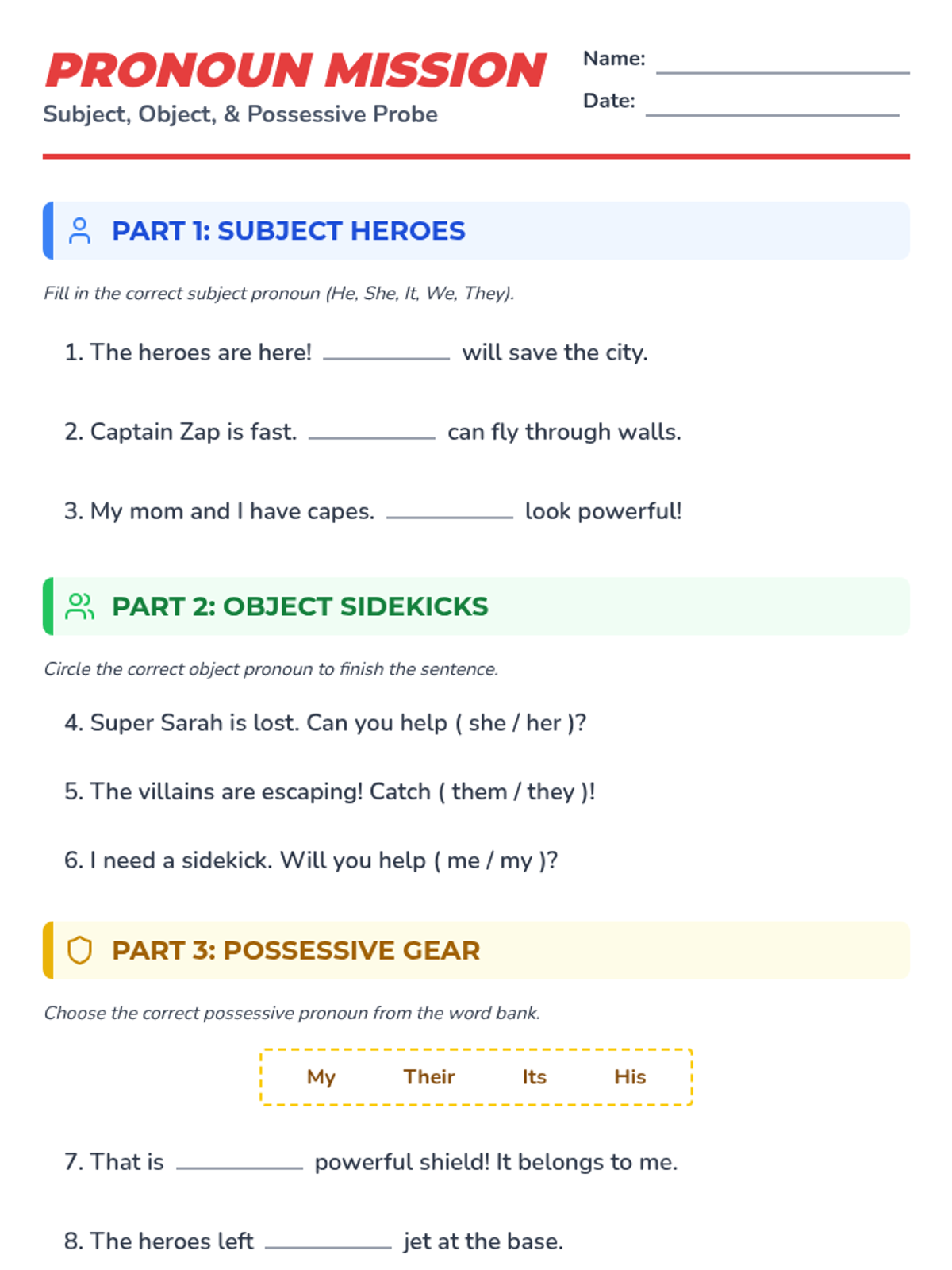
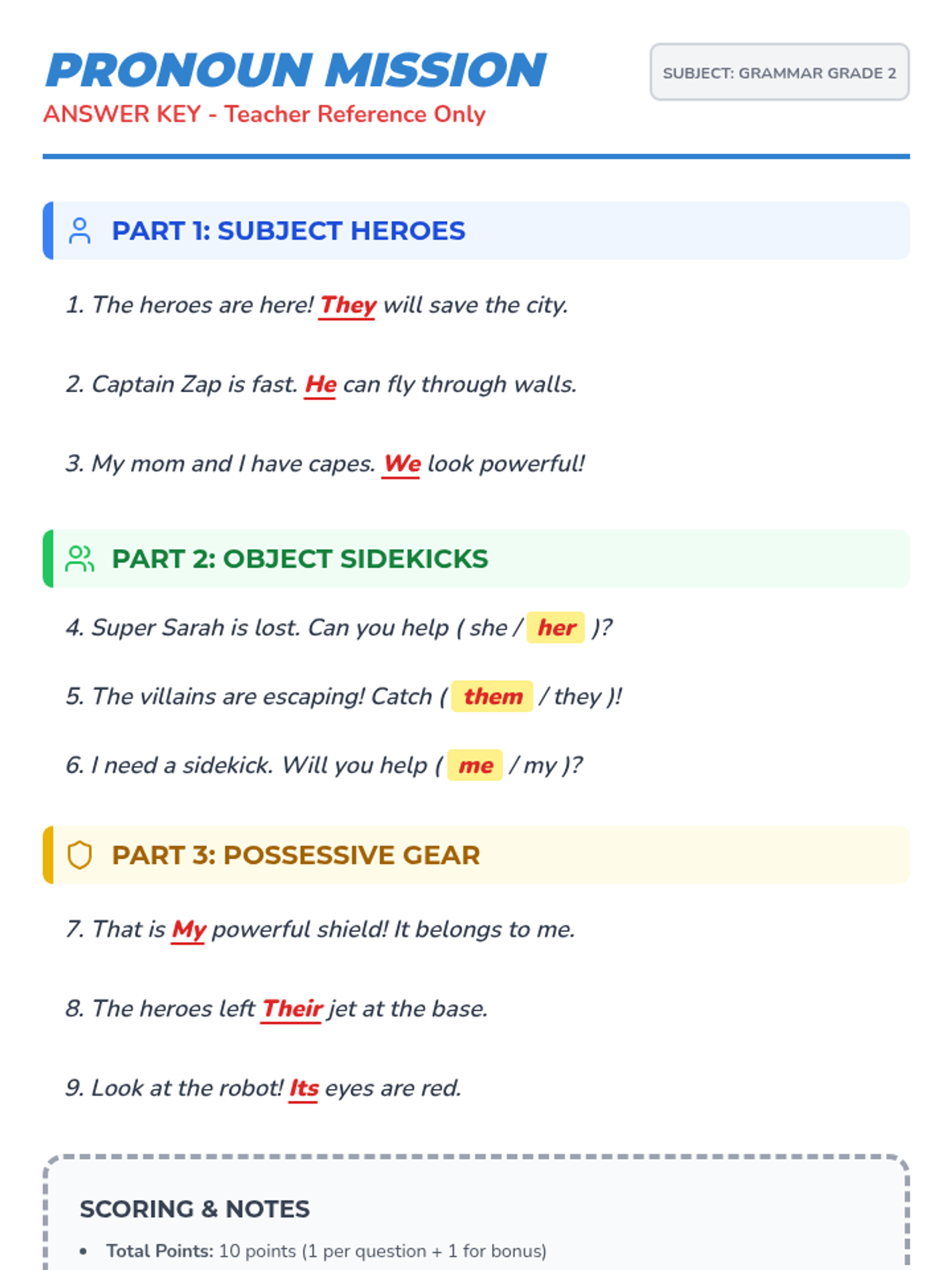
A quick probe into subject, object, and possessive pronouns for second graders, featuring a visual warm-up and a focused assessment worksheet.
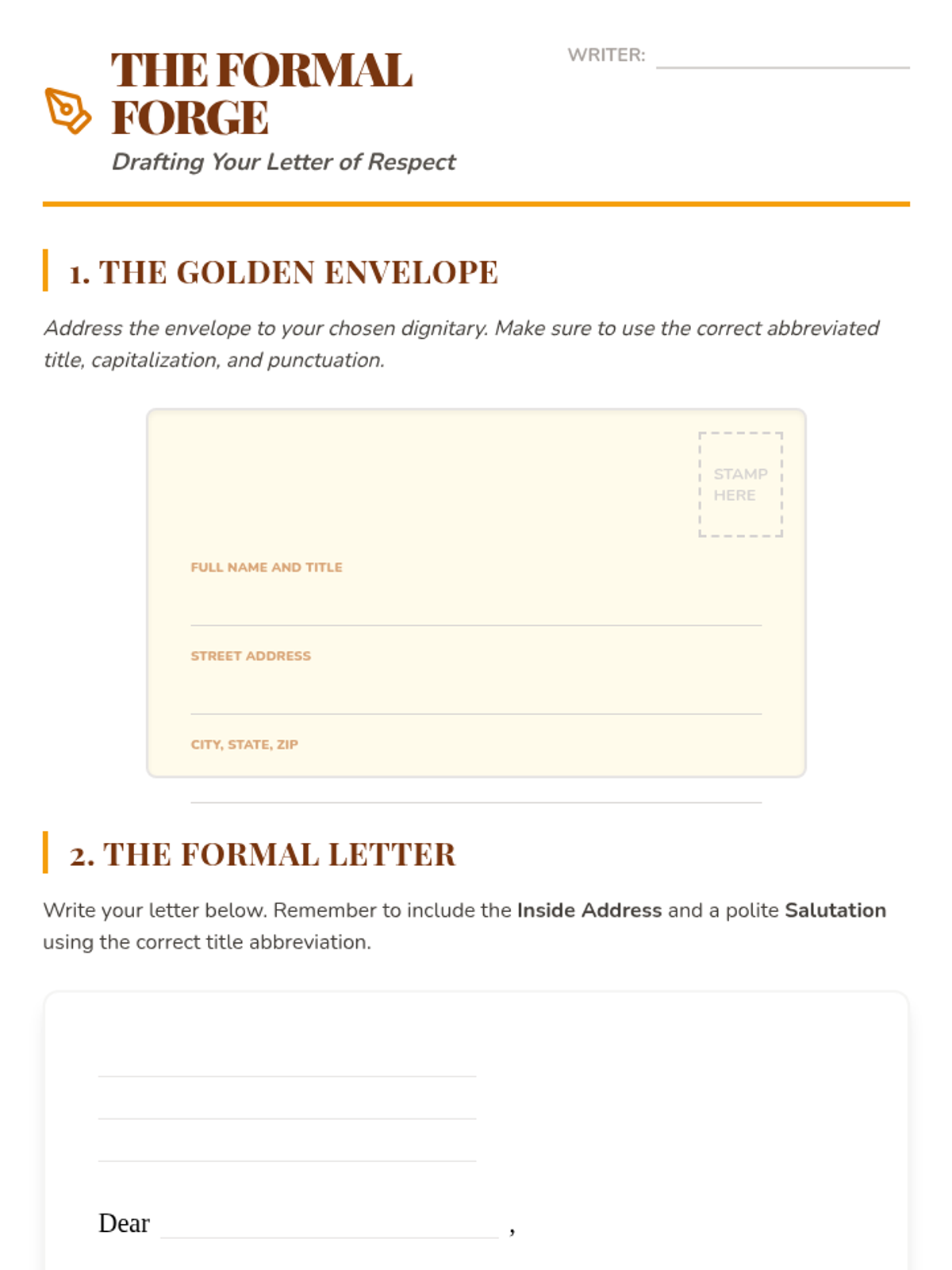
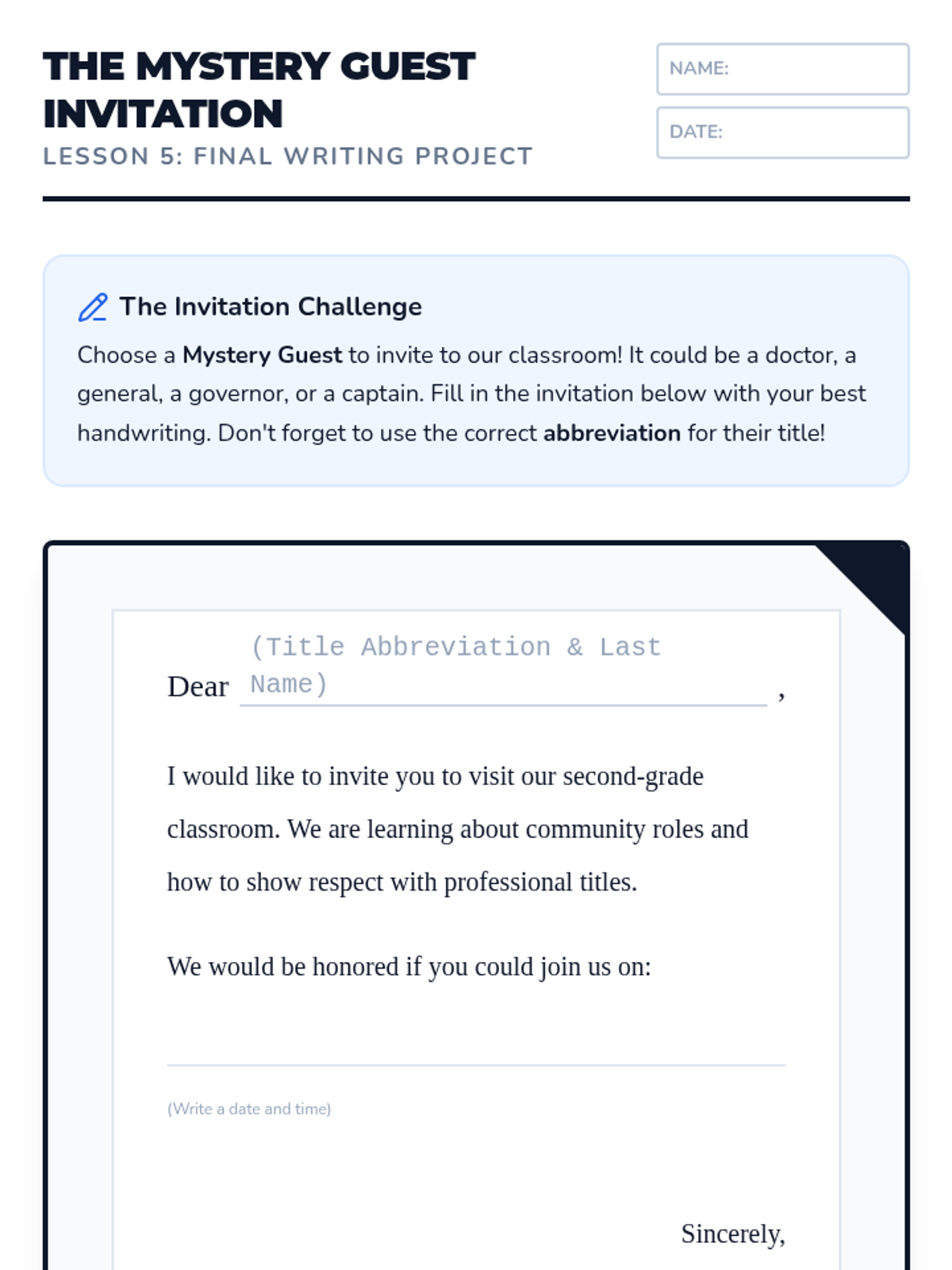
Students draft a formal letter to a real or fictional person of authority (e.g., the school Principal or a local Mayor). They must correctly use the recipient's title in the inside address and salutation.
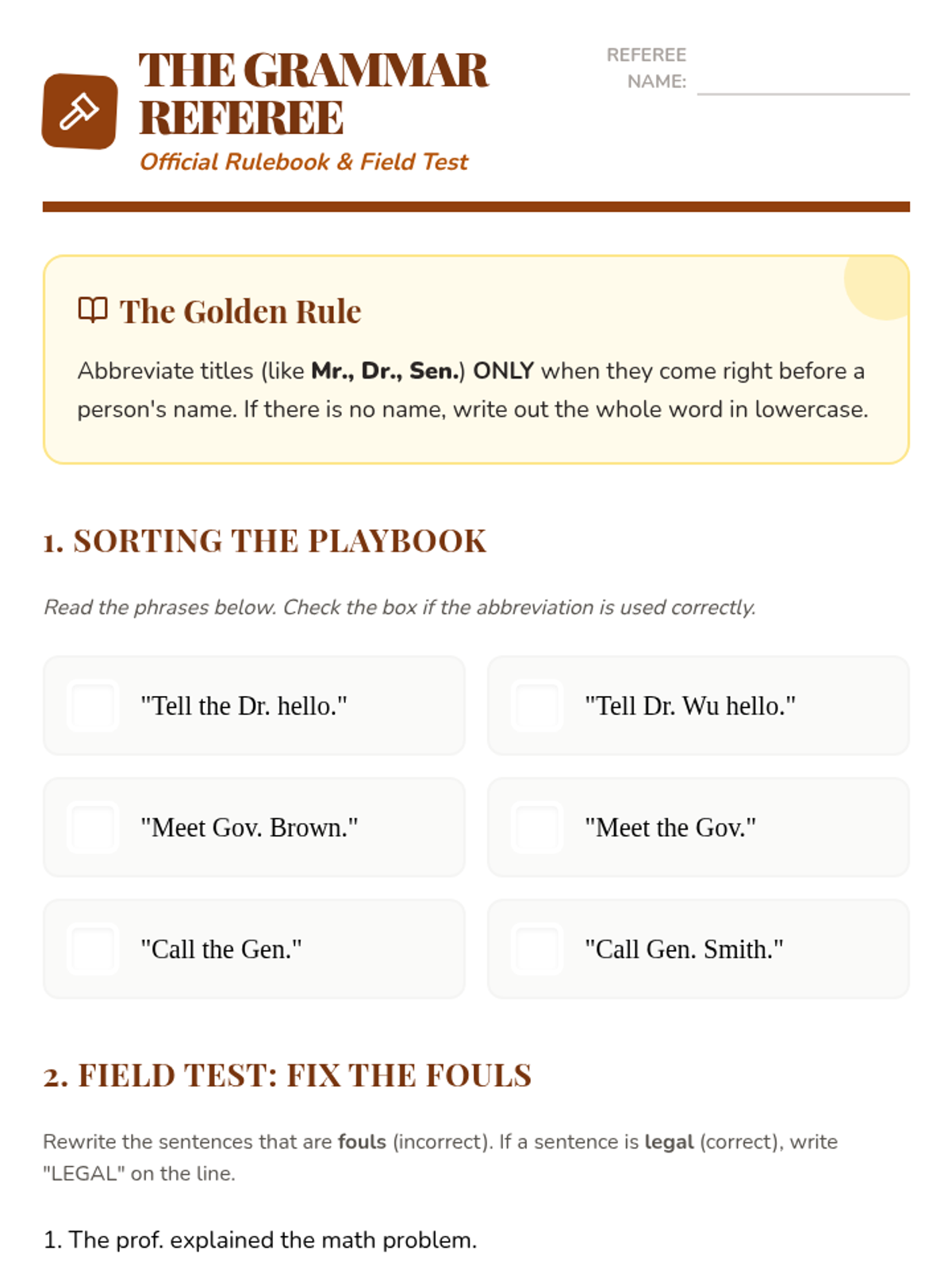
This lesson focuses on the rule that titles are usually only abbreviated when they appear before a name (e.g., 'Dr. Smith' vs. 'The doctor is here'). Students practice sorting sentences into correct and incorrect usage.
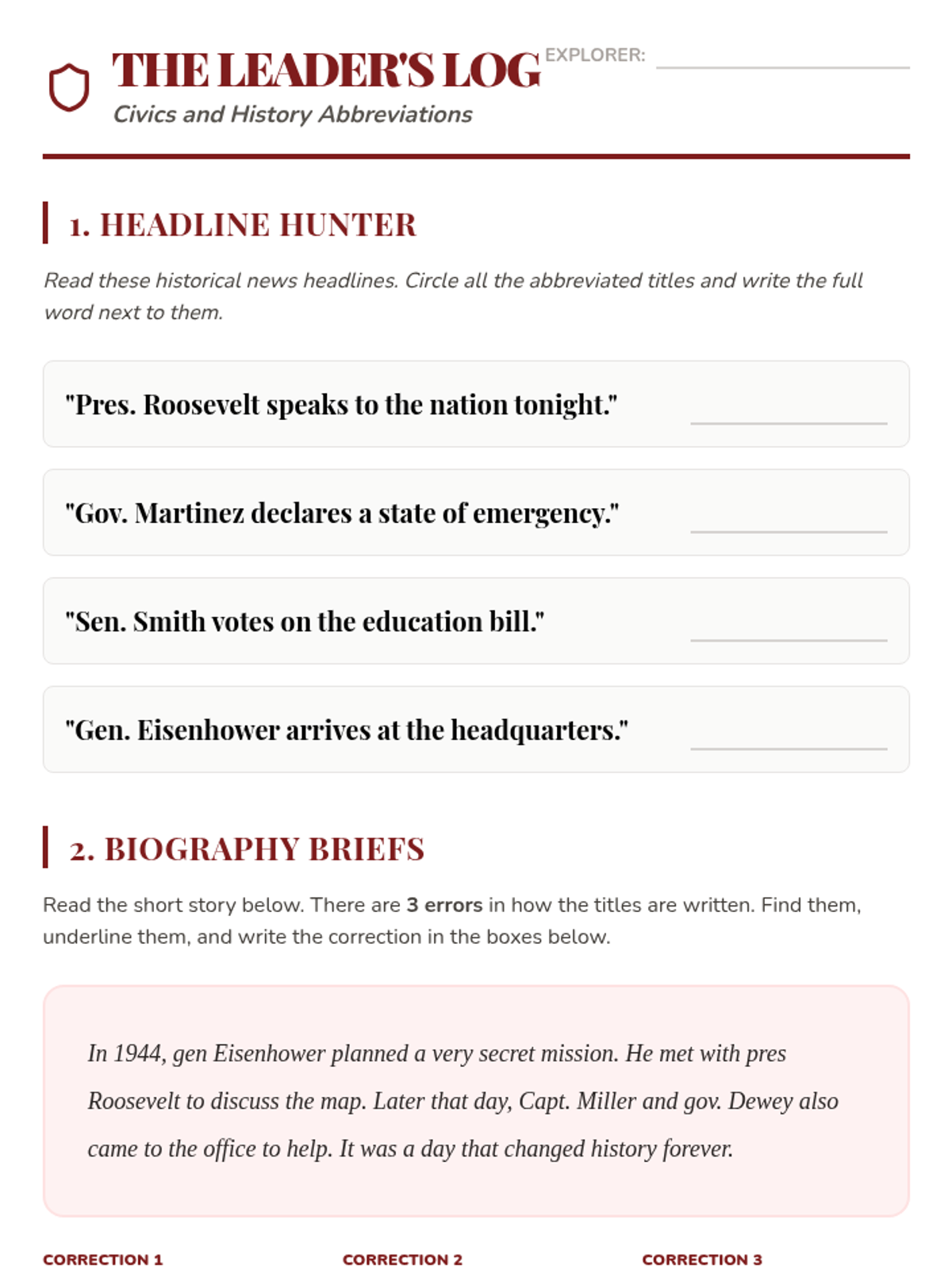
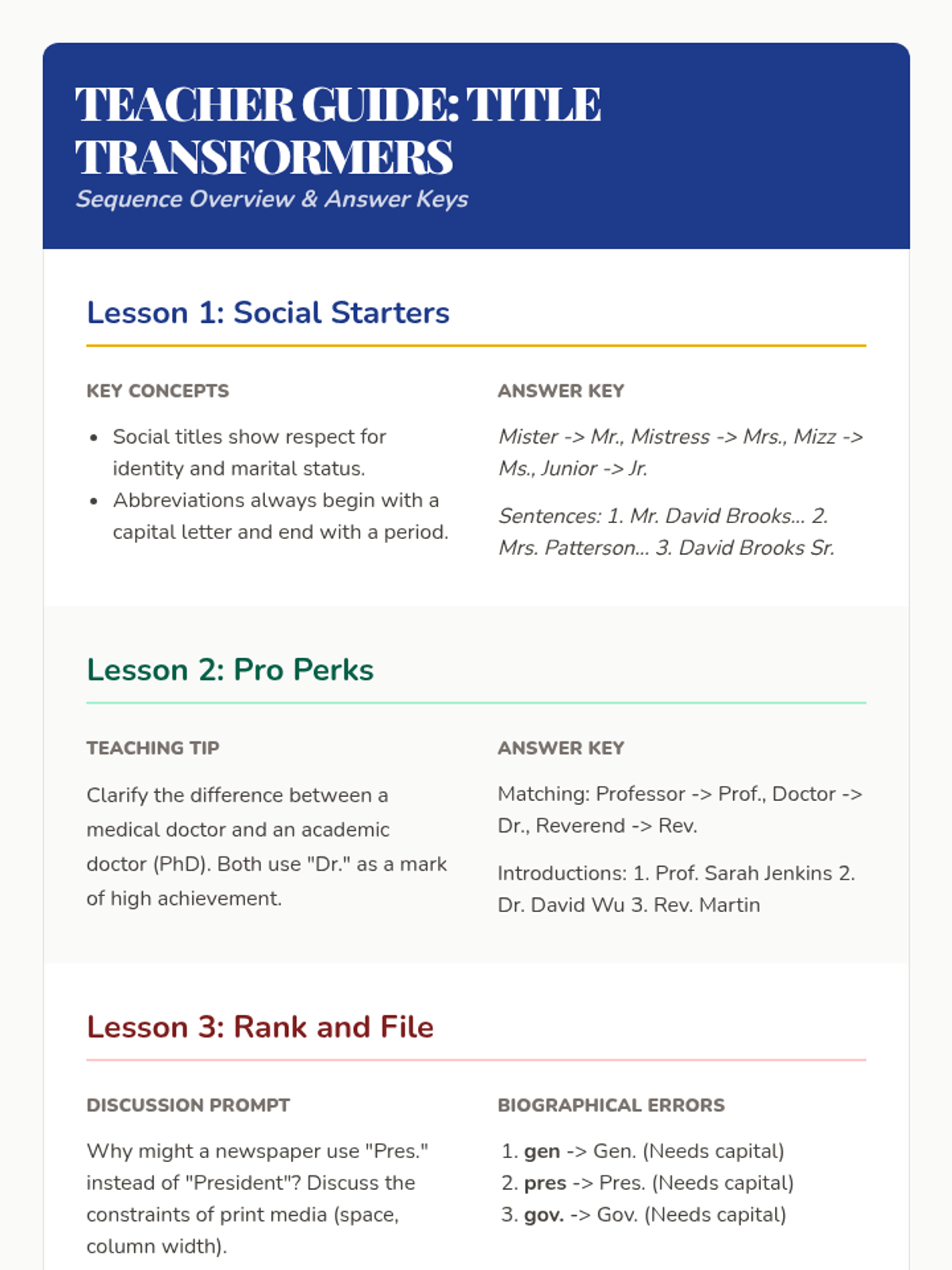
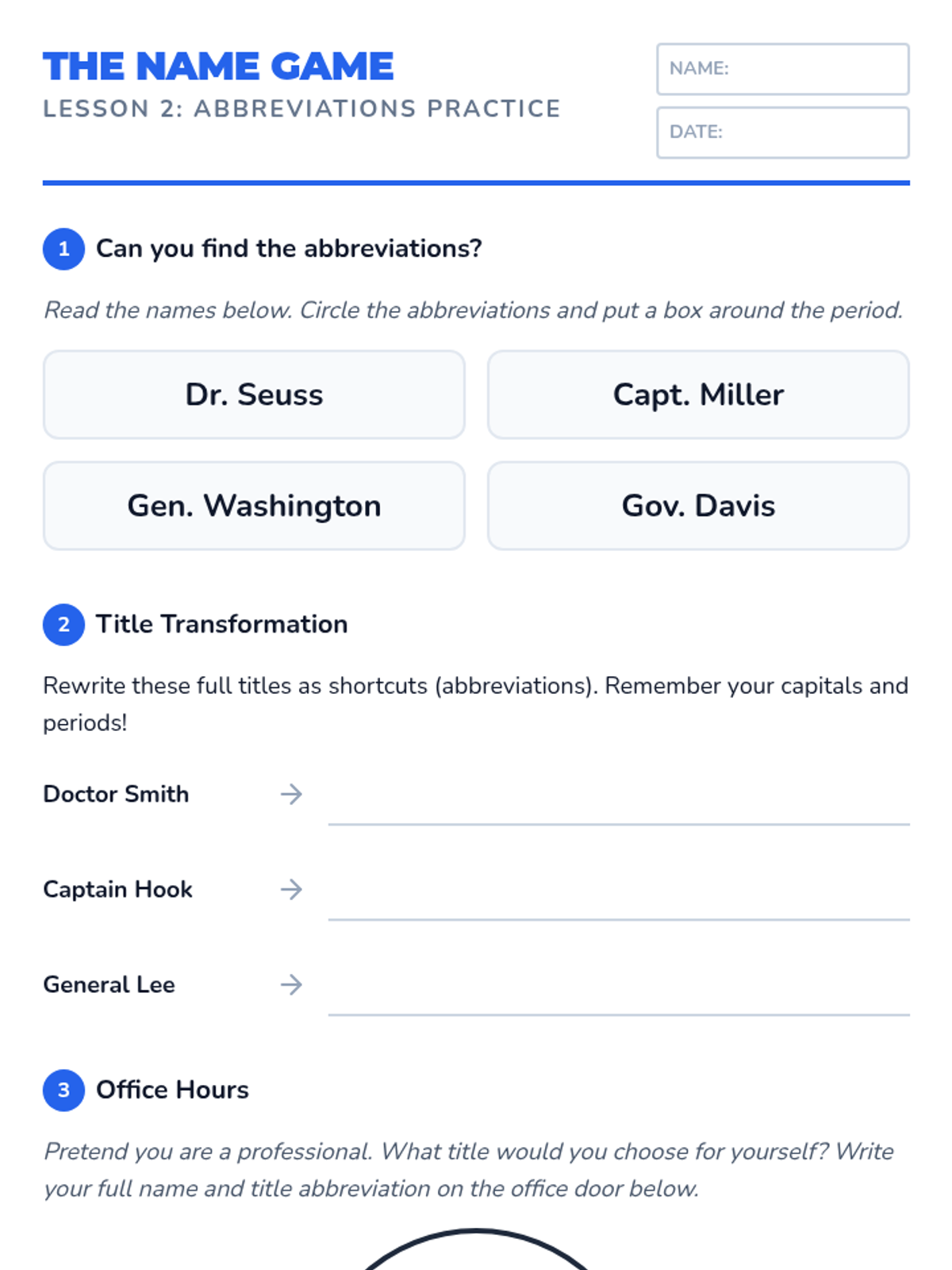
Students explore titles used in civics and history, such as Pres., Gov., Sen., Gen., and Capt. They read short biographical blurbs and identify these abbreviations, discussing why titles are often shortened in news and history books.
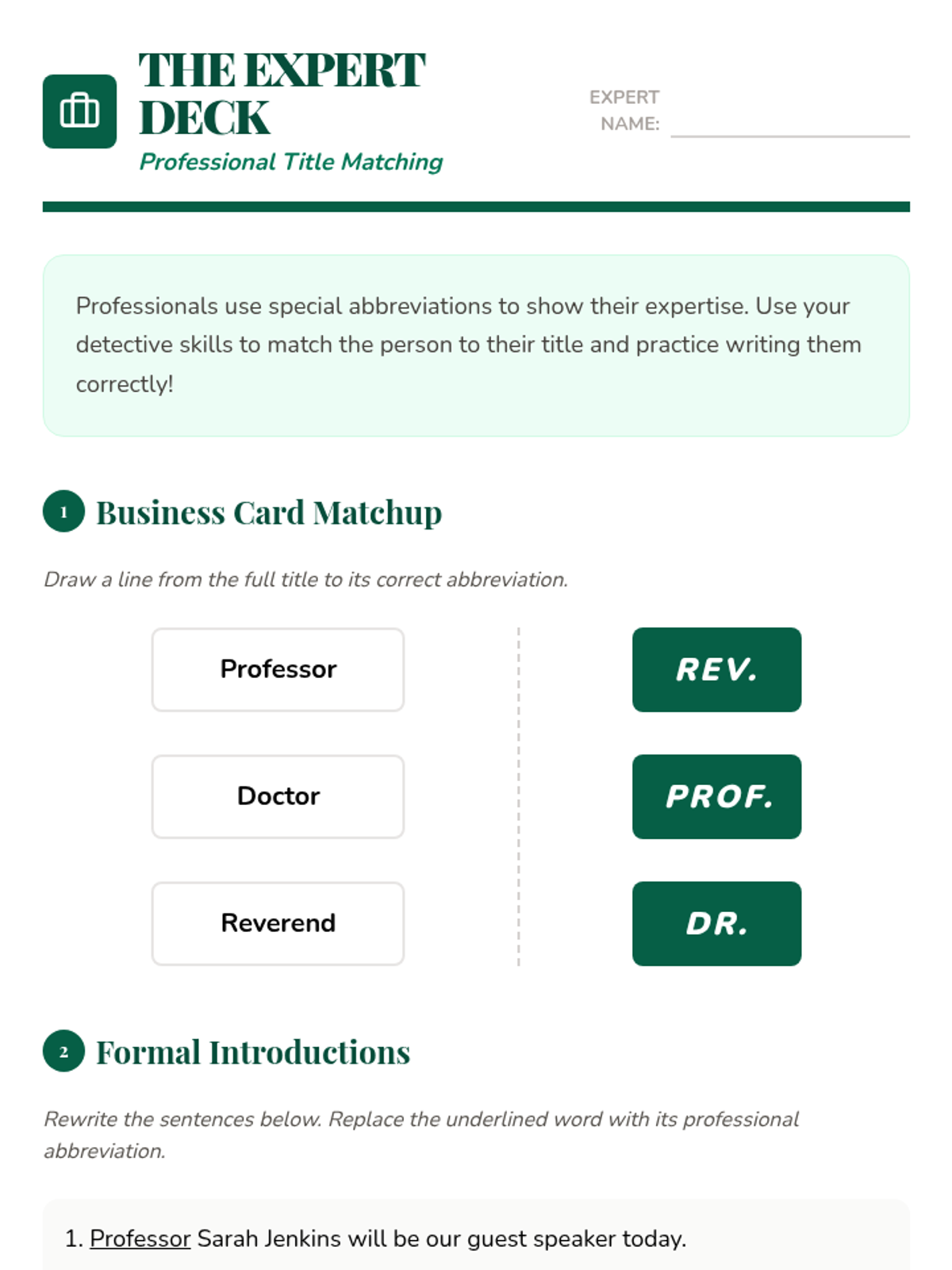
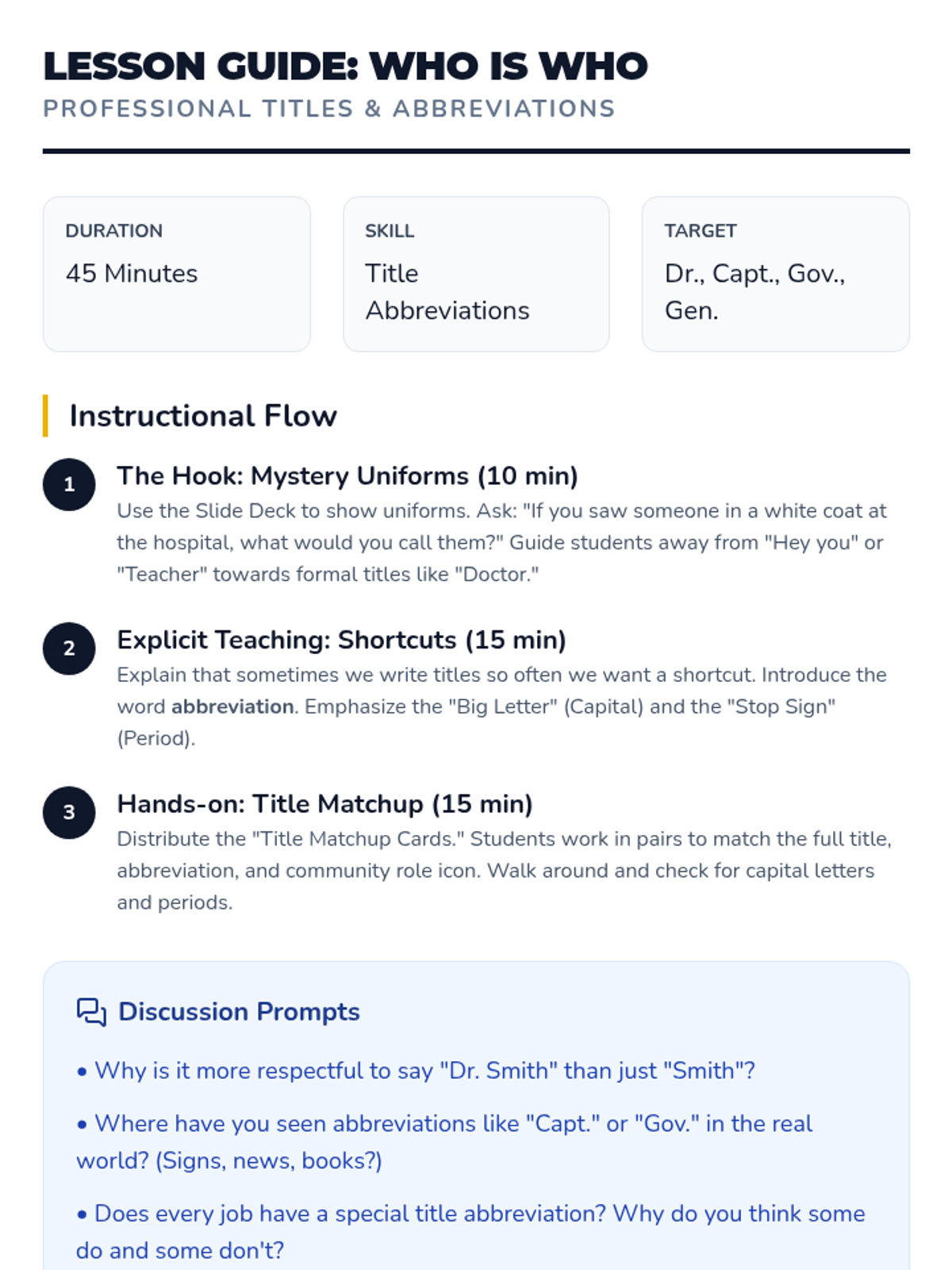
The lesson introduces professional titles such as Dr. (Doctor), Prof. (Professor), and Rev. (Reverend). Students match professionals to their titles and practice writing sentences introducing these figures.
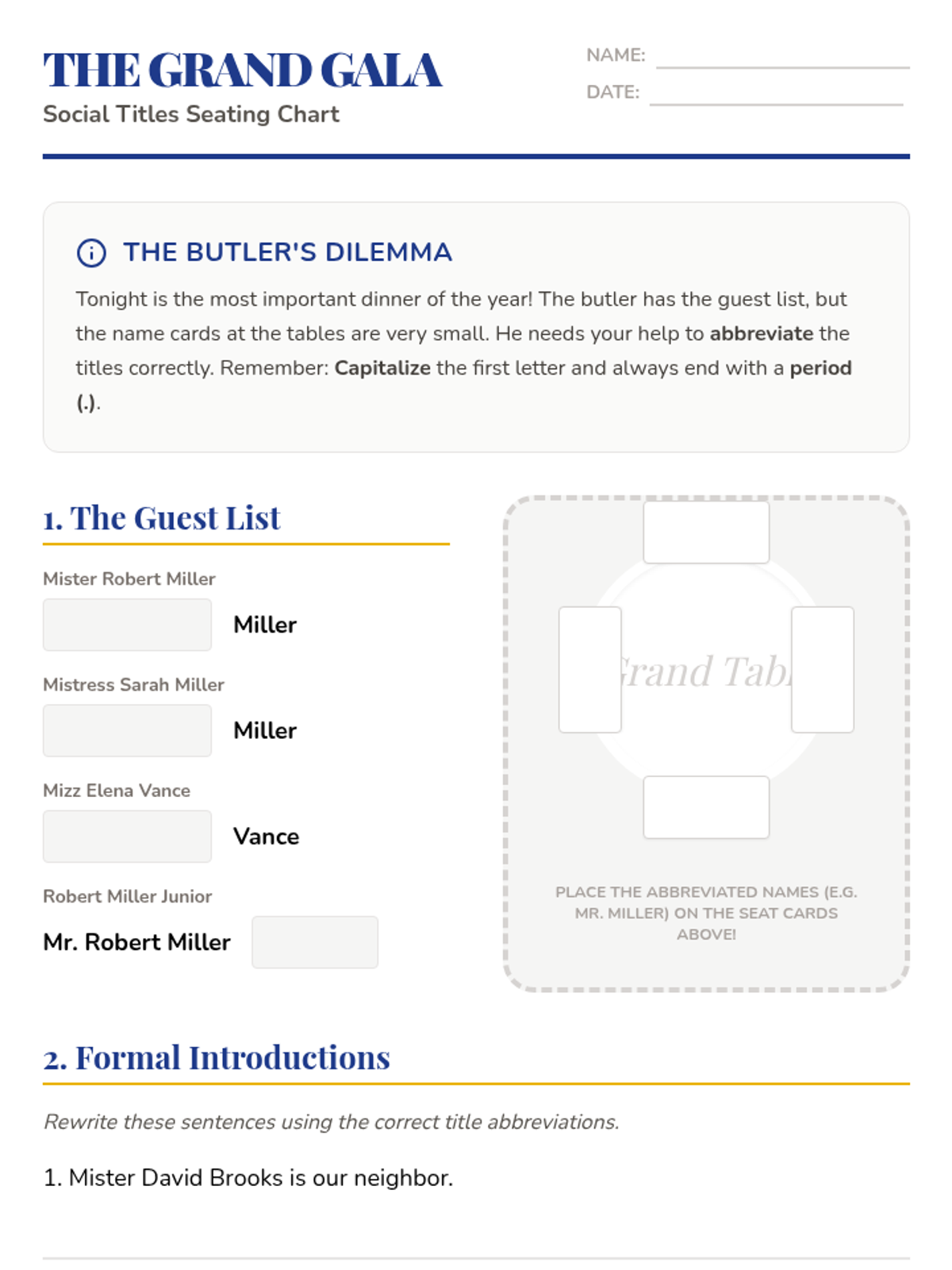
Students learn the standard social titles (Mr., Mrs., Ms., Jr., Sr.) and the rules for their use. Discussion focuses on the importance of the period and the capital letter to show respect.
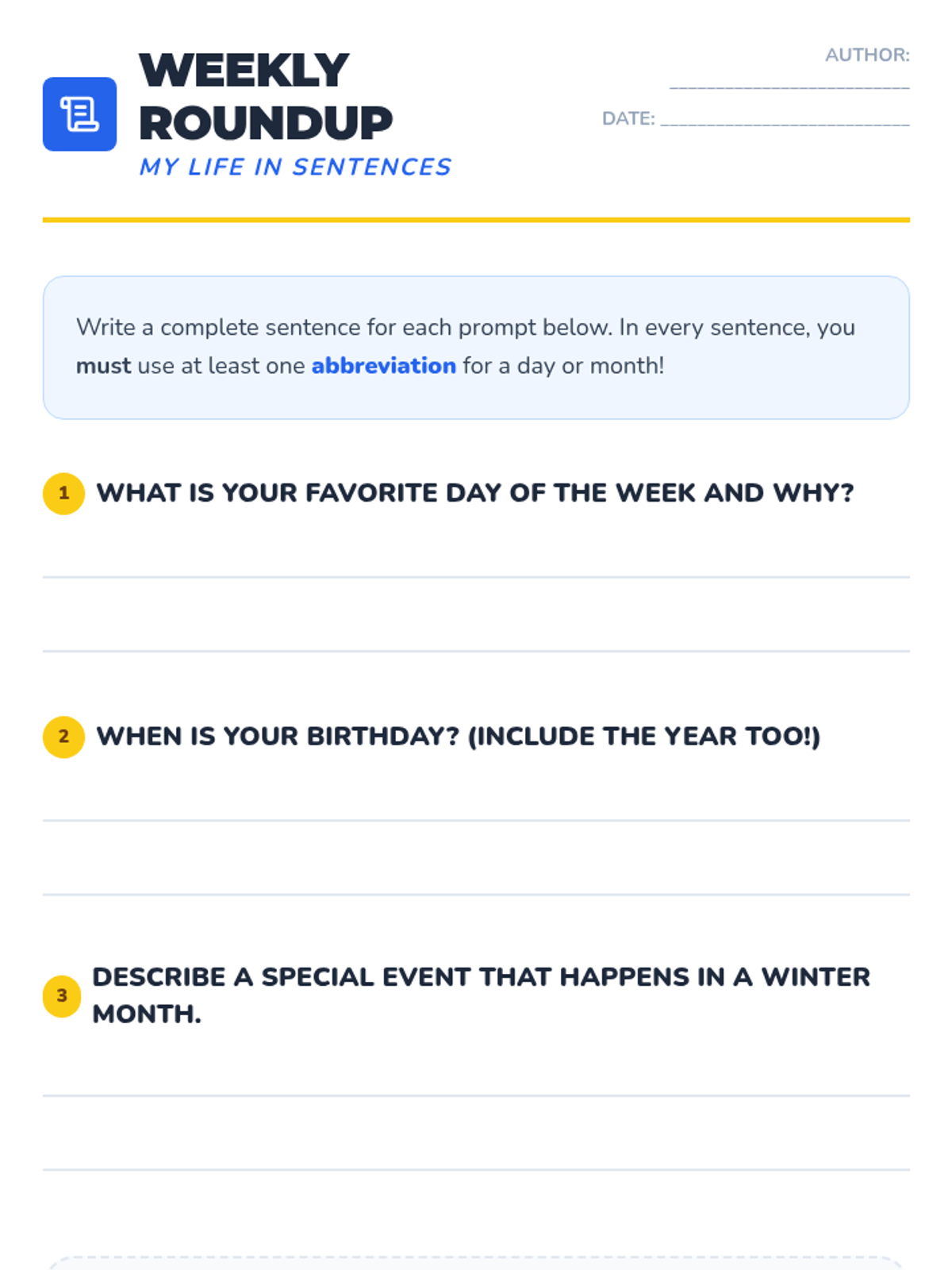
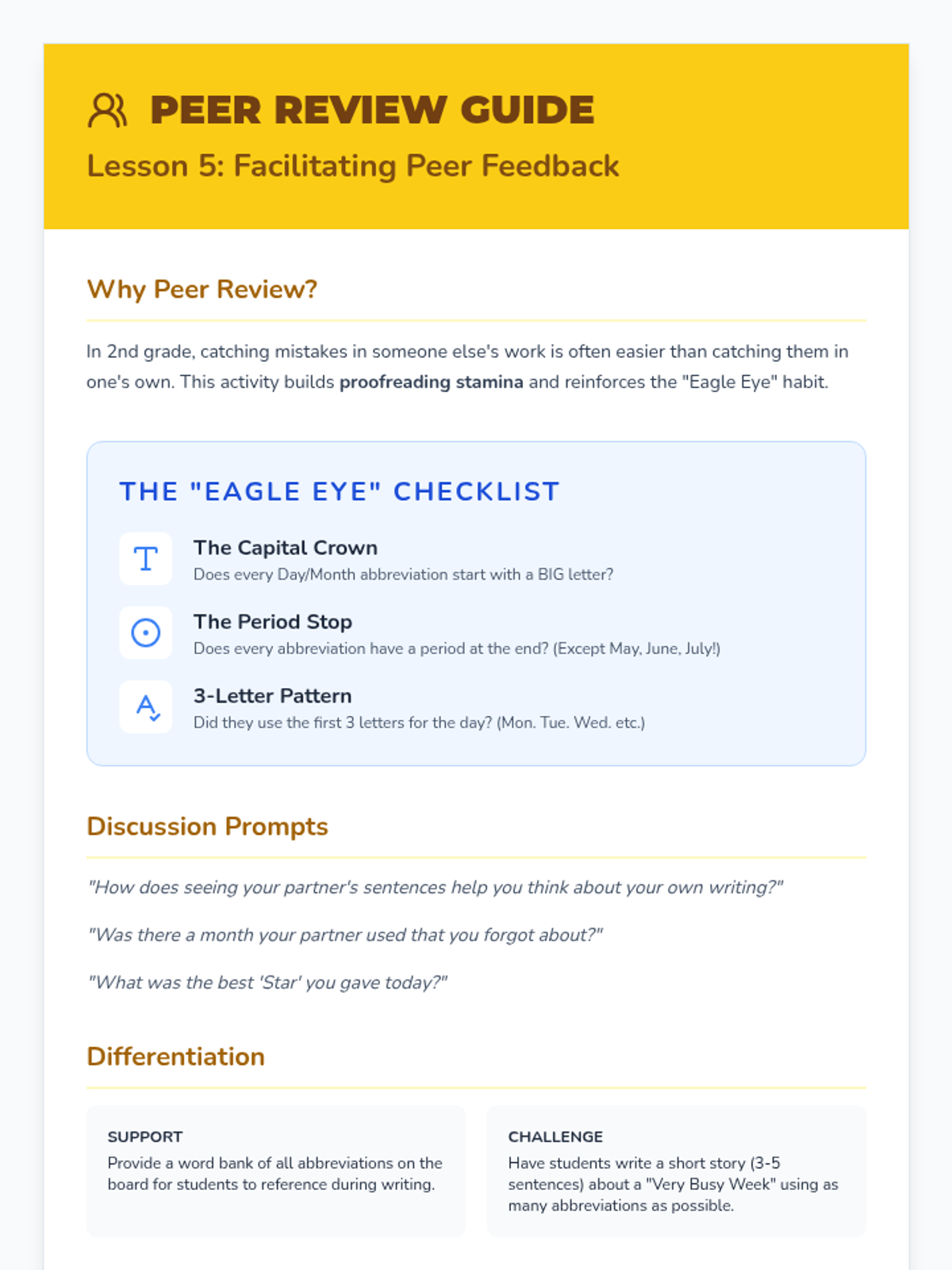
Students write sentences describing their weekly routine using abbreviations for days and months. Peer reviews focus on checking for the period at the end of the abbreviation.
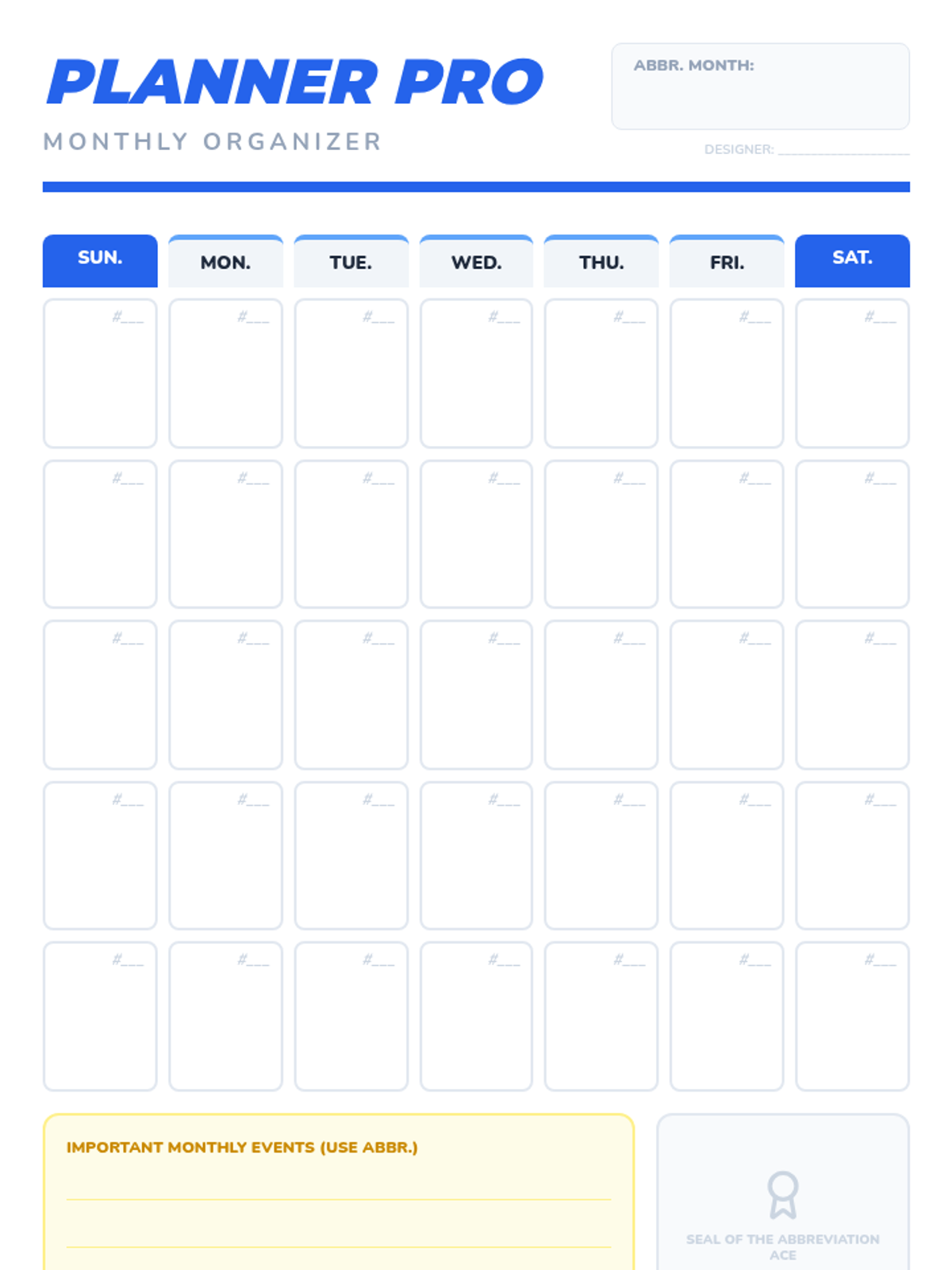
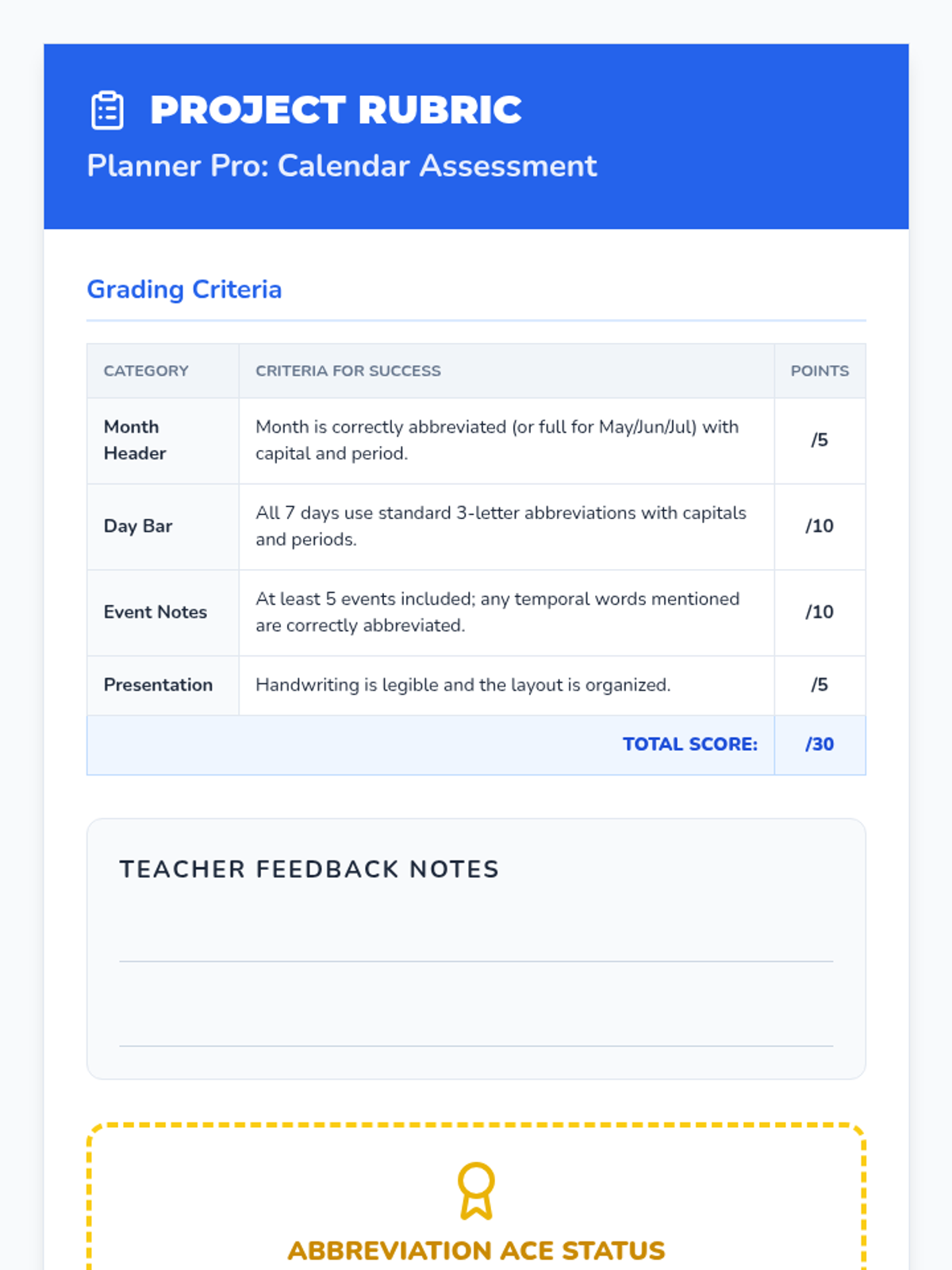
Students apply their skills by filling in a blank monthly calendar with school events, holidays, and birthdays. They must use the correct abbreviation for the day and month in the header and date boxes.
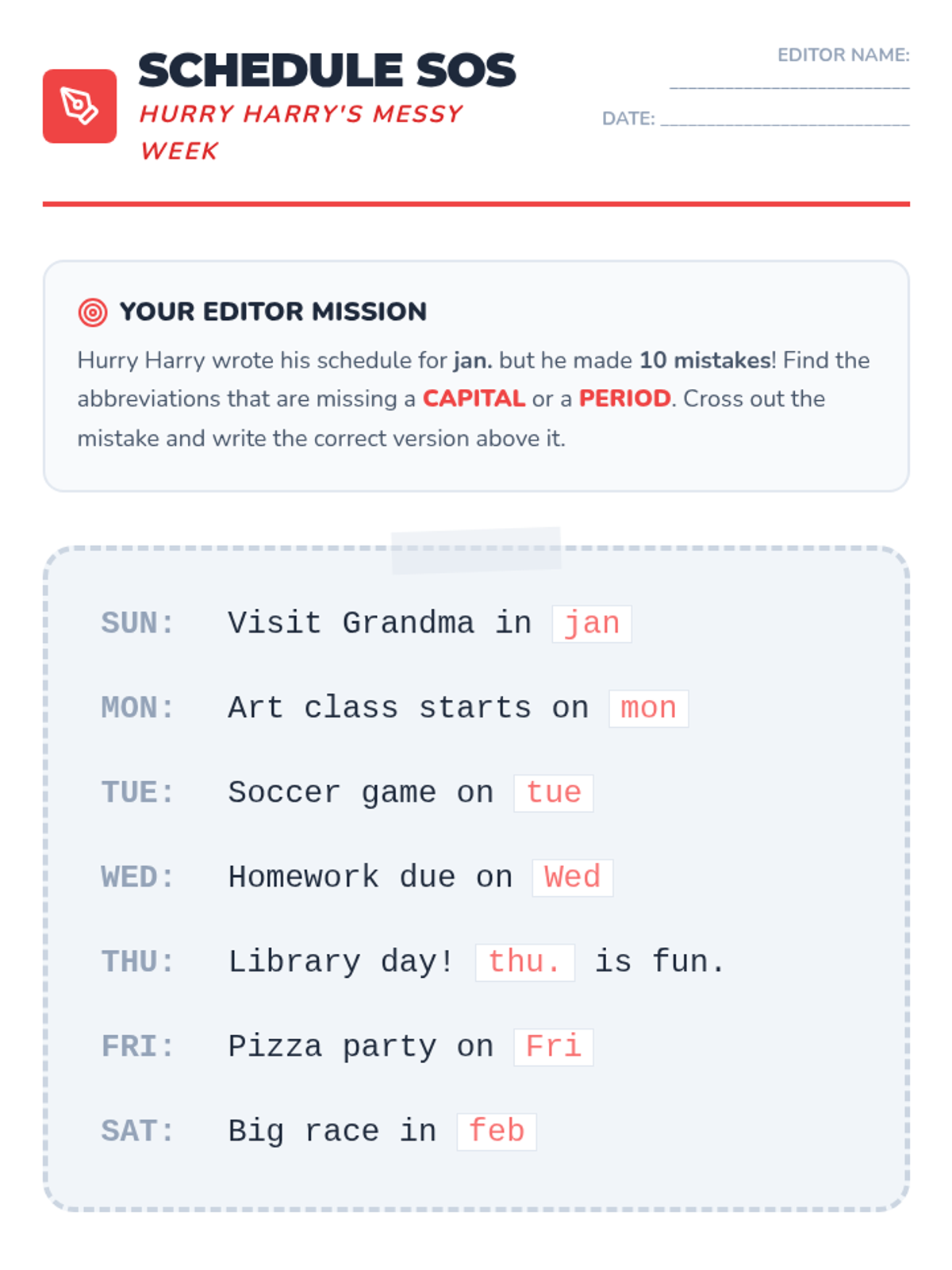
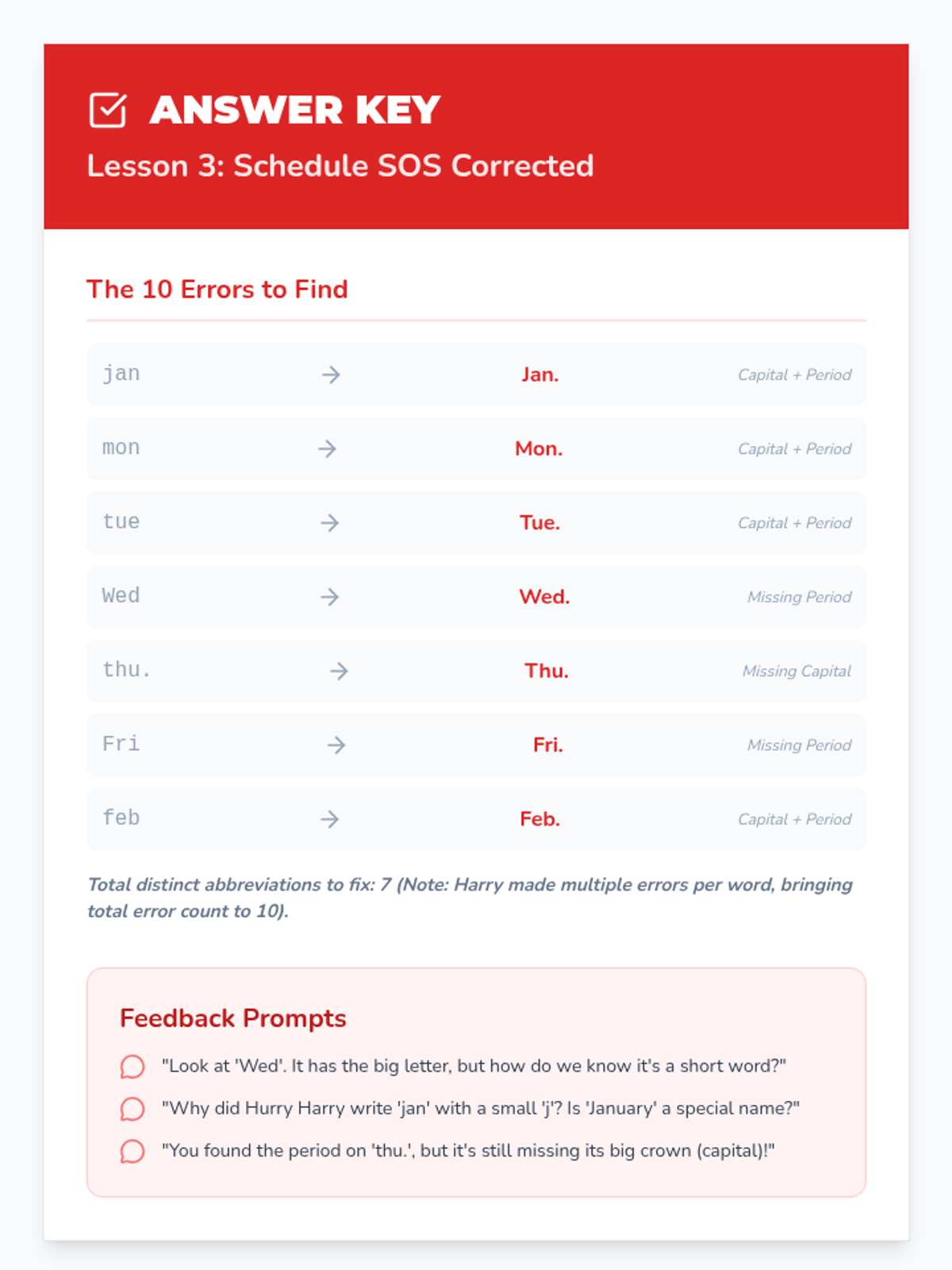
A focused grammar lesson on the specific punctuation rules for temporal abbreviations. Students act as 'editors' to correct a messy schedule that lacks periods or capital letters.
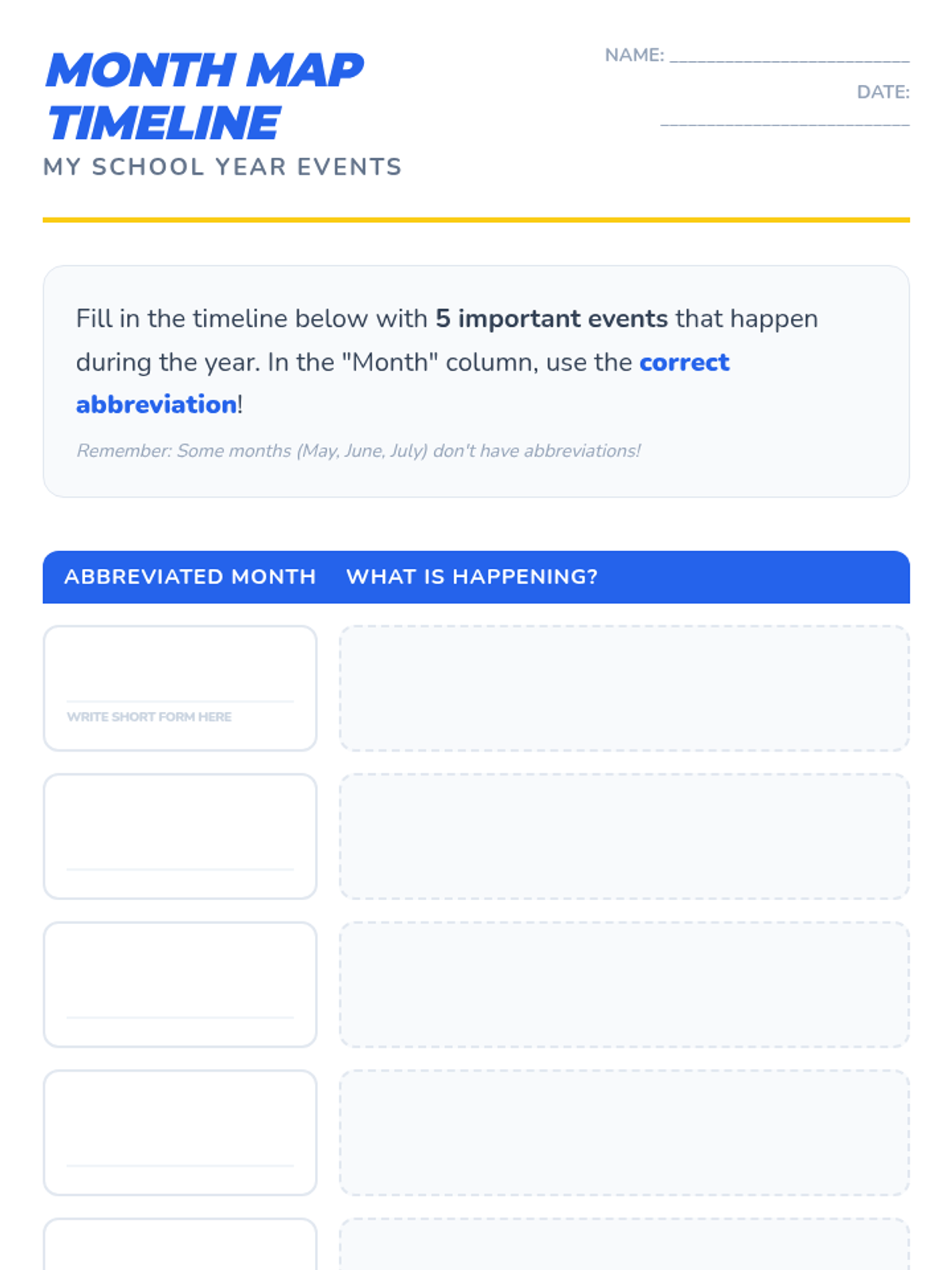
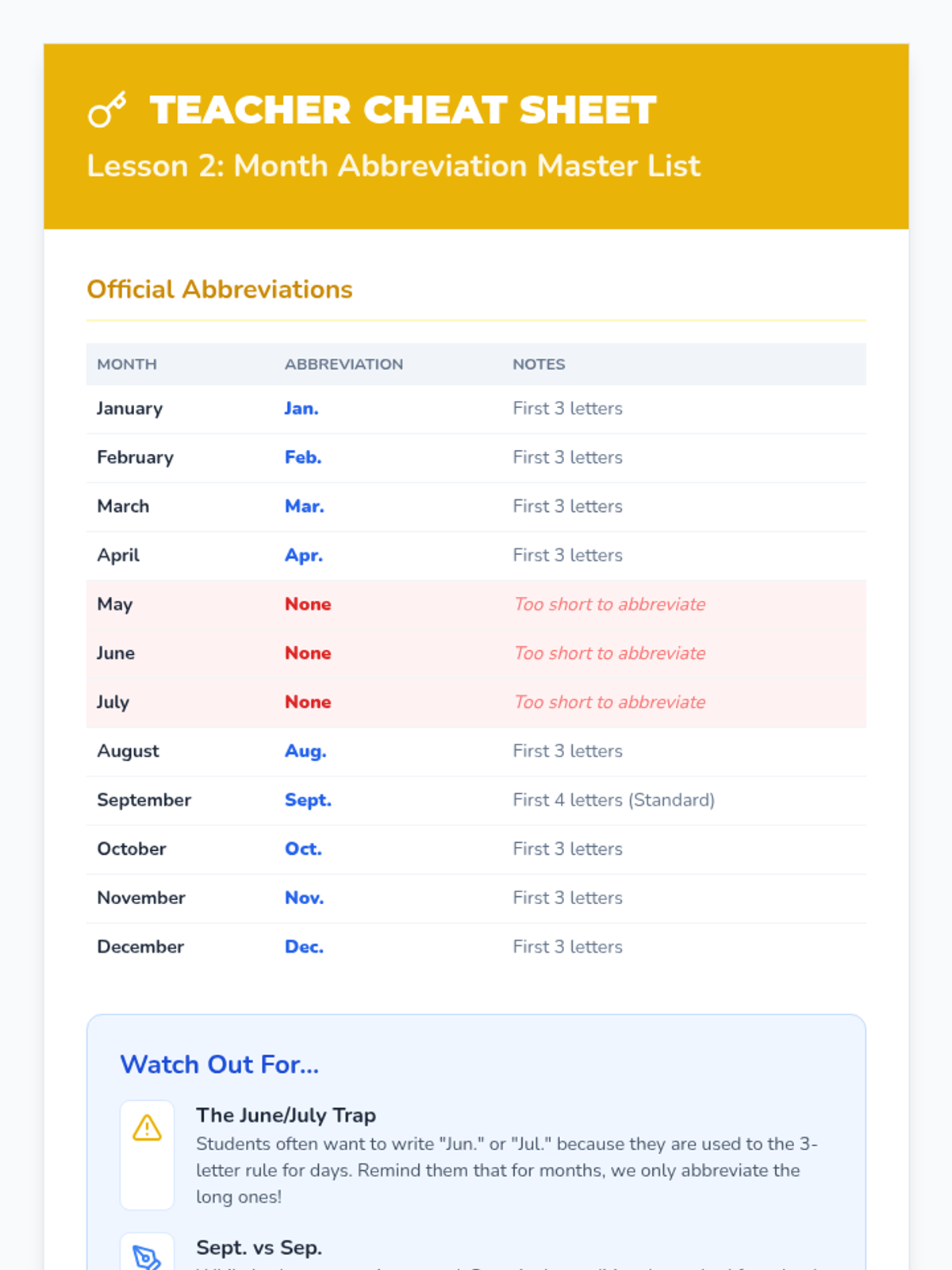
Students categorize months into those that have common abbreviations (Jan., Feb.) and those that typically do not (May, June, July). They create a timeline of their year using these short forms.
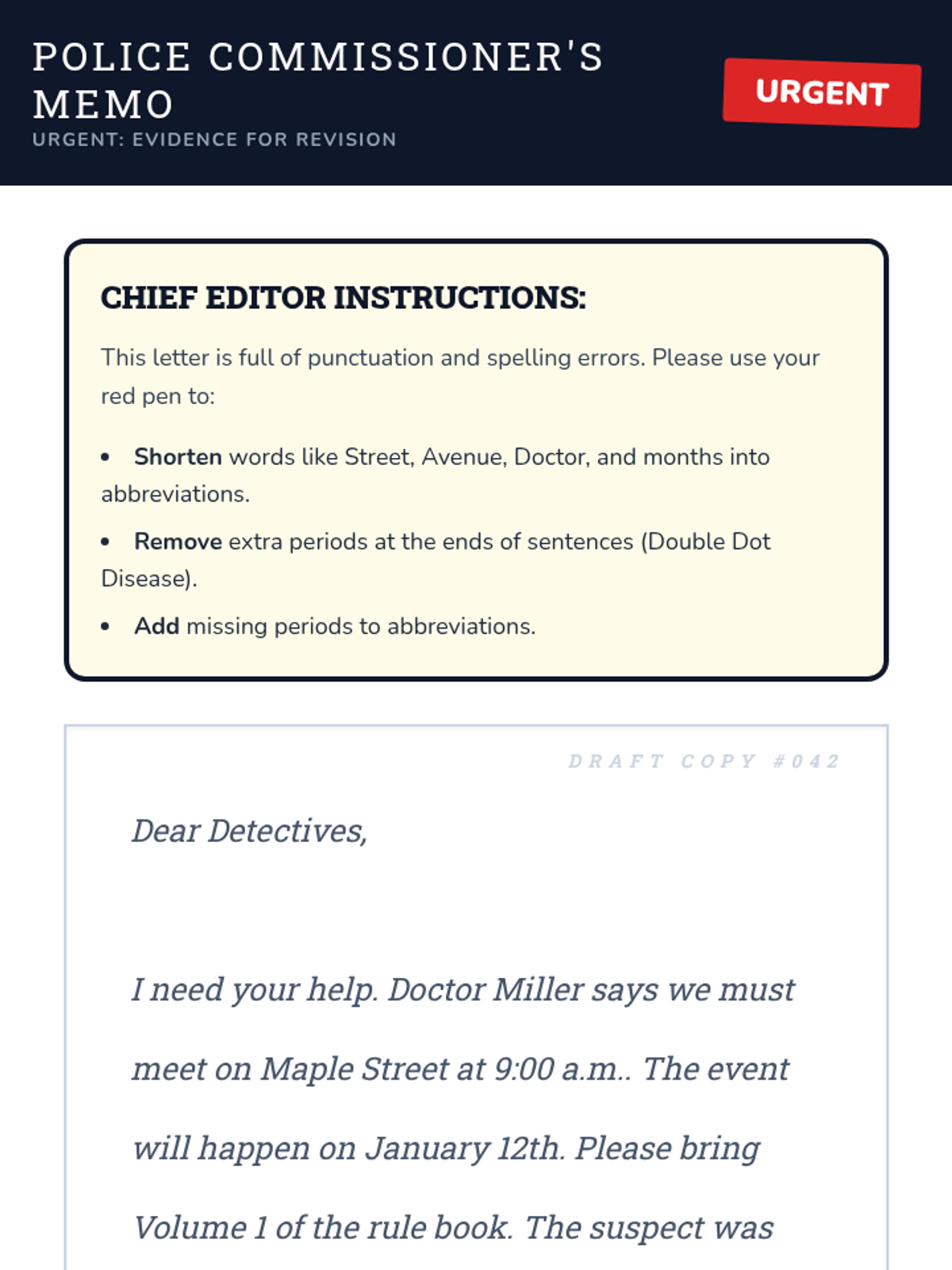
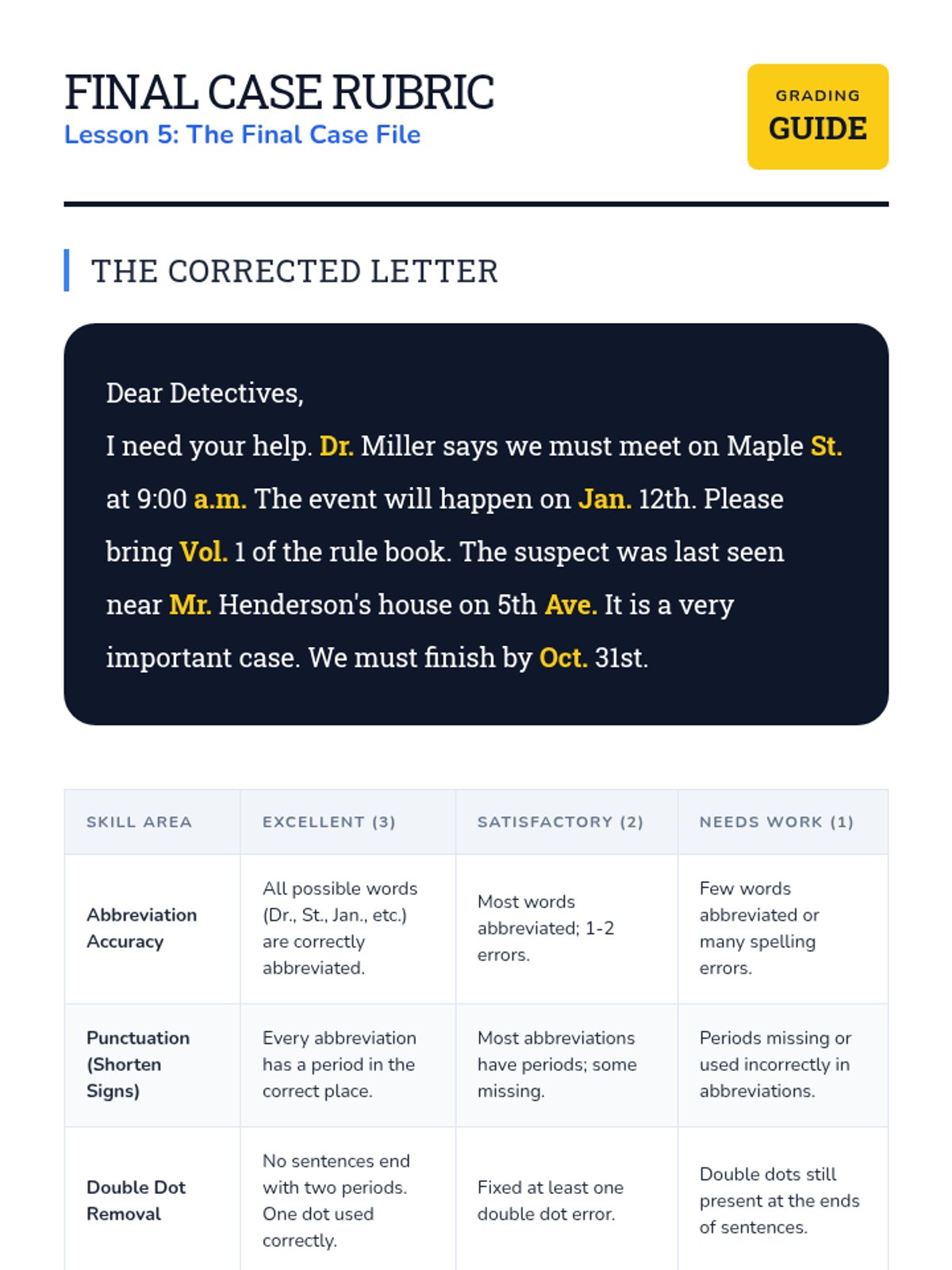
The cumulative assessment where students edit a 'Letter from the Commissioner' to correct abbreviation and punctuation errors.
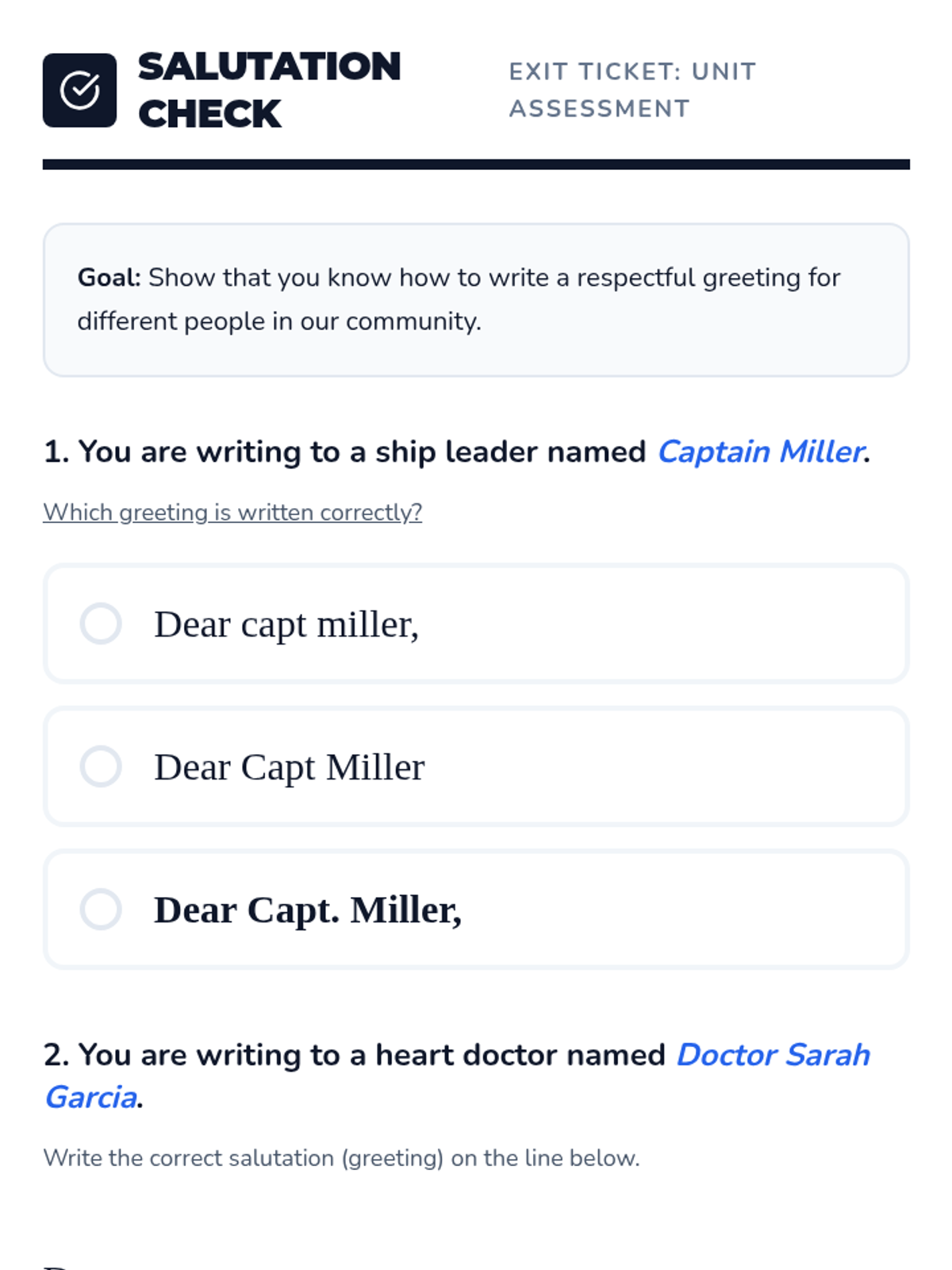
Students apply their skills to draft formal invitations using correct title abbreviations in salutations.
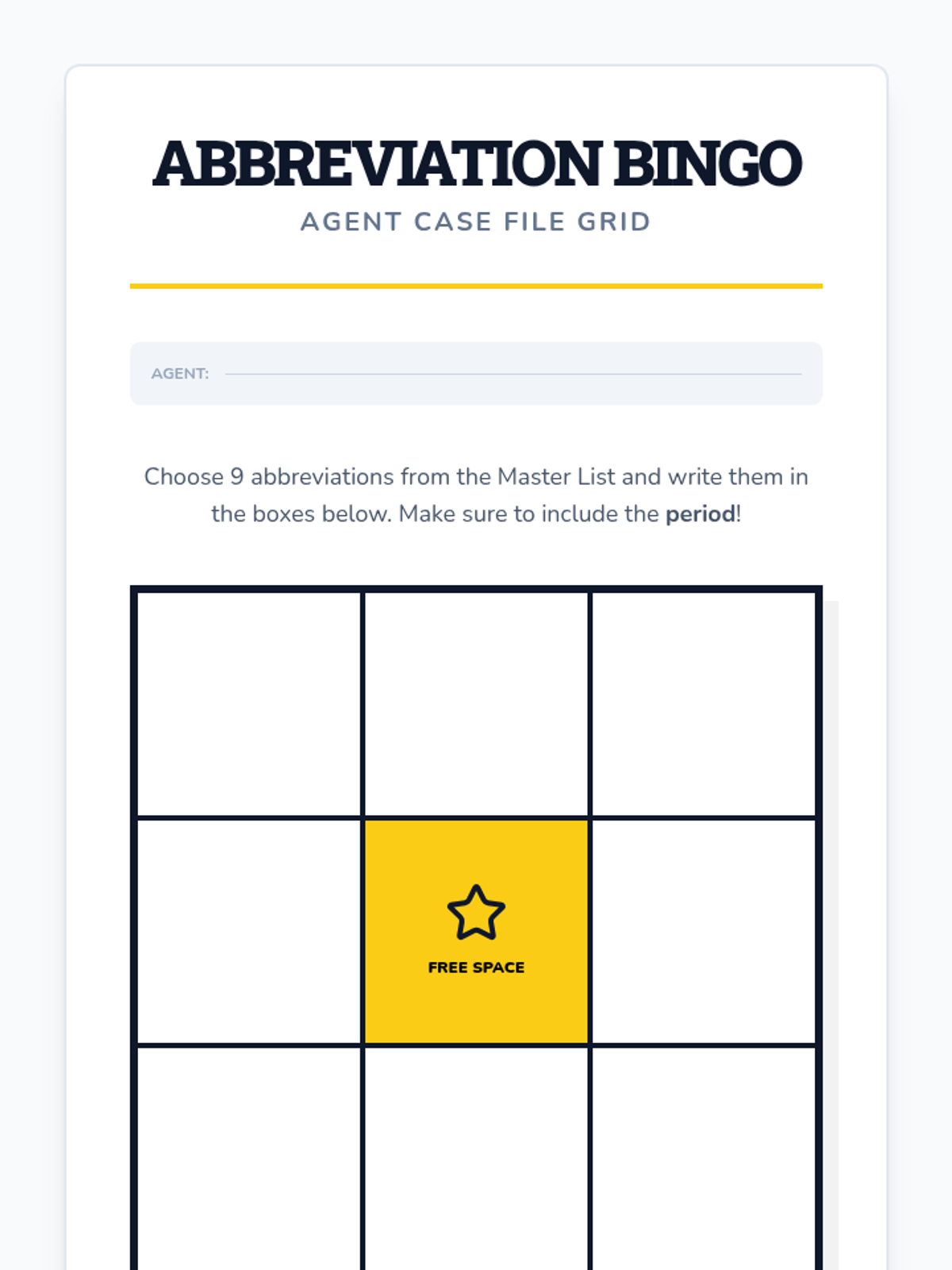
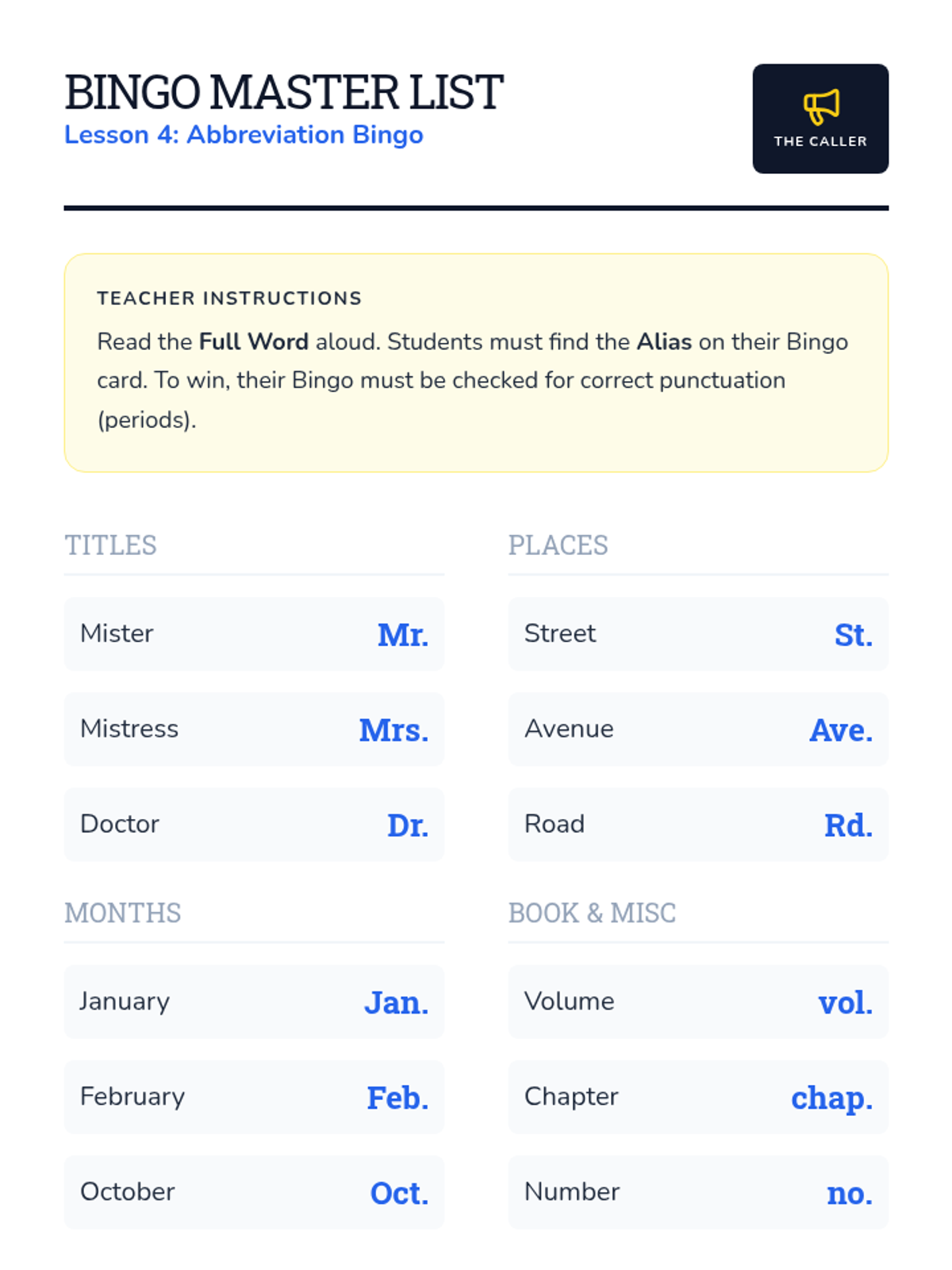
A high-energy review game where students practice rapid recall and correct spelling of common abbreviations with their necessary punctuation.
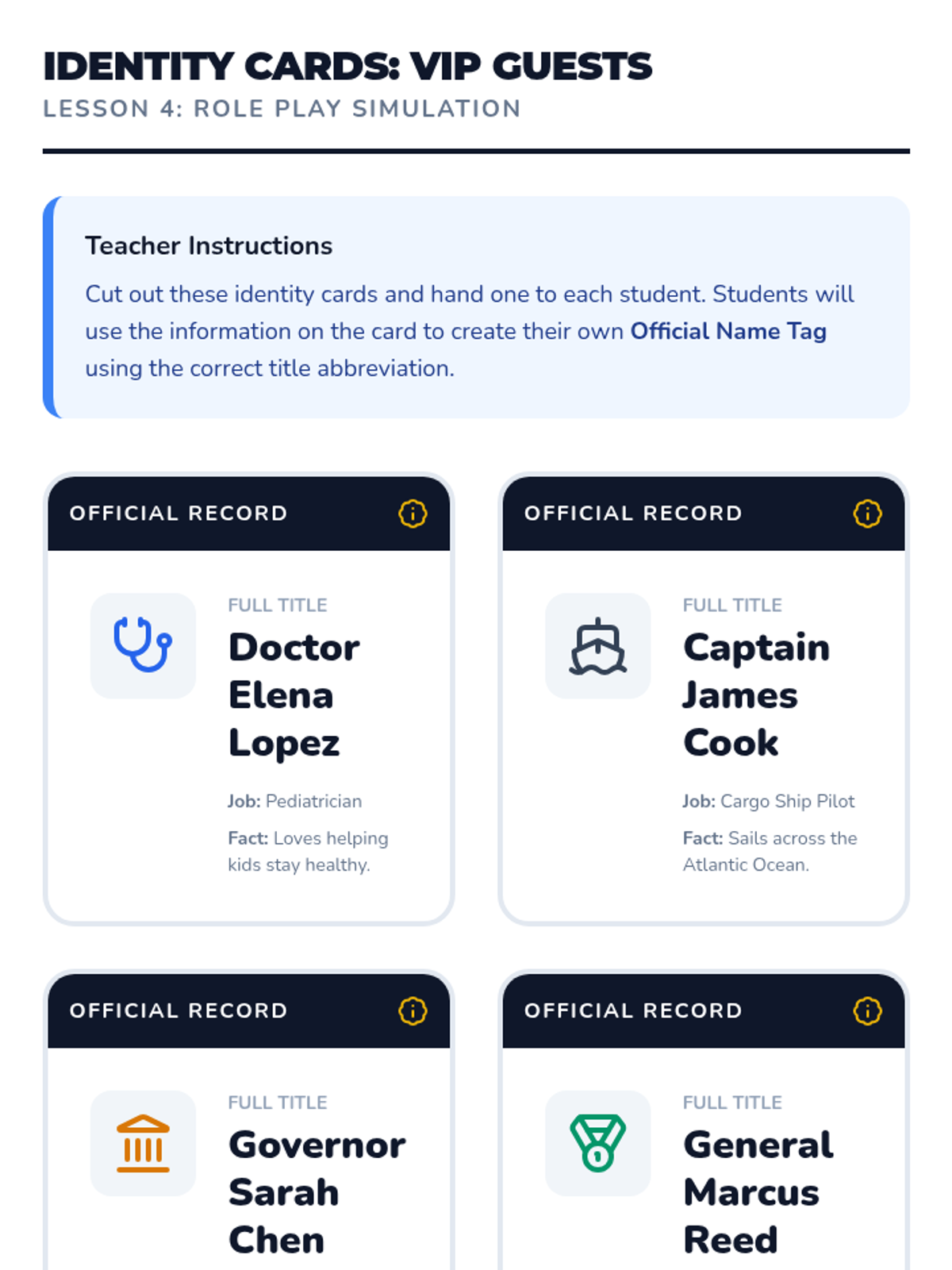
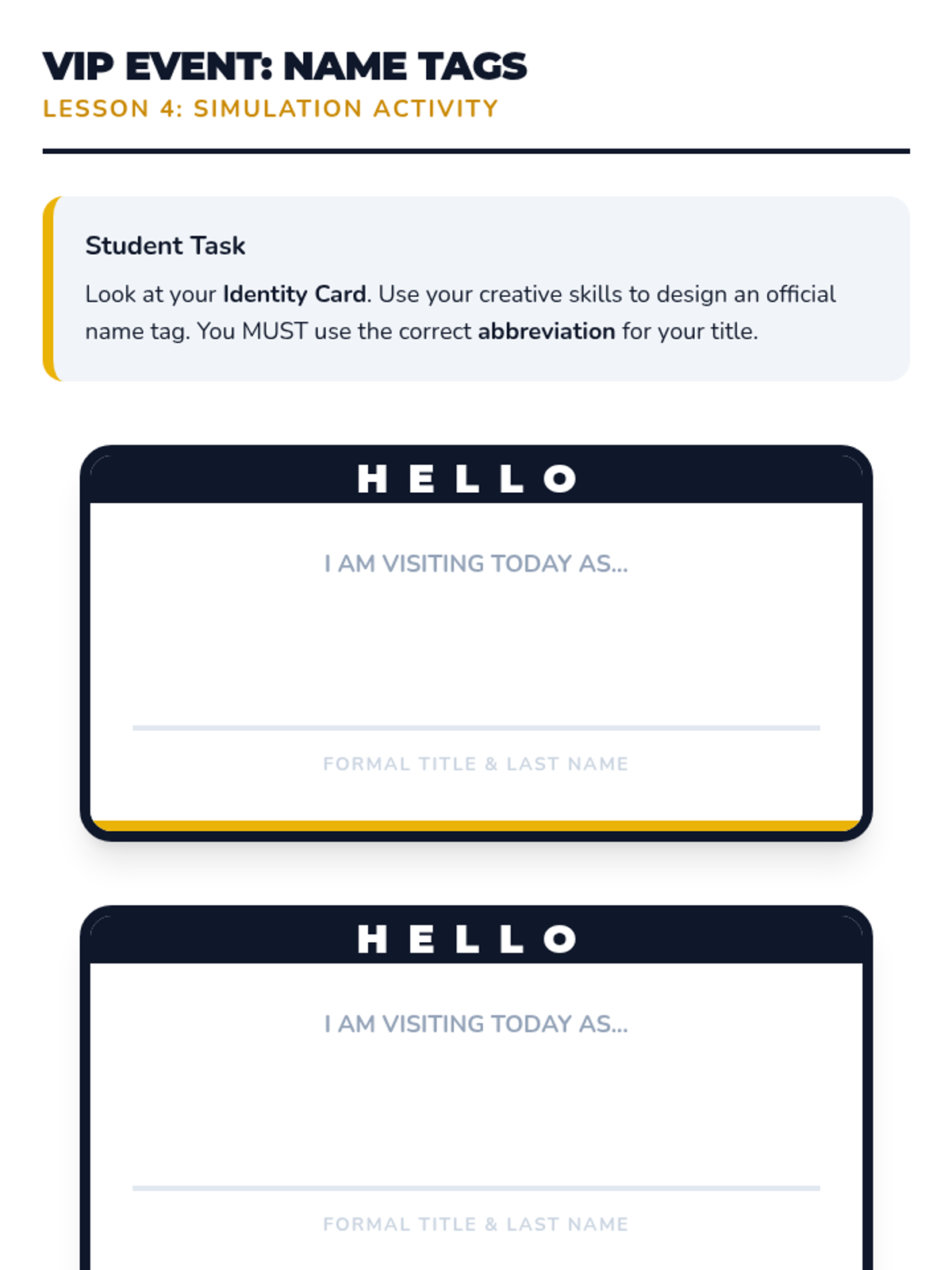
A simulation where students use their knowledge of abbreviations to introduce themselves in character as community professionals.
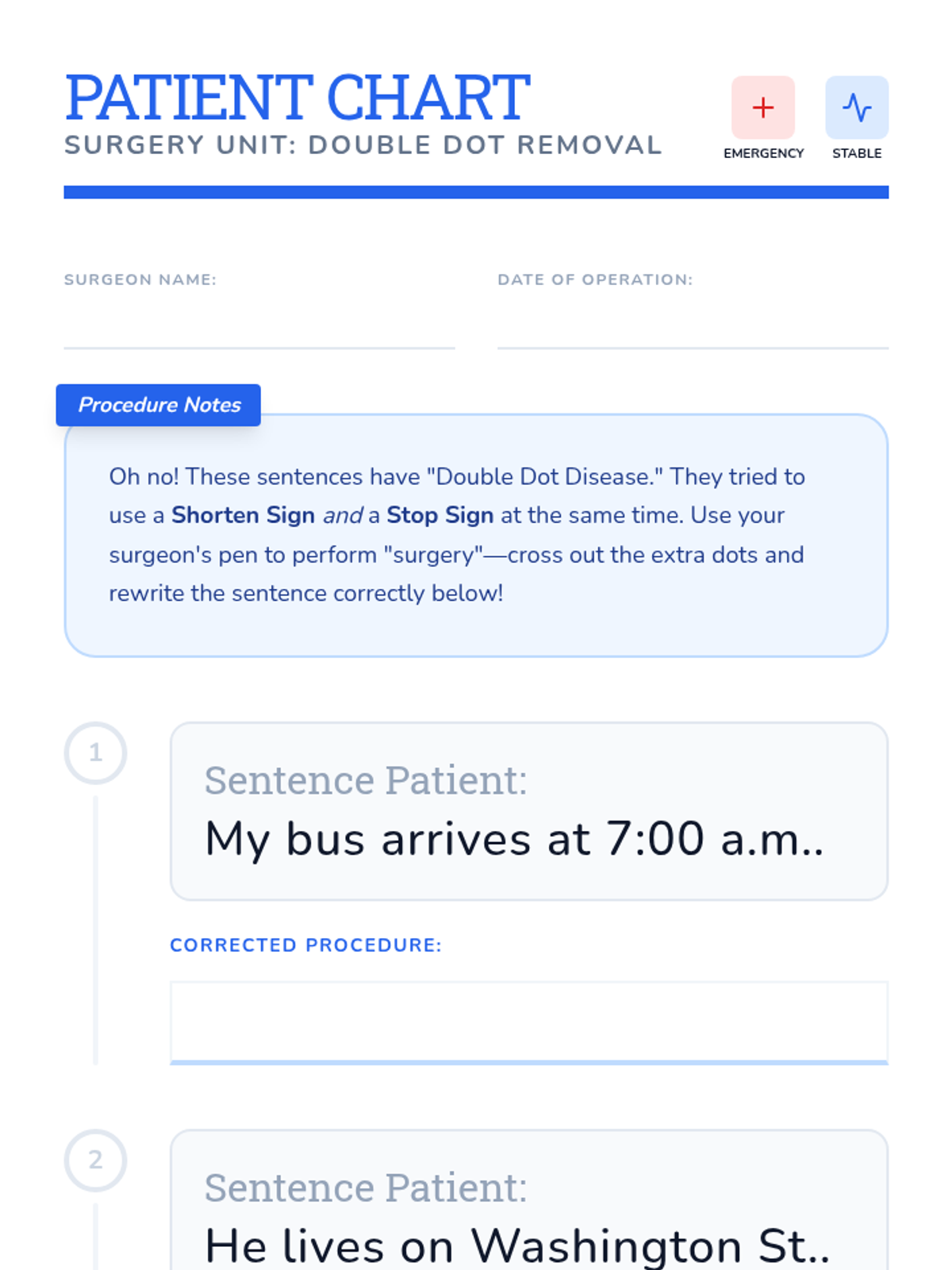
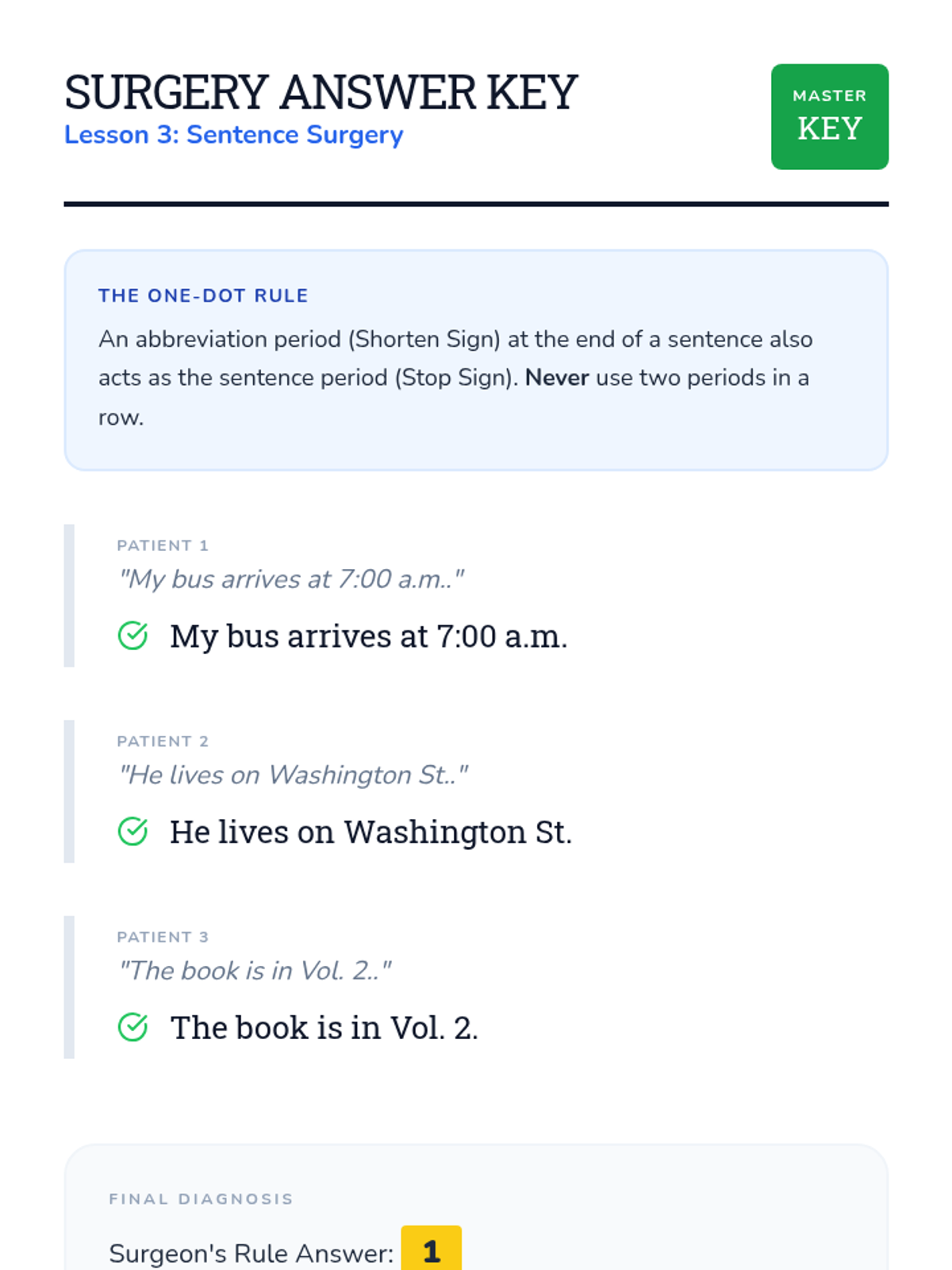
Focuses on the complex rule of sentence-ending abbreviations, teaching students that one period can serve both as an abbreviation marker and a sentence stopper.
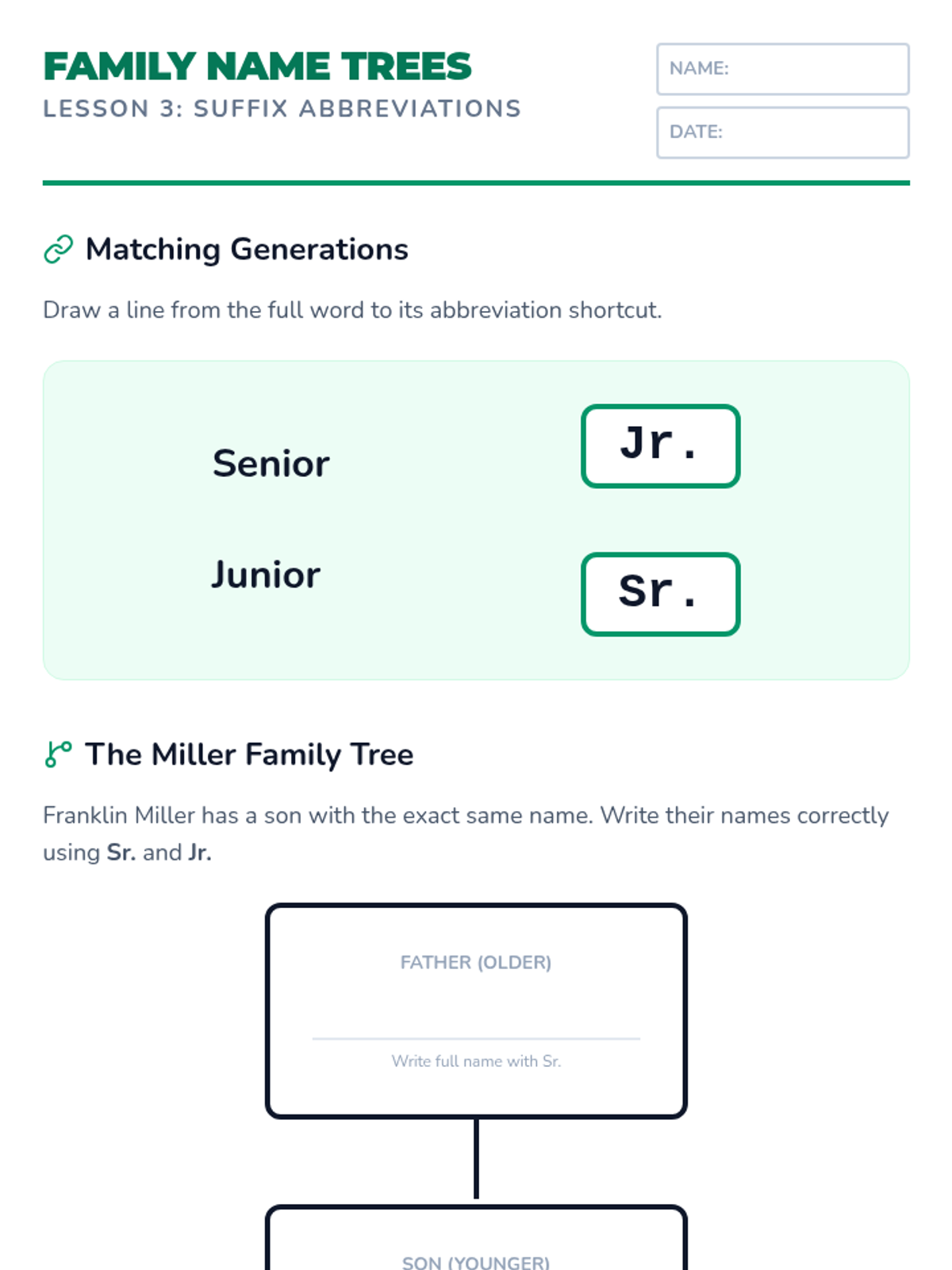
Exploring generational abbreviations Sr. and Jr. to understand lineage and name suffixes.
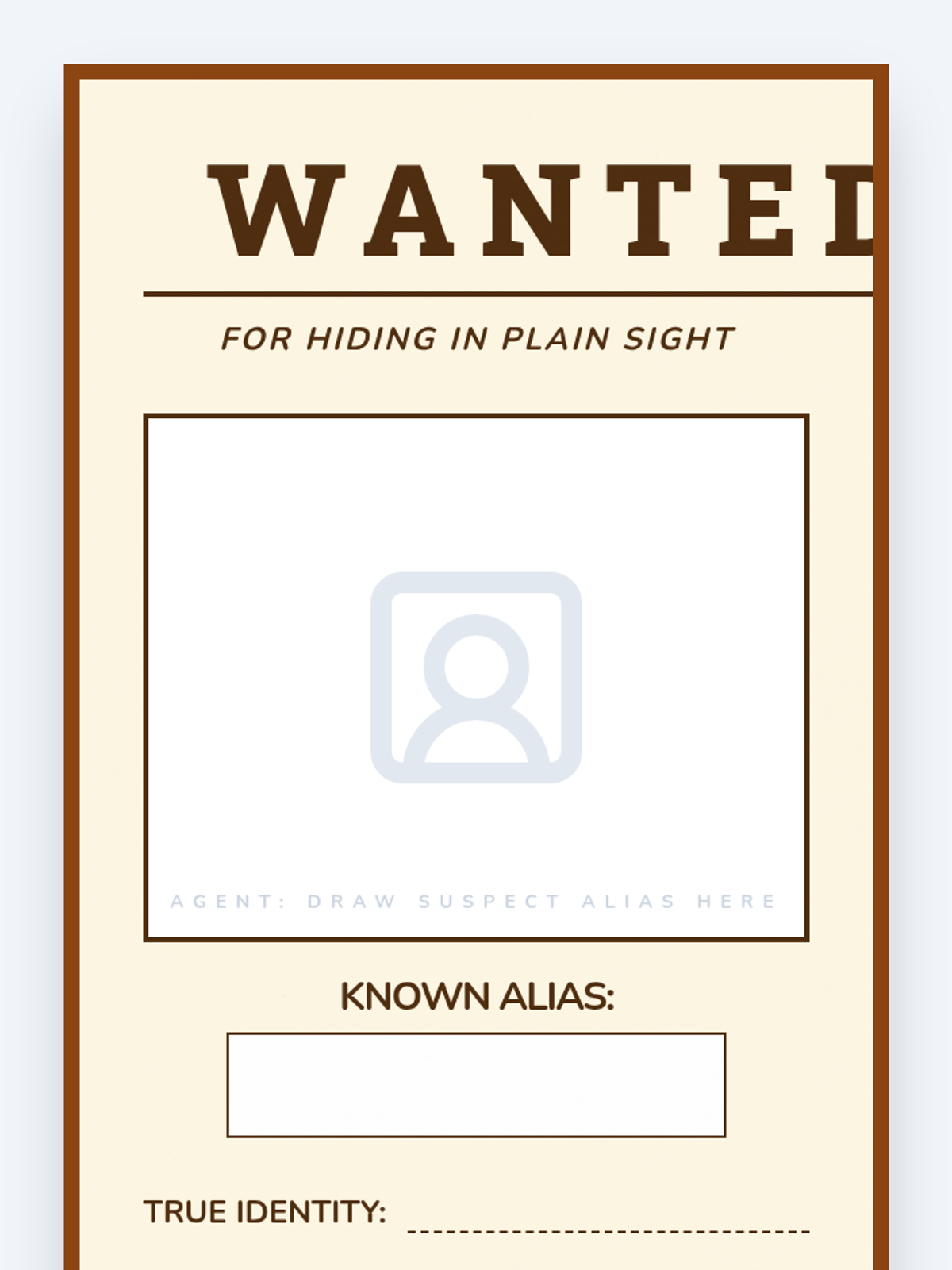
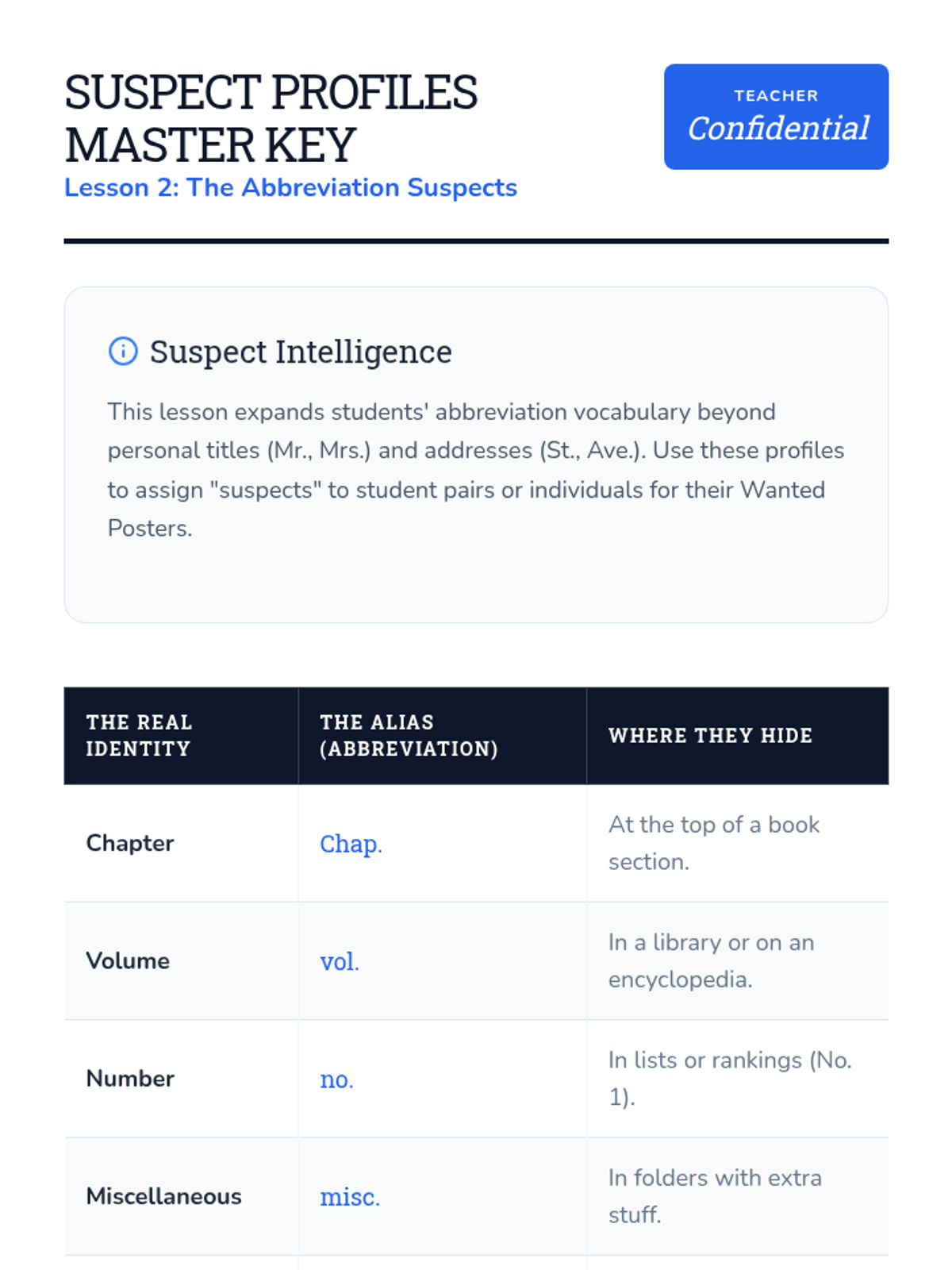
Students investigate common abbreviations (misc., vol., chap.) by creating wanted posters that link aliases (abbreviations) to their full names.
A deep dive into the abbreviation 'Dr.' and how it replaces other honorifics, featuring famous examples like Dr. Seuss and Dr. King.
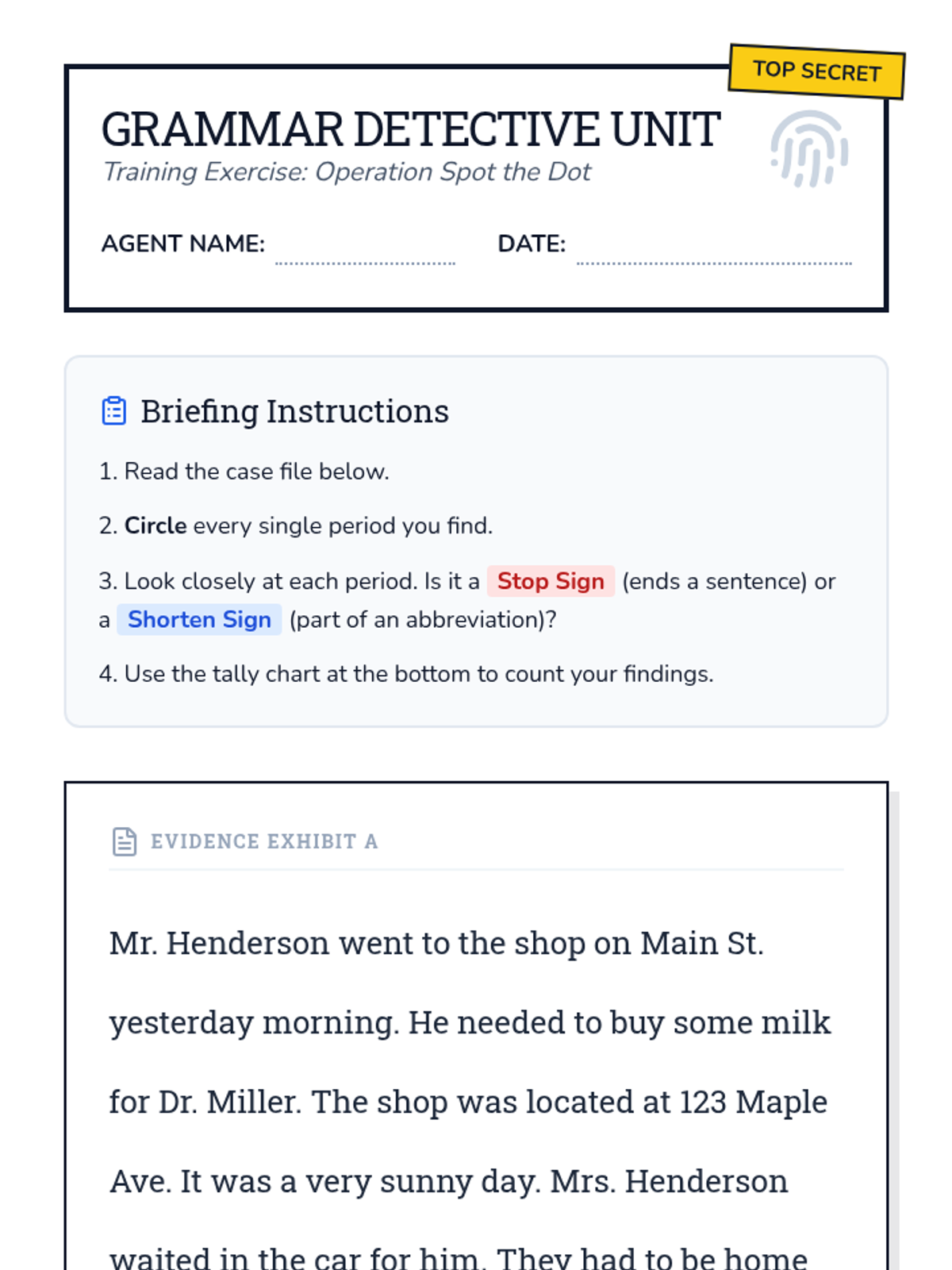
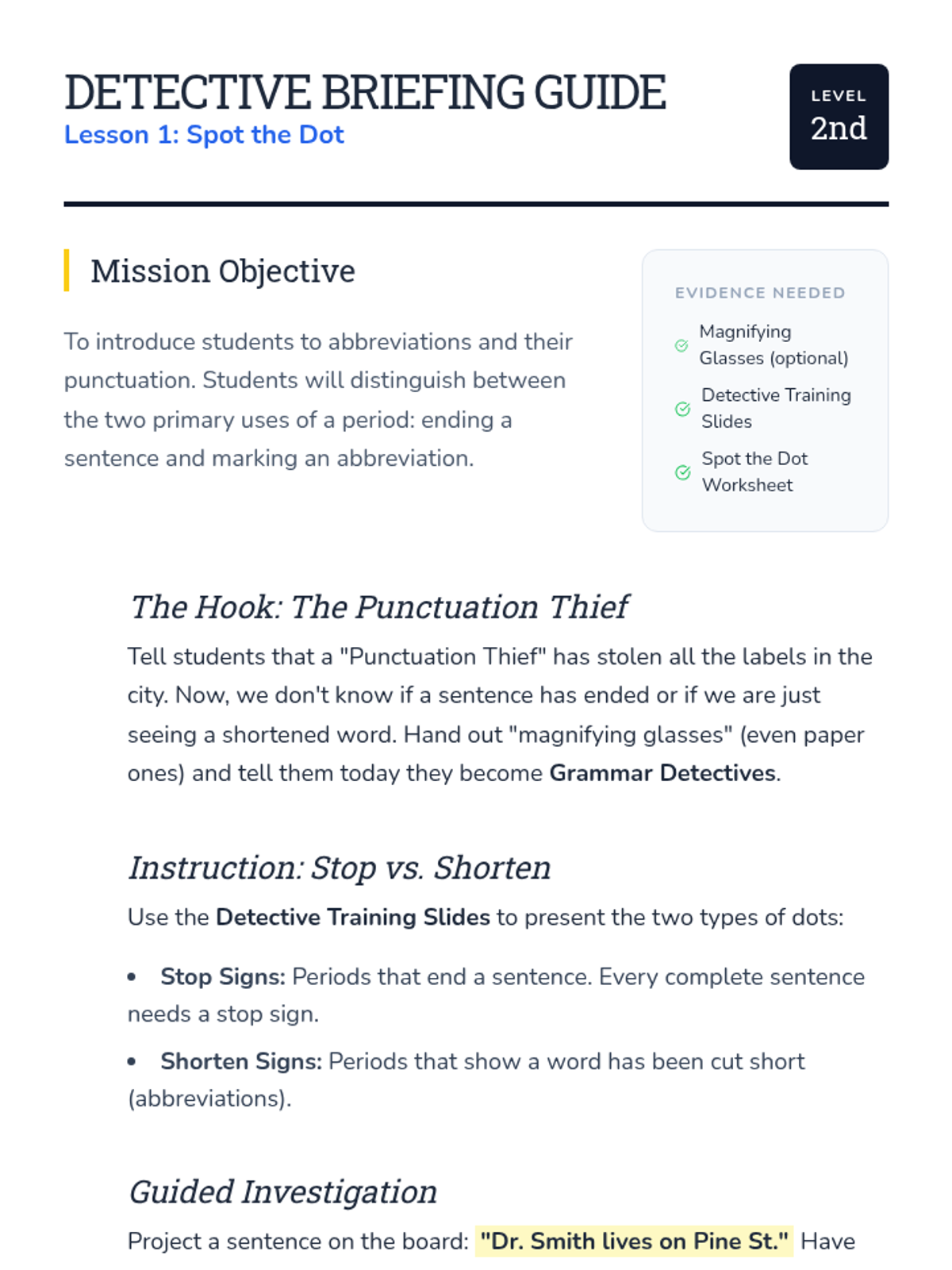
Students learn to distinguish between periods used as 'Stop Signs' (end of sentences) and 'Shorten Signs' (abbreviations) through a detective-themed investigation.
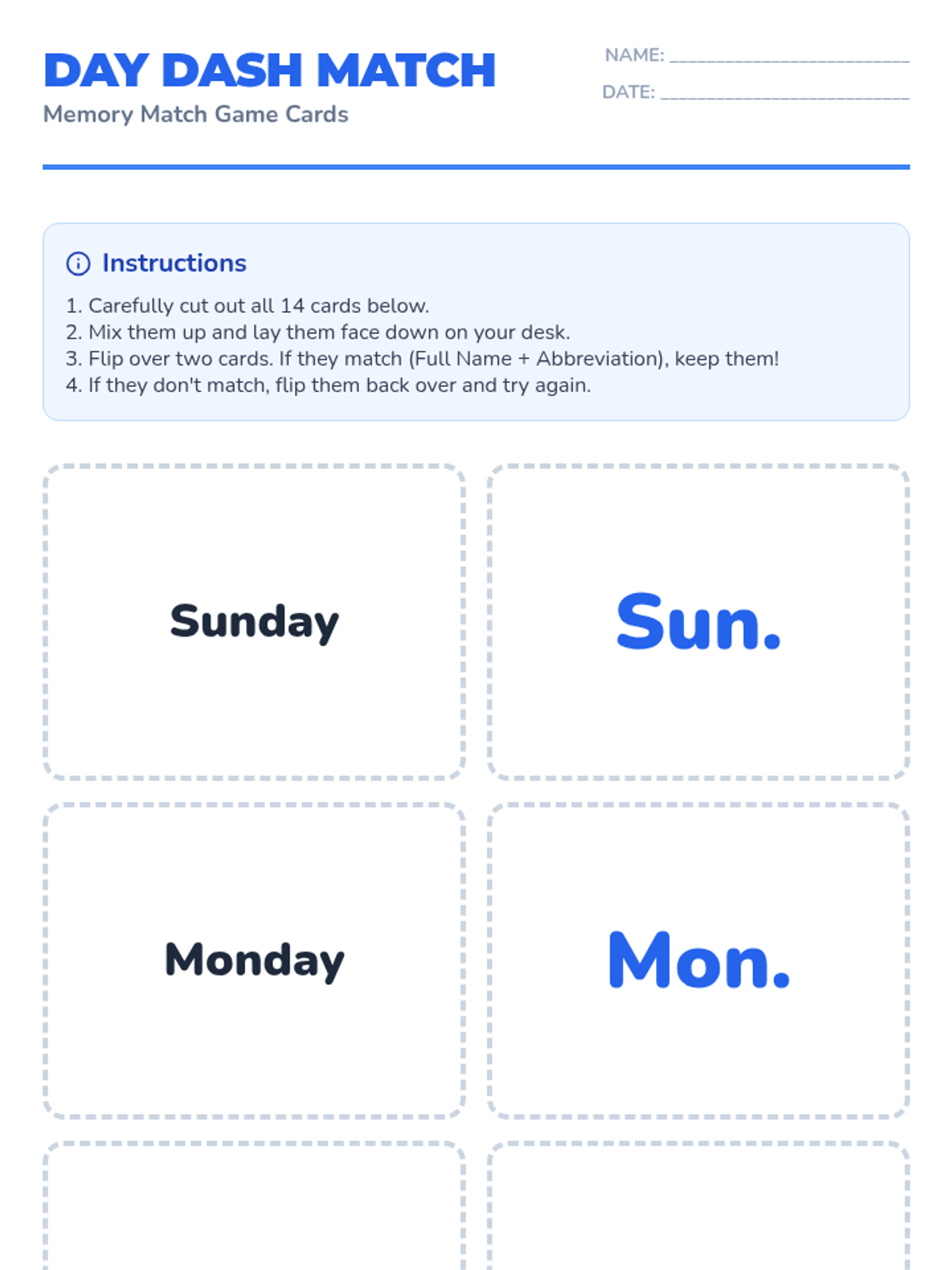
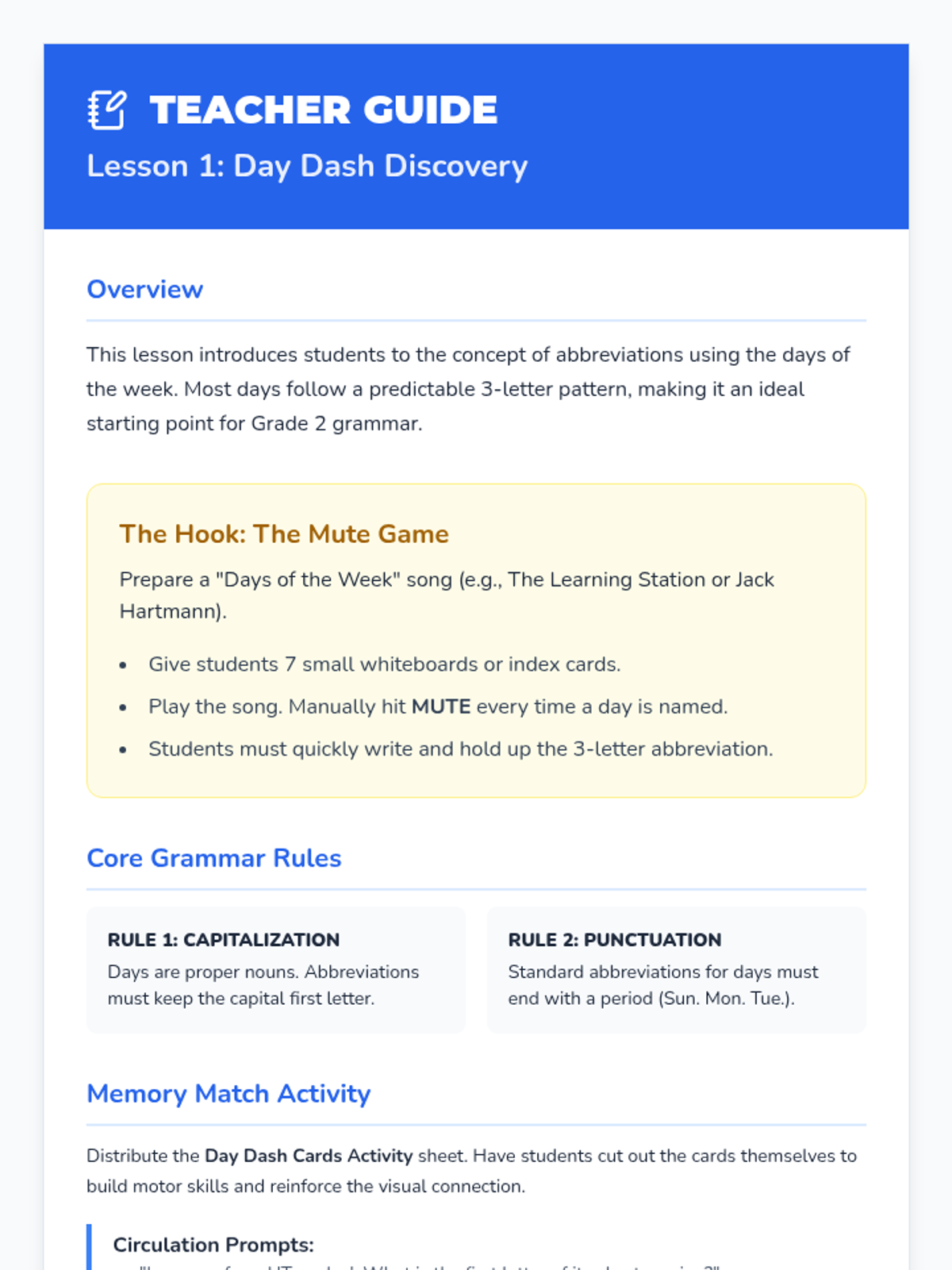
Students list the days of the week and learn the standard three-letter abbreviations. They practice matching full names to abbreviations through a memory game.
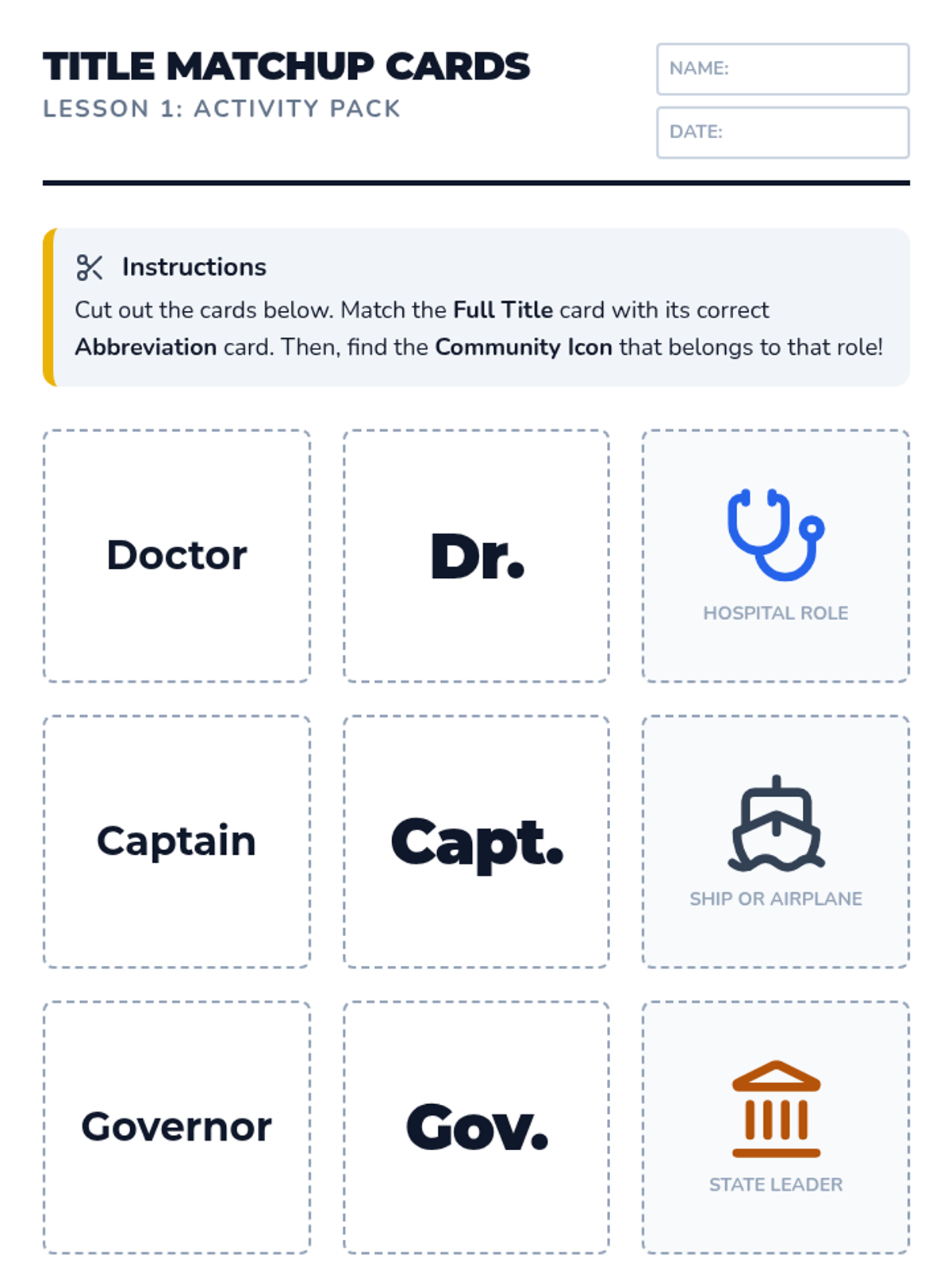
Students brainstorm community helpers and learn the specific titles associated with them, matching full titles to their abbreviations.
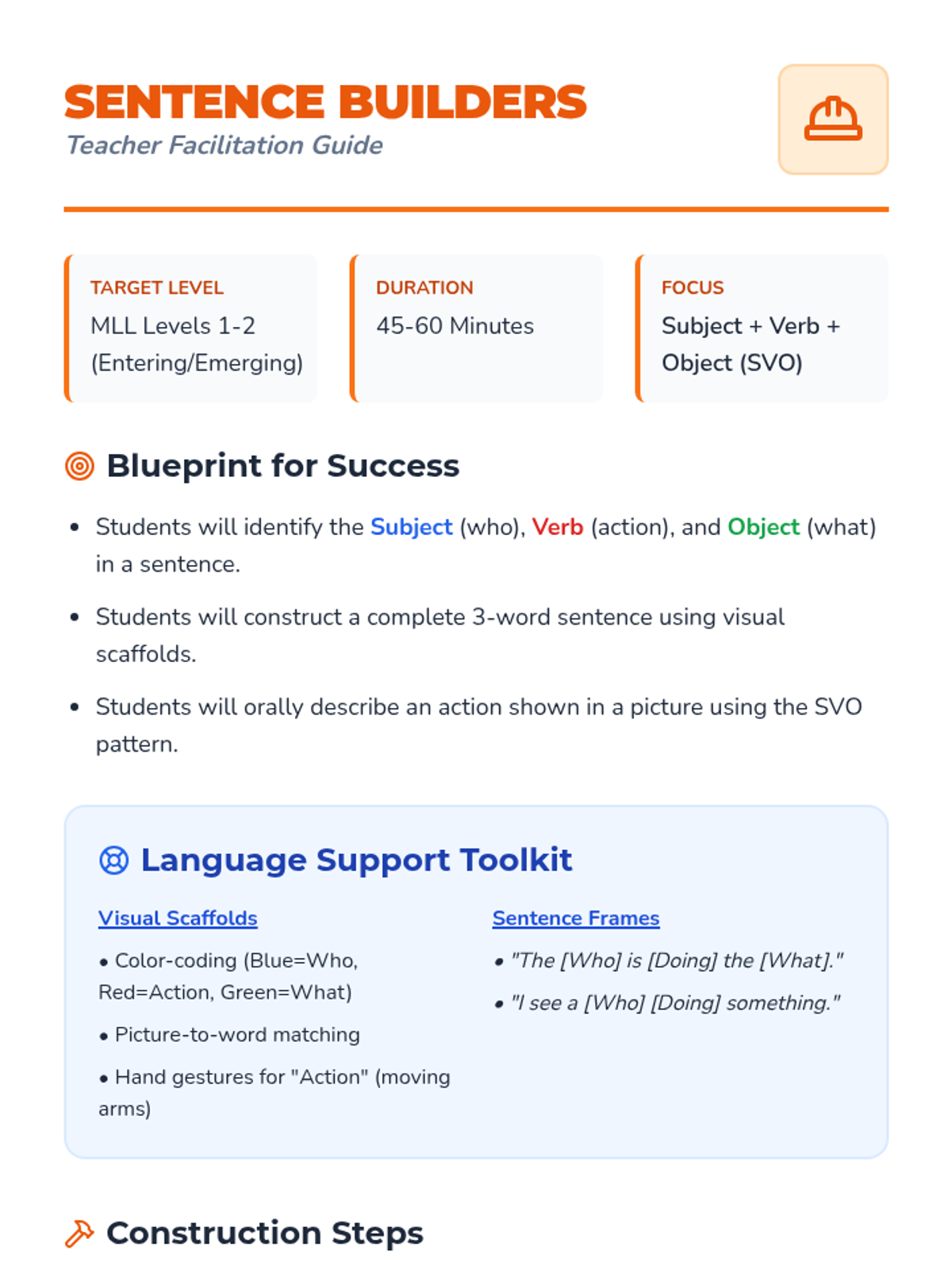
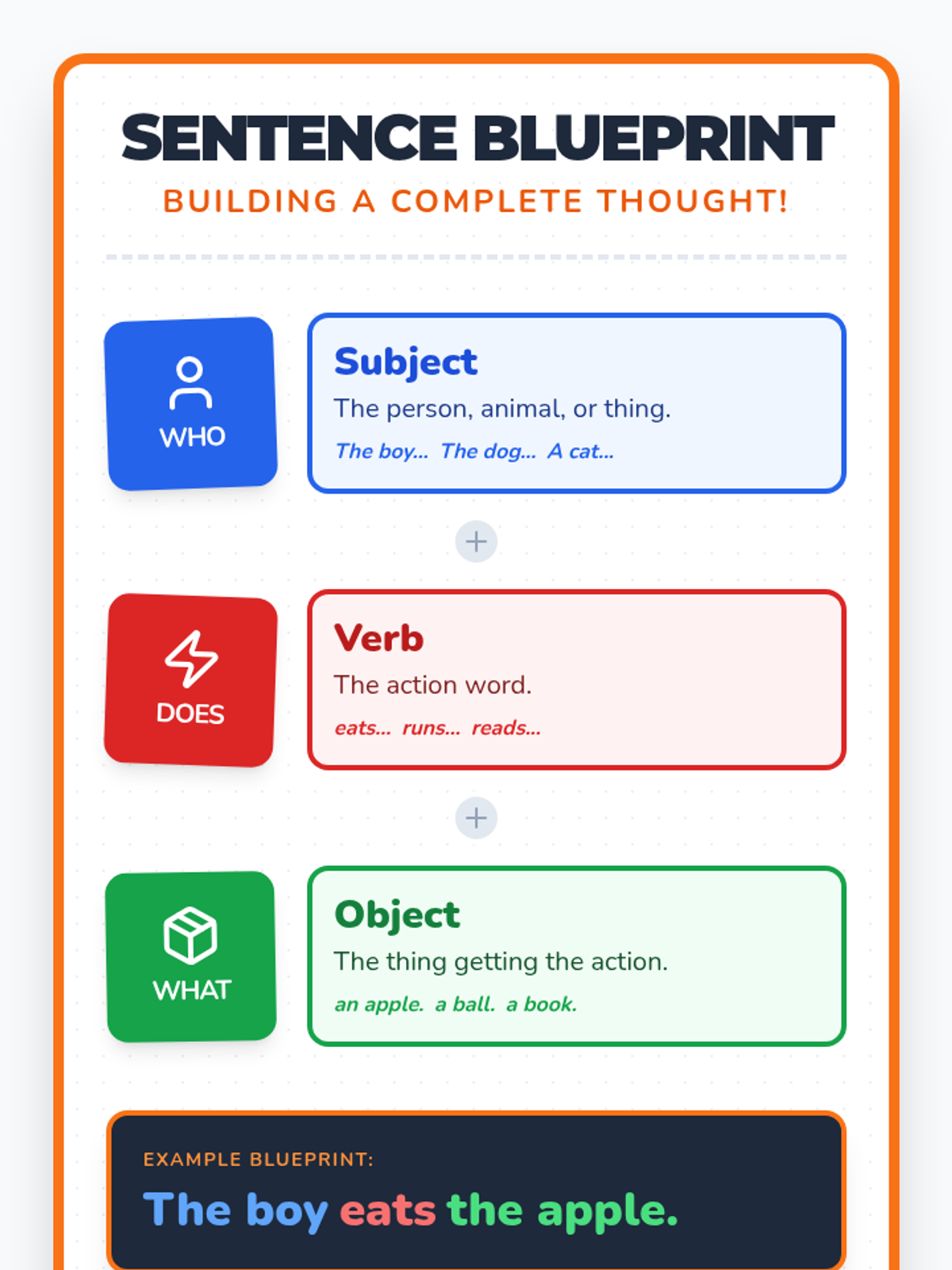
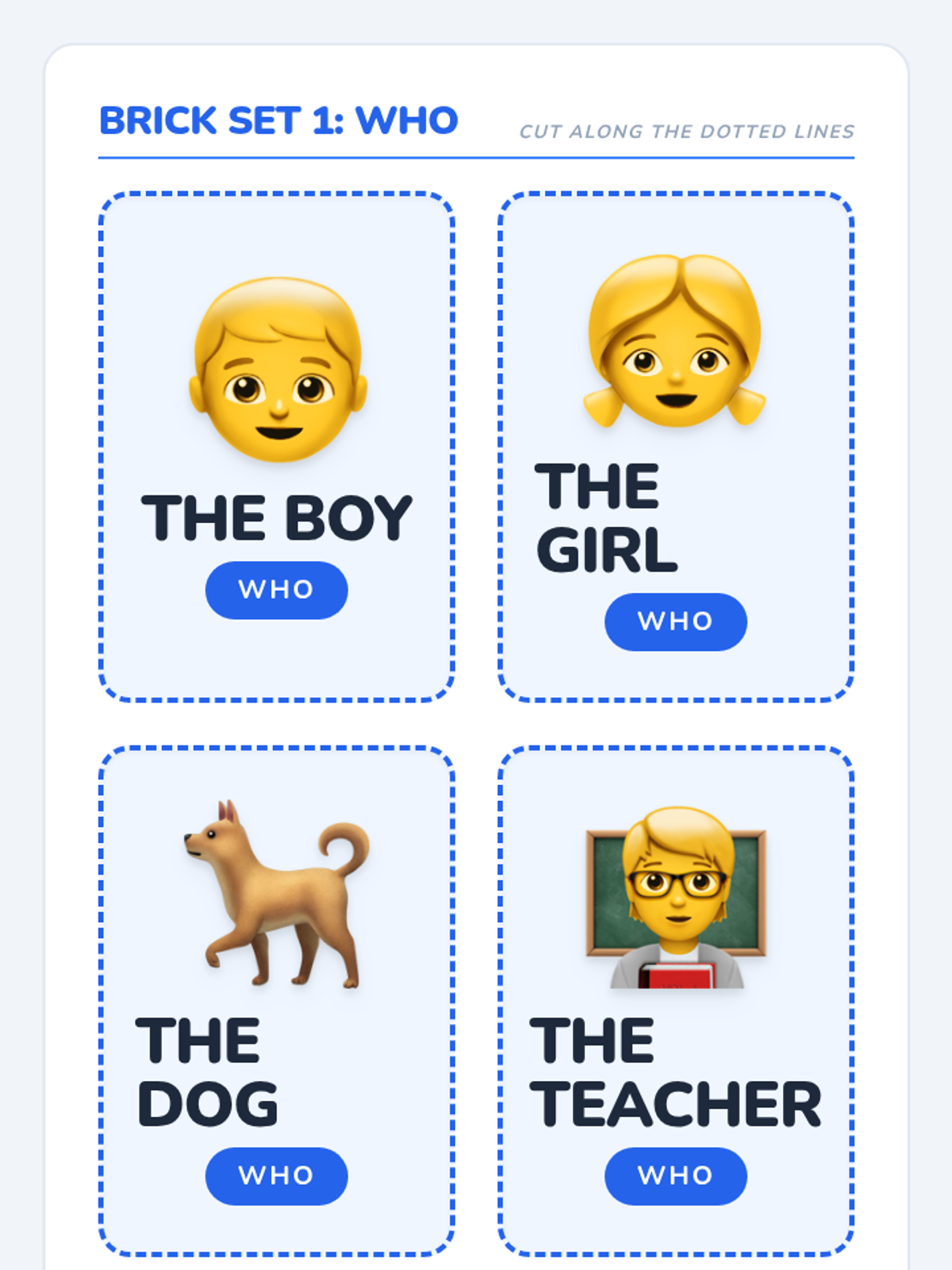
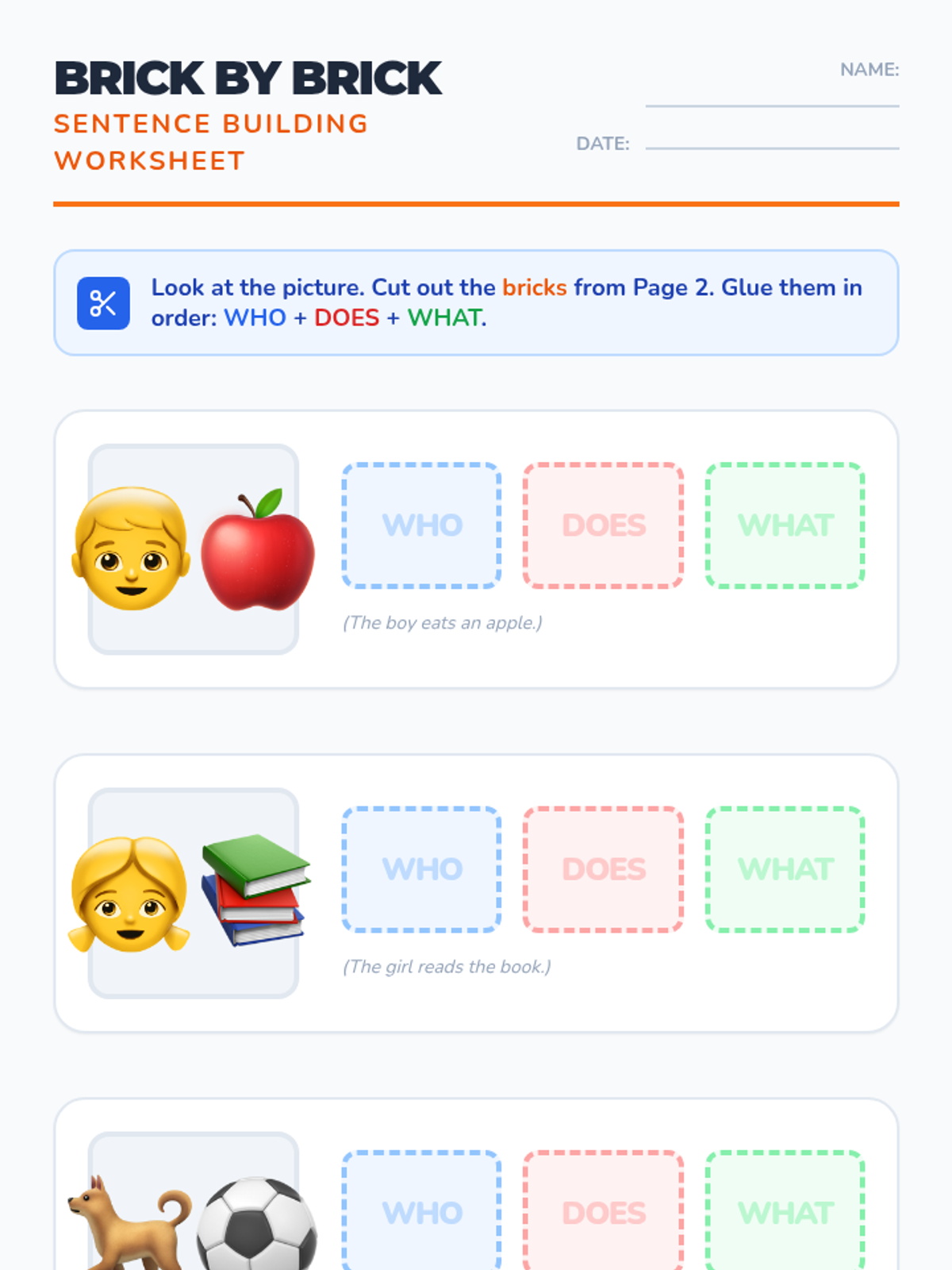
A foundational lesson for MLL students to master basic Subject-Verb-Object sentence structure using visual supports, scaffolding, and hands-on sequencing.