Builds word mastery through parts of speech, Greek and Latin roots, and morphological analysis of prefixes and suffixes. Develops nuanced comprehension using context clues, shades of meaning, and idiomatic expressions.
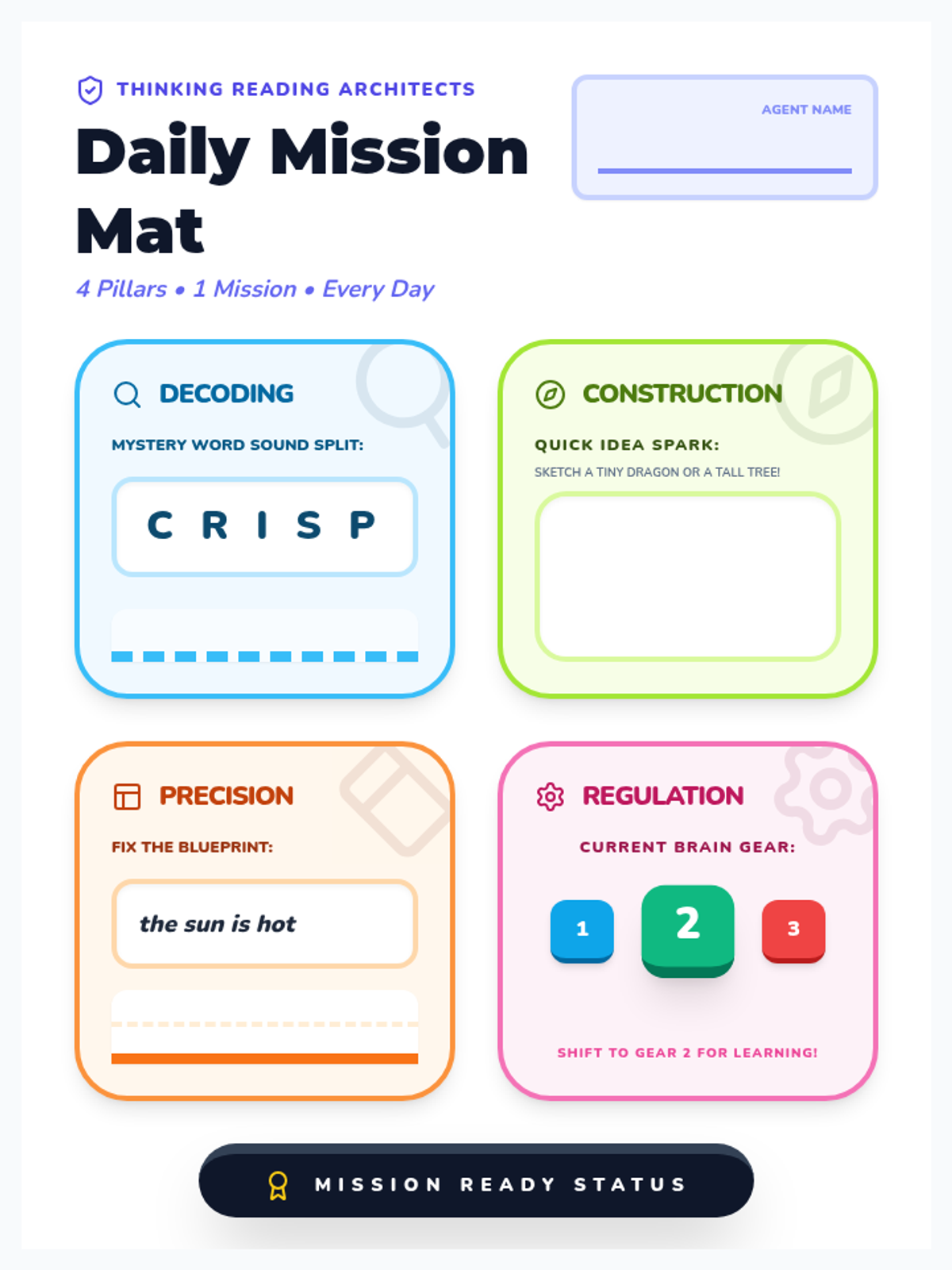
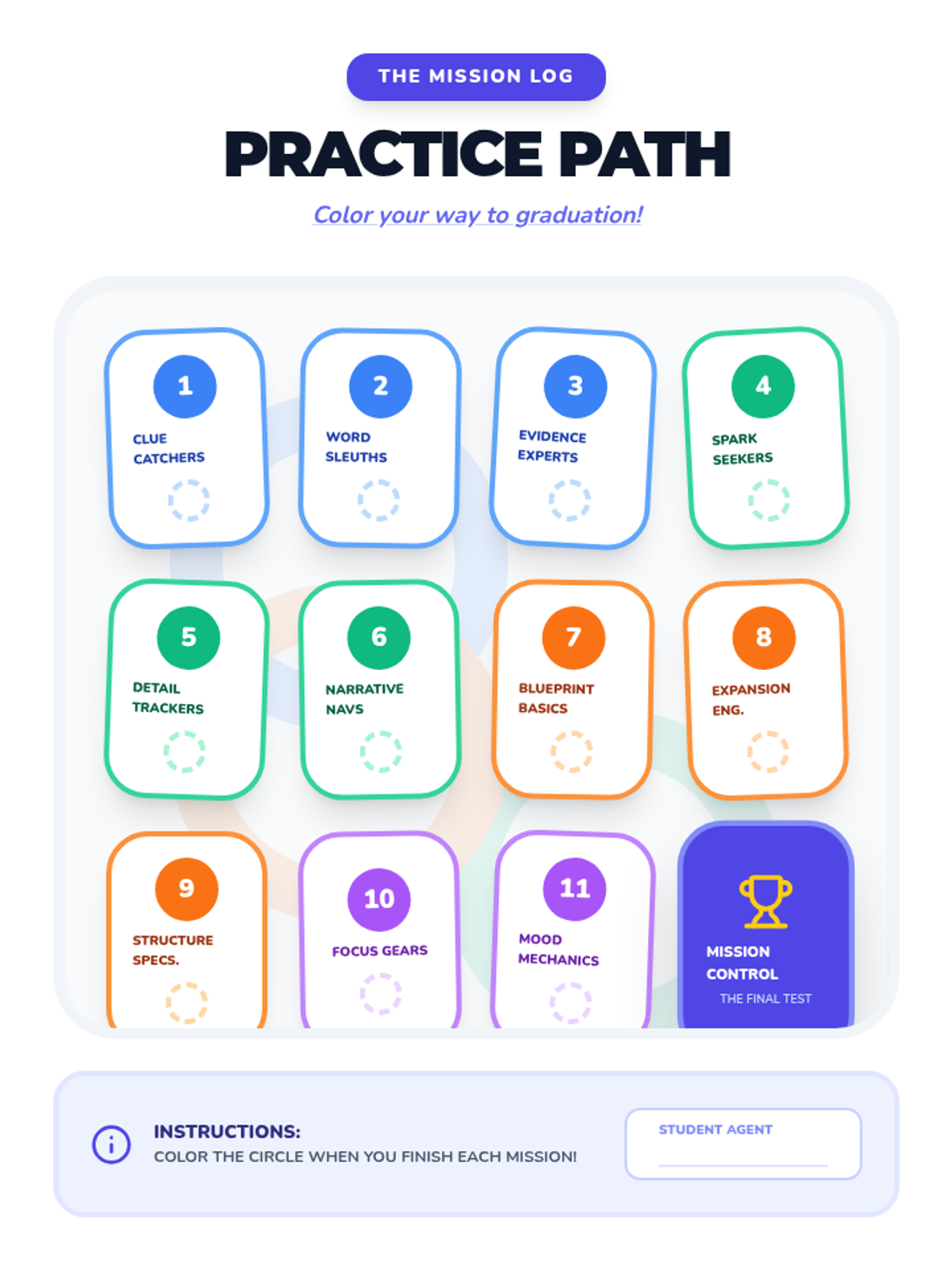
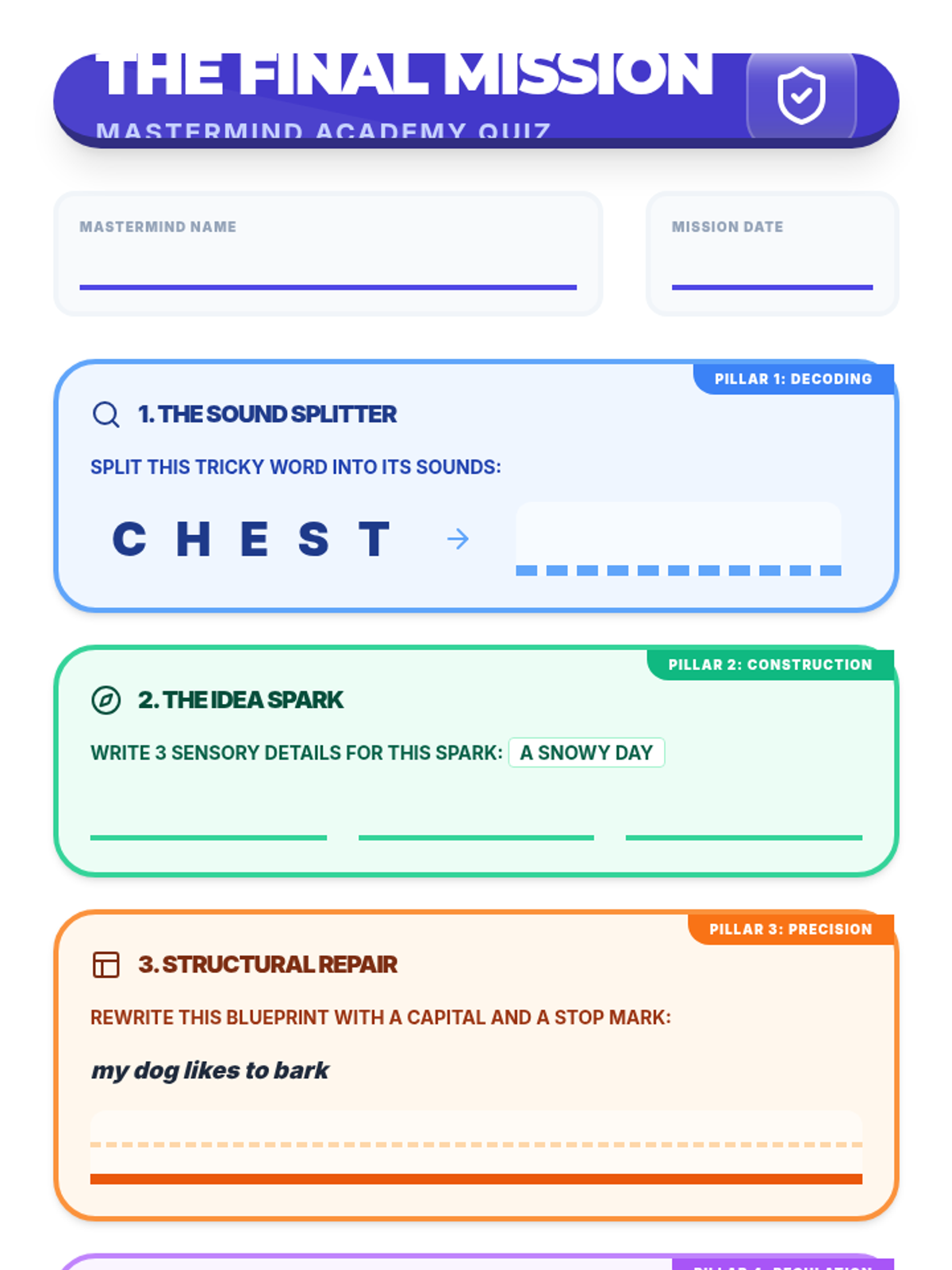
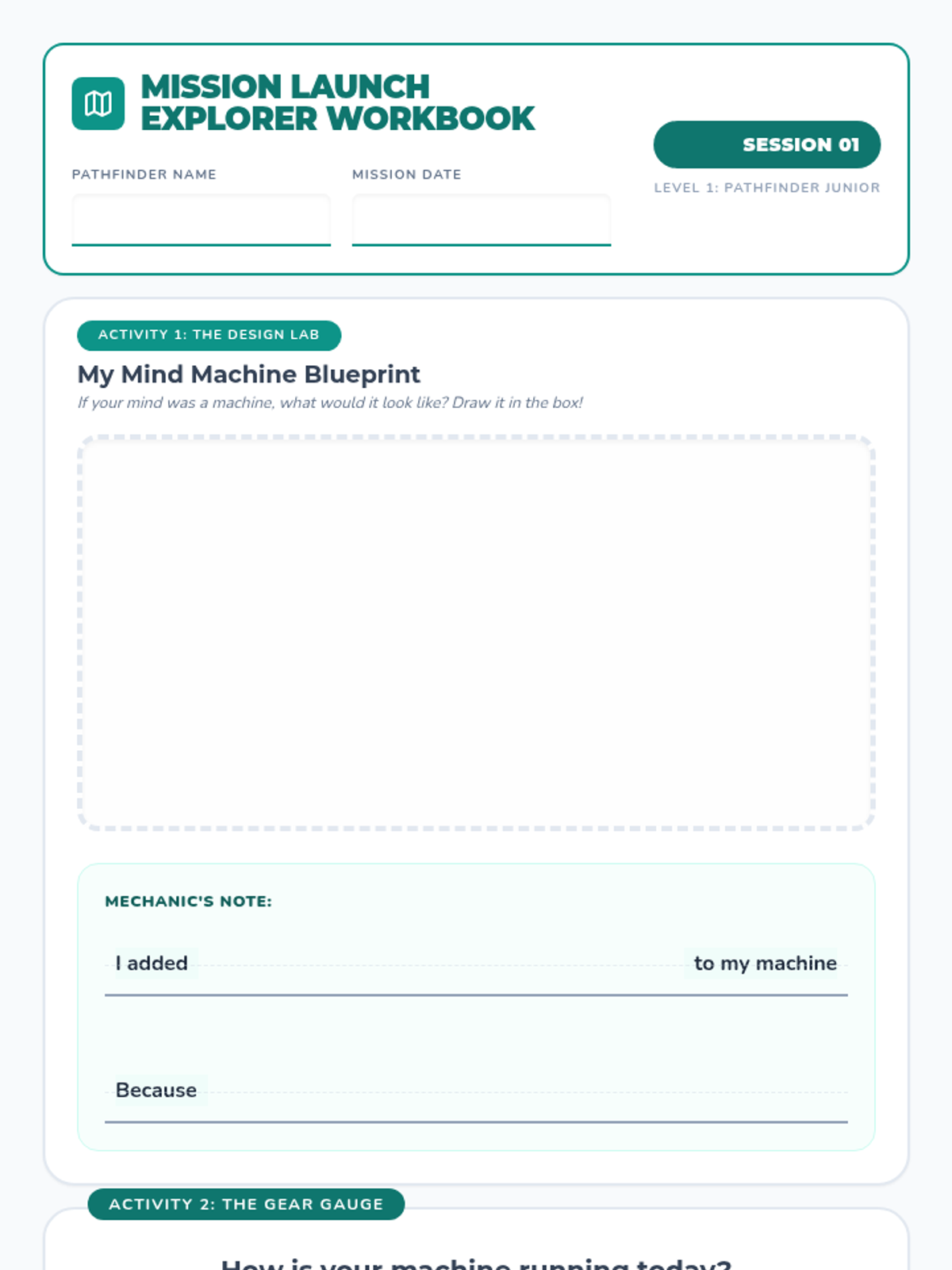
The starting point for all student agents, featuring the mission briefing and essential toolkits for the four program pillars.
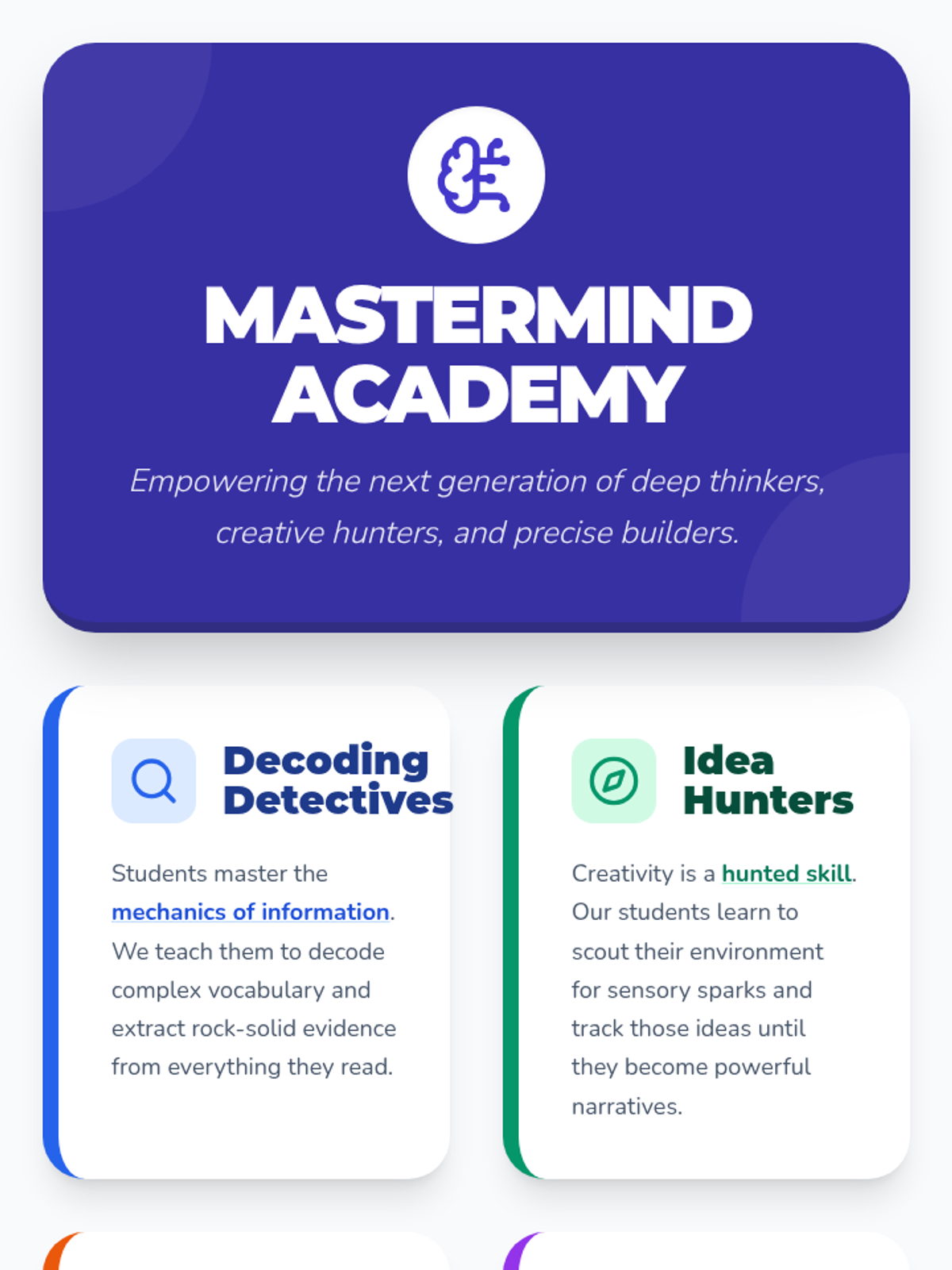
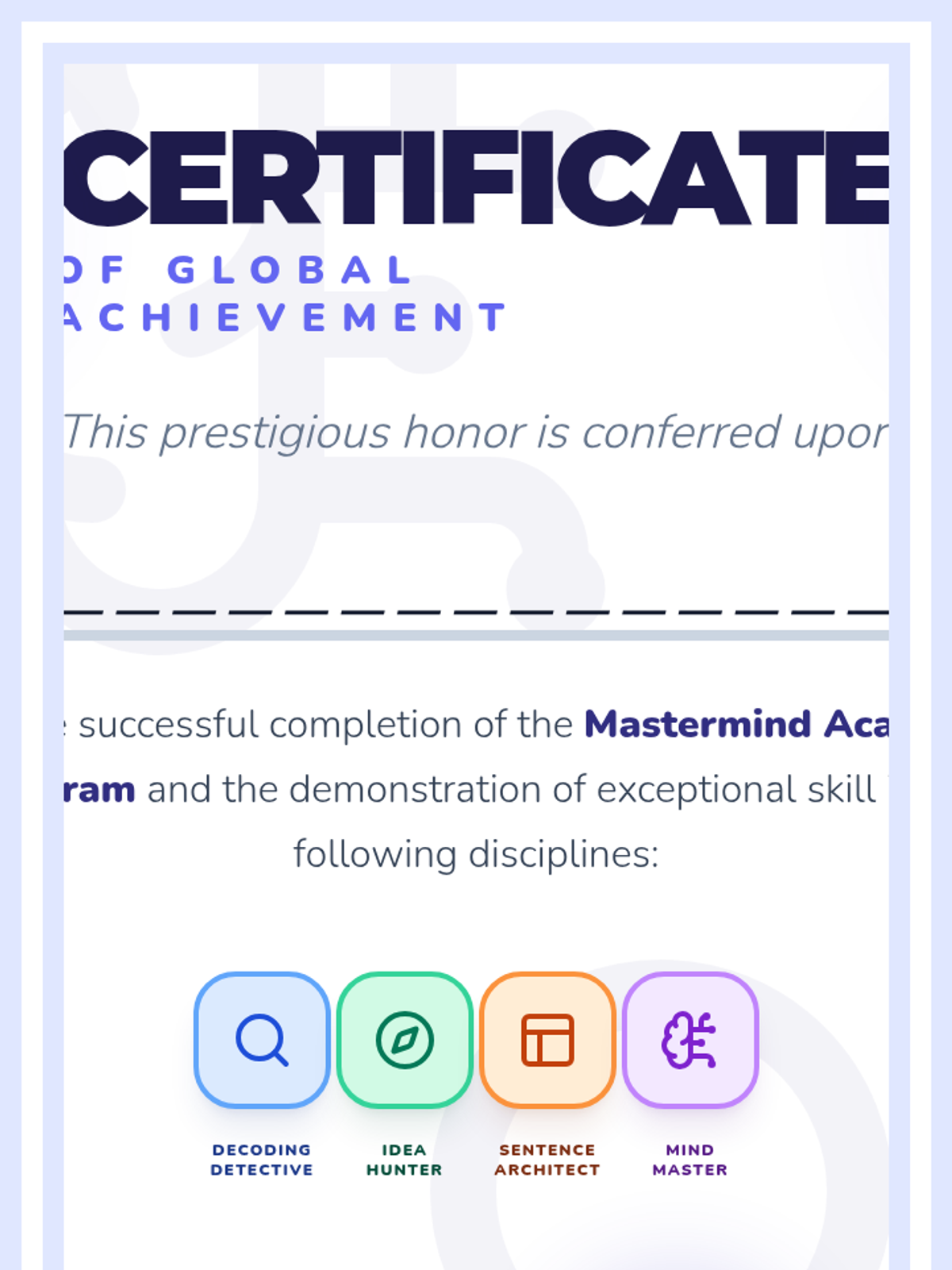
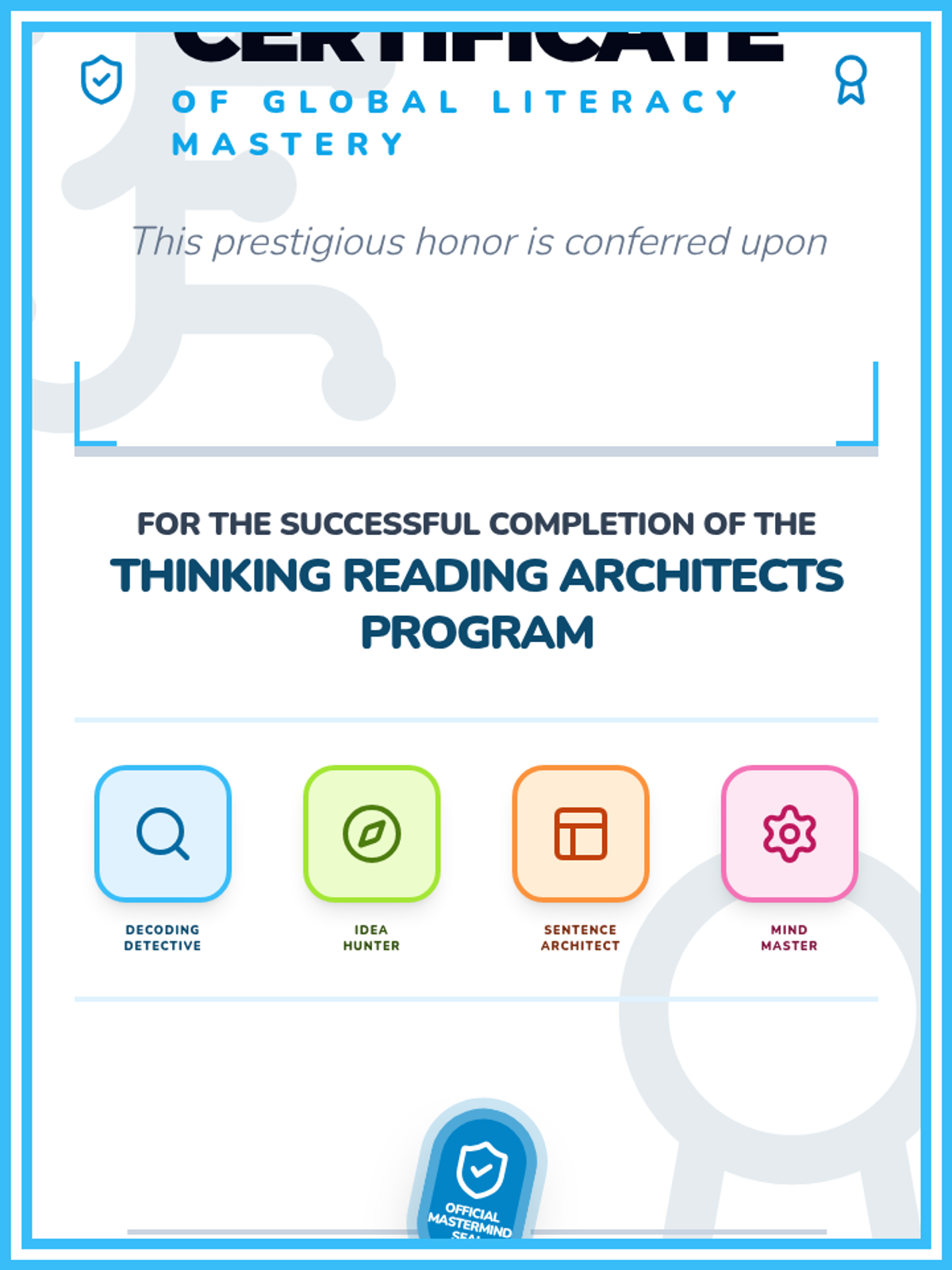
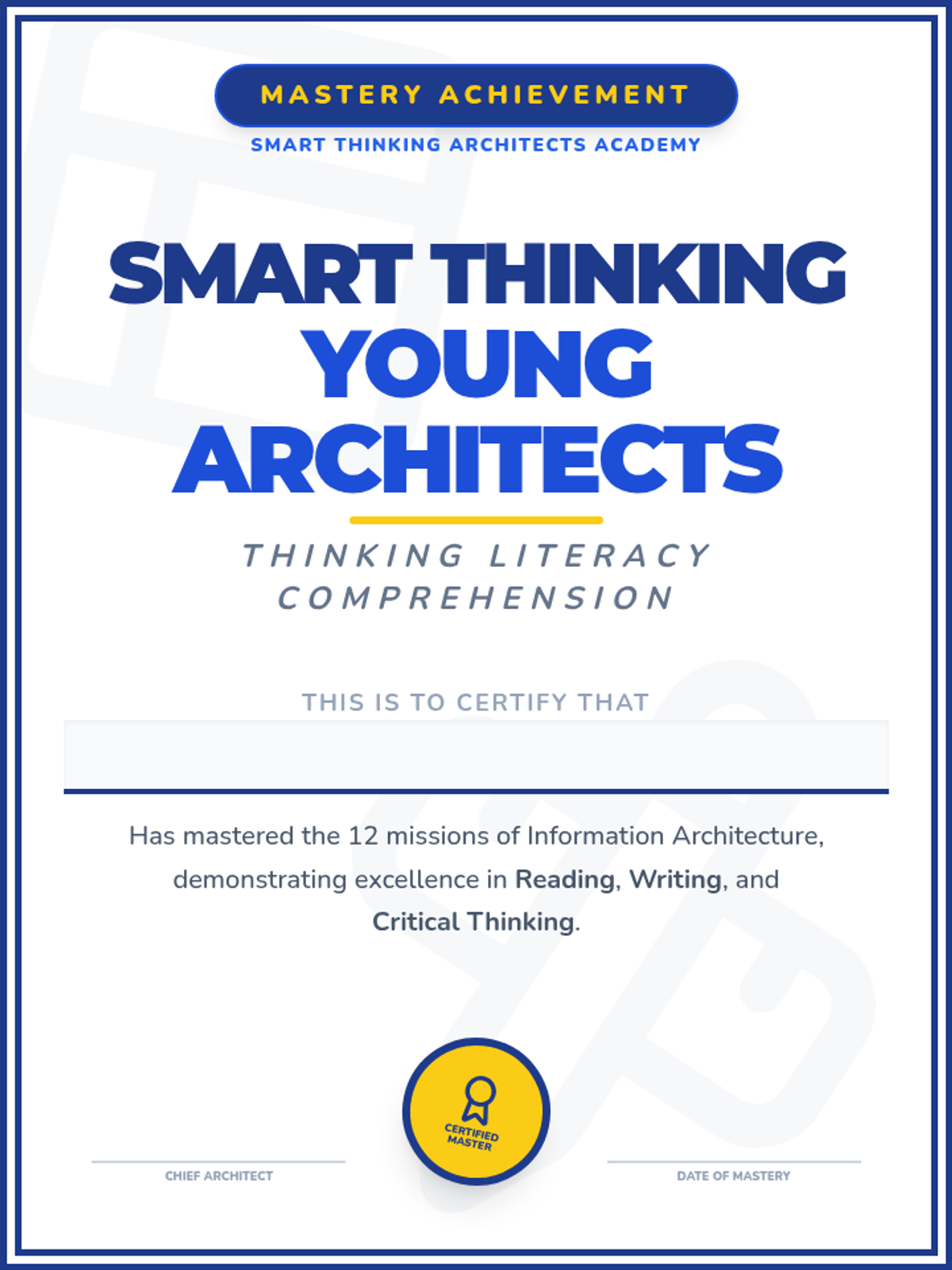
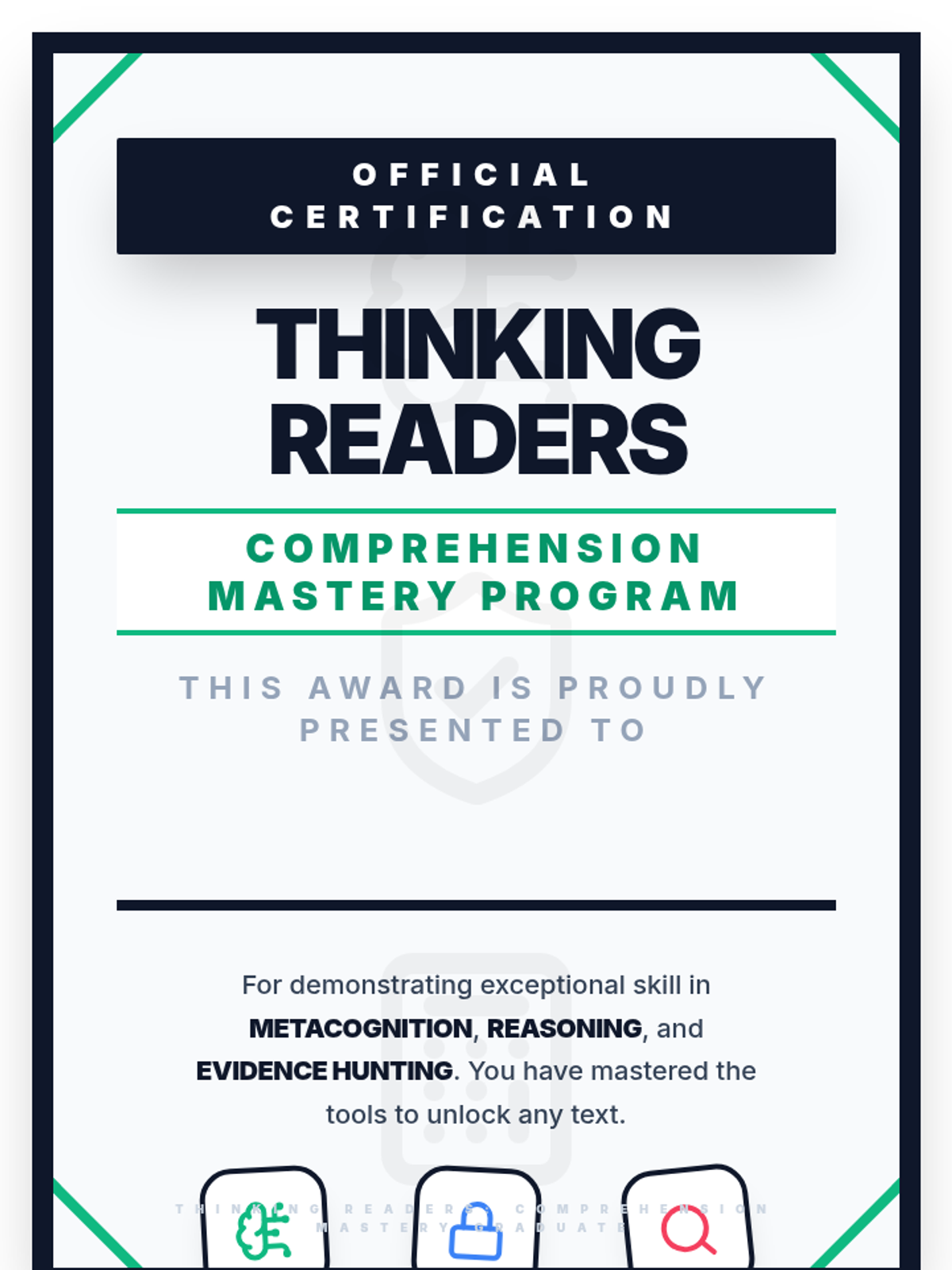
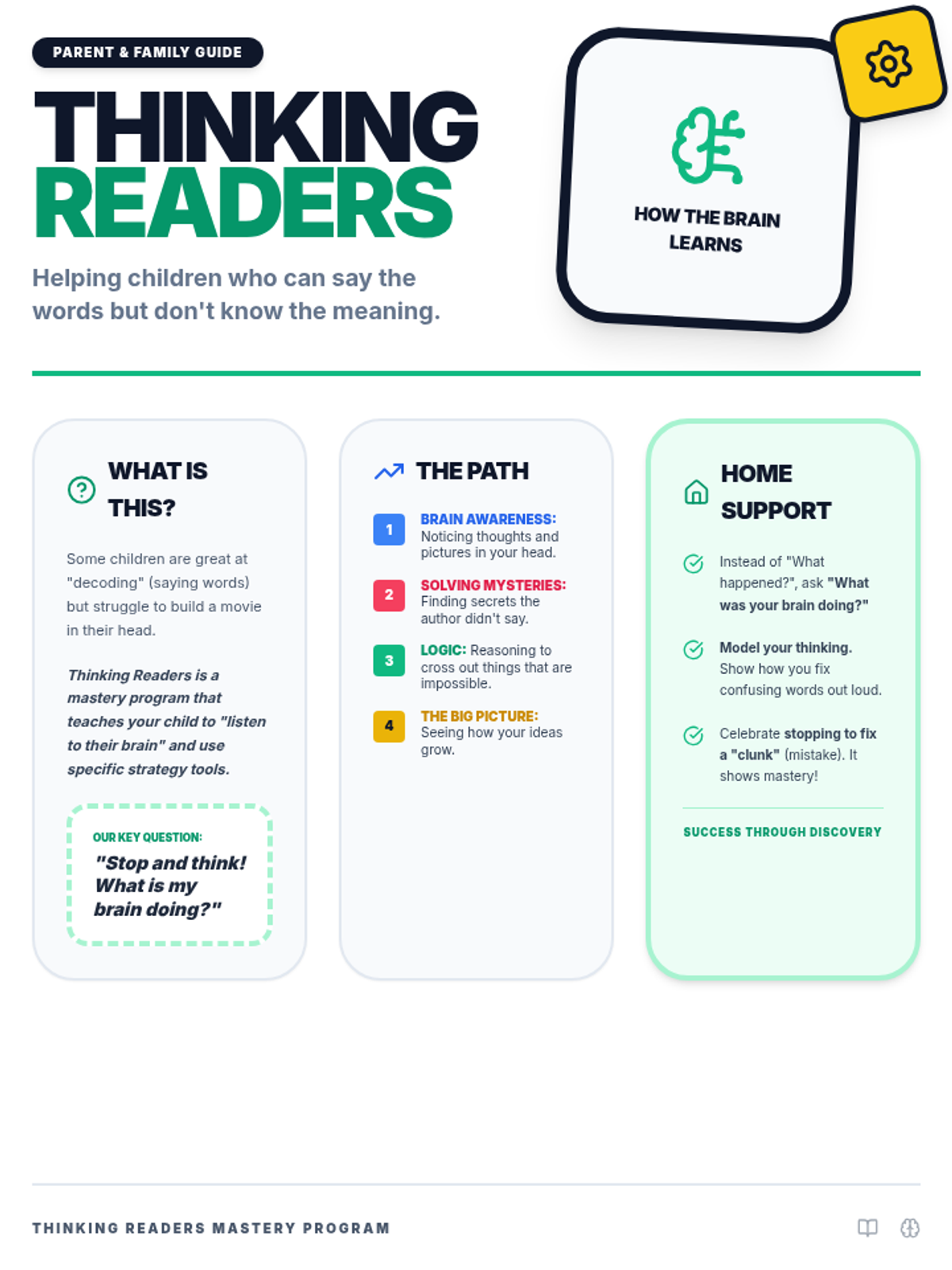
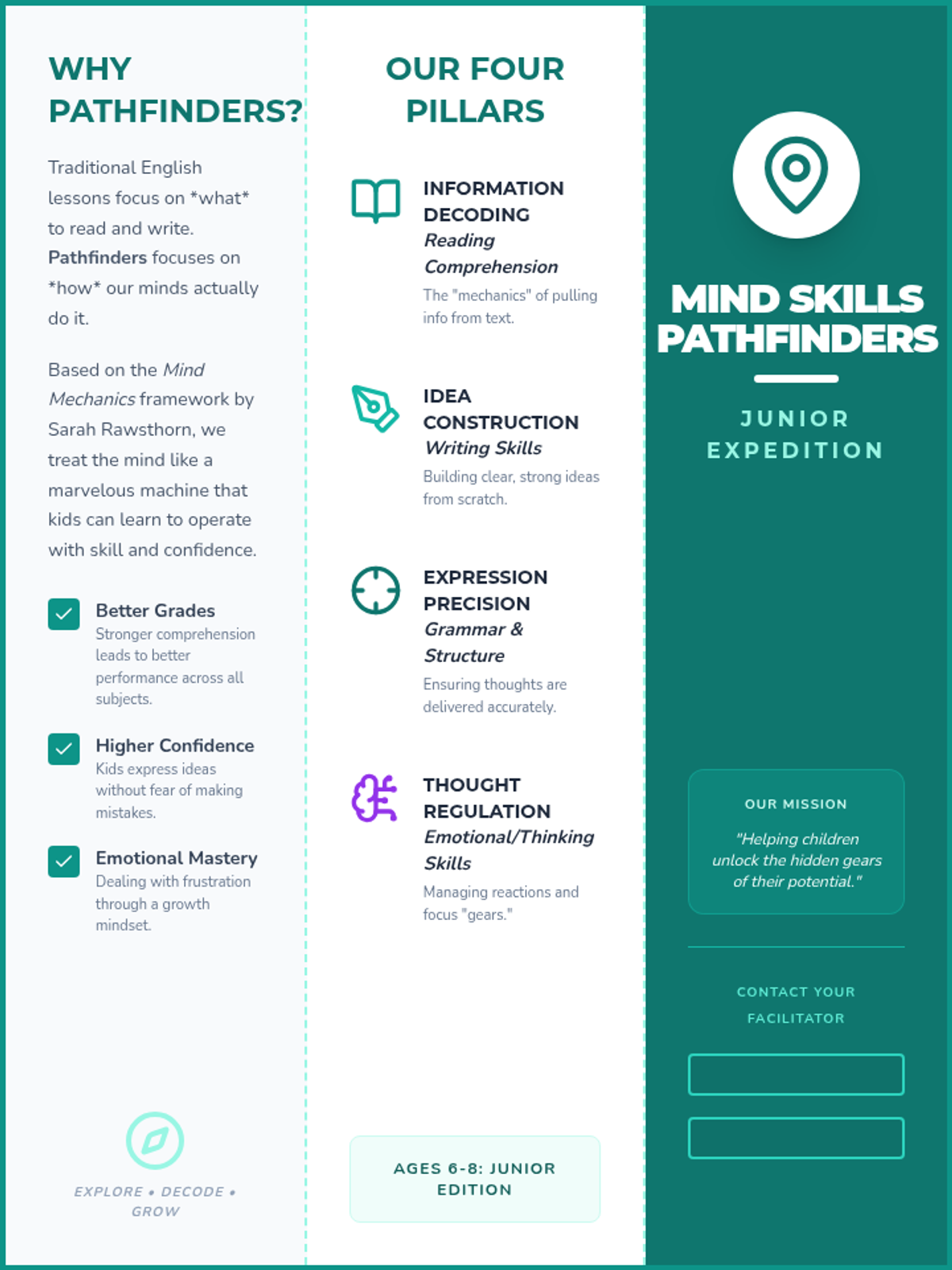
Program-wide materials for the Mastermind Academy, including the parent information brochure and the student graduation certificate.
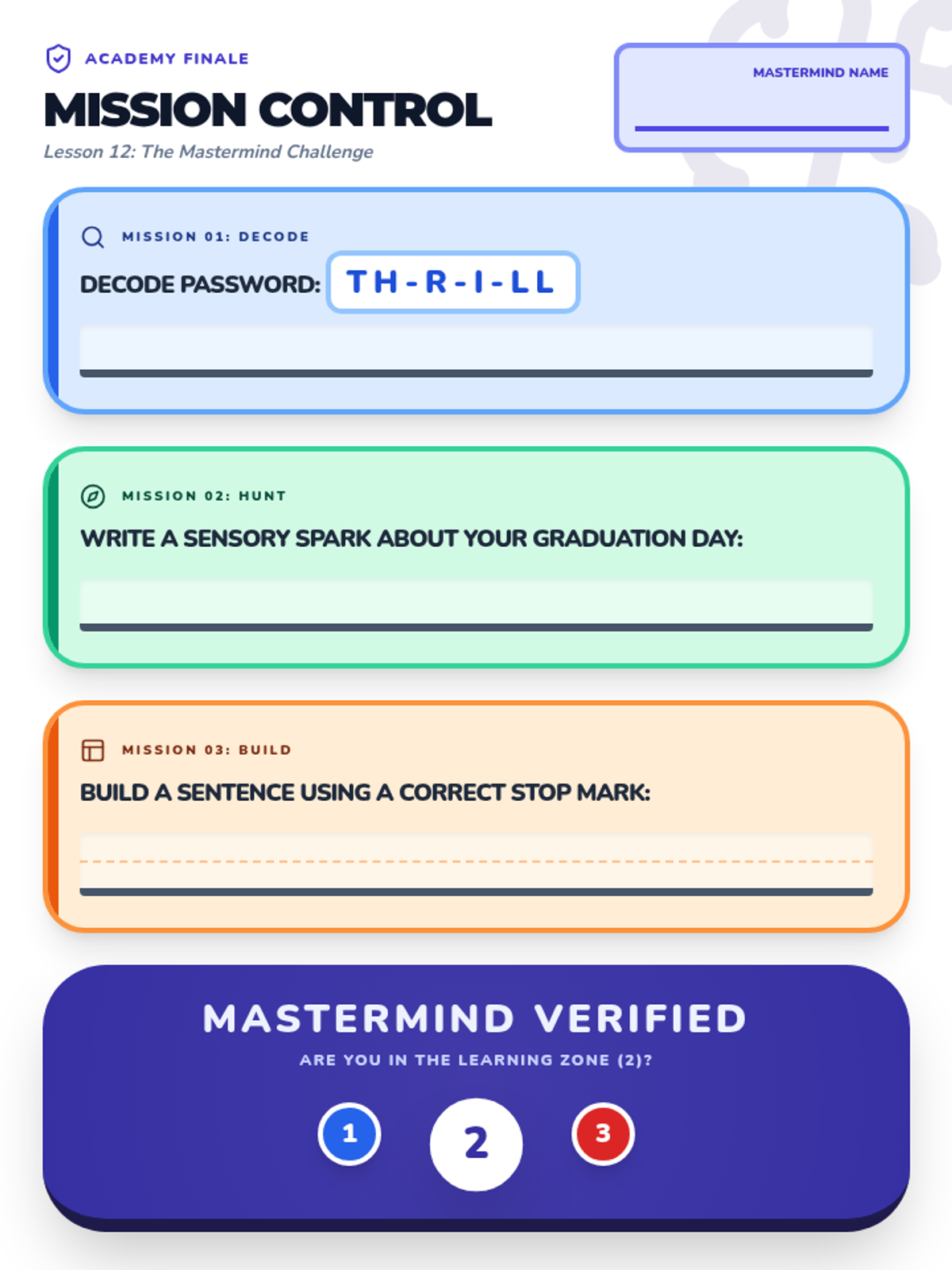
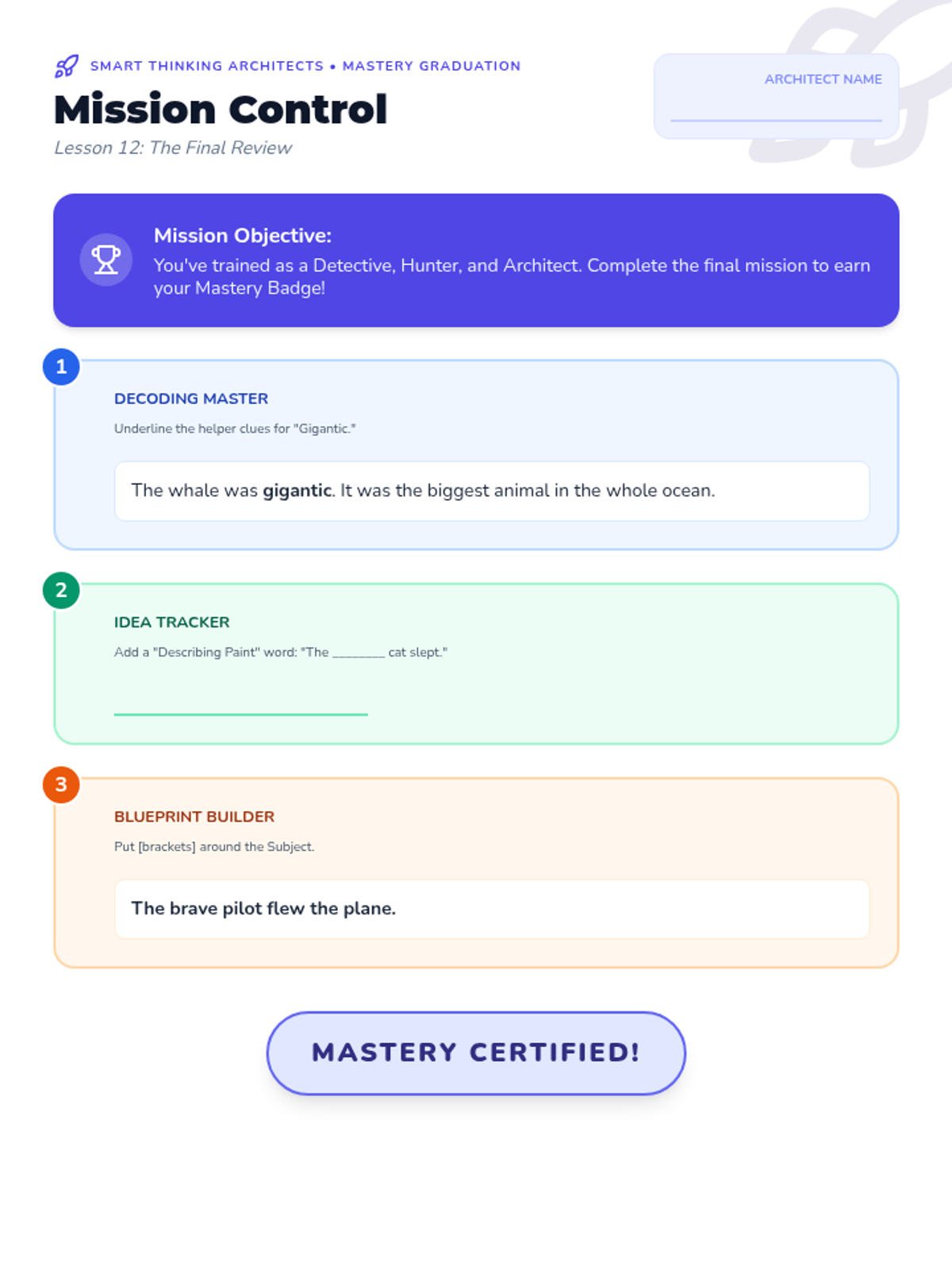
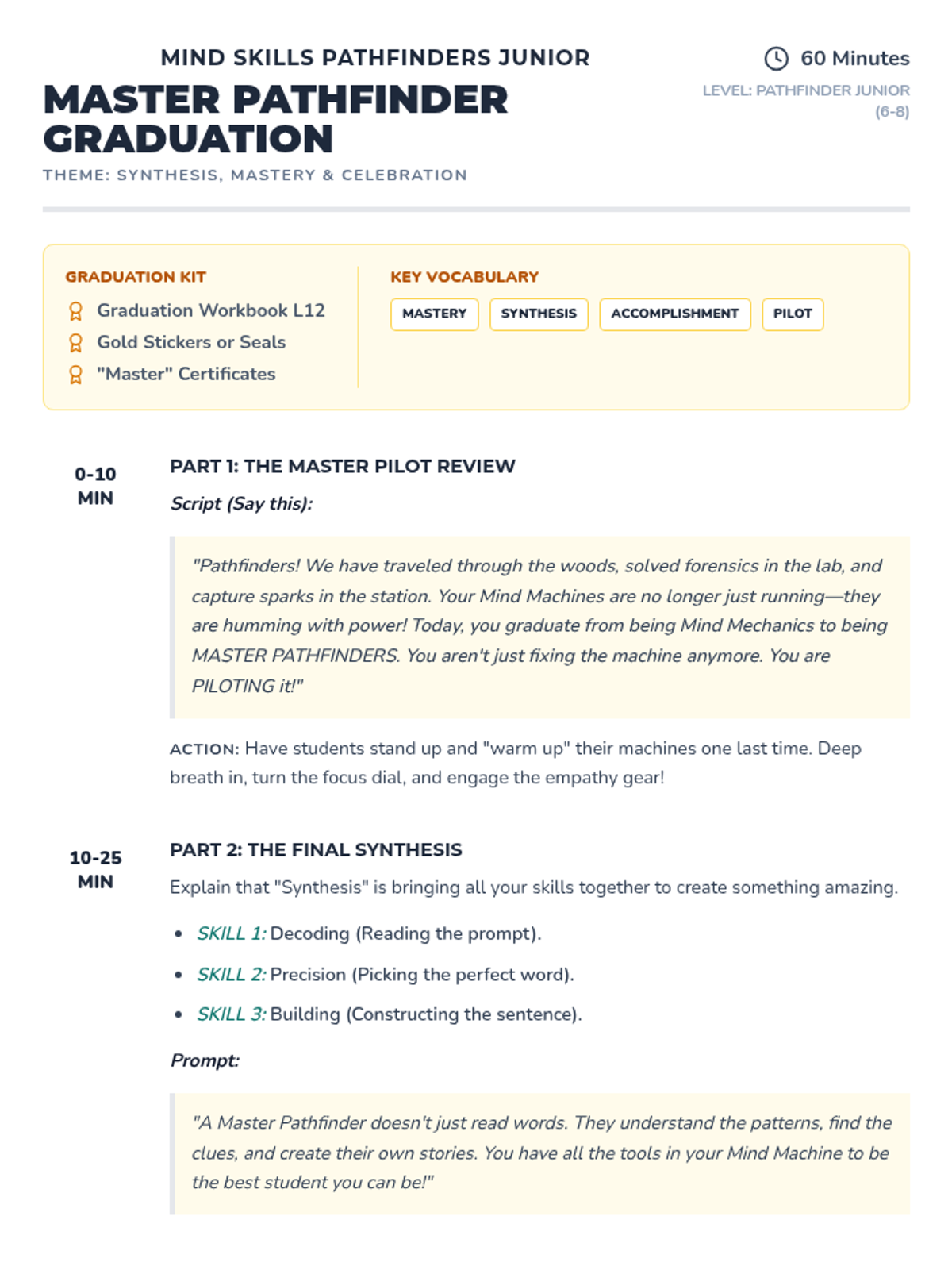
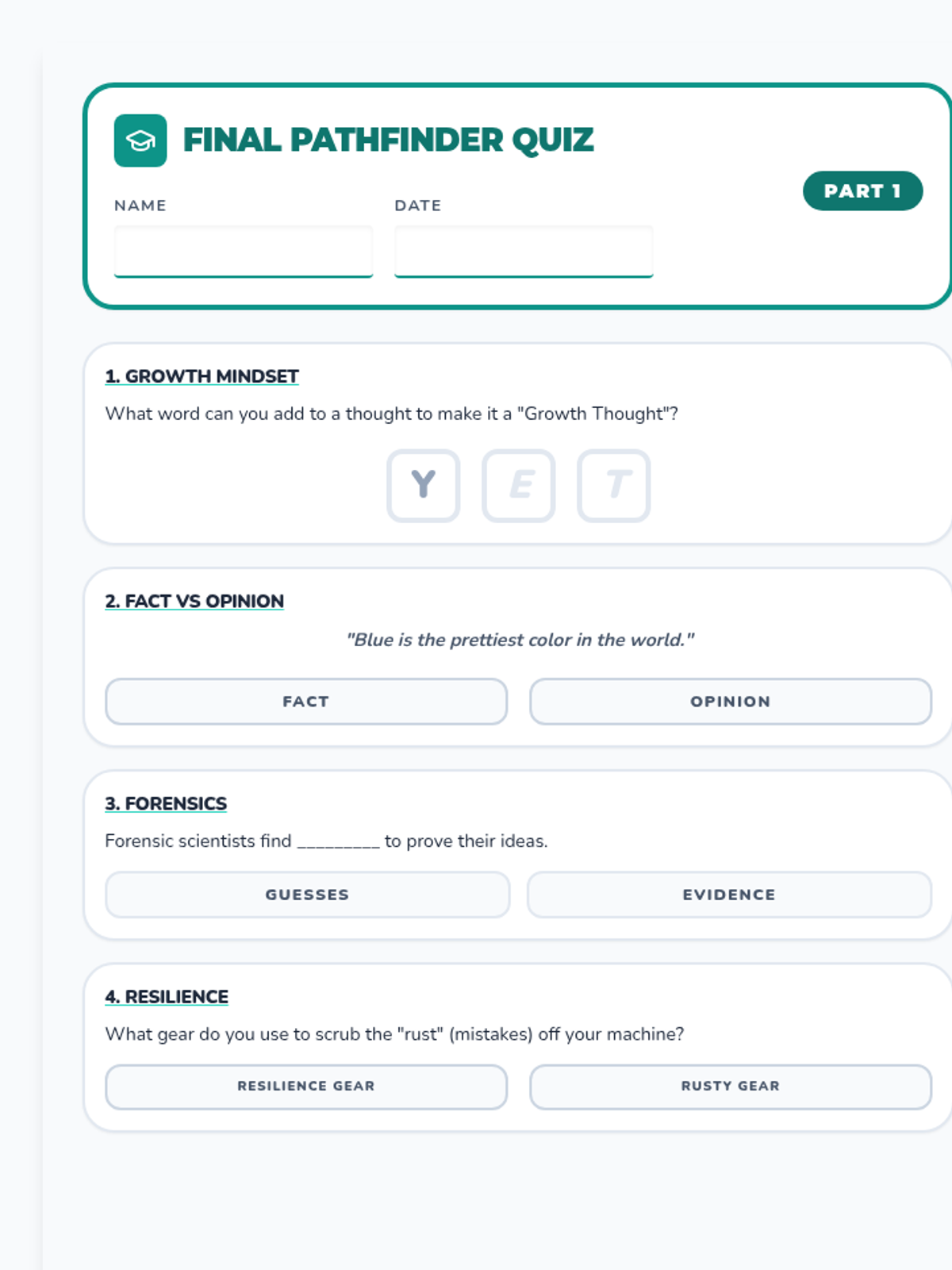
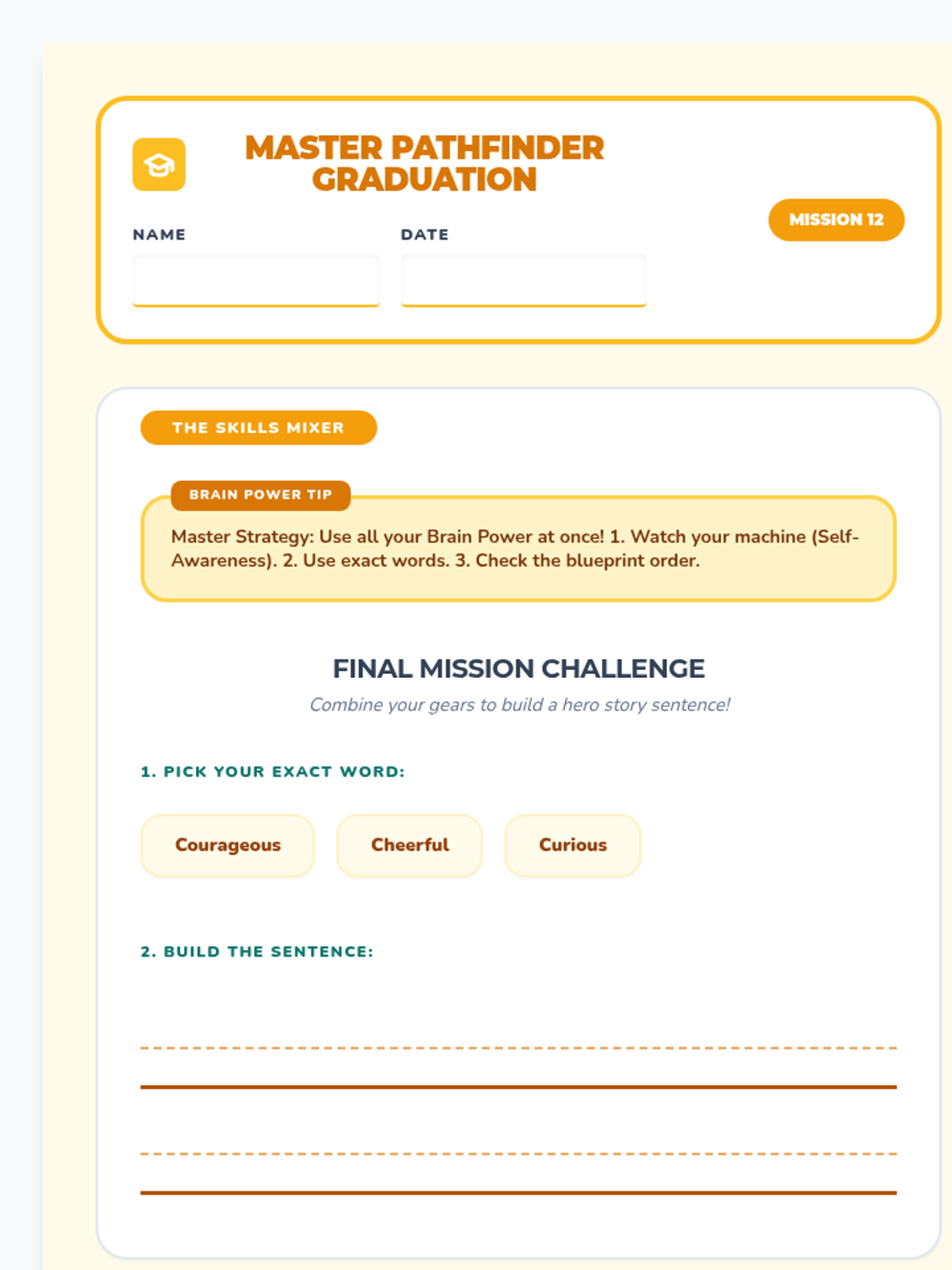
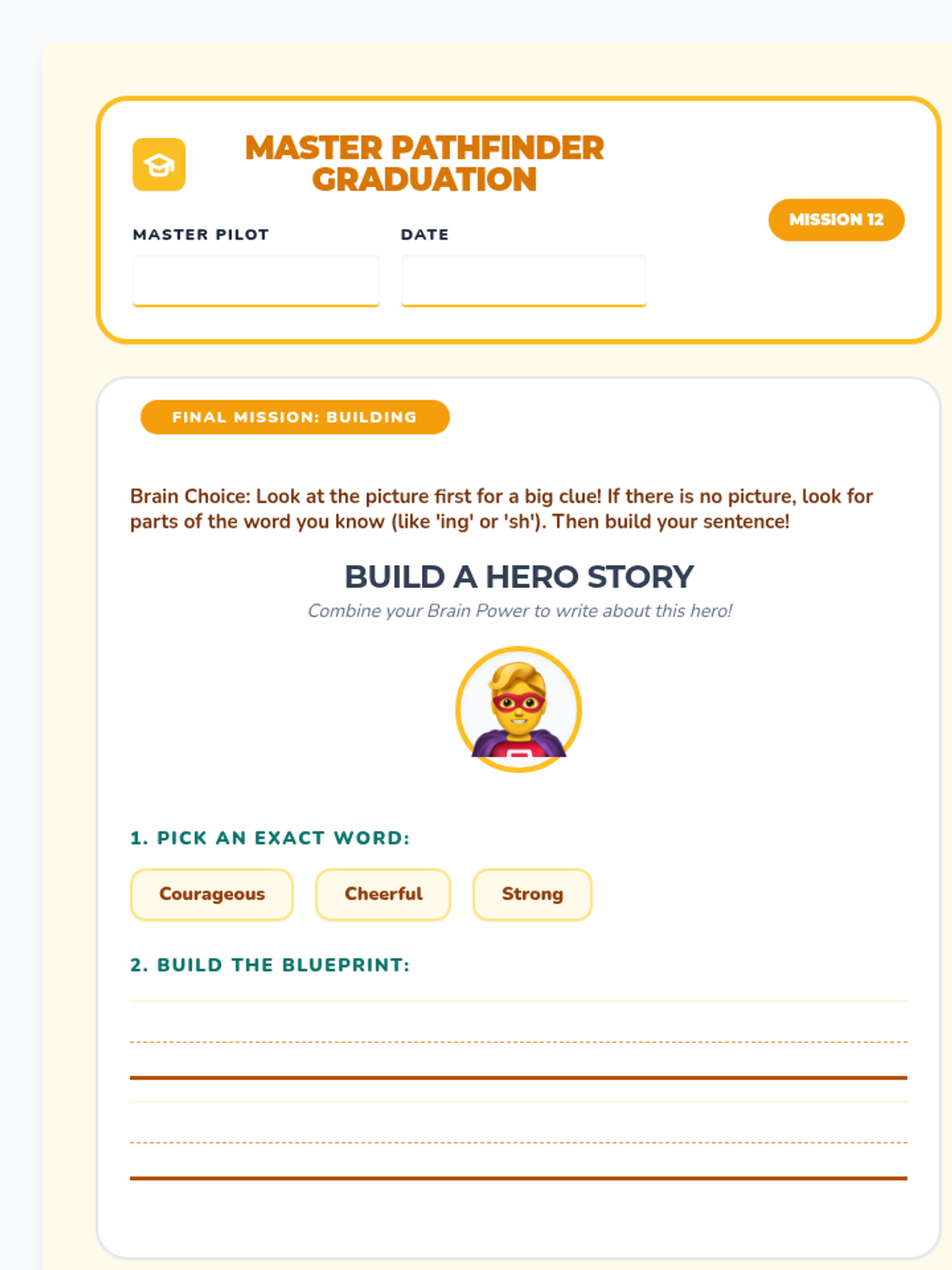
A final review and celebration of the skills learned throughout the Mastermind Academy program.
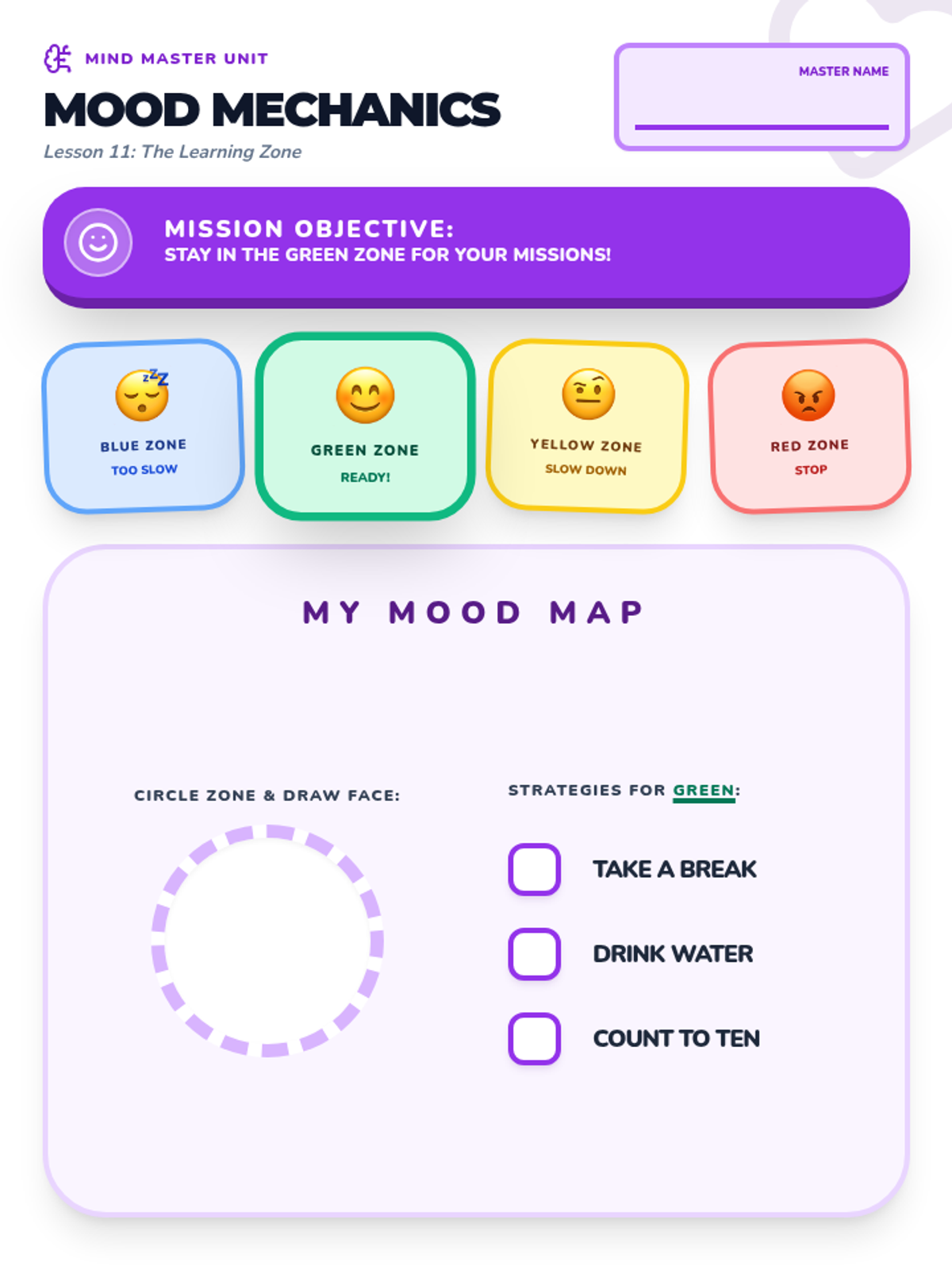
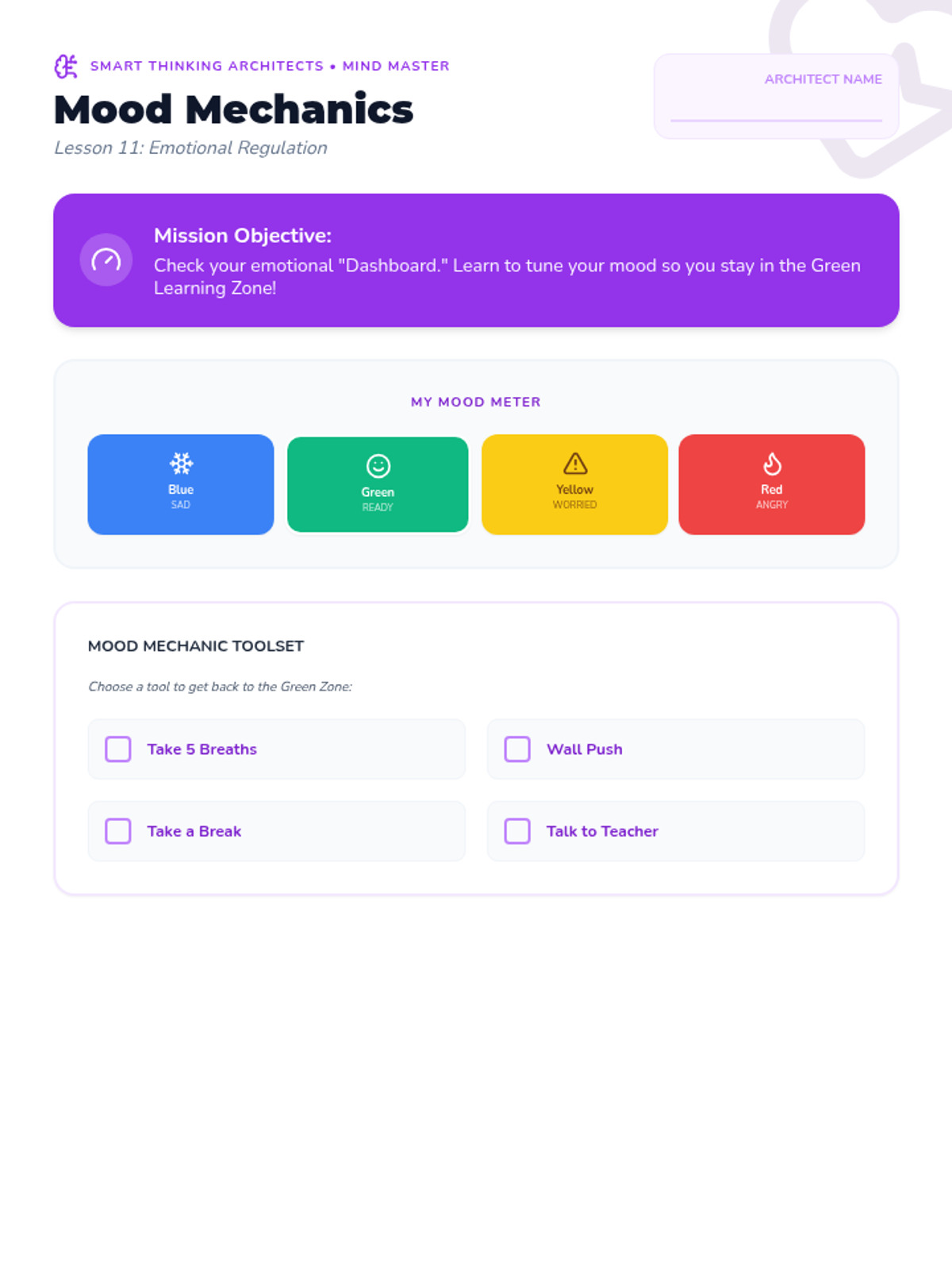
Students learn to identify and regulate their emotions to stay in the "learning zone."
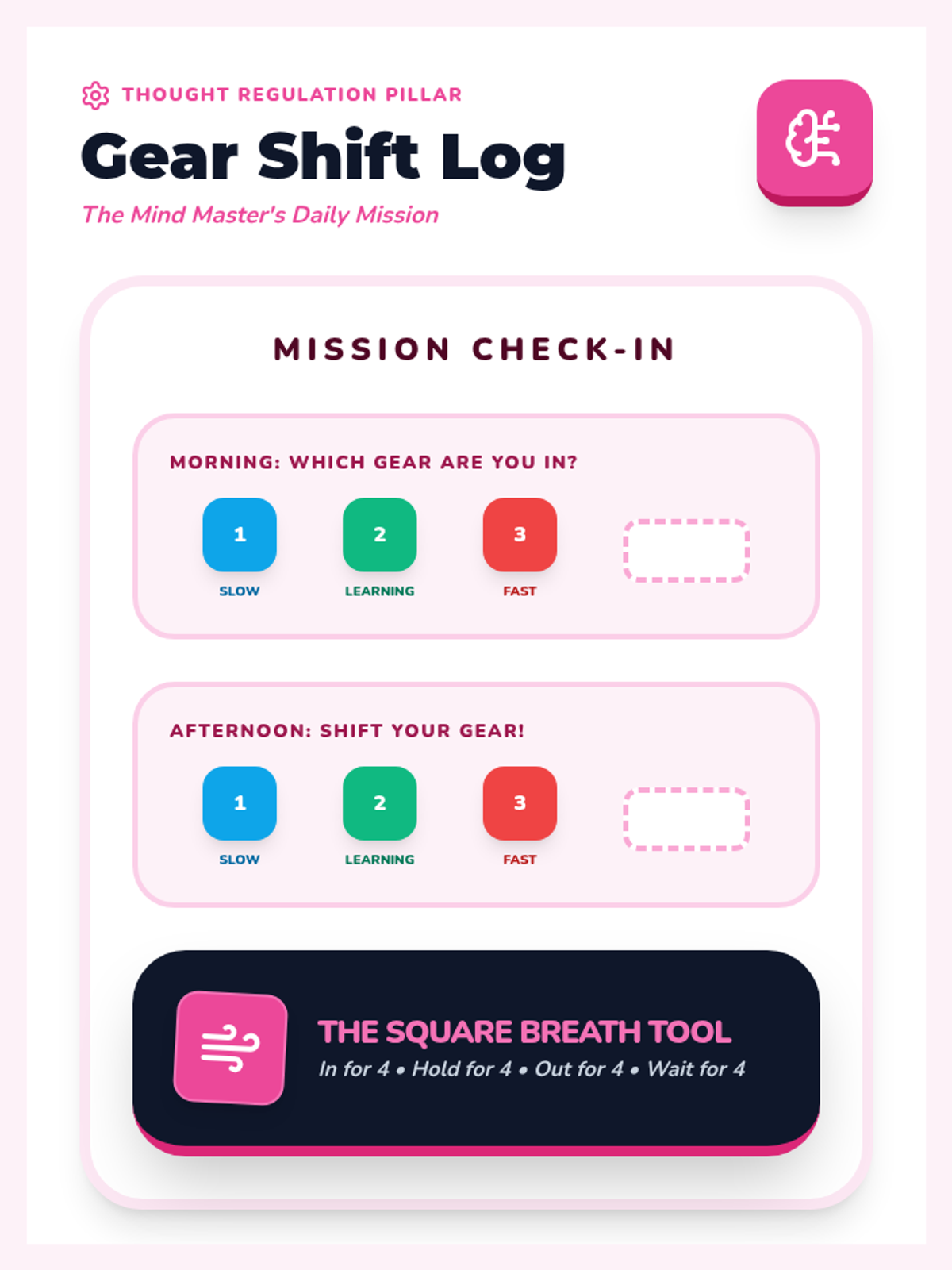
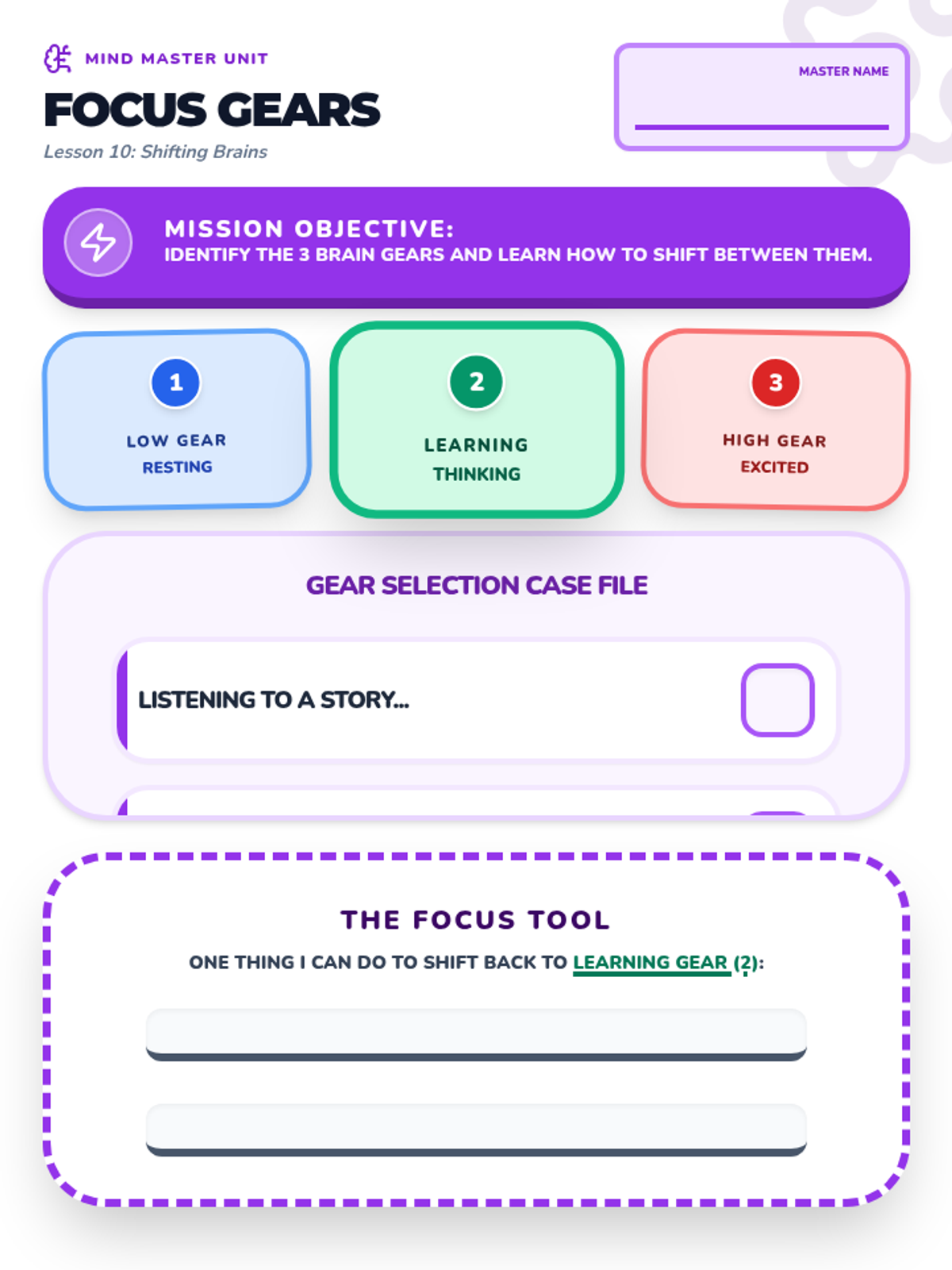
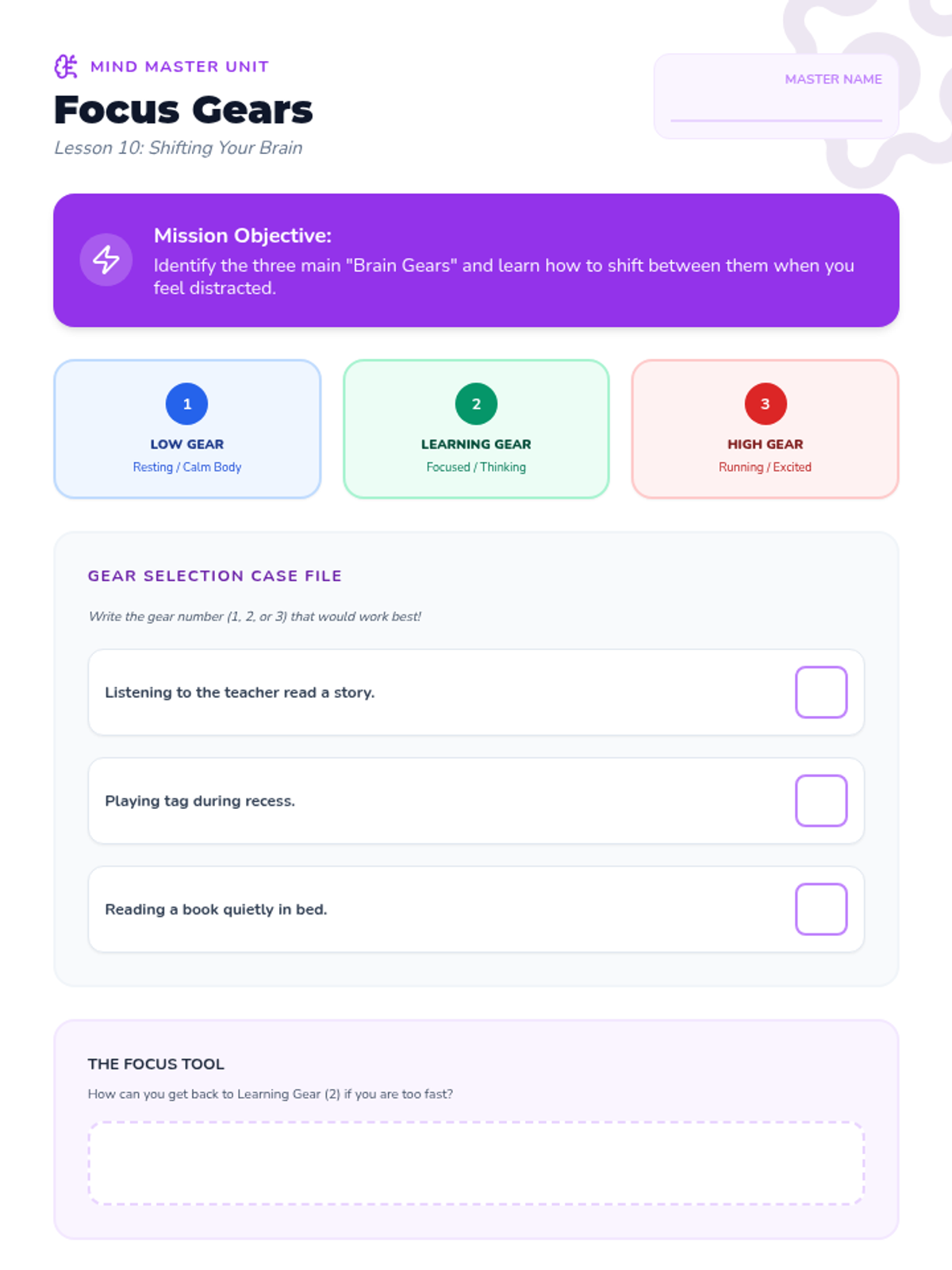
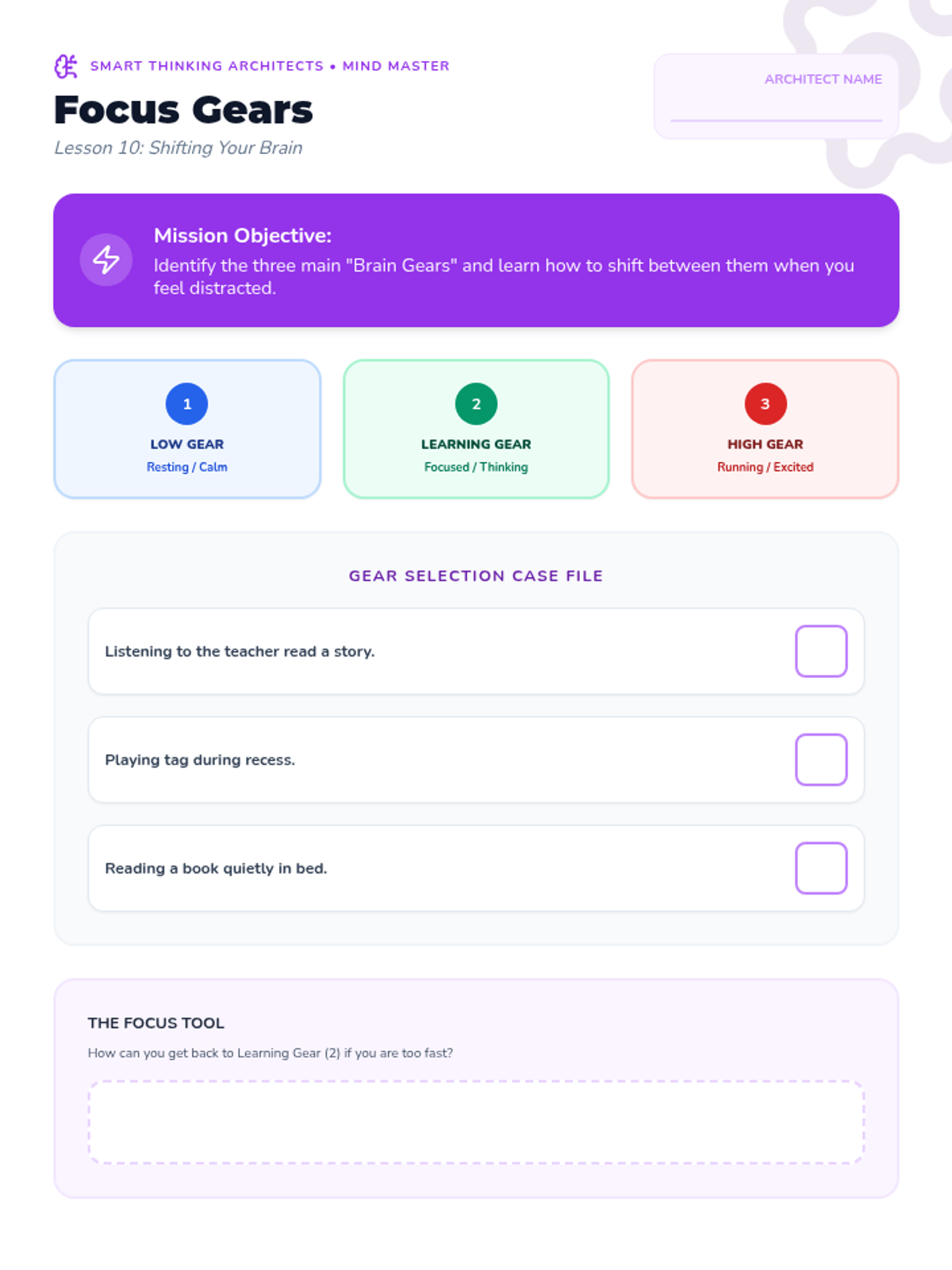
Mind masters learn to switch their "brain gears" to focus on the task at hand and ignore distractions.
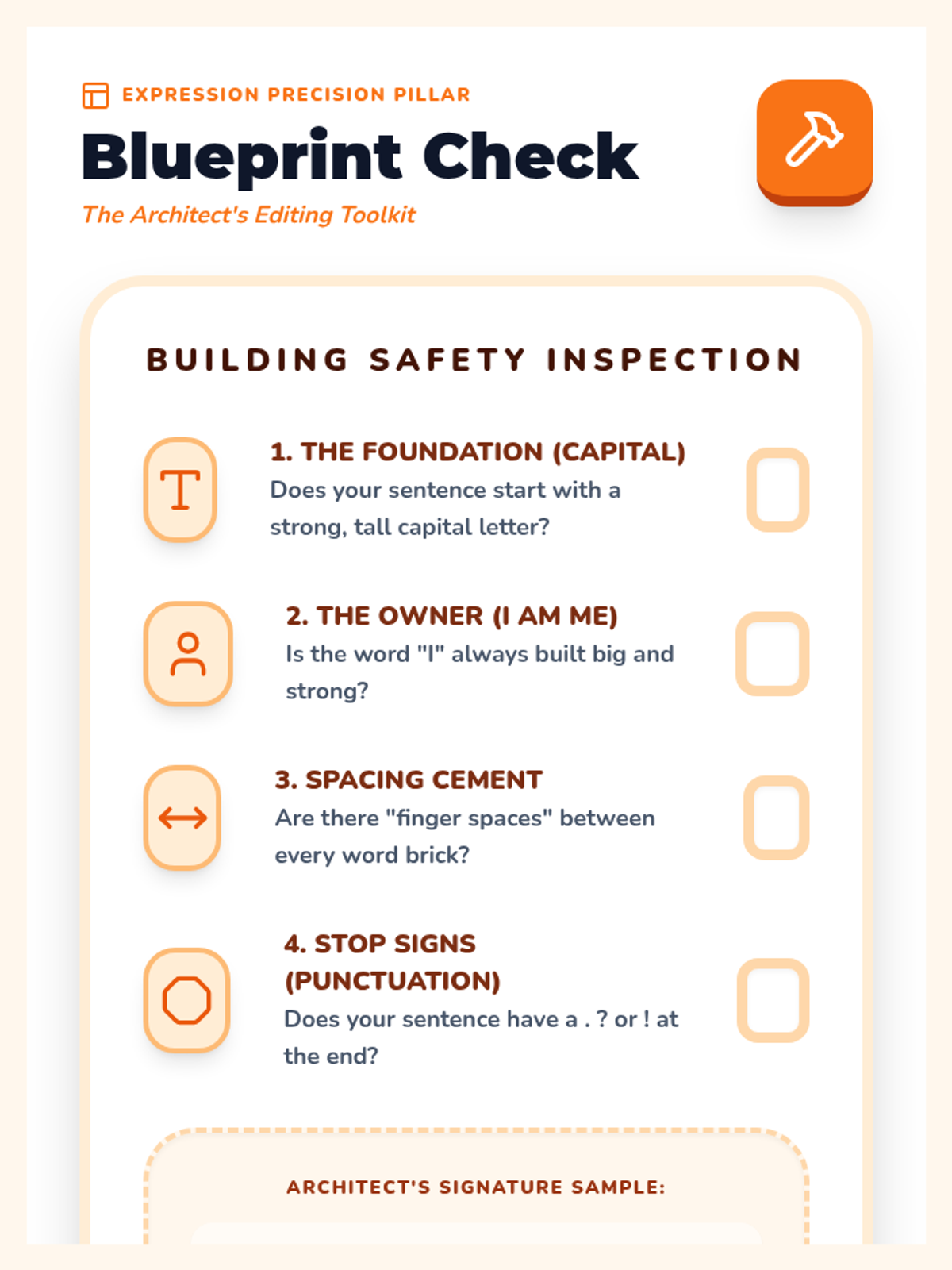
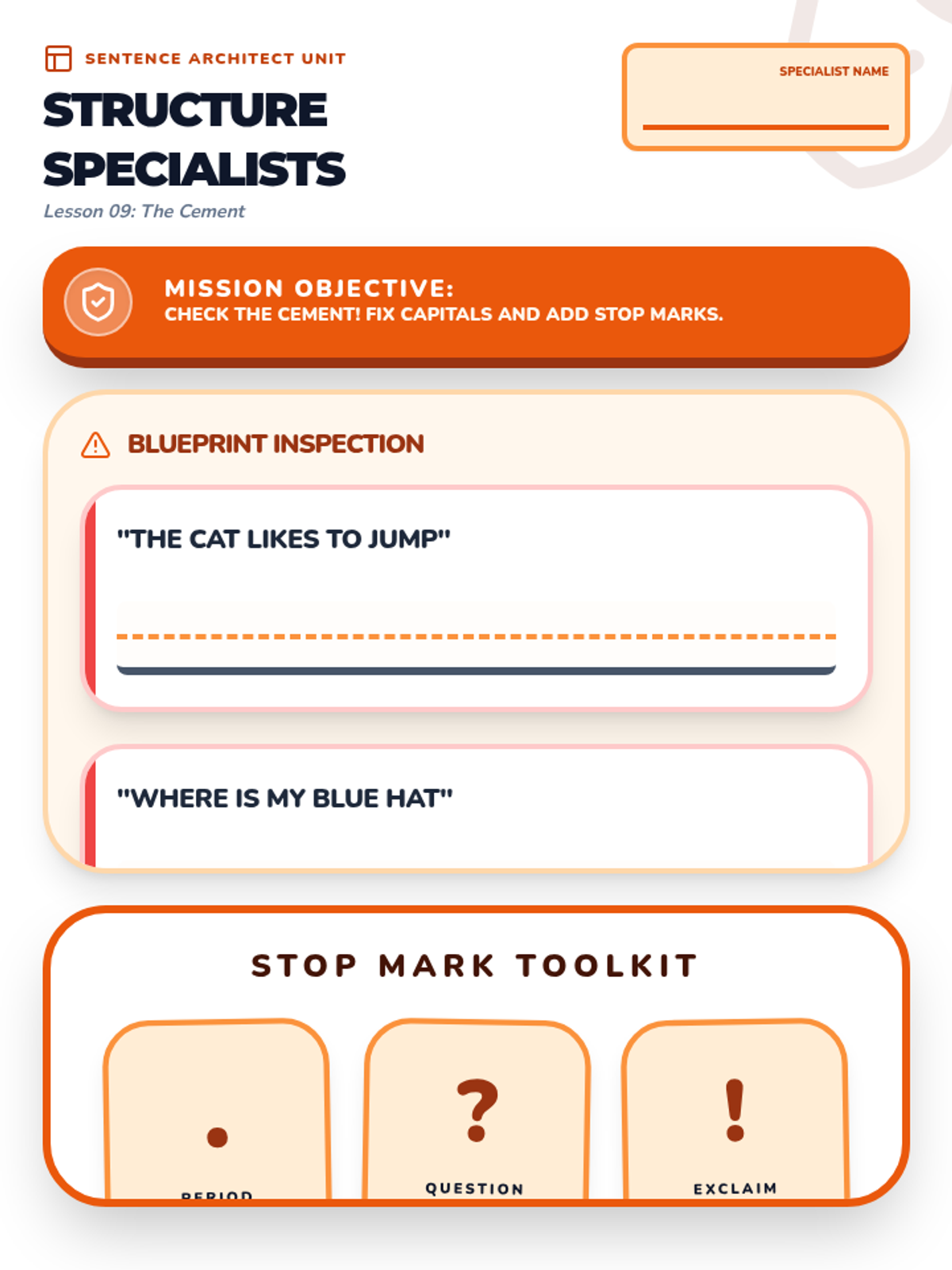
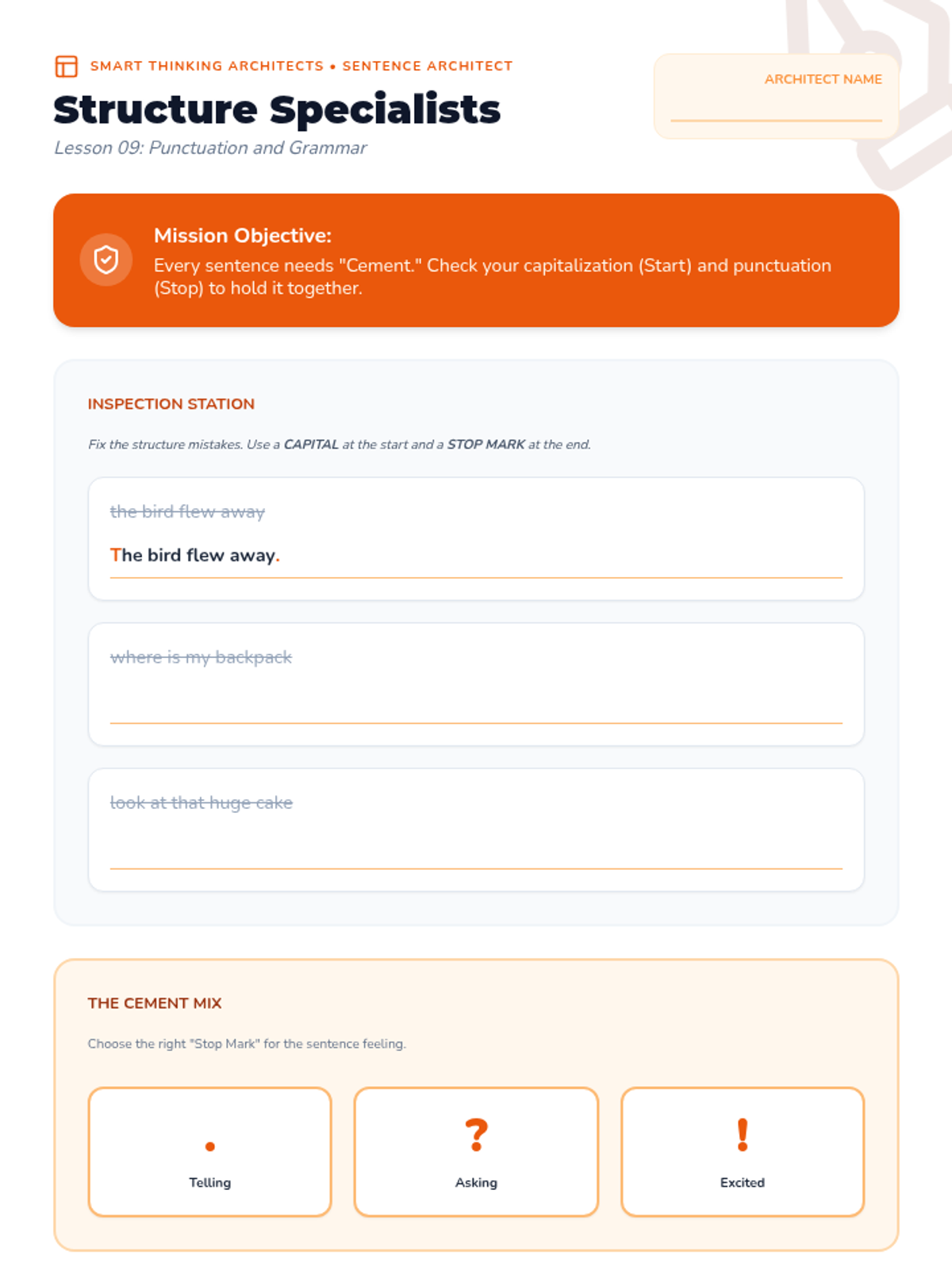
Specialists focus on the "cement" of writing: punctuation, capitalization, and grammar rules.
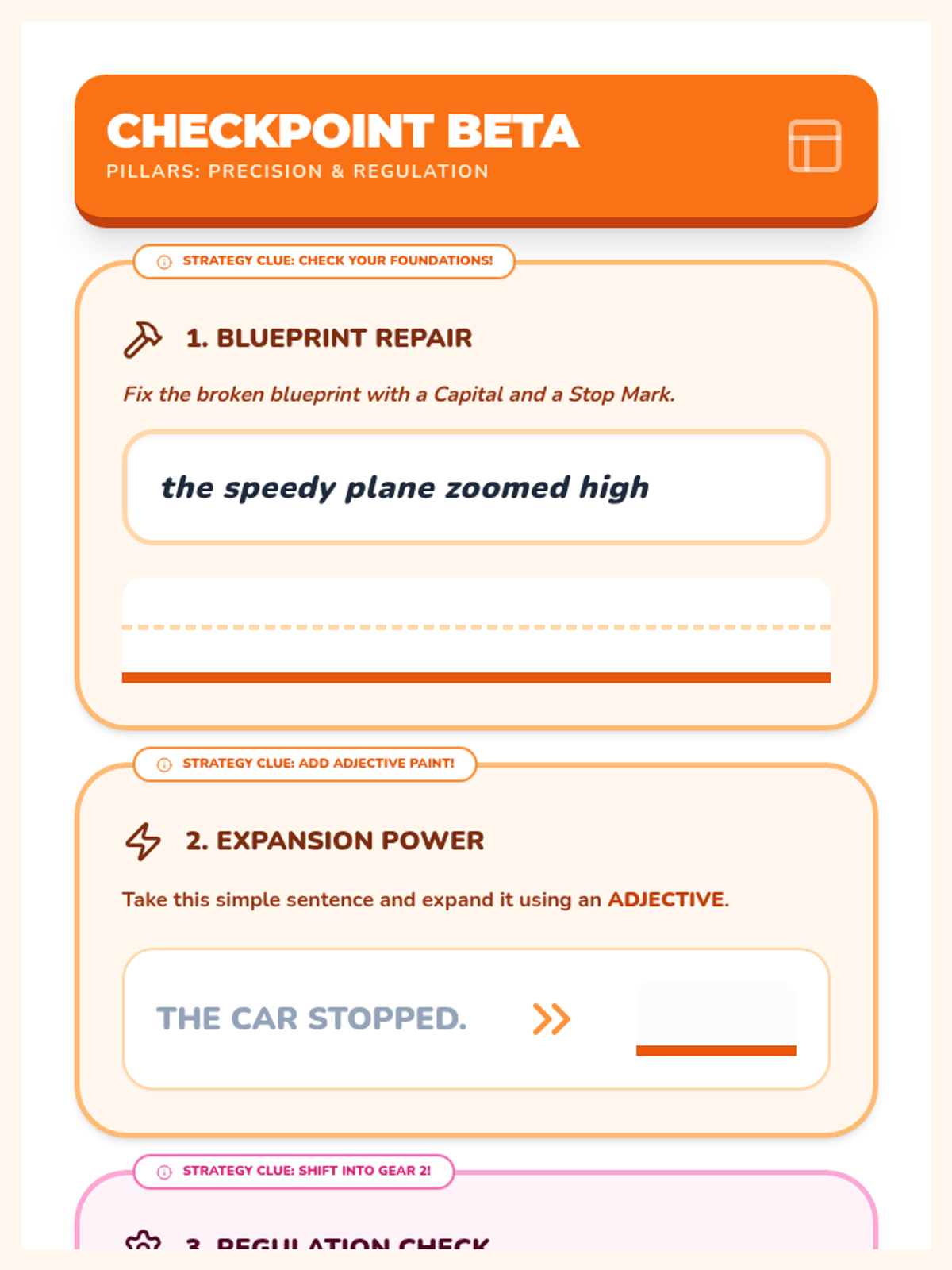
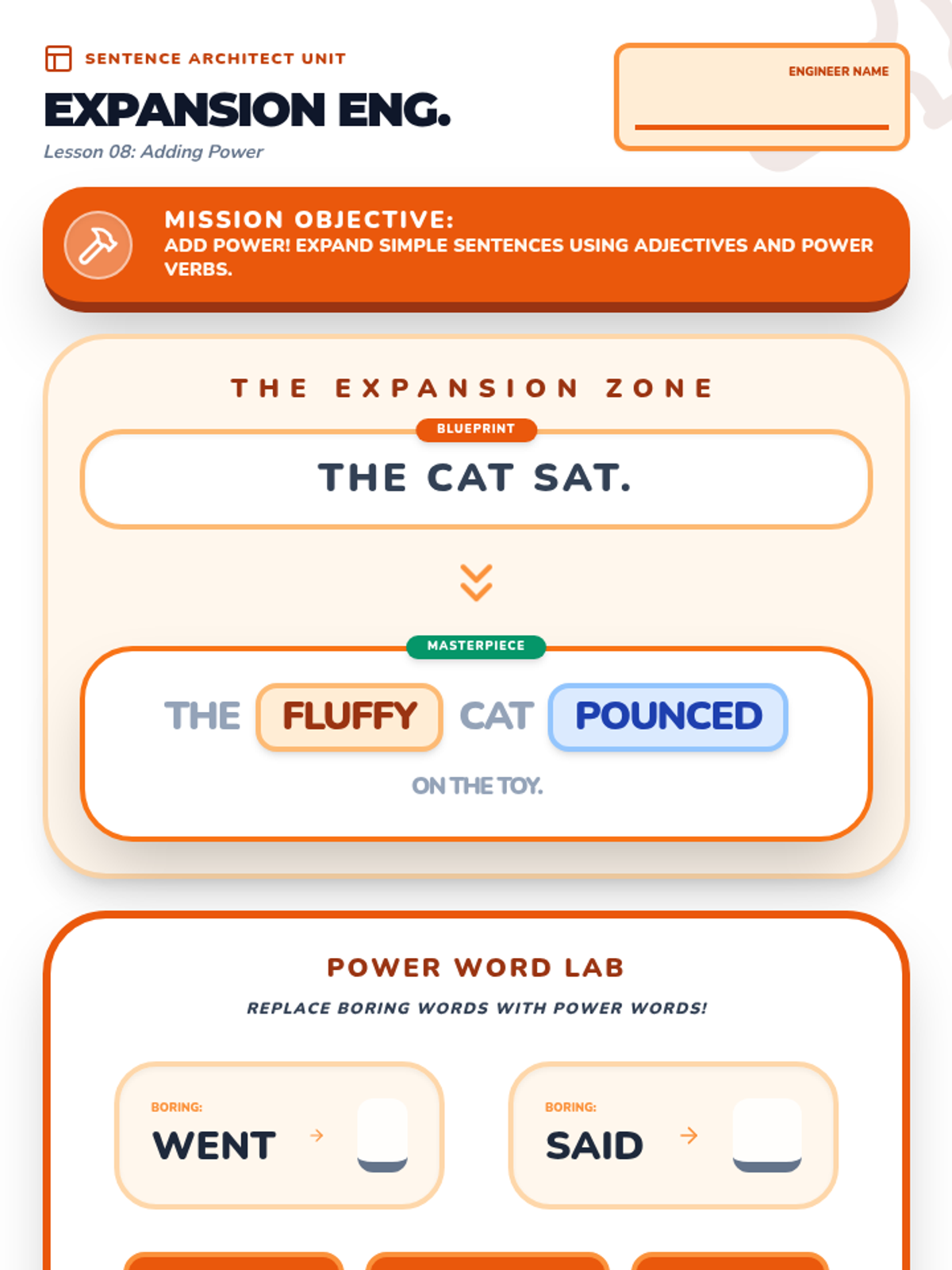
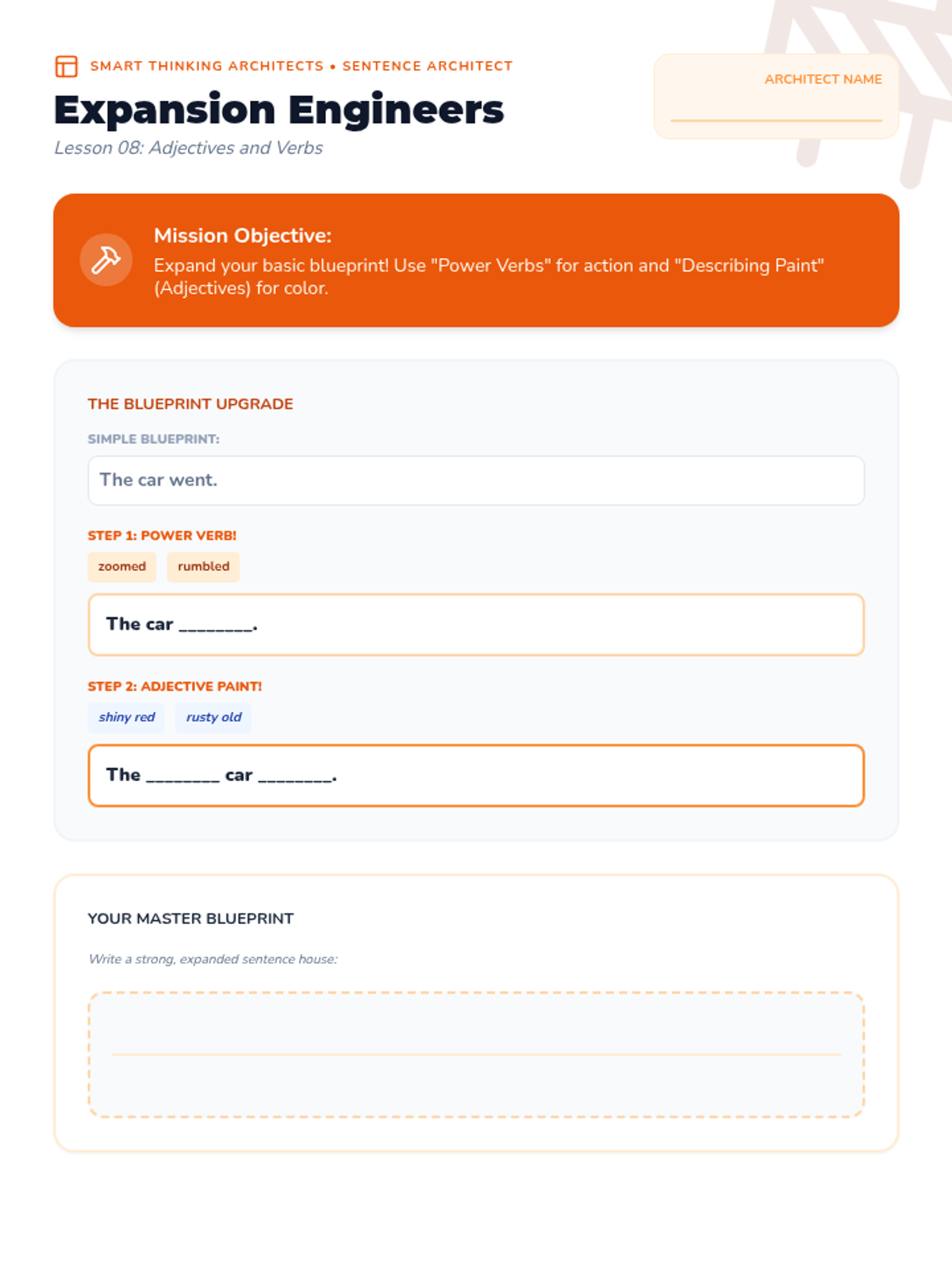
Engineers learn to expand their simple "blueprints" by adding descriptive adjectives and powerful verbs.
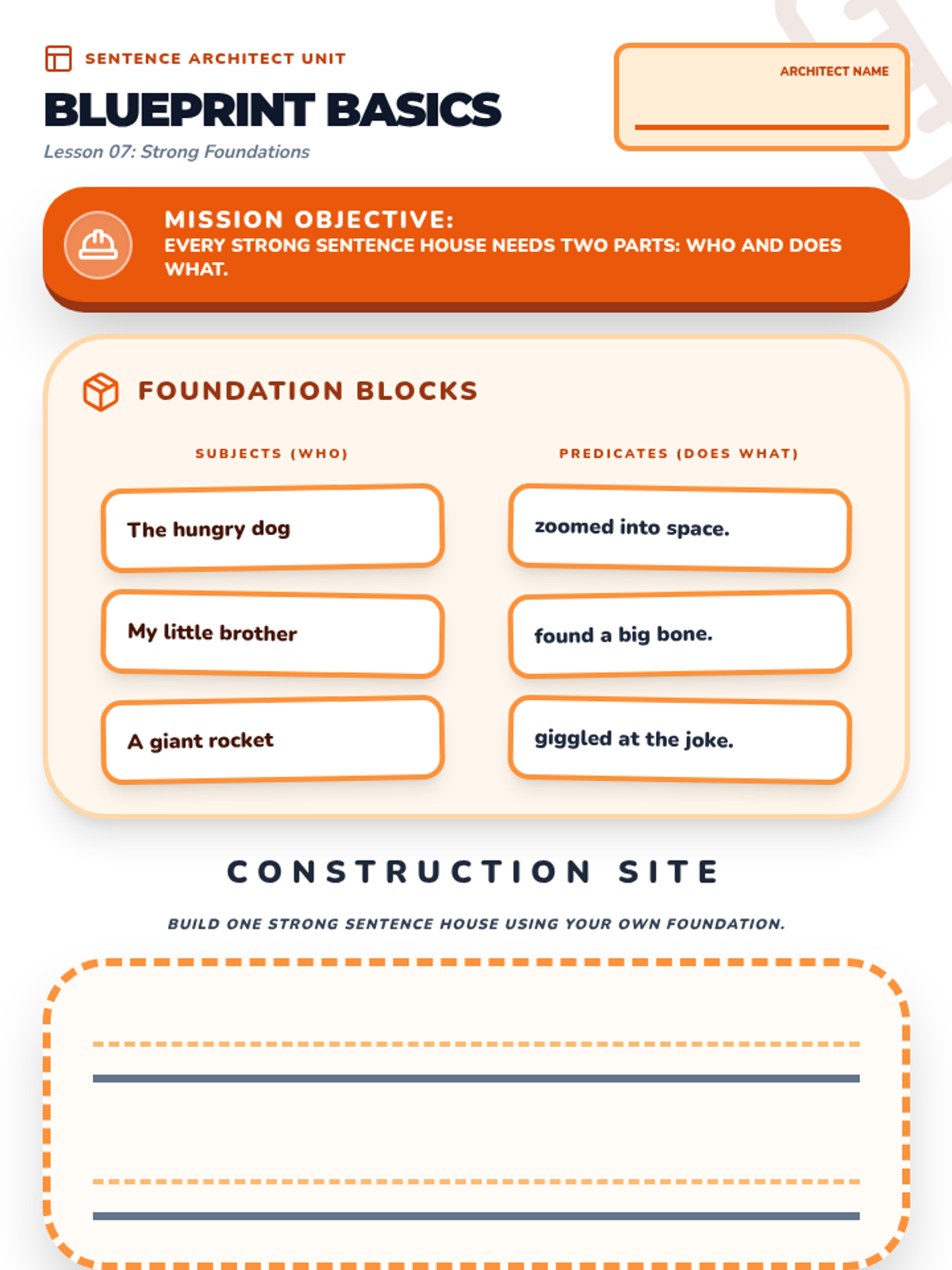
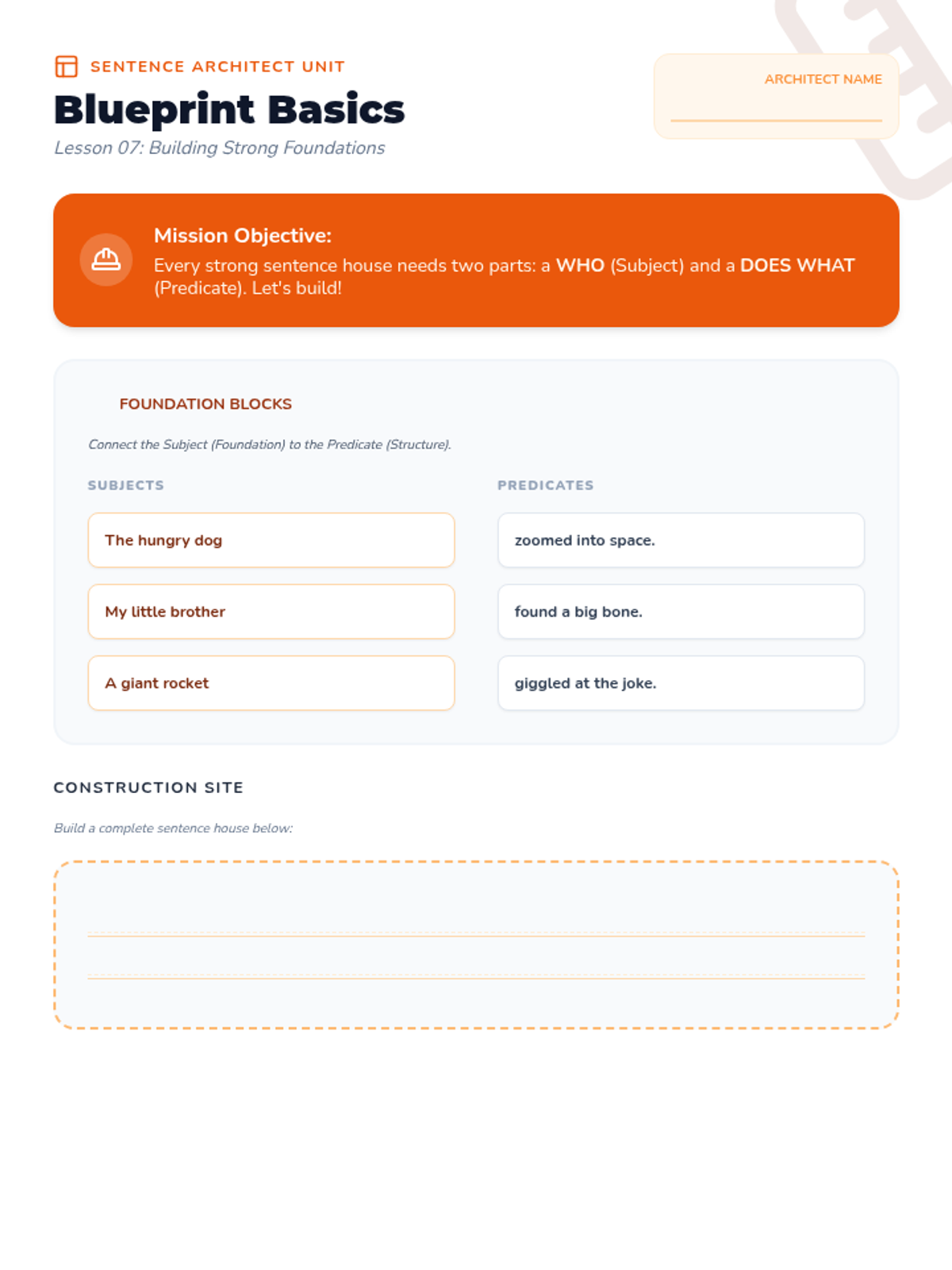
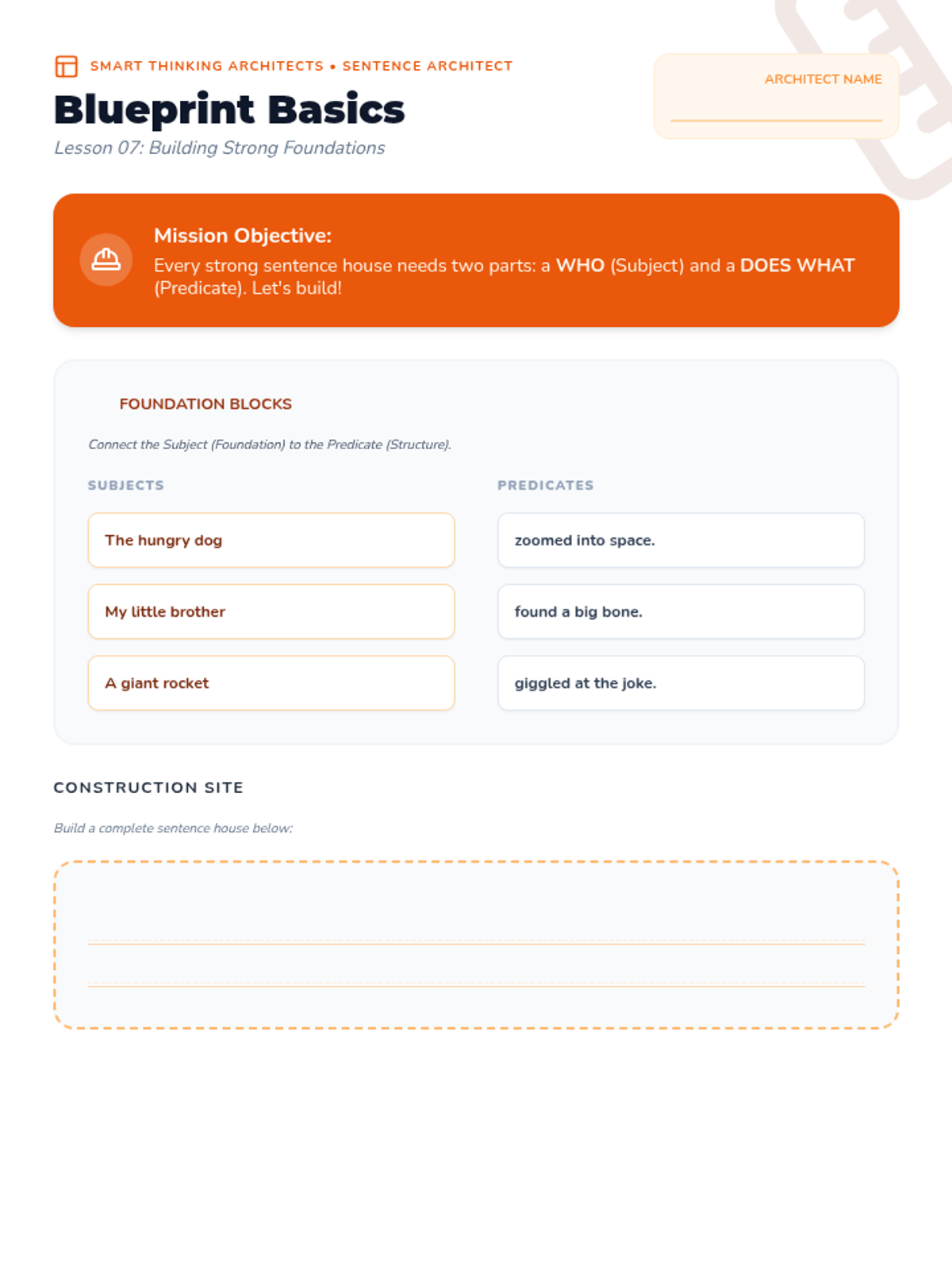
Sentence architects learn the foundations of a strong sentence, including subjects and predicates.
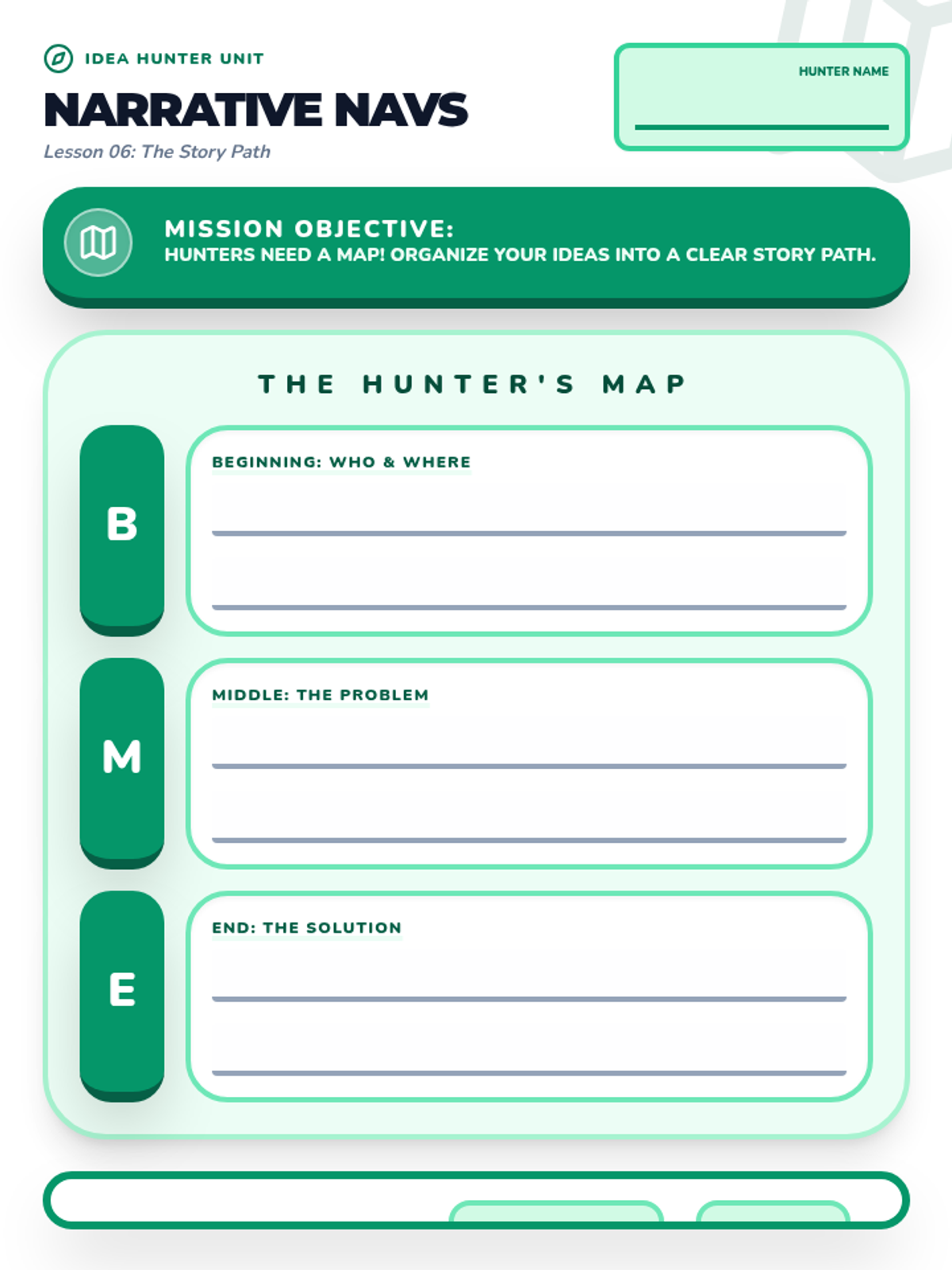
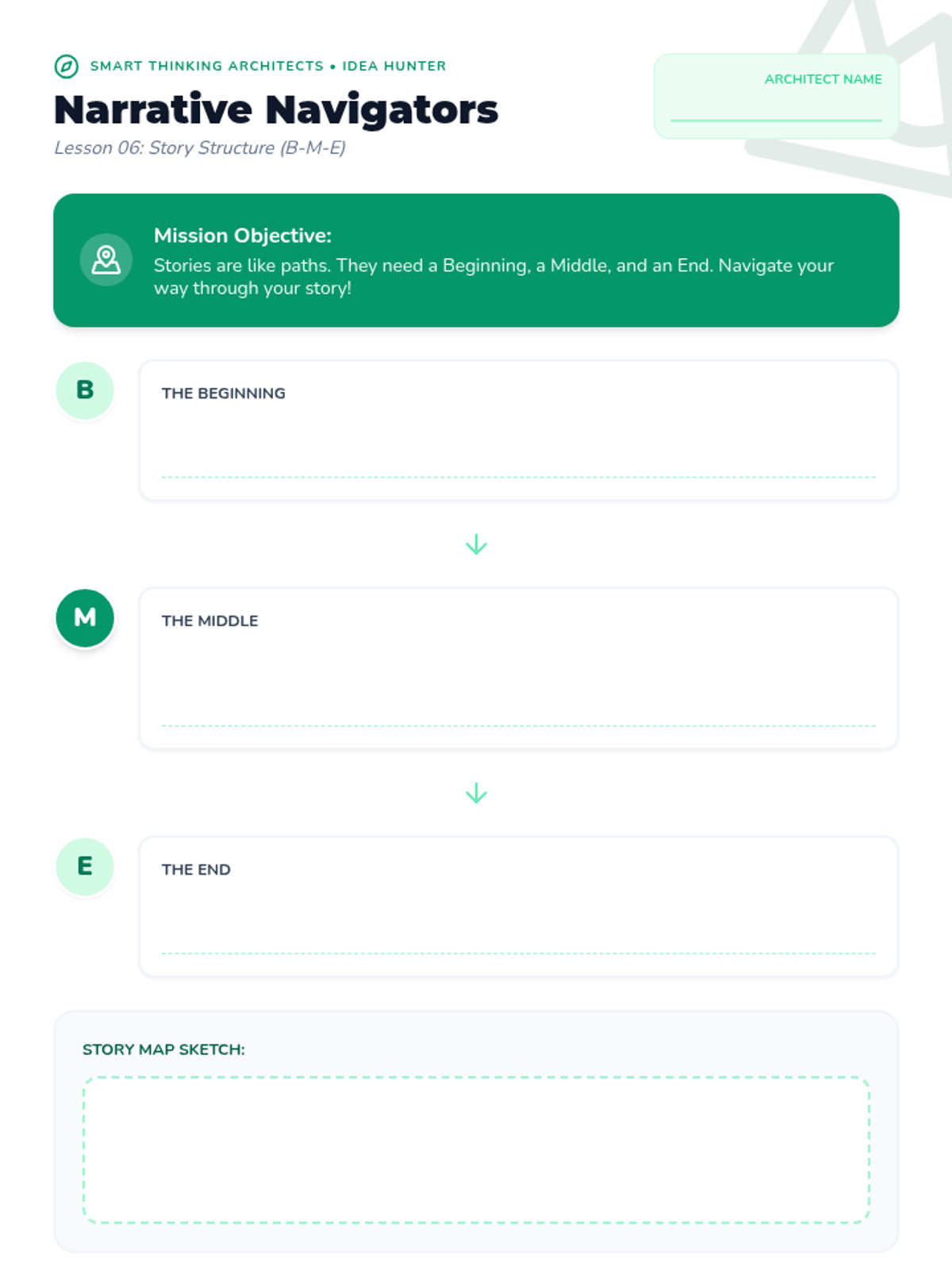
Explorers learn to organize their hunted ideas into a clear beginning, middle, and end.
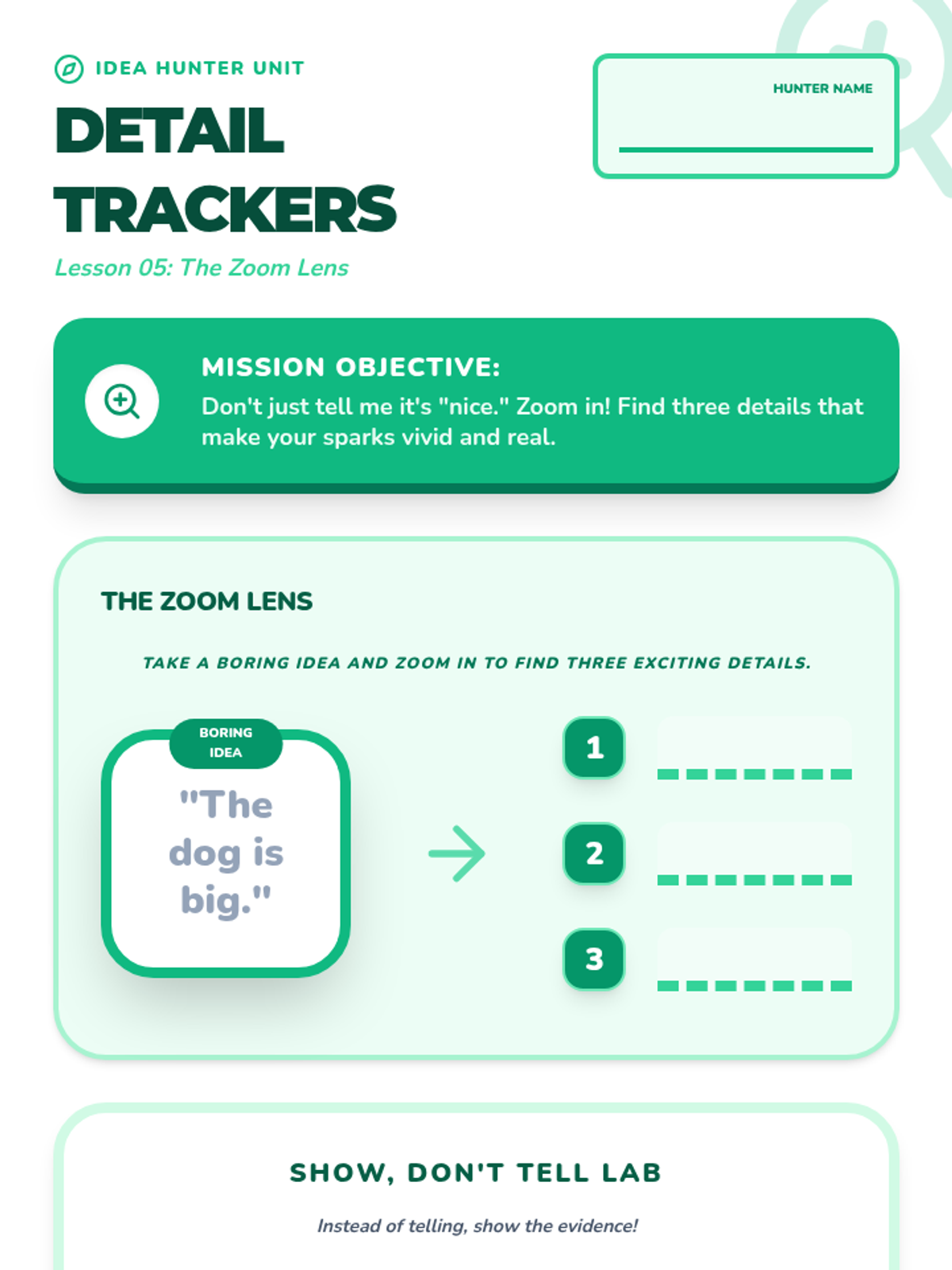
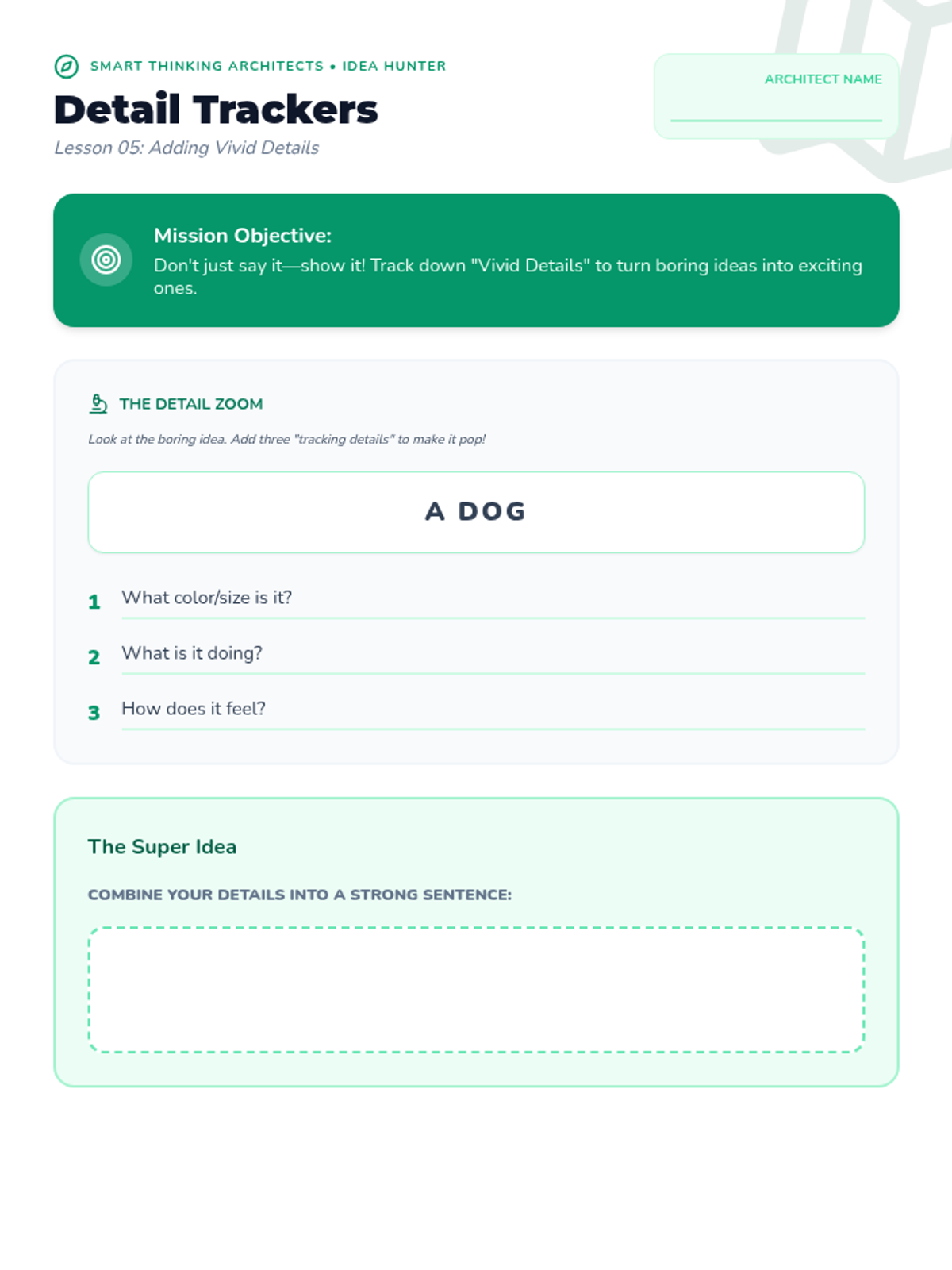
Hunters learn to track down specific details that make their ideas stronger and more vivid.
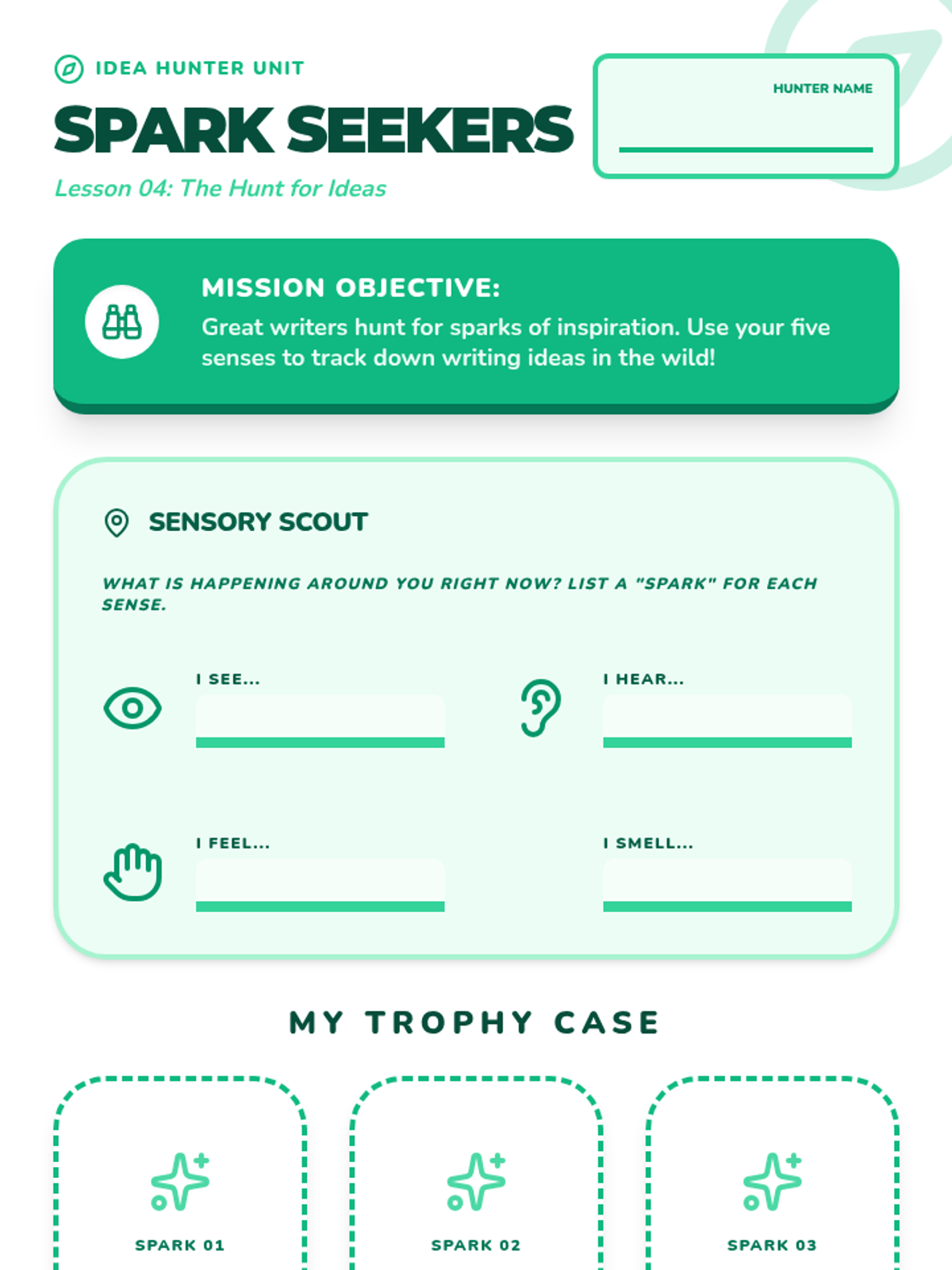
Idea hunters head into the wild to find "sparks" of inspiration for their writing using their senses.
Detectives learn to pull specific information and evidence from texts to solve comprehension cases.
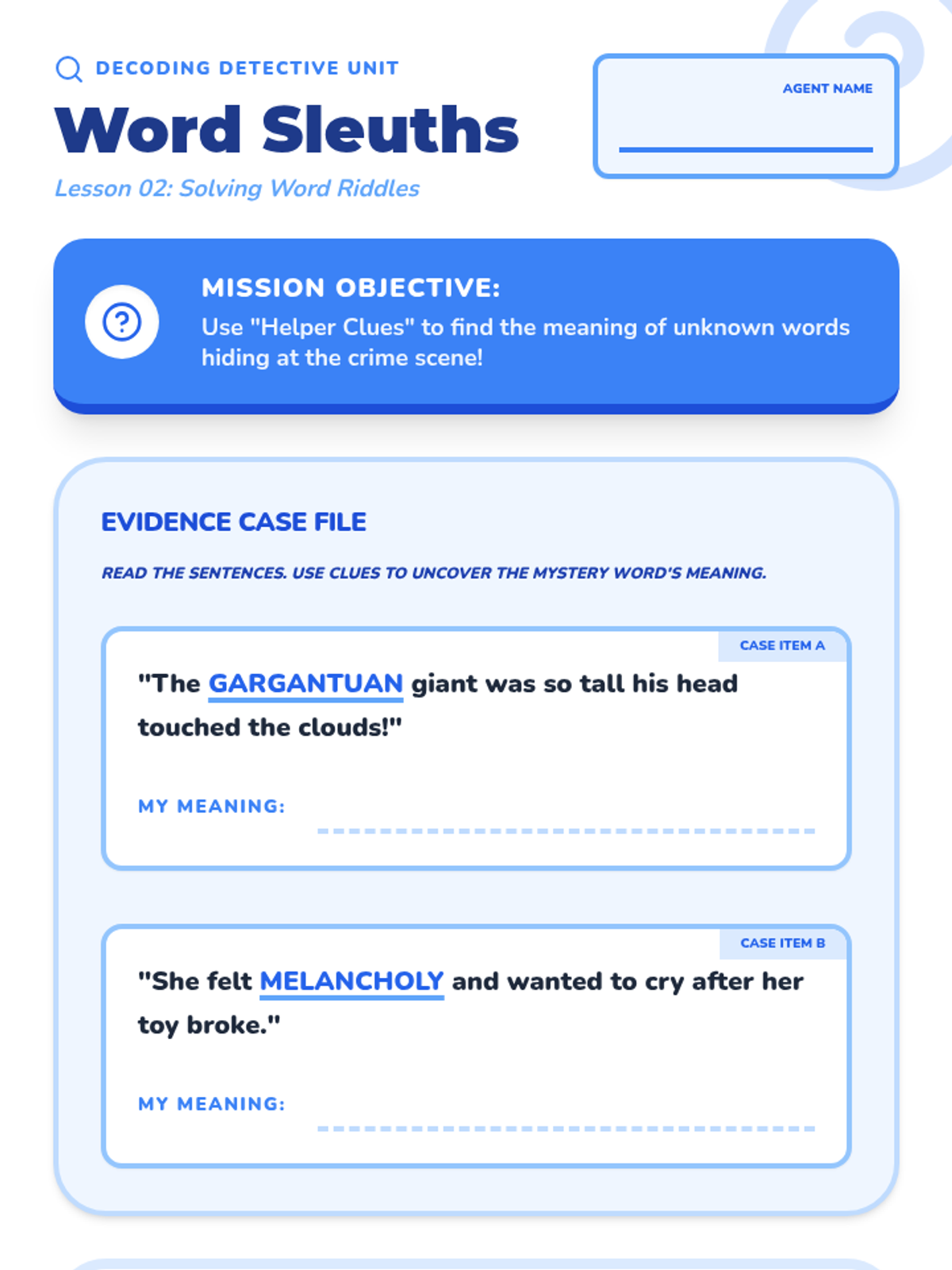
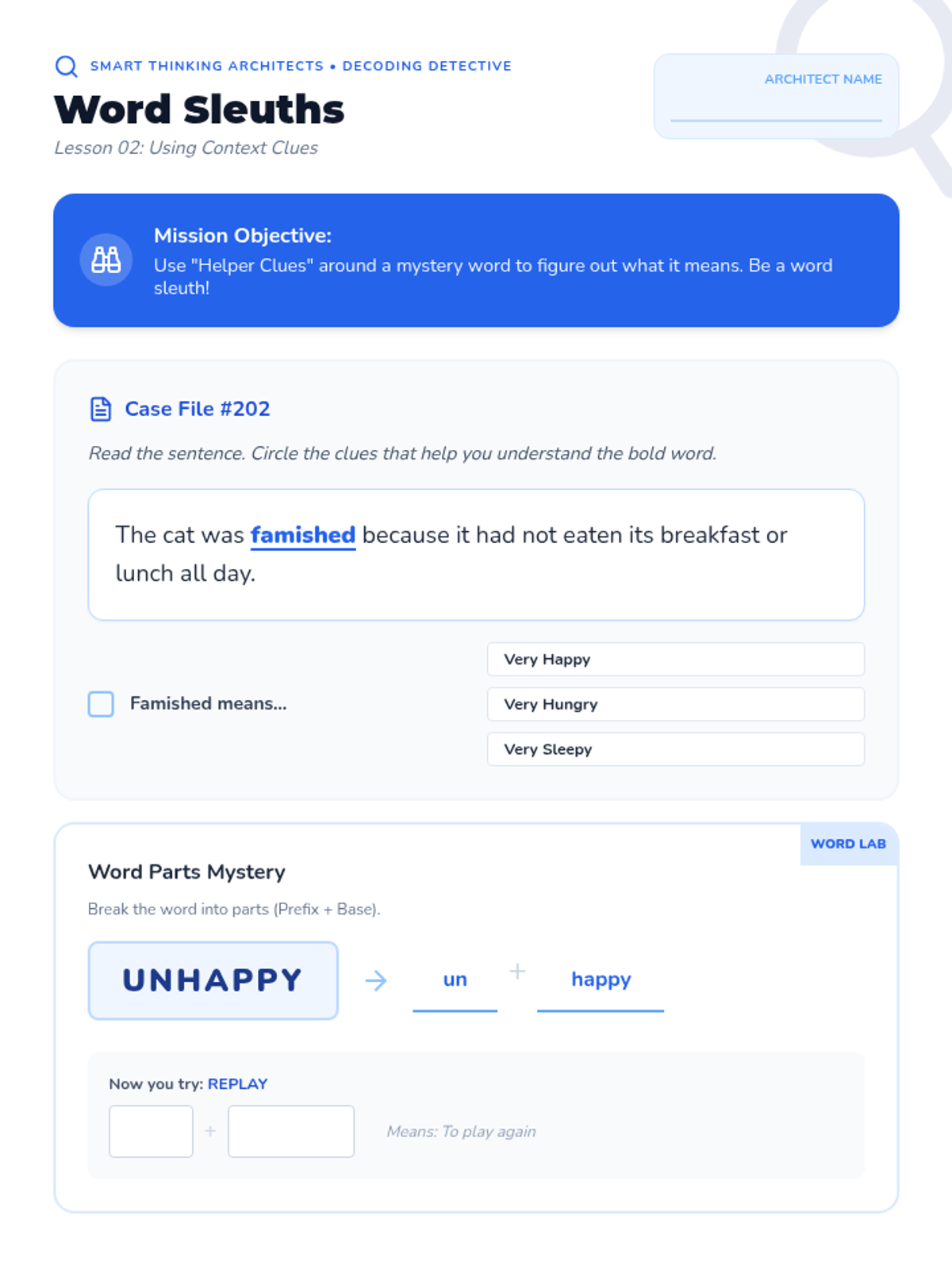
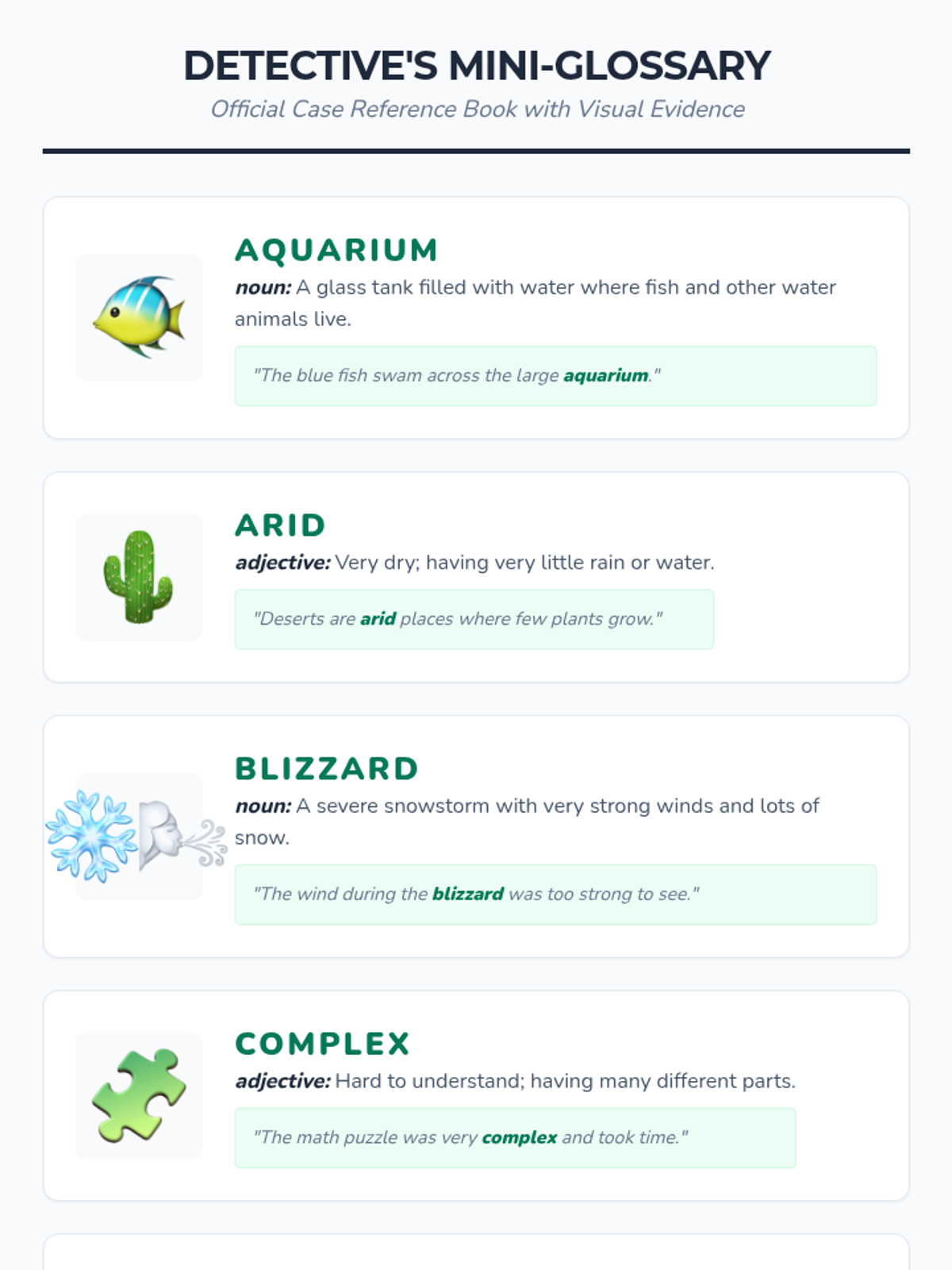
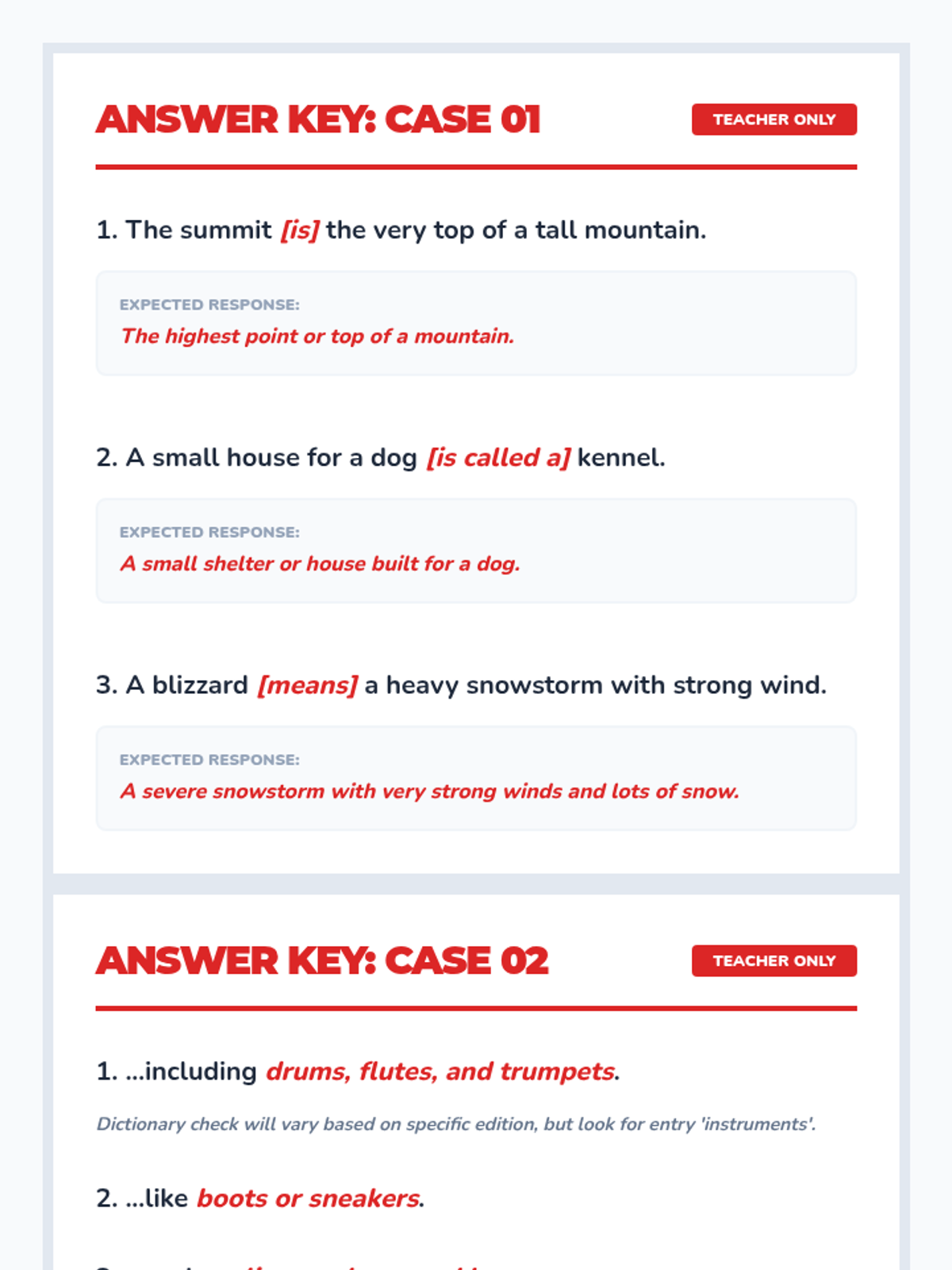
Young sleuths learn how to use context clues and word parts to uncover the meaning of tricky vocabulary.
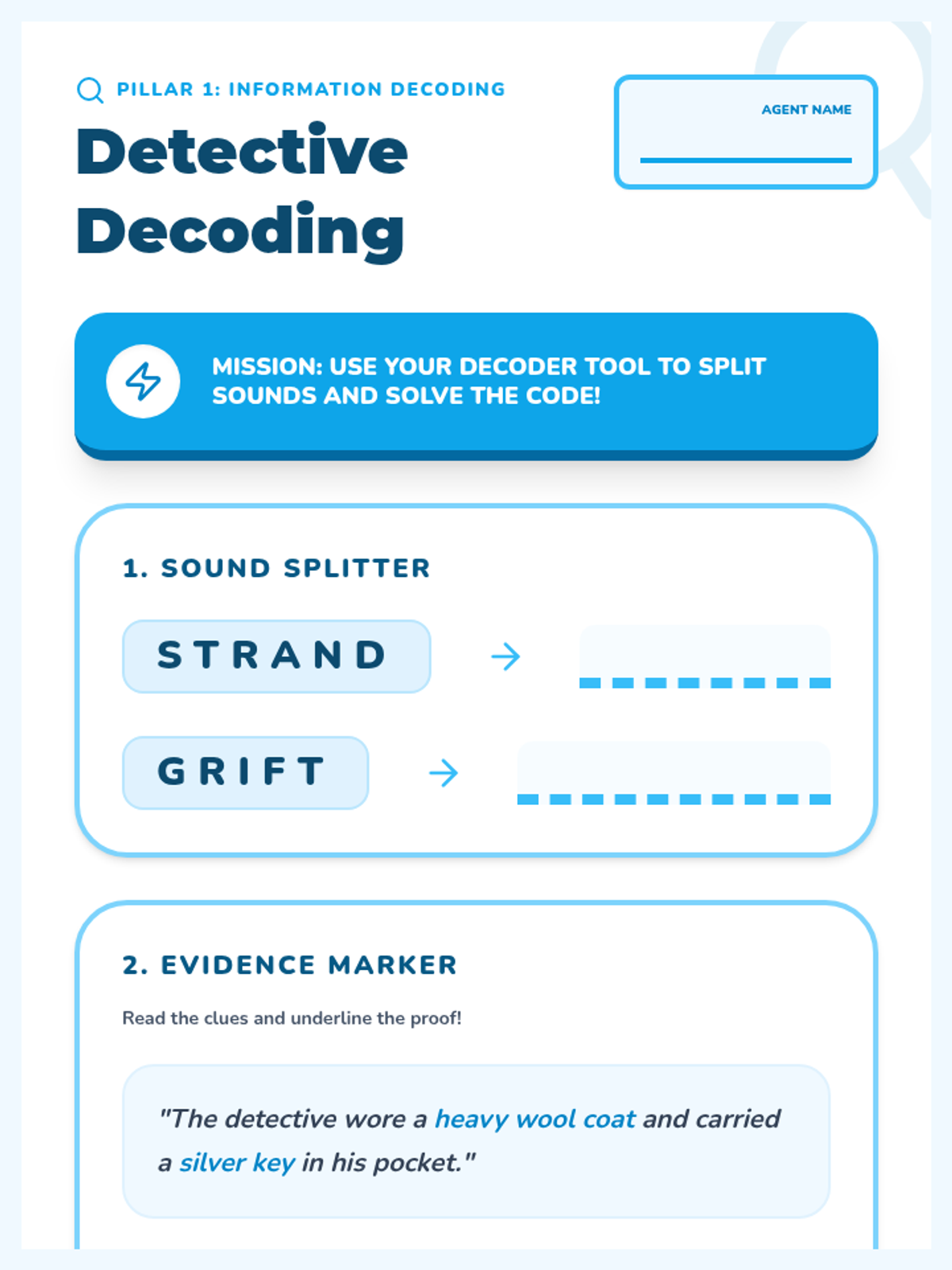
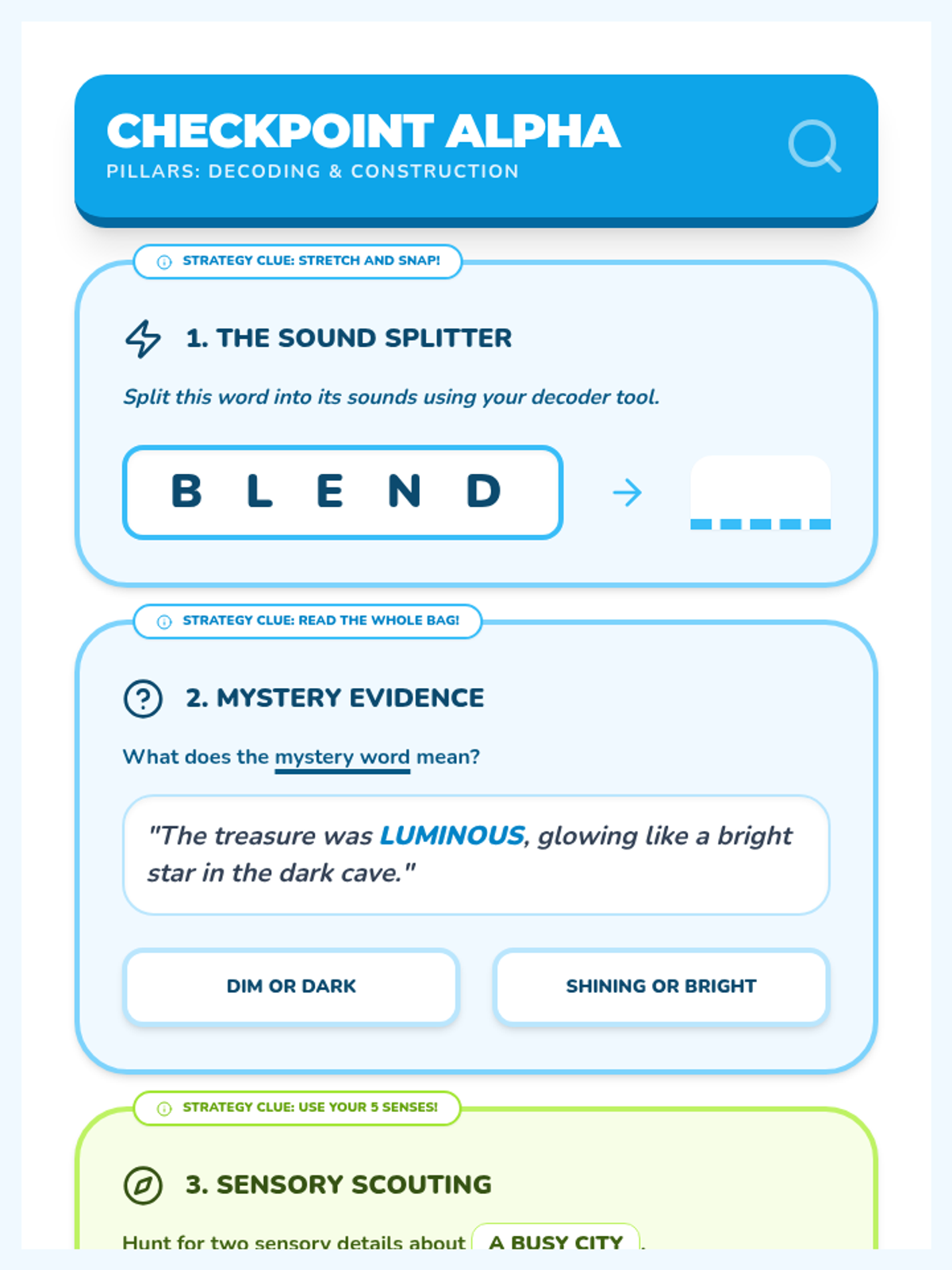
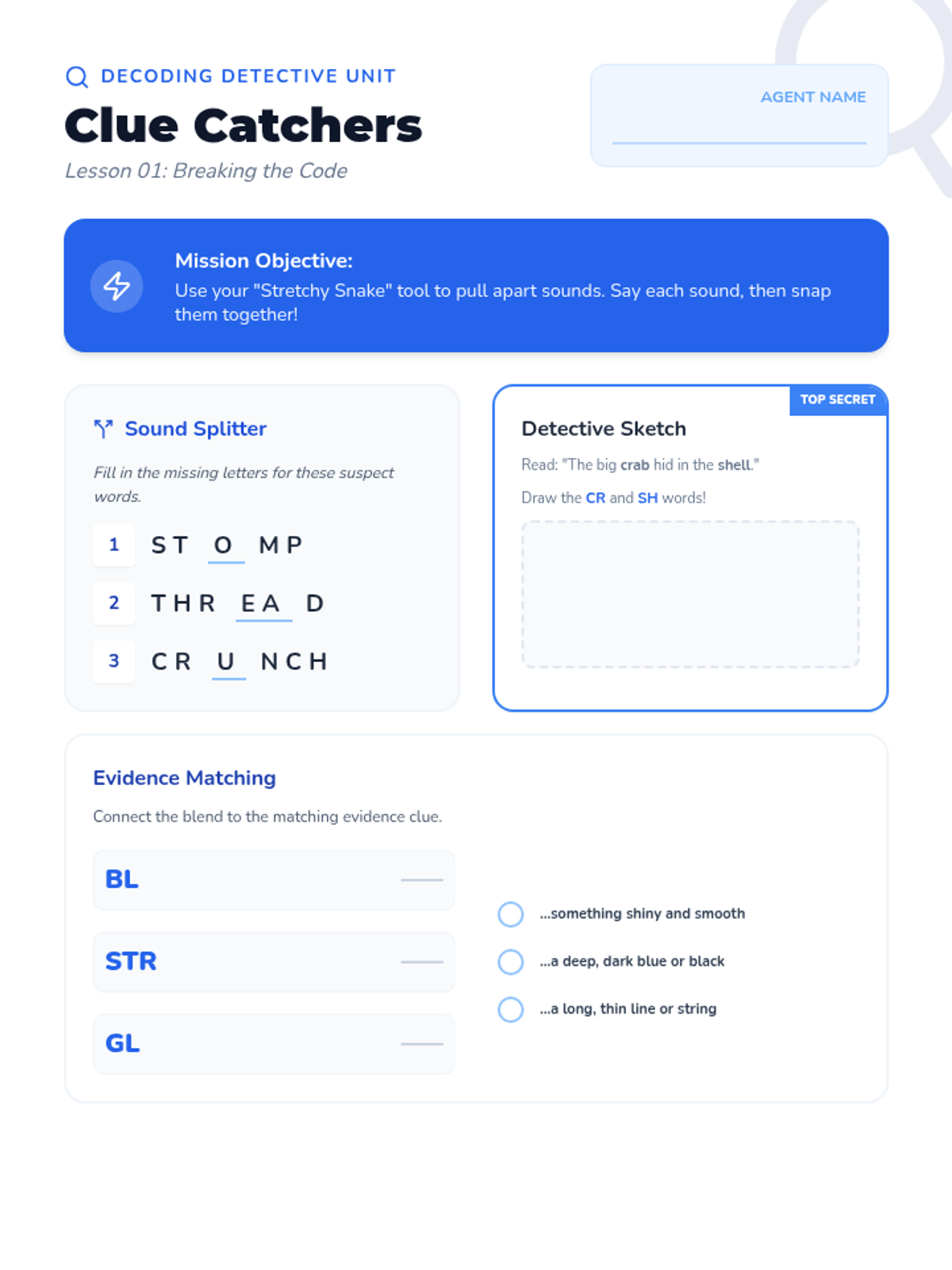
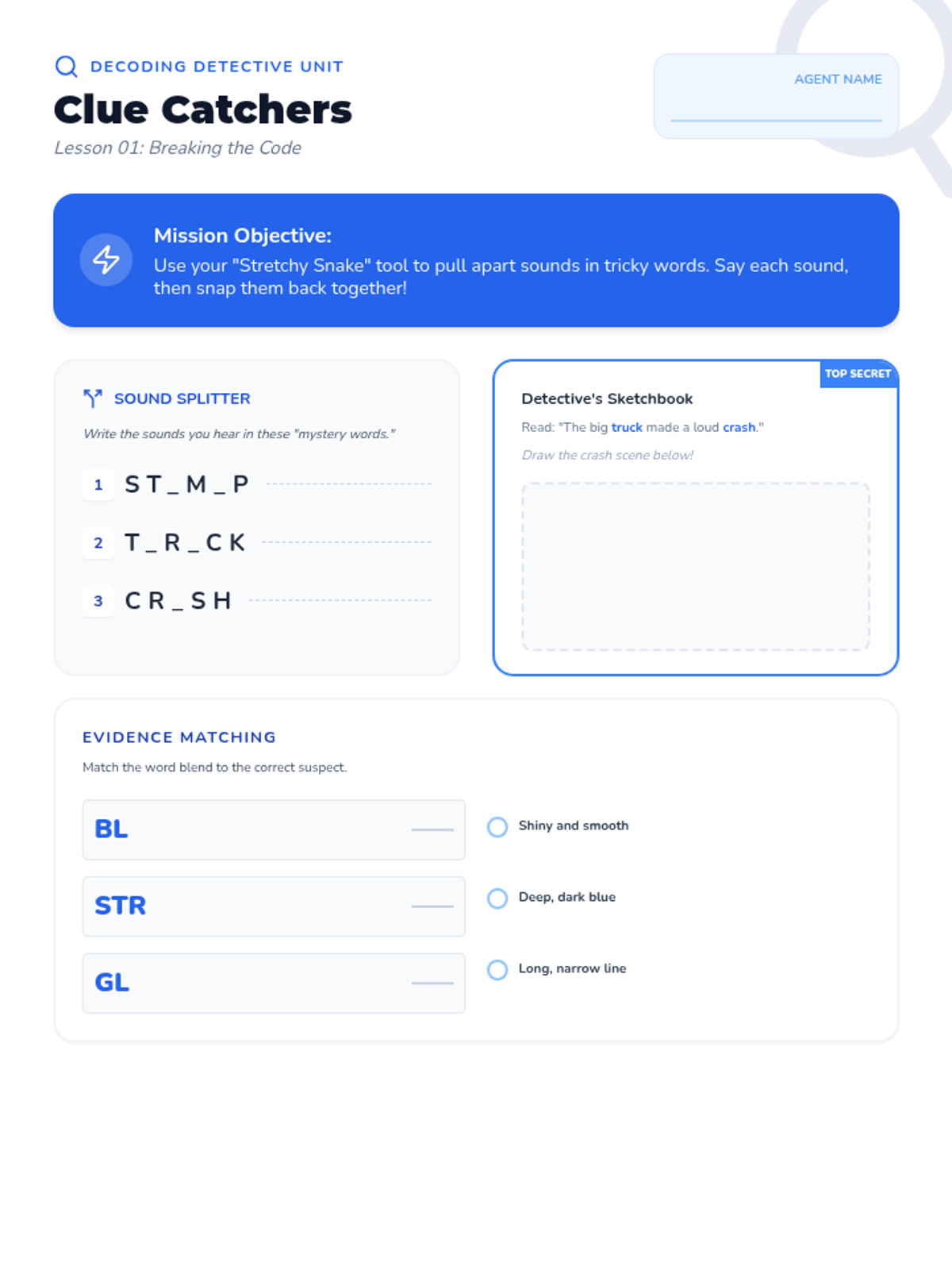
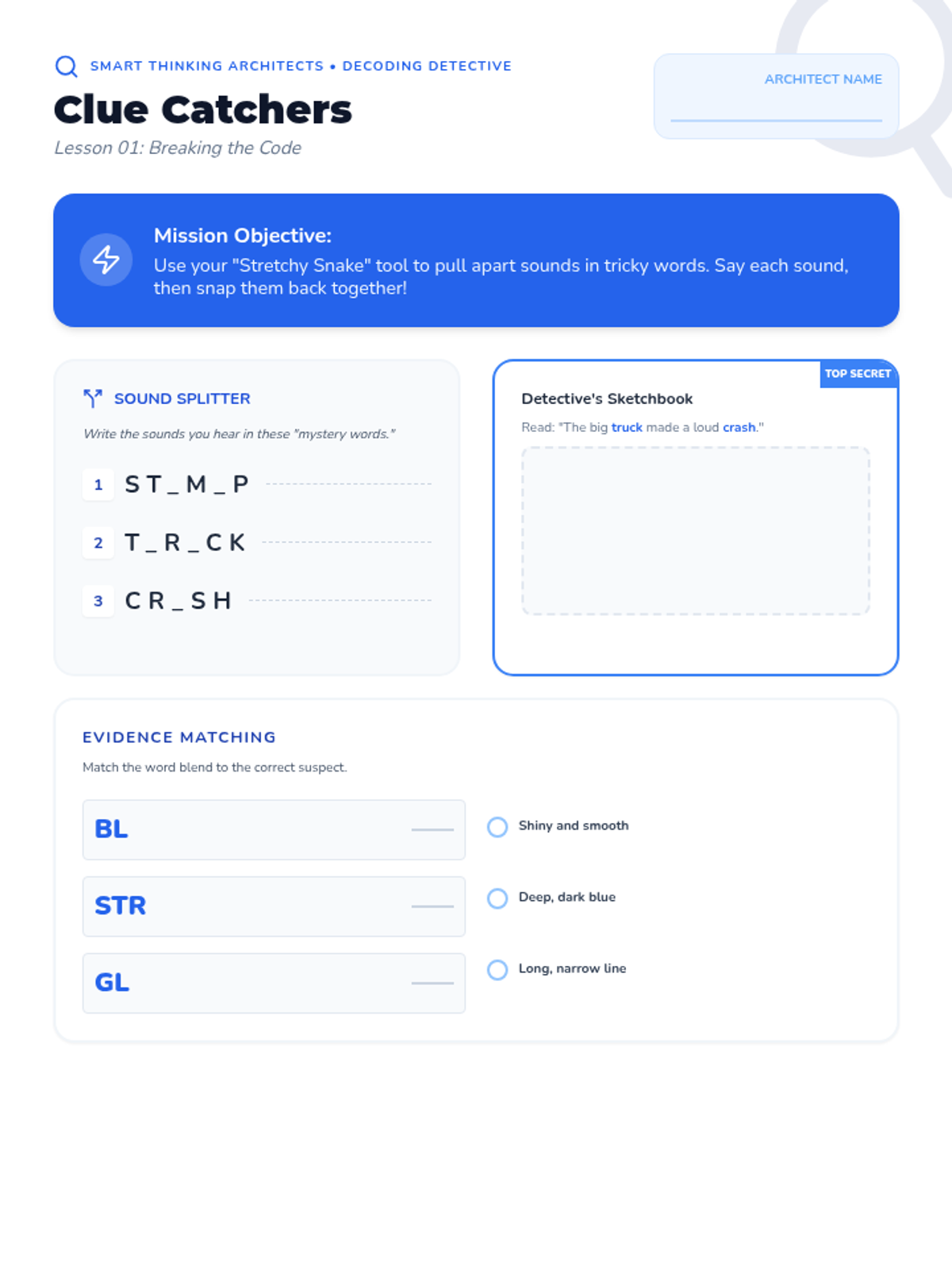
Students become Clue Catchers, using detective strategies to decode unfamiliar words and sounds in text.
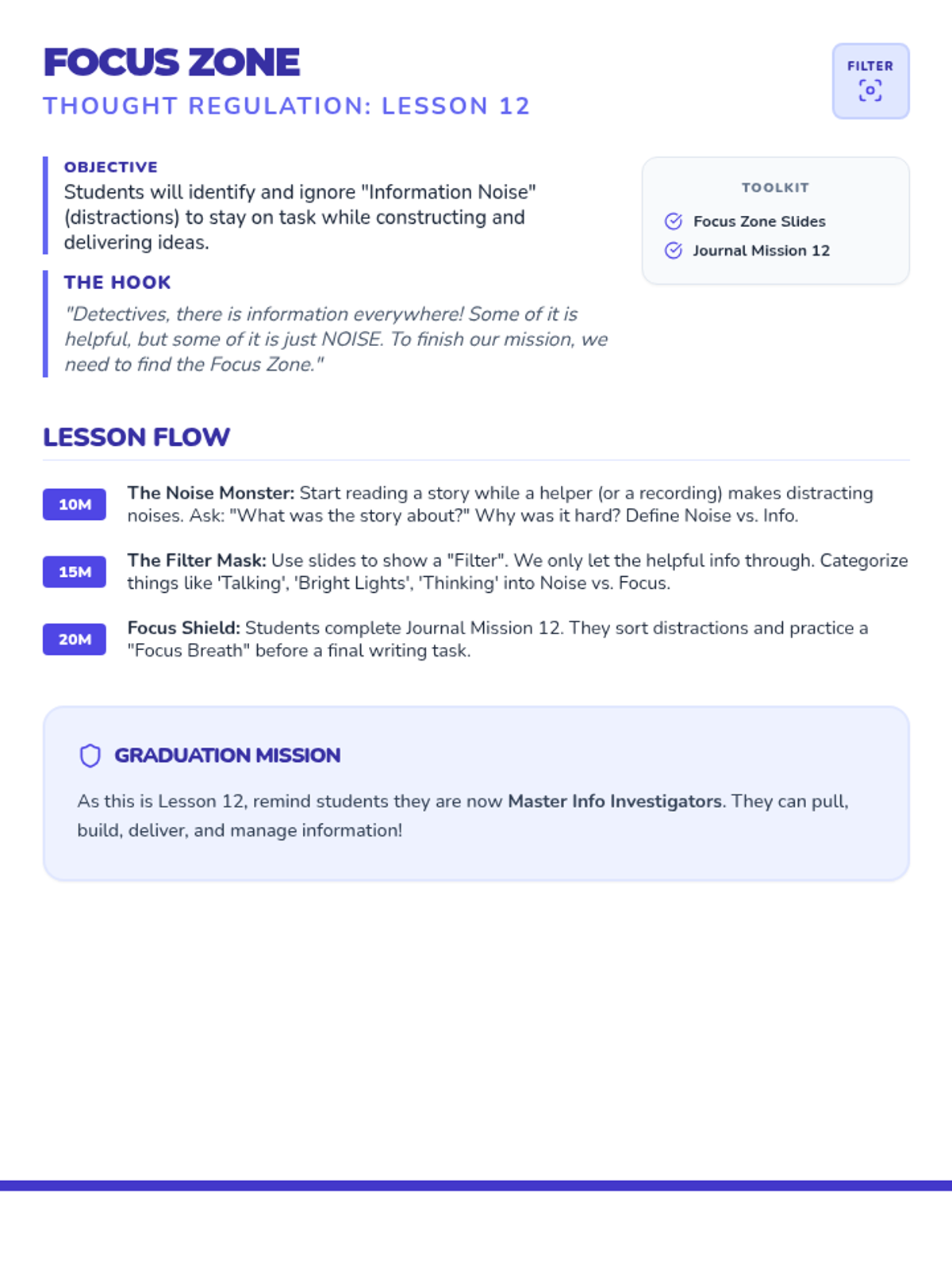
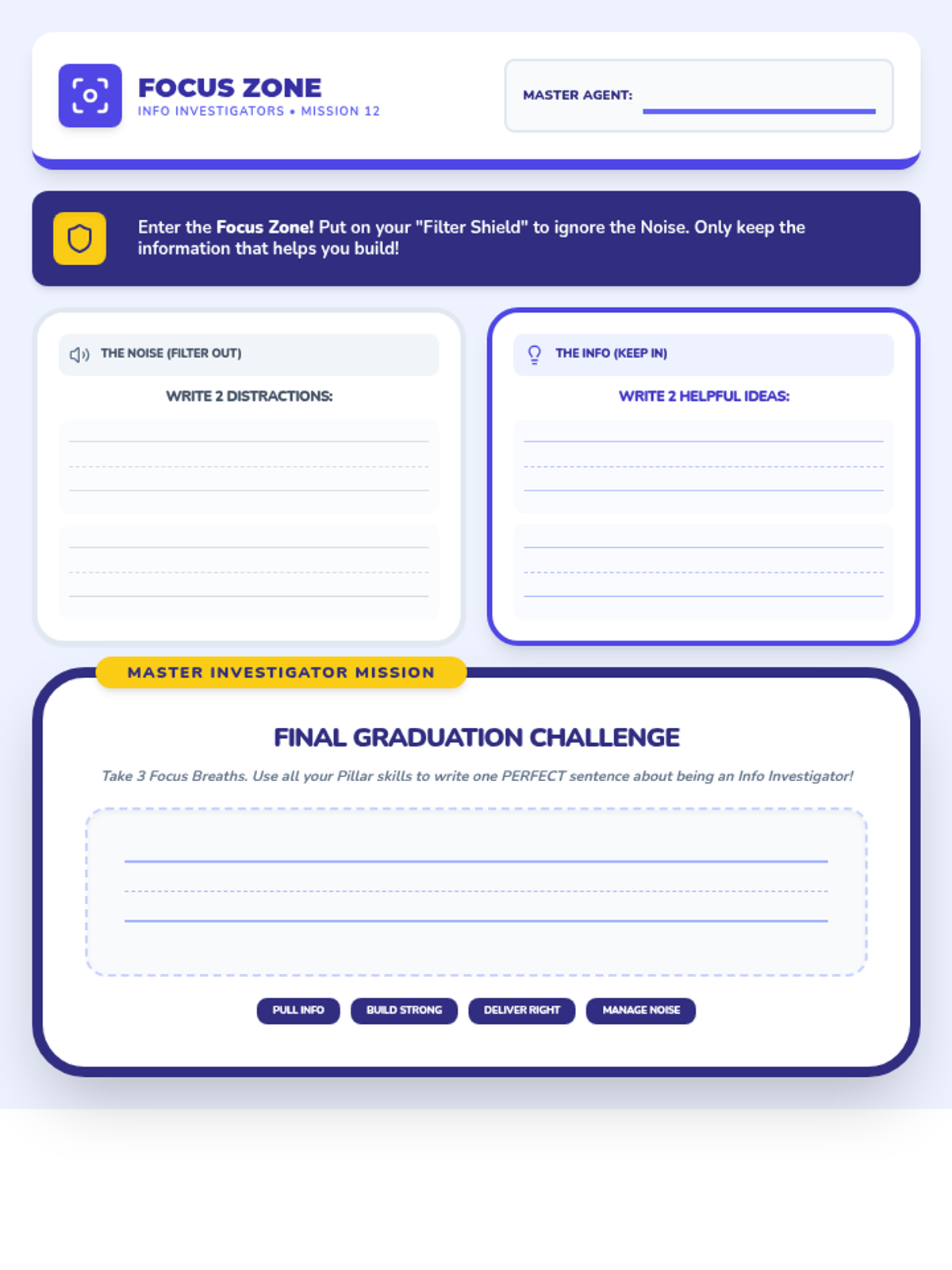
Students learn to filter distractions to stay in the focus zone while building information.
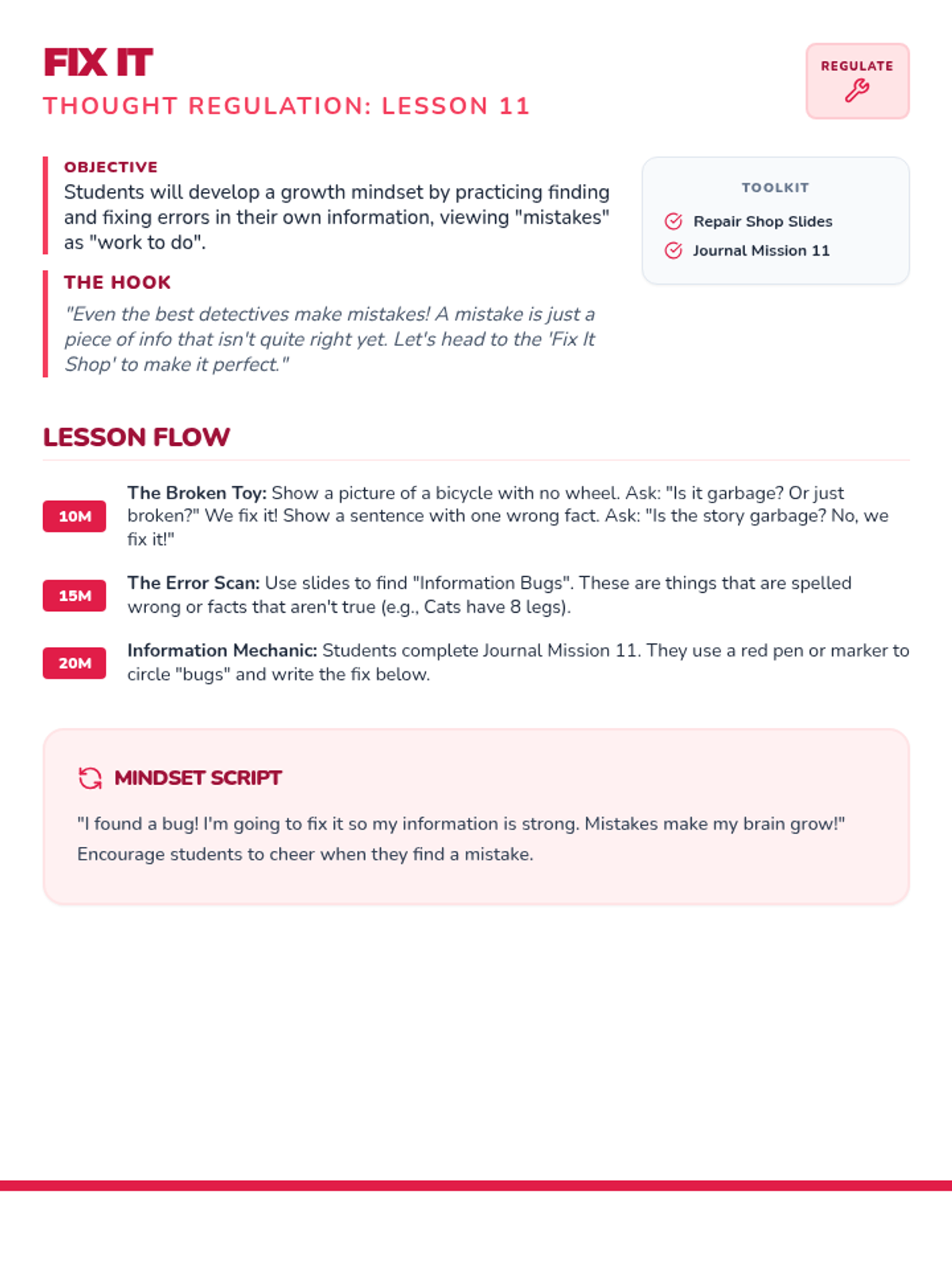
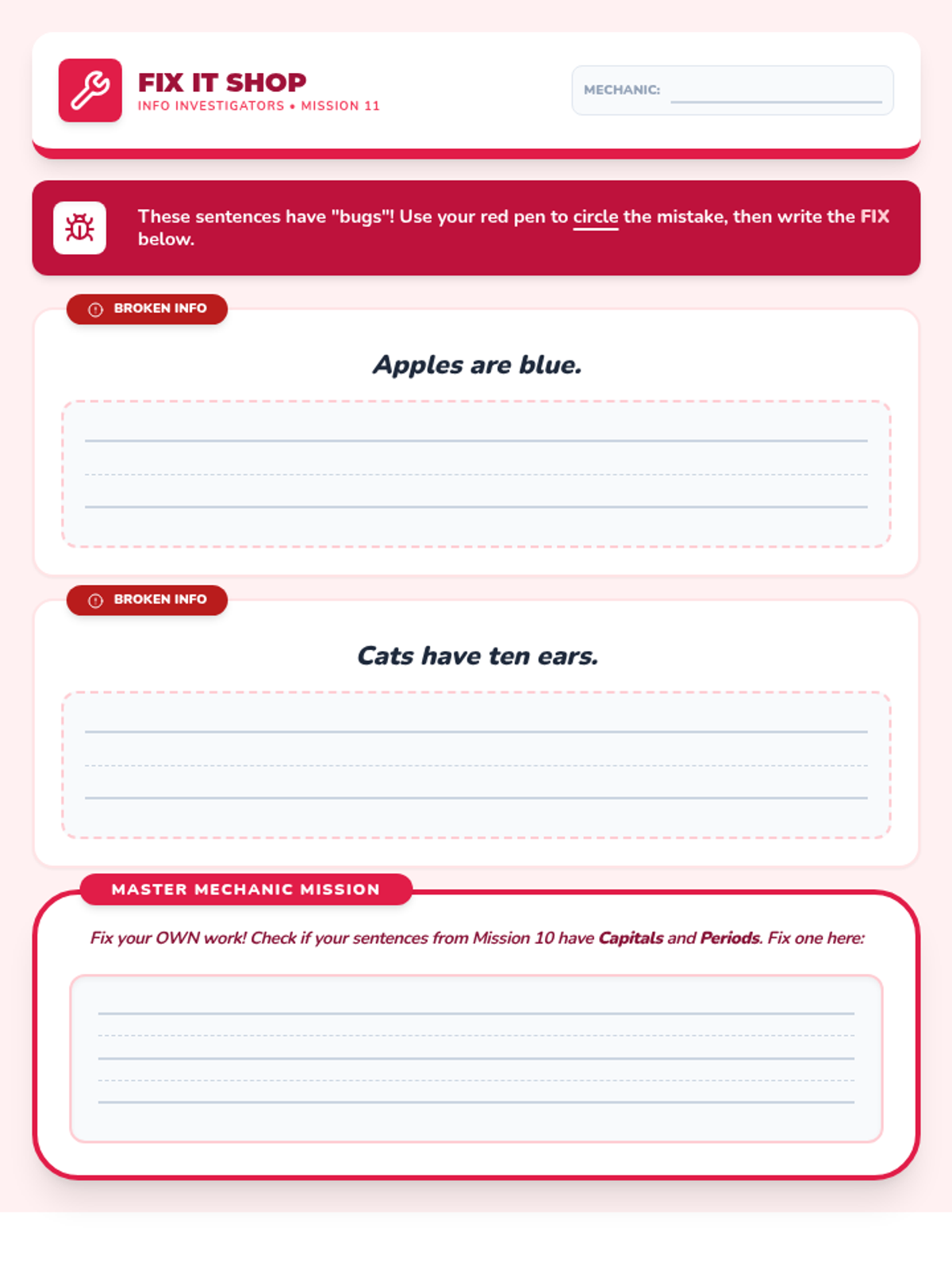
Students develop growth mindset strategies for repairing mistakes in information projects.
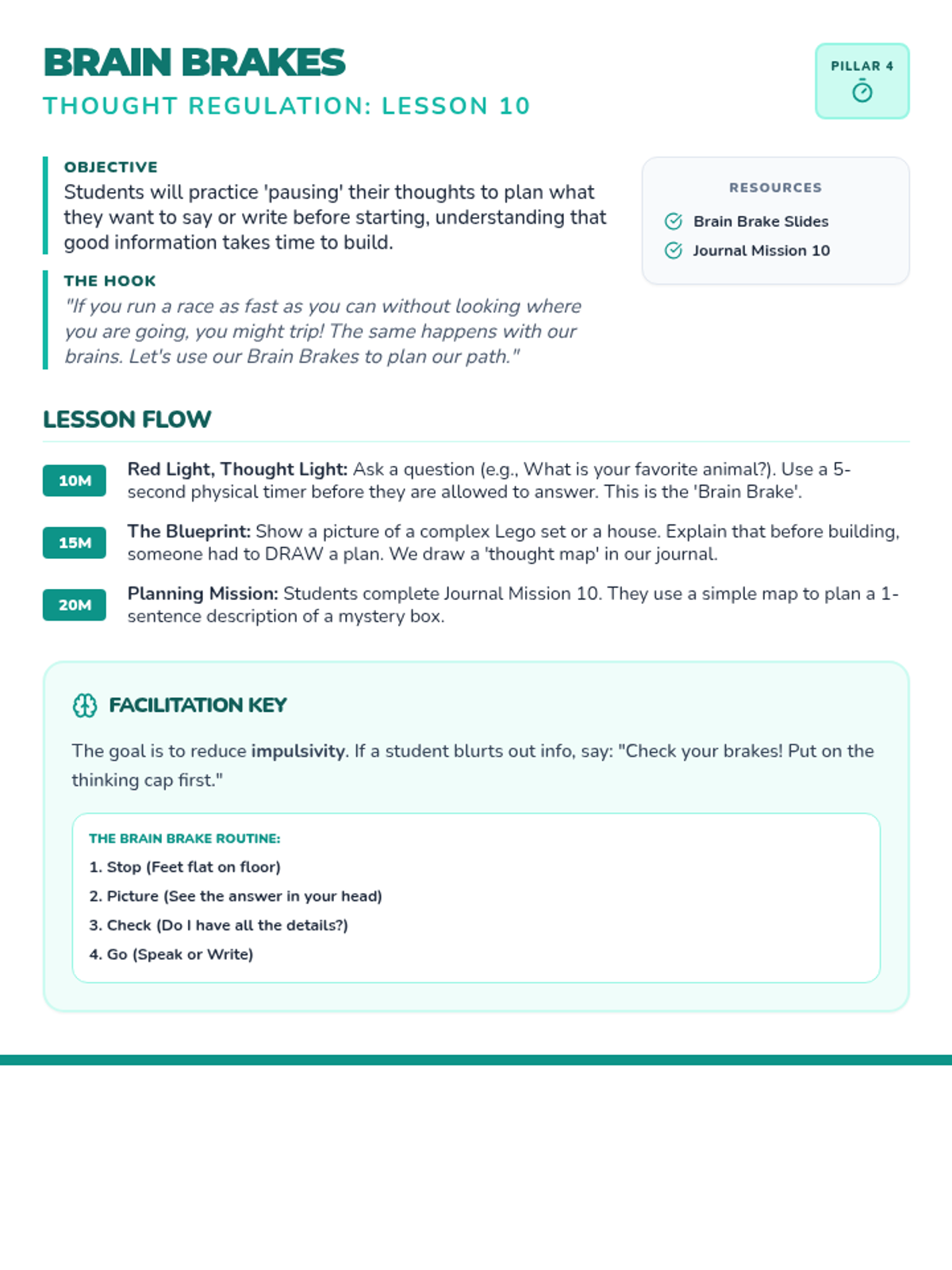
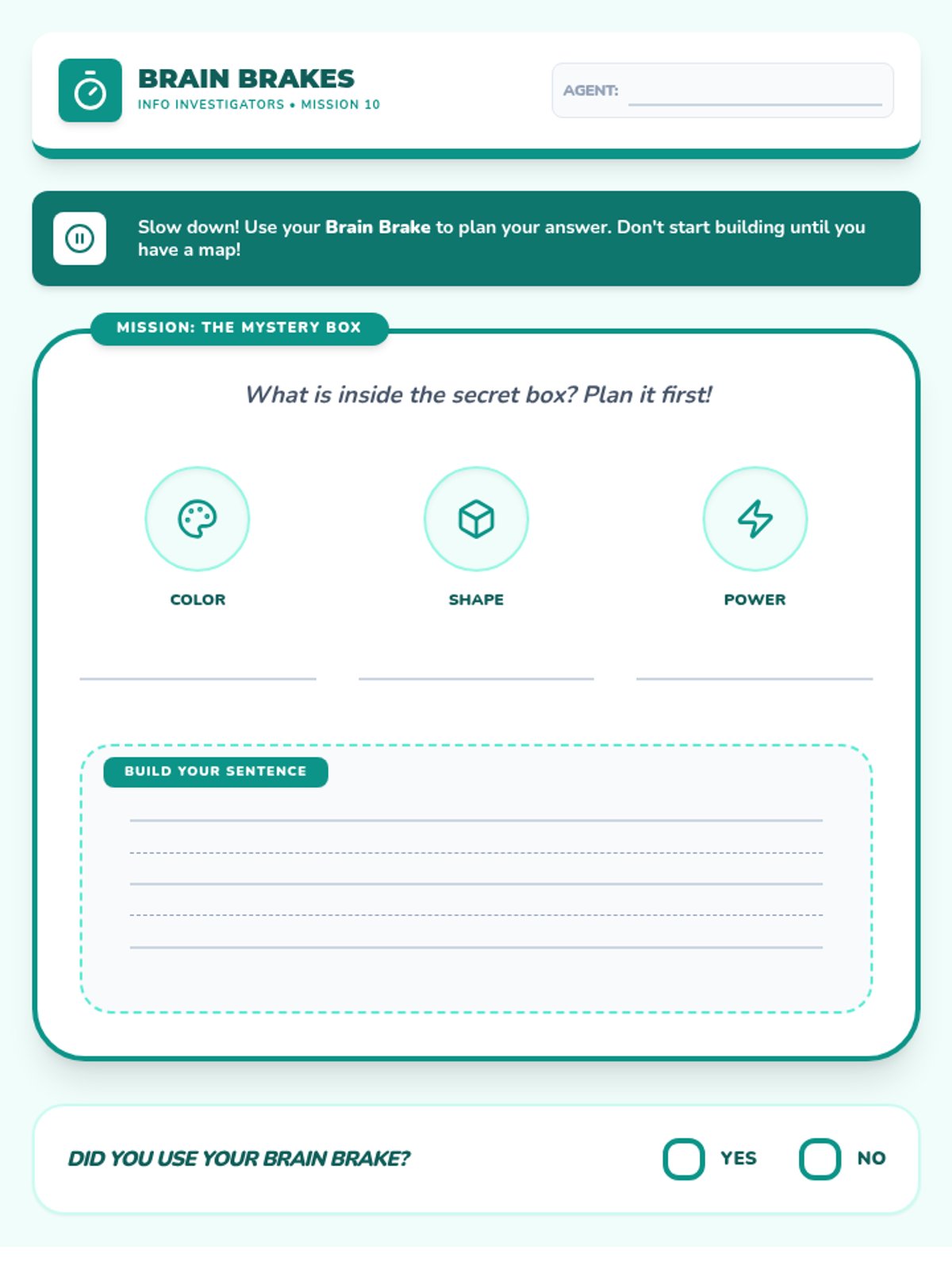
Students practice 'pausing' their thoughts to plan what they want to build before starting.
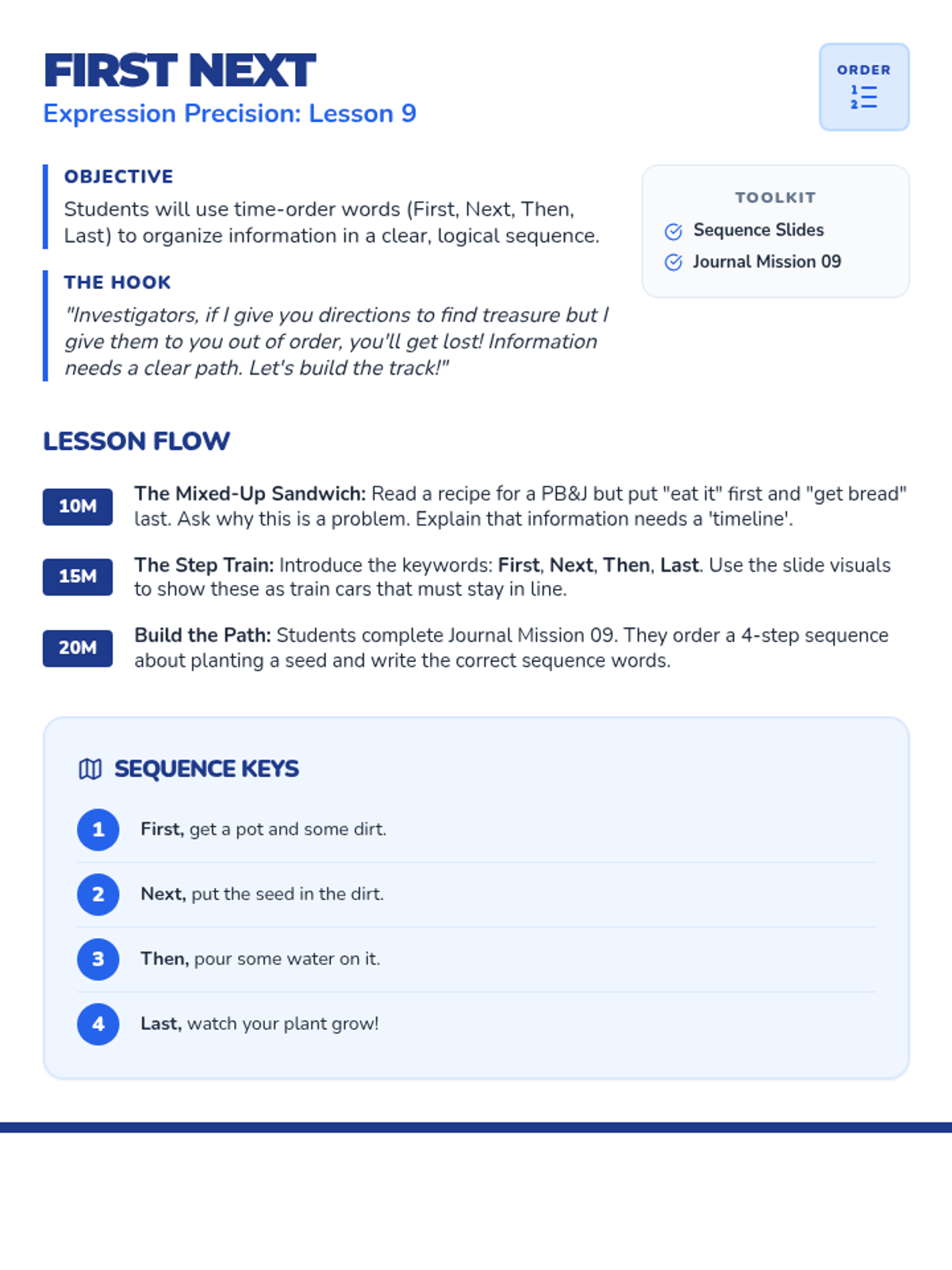
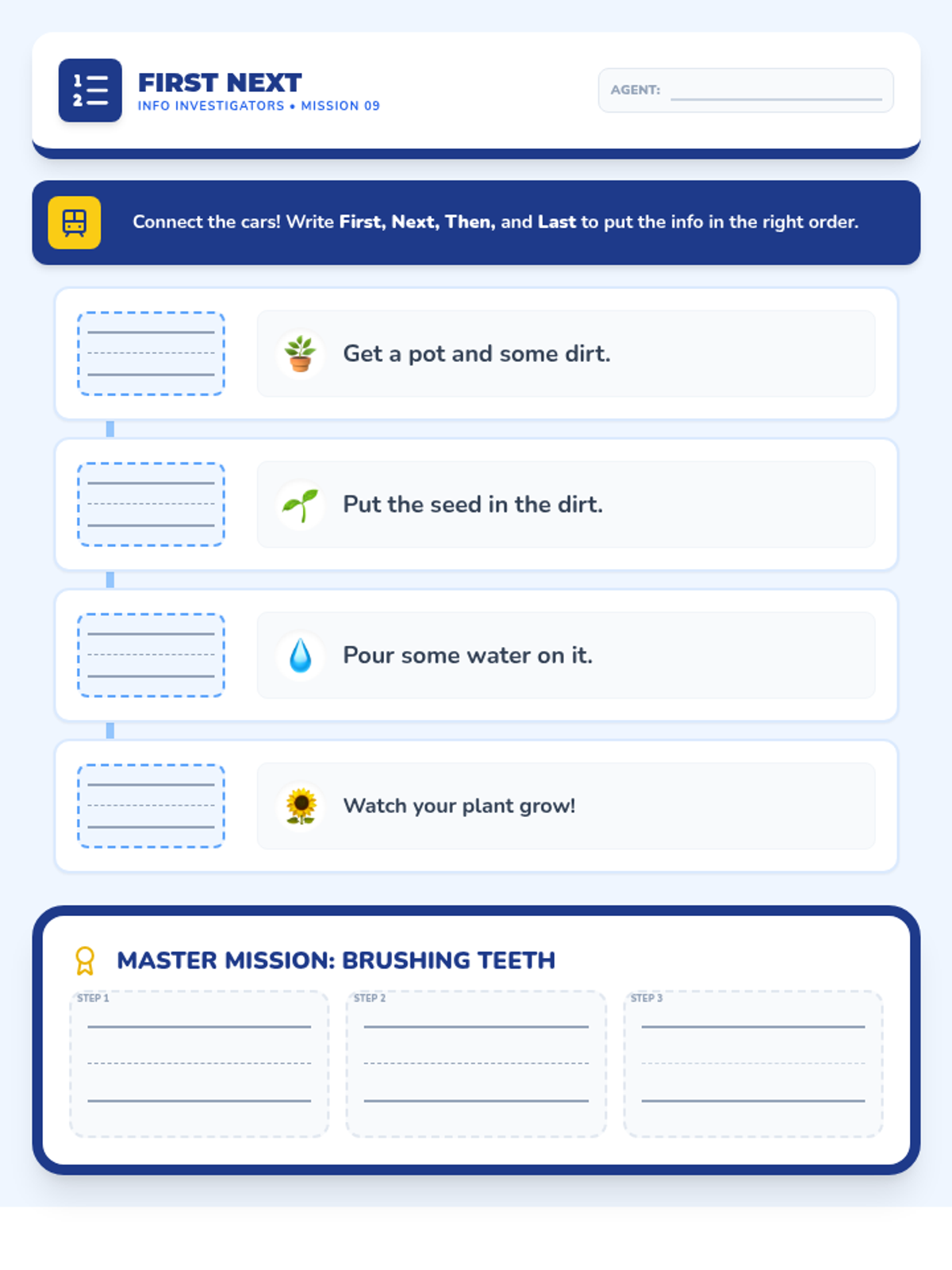
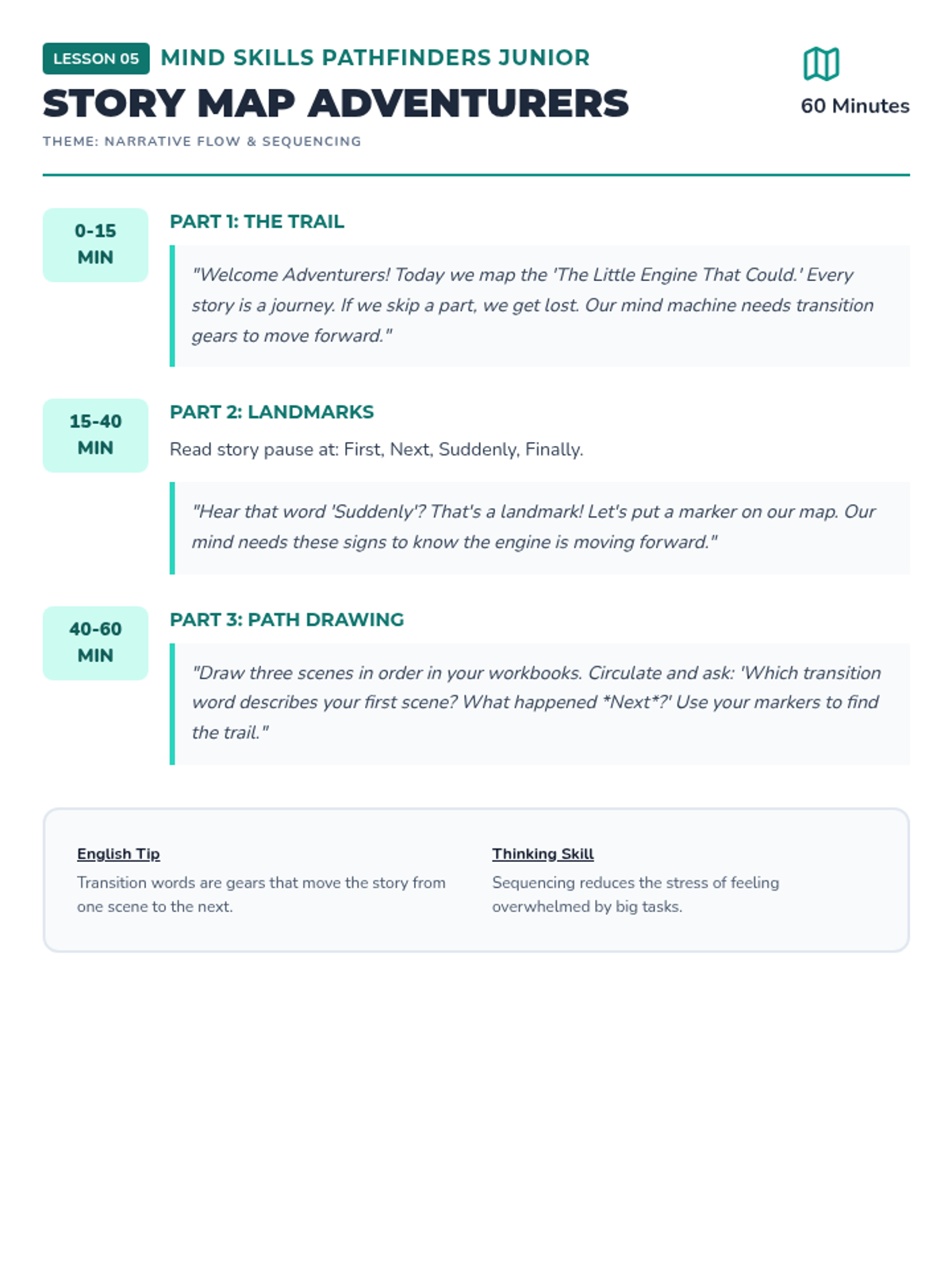
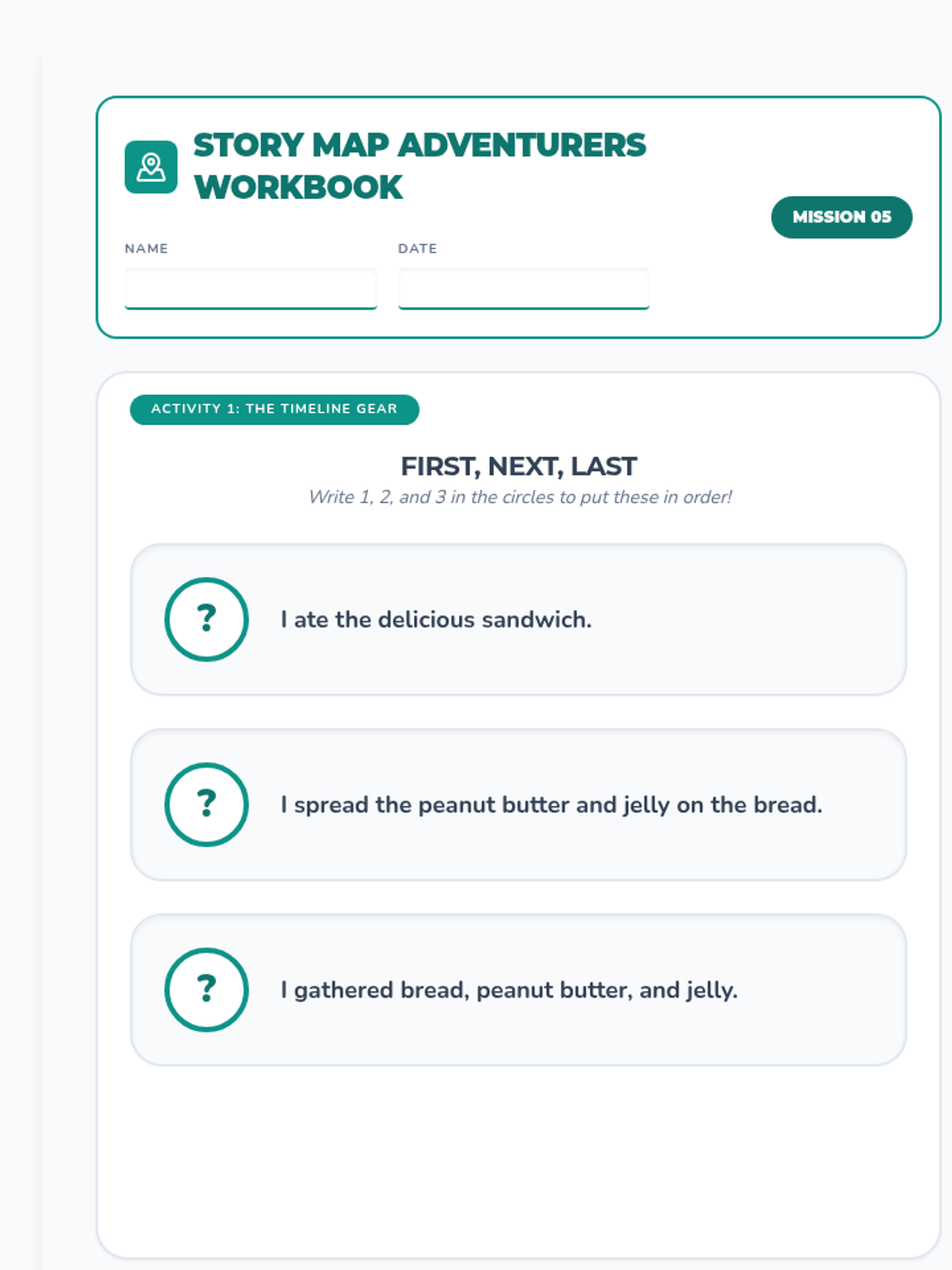
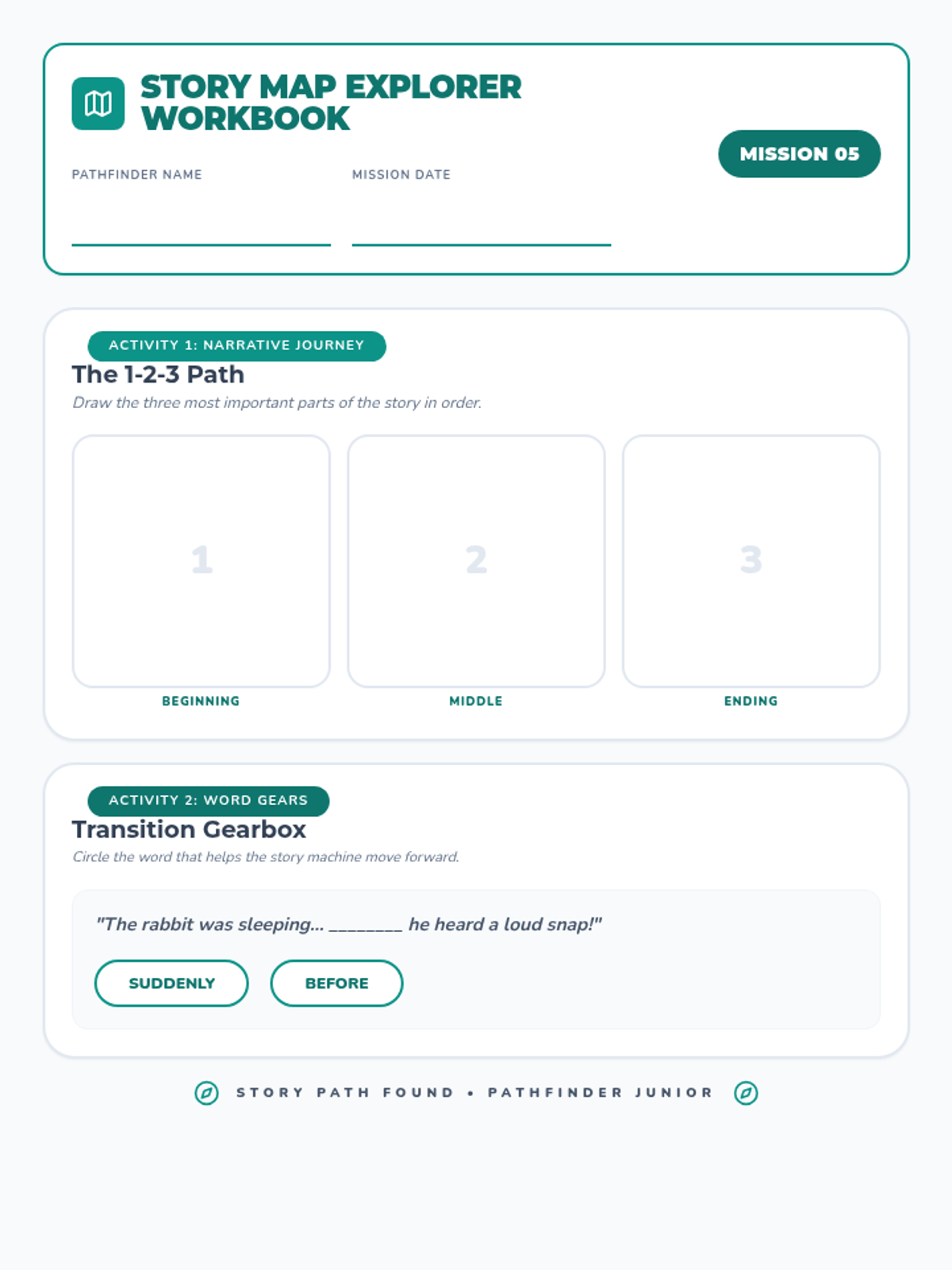
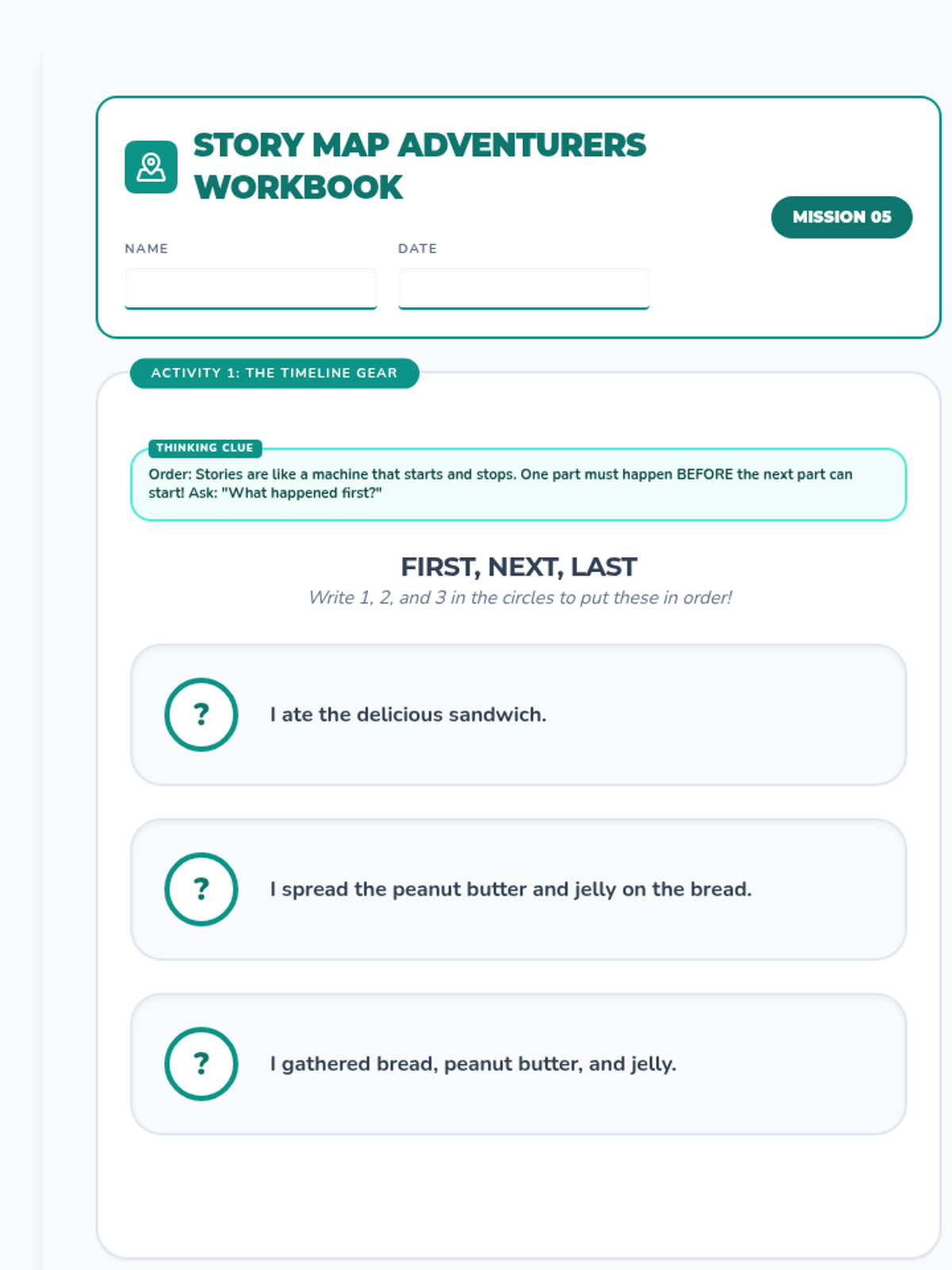
Students learn to organize information chronologically using sequence markers like first, next, and last.
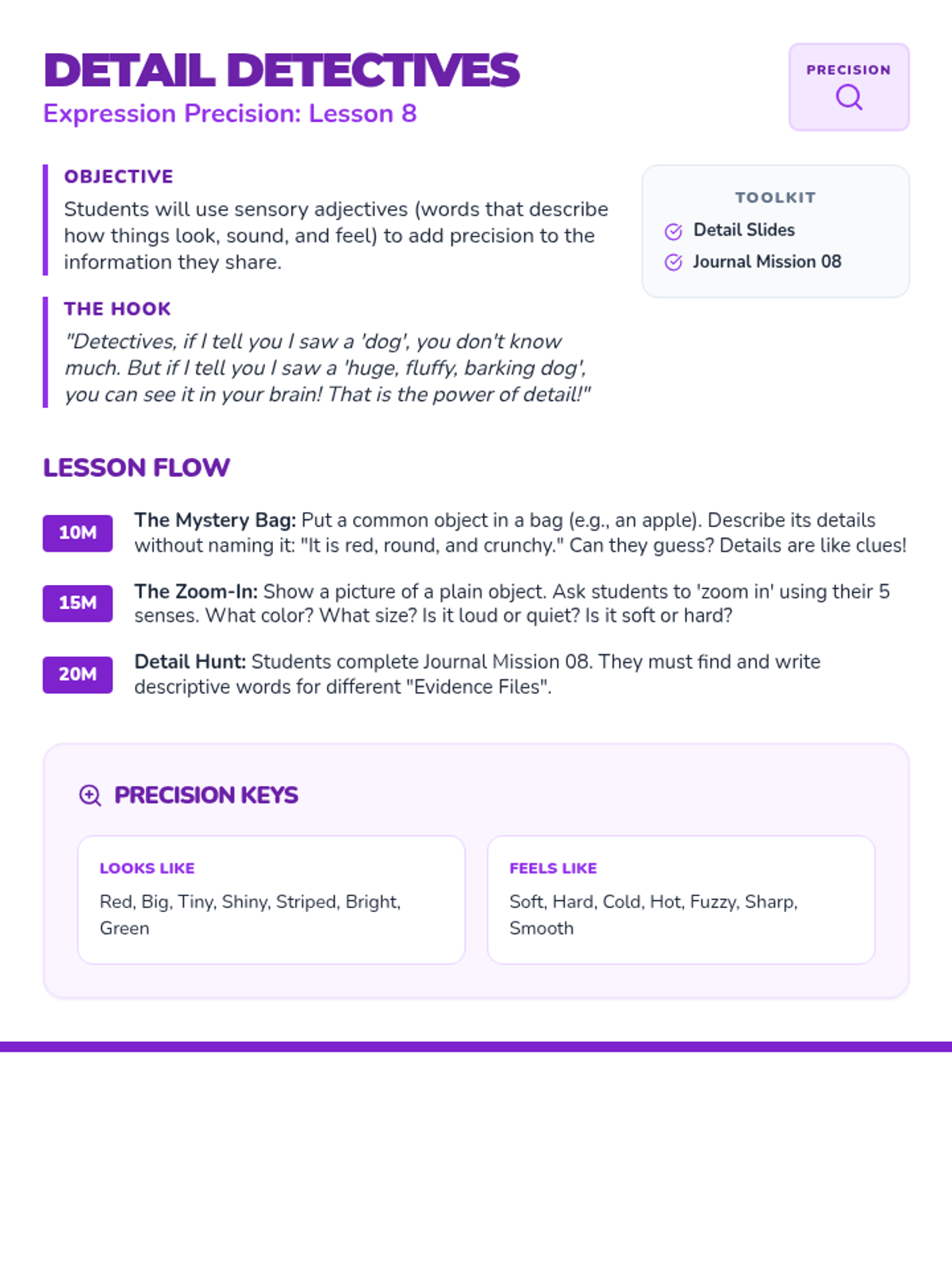
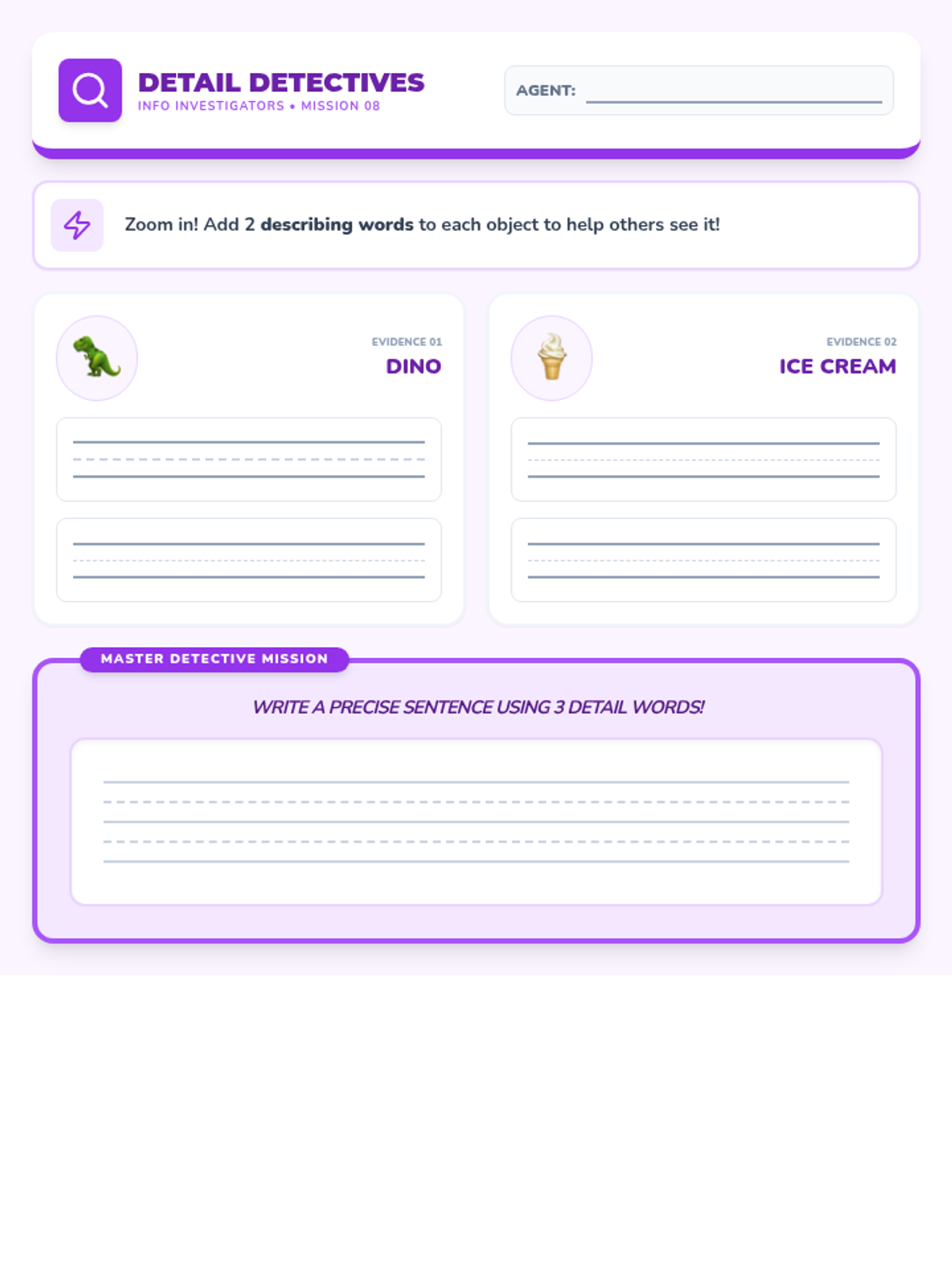
Students use sensory adjectives to add precision and clarity to their information architecture.
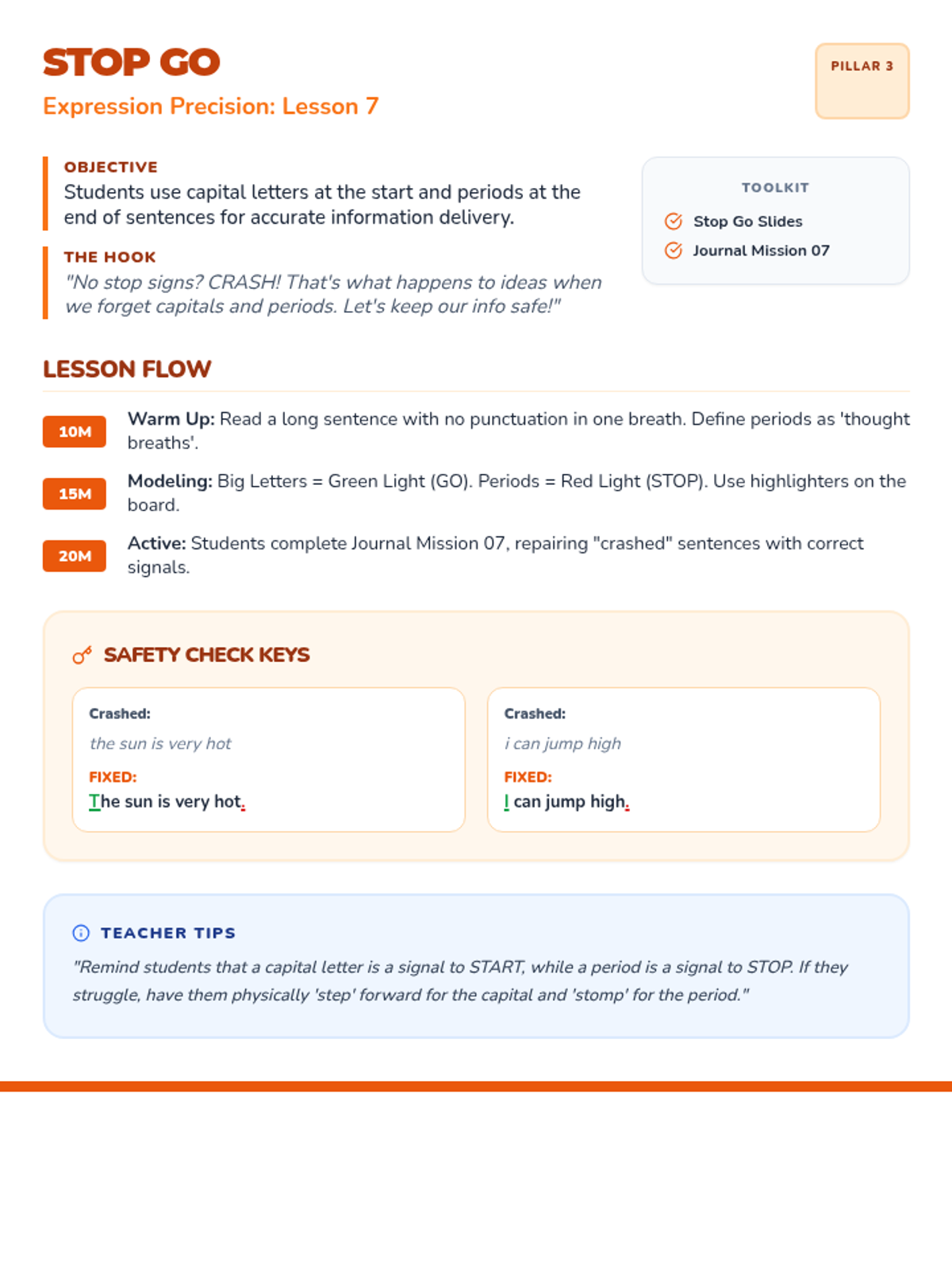
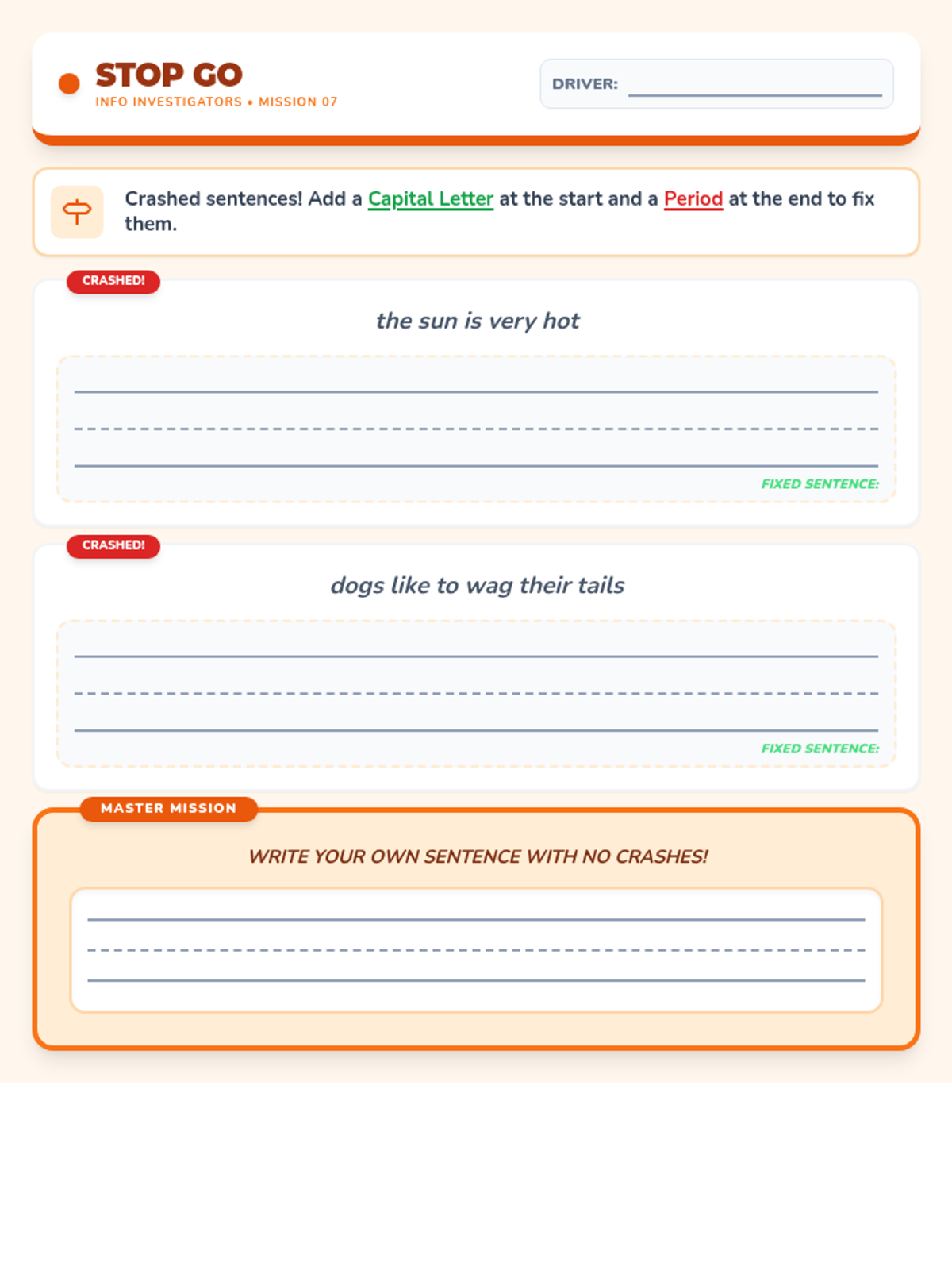
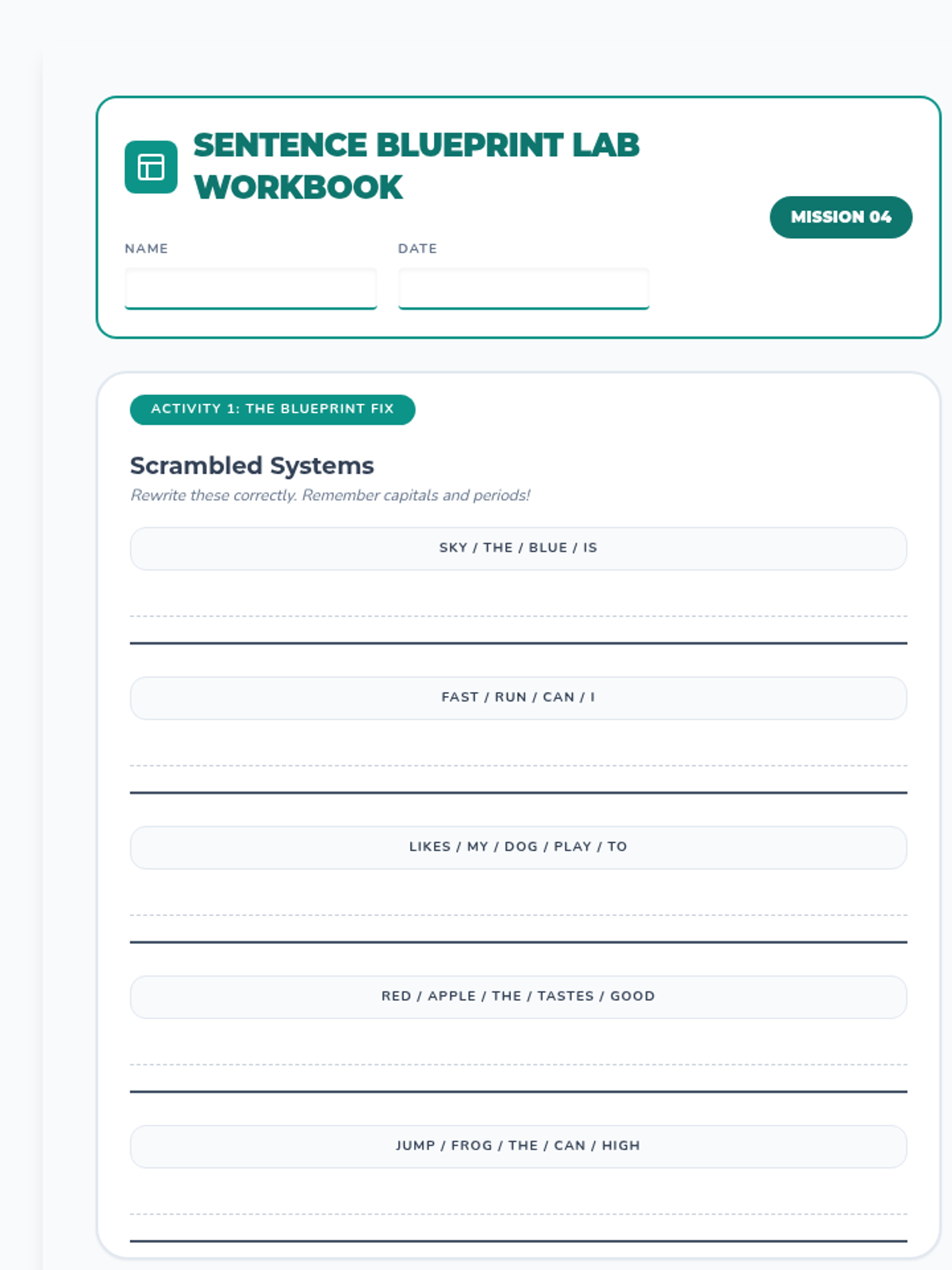
Students master the mechanics of capital letters and periods to signal the start and end of information projects.
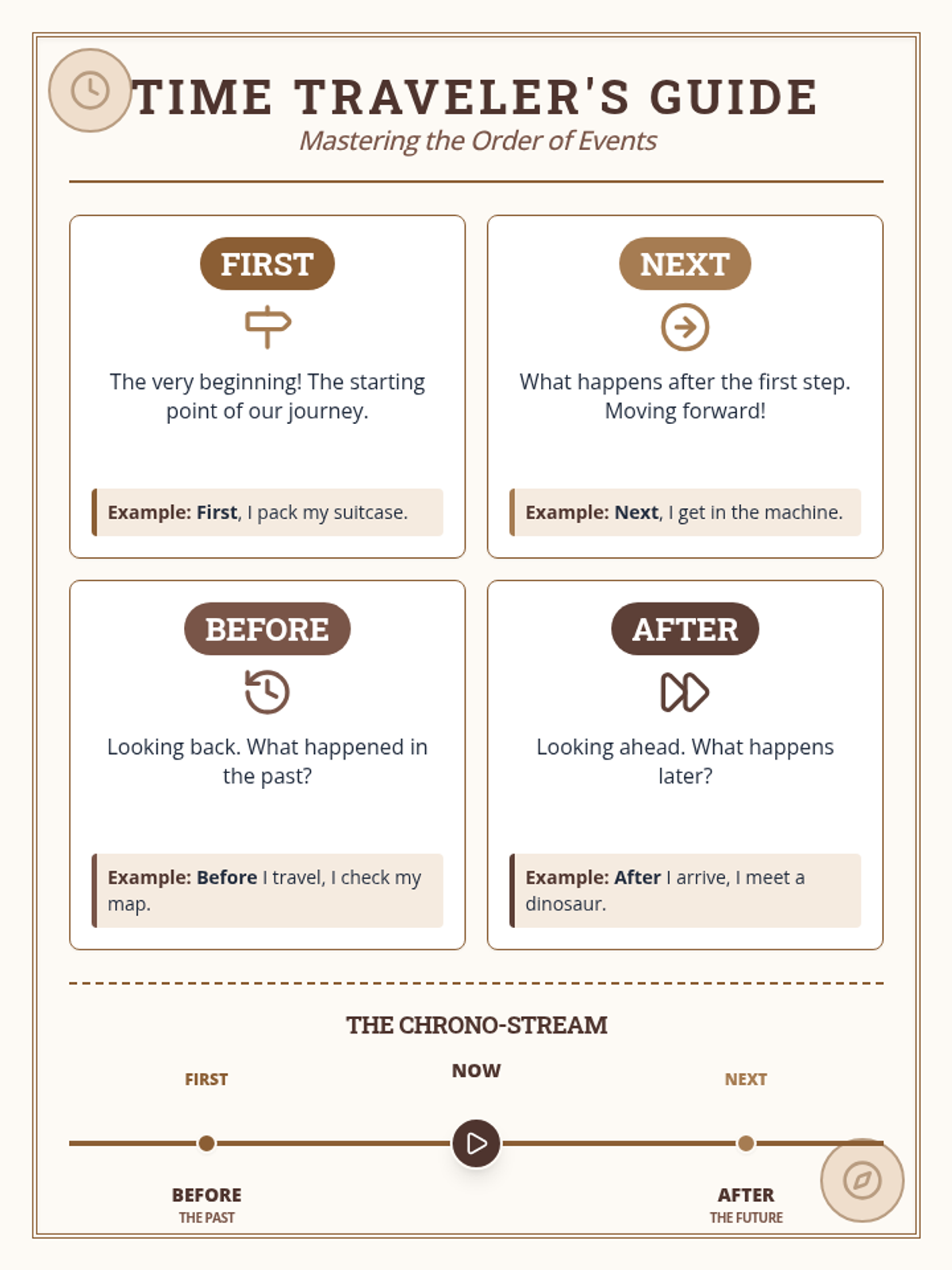
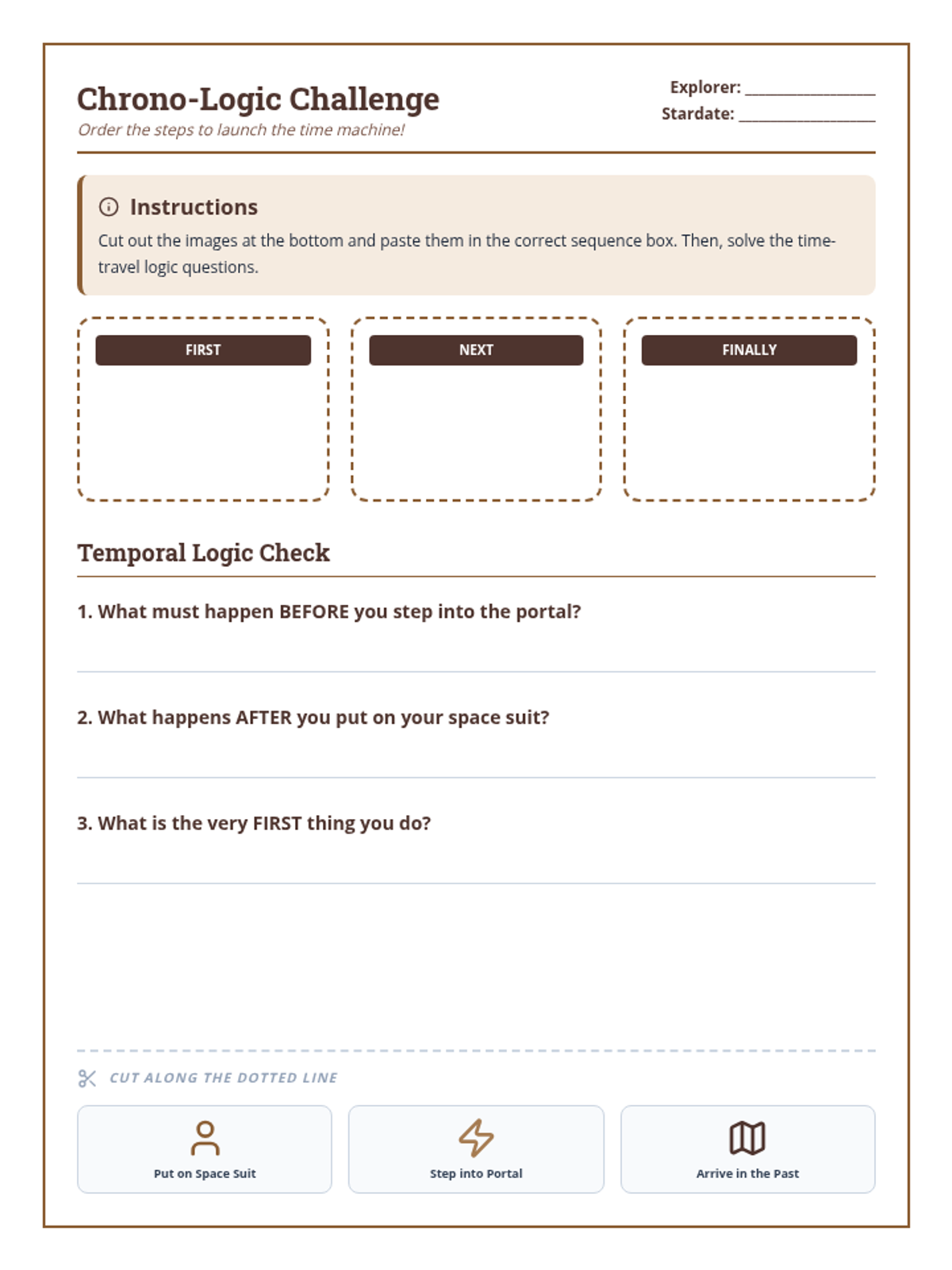
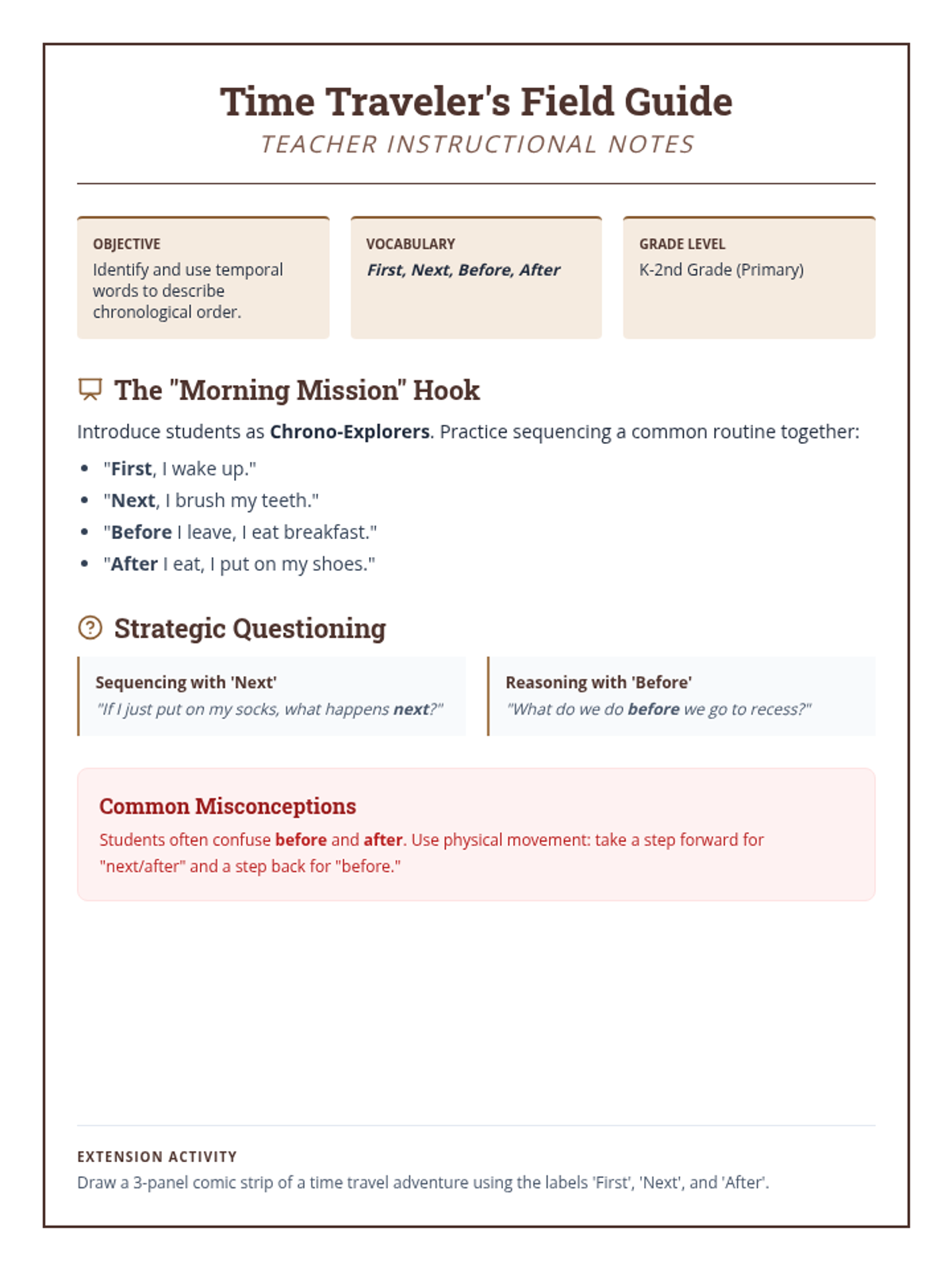
A foundational lesson on temporal sequencing words including 'first', 'next', 'before', and 'after' using a time-traveler theme to engage students in chronological order.
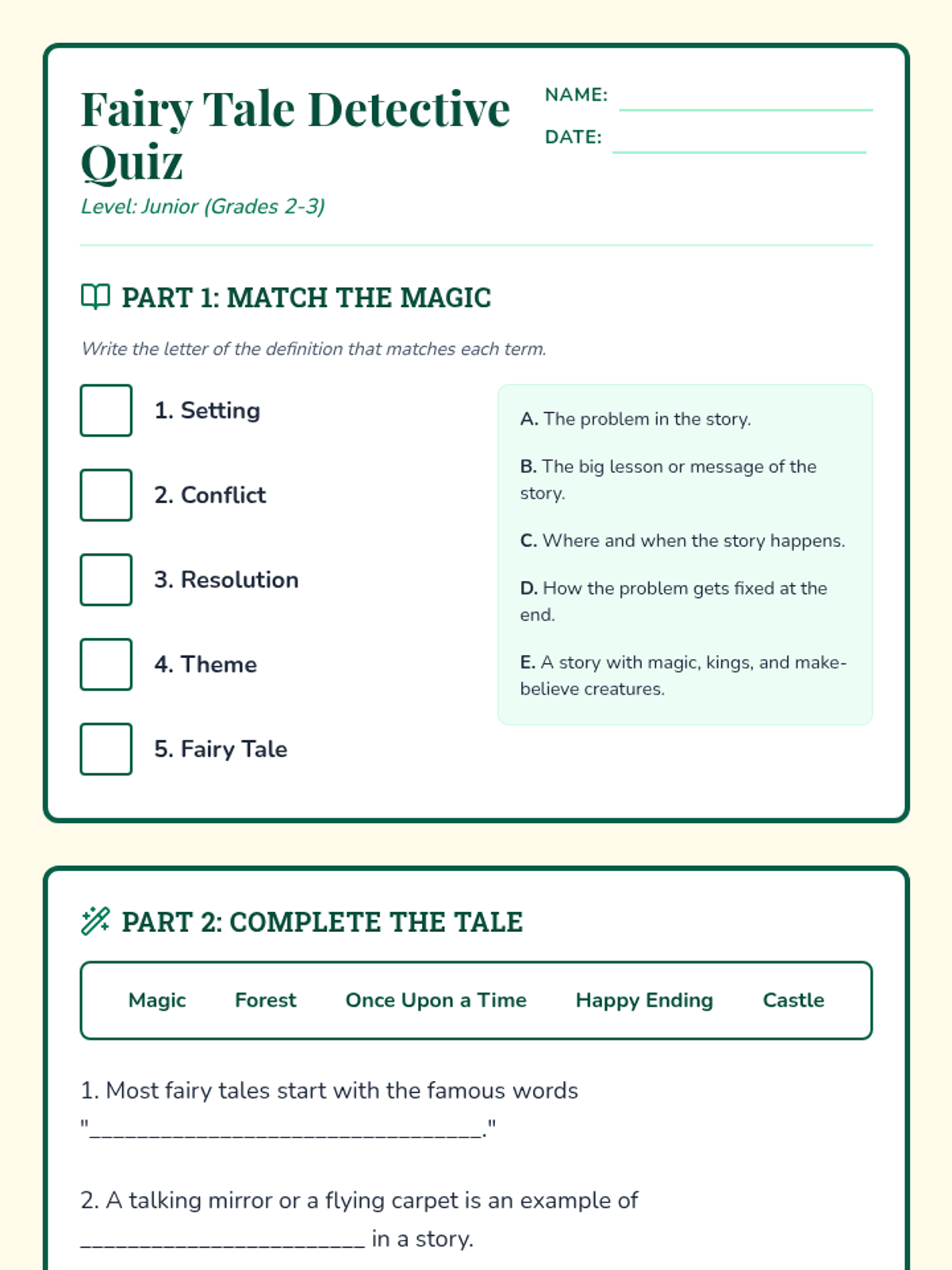
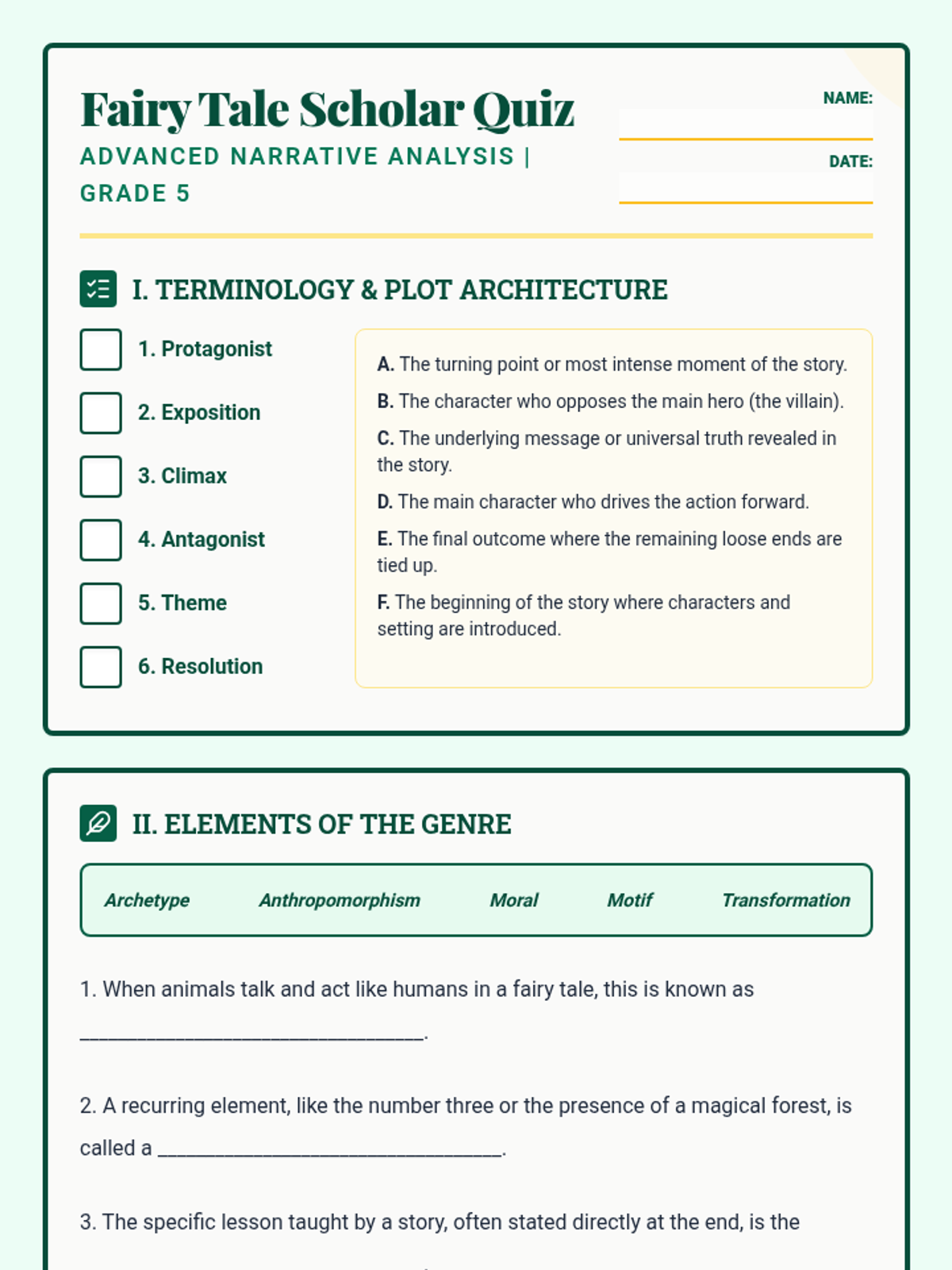
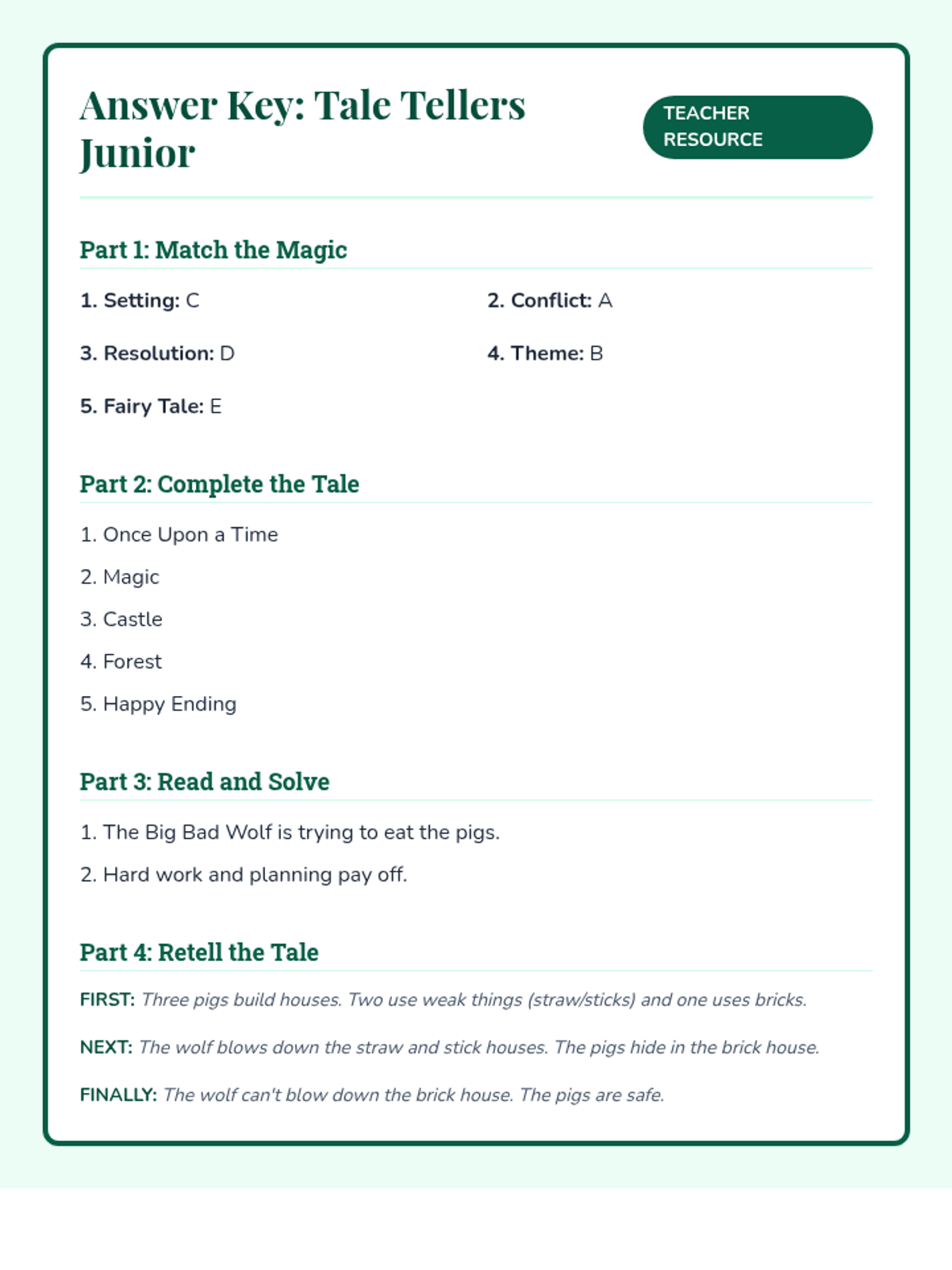
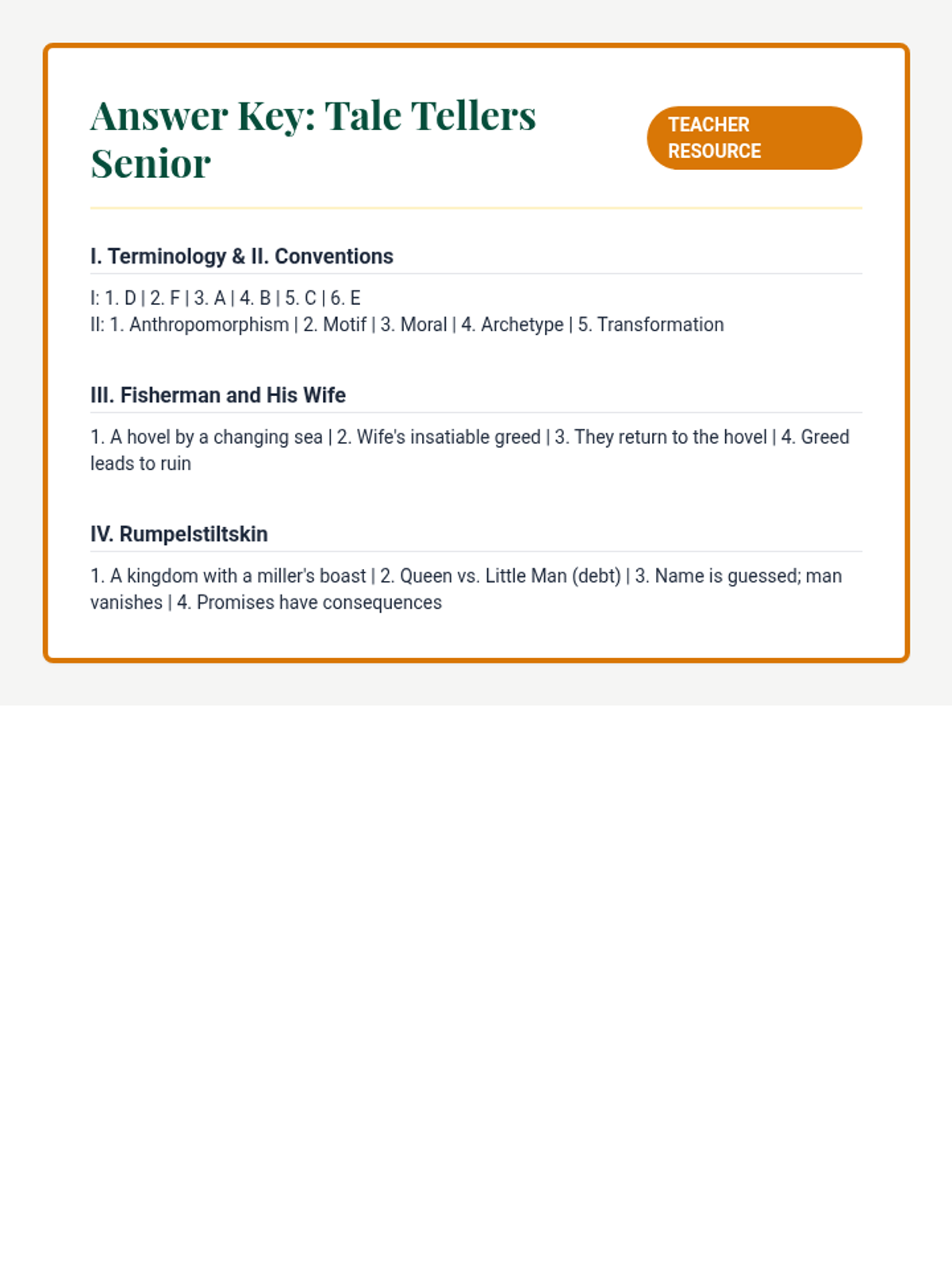
A comprehensive assessment on fairy tale elements and plot structures for elementary students, featuring two differentiated levels to meet specific grade-level standards.
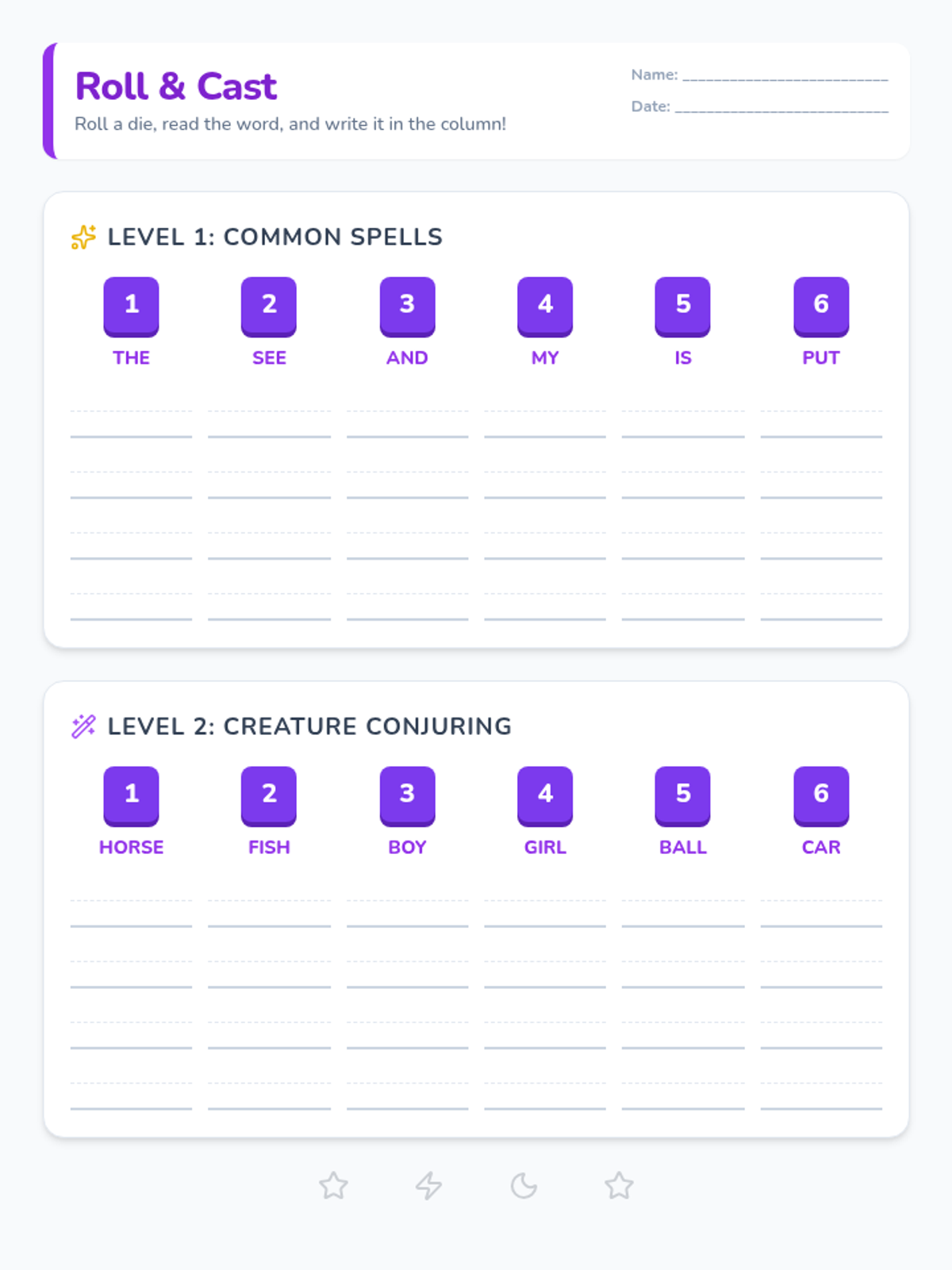
A comprehensive set of foundational literacy materials focused on 27 key sight words and nouns, covering word recognition, handwriting, sentence structure, and phonics.
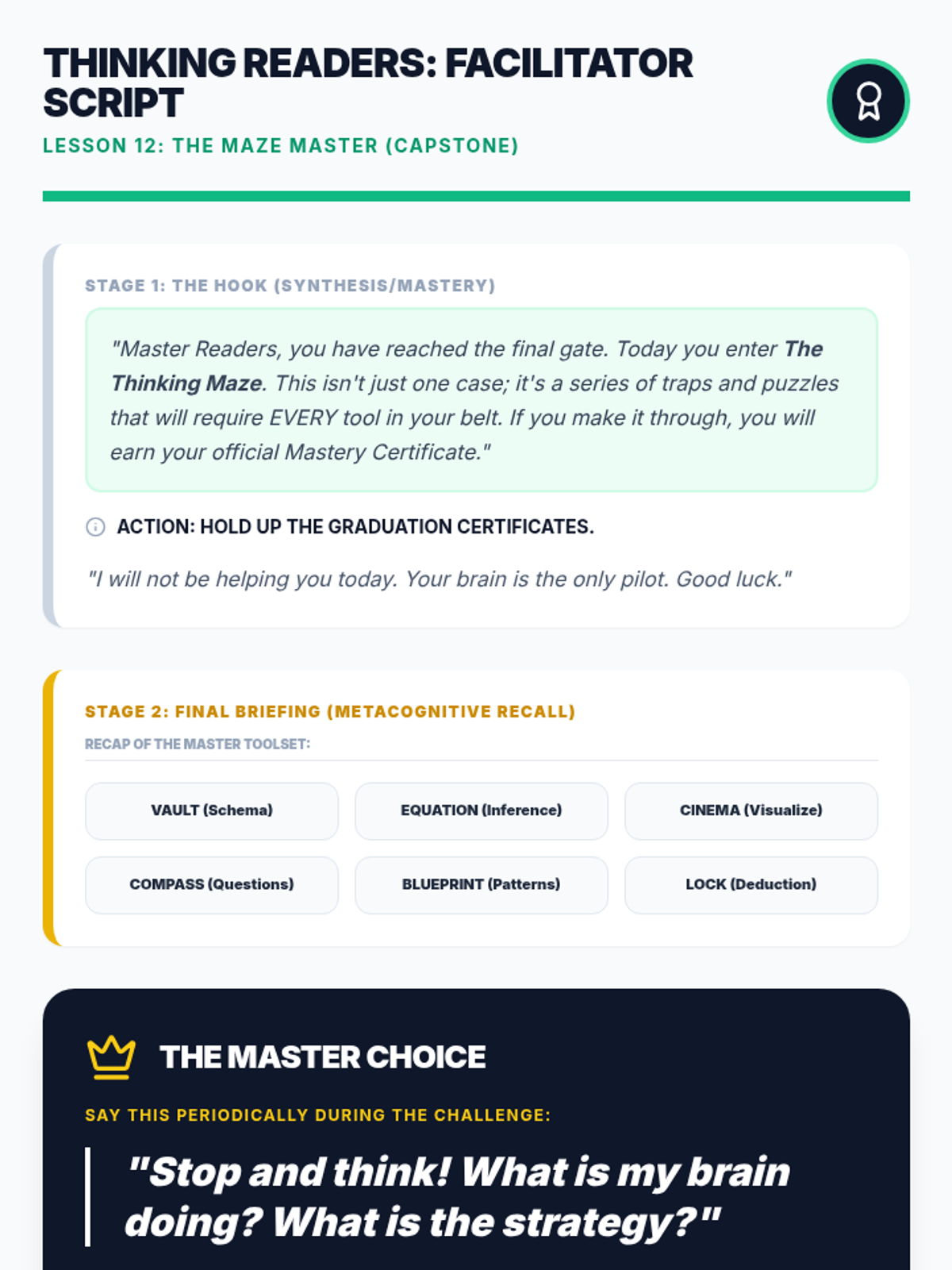
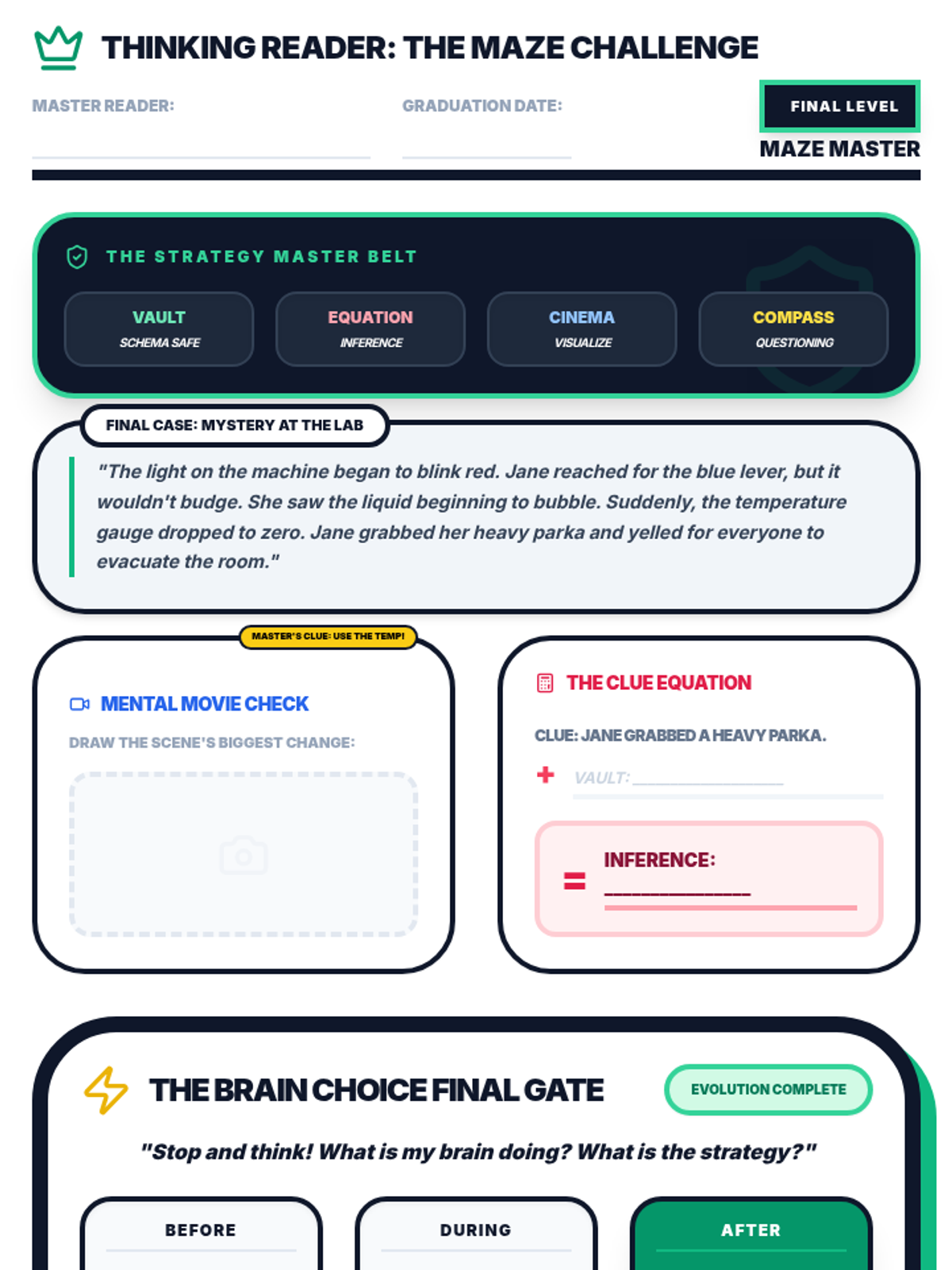
Capstone simulation. Students apply all 11 strategies to solve a complex text-based 'Maze' and earn their Thought Tracker Mastery.
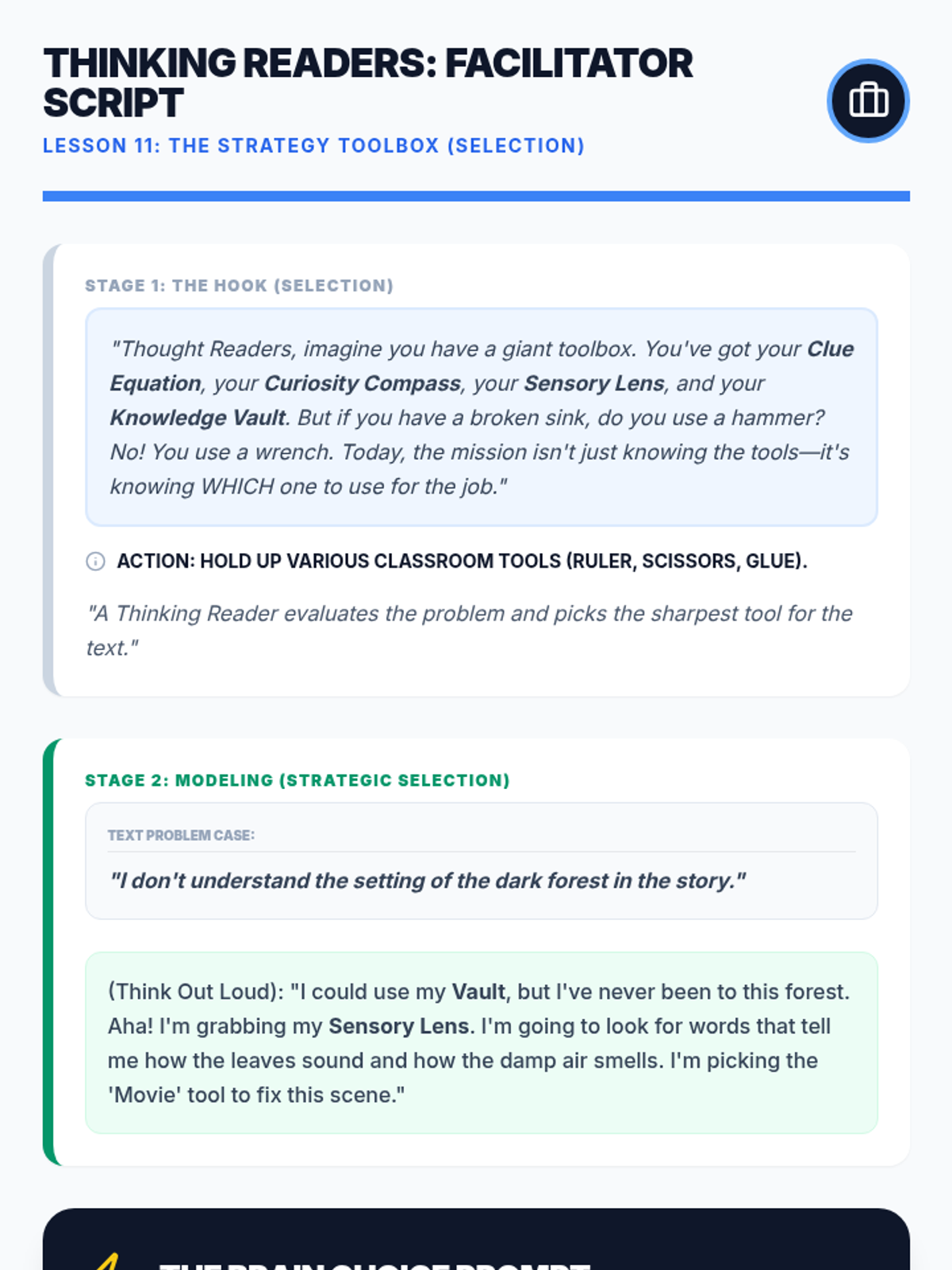
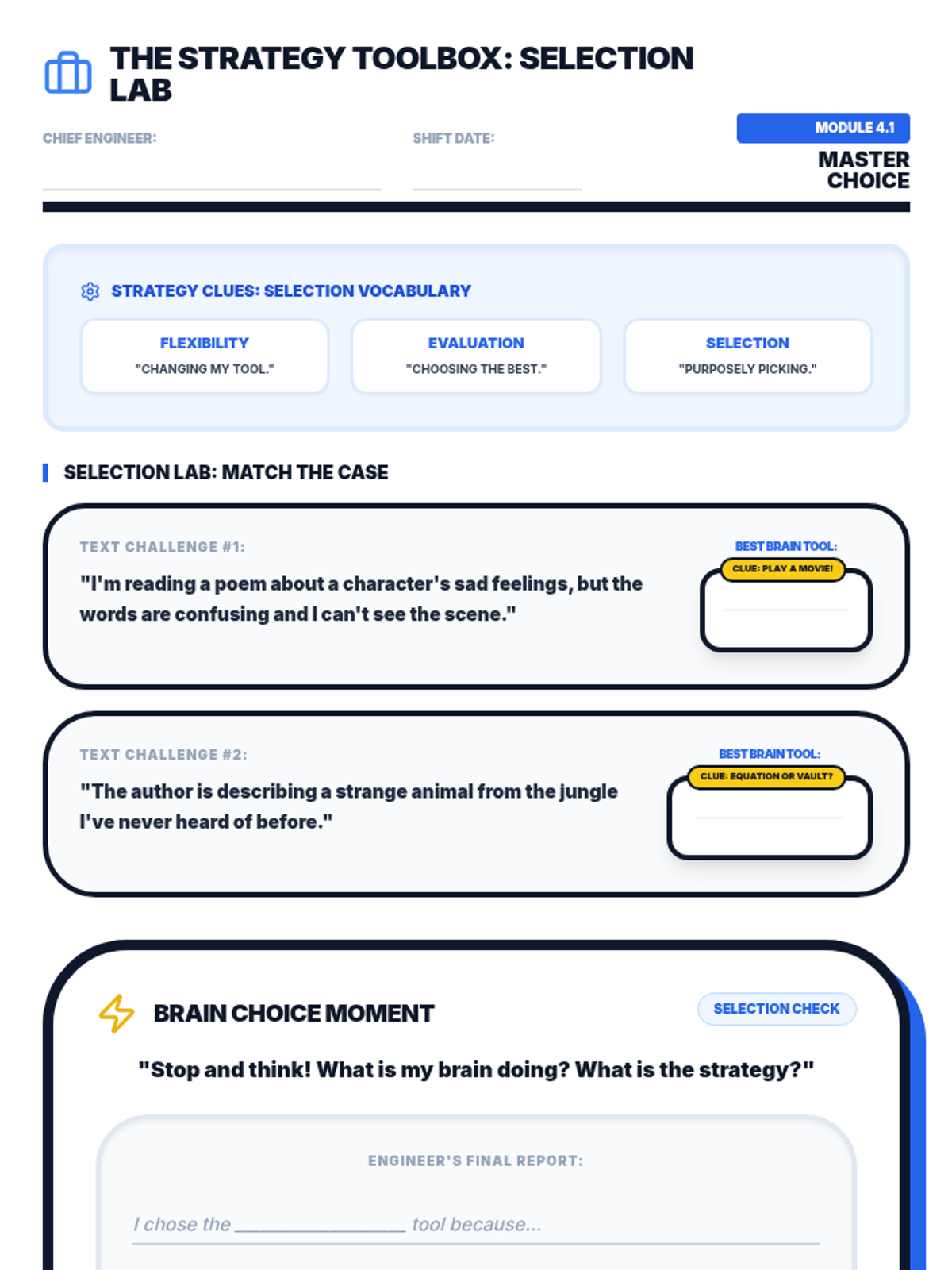
Metacognitive choice. Students practice deciding which 'Mind Tool' (Inference, Visualization, Questioning) is best for specific text challenges.
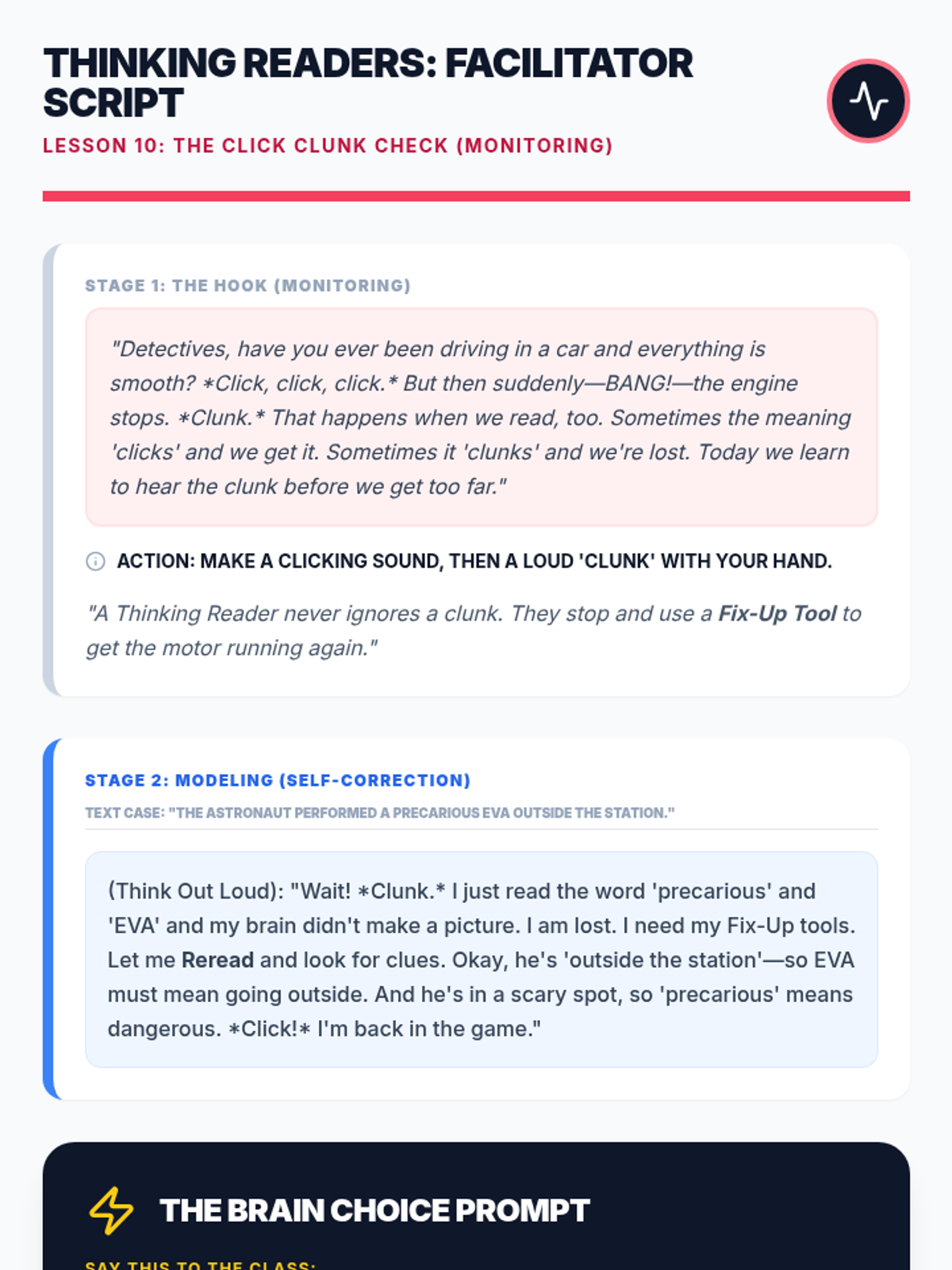
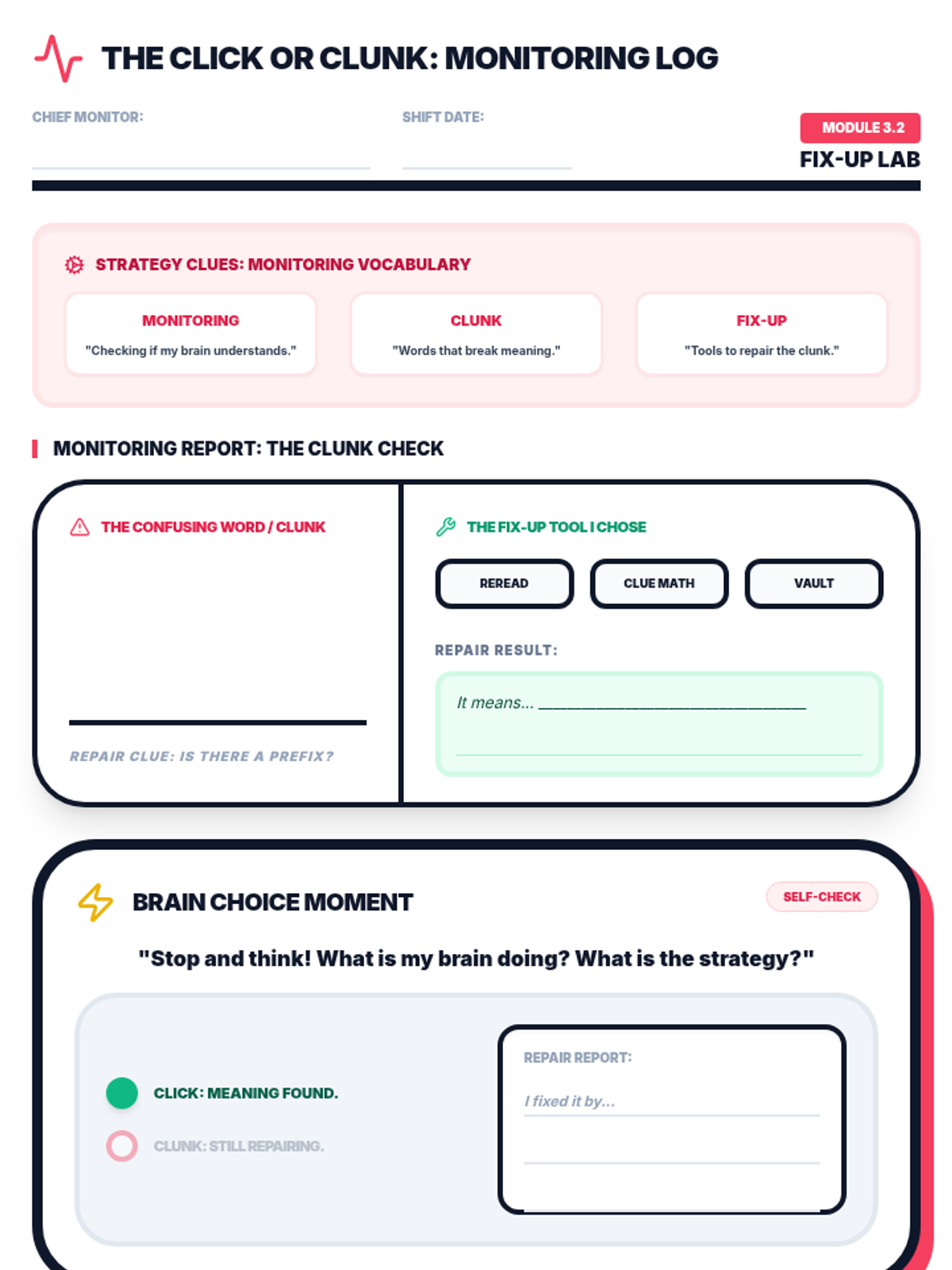
Masters the 'Click or Clunk' monitoring technique. Students learn to identify when meaning breaks down and which tool to use for a 'fix-up'.
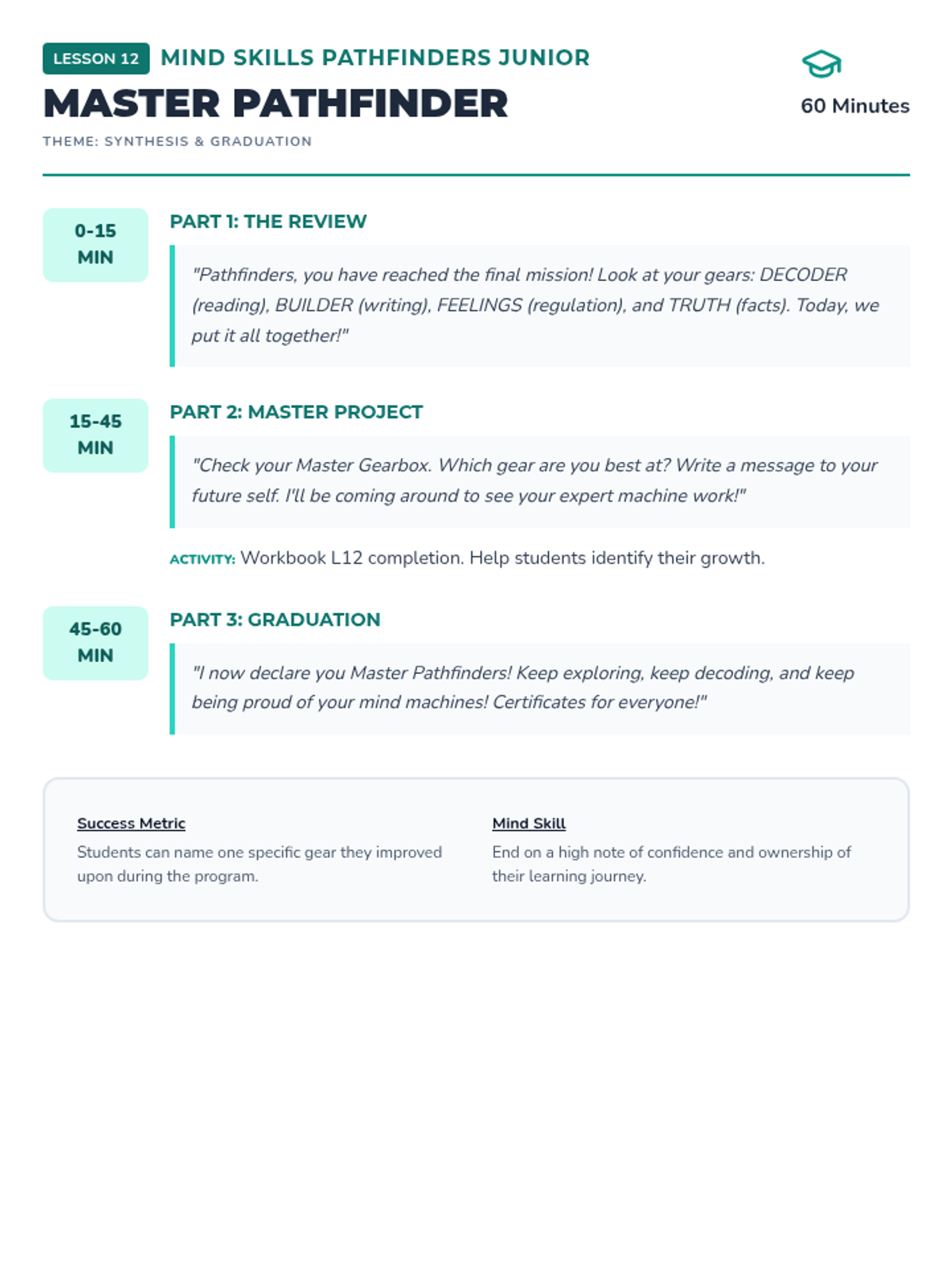
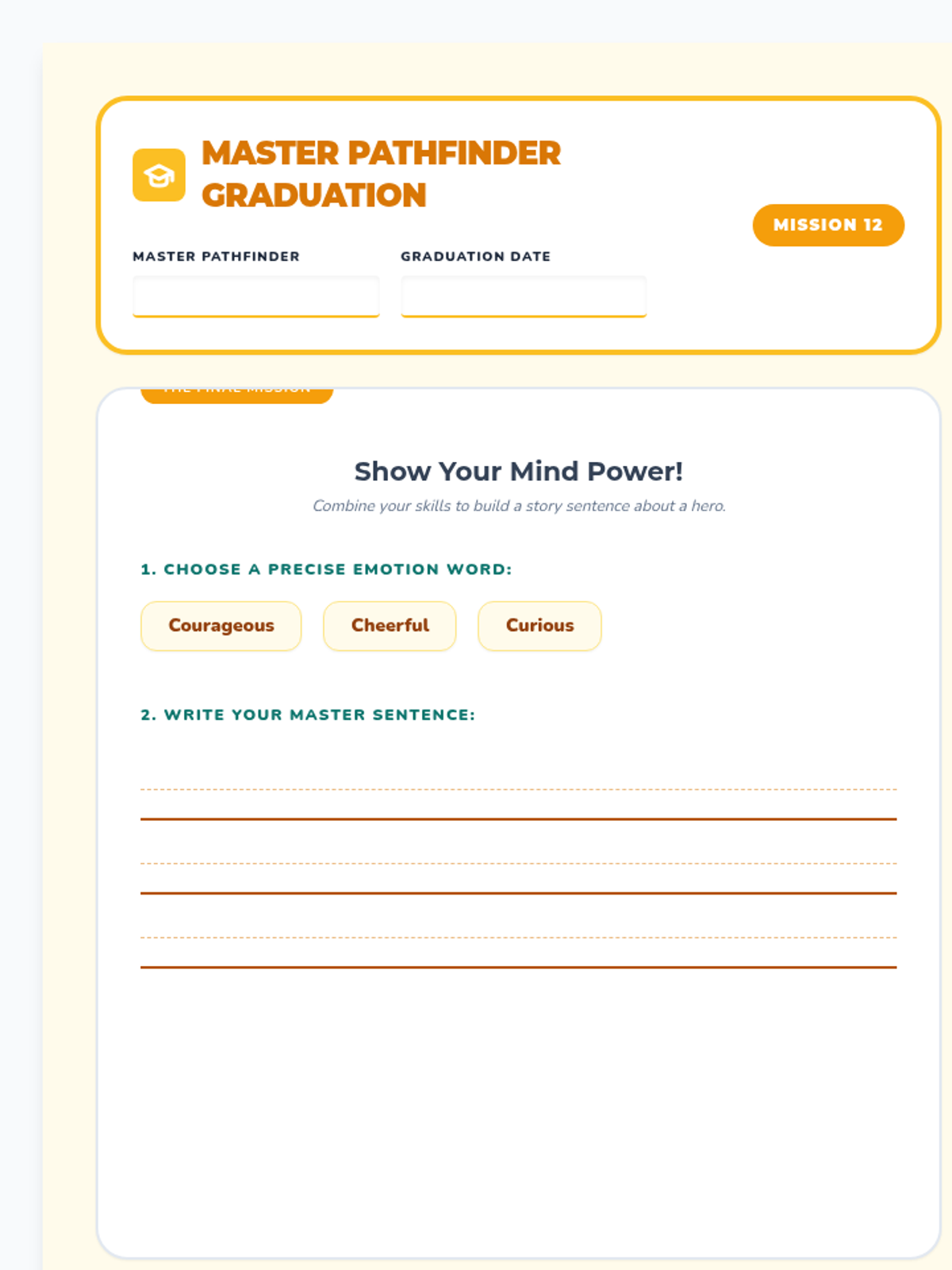
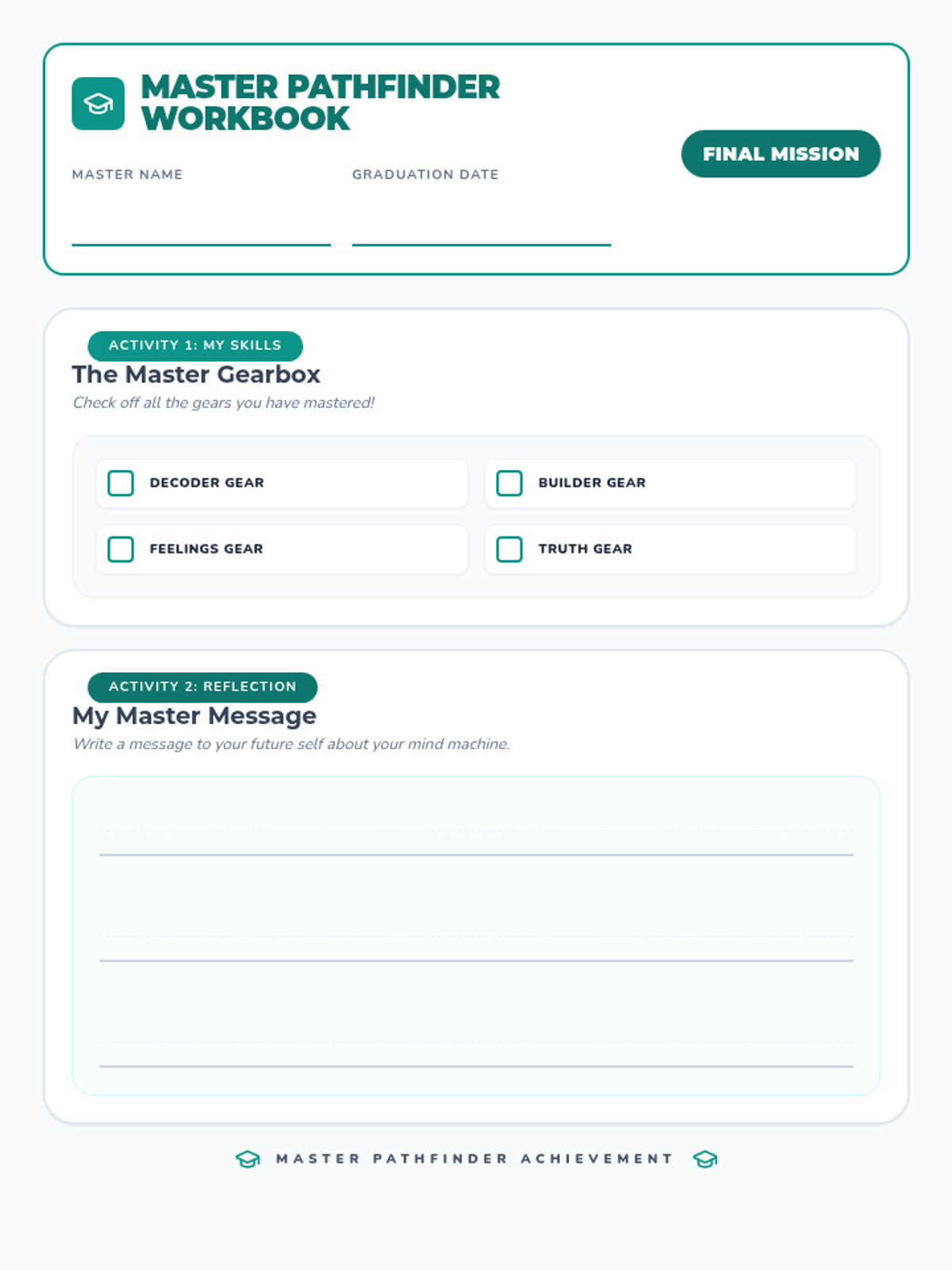
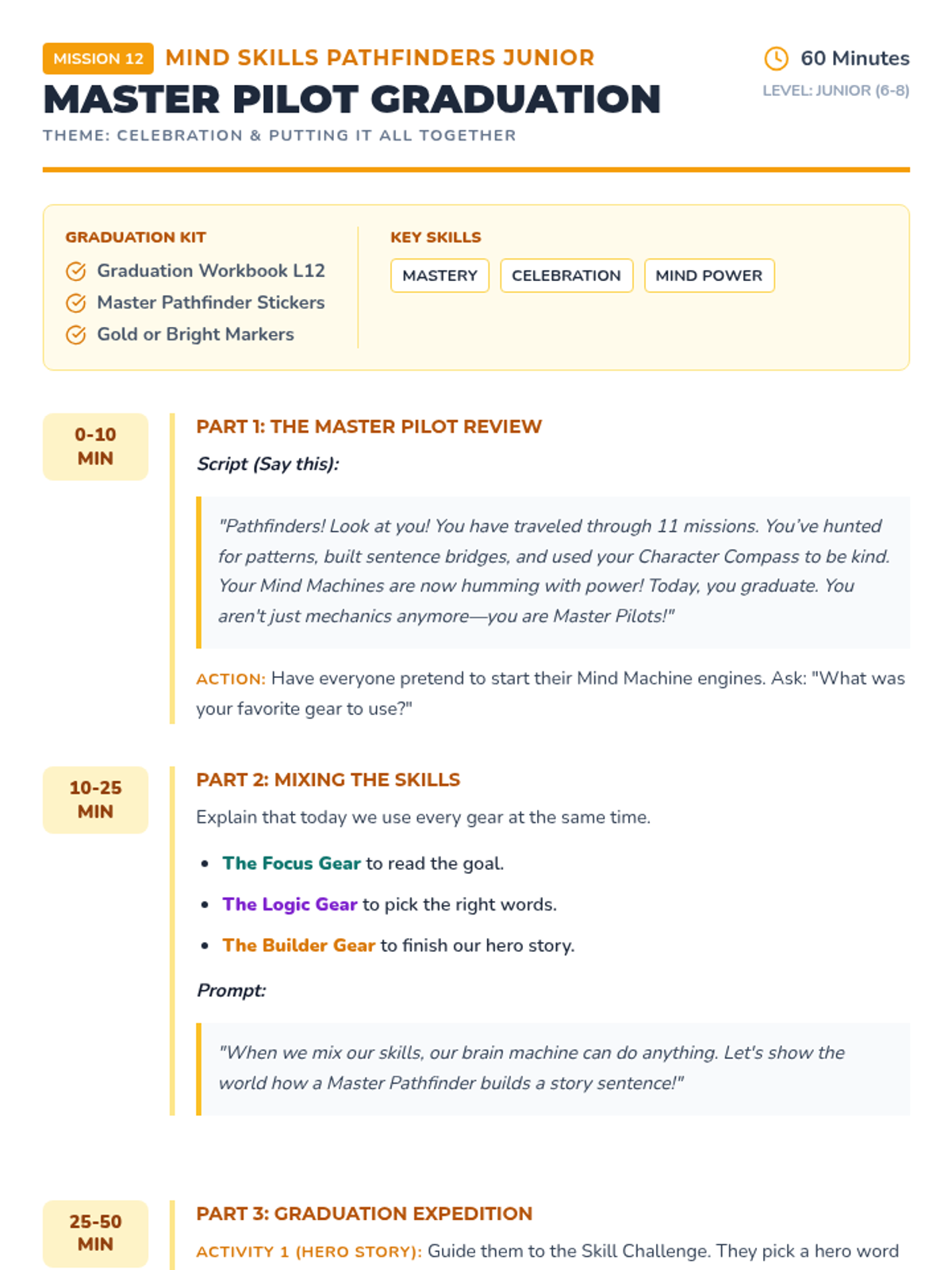
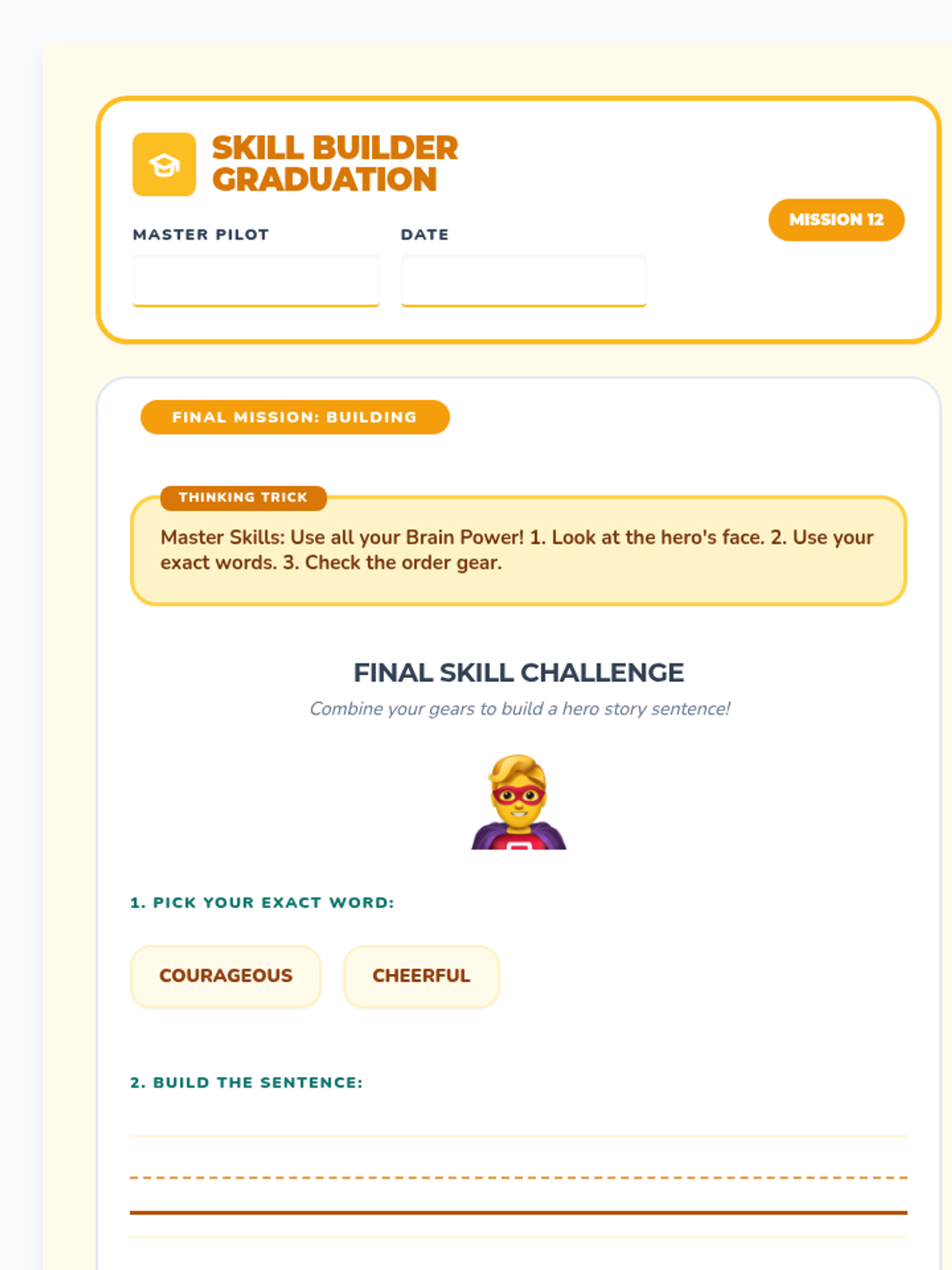
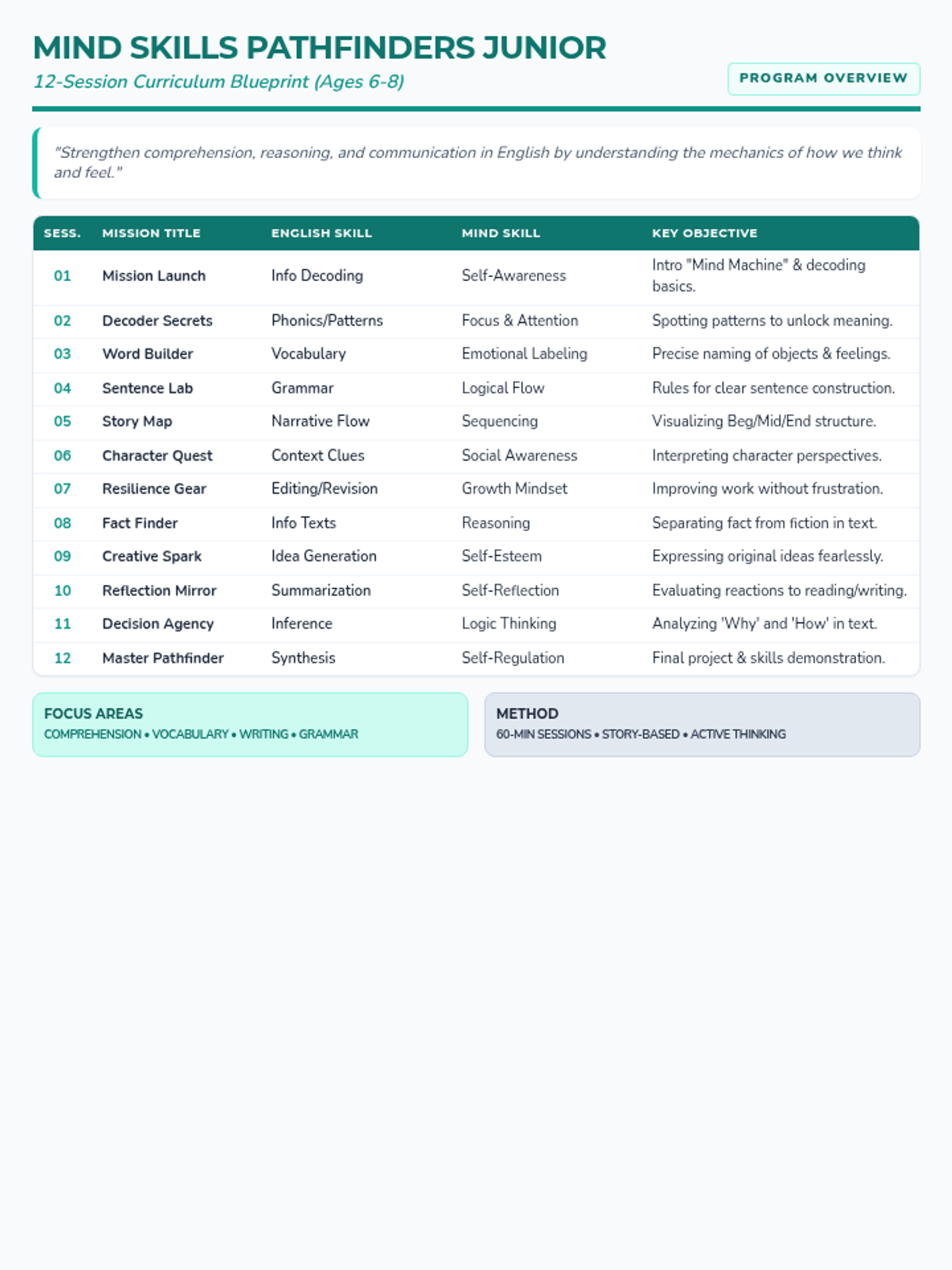
A celebratory final session where students demonstrate their 'Master Pathfinder' skills and receive recognition for their growth in thinking and English.
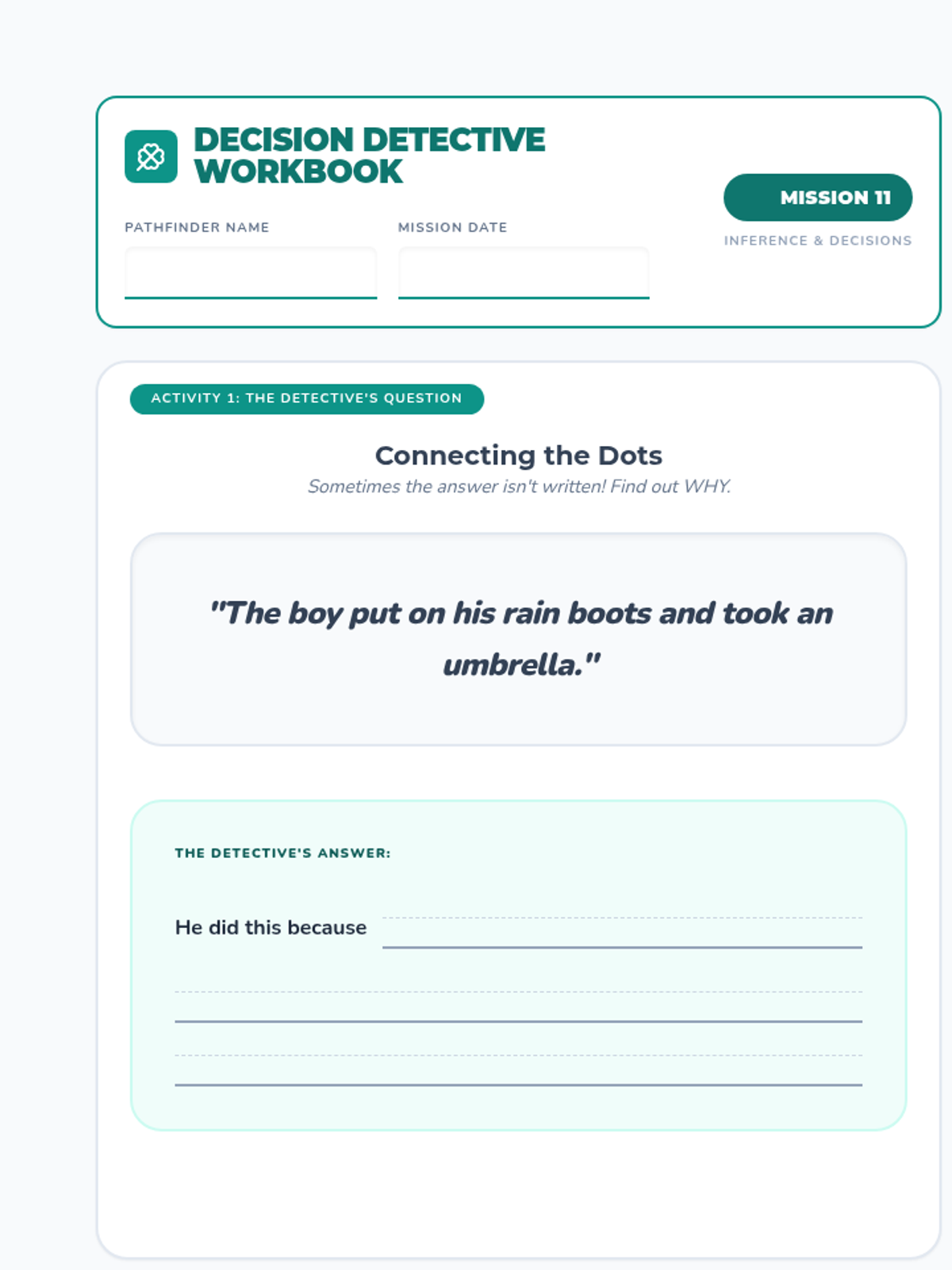
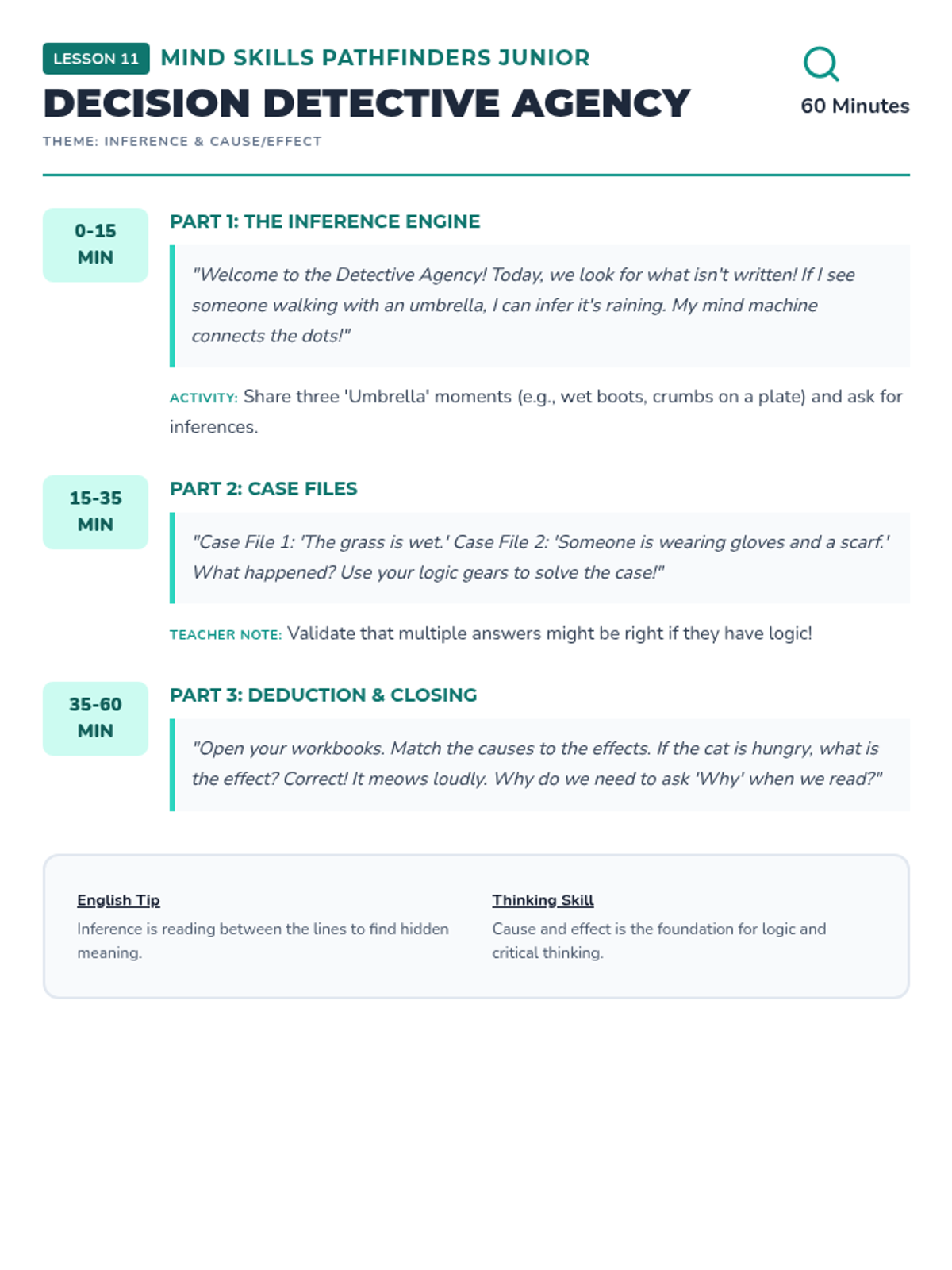
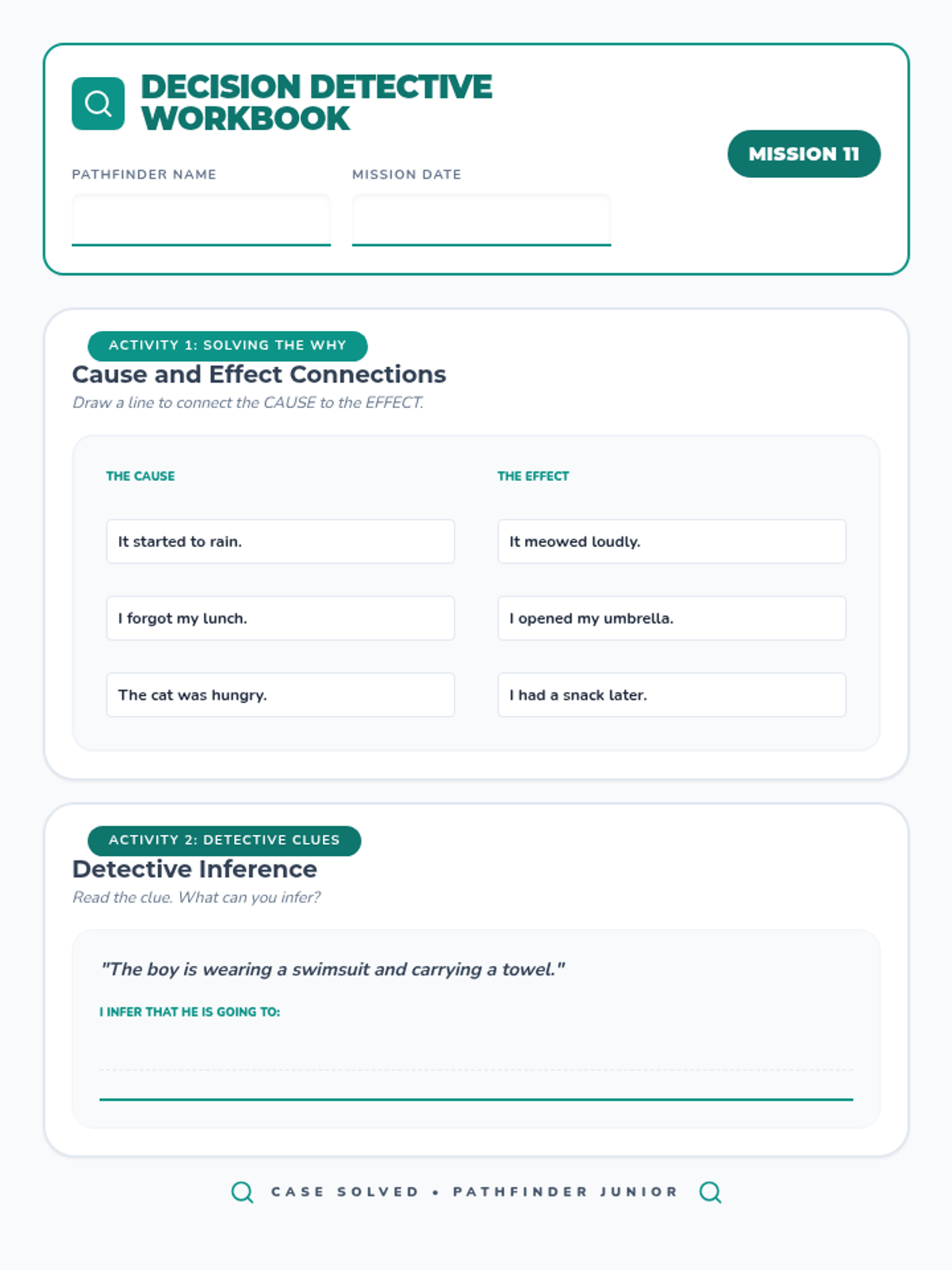
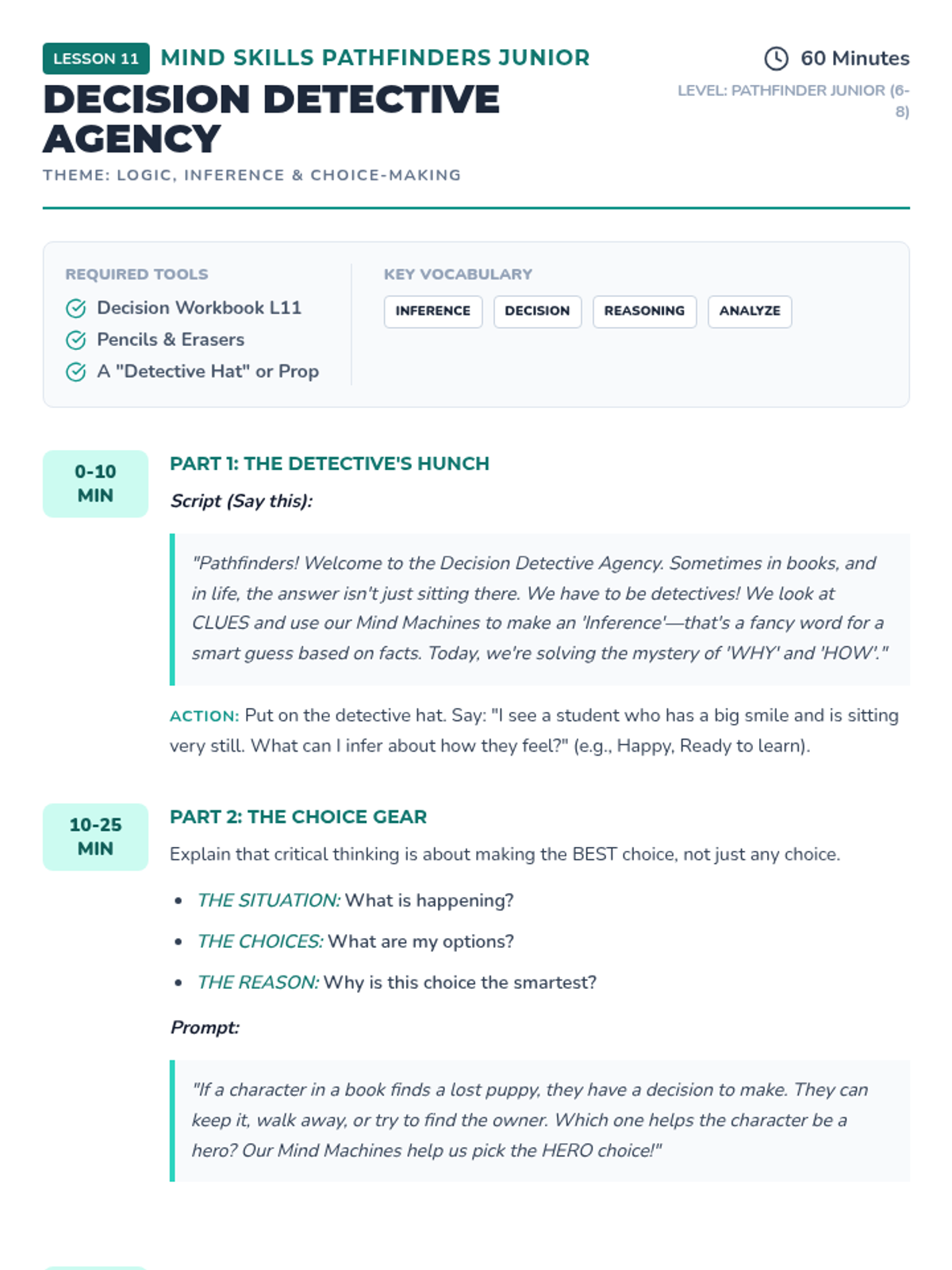
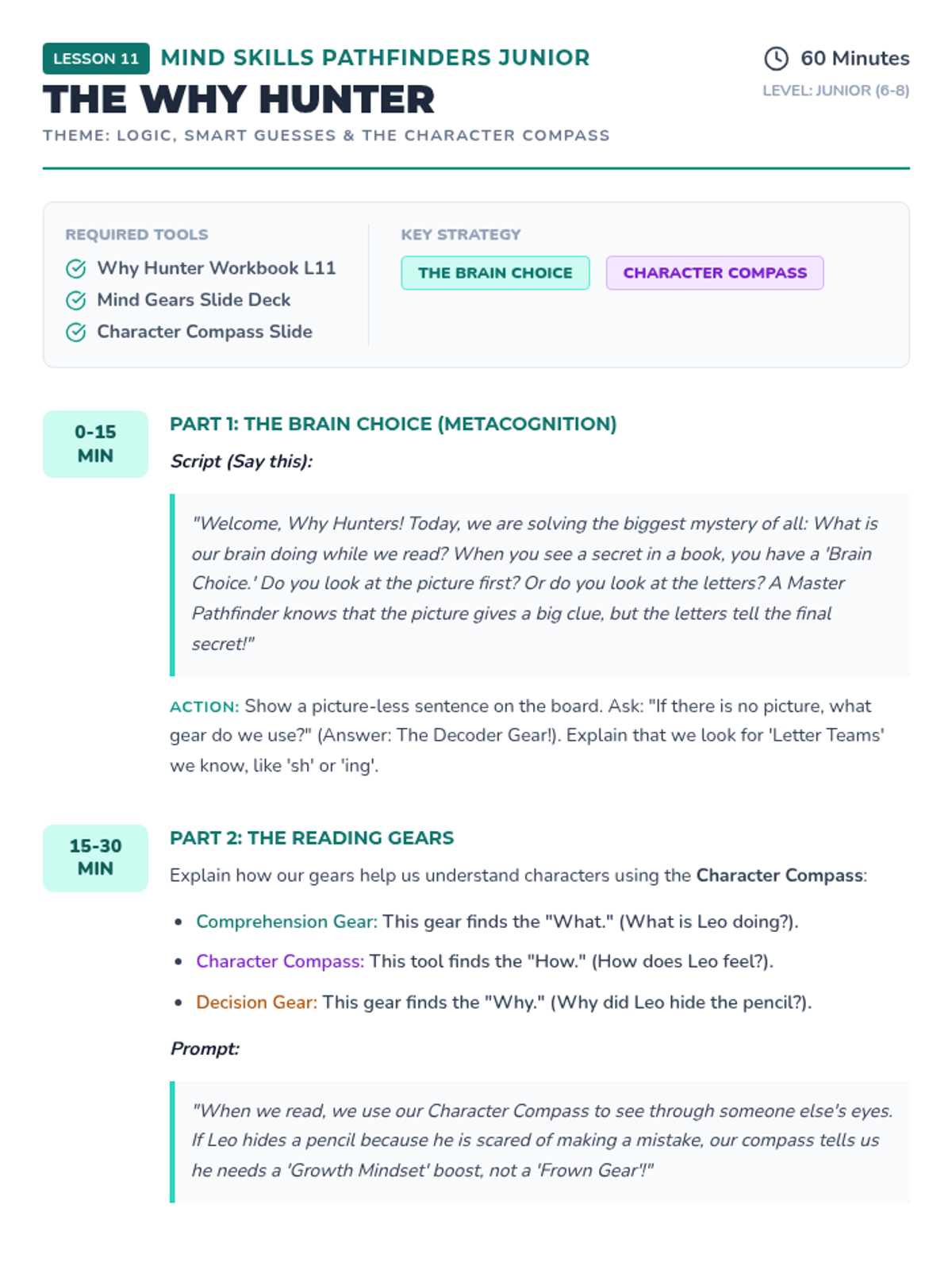
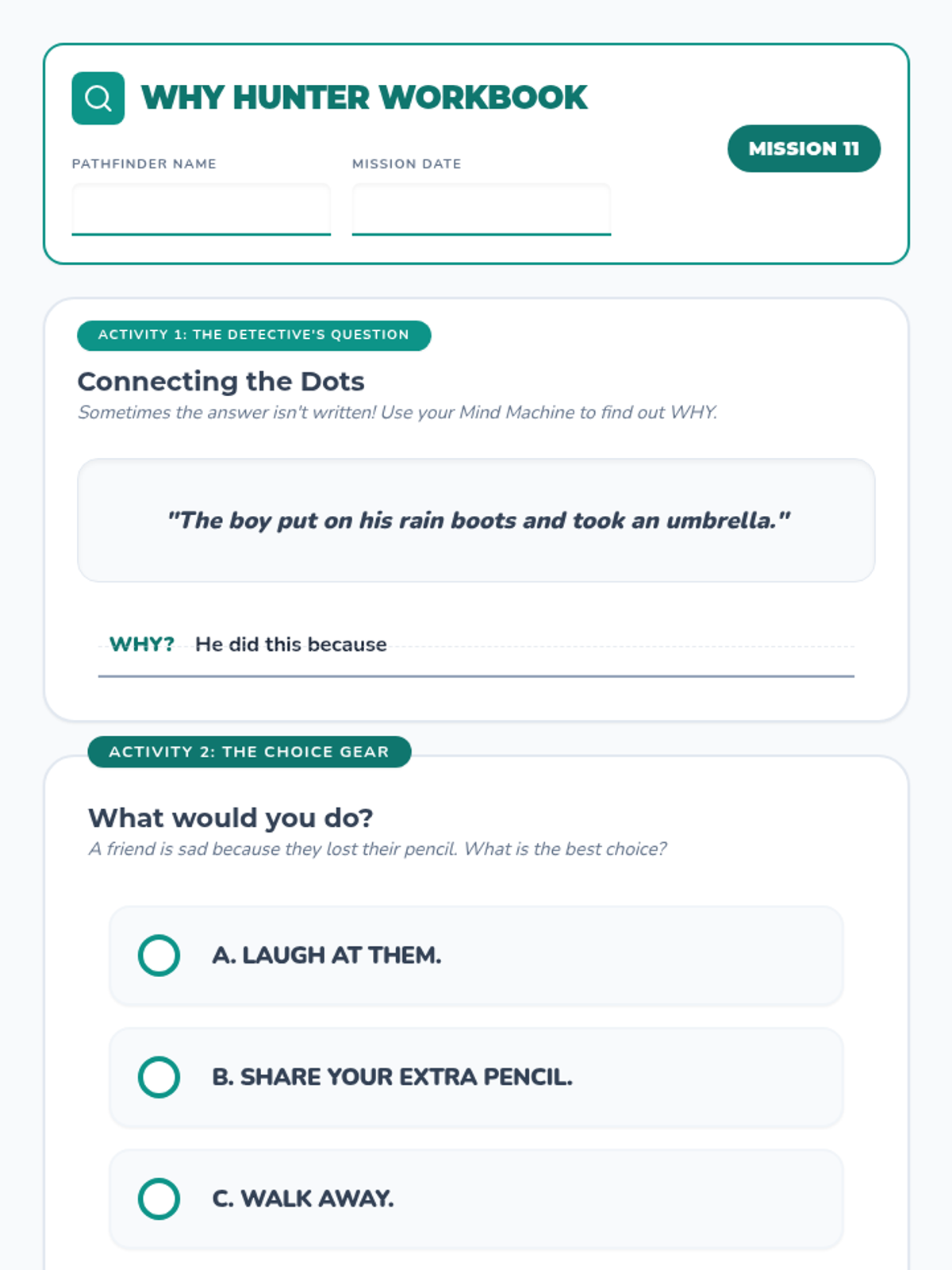
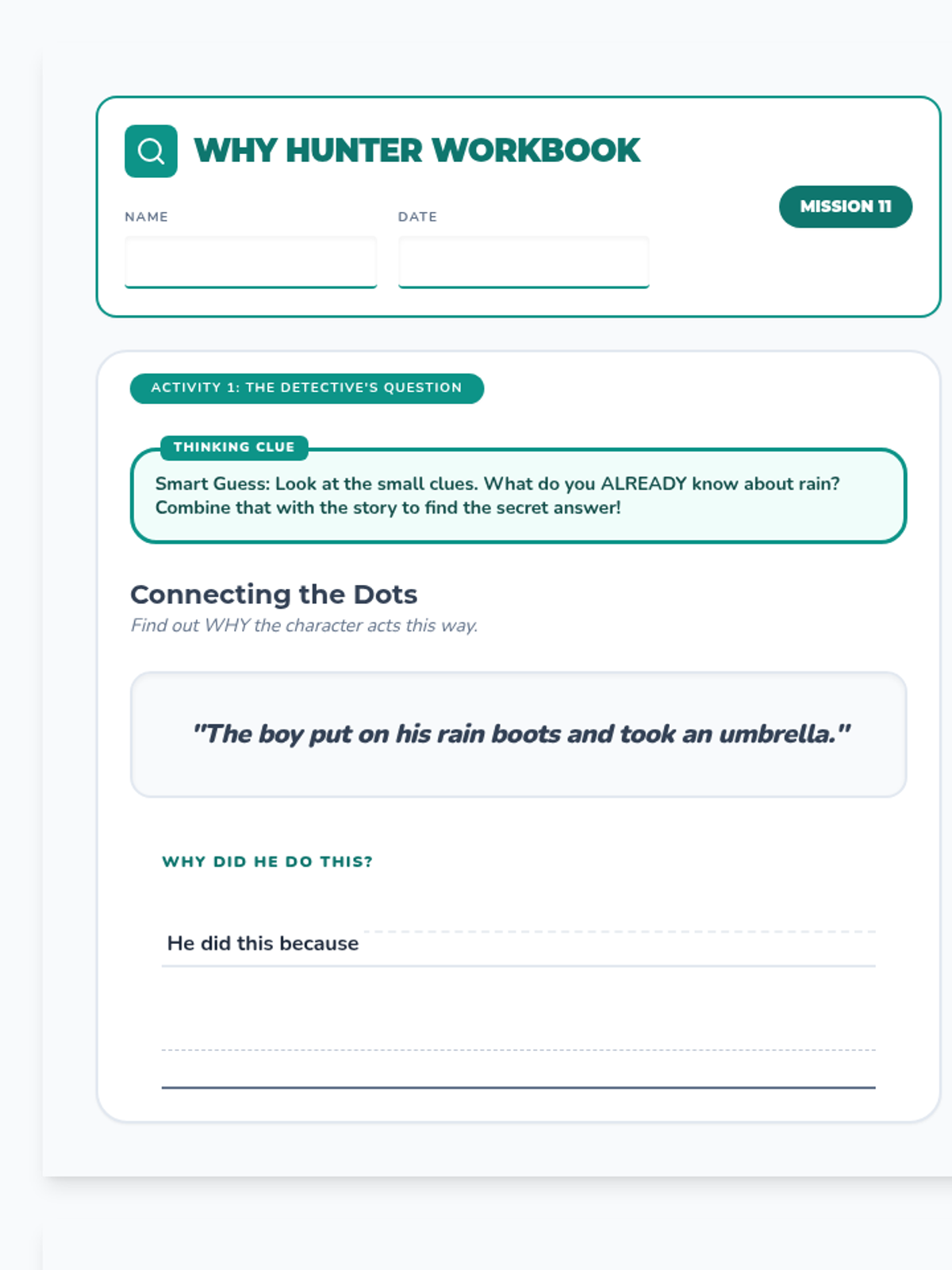
Focuses on logic and decision-making by asking 'why' and 'how' questions about texts to understand cause and effect.
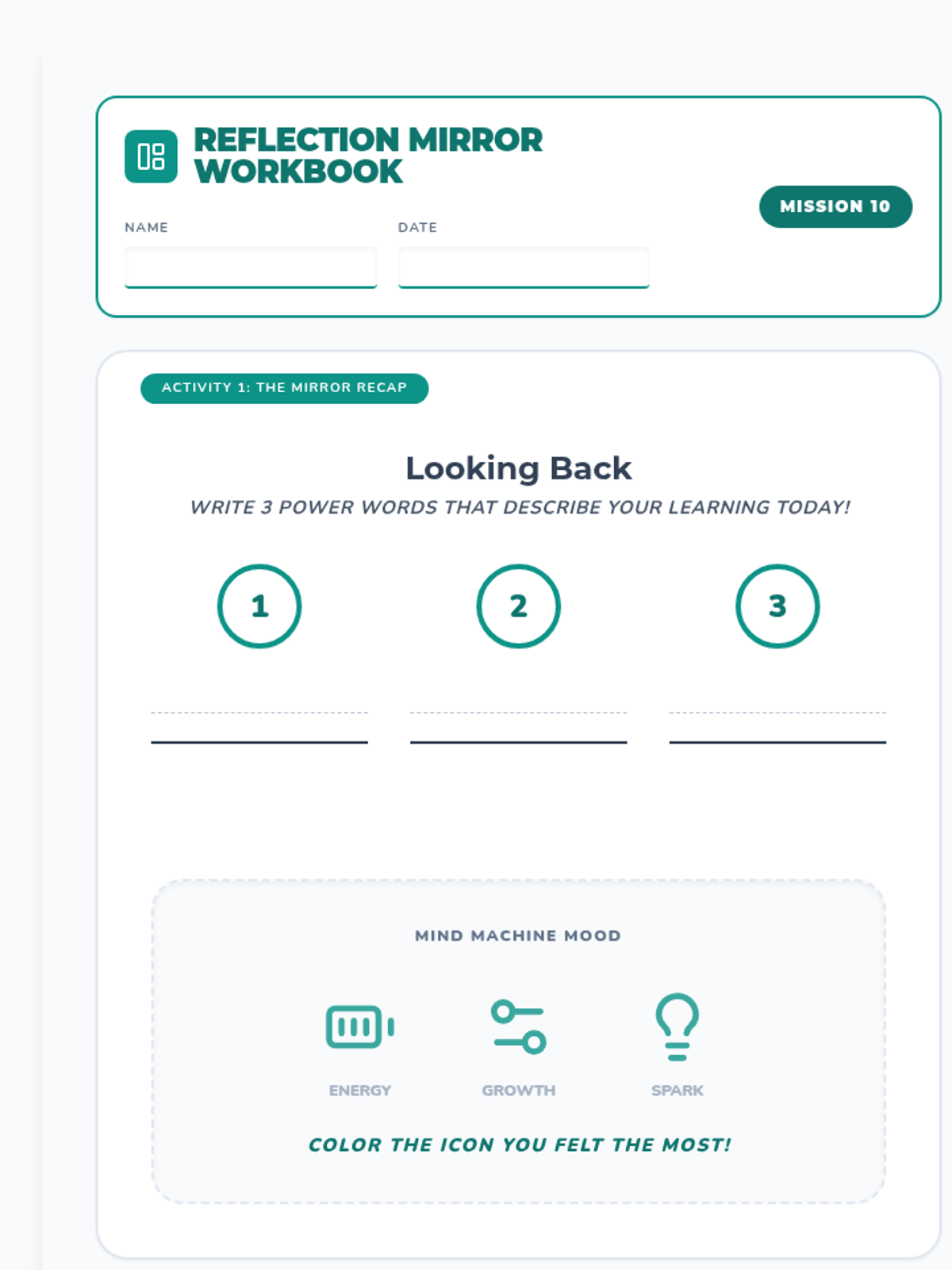
Deepens self-awareness through journaling and reflection, helping students recognize their own reactions and thoughts while reading and writing.
Encourages idea construction and creative writing, showing students how to fuel their mind machines with imagination to create original stories.
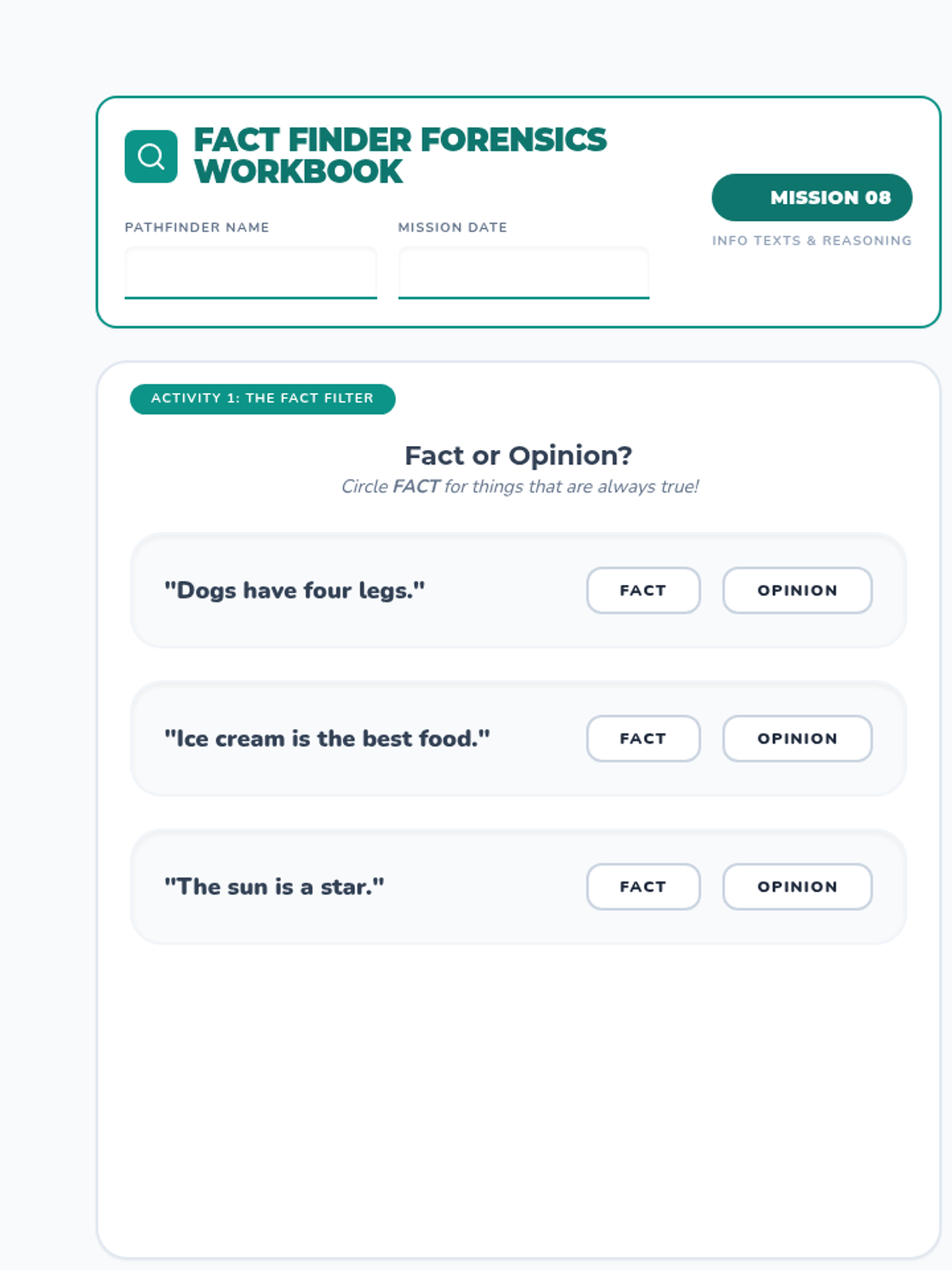
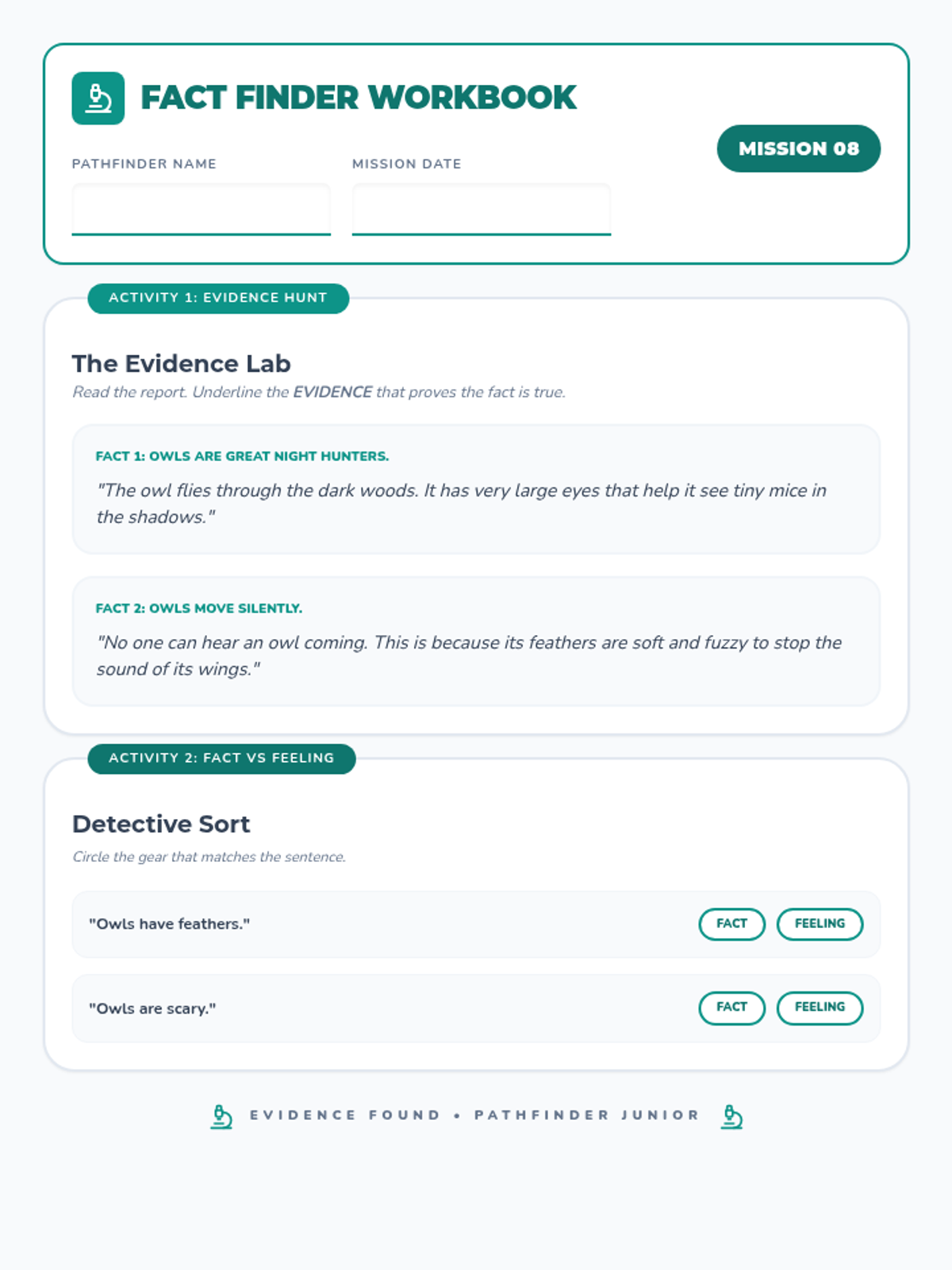
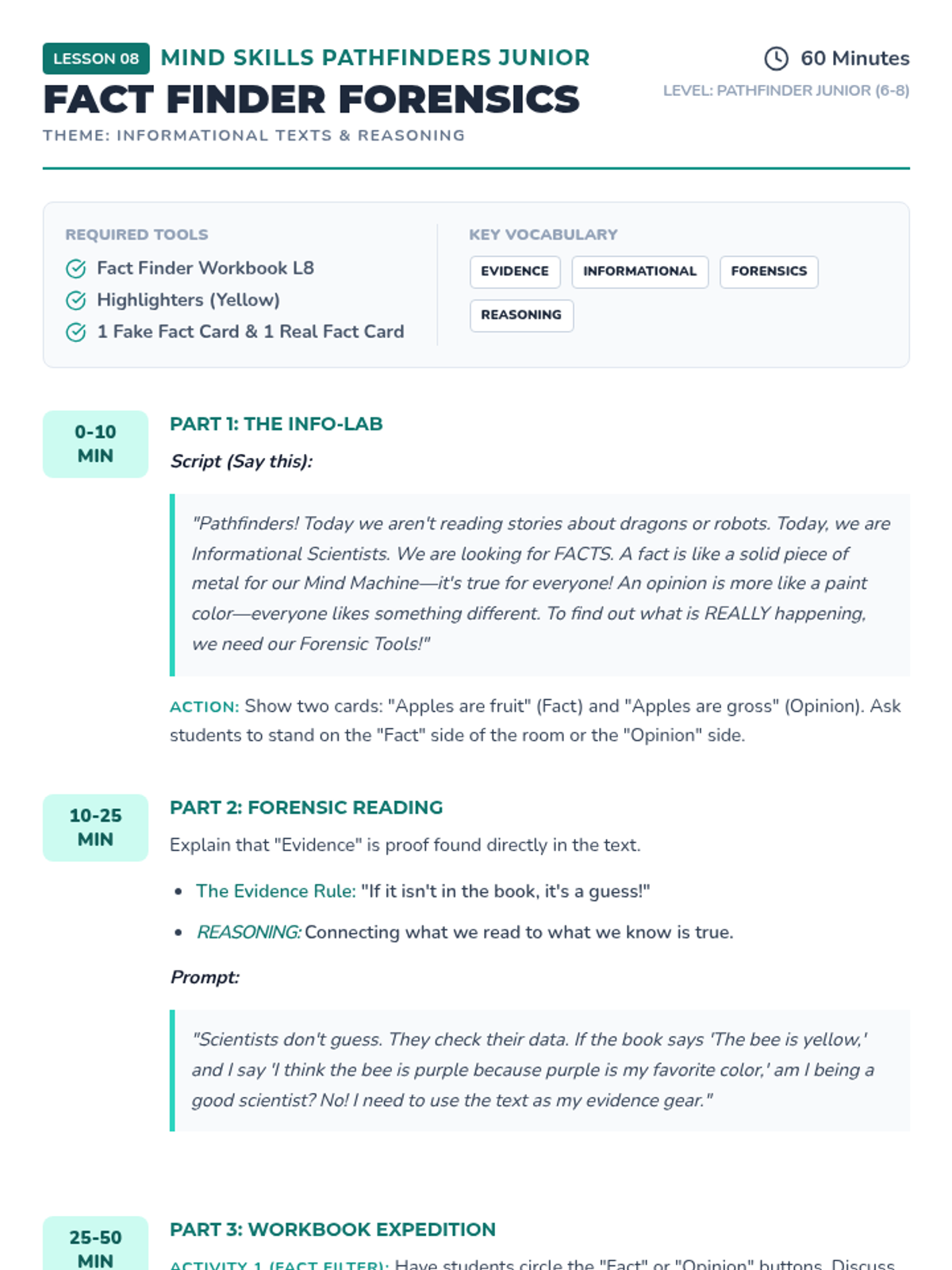
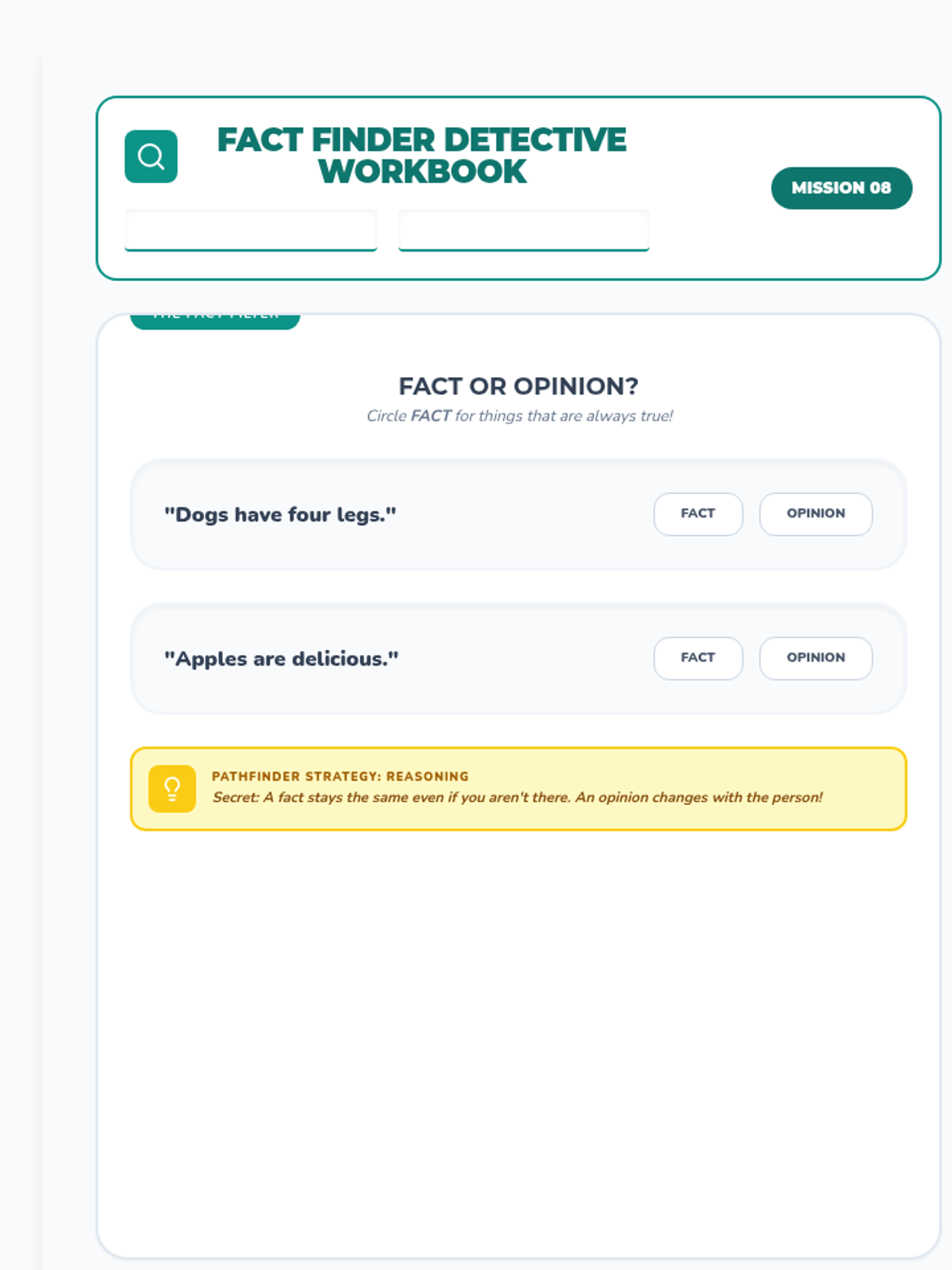
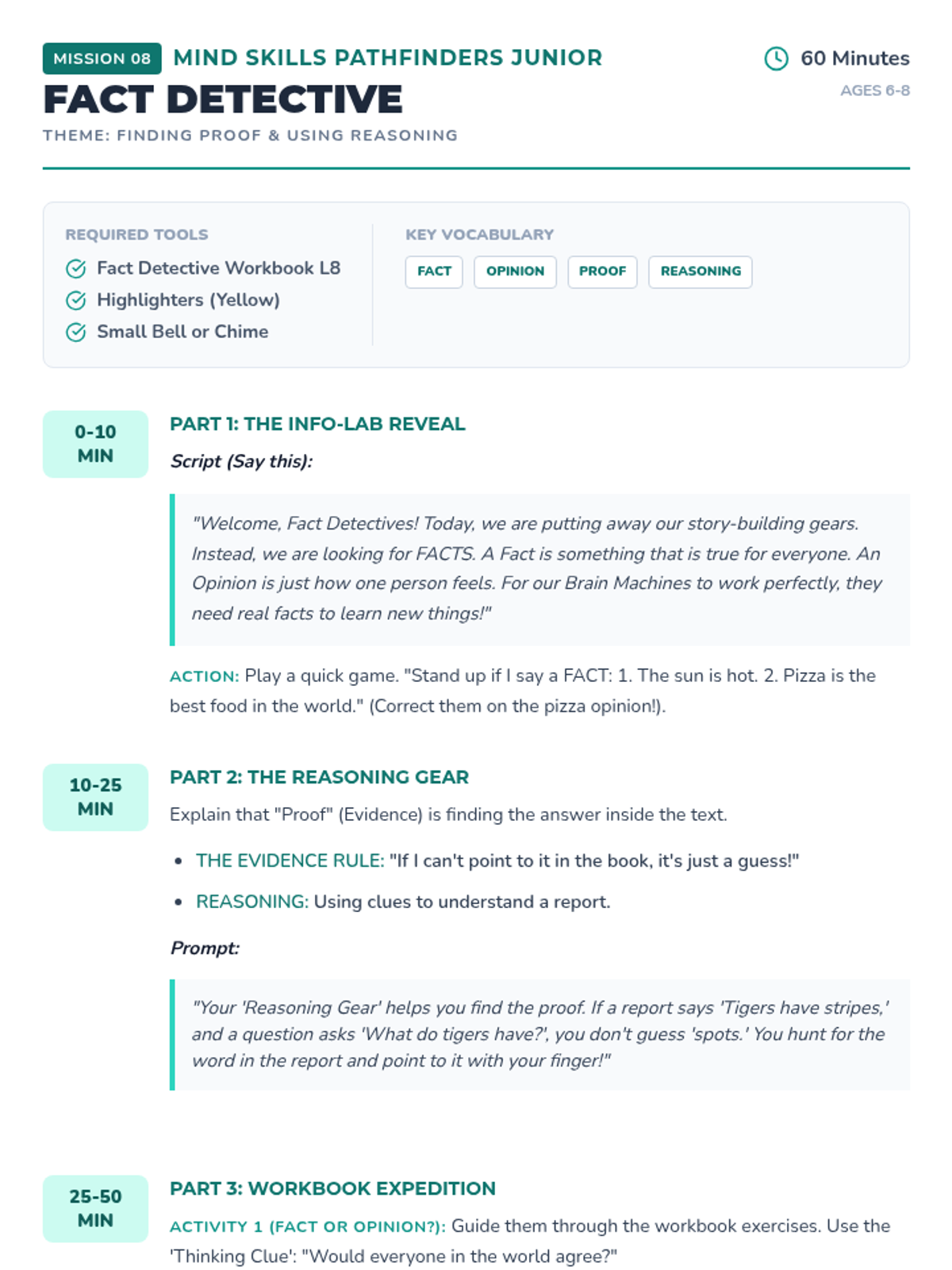
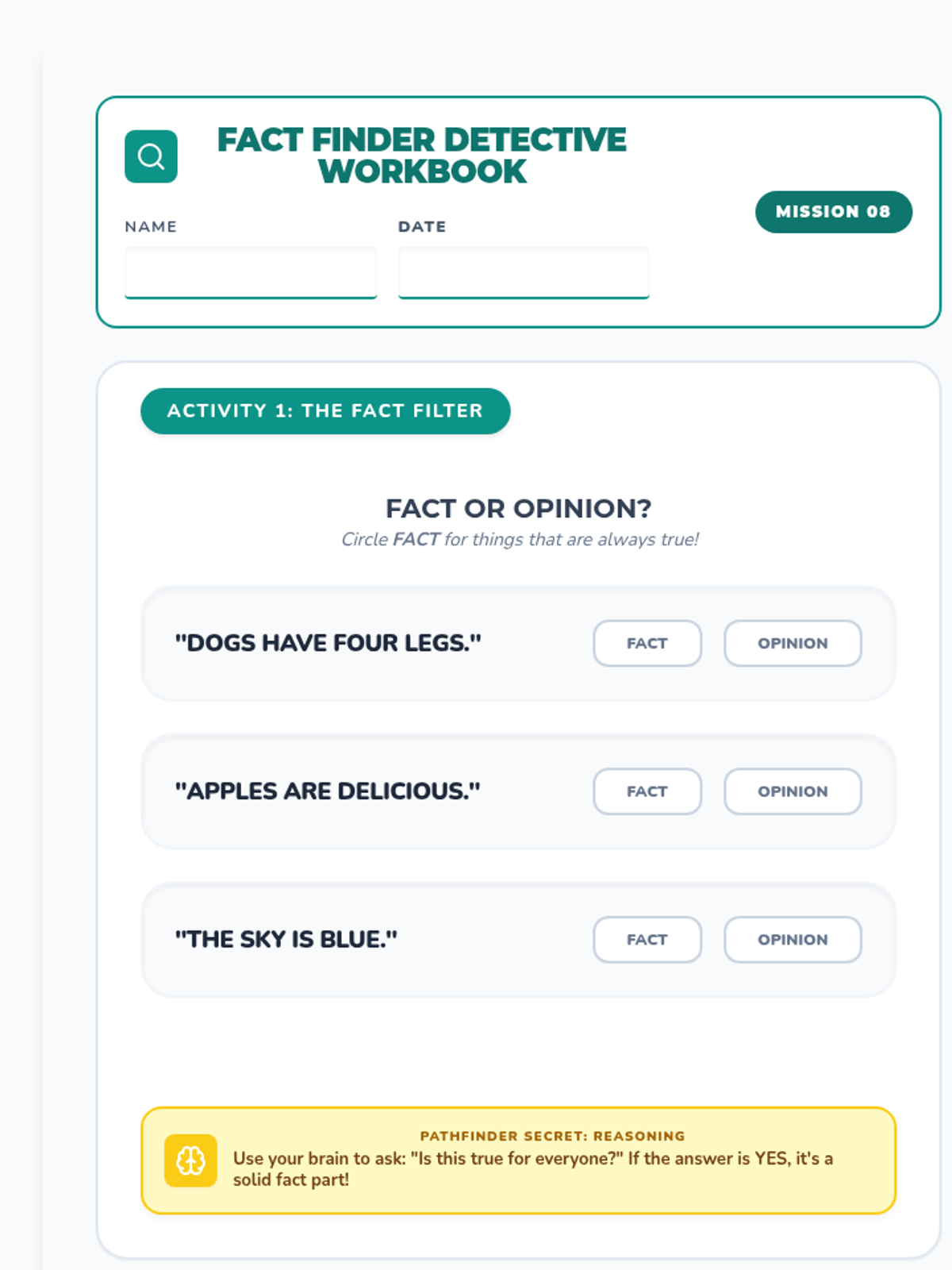
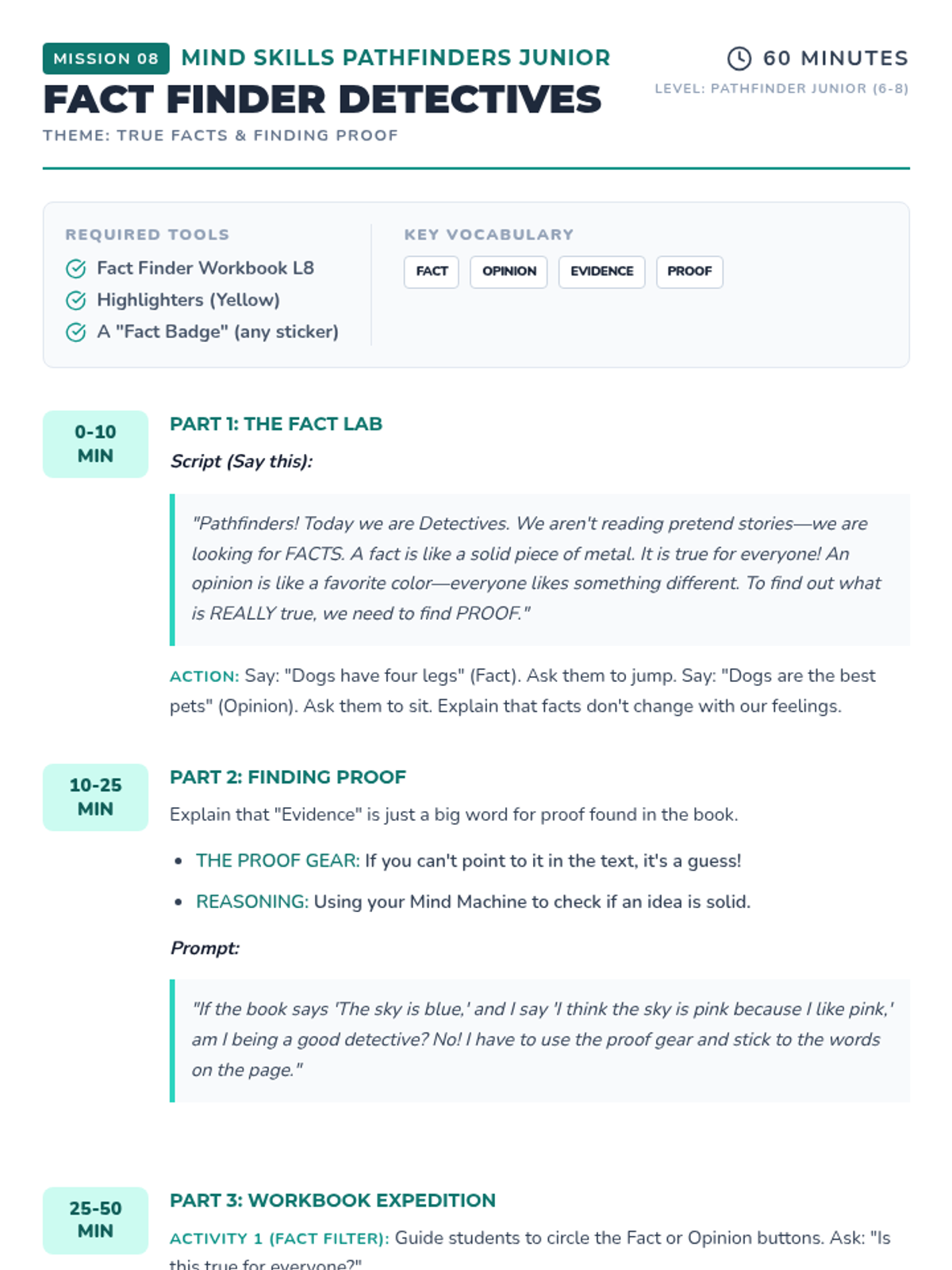
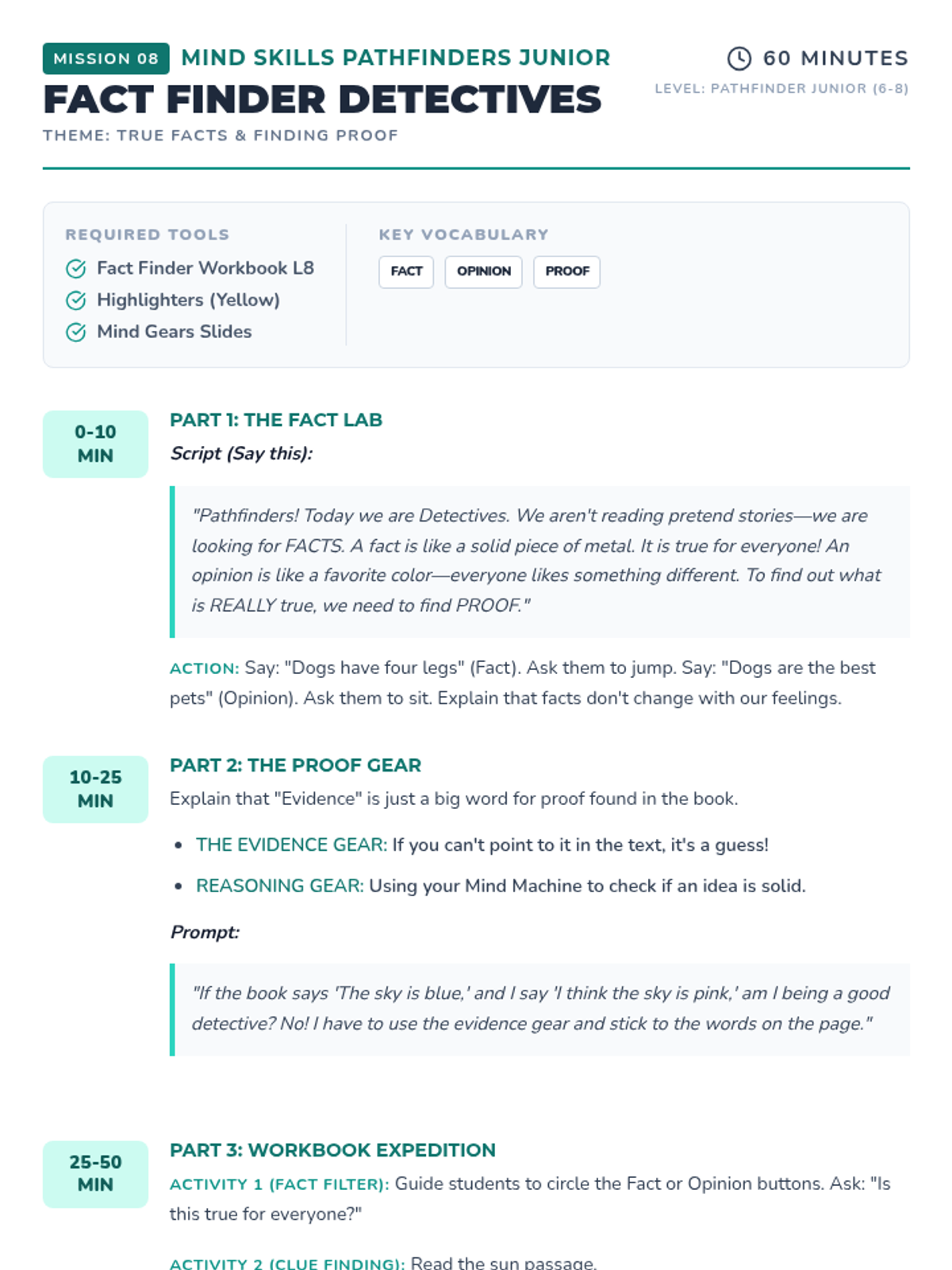
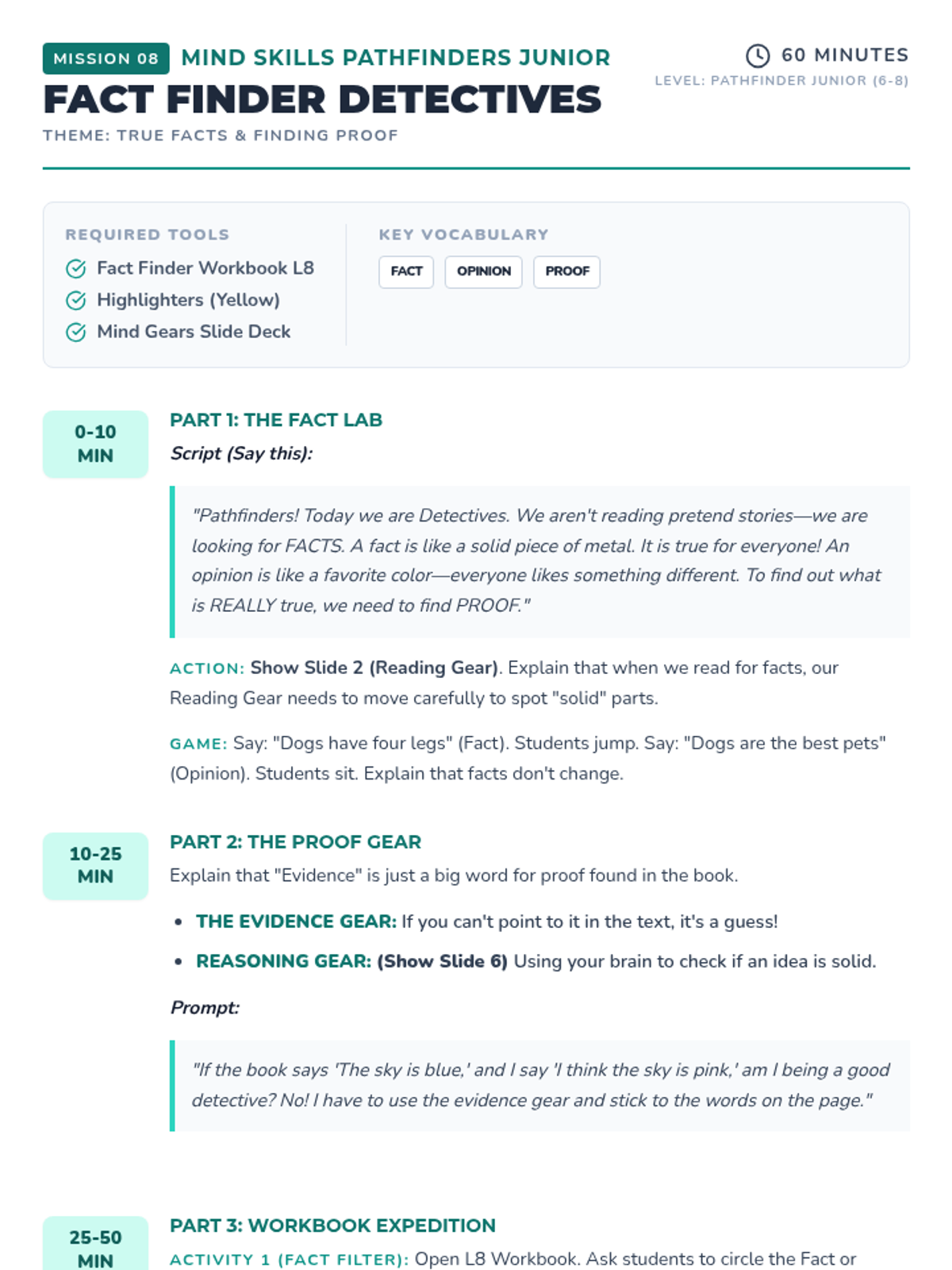
Develops information decoding skills by teaching students to search for facts and evidence within a text, much like a forensic scientist.
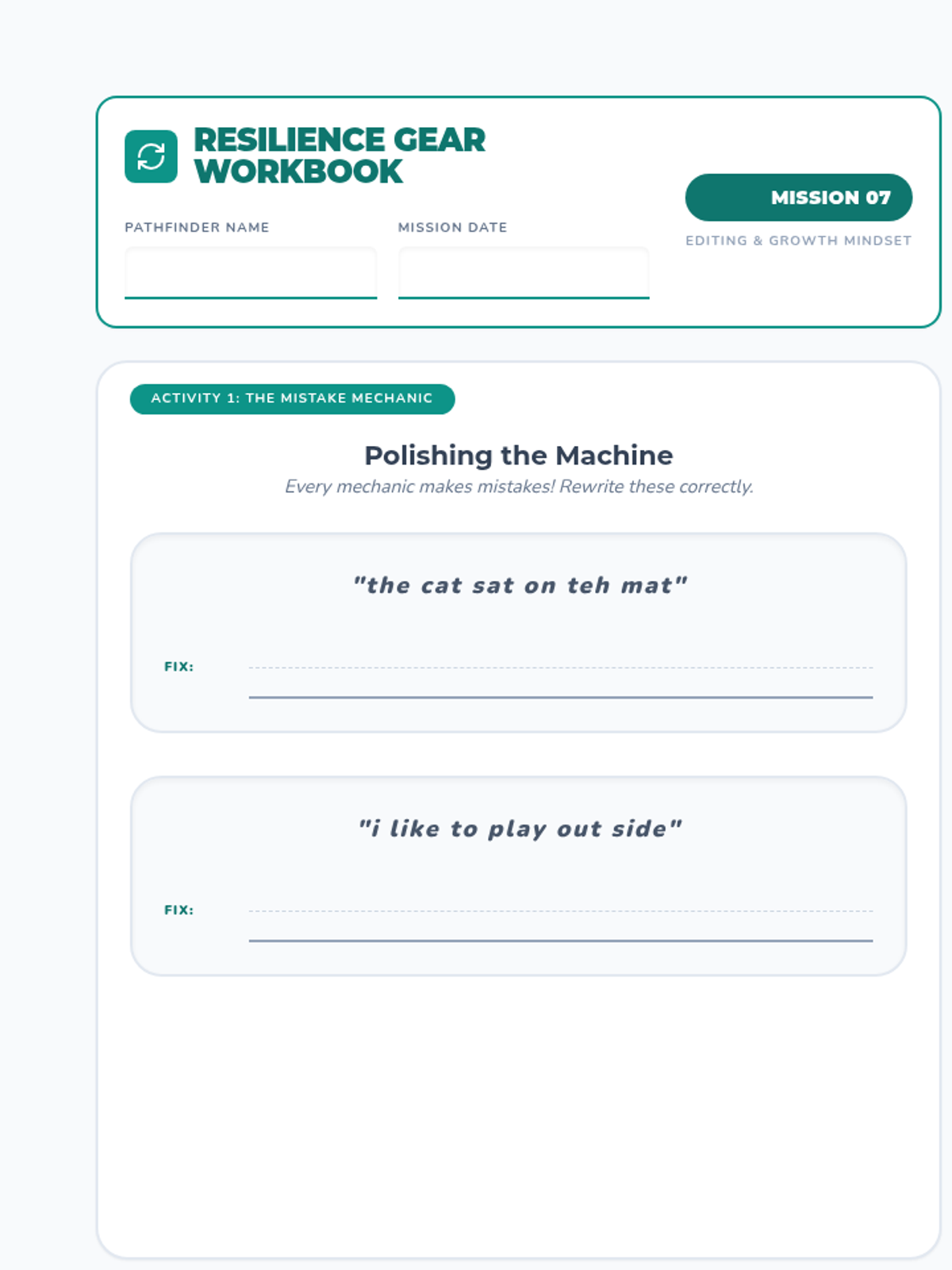
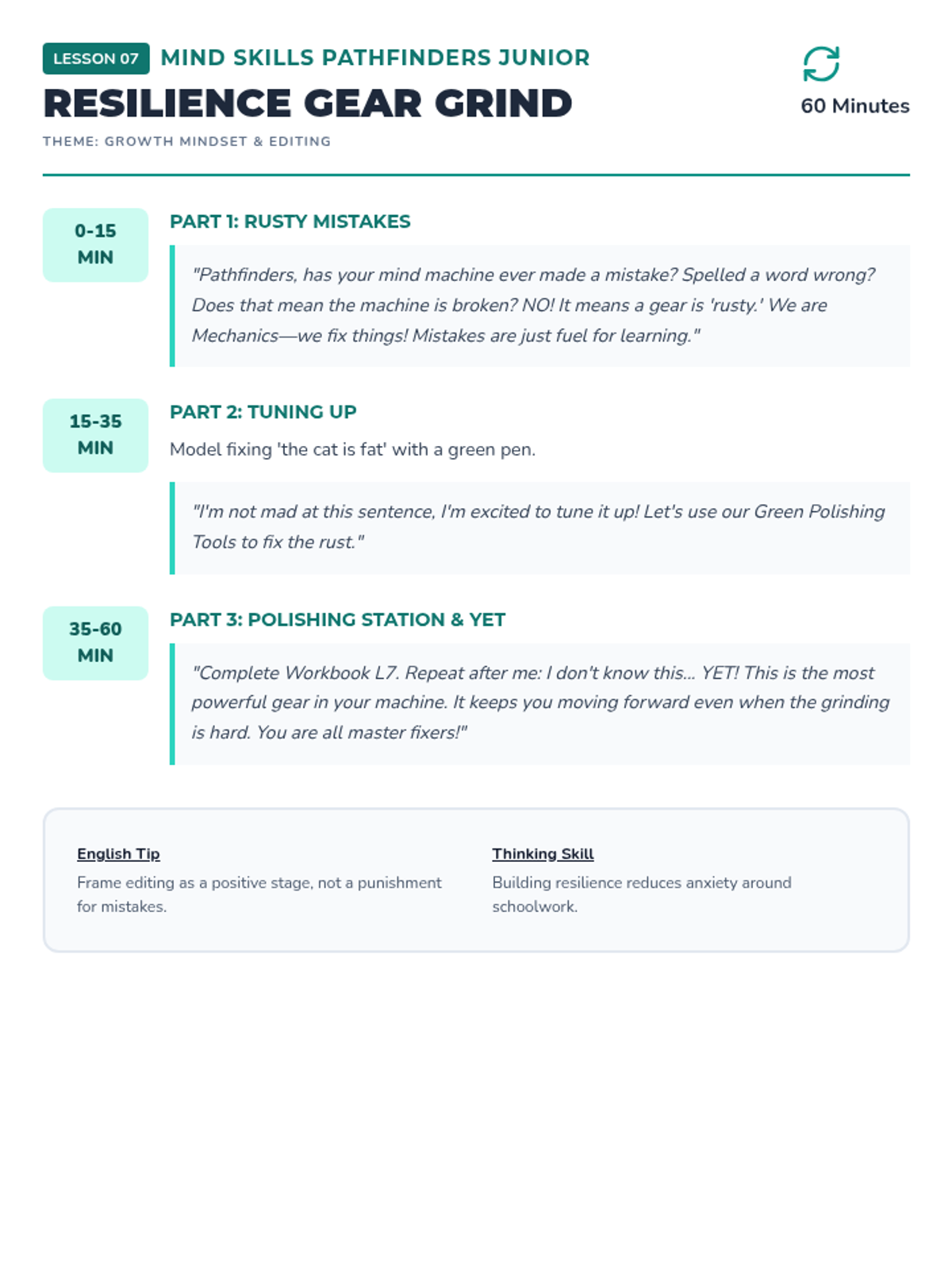
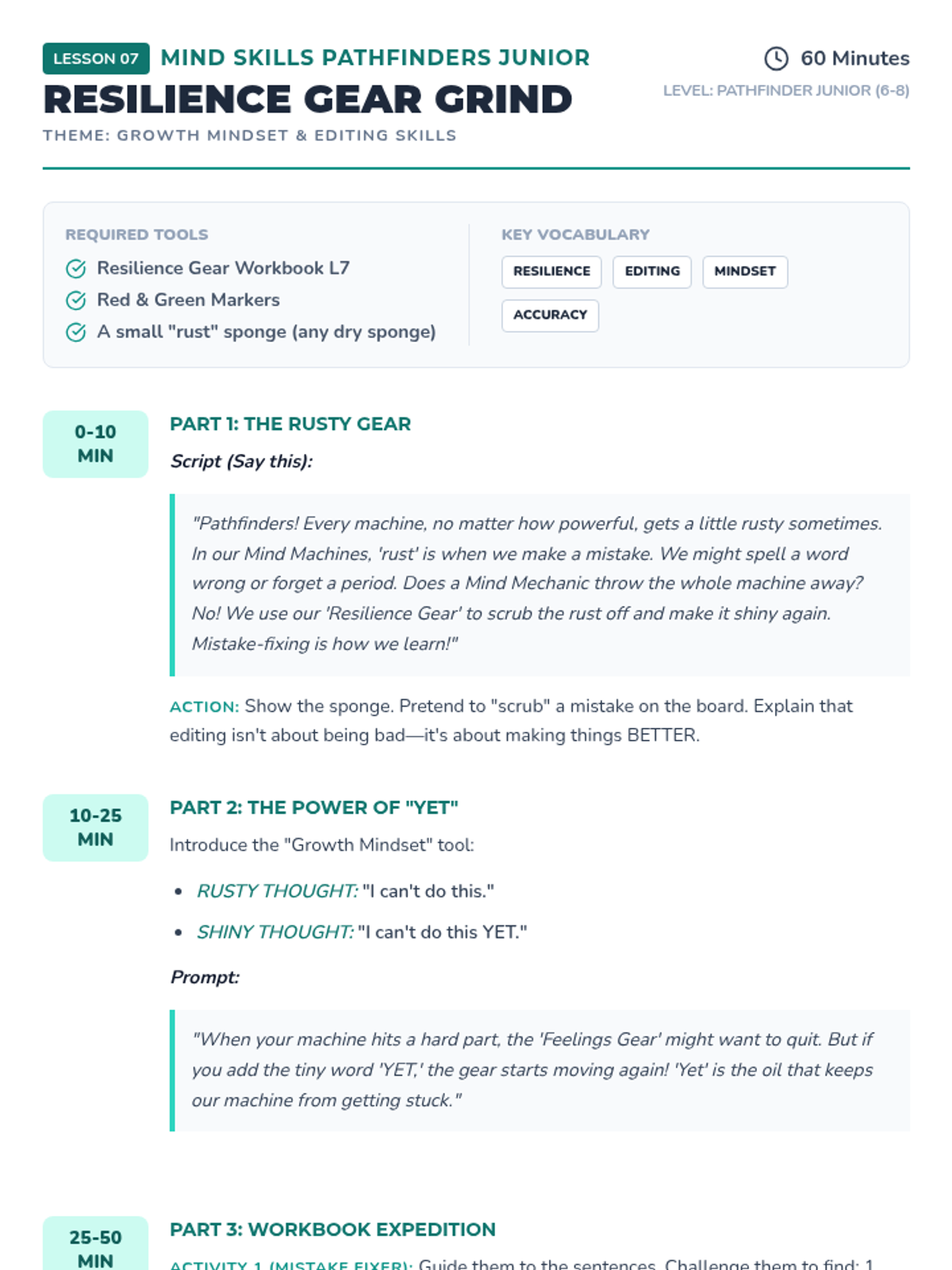
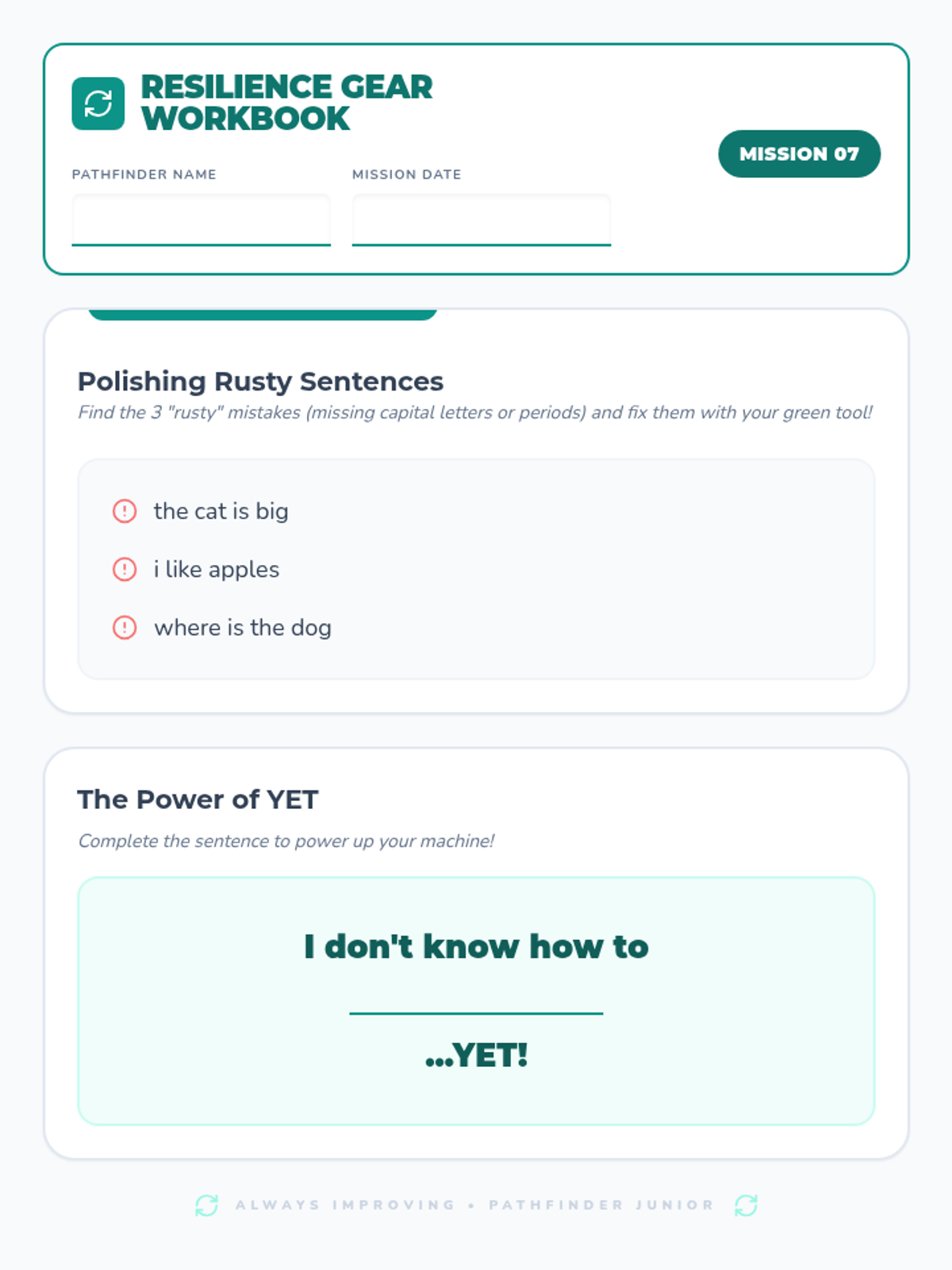
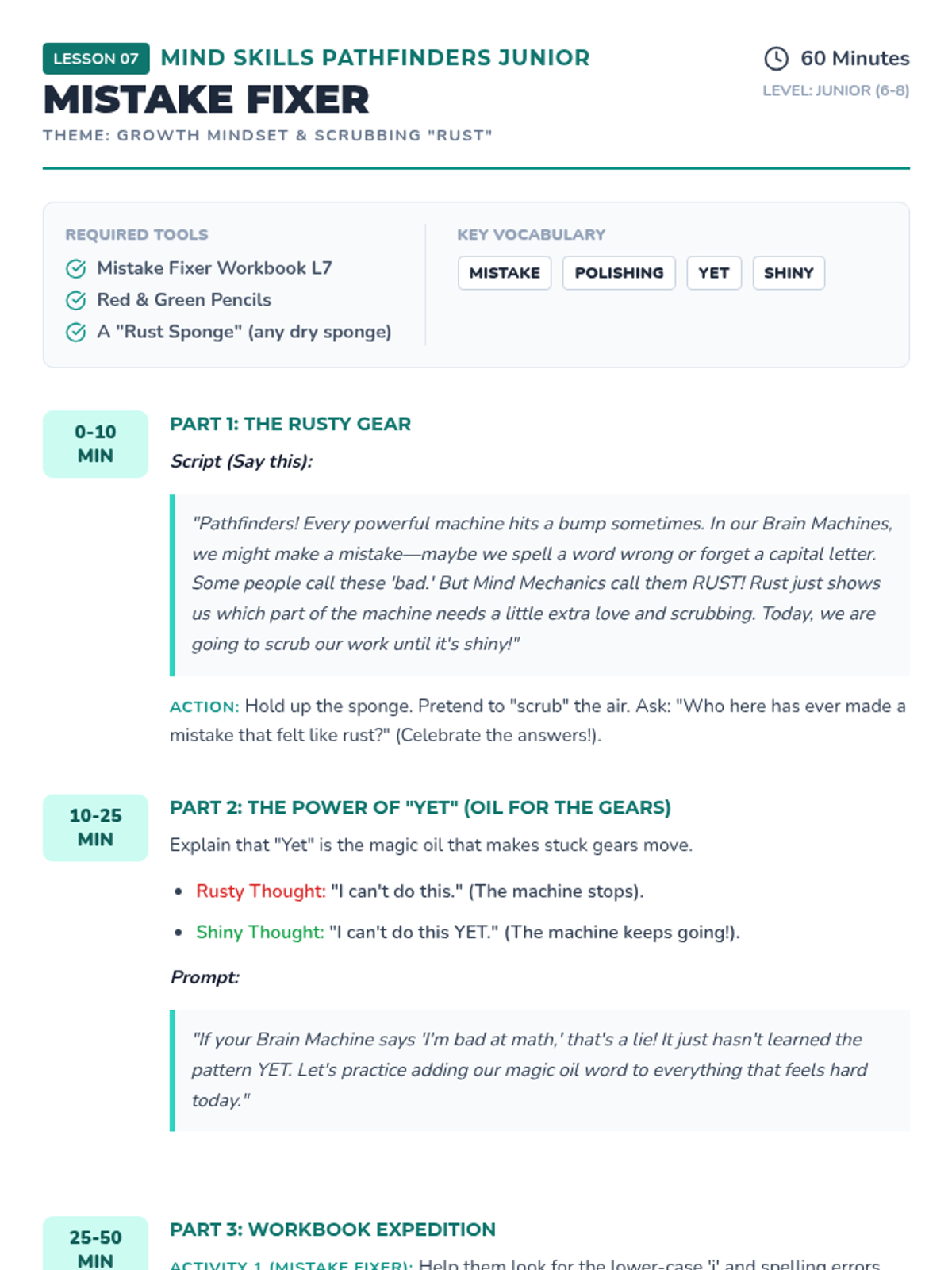
Introduces the growth mindset by comparing resilience to a gear that helps us keep moving forward even when we encounter 'rusty' mistakes.
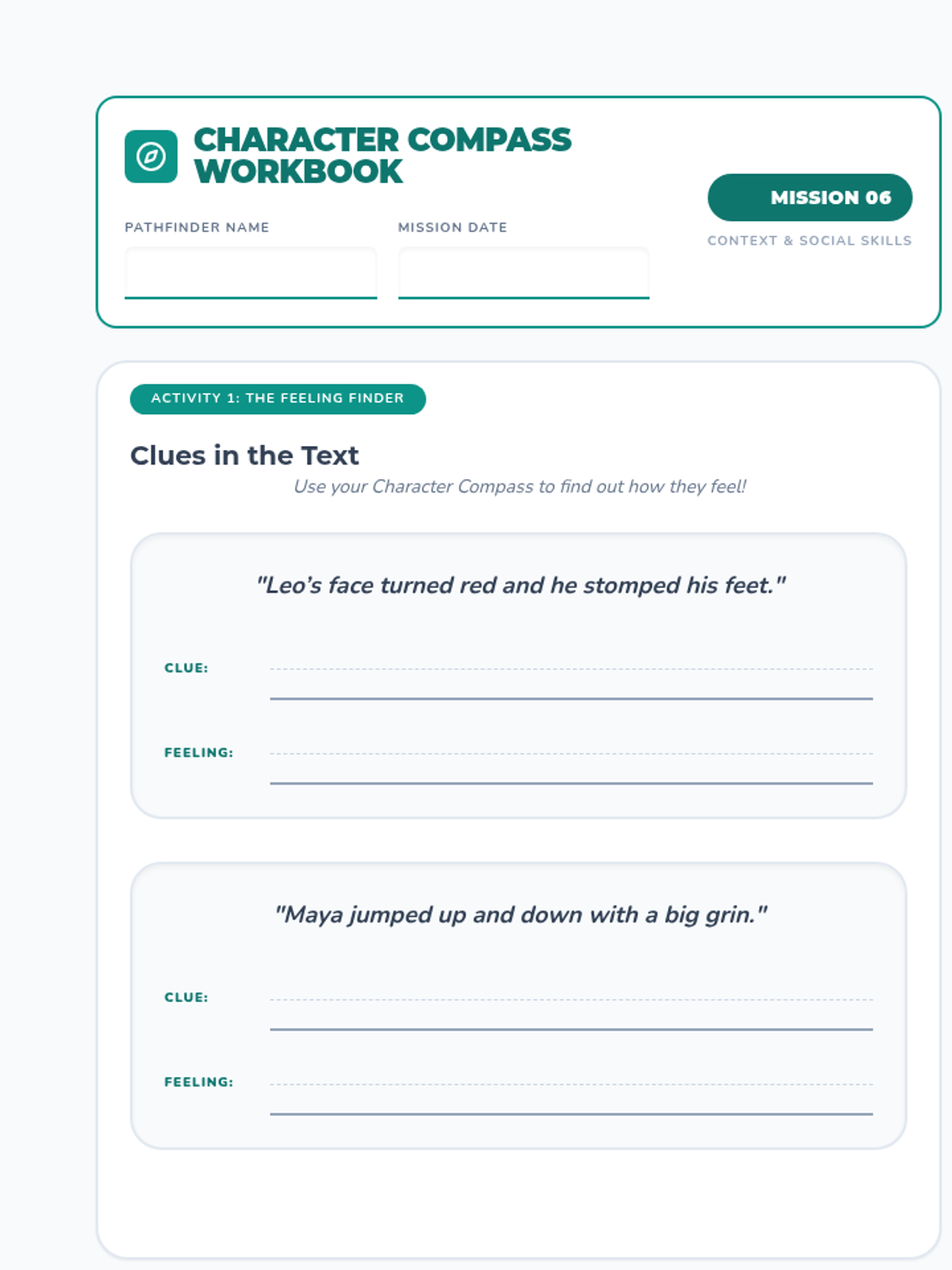
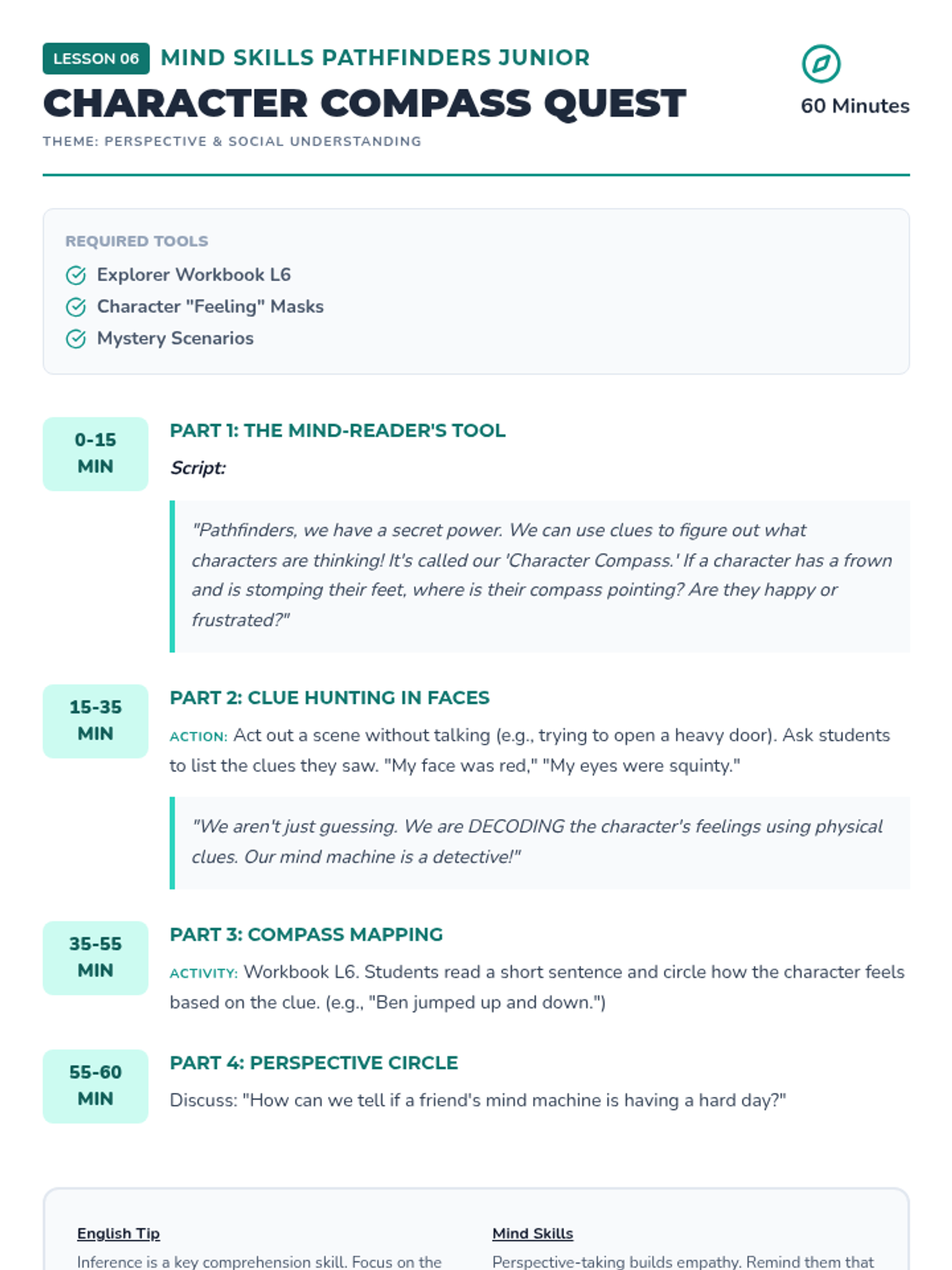
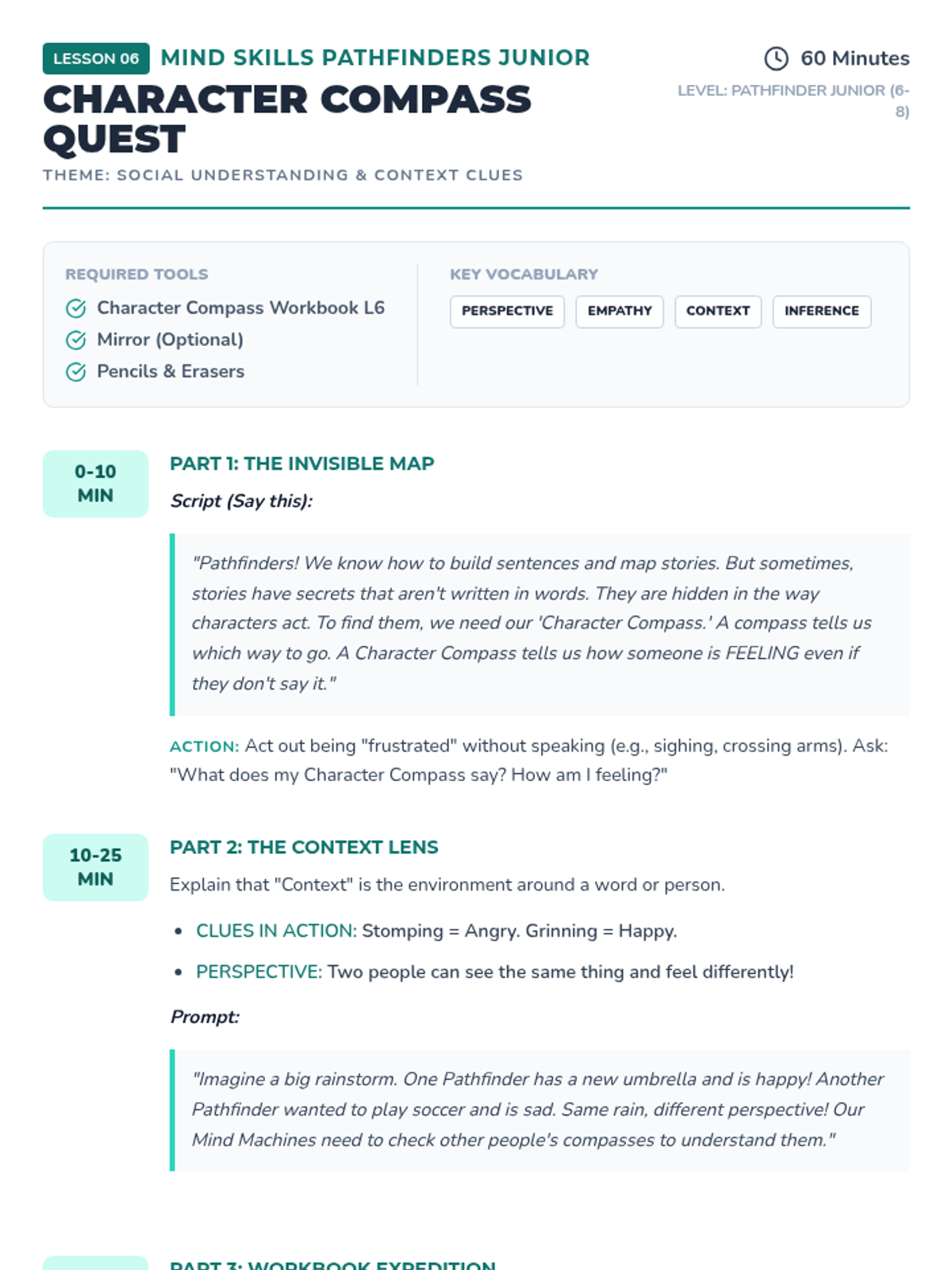
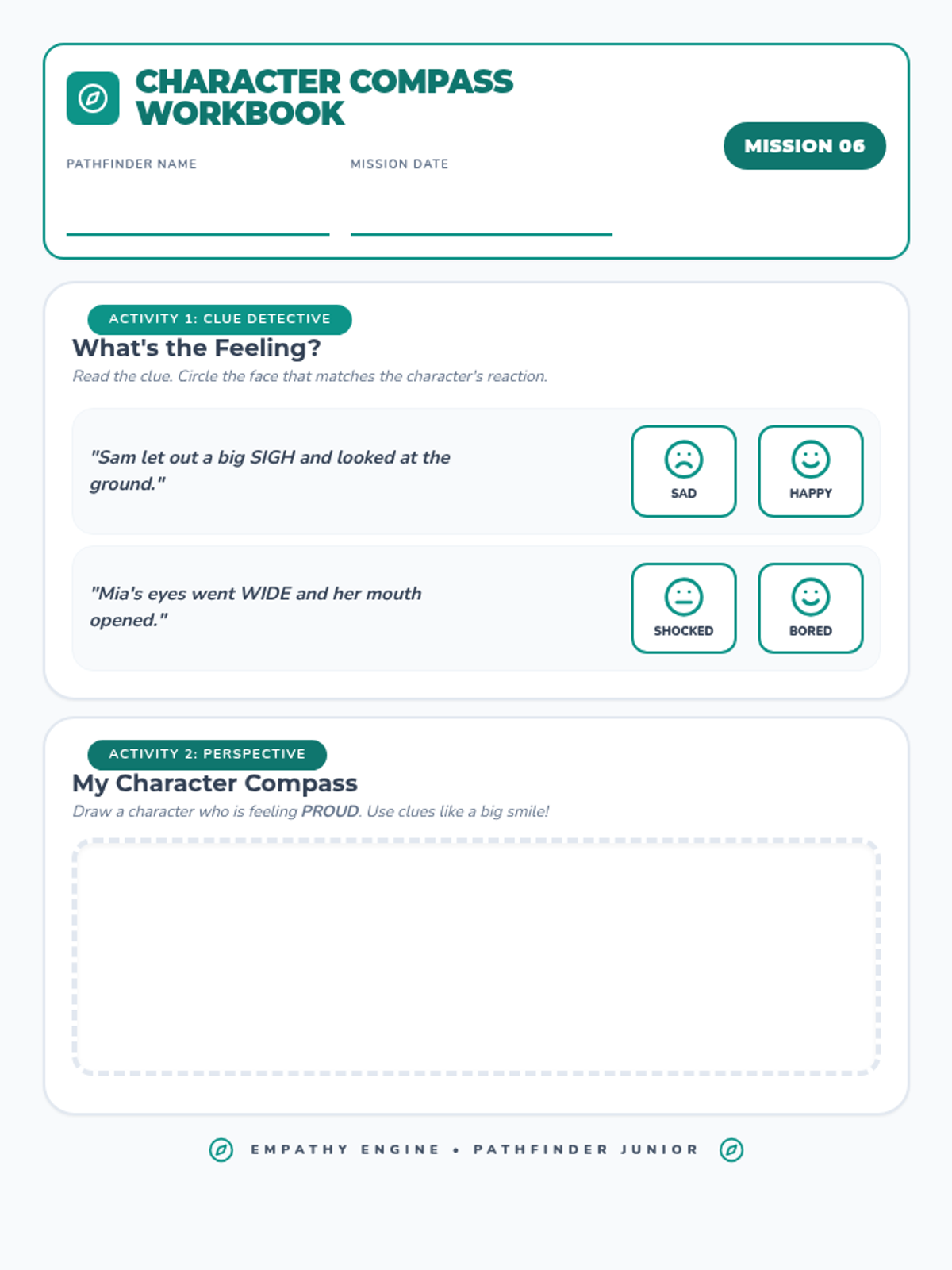
Explores social understanding by teaching students how to use their 'internal compass' to interpret character feelings and perspectives in texts.
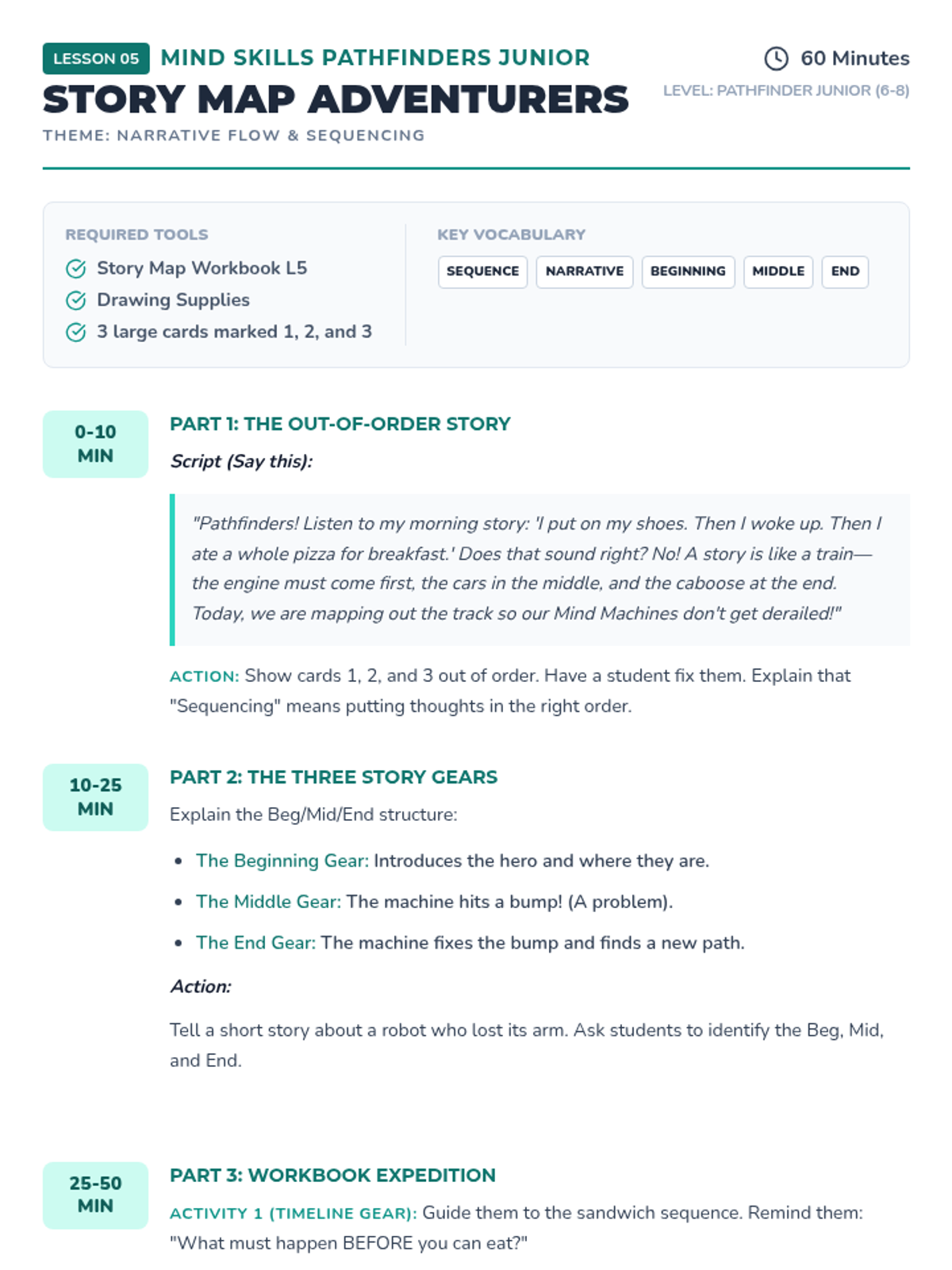
Uses story mapping to help students visualize narrative flow and understand how different parts of a story connect to form a whole.
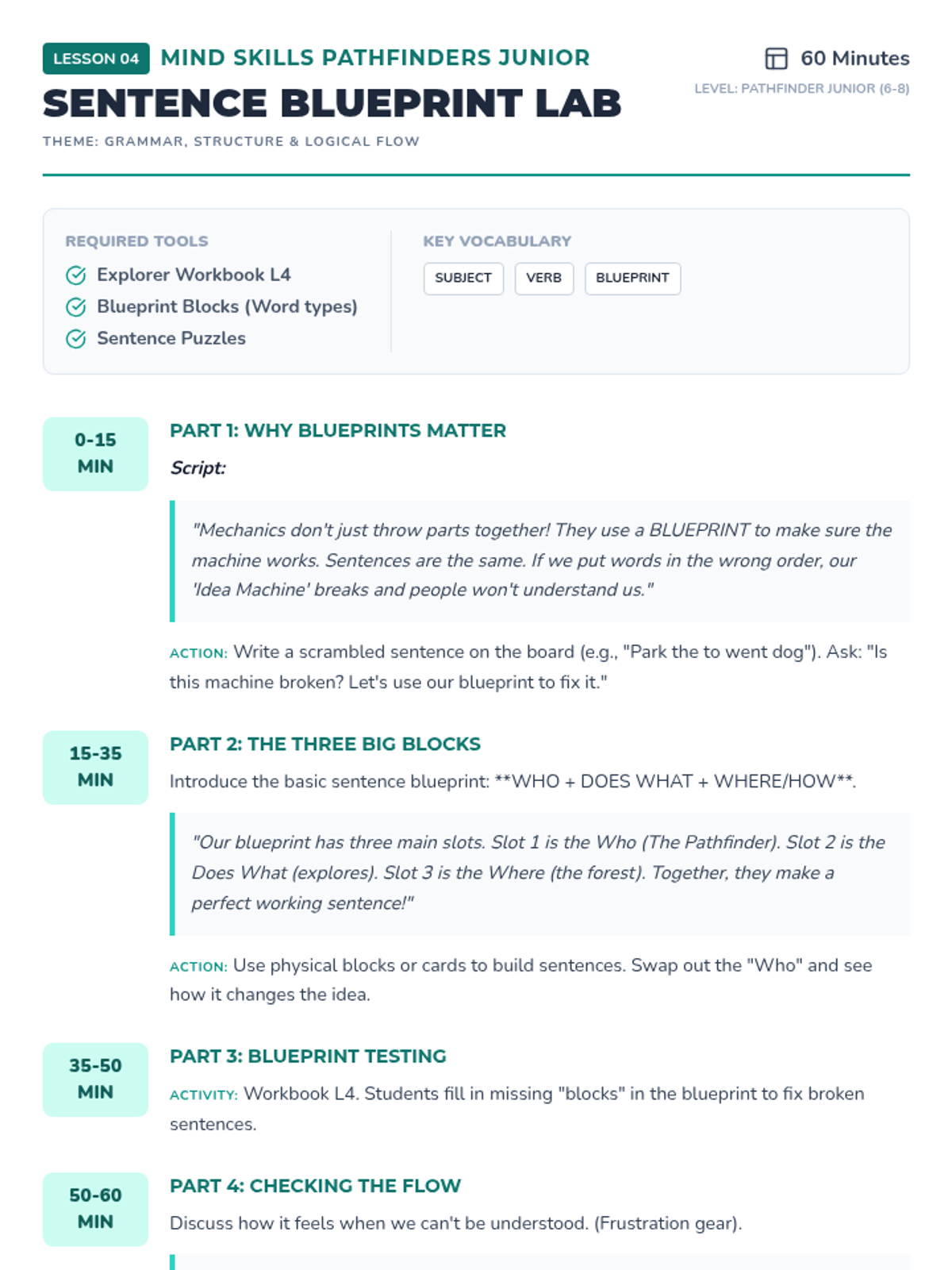
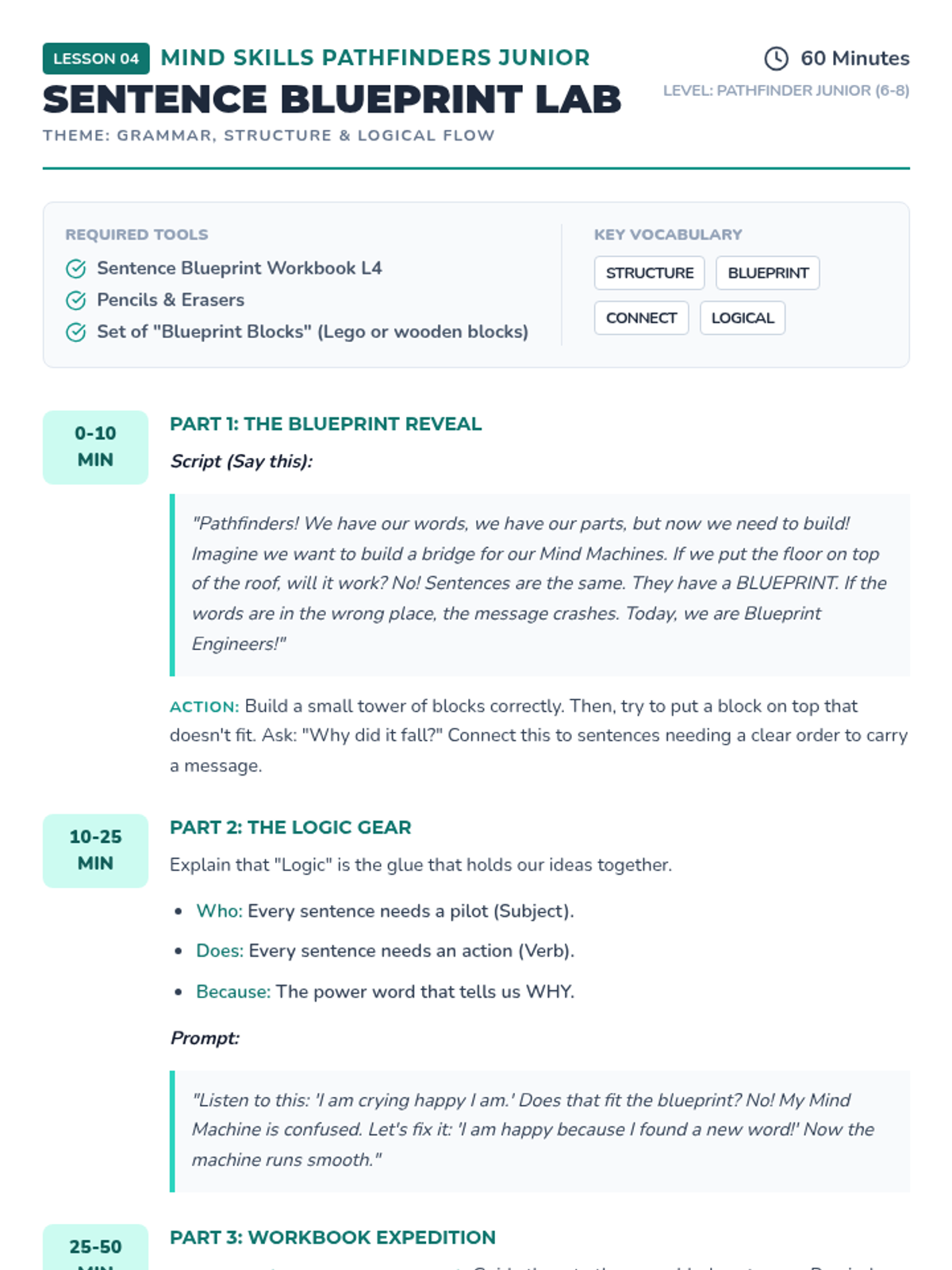
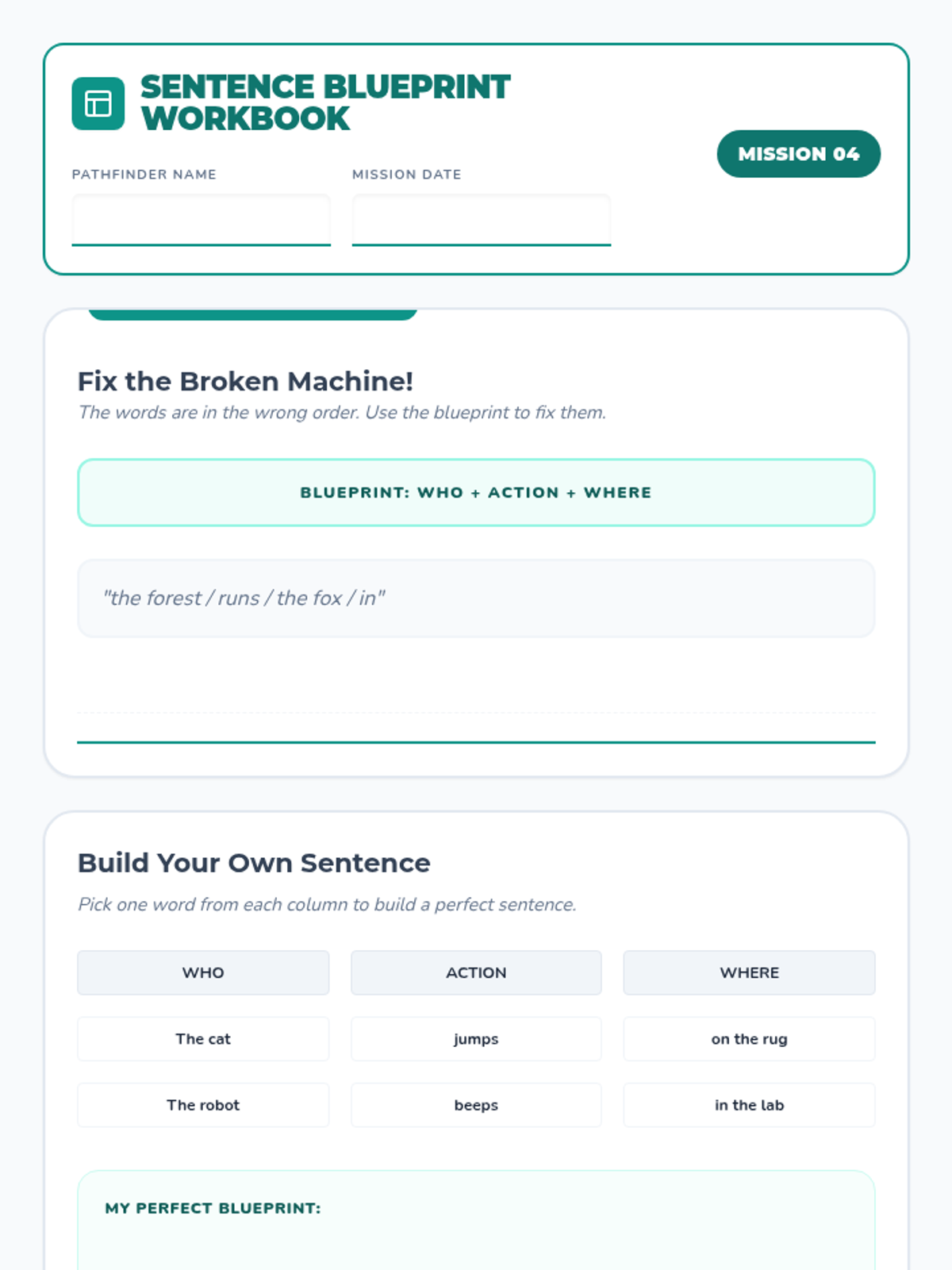
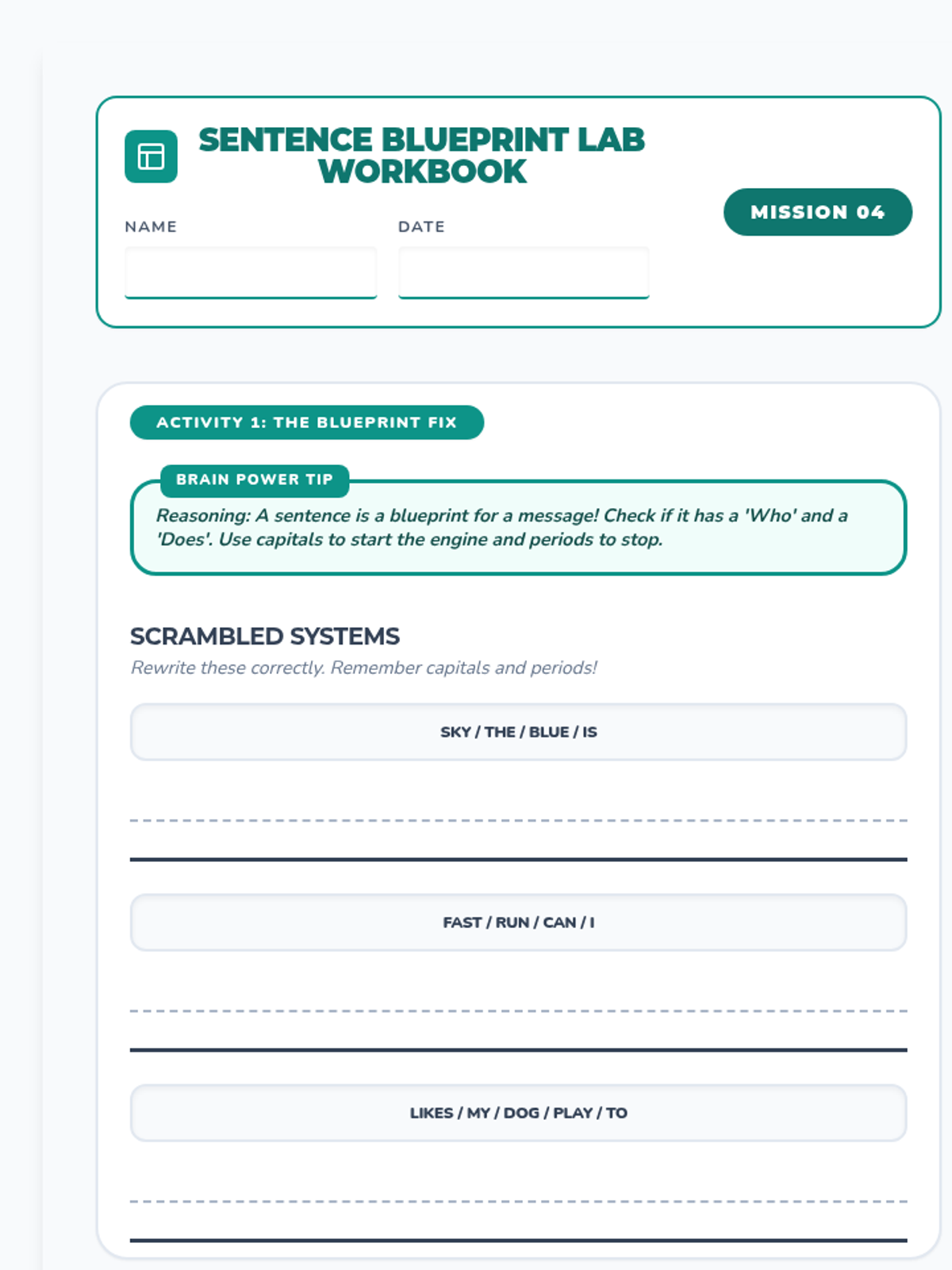
Teaches basic grammar and sentence structure as the 'blueprints' that help us express ideas clearly so others can understand our thoughts.
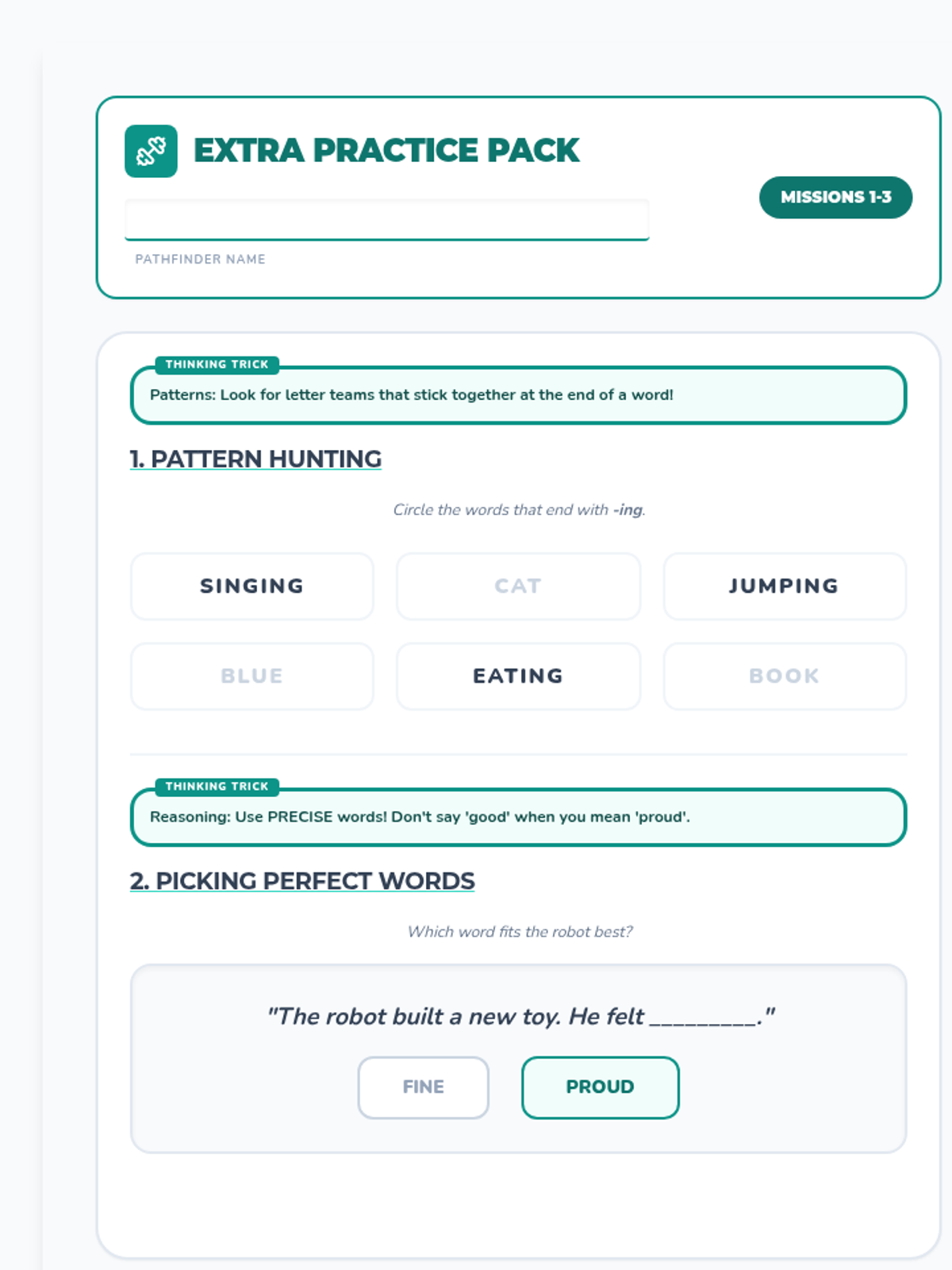
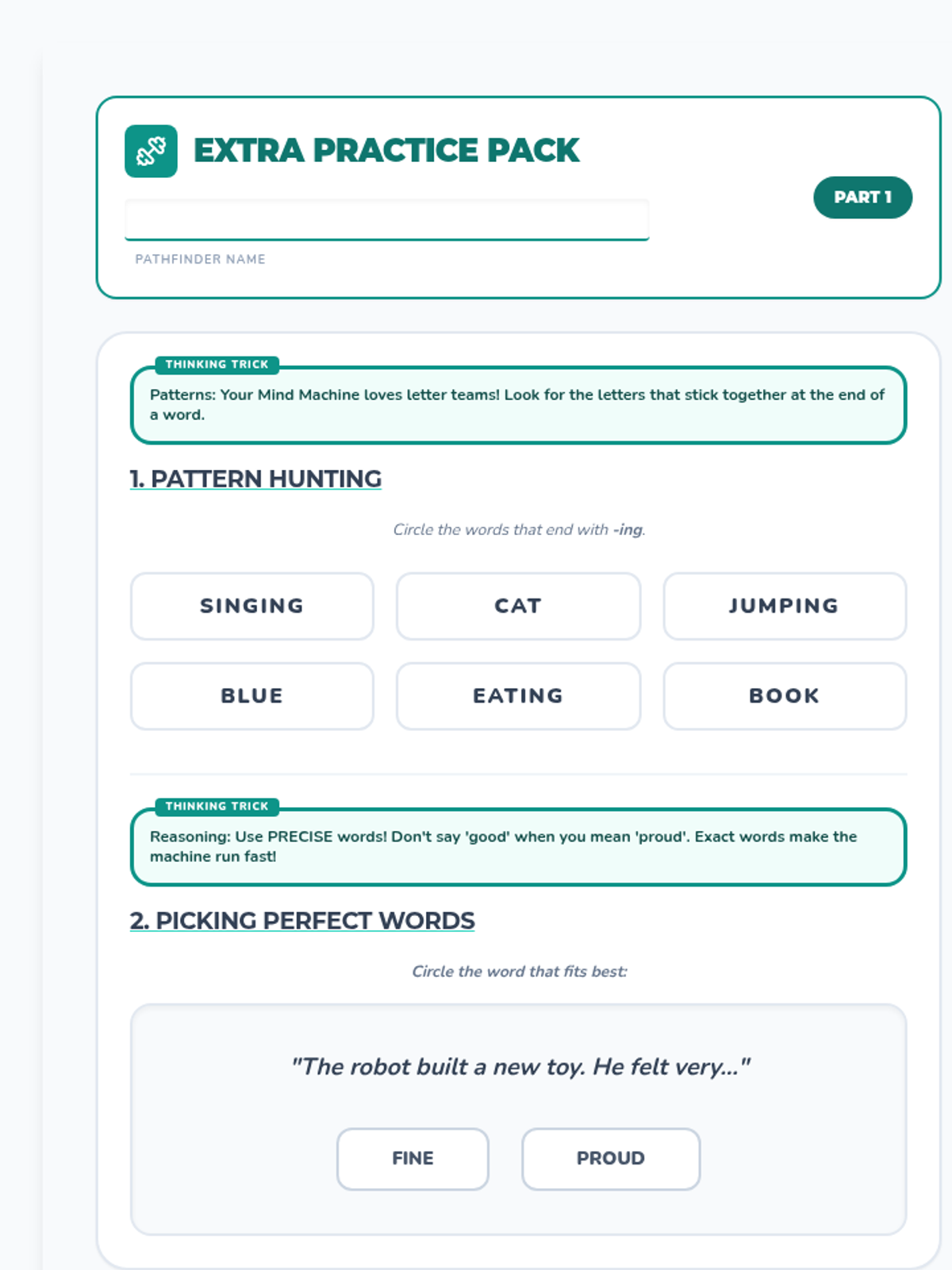
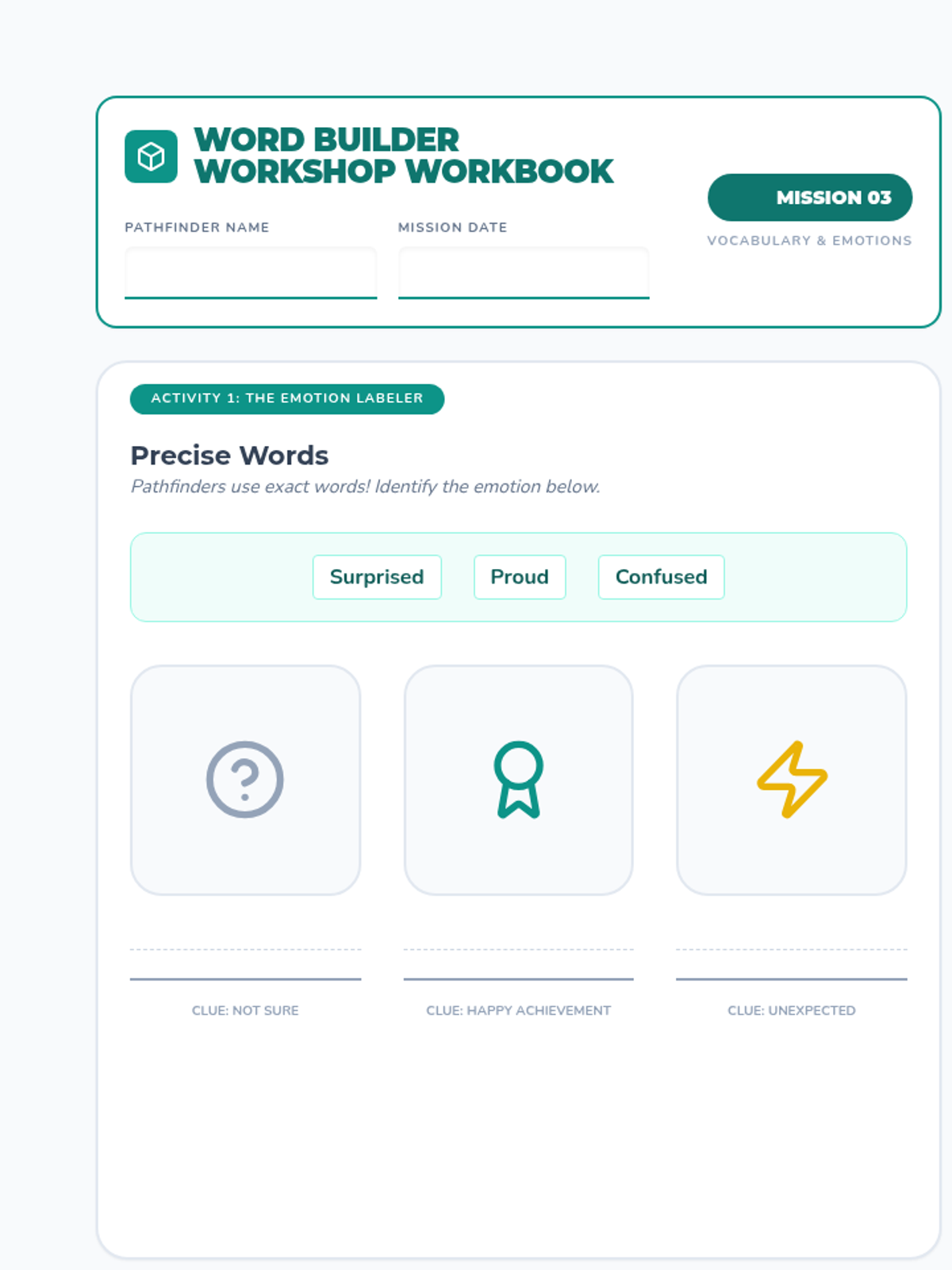
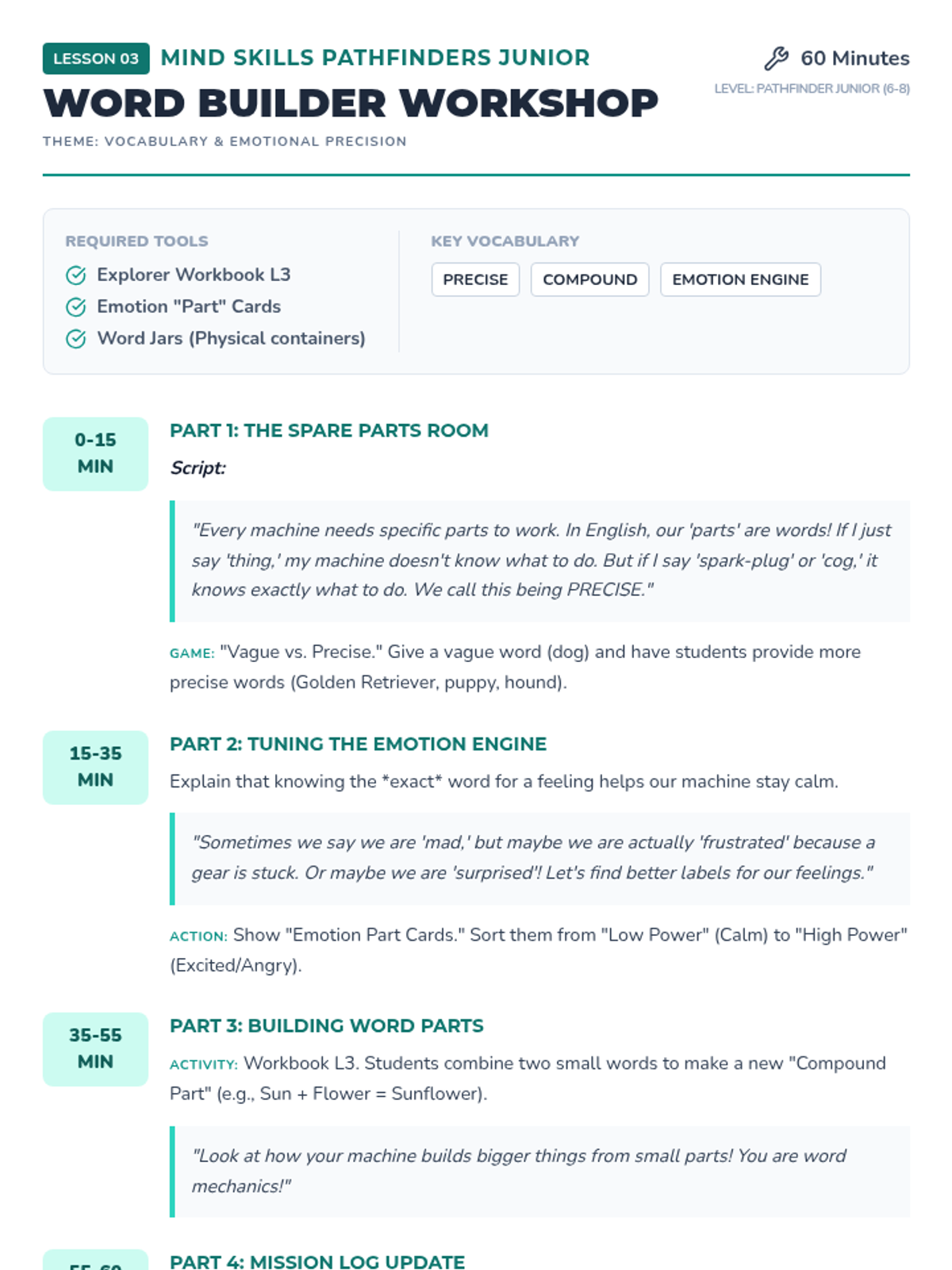
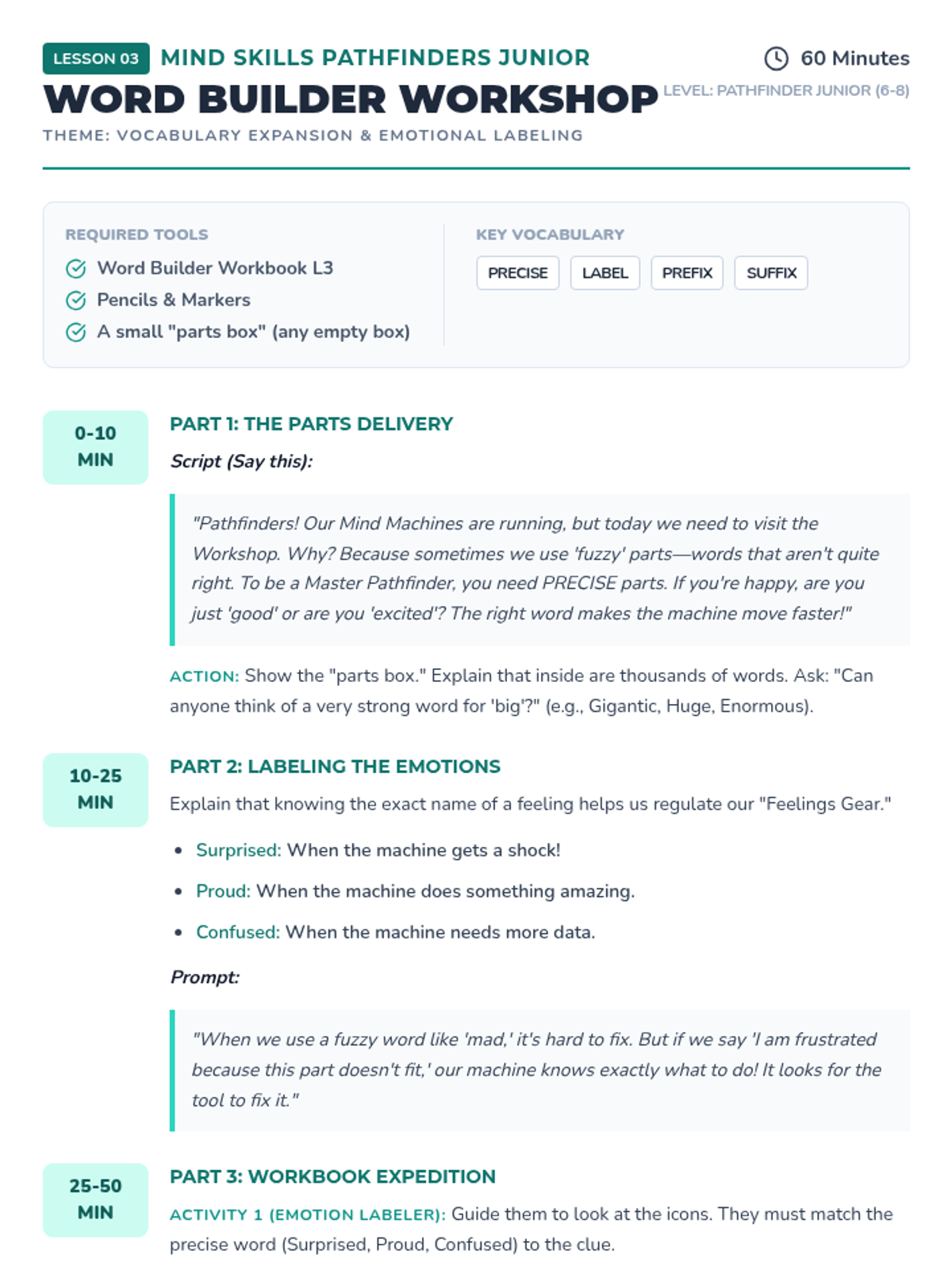
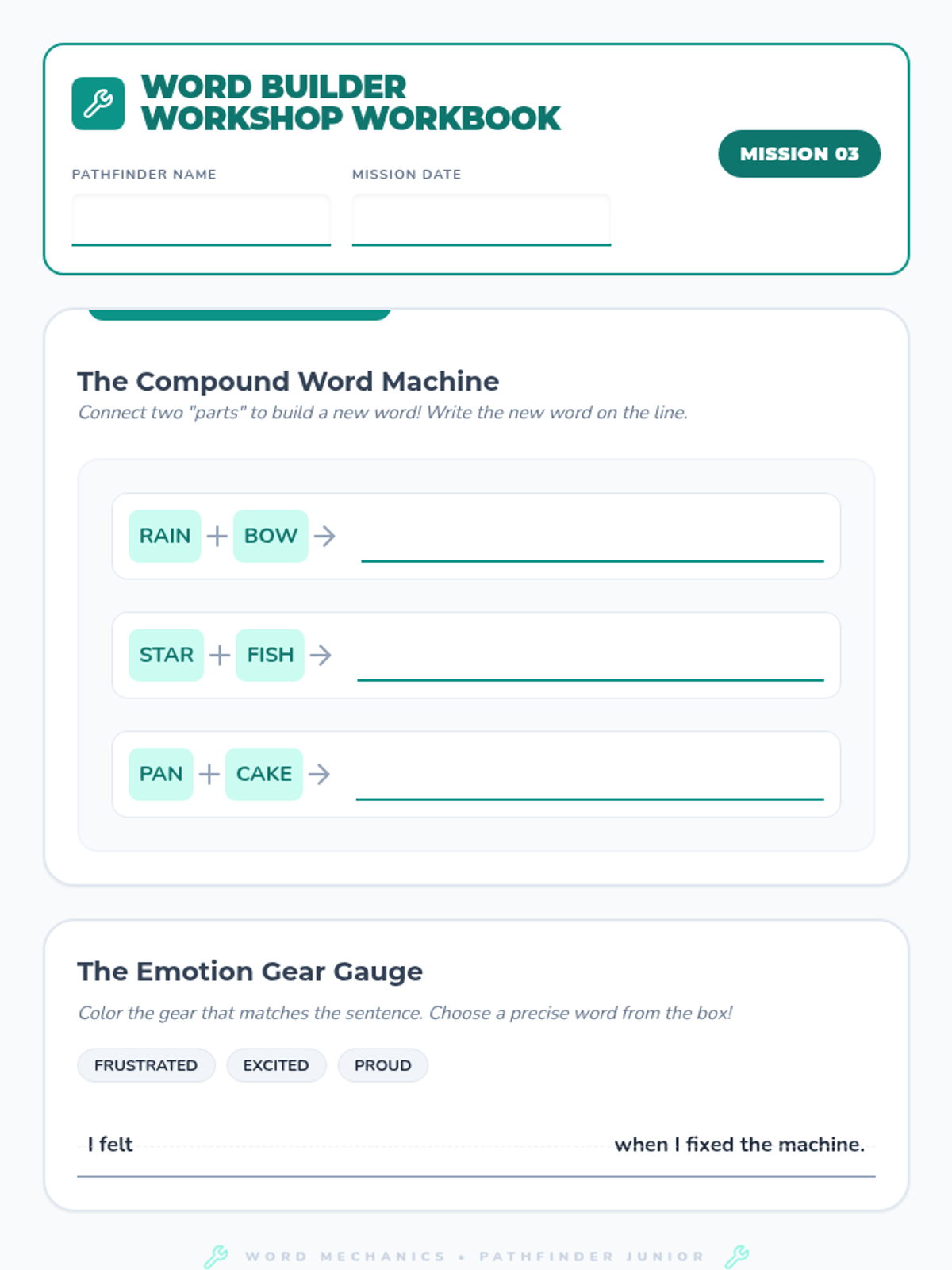
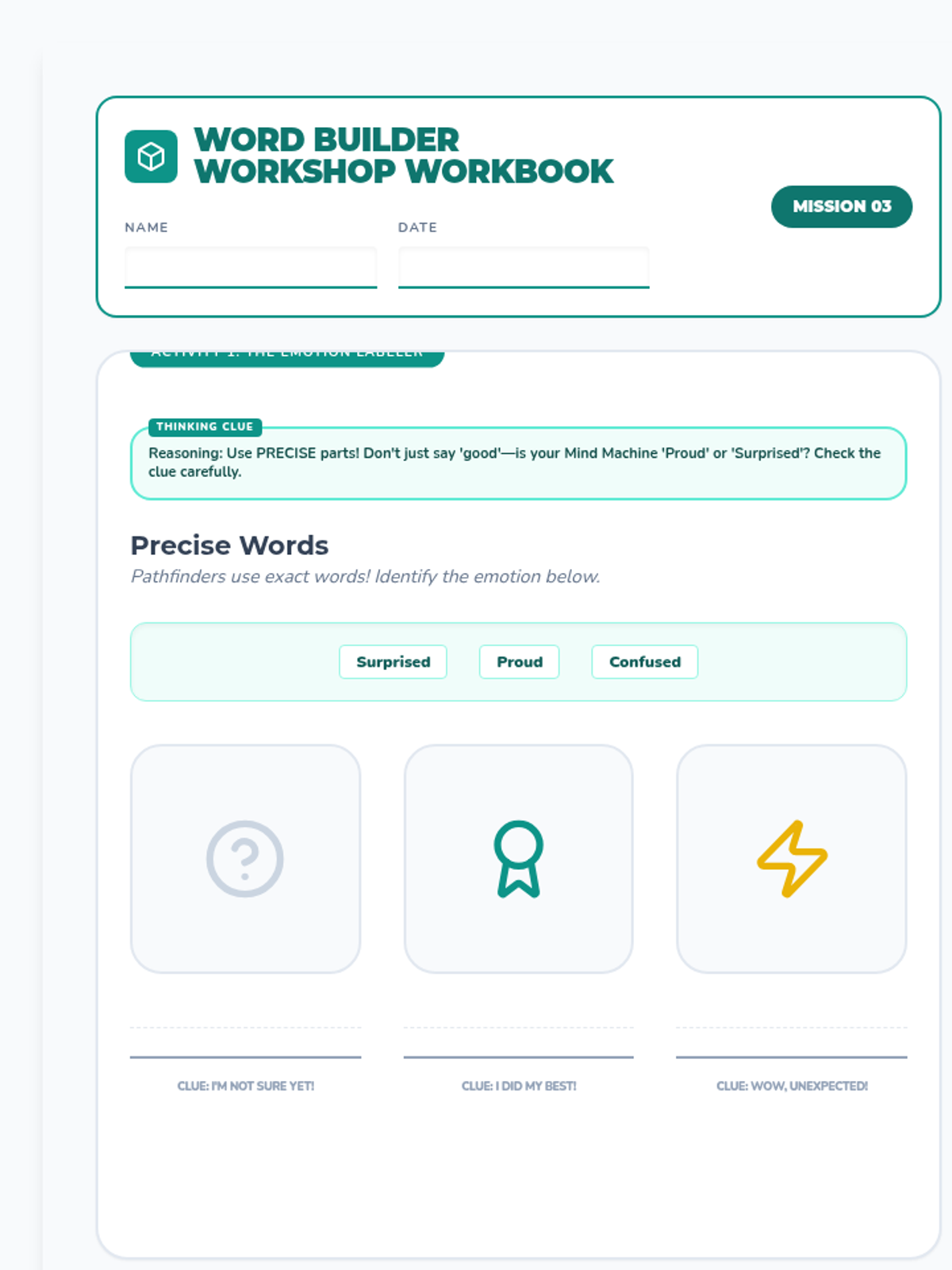
Introduces vocabulary building through the lens of 'parts' for our mind machines, focusing on labeling emotions and objects with precision.
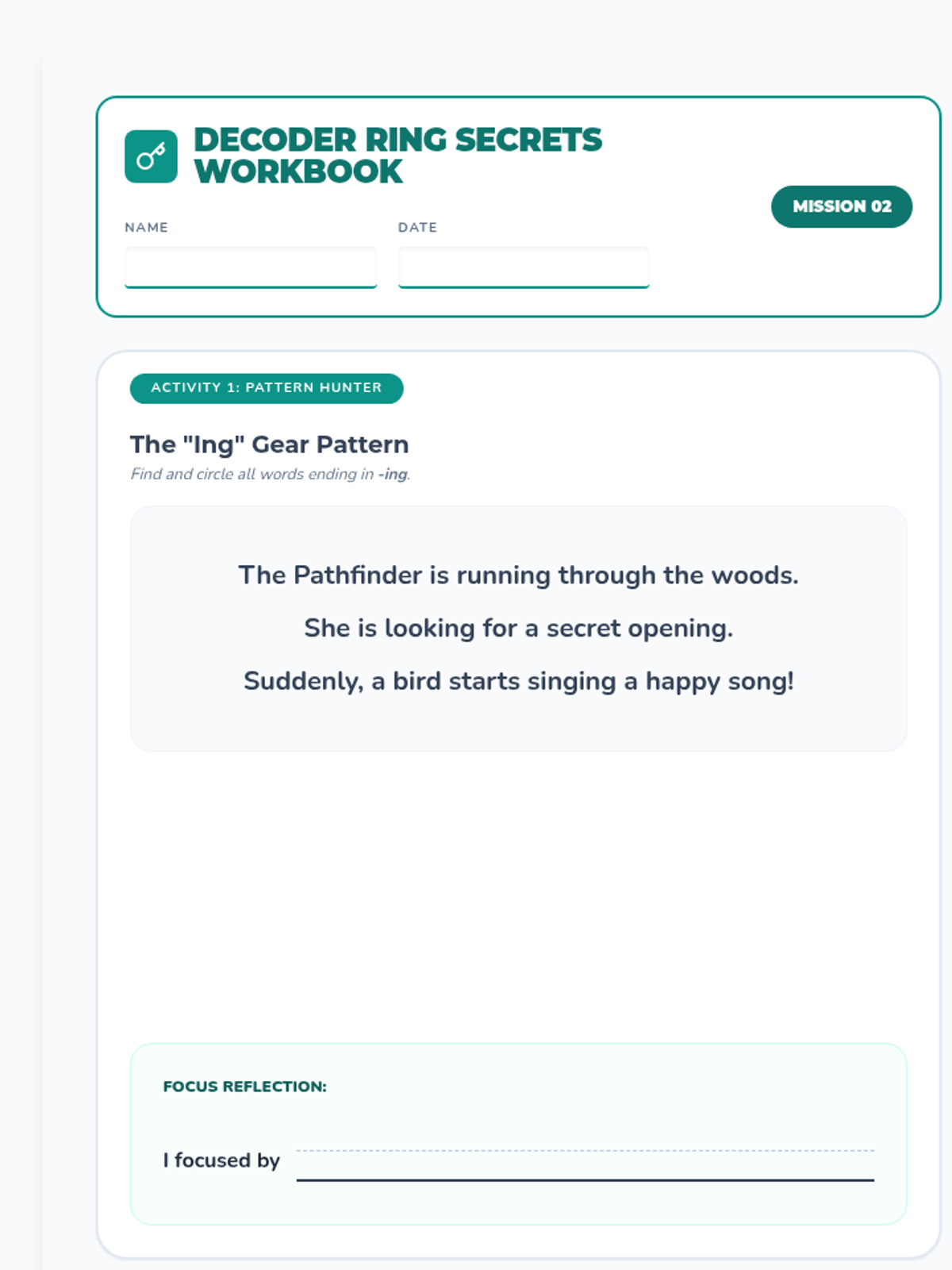
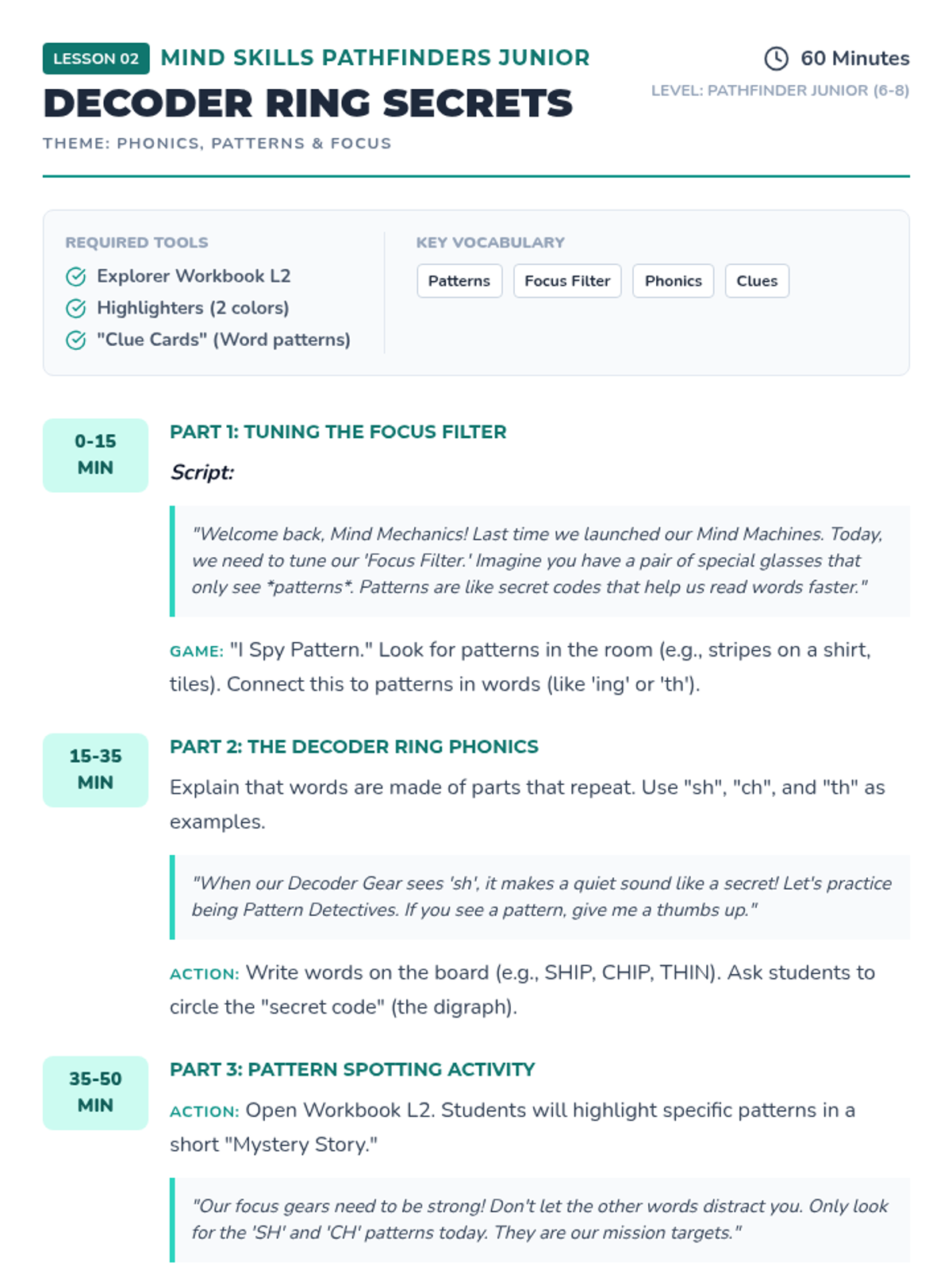
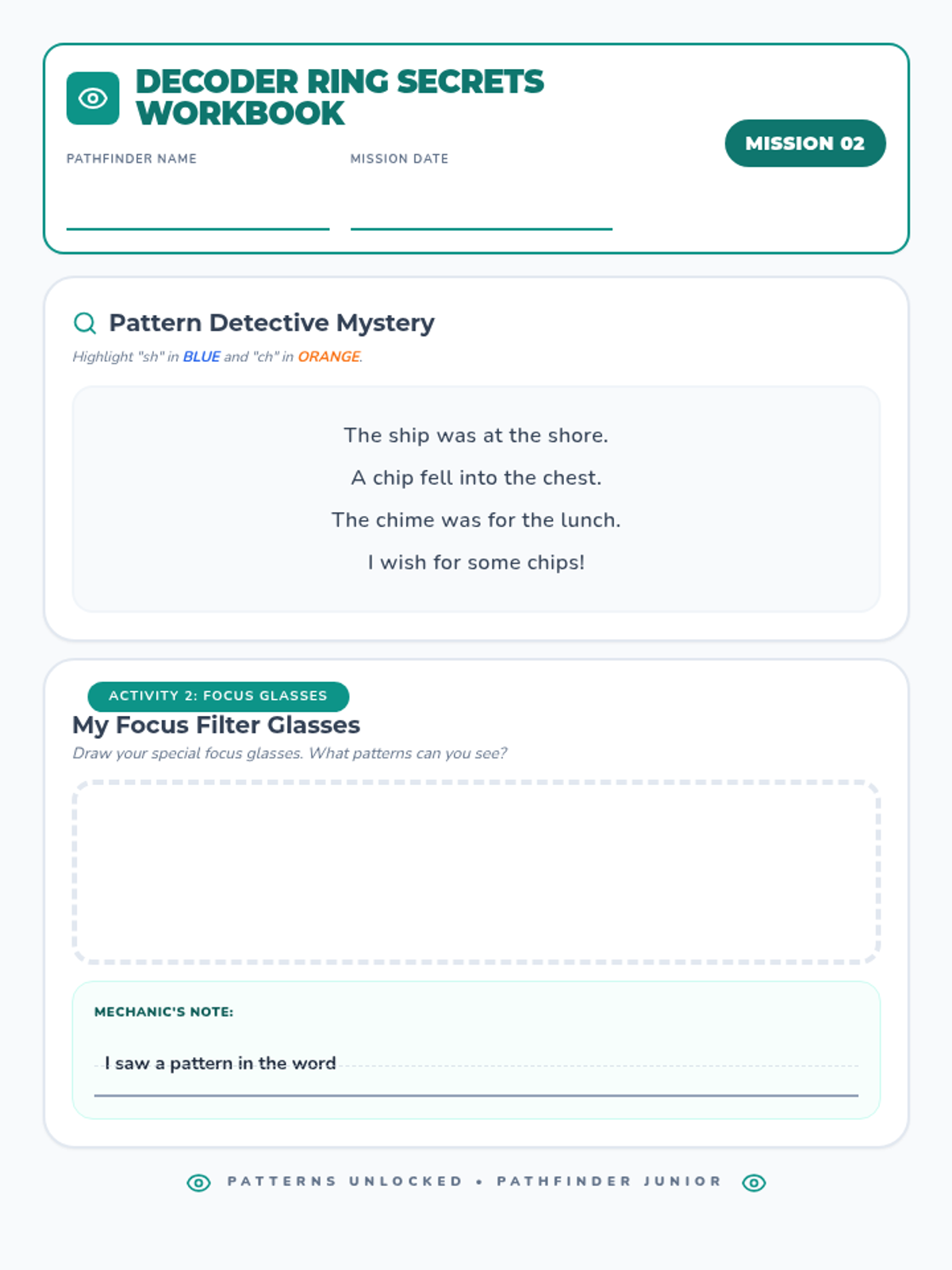
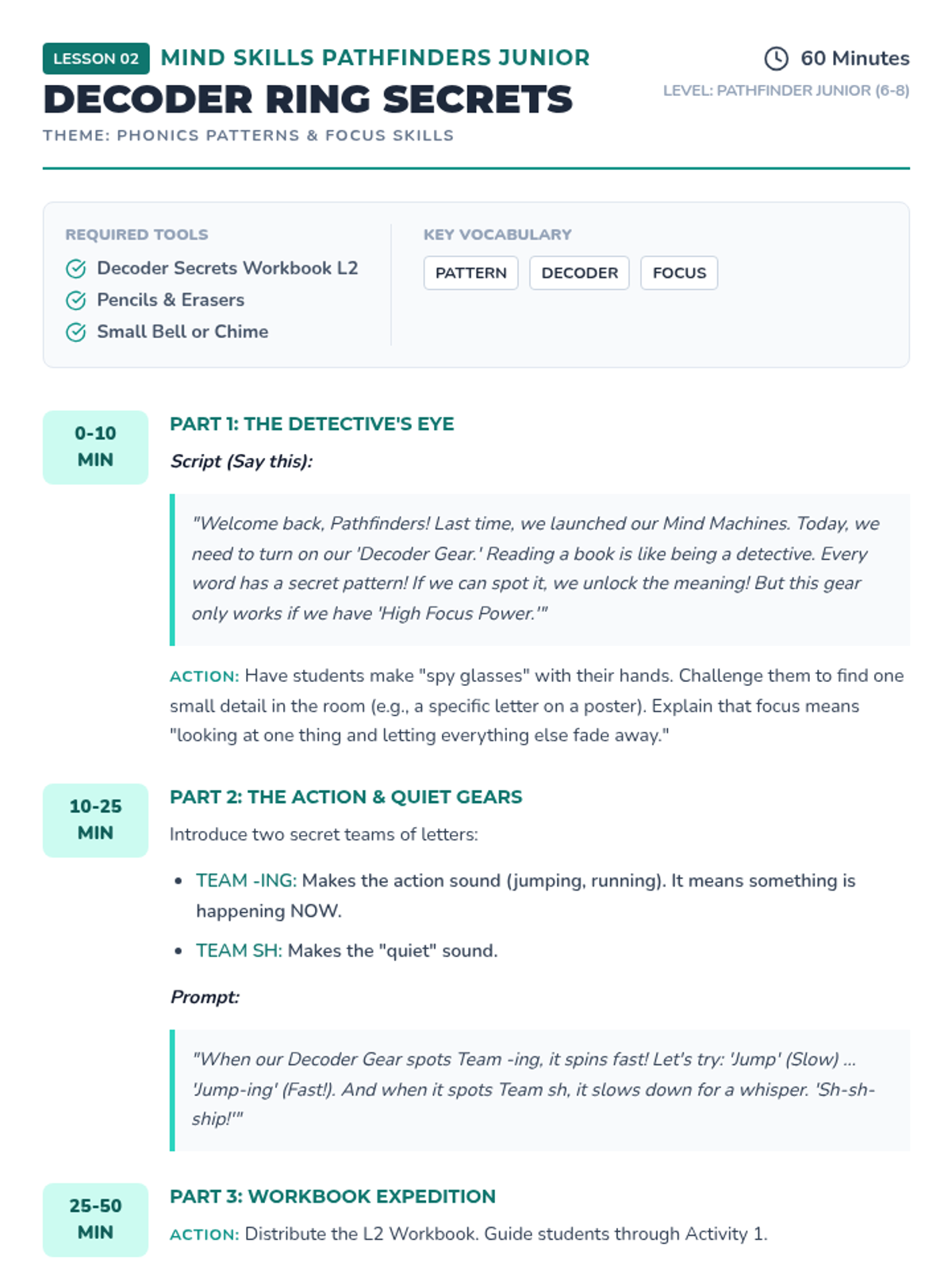
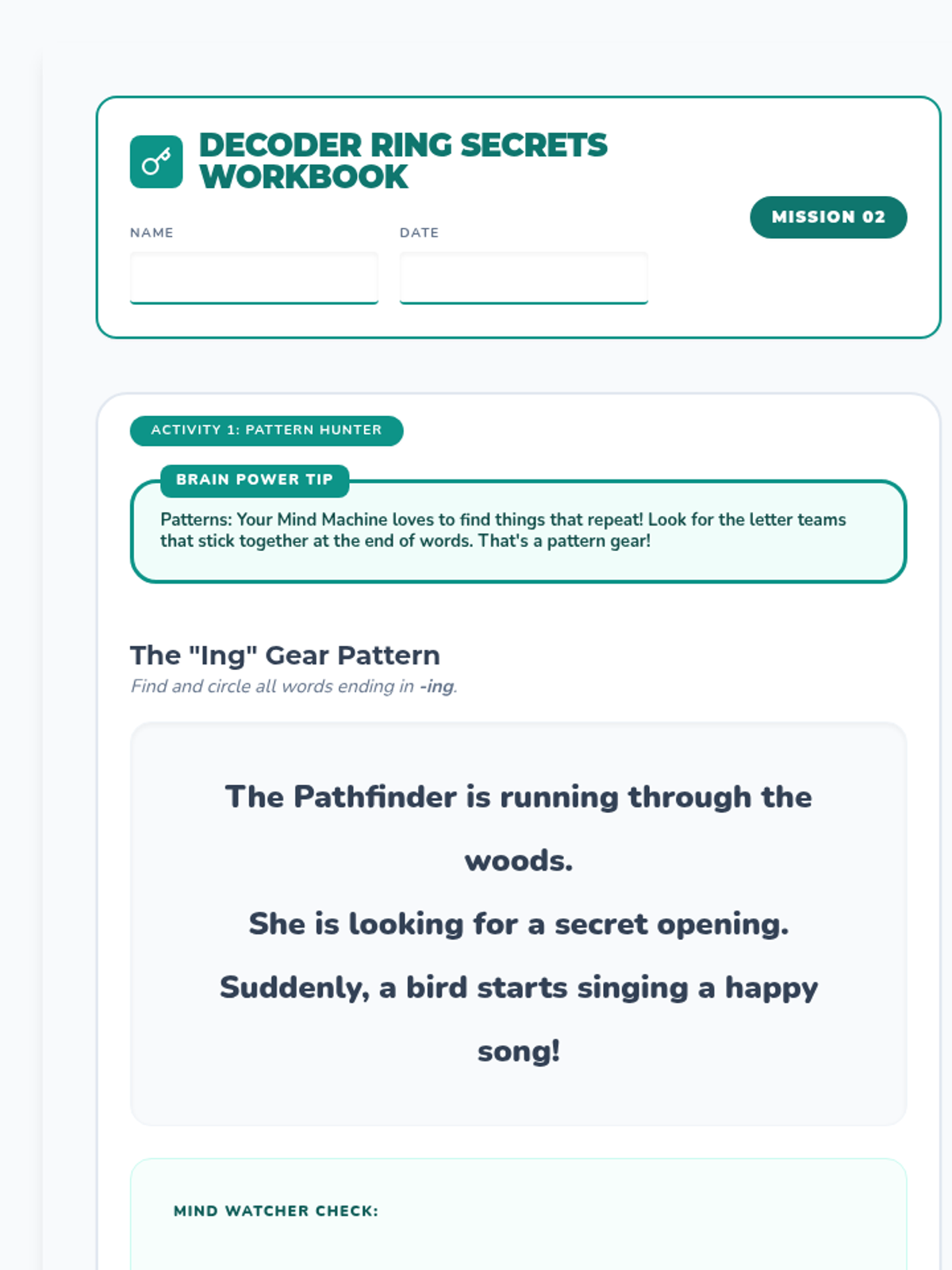
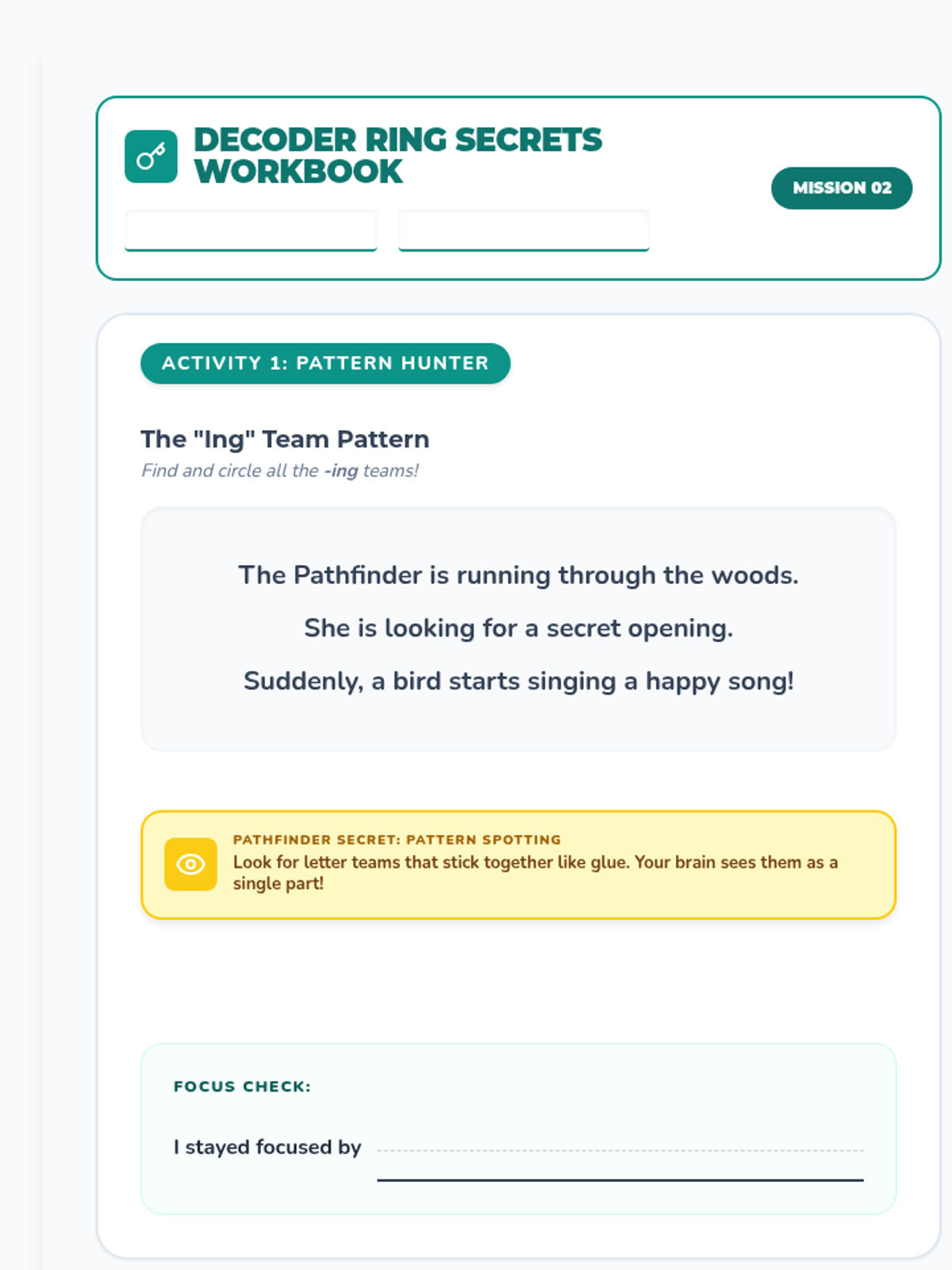
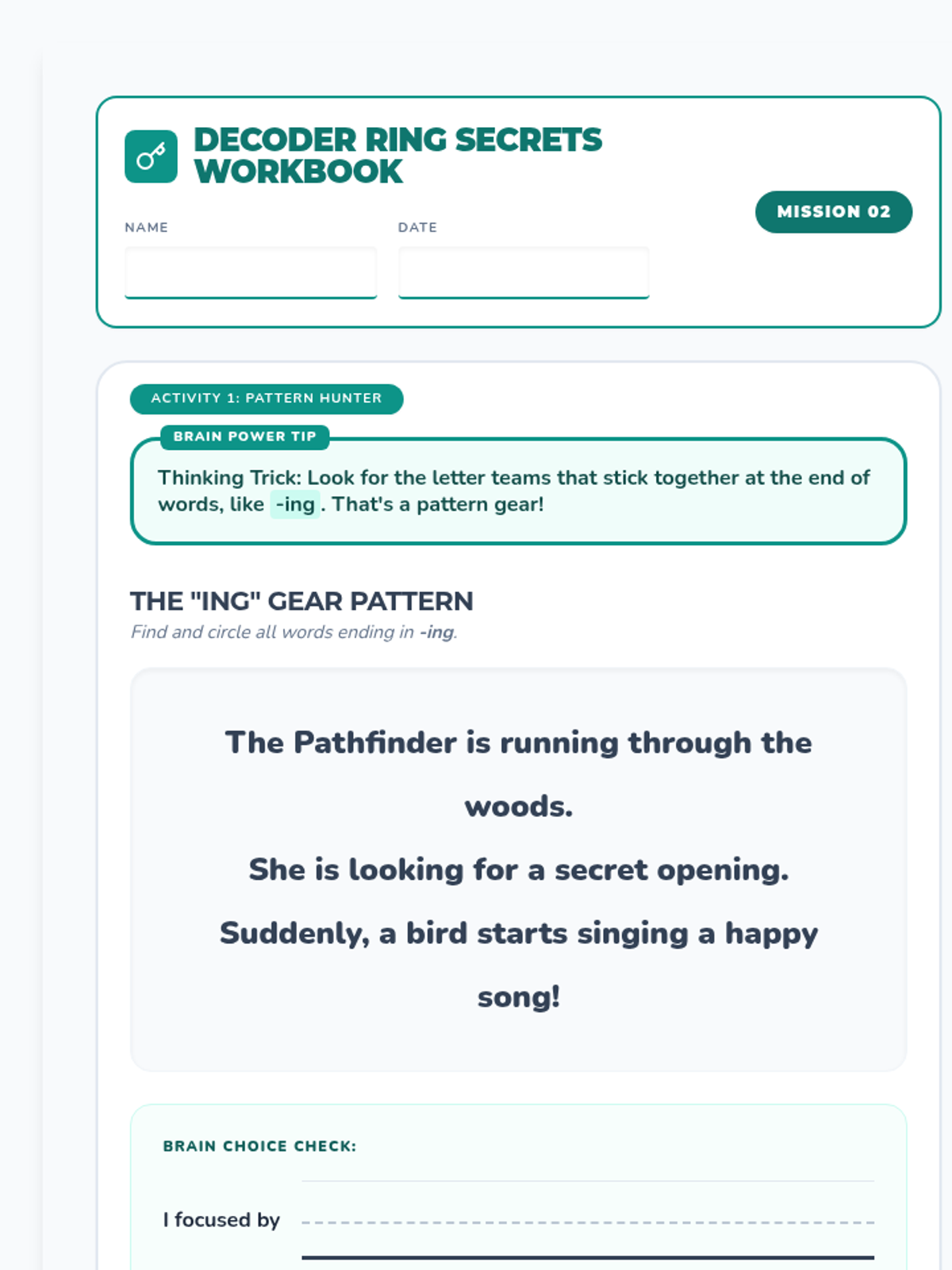
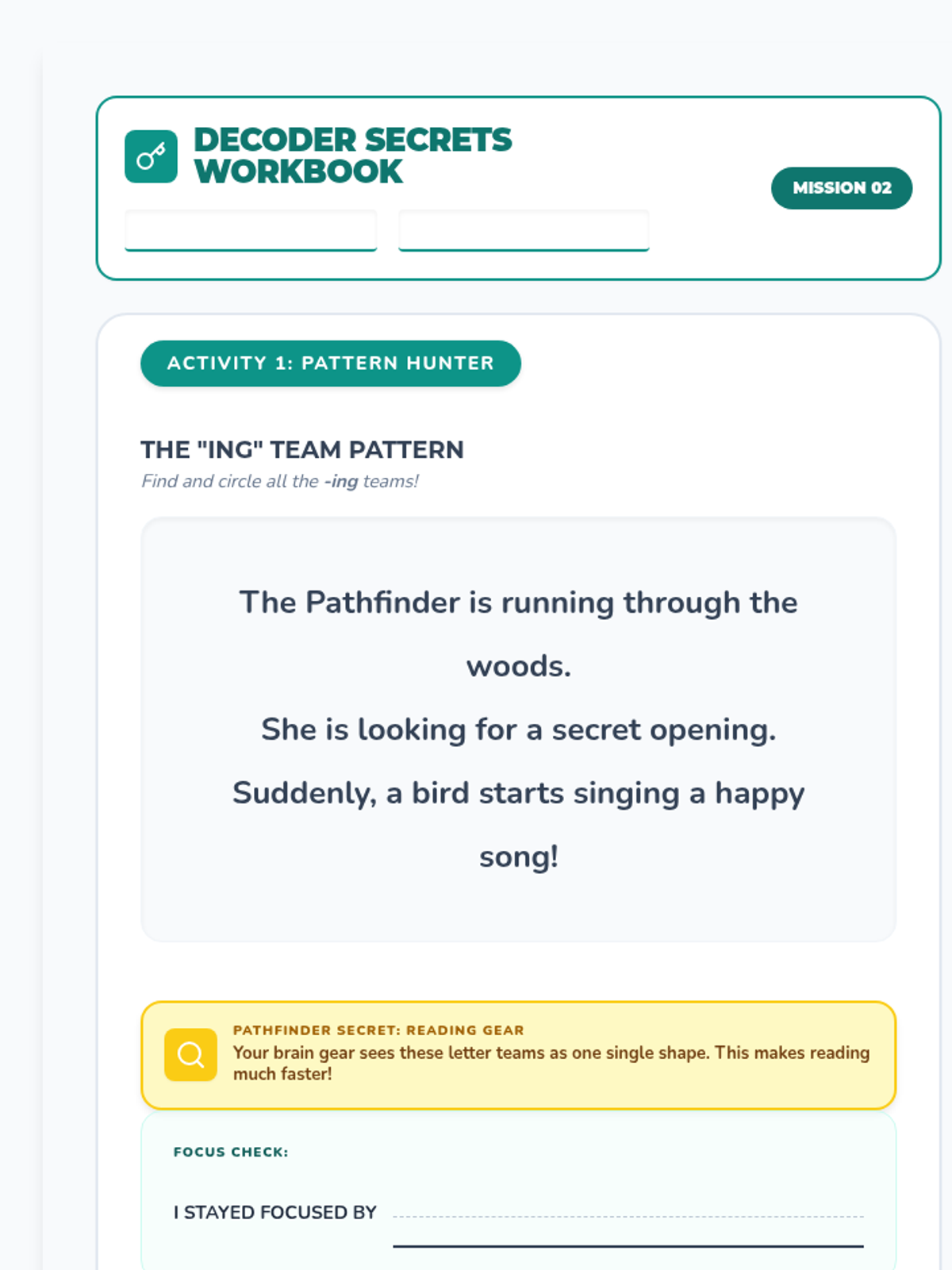
Focuses on phonics and pattern spotting in text, teaching students that reading is a form of detective work where we look for clues to unlock meaning.
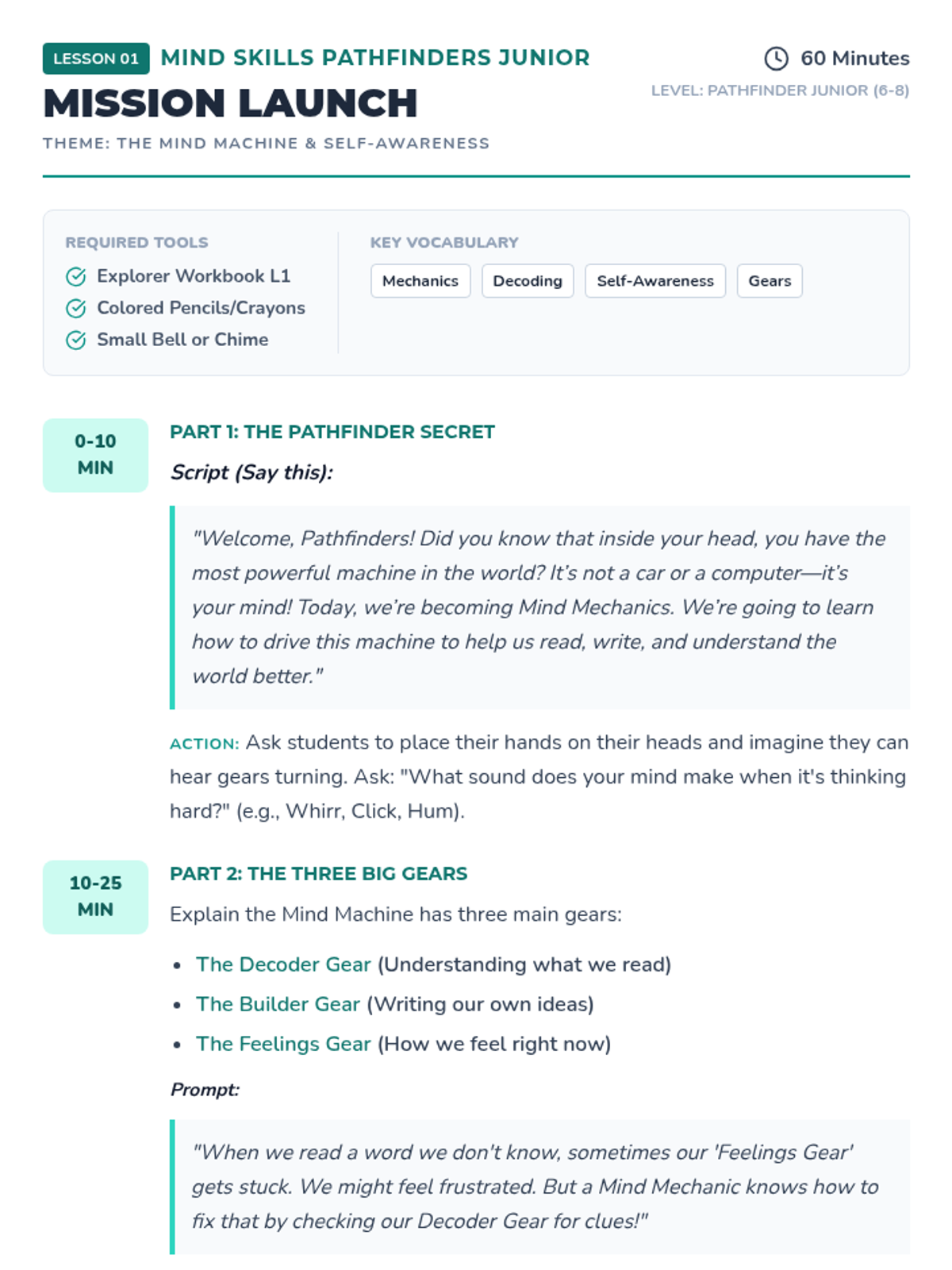
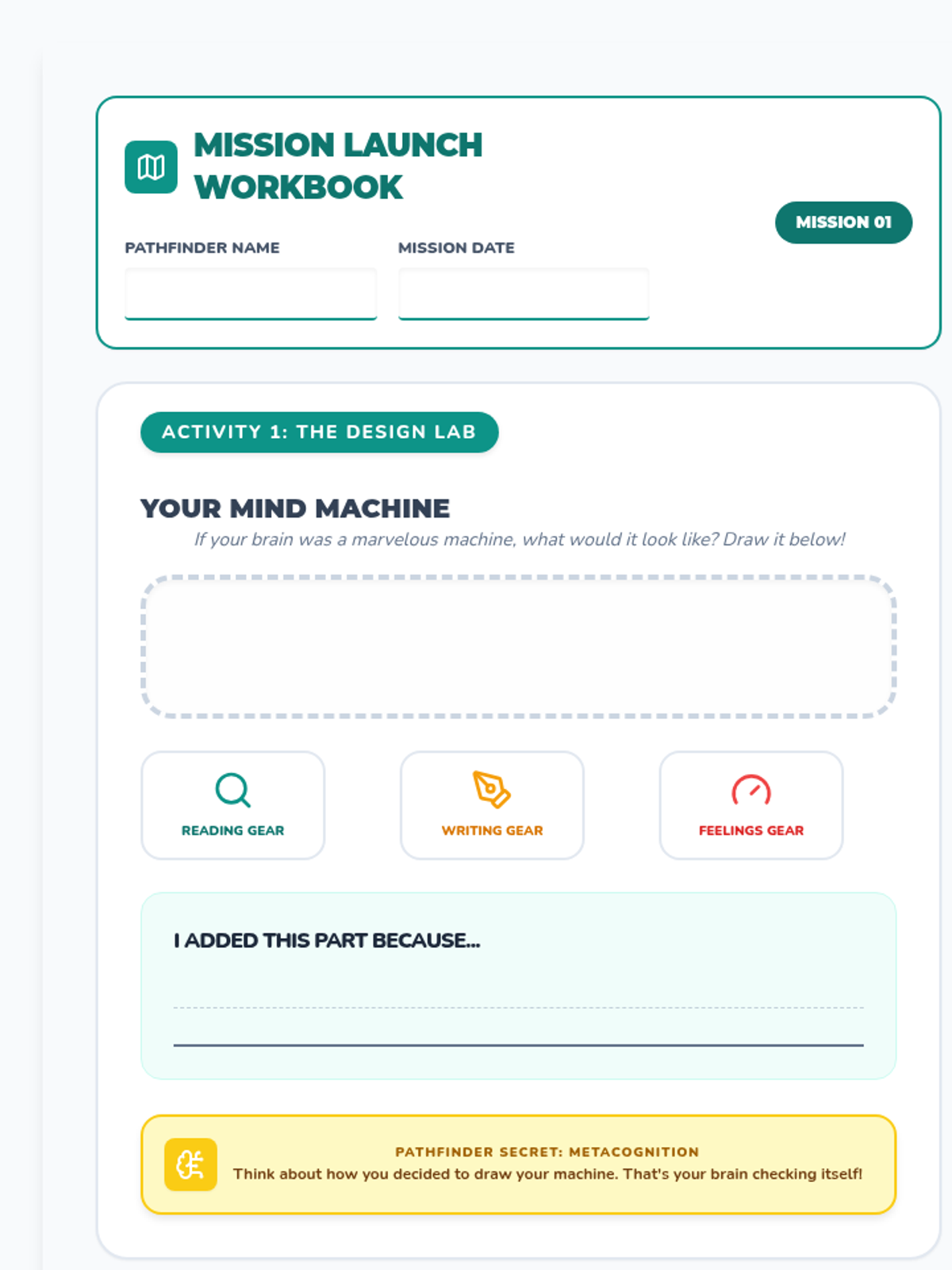
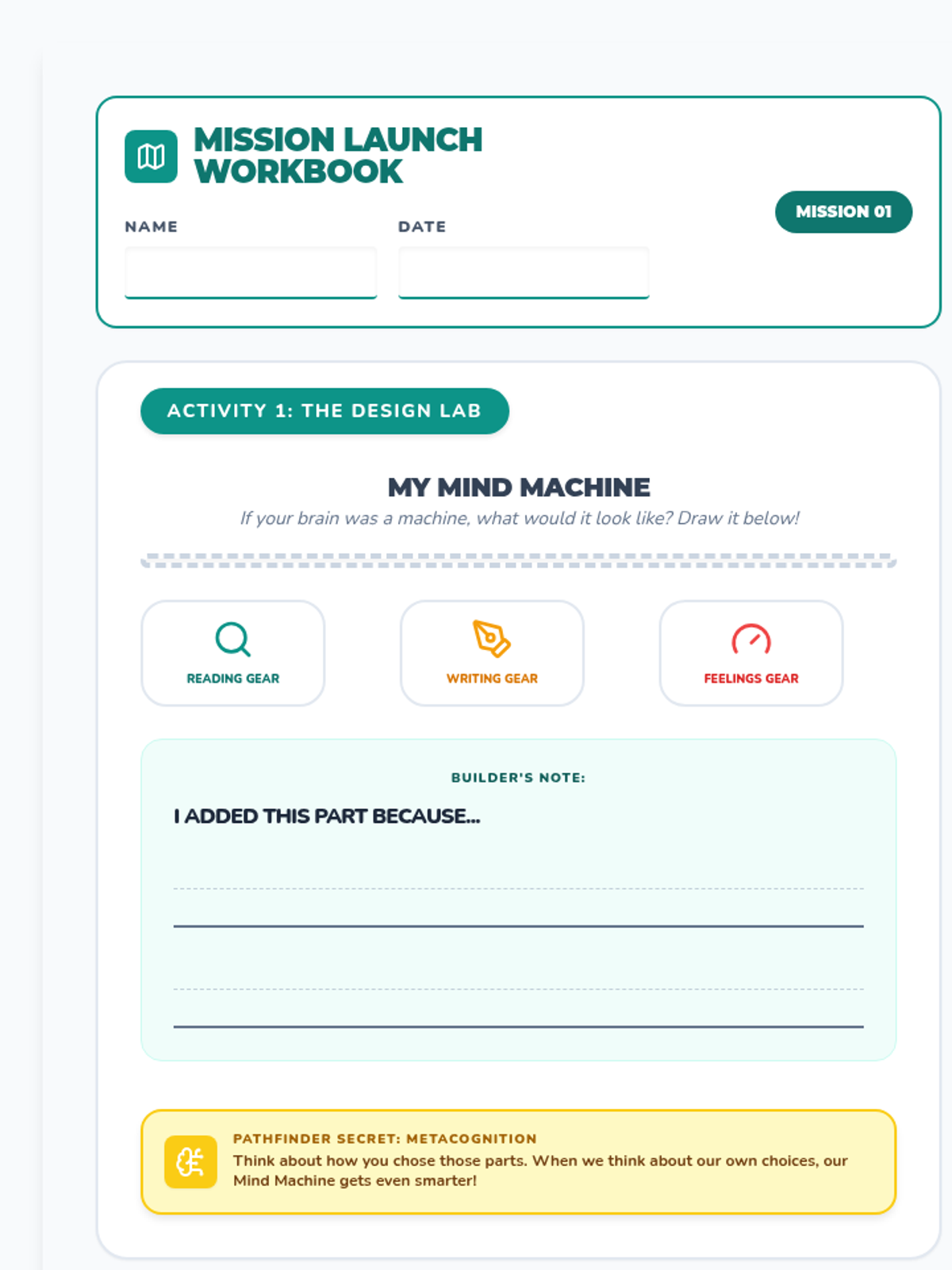
An introductory lesson where students become 'Pathfinders,' learning that their minds are like incredible machines with gears they can control. Focuses on self-awareness and the basics of how we decode stories.
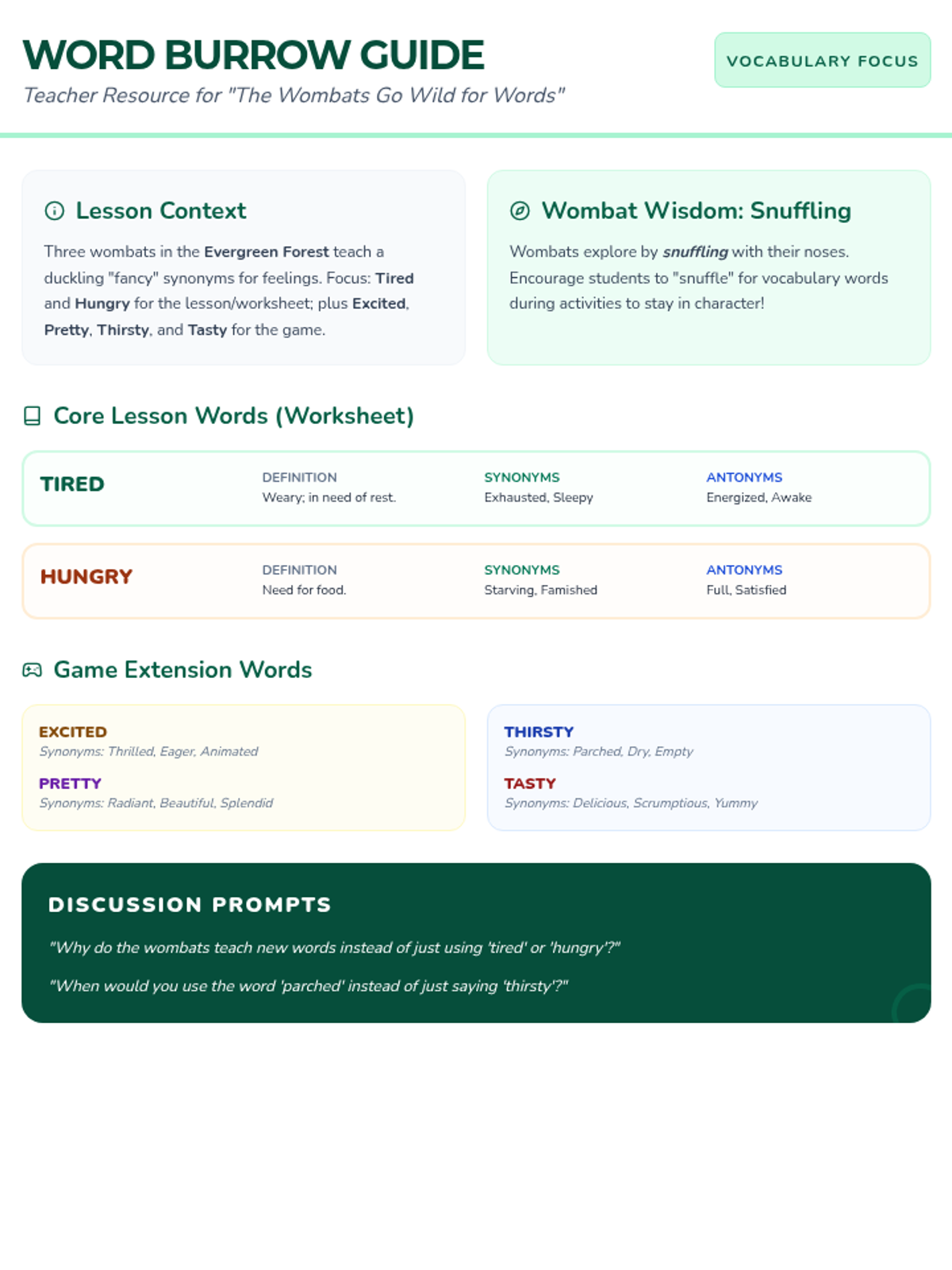
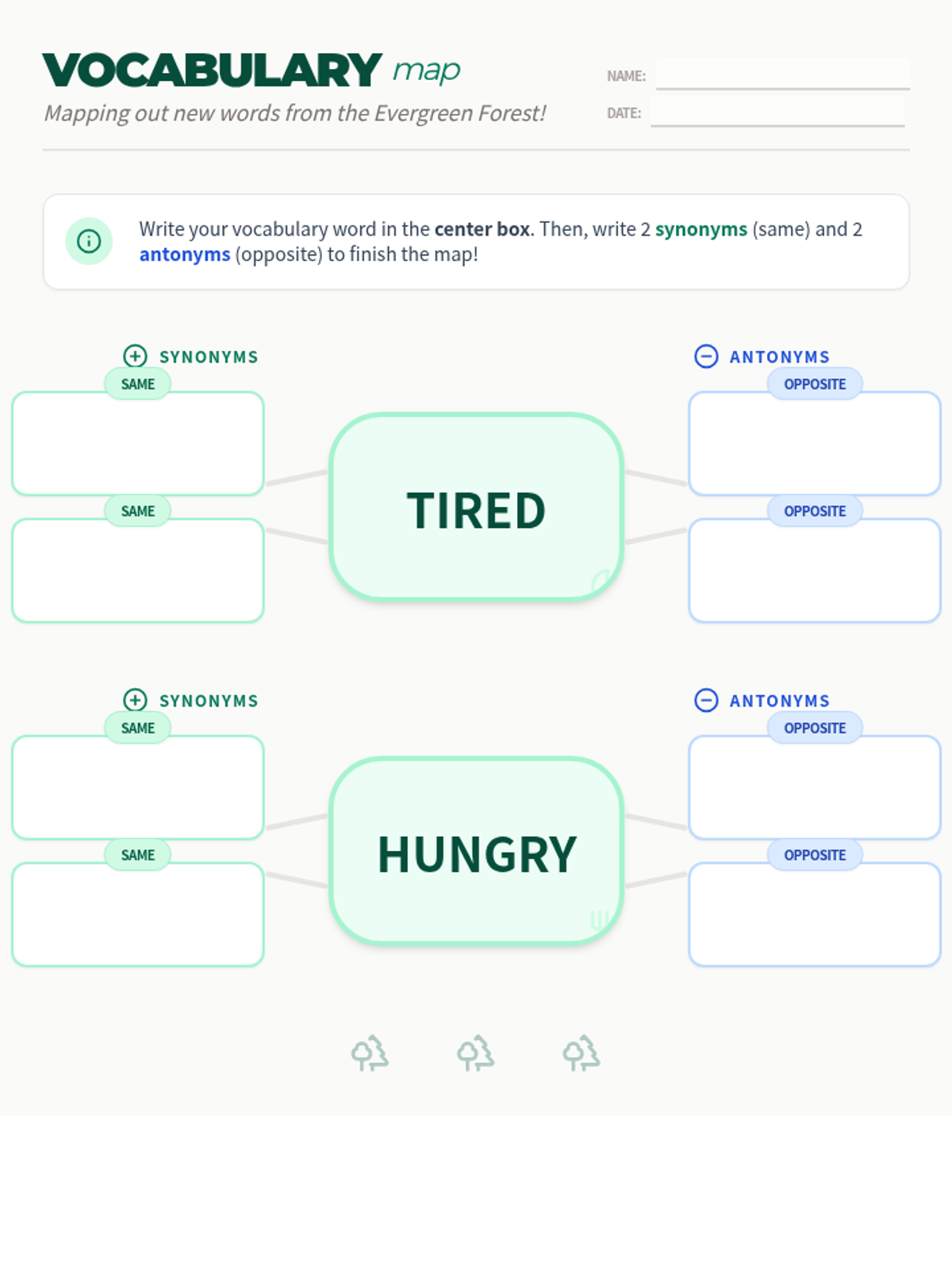
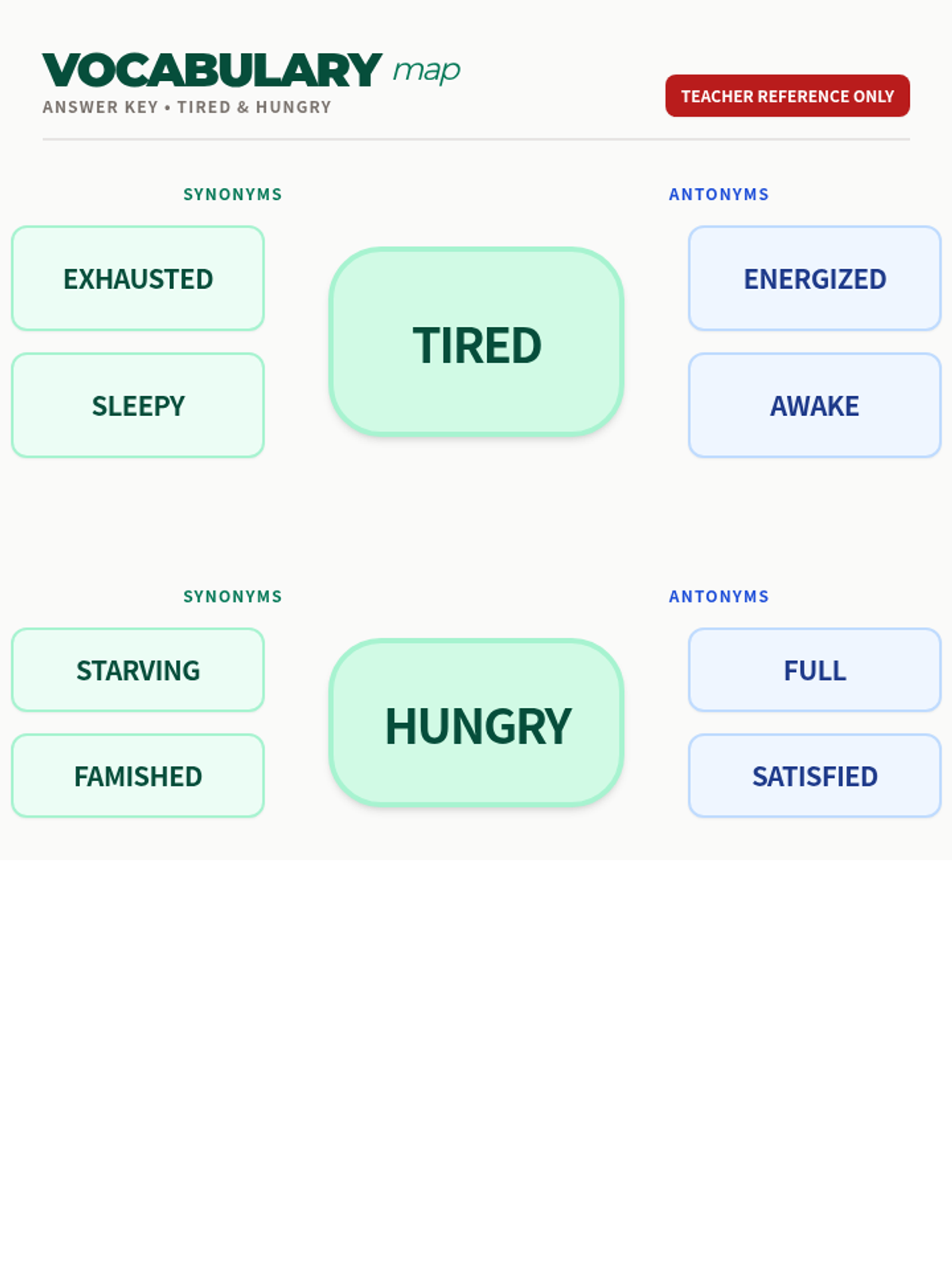
Students explore vocabulary from the picture book 'The Wombats Go Wild for Words' by identifying synonyms and antonyms using a graphic organizer. This lesson builds 2nd-grade language skills through character-driven word exploration.
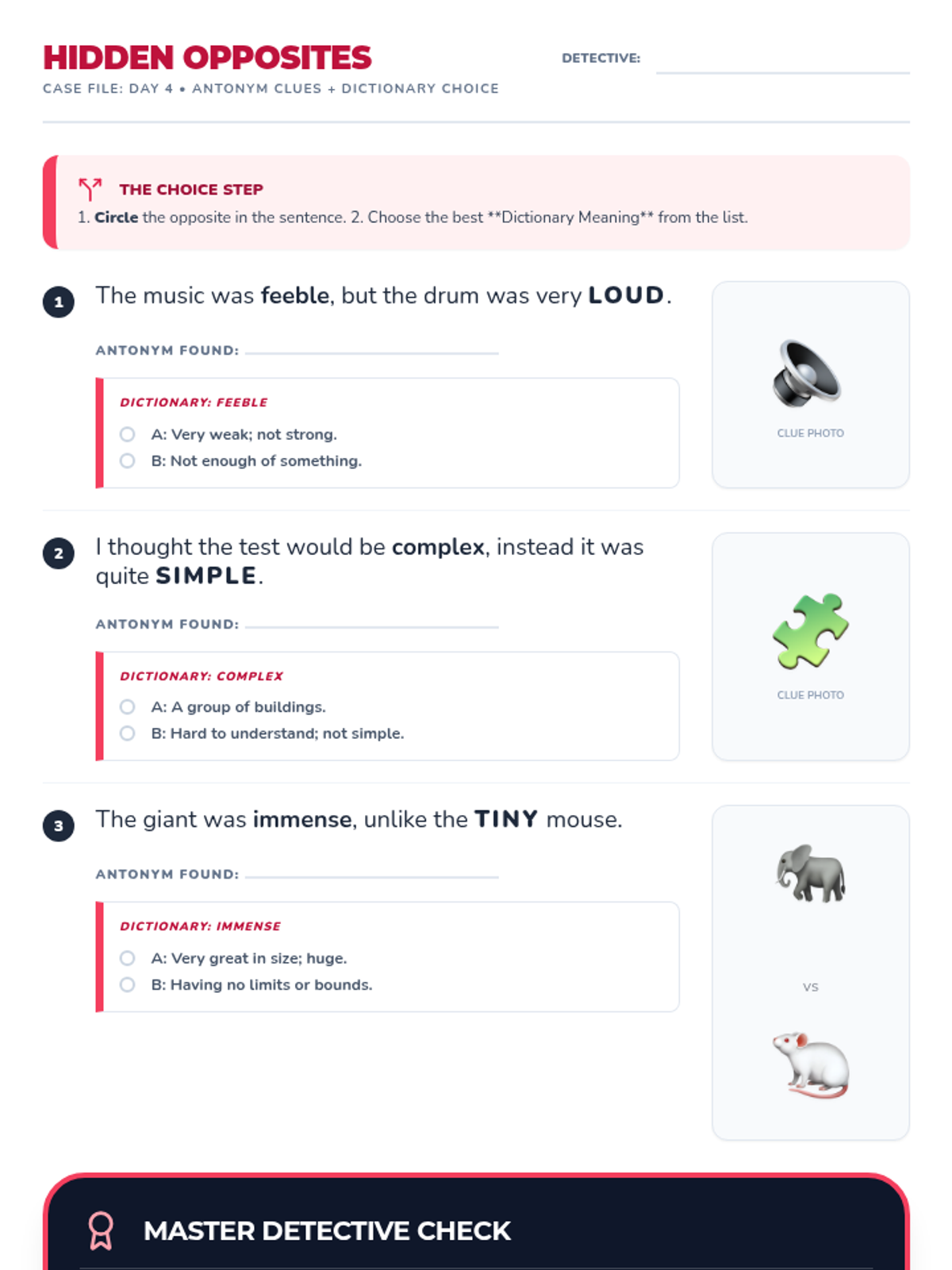
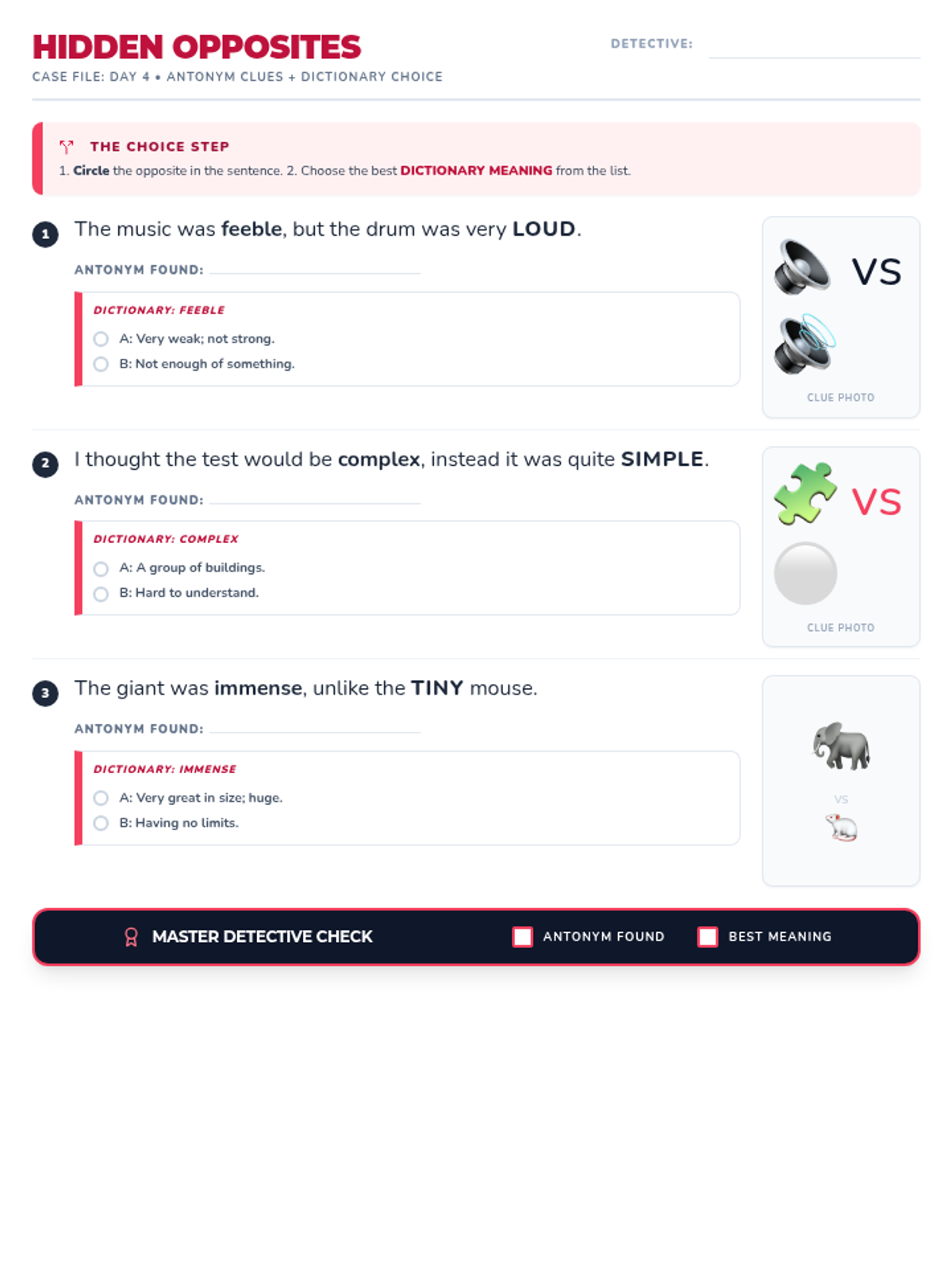
Students identify antonym clues to understand what a word is NOT, using contrasting pictures to solve the vocabulary puzzle.
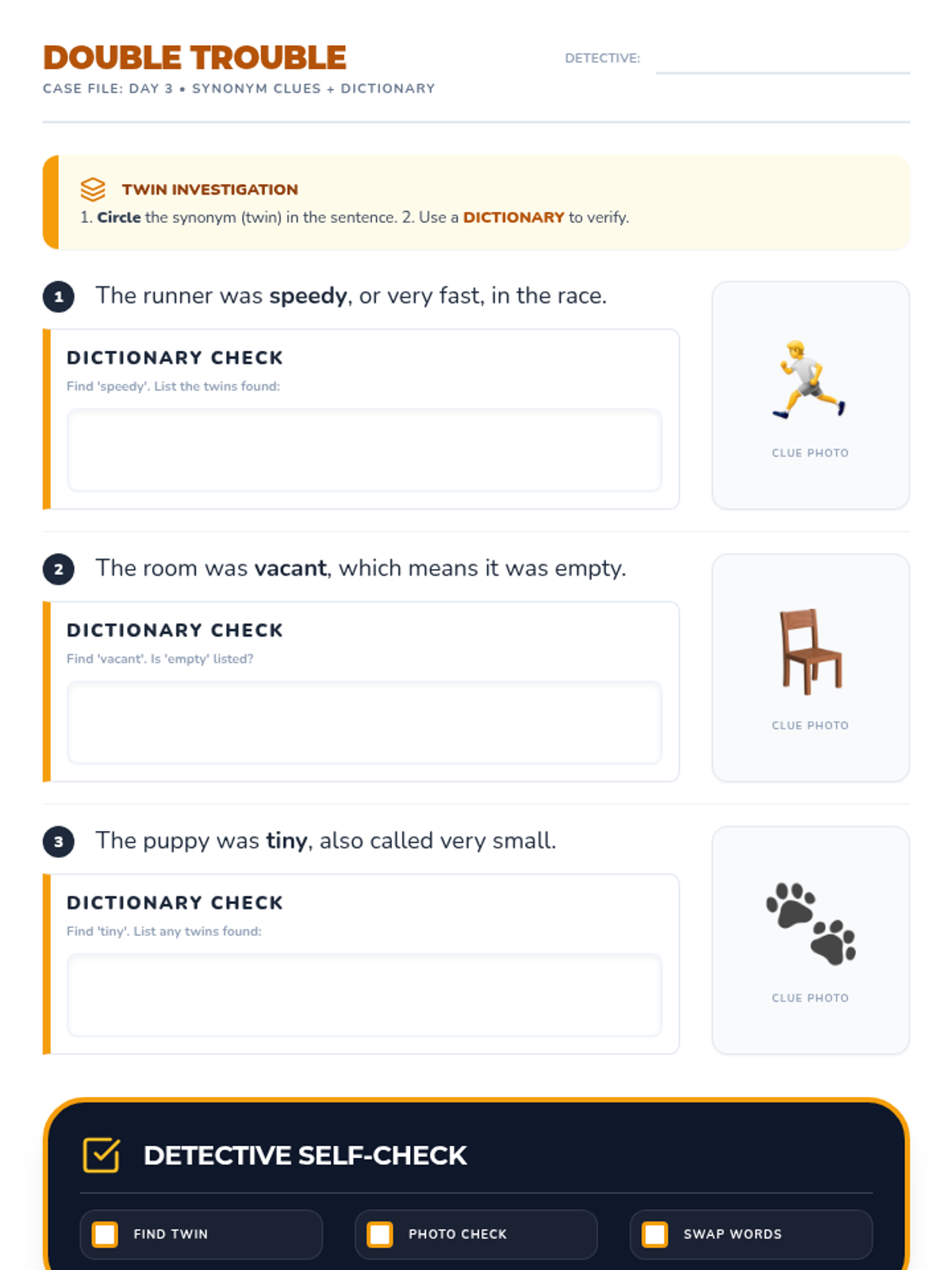
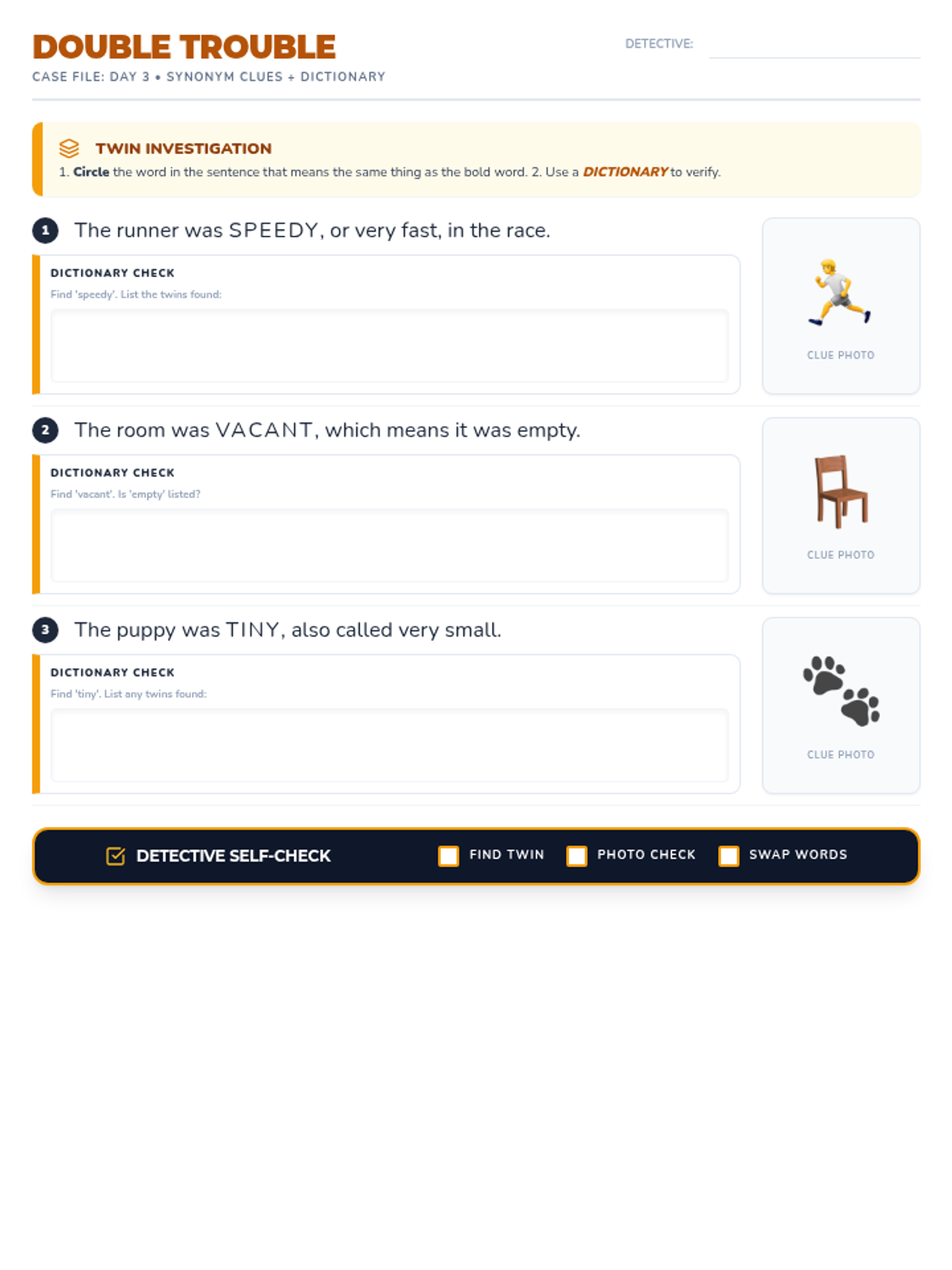
Students use synonym clues to find words that mean the same thing as the unknown word, using pictures to match similar concepts.
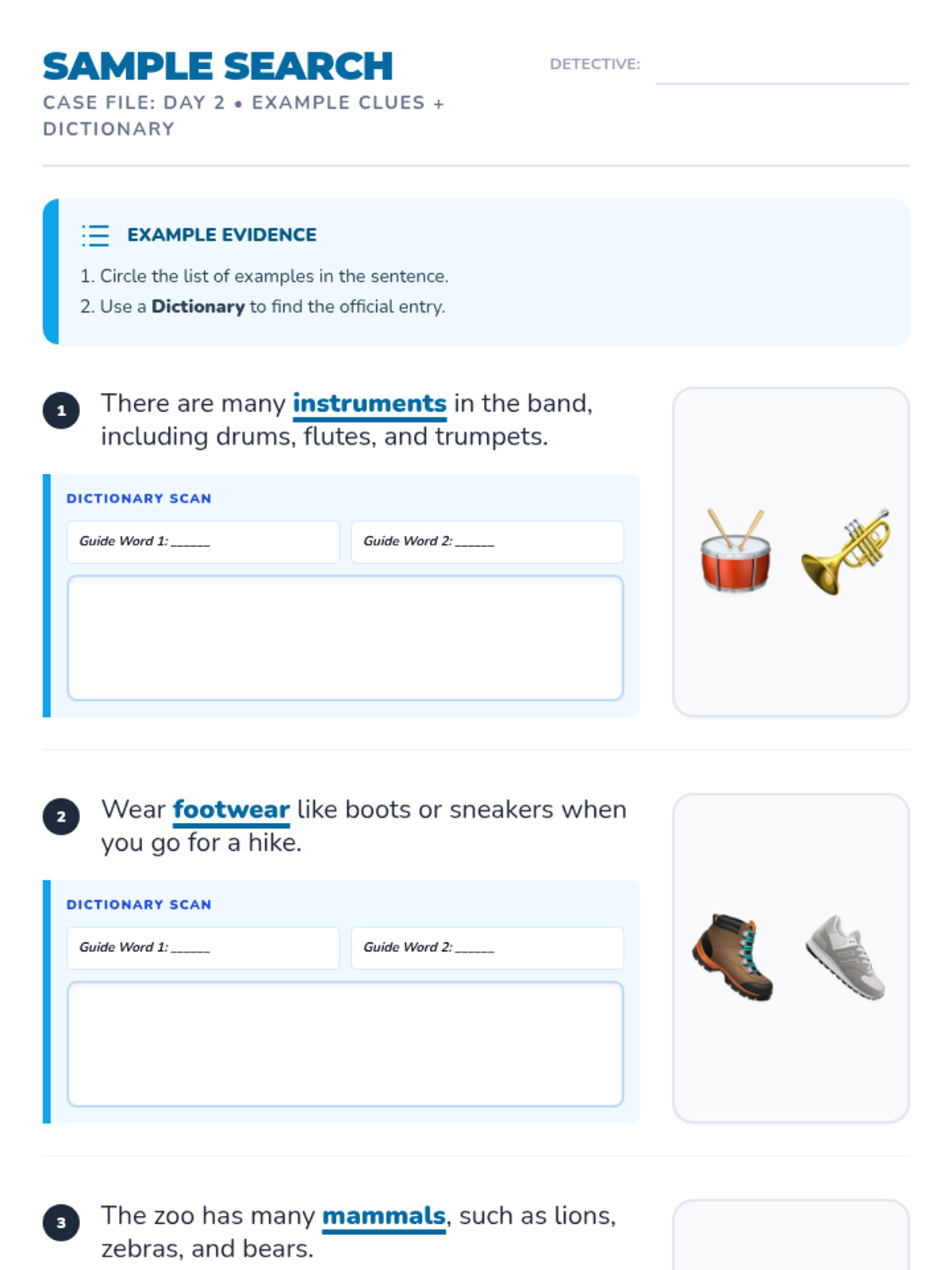
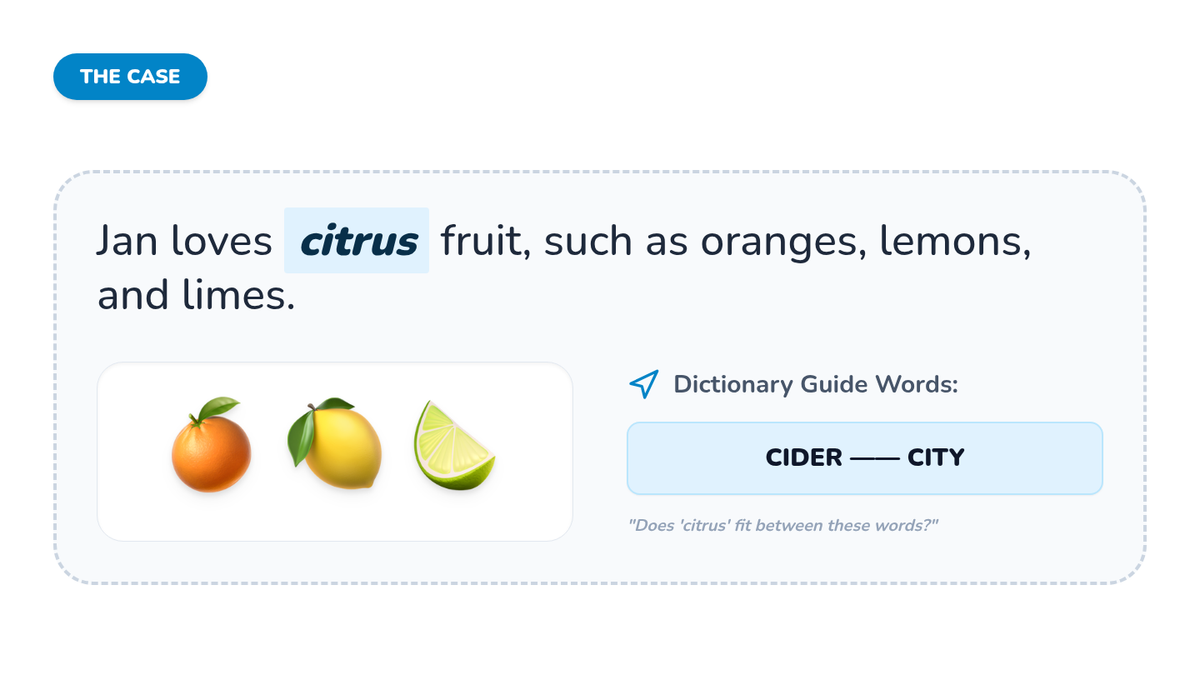
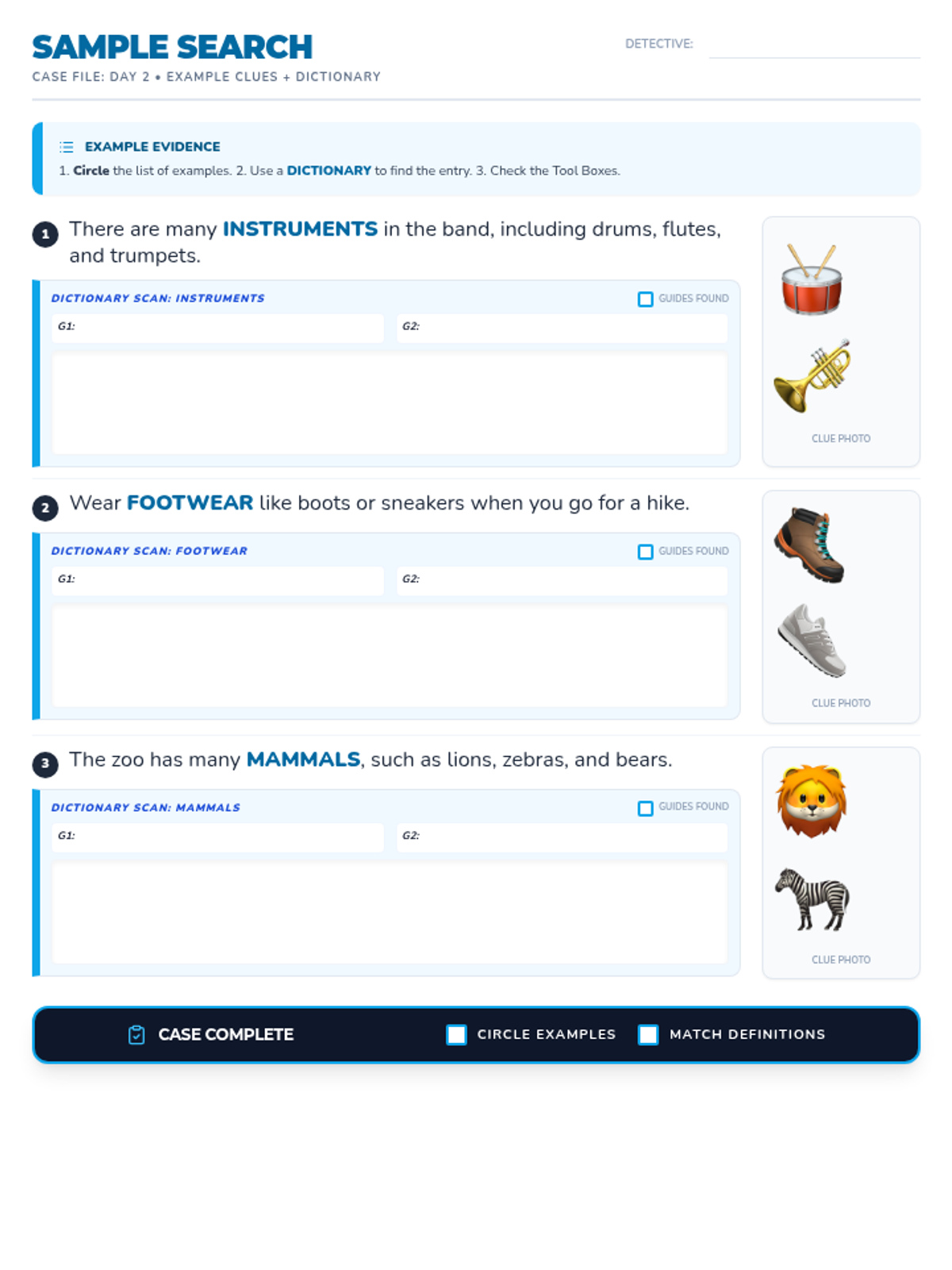
Students explore example clues, where a sentence provides specific instances of a word to help reveal its meaning, paired with helpful visual supports.
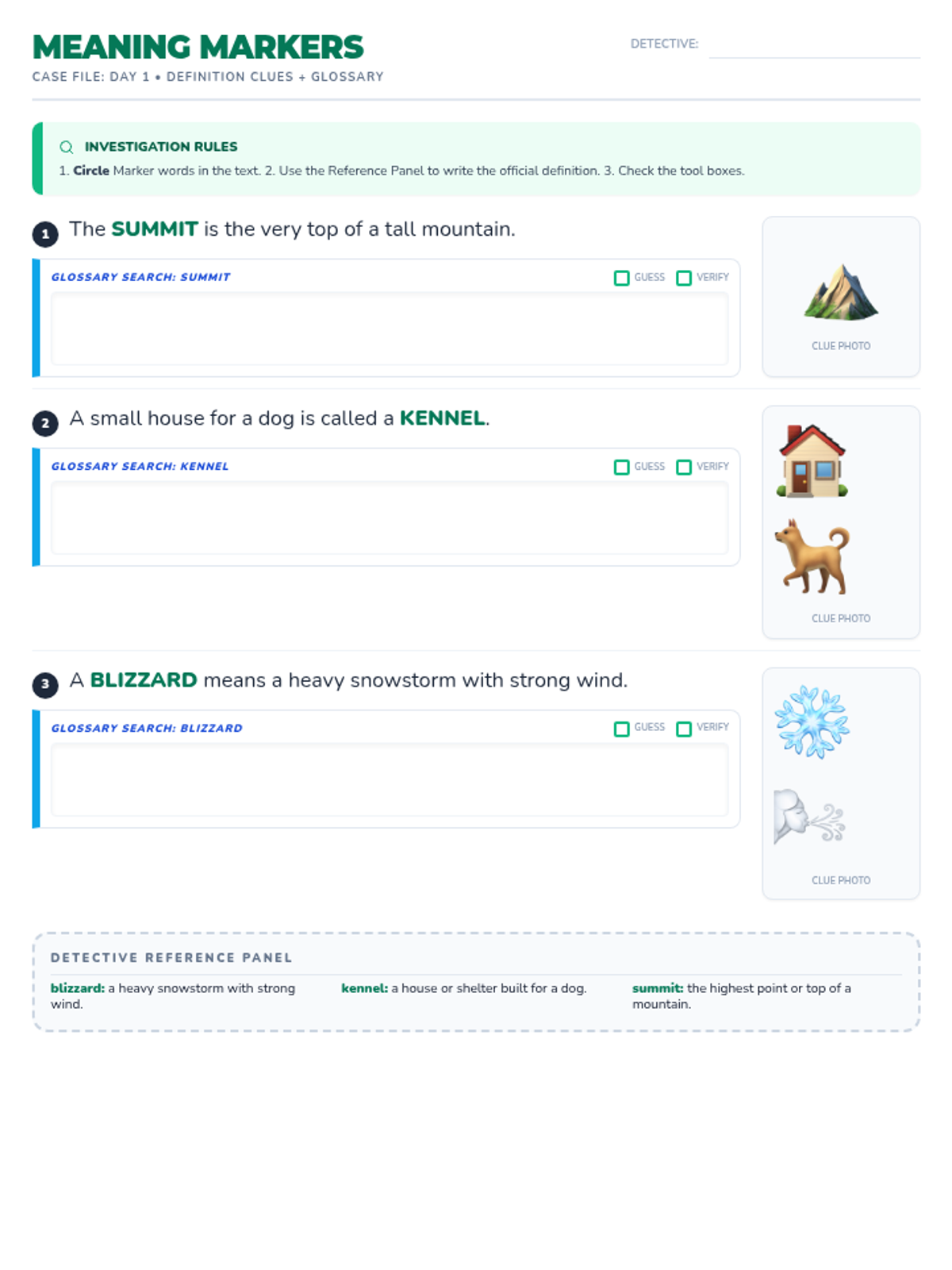
Students learn to identify definition clues in sentences where the meaning of a tricky word is explained directly, using illustrations to confirm their findings.
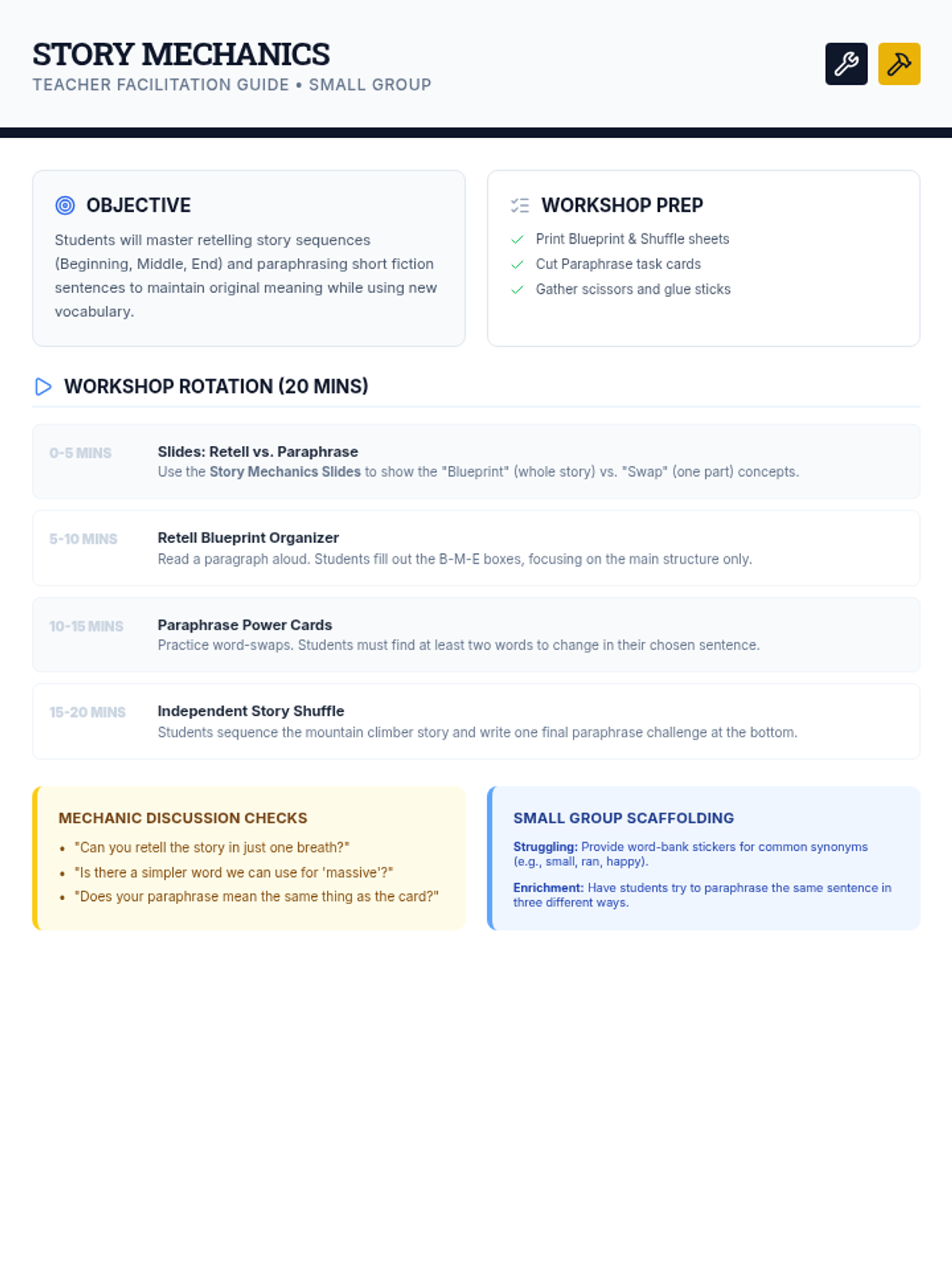
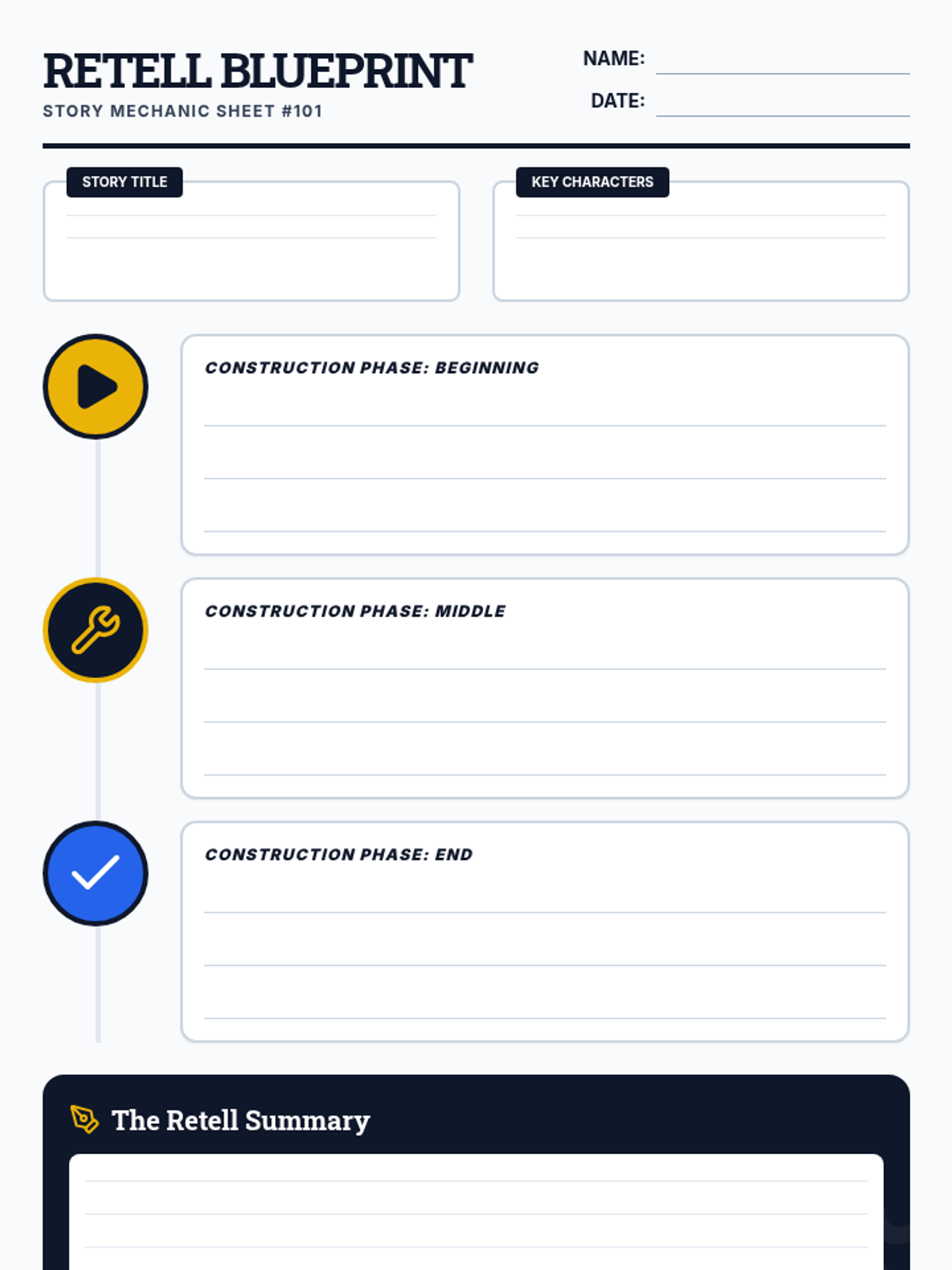
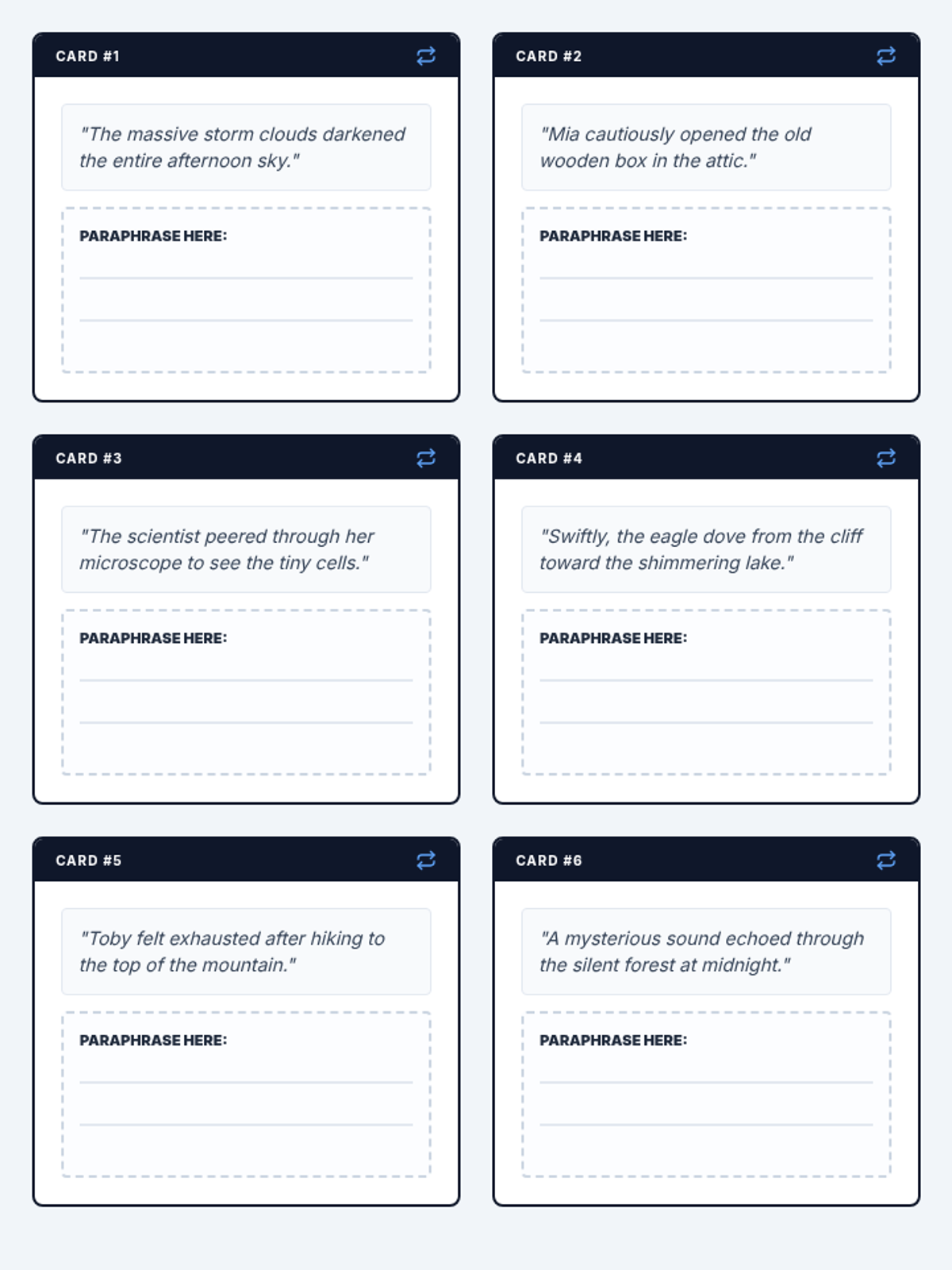
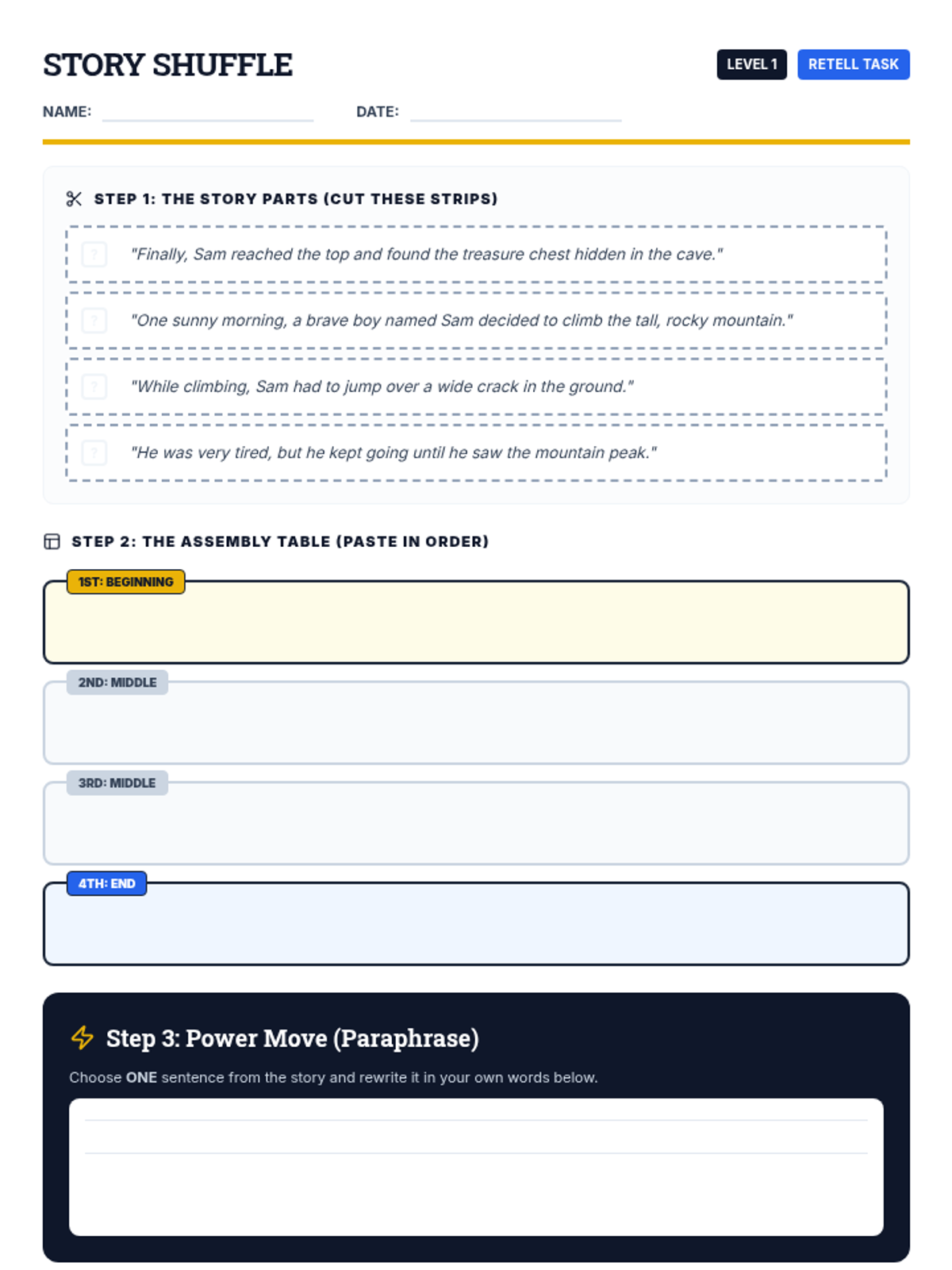
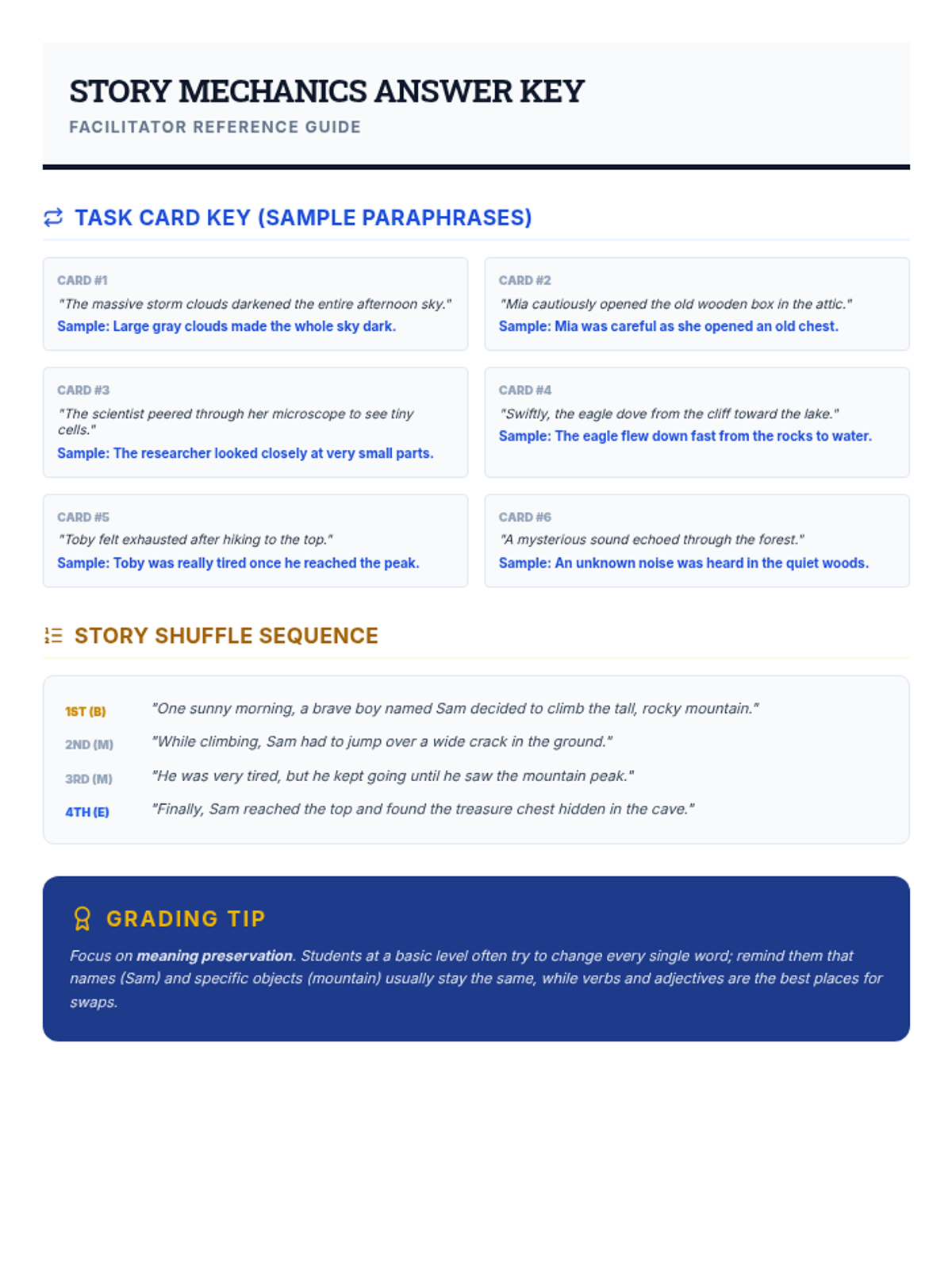
A comprehensive small-group lesson focused on the foundational skills of retelling and paraphrasing using short fiction. Students use blueprint-themed tools to identify story structure and practice restating ideas in their own words.
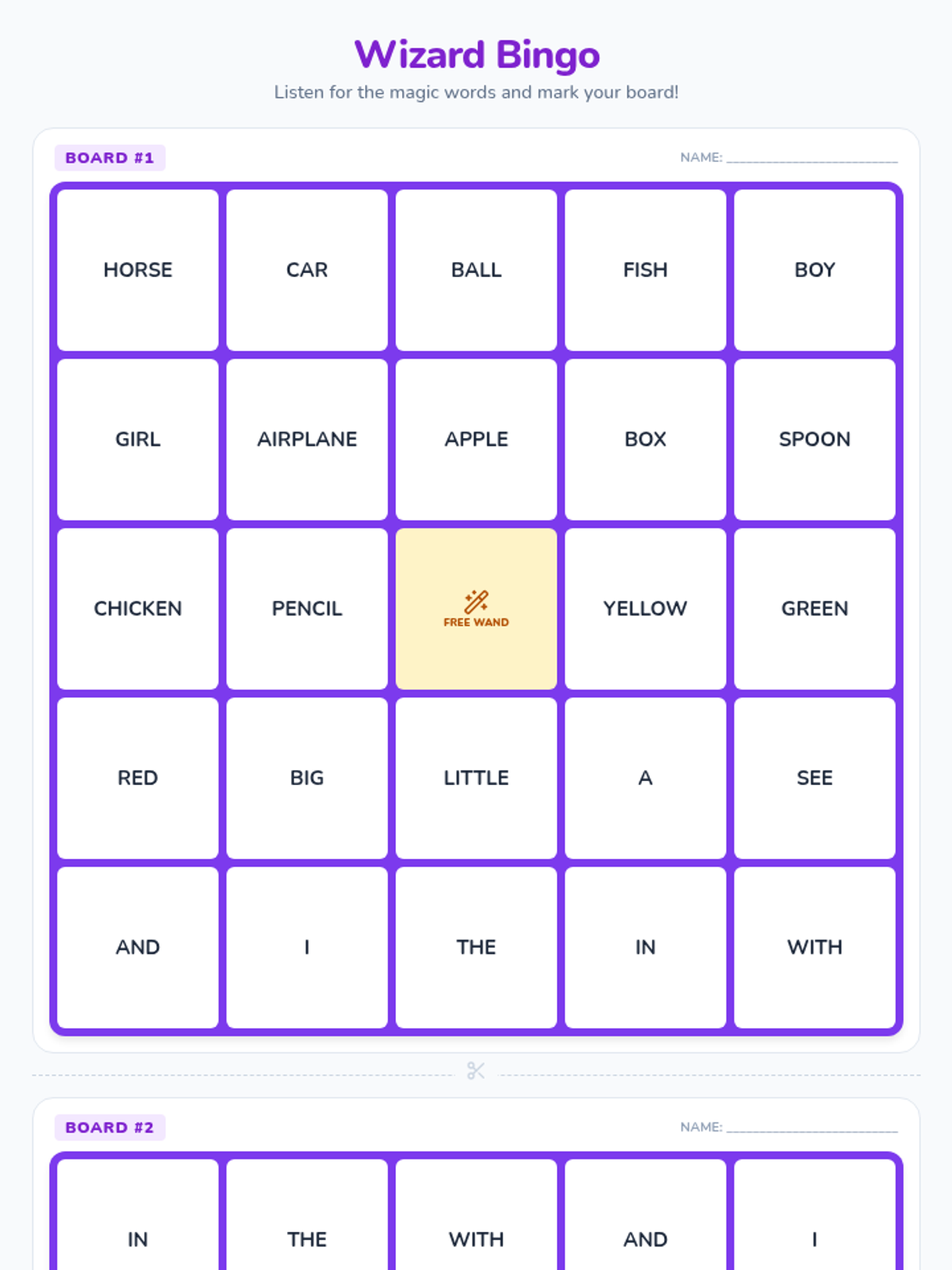
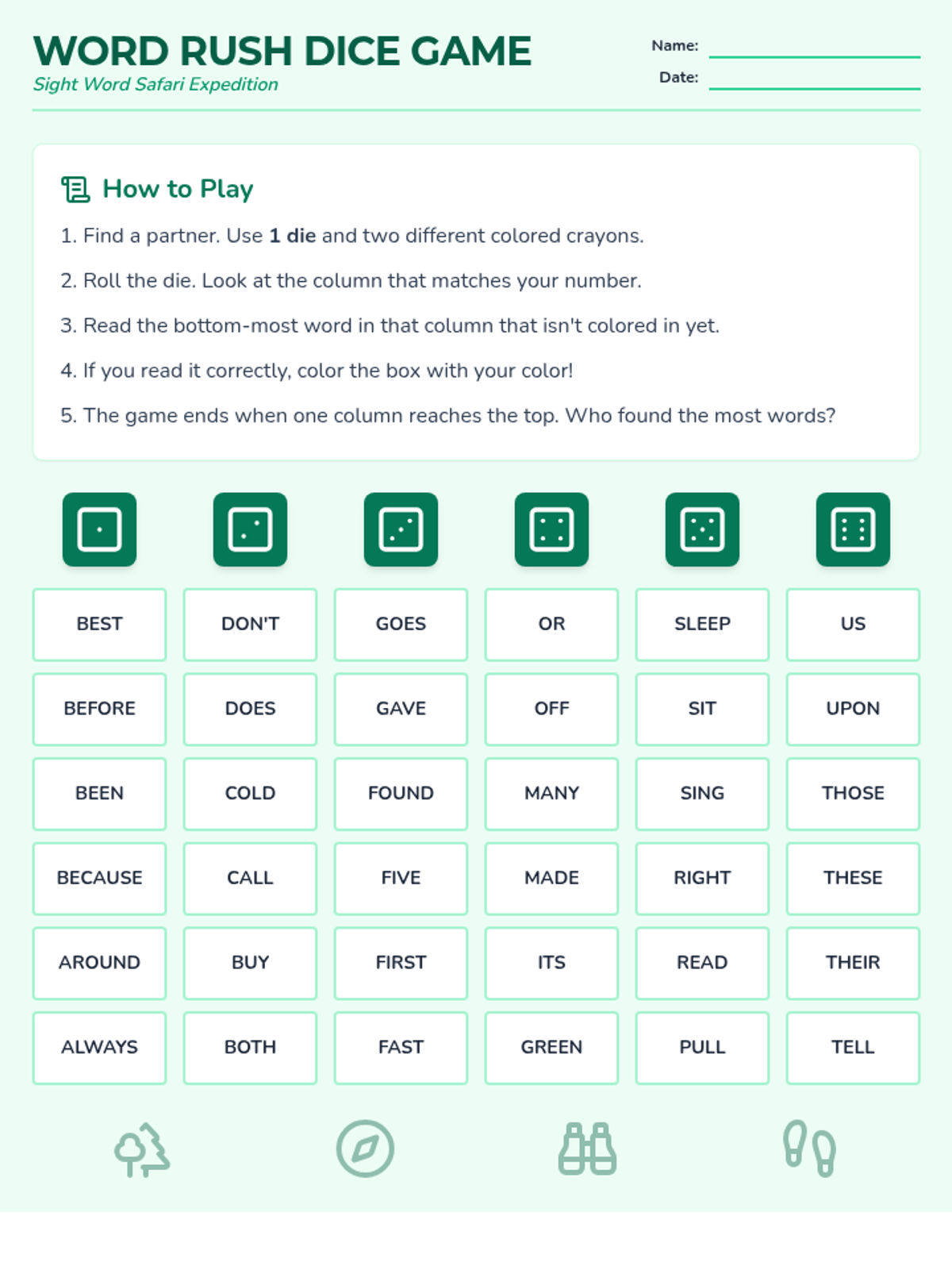
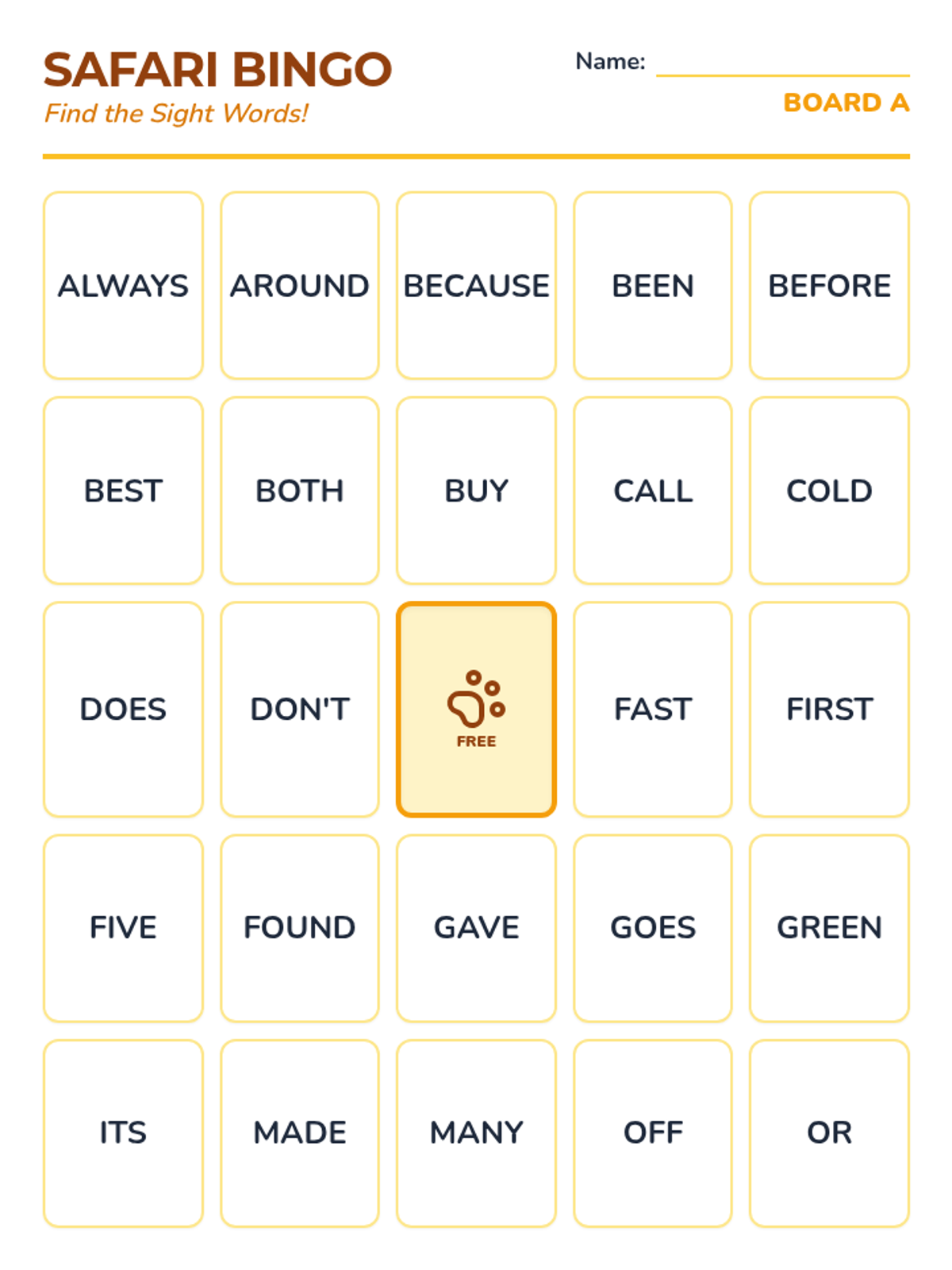
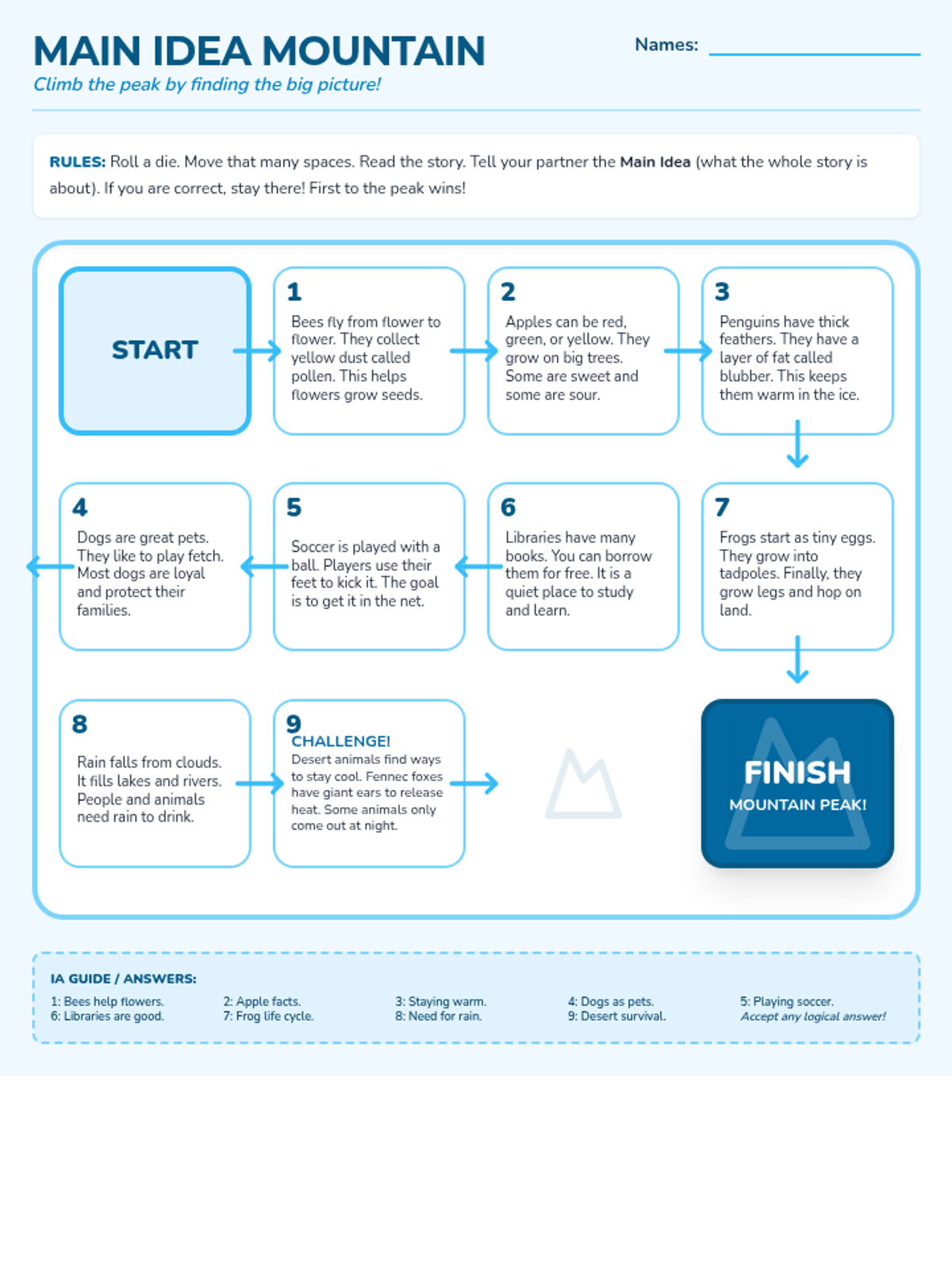
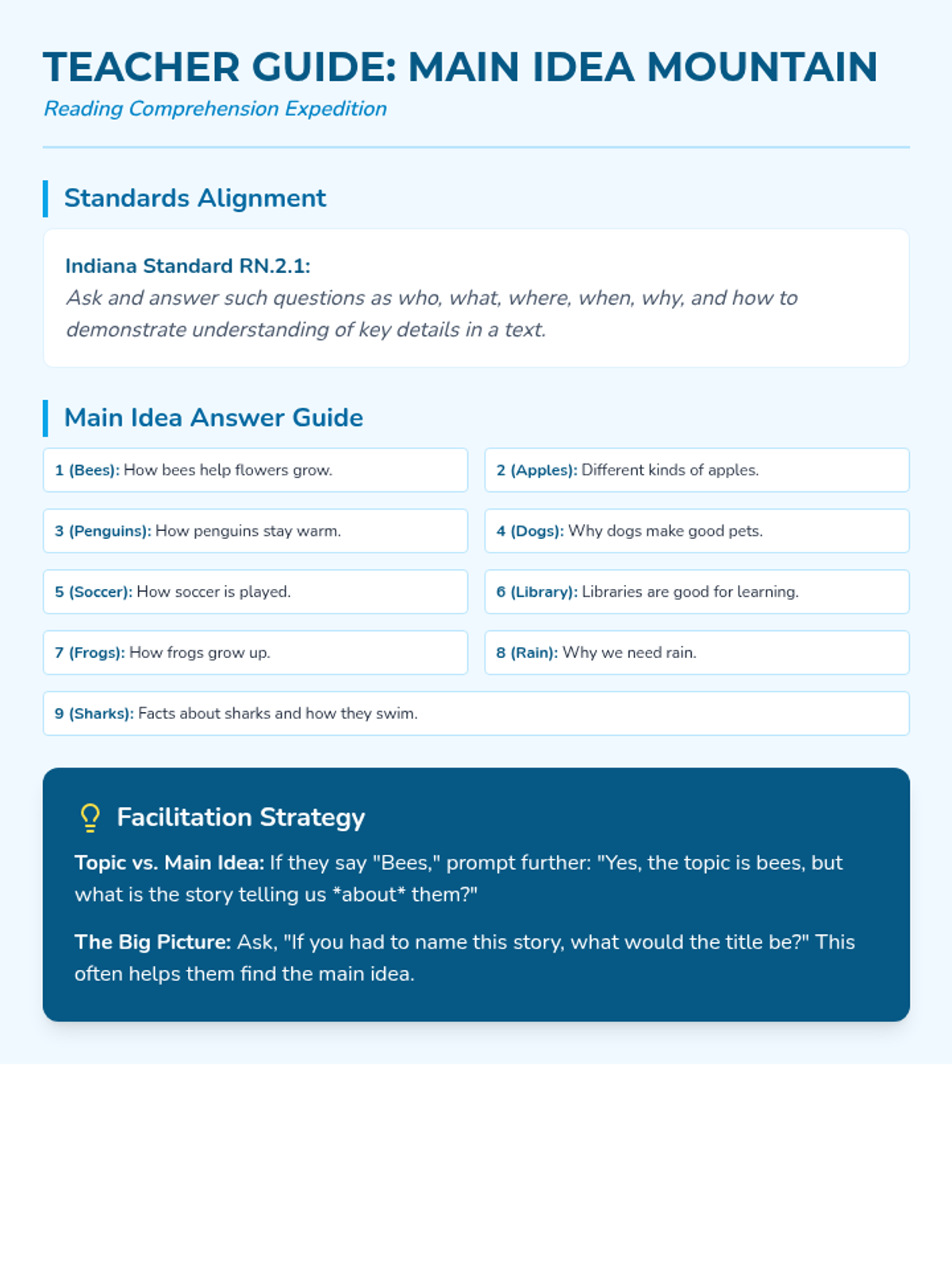
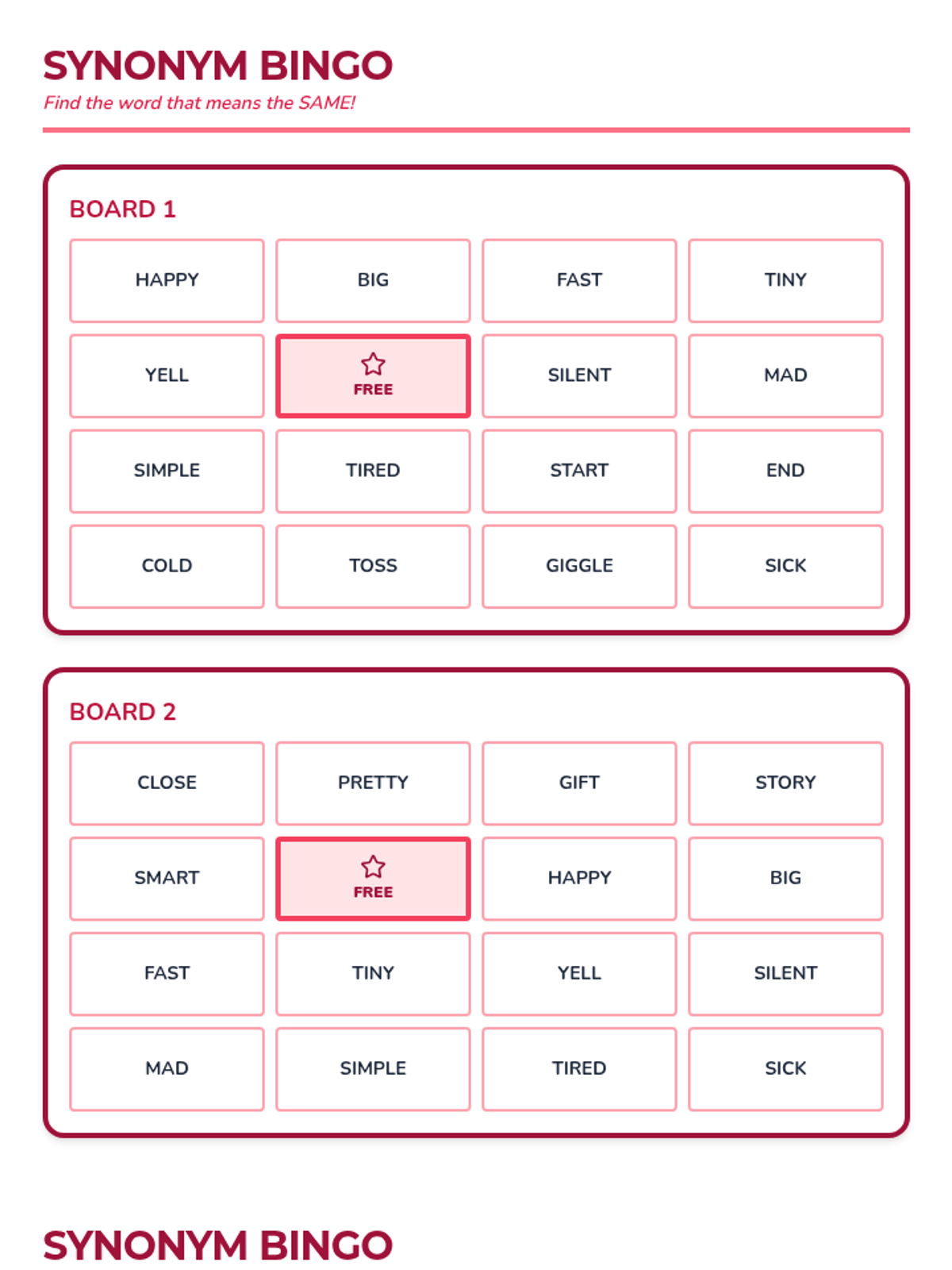
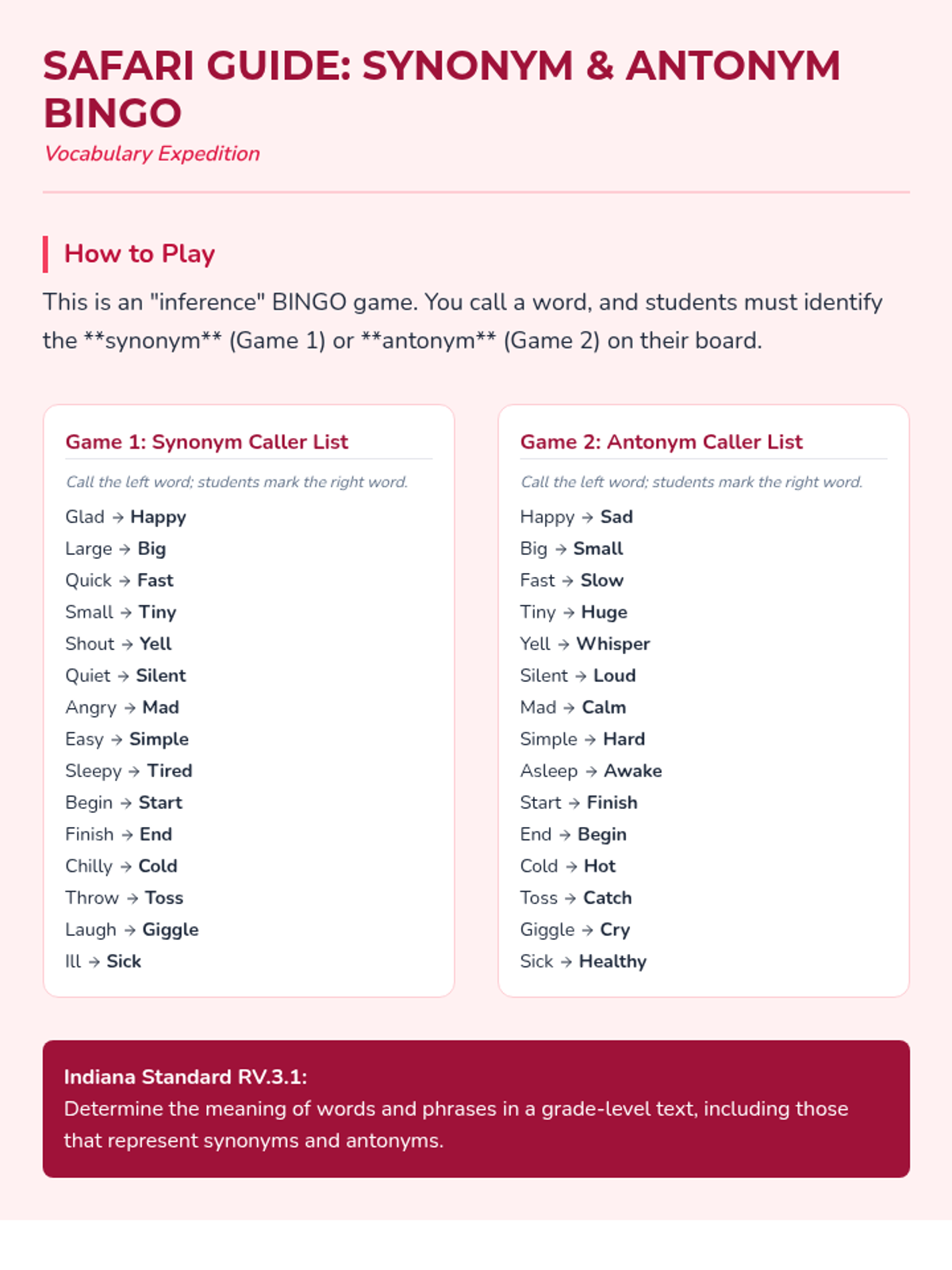
Four interactive games focusing on sight words, reading comprehension (main idea), and vocabulary (synonyms/antonyms) using BINGO and dice-based mechanics.
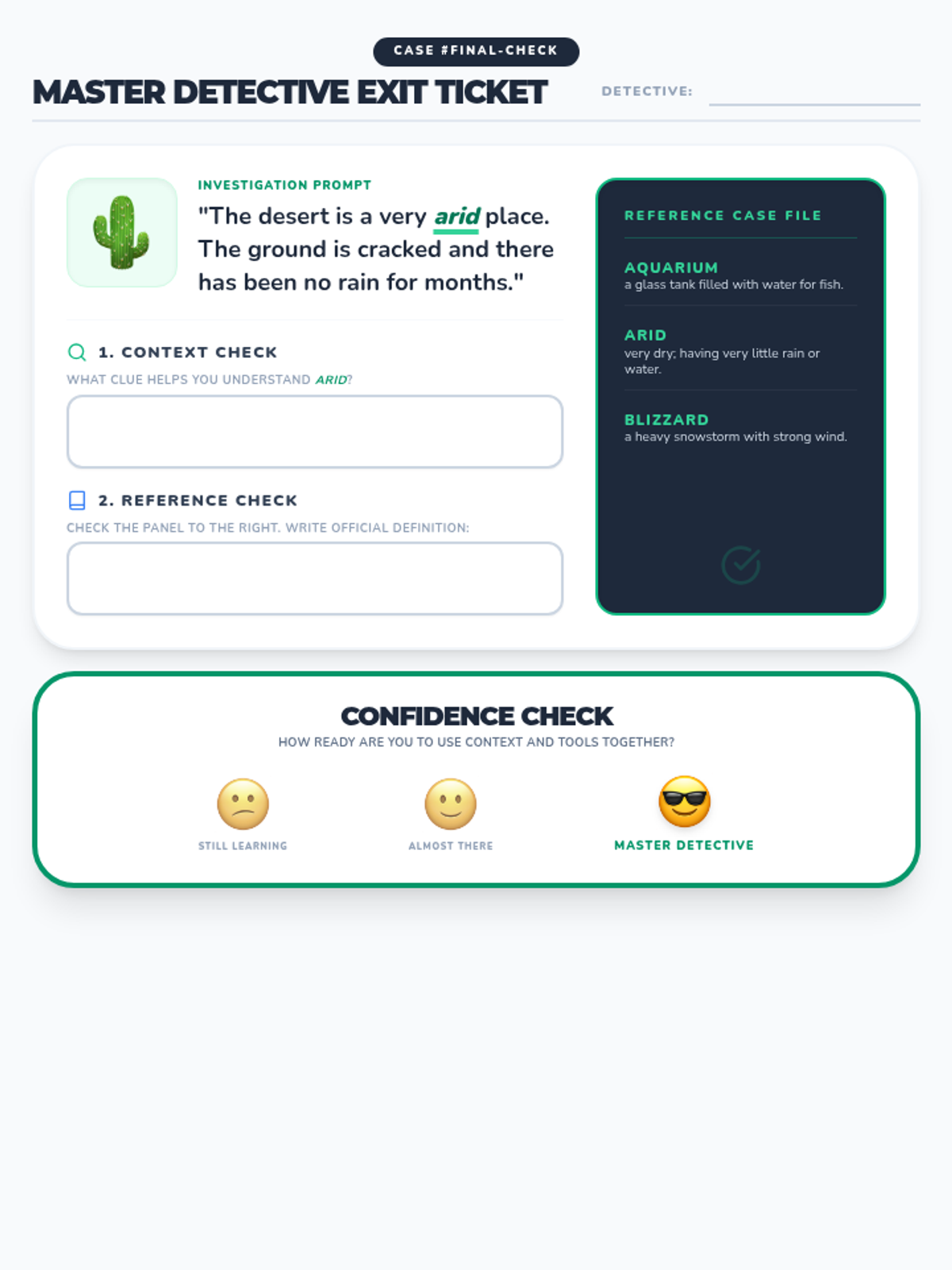
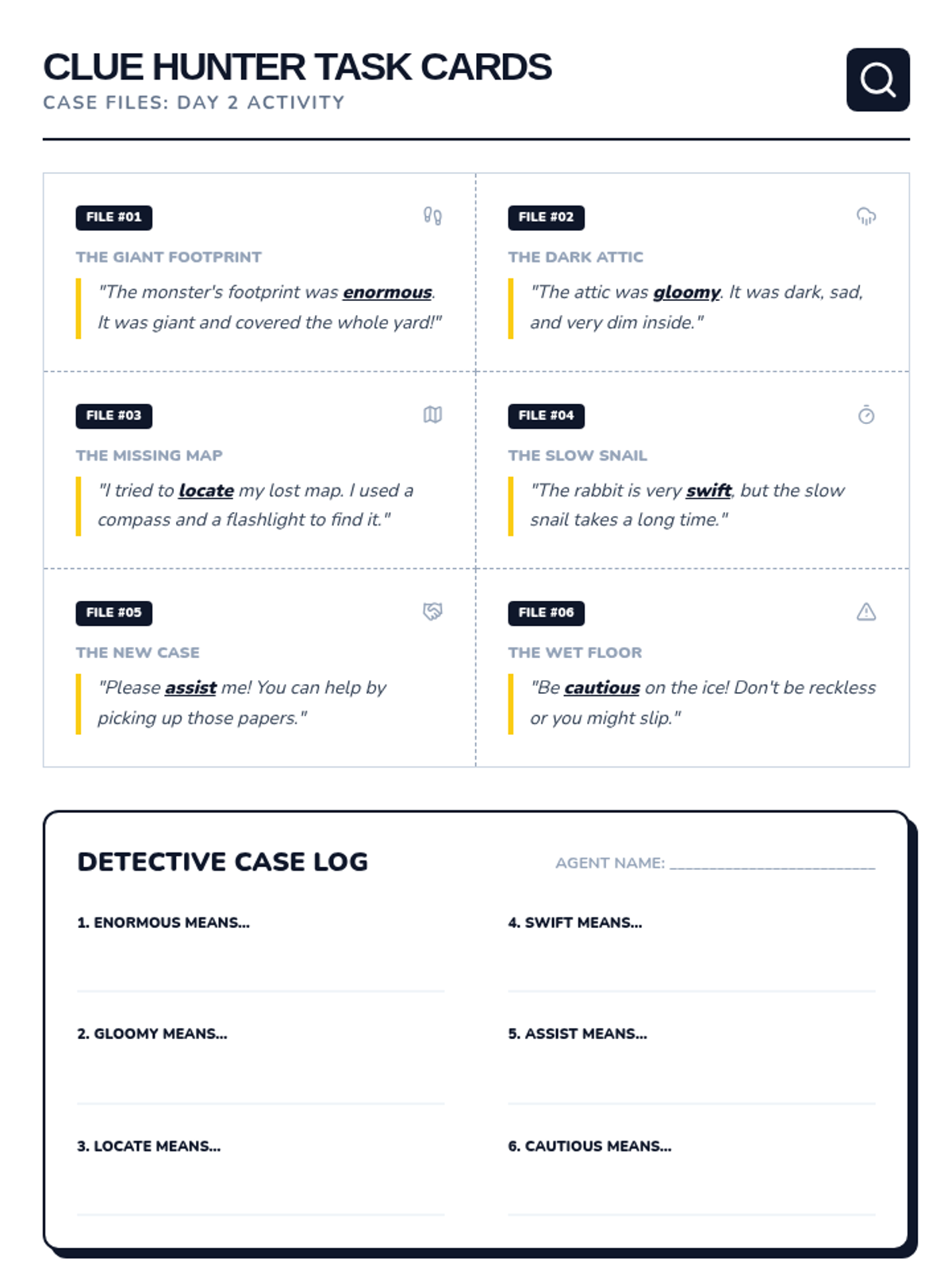
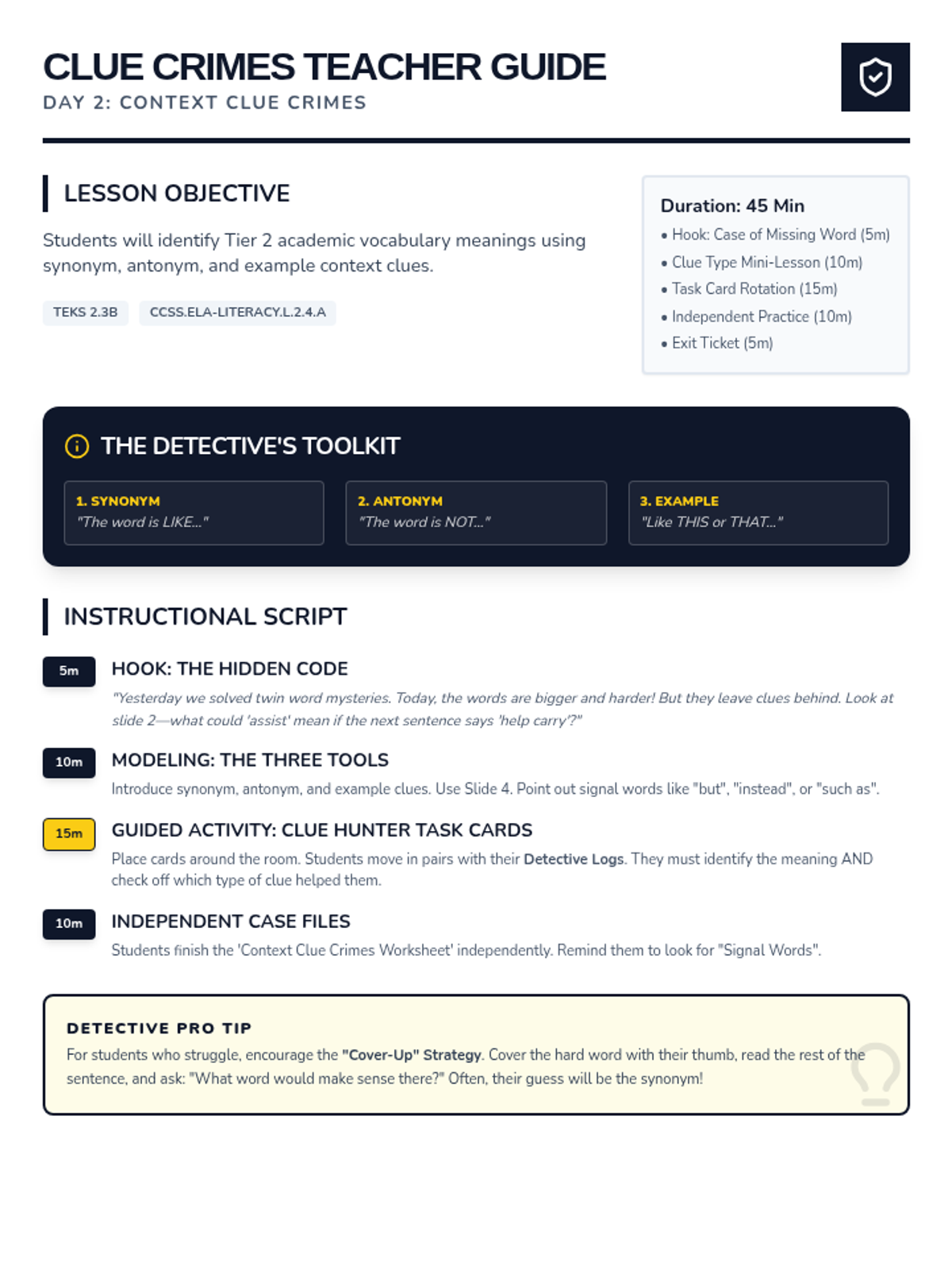
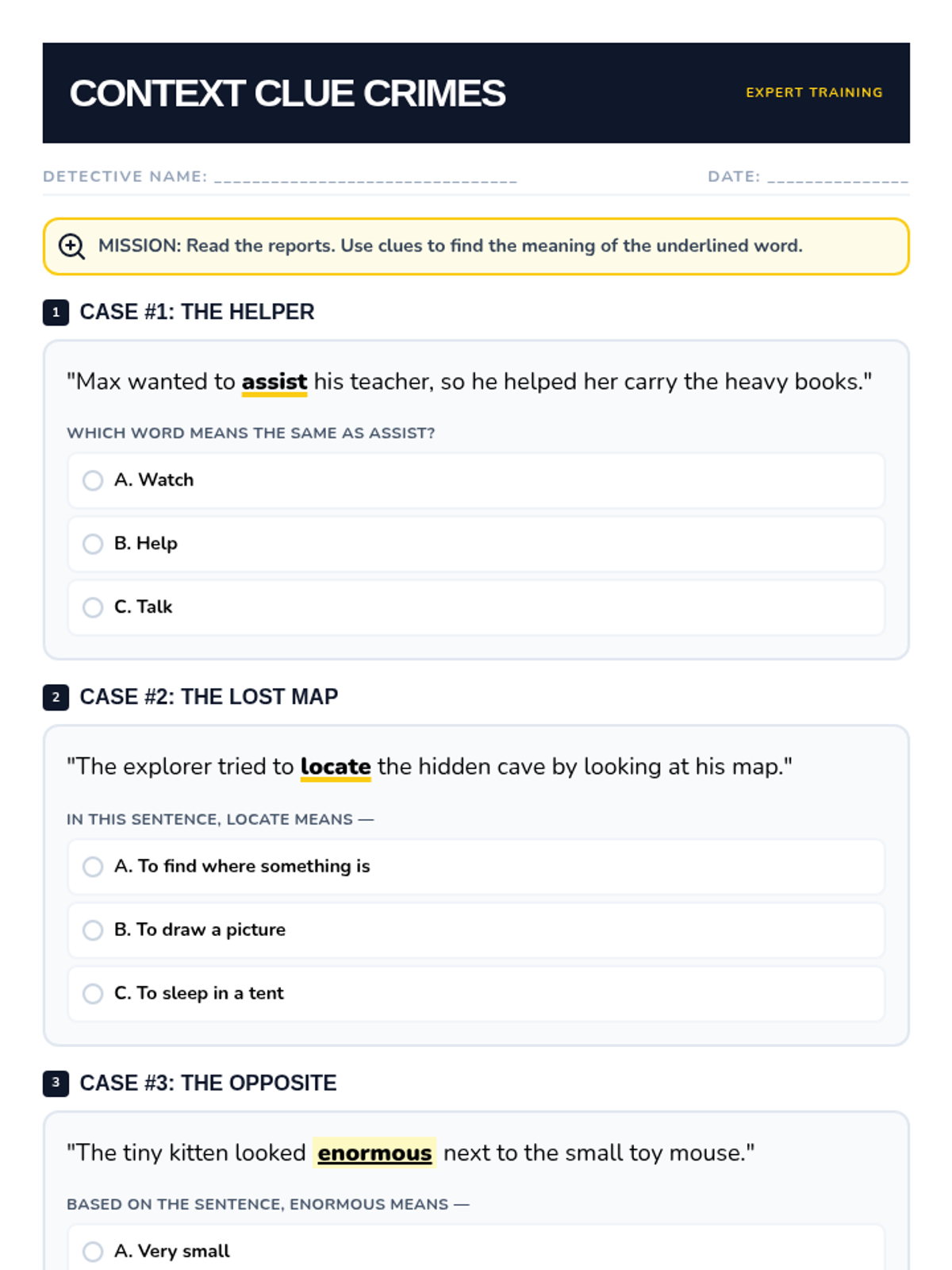
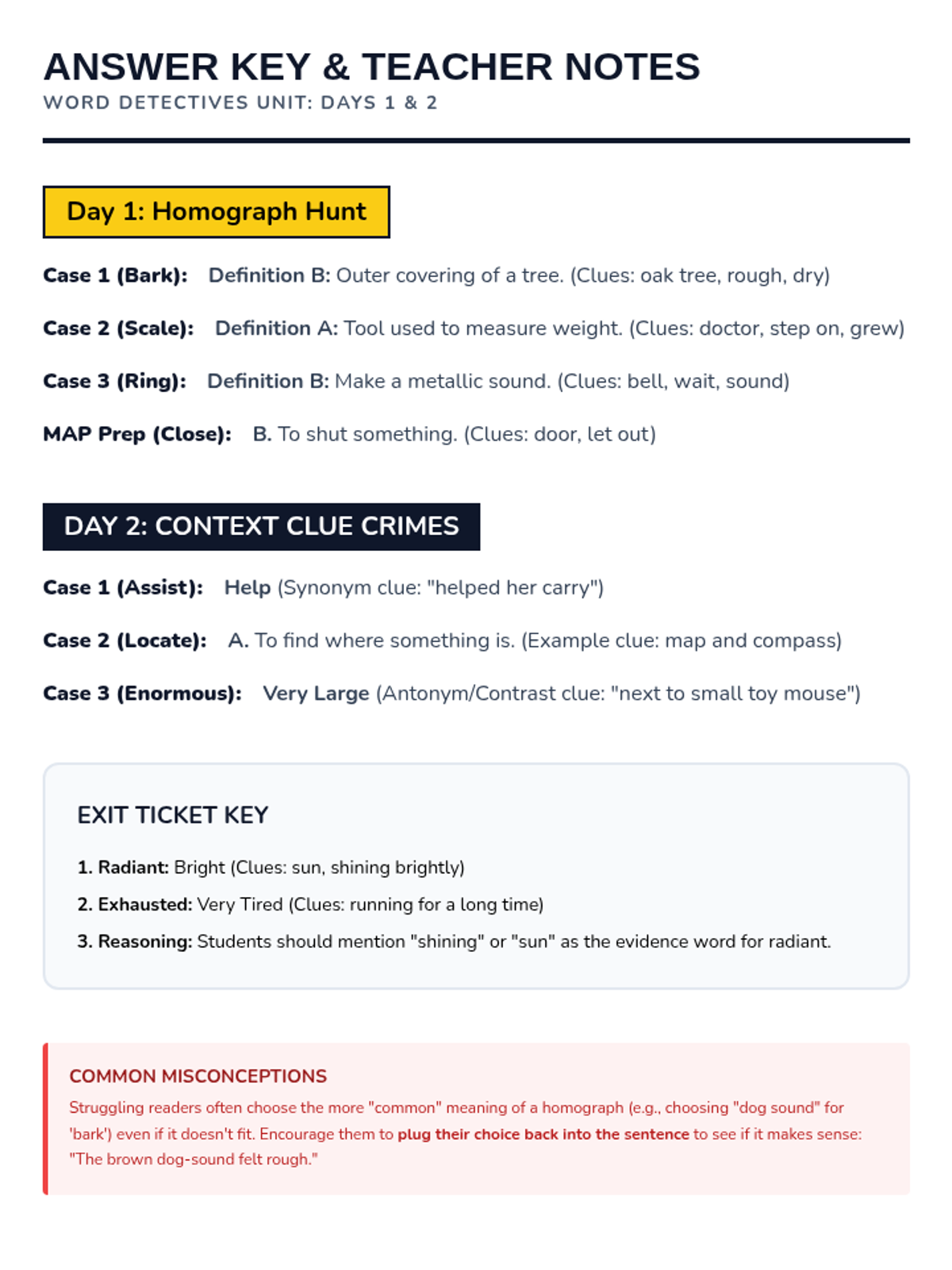
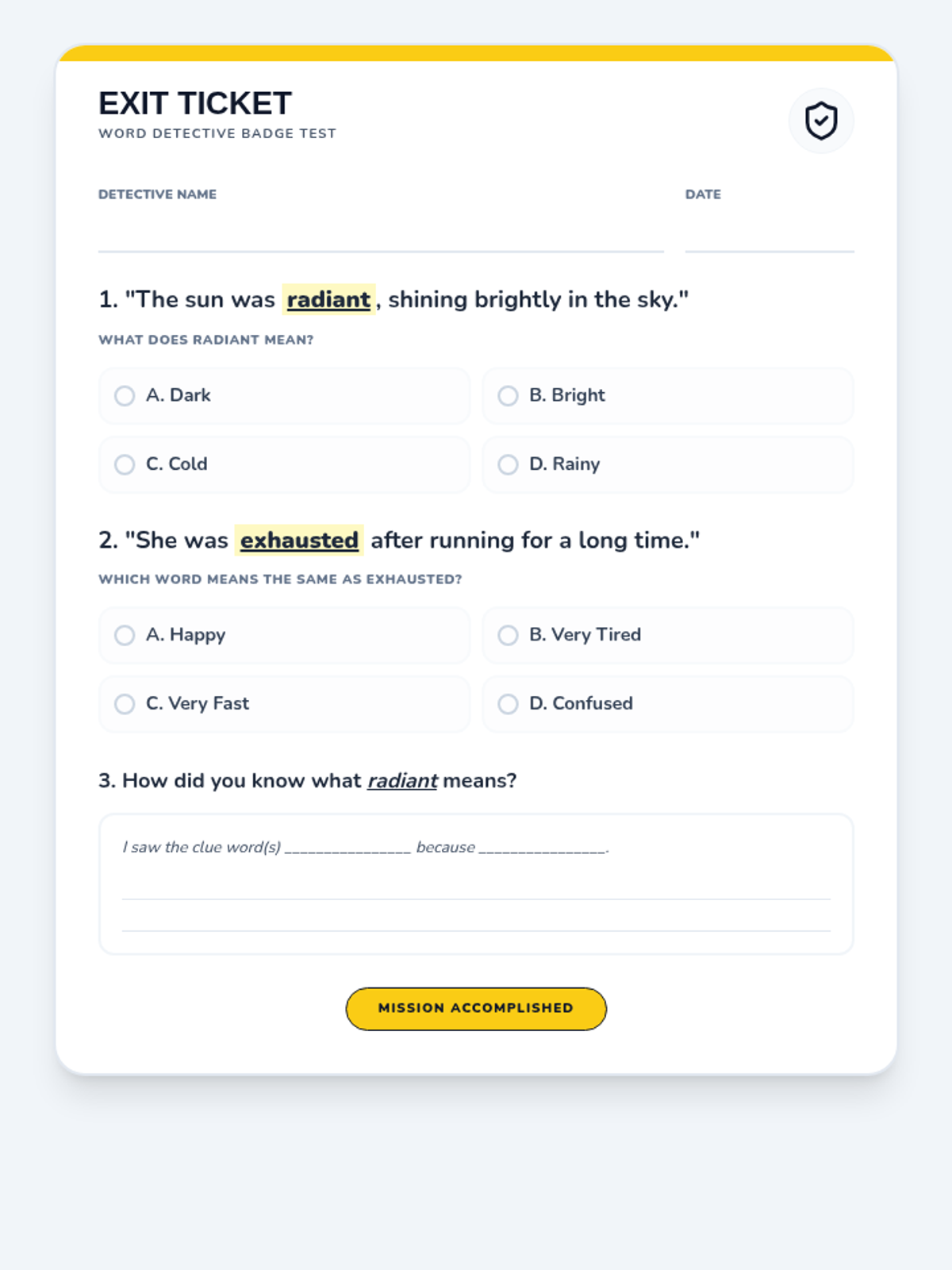
Day 2 focuses on Tier 2 academic vocabulary and using synonym, antonym, and example clues to find definitions. Students will practice MAP-aligned questions focused on sentence-level inference.
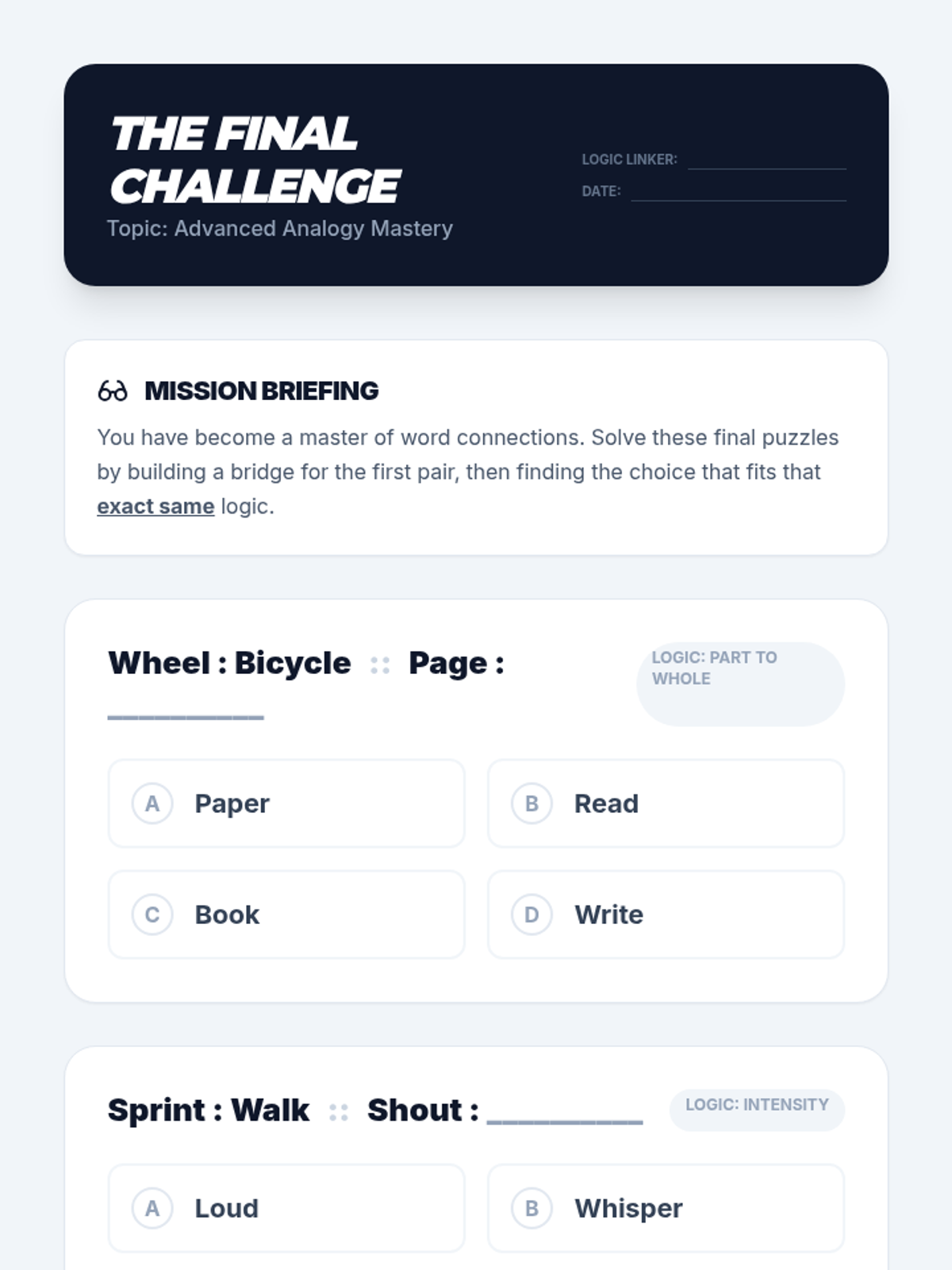
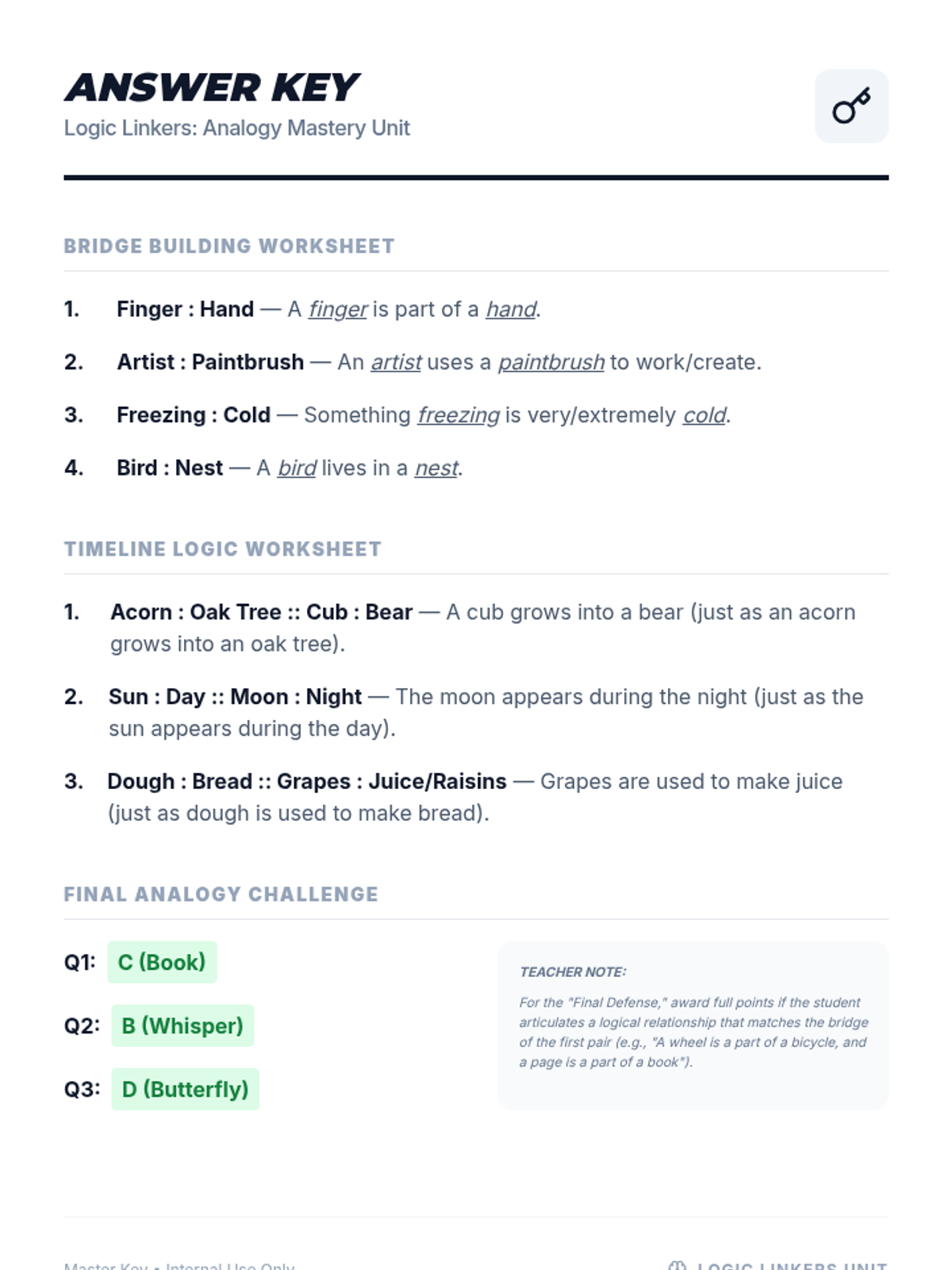
Students apply their logic to standardized-test style questions. They learn strategies for eliminating wrong answers and verifying the bridge sentence for the correct choice.
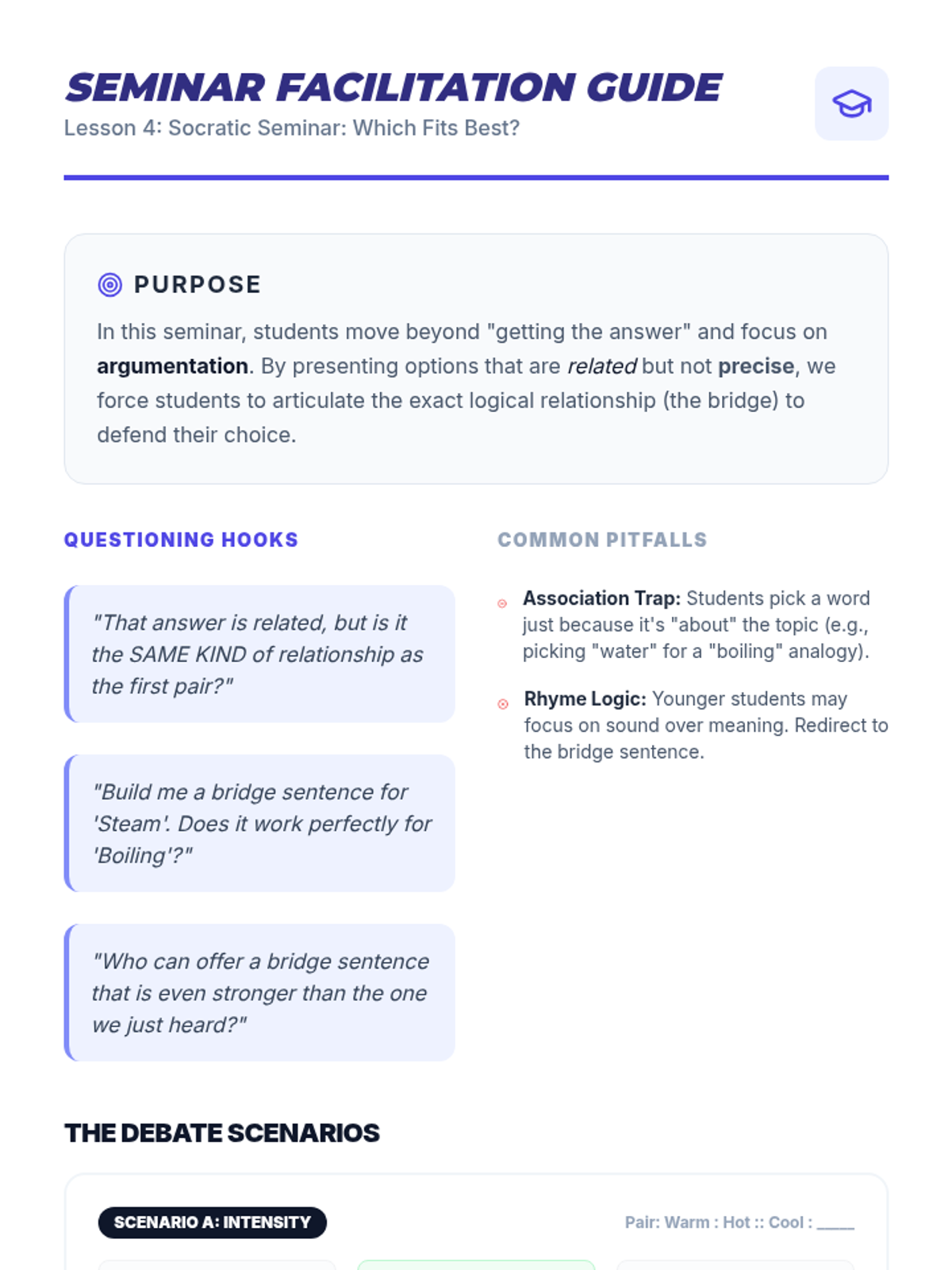
Students are presented with an analogy and three possible answers that are all somewhat related. They discuss and debate which one is the *best* fit based on the specific relationship of the first pair.
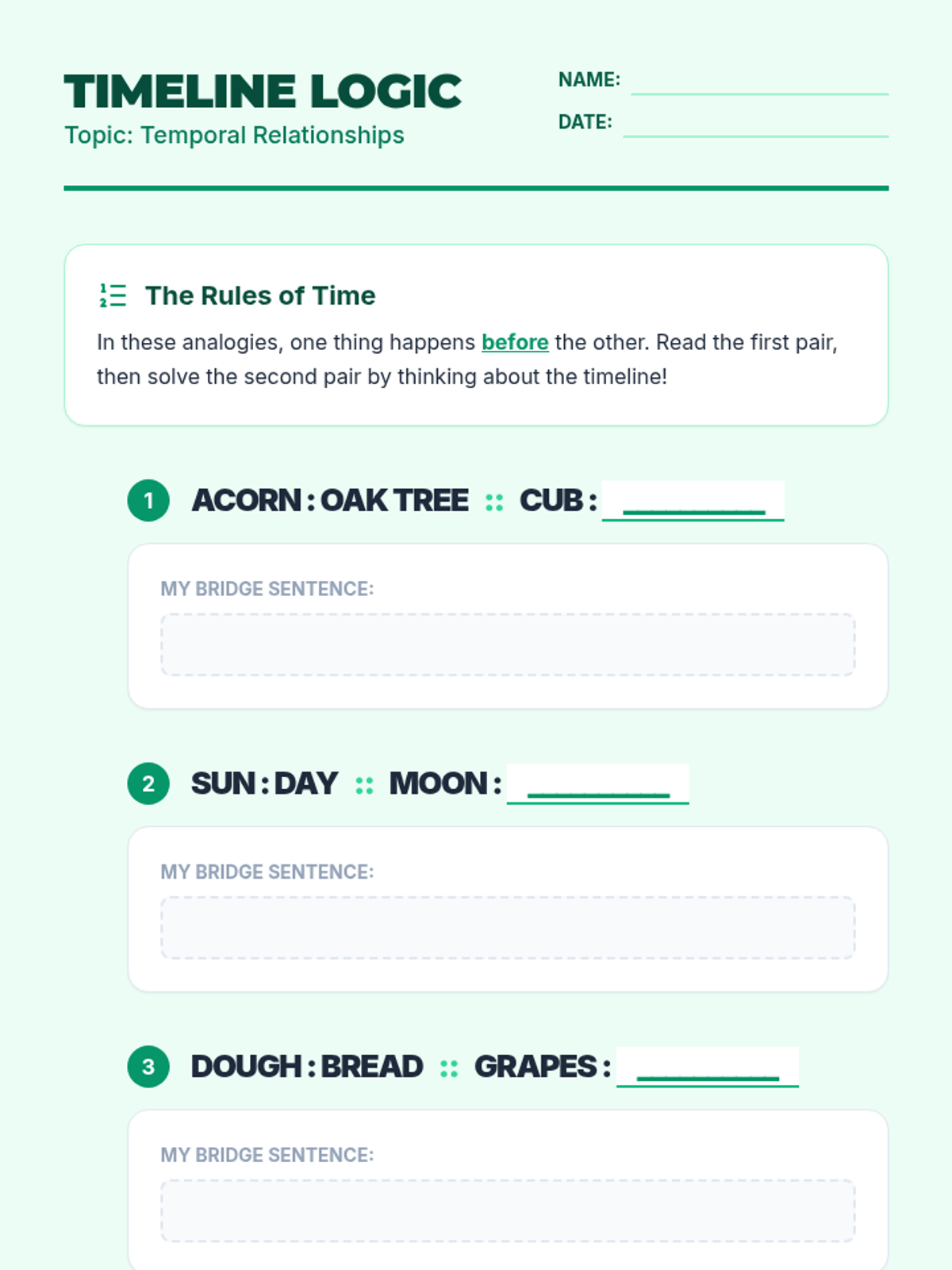
Students look at relationships based on time and sequence, such as 'Morning is to Breakfast' or 'Tadpole is to Frog'. They use timelines to map these analogies.
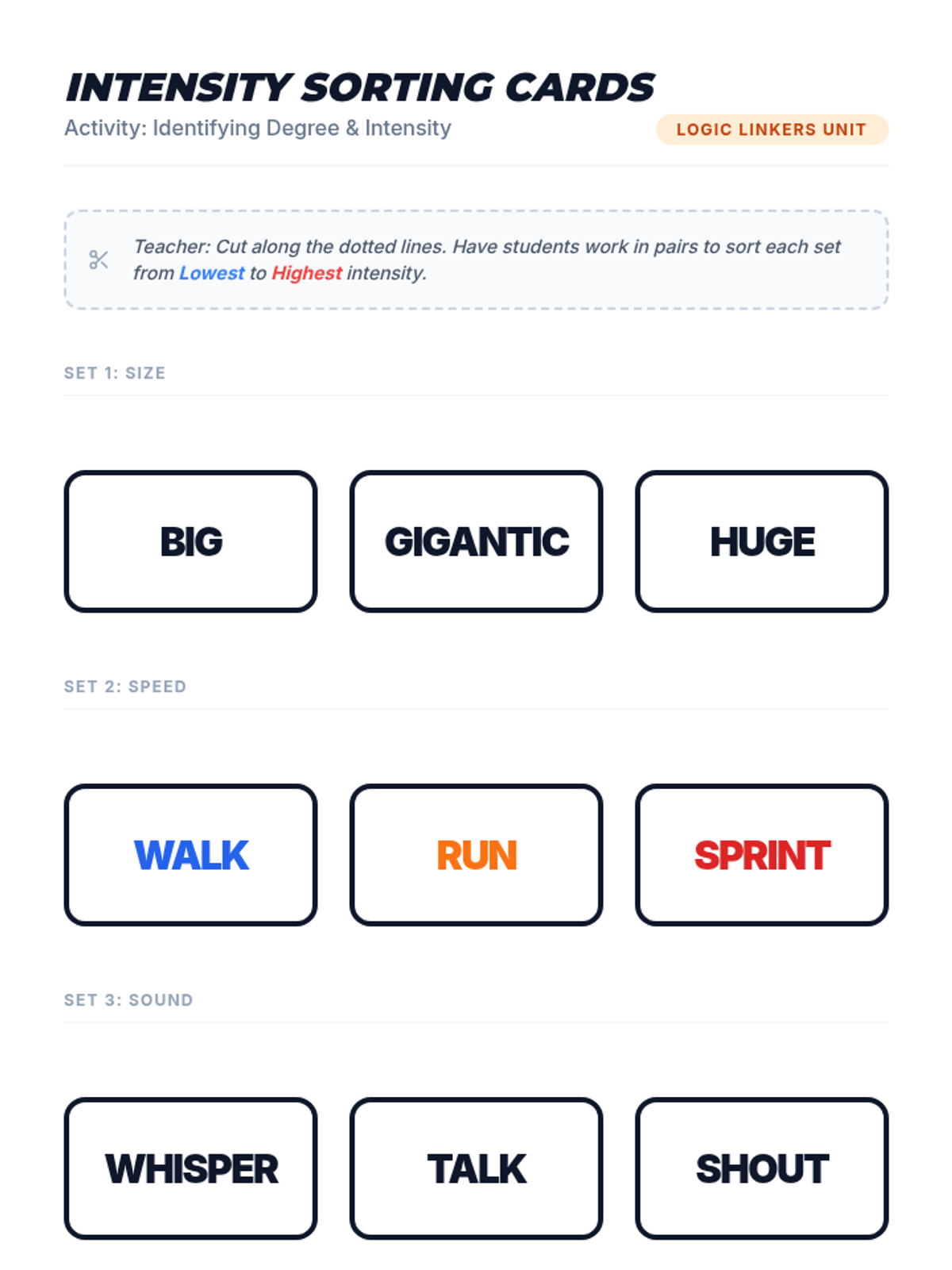
The class explores analogies involving intensity, such as 'Warm is to Hot' as 'Cool is to Cold'. Students arrange word cards on a 'thermometer' of intensity to visualize the progression.
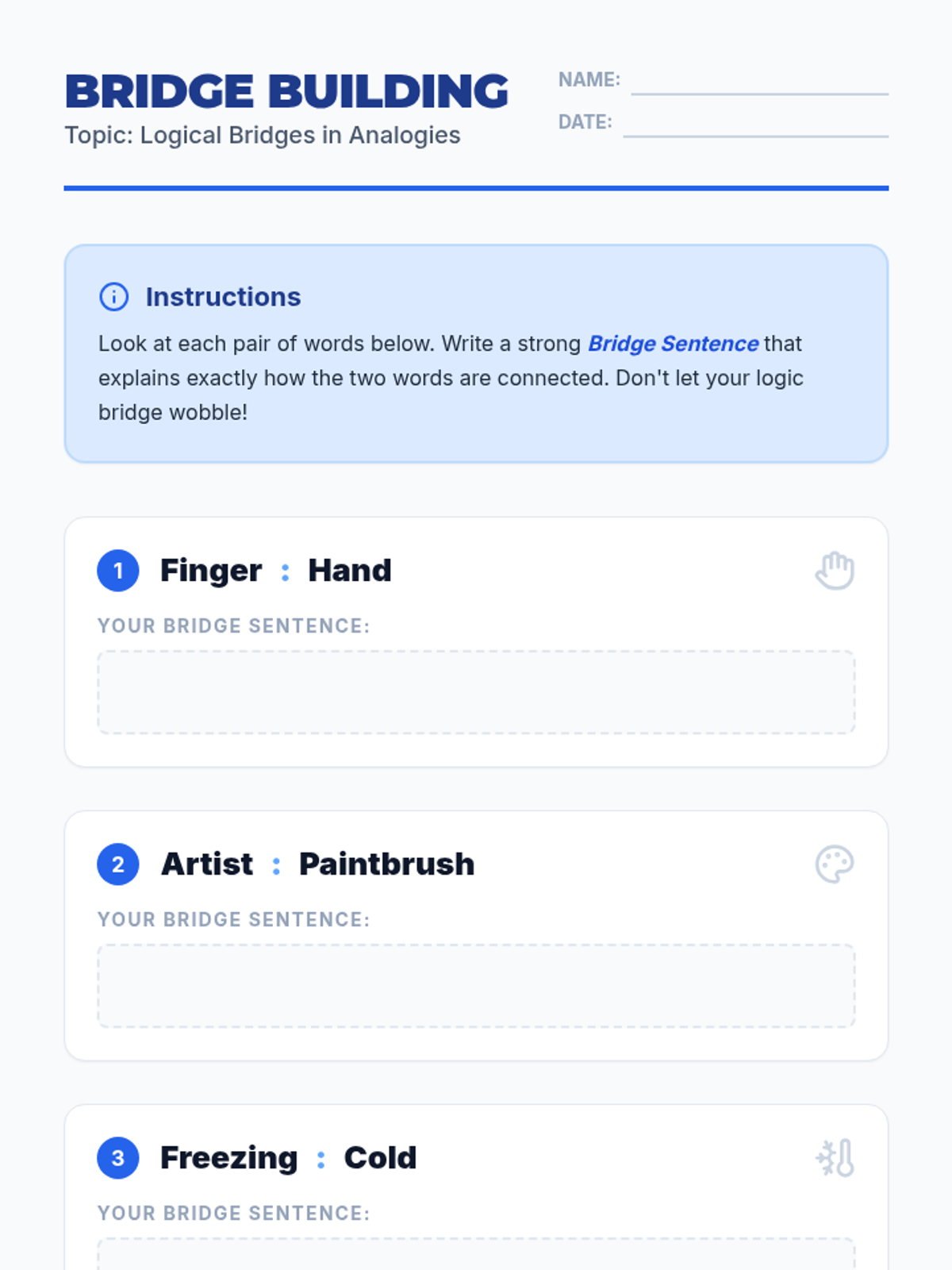
Students learn to identify the specific relationship between words by creating 'bridge sentences' that describe how two things are connected.
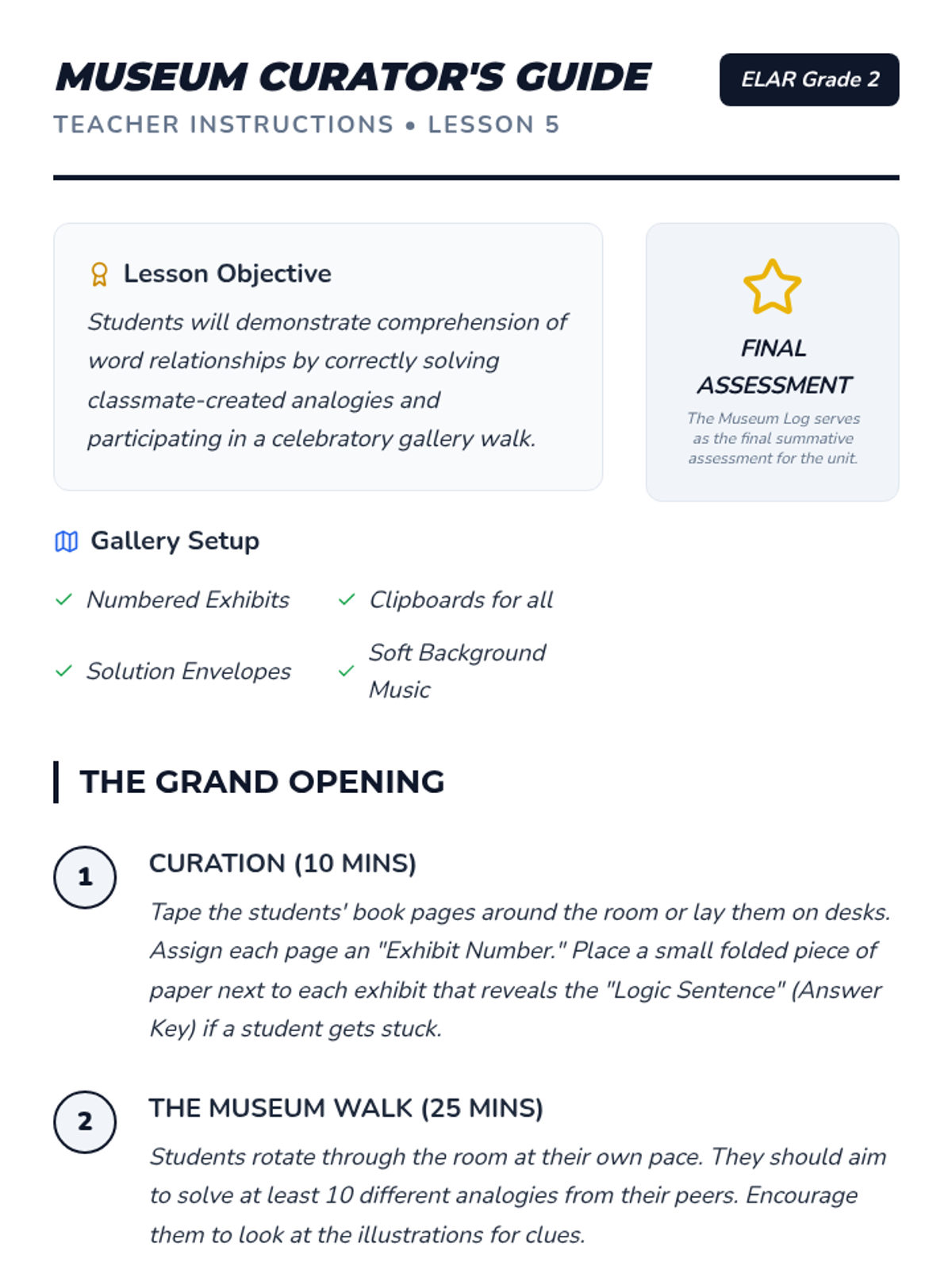
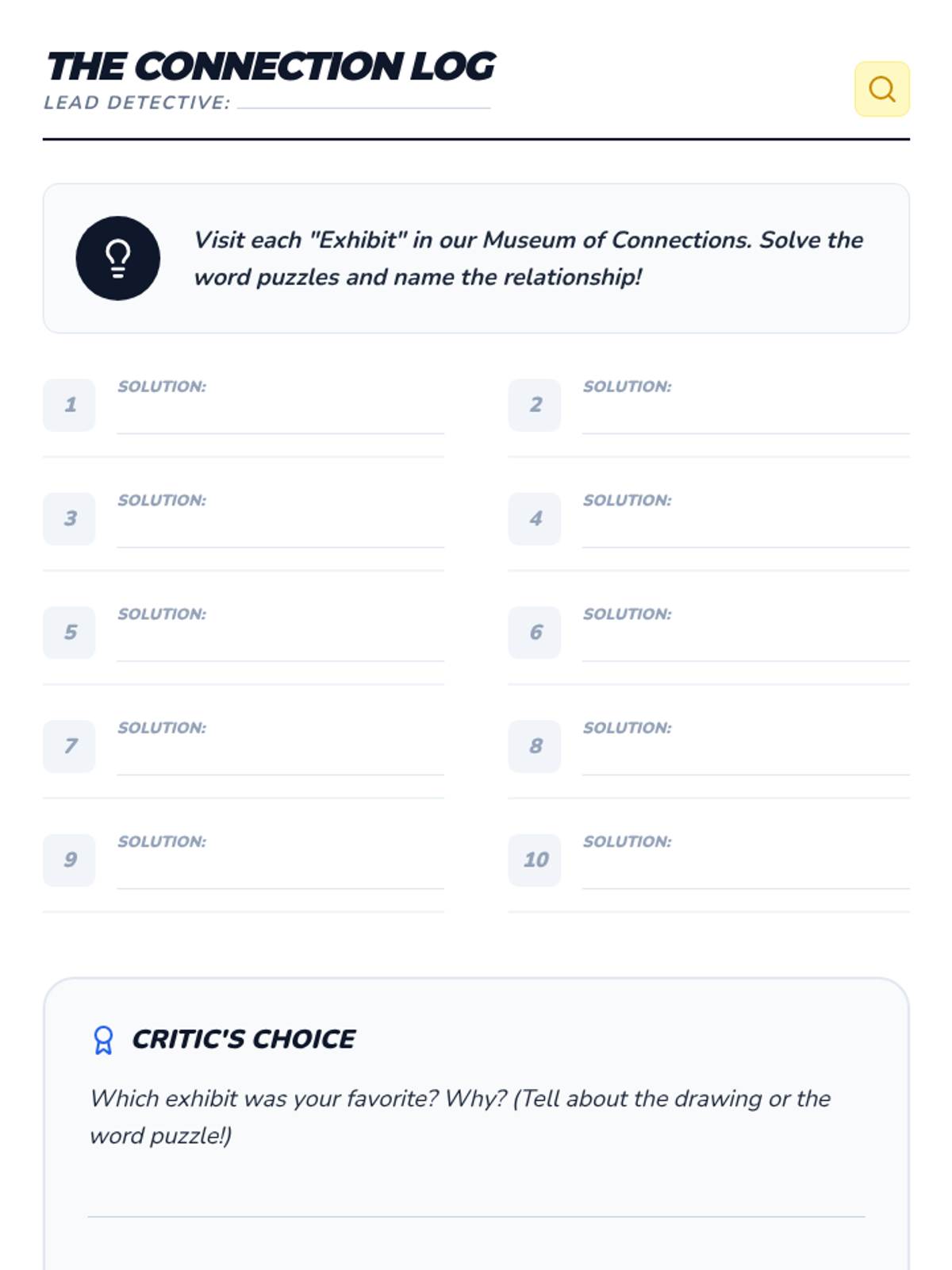
A gallery walk where students solve their classmates' analogies and celebrate their completed 'Book of Connections'.
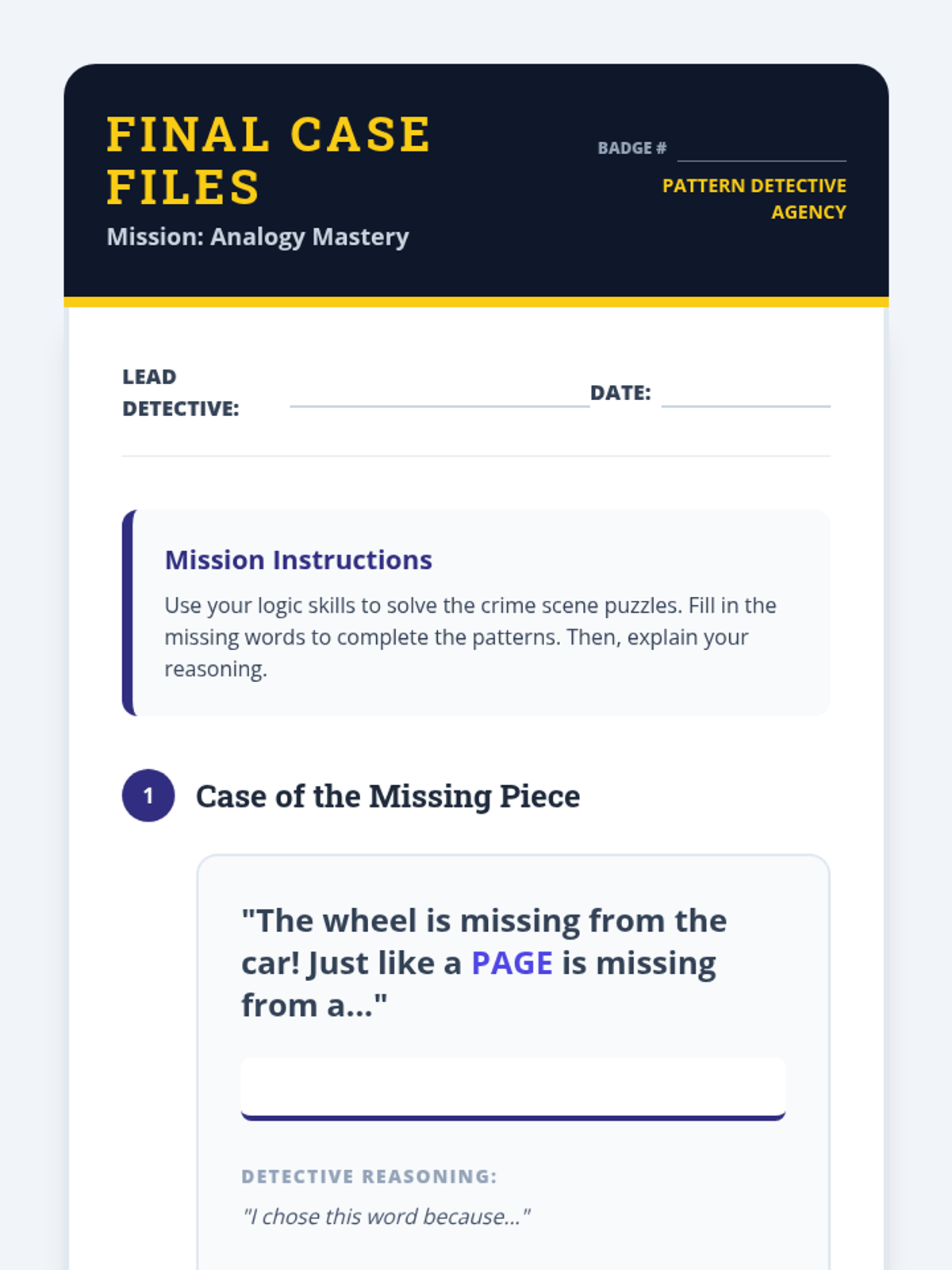
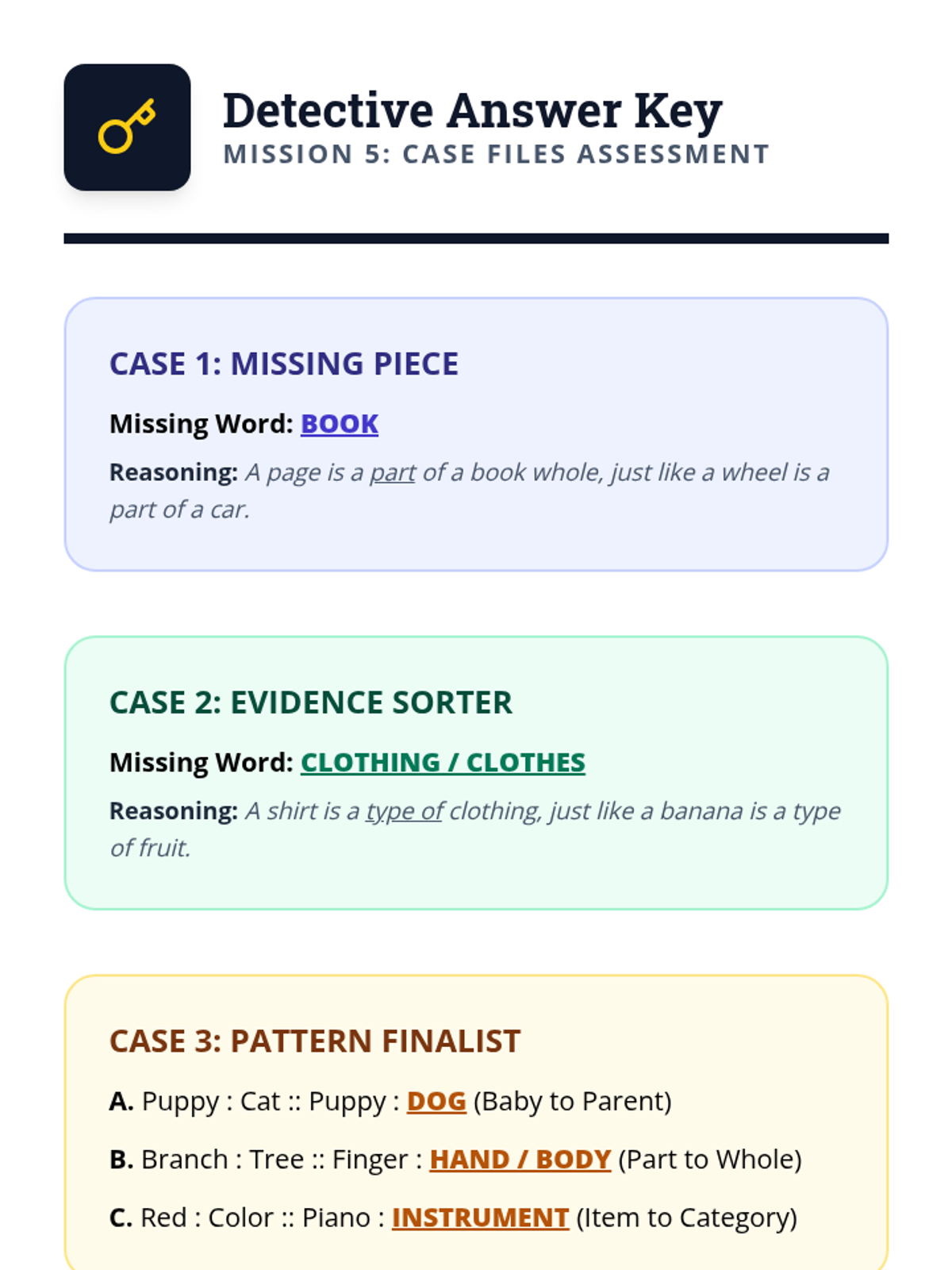
Students solve crime-scene puzzles by supplying missing words based on category or part-to-whole logic and explaining their reasoning.
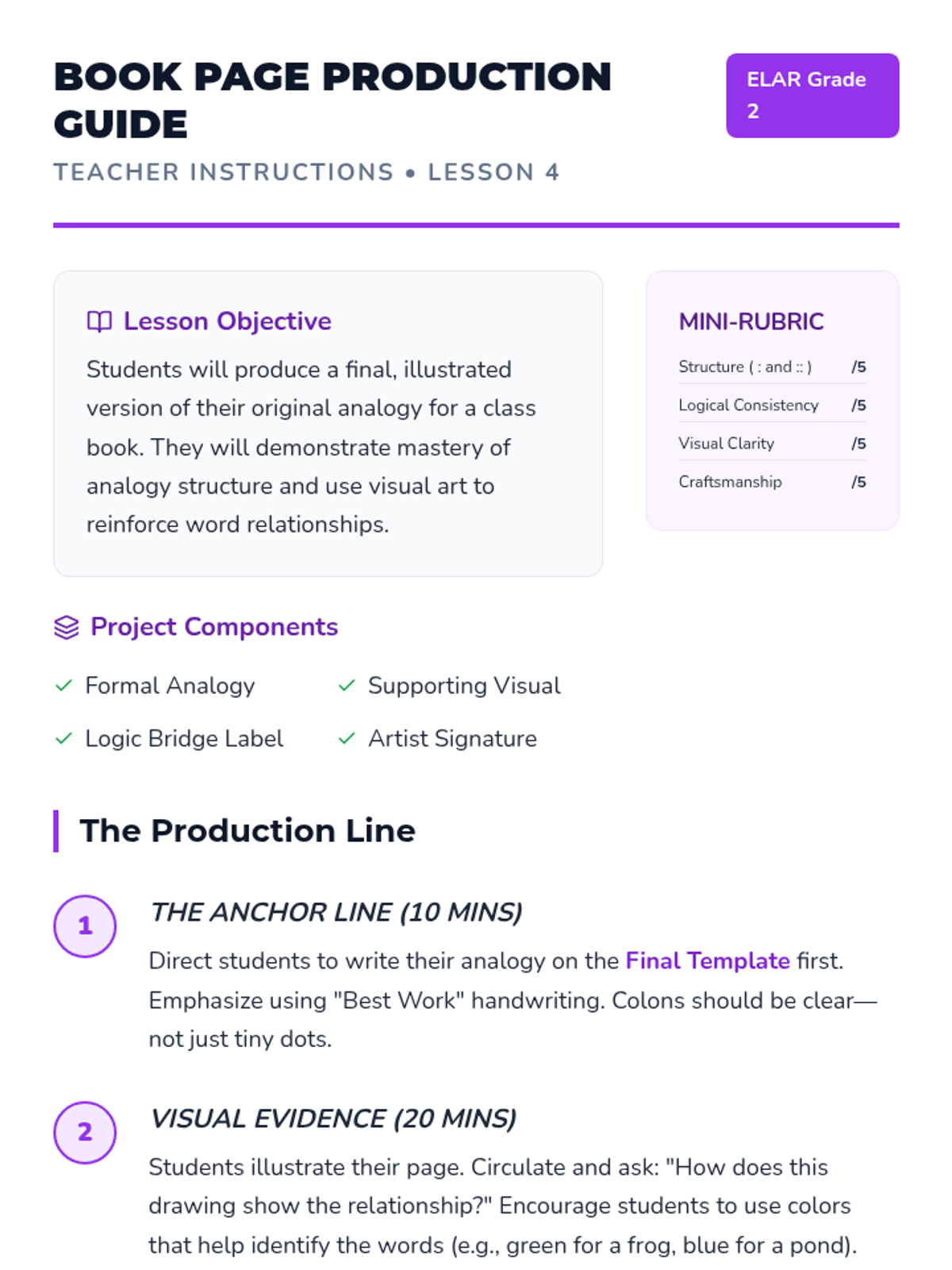
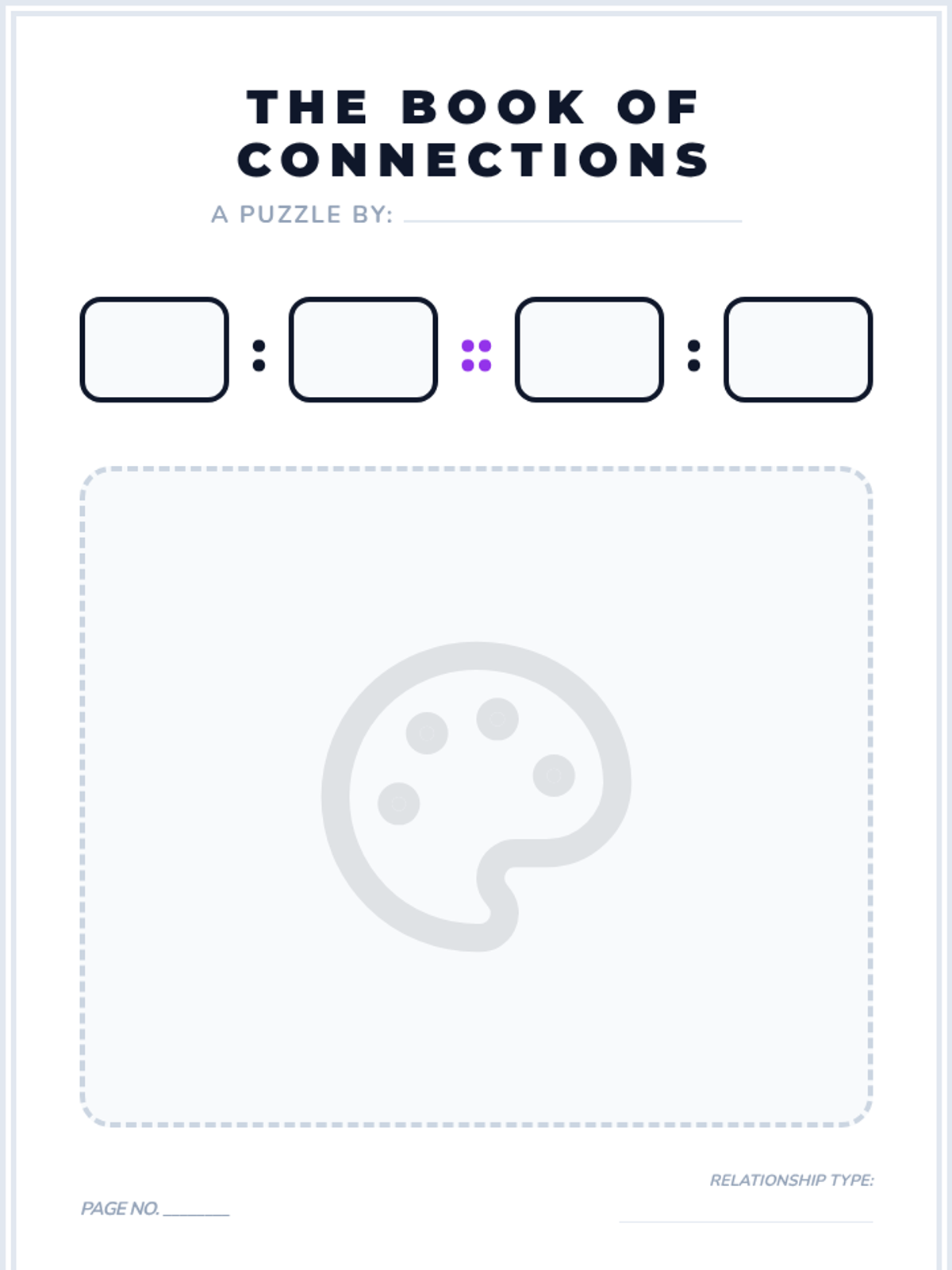
Students create final, illustrated pages for a class book, visually representing the logic of their original analogies.
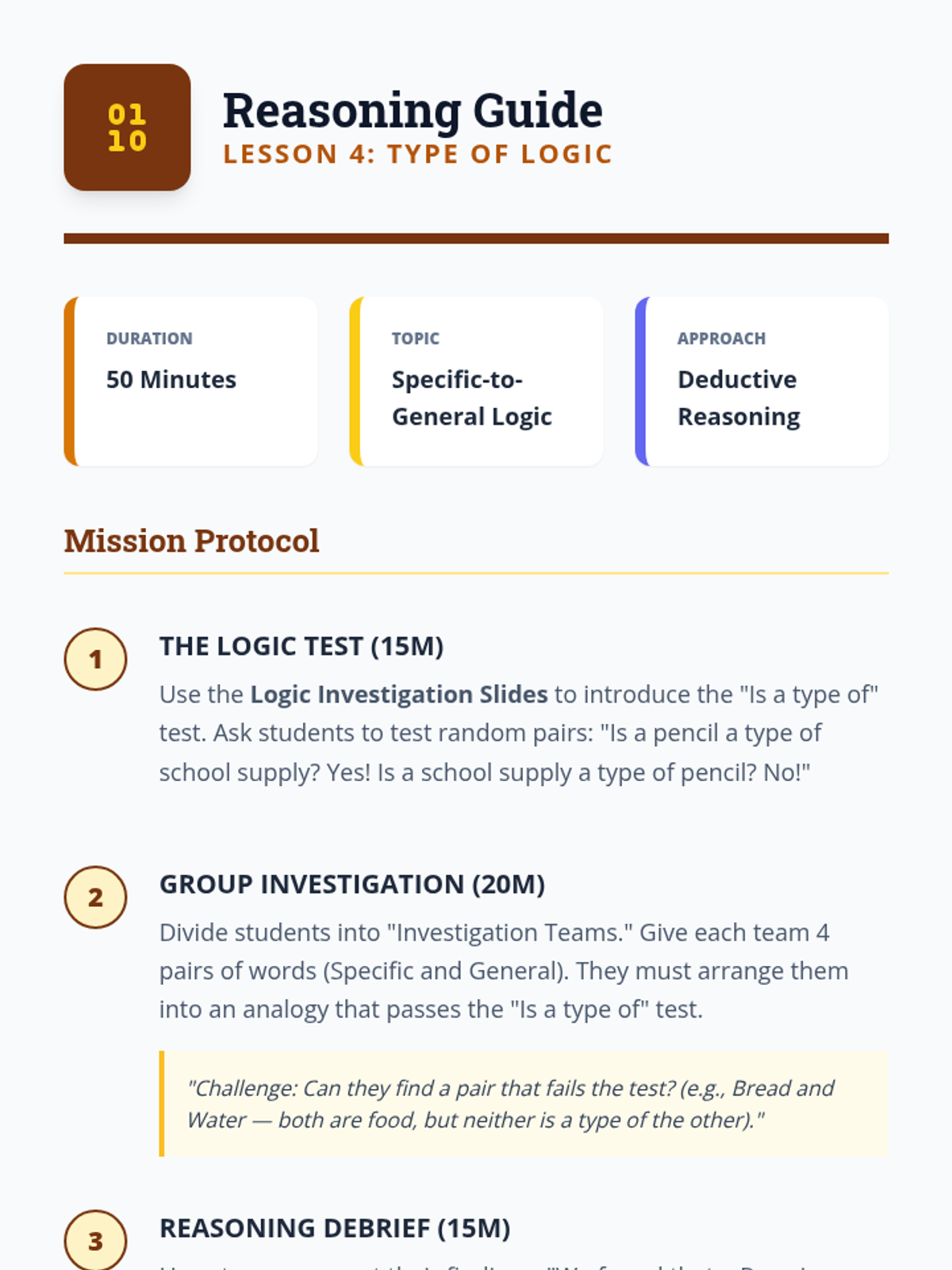
Students work in groups to use 'is a type of' reasoning to solve analogies, exploring specific-to-general relationships.
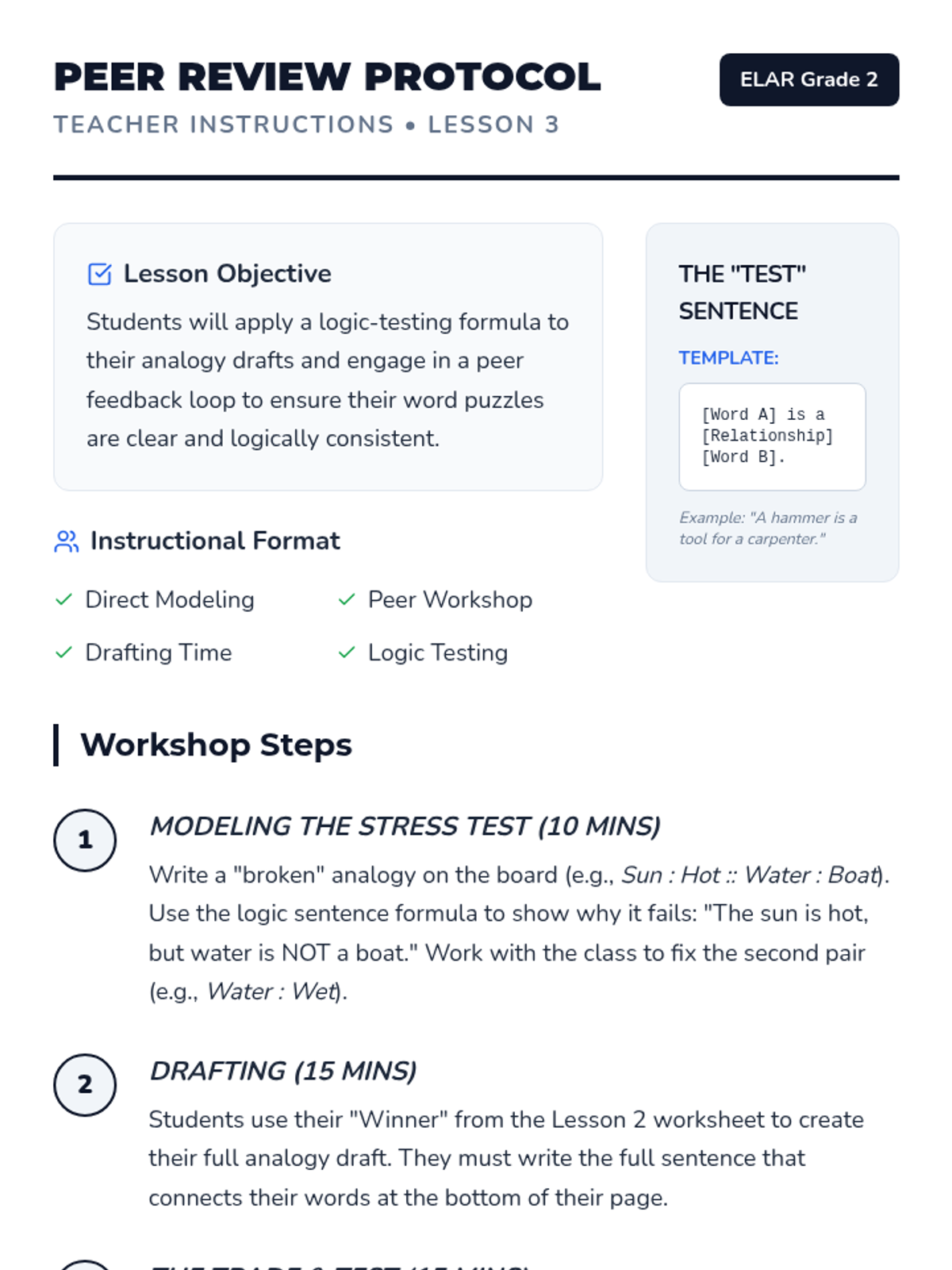
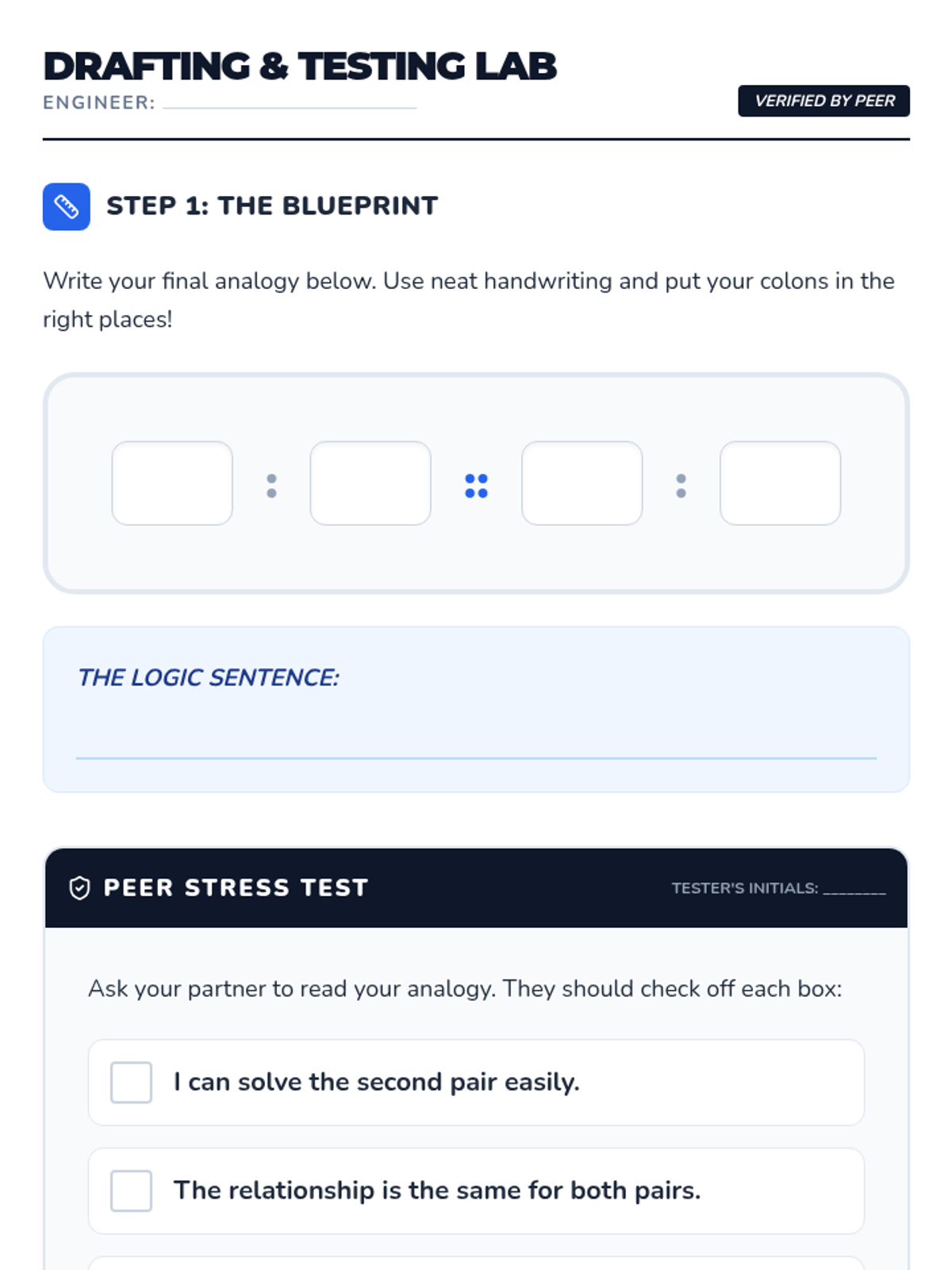
Students draft their analogies and trade with partners to 'test' the logic and clarity of their word puzzles.
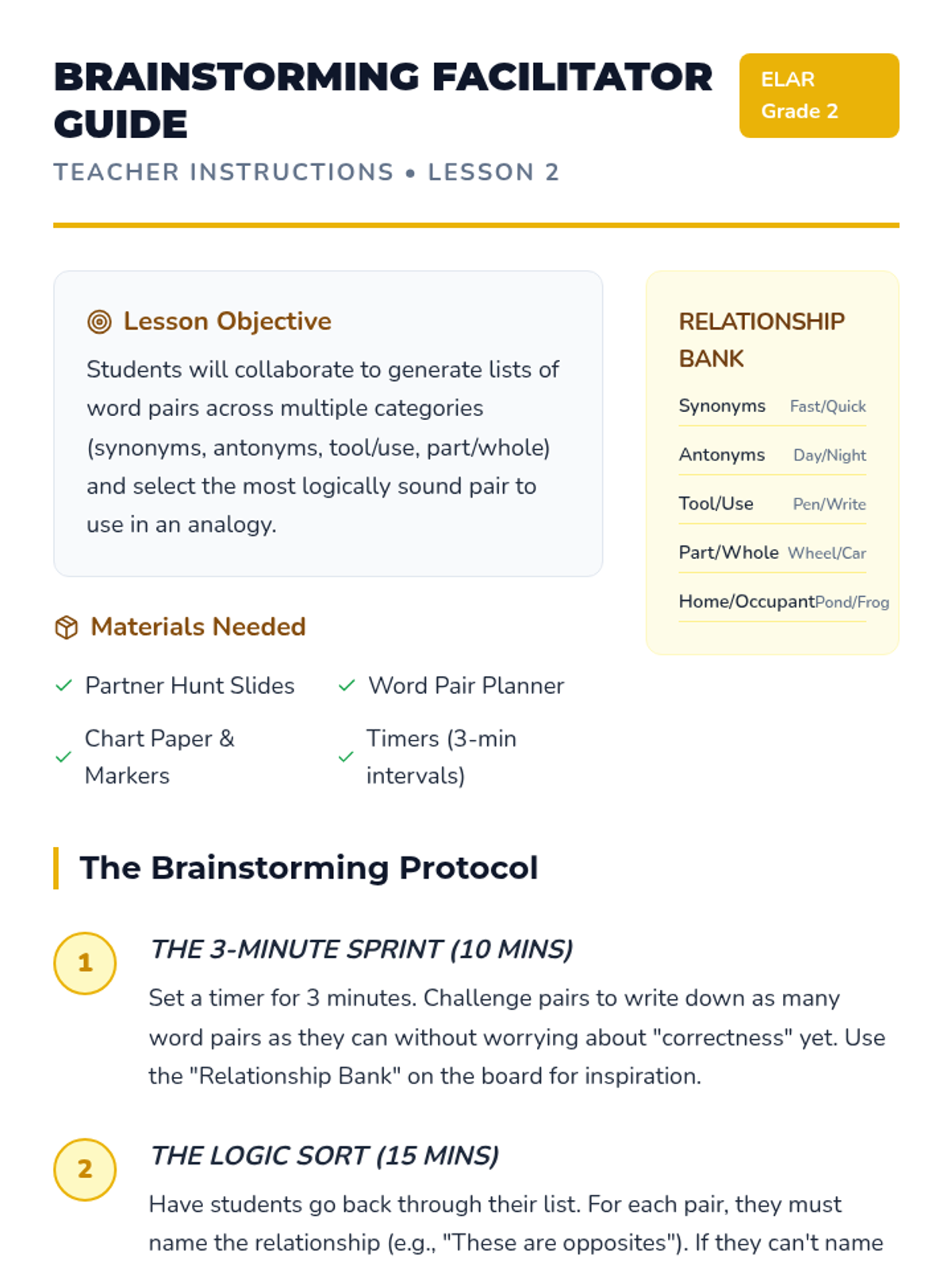
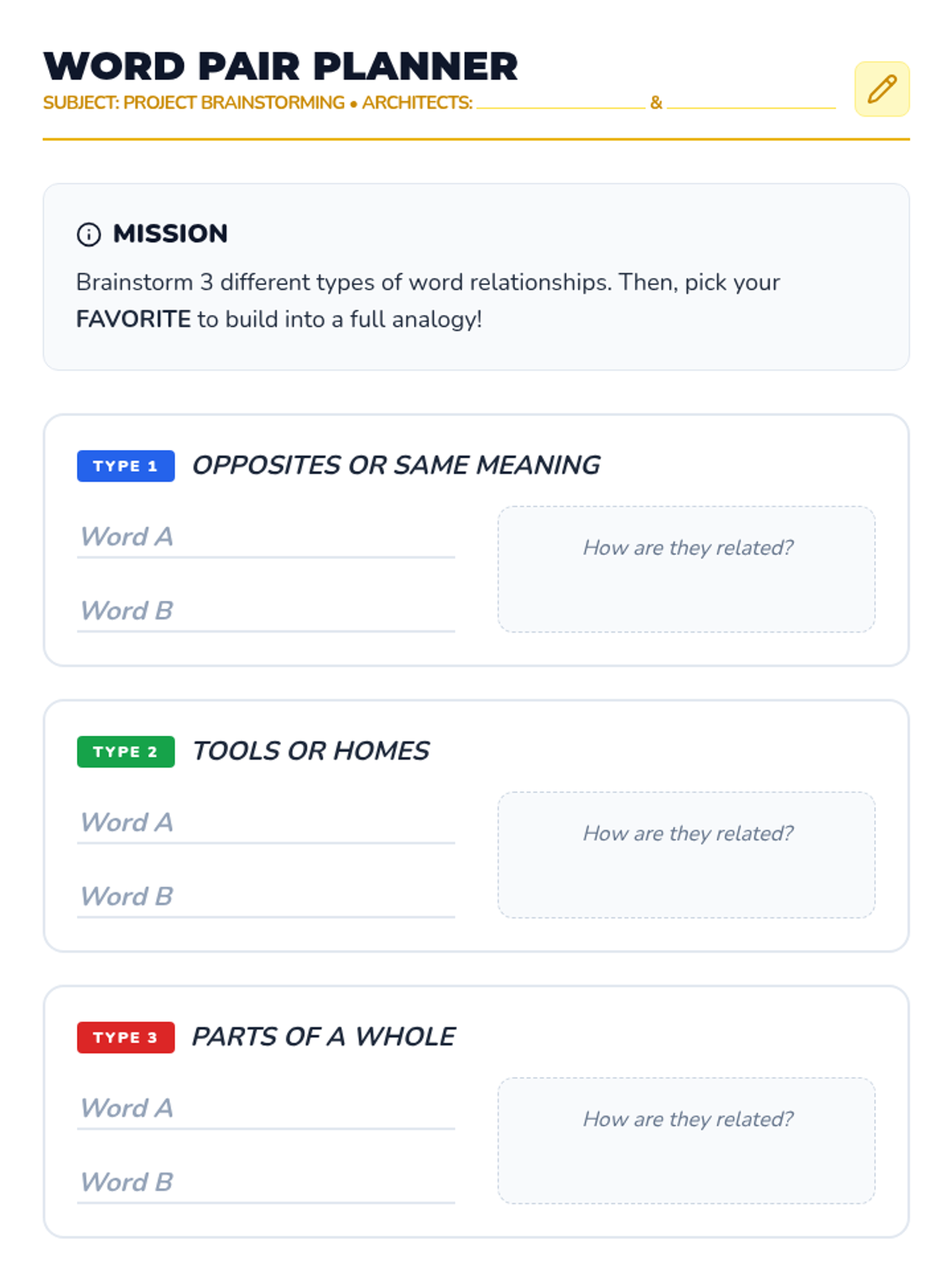
Pairs of students brainstorm related words across various categories like synonyms and tool/use to find the perfect analogy pairs.
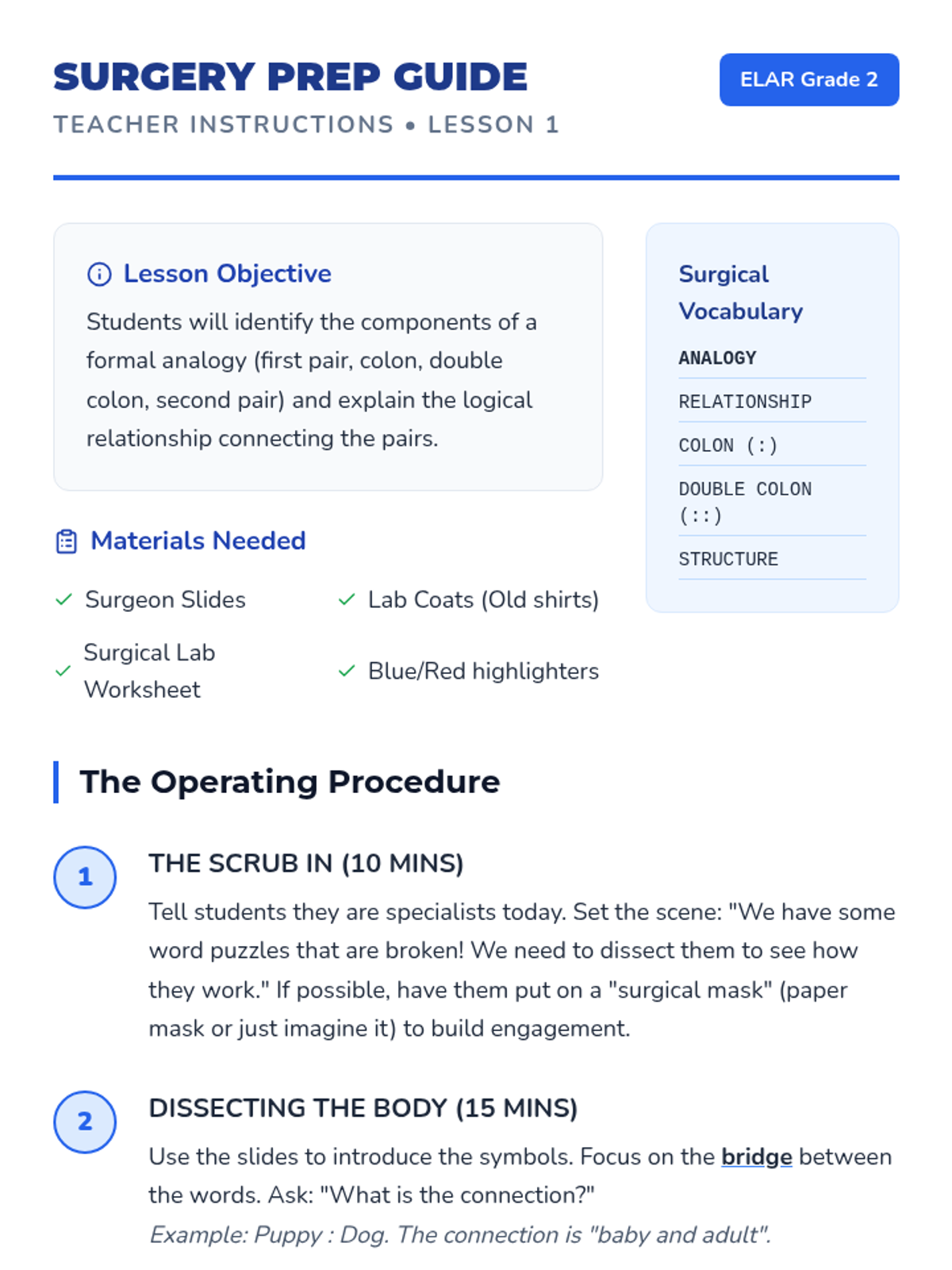
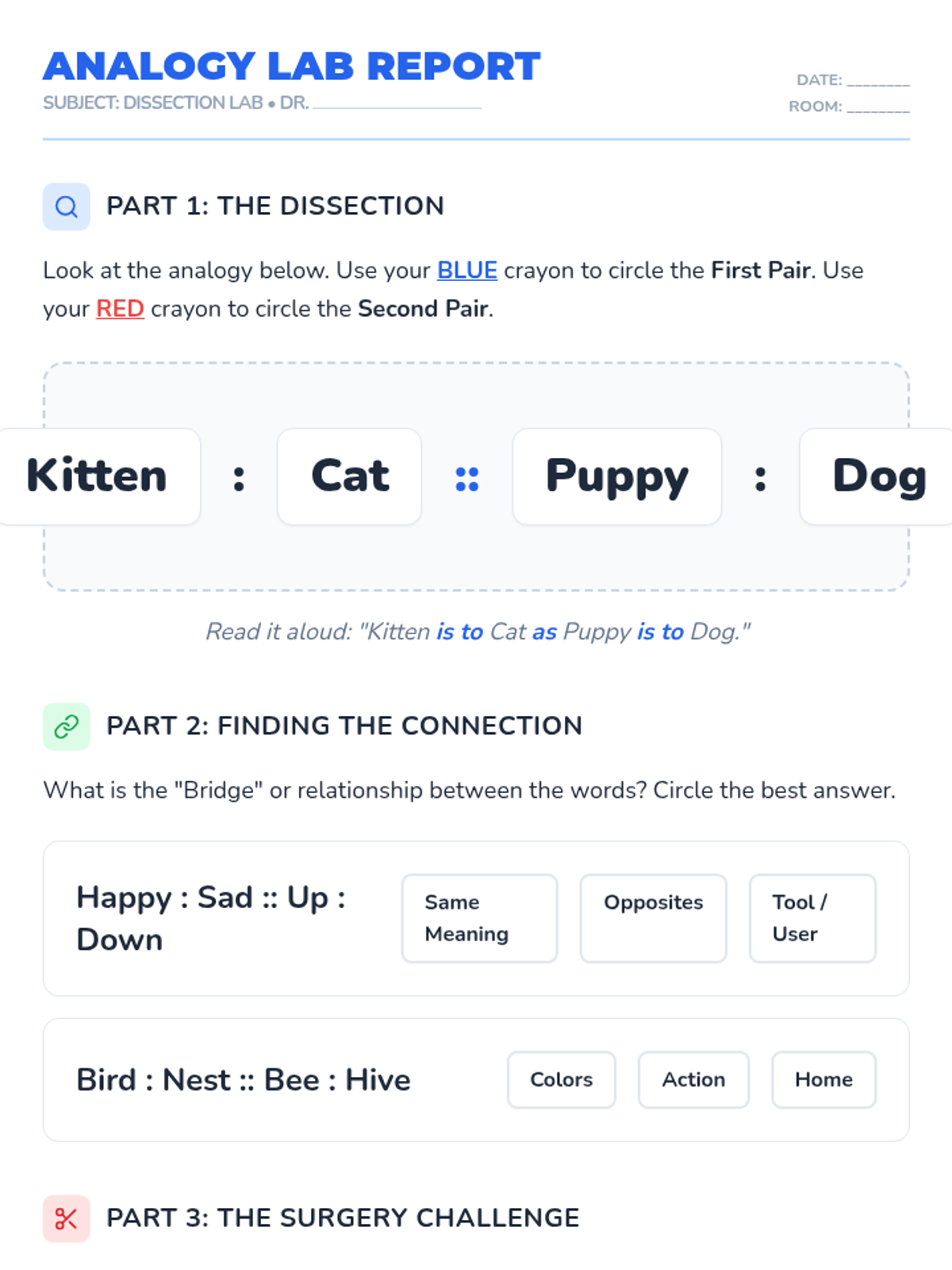
Students act as 'analogy surgeons' to dissect the structure of an analogy, learning the meaning of colons and double colons.
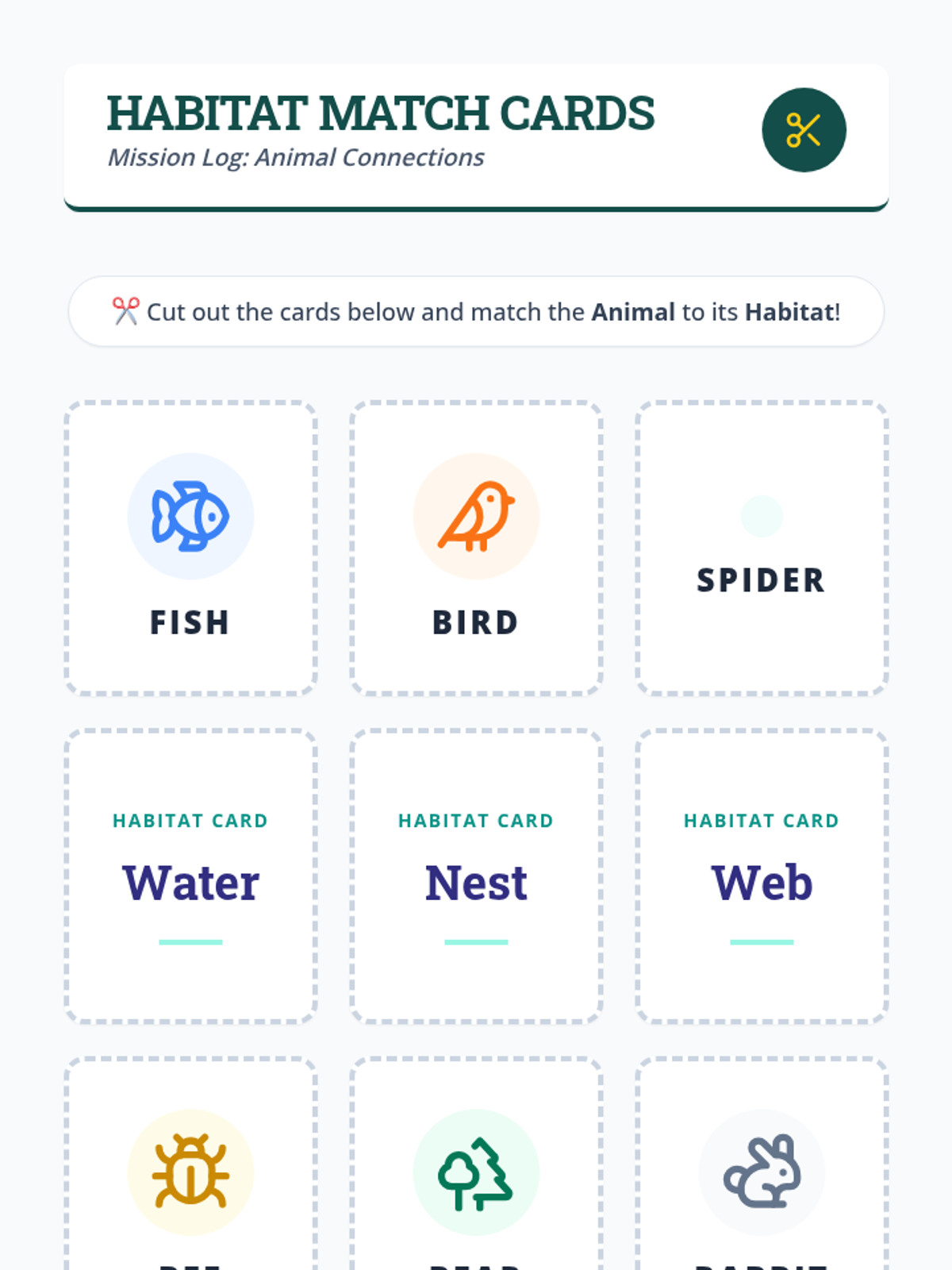
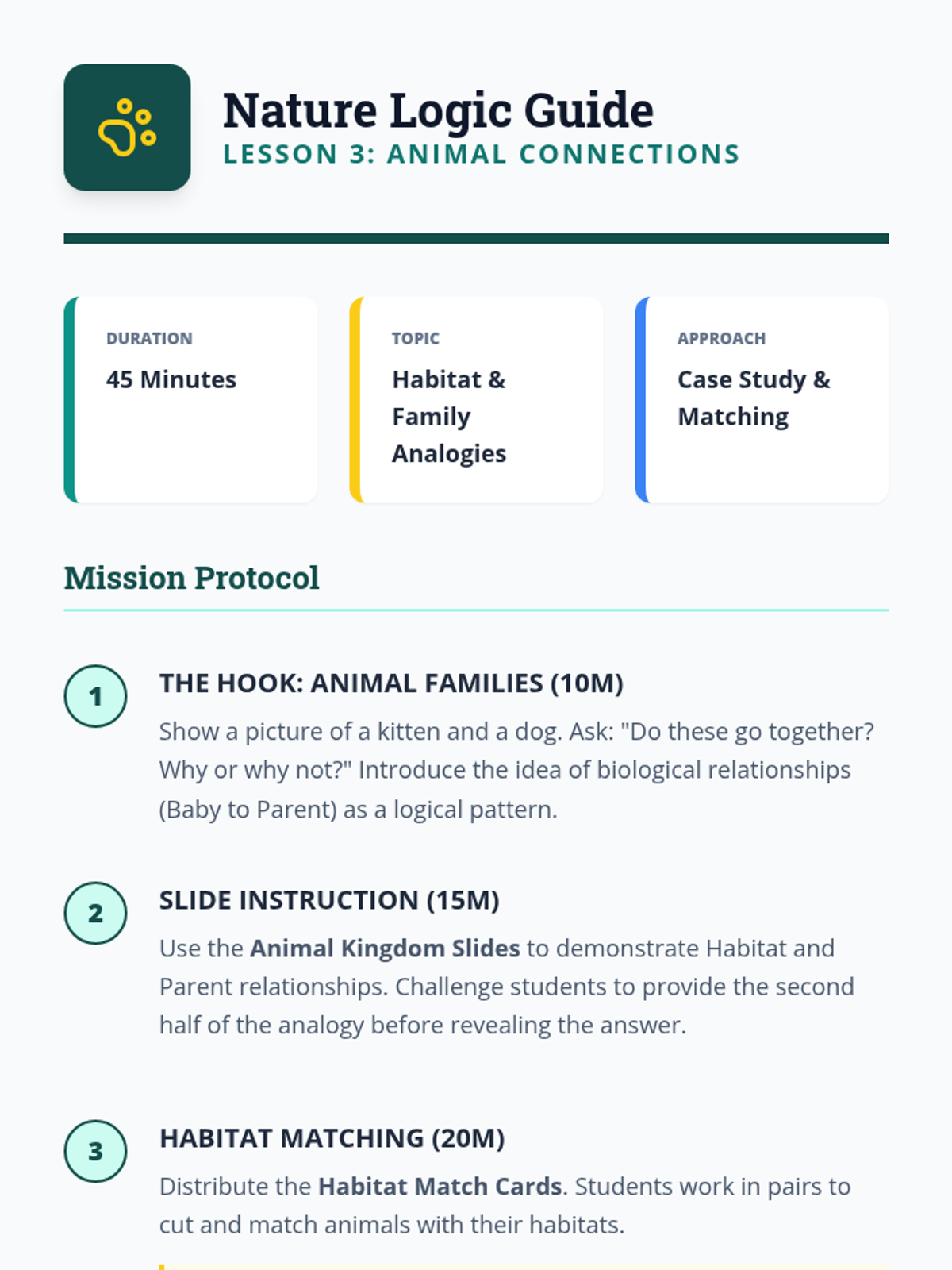
Students focus on science-themed analogies involving animals, their young, and their habitats using relationship mapping.
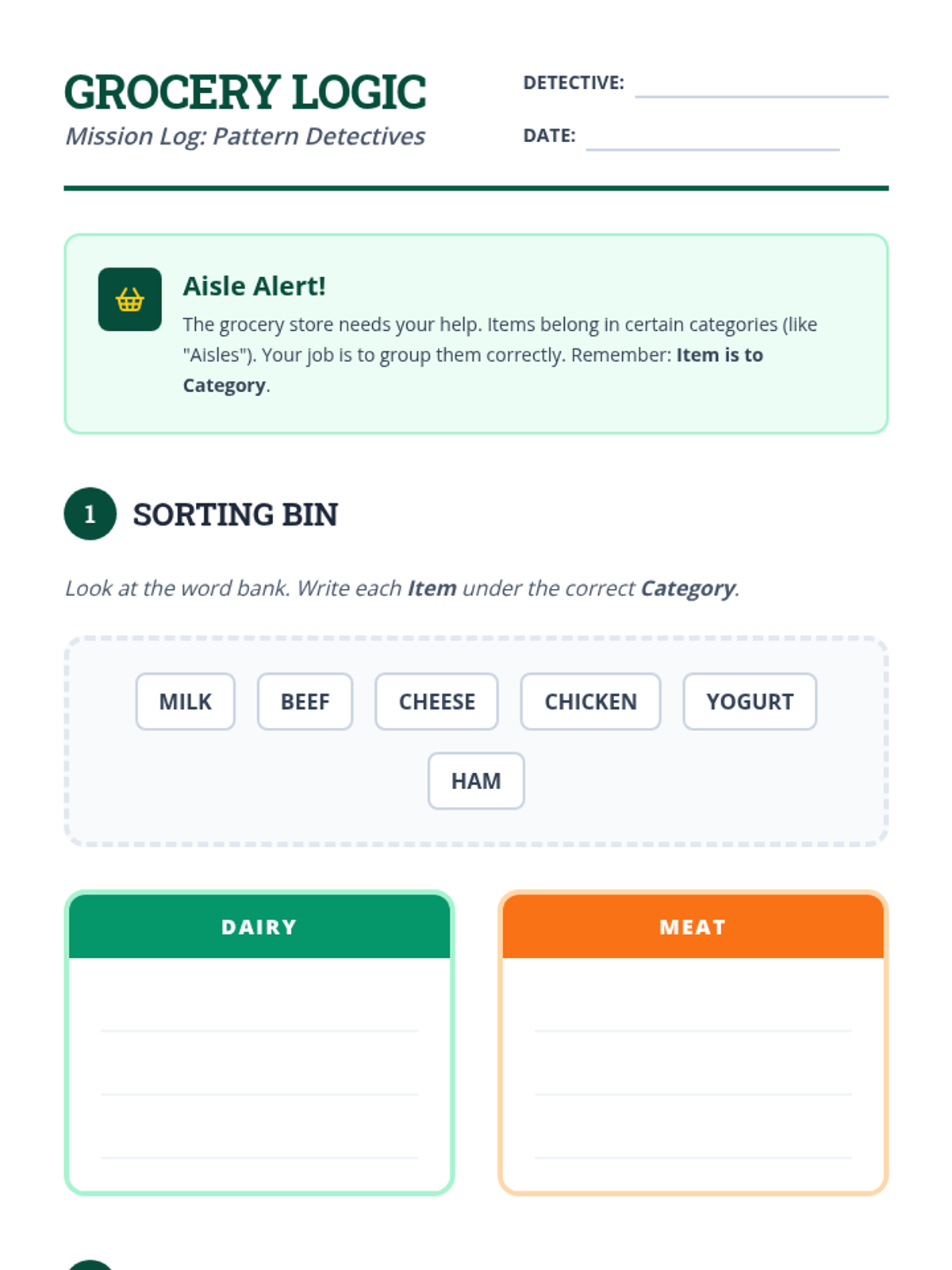
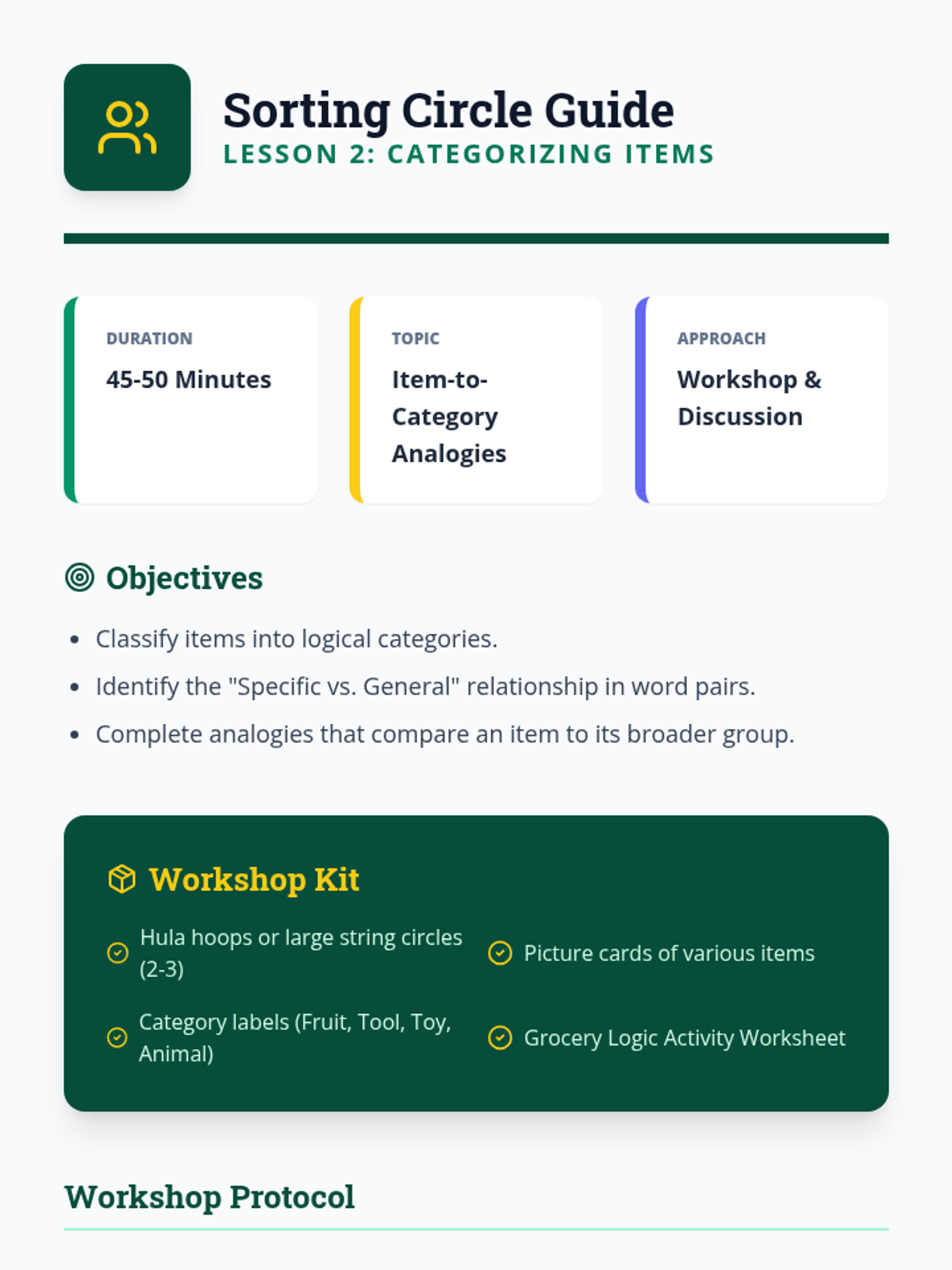
The class investigates category relationships using sorting activities, practicing analogies where an item is compared to its group.
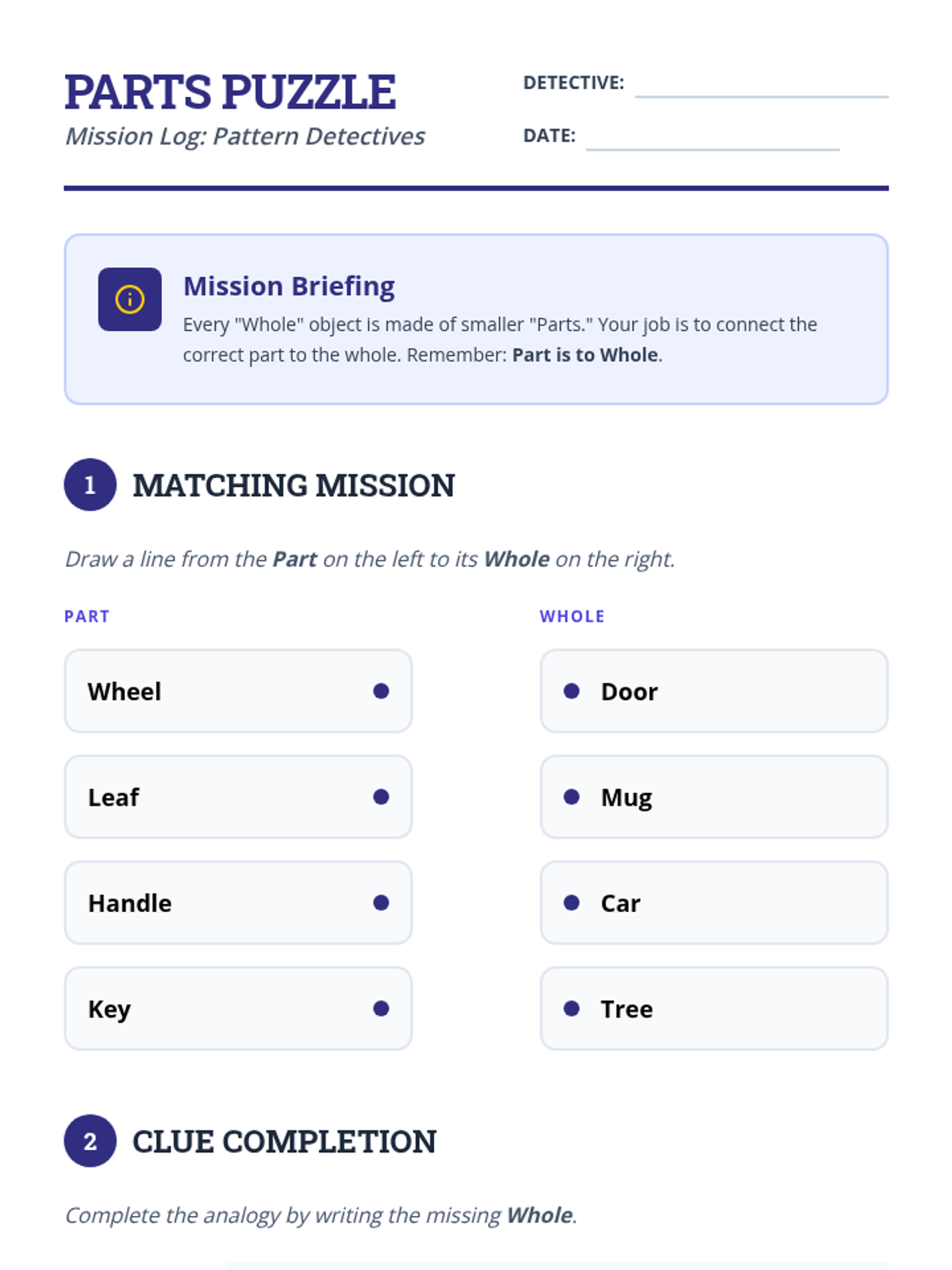
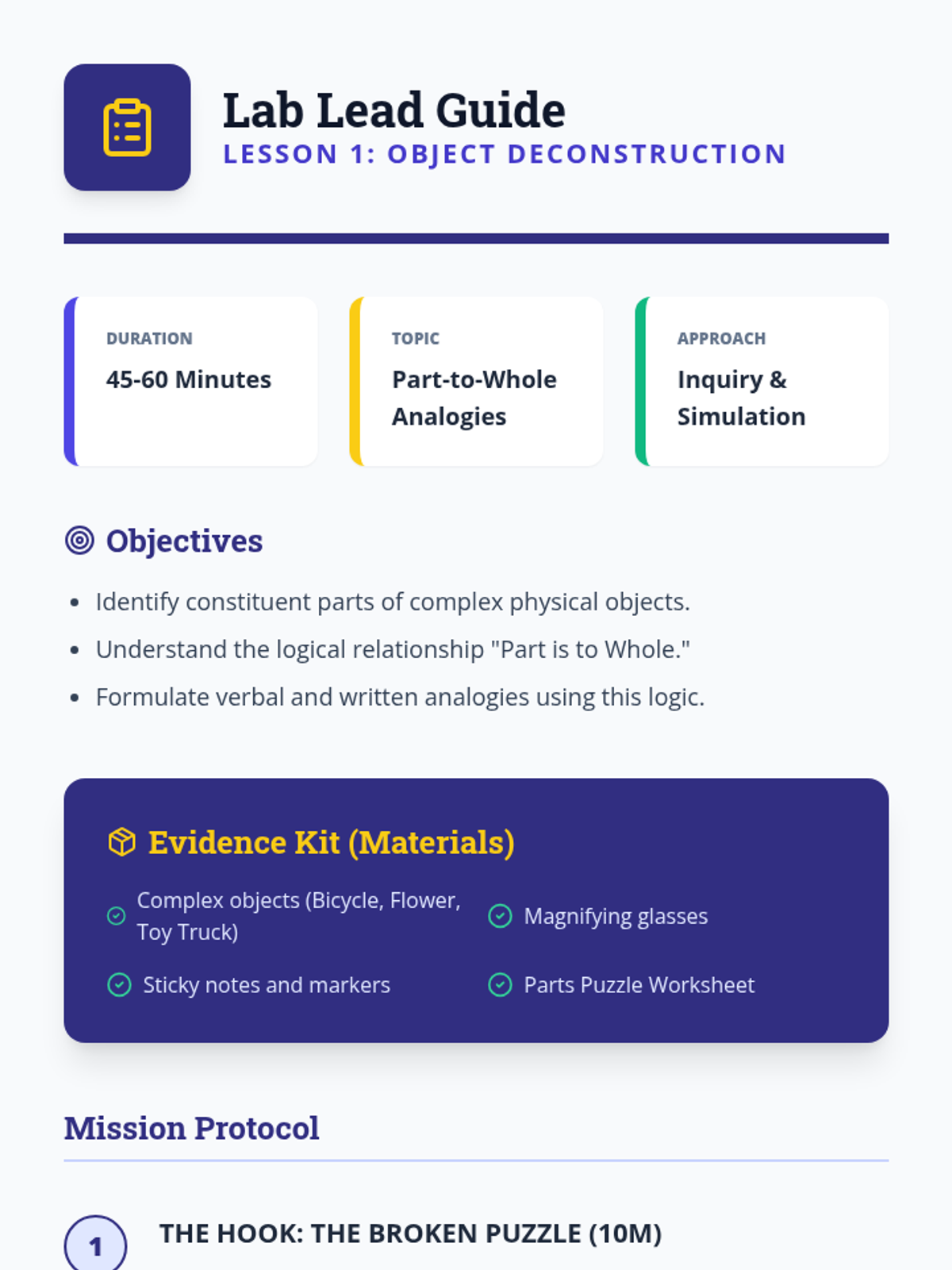
Students examine physical objects and identify their component parts, transferring this understanding to part-to-whole word analogies.
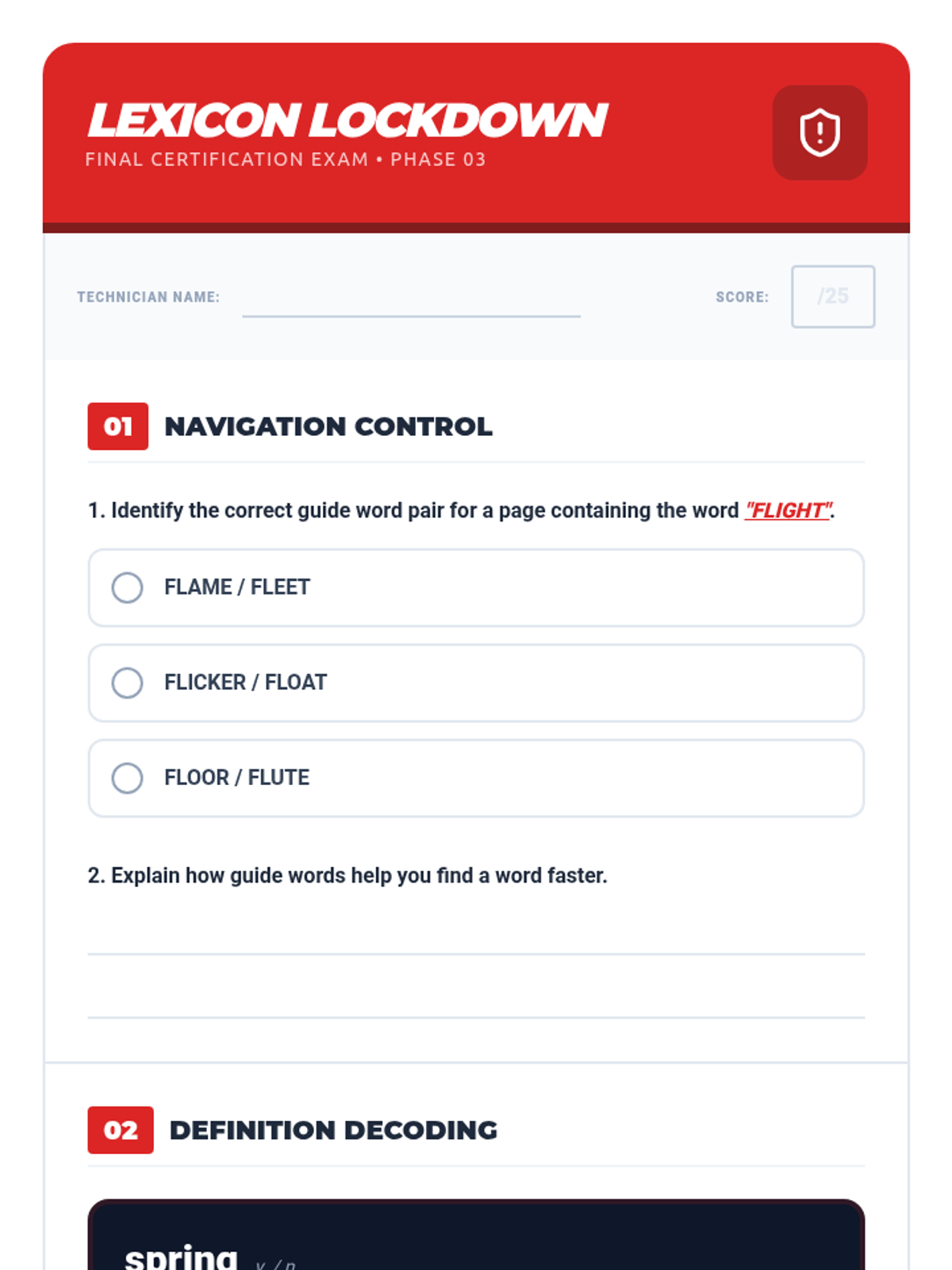
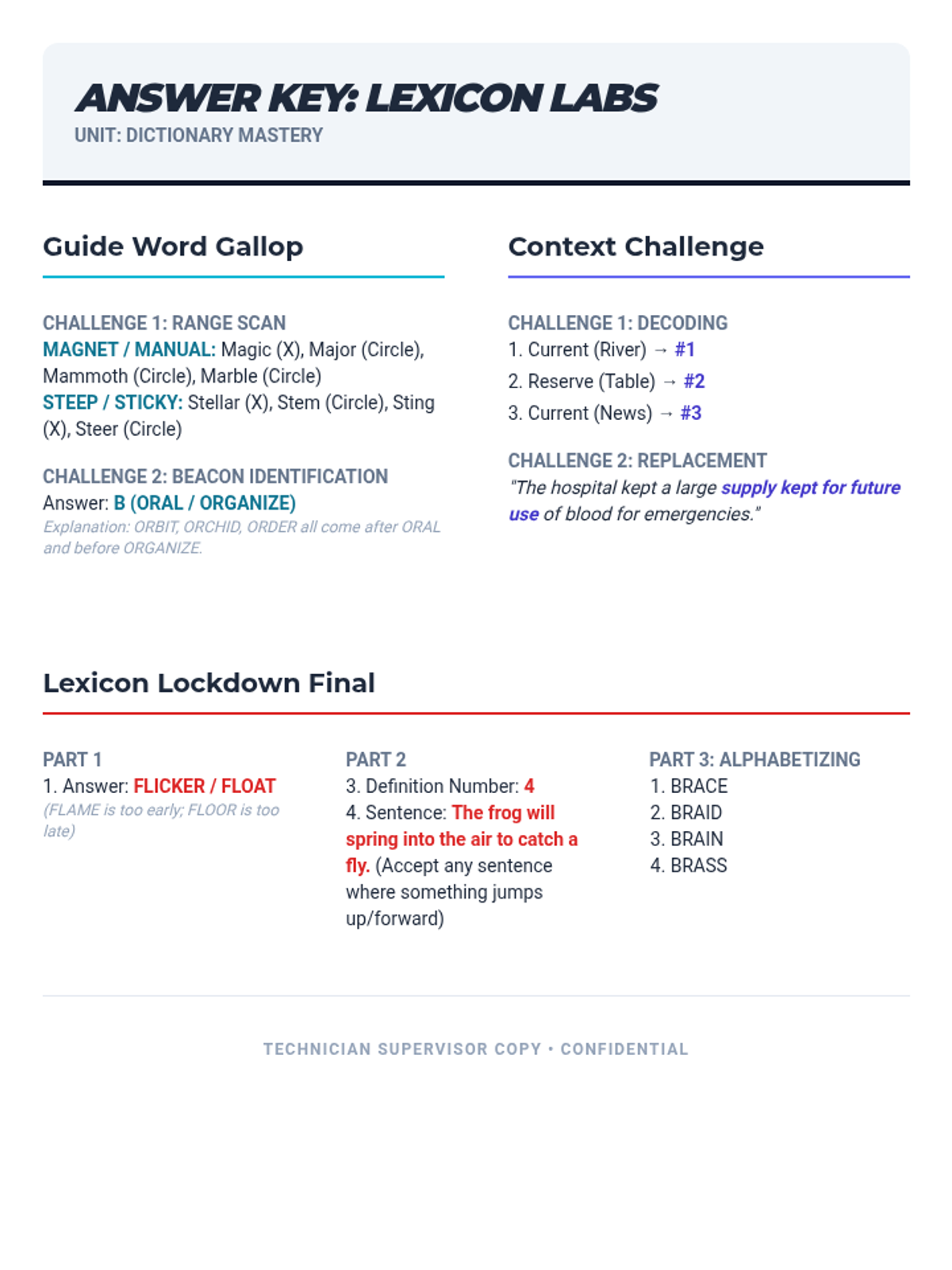
A cumulative review and formal assessment of dictionary navigation and entry analysis skills.
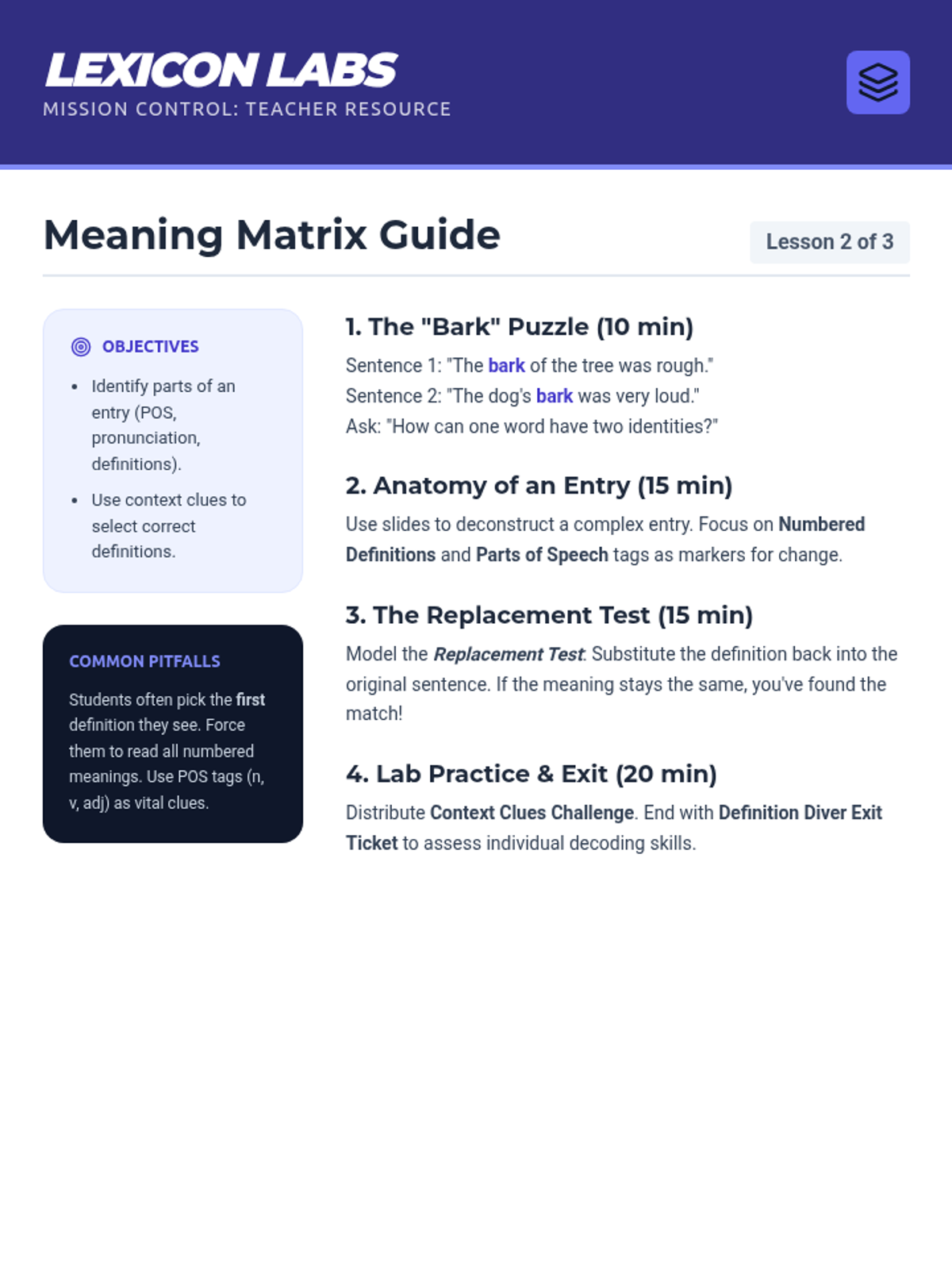
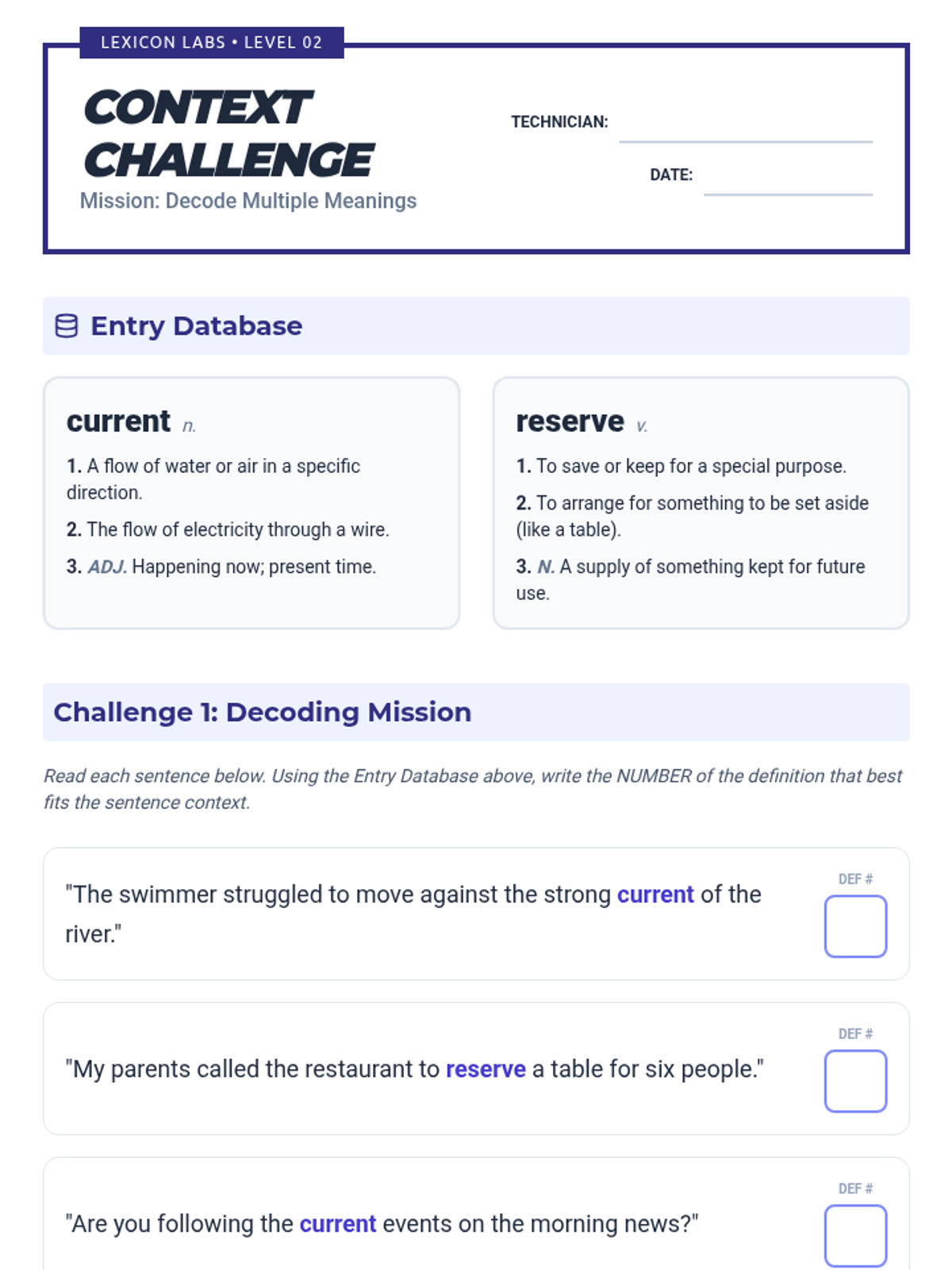
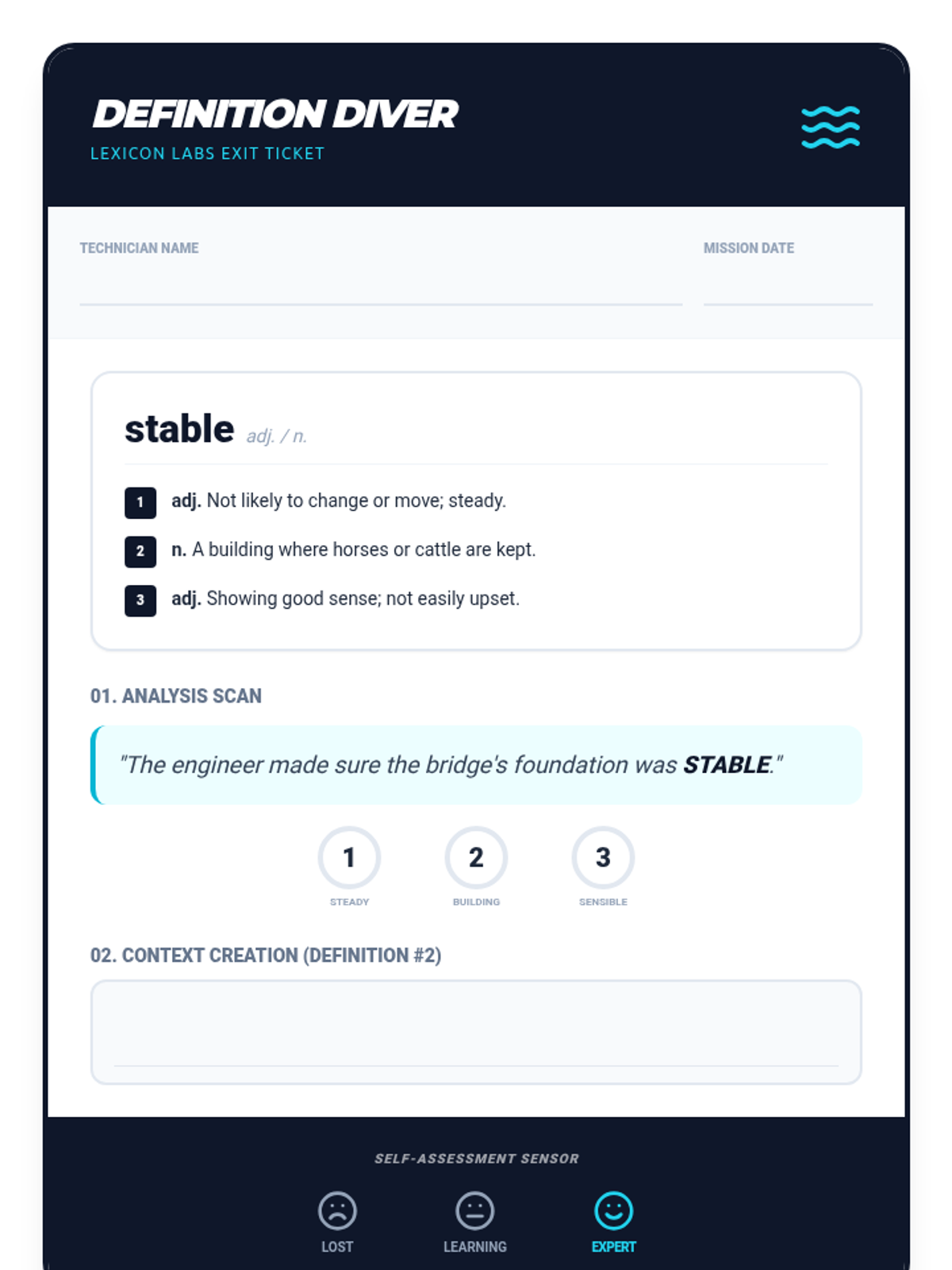
Focuses on the anatomy of a dictionary entry, specifically how to identify and choose between multiple definitions based on sentence context.
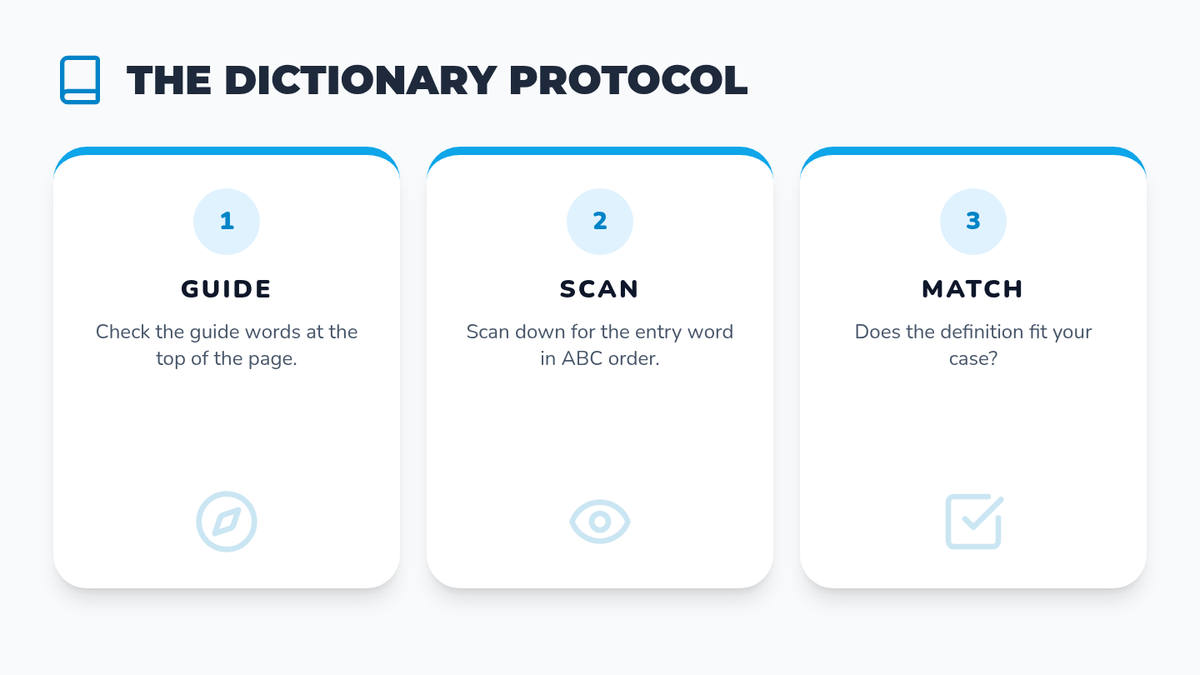
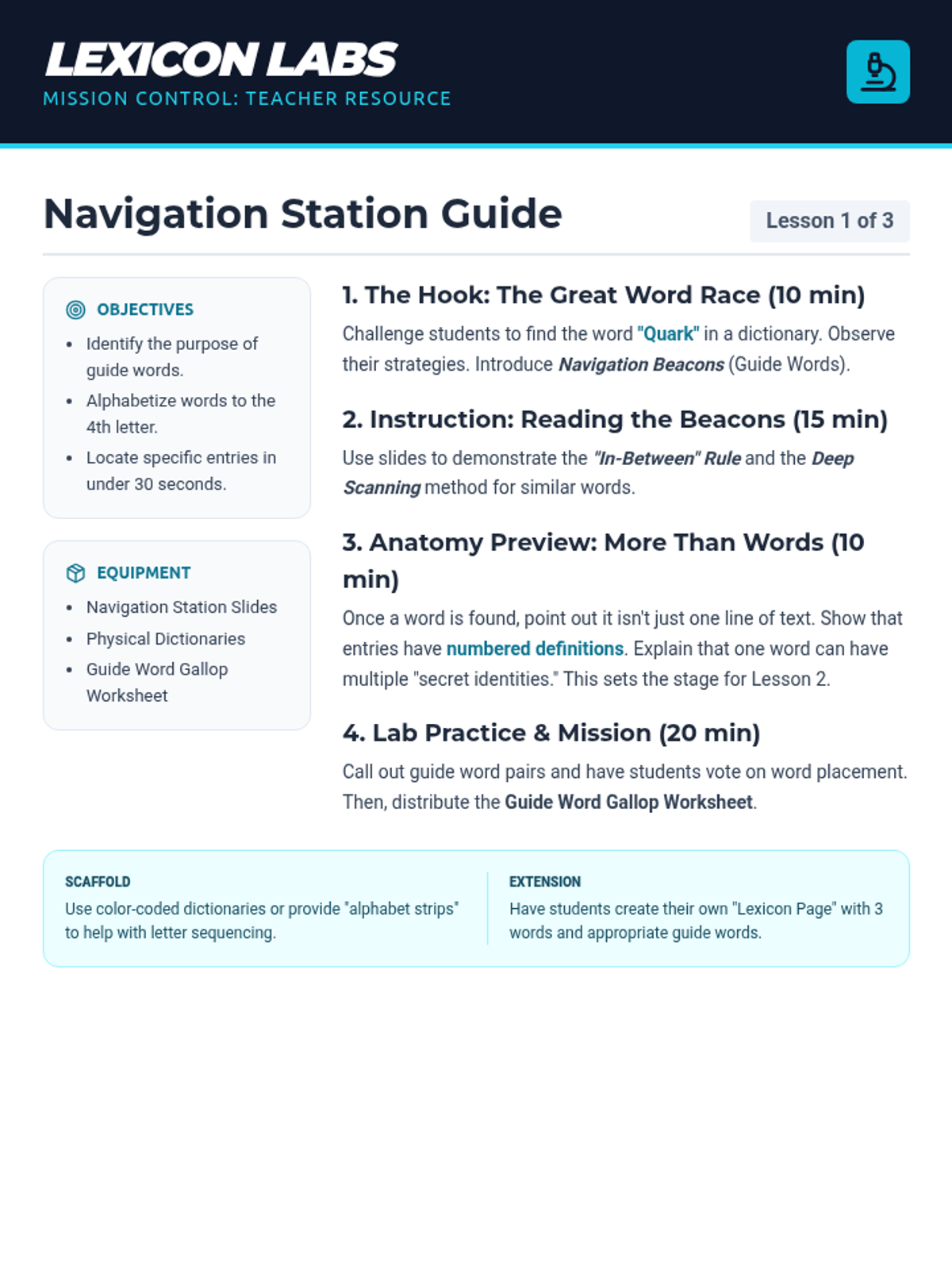
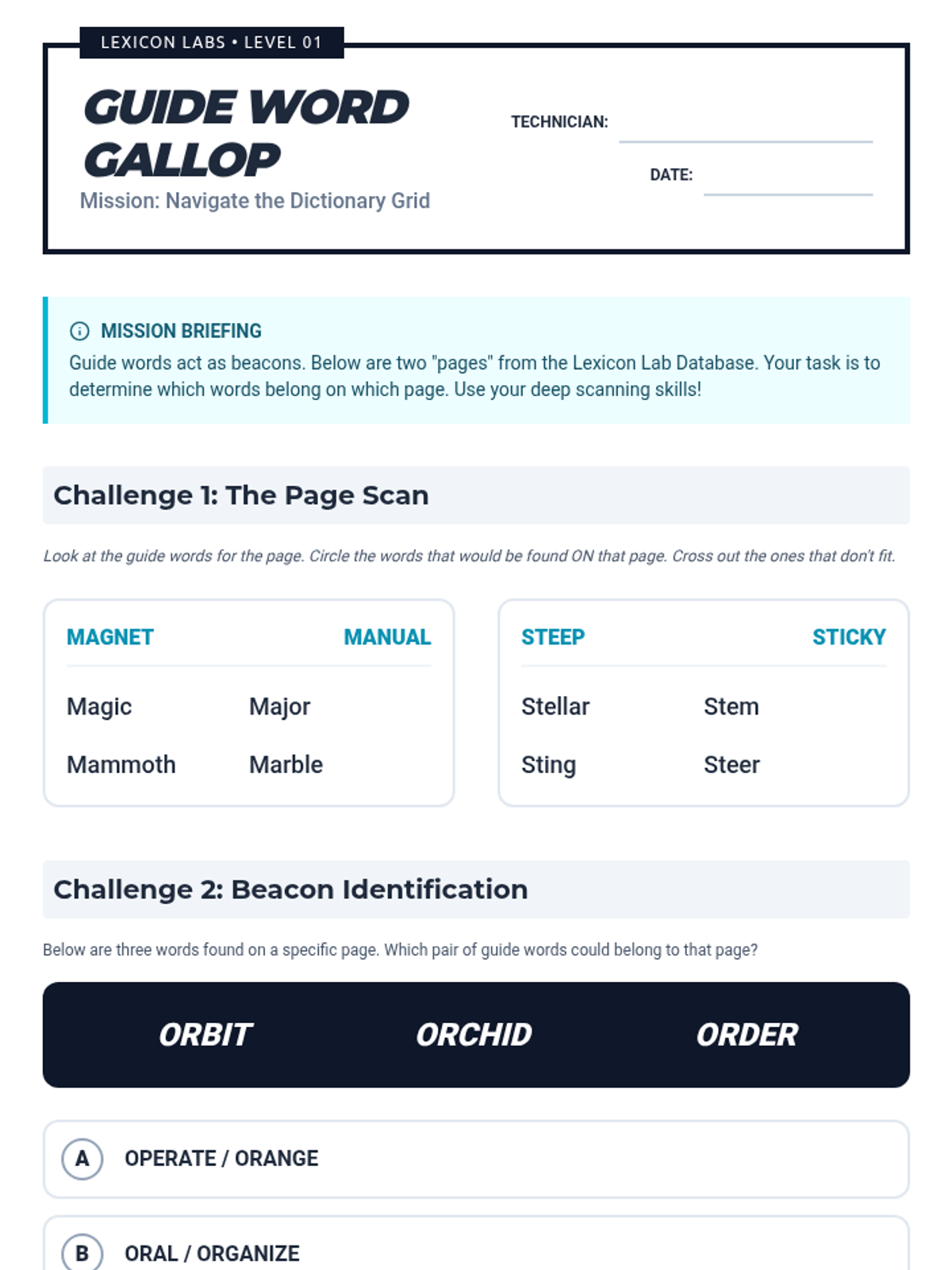
Introduction to the physical and digital structure of a dictionary, with a deep dive into using guide words for rapid word location.
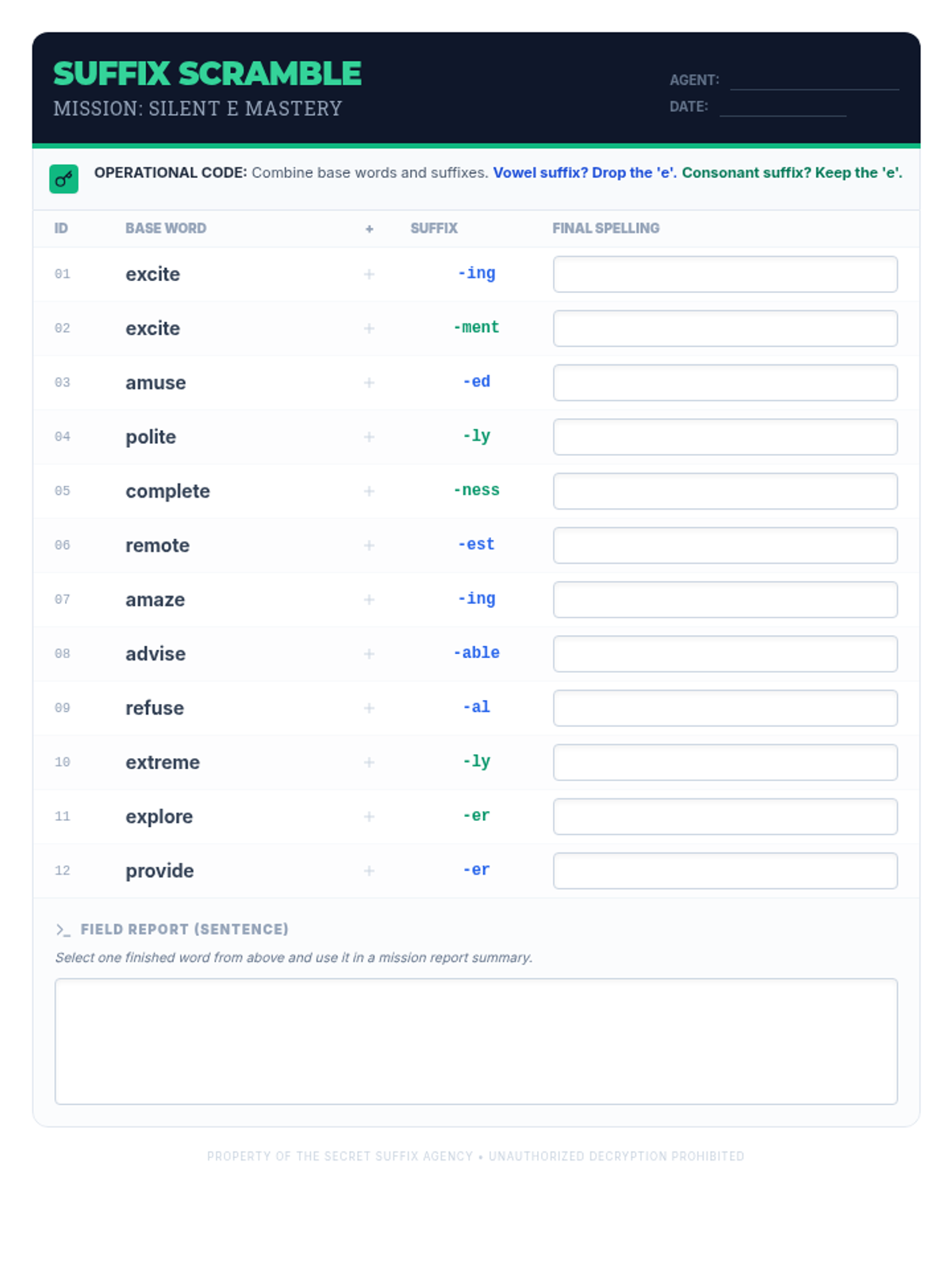
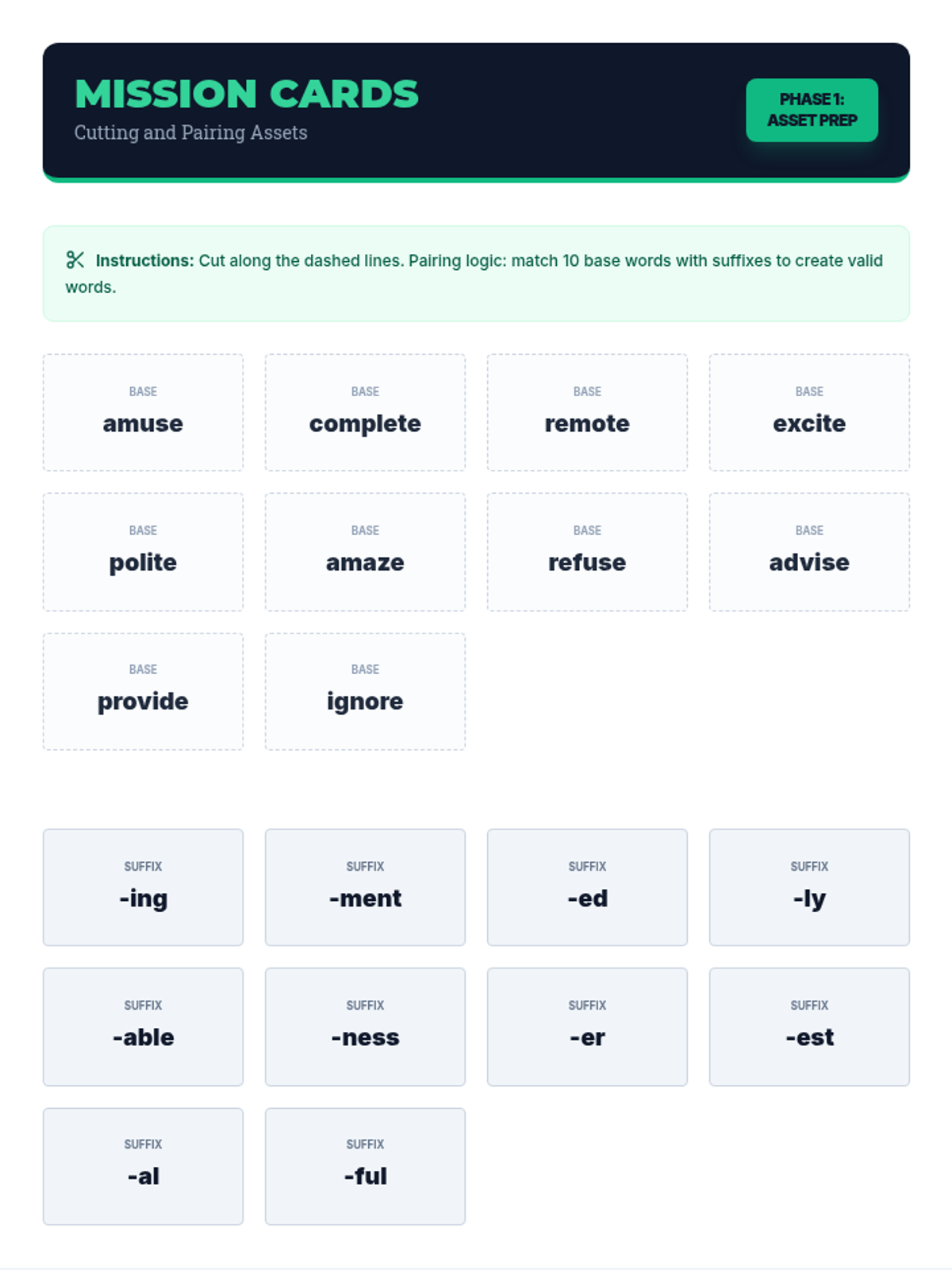
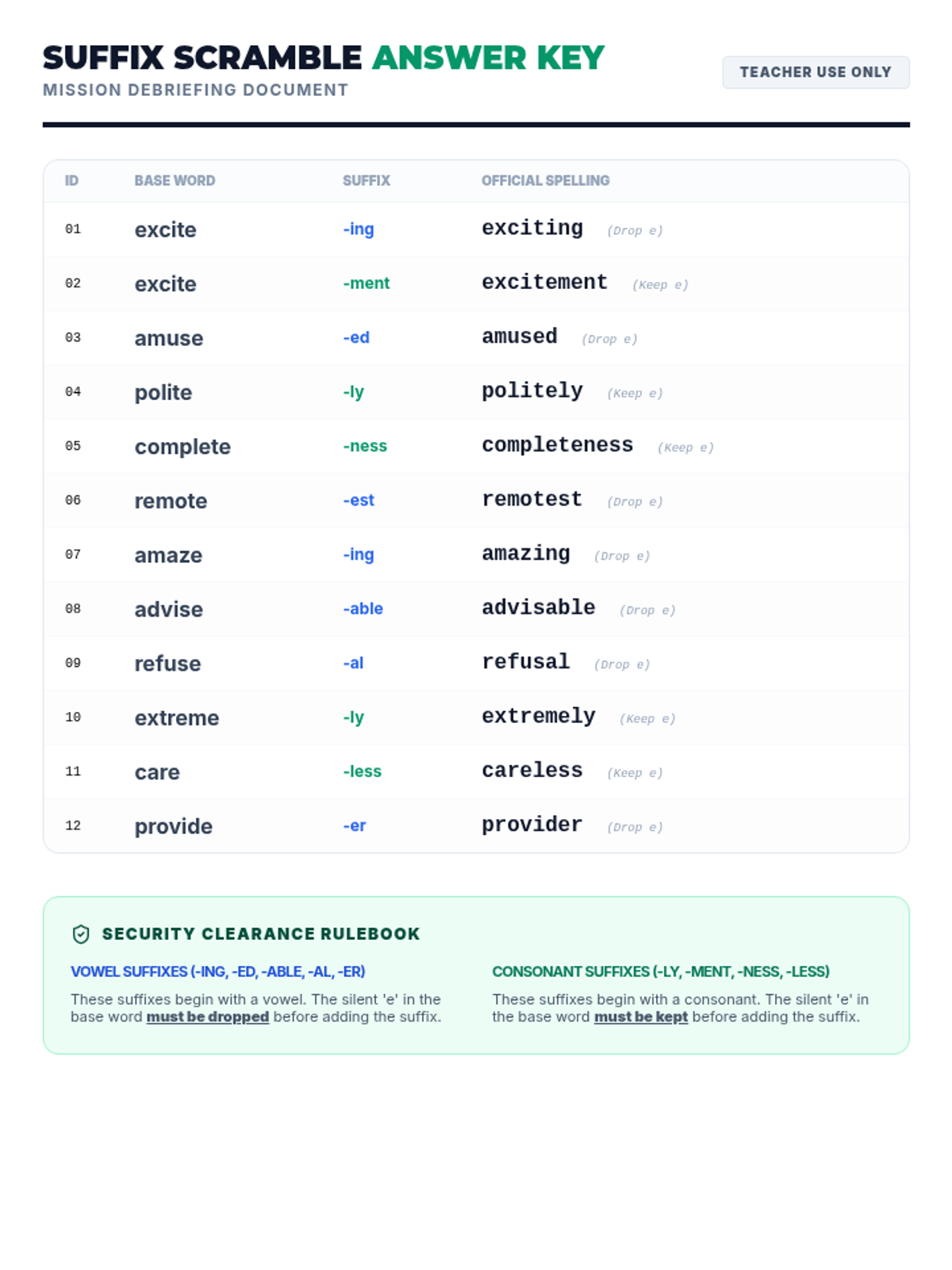
A comprehensive lesson on adding suffixes to multi-syllabic words ending in a silent 'e', focusing on the rules for dropping or keeping the 'e' based on the suffix type.
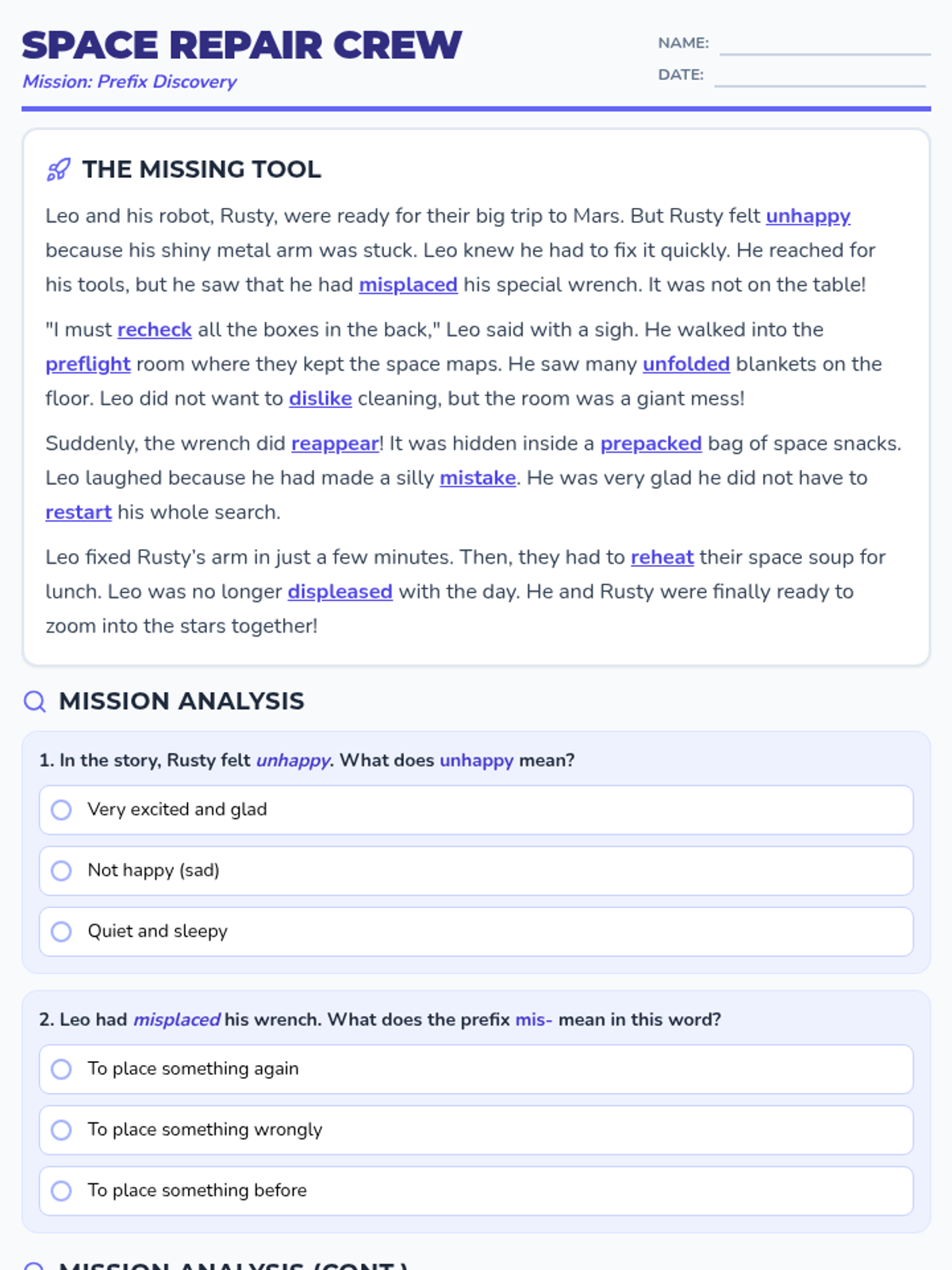
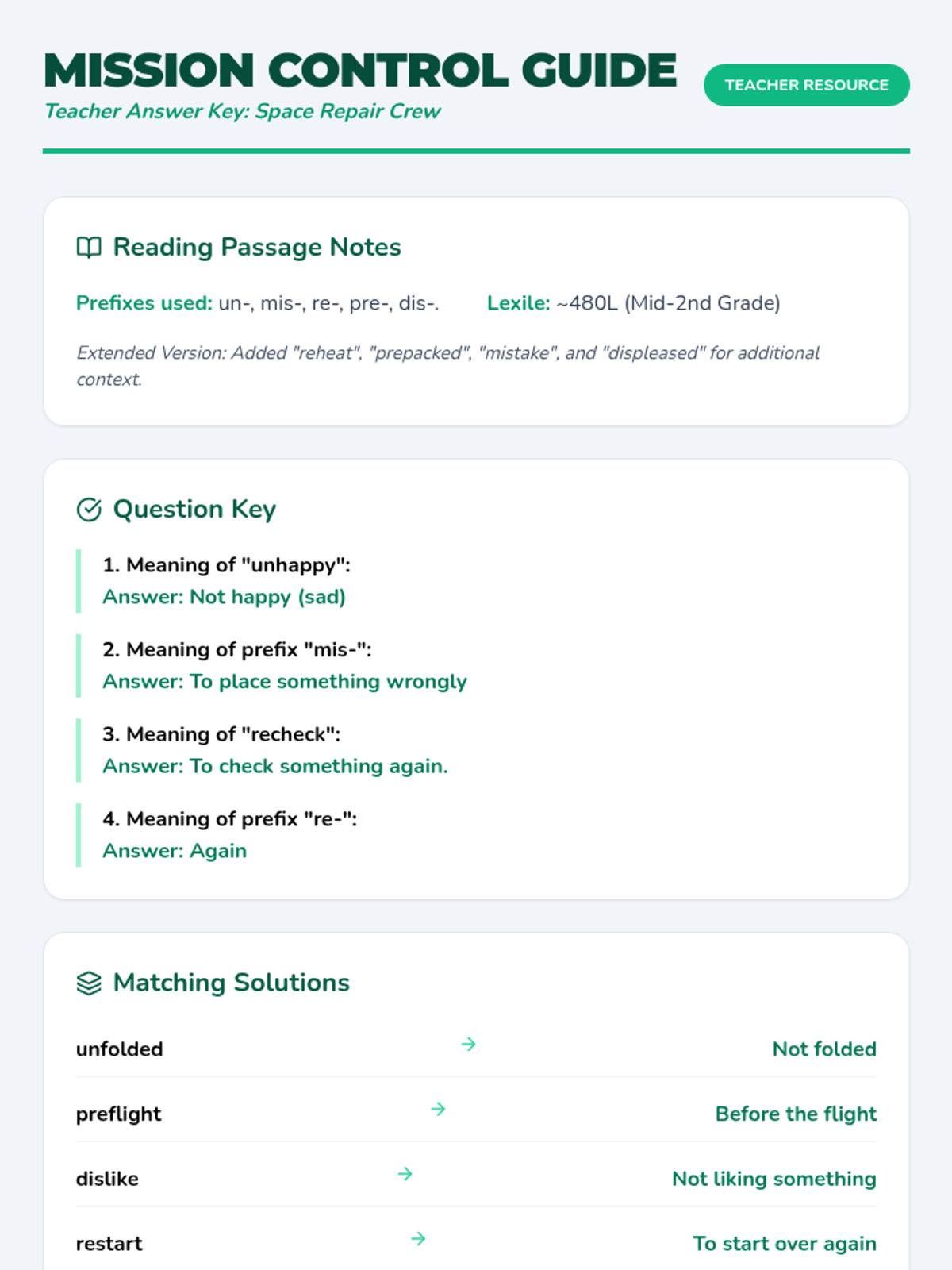
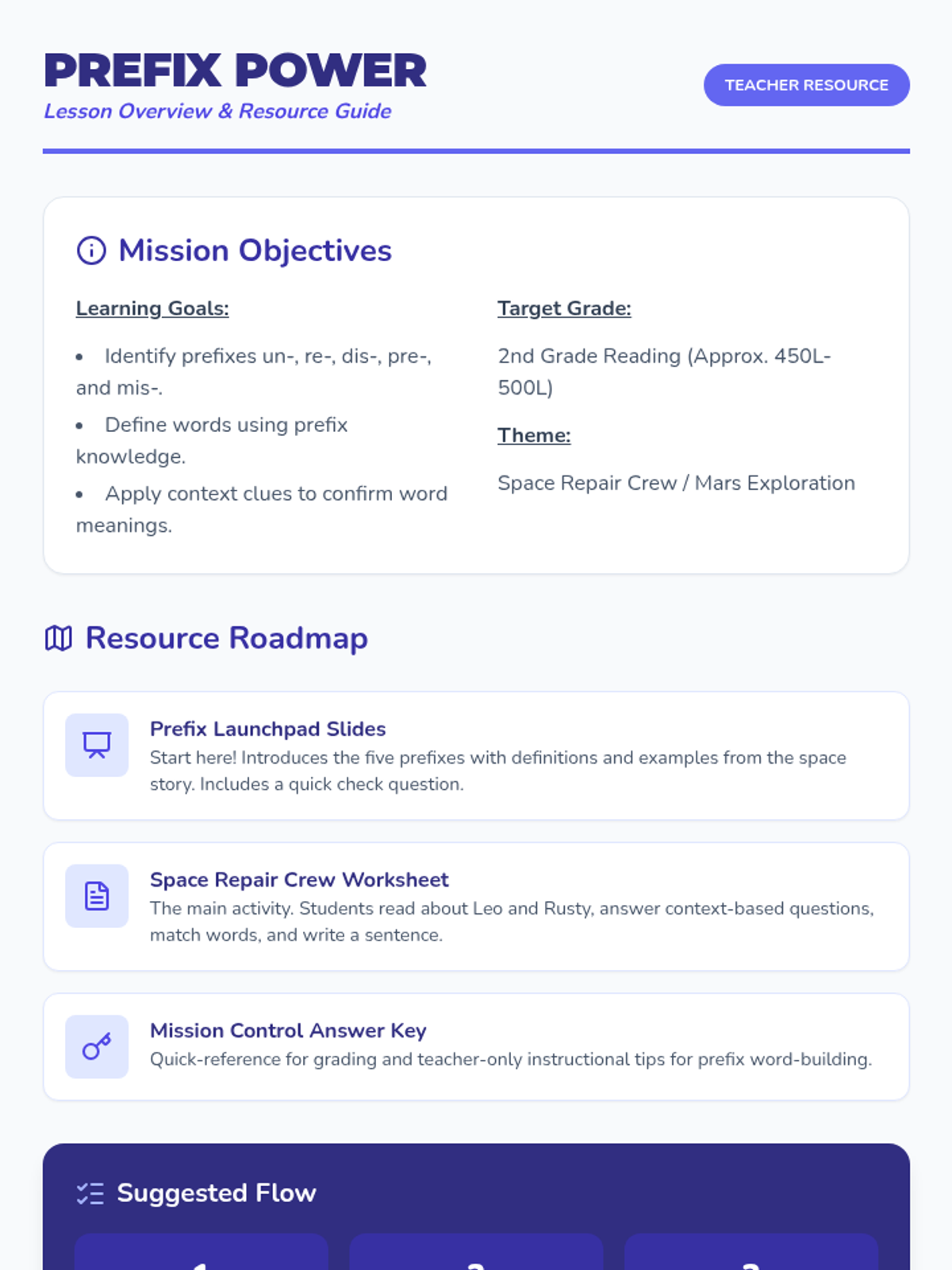
Students explore common prefixes (un-, re-, dis-, pre-, mis-) through an engaging space-themed story and practice activities. They will use context clues to determine the meanings of prefixed words.
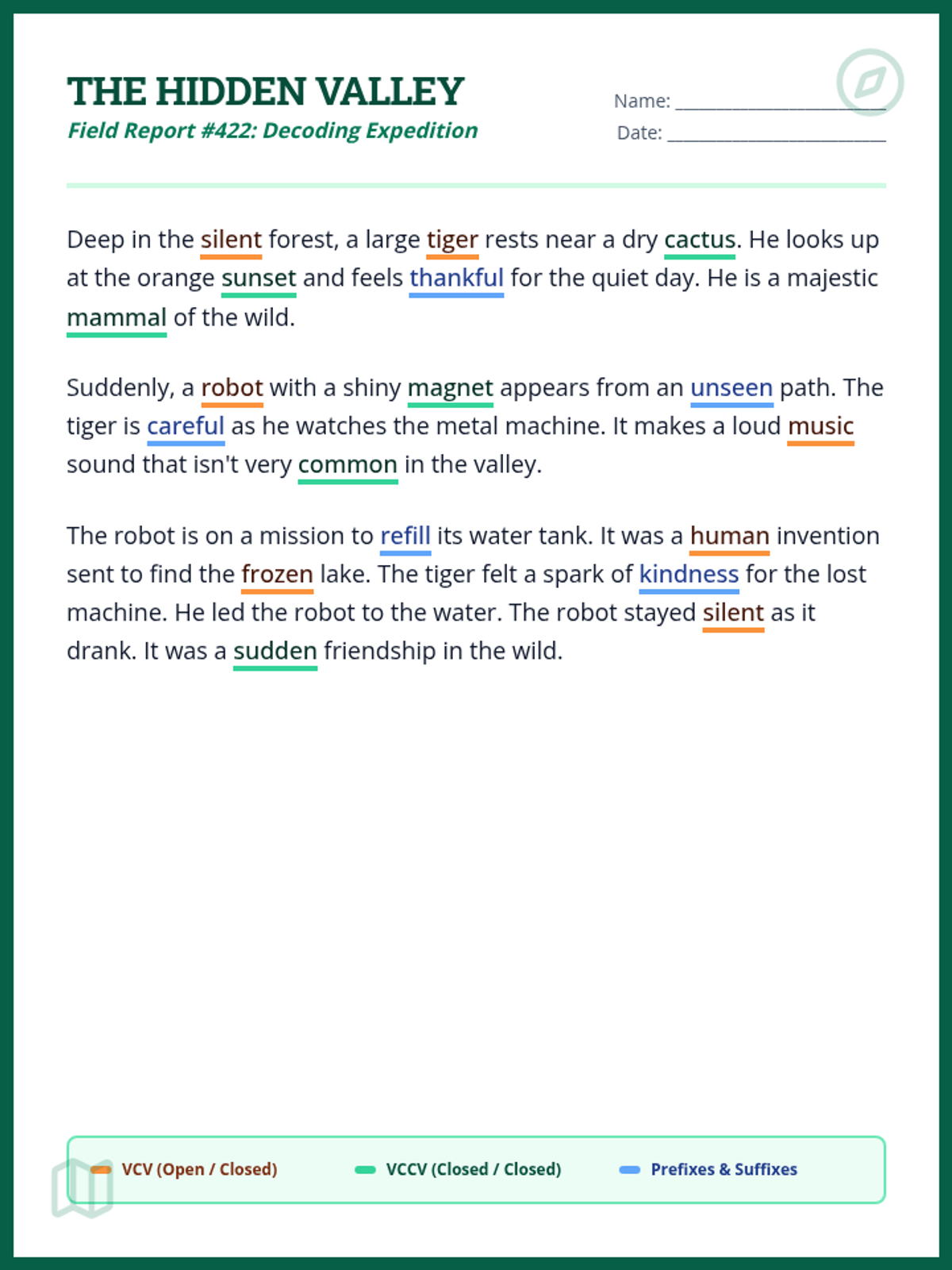
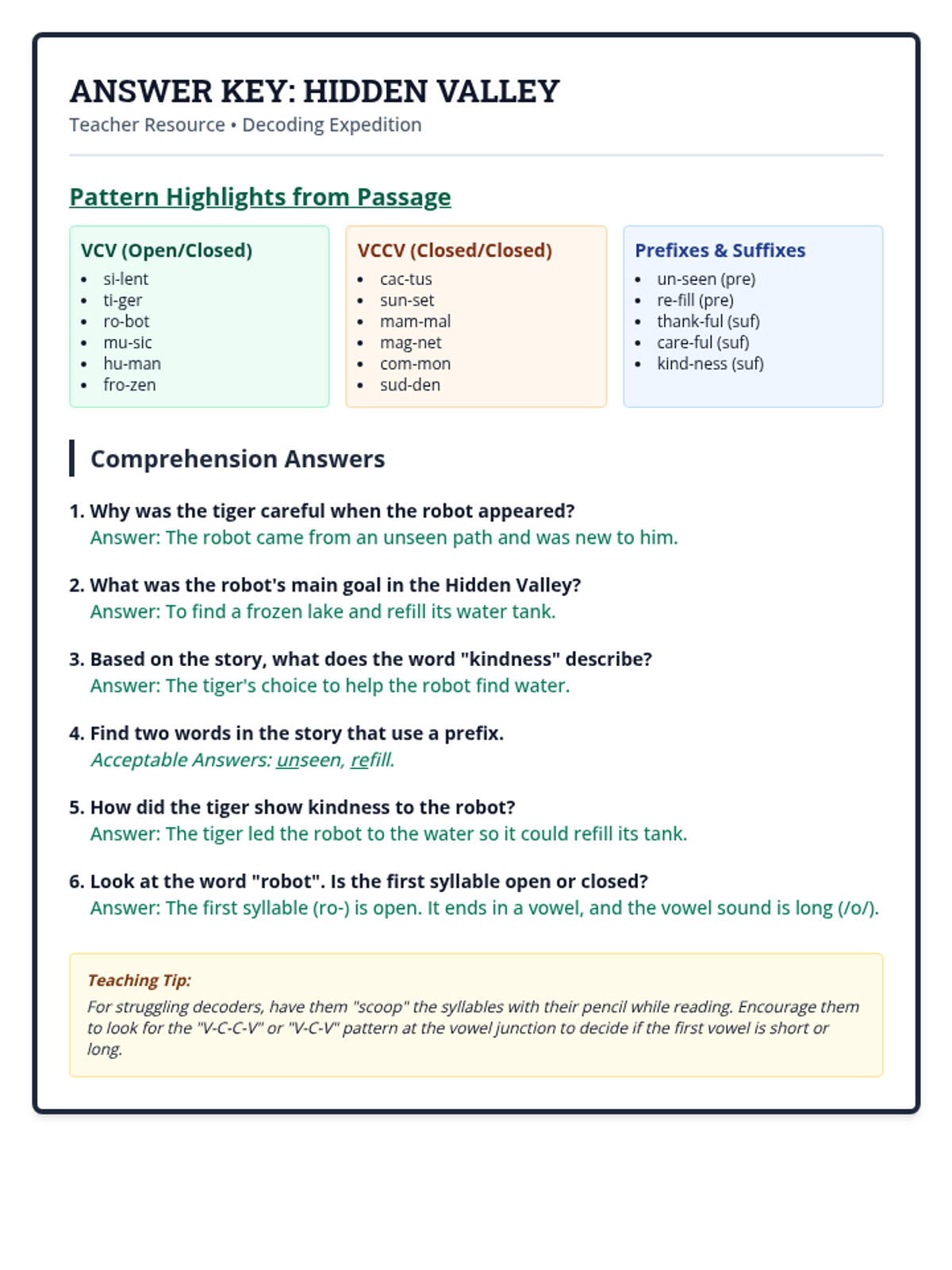
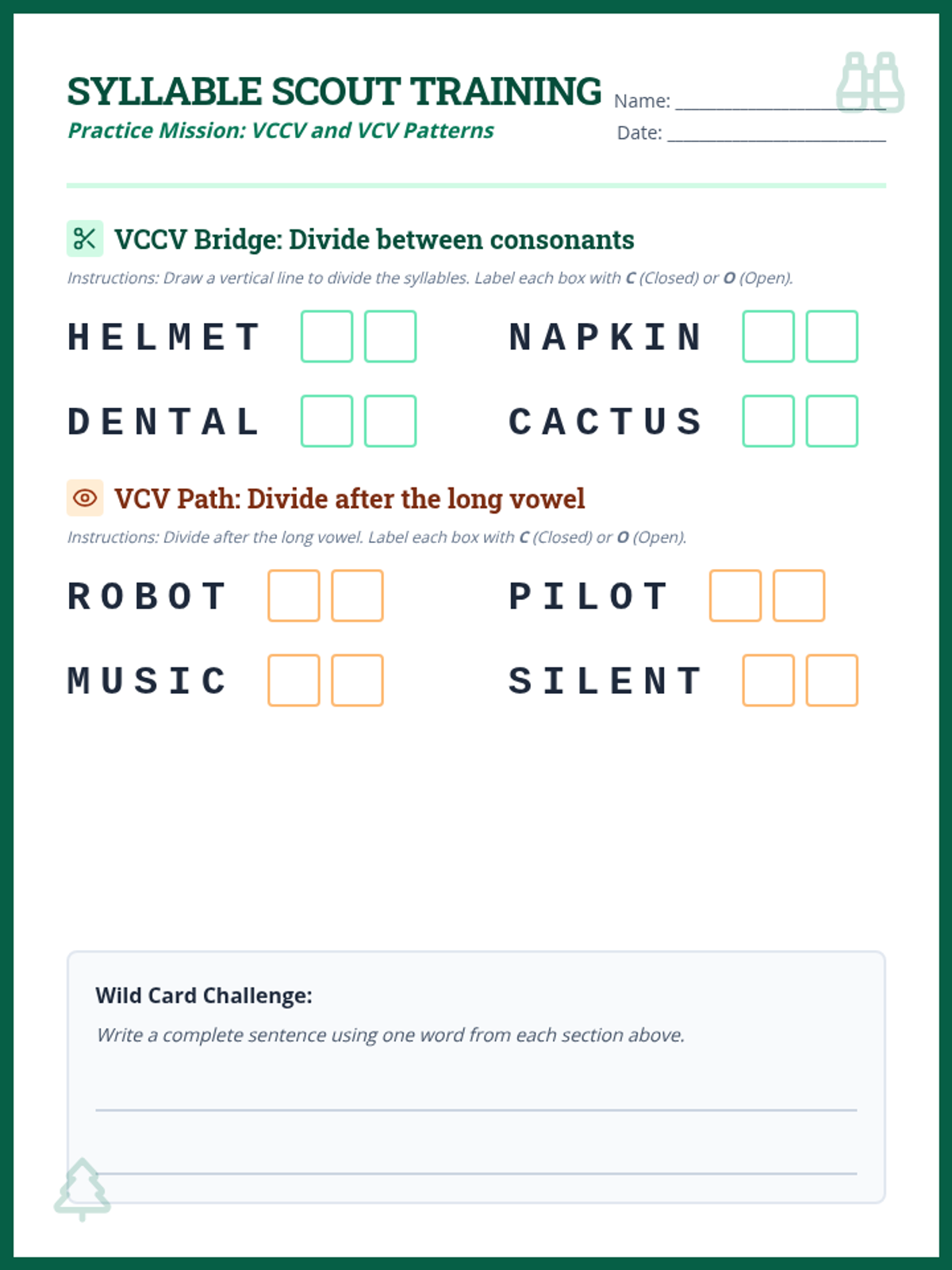
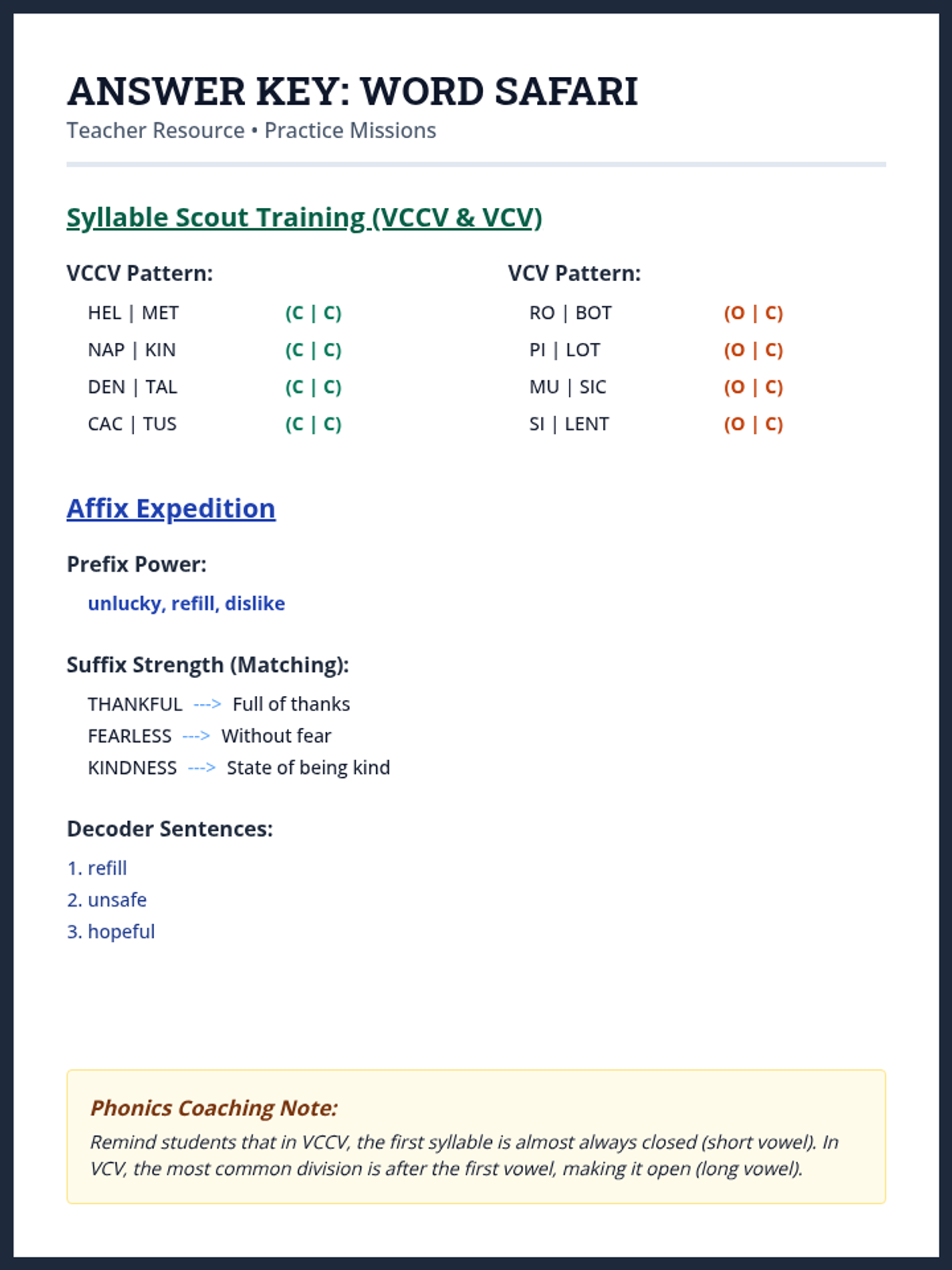
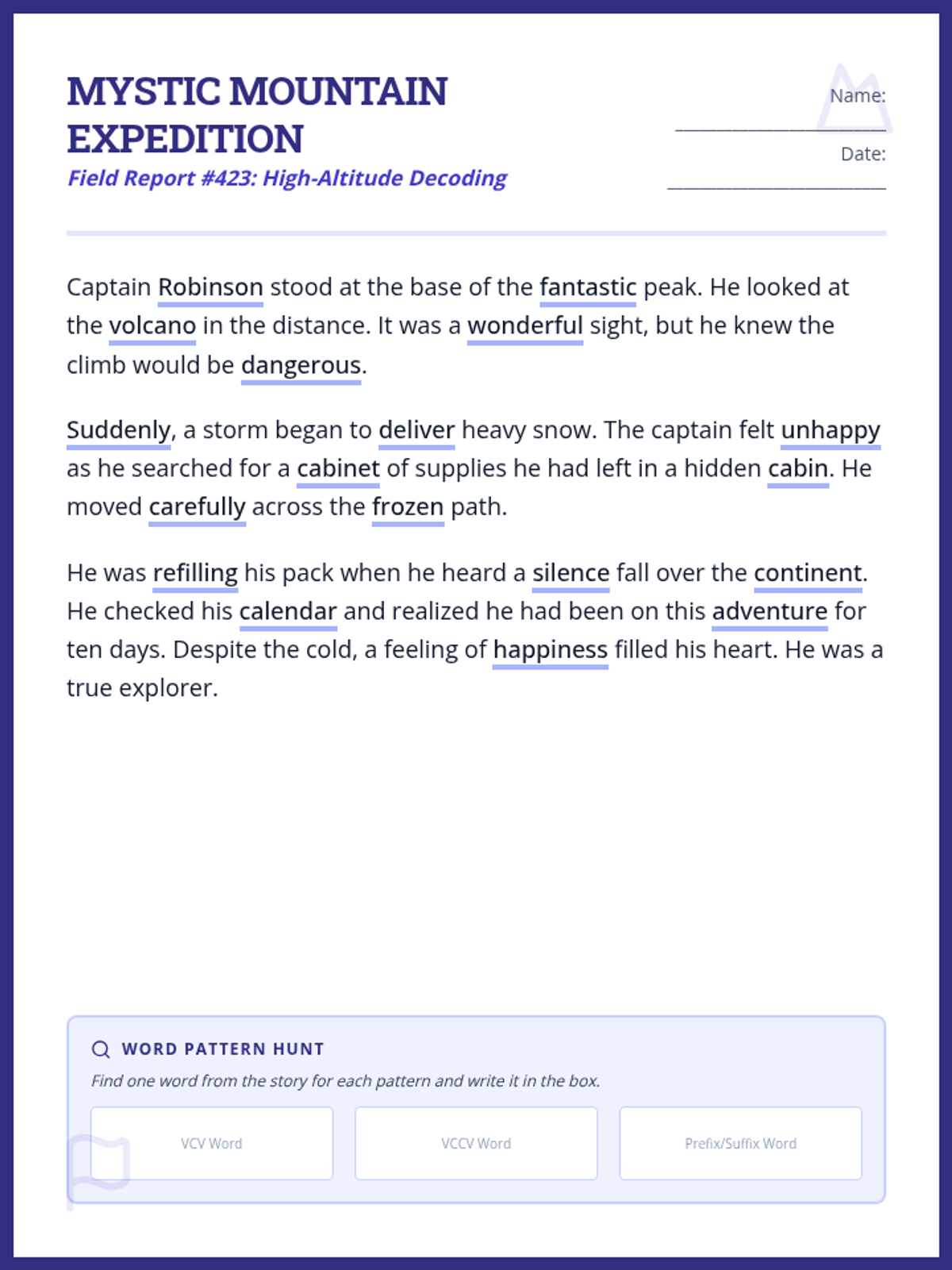
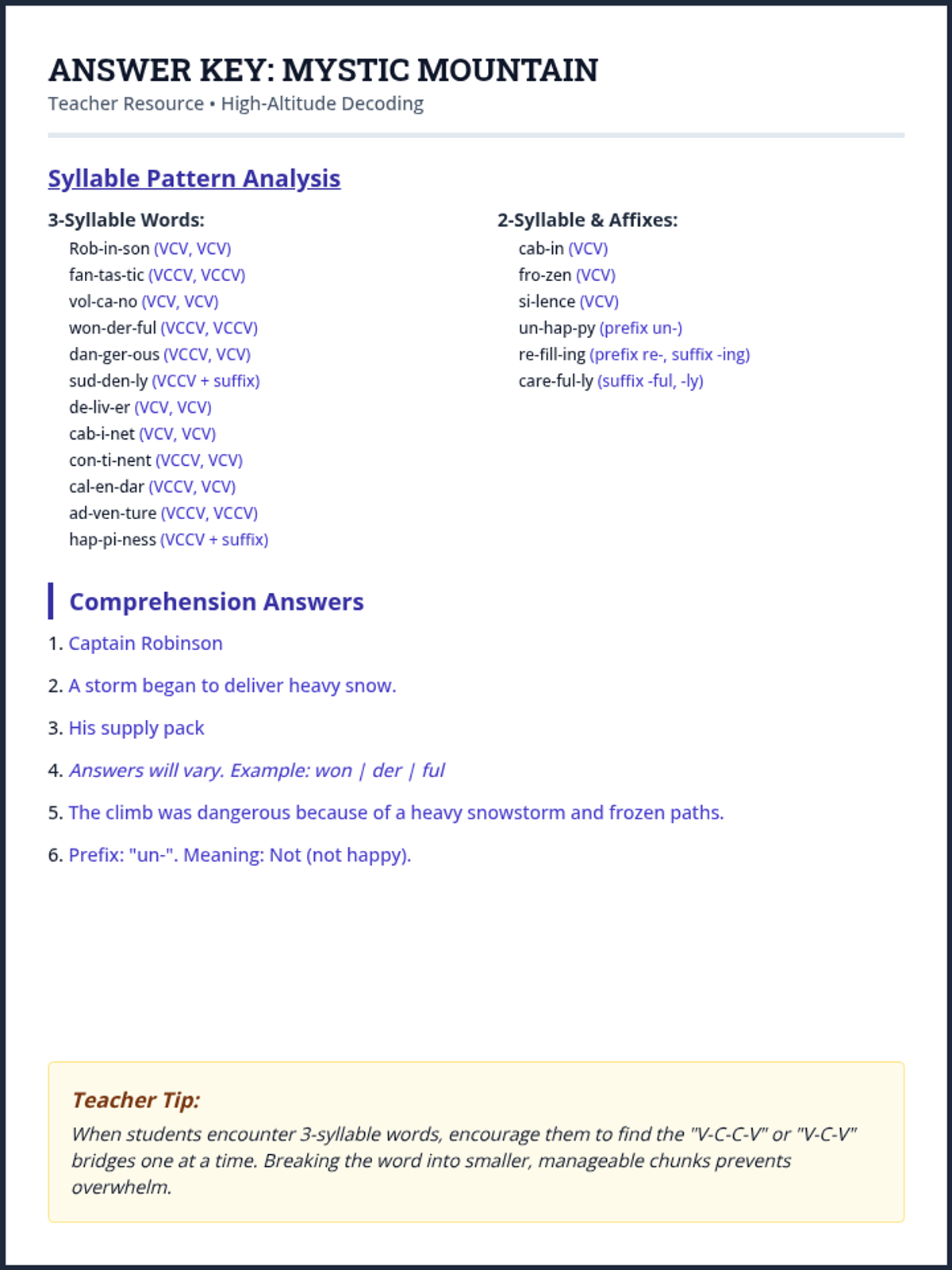
A lesson focused on decoding VCCV and VCV syllable patterns, along with common prefixes and suffixes, through an engaging reading passage and comprehension check.
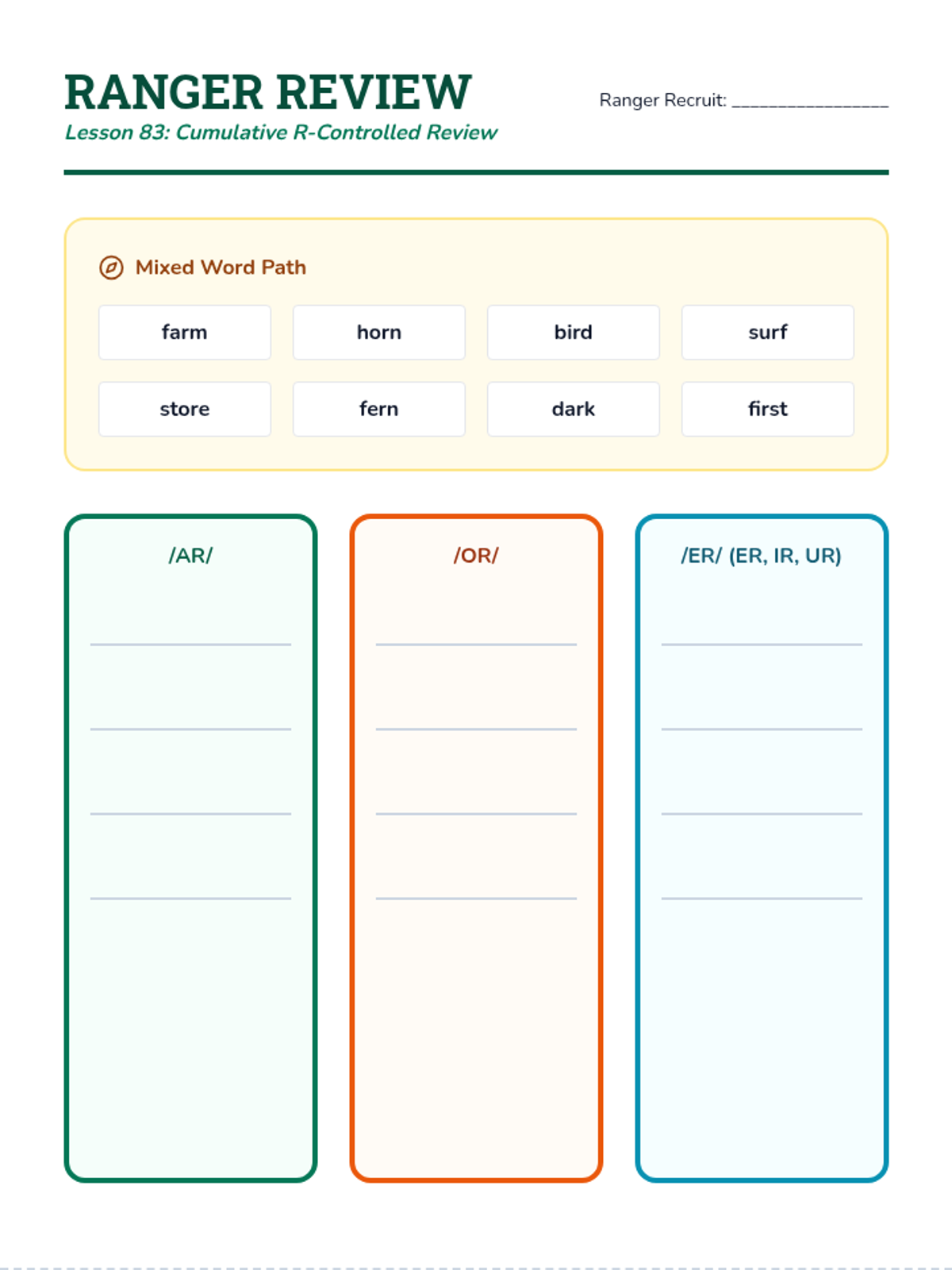
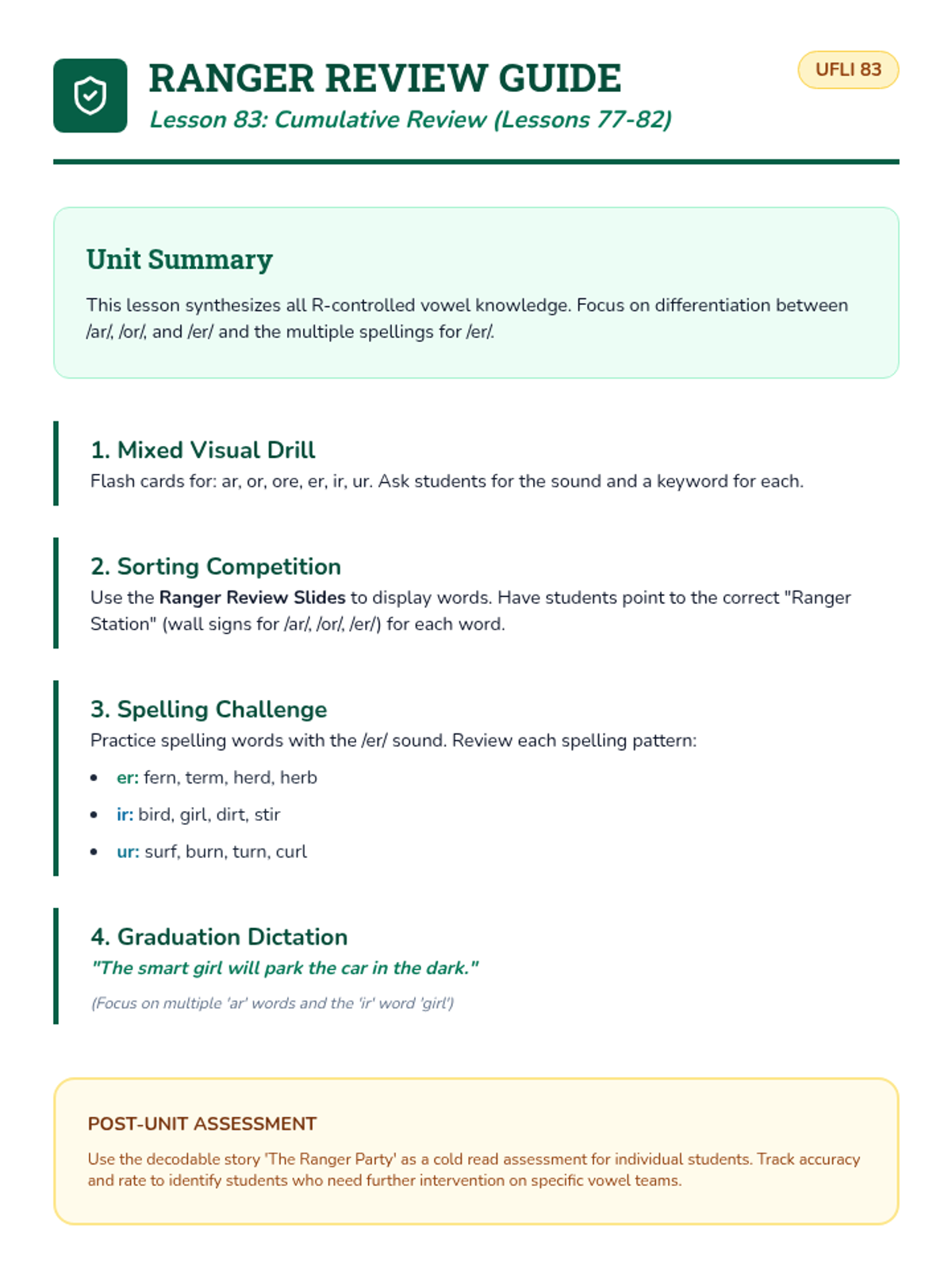
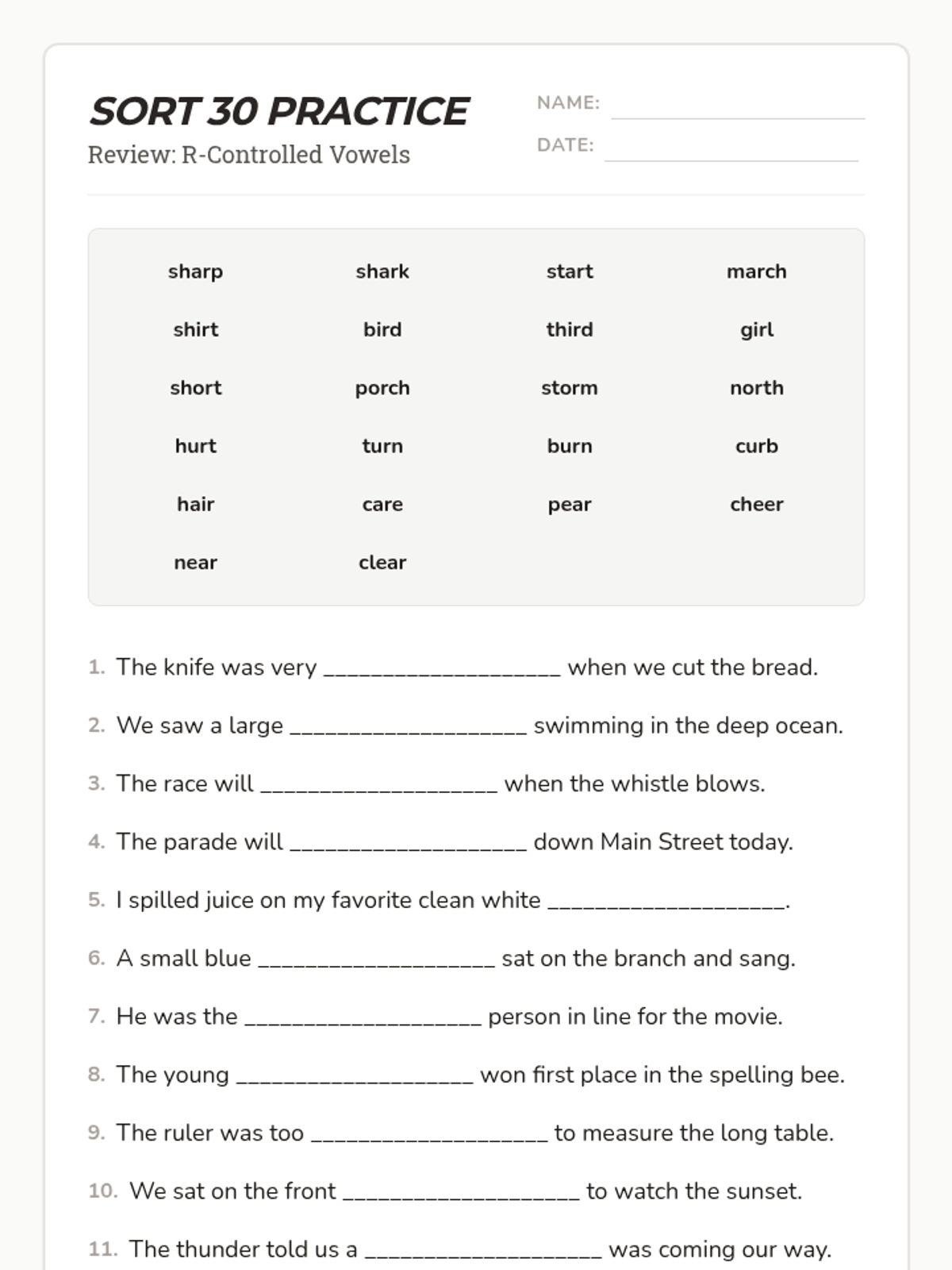
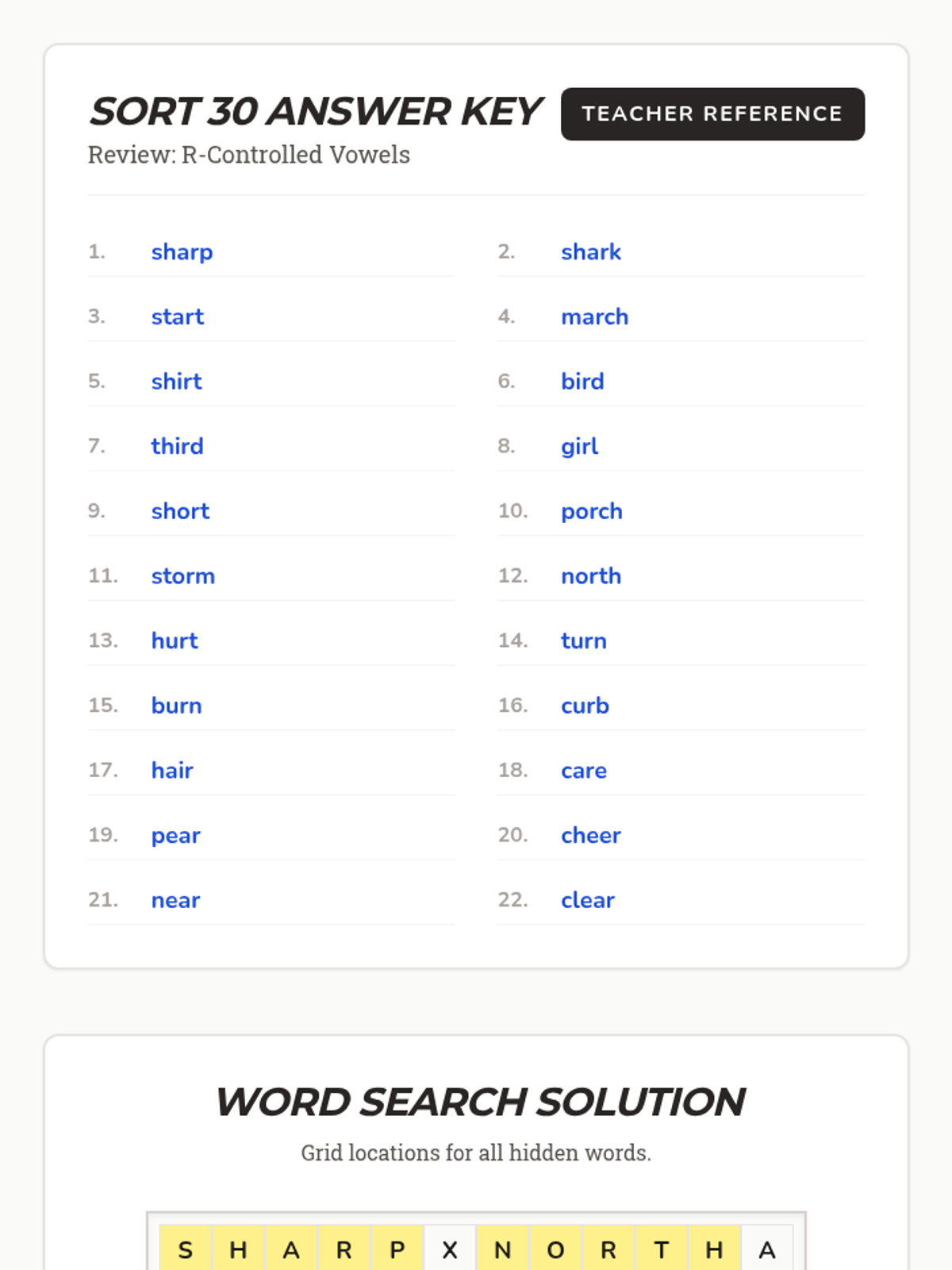
A cumulative review of all R-controlled vowels (ar, or, ore, er, ir, ur) through games and mixed decoding practice.
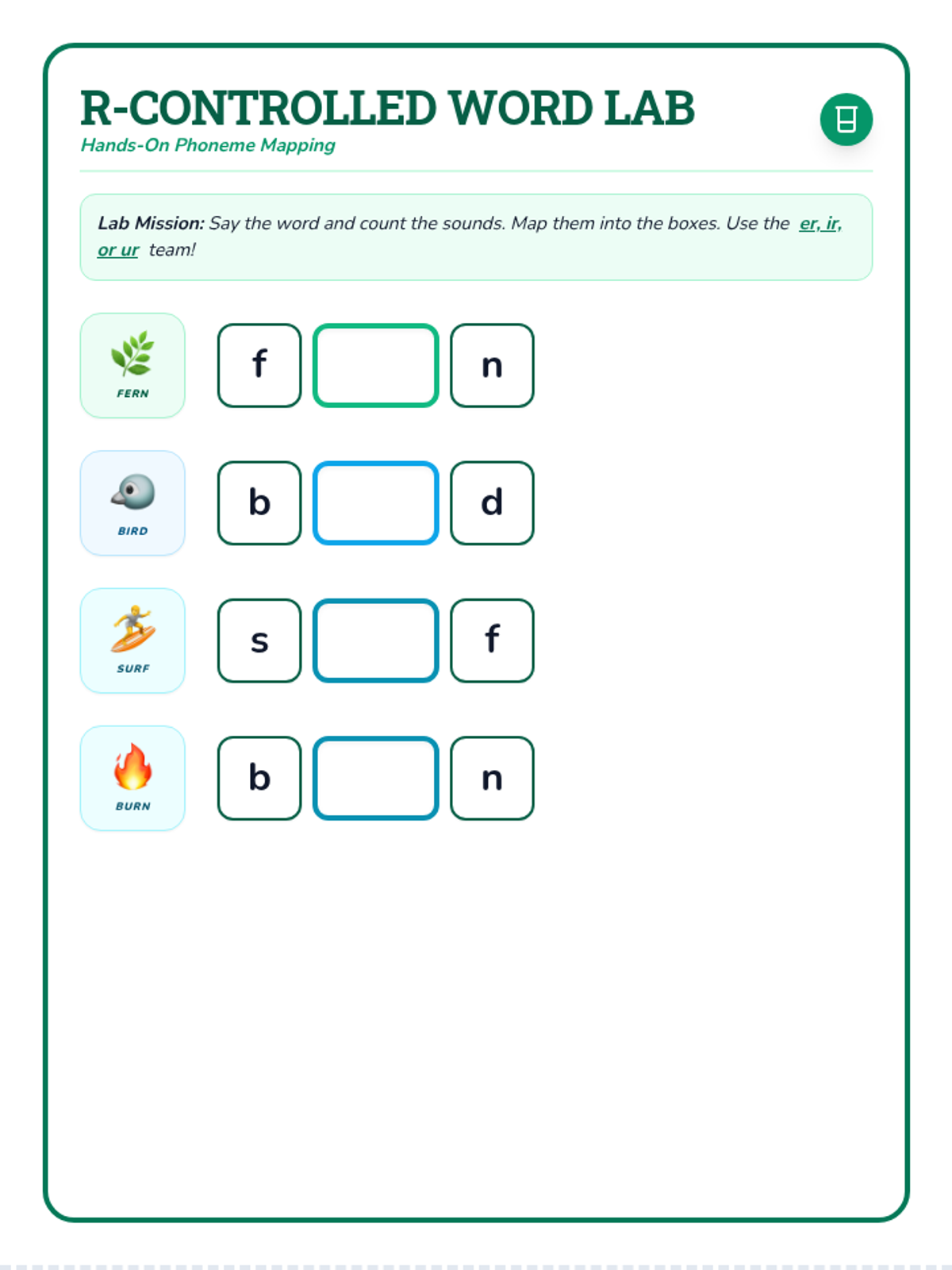
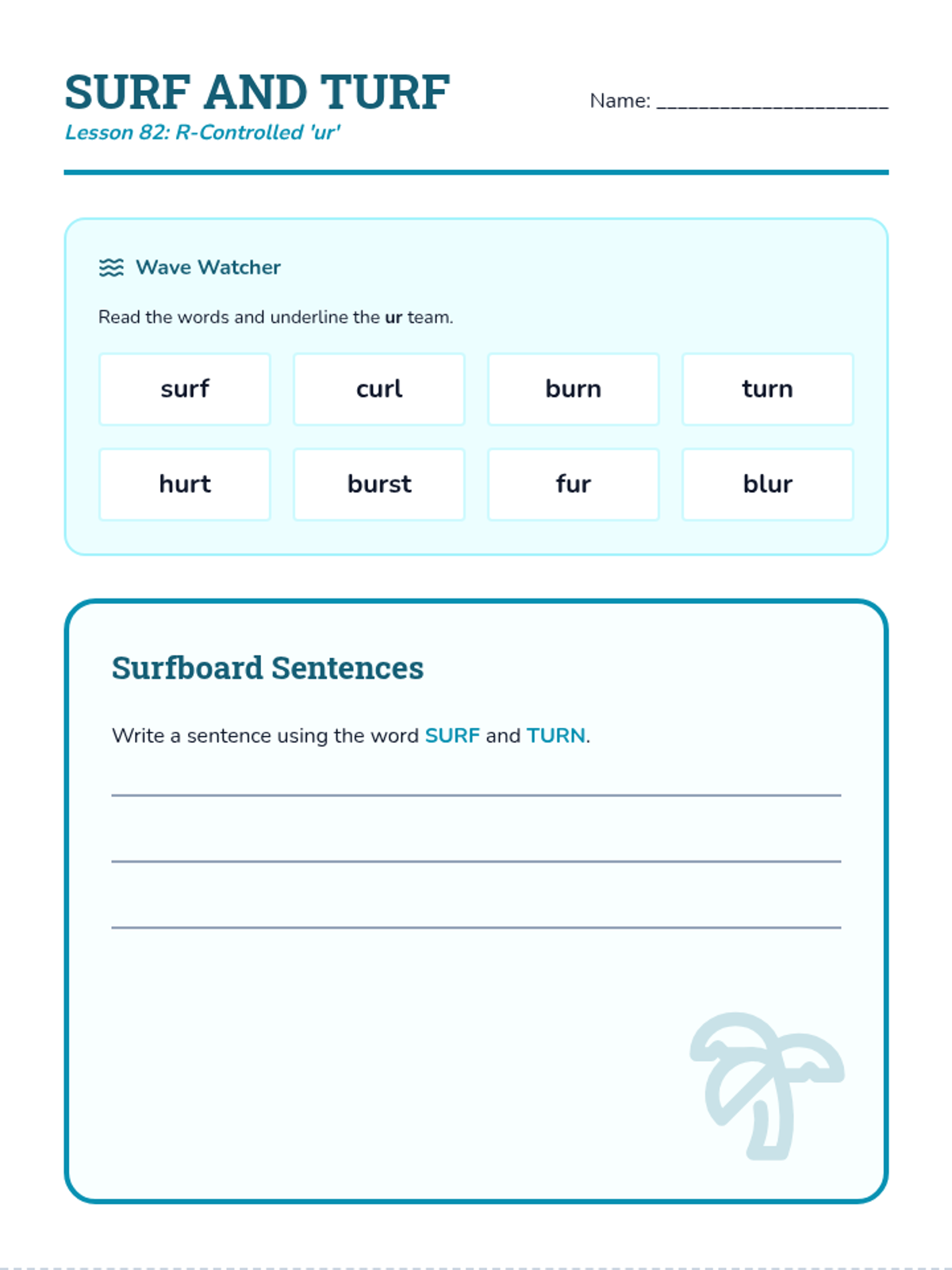
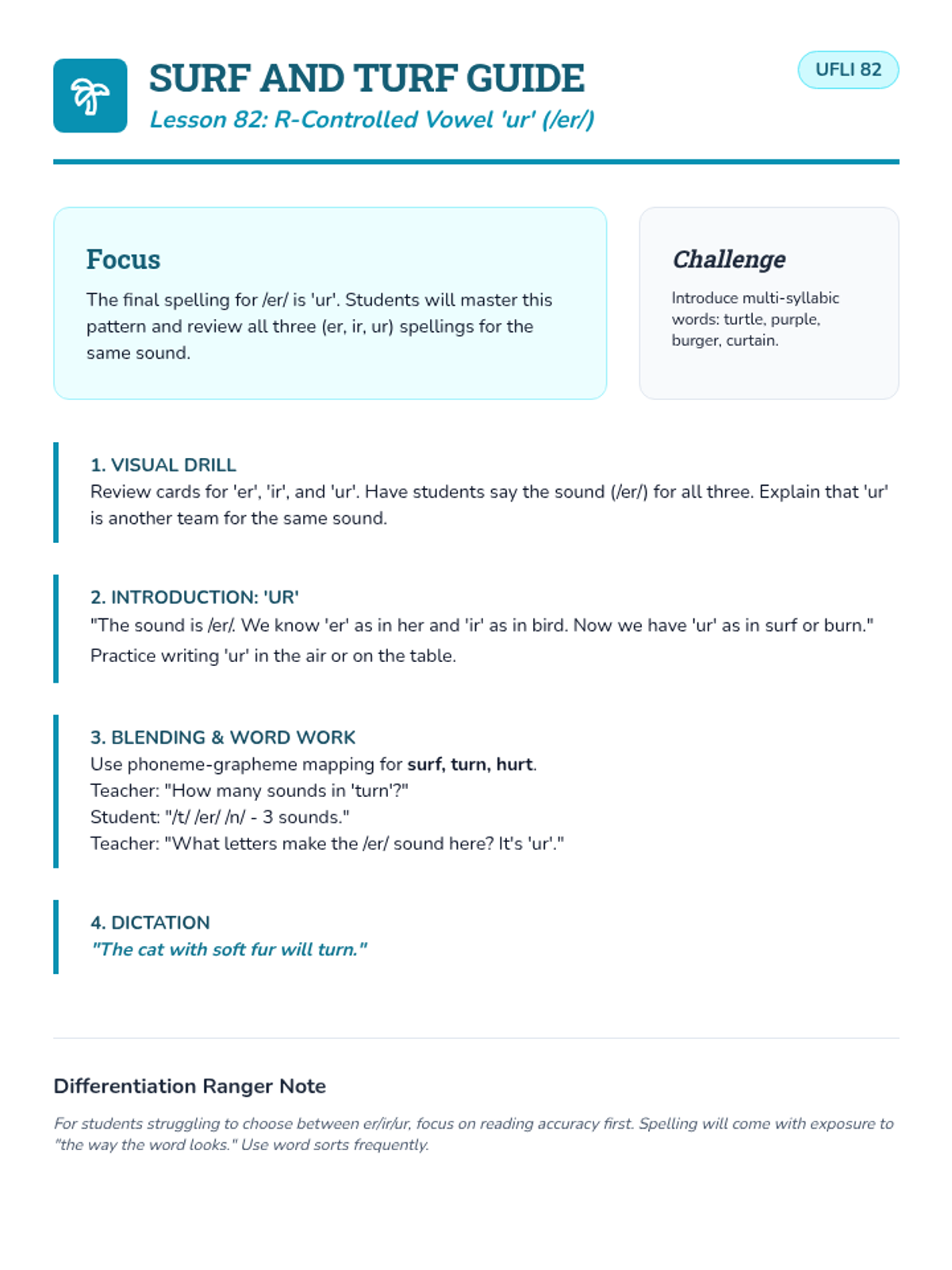
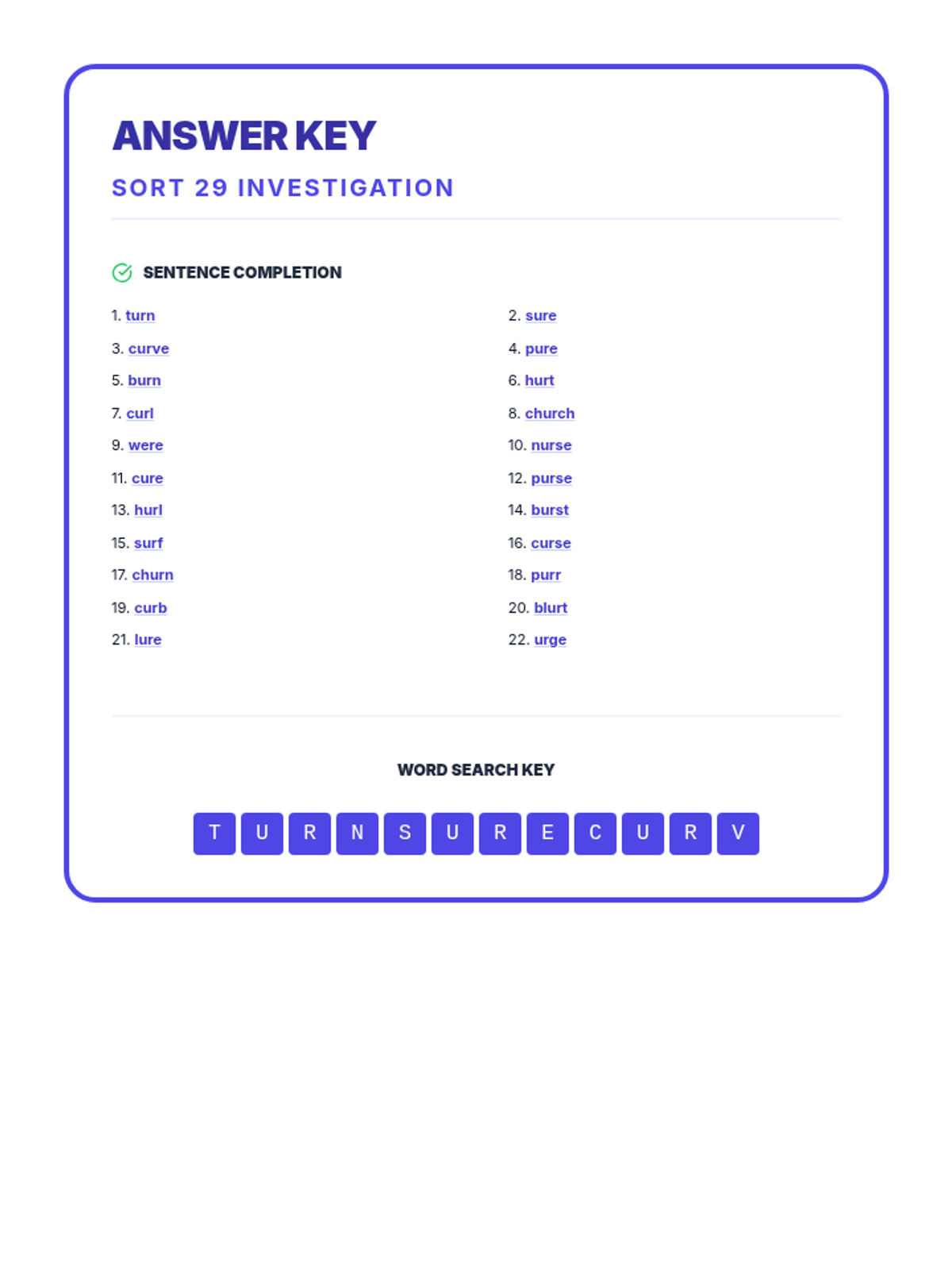
The final common /er/ spelling, 'ur' as in 'surf' and 'burn'. Practice with all /er/ variations.
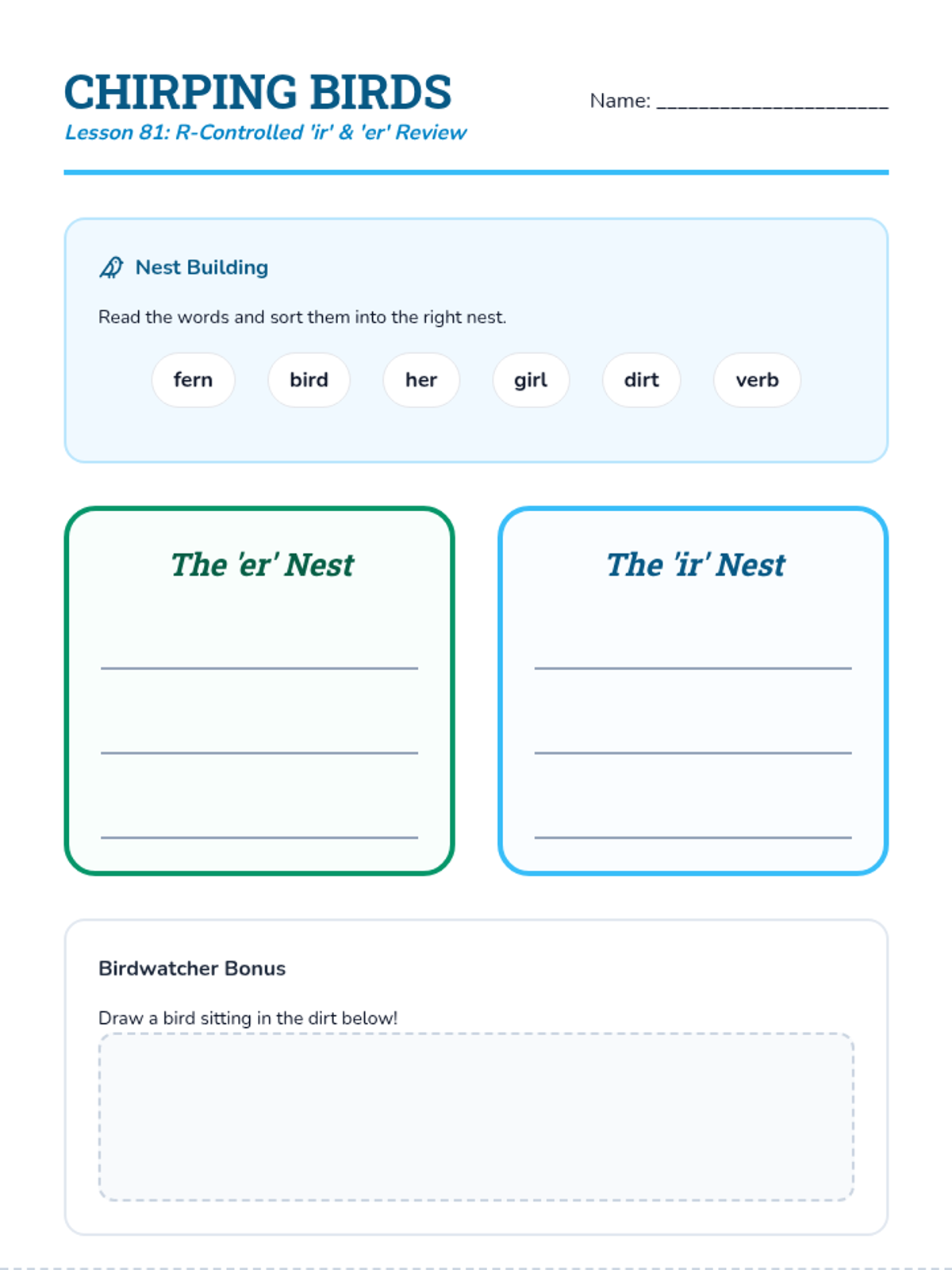
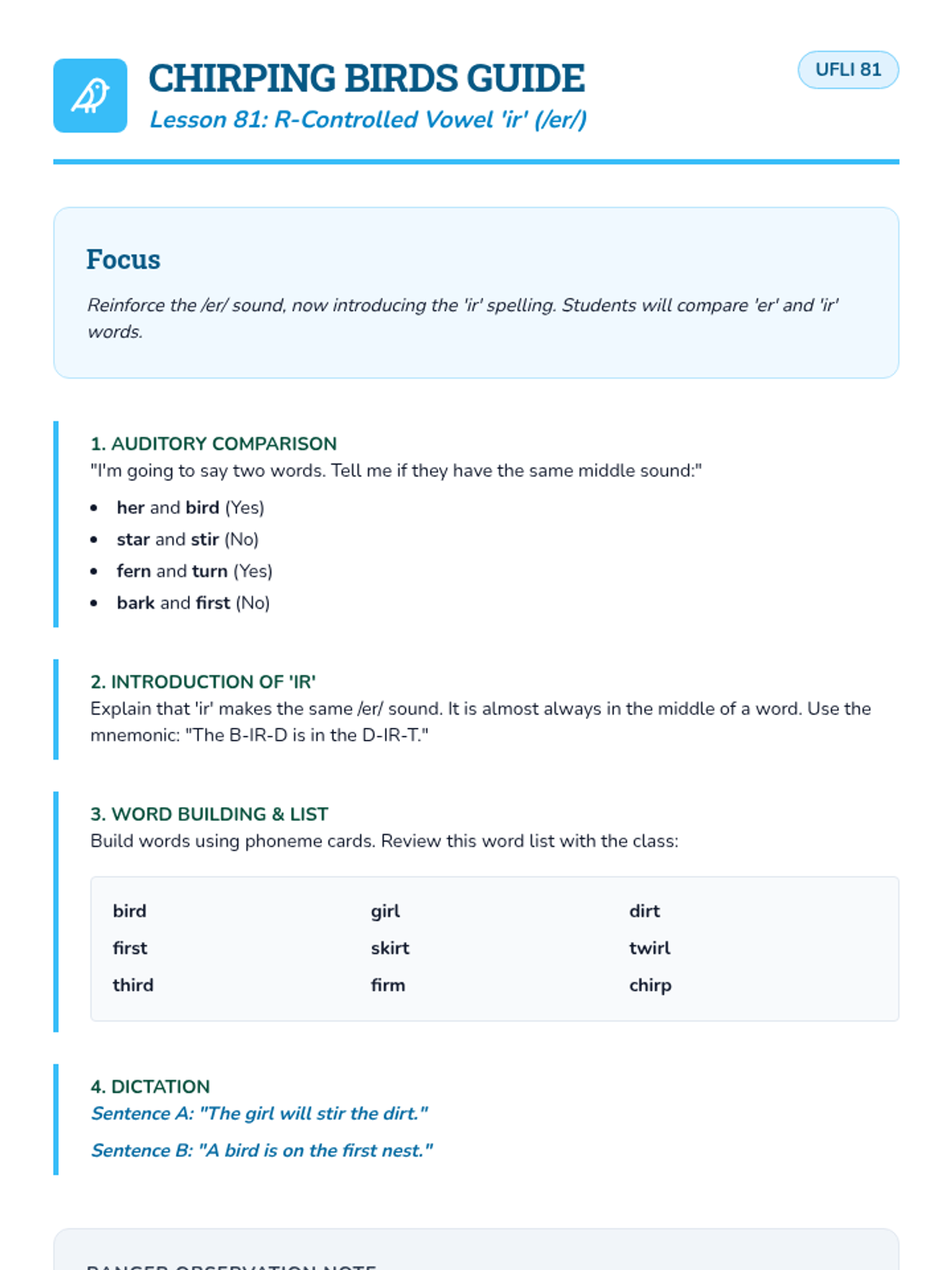
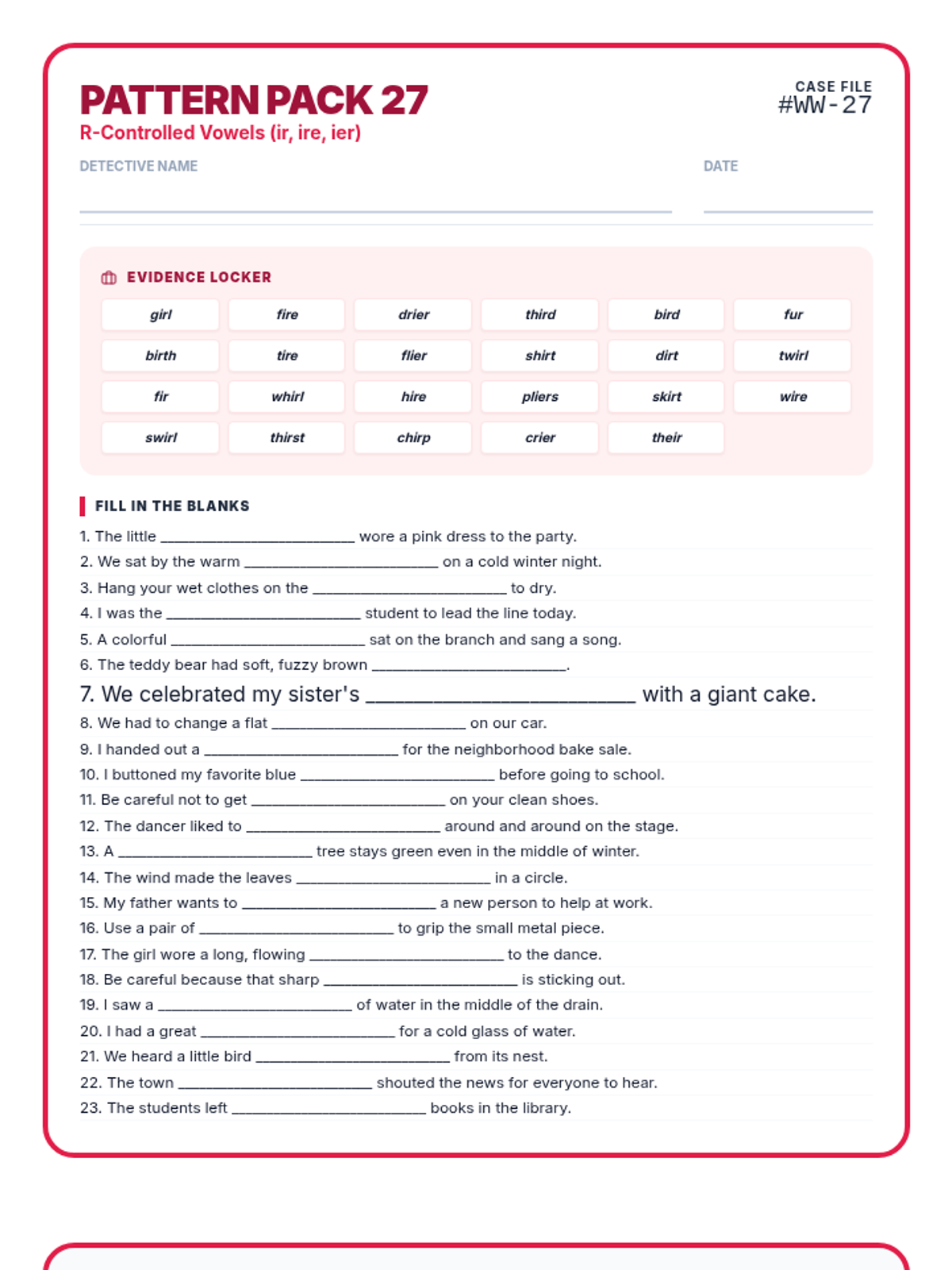
Learning the /er/ sound spelled with 'ir' as in 'bird' and 'dirt'. Comparing with 'er' words.
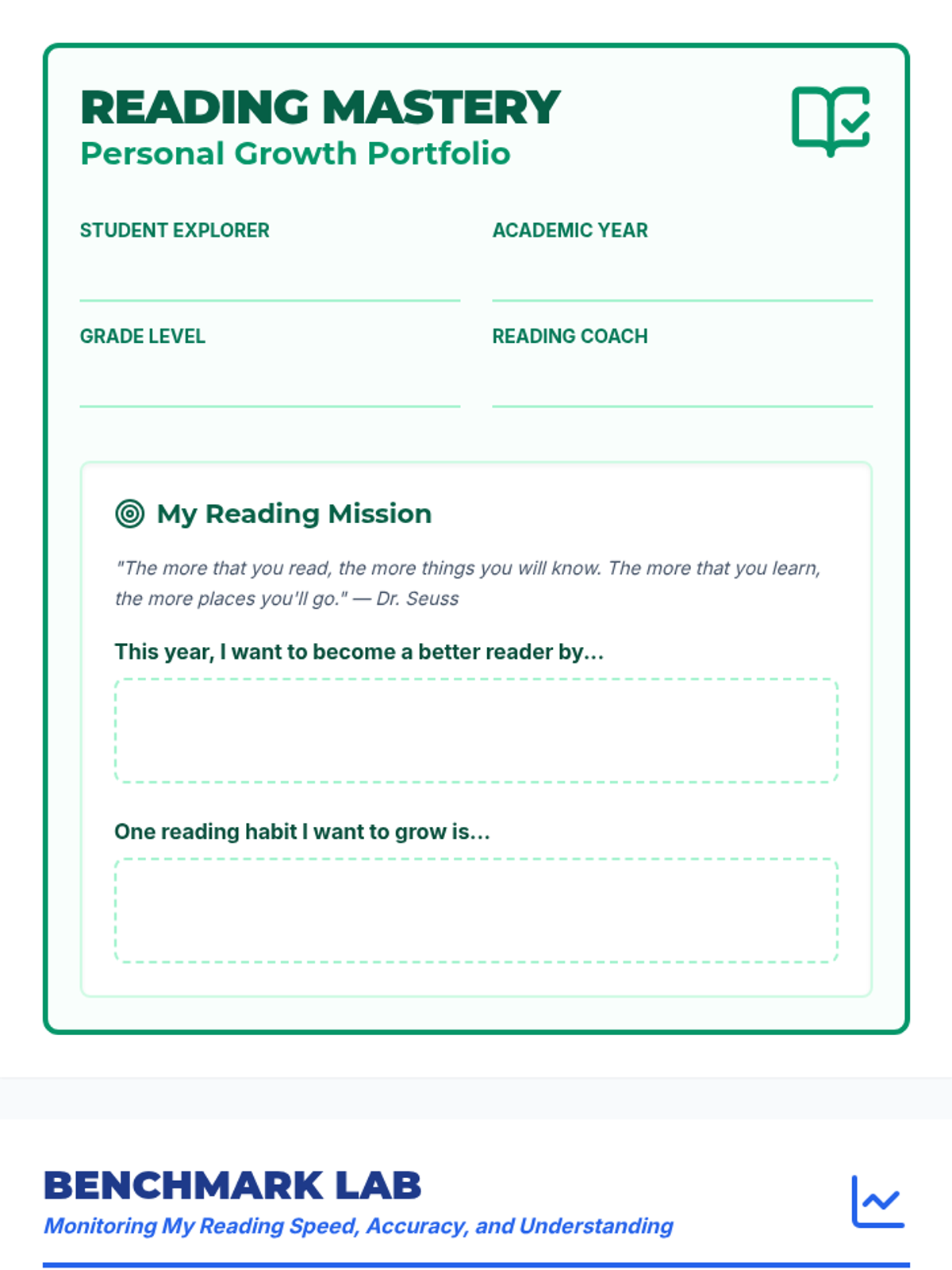
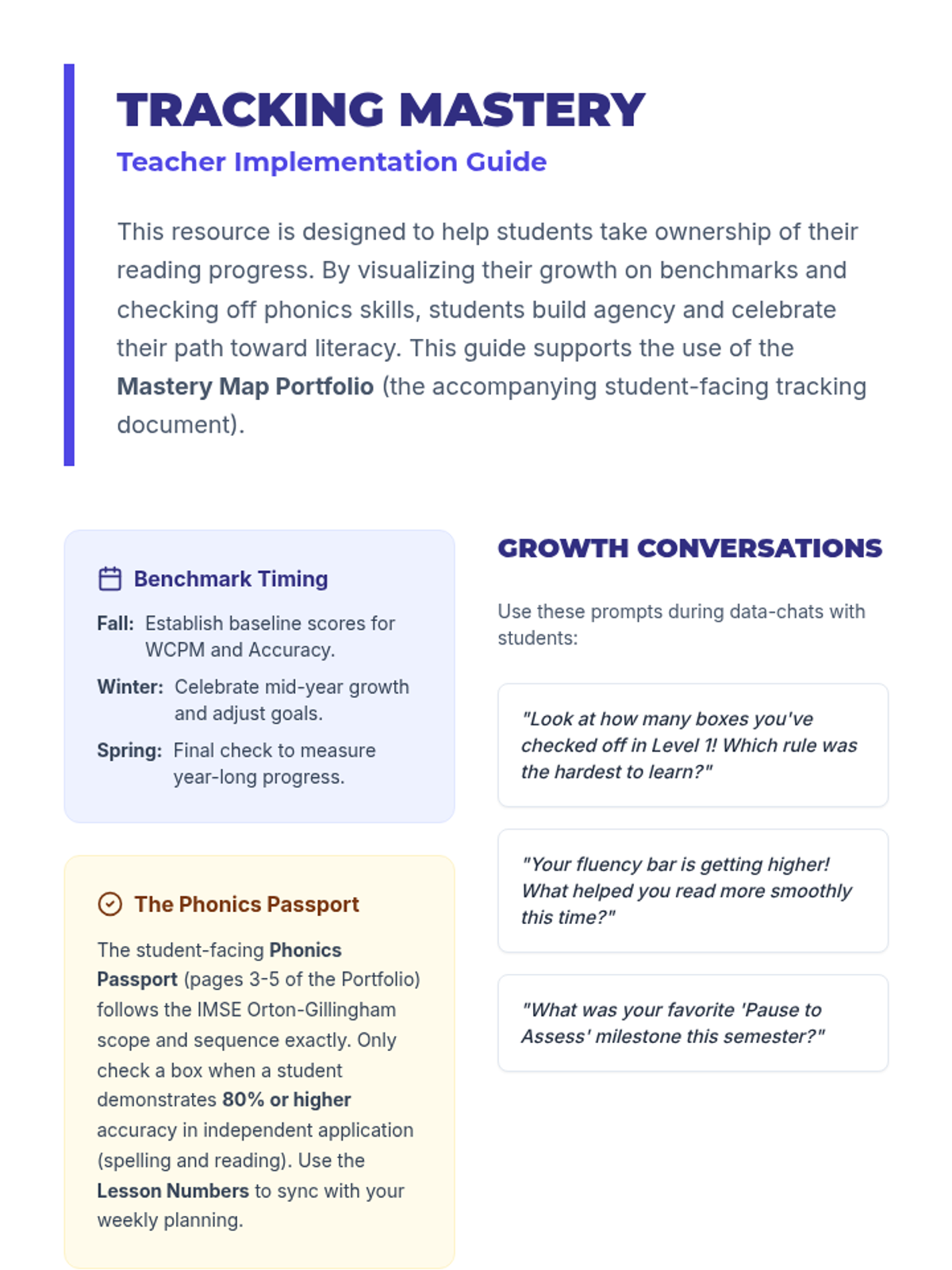
A comprehensive suite of data tracking tools for students to monitor their reading progress, including benchmark assessments and IMSE Orton-Gillingham concept checks from Kindergarten through 5th grade.
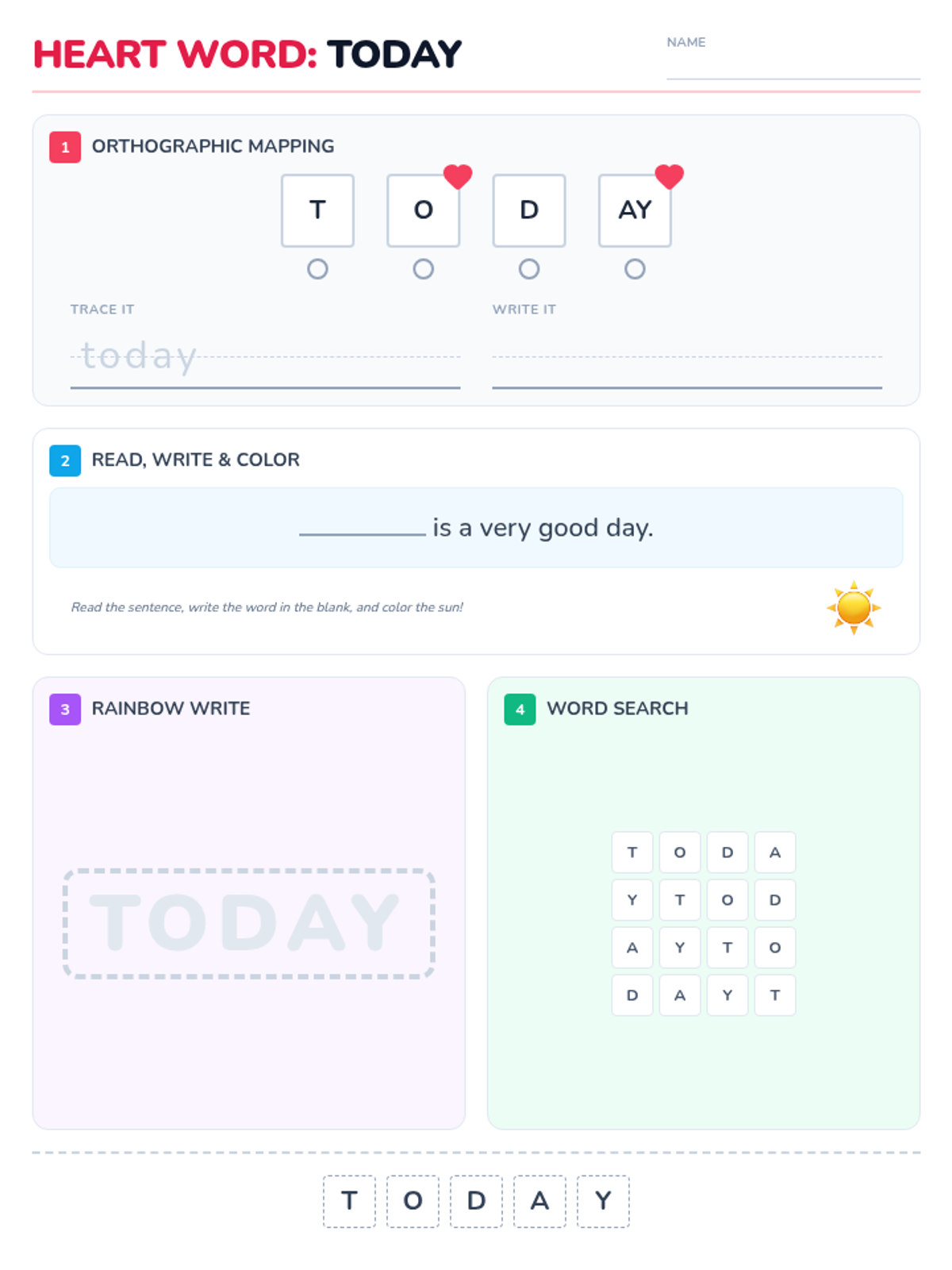
The final set of heart word practice pages covering time and place concepts like 'Today', 'Above', 'Again', and 'Always'.
Focusing on words for people and common actions like 'Friend', 'Because', 'Woman', and 'People', these pages provide deep orthographic practice.
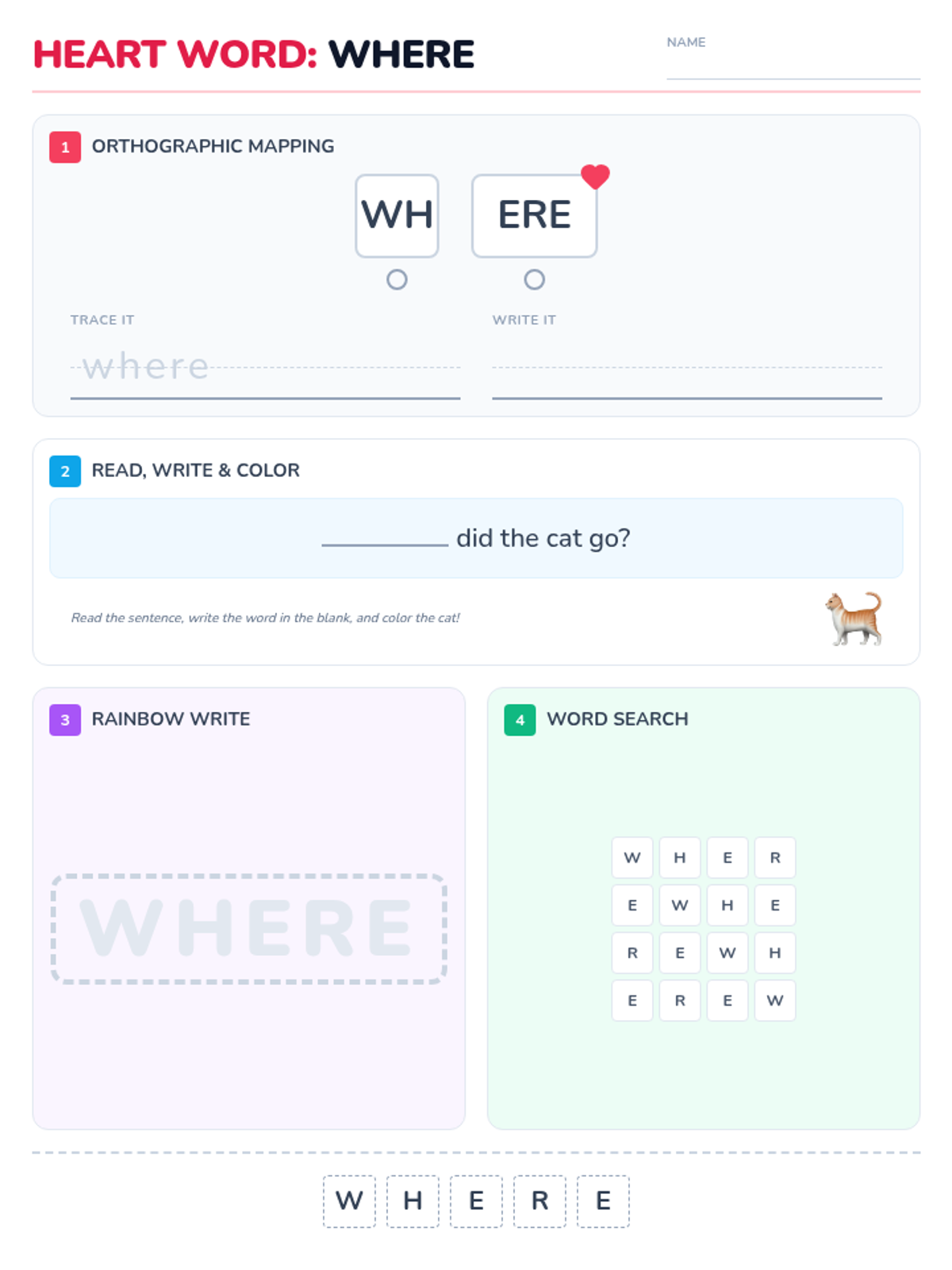
Practice pages for tricky high-frequency words such as 'Where', 'One', 'Two', and 'Does', continuing the UFLI-aligned mapping and word building.
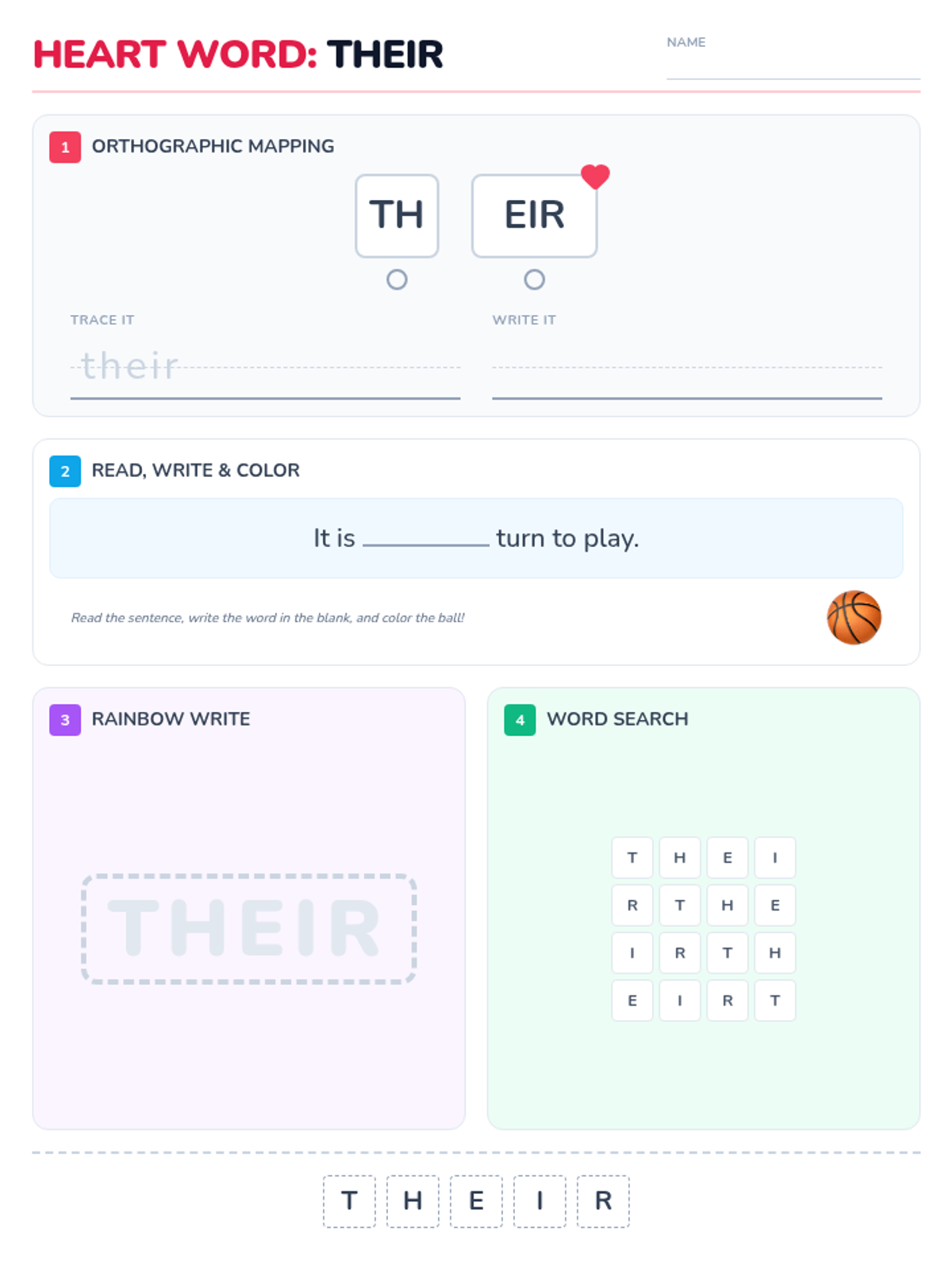
A set of heart word practice pages focusing on words related to direction, quantity, and common verbs, including 'Their', 'Were', 'Talk', and the '-ould' family.
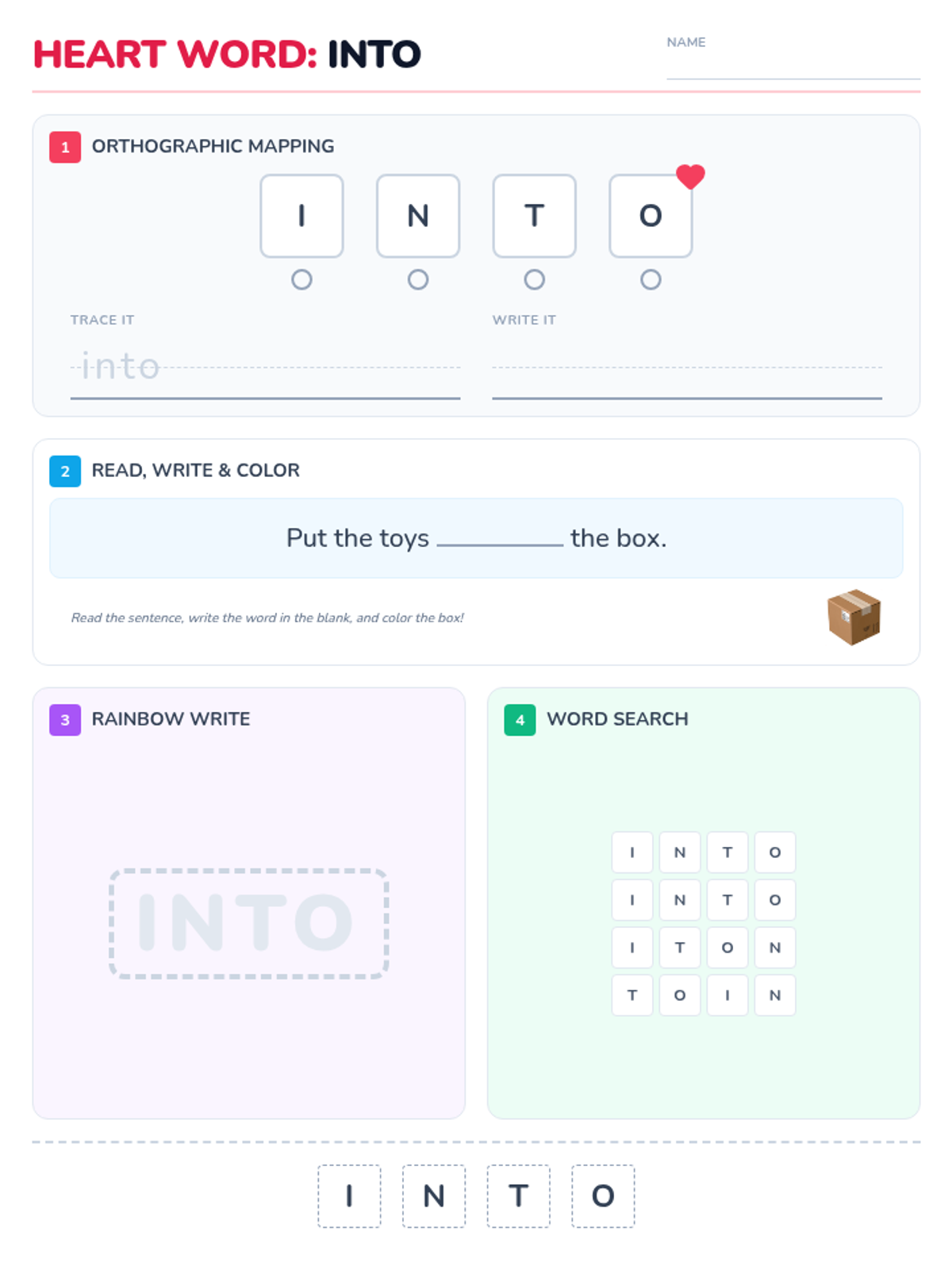
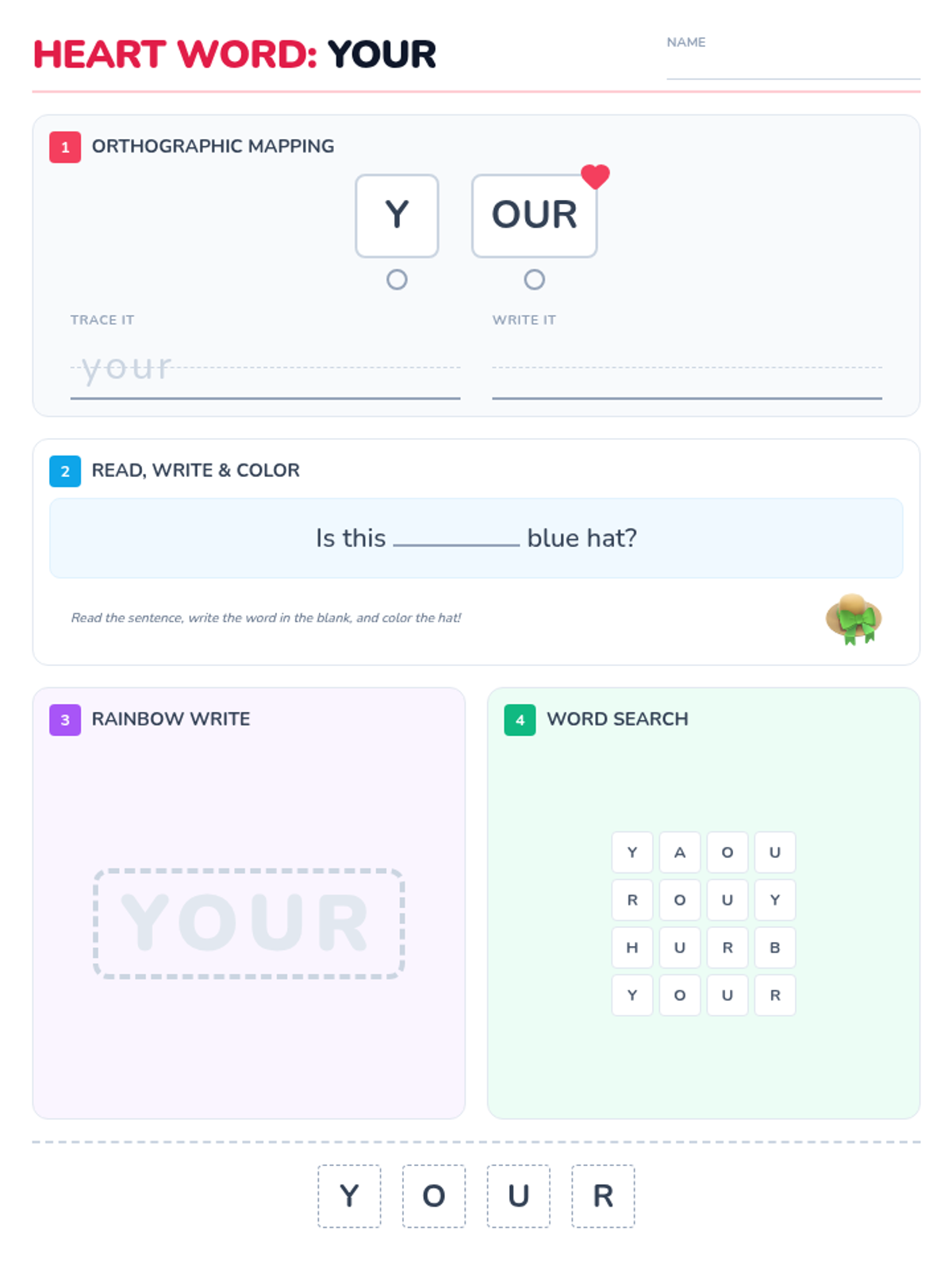
The first set of heart word practice pages focusing on common high-frequency words with irregular parts, including 'Your', 'Want', 'Go', and others. Each page includes mapping, tracing, writing, and word-building activities.
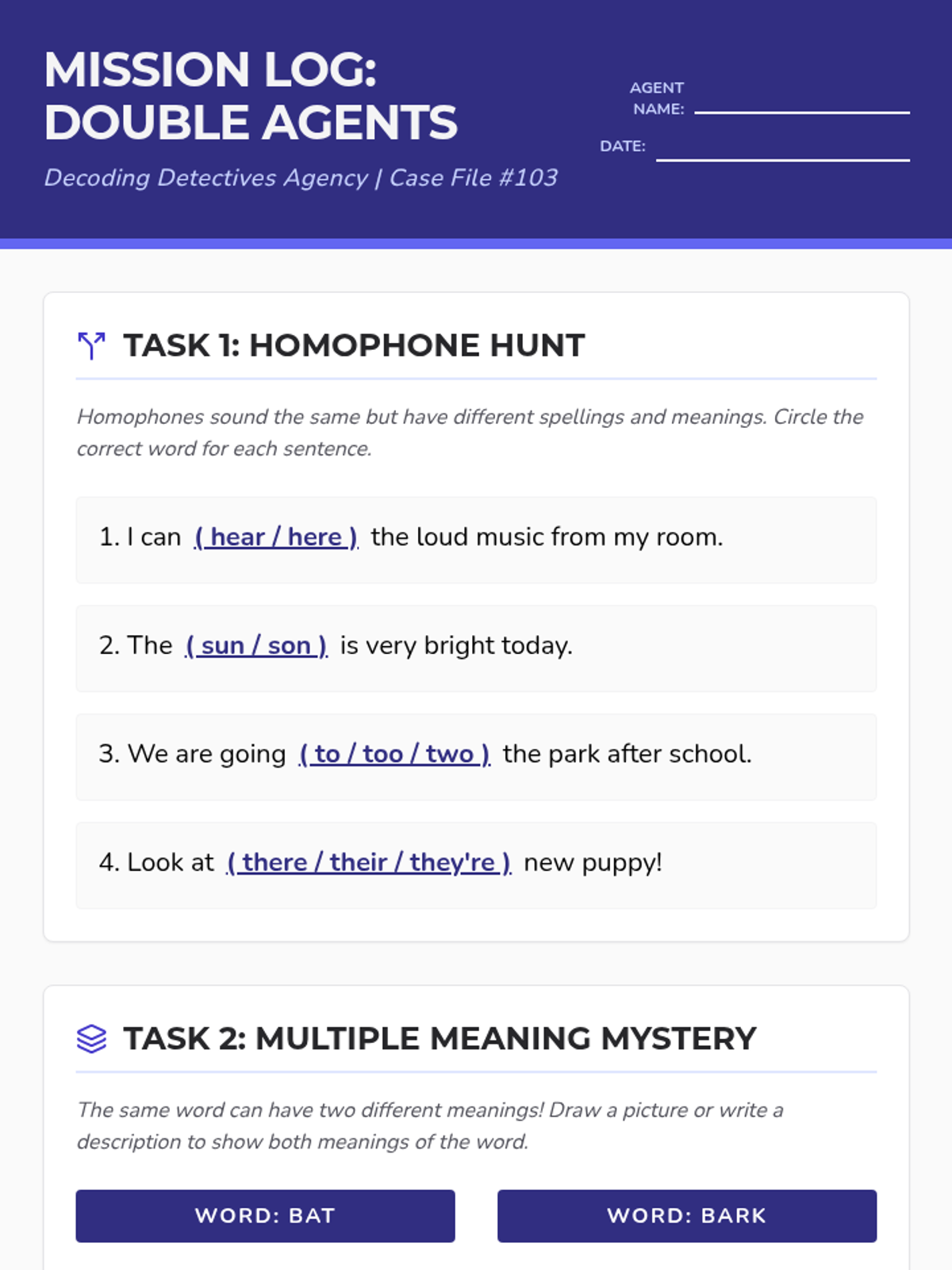
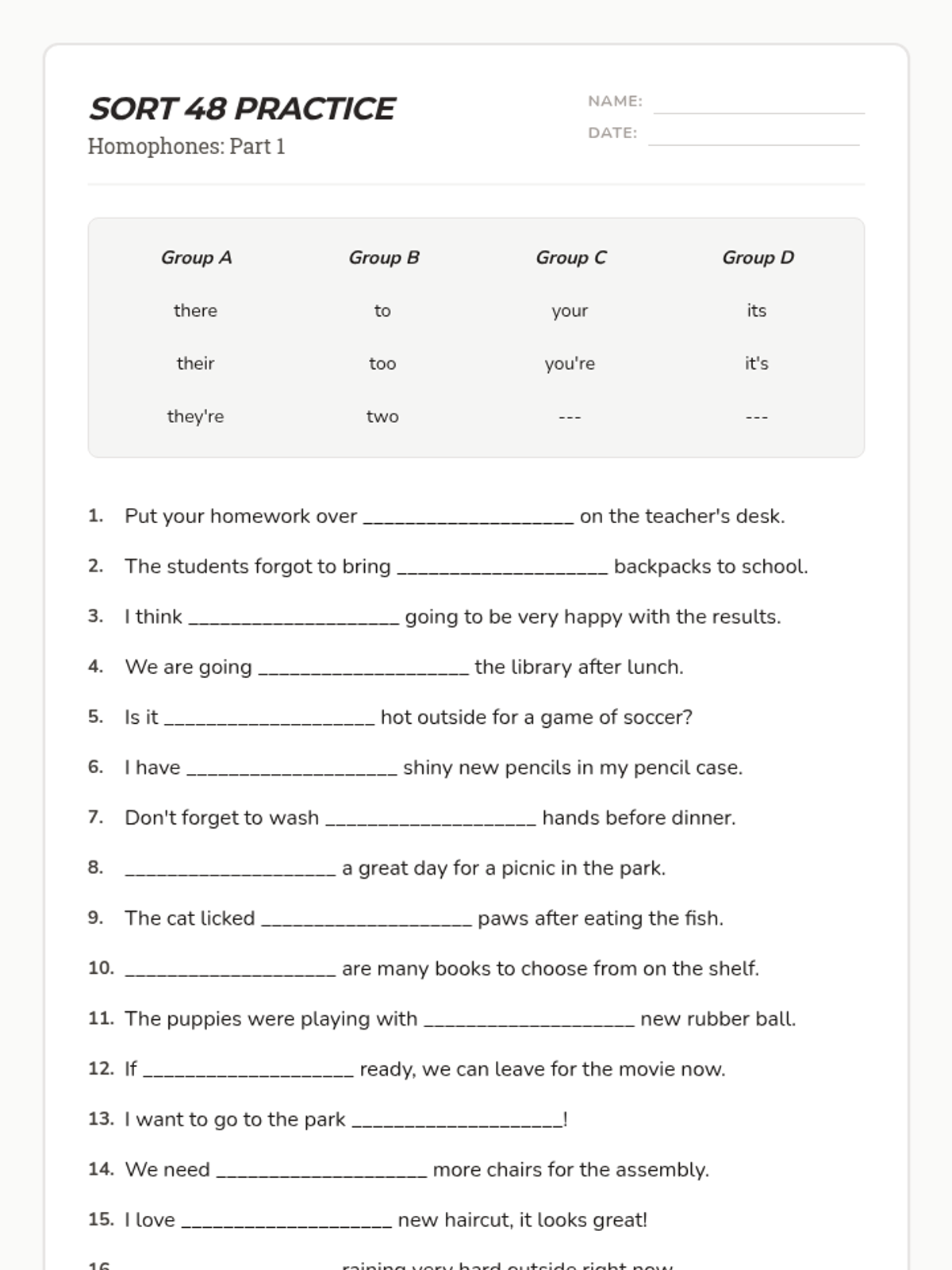
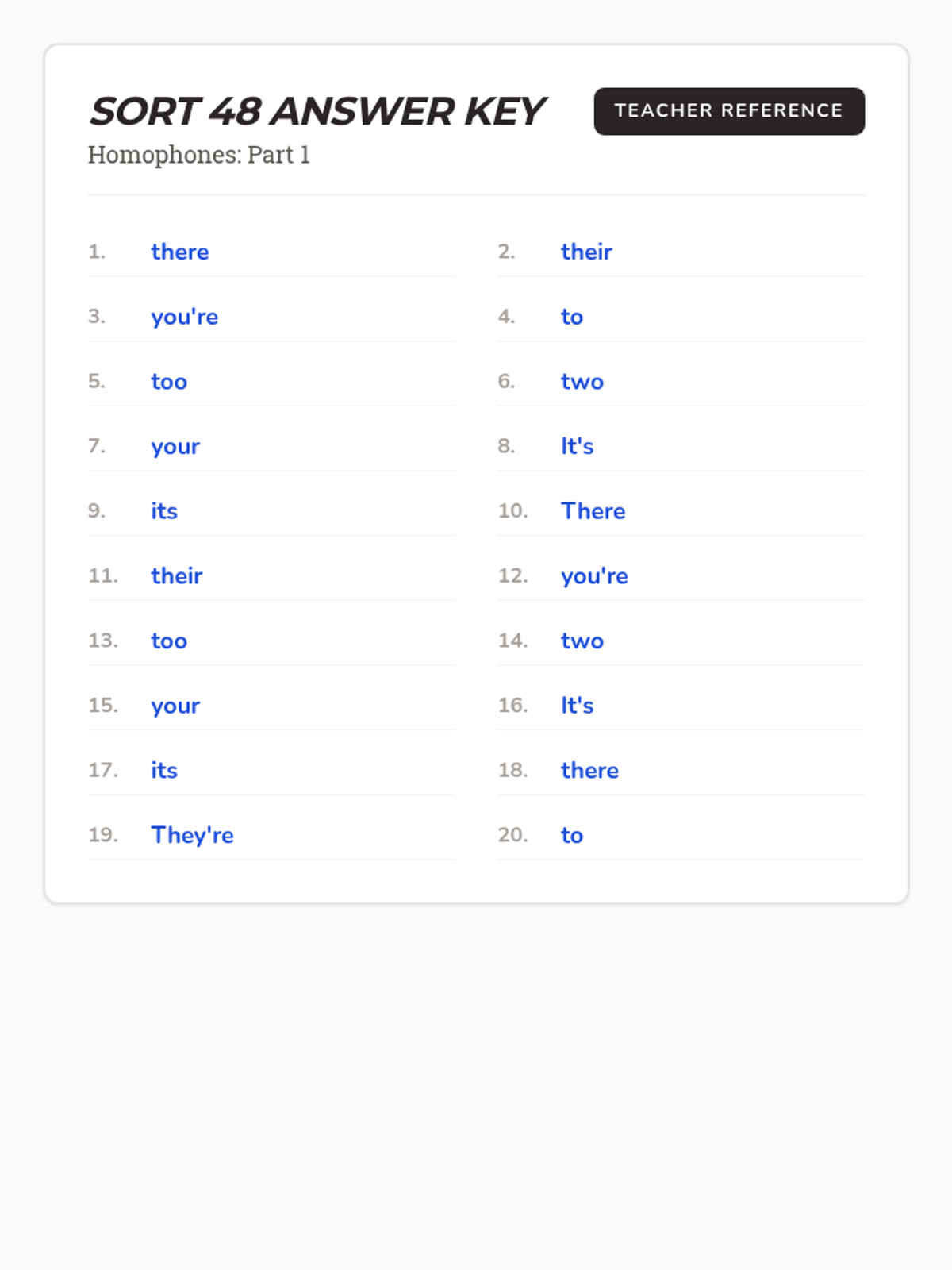
Unmask words that sound the same but look different (homophones) and words that look the same but have different meanings (multiple meaning words). Focuses on using context clues to solve word mysteries.
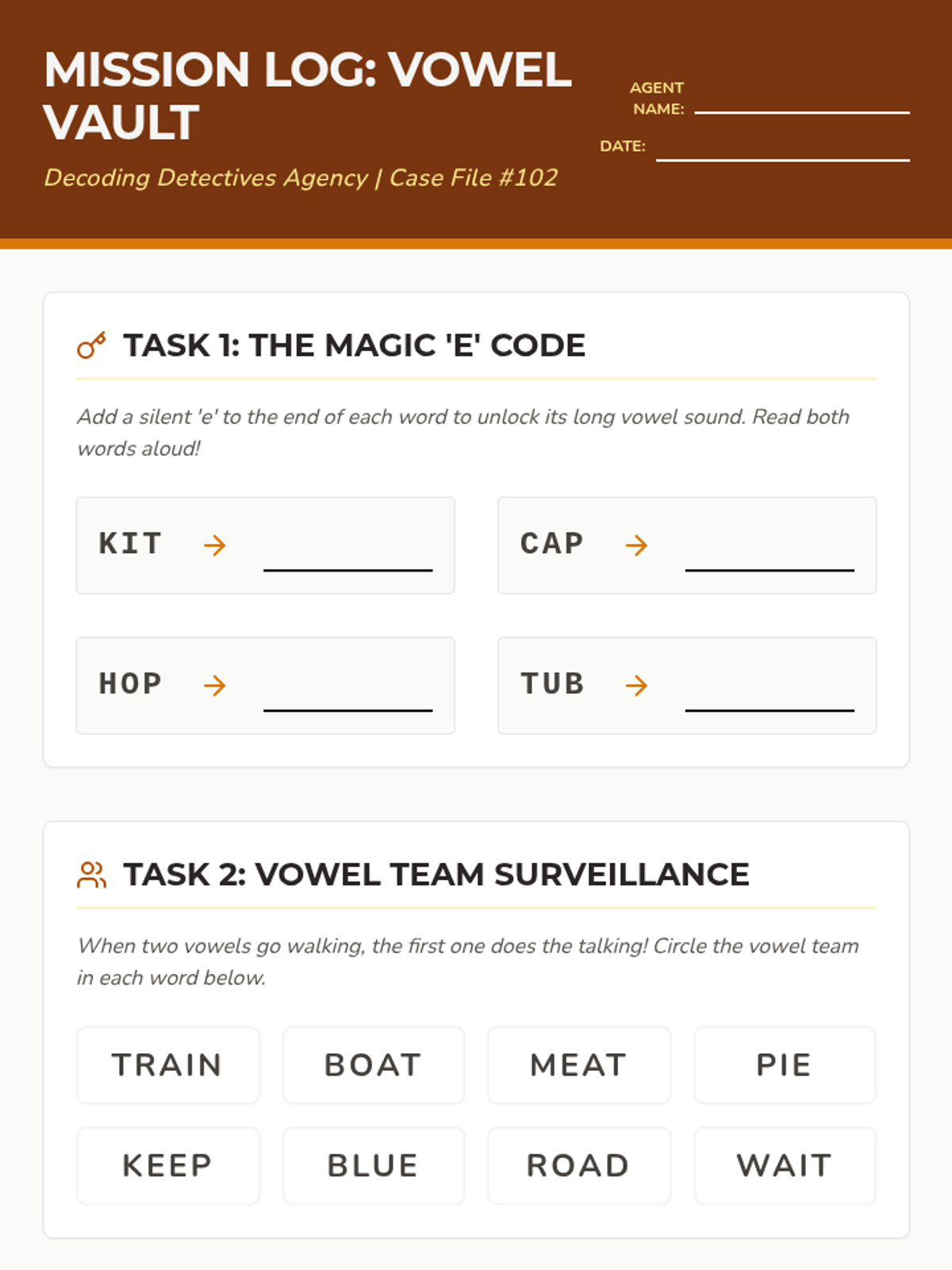
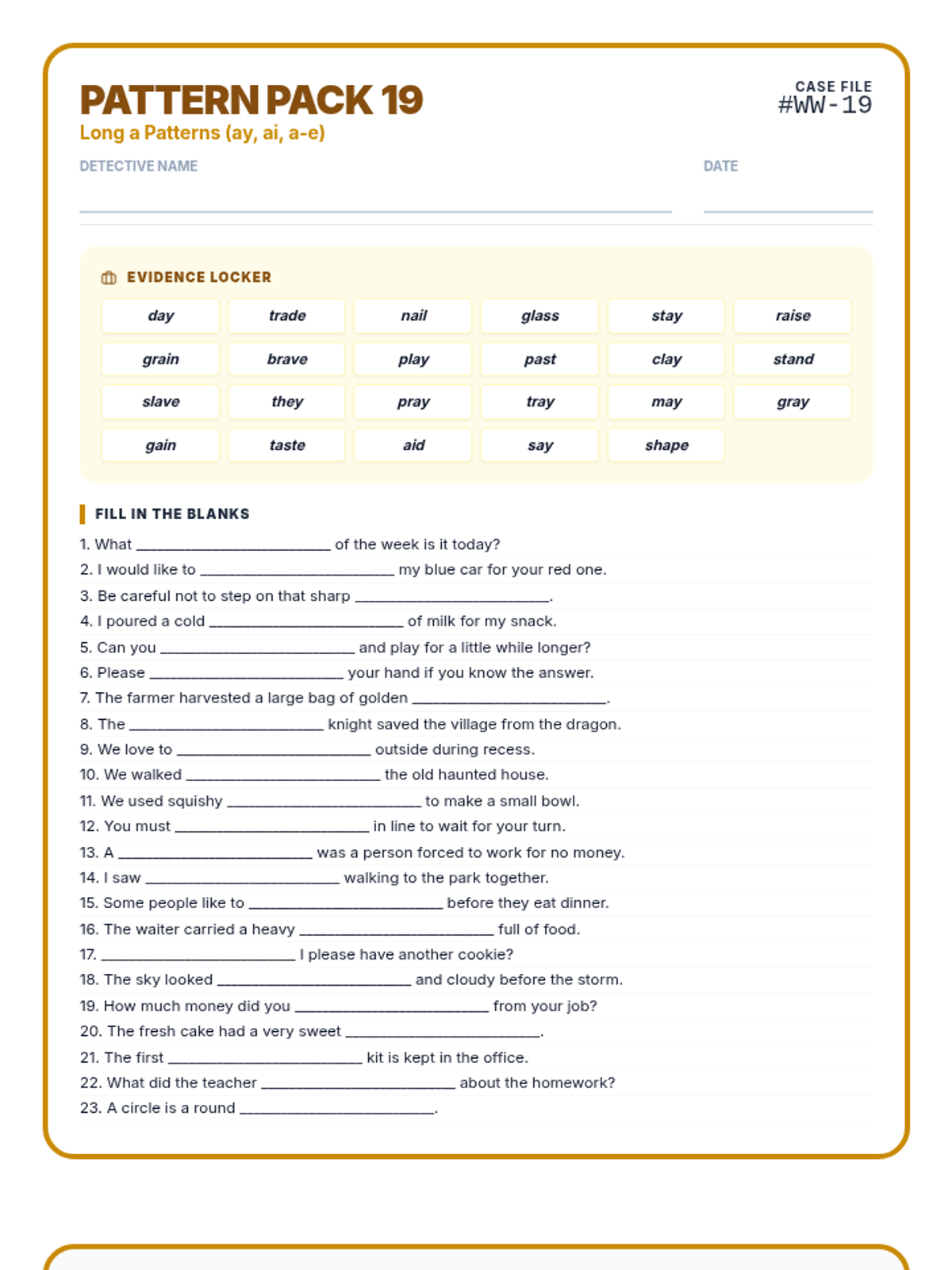
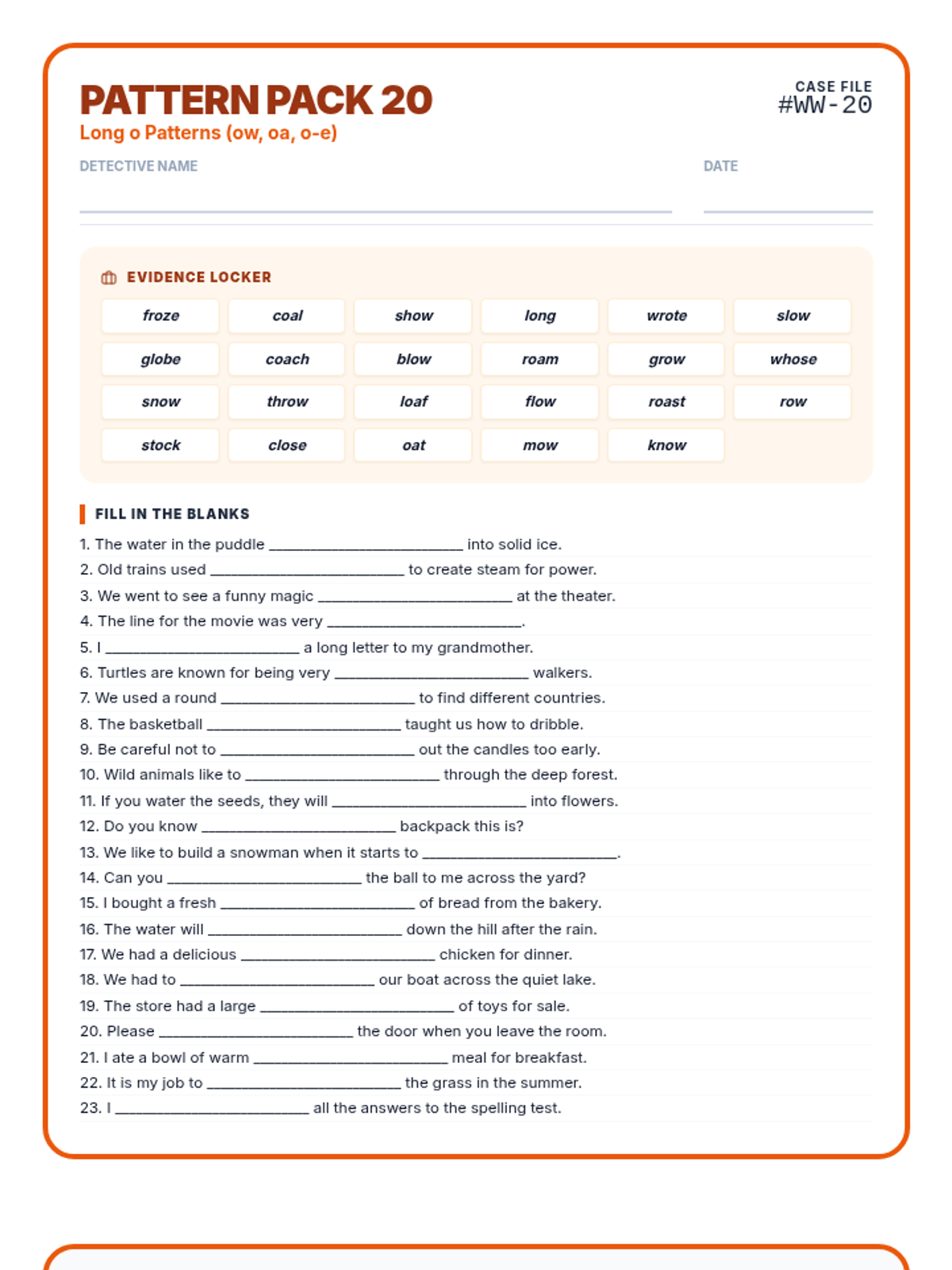
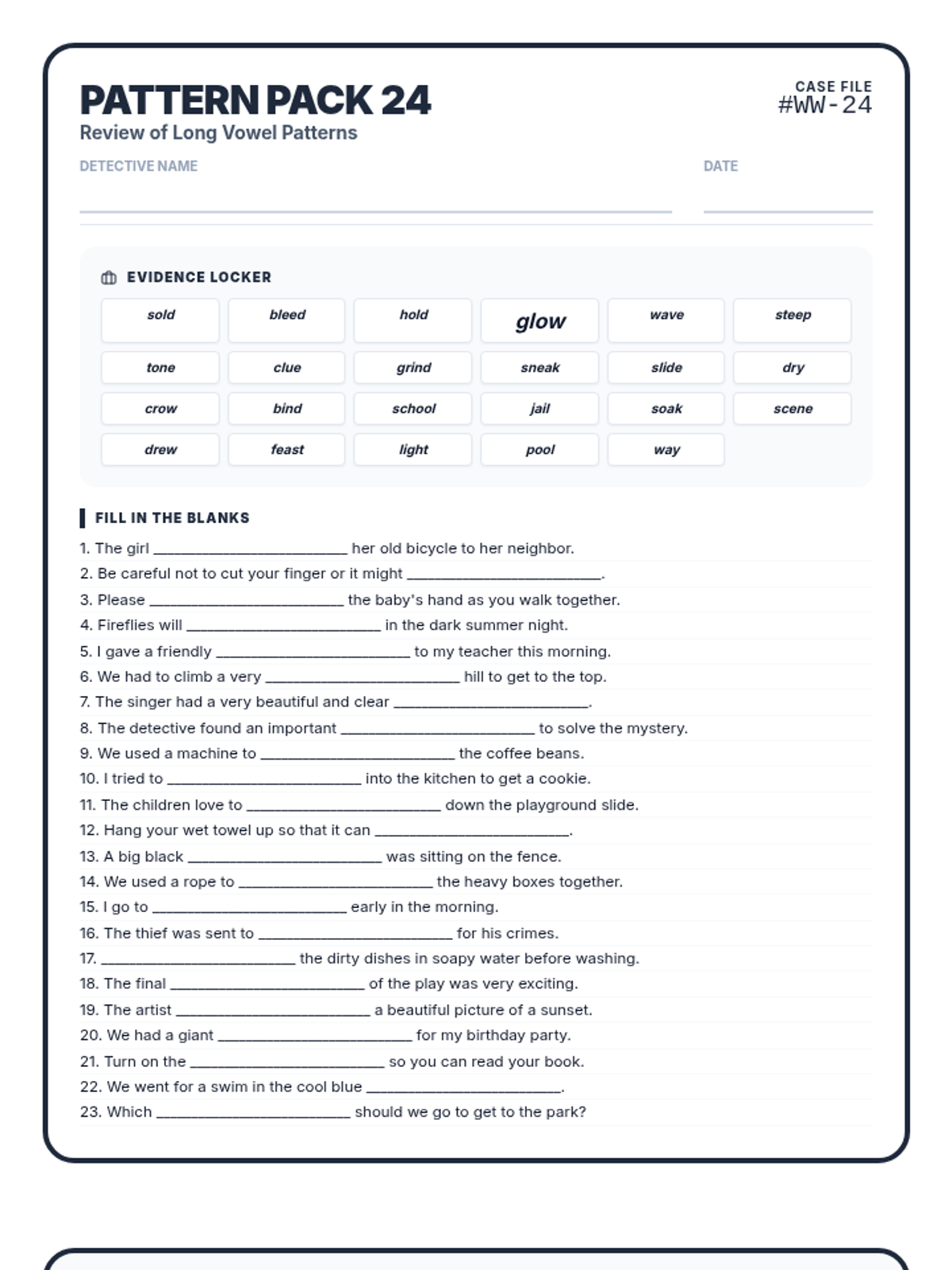
Unlock the secrets of long and short vowels, vowel teams, and the power of the silent 'e'. This lesson focuses on identifying patterns that change how a word is pronounced and spelled.
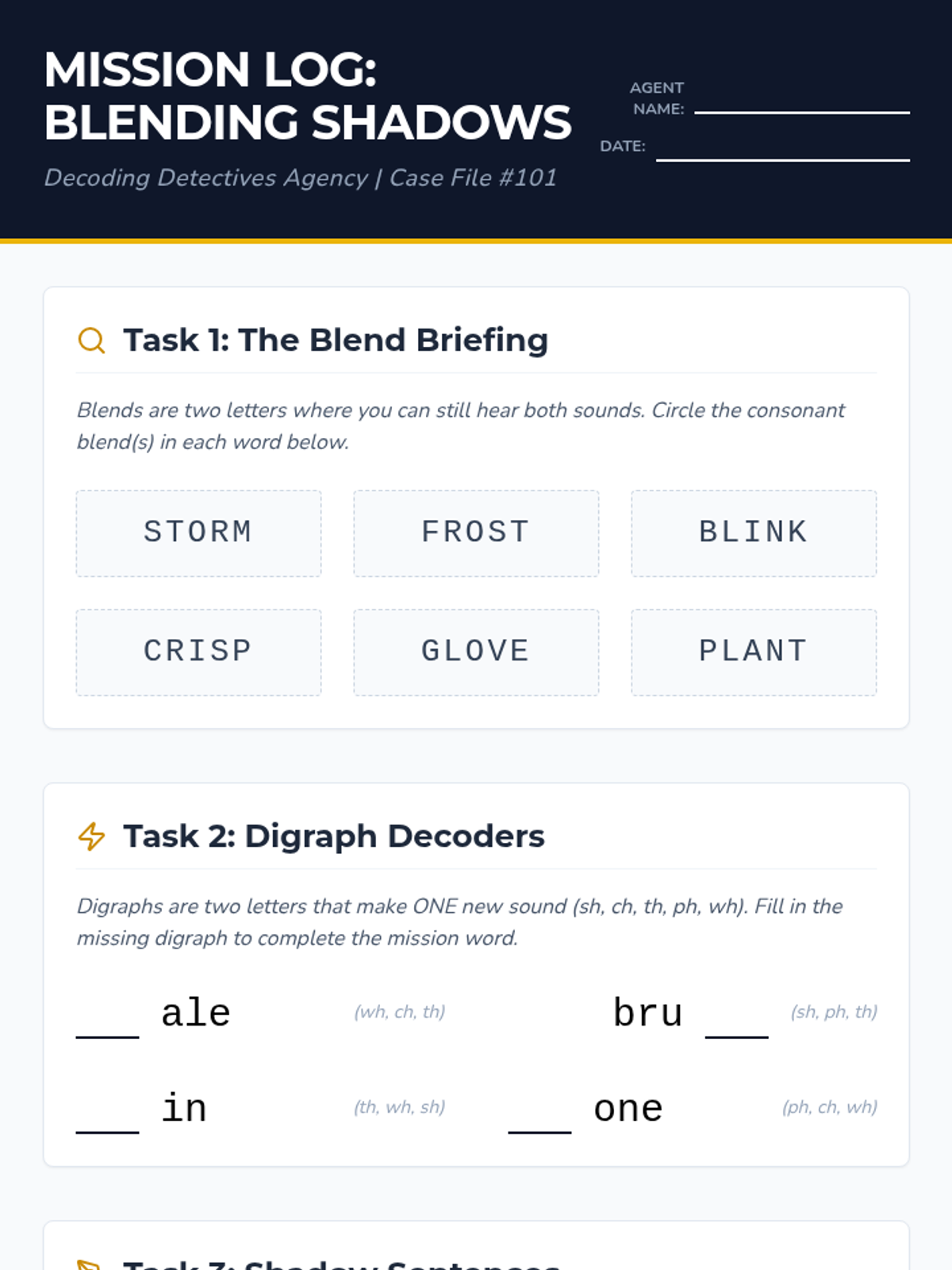
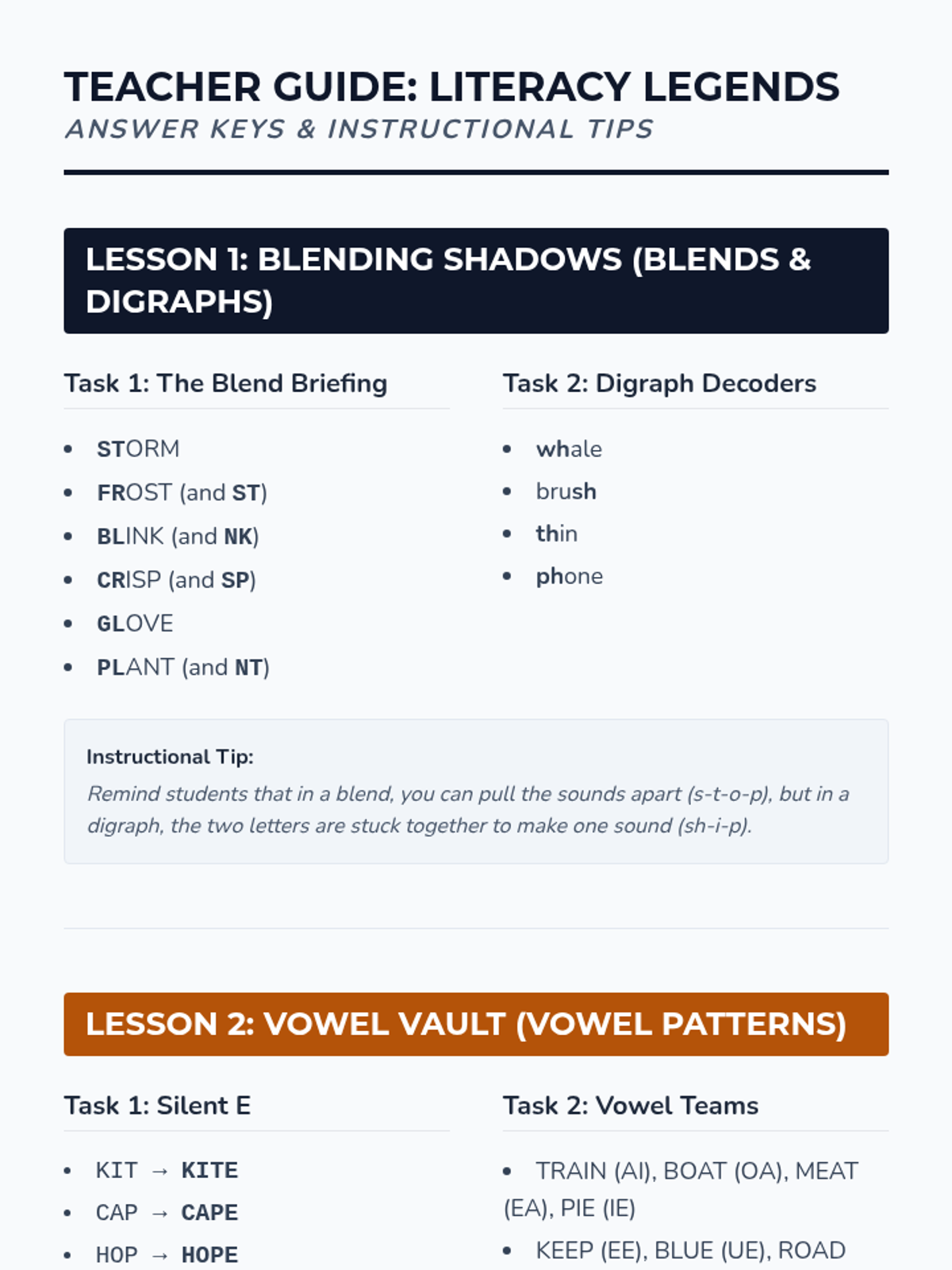
Investigate consonant blends and digraphs to master the sounds at the beginning and end of words. Students learn to distinguish between blended sounds and the unique sounds created by digraphs.
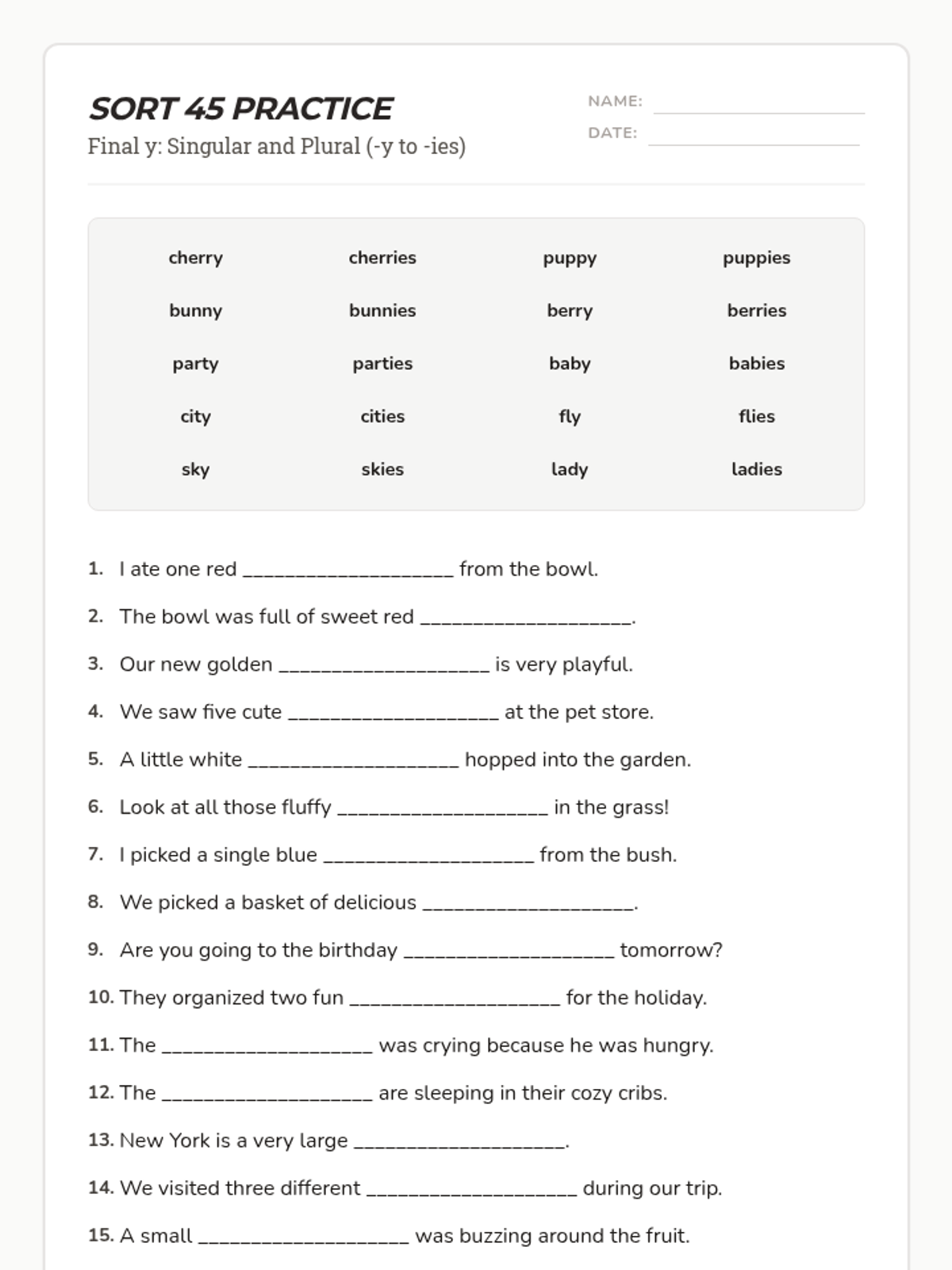
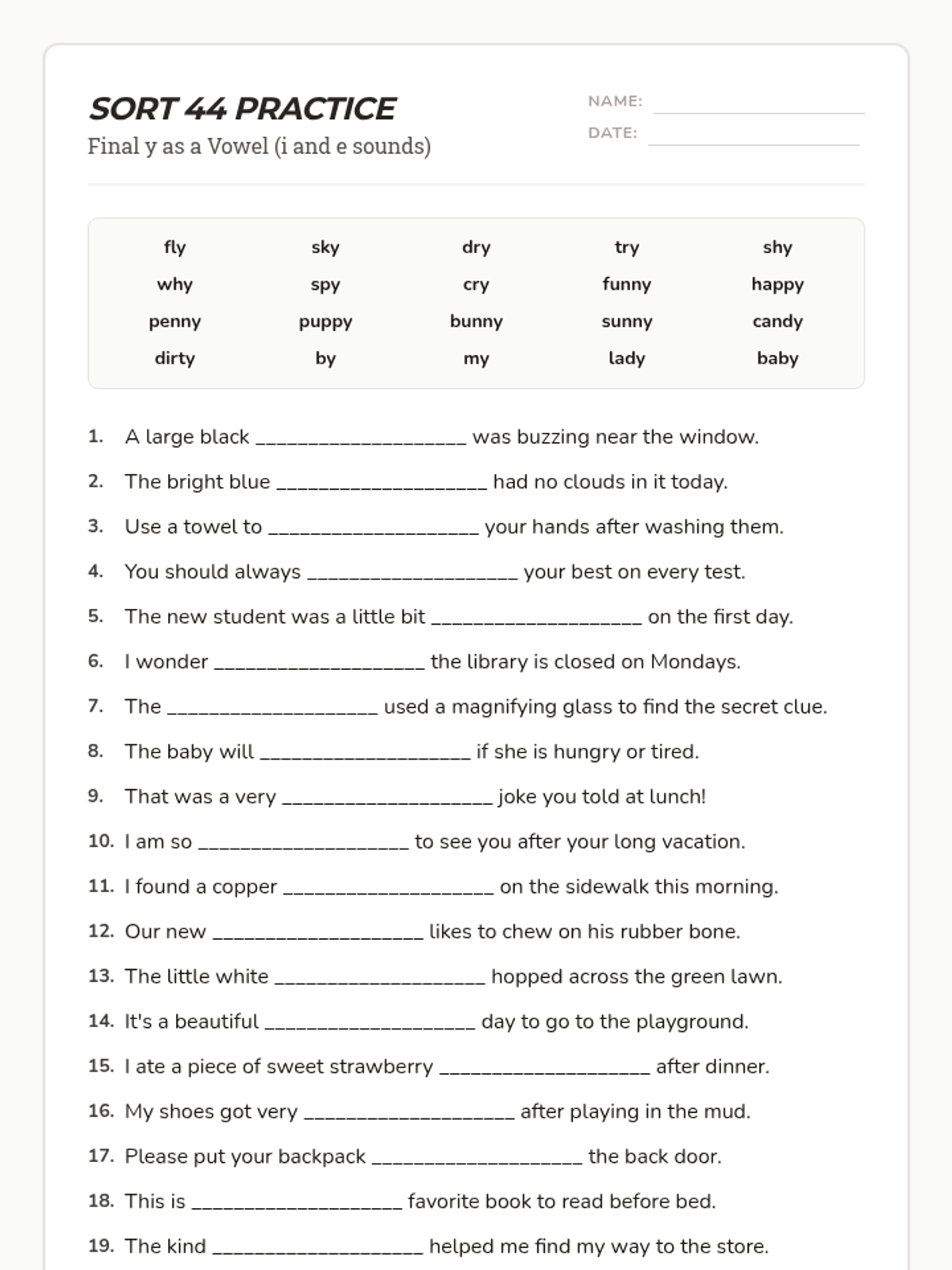
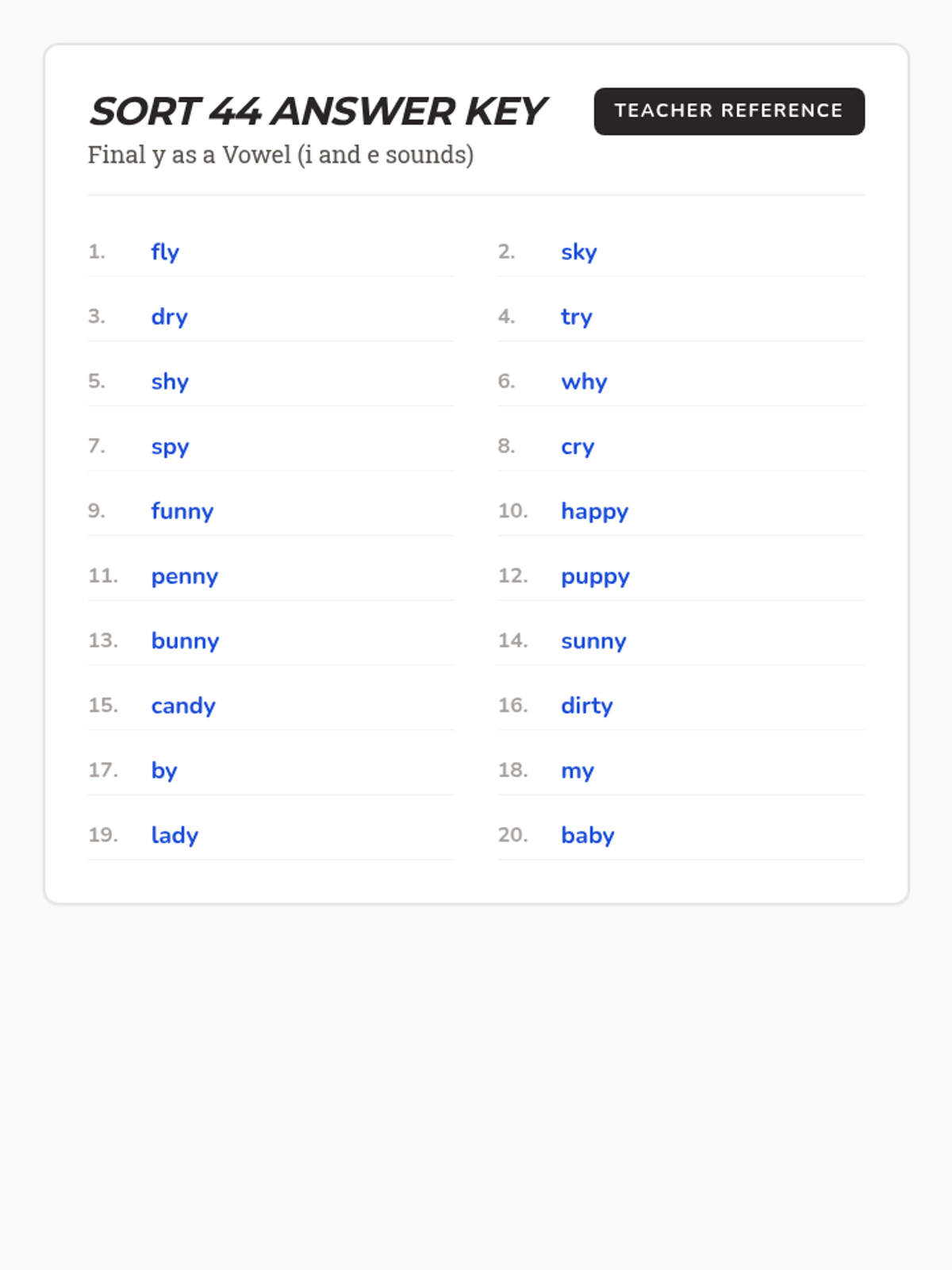
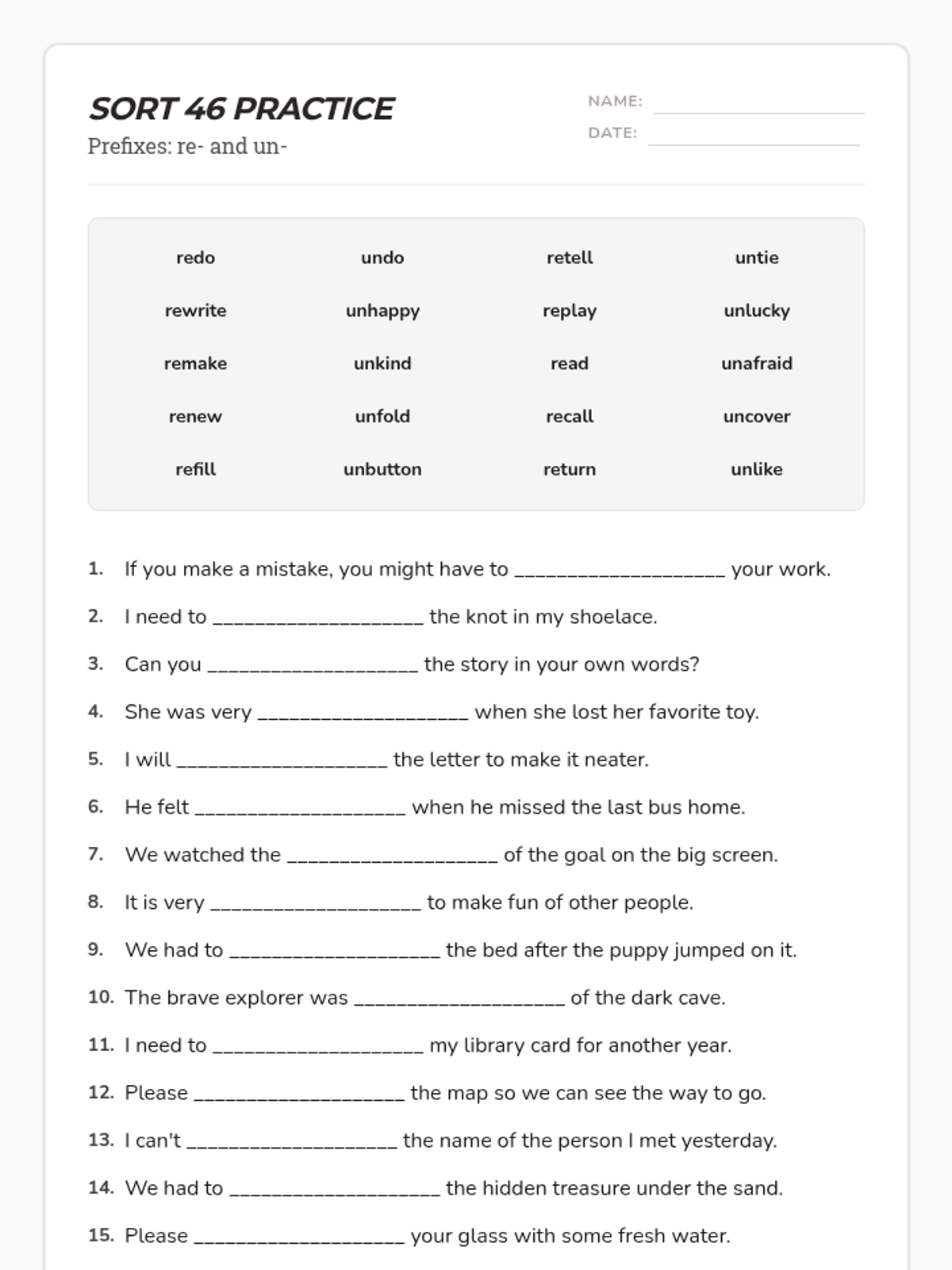
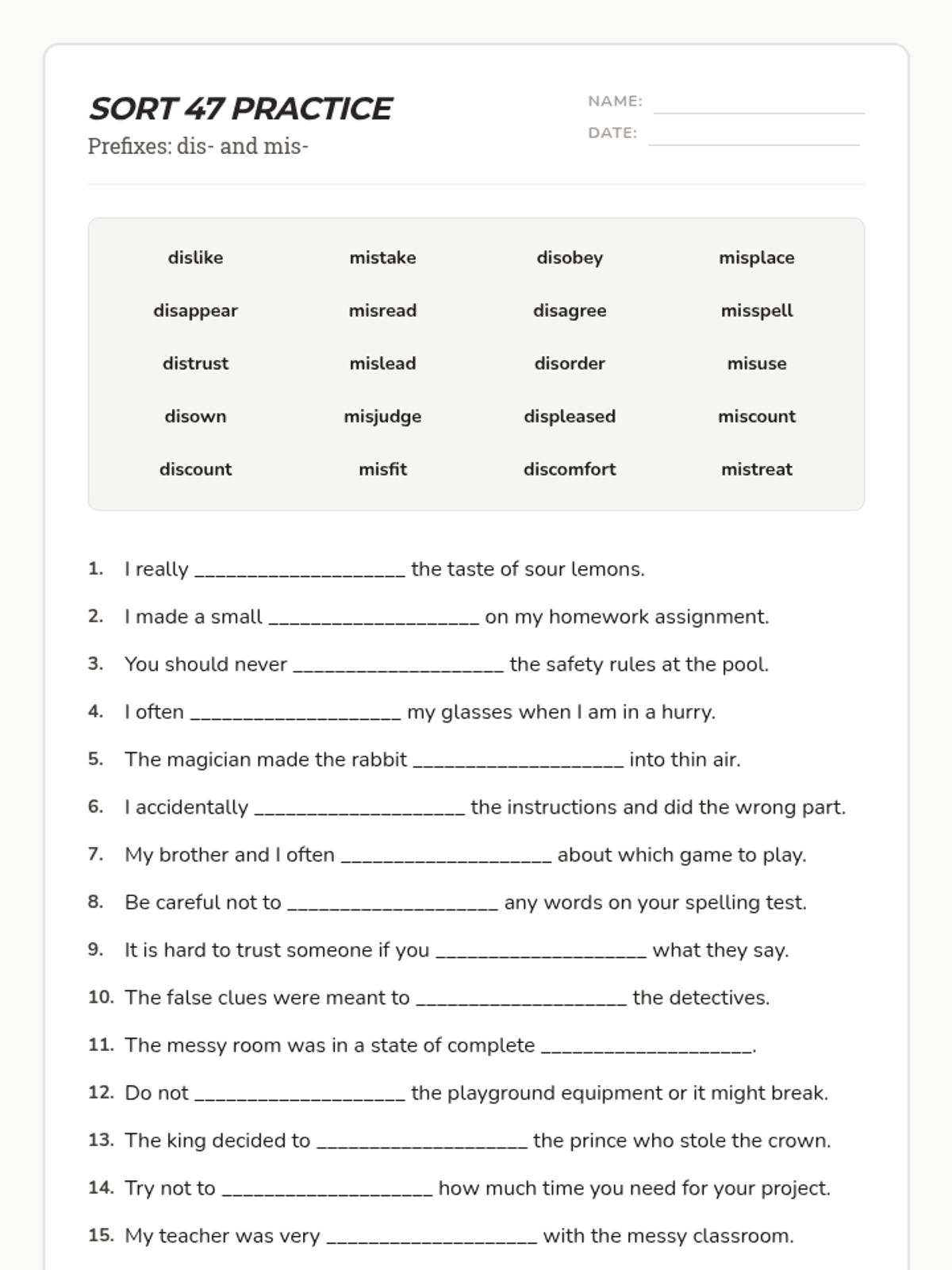
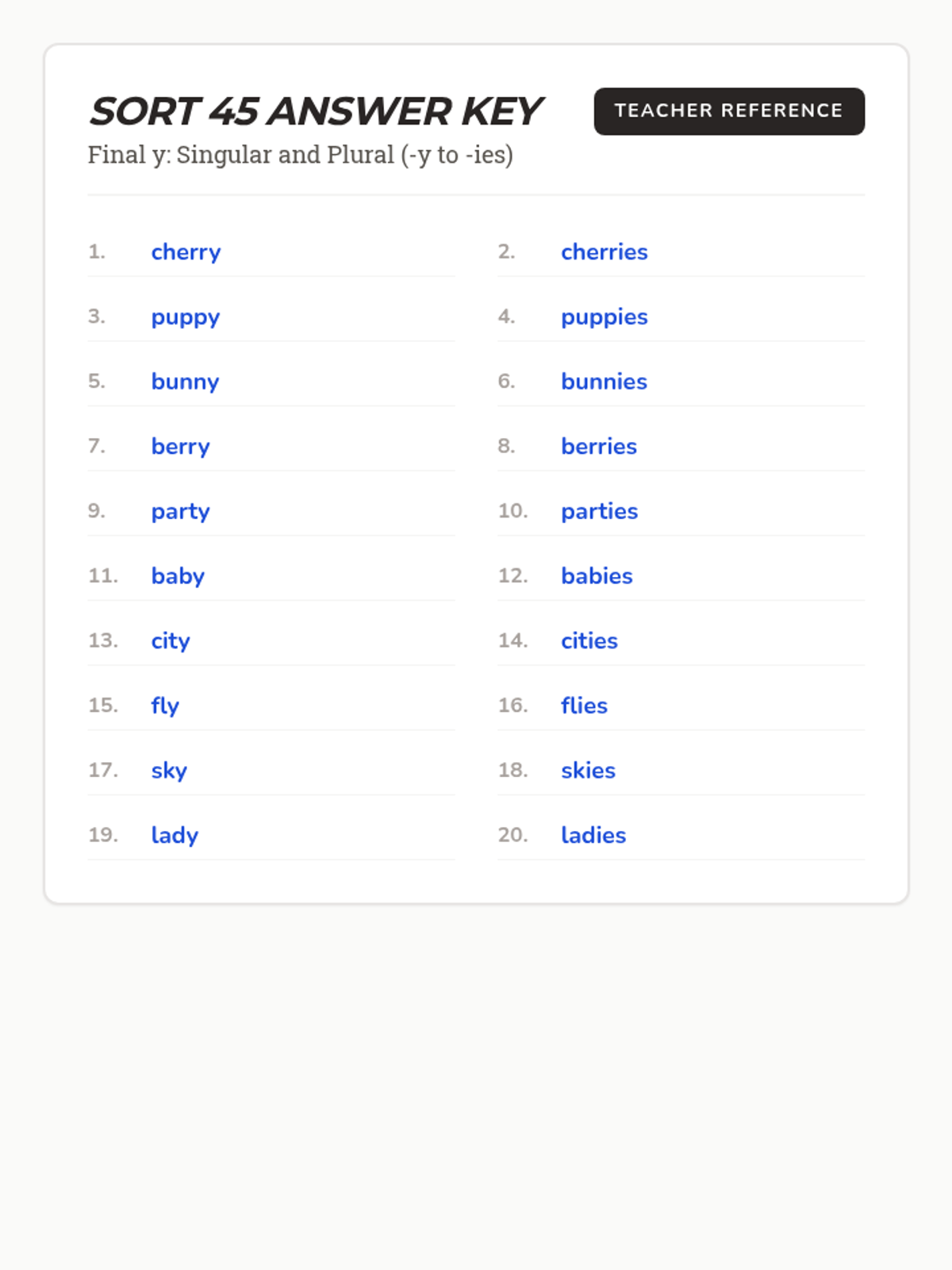
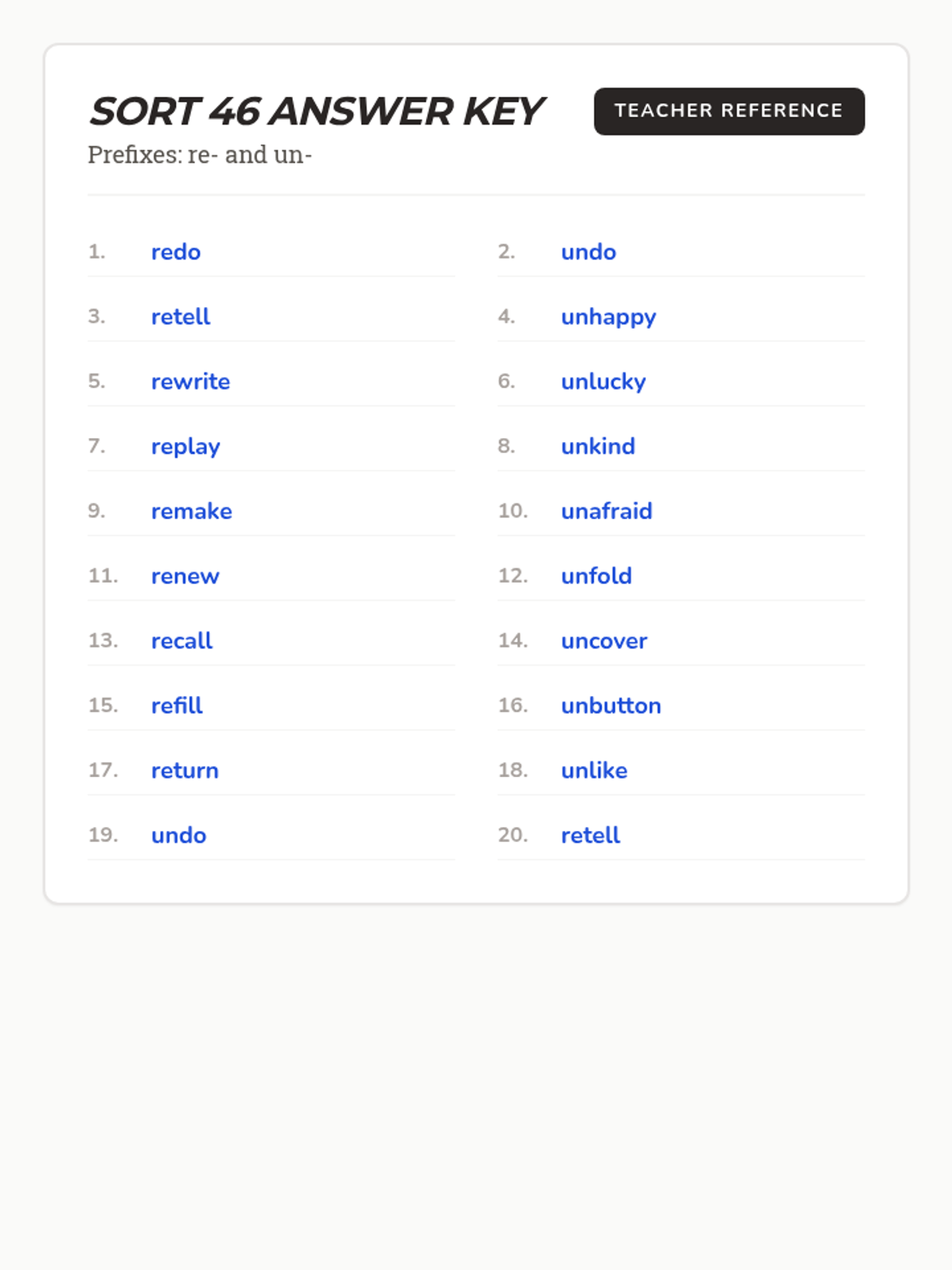
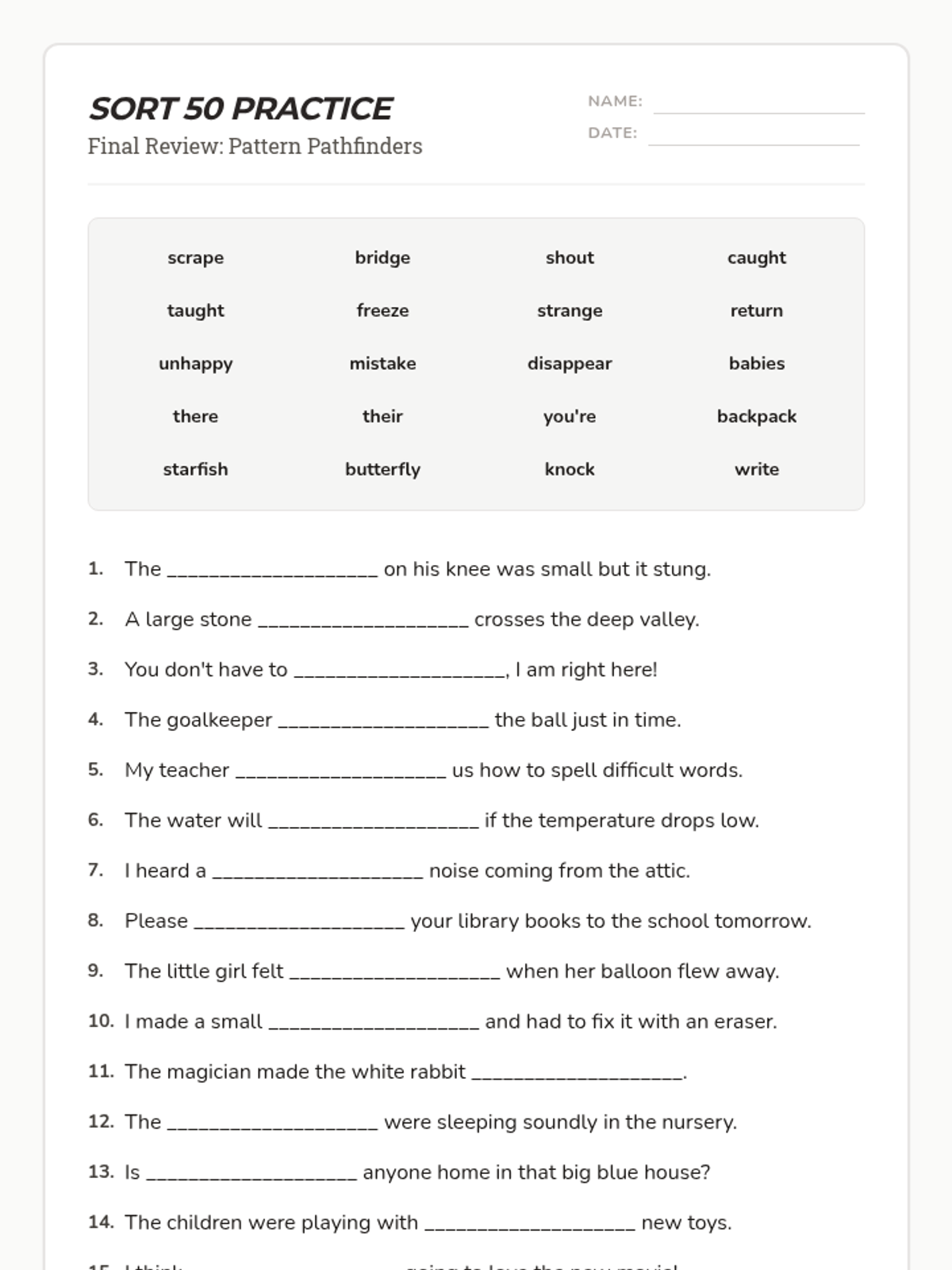
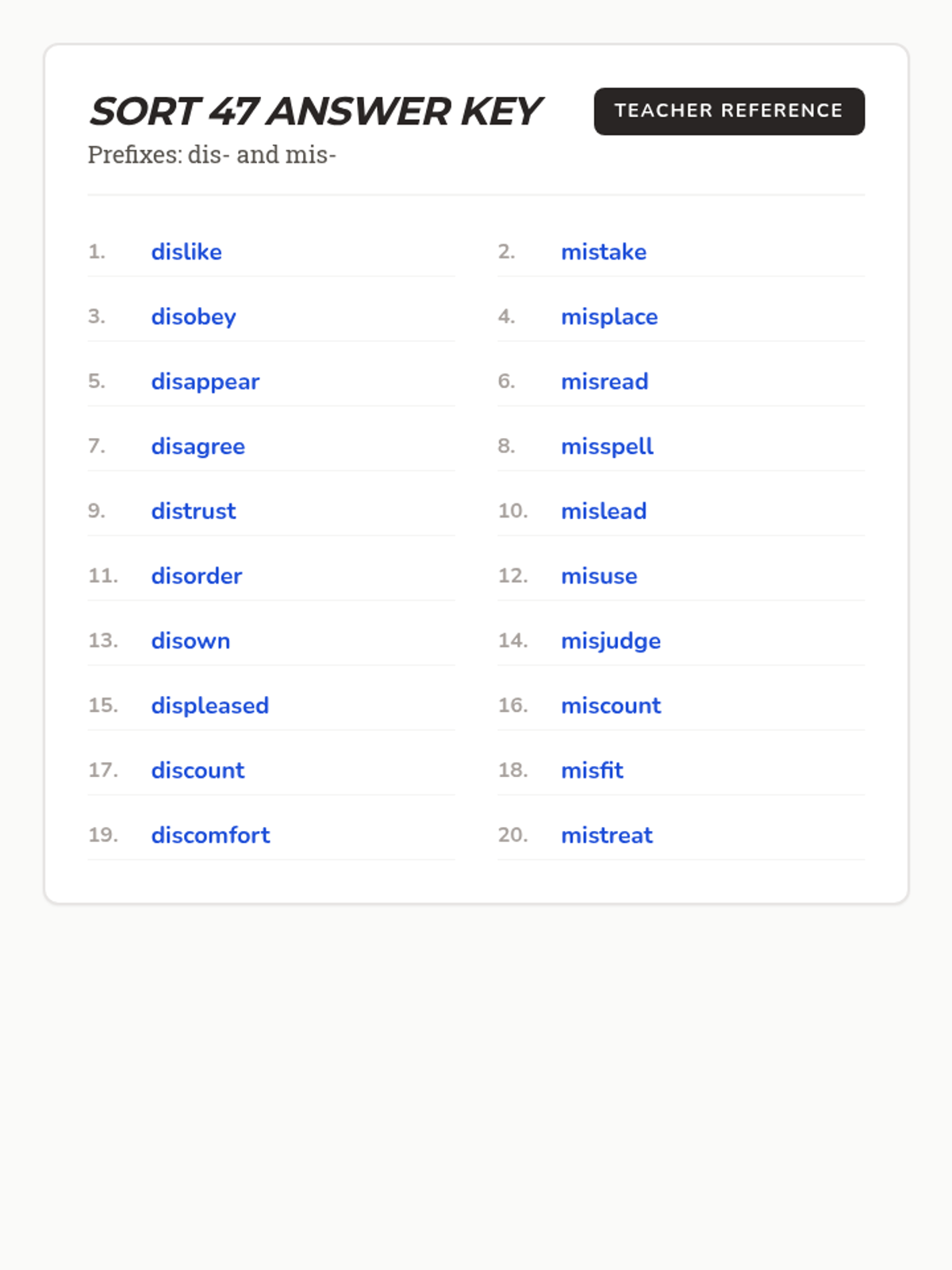
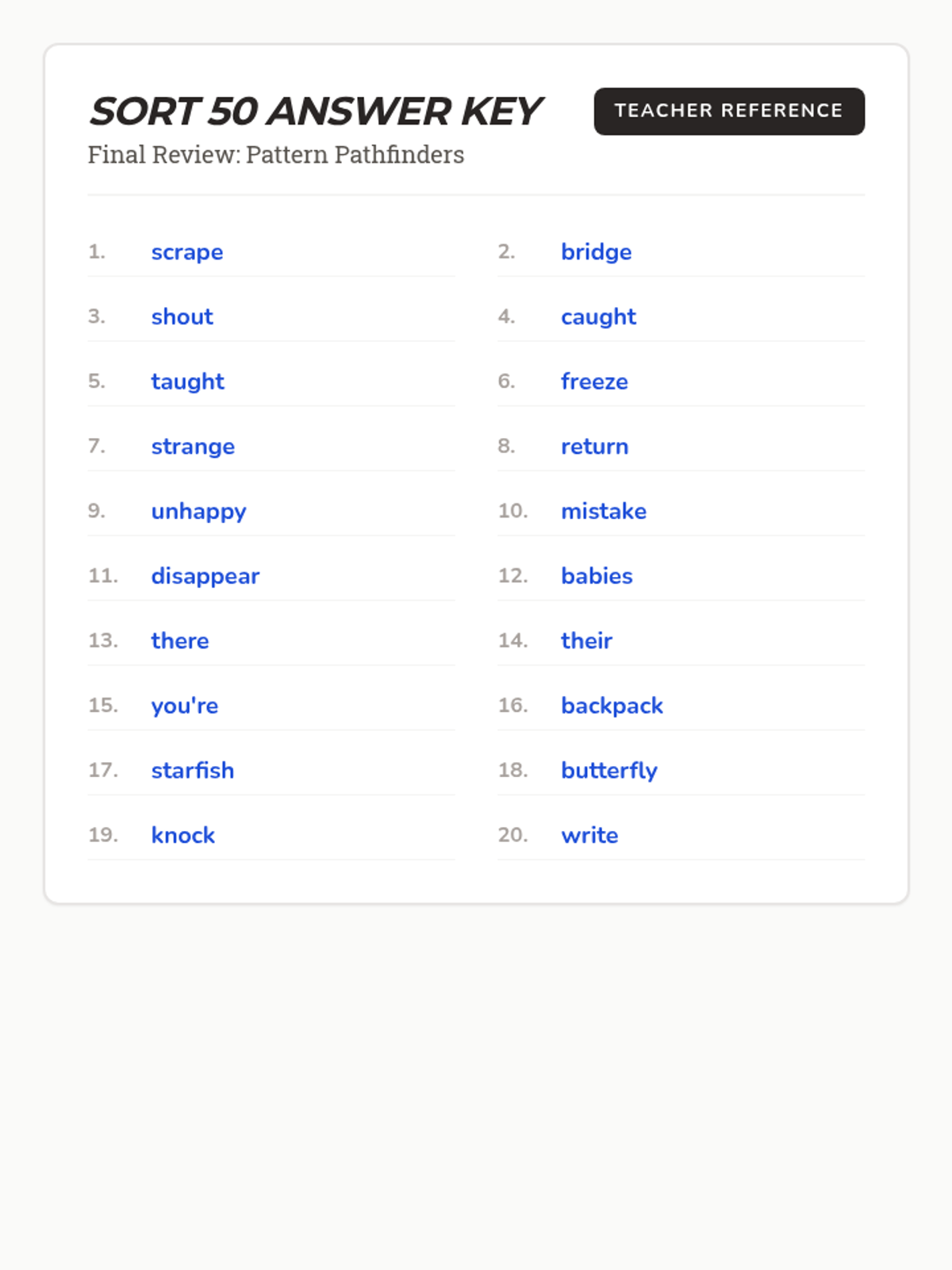
Covers final y as a vowel, plural endings with -ies, common prefixes (re-, un-, dis-, mis-), and a comprehensive review of patterns from Sorts 13-50.
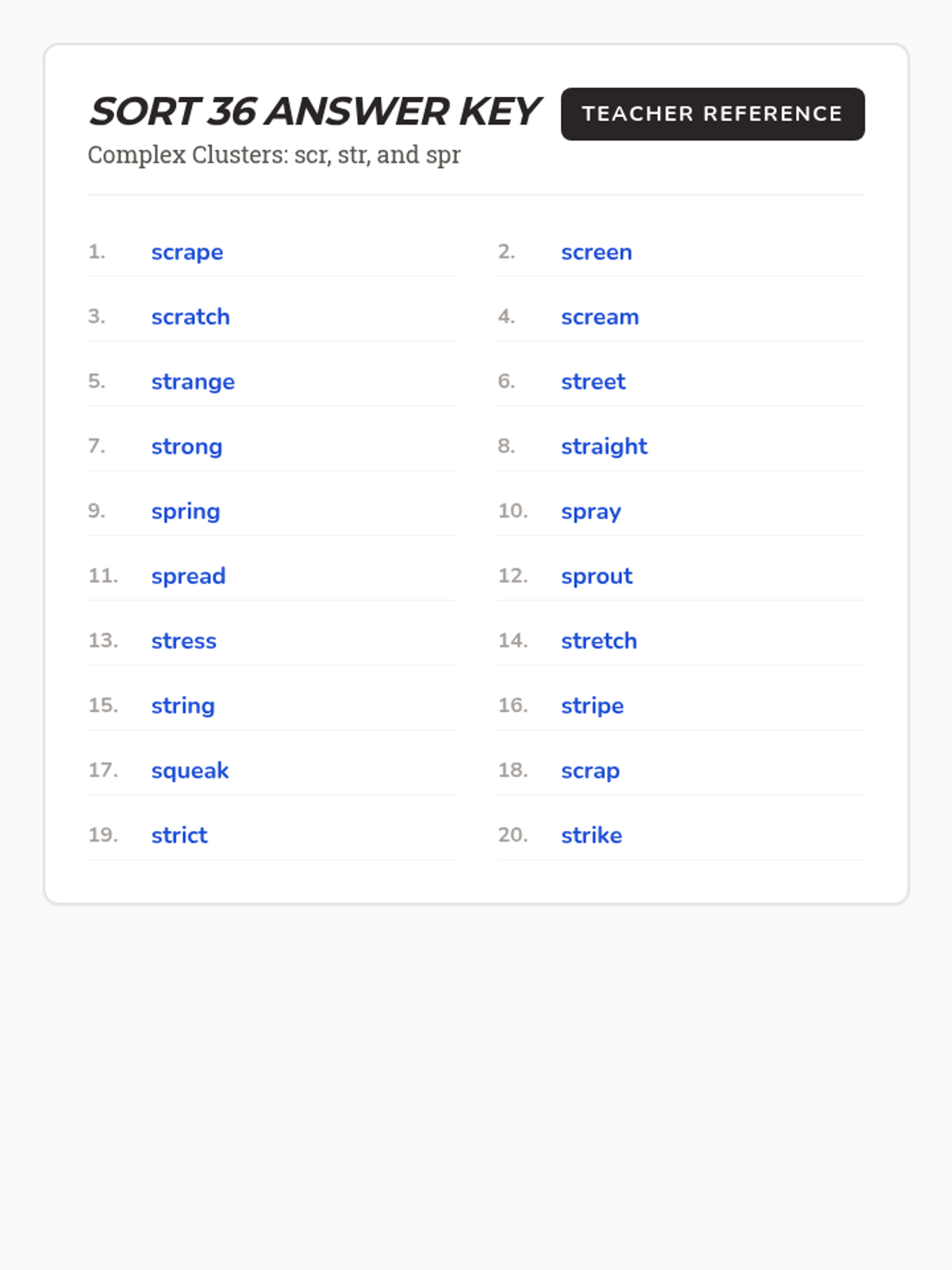
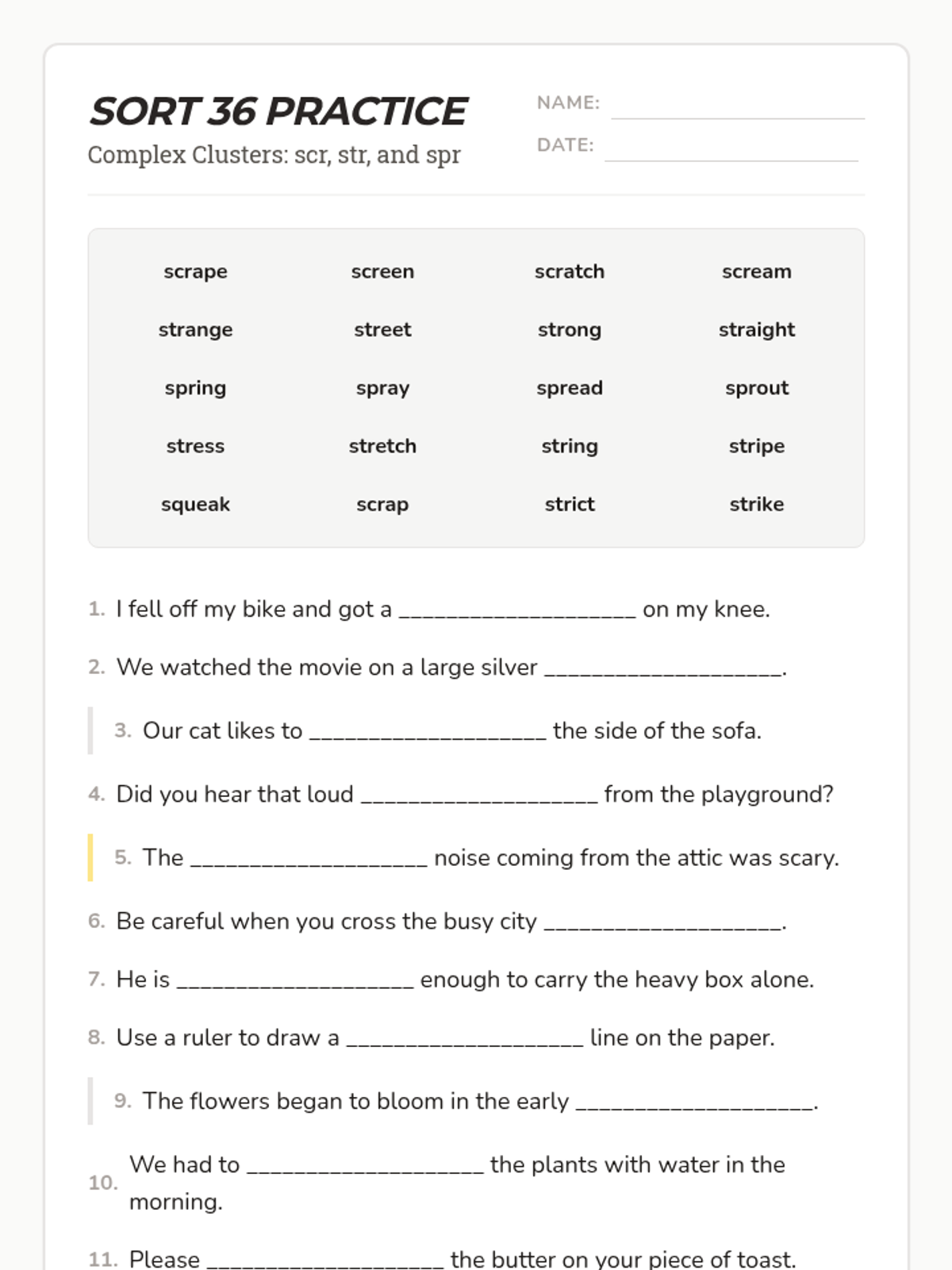
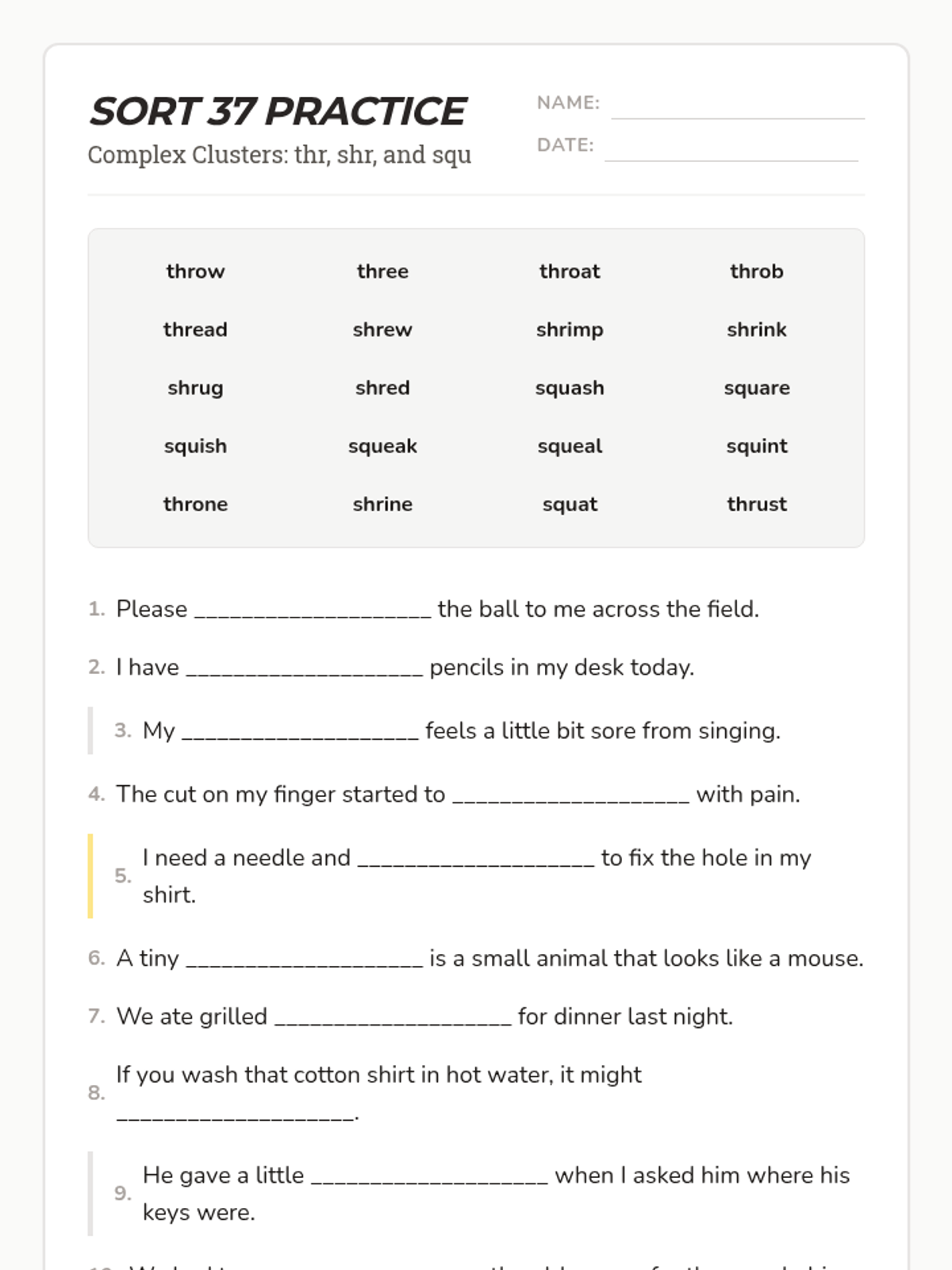
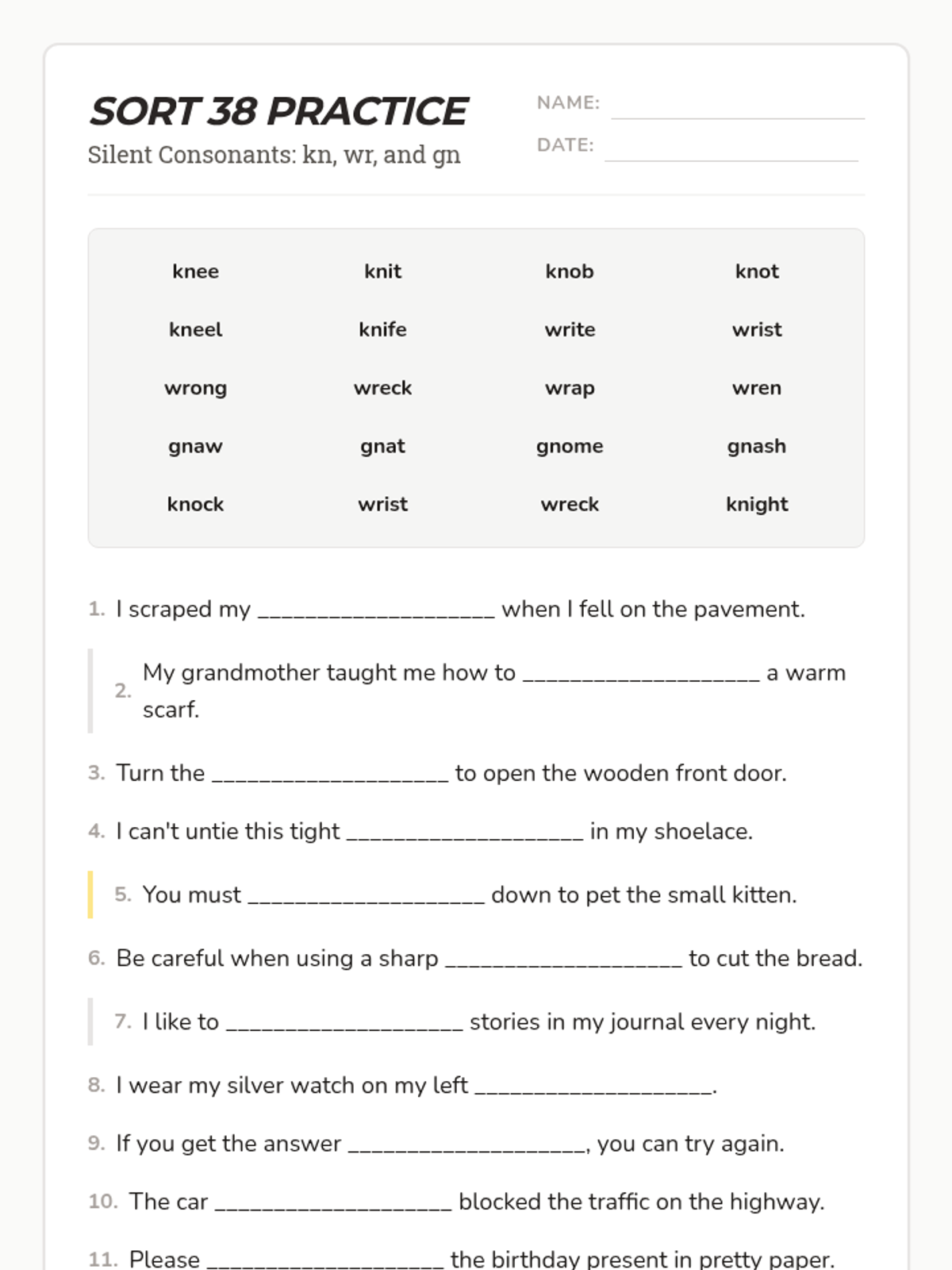
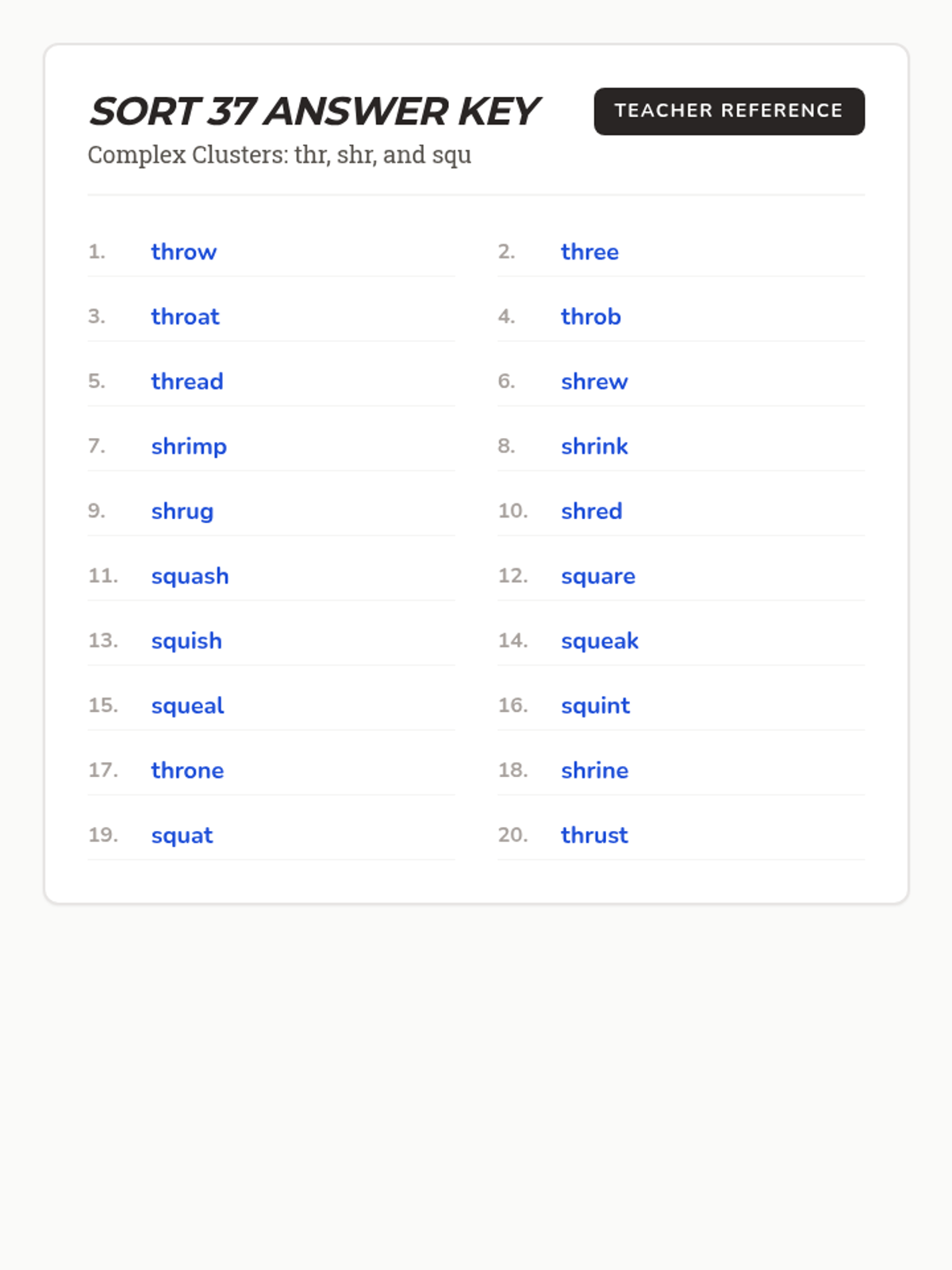
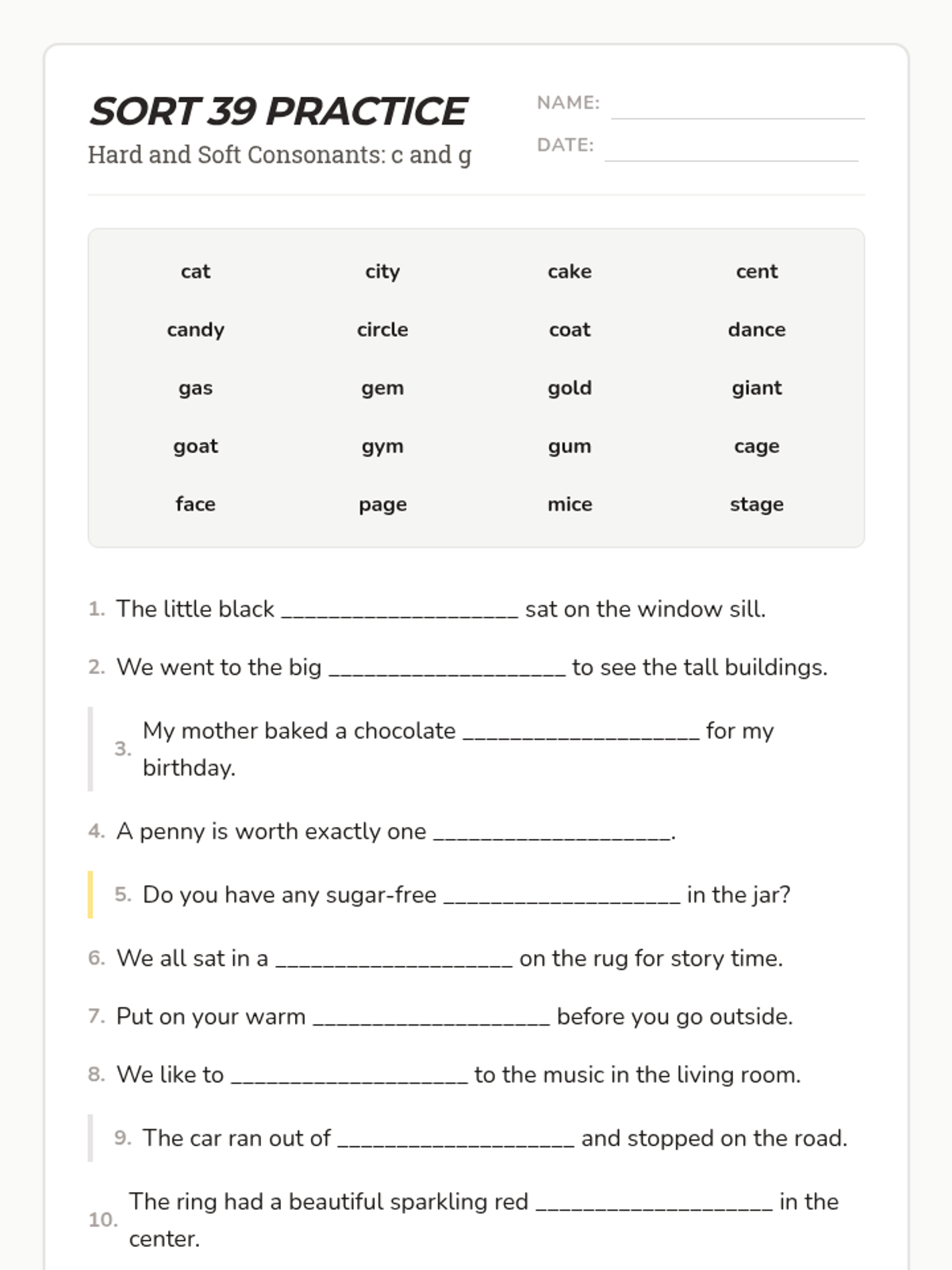
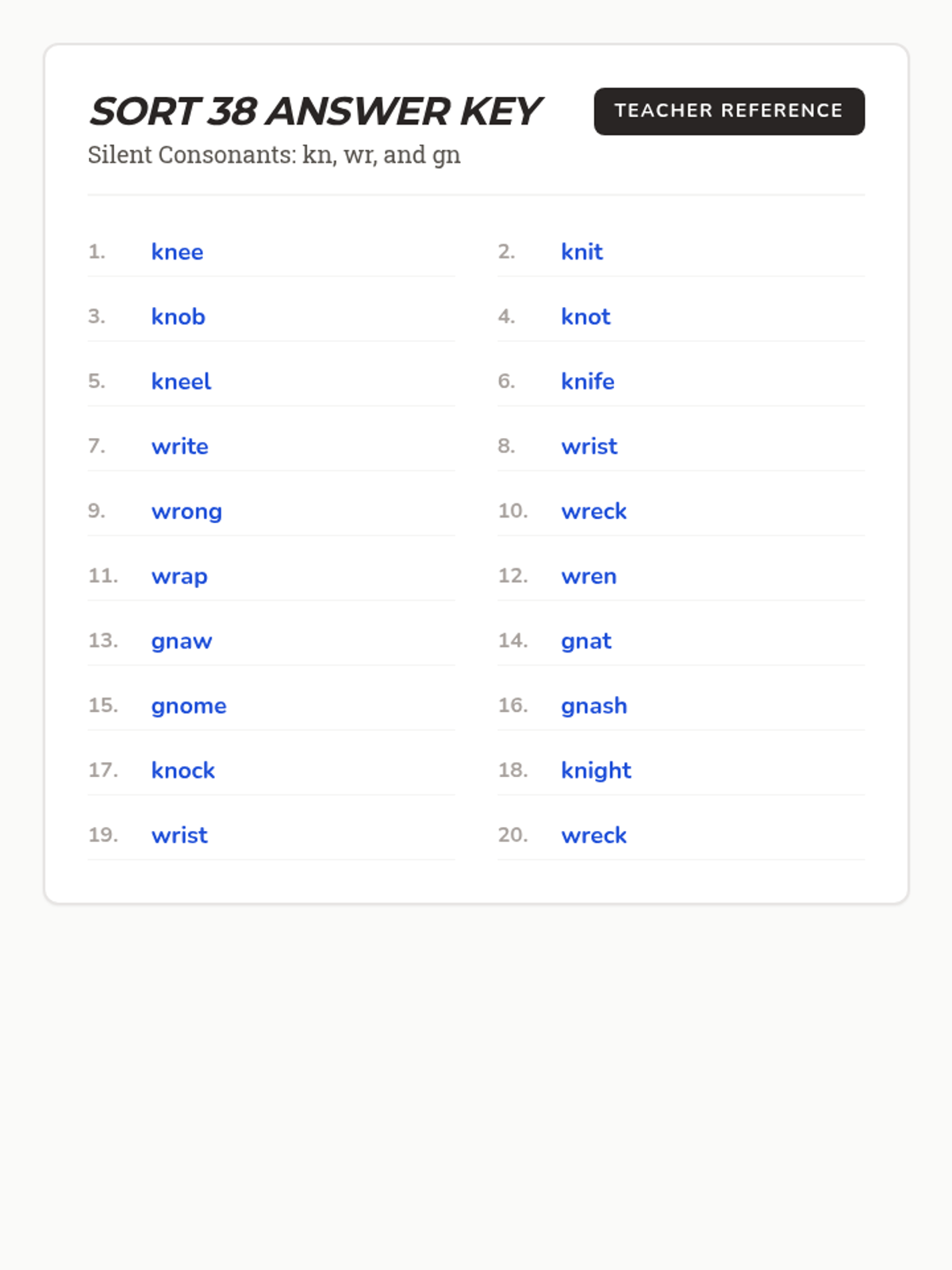
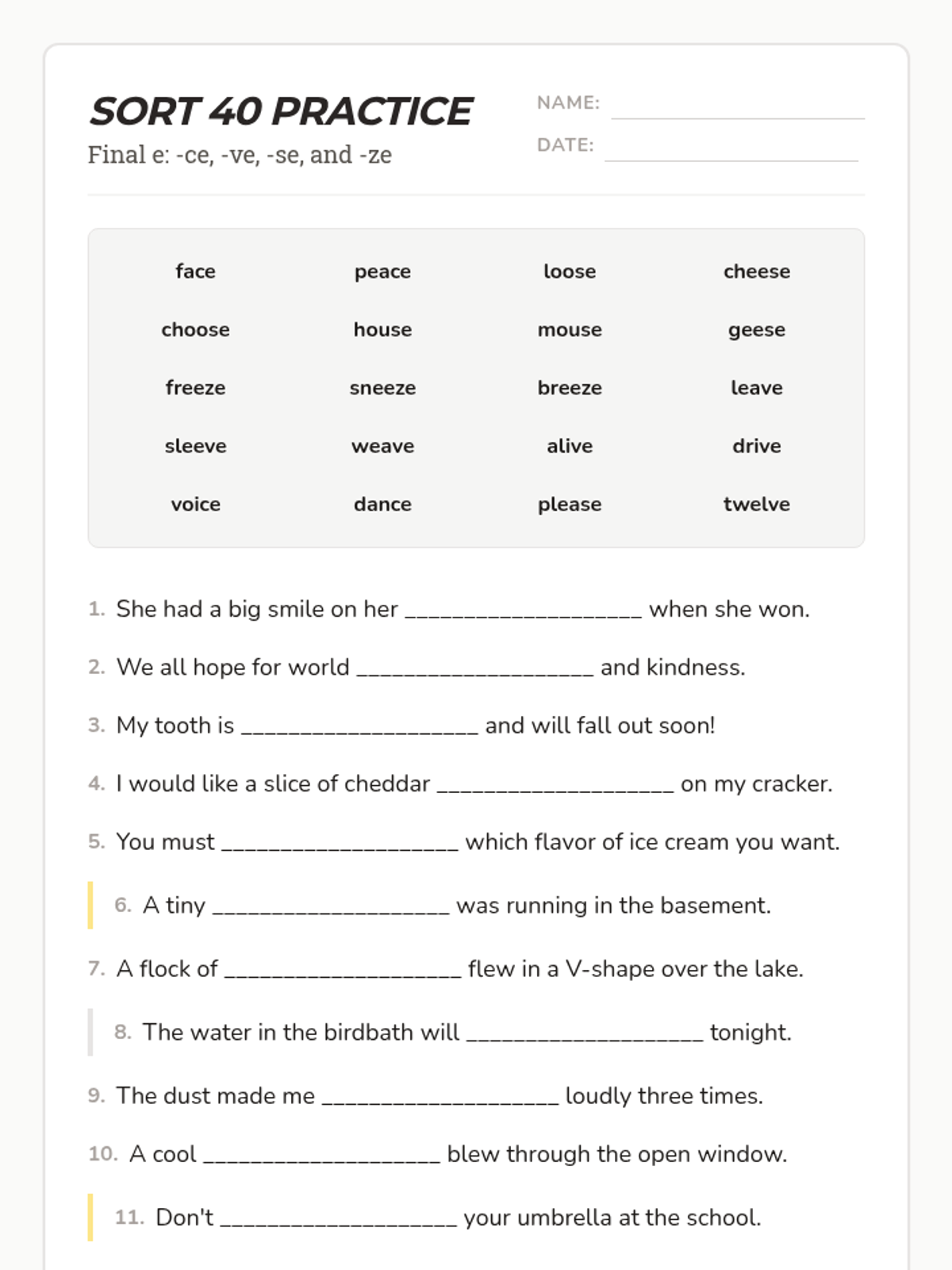
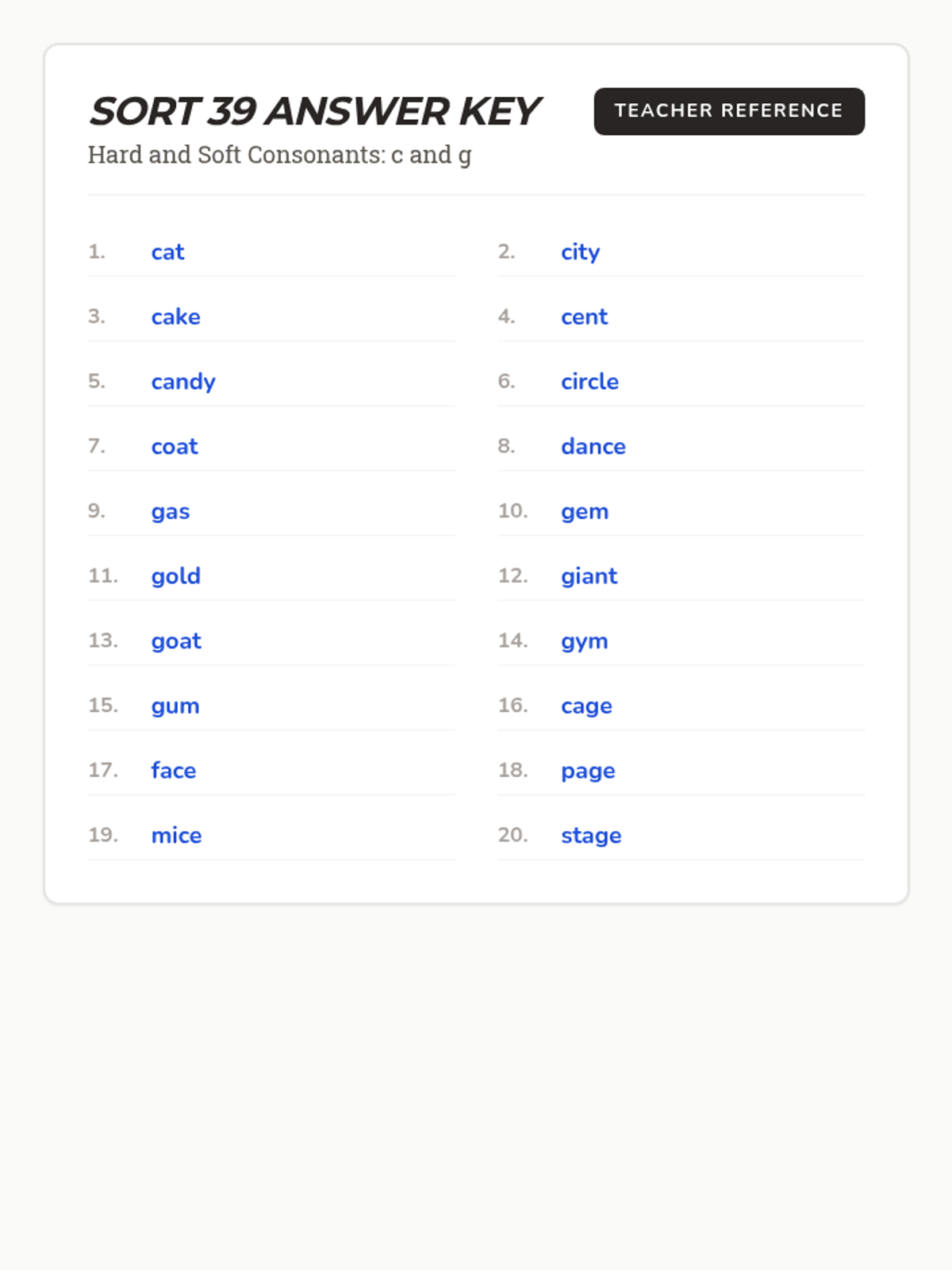
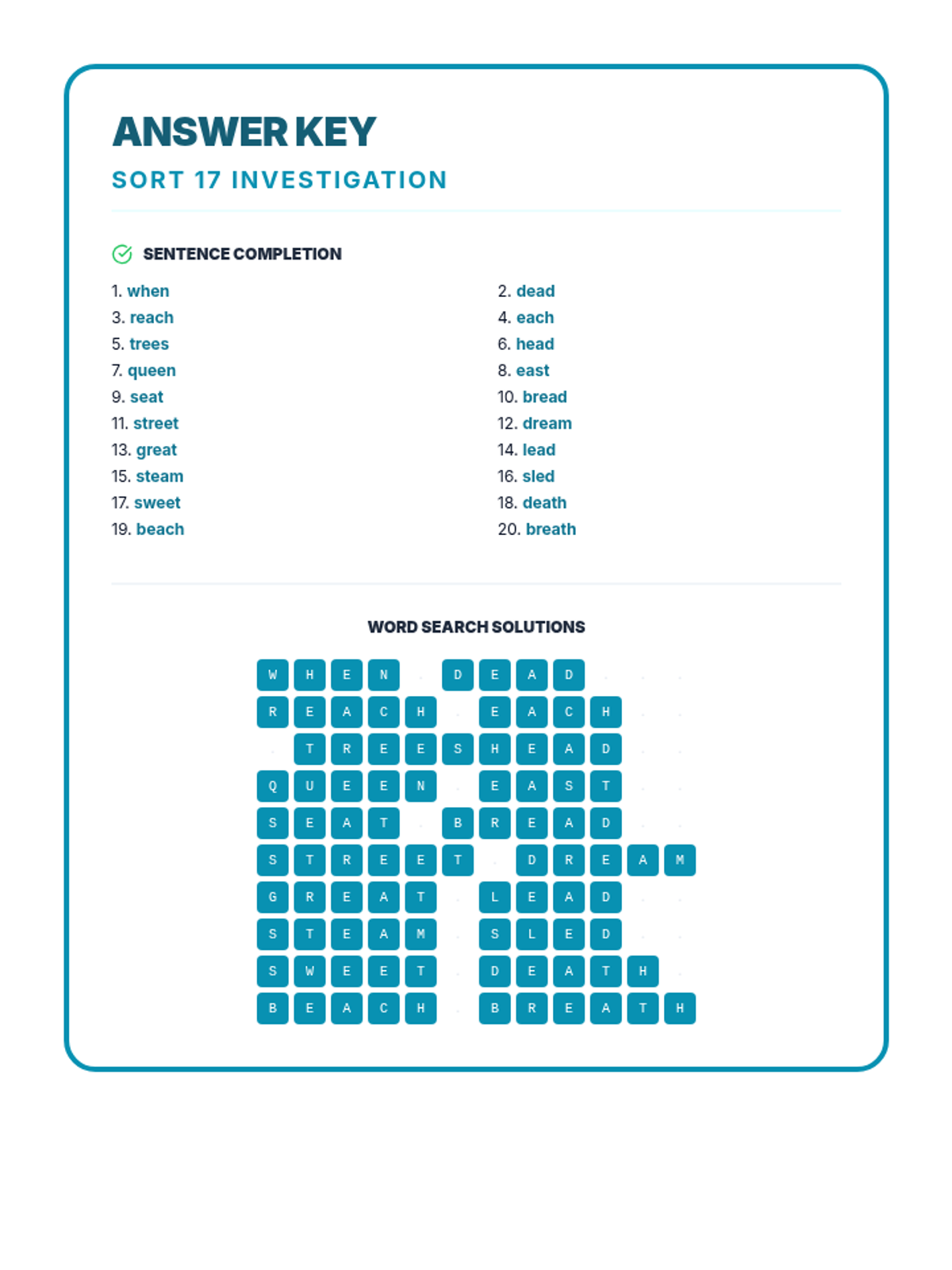
Focuses on complex consonant clusters including triple blends (scr, str, spr, thr, shr, squ), silent consonants (kn, wr, gn), and variations of hard/soft c and g. Students will practice these intricate spelling patterns through context.
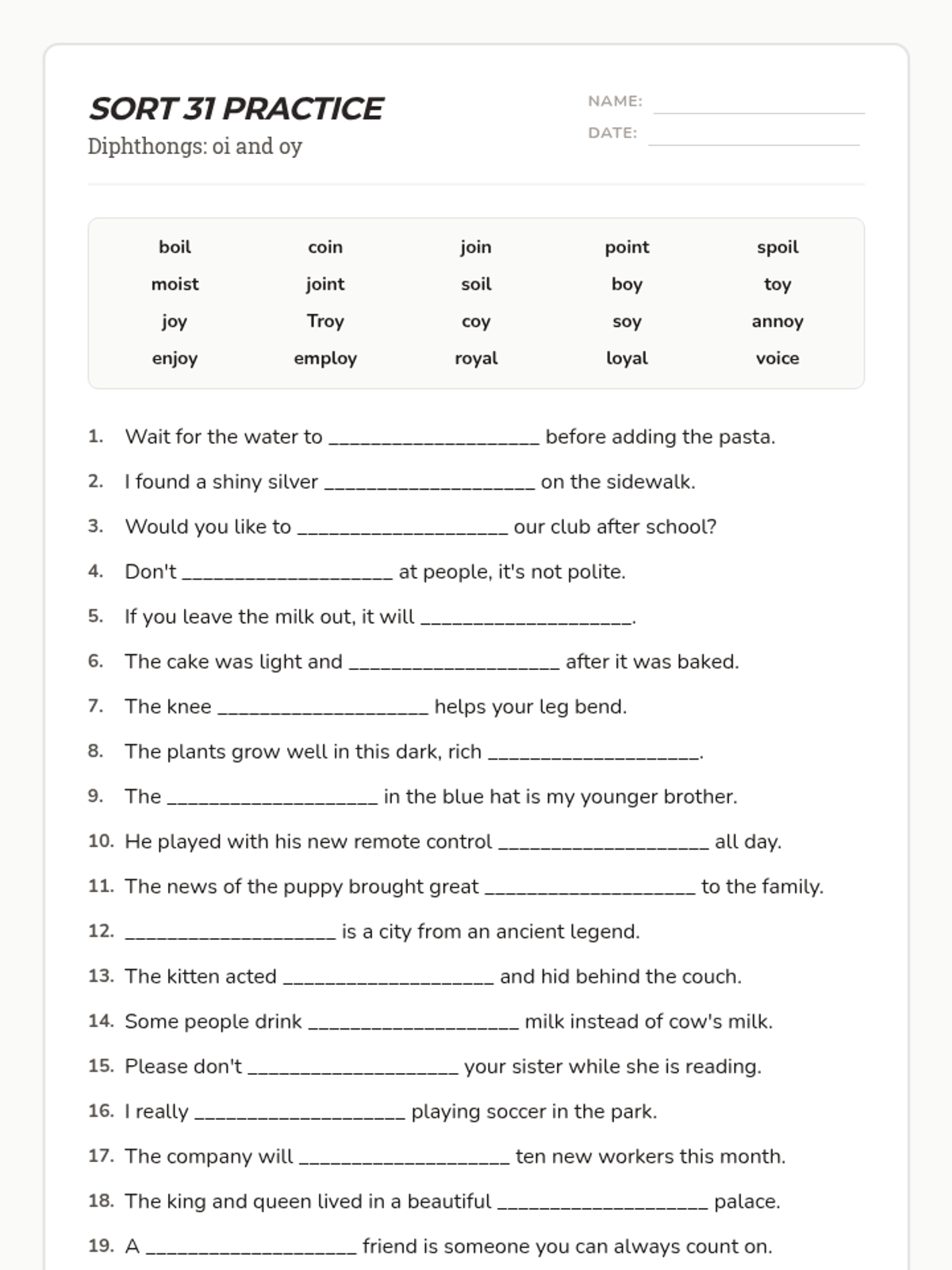
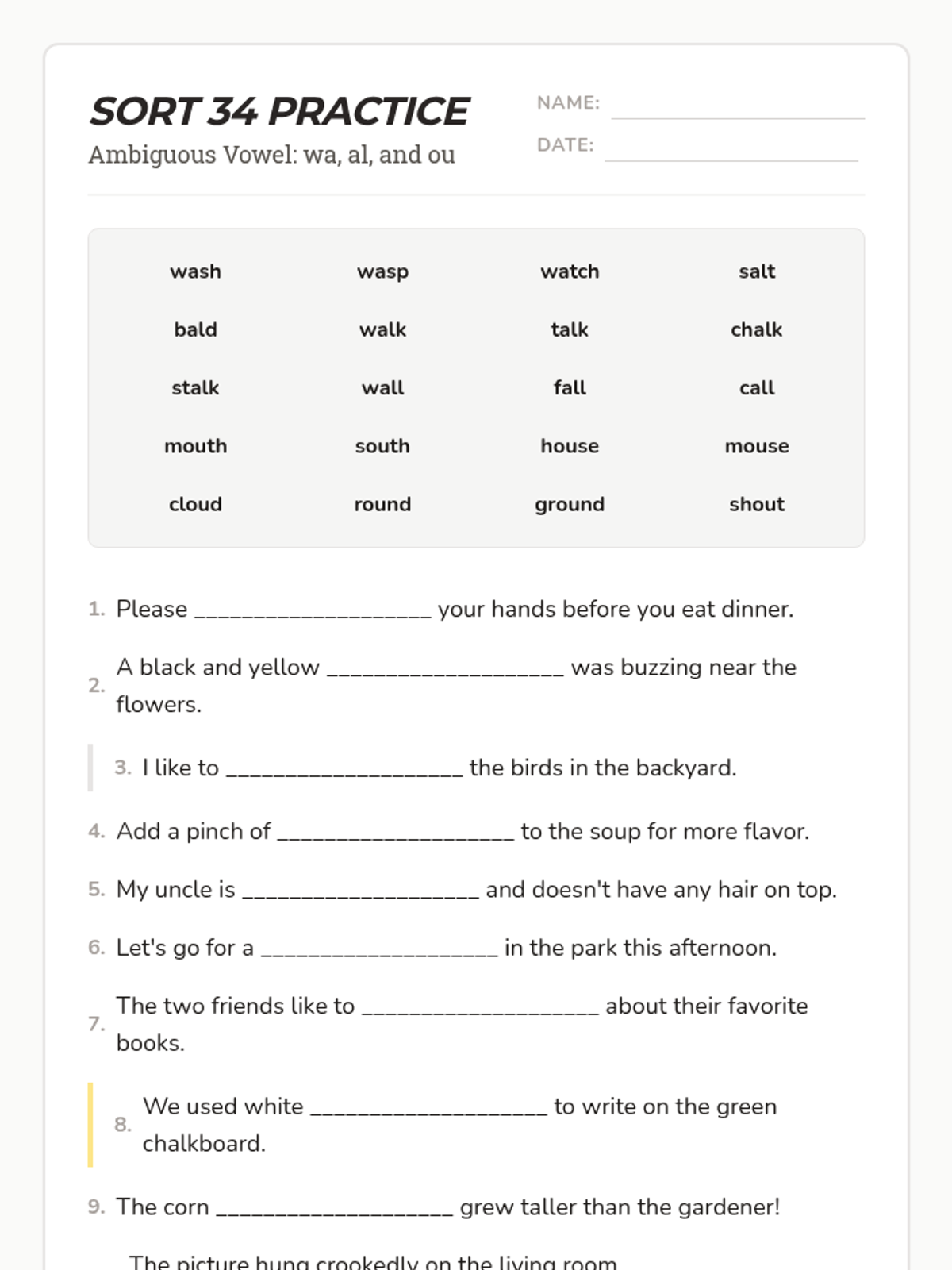
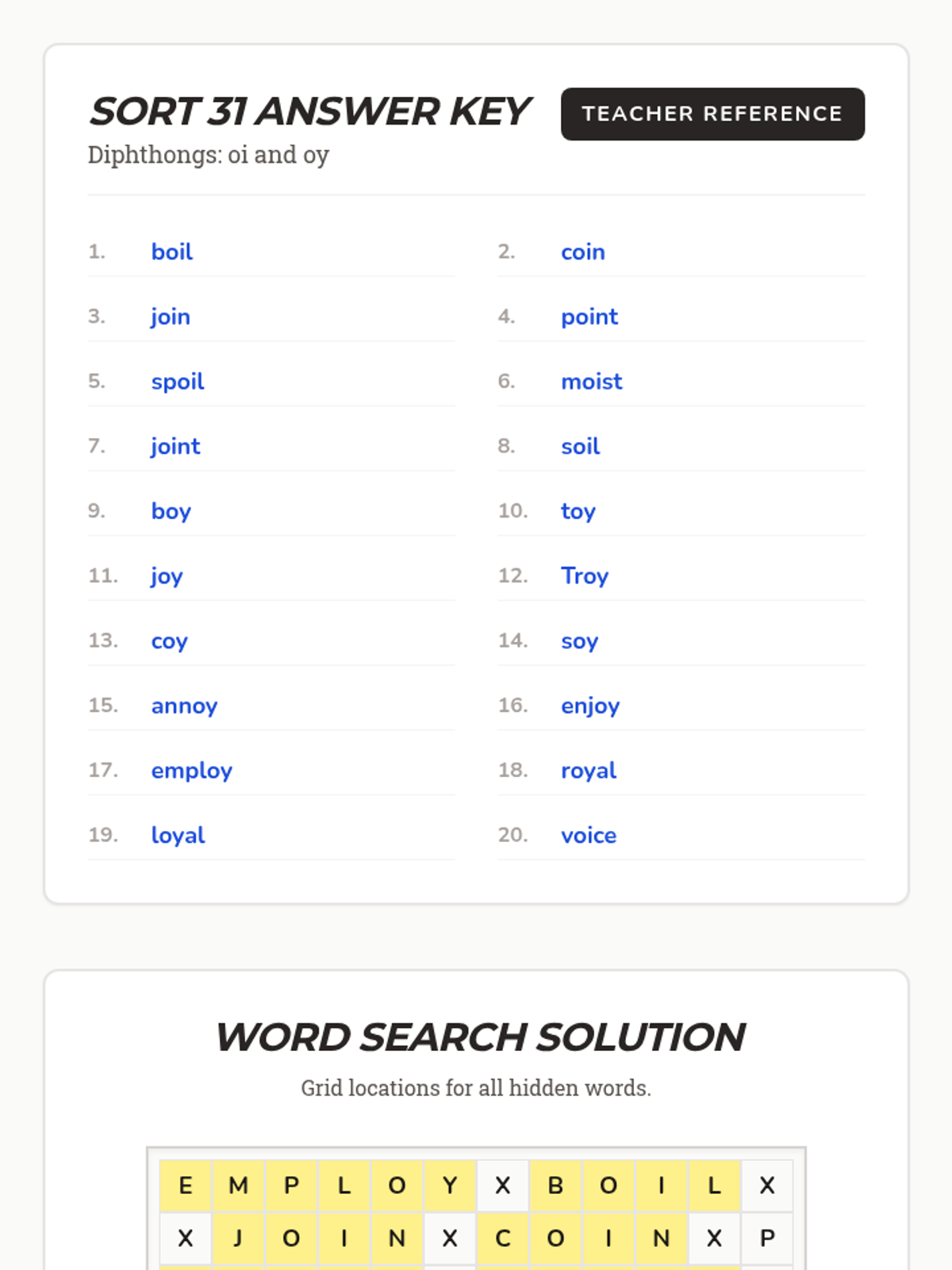
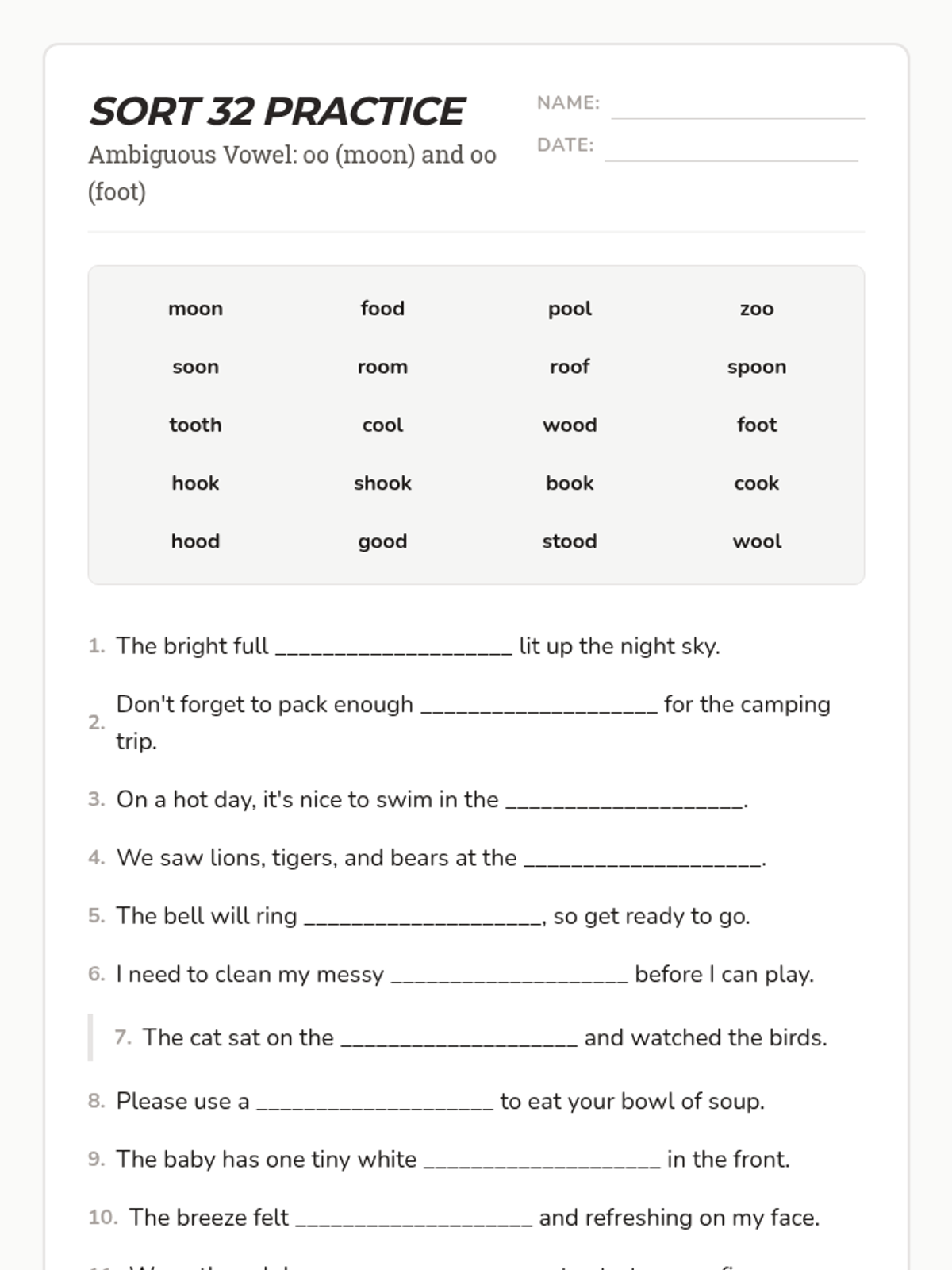
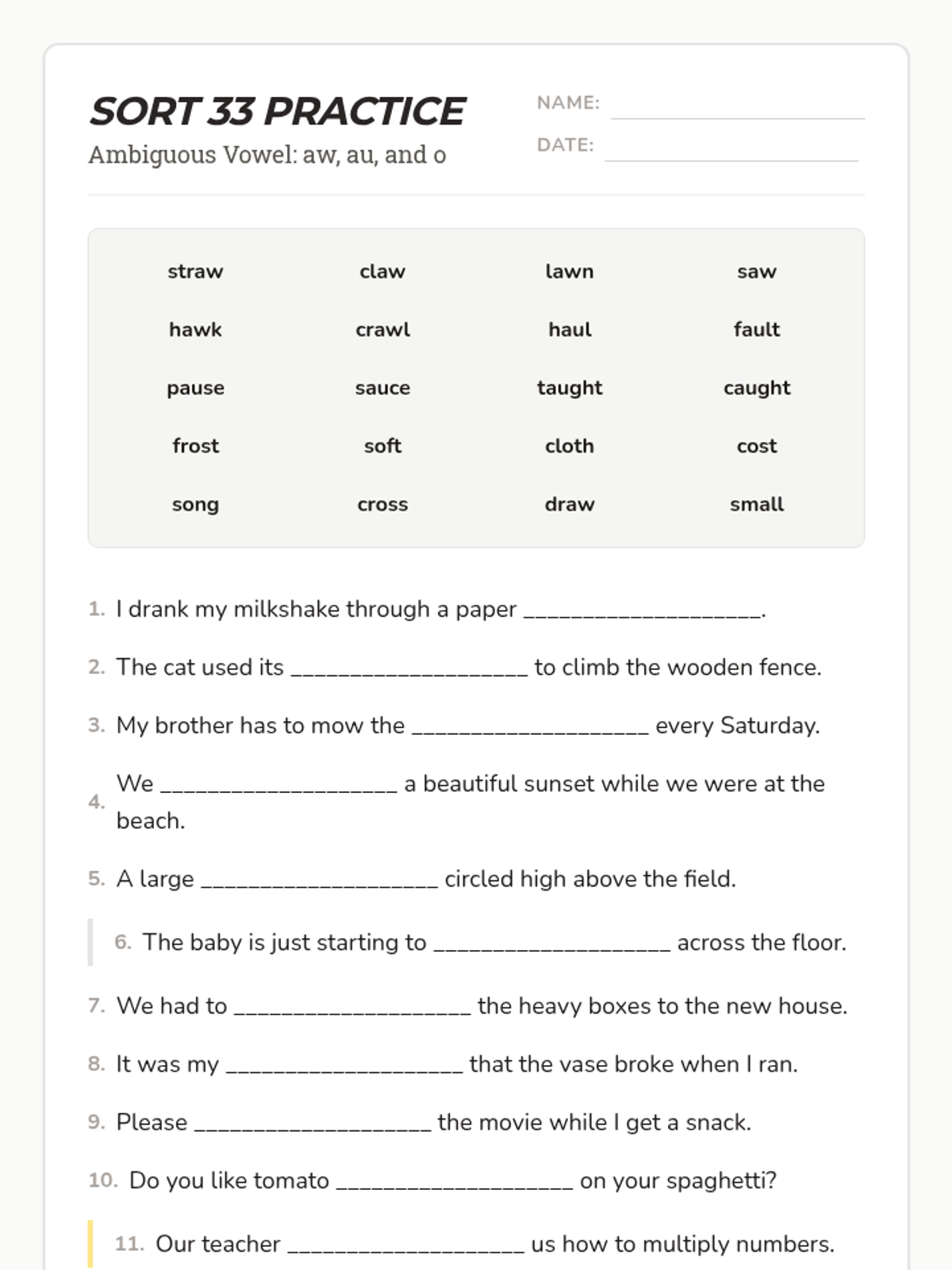
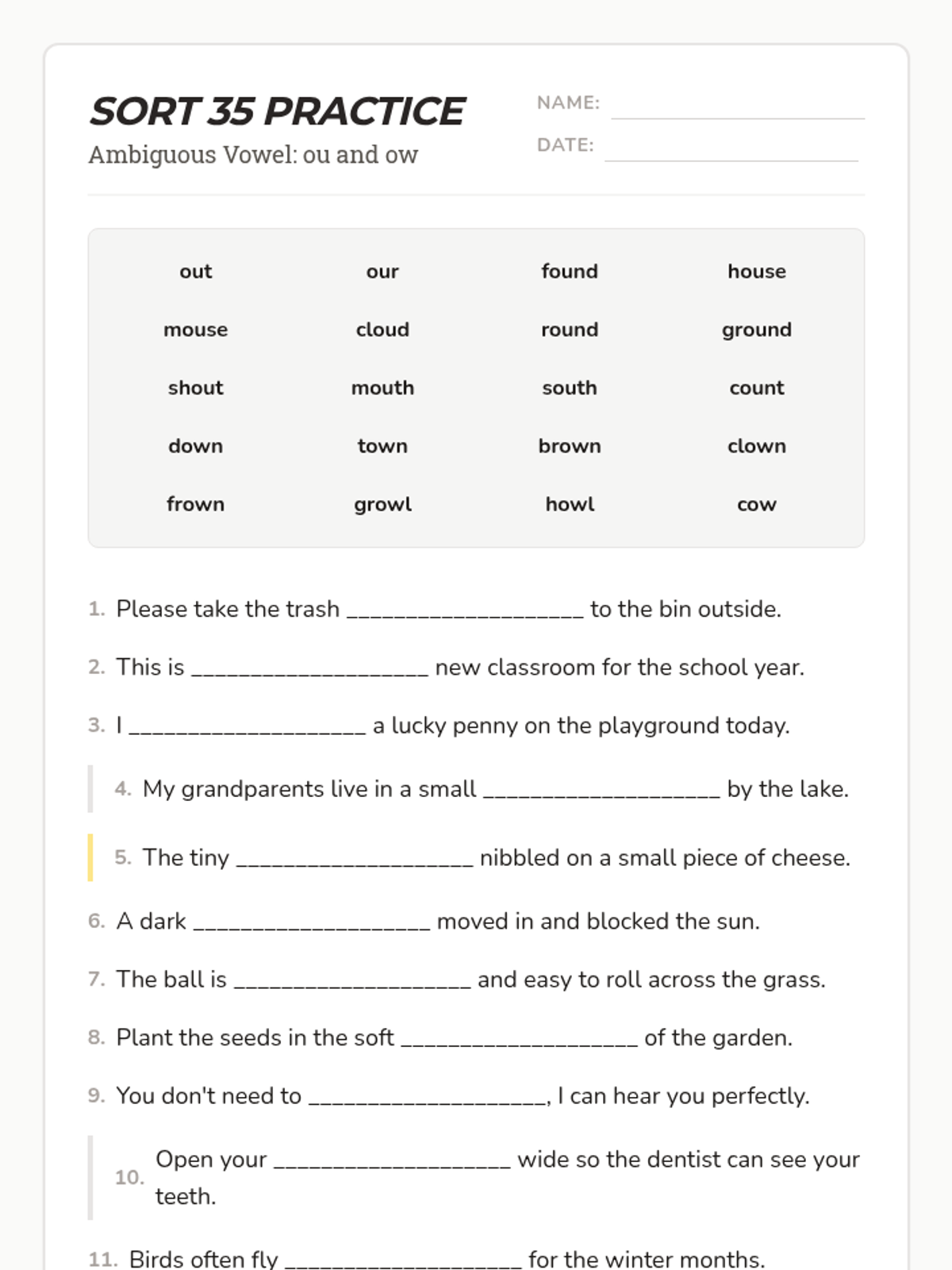
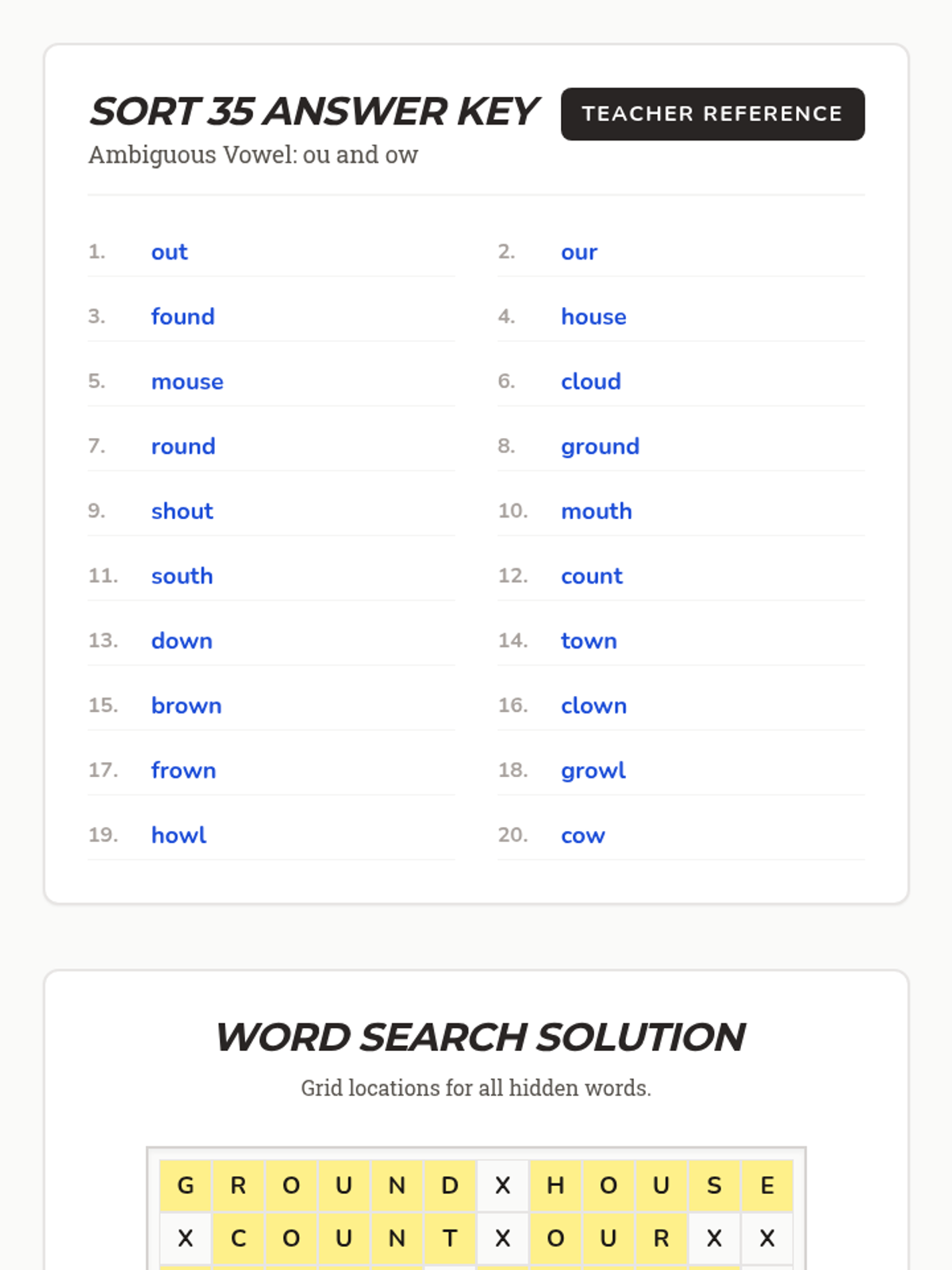
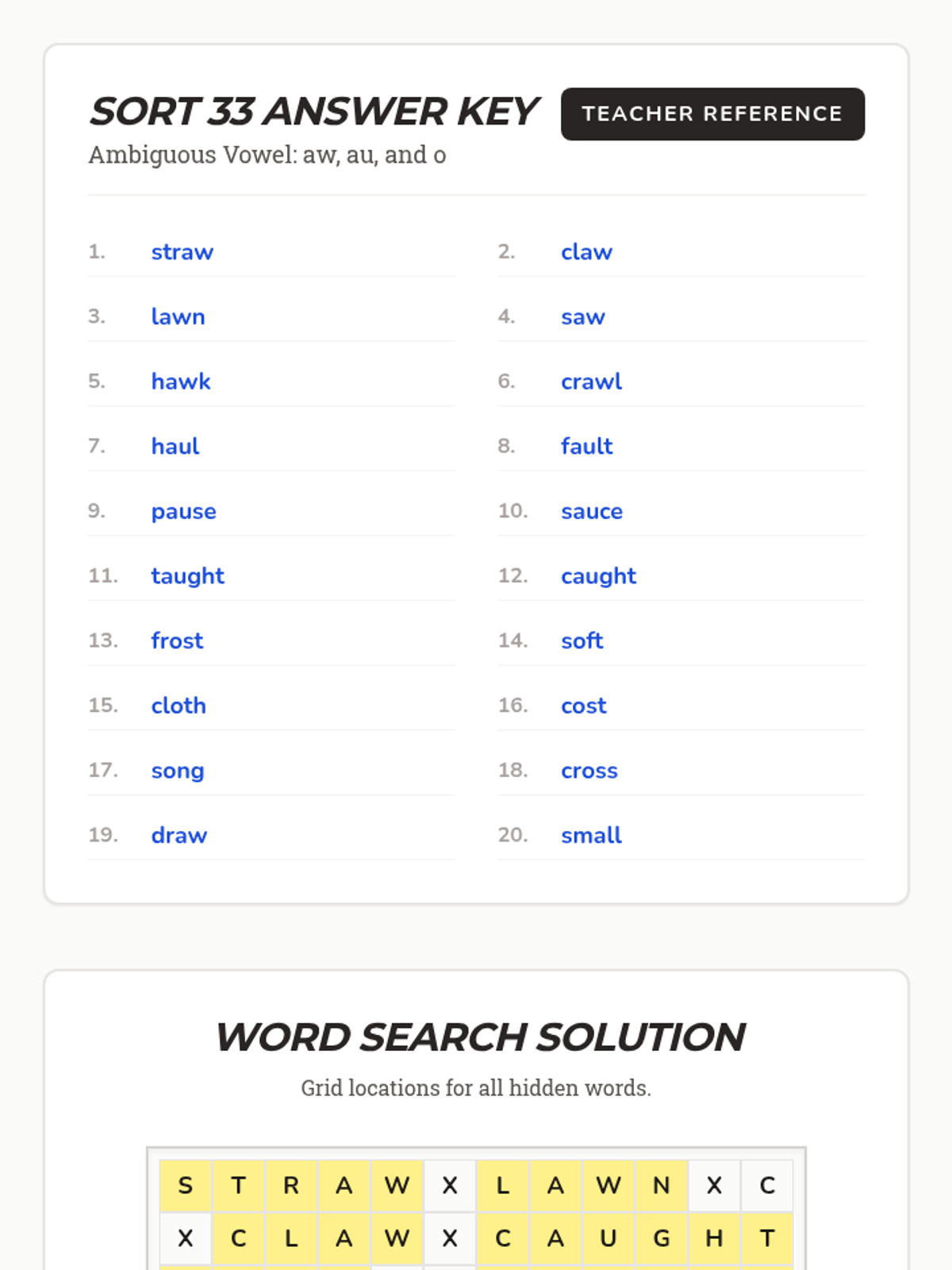
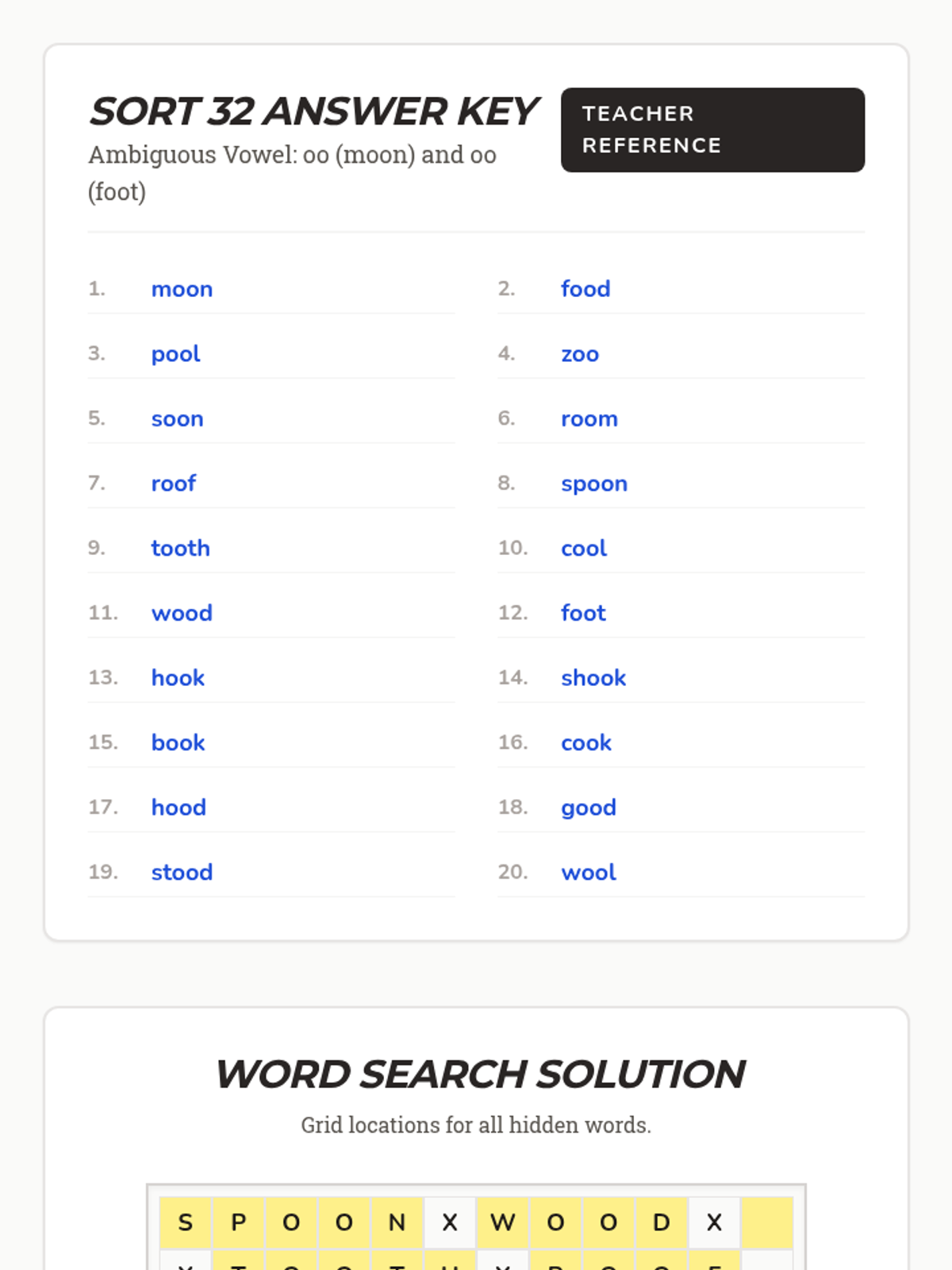
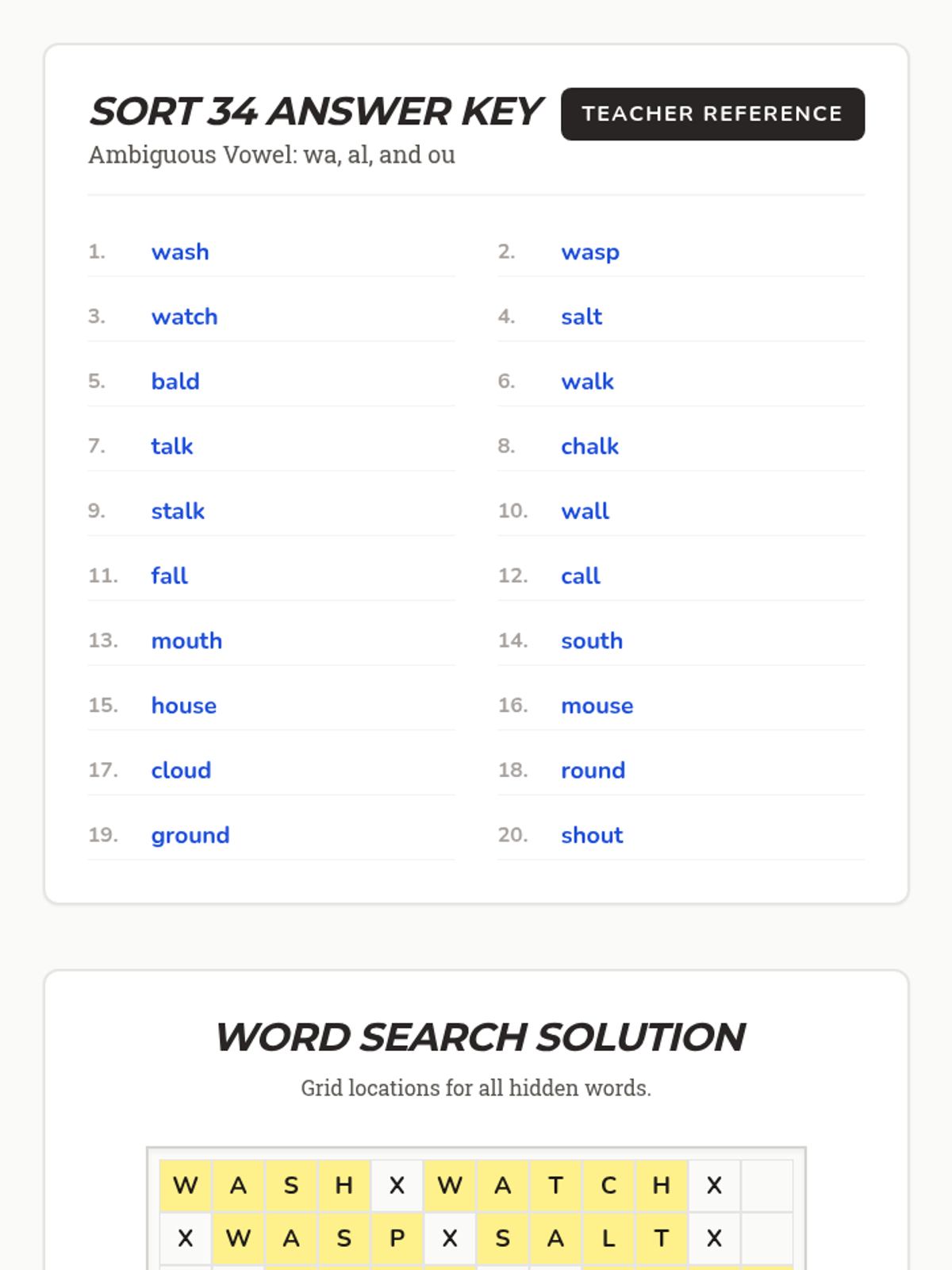
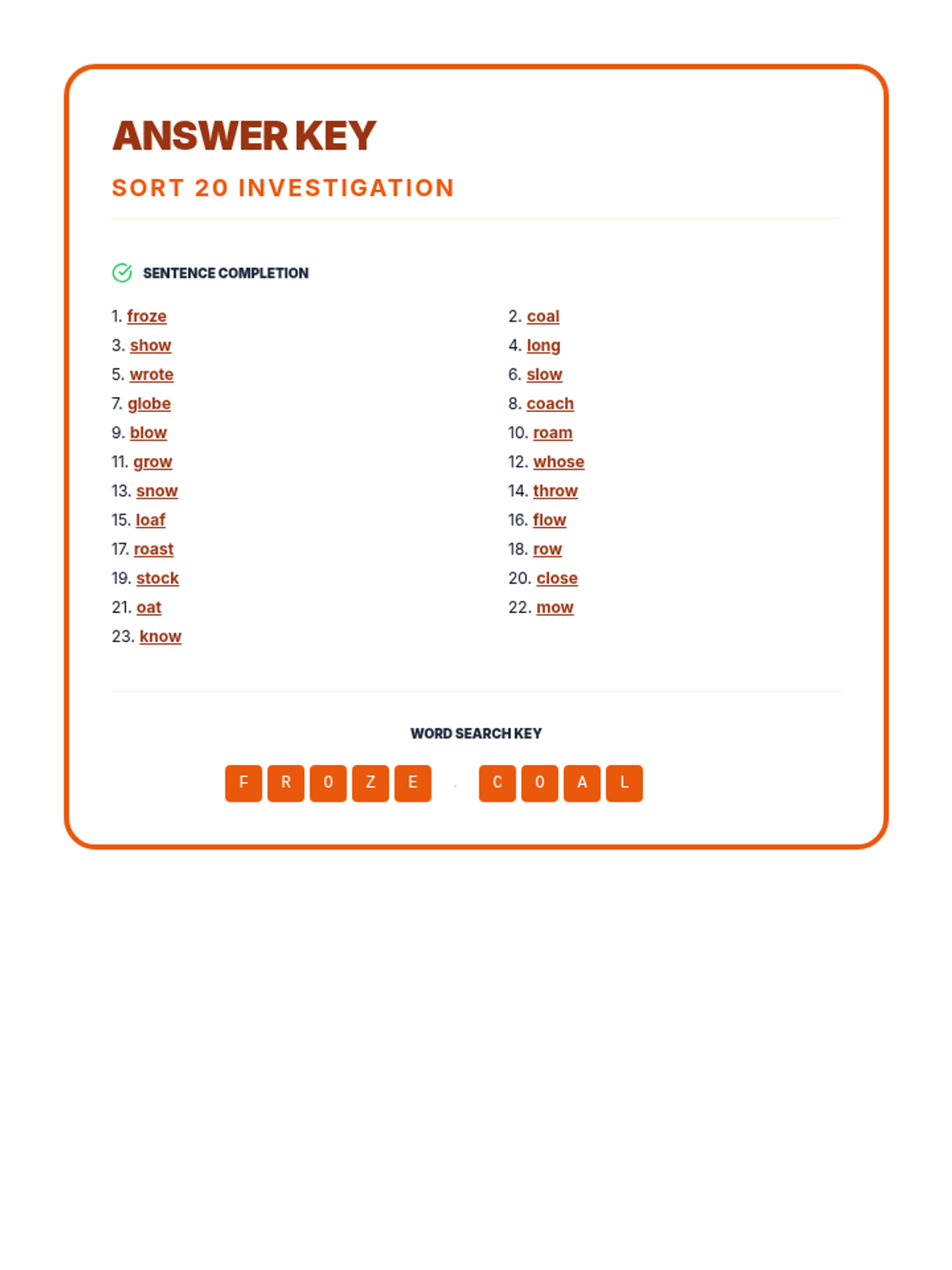
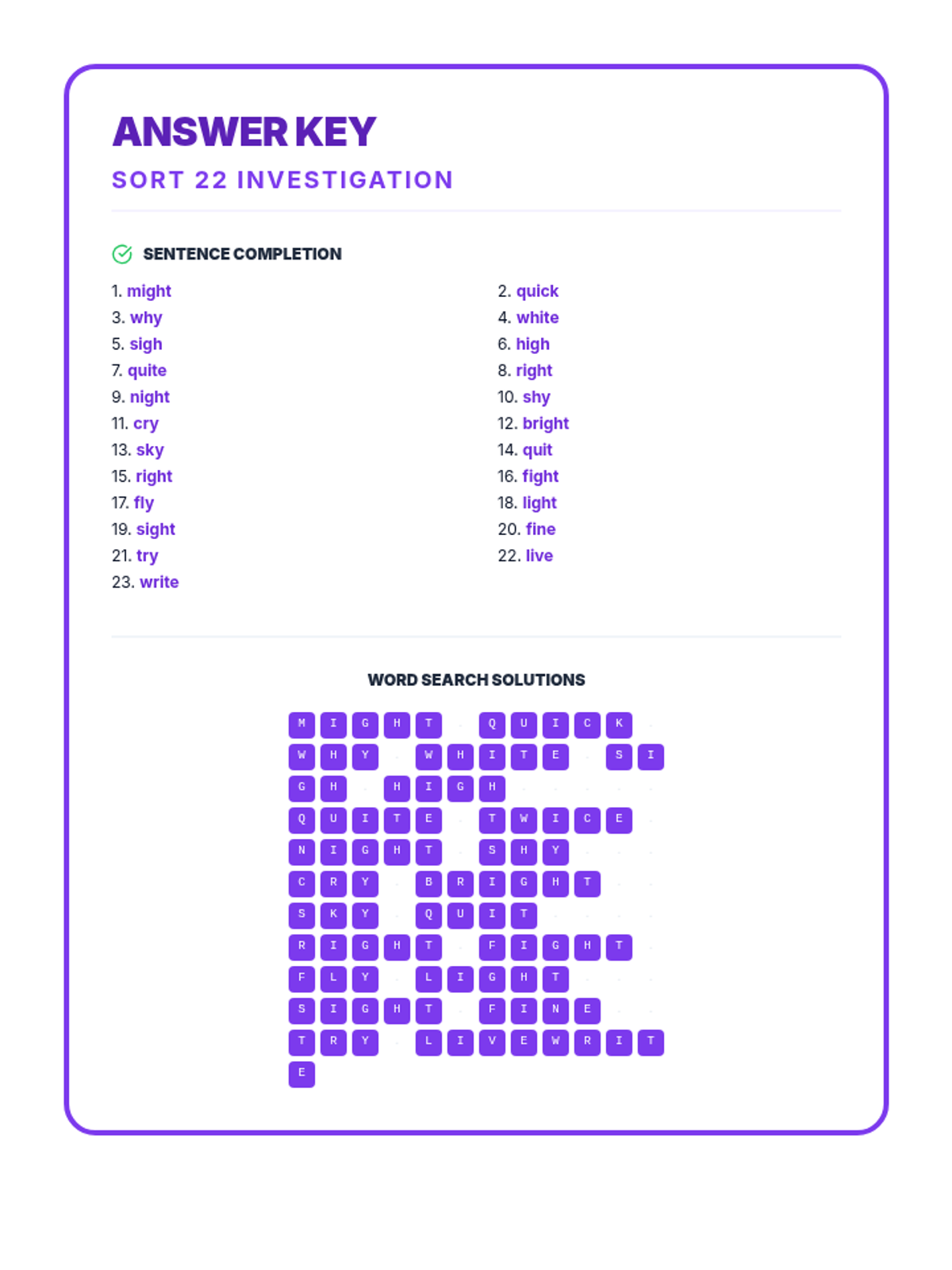
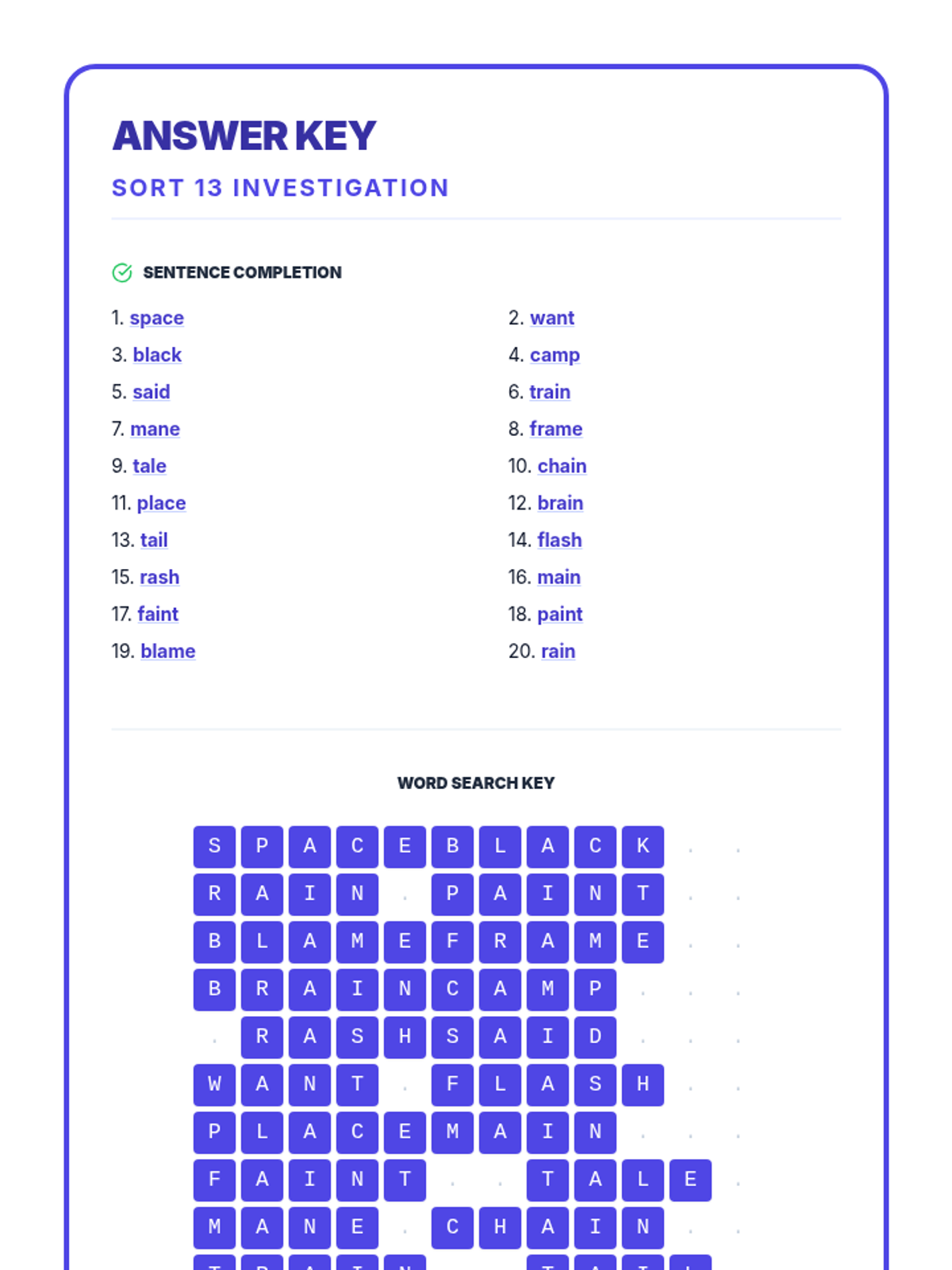
This lesson explores diphthongs and ambiguous vowel patterns including oi, oy, oo, aw, au, wa, al, and ou/ow. Students will practice identifying these sounds through context and word searches.
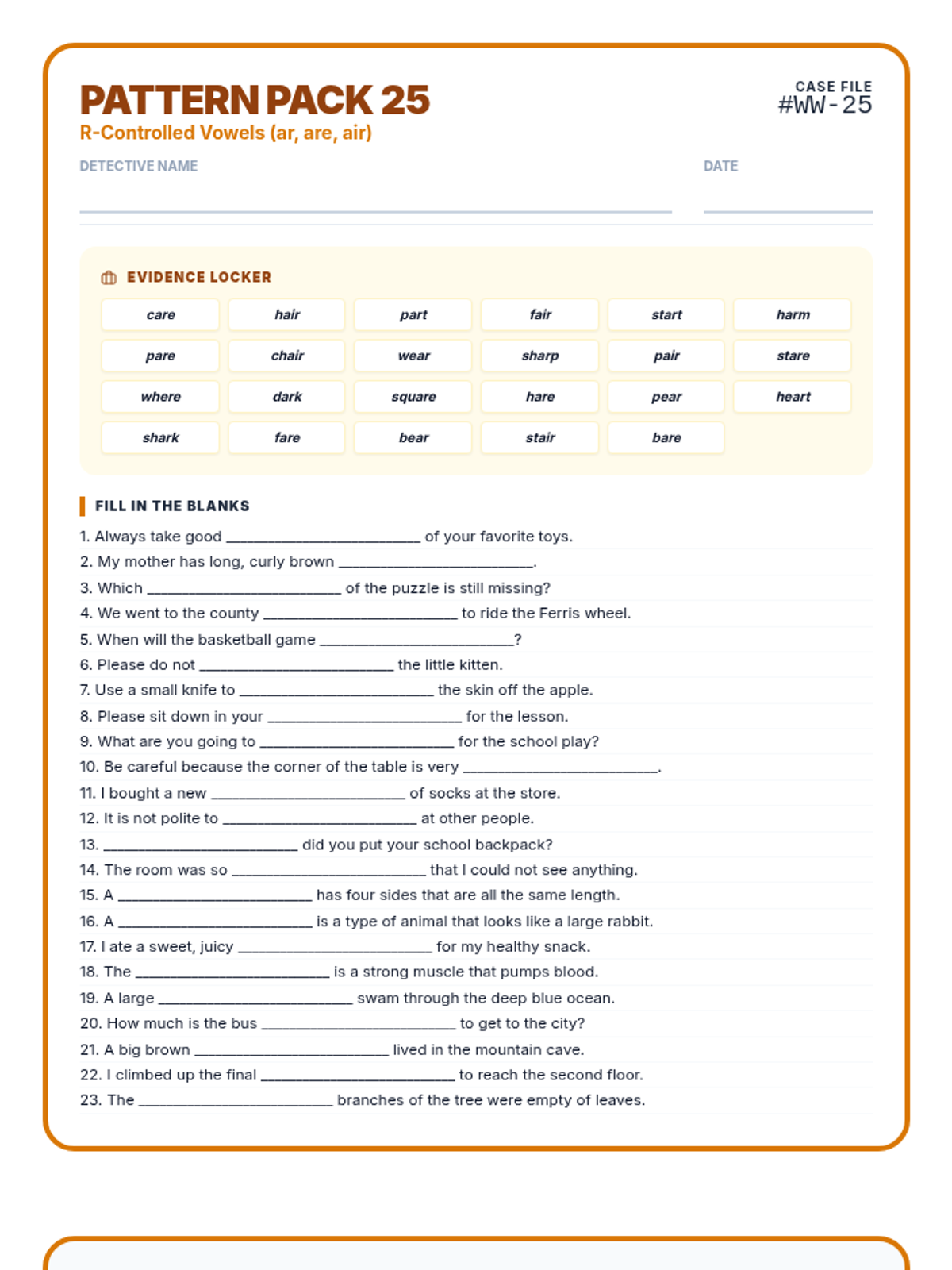
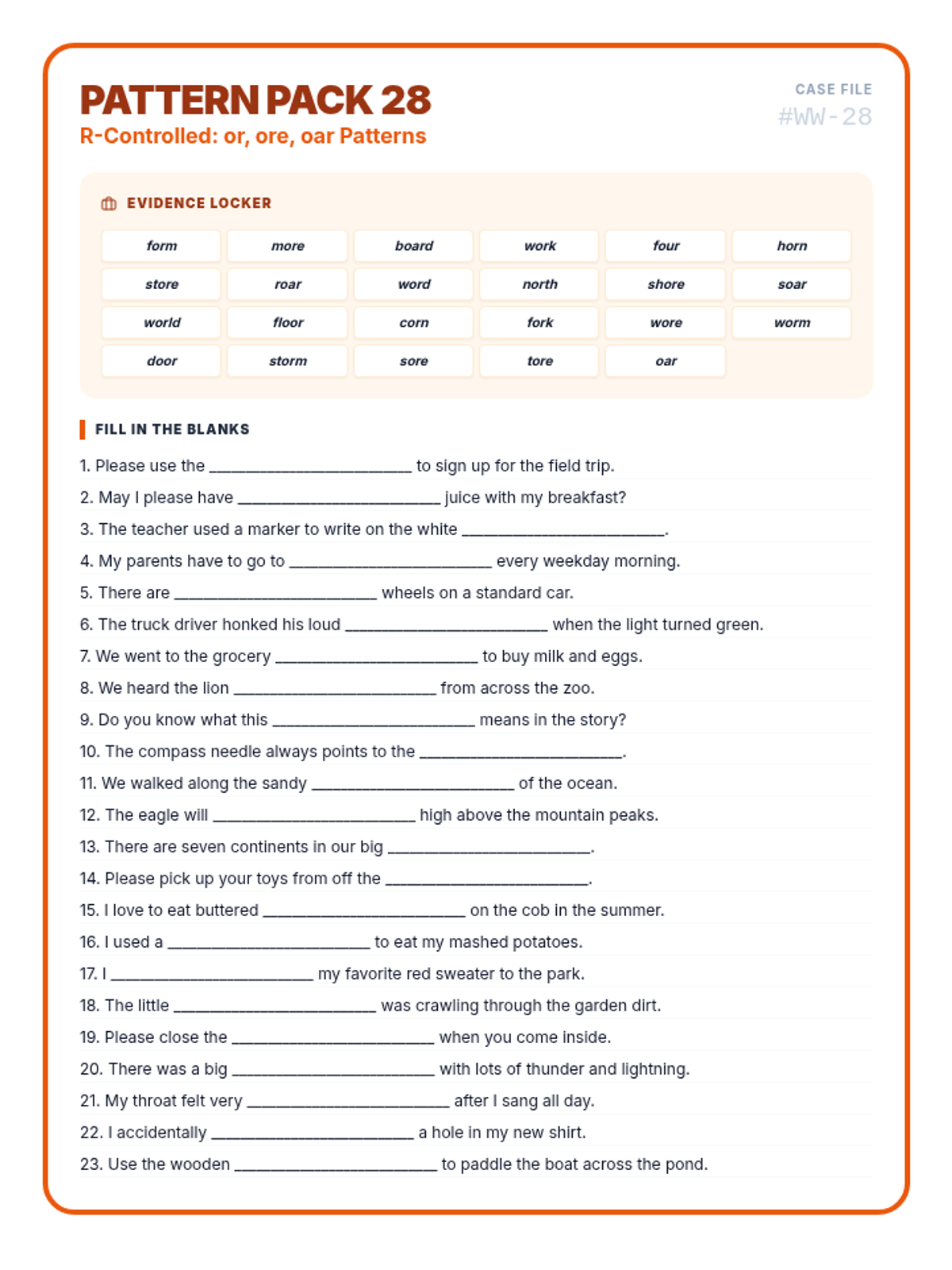
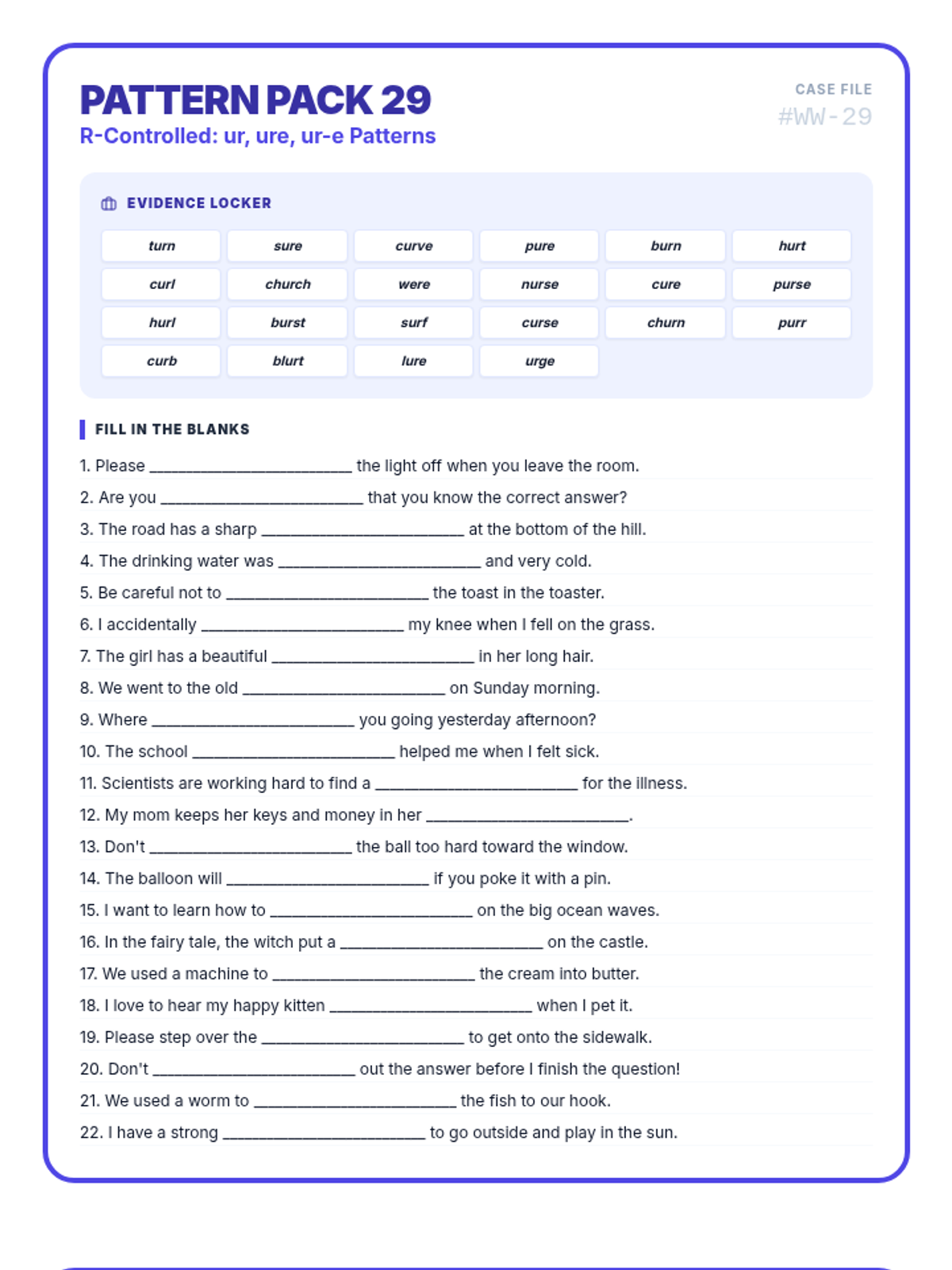
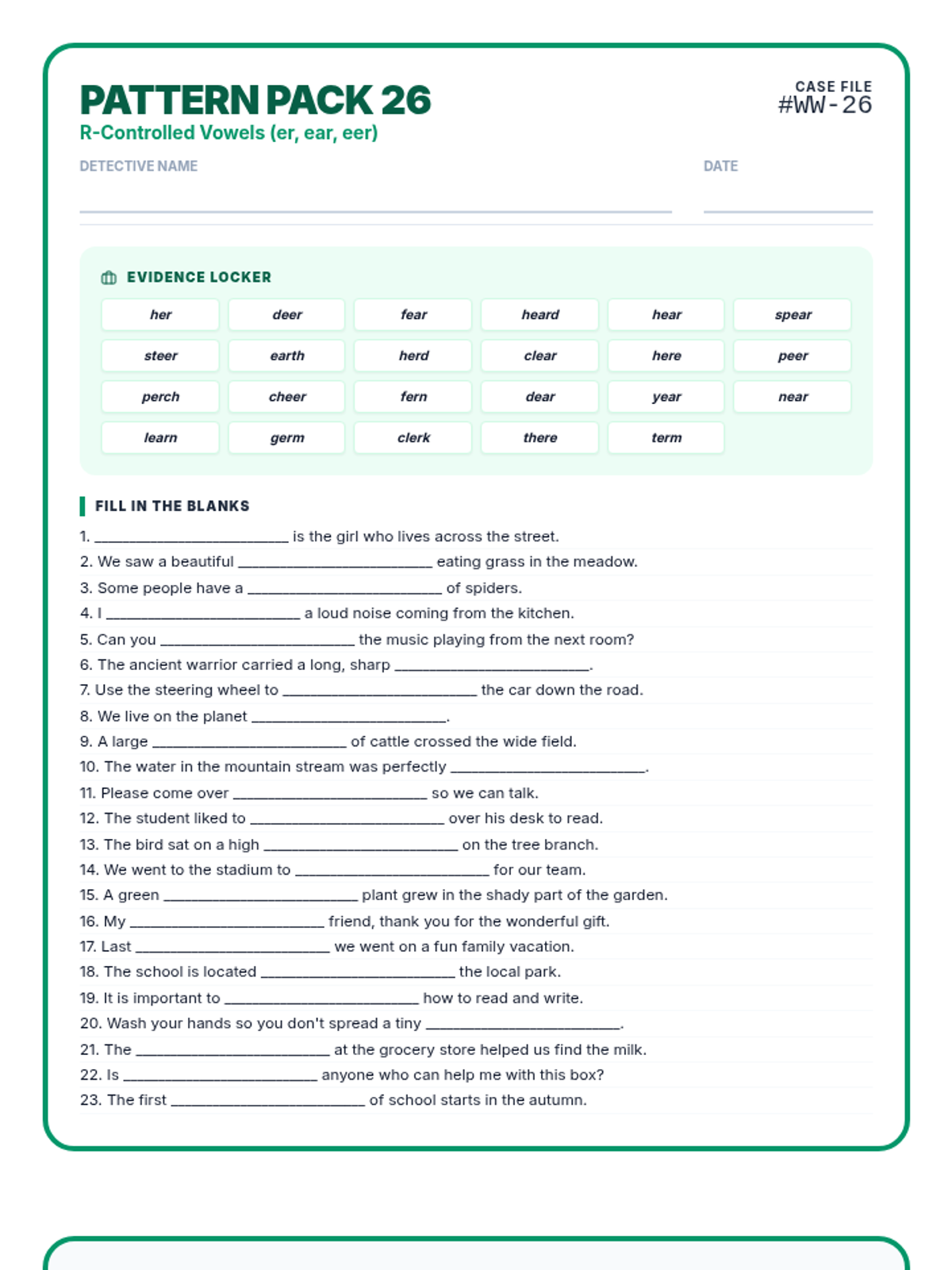
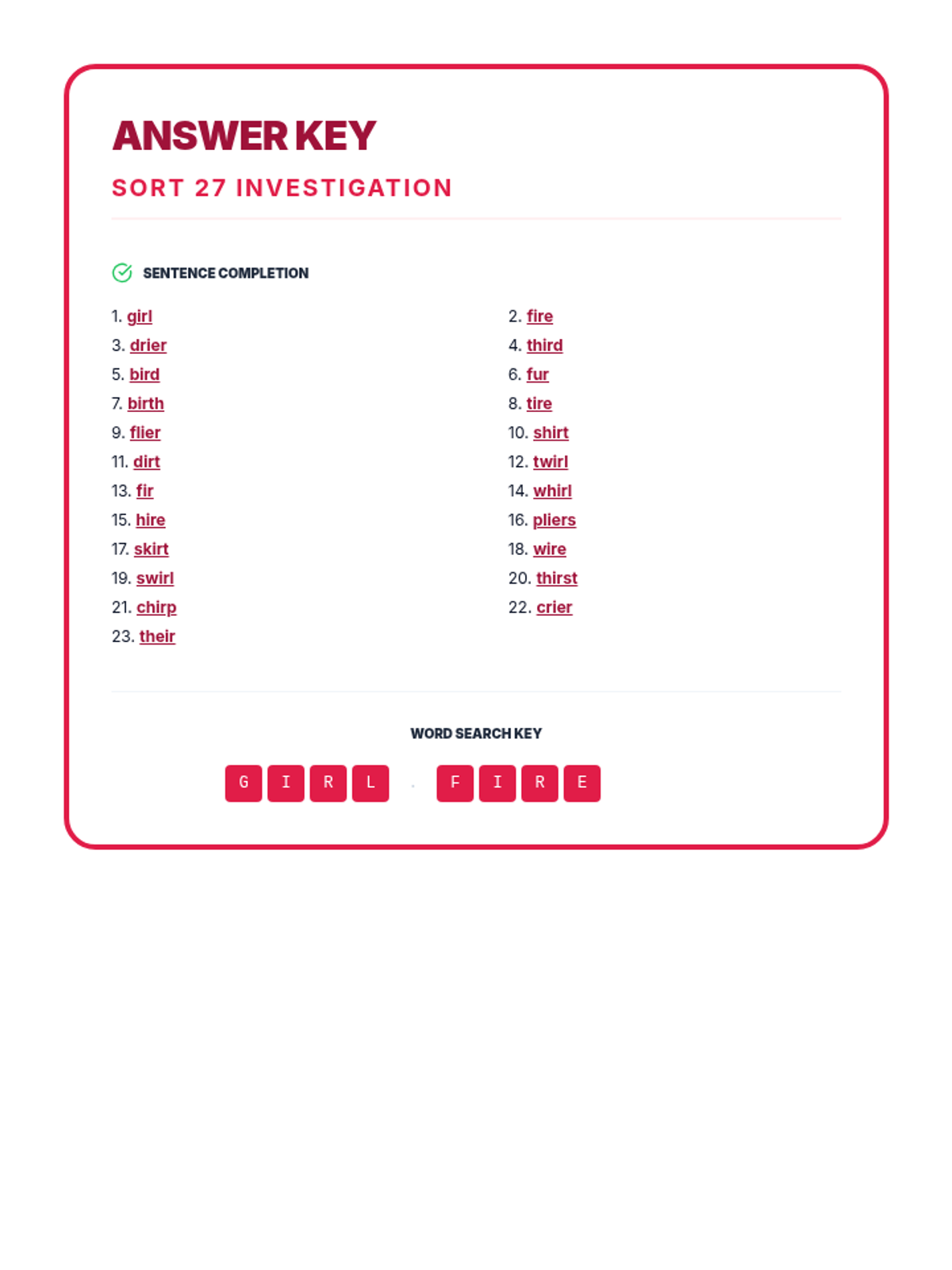
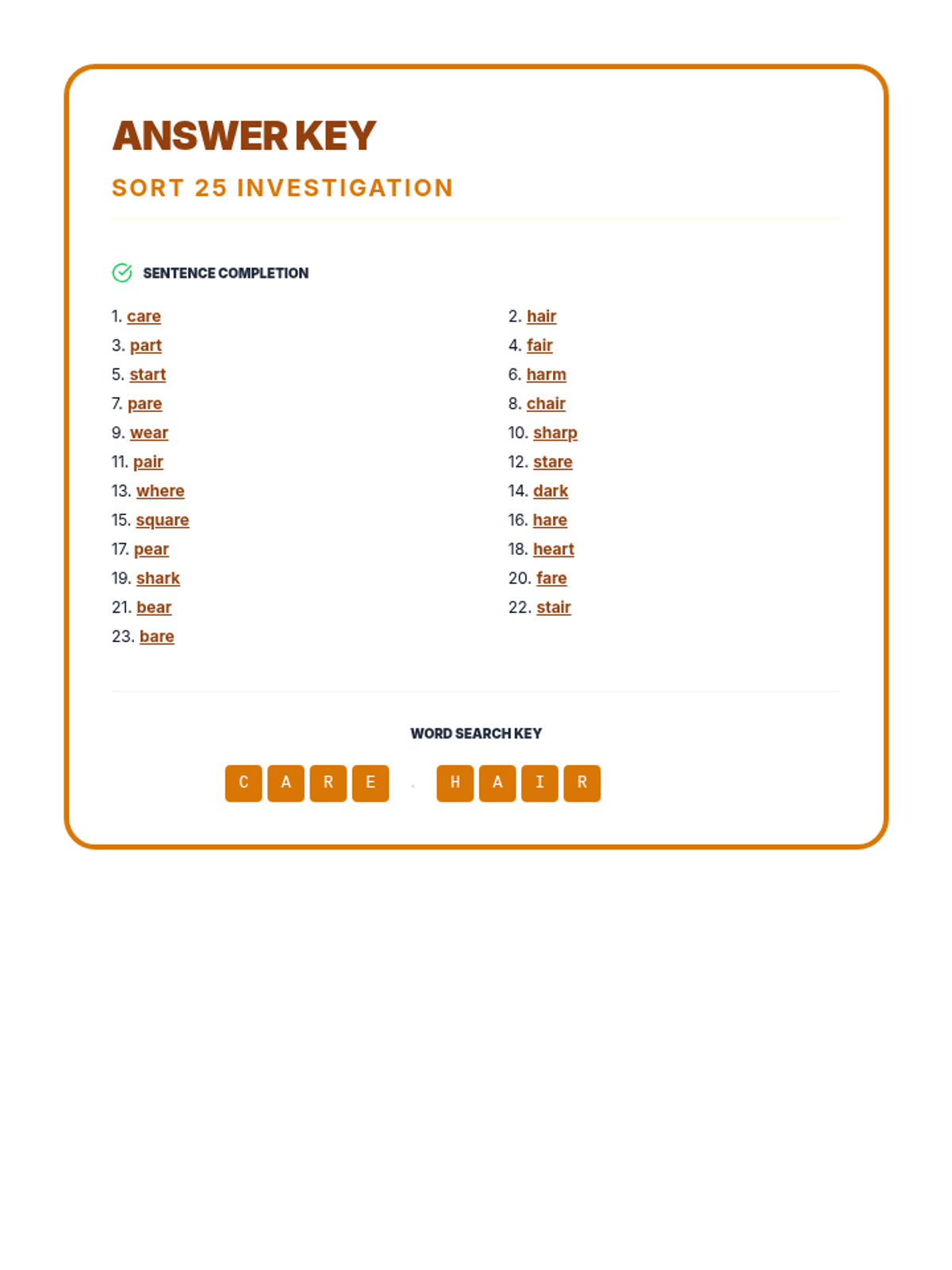
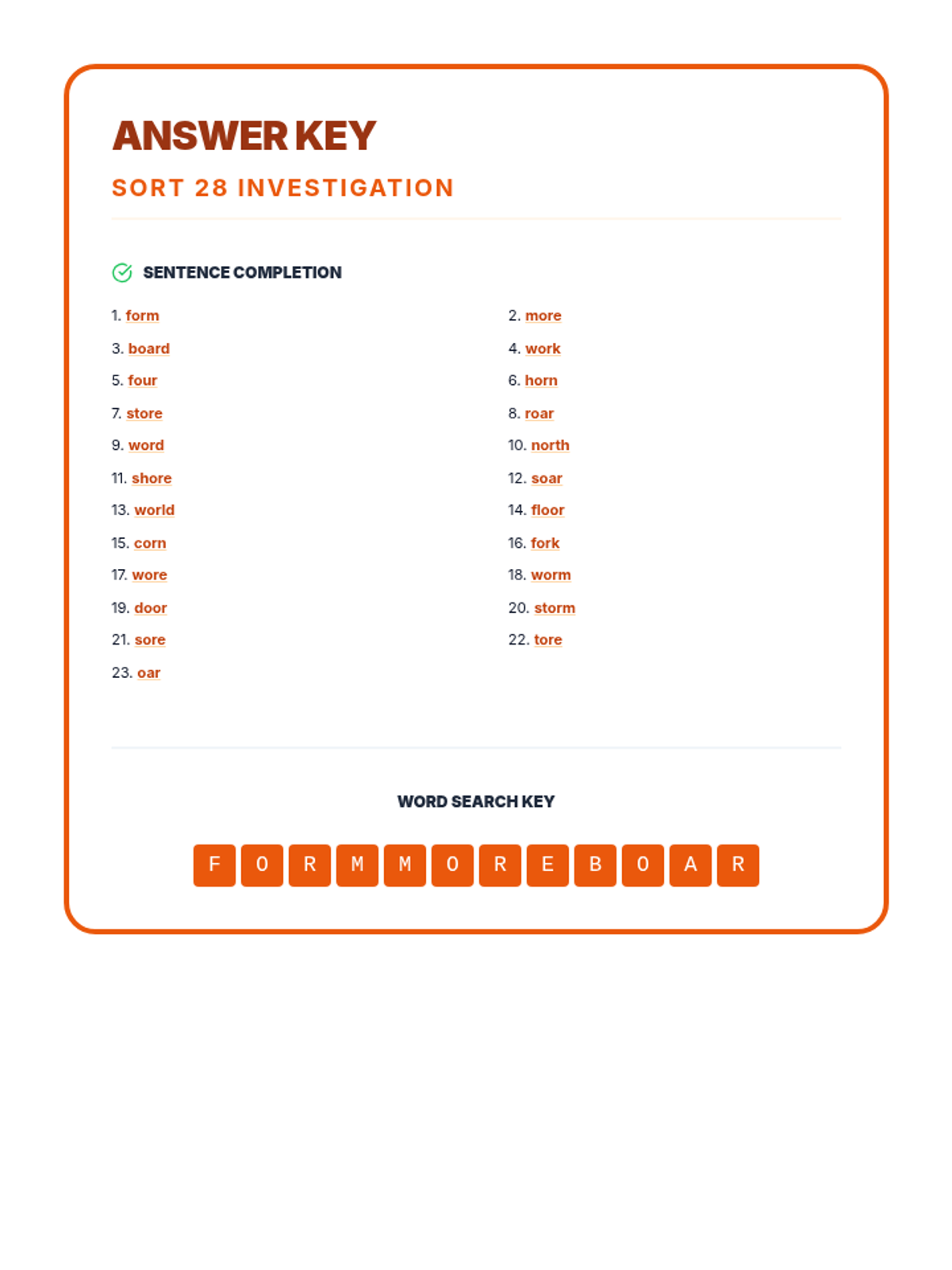
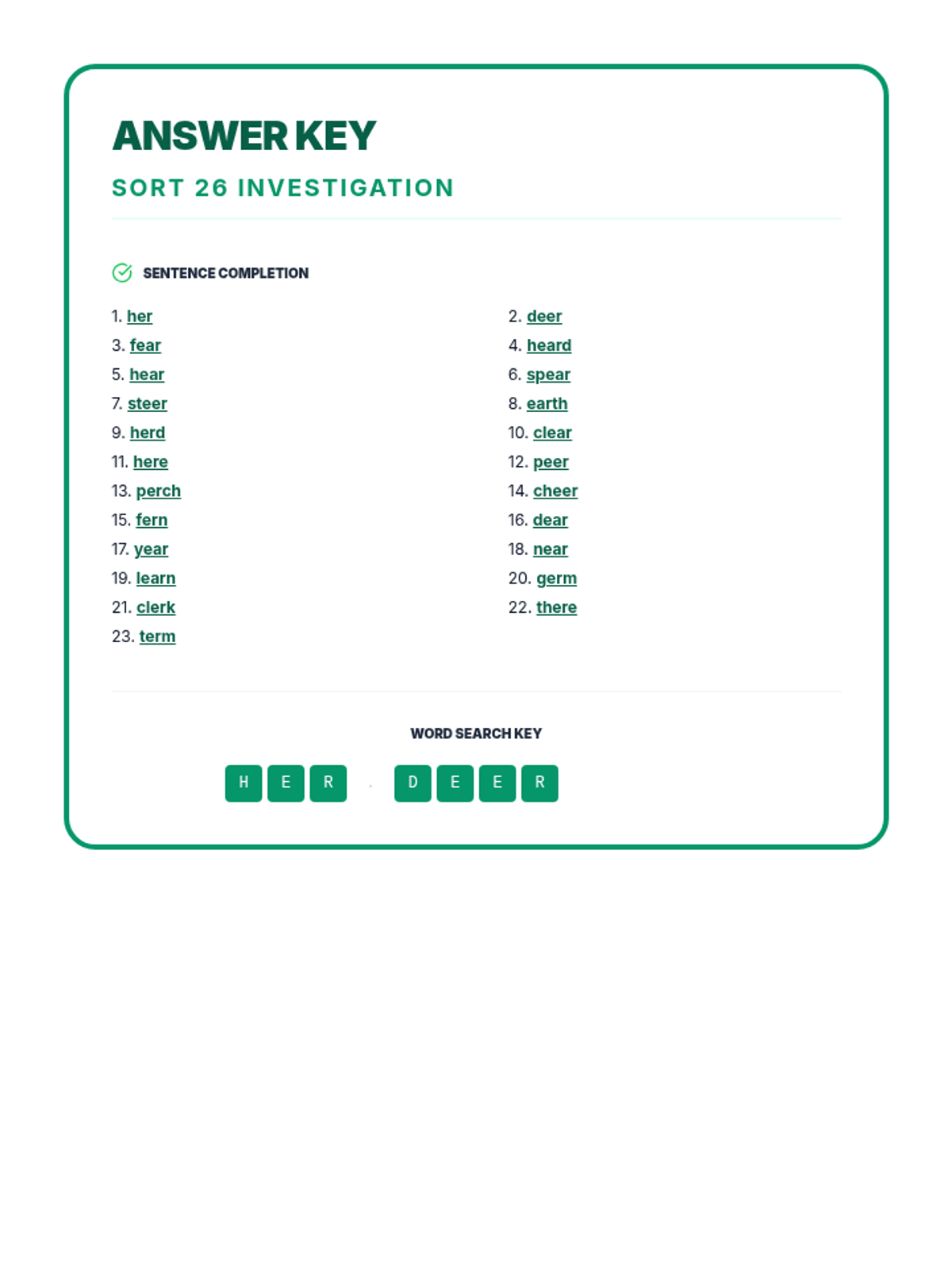
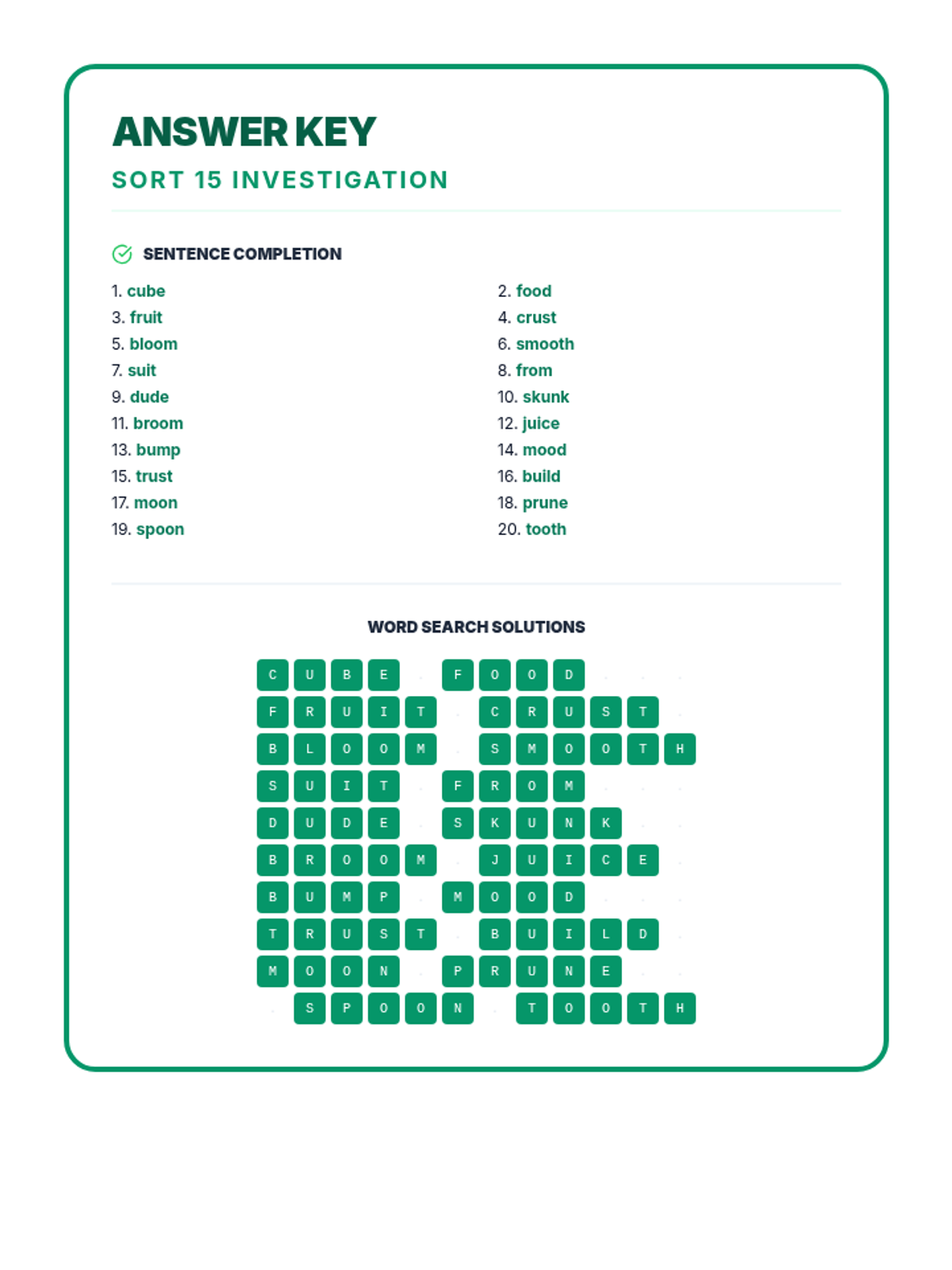
Investigation into r-controlled vowel patterns including ar, are, air, er, ear, eer, ir, ire, ier, or, ore, oar, and ur patterns.
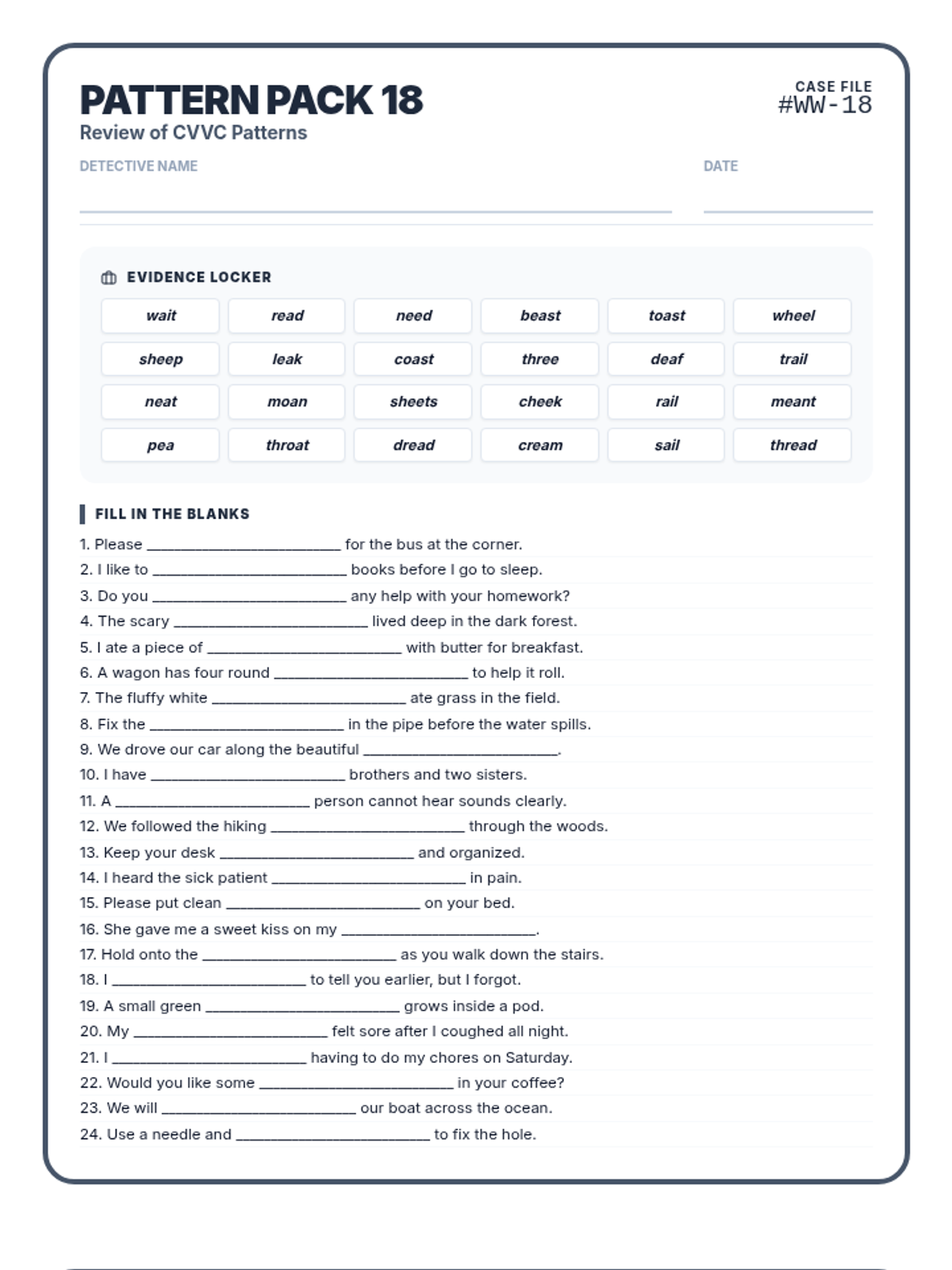
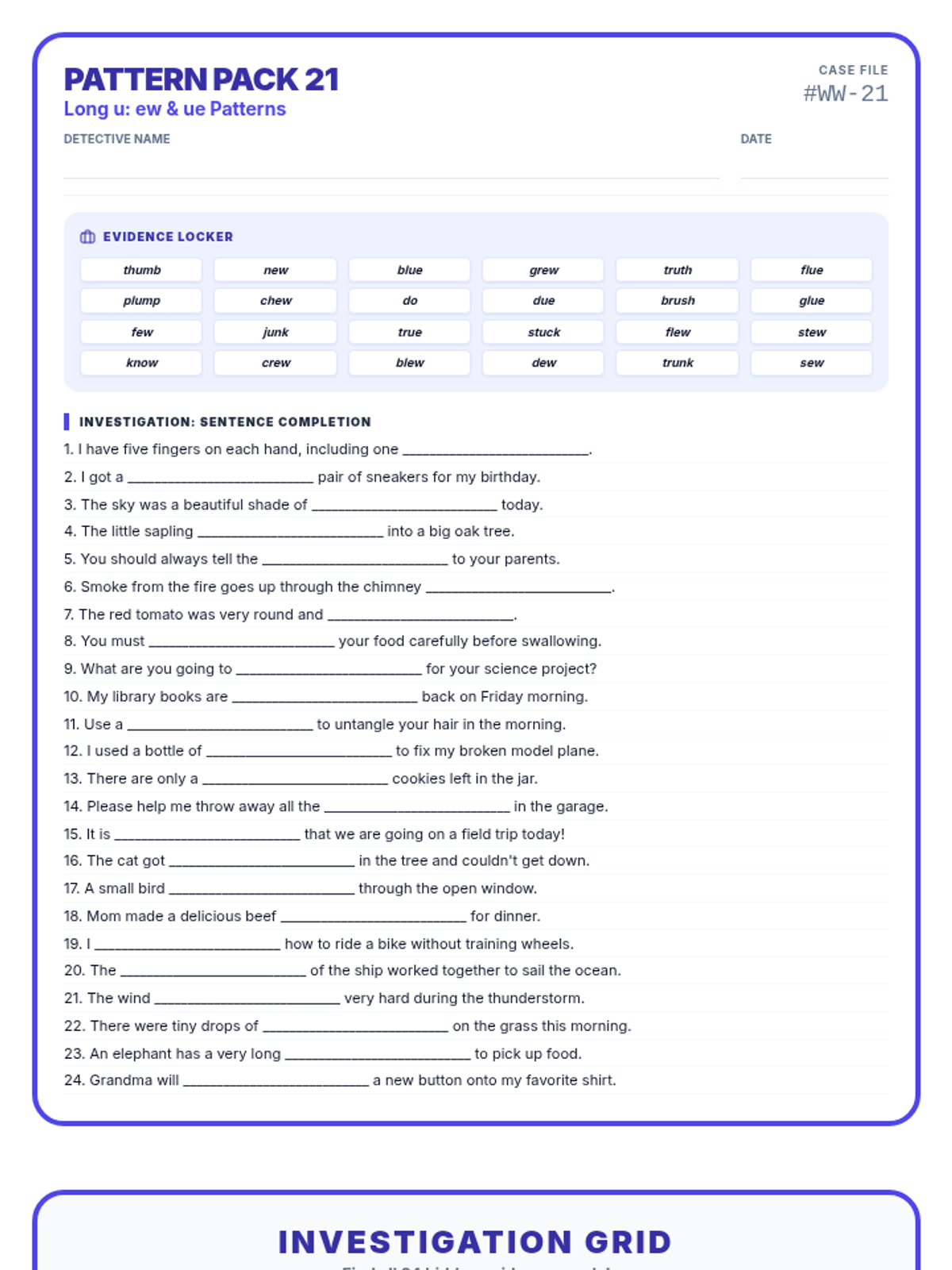
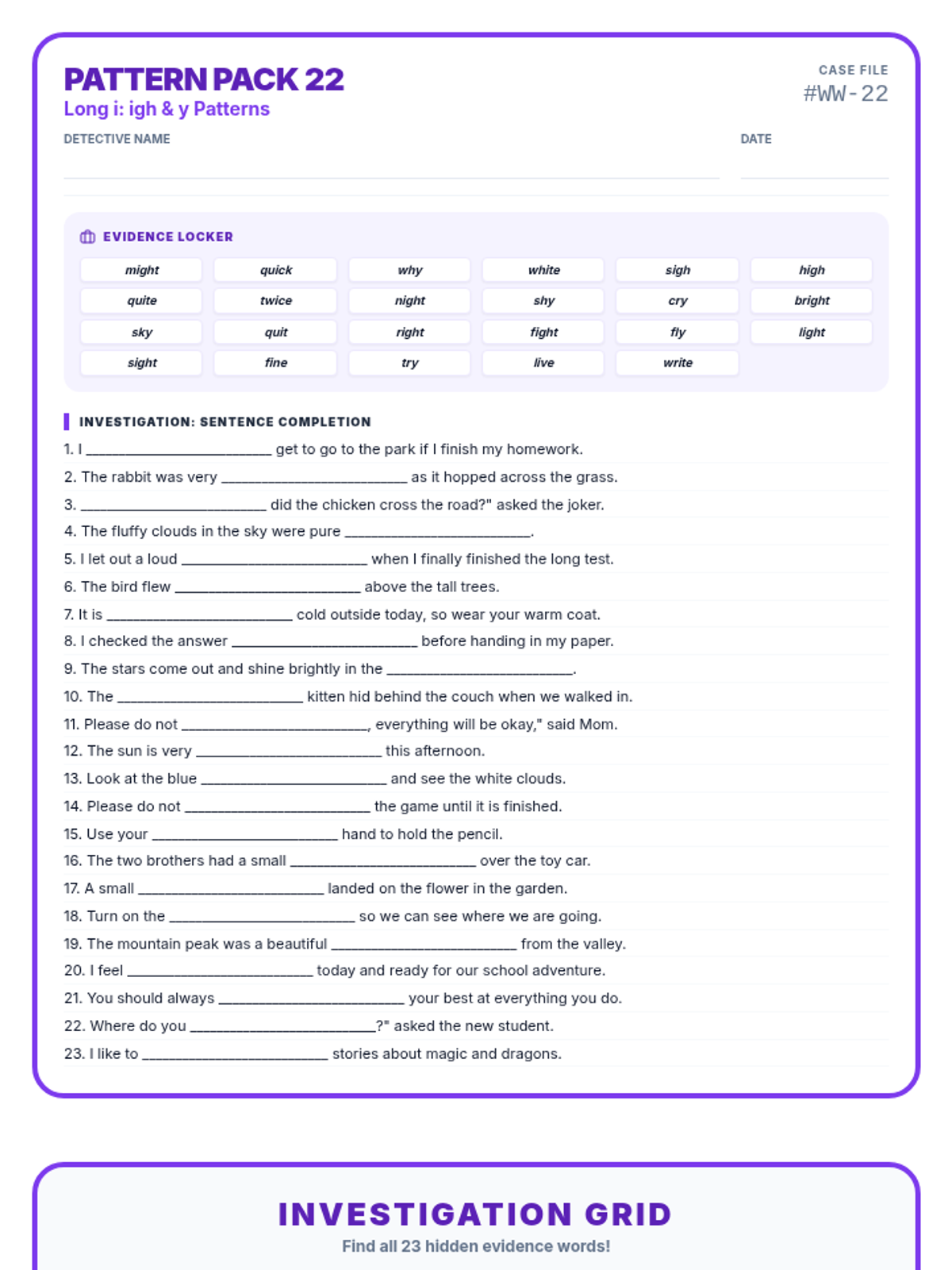
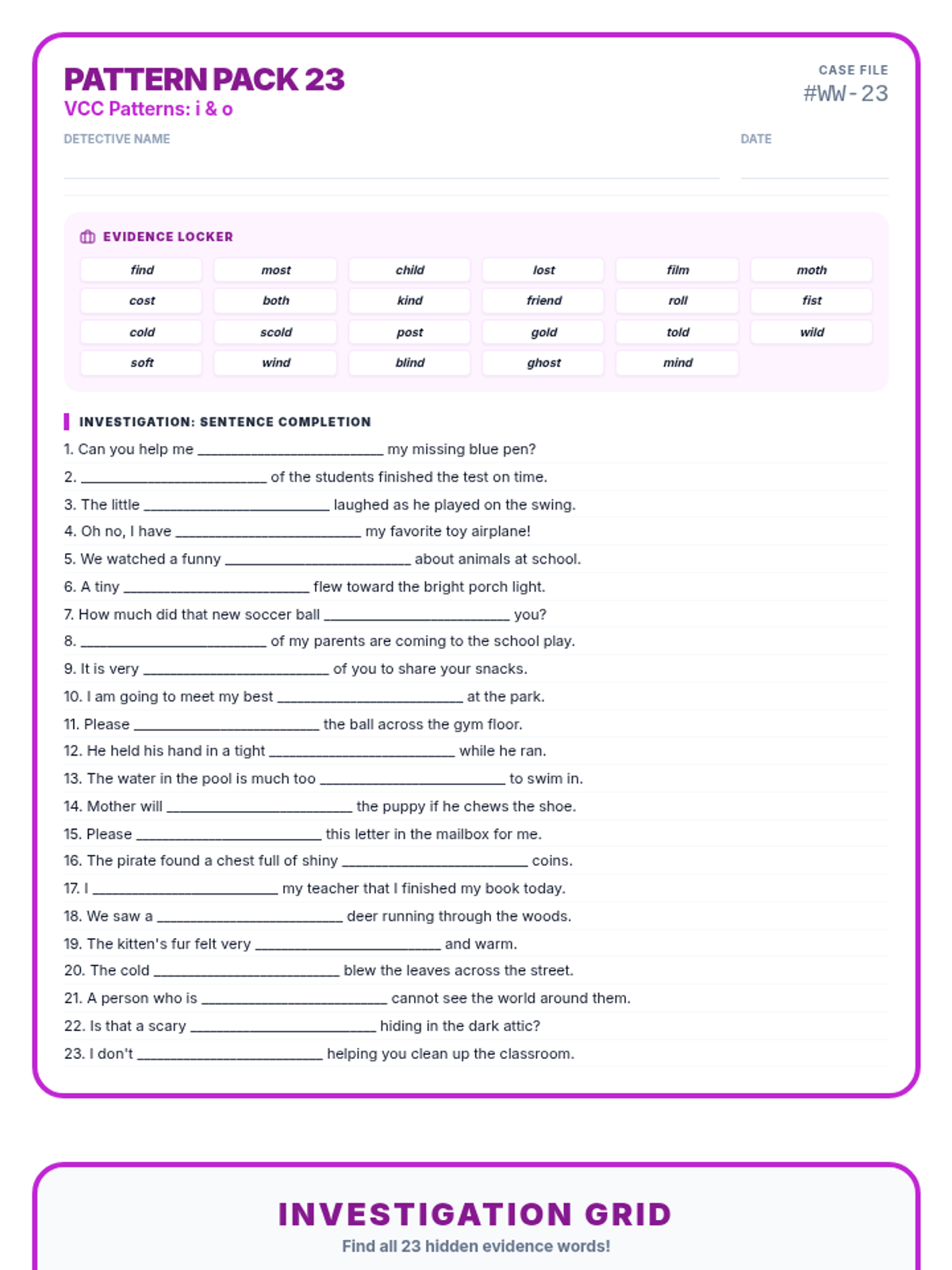
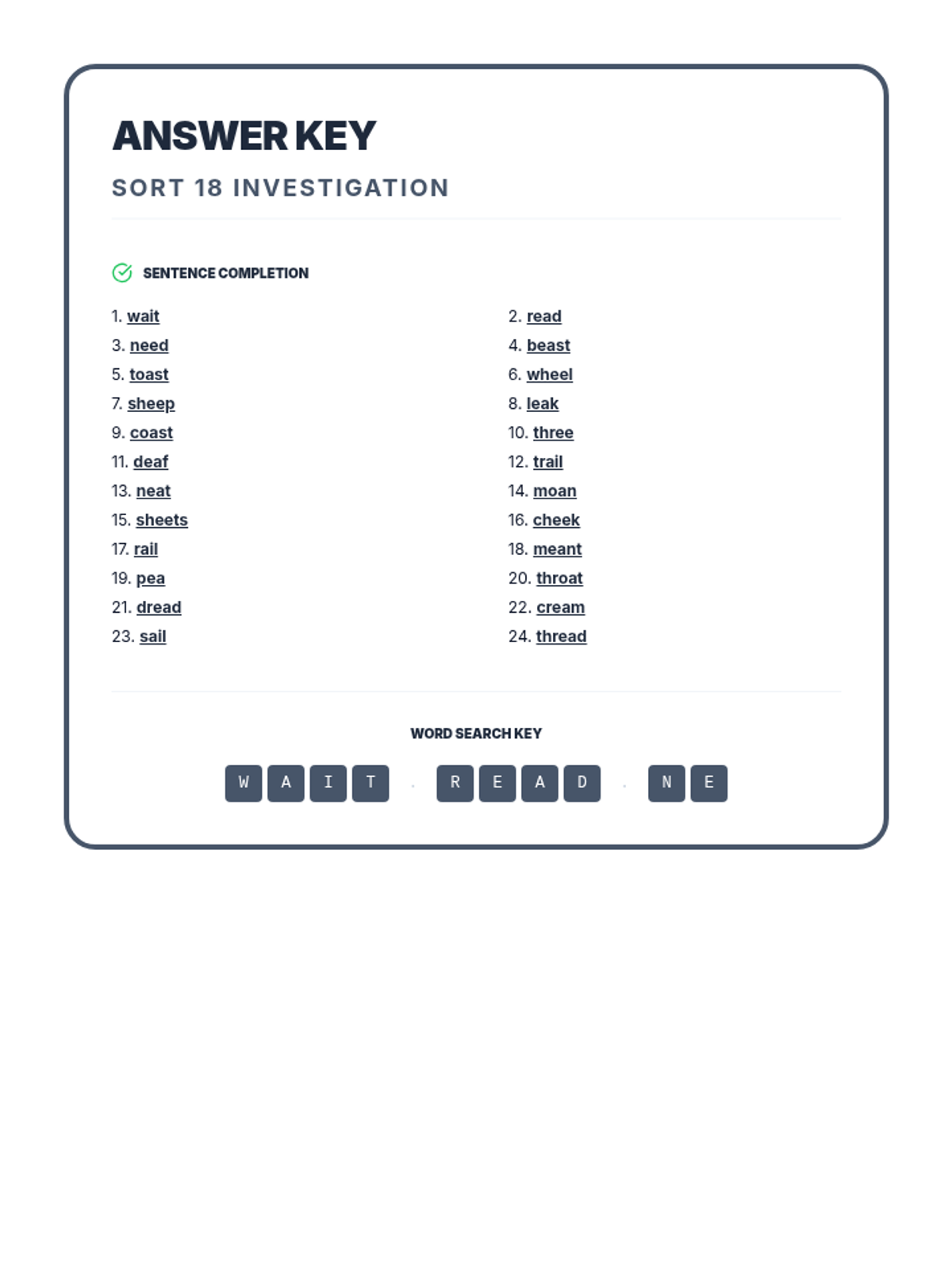
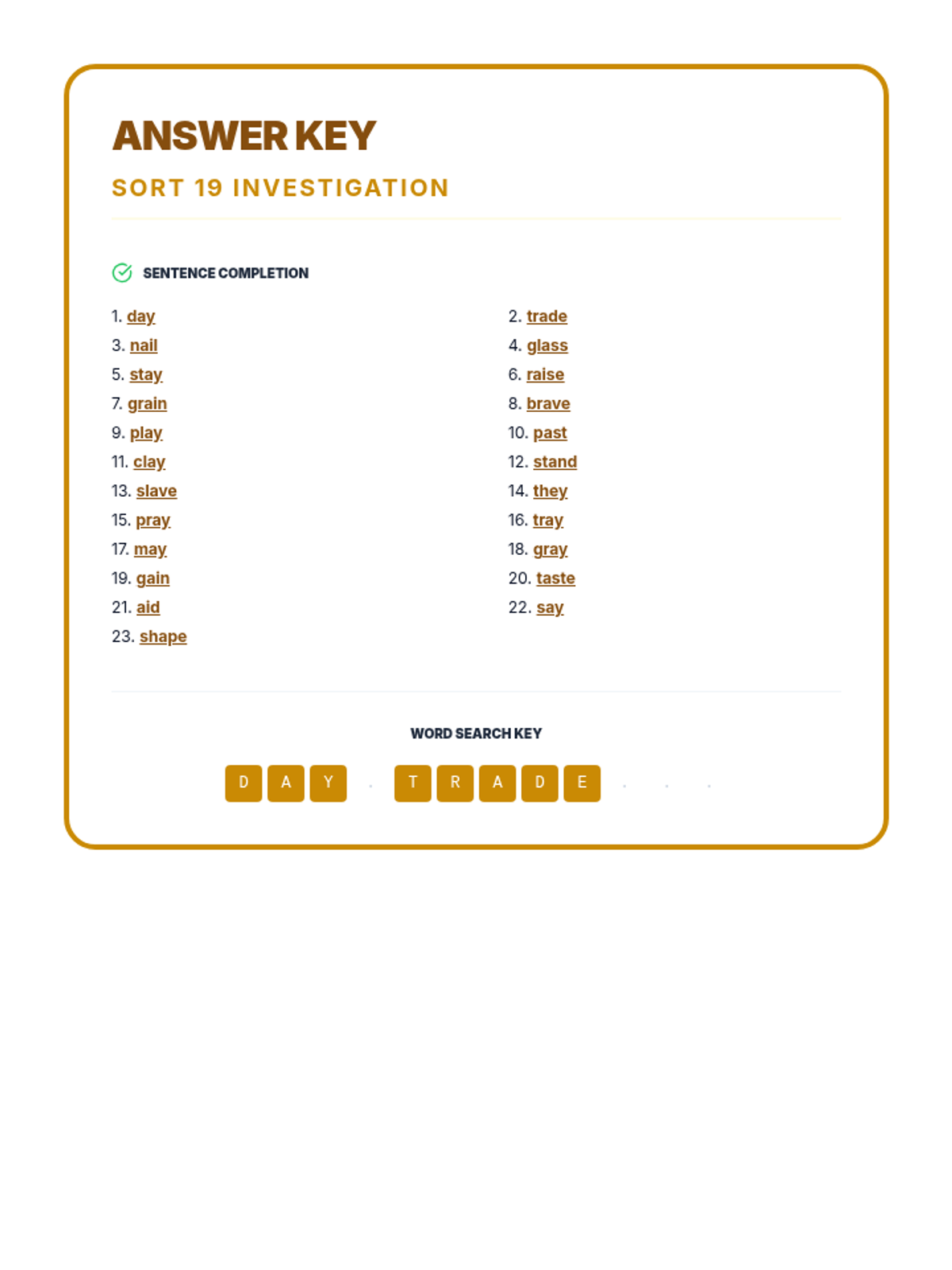
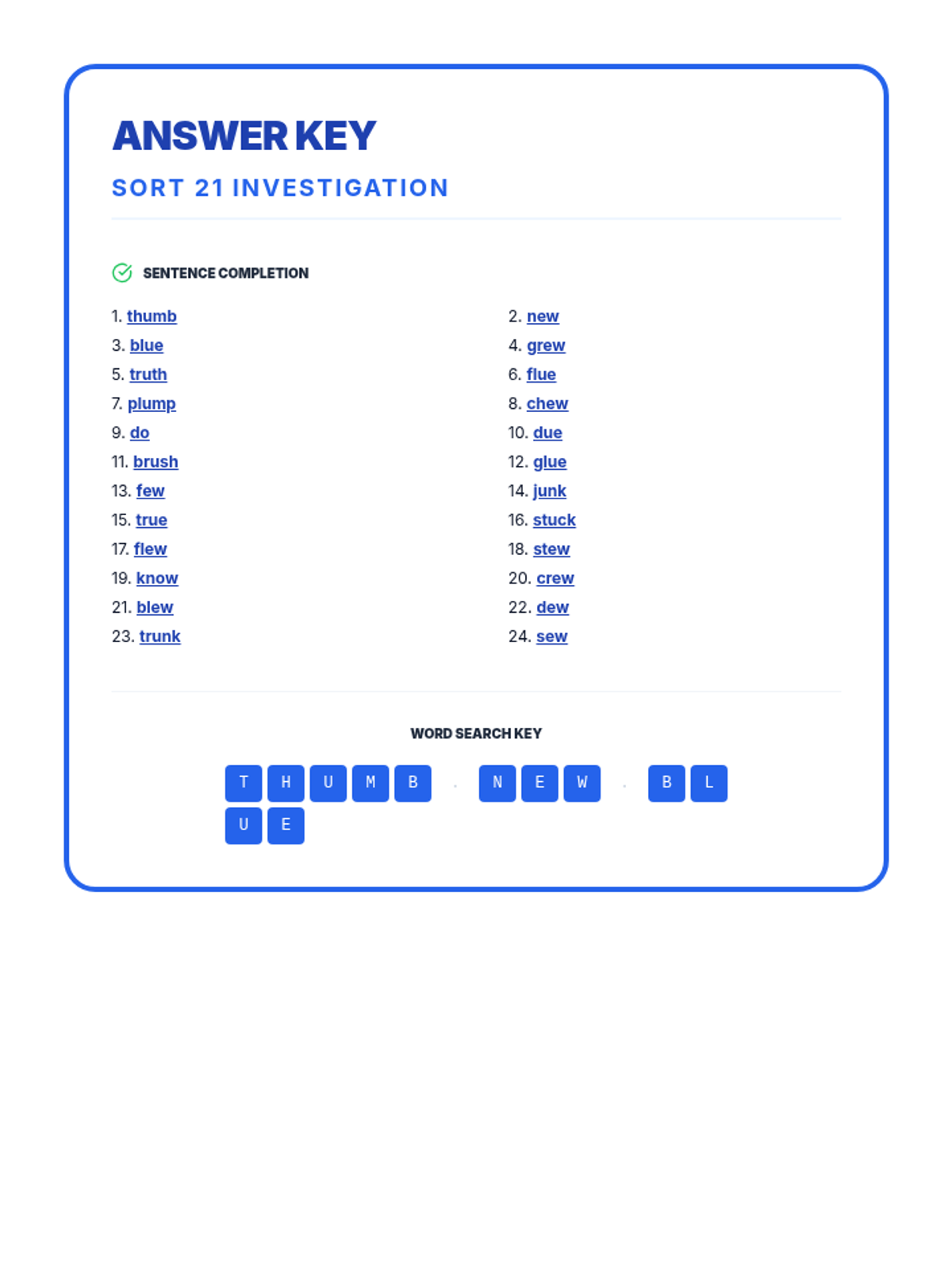
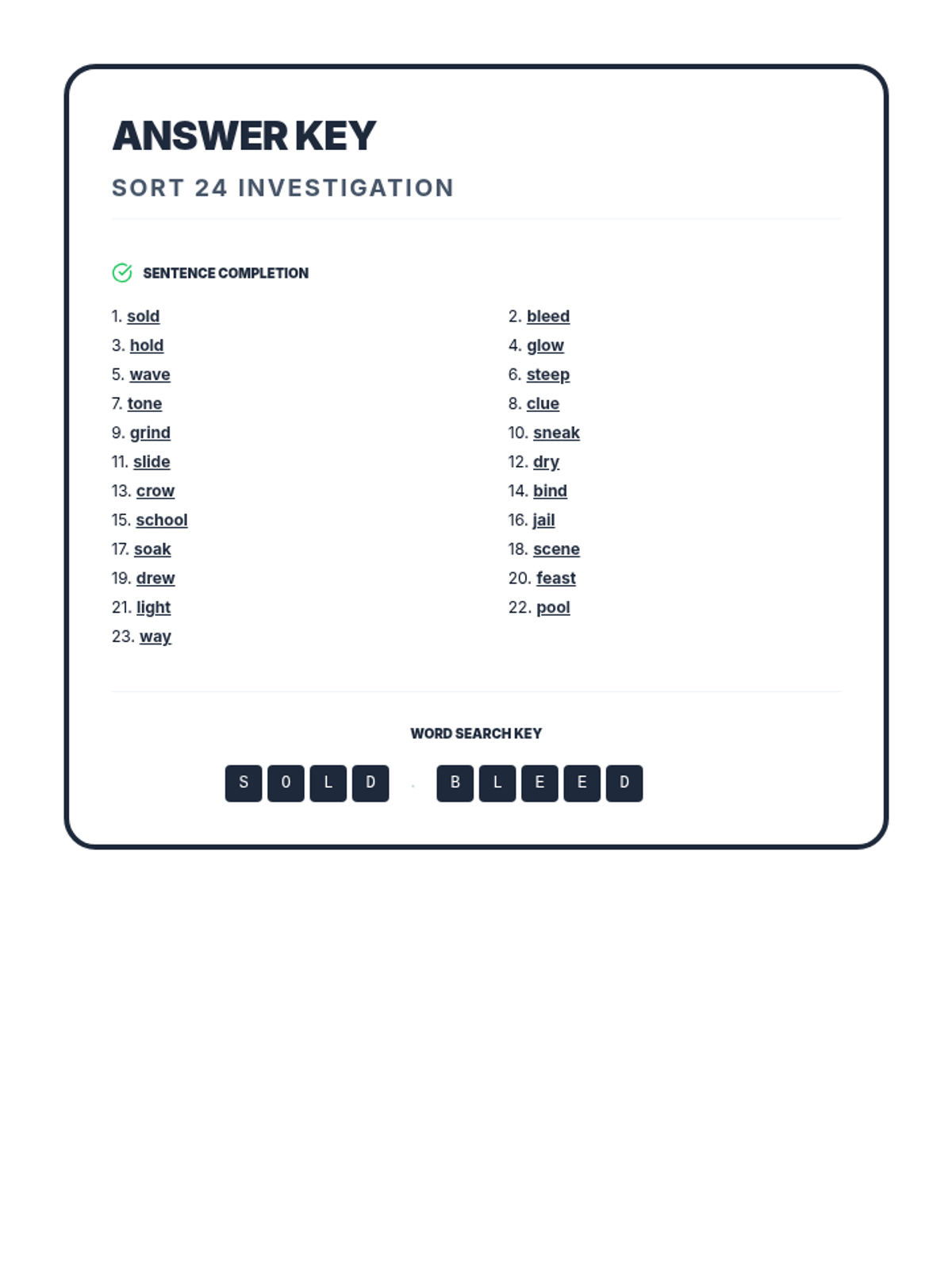
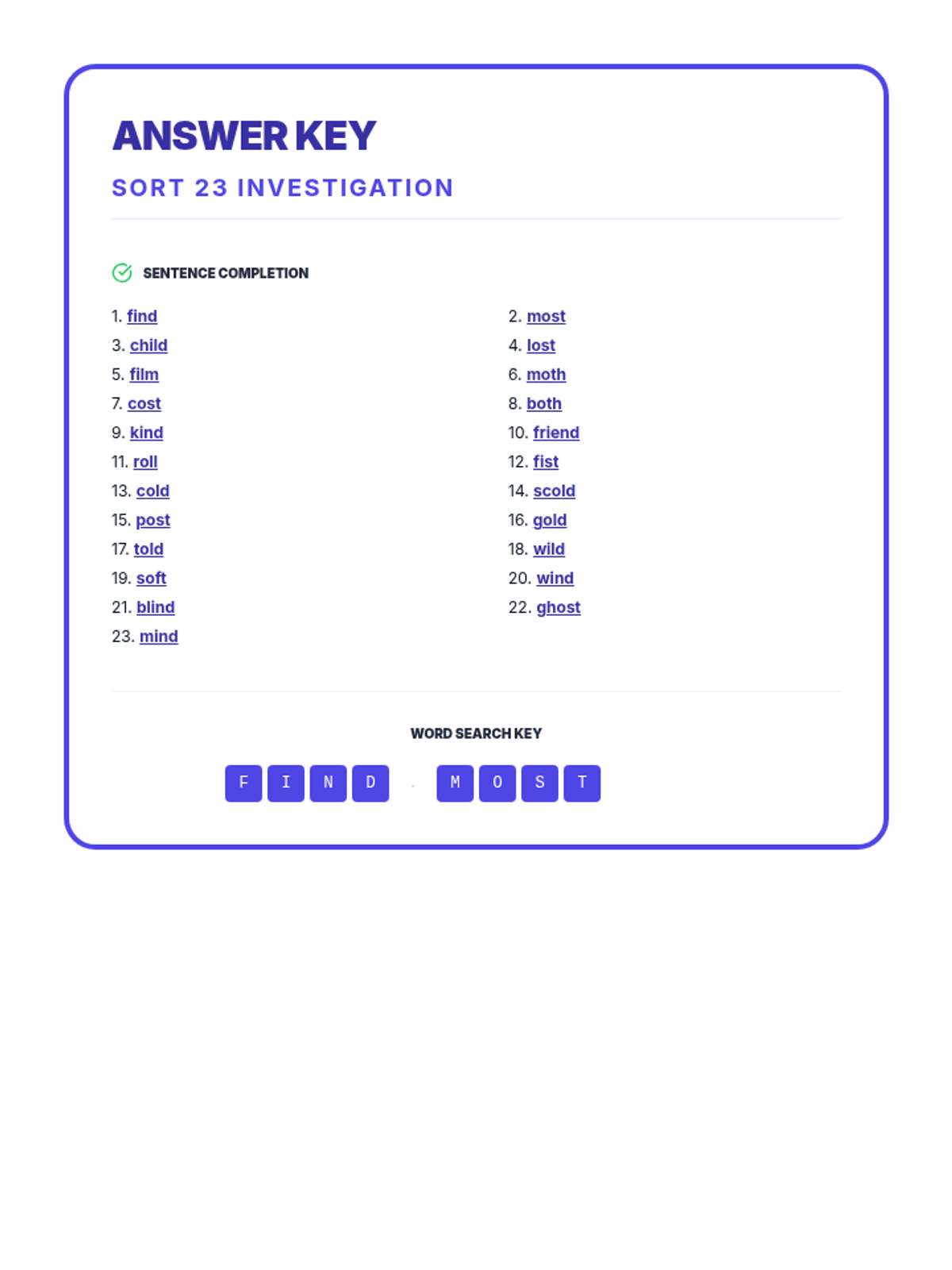
Review of CVVC patterns and introduction to open syllables with long a, o, u, and i patterns across Sorts 18-24.
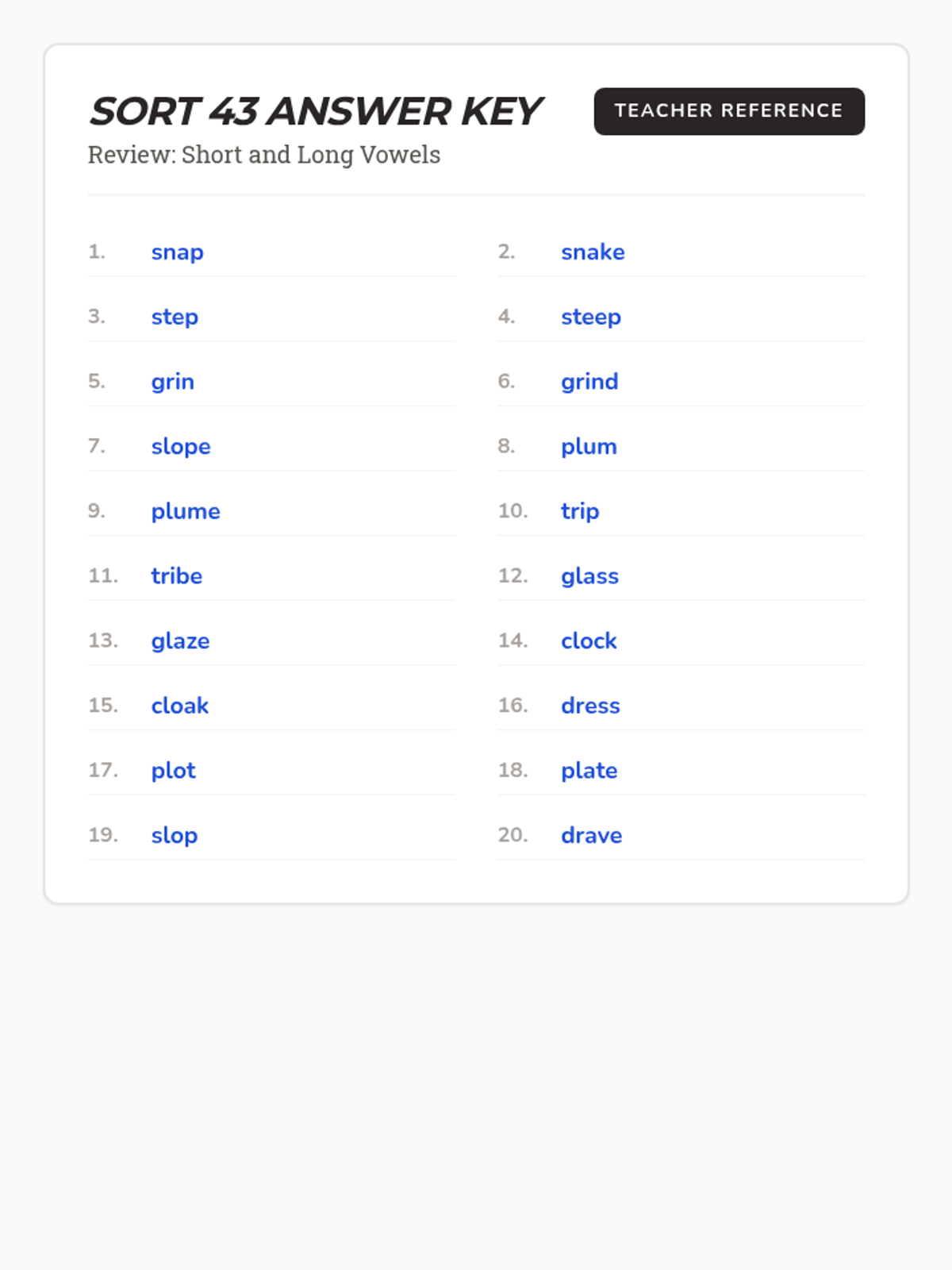
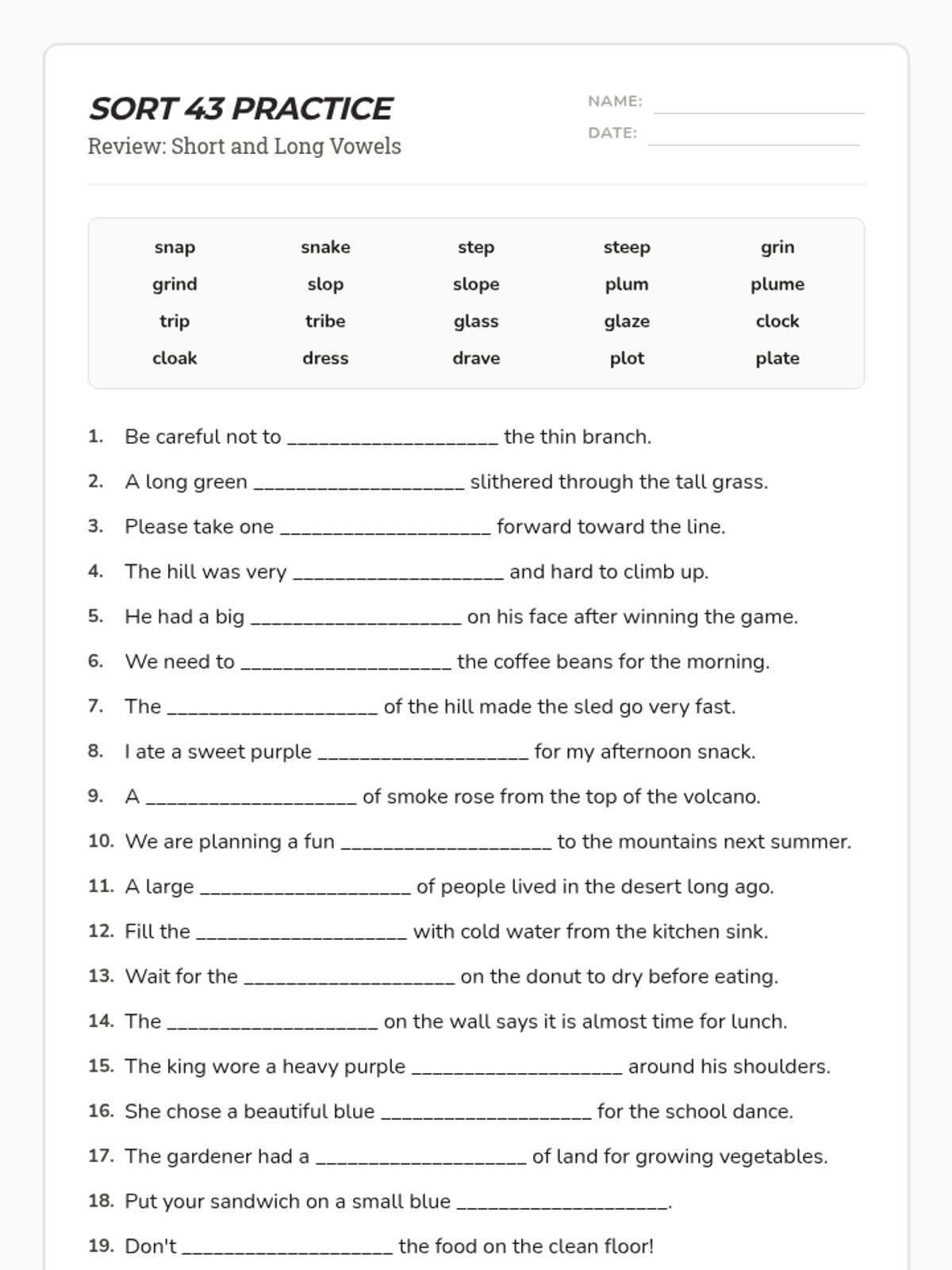
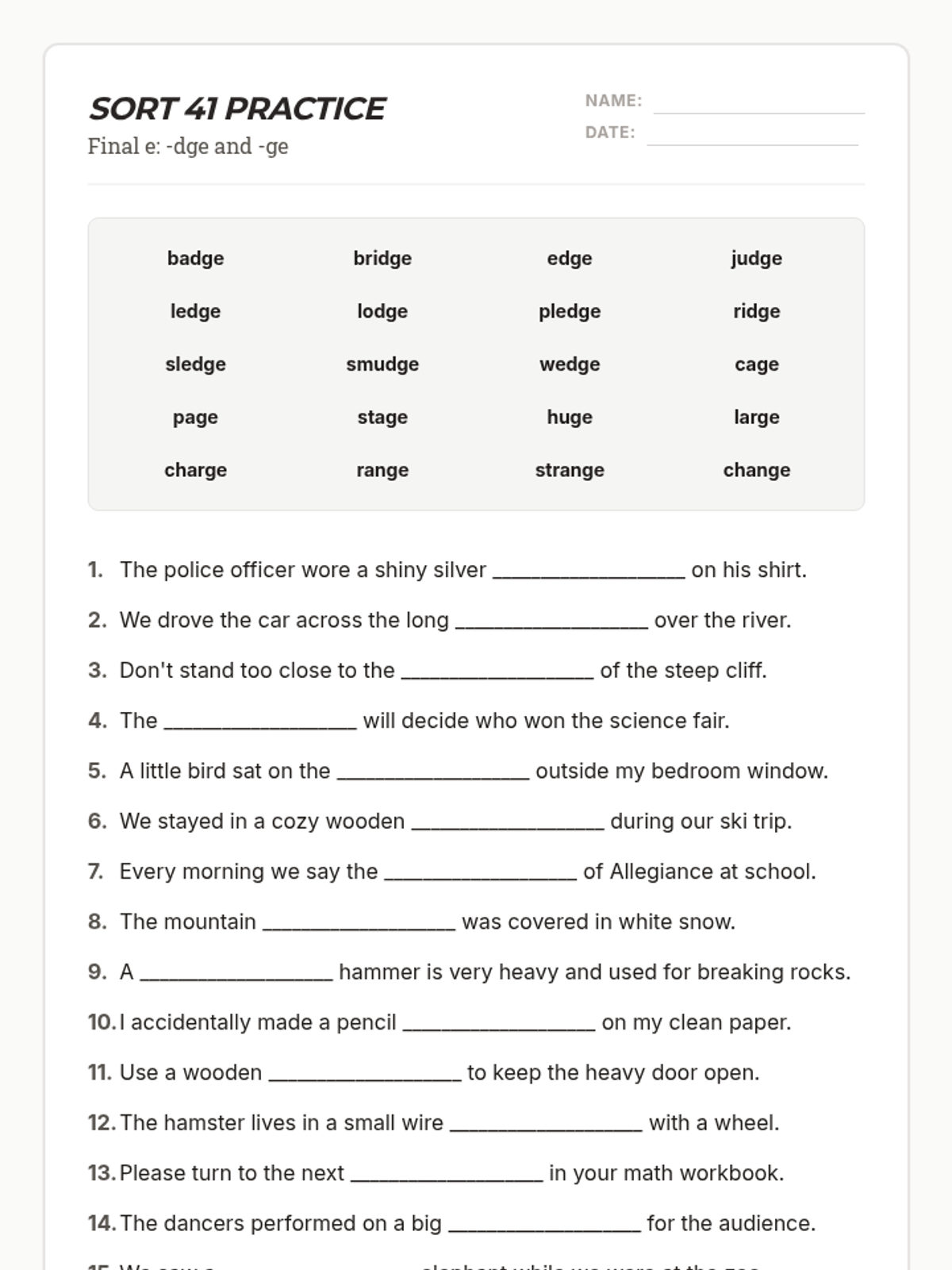
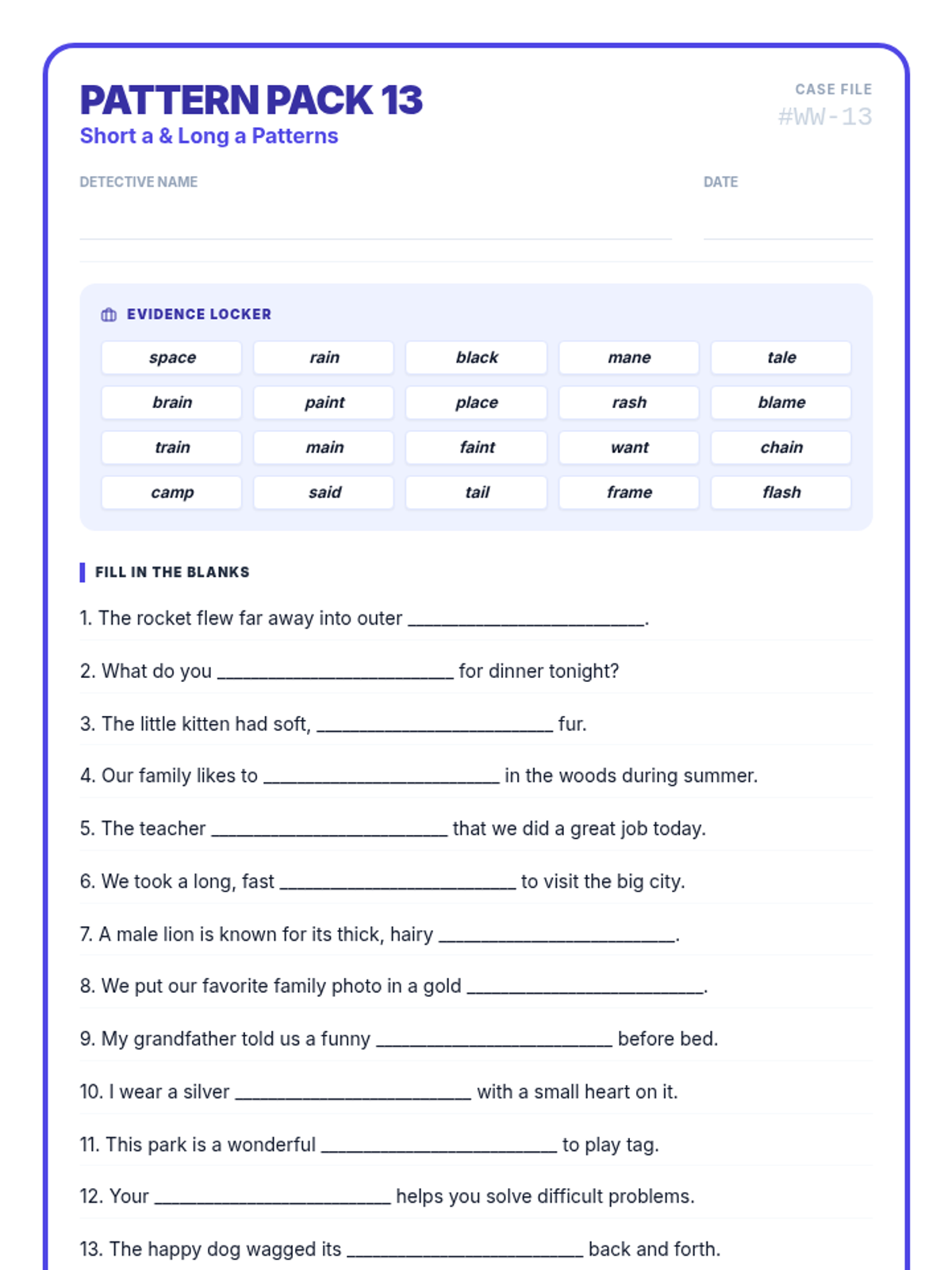
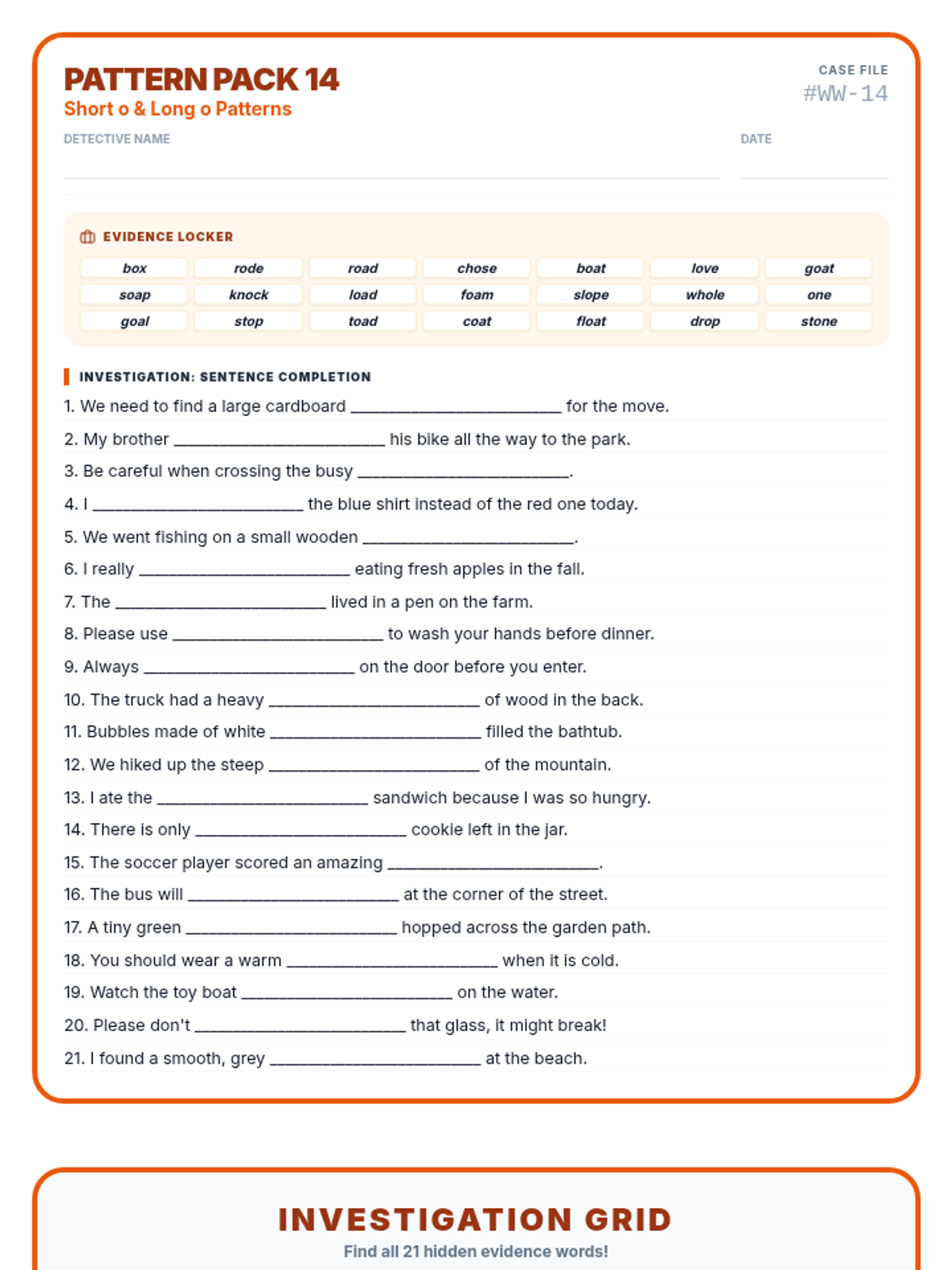
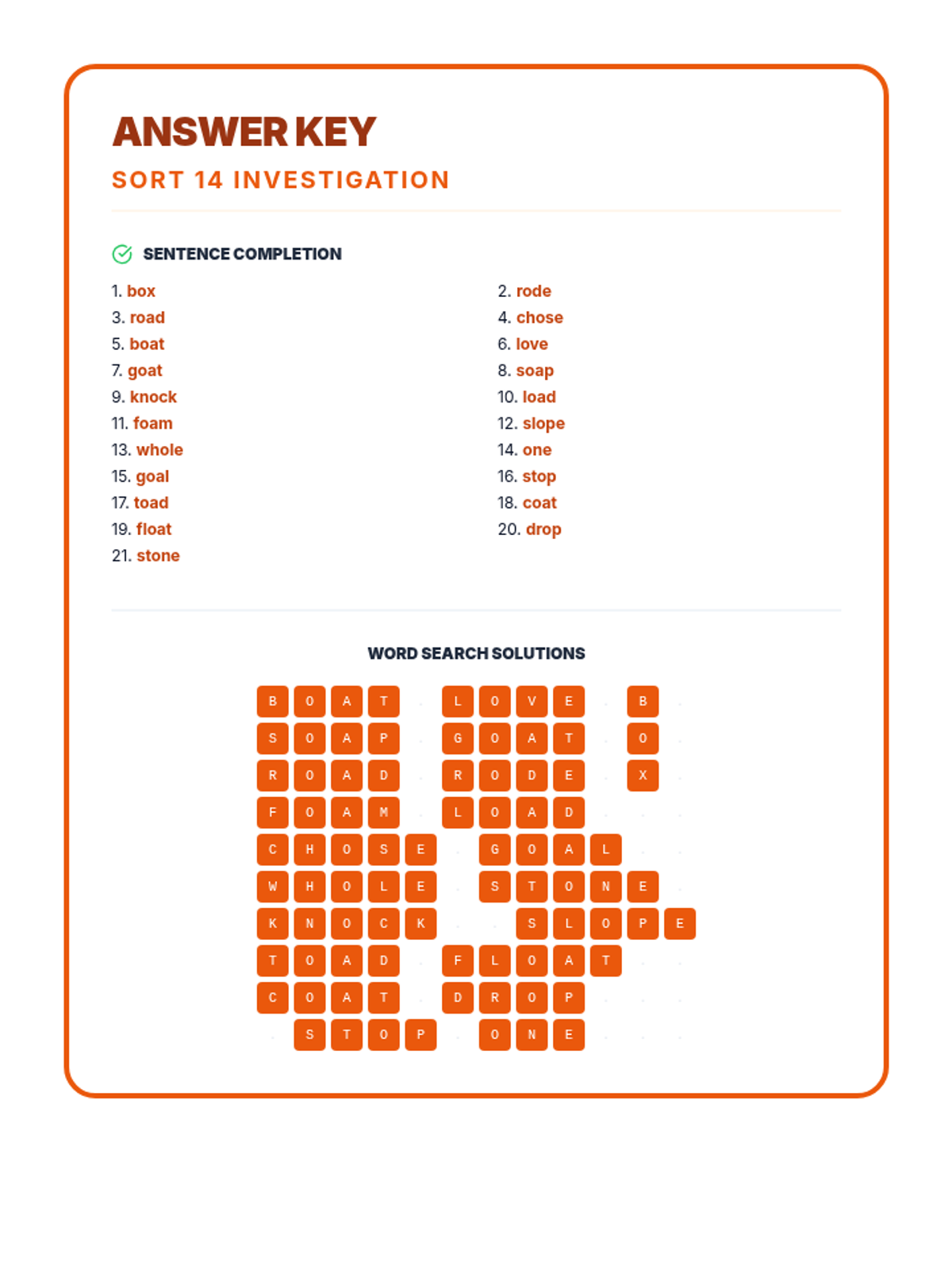
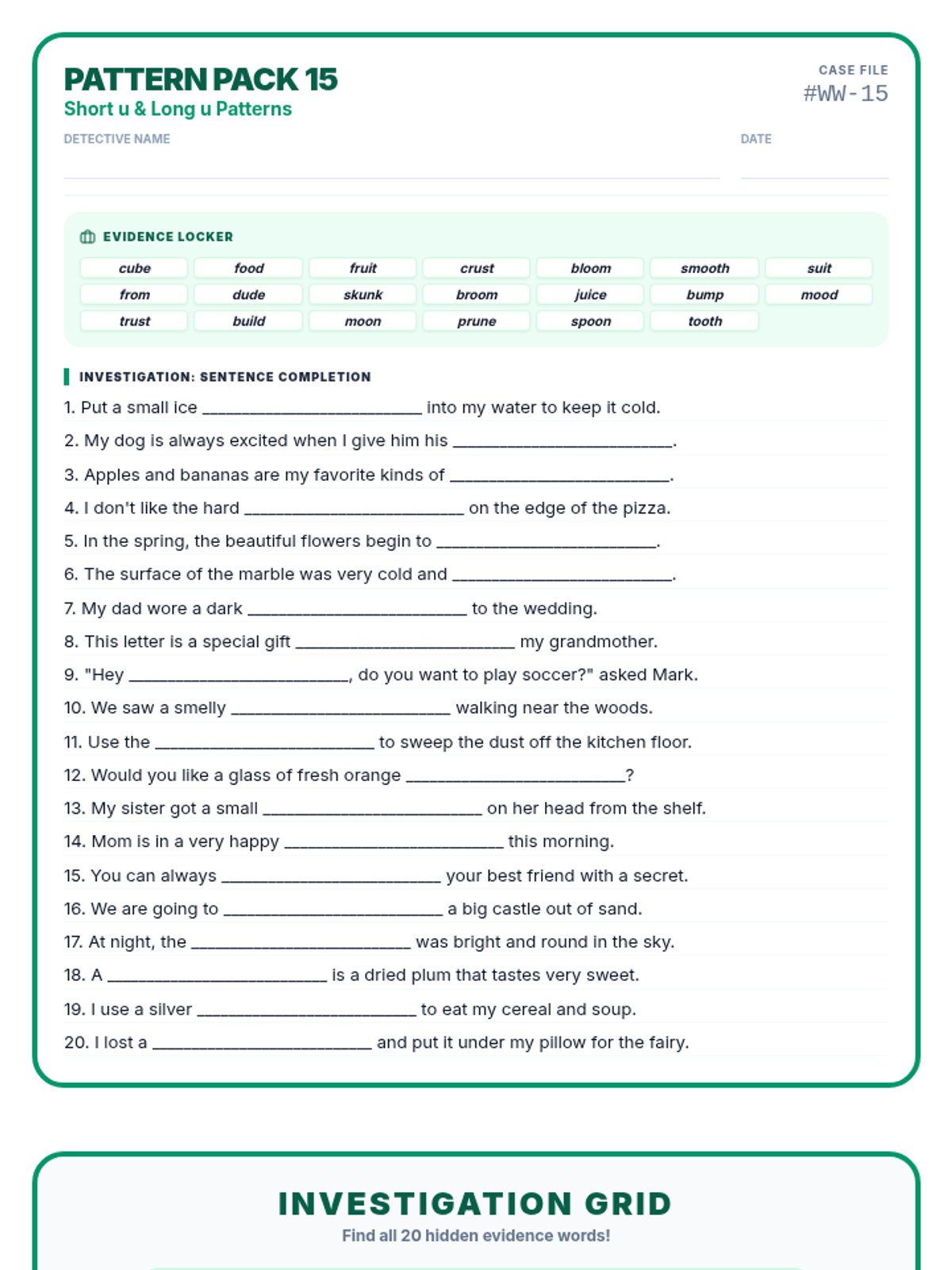
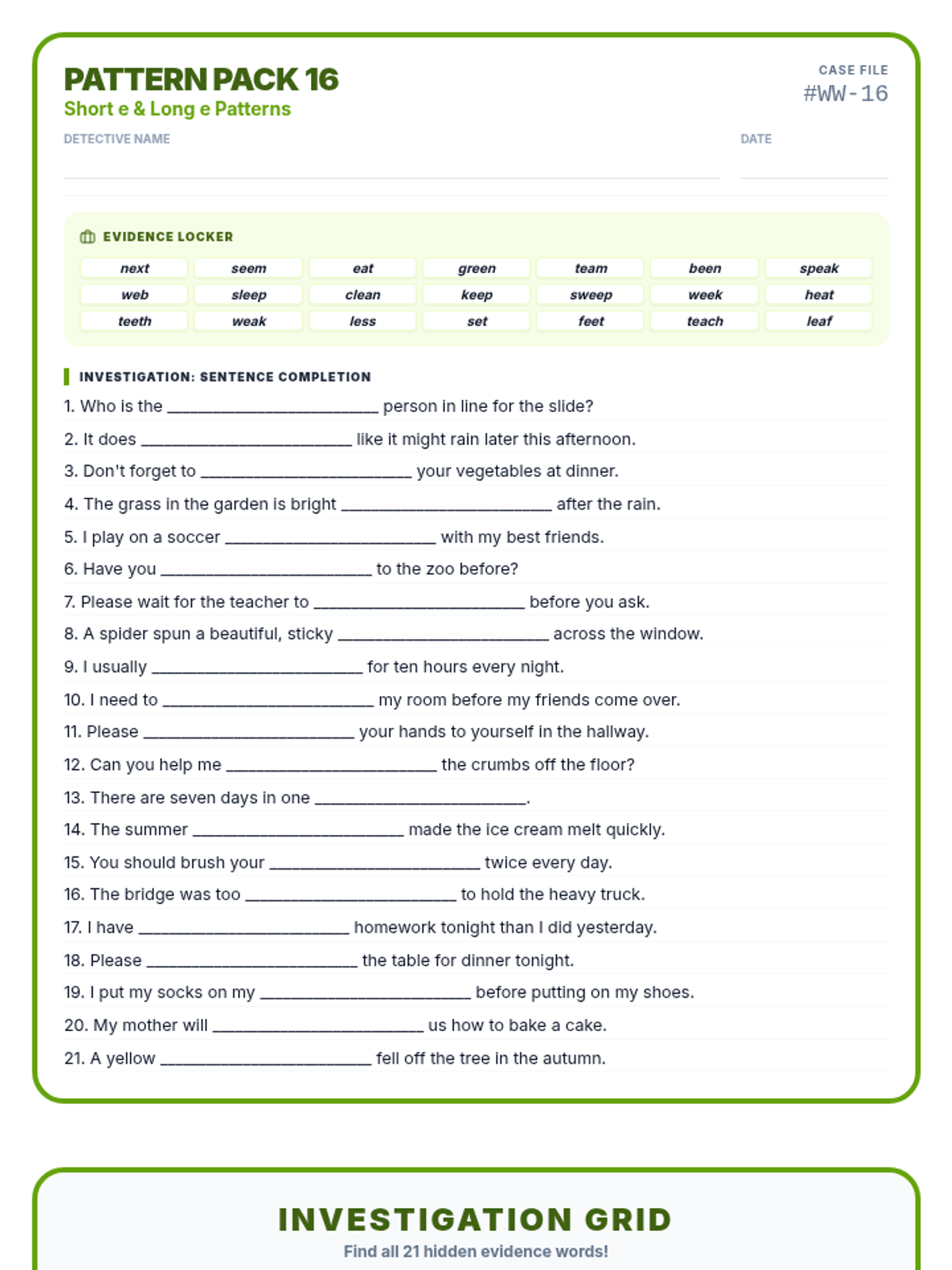
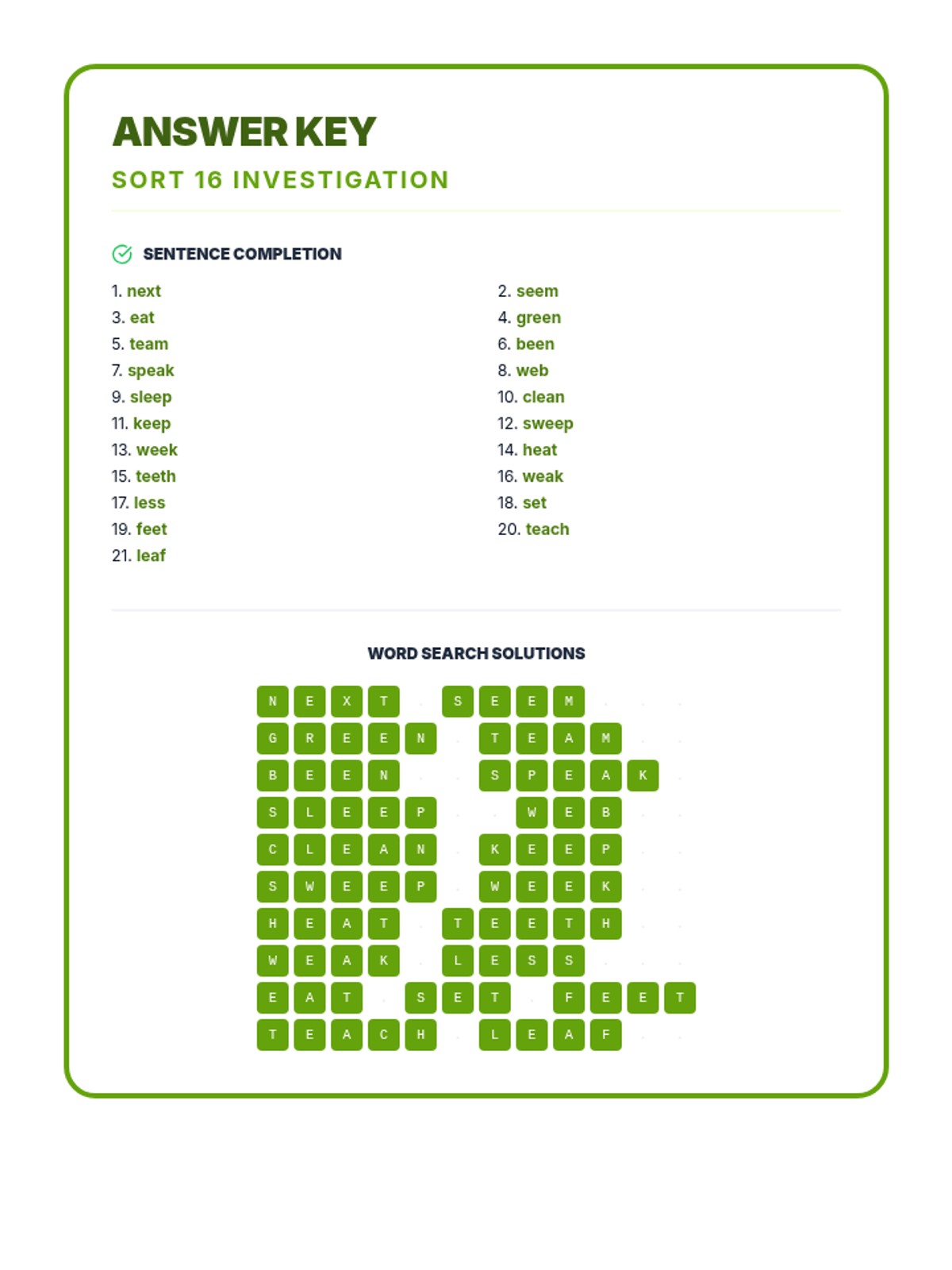
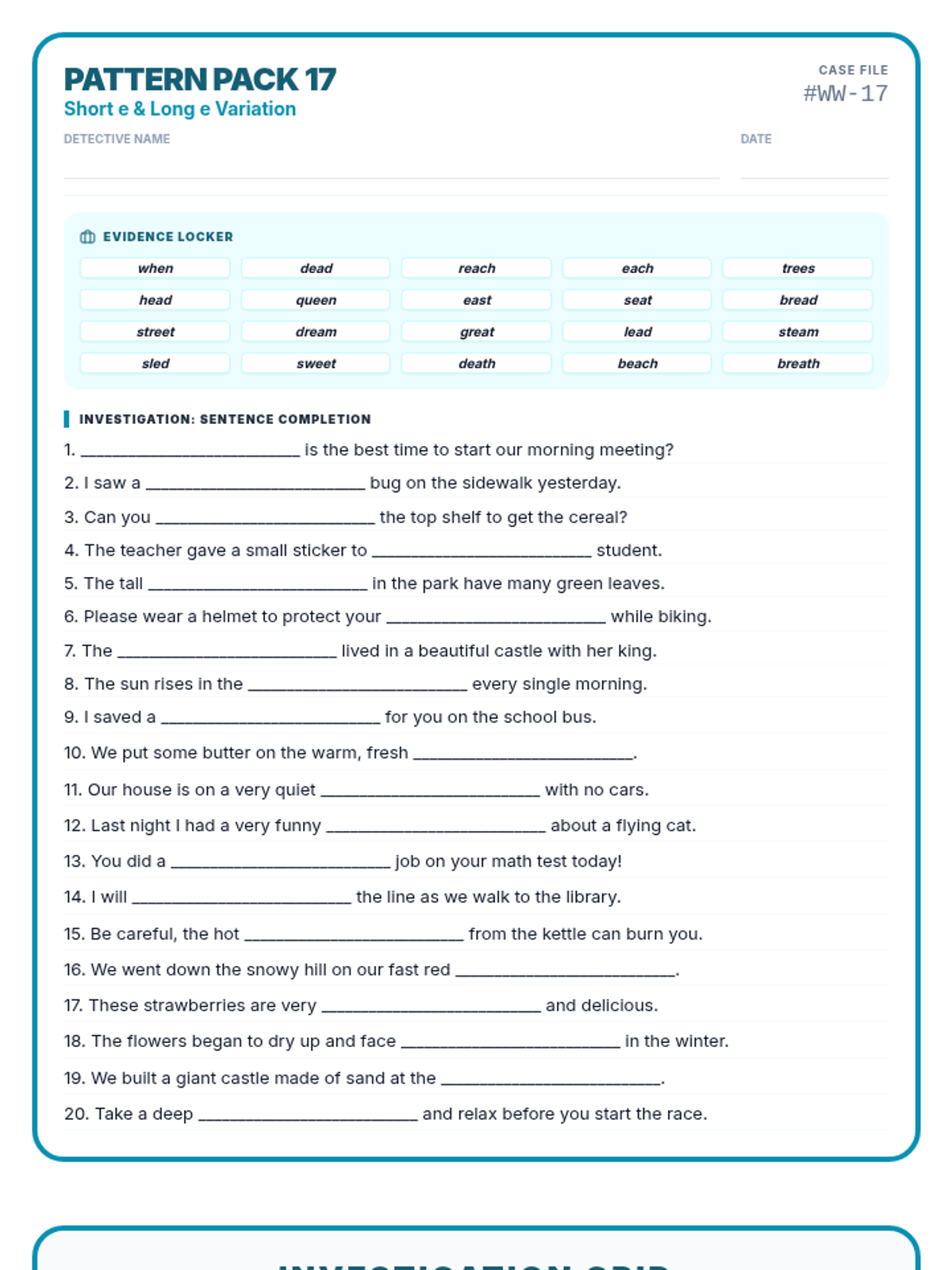
Foundational practice for Sorts 13-17, focusing on short and long vowel patterns including CVCe and CVVC for a, o, u, and e.
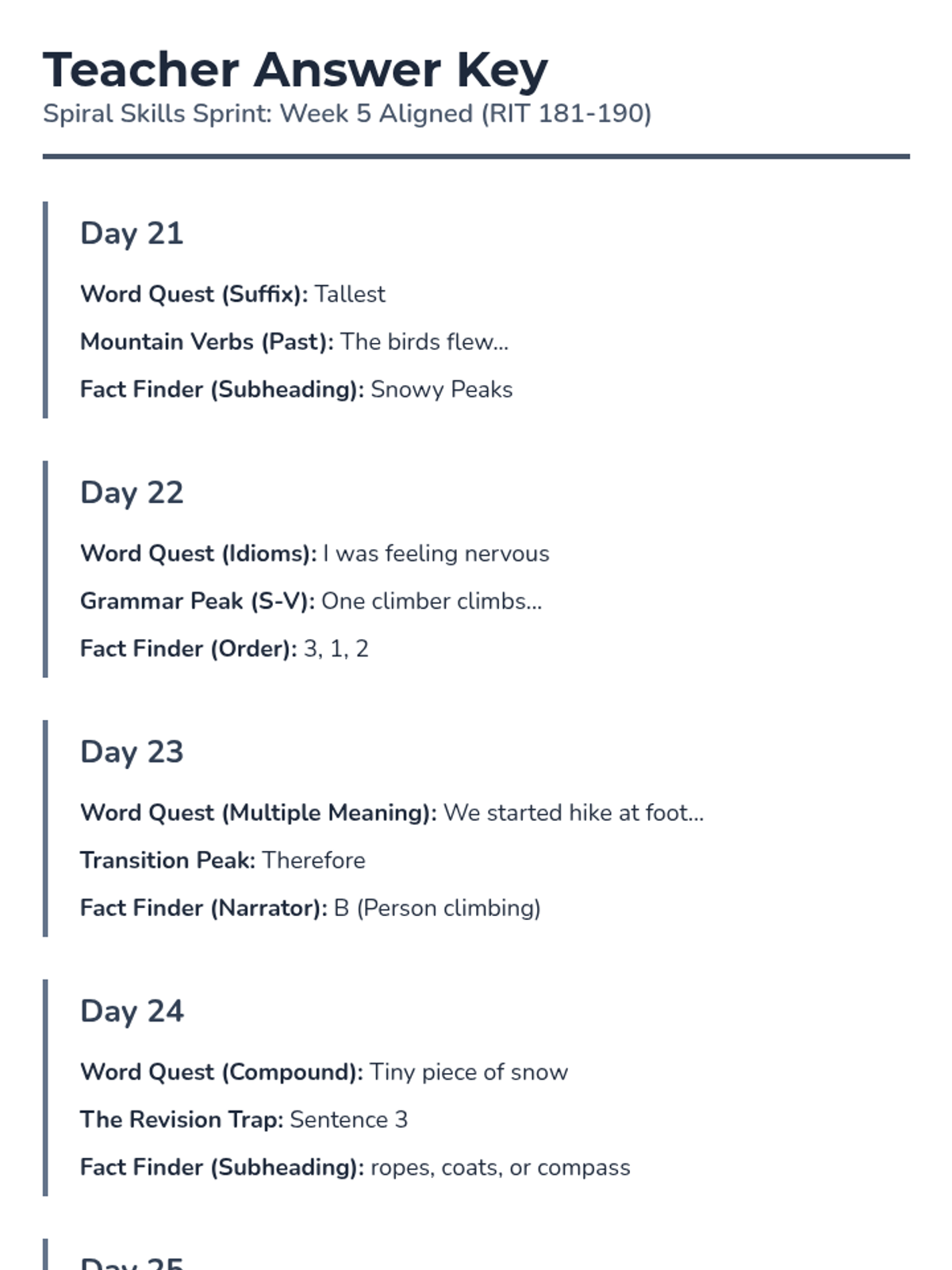
The final week provides comprehensive review and simulated NWEA-style practice items to build test-taking confidence and stamina.
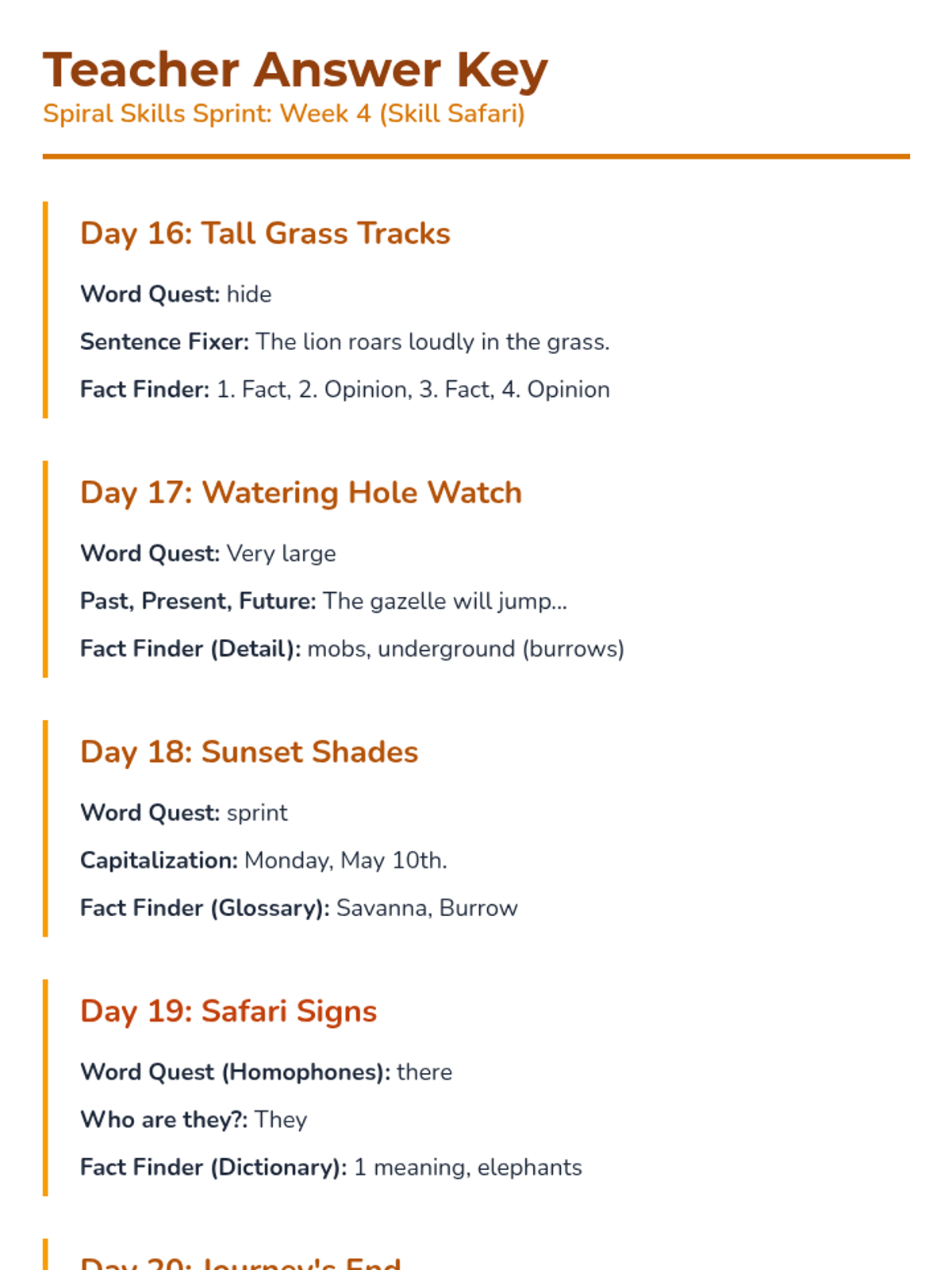
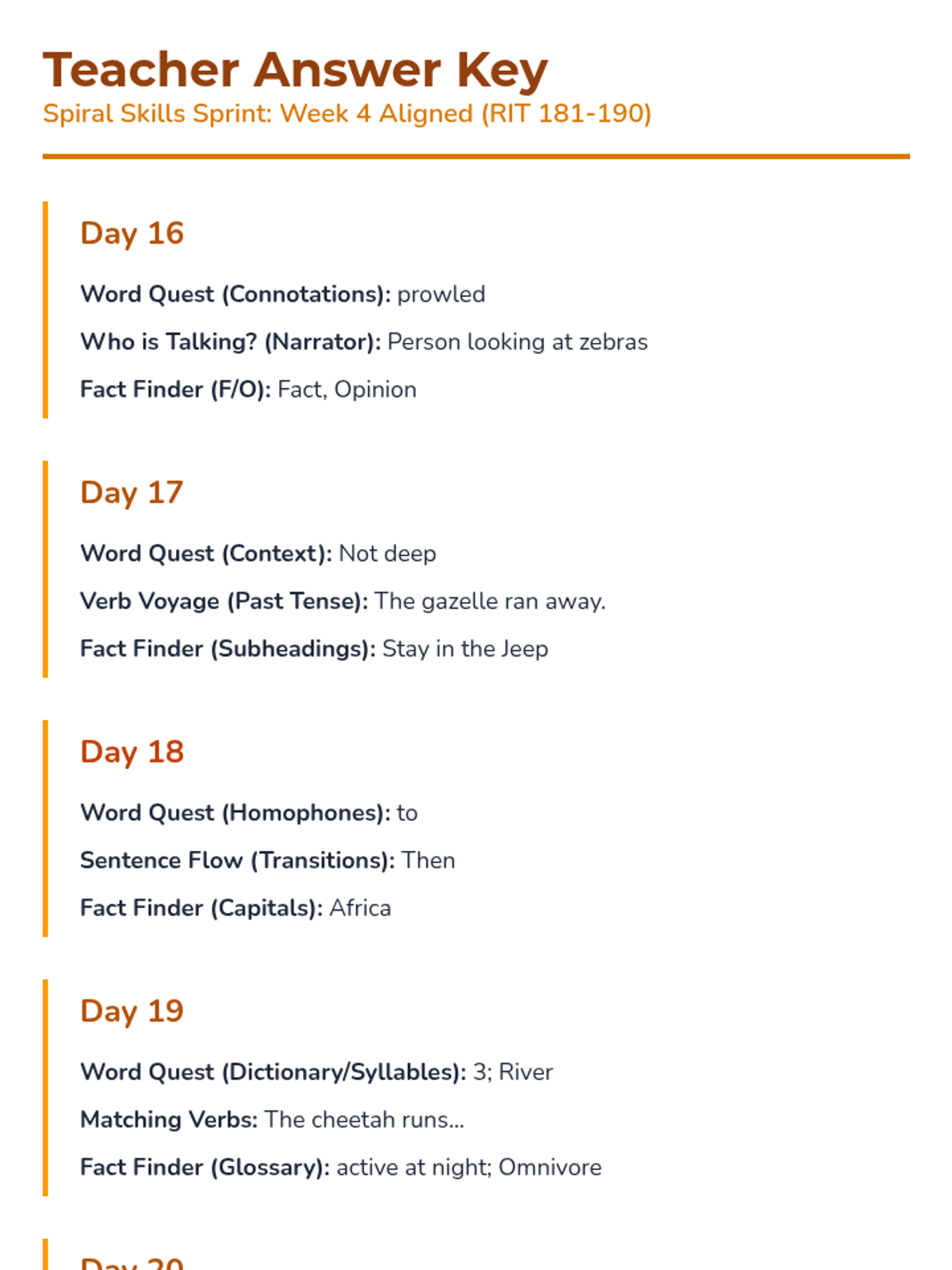
Week 4 integrates all previously learned skills through mixed practice and real-world application, such as note-taking from short passages and using dictionary entries.
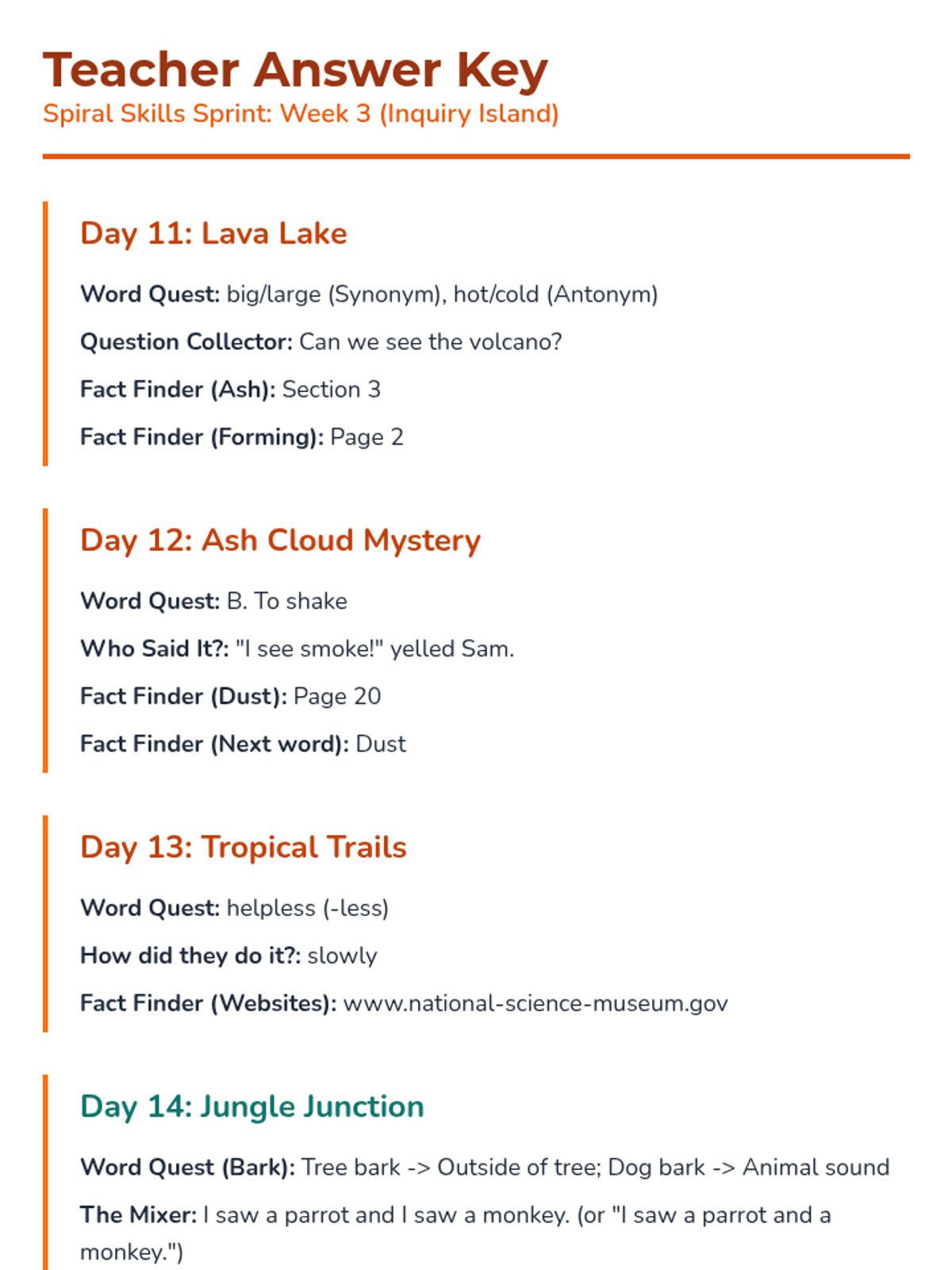
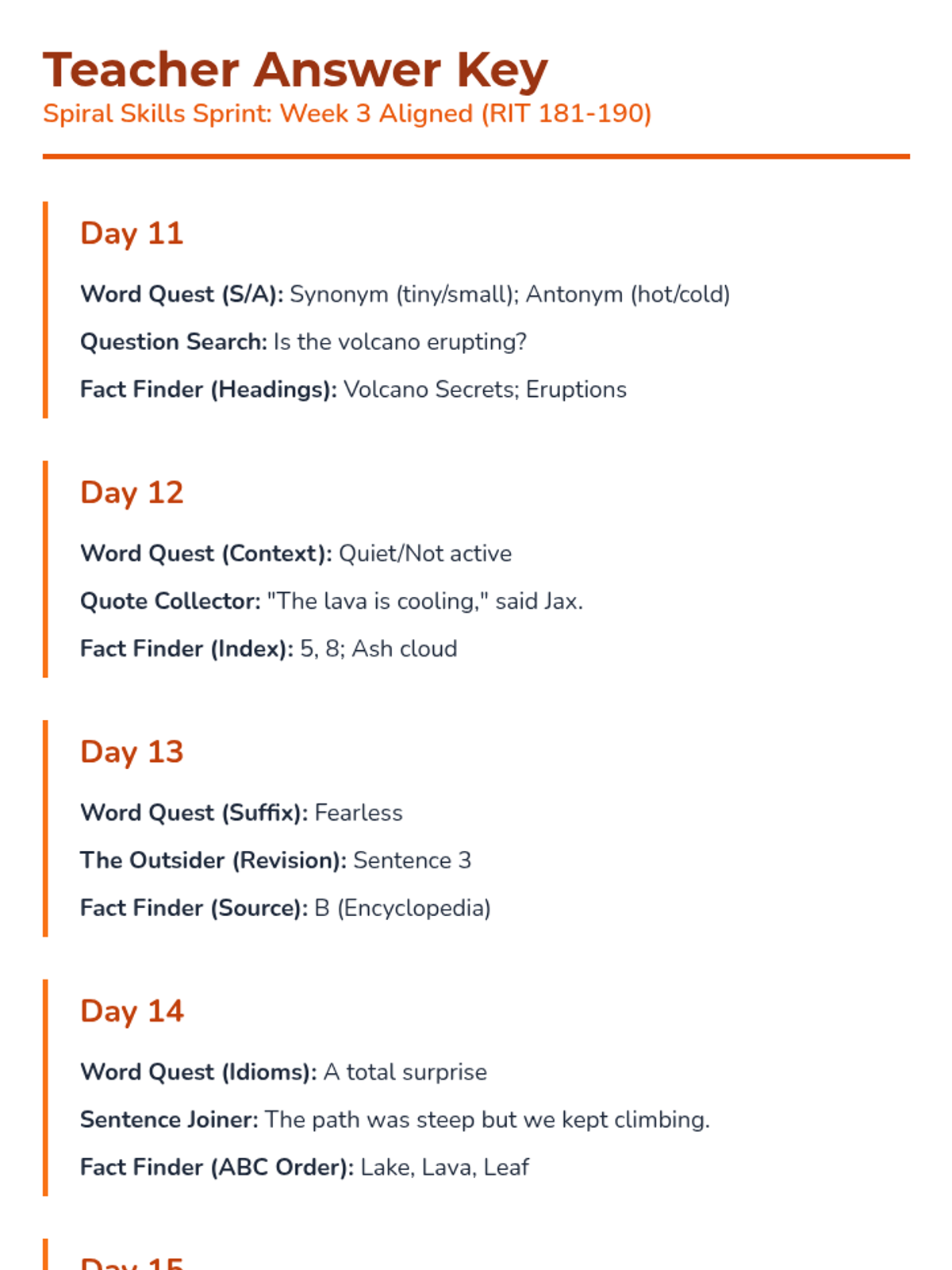
The third week dives deeper into complex word parts and research tools like indexes and glossaries, while introducing basic quotation marks and sentence combining.
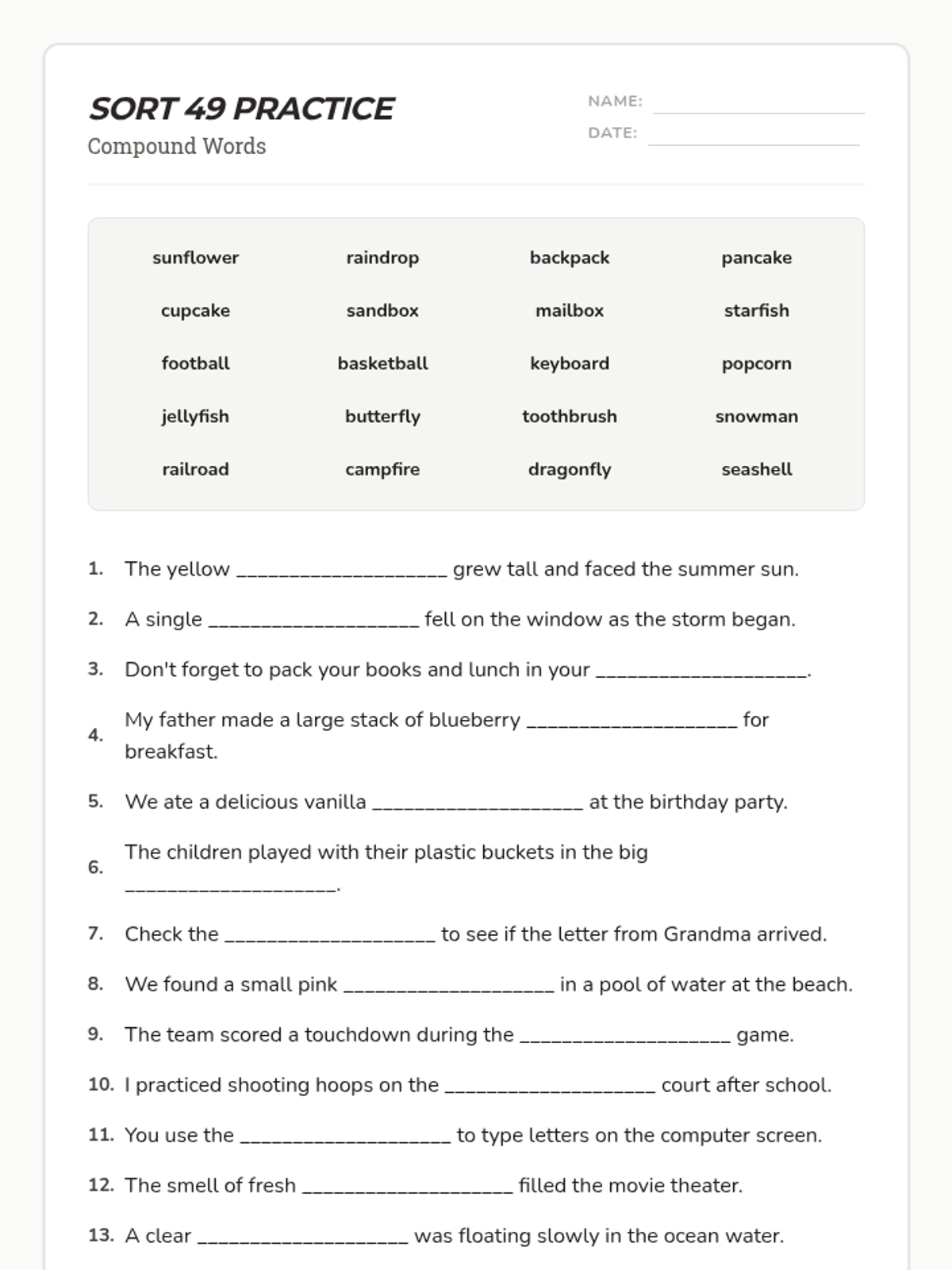
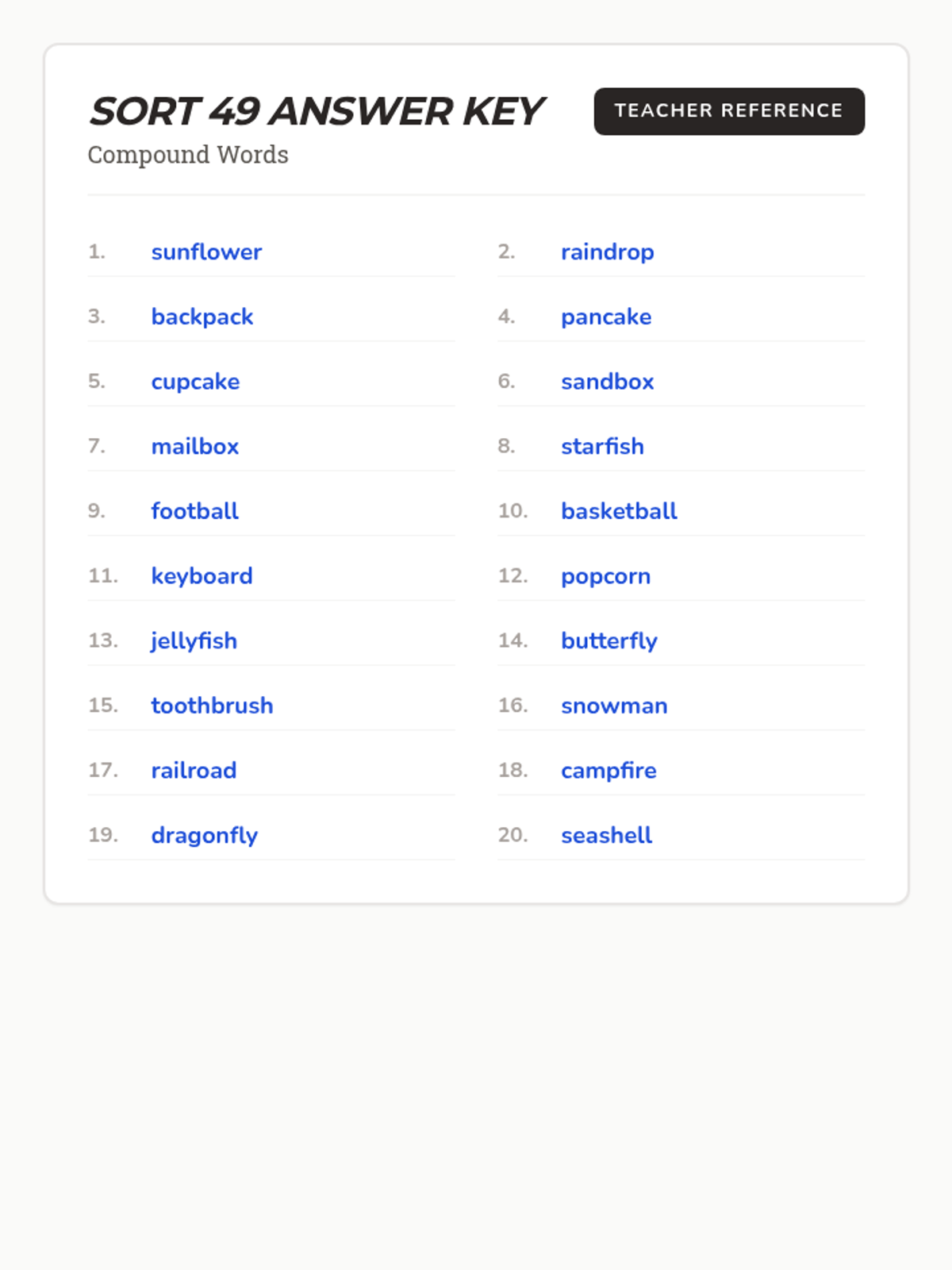
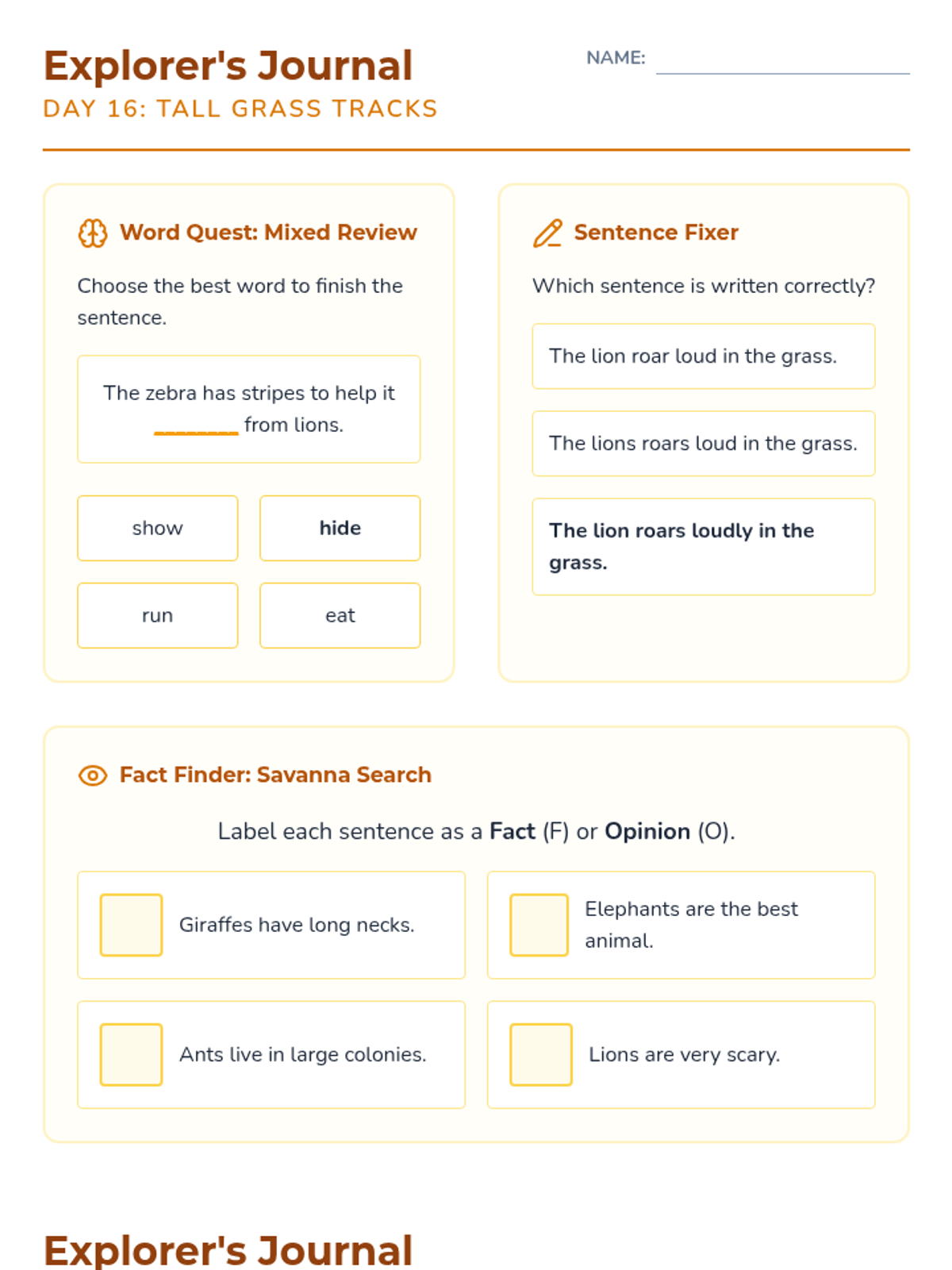
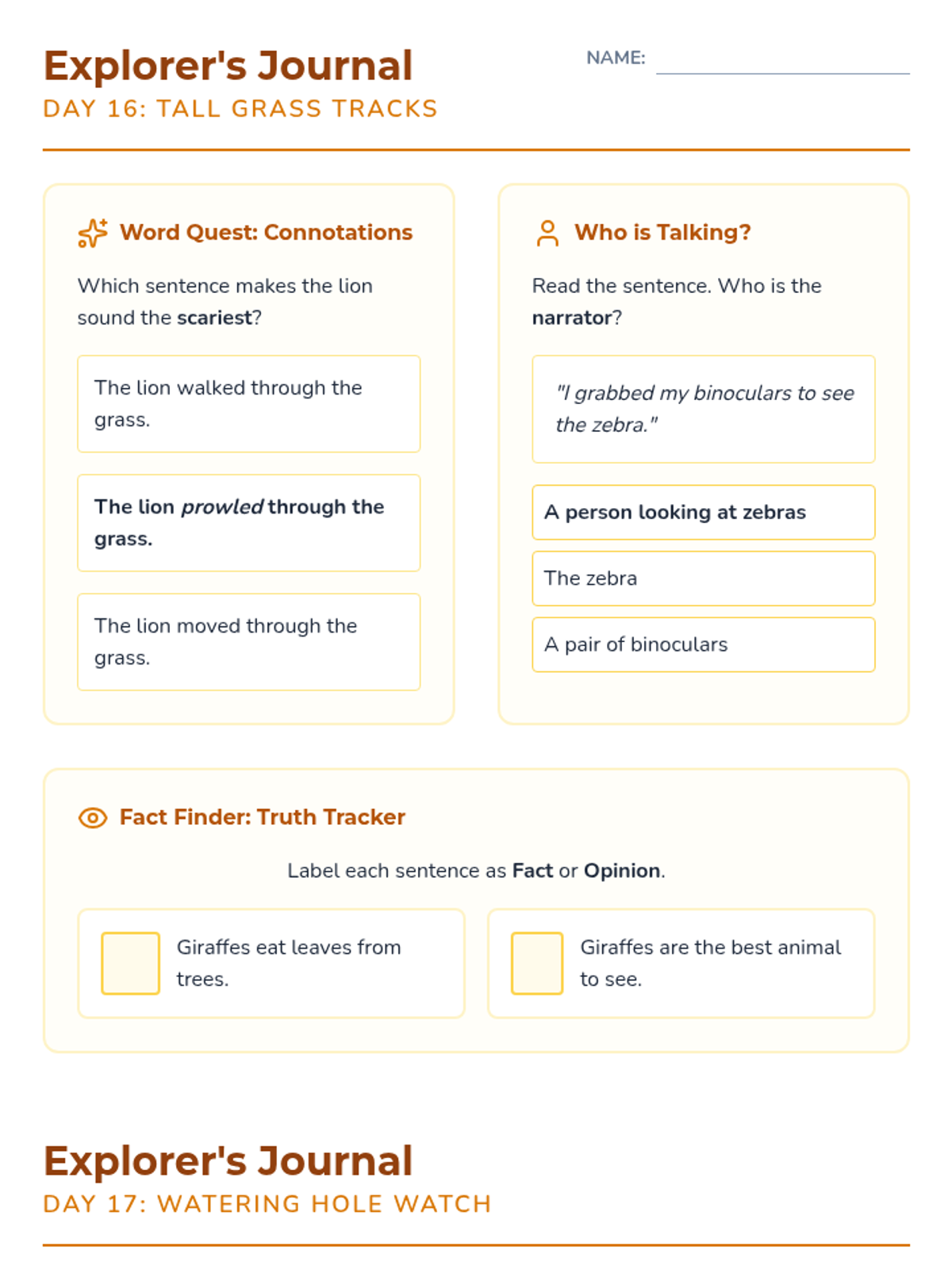
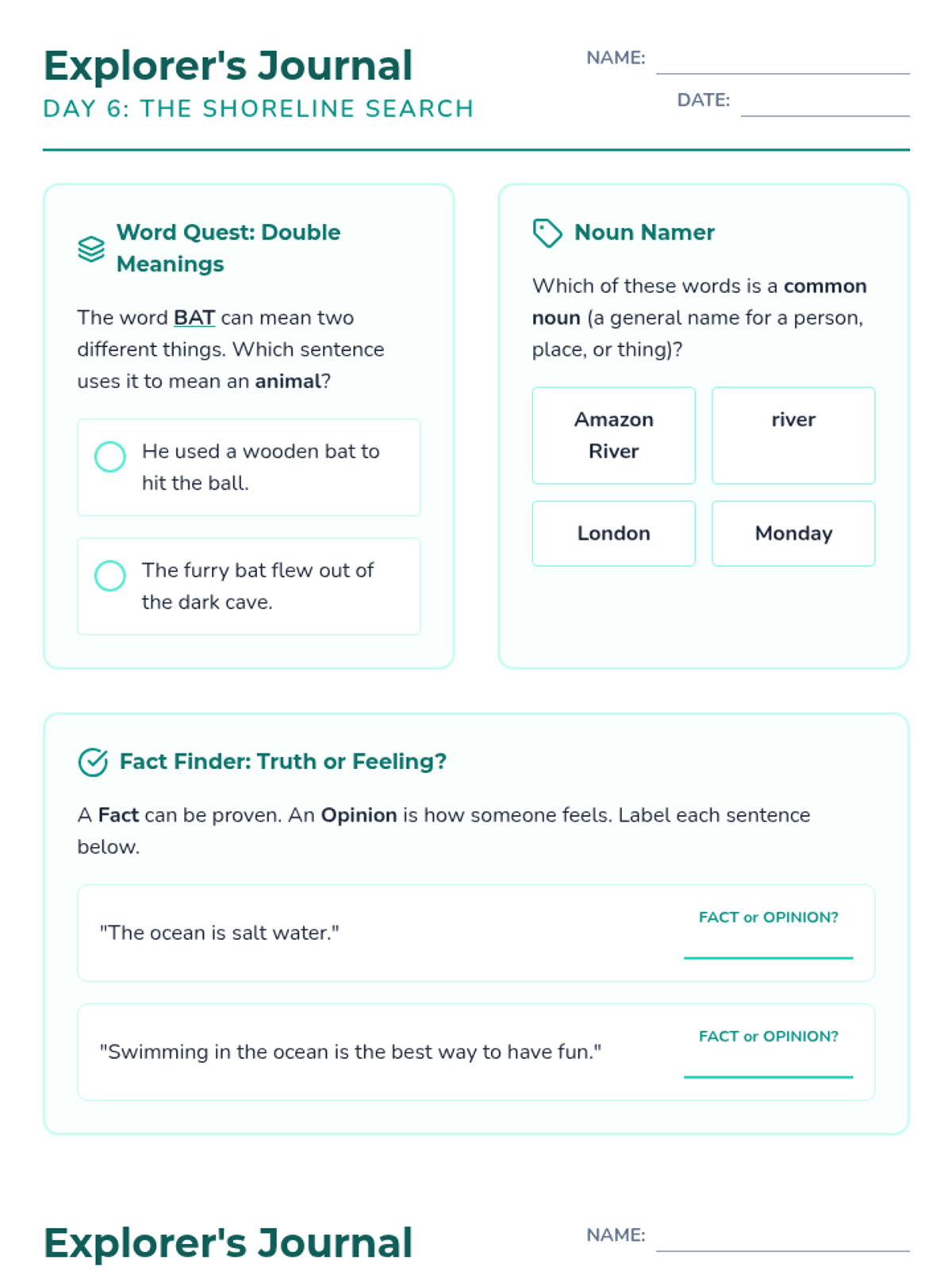
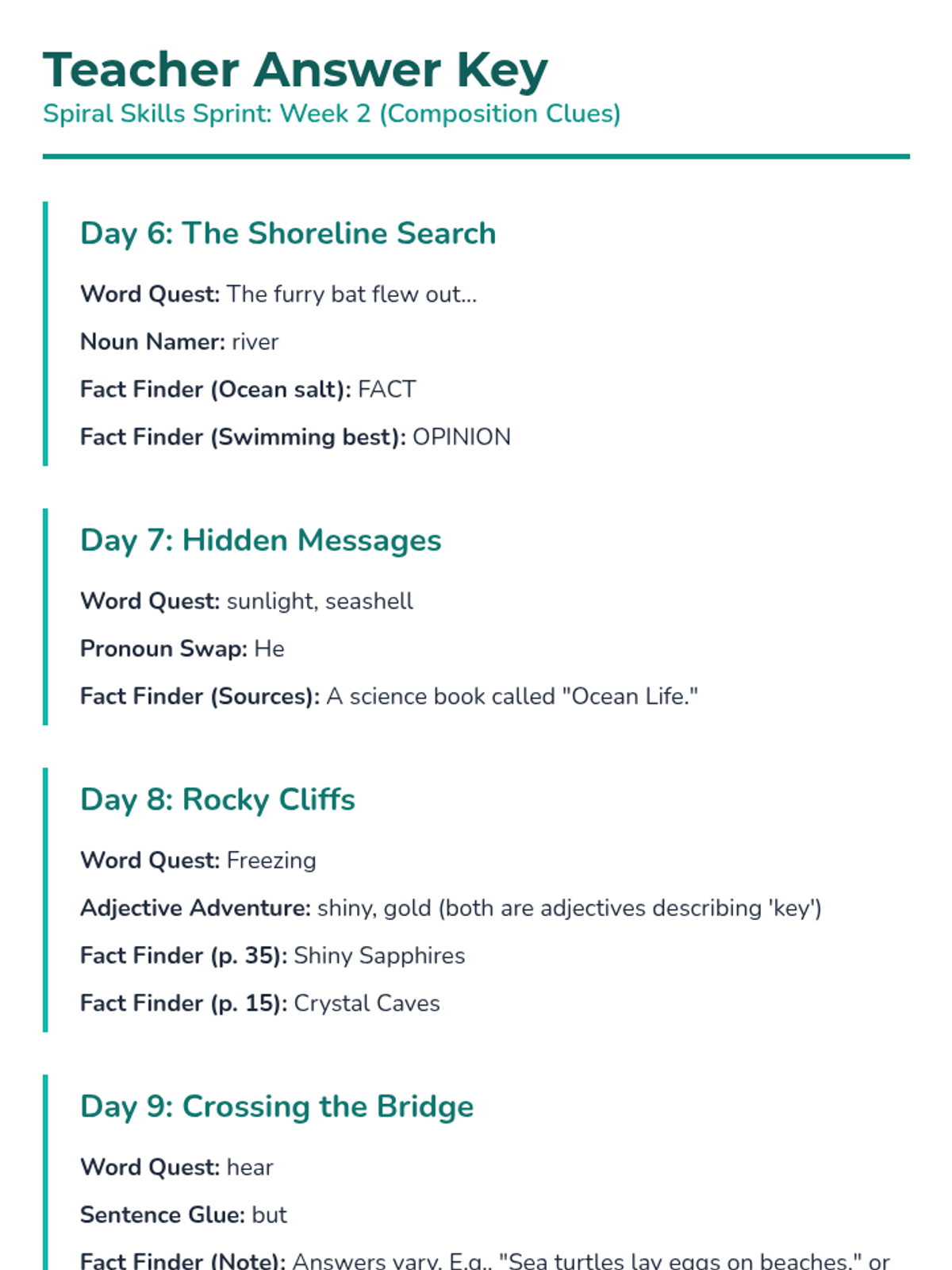
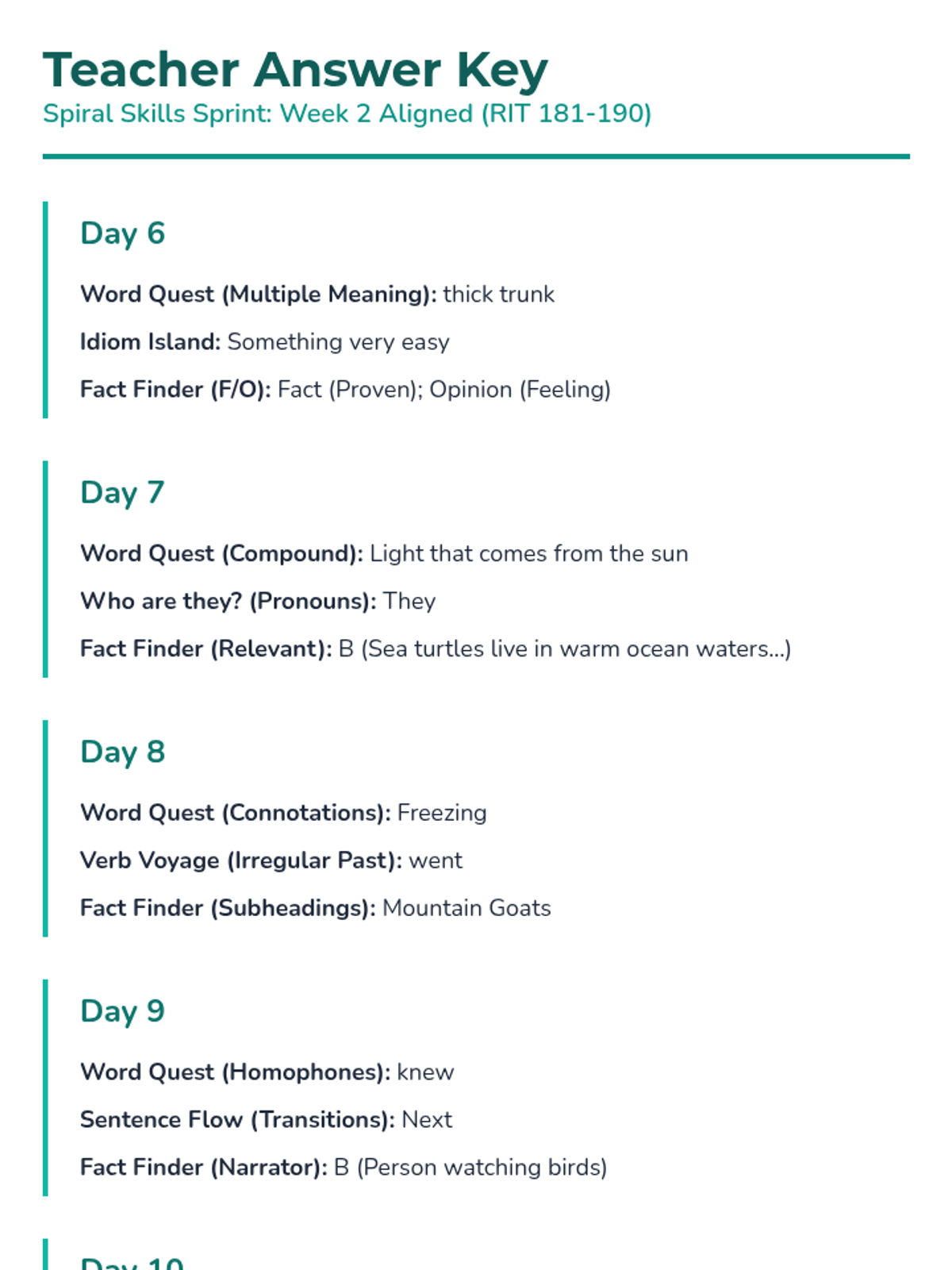
Week 2 shifts focus toward sentence structure and identifying reliable information sources, covering compound words, pronouns, and fact versus opinion.
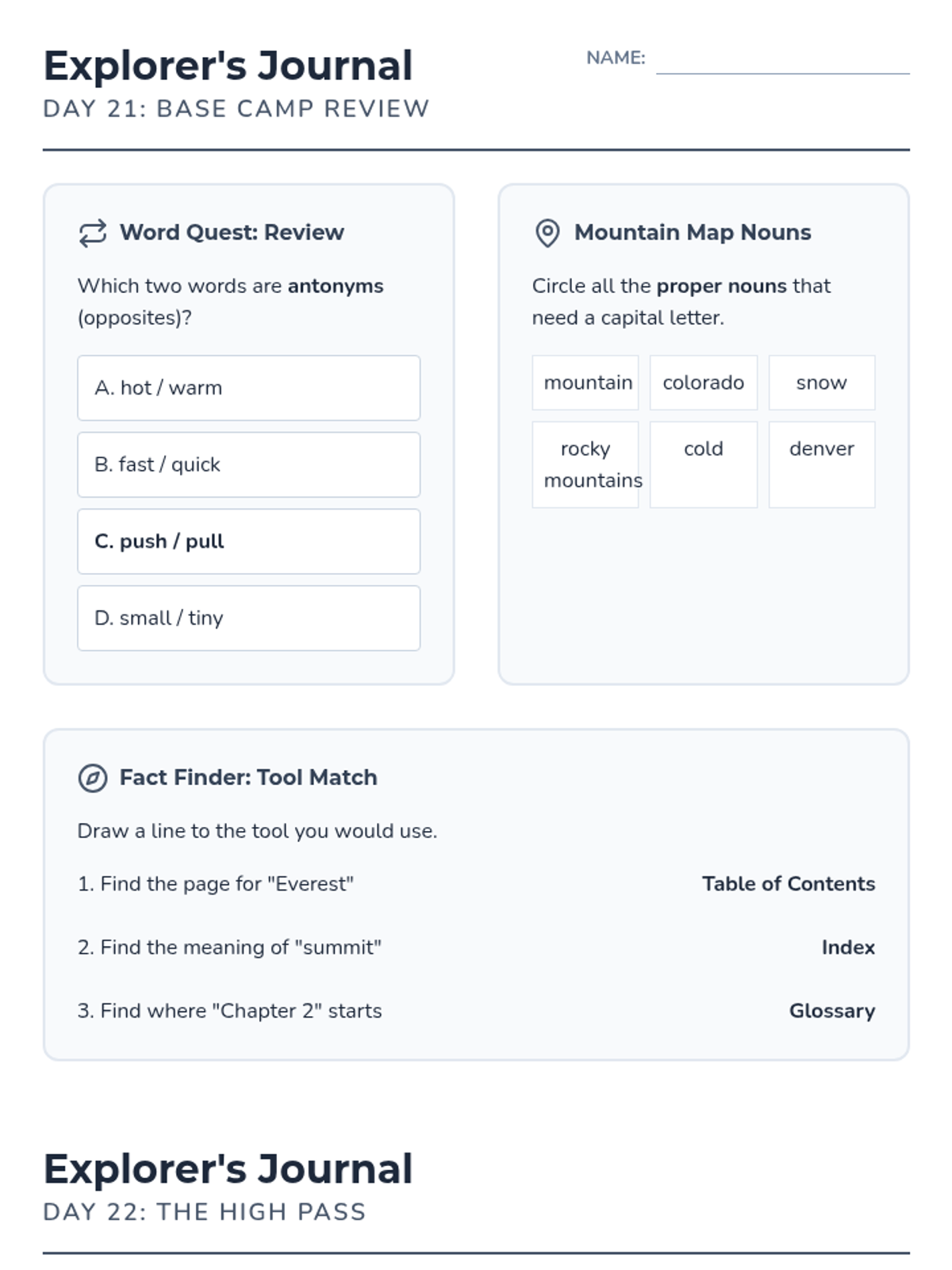
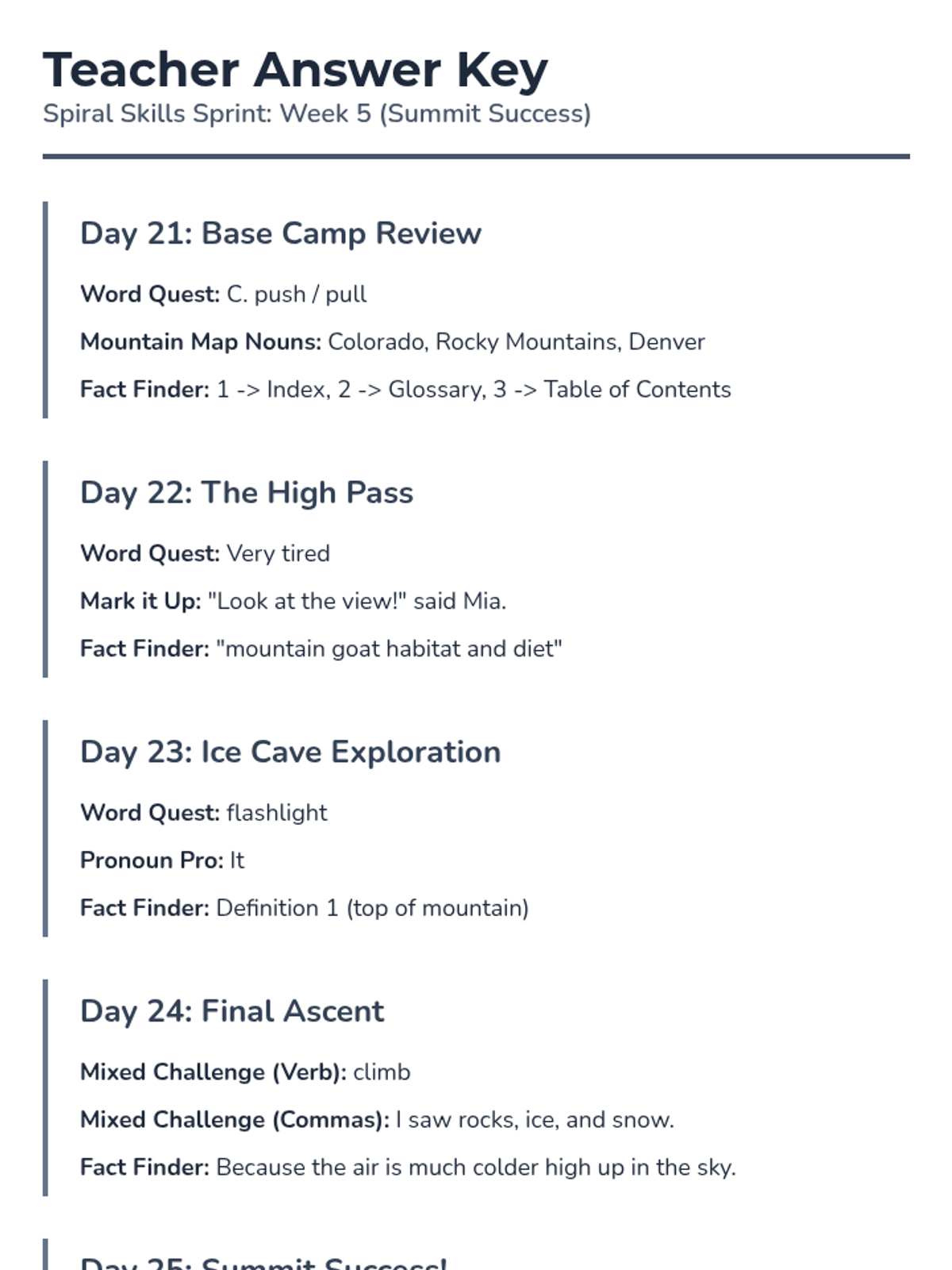
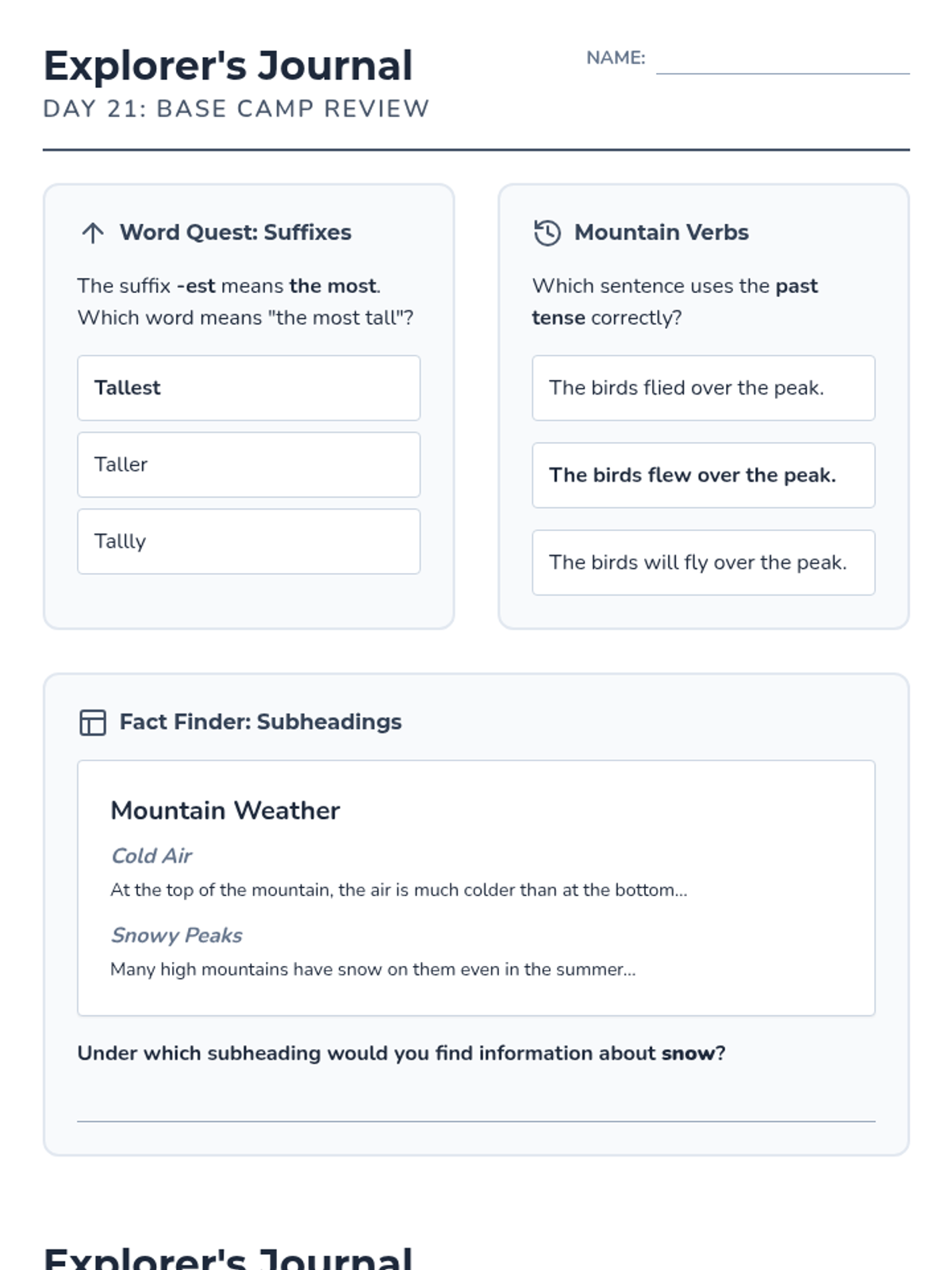
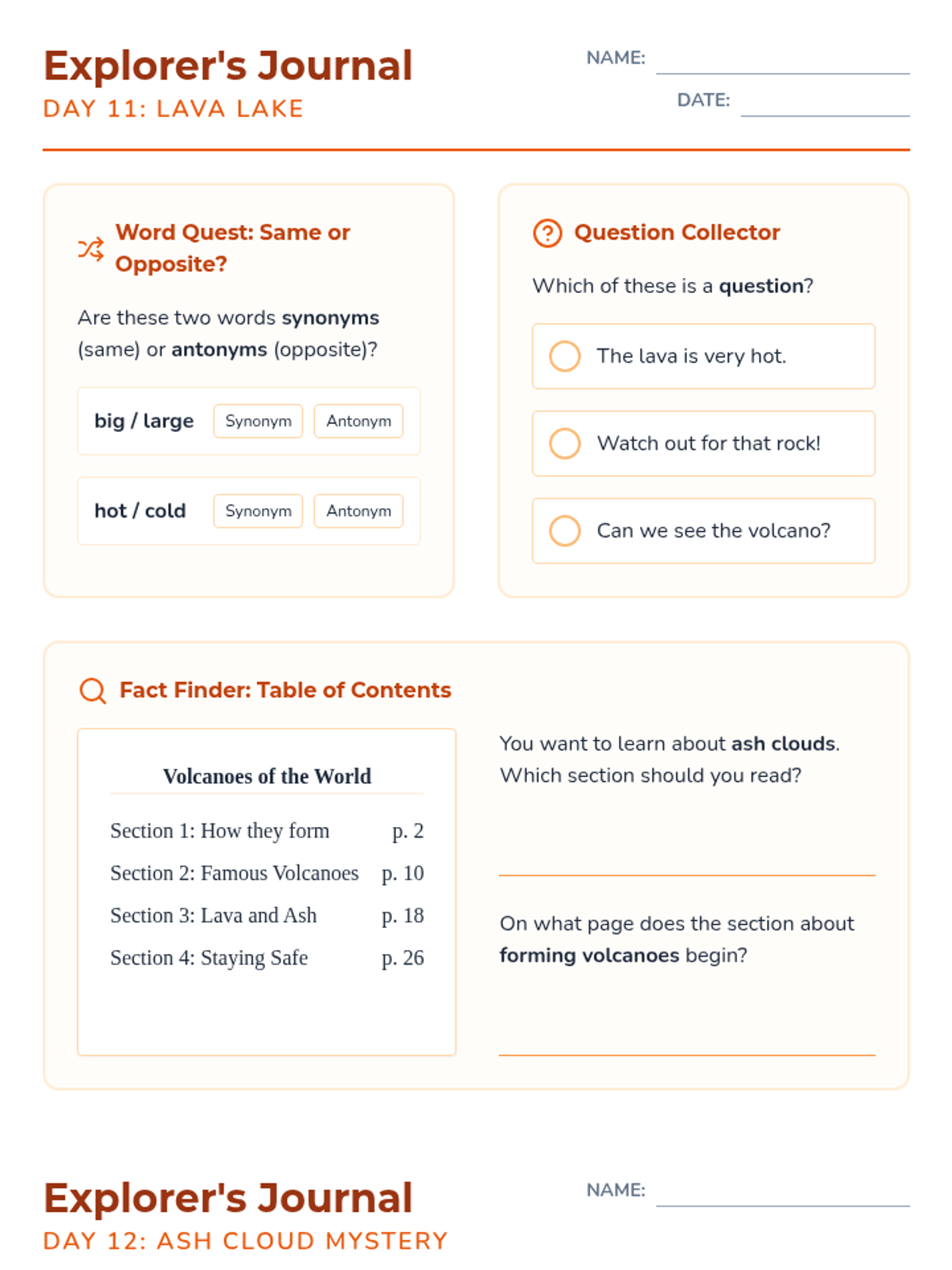
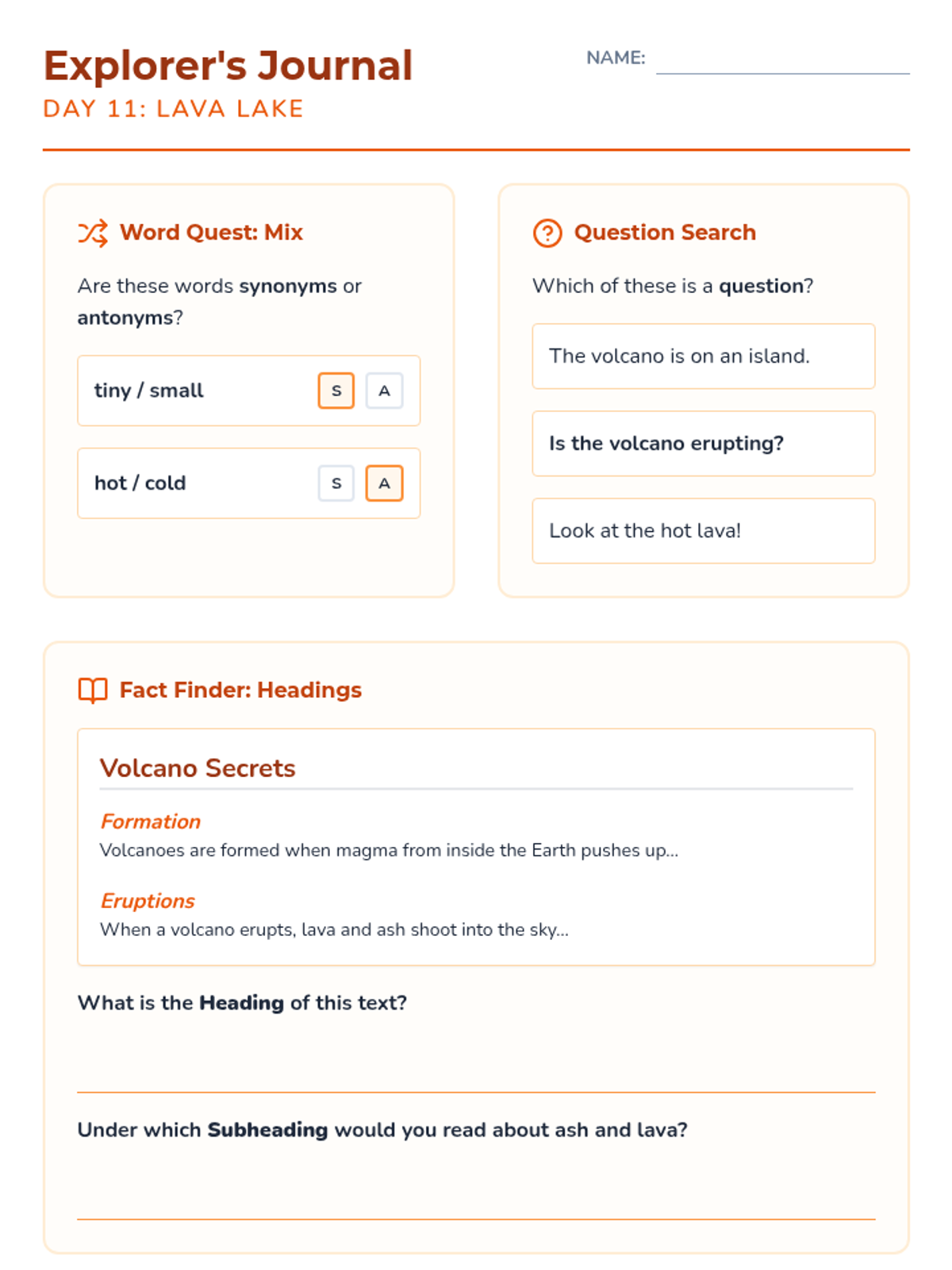
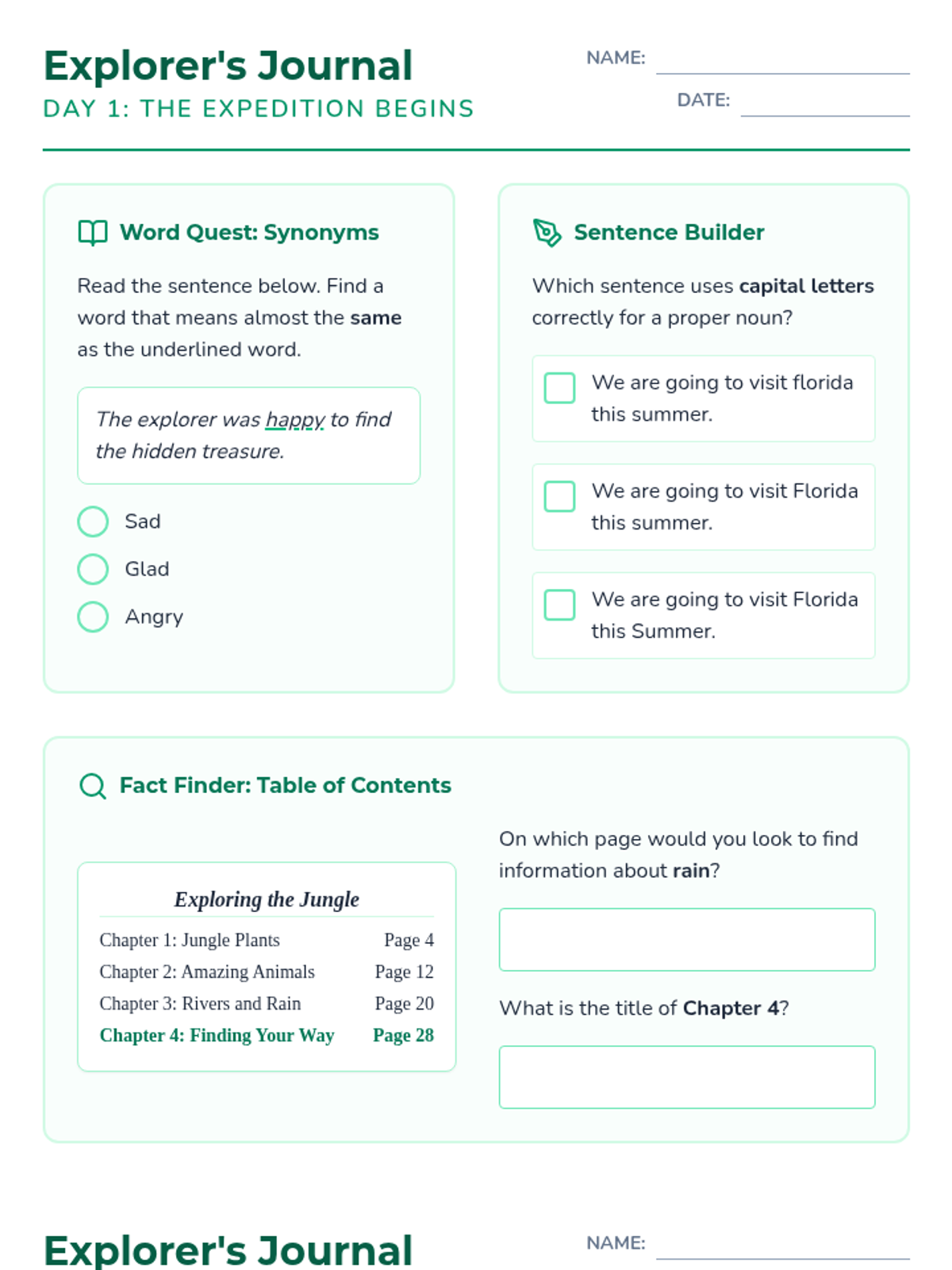
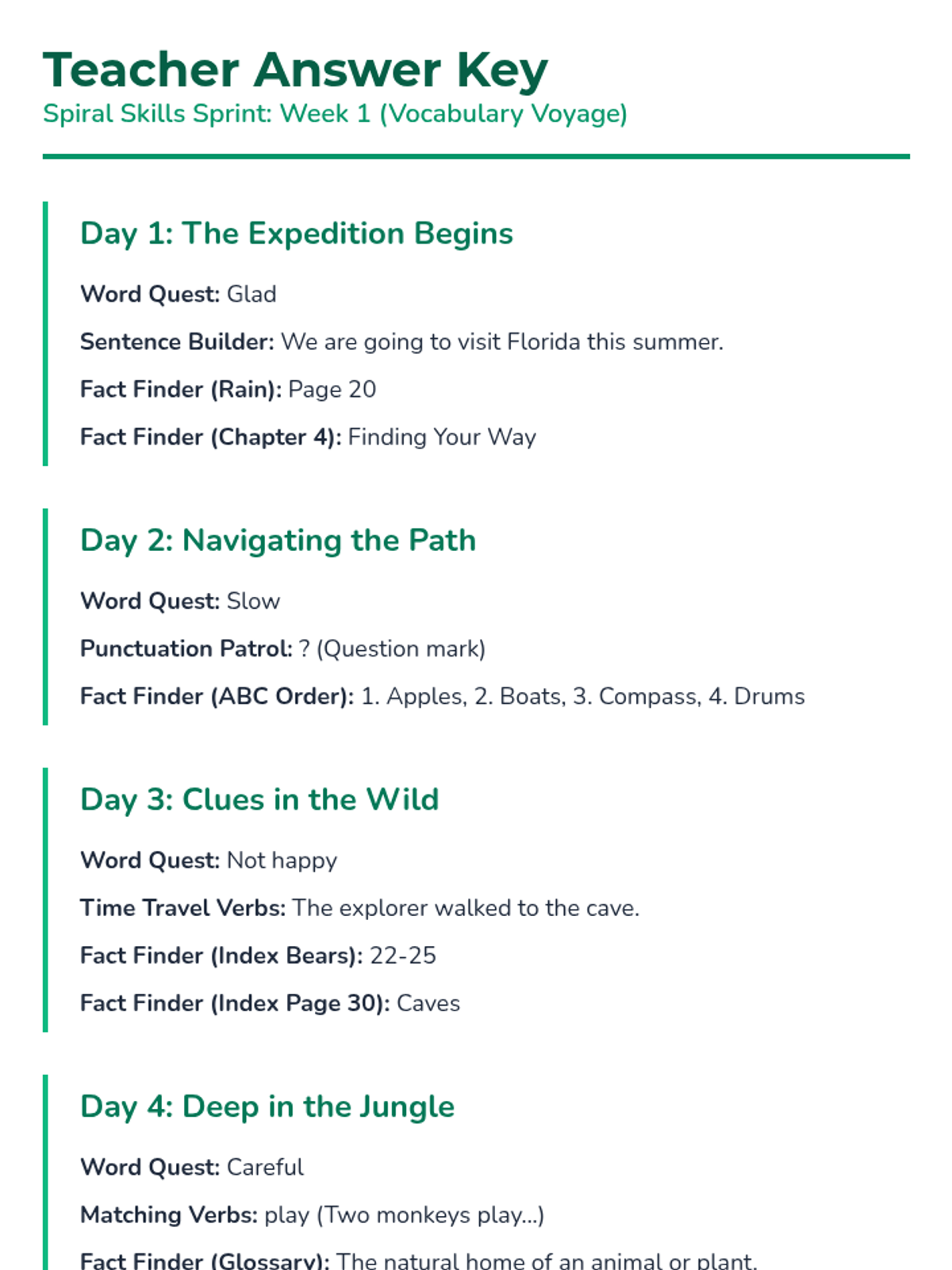
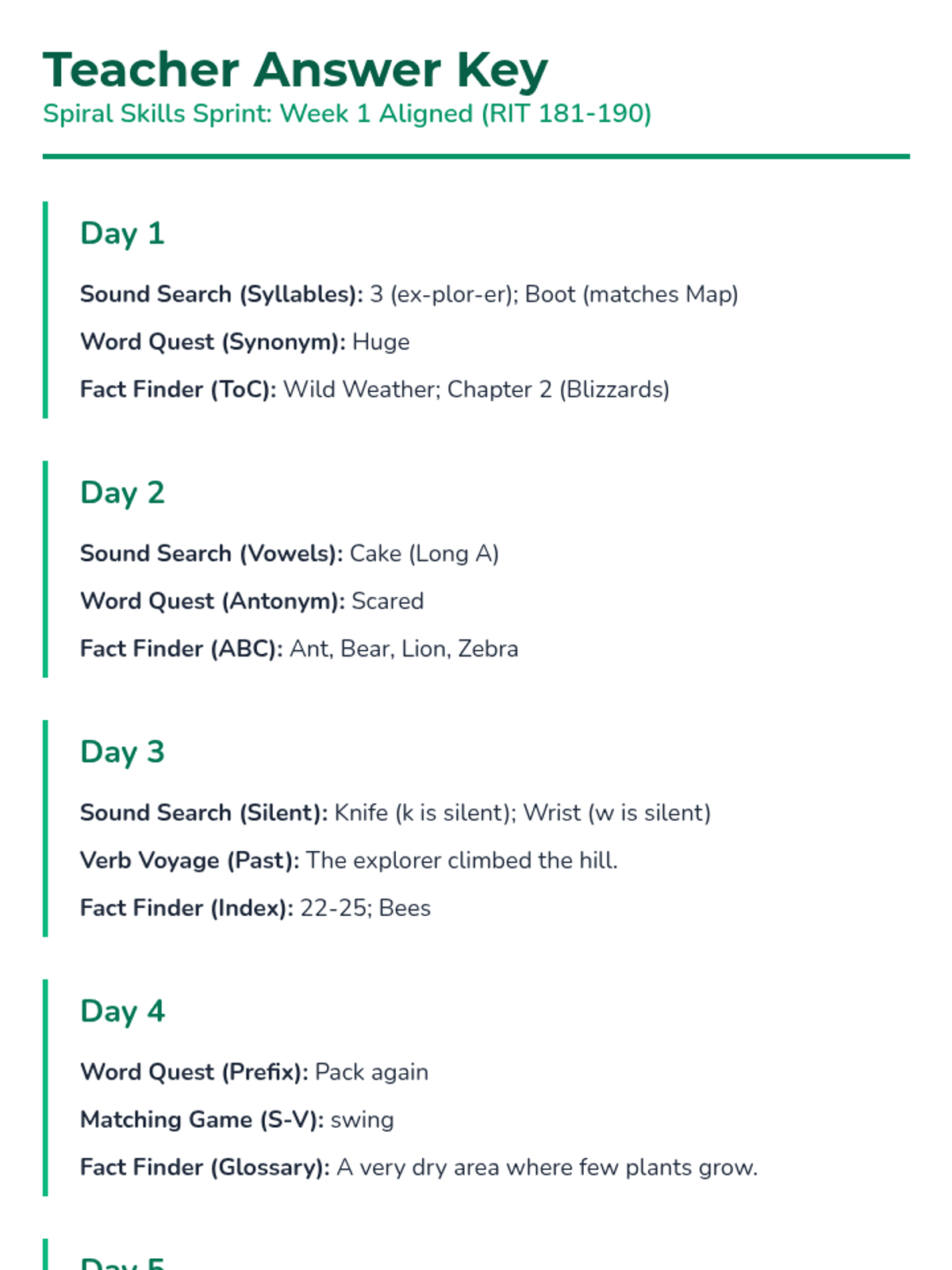
The first week of the Spiral Skills Sprint focuses on establishing foundational vocabulary and research habits, including synonyms, proper nouns, and navigating a Table of Contents.
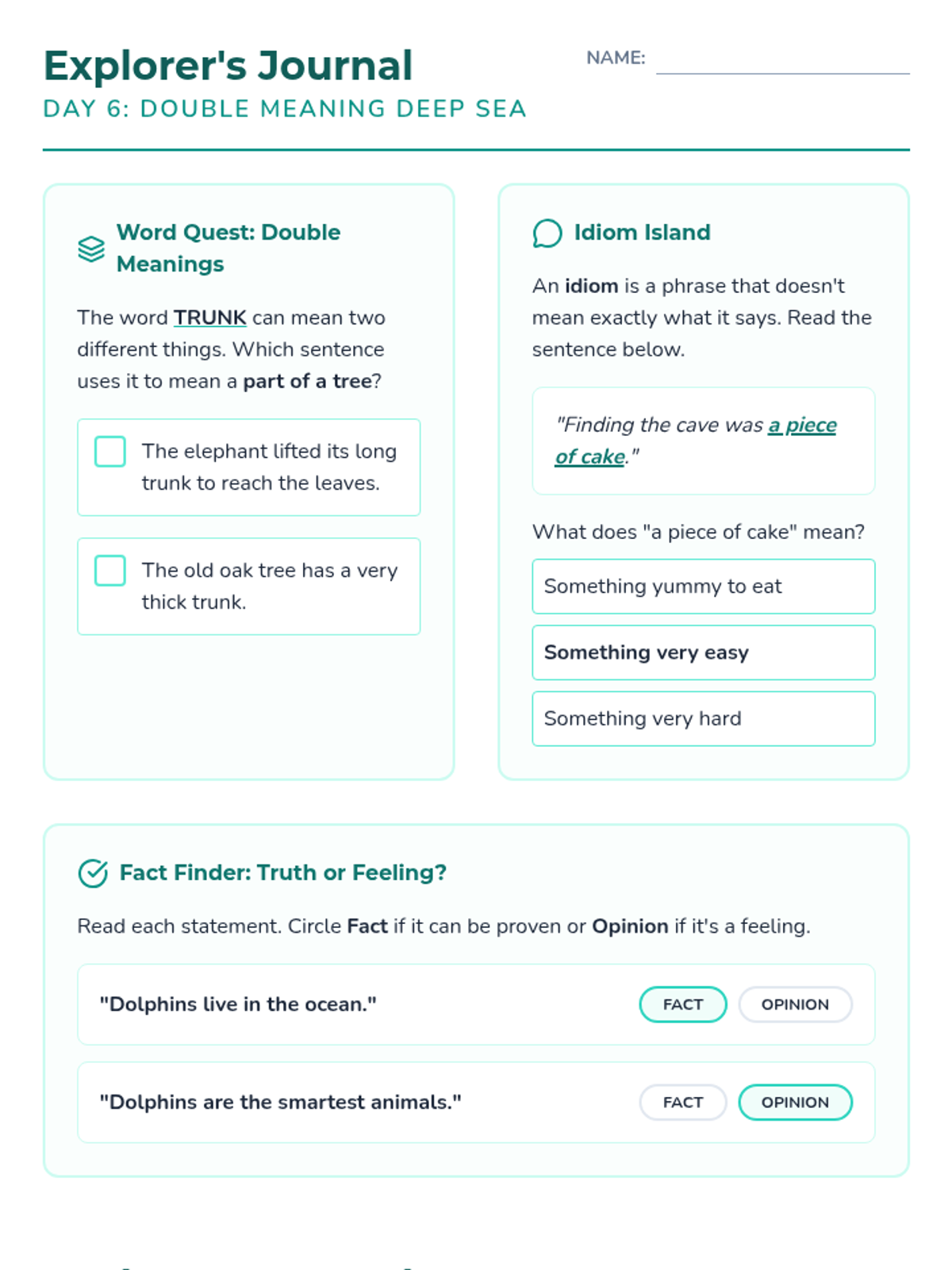
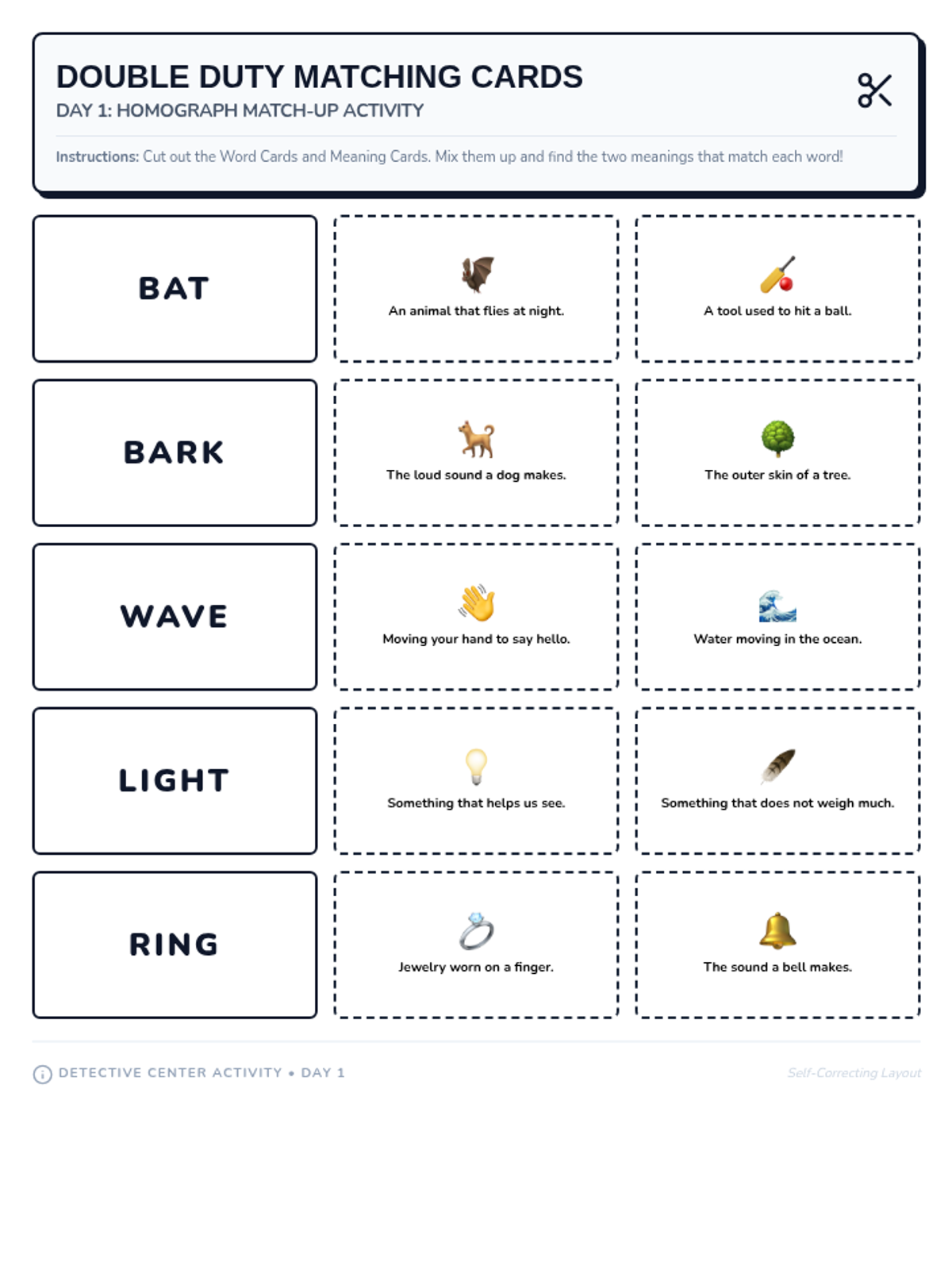
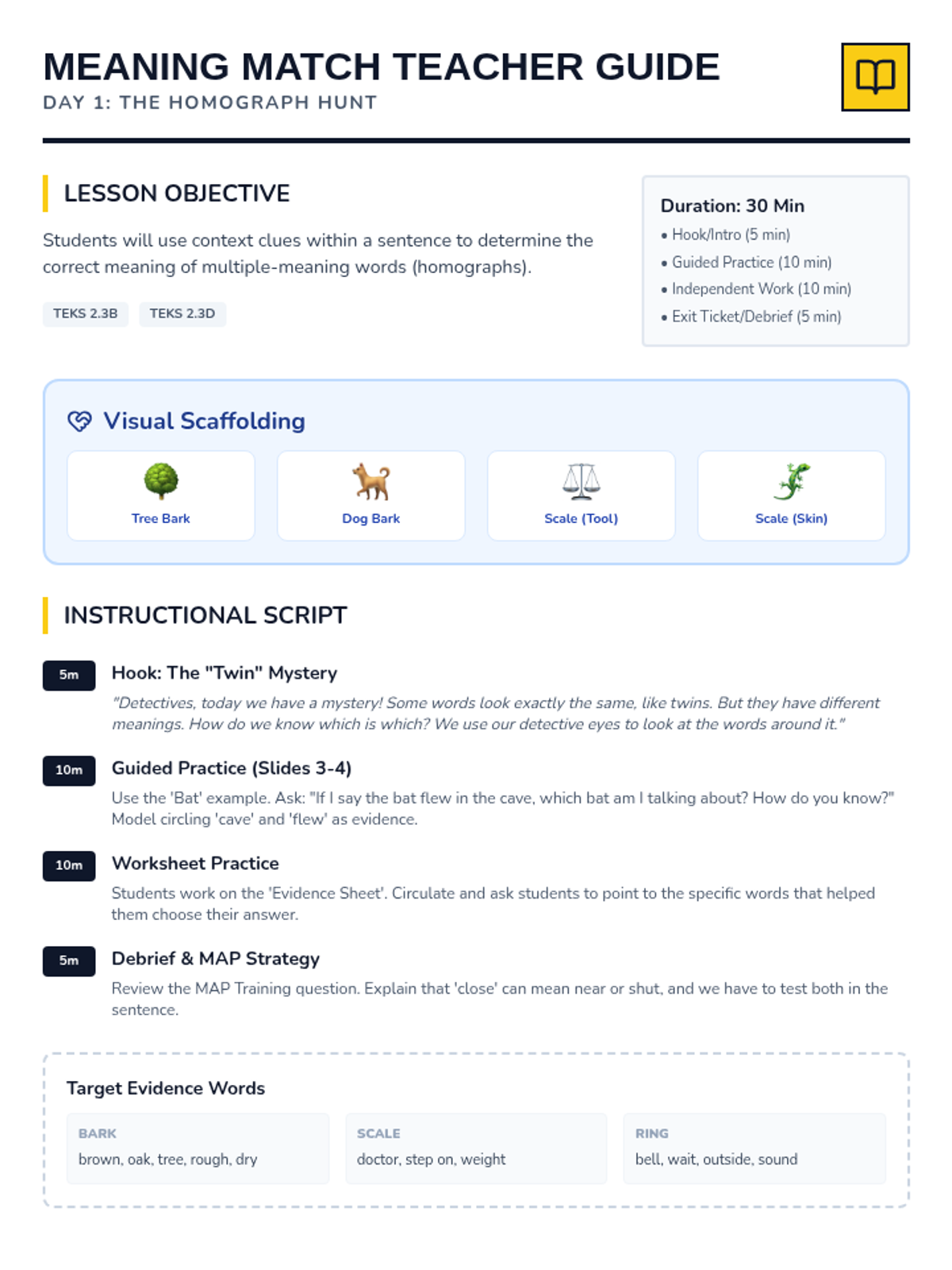
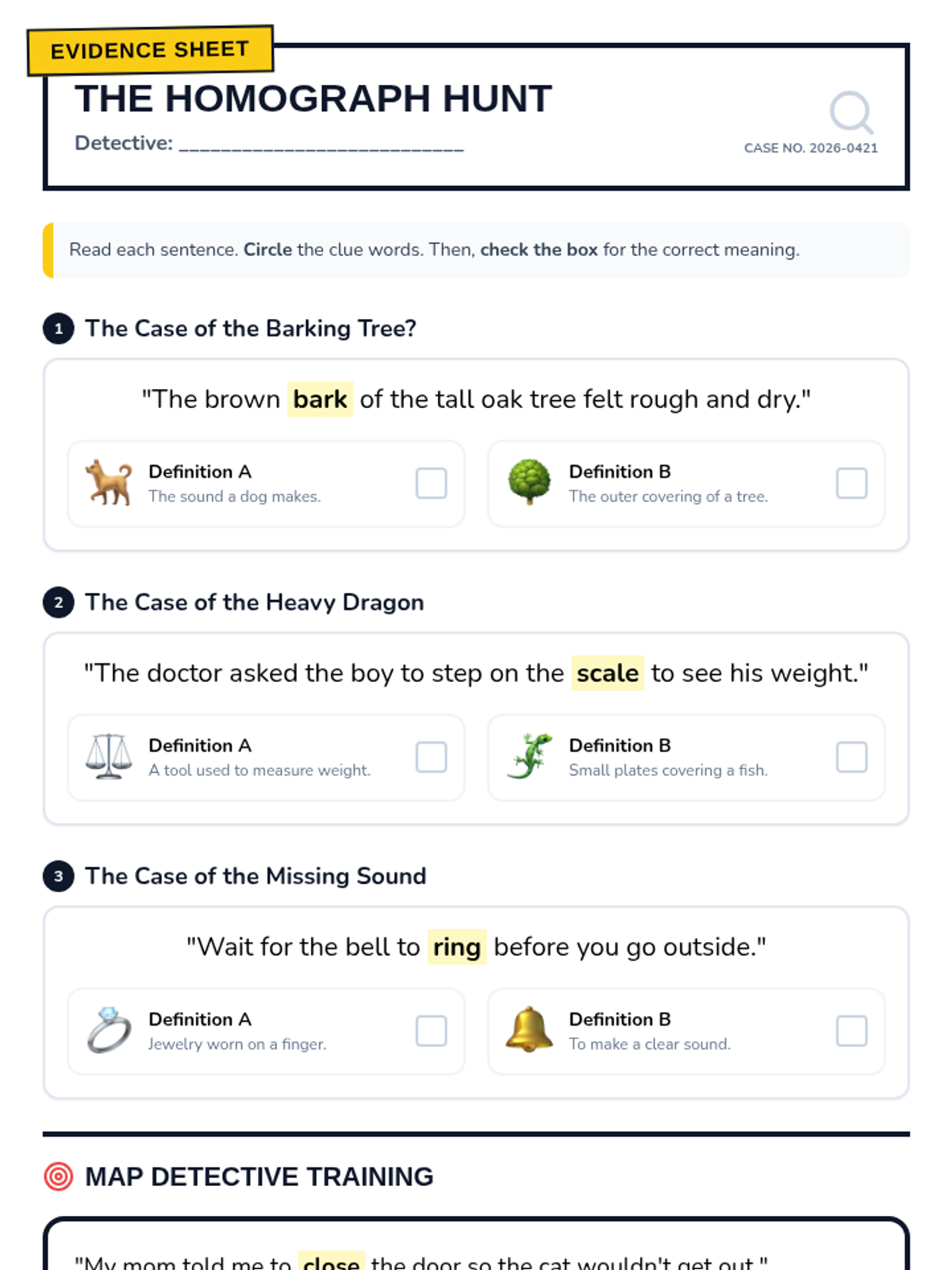
Day 1 focuses on multiple-meaning words (homographs) and using sentence-level context to identify which meaning is intended. Students will practice with words like 'bat', 'wave', and 'bark' using visual aids.
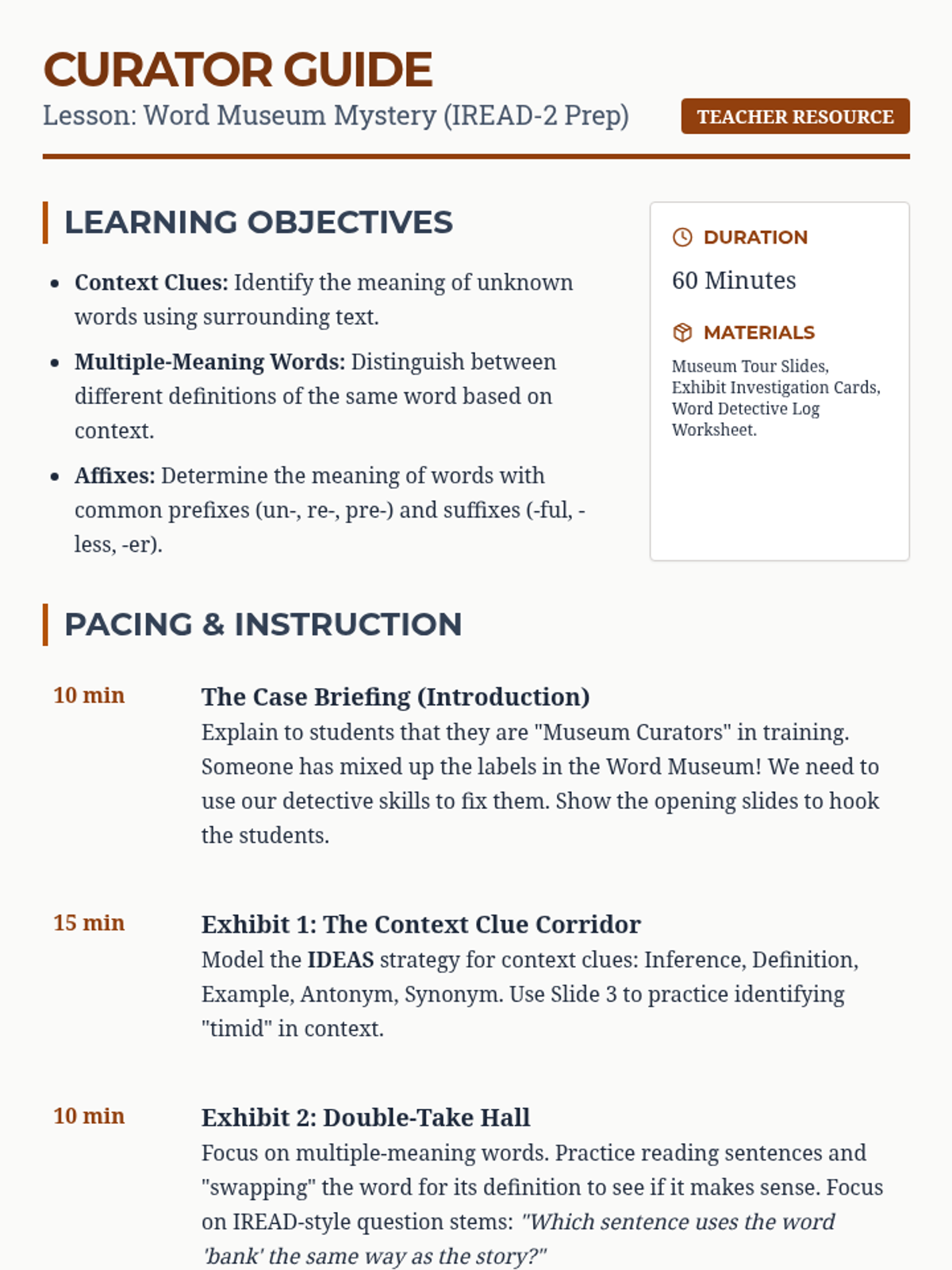
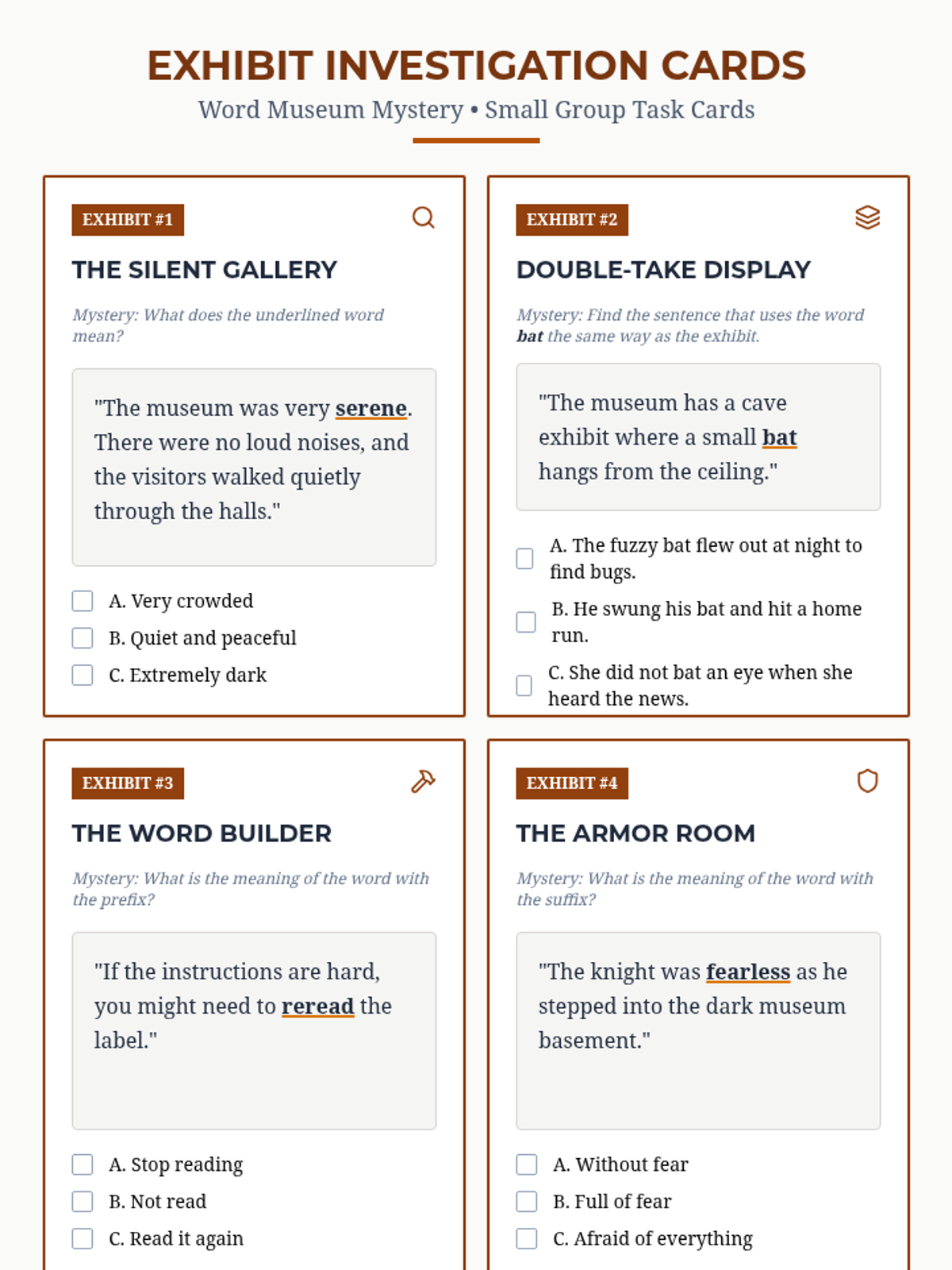
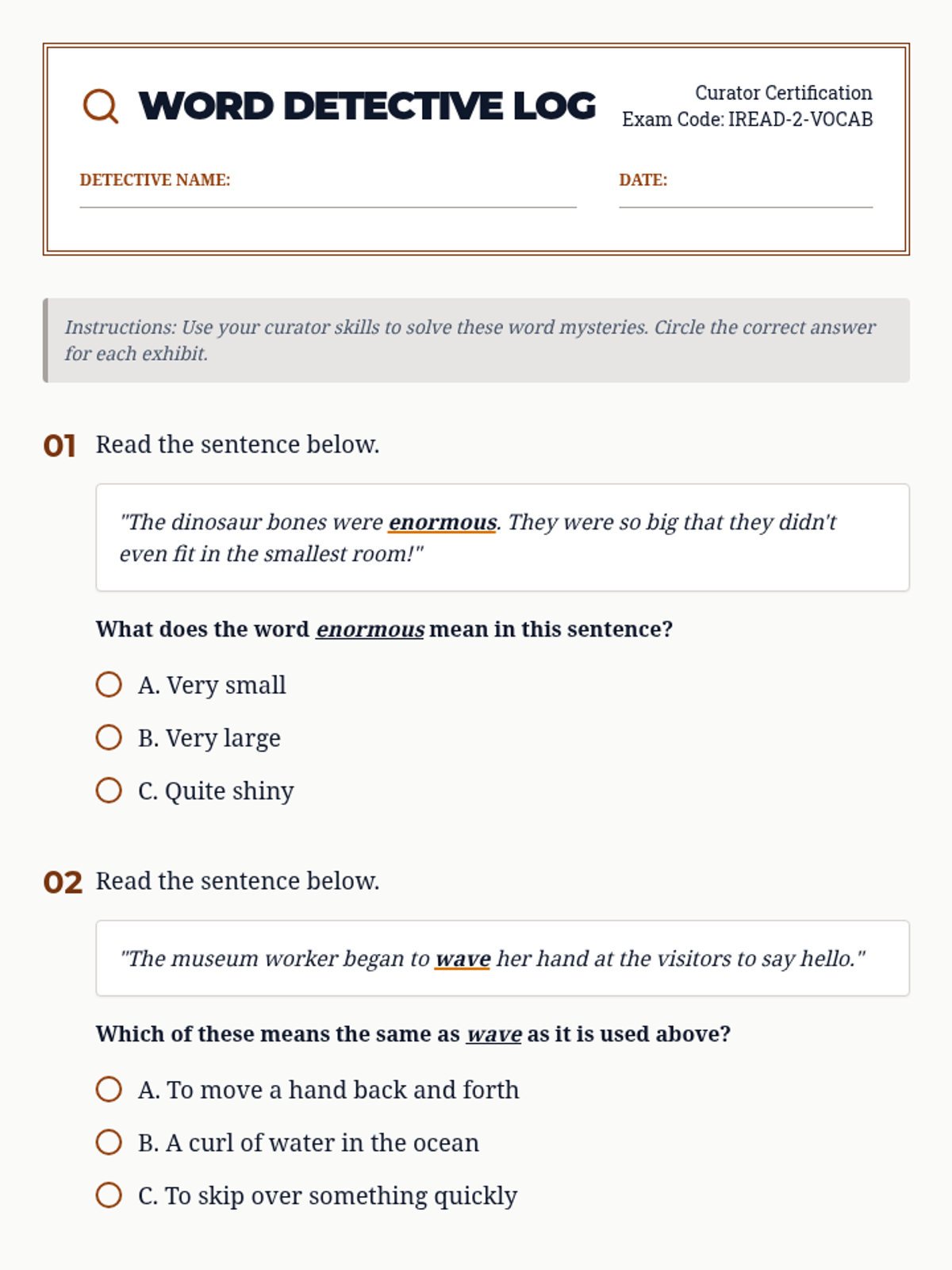
An interactive lesson reviewing context clues, multiple-meaning words, and affixes through a "Museum Mystery" theme tailored for Indiana IREAD-2 preparation.
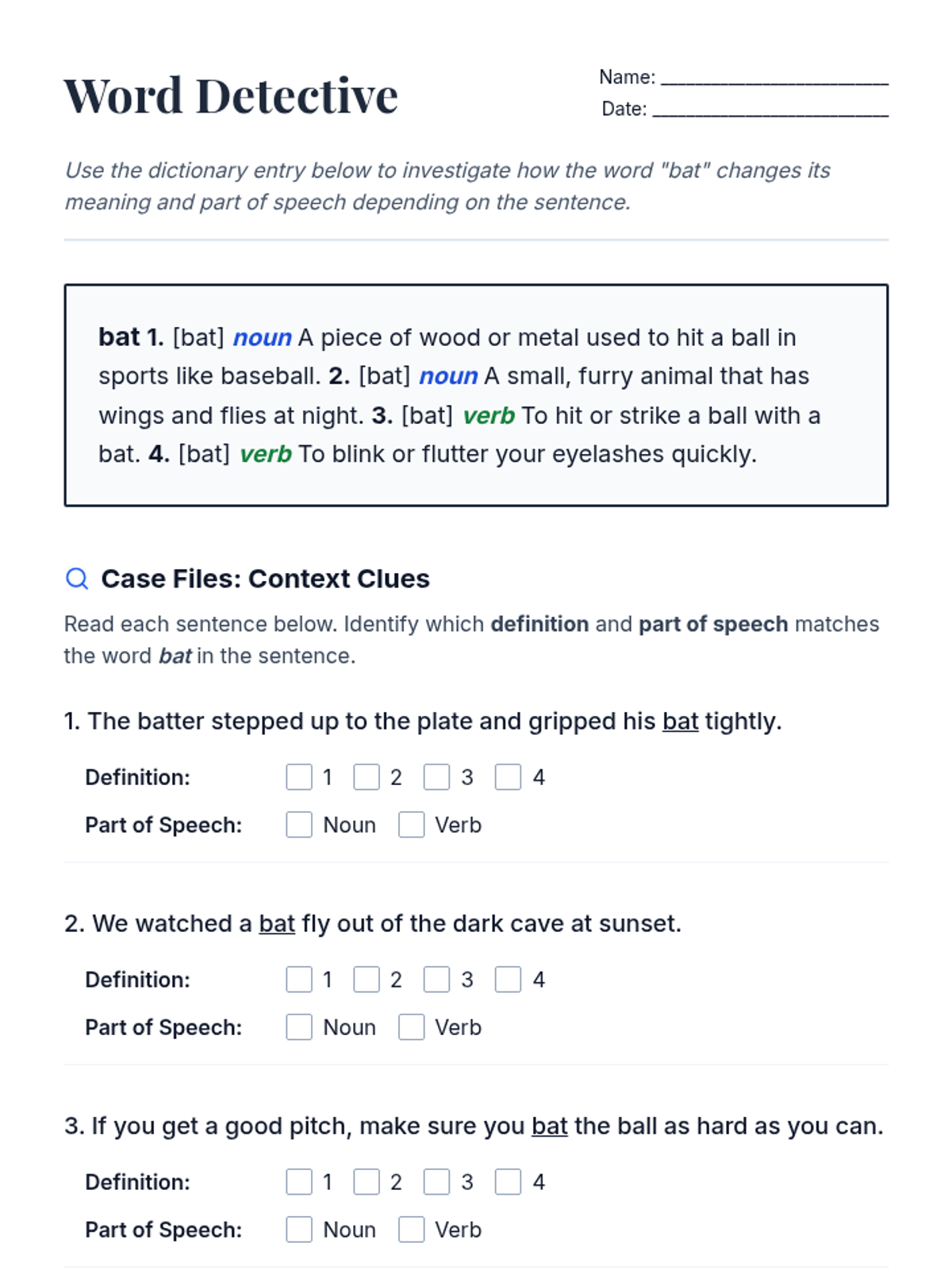
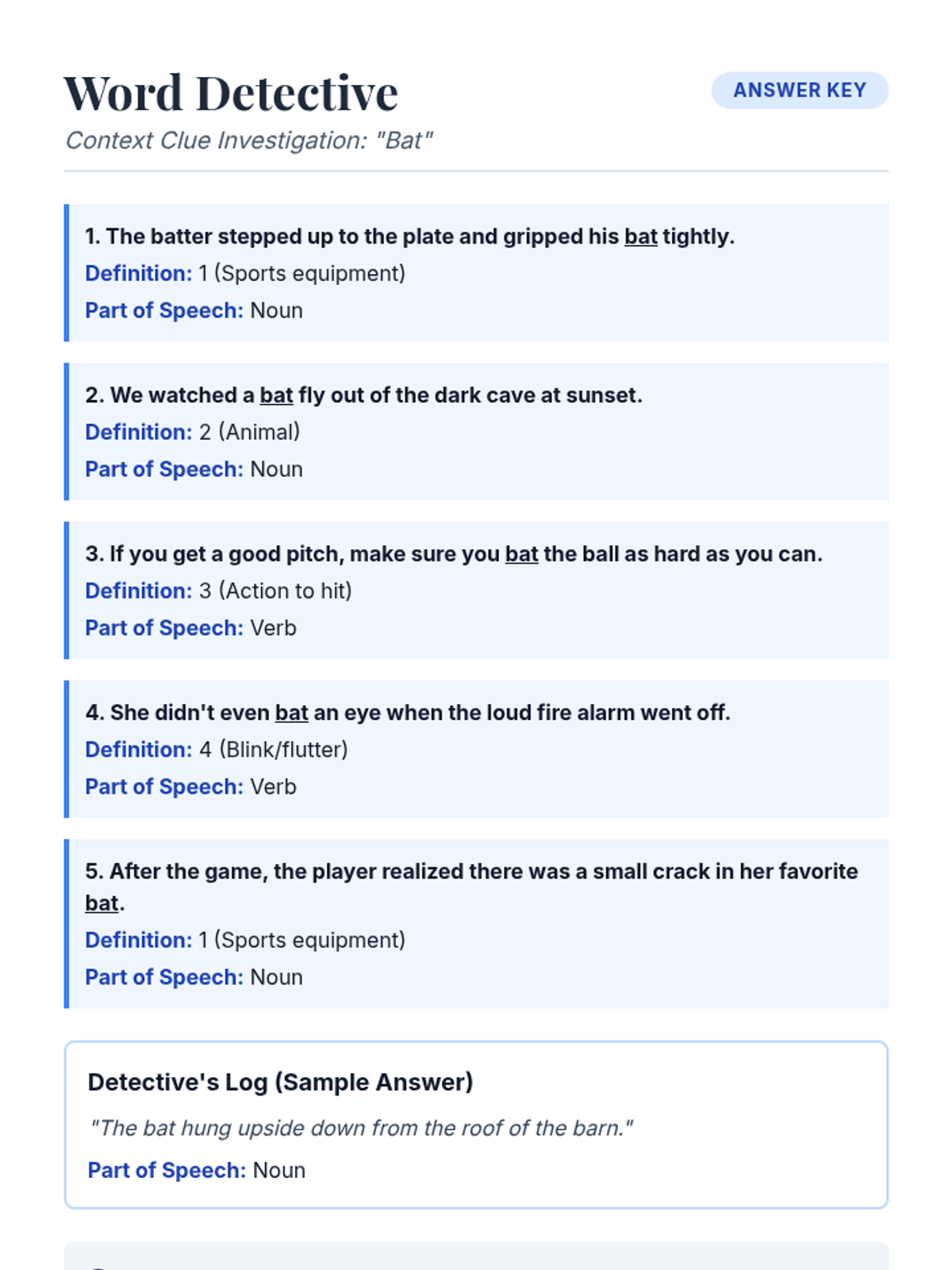
A lesson focused on using dictionary entries and context clues to identify the meaning of multiple-meaning words (homonyms).
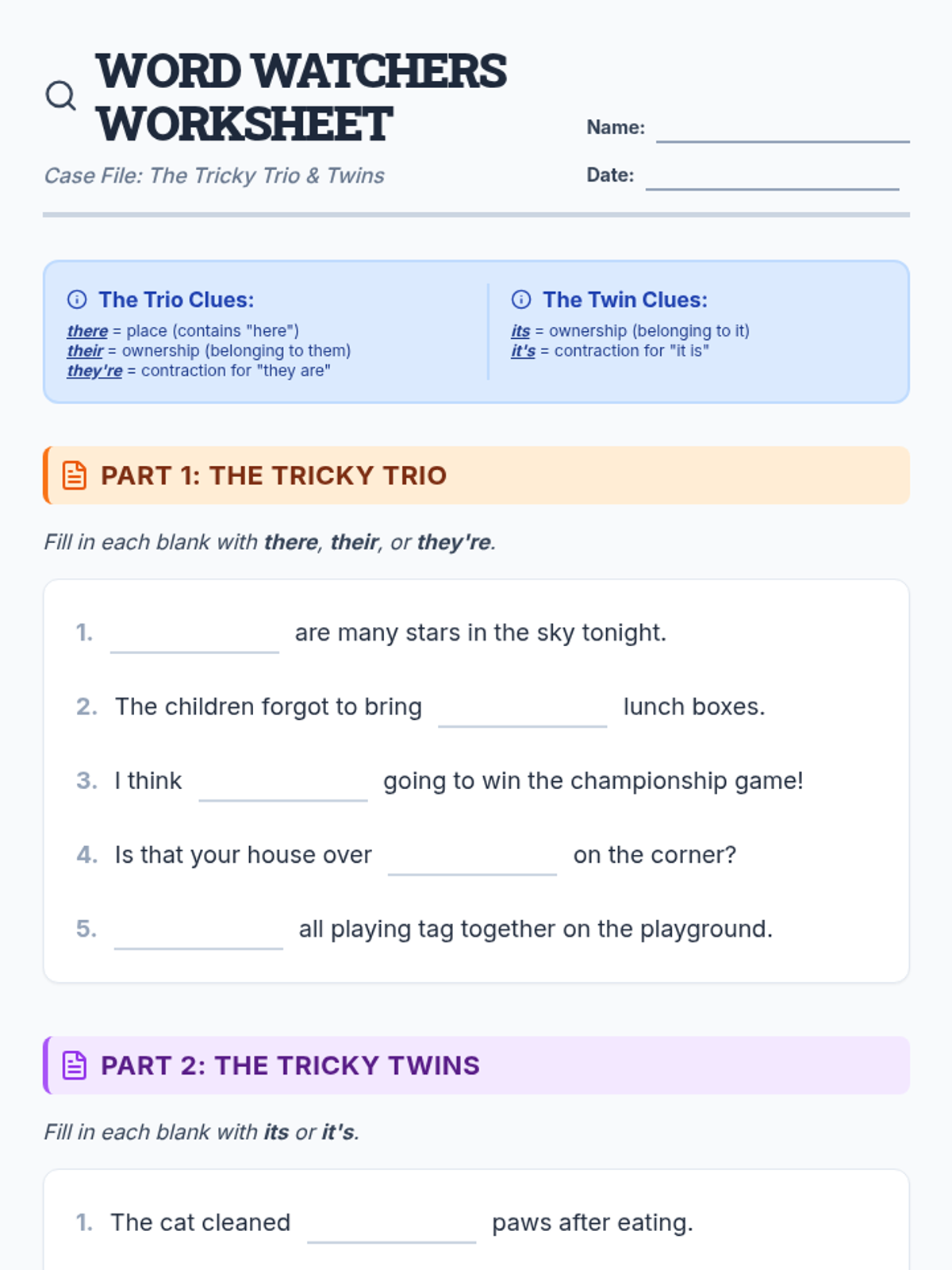
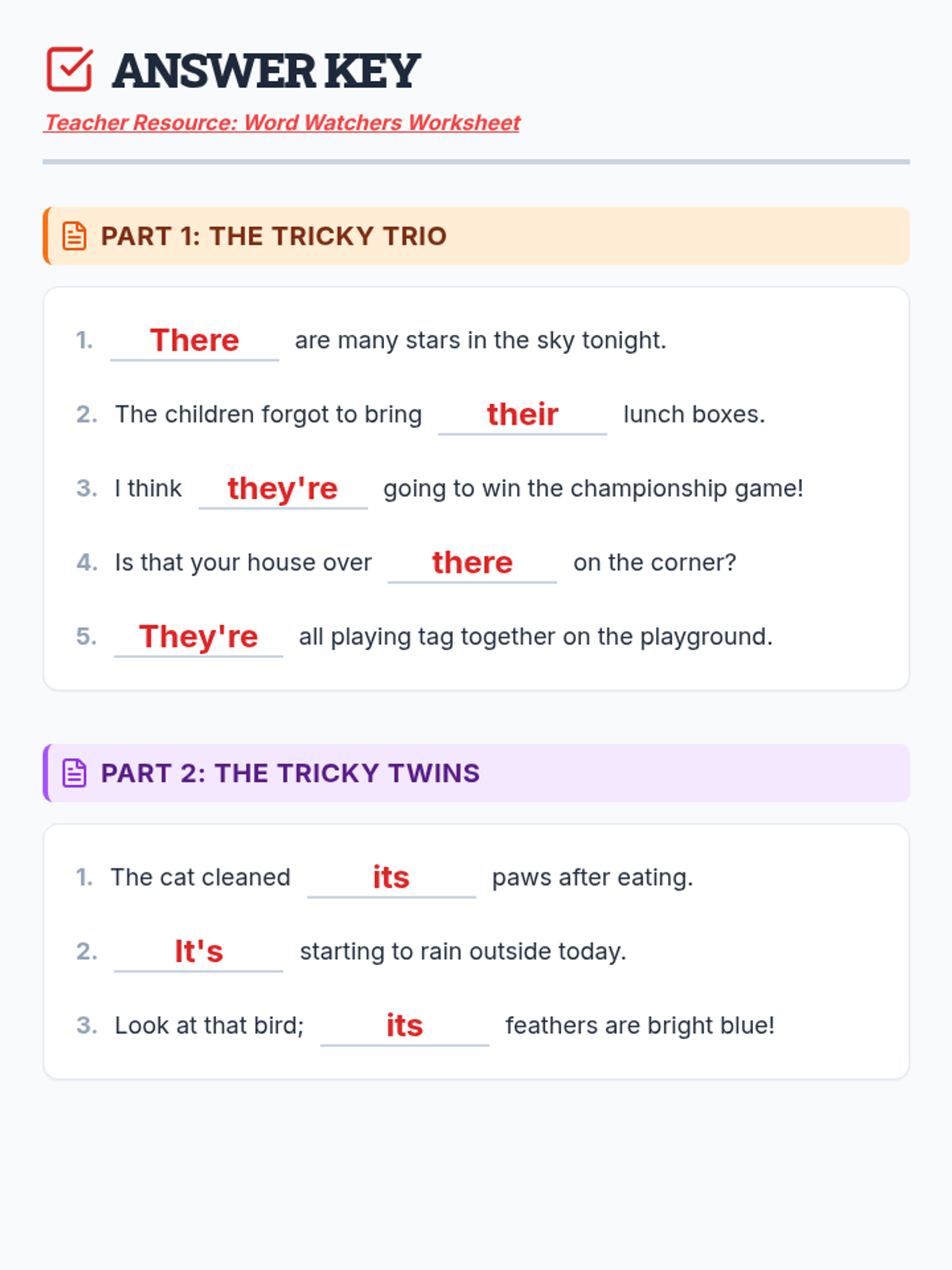
A lesson focused on distinguishing between common homophones and contractions: there/their/they're and its/it's for third-grade students. Includes visual aids and hands-on practice.
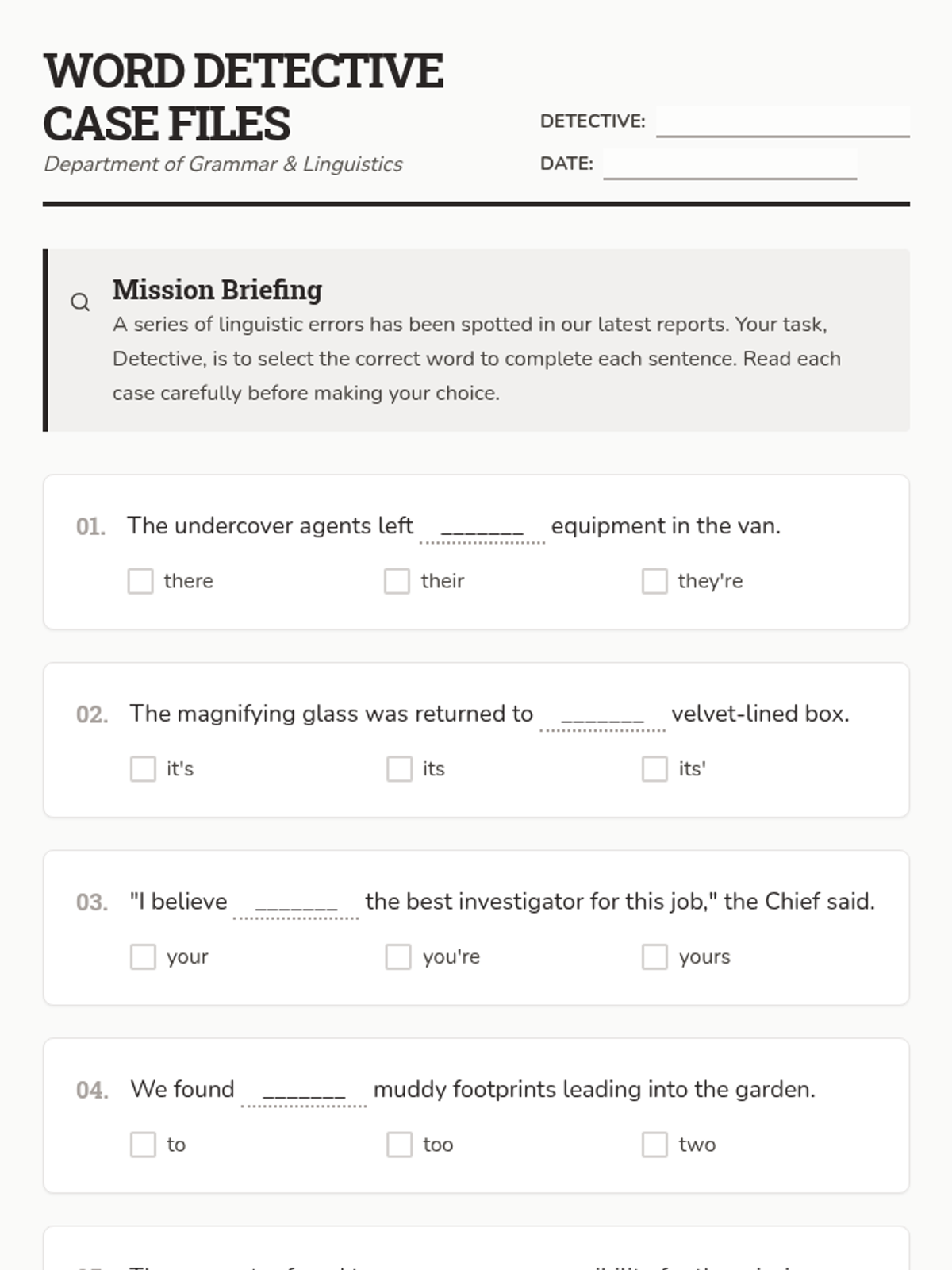
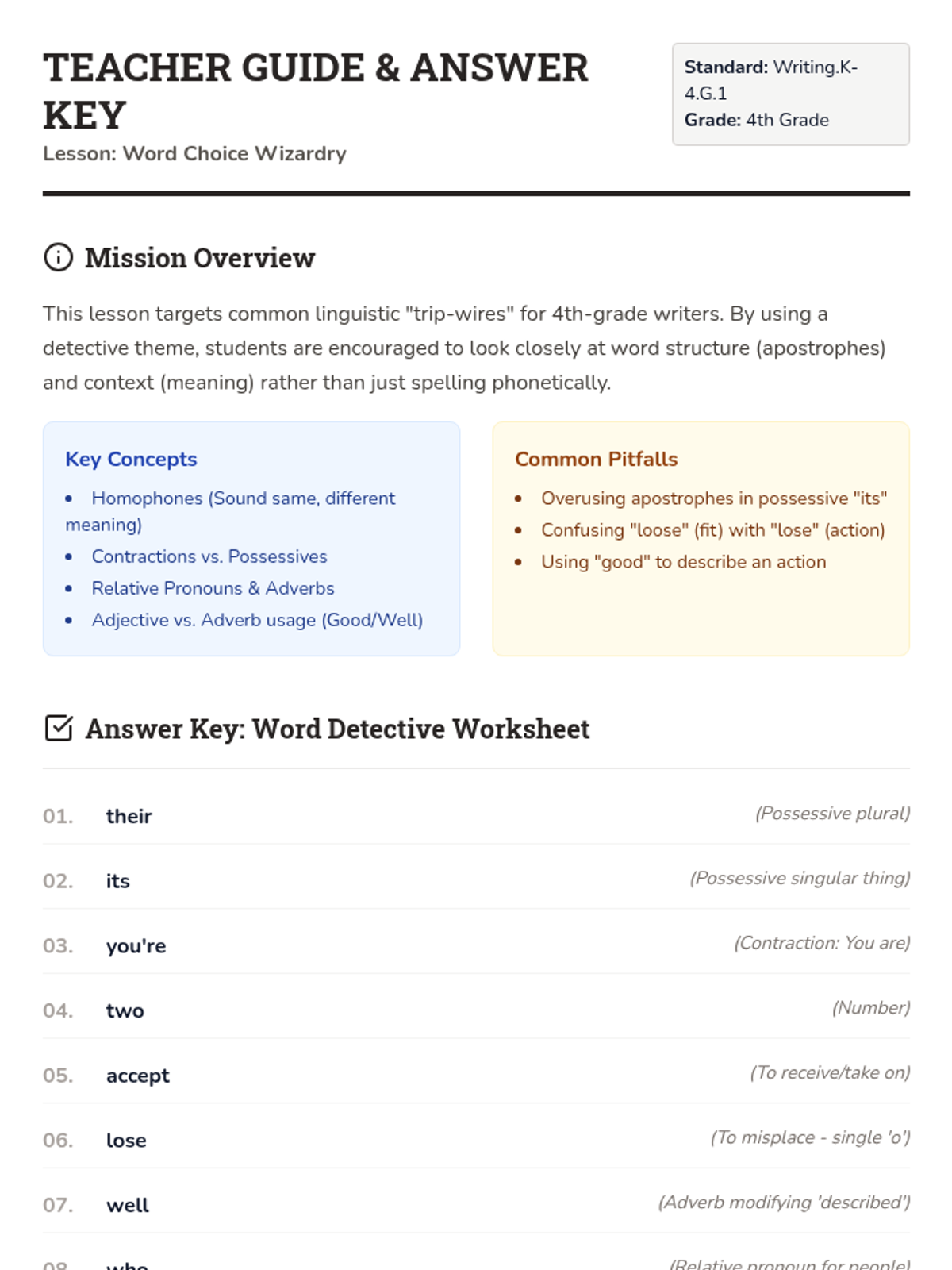
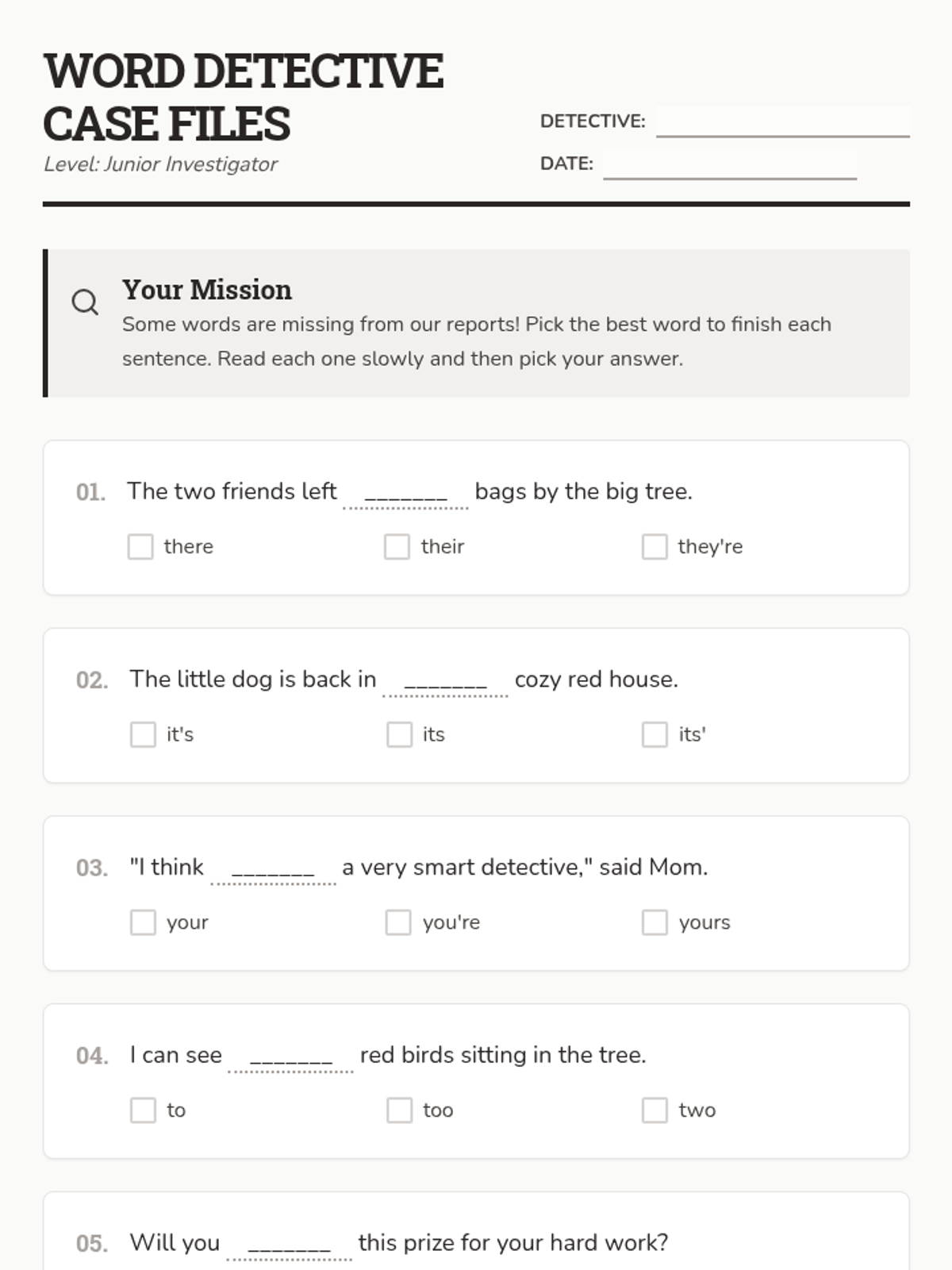
A lesson focused on common word usage errors, homophones, and frequently confused words for 4th-grade writers. Students practice identifying and using the correct words in context through detective-themed scenarios.
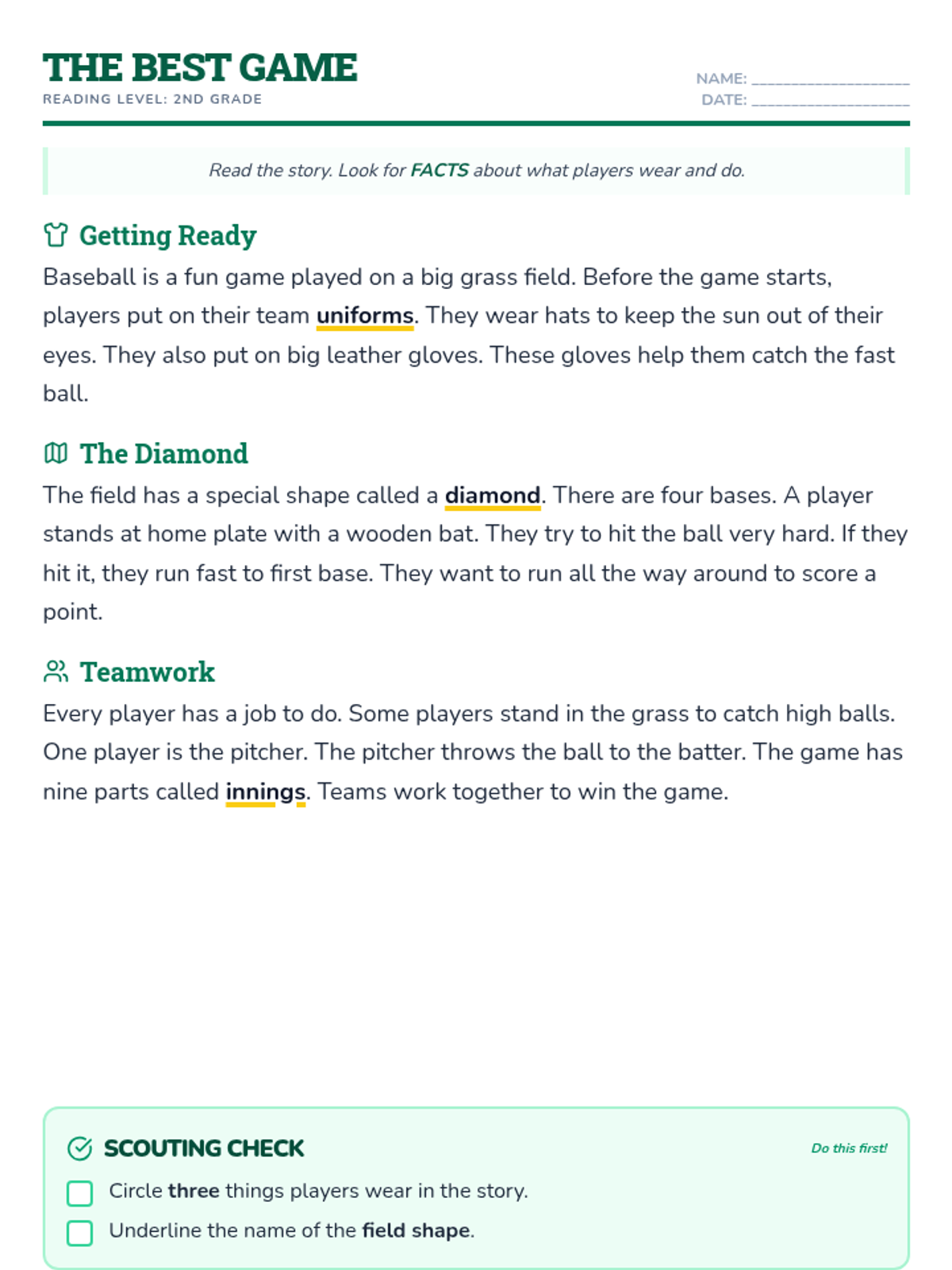
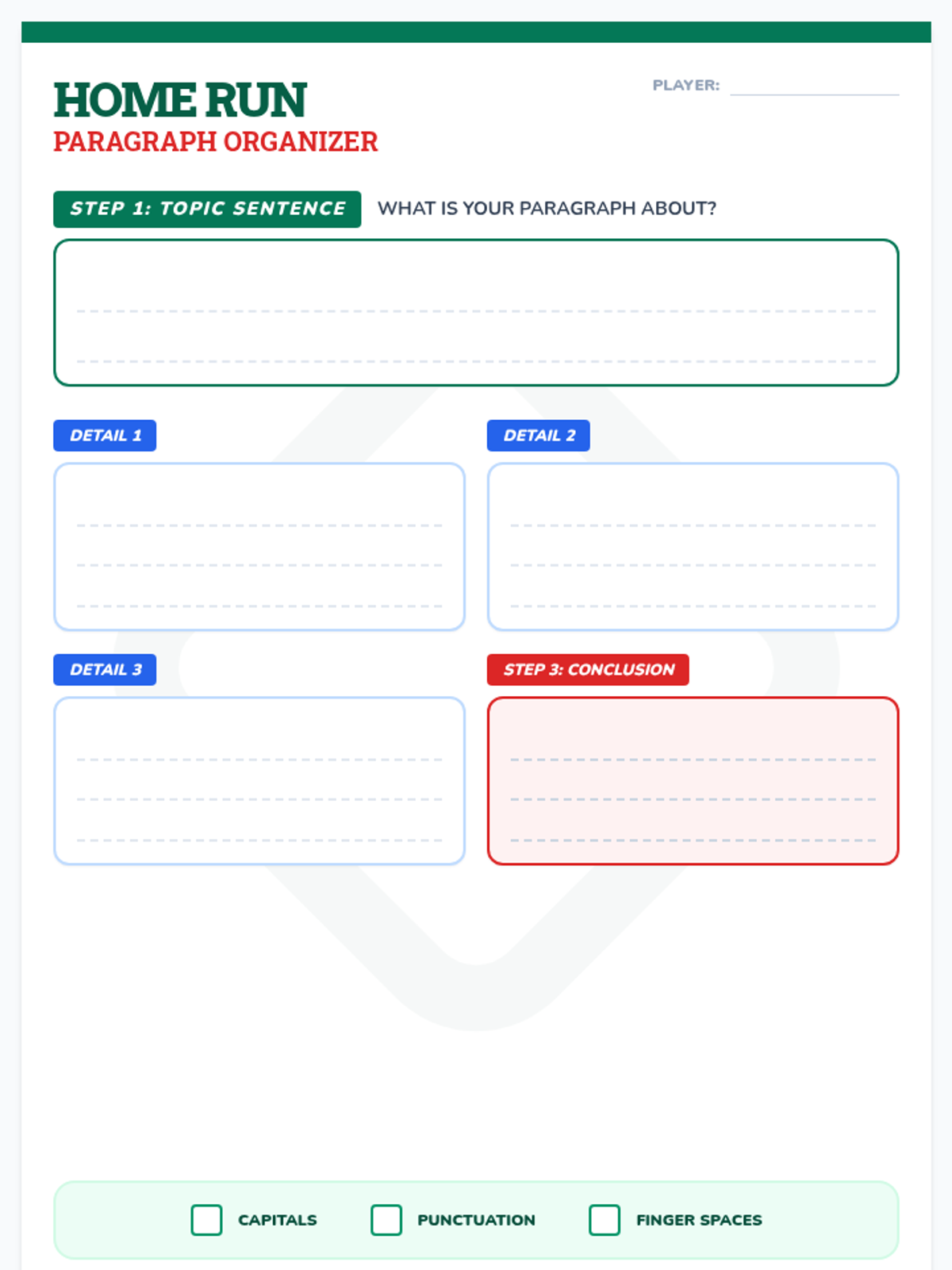
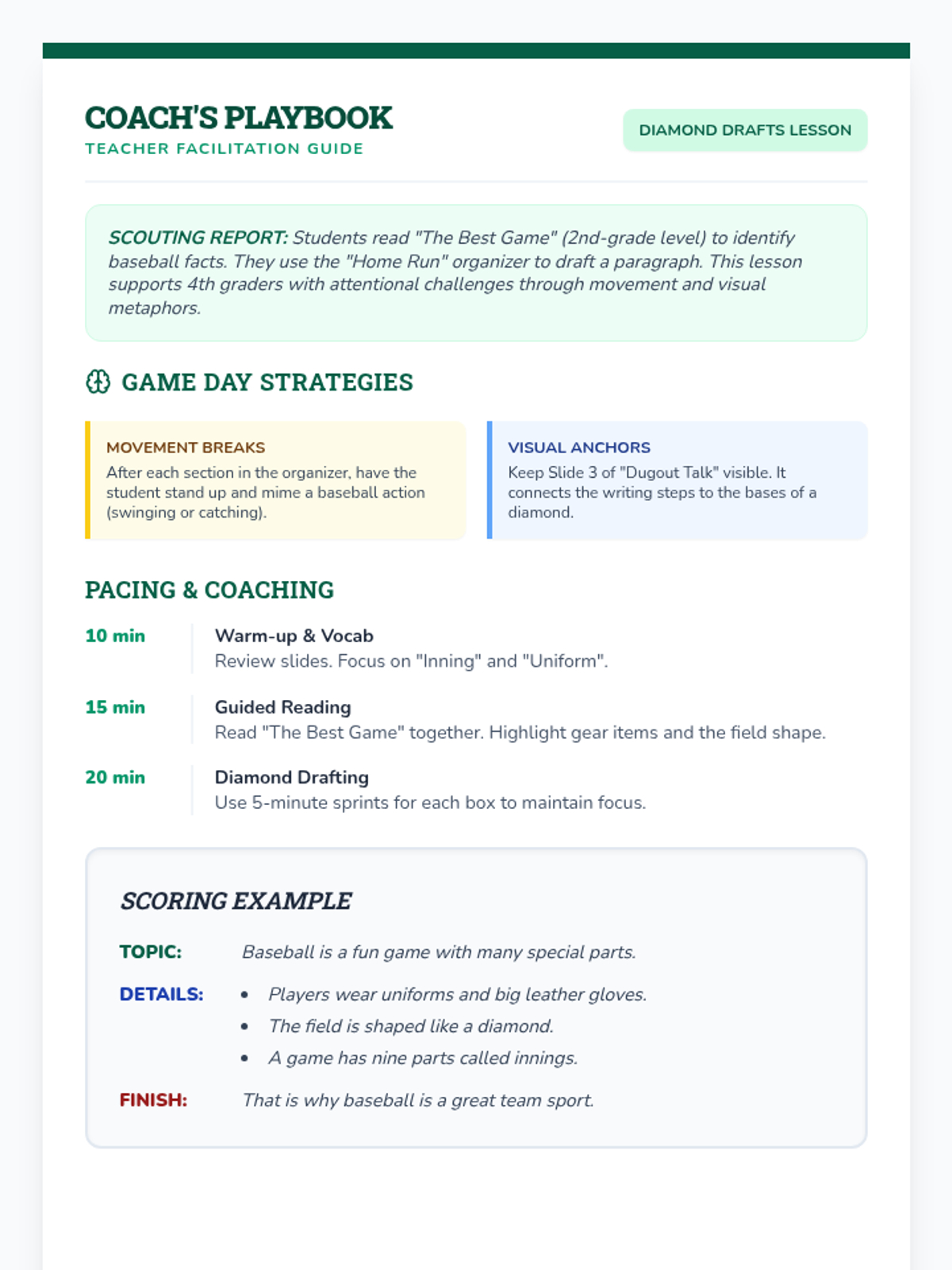
A baseball-themed reading and writing lesson designed for a 4th grader reading at a 2nd-grade level. The lesson focuses on identifying key details and organizing a paragraph using a topic sentence, three details, and a conclusion.
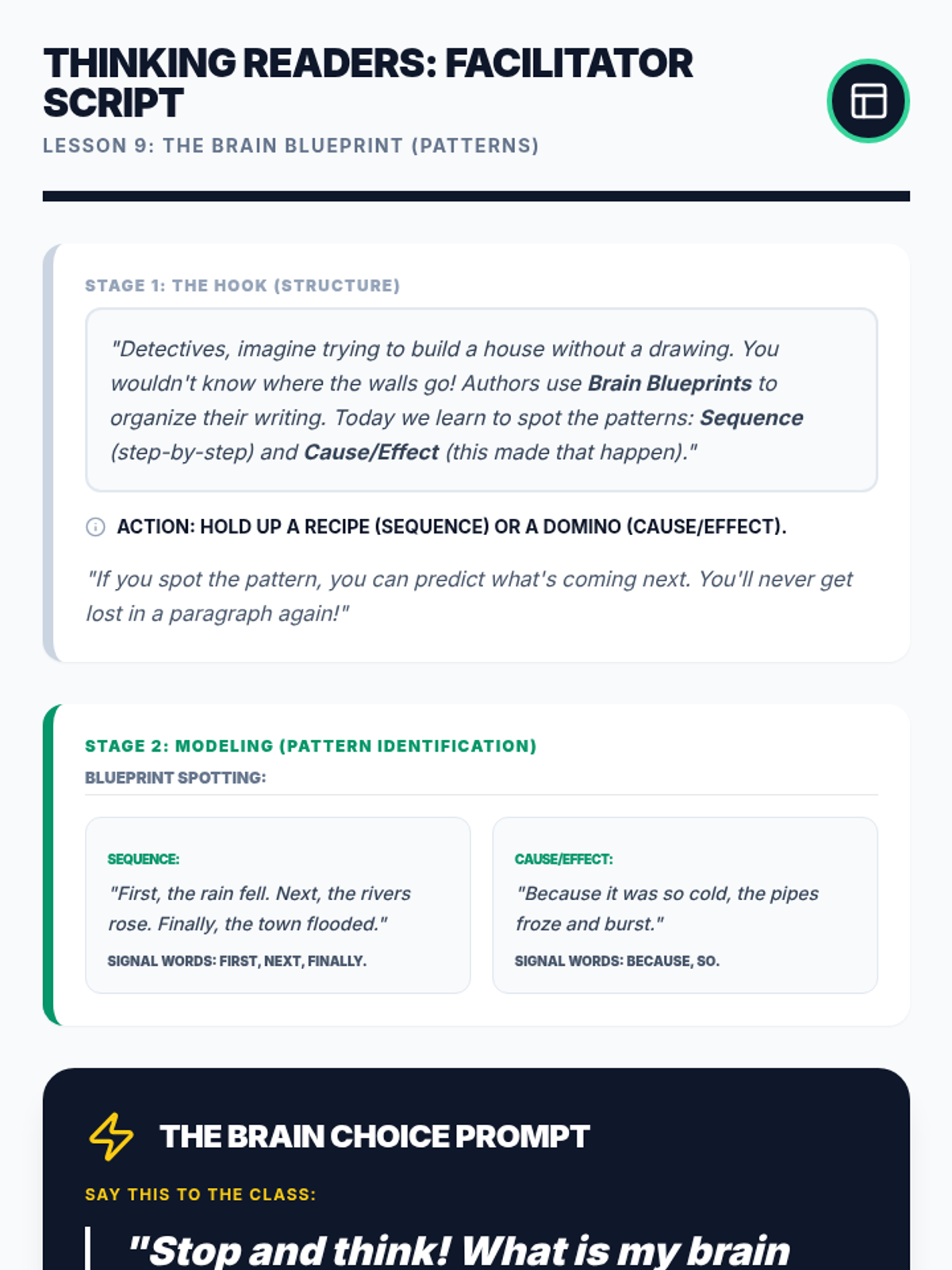
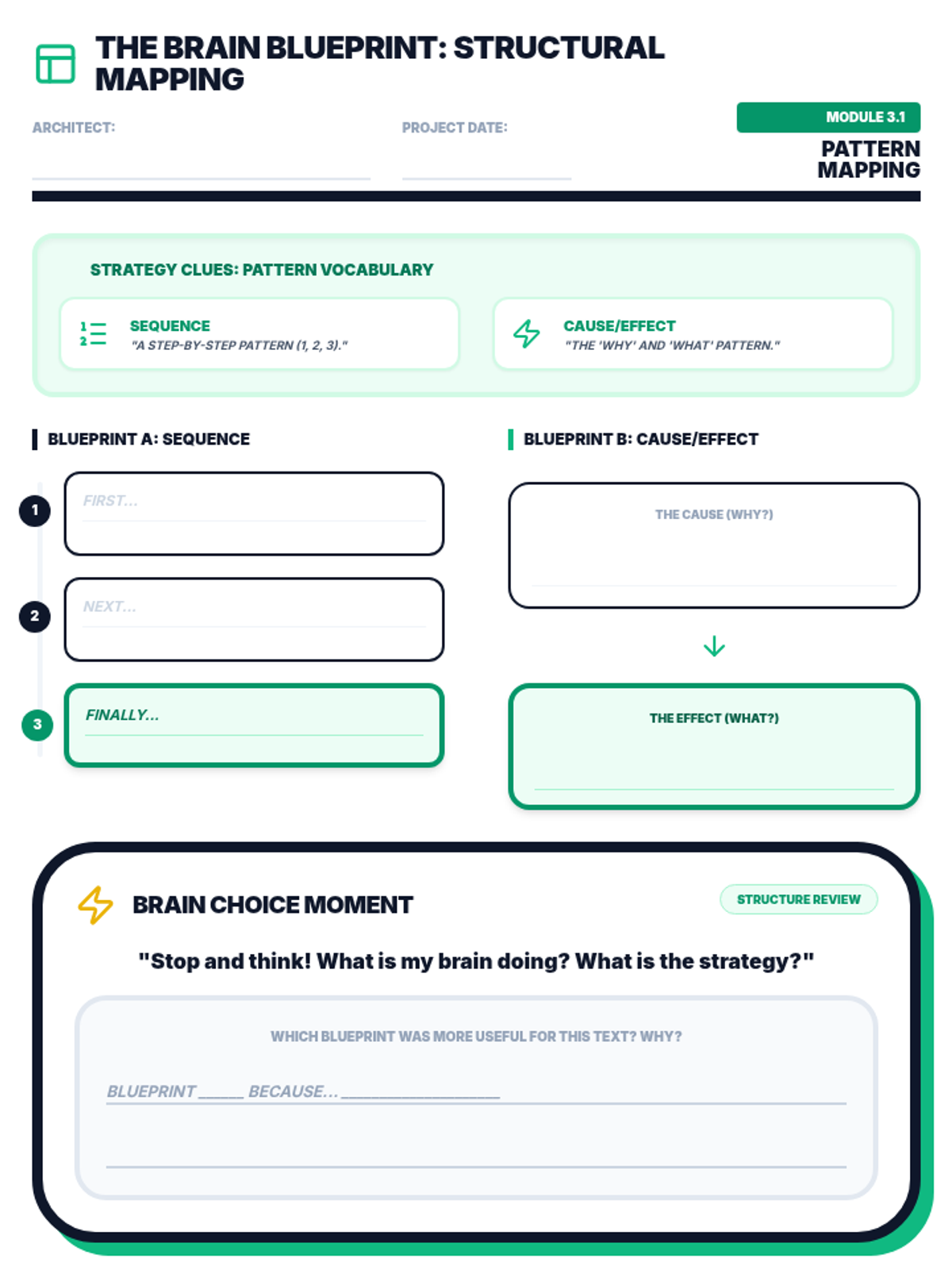
Identifies text structures (Cause/Effect, Sequence) as 'Brain Blueprints' that help organize incoming data.