Builds word mastery through parts of speech, Greek and Latin roots, and morphological analysis of prefixes and suffixes. Develops nuanced comprehension using context clues, shades of meaning, and idiomatic expressions.
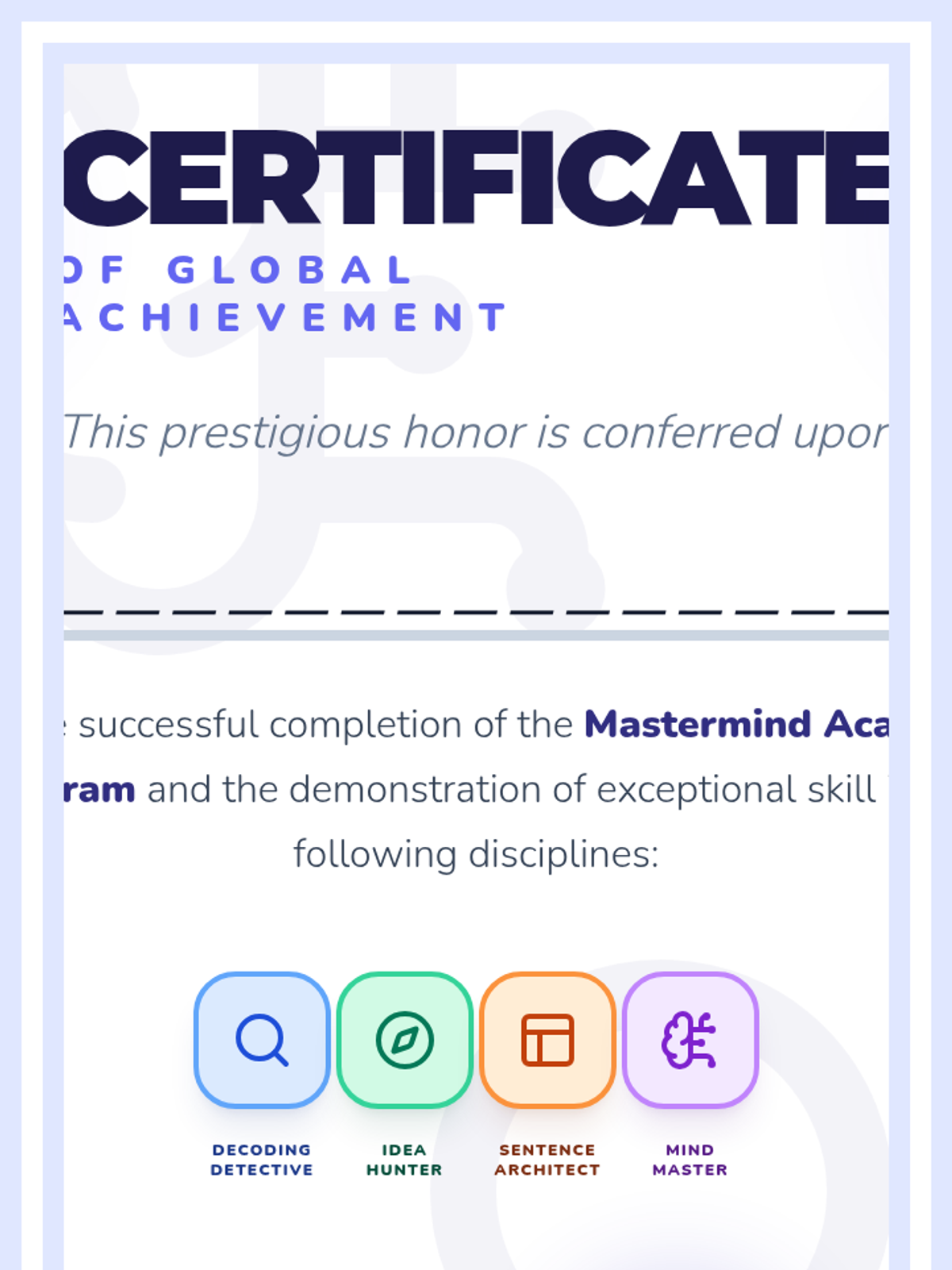
A single-page graduation certificate for the Thinking Reading Architects program, recognizing achievements in decoding, idea construction, and sentence architecture. Theme: Mastermind Graduation.
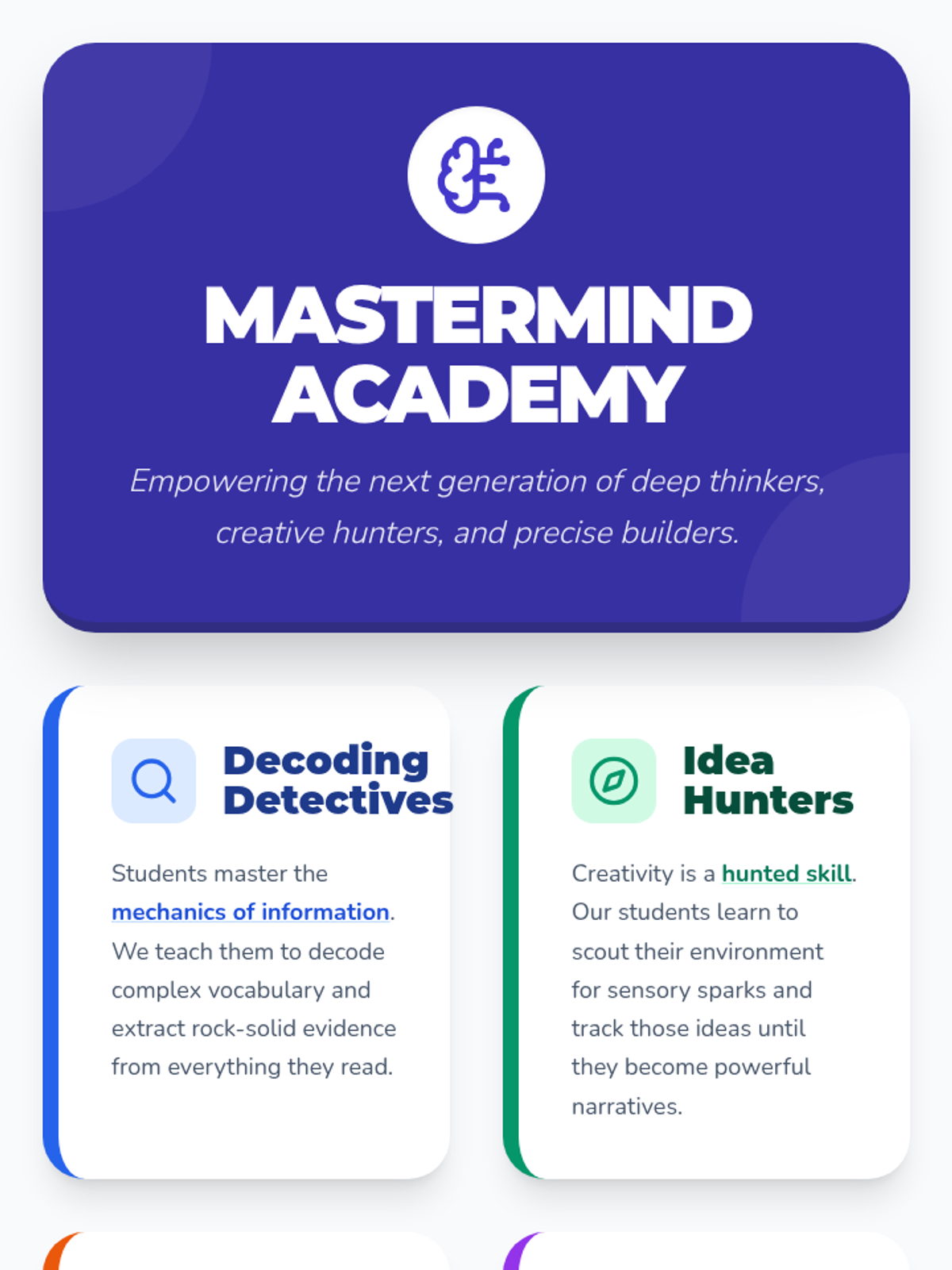
A consolidated single-page parent brochure for the Thinking Reading Architects program, highlighting the four core disciplines. Theme: Mastery & Excellence.
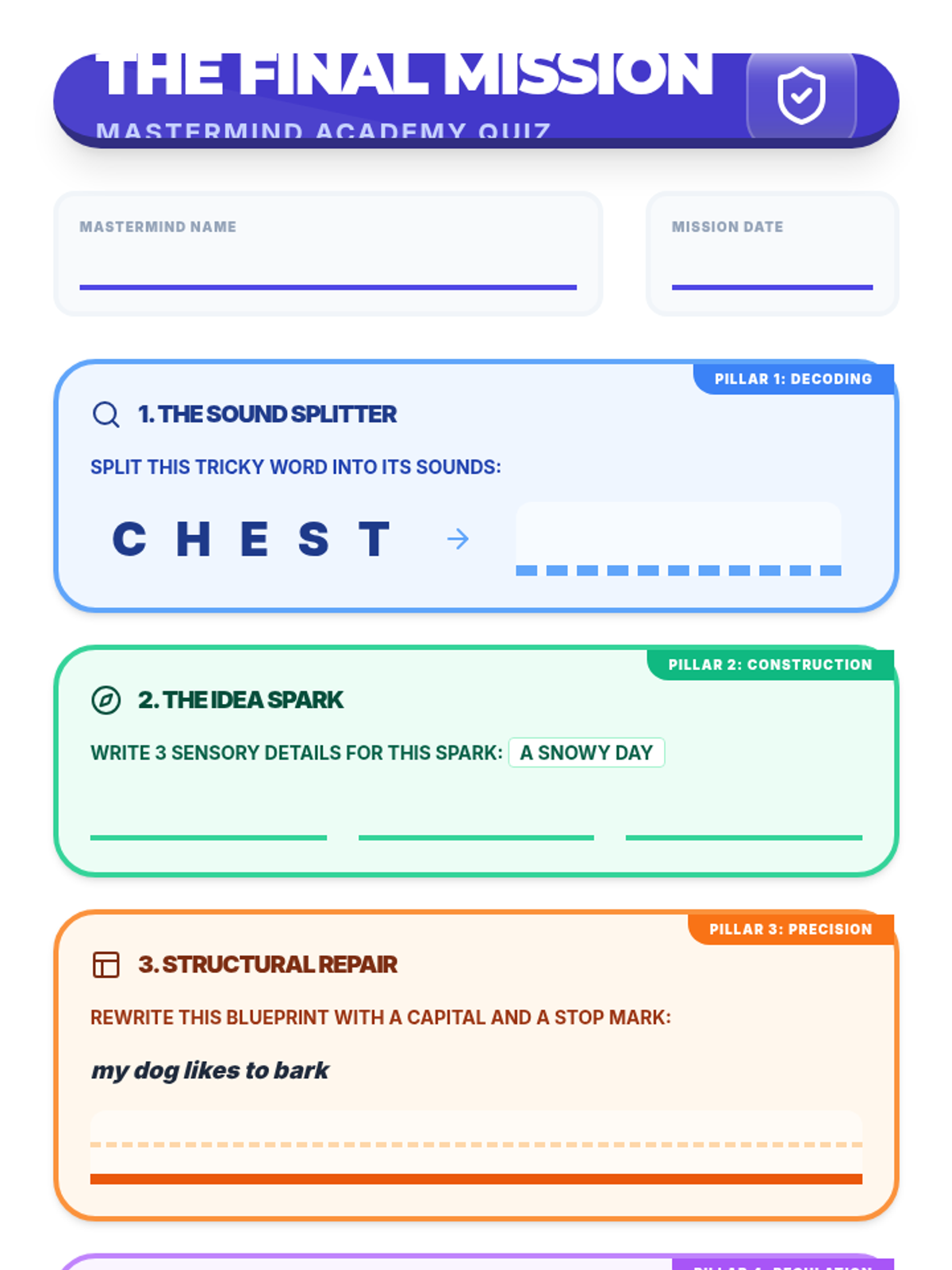
The final quiz for the Thinking Reading Architects program with the new color scheme (Light Blue, Pink, Light Green, Orange). Theme: The Final Mission.
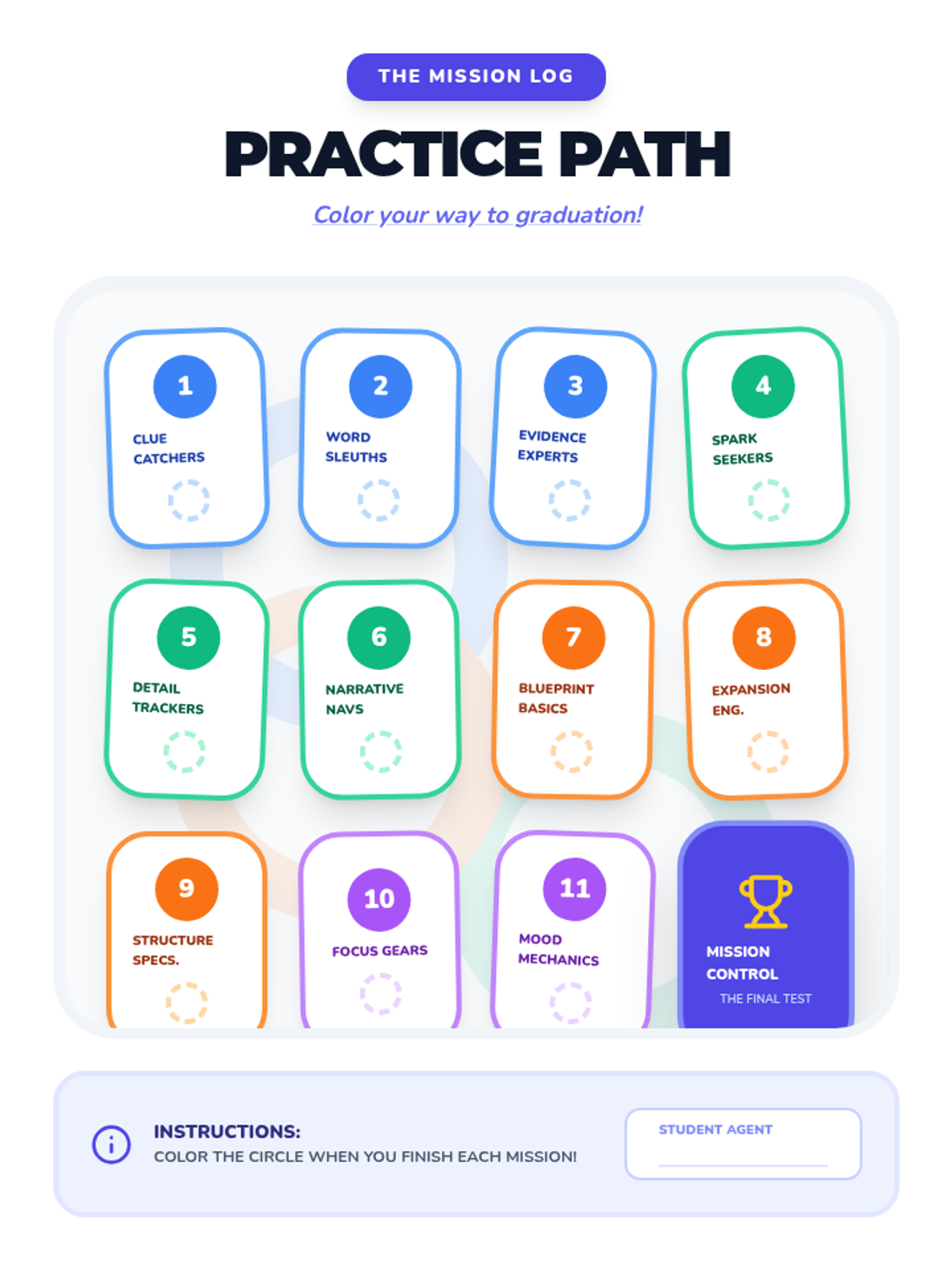
A visual practice path tracker for Thinking Reading Architects with the Sky, Lime, Orange, and Pink color scheme. Theme: Mission Log.
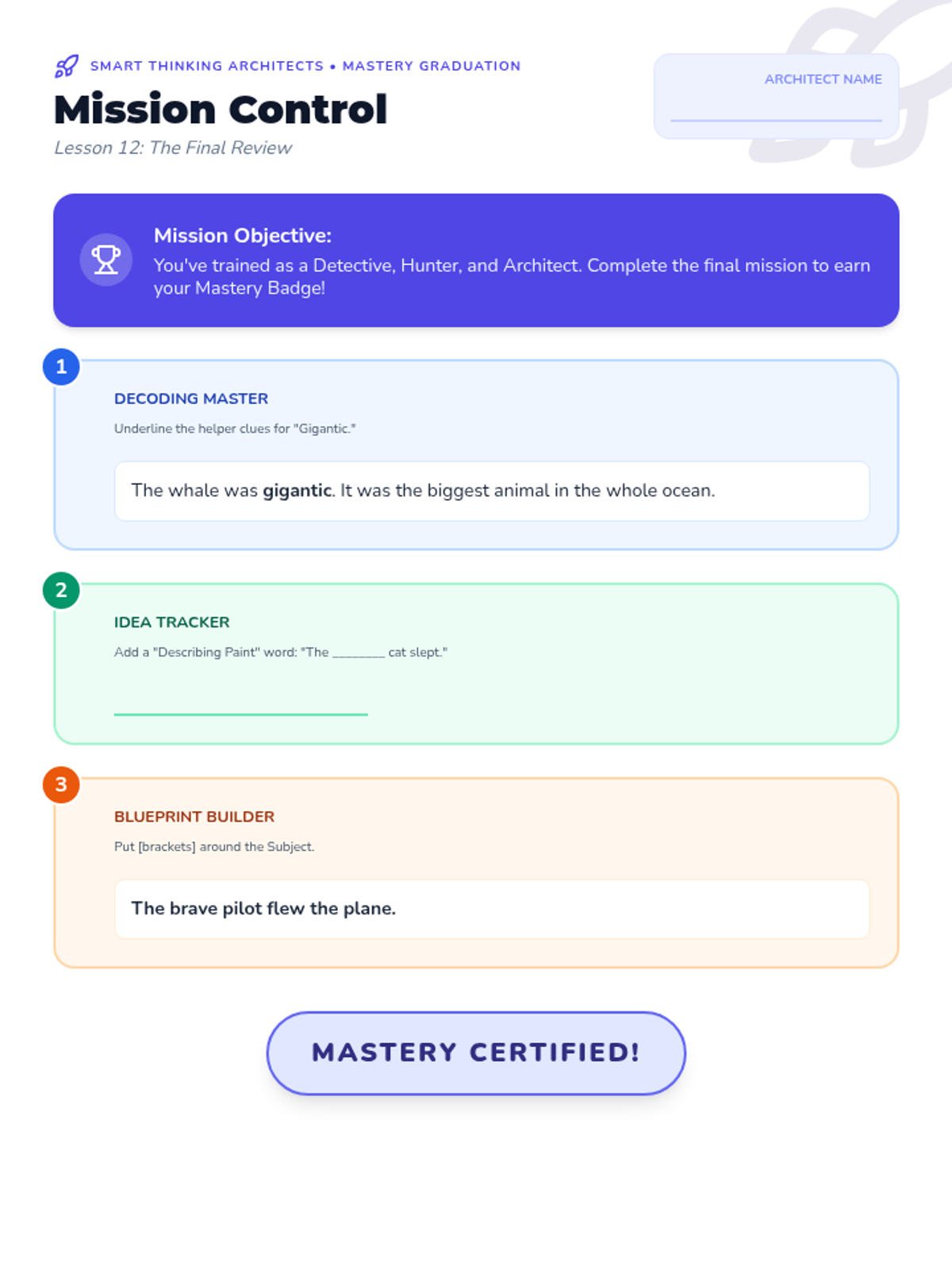
Mission Control Practice Pack for Smart Thinking Architects.
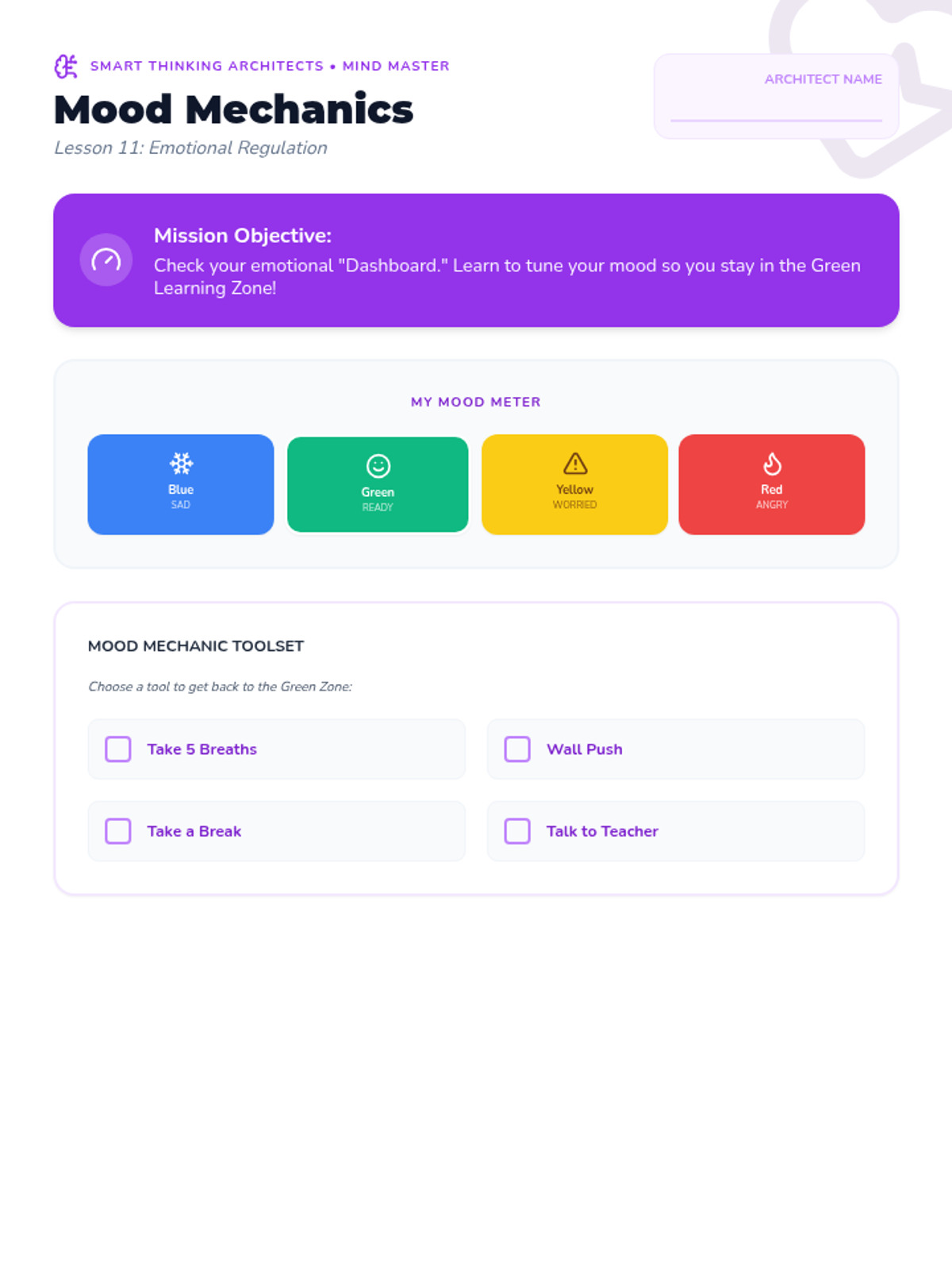
Mood Mechanics Practice Pack for Smart Thinking Architects.
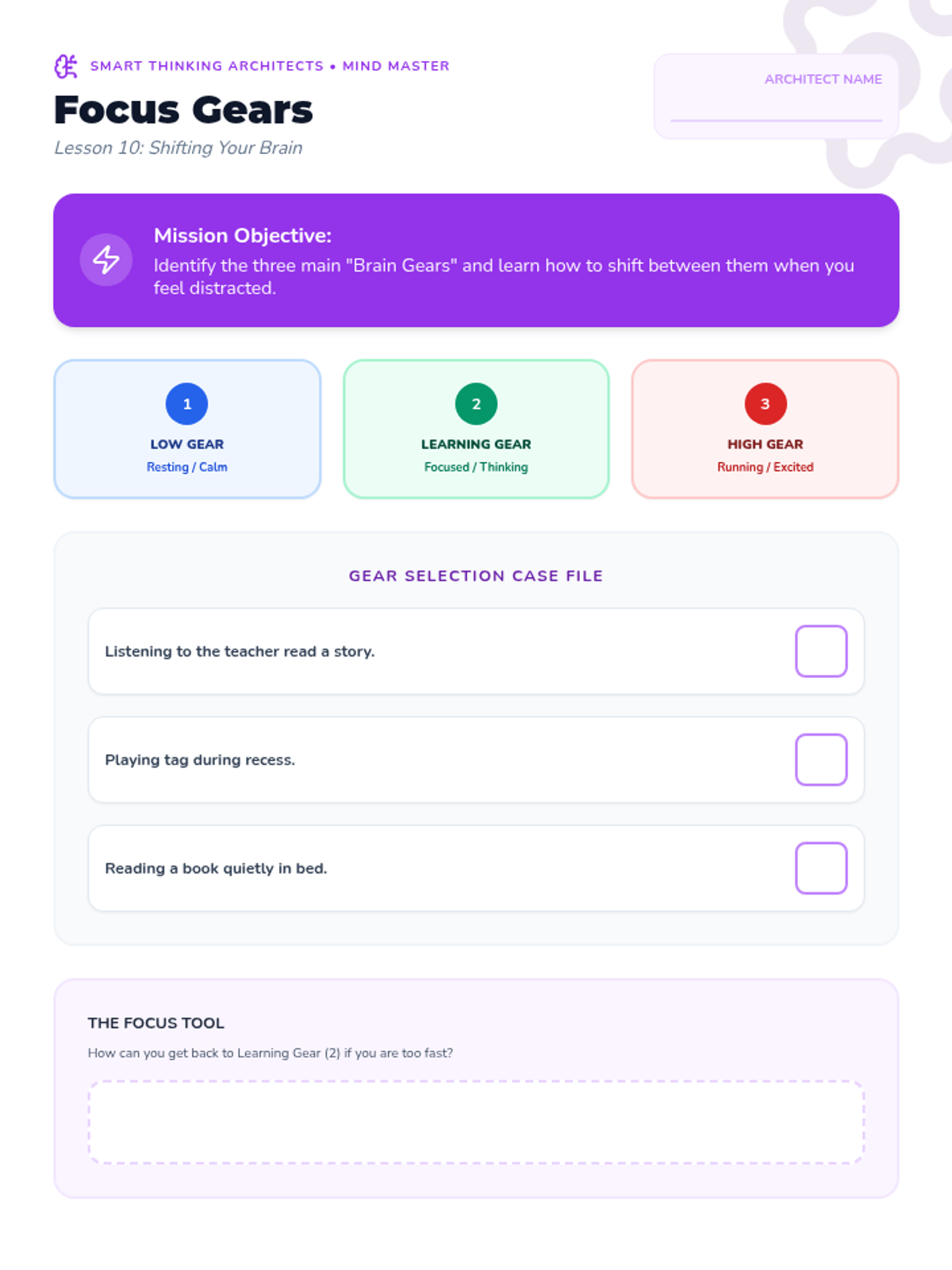
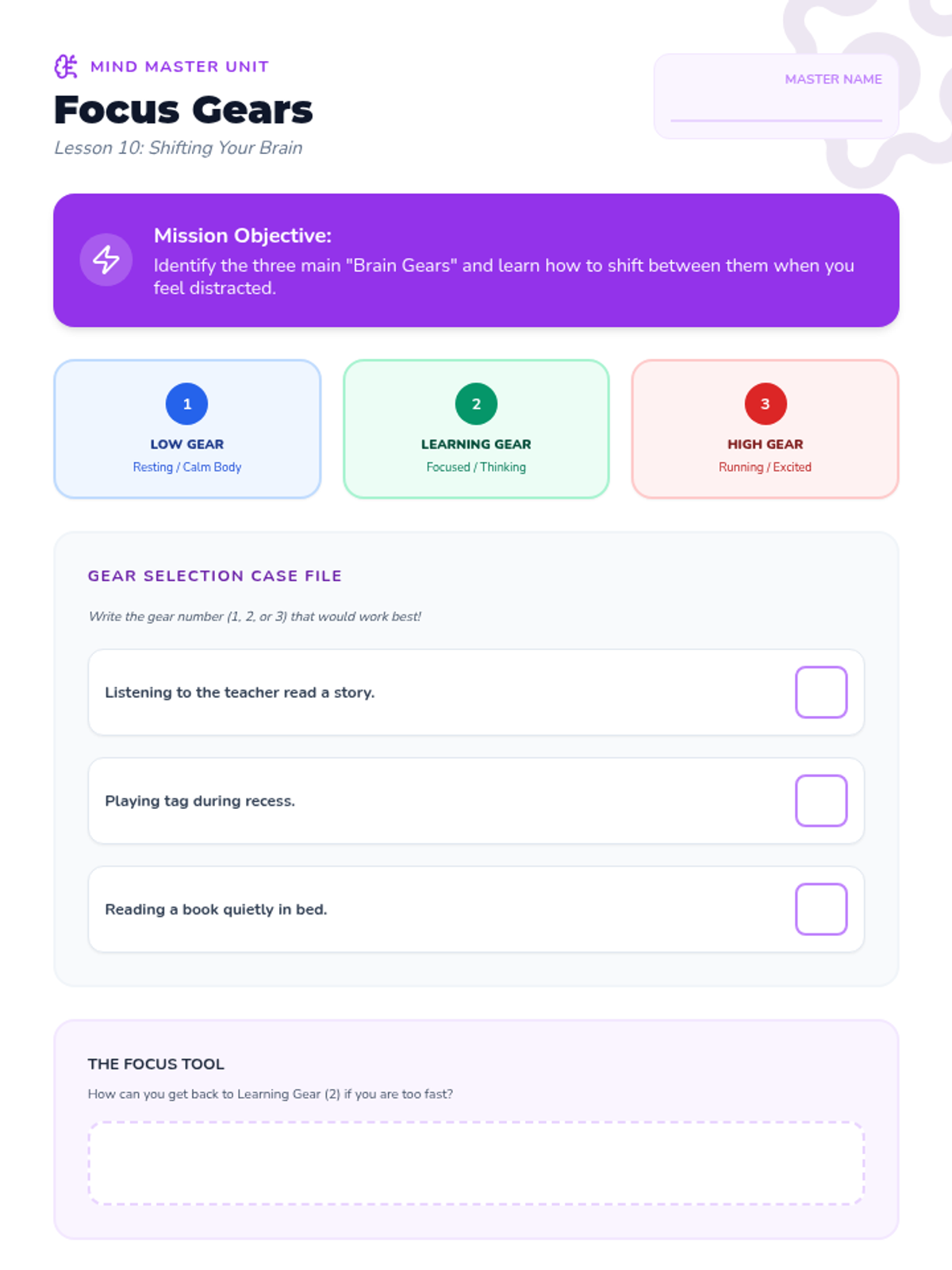
Focus Gears Practice Pack for Smart Thinking Architects.
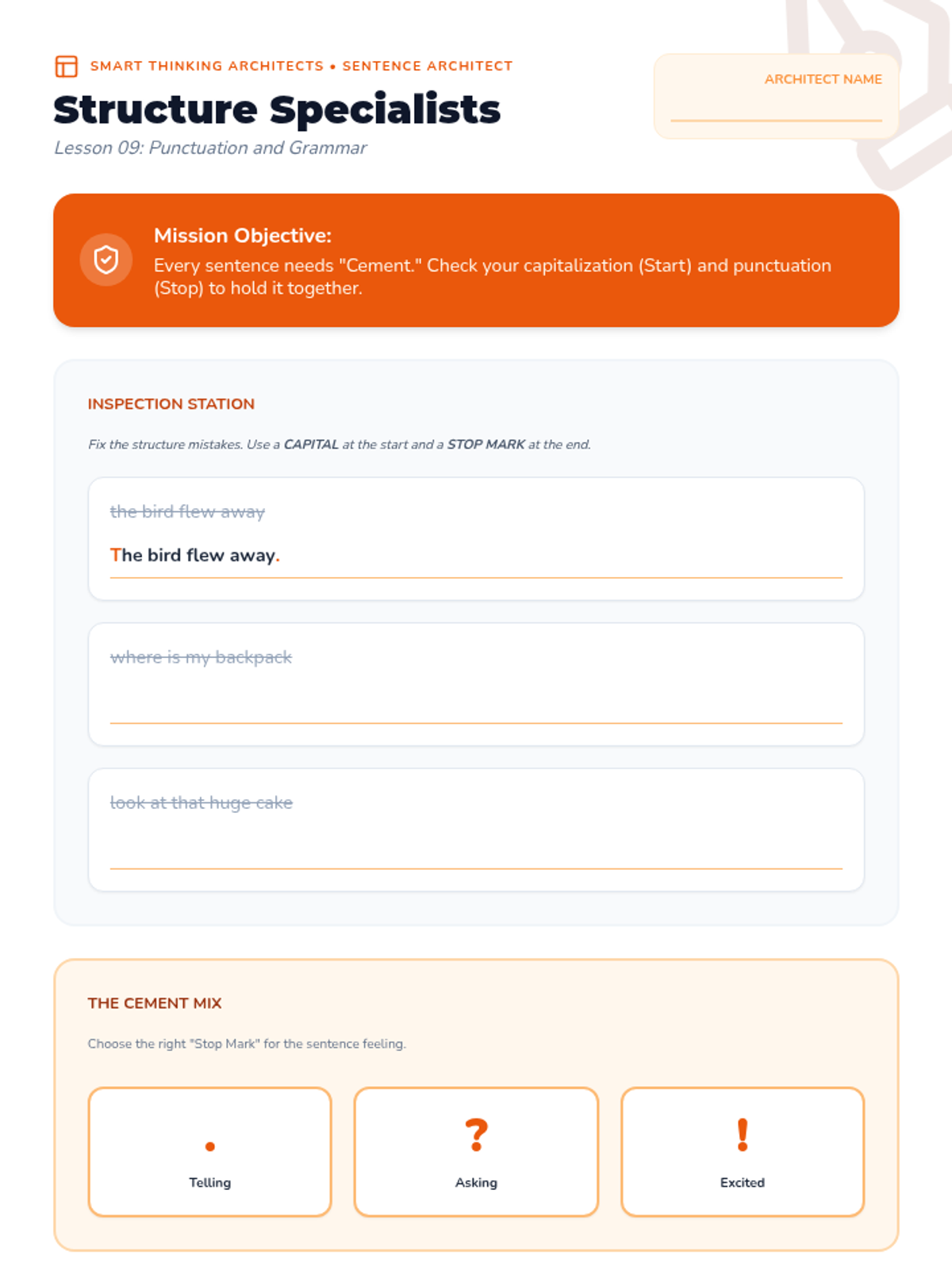
Structure Specialists Practice Pack for Smart Thinking Architects.
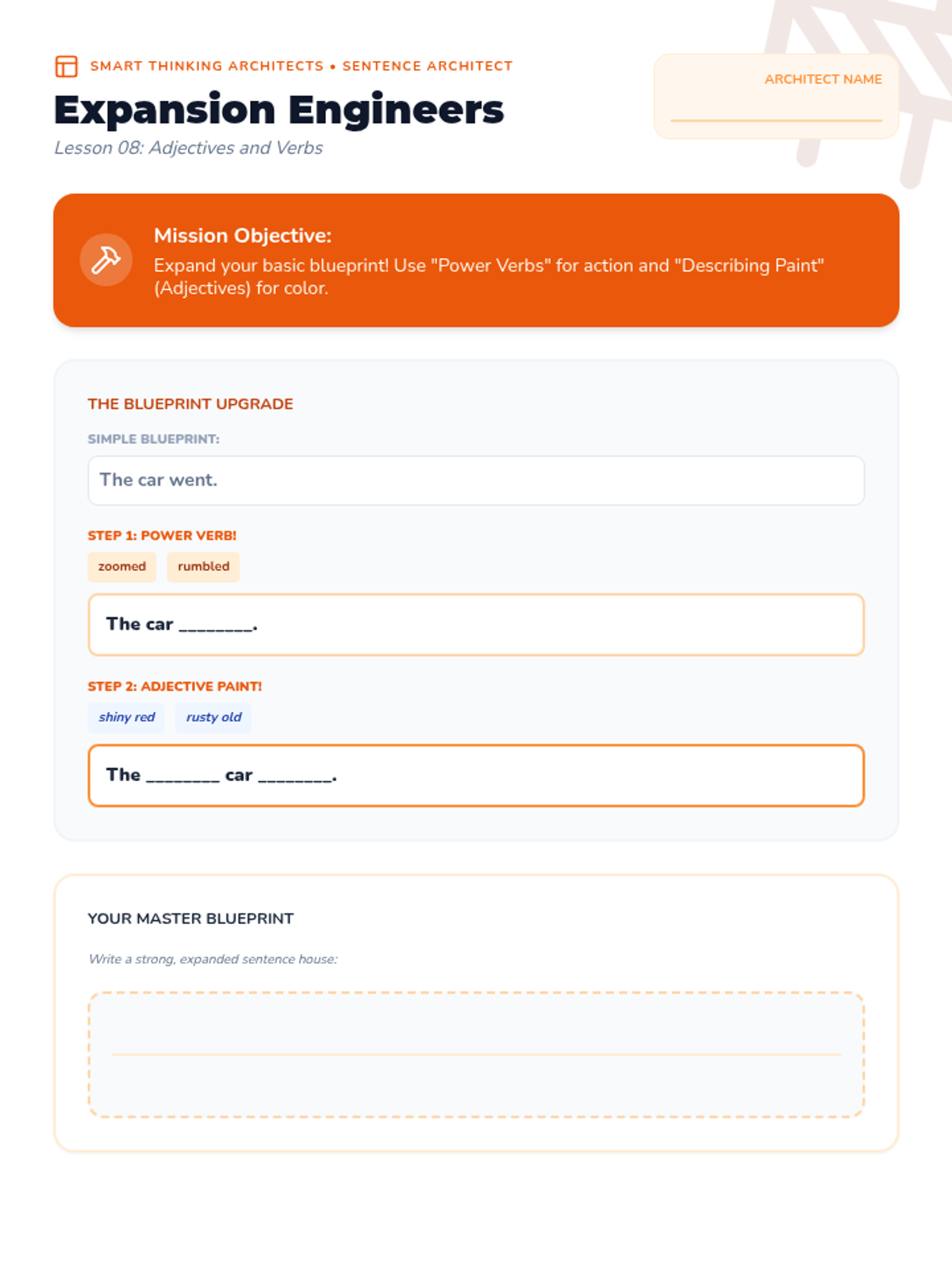
Expansion Engineers Practice Pack for Smart Thinking Architects.
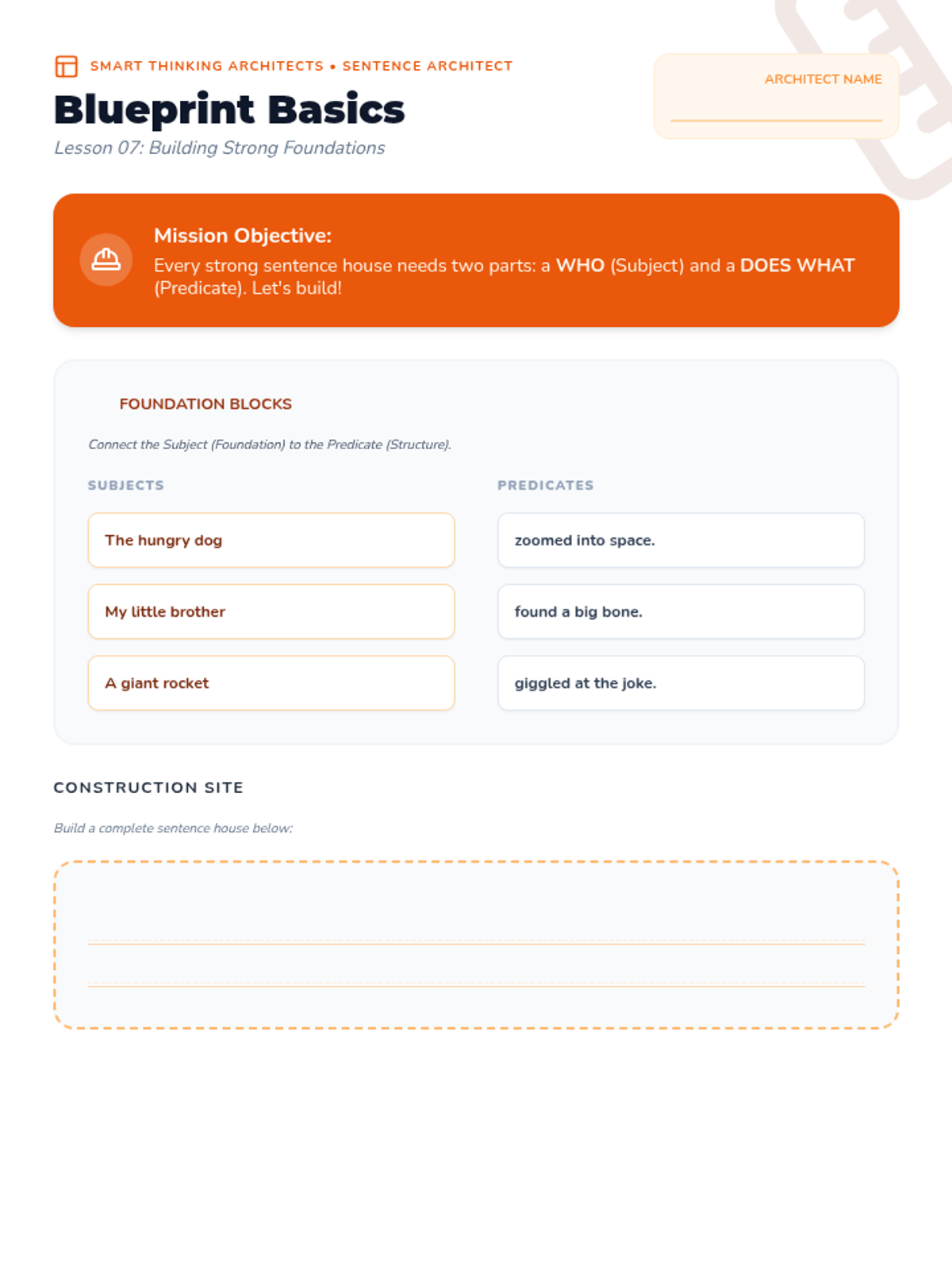
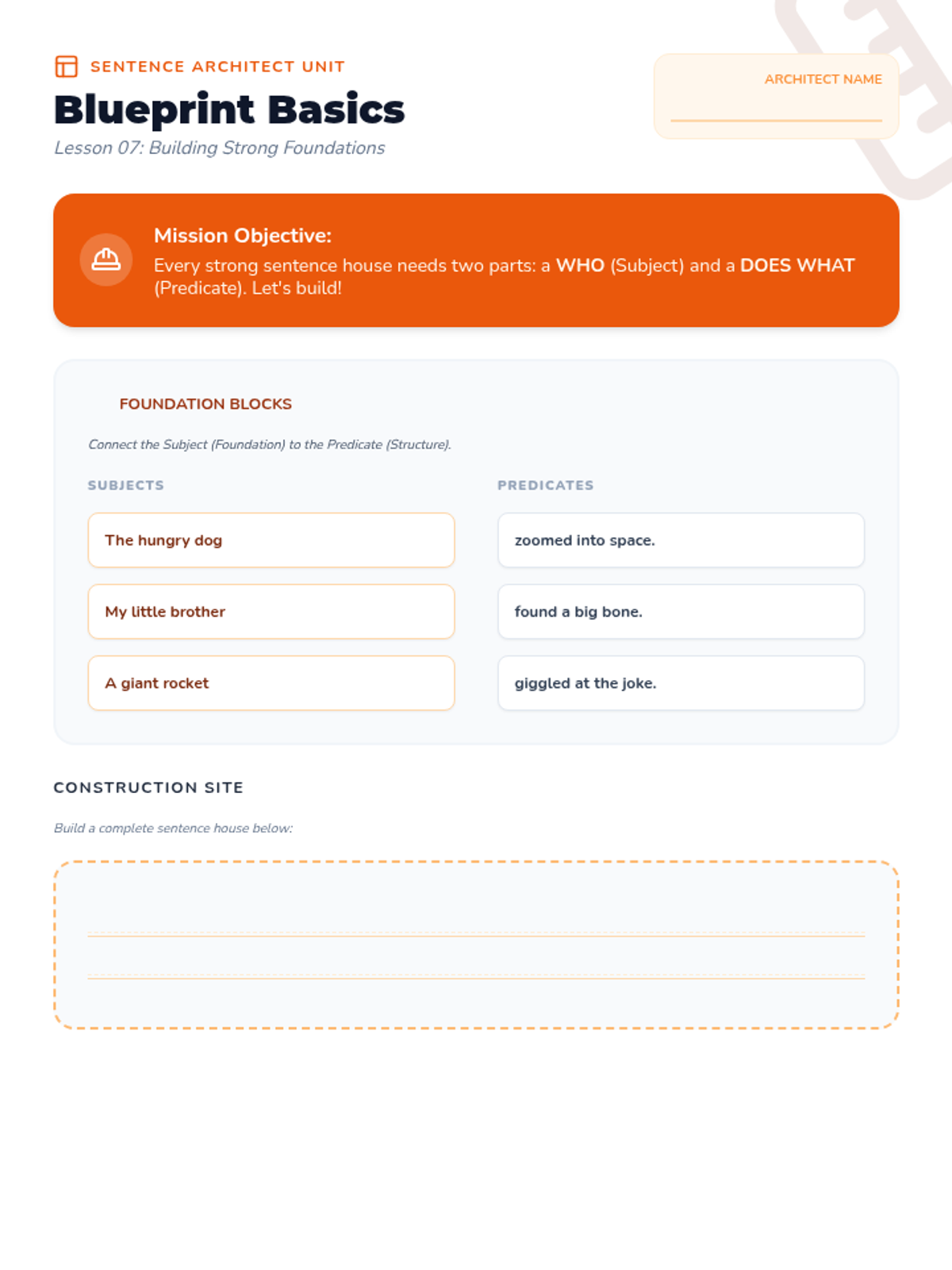
Blueprint Basics Practice Pack for Smart Thinking Architects.
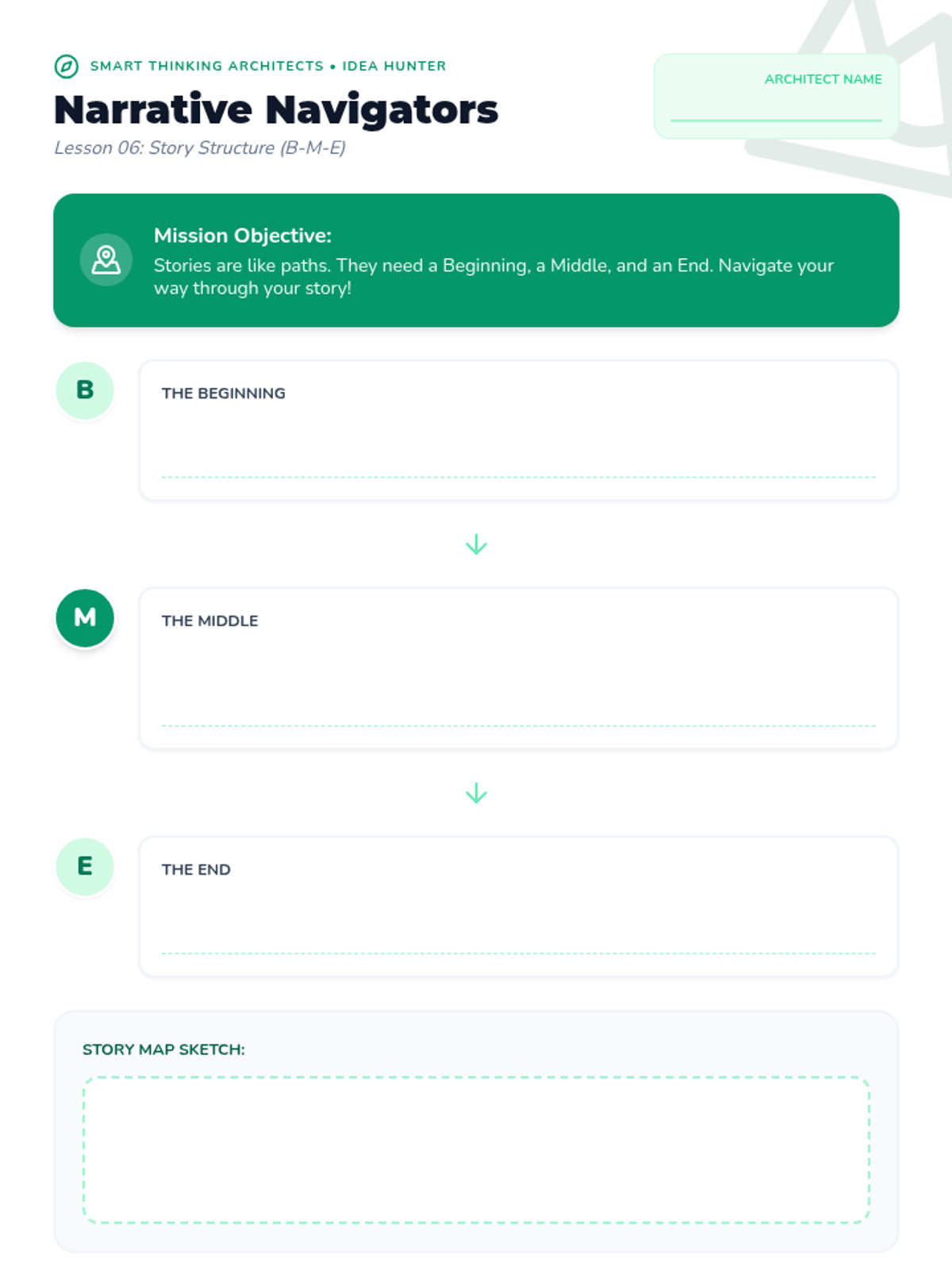
Narrative Navigators Practice Pack for Smart Thinking Architects.
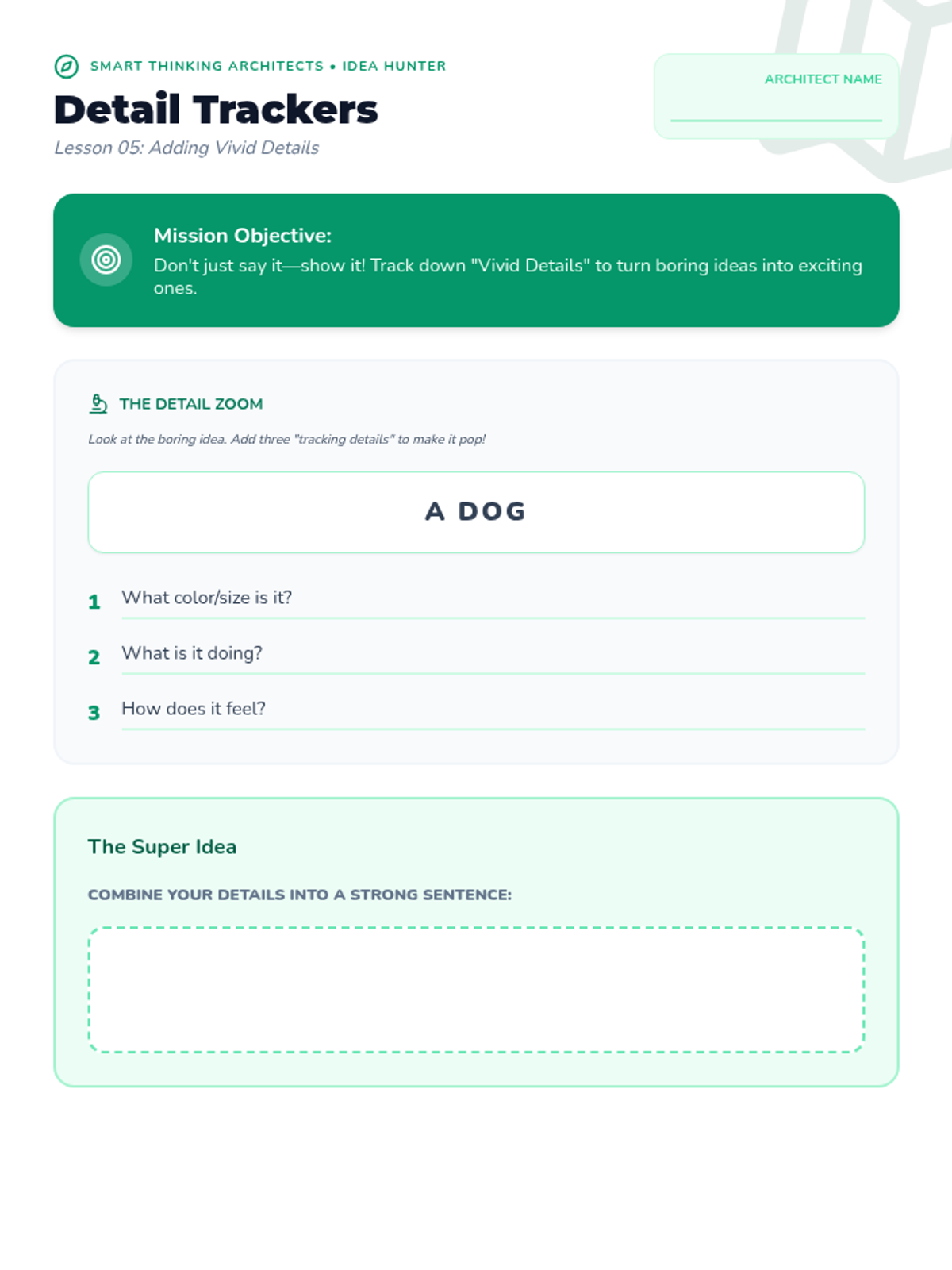
Detail Trackers Practice Pack for Smart Thinking Architects.
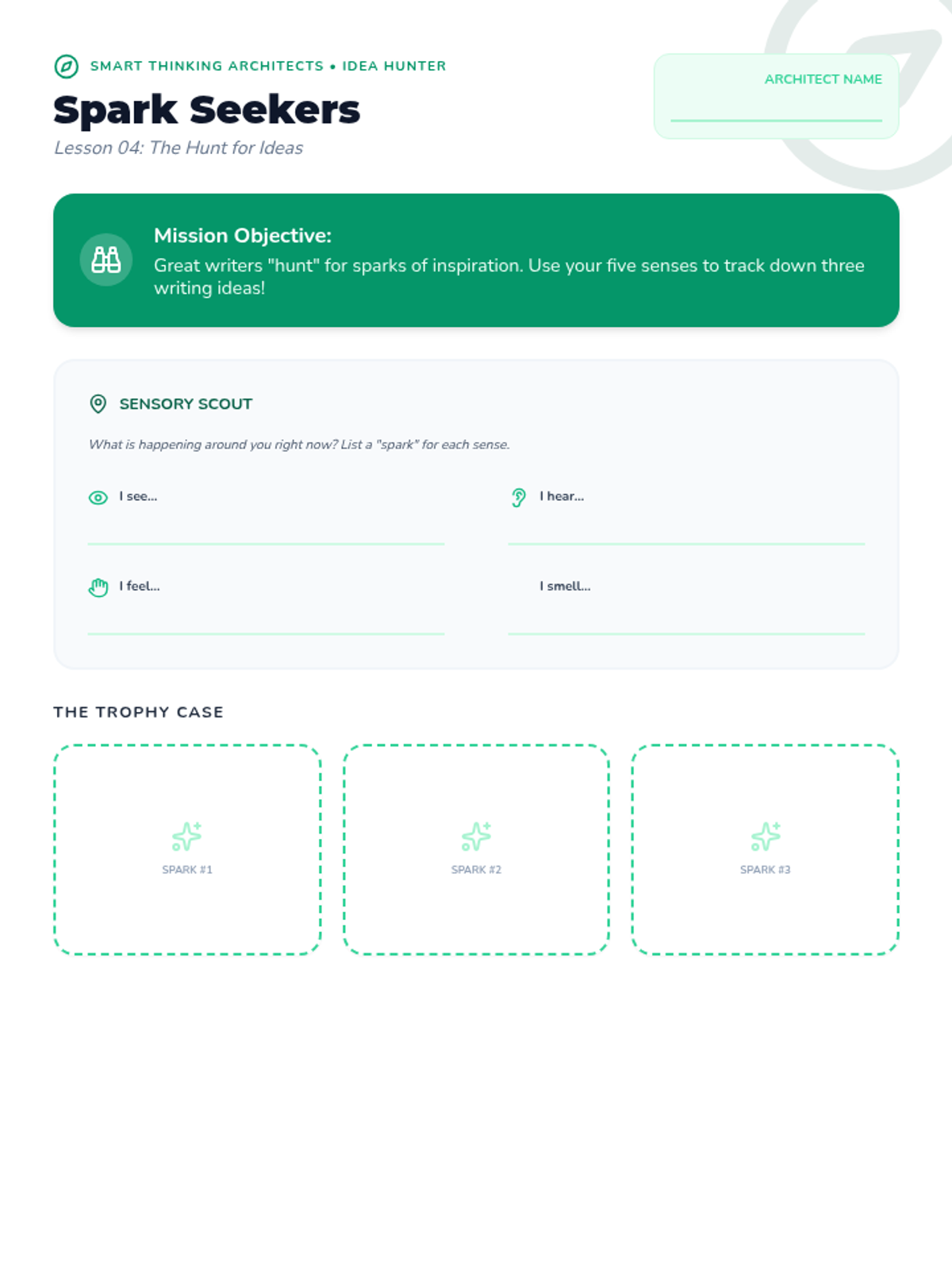
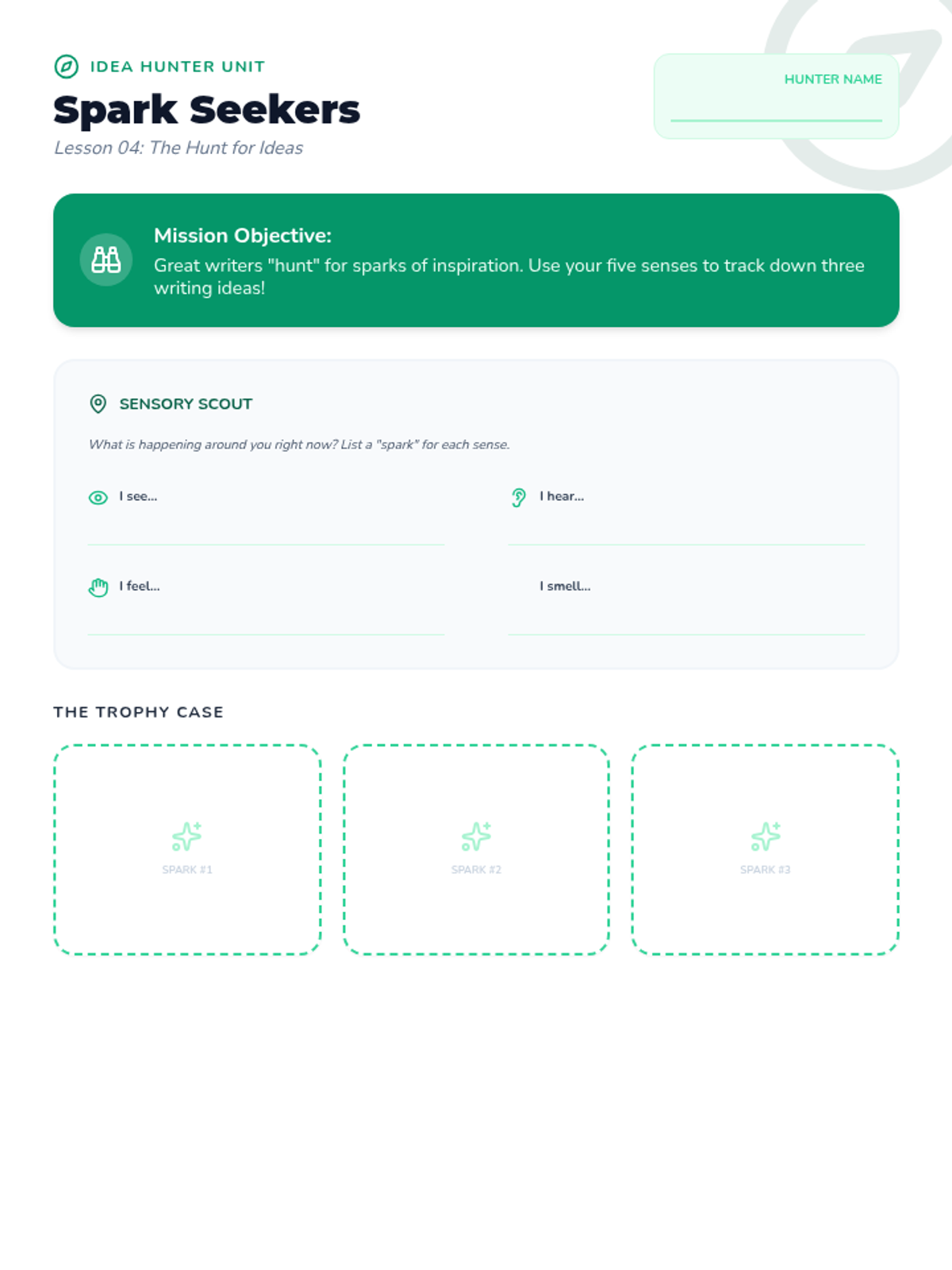
Spark Seekers Practice Pack for Smart Thinking Architects.
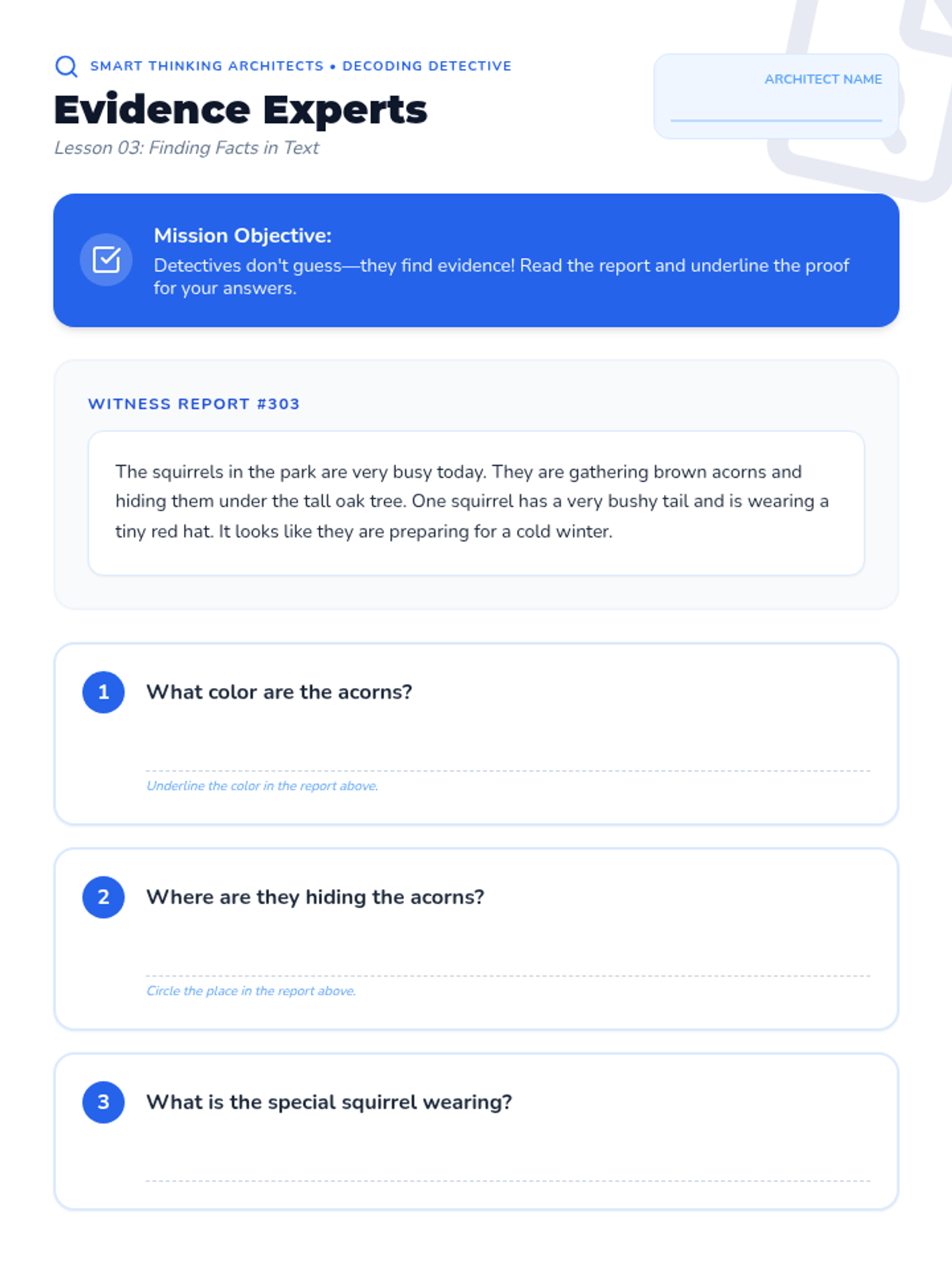
Evidence Experts Practice Pack for Smart Thinking Architects.
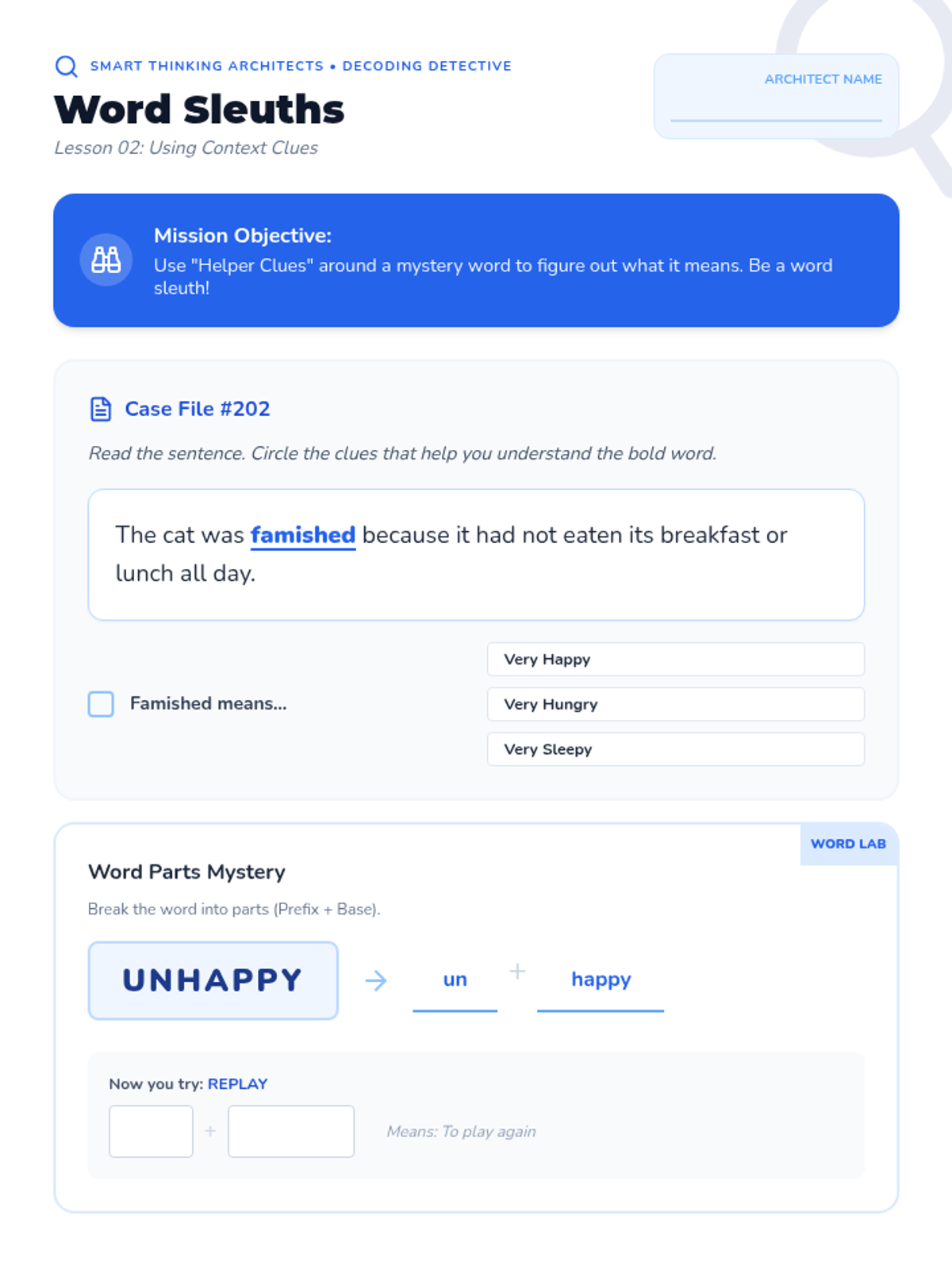
Word Sleuths Practice Pack for Smart Thinking Architects.
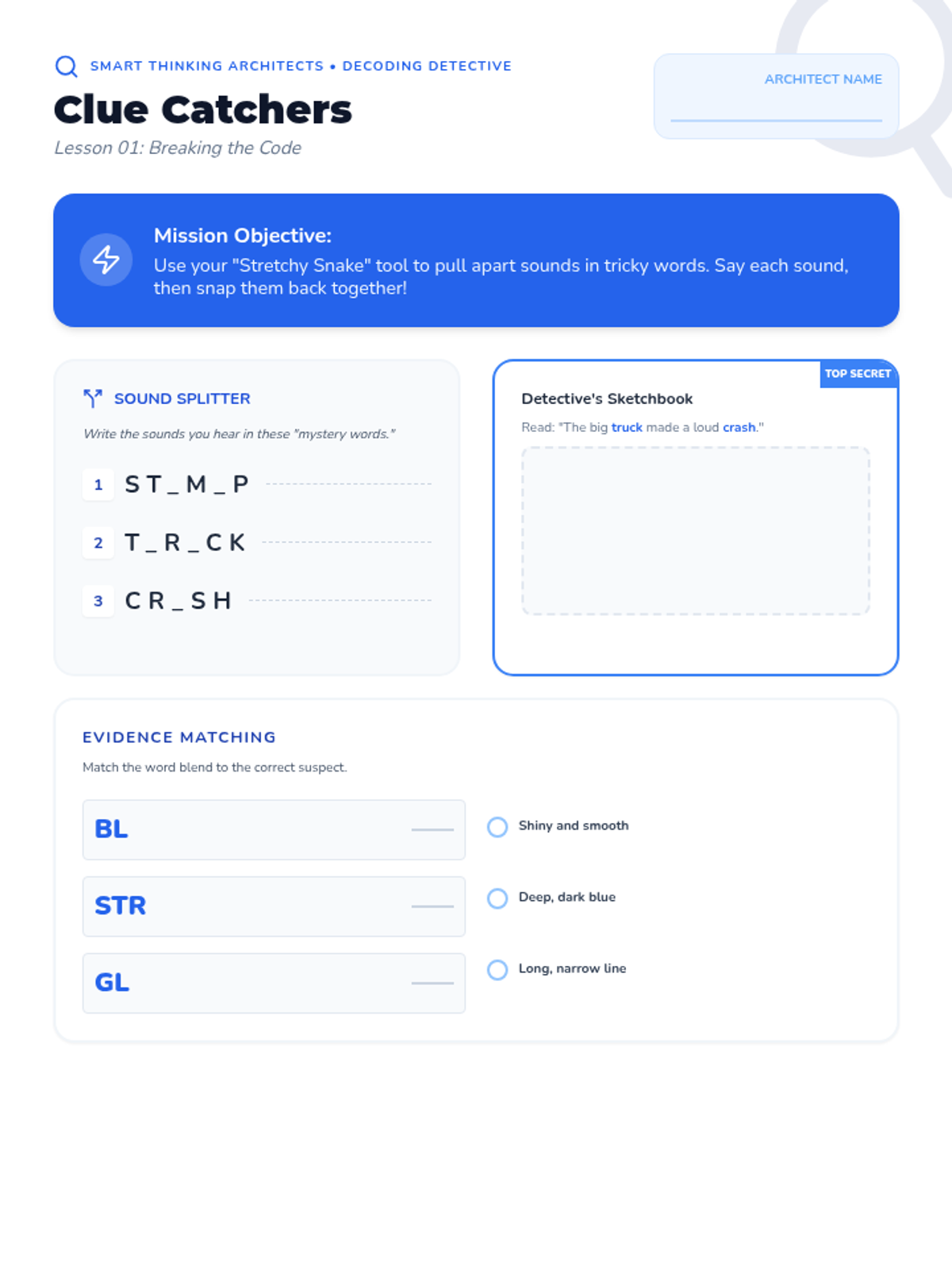
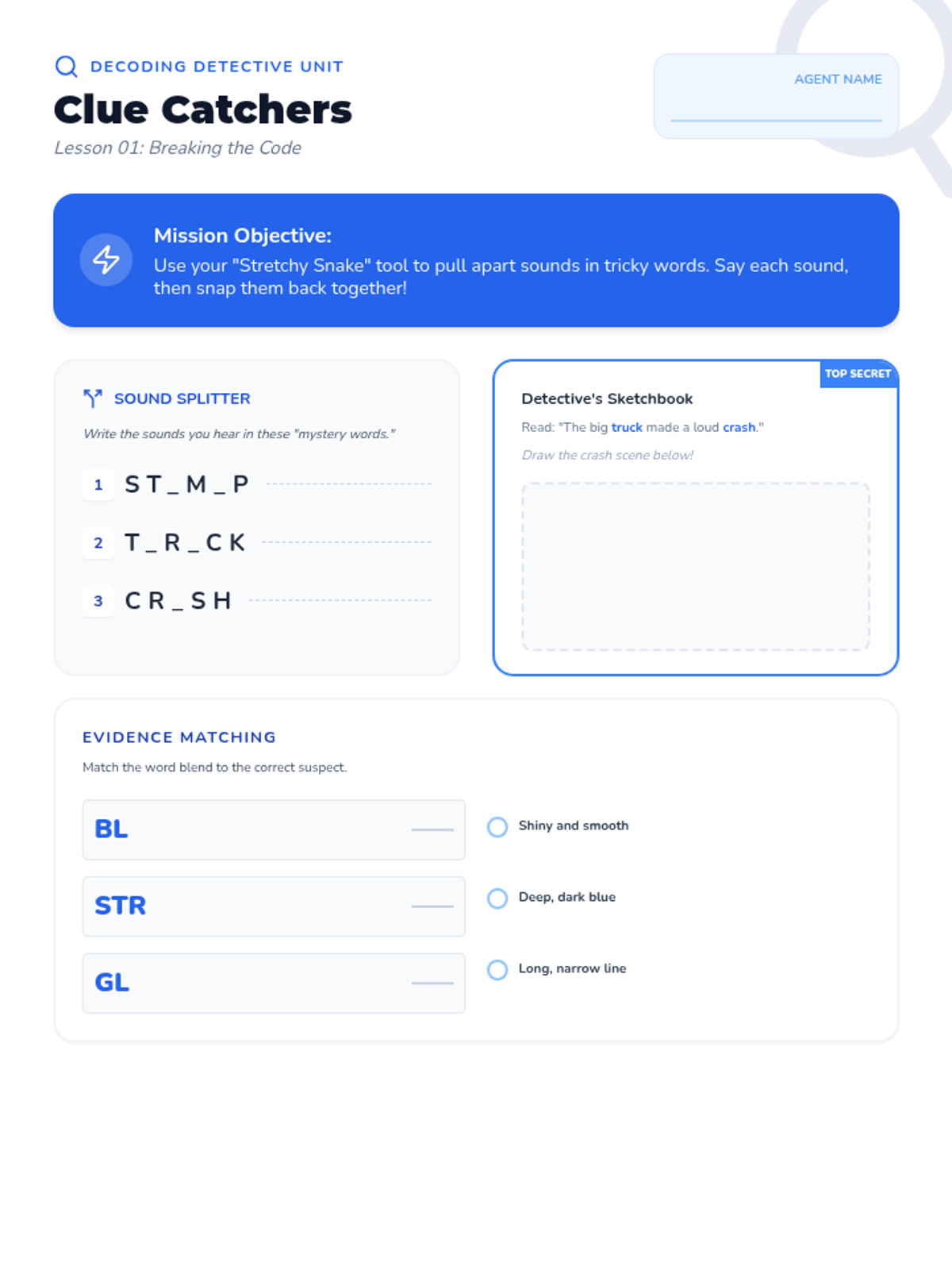
Clue Catchers Practice Pack for Smart Thinking Architects.
A revised two-page material for Lesson 7 (Blueprint Basics) with fixed formatting, primary writing lines, and optimized booklet layout. Theme: Sentence Architects.
A revised two-page material for Lesson 4 (Spark Seekers) with improved text contrast and optimized booklet layout for printing. Theme: Idea Hunters.
A revised two-page material for Lesson 10 (Focus Gears) with improved layout, fixed spillover issues, and enhanced booklet readability. Theme: Mind Masters.
A revised two-page material for Lesson 1 (Clue Catchers) with improved layout, fixed content mismatches, and reduced vertical overflow. Theme: Decoding Detectives.
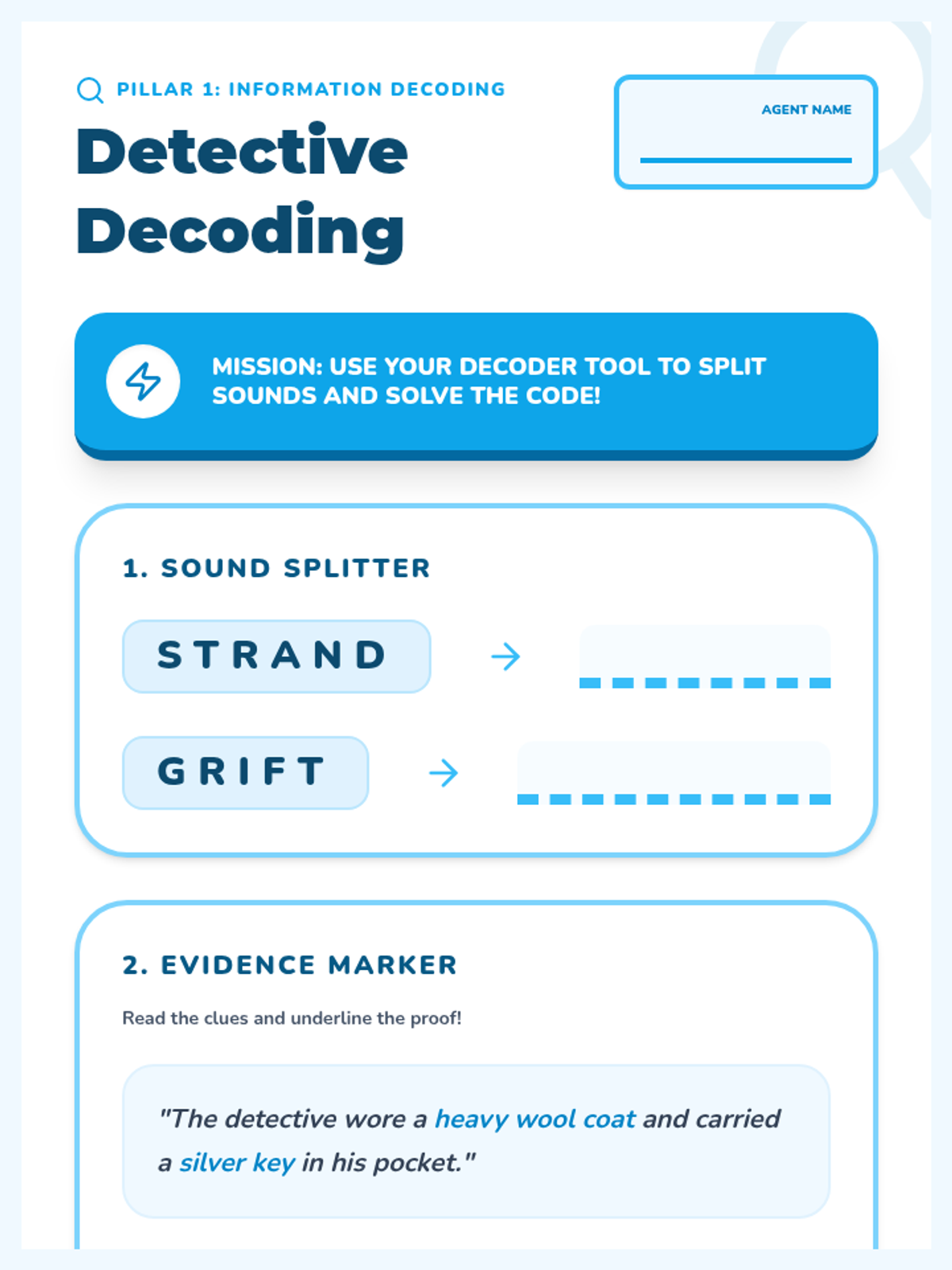
A 7-page "Mission Mastery Workbook" for Thinking Reading Architects. Includes focused practice for all 4 pillars (Decoding, Construction, Precision, Regulation), a strategy-based Mission Quiz, and a full-page Certificate of Mastery. Theme: Academic Heroism.
A set of 4 mastery practice sheets, one for each pillar: Information Decoding, Idea Construction, Expression Precision, and Thought Regulation. Features simple, high-impact tasks and the program's signature bright color scheme. Theme: Thinking Reading Architects.
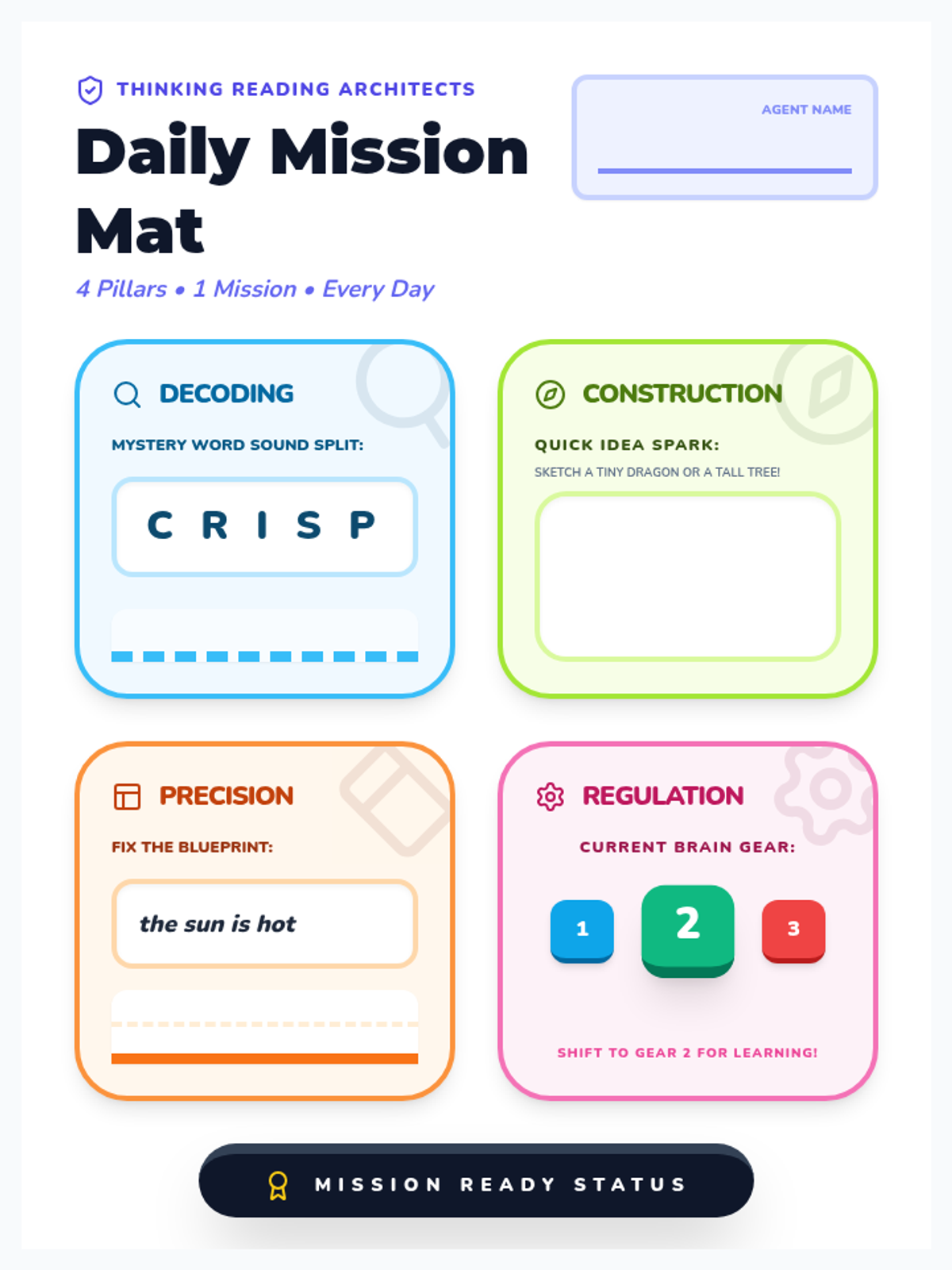
A consolidated "Mission Mat" worksheet with improved layout, fixing word wrap and sketching area issues. Theme: Thinking Reading Architects.
A single-page graduation certificate for the Thinking Reading Architects program with ultra-bold typography and high-impact visual design. Theme: Mastermind Graduation.
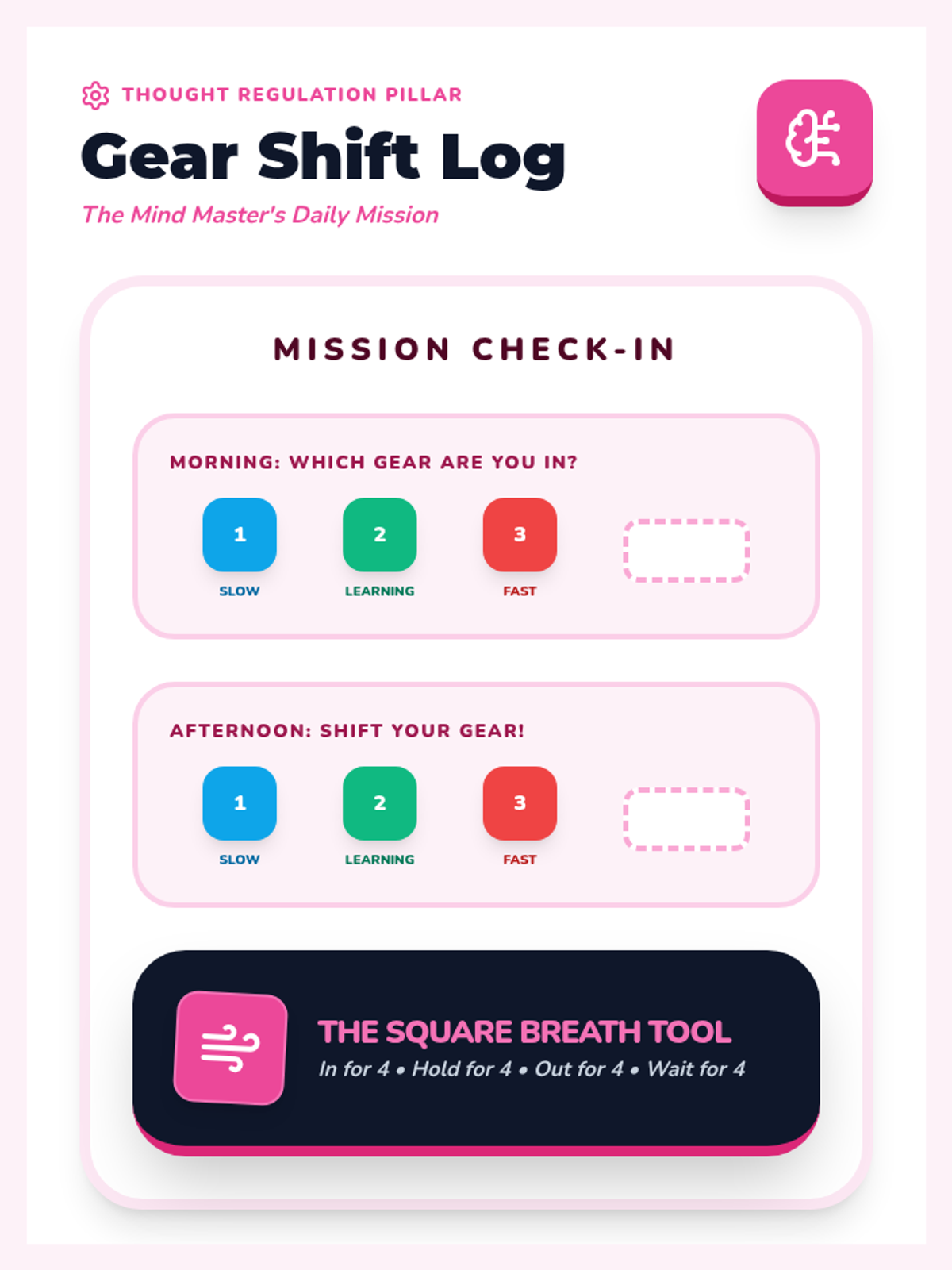
An effective self-regulation tool based on the 'Thought Regulation' pillar. Students use this daily log to check their 'Brain Gears' and practice the Square Breath tool. Theme: Mind Masters.
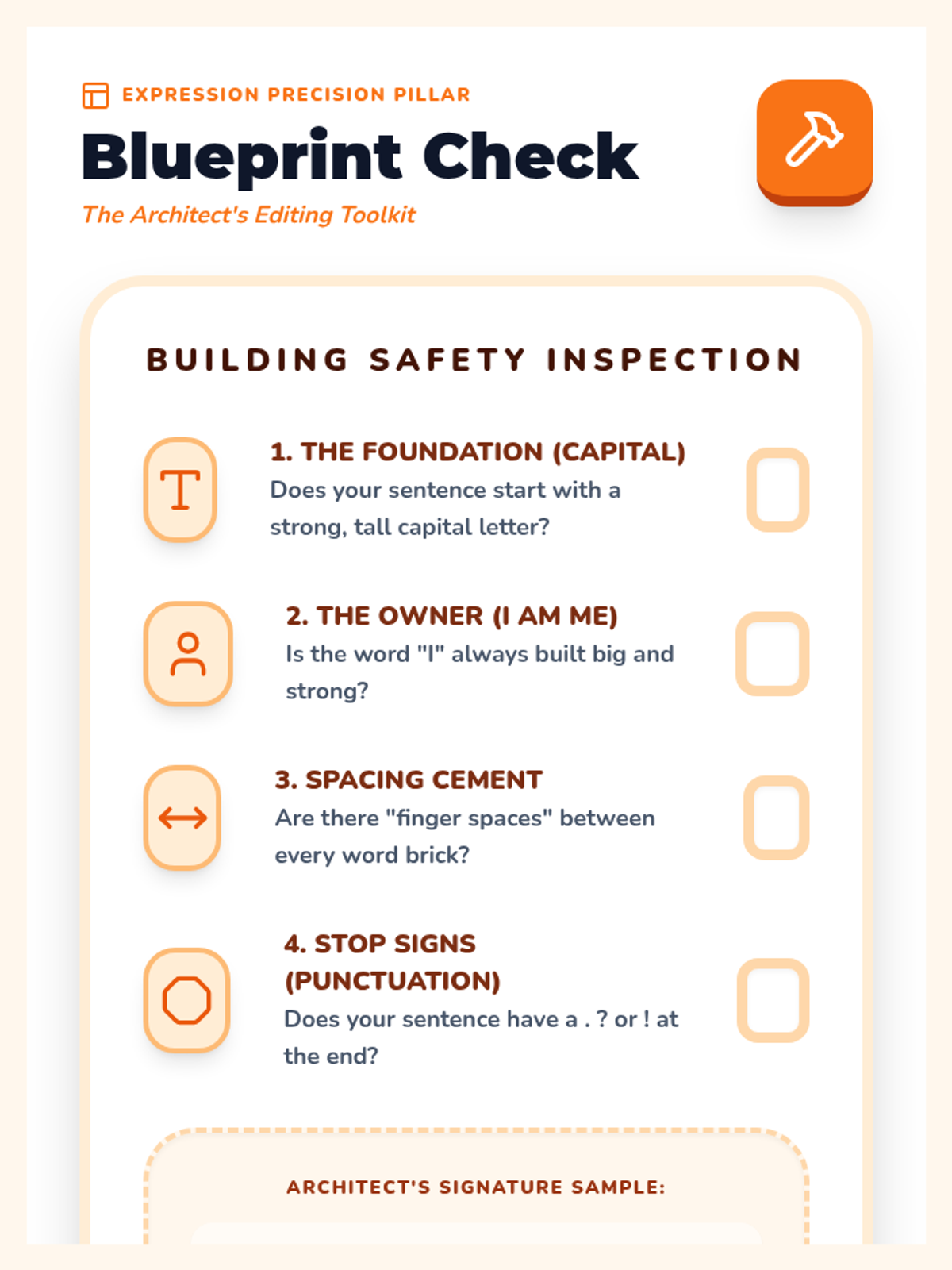
An effective editing checklist based on the 'Expression Precision' pillar. Students use this 'Blueprint Check' to verify capitals, spacing, and punctuation in their writing. Theme: Sentence Architects.
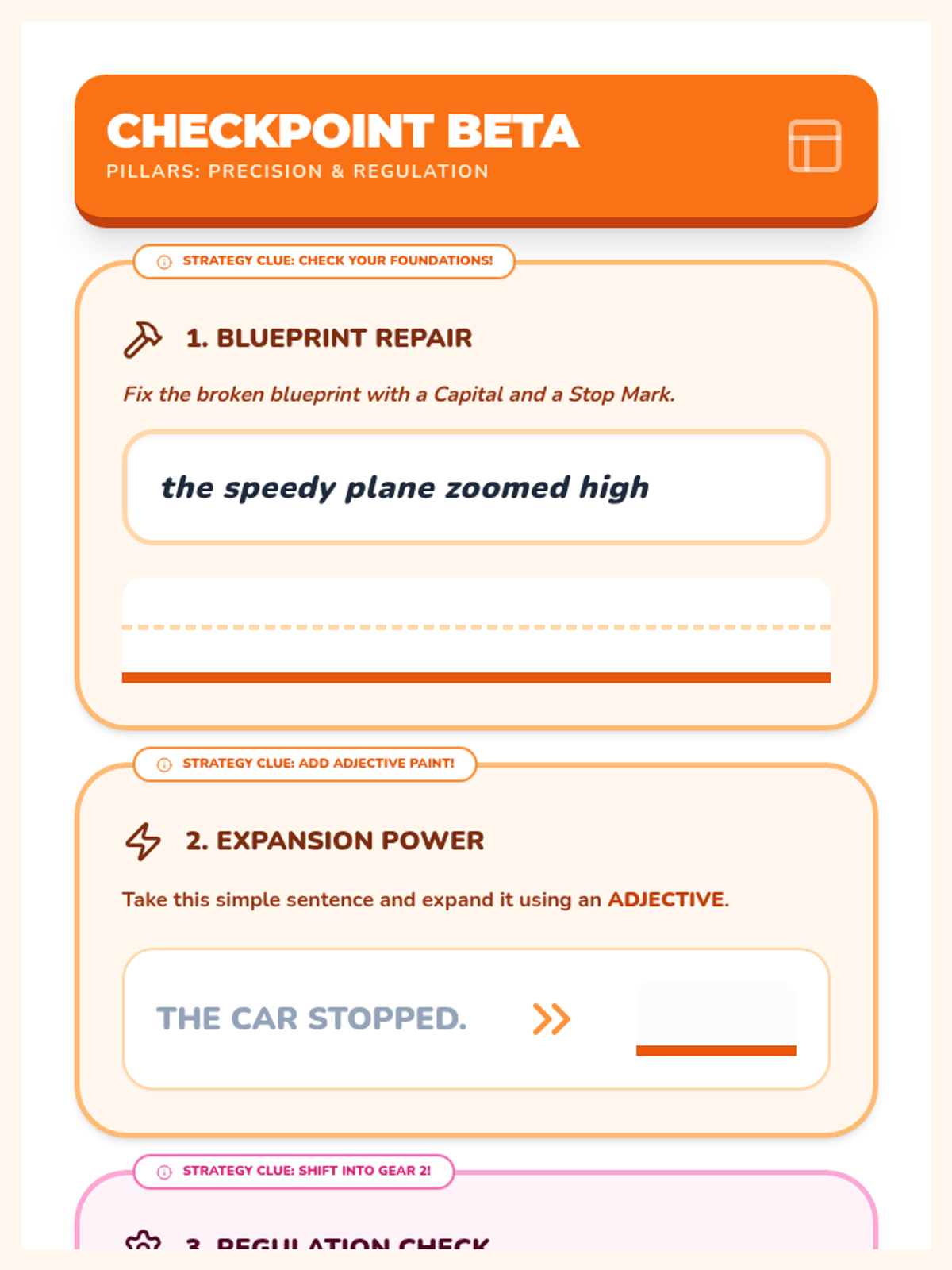
The second checkpoint quiz (Beta) for the Thinking Reading Architects program, featuring strategy clues and assessing sentence architecture and mood regulation. Theme: Checkpoint Beta.
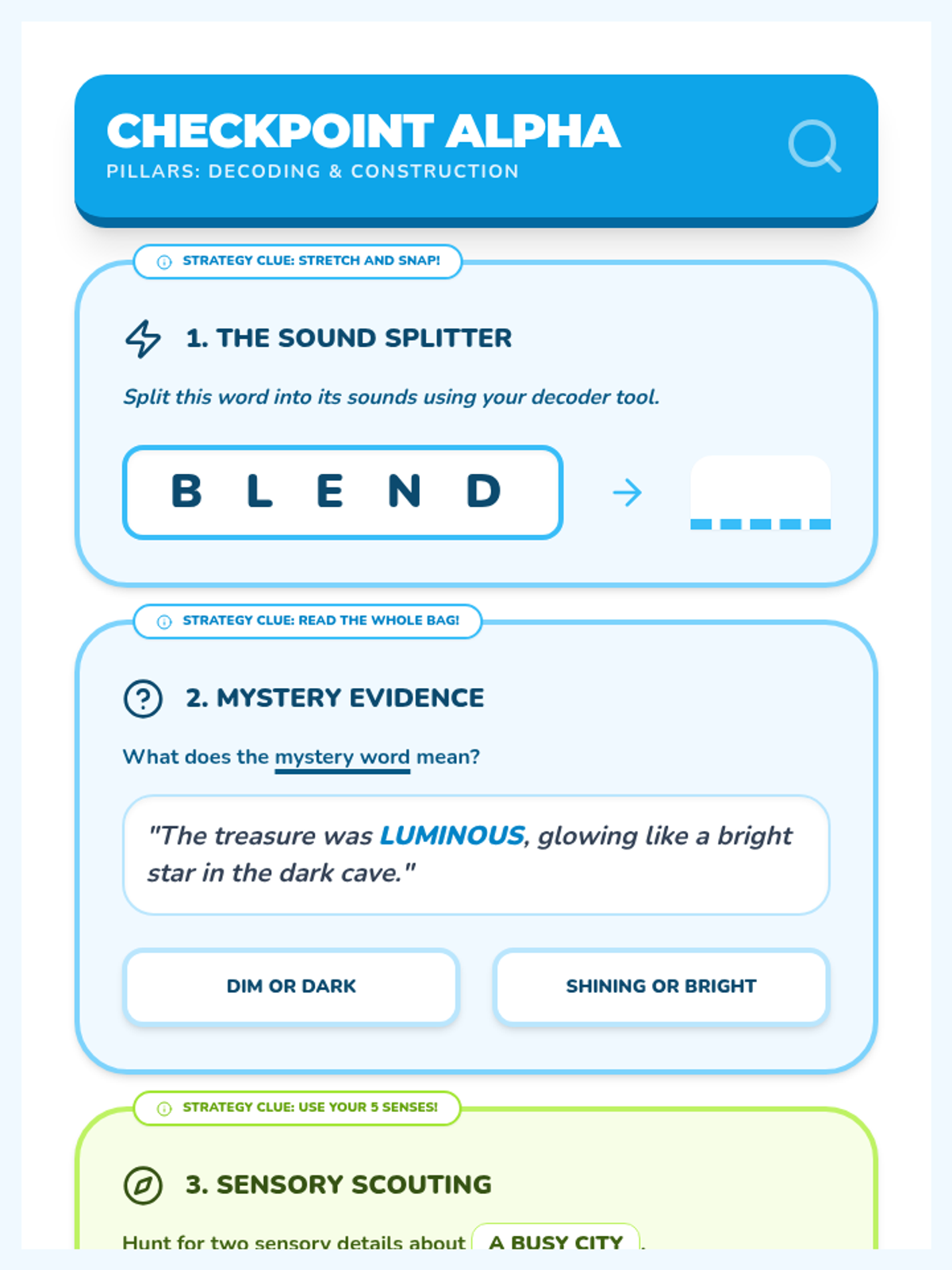
The first checkpoint quiz (Alpha) for the Thinking Reading Architects program, featuring strategy clue boxes and assessing decoding and sensory hunting. Theme: Checkpoint Alpha.
A high-impact introductory slide deck explaining the Thinking Reading Architects program and its four core disciplines: Information Decoding, Idea Construction, Expression Precision, and Thought Regulation. Theme: Academic Heroism.
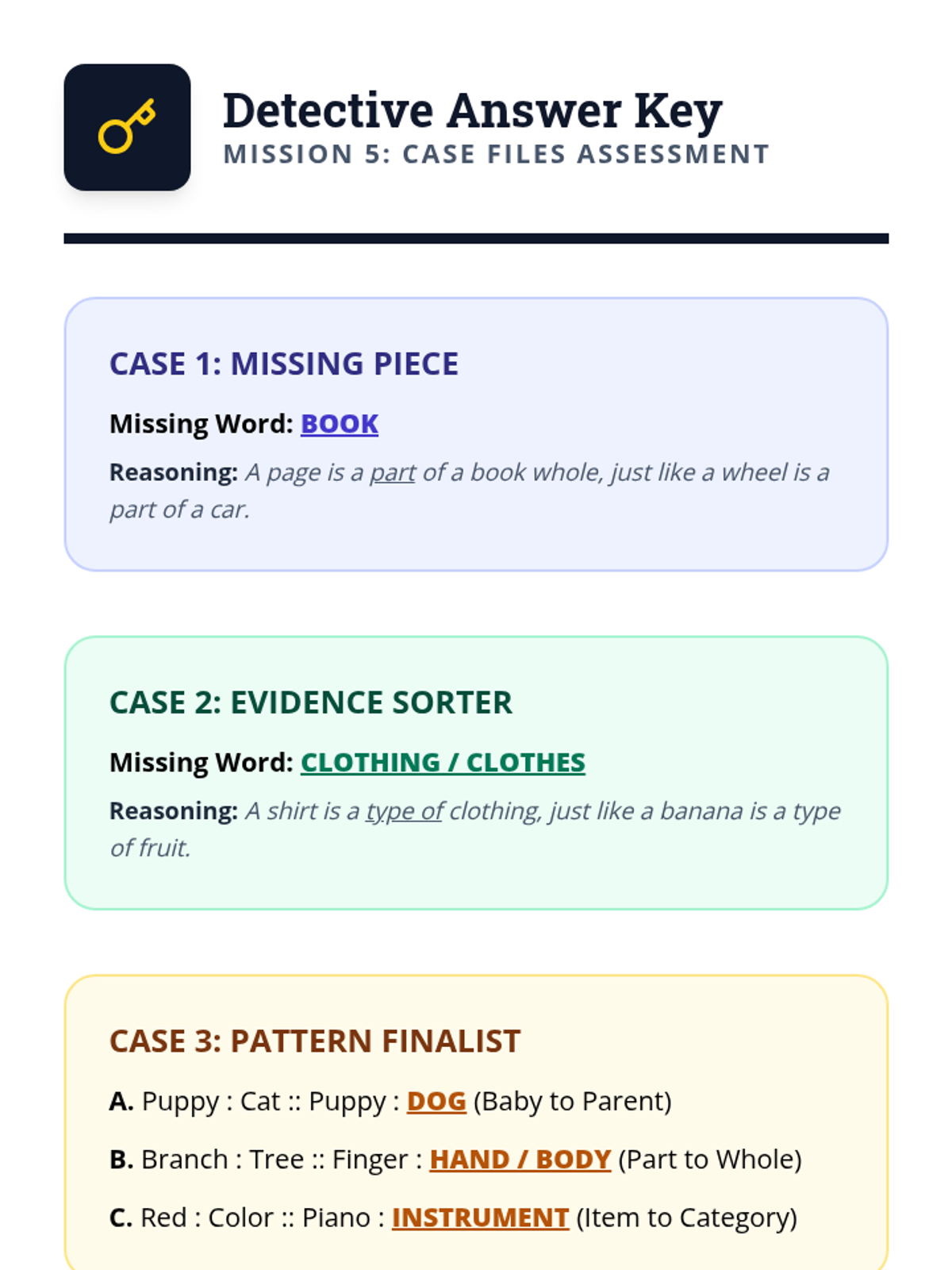
Teacher answer key and grading rubric for the Case Files Assessment. Provides logical justifications and mastery criteria.
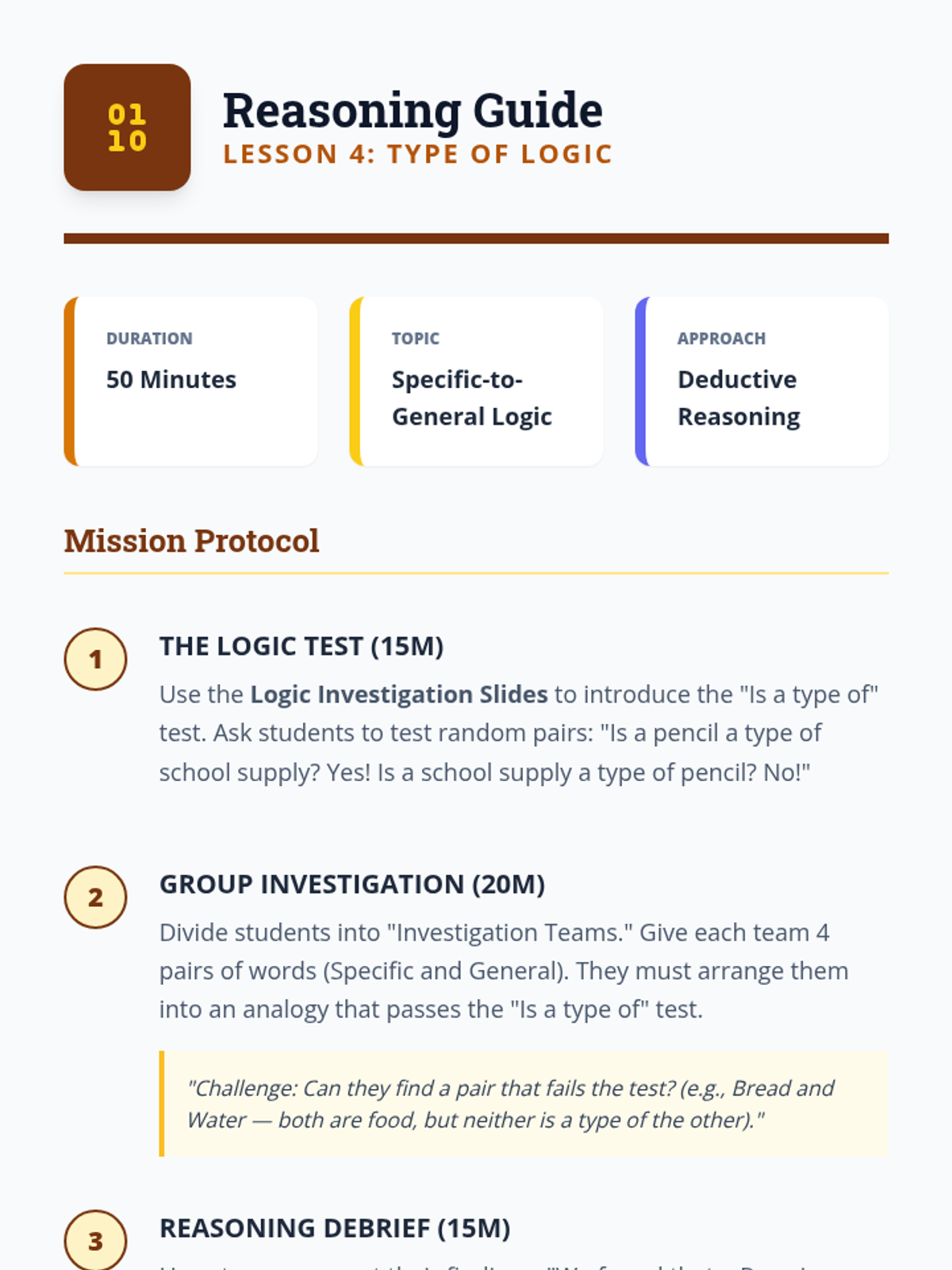
Teacher facilitation guide for the Type Of Logic lesson, focusing on 'is a type of' reasoning and specific-to-general analogies.
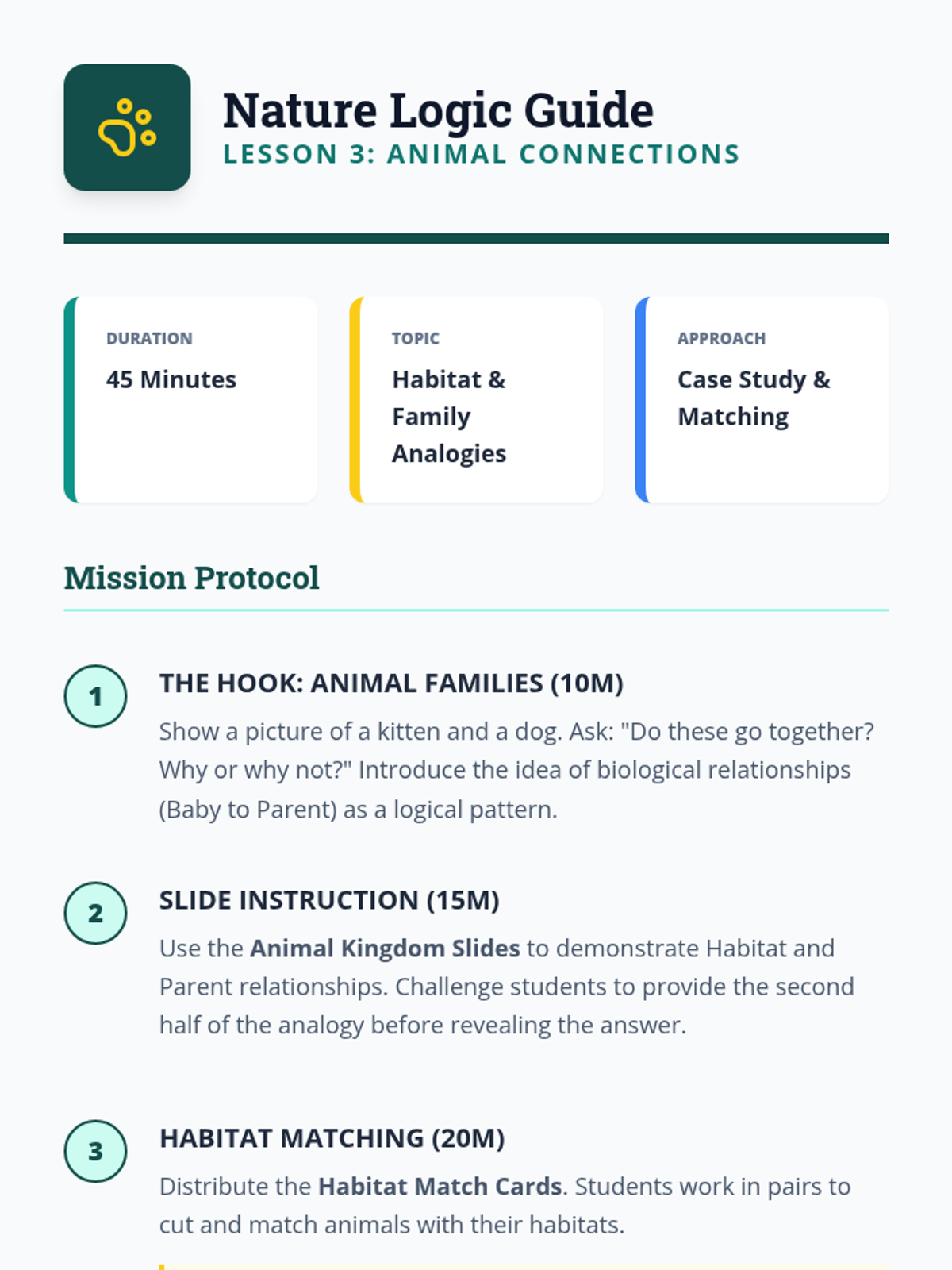
Teacher facilitation guide for the Animal Connections lesson, including animal-family and habitat analogy discussion prompts.
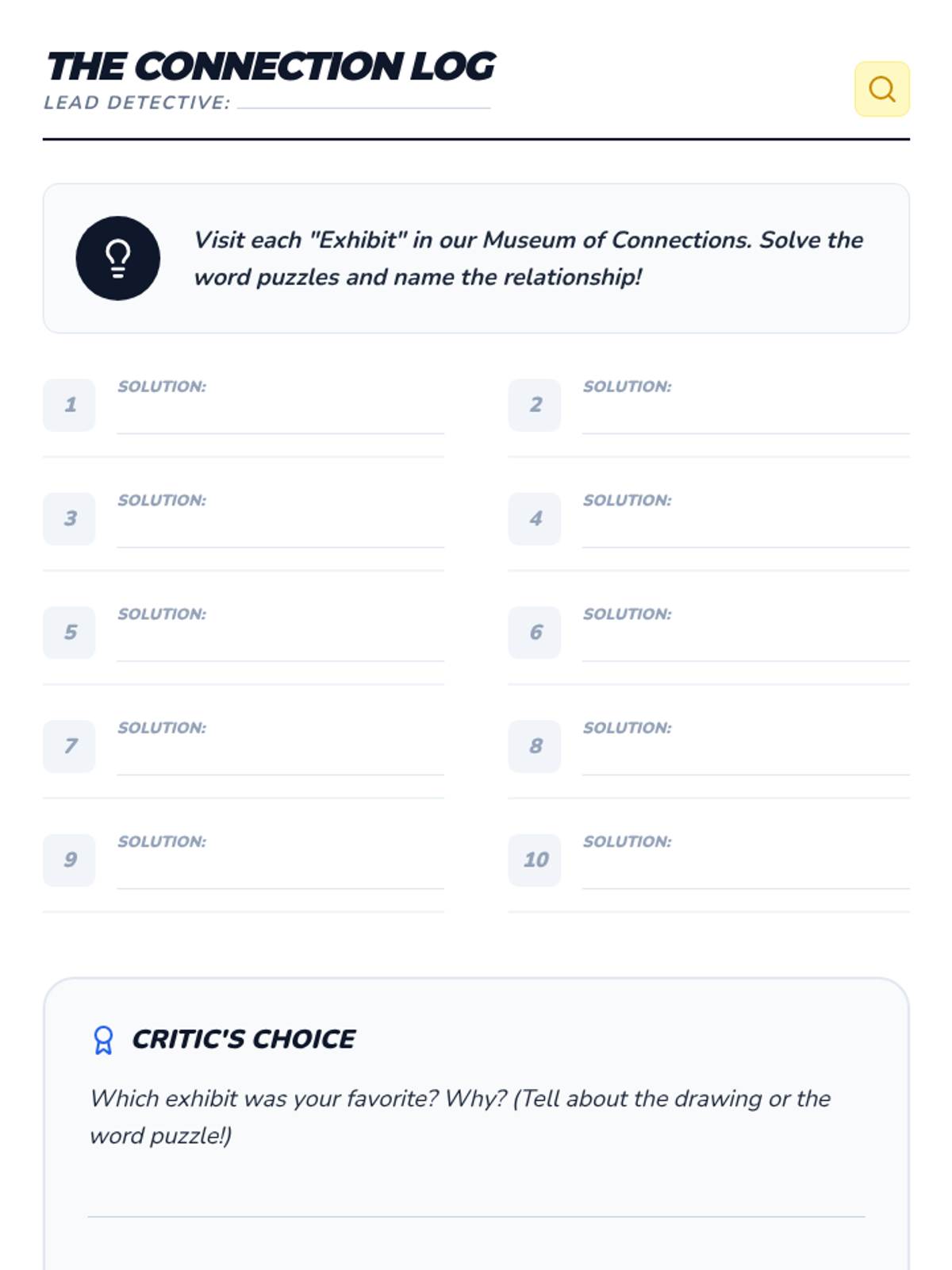
A log sheet for students to record their solutions and reflections as they complete the Analogy Museum Walk.
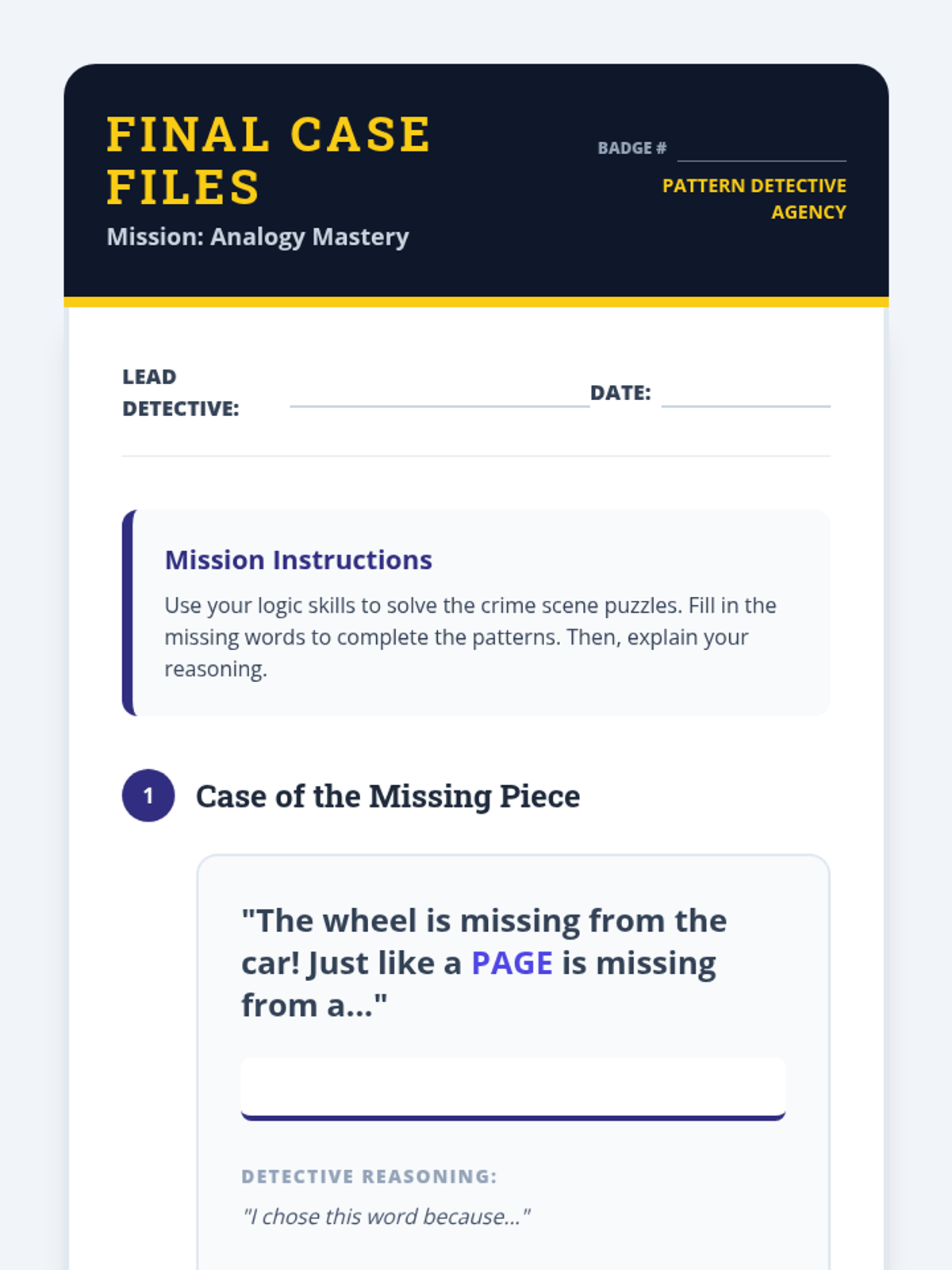
Final mastery assessment for the Pattern Detectives sequence. Students solve part-to-whole and category analogies and explain their logical reasoning.
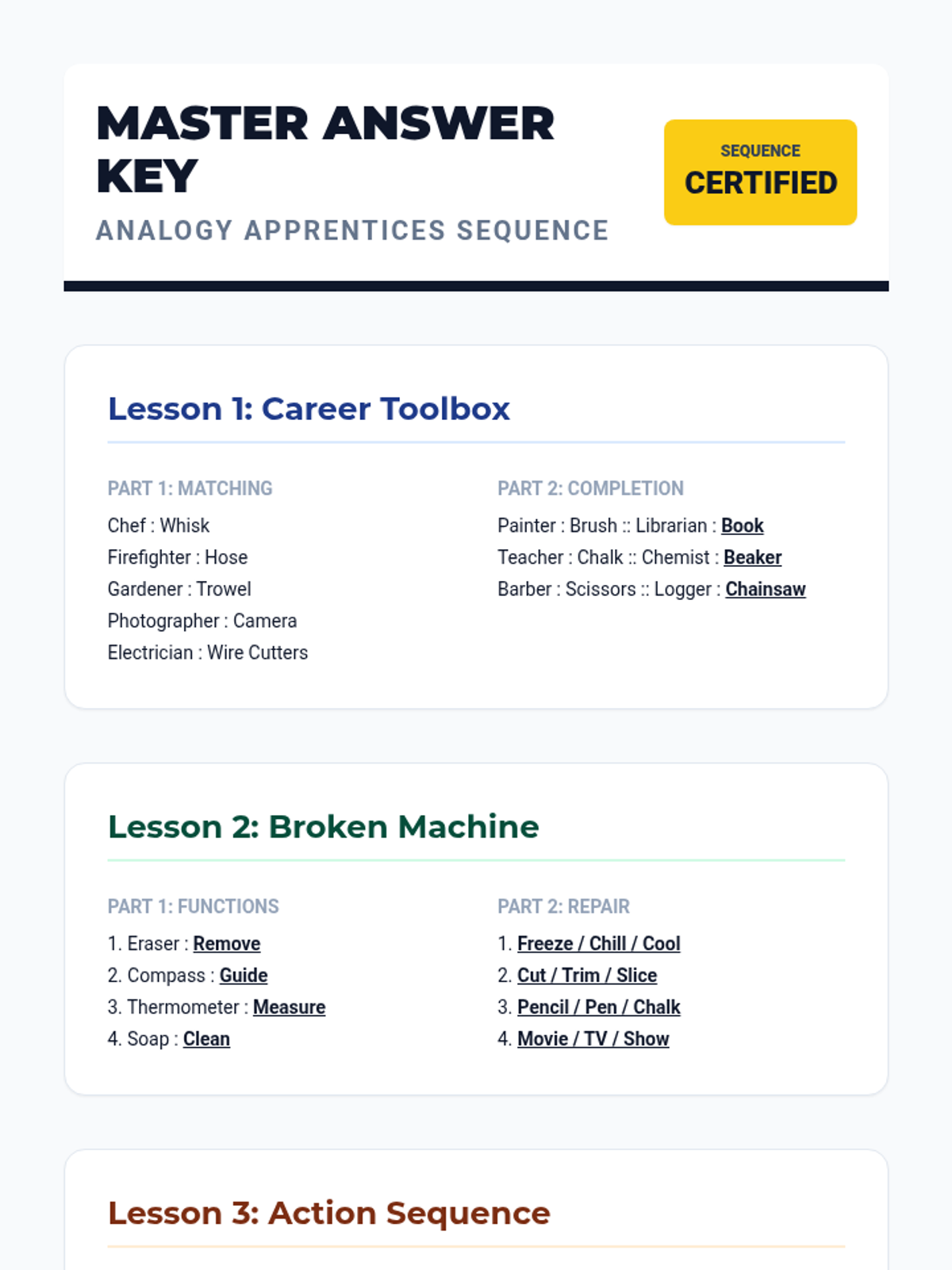
A comprehensive answer key for teachers, covering all worksheets and activities throughout the Analogy Apprentices sequence.
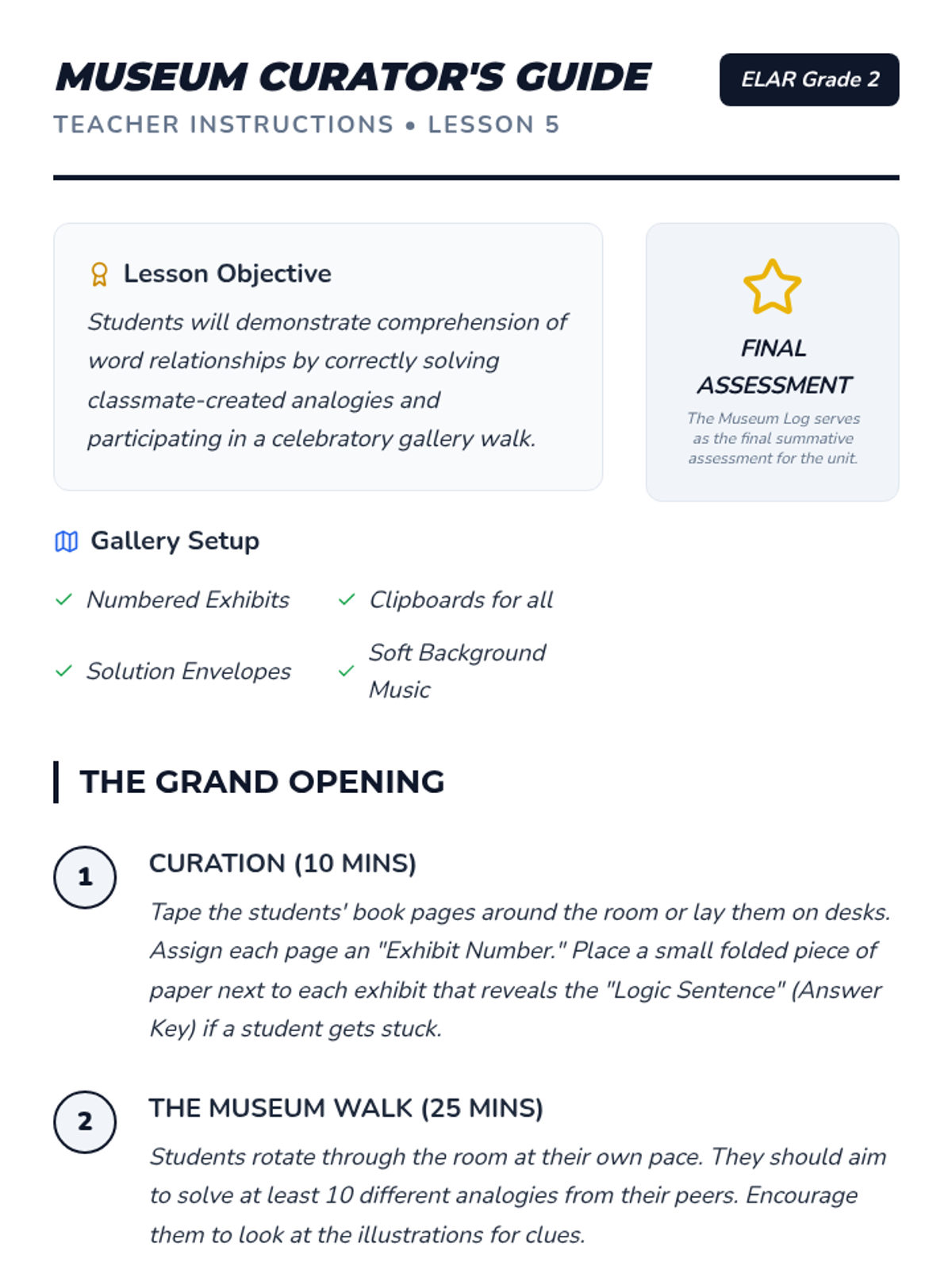
A teacher resource for Lesson 5, detailing the gallery walk setup, curation tips, and reflection questions.
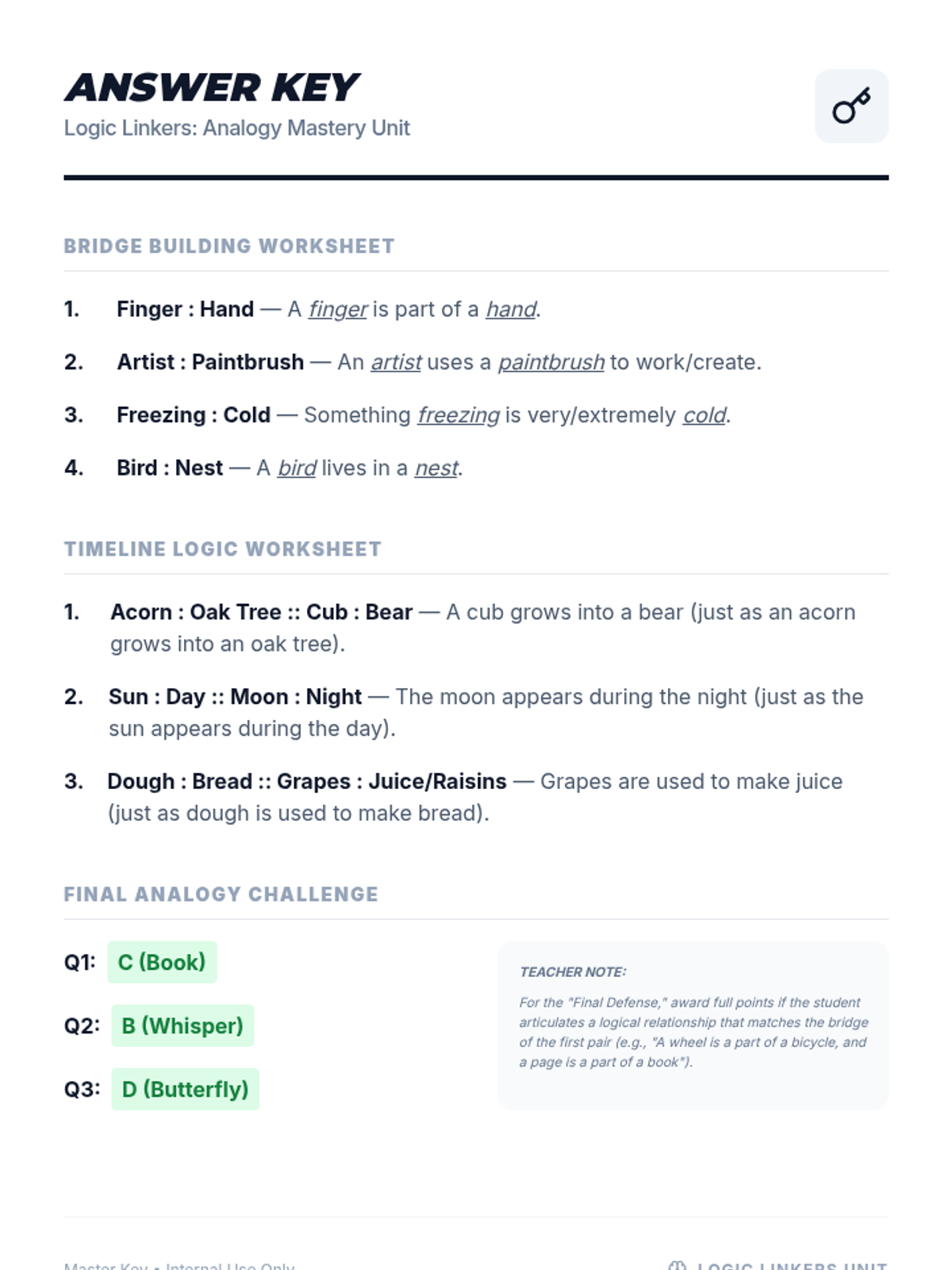
Comprehensive answer key for all worksheets and the final assessment in the Logic Linkers analogy unit.
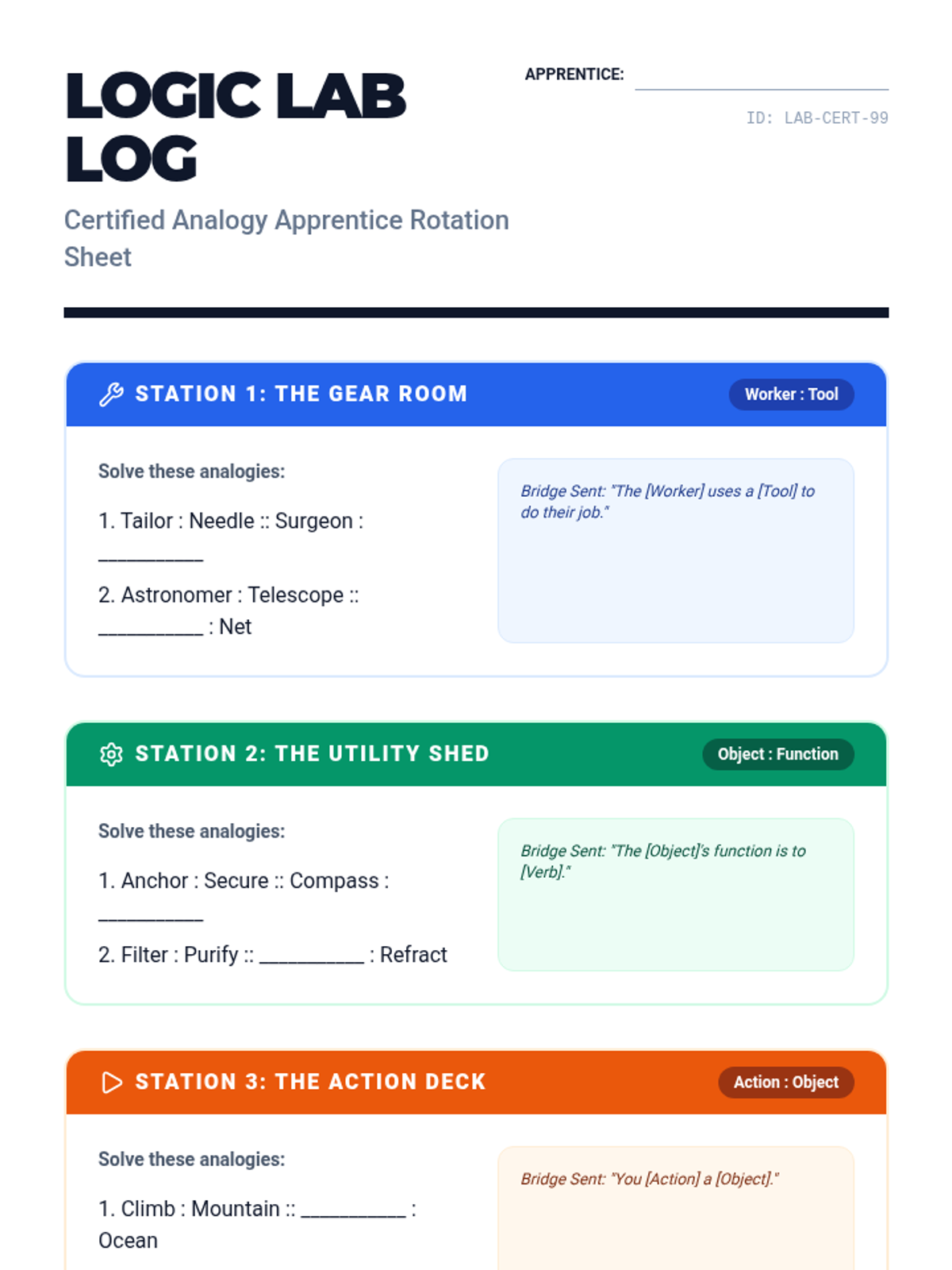
A comprehensive rotation sheet for students to complete at four timed 'Logic Lab' stations, reviewing all functional analogy types.
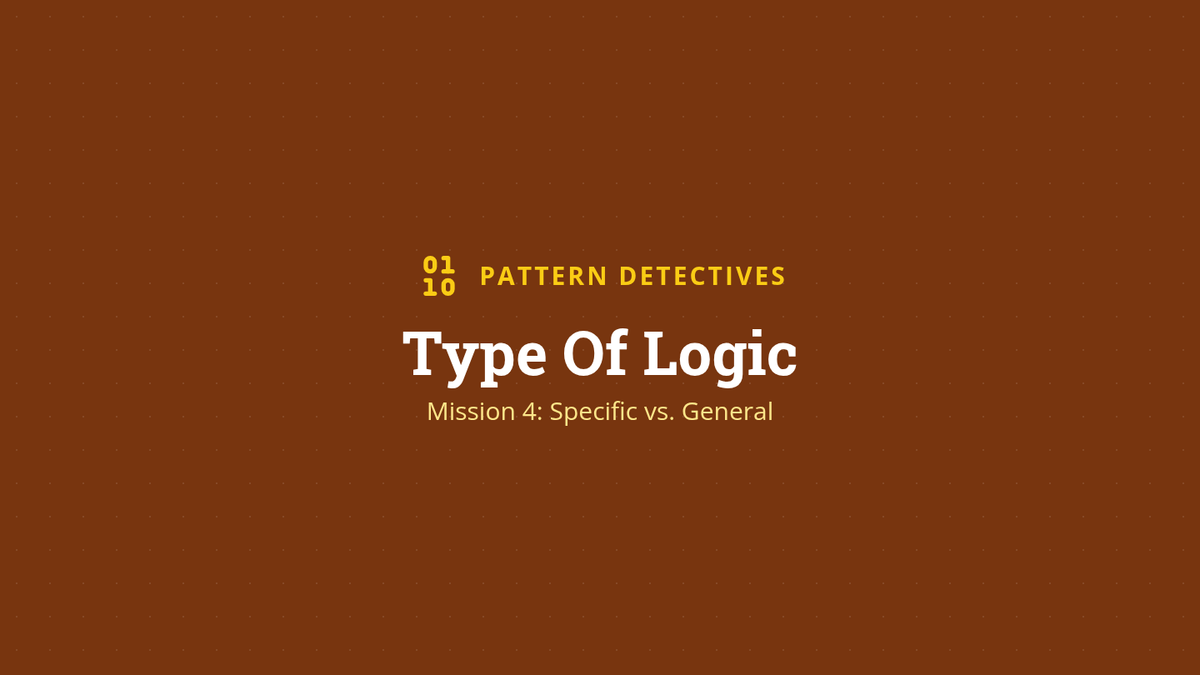
Visual introduction to 'is a type of' reasoning for solving analogies. Explores specific-to-general relationships using clear examples and logic tests.
A slide deck for Lesson 5 introducing the Museum Walk gallery event and establishing gallery protocols.
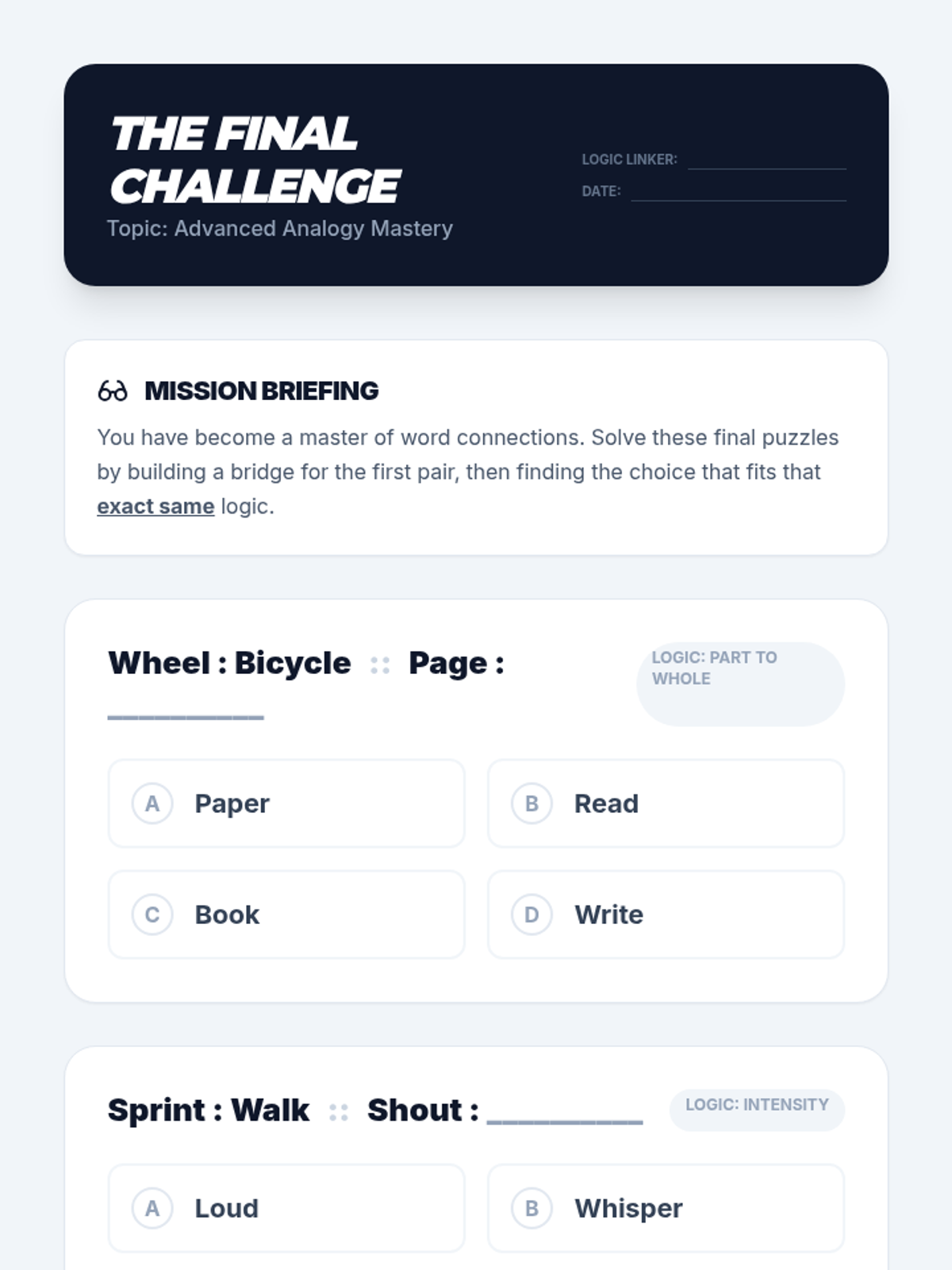
A comprehensive final assessment for the analogy unit, featuring standardized test-style questions and a section for logical justification.
Introductory slide deck for Lesson 5, reviewing all four functional analogy types through a cumulative 'Logic Lab' mastery session.
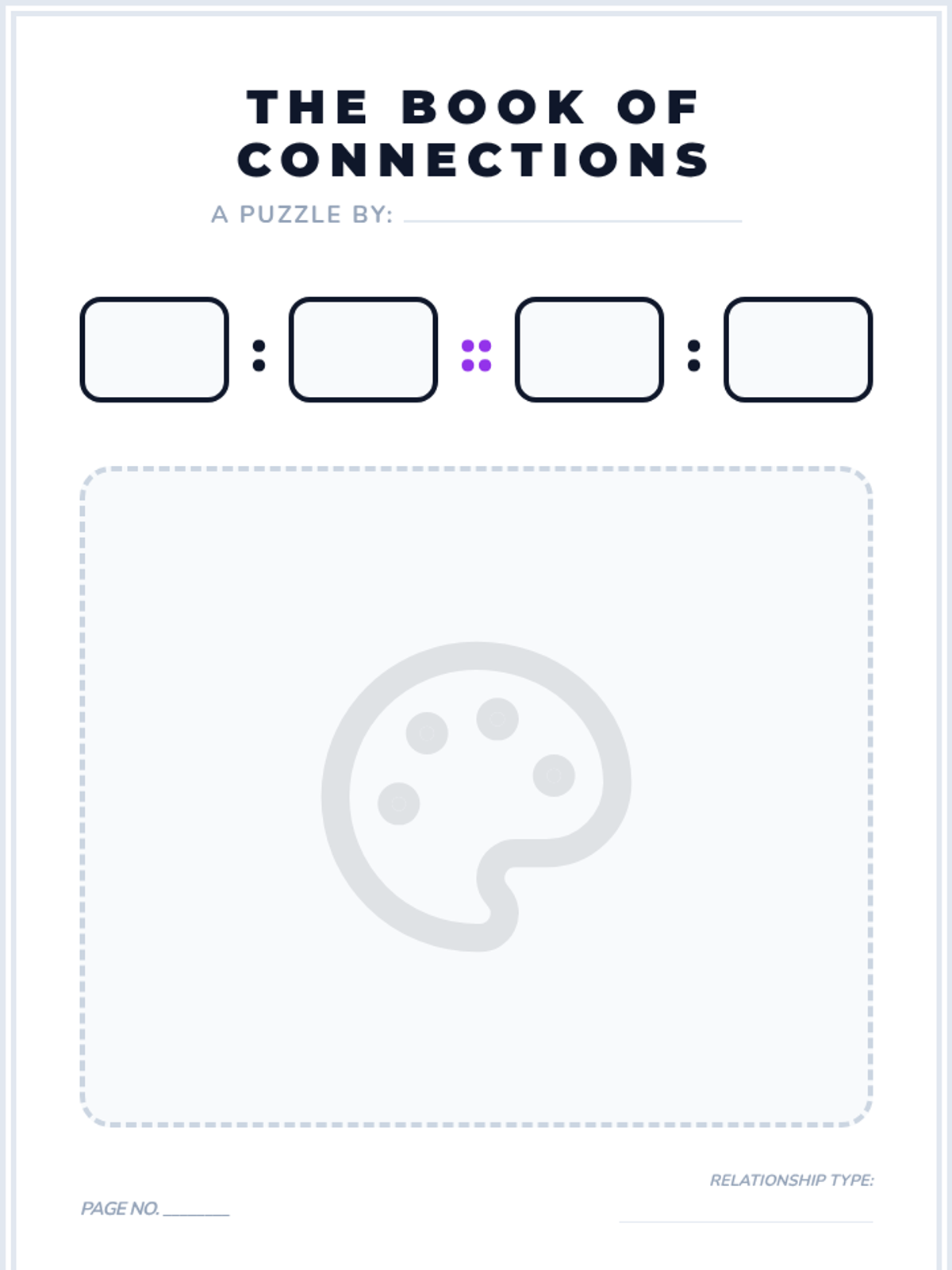
The final illustrated template for students to create their 'Book of Connections' page, featuring space for a four-word analogy and a large illustration area.
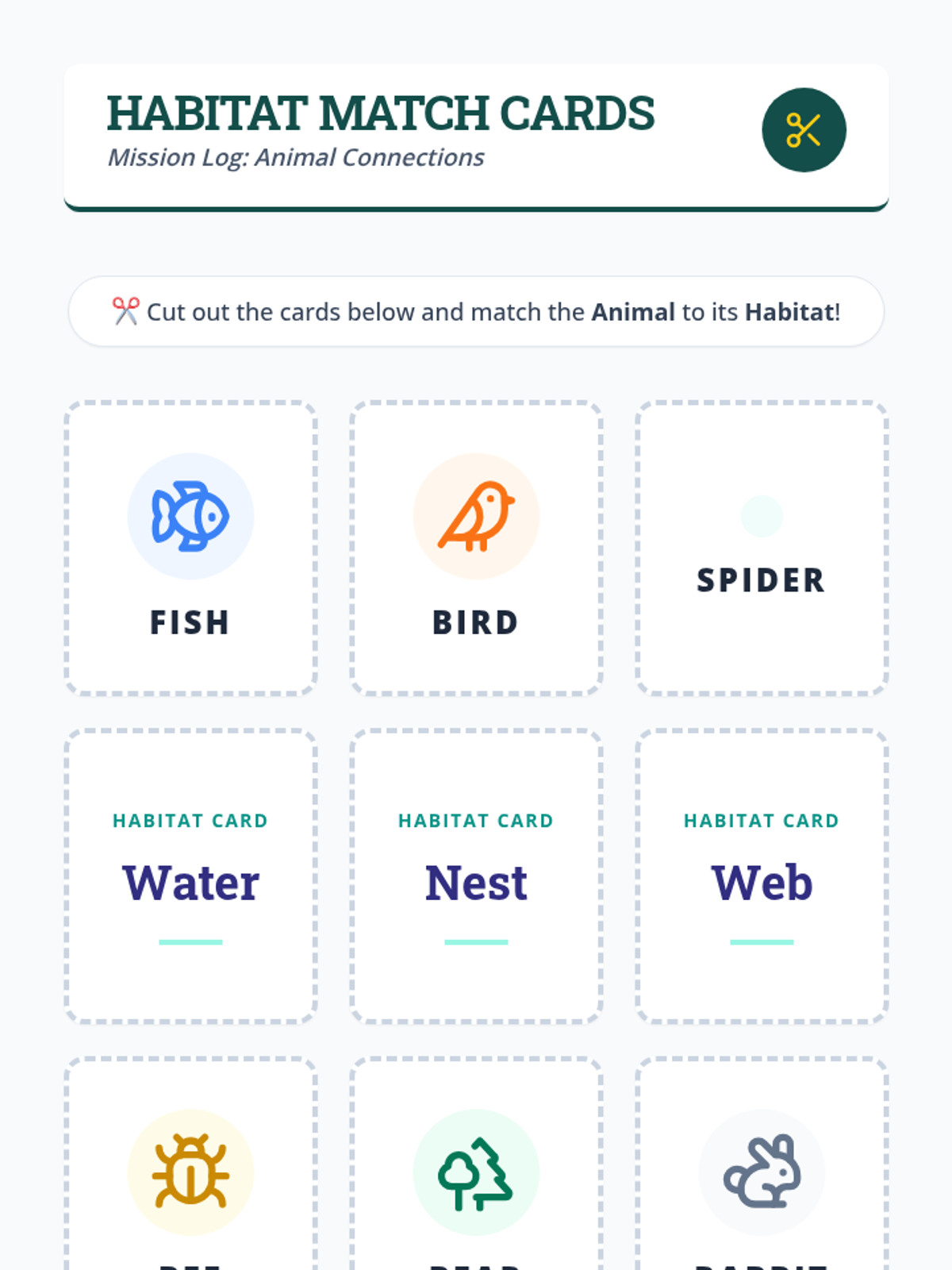
Printable matching cards for students to practice animal-to-habitat analogies. Features visual icons and clear text for 2nd-grade accessibility.
Slides focused on test-taking strategies for multiple-choice analogies, using the 'Imposter Hunt' theme to teach elimination techniques.
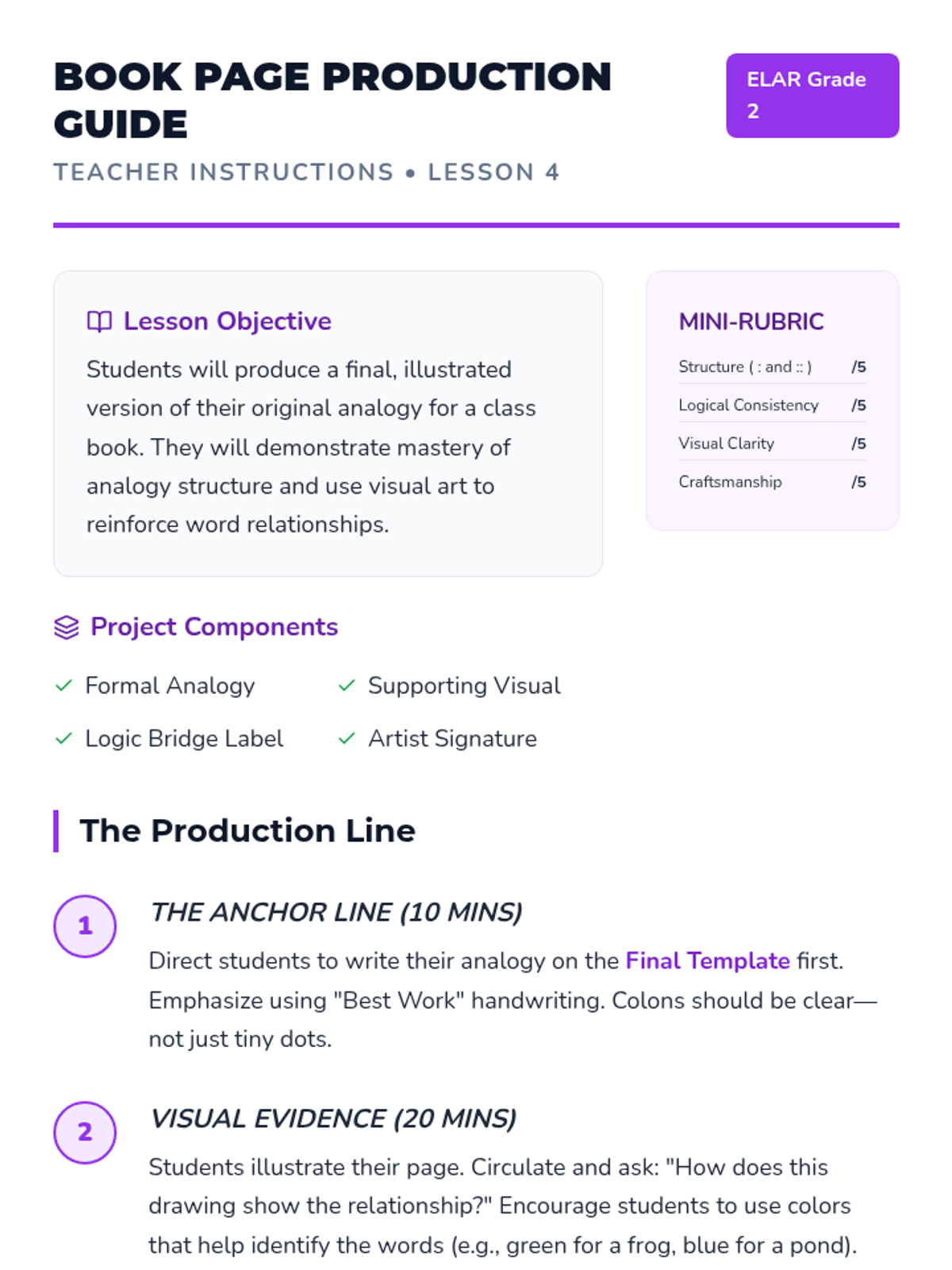
A teacher resource for Lesson 4, including a production guide for the final book pages and a project rubric.
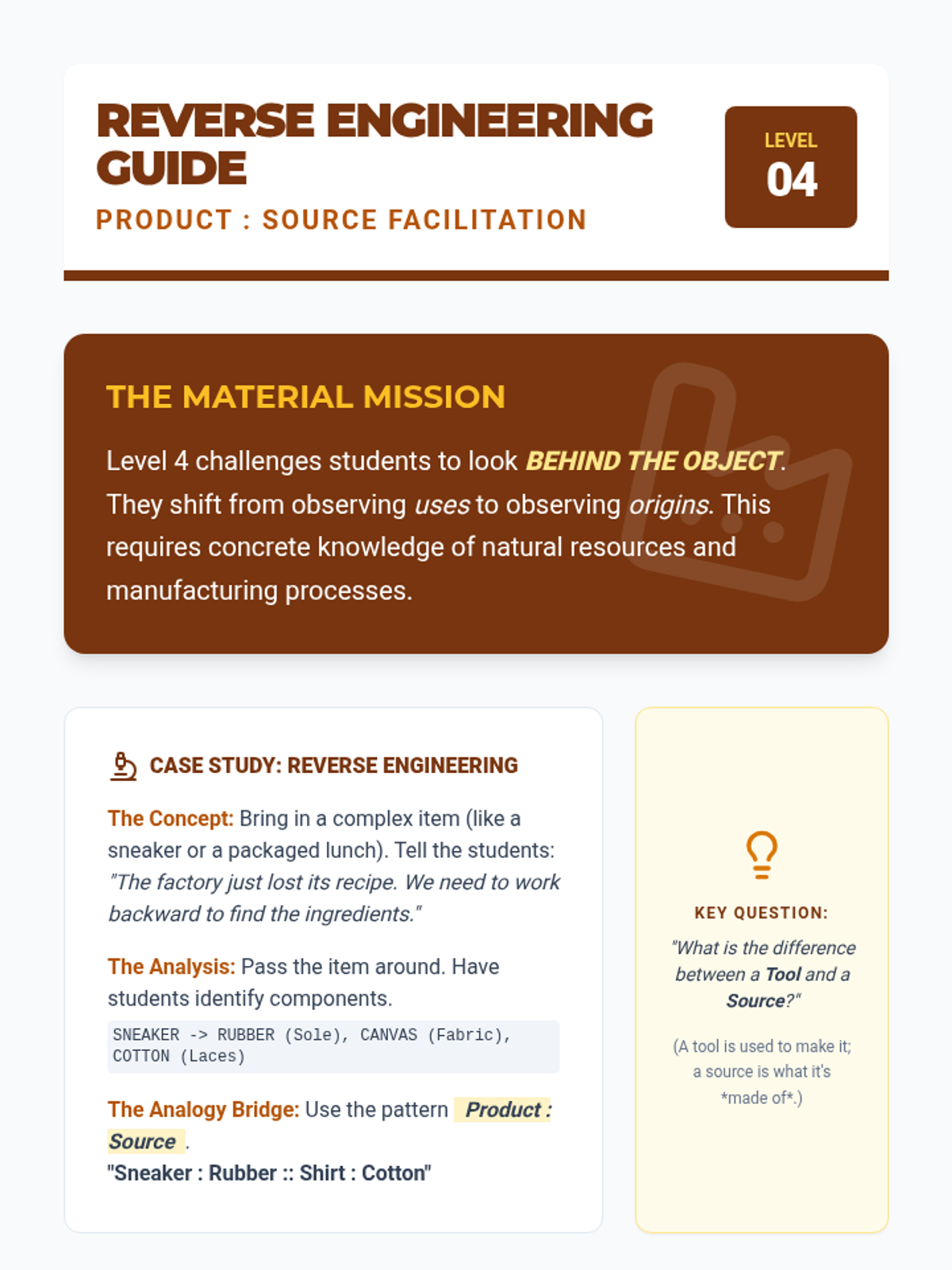
Teacher guidance for leading 'Reverse Engineering' case studies to teach Product-to-Source analogies, including analysis tips and quick-fire examples.
A slide deck for Lesson 4 focusing on visualizing word relationships through illustration and preparing the final book page.
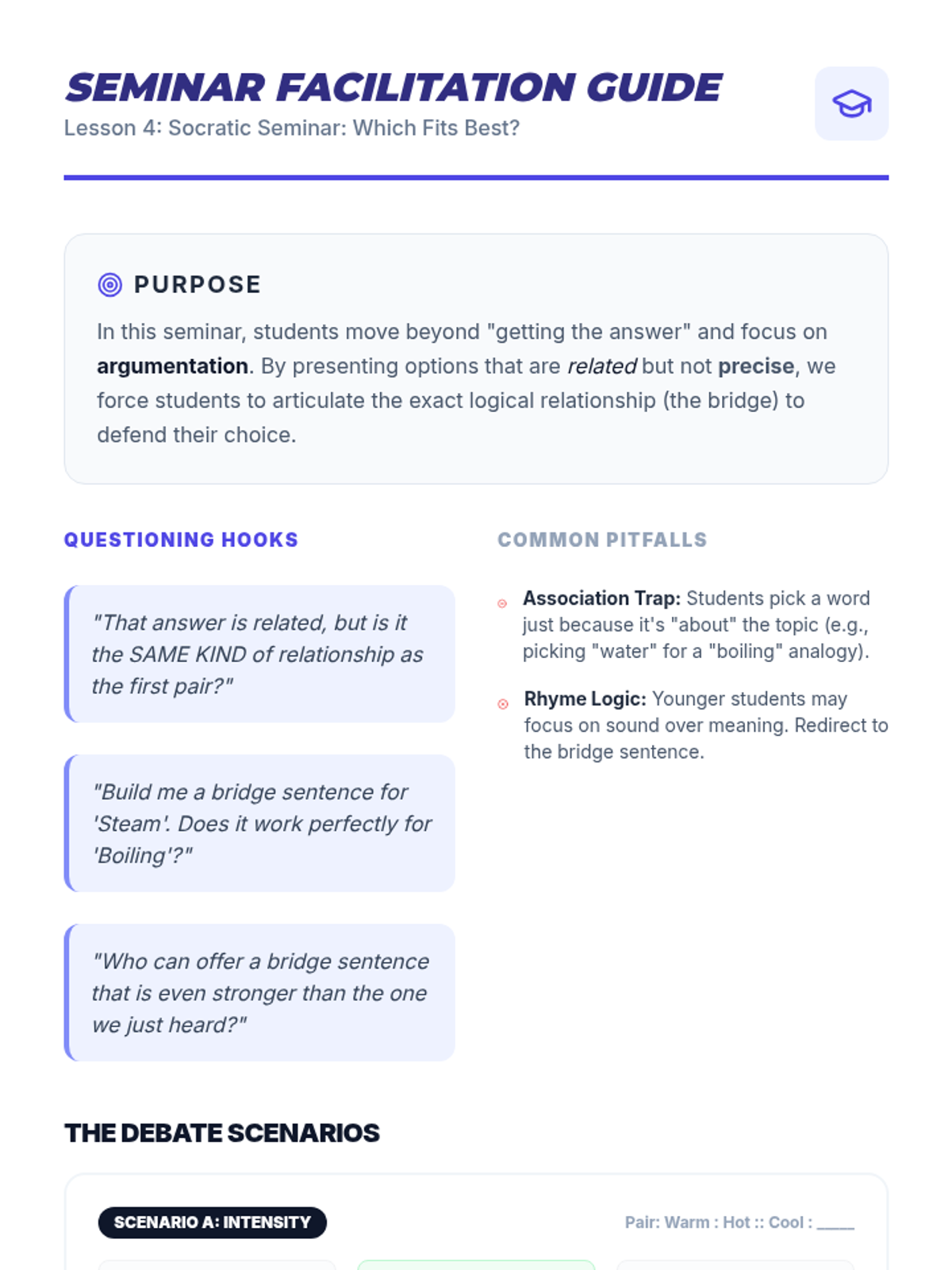
A facilitation guide for teachers to lead a Socratic Seminar on analogy logic, featuring discussion prompts and common student misconceptions.
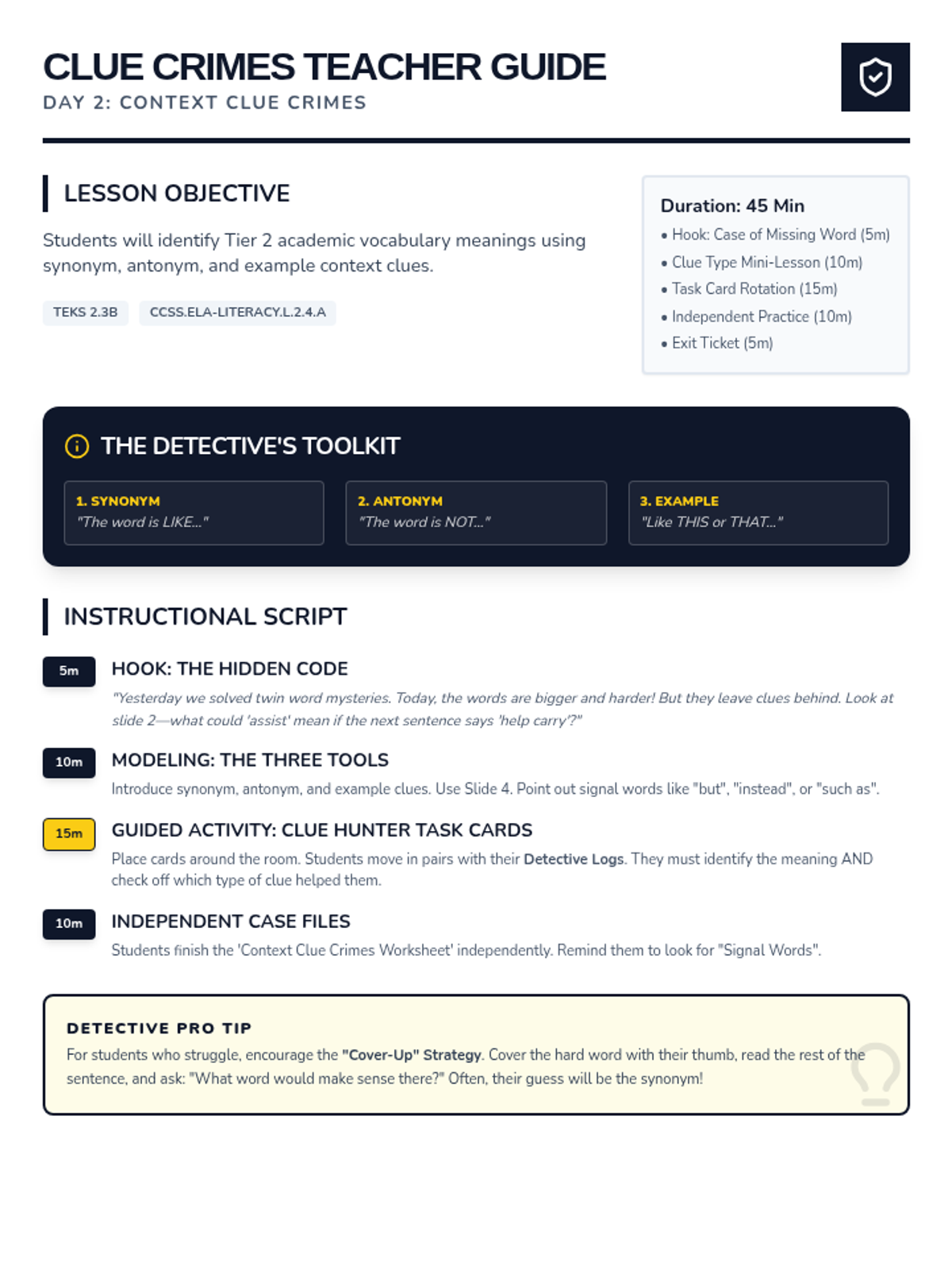
Teacher facilitation guide for Day 2, focusing on Tier 2 academic vocabulary, instructional scripts, and task card facilitation. Cohesive with the Word Detectives unit theme.
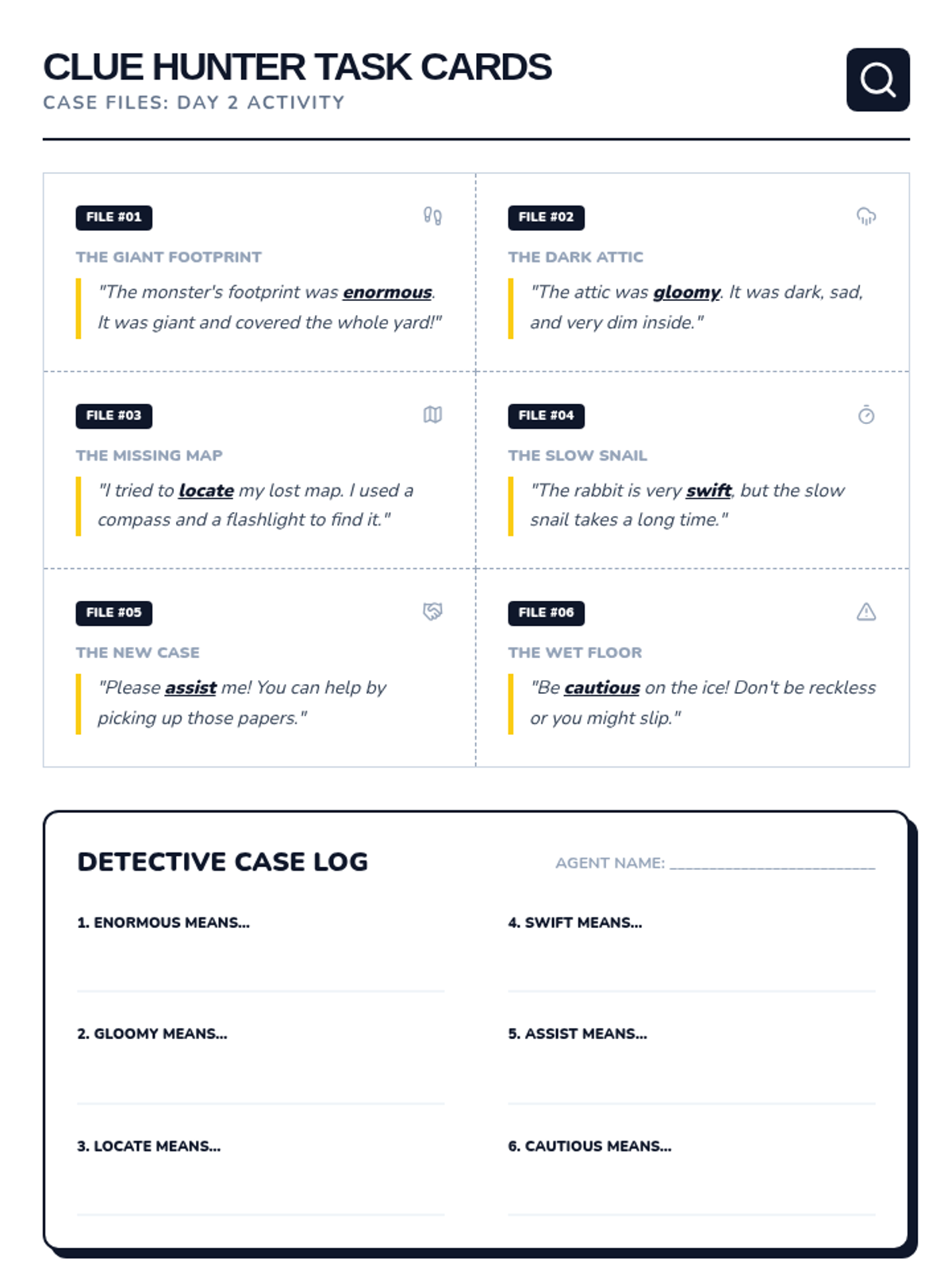
A set of 6 detective-themed task cards for Day 2 where students identify word meanings using synonym, antonym, and example clues. Includes a built-in recording log. Revised for ink efficiency and writing space.
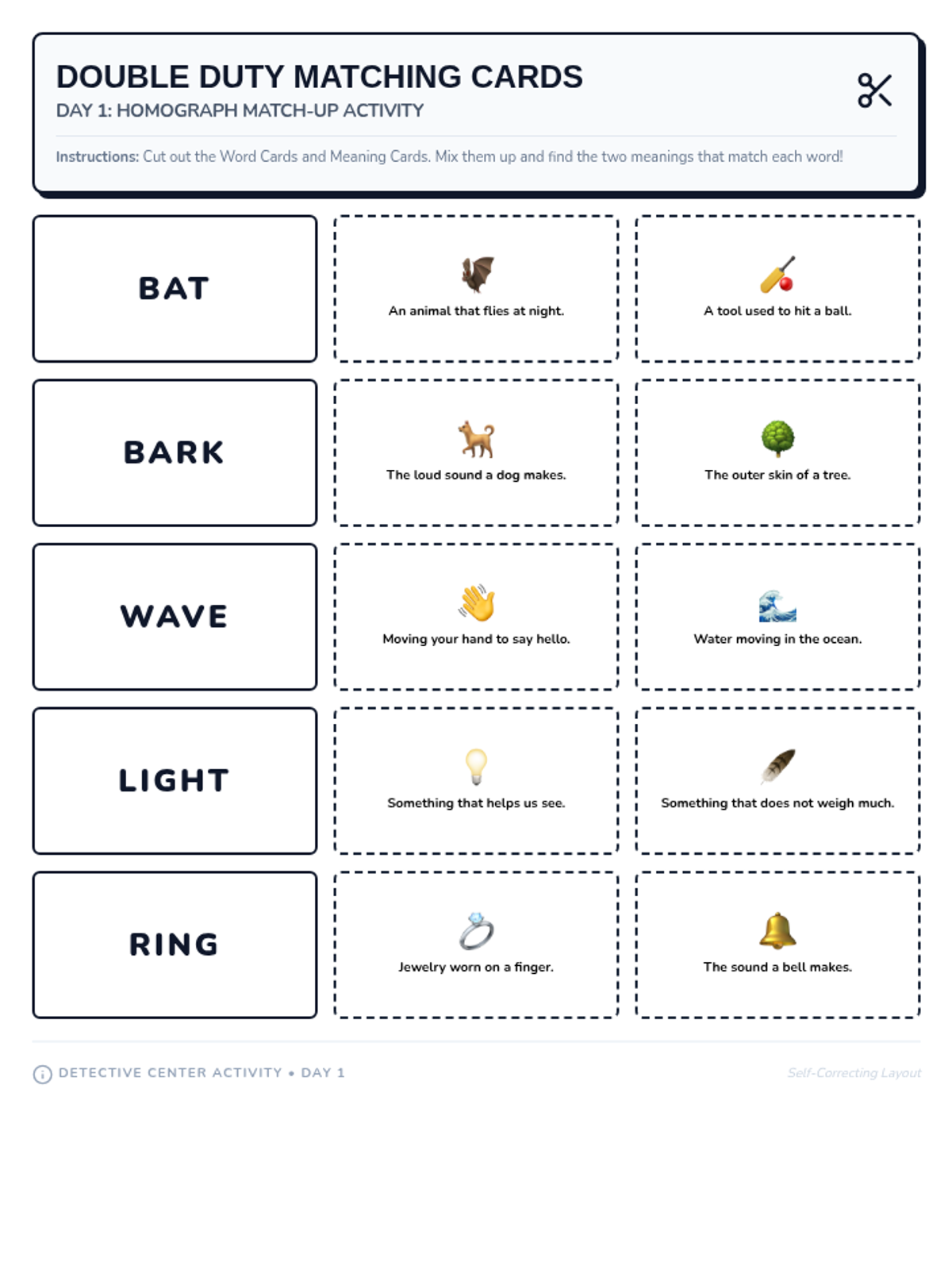
A matching card activity for Day 1 where students pair homographs with two different visual and textual definitions. Perfect for small groups or centers. Revised for better page flow and challenge.
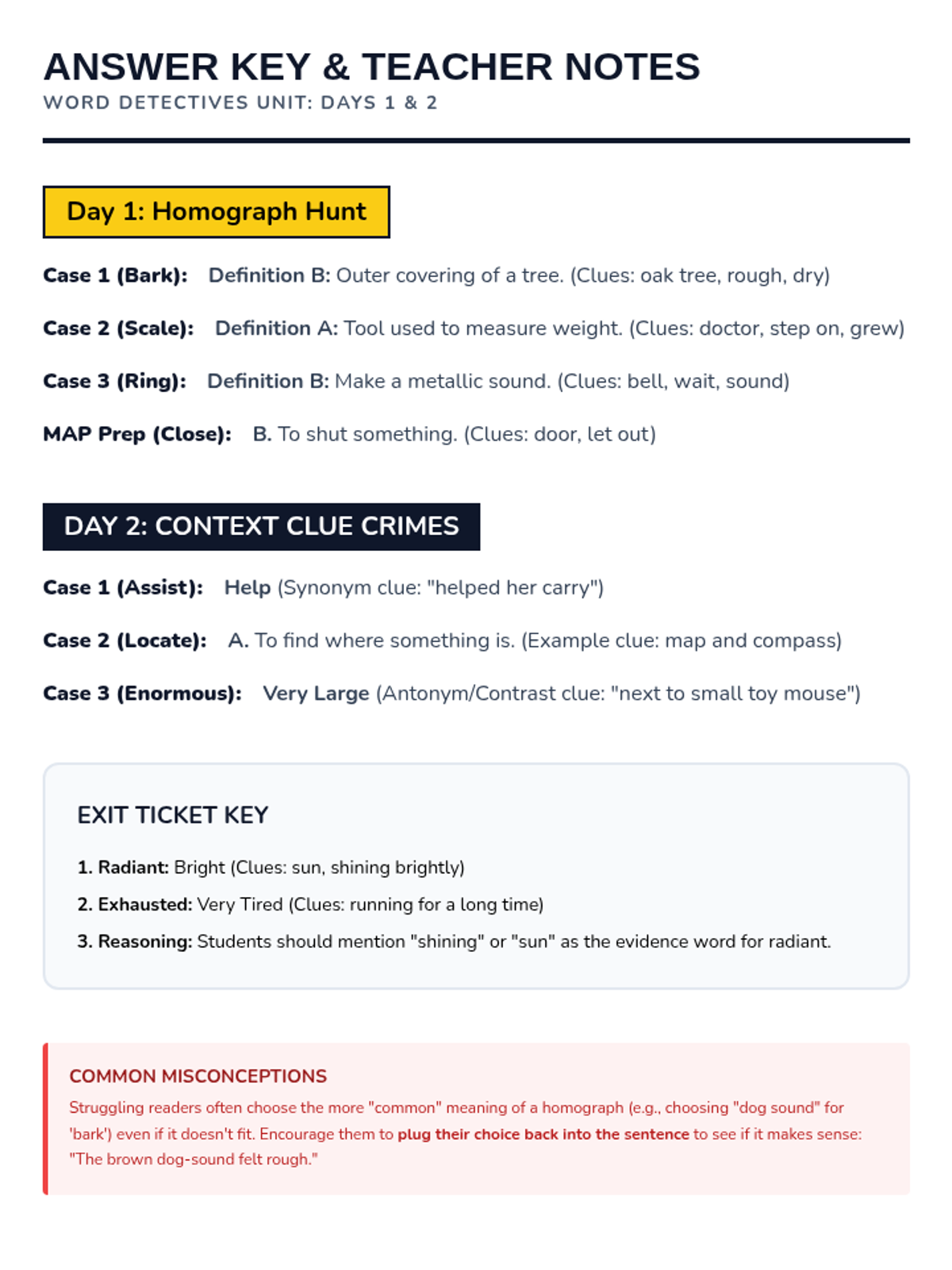
A comprehensive answer key for both days of the unit, including target clues, correct answers, and teacher notes on common student misconceptions. Updated to include answers for the new activity materials.
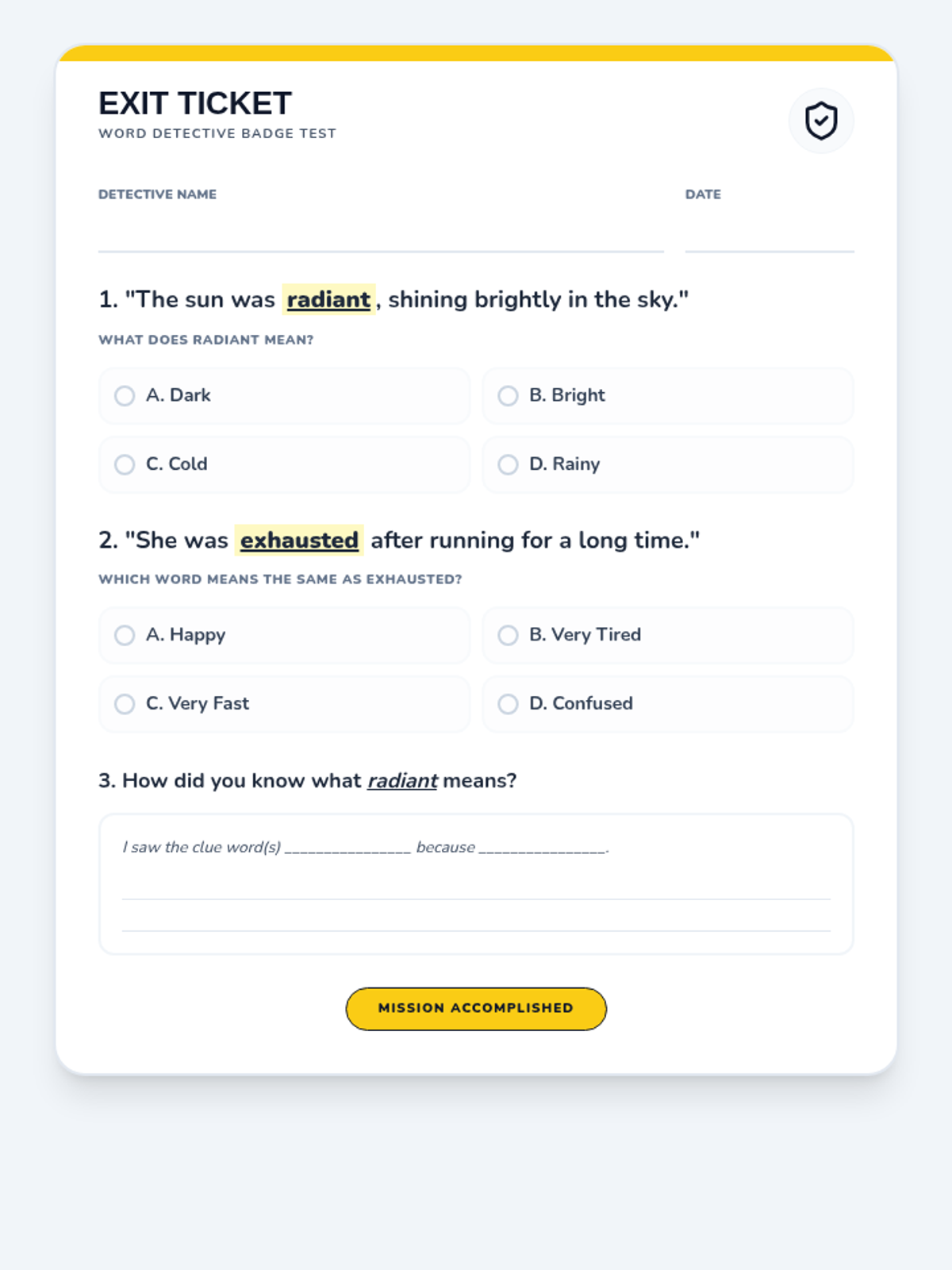
A quick assessment tool for the end of Day 2. Revised for single-page layout, improved writing space, and uniform answer choices.
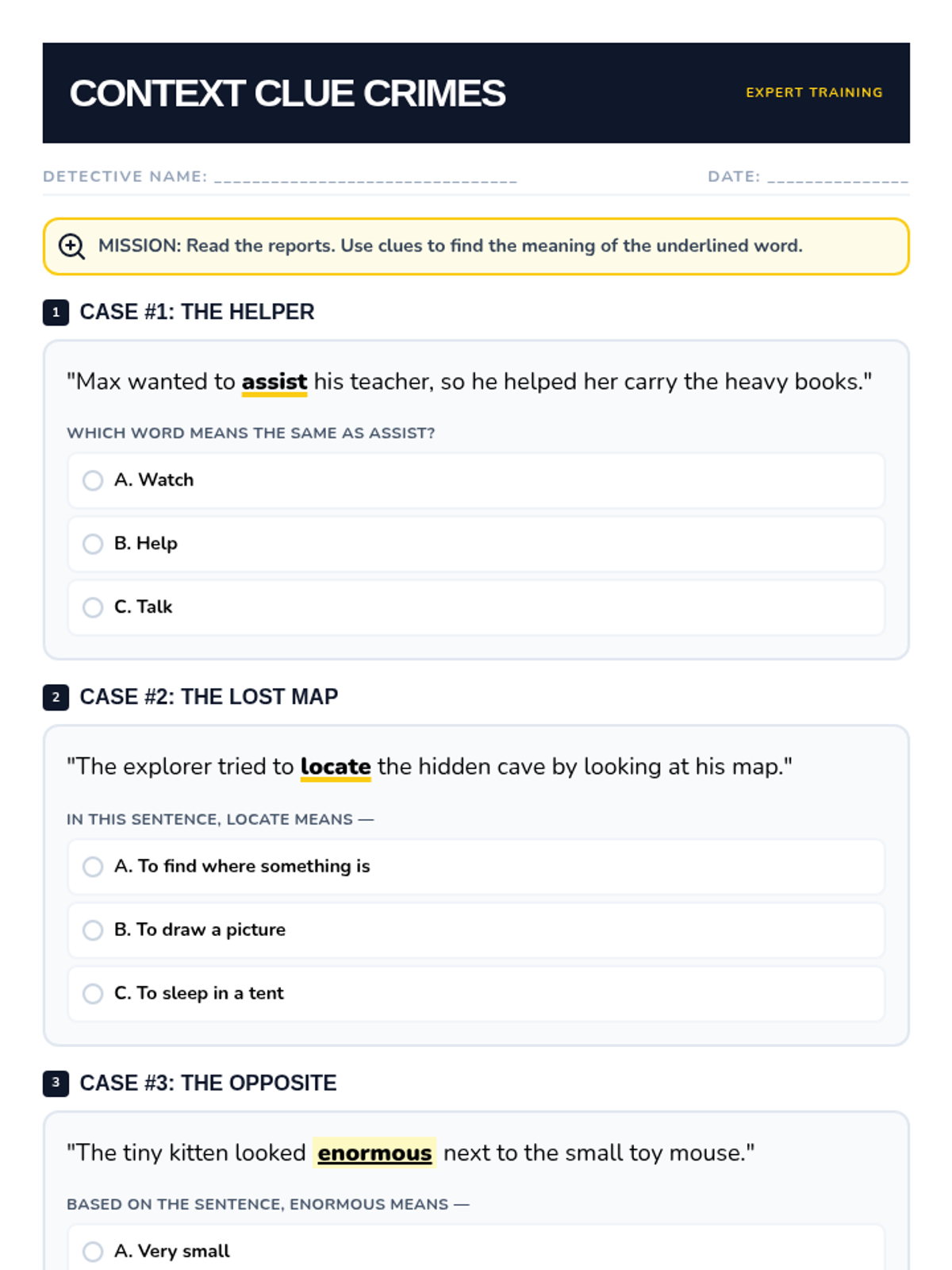
Advanced student worksheet for Day 2, focusing on Tier 2 academic vocabulary using synonym, example, and antonym context clues. Revised for consistent formatting and print readability.
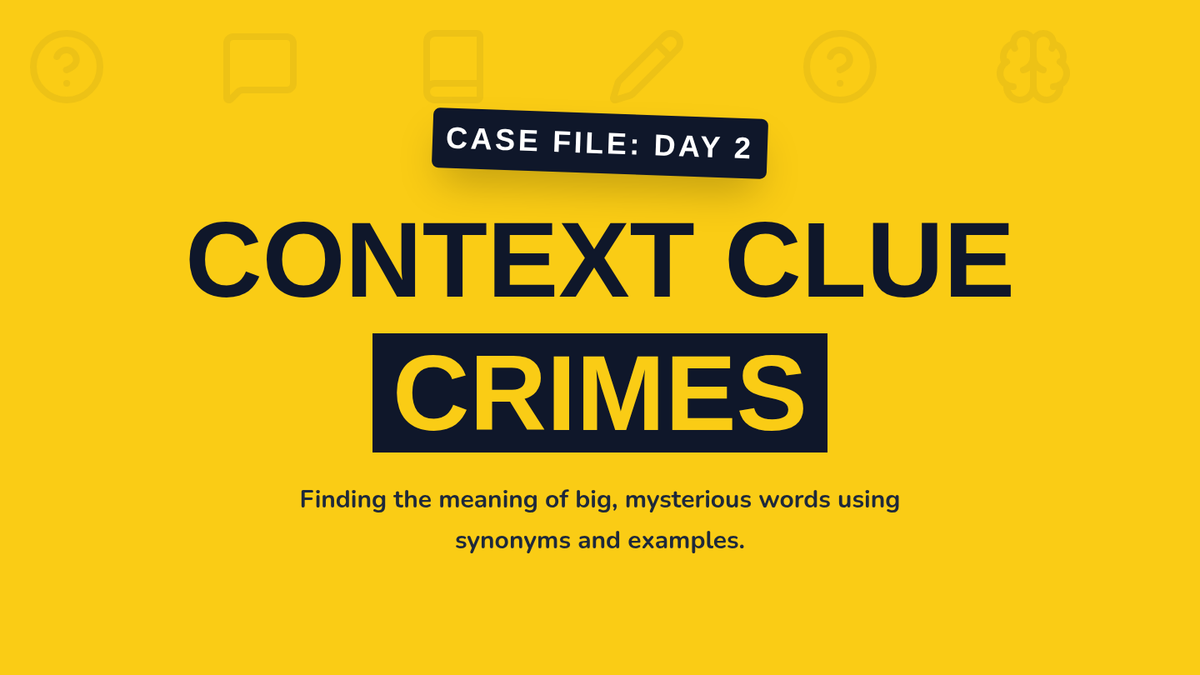
Interactive presentation slides for Day 2, focusing on Tier 2 academic vocabulary, synonym clues, and example-based context clues. Revised for icon consistency and text spacing.
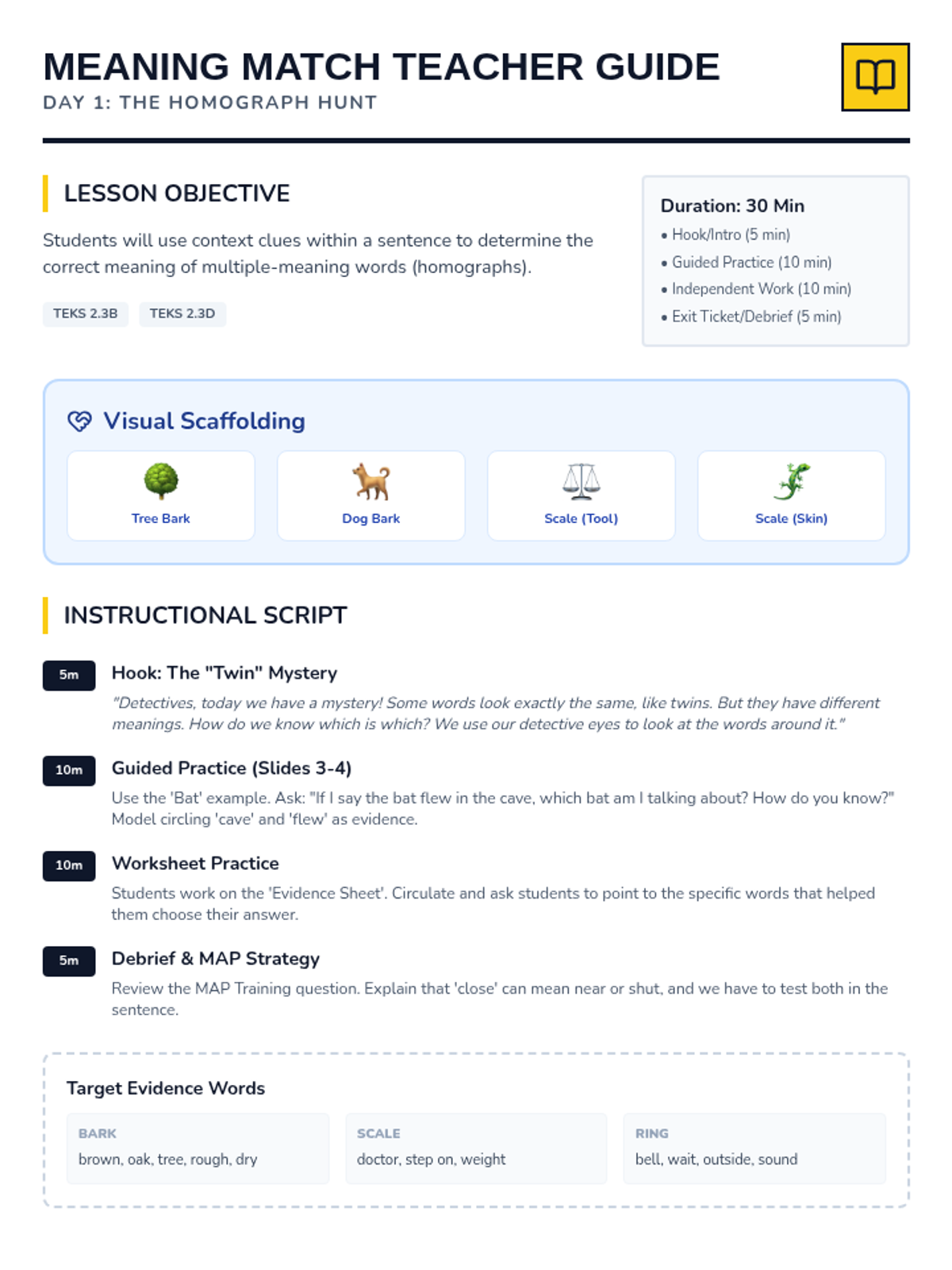
Teacher facilitation guide for Day 1, featuring lesson objectives, instructional scripts, scaffolding strategies, and visual aids. Revised for single-page layout and timing consistency.
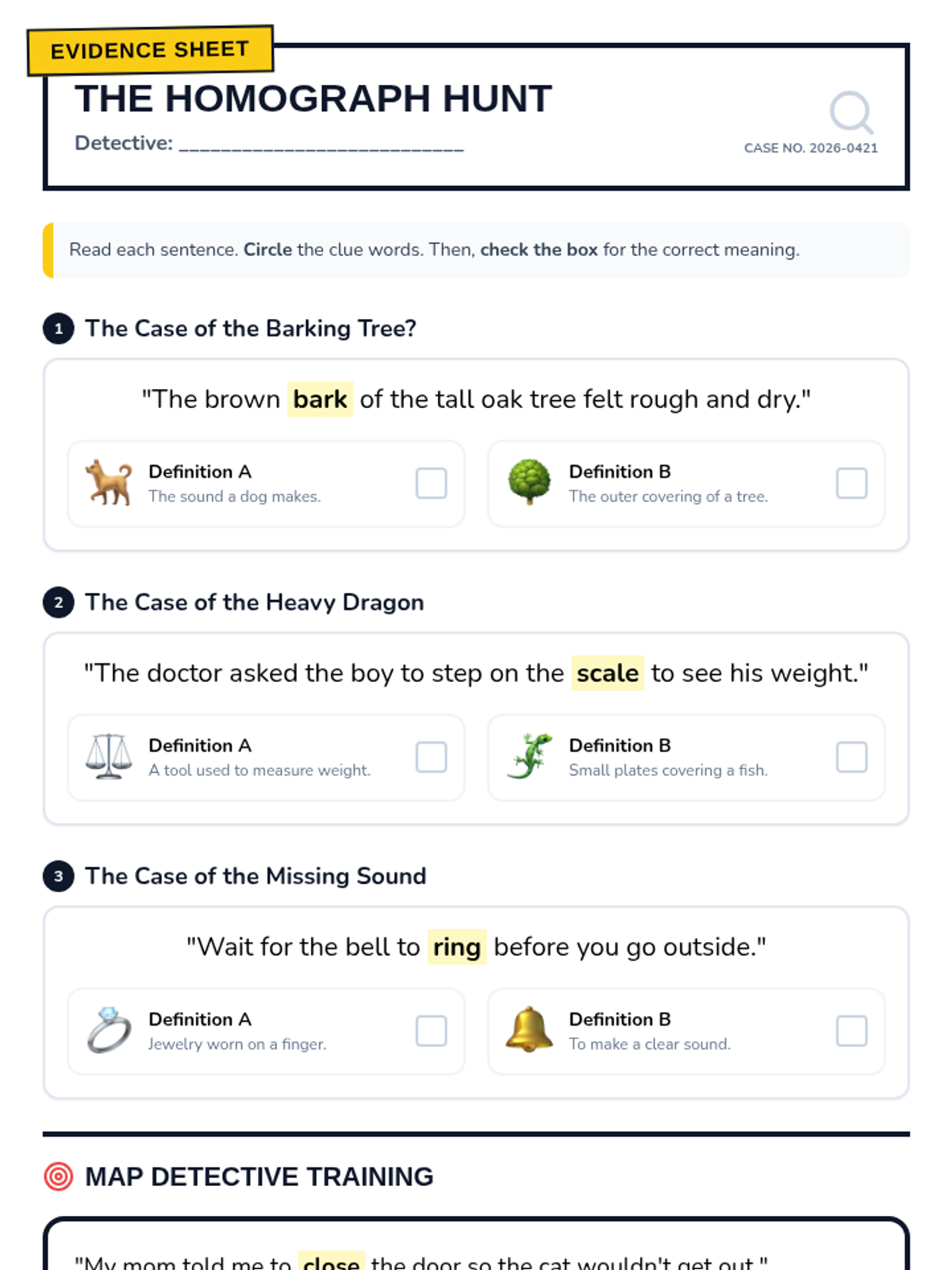
A student worksheet for practicing multiple-meaning words (homographs) through sentence-level context clues, featuring visual aids and MAP-aligned question stems. Revised for better page flow and print-friendliness.
Interactive presentation slides for Day 1 of the Word Detectives unit, focusing on multiple-meaning words (homographs) with visual aids and guided practice.
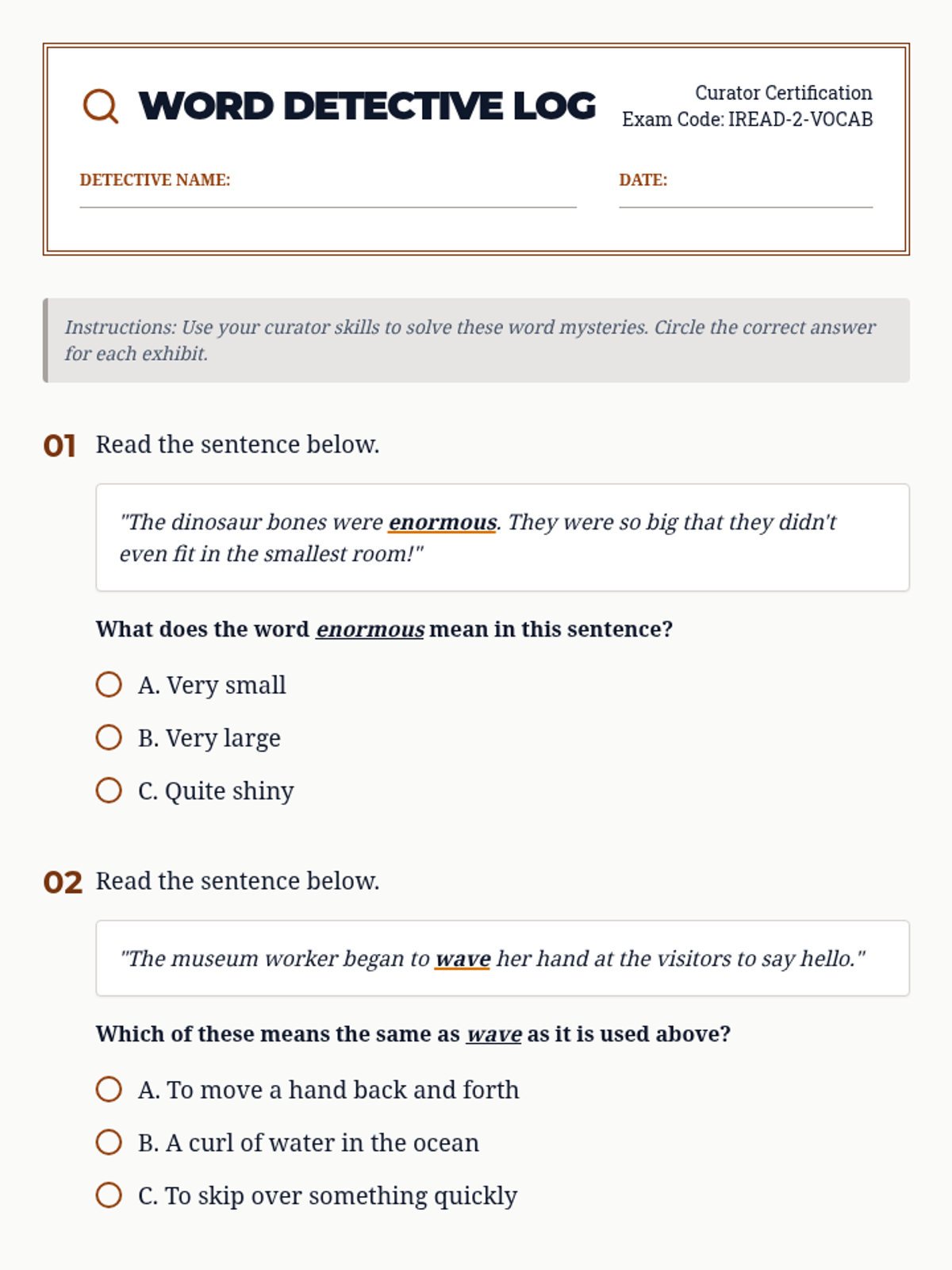
Independent practice worksheet for the Word Museum Mystery lesson, featuring IREAD-2 style multiple-choice questions. Improved layout and handwriting spaces.
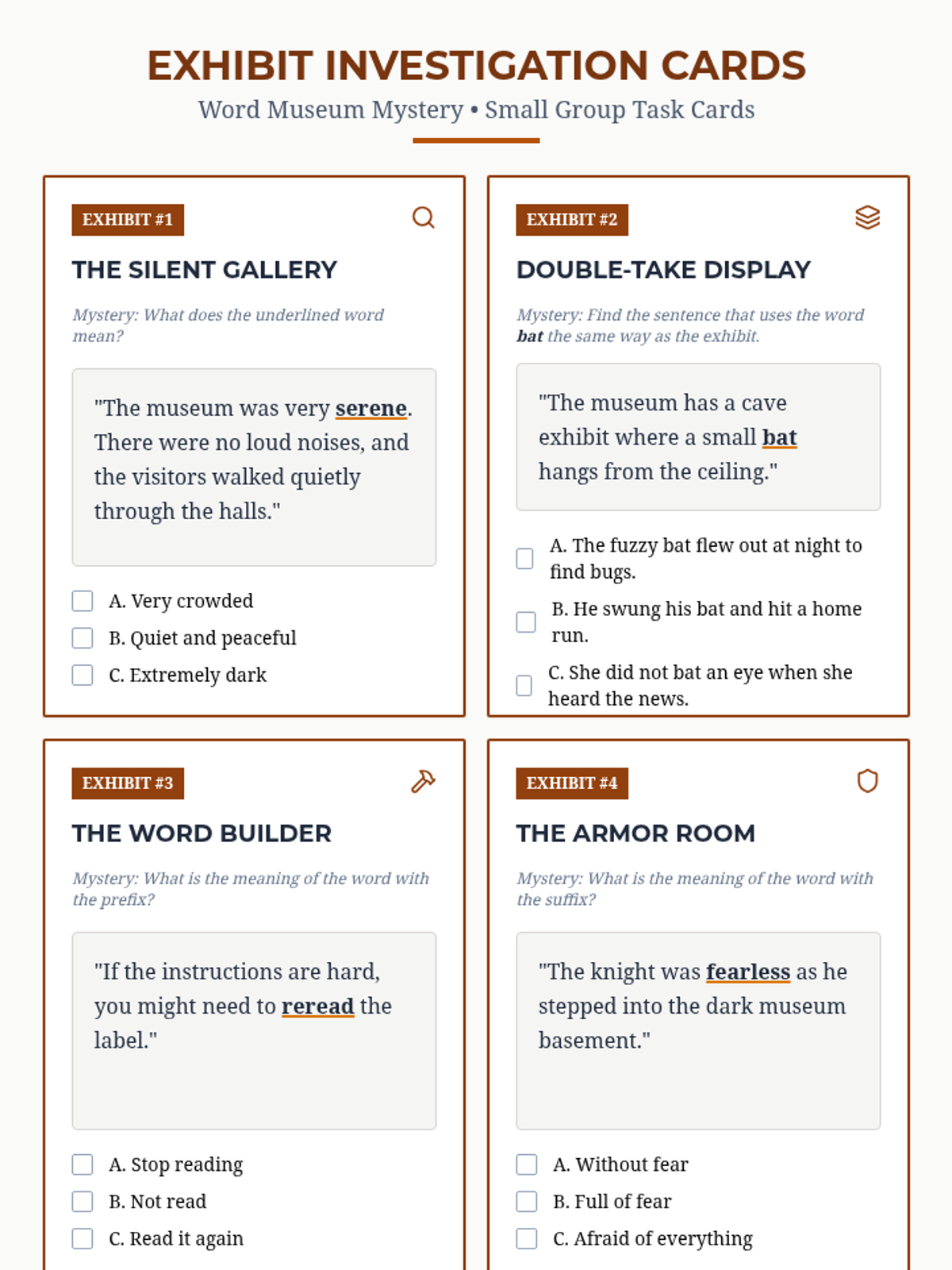
Small group task cards with word mysteries focusing on context clues, multiple-meaning words, and affixes. Now with uniform answer styling and improved layout.
Visual presentation for the Word Museum Mystery lesson, introducing context clues, multiple-meaning words, and affixes with engaging visuals.
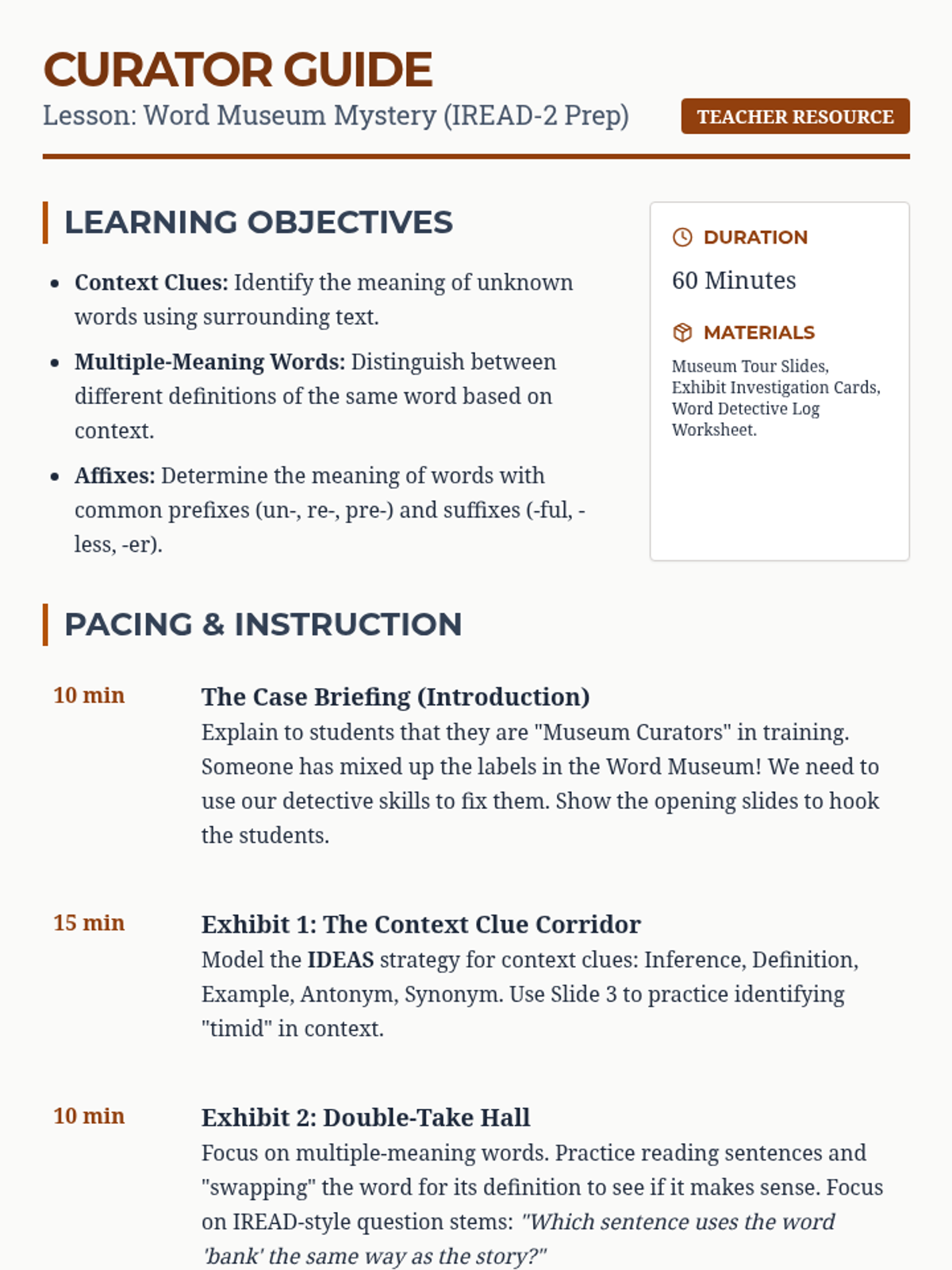
Teacher's instructional guide for the Word Museum Mystery lesson, featuring pacing, teaching strategies, and answer keys.
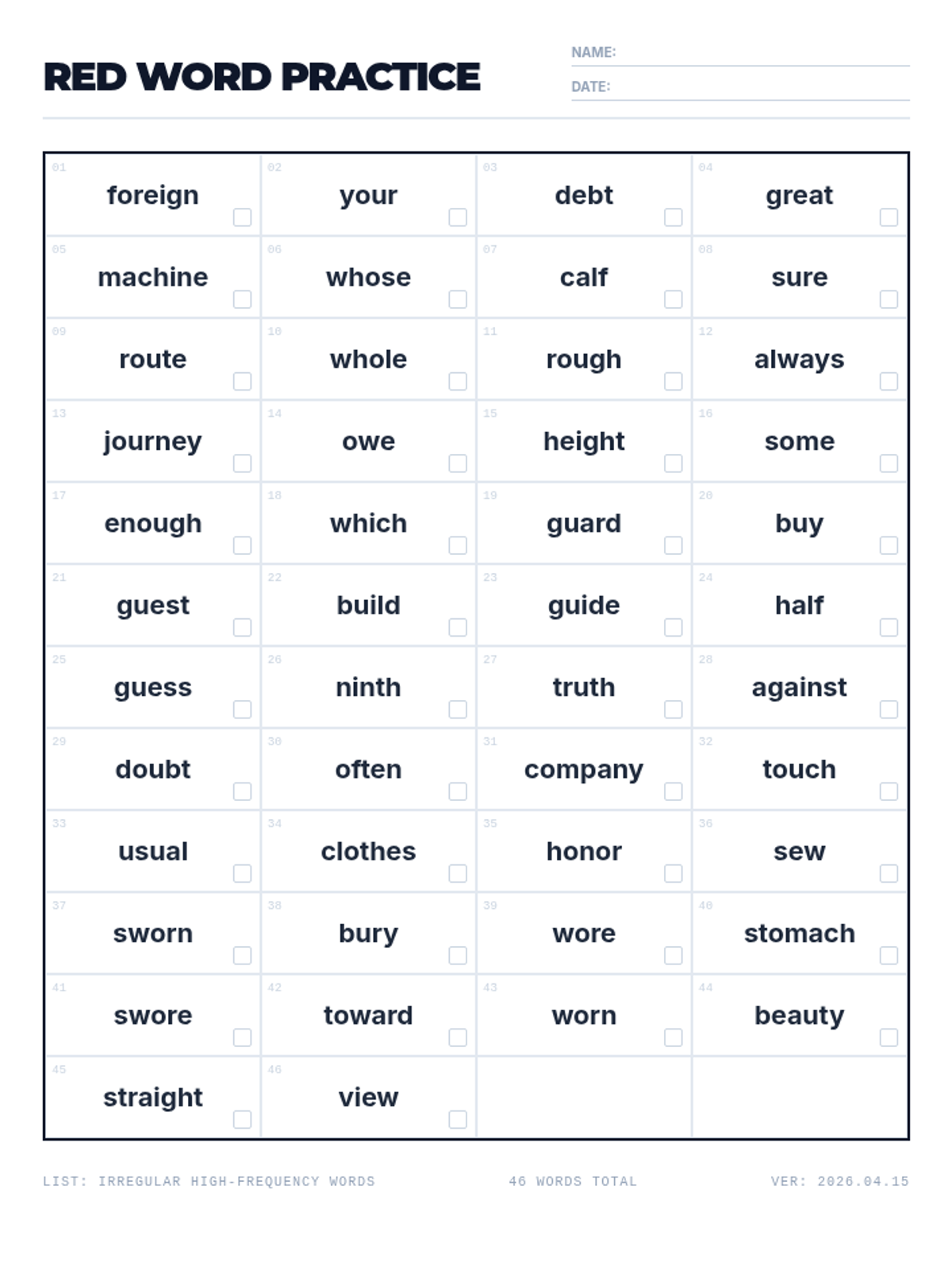
A clean, professional 4x12 grid for 'Red Word' reading practice. It features 46 scrambled high-frequency words with check-boxes for student tracking, a total score area, and a single-page layout.
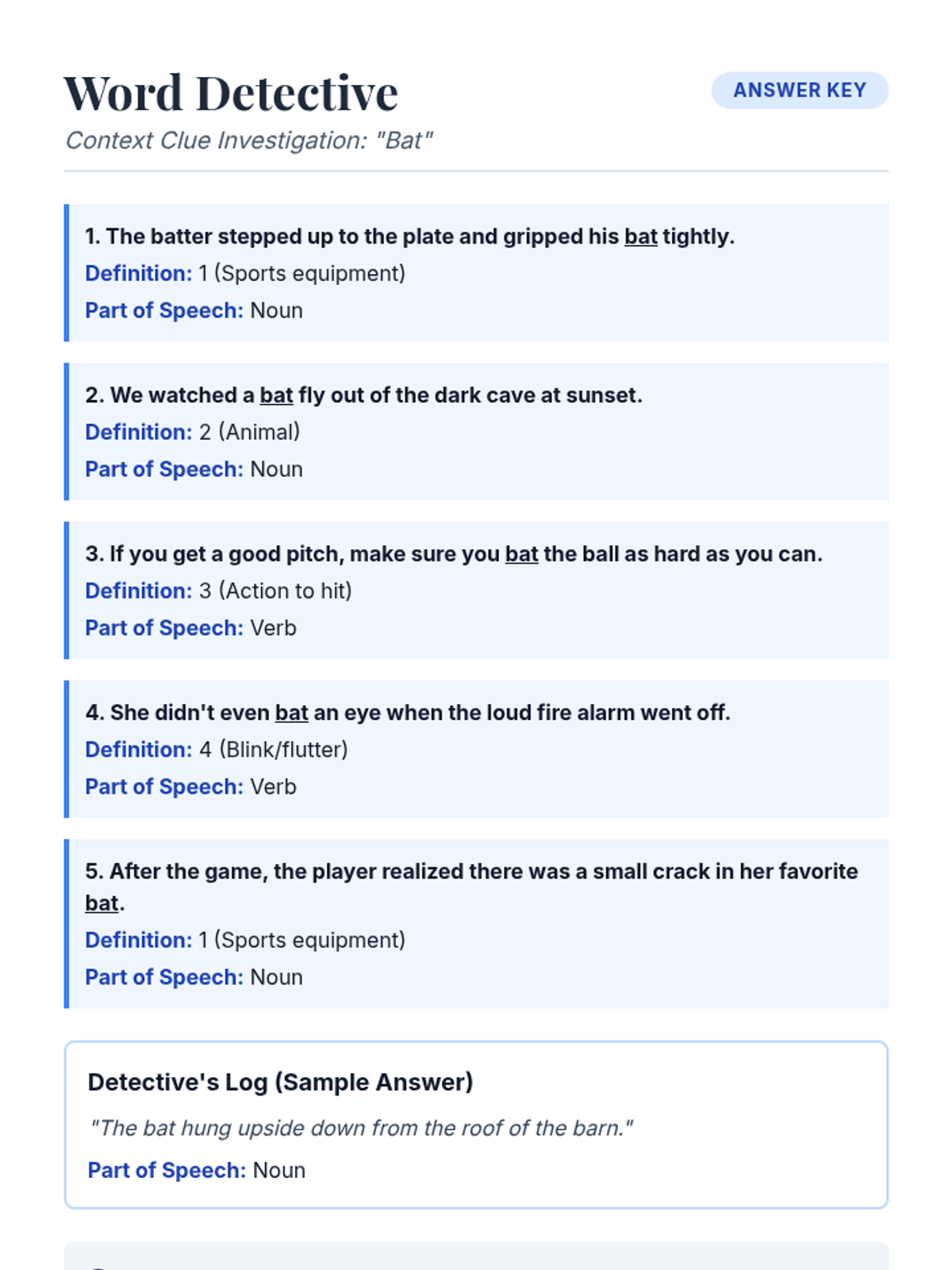
A revised answer key for the 'Word Detective' worksheet, identifying both the correct definition and part of speech for the word 'bat'.
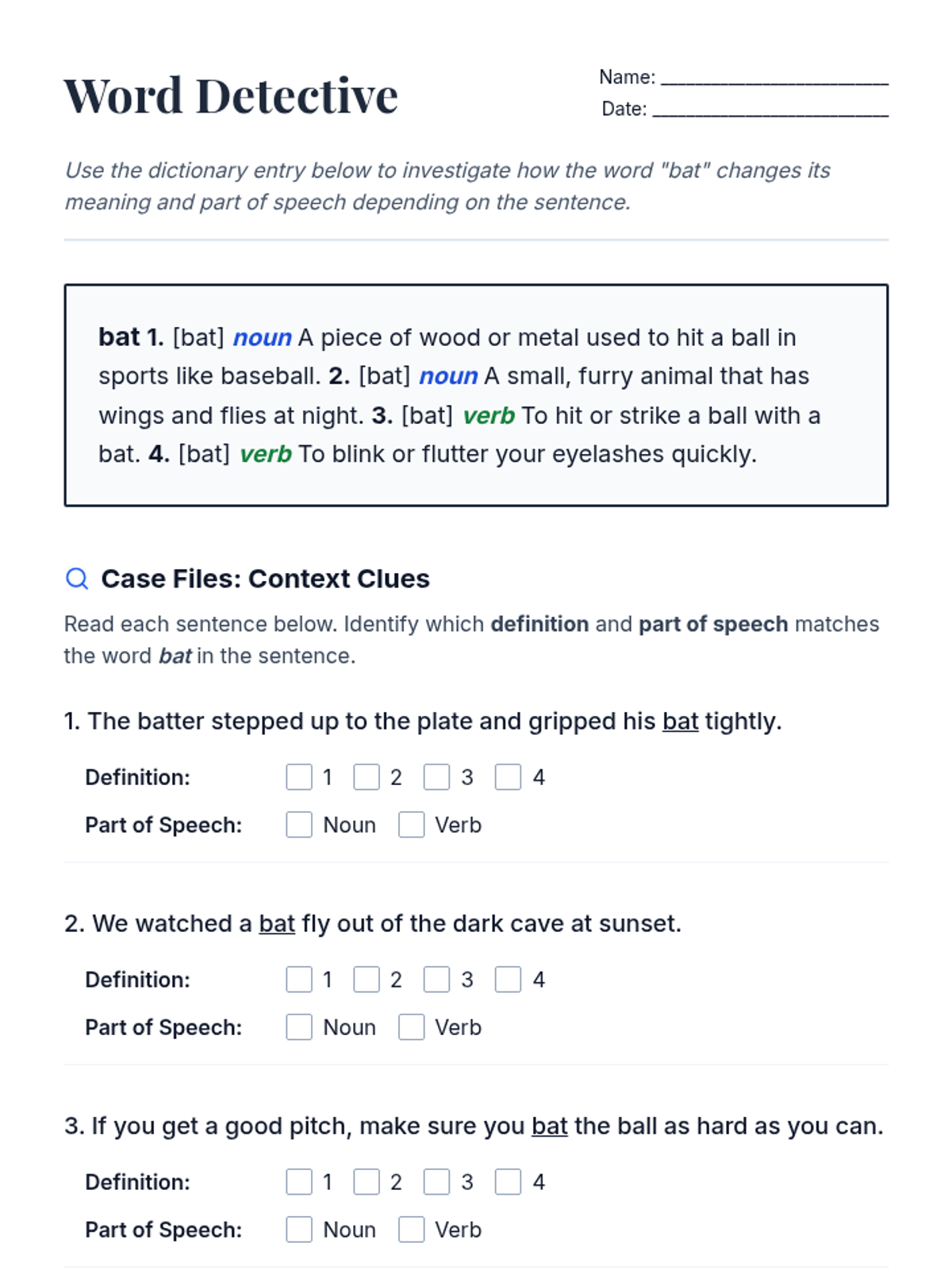
A revised 'Word Detective' worksheet where students identify both the correct dictionary definition and the part of speech for the word 'bat' in context.
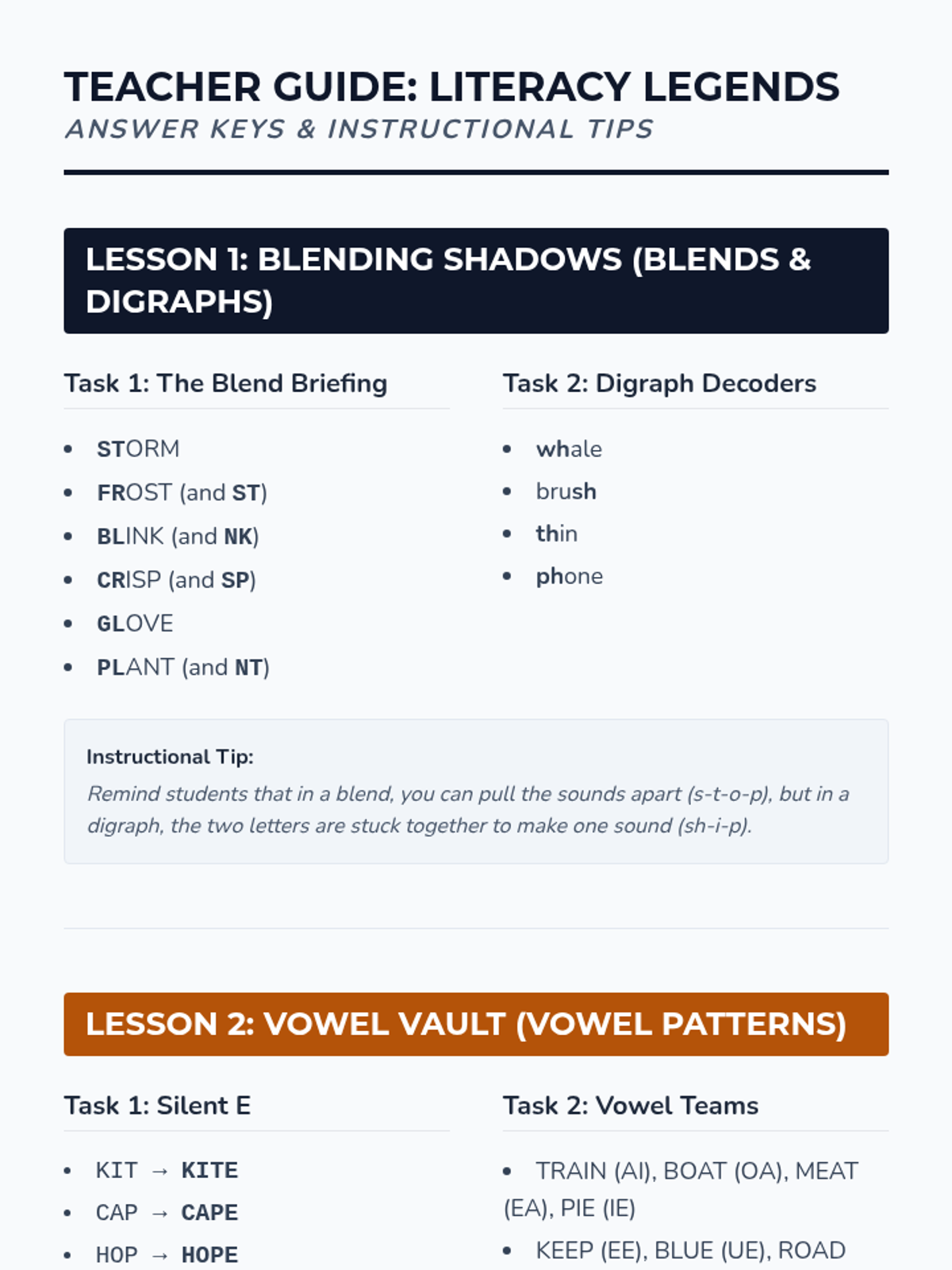
A consolidated teacher guide and answer key for all three lessons in the Literacy Legends sequence. Revised with corrected task numbering and additional instructional strategies.
Instructional slides for vocabulary. Revised with better slide spacing to prevent overflow, improved contrast, and relevant icons.
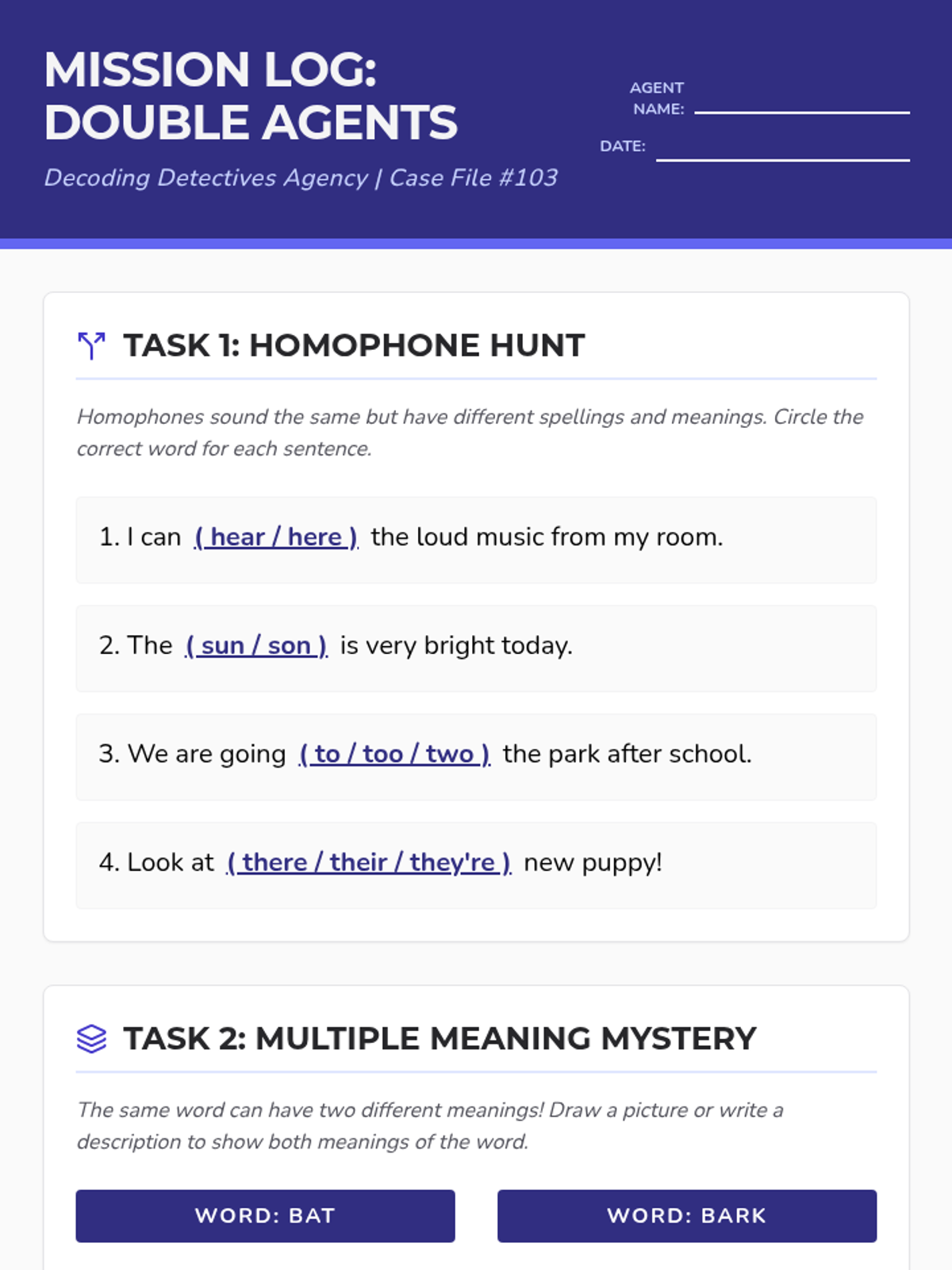
A vocabulary worksheet covering homophones and multiple meaning words. Revised with improved page breaks, labeled work areas, and tightened layout.
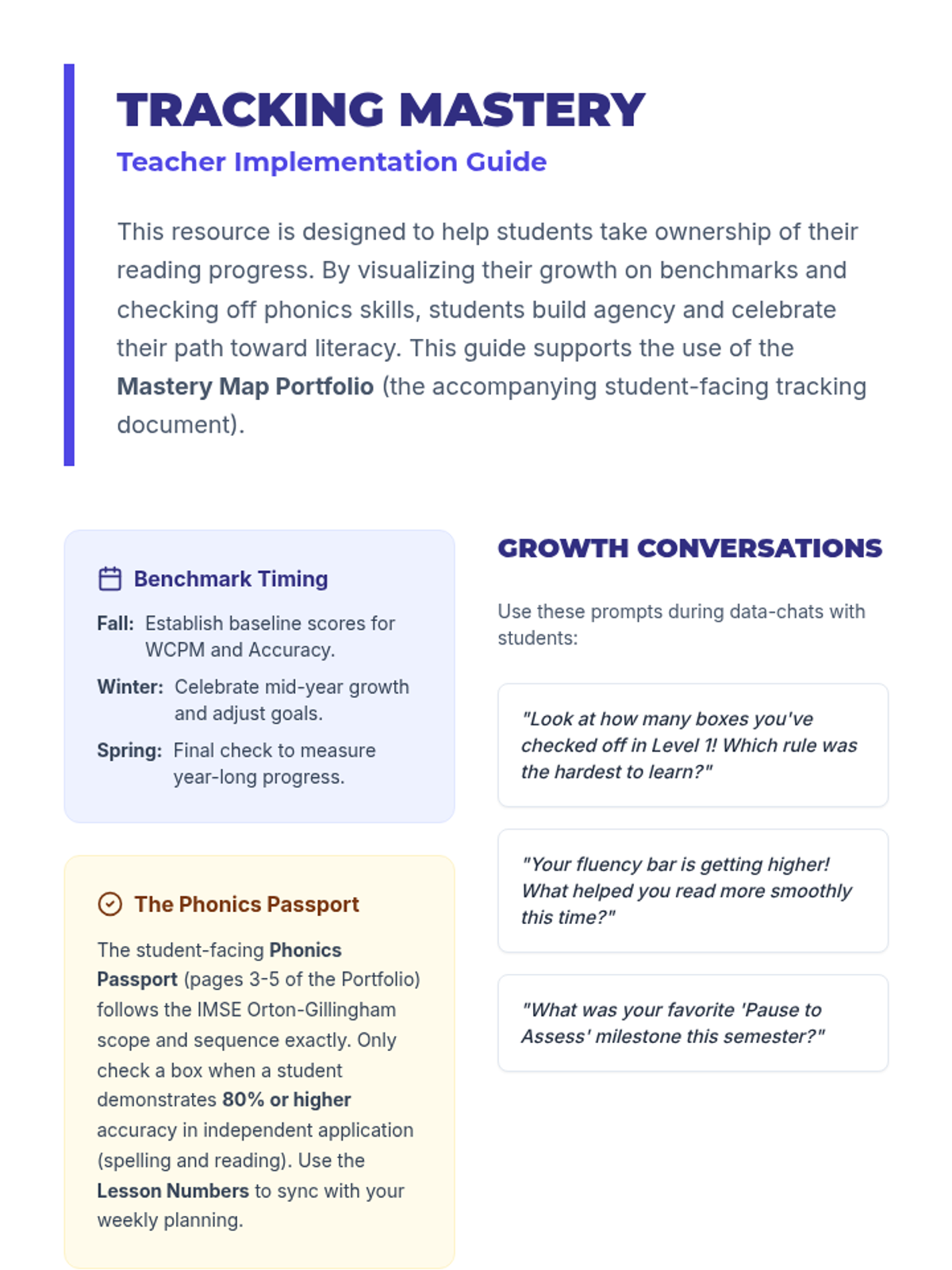
A teacher guide for implementing the Mastery Map Portfolio, including proficiency reference charts for WCPM and advice for facilitation growth conversations with students. Includes corrected page references to the student portfolio.
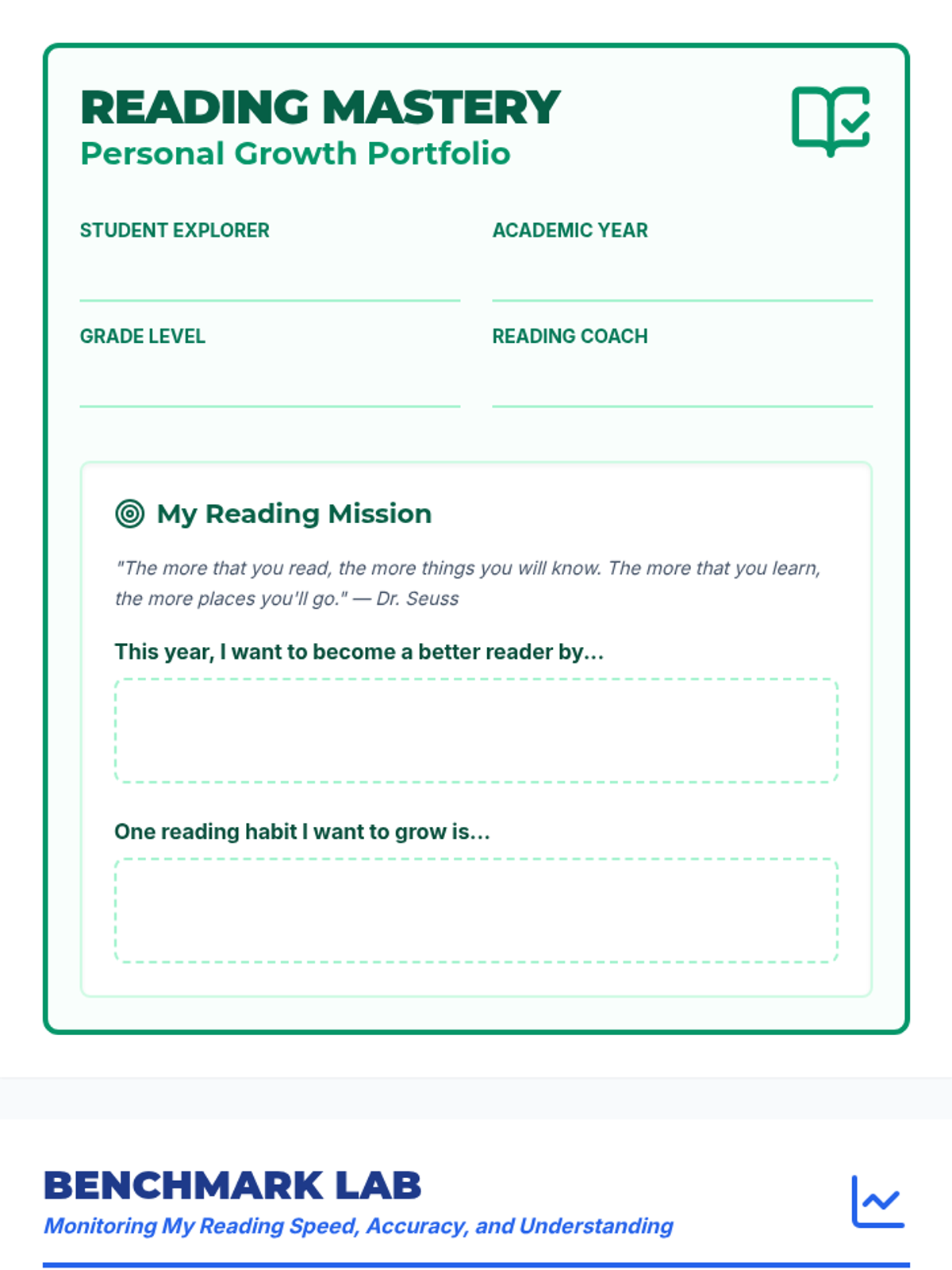
A fully restored and optimized version of the Mastery Map Portfolio, now including the complete 1st Grade scope (Lessons 33-57) and correctly transitioning to 2nd Grade at Lesson 58. Spacing has been tuned to ensure each grade level fits on a single page with large fonts and visual cues. Darker borders and optimized reflection areas enhance usability. Standardized checkbox and input box sizing improves consistency. Header formatting and graph alignment refined for print quality.
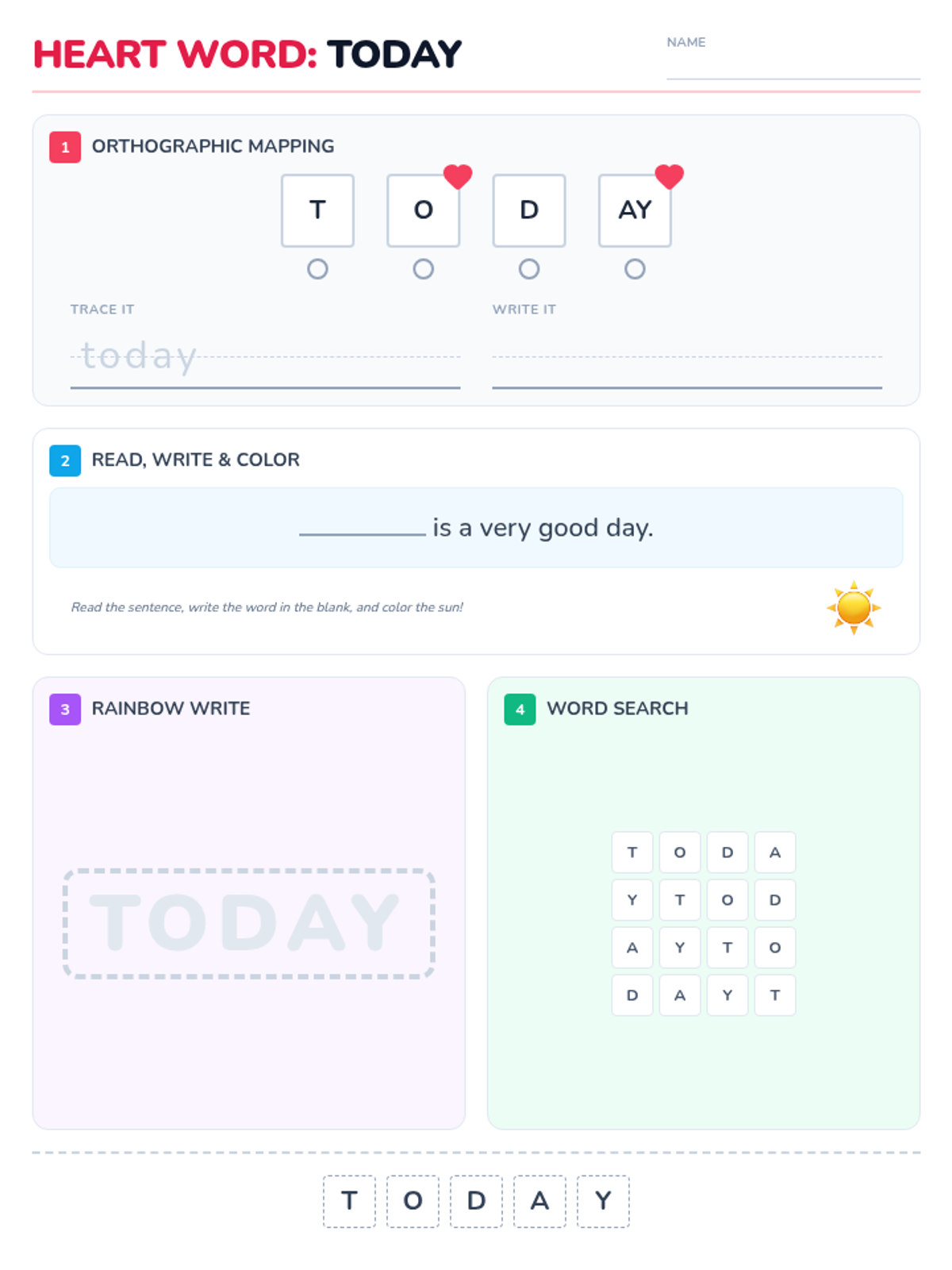
The final set of heart word practice pages covering time and place concepts like 'Today', 'Above', 'Again', and 'Always'.
Focusing on words for people and common actions like 'Friend', 'Because', 'Woman', and 'People', these pages provide deep orthographic practice.
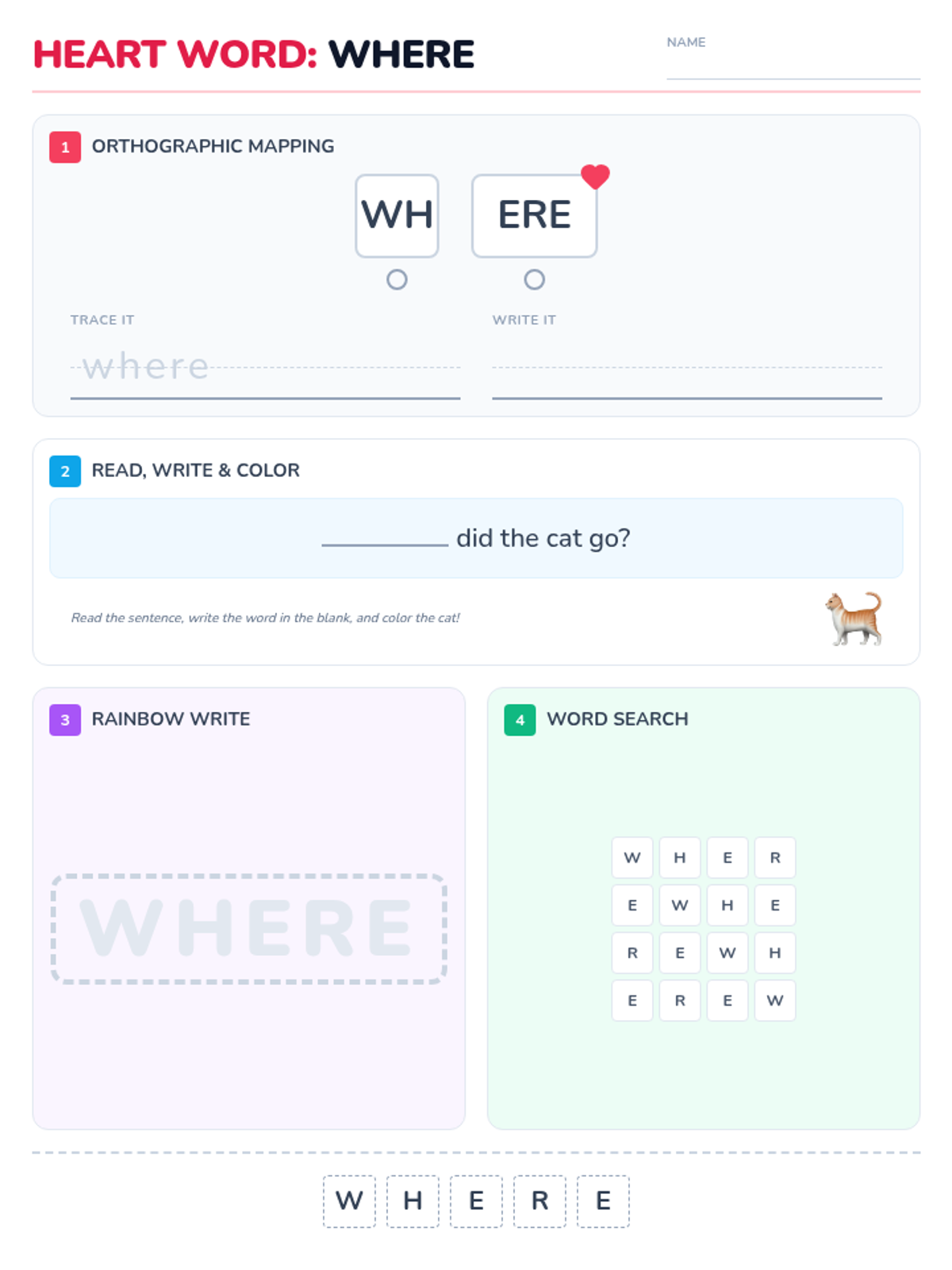
Practice pages for tricky high-frequency words such as 'Where', 'One', 'Two', and 'Does'. Features orthographic mapping, tracing, and rainbow writing.
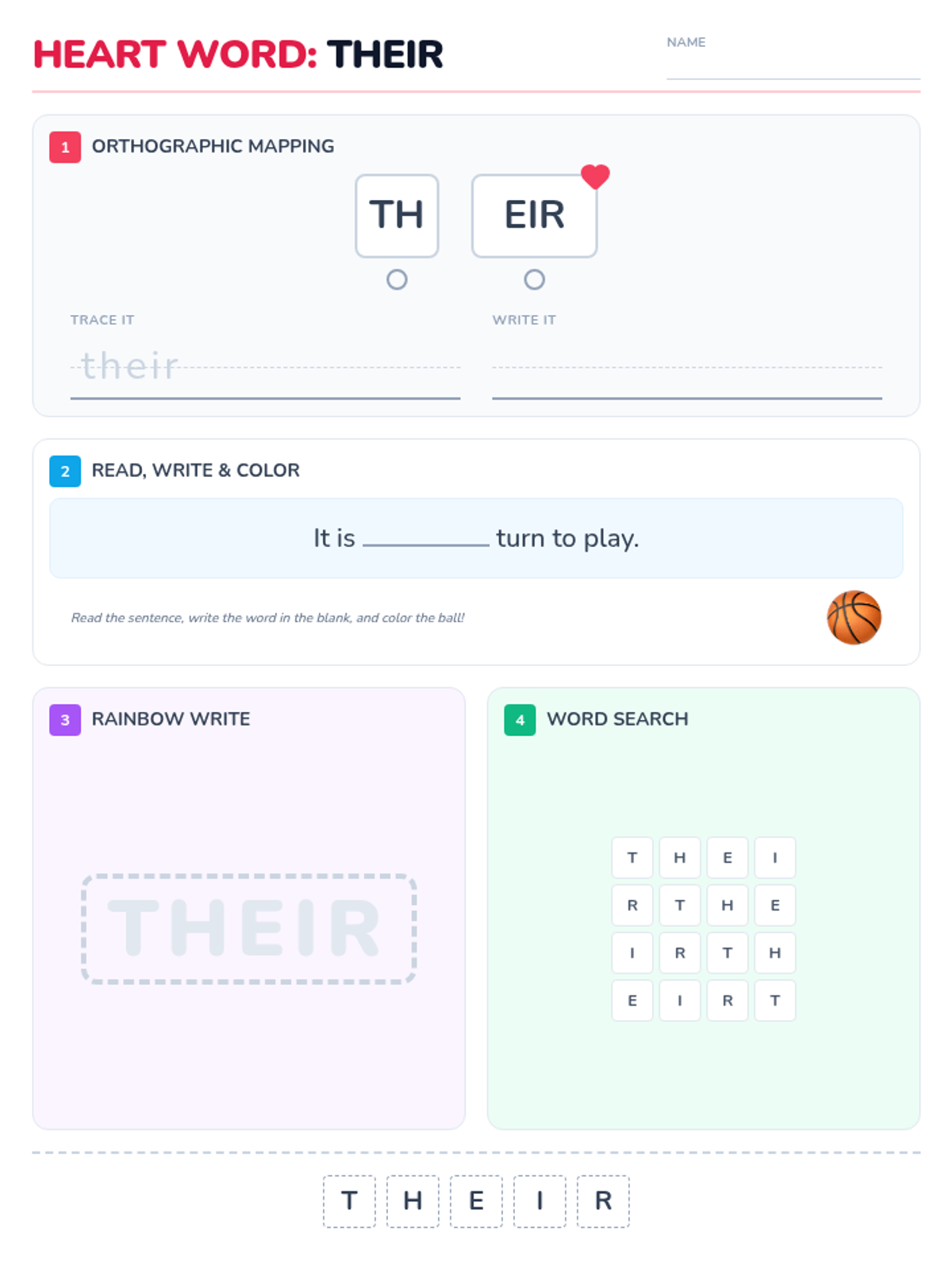
Practice pages for words focusing on direction, quantity, and common verbs like 'Their', 'Were', 'Talk', and the '-ould' family. Includes UFLI mapping and tracing activities.
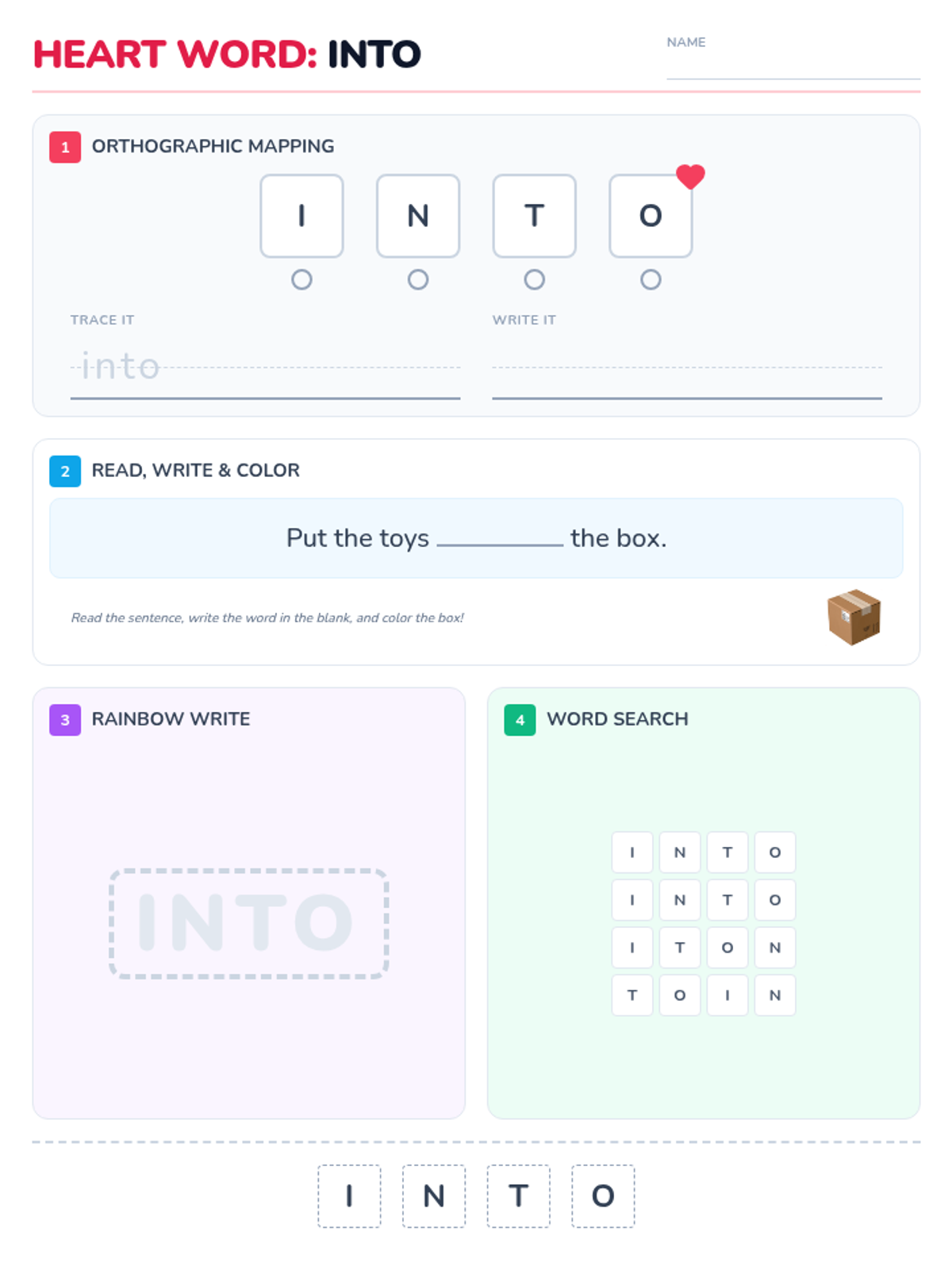
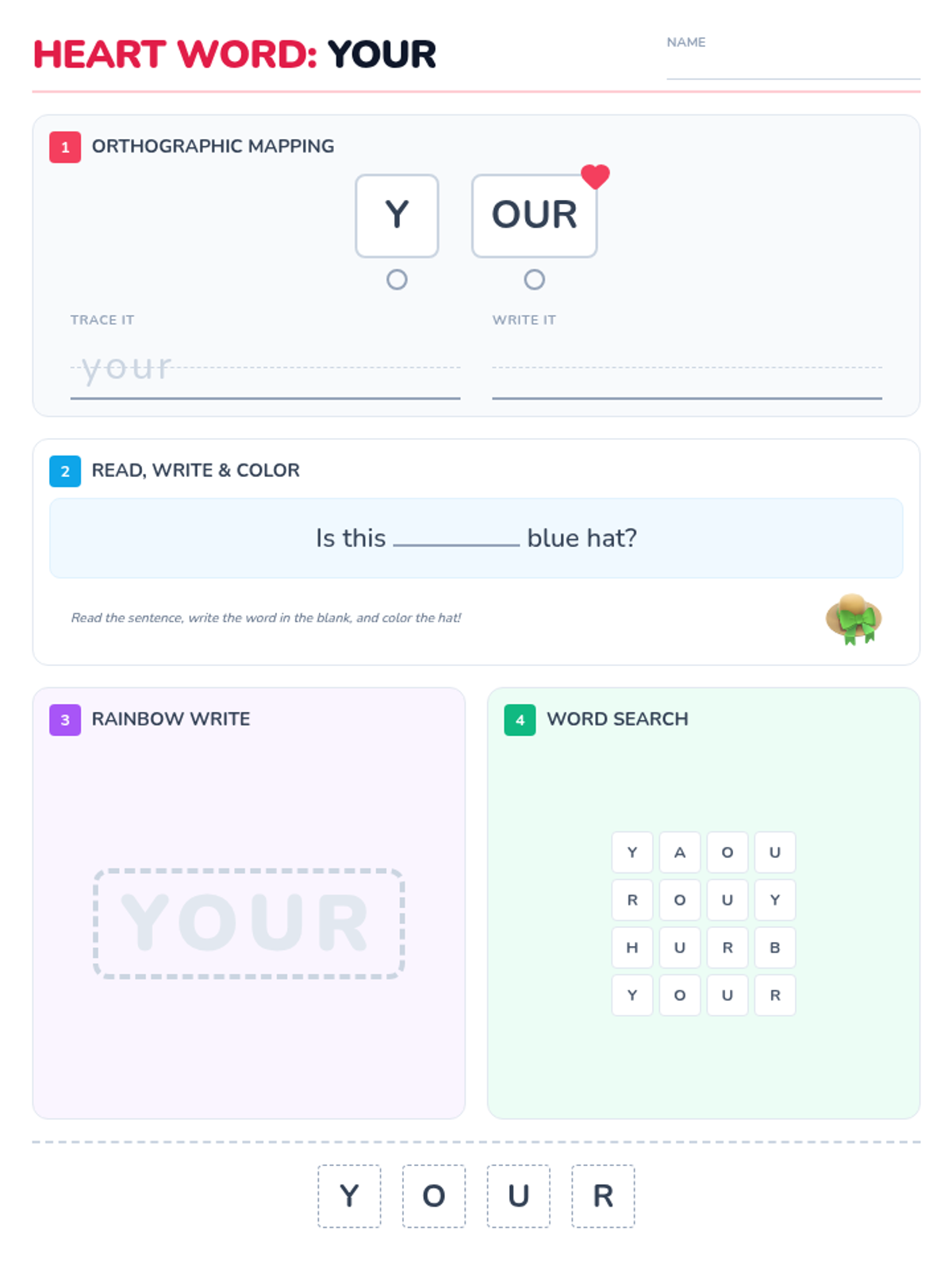
The first set of heart word practice pages for common starters like 'Your', 'Want', and 'Go'. Each page features UFLI-aligned orthographic mapping, tracing, sentence reading, and word-building activities.
Instructional slides for vowel patterns, covering silent 'e', vowel teams, and diphthongs. Revised with corrected headers, better alignment, and increased visibility.
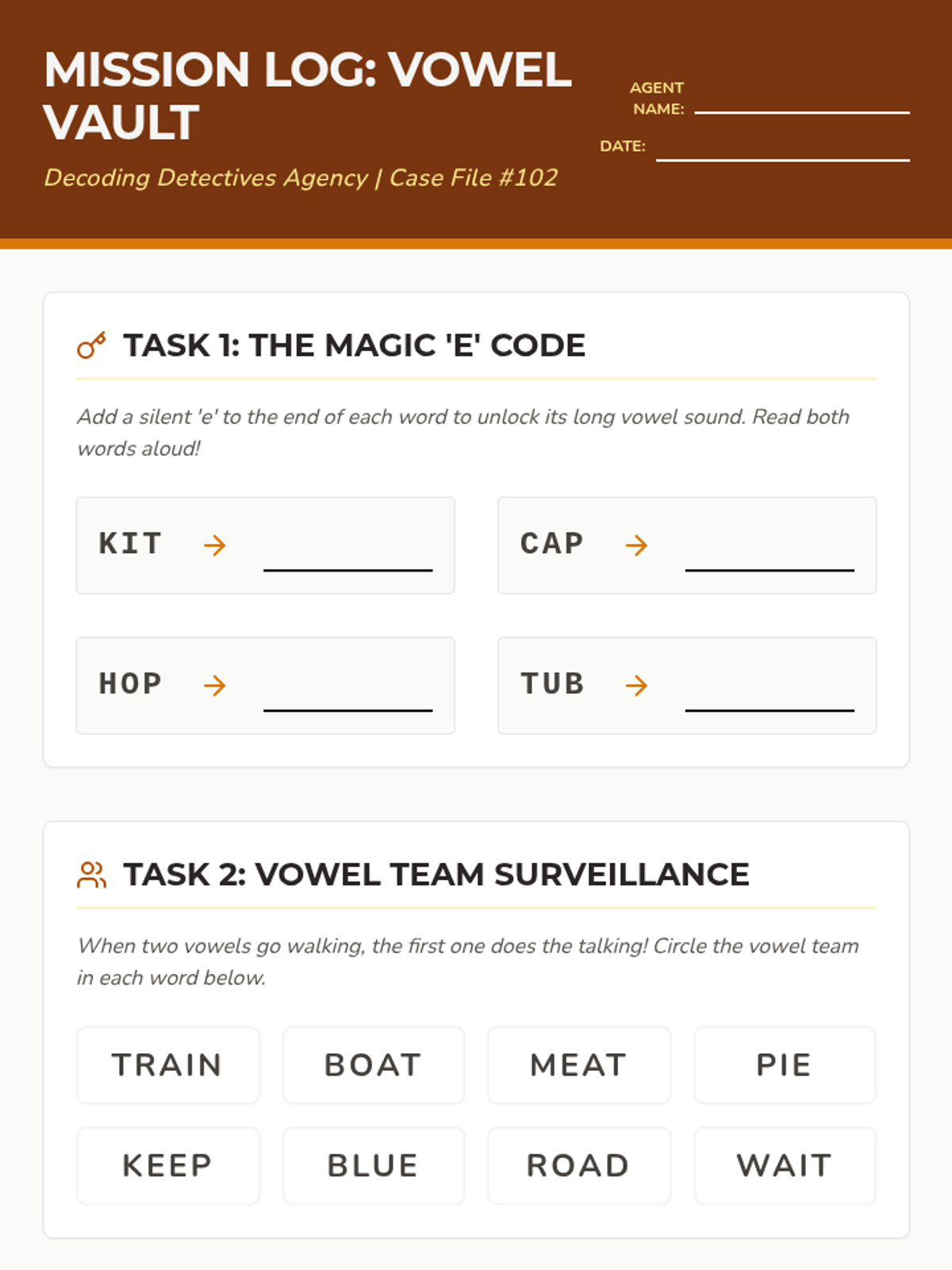
A phonics worksheet for vowel patterns, including long vowels with silent 'e', vowel teams (ai, oa, ea), and diphthongs. Revised with better contrast and cleaned up formatting.
An instructional slide deck explaining the difference between consonant blends and digraphs with interactive identification activities. Revised for uniform answer choices in practice.
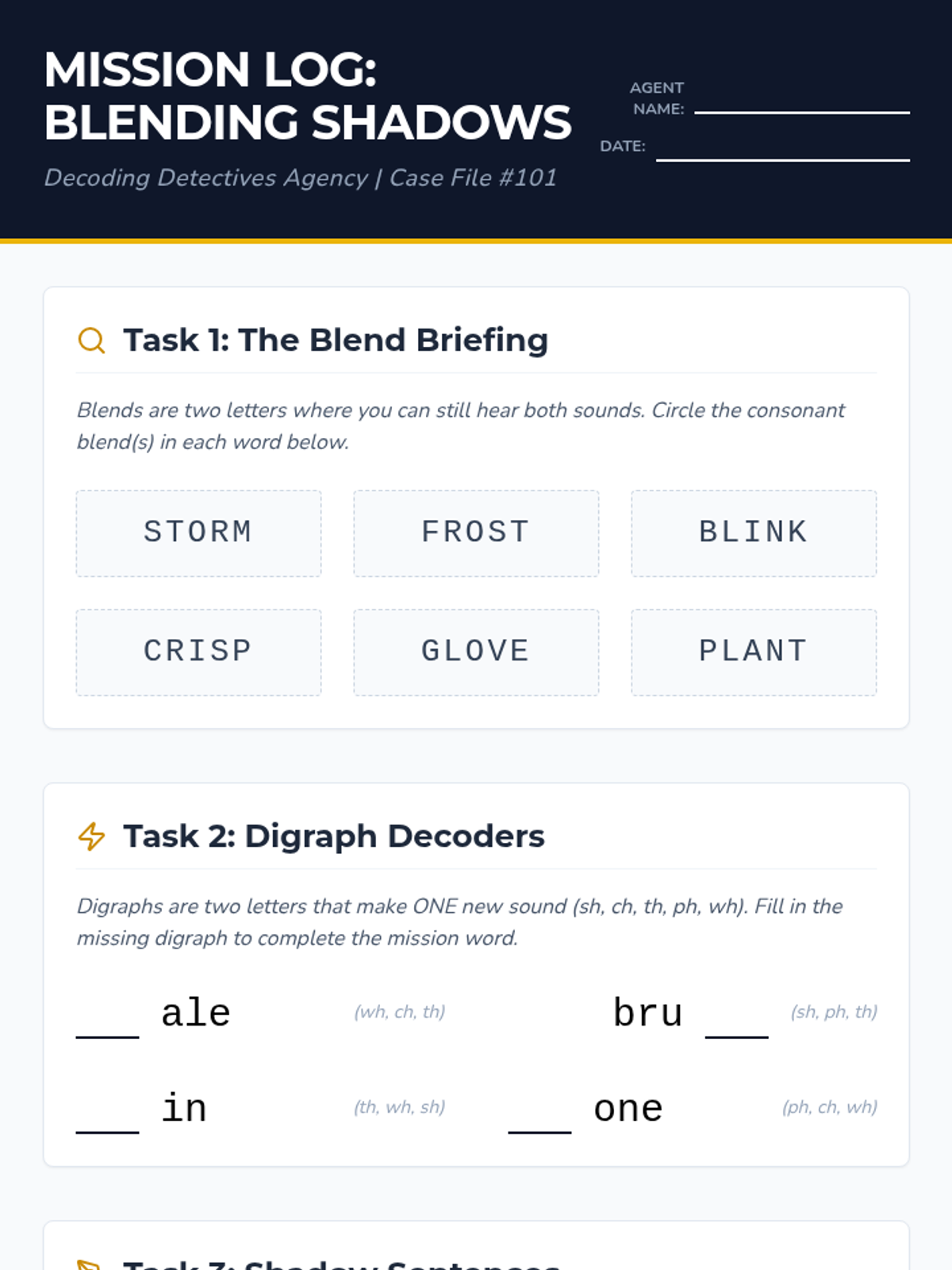
A student worksheet focusing on consonant blends and digraphs with a detective theme, including identification exercises and sentence construction. Revised with better word stems and writing support.
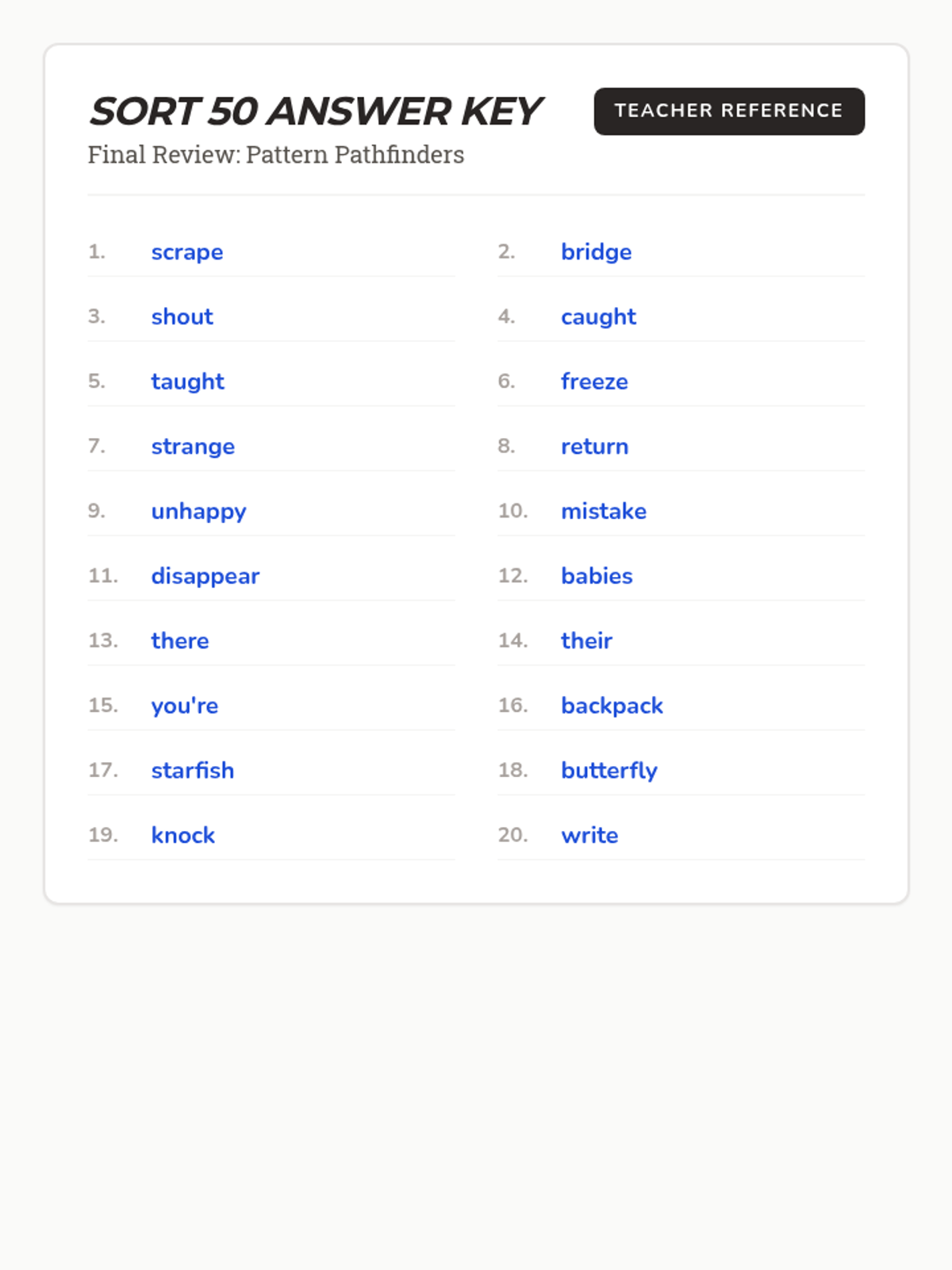
Final comprehensive answer key for the Pattern Pathfinders sequence (Sort 50), covering a variety of word study patterns.
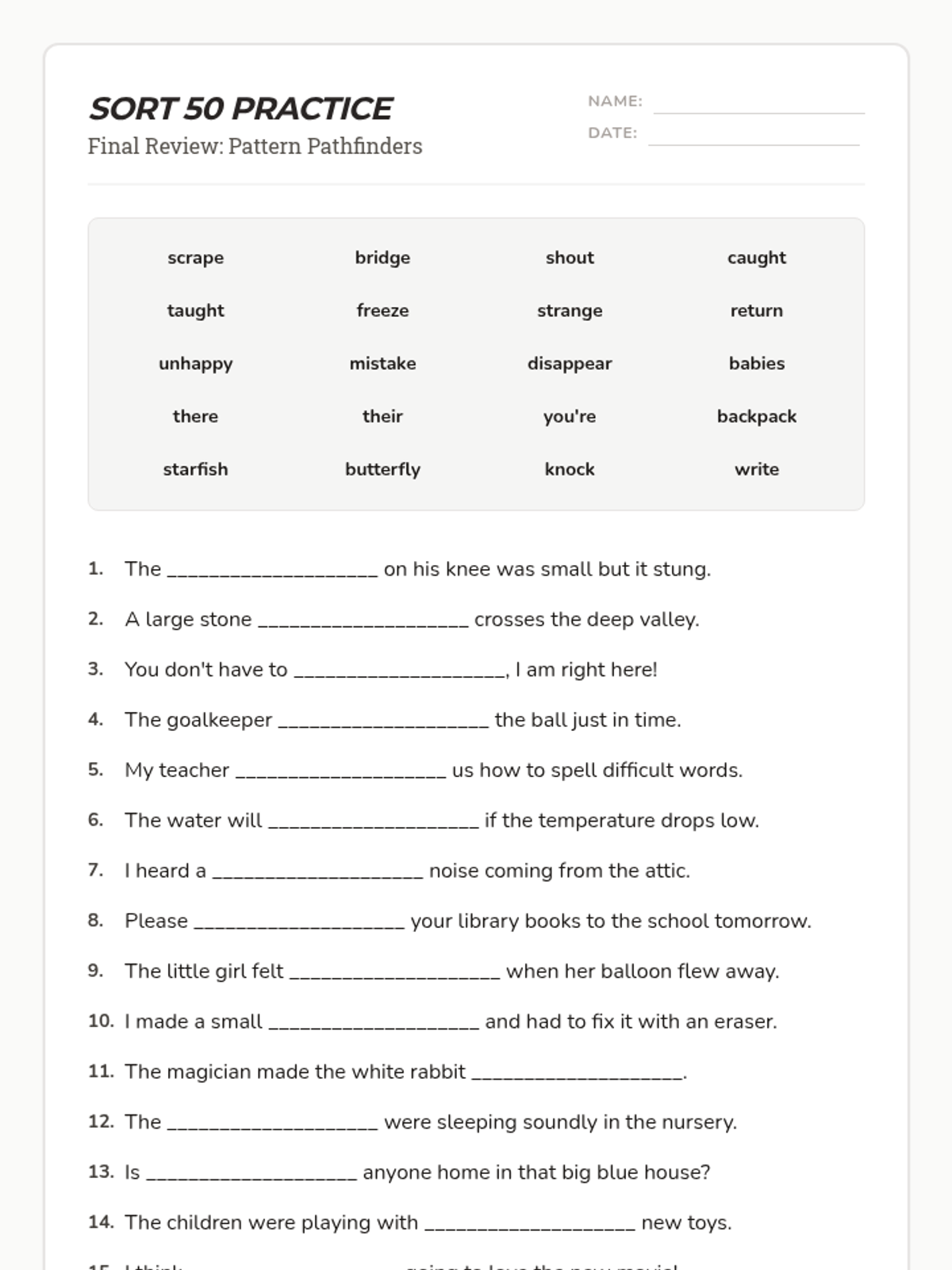
Comprehensive review practice materials for Sort 50, covering short and long vowels, r-controlled vowels, diphthongs, and prefixes. Now features a full 3-page packet with word search and word scramble activities.
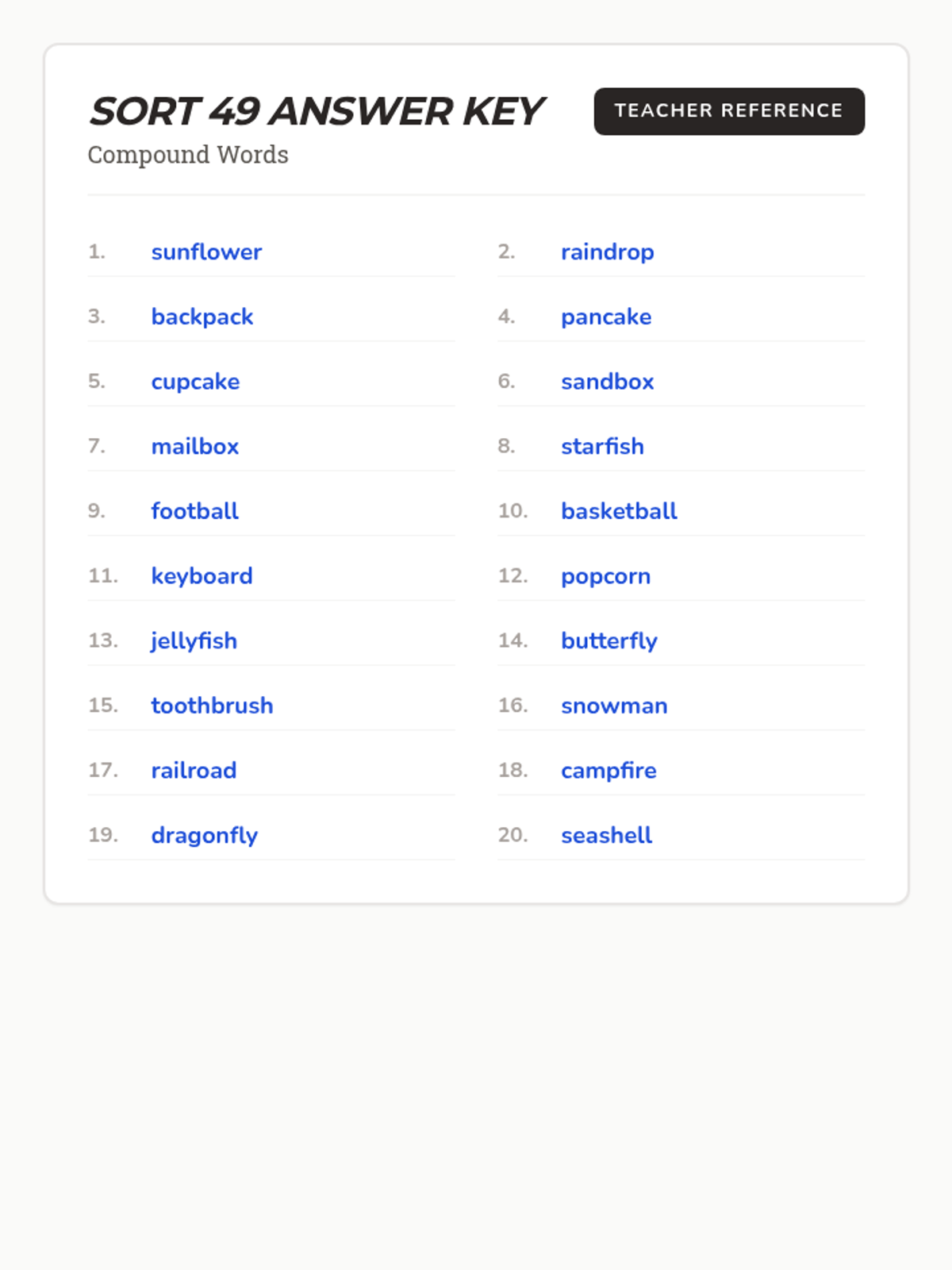
Answer key for Sort 49 Practice Pack, featuring all sentence answers and a clear teacher reference layout.
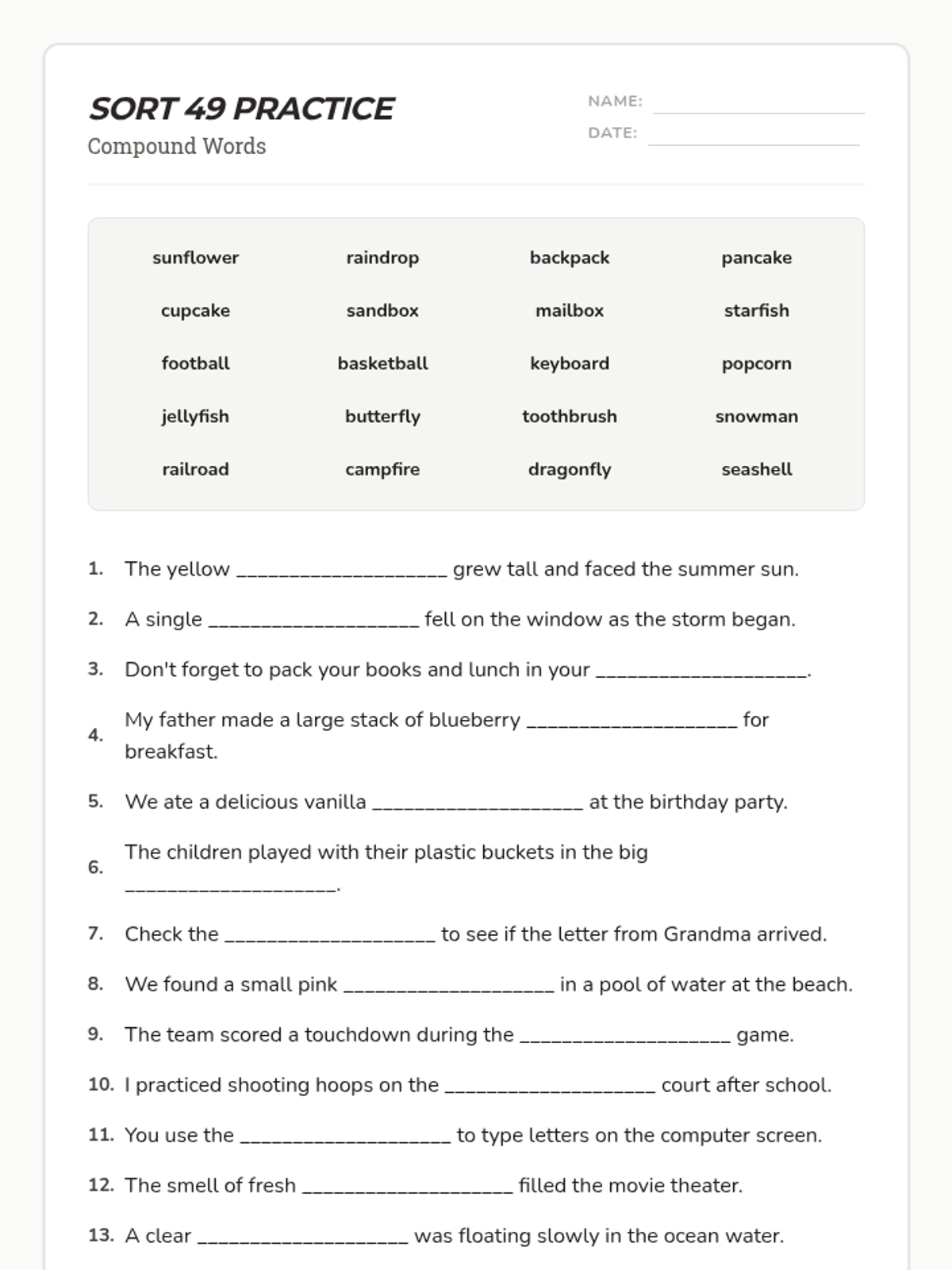
Practice materials for Sort 49 focusing on compound words. Now features a 3rd-page word scramble and a full-page word search grid with 15+ words. Full word bank included.
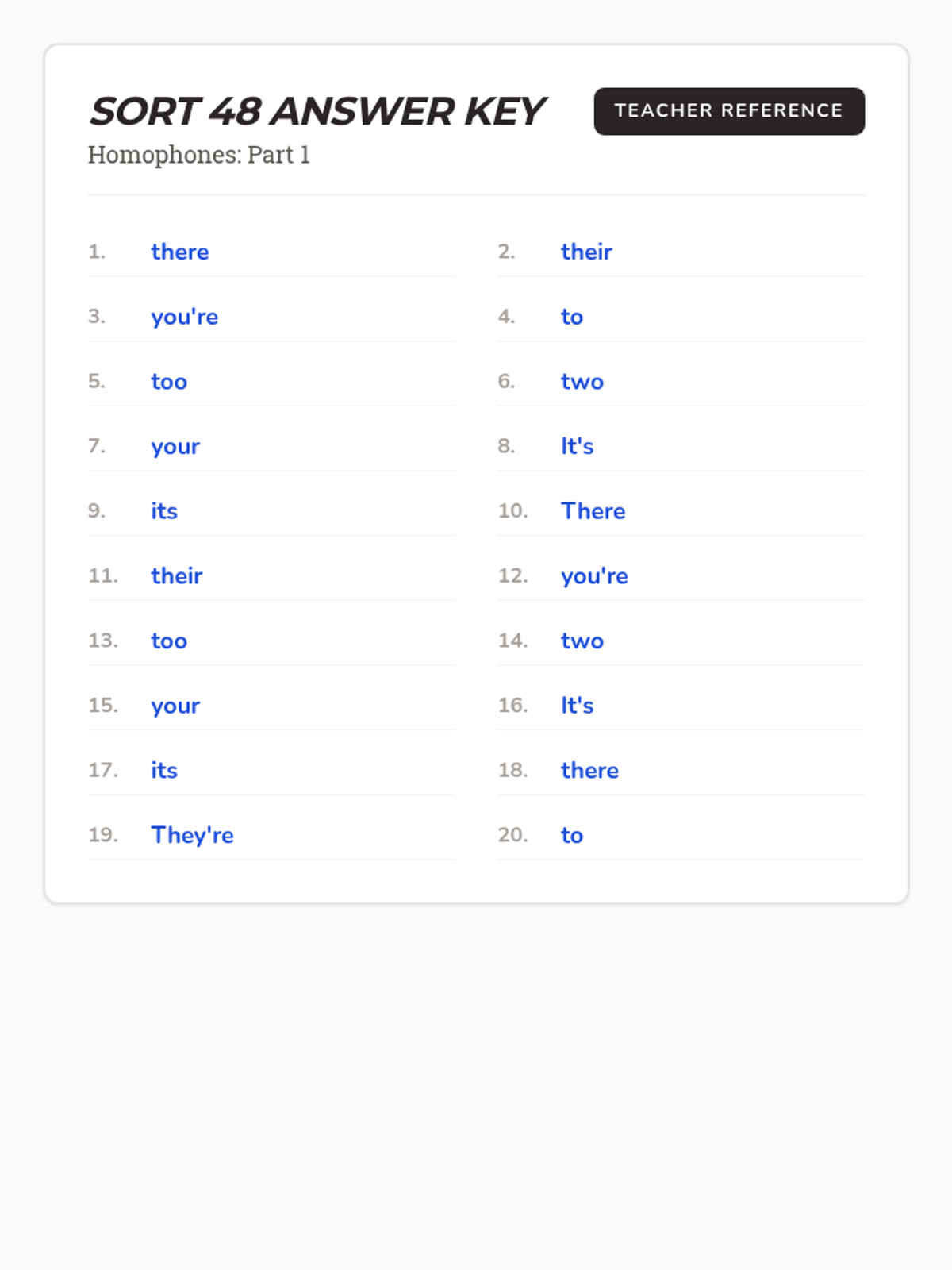
Updated answer key for Sort 48 with the new randomized sentence order. Features all sentence answers for the shuffled pack. Now includes word scramble answers.
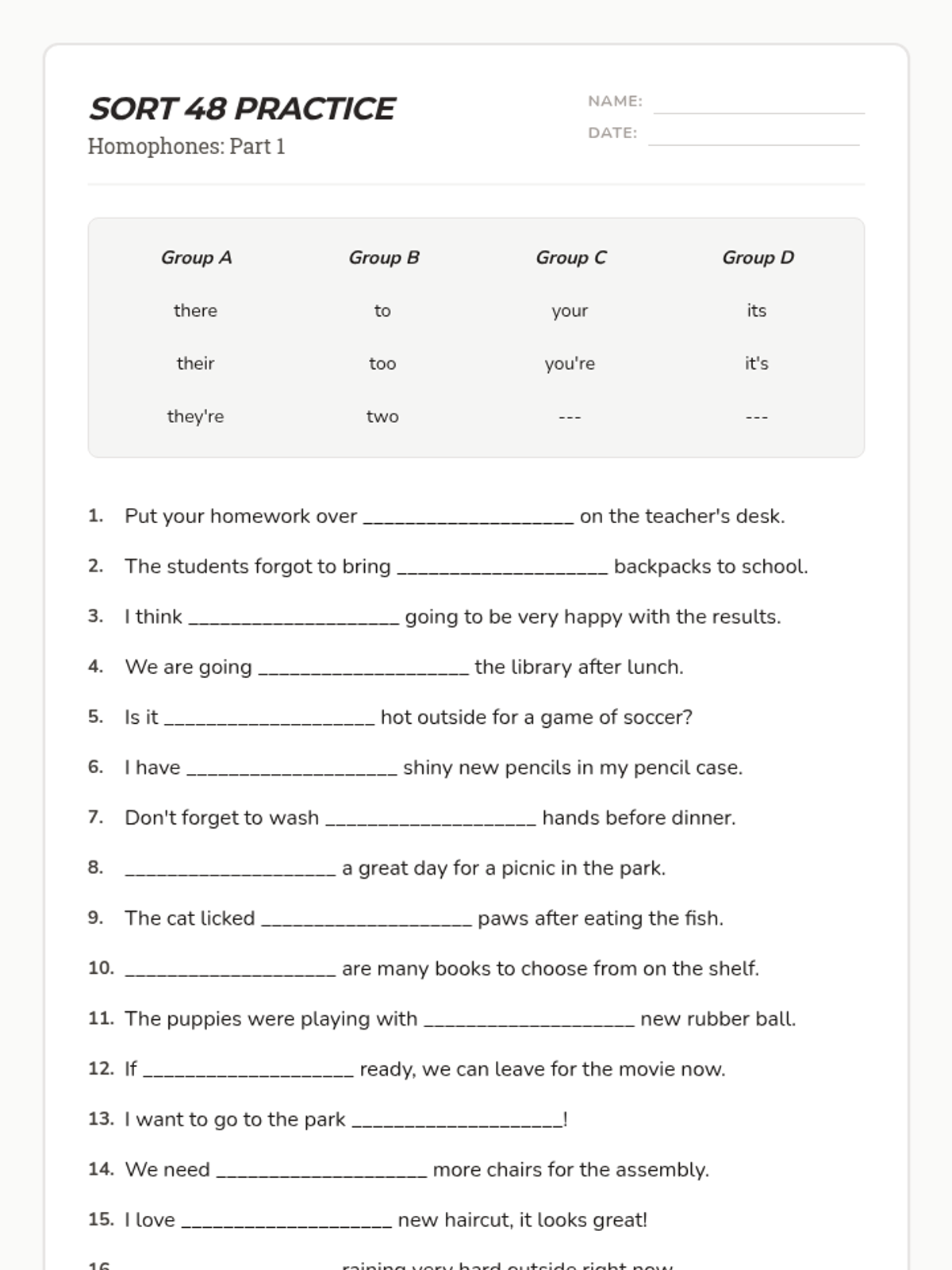
Practice materials for Sort 48 focusing on common homophones (there/their/they're, to/too/two, its/it's, your/you're). Now features a 3-page packet including sentences, a 15+ word investigation grid, and a word scramble.
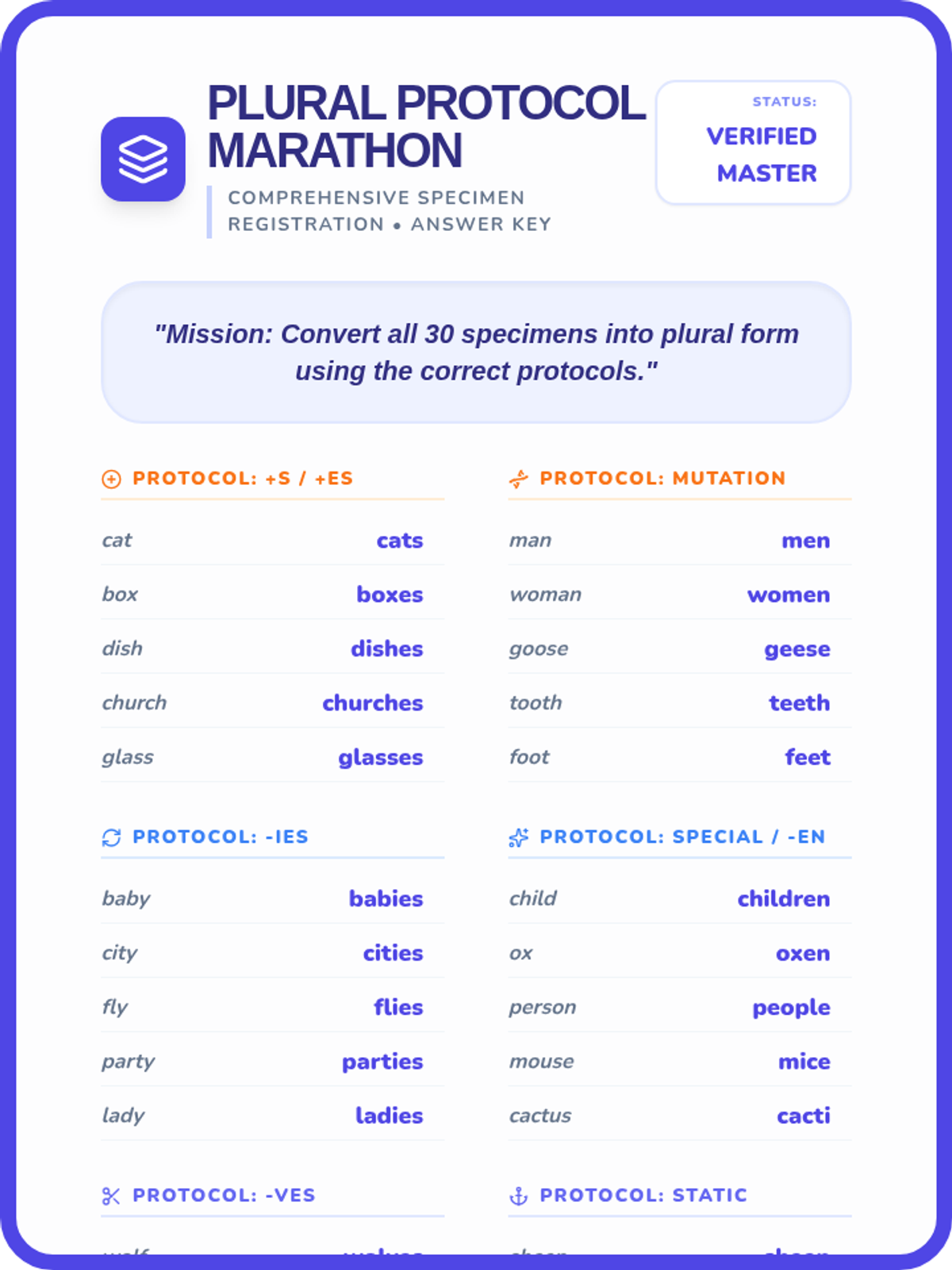
The official teacher answer key for the Plural Protocol Marathon worksheet, featuring all 30 plural conversions categorized by linguistic rule. Designed with high-contrast formatting for easy grading.
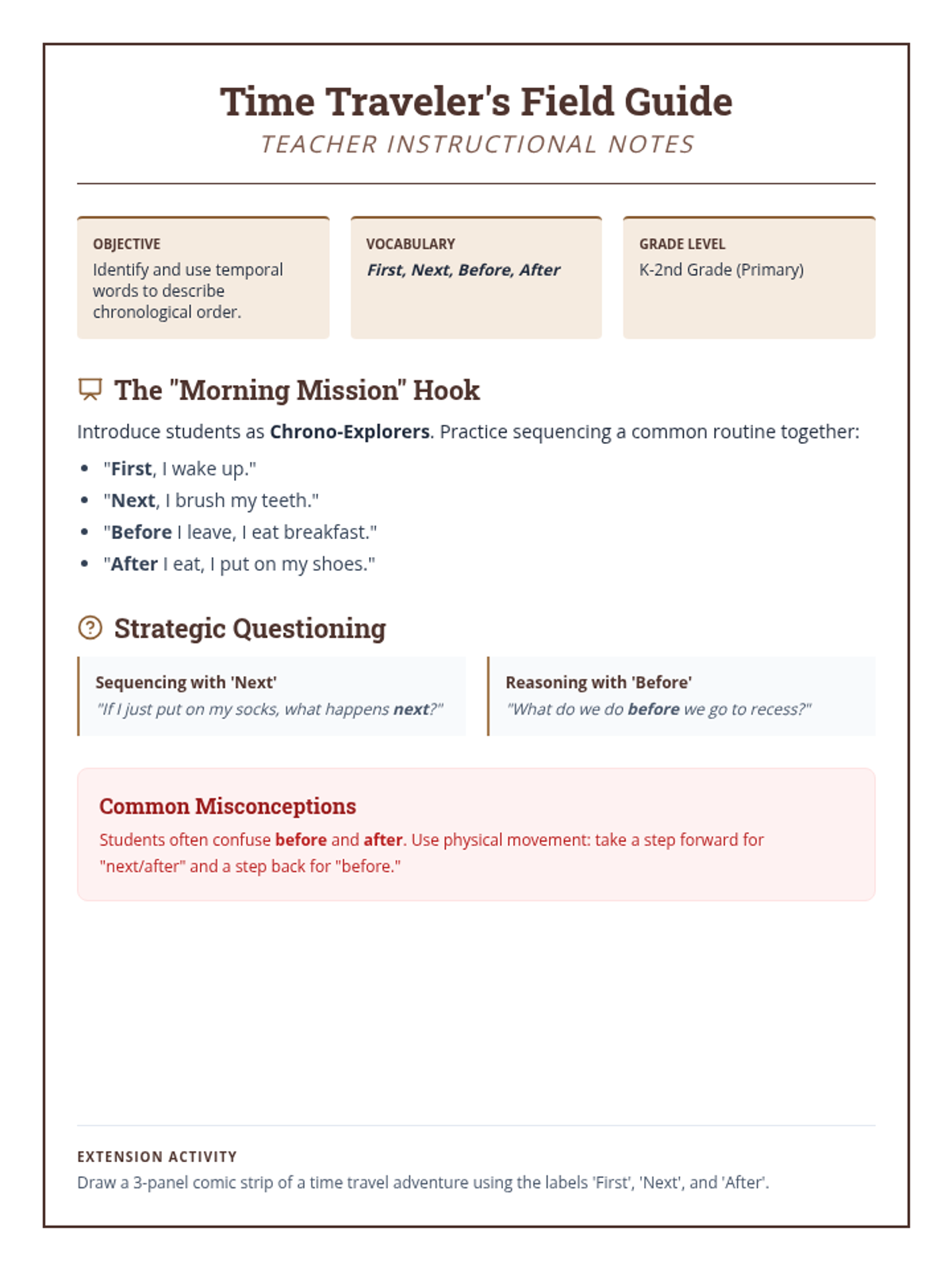
A teacher guide for the 'Time Travelers' lesson, including instructional hooks and guiding questions. Consolidated for single-page printing.
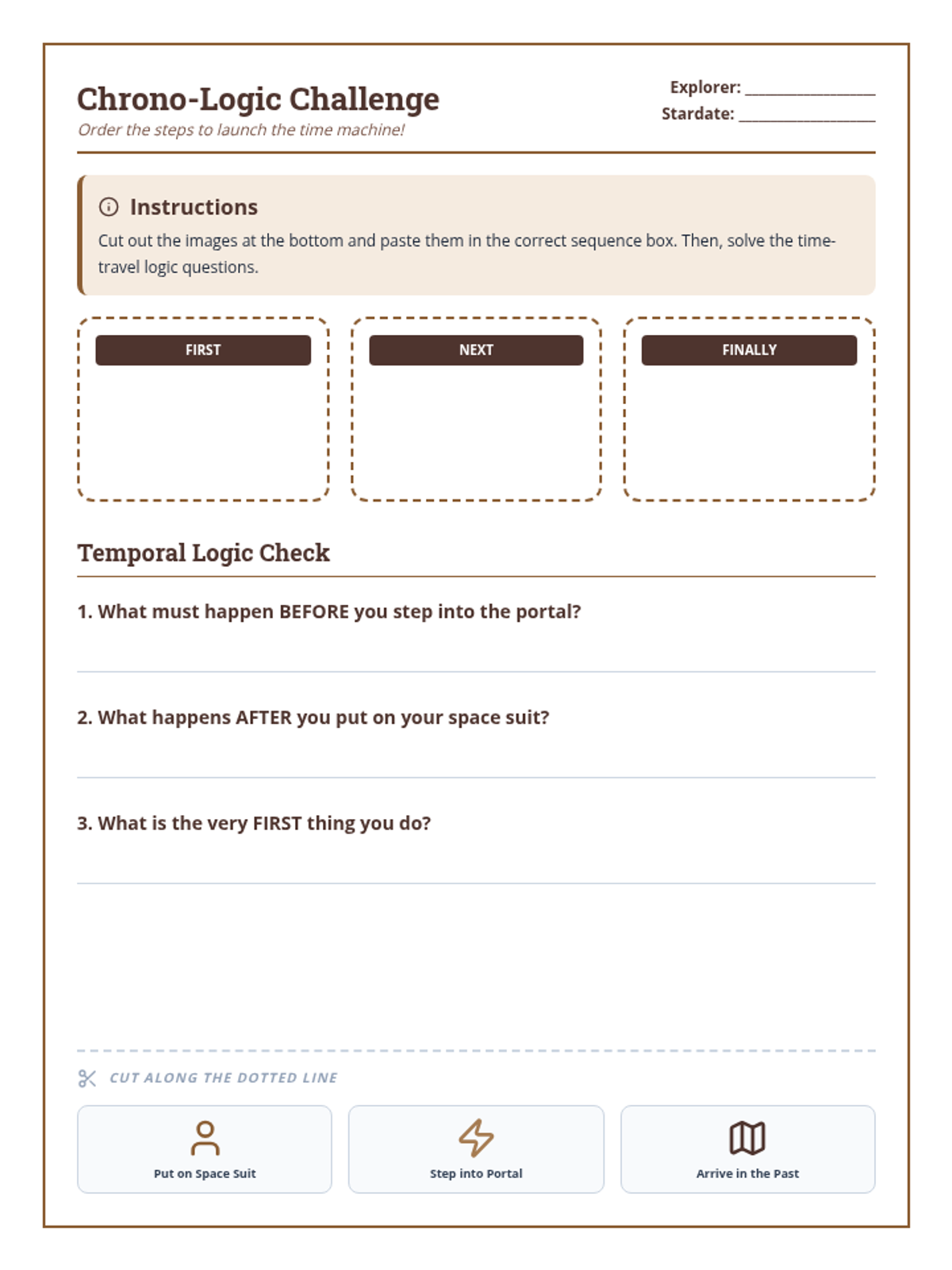
A cut-and-paste sequencing worksheet where students order events using temporal clues. Optimized for single-page printing with blank work areas.
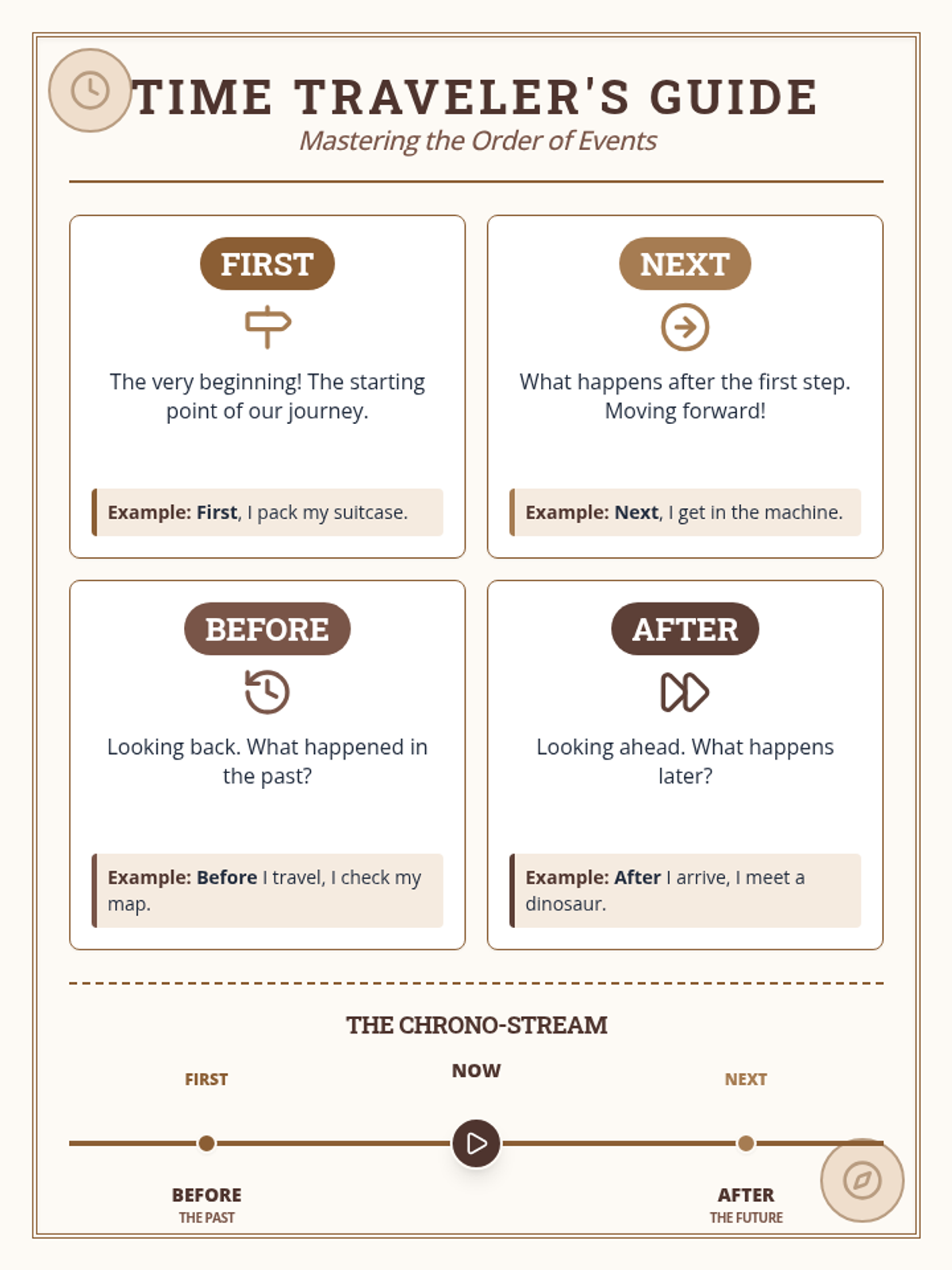
A visual anchor chart for the temporal words 'first', 'next', 'before', and 'after' using a time-traveler theme with clear examples and a visual timeline. Optimized for single-page printing.
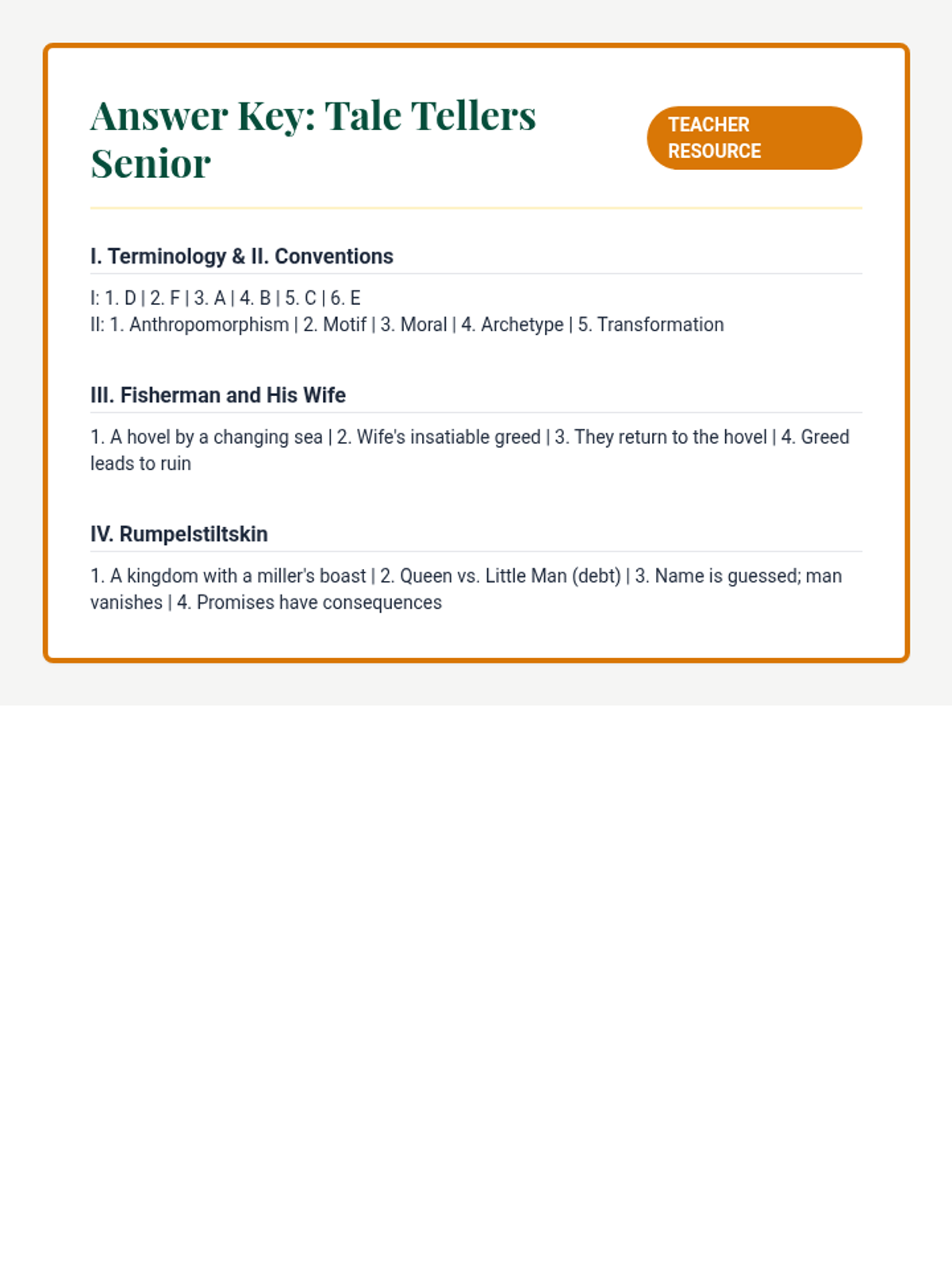
Answer key for the Senior level Fairy Tale Quiz, including updated responses for the expanded literary analysis of both passages.
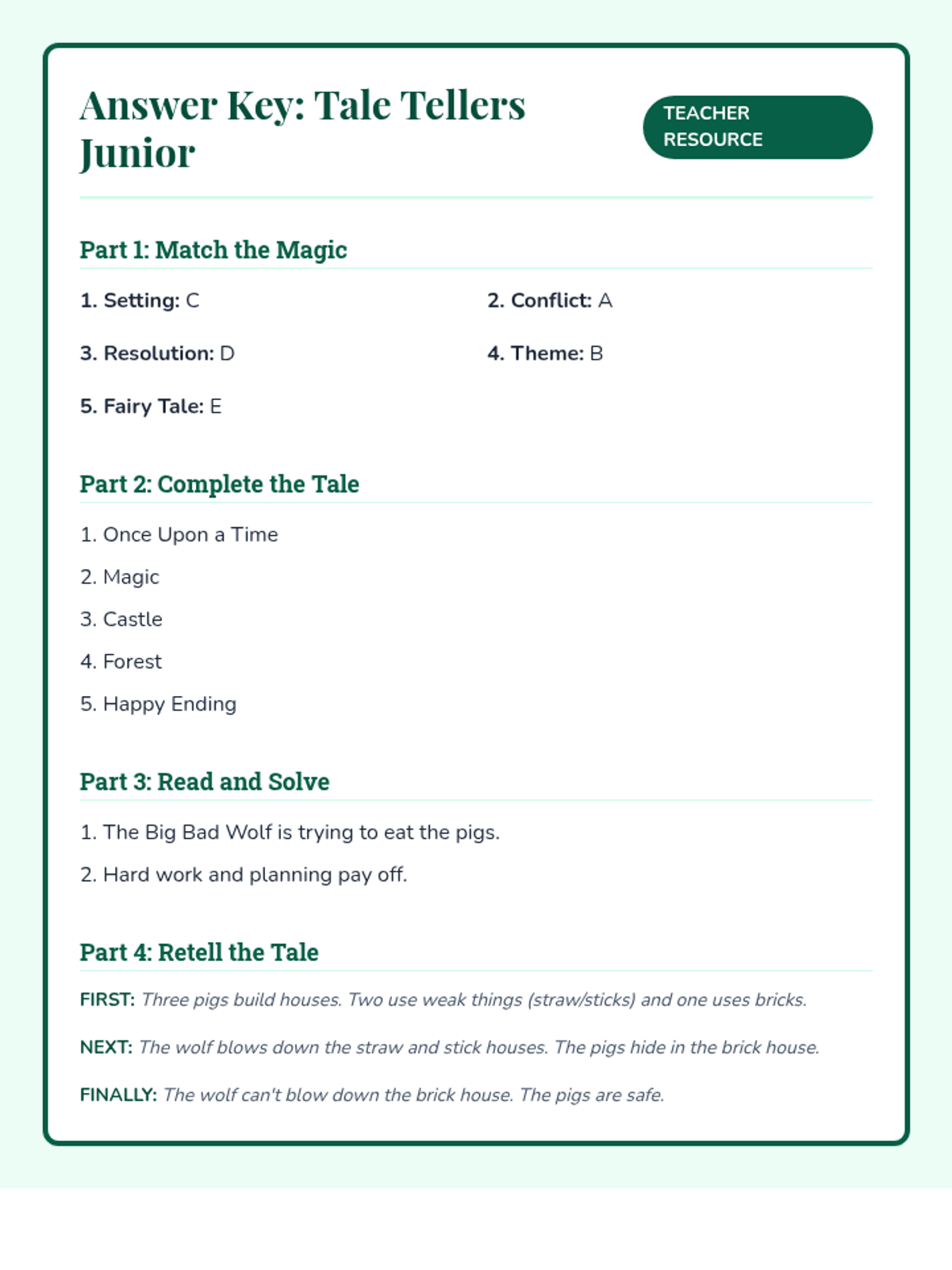
Answer key for the Junior level Fairy Tale Quiz, including updated responses for the expanded four-question analysis of each story.
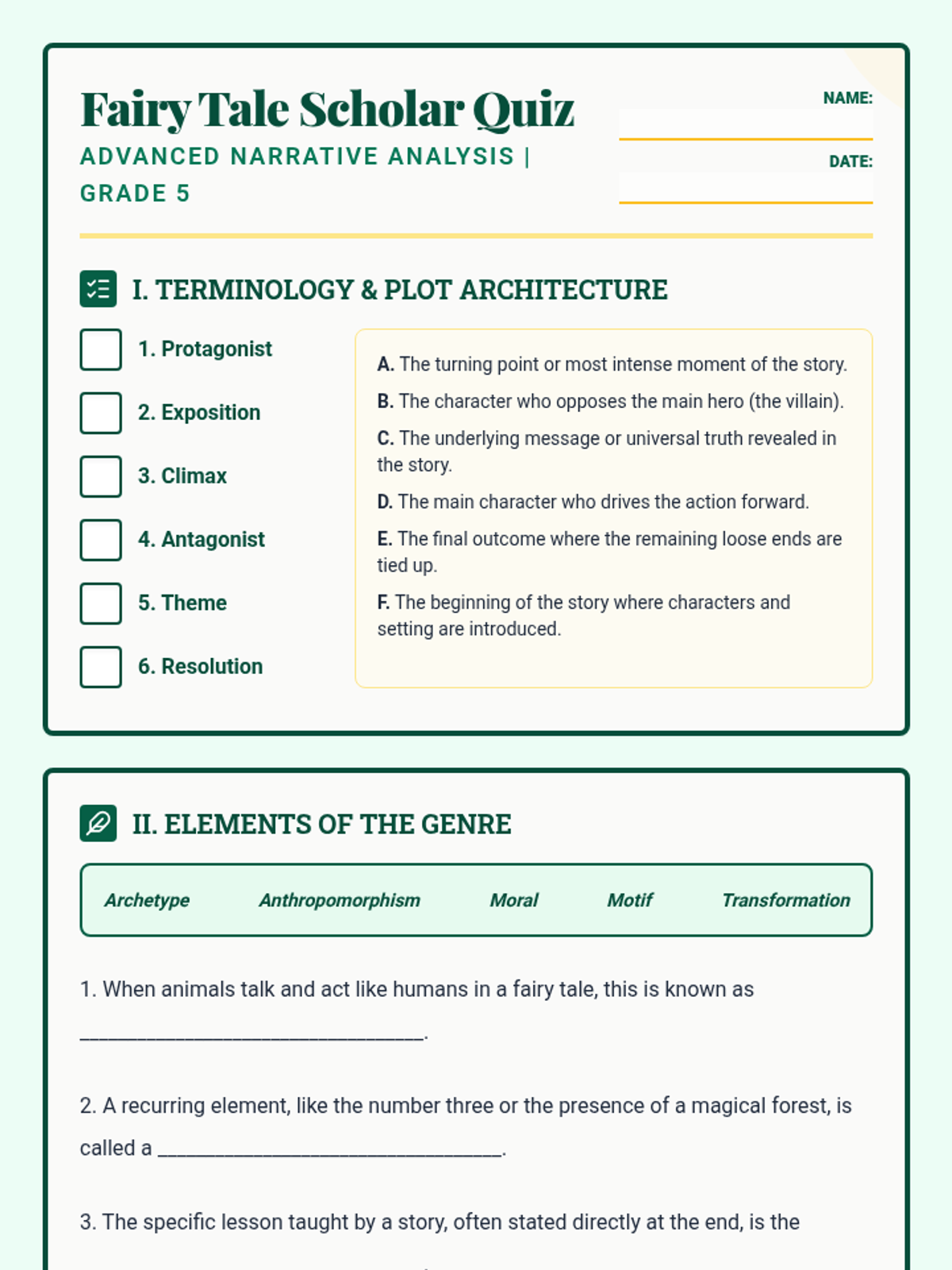
A sophisticated fairy tale assessment for 5th grade students with lengthened reading passages and targeted multiple-choice questions for setting, conflict, resolution, and theme across two stories.
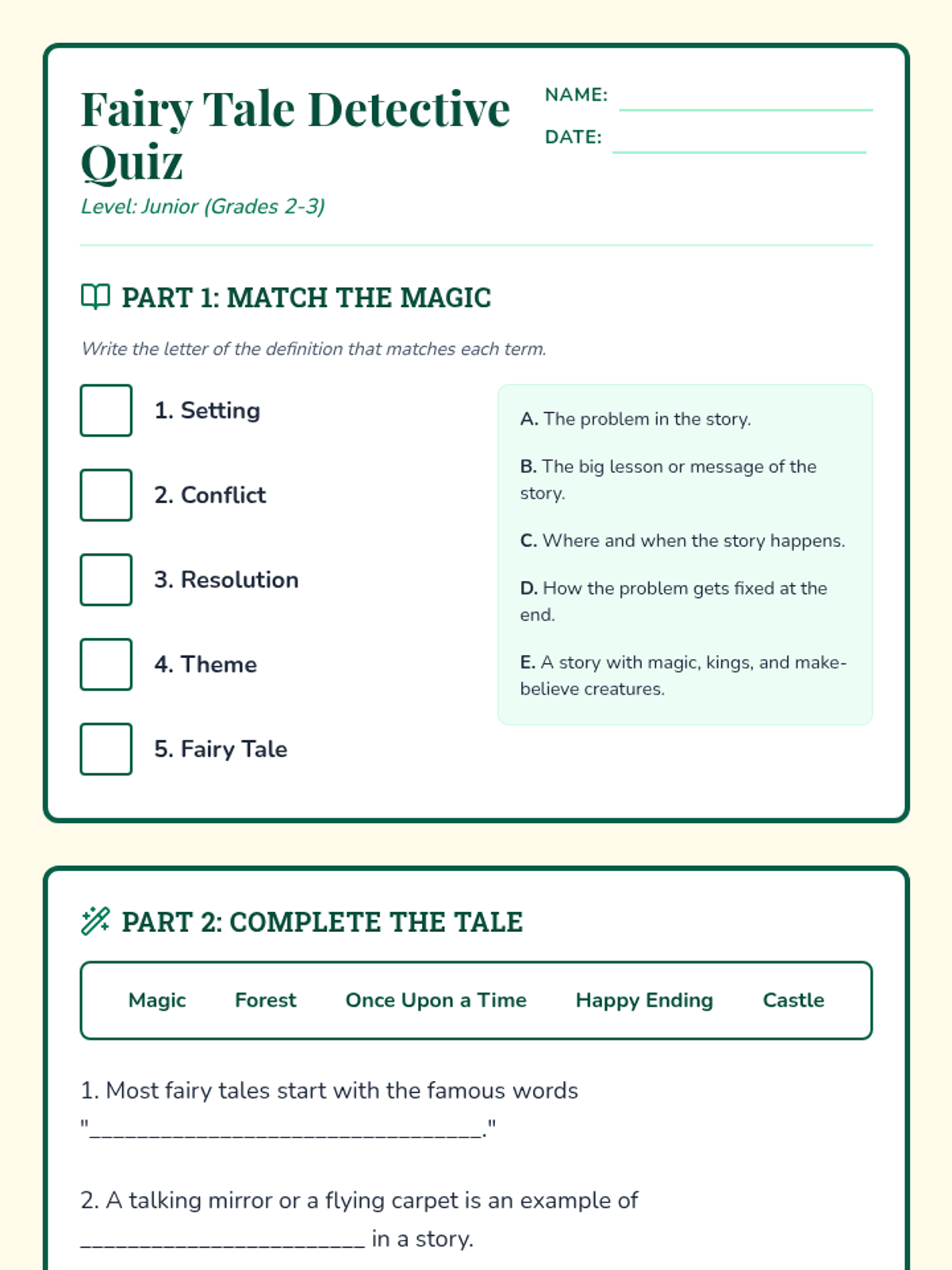
A fairy tale elements quiz for 2nd and 3rd grade students featuring expanded reading passages and four multiple-choice questions per story covering setting, conflict, resolution, and theme.
A slide deck for Mission 6: Character Compass Quest, explaining social understanding, empathy, and perspective. Revised to include academic gear links, higher contrast, and larger input areas.
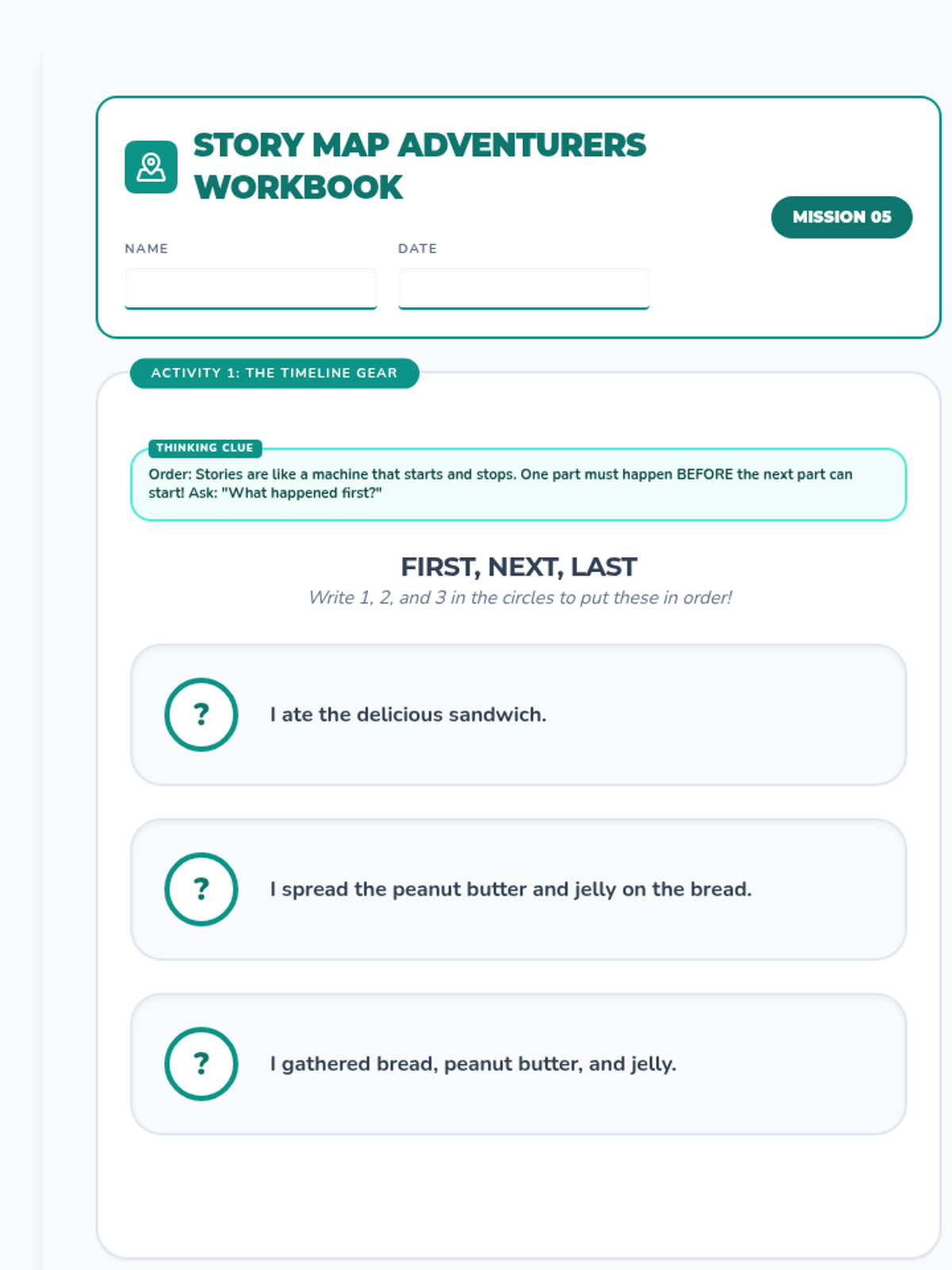
A student workbook for Lesson 5 focusing on sequencing. Revised to provide larger drawing areas and better handwriting space. Includes Thinking Clue boxes for metacognition.
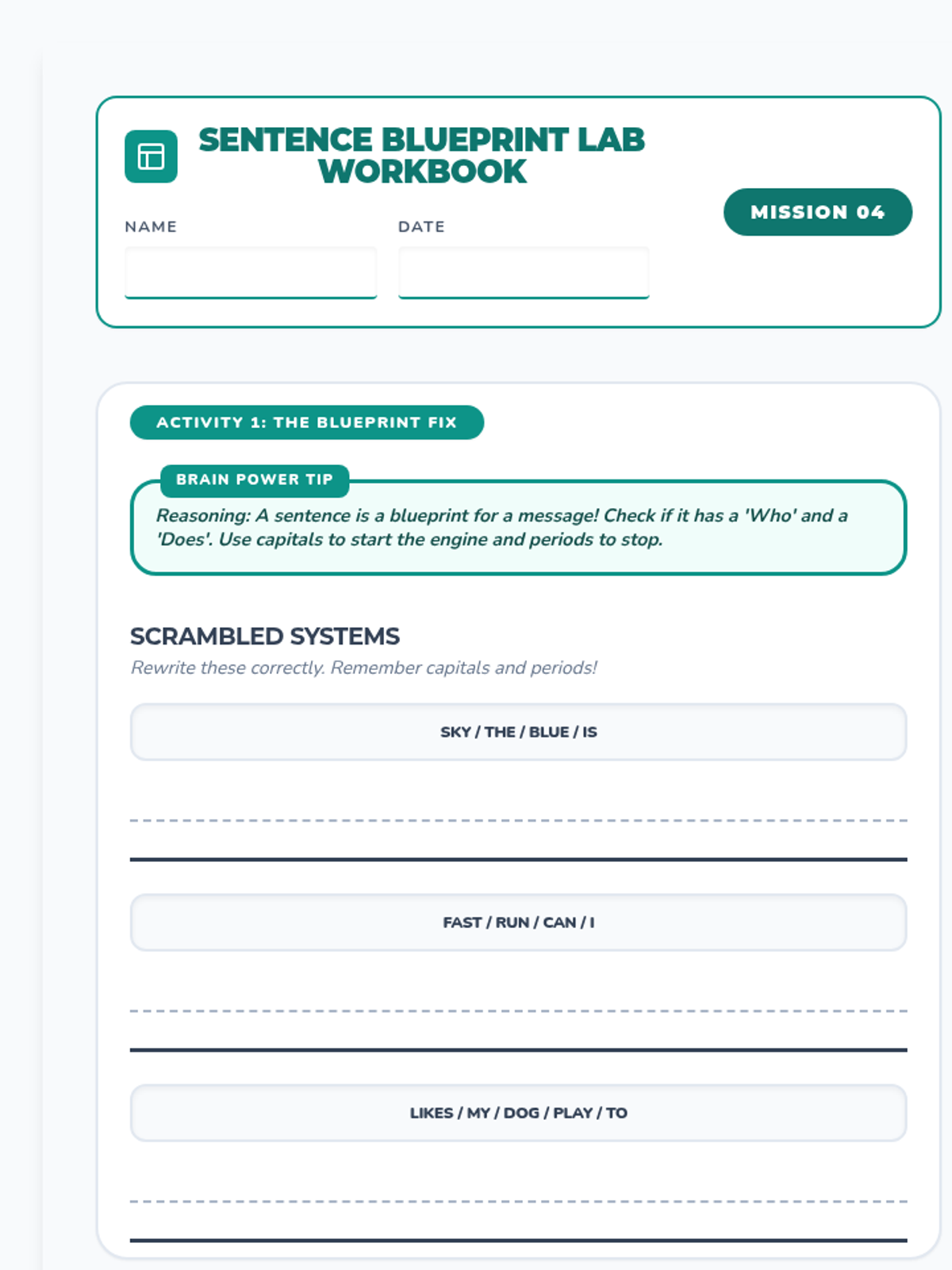
A student workbook for Lesson 4 focusing on sentence structure and logic. Revised to include more practice items and improved handwriting guides. Includes Thinking Clue boxes for metacognition. Revised for improved spacing and font sizes.
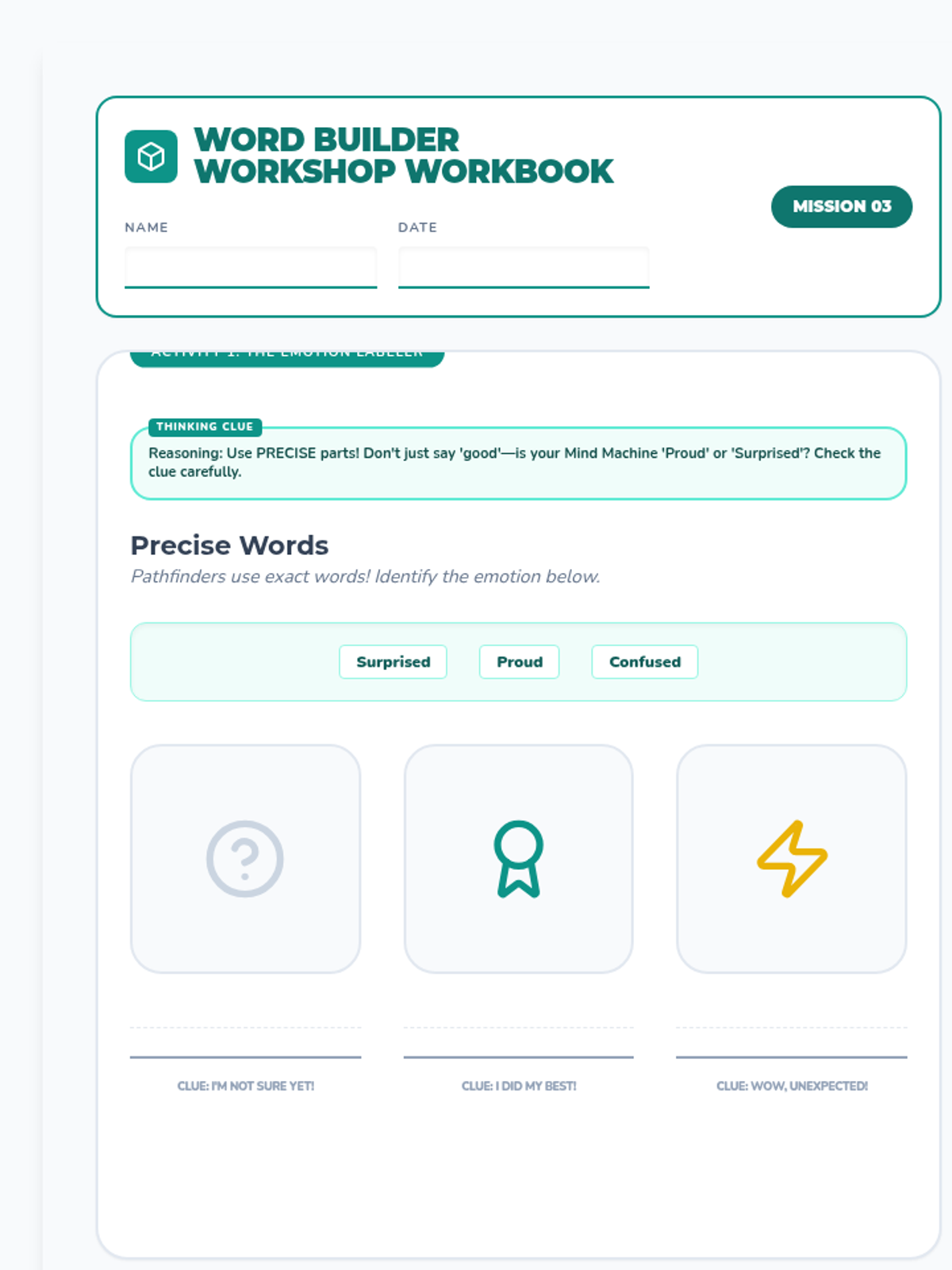
A student workbook for Lesson 3 focusing on vocabulary building and emotional labeling. Revised for better page breaks and icon consistency. Includes Thinking Clue boxes for metacognition.
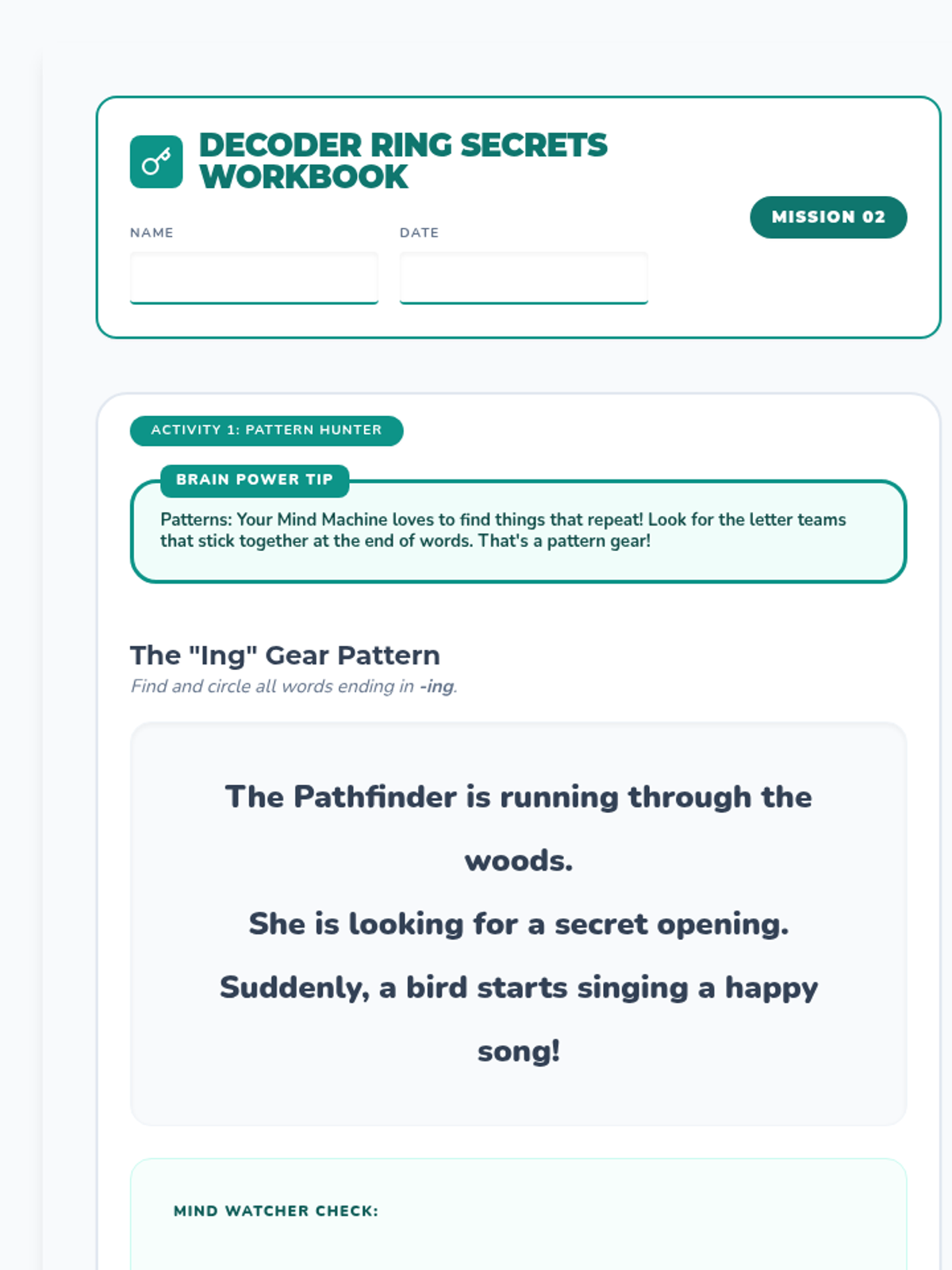
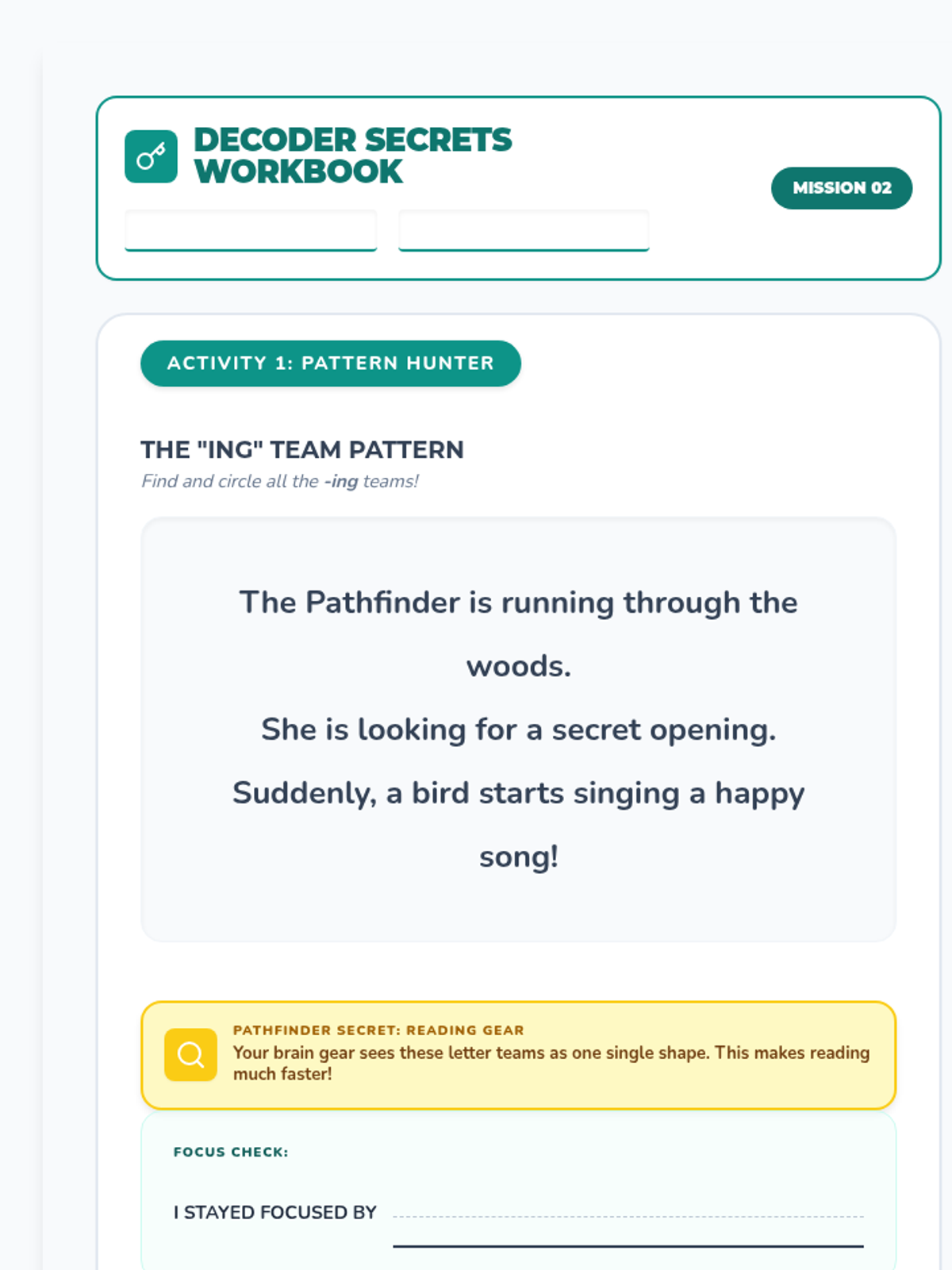
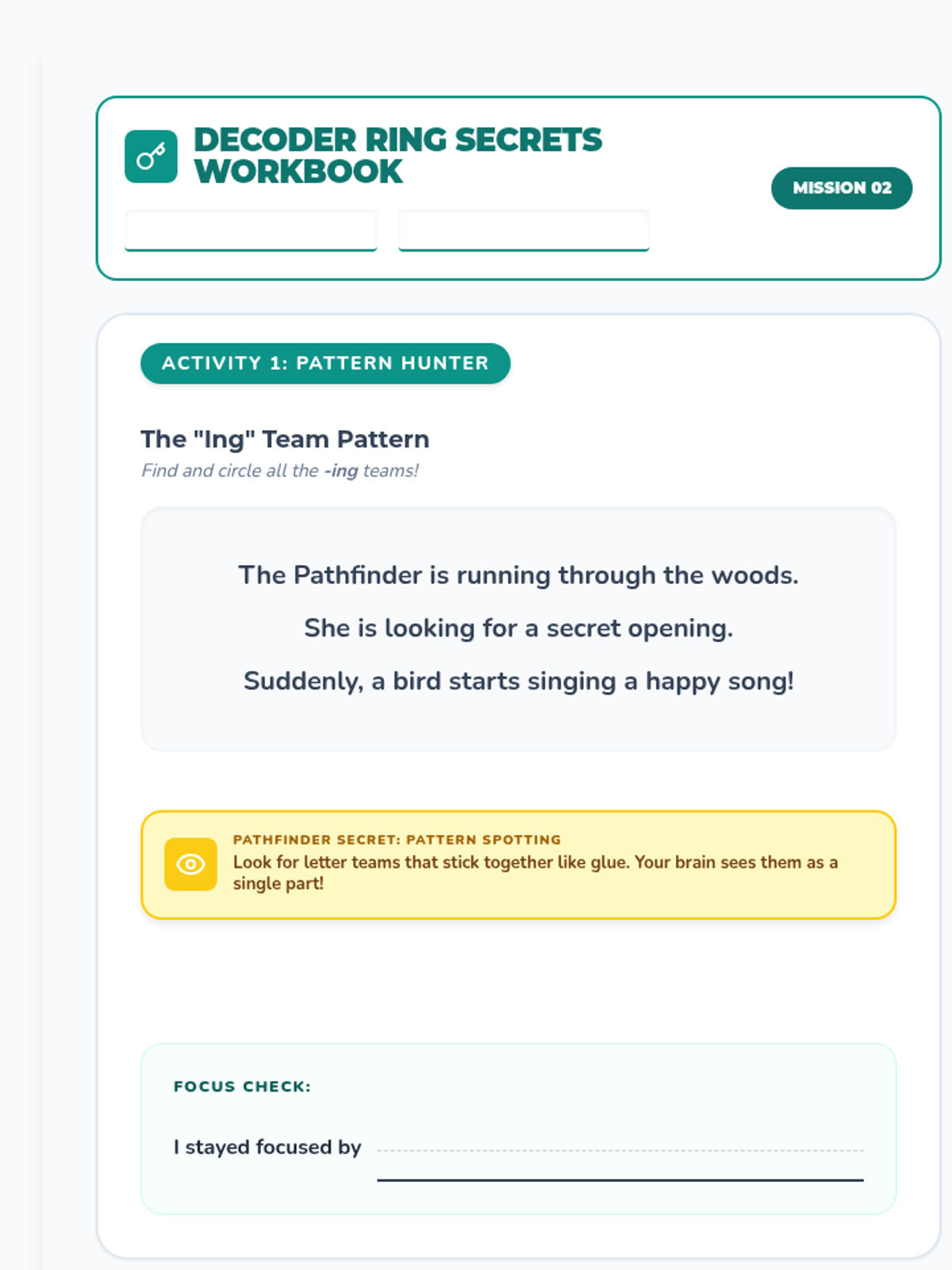
A student workbook for Lesson 2 focusing on phonics patterns and focus skills. Revised to fix pre-answered activities, improve handwriting guides, and correct page breaks. Includes Thinking Clues for learners. Revised for better spacing.
A student presentation for Mission 1 explaining how Reading, Writing, and Grammar "Mind Gears" relate to brain functions like focus, construction, logic, and self-awareness. Includes the Character Compass and brain function links.
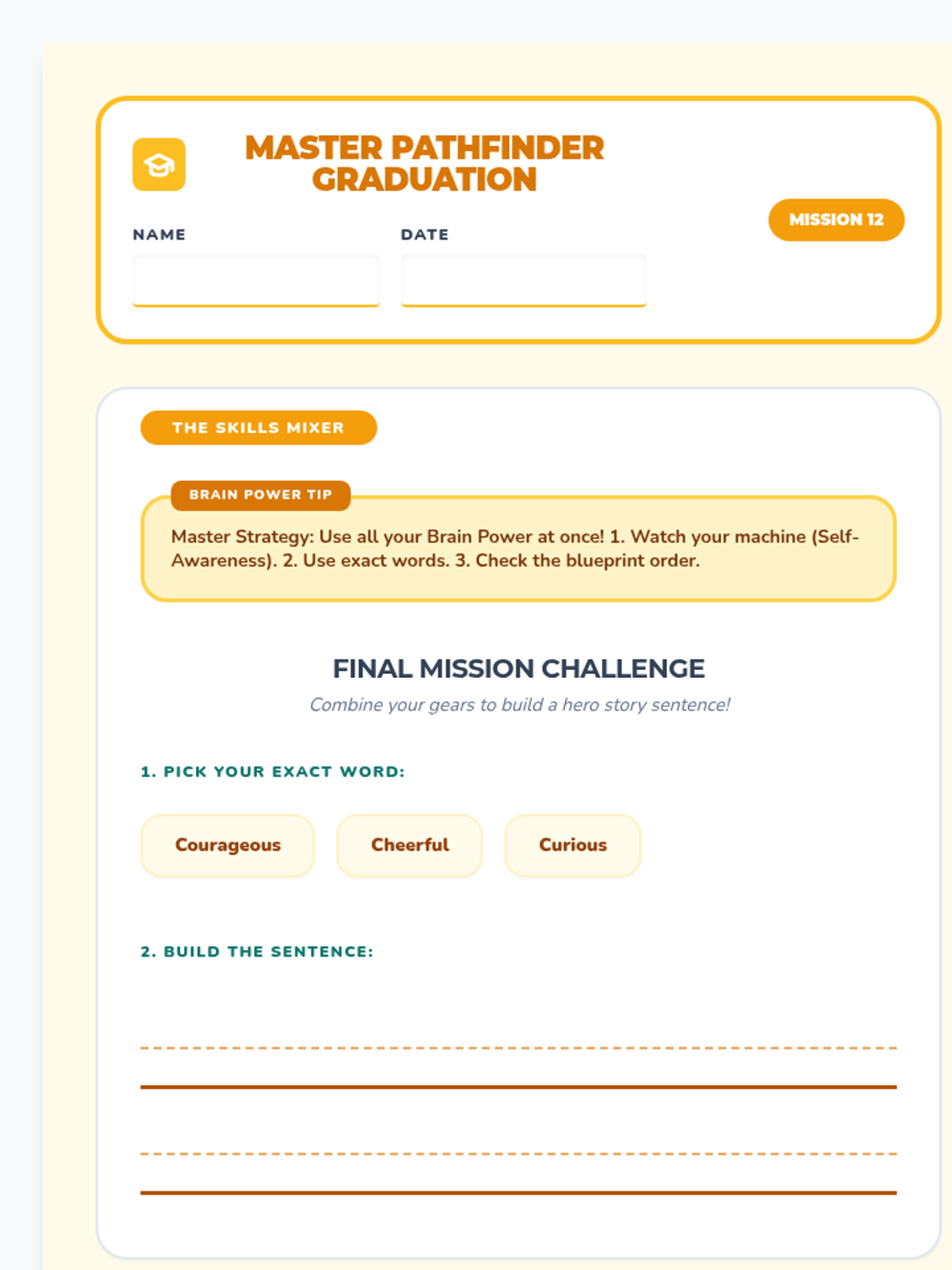
The final graduation workbook for Lesson 12: Master Pathfinder Graduation (formerly Synthesis), simplified for 6-8 year olds and including "Master Strategy" clues for metacognition. Revised for improved line spacing, layout, and icon rendering.
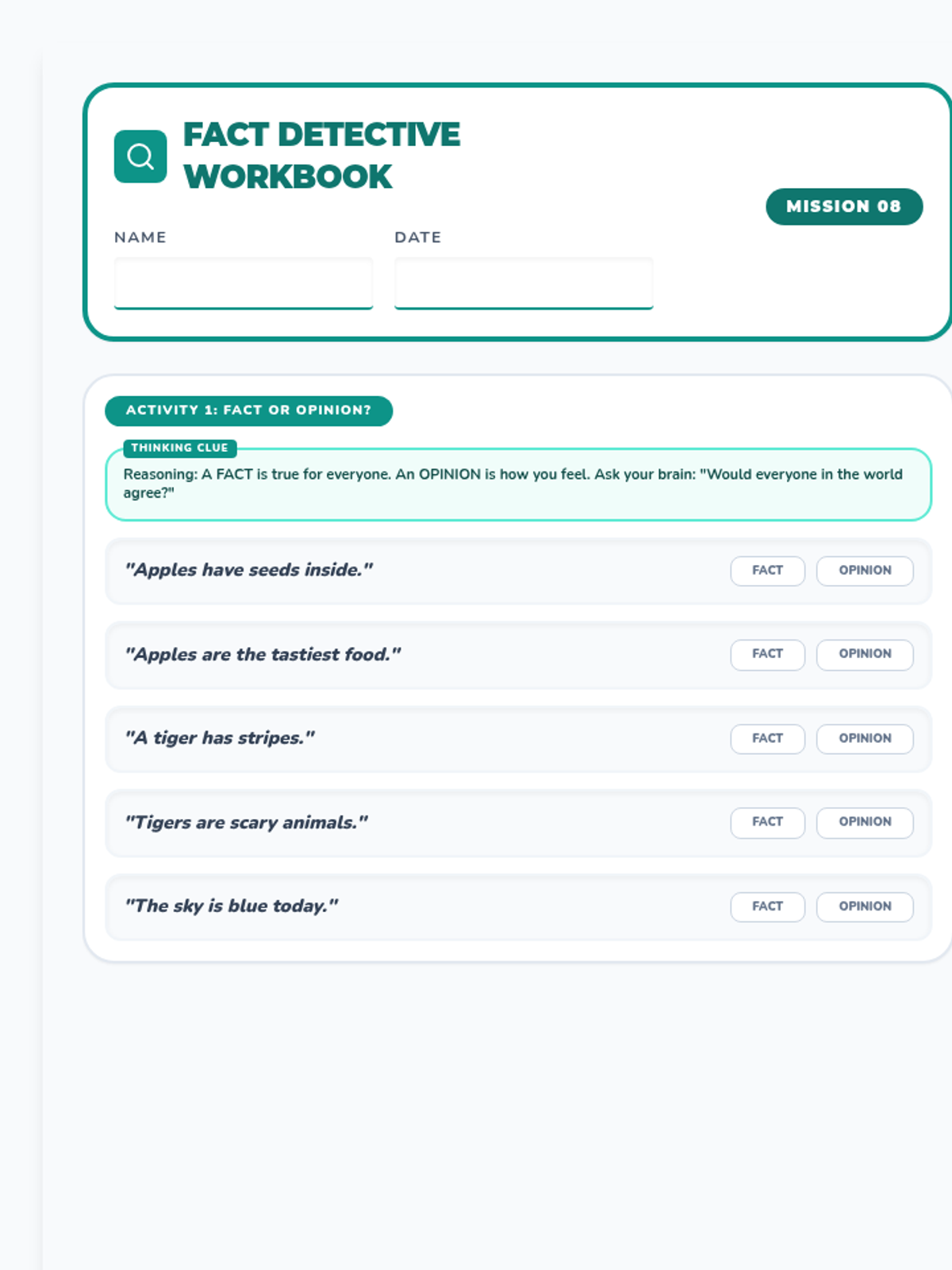
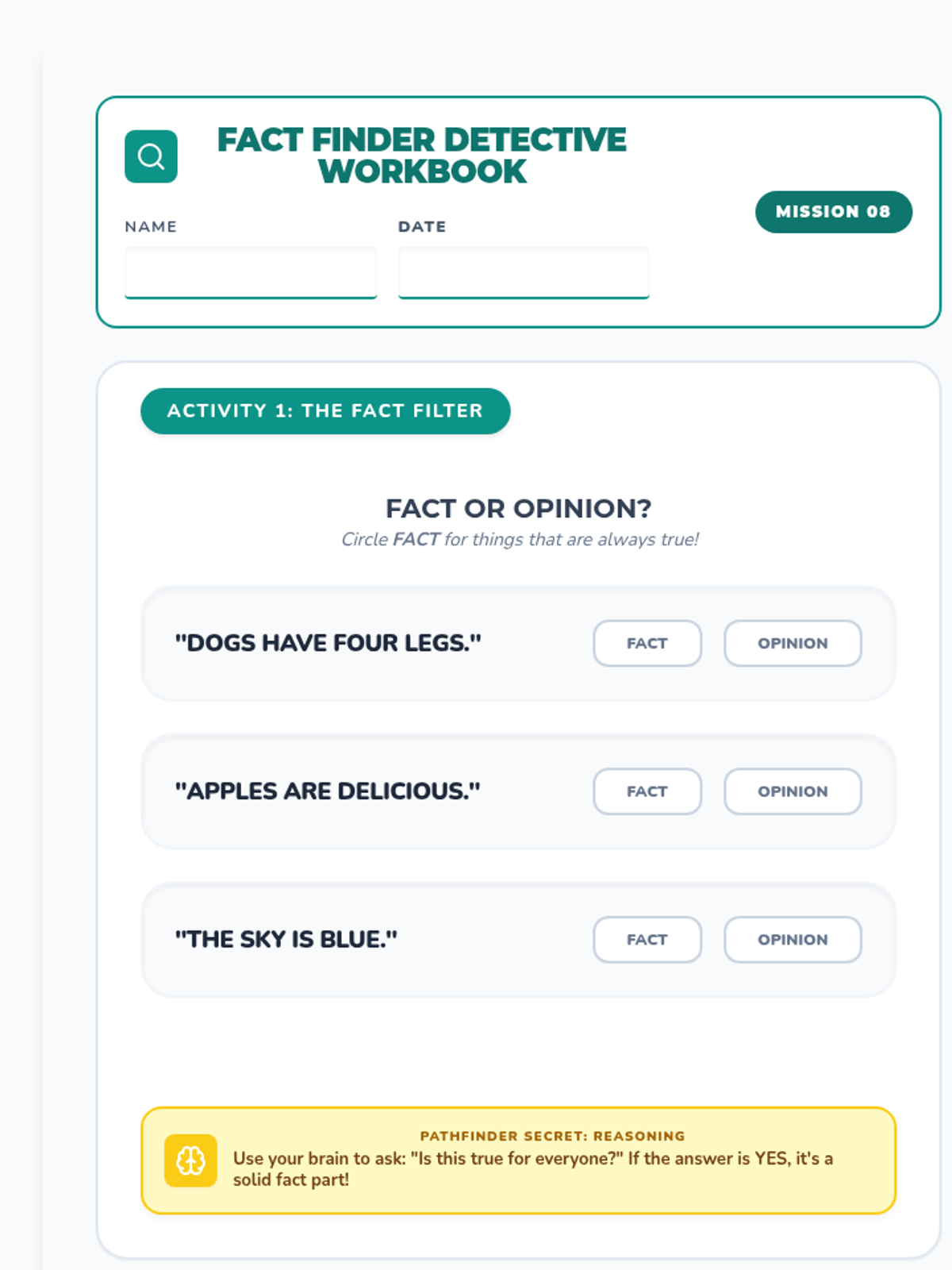
A student workbook for Mission 8: Fact Detective (formerly Fact Finder Forensics), using simple language and providing "Thinking Clue" strategy boxes to support metacognition. Revised for improved page utilization and clearer handwriting guides.
A student-facing presentation for Mission 6: Character Compass Quest, explaining empathy, perspective, and social understanding using simple language and visual detective challenges.
A slide deck for students explaining the "Mind Gears" (Reading, Writing, Grammar) and how they reflect brain functions like focus, reasoning, and self-awareness.
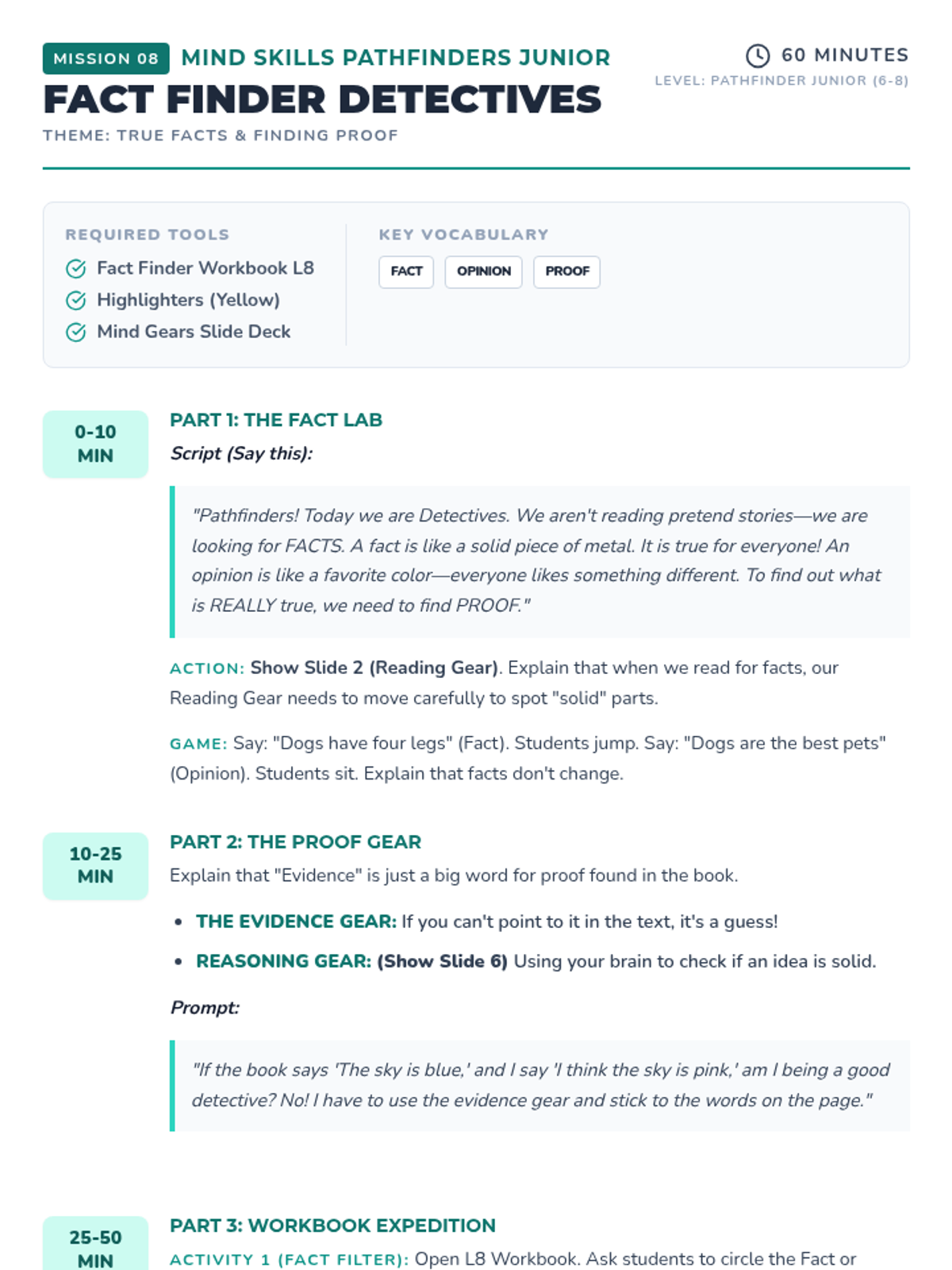
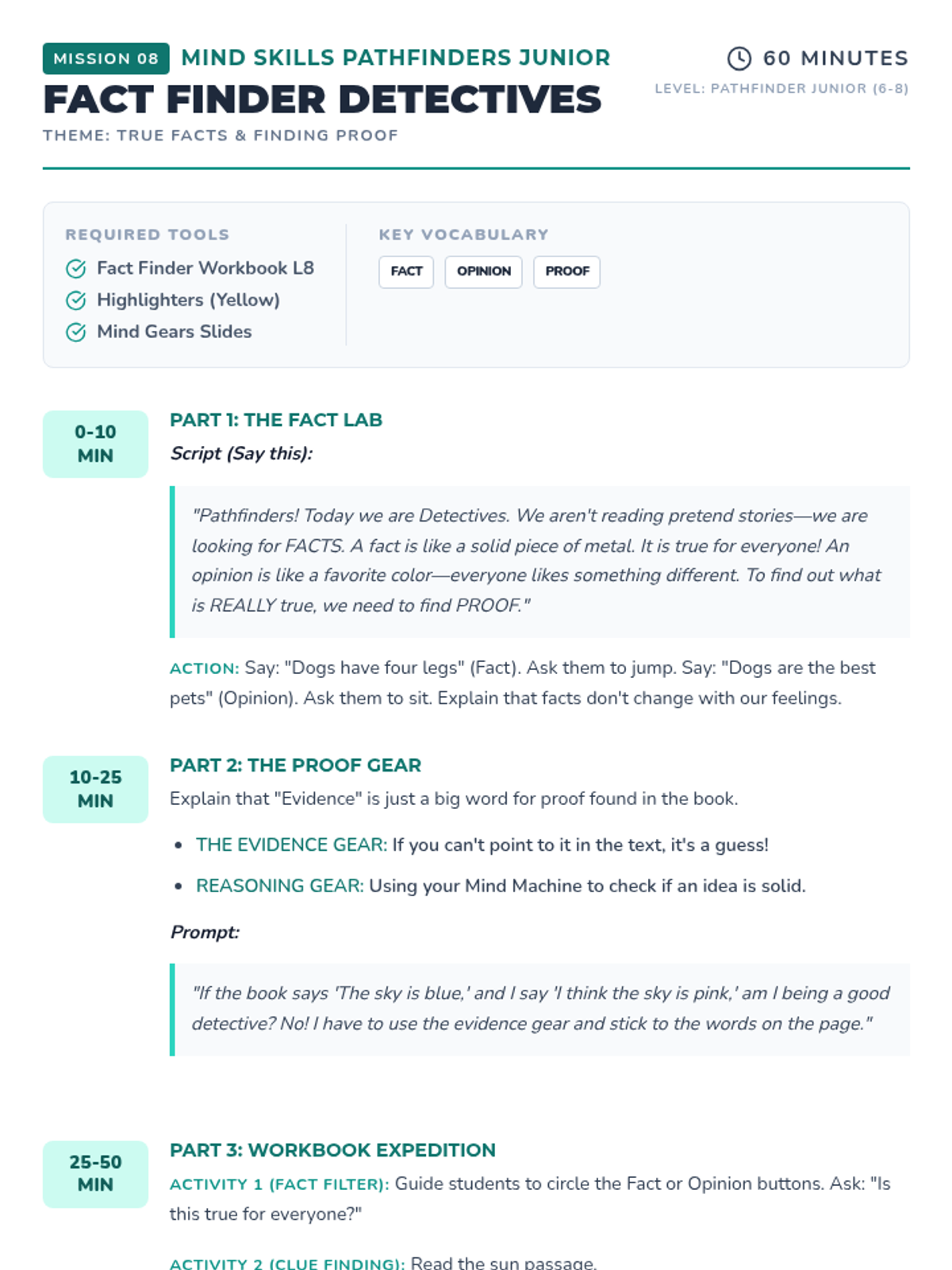
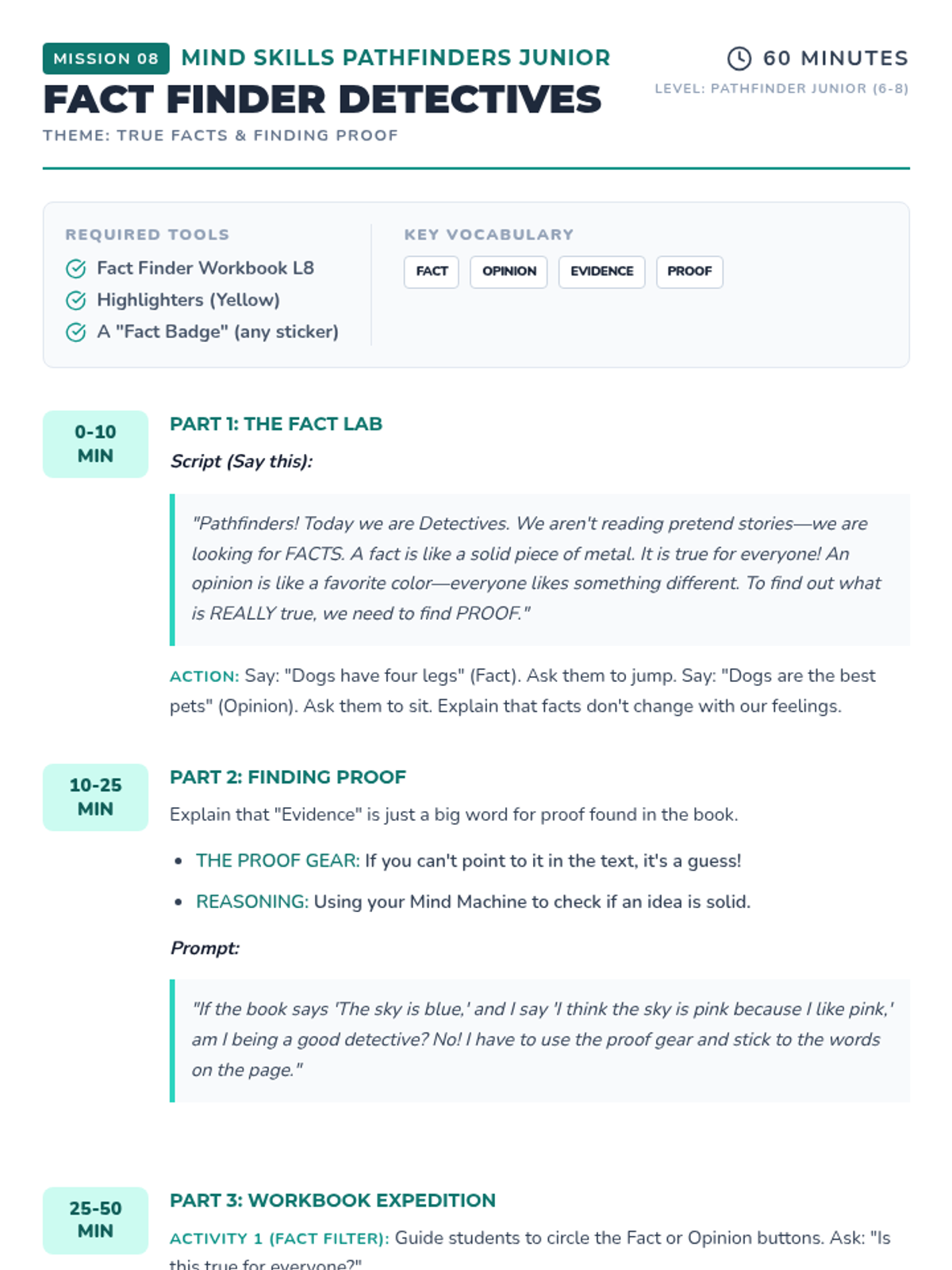
A detailed facilitator script for Lesson 8: Fact Finder Detectives, focusing on reasoning, evidence-finding, and informational texts for children aged 6-8. Revised for simplified language, better alignment, and Mind Gear slide prompts.
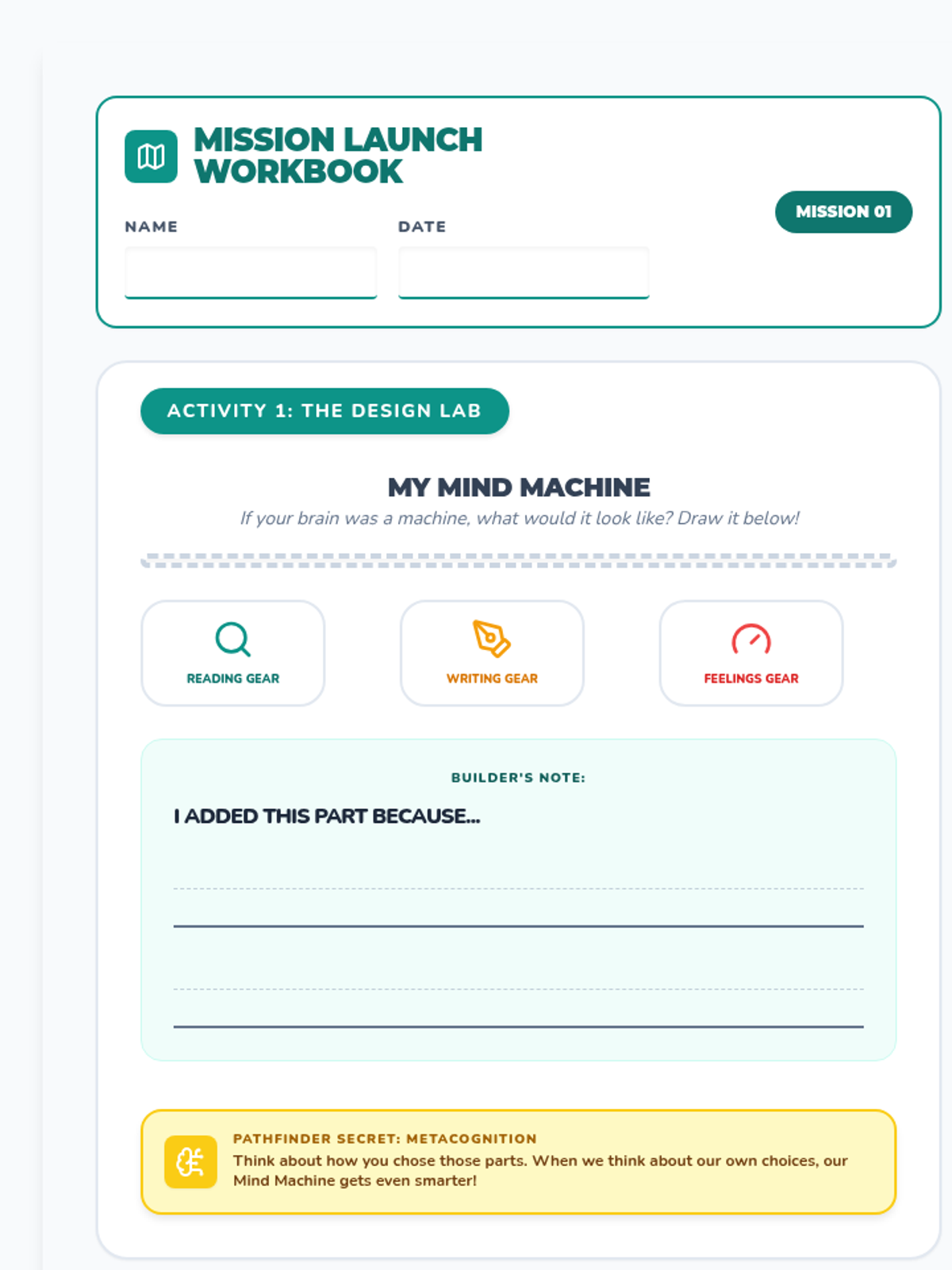
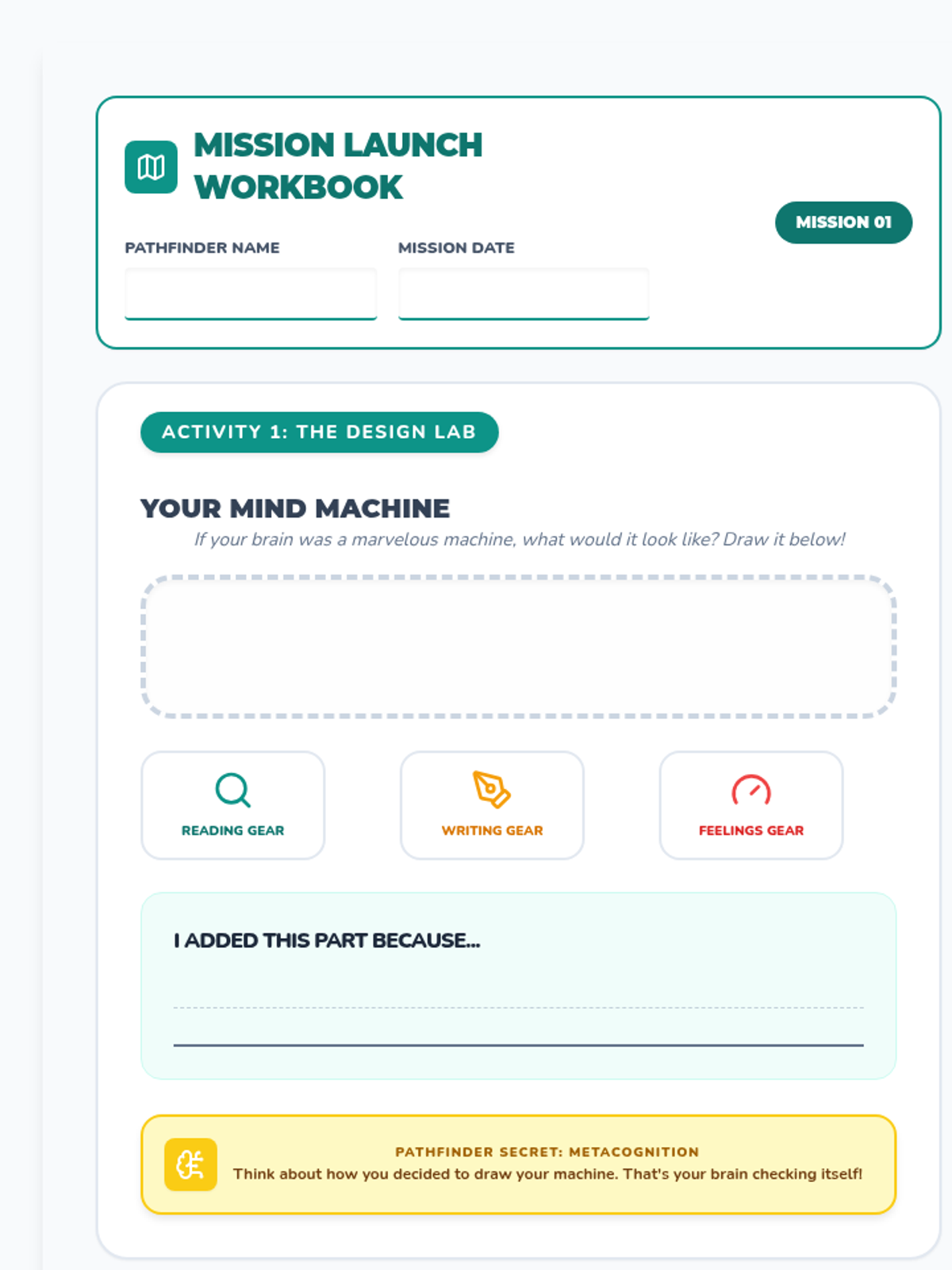
A student workbook for Lesson 1, featuring simple language, a 'Mind Machine' drawing space, and 'Pathfinder Strategy' boxes that teach children the *how* of thinking. Revised for better page breaks, contrast, and larger handwriting areas. Corrected blanks for 'PATHFINDER'.
A detailed facilitator script for Lesson 8: Fact Finder Detectives, focusing on reasoning, evidence-finding, and informational texts for children aged 6-8. Revised for simplified language and better alignment.
A student workbook for Lesson 2 focusing on phonics patterns and focus skills. Revised to fix pre-answered activities, improve handwriting guides, and add strategy clues.
A student workbook for Lesson 8 focusing on facts and evidence. Simplified language and added 'Pathfinder Strategy' boxes to help students understand *how* to find facts. Revised for better handwriting lines, more content, and fixed layout.
Visual slides for Lesson 6 focusing on character feelings, perspective, and empathy using the Character Compass metaphor. Revised for icons, contrast, and visual clarity. Added higher contrast for text on color backgrounds.
Visual slides for Lesson 1 explaining how reading, writing, and feelings work together like gears in a Mind Machine. Simplified for ages 6-8 with specific brain functions like self-awareness and growth mindset. Revised for contrast and added Social Gear.
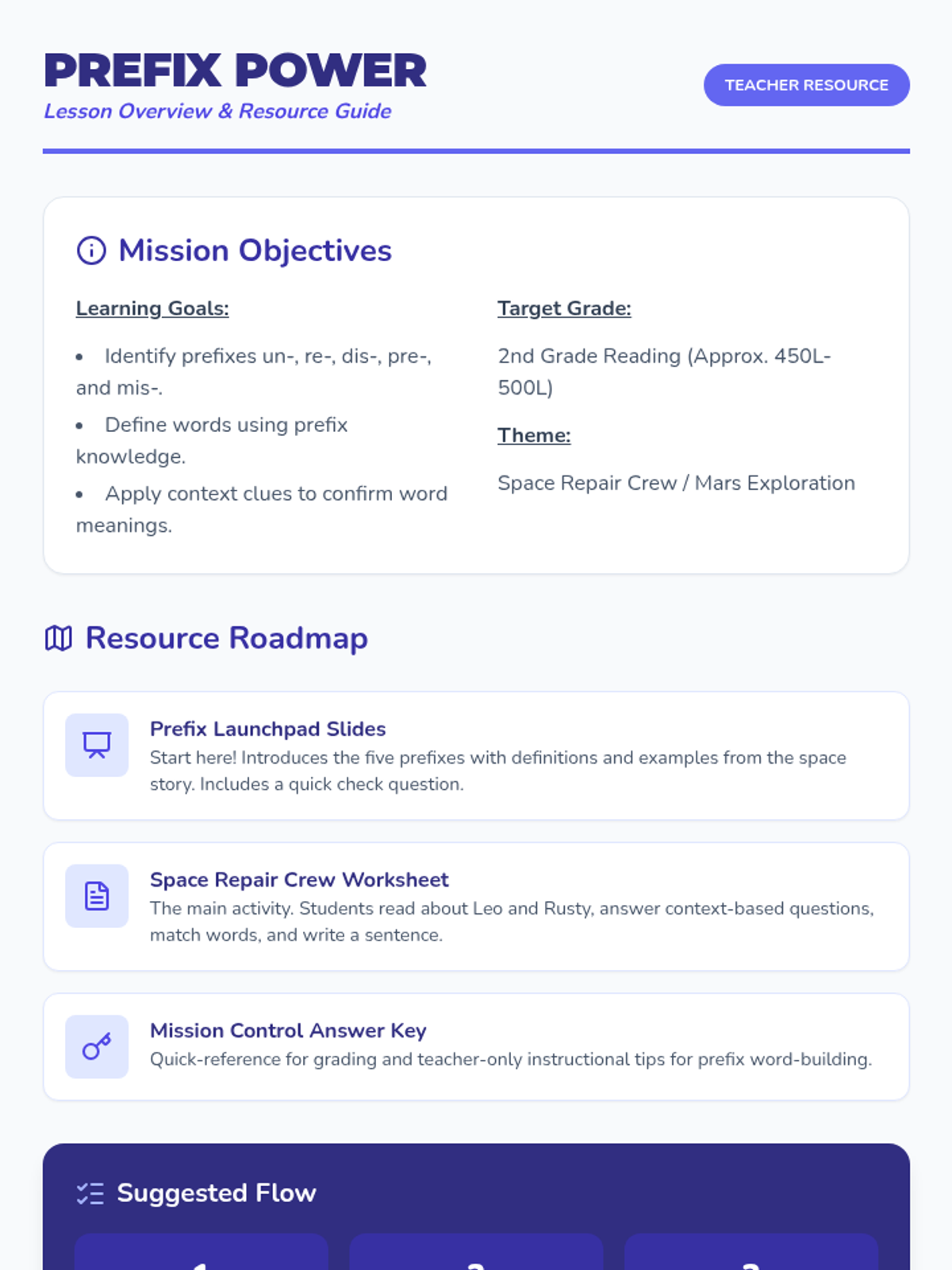
A teacher-facing lesson overview for the Prefix Power lesson, summarizing learning goals, resource descriptions, and a suggested instructional flow.
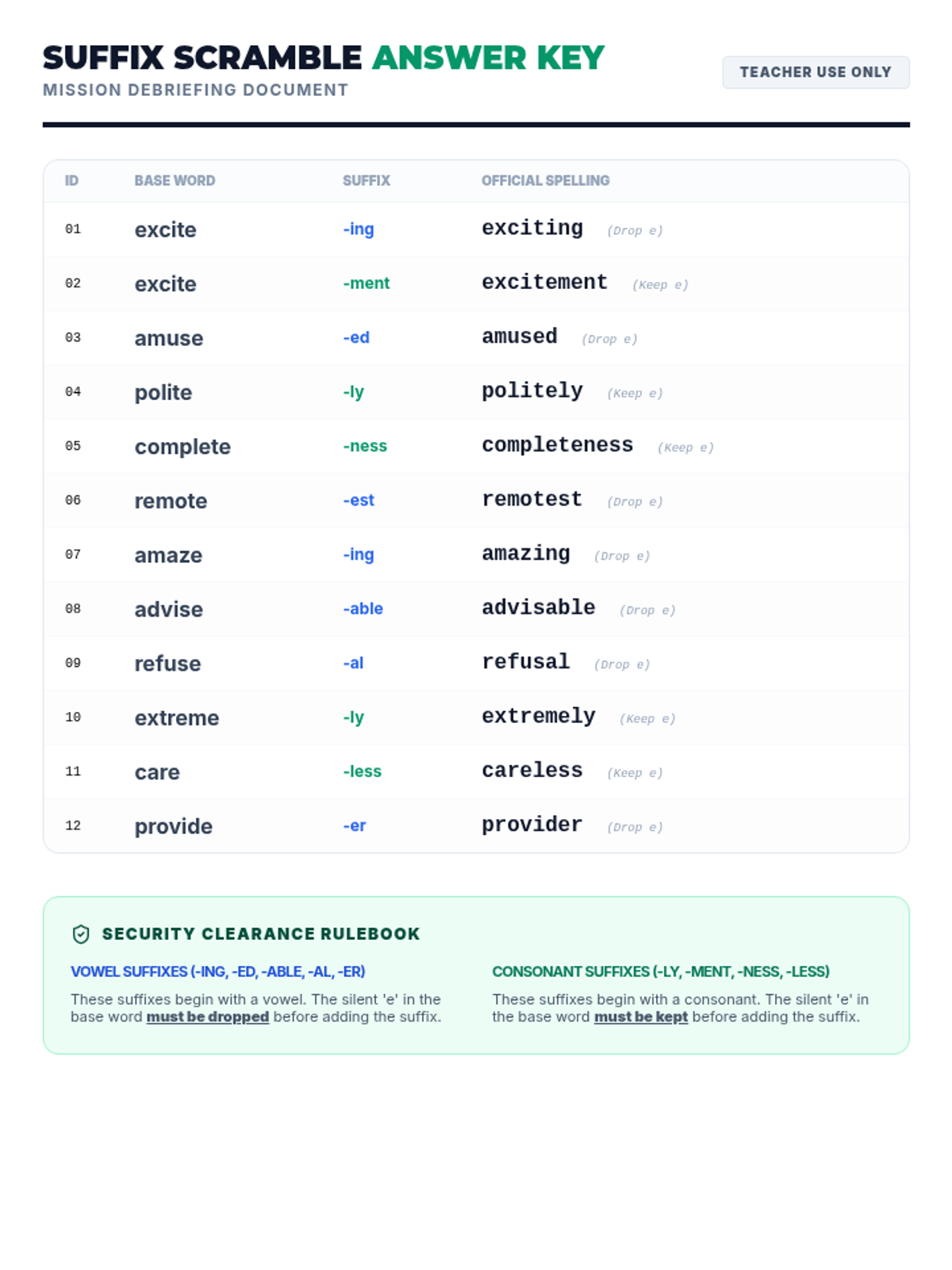
The teacher's answer key for the Suffix Scramble Worksheet, including the logic for dropping or keeping the silent 'e'. (Revised for space and more content).
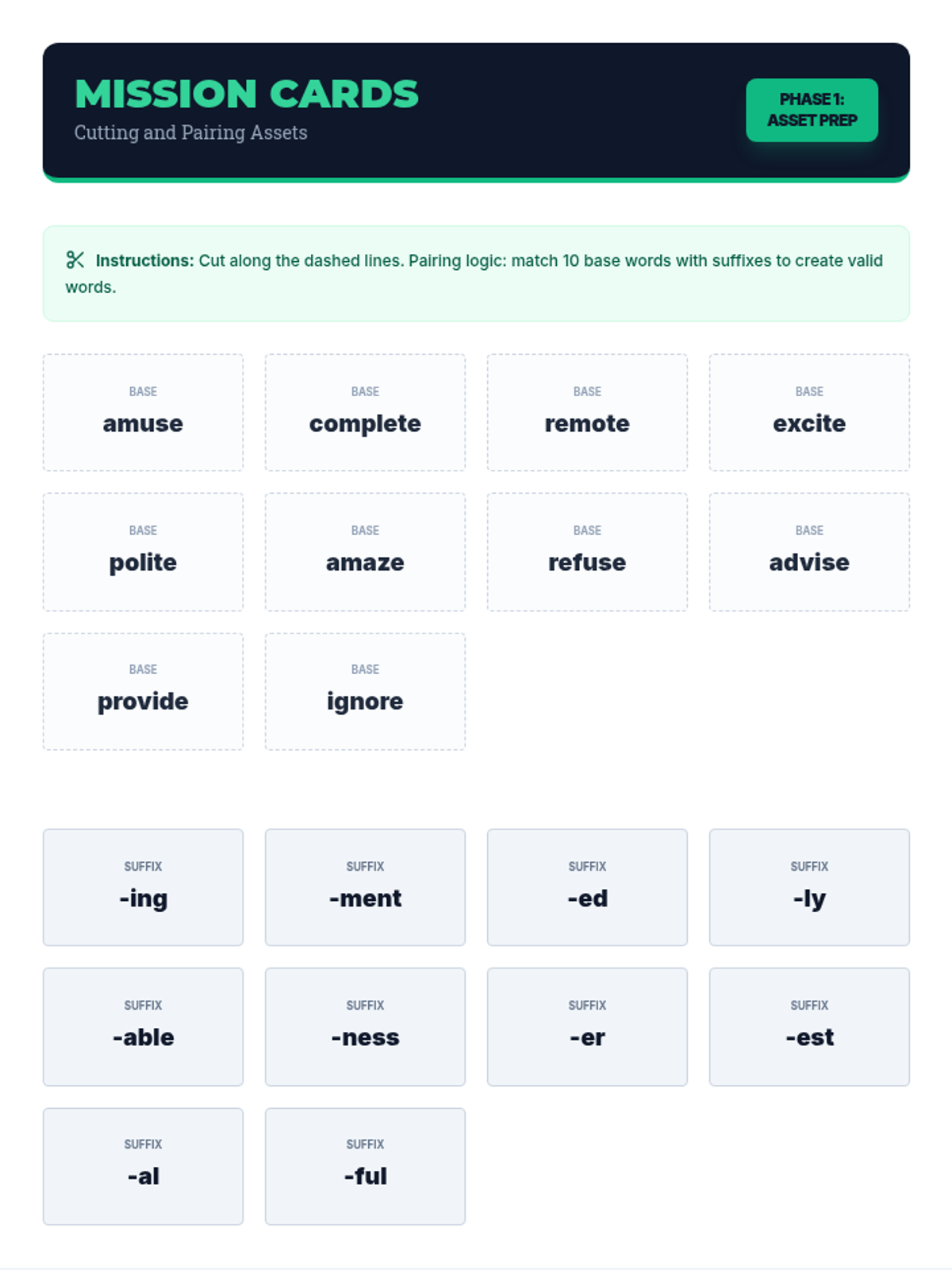
A hands-on word sorting activity where students pair base words with suffixes and categorize them based on whether the silent 'e' is dropped or kept. (Revised for space and usability).
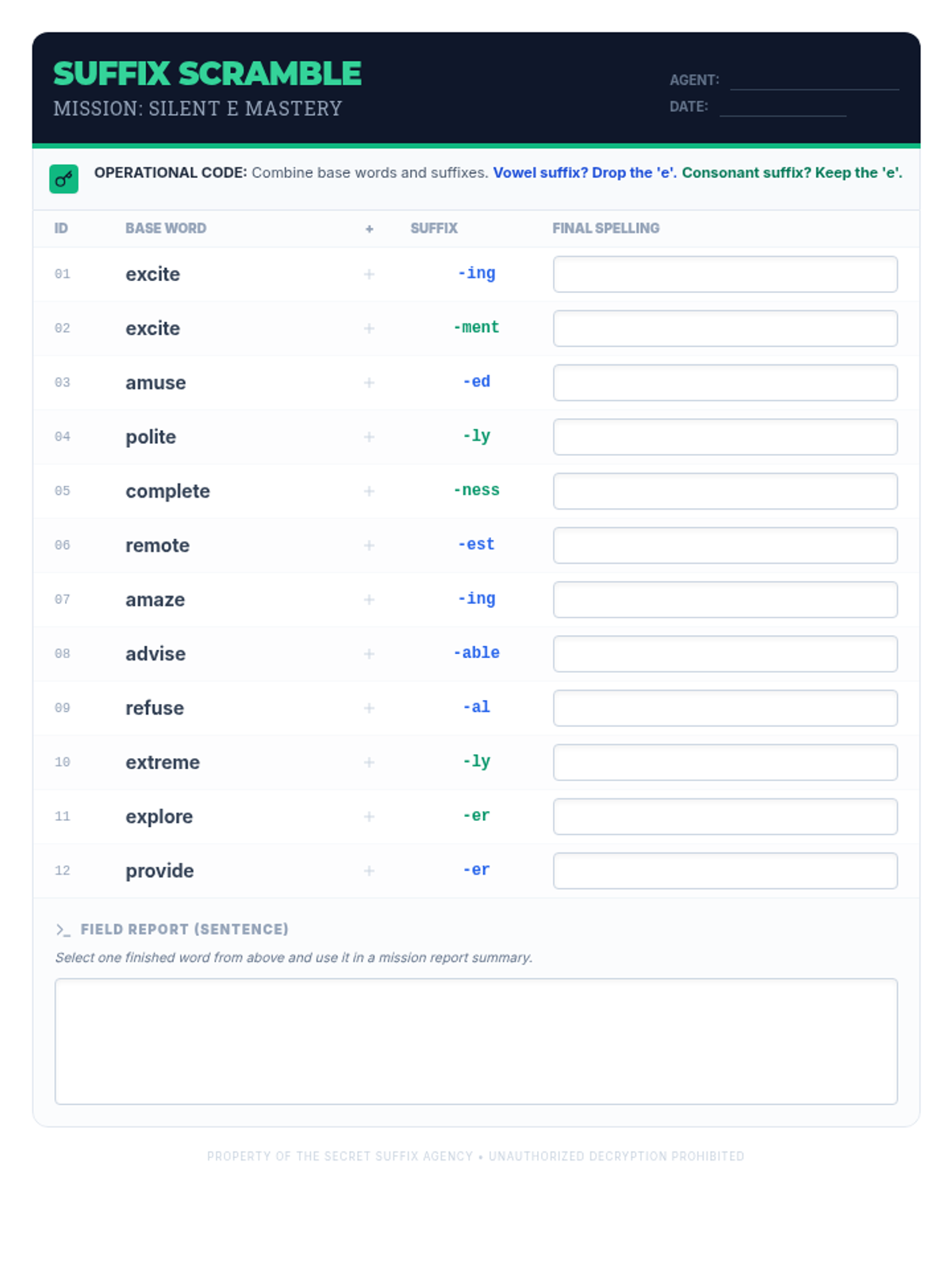
A practice worksheet where students combine multi-syllabic base words ending in silent 'e' with various vowel and consonant suffixes. (Revised for space and content).
A visual slide deck explaining the rules for adding vowel and consonant suffixes to multi-syllabic words ending in silent 'e', featuring a spy-themed design.
A visual slide deck for teaching 2nd-grade prefixes. Revised for uniform answer choice styling, improved layout density on key slides, and higher text contrast for better classroom visibility. Updated with examples directly from the space story.
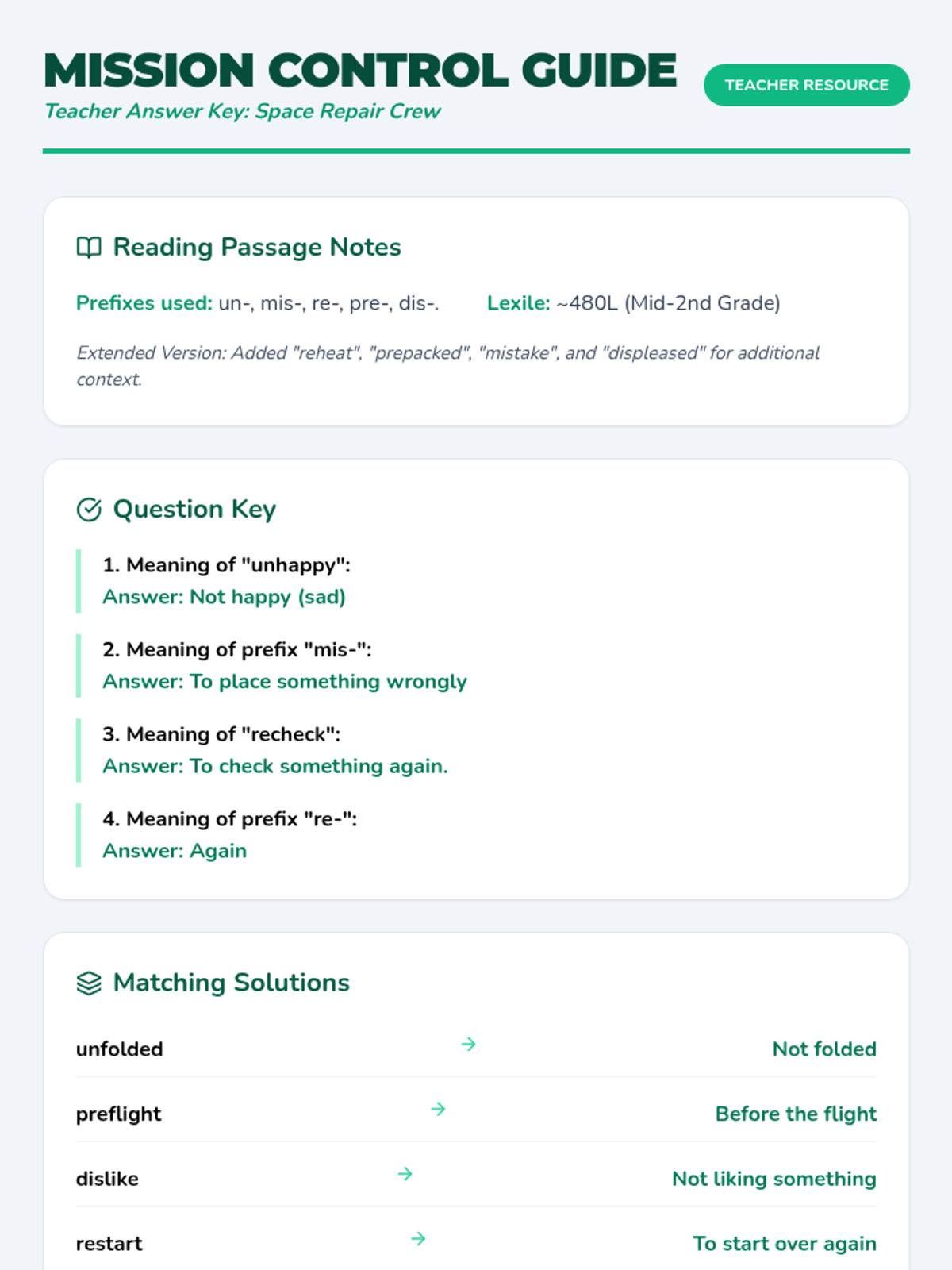
A teacher's answer key for the Space Repair Crew worksheet. Revised for better page breaks, clarified definitions, and added instructional strategies for educators.
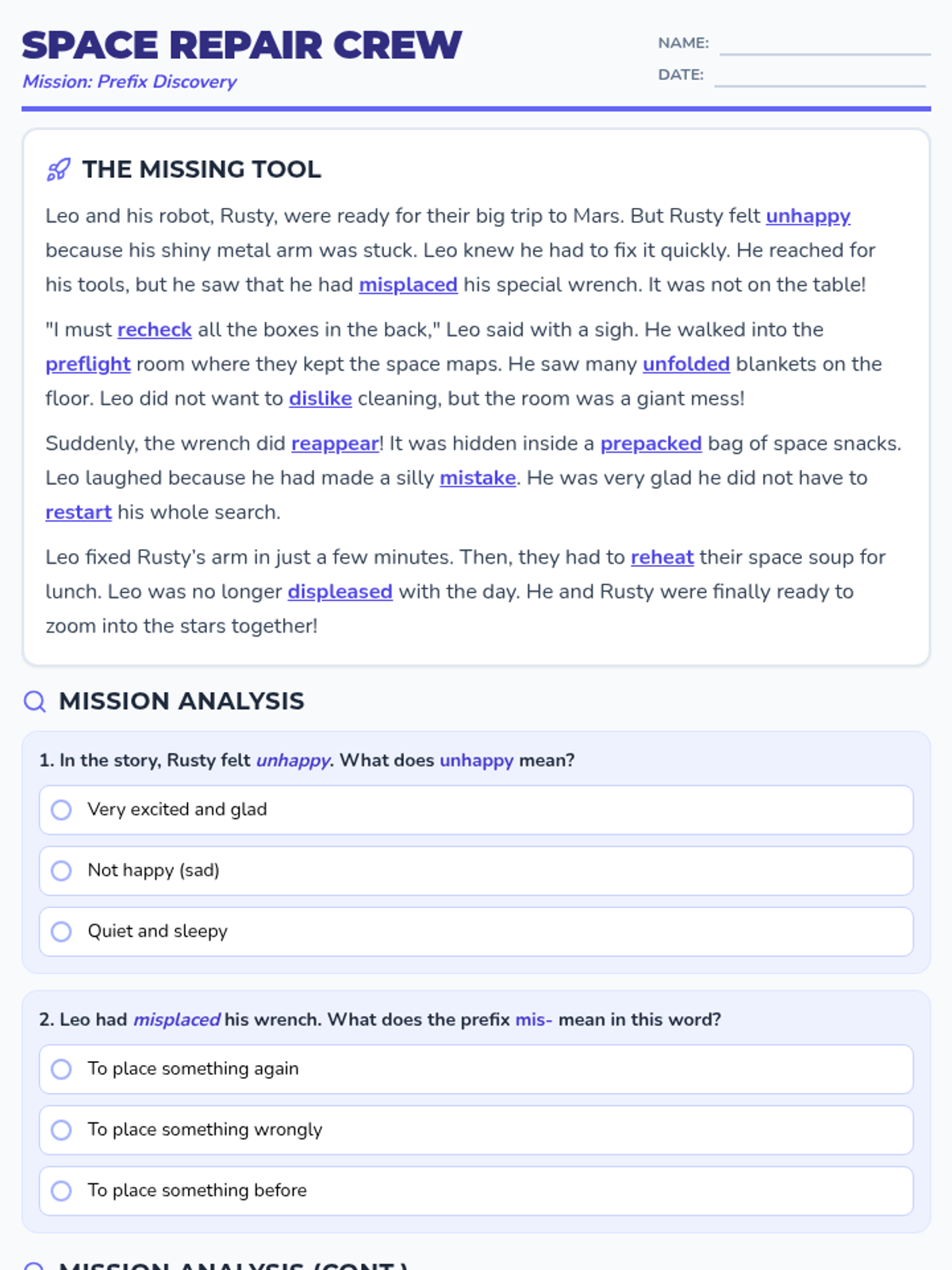
A space-themed reading passage for 2nd graders featuring common prefixes (un-, re-, dis-, pre-, mis-) with context-based comprehension questions and a matching activity. Consolidated to 2 pages with improved legibility for student work.
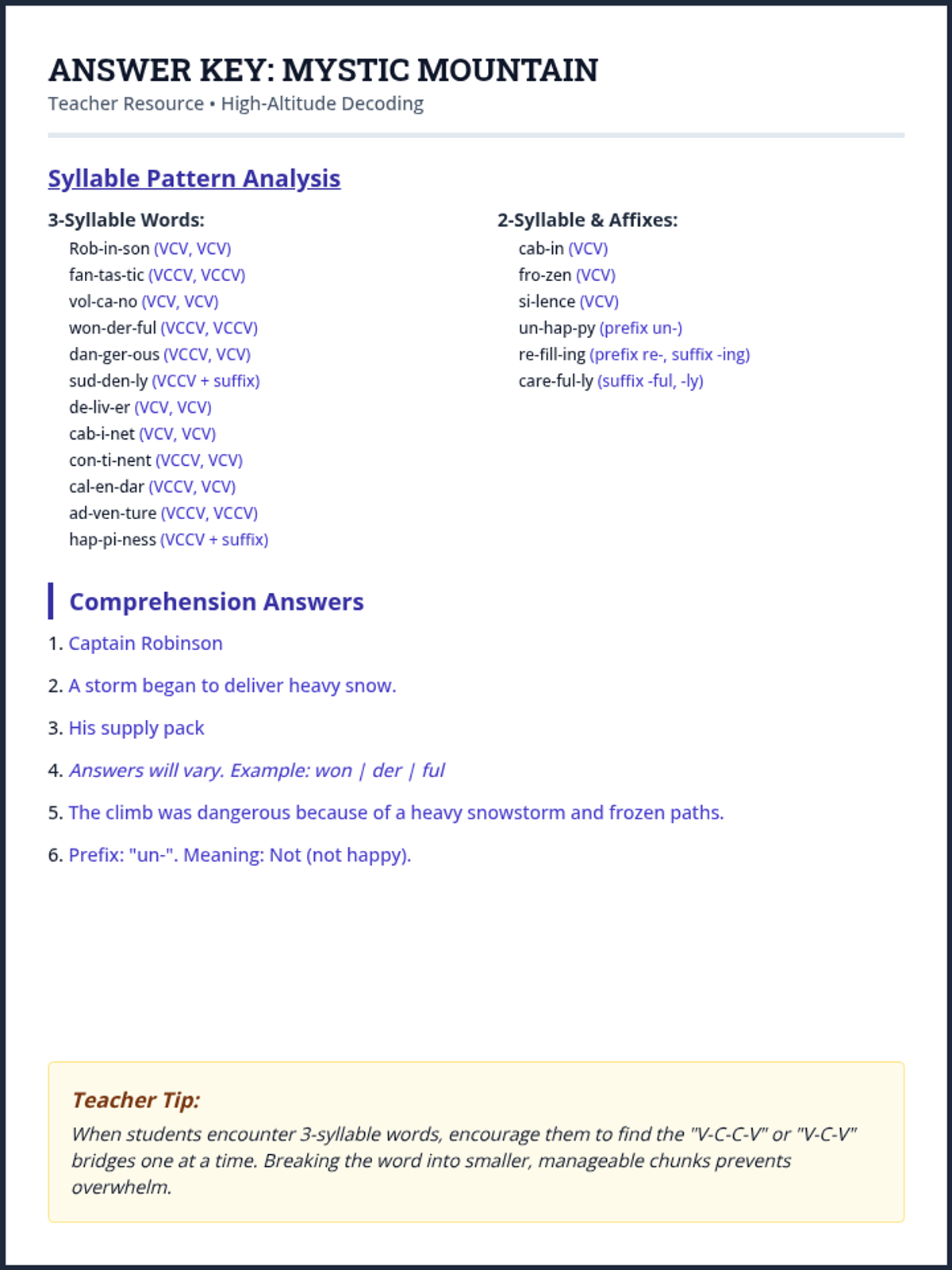
An answer key for the Mystic Mountain Worksheet, featuring detailed syllable analysis for 3-syllable words and comprehension answers. Optimized for layout and accuracy.
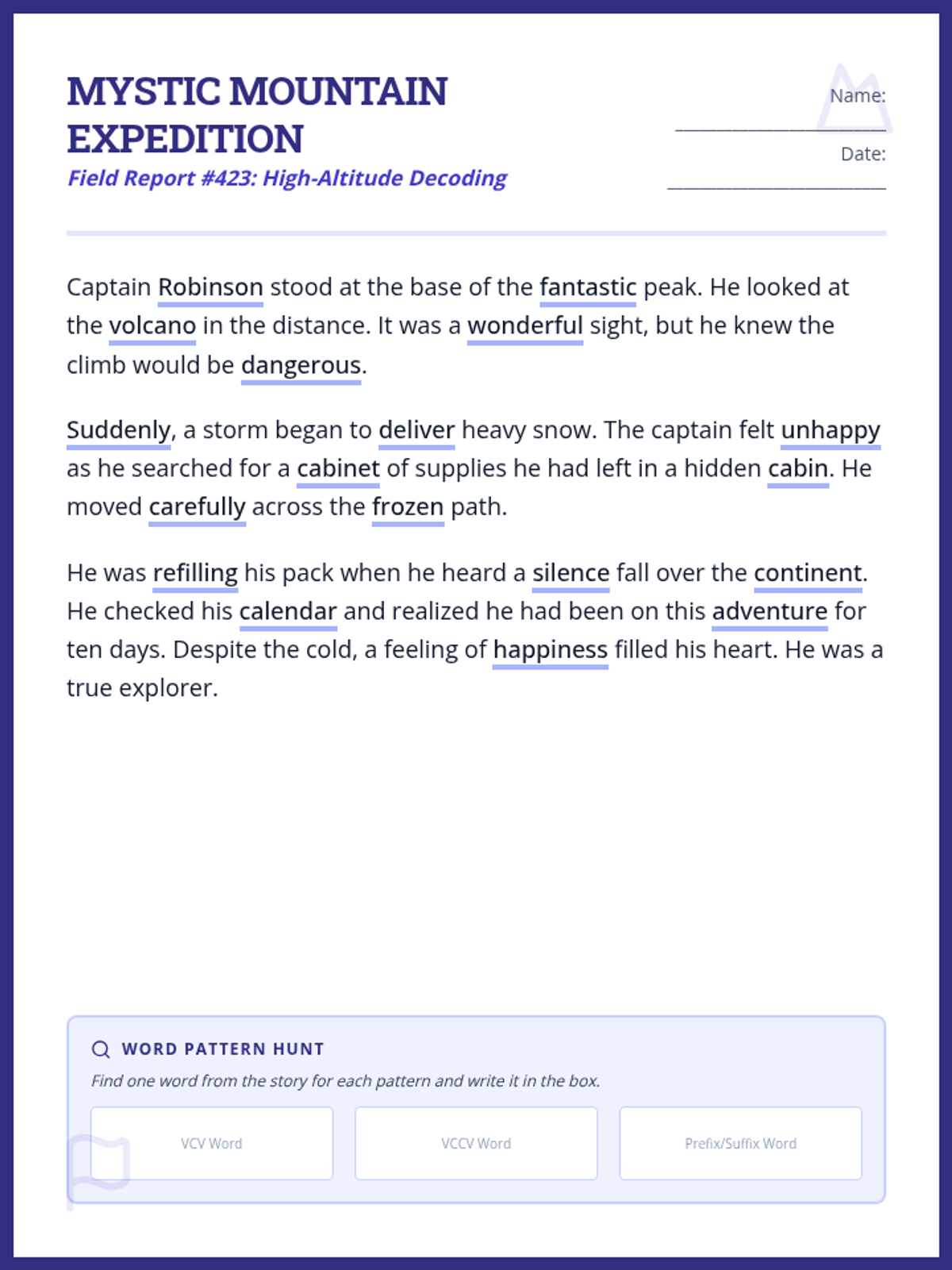
A two-page reading passage and comprehension worksheet focused on 2 and 3-syllable words (VCV, VCCV, and affixes) with a mountain expedition theme. Includes a syllable pattern hunt.
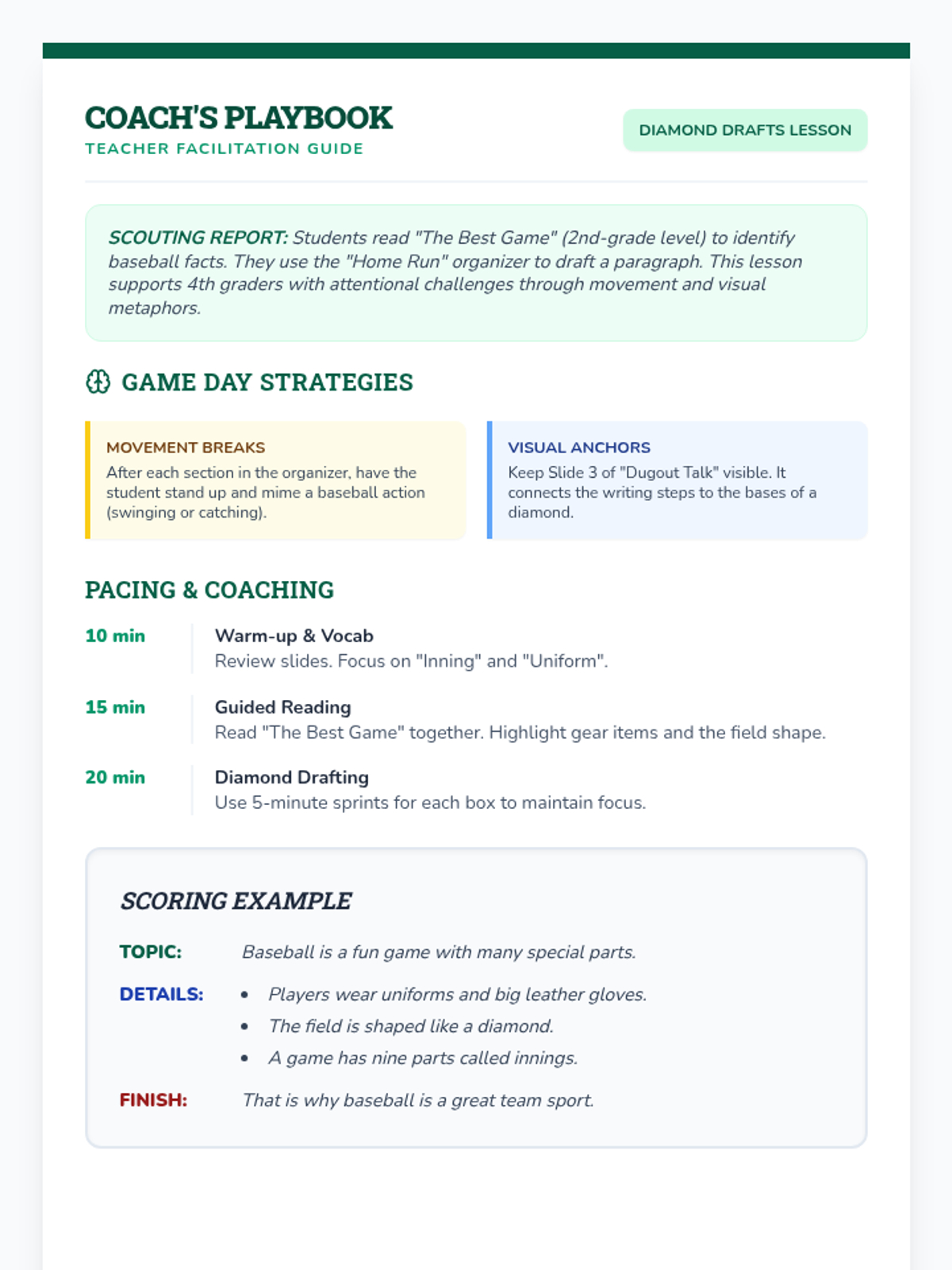
Teacher-facing facilitation guide for the Diamond Drafts lesson. Includes ADHD-specific strategies, a suggested pacing guide, and an exemplar answer key for the paragraph organizer. Revised for improved layout and additional instructional detail.
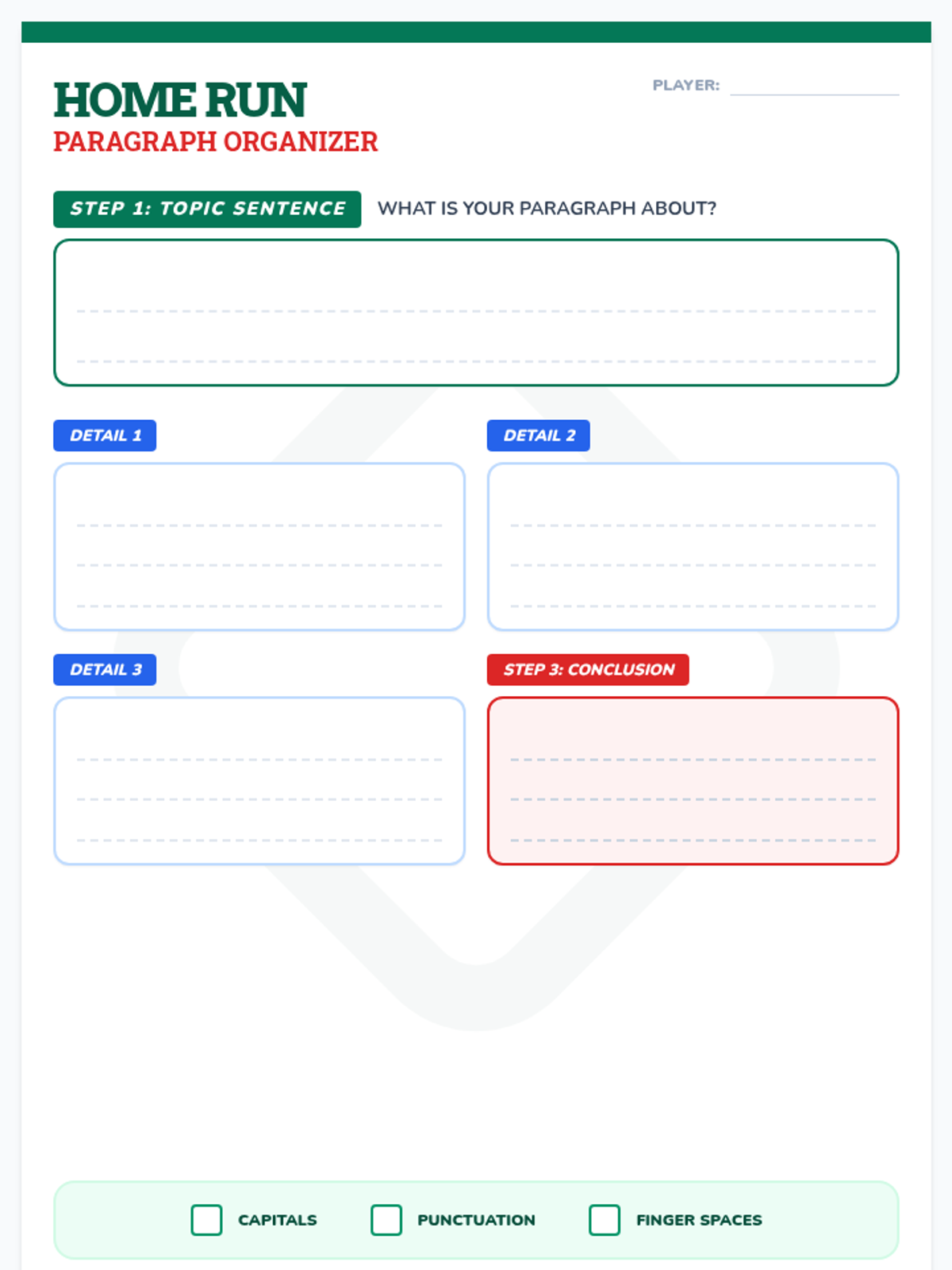
A structured writing graphic organizer that uses a baseball diamond metaphor to help students organize a paragraph with a topic sentence, three details, and a conclusion. Features a grid layout for single-page printing and dashed handwriting lines.
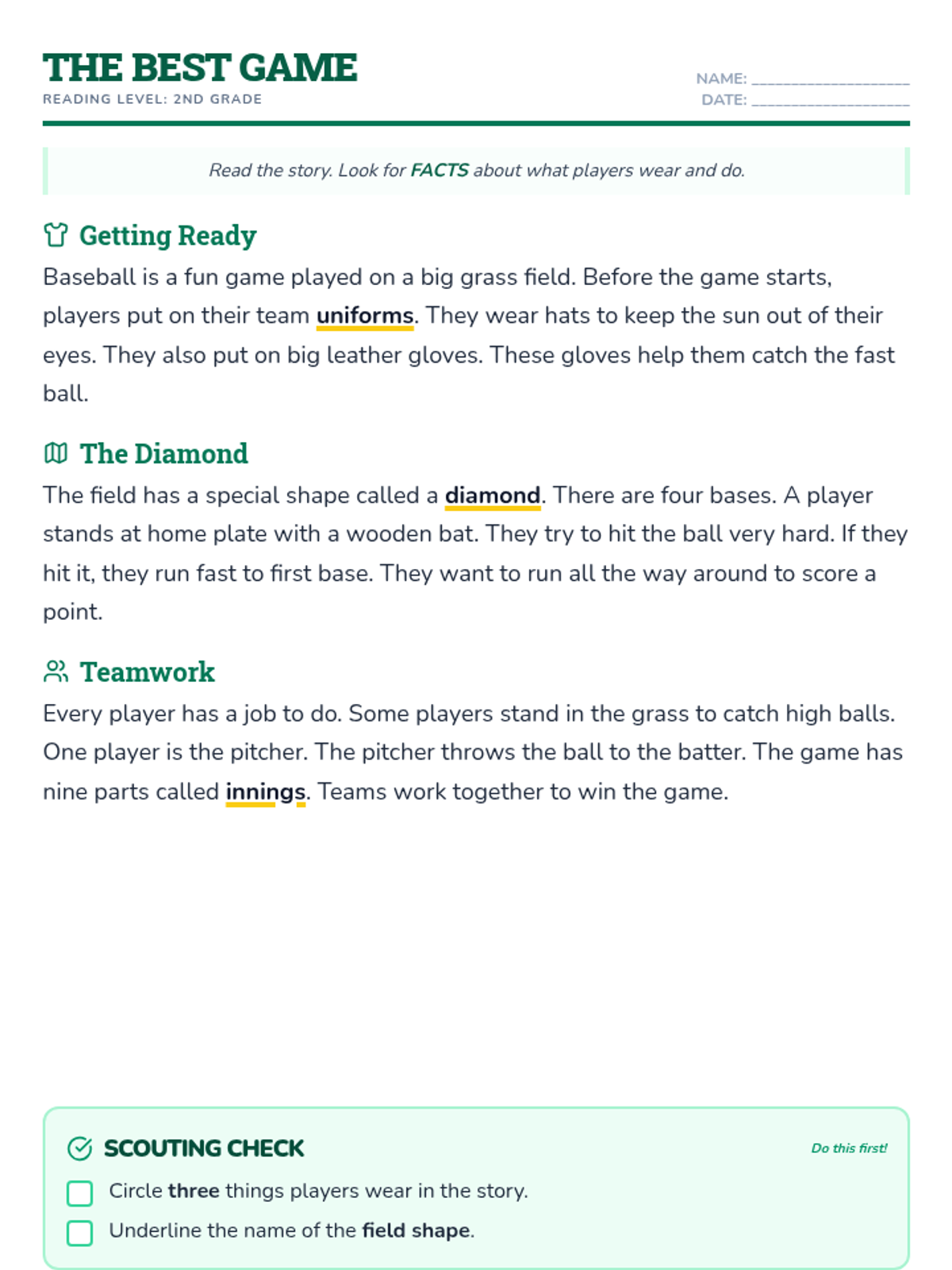
A high-interest reading passage about baseball, leveled for a 2nd-grade reader. Features large font, clear headings, and visual cues to support focus. Spacing adjusted for single-page printing.