Lenny LearningLenny
Create
Explore
Workspace
LoginSign up
MathEnglish Language ArtsScience & EngineeringSocial StudiesGlobal LanguagesHealth & Physical EducationSpecial EducationCounseling & Life SkillsArts & CreativityESL
Lenny LearningLenny
Lenny Learning
About
Training
Pricing
Support
Contact
© 2026 Lenny Learning Inc.

Writing

SequencesLessonsMaterialsVideos
  1. English Language Arts

Writing

SequencesLessonsMaterialsVideos

Structural elements including thesis statements, topic sentences, and cohesive linking words across persuasive and expository genres. Strengthens clarity through active voice, descriptive detail, and research-backed arguments while refining work through targeted editing and revision.

English Language ArtsPhonics & Reading FoundationsLetter IdentificationLearn Letters A-ZLowercase and Uppercase LettersConsonants and VowelsLetter-Sound AssociationsLetter-Sound Associations: LowercaseLetter-Sound Associations: UppercaseBeginning and Ending SoundsRhymingBlending And SegmentingShort VowelsShort Vowel SoundsConsonant BlendsConsonant DigraphsBlends, Digraphs, and TrigraphsDigraphs, Blends, and Silent LettersLong Vowel SoundsLong Vowel PatternsShort and Long VowelsShort and Long Vowel PatternsSilent EVowel SoundsVowel TeamsR-Controlled VowelsDiphthongs: Oi, Oy, Ou, OwVariant VowelsVariant, Diphthong, And R Vowel PatternsSoft G And CSight WordsIrregular WordsWord RecognitionSyllablesSyllable TypesTwo-Syllable WordsMultisyllabic WordsPhoneme ManipulationDecodable TextsVocabularyAction WordsQuestion WordsNouns and AdjectivesClassify WordsCompound WordsSynonyms and AntonymsHomophonesHomophones and HomonymsShades of MeaningContext CluesPrefixes and SuffixesGreek and Latin RootsAnalogiesIdioms and AdagesForeign Words and ExpressionsWord Choice and UsageReference SkillsReading ComprehensionRead-Along Literary TextsRead-Along Informational TextsReality vs. FictionStory ElementsCharacterSequenceMain IdeaCause And EffectCompare And ContrastReading StrategiesText StructureAuthor's PurposeAuthor's Purpose And ToneAuthor's PerspectivePoint Of ViewThemeInference And ThemeInference And AnalysisPoetry ElementsLiterary DevicesAnalyzing LiteratureAnalyzing Informational TextsComparing TextsAudience, Purpose, And ToneBusiness DocumentsNovel StudyNonfiction Book StudyGrammar & MechanicsSentencesNounsVerbsAdjectivesPronounsCapitalizationPunctuationContractionsConjunctionsPrepositionsArticlesAdjectives And AdverbsVerb TypesVerb TensePronouns And AntecedentsPronoun TypesSubject-Verb AgreementDirect And Indirect ObjectsSentences, Fragments, And Run-OnsPhrases And ClausesCommasSemicolons, Colons, And CommasDashes, Hyphens, And EllipsesSpellingAbbreviationsFormattingVerb Tense And MoodMisplaced ModifiersWritingDescriptive DetailsCreative WritingOpinion WritingTopic SentencesOrganizing WritingLinking WordsSentence VarietyIntroductions And ConclusionsPersuasive And Opinion WritingExpository WritingPersuasive StrategiesDeveloping And Supporting ArgumentsTopic Sentences And Thesis StatementsSummarizingResearch SkillsEditing And RevisingActive And Passive Voice=Writing Clearly And ConciselyDebate & Public SpeakingPublic Speaking BasicsPersuasive TechniquesClaims and EvidenceTypes of ArgumentsReasoning TypesLogical FallaciesTopic ResearchOrganizing EvidenceDebate Speech OrganizationAttacking and Defending ArgumentsClash and EngagementImpact CalculusQuestioning and Cross-ExaminationCritical ThinkingInformal LogicFormal LogicInductive Reasoning
Descriptive DetailsSensory language, specific adjectives, and vivid imagery used to create mental pictures. Develops 'show, not tell' techniques to enhance narrative and expository writing.
Creative WritingNarrative structure, character development, and sensory descriptions across fiction and poetry. Strengthens voice and figurative language through specific storytelling techniques.
Opinion WritingArgument structure, point-of-view development, and evidence-based reasoning. Develops skills in crafting clear claims, supporting opinions with logical details, and using persuasive transitions.
Organizing WritingLogical sequencing of ideas, paragraph construction, and the use of transition words to enhance clarity. Targets the development of strong introductions, conclusions, and cohesive narrative or argumentative structures.
Linking WordsConnective phrases for sequencing, contrasting, and adding information. Builds cohesive writing skills by illustrating logical relationships between clauses and paragraphs.
Introductions And ConclusionsHook strategies, thesis placement, and background information for effective essay openings. Guides students in synthesizing main points and providing final insights to wrap up arguments.
Persuasive And Opinion WritingTechniques for crafting compelling arguments, supporting claims with evidence, and addressing counterarguments. Develops rhetorical strategies to influence readers through logical reasoning and persuasive language.
Expository WritingEvidence-based essay construction, report writing, and objective explanation techniques. Develops skills in synthesizing information, logical organization, and precise vocabulary usage.
Research SkillsInformation literacy, source evaluation, and proper citation techniques for academic writing. Builds proficiency in database navigation, note-taking strategies, and synthesizing multiple perspectives to support original arguments.
Editing And RevisingMechanical accuracy in grammar, spelling, and punctuation alongside structural refinements for clarity and coherence. Targets sentence variety, tone, and logical flow across diverse writing formats.
Video
Easy as PIE: Identifying Author's Purpose in Nonfiction

Easy as PIE: Identifying Author's Purpose in Nonfiction

This engaging educational video introduces students to the concept of "Author's Purpose" using the popular "PIE" acronym (Persuade, Inform, Entertain). Set against a bakery backdrop, the host and her robot companion, Mia, guide viewers through analyzing nonfiction texts. They demonstrate how different texts about the same subject—pie—can have vastly different goals, helping students distinguish between opinions, facts, and narratives. The video breaks down the specific characteristics of each purpose, focusing on identifying the central idea, analyzing language choices (emotional vs. objective vs. descriptive), and recognizing text structures. It uses three distinct reading passages—"Pie for All" (persuasive), "Pie History" (informative), and "Pie Town" (entertaining)—as concrete examples for students to practice their analysis skills alongside the narrator. For educators, this video serves as an excellent introduction or review of nonfiction reading comprehension skills. It includes built-in pause points for students to read passages and complete accompanying activities (referenced as a PDF but easily replicable on paper). The content encourages critical thinking by asking students not just *what* a text says, but *why* the author wrote it, a crucial skill for media literacy and advanced reading comprehension.

Miacademy & MiaPrep Learning ChannelMiacademy & MiaPrep Learning Channel

10mins 30s

Video
How to Write a Powerful Persuasive Essay

How to Write a Powerful Persuasive Essay

This engaging instructional video guides students through the complete process of outlining and writing a persuasive essay. Using a fun narrative framework about choosing a new mascot for the fictional land of "Persuasia," the narrator demonstrates how to move from a general topic to a structured argument. The video contrasts persuasive writing with informative text, highlighting key differences like substituting a "claim" for a "central idea" and "arguments" for general body paragraphs. The content covers essential components of argumentative writing, including crafting strong, confident claims by removing weak language like "I think." It introduces students to the three modes of persuasion—Ethos, Logos, and Pathos—and demonstrates how to organize brainstormed notes into coherent thematic arguments. Additionally, the video defines and provides examples for advanced rhetorical devices, specifically rhetorical questions, anaphora, and tricolon, showing how these tools add power to writing. Ideal for upper elementary and middle school Language Arts classrooms, this video serves as both an introduction to persuasive structure and a deep dive into stylistic devices. It features interactive segments that ask viewers to revise claims, group research notes, and identify rhetorical devices in a text, making it a perfect anchor for a writer's workshop or a unit on opinion writing.

Miacademy & MiaPrep Learning ChannelMiacademy & MiaPrep Learning Channel

11mins 34s

Video
Strengthening Arguments by Addressing Opposing Viewpoints

Strengthening Arguments by Addressing Opposing Viewpoints

This video explores the rhetorical strategy of acknowledging and incorporating opposing viewpoints to strengthen argumentative writing. Using a martial arts analogy, the narrator explains that effective arguments do not simply "steamroll" opposition but rather engage with it constructively. The video outlines two primary applications for this technique: maintaining neutrality in journalistic reporting and fortifying persuasive arguments by anticipating and dismantling counter-claims. The video uses two distinct examples to illustrate these concepts. First, a humorous dispute over stolen cookies between fictional characters (Ms. Adeyemi and Mr. Dupont) demonstrates how to describe a conflict neutrally without injecting personal bias. Second, the historical mystery of the Lost Colony of Roanoke is used to show how addressing alternative theories (like disease or violence) and refuting them with evidence actually supports the author's main thesis that the colony's fate remains unknown. This resource is highly valuable for English Language Arts classrooms focusing on persuasive writing, debate, and media literacy. It provides a concrete framework (the "Block and Strike" method) for students to understand the function of counter-arguments and rebuttals. It also encourages critical reading by teaching students to be suspicious of authors who ignore opposing viewpoints entirely.

Khan AcademyKhan Academy

5mins 35s

Video
How to Read a Poem: Structure and Meaning

How to Read a Poem: Structure and Meaning

This educational video serves as an engaging introduction to poetry analysis, specifically focusing on how structure contributes to meaning. The narrator, David, welcomes viewers to "The Poem Zone" and breaks down the fundamental building blocks of poetry: lines, line breaks, stanzas, and rhyme. He defines poetry simply as "art made out of words" and explains that while poems play with sound and rhythm, they don't always have to rhyme. The visual style uses a blackboard aesthetic with handwritten text that appears in real-time to illustrate concepts. The core of the video features an original piece titled "Egg Poem," which the narrator reads and then dissects stanza by stanza. Through this close reading, the video demonstrates how a poem's structure can organize ideas and build an emotional arc. The narrator highlights how the poem uses a repeating structure ("Morning is...") to anchor each stanza while progressing from a calm morning to a chaotic one. For educators, this video is a powerful tool for bridging the gap between simply reading poetry and analyzing it. It explicitly teaches students to ask how lines and stanzas build meaning, rather than just identifying them as structural elements. The video introduces the concept of extended metaphor in a highly accessible way by connecting the cooking terms "easy," "medium," and "hard" to both the state of an egg and the speaker's emotional state, providing a clear model for students to use in their own literary analysis.

Khan AcademyKhan Academy

4mins 6s

Video
Using Adjectives to Create Vivid Mental Images

Using Adjectives to Create Vivid Mental Images

This educational video provides a clear and engaging introduction to adjectives and their role in grammar and writing. It defines adjectives as words that "modify" or change nouns, explaining this concept through visual demonstrations of how descriptive language alters mental images. The narrator uses a step-by-step approach, starting with a basic sentence ("The dog ran") and showing how adding different adjectives (e.g., "brown," "sneaky," "thirsty") completely transforms the reader's visualization of the event.

GrammarSongs by MelissaGrammarSongs by Melissa

3mins 42s

Video
How Intensifiers and Adverbs of Degree Work

How Intensifiers and Adverbs of Degree Work

This animated grammar lesson explores the function and usage of intensifiers and adverbs of degree. The narrator explains how these specific types of adverbs modify adjectives to express intensity or extent, distinguishing them from simple comparative modifiers. Using clear handwritten text and simple illustrations, the video demonstrates how adding words like "really," "very," and "extremely" can double down on a description. The video uses engaging and humorous examples, such as the "Incredibly Deadly Viper" from Lemony Snicket's *A Series of Unfortunate Events*, to visualize abstract grammatical concepts. By altering the viper's description to "somewhat deadly" and "barely deadly"—and adjusting the drawing's teeth accordingly—the narrator concretely shows how adverbs of degree shift meaning along a spectrum. Teachers can use this video to help students move beyond basic descriptions in their writing. It provides a accessible framework for understanding how language can be precise regarding "how much" or to what extent something is true, moving from binary descriptions to a nuanced scale of meaning using modifiers.

Khan AcademyKhan Academy

5mins 14s

Video
Writing Literary Journalism: Balancing Creativity and Truth

Writing Literary Journalism: Balancing Creativity and Truth

This engaging video lesson introduces students to the genre of literary journalism, distinguishing it from traditional objective reporting. Through a humorous framing device parodying a reality TV competition called "Write on the Money," the host explores how writers can blend factual reporting with narrative techniques like detailed descriptions, character development, and subjective perspectives to create compelling non-fiction. The content uses Jon Krakauer's "Into the Wild" as a primary text to demonstrate these techniques in action. A significant portion of the video is dedicated to the ethics of journalism, specifically the vital importance of accuracy, fact-checking, and transparency. It presents clear scenarios illustrating the real-world consequences of inaccurate reporting for business owners, the public, and the writer's own credibility. Ideal for English Language Arts and creative writing classrooms, this video provides a roadmap for students to write their own literary journalism. It offers practical strategies for research and interviewing while emphasizing that creativity must never come at the expense of the truth. The lesson concludes with a revised writing example that successfully balances narrative flair with factual integrity.

Miacademy & MiaPrep Learning ChannelMiacademy & MiaPrep Learning Channel

10mins 23s

Video
How to Use Descriptive Language to Bring Stories to Life

How to Use Descriptive Language to Bring Stories to Life

This engaging educational video teaches students how to elevate their writing using descriptive language. Set within a gamified narrative, the host and her robot companion arrive at 'Palette Plains,' a world that has lost its color and turned gray. To restore the vibrancy of the land and earn a 'Crystal Quill fragment,' the viewer must transform a dull, factual paragraph into a vivid, descriptive scene using adjectives, adverbs, and sensory details. The video breaks down the writing process into actionable strategies. It first reviews the roles of adjectives and adverbs before introducing two key techniques: 'Sensory Language' (appealing to the five senses) and 'Emotional Language' (establishing mood and feeling). Through clear examples—such as comparing a boring description of a beach to a vivid one—the narrator demonstrates how specific word choices help readers visualize a setting. The video also models close reading by analyzing a text to find descriptive elements. Ideally suited for upper elementary and middle school English Language Arts classrooms, this resource combines direct instruction with interactive practice. It includes specific pause points where students are prompted to complete tasks in a companion PDF (or on paper), such as matching definitions, analyzing a text, planning sensory details, and rewriting a paragraph. Teachers can use this video to introduce a descriptive writing unit, reinforce the concept of 'showing not telling,' or as a self-paced revision workshop.

Miacademy & MiaPrep Learning ChannelMiacademy & MiaPrep Learning Channel

10mins 4s

Video
Mastering Figurative Language: Similes, Metaphors, and More

Mastering Figurative Language: Similes, Metaphors, and More

This engaging educational video provides a clear and humorous introduction to figurative language, distinguishing it from literal speech. Through the use of hand-drawn animations and dynamic text, the narrator breaks down five essential figures of speech: simile, metaphor, personification, hyperbole, and allusion. The video explains that figurative language involves saying one thing but meaning another to express truths more vividly, using the example of an "eagle-eyed editor" to demonstrate the concept. The content is structured systematically, dedicating a segment to each literary device. It defines similes as comparisons using "like" or "as" (e.g., "hungry as a wolf"), contrasts them with metaphors which make direct comparisons (e.g., "love is a rose"), and explores how personification attributes human traits to inanimate objects. It also covers hyperbole as purposeful exaggeration for effect and explains allusion as a reference to shared cultural knowledge, citing examples like Superman and Gollum. For educators, this video serves as an excellent primer or review tool for English Language Arts units on literary devices or creative writing. It provides accessible definitions and memorable visual examples that help students grasp abstract linguistic concepts. The humor and pacing make it suitable for upper elementary and middle school students, helping them move beyond literal interpretations to understand nuance, imagery, and emphasis in writing.

Khan AcademyKhan Academy

5mins 58s

Video
How to Create Compelling Characters for Your Novel

How to Create Compelling Characters for Your Novel

In this engaging creative writing lesson, host Justin introduces aspiring writers to the art of character creation, moving beyond two-dimensional caricatures to develop complex, believable figures. Through a humorous skit involving his own "perfect" alter-ego, Julius, Justin demonstrates the pitfalls of writing flat characters—such as the generic villain "Ante Agoniste" and the sycophantic robot sidekick "Mila"—and explains why characters need flaws, fears, and motivations to resonate with readers. The video explores two primary tools for character development: Character Archetypes and the Character Interview. Students learn how archetypes (like the Reluctant Hero or Wise Mentor) serve as useful starting points that can be expanded into unique personalities. The lesson then models an "interview" process where writers ask their characters deep questions to uncover their hidden depths, demonstrating how this technique transforms a superficial idea into a fully realized persona. Ideal for English Language Arts and creative writing units, this resource provides concrete strategies for planning a novel. It covers essential terminology like protagonist, antagonist, and archetype while offering practical activities like creating Character Sheets. Teachers can use this video to guide students through the pre-writing phase of narrative assignments, helping them organize their ideas and ensure their stories are driven by compelling human experiences.

Miacademy & MiaPrep Learning ChannelMiacademy & MiaPrep Learning Channel

9mins 51s

Video
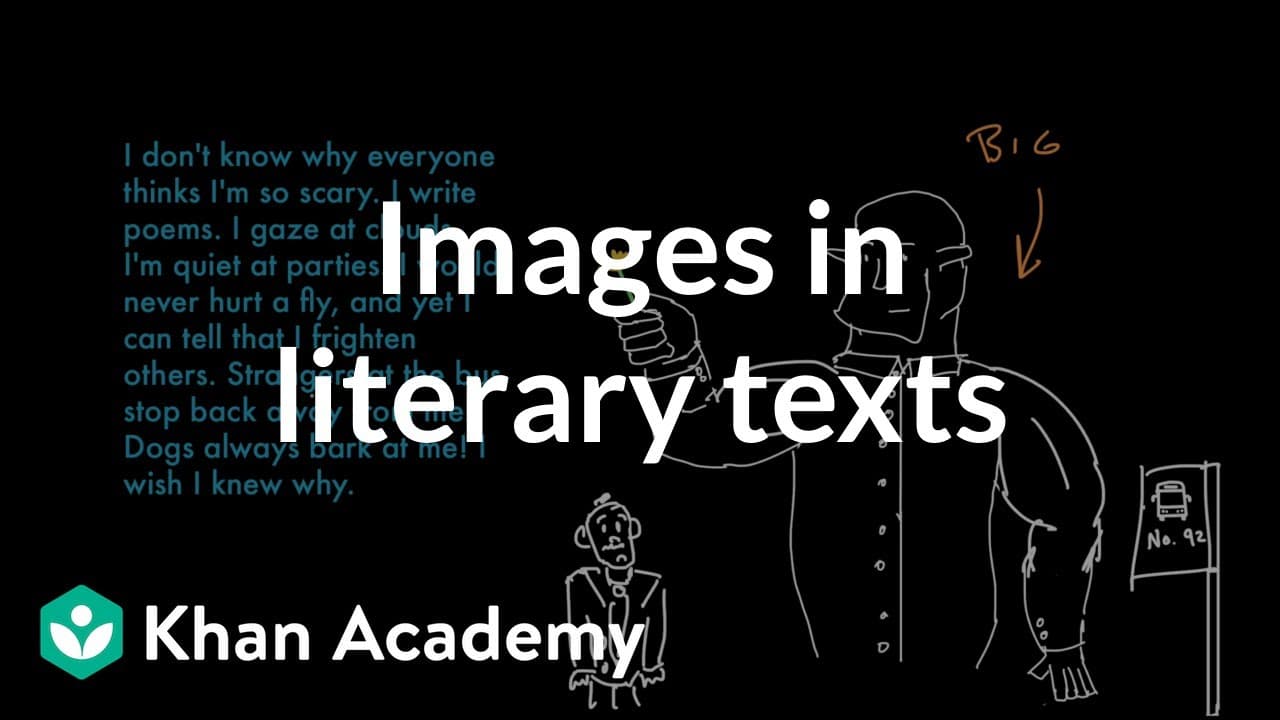
How Images Change the Meaning of Text

How Images Change the Meaning of Text

This engaging educational video explores the critical relationship between text and illustrations in reading comprehension. Using a lively narration and simple line drawings, the video introduces a two-step strategy for analyzing images: asking what new information the image provides that the text does not, and determining how that information changes the reader's understanding. The narrator uses a "cherries and chocolate" analogy to describe the powerful combination of words and pictures. The video centers on a poem about a character who is gentle but feared by others. The narrator reads the poem first without visuals, then reveals a drawing of a giant man holding a flower, demonstrating how the image solves the mystery of why people are scared. To further illustrate the point, the narrator swaps in alternative drawings—a man with antlers and a man with "stink lines"—to show how changing the visual context completely alters the narrative even when the words remain exactly the same. This resource is highly valuable for elementary ELA classrooms focusing on visual literacy and inference. It moves students beyond passively looking at pictures to actively interrogating them for meaning. The clear, explicit questions provided give students a repeatable framework they can apply to picture books, graphic novels, and textbooks to deepen their comprehension.

Khan AcademyKhan Academy

3mins 17s

Video
Mastering Intentional Word Choice in Creative Writing

Mastering Intentional Word Choice in Creative Writing

This engaging video lesson explores the power of intentional word choice in creative writing, demonstrating how specific vocabulary transforms flat descriptions into vivid, immersive experiences for readers. Through a "writer's escape room" narrative, the host guides students through the concepts of denotation and connotation, illustrating how words with similar definitions can evoke vastly different emotional responses. The lesson uses practical examples, including excerpts from Kenneth Grahame's *The Wind in the Willows*, to show how authors use language to establish mood, setting, and character traits. The video breaks down three specific strategies for selecting the perfect words: visualizing the scene to brainstorm descriptors, choosing words that emphasize key character or setting traits, and considering the intensity of synonyms to match the intended atmosphere. It provides concrete examples for each strategy, such as shifting from "old" to "dilapidated" to "derelict" to increase intensity, or distinguishing between "childlike" and "childish" to understand positive versus negative connotations. Ideal for English Language Arts classrooms, this resource helps move students beyond basic vocabulary toward more sophisticated writing techniques. It encourages learners to treat writing as an art form where every word matters, providing them with actionable tools to revise their own drafts. The video concludes with a modeling exercise where the narrator applies these strategies to write a scene, allowing students to see the immediate impact of intentional word choice on narrative quality.

Miacademy & MiaPrep Learning ChannelMiacademy & MiaPrep Learning Channel

10mins 32s

Video
Writing for Film: How to Adapt Stage Plays into Screenplays

Writing for Film: How to Adapt Stage Plays into Screenplays

This engaging educational video introduces students to the art of screenwriting by contrasting it with playwriting. Framed as an internship assignment for a film festival, the video guides viewers through the process of saving a film production that has mistakenly used a stage play script instead of a proper screenplay. It defines key differences between the two formats, specifically focusing on the necessity of detailed action lines in film to guide the complex pre-production process.

Miacademy & MiaPrep Learning ChannelMiacademy & MiaPrep Learning Channel

8mins 59s

Video
Exploring Storytelling Tools in Comics and Graphic Novels

Exploring Storytelling Tools in Comics and Graphic Novels

This engaging educational video introduces students to the unique storytelling language of comic books and graphic novels. Set in the fictional city of "Mangatropolis," the host, Caroline, and her robot companion, Mia, guide viewers through the fundamental elements that make comics a distinct medium. The narrative framework involves helping Mia regain her comic-making skills to restore a lost key to the city, adding a playful quest element to the lesson. The video breaks down complex concepts of visual literacy into three main categories: Iconography (how simple images represent complex ideas), Structure (the function of panels and gutters to manipulate time and pacing), and Content Tools (motion lines, sound effects/onomatopoeia, and speech bubbles). Specific examples demonstrate how altering panel width changes the perception of time and how the "gutter" requires the reader's mind to bridge gaps between static images to create motion and narrative. For educators, this resource serves as an excellent foundation for units on graphic novels, narrative writing, or visual arts. It moves beyond simple appreciation to analysis, teaching students how to critically "read" images and layout choices. The video provides clear definitions and interactive pause-points where students can practice drawing and analyzing, making it a perfect launchpad for creative projects where students write and illustrate their own comic strips.

Miacademy & MiaPrep Learning ChannelMiacademy & MiaPrep Learning Channel

10mins 59s

Video
Exploring Adventure Fiction and Pacing Techniques

Exploring Adventure Fiction and Pacing Techniques

This educational video explores the genre of adventure fiction, guiding viewers through its defining characteristics and the literary techniques used to create suspense. Set within a meta-narrative of exploring an "ancient temple of adventure fiction," the host and an animated robot character named Mia encounter tropes of the genre firsthand while teaching concepts. The video breaks down the essential elements of adventure stories, including courageous protagonists, dangerous settings, and action-packed plots, before diving deep into the specific craft of "pacing." The second half of the video provides a focused lesson on literary pacing—the speed and rhythm at which a story unfolds. Using the analogy of riding a bike, the narrator explains how authors manipulate time to build tension. Three specific techniques are analyzed in detail: structure (using short sentences and fragments), dialogue (rapid back-and-forth exchange), and information control (foreshadowing and cliffhangers). The video uses specific textual examples to demonstrate how these techniques look on the page, helping students visualize the mechanics of writing. Ideal for English Language Arts classrooms, this resource combines literary analysis with creative writing concepts. It offers clear definitions, visual examples of text annotation, and guided practice opportunities where students are asked to identify techniques in provided excerpts. Teachers can use this video to introduce genre units, teach narrative structure, or run a creative writing workshop focused on building suspense and writing action scenes.

Miacademy & MiaPrep Learning ChannelMiacademy & MiaPrep Learning Channel

11mins 55s

Video
How to Write Powerful Starts and Satisfying Endings

How to Write Powerful Starts and Satisfying Endings

This engaging creative writing lesson guides aspiring writers through the critical process of crafting opening and closing scenes for a novel. Hosted by an energetic presenter in a library setting, the video breaks down the specific goals of these pivotal moments: grabbing the reader's investment at the start and rewarding that investment at the end. It distinguishes between the plot events themselves and the "craft" of how those events are presented to the audience. The content introduces specific literary techniques and terminology for structuring narratives. For beginnings, it covers strategies like "In Medias Res" (starting in the middle of action), setting-focused openings, and character-focused introductions. For endings, it explores the use of epilogues, ambiguous endings that leave room for interpretation, and "callbacks" that reference earlier story details. Each concept is illustrated with clear definitions and relatable examples. Ideal for middle and high school English Language Arts classrooms, this video serves as a practical workshop tool. It includes built-in pause points that prompt students to reflect on their own reading experiences and apply the concepts to their own writing projects. Teachers can use this resource to introduce narrative structure units, support NaNoWriMo projects, or help students revise their creative writing pieces for greater impact.

Miacademy & MiaPrep Learning ChannelMiacademy & MiaPrep Learning Channel

9mins 58s

Video
Mastering the Shakespearean Sonnet: Structure and Strategy

Mastering the Shakespearean Sonnet: Structure and Strategy

In this engaging instructional video, the narrator, Justin, accepts a "StanzaGram" challenge to write a vivid description using the strict constraints of a Shakespearean sonnet. The video breaks down the technical requirements of this poetic form, including the specific rhyme scheme, stanza structure (quatrains and couplets), and the rhythmic pattern of iambic pentameter. It demystifies these complex literary concepts by treating them as a creative puzzle rather than a rigid chore. Key themes include the relationship between structure and creativity, the mechanics of poetry, and the writing process. The video explores how limitations can actually spur innovation, forcing writers to find more precise and musical language. It covers essential terminology such as iambic pentameter, volta, quatrain, and couplet, while using Shakespeare's Sonnet 18 as a primary text for analysis. For educators, this video serves as both an introduction to Shakespearean poetry and a practical writing workshop. It moves beyond passive analysis by modeling the active struggle of writing—demonstrating strategies like working out of order, using inverted syntax, and brainstorming rhymes. It is an excellent resource for English Language Arts classrooms to bridge the gap between reading classic poetry and writing original verse.

Miacademy & MiaPrep Learning ChannelMiacademy & MiaPrep Learning Channel

11mins 14s

Video
How to Plan and Draft a Creative Short Story

How to Plan and Draft a Creative Short Story

This educational video guides students through the crucial planning and drafting phase of creative writing, specifically focusing on short stories. The host, Justin, frames the lesson as a "Storysmith Trial" challenge, engaging students to apply previously learned writing techniques to a new project. The video bridges the gap between theoretical knowledge of literary devices and practical application by encouraging students to select specific techniques—such as dialogue, imagery, or characterization—to prioritize in their drafts.

Miacademy & MiaPrep Learning ChannelMiacademy & MiaPrep Learning Channel

8mins 47s

Video
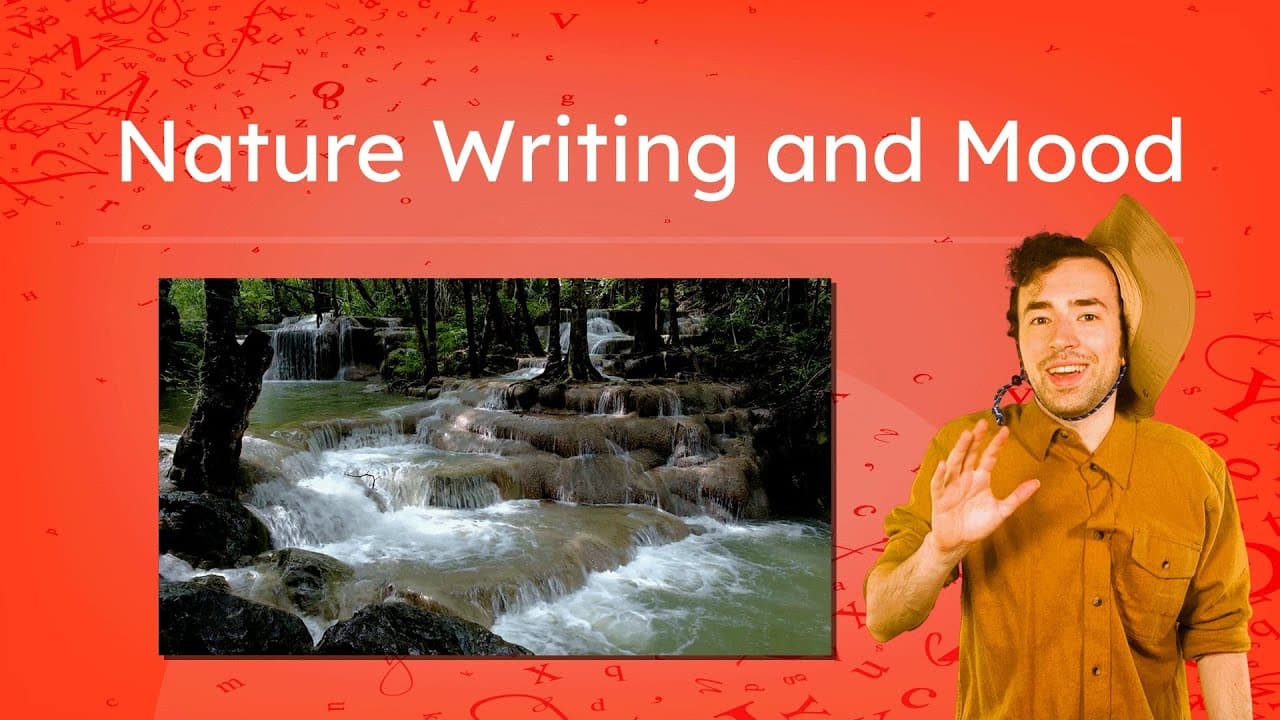
Mastering Mood and Imagery in Nature Writing

Mastering Mood and Imagery in Nature Writing

This educational video uses a fun, reality-show thematic frame called "Write on the Money" to teach students about the genre of nature writing. Hosted by a character named Justin who is "stranded" on a desert island, the lesson defines nature writing as creative nonfiction that explores the natural world. It specifically focuses on two literary devices essential to the genre: imagery (sensory language) and mood (emotional atmosphere). The video uses an excerpt from Robin Wall Kimmerer's *Braiding Sweetgrass* as a mentor text to demonstrate how professional writers use these tools to connect with readers. The core themes explored are the definitions and applications of imagery and mood. The video breaks down how writers incorporate environmental themes and personal reflections to give their writing depth. It explains how specific sensory details—sight, sound, touch—build an emotional atmosphere (mood) for the reader, comparing it to setting the vibe for a party. The video distinguishes between simply describing a scene and evoking a specific feeling, using examples of how the same setting can feel "doomed" or "serene" depending on the language used. For educators, this video serves as a complete, self-contained mini-lesson on descriptive writing. It includes built-in pause points with specific writing prompts, allowing students to practice the concepts immediately. It provides a visual stimulus (high-quality footage of a waterfall) for students to write about, ensuring they have immediate subject matter to apply the lesson's concepts. It is an excellent resource for English Language Arts units on creative writing, nonfiction analysis, or descriptive essays.

Miacademy & MiaPrep Learning ChannelMiacademy & MiaPrep Learning Channel

10mins 22s

Video
Creating Immersive Novel Settings: Research and Worldbuilding

Creating Immersive Novel Settings: Research and Worldbuilding

This engaging video lesson guides students through the process of creating immersive and coherent settings for creative writing projects, specifically novels. Using a humorous skit between the narrator and his skeptical 'clone,' the video critiques common pitfalls in setting design—such as anachronisms and vague descriptions—before introducing three core principles of strong settings: depth, coherence, and relevance. The content breaks down two practical techniques for developing settings: Research and Worldbuilding. It distinguishes between factual research (learning information) and observational research (sensory details), encouraging students to use digital tools like virtual tours if they cannot visit a location. It also introduces the 'Worldbuilding Pyramid,' a framework for constructing fictional elements from large-scale rules (like geography or technology) down to small-scale details (like specific rooms or local customs). Ideal for English Language Arts and creative writing classes, this video serves as both an instructional guide and a workshop starter. It includes built-in pause points for students to brainstorm, reflect on their own reading experiences, and begin drafting their setting ideas. The video helps transition students from vague ideas (e.g., "future stuff") to specific, plot-relevant environments that enhance their storytelling.

Miacademy & MiaPrep Learning ChannelMiacademy & MiaPrep Learning Channel

10mins 27s

Video
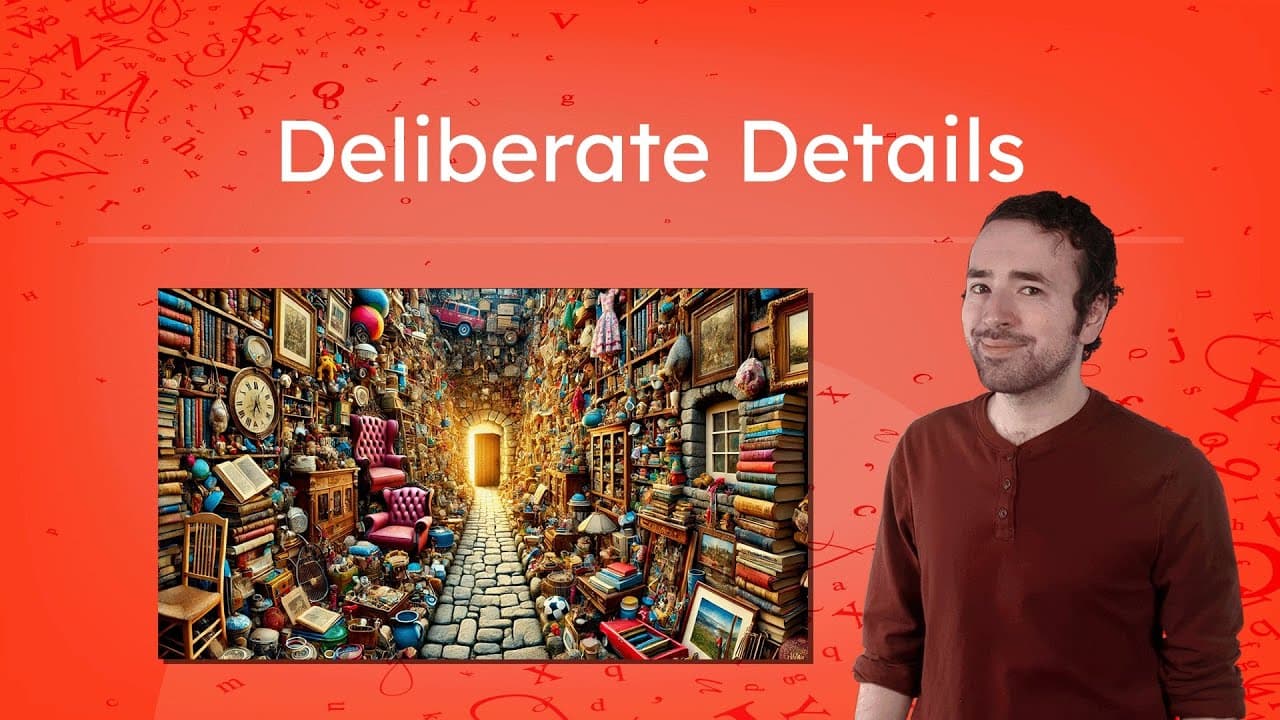
Creating Deliberate Details in Fiction

Creating Deliberate Details in Fiction

This video serves as a comprehensive guide to mastering the art of "deliberate details" in creative writing. Using a humorous opening metaphor of a cluttered room, the host demonstrates how including too many irrelevant details can overwhelm a reader, while choosing the right details brings a scene to life. The video contrasts examples of sparse, cluttered, and balanced writing to illustrate how sensory, contextual, and characterizing details improve narrative flow and immersion. Key themes include the distinction between relevant and irrelevant details, the use of figurative language for creativity, and the power of symbolic details to convey deeper meaning without explicit explanation. The lesson uses Ray Bradbury's *Fahrenheit 451* as a mentor text, analyzing how professional authors select specific details to establish mood, world-building, and character traits simultaneously. Ideally suited for English Language Arts and creative writing classes, this video provides actionable strategies for revision and drafting. It moves students beyond simple description ("showing not telling") to intentional writing where every word serves a purpose. Teachers can use the built-in pause points for analyzing mentor texts and the final guided practice to help students revise their own narrative drafts.

Miacademy & MiaPrep Learning ChannelMiacademy & MiaPrep Learning Channel

11mins 18s

Video
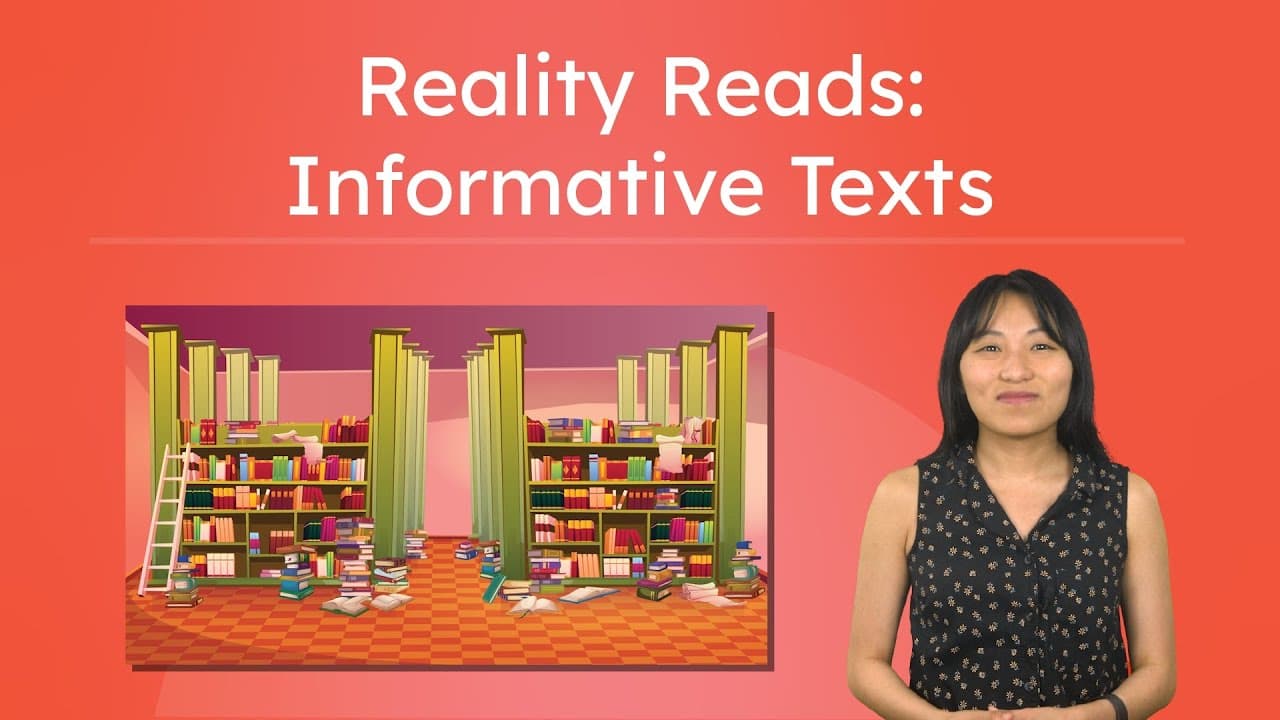
Exploring Informative Text Types: Descriptive, Comparative, and Procedural

Exploring Informative Text Types: Descriptive, Comparative, and Procedural

In this engaging Language Arts lesson set in the fictional village of "Informatown," students learn how to analyze and categorize different types of informative non-fiction texts. The video begins by reviewing the general characteristics of informative writing—logical structure, objective central ideas, and precise language—before diving into three specific text structures: Descriptive, Comparative, and Procedural. Through the narrative of organizing a messy library, the host guides viewers in examining three distinct sample texts about Nigerian culture, the Dominican Republic, and Lakota Dreamcatchers. Students learn to identify specific structural clues and transition words that distinguish one text type from another, such as looking for sensory details in descriptive texts, contrasting words in comparative texts, and chronological steps in procedural texts. This video is highly valuable for upper elementary and middle school classrooms as it moves beyond simple reading comprehension to structural analysis. It provides concrete strategies for recognizing how authors organize information to achieve specific purposes. Teachers can use this video to introduce a unit on non-fiction text structures, support lessons on transition words, or as a model for students' own informative writing projects.

Miacademy & MiaPrep Learning ChannelMiacademy & MiaPrep Learning Channel

8mins 48s

Video
How to Plan a Short Story by Focusing on One Element

How to Plan a Short Story by Focusing on One Element

In this creative writing lesson, Justin guides students through the pre-writing phase of crafting a short story, introducing the concept of a "narrative focus" to overcome the intimidation of a blank page. The video emphasizes that because short stories are brief (typically 1,000 to 8,000 words), they require a unified approach where one element drives the others. Justin demonstrates how to choose one primary narrative element—character, setting, conflict, or plot—to serve as the foundation for the entire story plan.

Miacademy & MiaPrep Learning ChannelMiacademy & MiaPrep Learning Channel

8mins 42s

Video
How to Read a Poem: Structure and Meaning

How to Read a Poem: Structure and Meaning

This educational video serves as an engaging introduction to poetry analysis, specifically focusing on how structure contributes to meaning. The narrator, David, welcomes viewers to "The Poem Zone" and breaks down the fundamental building blocks of poetry: lines, line breaks, stanzas, and rhyme. He defines poetry simply as "art made out of words" and explains that while poems play with sound and rhythm, they don't always have to rhyme. The visual style uses a blackboard aesthetic with handwritten text that appears in real-time to illustrate concepts. The core of the video features an original piece titled "Egg Poem," which the narrator reads and then dissects stanza by stanza. Through this close reading, the video demonstrates how a poem's structure can organize ideas and build an emotional arc. The narrator highlights how the poem uses a repeating structure ("Morning is...") to anchor each stanza while progressing from a calm morning to a chaotic one. For educators, this video is a powerful tool for bridging the gap between simply reading poetry and analyzing it. It explicitly teaches students to ask how lines and stanzas build meaning, rather than just identifying them as structural elements. The video introduces the concept of extended metaphor in a highly accessible way by connecting the cooking terms "easy," "medium," and "hard" to both the state of an egg and the speaker's emotional state, providing a clear model for students to use in their own literary analysis.

Khan AcademyKhan Academy

4mins 6s

Video
How to Create Compelling Characters for Your Novel

How to Create Compelling Characters for Your Novel

In this engaging creative writing lesson, host Justin introduces aspiring writers to the art of character creation, moving beyond two-dimensional caricatures to develop complex, believable figures. Through a humorous skit involving his own "perfect" alter-ego, Julius, Justin demonstrates the pitfalls of writing flat characters—such as the generic villain "Ante Agoniste" and the sycophantic robot sidekick "Mila"—and explains why characters need flaws, fears, and motivations to resonate with readers. The video explores two primary tools for character development: Character Archetypes and the Character Interview. Students learn how archetypes (like the Reluctant Hero or Wise Mentor) serve as useful starting points that can be expanded into unique personalities. The lesson then models an "interview" process where writers ask their characters deep questions to uncover their hidden depths, demonstrating how this technique transforms a superficial idea into a fully realized persona. Ideal for English Language Arts and creative writing units, this resource provides concrete strategies for planning a novel. It covers essential terminology like protagonist, antagonist, and archetype while offering practical activities like creating Character Sheets. Teachers can use this video to guide students through the pre-writing phase of narrative assignments, helping them organize their ideas and ensure their stories are driven by compelling human experiences.

Miacademy & MiaPrep Learning ChannelMiacademy & MiaPrep Learning Channel

9mins 51s

Video
Mastering Mood and Imagery in Nature Writing

Mastering Mood and Imagery in Nature Writing

This educational video uses a fun, reality-show thematic frame called "Write on the Money" to teach students about the genre of nature writing. Hosted by a character named Justin who is "stranded" on a desert island, the lesson defines nature writing as creative nonfiction that explores the natural world. It specifically focuses on two literary devices essential to the genre: imagery (sensory language) and mood (emotional atmosphere). The video uses an excerpt from Robin Wall Kimmerer's *Braiding Sweetgrass* as a mentor text to demonstrate how professional writers use these tools to connect with readers. The core themes explored are the definitions and applications of imagery and mood. The video breaks down how writers incorporate environmental themes and personal reflections to give their writing depth. It explains how specific sensory details—sight, sound, touch—build an emotional atmosphere (mood) for the reader, comparing it to setting the vibe for a party. The video distinguishes between simply describing a scene and evoking a specific feeling, using examples of how the same setting can feel "doomed" or "serene" depending on the language used. For educators, this video serves as a complete, self-contained mini-lesson on descriptive writing. It includes built-in pause points with specific writing prompts, allowing students to practice the concepts immediately. It provides a visual stimulus (high-quality footage of a waterfall) for students to write about, ensuring they have immediate subject matter to apply the lesson's concepts. It is an excellent resource for English Language Arts units on creative writing, nonfiction analysis, or descriptive essays.

Miacademy & MiaPrep Learning ChannelMiacademy & MiaPrep Learning Channel

10mins 22s

Video
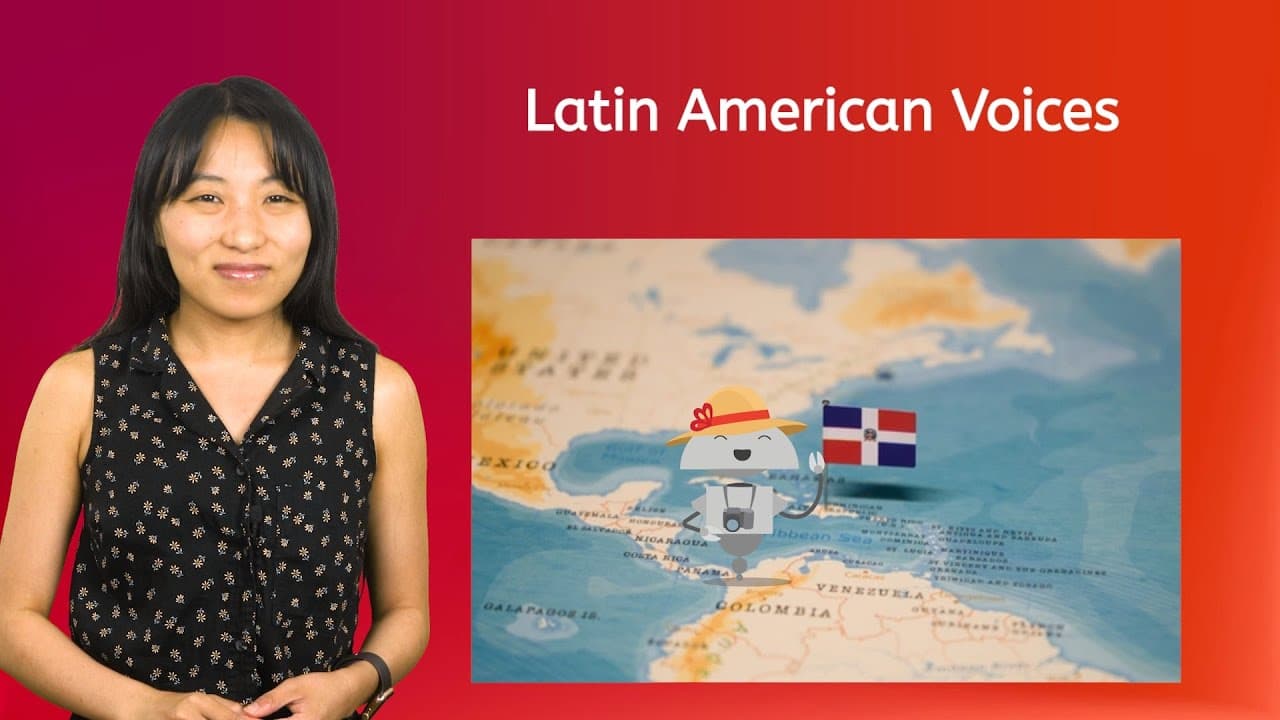
How Politics Shaped Latin American Literature

How Politics Shaped Latin American Literature

This educational video explores the deep connection between the political history of Latin America and its literature. It guides students through two major historical periods: the colonial era and the post-independence rise of totalitarian regimes. Through the lens of specific literary movements, the video explains how writers like Simón Bolívar, José Martí, and Gabriel García Márquez used the written word to define national identities, fight for independence, and critique oppressive governments. The content breaks down complex political concepts such as colonialism, independence movements, and totalitarianism, contrasting the Latin American experience with that of Africa to highlight unique historical contexts. It introduces the genre of "political literature," splitting it into "Independence Movement Literature" (primarily persuasive nonfiction) and "Anti-Totalitarian Literature" (fiction and nonfiction). Specific works and authors are highlighted to illustrate themes of corruption, power, and resistance. Teachers can use this video to bridge Social Studies and English Language Arts curriculums. It provides a rich context for understanding World Literature, offering concrete definitions and historical examples that help students analyze how societal changes influence artistic expression. The built-in pause points and reflective questions make it an interactive tool for classroom discussion about government systems, freedom of expression, and the power of writing.

Miacademy & MiaPrep Learning ChannelMiacademy & MiaPrep Learning Channel

10mins 56s

Video
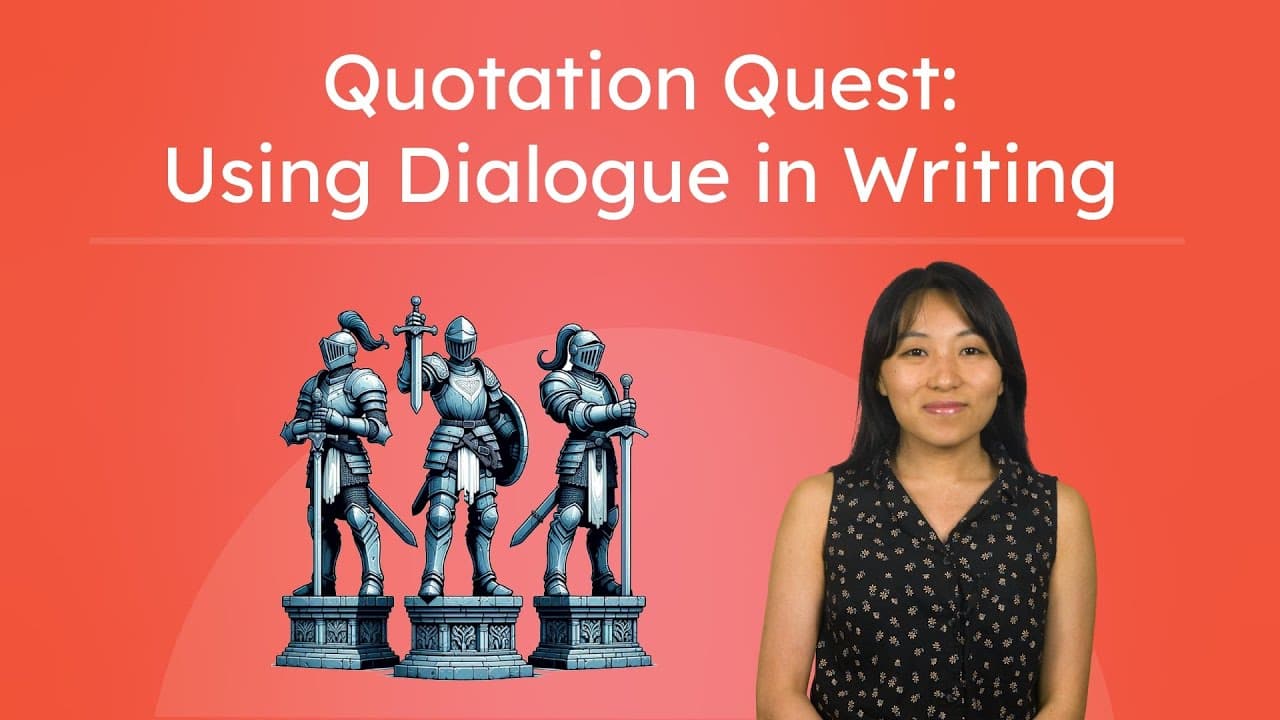
Mastering Dialogue: Formatting, Punctuation, and Tags

Mastering Dialogue: Formatting, Punctuation, and Tags

This engaging language arts video invites students into the "Whispering Hall" of Genre Land to master the mechanics of writing dialogue. Through a quest-based narrative featuring three knight statues, the host guides viewers through three distinct challenges: formatting, punctuation, and dialogue tags. The video contrasts confusing, unformatted blocks of text with properly structured dialogue to visually demonstrate the importance of these writing conventions. The content systematically breaks down the technical rules of dialogue writing. Key topics include when to start new paragraphs (paragraph breaks and indentation), how to use quotation marks and other punctuation within speech, capitalization rules for quoted sentences, and the proper use and placement of dialogue tags. It also distinguishes between valid tags (speaking verbs like "said" or "asked") and action beats (like "smiled" or "ran"), clarifying common grammatical errors. This video is an excellent resource for upper elementary and middle school writing workshops. It transforms dry grammar rules into a gamified editing mission, encouraging students to analyze text critically. Teachers can use the specific "bad vs. good" examples to model editing skills, while the clear breakdown of rules provides a solid foundation for narrative writing units. The step-by-step revision of a single story throughout the video offers a cohesive example of the writing process in action.

Miacademy & MiaPrep Learning ChannelMiacademy & MiaPrep Learning Channel

10mins 24s

Video
Understanding the Shape and Sound of Poetry

Understanding the Shape and Sound of Poetry

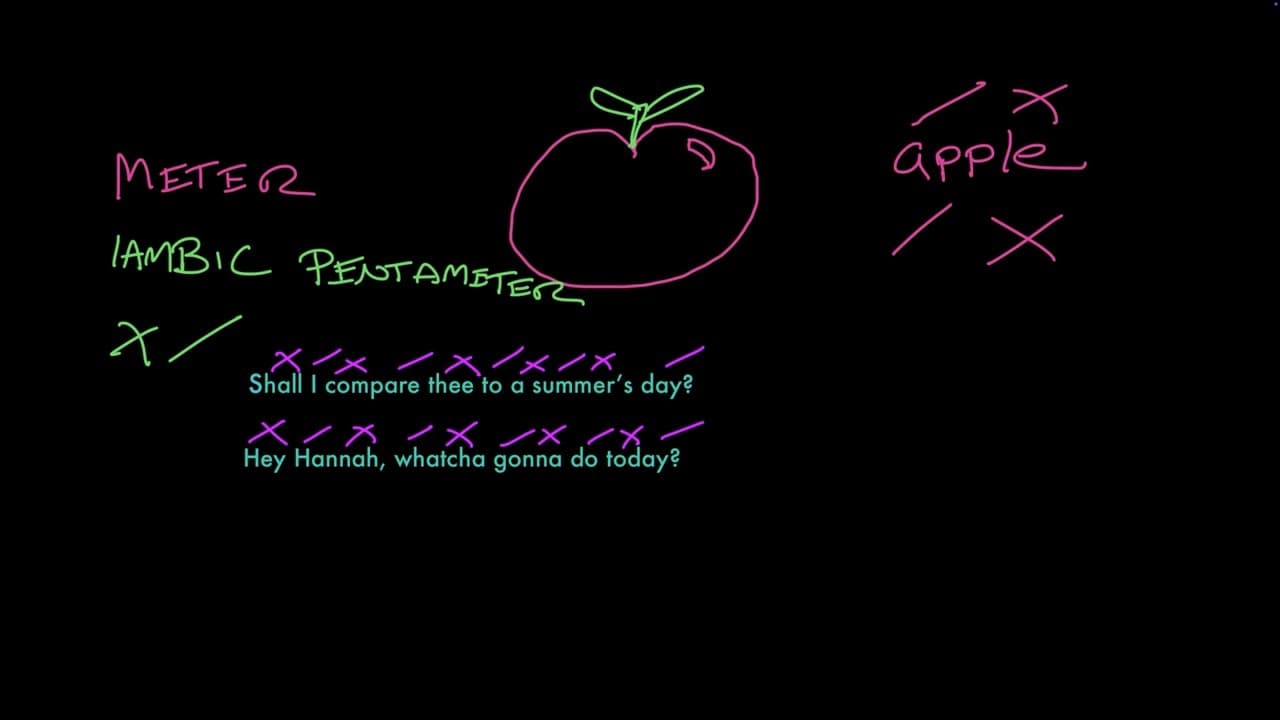
This engaging animated video demystifies poetry by breaking down its fundamental structural elements. Hosts Hannah and David explore the question "How does a poem work?" by contrasting poetry with prose, explaining that while prose relies on sentences and paragraphs, poetry utilizes lines and stanzas to shape the reader's experience. The video emphasizes that poetry is "language art" that plays with sound and shape, making it an accessible medium for expressing feelings about everyday life rather than an elite or overly complex form of writing. The content covers essential poetic devices including rhyme, rhythm, meter, and structure. Specific concepts explained include the difference between lines and sentences, the definition of a stanza, the mechanics of stress and unstress in words (using the word "apple" as a demonstration), and a clear breakdown of iambic pentameter using Shakespeare's Sonnet 18. It also touches on Haiku, challenging the rigid 5-7-5 syllable rule in favor of capturing a specific moment or "vibe," using examples from William Carlos Williams and Yosa Buson. For educators, this video is an excellent primer for a poetry unit. It provides clear, visual definitions of terminology that often confuses students, such as meter and line breaks. Teachers can use the video to introduce scansion, prompt creative writing exercises modeled after the "Post-it note" style of William Carlos Williams, or initiate discussions about when and why writers might choose to break established rules to better serve their artistic intent.

Khan AcademyKhan Academy

5mins

Video
The 5 Ws of Storytelling: Who, What, Where, When, and Why

The 5 Ws of Storytelling: Who, What, Where, When, and Why

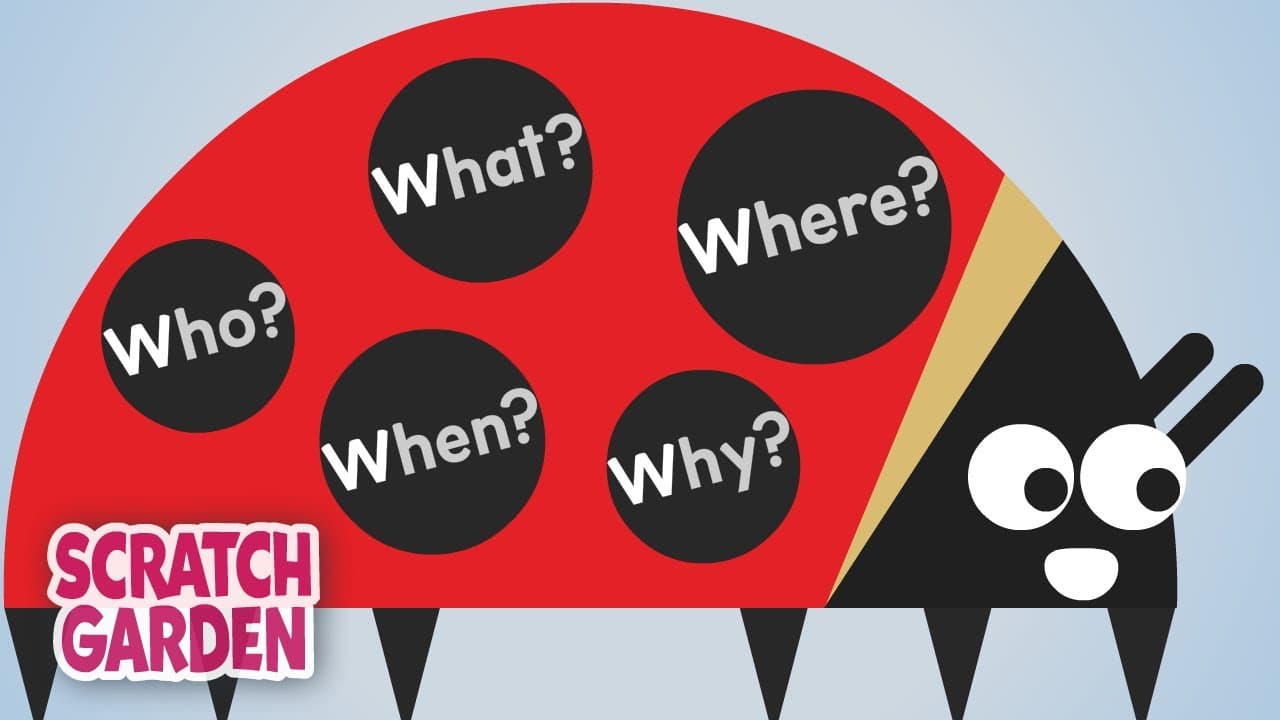
This animated video introduces young learners to the "5 Ws" of storytelling: Who, What, Where, When, and Why. Using a cast of ladybugs holding signboards, the video visually defines each question word by opening a storybook to reveal relevant examples, such as characters for "Who" and settings for "Where." The video relies primarily on music and visuals rather than narration to convey these concepts, making it a flexible tool for teacher-led instruction. The key themes explore narrative structure and reading comprehension strategies. By breaking down a story into these five fundamental components, the video helps students understand the building blocks of narrative writing and information gathering. It essentially provides a visual checklist for students to use when analyzing a story or planning their own writing. In the classroom, this video serves as an engaging hook for literacy lessons. It is particularly useful for introduction to journalism, creative writing, or reading comprehension activities. The humorous ending, featuring a late arrival by the "How" ladybug, provides a natural segue into discussing the "H" that often accompanies the 5 Ws, allowing teachers to extend the lesson to include process and method.

Scratch GardenScratch Garden

1min 40s

Video
Understanding Situational, Dramatic, and Verbal Irony

Understanding Situational, Dramatic, and Verbal Irony

This educational video provides a comprehensive breakdown of the concept of irony, a literary device often misunderstood as simply meaning "coincidence" or "bad luck." The narrator defines irony fundamentally as "the difference between expectation and result" and proceeds to categorize it into three distinct types: situational irony, dramatic irony, and verbal irony. Each type is explained with clear definitions and illustrated through simple, hand-drawn animations that make abstract concepts concrete and accessible for learners. The video uses classic literature, such as O. Henry's "The Gift of the Magi," alongside humorous, invented scenarios involving bears in disguises, falling anvils, and lions hiding in Murphy beds to exemplify each type. The narrator carefully distinguishes between sarcasm and puns as subsets of verbal irony, helping students navigate the nuances of tone and context. The lesson culminates in a complex "mega example" that synthesizes all three types of irony into a single narrative scenario. For educators, this resource is an invaluable tool for clarifying a notoriously difficult concept in English Language Arts. It moves beyond simple definitions to provide a framework for analysis that students can apply to literature, film, and creative writing. The visual nature of the explanation supports diverse learners, while the humor keeps engagement high. It is particularly useful for introducing literary analysis units or clarifying misconceptions before tackling complex texts like Shakespeare or satirical works.

Khan AcademyKhan Academy

7mins 58s

Video
Mastering Figurative Language: Similes, Metaphors, and More

Mastering Figurative Language: Similes, Metaphors, and More

This engaging educational video provides a clear and humorous introduction to figurative language, distinguishing it from literal speech. Through the use of hand-drawn animations and dynamic text, the narrator breaks down five essential figures of speech: simile, metaphor, personification, hyperbole, and allusion. The video explains that figurative language involves saying one thing but meaning another to express truths more vividly, using the example of an "eagle-eyed editor" to demonstrate the concept. The content is structured systematically, dedicating a segment to each literary device. It defines similes as comparisons using "like" or "as" (e.g., "hungry as a wolf"), contrasts them with metaphors which make direct comparisons (e.g., "love is a rose"), and explores how personification attributes human traits to inanimate objects. It also covers hyperbole as purposeful exaggeration for effect and explains allusion as a reference to shared cultural knowledge, citing examples like Superman and Gollum. For educators, this video serves as an excellent primer or review tool for English Language Arts units on literary devices or creative writing. It provides accessible definitions and memorable visual examples that help students grasp abstract linguistic concepts. The humor and pacing make it suitable for upper elementary and middle school students, helping them move beyond literal interpretations to understand nuance, imagery, and emphasis in writing.

Khan AcademyKhan Academy

5mins 58s

Video
Defeating the Shadow: A Review of Literary Genres

Defeating the Shadow: A Review of Literary Genres

This video serves as the dramatic conclusion to a unit on literary genres, set in a fantasy world called "Genre Land." The narrator and a bard character named Storyweaver must defeat a villain known as the "Shadow of Monotony" to save storytelling from becoming dull and gray. To defeat the Shadow, they must pass three trials that require answering review questions about specific genres, including fantasy, science fiction, mystery, adventure, historical fiction, and realistic fiction. The video explores key themes of literary analysis, specifically focusing on the defining characteristics of various fiction genres. It covers concepts like "speculative fiction," techniques for creating suspense (such as pacing and information control), and the role of empathy in realistic and historical fiction. The narrative culminates in a song that celebrates the diversity of stories and the power of imagination. For educators, this video provides an engaging, gamified review of literary concepts suitable for upper elementary and middle school students. It models how to synthesize information to answer analytical questions and introduces a final creative project where students act as "Genre Experts." The video sets the stage for students to apply their learning by either writing a narrative story or creating an informational presentation about a chosen genre.

Miacademy & MiaPrep Learning ChannelMiacademy & MiaPrep Learning Channel

11mins 6s

Video
Finalizing Your Novel Plan for Consistency and Clarity

Finalizing Your Novel Plan for Consistency and Clarity

This engaging instructional video guides students through the critical final stage of pre-writing a novel: creating a comprehensive novel plan. Using a humorous narrative involving a writer and his dramatic alter ego, the video challenges students to gather their scattered ideas from previous lessons and organize them into a cohesive "Writer's Handbook." It emphasizes the importance of bridging the gap between dreaming of a story and actually writing it by having a solid roadmap. The core of the lesson focuses on two key revision strategies: consistency and clarity. Students learn how to evaluate their story elements—setting, character, conflict, and plot—to ensure they support one another logically (consistency) and are understandable to an outside audience (clarity). The video provides practical examples, such as reworking a setting that no longer fits the plot, and encourages peer feedback to identify confusing gaps in the narrative. Ideally suited for creative writing units in middle and high school, this video serves as a bridge between brainstorming and drafting. It models the revision process before drafting even begins, teaching students that planning is iterative. Teachers can use this video to launch a "Novel Planning Workshop" where students compile their work, critique each other's plans, and finalize their outlines before writing their opening chapters.

Miacademy & MiaPrep Learning ChannelMiacademy & MiaPrep Learning Channel

8mins 38s

Video
How to Write Poems with Rhythm and Rhyme

How to Write Poems with Rhythm and Rhyme

This instructional video guides students through the creative process of writing structured poetry, focusing specifically on rhyme and meter. Following a previous lesson on identifying these elements, the narrator shifts the focus to application, teaching students practical strategies to generate their own rhyming lines and rhythmic patterns. The lesson uses a whimsical narrative involving dumpling chefs who need poetic inspiration to wake sleeping guardians, making the technical aspects of poetry more engaging for younger learners. The content covers two distinct approaches to rhyming: starting with an idea and finding a rhyme, versus finding a rhyme pair first to spark an idea. It also introduces the use of rhyming dictionaries as a valid tool for writers. A significant portion of the video is dedicated to meter, demonstrating how to identify syllable patterns (stressed and unstressed) in a draft line and replicate that pattern to create rhythm. It also discusses how different meters establish different moods, providing clear examples ranging from playful to serious. For the classroom, this video serves as an excellent workshop starter for a poetry unit. It breaks down the often-intimidating task of writing structured verse into manageable steps. Teachers can use the built-in pause points to have students practice brainstorming rhymes and clapping out rhythms in real-time. The video clarifies that using tools like filler words and dictionaries is part of the professional writing process, encouraging students who might struggle with vocabulary recall.

Miacademy & MiaPrep Learning ChannelMiacademy & MiaPrep Learning Channel

9mins 58s

Video
How to Plan and Draft a Creative Short Story

How to Plan and Draft a Creative Short Story

This educational video guides students through the crucial planning and drafting phase of creative writing, specifically focusing on short stories. The host, Justin, frames the lesson as a "Storysmith Trial" challenge, engaging students to apply previously learned writing techniques to a new project. The video bridges the gap between theoretical knowledge of literary devices and practical application by encouraging students to select specific techniques—such as dialogue, imagery, or characterization—to prioritize in their drafts.

Miacademy & MiaPrep Learning ChannelMiacademy & MiaPrep Learning Channel

8mins 47s

Video
Mastering Intentional Word Choice in Creative Writing

Mastering Intentional Word Choice in Creative Writing

This engaging video lesson explores the power of intentional word choice in creative writing, demonstrating how specific vocabulary transforms flat descriptions into vivid, immersive experiences for readers. Through a "writer's escape room" narrative, the host guides students through the concepts of denotation and connotation, illustrating how words with similar definitions can evoke vastly different emotional responses. The lesson uses practical examples, including excerpts from Kenneth Grahame's *The Wind in the Willows*, to show how authors use language to establish mood, setting, and character traits. The video breaks down three specific strategies for selecting the perfect words: visualizing the scene to brainstorm descriptors, choosing words that emphasize key character or setting traits, and considering the intensity of synonyms to match the intended atmosphere. It provides concrete examples for each strategy, such as shifting from "old" to "dilapidated" to "derelict" to increase intensity, or distinguishing between "childlike" and "childish" to understand positive versus negative connotations. Ideal for English Language Arts classrooms, this resource helps move students beyond basic vocabulary toward more sophisticated writing techniques. It encourages learners to treat writing as an art form where every word matters, providing them with actionable tools to revise their own drafts. The video concludes with a modeling exercise where the narrator applies these strategies to write a scene, allowing students to see the immediate impact of intentional word choice on narrative quality.

Miacademy & MiaPrep Learning ChannelMiacademy & MiaPrep Learning Channel

10mins 32s

Video
How to Find Inspiration and Generate Creative Writing Ideas

How to Find Inspiration and Generate Creative Writing Ideas

This engaging educational video guides students through the often-daunting process of finding inspiration for creative writing. Hosted by an energetic narrator named Justin, the video addresses the common problem of "writer's block" by introducing practical strategies to generate and develop ideas. The lesson is framed around a challenge from a fictional "Writer's Guild," turning the learning process into a quest to prove one's writing potential. The content breaks down the concept of creativity into a skill that can be practiced rather than an innate talent. It introduces the concept of a "Spark Stash"—a personalized collection of ideas drawn from everyday life, music, and images. The core of the video focuses on three specific prewriting strategies: Free Writing, Mindmapping, and Questioning. Each strategy is demonstrated using a classic painting, "Wanderer above the Sea of Fog," showing students exactly how to move from a single image to a fully fleshed-out story concept. Teachers can use this video to launch a creative writing unit or to support students who struggle with initiating the writing process. It provides concrete, actionable techniques that students can immediately apply in the classroom. By demystifying where ideas come from and providing structured methods like mind maps and the 5 Ws (Who, What, Where, When, Why), the video empowers students to overcome the fear of the blank page and view creativity as a manageable, exciting process.

Miacademy & MiaPrep Learning ChannelMiacademy & MiaPrep Learning Channel

9mins 14s

Video
Using Quotation Marks for Dialogue and Titles

Using Quotation Marks for Dialogue and Titles

This educational video provides a clear and humorous guide to using quotation marks correctly in English grammar. The narrators, David and Paige, explore the two primary functions of quotation marks: indicating direct speech (dialogue) and formatting titles of shorter works like songs, poems, and articles. The video breaks down the potentially confusing rules about when to use quotation marks versus underlining or italics for titles. Through engaging examples involving music albums and a fictional book of "bread poetry," the hosts demonstrate the "container" rule: larger works (albums, books, newspapers) get underlined or italicized, while the smaller works inside them (songs, poems, articles) get quotation marks. Teachers can use this video to introduce or reinforce punctuation rules for creative writing and citations. The visual examples on the digital whiteboard make the distinction between "big things" and "small things" easy to visualize, while the lighthearted banter keeps students engaged with what can otherwise be a dry topic.

Khan AcademyKhan Academy

3mins 13s

Video
Writing for Film: How to Adapt Stage Plays into Screenplays

Writing for Film: How to Adapt Stage Plays into Screenplays

This engaging educational video introduces students to the art of screenwriting by contrasting it with playwriting. Framed as an internship assignment for a film festival, the video guides viewers through the process of saving a film production that has mistakenly used a stage play script instead of a proper screenplay. It defines key differences between the two formats, specifically focusing on the necessity of detailed action lines in film to guide the complex pre-production process.

Miacademy & MiaPrep Learning ChannelMiacademy & MiaPrep Learning Channel

8mins 59s

Video
How to Write Powerful Starts and Satisfying Endings

How to Write Powerful Starts and Satisfying Endings

This engaging creative writing lesson guides aspiring writers through the critical process of crafting opening and closing scenes for a novel. Hosted by an energetic presenter in a library setting, the video breaks down the specific goals of these pivotal moments: grabbing the reader's investment at the start and rewarding that investment at the end. It distinguishes between the plot events themselves and the "craft" of how those events are presented to the audience. The content introduces specific literary techniques and terminology for structuring narratives. For beginnings, it covers strategies like "In Medias Res" (starting in the middle of action), setting-focused openings, and character-focused introductions. For endings, it explores the use of epilogues, ambiguous endings that leave room for interpretation, and "callbacks" that reference earlier story details. Each concept is illustrated with clear definitions and relatable examples. Ideal for middle and high school English Language Arts classrooms, this video serves as a practical workshop tool. It includes built-in pause points that prompt students to reflect on their own reading experiences and apply the concepts to their own writing projects. Teachers can use this resource to introduce narrative structure units, support NaNoWriMo projects, or help students revise their creative writing pieces for greater impact.

Miacademy & MiaPrep Learning ChannelMiacademy & MiaPrep Learning Channel

9mins 58s

Video
How to Use Commas in Dialogue

How to Use Commas in Dialogue

This video provides a clear and engaging explanation of how to properly use commas when writing dialogue. Using a helpful "runway" metaphor, the narrators demonstrate the mechanics of punctuating speech in two common scenarios: when the speaker tag comes before the quote, and when the speaker tag follows the quote. The video uses specific sentence examples involving characters Guillermo and Roxane to visually illustrate where commas, periods, and quotation marks belong. The content focuses on the specific grammatical rules of "reported speech" or dialogue tags. Key themes include the function of commas as separators between narration and speech, the correct placement of punctuation inside or outside quotation marks, and the exceptions for question marks and exclamation points. The visual metaphor of an airplane taking off and landing helps solidify the concept of ramping up to or winding down from spoken words. For educators, this video serves as an excellent tool for teaching writing mechanics and editing skills. It simplifies a rule that often confuses students—specifically the counter-intuitive requirement to use a comma instead of a period at the end of a spoken sentence when a dialogue tag follows. Teachers can use this resource to introduce dialogue punctuation in creative writing units, support students during the editing phase of the writing process, or as a remediation tool for students struggling with writing mechanics.

Khan AcademyKhan Academy

3mins

Video
Creating and Curating a Poetry Portfolio

Creating and Curating a Poetry Portfolio

In this engaging creative writing lesson, the host Justin introduces students to the concept of becoming a "Penfluencer" by curating a professional poetry portfolio. The video breaks down the complex process of assembling a literary collection into three manageable steps: selection, revision, and reflection. Students learn that a portfolio is not just a random pile of work, but a thoughtful collection that demonstrates both their personal style and their range of skills as poets. The content dives deep into specific strategies for selecting poems, distinguishing between a "diverse" portfolio (variety of styles/topics) and a "coherent" one (unified by theme or mood). It then guides students through the revision process, moving beyond simple proofreading to deep stylistic changes involving connotation and sound devices like alliteration and meter. Finally, the video introduces the concept of an "Author's Statement," teaching students how to articulate their artistic choices and inspiration. This video is an excellent resource for middle and high school English Language Arts classrooms focusing on the writing process. It moves students beyond merely generating content to the higher-order thinking skills of curation and critique. By framing the task within a modern "app" context, it makes the potentially dry topics of revision and metacognitive reflection relevant and accessible. Teachers can use this video to structure a multi-day final project for a poetry unit.

Miacademy & MiaPrep Learning ChannelMiacademy & MiaPrep Learning Channel

8mins 36s

Video
How Subordinating Conjunctions Connect Independent and Dependent Clauses

How Subordinating Conjunctions Connect Independent and Dependent Clauses

This educational video provides a clear and comprehensive introduction to subordinating conjunctions and their role in sentence structure. The narrator breaks down the fundamental difference between independent and dependent clauses, explaining that while all sentences are clauses, not all clauses are sentences. Using the helpful analogy of a tree (independent clause) and a ladder (dependent clause), the video demonstrates how subordinating conjunctions function to connect these two types of clauses to add context and detail to writing. The content covers key grammatical concepts including the definition of a clause (subject plus verb), the identifying features of sentence fragments, and the distinction between coordinating conjunctions (FANBOYS) and subordinating conjunctions. Through humorous example sentences involving characters like Herbert and Sir Reginald, viewers learn practical tests—such as the "Yeah? So what?" test—to identify dependent clauses and determine if a sentence is grammatically complete. For educators, this video is an excellent resource for teaching complex sentence structure and helping students avoid sentence fragments. It simplifies abstract grammatical terms into tangible concepts using visual aids and memorable analogies. The video concludes with a comprehensive list of common subordinating conjunctions, making it a useful reference tool for students looking to add variety and sophistication to their writing.

Khan AcademyKhan Academy

5mins 27s

Video
Exploring Informative Text Types: Descriptive, Comparative, and Procedural

Exploring Informative Text Types: Descriptive, Comparative, and Procedural

In this engaging Language Arts lesson set in the fictional village of "Informatown," students learn how to analyze and categorize different types of informative non-fiction texts. The video begins by reviewing the general characteristics of informative writing—logical structure, objective central ideas, and precise language—before diving into three specific text structures: Descriptive, Comparative, and Procedural. Through the narrative of organizing a messy library, the host guides viewers in examining three distinct sample texts about Nigerian culture, the Dominican Republic, and Lakota Dreamcatchers. Students learn to identify specific structural clues and transition words that distinguish one text type from another, such as looking for sensory details in descriptive texts, contrasting words in comparative texts, and chronological steps in procedural texts. This video is highly valuable for upper elementary and middle school classrooms as it moves beyond simple reading comprehension to structural analysis. It provides concrete strategies for recognizing how authors organize information to achieve specific purposes. Teachers can use this video to introduce a unit on non-fiction text structures, support lessons on transition words, or as a model for students' own informative writing projects.

Miacademy & MiaPrep Learning ChannelMiacademy & MiaPrep Learning Channel

8mins 48s

Video
Mastering Correlative Conjunctions and Matched Word Pairs

Mastering Correlative Conjunctions and Matched Word Pairs

This educational video provides a clear and engaging introduction to correlative conjunctions, breaking down the intimidating terminology into simple, manageable concepts. The narrator, David, uses etymology to explain that "correlative" simply means "related together," defining these conjunctions as matching sets used to connect sentence parts. Through five distinct examples—either/or, neither/nor, both/and, as/so, and whether/or—the video demonstrates how these pairs function within sentences to create balance and establish relationships between ideas. The video explores key grammatical themes such as sentence structure, parallel construction, and the specific nuances of different conjunction pairs. It covers the difference between positive choices (either/or), negative rejection (neither/nor), inclusion (both/and), formal consequence (as/so), and possibilities (whether/or). The lesson also briefly touches upon pronunciation variations (e.g., ee-ther vs. eye-ther) and uses memorable, sometimes humorous examples involving famous quotes and fictional characters to illustrate usage. For educators, this video serves as an excellent tool for teaching intermediate grammar and writing skills. It transforms abstract grammatical rules into concrete patterns that students can recognize and apply. The breakdown of etymology promotes critical thinking about vocabulary, while the distinct examples provide a template for students to model their own writing. It is particularly useful for lessons on sentence variety, improving writing flow, and understanding the logic behind connecting clauses.
Khan AcademyKhan Academy

3mins 12s

Video
How to Outline and Write a Comparative Essay

How to Outline and Write a Comparative Essay

This educational video guides students through the process of writing an informative comparative essay, using the specific example of comparing traditional Korean music (Gugak) with modern K-pop. The lesson takes place in the fictional setting of "Informatown," where the host explains how to take raw information—in this case, a fact sheet about South Korean music—and transform it into a structured, cohesive text. The video emphasizes the importance of planning before writing, using analogies like drawing outlines to explain the concept. The content covers the complete writing lifecycle: selecting the appropriate text type based on the data (comparative), grouping information logically to form body paragraphs, creating a structured outline with Roman numerals, and drafting the essay with attention to topic sentences, transitions, and hooks. It specifically breaks down the structure of an essay into an introduction (hook, background, central idea), body paragraphs (grouped by theme rather than just listing facts), and a conclusion. The video models each step, providing clear examples of how to turn bullet points into flowing prose. For educators, this video serves as an excellent model for a writing workshop. It scaffolds the writing process by breaking it down into manageable chunks, making the often-daunting task of essay writing approachable. By using a culturally relevant and engaging topic (K-pop), it captures student interest while teaching fundamental literacy skills such as synthesizing information, organizing ideas hierarchically, and using transitional phrases to improve flow. The video includes built-in pause points for student practice, making it ready-to-use for direct instruction.

Miacademy & MiaPrep Learning ChannelMiacademy & MiaPrep Learning Channel

11mins 27s

Video
Building Bridges: How to Use Transition Words

Building Bridges: How to Use Transition Words

Join an engaging adventure to the 'Desert of Description' where students learn to build 'Transitional Bridges' to connect their ideas. This video uses a narrative quest format featuring a presenter and a robot companion named Mia to explain the purpose and function of transition words in writing. It breaks down transition words into four key categories: Emphasis, Addition, Compare and Contrast, and Order. The video provides clear definitions and modeled examples for each category, using an ongoing story about a character named Finn stranded on a barren island. Through this story, students see exactly how transition words improve flow, clarify meaning, and add sophistication to a narrative. The content moves from identifying existing transition words to selecting the best words to fill in blanks, providing scaffolded practice within the video itself. This resource is an excellent tool for Language Arts classrooms focusing on narrative writing, sentence fluency, or revision strategies. It actively involves students by asking them to pause, think, and complete tasks, making it more than just a passive viewing experience. It addresses the common struggle of 'choppy' writing by visually demonstrating how these words act as bridges between isolated islands of thought.

Miacademy & MiaPrep Learning ChannelMiacademy & MiaPrep Learning Channel

10mins 51s

Video
Baking an Argument: How to Synthesize Sources in Writing

Baking an Argument: How to Synthesize Sources in Writing

This engaging instructional video uses an extended metaphor of baking a cake to teach students the complex writing skill of synthesizing sources. The host explains that just as baking requires gathering ingredients (evidence), mixing them (combining sources), and decorating (adding original insight), effective writing involves integrating multiple information sources to create something new. The video clarifies the critical difference between merely summarizing information and truly synthesizing it to reach a broader conclusion.

Miacademy & MiaPrep Learning ChannelMiacademy & MiaPrep Learning Channel

12mins 16s

Video
Using FANBOYS to Connect Ideas

Using FANBOYS to Connect Ideas

This educational video provides a clear and structured introduction to coordinating conjunctions, a fundamental part of English grammar. Utilizing a whiteboard animation style, the narrator defines what a conjunction is and specifically focuses on the seven coordinating conjunctions used to connect words, phrases, and clauses. The video introduces the popular mnemonic device "FANBOYS" to help students memorize the list: For, And, Nor, But, Or, Yet, and So. The video breaks down each of the seven conjunctions individually, explaining their specific functions—such as showing cause, combining ideas, or expressing contrast—and providing sentence examples for each. It further demonstrates how these conjunctions operate at different levels of sentence structure, showing how they can join simple words (e.g., "chocolate or vanilla"), phrases (e.g., "down the slide and over the fence"), and complete sentences (independent clauses). Ideally suited for upper elementary students, this resource is excellent for language arts instruction focused on sentence fluency and writing mechanics. Teachers can use this video to introduce the concept of compound sentences, help students move beyond simple sentence structures, and provide a memorable tool for self-editing their writing to make it less "choppy."

GrammarSongs by MelissaGrammarSongs by Melissa

4mins 30s

Video
Understanding Text Structure Using Pizza

Understanding Text Structure Using Pizza

This educational video uses a relatable and delicious analogy—pizza—to demystify the abstract concept of text structure. The video begins by comparing writing to architecture, explaining that just as buildings need skeletons and supports to stay upright, informational texts require specific organizational structures to effectively convey meaning. The narrator then guides viewers through the five most common organizational patterns found in nonfiction writing. The video explores five distinct text structures: Chronology, Compare and Contrast, Cause and Effect, Problem and Solution, and Description. For each structure, the narrator provides a clear definition, identifies specific "signal words" (such as "first/next" for chronology or "because/so" for cause and effect), and offers a concrete example using pizza. For instance, a recipe illustrates chronology, while a debate between deep-dish and thin-crust demonstrates compare and contrast. For educators, this video is an excellent tool for making a dry reading standard engaging and accessible. The constant recurrence of the pizza theme helps lower the cognitive load for students, allowing them to focus on the structural differences rather than decoding complex content. The video concludes with a practical strategy called "subtract the specifics," teaching students how to substitute the content of any difficult text with a simple topic like pizza to reveal its underlying skeleton, a technique that directly aids in reading comprehension and analysis.

Khan AcademyKhan Academy

6mins 12s

Video
Linking Ideas with Relative Pronouns

Linking Ideas with Relative Pronouns

In this concise grammar tutorial, the narrator introduces relative pronouns—who, whom, whose, that, and which—and explains their primary function: linking independent and dependent clauses. The video breaks down the specific usage rules for each pronoun, distinguishing between those used for people (who, whom, whose, that) and those used for inanimate objects or concepts (whose, that, which). Key grammatical rules are demonstrated through clear, handwritten examples on a blackboard style background. The video specifically highlights the flexibility of the word "that" (usable for both people and things) while cautioning against the common error of using "which" to refer to people. Through examples like "The man who sold the world" and "The salad that I bought," viewers see practical applications of these rules in sentence construction. This resource is highly valuable for English Language Arts classrooms as it addresses a specific, common pain point in student writing: sentence variety and correct pronoun usage. It provides a foundational understanding that helps students combine simple sentences into complex ones, improving the flow and sophistication of their writing while clarifying the often-confused distinction between "who," "that," and "which."
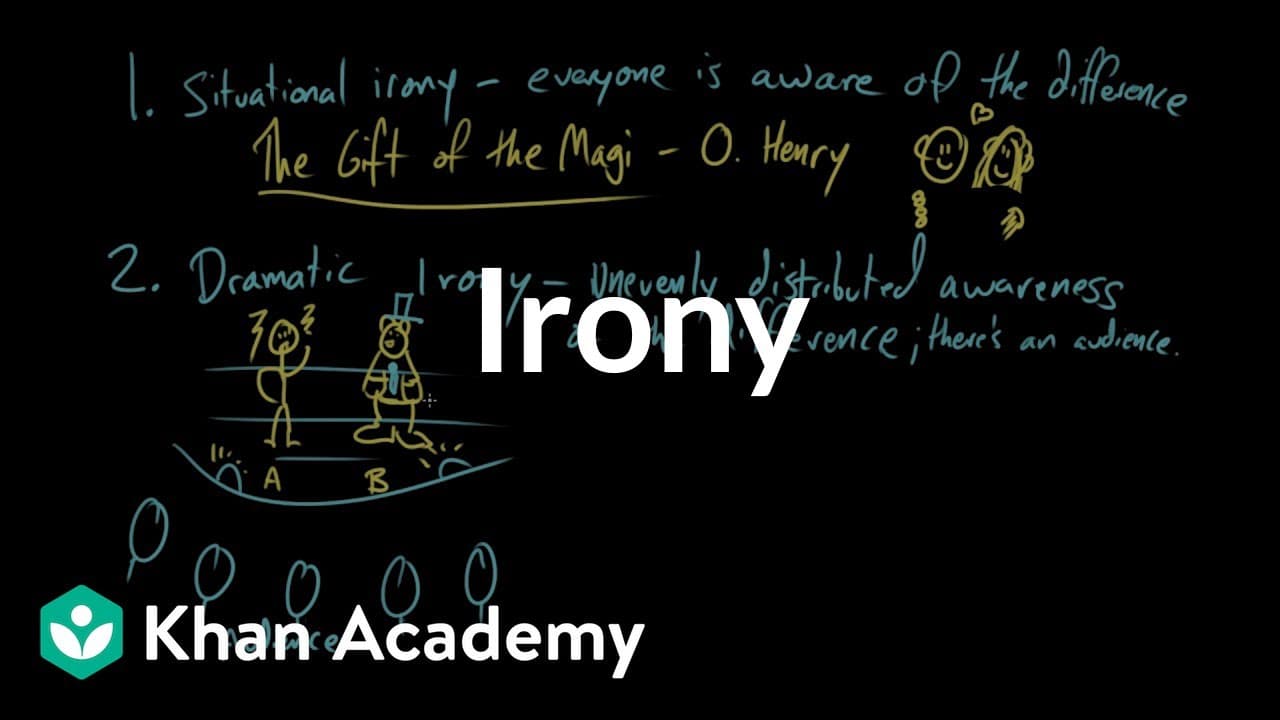
Khan AcademyKhan Academy

1min 56s

Video
How to Write Powerful Starts and Satisfying Endings

How to Write Powerful Starts and Satisfying Endings

This engaging creative writing lesson guides aspiring writers through the critical process of crafting opening and closing scenes for a novel. Hosted by an energetic presenter in a library setting, the video breaks down the specific goals of these pivotal moments: grabbing the reader's investment at the start and rewarding that investment at the end. It distinguishes between the plot events themselves and the "craft" of how those events are presented to the audience. The content introduces specific literary techniques and terminology for structuring narratives. For beginnings, it covers strategies like "In Medias Res" (starting in the middle of action), setting-focused openings, and character-focused introductions. For endings, it explores the use of epilogues, ambiguous endings that leave room for interpretation, and "callbacks" that reference earlier story details. Each concept is illustrated with clear definitions and relatable examples. Ideal for middle and high school English Language Arts classrooms, this video serves as a practical workshop tool. It includes built-in pause points that prompt students to reflect on their own reading experiences and apply the concepts to their own writing projects. Teachers can use this resource to introduce narrative structure units, support NaNoWriMo projects, or help students revise their creative writing pieces for greater impact.

Miacademy & MiaPrep Learning ChannelMiacademy & MiaPrep Learning Channel

9mins 58s

Video
Exploring Informative Text Types: Descriptive, Comparative, and Procedural

Exploring Informative Text Types: Descriptive, Comparative, and Procedural

In this engaging Language Arts lesson set in the fictional village of "Informatown," students learn how to analyze and categorize different types of informative non-fiction texts. The video begins by reviewing the general characteristics of informative writing—logical structure, objective central ideas, and precise language—before diving into three specific text structures: Descriptive, Comparative, and Procedural. Through the narrative of organizing a messy library, the host guides viewers in examining three distinct sample texts about Nigerian culture, the Dominican Republic, and Lakota Dreamcatchers. Students learn to identify specific structural clues and transition words that distinguish one text type from another, such as looking for sensory details in descriptive texts, contrasting words in comparative texts, and chronological steps in procedural texts. This video is highly valuable for upper elementary and middle school classrooms as it moves beyond simple reading comprehension to structural analysis. It provides concrete strategies for recognizing how authors organize information to achieve specific purposes. Teachers can use this video to introduce a unit on non-fiction text structures, support lessons on transition words, or as a model for students' own informative writing projects.
Miacademy & MiaPrep Learning ChannelMiacademy & MiaPrep Learning Channel

8mins 48s

Video
Planning and Writing Key Novel Scenes

Planning and Writing Key Novel Scenes

In this engaging instructional video, host Justin presents the final challenge of a 'Writer's Escape Room' unit, tasked with guiding students through the process of writing three key scenes for their original novels. The video combines a playful narrative frame with concrete writing instruction, asking students to demonstrate their mastery of written craft by selecting specific scenes from their previously created outlines. Justin emphasizes the importance of intention in writing, challenging students to not just write what happens, but to craft how the reader experiences it. The content reviews essential creative writing techniques covered in previous lessons, including narrative point of view, intentional word choice, sensory details, pacing, and strong beginnings and endings. A significant portion of the video is dedicated to the pre-writing phase, where students are asked to pause and set specific goals for reader impact (what they want readers to think or feel) and then select the appropriate literary tools to achieve those effects. An example of a high-stakes car chase illustrates how techniques like sentence fragmentation and sensory metaphors can build tension. This resource is highly valuable for middle and high school creative writing classrooms as it bridges the gap between outlining and drafting. It moves students beyond simple plot summary into the realm of artistic craftsmanship. Teachers can use this video to launch a final unit project, anchoring the drafting process in specific, measurable writing goals. The included 'escape room' narrative adds a layer of gamification that can be extended into classroom activities, making the often-daunting task of writing novel chapters feel like an achievable and exciting quest.
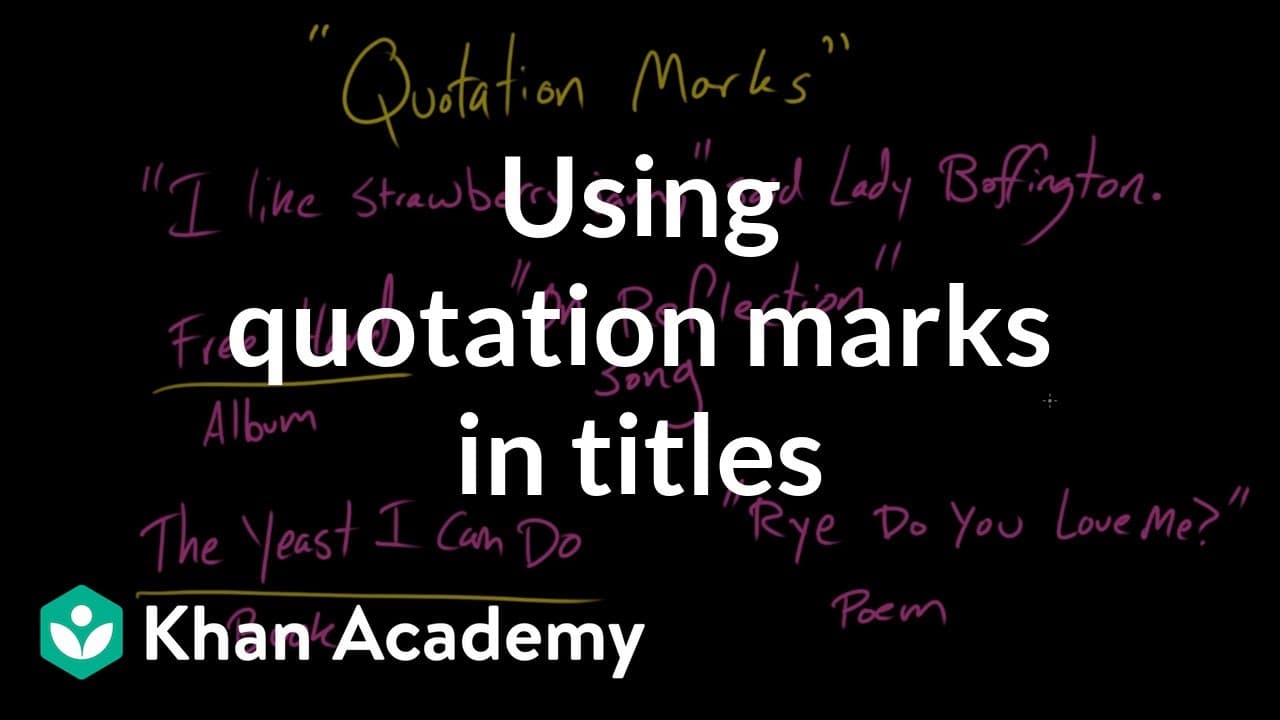
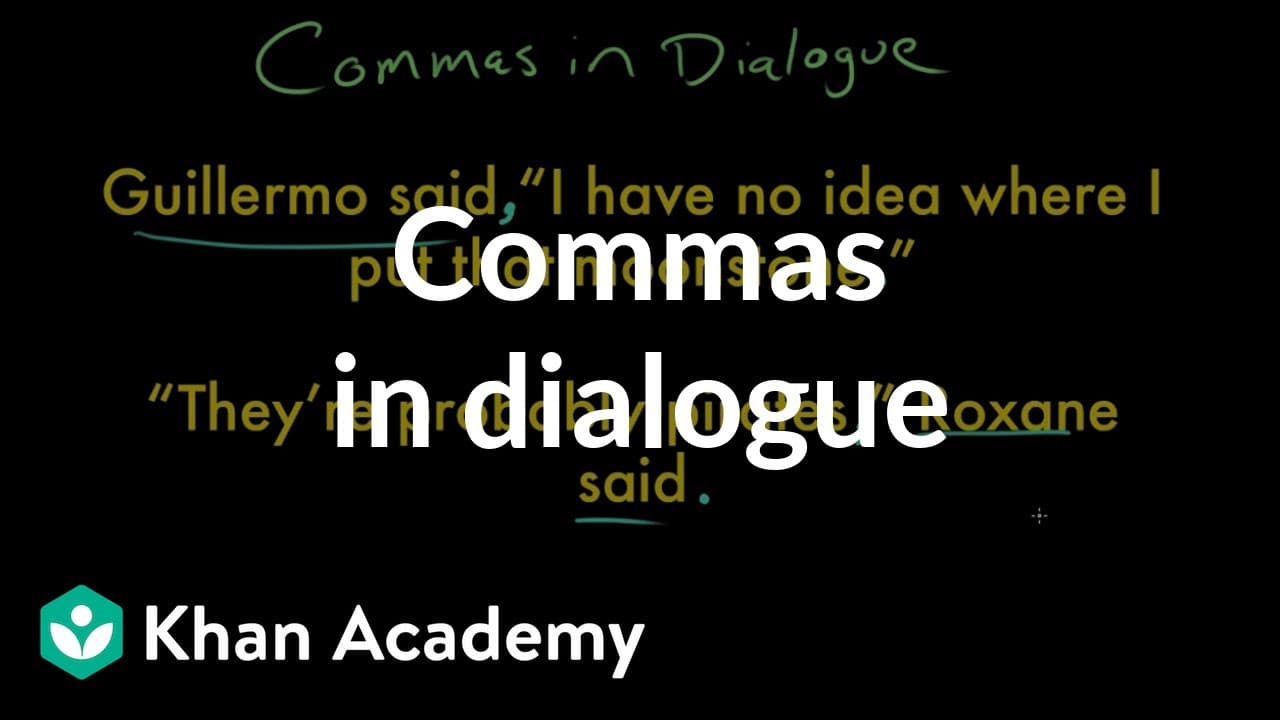
Miacademy & MiaPrep Learning ChannelMiacademy & MiaPrep Learning Channel

7mins 44s

Video
How to Write a Strong Essay Introduction

How to Write a Strong Essay Introduction

This engaging video lesson breaks down the art of writing an effective introduction paragraph for an academic essay. Using a theatrical opening and clear visual aids, the narrator demystifies the purpose of an introduction, explaining why it is often easier to write this paragraph last—after the thesis and body paragraphs are established. The content addresses common student anxieties about starting an essay, whether from having too much to say or writer's block, and offers a strategic approach to overcome these hurdles. The core of the lesson introduces the "Three Ps" framework: Pique, Provide, and Produce. Students learn how to "Pique" the reader's interest with a strong hook while avoiding clichés like rhetorical questions or dictionary definitions. They learn to "Provide" necessary background information to contextually ground the reader, and finally, to "Produce" a clear thesis statement. The video provides specific examples of weak versus strong hooks and demonstrates how these elements come together in a sample paragraph about Queen Victoria. For educators, this video serves as an excellent direct instruction tool or review for middle and high school English Language Arts classes. It tackles specific writing pitfalls—such as the overused "Webster's Dictionary defines..." opening—and offers concrete alternatives like anecdotes or setting descriptions. The clear segmentation of the introduction into three distinct components makes it easy for students to self-assess their writing and ensures they include all necessary elements in their essays.

Miacademy & MiaPrep Learning ChannelMiacademy & MiaPrep Learning Channel

7mins 10s

Video
How to Write a Powerful Essay Conclusion

How to Write a Powerful Essay Conclusion

This engaging instructional video breaks down the specific purpose and structure of an essay's conclusion paragraph, designed specifically for high school writers. Using a blend of humor, clear explanations, and concrete examples, the host demystifies the conclusion by simplifying it into a 'one-two punch': restating the thesis and explaining the argument's significance. The video uses a recurring example essay about behaviorism in schools to demonstrate exactly how to transform an introduction thesis into a powerful concluding statement. The content covers key rhetorical concepts including the three main appeals—Ethos, Logos, and Pathos—and demonstrates how to use them to answer the 'so what?' question at the end of an essay. It explicitly addresses the common student struggle of feeling repetitive by showing how to paraphrase effectively rather than copy-pasting previous ideas. The visual examples provide side-by-side comparisons of thesis statements and their restated counterparts. For educators, this video serves as an excellent standalone lesson or flipped classroom resource for writing units. It includes built-in pause points for student practice, making it interactive rather than passive. The clear distinction between 'reminding' the reader and 'articulating care' provides a simple, memorable framework that students can immediately apply to their own writing drafts to improve the impact of their final paragraphs.

Miacademy & MiaPrep Learning ChannelMiacademy & MiaPrep Learning Channel

5mins 18s

Video
How to Outline and Write a Comparative Essay

How to Outline and Write a Comparative Essay

This educational video guides students through the process of writing an informative comparative essay, using the specific example of comparing traditional Korean music (Gugak) with modern K-pop. The lesson takes place in the fictional setting of "Informatown," where the host explains how to take raw information—in this case, a fact sheet about South Korean music—and transform it into a structured, cohesive text. The video emphasizes the importance of planning before writing, using analogies like drawing outlines to explain the concept. The content covers the complete writing lifecycle: selecting the appropriate text type based on the data (comparative), grouping information logically to form body paragraphs, creating a structured outline with Roman numerals, and drafting the essay with attention to topic sentences, transitions, and hooks. It specifically breaks down the structure of an essay into an introduction (hook, background, central idea), body paragraphs (grouped by theme rather than just listing facts), and a conclusion. The video models each step, providing clear examples of how to turn bullet points into flowing prose. For educators, this video serves as an excellent model for a writing workshop. It scaffolds the writing process by breaking it down into manageable chunks, making the often-daunting task of essay writing approachable. By using a culturally relevant and engaging topic (K-pop), it captures student interest while teaching fundamental literacy skills such as synthesizing information, organizing ideas hierarchically, and using transitional phrases to improve flow. The video includes built-in pause points for student practice, making it ready-to-use for direct instruction.

Miacademy & MiaPrep Learning ChannelMiacademy & MiaPrep Learning Channel

11mins 27s

Video
Why the Earthworm Should Be Our Mascot: A Persuasive Speech

Why the Earthworm Should Be Our Mascot: A Persuasive Speech

This video features a spirited persuasive speech delivered by a young woman advocating for an earthworm to become the new mascot for the fictional town of 'Persuasia'. The speaker systematically addresses potential skepticism about choosing a humble worm, transforming its perceived weaknesses into strengths such as uniqueness, ecological importance, and resilience. She uses a blend of scientific facts—like soil aeration and regeneration—and emotional appeals to community identity to build a compelling case. The content explores key themes of persuasive rhetoric, including the use of logical arguments (logos), emotional connection (pathos), and credibility (ethos). It highlights how to structure an argument by introducing a thesis, supporting it with distinct points (inclusivity, practicality, scientific wonder, and hard work), and concluding with a strong call to action. Additionally, the video touches upon biological concepts regarding the earthworm's vital role in the ecosystem. For educators, this video serves as an excellent model text for teaching persuasive writing and public speaking. It demonstrates clear organizational structure, effective use of rhetorical questions, and the power of reframing a topic. Teachers can use it to have students analyze argument strength, identify transition words, discuss the speaker's delivery techniques, or launch a cross-curricular unit combining English Language Arts with life science.

Miacademy & MiaPrep Learning ChannelMiacademy & MiaPrep Learning Channel

2mins 28s

Video
Structuring and Presenting Your Research Project

Structuring and Presenting Your Research Project

This educational video guides high school students through the final stages of a research writing unit: structuring the presentation slides and delivering the oral presentation. The host, who initially expresses anxiety about public speaking, uses a friendly robot character named Mia to introduce strategies for overcoming nerves and organizing content effectively. The video is divided into two main sections: a slide-by-slide breakdown of the research presentation structure and a set of practical tips for public speaking.

Miacademy & MiaPrep Learning ChannelMiacademy & MiaPrep Learning Channel

7mins 39s

Video
How to Write a Powerful Persuasive Essay

How to Write a Powerful Persuasive Essay

This engaging instructional video guides students through the complete process of outlining and writing a persuasive essay. Using a fun narrative framework about choosing a new mascot for the fictional land of "Persuasia," the narrator demonstrates how to move from a general topic to a structured argument. The video contrasts persuasive writing with informative text, highlighting key differences like substituting a "claim" for a "central idea" and "arguments" for general body paragraphs. The content covers essential components of argumentative writing, including crafting strong, confident claims by removing weak language like "I think." It introduces students to the three modes of persuasion—Ethos, Logos, and Pathos—and demonstrates how to organize brainstormed notes into coherent thematic arguments. Additionally, the video defines and provides examples for advanced rhetorical devices, specifically rhetorical questions, anaphora, and tricolon, showing how these tools add power to writing. Ideal for upper elementary and middle school Language Arts classrooms, this video serves as both an introduction to persuasive structure and a deep dive into stylistic devices. It features interactive segments that ask viewers to revise claims, group research notes, and identify rhetorical devices in a text, making it a perfect anchor for a writer's workshop or a unit on opinion writing.
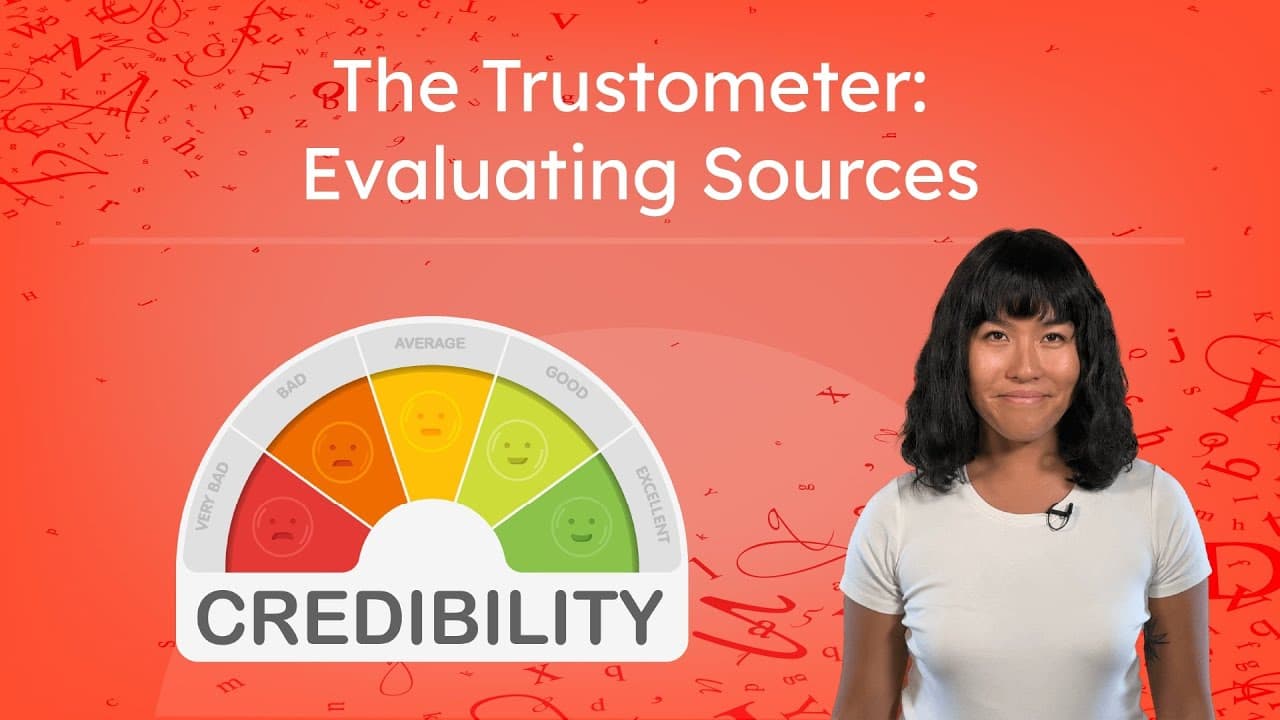
Miacademy & MiaPrep Learning ChannelMiacademy & MiaPrep Learning Channel

11mins 34s

Video
How to Write a Persuasive Creative Writing Pitch

How to Write a Persuasive Creative Writing Pitch

This video provides a comprehensive guide on how to write a persuasive pitch for a creative writing project, specifically focusing on multimedia formats like movies, plays, or video games. Hosted by an engaging instructor with animated segments featuring "Mr. Mark Up," the lesson defines what a pitch is and why it is a critical skill for writers who want to see their ideas produced. It breaks down the pitch into five essential components: the Hook, Synopsis, Target Audience, Unique Selling Points, and Call to Action. The video uses a concrete example—a dystopian sci-fi adaptation of Romeo and Juliet—to illustrate each component in action. This example helps clarify abstract concepts, showing students exactly what a "unique selling point" looks like compared to a general synopsis. The lesson emphasizes the function of each section, explaining not just *what* to write, but *why* it matters for persuading a producer or audience to invest in the story. Ideally suited for middle and high school English Language Arts and creative writing curriculums, this video serves as an excellent launchpad for project-based learning. It connects creative storytelling with real-world professional skills like persuasion, marketing, and public speaking. Teachers can use this video to introduce a capstone writing project where students must not only write a story but also "sell" it to their peers or a panel, fostering skills in audience analysis and concise communication.
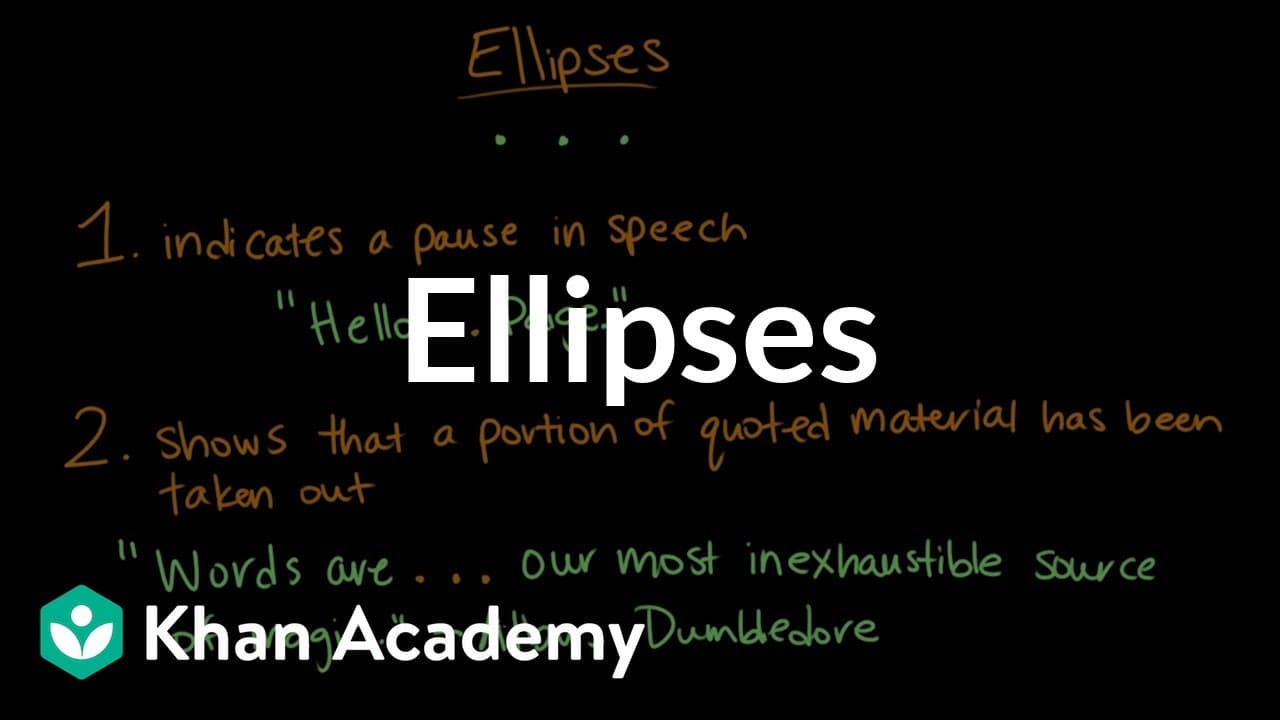
Miacademy & MiaPrep Learning ChannelMiacademy & MiaPrep Learning Channel

9mins 22s

Video
How to Read a Poem: Structure and Meaning

How to Read a Poem: Structure and Meaning

This educational video serves as an engaging introduction to poetry analysis, specifically focusing on how structure contributes to meaning. The narrator, David, welcomes viewers to "The Poem Zone" and breaks down the fundamental building blocks of poetry: lines, line breaks, stanzas, and rhyme. He defines poetry simply as "art made out of words" and explains that while poems play with sound and rhythm, they don't always have to rhyme. The visual style uses a blackboard aesthetic with handwritten text that appears in real-time to illustrate concepts. The core of the video features an original piece titled "Egg Poem," which the narrator reads and then dissects stanza by stanza. Through this close reading, the video demonstrates how a poem's structure can organize ideas and build an emotional arc. The narrator highlights how the poem uses a repeating structure ("Morning is...") to anchor each stanza while progressing from a calm morning to a chaotic one. For educators, this video is a powerful tool for bridging the gap between simply reading poetry and analyzing it. It explicitly teaches students to ask how lines and stanzas build meaning, rather than just identifying them as structural elements. The video introduces the concept of extended metaphor in a highly accessible way by connecting the cooking terms "easy," "medium," and "hard" to both the state of an egg and the speaker's emotional state, providing a clear model for students to use in their own literary analysis.

Khan AcademyKhan Academy

4mins 6s

Video
Exploring Adventure Fiction and Pacing Techniques

Exploring Adventure Fiction and Pacing Techniques

This educational video explores the genre of adventure fiction, guiding viewers through its defining characteristics and the literary techniques used to create suspense. Set within a meta-narrative of exploring an "ancient temple of adventure fiction," the host and an animated robot character named Mia encounter tropes of the genre firsthand while teaching concepts. The video breaks down the essential elements of adventure stories, including courageous protagonists, dangerous settings, and action-packed plots, before diving deep into the specific craft of "pacing." The second half of the video provides a focused lesson on literary pacing—the speed and rhythm at which a story unfolds. Using the analogy of riding a bike, the narrator explains how authors manipulate time to build tension. Three specific techniques are analyzed in detail: structure (using short sentences and fragments), dialogue (rapid back-and-forth exchange), and information control (foreshadowing and cliffhangers). The video uses specific textual examples to demonstrate how these techniques look on the page, helping students visualize the mechanics of writing. Ideal for English Language Arts classrooms, this resource combines literary analysis with creative writing concepts. It offers clear definitions, visual examples of text annotation, and guided practice opportunities where students are asked to identify techniques in provided excerpts. Teachers can use this video to introduce genre units, teach narrative structure, or run a creative writing workshop focused on building suspense and writing action scenes.

Miacademy & MiaPrep Learning ChannelMiacademy & MiaPrep Learning Channel

11mins 55s

Video
Exploring Storytelling Tools in Comics and Graphic Novels

Exploring Storytelling Tools in Comics and Graphic Novels

This engaging educational video introduces students to the unique storytelling language of comic books and graphic novels. Set in the fictional city of "Mangatropolis," the host, Caroline, and her robot companion, Mia, guide viewers through the fundamental elements that make comics a distinct medium. The narrative framework involves helping Mia regain her comic-making skills to restore a lost key to the city, adding a playful quest element to the lesson. The video breaks down complex concepts of visual literacy into three main categories: Iconography (how simple images represent complex ideas), Structure (the function of panels and gutters to manipulate time and pacing), and Content Tools (motion lines, sound effects/onomatopoeia, and speech bubbles). Specific examples demonstrate how altering panel width changes the perception of time and how the "gutter" requires the reader's mind to bridge gaps between static images to create motion and narrative. For educators, this resource serves as an excellent foundation for units on graphic novels, narrative writing, or visual arts. It moves beyond simple appreciation to analysis, teaching students how to critically "read" images and layout choices. The video provides clear definitions and interactive pause-points where students can practice drawing and analyzing, making it a perfect launchpad for creative projects where students write and illustrate their own comic strips.

Miacademy & MiaPrep Learning ChannelMiacademy & MiaPrep Learning Channel

10mins 59s

Video
How to Write Powerful Starts and Satisfying Endings

How to Write Powerful Starts and Satisfying Endings

This engaging creative writing lesson guides aspiring writers through the critical process of crafting opening and closing scenes for a novel. Hosted by an energetic presenter in a library setting, the video breaks down the specific goals of these pivotal moments: grabbing the reader's investment at the start and rewarding that investment at the end. It distinguishes between the plot events themselves and the "craft" of how those events are presented to the audience. The content introduces specific literary techniques and terminology for structuring narratives. For beginnings, it covers strategies like "In Medias Res" (starting in the middle of action), setting-focused openings, and character-focused introductions. For endings, it explores the use of epilogues, ambiguous endings that leave room for interpretation, and "callbacks" that reference earlier story details. Each concept is illustrated with clear definitions and relatable examples. Ideal for middle and high school English Language Arts classrooms, this video serves as a practical workshop tool. It includes built-in pause points that prompt students to reflect on their own reading experiences and apply the concepts to their own writing projects. Teachers can use this resource to introduce narrative structure units, support NaNoWriMo projects, or help students revise their creative writing pieces for greater impact.

Miacademy & MiaPrep Learning ChannelMiacademy & MiaPrep Learning Channel

9mins 58s

Video
How to Write an Analytical Essay: From Observation to Claim

How to Write an Analytical Essay: From Observation to Claim

This video provides a comprehensive guide to high school analytical writing, breaking down the complex cognitive process of analysis into three manageable steps: observing, reflecting, and making a claim. Through a clever opening skit featuring "Dr. Rorschach," the narrator distinguishes between simple observation (what you see) and psychological interpretation (what it means), setting the stage for how students should approach texts and images in the classroom. The content explores key themes such as the difference between summary and analysis, the importance of creating specific and arguable thesis statements, and the fallacy of trying to guess "authorial intent." It uses Vincent van Gogh's famous painting "The Starry Night" as a central case study, modeling exactly how to move from listing visual details (colors, shapes, scale) to formulating a sophisticated argument about the insignificance of humanity compared to the power of nature. For educators, this video serves as an excellent foundational lesson for any unit on essay writing, literary analysis, or document-based historical inquiry. It offers a clear, repeatable framework that helps students overcome "blank page syndrome" by giving them concrete tasks—starting with simple observation—before asking them to generate complex arguments. The video is structured to function as a standalone workshop with built-in pause points for student practice.

Miacademy & MiaPrep Learning ChannelMiacademy & MiaPrep Learning Channel

9mins 21s

Video
How to Plan and Draft a Creative Short Story

How to Plan and Draft a Creative Short Story

This educational video guides students through the crucial planning and drafting phase of creative writing, specifically focusing on short stories. The host, Justin, frames the lesson as a "Storysmith Trial" challenge, engaging students to apply previously learned writing techniques to a new project. The video bridges the gap between theoretical knowledge of literary devices and practical application by encouraging students to select specific techniques—such as dialogue, imagery, or characterization—to prioritize in their drafts.

Miacademy & MiaPrep Learning ChannelMiacademy & MiaPrep Learning Channel

8mins 47s

Video
Why We Write: Careers, Personal Growth, and Academic Success

Why We Write: Careers, Personal Growth, and Academic Success

This engaging educational video serves as a comprehensive introduction to a high school writing course, tackling the common student complaint: "Why do I need to learn how to write?" The narrator addresses this by demonstrating the critical role writing plays in various careers—from attorneys and chefs to reporters and architects. It moves beyond professional applications to explore how writing aids in personal emotional processing and mental clarity, validation journaling as a tool for well-being. The video breaks down the three main pillars of writing: professional (communication and strategy), personal (processing thoughts and feelings), and academic (making claims and organizing logic). It clearly defines what academic writing entails in a high school setting, demystifying intimidating terms like "expository" and "analytical." A significant portion of the video is dedicated to the concept of a "Growth Mindset" versus a "Fixed Mindset," emphasizing the power of the word "yet" to encourage resilience in learning new skills. For educators, this resource is an excellent hook to start a semester or a new writing unit. It includes built-in pause points for student reflection and activity, making it an interactive tool rather than a passive viewing experience. By connecting abstract writing assignments to concrete real-world success and personal growth, it helps build intrinsic motivation and sets a positive, resilient tone for the classroom environment.

Miacademy & MiaPrep Learning ChannelMiacademy & MiaPrep Learning Channel

7mins 3s

Video
Mastering the Shakespearean Sonnet: Structure and Strategy

Mastering the Shakespearean Sonnet: Structure and Strategy

In this engaging instructional video, the narrator, Justin, accepts a "StanzaGram" challenge to write a vivid description using the strict constraints of a Shakespearean sonnet. The video breaks down the technical requirements of this poetic form, including the specific rhyme scheme, stanza structure (quatrains and couplets), and the rhythmic pattern of iambic pentameter. It demystifies these complex literary concepts by treating them as a creative puzzle rather than a rigid chore. Key themes include the relationship between structure and creativity, the mechanics of poetry, and the writing process. The video explores how limitations can actually spur innovation, forcing writers to find more precise and musical language. It covers essential terminology such as iambic pentameter, volta, quatrain, and couplet, while using Shakespeare's Sonnet 18 as a primary text for analysis. For educators, this video serves as both an introduction to Shakespearean poetry and a practical writing workshop. It moves beyond passive analysis by modeling the active struggle of writing—demonstrating strategies like working out of order, using inverted syntax, and brainstorming rhymes. It is an excellent resource for English Language Arts classrooms to bridge the gap between reading classic poetry and writing original verse.

Miacademy & MiaPrep Learning ChannelMiacademy & MiaPrep Learning Channel

11mins 14s

Video
Creating and Curating a Poetry Portfolio

Creating and Curating a Poetry Portfolio

In this engaging creative writing lesson, the host Justin introduces students to the concept of becoming a "Penfluencer" by curating a professional poetry portfolio. The video breaks down the complex process of assembling a literary collection into three manageable steps: selection, revision, and reflection. Students learn that a portfolio is not just a random pile of work, but a thoughtful collection that demonstrates both their personal style and their range of skills as poets. The content dives deep into specific strategies for selecting poems, distinguishing between a "diverse" portfolio (variety of styles/topics) and a "coherent" one (unified by theme or mood). It then guides students through the revision process, moving beyond simple proofreading to deep stylistic changes involving connotation and sound devices like alliteration and meter. Finally, the video introduces the concept of an "Author's Statement," teaching students how to articulate their artistic choices and inspiration. This video is an excellent resource for middle and high school English Language Arts classrooms focusing on the writing process. It moves students beyond merely generating content to the higher-order thinking skills of curation and critique. By framing the task within a modern "app" context, it makes the potentially dry topics of revision and metacognitive reflection relevant and accessible. Teachers can use this video to structure a multi-day final project for a poetry unit.

Miacademy & MiaPrep Learning ChannelMiacademy & MiaPrep Learning Channel

8mins 36s

Video
The 5 Ws of Storytelling: Who, What, Where, When, and Why

The 5 Ws of Storytelling: Who, What, Where, When, and Why

This animated video introduces young learners to the "5 Ws" of storytelling: Who, What, Where, When, and Why. Using a cast of ladybugs holding signboards, the video visually defines each question word by opening a storybook to reveal relevant examples, such as characters for "Who" and settings for "Where." The video relies primarily on music and visuals rather than narration to convey these concepts, making it a flexible tool for teacher-led instruction. The key themes explore narrative structure and reading comprehension strategies. By breaking down a story into these five fundamental components, the video helps students understand the building blocks of narrative writing and information gathering. It essentially provides a visual checklist for students to use when analyzing a story or planning their own writing. In the classroom, this video serves as an engaging hook for literacy lessons. It is particularly useful for introduction to journalism, creative writing, or reading comprehension activities. The humorous ending, featuring a late arrival by the "How" ladybug, provides a natural segue into discussing the "H" that often accompanies the 5 Ws, allowing teachers to extend the lesson to include process and method.

Scratch GardenScratch Garden

1min 40s

Video
How to Write Clear Technical Instructions

How to Write Clear Technical Instructions

This engaging video introduces students to the fundamentals of technical writing through a relatable and humorous scenario: a failed attempt at making spaghetti using a poorly written recipe. The narrator uses this "kitchen disaster" to illustrate why clarity, precision, and structure are essential when giving instructions. By analyzing the flaws in "Aunt Jane's" vague recipe, the video breaks down complex writing concepts into tangible, easy-to-understand examples. The lesson explores key pillars of effective technical writing, including specificity, conciseness, chronological ordering, and being action-oriented. It introduces advanced grammatical concepts such as nominalization—the habit of turning verbs into nouns—and demonstrates how to replace weak nouns with strong, active verbs to improve readability. The video also provides practical strategies for revision, such as asking specific questions (How many? Which kind? When?) to identify gaps in information. For educators, this video serves as an excellent launchpad for units on expository or instructional writing. It moves beyond abstract grammar rules by showing real-world consequences of poor communication (like having to scrape spaghetti off a cold plate). It includes built-in pause points for student reflection and guided note-taking, making it a ready-made interactive lesson that helps students transition from creative narrative writing to the functional, objective style required in professional and academic contexts.

Miacademy & MiaPrep Learning ChannelMiacademy & MiaPrep Learning Channel

8mins 44s

Video
Using Giant Robots to Explain Text Structure

Using Giant Robots to Explain Text Structure

This engaging educational video uses a unique analogy—a giant battle robot named Voltron—to explain the abstract concept of text structure. The narrator demonstrates how smaller sections of a text (sentences and paragraphs) function like the individual limbs and pilots of a robot: distinct parts that must coordinate perfectly to support the text's central purpose. This metaphorical approach simplifies the complex idea of part-to-whole relationships in writing. The video transitions from the robot analogy to a concrete analysis of an informational article about 10th-century Japanese samurai armor (O-yoroi). By dissecting specific sections of the text, such as the descriptions of the cuirass (breastplate) and kusazuri (skirt), the narrator illustrates how specific details—like a gap in the armor for a bow—directly support the article's main idea that this armor was designed for mounted archers. Teachers can use this video to introduce or reinforce standards regarding informational text analysis and structure. The memorable "battle robot" comparison provides a persistent mental model for students struggling to see how individual paragraphs serve a broader argument. It effectively bridges the gap between sentence-level comprehension and holistic text analysis, making it an excellent resource for language arts instruction.

Khan AcademyKhan Academy

4mins 43s

Video
Building Your Essay Around a Strong Thesis Statement

Building Your Essay Around a Strong Thesis Statement

This engaging video lesson uses an extended metaphor of a solar system to explain the relationship between a thesis statement and the body paragraphs of an essay. The narrator guides students through the definition of a thesis statement, emphasizing that it must be the central argument around which the rest of the paper revolves. The video breaks down the criteria for a strong thesis—specifically that it must be arguable and specific—and demonstrates how to construct one using Sandra Cisneros's novel "The House on Mango Street" as a case study. The content dives deep into the structural mechanics of essay writing, showing how a thesis statement serves as a roadmap for the entire paper. It explicitly models how to extract key points from a thesis to create distinct topic sentences for body paragraphs. Through a step-by-step example, the host shows how specific experiences of the protagonist, Esperanza, translate into focused arguments for individual paragraphs, effectively teaching students how to outline their writing before they even begin drafting. This resource is highly valuable for high school English classrooms as it demystifies the abstract concept of "essay flow." By visualizing the thesis as a planet and body paragraphs as moons, it provides a concrete mental model for organization. The video includes built-in pause points for reflection, checks for understanding, and a "growth mindset" check-in, making it an excellent interactive tool for introducing literary analysis essays or argumentative writing units.

Miacademy & MiaPrep Learning ChannelMiacademy & MiaPrep Learning Channel

9mins 51s

Video
Finalizing Your Novel Plan for Consistency and Clarity

Finalizing Your Novel Plan for Consistency and Clarity

This engaging instructional video guides students through the critical final stage of pre-writing a novel: creating a comprehensive novel plan. Using a humorous narrative involving a writer and his dramatic alter ego, the video challenges students to gather their scattered ideas from previous lessons and organize them into a cohesive "Writer's Handbook." It emphasizes the importance of bridging the gap between dreaming of a story and actually writing it by having a solid roadmap. The core of the lesson focuses on two key revision strategies: consistency and clarity. Students learn how to evaluate their story elements—setting, character, conflict, and plot—to ensure they support one another logically (consistency) and are understandable to an outside audience (clarity). The video provides practical examples, such as reworking a setting that no longer fits the plot, and encourages peer feedback to identify confusing gaps in the narrative. Ideally suited for creative writing units in middle and high school, this video serves as a bridge between brainstorming and drafting. It models the revision process before drafting even begins, teaching students that planning is iterative. Teachers can use this video to launch a "Novel Planning Workshop" where students compile their work, critique each other's plans, and finalize their outlines before writing their opening chapters.

Miacademy & MiaPrep Learning ChannelMiacademy & MiaPrep Learning Channel

8mins 38s

Video
How to Read a Play Script

How to Read a Play Script

This educational video serves as an engaging introduction to the structural elements of drama, specifically focusing on how to read and understand a play script. The narrator, David, defines drama as a specialized form of storytelling meant for performance and distinguishes it from poetry or prose. Using a sample script titled "My Unusual Aunt," the video breaks down the unique text features found in plays, guiding viewers through the layout that makes dramatic writing distinct from standard narratives. The content explores key literary and structural themes including the Cast of Characters, scenes as organizational units of time and place, and the crucial distinction between spoken dialogue and italicized stage directions. The video explicitly demonstrates how stage directions function as instructions for actors and the production team rather than words to be read aloud, using simple drawings to visualize how text translates to physical action on a stage. For the classroom, this video is an excellent tool for English Language Arts units focused on literature and creative writing. It provides a clear visual model for students learning to identify the parts of a drama (RL.3.5, RL.4.5) or preparing to write their own scripts. Teachers can use this resource to scaffold lessons on reading fluency for Reader's Theater, helping students understand which words to speak and how to interpret behavioral cues within a text.

Khan AcademyKhan Academy

3mins 14s

Video
Exploring Informative Text Types: Descriptive, Comparative, and Procedural

Exploring Informative Text Types: Descriptive, Comparative, and Procedural

In this engaging Language Arts lesson set in the fictional village of "Informatown," students learn how to analyze and categorize different types of informative non-fiction texts. The video begins by reviewing the general characteristics of informative writing—logical structure, objective central ideas, and precise language—before diving into three specific text structures: Descriptive, Comparative, and Procedural. Through the narrative of organizing a messy library, the host guides viewers in examining three distinct sample texts about Nigerian culture, the Dominican Republic, and Lakota Dreamcatchers. Students learn to identify specific structural clues and transition words that distinguish one text type from another, such as looking for sensory details in descriptive texts, contrasting words in comparative texts, and chronological steps in procedural texts. This video is highly valuable for upper elementary and middle school classrooms as it moves beyond simple reading comprehension to structural analysis. It provides concrete strategies for recognizing how authors organize information to achieve specific purposes. Teachers can use this video to introduce a unit on non-fiction text structures, support lessons on transition words, or as a model for students' own informative writing projects.

Miacademy & MiaPrep Learning ChannelMiacademy & MiaPrep Learning Channel

8mins 48s

Video
Mapping the Mountain: How Stories Are Structured

Mapping the Mountain: How Stories Are Structured

This engaging video introduces students to the core structural elements of narrative fiction using the classic "Story Mountain" diagram. The narrator breaks down the standard plot arc into six key components: Exposition, Conflict, Rising Action, Climax, Falling Action, and Resolution. By visualizing a story as a mountain journey, students can easily grasp how tension builds and releases throughout a narrative. To solidify these abstract concepts, the video applies them to a creative, humorous example: a sci-fi reboot of "The Three Little Pigs" titled "TLP: Starbound." This retelling transforms the classic fairy tale into a space opera, demonstrating exactly how each plot point functions within a familiar yet fresh context. From straw spaceships to a cyborg wolf pirate, the example makes literary analysis memorable and fun. This resource is highly valuable for English Language Arts classrooms, specifically for reading comprehension and creative writing units. It provides a shared vocabulary for discussing literature and offers a clear template that students can use to analyze books they read or structure stories they write. The video effectively bridges the gap between simple storytelling and formal literary analysis.

Khan AcademyKhan Academy

5mins 14s

Video
When to Quote vs. When to Paraphrase in Essays

When to Quote vs. When to Paraphrase in Essays

This instructional video guides high school students through the critical writing decision of when to use a direct quote versus a paraphrase in analytical essays. Using Toni Morrison's novel 'Beloved' as a case study, the presenter demonstrates how to integrate evidence effectively to support a thesis statement about literary motifs and character memory. The video distinguishes between analyzing specific language (which requires quotes) and summarizing events (which uses paraphrasing). The content covers key writing concepts including thesis statements, full direct quotes, partial quotes, paraphrasing, explanation sentences, and analysis sentences. It provides visual examples of how to structure a body paragraph, showing text on screen that integrates evidence with the student's own voice. The lesson emphasizes that the choice of evidence format depends entirely on the writer's purpose and what they intend to analyze. For educators, this video serves as an excellent model for teaching evidence integration and literary analysis. It moves beyond simple definitions to show the *why* and *how* of writing. Teachers can use this to help students move away from "quote bombing" (dropping quotes without context) and towards sophisticated embedding of partial quotes and meaningful analysis of diction and syntax.

Miacademy & MiaPrep Learning ChannelMiacademy & MiaPrep Learning Channel

10mins 30s

Video
How Authors Develop Claims and Arguments

How Authors Develop Claims and Arguments

This engaging video lesson uses a fictional podcast called "Grumpy Lil Guy" to teach students how authors structure arguments and develop claims across a text. The narrator breaks down the podcast episode into distinct sections, analyzing how the host introduces a claim, expands on it with research, provides specific examples, and addresses counter-arguments. By treating the text analysis as a "pause and discuss" session, the video makes abstract rhetorical concepts concrete and accessible. The core themes explore rhetorical structure, argumentative writing, and critical reading. It specifically focuses on identifying the function of different paragraphs within a larger text—moving from the "what" (the claim) to the "why" (explanation), the "proof" (examples), and the "defense" (counter-arguments). It also touches on the concept of civic responsibility through the humorous example of returning shopping carts. For educators, this video is an excellent tool for Middle and High School ELA classrooms. It models the exact type of analytical thinking required for standardized testing and essay writing but does so with humor and a relatable format. Teachers can use this to introduce the components of a strong argument before asking students to write their own or to help students visualize how to trace an author's line of reasoning in informational texts.

Khan AcademyKhan Academy

4mins 33s

Video
How to Structure and Write a Personal Essay

How to Structure and Write a Personal Essay

This engaging video lesson uses a humorous reality TV show parody called "Write on the Money" to teach students the fundamentals of writing a personal essay. Through the narrative of a contestant named Justin who must write an essay to stay in the competition, the video breaks down the genre of creative nonfiction. It explains how personal essays differ from simple journal entries by focusing on significant life moments, employing a unique voice, and connecting with readers through reflection.

Miacademy & MiaPrep Learning ChannelMiacademy & MiaPrep Learning Channel

9mins 51s

Video
How to Win Arguments Using Claims and Evidence

How to Win Arguments Using Claims and Evidence

This engaging video lesson breaks down the components of a persuasive argument using a relatable scenario: a teenager negotiating with her mother via text message for a new phone. The narrator analyzes the conversation in real-time, highlighting how the character, Liz, effectively uses rhetorical strategies to make her case. The video transforms a common daily interaction into a clear model for argumentative thinking. The content focuses on three core concepts of argumentation: Claims (stating a position), Evidence (providing specific facts to support the position), and Counterclaims (anticipating and addressing opposing arguments before they are fully raised). It specifically highlights how to evaluate the strength of different types of evidence, demonstrating why connecting the problem to schoolwork is more persuasive to a parent than connecting it to gaming. For educators, this video serves as an excellent hook or modeling tool for units on argumentative writing or speech. It takes abstract terms like 'counterclaim' and 'preemptive argument' and grounds them in a context every student understands. It is particularly useful for visual learners who benefit from seeing the argument structure unfold as a text message thread.

Miacademy & MiaPrep Learning ChannelMiacademy & MiaPrep Learning Channel

4mins 50s

Video
Why We Write: Careers, Personal Growth, and Academic Success

Why We Write: Careers, Personal Growth, and Academic Success

This engaging educational video serves as a comprehensive introduction to a high school writing course, tackling the common student complaint: "Why do I need to learn how to write?" The narrator addresses this by demonstrating the critical role writing plays in various careers—from attorneys and chefs to reporters and architects. It moves beyond professional applications to explore how writing aids in personal emotional processing and mental clarity, validation journaling as a tool for well-being. The video breaks down the three main pillars of writing: professional (communication and strategy), personal (processing thoughts and feelings), and academic (making claims and organizing logic). It clearly defines what academic writing entails in a high school setting, demystifying intimidating terms like "expository" and "analytical." A significant portion of the video is dedicated to the concept of a "Growth Mindset" versus a "Fixed Mindset," emphasizing the power of the word "yet" to encourage resilience in learning new skills. For educators, this resource is an excellent hook to start a semester or a new writing unit. It includes built-in pause points for student reflection and activity, making it an interactive tool rather than a passive viewing experience. By connecting abstract writing assignments to concrete real-world success and personal growth, it helps build intrinsic motivation and sets a positive, resilient tone for the classroom environment.

Miacademy & MiaPrep Learning ChannelMiacademy & MiaPrep Learning Channel

7mins 3s

Video
How to Identify Explicit and Implicit Arguments in Writing

How to Identify Explicit and Implicit Arguments in Writing

This educational video introduces high school students to the foundational concept that all academic writing is inherently argumentative. Through a humorous opening skit parodying a vague news broadcast, the presenter illustrates why specificity and point of view are essential for communication. The video breaks down the definition of academic writing, asserting that whether an essay is persuasive, expository, or analytical, it always contains an underlying argument that the writer wants the audience to consider.

Miacademy & MiaPrep Learning ChannelMiacademy & MiaPrep Learning Channel

9mins 1s

Video
Using Evidence to Support Claims

Using Evidence to Support Claims

This educational video introduces students to the concept of "evidence" through two engaging scenarios: a courtroom trial determining the legality of cookies and a close reading analysis of a student's excuse for missing a homework assignment. Narrated by David, the video defines evidence as the facts or proof that establish the truth of a claim. It emphasizes that whether in a legal argument or academic writing, any claim made must be supported by specific details found in the source material. The video explores key themes of reading comprehension, critical thinking, and argumentation. It demonstrates the direct link between making a claim (e.g., "I didn't do my homework because...") and providing the proof (e.g., citing specific lines from a text). The courtroom analogy helps abstract the concept of "citing text evidence" into a concrete, high-stakes situation where a judge requires proof to make a ruling, making the concept more tangible for young learners. For educators, this video is an excellent hook for lessons on citing textual evidence, close reading, or persuasive writing. It models the exact thought process students should use when answering reading comprehension questions: locating specific words and phrases that justify their answers. The visual demonstration of underlining and connecting text to answers serves as a clear model for students learning to annotate texts and support their ideas with rigorous evidence.

Khan AcademyKhan Academy

4mins 23s

Video
How to Identify Evidence and Support Claims

How to Identify Evidence and Support Claims

In this engaging educational video, narrator David introduces students to the concept of textual evidence through a fictional game show called "Prove It!" The video breaks down the abstract concept of argumentation into a clear, three-step process: identifying the author's main point, locating the specific evidence provided, and drawing connections between the two. Through humor and relatable examples, students learn that writers cannot just make claims; they must support their ideas with facts, statistics, or logic. The video uses two distinct examples to illustrate these concepts. First, it uses a simple, funny comparison between fictional movies ("Lil Tony 3" vs. "Lil Tony 4") to show how box office numbers or reviews serve as evidence. Then, it transitions to a more complex informational text about common fears versus actual dangers (specifically involving hippopotamuses). This progression from simple to complex helps scaffold the learning, allowing students to practice the skill of linking claims to data in real-time. For educators, this video is an excellent tool for introducing or reviewing standards related to reading informational texts and argumentative writing. It provides a shared language ("Prove It!") that teachers can adopt in the classroom when asking students to support their answers. The visual demonstration of mapping points to evidence in a t-chart offers a concrete strategy that students can replicate in their own reading and writing assignments.

Khan AcademyKhan Academy

4mins 4s

Video
How Authors Develop Claims and Arguments

How Authors Develop Claims and Arguments

This engaging video lesson uses a fictional podcast called "Grumpy Lil Guy" to teach students how authors structure arguments and develop claims across a text. The narrator breaks down the podcast episode into distinct sections, analyzing how the host introduces a claim, expands on it with research, provides specific examples, and addresses counter-arguments. By treating the text analysis as a "pause and discuss" session, the video makes abstract rhetorical concepts concrete and accessible. The core themes explore rhetorical structure, argumentative writing, and critical reading. It specifically focuses on identifying the function of different paragraphs within a larger text—moving from the "what" (the claim) to the "why" (explanation), the "proof" (examples), and the "defense" (counter-arguments). It also touches on the concept of civic responsibility through the humorous example of returning shopping carts. For educators, this video is an excellent tool for Middle and High School ELA classrooms. It models the exact type of analytical thinking required for standardized testing and essay writing but does so with humor and a relatable format. Teachers can use this to introduce the components of a strong argument before asking students to write their own or to help students visualize how to trace an author's line of reasoning in informational texts.

Khan AcademyKhan Academy

4mins 33s

Video
Easy as PIE: Identifying Author's Purpose in Nonfiction

Easy as PIE: Identifying Author's Purpose in Nonfiction

This engaging educational video introduces students to the concept of "Author's Purpose" using the popular "PIE" acronym (Persuade, Inform, Entertain). Set against a bakery backdrop, the host and her robot companion, Mia, guide viewers through analyzing nonfiction texts. They demonstrate how different texts about the same subject—pie—can have vastly different goals, helping students distinguish between opinions, facts, and narratives. The video breaks down the specific characteristics of each purpose, focusing on identifying the central idea, analyzing language choices (emotional vs. objective vs. descriptive), and recognizing text structures. It uses three distinct reading passages—"Pie for All" (persuasive), "Pie History" (informative), and "Pie Town" (entertaining)—as concrete examples for students to practice their analysis skills alongside the narrator. For educators, this video serves as an excellent introduction or review of nonfiction reading comprehension skills. It includes built-in pause points for students to read passages and complete accompanying activities (referenced as a PDF but easily replicable on paper). The content encourages critical thinking by asking students not just *what* a text says, but *why* the author wrote it, a crucial skill for media literacy and advanced reading comprehension.

Miacademy & MiaPrep Learning ChannelMiacademy & MiaPrep Learning Channel

10mins 30s

Video
How Delivery Shapes Meaning in Public Speaking

How Delivery Shapes Meaning in Public Speaking

This video explores the critical role of delivery in public speaking, demonstrating how *how* something is said can be just as important as *what* is said. It begins with a relatable modern example of a text message to illustrate how the absence of tone can lead to misunderstandings, before breaking down specific public speaking techniques including vocal variety, language choice, and physical presence. The narrator explains concepts like monotone vs. dynamic speech, formal vs. informal language, and the strategic use of rhetorical devices like repetition. The second half of the video applies these concepts through a detailed case study of Ann Richards' keynote address at the 1988 Democratic National Convention. The narrator pauses the speech at key moments to analyze Richards' use of gestures to create imagery, her use of props (a folded letter) to establish authenticity, her pacing to convey emotion, and her use of repetition to build persuasive momentum. This practical application bridges the gap between theory and practice. For educators, this resource is an excellent tool for English Language Arts, Speech, and Debate classes. It provides students with a vocabulary for critiquing oral presentations and concrete strategies for improving their own speaking skills. By dissecting a historical speech, it also serves as a model for how students can analyze media and political rhetoric, fostering media literacy and critical listening skills.

Khan AcademyKhan Academy

8mins 54s

Video
How Politics Shaped Latin American Literature

How Politics Shaped Latin American Literature

This educational video explores the deep connection between the political history of Latin America and its literature. It guides students through two major historical periods: the colonial era and the post-independence rise of totalitarian regimes. Through the lens of specific literary movements, the video explains how writers like Simón Bolívar, José Martí, and Gabriel García Márquez used the written word to define national identities, fight for independence, and critique oppressive governments. The content breaks down complex political concepts such as colonialism, independence movements, and totalitarianism, contrasting the Latin American experience with that of Africa to highlight unique historical contexts. It introduces the genre of "political literature," splitting it into "Independence Movement Literature" (primarily persuasive nonfiction) and "Anti-Totalitarian Literature" (fiction and nonfiction). Specific works and authors are highlighted to illustrate themes of corruption, power, and resistance. Teachers can use this video to bridge Social Studies and English Language Arts curriculums. It provides a rich context for understanding World Literature, offering concrete definitions and historical examples that help students analyze how societal changes influence artistic expression. The built-in pause points and reflective questions make it an interactive tool for classroom discussion about government systems, freedom of expression, and the power of writing.

Miacademy & MiaPrep Learning ChannelMiacademy & MiaPrep Learning Channel

10mins 56s

Video
How to Explain and Analyze Evidence in Essays

How to Explain and Analyze Evidence in Essays

This educational video clarifies the critical distinction between explaining evidence and analyzing it within high school essay writing. Using a humorous opening skit with the Mona Lisa, the presenter illustrates the difficulty of "reading minds," drawing a parallel to how readers cannot understand a writer's argument unless it is explicitly communicated. The video uses a practical example regarding the pros and cons of space exploration to model the writing process step-by-step, moving from selecting evidence to drafting a claim, and finally constructing a body paragraph that includes both explanation and analysis.

Miacademy & MiaPrep Learning ChannelMiacademy & MiaPrep Learning Channel

6mins 47s

Video
Mastering Persuasion: Ethos, Logos, and Pathos

Mastering Persuasion: Ethos, Logos, and Pathos

In this engaging Language Arts lesson, students visit the fictional town of "Persuasia" where a heated debate is unfolding regarding the potential replacement of their beloved warthog mascot, Wartimer. Through this narrative framework, the video introduces the fundamental concepts of persuasive text analysis. Viewers are tasked with helping the host and her robot companion, Mia, sort through mixed-up debate notes to identify which arguments belong to which debater based on their content and style.

Miacademy & MiaPrep Learning ChannelMiacademy & MiaPrep Learning Channel

10mins 55s

Video
Seven Essential Types of Writing Explained

Seven Essential Types of Writing Explained

This engaging video introduces students to seven fundamental genres of writing through a creative game show format followed by a structured direct instruction lesson. The host breaks down each writing style—Expository, Analytical, Persuasive, Technical, Research, Professional, and Narrative—providing clear definitions and relatable real-world examples for each. The video serves as the first lesson in a broader unit, setting the foundation for understanding how different writing purposes require different approaches.

Miacademy & MiaPrep Learning ChannelMiacademy & MiaPrep Learning Channel

9mins 15s

Video
How to Write a Powerful Persuasive Essay

How to Write a Powerful Persuasive Essay

This engaging instructional video guides students through the complete process of outlining and writing a persuasive essay. Using a fun narrative framework about choosing a new mascot for the fictional land of "Persuasia," the narrator demonstrates how to move from a general topic to a structured argument. The video contrasts persuasive writing with informative text, highlighting key differences like substituting a "claim" for a "central idea" and "arguments" for general body paragraphs. The content covers essential components of argumentative writing, including crafting strong, confident claims by removing weak language like "I think." It introduces students to the three modes of persuasion—Ethos, Logos, and Pathos—and demonstrates how to organize brainstormed notes into coherent thematic arguments. Additionally, the video defines and provides examples for advanced rhetorical devices, specifically rhetorical questions, anaphora, and tricolon, showing how these tools add power to writing. Ideal for upper elementary and middle school Language Arts classrooms, this video serves as both an introduction to persuasive structure and a deep dive into stylistic devices. It features interactive segments that ask viewers to revise claims, group research notes, and identify rhetorical devices in a text, making it a perfect anchor for a writer's workshop or a unit on opinion writing.

Miacademy & MiaPrep Learning ChannelMiacademy & MiaPrep Learning Channel

11mins 34s

Video
Analyzing Advertisements and Persuasion Techniques

Analyzing Advertisements and Persuasion Techniques

This video serves as an engaging introduction to media literacy and advertising, specifically designed to help students understand how they are persuaded by marketing. Through a storyline involving a fictional agency called "MetroMax Marketing" that has forgotten how to advertise effectively, the narrator guides viewers through the definitions of advertising and marketing, the goals of producers versus consumers, and the importance of critical analysis. The video breaks down complex rhetorical concepts into accessible terms, linking them directly to visual examples and practical applications. The content focuses heavily on three specific propaganda and advertising techniques: Cherry-picking (Logos), Glittering Generalities (Pathos), and Plain Folks (Ethos). It reviews the foundational concepts of ethos, pathos, and logos before diving into these specific strategies. The video uses clear visual metaphors—like picking fruit from a basket or glittering gold dust—to make these abstract concepts concrete and memorable for younger audiences. For educators, this resource offers a structured way to teach persuasive writing and critical thinking. It moves beyond passive viewing by including an interactive segment where students apply what they have learned to "fix" a terrible car advertisement. This step-by-step application reinforces the definitions and empowers students to become both smarter consumers and more effective persuasive communicators.

Miacademy & MiaPrep Learning ChannelMiacademy & MiaPrep Learning Channel

10mins 59s

Video
How Writers Disguise Arguments as Facts

How Writers Disguise Arguments as Facts

This video serves as a critical media literacy lesson, teaching students how to identify when an author disguises an argumentative text as an objective informational one. Using the visual metaphor of a realistic shoe that turns out to be a cake, the narrator explains how writers can use rhetoric to hide their true point of view inside what appears to be a neutral presentation of facts. The video defines rhetoric as the art of persuasive speech and warns viewers against "underhanded" tactics used to manipulate readers. The content centers on a close reading of a sample text titled "The Facts on American 'Poverty'." The narrator deconstructs this text, which attempts to argue that poverty in America is not a serious issue by citing statistics about household appliances like air conditioners and refrigerators. The analysis highlights specific rhetorical devices such as "scare quotes," minimizing language (words like "mere" and "only"), and the appeal to logos (logic/statistics) to create a facade of authority while omitting crucial context like income levels. For educators, this video is an excellent tool for teaching rhetorical analysis, critical thinking, and information literacy. It helps students understand that facts and statistics can be cherry-picked to support a biased narrative. It provides a clear model for questioning texts, asking what is missing, and recognizing that even "factual" articles often carry a hidden agenda. This resource is particularly valuable for English Language Arts and Social Studies classrooms focusing on evaluating sources and understanding bias.

Khan AcademyKhan Academy

5mins 1s

Video
Why the Earthworm Should Be Our Mascot: A Persuasive Speech

Why the Earthworm Should Be Our Mascot: A Persuasive Speech

This video features a spirited persuasive speech delivered by a young woman advocating for an earthworm to become the new mascot for the fictional town of 'Persuasia'. The speaker systematically addresses potential skepticism about choosing a humble worm, transforming its perceived weaknesses into strengths such as uniqueness, ecological importance, and resilience. She uses a blend of scientific facts—like soil aeration and regeneration—and emotional appeals to community identity to build a compelling case. The content explores key themes of persuasive rhetoric, including the use of logical arguments (logos), emotional connection (pathos), and credibility (ethos). It highlights how to structure an argument by introducing a thesis, supporting it with distinct points (inclusivity, practicality, scientific wonder, and hard work), and concluding with a strong call to action. Additionally, the video touches upon biological concepts regarding the earthworm's vital role in the ecosystem. For educators, this video serves as an excellent model text for teaching persuasive writing and public speaking. It demonstrates clear organizational structure, effective use of rhetorical questions, and the power of reframing a topic. Teachers can use it to have students analyze argument strength, identify transition words, discuss the speaker's delivery techniques, or launch a cross-curricular unit combining English Language Arts with life science.

Miacademy & MiaPrep Learning ChannelMiacademy & MiaPrep Learning Channel

2mins 28s

Video
Evaluating Evidence: Did the Dog Eat the Homework?

Evaluating Evidence: Did the Dog Eat the Homework?

This engaging video uses a relatable scenario—the classic "my dog ate my homework" excuse—to teach students how to evaluate the strength and validity of evidence. Through a reenacted text message conversation, the host breaks down different types of claims, distinguishing between personal opinions, anecdotal evidence, and solid proof. The video illustrates that while stories and past behaviors can support a theory, they do not constitute definitive proof. The core educational themes focus on critical thinking, media literacy, and argumentative reasoning. It introduces key vocabulary such as "anecdotal evidence," "interpretation," and "solid evidence" in a way that is accessible to upper elementary and middle school students. The visual metaphor of detective work helps frame the importance of looking beyond surface-level assumptions to find facts that truly support a claim. For teachers, this video serves as an excellent hook for units on persuasive writing, debate, or reading comprehension. It provides a clear, low-stakes example of how to scrutinize information, a skill that students can then apply to more complex texts, research projects, or real-world media analysis. It is particularly useful for helping students understand why "I heard someone say it" is less powerful than data or direct documentation.

Miacademy & MiaPrep Learning ChannelMiacademy & MiaPrep Learning Channel

5mins 58s

Video
How Word Choice Changes Tone and Meaning

How Word Choice Changes Tone and Meaning

This engaging video lesson illustrates the critical impact of word choice on tone, meaning, and persuasion through a relatable real-world scenario. By analyzing a series of text messages sent by a student named Liz—first to her mother asking for money, and then to a friend—the video demonstrates how subtly changing specific words (like switching "Mom" to "Mommy" or "did" to "tackled") can completely alter the reception of a message. The narrator guides viewers through the revision process, highlighting how strategic vocabulary selection allows writers to soften requests, emphasize effort, and tailor communication to specific audiences. The content explores key themes of rhetoric, audience awareness, and the difference between denotation and connotation. It provides concrete examples of how synonyms are rarely perfectly interchangeable and how context dictates appropriate vocabulary. The video contrasts formal, persuasive language used for authority figures with casual, direct language used among peers, helping students understand code-switching and tonal shifts. For educators, this video serves as an excellent hook for units on persuasive writing, revision, or narrative voice. It effectively bridges the gap between students' daily digital communication habits and academic writing skills. The visual breakdown of text message editing offers a clear, scaffolding model for how students can critically evaluate and improve their own writing, moving them from simple statements to more nuanced, impactful expression.

Miacademy & MiaPrep Learning ChannelMiacademy & MiaPrep Learning Channel

4mins 31s

Video
Mastering the Art of Persuasion: Rhetoric, Devices, and Appeals

Mastering the Art of Persuasion: Rhetoric, Devices, and Appeals

This educational video introduces students to the concept of rhetoric, defined as the art of persuasion. The narrator breaks down the subject into two main categories: rhetorical devices (figures of speech like similes, metaphors, and hyperbole) and rhetorical appeals (strategic modes of persuasion). Through clear narration and simple hand-drawn illustrations, the video explains how these tools are used to construct arguments and influence audiences. The content covers key rhetorical terminology including specific devices and the three classical appeals: Logos (logic/reason), Pathos (emotion), and Ethos (authority/credibility). The narrator uses relatable, humorous examples—such as "galactic enchiladas" for hyperbole and a sad puppy for pathos—to make abstract concepts concrete. It also touches on more complex ideas like apophasis to show the depth of the field. For educators, this video serves as an excellent foundational tool for English Language Arts units on persuasive writing, speech analysis, or media literacy. It empowers students not only to craft more effective arguments themselves but also to critically analyze the messages they encounter in the world. By understanding these mechanisms, students become more discerning consumers of information and more powerful communicators.

Khan AcademyKhan Academy

4mins 3s

Video
Strengthening Arguments by Addressing Opposing Viewpoints

Strengthening Arguments by Addressing Opposing Viewpoints

This video explores the rhetorical strategy of acknowledging and incorporating opposing viewpoints to strengthen argumentative writing. Using a martial arts analogy, the narrator explains that effective arguments do not simply "steamroll" opposition but rather engage with it constructively. The video outlines two primary applications for this technique: maintaining neutrality in journalistic reporting and fortifying persuasive arguments by anticipating and dismantling counter-claims. The video uses two distinct examples to illustrate these concepts. First, a humorous dispute over stolen cookies between fictional characters (Ms. Adeyemi and Mr. Dupont) demonstrates how to describe a conflict neutrally without injecting personal bias. Second, the historical mystery of the Lost Colony of Roanoke is used to show how addressing alternative theories (like disease or violence) and refuting them with evidence actually supports the author's main thesis that the colony's fate remains unknown. This resource is highly valuable for English Language Arts classrooms focusing on persuasive writing, debate, and media literacy. It provides a concrete framework (the "Block and Strike" method) for students to understand the function of counter-arguments and rebuttals. It also encourages critical reading by teaching students to be suspicious of authors who ignore opposing viewpoints entirely.

Khan AcademyKhan Academy

5mins 35s

Video
How the Oxford Comma Prevents Confusion

How the Oxford Comma Prevents Confusion

This engaging video explores the function and importance of the Oxford comma (also known as the serial comma) through humorous and memorable examples. Narrators David and Paige explain that while the comma placed before the conjunction in a list is optional in some style guides, its omission can lead to hilarious and confusing misunderstandings. They illustrate this with sentences implying one's parents are Mahatma Gandhi and a hamster, or that Elvis is a tiny Norwegian harpist. The video delves into the nuances of grammatical clarity versus stylistic choice, referencing major style guides like AP (which typically omits it) and Chicago (which includes it). It introduces the grammatical concept of "apposition" to explain why these specific misunderstandings occur. The narrators also offer a sophisticated counter-argument: that rewriting a sentence to change the word order is often a better solution for ambiguity than relying solely on punctuation. For educators, this video serves as an excellent hook for grammar lessons, demonstrating that punctuation is not just about following arbitrary rules but about ensuring clear communication. It provides a non-threatening entry point into complex topics like appositives, ambiguity, and style guides. The humorous examples stick in students' minds, making the concept of the serial comma easier to recall and apply in their own writing.

Khan AcademyKhan Academy

3mins 43s

Video
How to Use Descriptive Language to Bring Stories to Life

How to Use Descriptive Language to Bring Stories to Life

This engaging educational video teaches students how to elevate their writing using descriptive language. Set within a gamified narrative, the host and her robot companion arrive at 'Palette Plains,' a world that has lost its color and turned gray. To restore the vibrancy of the land and earn a 'Crystal Quill fragment,' the viewer must transform a dull, factual paragraph into a vivid, descriptive scene using adjectives, adverbs, and sensory details. The video breaks down the writing process into actionable strategies. It first reviews the roles of adjectives and adverbs before introducing two key techniques: 'Sensory Language' (appealing to the five senses) and 'Emotional Language' (establishing mood and feeling). Through clear examples—such as comparing a boring description of a beach to a vivid one—the narrator demonstrates how specific word choices help readers visualize a setting. The video also models close reading by analyzing a text to find descriptive elements. Ideally suited for upper elementary and middle school English Language Arts classrooms, this resource combines direct instruction with interactive practice. It includes specific pause points where students are prompted to complete tasks in a companion PDF (or on paper), such as matching definitions, analyzing a text, planning sensory details, and rewriting a paragraph. Teachers can use this video to introduce a descriptive writing unit, reinforce the concept of 'showing not telling,' or as a self-paced revision workshop.

Miacademy & MiaPrep Learning ChannelMiacademy & MiaPrep Learning Channel

10mins 4s

Video
Mastering Parallel Structure in Writing

Mastering Parallel Structure in Writing

This educational video provides a clear and engaging guide to understanding parallel structure in writing. Hosted by David, Rosie, and Paige, the lesson distinguishes parallel structure as a stylistic choice rather than a strict grammatical rule, emphasizing how it creates harmony and flow in sentences. Through handwritten visual examples on a blackboard, the instructors demonstrate how to align items in a list—whether they are nouns, verbs, or phrases—to ensure they match in form.

Khan AcademyKhan Academy

5mins 5s

Video
Mastering Dialogue: Formatting, Punctuation, and Tags

Mastering Dialogue: Formatting, Punctuation, and Tags

This engaging language arts video invites students into the "Whispering Hall" of Genre Land to master the mechanics of writing dialogue. Through a quest-based narrative featuring three knight statues, the host guides viewers through three distinct challenges: formatting, punctuation, and dialogue tags. The video contrasts confusing, unformatted blocks of text with properly structured dialogue to visually demonstrate the importance of these writing conventions. The content systematically breaks down the technical rules of dialogue writing. Key topics include when to start new paragraphs (paragraph breaks and indentation), how to use quotation marks and other punctuation within speech, capitalization rules for quoted sentences, and the proper use and placement of dialogue tags. It also distinguishes between valid tags (speaking verbs like "said" or "asked") and action beats (like "smiled" or "ran"), clarifying common grammatical errors. This video is an excellent resource for upper elementary and middle school writing workshops. It transforms dry grammar rules into a gamified editing mission, encouraging students to analyze text critically. Teachers can use the specific "bad vs. good" examples to model editing skills, while the clear breakdown of rules provides a solid foundation for narrative writing units. The step-by-step revision of a single story throughout the video offers a cohesive example of the writing process in action.

Miacademy & MiaPrep Learning ChannelMiacademy & MiaPrep Learning Channel

10mins 24s

Video
Finalizing Your Novel Plan for Consistency and Clarity

Finalizing Your Novel Plan for Consistency and Clarity

This engaging instructional video guides students through the critical final stage of pre-writing a novel: creating a comprehensive novel plan. Using a humorous narrative involving a writer and his dramatic alter ego, the video challenges students to gather their scattered ideas from previous lessons and organize them into a cohesive "Writer's Handbook." It emphasizes the importance of bridging the gap between dreaming of a story and actually writing it by having a solid roadmap. The core of the lesson focuses on two key revision strategies: consistency and clarity. Students learn how to evaluate their story elements—setting, character, conflict, and plot—to ensure they support one another logically (consistency) and are understandable to an outside audience (clarity). The video provides practical examples, such as reworking a setting that no longer fits the plot, and encourages peer feedback to identify confusing gaps in the narrative. Ideally suited for creative writing units in middle and high school, this video serves as a bridge between brainstorming and drafting. It models the revision process before drafting even begins, teaching students that planning is iterative. Teachers can use this video to launch a "Novel Planning Workshop" where students compile their work, critique each other's plans, and finalize their outlines before writing their opening chapters.

Miacademy & MiaPrep Learning ChannelMiacademy & MiaPrep Learning Channel

8mins 38s

Video
How to Identify and Fix Sentence Fragments

How to Identify and Fix Sentence Fragments

In this engaging grammar lesson, David and his teacher-cousin Beth break down the concept of sentence fragments using a simple, collaborative blackboard style. The video explains that a sentence fragment is an incomplete thought that mimics a sentence by ending with a period but fails to tell the "whole story." Through clear visual examples, the hosts demonstrate the two main causes of fragments: missing a subject (the "who") or missing a predicate (the "what happened"). The video explores three distinct types of fragments: those missing a predicate, those missing a subject, and phrases that lack both (like prepositional phrases standing alone). Using relatable examples like "The pancakes" and "Because of the snowstorm," David and Beth show exactly how to turn these fragments into complete sentences by combining subjects and predicates. The visual use of green and white handwriting on a black background helps distinguish between the naming part (subject) and the telling part (predicate). This resource is highly valuable for upper elementary and middle school language arts classrooms. It provides a non-intimidating entry point into sentence structure, helping students move beyond intuition to understanding the grammatical mechanics of why a sentence is complete. Teachers can use this video to introduce editing skills, support struggling writers who frequently use fragments, or reinforce the fundamental concepts of subject and predicate.

Khan AcademyKhan Academy

3mins 48s

Video
Creating Deliberate Details in Fiction

Creating Deliberate Details in Fiction

This video serves as a comprehensive guide to mastering the art of "deliberate details" in creative writing. Using a humorous opening metaphor of a cluttered room, the host demonstrates how including too many irrelevant details can overwhelm a reader, while choosing the right details brings a scene to life. The video contrasts examples of sparse, cluttered, and balanced writing to illustrate how sensory, contextual, and characterizing details improve narrative flow and immersion. Key themes include the distinction between relevant and irrelevant details, the use of figurative language for creativity, and the power of symbolic details to convey deeper meaning without explicit explanation. The lesson uses Ray Bradbury's *Fahrenheit 451* as a mentor text, analyzing how professional authors select specific details to establish mood, world-building, and character traits simultaneously. Ideally suited for English Language Arts and creative writing classes, this video provides actionable strategies for revision and drafting. It moves students beyond simple description ("showing not telling") to intentional writing where every word serves a purpose. Teachers can use the built-in pause points for analyzing mentor texts and the final guided practice to help students revise their own narrative drafts.

Miacademy & MiaPrep Learning ChannelMiacademy & MiaPrep Learning Channel

11mins 18s

Video
Identifying Tone in Writing: The Case of the Missing Mascot

Identifying Tone in Writing: The Case of the Missing Mascot

This engaging animated lesson uses a mystery narrative to teach students how to identify and analyze tone in written texts. Set in the fictional town of Persuasia, the video follows the investigation of a missing mascot, Wartimer the Warthog. Students learn that by analyzing the tone of a mysterious note left at the scene and comparing it to writing samples from three suspects, they can identify the culprit.

Miacademy & MiaPrep Learning ChannelMiacademy & MiaPrep Learning Channel

10mins 19s

Video
How to Read and Write Contractions

How to Read and Write Contractions

This engaging animated video introduces students to the concept of contractions in the English language, explaining how two words can be combined into one using an apostrophe. Through clear visual demonstrations, it defines what contractions are and shows how specific letters are removed and replaced by an apostrophe to shorten words without changing their meaning. The video systematically guides viewers through identifying contractions in reading and forming them in writing. It breaks down common examples like "didn't" (did not), "she's" (she is), "couldn't" (could not), "I'm" (I am), and "I'll" (I will). The content emphasizes looking for clues in the remaining letters to decode the original words, helping students understand the author's message. Ideal for elementary language arts instruction, this resource serves as both an introduction and a practice tool. It uses relatable scenarios—like pirates searching for treasure or writing a letter to a friend—to contextualize grammar. Teachers can use this video to model how to mechanically construct contractions and to facilitate discussions about why we use them in everyday speech and writing.

GrammarSongs by MelissaGrammarSongs by Melissa

5mins 40s

Video
How to Use Commas in Dialogue

How to Use Commas in Dialogue

This video provides a clear and engaging explanation of how to properly use commas when writing dialogue. Using a helpful "runway" metaphor, the narrators demonstrate the mechanics of punctuating speech in two common scenarios: when the speaker tag comes before the quote, and when the speaker tag follows the quote. The video uses specific sentence examples involving characters Guillermo and Roxane to visually illustrate where commas, periods, and quotation marks belong. The content focuses on the specific grammatical rules of "reported speech" or dialogue tags. Key themes include the function of commas as separators between narration and speech, the correct placement of punctuation inside or outside quotation marks, and the exceptions for question marks and exclamation points. The visual metaphor of an airplane taking off and landing helps solidify the concept of ramping up to or winding down from spoken words. For educators, this video serves as an excellent tool for teaching writing mechanics and editing skills. It simplifies a rule that often confuses students—specifically the counter-intuitive requirement to use a comma instead of a period at the end of a spoken sentence when a dialogue tag follows. Teachers can use this resource to introduce dialogue punctuation in creative writing units, support students during the editing phase of the writing process, or as a remediation tool for students struggling with writing mechanics.

Khan AcademyKhan Academy

3mins

Video
Writing for Film: How to Adapt Stage Plays into Screenplays

Writing for Film: How to Adapt Stage Plays into Screenplays

This engaging educational video introduces students to the art of screenwriting by contrasting it with playwriting. Framed as an internship assignment for a film festival, the video guides viewers through the process of saving a film production that has mistakenly used a stage play script instead of a proper screenplay. It defines key differences between the two formats, specifically focusing on the necessity of detailed action lines in film to guide the complex pre-production process.

Miacademy & MiaPrep Learning ChannelMiacademy & MiaPrep Learning Channel

8mins 59s

Video
Why Ending Sentences with Prepositions Is Actually Okay

Why Ending Sentences with Prepositions Is Actually Okay

This engaging video debunks the persistent grammar myth that ending a sentence with a preposition is incorrect. Through a blend of linguistic history and humor, the narrator explains that this rule is actually a stylistic preference rather than a grammatical necessity, tracing its origins back to 18th-century attempts to force English to behave like Latin. The video explores the history of the English language, highlighting the influence of Bishop Robert Lowth and the "Latinization" of English grammar rules. It uses clear examples to demonstrate how avoiding terminal prepositions often leads to awkward, unnatural phrasing, famously illustrated by a quote attributed to Winston Churchill regarding "up with which I will not put." For educators, this resource serves as an excellent tool for teaching the difference between grammar and style, the history of the English language, and the importance of natural syntax. It encourages students to think critically about language rules and empowers them to write with greater clarity and confidence, moving away from archaic prescriptions that don't fit the Germanic roots of English.

Khan AcademyKhan Academy

6mins 44s

Video
How to Write Clear Technical Instructions

How to Write Clear Technical Instructions

This engaging video introduces students to the fundamentals of technical writing through a relatable and humorous scenario: a failed attempt at making spaghetti using a poorly written recipe. The narrator uses this "kitchen disaster" to illustrate why clarity, precision, and structure are essential when giving instructions. By analyzing the flaws in "Aunt Jane's" vague recipe, the video breaks down complex writing concepts into tangible, easy-to-understand examples. The lesson explores key pillars of effective technical writing, including specificity, conciseness, chronological ordering, and being action-oriented. It introduces advanced grammatical concepts such as nominalization—the habit of turning verbs into nouns—and demonstrates how to replace weak nouns with strong, active verbs to improve readability. The video also provides practical strategies for revision, such as asking specific questions (How many? Which kind? When?) to identify gaps in information. For educators, this video serves as an excellent launchpad for units on expository or instructional writing. It moves beyond abstract grammar rules by showing real-world consequences of poor communication (like having to scrape spaghetti off a cold plate). It includes built-in pause points for student reflection and guided note-taking, making it a ready-made interactive lesson that helps students transition from creative narrative writing to the functional, objective style required in professional and academic contexts.

Miacademy & MiaPrep Learning ChannelMiacademy & MiaPrep Learning Channel

8mins 44s

Video
Mastering Mood and Imagery in Nature Writing

Mastering Mood and Imagery in Nature Writing

This educational video uses a fun, reality-show thematic frame called "Write on the Money" to teach students about the genre of nature writing. Hosted by a character named Justin who is "stranded" on a desert island, the lesson defines nature writing as creative nonfiction that explores the natural world. It specifically focuses on two literary devices essential to the genre: imagery (sensory language) and mood (emotional atmosphere). The video uses an excerpt from Robin Wall Kimmerer's *Braiding Sweetgrass* as a mentor text to demonstrate how professional writers use these tools to connect with readers. The core themes explored are the definitions and applications of imagery and mood. The video breaks down how writers incorporate environmental themes and personal reflections to give their writing depth. It explains how specific sensory details—sight, sound, touch—build an emotional atmosphere (mood) for the reader, comparing it to setting the vibe for a party. The video distinguishes between simply describing a scene and evoking a specific feeling, using examples of how the same setting can feel "doomed" or "serene" depending on the language used. For educators, this video serves as a complete, self-contained mini-lesson on descriptive writing. It includes built-in pause points with specific writing prompts, allowing students to practice the concepts immediately. It provides a visual stimulus (high-quality footage of a waterfall) for students to write about, ensuring they have immediate subject matter to apply the lesson's concepts. It is an excellent resource for English Language Arts units on creative writing, nonfiction analysis, or descriptive essays.

Miacademy & MiaPrep Learning ChannelMiacademy & MiaPrep Learning Channel

10mins 22s

Video
Mastering Intentional Word Choice in Creative Writing

Mastering Intentional Word Choice in Creative Writing

This engaging video lesson explores the power of intentional word choice in creative writing, demonstrating how specific vocabulary transforms flat descriptions into vivid, immersive experiences for readers. Through a "writer's escape room" narrative, the host guides students through the concepts of denotation and connotation, illustrating how words with similar definitions can evoke vastly different emotional responses. The lesson uses practical examples, including excerpts from Kenneth Grahame's *The Wind in the Willows*, to show how authors use language to establish mood, setting, and character traits. The video breaks down three specific strategies for selecting the perfect words: visualizing the scene to brainstorm descriptors, choosing words that emphasize key character or setting traits, and considering the intensity of synonyms to match the intended atmosphere. It provides concrete examples for each strategy, such as shifting from "old" to "dilapidated" to "derelict" to increase intensity, or distinguishing between "childlike" and "childish" to understand positive versus negative connotations. Ideal for English Language Arts classrooms, this resource helps move students beyond basic vocabulary toward more sophisticated writing techniques. It encourages learners to treat writing as an art form where every word matters, providing them with actionable tools to revise their own drafts. The video concludes with a modeling exercise where the narrator applies these strategies to write a scene, allowing students to see the immediate impact of intentional word choice on narrative quality.

Miacademy & MiaPrep Learning ChannelMiacademy & MiaPrep Learning Channel

10mins 32s

Video
Mastering Contractions in Reading and Writing

Mastering Contractions in Reading and Writing

This educational video provides a comprehensive introduction to contractions, explaining what they are, how they are formed, and how to use them correctly in both reading and writing. Using a clear whiteboard animation style, the narrator demonstrates how two words can be combined into one by removing specific letters and replacing them with an apostrophe. The video uses a recurring "monster" character to visualize the concept of the apostrophe "eating" the missing letters, making the abstract grammatical rule concrete and memorable for young learners. The content covers key grammatical themes including the function of the apostrophe, the preservation of meaning when using contractions, and the distinction between formal writing (without contractions) and informal writing (with contractions). It systematically breaks down common examples like "she is" to "she's," "did not" to "didn't," and "I am" to "I'm." A significant portion of the video focuses on a practical application where a character named Sasha writes a letter inviting a friend to a slumber party, allowing viewers to see how editing a text to include contractions can make writing sound more natural. For educators, this video serves as an excellent instructional tool for 2nd and 3rd-grade language arts curriculums. The visual metaphor of the "hungry apostrophe" provides a sticky learning hook for students struggling with punctuation placement. The step-by-step editing process shown in the letter-writing segment offers a perfect model for classroom editing activities, helping students move from simply identifying contractions to actively using them to improve sentence flow in their own writing.

GrammarSongs by MelissaGrammarSongs by Melissa

4mins 53s

Video
How to Use Appositives to Clarify Your Sentences

How to Use Appositives to Clarify Your Sentences

This educational video provides a clear and accessible introduction to the grammatical concept of the appositive. Hosted by two narrators, David and Paige, the lesson demystifies this complex-sounding term by breaking down its etymology and function. Using a digital whiteboard format, the hosts visually demonstrate how appositives serve as noun phrases that rename, redefine, or clarify an antecedent noun within a sentence. They specifically focus on the punctuation rules associated with appositives, showing how commas act as essential separators to set off this clarifying information from the rest of the sentence. The video explores two primary sentence structures: one where the appositive appears in the middle of a sentence, and another where it appears at the end. Through relatable examples—like describing a sister going to college or lamenting a discontinued snack called "Cookie Cat"—the narrators illustrate how appositives add detail without altering the core grammatical structure of the main clause. The visual component uses color-coding to distinguish the appositive phrase from the rest of the sentence, making the syntactic relationship clear for viewers. For educators, this video serves as an excellent tool for teaching sentence variety and punctuation. It addresses the common student struggle of knowing when to use commas, providing a concrete rule (the appositive) that students can apply immediately to their own writing. By mastering appositives, students can write more sophisticated sentences that combine ideas efficiently, moving beyond simple subject-verb-object structures to more complex, information-rich writing.

Khan AcademyKhan Academy

3mins

Video
Using Quotation Marks for Dialogue and Titles

Using Quotation Marks for Dialogue and Titles

This educational video provides a clear and humorous guide to using quotation marks correctly in English grammar. The narrators, David and Paige, explore the two primary functions of quotation marks: indicating direct speech (dialogue) and formatting titles of shorter works like songs, poems, and articles. The video breaks down the potentially confusing rules about when to use quotation marks versus underlining or italics for titles. Through engaging examples involving music albums and a fictional book of "bread poetry," the hosts demonstrate the "container" rule: larger works (albums, books, newspapers) get underlined or italicized, while the smaller works inside them (songs, poems, articles) get quotation marks. Teachers can use this video to introduce or reinforce punctuation rules for creative writing and citations. The visual examples on the digital whiteboard make the distinction between "big things" and "small things" easy to visualize, while the lighthearted banter keeps students engaged with what can otherwise be a dry topic.

Khan AcademyKhan Academy

3mins 13s

Video
Understanding Grammatical Number and Pronoun Agreement

Understanding Grammatical Number and Pronoun Agreement

This video provides a clear and engaging introduction to the concept of grammatical number in English, specifically focusing on the distinction between singular (one) and plural (more than one). The narrator uses handwritten text and simple drawings to visualize how nouns and pronouns must agree in number, explaining that "singular" refers to one thing while "plural" refers to multiple things. The video highlights how this concept is encoded into the language, particularly within pronouns like "me" versus "us." Key themes include pronoun-antecedent agreement, the importance of consistency in writing to avoid confusion, and specific exceptions to standard rules. The narrator uses humorous and memorable examples—such as a sci-fi cloning machine to explain the shift from "me" to "us," and a confusing scenario about sharing a single watch to illustrate agreement errors. The video also briefly touches upon "you" and "they" as flexible pronouns that can function as both singular and plural. For educators, this resource is excellent for introducing or reviewing the mechanics of pronoun usage and sentence structure. It moves beyond rote memorization by providing context for *why* grammar rules exist: to prevent ambiguity. Teachers can use the video's specific examples, like the "cantaloupe" test at the end, to help students identify antecedents and ensure their own writing maintains logical consistency between subjects and pronouns.

Khan AcademyKhan Academy

5mins 18s

Video
Just the Facts: Writing Objective Summaries

Just the Facts: Writing Objective Summaries

This educational video uses a clever pop culture reference to teach the fundamental skill of writing objective summaries. Using the character Joe Friday from the 1950s show "Dragnet" and his catchphrase "Just the facts, ma'am," the narrator explains the difference between objective reporting and subjective opinion. The video breaks down the specific rules of objectivity: avoiding feelings, first-person pronouns, and judgmental language, while clarifying that opinions aren't "bad," they just don't belong in summaries. The content transitions into a practical demonstration using a text about polar bears and climate change. The narrator reads the original text, then models how to strip away emotion to create a purely objective summary, contrasting this with a subjective reaction. This side-by-side comparison helps students visualize exactly what should be removed during the editing process. Ideal for English Language Arts classrooms, this resource supports standards related to reading comprehension, non-fiction analysis, and informational writing. It concludes with a sophisticated lesson on media literacy, challenging students to recognize subtle bias in how stories are framed—a critical skill for navigating modern news and information.

Khan AcademyKhan Academy

3mins 38s

Video
Using Giant Robots to Explain Text Structure

Using Giant Robots to Explain Text Structure

This engaging educational video uses a unique analogy—a giant battle robot named Voltron—to explain the abstract concept of text structure. The narrator demonstrates how smaller sections of a text (sentences and paragraphs) function like the individual limbs and pilots of a robot: distinct parts that must coordinate perfectly to support the text's central purpose. This metaphorical approach simplifies the complex idea of part-to-whole relationships in writing. The video transitions from the robot analogy to a concrete analysis of an informational article about 10th-century Japanese samurai armor (O-yoroi). By dissecting specific sections of the text, such as the descriptions of the cuirass (breastplate) and kusazuri (skirt), the narrator illustrates how specific details—like a gap in the armor for a bow—directly support the article's main idea that this armor was designed for mounted archers. Teachers can use this video to introduce or reinforce standards regarding informational text analysis and structure. The memorable "battle robot" comparison provides a persistent mental model for students struggling to see how individual paragraphs serve a broader argument. It effectively bridges the gap between sentence-level comprehension and holistic text analysis, making it an excellent resource for language arts instruction.

Khan AcademyKhan Academy

4mins 43s

Video
Using Evidence Effectively in High School Writing

Using Evidence Effectively in High School Writing

This educational video serves as a comprehensive guide for high school students on how to effectively incorporate evidence into their writing. It breaks down four distinct types of evidence—facts, quotes, summaries, and paraphrases—defining each clearly with relatable examples ranging from biology to classic literature like *Moby Dick*. The video uses a structured approach, starting with definitions, moving to side-by-side comparisons, and culminating in practical application exercises.

Miacademy & MiaPrep Learning ChannelMiacademy & MiaPrep Learning Channel

12mins 24s

Video
When to Quote vs. When to Paraphrase in Essays

When to Quote vs. When to Paraphrase in Essays

This instructional video guides high school students through the critical writing decision of when to use a direct quote versus a paraphrase in analytical essays. Using Toni Morrison's novel 'Beloved' as a case study, the presenter demonstrates how to integrate evidence effectively to support a thesis statement about literary motifs and character memory. The video distinguishes between analyzing specific language (which requires quotes) and summarizing events (which uses paraphrasing). The content covers key writing concepts including thesis statements, full direct quotes, partial quotes, paraphrasing, explanation sentences, and analysis sentences. It provides visual examples of how to structure a body paragraph, showing text on screen that integrates evidence with the student's own voice. The lesson emphasizes that the choice of evidence format depends entirely on the writer's purpose and what they intend to analyze. For educators, this video serves as an excellent model for teaching evidence integration and literary analysis. It moves beyond simple definitions to show the *why* and *how* of writing. Teachers can use this to help students move away from "quote bombing" (dropping quotes without context) and towards sophisticated embedding of partial quotes and meaningful analysis of diction and syntax.

Miacademy & MiaPrep Learning ChannelMiacademy & MiaPrep Learning Channel

10mins 30s

Video
How to Write Clear Technical Instructions

How to Write Clear Technical Instructions

This engaging video introduces students to the fundamentals of technical writing through a relatable and humorous scenario: a failed attempt at making spaghetti using a poorly written recipe. The narrator uses this "kitchen disaster" to illustrate why clarity, precision, and structure are essential when giving instructions. By analyzing the flaws in "Aunt Jane's" vague recipe, the video breaks down complex writing concepts into tangible, easy-to-understand examples. The lesson explores key pillars of effective technical writing, including specificity, conciseness, chronological ordering, and being action-oriented. It introduces advanced grammatical concepts such as nominalization—the habit of turning verbs into nouns—and demonstrates how to replace weak nouns with strong, active verbs to improve readability. The video also provides practical strategies for revision, such as asking specific questions (How many? Which kind? When?) to identify gaps in information. For educators, this video serves as an excellent launchpad for units on expository or instructional writing. It moves beyond abstract grammar rules by showing real-world consequences of poor communication (like having to scrape spaghetti off a cold plate). It includes built-in pause points for student reflection and guided note-taking, making it a ready-made interactive lesson that helps students transition from creative narrative writing to the functional, objective style required in professional and academic contexts.

Miacademy & MiaPrep Learning ChannelMiacademy & MiaPrep Learning Channel

8mins 44s

Video
How to Write an Analytical Essay: From Observation to Claim

How to Write an Analytical Essay: From Observation to Claim

This video provides a comprehensive guide to high school analytical writing, breaking down the complex cognitive process of analysis into three manageable steps: observing, reflecting, and making a claim. Through a clever opening skit featuring "Dr. Rorschach," the narrator distinguishes between simple observation (what you see) and psychological interpretation (what it means), setting the stage for how students should approach texts and images in the classroom. The content explores key themes such as the difference between summary and analysis, the importance of creating specific and arguable thesis statements, and the fallacy of trying to guess "authorial intent." It uses Vincent van Gogh's famous painting "The Starry Night" as a central case study, modeling exactly how to move from listing visual details (colors, shapes, scale) to formulating a sophisticated argument about the insignificance of humanity compared to the power of nature. For educators, this video serves as an excellent foundational lesson for any unit on essay writing, literary analysis, or document-based historical inquiry. It offers a clear, repeatable framework that helps students overcome "blank page syndrome" by giving them concrete tasks—starting with simple observation—before asking them to generate complex arguments. The video is structured to function as a standalone workshop with built-in pause points for student practice.

Miacademy & MiaPrep Learning ChannelMiacademy & MiaPrep Learning Channel

9mins 21s

Video
Using Graphs and Charts to Support Arguments

Using Graphs and Charts to Support Arguments

This educational video explores the relationship between written text and quantitative information, specifically demonstrating how graphs and charts can strengthen written arguments. Using a relatable analogy of describing a galloping horse followed by a practical example of a neighborhood bake sale, the narrator illustrates how visual data provides efficiency and clarity that words alone sometimes lack. The video breaks down the specific roles of text versus visuals: text provides context and severity (e.g., the danger of allergies), while graphs provide specific breakdown and prevalence (e.g., exact numbers of people allergic to specific nuts). The key themes include the efficiency of communication, the synthesis of information from multiple sources, and the function of text features in informational writing. It specifically covers how to read and interpret bar graphs and pie charts in the context of a persuasive argument, highlighting how authors use these tools to back up claims with evidence. For the classroom, this video is an excellent resource for bridging English Language Arts and Math skills (data literacy). It helps students meet standards related to integrating information from diverse formats and evaluating the advantages of using different mediums. Teachers can use this to introduce text features, support lessons on persuasive writing, or help students practice synthesizing quantitative and qualitative data to fully understand a topic.

Khan AcademyKhan Academy

4mins 51s

Video
Why We Write: Careers, Personal Growth, and Academic Success

Why We Write: Careers, Personal Growth, and Academic Success

This engaging educational video serves as a comprehensive introduction to a high school writing course, tackling the common student complaint: "Why do I need to learn how to write?" The narrator addresses this by demonstrating the critical role writing plays in various careers—from attorneys and chefs to reporters and architects. It moves beyond professional applications to explore how writing aids in personal emotional processing and mental clarity, validation journaling as a tool for well-being. The video breaks down the three main pillars of writing: professional (communication and strategy), personal (processing thoughts and feelings), and academic (making claims and organizing logic). It clearly defines what academic writing entails in a high school setting, demystifying intimidating terms like "expository" and "analytical." A significant portion of the video is dedicated to the concept of a "Growth Mindset" versus a "Fixed Mindset," emphasizing the power of the word "yet" to encourage resilience in learning new skills. For educators, this resource is an excellent hook to start a semester or a new writing unit. It includes built-in pause points for student reflection and activity, making it an interactive tool rather than a passive viewing experience. By connecting abstract writing assignments to concrete real-world success and personal growth, it helps build intrinsic motivation and sets a positive, resilient tone for the classroom environment.

Miacademy & MiaPrep Learning ChannelMiacademy & MiaPrep Learning Channel

7mins 3s

Video
How to Structure and Write a Personal Essay

How to Structure and Write a Personal Essay

This engaging video lesson uses a humorous reality TV show parody called "Write on the Money" to teach students the fundamentals of writing a personal essay. Through the narrative of a contestant named Justin who must write an essay to stay in the competition, the video breaks down the genre of creative nonfiction. It explains how personal essays differ from simple journal entries by focusing on significant life moments, employing a unique voice, and connecting with readers through reflection.

Miacademy & MiaPrep Learning ChannelMiacademy & MiaPrep Learning Channel

9mins 51s

Video
Just the Facts: Writing Objective Summaries

Just the Facts: Writing Objective Summaries

This educational video uses a clever pop culture reference to teach the fundamental skill of writing objective summaries. Using the character Joe Friday from the 1950s show "Dragnet" and his catchphrase "Just the facts, ma'am," the narrator explains the difference between objective reporting and subjective opinion. The video breaks down the specific rules of objectivity: avoiding feelings, first-person pronouns, and judgmental language, while clarifying that opinions aren't "bad," they just don't belong in summaries. The content transitions into a practical demonstration using a text about polar bears and climate change. The narrator reads the original text, then models how to strip away emotion to create a purely objective summary, contrasting this with a subjective reaction. This side-by-side comparison helps students visualize exactly what should be removed during the editing process. Ideal for English Language Arts classrooms, this resource supports standards related to reading comprehension, non-fiction analysis, and informational writing. It concludes with a sophisticated lesson on media literacy, challenging students to recognize subtle bias in how stories are framed—a critical skill for navigating modern news and information.

Khan AcademyKhan Academy

3mins 38s

Video
Easy as PIE: Identifying Author's Purpose in Nonfiction

Easy as PIE: Identifying Author's Purpose in Nonfiction

This engaging educational video introduces students to the concept of "Author's Purpose" using the popular "PIE" acronym (Persuade, Inform, Entertain). Set against a bakery backdrop, the host and her robot companion, Mia, guide viewers through analyzing nonfiction texts. They demonstrate how different texts about the same subject—pie—can have vastly different goals, helping students distinguish between opinions, facts, and narratives. The video breaks down the specific characteristics of each purpose, focusing on identifying the central idea, analyzing language choices (emotional vs. objective vs. descriptive), and recognizing text structures. It uses three distinct reading passages—"Pie for All" (persuasive), "Pie History" (informative), and "Pie Town" (entertaining)—as concrete examples for students to practice their analysis skills alongside the narrator. For educators, this video serves as an excellent introduction or review of nonfiction reading comprehension skills. It includes built-in pause points for students to read passages and complete accompanying activities (referenced as a PDF but easily replicable on paper). The content encourages critical thinking by asking students not just *what* a text says, but *why* the author wrote it, a crucial skill for media literacy and advanced reading comprehension.

Miacademy & MiaPrep Learning ChannelMiacademy & MiaPrep Learning Channel

10mins 30s

Video
Exploring Informative Text Types: Descriptive, Comparative, and Procedural

Exploring Informative Text Types: Descriptive, Comparative, and Procedural

In this engaging Language Arts lesson set in the fictional village of "Informatown," students learn how to analyze and categorize different types of informative non-fiction texts. The video begins by reviewing the general characteristics of informative writing—logical structure, objective central ideas, and precise language—before diving into three specific text structures: Descriptive, Comparative, and Procedural. Through the narrative of organizing a messy library, the host guides viewers in examining three distinct sample texts about Nigerian culture, the Dominican Republic, and Lakota Dreamcatchers. Students learn to identify specific structural clues and transition words that distinguish one text type from another, such as looking for sensory details in descriptive texts, contrasting words in comparative texts, and chronological steps in procedural texts. This video is highly valuable for upper elementary and middle school classrooms as it moves beyond simple reading comprehension to structural analysis. It provides concrete strategies for recognizing how authors organize information to achieve specific purposes. Teachers can use this video to introduce a unit on non-fiction text structures, support lessons on transition words, or as a model for students' own informative writing projects.

Miacademy & MiaPrep Learning ChannelMiacademy & MiaPrep Learning Channel

8mins 48s

Video
How to Outline and Write a Comparative Essay

How to Outline and Write a Comparative Essay

This educational video guides students through the process of writing an informative comparative essay, using the specific example of comparing traditional Korean music (Gugak) with modern K-pop. The lesson takes place in the fictional setting of "Informatown," where the host explains how to take raw information—in this case, a fact sheet about South Korean music—and transform it into a structured, cohesive text. The video emphasizes the importance of planning before writing, using analogies like drawing outlines to explain the concept. The content covers the complete writing lifecycle: selecting the appropriate text type based on the data (comparative), grouping information logically to form body paragraphs, creating a structured outline with Roman numerals, and drafting the essay with attention to topic sentences, transitions, and hooks. It specifically breaks down the structure of an essay into an introduction (hook, background, central idea), body paragraphs (grouped by theme rather than just listing facts), and a conclusion. The video models each step, providing clear examples of how to turn bullet points into flowing prose. For educators, this video serves as an excellent model for a writing workshop. It scaffolds the writing process by breaking it down into manageable chunks, making the often-daunting task of essay writing approachable. By using a culturally relevant and engaging topic (K-pop), it captures student interest while teaching fundamental literacy skills such as synthesizing information, organizing ideas hierarchically, and using transitional phrases to improve flow. The video includes built-in pause points for student practice, making it ready-to-use for direct instruction.

Miacademy & MiaPrep Learning ChannelMiacademy & MiaPrep Learning Channel

11mins 27s

Video
Body Building: How to Write Strong Body Paragraphs

Body Building: How to Write Strong Body Paragraphs

This engaging video lesson uses a clever "body building" gym metaphor to teach high school students how to construct strong, cohesive body paragraphs for academic essays. Hosting from a virtual gym, the instructor breaks down the anatomy of a body paragraph into five essential components: the Topic Sentence, Evidence, Explanation, Analysis, and Conclusion. The video builds upon previous lessons about thesis statements, showing students exactly how to flesh out the "skeleton" of their essay structure with robust content.

Miacademy & MiaPrep Learning ChannelMiacademy & MiaPrep Learning Channel

10mins 32s

Video
Seven Essential Types of Writing Explained

Seven Essential Types of Writing Explained

This engaging video introduces students to seven fundamental genres of writing through a creative game show format followed by a structured direct instruction lesson. The host breaks down each writing style—Expository, Analytical, Persuasive, Technical, Research, Professional, and Narrative—providing clear definitions and relatable real-world examples for each. The video serves as the first lesson in a broader unit, setting the foundation for understanding how different writing purposes require different approaches.

Miacademy & MiaPrep Learning ChannelMiacademy & MiaPrep Learning Channel

9mins 15s

Video
Understanding Text Structure Using Pizza

Understanding Text Structure Using Pizza

This educational video uses a relatable and delicious analogy—pizza—to demystify the abstract concept of text structure. The video begins by comparing writing to architecture, explaining that just as buildings need skeletons and supports to stay upright, informational texts require specific organizational structures to effectively convey meaning. The narrator then guides viewers through the five most common organizational patterns found in nonfiction writing. The video explores five distinct text structures: Chronology, Compare and Contrast, Cause and Effect, Problem and Solution, and Description. For each structure, the narrator provides a clear definition, identifies specific "signal words" (such as "first/next" for chronology or "because/so" for cause and effect), and offers a concrete example using pizza. For instance, a recipe illustrates chronology, while a debate between deep-dish and thin-crust demonstrates compare and contrast. For educators, this video is an excellent tool for making a dry reading standard engaging and accessible. The constant recurrence of the pizza theme helps lower the cognitive load for students, allowing them to focus on the structural differences rather than decoding complex content. The video concludes with a practical strategy called "subtract the specifics," teaching students how to substitute the content of any difficult text with a simple topic like pizza to reveal its underlying skeleton, a technique that directly aids in reading comprehension and analysis.

Khan AcademyKhan Academy

6mins 12s

Video
How to Evaluate, Use, and Cite Sources

How to Evaluate, Use, and Cite Sources

This educational video uses an engaging narrative about a fictional "sea monster" sighting in the town of Sourceville to teach students essential information literacy skills. Through the character of Mia, a robot investigator, the video breaks down how to navigate the sea of information by distinguishing between reliable facts and unverified rumors. It addresses the real-world problem of misinformation spreading via social media and provides a structured approach to verifying claims. The content covers several key themes central to research and writing skills: differentiating between primary and secondary sources, evaluating source credibility based on author credentials and publication dates, and the ethical use of information. It explicitly teaches the mechanics of avoiding plagiarism through quoting, paraphrasing, and citing sources. The video demonstrates specific techniques for paraphrasing, such as using synonyms and changing sentence structure, rather than just swapping a few words. For educators, this video serves as an excellent introduction to research projects or a standalone lesson on media literacy. It simplifies complex academic concepts like "credibility" and "citation" into concrete, relatable examples. The video includes built-in pause points for active learning, allowing students to practice identifying source types and paraphrasing text alongside the narrator. It is particularly useful for upper elementary and middle school students learning to write research papers or navigate online information.

Miacademy & MiaPrep Learning ChannelMiacademy & MiaPrep Learning Channel

11mins 13s

Video
Exploring Indigenous American Literature: Traditions and Modern Voices

Exploring Indigenous American Literature: Traditions and Modern Voices

This educational video provides a comprehensive introduction to Indigenous American literature, bridging the gap between ancient oral traditions and contemporary written works. The lesson begins by grounding the viewer in the geography and history of the Badlands (Makoshika) and the Lakota people, establishing the deep ancestral connections to the land. It transitions into defining Indigenous peoples and exploring the rich diversity of over 500 recognized nations in North America, moving beyond monolithic stereotypes to highlight unique cultures like the Cherokee, Navajo, and Iroquois. The video explores two main categories of literature: traditional storytelling lore and contemporary Indigenous literature. Through the lens of traditional lore, it examines common characteristics such as creation stories, deep respect for nature, and moral teachings, using the Iroquois story "The Creation of Turtle Island" as a primary example. The analysis then shifts to contemporary literature, discussing how modern authors like Louise Erdrich and Joseph Bruchac weave historical trauma—including colonization, disease, and forced relocation—into narratives that address current social injustices while celebrating cultural resilience. For educators, this video serves as an excellent anchor for units on American literature, US history, or cultural studies. It provides concrete examples of literary analysis, asking students to identify themes and symbolism, while also fostering social-emotional learning through discussions of identity, injustice, and the power of storytelling. The video includes built-in pause points for reflection and reading activities, making it a ready-made tool for sparking classroom dialogue about the enduring legacy and vitality of Indigenous cultures.

Miacademy & MiaPrep Learning ChannelMiacademy & MiaPrep Learning Channel

9mins 57s

Video
Mastering the Research Process: From Questions to Conclusions

Mastering the Research Process: From Questions to Conclusions

This educational video provides a comprehensive guide to the academic research process, designed to help students navigate the journey from choosing a topic to presenting findings. It begins by establishing the real-world relevance of research, using examples from journalism, cooking, and safety engineering to demonstrate how research informs decisions and ensures accuracy in professional life. The content breaks down the research workflow into six manageable steps: generating a question, gathering sources, evaluating credibility, synthesizing information, drawing conclusions, and presenting. A significant portion of the video is dedicated to the critical skill of formulating a strong research question, introducing a visual "funnel method" to help students narrow broad topics like "technology" into specific, open-ended inquiries. Teachers can use this video as a launchpad for research papers, capstone projects, or information literacy units. It effectively addresses the common student struggle of selecting a manageable scope for their writing. By providing clear criteria for what makes a research question "strong" versus "weak," the video offers practical tools that students can immediately apply to their own assignments.

Miacademy & MiaPrep Learning ChannelMiacademy & MiaPrep Learning Channel

12mins 30s

Video
Writing Literary Journalism: Balancing Creativity and Truth

Writing Literary Journalism: Balancing Creativity and Truth

This engaging video lesson introduces students to the genre of literary journalism, distinguishing it from traditional objective reporting. Through a humorous framing device parodying a reality TV competition called "Write on the Money," the host explores how writers can blend factual reporting with narrative techniques like detailed descriptions, character development, and subjective perspectives to create compelling non-fiction. The content uses Jon Krakauer's "Into the Wild" as a primary text to demonstrate these techniques in action. A significant portion of the video is dedicated to the ethics of journalism, specifically the vital importance of accuracy, fact-checking, and transparency. It presents clear scenarios illustrating the real-world consequences of inaccurate reporting for business owners, the public, and the writer's own credibility. Ideal for English Language Arts and creative writing classrooms, this video provides a roadmap for students to write their own literary journalism. It offers practical strategies for research and interviewing while emphasizing that creativity must never come at the expense of the truth. The lesson concludes with a revised writing example that successfully balances narrative flair with factual integrity.

Miacademy & MiaPrep Learning ChannelMiacademy & MiaPrep Learning Channel

10mins 23s

Video
Mastering Expository Writing: Purpose, Audience, and Tone

Mastering Expository Writing: Purpose, Audience, and Tone

This engaging video lesson introduces high school students to the fundamentals of expository writing by analyzing a mock nature documentary about giant squids. The lesson begins with an immersive, professionally produced segment about the mysterious deep-sea creature to demonstrate how informational texts function. The host then breaks down the "documentary" to explain core writing concepts, distinguishing between simple information delivery and the nuanced rhetorical choices authors make to influence their readers. The content covers essential elements of rhetorical analysis including purpose, audience, and the subtle arguments often embedded within expository texts. A significant portion of the lesson focuses on 'tone,' using musical analogies and specific text comparisons to teach the difference between denotation (dictionary definition) and connotation (emotional charge). Students learn how word choice—such as describing a character as 'curious' versus 'nosy'—shapes the reader's perception. For educators, this video serves as an excellent bridge between reading comprehension and essay writing. It provides a concrete model for students to analyze before they attempt their own writing. The video sets the stage for a broader unit on expository essays, helping students understand that even 'objective' writing involves subjective choices about which facts to include and which words to use to convey a specific attitude.

Miacademy & MiaPrep Learning ChannelMiacademy & MiaPrep Learning Channel

13mins 16s

Video
Mastering Online Research: Finding and Evaluating Credible Sources

Mastering Online Research: Finding and Evaluating Credible Sources

This video serves as a comprehensive guide for students on how to conduct effective online research and evaluate the credibility of sources. It begins with a relatable skit about a dubious social media health trend to illustrate the necessity of verifying information. The host then breaks down specific search strategies, including keyword selection, using quotation marks for exact phrases, employing Boolean operators (AND/OR), and utilizing Google Scholar for academic research. The second half of the video transitions from finding sources to evaluating them, introducing the concepts of "Green Flags" and "Red Flags" for reliability. It explains the significance of domain extensions (.edu, .gov, .org), the importance of recent publication dates, and how to identify signs of unreliability such as poor grammar, lack of evidence, or biased intent. The lesson concludes by applying these concepts to the initial "smoothie trend" example, debunking it using the red flags discussed. This resource is highly valuable for English Language Arts and Social Studies classrooms, particularly for units on research papers, argumentative writing, or digital literacy. It empowers students to move beyond simple Google searches and think critically about the information they consume. Teachers can use this video to introduce research projects or as a standalone lesson on information literacy to help students distinguish between fact, opinion, and misinformation in the digital age.

Miacademy & MiaPrep Learning ChannelMiacademy & MiaPrep Learning Channel

12mins 29s

Video
Asking the Right Questions: Intro to Research Writing & Bias

Asking the Right Questions: Intro to Research Writing & Bias

This engaging video introduces high school students to the fundamentals of research writing, moving beyond simple definitions to explore the philosophical and practical reasons why we conduct research. It distinguishes between writing that relies on personal experience versus writing that requires gathering external information, using clear examples ranging from scientific articles to historical fiction. The narrator emphasizes that the true purpose of research is to expand our understanding of the world rather than simply proving what we already believe. A significant portion of the video is dedicated to the concept of "confirmation bias," explaining how easy it is to misuse research tools like internet search engines to validate incorrect or unfounded beliefs. Through relatable analogies—such as a bad camping trip and a dog who supposedly talks—students learn how asking the wrong questions can lead to unreliable answers. This resource is highly valuable for English Language Arts and Information Literacy curriculums. It sets the stage for accurate inquiry by teaching students to formulate neutral research questions and remain open to having their minds changed by evidence. It provides a strong foundation for any research project, helping students cultivate the mindset of a lifelong learner who seeks truth rather than validation.

Miacademy & MiaPrep Learning ChannelMiacademy & MiaPrep Learning Channel

6mins 45s

Video
Synthesizing Sources: The Costume Dilemma

Synthesizing Sources: The Costume Dilemma

This educational video uses a relatable narrative about finding a theater costume to teach students the importance of researching and synthesizing information from multiple sources. The host, Justin, shares his initial failure to find a Mozart costume at a thrift store because he lacked specific knowledge about the era. He then observes a text message conversation between two friends, Liz and Rachel, who are successfully researching 1960s fashion for a different play.

Miacademy & MiaPrep Learning ChannelMiacademy & MiaPrep Learning Channel

6mins 54s

Video
How to Evaluate Sources and Detect Bias

How to Evaluate Sources and Detect Bias

This comprehensive video guide teaches students the essential skills of information literacy, specifically focusing on how to evaluate sources for credibility and how to identify bias. Using a relatable research question about social media's impact on teen mental health, the narrator introduces a fictional tool called the "Trustometer" to demonstrate the critical thinking process required to assess information. The video breaks down source evaluation into four key criteria: Author's Credibility, Purpose, Timeliness, and Accuracy.

Miacademy & MiaPrep Learning ChannelMiacademy & MiaPrep Learning Channel

14mins 8s

Video
Creating Immersive Novel Settings: Research and Worldbuilding

Creating Immersive Novel Settings: Research and Worldbuilding

This engaging video lesson guides students through the process of creating immersive and coherent settings for creative writing projects, specifically novels. Using a humorous skit between the narrator and his skeptical 'clone,' the video critiques common pitfalls in setting design—such as anachronisms and vague descriptions—before introducing three core principles of strong settings: depth, coherence, and relevance. The content breaks down two practical techniques for developing settings: Research and Worldbuilding. It distinguishes between factual research (learning information) and observational research (sensory details), encouraging students to use digital tools like virtual tours if they cannot visit a location. It also introduces the 'Worldbuilding Pyramid,' a framework for constructing fictional elements from large-scale rules (like geography or technology) down to small-scale details (like specific rooms or local customs). Ideal for English Language Arts and creative writing classes, this video serves as both an instructional guide and a workshop starter. It includes built-in pause points for students to brainstorm, reflect on their own reading experiences, and begin drafting their setting ideas. The video helps transition students from vague ideas (e.g., "future stuff") to specific, plot-relevant environments that enhance their storytelling.

Miacademy & MiaPrep Learning ChannelMiacademy & MiaPrep Learning Channel

10mins 27s

Video
Using Graphs and Charts to Support Arguments

Using Graphs and Charts to Support Arguments

This educational video explores the relationship between written text and quantitative information, specifically demonstrating how graphs and charts can strengthen written arguments. Using a relatable analogy of describing a galloping horse followed by a practical example of a neighborhood bake sale, the narrator illustrates how visual data provides efficiency and clarity that words alone sometimes lack. The video breaks down the specific roles of text versus visuals: text provides context and severity (e.g., the danger of allergies), while graphs provide specific breakdown and prevalence (e.g., exact numbers of people allergic to specific nuts). The key themes include the efficiency of communication, the synthesis of information from multiple sources, and the function of text features in informational writing. It specifically covers how to read and interpret bar graphs and pie charts in the context of a persuasive argument, highlighting how authors use these tools to back up claims with evidence. For the classroom, this video is an excellent resource for bridging English Language Arts and Math skills (data literacy). It helps students meet standards related to integrating information from diverse formats and evaluating the advantages of using different mediums. Teachers can use this to introduce text features, support lessons on persuasive writing, or help students practice synthesizing quantitative and qualitative data to fully understand a topic.

Khan AcademyKhan Academy

4mins 51s

Video
Why We Write: Careers, Personal Growth, and Academic Success

Why We Write: Careers, Personal Growth, and Academic Success

This engaging educational video serves as a comprehensive introduction to a high school writing course, tackling the common student complaint: "Why do I need to learn how to write?" The narrator addresses this by demonstrating the critical role writing plays in various careers—from attorneys and chefs to reporters and architects. It moves beyond professional applications to explore how writing aids in personal emotional processing and mental clarity, validation journaling as a tool for well-being. The video breaks down the three main pillars of writing: professional (communication and strategy), personal (processing thoughts and feelings), and academic (making claims and organizing logic). It clearly defines what academic writing entails in a high school setting, demystifying intimidating terms like "expository" and "analytical." A significant portion of the video is dedicated to the concept of a "Growth Mindset" versus a "Fixed Mindset," emphasizing the power of the word "yet" to encourage resilience in learning new skills. For educators, this resource is an excellent hook to start a semester or a new writing unit. It includes built-in pause points for student reflection and activity, making it an interactive tool rather than a passive viewing experience. By connecting abstract writing assignments to concrete real-world success and personal growth, it helps build intrinsic motivation and sets a positive, resilient tone for the classroom environment.

Miacademy & MiaPrep Learning ChannelMiacademy & MiaPrep Learning Channel

7mins 3s

Video
Baking an Argument: How to Synthesize Sources in Writing

Baking an Argument: How to Synthesize Sources in Writing

This engaging instructional video uses an extended metaphor of baking a cake to teach students the complex writing skill of synthesizing sources. The host explains that just as baking requires gathering ingredients (evidence), mixing them (combining sources), and decorating (adding original insight), effective writing involves integrating multiple information sources to create something new. The video clarifies the critical difference between merely summarizing information and truly synthesizing it to reach a broader conclusion.

Miacademy & MiaPrep Learning ChannelMiacademy & MiaPrep Learning Channel

12mins 16s

Video
Using Textual Evidence to Build a Strong Case

Using Textual Evidence to Build a Strong Case

This engaging educational video uses the metaphor of a courtroom drama and a criminal investigation to explain the importance of citing textual evidence in English Language Arts. The narrator dramatically connects the concept of legal evidence—like proving who took a bite out of a sandwich—to the academic skill of finding proof within a text to support ideas. The video breaks down how inferences, reasoning, and understanding relationships must all be grounded in evidence found directly in the text. It visualizes these connections using clear graphics and diagrams, emphasizing that just as better evidence makes for a stronger legal case, it also leads to stronger reading comprehension. Finally, the video bridges the gap between reading and writing, explaining that becoming a stronger reader who identifies evidence naturally leads to becoming a more effective writer. It highlights how collecting evidence supports thesis statements, making this resource valuable for introducing research papers, argumentative essays, or literary analysis units.

Miacademy & MiaPrep Learning ChannelMiacademy & MiaPrep Learning Channel

1min 31s

Video
How to Use Ellipses in Writing and Speech

How to Use Ellipses in Writing and Speech

This educational video from Khan Academy explores the definition and proper usage of the ellipsis, a punctuation mark consisting of three periods. The hosts, David and Paige, break down the two primary functions of ellipses: indicating a pause or hesitation in speech, and showing where words have been omitted from a direct quote. Through clear handwritten examples on a digital whiteboard, they demonstrate how these small dots can significantly alter the pacing of dialogue or condense information in academic writing. A major theme of the video is the ethical responsibility involved in quoting sources. Using a famous quote from Albus Dumbledore, the narrators demonstrate how removing words without using ellipses—or removing the wrong words—can completely change the speaker's intended meaning. They provide a humorous example of how unethical editing could twist Dumbledore's words into a meaningless statement, emphasizing that writers must preserve the original intent of the source material. For the classroom, this video is an excellent resource for English Language Arts units on punctuation, creative writing, and research skills. It clarifies the often-confusing rules around spacing and terminal punctuation (when to use four dots). Furthermore, the discussion on misrepresentation provides a perfect launchpad for lessons on media literacy and the importance of context, moving beyond simple grammar mechanics into critical thinking about information integrity.

Khan AcademyKhan Academy

5mins 12s

Video
How to Revise Creative Writing and Seek Constructive Critique

How to Revise Creative Writing and Seek Constructive Critique

This comprehensive video lesson guides students through the critical final stages of the creative writing process: revising and seeking critique. Using an engaging narrative involving a "Storysmith Trial," the host distinguishes between surface-level editing (grammar/spelling) and deep revision (pacing, mood, characterization). The video models how to self-evaluate a draft by reading aloud and annotating for strengths and weaknesses, using a concrete example of a story about office workers Cullen and May. A significant portion of the video focuses on the social and emotional aspects of the writing process. It demonstrates how to move beyond vague praise to request specific, actionable feedback from peers. Crucially, it addresses the natural human reaction of defensiveness when receiving criticism. Through a skit, the host models the wrong way to react (dismissing feedback) versus the right way (listening with an open mind), providing students with strategies to handle critique professionally. For educators, this resource serves as an excellent anchor for a writing workshop or peer review unit. It provides ready-made definitions for literary elements like pacing and mood, while offering practical templates for soliciting feedback. The video's emphasis on "asking the right questions" transforms peer review from a passive activity into a targeted diagnostic tool, making it invaluable for English Language Arts classrooms focusing on narrative writing.

Miacademy & MiaPrep Learning ChannelMiacademy & MiaPrep Learning Channel

9mins 29s

Video
From Research to Argument: Developing Your Thesis

From Research to Argument: Developing Your Thesis

This educational video guides high school students through the critical transition from gathering research to forming a cohesive argument. Using an engaging analogy involving Salvador Dalí's 'The Persistence of Memory,' the host demonstrates how individual perspective plays a crucial role in interpreting evidence and reaching conclusions. The video breaks down the writing process into two clear steps: first, synthesizing research to answer a guiding question, and second, refining that answer into a formal, arguable claim. Key themes include critical thinking, the role of perspective in academic writing, and the mechanics of argumentation. The video specifically focuses on the criteria for a strong argument: it must be arguable, specific, and supported by evidence. A running example regarding the impact of social media on teen mental health provides a relatable and relevant context for students to see these abstract concepts applied in a real-world research scenario. For educators, this video serves as an excellent bridge between the research phase and the drafting phase of a writing project. It addresses the common student struggle of having notes but not a thesis. By validating the student's own voice and perspective as essential tools for synthesizing contradictory evidence, it empowers learners to take ownership of their arguments. The clear visual aids and pause points make it ready-to-use for checking understanding and facilitating in-class writing workshops.

Miacademy & MiaPrep Learning ChannelMiacademy & MiaPrep Learning Channel

8mins 44s

Video
Why We Read Multiple Texts on One Topic

Why We Read Multiple Texts on One Topic

This educational video uses a humorous and engaging approach to explain the importance of consulting multiple sources when researching a topic. Narrated in a conversational style with simple animated illustrations, the video uses the example of researching "deadly animals" to demonstrate why relying on a single text is insufficient. The narrator outlines three primary reasons for reading multiple texts: gaining expert knowledge by combining details, verifying facts to determine truth, and gathering diverse evidence to support an argument. The video dives into critical literacy skills such as synthesizing information, cross-referencing to check for outdated or incorrect data, and identifying author bias. It illustrates how different authors might approach the same subject—like deadly animals—from opposing angles (e.g., how to hunt them vs. how to protect them), affecting the information presented. The content emphasizes that reading is an active process of comparing, contrasting, and evaluating information to form one's own educated opinion. For educators, this resource is an excellent tool for introducing research skills, media literacy, and synthesis to upper elementary students. It simplifies complex concepts like corroboration and perspective-taking into concrete examples. Teachers can use this video to launch units on informational writing, debate preparation, or science research projects, helping students move beyond surface-level reading to deep comprehension and critical analysis.

Khan AcademyKhan Academy

3mins 16s

Video
How Writers Disguise Arguments as Facts

How Writers Disguise Arguments as Facts

This video serves as a critical media literacy lesson, teaching students how to identify when an author disguises an argumentative text as an objective informational one. Using the visual metaphor of a realistic shoe that turns out to be a cake, the narrator explains how writers can use rhetoric to hide their true point of view inside what appears to be a neutral presentation of facts. The video defines rhetoric as the art of persuasive speech and warns viewers against "underhanded" tactics used to manipulate readers. The content centers on a close reading of a sample text titled "The Facts on American 'Poverty'." The narrator deconstructs this text, which attempts to argue that poverty in America is not a serious issue by citing statistics about household appliances like air conditioners and refrigerators. The analysis highlights specific rhetorical devices such as "scare quotes," minimizing language (words like "mere" and "only"), and the appeal to logos (logic/statistics) to create a facade of authority while omitting crucial context like income levels. For educators, this video is an excellent tool for teaching rhetorical analysis, critical thinking, and information literacy. It helps students understand that facts and statistics can be cherry-picked to support a biased narrative. It provides a clear model for questioning texts, asking what is missing, and recognizing that even "factual" articles often carry a hidden agenda. This resource is particularly valuable for English Language Arts and Social Studies classrooms focusing on evaluating sources and understanding bias.

Khan AcademyKhan Academy

5mins 1s

Video
Structuring and Presenting Your Research Project

Structuring and Presenting Your Research Project

This educational video guides high school students through the final stages of a research writing unit: structuring the presentation slides and delivering the oral presentation. The host, who initially expresses anxiety about public speaking, uses a friendly robot character named Mia to introduce strategies for overcoming nerves and organizing content effectively. The video is divided into two main sections: a slide-by-slide breakdown of the research presentation structure and a set of practical tips for public speaking.

Miacademy & MiaPrep Learning ChannelMiacademy & MiaPrep Learning Channel

7mins 39s

Video
Exploring World Literature Through Global Narratives

Exploring World Literature Through Global Narratives

In this engaging educational video, a host and her robot companion, Mia, travel to the "Narrative Nexus" to defend the library of World Literature from a villain named "The Silencer." The narrative structure gamifies the learning process, where the protagonists must define and explain the importance of various literary traditions (African, Latin American, and Asian) to stop the villain from erasing books. Through this battle of wits, students learn about specific genres like post-colonial literature, anti-totalitarian writings, and indigenous storytelling. The video serves as a comprehensive overview of how history and culture shape literature. It introduces complex concepts such as colonialism, independence movements, and philosophical inquiry in an accessible way. The video breaks down these high-level concepts into clear definitions and explains the "why" behind them—specifically how literature preserves culture and inspires resistance against injustice. Finally, the video transitions into a practical application by introducing the "Global Narratives Project." Students are tasked with researching a specific culture's literary tradition and creating either a short story or a presentation. This makes the video an excellent launchpad for a unit on world literature, cultural studies, or creative writing, providing both the content knowledge and a structured assignment to assess student understanding.

Miacademy & MiaPrep Learning ChannelMiacademy & MiaPrep Learning Channel

10mins 2s

Video
How to Evaluate, Use, and Cite Sources

How to Evaluate, Use, and Cite Sources

This educational video uses an engaging narrative about a fictional "sea monster" sighting in the town of Sourceville to teach students essential information literacy skills. Through the character of Mia, a robot investigator, the video breaks down how to navigate the sea of information by distinguishing between reliable facts and unverified rumors. It addresses the real-world problem of misinformation spreading via social media and provides a structured approach to verifying claims. The content covers several key themes central to research and writing skills: differentiating between primary and secondary sources, evaluating source credibility based on author credentials and publication dates, and the ethical use of information. It explicitly teaches the mechanics of avoiding plagiarism through quoting, paraphrasing, and citing sources. The video demonstrates specific techniques for paraphrasing, such as using synonyms and changing sentence structure, rather than just swapping a few words. For educators, this video serves as an excellent introduction to research projects or a standalone lesson on media literacy. It simplifies complex academic concepts like "credibility" and "citation" into concrete, relatable examples. The video includes built-in pause points for active learning, allowing students to practice identifying source types and paraphrasing text alongside the narrator. It is particularly useful for upper elementary and middle school students learning to write research papers or navigate online information.

Miacademy & MiaPrep Learning ChannelMiacademy & MiaPrep Learning Channel

11mins 13s

Video
Evaluating Evidence: Did the Dog Eat the Homework?

Evaluating Evidence: Did the Dog Eat the Homework?

This engaging video uses a relatable scenario—the classic "my dog ate my homework" excuse—to teach students how to evaluate the strength and validity of evidence. Through a reenacted text message conversation, the host breaks down different types of claims, distinguishing between personal opinions, anecdotal evidence, and solid proof. The video illustrates that while stories and past behaviors can support a theory, they do not constitute definitive proof. The core educational themes focus on critical thinking, media literacy, and argumentative reasoning. It introduces key vocabulary such as "anecdotal evidence," "interpretation," and "solid evidence" in a way that is accessible to upper elementary and middle school students. The visual metaphor of detective work helps frame the importance of looking beyond surface-level assumptions to find facts that truly support a claim. For teachers, this video serves as an excellent hook for units on persuasive writing, debate, or reading comprehension. It provides a clear, low-stakes example of how to scrutinize information, a skill that students can then apply to more complex texts, research projects, or real-world media analysis. It is particularly useful for helping students understand why "I heard someone say it" is less powerful than data or direct documentation.

Miacademy & MiaPrep Learning ChannelMiacademy & MiaPrep Learning Channel

5mins 58s

Video
Writing Literary Journalism: Balancing Creativity and Truth

Writing Literary Journalism: Balancing Creativity and Truth

This engaging video lesson introduces students to the genre of literary journalism, distinguishing it from traditional objective reporting. Through a humorous framing device parodying a reality TV competition called "Write on the Money," the host explores how writers can blend factual reporting with narrative techniques like detailed descriptions, character development, and subjective perspectives to create compelling non-fiction. The content uses Jon Krakauer's "Into the Wild" as a primary text to demonstrate these techniques in action. A significant portion of the video is dedicated to the ethics of journalism, specifically the vital importance of accuracy, fact-checking, and transparency. It presents clear scenarios illustrating the real-world consequences of inaccurate reporting for business owners, the public, and the writer's own credibility. Ideal for English Language Arts and creative writing classrooms, this video provides a roadmap for students to write their own literary journalism. It offers practical strategies for research and interviewing while emphasizing that creativity must never come at the expense of the truth. The lesson concludes with a revised writing example that successfully balances narrative flair with factual integrity.

Miacademy & MiaPrep Learning ChannelMiacademy & MiaPrep Learning Channel

10mins 23s

Video
How to Cite Explicit and Implicit Evidence in Literature

How to Cite Explicit and Implicit Evidence in Literature

This video provides a clear and engaging guide to citing evidence in literary analysis, a fundamental skill for English Language Arts students. It distinguishes between "explicit" evidence (stated directly in the text) and "implicit" evidence (based on clues and inference). The narrator uses a humorous, originally illustrated example of a pirate captain to demonstrate how to support an argument about character development with specific textual details.

Khan AcademyKhan Academy

5mins 20s