Phonetic foundations through Pinyin and tones, character recognition, and essential grammar for all proficiency levels. Integrates cultural context with advanced reading, writing, and communicative strategies.
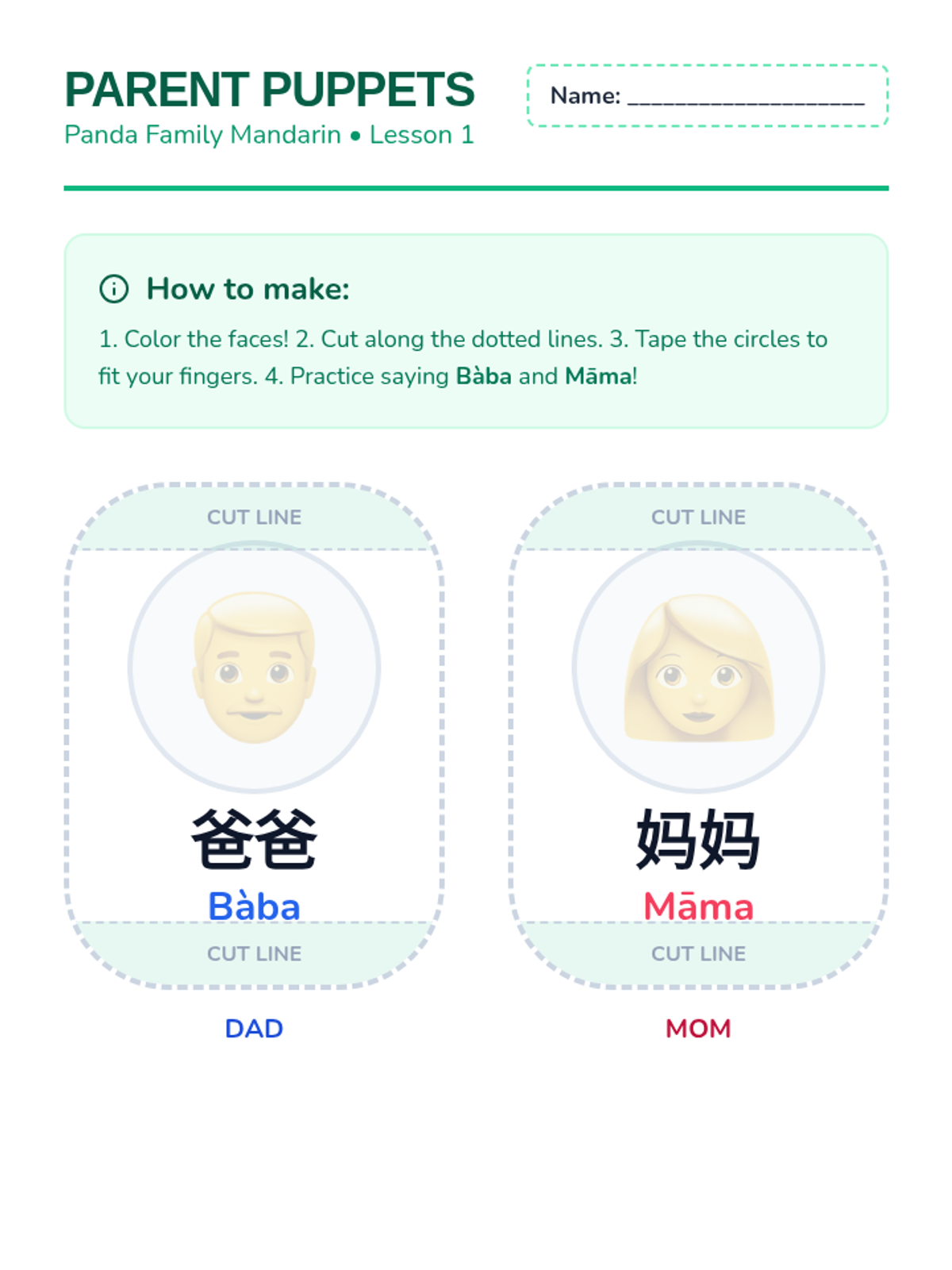
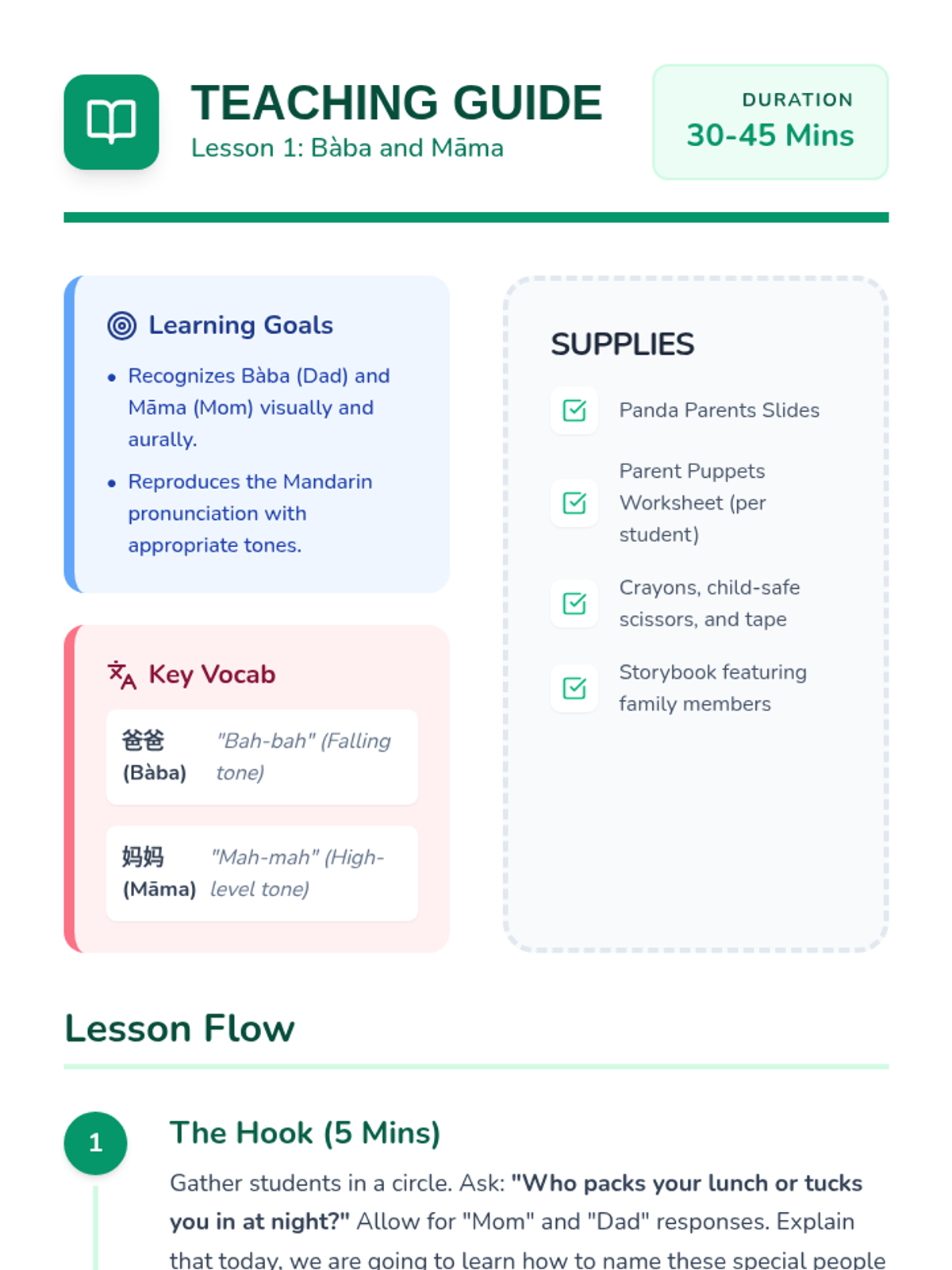
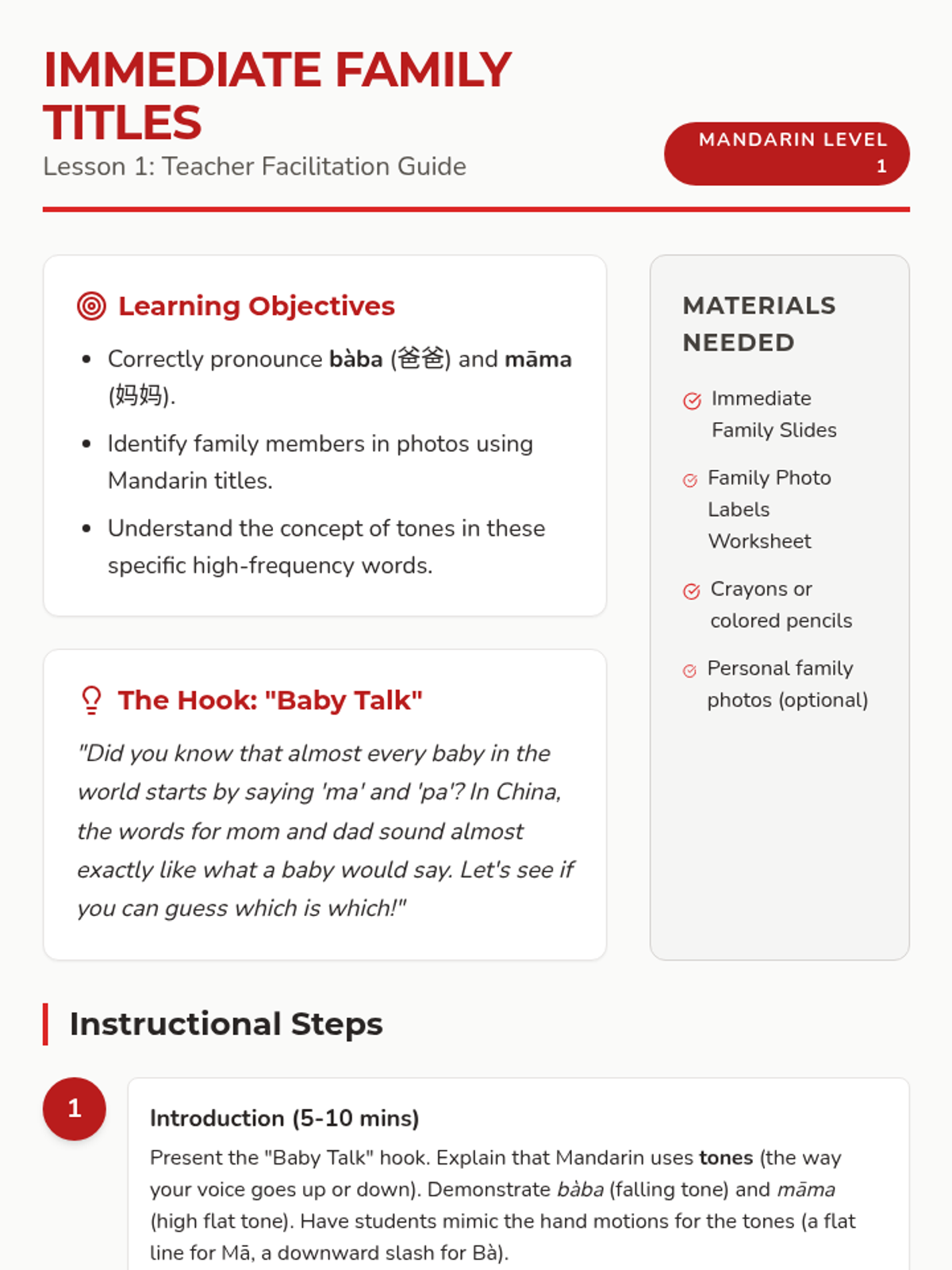
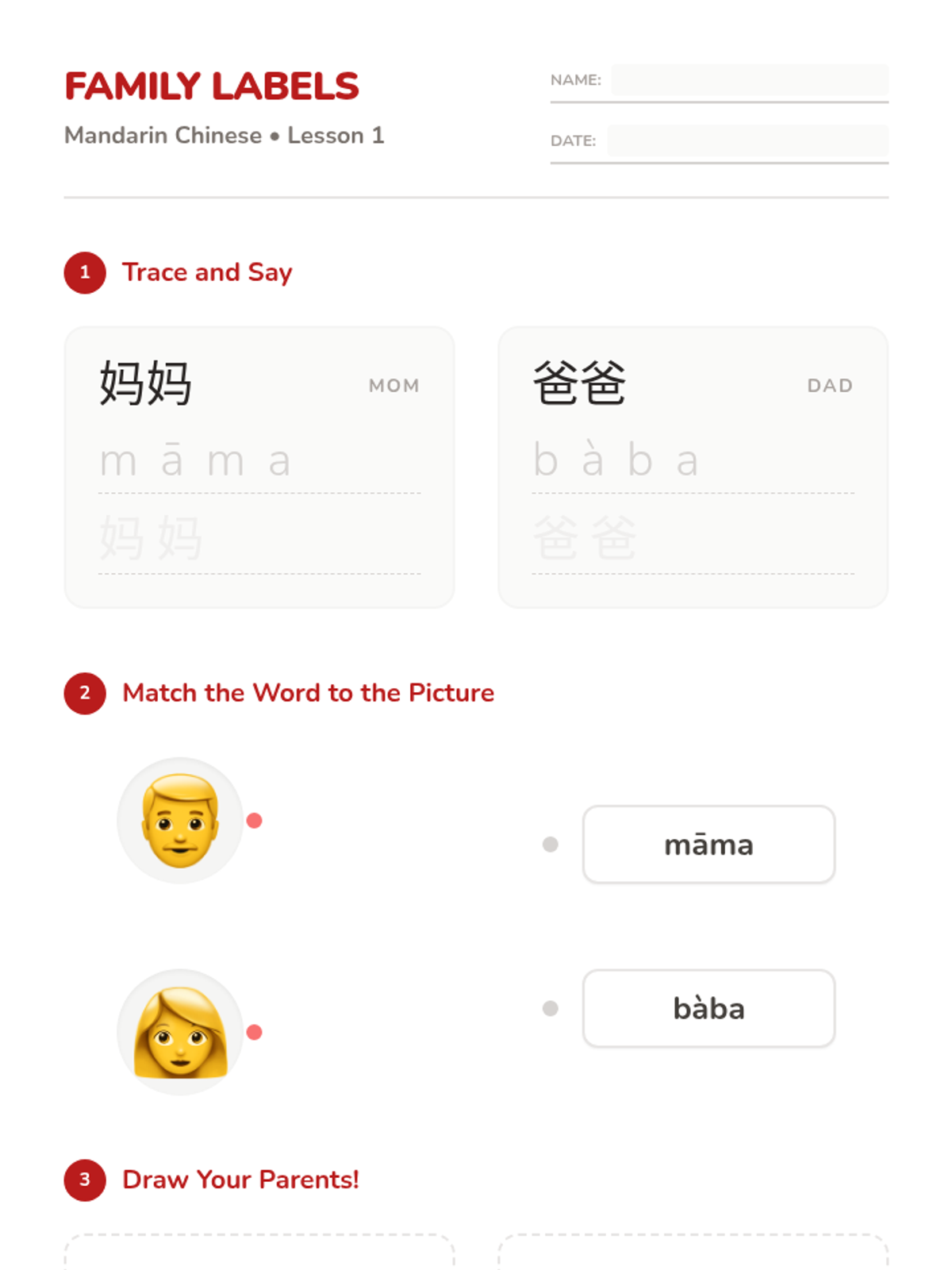
A foundational Mandarin Chinese sequence for Pre-K students focused on identifying family members. Students learn vocabulary for parents, siblings, and grandparents through interactive games, songs, and visual inquiry.
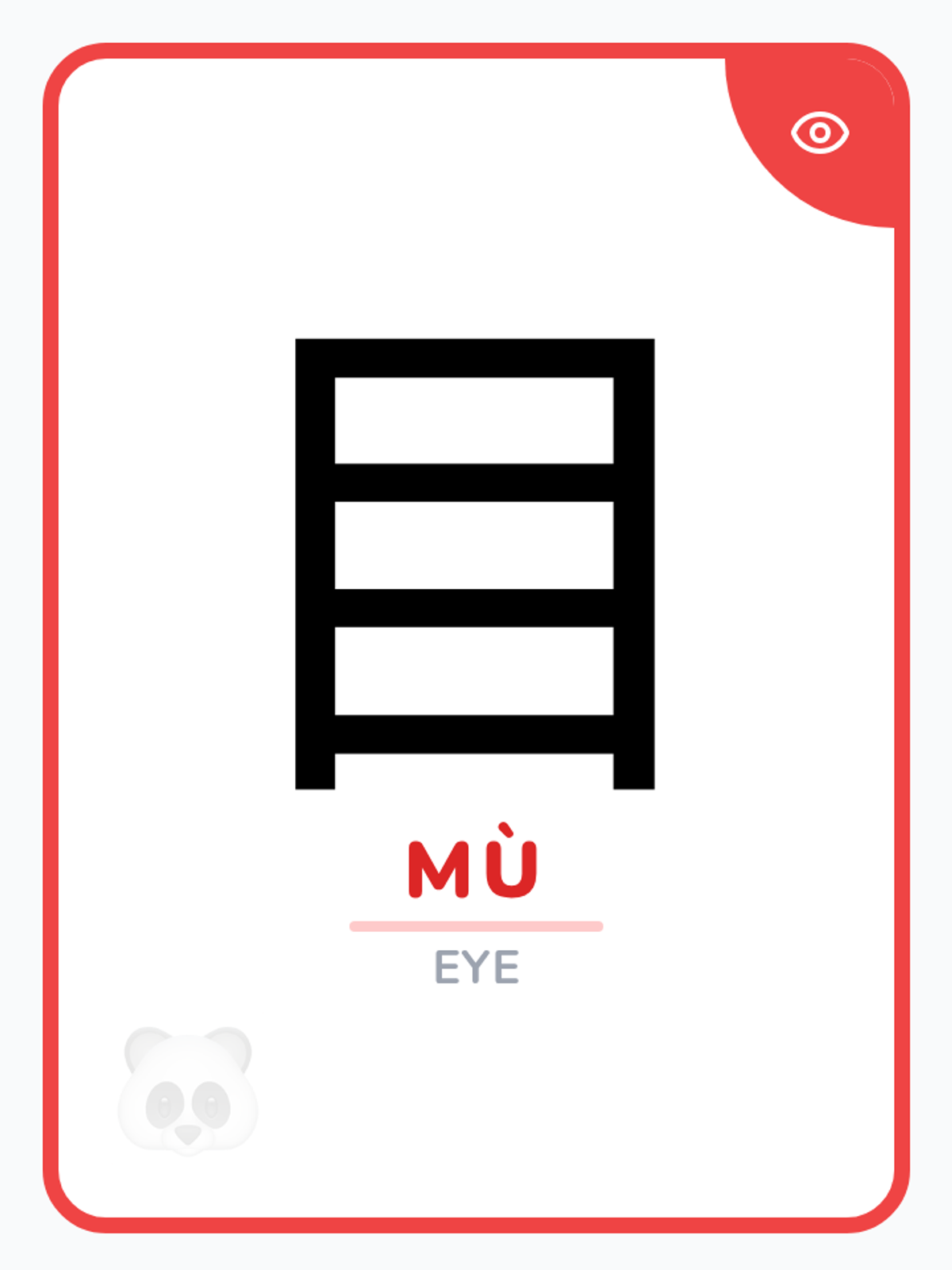
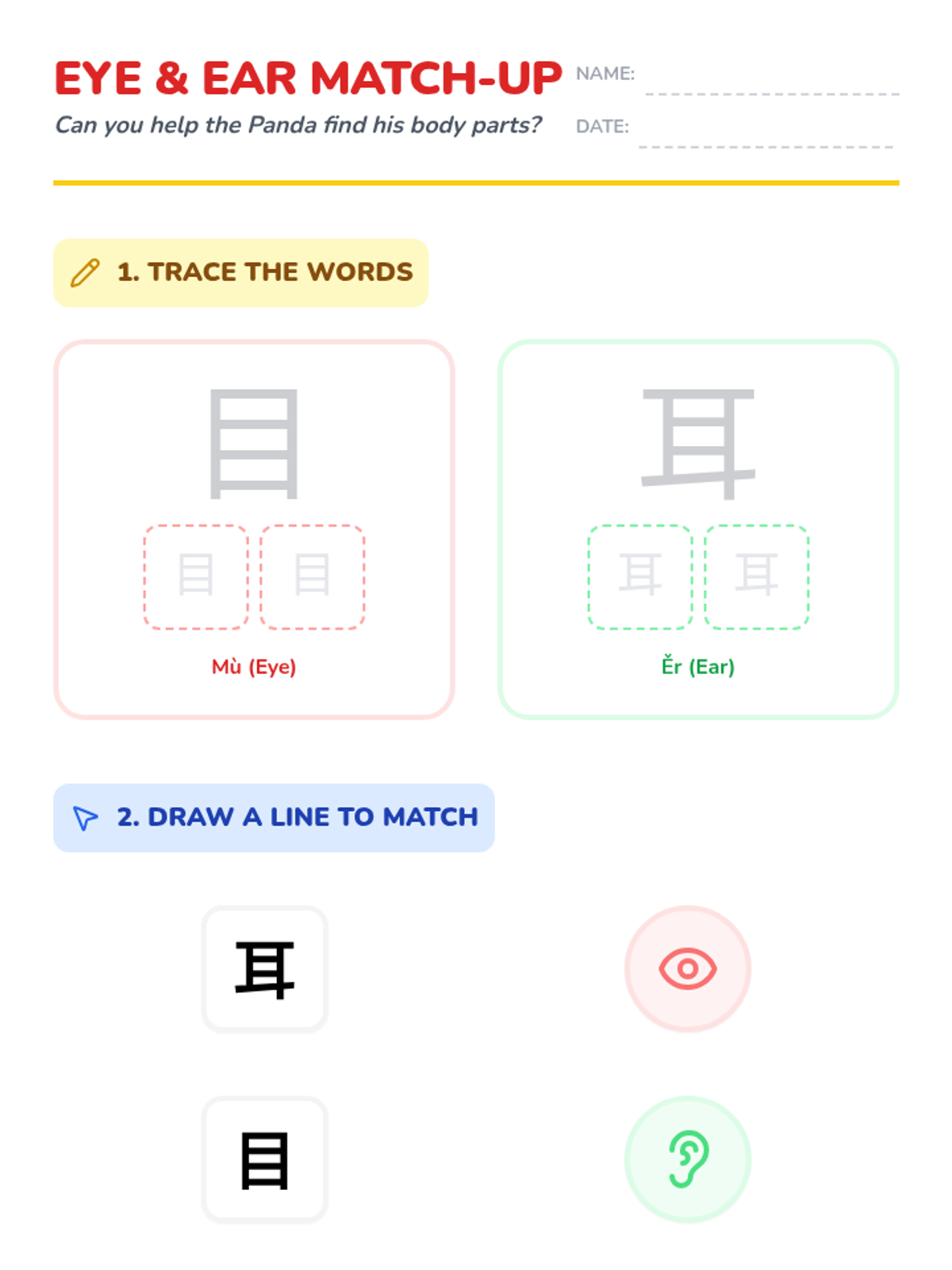
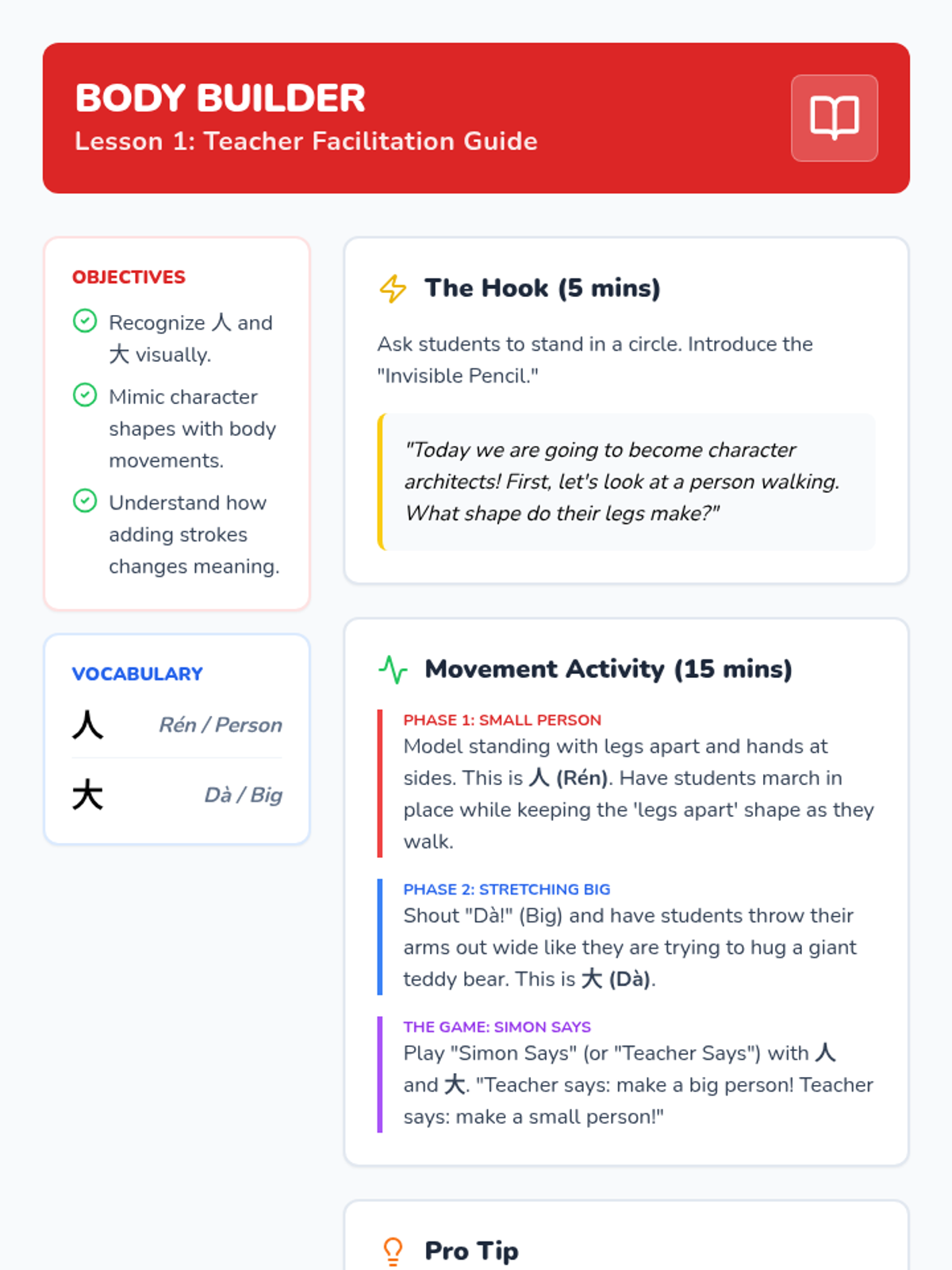
A Kindergarten sequence connecting Mandarin Chinese characters for body parts (Eye, Ear, Hand, Foot) to physical movement and creative play. Students use Total Physical Response (TPR) and project-based learning to build a foundational vocabulary of characters.
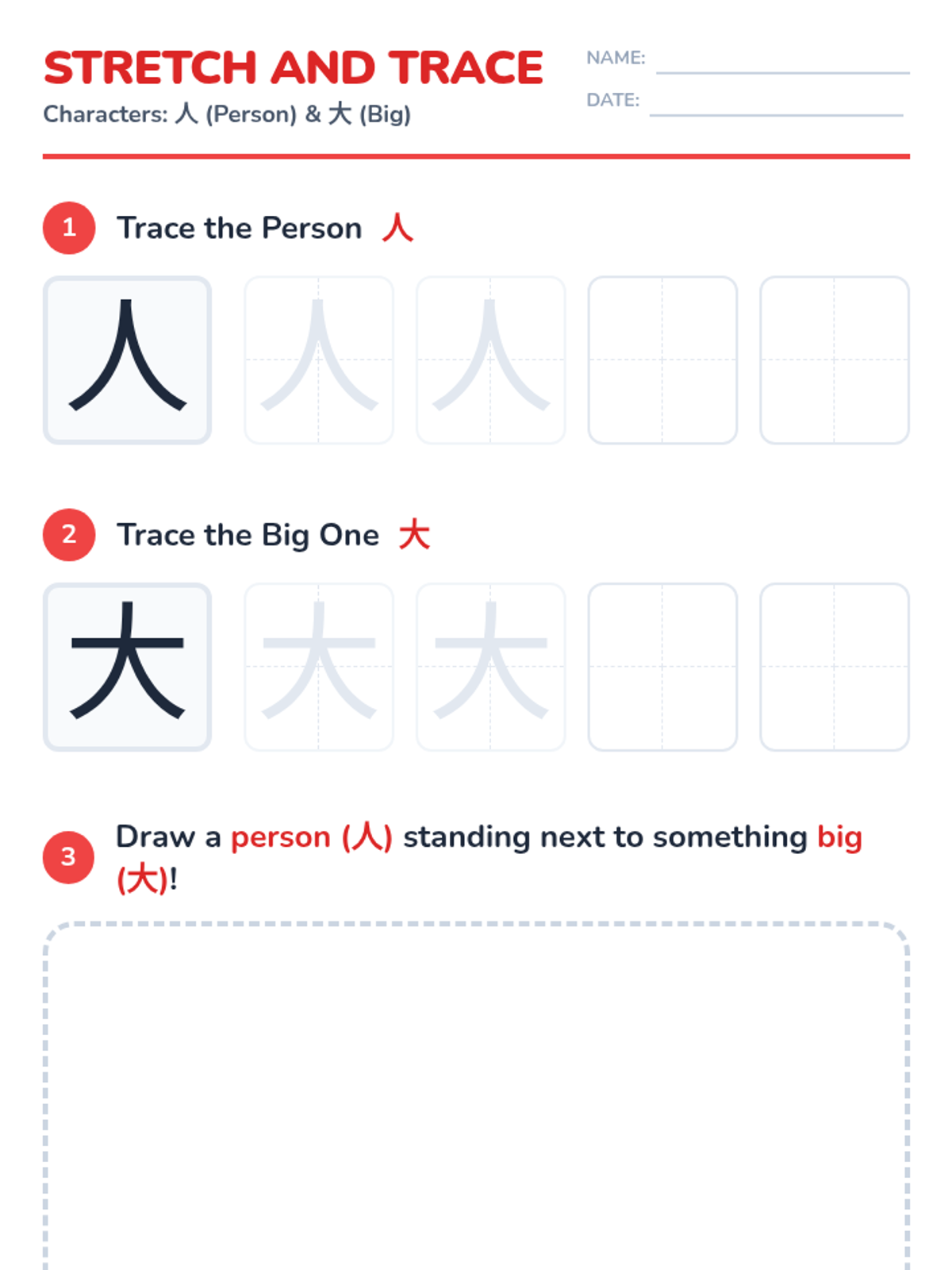
A Kindergarten intro to Mandarin Chinese focusing on radicals as building blocks for family-related characters. Students learn to recognize 'Person', 'Mouth', and 'Female' components through movement, observation, and hands-on puzzles.
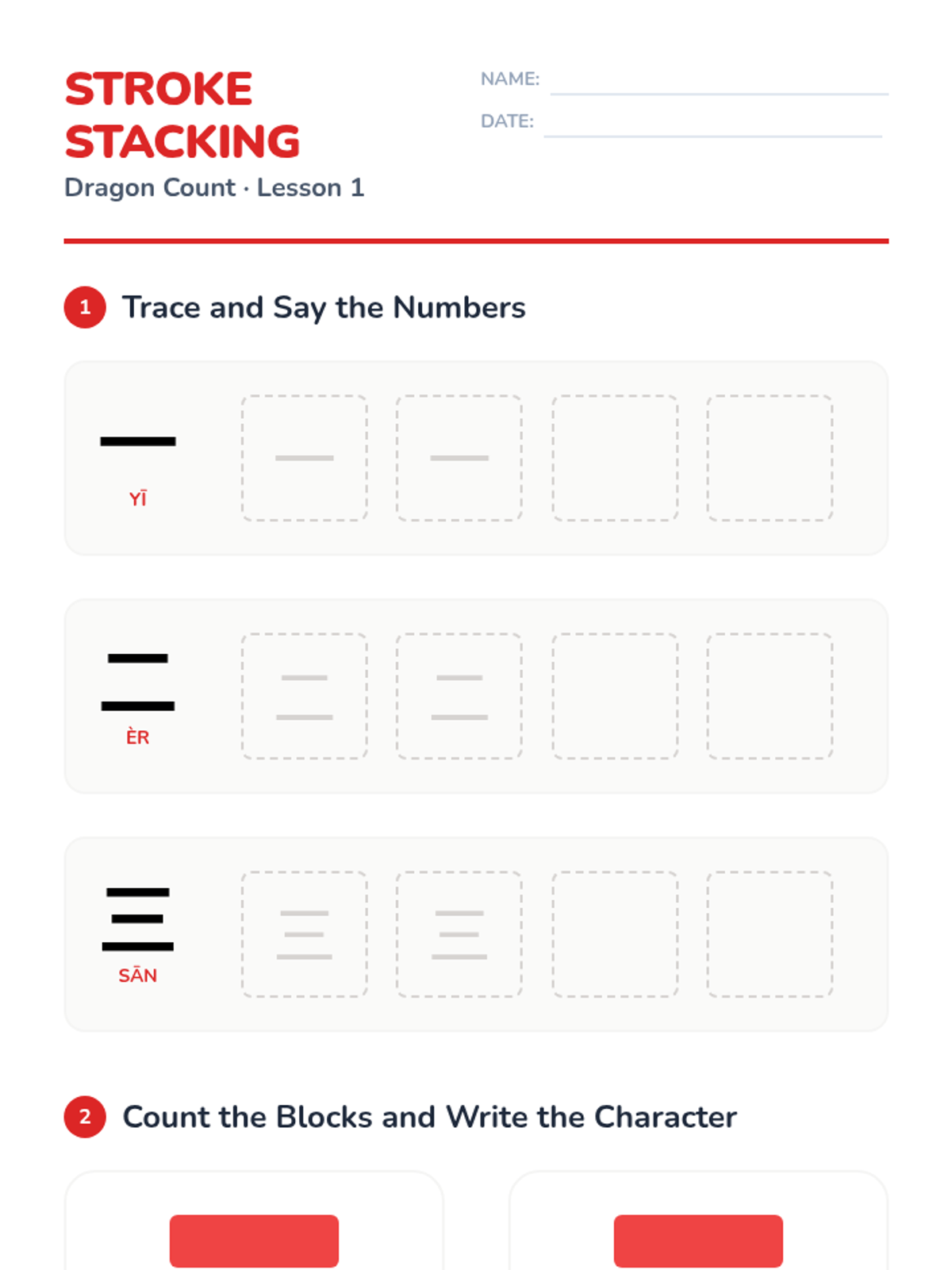
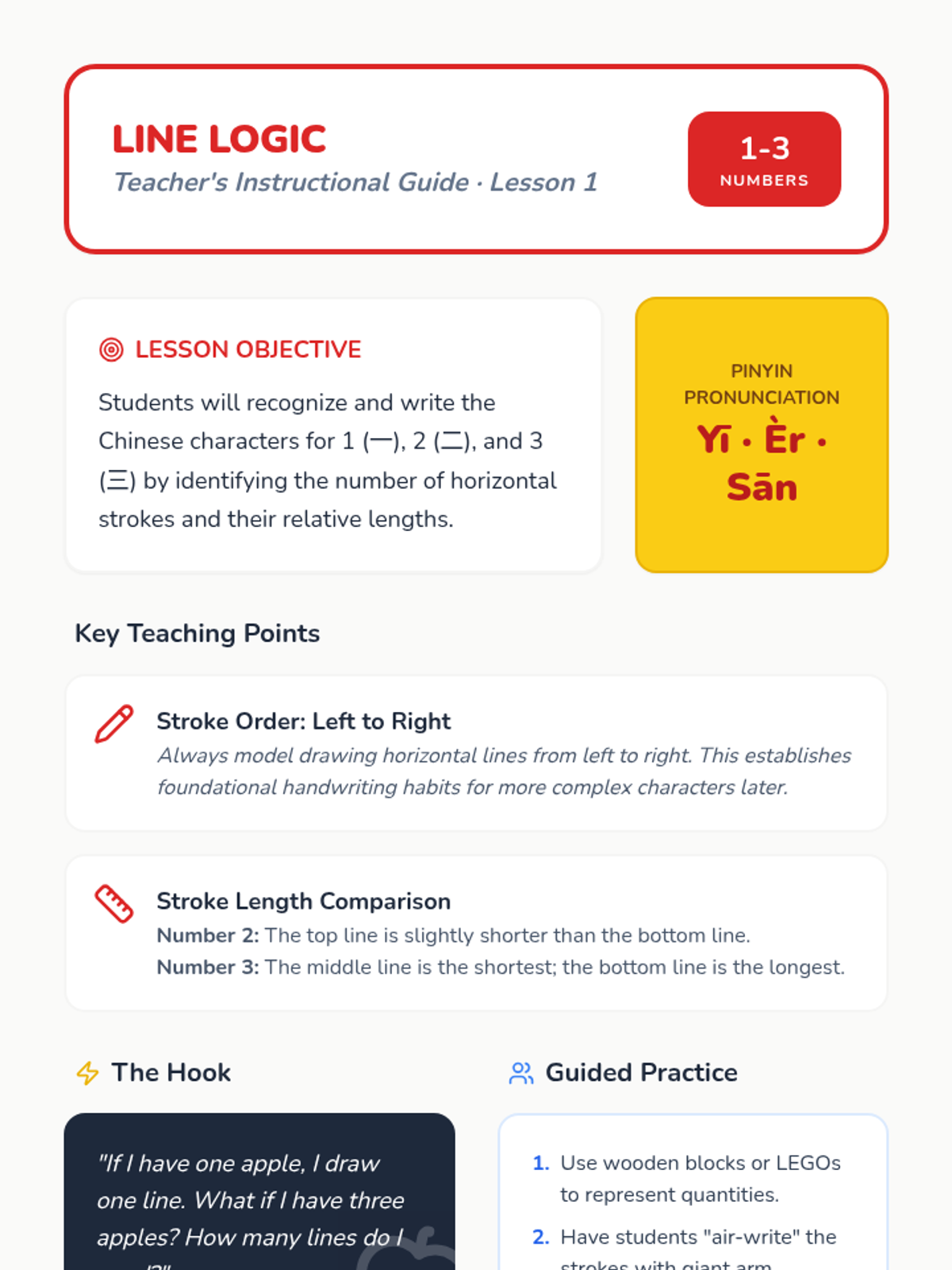
This sequence introduces Kindergarten students to Mandarin Chinese characters for numbers 1-10 through visual mnemonics, hand gestures, and playful simulations. Students progress from simple horizontal lines to complex symbols, culminating in a classroom shop and Bingo game to reinforce character recognition.
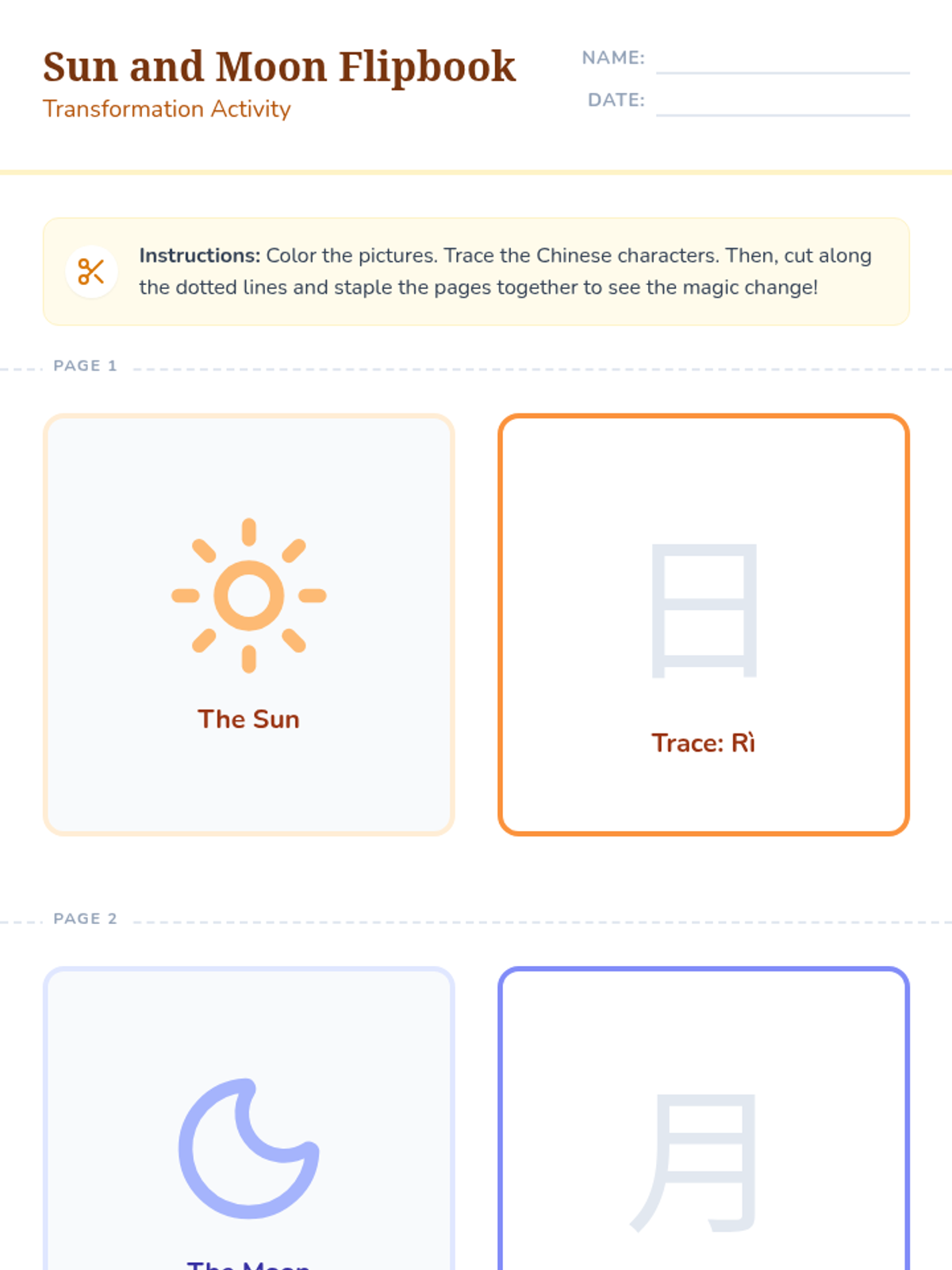
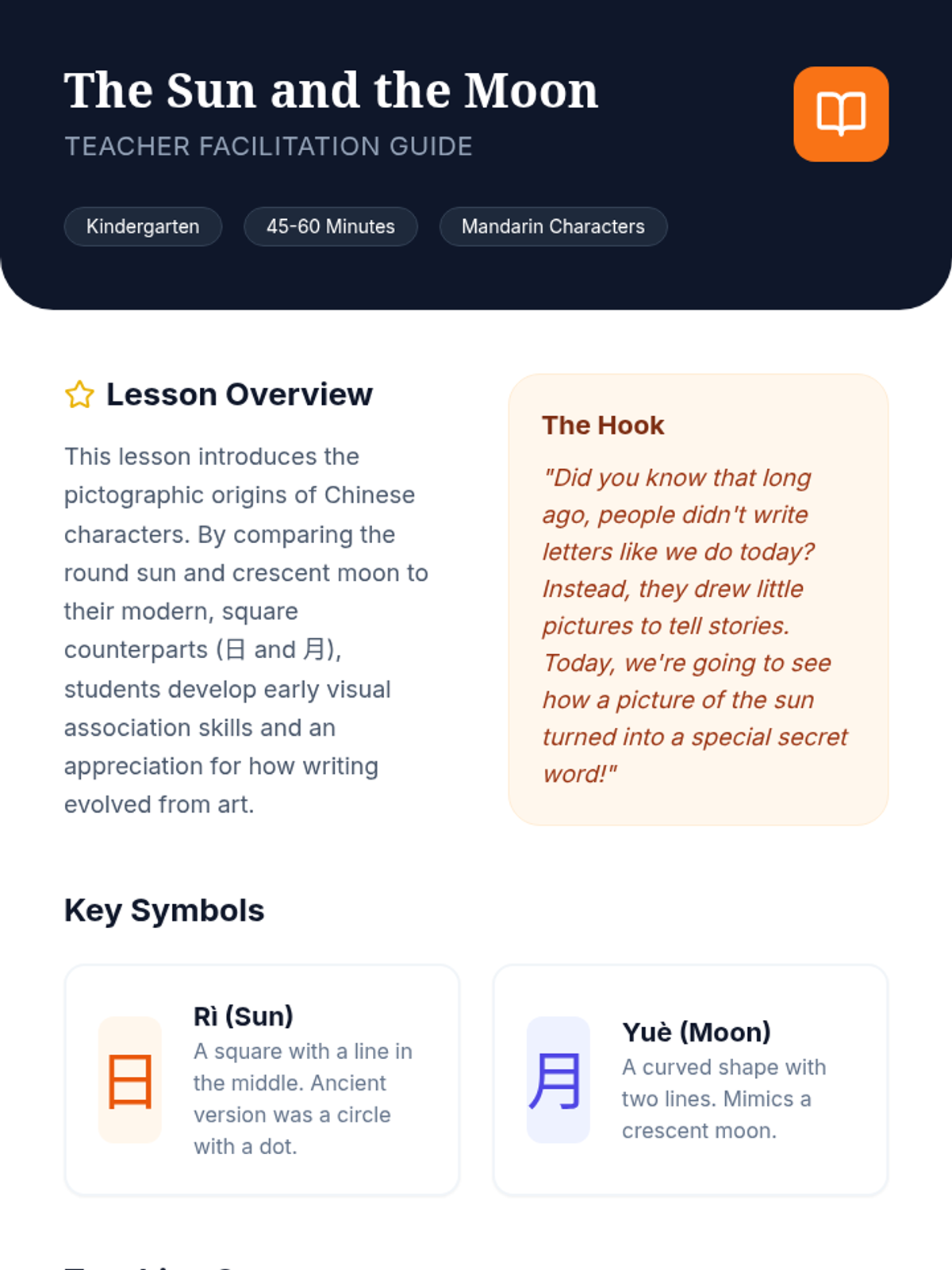
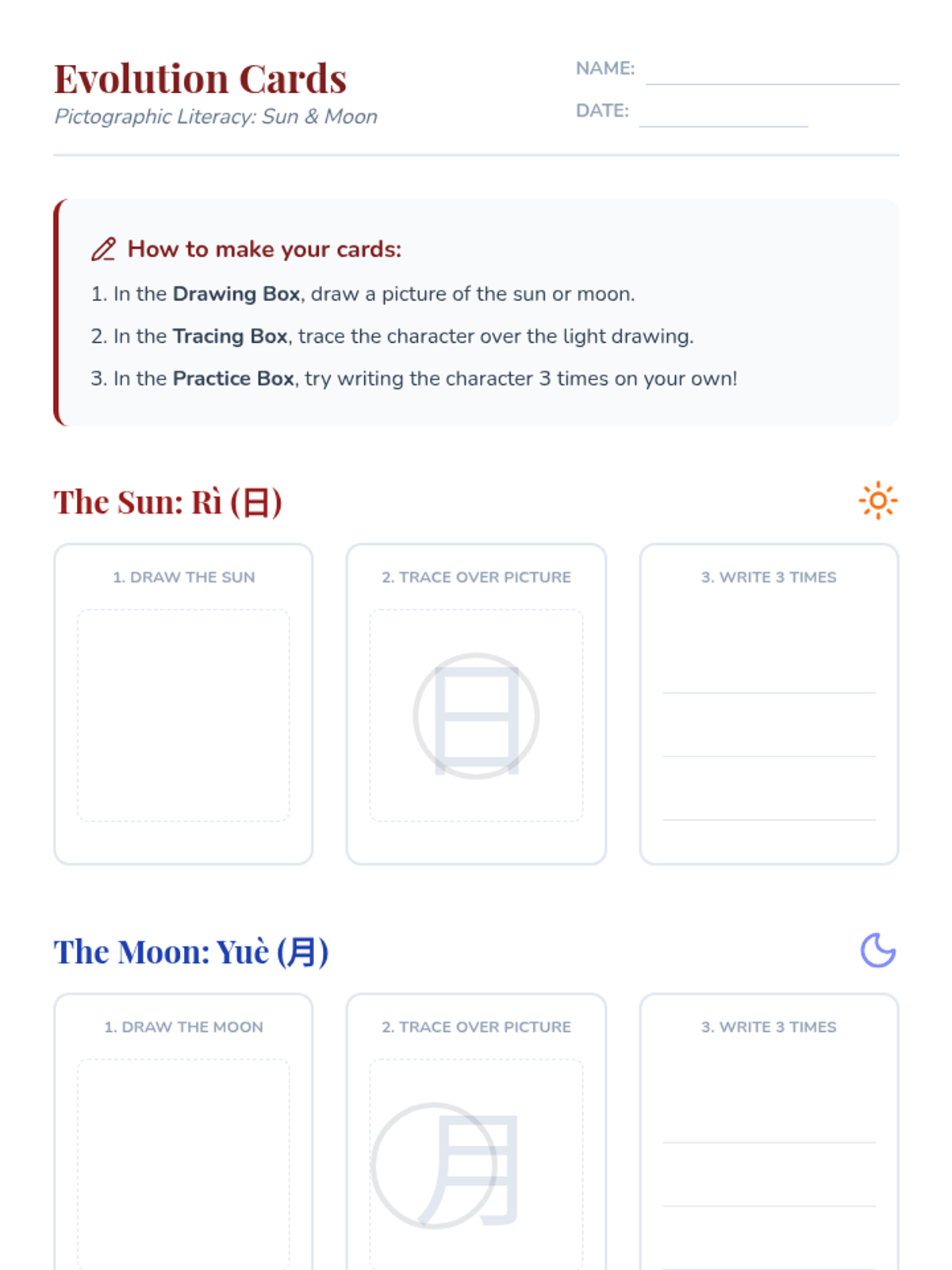
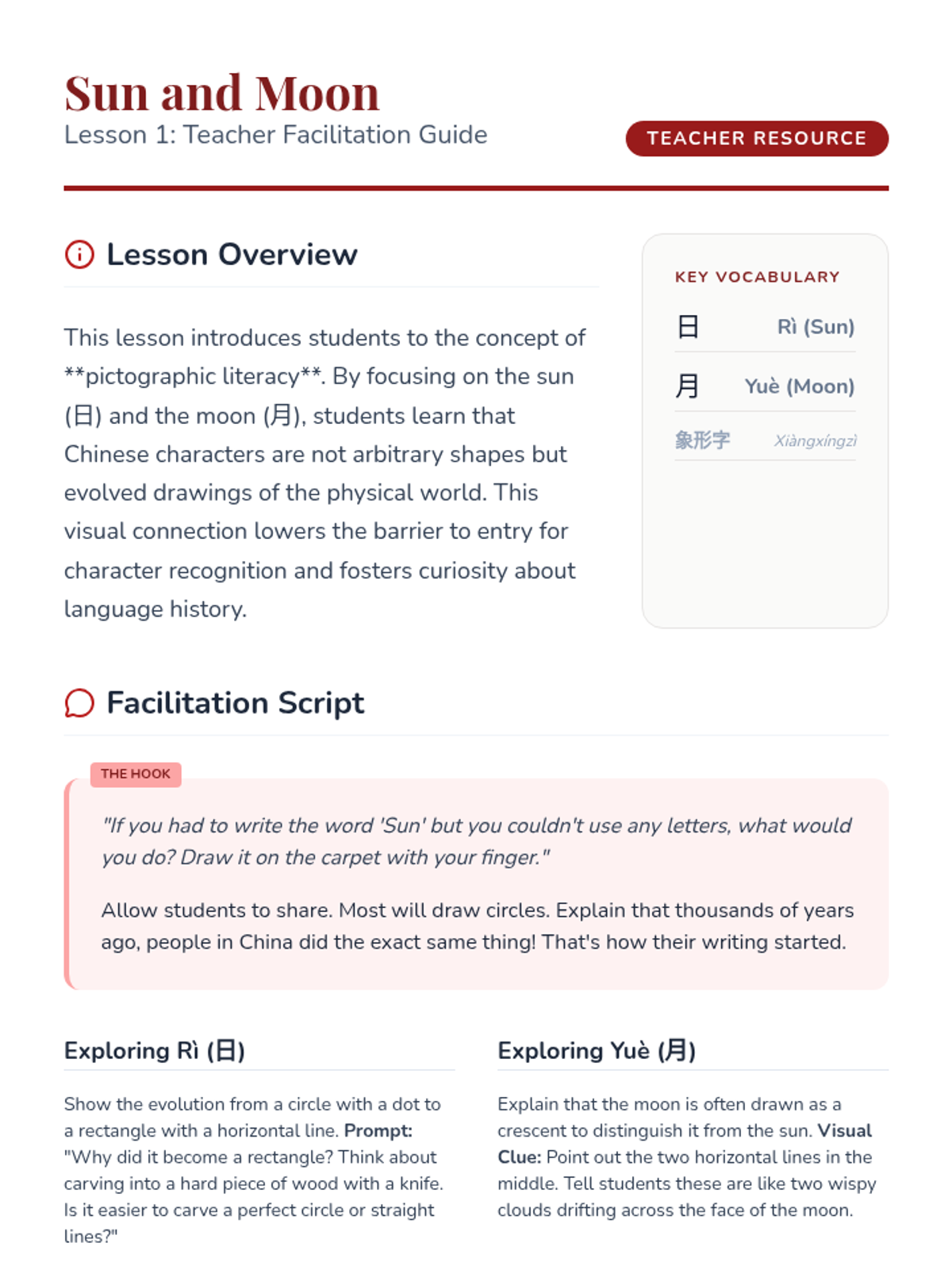
A Kindergarten sequence exploring the pictographic origins of Mandarin Chinese characters. Students learn to connect natural elements like the sun, moon, mountains, and water to their written symbols through art, movement, and observation.
Students explore the origins of Chinese characters by connecting them to illustrations of the natural world. This inquiry-based sequence helps students visualize the evolution from ancient pictographs to modern Hanzi, focusing on high-frequency nature words like sun, moon, water, fire, tree, and mountain.
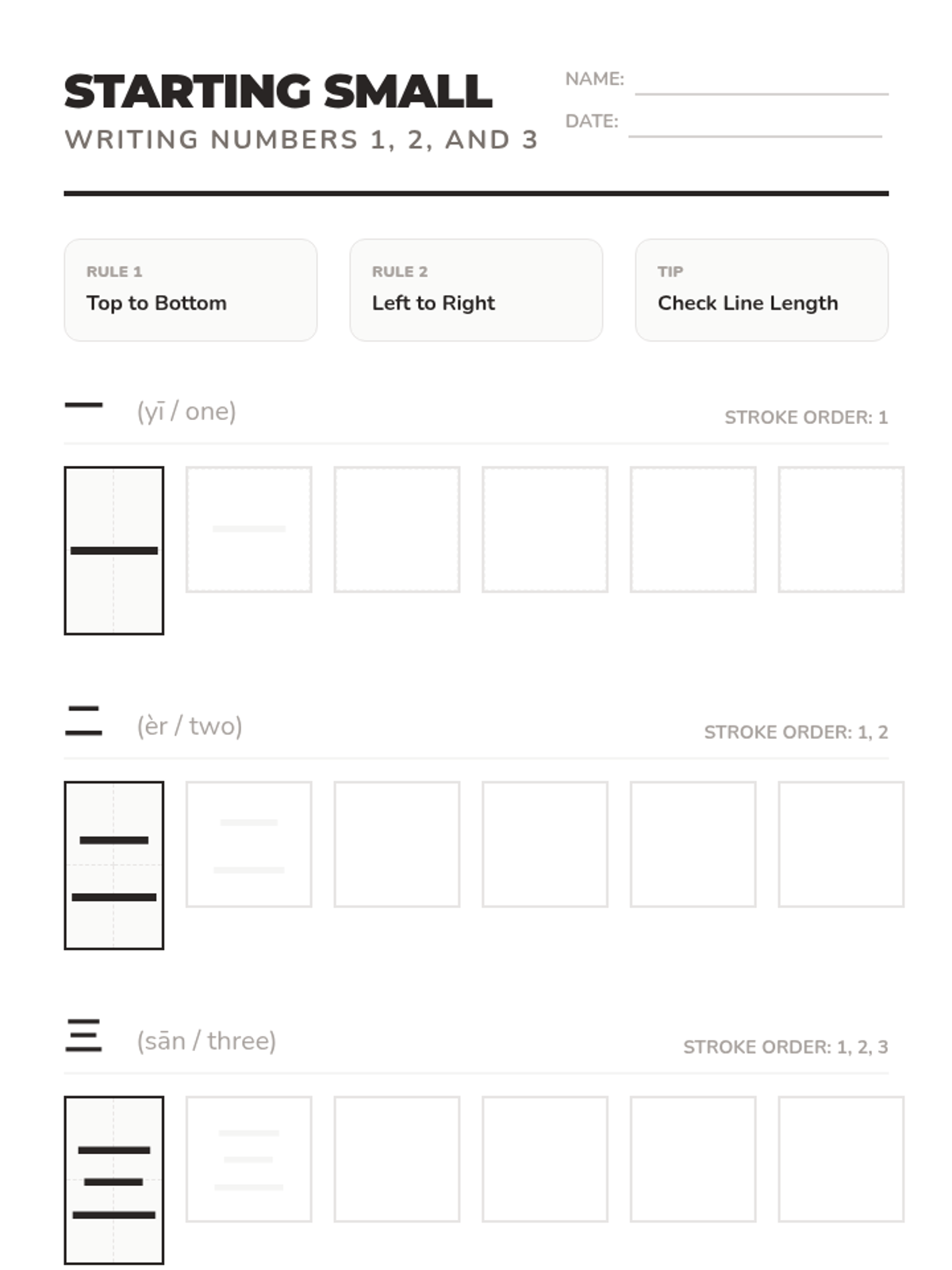
A comprehensive introduction to the foundational mechanics of Chinese calligraphy, focusing on the six basic strokes, the seven rules of stroke order, and numerical characters 1-10. Students develop fine motor skills and cultural appreciation through grid-based practice and traditional calligraphy techniques.
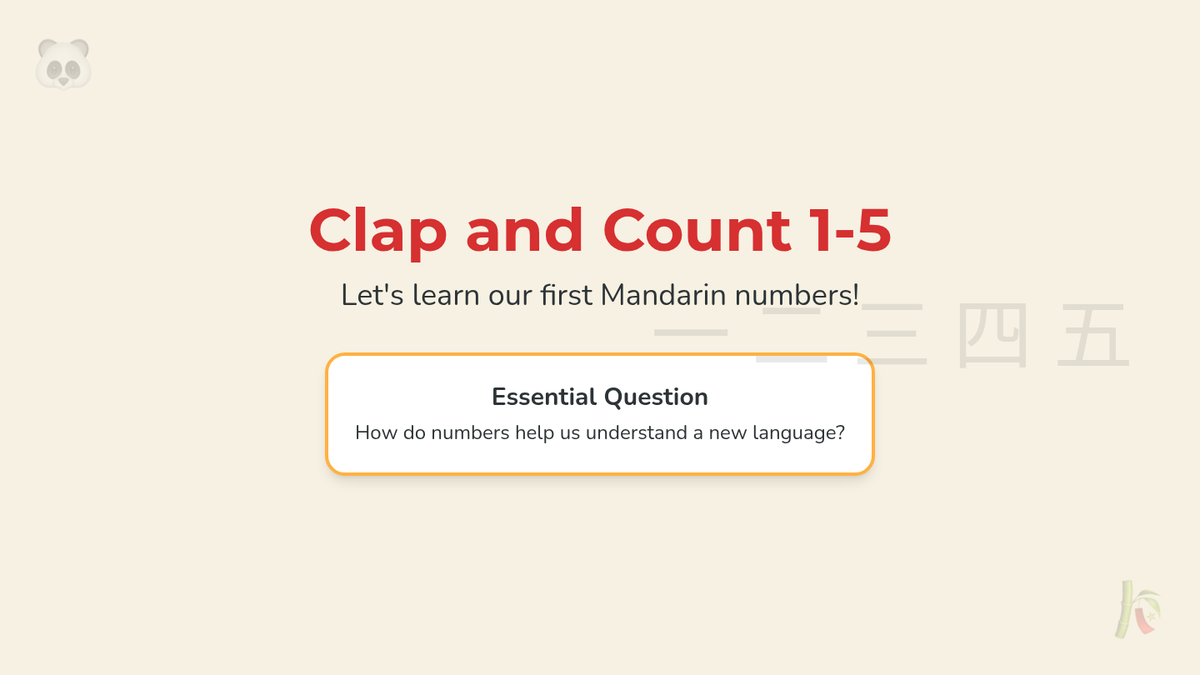
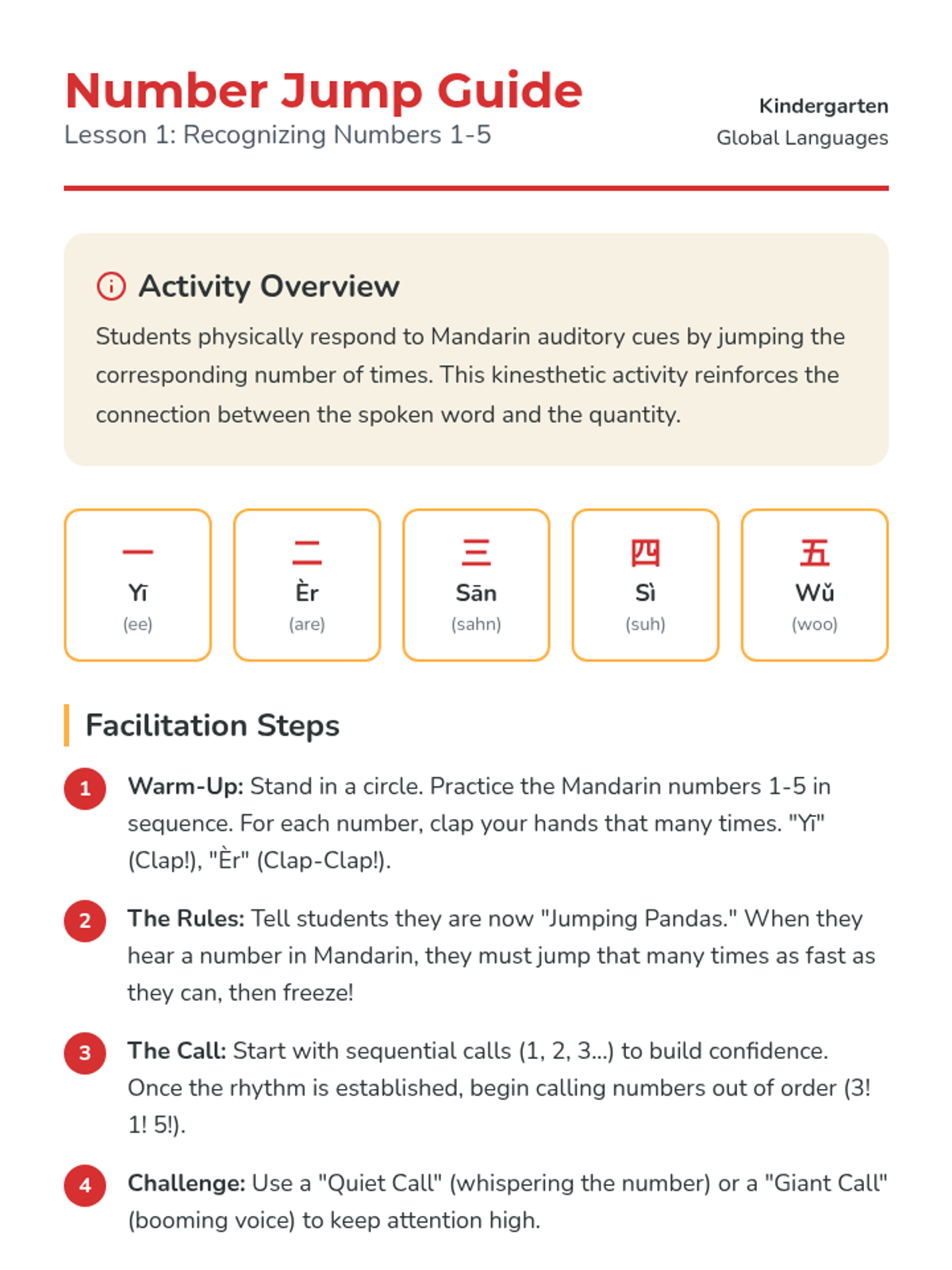
A Kindergarten sequence focused on auditory recognition of Mandarin Chinese numbers 1-10. Through hands-on workshops, cultural gestures, and interactive games, students connect Mandarin number sounds to physical quantities and sequences.
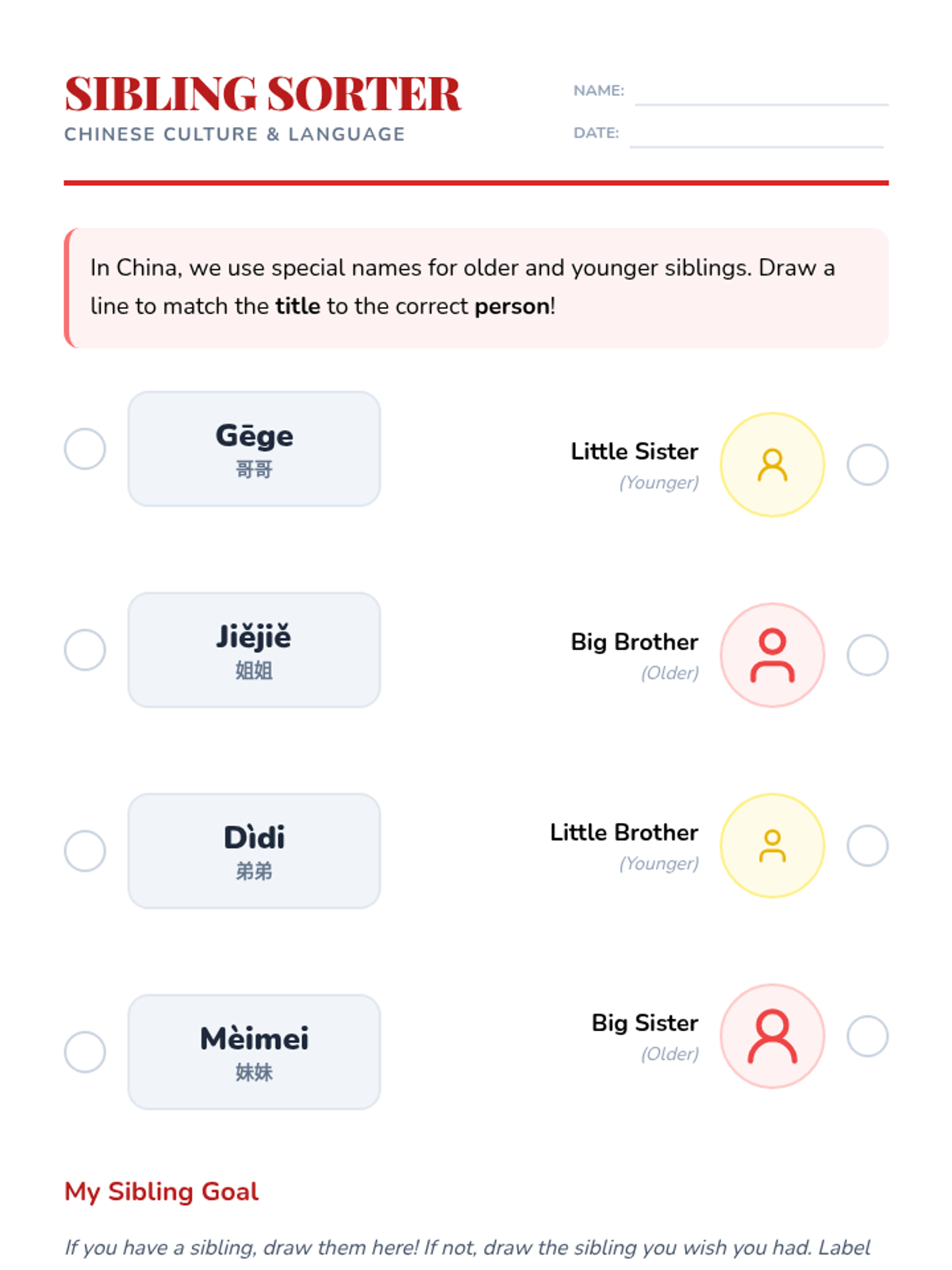
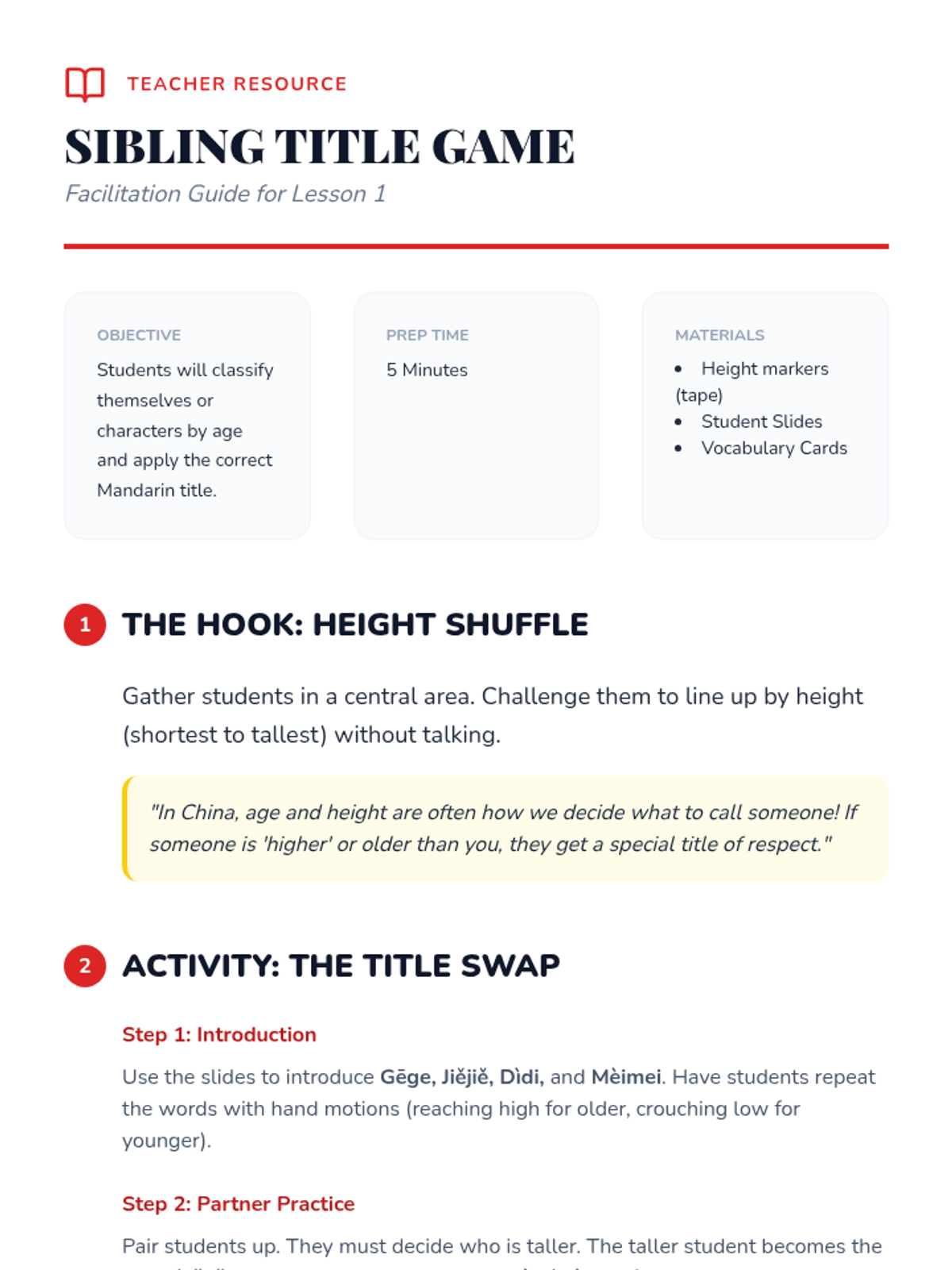
Students explore the vocabulary of family relationships in Mandarin Chinese, focusing on specific titles and cultural hierarchy. They move from immediate family to extended family, learn to introduce family members using 'Zhè shì...', and conclude with a family tree project.
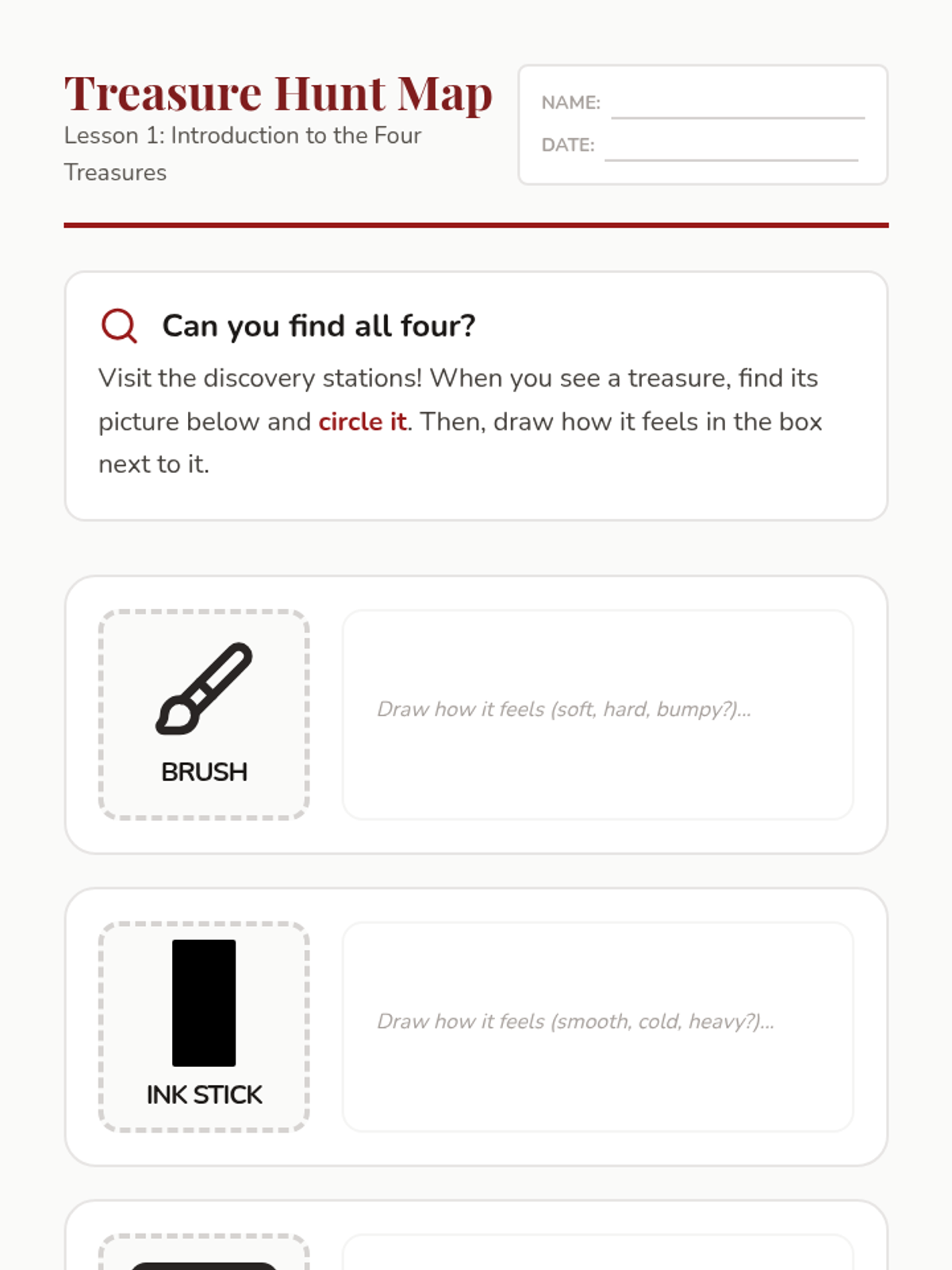
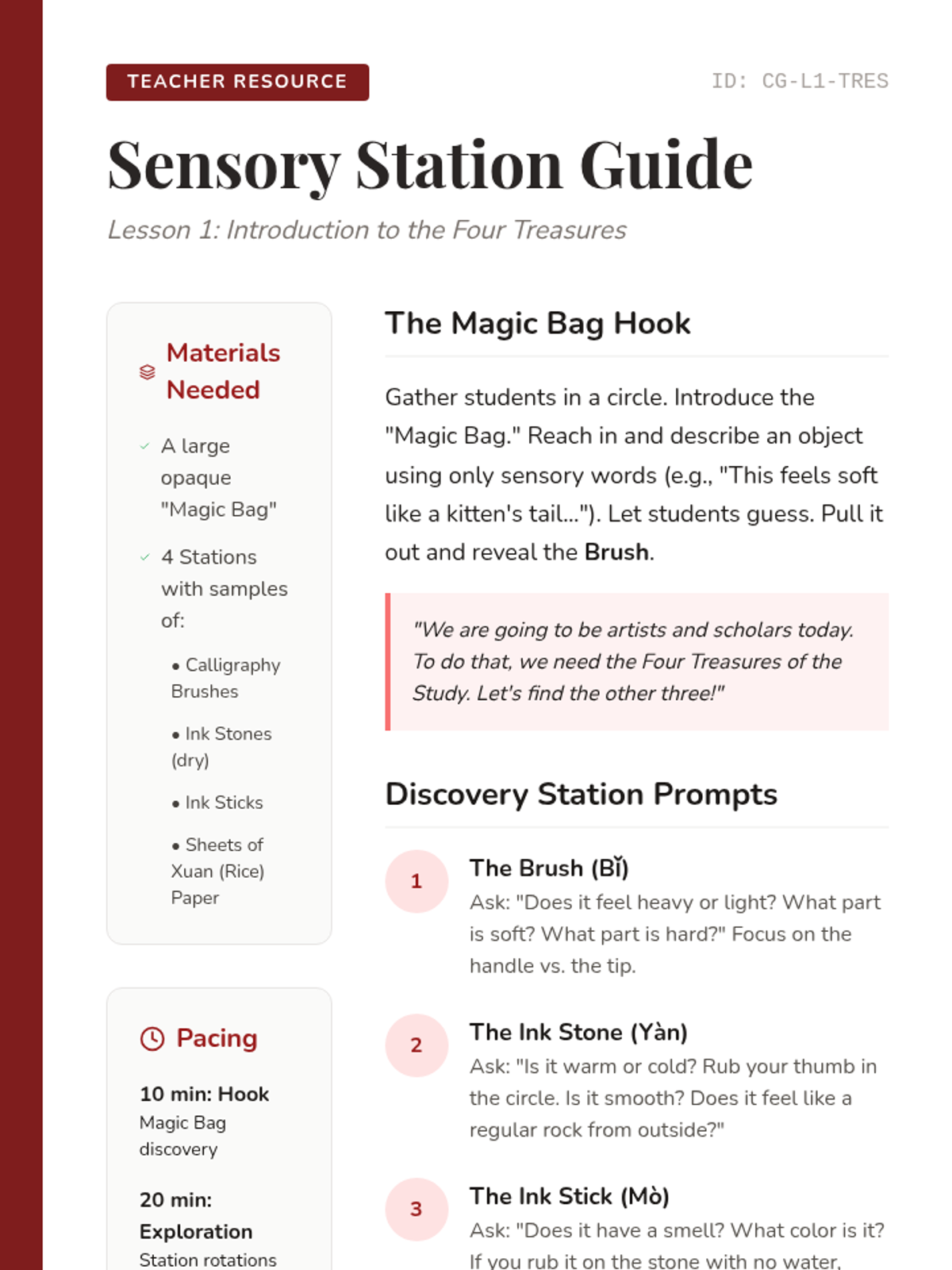
A hands-on introduction to Chinese calligraphy for Kindergarteners, focusing on the cultural tools, physical posture, and the pictographic origins of characters like sun, moon, and mountain. Students transition from sensory exploration to creating their own mounted scroll artwork.
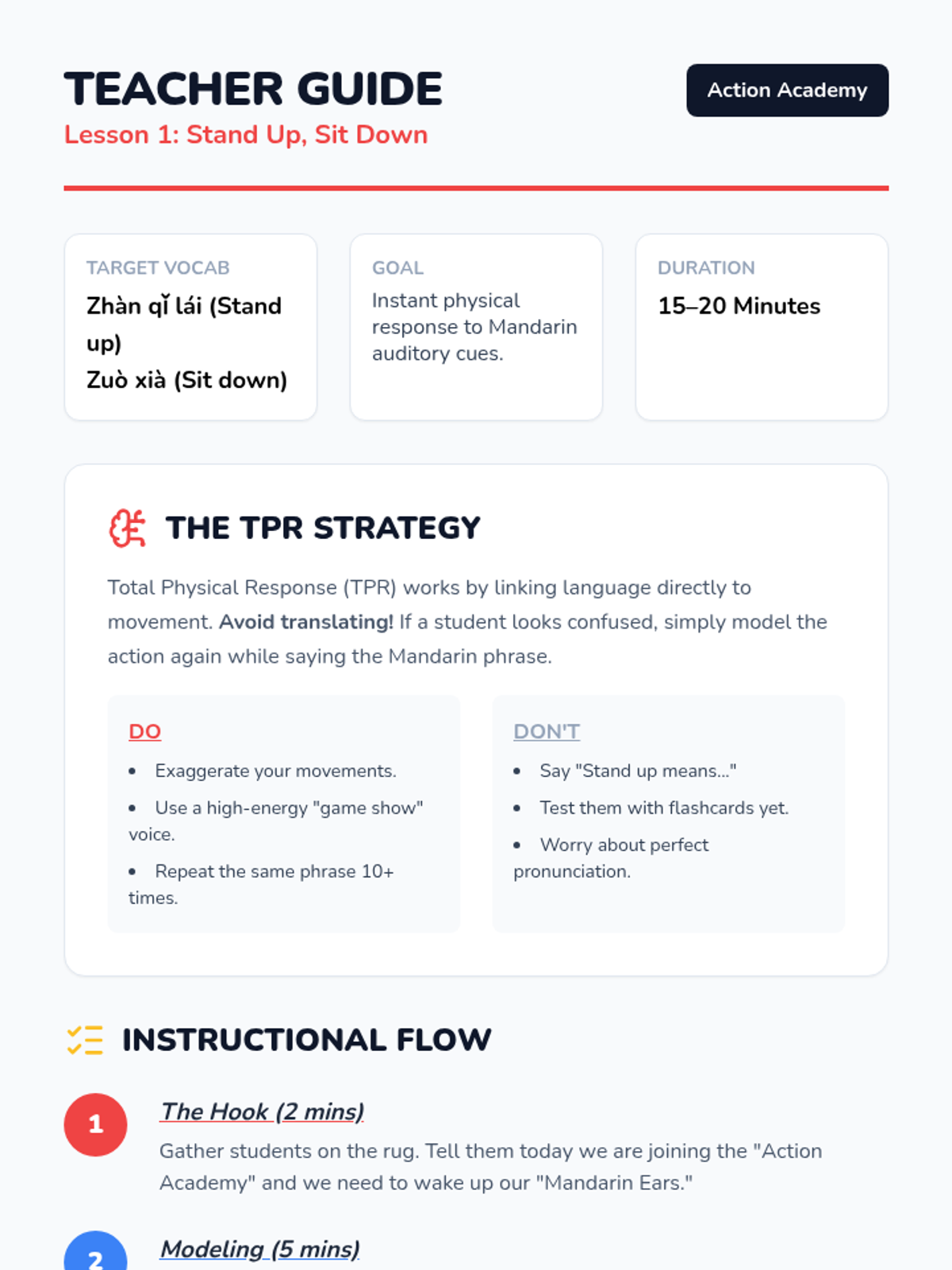
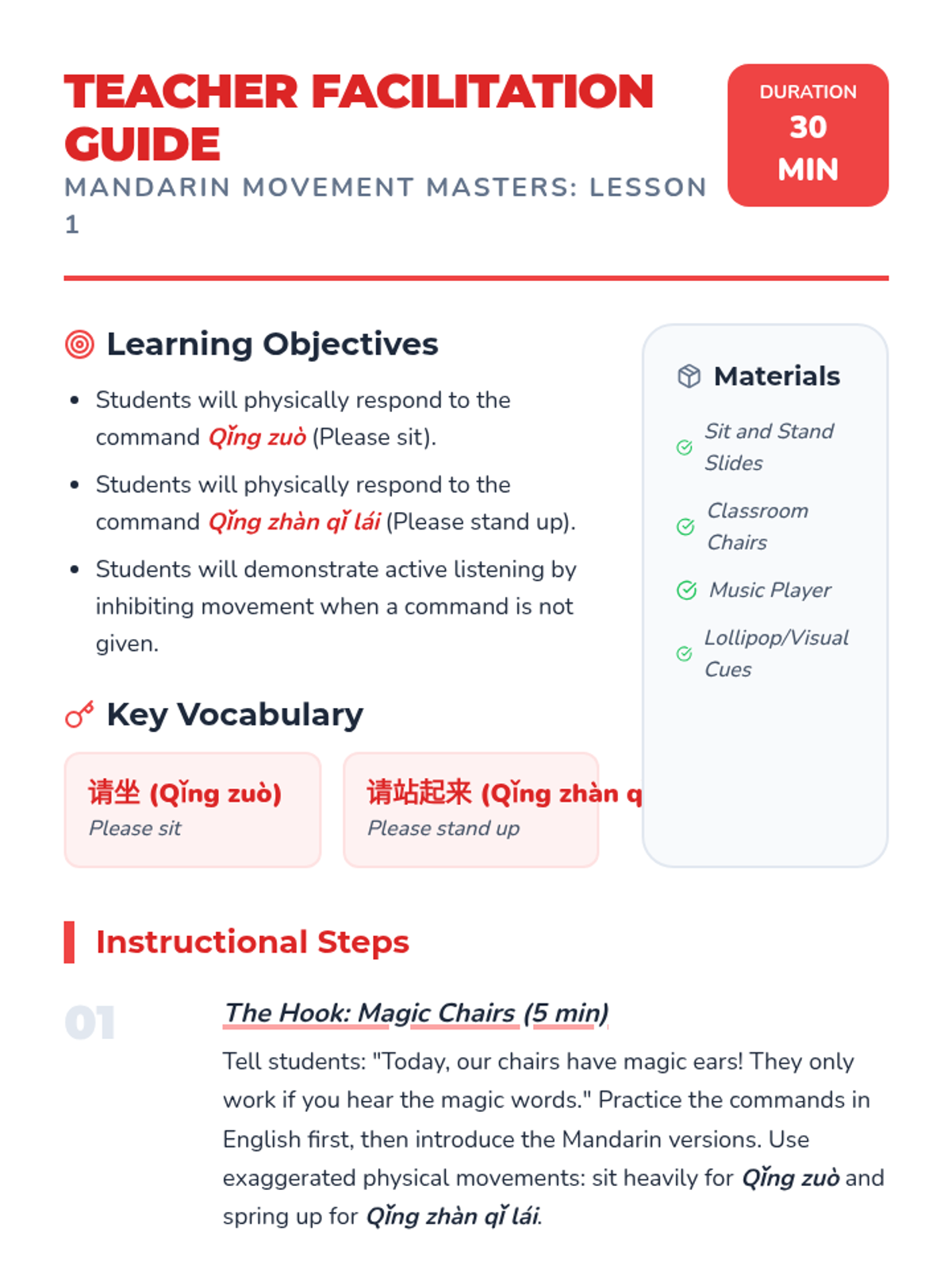
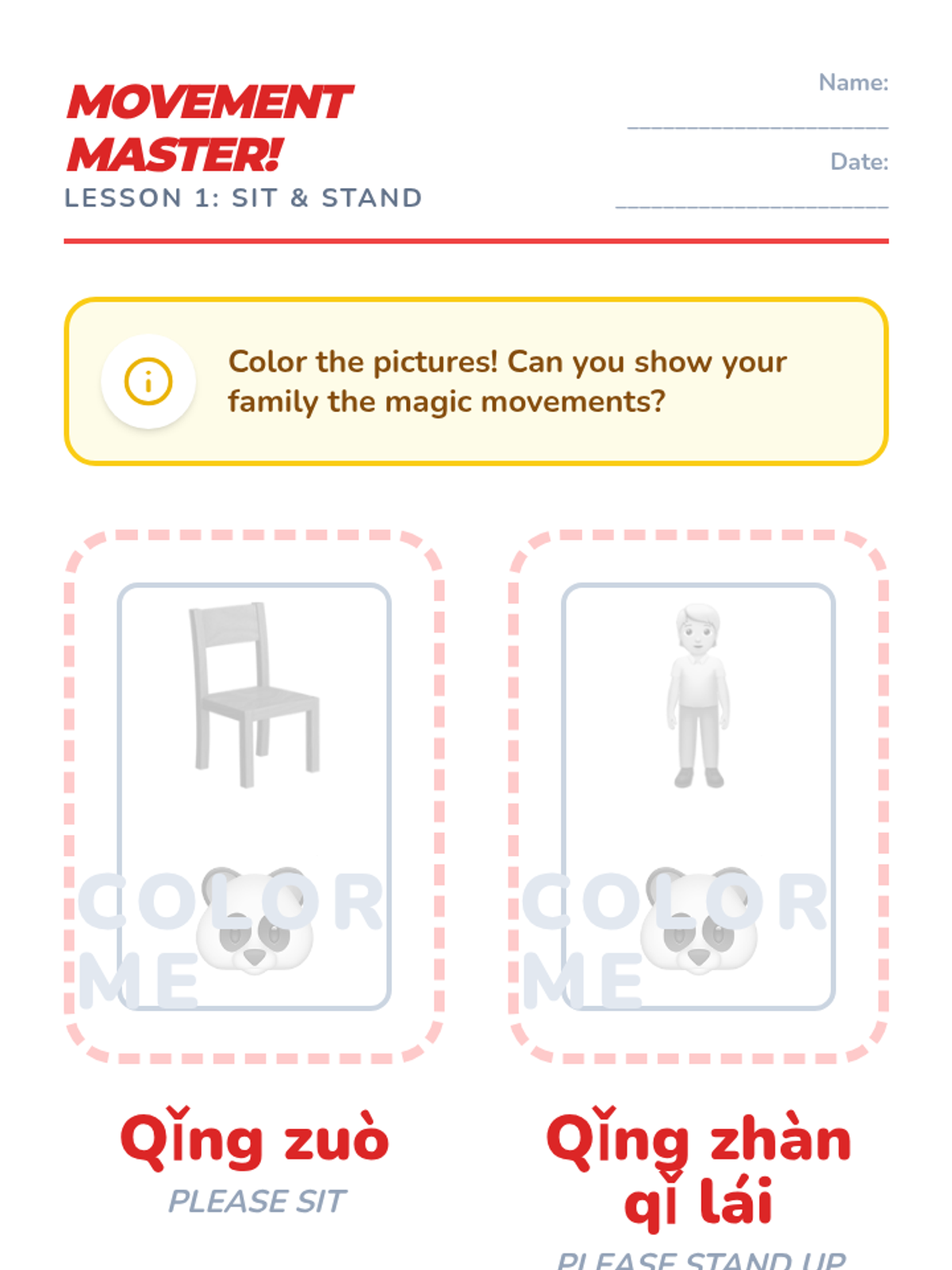
A high-energy Mandarin Chinese sequence for Pre-K students using the Total Physical Response (TPR) method. Students learn to respond to physical commands and action verbs through games and movement, building direct meaning without translation.
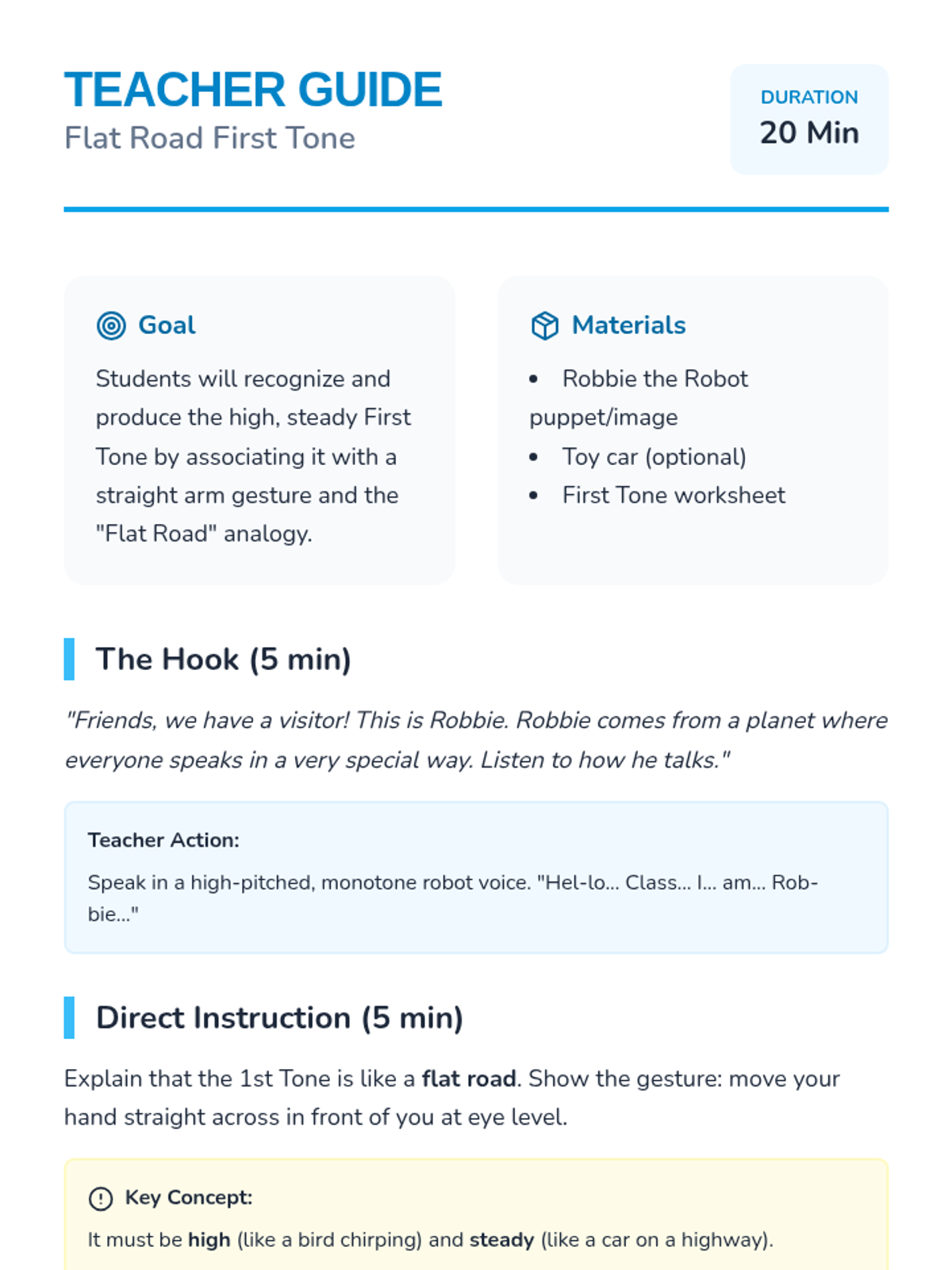
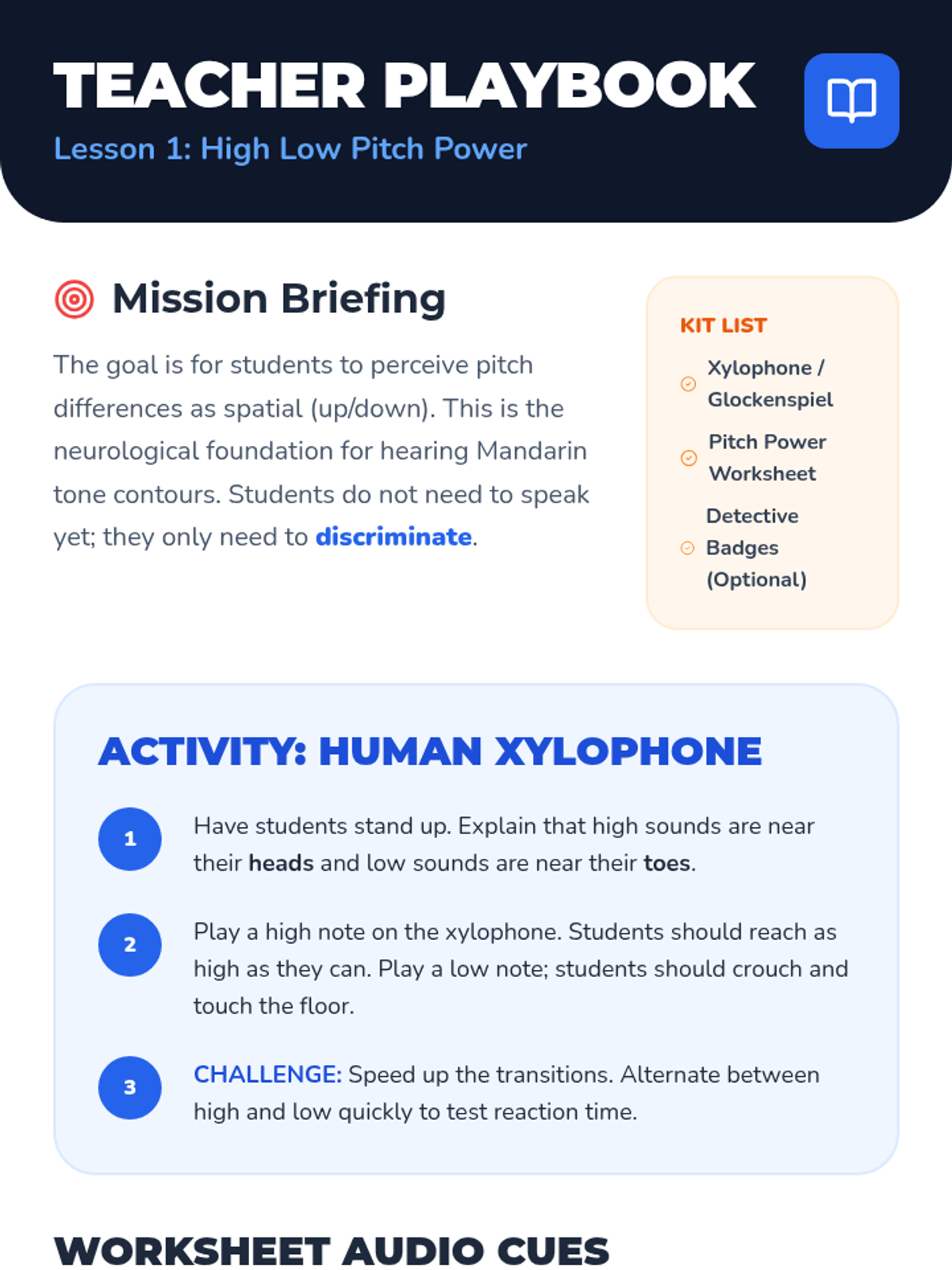
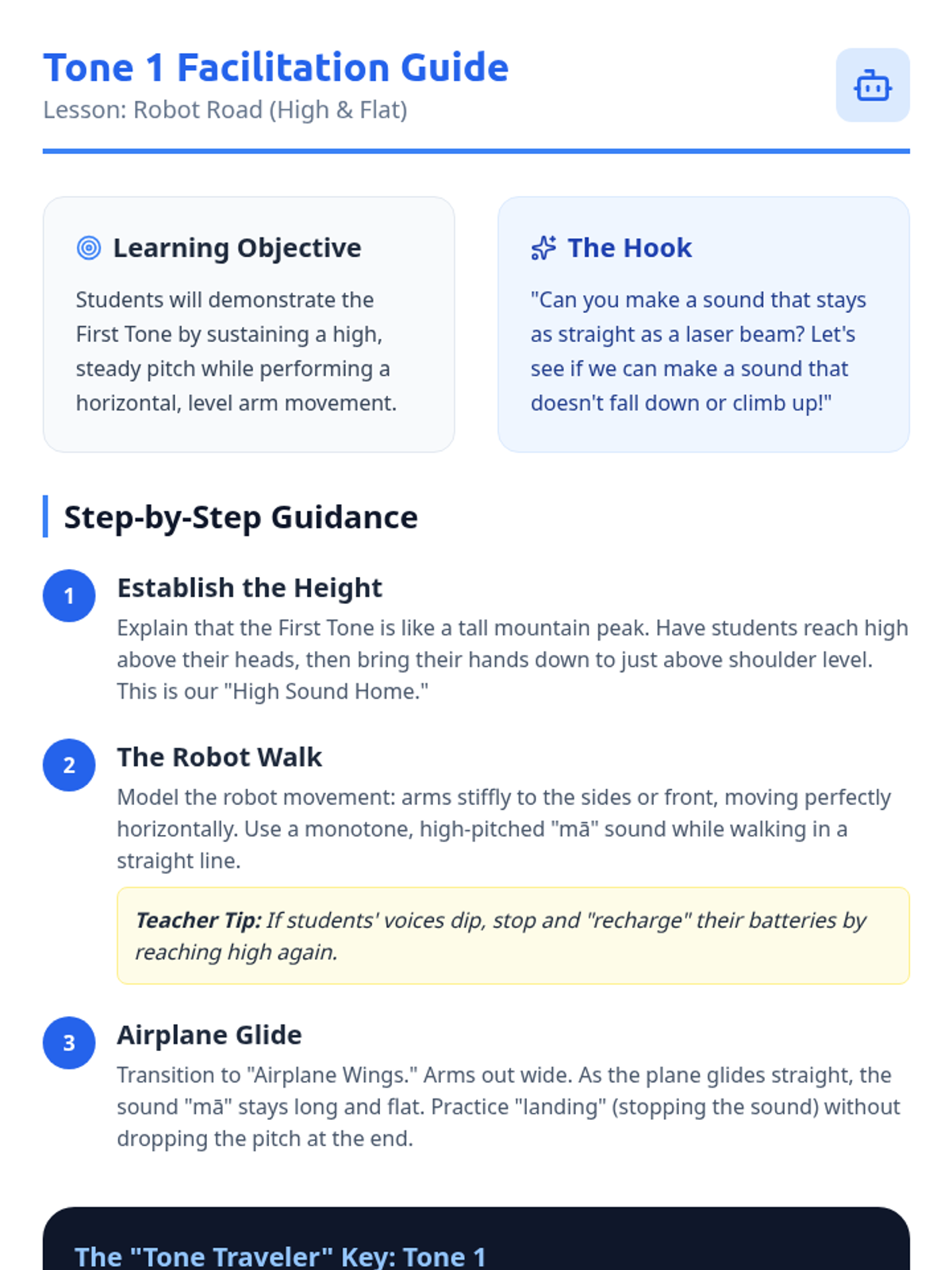
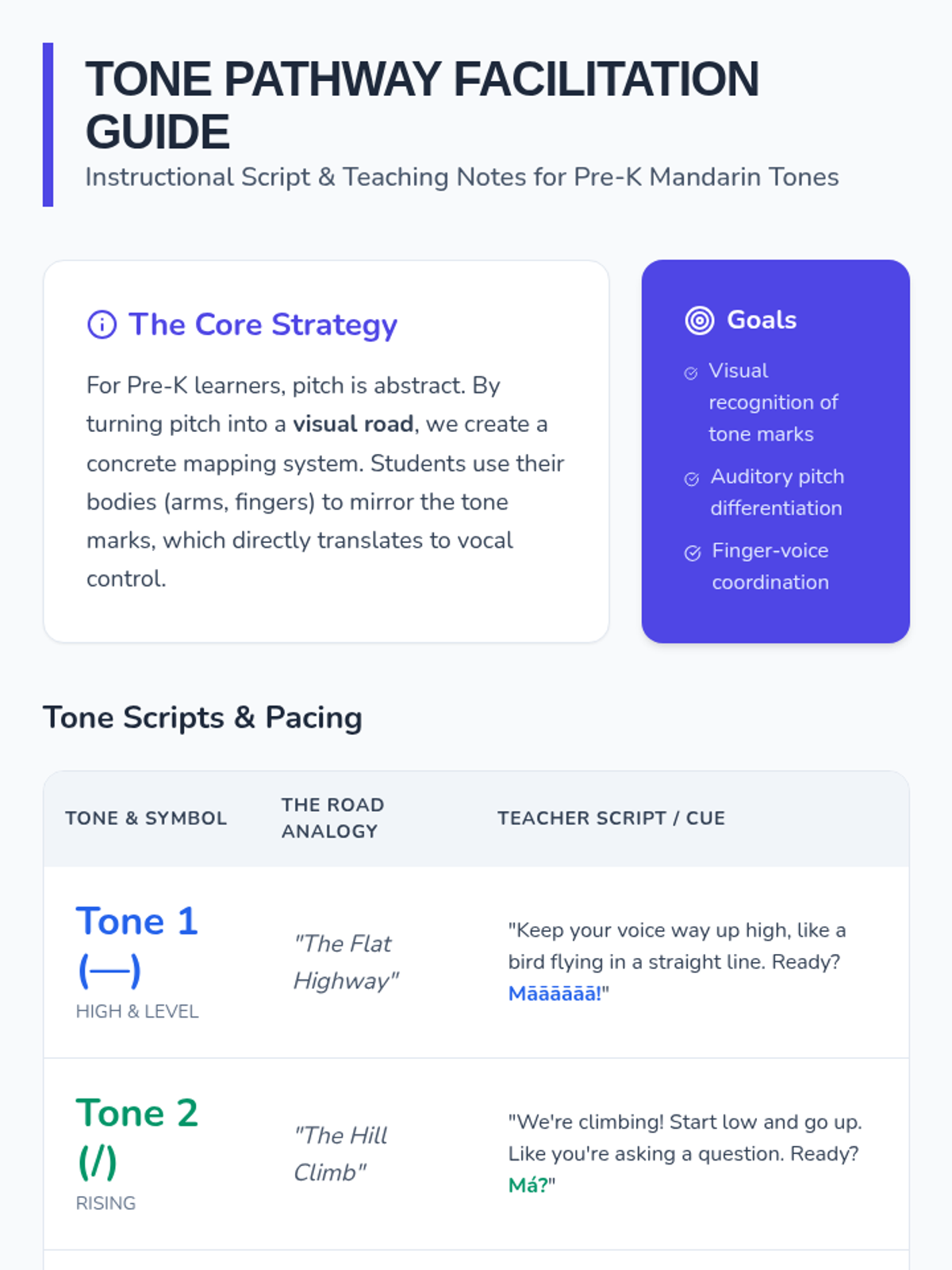
A physical and auditory introduction to the four Mandarin tones for Pre-K learners, using movement, animal analogies, and games to make pitch concrete.
A Kindergarten Mandarin Chinese sequence focused on Total Physical Response (TPR). Students learn to respond to classroom commands, sensory verbs, movement actions, and body parts through active play and listening.
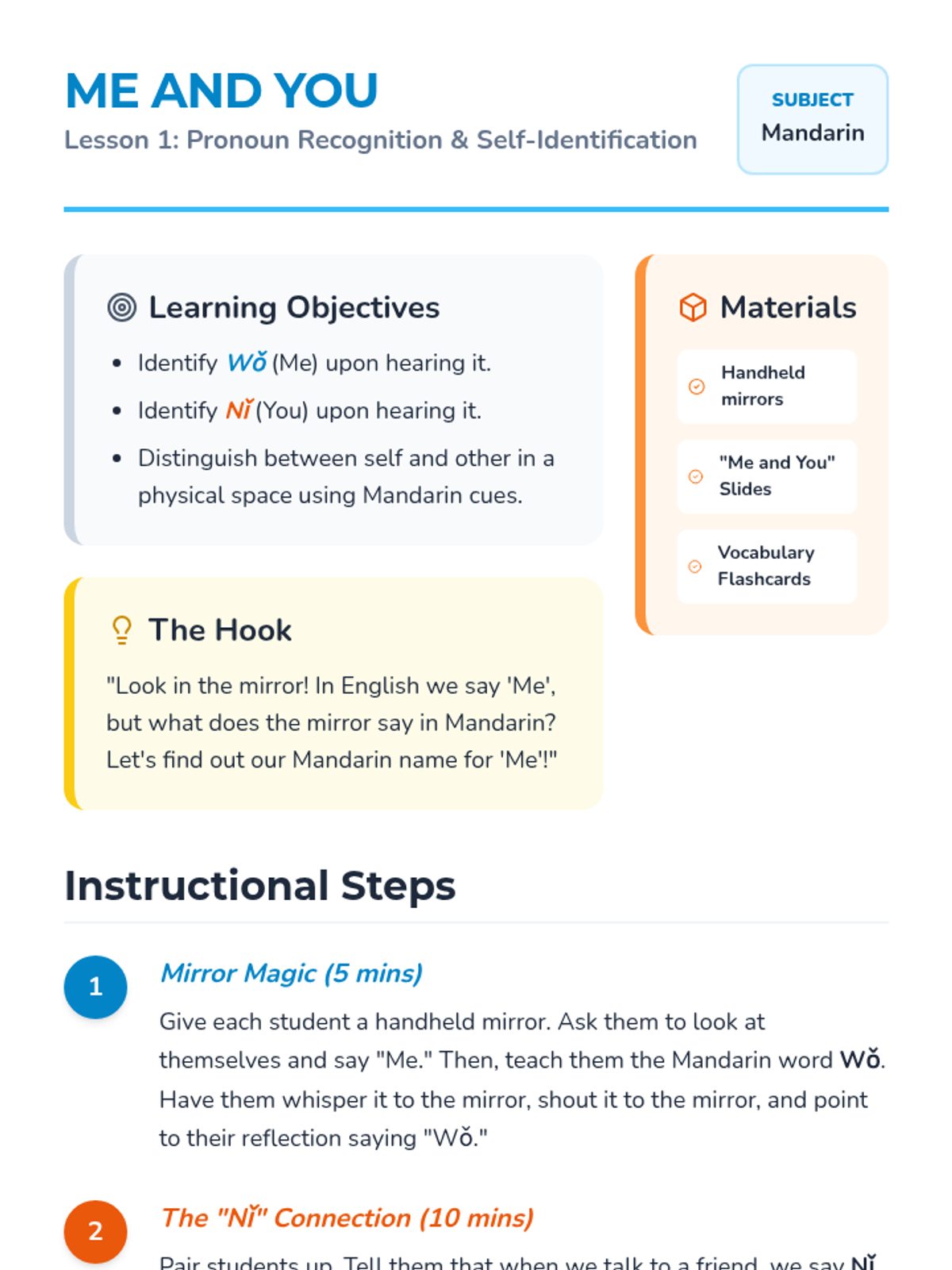
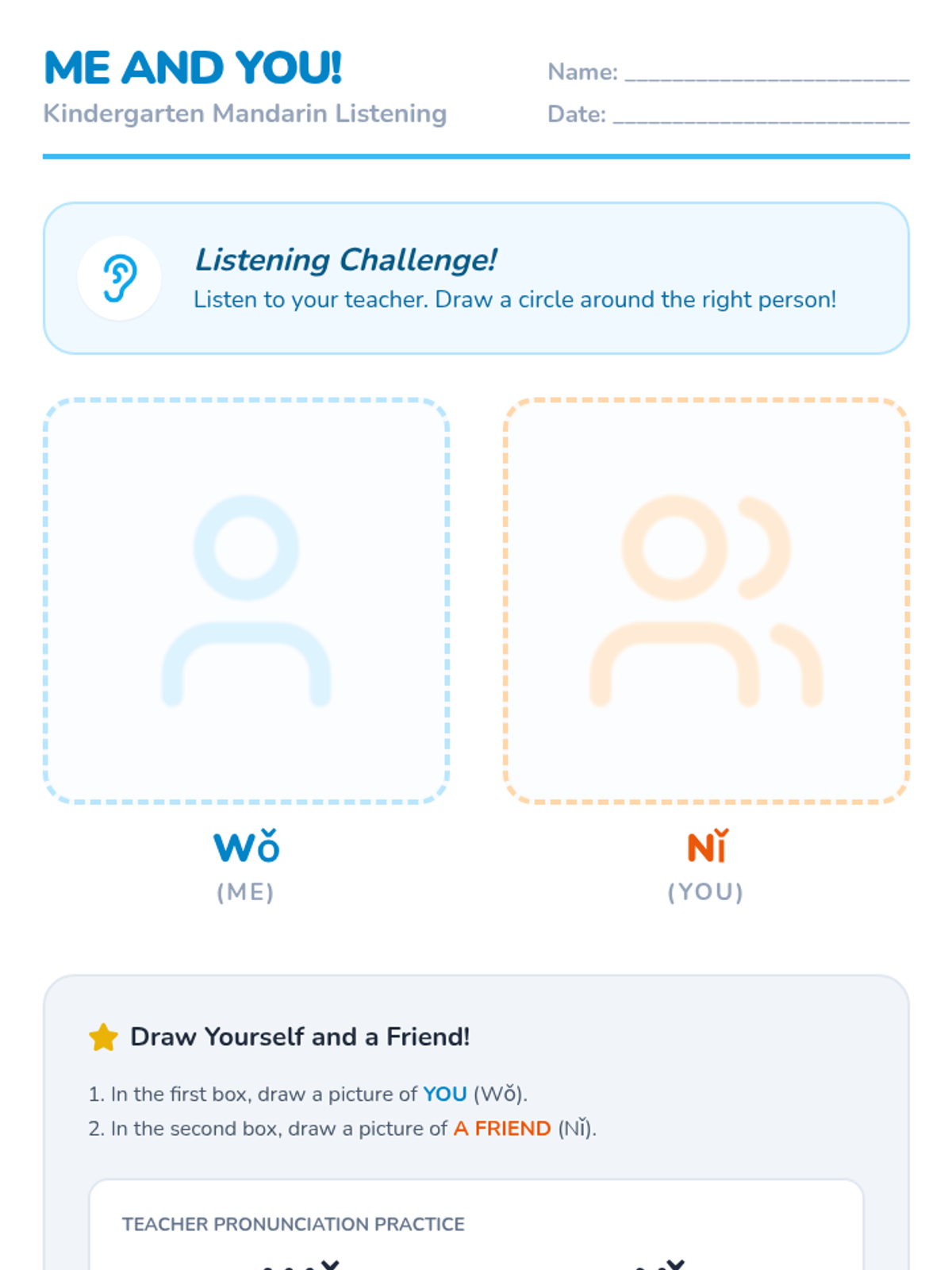
A Kindergarten Mandarin Chinese sequence focused on listening skills. Students learn to identify themselves and their family members (parents, siblings, and grandparents) through songs, stories, and a final house-building project.
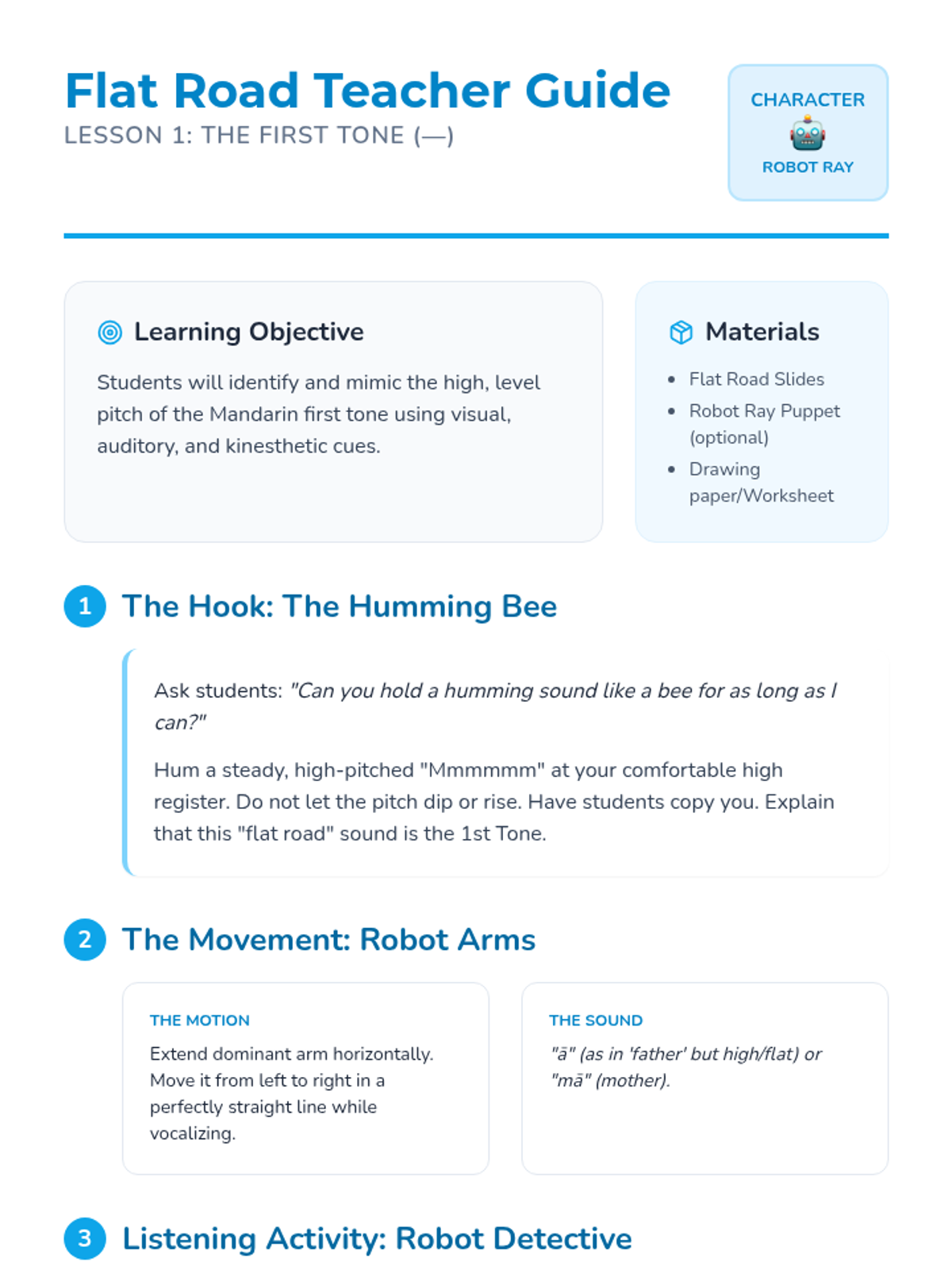
This sequence introduces Kindergarten students to the four Mandarin tones through auditory discrimination and physical movement, associating each pitch contour with a specific motion and character to build foundational listening skills.
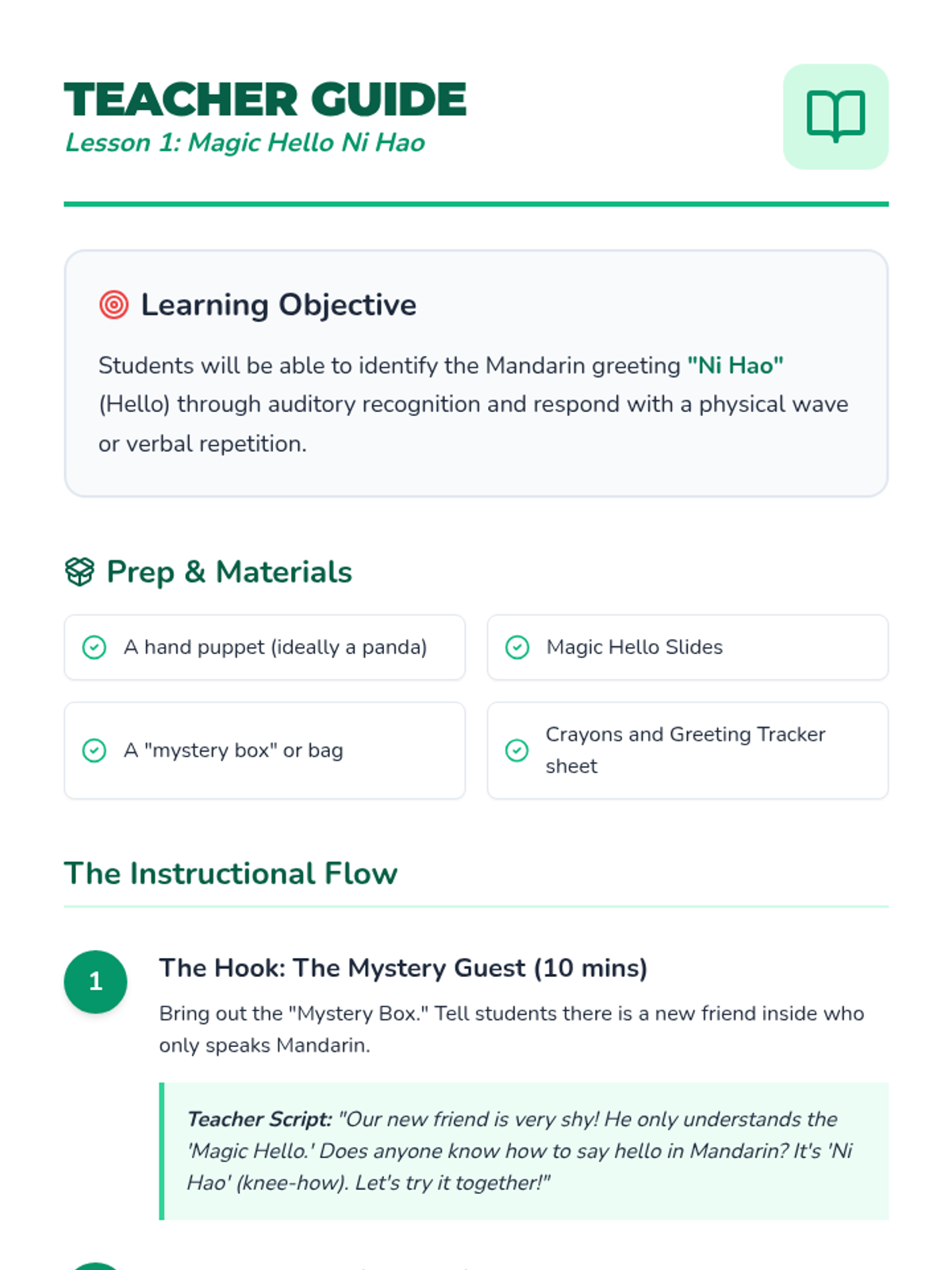
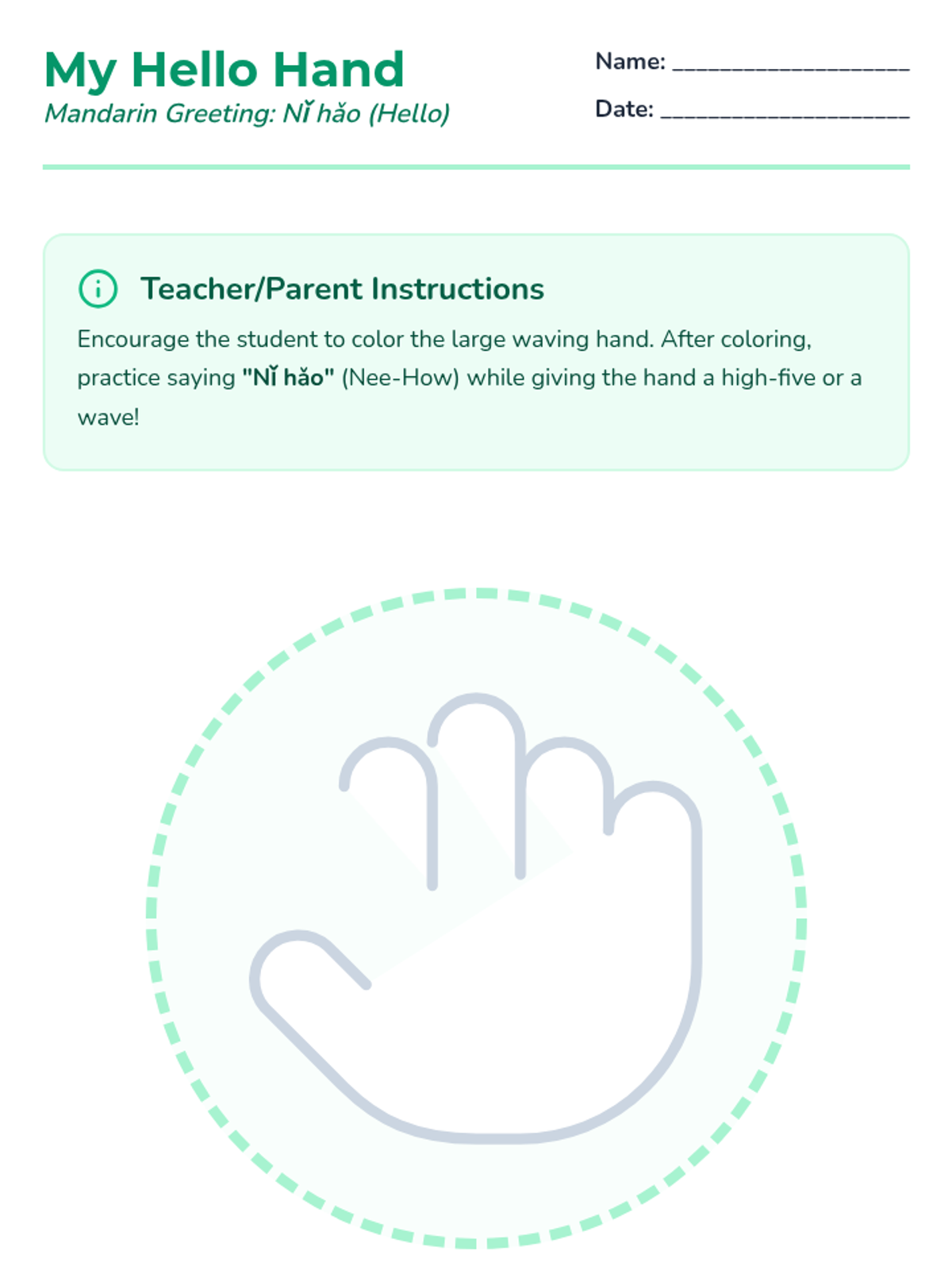
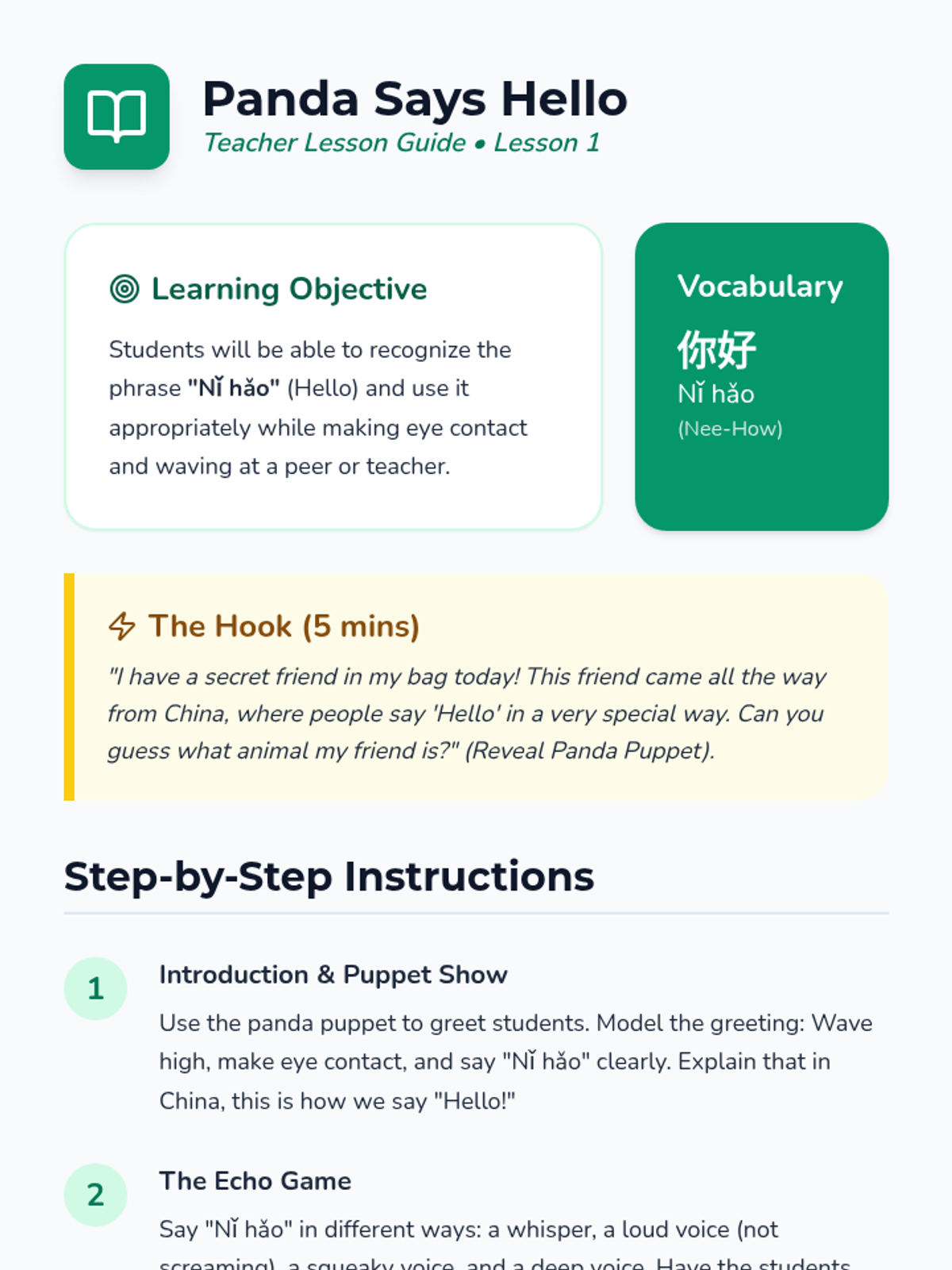
A Kindergarten sequence introducing Mandarin Chinese greetings and social courtesies through immersive listening, games, and role-play. Students learn to recognize Ni Hao, Laoshi, Tongxue, Xie Xie, and Zai Jian.
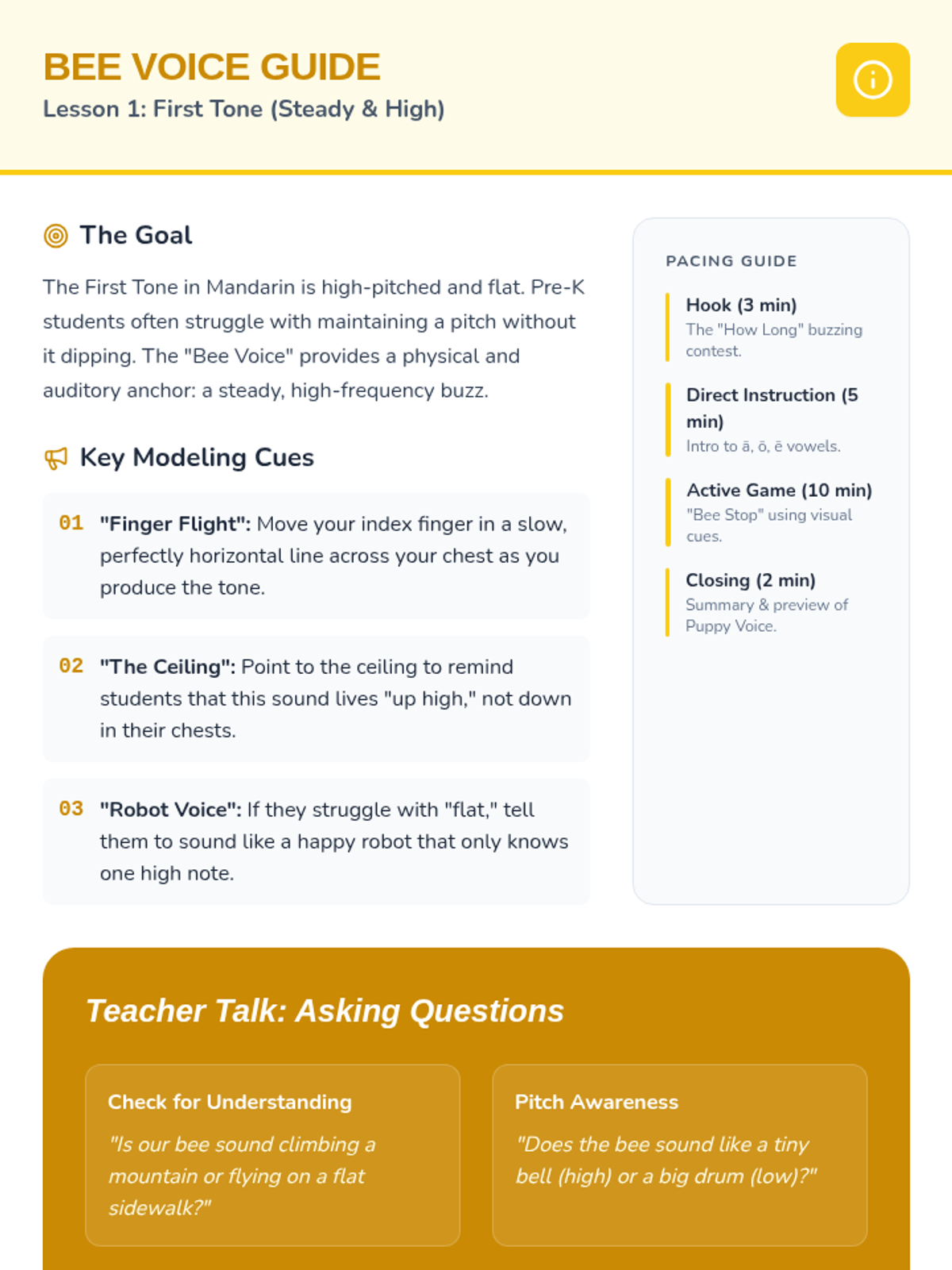
A Pre-K Mandarin Chinese sequence that uses animal associations (Bee, Puppy, Horse, Rooster) to teach the four tones through auditory differentiation and vocal mimicry. Students move from animal sounds to linguistic pitch patterns, anchoring abstract tones in concrete personas.
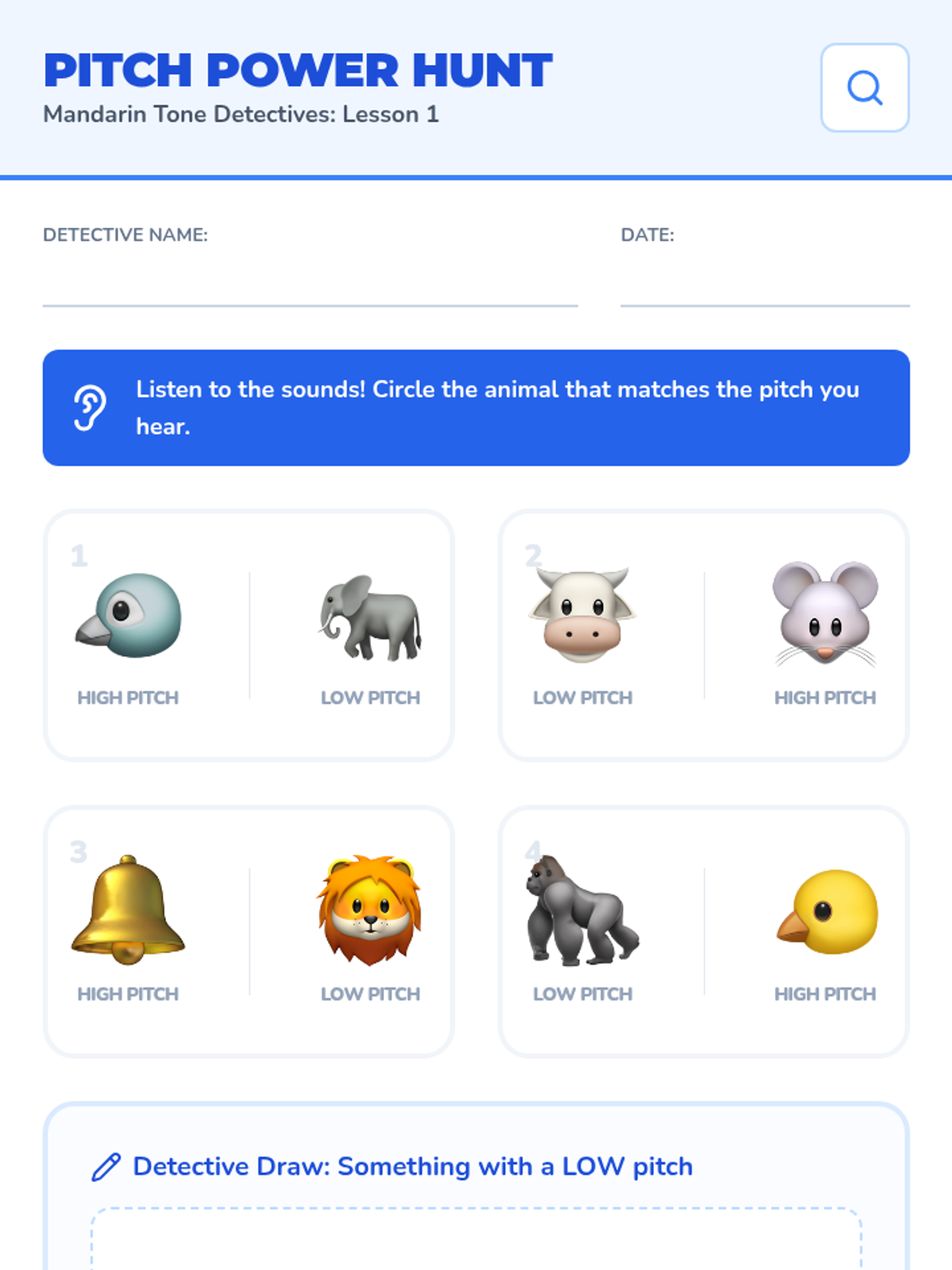
A Kindergarten sequence focused on the foundational skill of auditory discrimination for Mandarin Chinese tones. Students use games, movement, and visual associations to distinguish between the four main tones and the neutral tone, building the necessary ear for language acquisition.
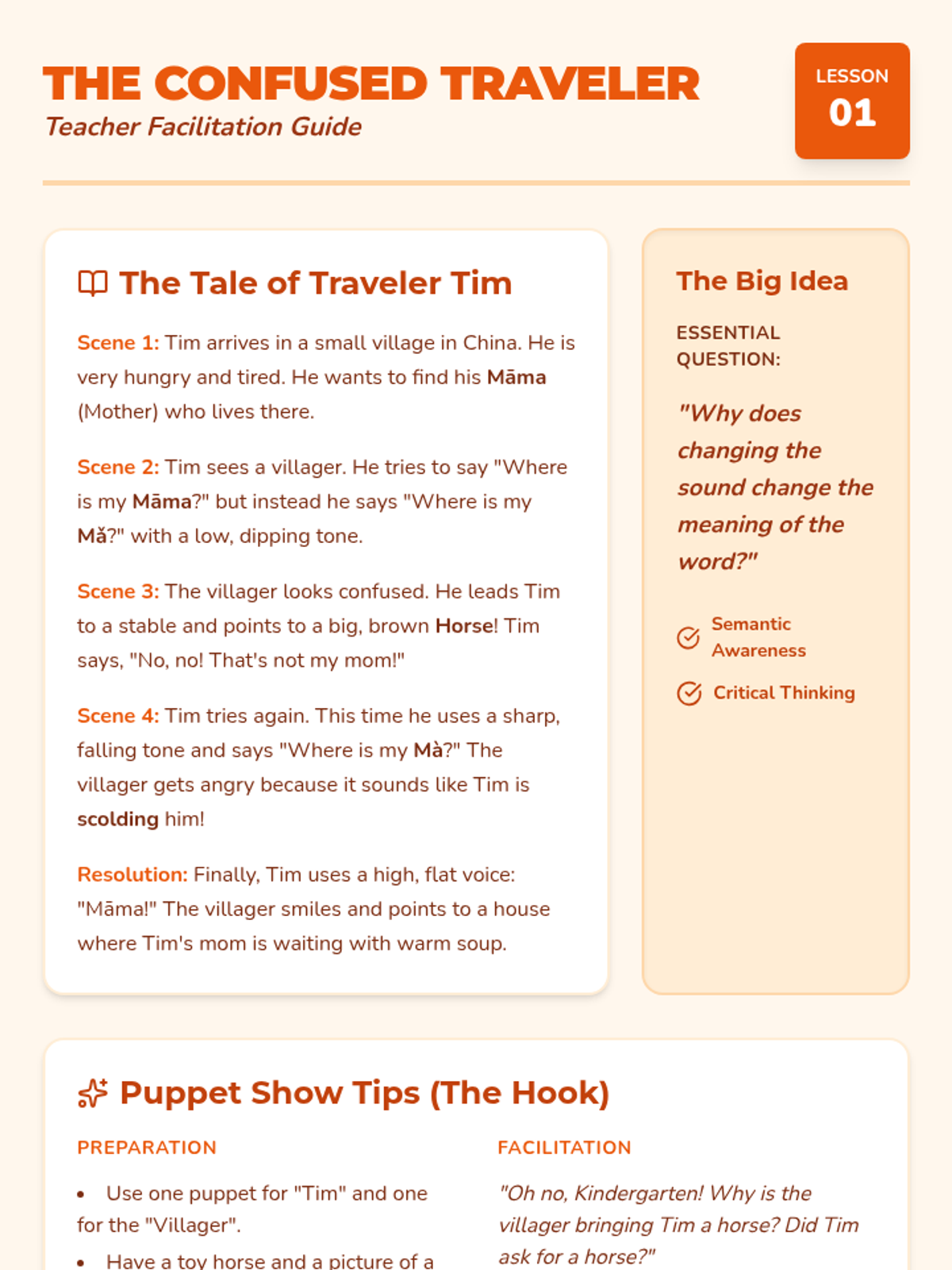
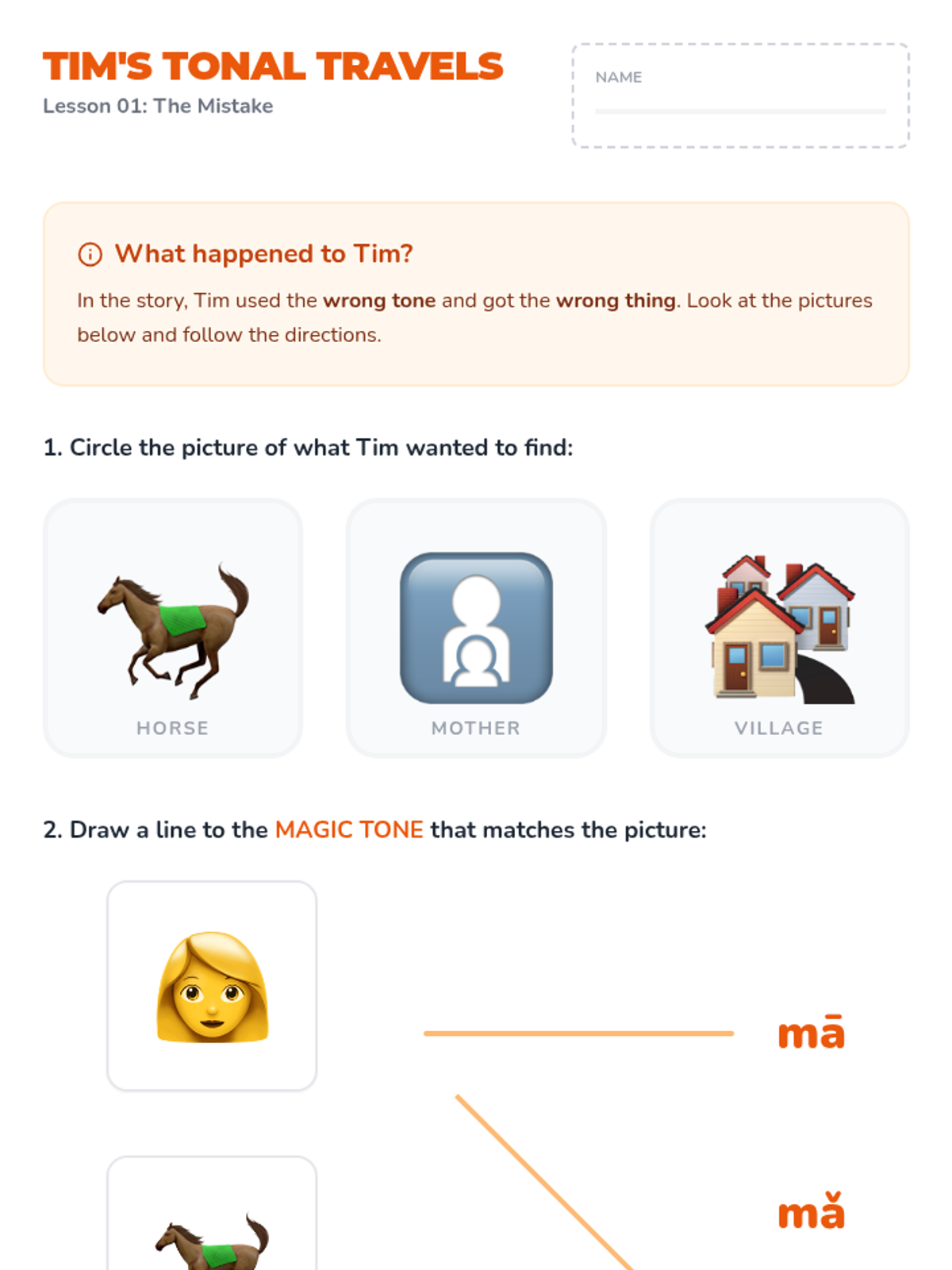
A Kindergarten sequence exploring how tones change meaning in Mandarin Chinese through storytelling, games, and creative projects. Students learn to distinguish between the four 'ma' tones and other minimal pairs to understand the importance of accuracy in communication.
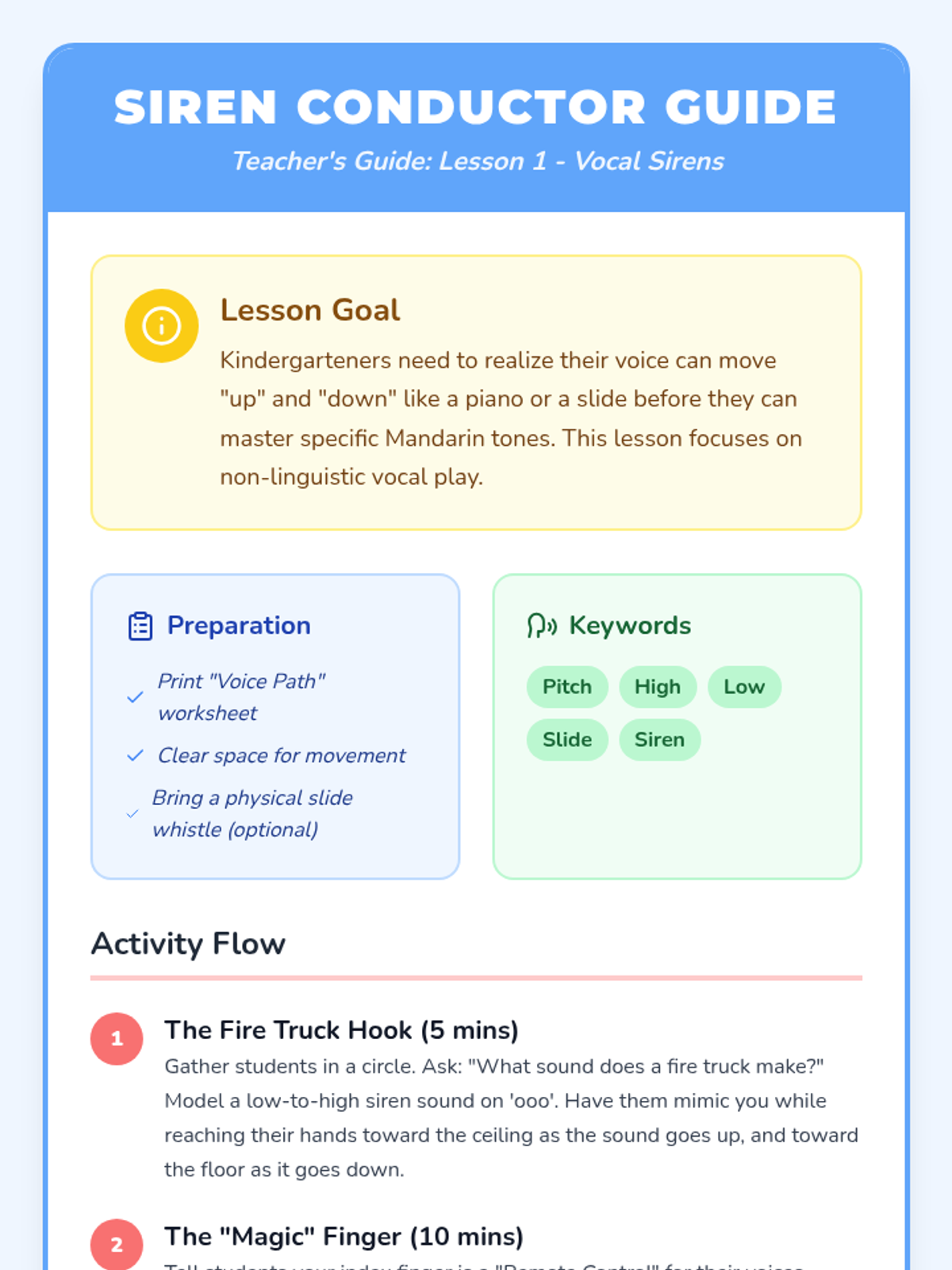
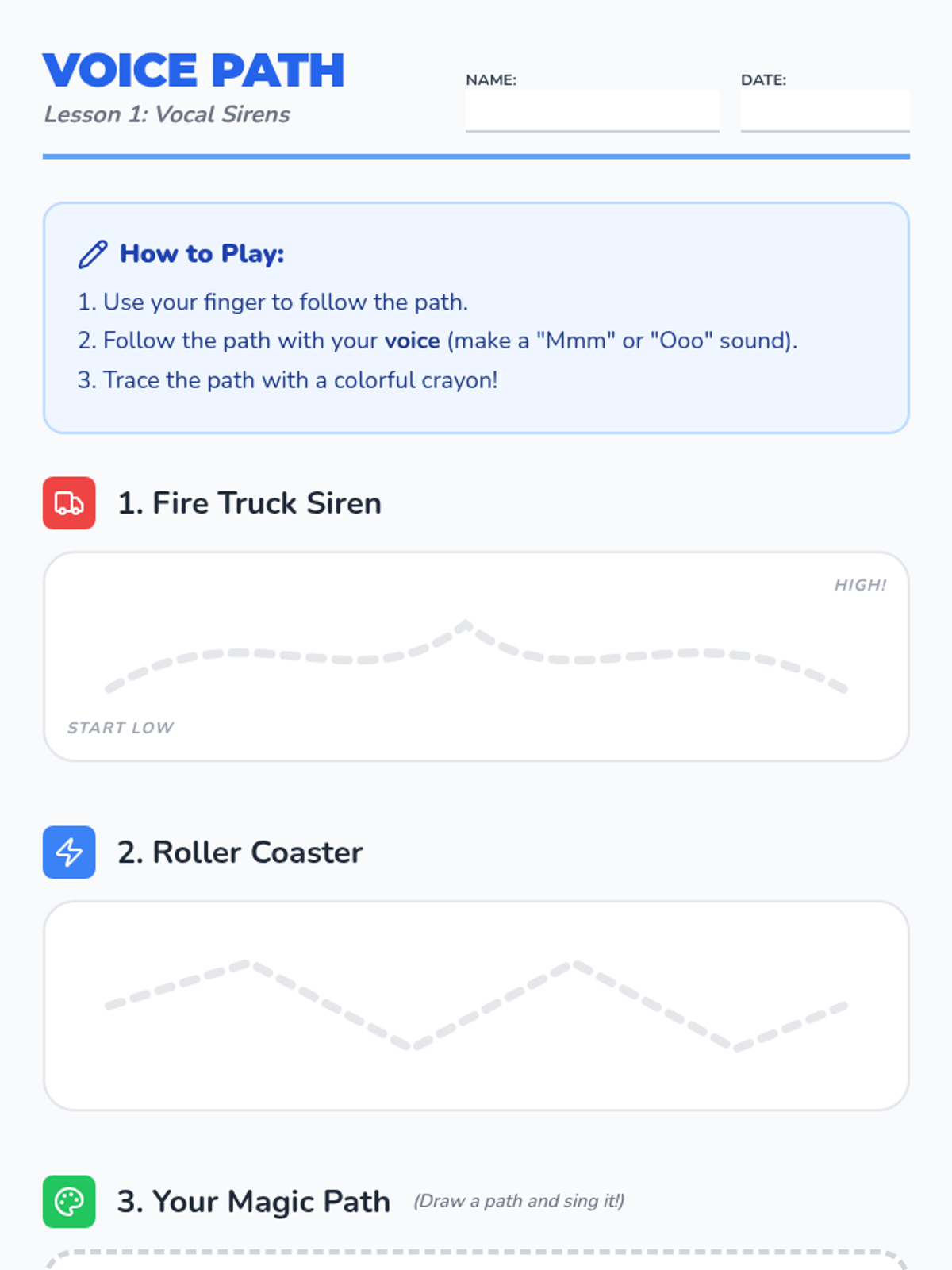
A Kindergarten sequence focused on vocal control and the physical mechanics of the four Mandarin tones through play-based activities, sirens, and movement.
A kinesthetic, TPR-based introduction to Mandarin Chinese tones for Kindergarten students, connecting pitch contours to physical body movements. Students explore sound directionality, specific gestures for the four tones, and perform 'tone dances' to internalize the linguistic melody of Mandarin.
A kinesthetic introduction to the four Mandarin Chinese tones for Pre-K learners. This sequence uses gross motor movements, physical metaphors, and vocal play to help young students internalize pitch contours.
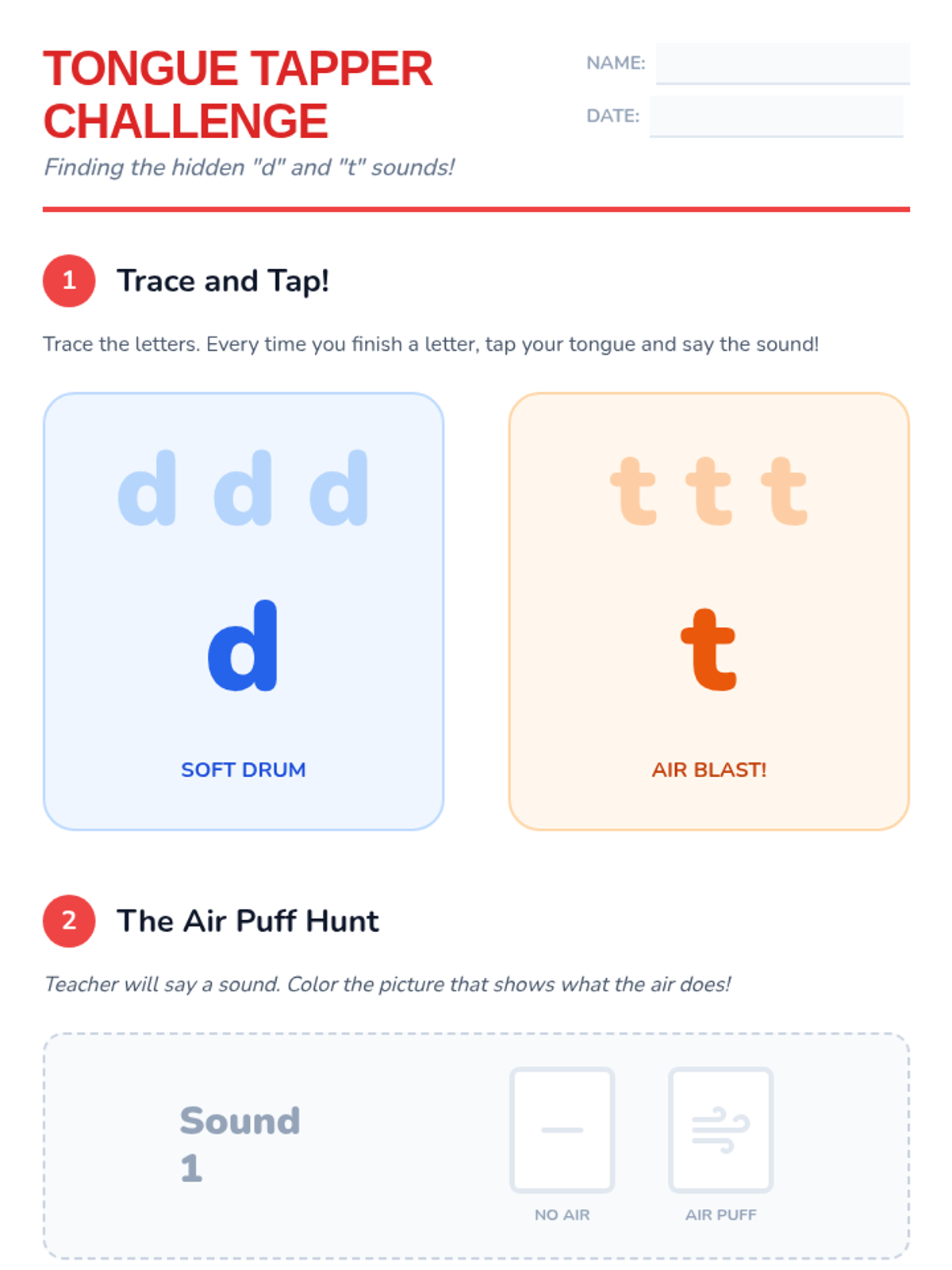
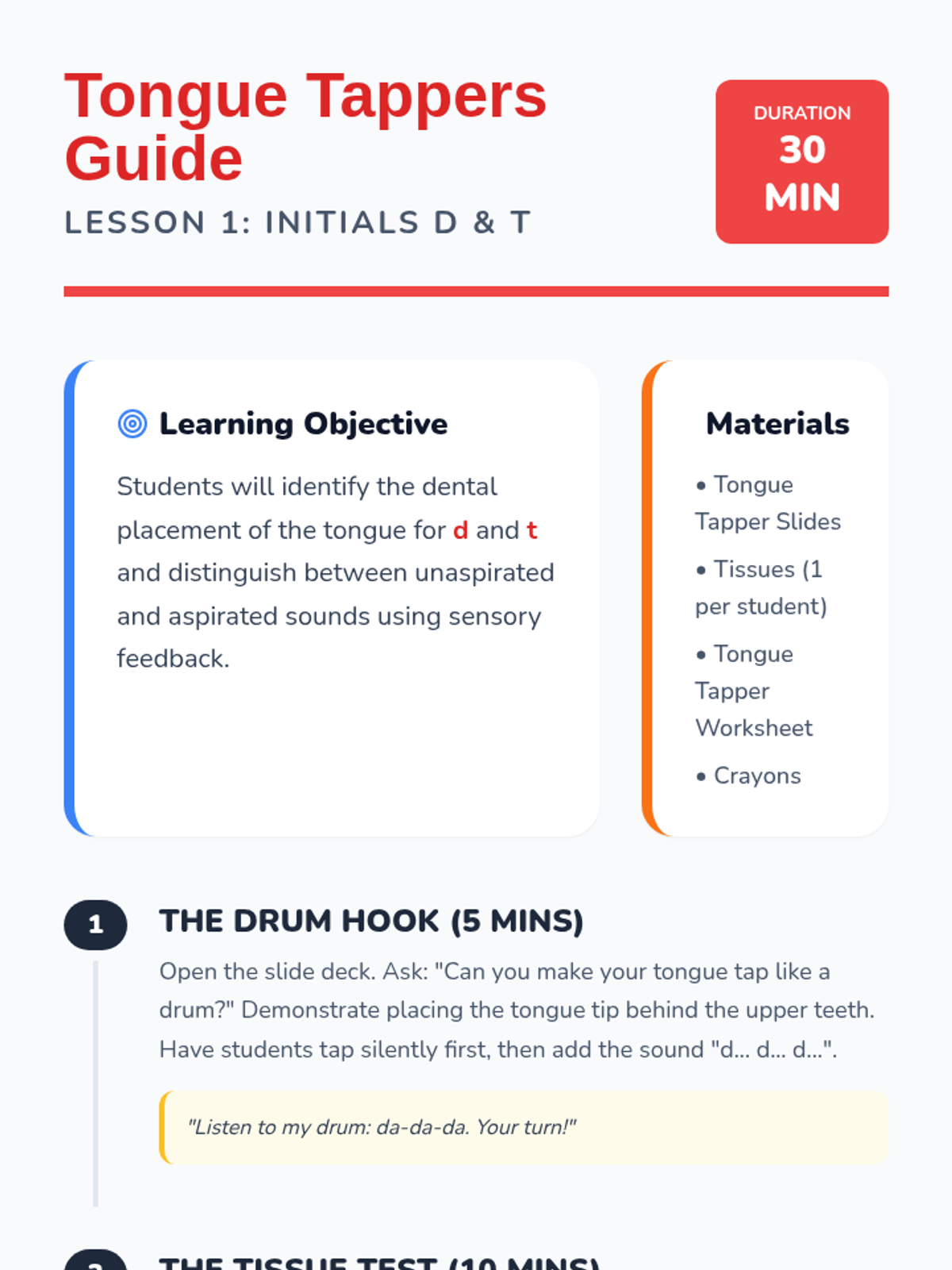
A fun, kinetic sequence for Kindergarteners to master the dental Pinyin initials (d, t, n, l). Students use sensory experiments, games, and storytelling to understand tongue placement and airflow.
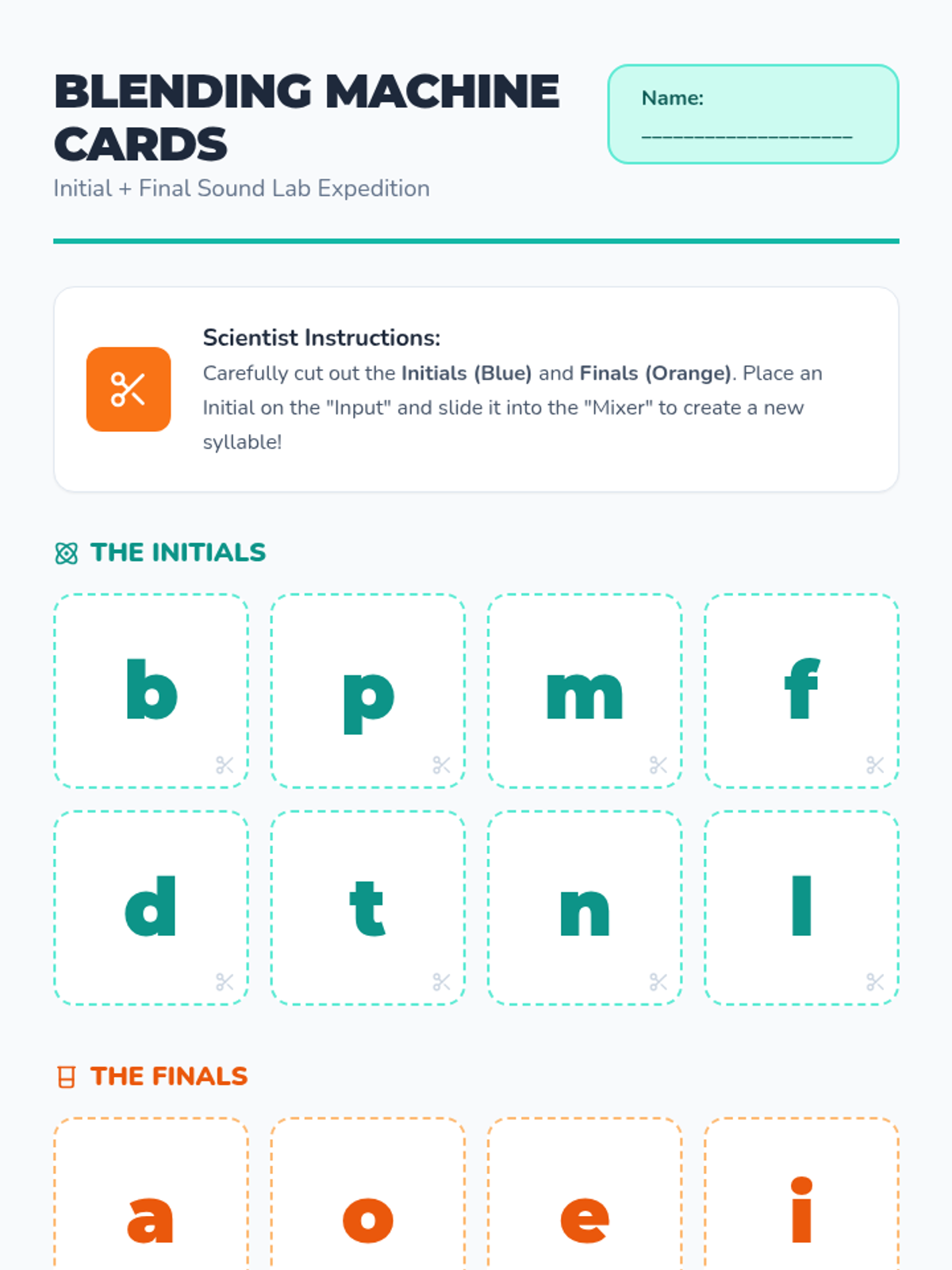
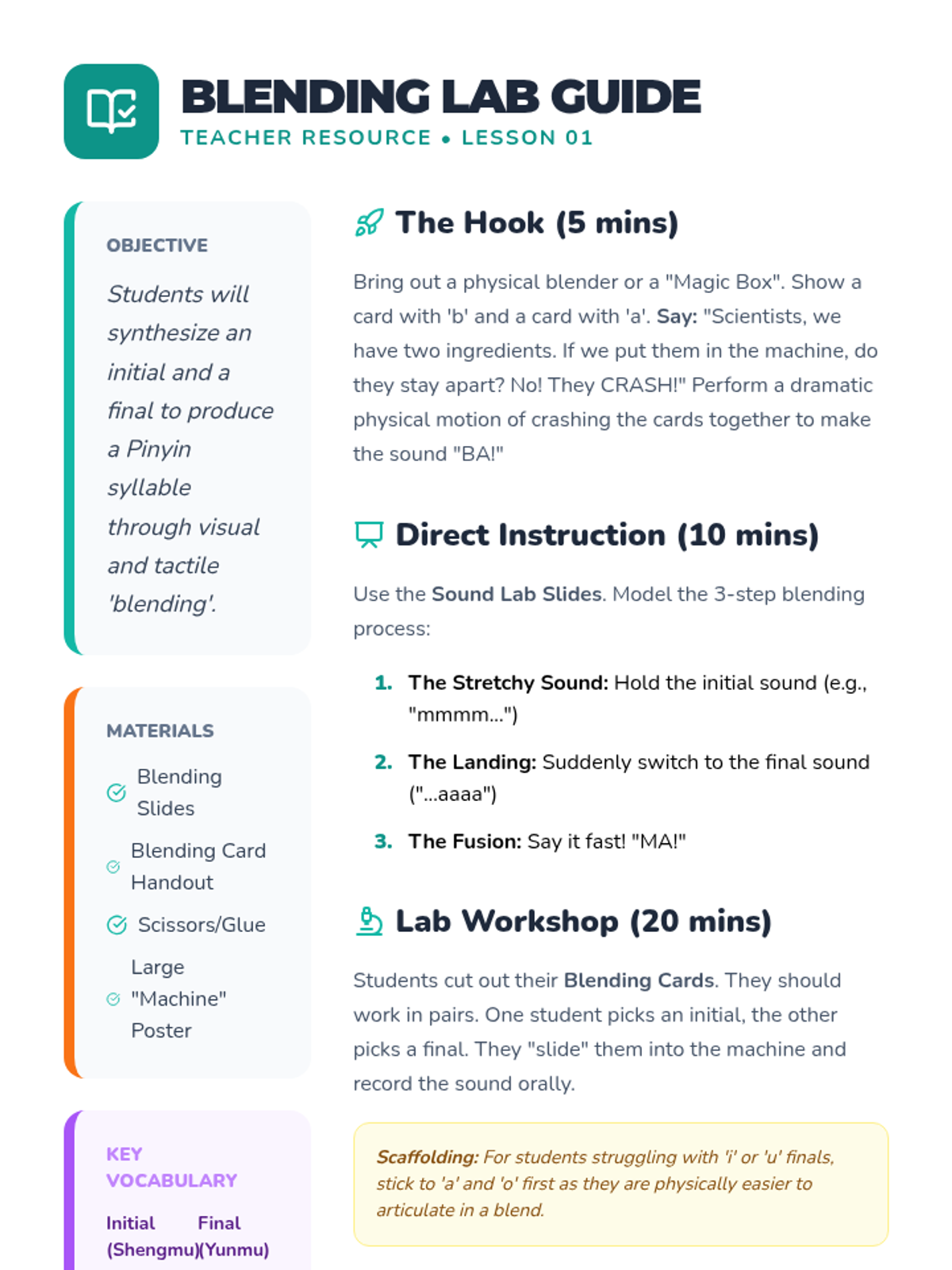
A project-based Pinyin sequence for Kindergarten students using a 'Sound Lab' theme to master blending initials and finals into meaningful words.
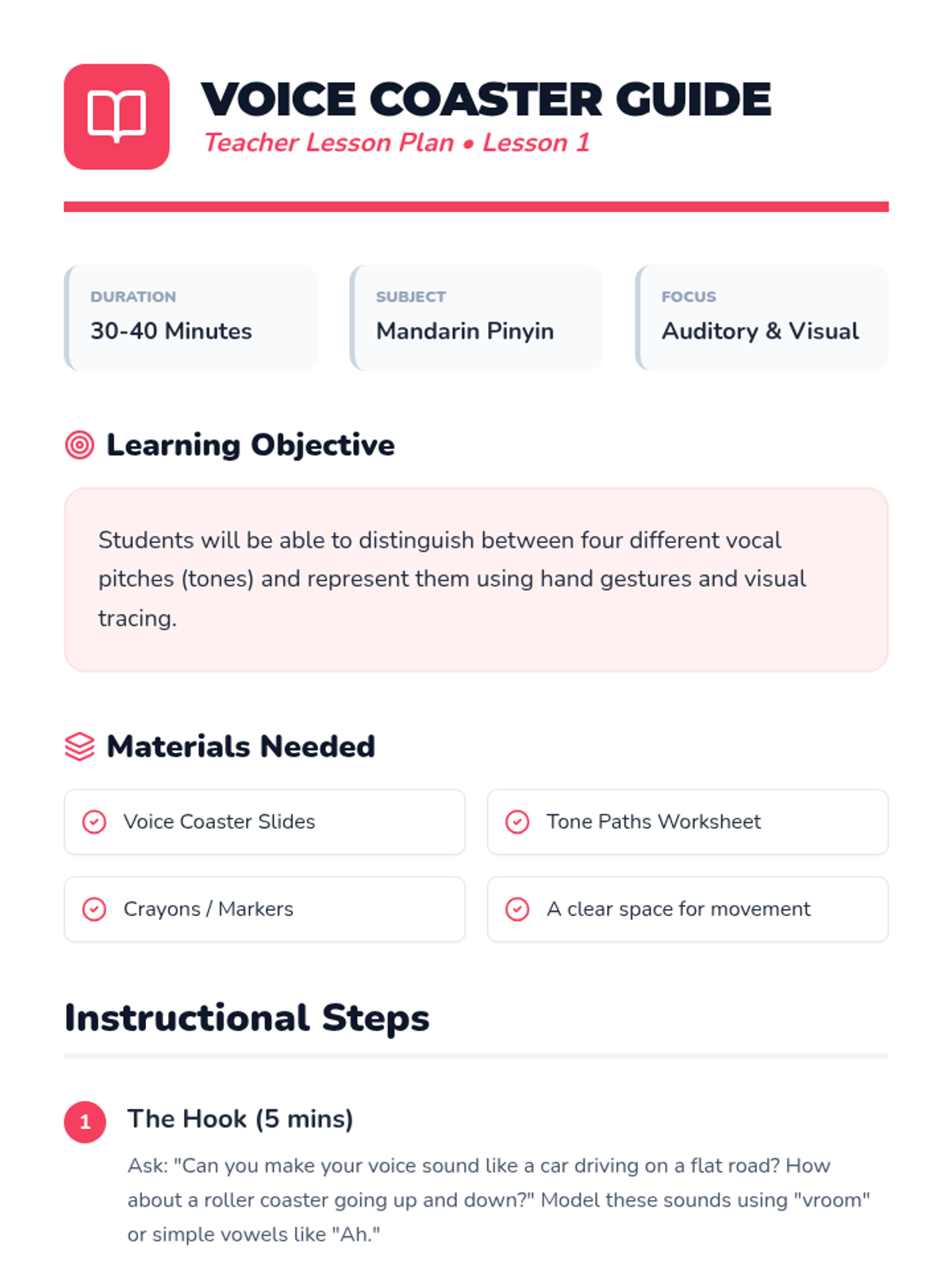
A fun, kinesthetic introduction to the four Mandarin tones for Kindergarten students, using movement, music, and "Voice Coasters" to explore how pitch changes meaning.
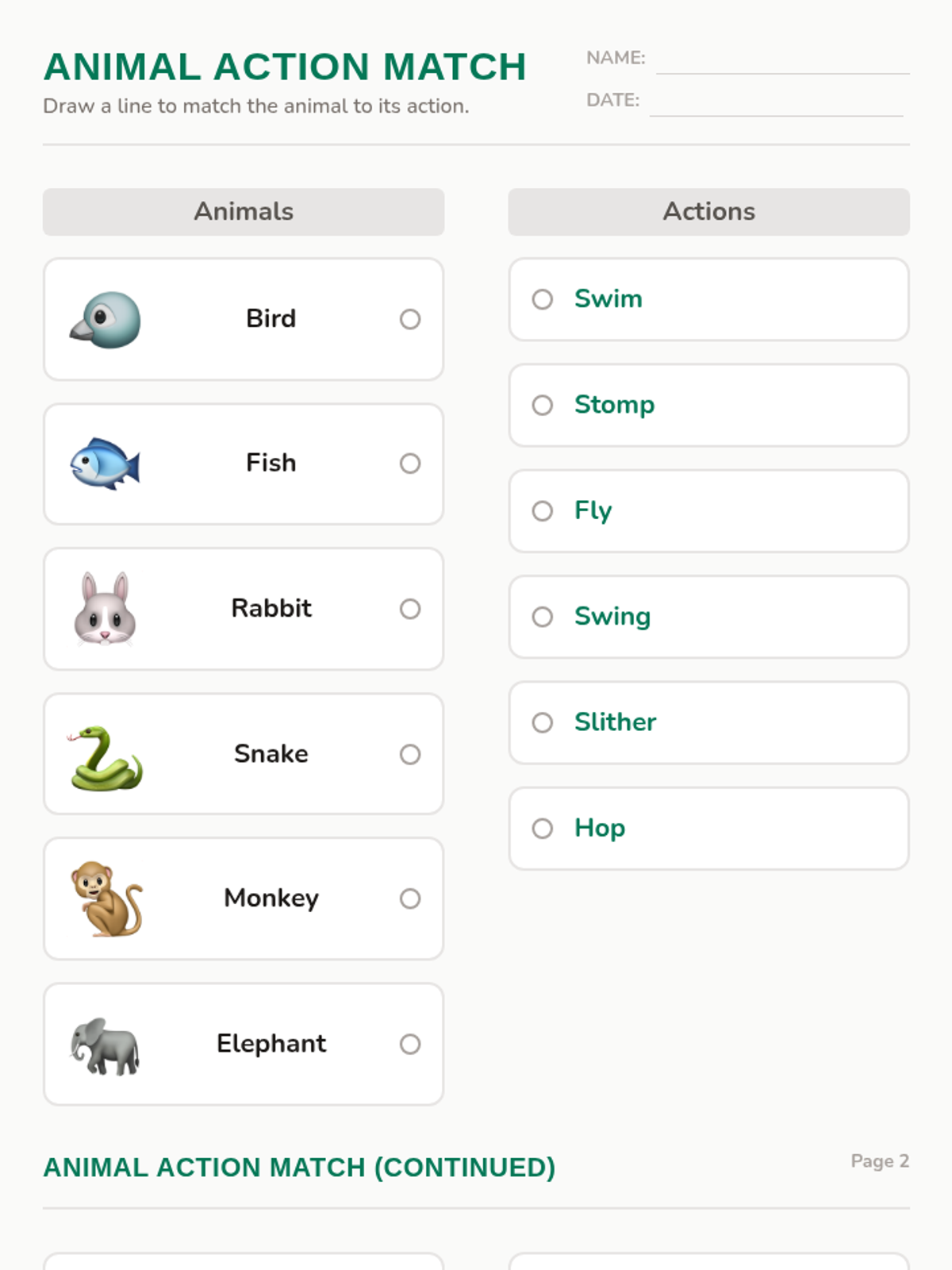
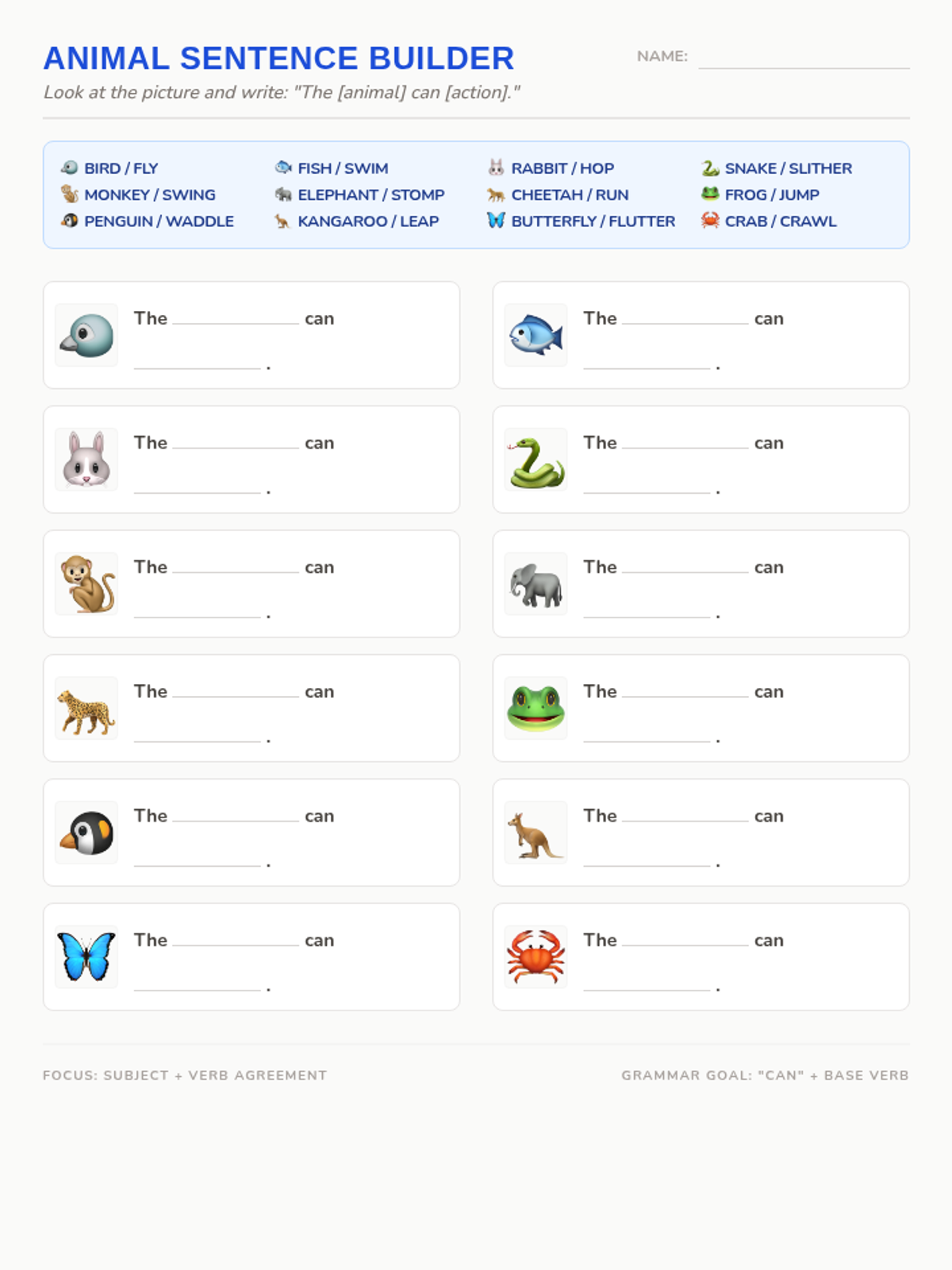
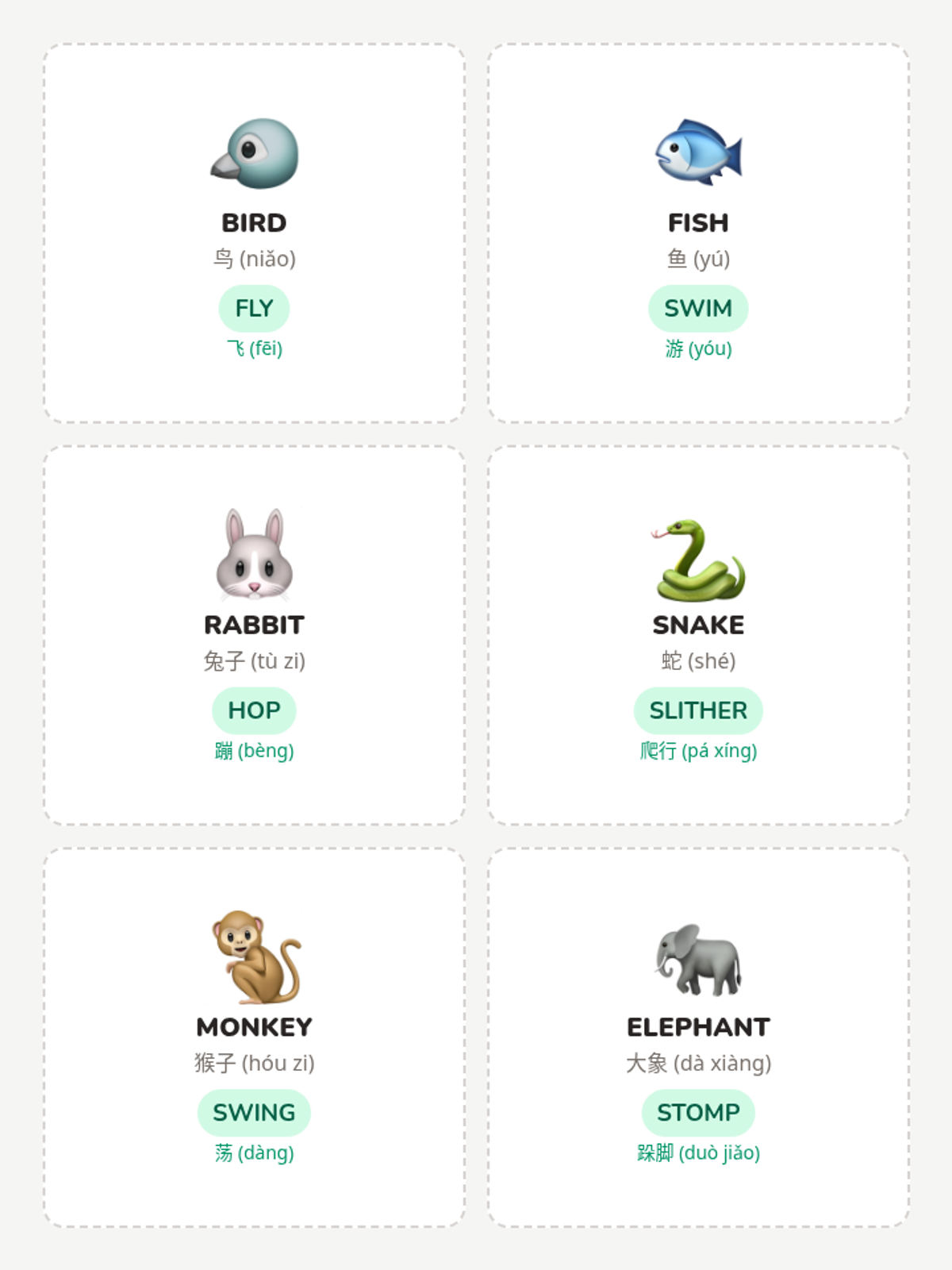
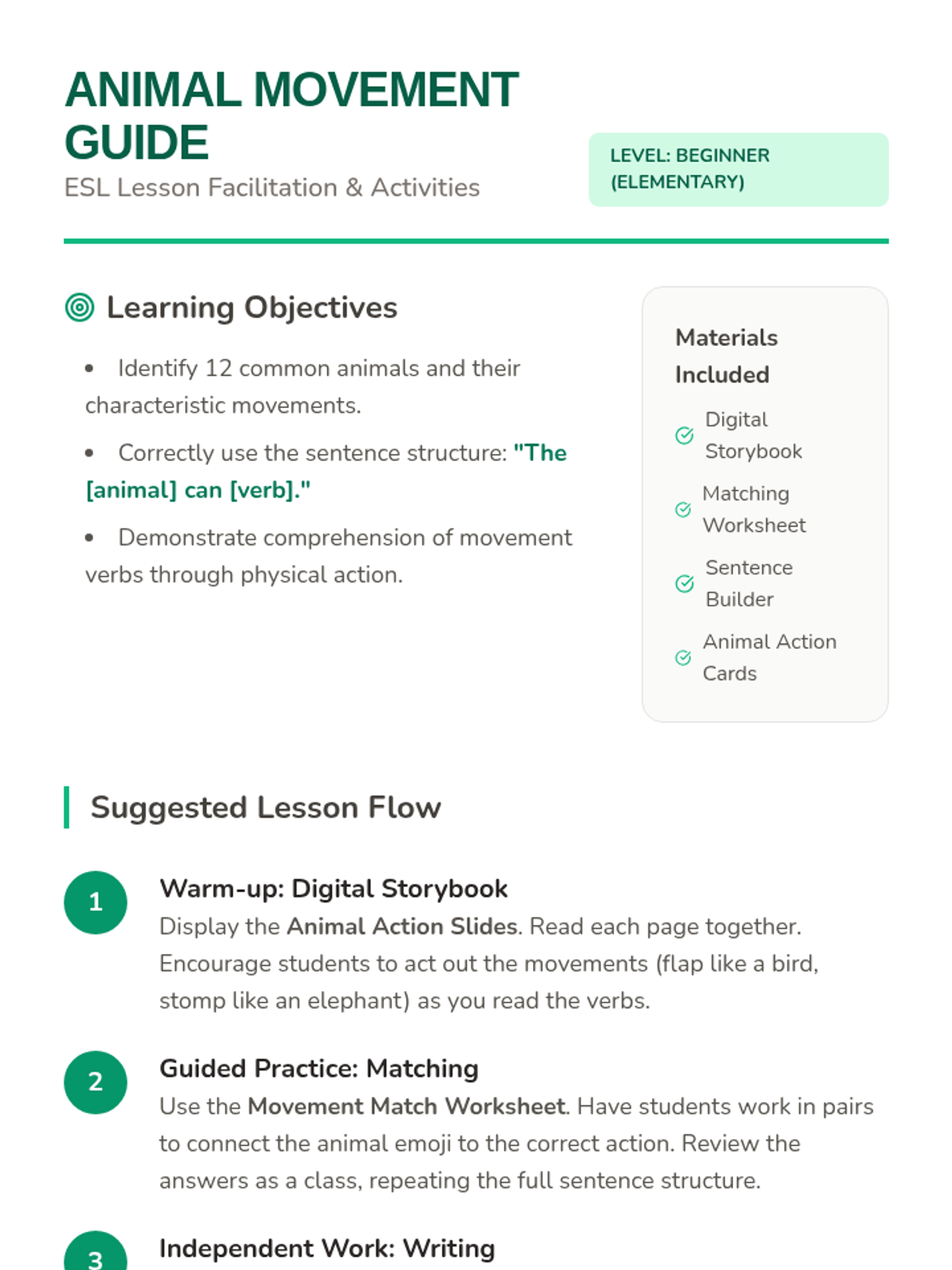
A foundational ESL sequence focused on animal names, movement verbs, and the sentence structure 'The animal can verb'. Designed for young learners with visual support and interactive activities.
A Pre-K sequence focused on teaching basic Mandarin greetings and social etiquette through play, puppets, and a final tea party synthesis. Students learn phrases for hello, goodbye, thank you, and sorry in a culturally immersive environment.
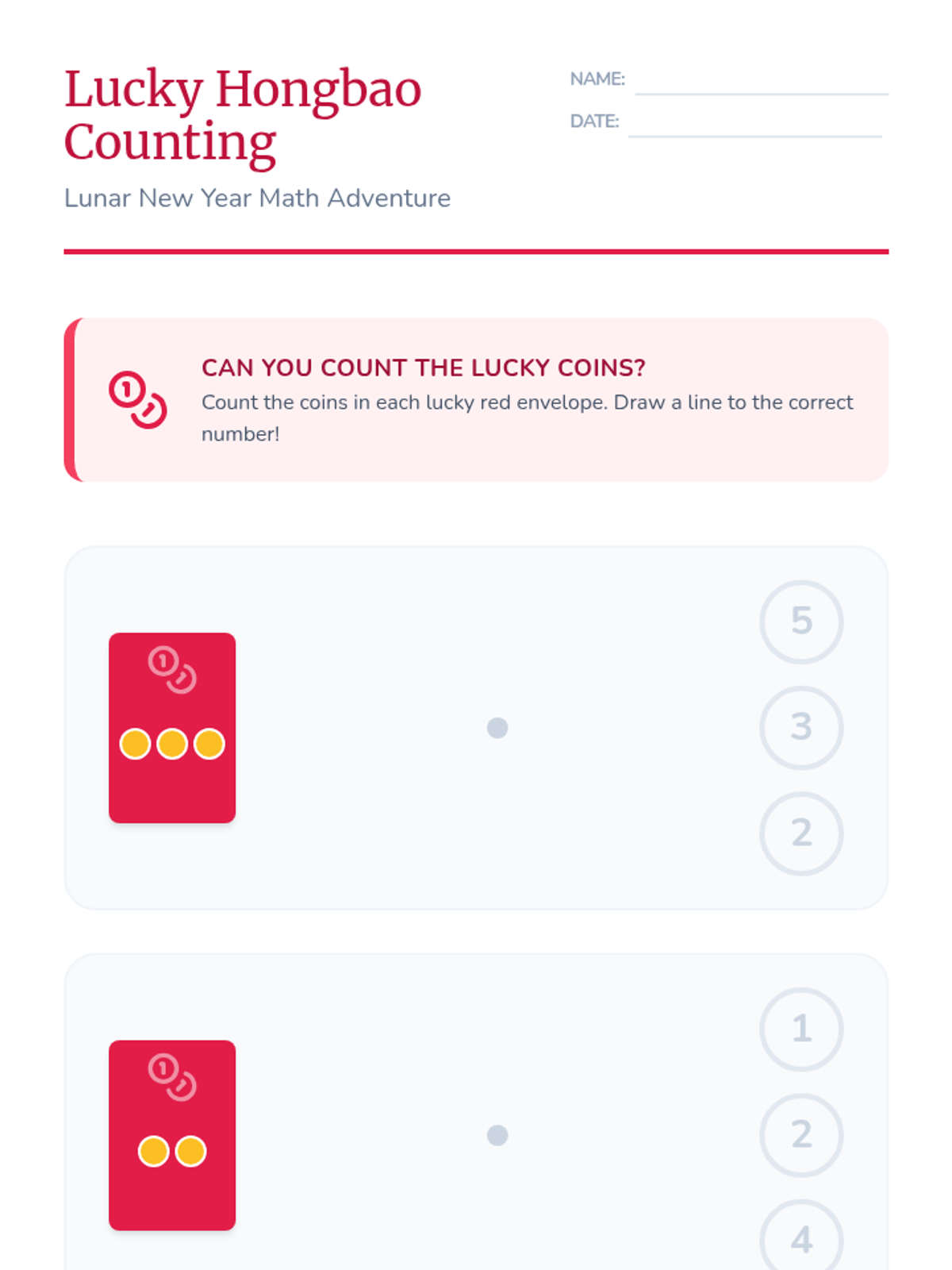
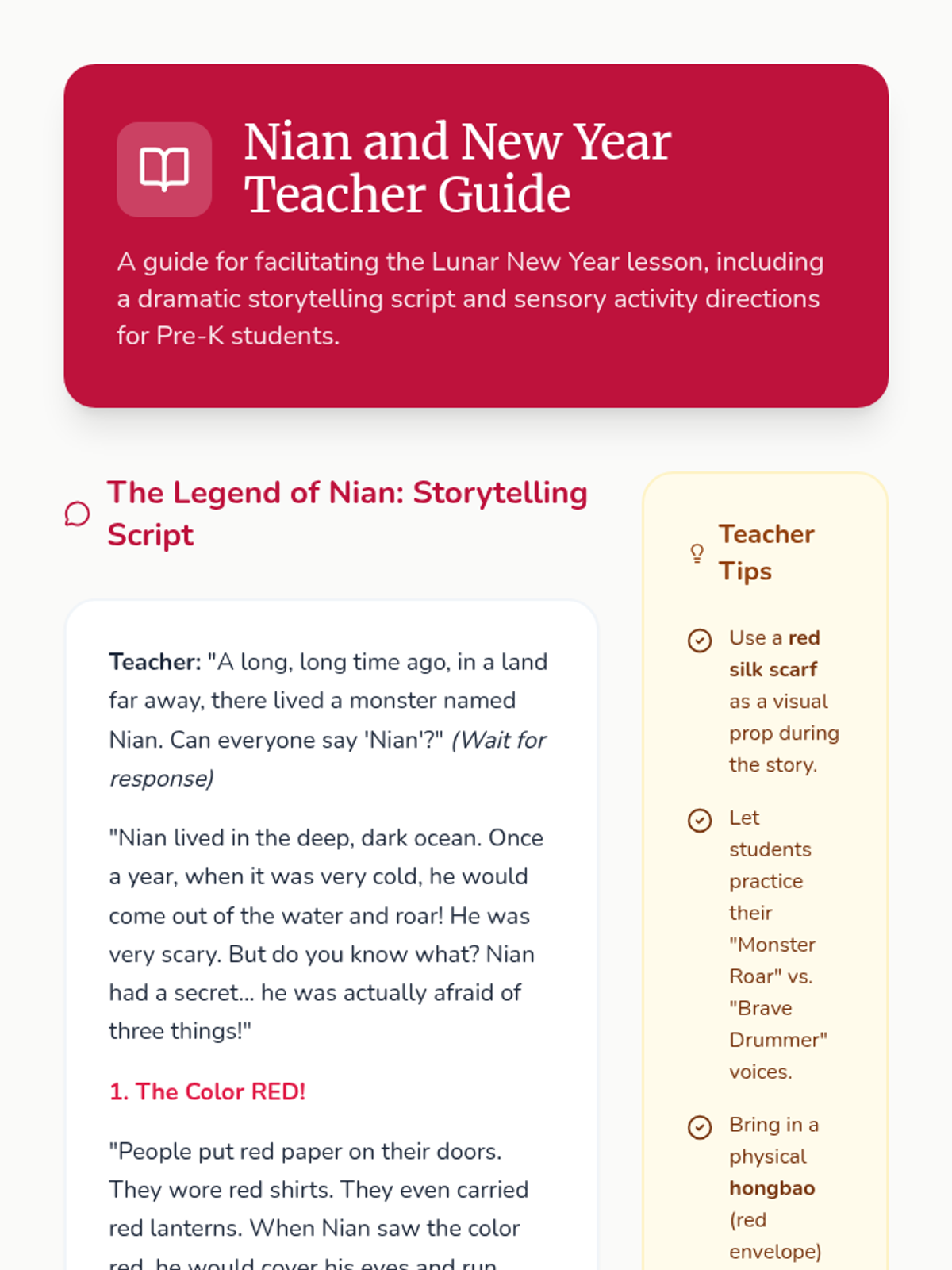
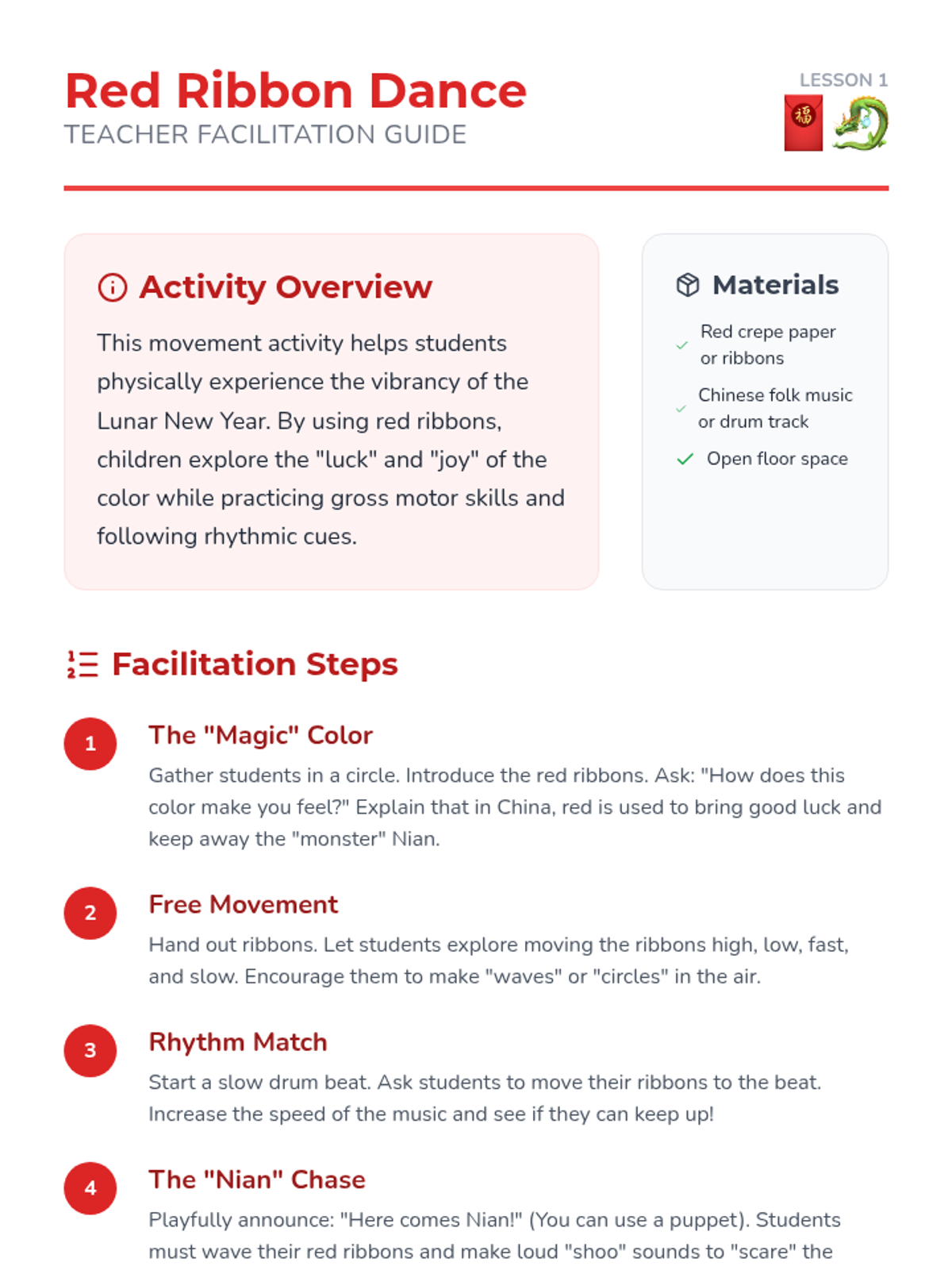
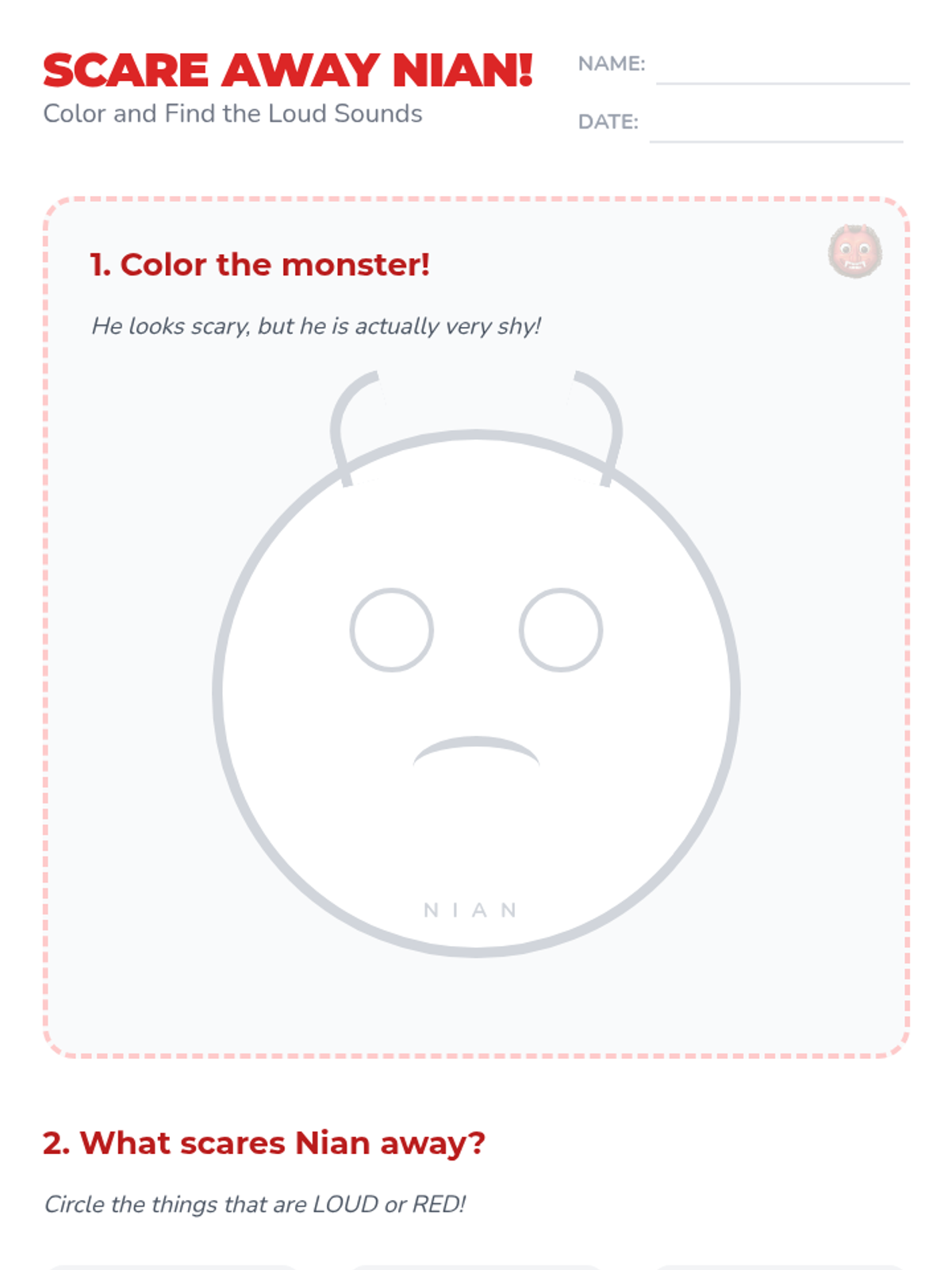
An immersive sequence for Pre-K students exploring Chinese cultural traditions through sensory-rich activities, stories, and hands-on crafts. Students learn about the Lunar New Year, artistic brushwork, polite social customs, and the collaborative dragon dance.
This sequence introduces Kindergarten students to Chinese culture through family roles, school routines, and dining customs. Students learn specific Mandarin titles for family members, compare school experiences, and develop fine motor skills using chopsticks.
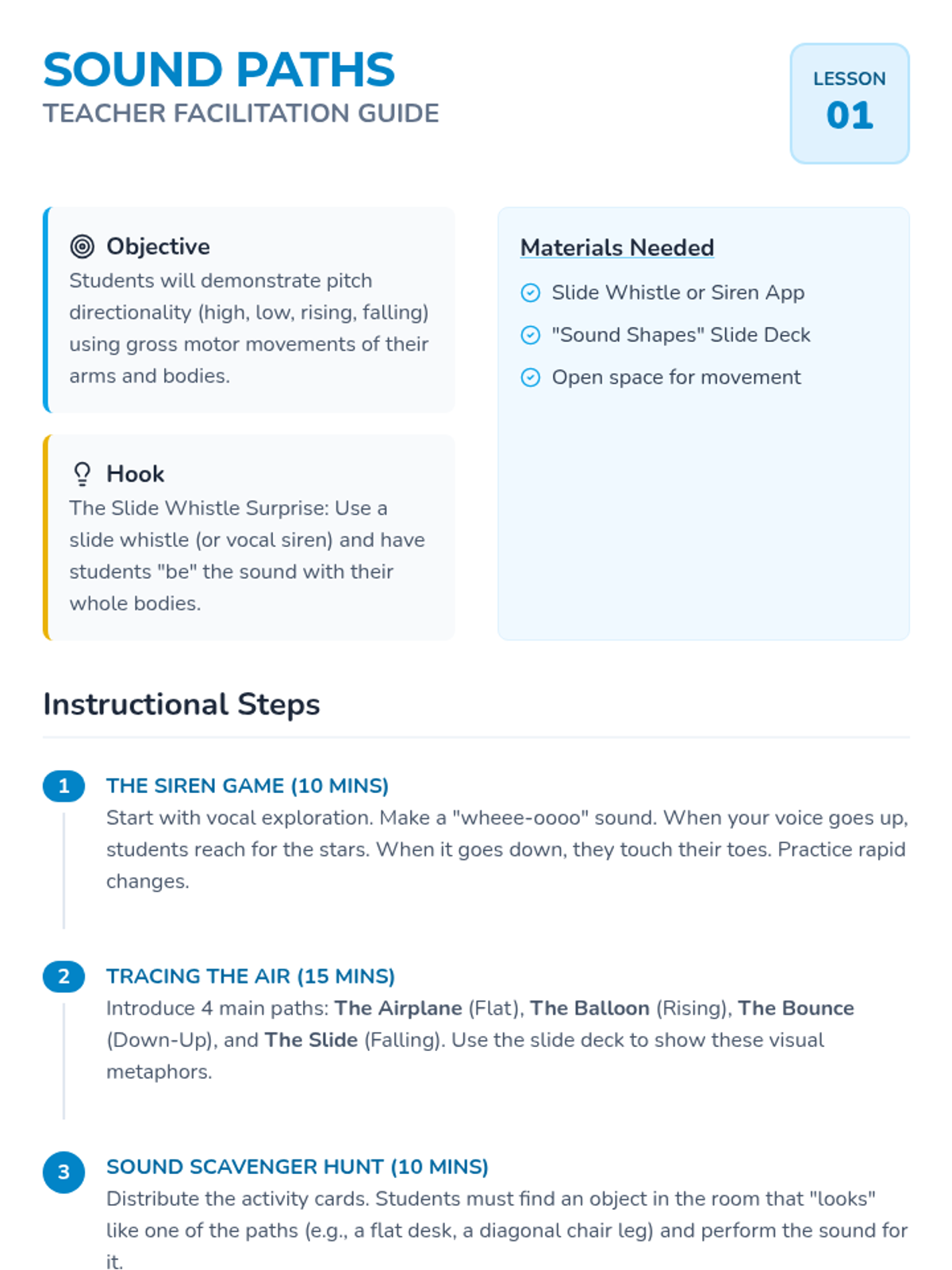
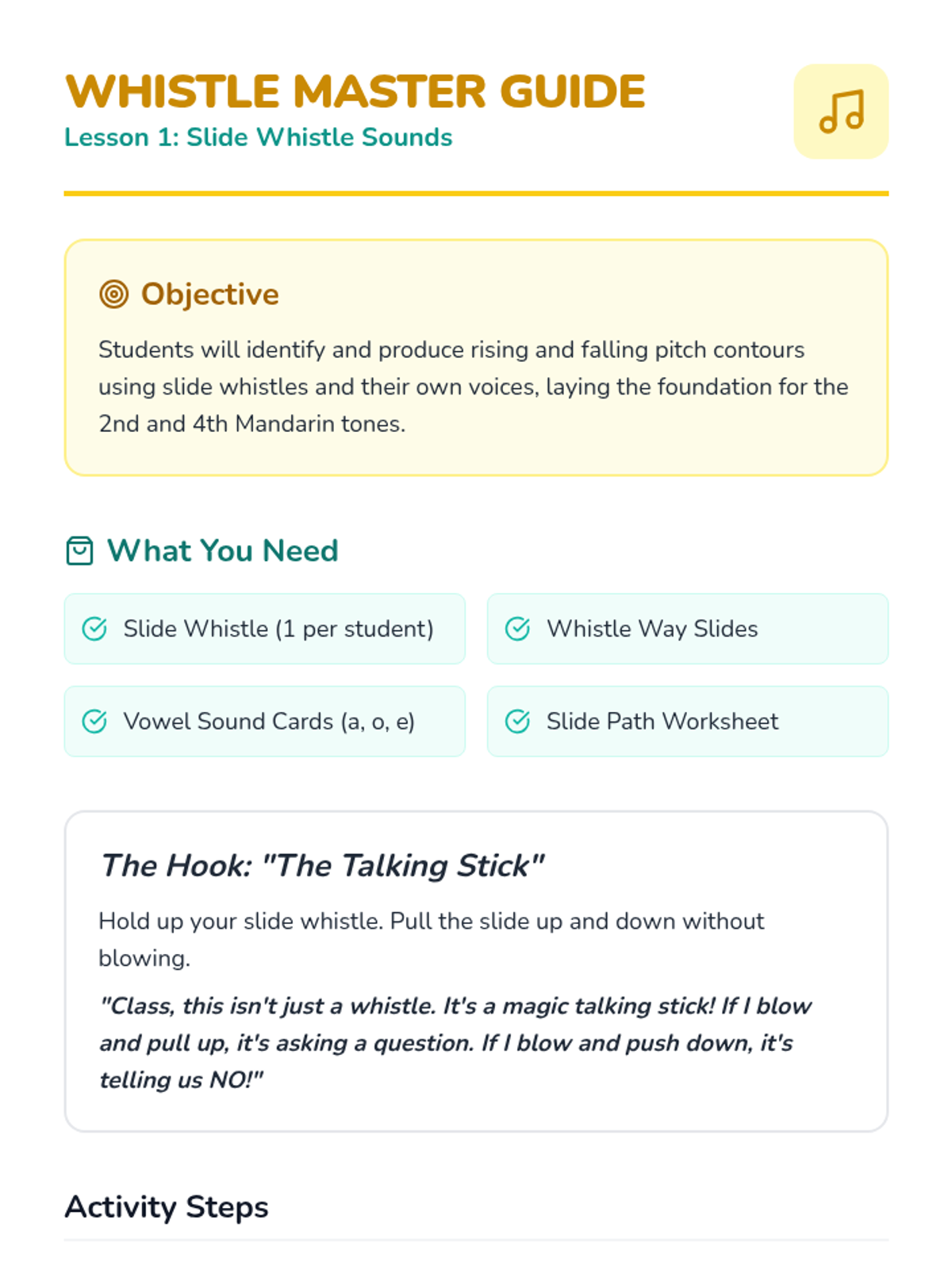
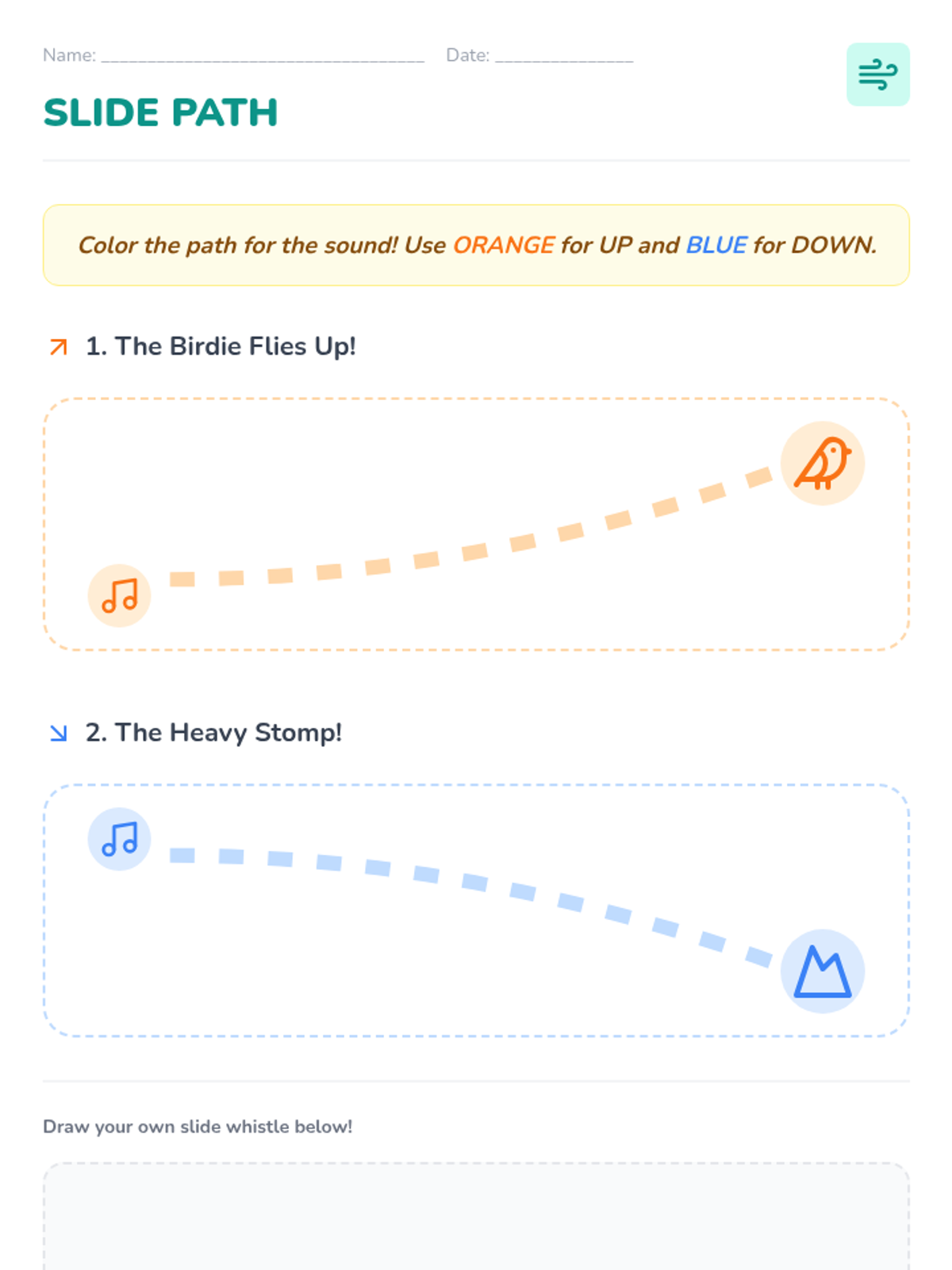
A musical approach to learning Mandarin Chinese tones for Pre-K students. This sequence uses instruments like slide whistles and drums to help children distinguish and produce the four basic pitch contours of Mandarin.
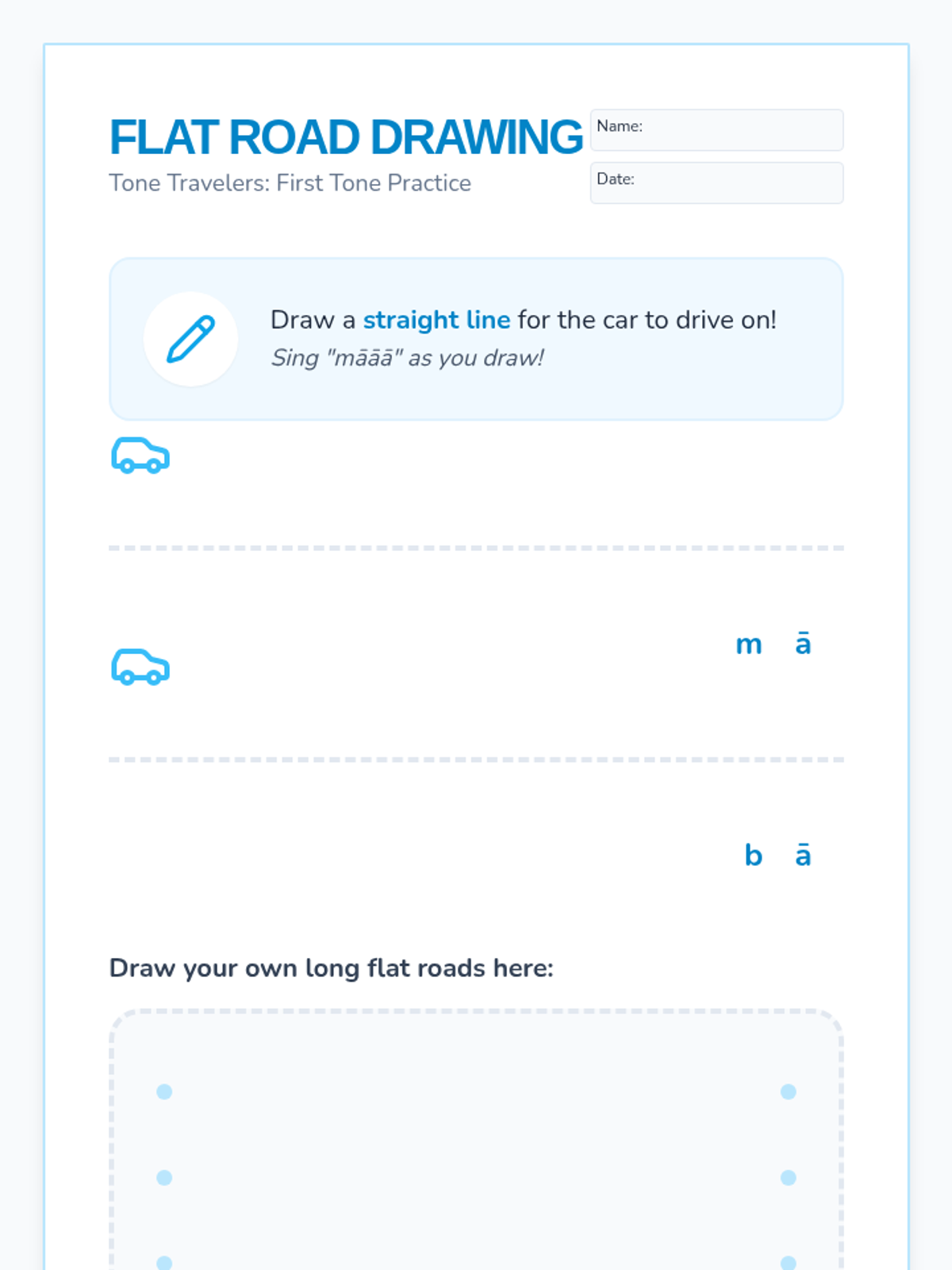
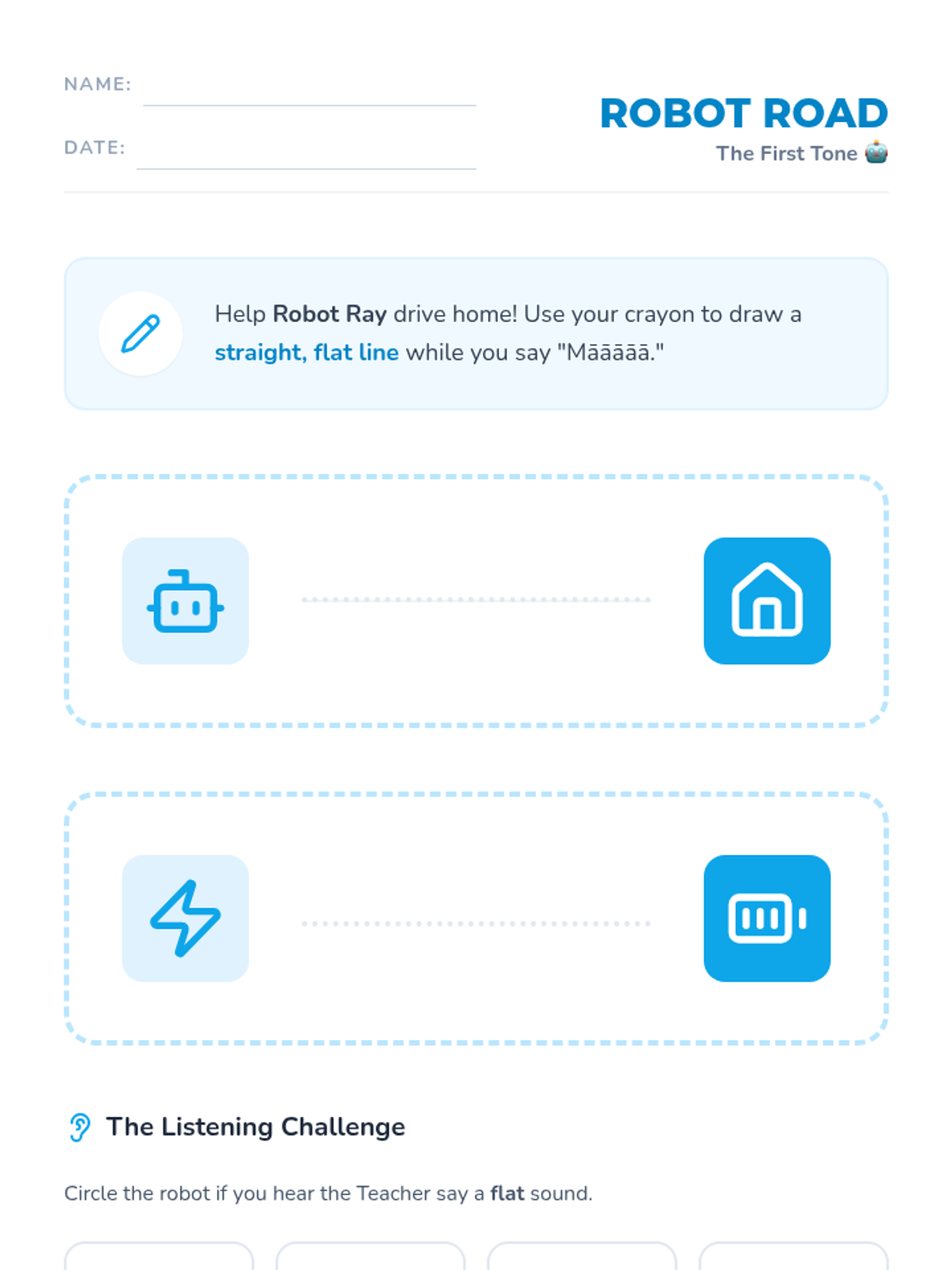
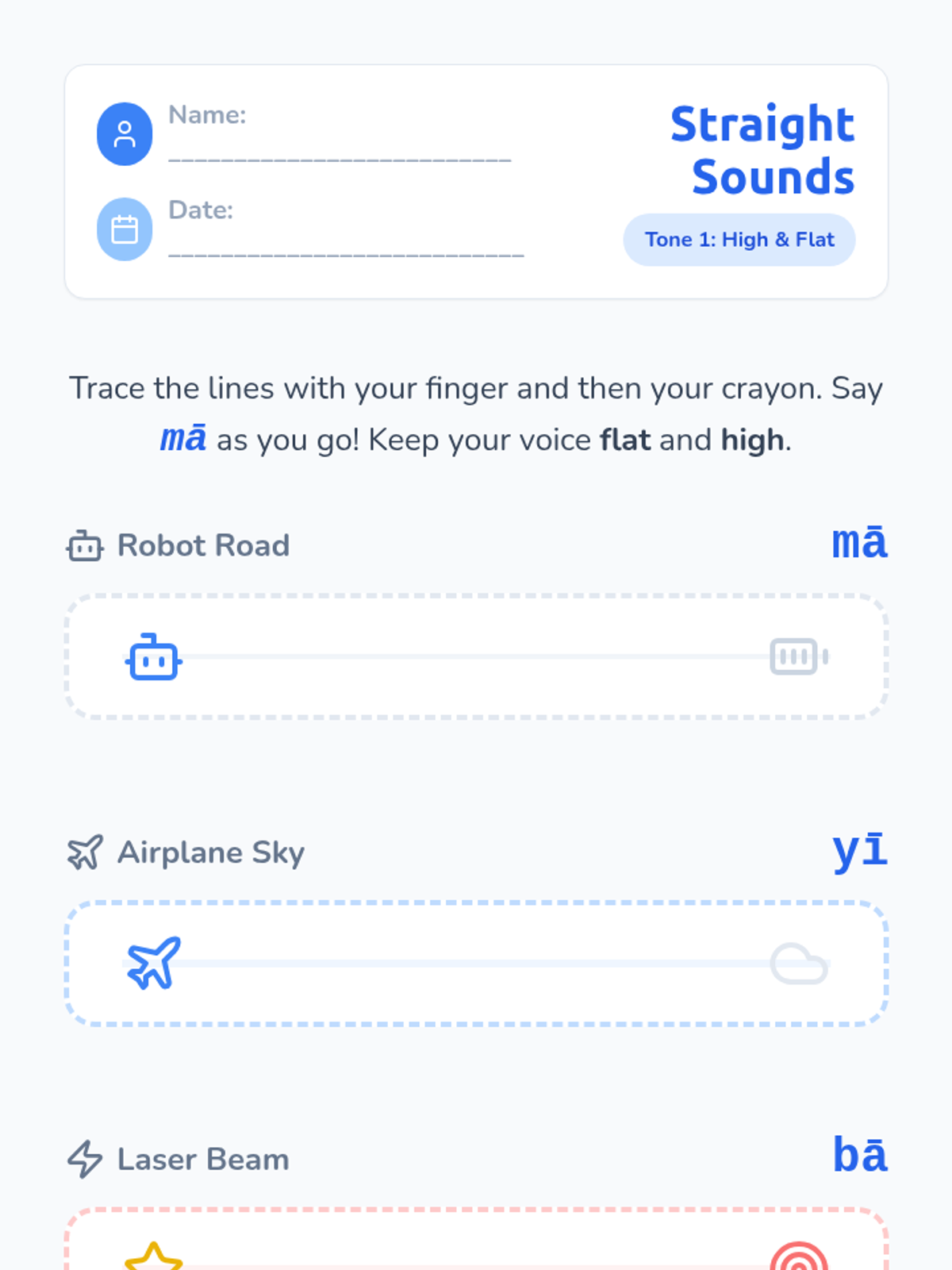
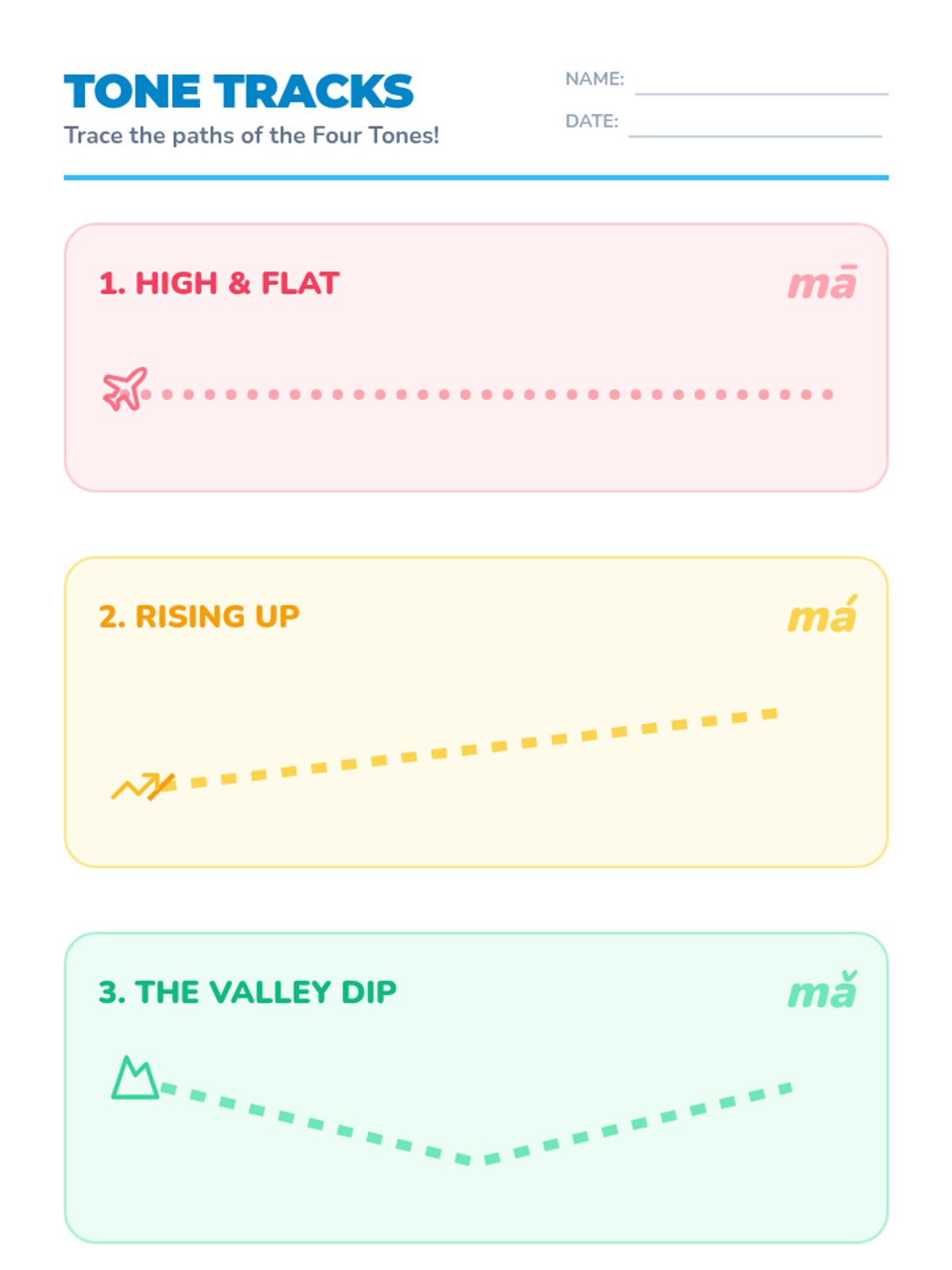
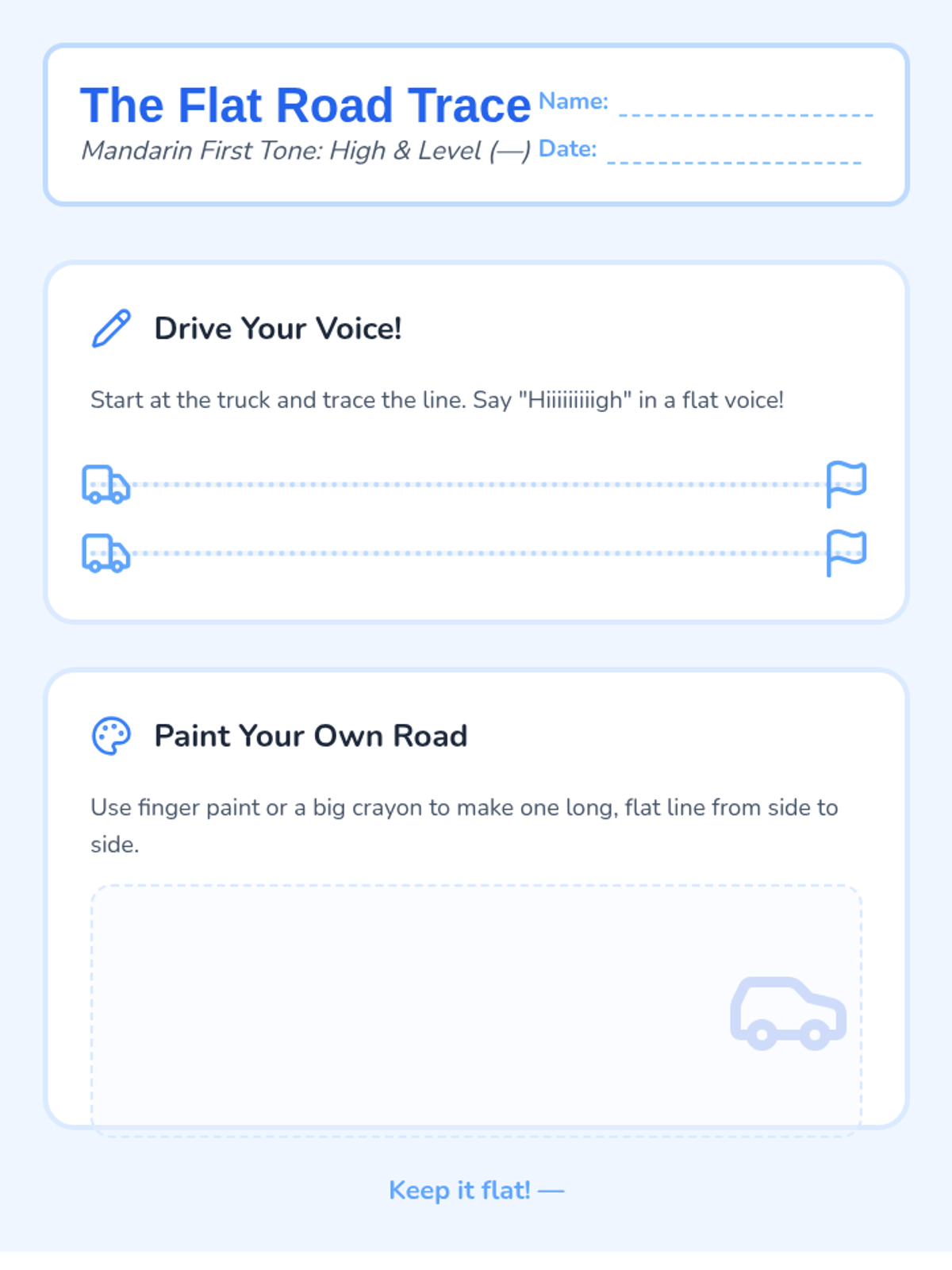
This Pre-K sequence introduces Mandarin Chinese tones through visual pathways and tactile art. Students explore the four tones as 'roads' for their voices, using finger paints, yarn, and playdough to connect visual symbols with auditory pitch.
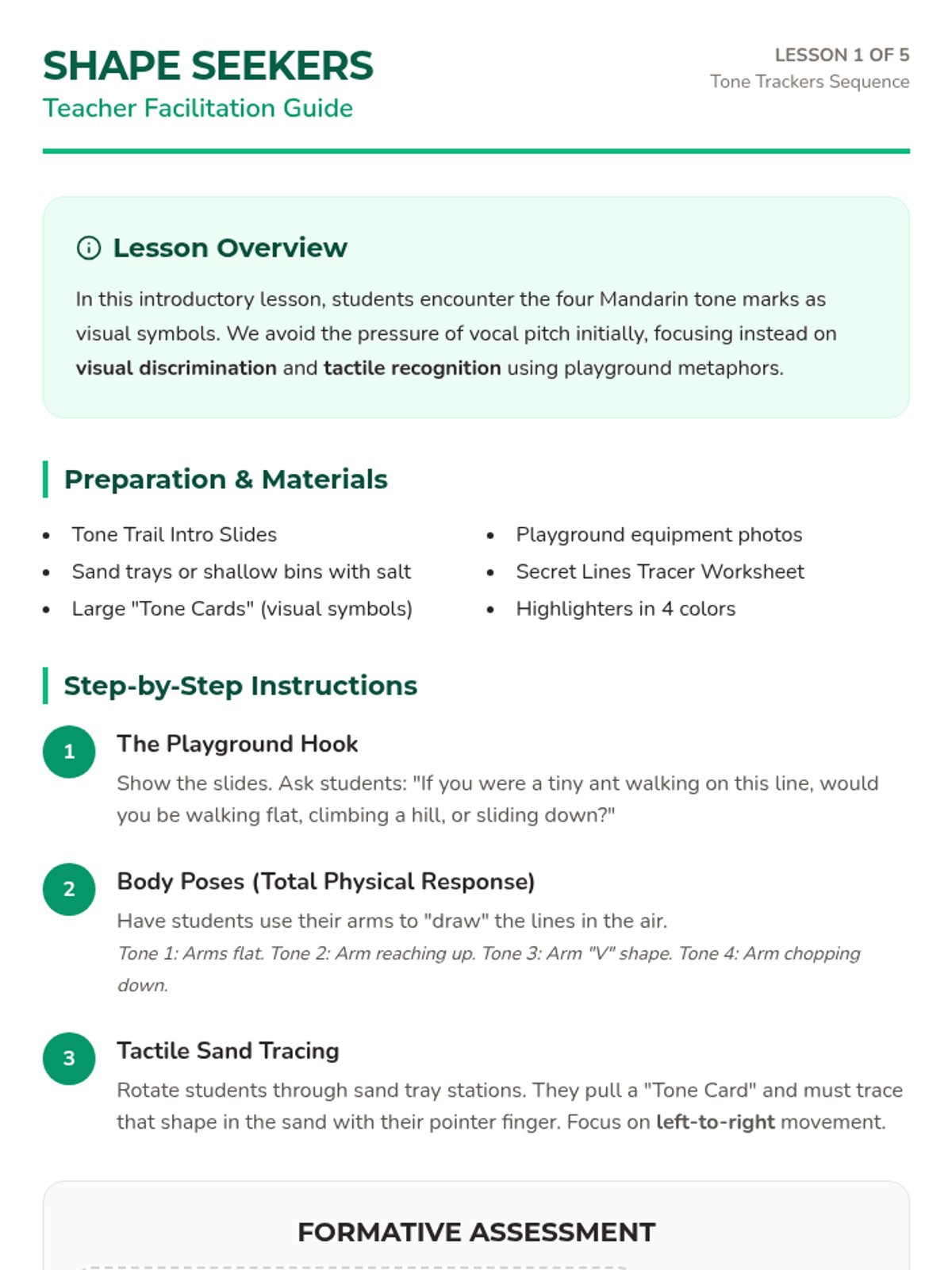
A visual literacy sequence for Kindergarteners to learn Mandarin Pinyin tone marks as graphic symbols. Students explore the four diacritics through playground metaphors, tactile activities, and artistic expression.
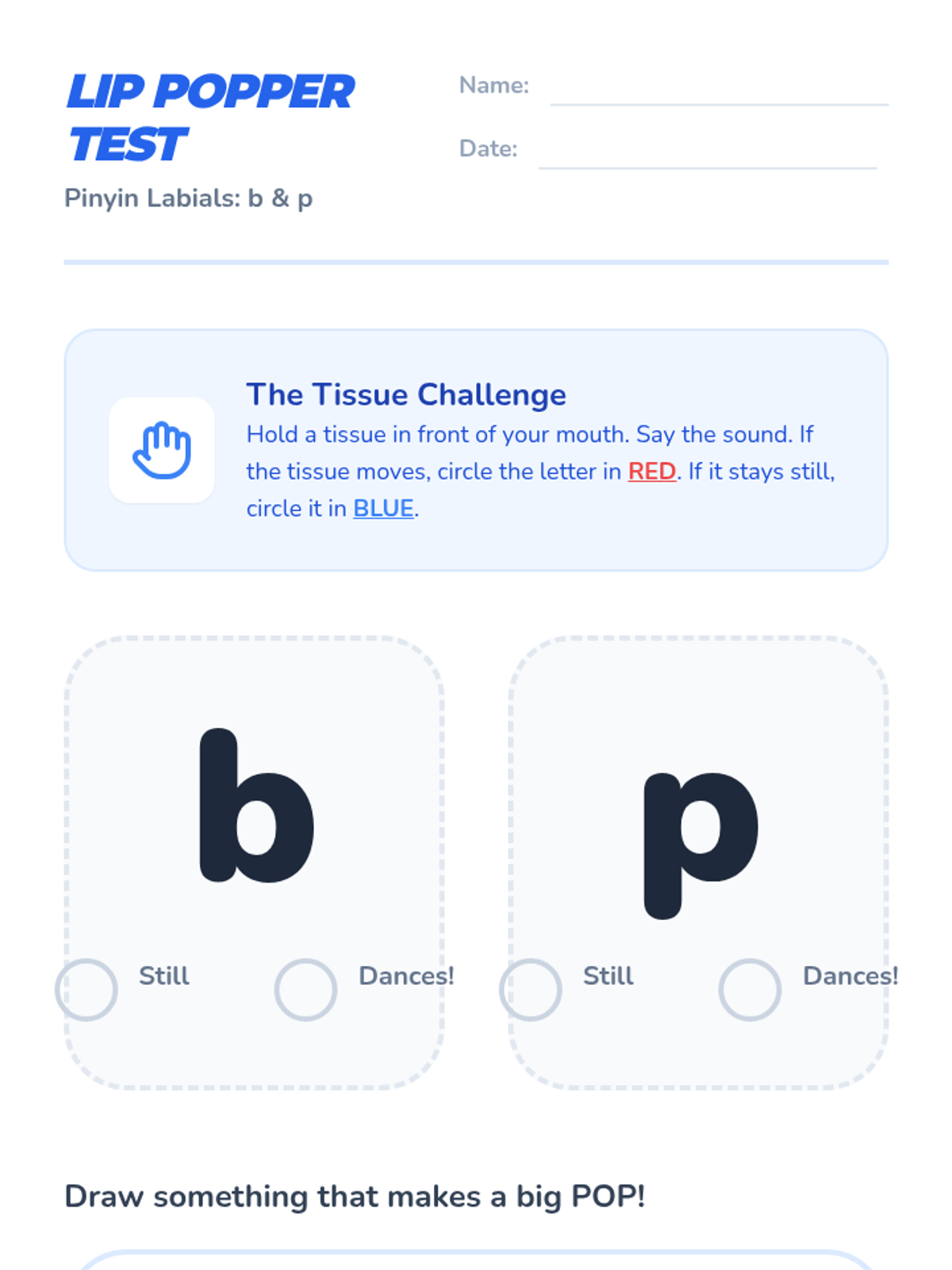
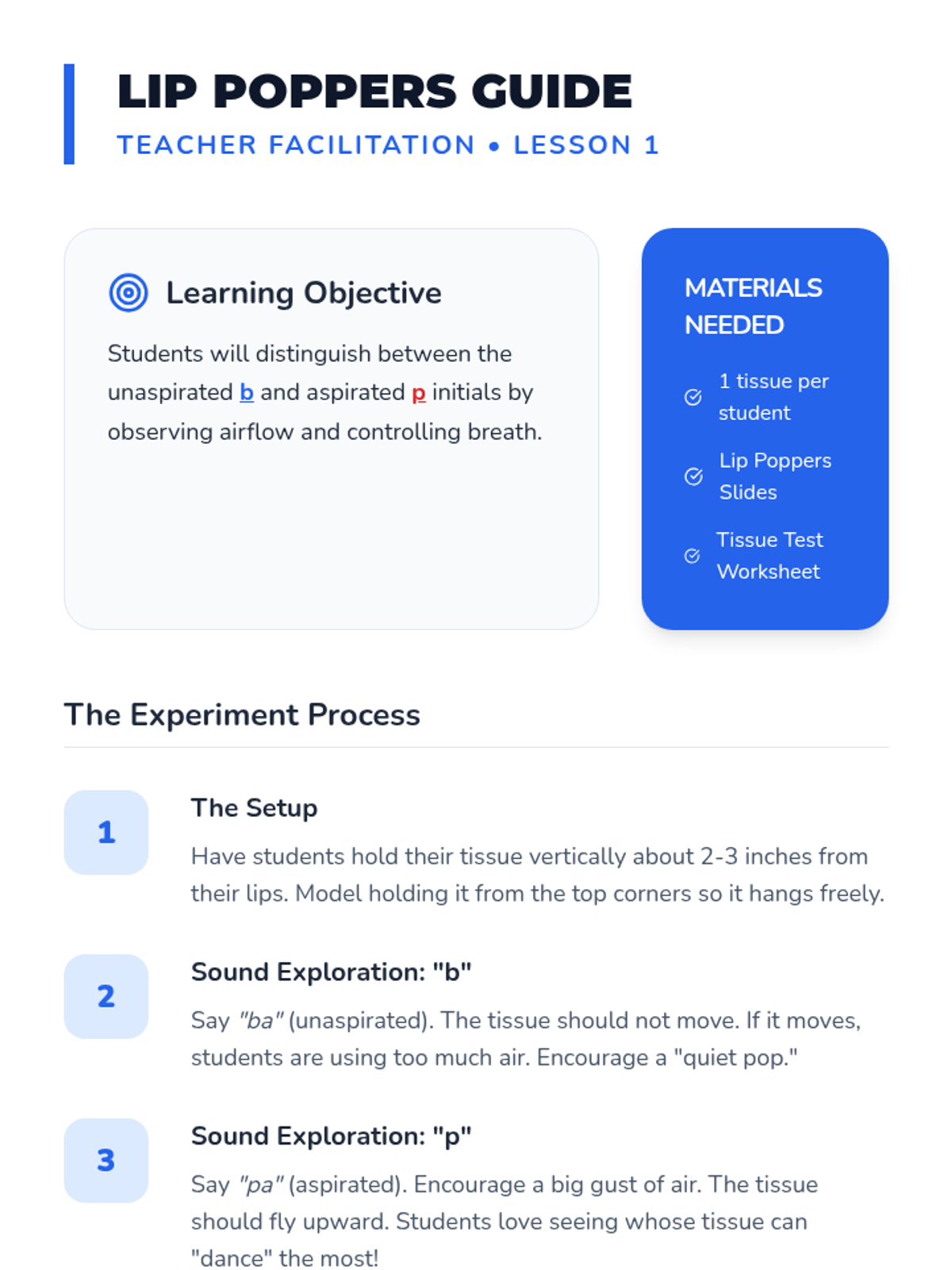
A fun, sensory-driven introduction to Mandarin Pinyin labial initials (b, p, m, f) for Kindergarteners. Students use tissues, vibrations, and tactile games to master articulation and phonemic awareness.
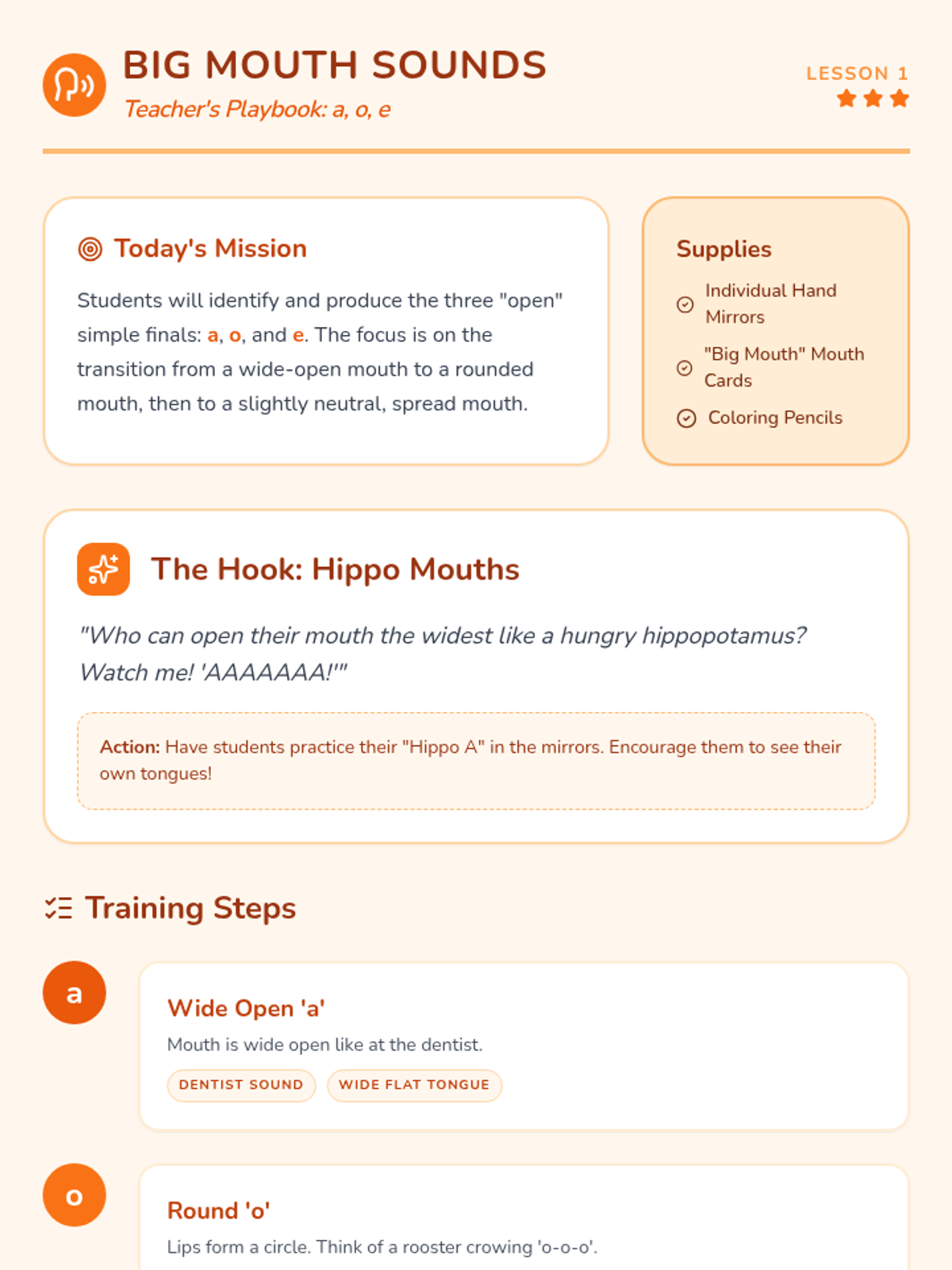
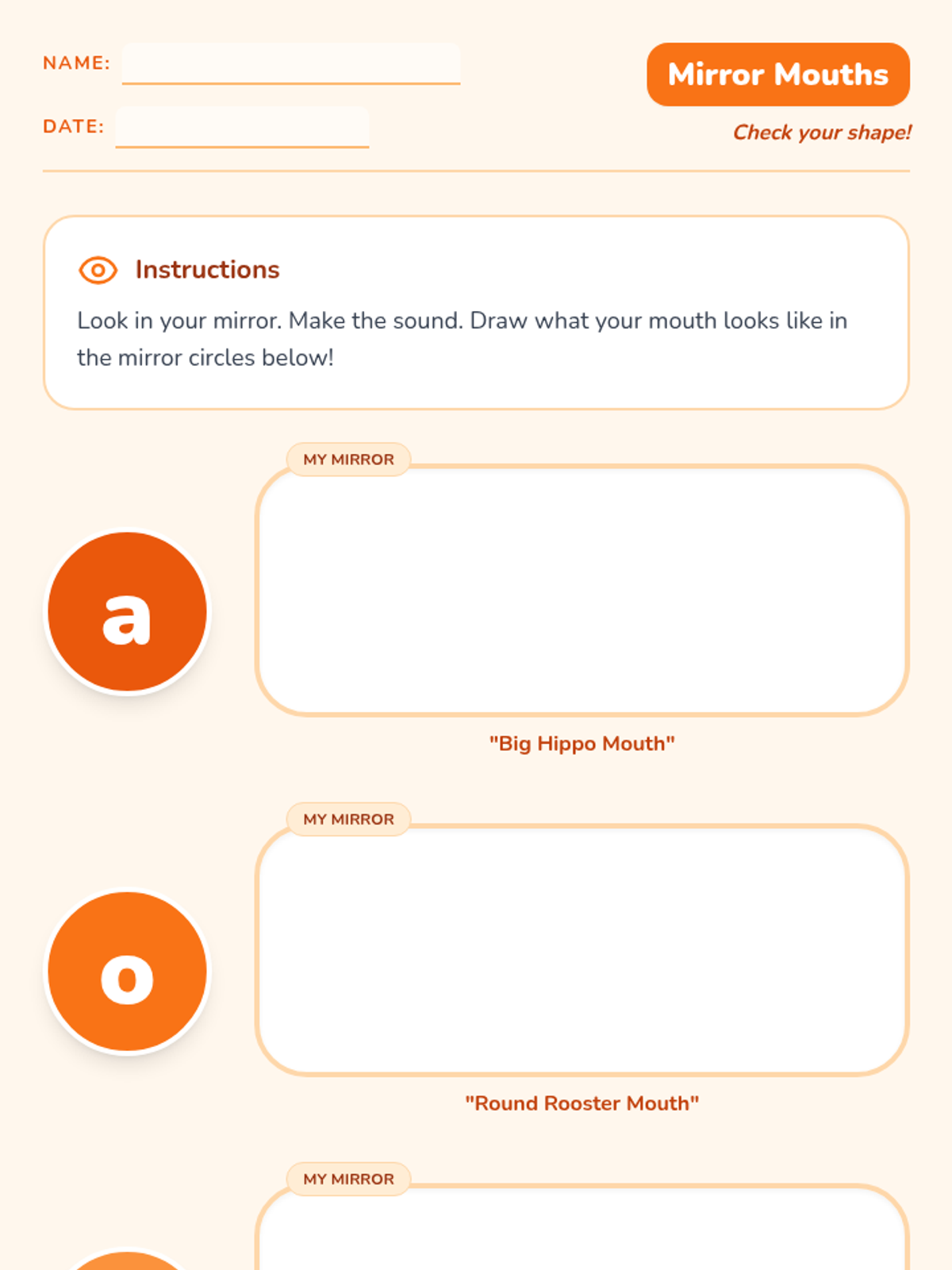
A foundational Mandarin Pinyin sequence for Kindergarteners focusing on the six simple finals (a, o, e, i, u, ü). Students learn through exaggerated mouth movements, mirror work, and interactive games to build accurate pronunciation and muscle memory.
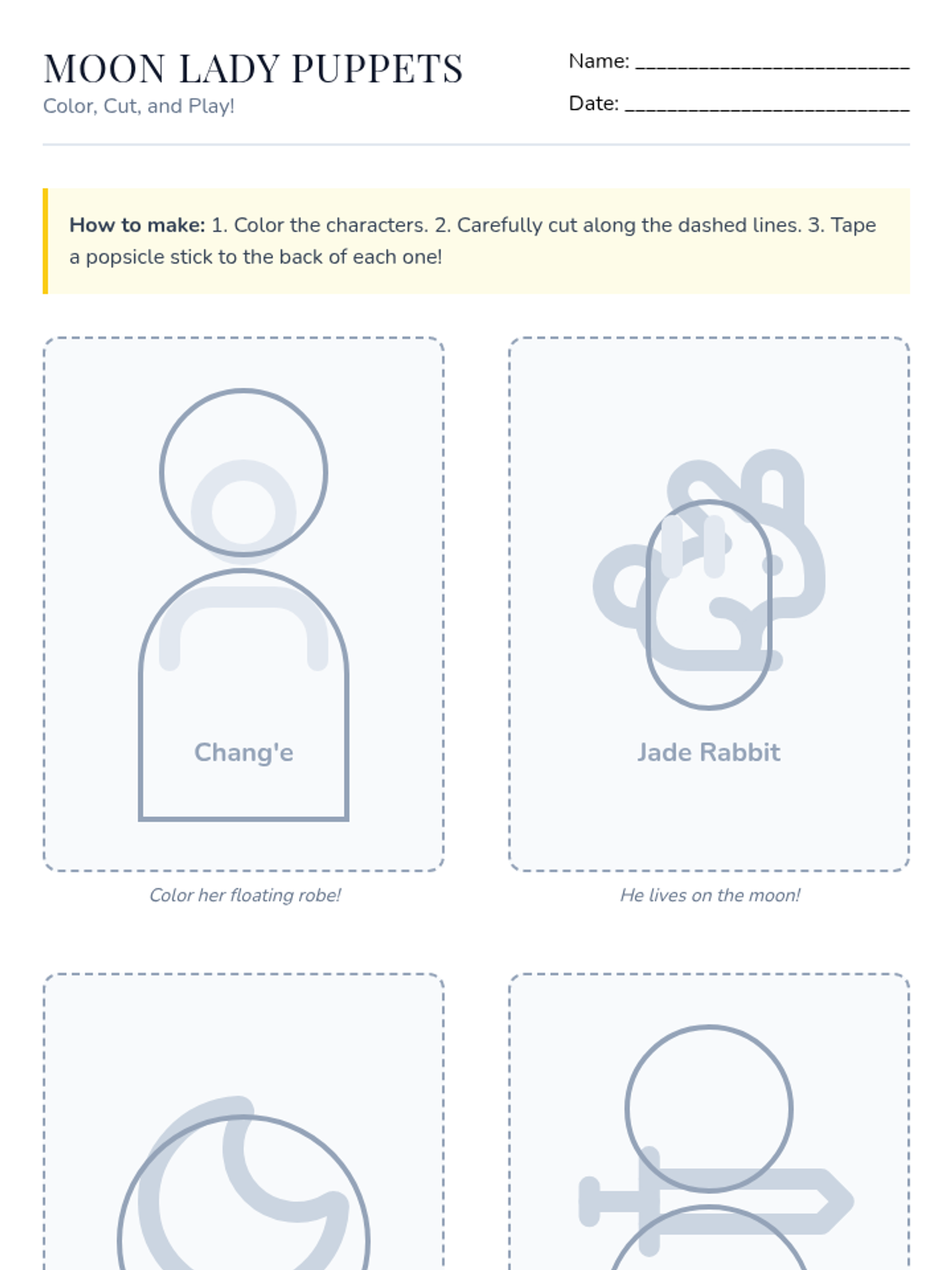
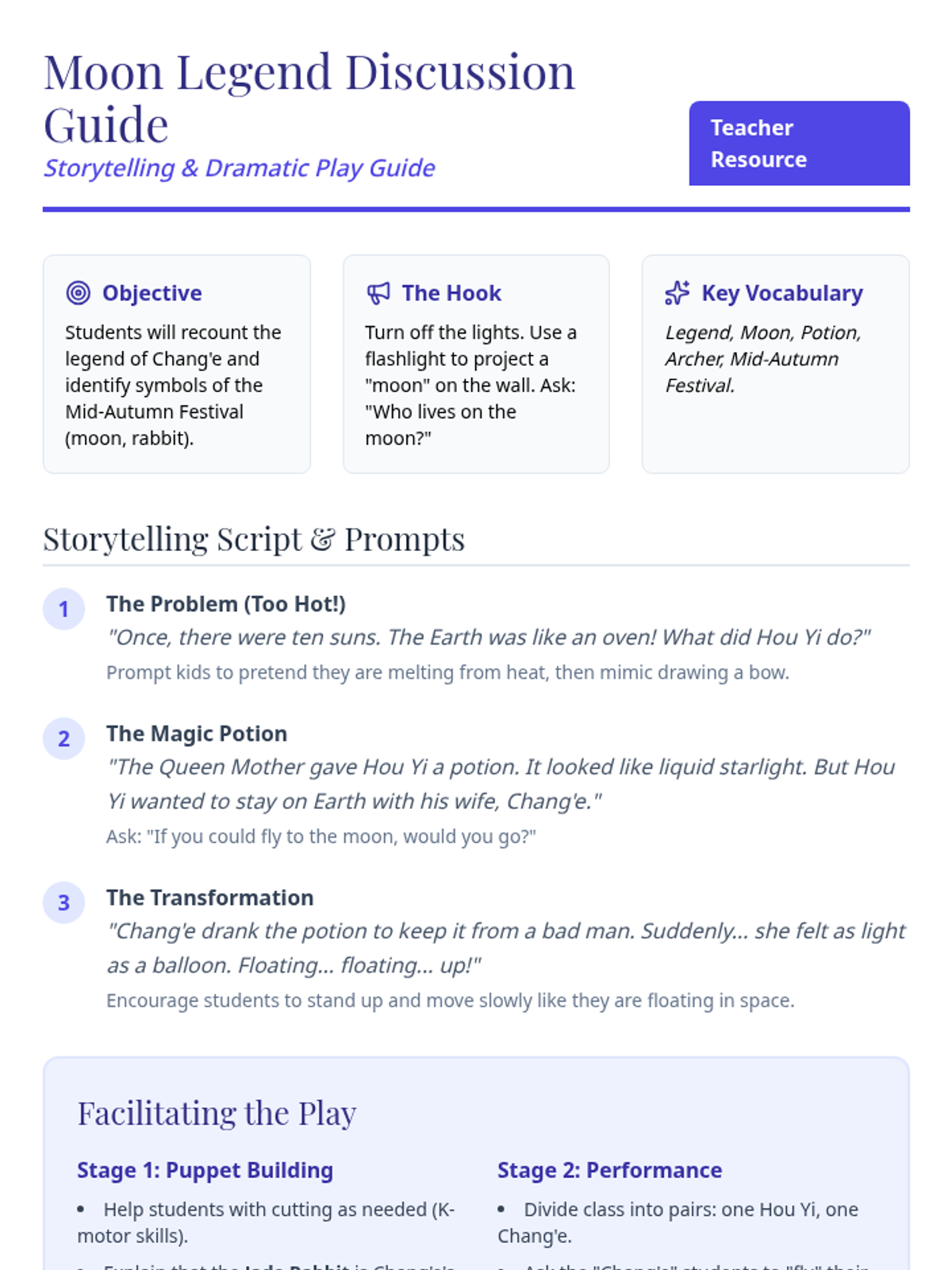
This Kindergarten sequence explores major Chinese seasonal festivals beyond the New Year, focusing on the Mid-Autumn and Dragon Boat Festivals. Students engage with mythology, sensory play, and rhythmic activities to understand how stories connect culture to nature and the seasons.
A sensory-rich introduction to major Chinese festivals for Pre-K students, focusing on colors, sounds, and symbols through play-based learning.