Phonetic foundations through Pinyin and tones, character recognition, and essential grammar for all proficiency levels. Integrates cultural context with advanced reading, writing, and communicative strategies.
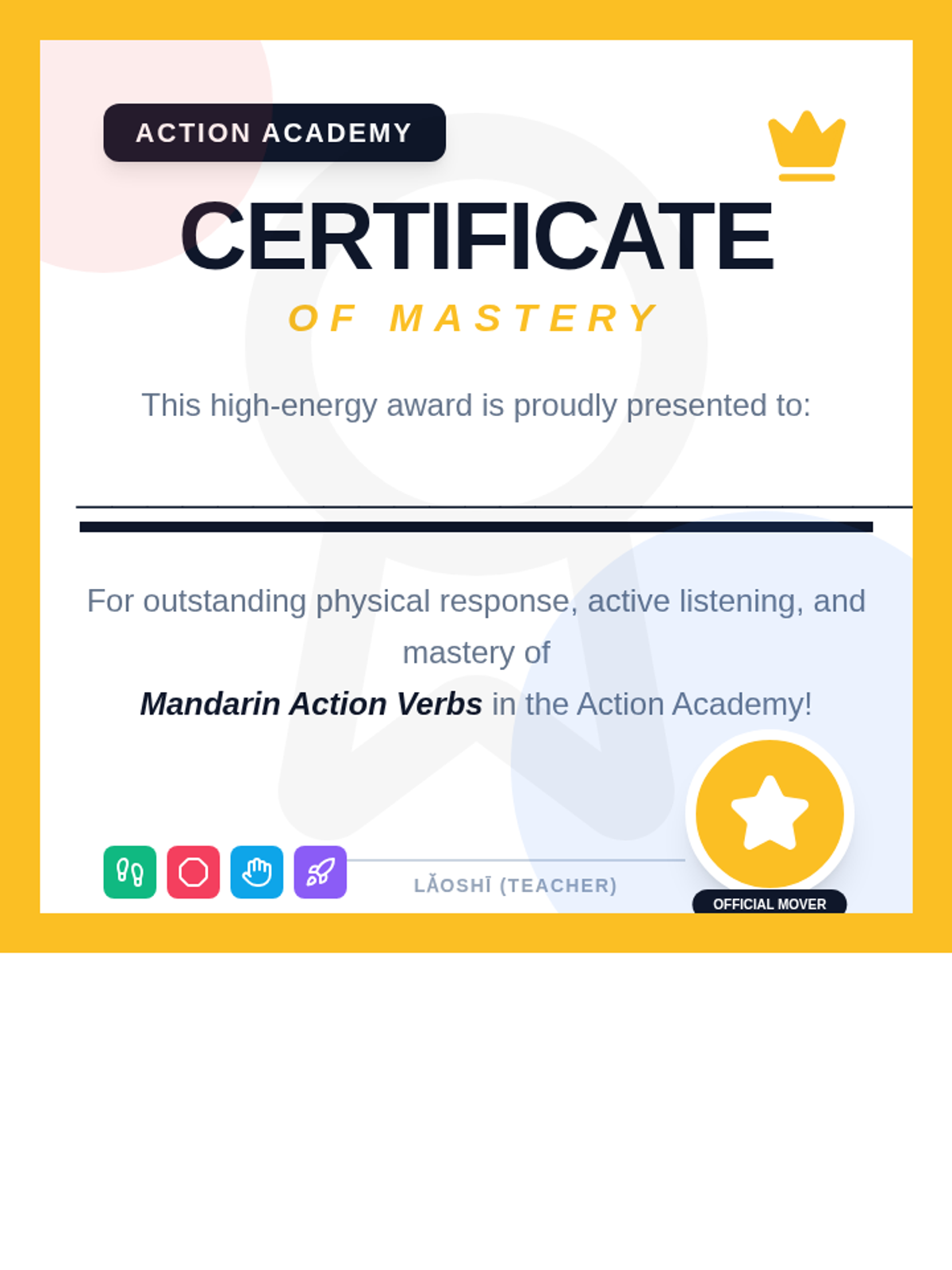
A mastery-based lesson using 'Lǎoshī shuō' (Simon Says) to integrate all previous commands into complex sequences.
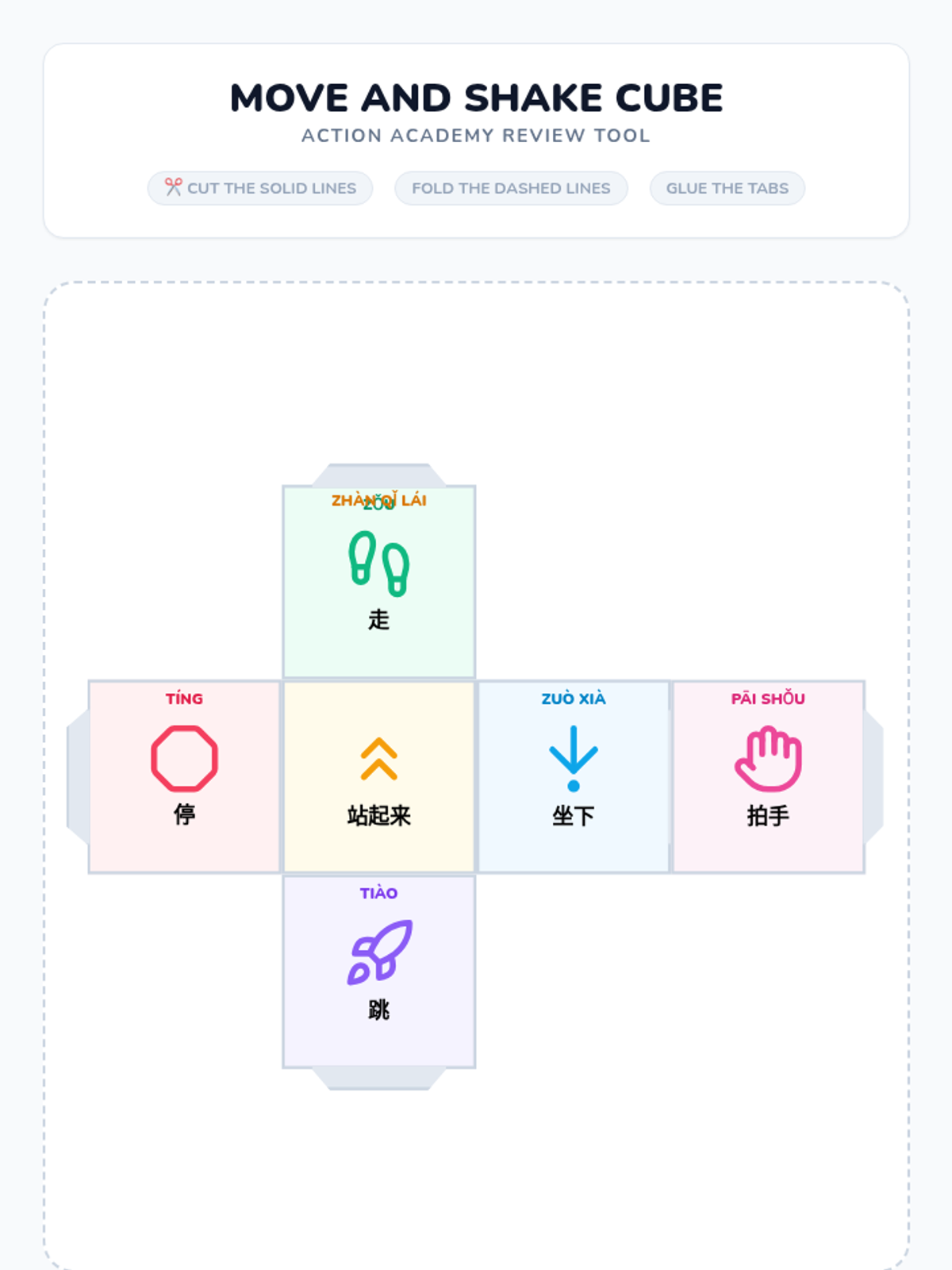
Learning 'Pāi shǒu' (Clap hands) and 'Tiào' (Jump) with rhythm and music to reinforce high-energy action vocabulary.
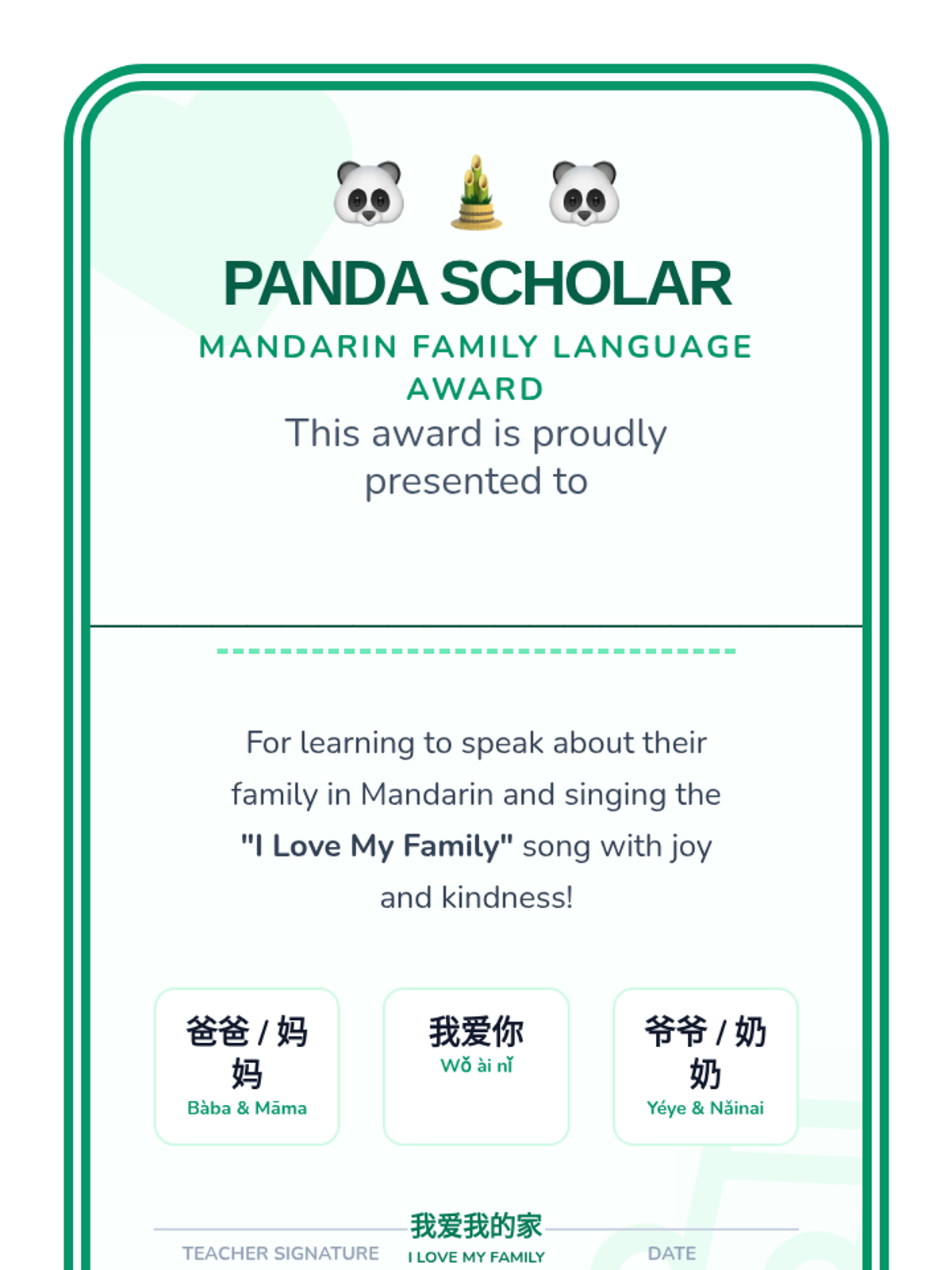
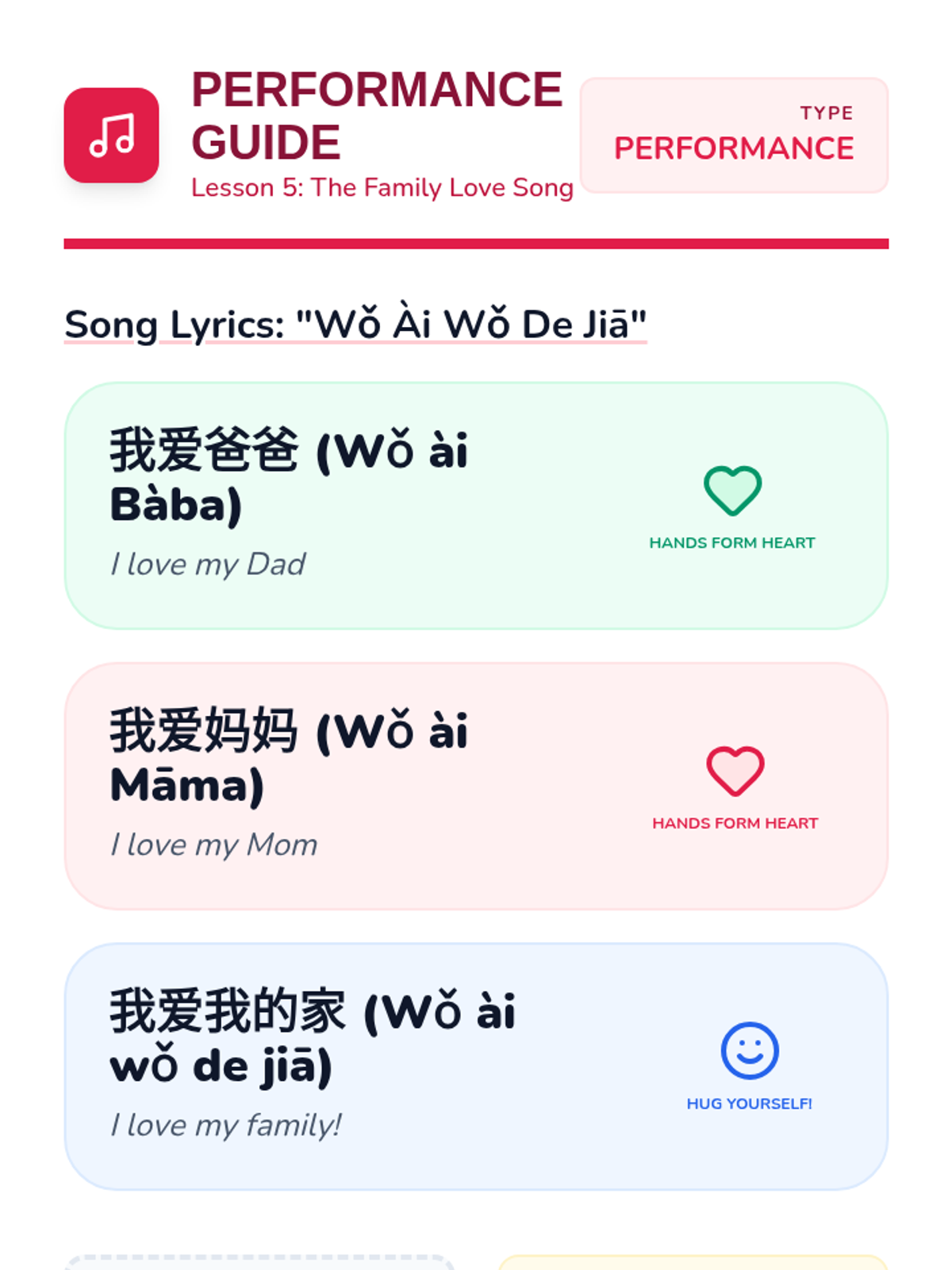
The sequence concludes with a song 'Wǒ ài wǒ de jiā', combining vocabulary with the verb 'to love' and expressive hand motions.
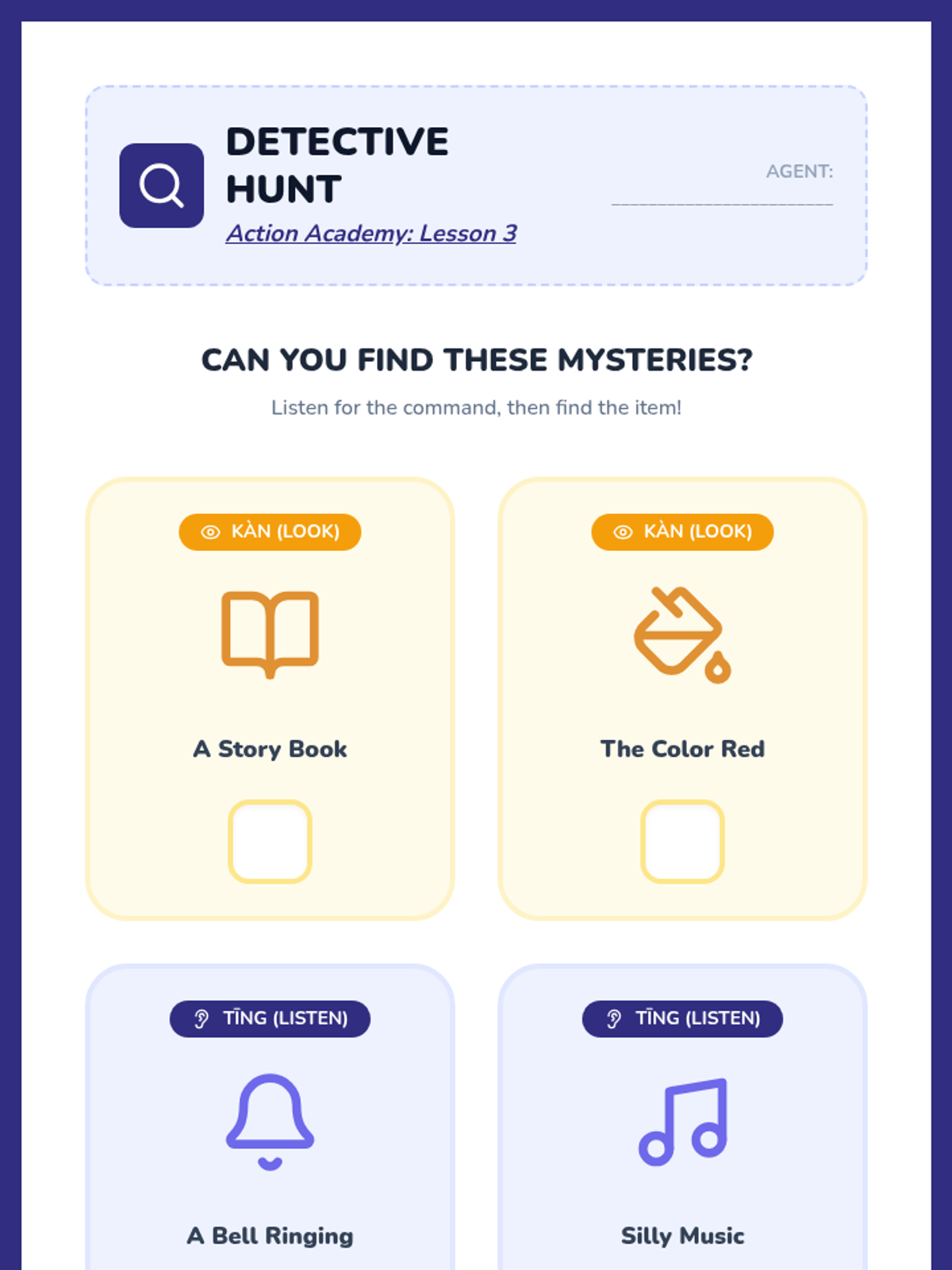
Focusing on sensory verbs 'Tīng' (Listen) and 'Kàn' (Look) through a detective-themed scavenger hunt.
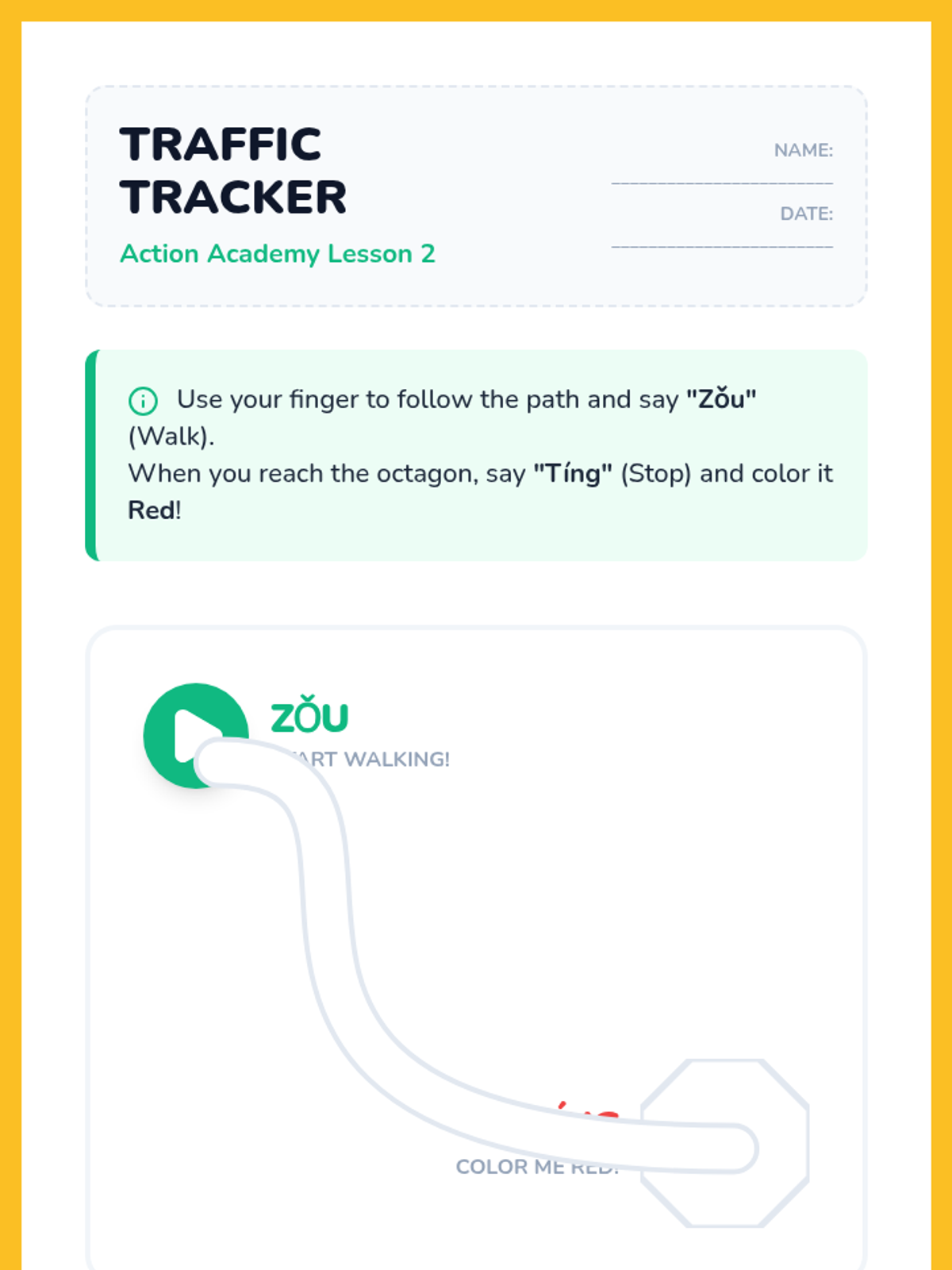
Introducing 'Zǒu' (Walk) and 'Tíng' (Stop) using a Mandarin version of Red Light, Green Light to build impulse control and verb recognition.
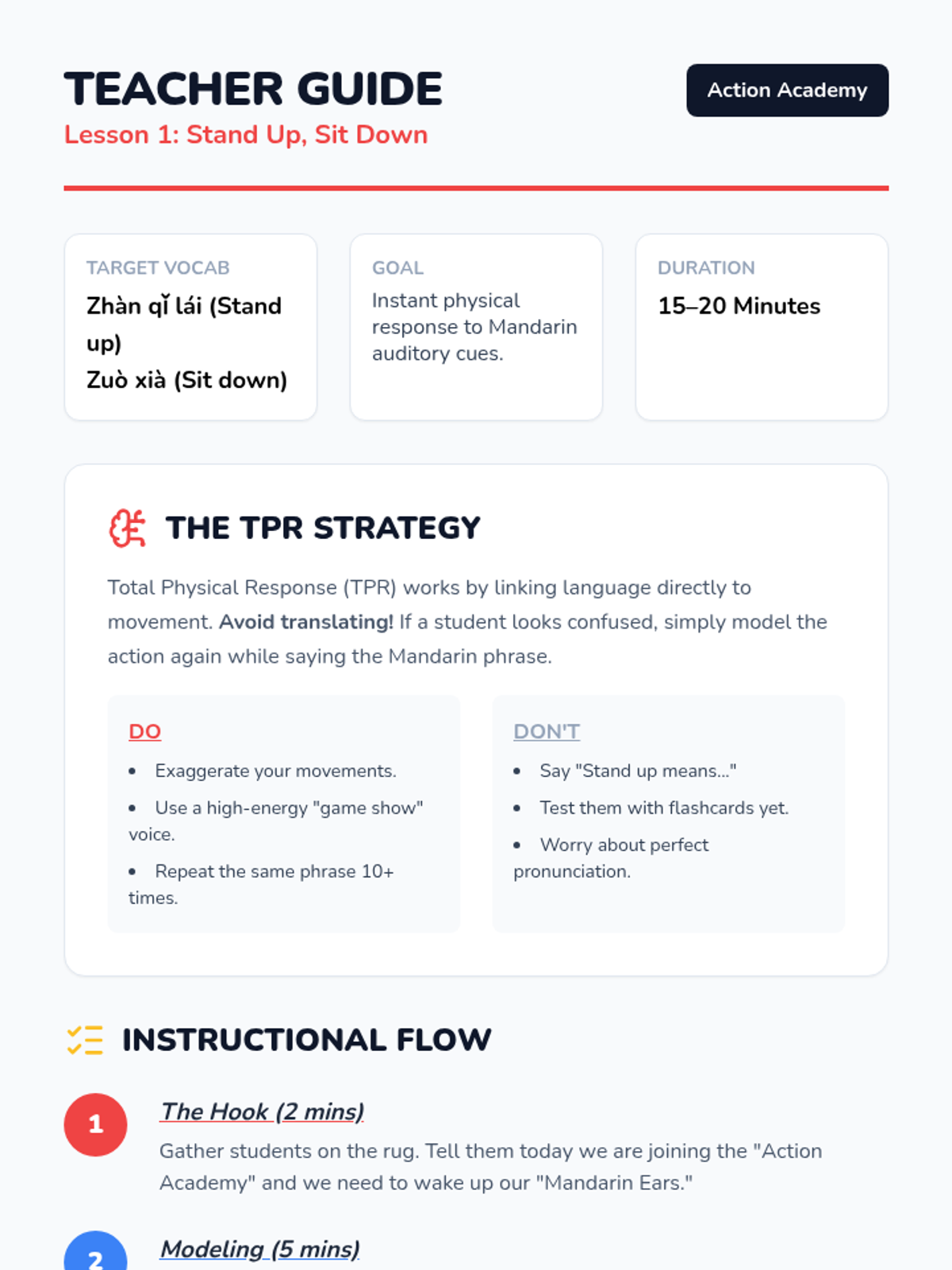
Students learn 'Zhàn qǐ lái' (Stand up) and 'Zuò xià' (Sit down) through rapid-fire reaction games. focus is on gross motor response to auditory cues.
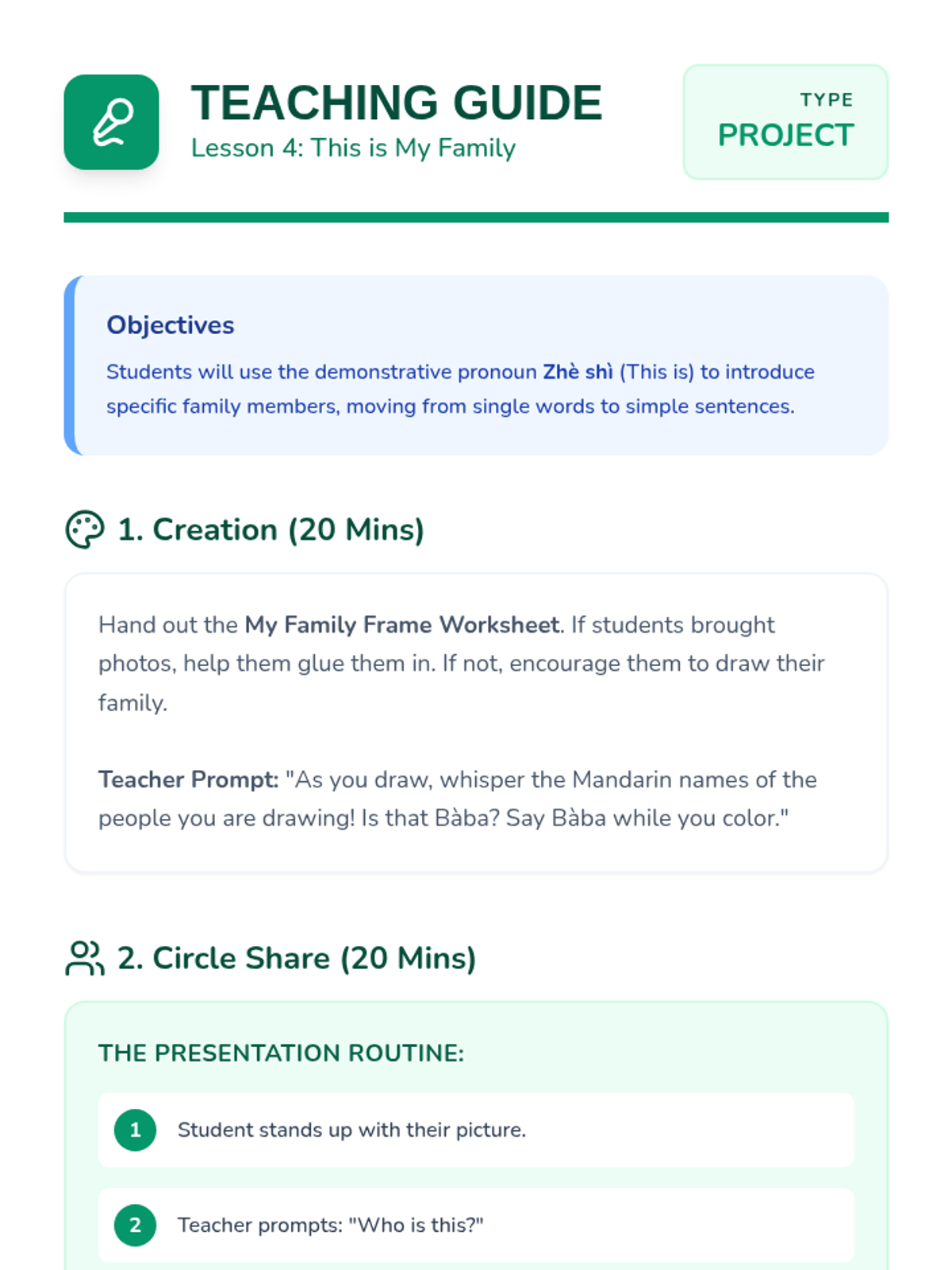
Students practice the sentence structure 'Zhè shì...' to introduce their own family members using photos or drawings.
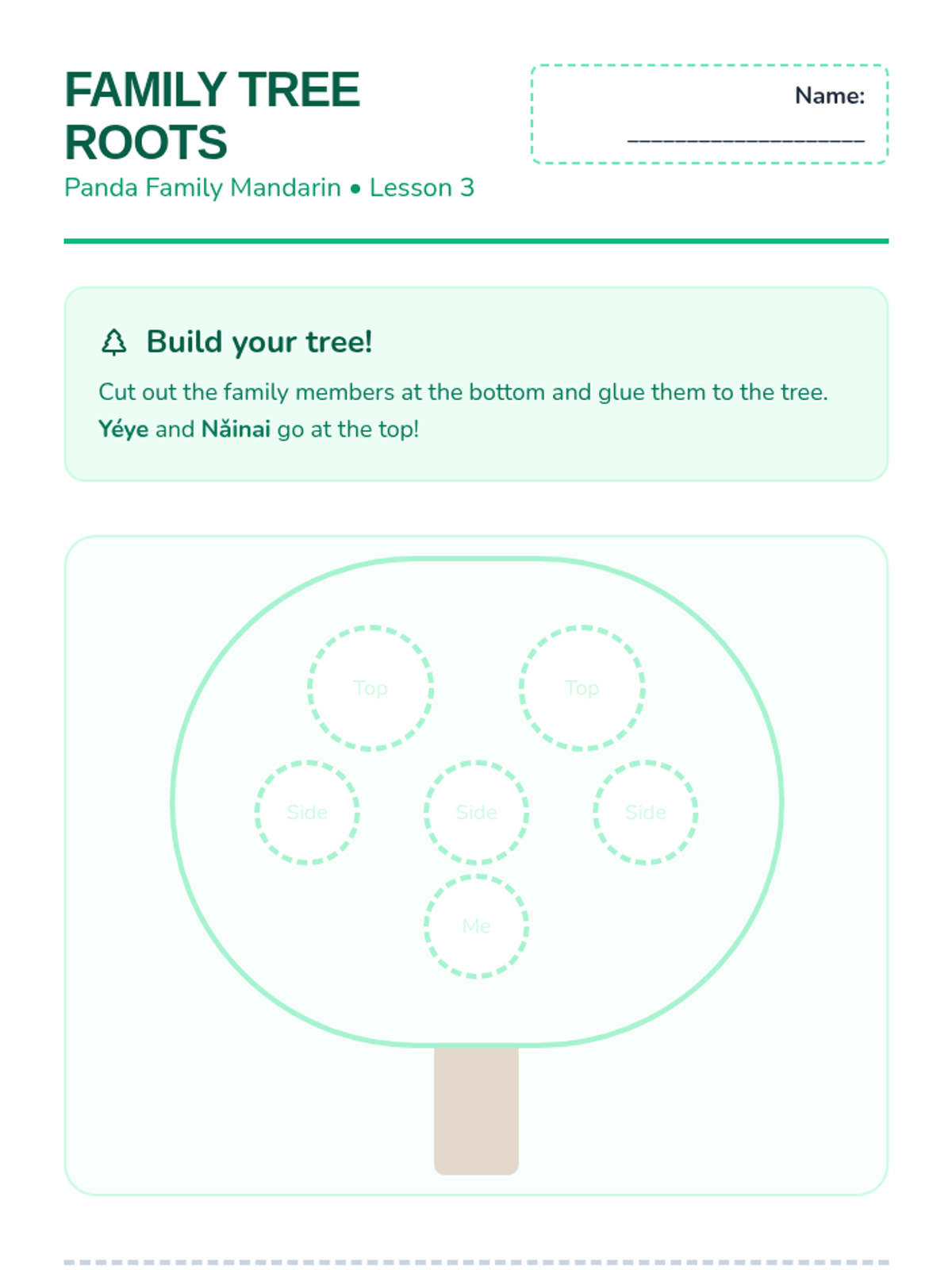
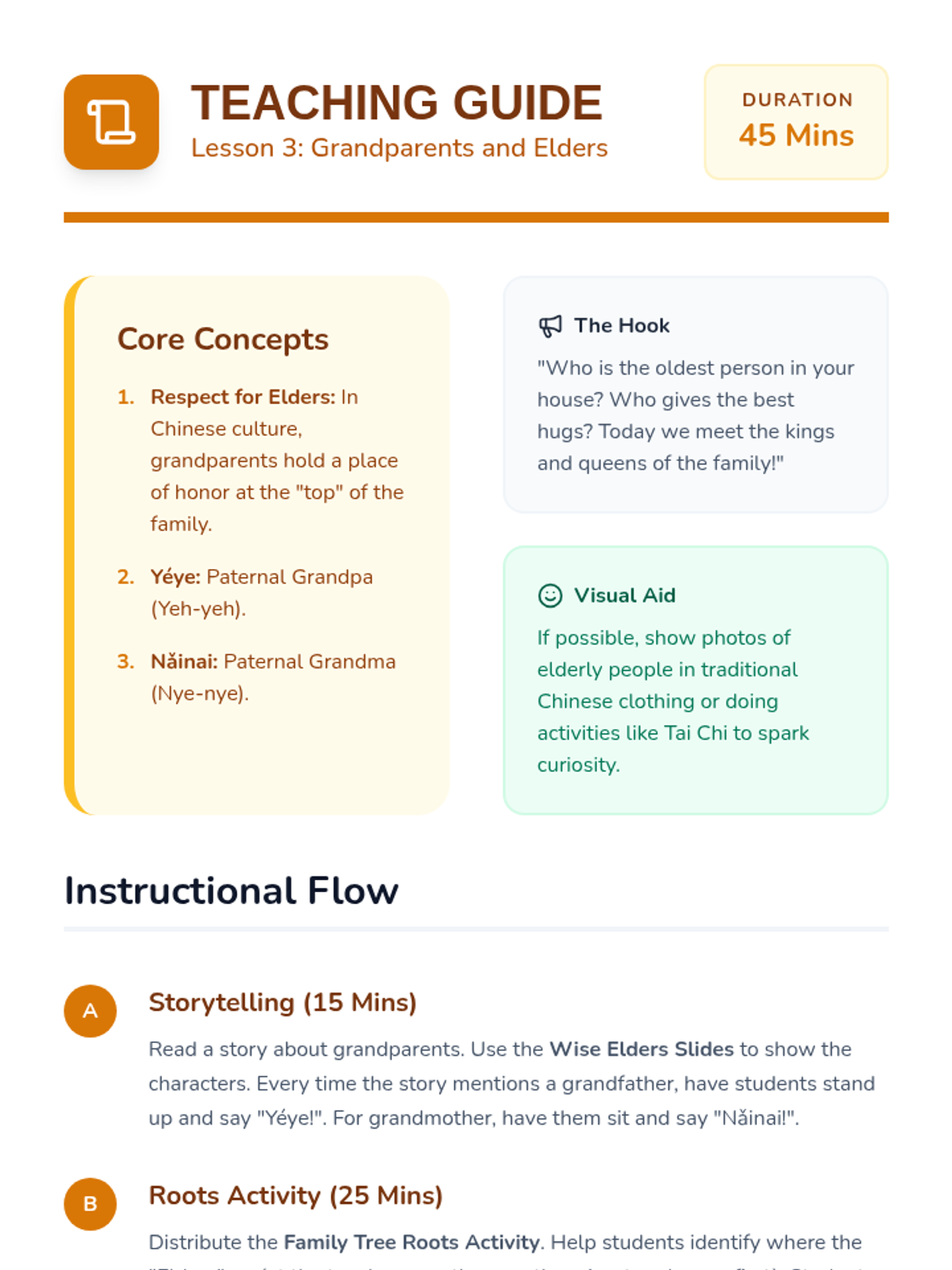
Introduction to grandparents, Yéye and Nǎinai. Students explore generational structures using a visual family tree and storytelling.
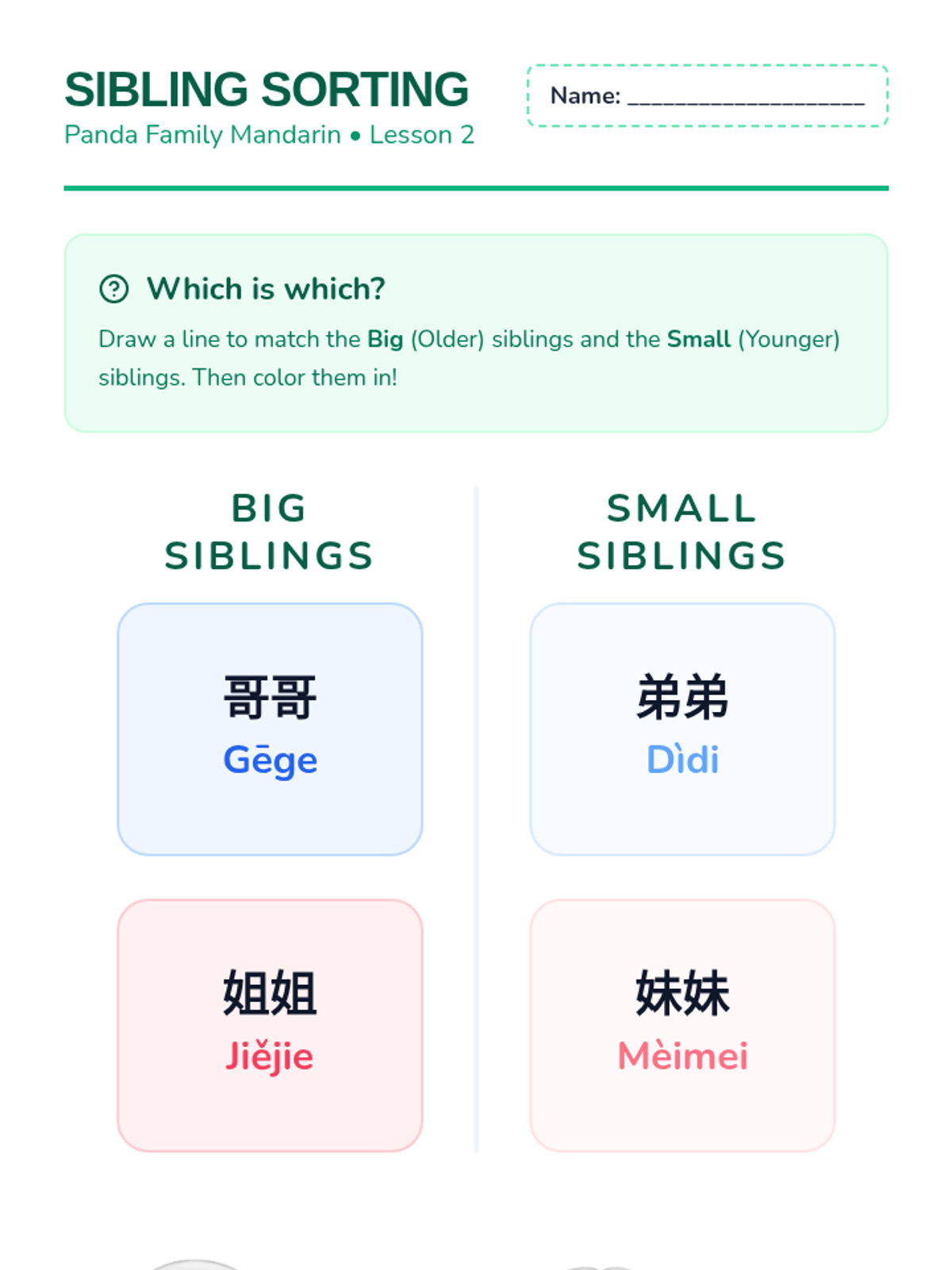
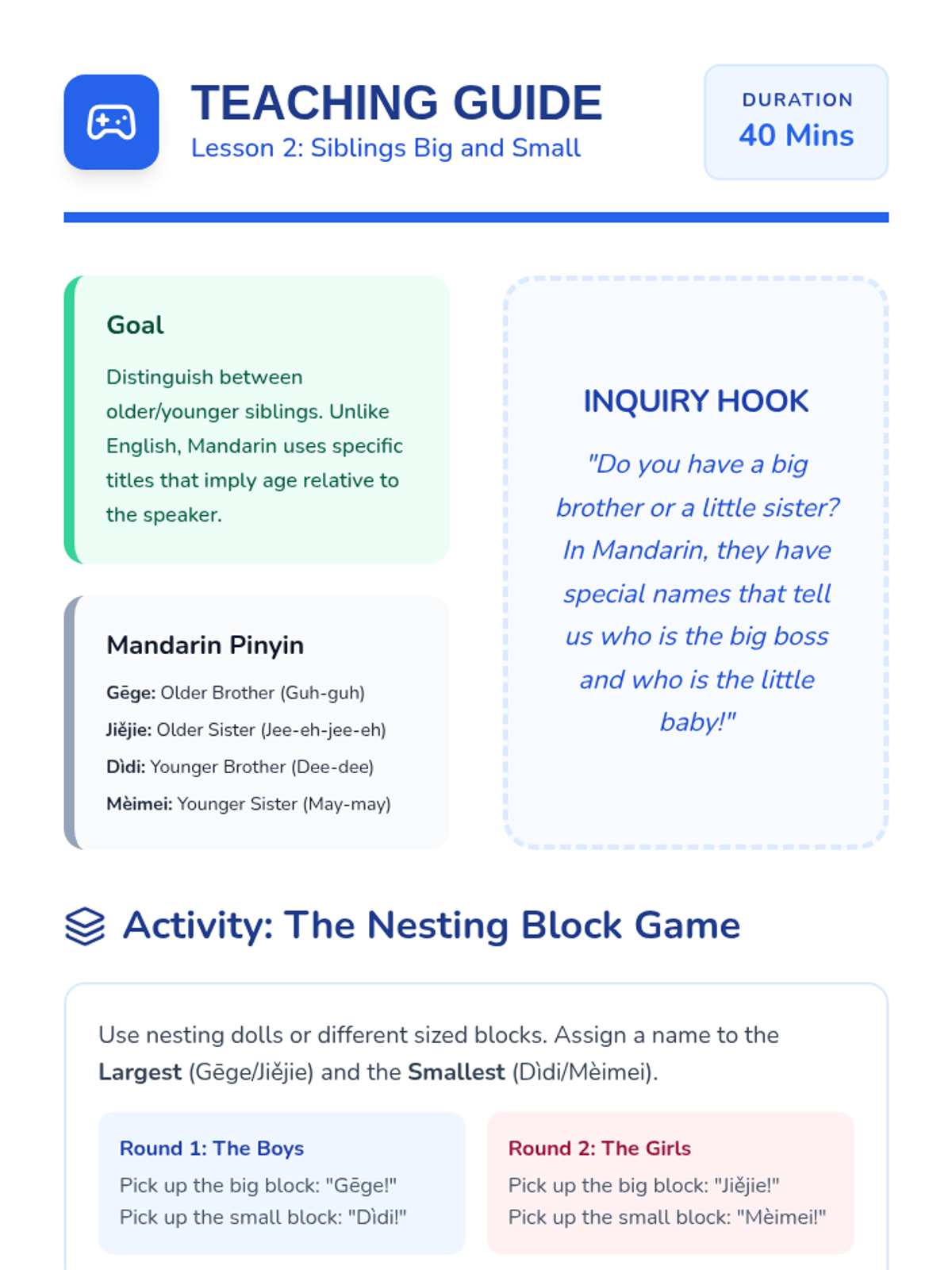
Exploration of siblings in Mandarin, focusing on older and younger distinctions. Students learn Gēge, Jiějie, Dìdi, and Mèimei through size-based activities.
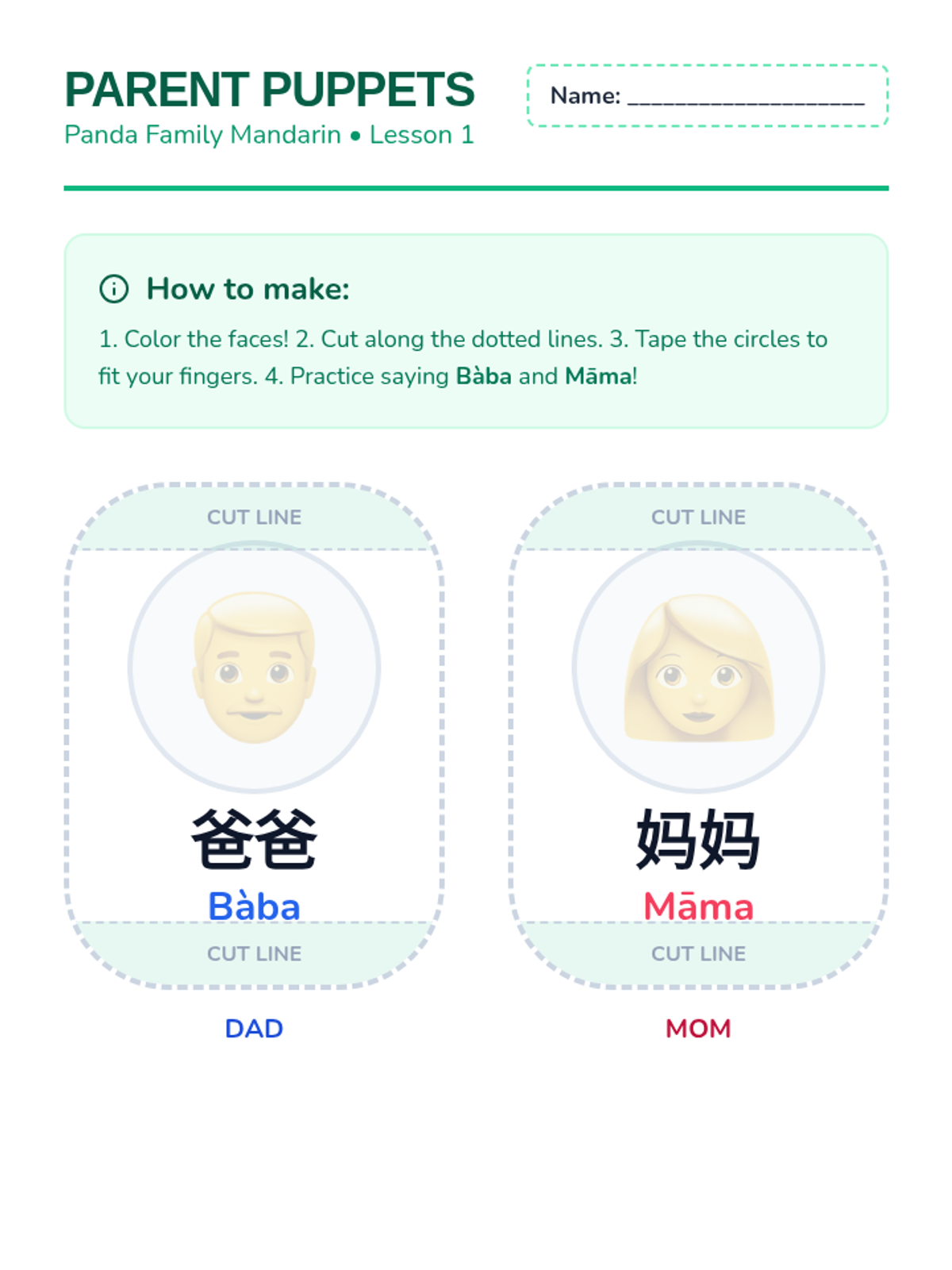
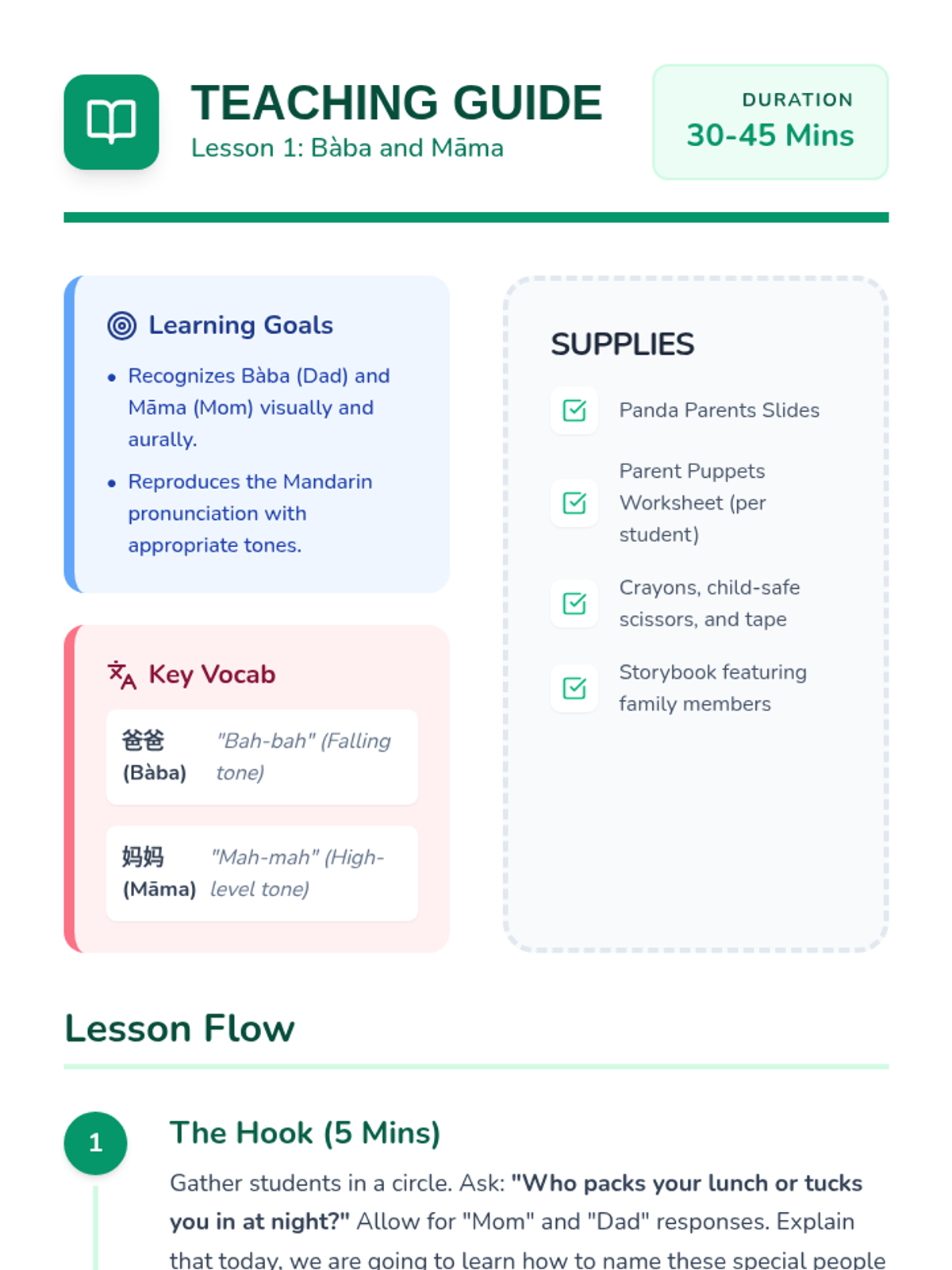
Introduction to the terms for Mom and Dad in Mandarin. Students use finger puppets to practice Bàba and Māma while associating the words with parental figures.
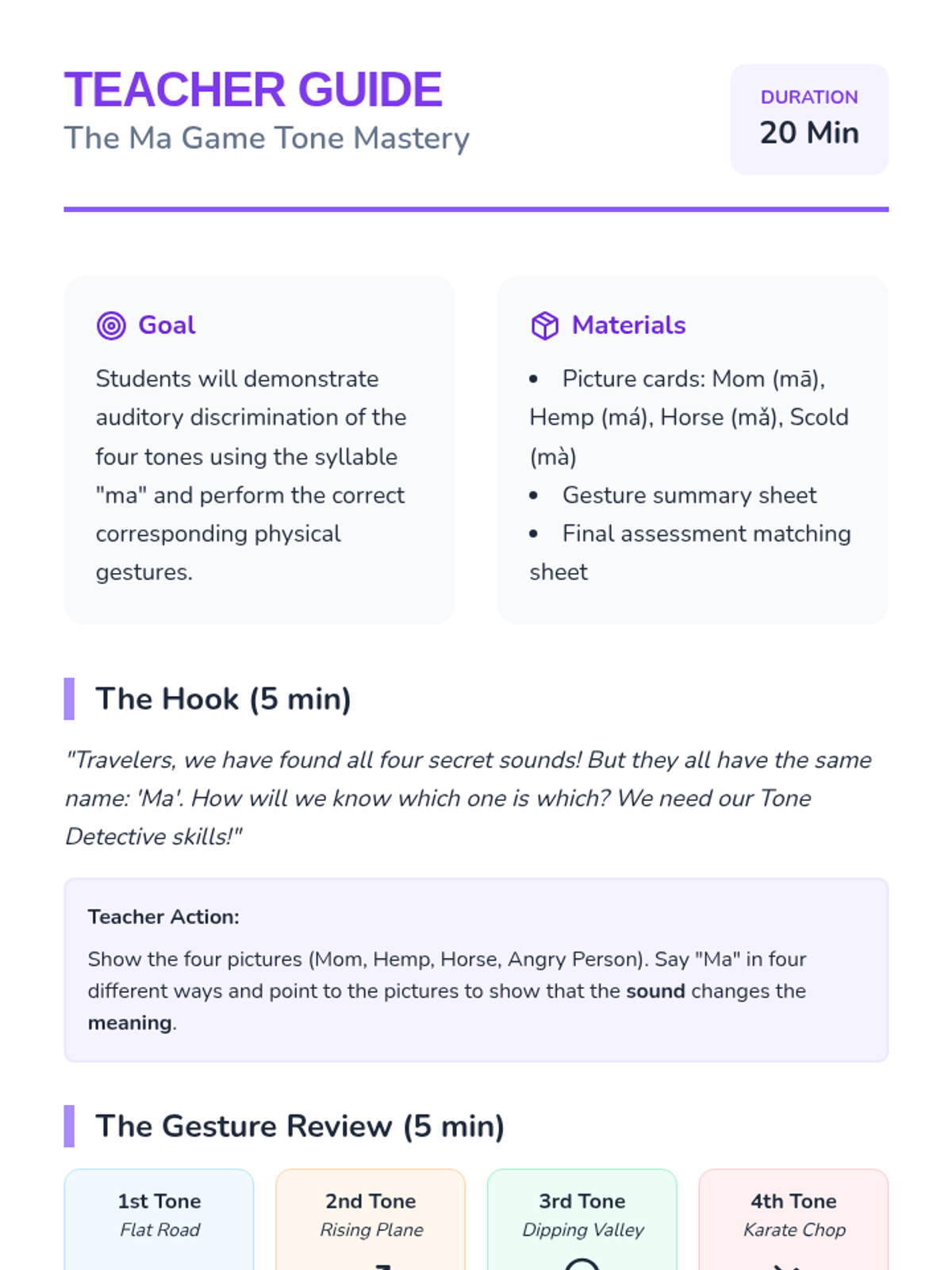
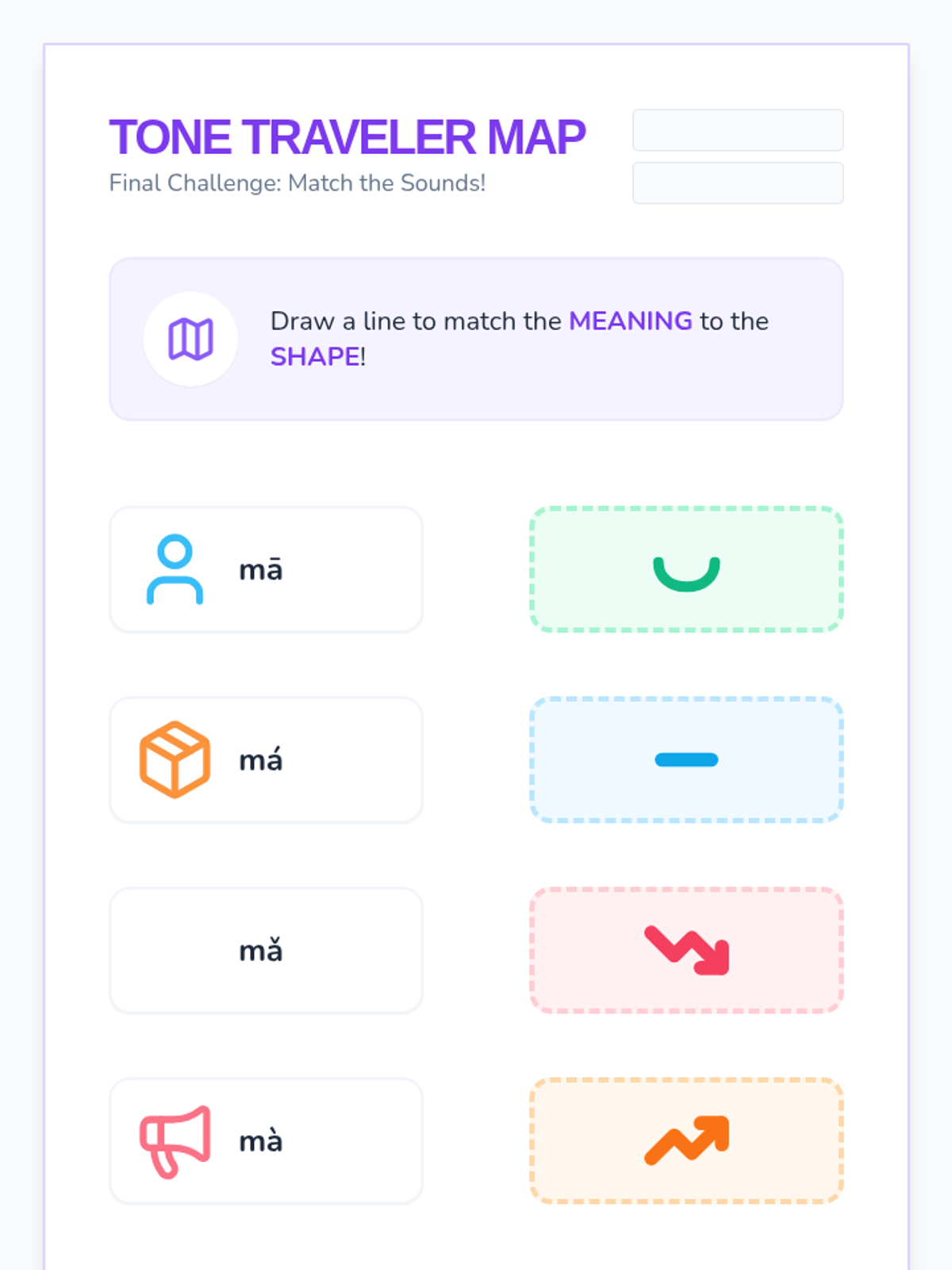
A culminating game-based lesson where students differentiate and produce all four tones using 'ma' syllables and movement cues.
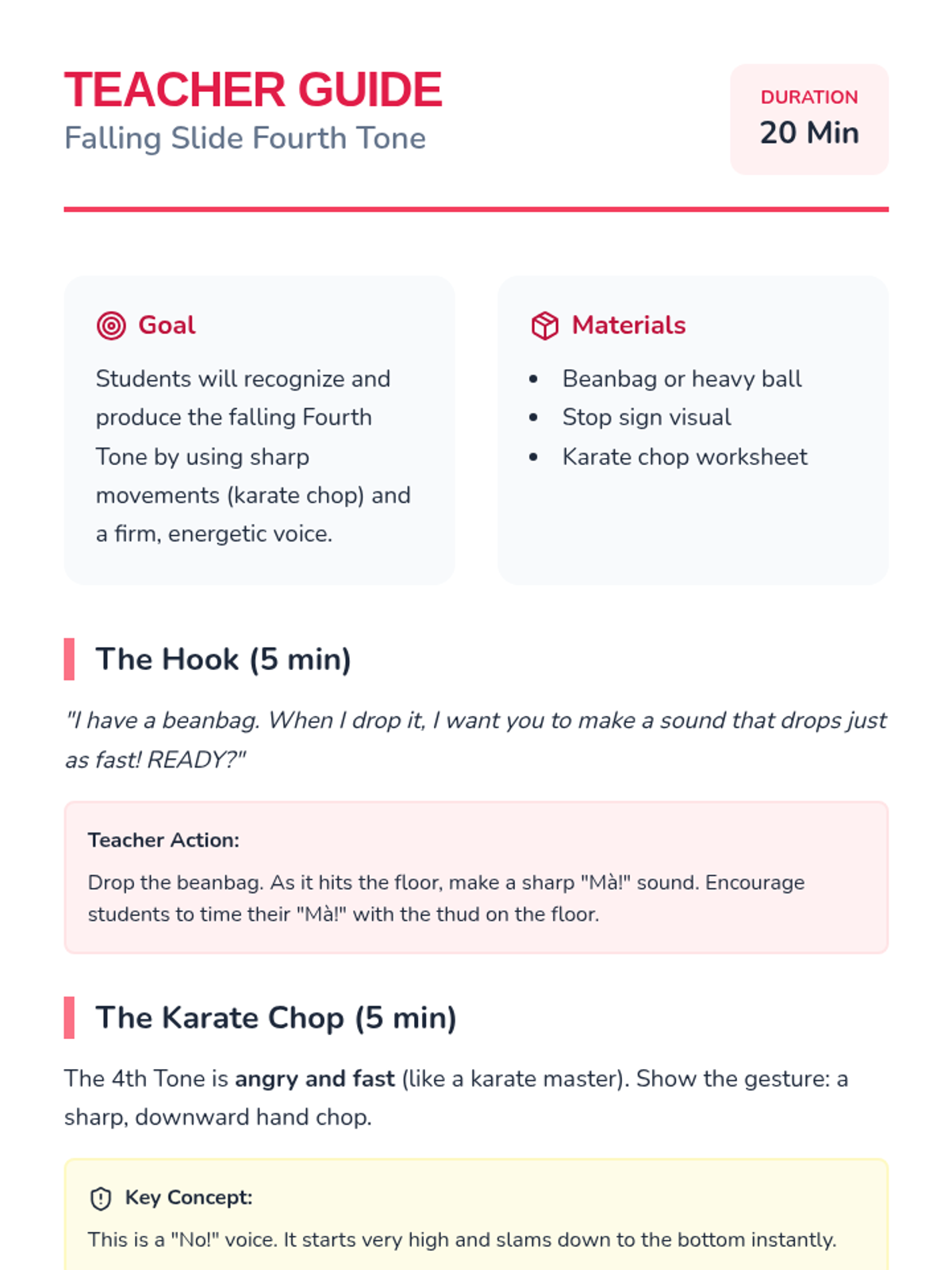
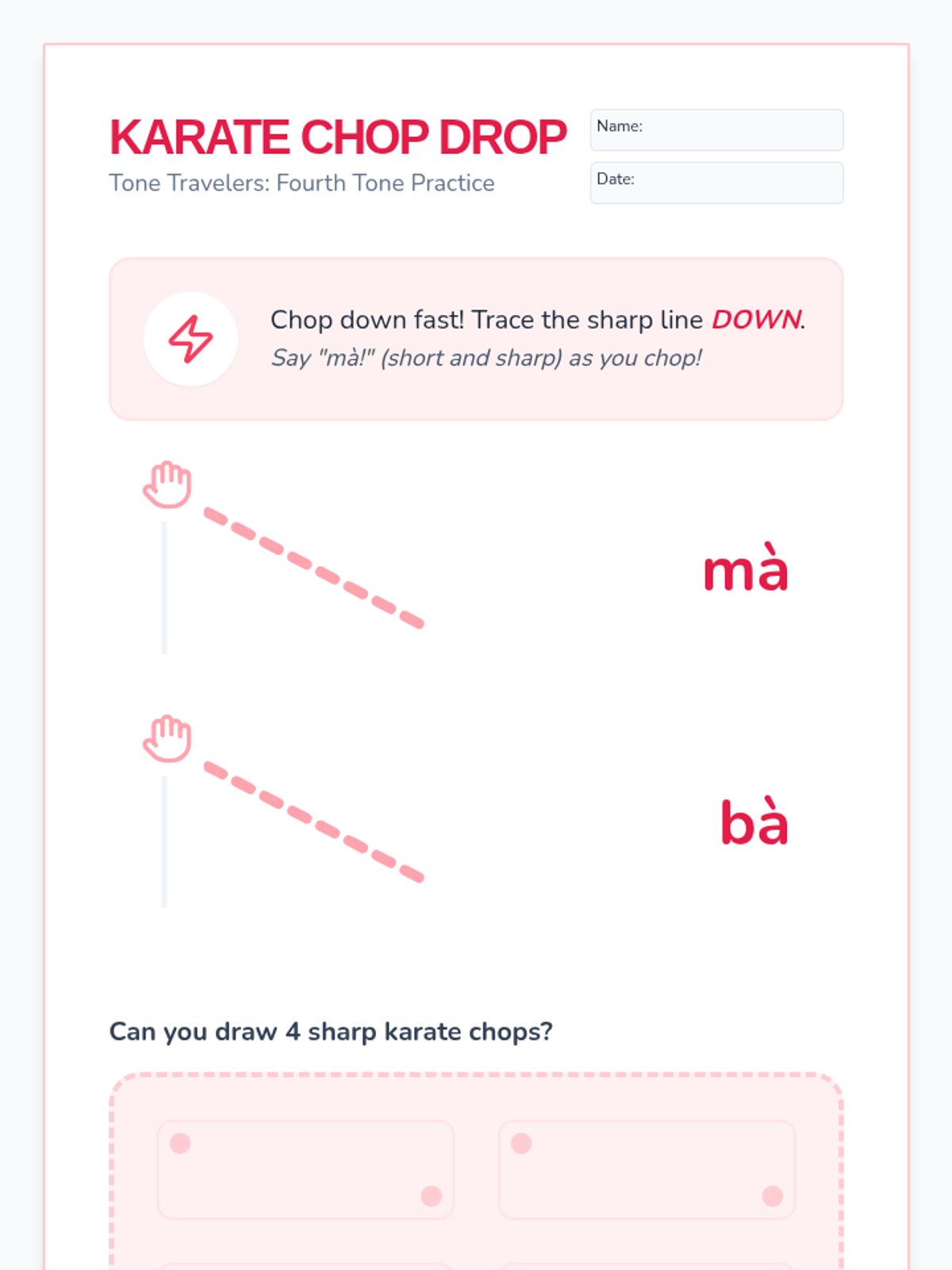
Learners use karate-style movements to master the sharp, falling Fourth Tone, emphasizing quick vocal drops and firm energy.
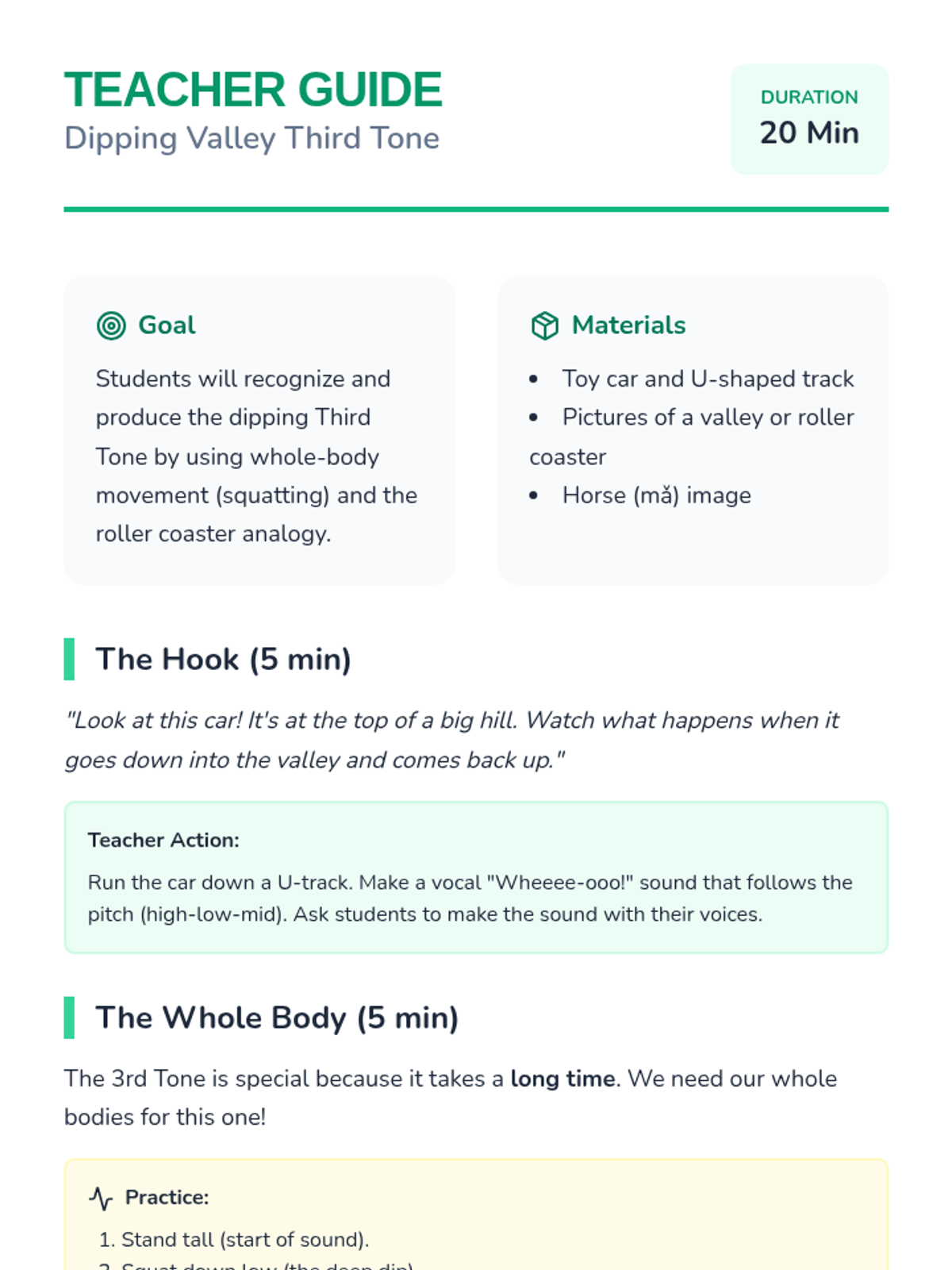
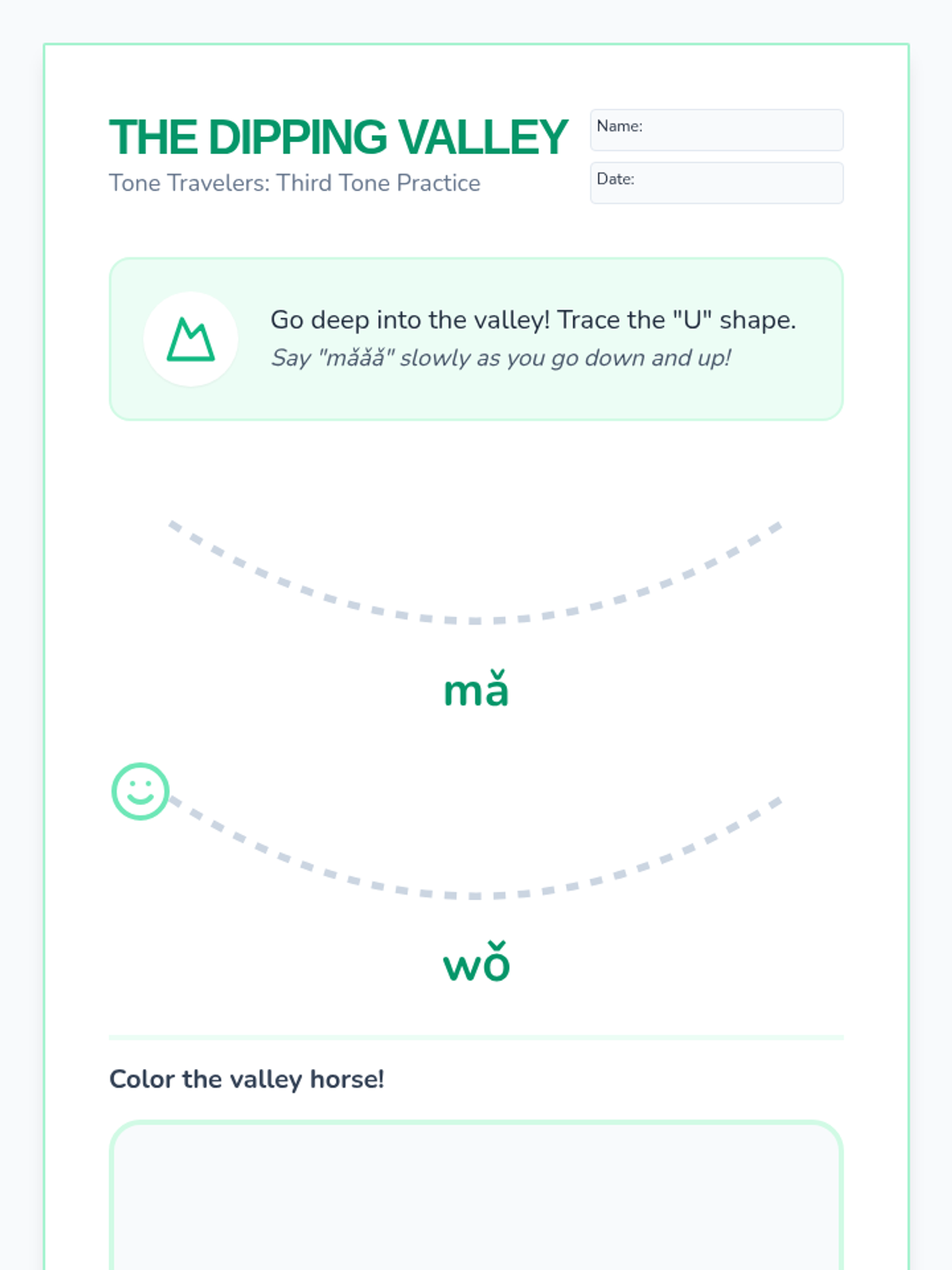
Students use their whole bodies to mimic a dipping roller coaster, exploring the low, dipping contour of the Third Tone.
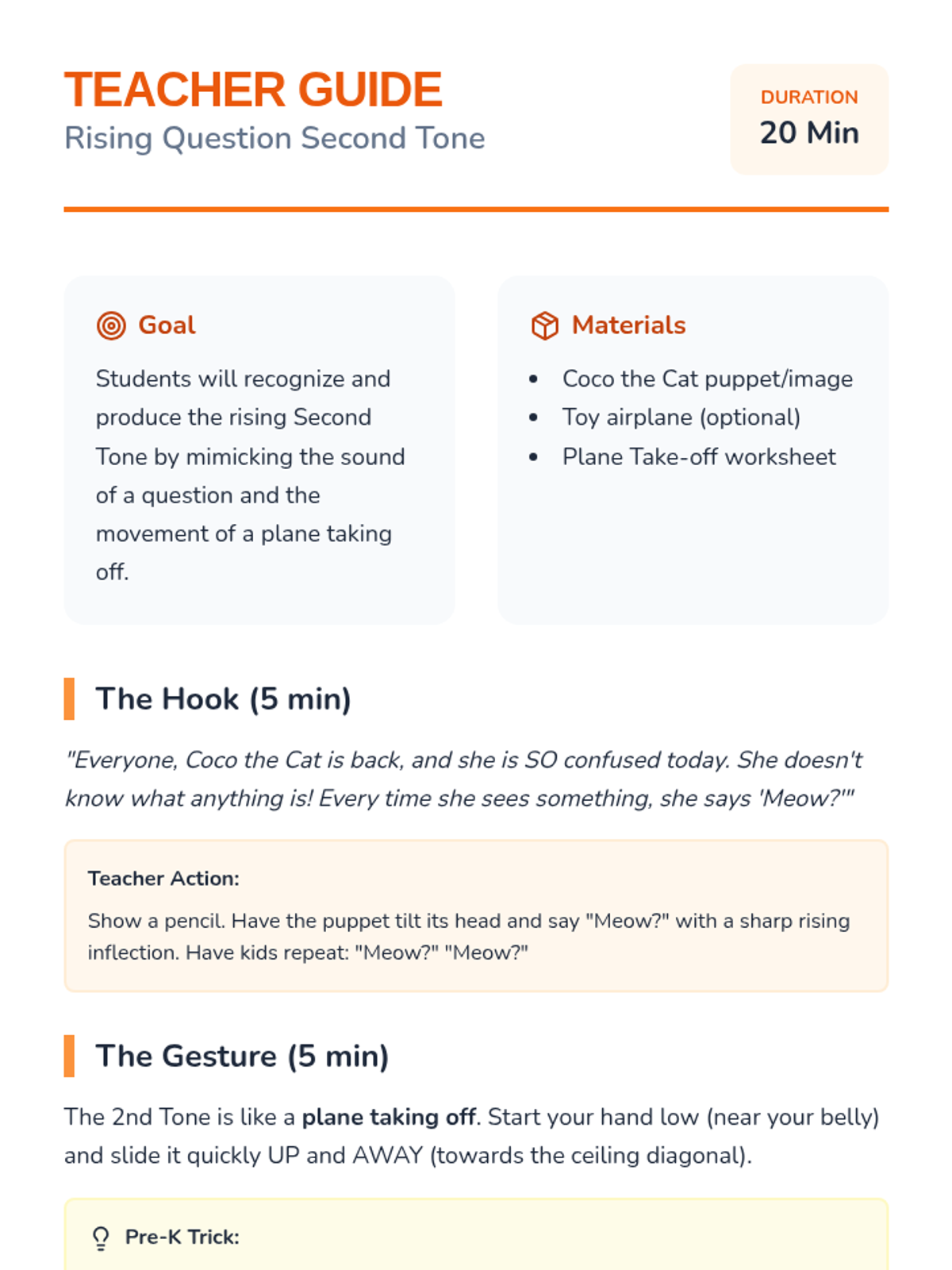
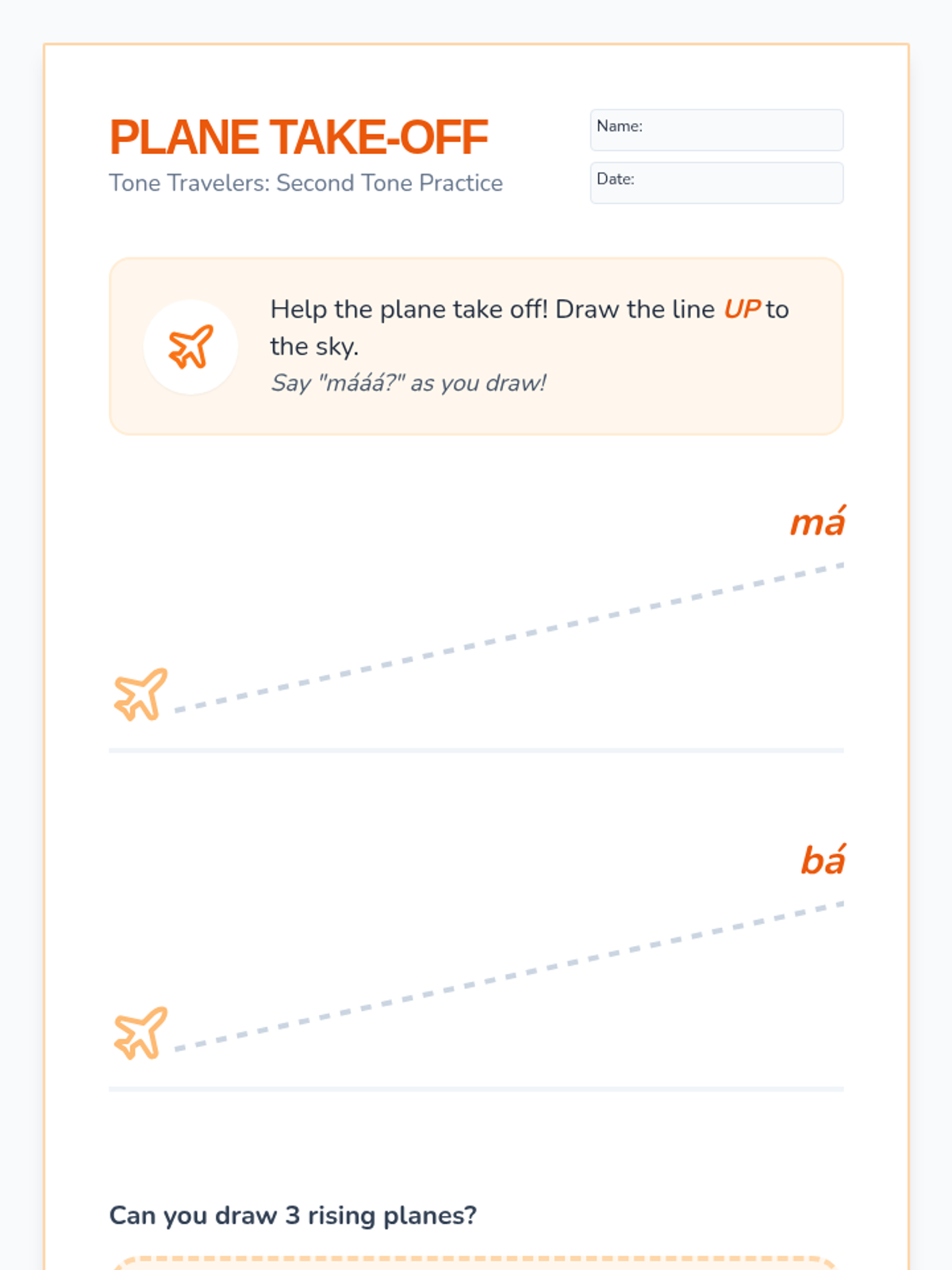
Learners practice the rising Second Tone by mimicking a curious cat and a plane taking off, focusing on upward pitch inflection.
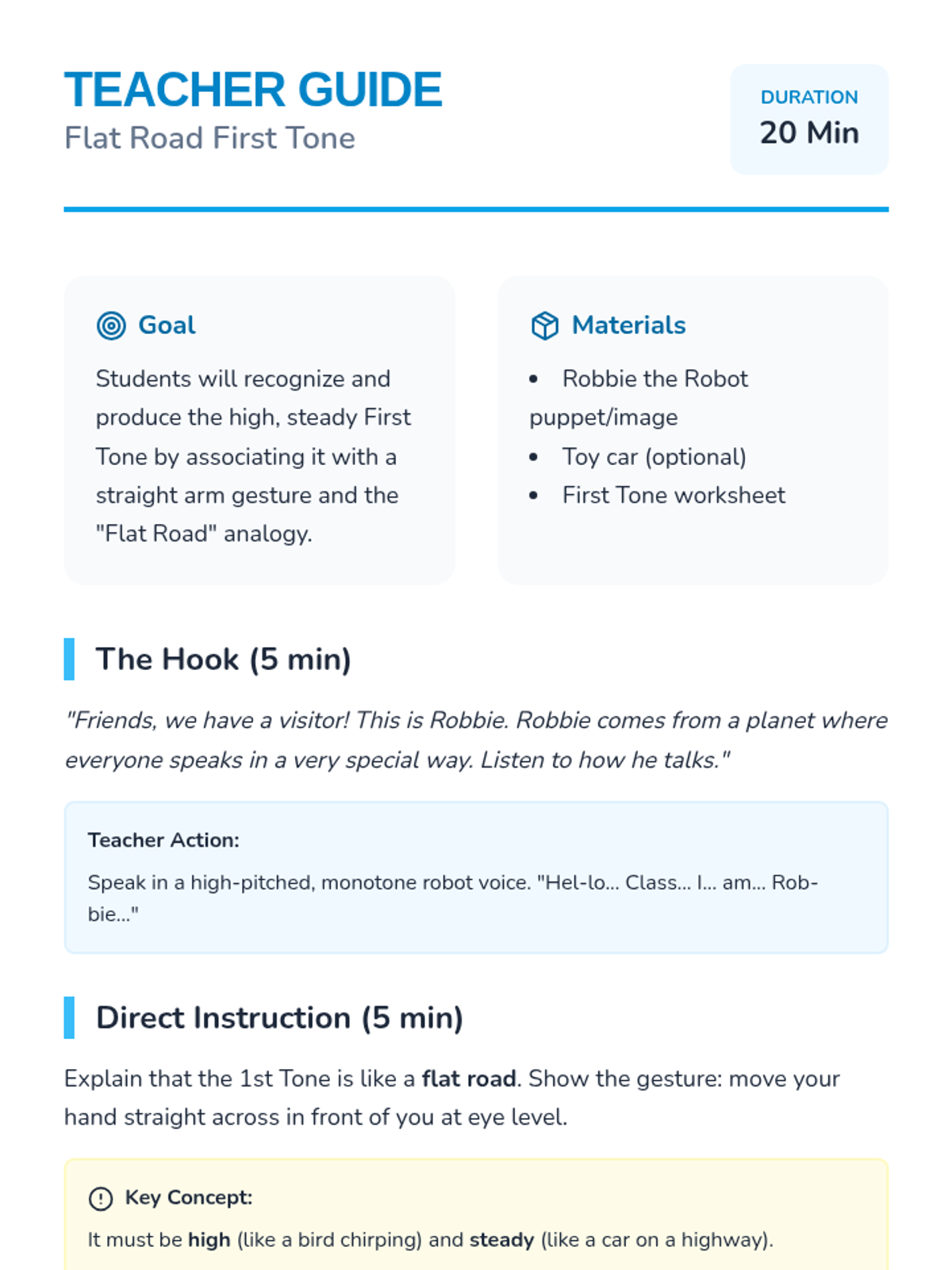
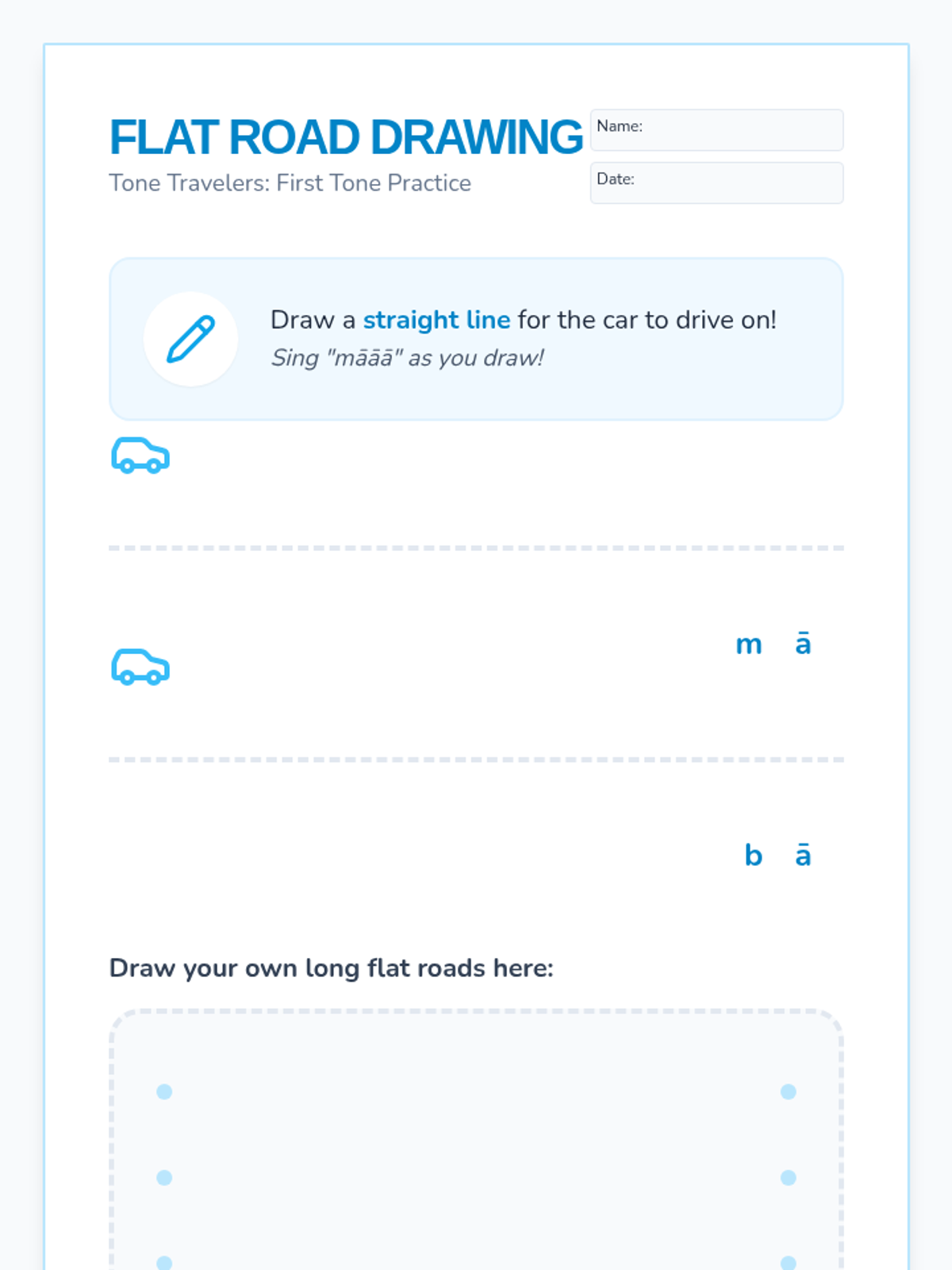
Students explore the high, steady First Tone using a 'flat road' analogy and a robot puppet to practice sustained vocal pitch.
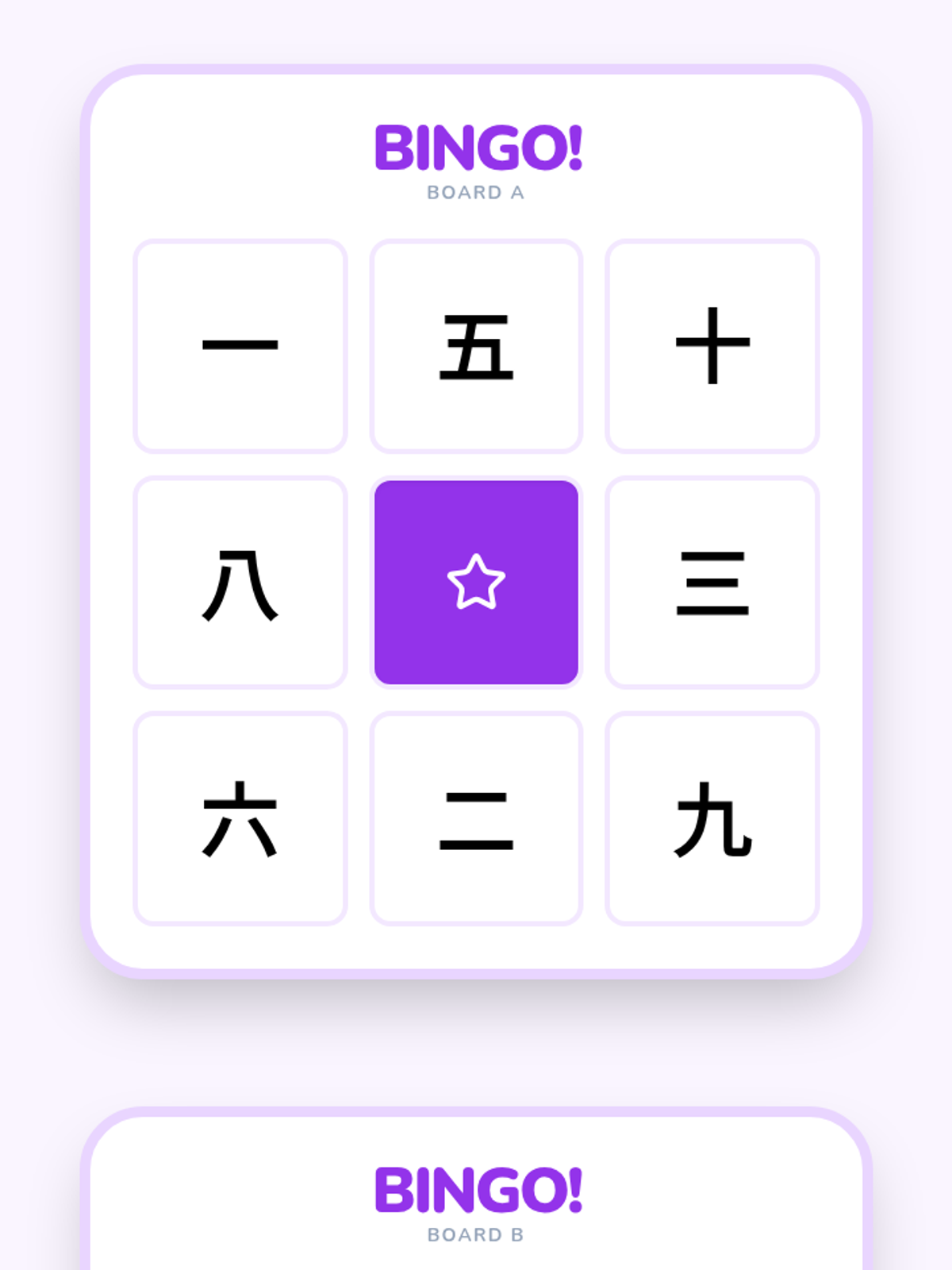
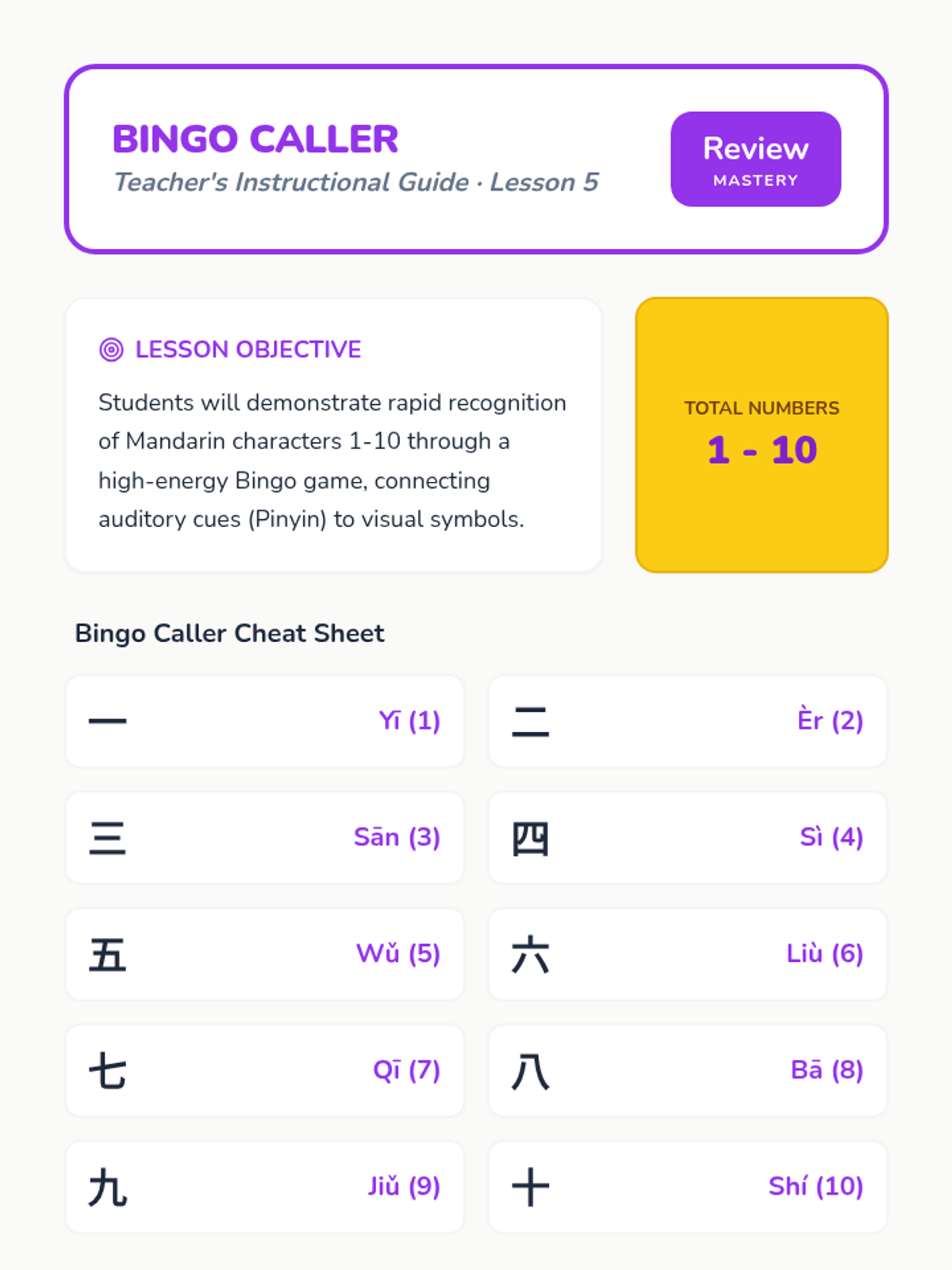
A high-energy review of all characters from 1-10 through a classic game of Bingo to solidify listening and visual recognition.
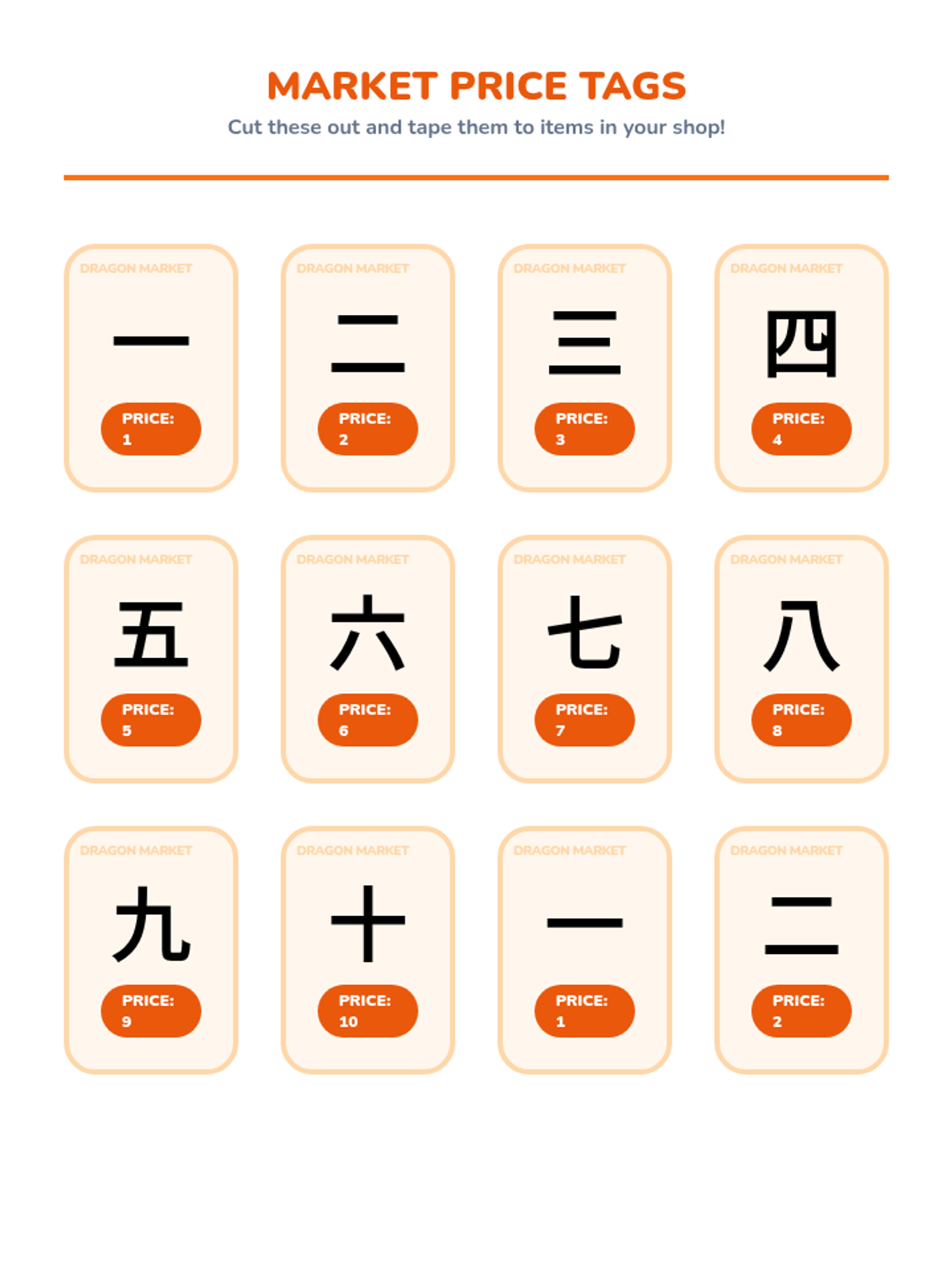
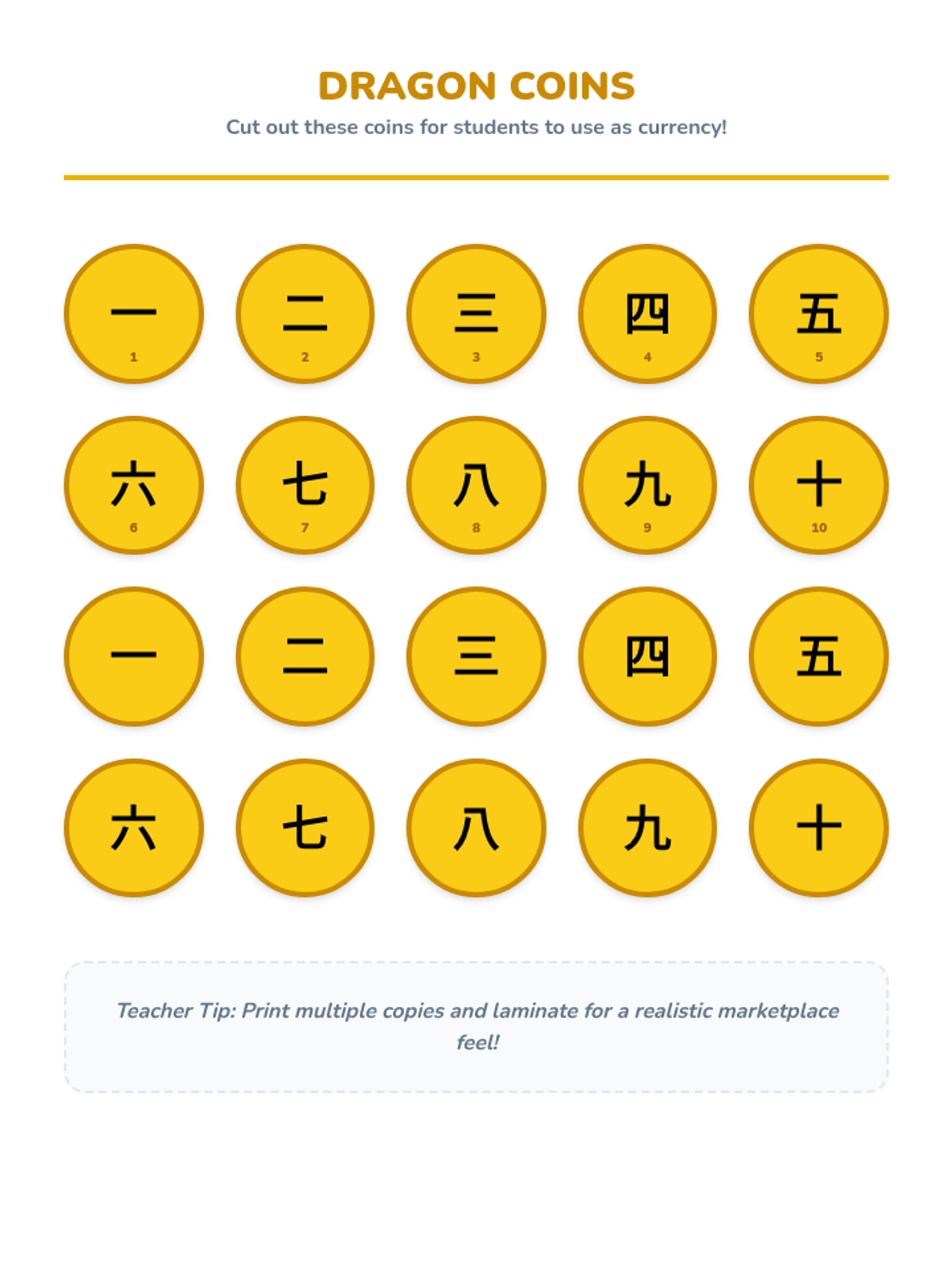
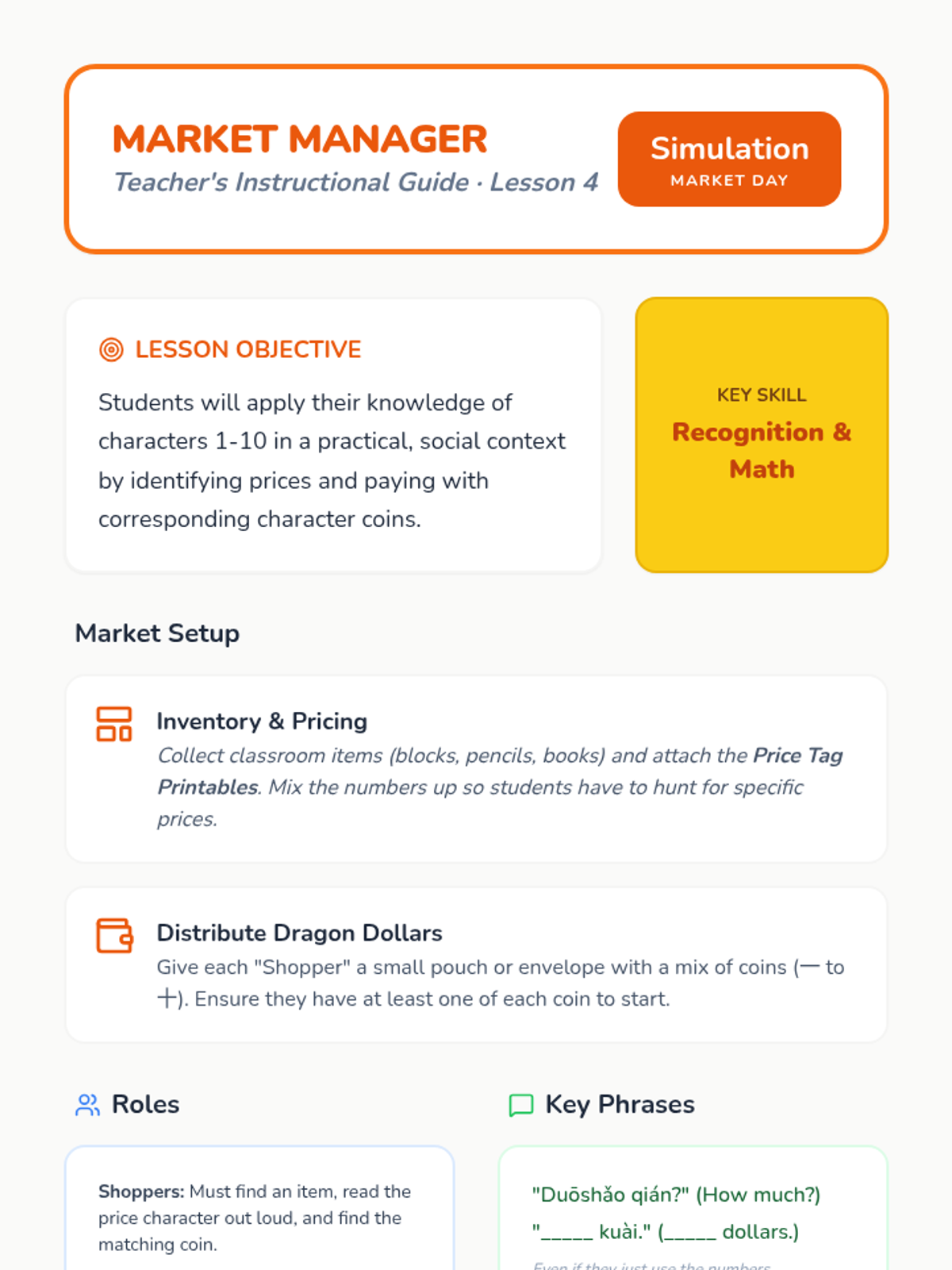
A realistic simulation where students use their knowledge of Chinese numerals to buy and sell items in a classroom "Number Shop."
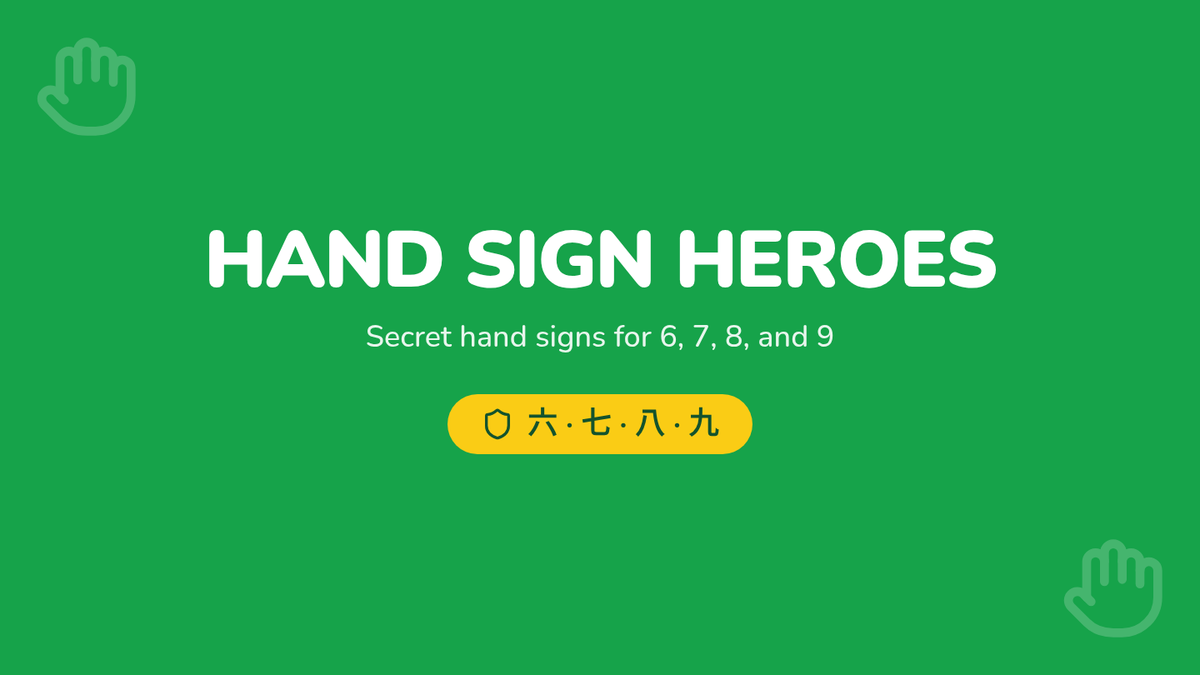
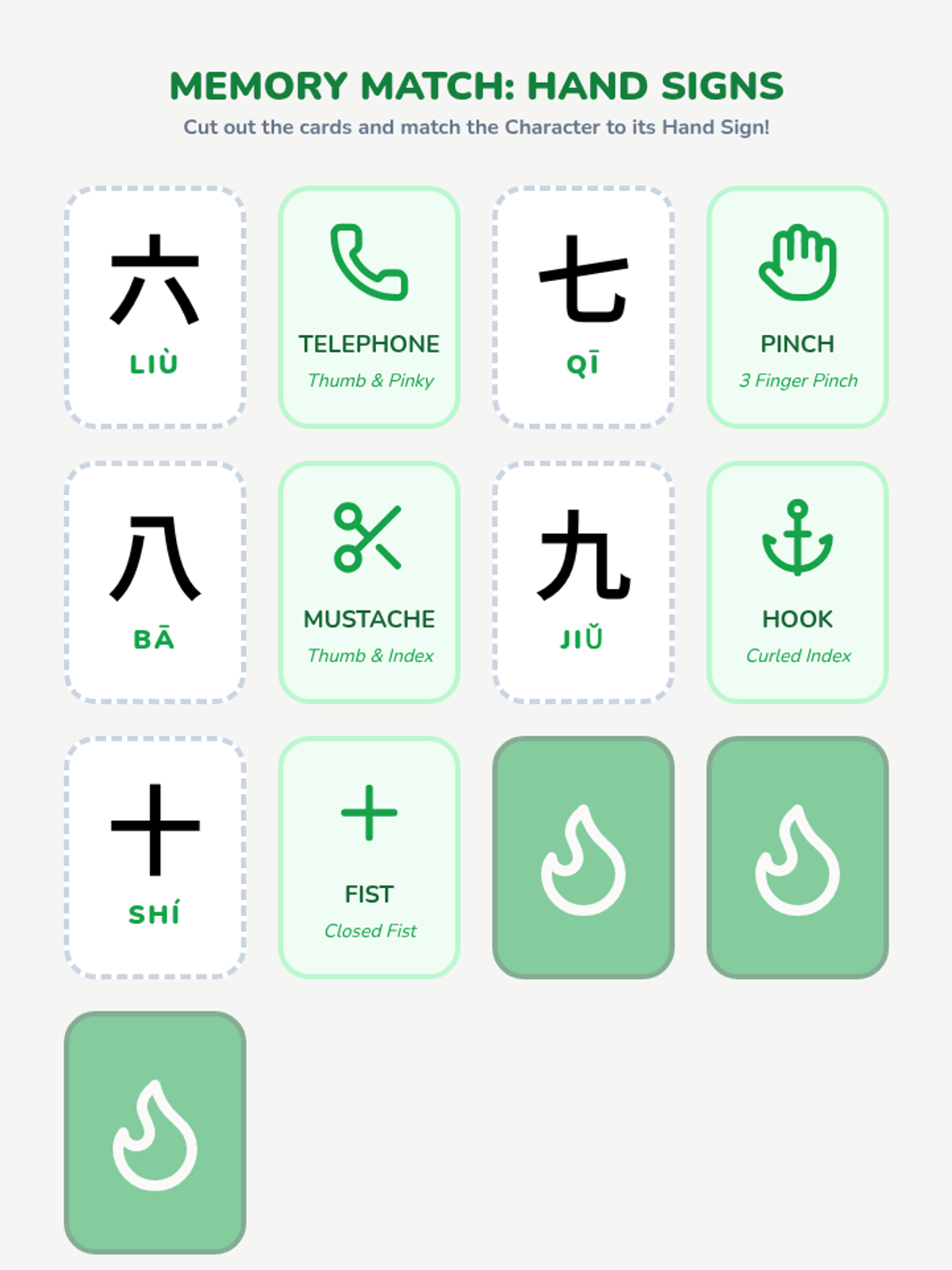
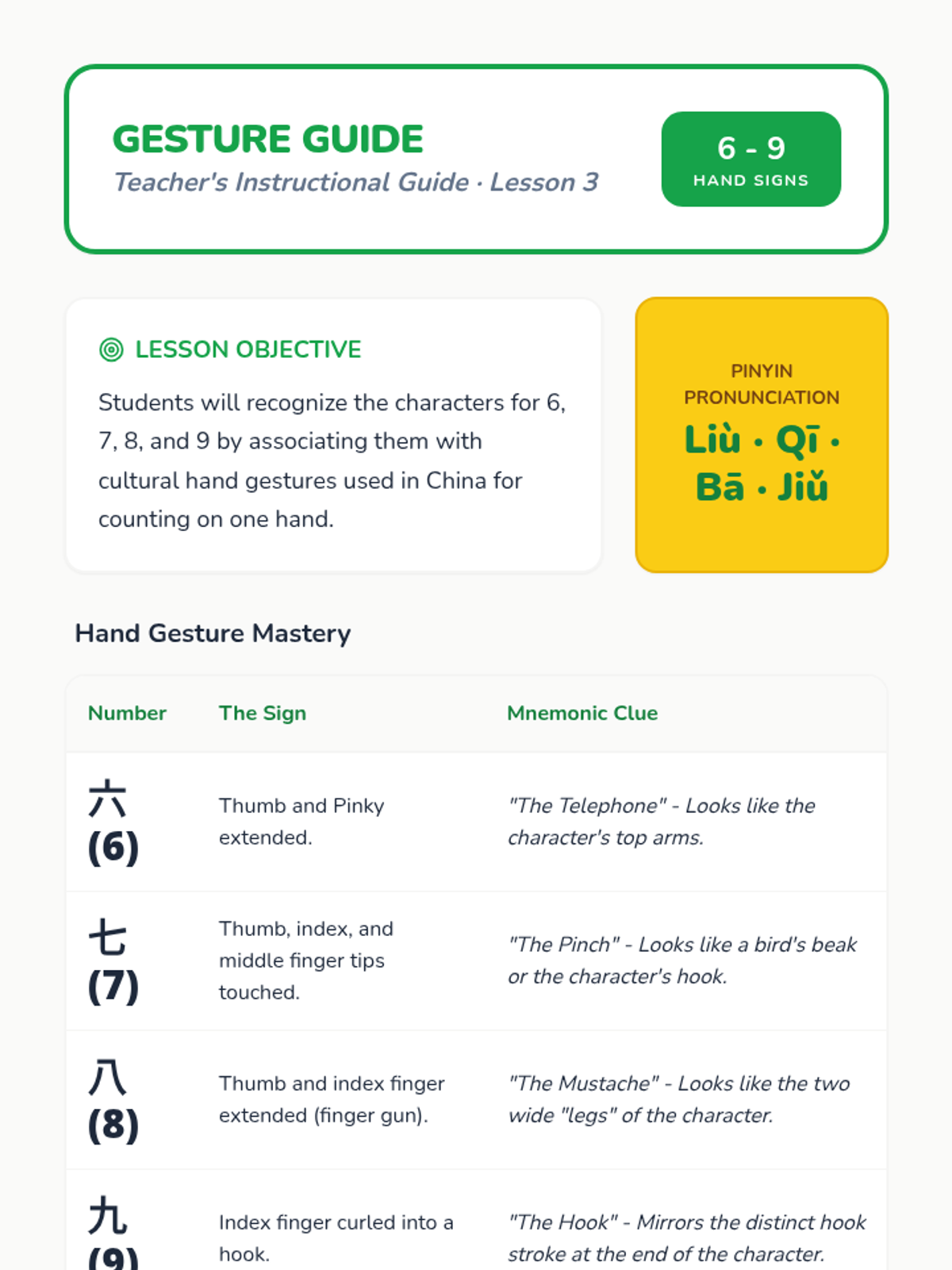
Students master numbers Six (六), Seven (七), Eight (八), and Nine (九) by associating them with unique Chinese hand gestures.
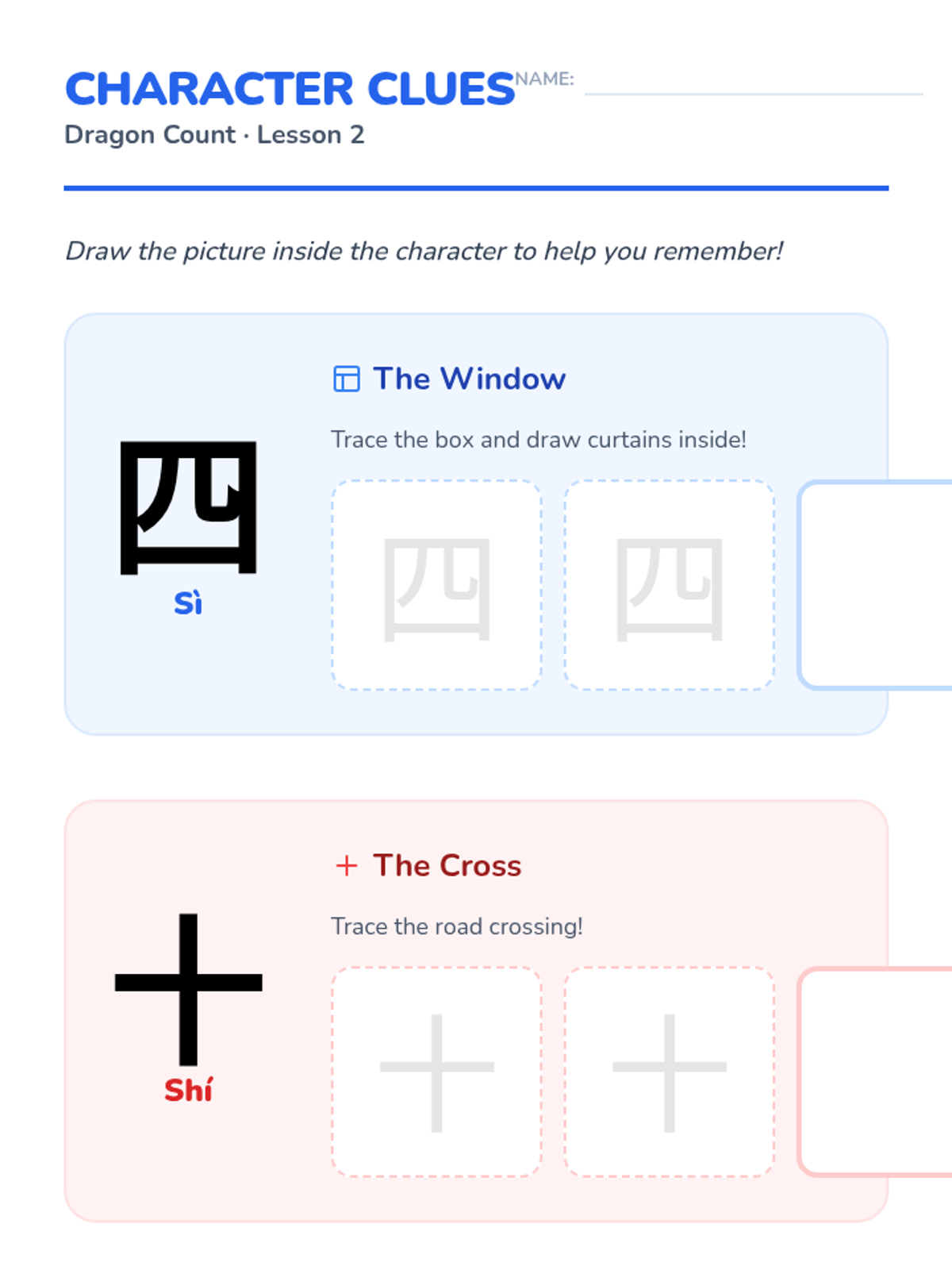
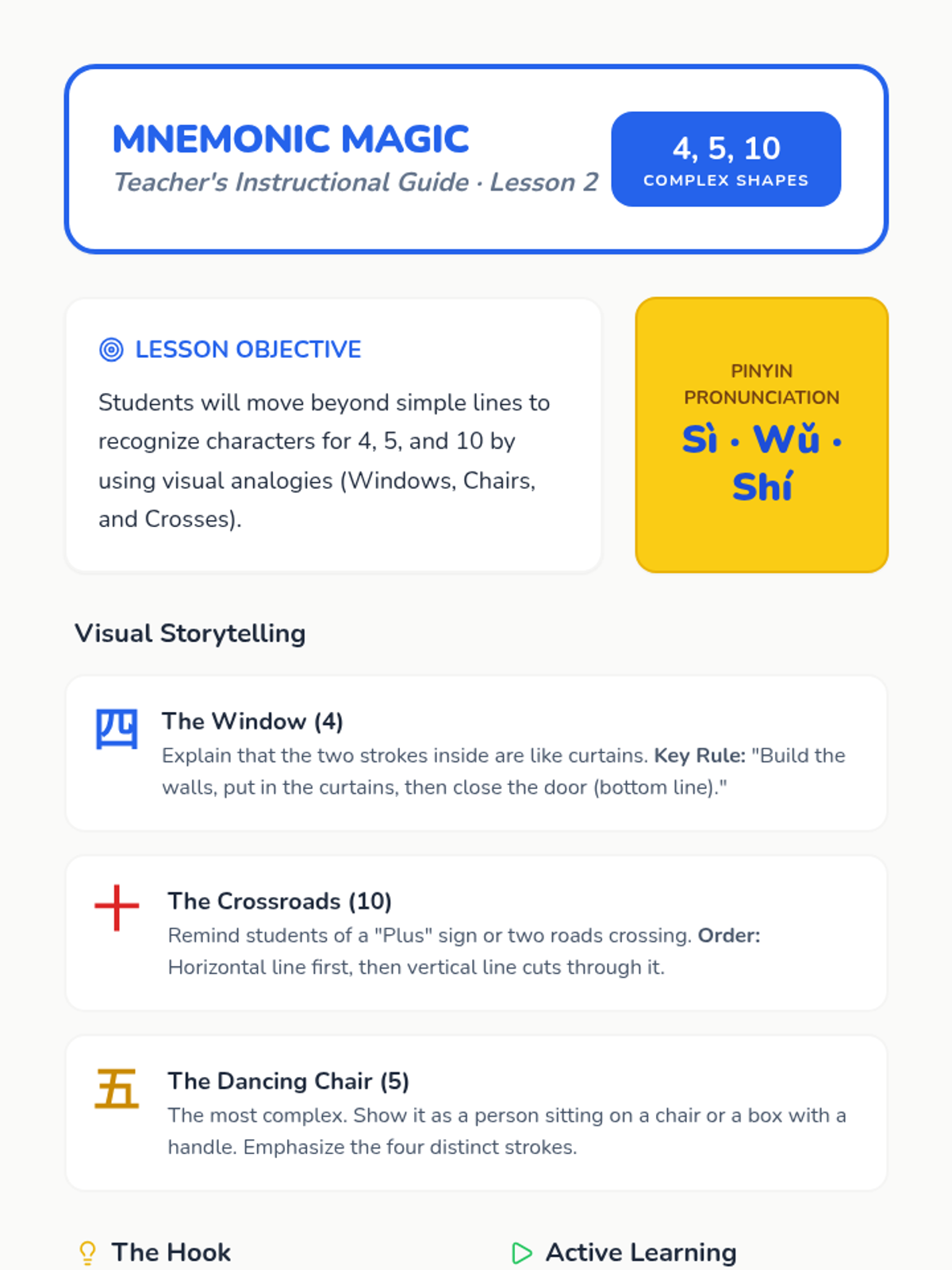
Introduction to non-linear characters Four (四), Five (五), and Ten (十) using visual mnemonics like windows and intersections.
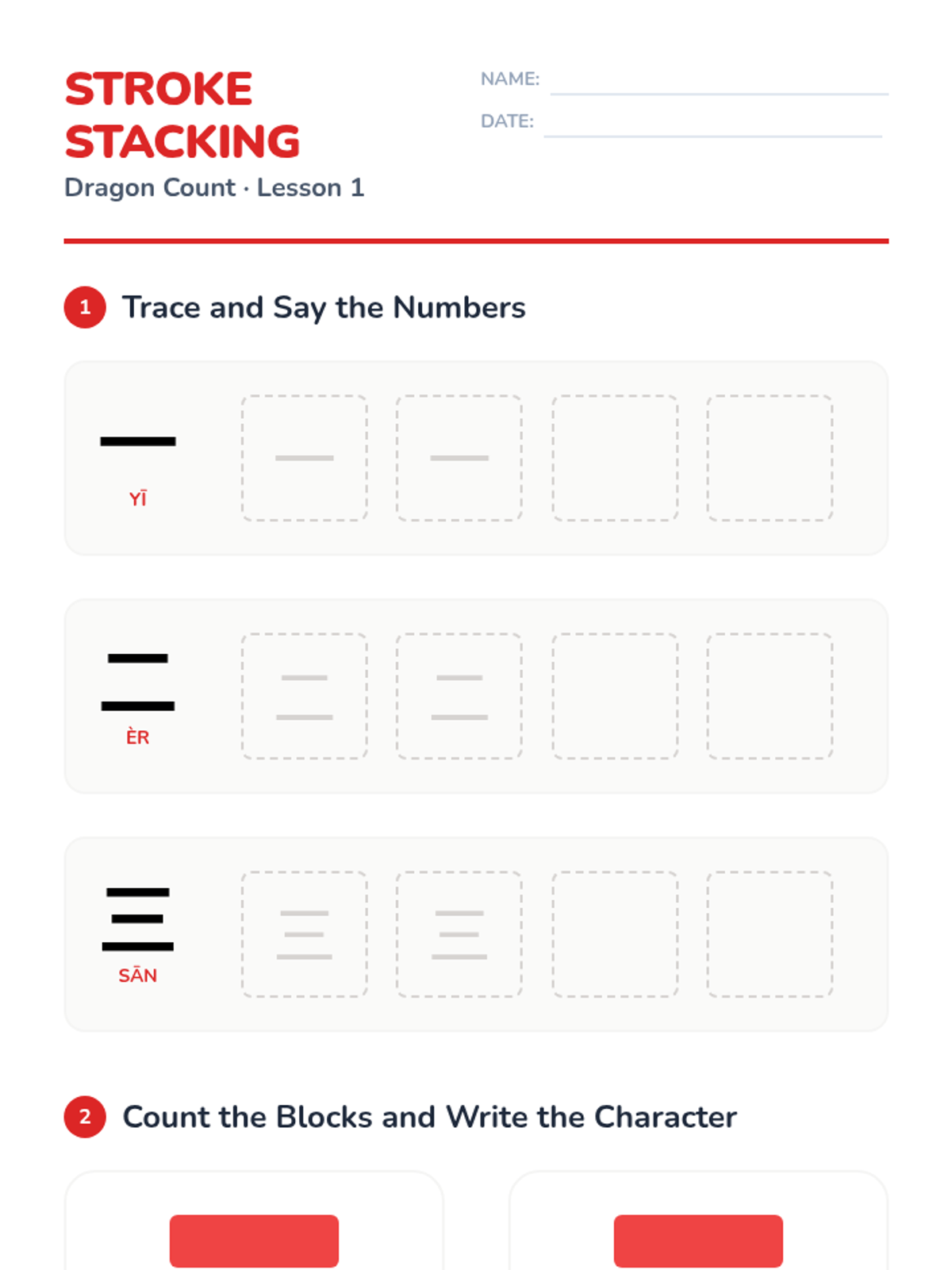
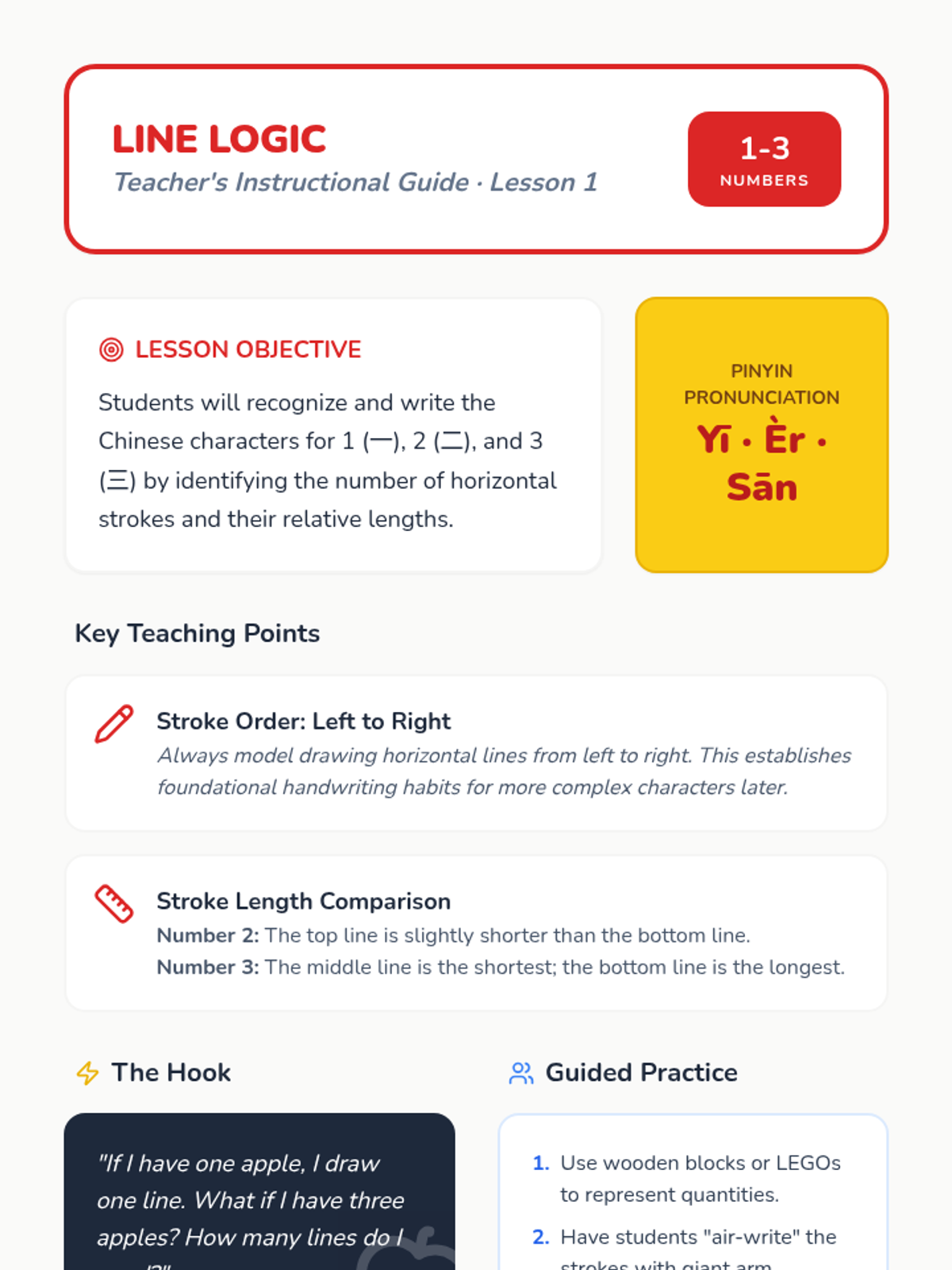
Students learn the foundational characters for One (一), Two (二), and Three (三), focusing on line stacking and the specific lengths of horizontal strokes.
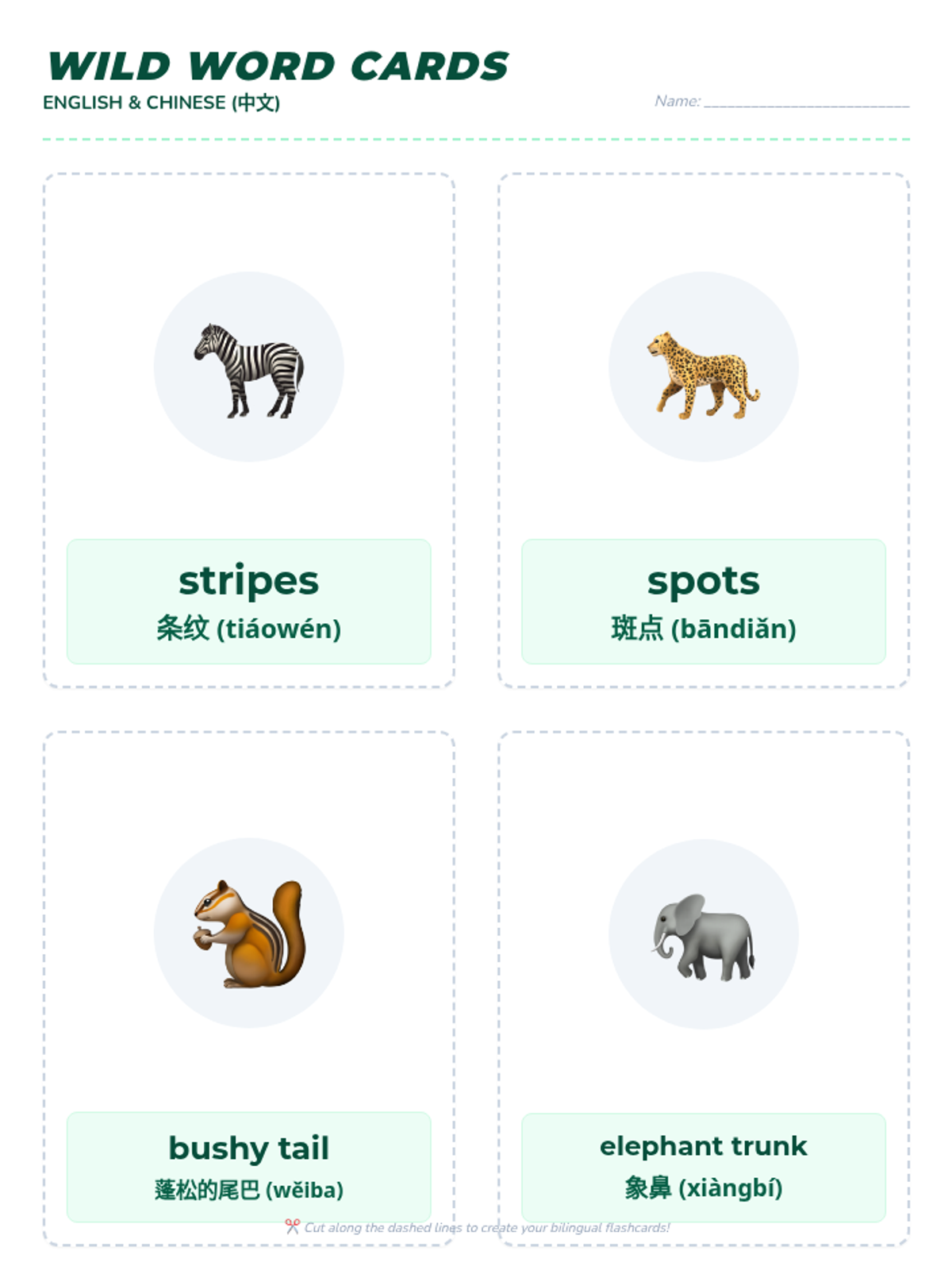
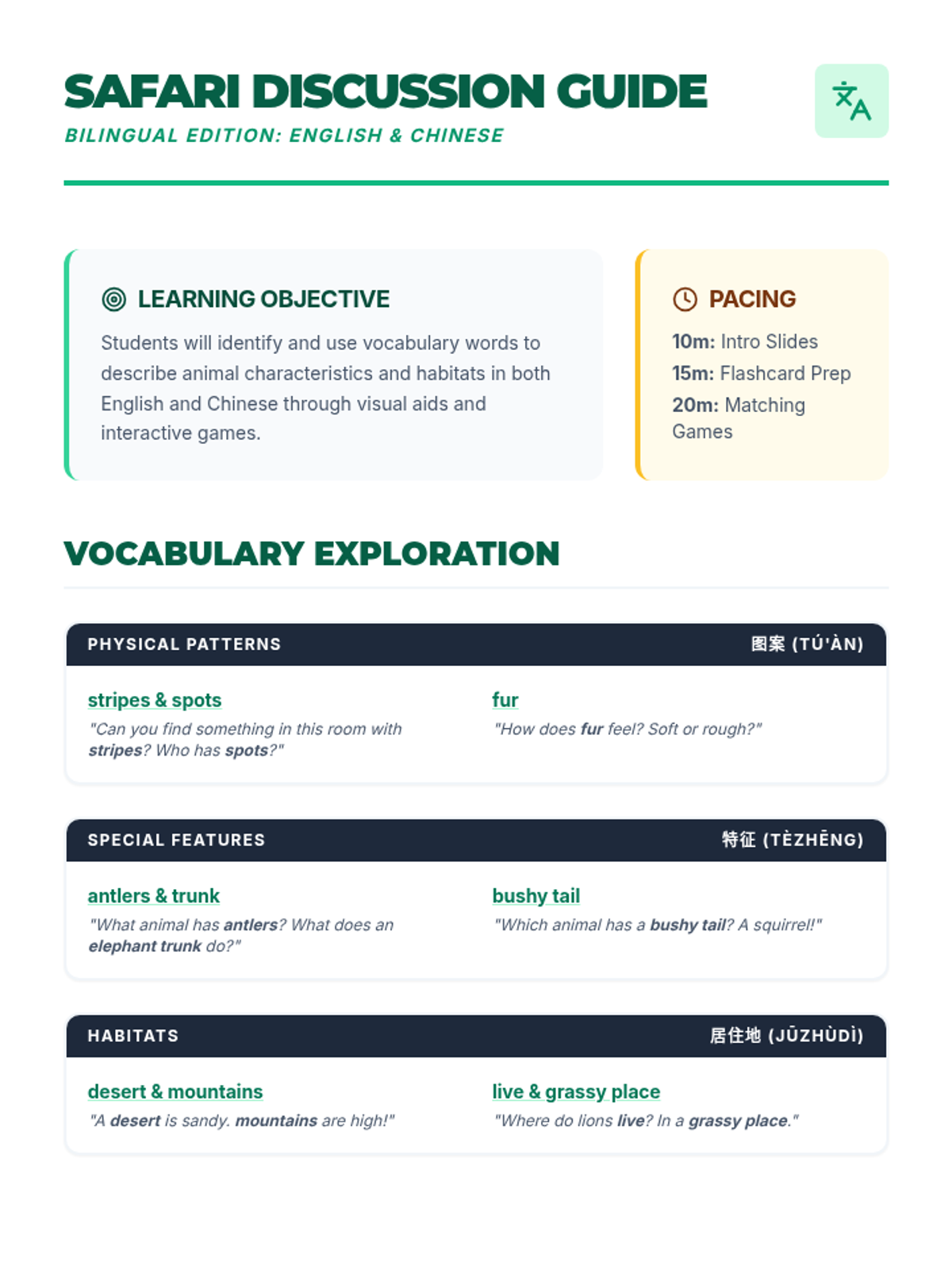
A lesson focused on animal characteristics and habitats, helping students build descriptive vocabulary.
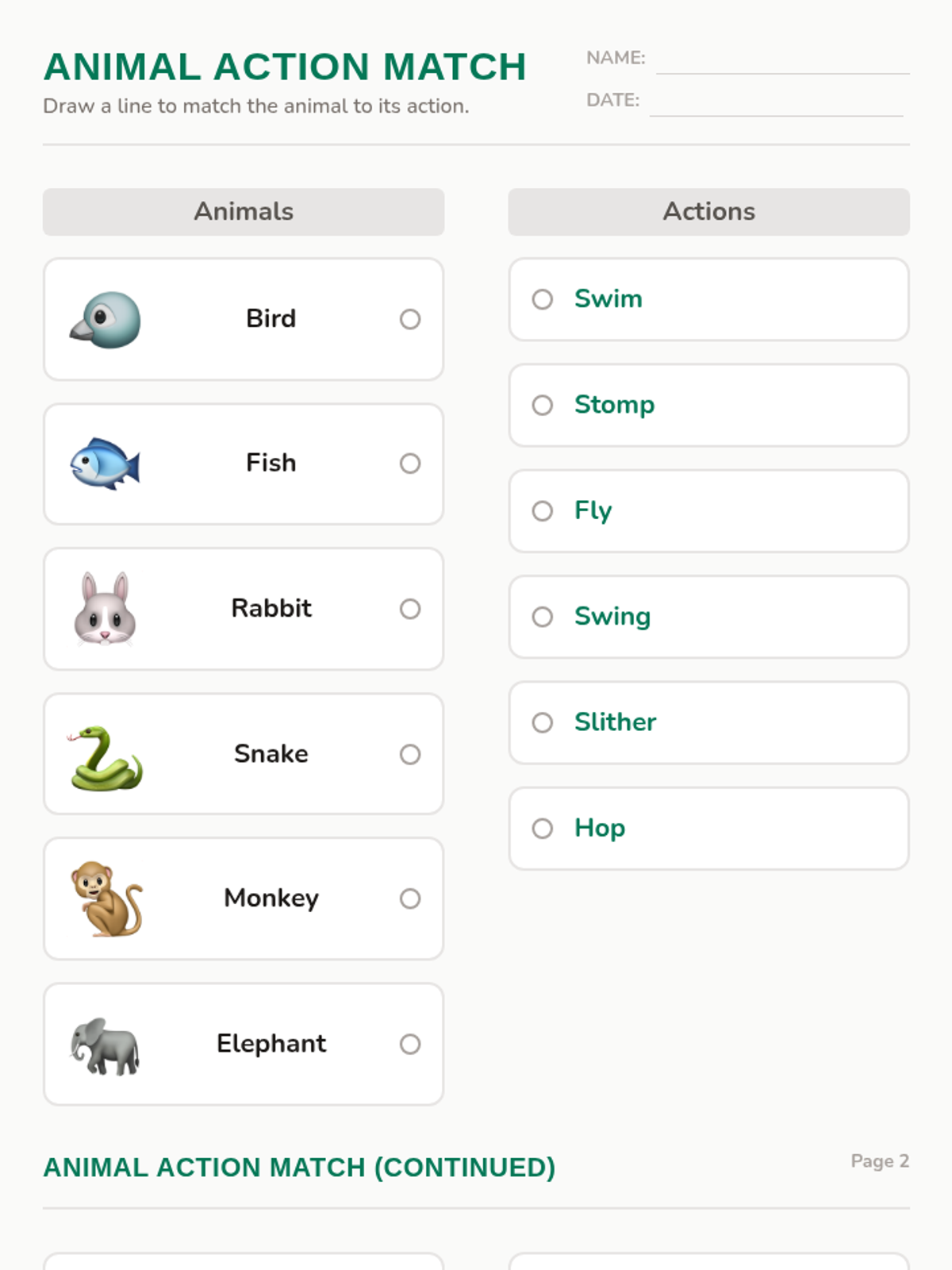
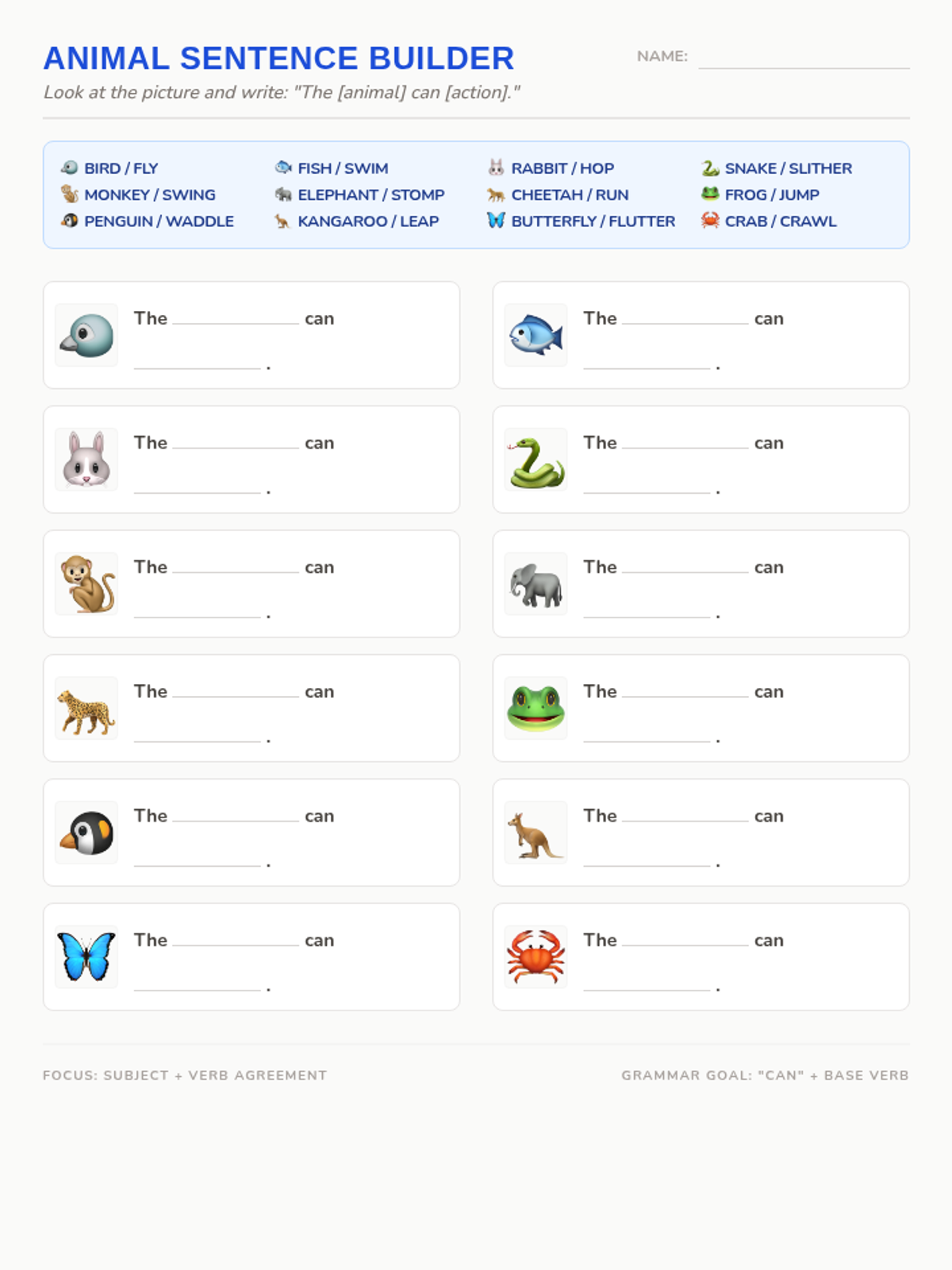
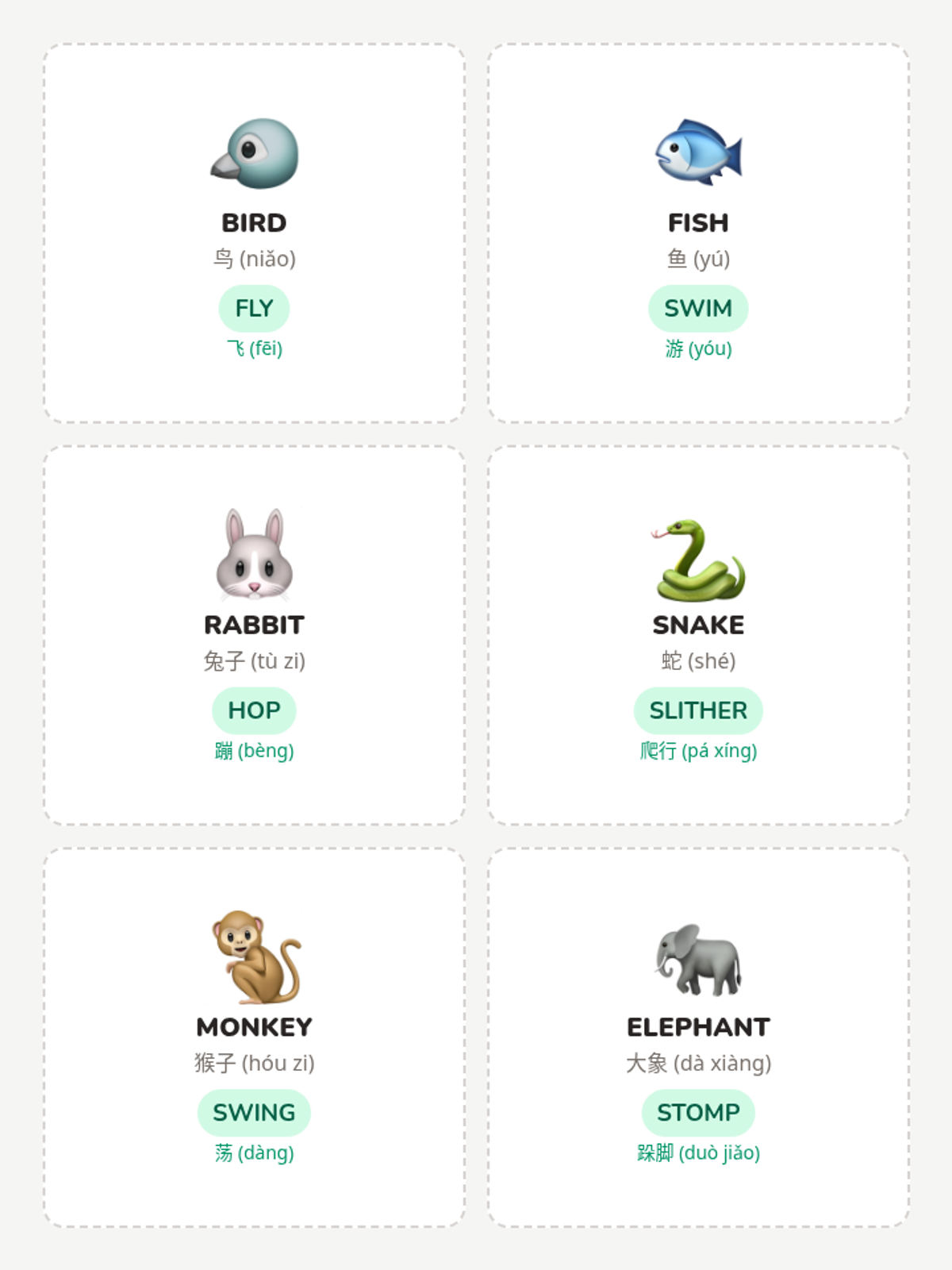
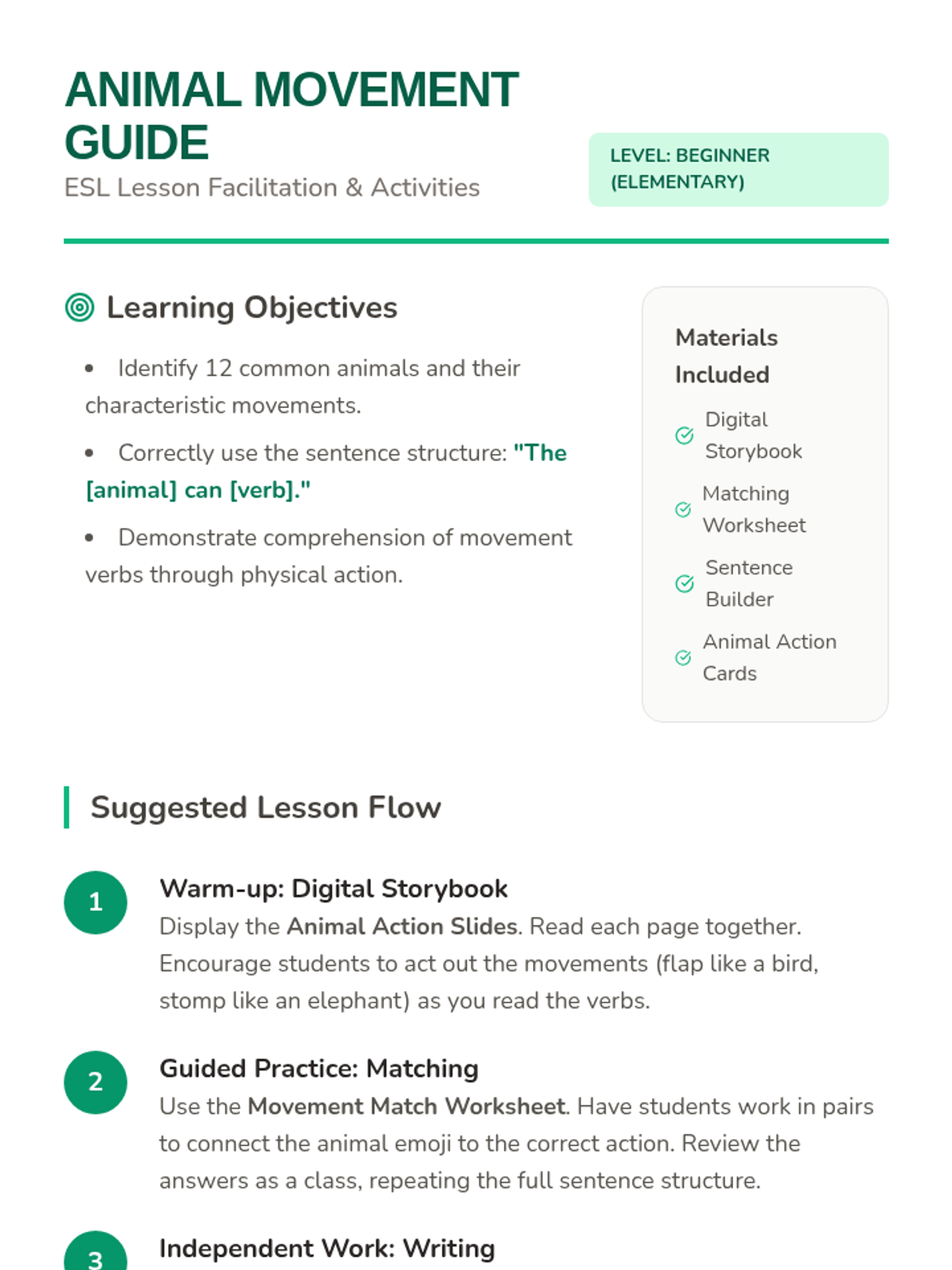
A beginner-level ESL lesson introducing 12 common animals and their characteristic movements through reading, writing, and movement-based games.
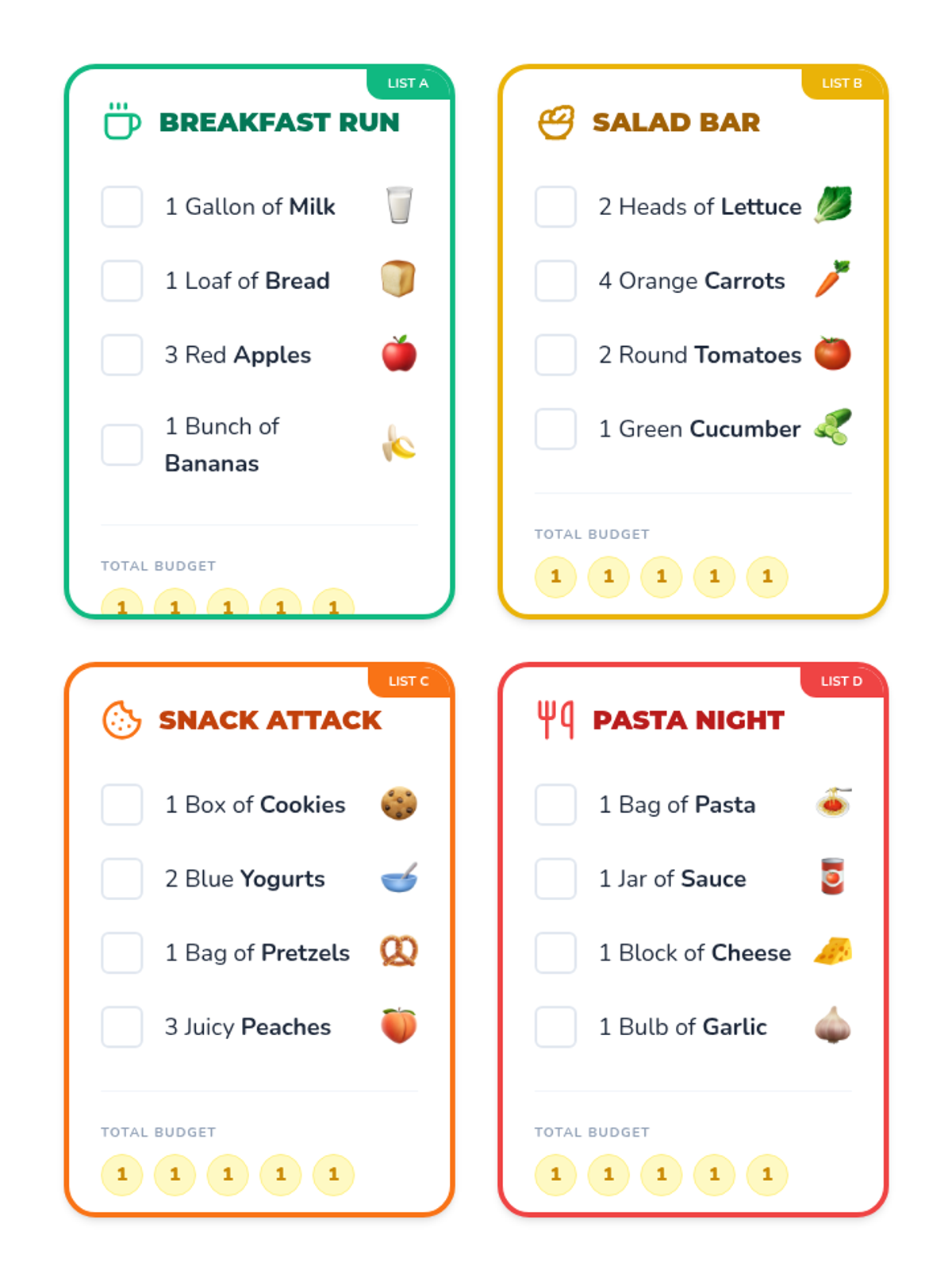
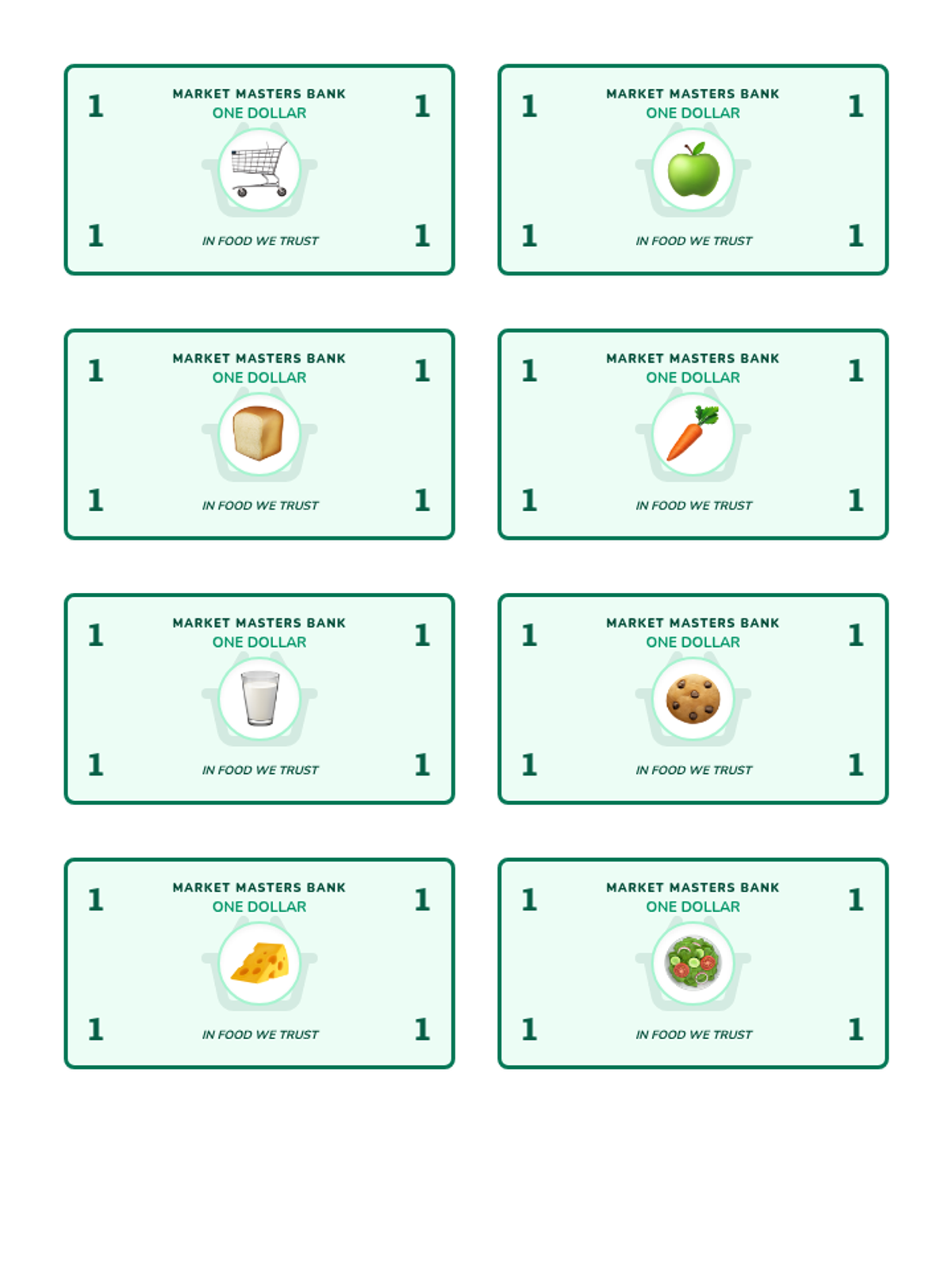
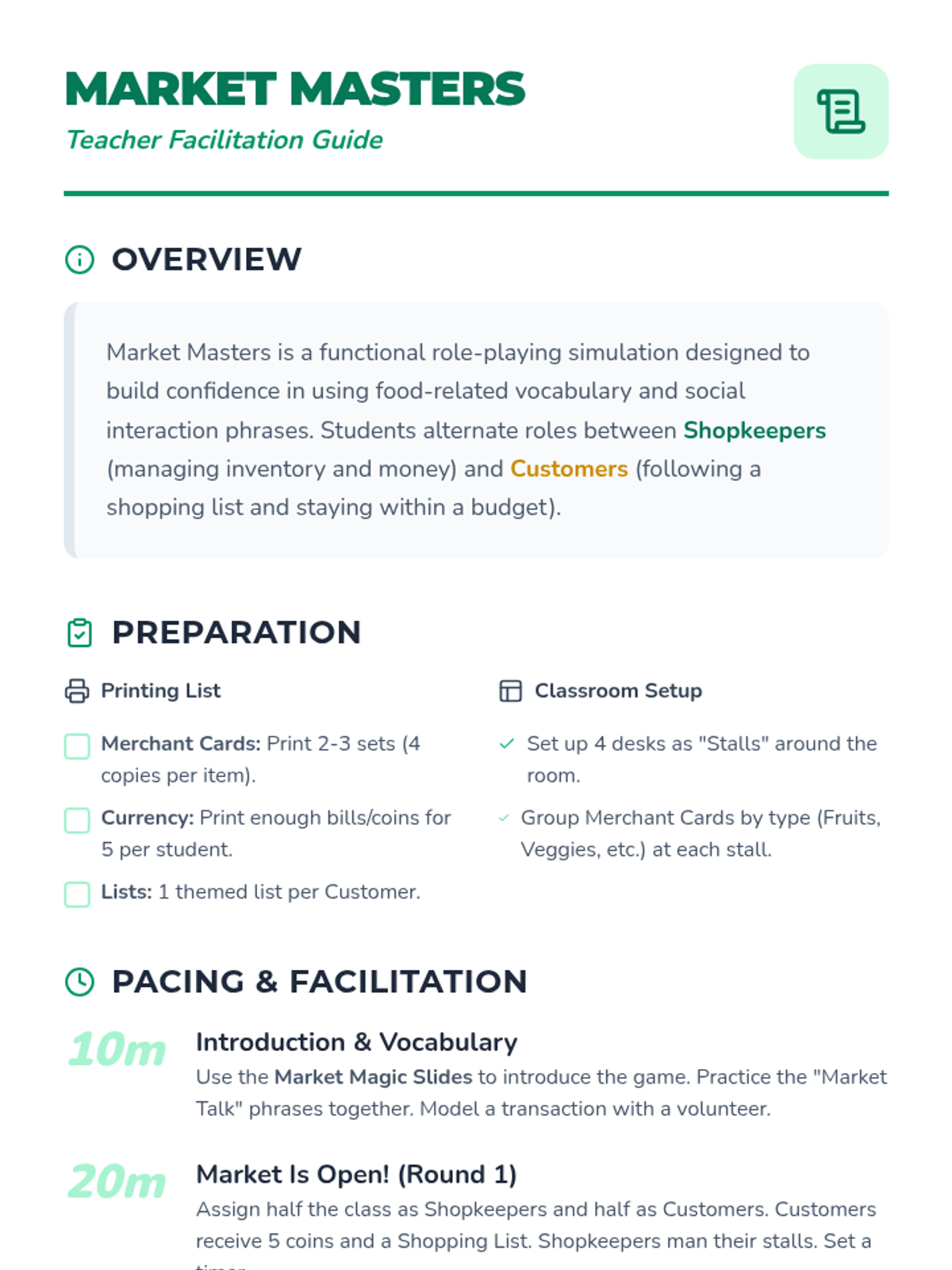
An interactive role-playing lesson where students practice food vocabulary and social skills by simulating a grocery shopping experience. Students take on roles as shopkeepers and customers to use target language in a functional context.
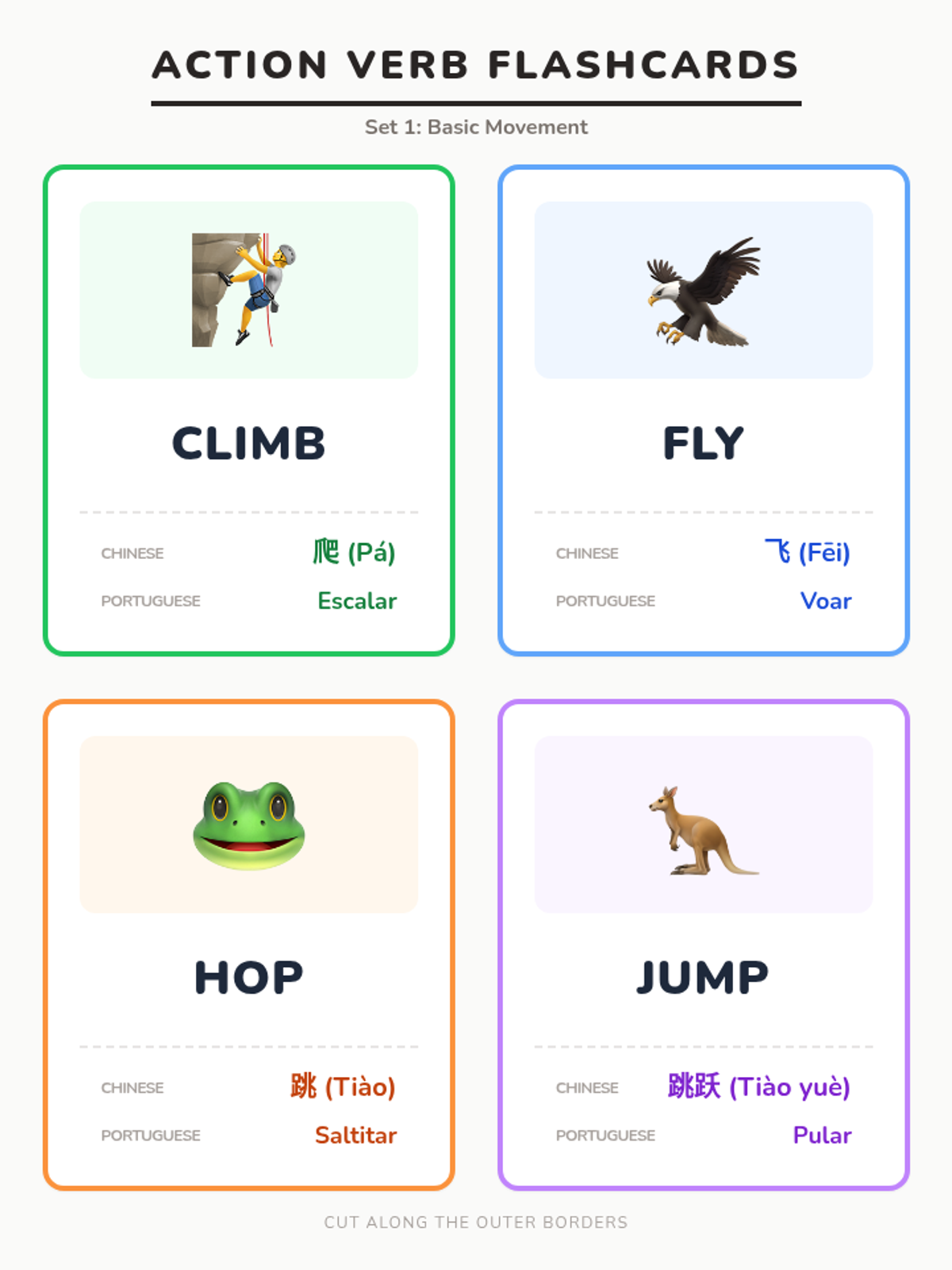
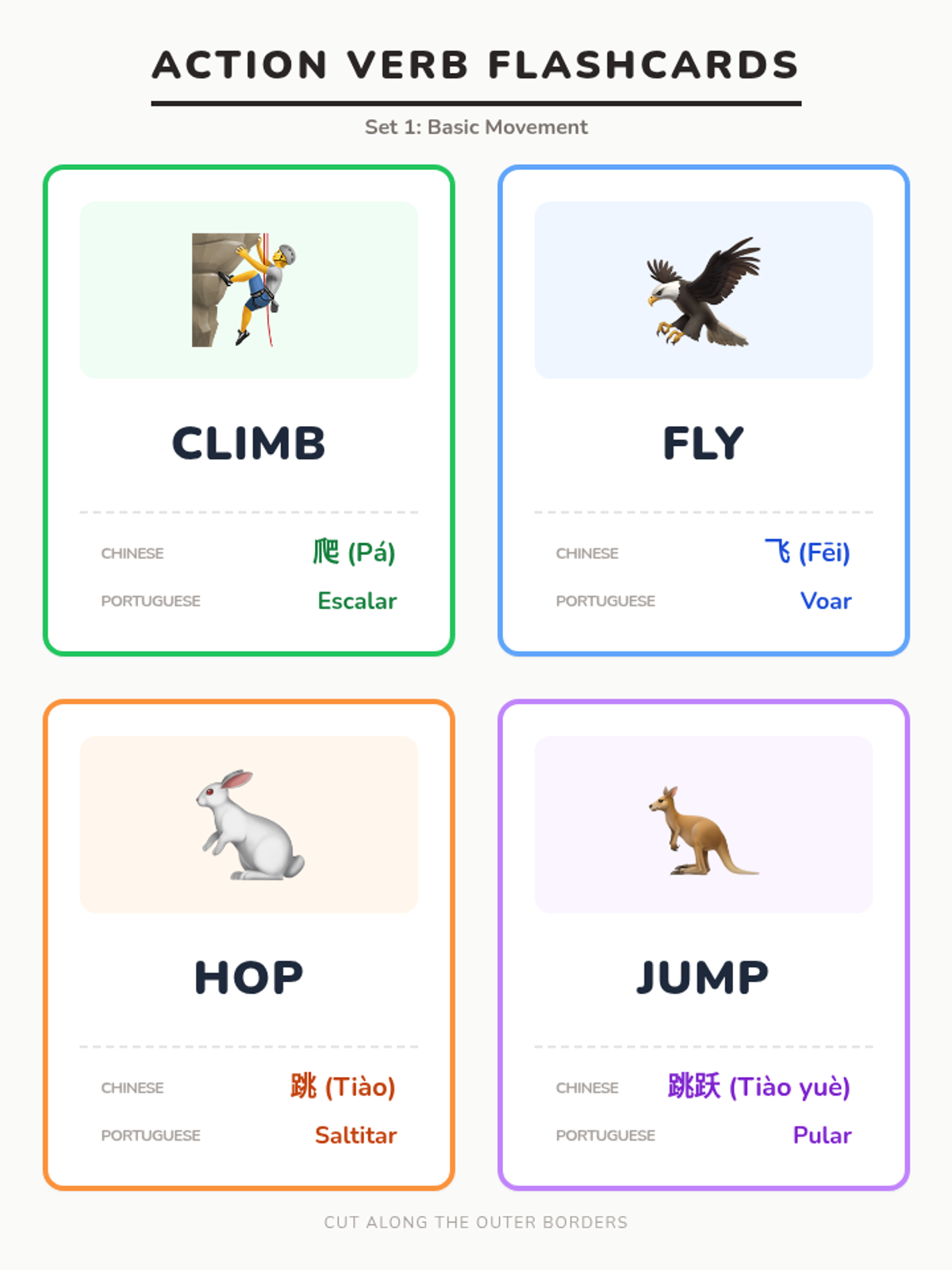
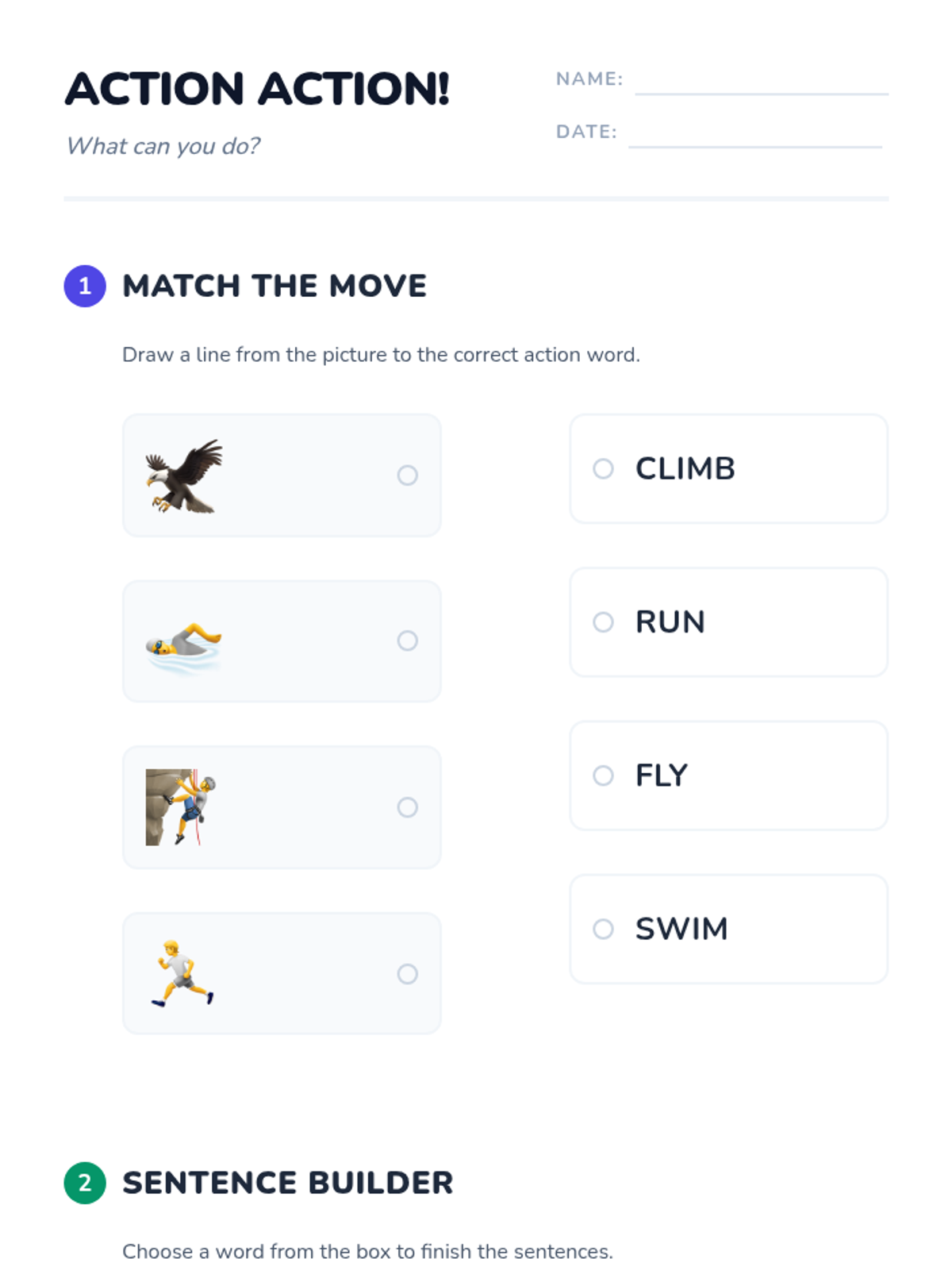
A collection of introductory materials for learning common action verbs in English, featuring visual aids and multilingual translations in Chinese and Portuguese.
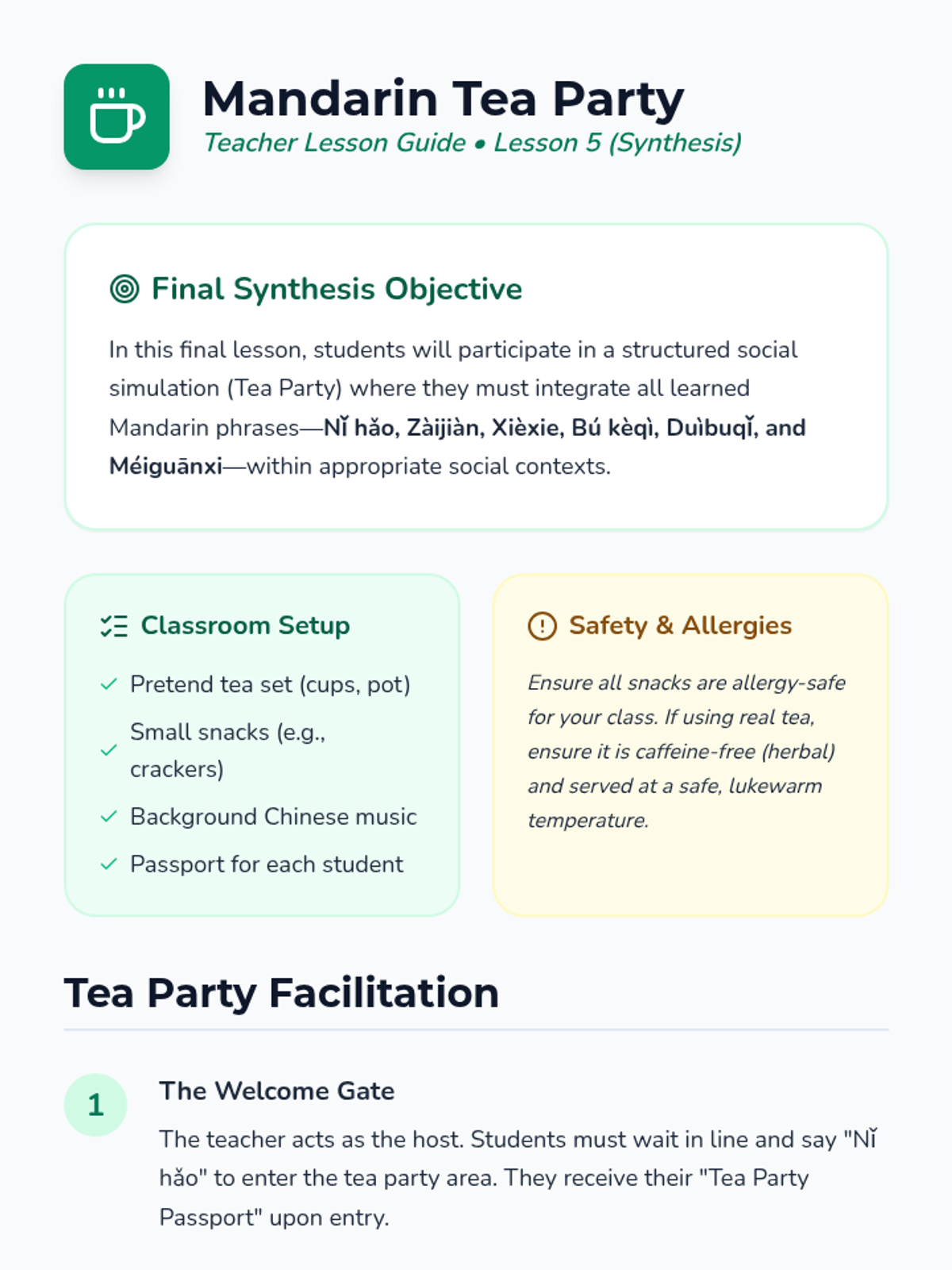
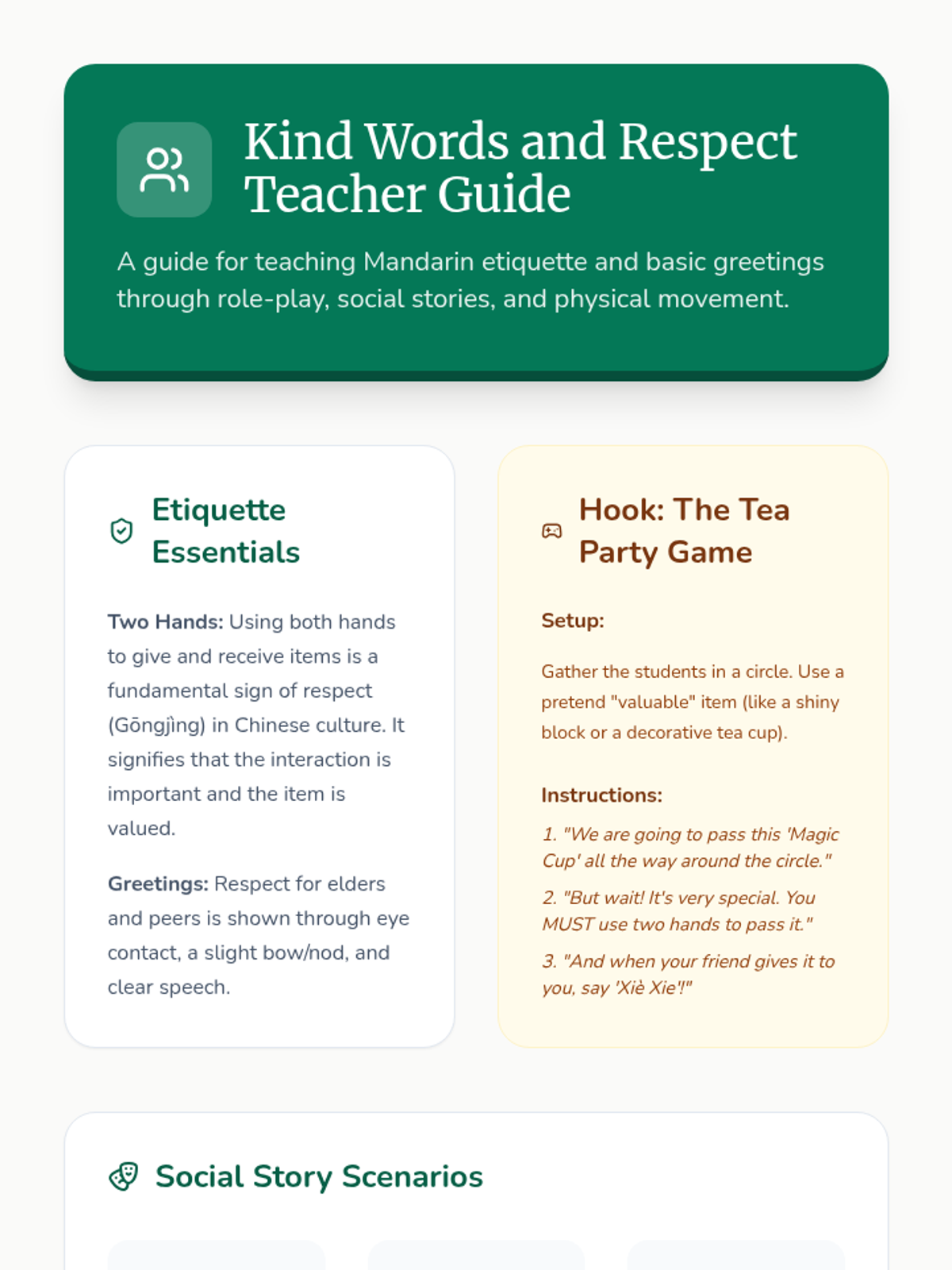
In this synthesis lesson, students participate in a pretend tea party, applying all learned greetings in a social setting.
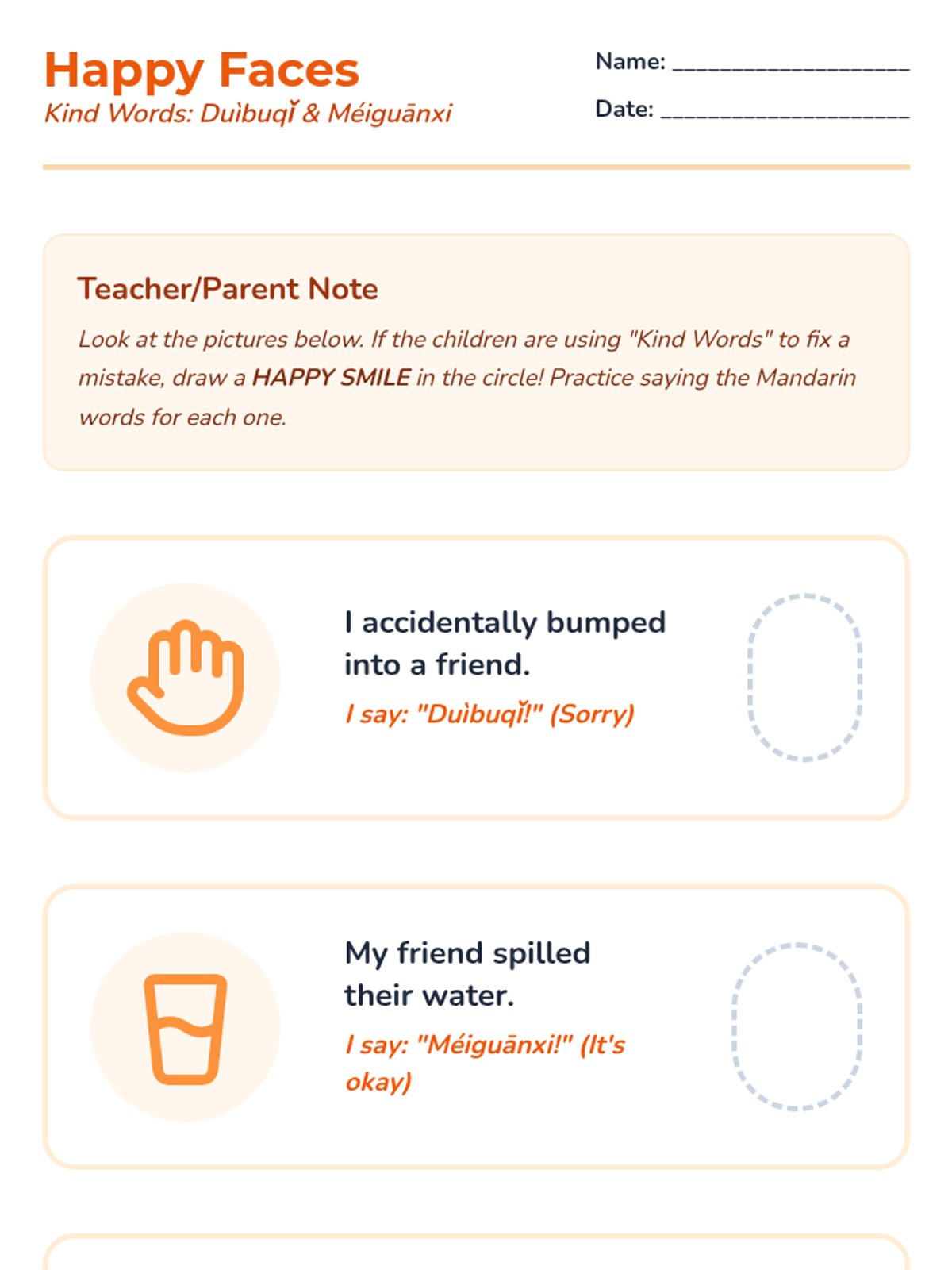
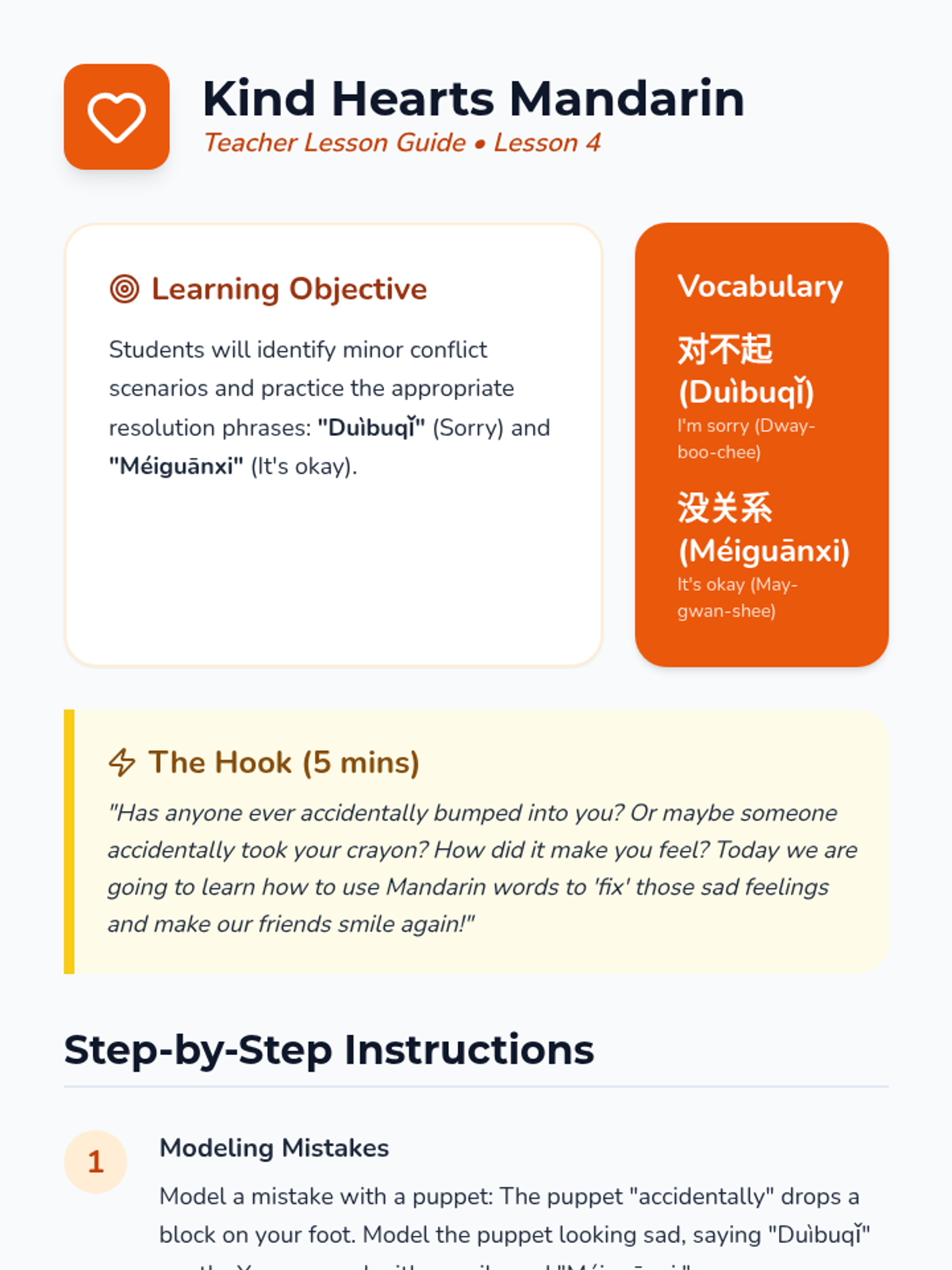
Students explore empathy and repair by learning 'Duìbuqǐ' (Sorry) and 'Méiguānxi' (It's okay) through gentle role-play.
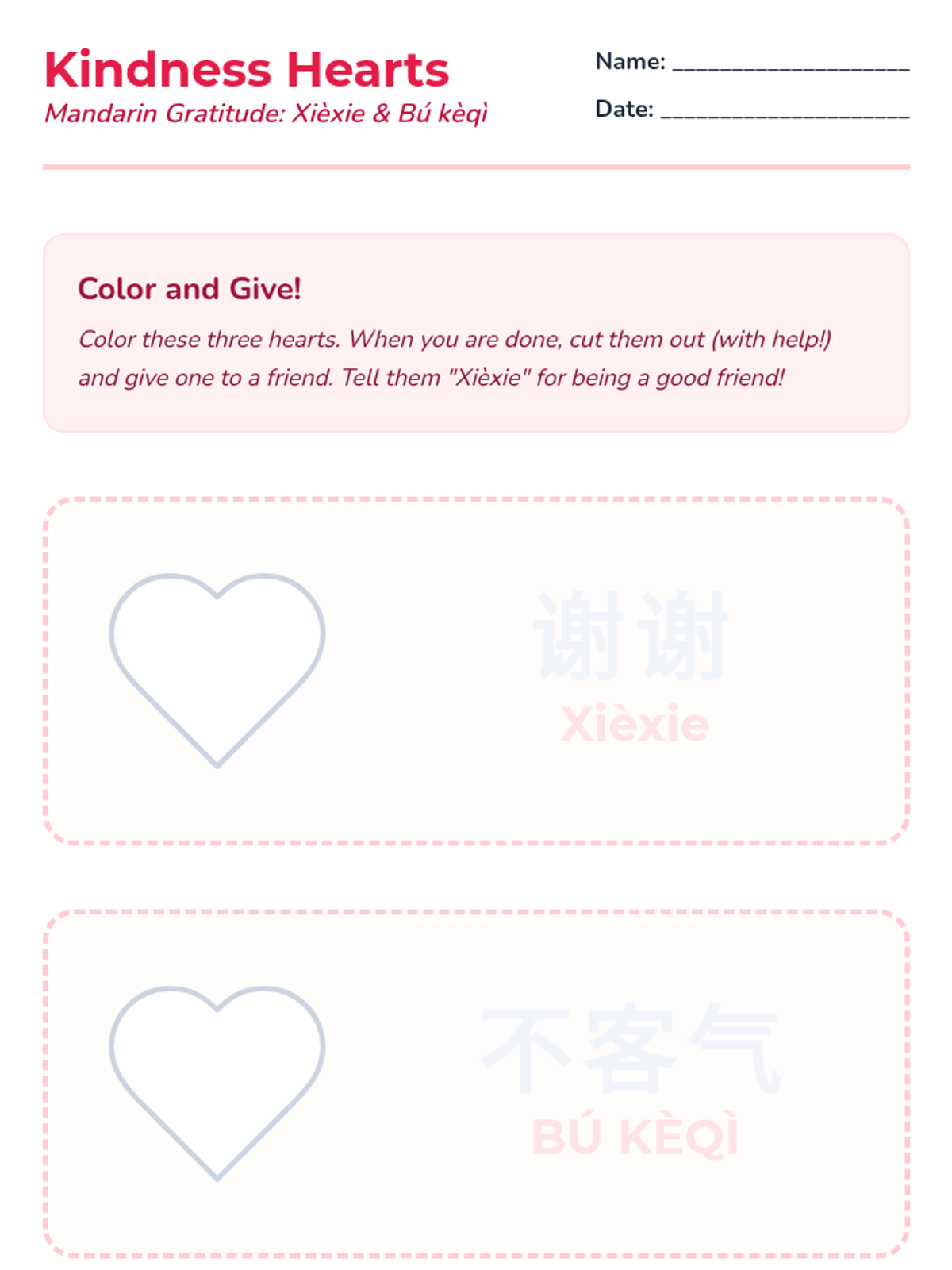
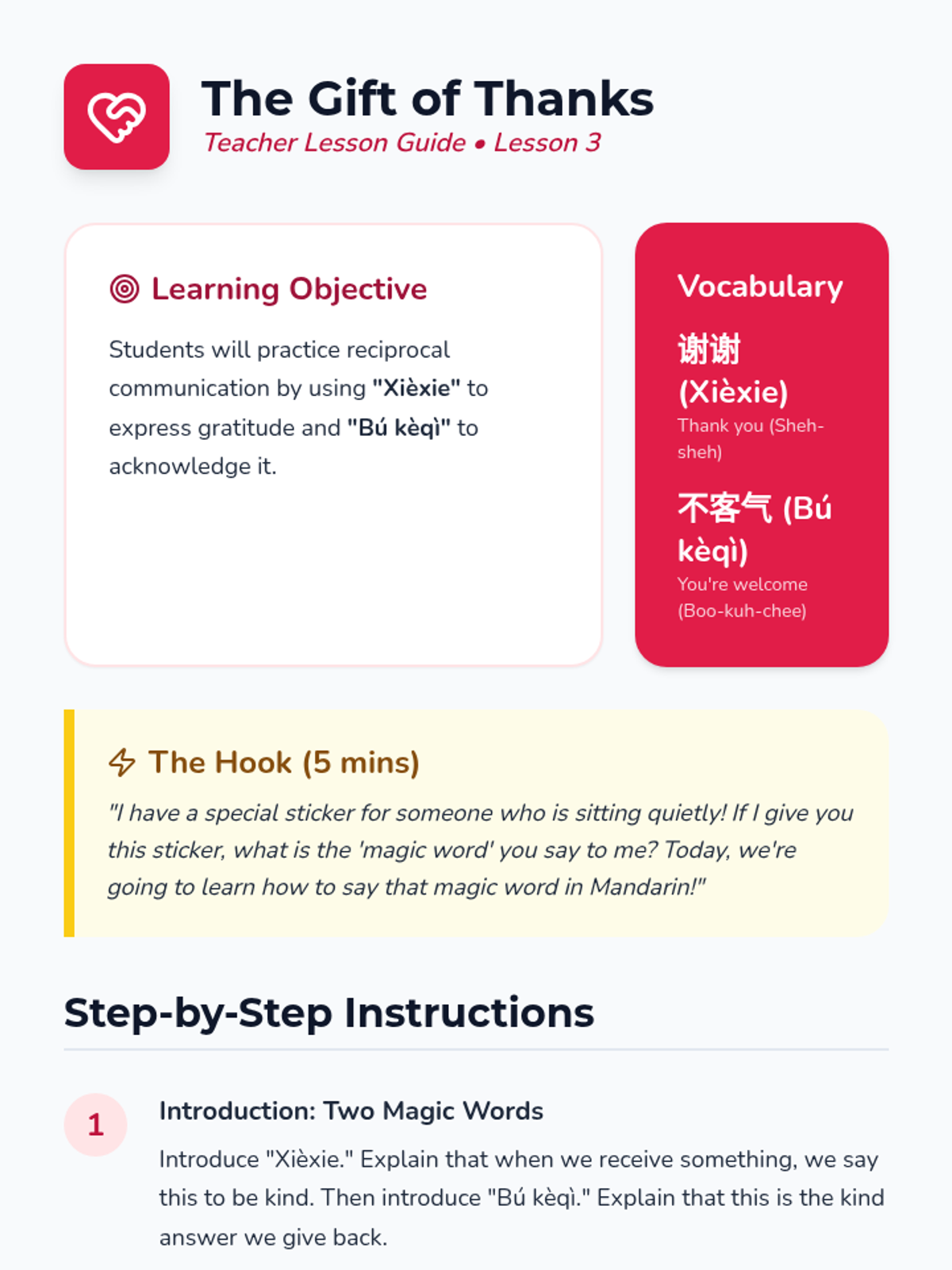
This lesson introduces 'Xièxie' (Thank you) and 'Bú kèqì' (You're welcome) through a gift-giving simulation.
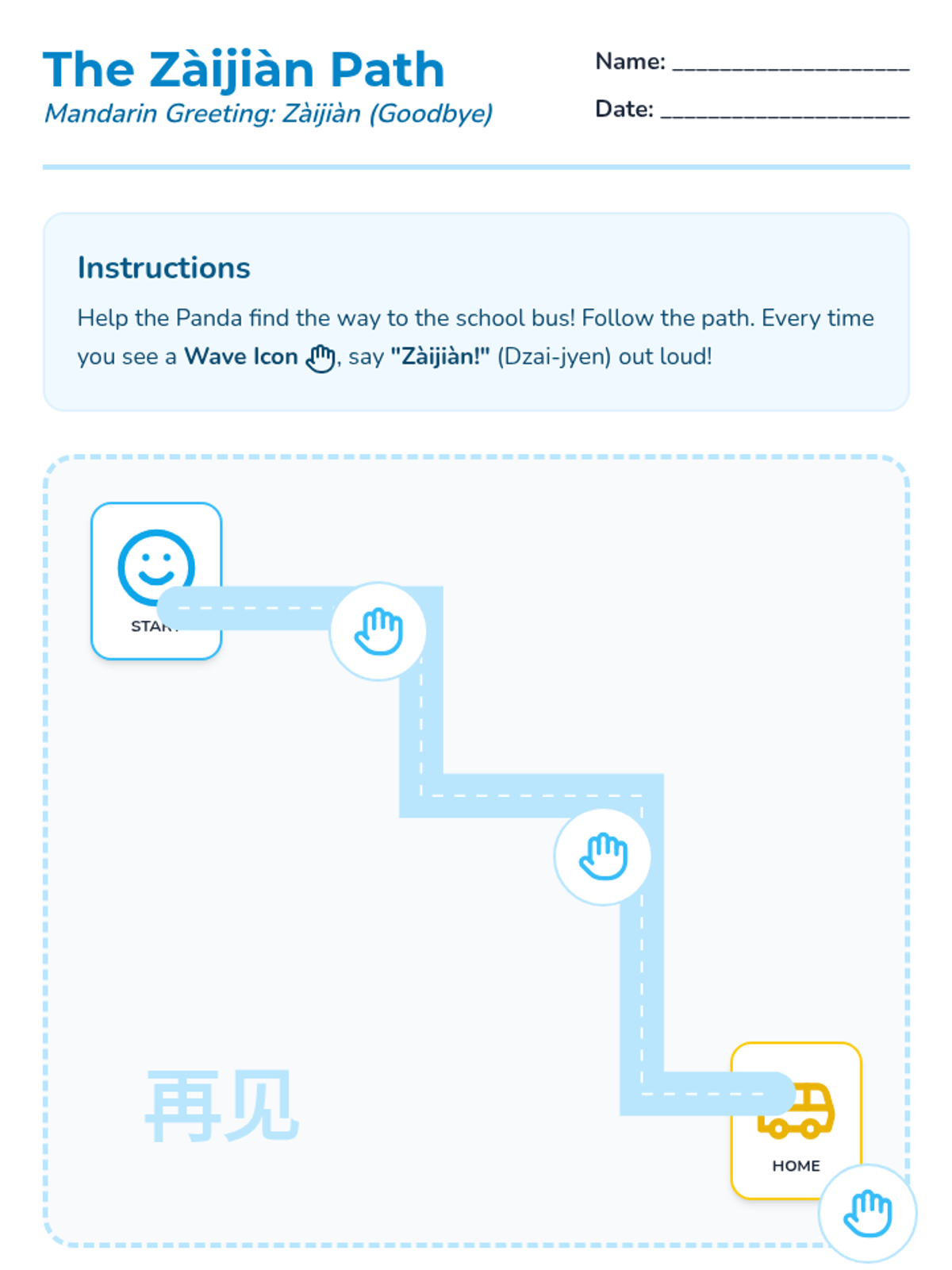
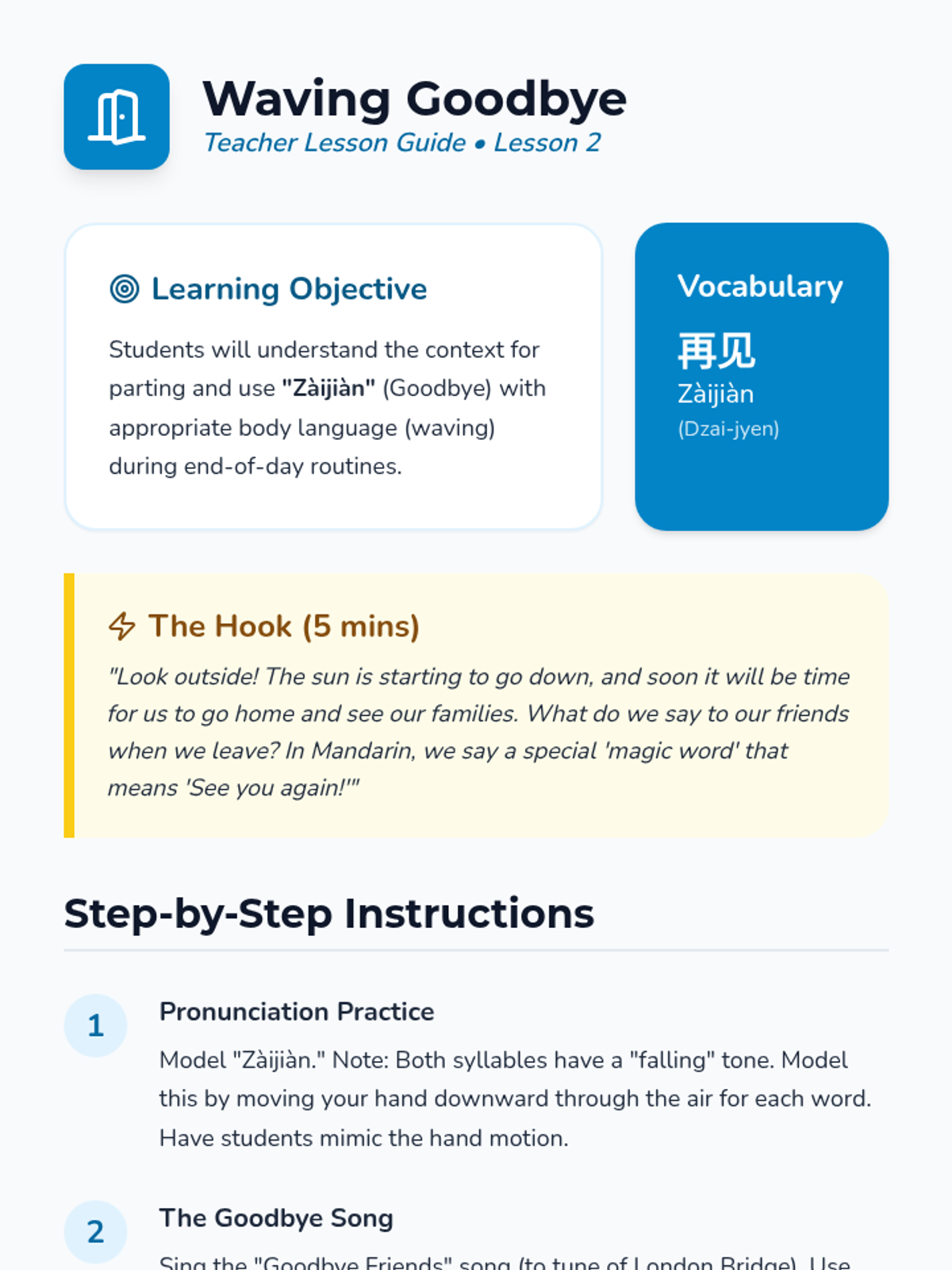
Learners focus on 'Zàijiàn' (Goodbye) by enacting end-of-day routines and singing a Mandarin goodbye song.
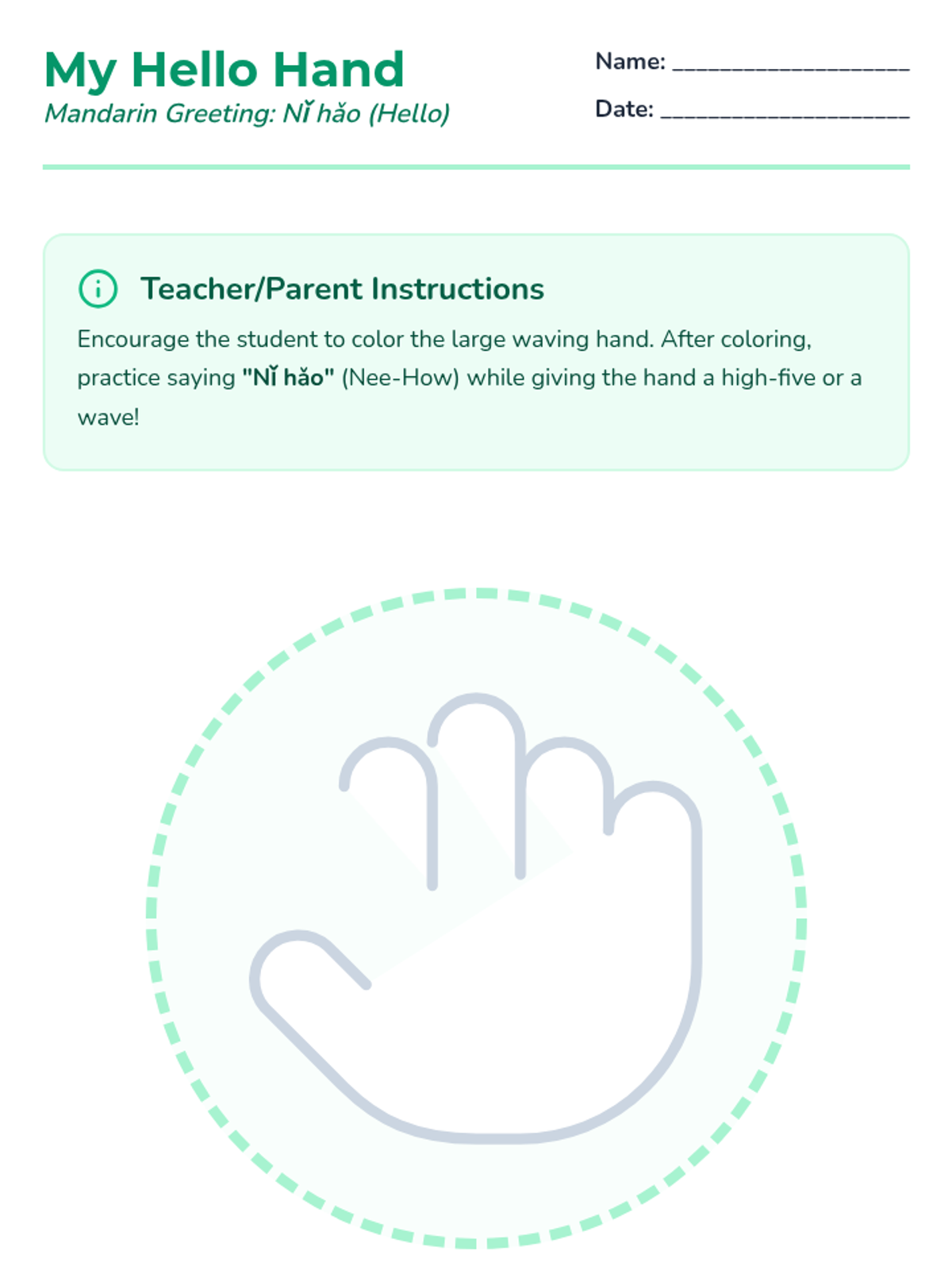
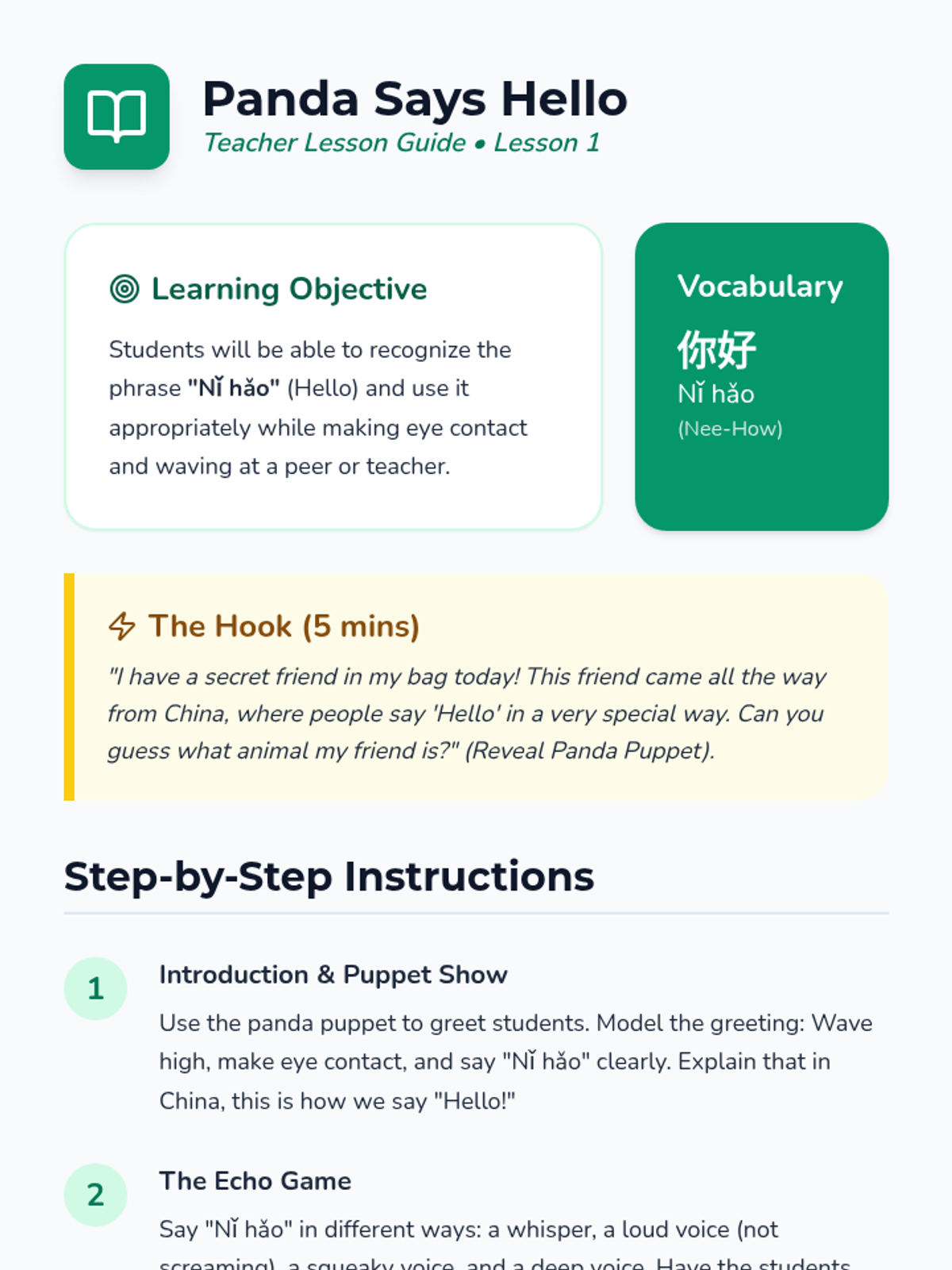
Students learn 'Nǐ hǎo' (Hello) through a hand puppet interaction circle, focusing on eye contact and friendly body language.
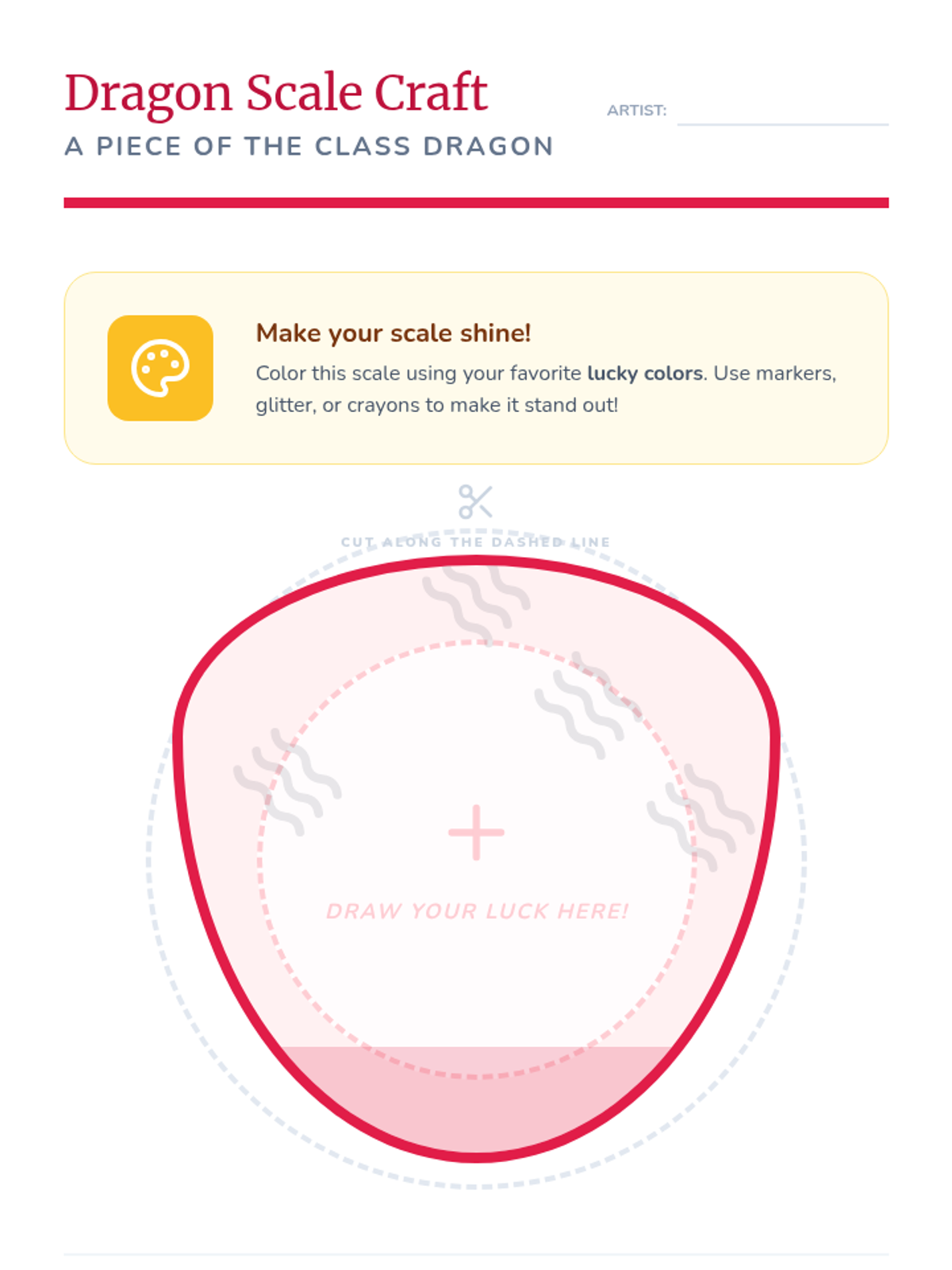
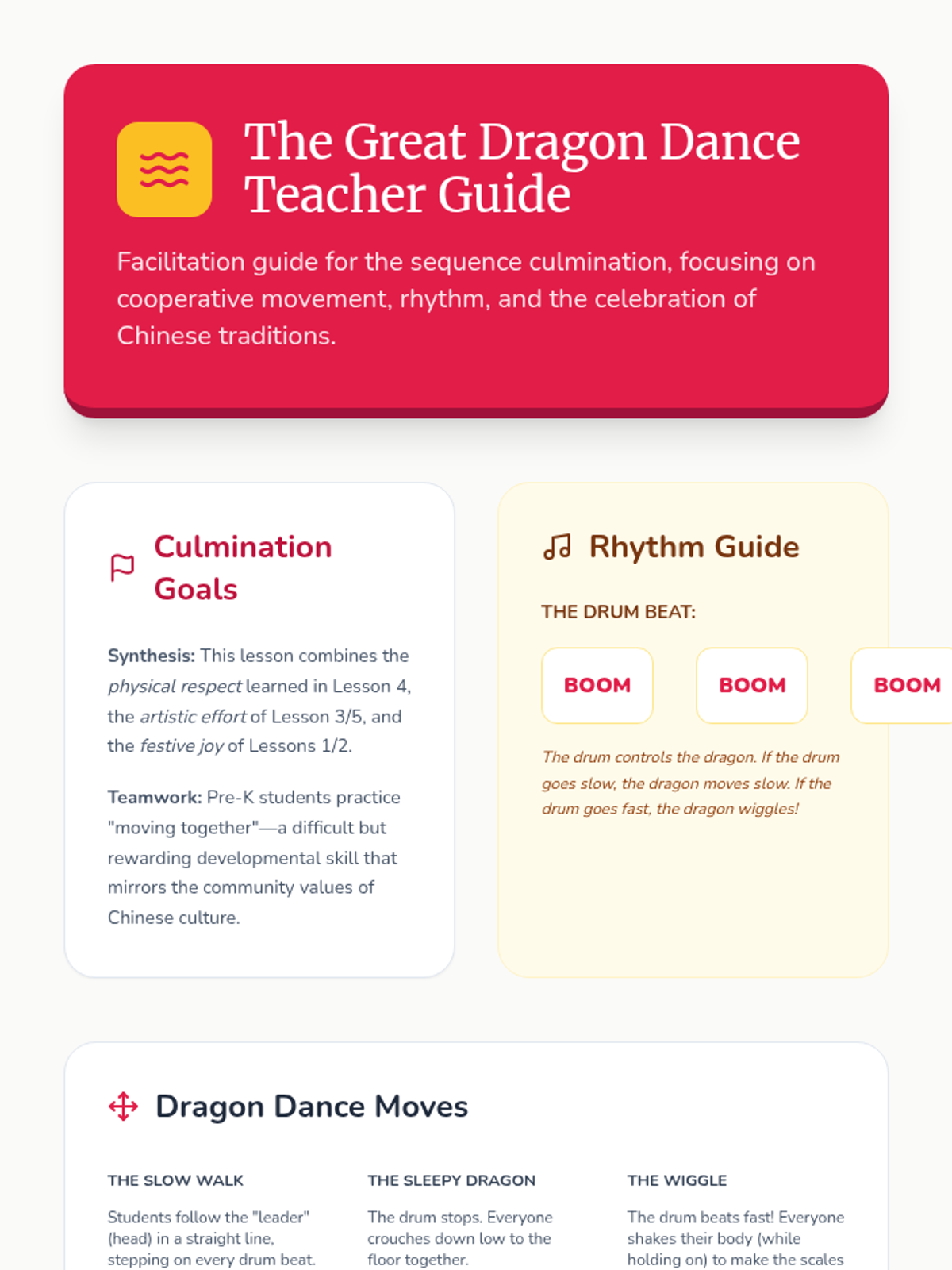
A celebratory culmination where students work together to perform a dragon dance, synthesizing their cultural learning through rhythm and cooperative movement.
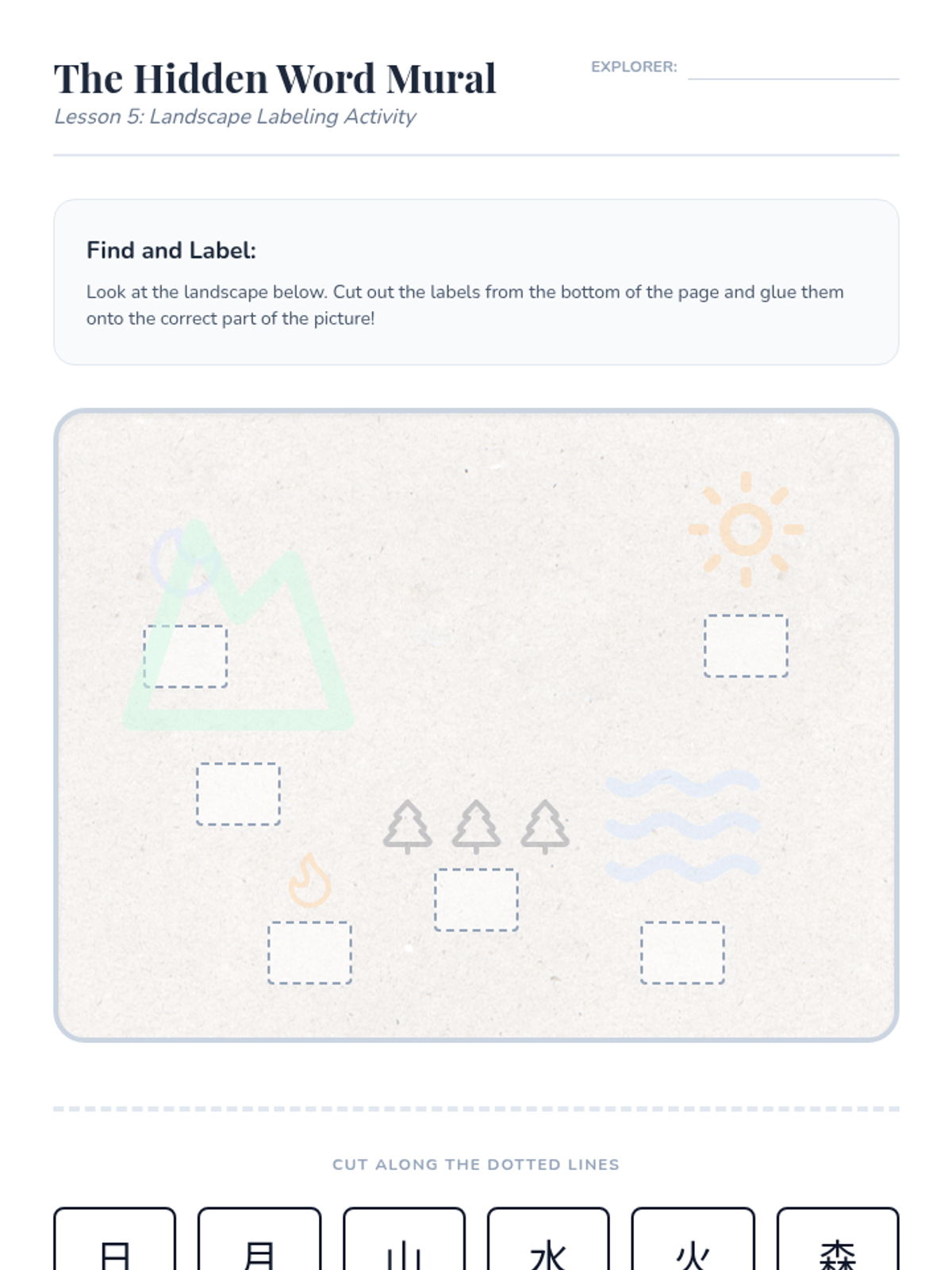
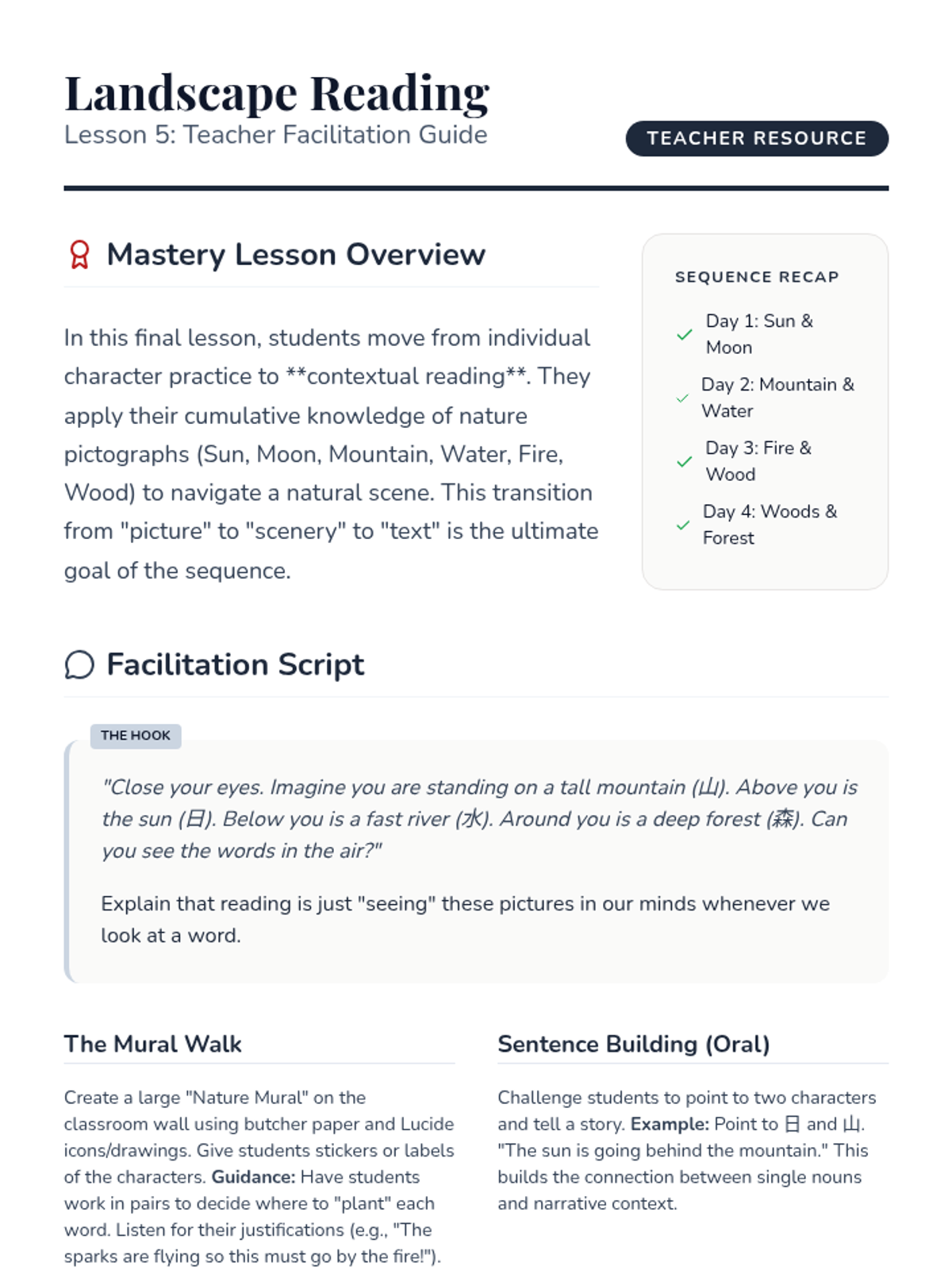
Students apply their knowledge by labeling a large mural of a natural landscape with the correct characters. They practice reading simple phrases connecting these nouns, demonstrating their ability to recognize pictographs in context.
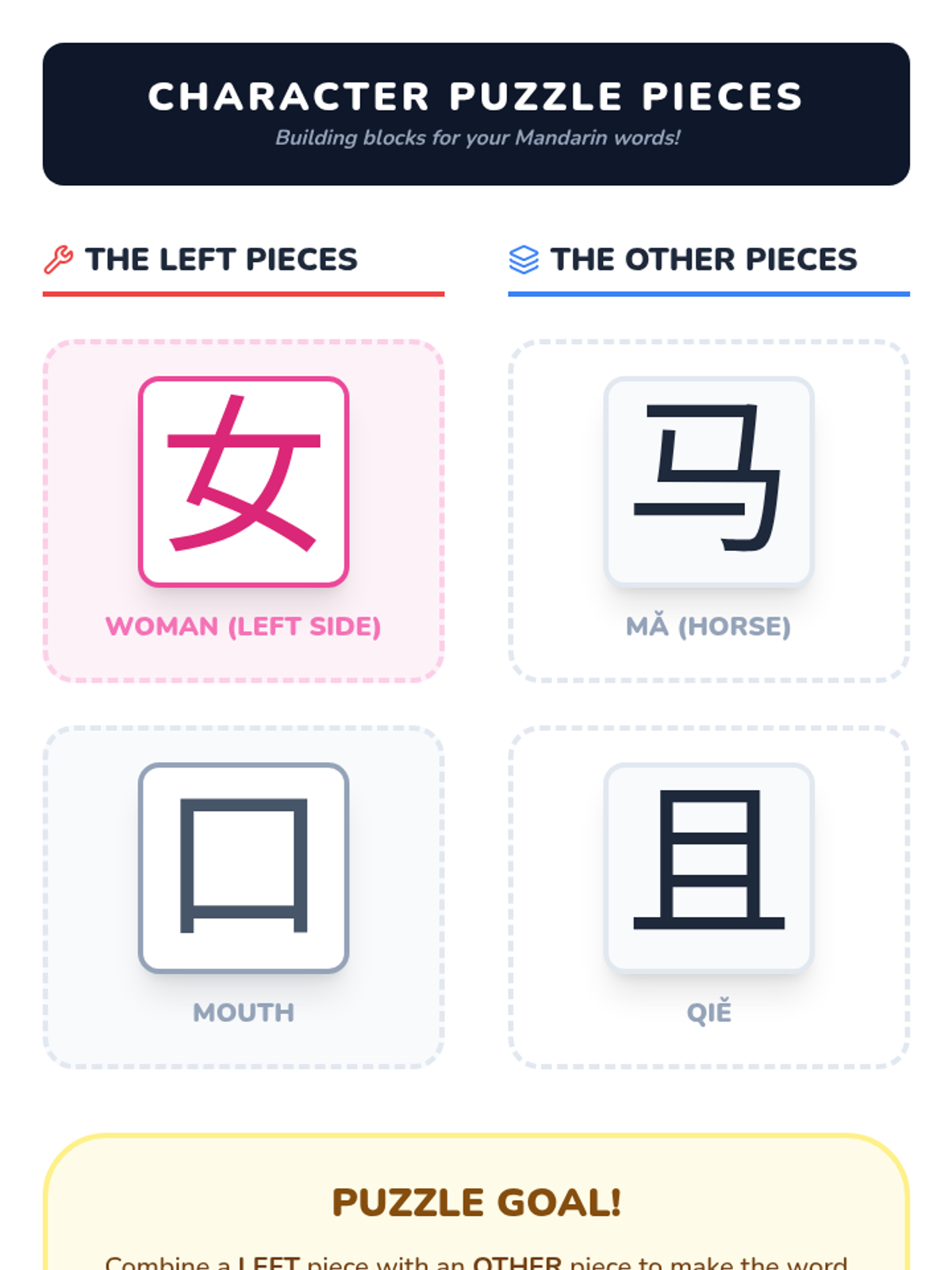
Students use character manipulatives to build complex characters from radicals, demonstrating mastery of character structure.
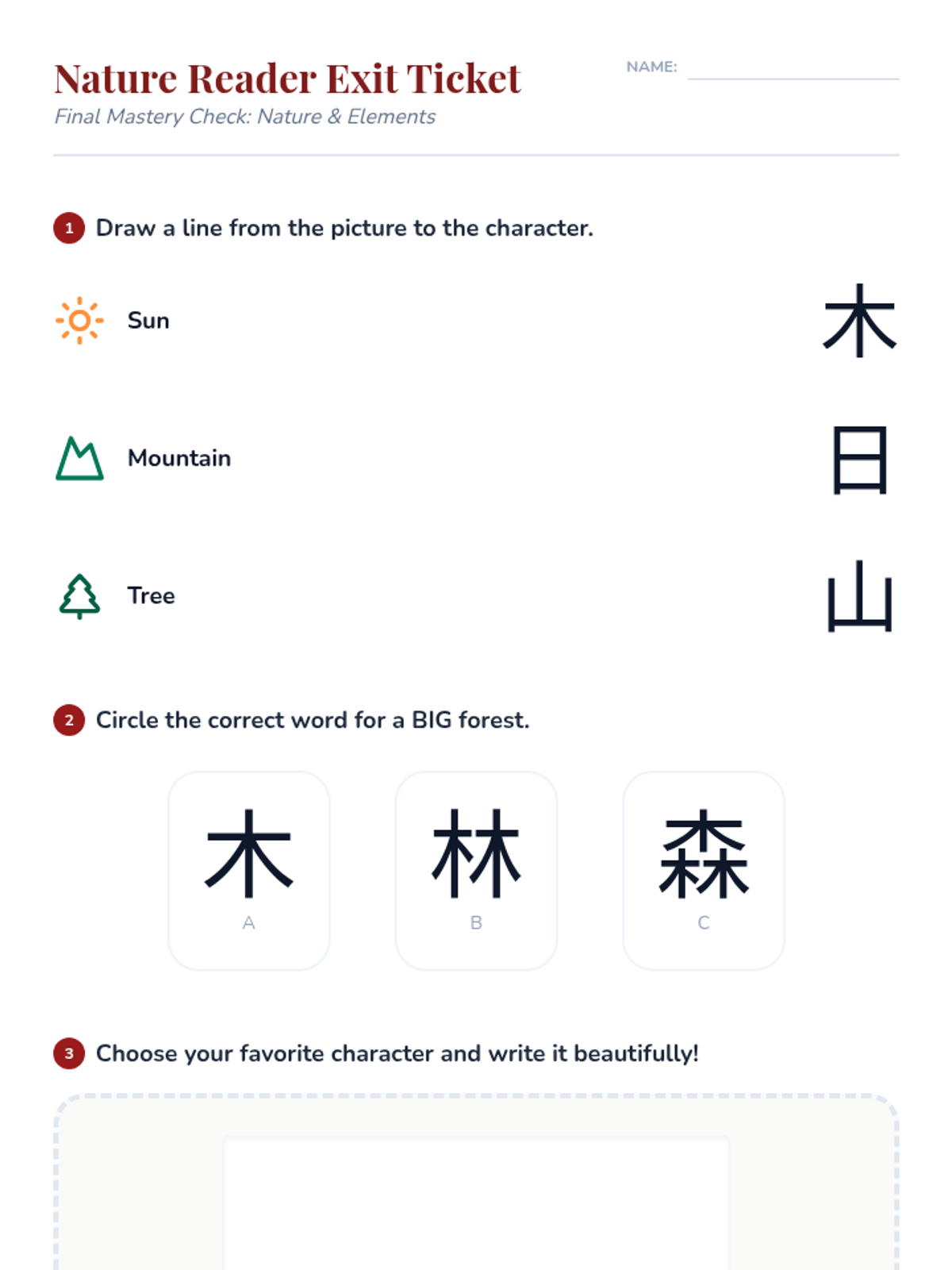
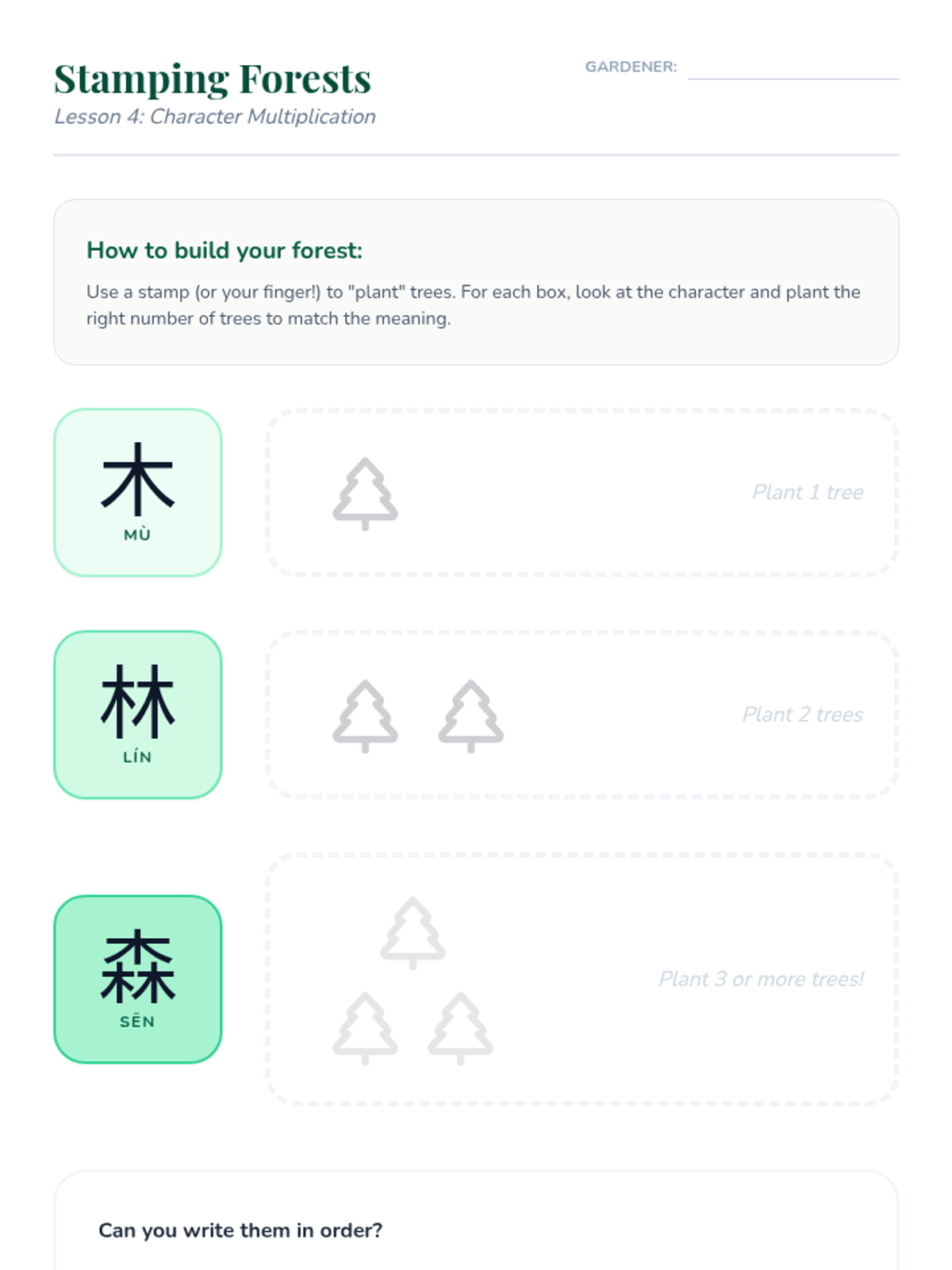
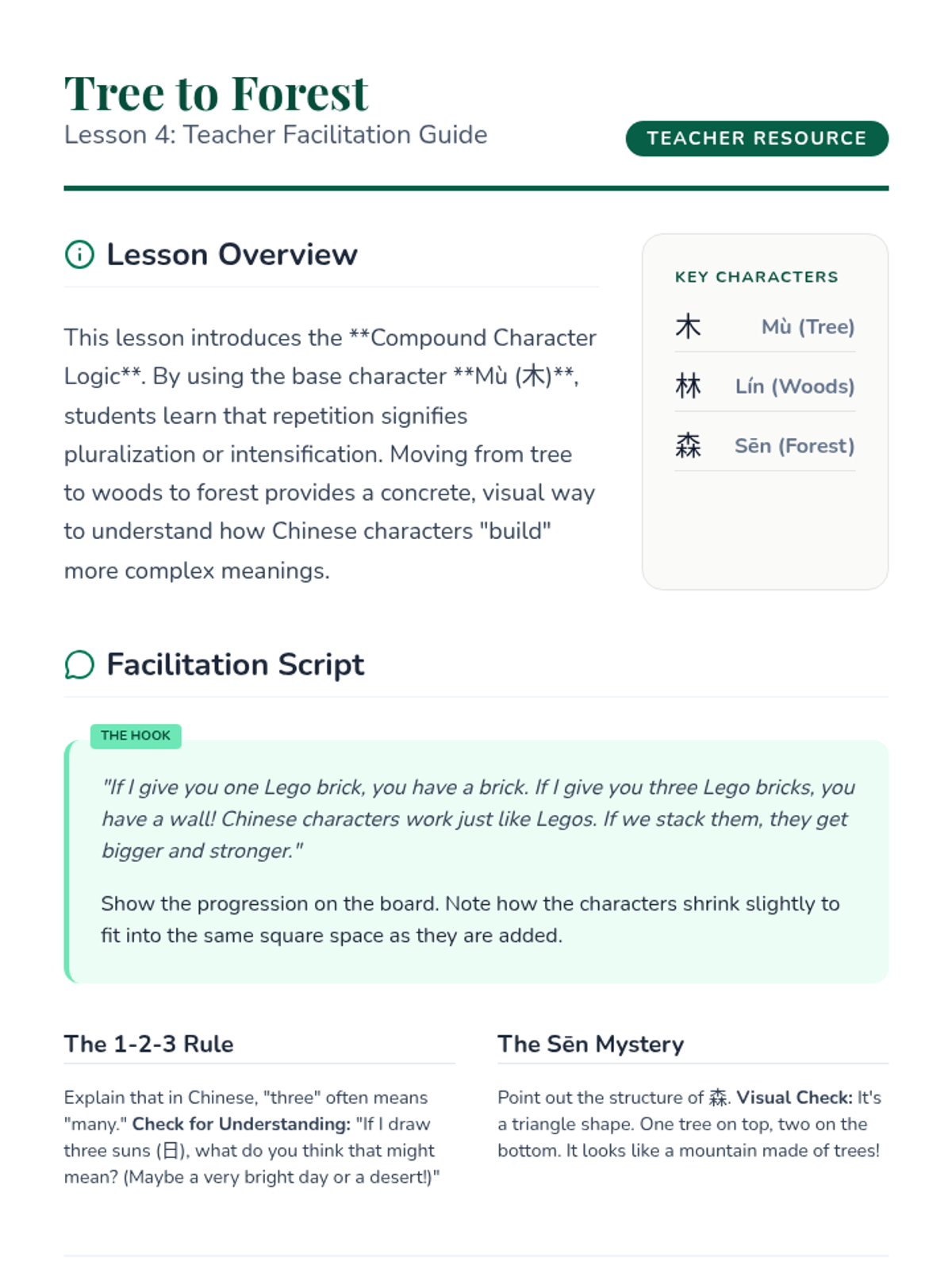
This lesson introduces the concept that characters can be repeated to change meaning, transforming Mù (tree) into Lín (woods) and Sēn (forest). Students use stamps to create forests, reinforcing the logic of Chinese character formation.
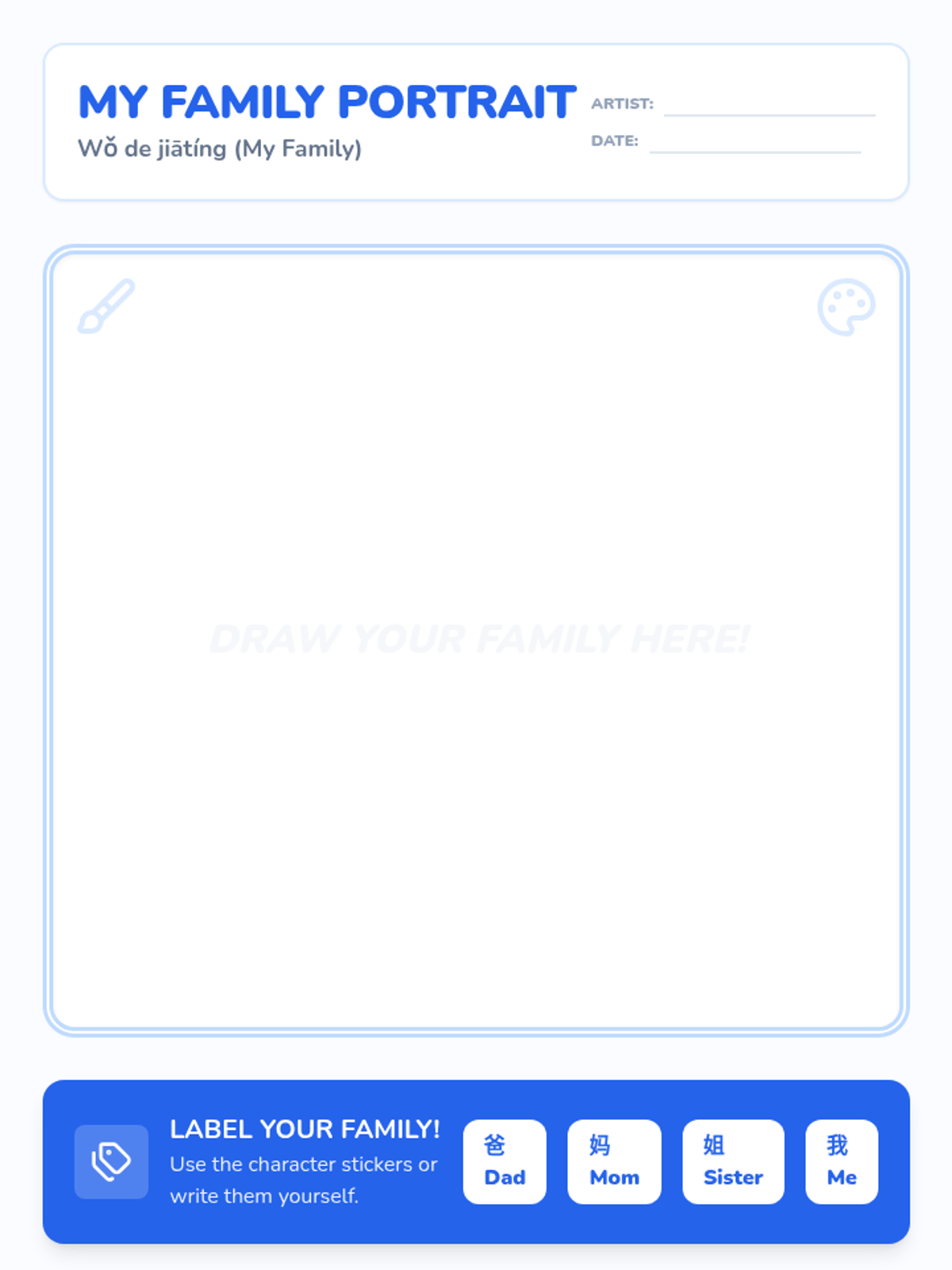
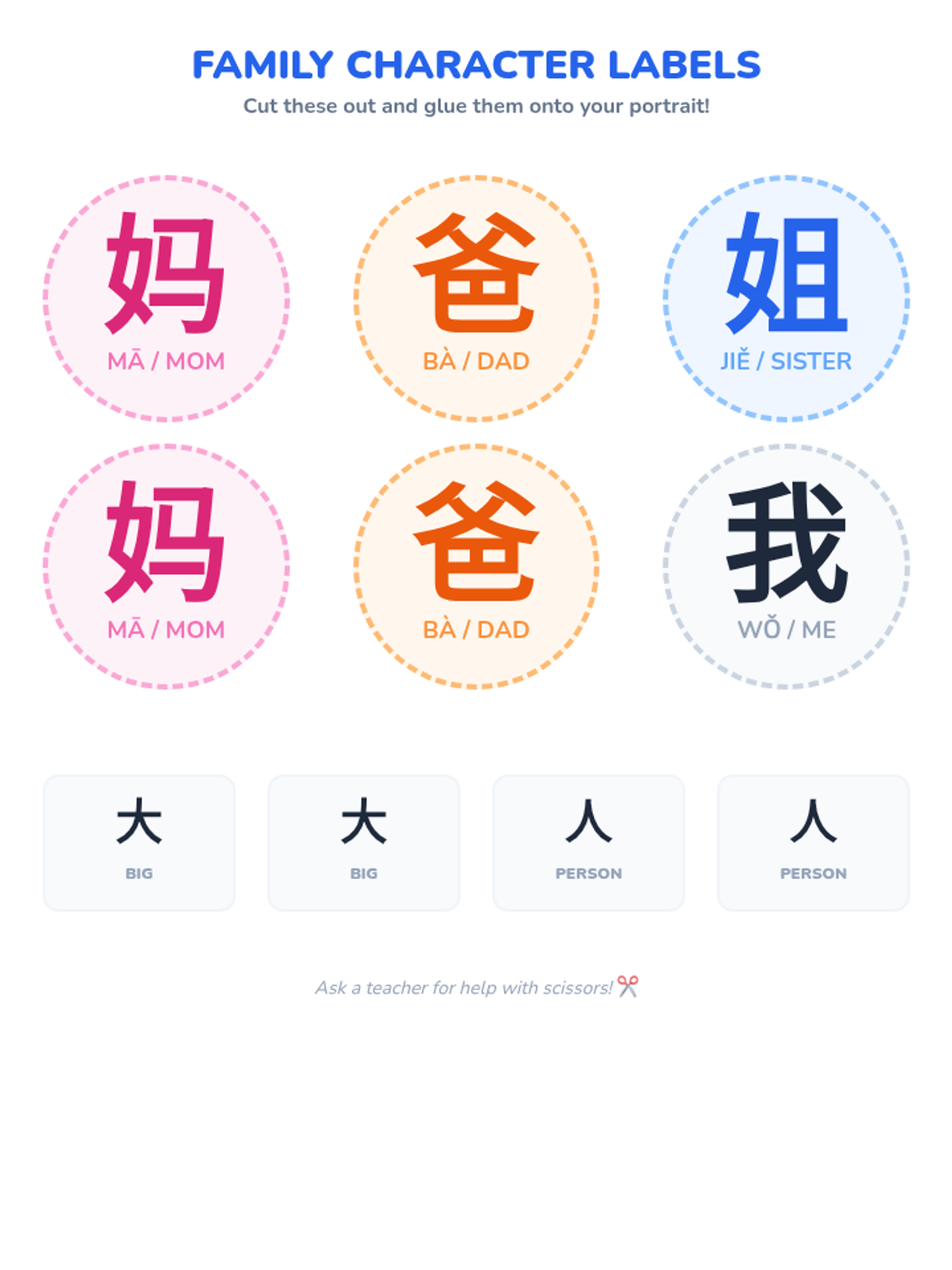
Students create a family portrait and label family members using the characters and radicals they have learned.
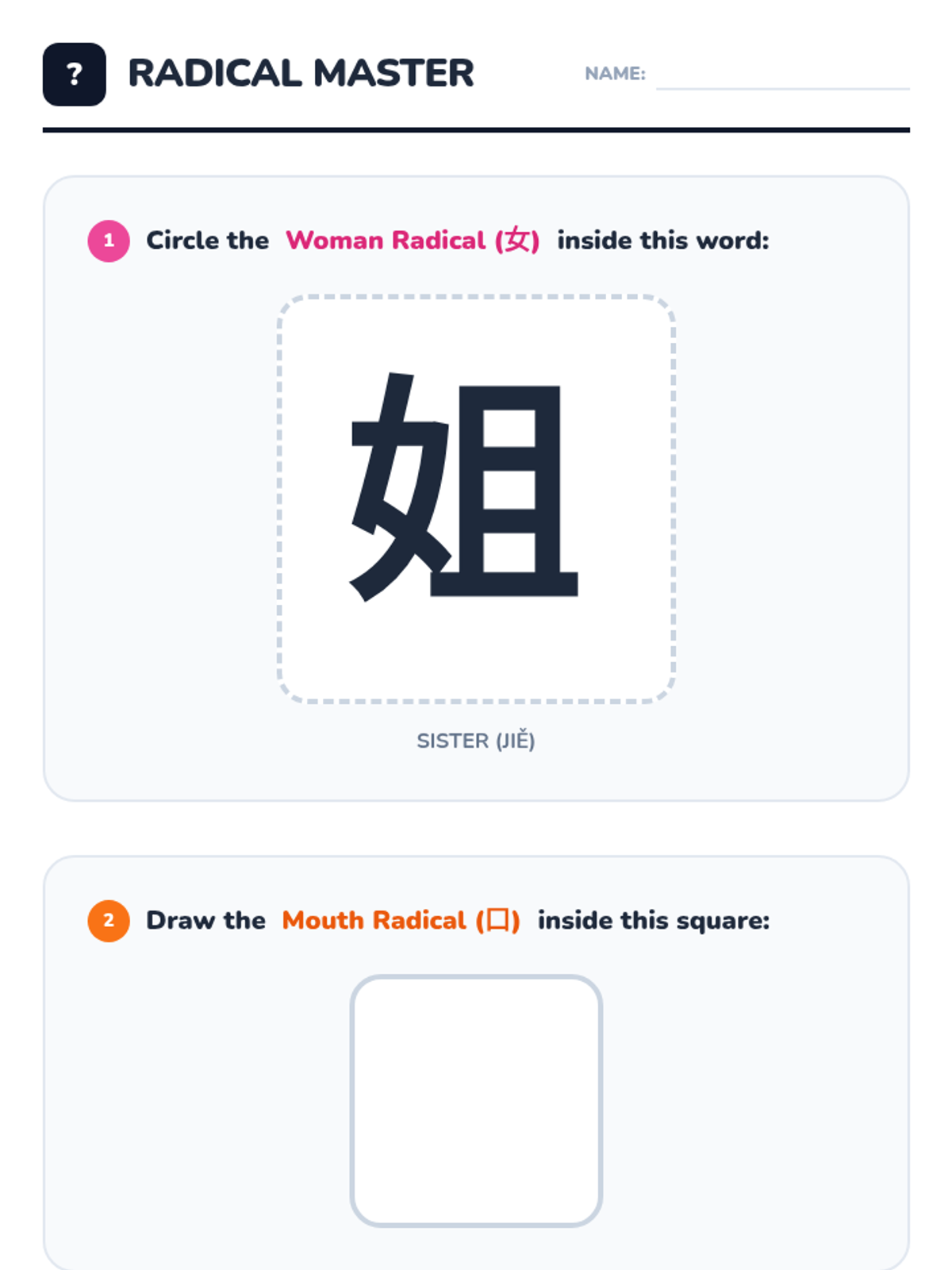
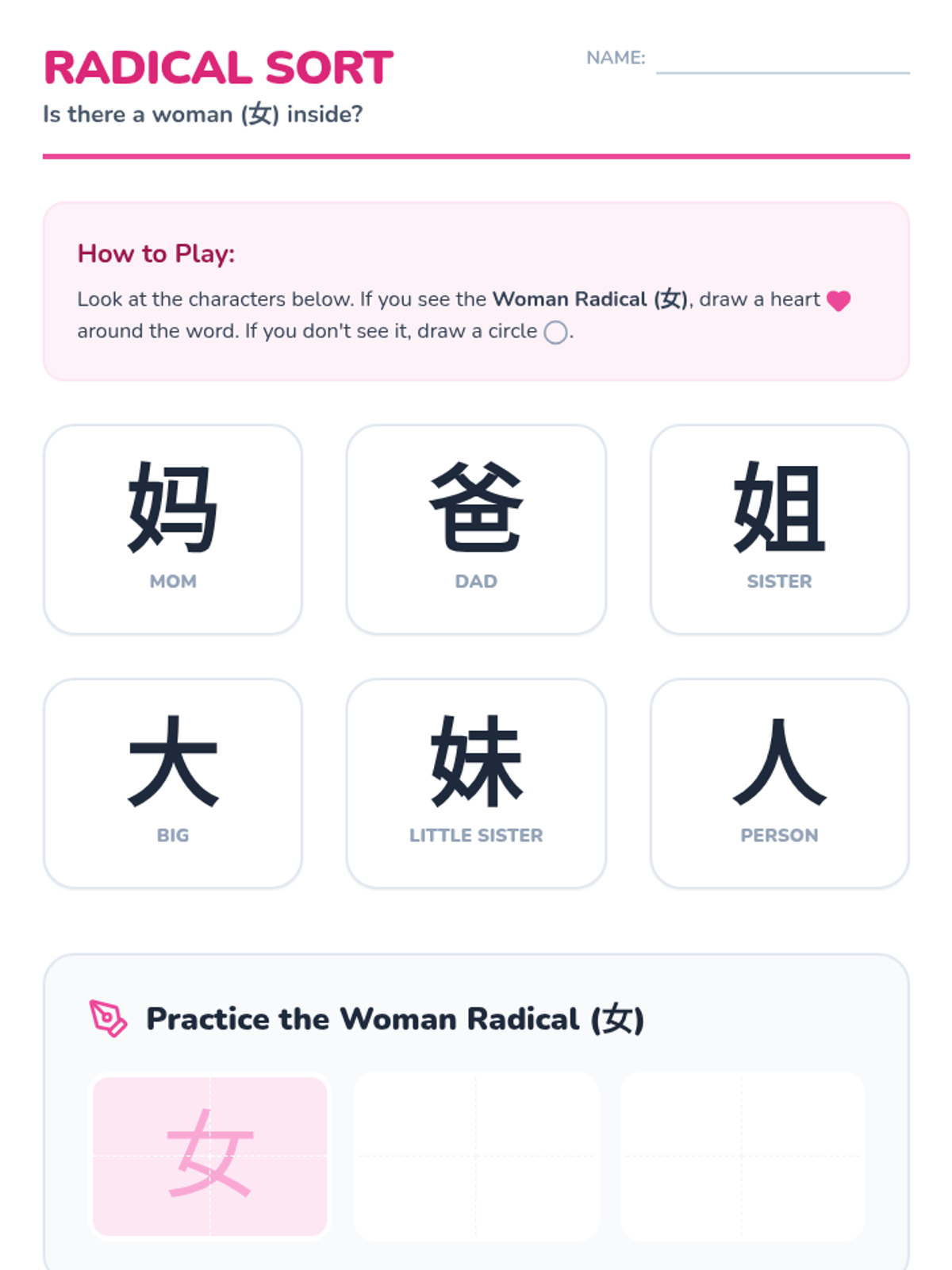
Introduces the 'Female' radical (女) and explores its presence in characters for 'Mom' and 'Older Sister'.
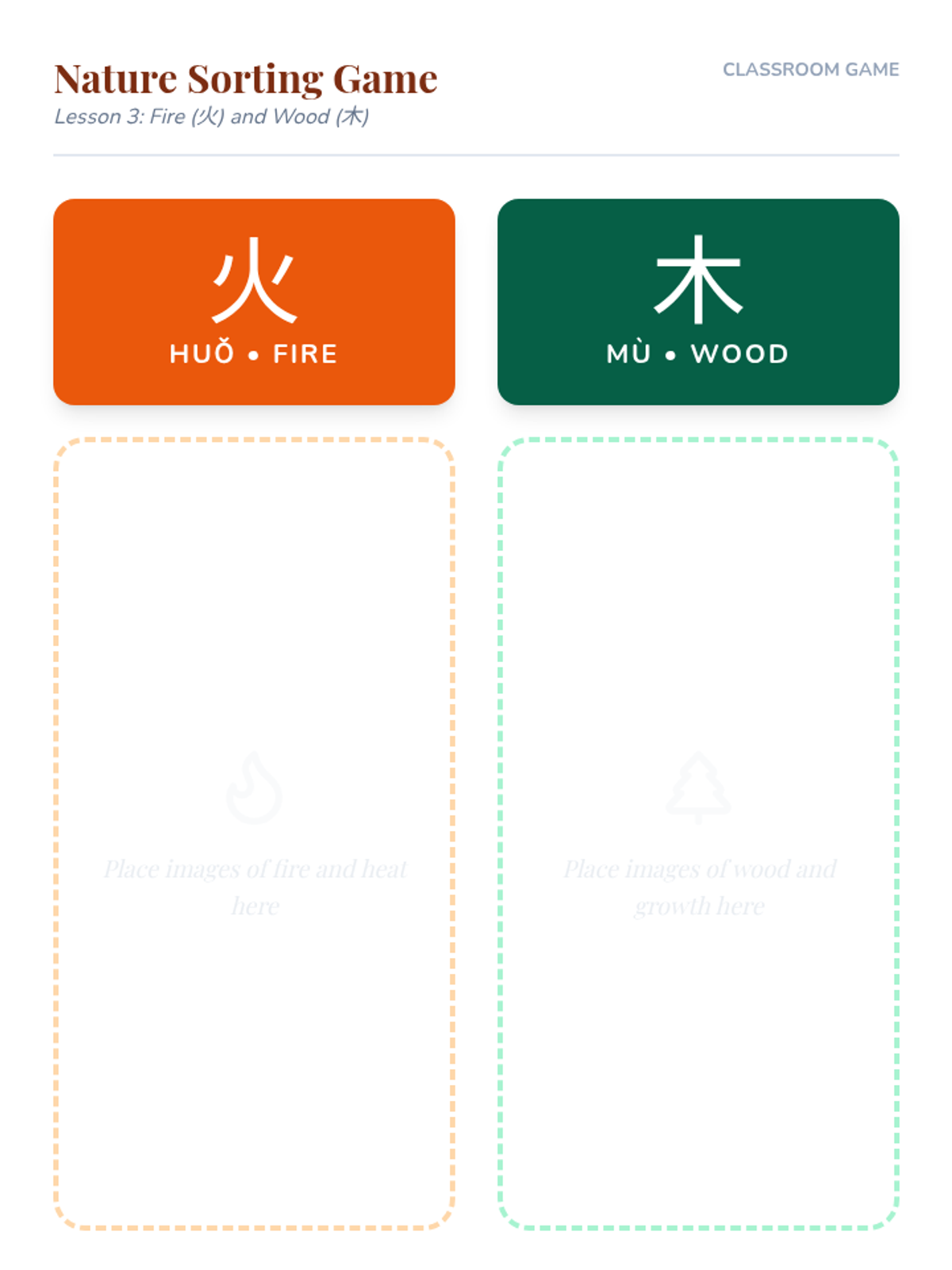
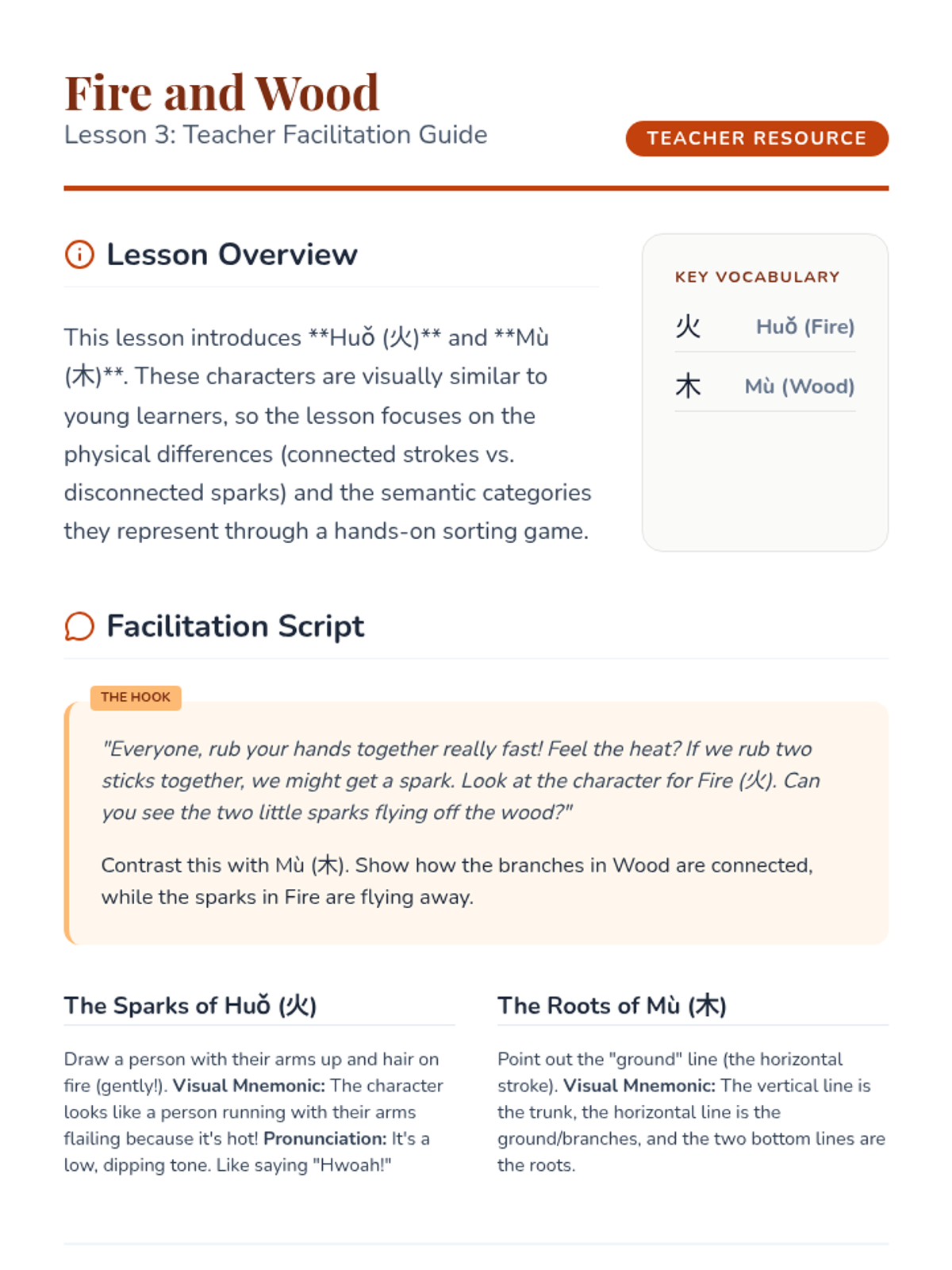
Students learn Huǒ (fire) and Mù (wood/tree). They participate in a sorting game where they categorize images of forest fires, campfires, trees, and wooden objects under the correct character headings.
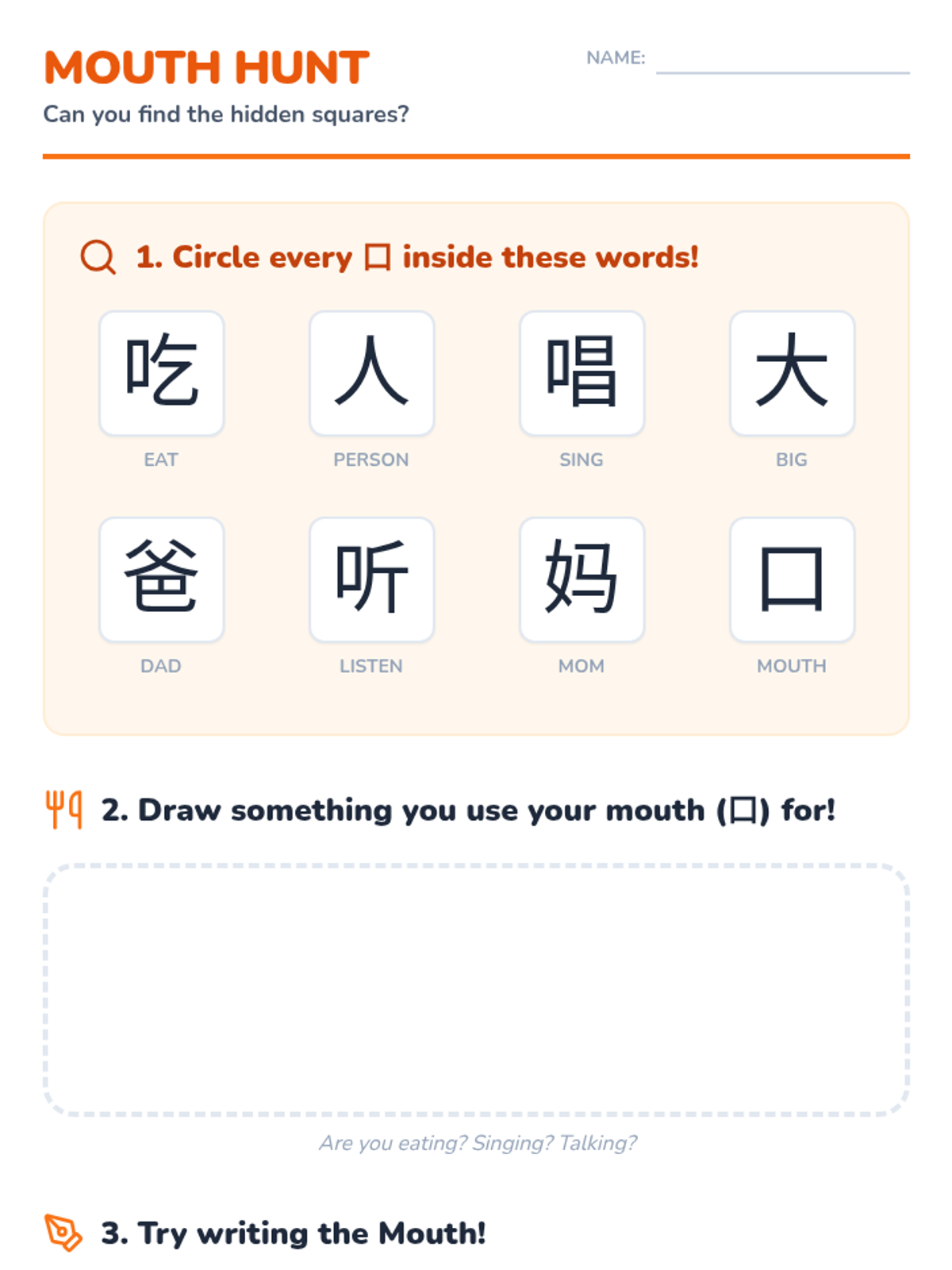
Focuses on the 'Mouth' radical (口) and how it appears in characters related to eating, speaking, and calling.
A high-energy review lesson using 'Laoshi Says' with character cards to test rapid recall and reading speed.
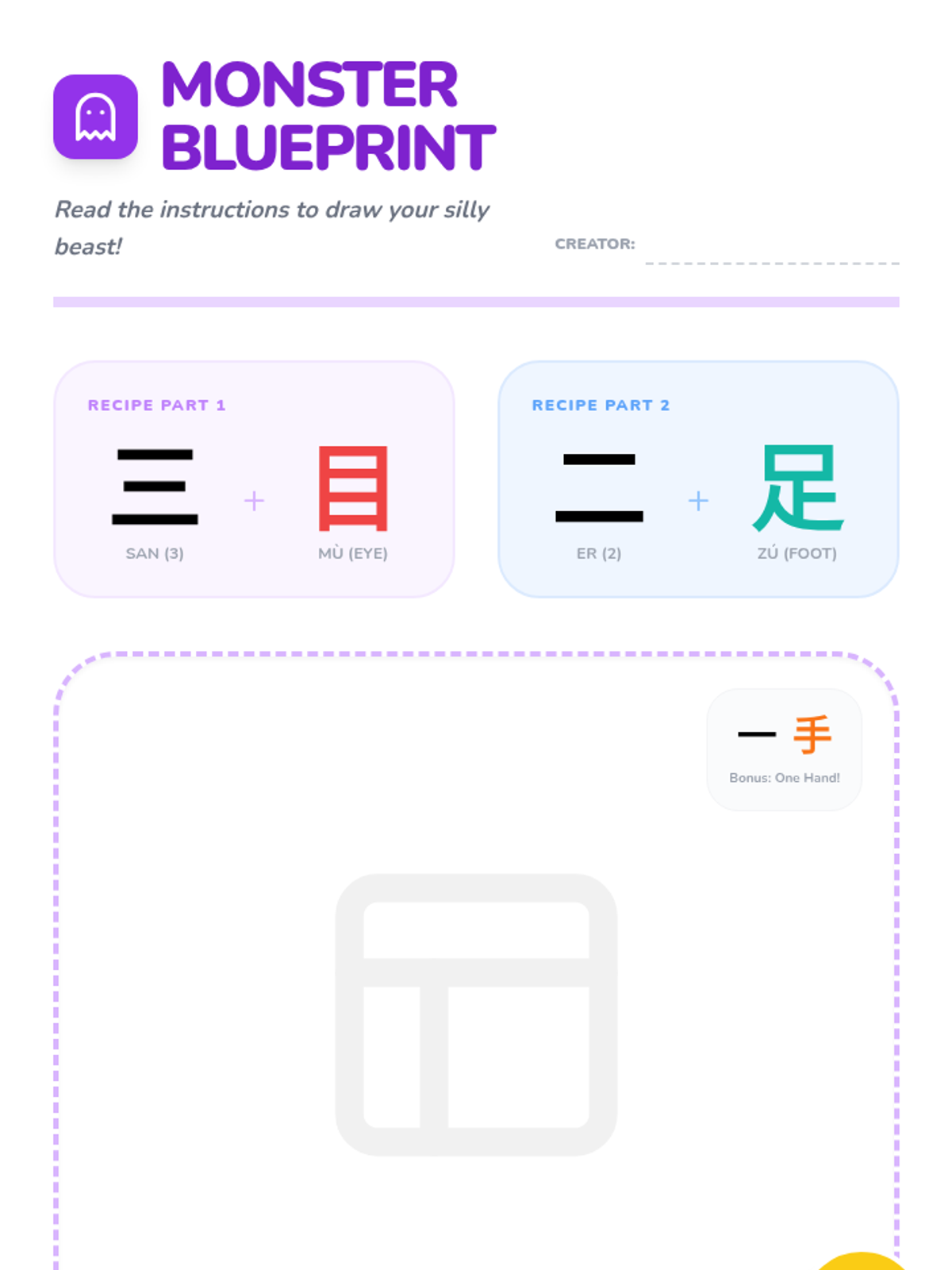
Students combine their knowledge of body parts and numbers to draw a silly monster based on character prompts.
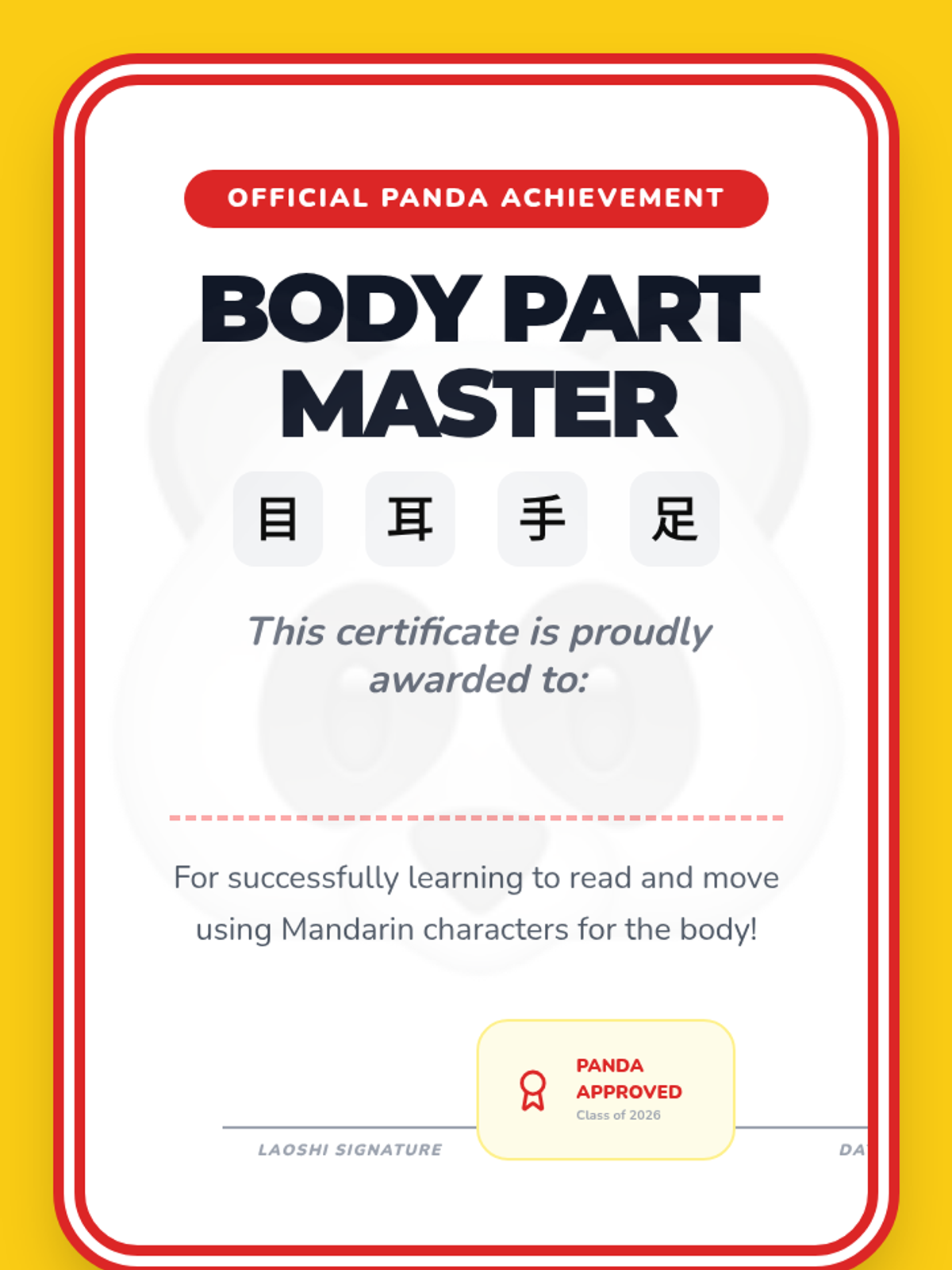
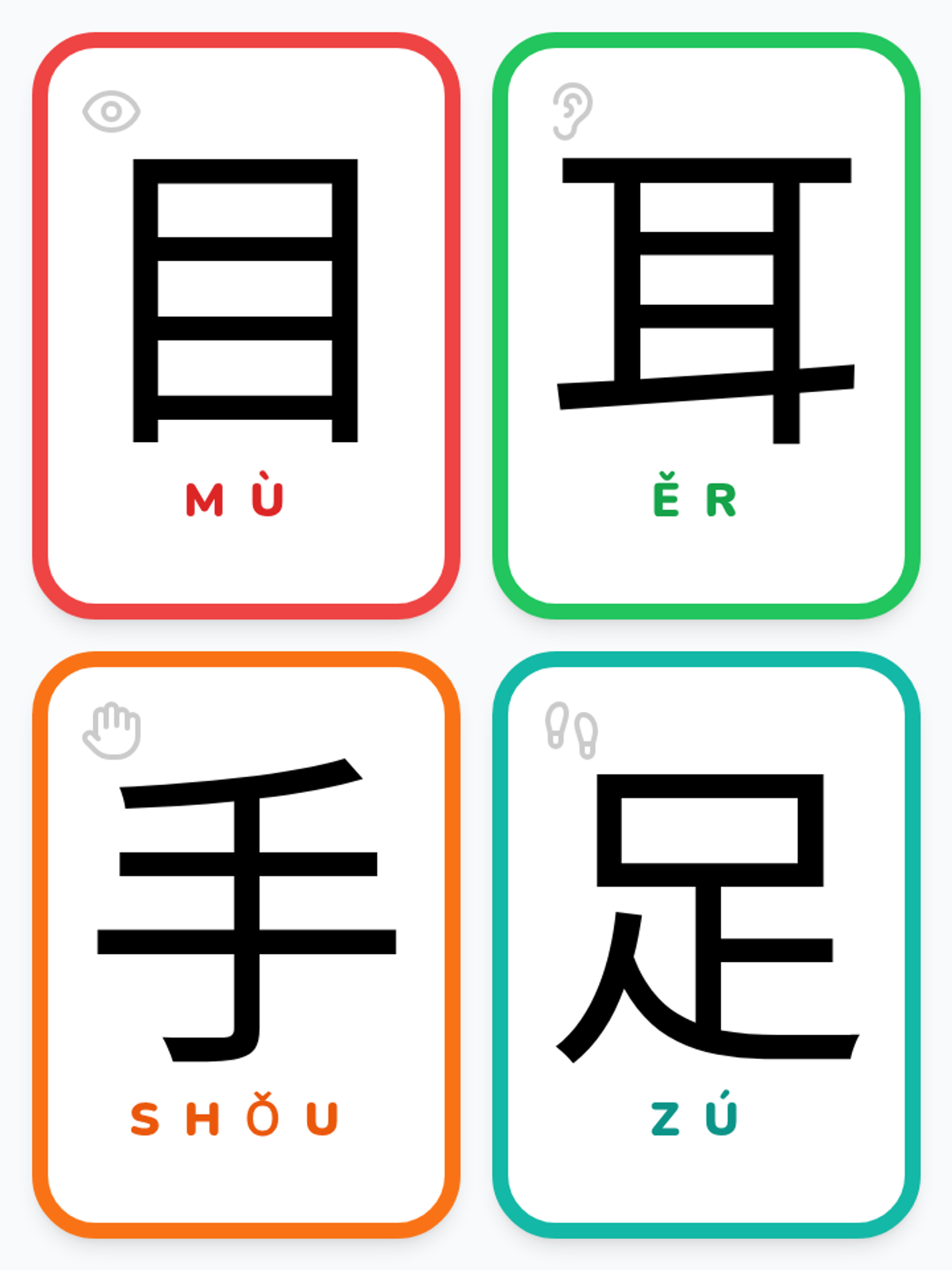
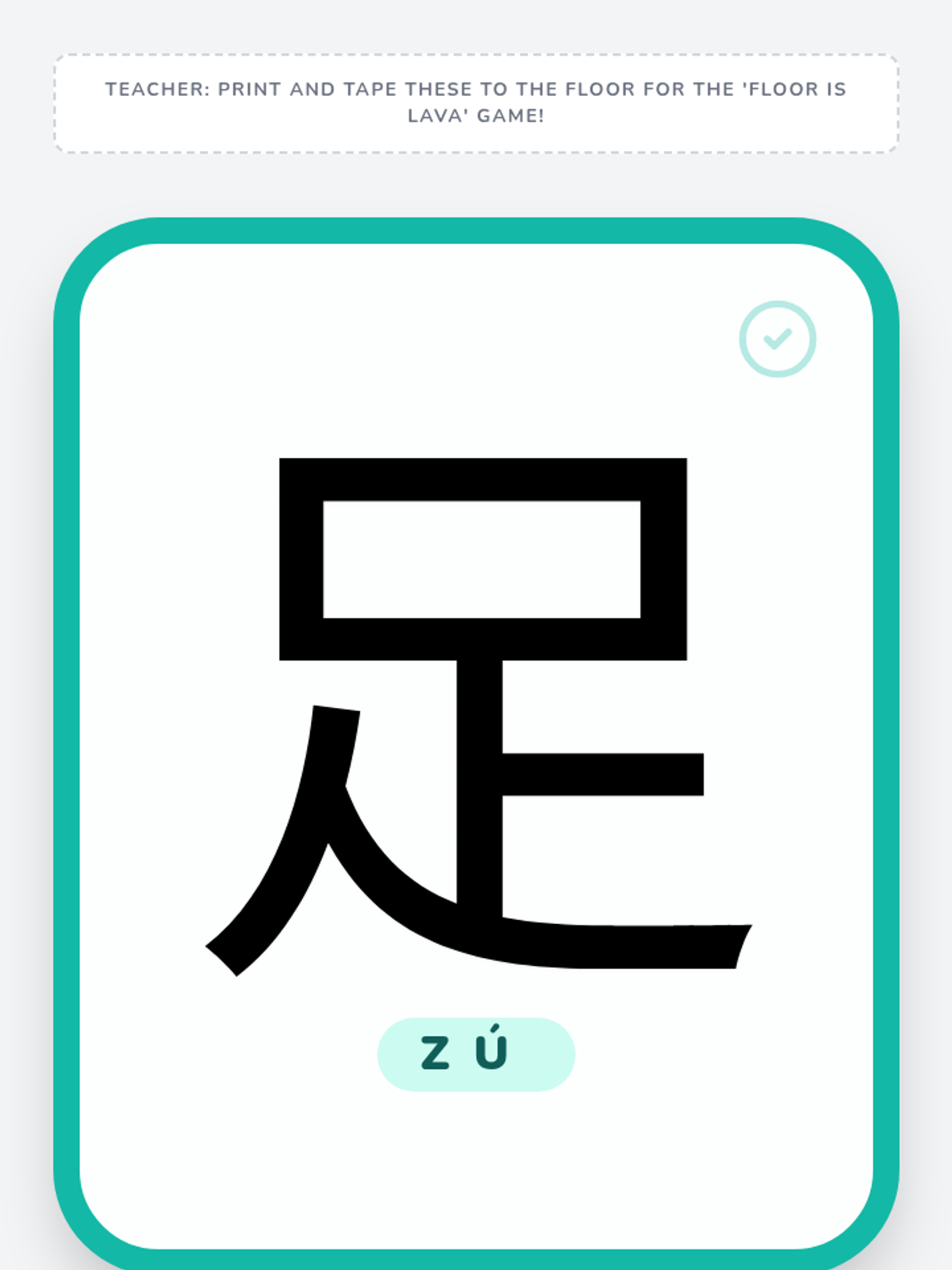
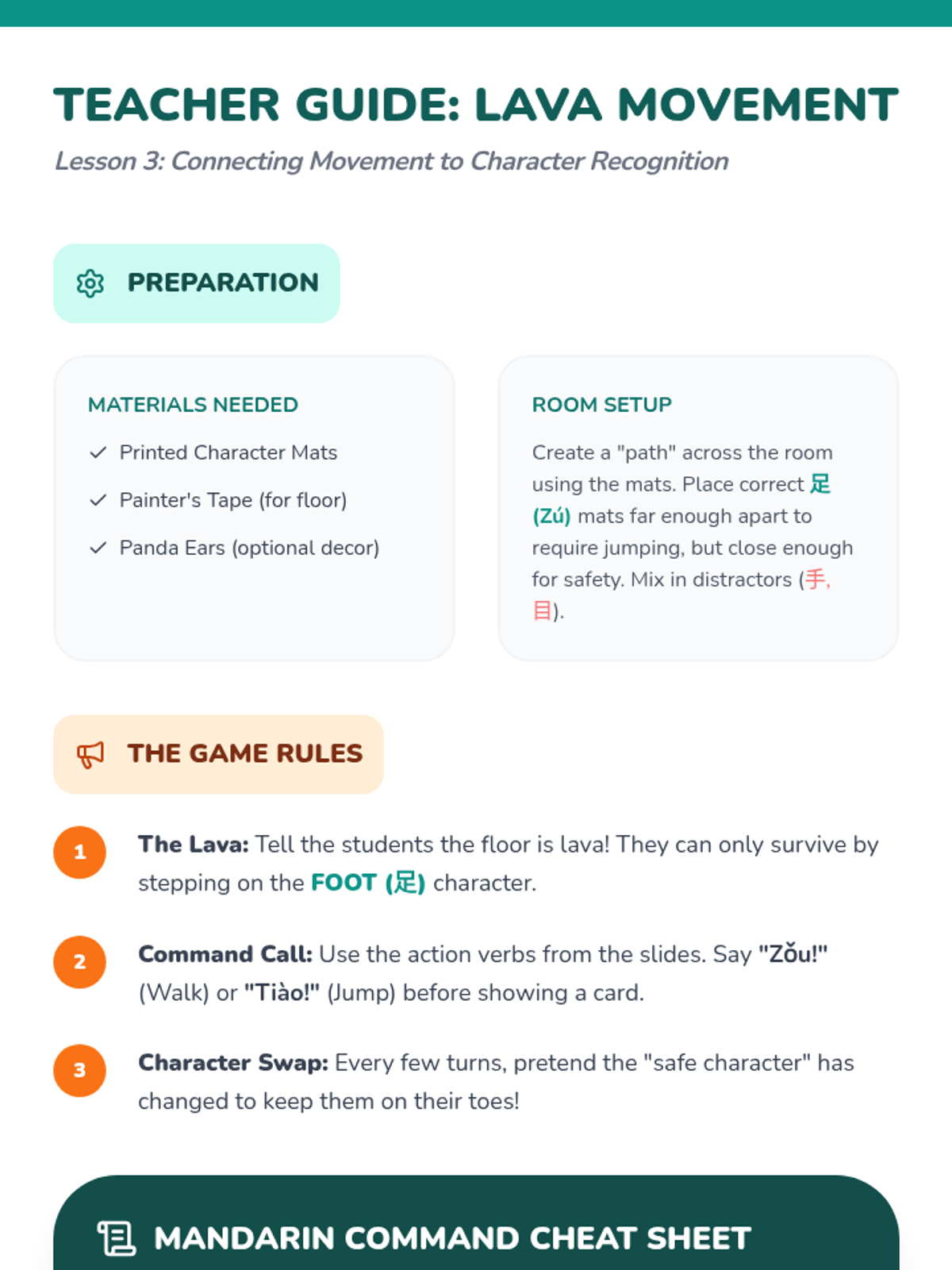
Students learn the character for Foot (足) and use it to follow movement instructions and play a 'floor is lava' game.
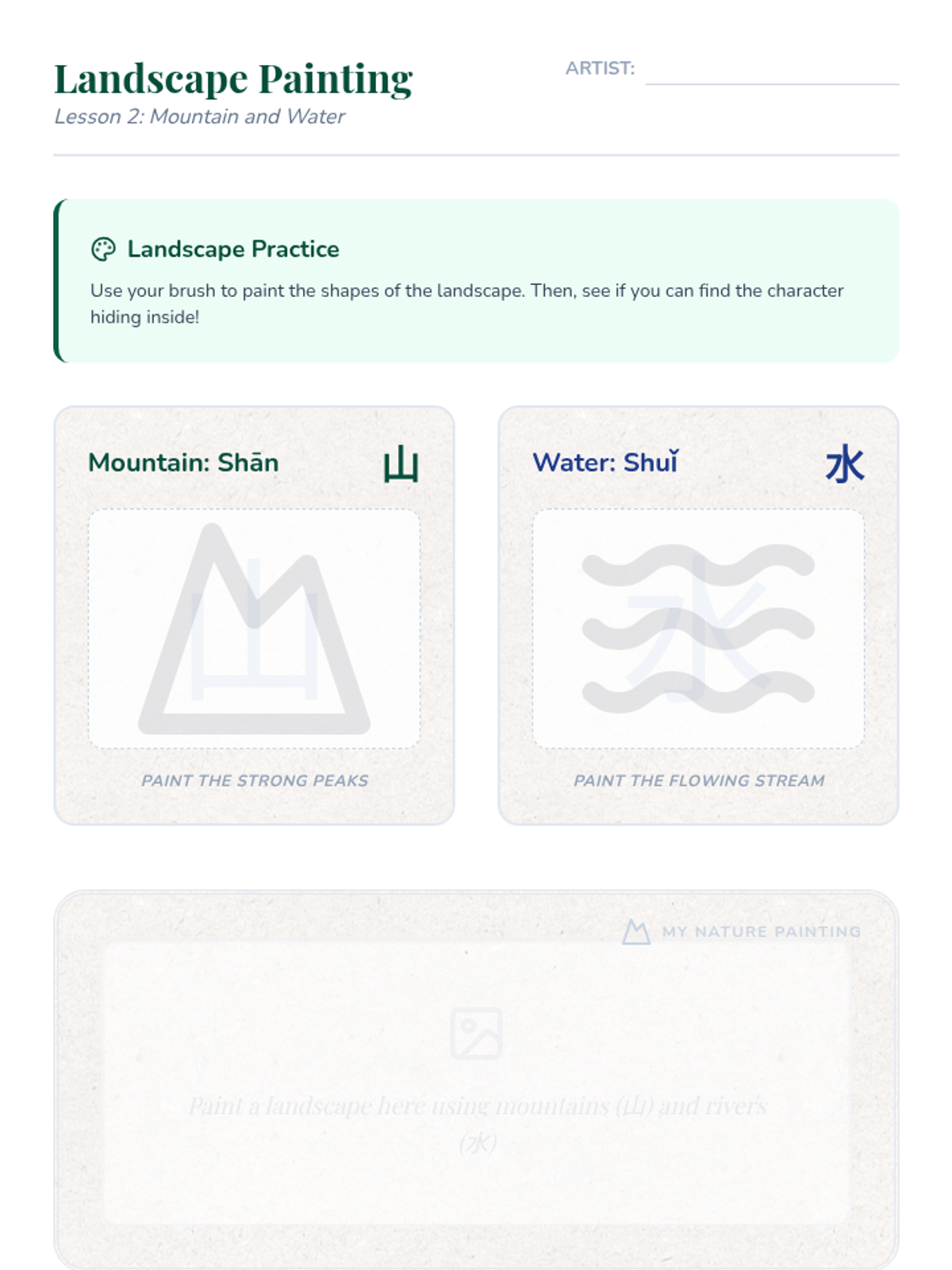
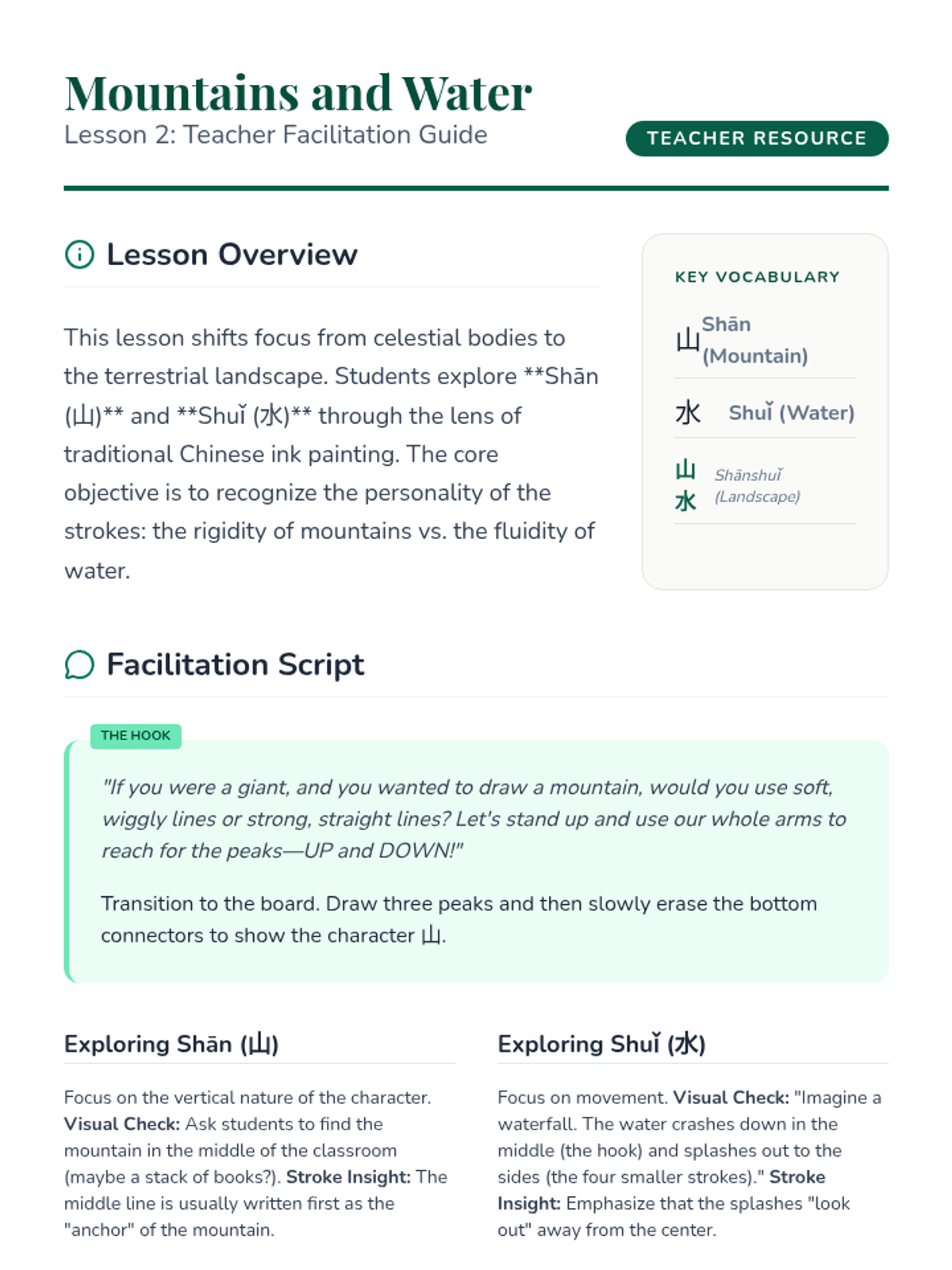
Focusing on Shān (mountain) and Shuǐ (water), students use ink and brushes to paint the flow of water and the peaks of mountains, transitioning those paintings into written characters. They discuss the difference between the flowing strokes of water and the solid strokes of mountains.
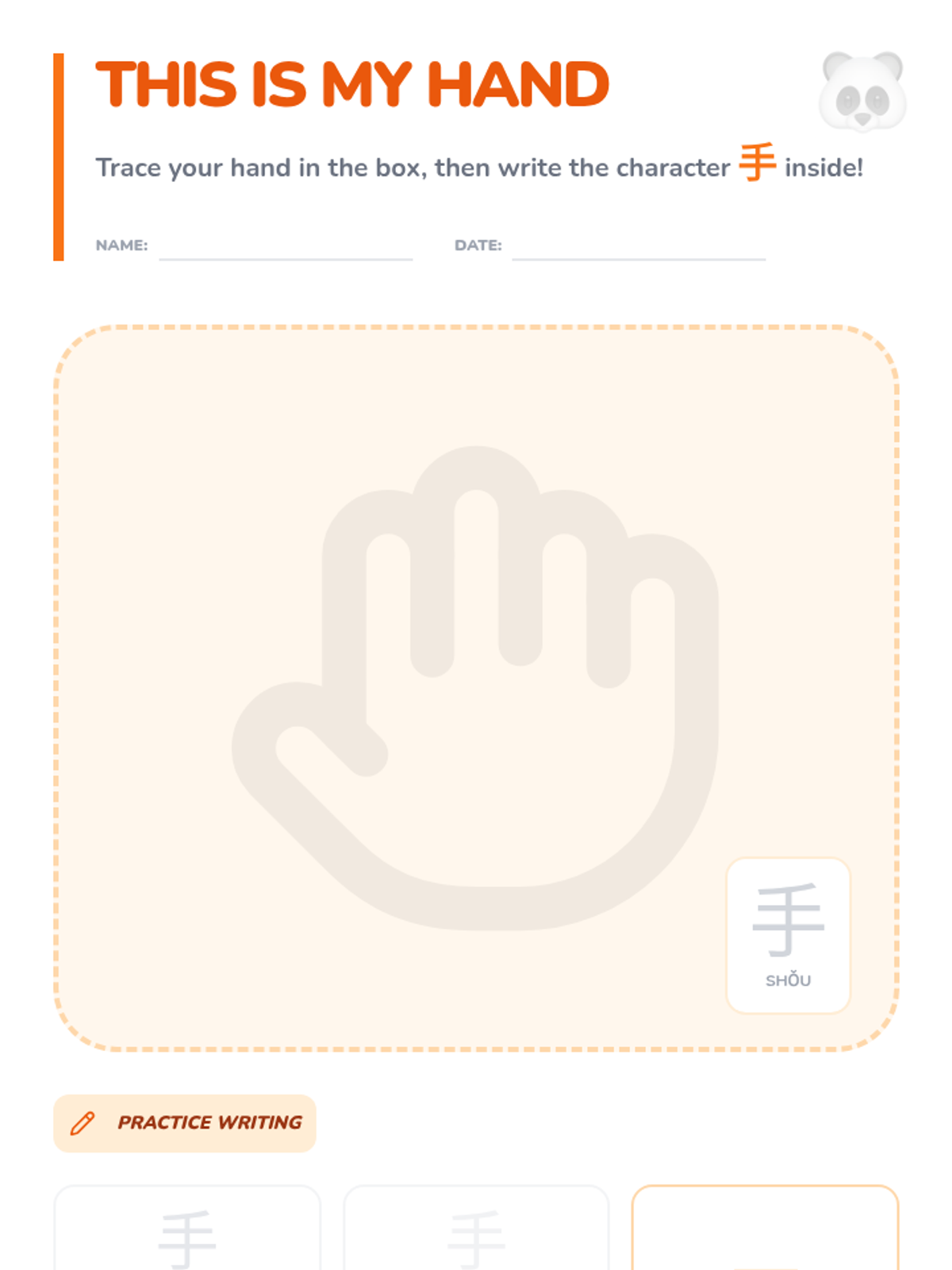
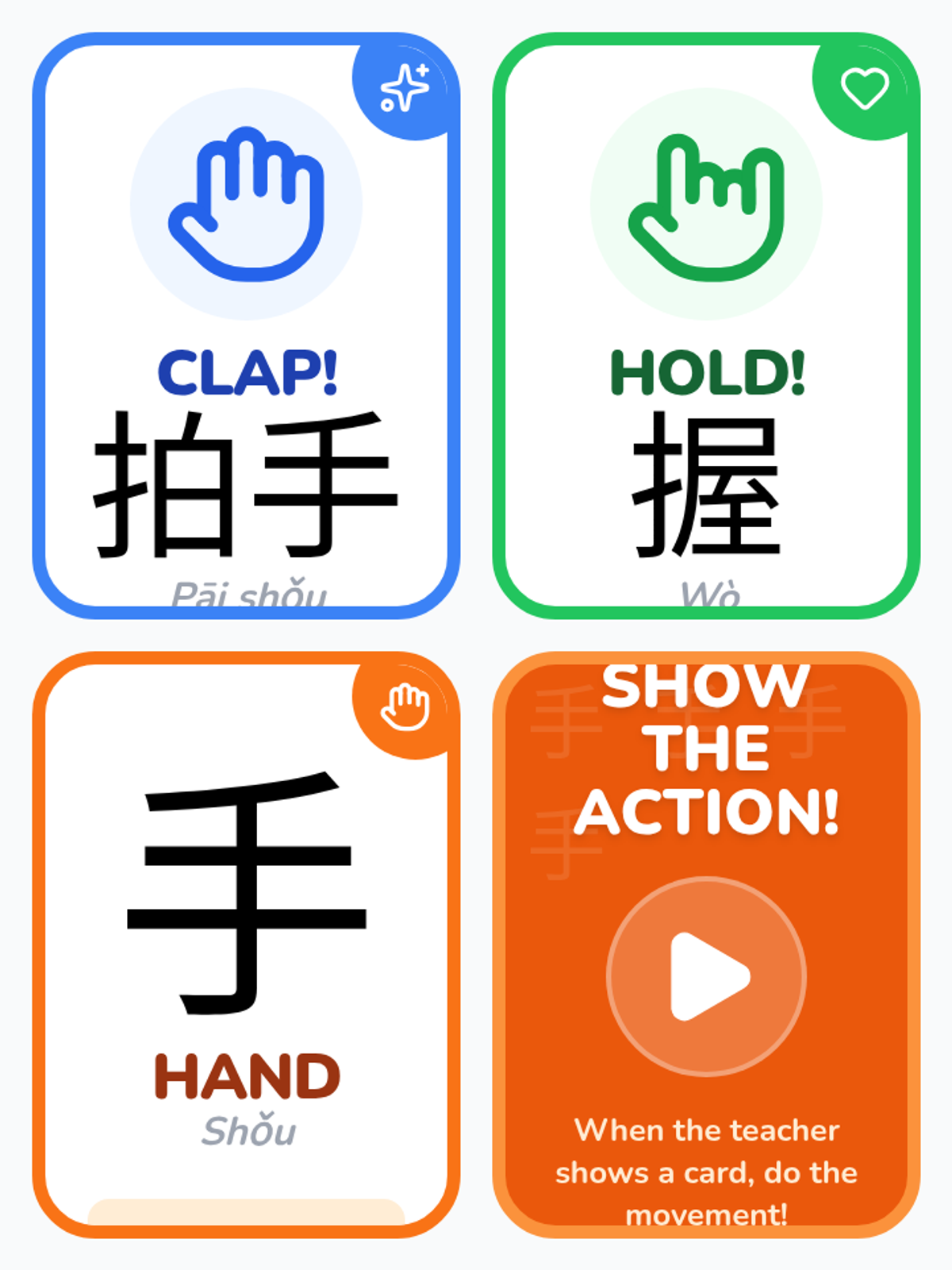
Students learn the character for Hand (手) through tracing and explore action verbs like clap and hold.
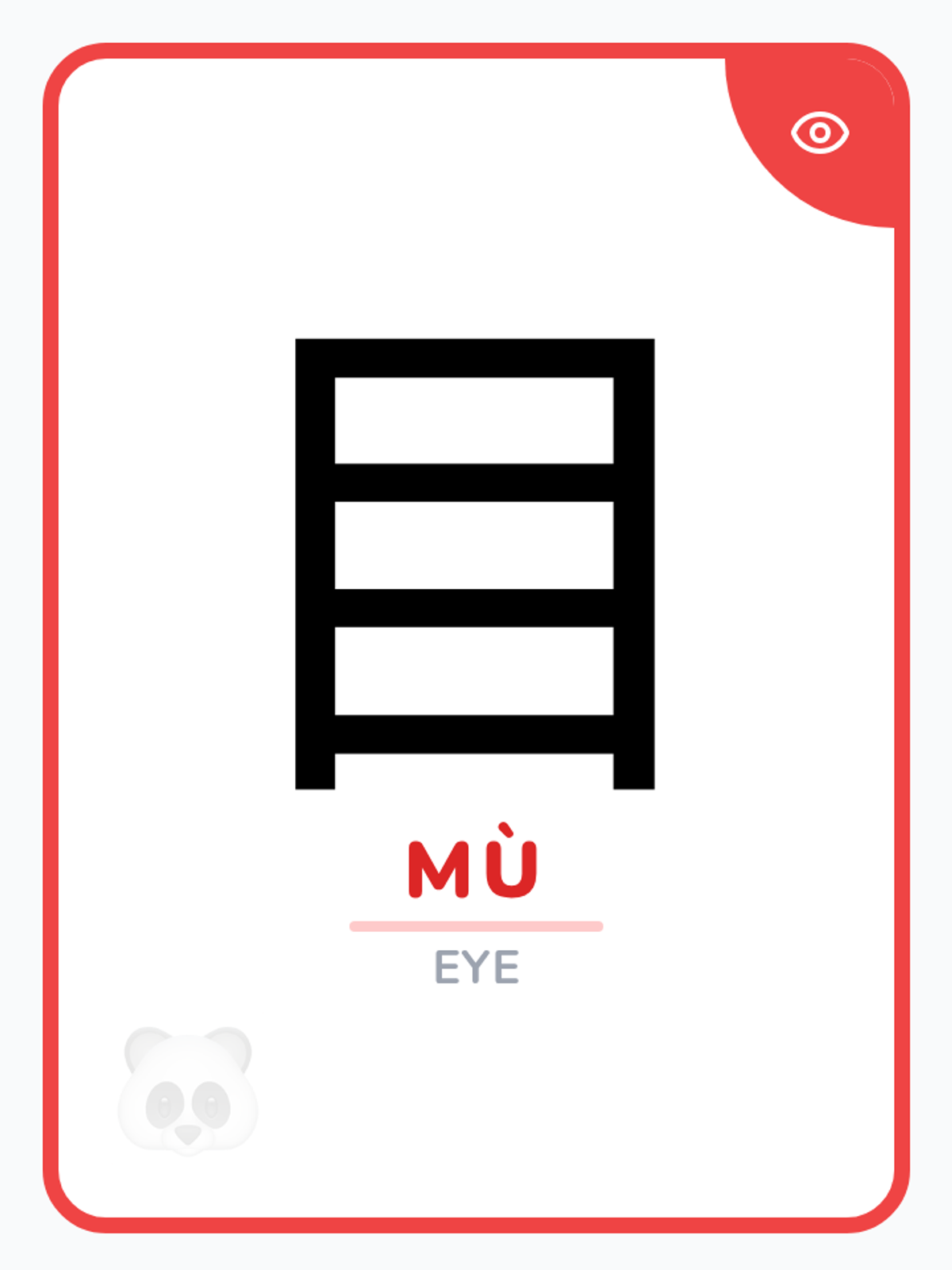
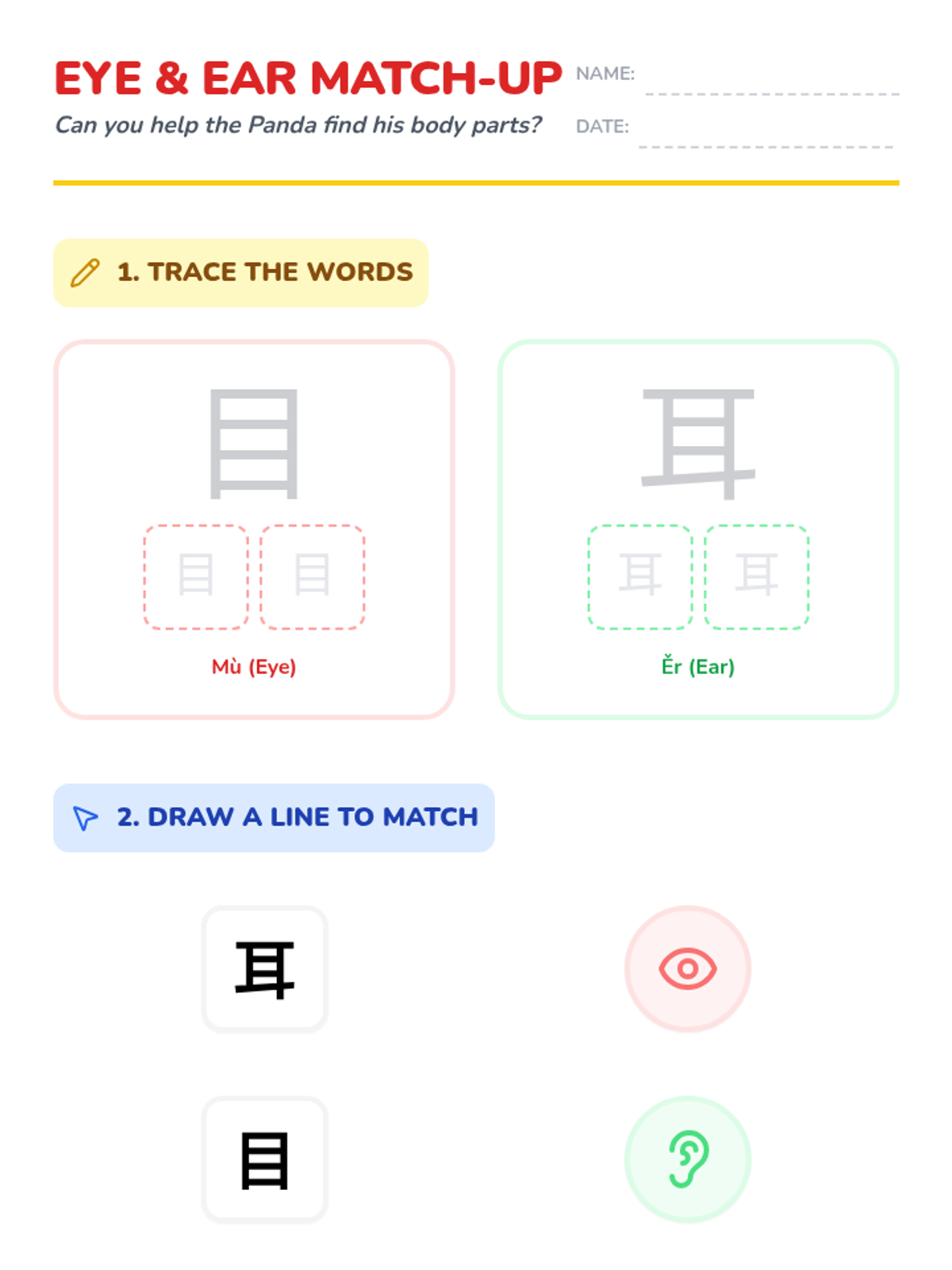
Students compare the characters for Eye (目) and Ear (耳) to the physical organs and engage in 'point and say' games.
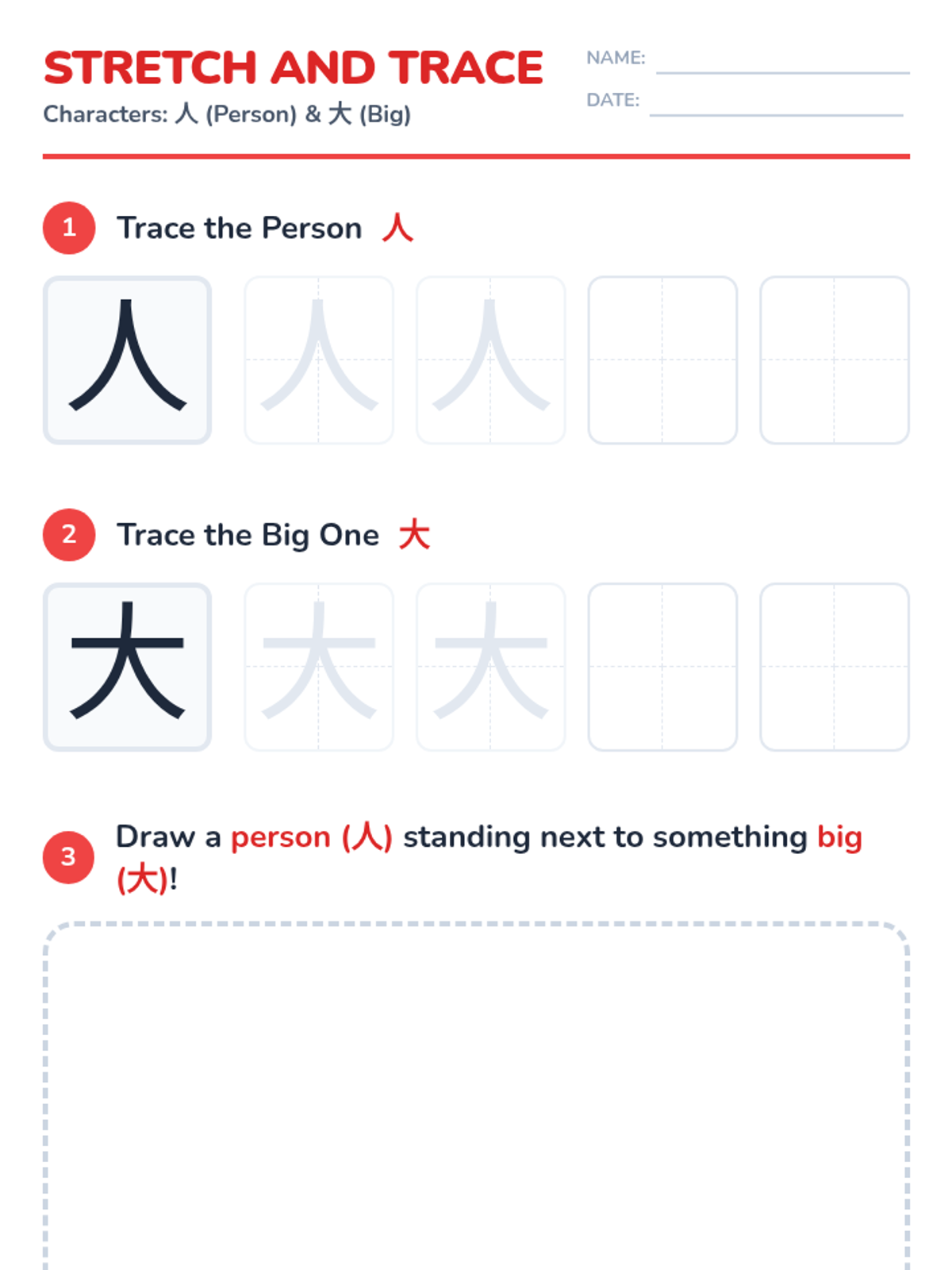
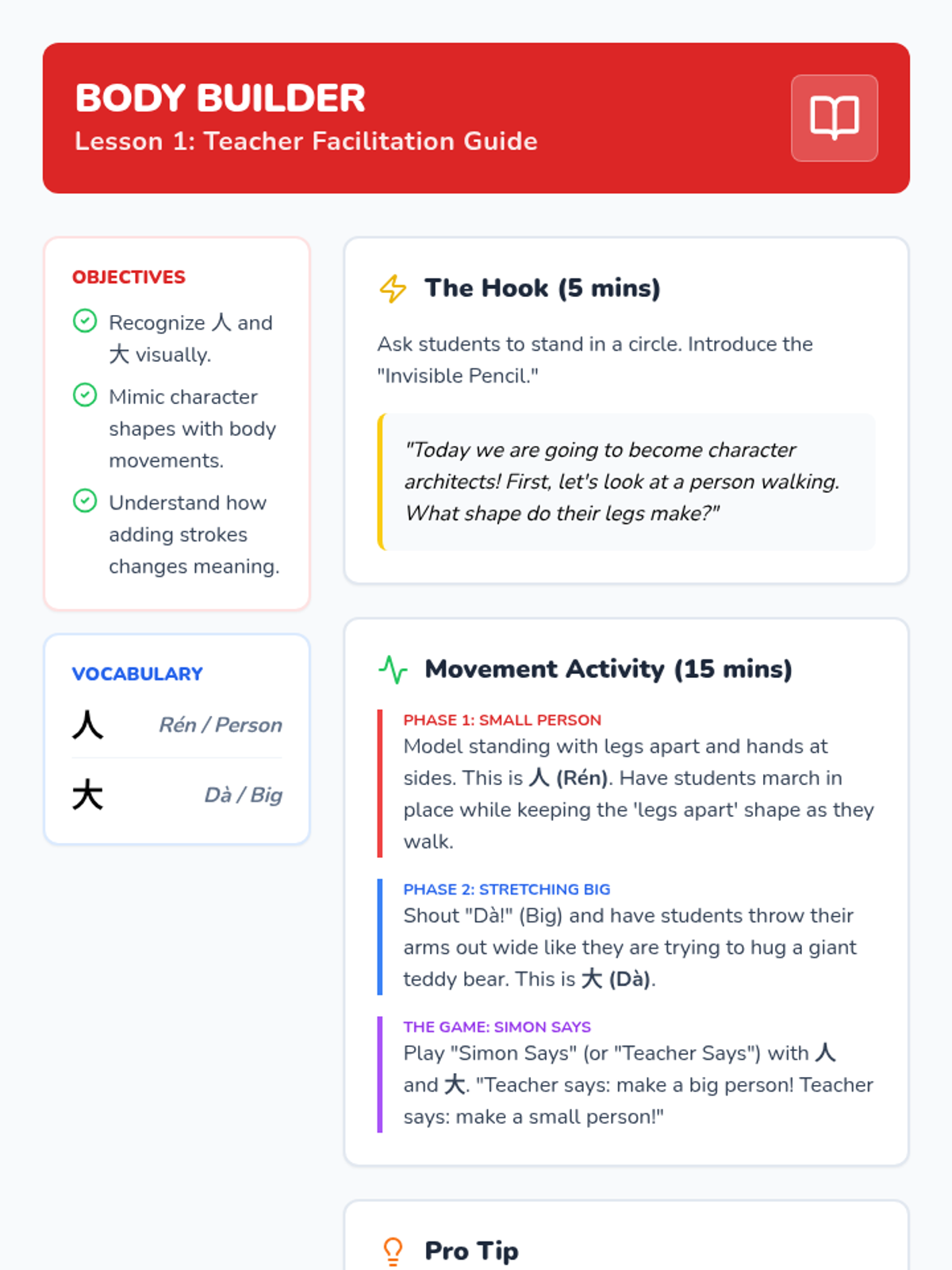
Introduces the characters for 'Person' (人) and 'Big' (大) through body movements and tracing activities.
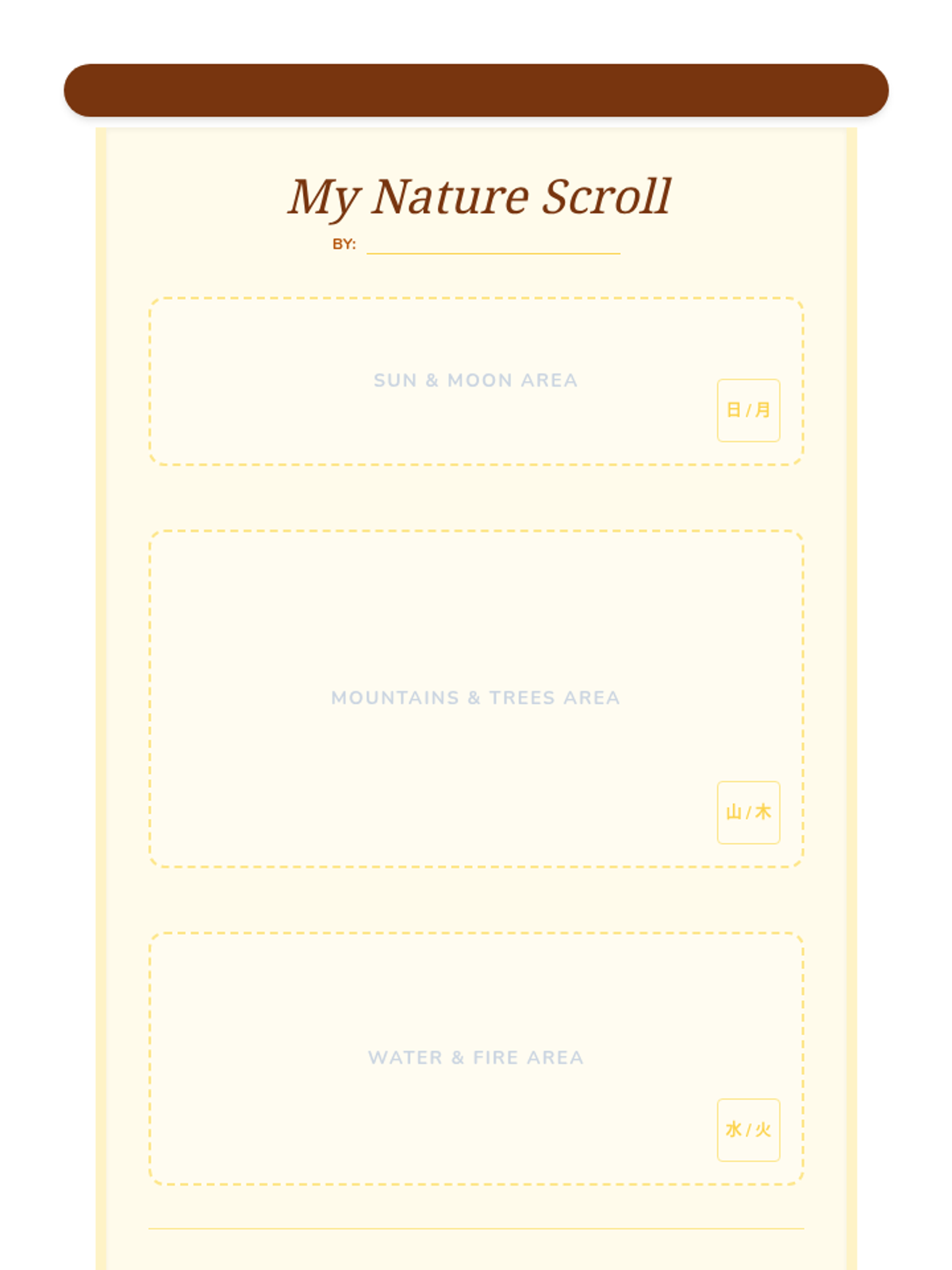
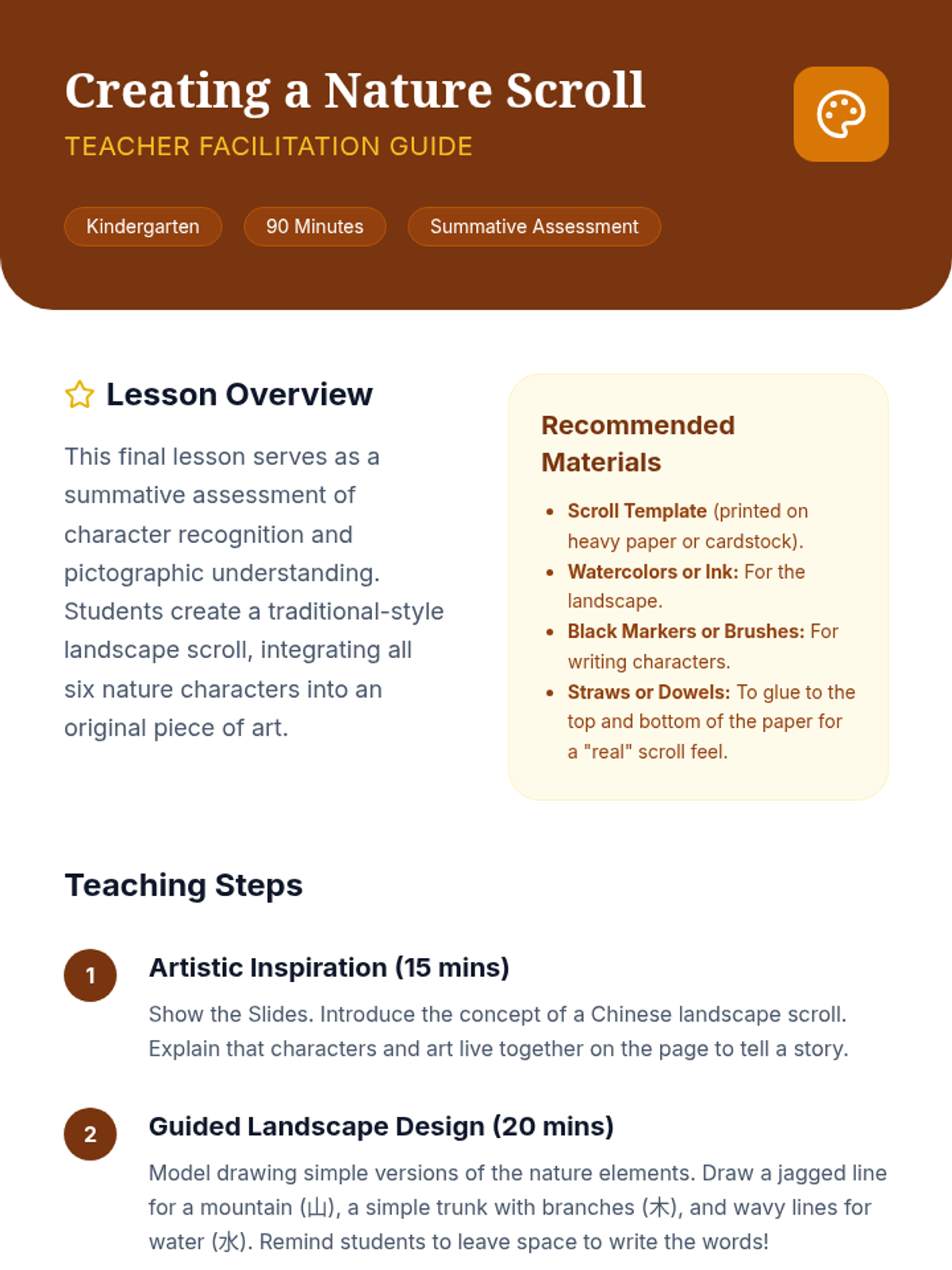
A culminating project where students create a traditional-style landscape scroll, incorporating all learned characters into a cohesive scene using ink or paint.
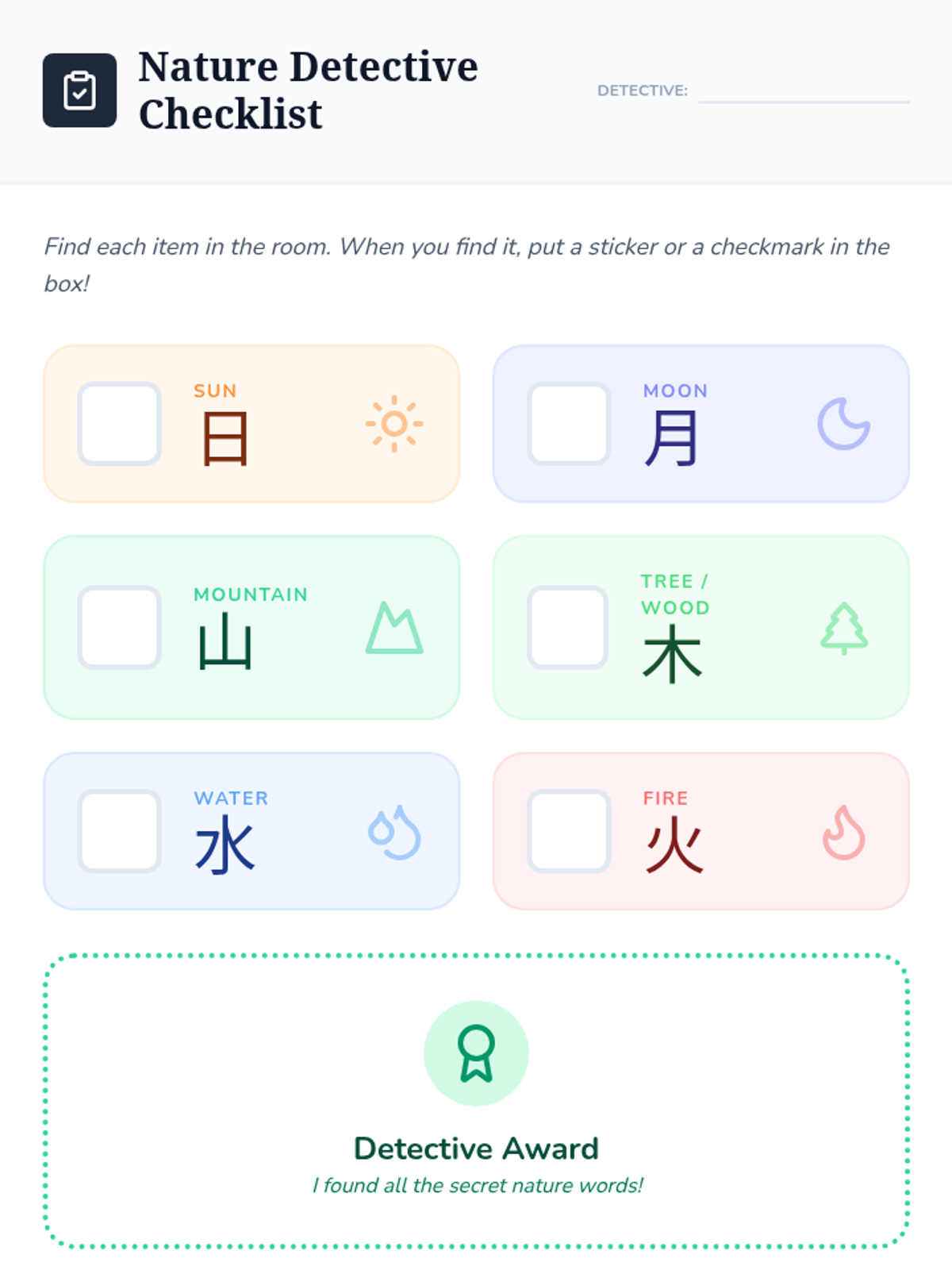
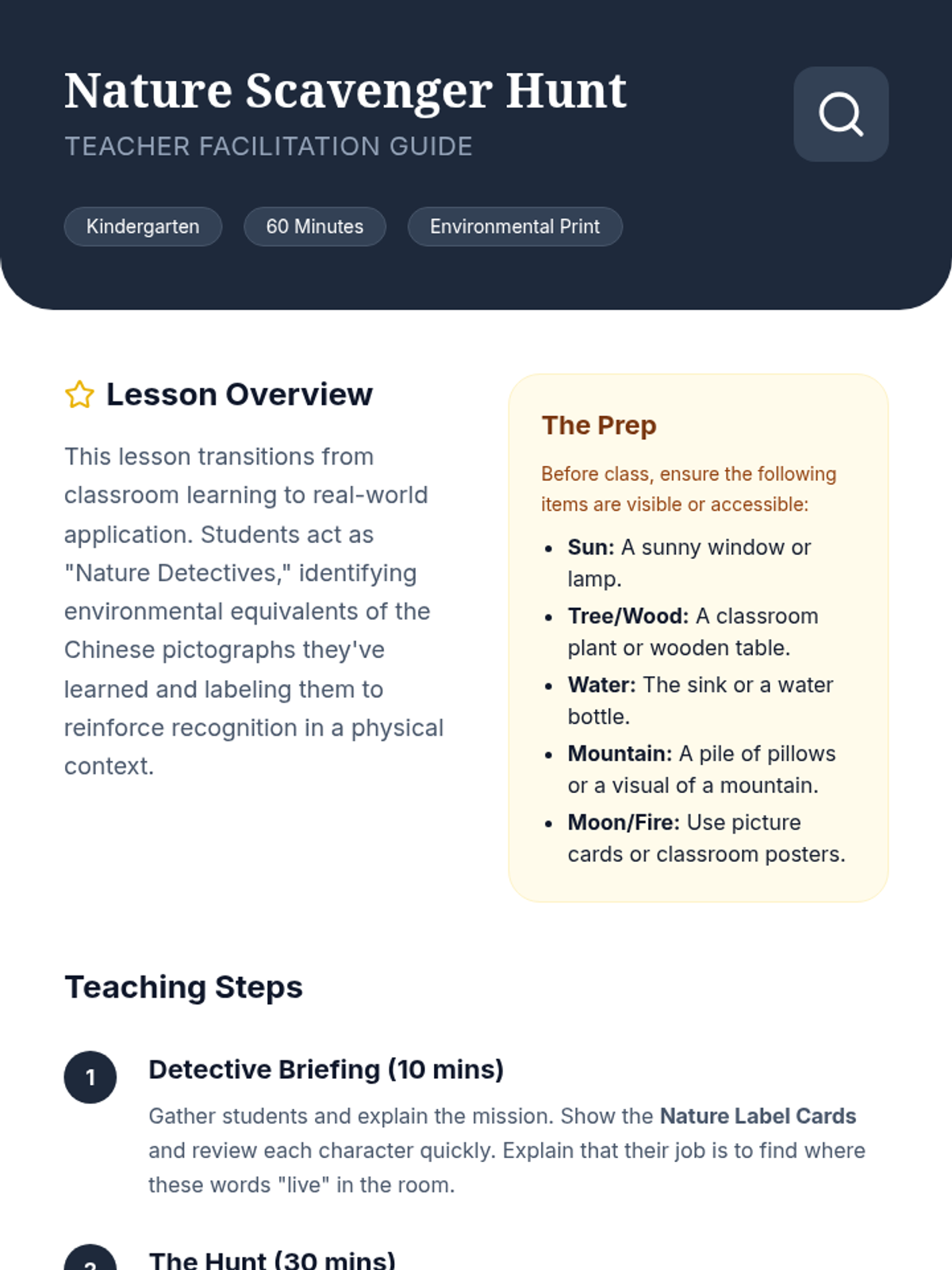
Apply character recognition in a real-world context through a scavenger hunt. Students use label cards to identify natural elements in their environment.
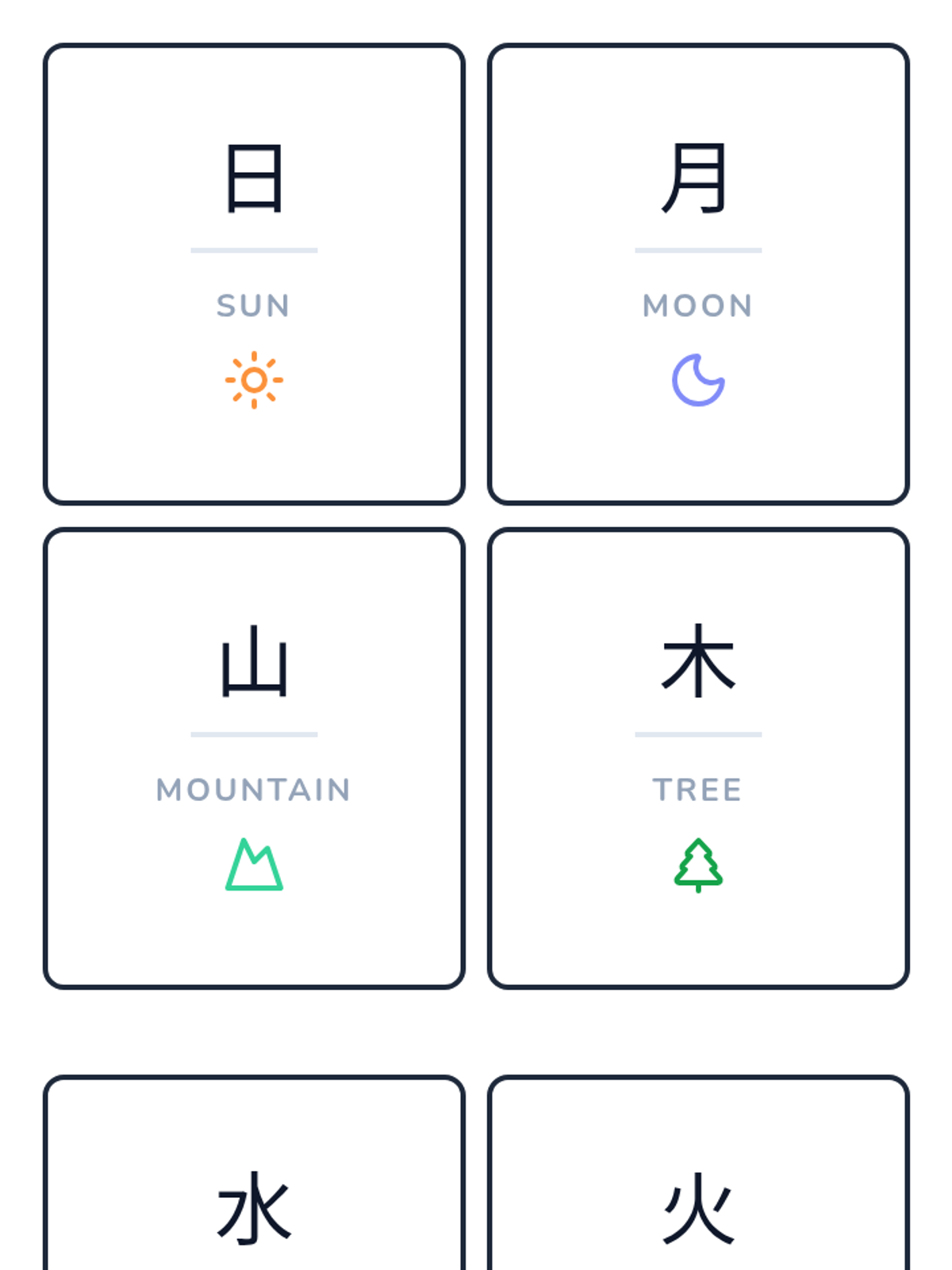
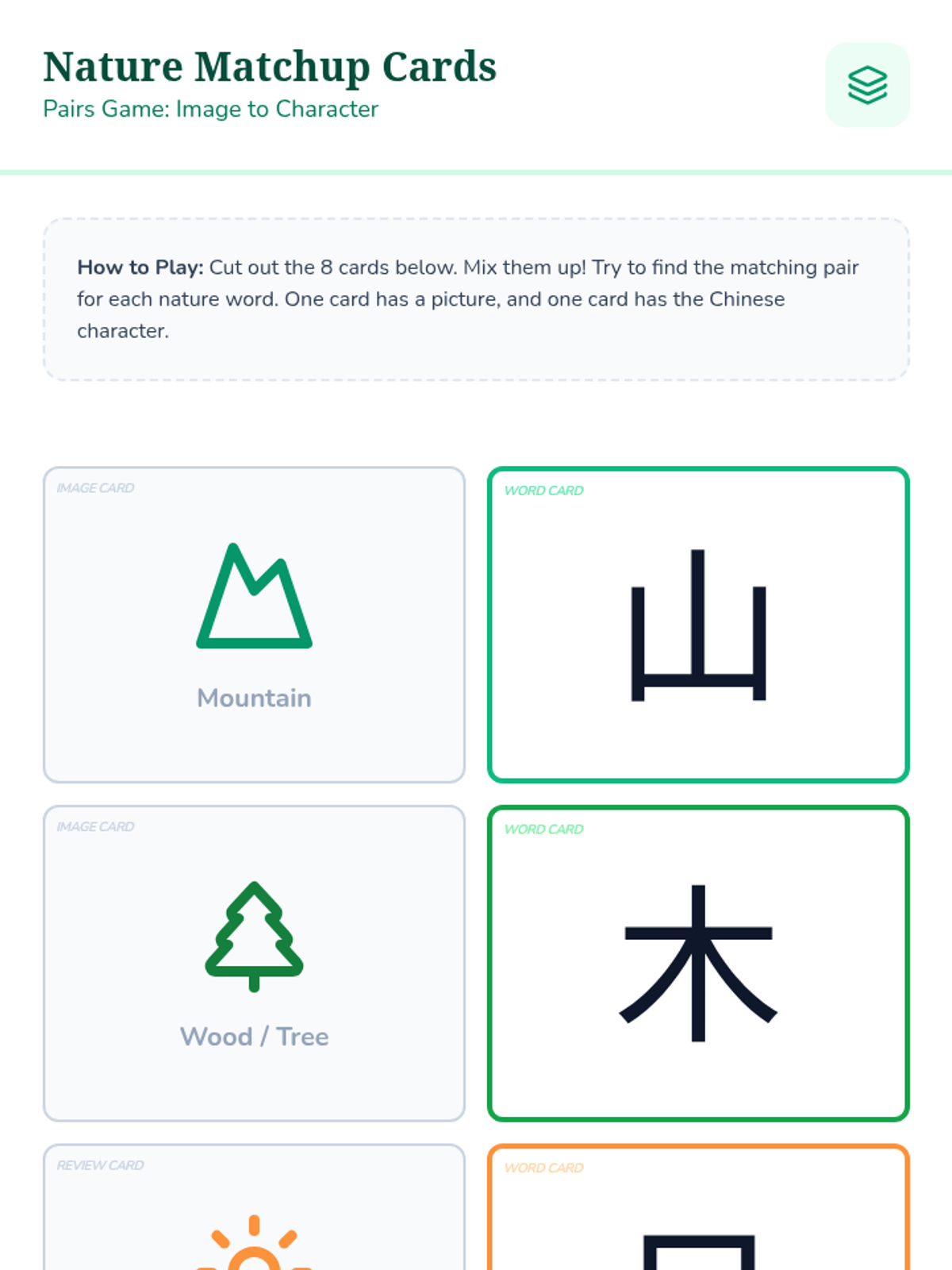
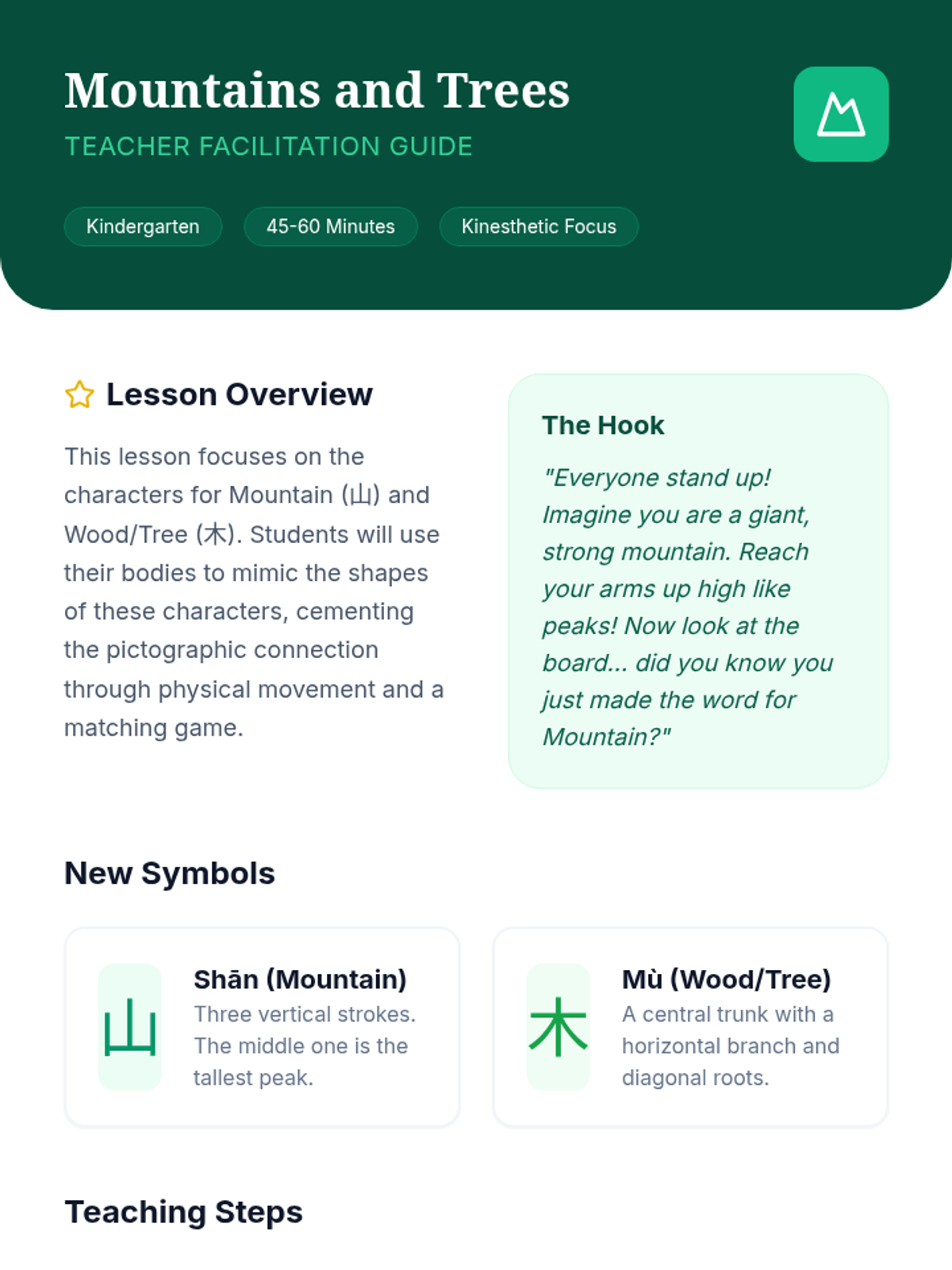
Explore the characters for Mountain (山) and Wood/Tree (木) through kinesthetic poses and a matching game. Students learn how vertical lines represent growth and peaks.
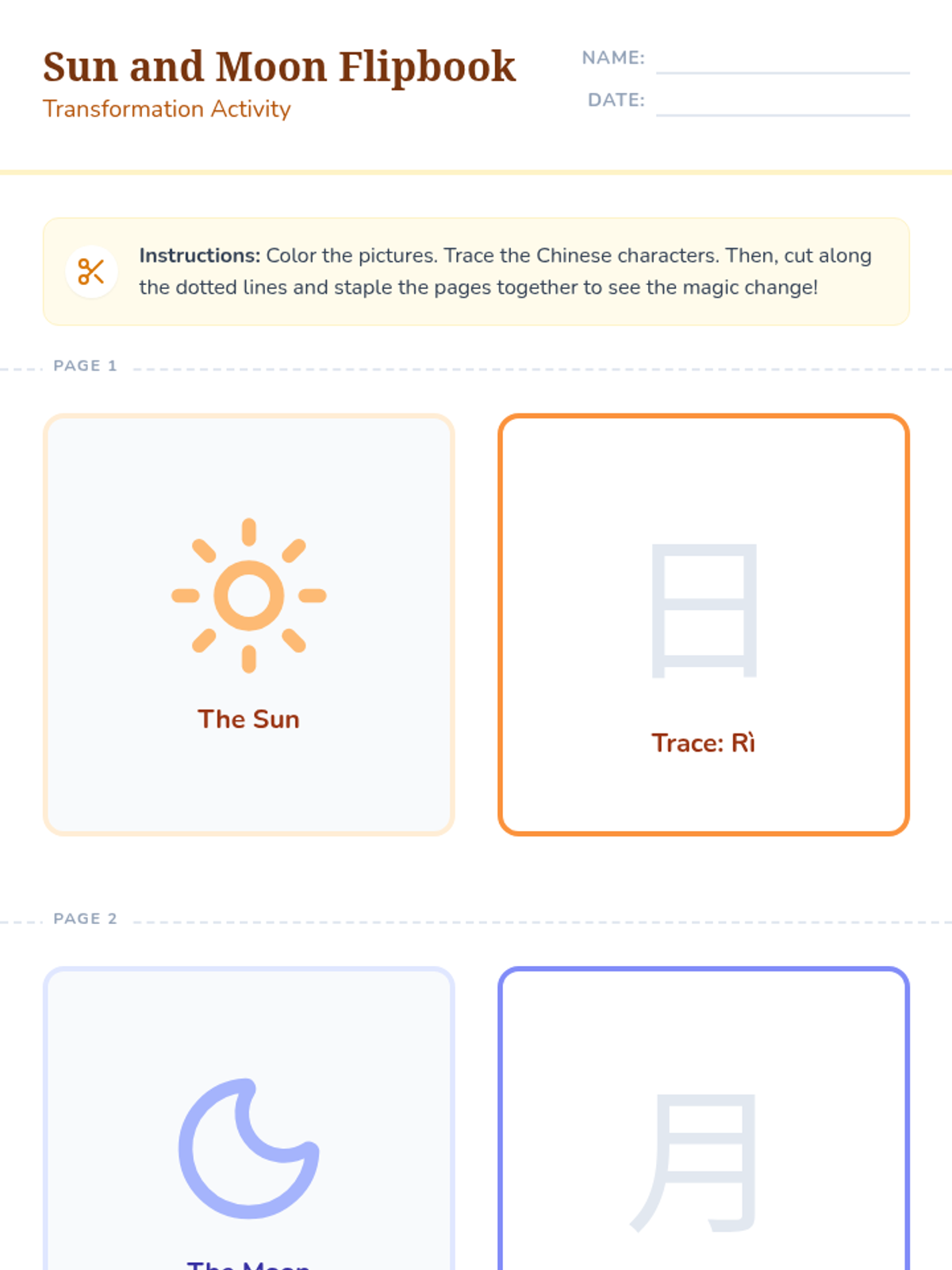
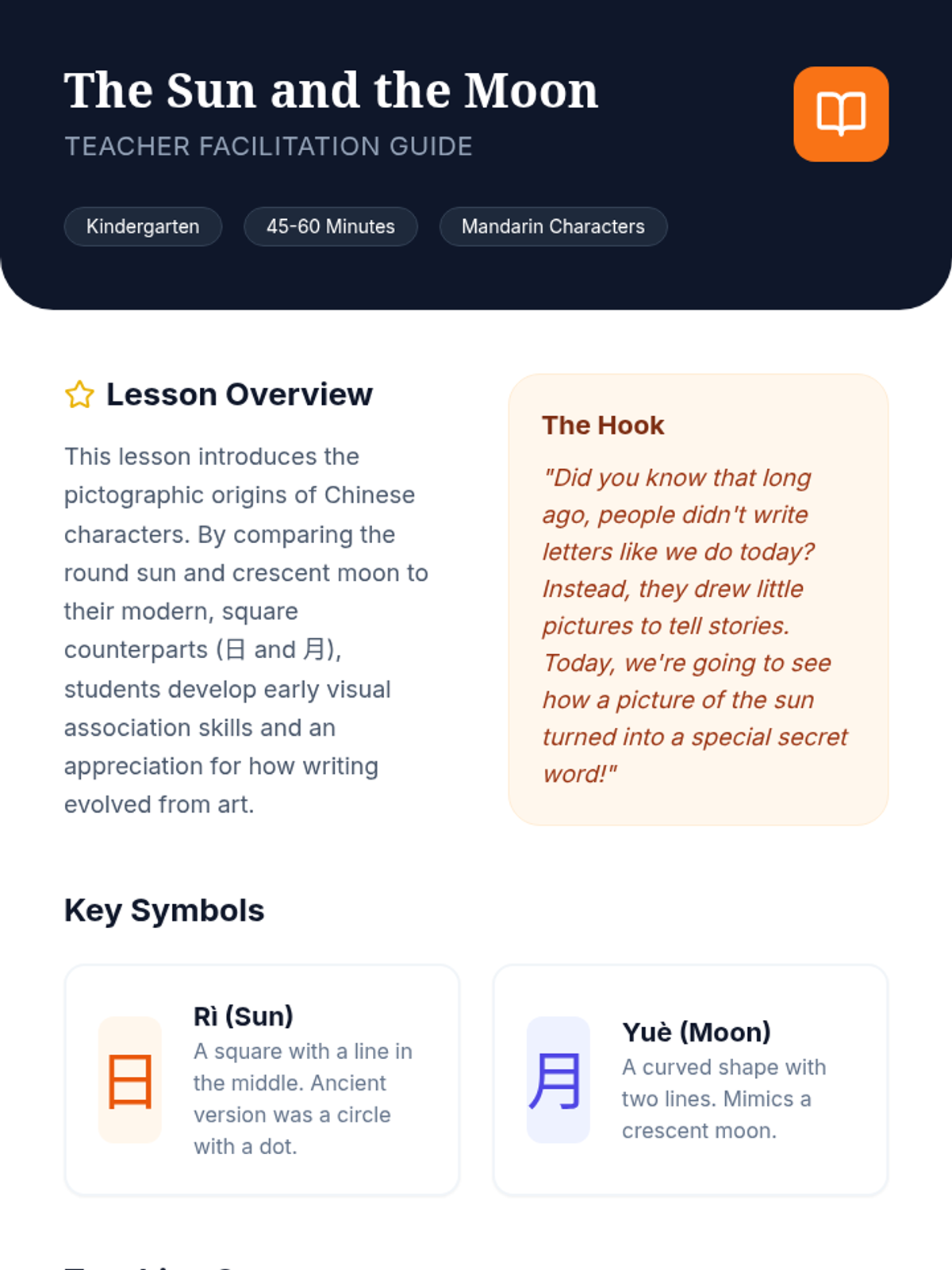
Introduce students to the characters for Sun (日) and Moon (月) by tracing their evolution from ancient drawings to modern symbols. Students create a flipbook to visualize this transformation.
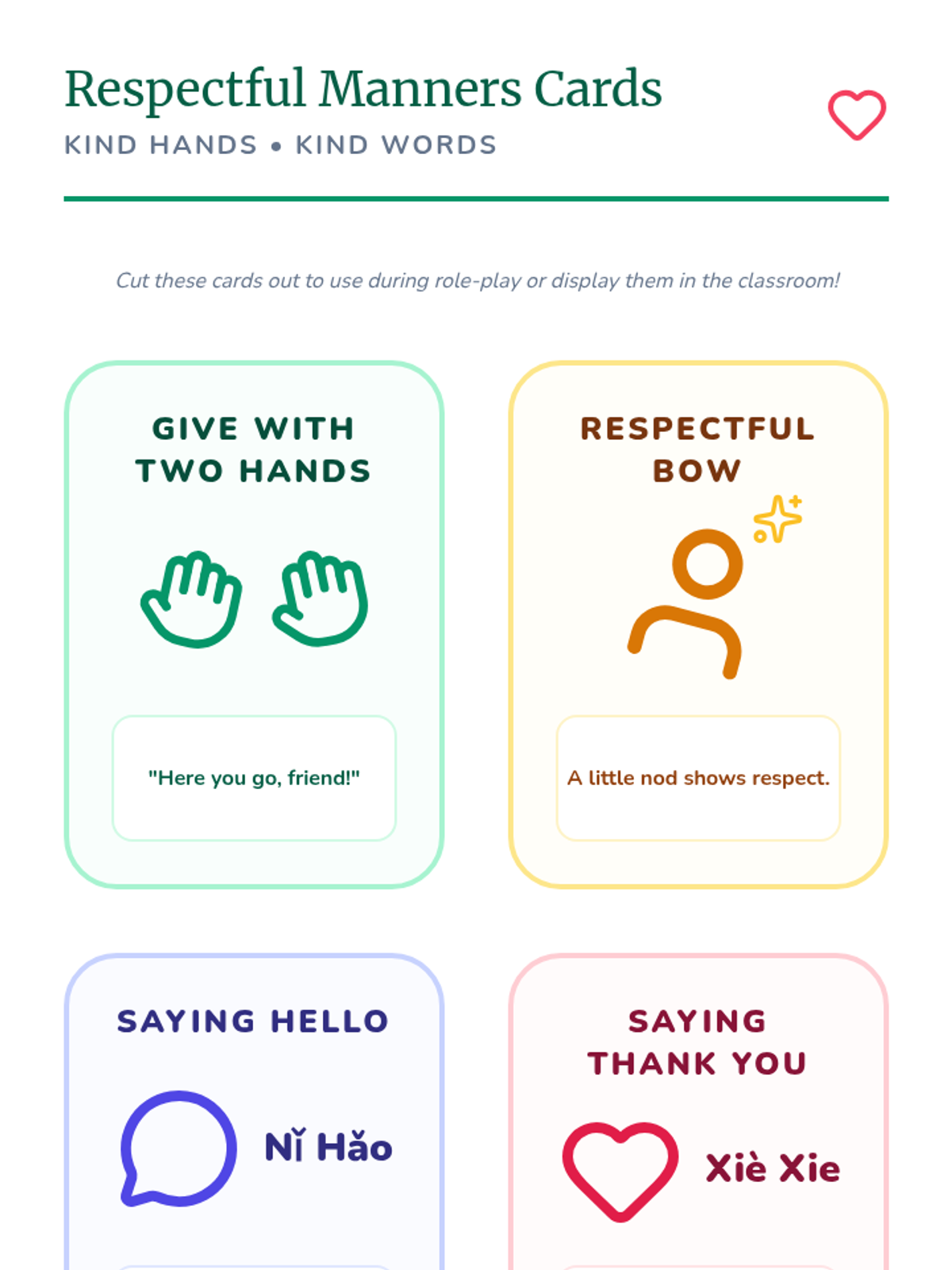
Teaching basic Mandarin greetings and the physical gestures of respect, such as bowing and using two hands to pass objects.
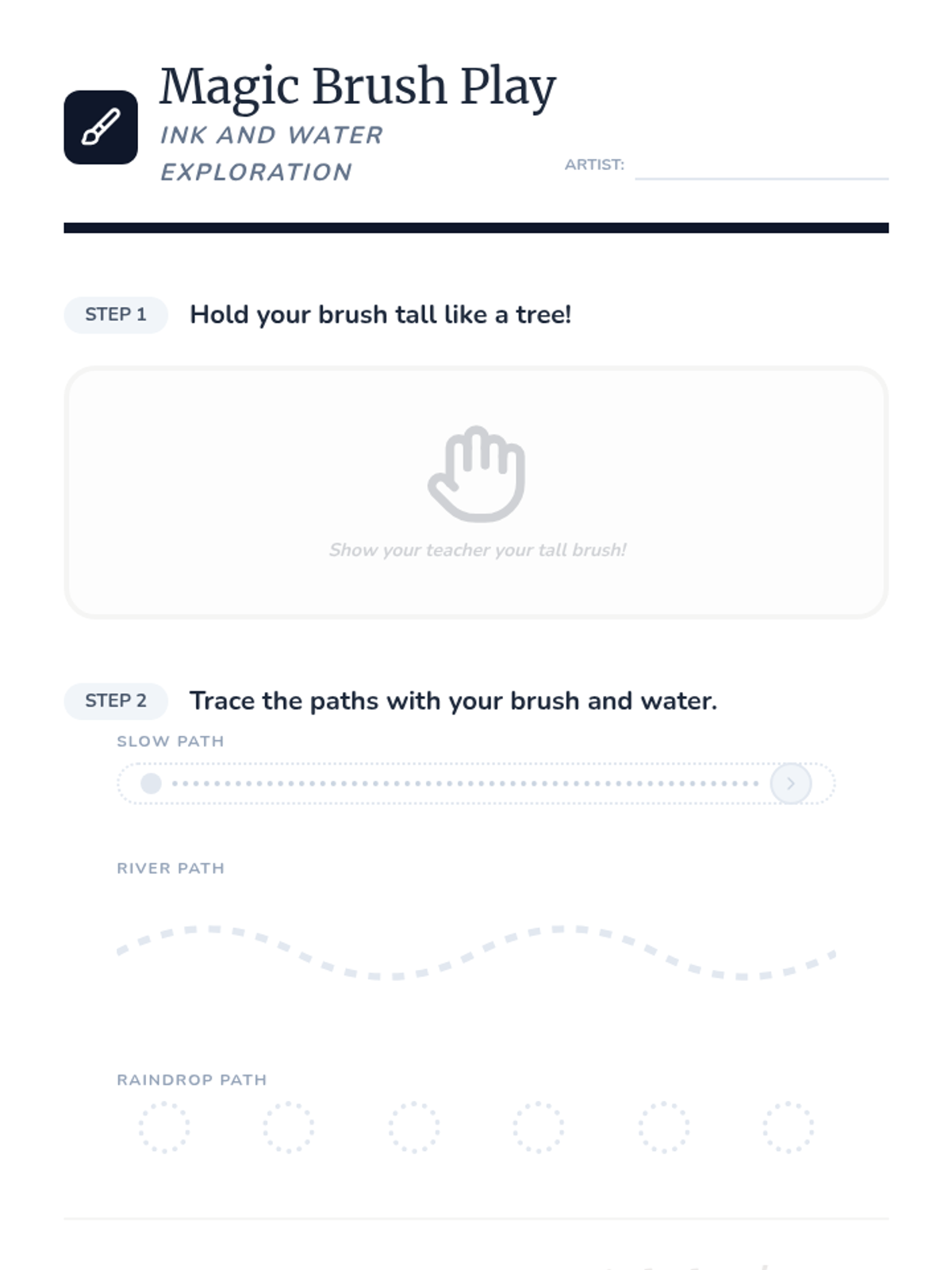
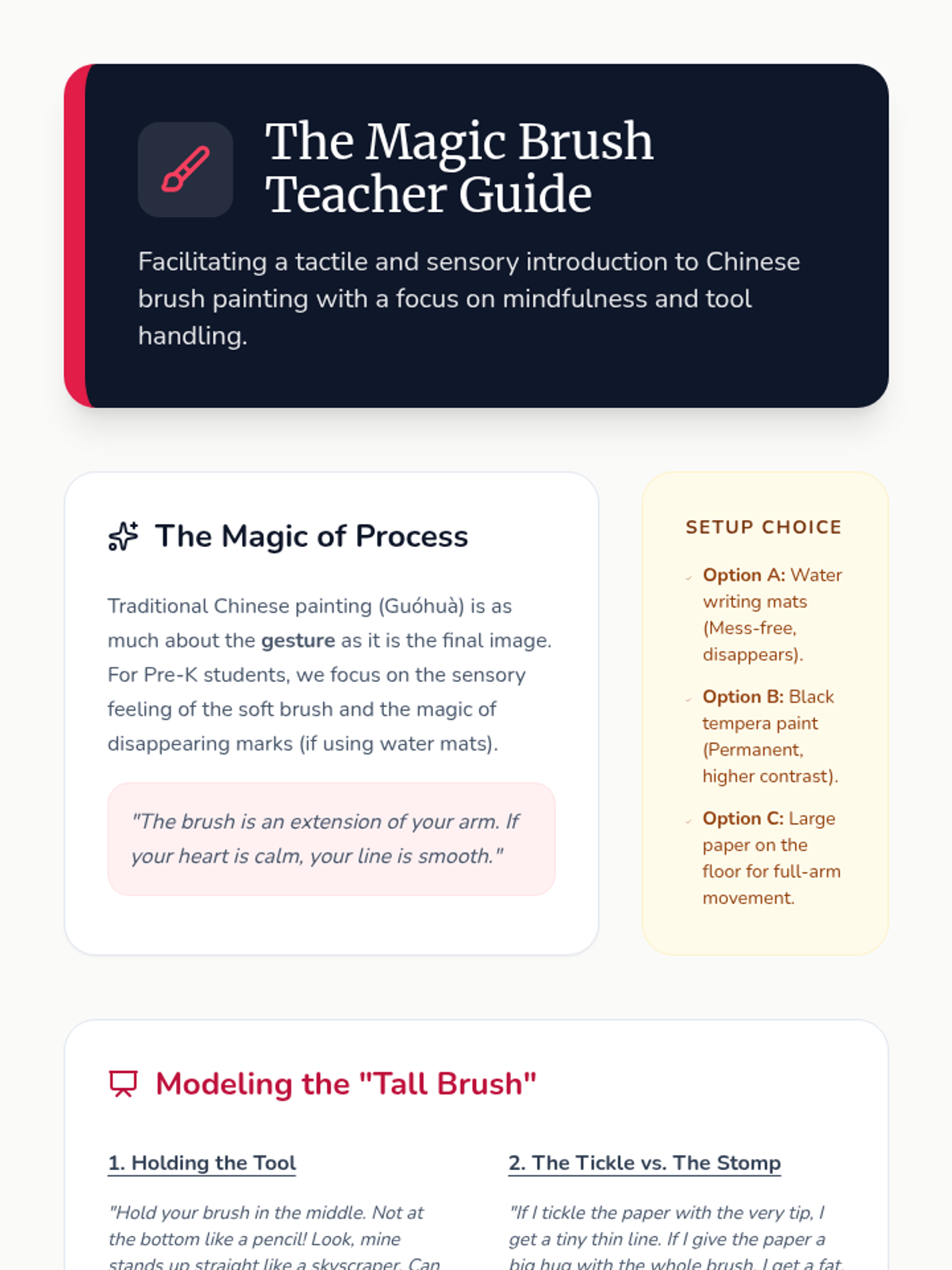
A tactile introduction to traditional Chinese brush painting, focusing on the sensory experience of mark-making with soft brushes and water or ink.
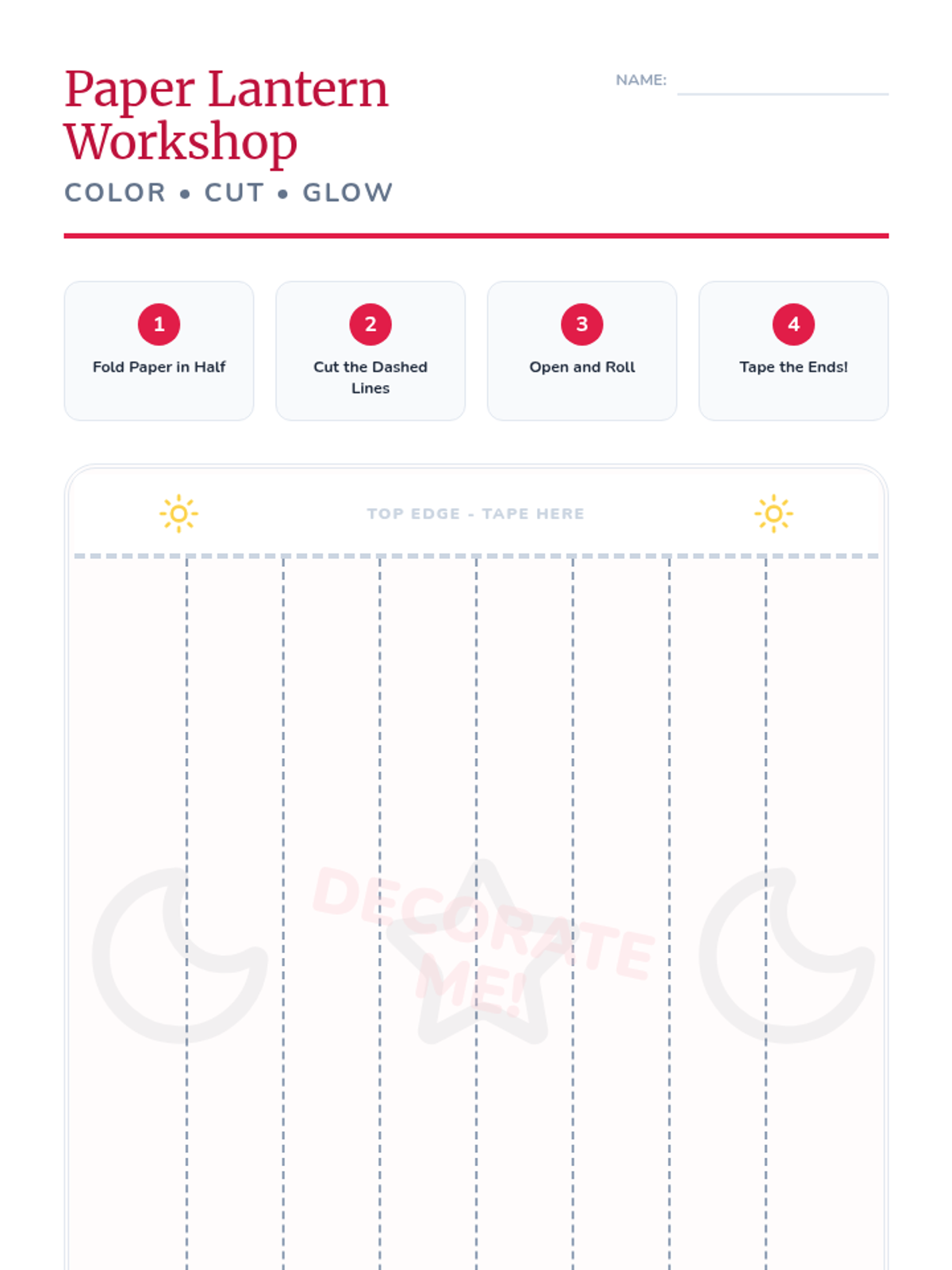
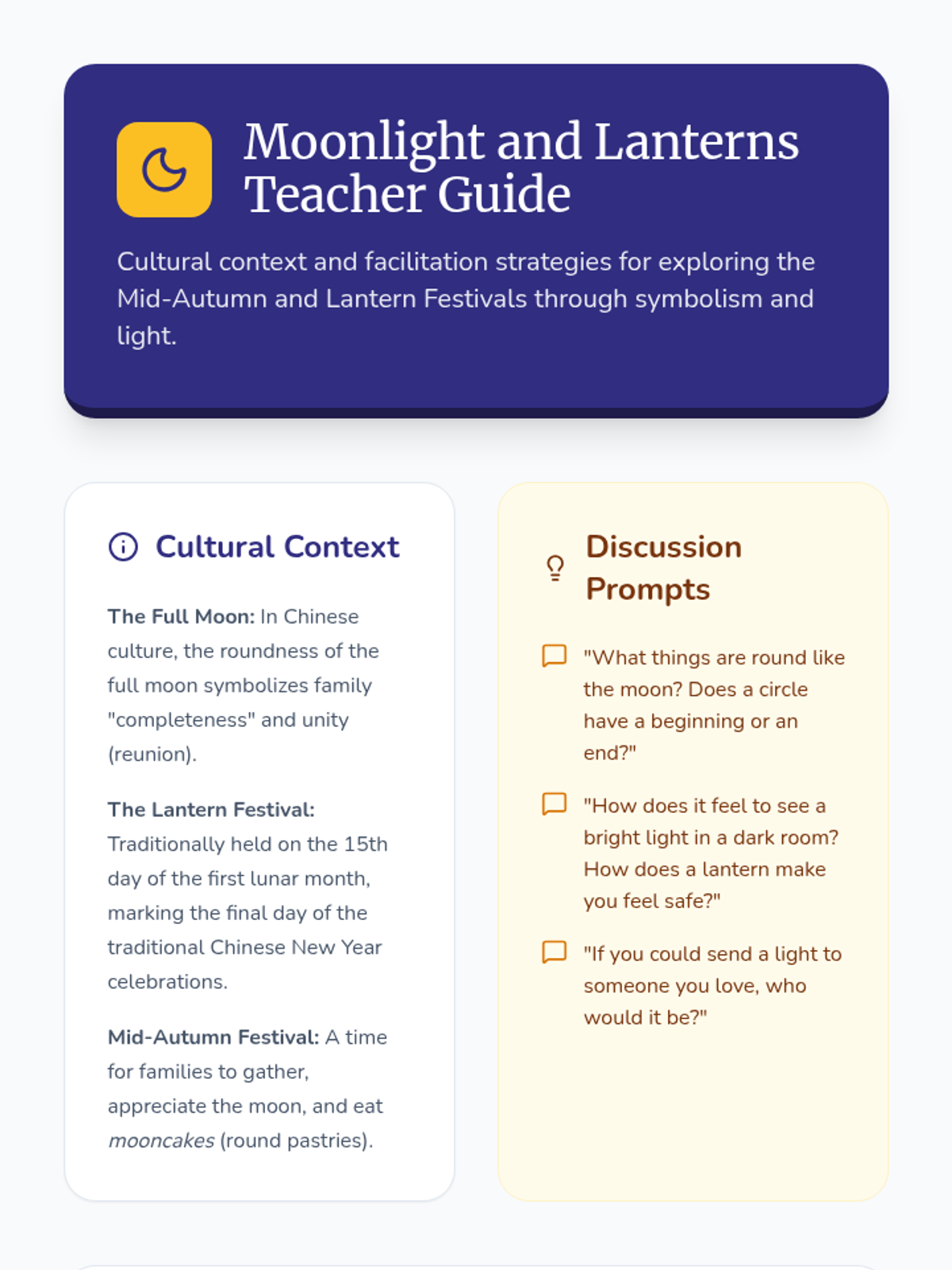
Exploring the Lantern Festival and Mid-Autumn Festival through the symbols of light and round shapes. Students create paper lanterns and discuss the importance of family reunions.
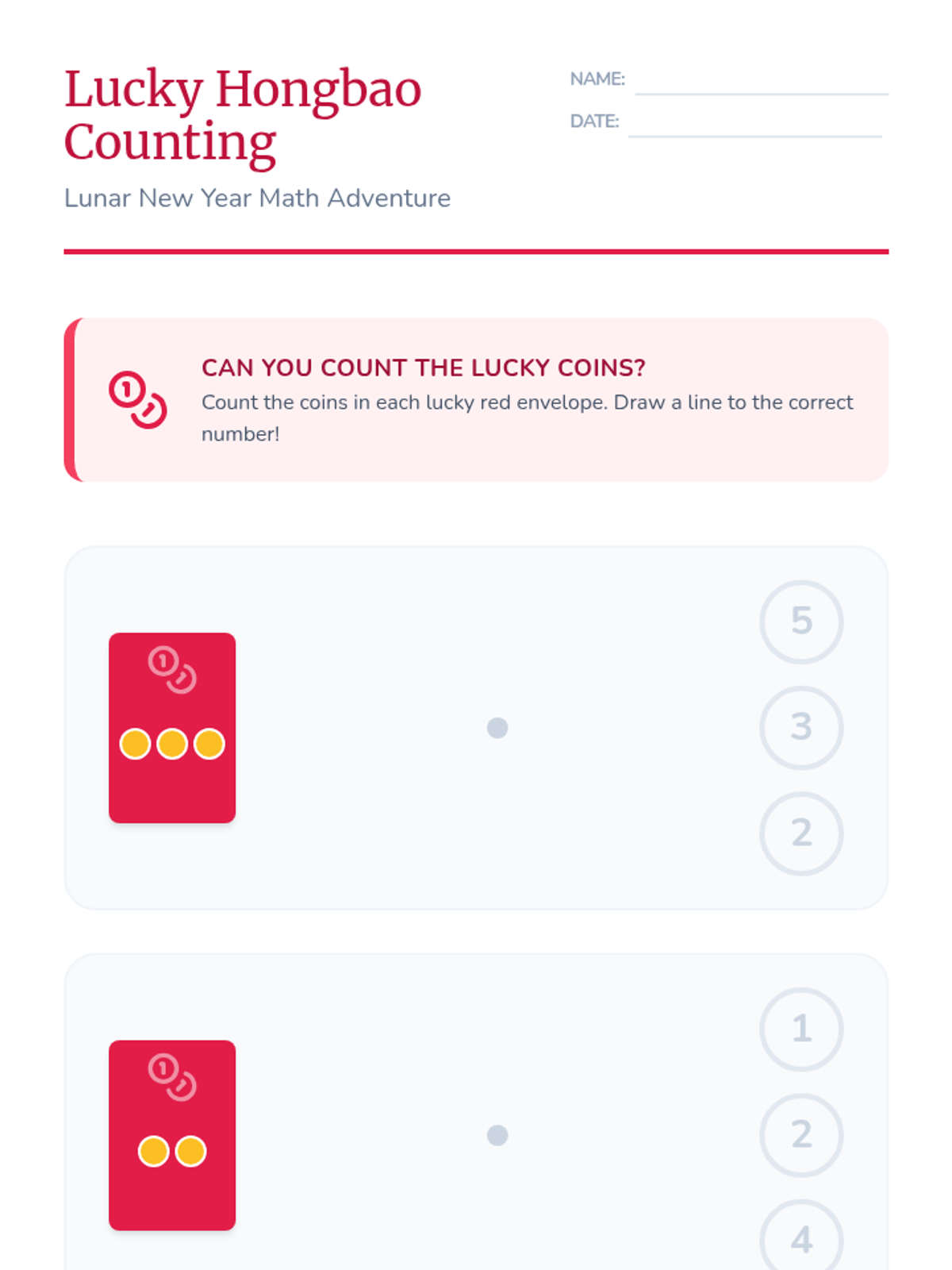
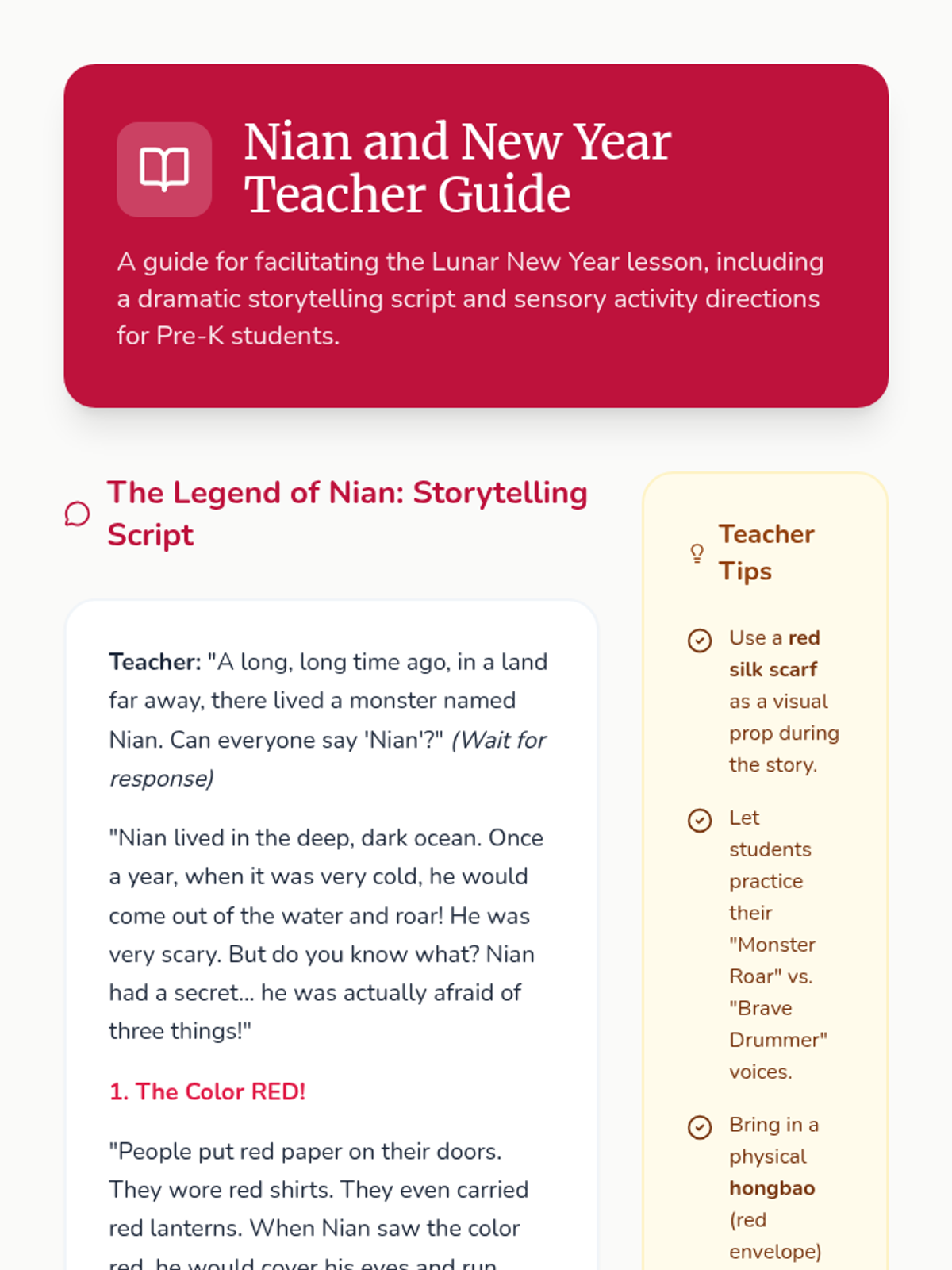
An introduction to the Lunar New Year using the legend of the Nian monster to explain the significance of the color red and loud noises. Includes a sensory counting activity with red envelopes (hongbao).