Essential grammar structures, high-frequency vocabulary, and foundational literacy skills. Equips learners with basic speaking and listening abilities for everyday interactions and introductory text comprehension.
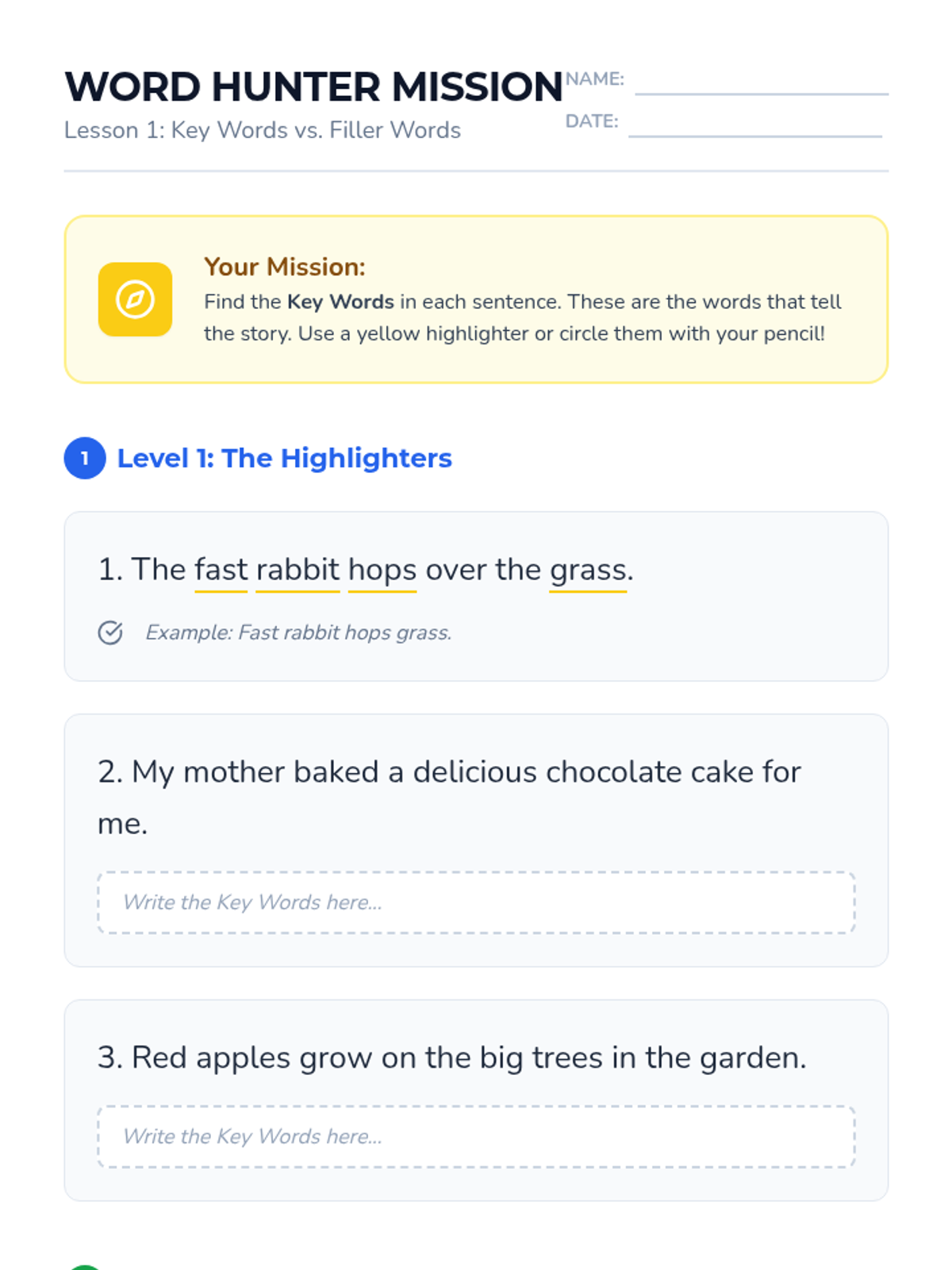
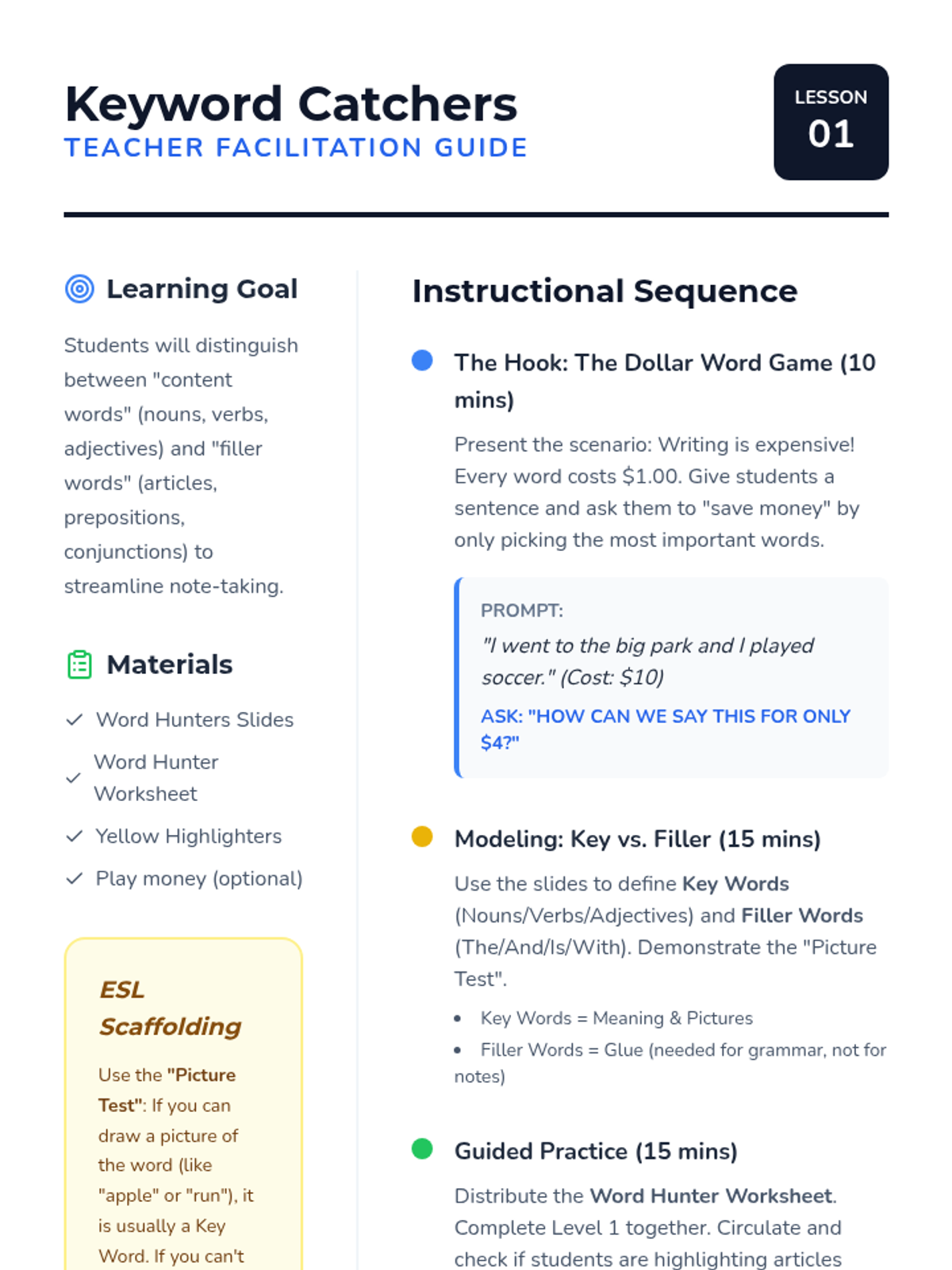
A workshop-style workshop sequence for 3rd grade ESL students focusing on note-taking and paraphrasing. Students learn to extract information without plagiarizing using strategies like keyword highlighting, visual sketching, and the 'Read-Cover-Write' method.
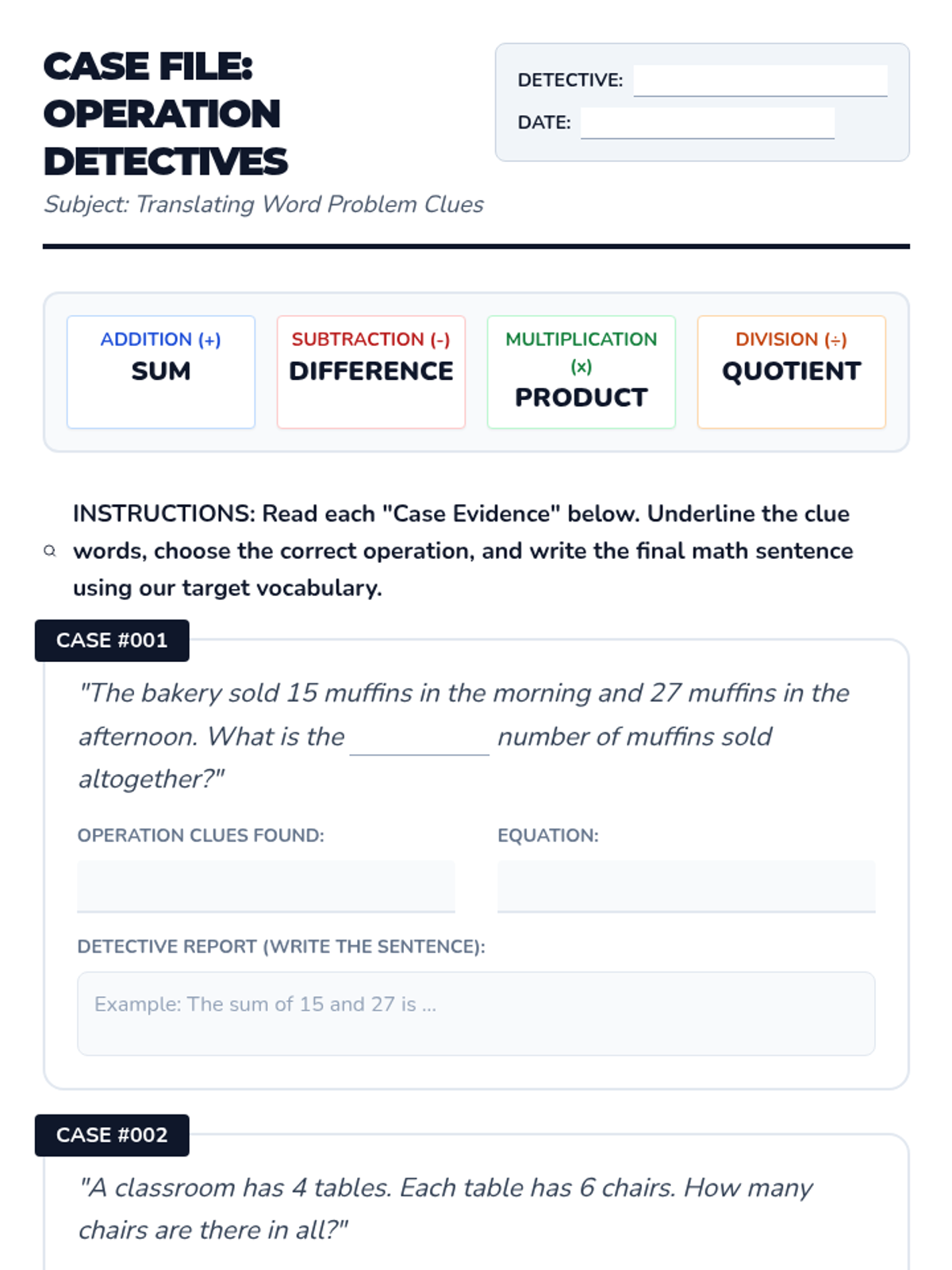
A 5-lesson sequence for 3rd-grade ESL students focused on the academic language of mathematics. Students learn to define operations, sequence multi-step processes, justify their reasoning, use comparative geometry language, and participate in collaborative mathematical discussions.
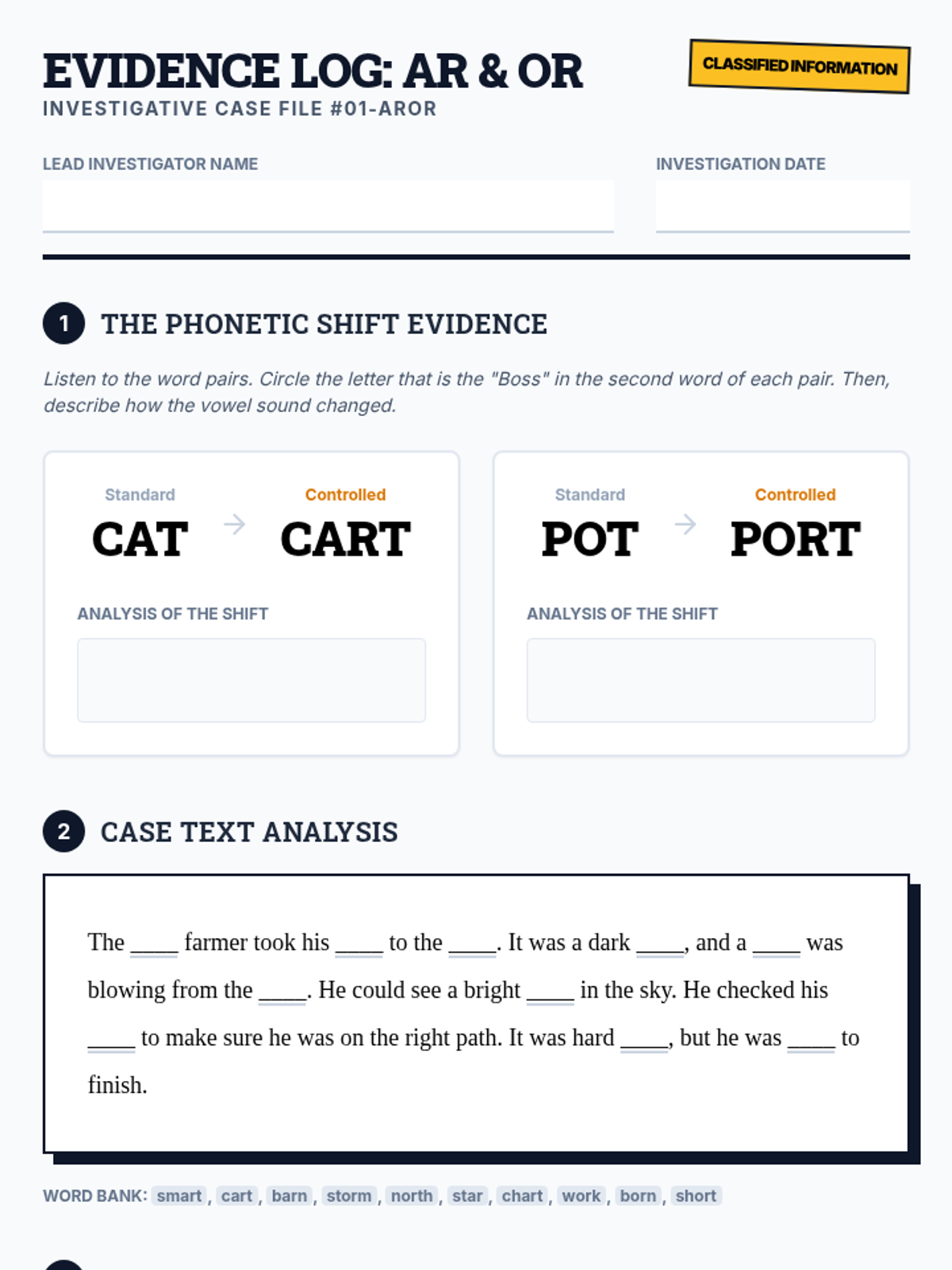
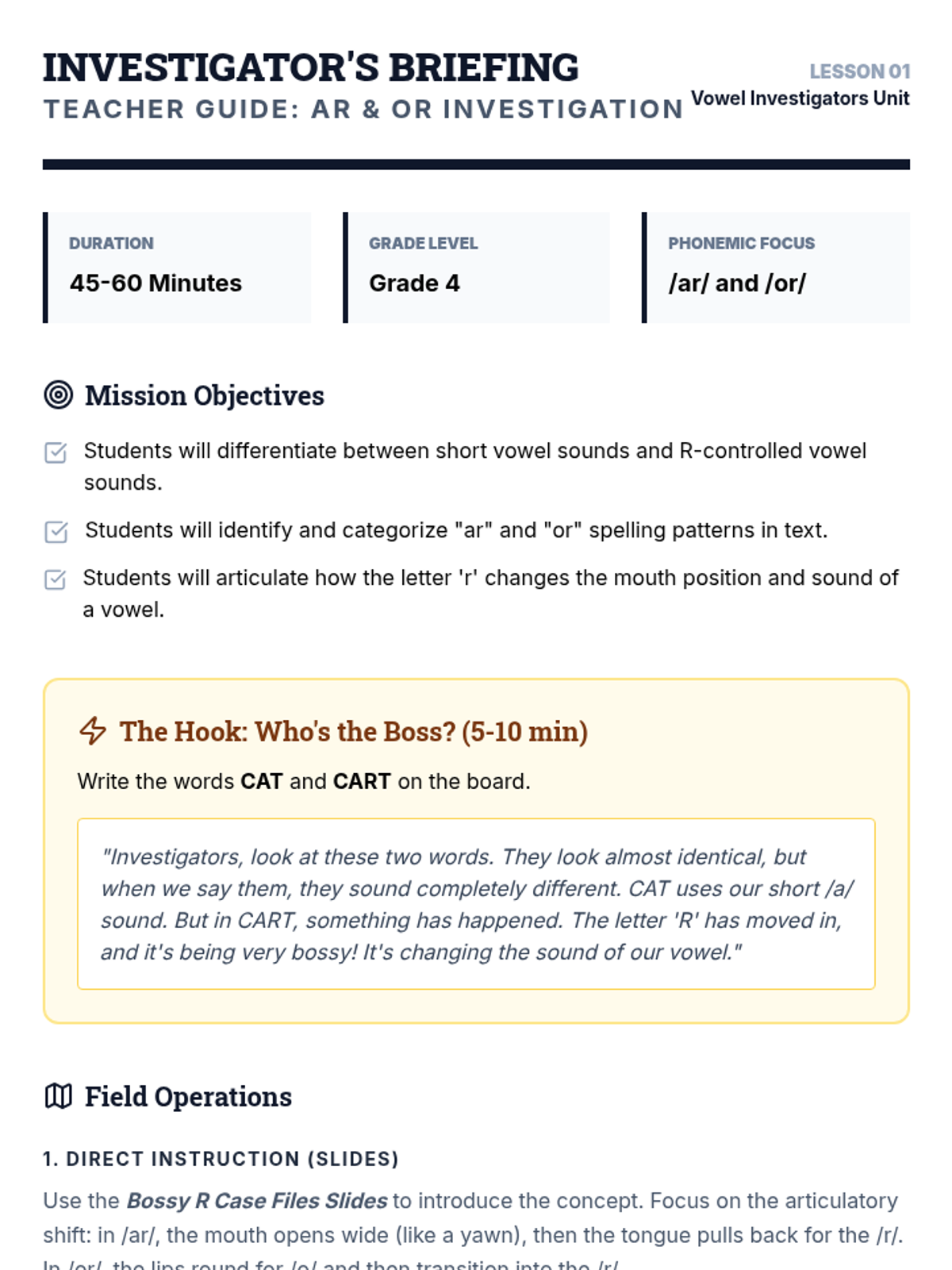
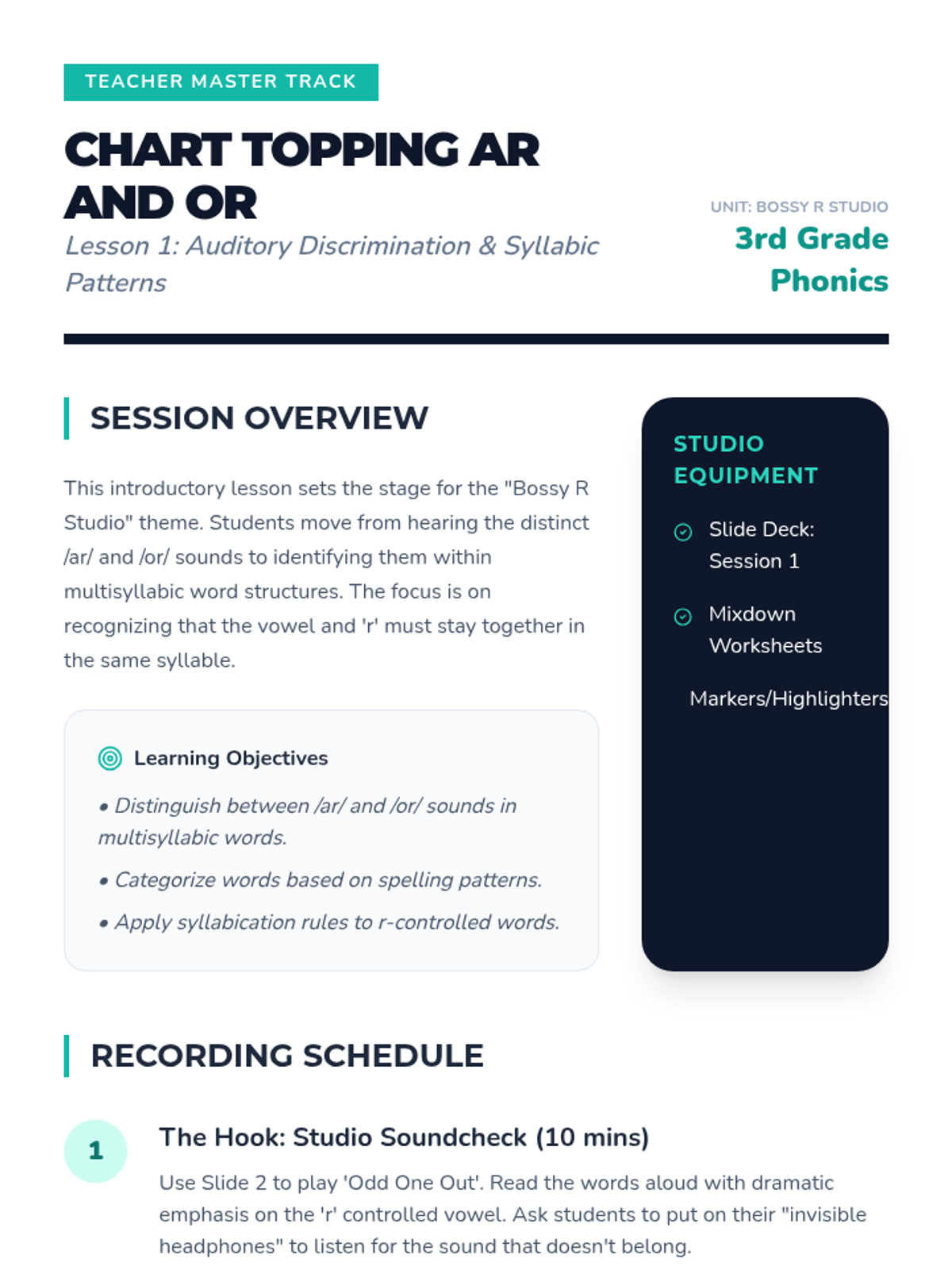
Students investigate the influence of the letter 'r' on preceding vowels, analyzing how it distorts standard vowel sounds to create new phonemes. Using an inquiry-based approach, the class acts as linguistic investigators to categorize 'bossy r' patterns and bridge into complex variations like 'air', 'ear', and 'ore'.
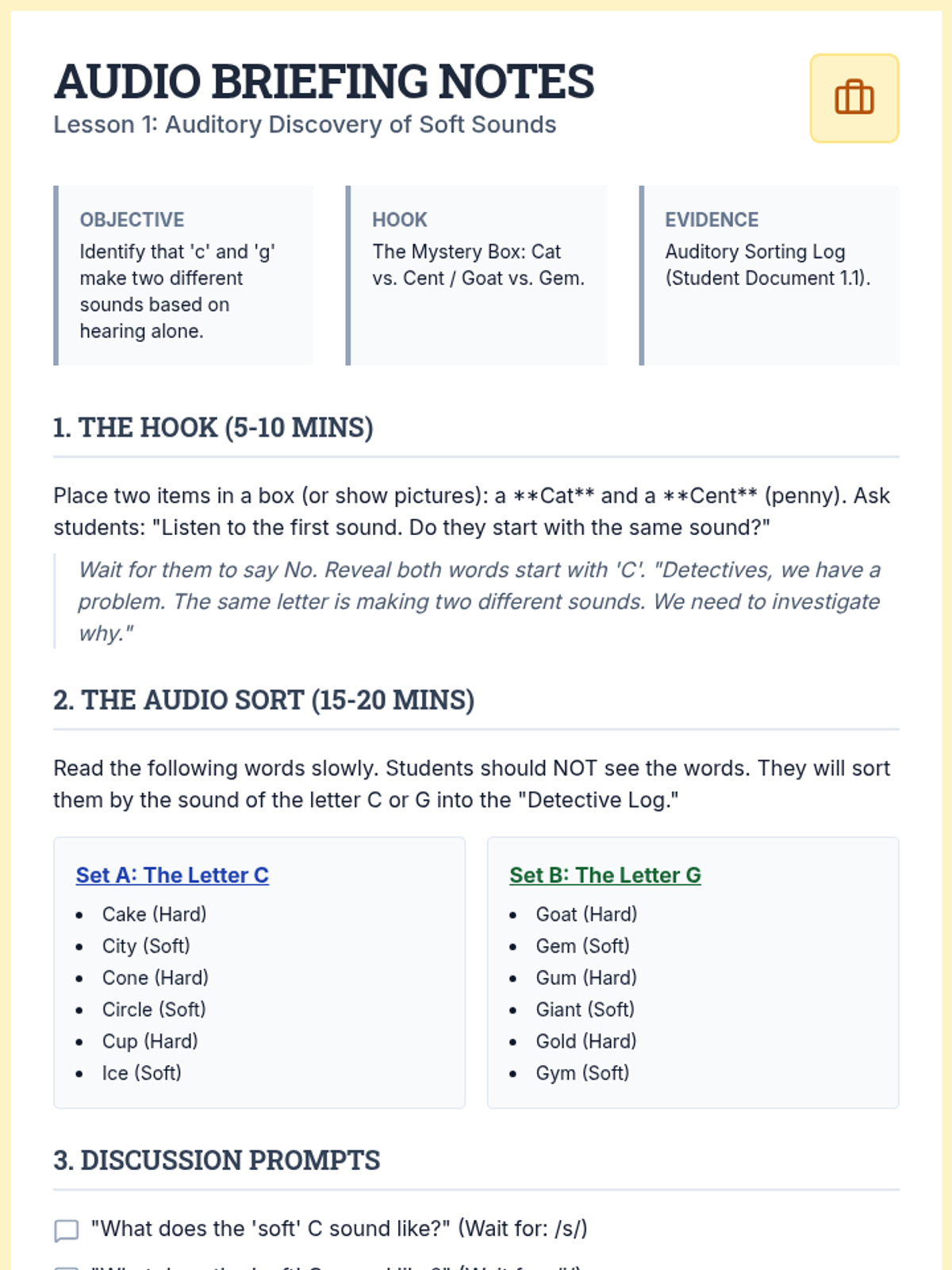
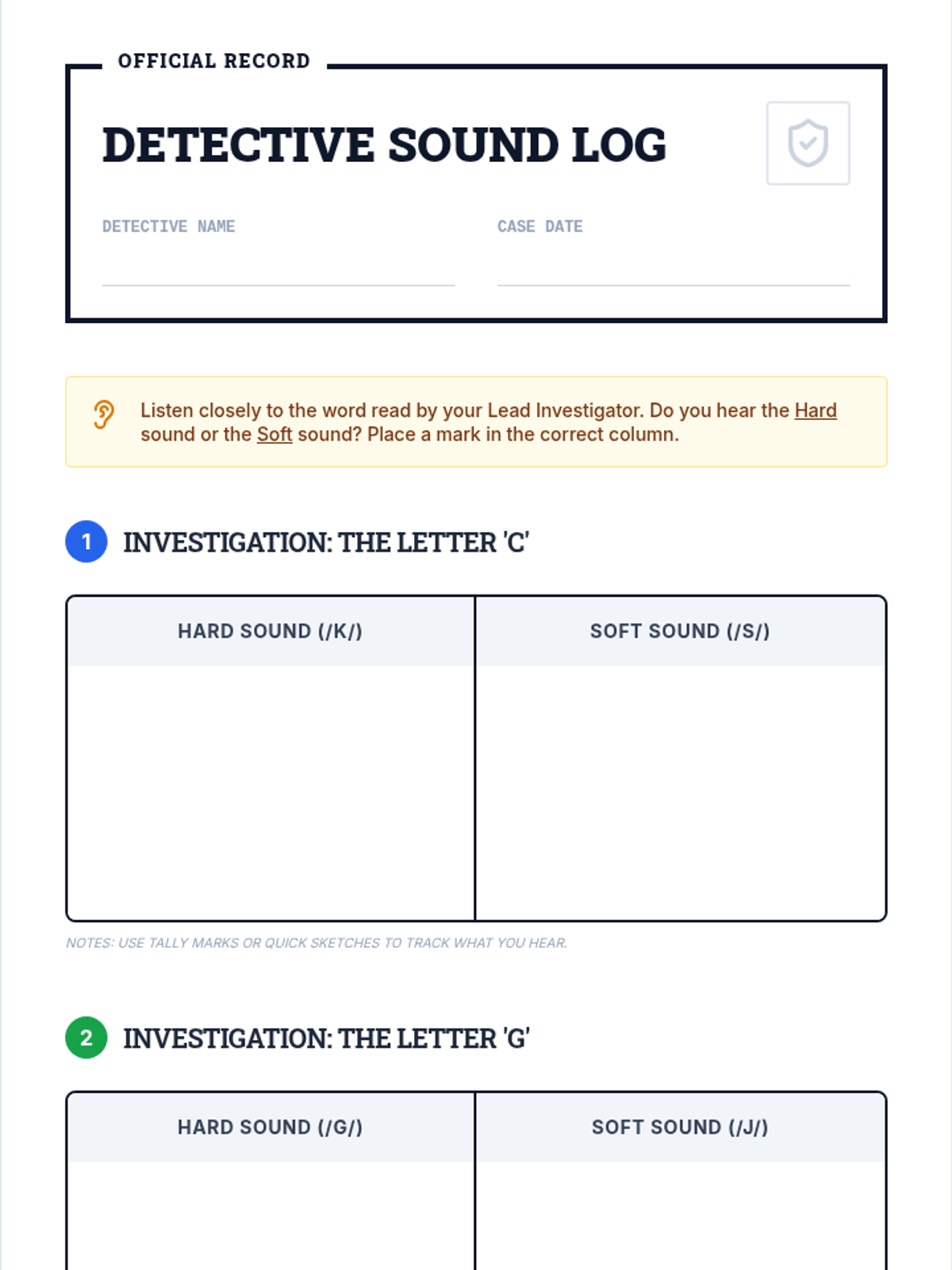
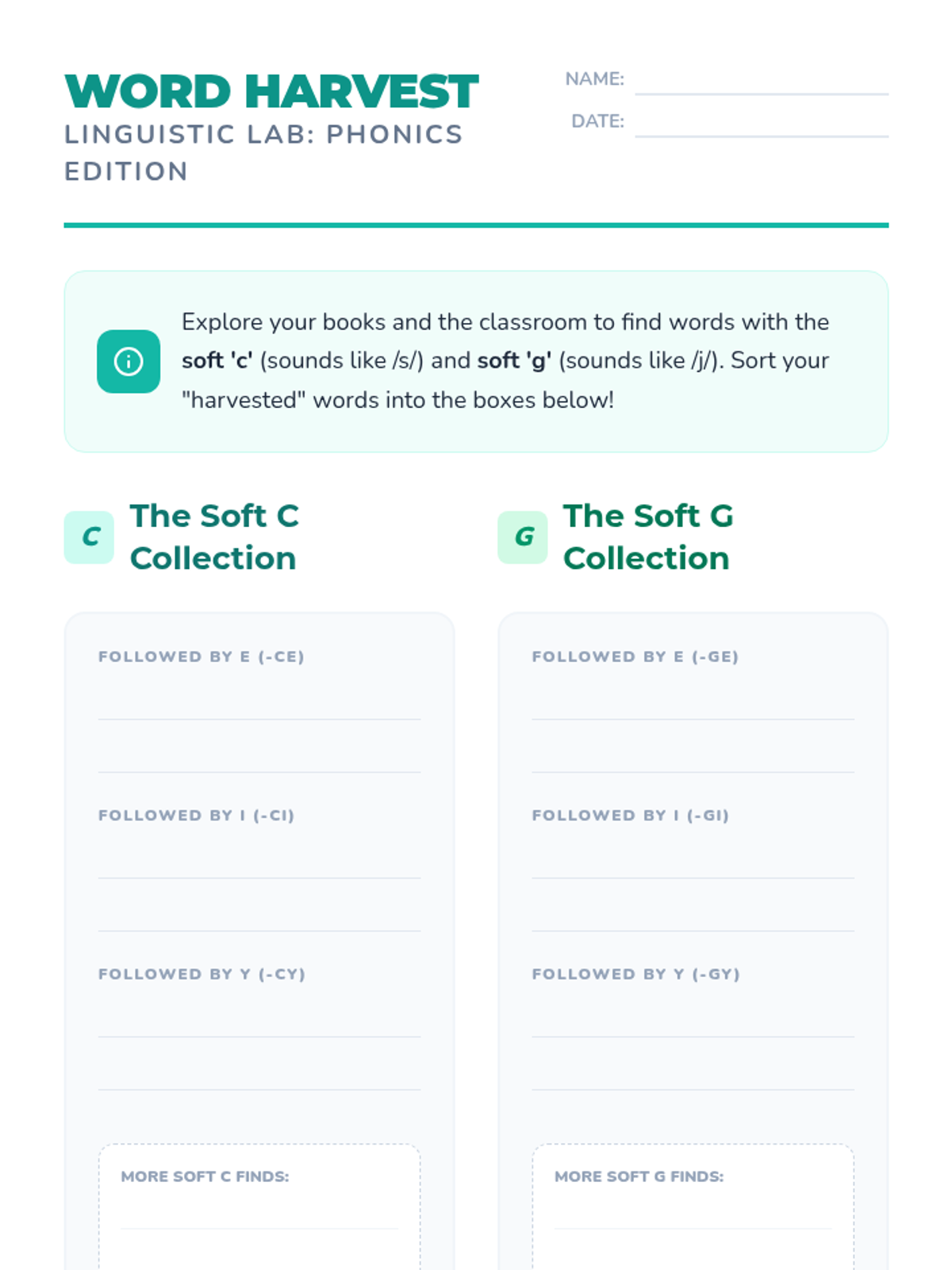
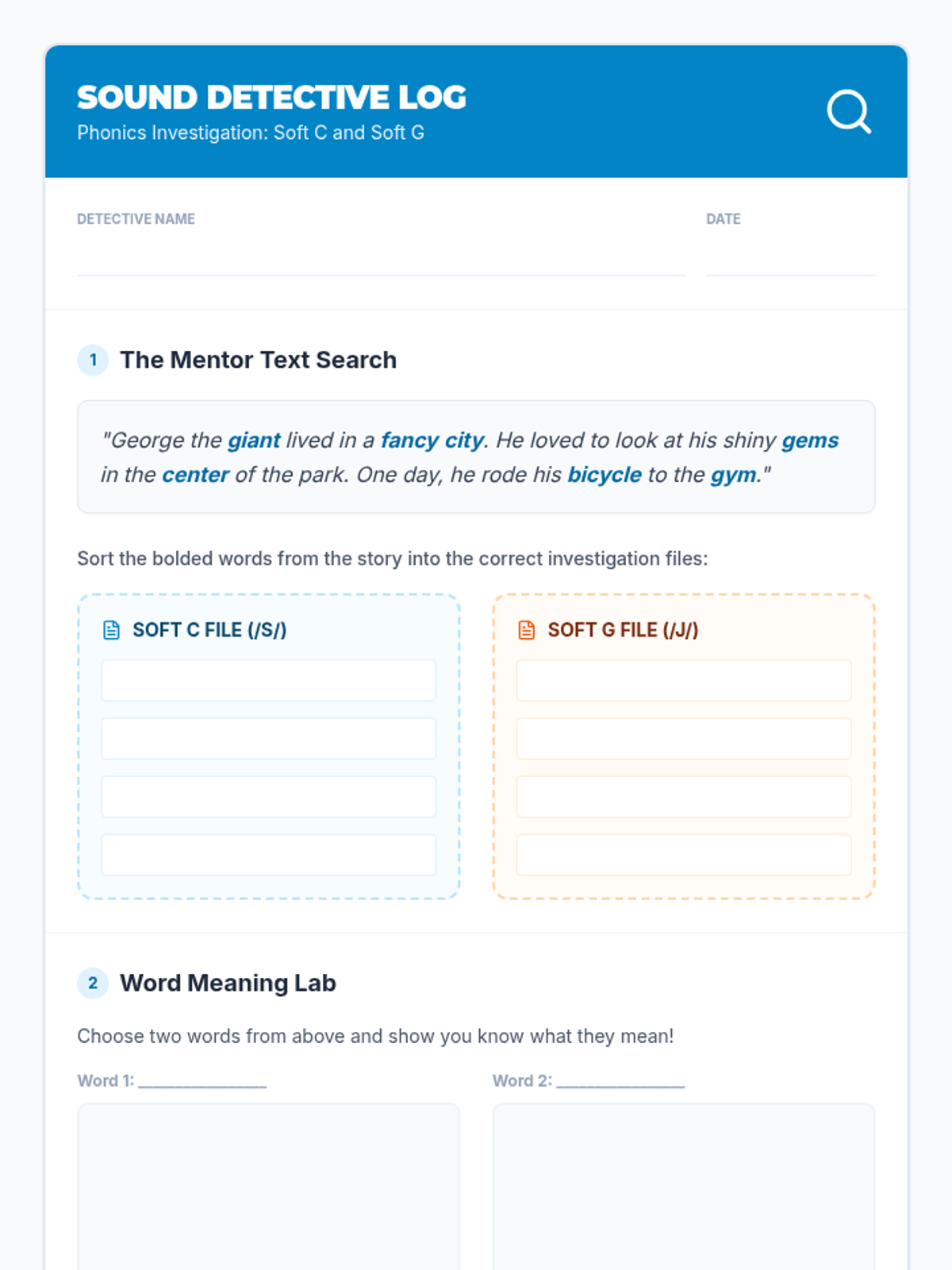
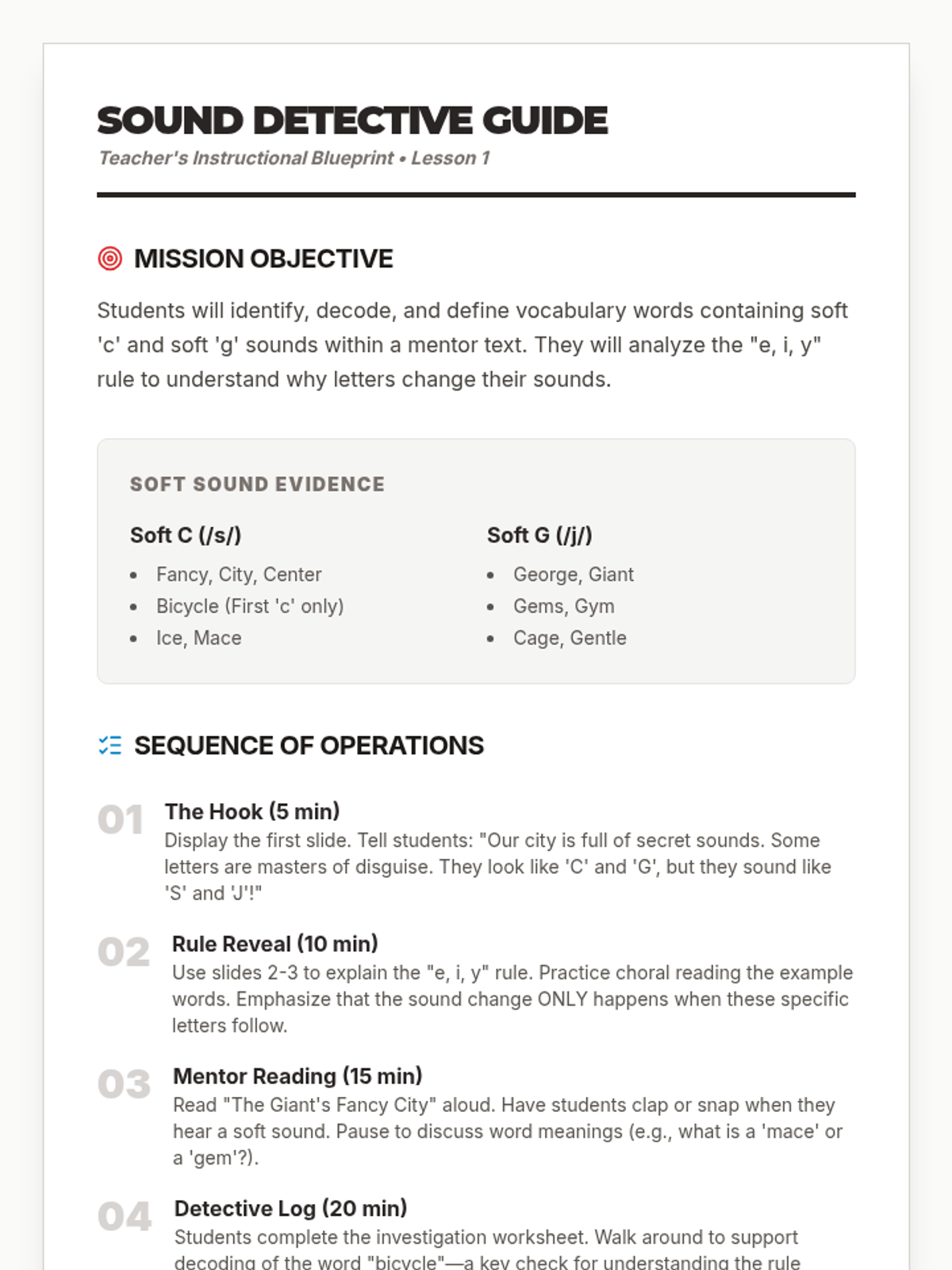
An inquiry-based 3rd-grade phonics unit where students act as "Word Detectives" to discover the phonemic rules of soft 'c' and 'g' through auditory discrimination, pattern recognition, and rule synthesis.
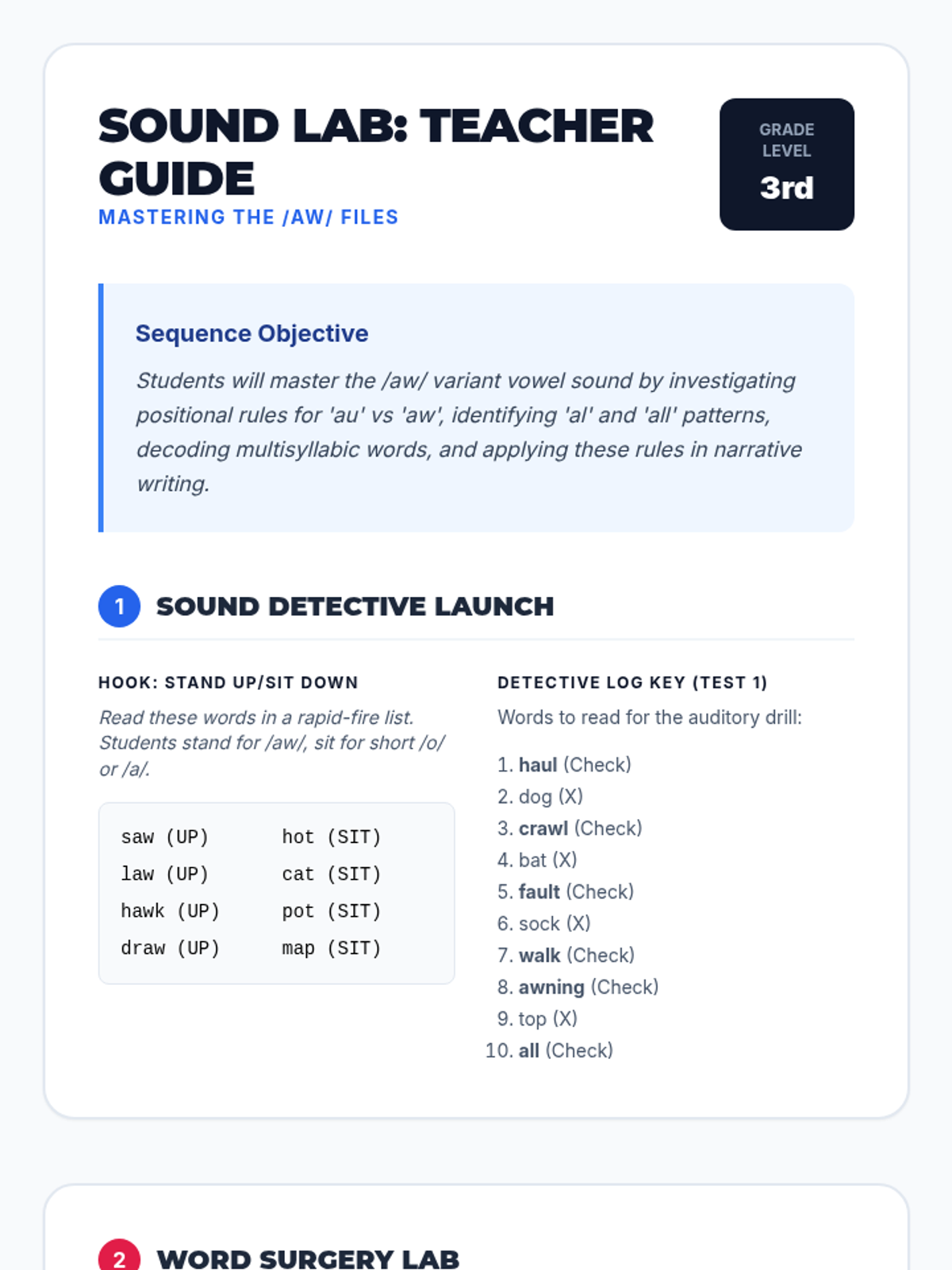
A comprehensive 3rd-grade sequence focused on mastering the variant vowel sound /aw/ through phonemic awareness, orthographic mapping of 'au', 'aw', 'al', and 'all', multisyllabic decoding, and applied writing. Students act as 'Sound Detectives' in a Word Lab to investigate spelling patterns and positional rules.
A 5-lesson unit for 3rd-grade ESL students focusing on visual note-taking, categorization, and information organization. Students learn to transition from linear writing to spatial and symbolic representations of knowledge.
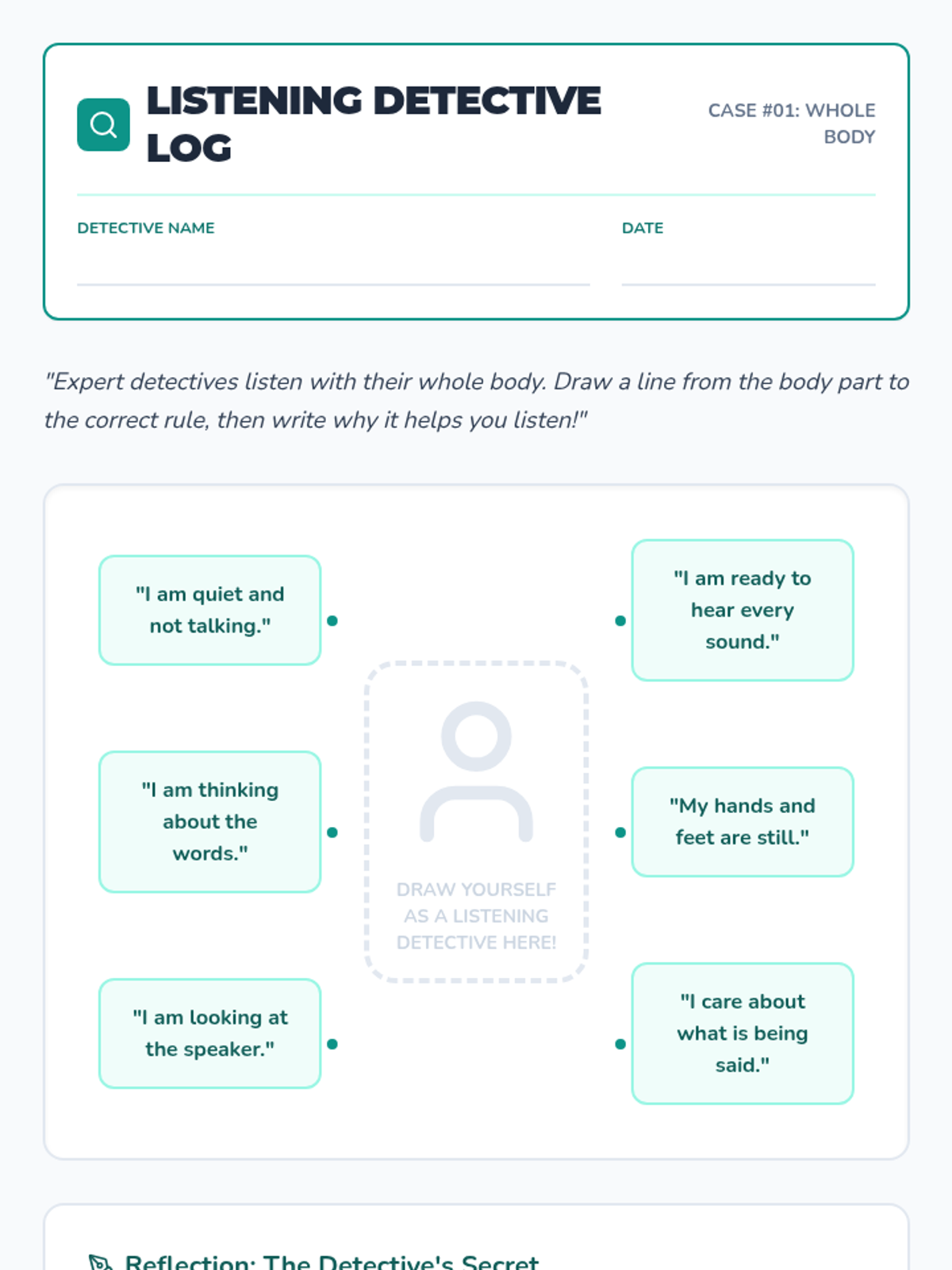
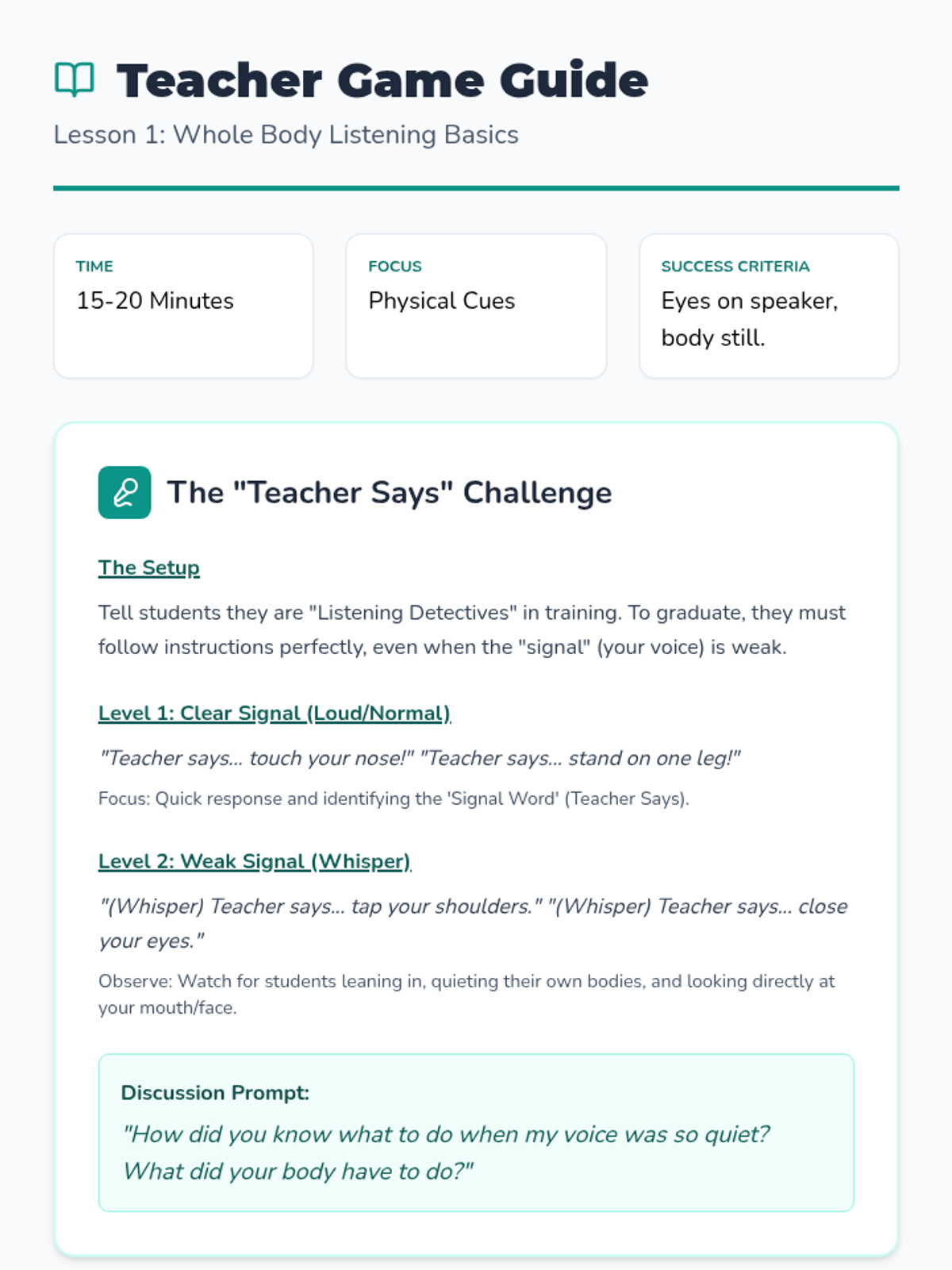
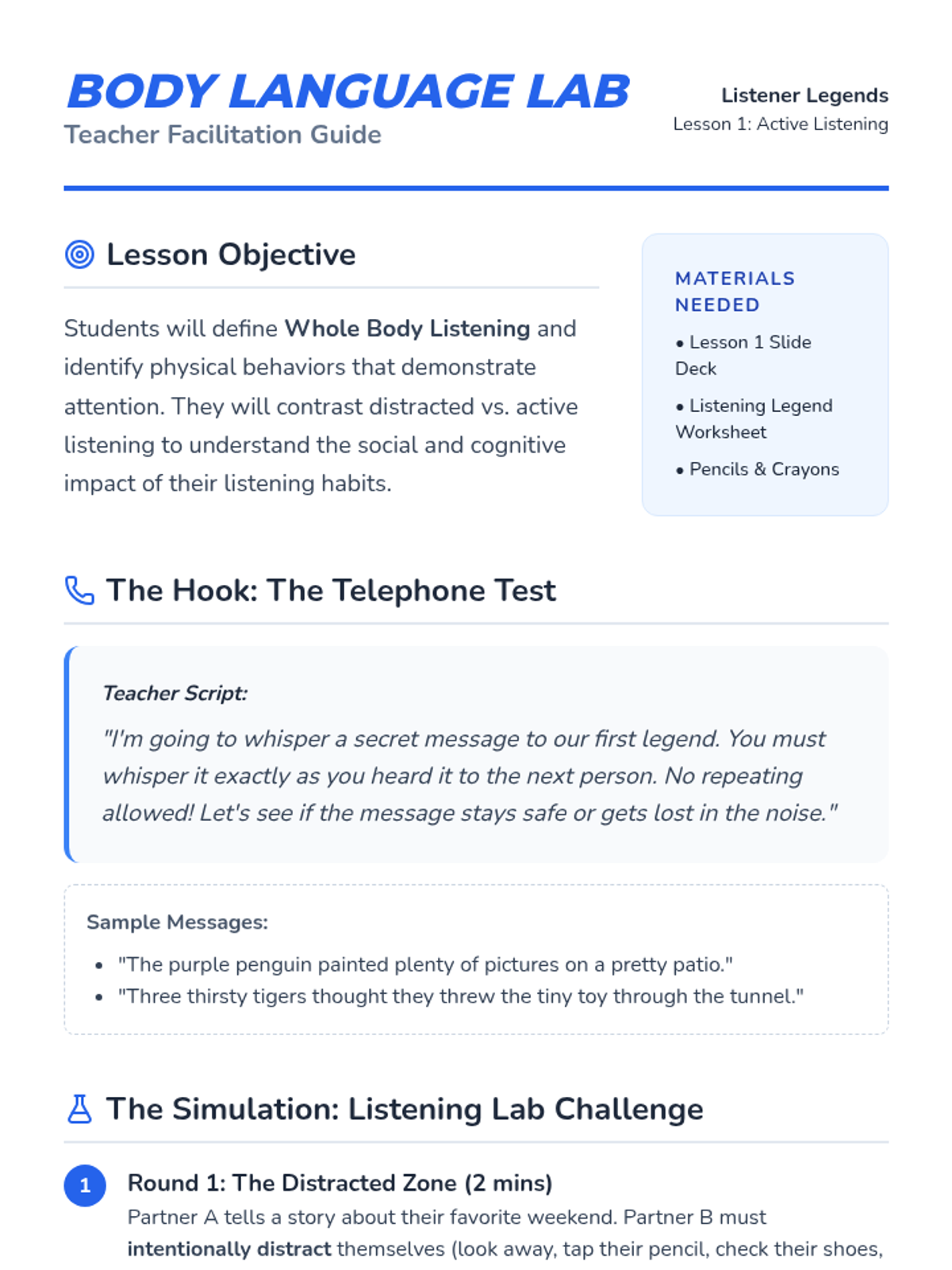
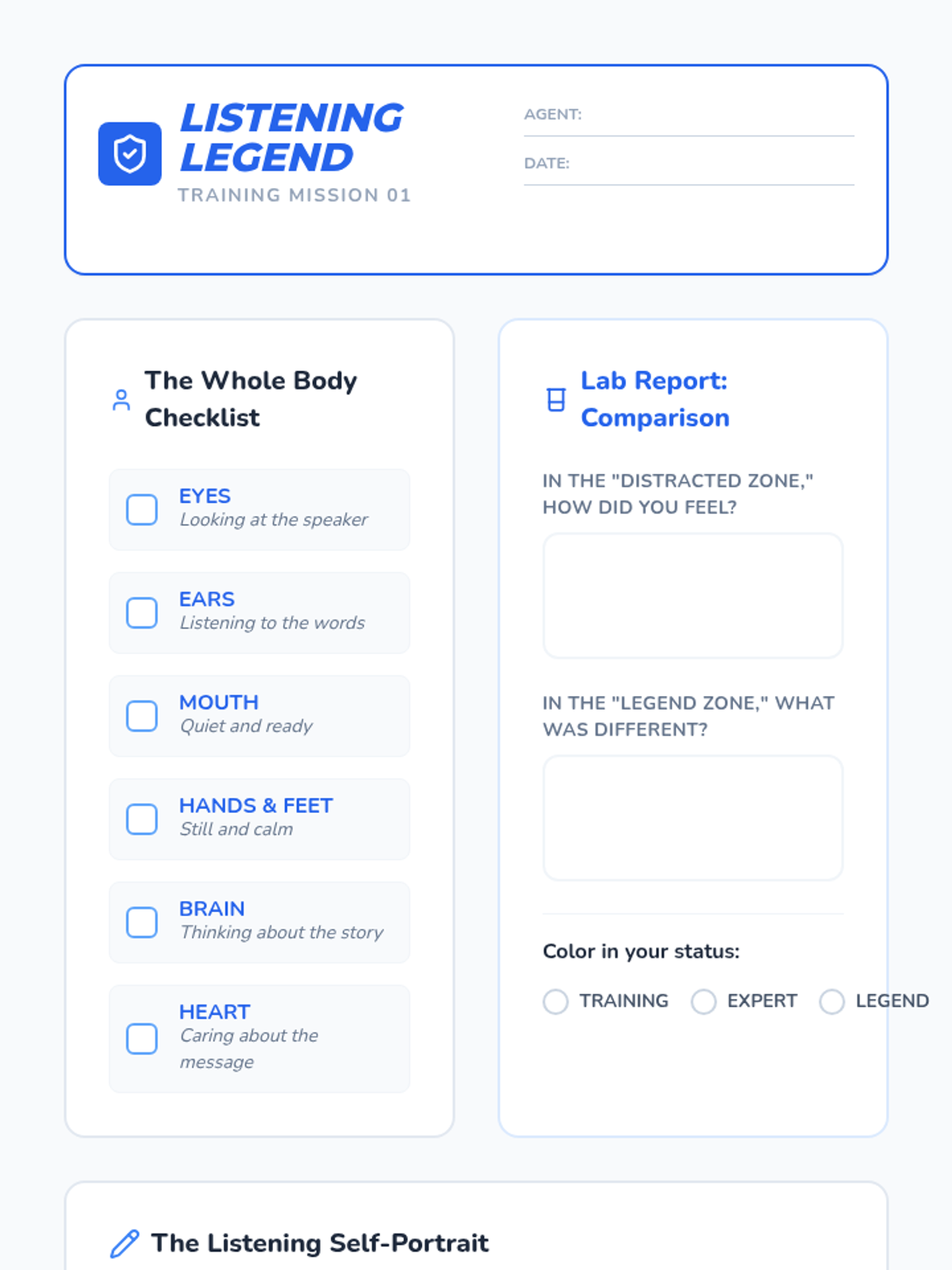
A 5-lesson sequence for 3rd Grade ESL students to develop active listening skills, identify signal words, ask clarifying questions, and follow multi-step academic instructions. Students move from basic non-verbal listening behaviors to successfully navigating complex classroom protocols through a 'Listening Detective' theme.
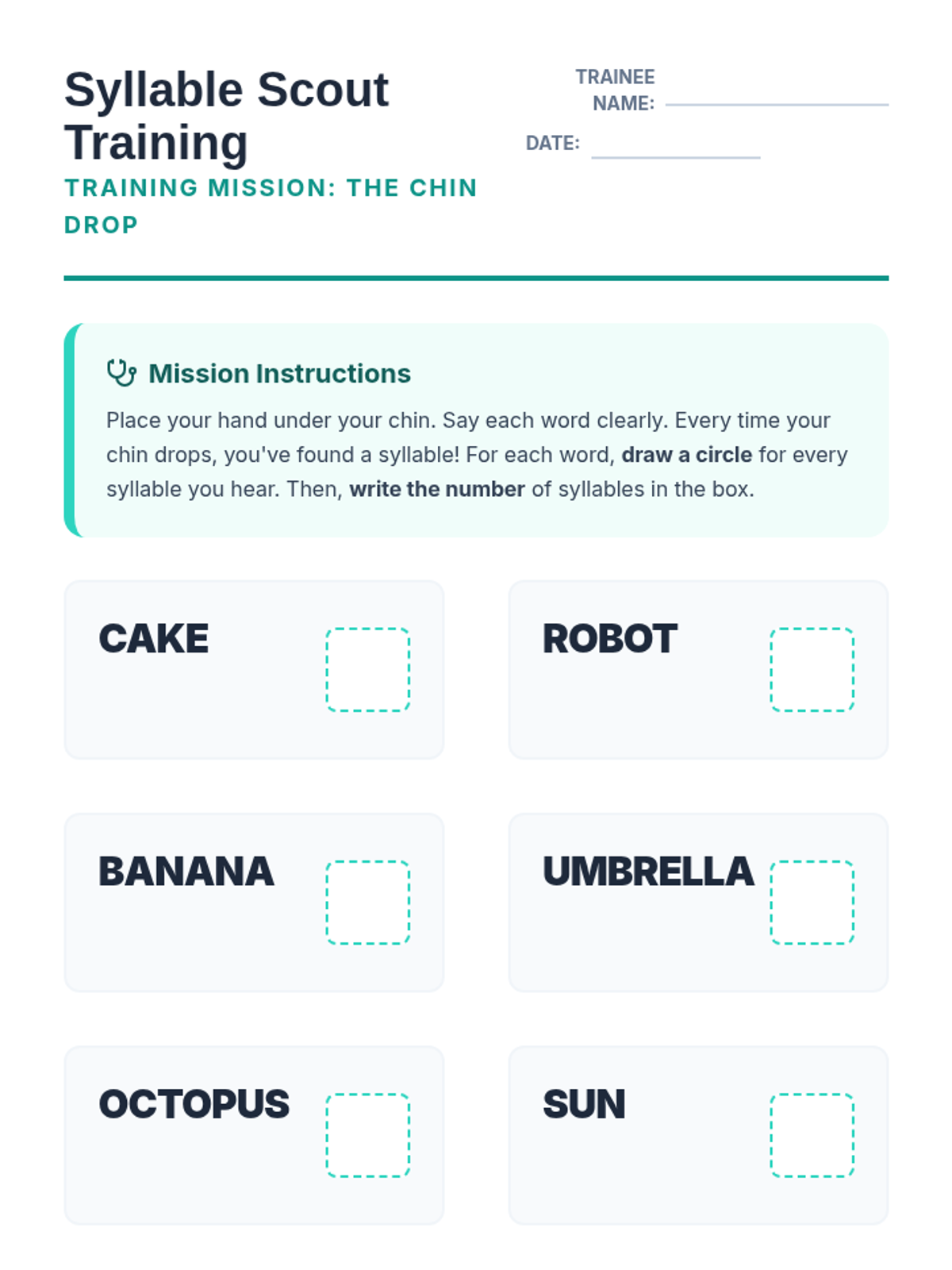
This mastery-based sequence moves students from single-syllable reading to decoding multisyllabic words by understanding open and closed syllables. Students learn to segment words based on vowel sounds, determining if a syllable ends in a consonant (short vowel/closed) or a vowel (long vowel/open). This structural analysis empowers students to tackle unknown vocabulary independently.
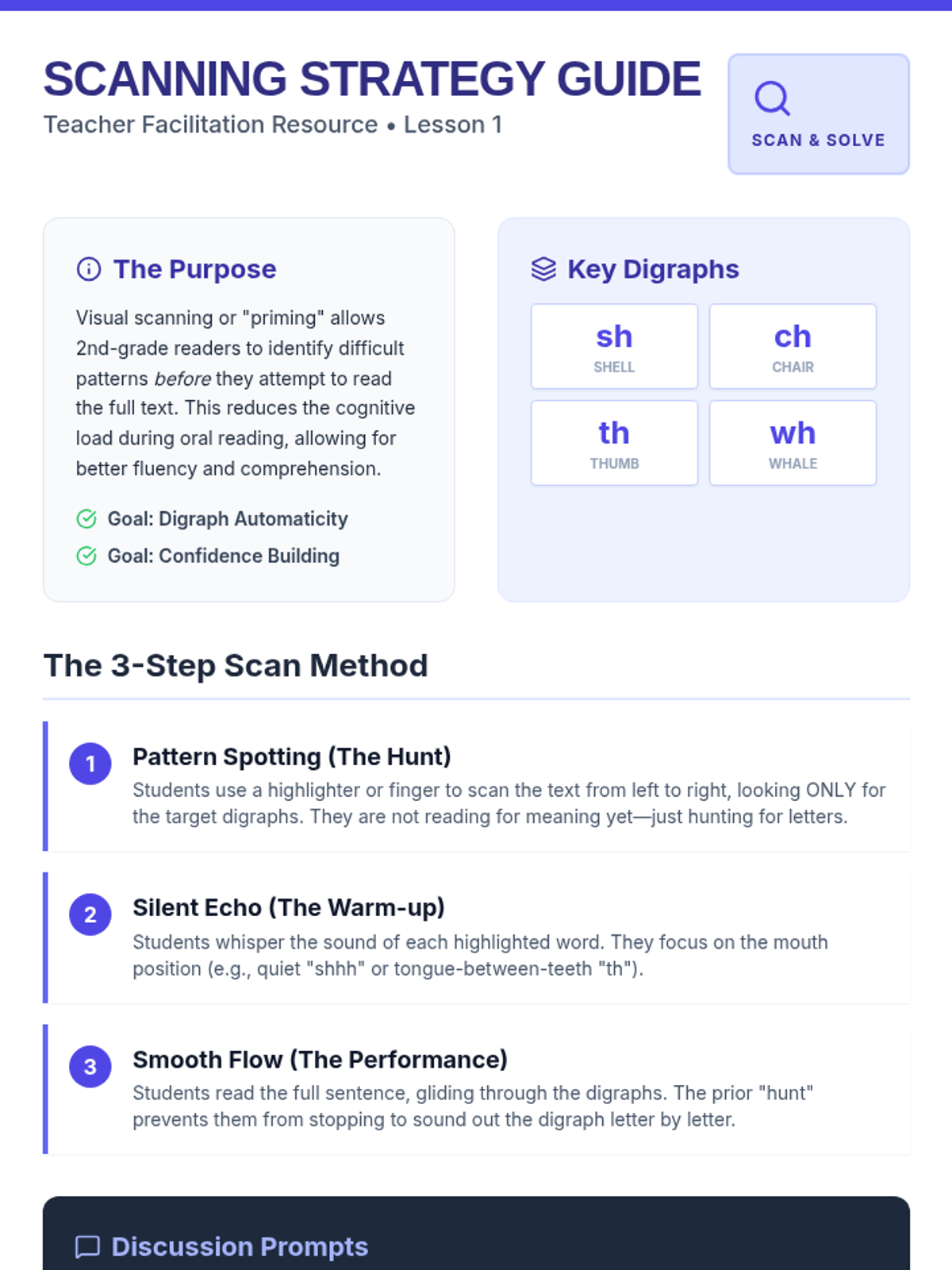
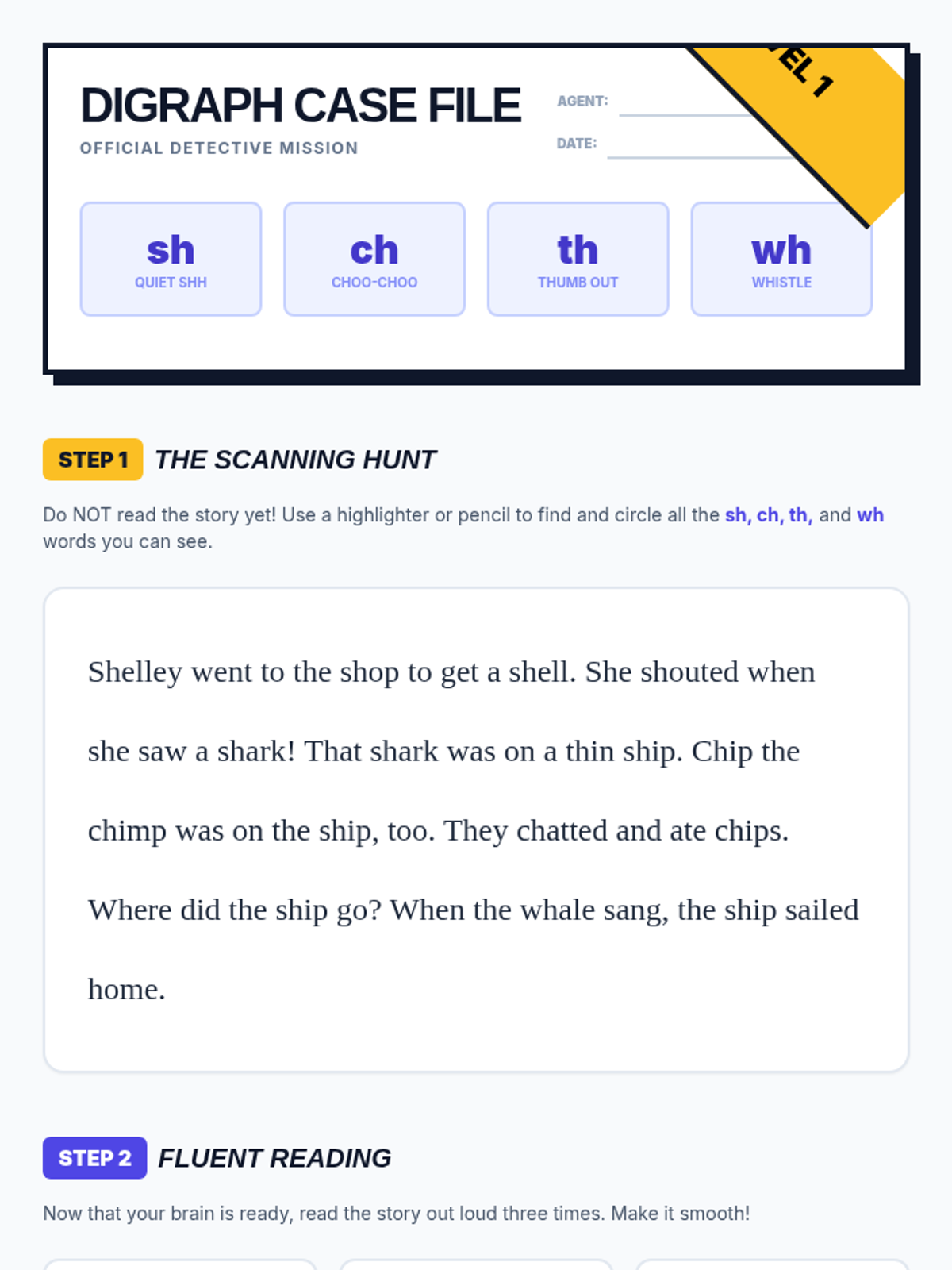
A 2nd-grade reading sequence that moves from isolated digraph recognition to fluent, expressive reading in context using a 'Digraph Detective' theme. Students practice scanning, choral reading, context clues, and performance to master ch, sh, th, and wh patterns.
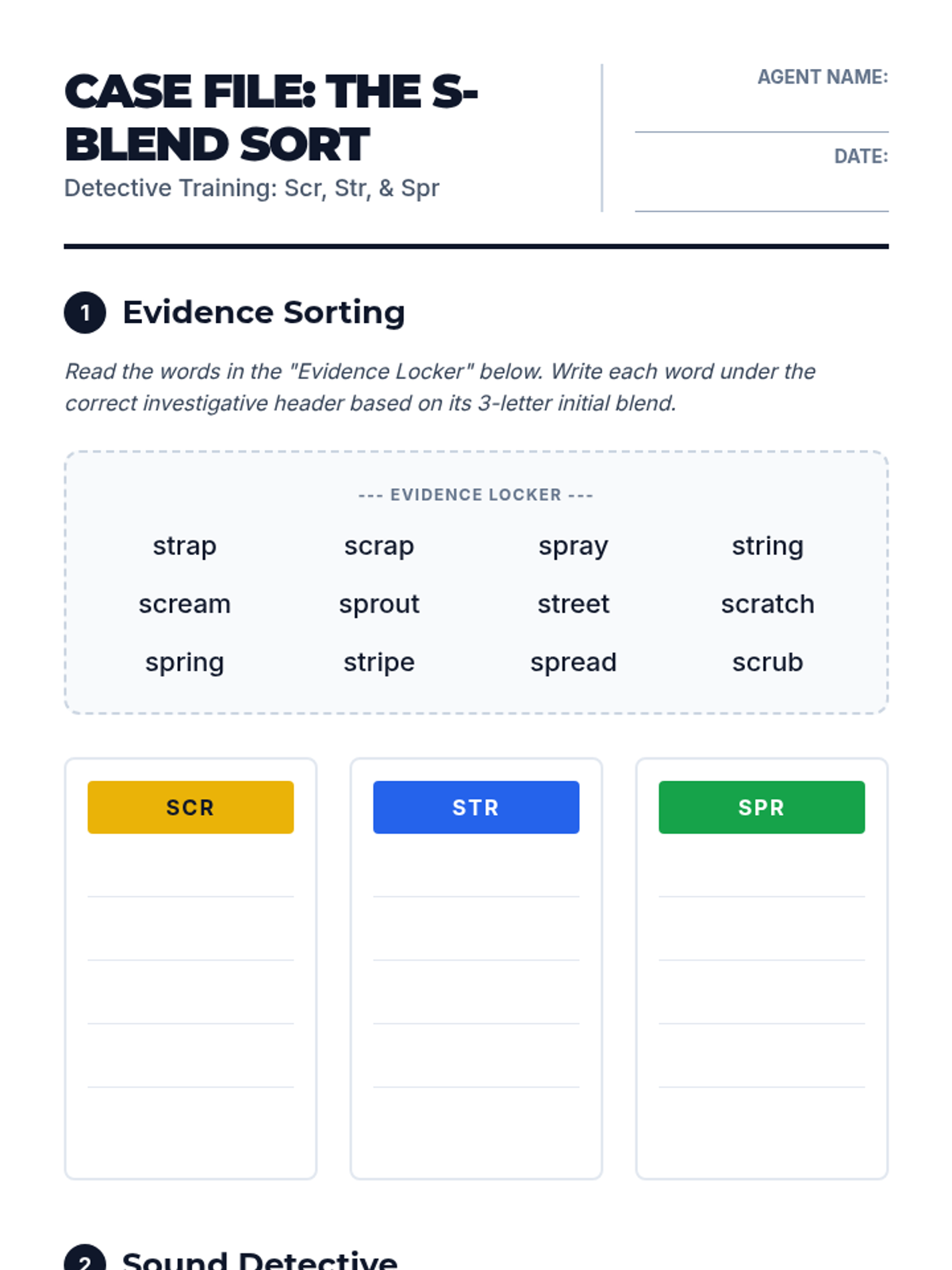
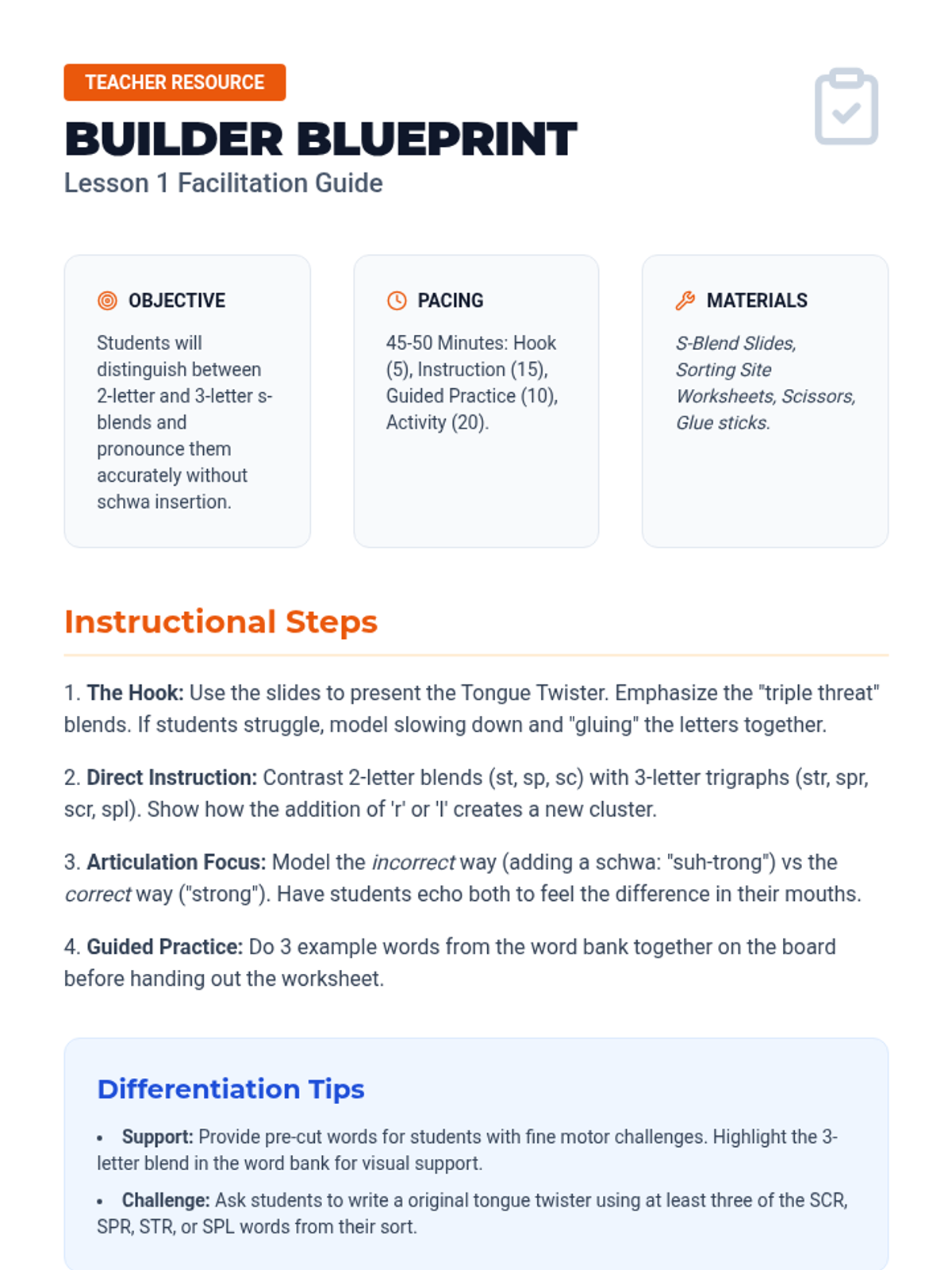
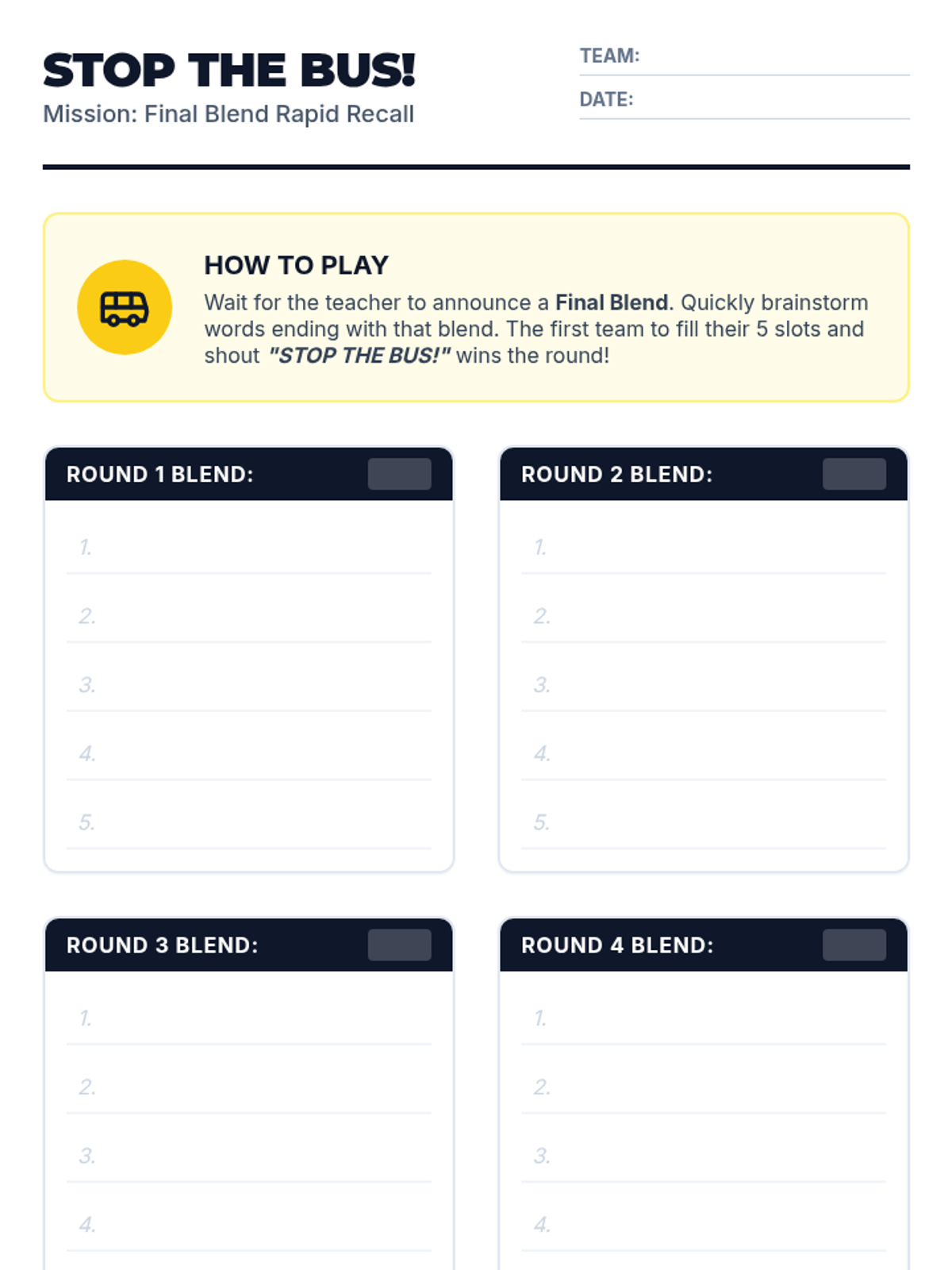
A comprehensive 3rd-grade phonics sequence focusing on the mastery of three-letter initial consonant blends (scr-, str-, spr-, spl-, shr-, and thr-). Students progress from auditory discrimination to visual recognition, culminating in applying these complex clusters in creative writing.
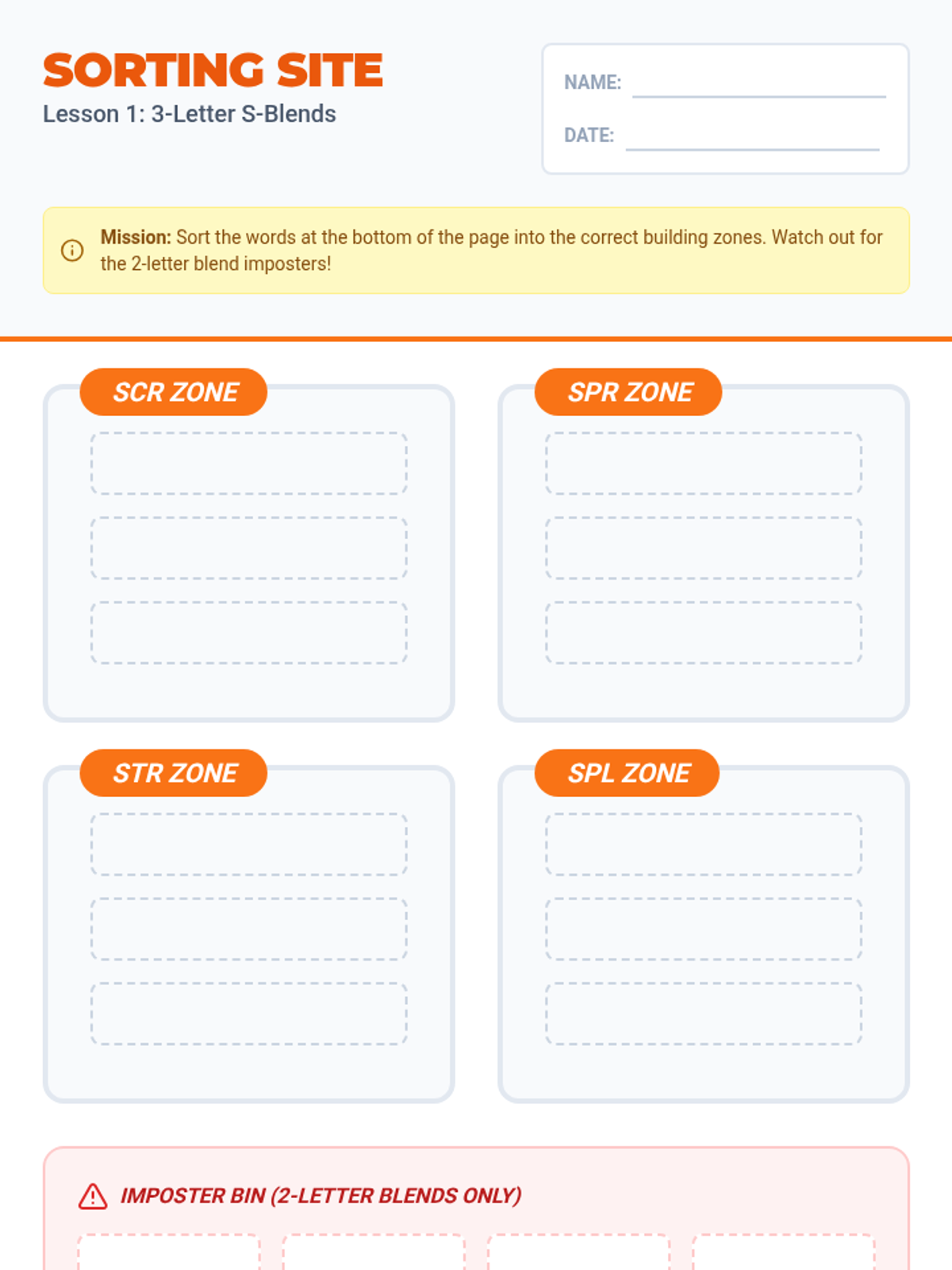
A 5-lesson sequence for 3rd grade students focusing on identifying, articulating, and decoding three-letter blends (trigraphs) in both single-syllable and multisyllabic words to build reading fluency and spelling accuracy.
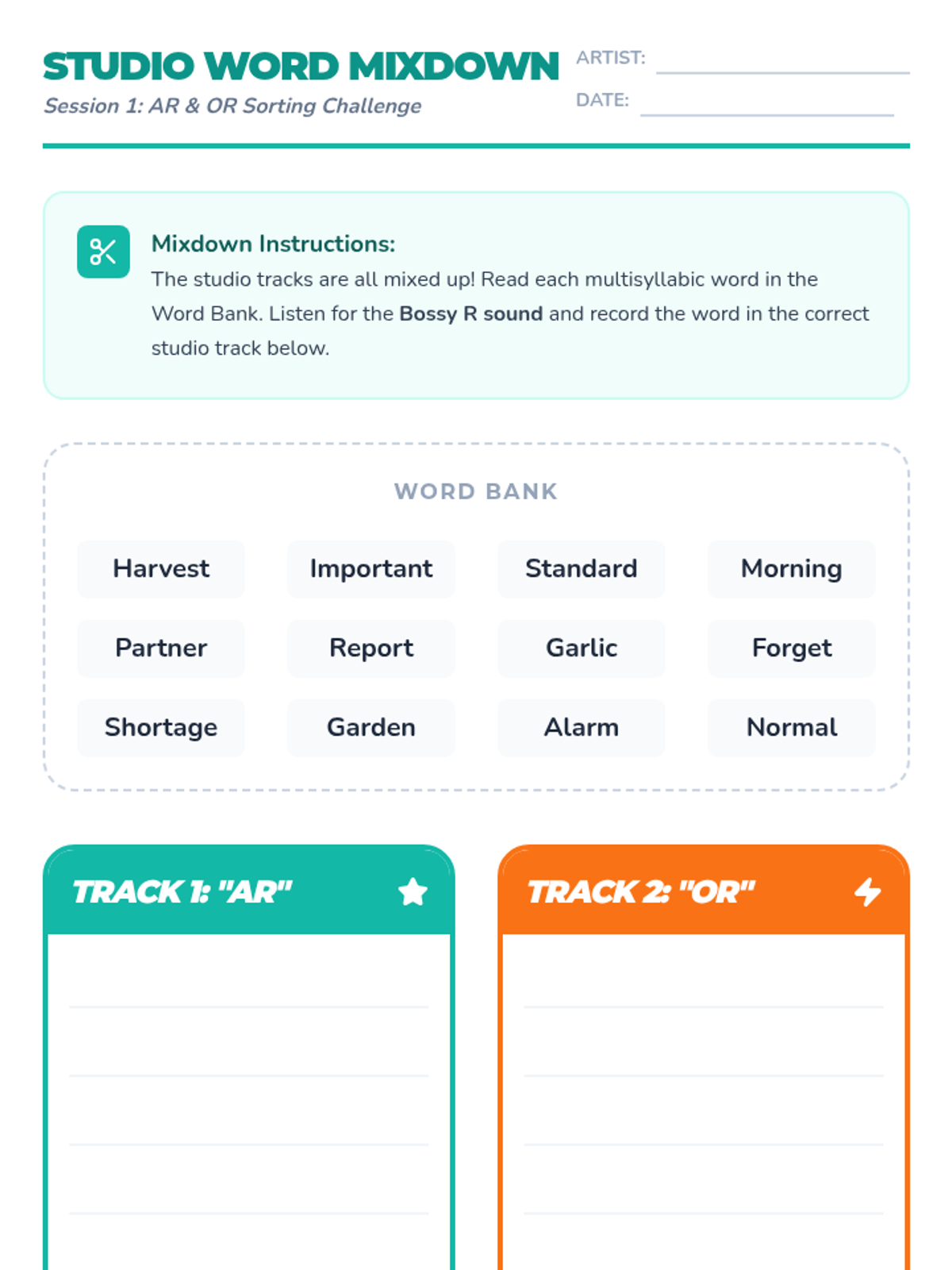
A comprehensive 3rd-grade sequence focused on decoding and encoding multisyllabic r-controlled vowel words through an inquiry-based 'Bossy R Studio' theme. Students progress from auditory discrimination to complex syllabication and descriptive writing.
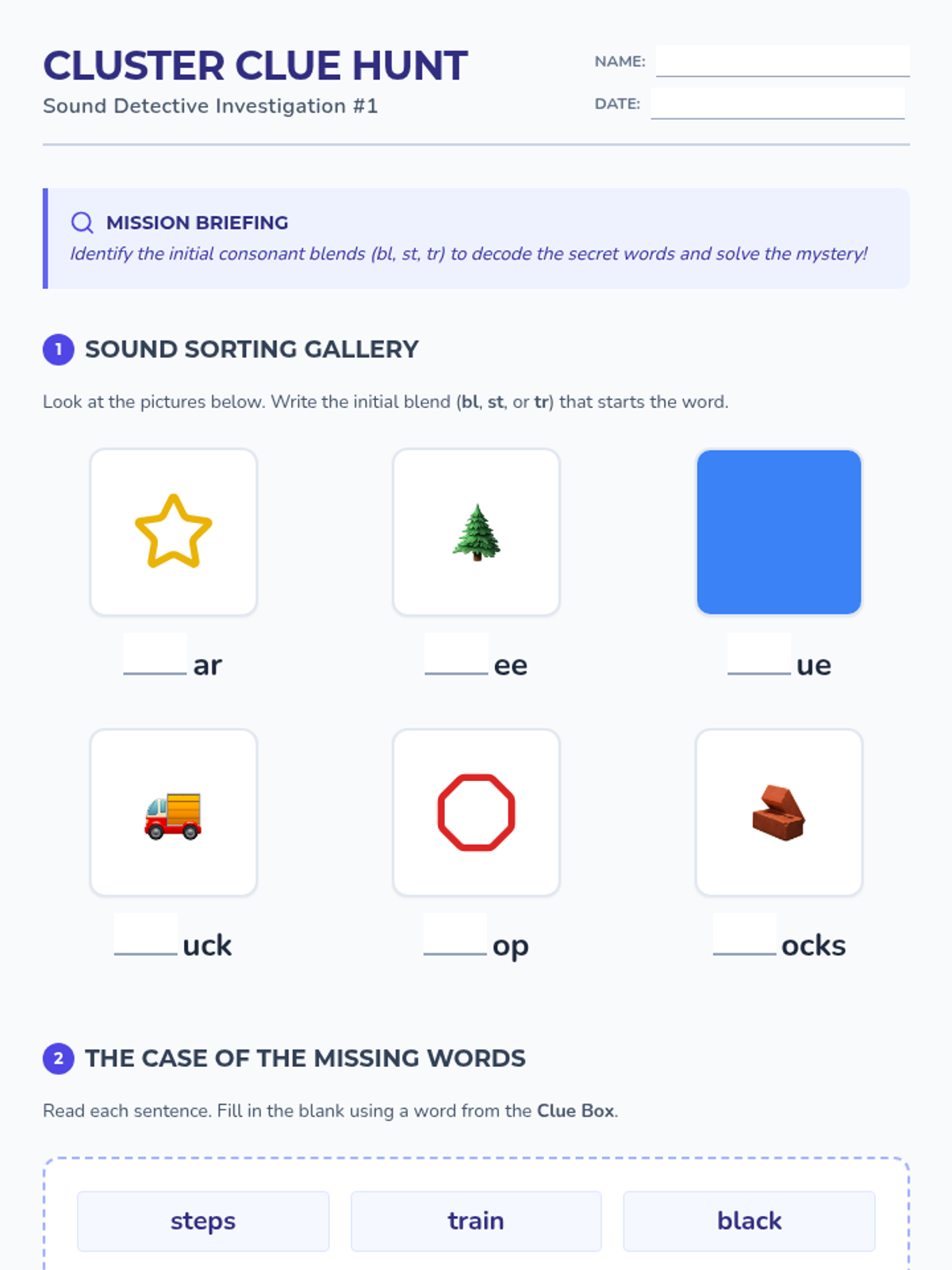
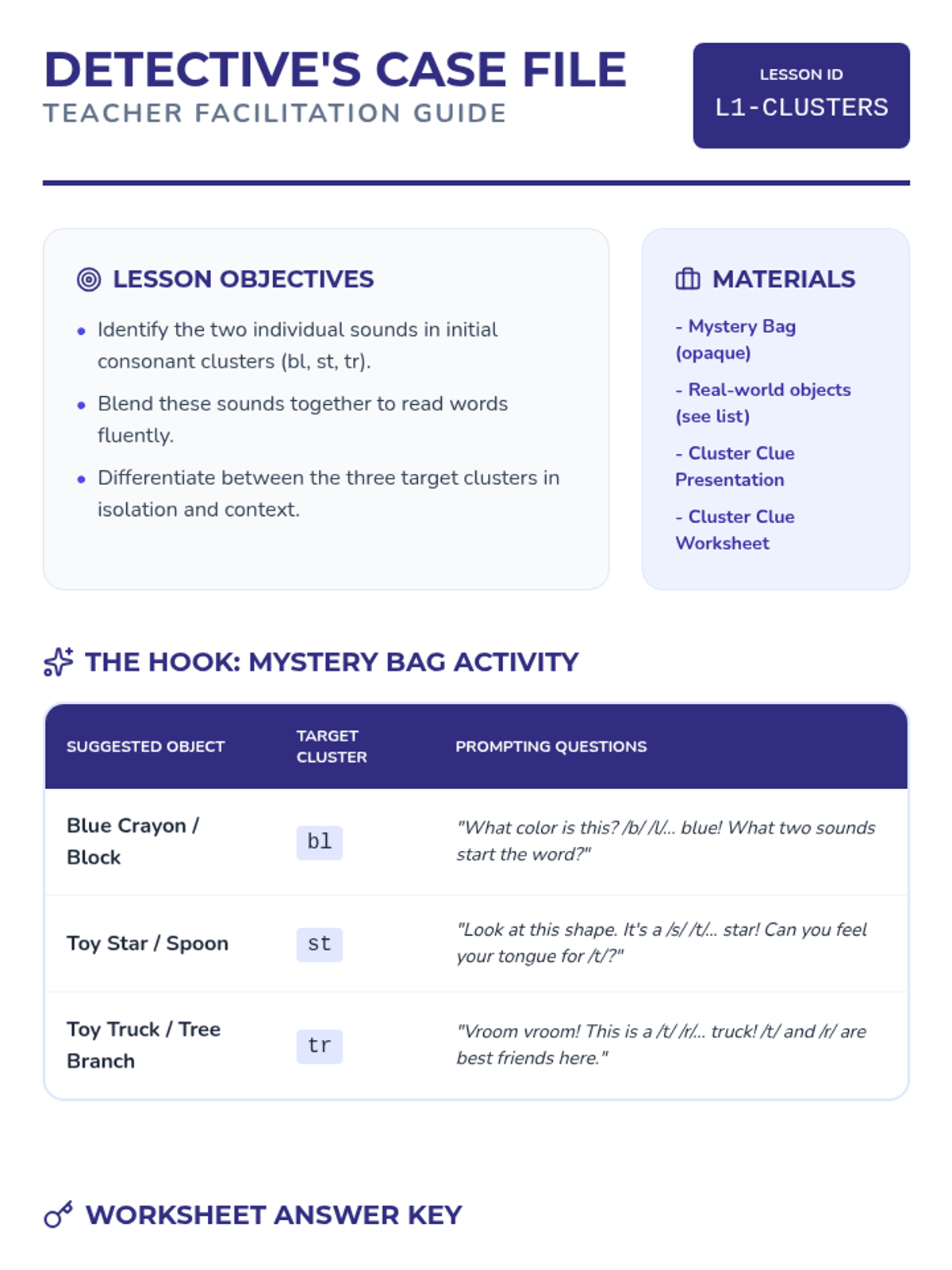
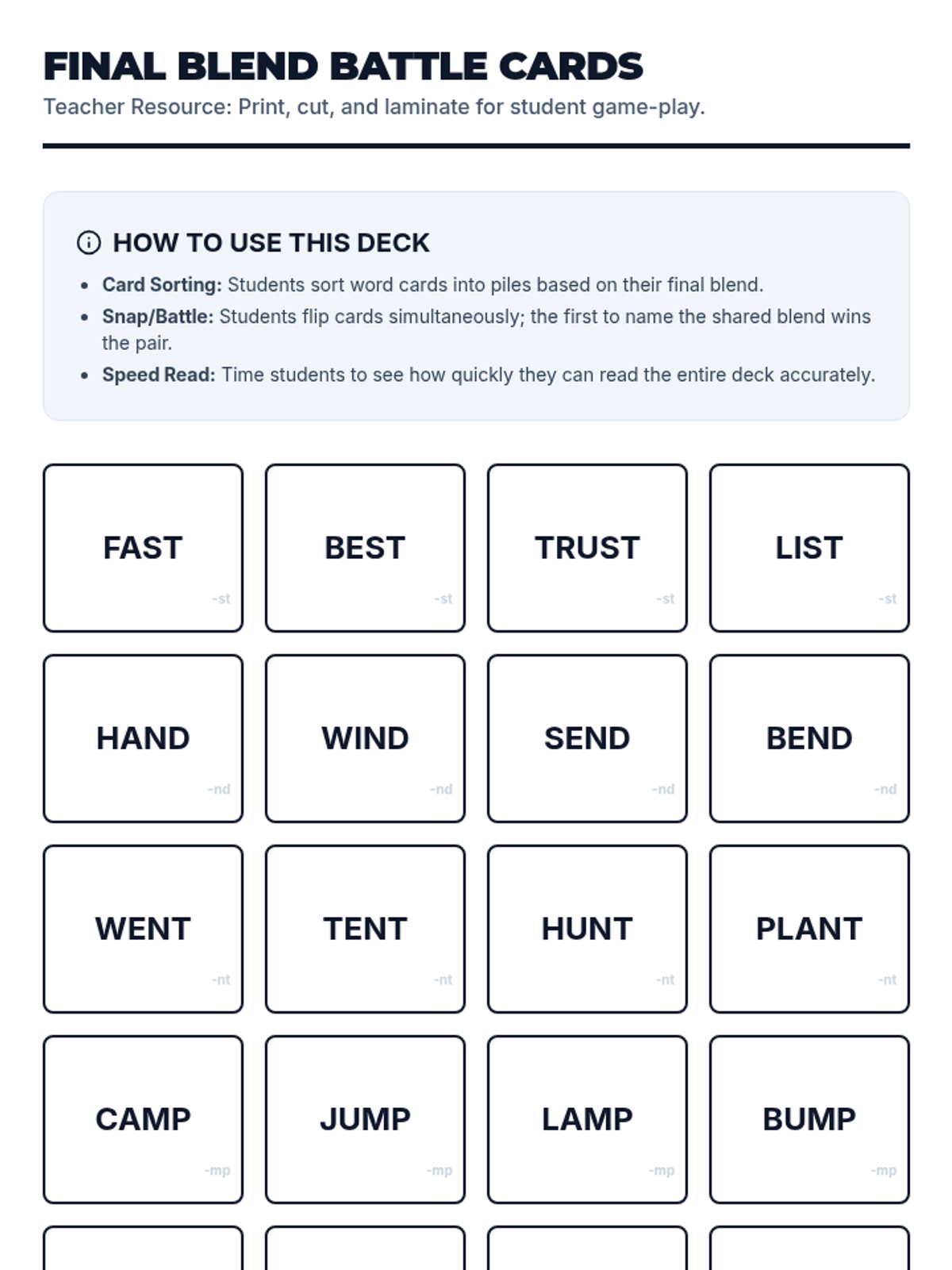
This sequence systematically builds foundational decoding skills for 3rd-grade ESL learners, covering consonant clusters, digraphs, silent 'e', vowel teams, and multisyllabic word decoding through a 'Sound Detectives' theme.
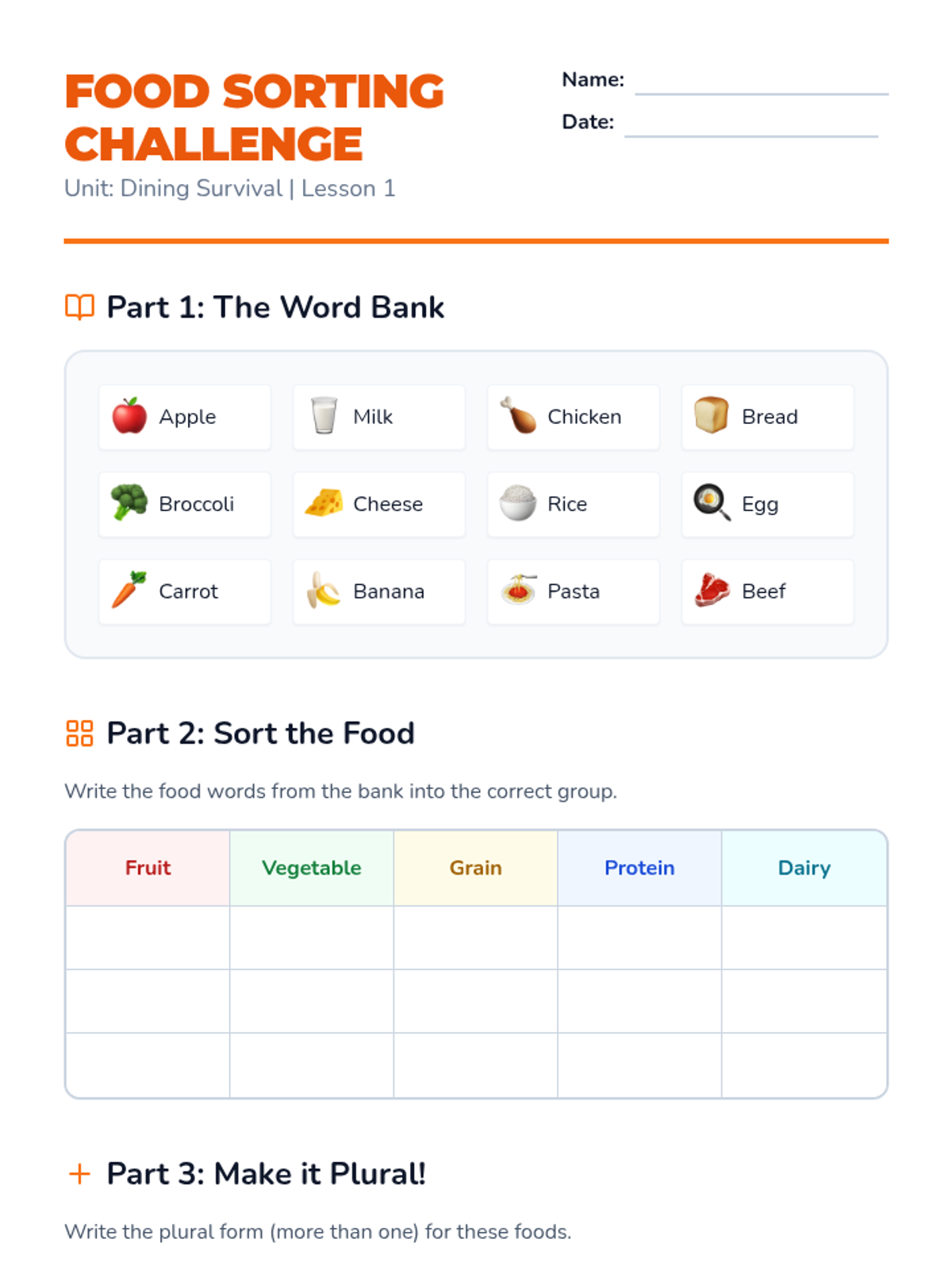
A 5-lesson sequence for beginner ESL students focused on food vocabulary and dining transactions, moving from basic identification to full-scale cafeteria simulations.
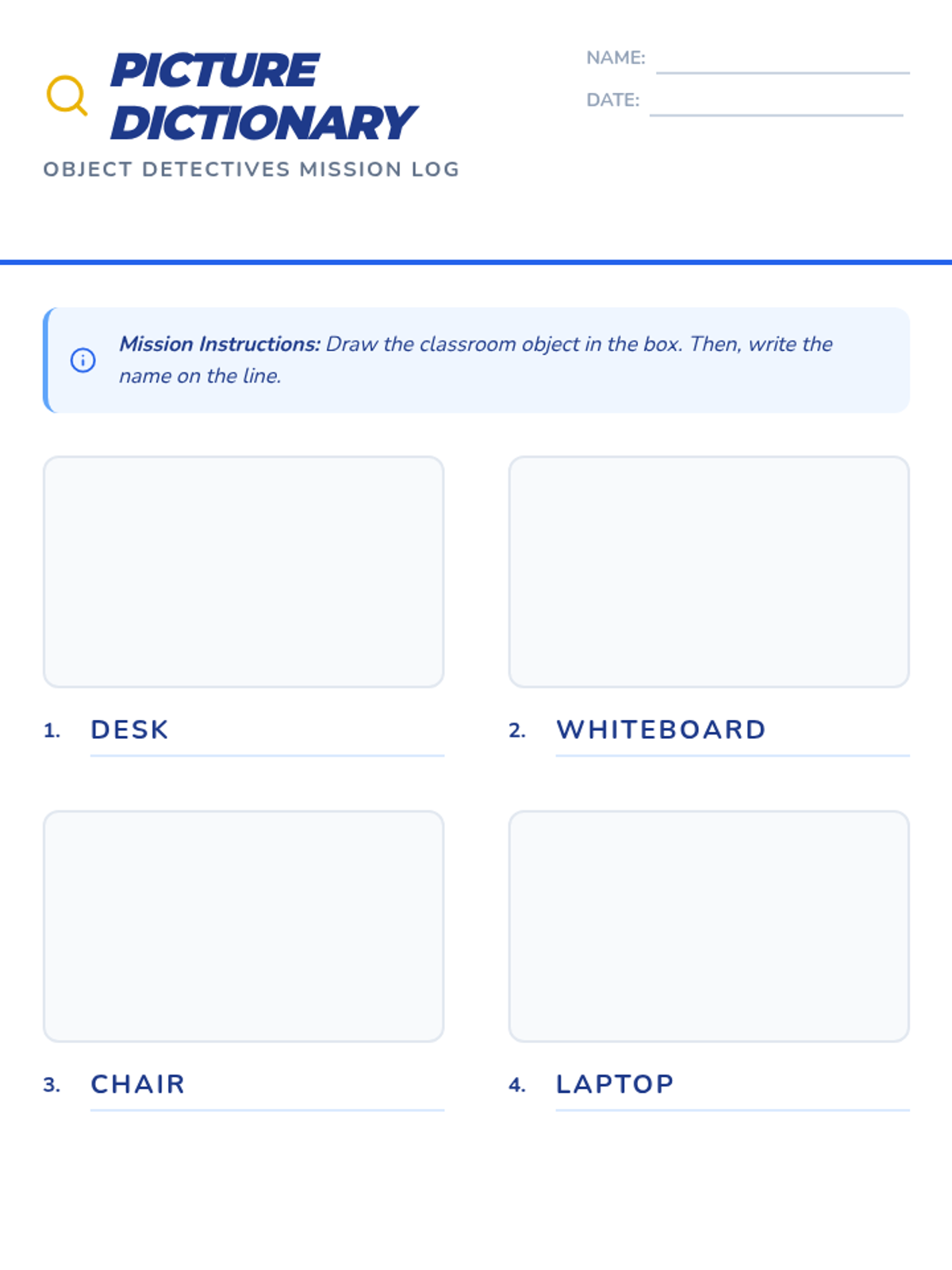
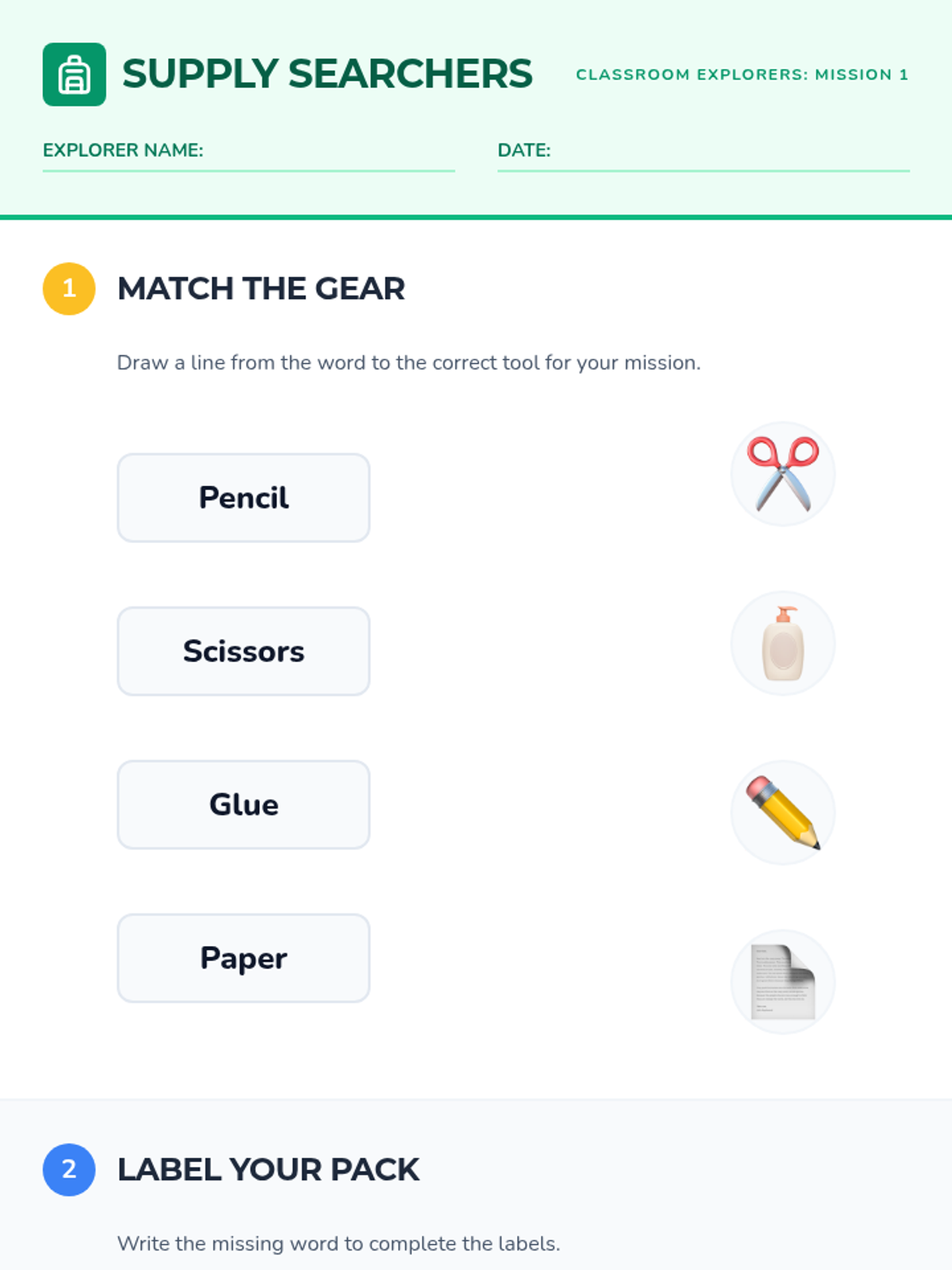
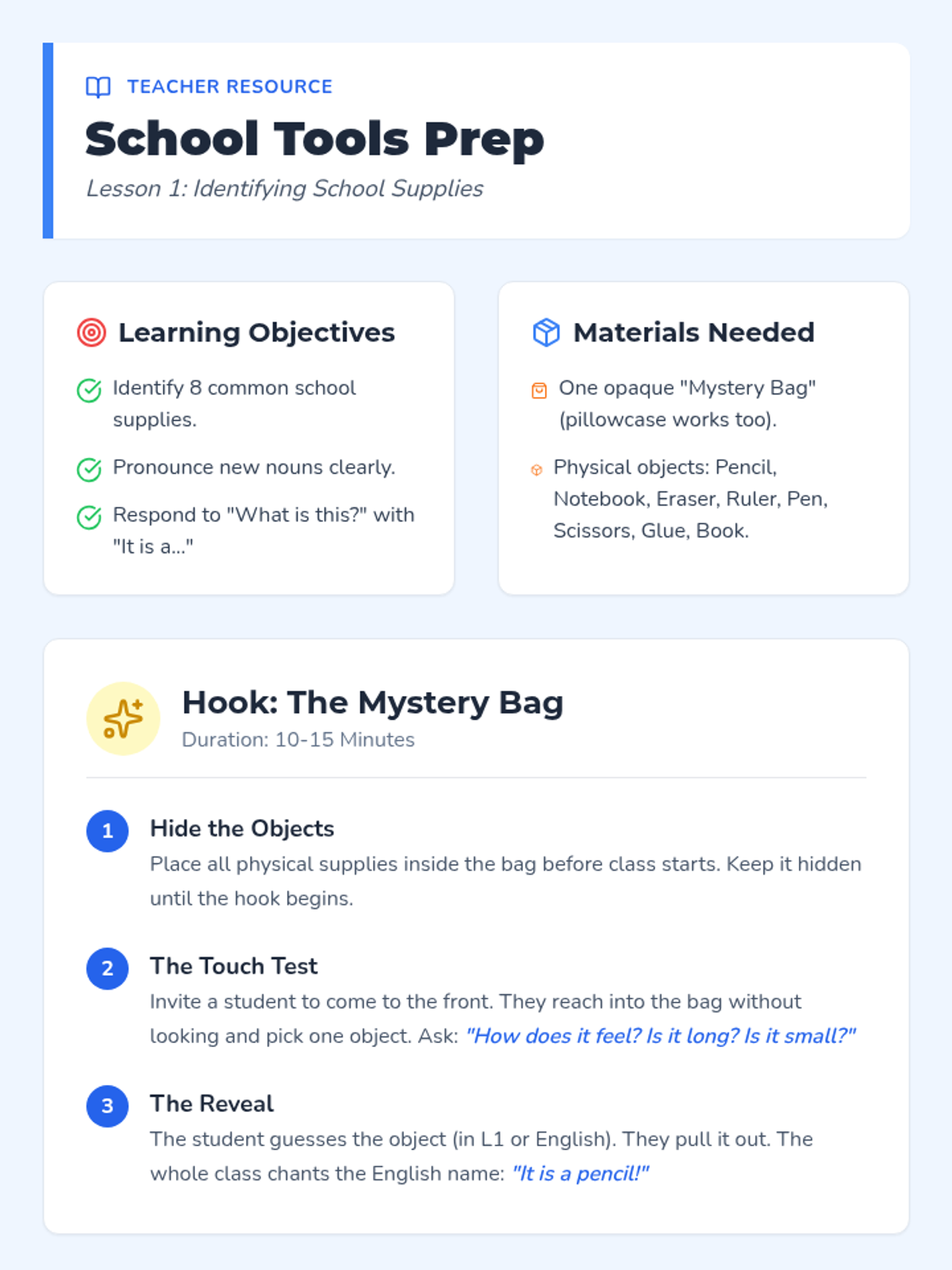
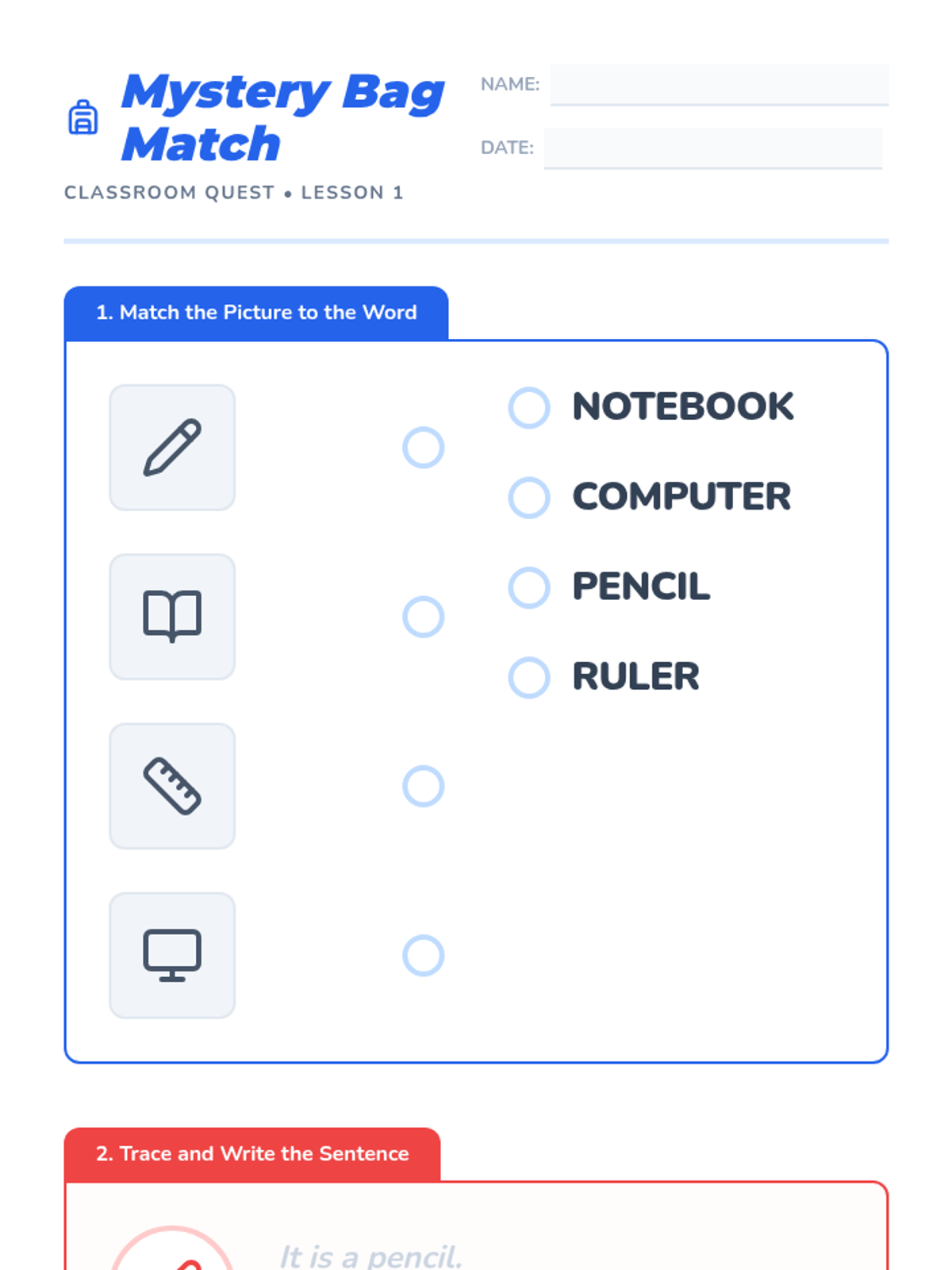
A 5-lesson unit for beginner English Language Learners (ELLs) focusing on classroom objects, instructional commands, colors, numbers, and prepositions. The sequence uses Total Physical Response (TPR) and gamified activities to build foundational vocabulary.
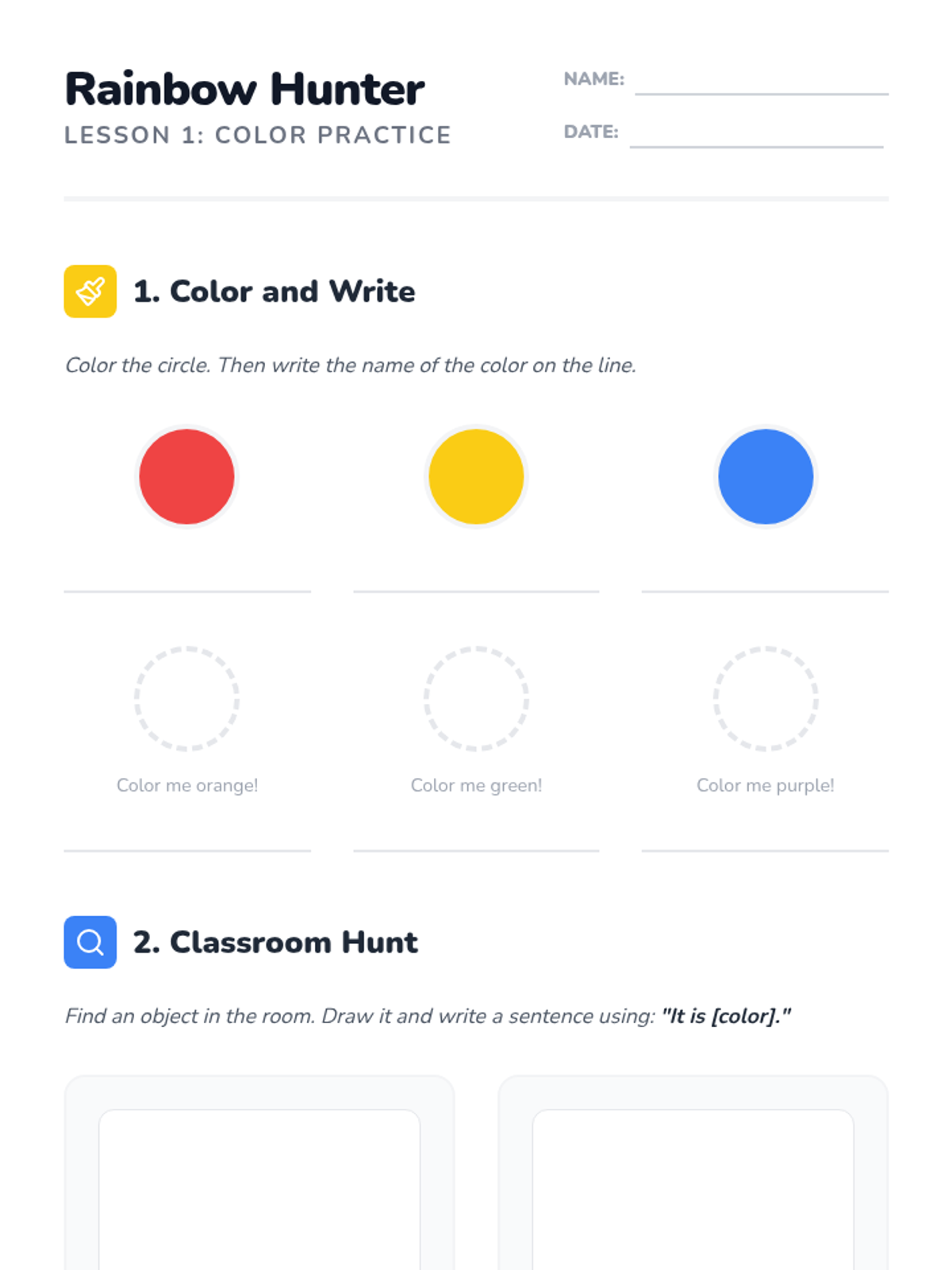
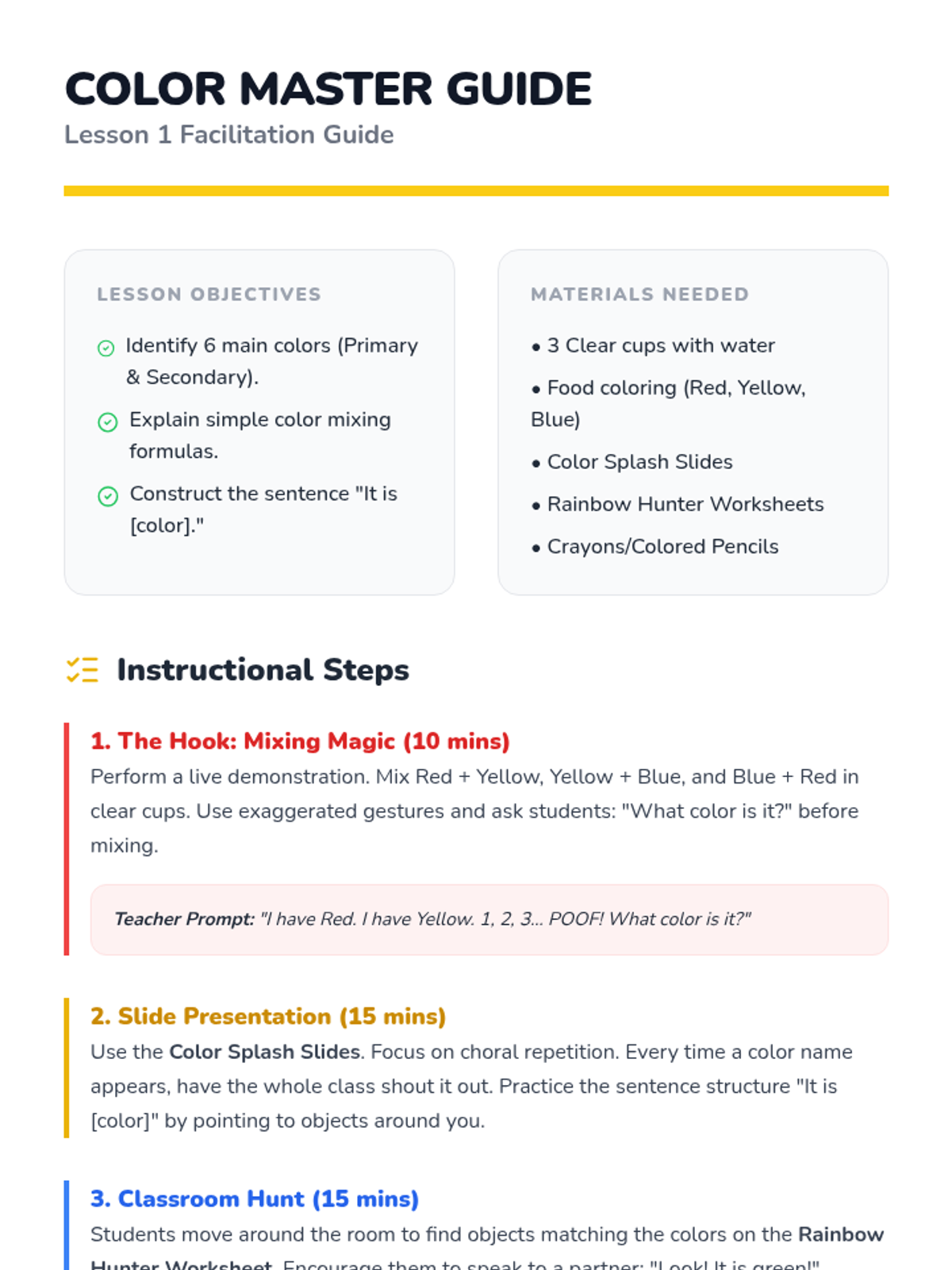
A 5-lesson sequence for beginner English Language Learners focused on describing the world using colors, numbers, shapes, and sizes. Students progress from basic attribute identification to constructing complex descriptive phrases, culminating in a creative 'Dream Shop' project.
A 5-lesson sequence for 3rd-grade ESL beginners focusing on classroom vocabulary, numbers, colors, commands, and prepositions through an explorer-themed adventure.
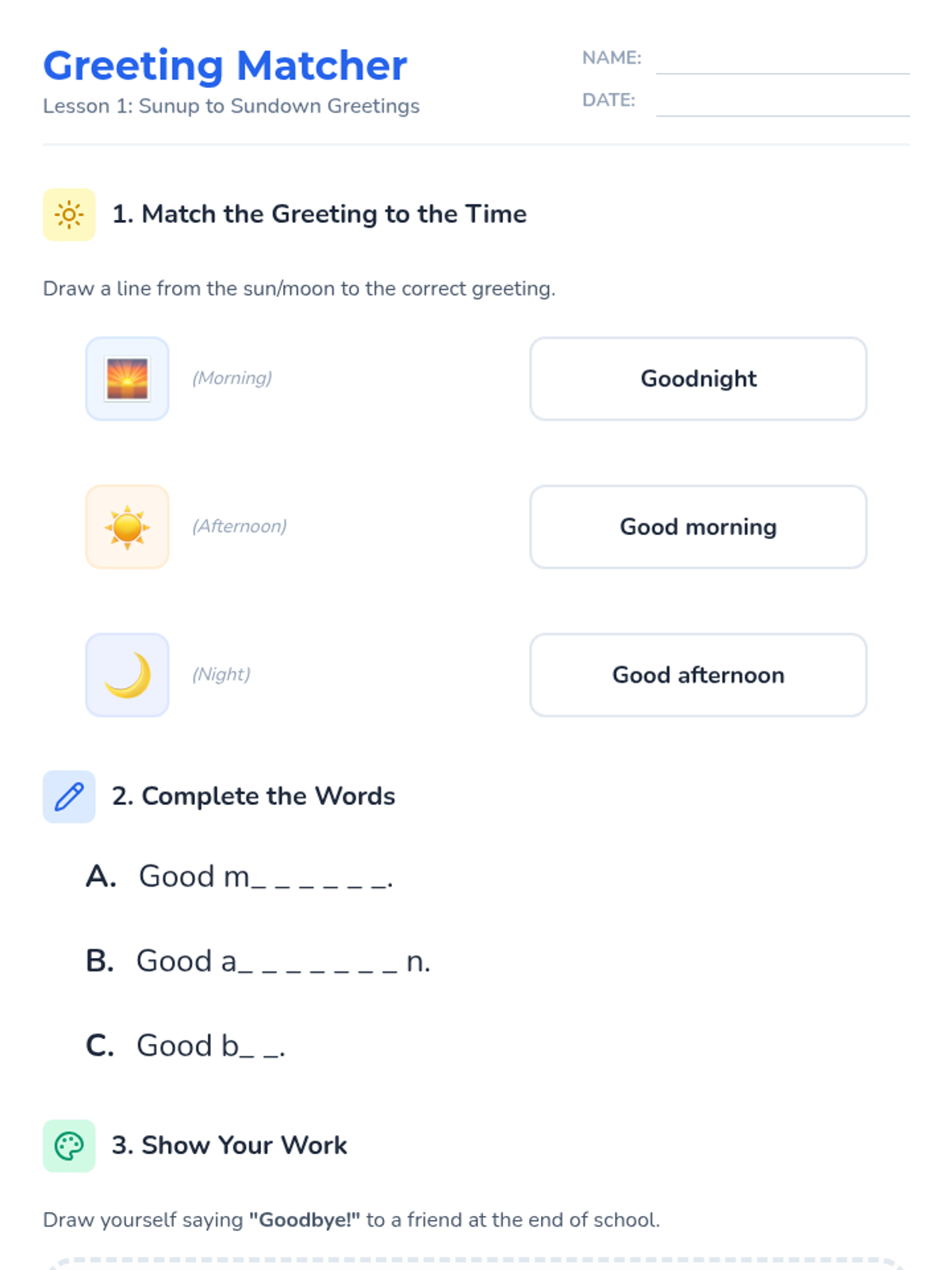
This beginner ELL sequence for 3rd graders covers essential social greetings, self-introductions, expressing emotions, and polite phrases. Through interactive games and simulations, students build the confidence to navigate first-time encounters in English.
A comprehensive unit for beginner English Language Learners to master basic classroom vocabulary, common furniture, imperative commands, and prepositions of place through hands-on, gamified activities.
A 5-lesson unit for 3rd graders focused on active listening, identifying signal words, visualizing information, summarizing spoken content, and following multi-step directions. Students transition from physical listening habits to complex auditory processing through interactive simulations and games.
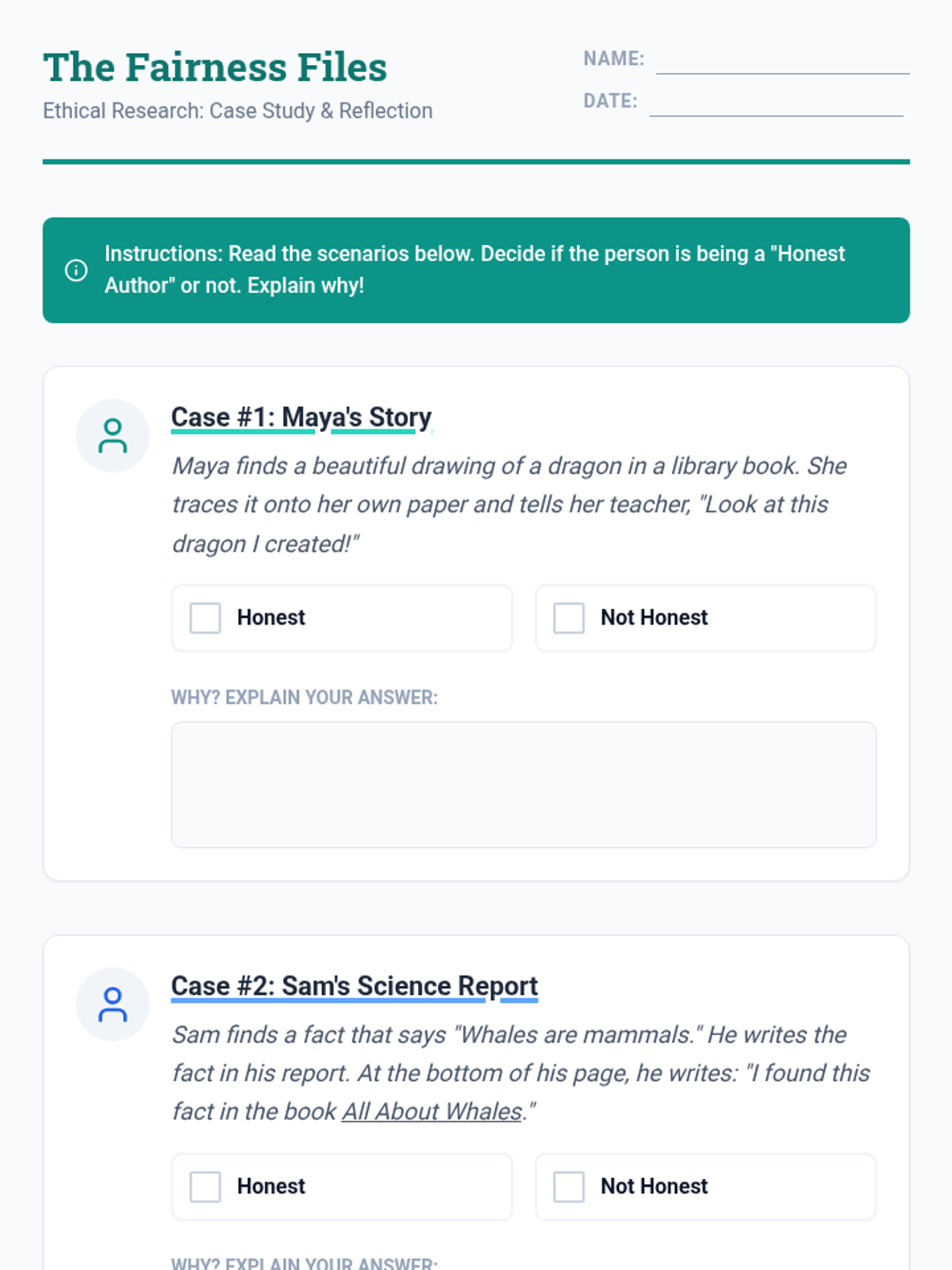
This 3rd-grade ESL sequence teaches students the foundations of academic integrity, focusing on why and how to give credit to authors. Students learn to locate bibliographic information, format simple citations, and synthesize research notes into a final product with a proper source list.
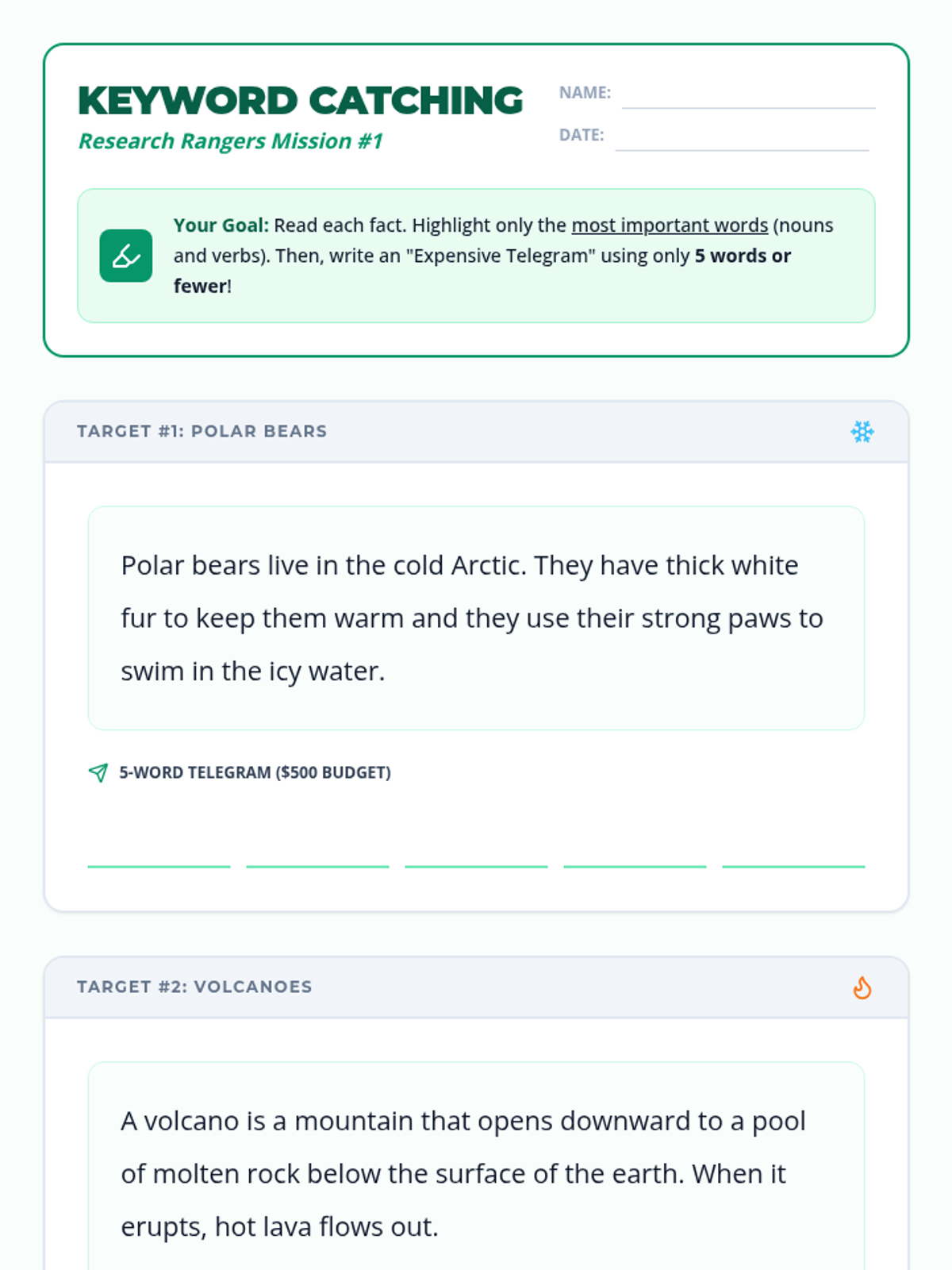
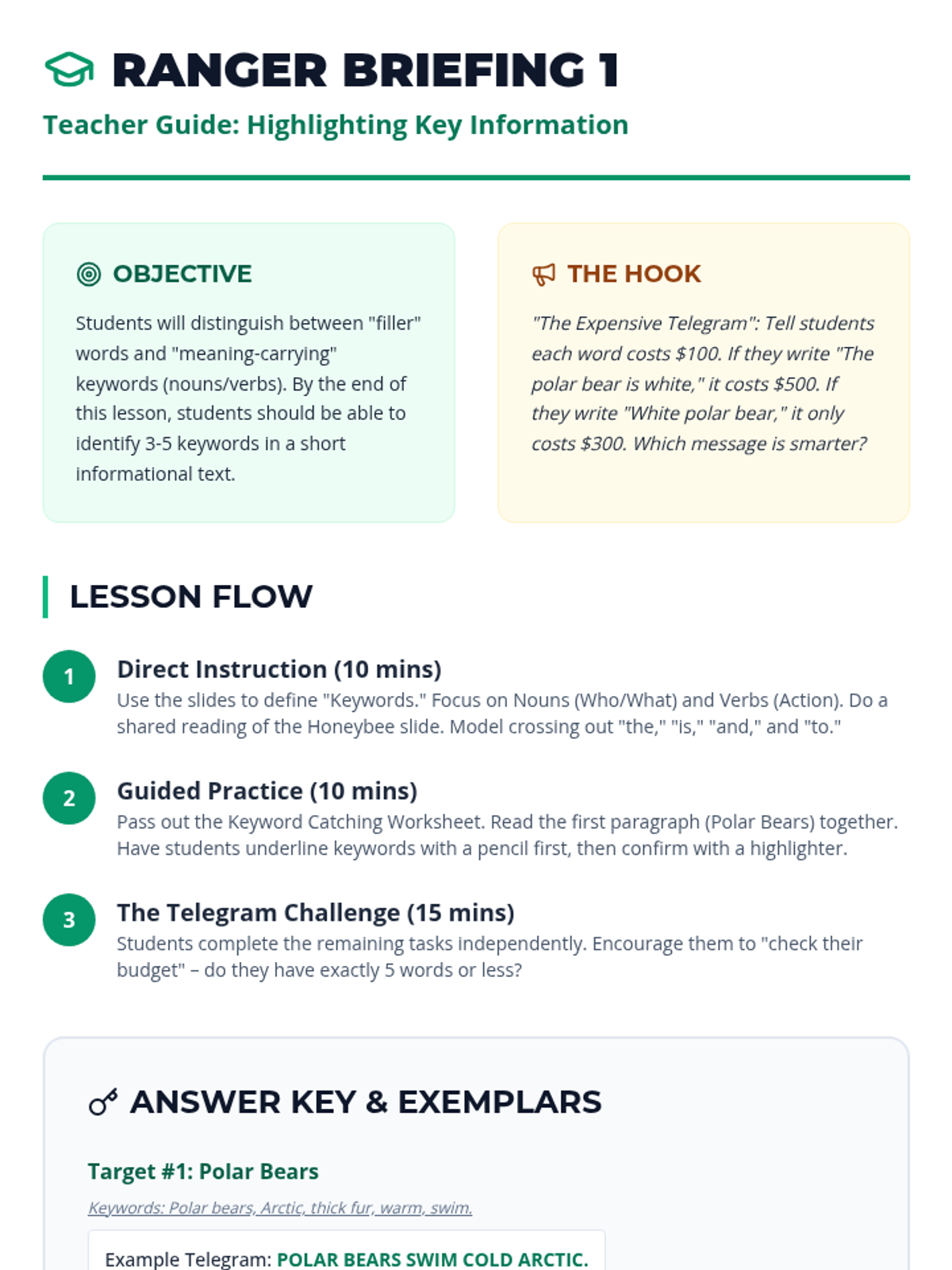
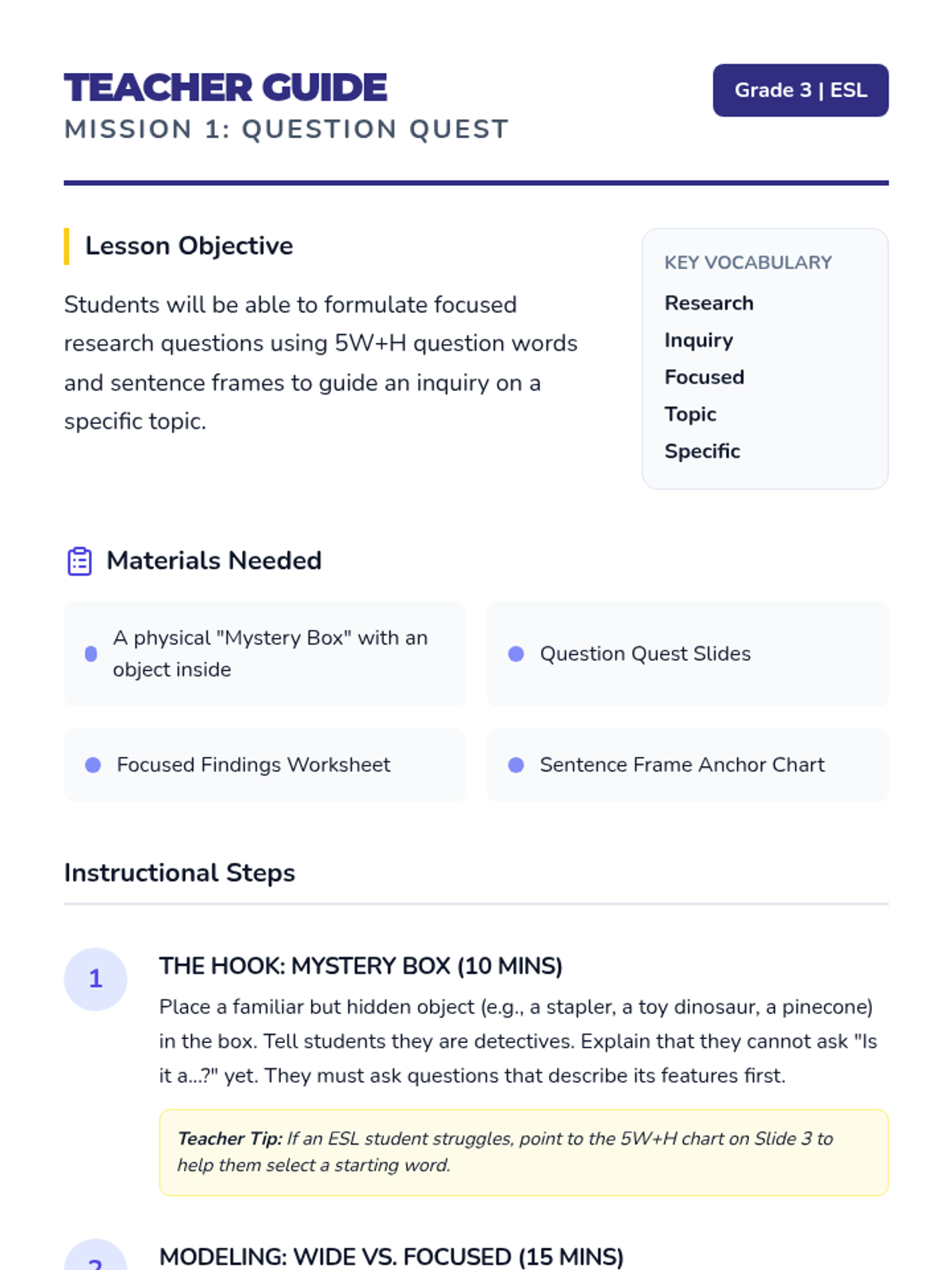
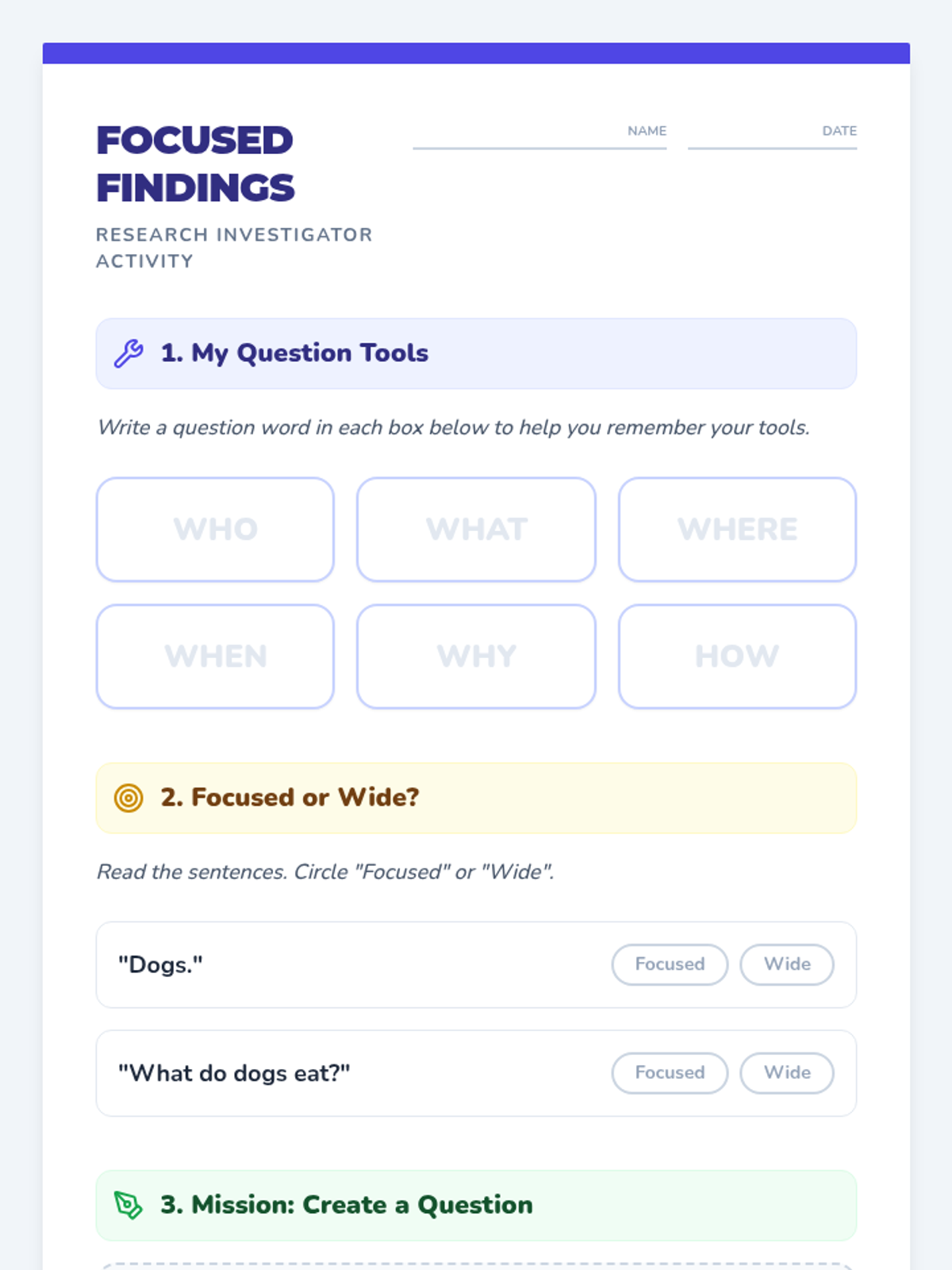
A 5-lesson unit for 3rd grade ESL students on foundational research skills, focusing on formulating questions, using keywords, navigating text features, and evaluating source relevance.
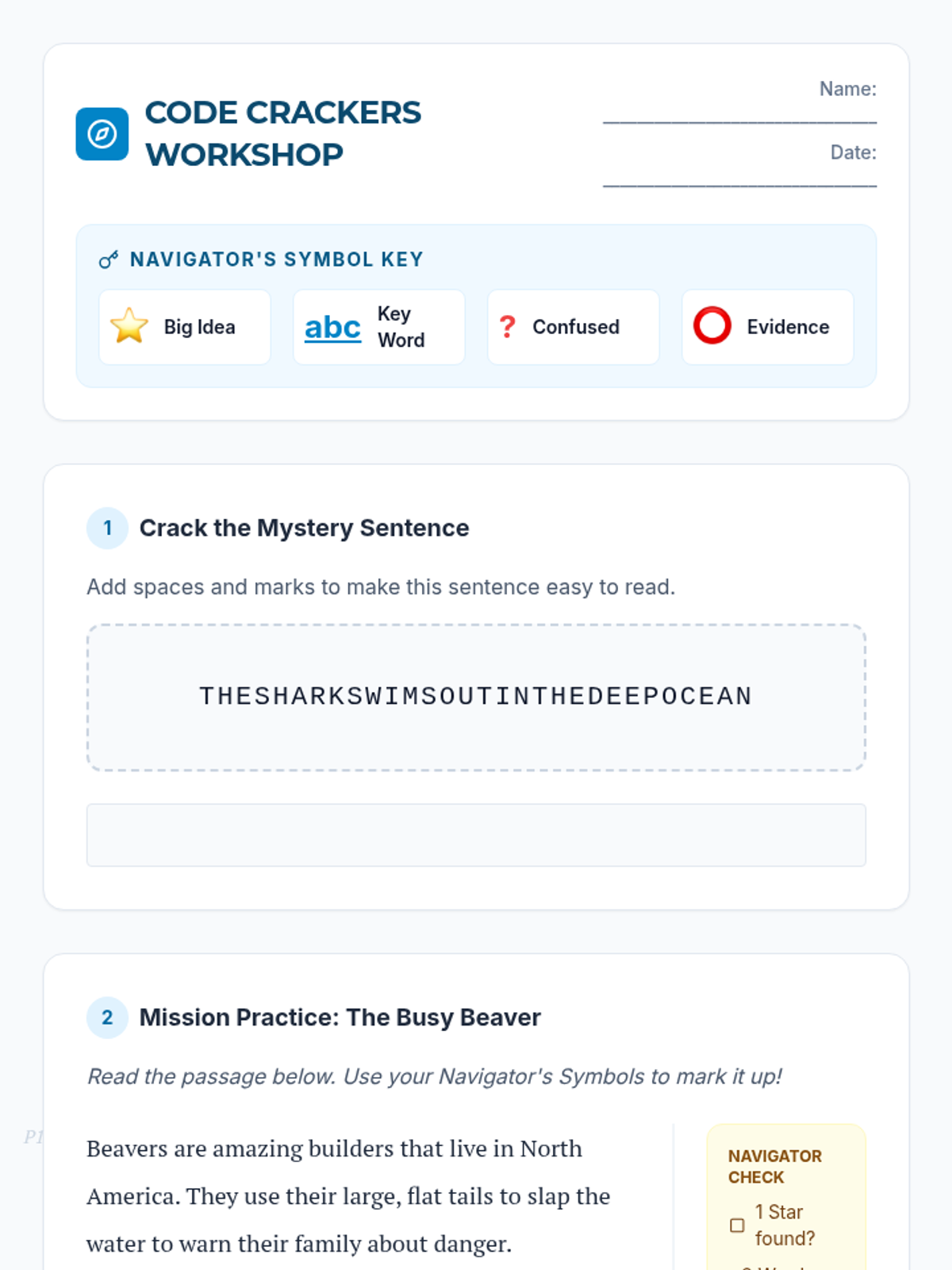
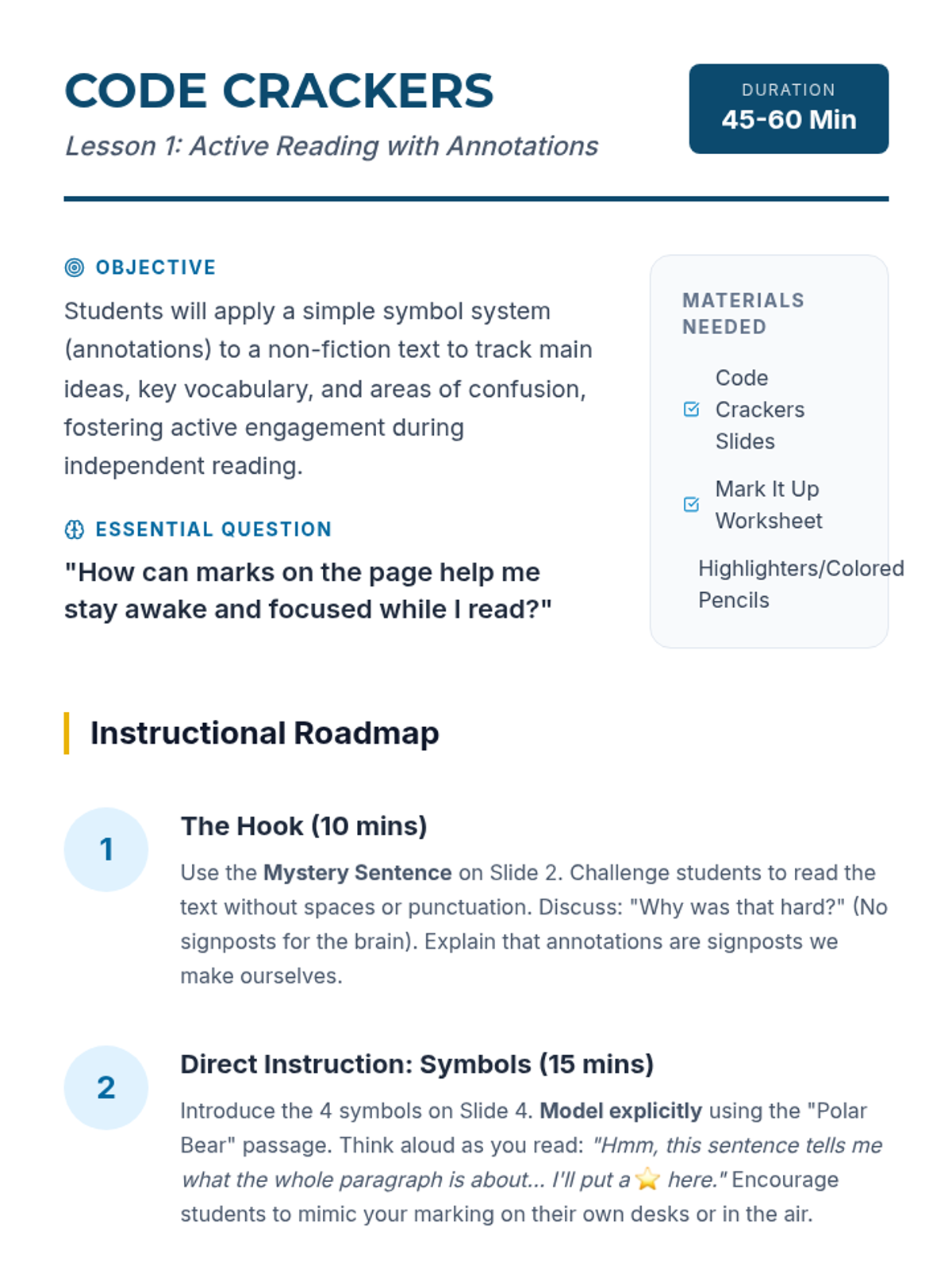
A comprehensive 3rd-grade sequence focused on transition from passive to active reading for ESL students, mastering annotation, summarization, and visual analysis strategies.
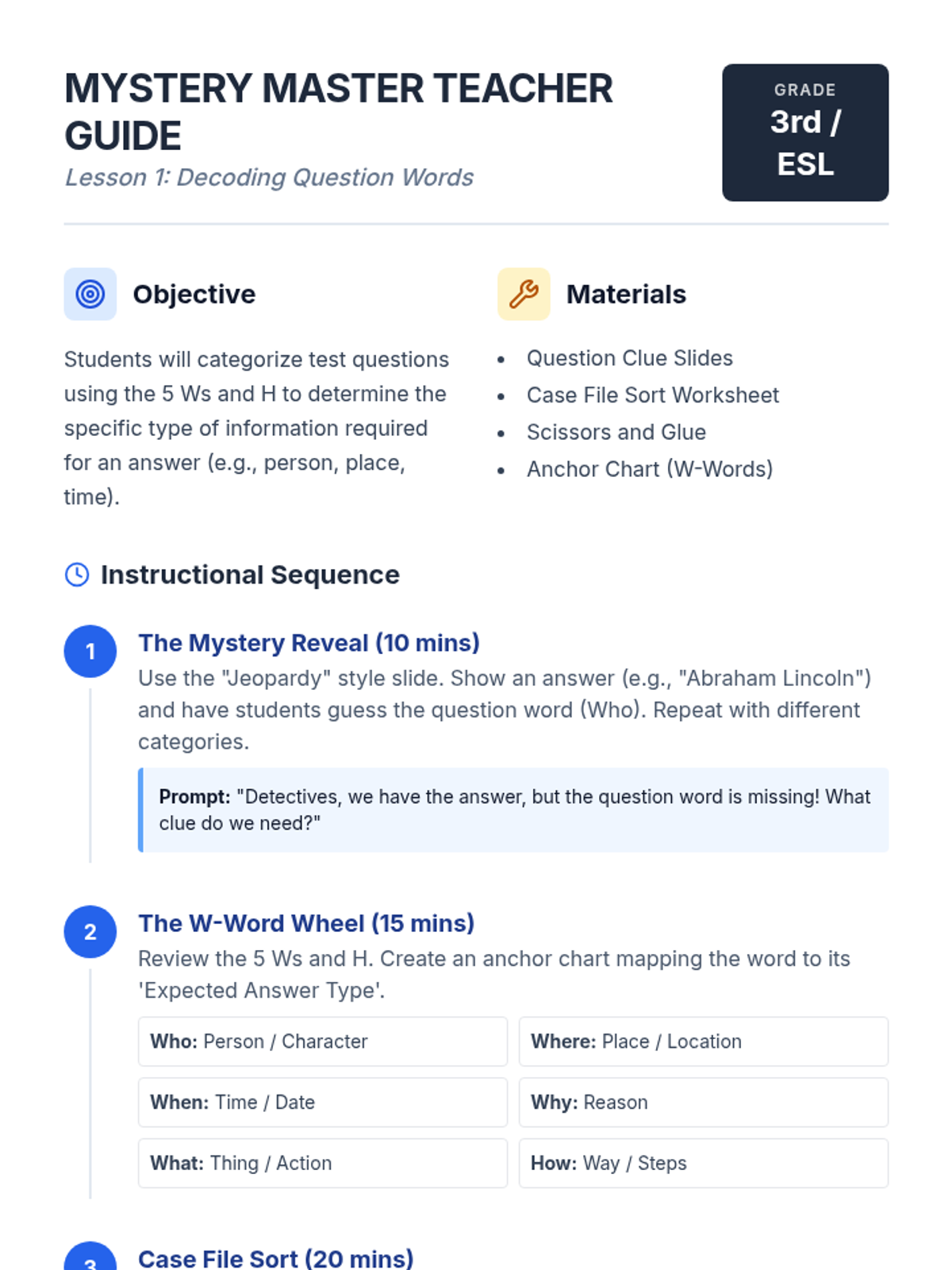
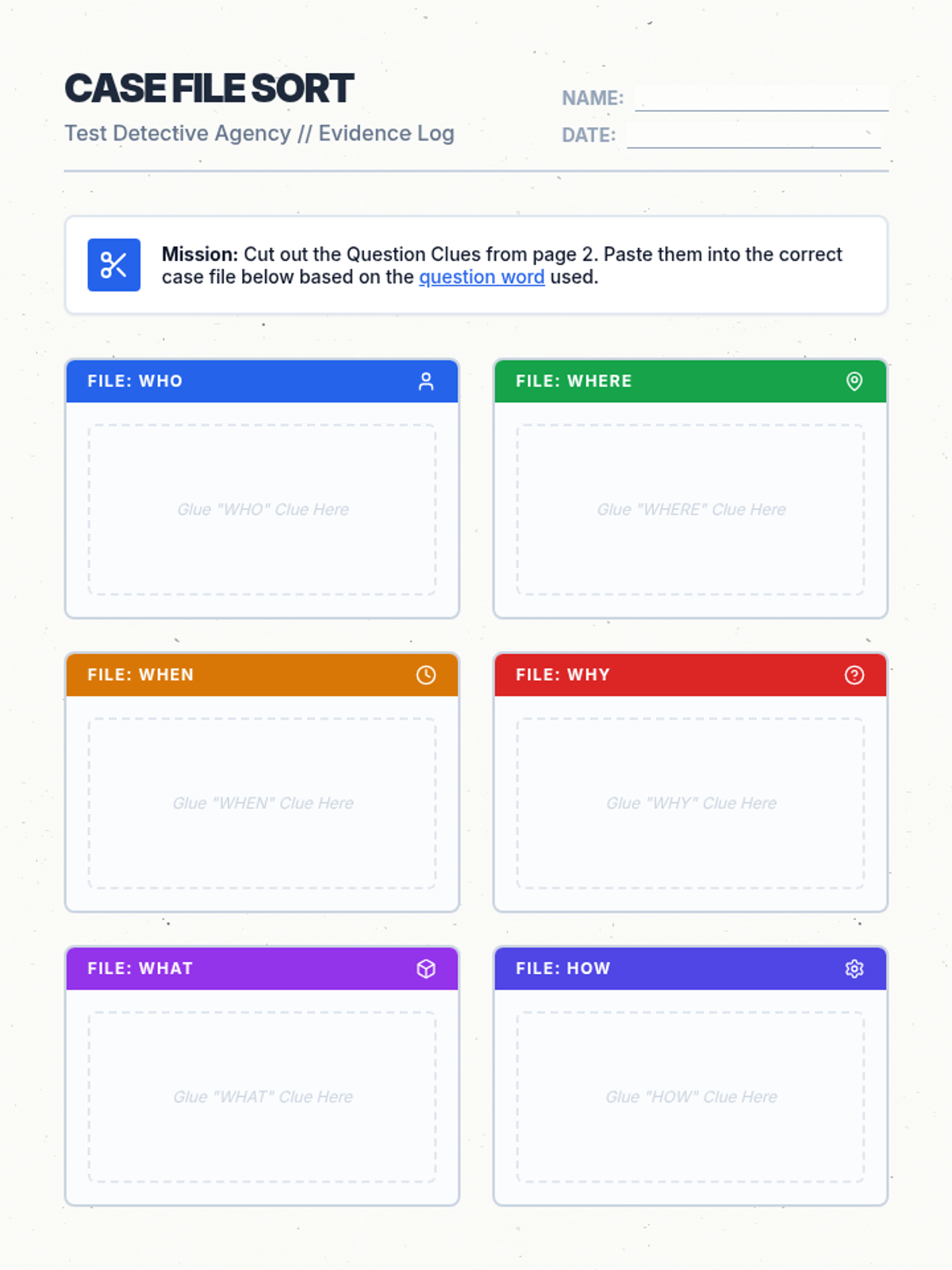
A 5-lesson unit for 3rd Grade ESL students focused on dissecting test questions, identifying academic verbs, and predicting answers to improve test-taking performance. Students act as 'Test Detectives' to uncover the requirements of various question types and provide evidence for their answers.
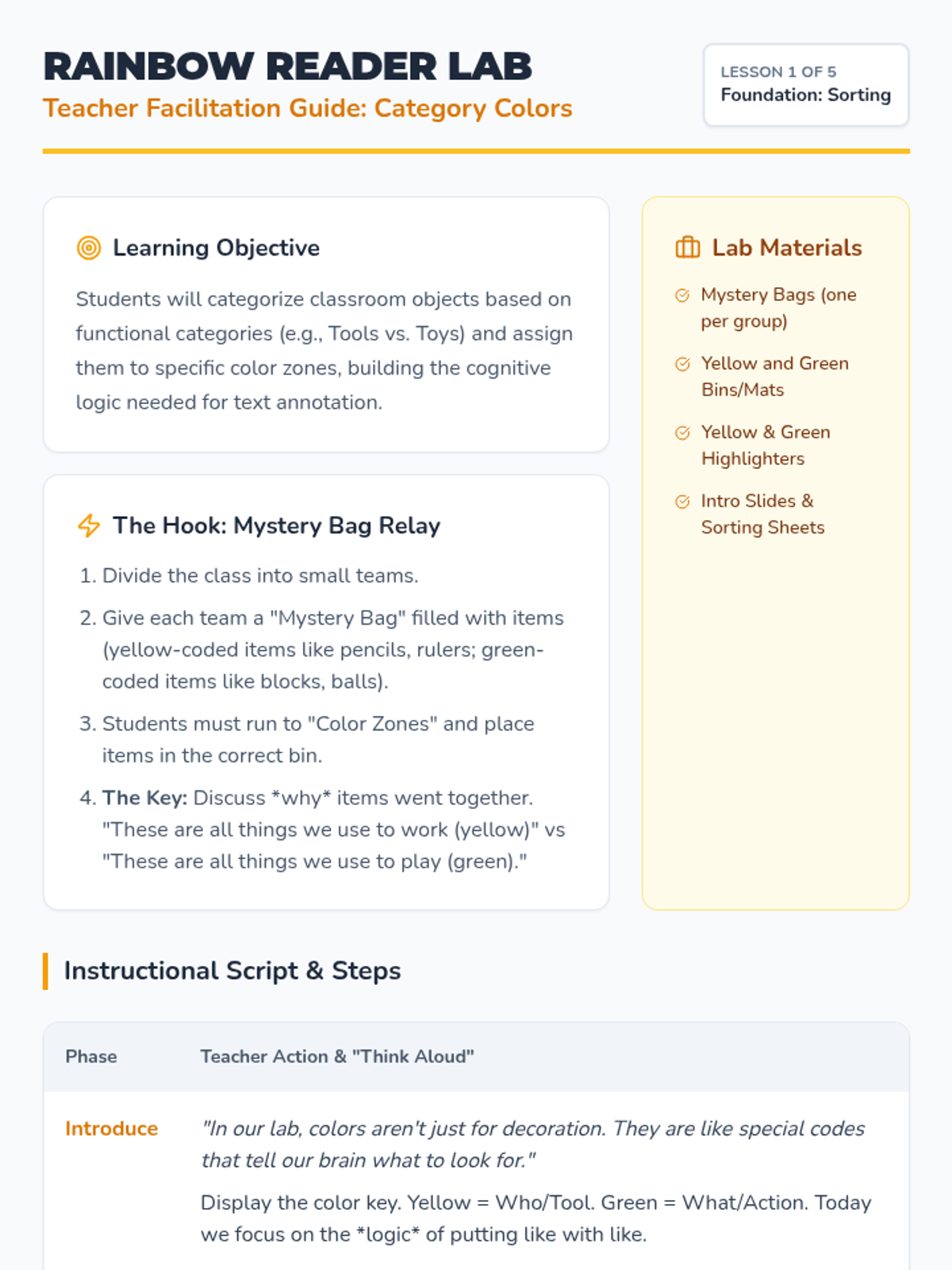
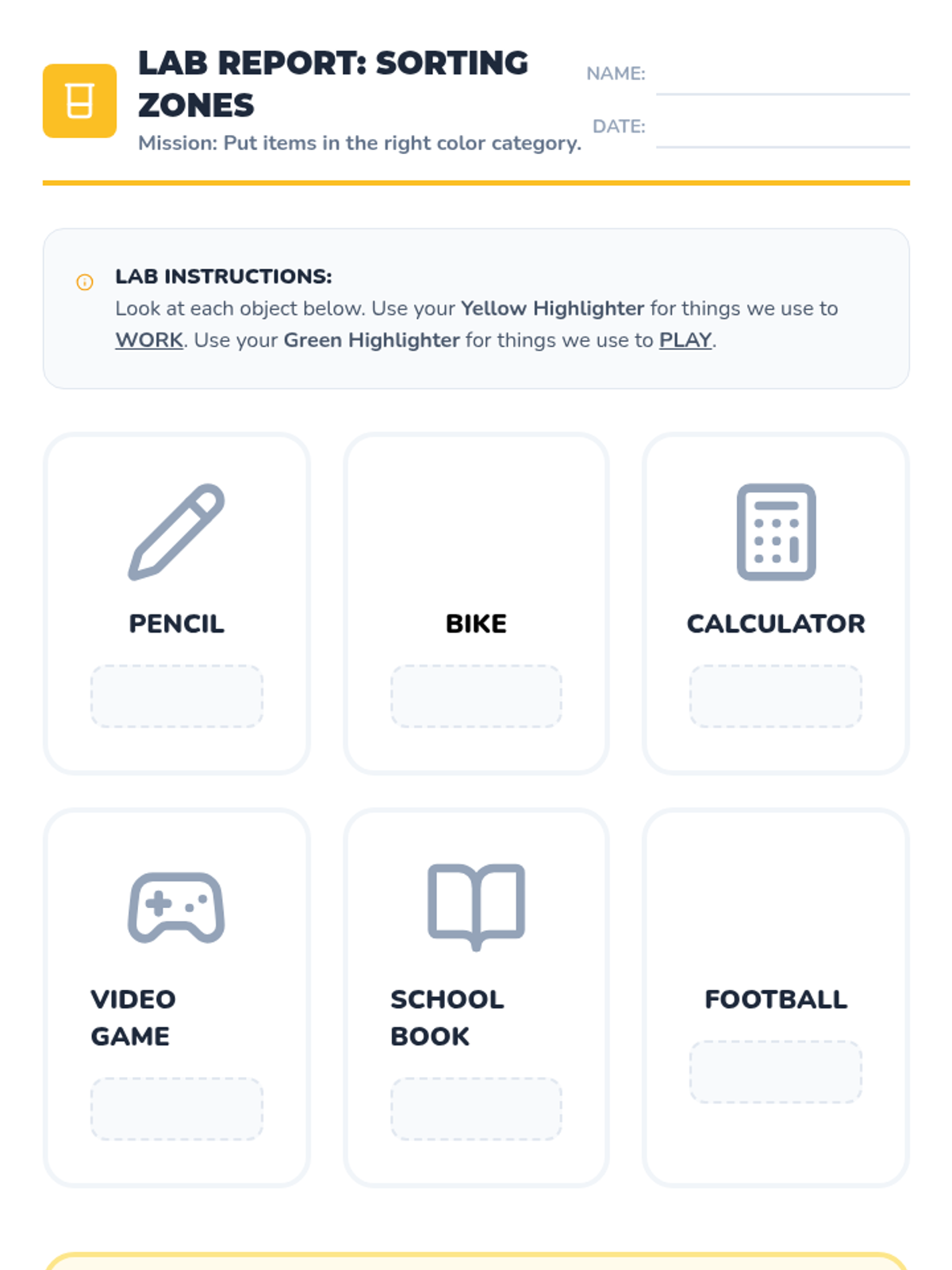
A 5-lesson sequence for 3rd-grade students focused on using a color-coded highlighting system (Yellow for 'Who', Green for 'What') to improve reading comprehension and text organization. This workshop-style unit moves from physical sorting to multi-color text annotation and summarization.
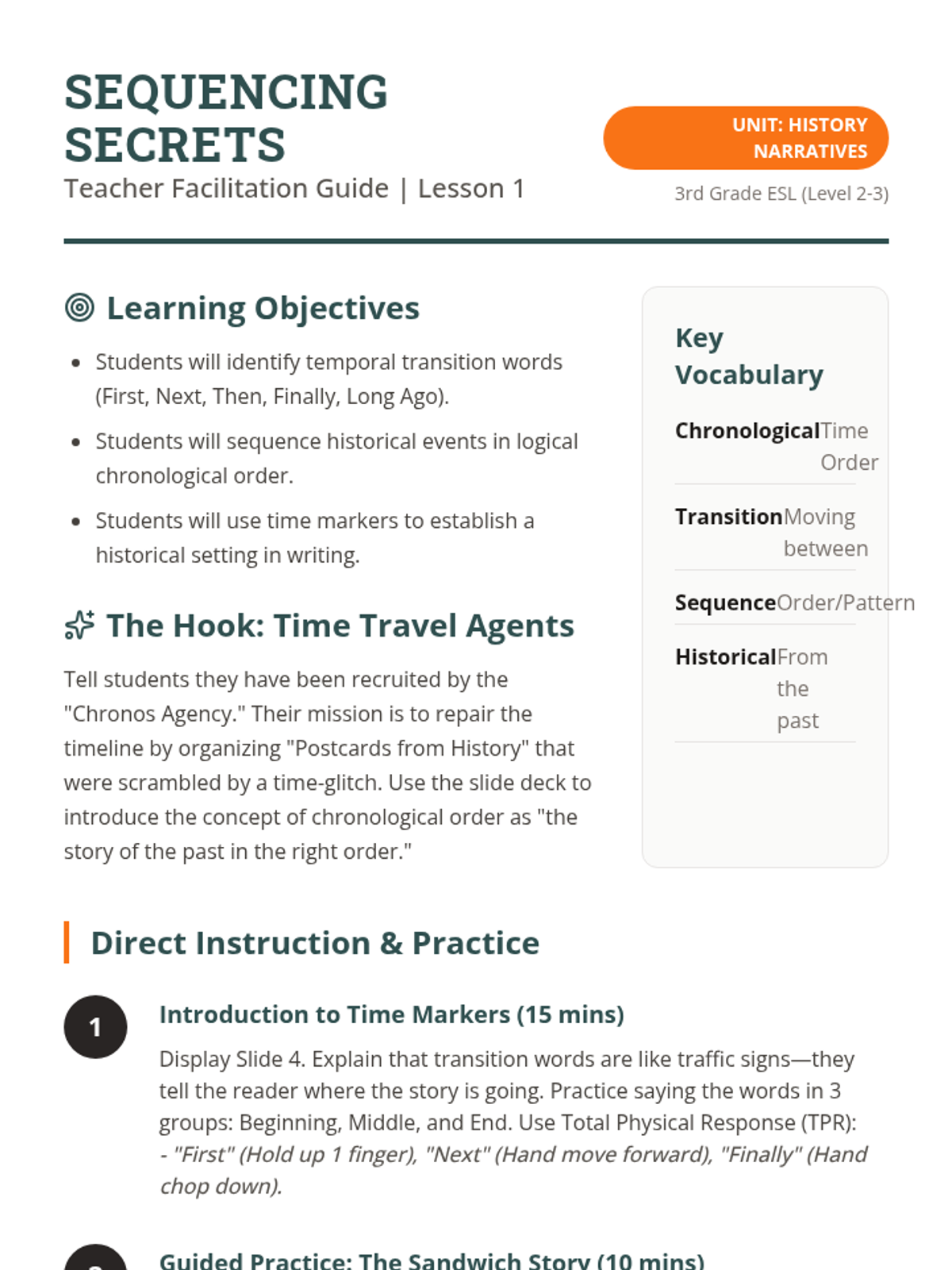
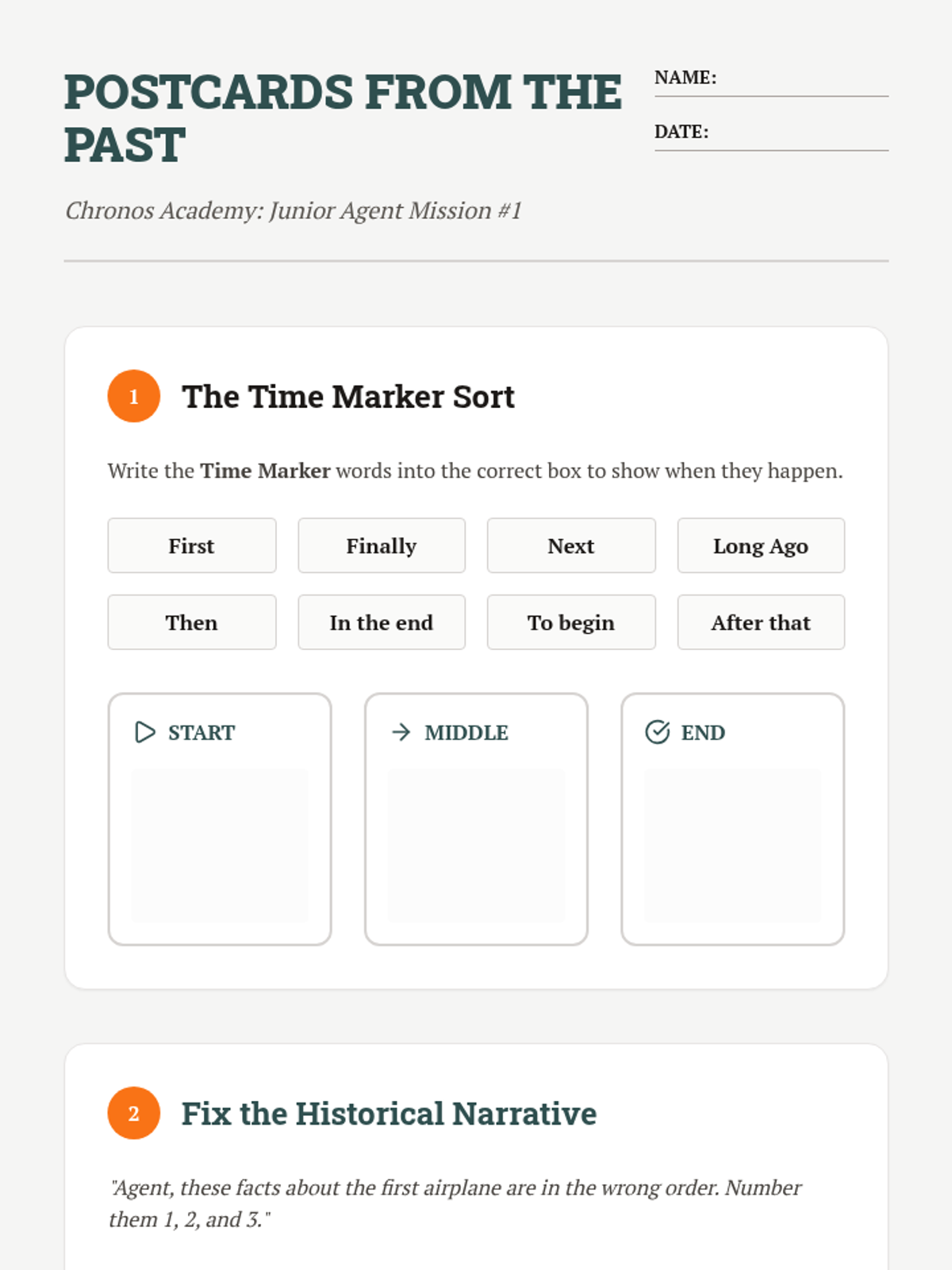
This sequence helps 3rd-grade ESL students master chronological language through social studies content. Students will learn to use transition words, past tense verbs, and biographical structures to tell stories of the past.
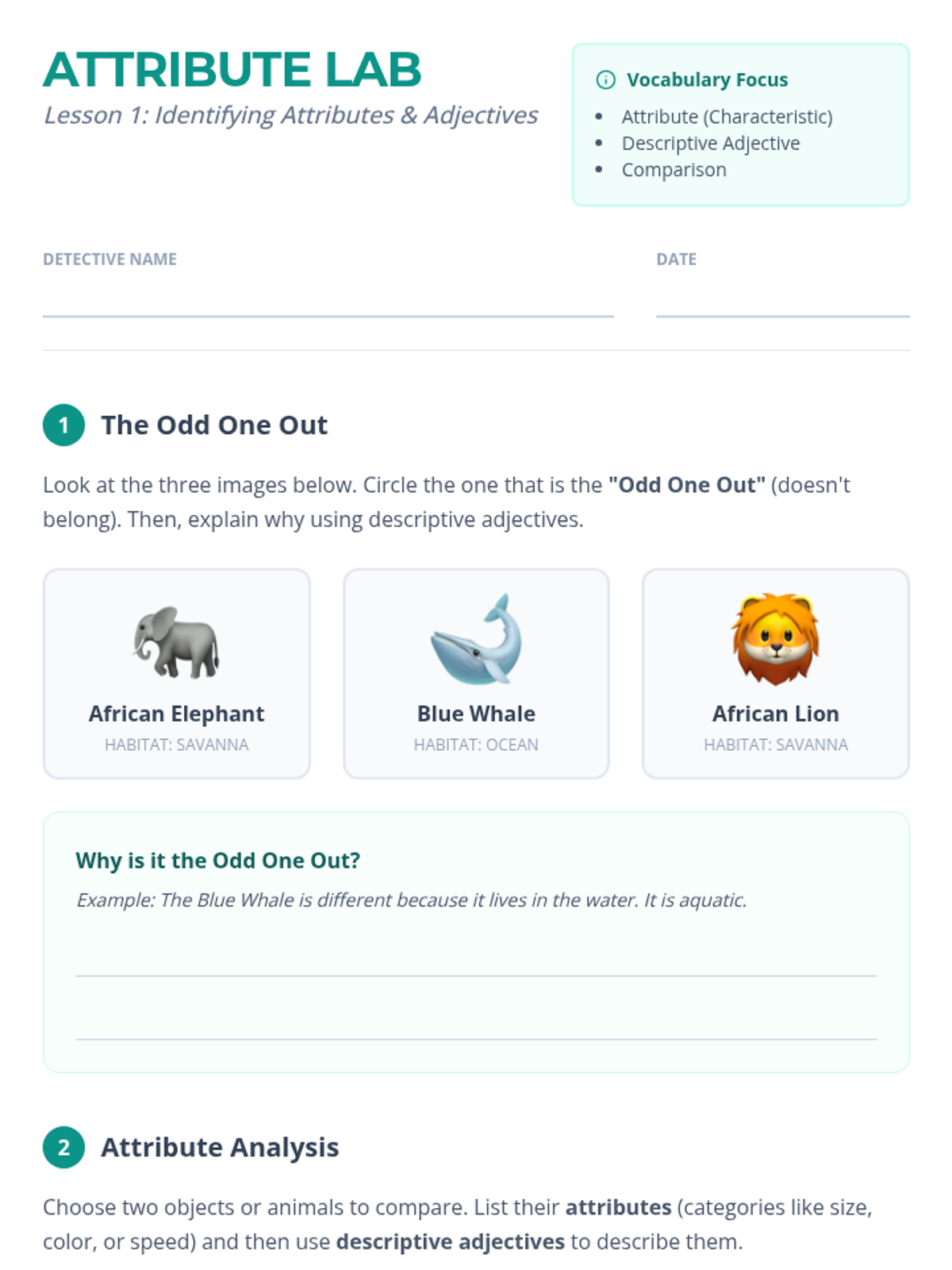
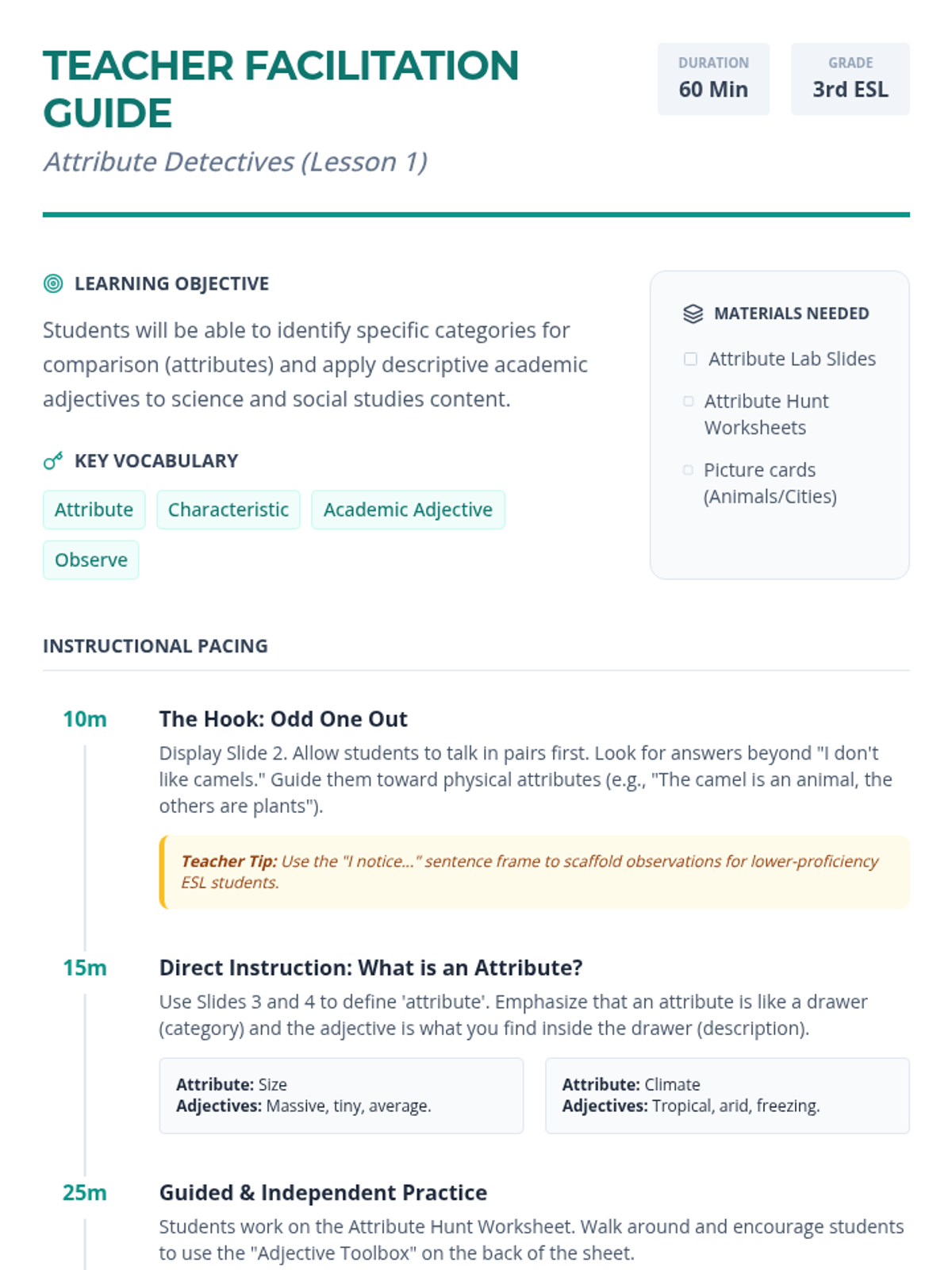
A comprehensive ESL sequence for 3rd graders focused on the language of comparative analysis. Students move from identifying attributes to constructing complex sentences and writing full comparative reports using content from science and social studies.
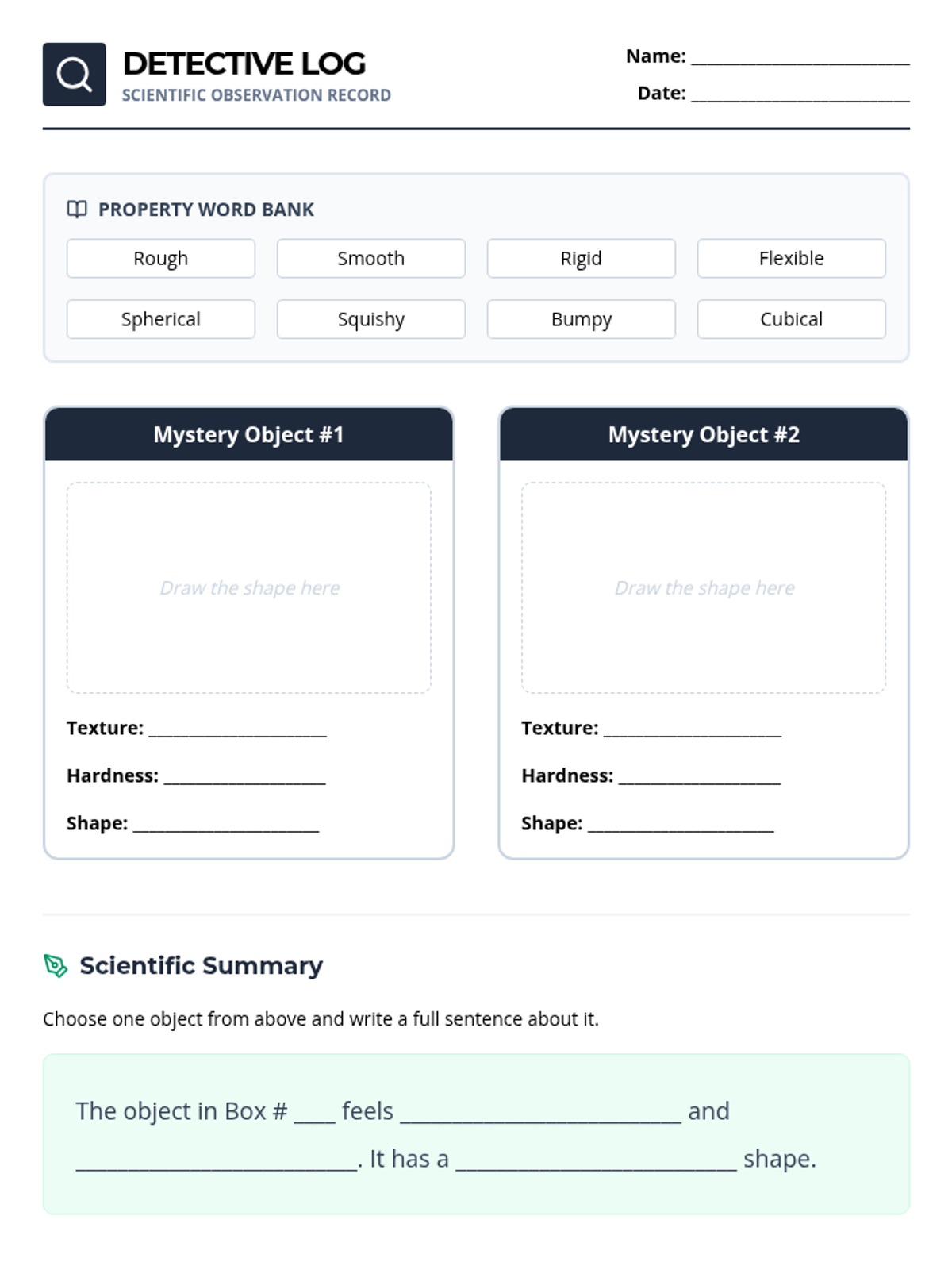
This inquiry-based sequence focuses on the specific language structures required to describe scientific phenomena, specifically cause-and-effect relationships and hypothesis generation for 3rd-grade ESL students. Students progress from sensory observation and vocabulary building to using complex sentence frames and drafting full scientific explanations.
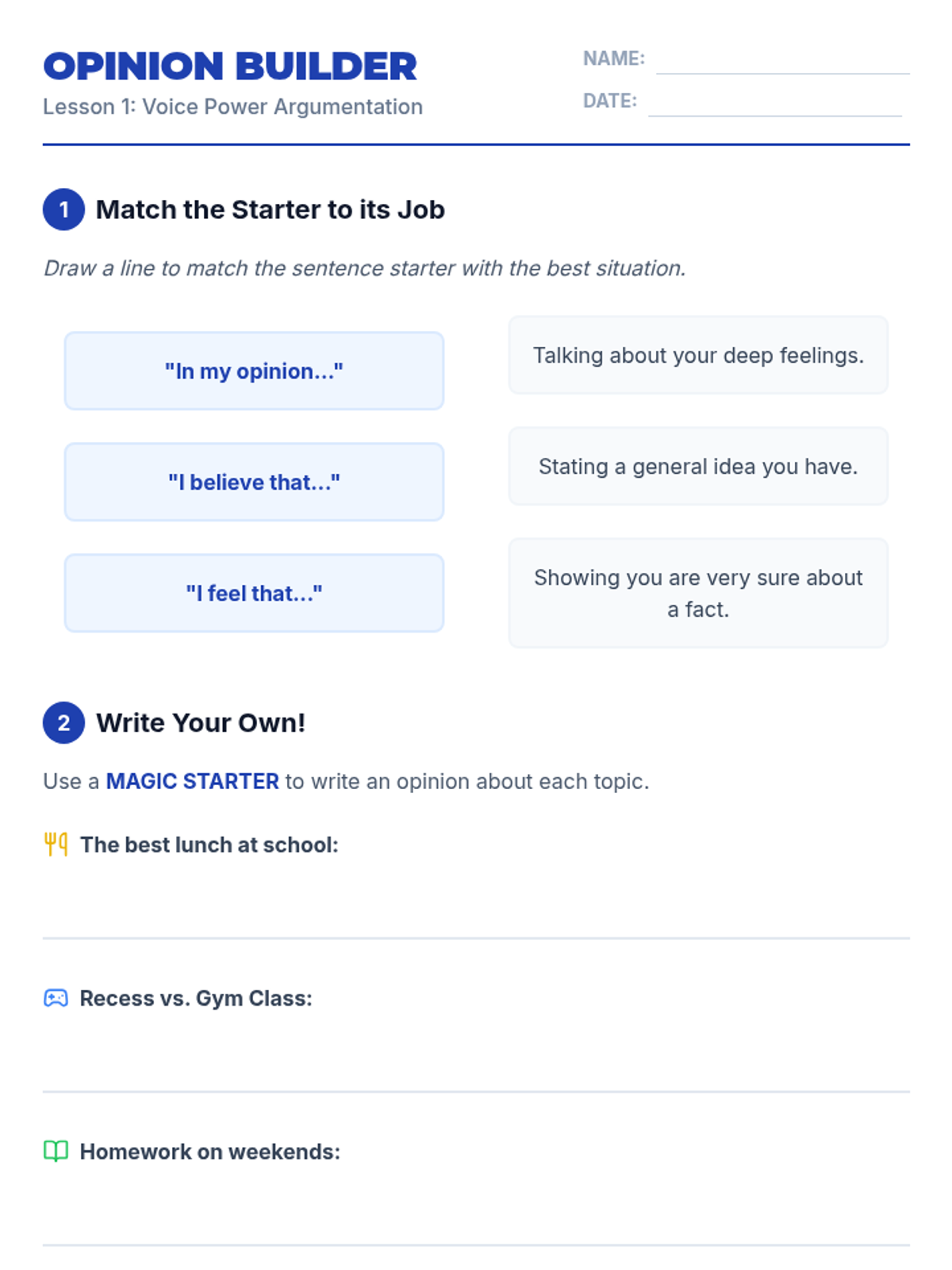
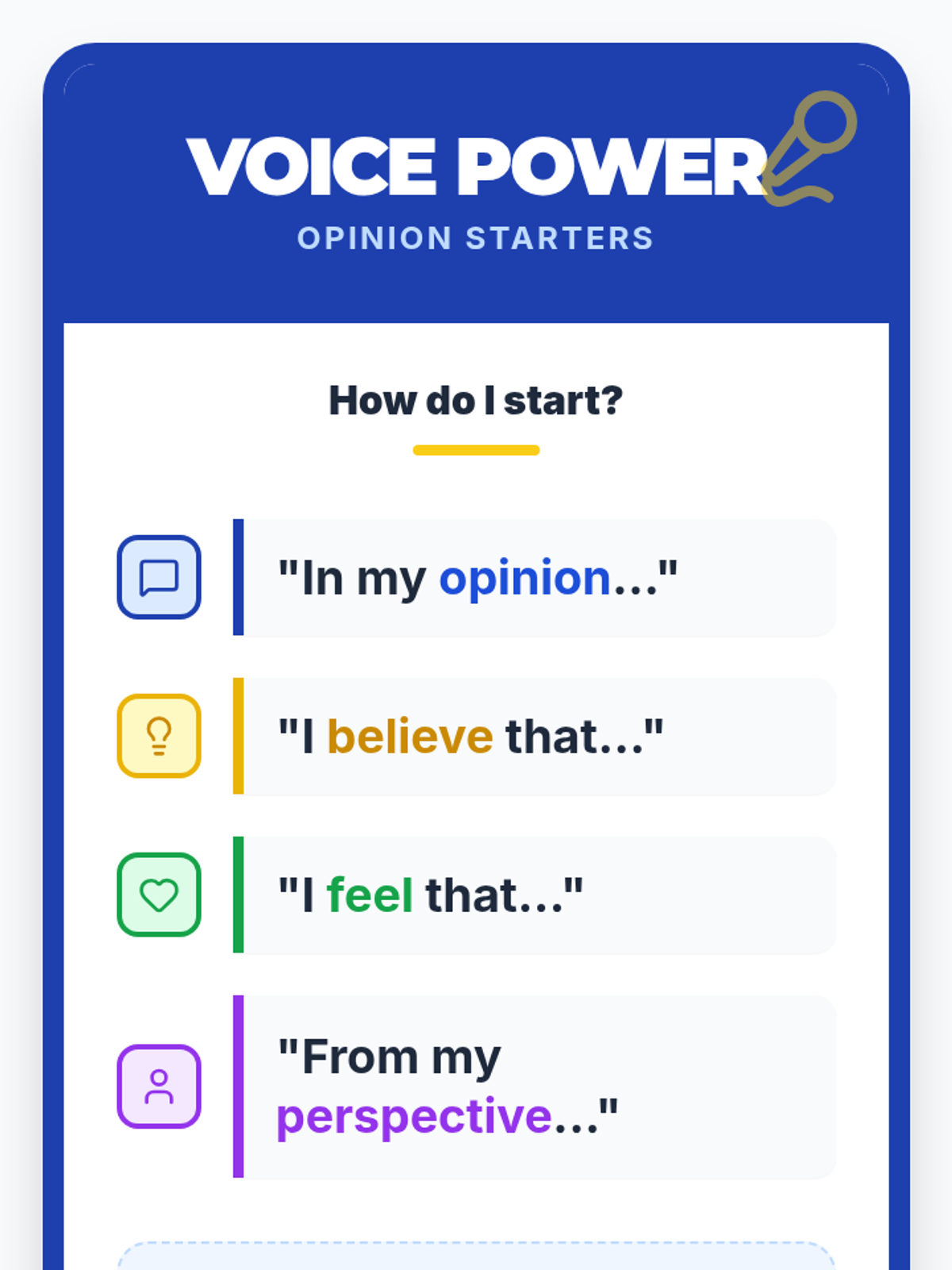
This sequence guides 3rd Grade ESL students through the process of forming opinions, justifying them with logic, and engaging in respectful debate using complex sentence structures.
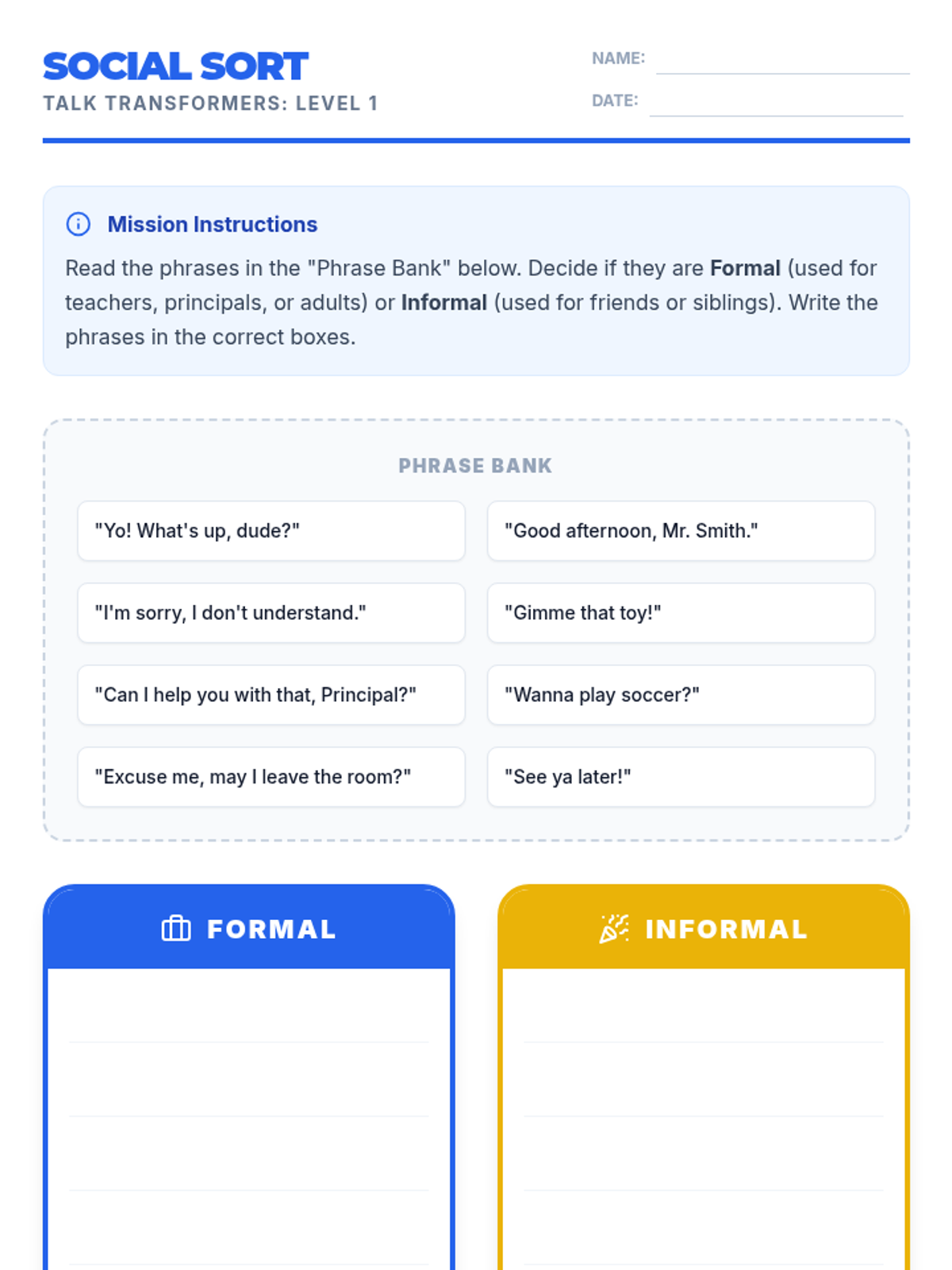
A 3rd Grade ESL sequence focused on register awareness, teaching students to adapt their speech between formal and informal contexts. Students explore audience, context, modal verbs for requests, social language, and apologies through interactive simulations and visual aids.
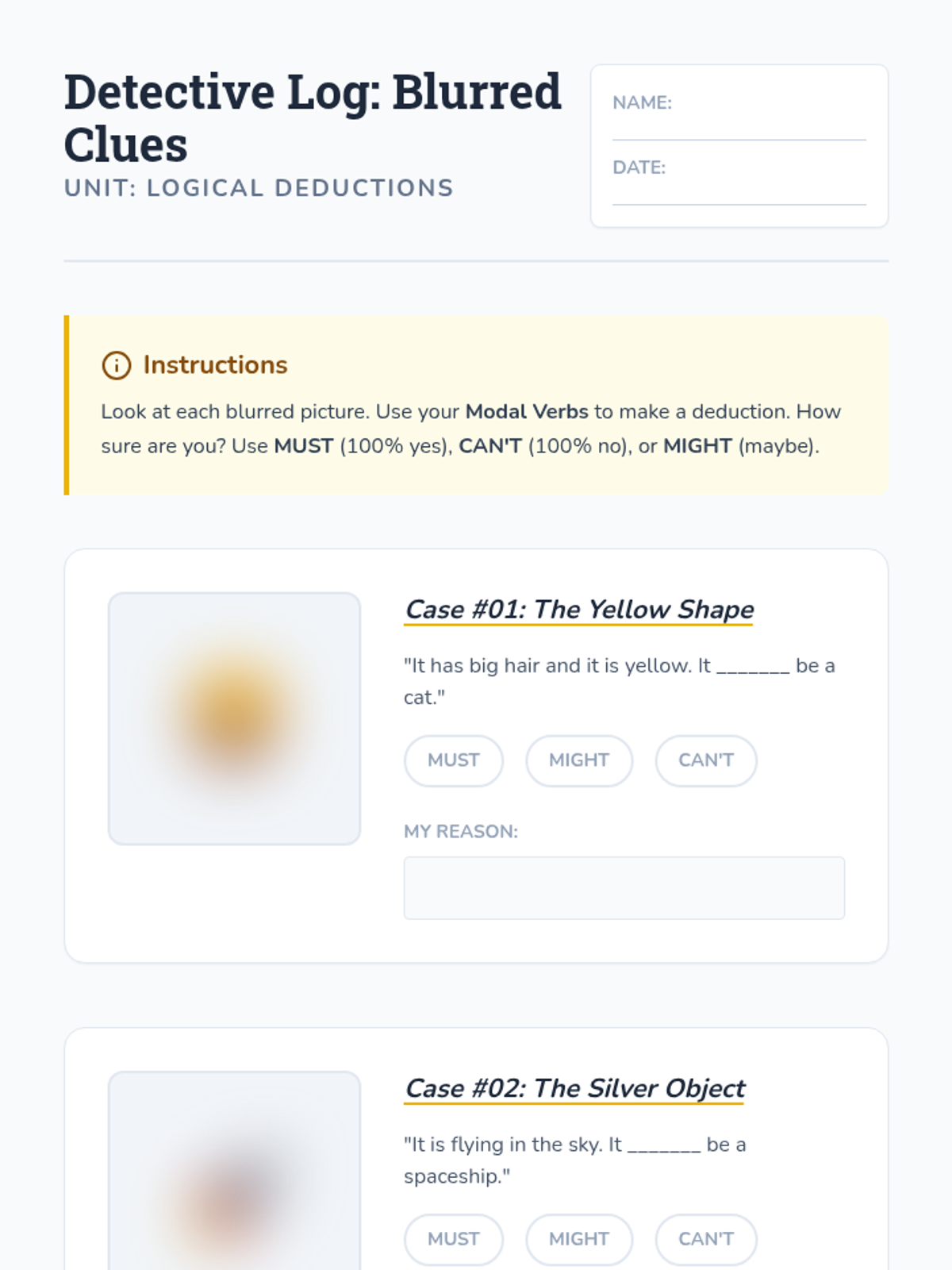
A 5-lesson ESL sequence for 3rd graders to master modal verbs of deduction (must, might, can't) through a fun detective-themed inquiry process. Students move from understanding degrees of certainty to solving a full-scale classroom mystery using logical reasoning.
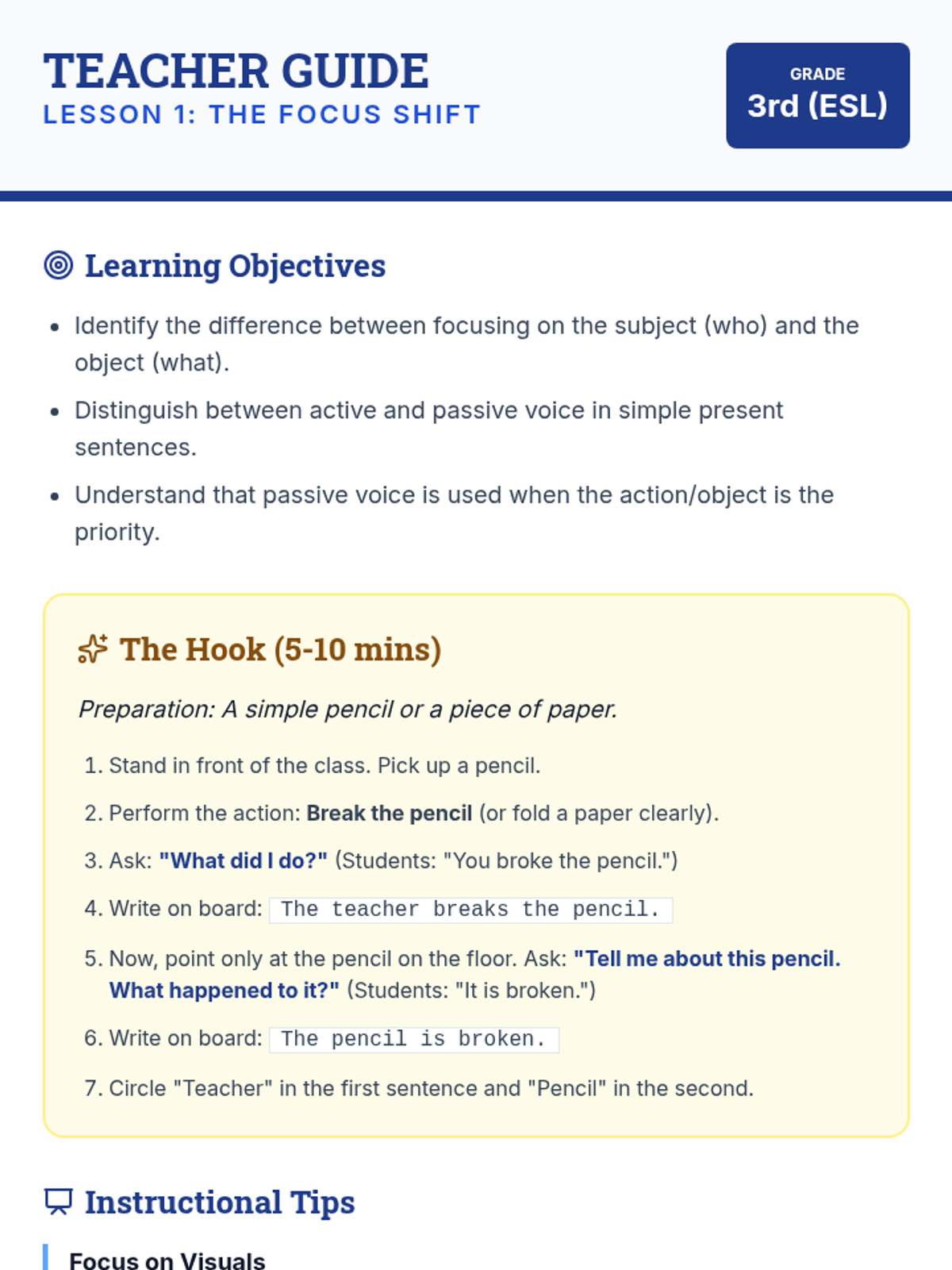
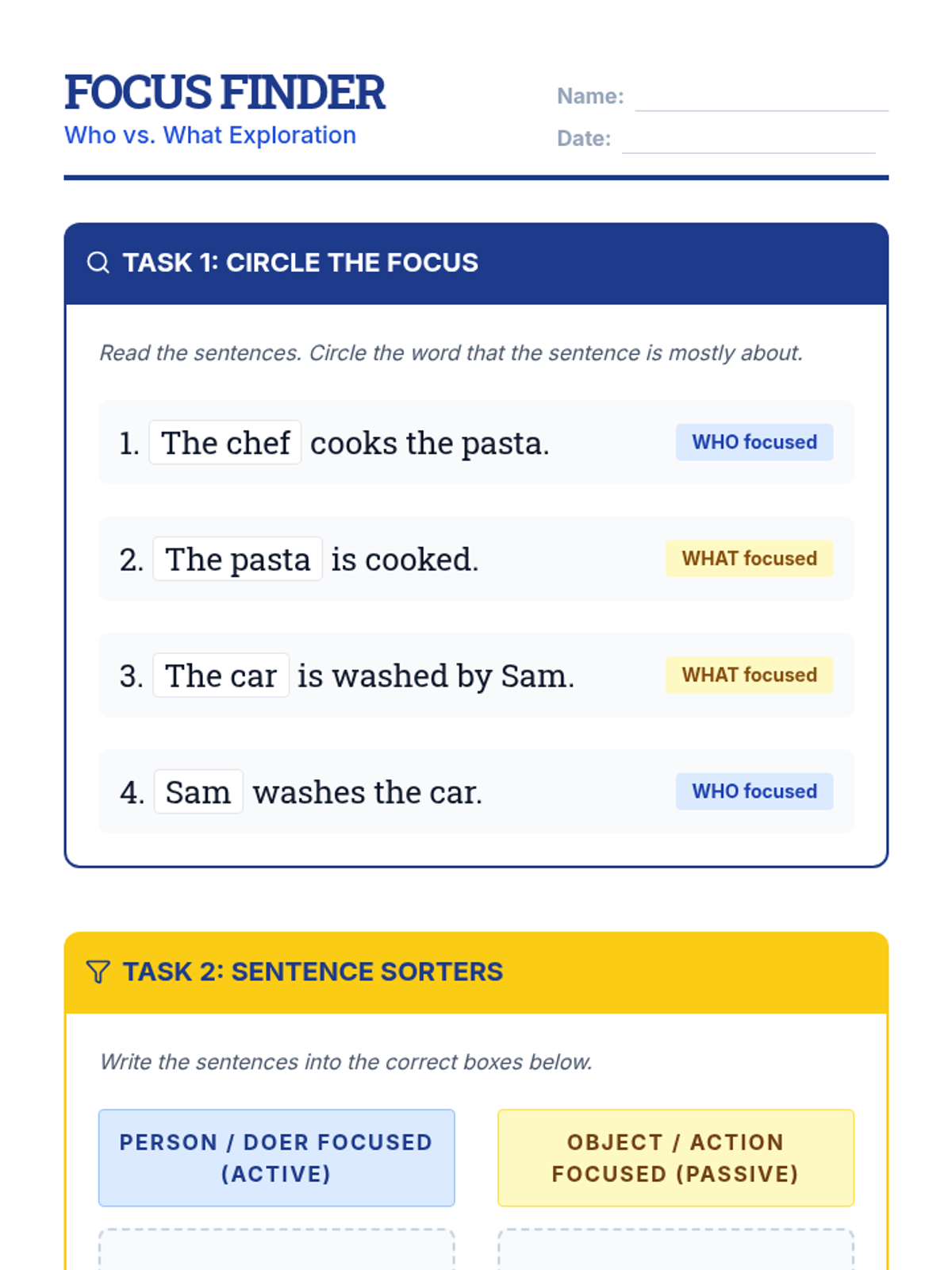
A 5-lesson sequence for 3rd-grade ESL students to master the Simple Present Passive voice through the lens of industrial processes and 'How It's Made' storytelling. Students move from noticing focus shifts to creating their own illustrated process guides.
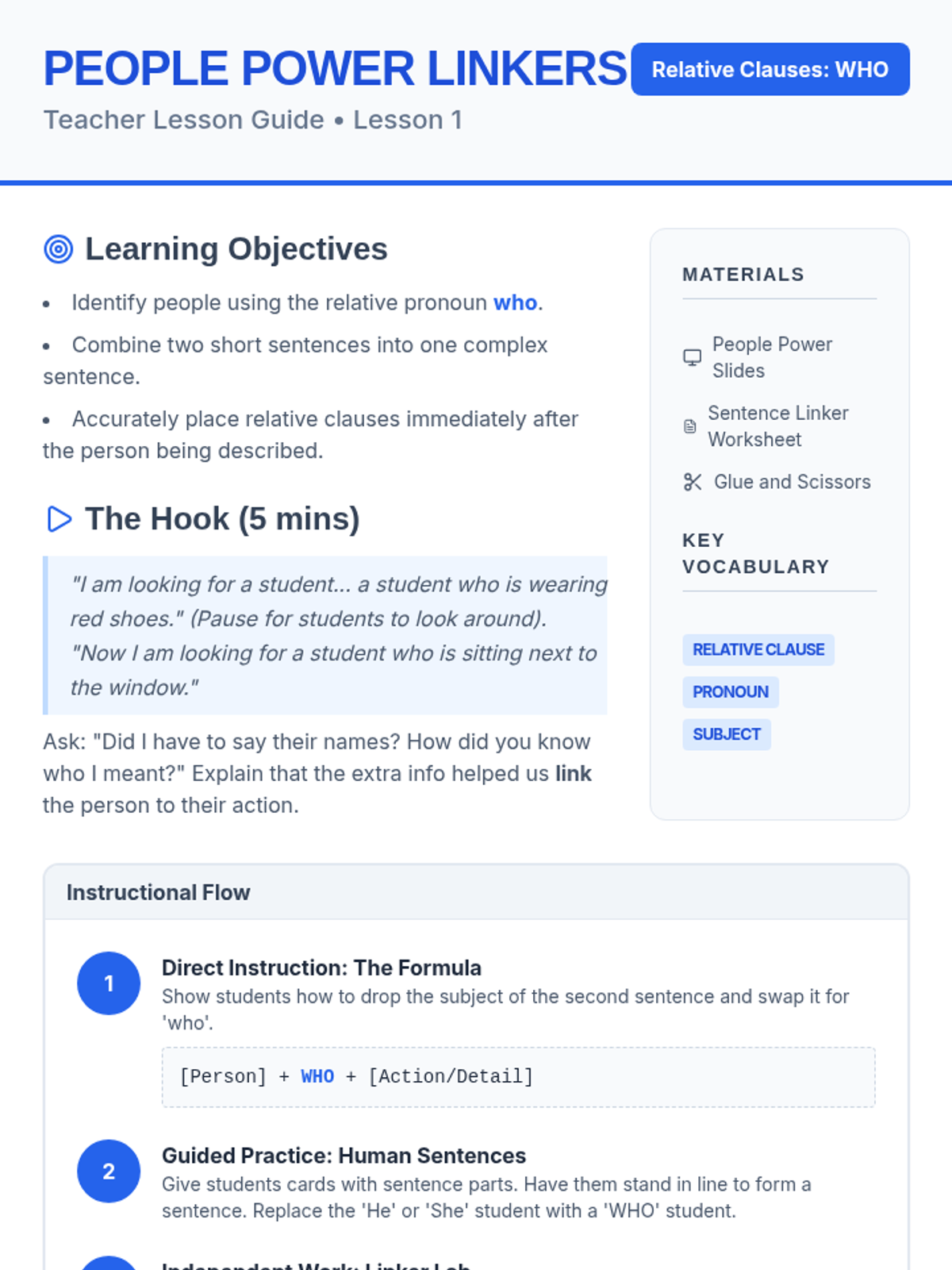
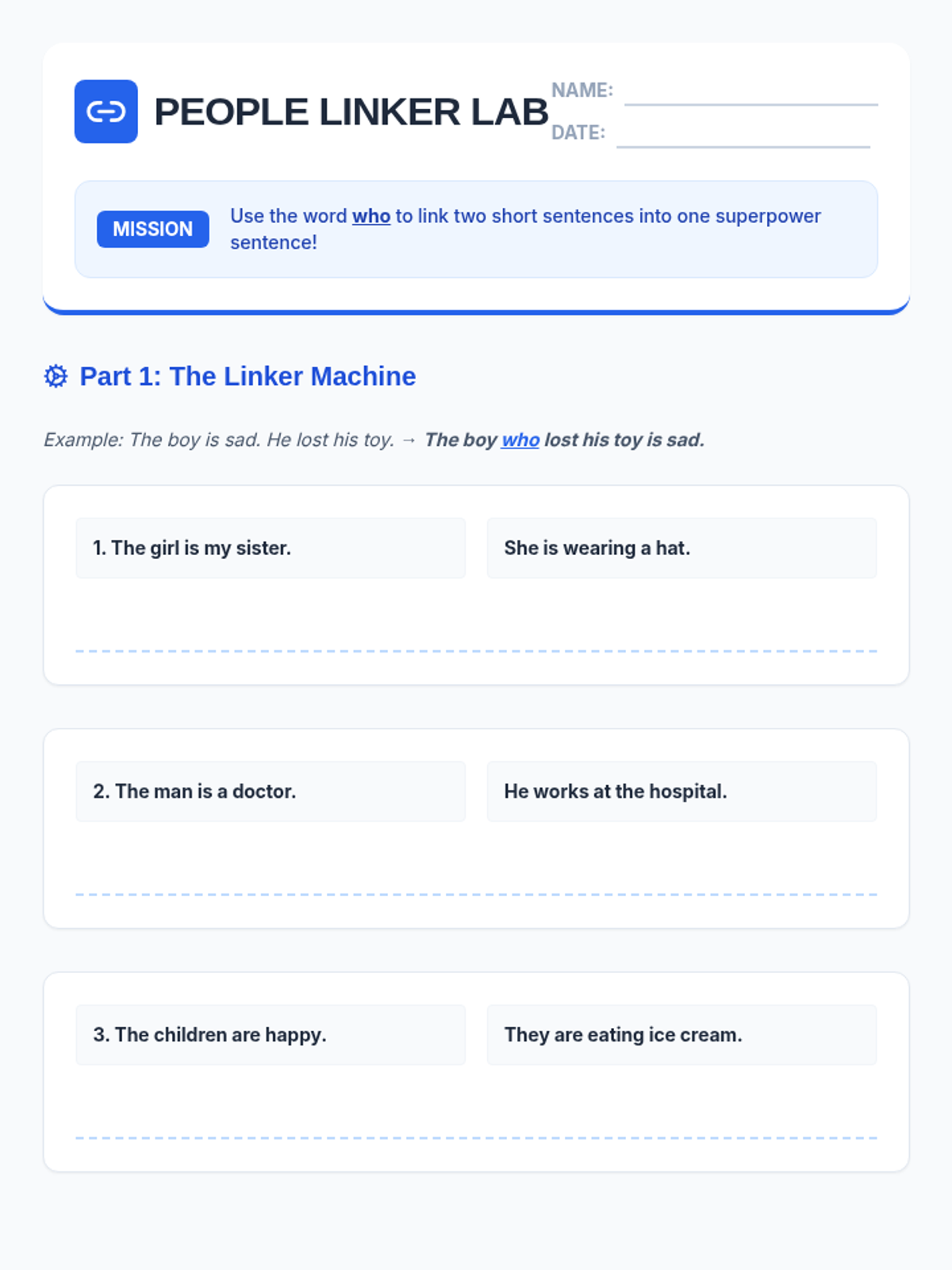
This sequence strengthens sentence complexity by introducing Relative Clauses with 'who', 'which', and 'that'. Students move beyond simple sentences to compound descriptions that identify specific people or objects through games and creative writing.
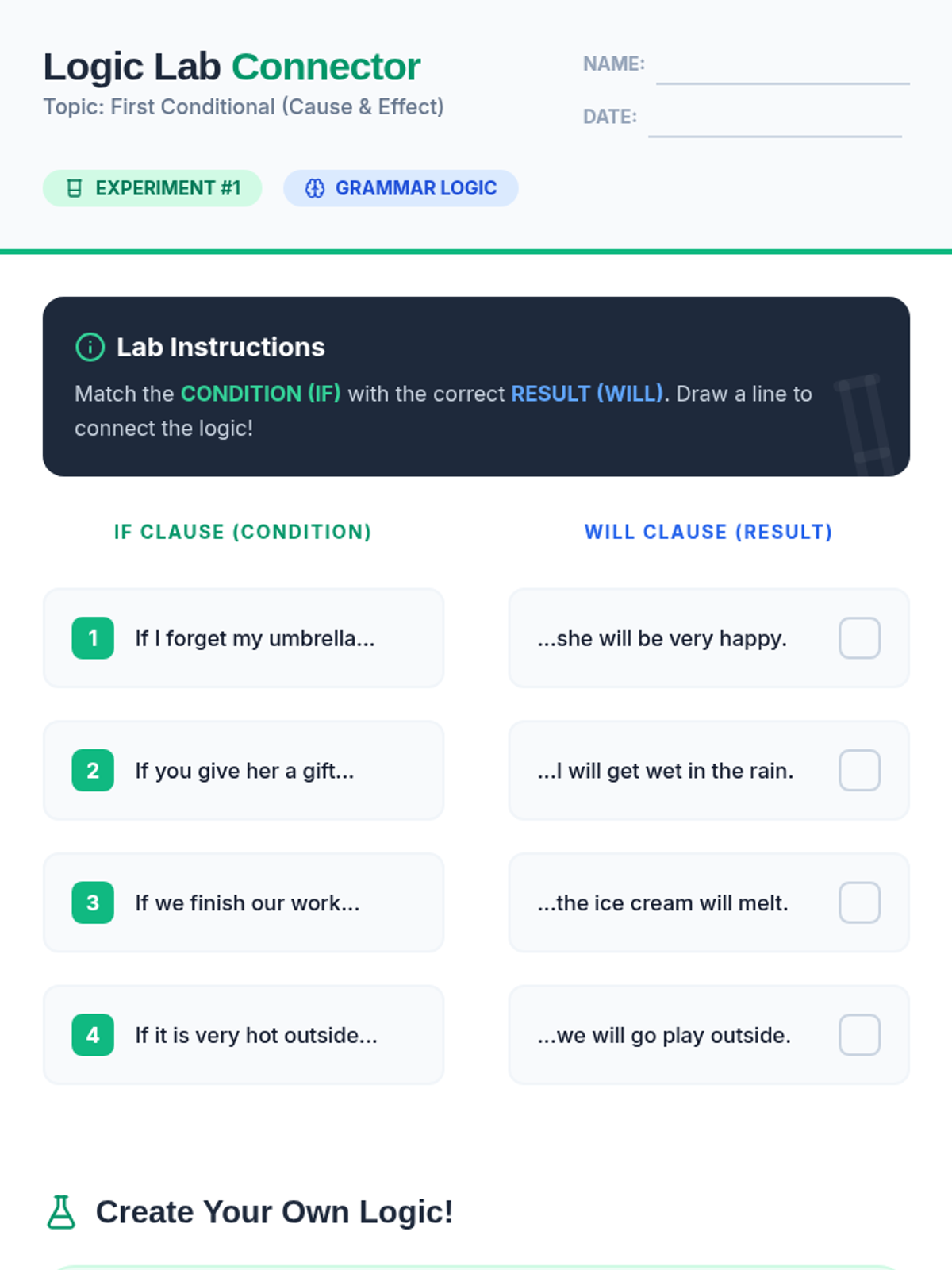
A 3rd-grade ESL sequence focused on the First Conditional ('If + Present Simple, will + Verb'). Students explore cause and effect through games, superstitions, and creative storytelling, culminating in a 'Choose Your Path' adventure project.
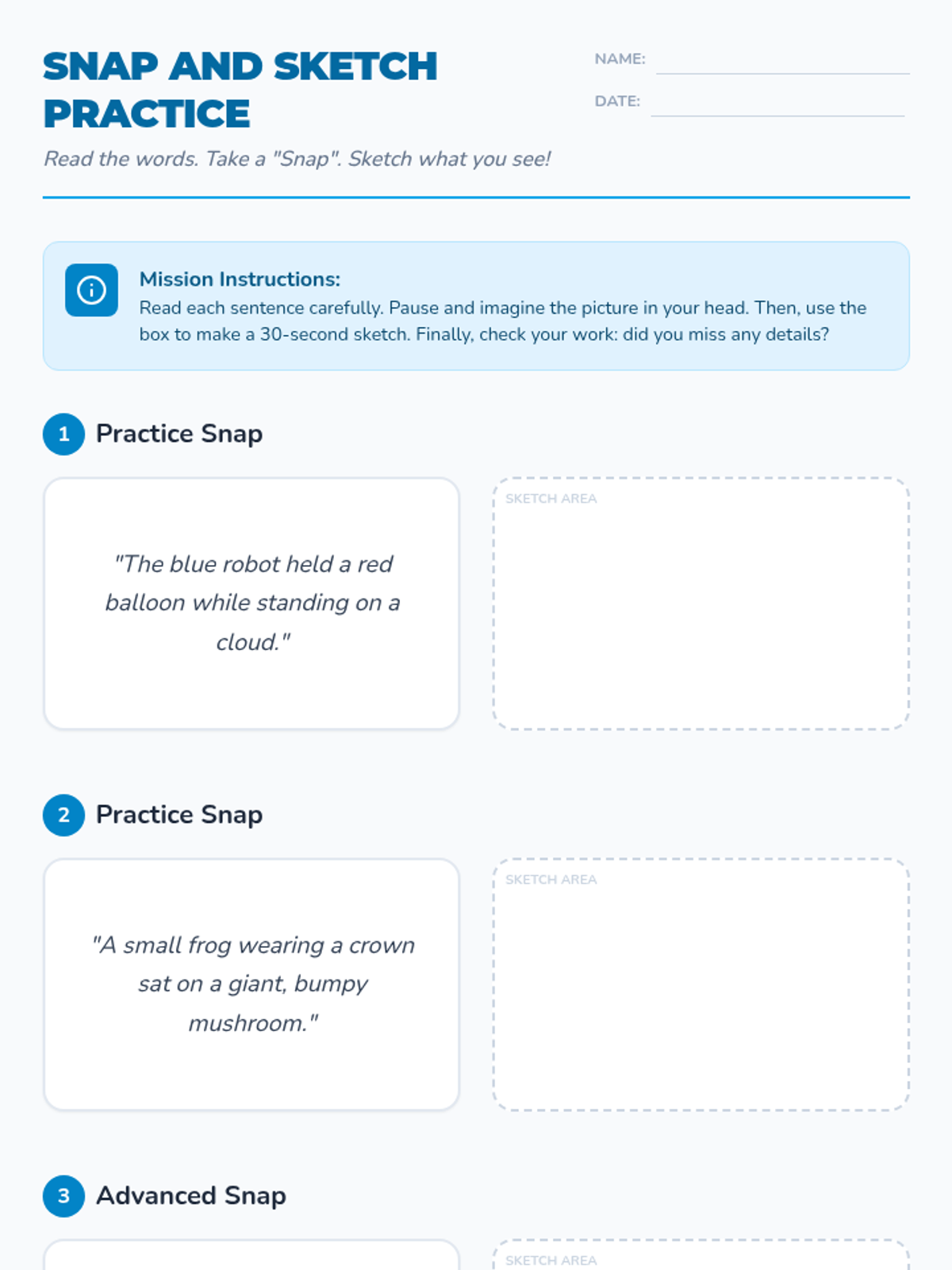
This sequence utilizes sketching as a concrete scaffold for students who struggle to hold images in their working memory. Known as 'Sketch-to-Stretch,' this approach allows students to externalize their thinking immediately after reading small chunks of text. By drawing what they read, students can self-monitor for understanding; if they cannot draw it, they likely did not comprehend it.
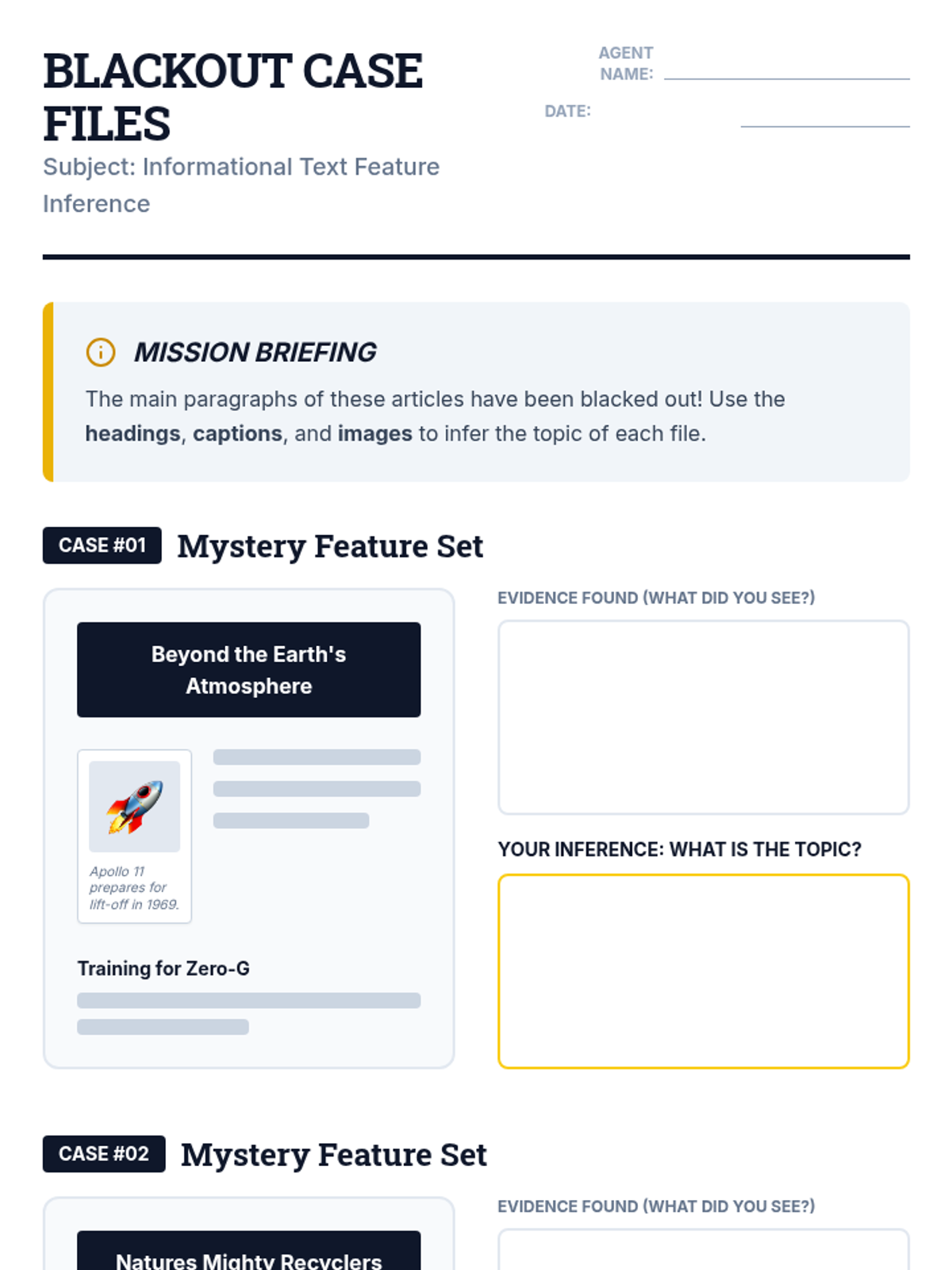
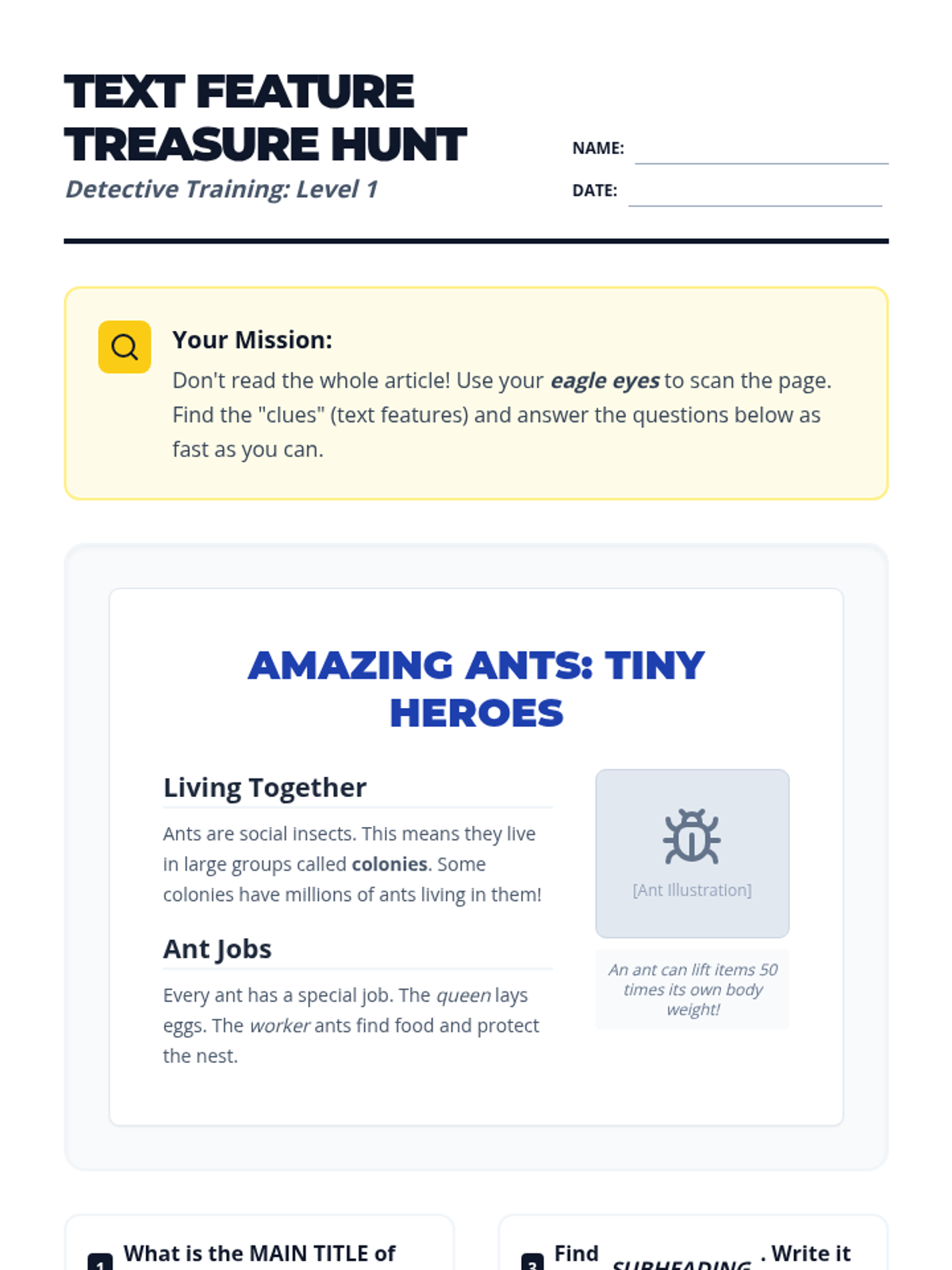
A 3rd-grade sequence focused on informational text inference, moving from text features to real-world application. Students learn to use captions, diagrams, and facts to 'read between the lines' in non-fiction contexts.
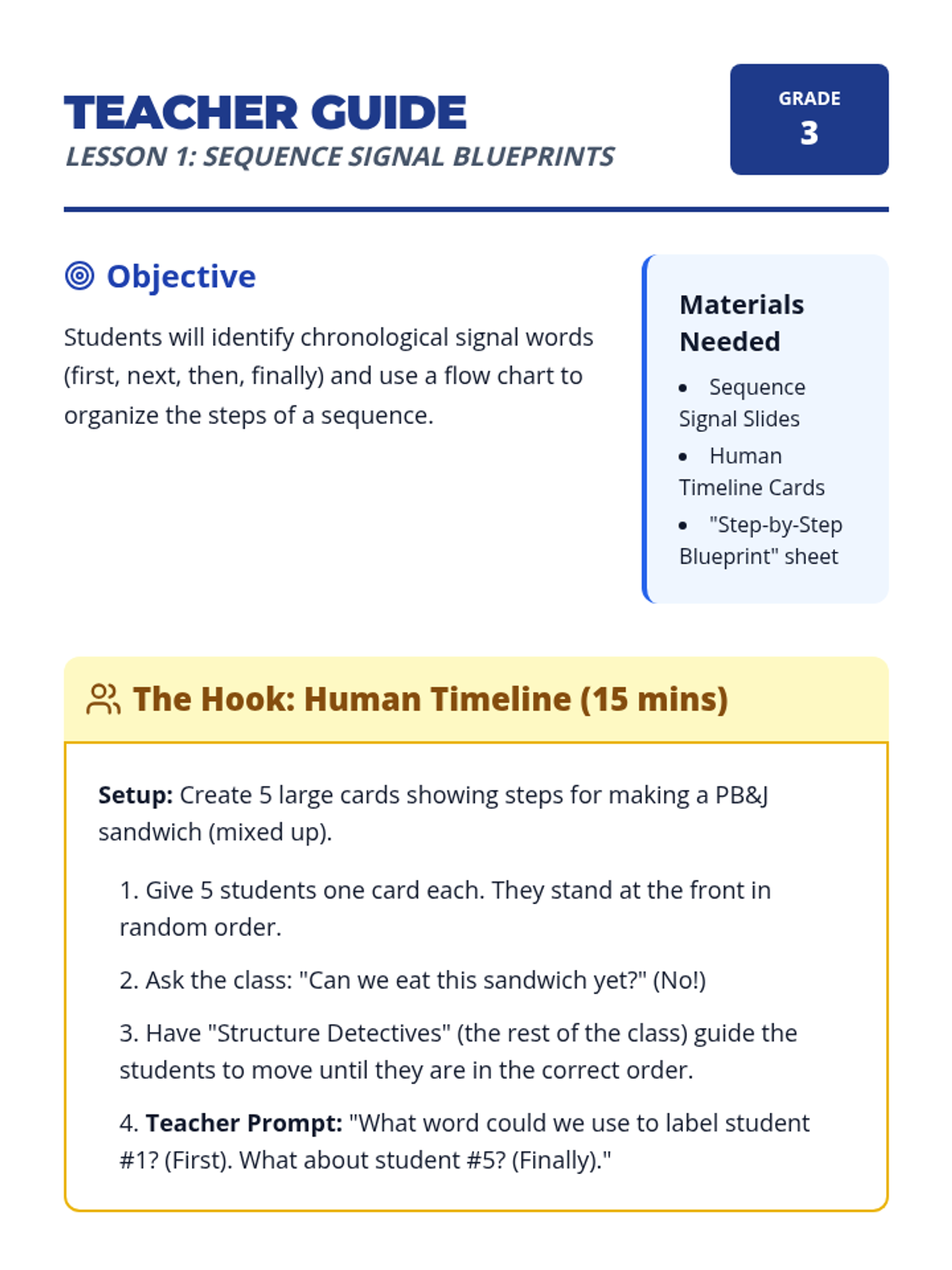
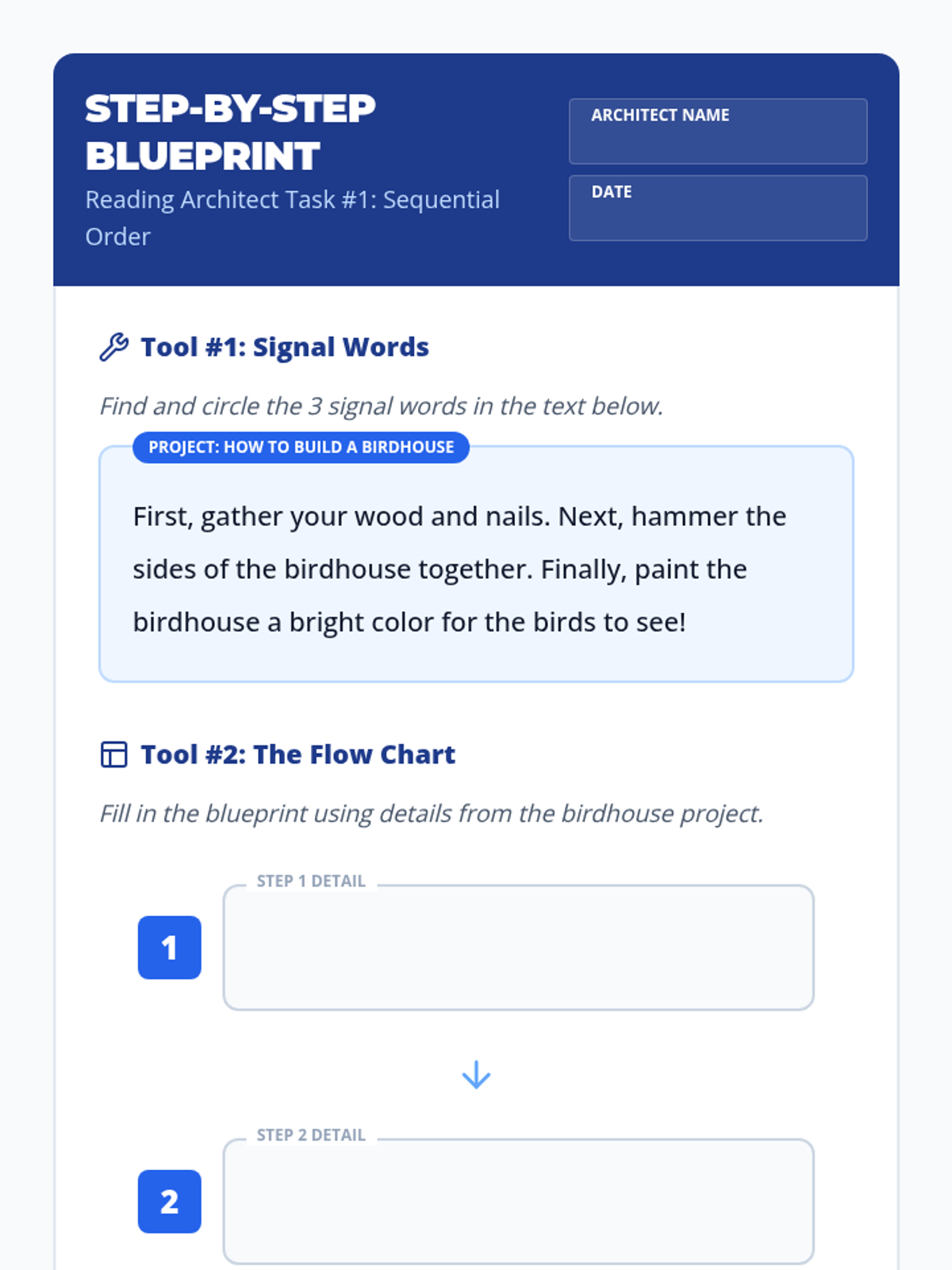
This sequence introduces 3rd-grade students to three primary text structures: sequence, comparison, and cause-effect. Using a 'Reading Architect' theme, students learn to use specific graphic organizers to map out information, identifying signal words as clues for which 'blueprint' to use.
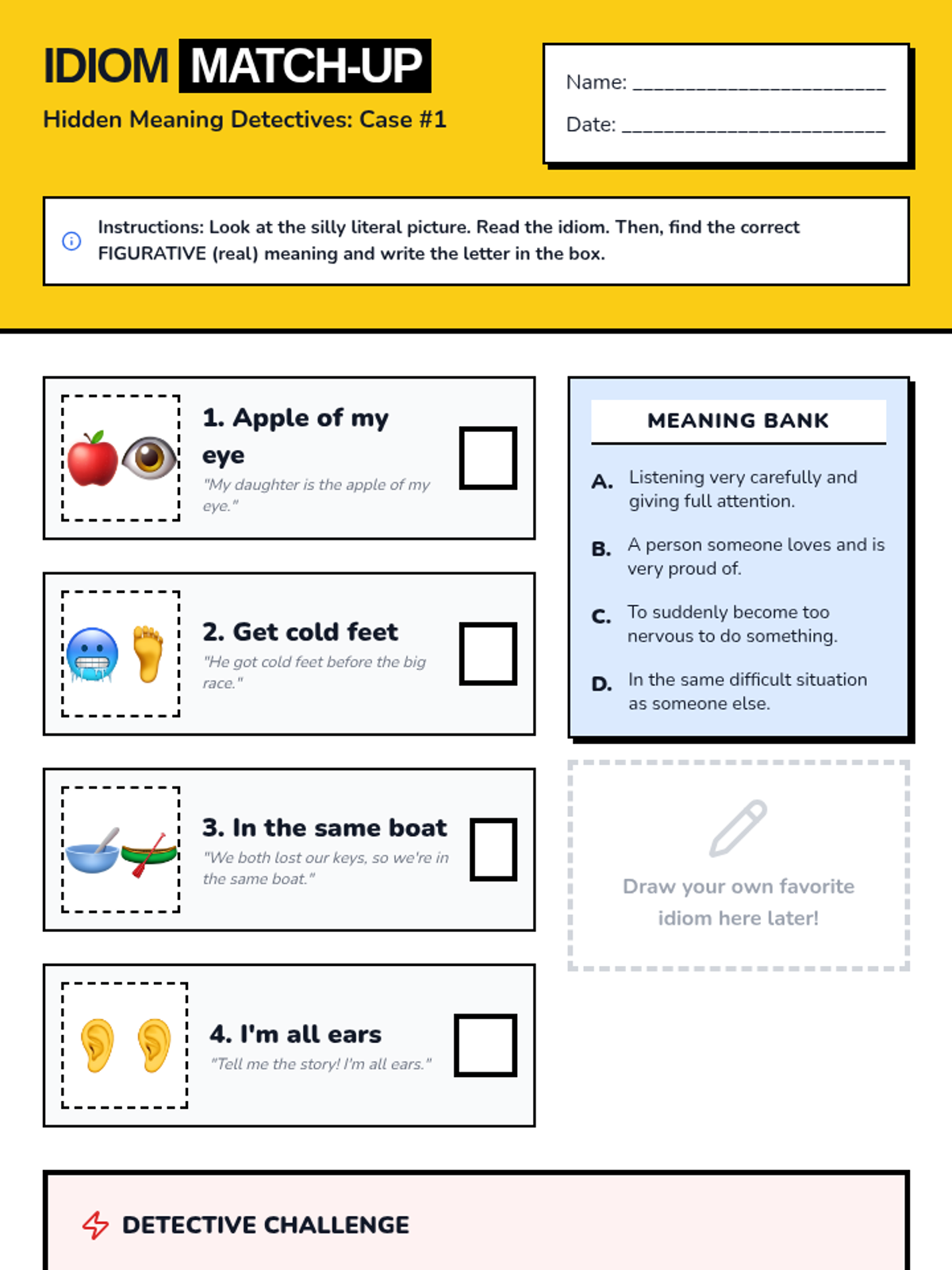
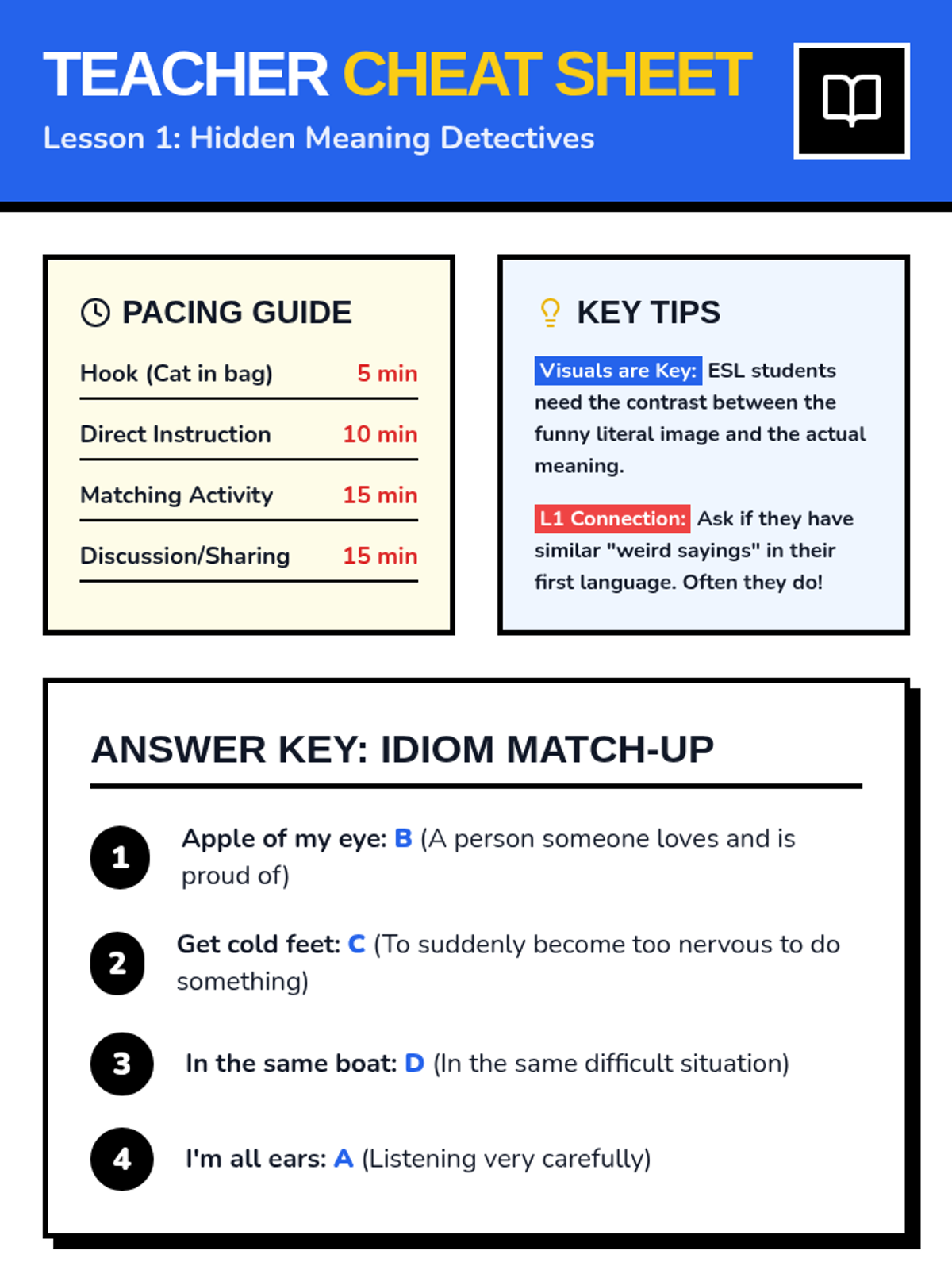
This 5-lesson sequence introduces 3rd-grade ESL students to common English idioms and phrasal verbs. Through a colorful, comic-book-inspired approach, students learn to distinguish between literal and figurative language, master verbs for daily routines, and use expressive phrases for emotions in social settings.
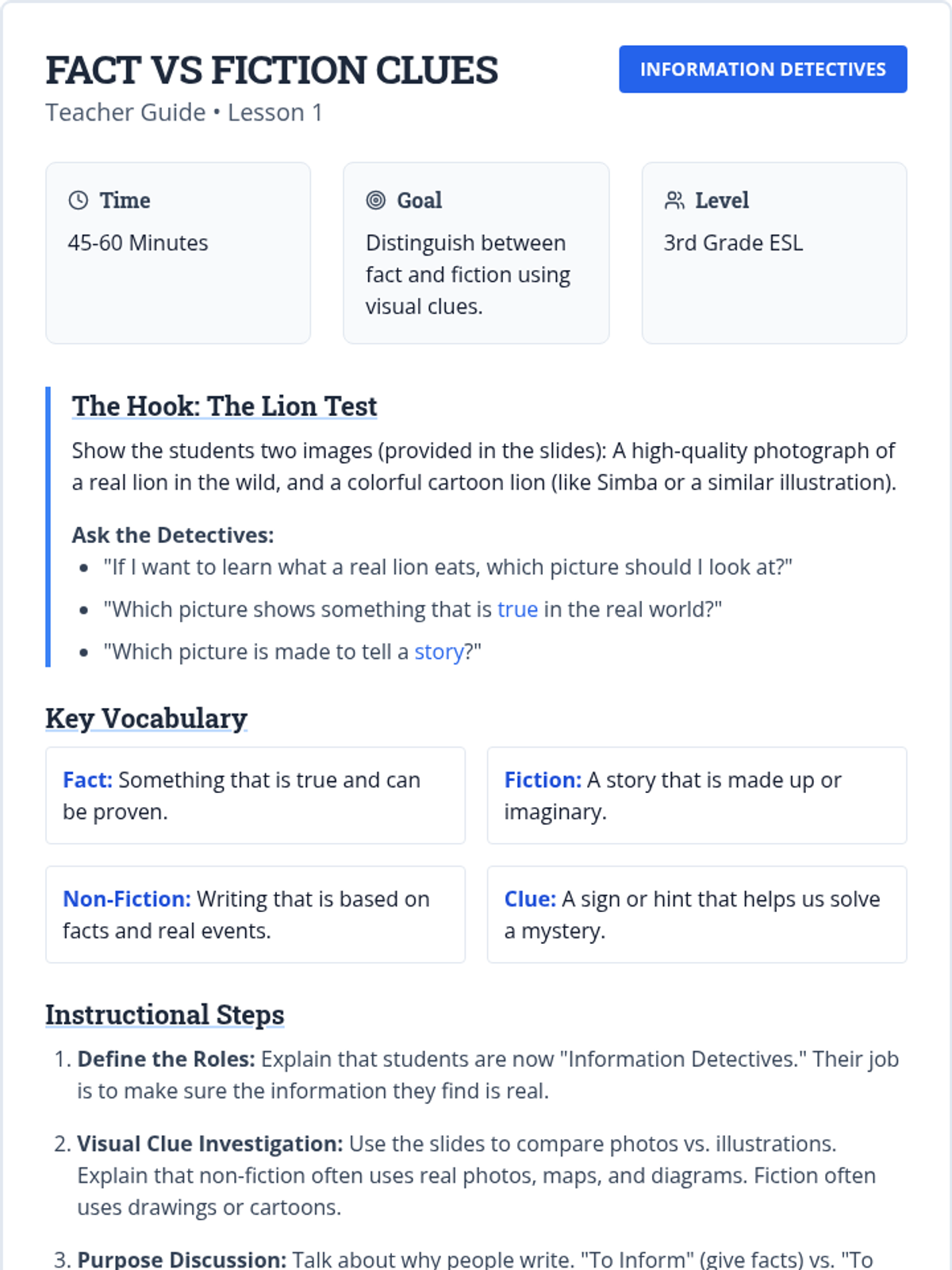
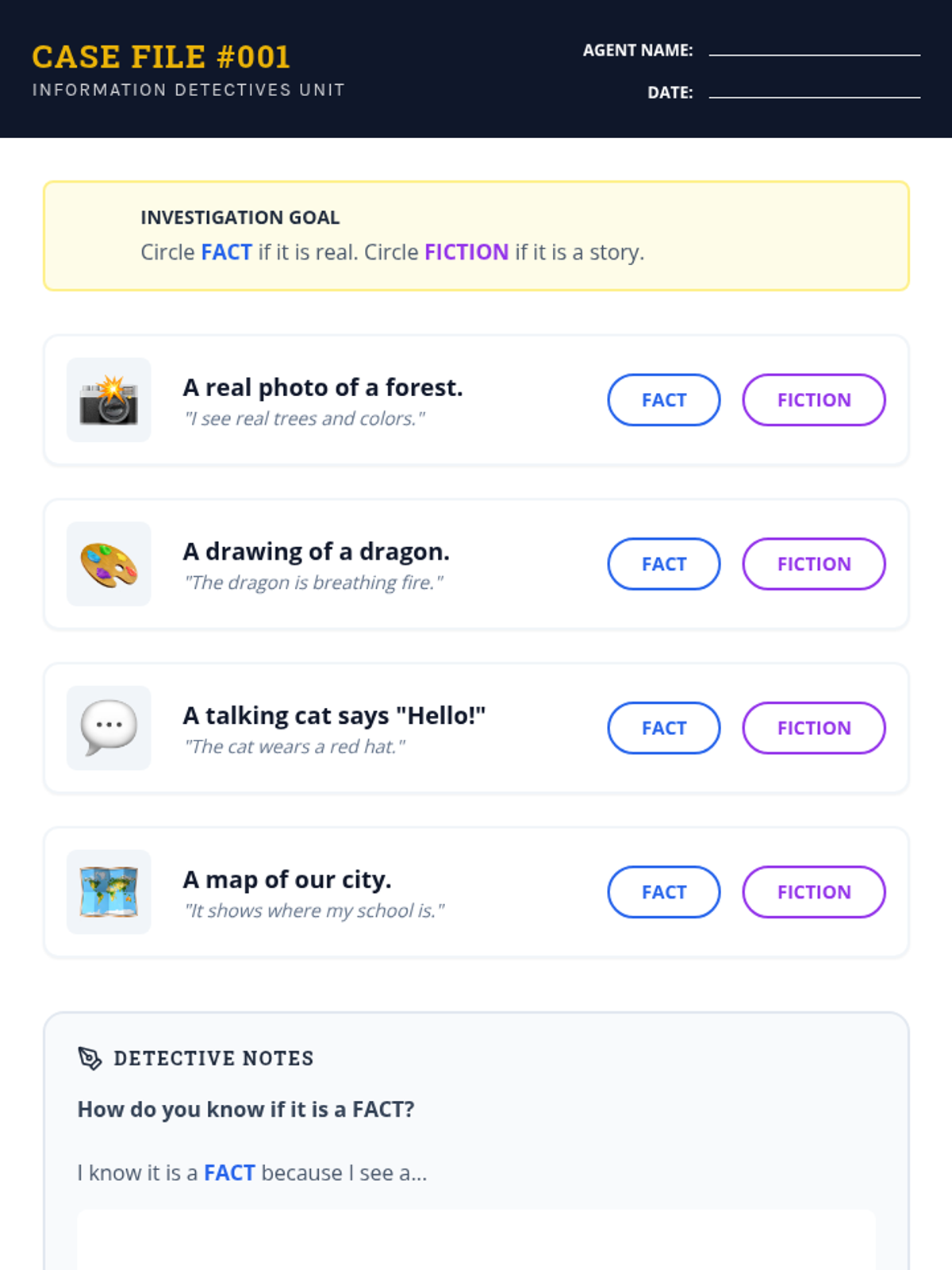
A 5-lesson sequence for 3rd-grade ESL students to learn the basics of source credibility and fact-checking through the lens of 'Information Detectives'. Students learn to distinguish fact from fiction, identify authors, recognize advertisements, and cross-check information.
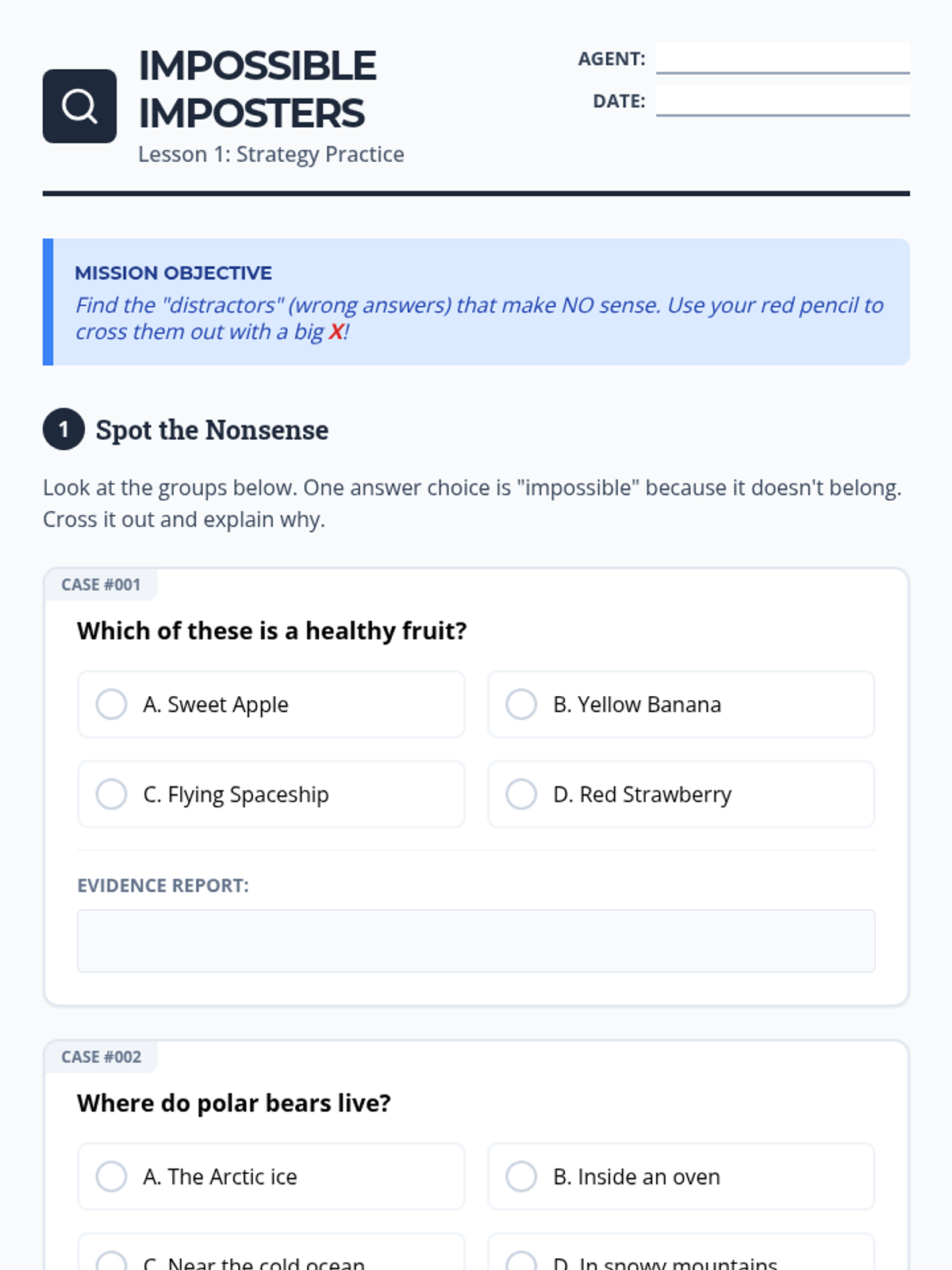
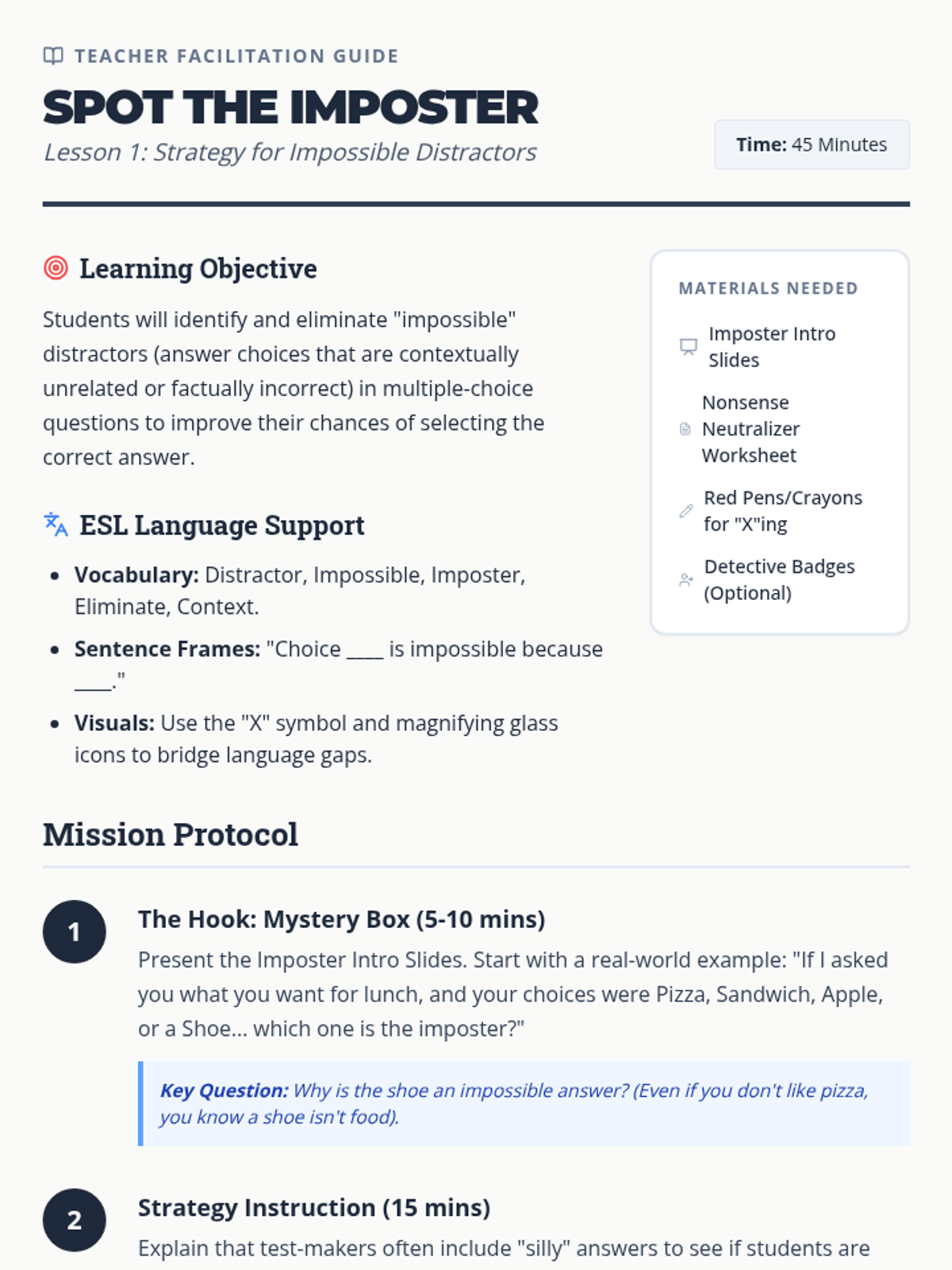
This sequence equips 3rd-grade ESL students with logical strategies for multiple-choice tests, focusing on identifying and eliminating 'distractor' answers. Through a 'Detective Academy' theme, students move from spotting obvious errors to navigating nuanced traps and complex answer formats.
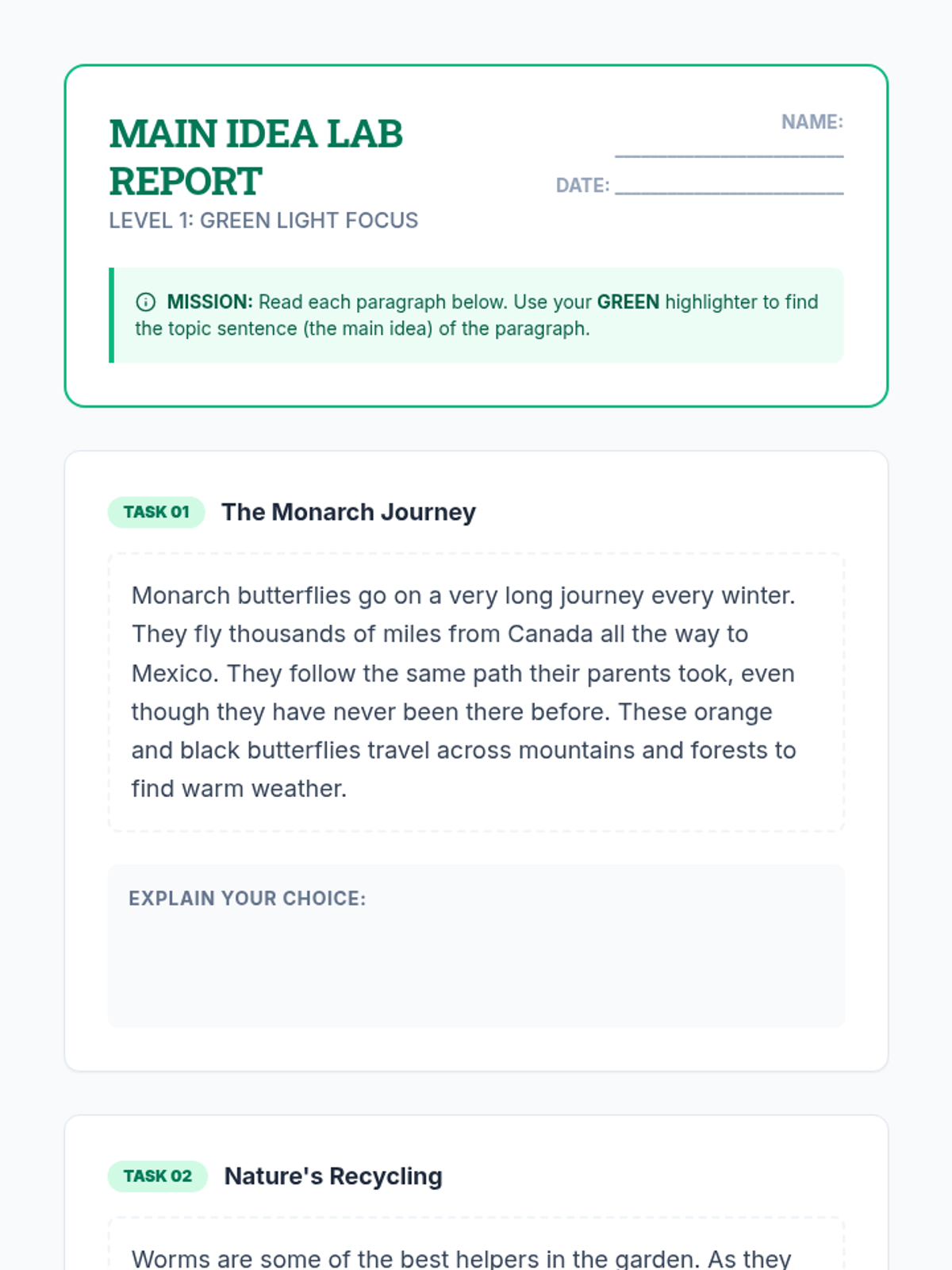
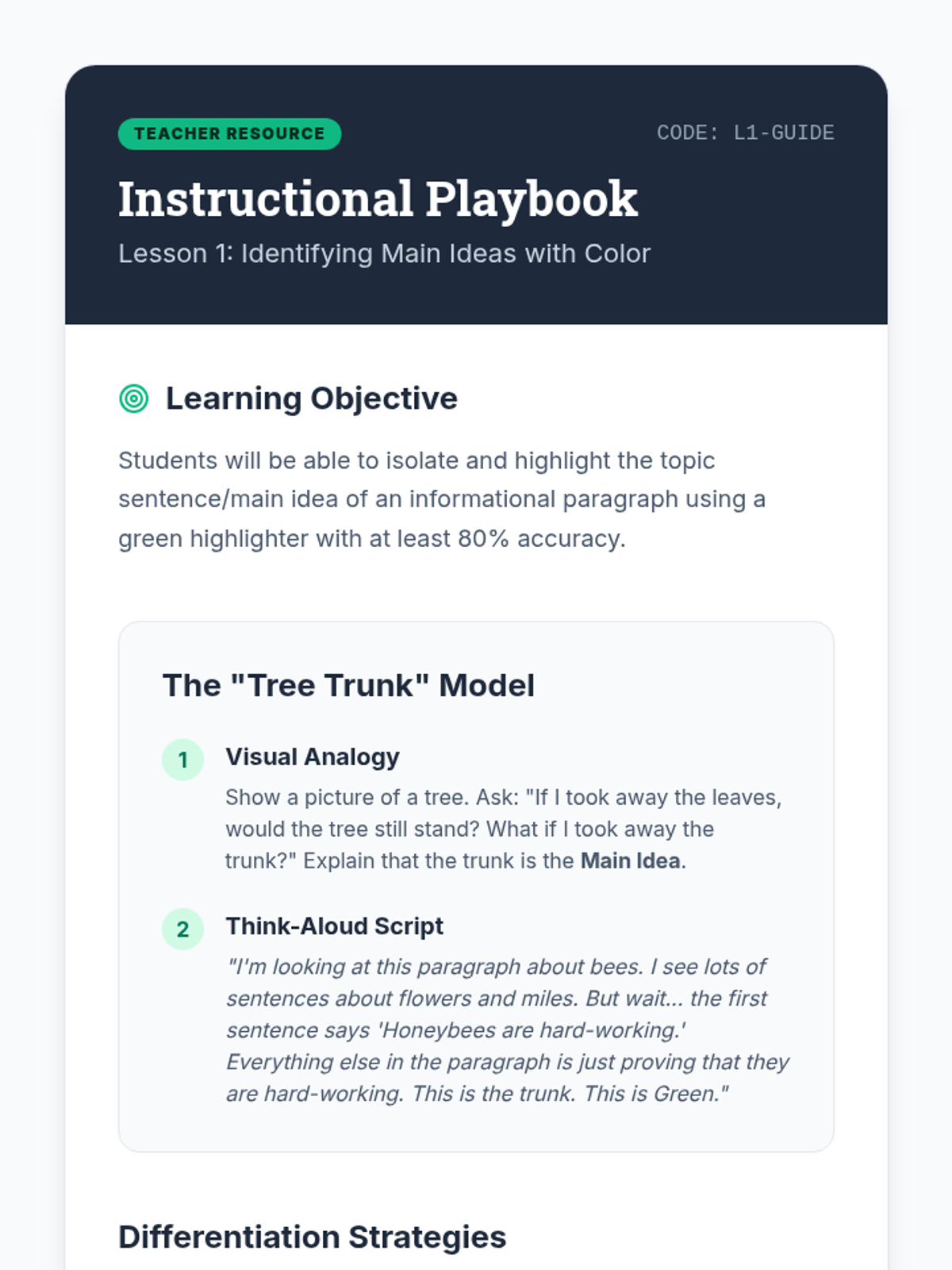
A multi-sensory, color-coded approach to reading comprehension. Students learn to systematically deconstruct informational texts using a tri-color system: green for main ideas, yellow for supporting details, and red for unknown vocabulary.
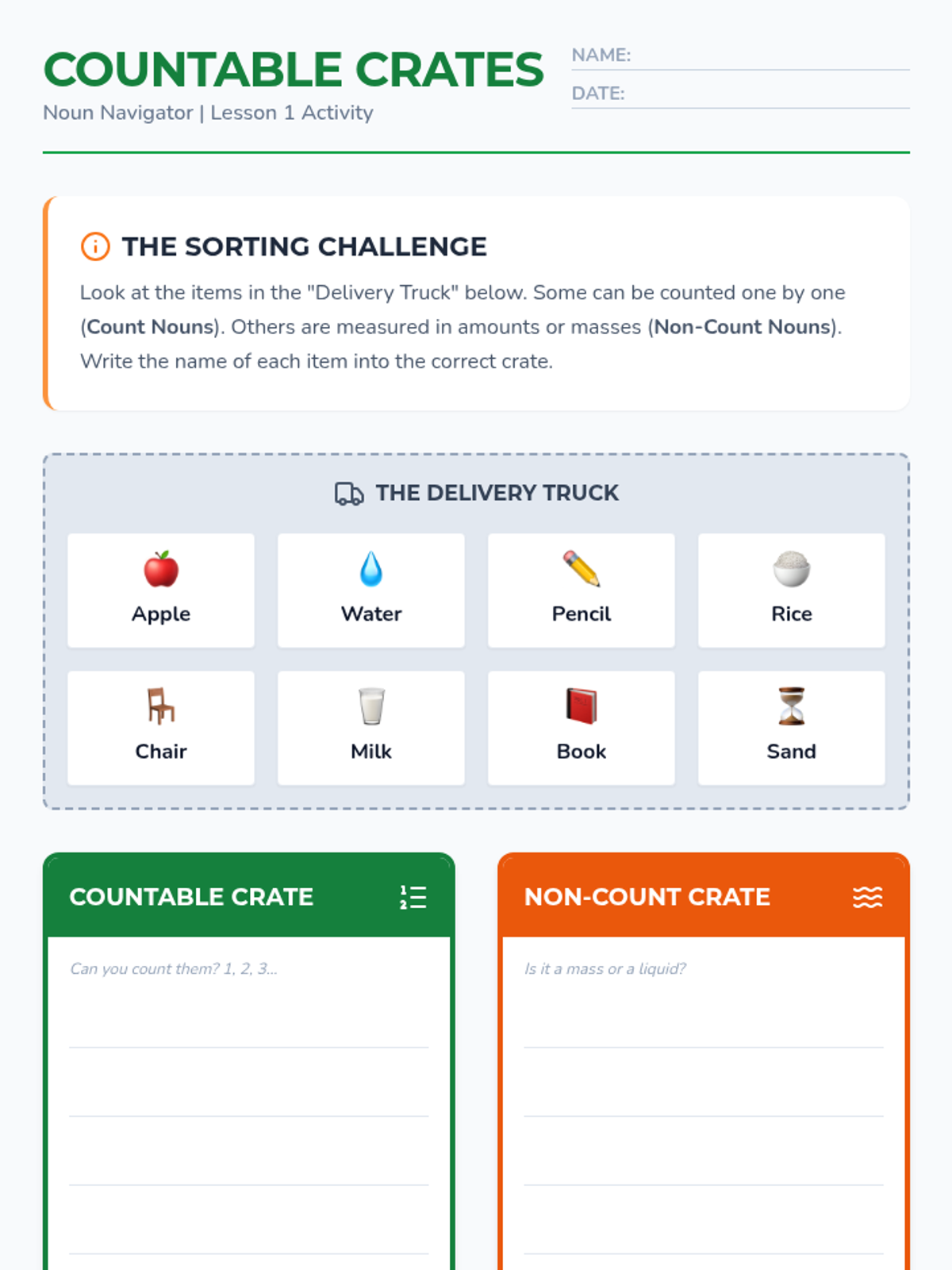
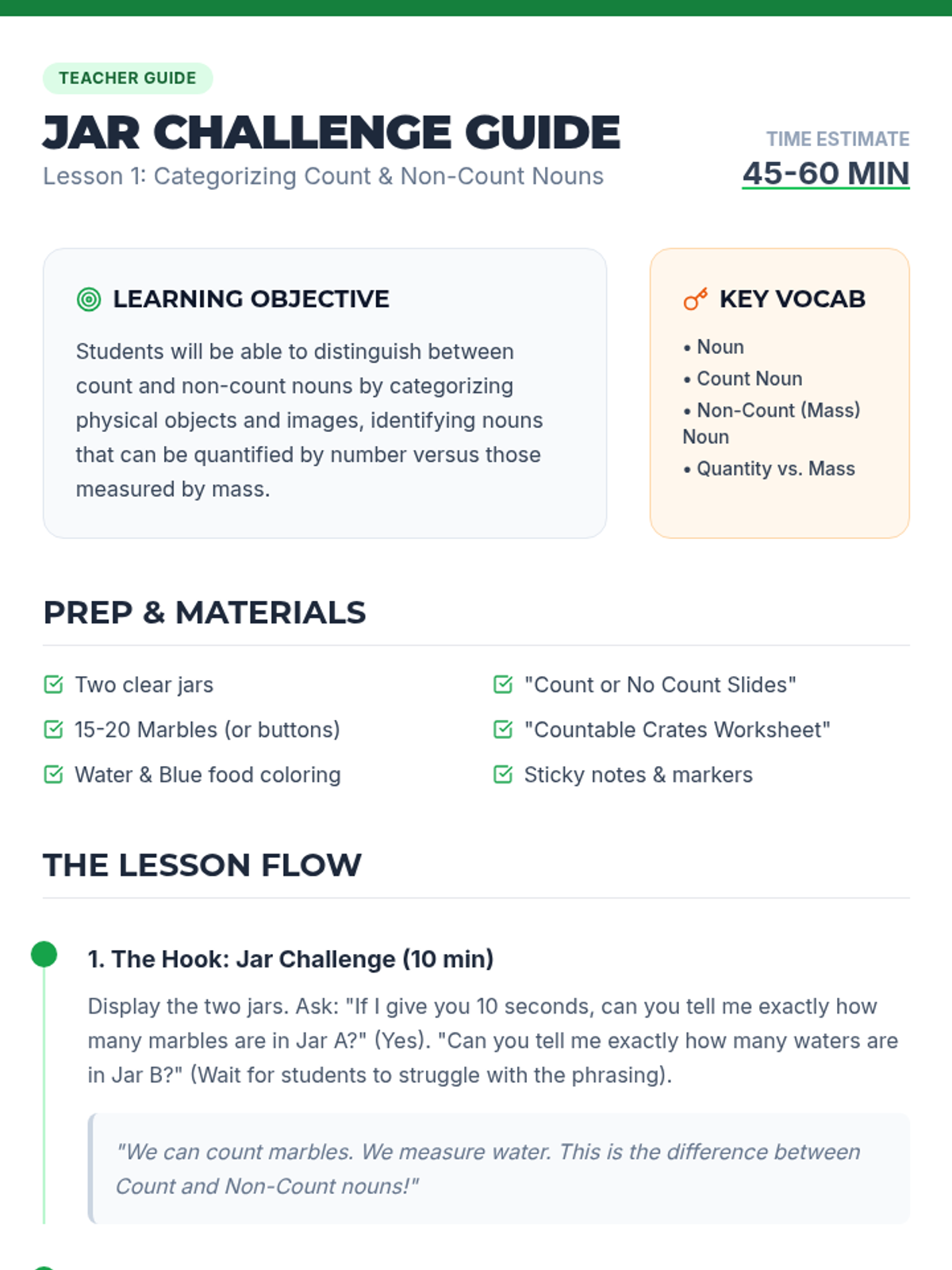
This sequence explores the relationship between articles and noun countability. Students distinguish between count and non-count nouns and learn the rules for using 'a', 'an', 'some', or no article, culminating in a market simulation.
Students explore soft 'c' and 'g' through a creative writing project where they develop characters and narratives. The sequence integrates phonics with literacy by having students brainstorm vocabulary, develop character profiles, and write a cohesive story.
This project-based sequence integrates phonics into creative writing and storytelling. Students explore how soft 'c' and 'g' words function in connected text by analyzing a mentor text and then creating their own 'Alliterative Alphabet Book' page or short story.
A 5-lesson sequence for 3rd grade students focusing on identifying and applying consonant blends within multisyllabic words to improve decoding speed and accuracy. students use games and activities to bridge the gap between simple phonics and complex word analysis.
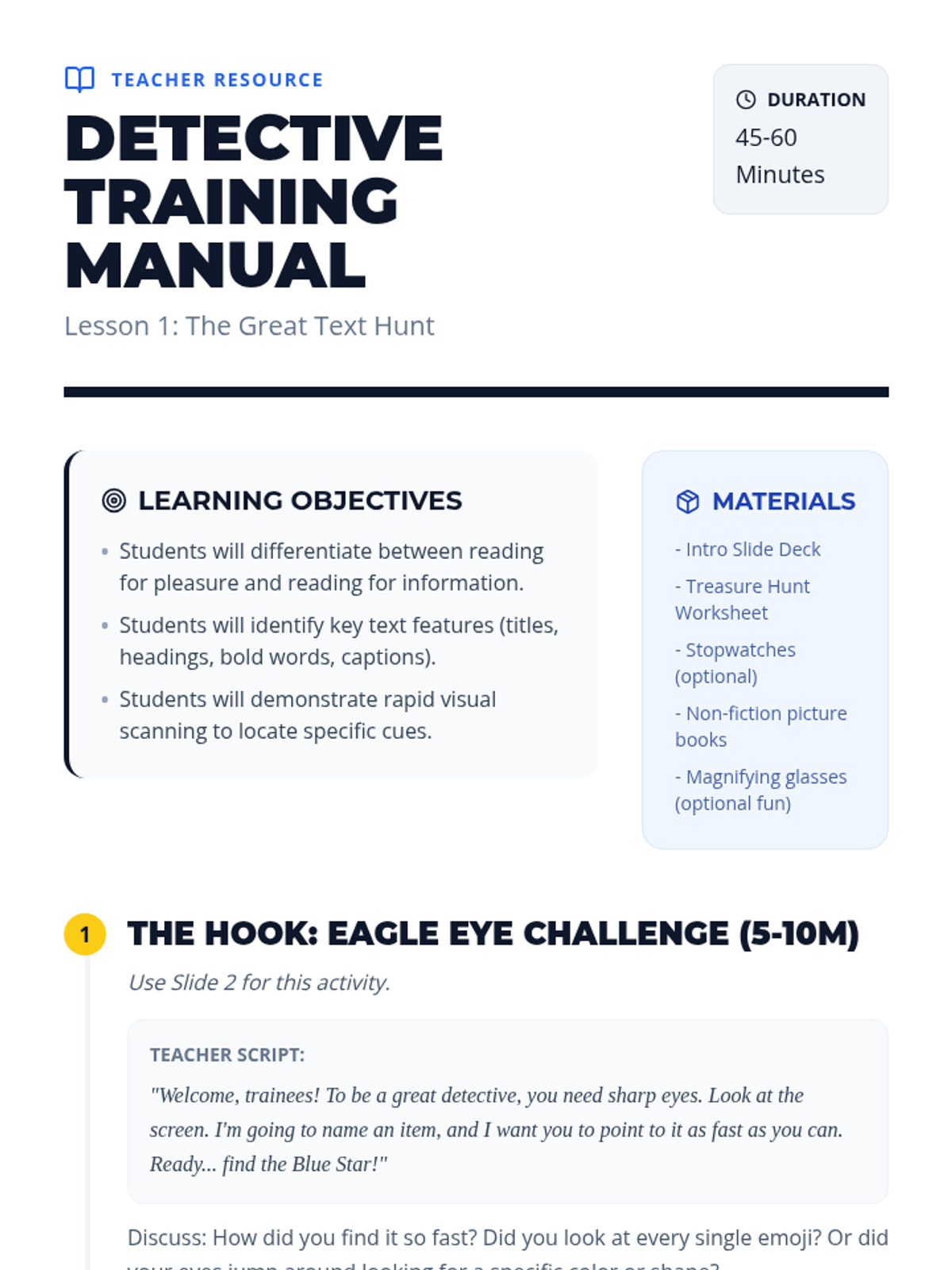
A comprehensive sequence for 3rd grade ESL students to master skimming and scanning techniques for academic success. Through a detective-themed curriculum, students learn to identify text features, isolate keywords in questions, and rapidly locate specific data to improve test-taking efficiency.
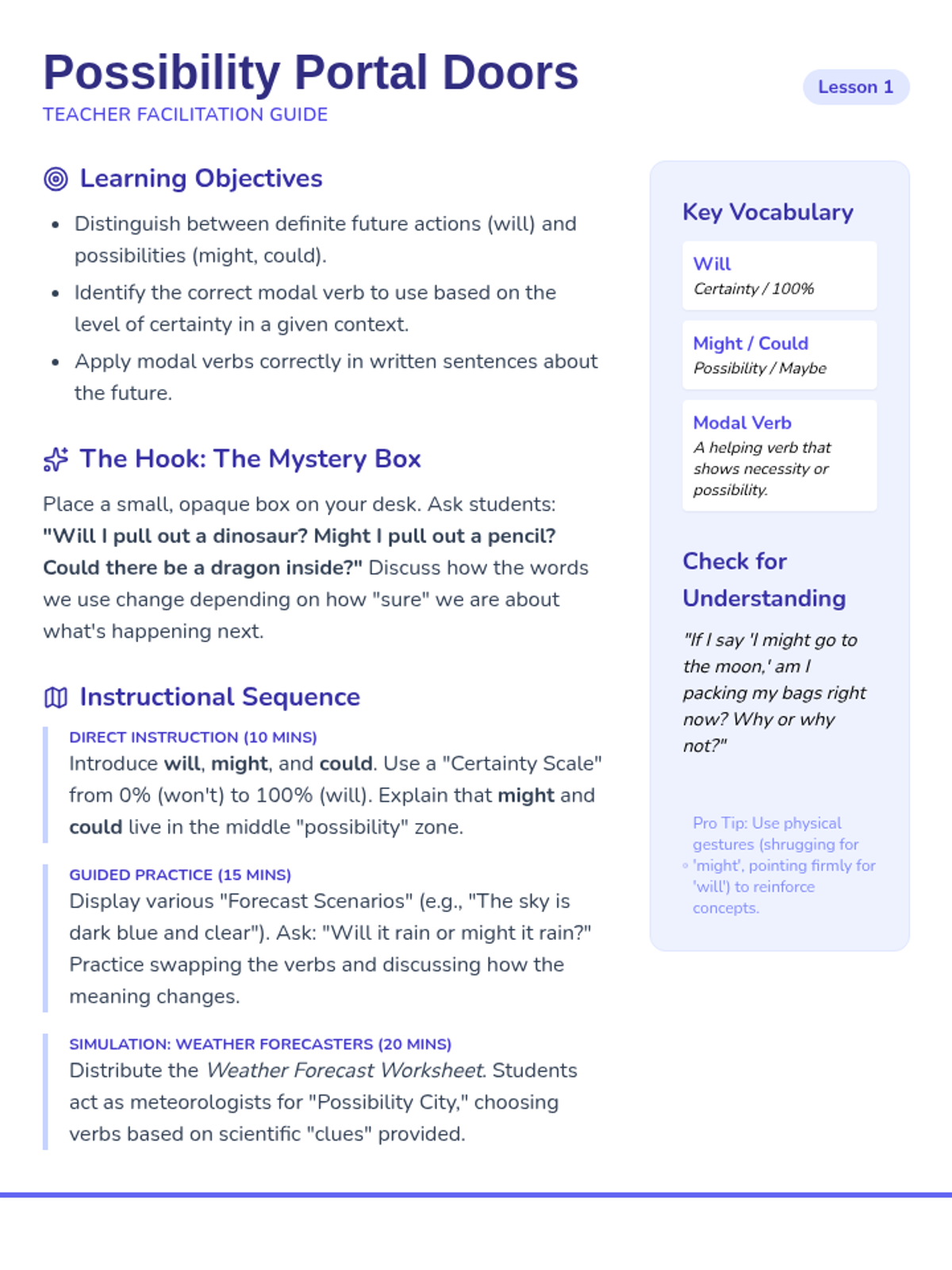
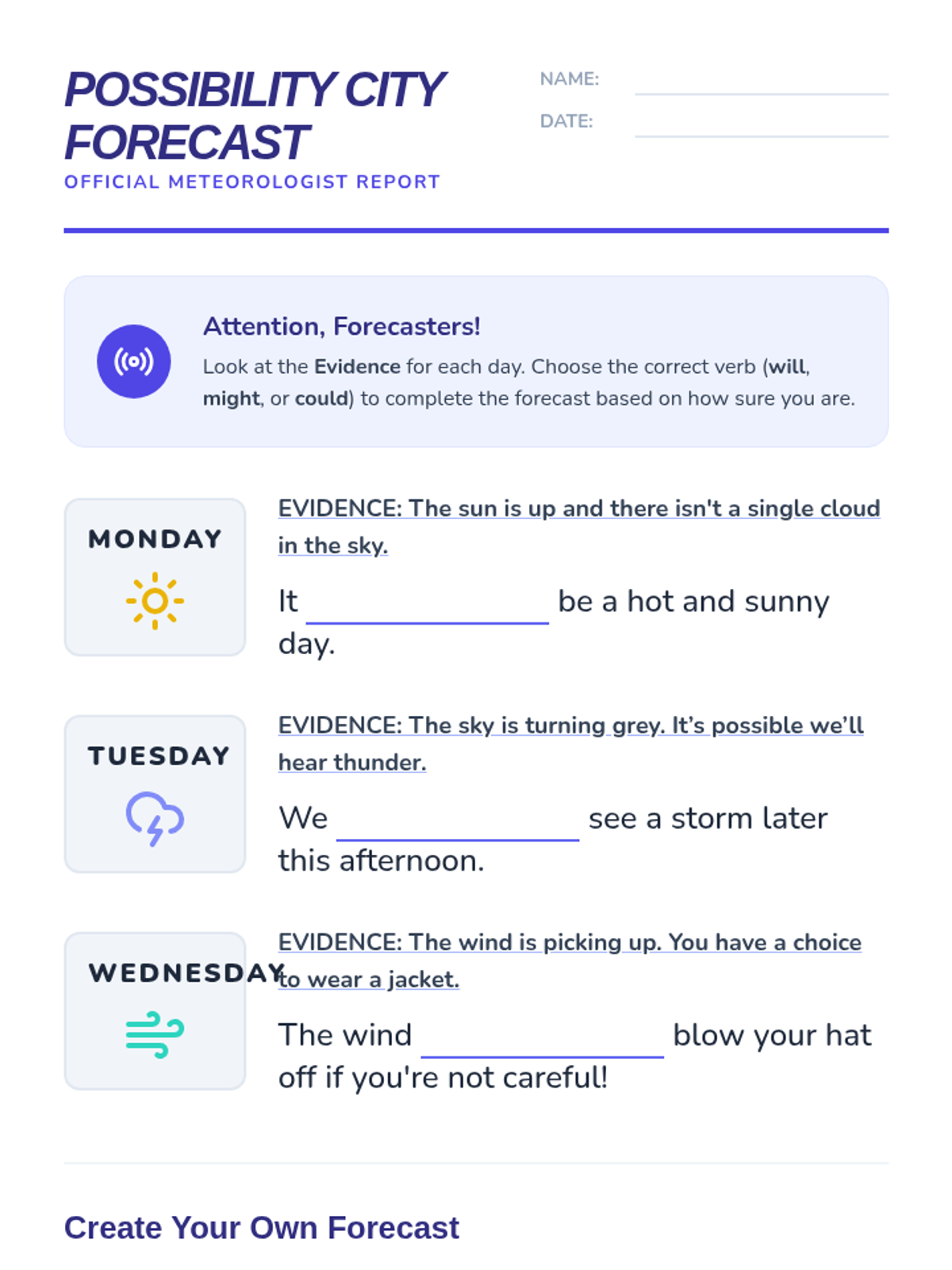
This 3rd-grade sequence introduces students to the nuances of verb usage for expressing conditions, wishes, and possibilities. Through five lessons, students move from understanding modal verbs like 'might' and 'could' to mastering conditional 'If/Then' structures and the subjunctive 'I wish I were,' culminating in a creative 'What If' narrative.
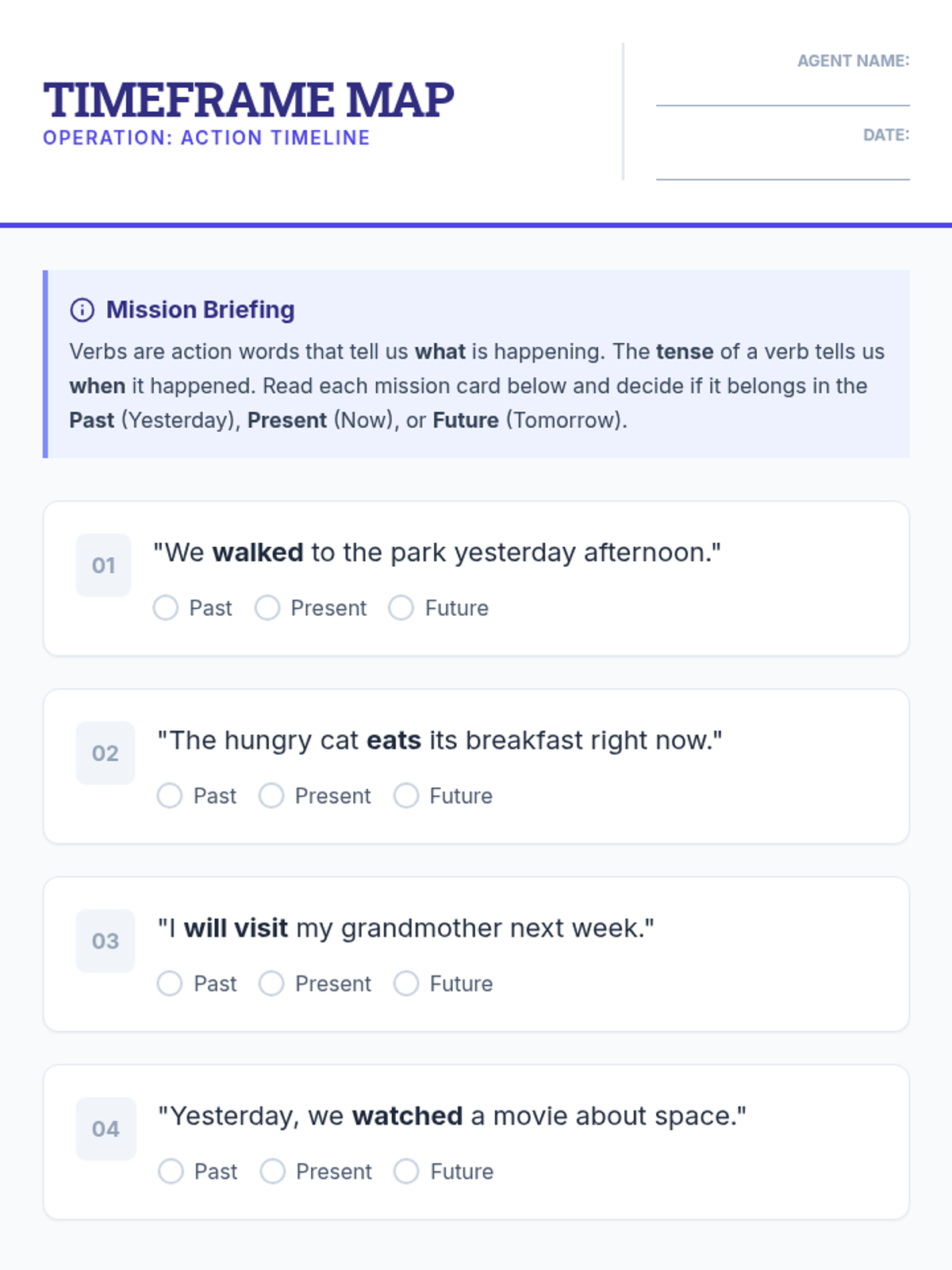
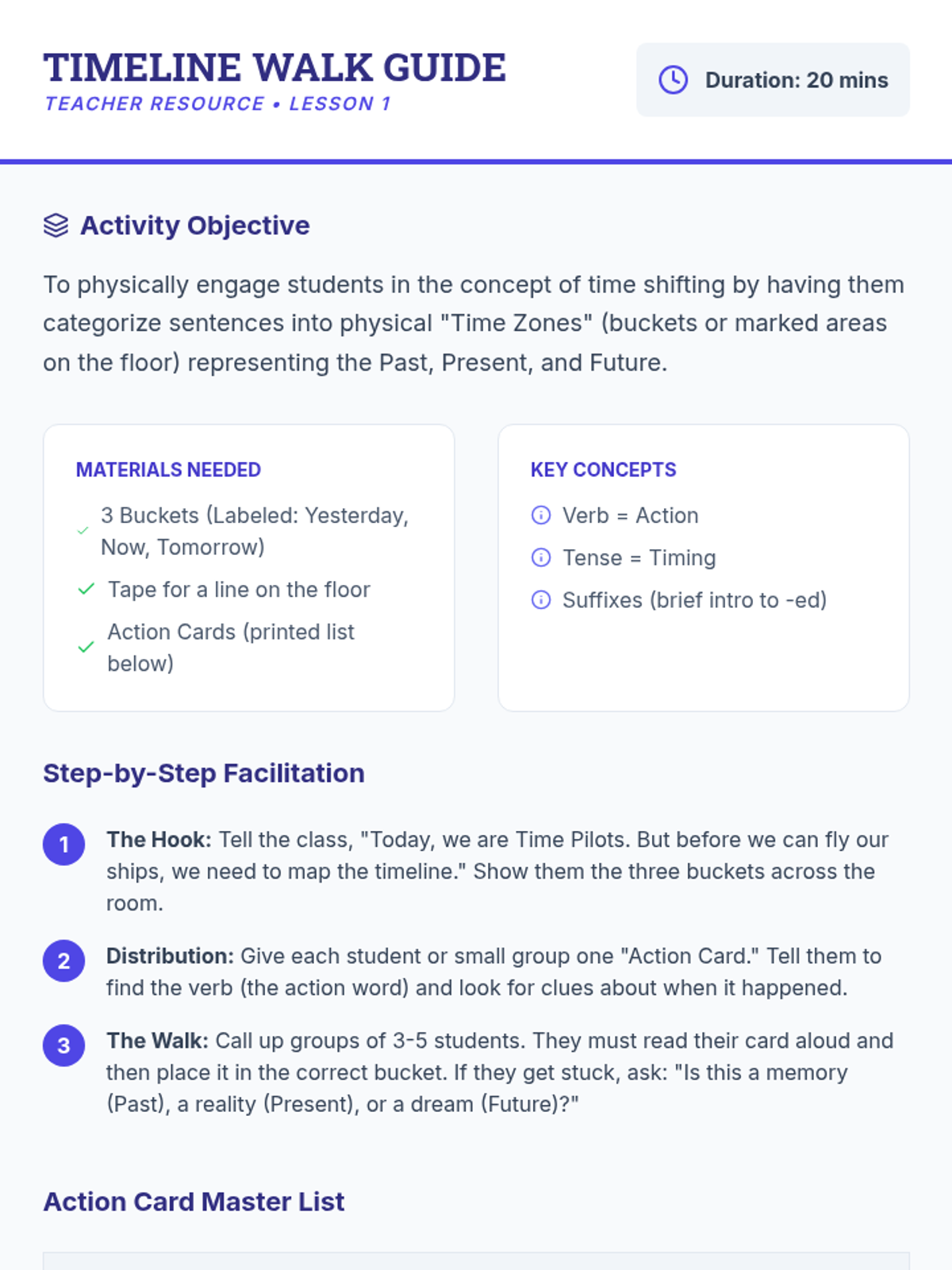
This sequence introduces 3rd-grade students to simple verb tenses (past, present, and future). Students learn to identify when actions occur, conjugate regular and irregular verbs, and ensure tense consistency in their writing through a "Time Detective" theme.
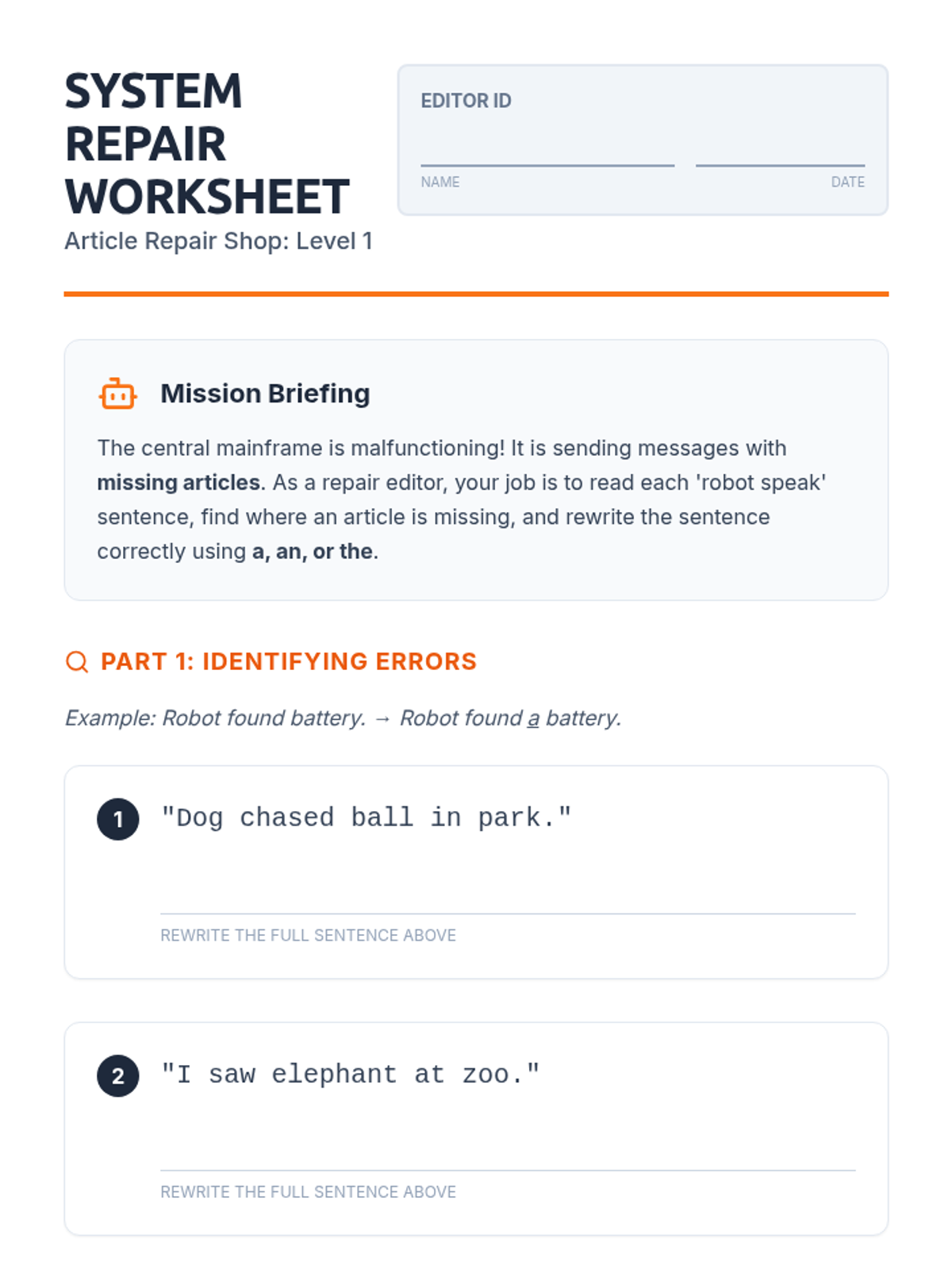
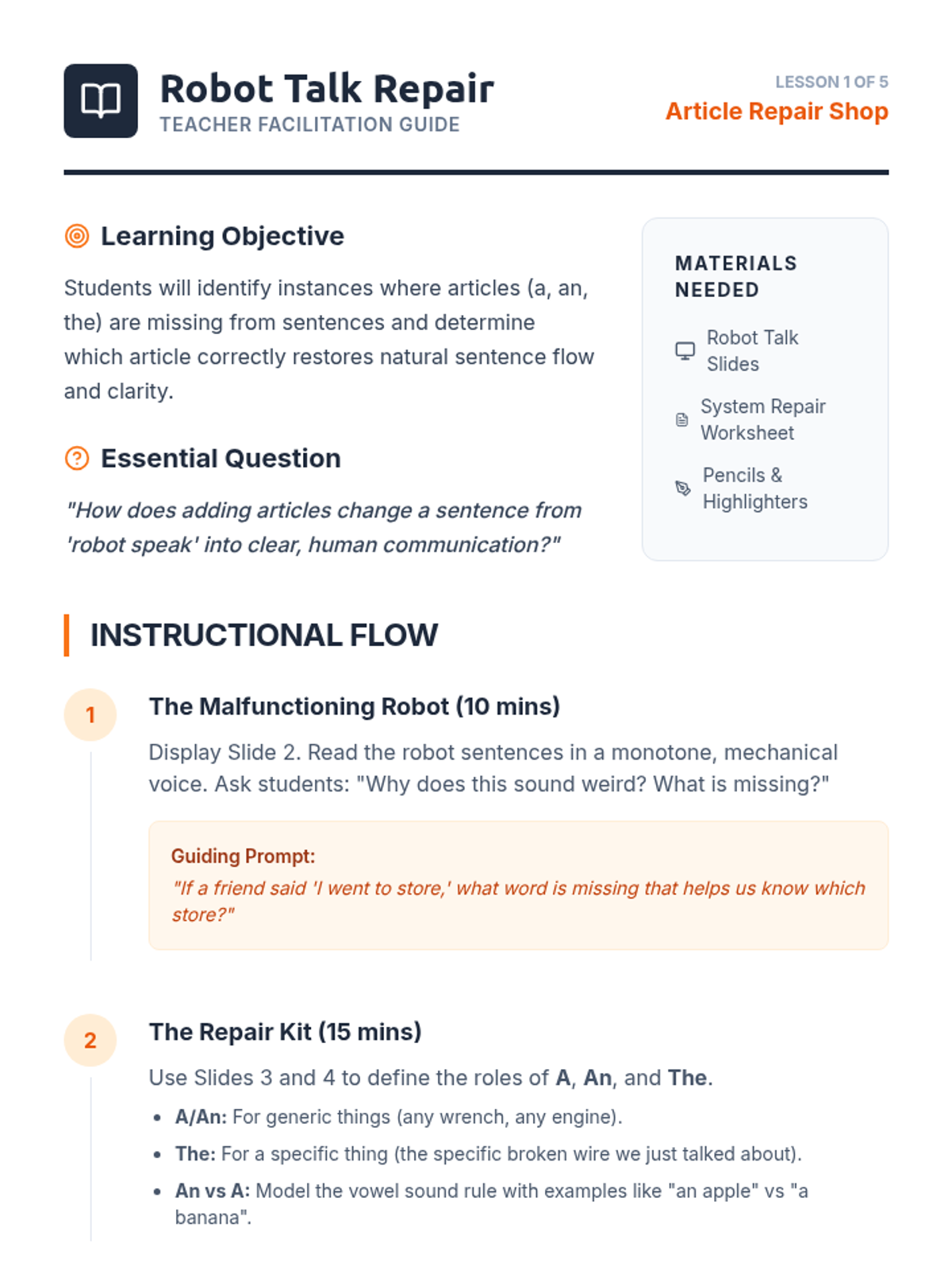
A comprehensive 5-lesson sequence for 3rd graders focused on mastering articles (a, an, the) through the lens of editing and 'repairing' broken text. Students take on the role of editors to improve sentence clarity and flow.
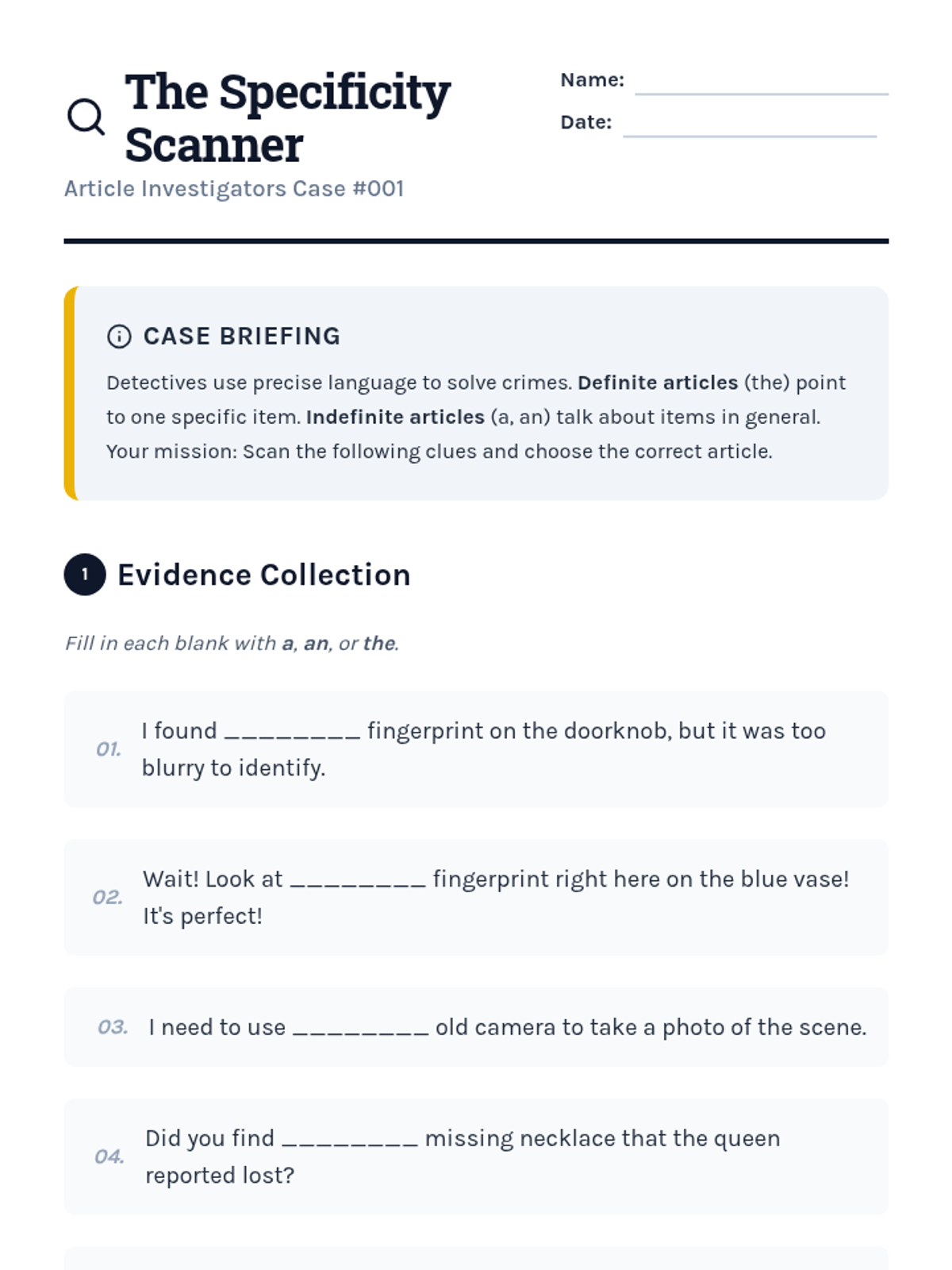
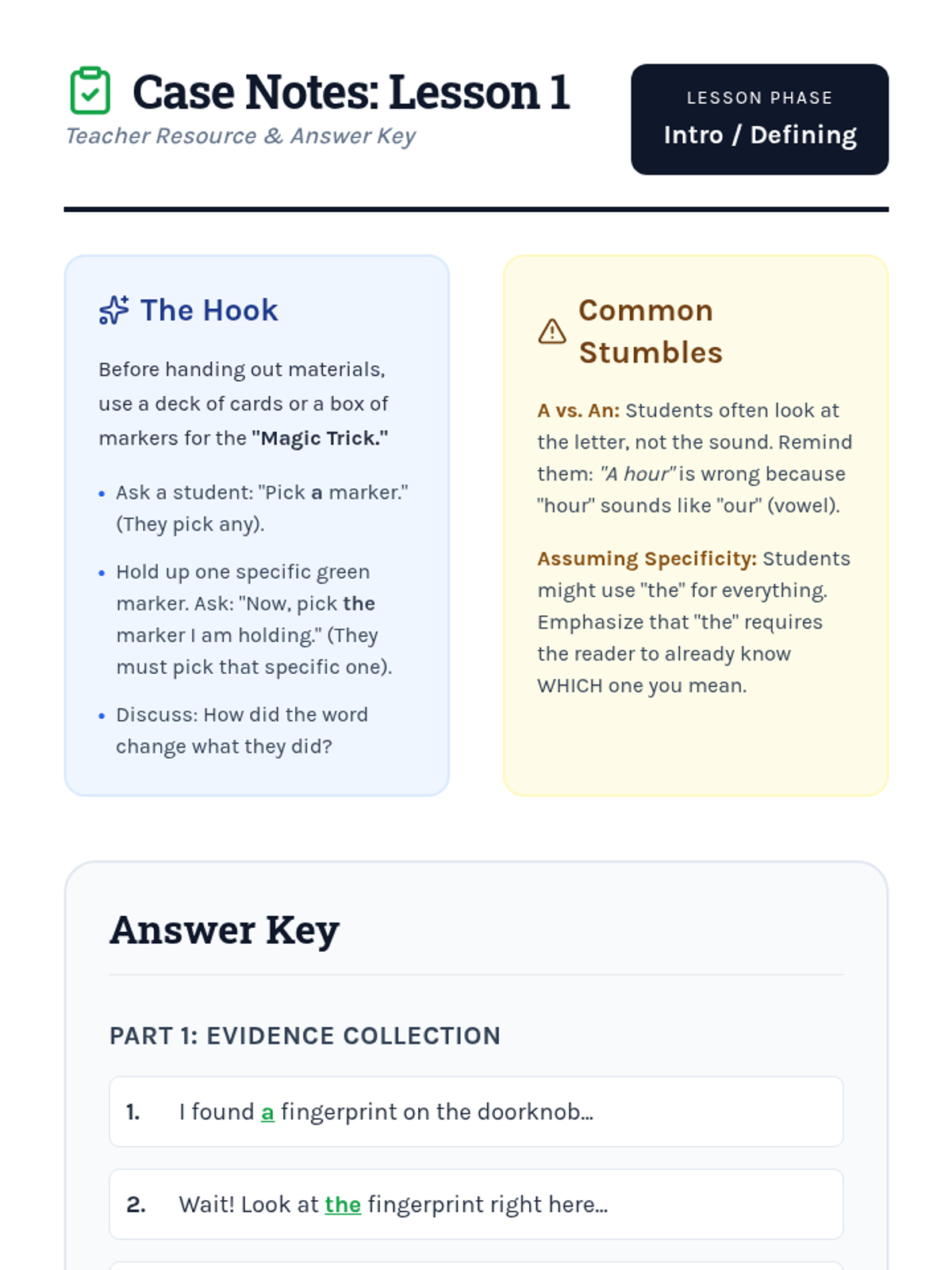
This inquiry-based sequence for 3rd graders explores the semantic differences between definite ('the') and indefinite ('a/an') articles through a detective-themed investigation. Students progress from basic identification to understanding complex rules like the first-mention rule and unique noun usage in narrative writing.