Essential grammar structures, high-frequency vocabulary, and foundational literacy skills. Equips learners with basic speaking and listening abilities for everyday interactions and introductory text comprehension.
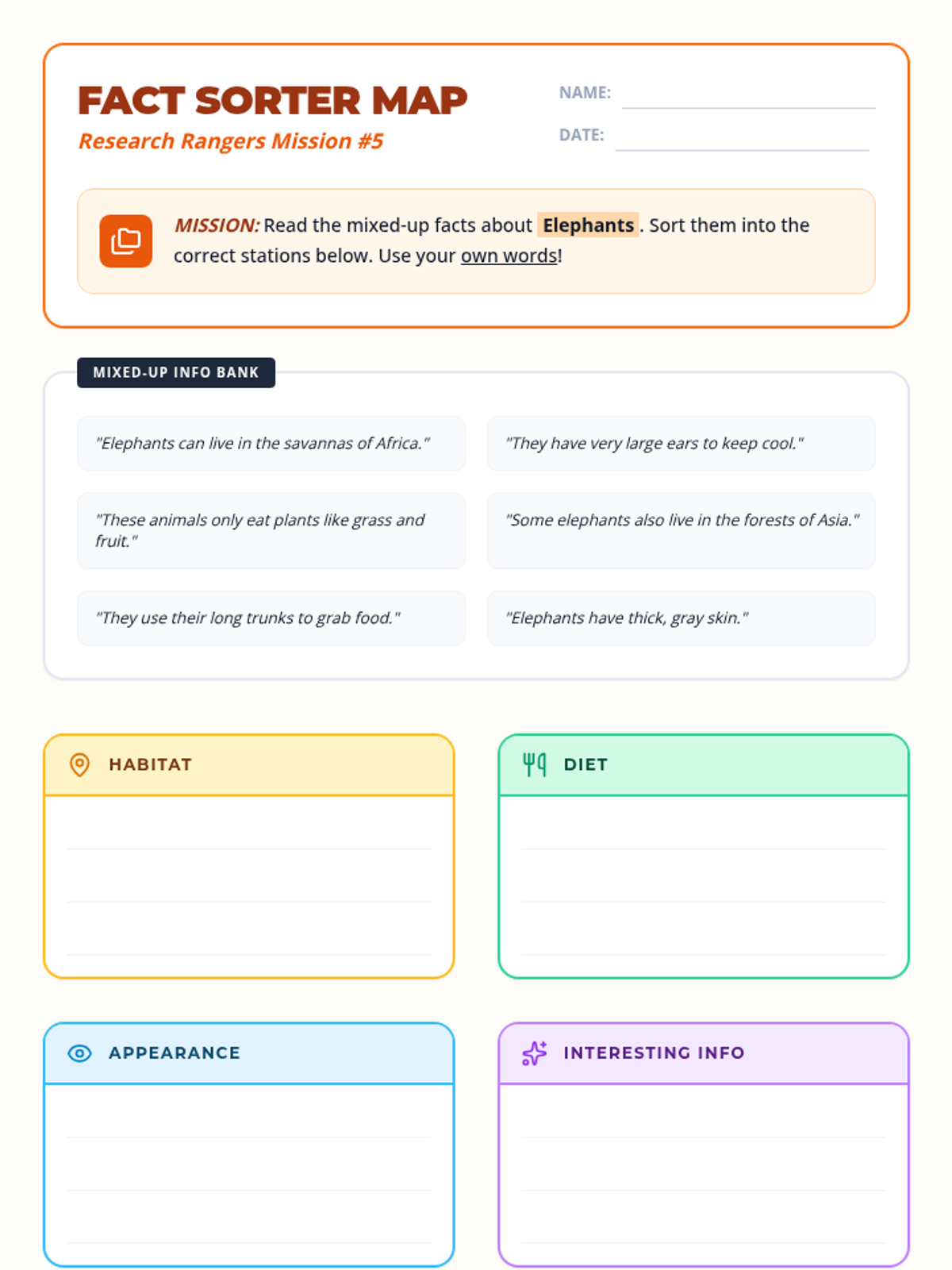
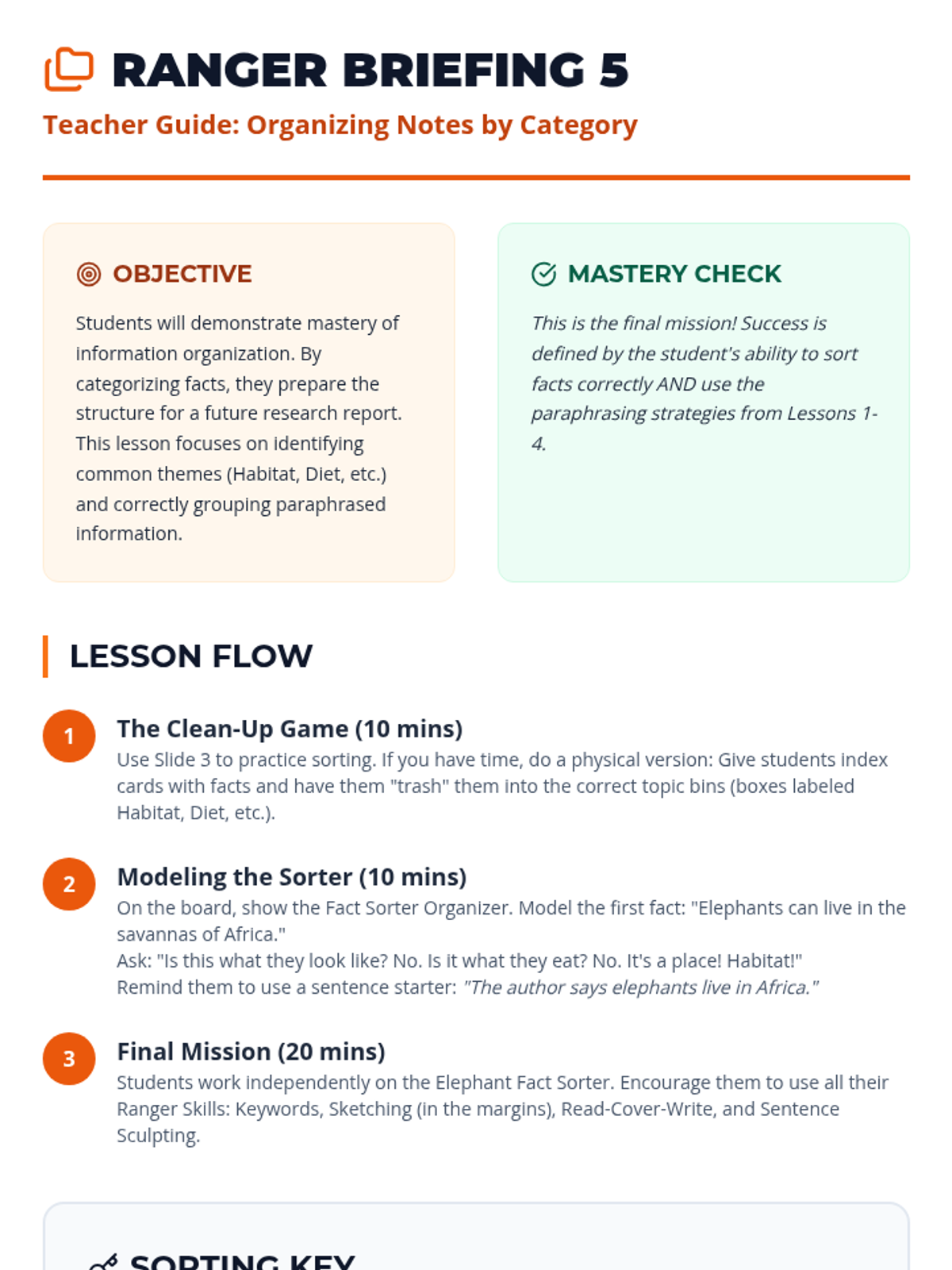
Students organize loose facts into logical categories using a graphic organizer. They learn to group information by topic to prepare for structured writing.
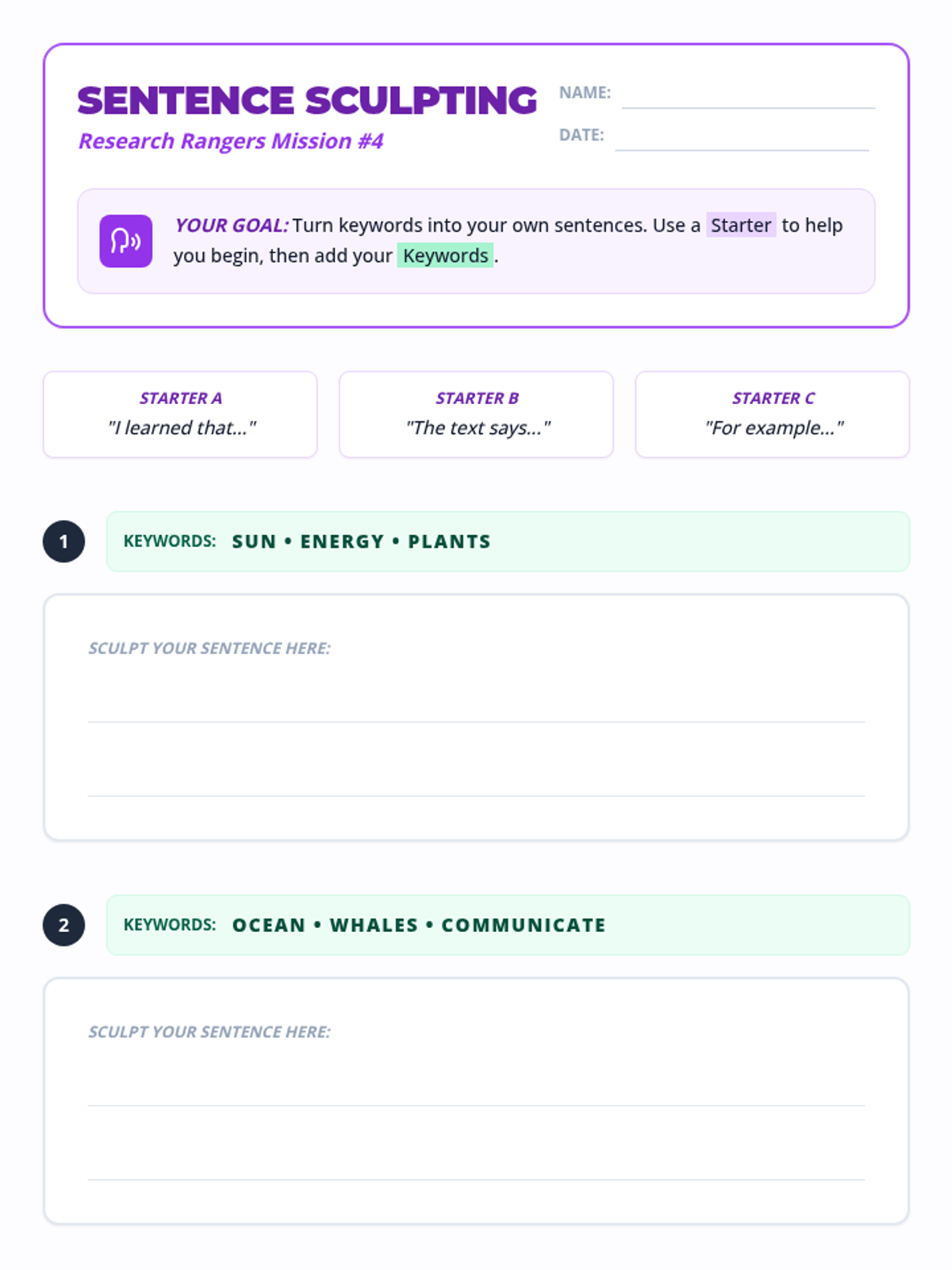
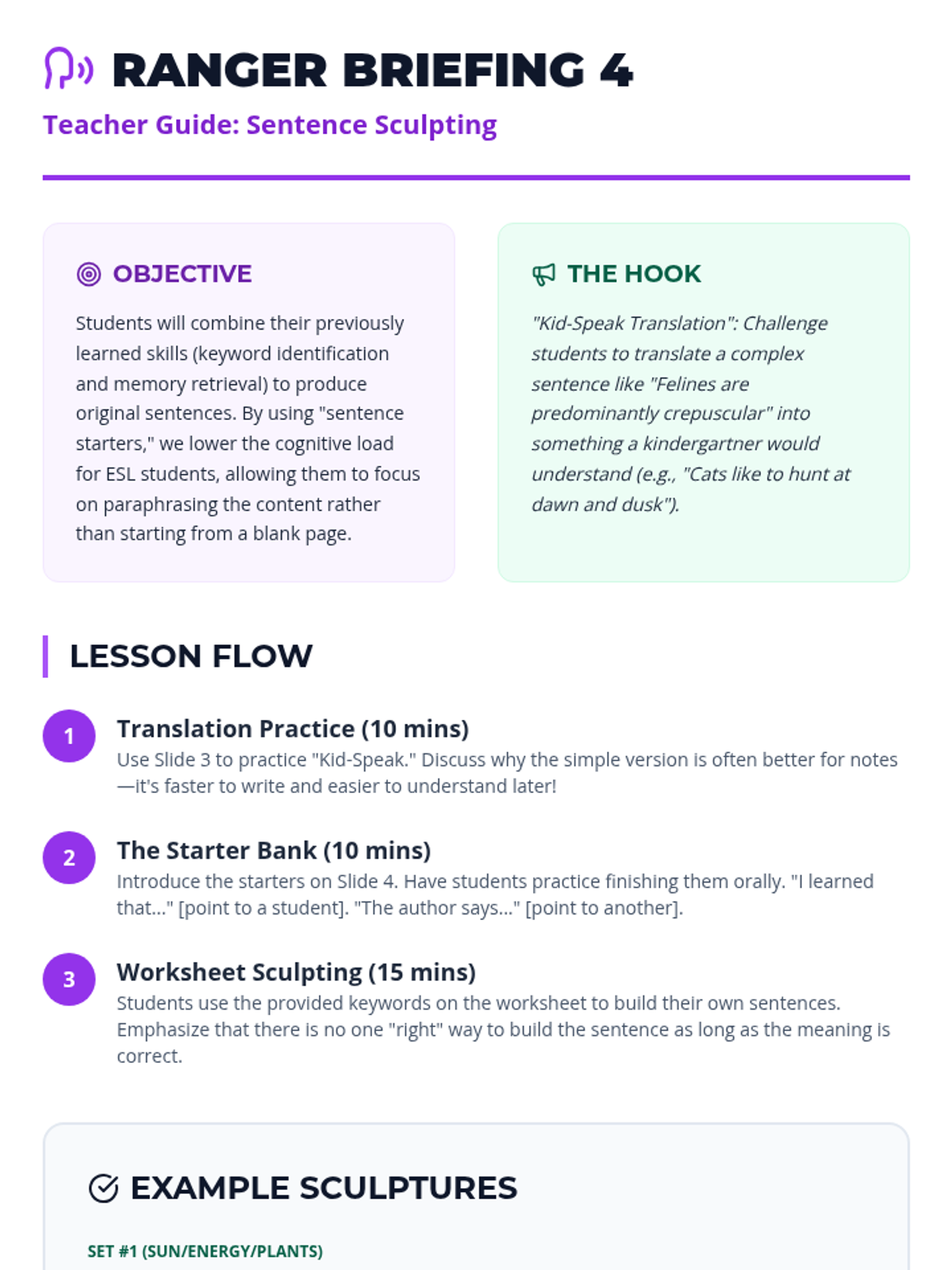
Using keywords and visual notes, students use sentence frames to construct complete sentences in their own voice. They 'translate' complex text into simpler language.
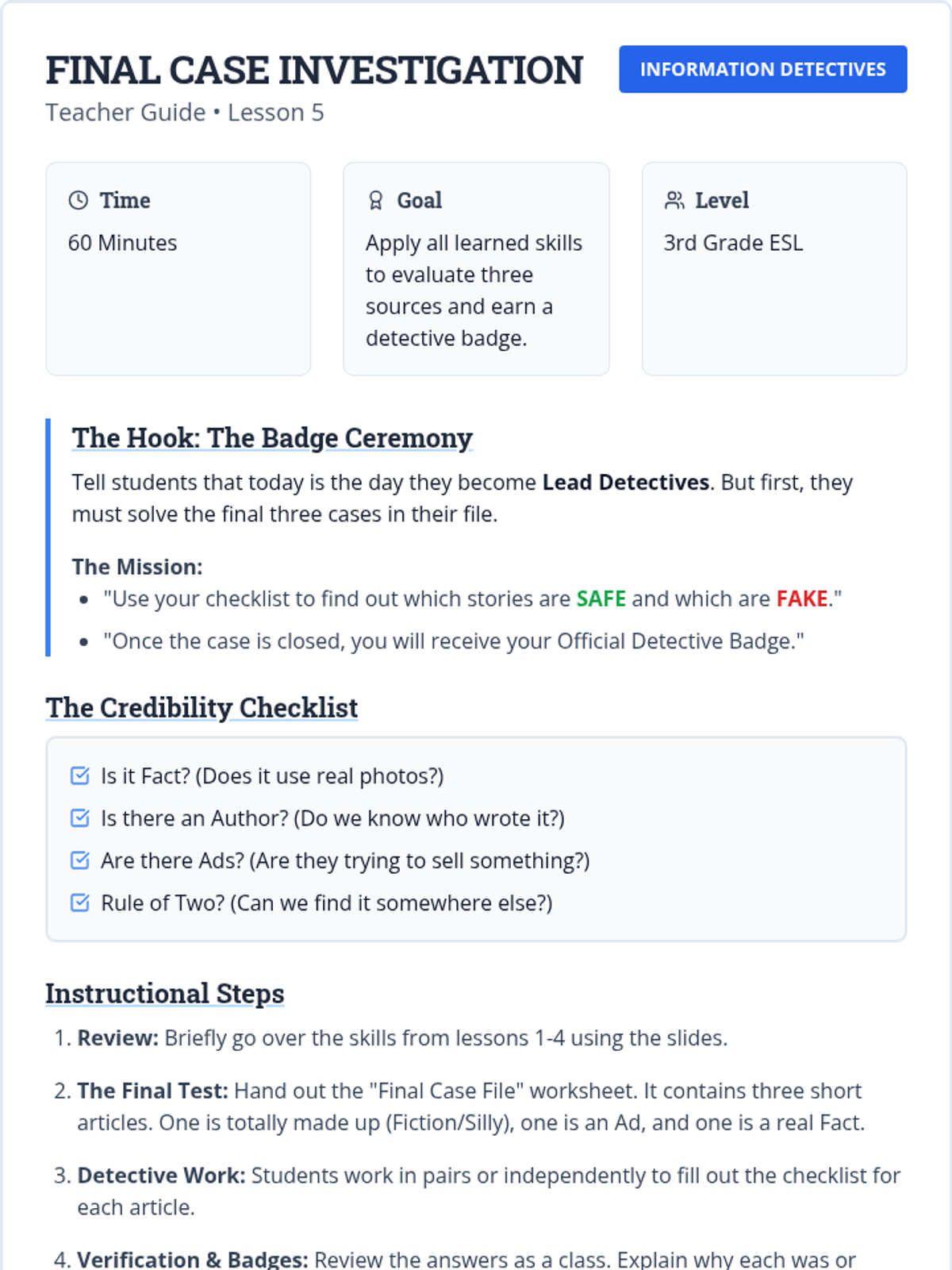
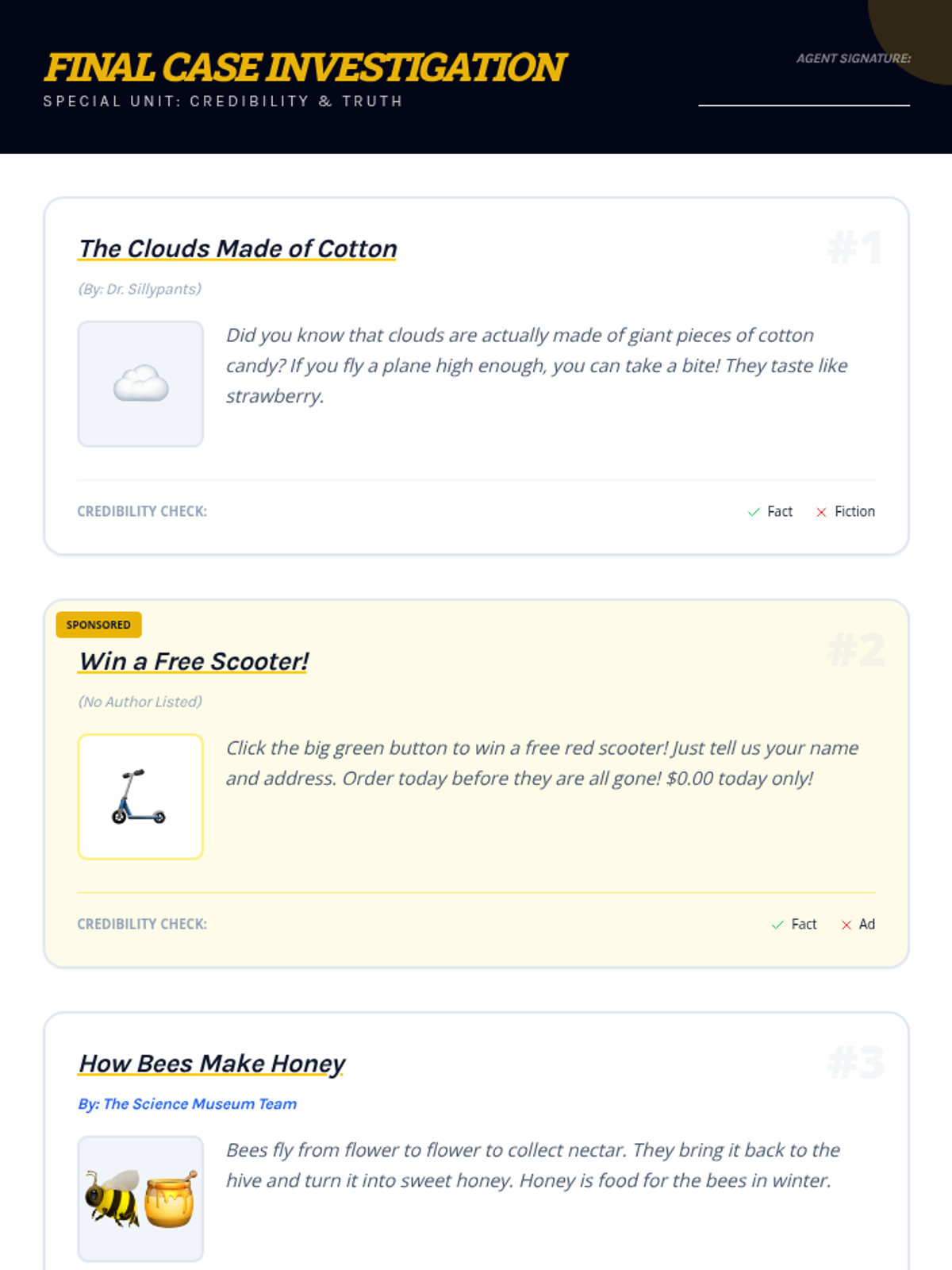
Students use a credibility checklist to investigate three suspect articles and determine which are true, earning their detective badges.
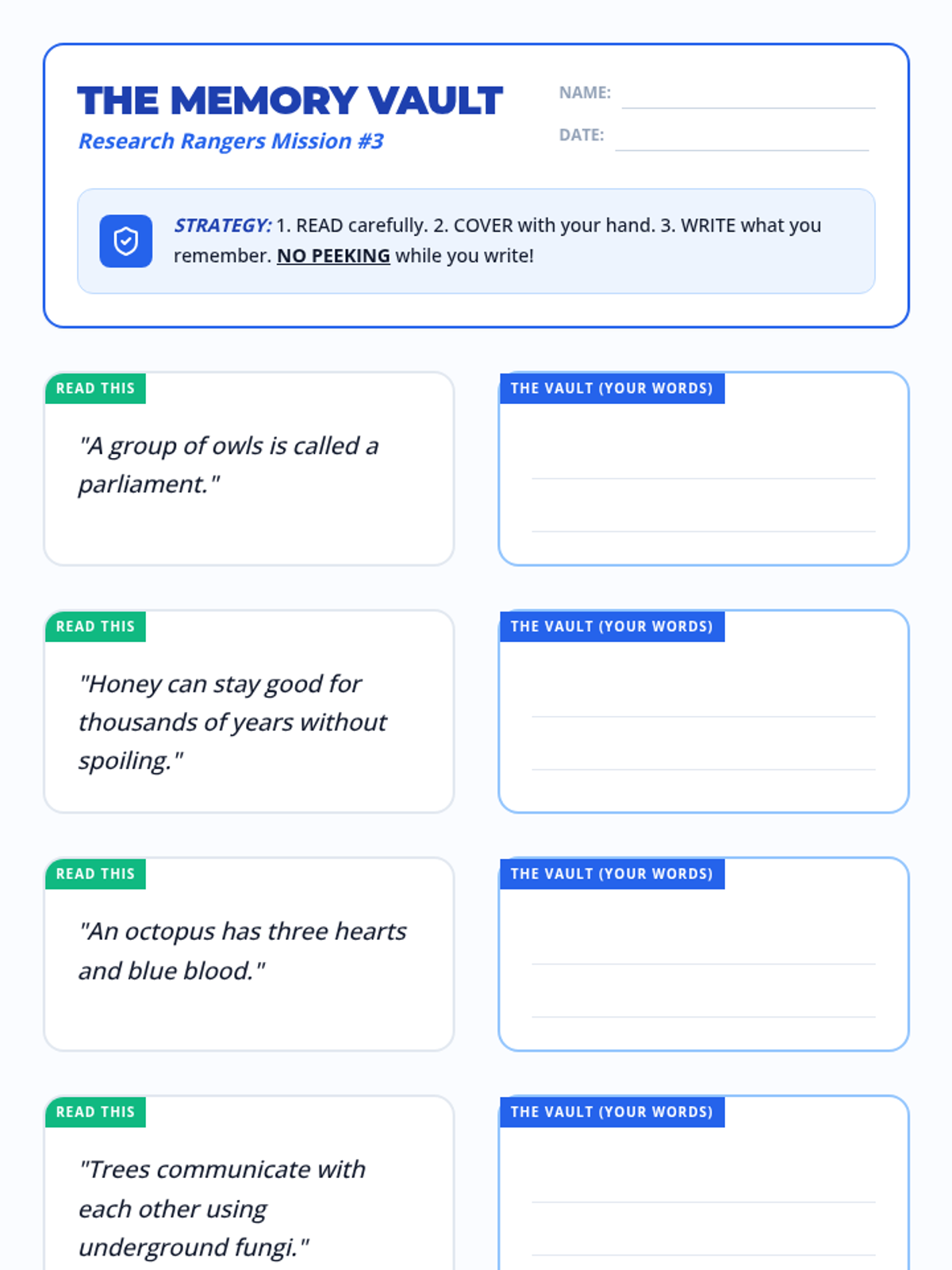
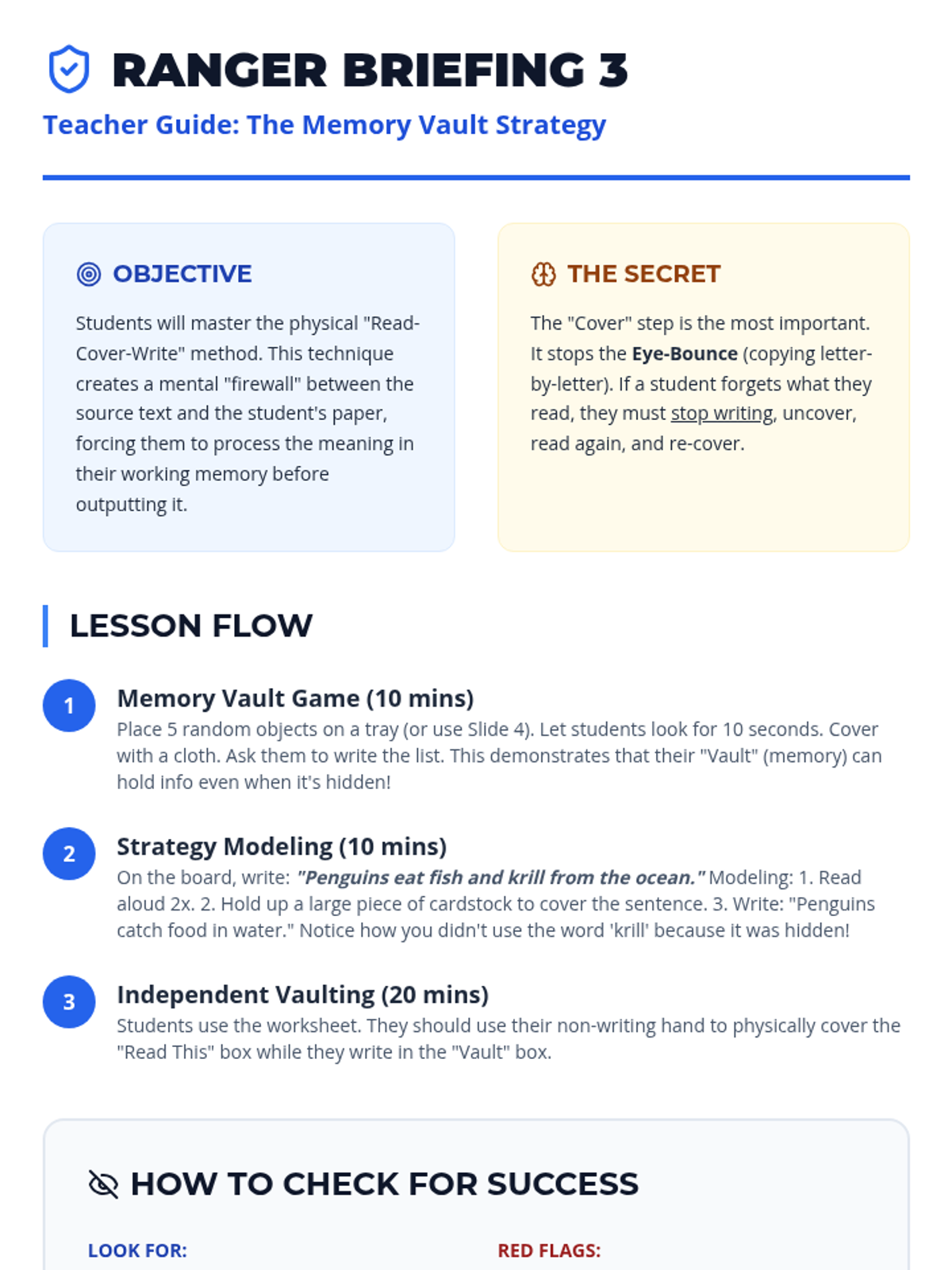
Students learn the 'Read-Cover-Write' strategy to prevent plagiarism. They practice reading a sentence, covering it, and writing what they remember in their own words.
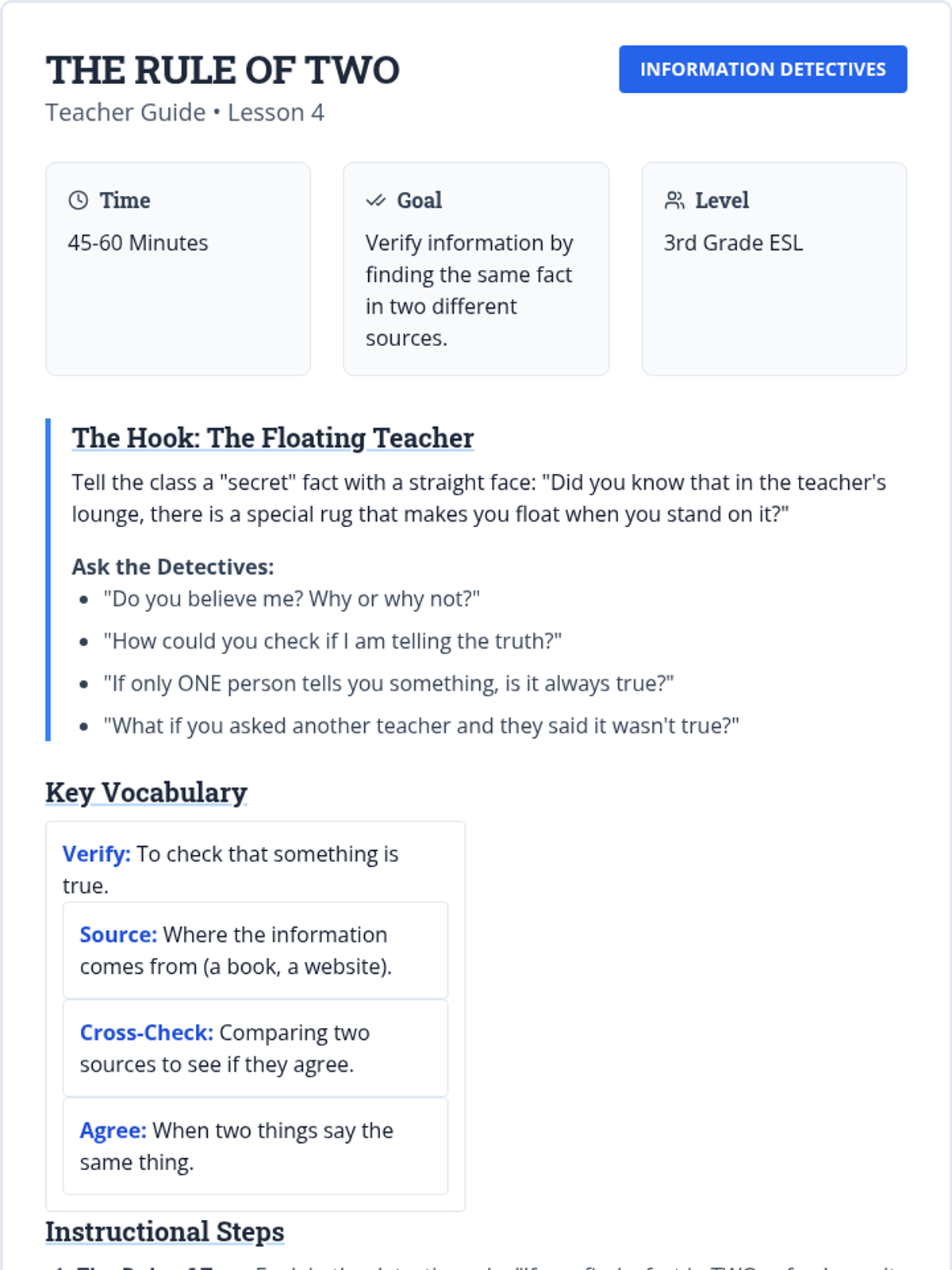
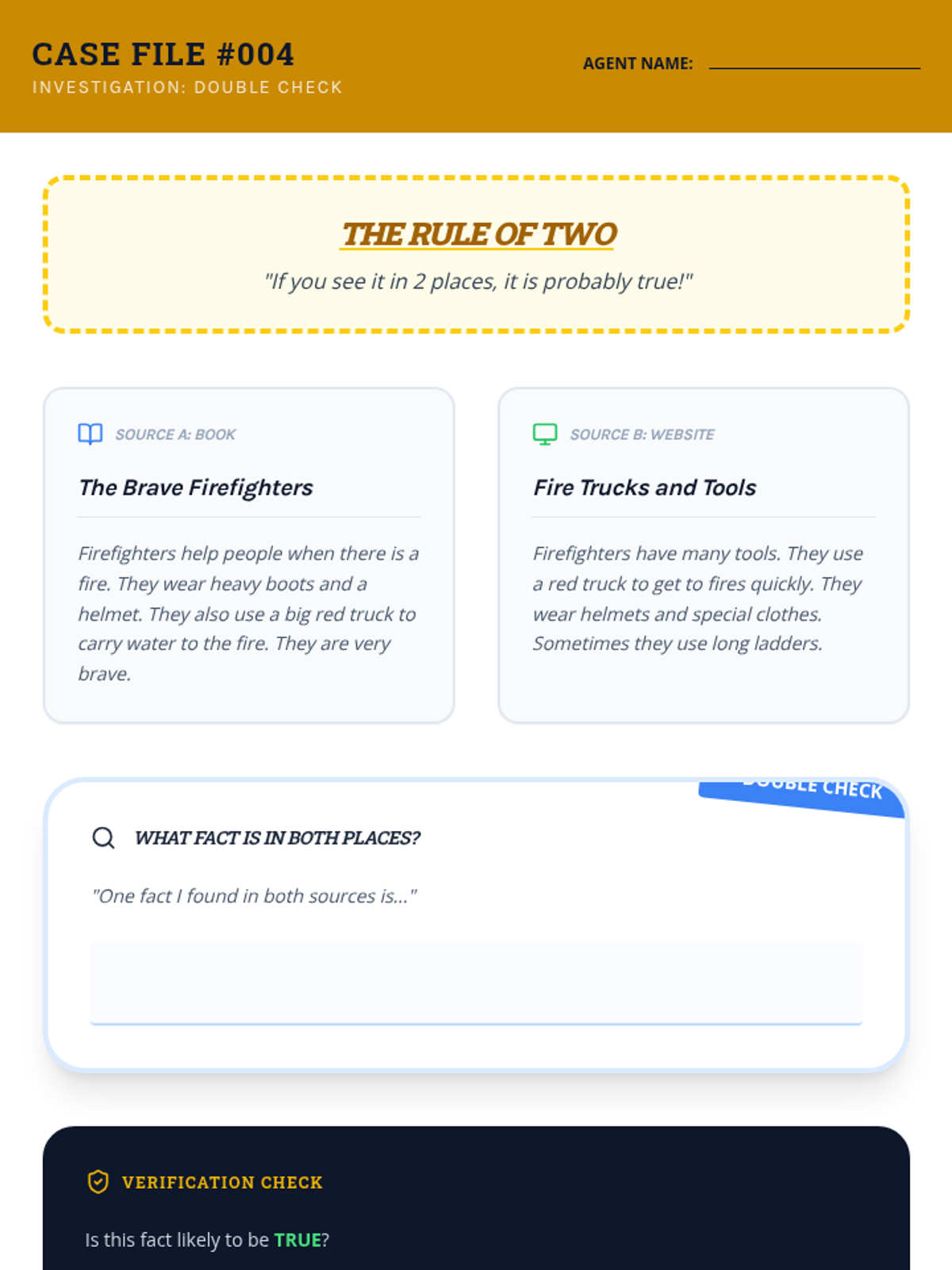
Students practice the 'Rule of Two' by finding the same fact in two different sources to verify its accuracy.
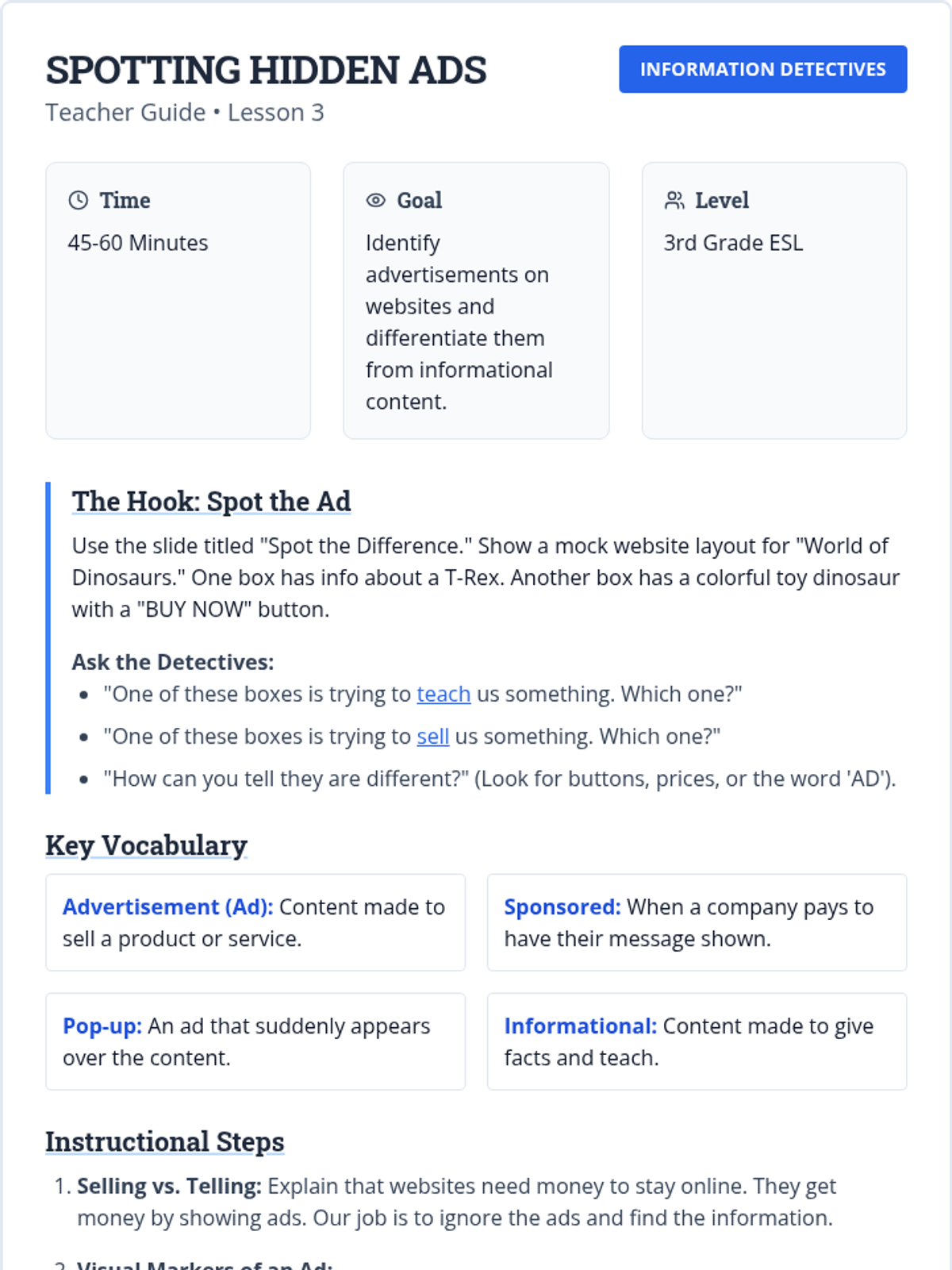
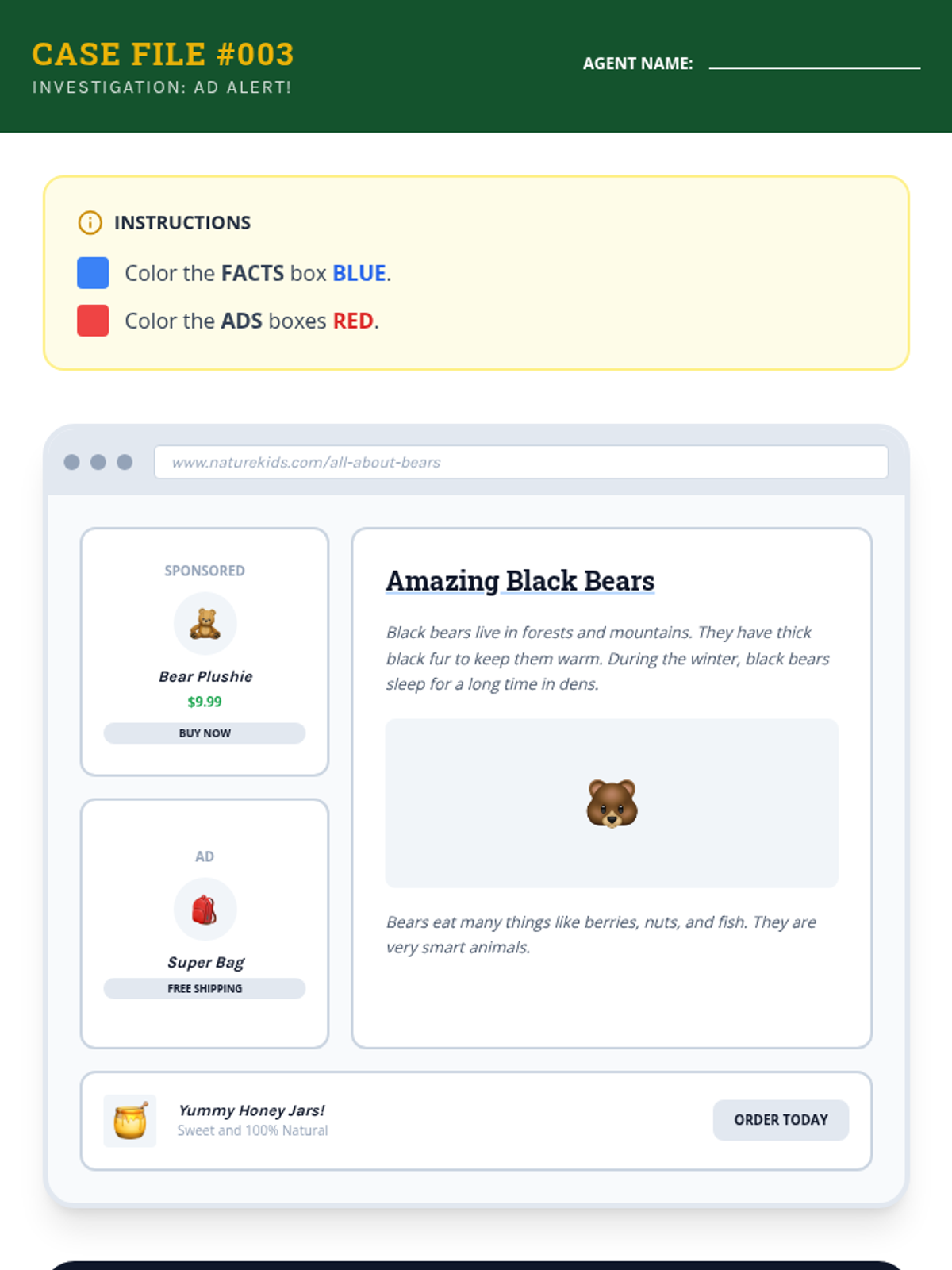
Students learn to differentiate between informational content and advertisements on websites, identifying visual markers that signal an ad.
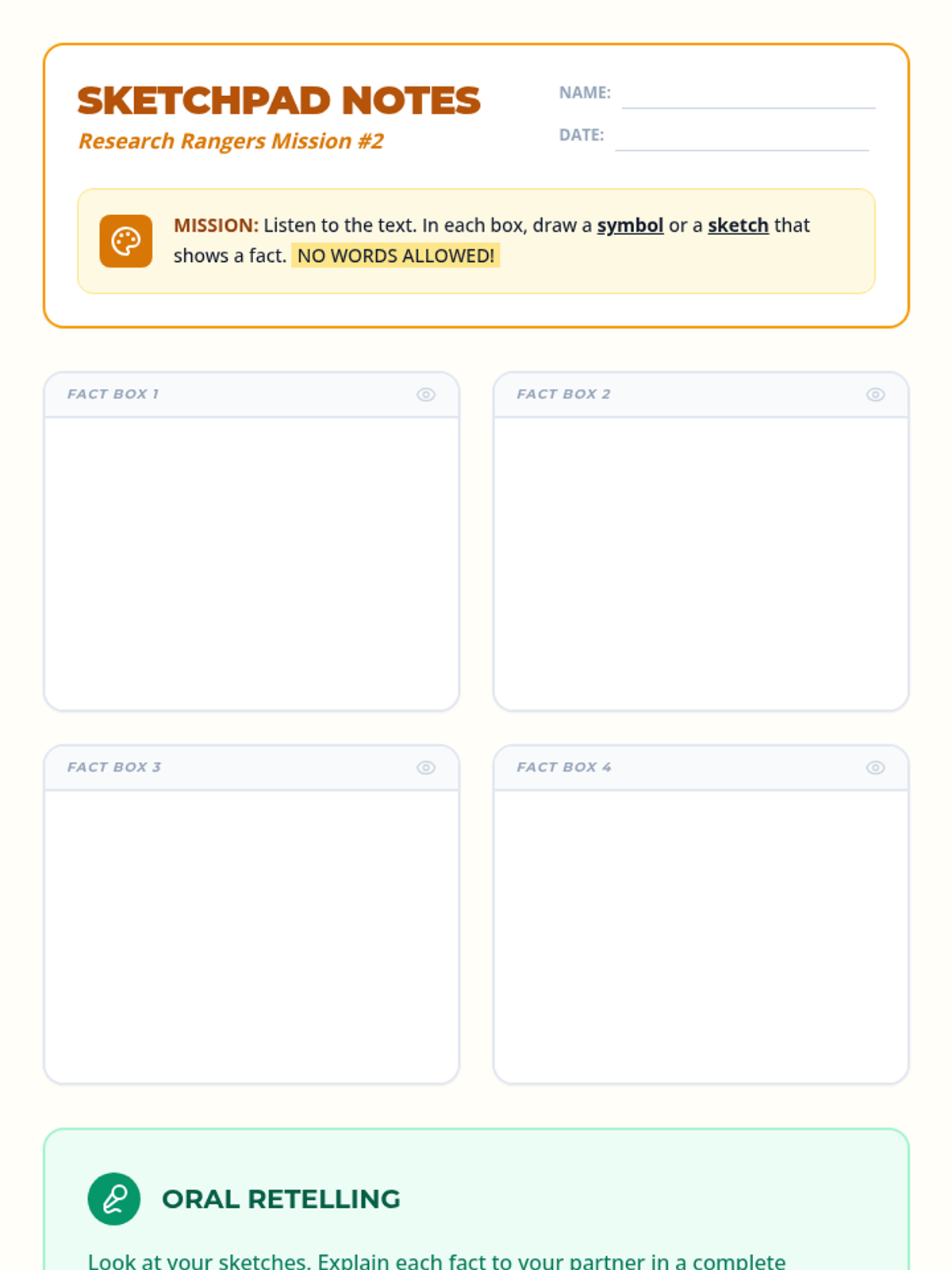
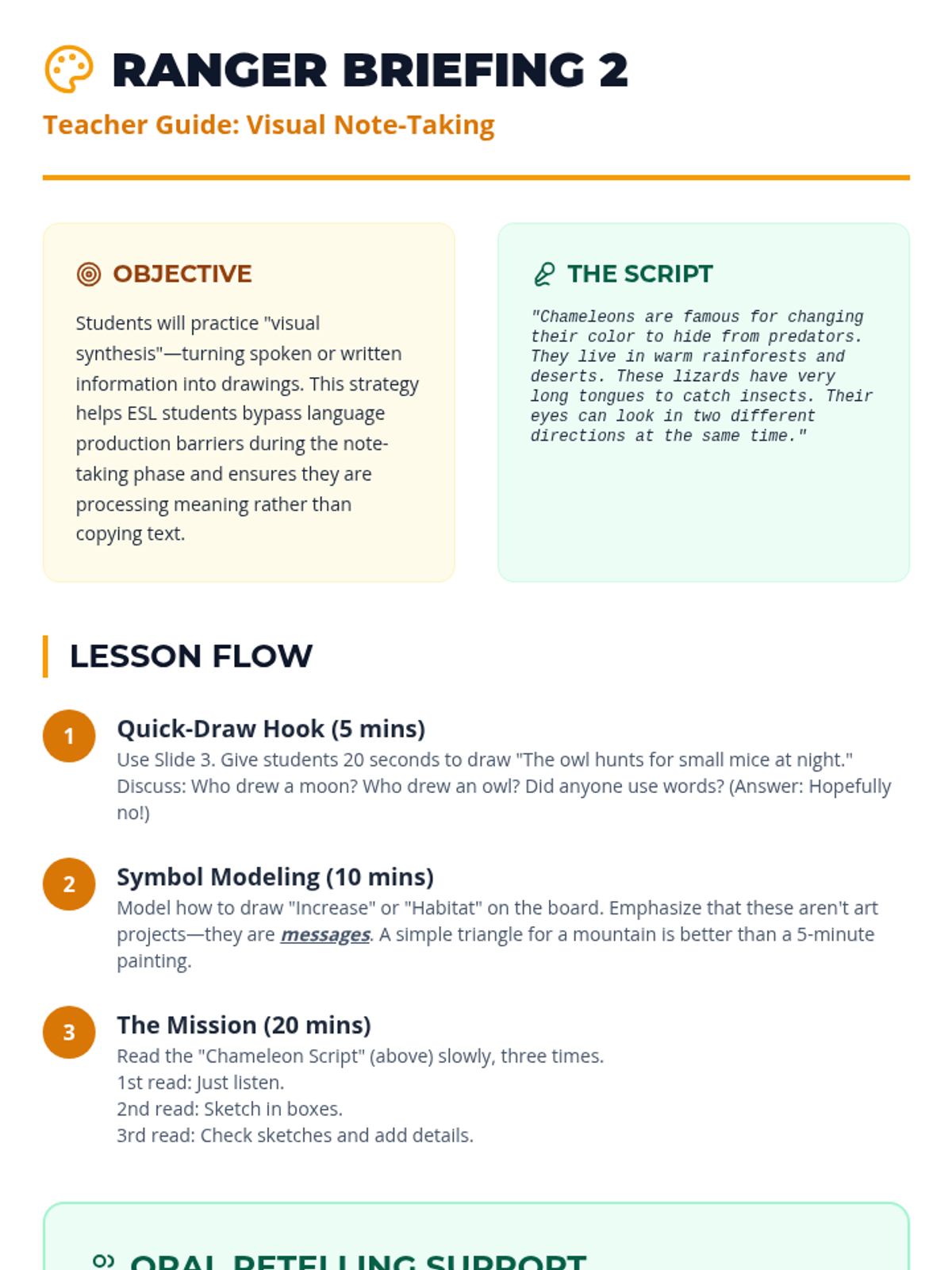
Students take notes using only drawings and symbols to bypass language barriers and prevent copying. They practice oral retelling by explaining their sketches to a partner.
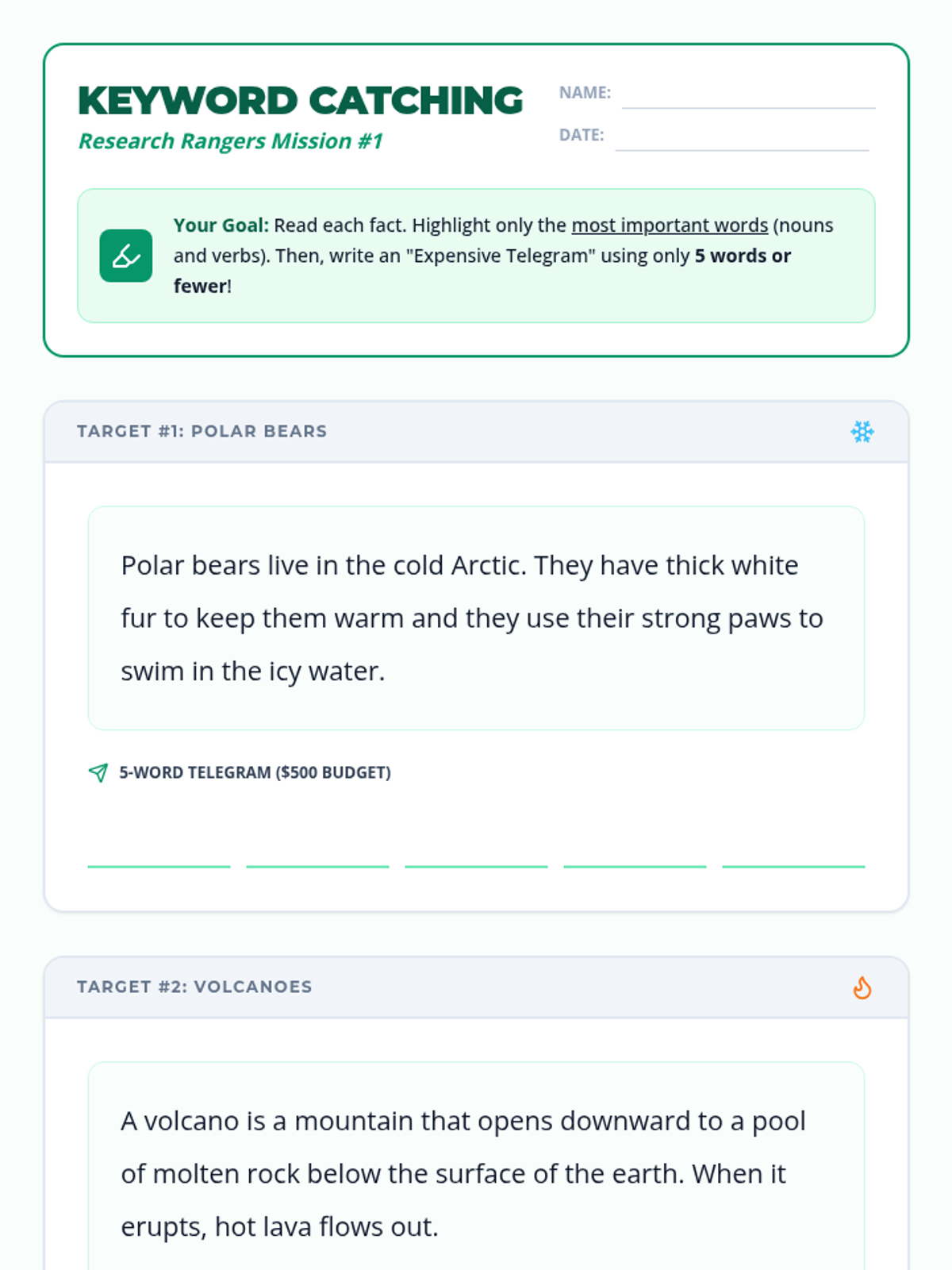
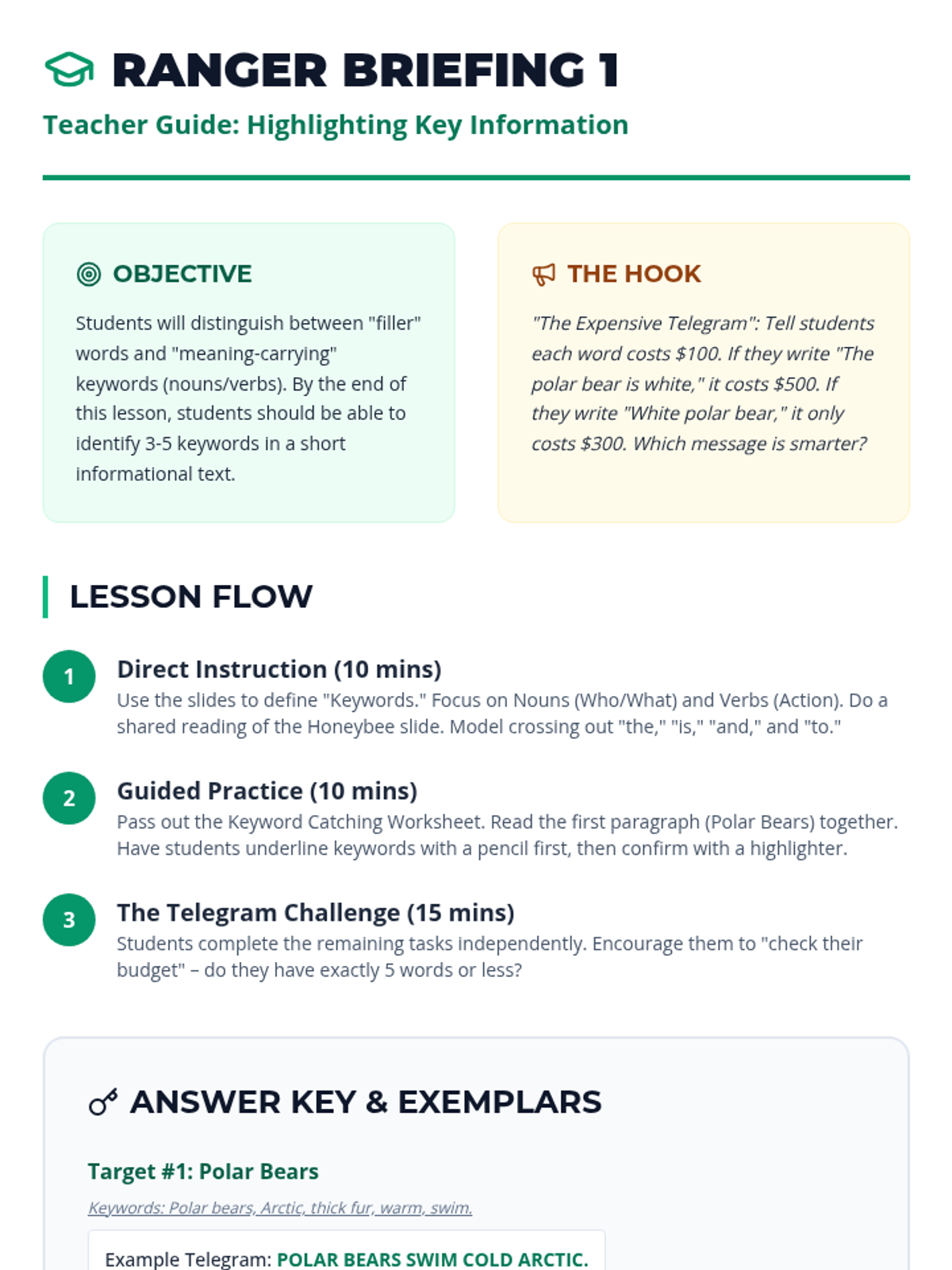
Students practice reading short paragraphs and highlighting only the most important words (nouns and verbs). They use the 'Expensive Telegram' game to learn how to summarize with a strict word limit.
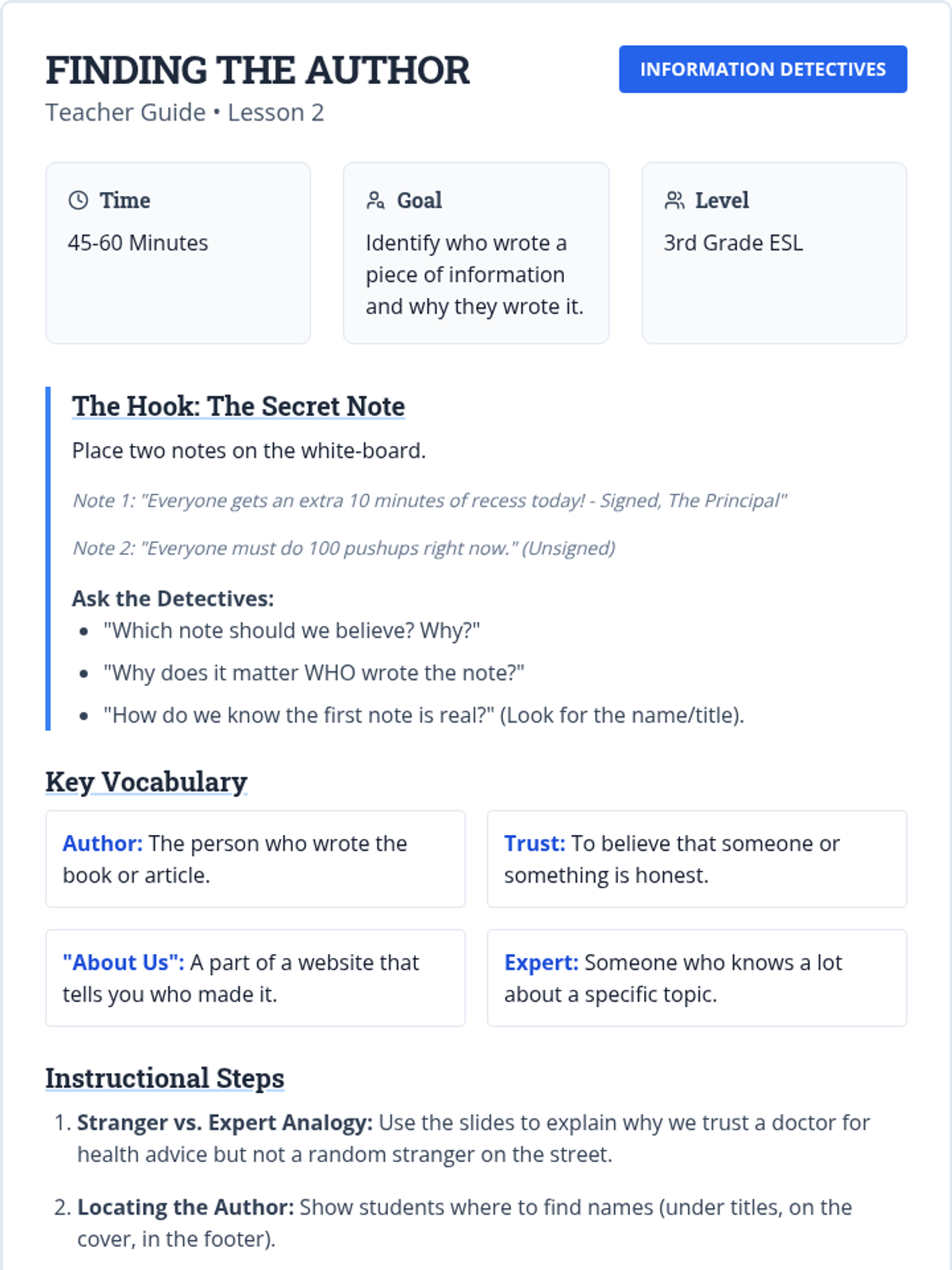
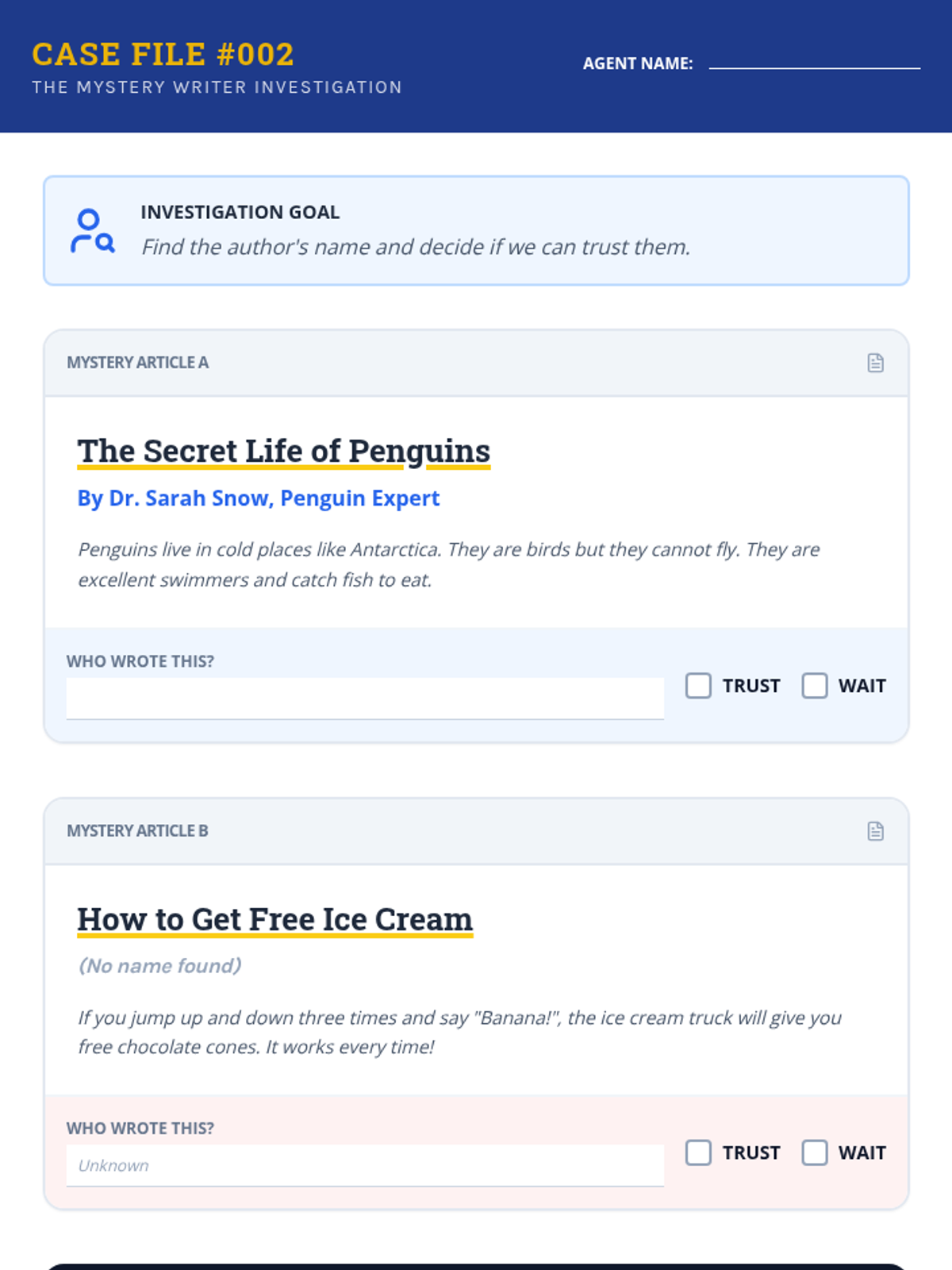
Students learn to identify authors and 'About Us' sections to evaluate if a source is trustworthy, using a 'stranger vs. teacher' analogy.
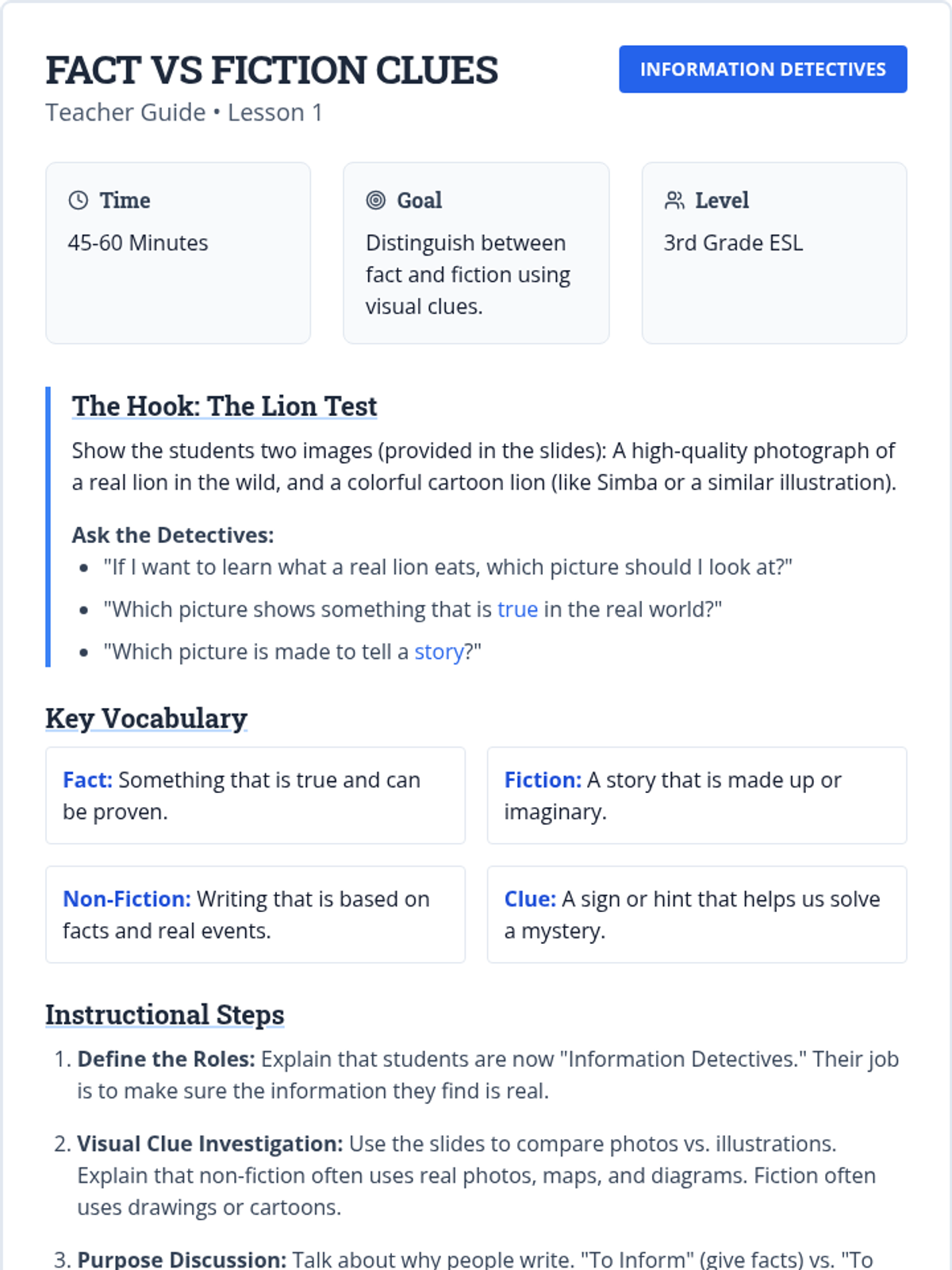
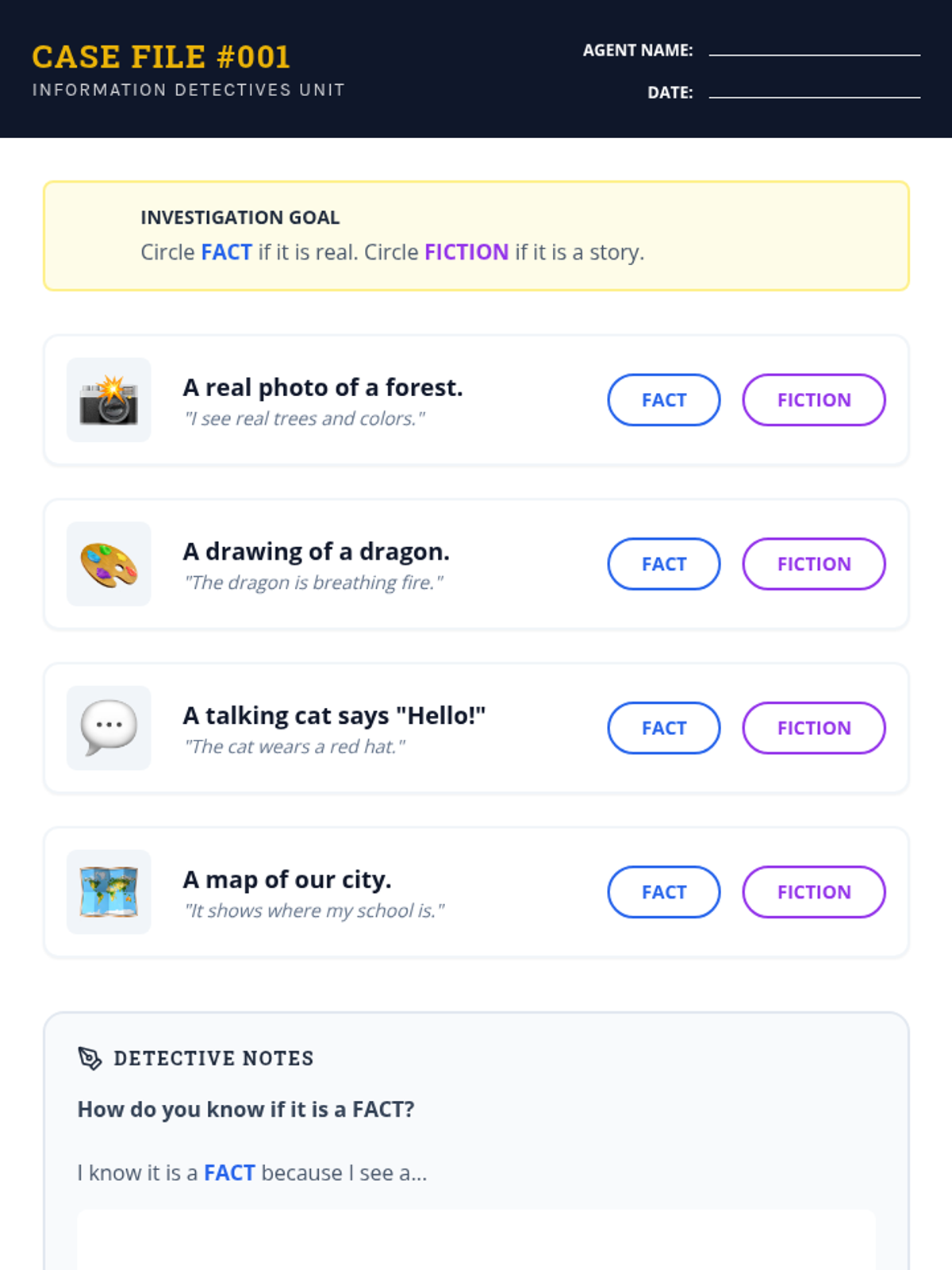
Students distinguish between 'Real/Non-Fiction' and 'Made-up/Fiction' by examining visual clues like photographs vs. illustrations and discussing the text's purpose.
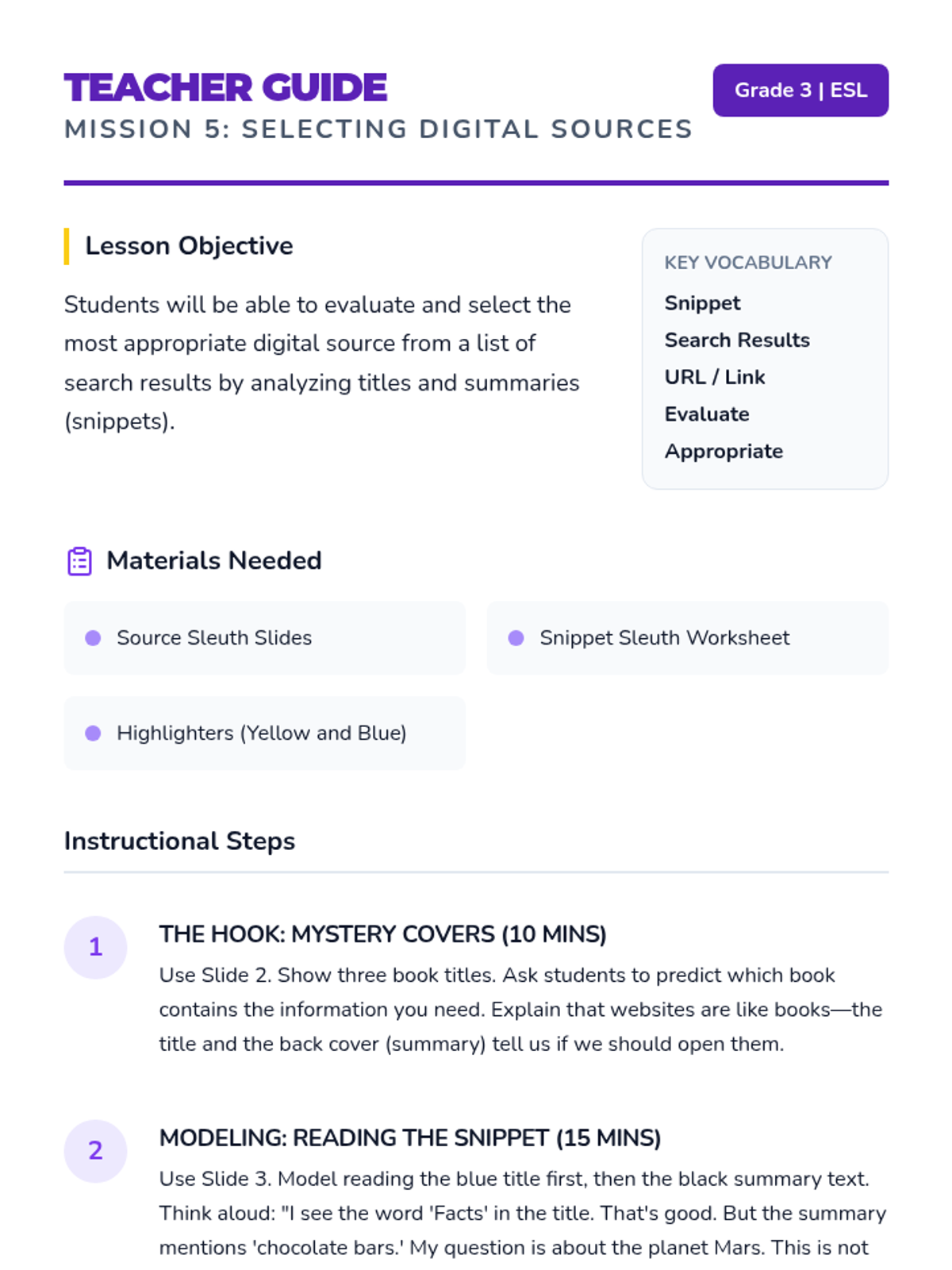
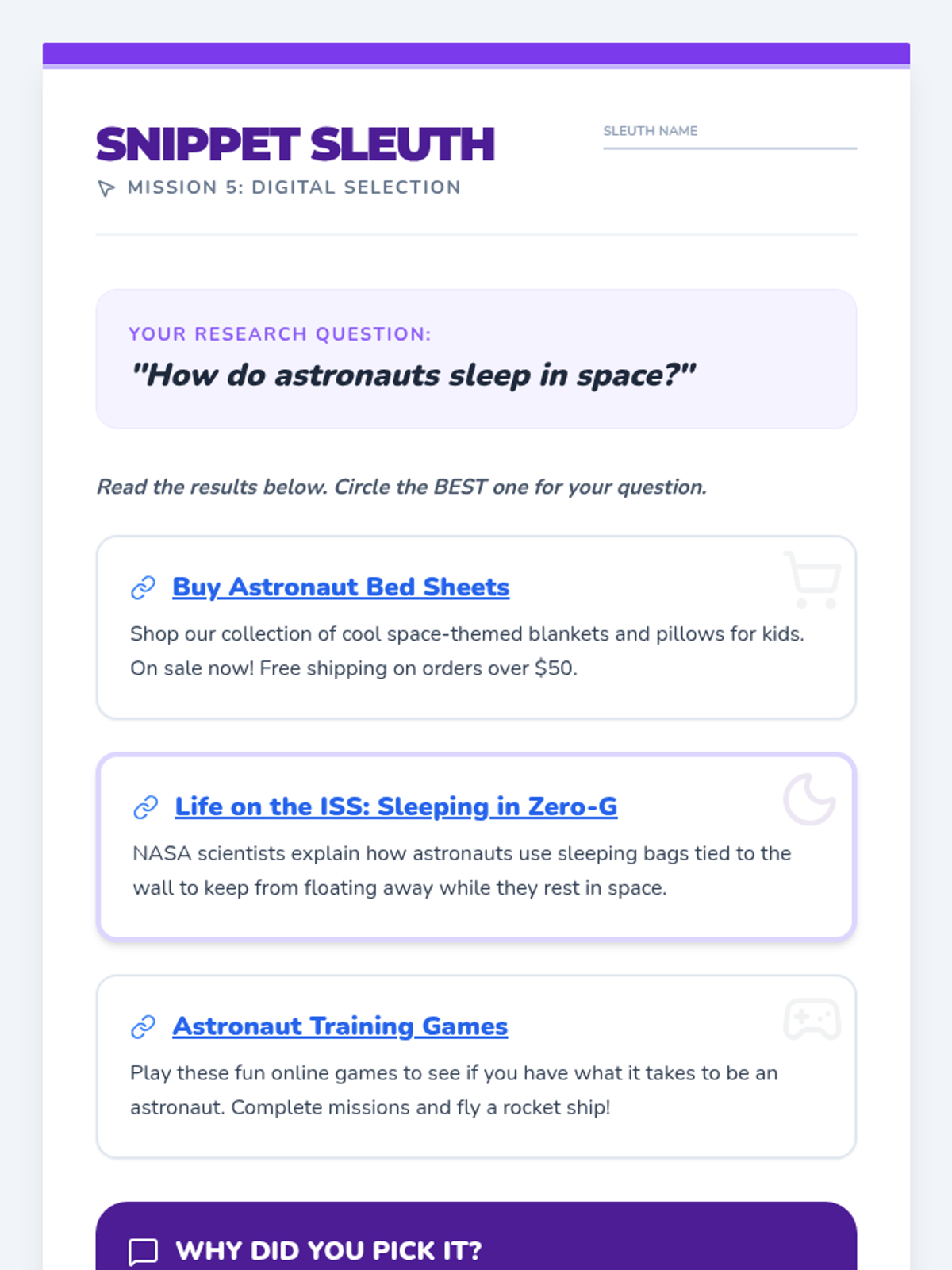
Students evaluate simulated search results to choose the most appropriate digital sources based on titles and summaries.
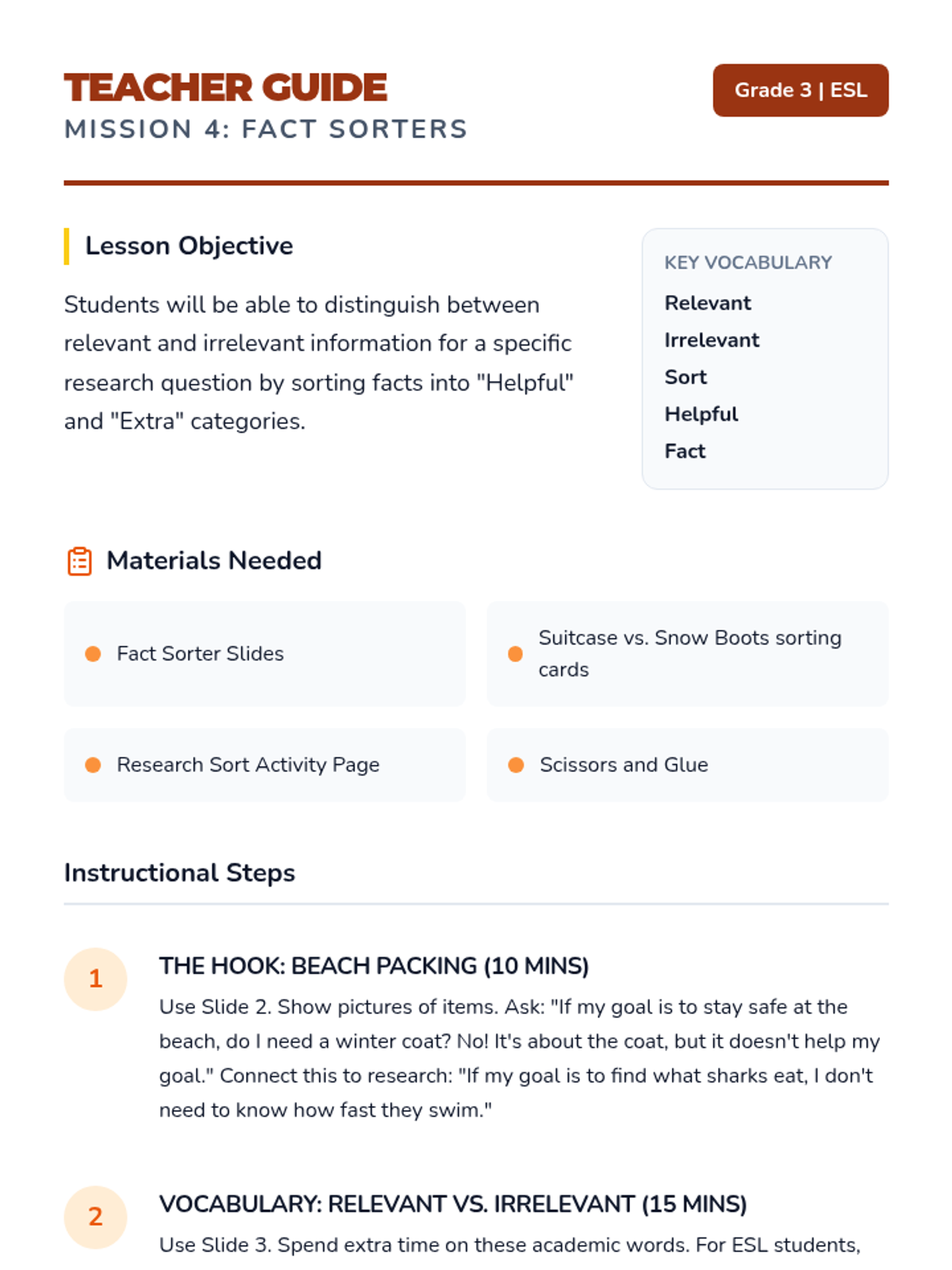
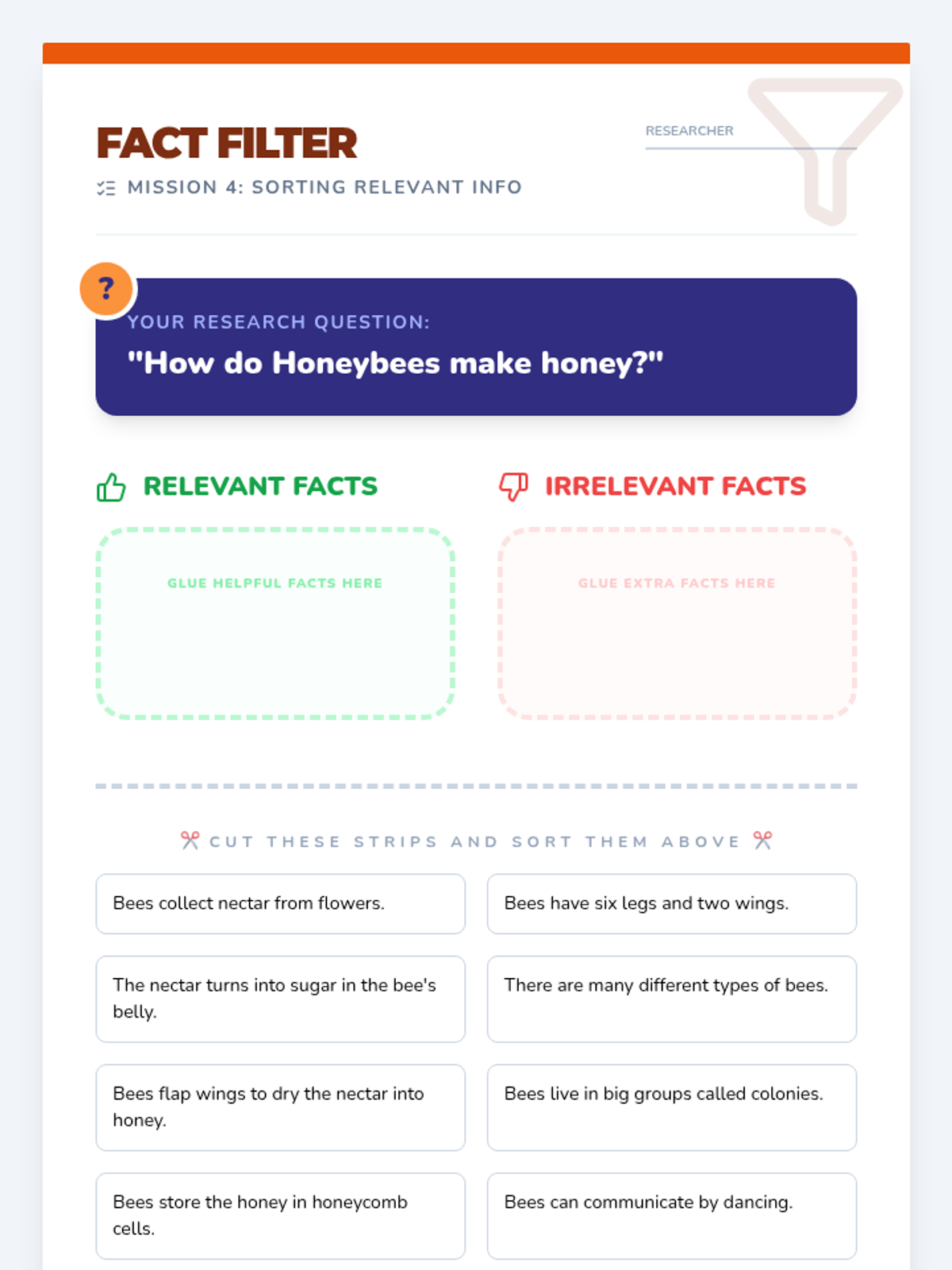
Students practice sorting facts into relevant and irrelevant categories based on a specific research goal.
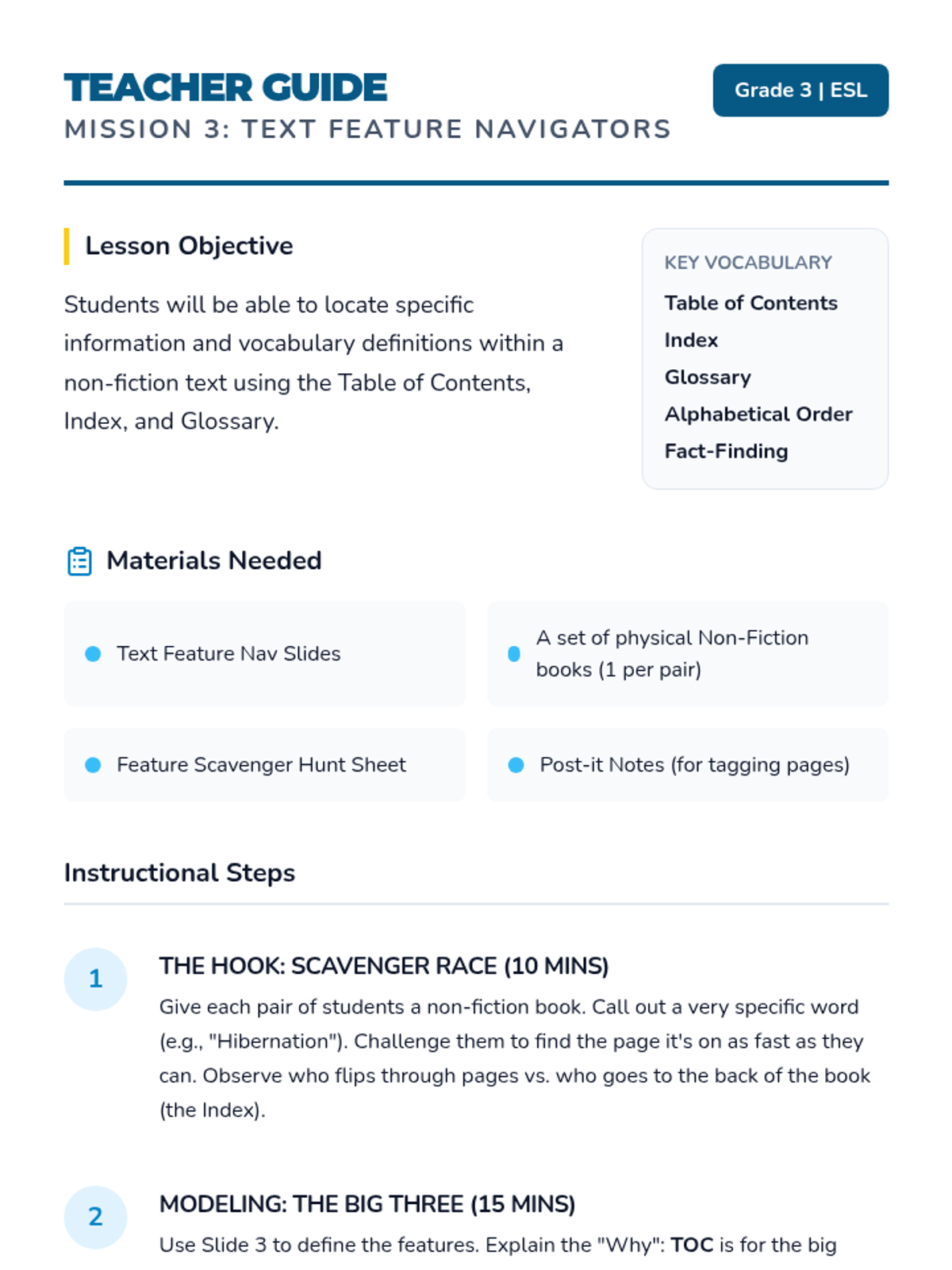
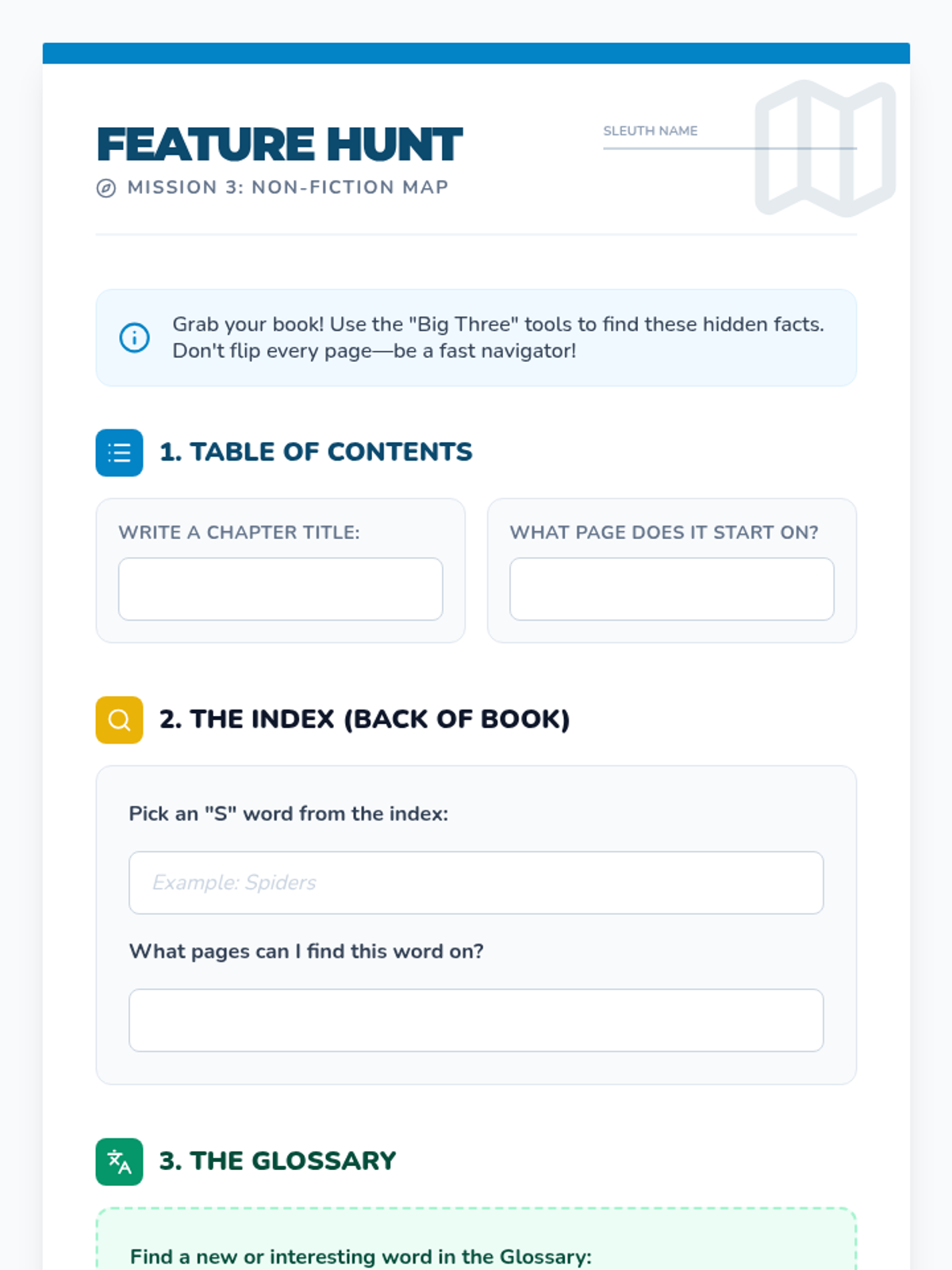
Students explore non-fiction text features like the Table of Contents, Index, and Glossary to locate information quickly.
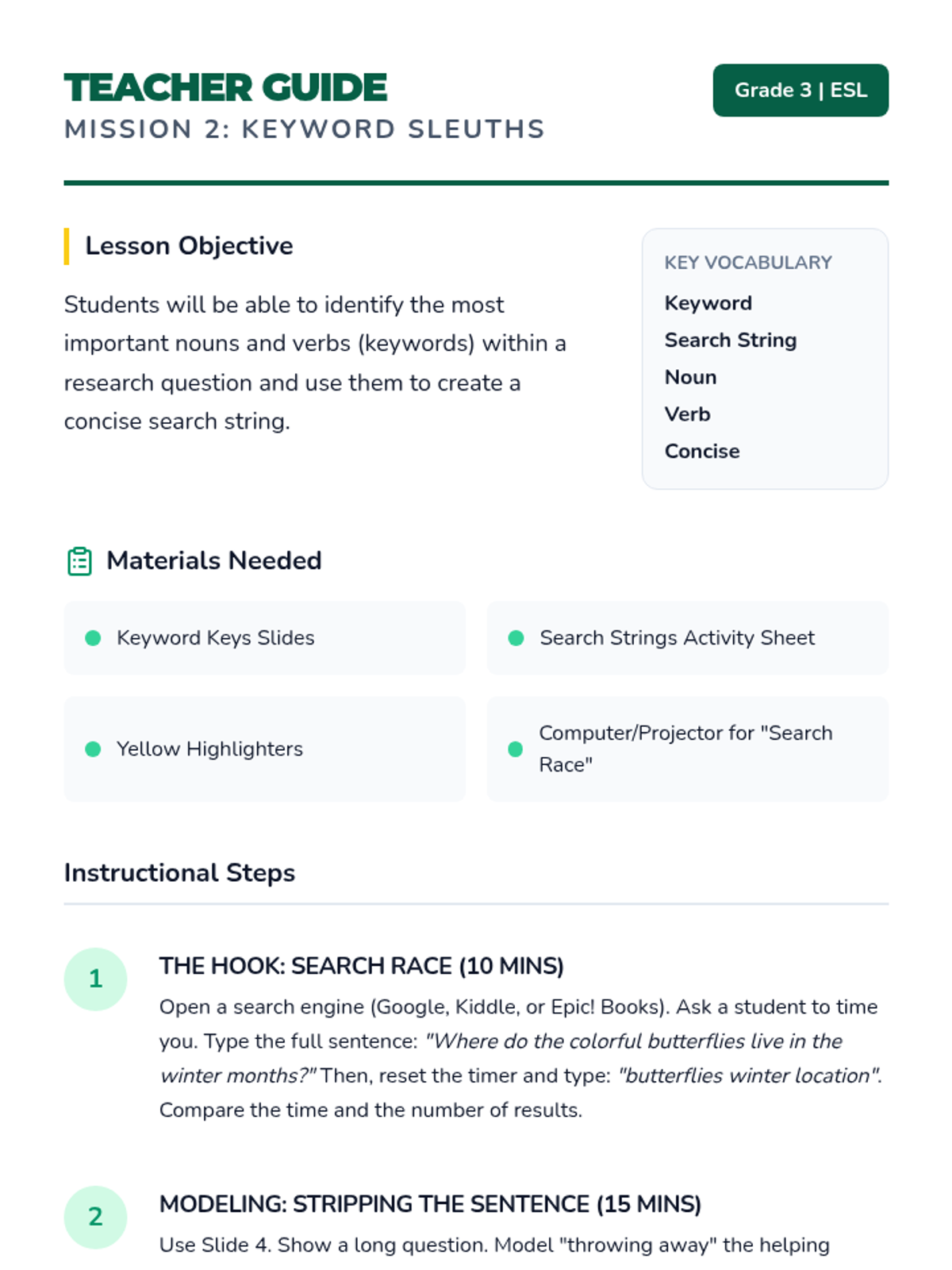
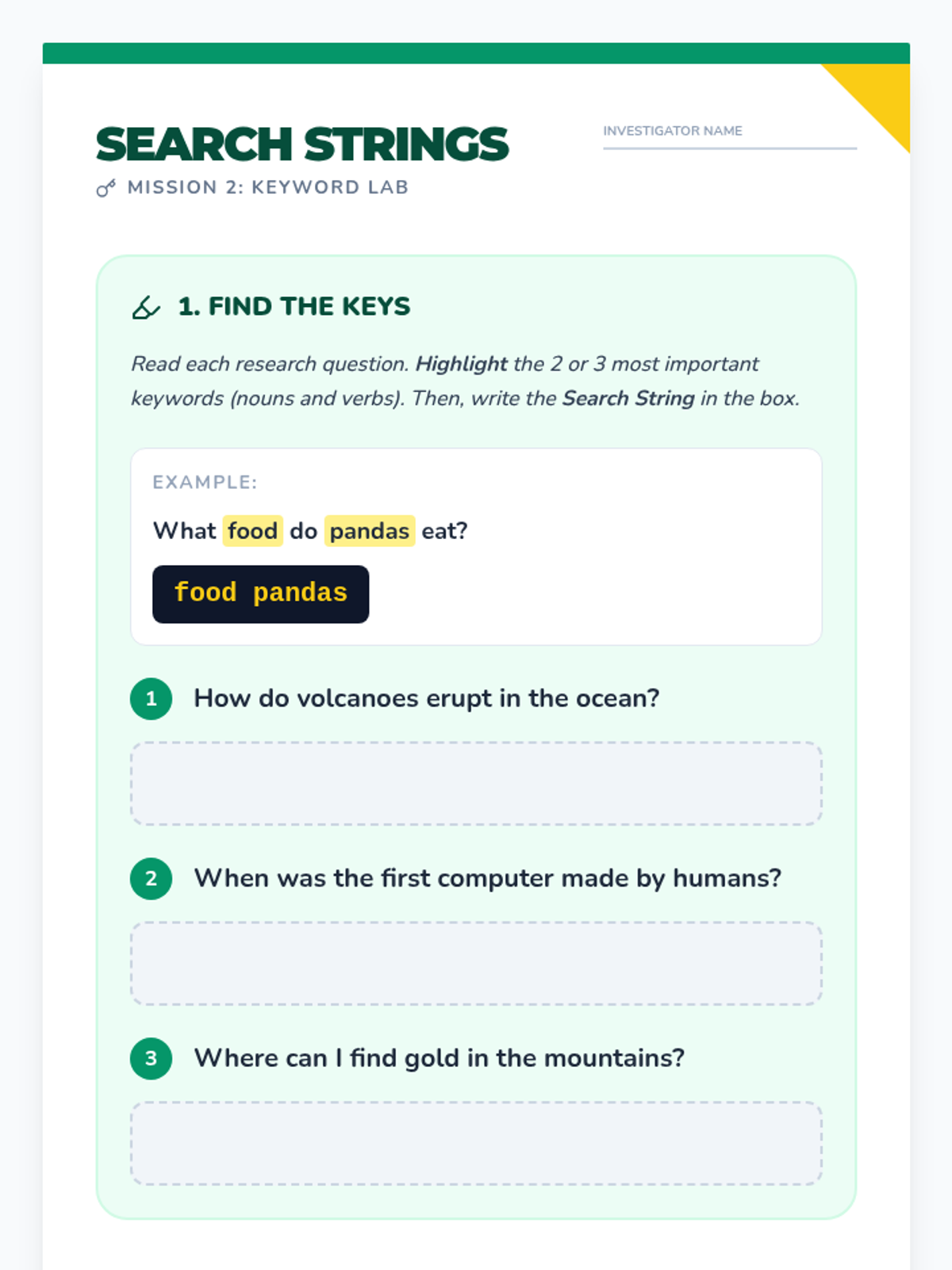
Students learn to identify key nouns and verbs in research questions to create effective keyword search strings.
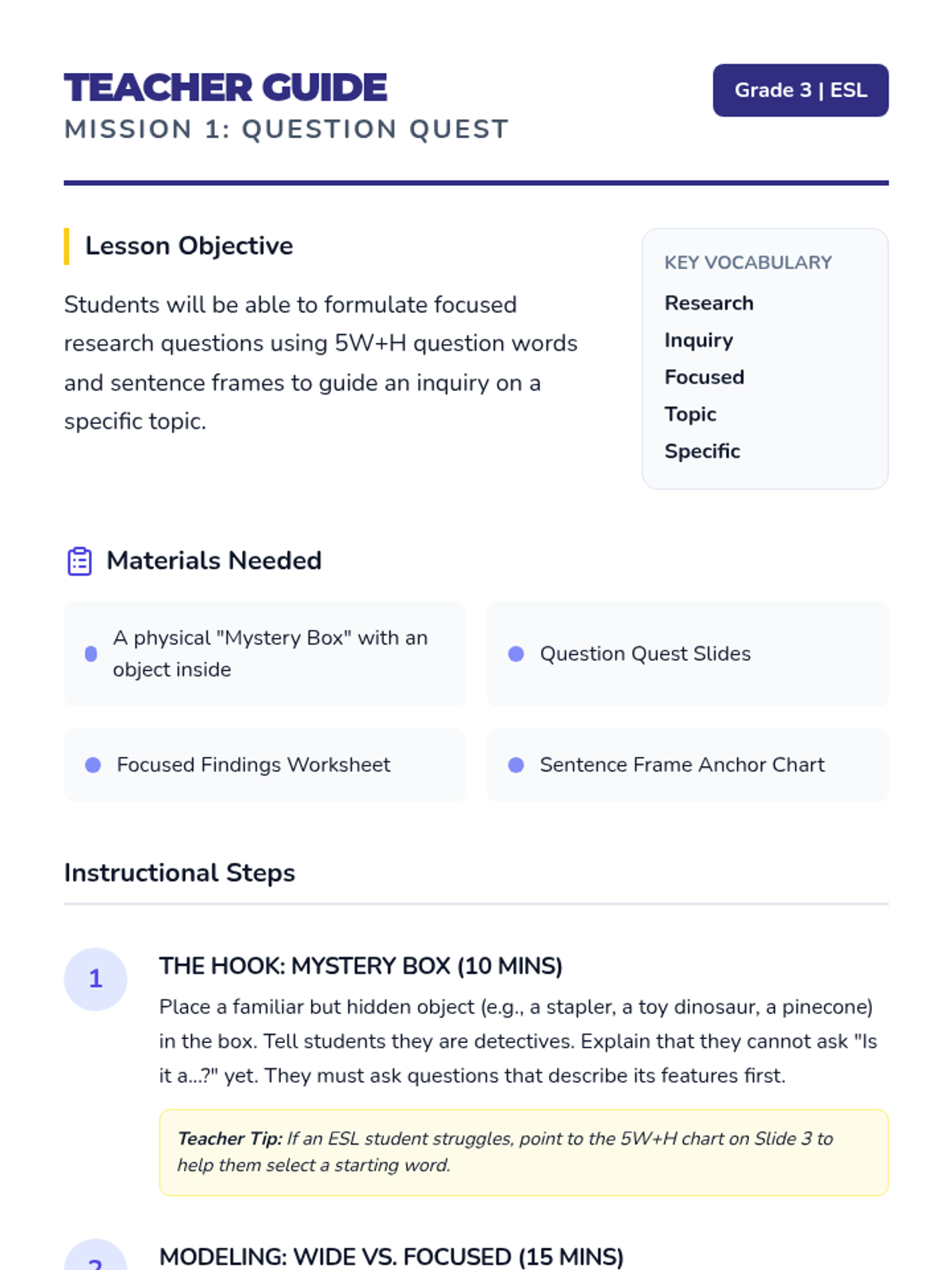
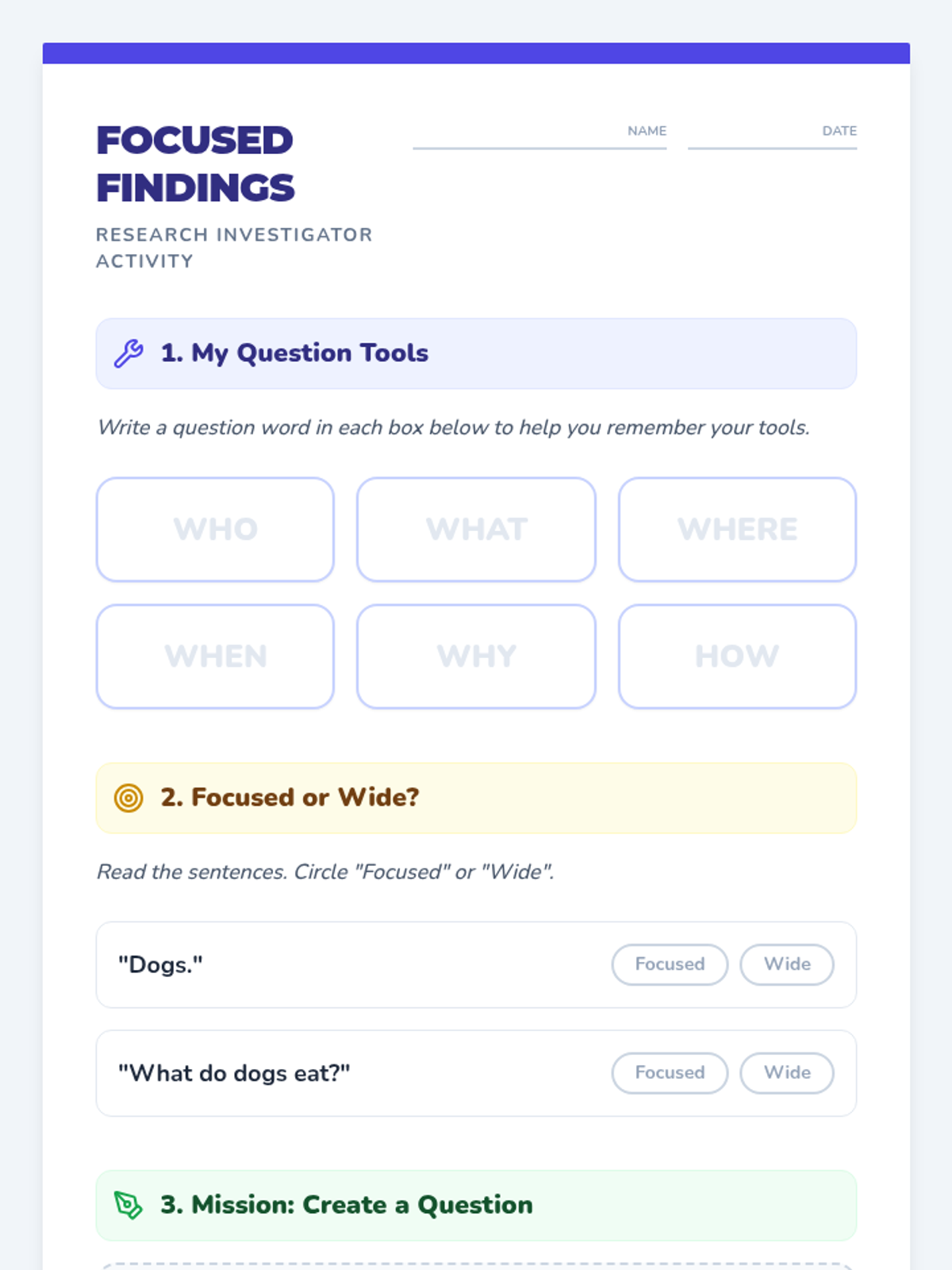
Students practice turning general topics into specific questions using 5W+H question words and sentence frames.
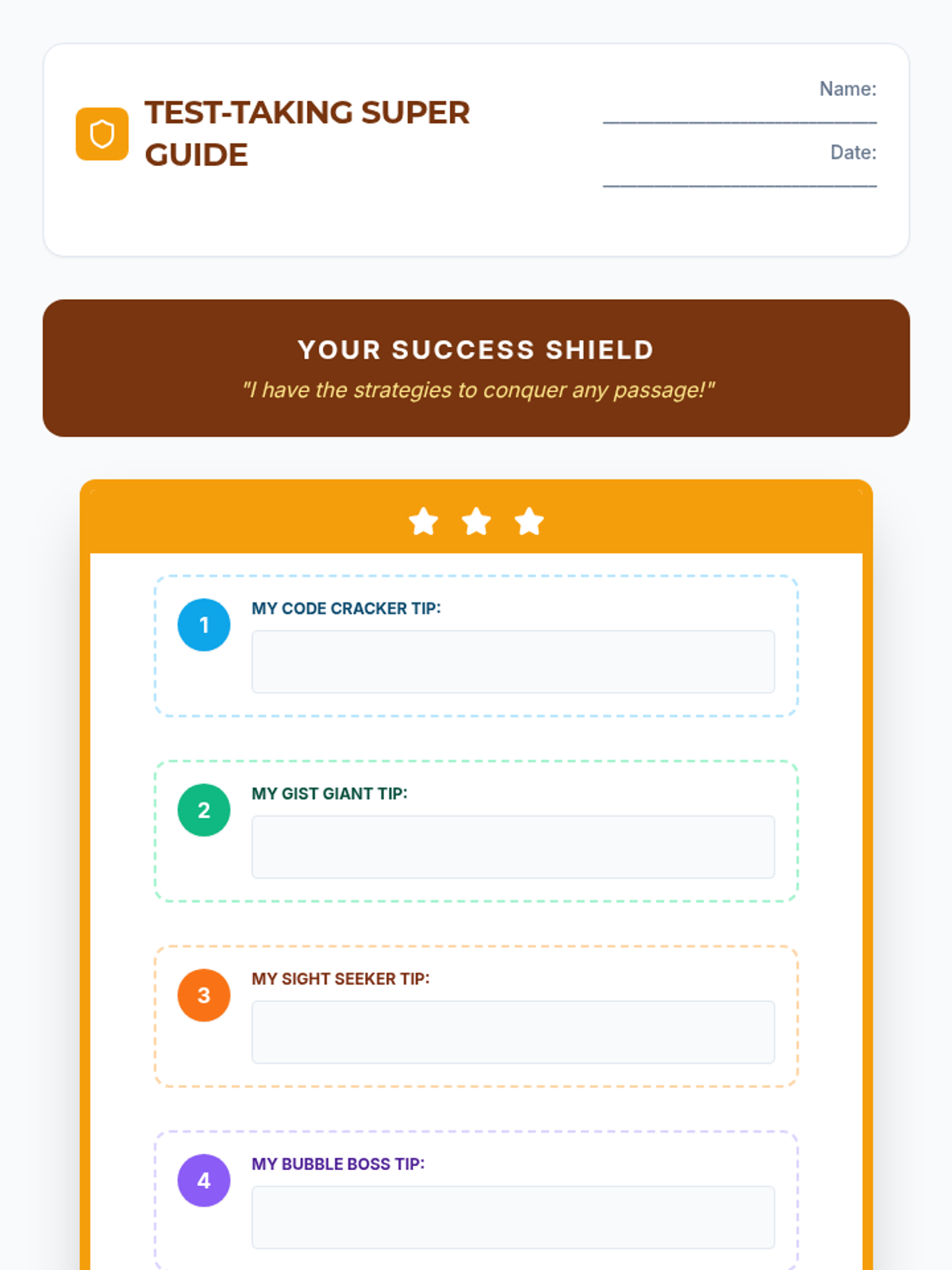
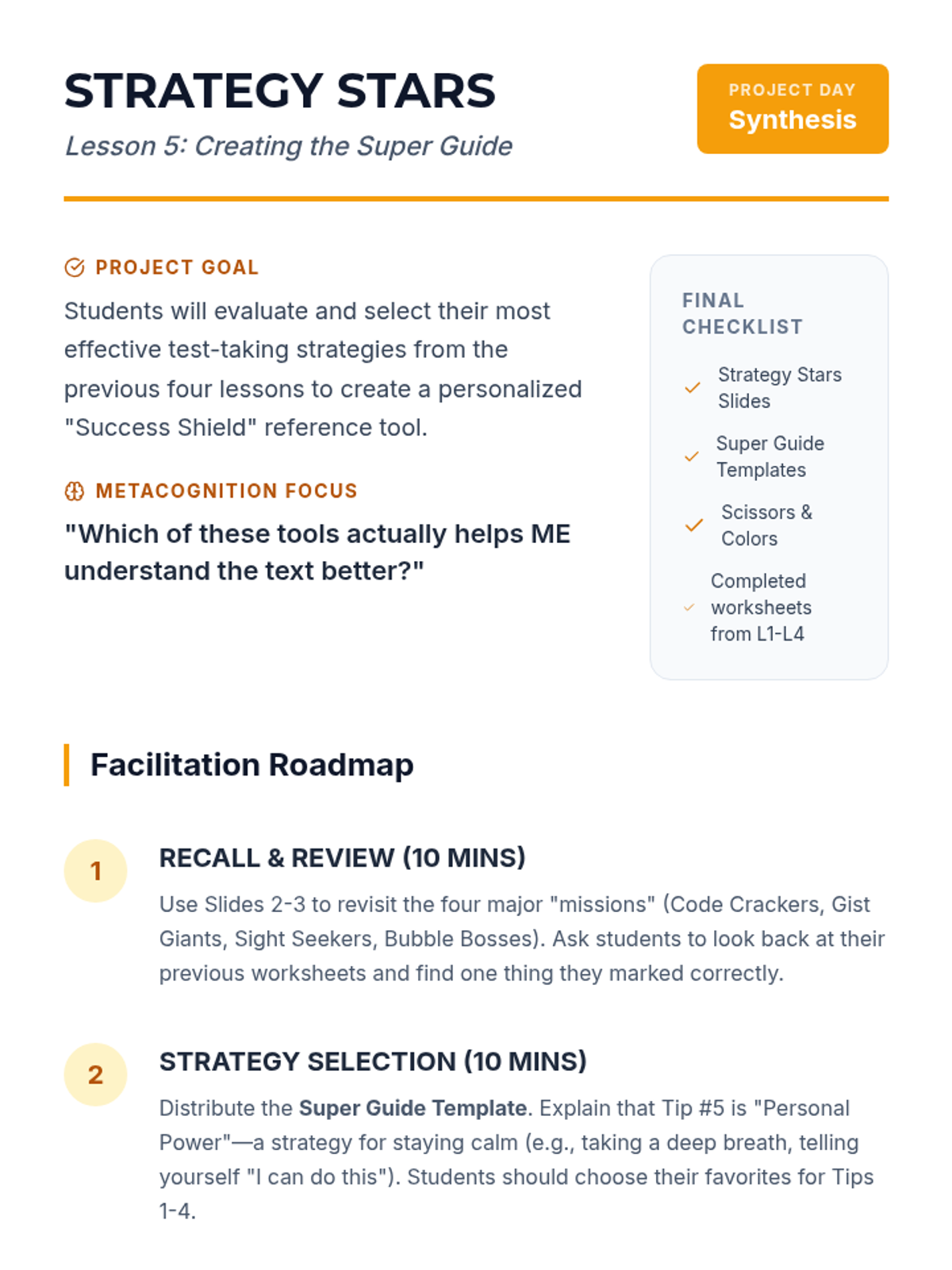
Synthesizing all learned strategies into a personalized 'Super Guide' for future test-taking success.
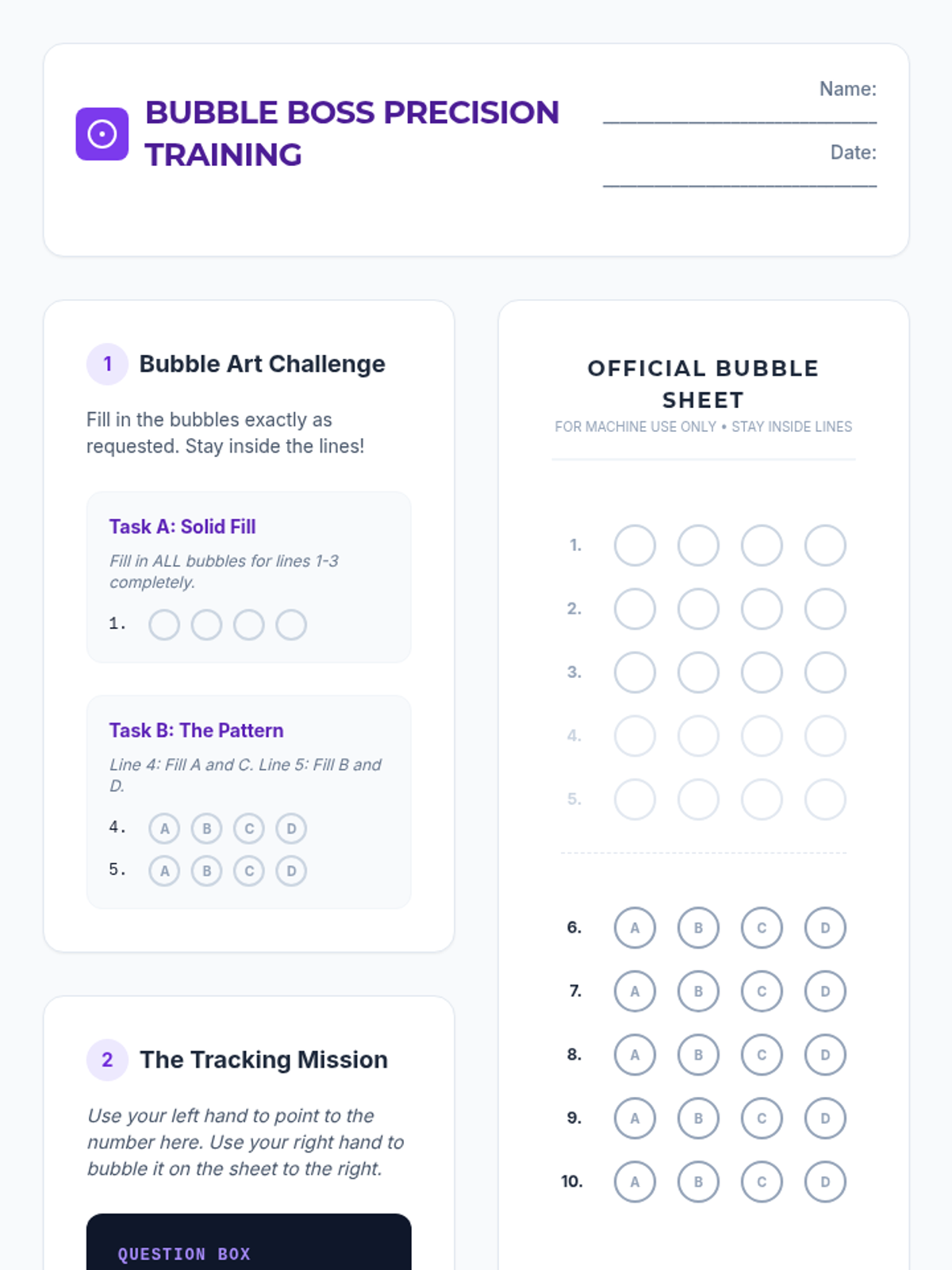
Practical simulation of bubble sheet mechanics to improve precision, tracking, and error reduction during assessments.
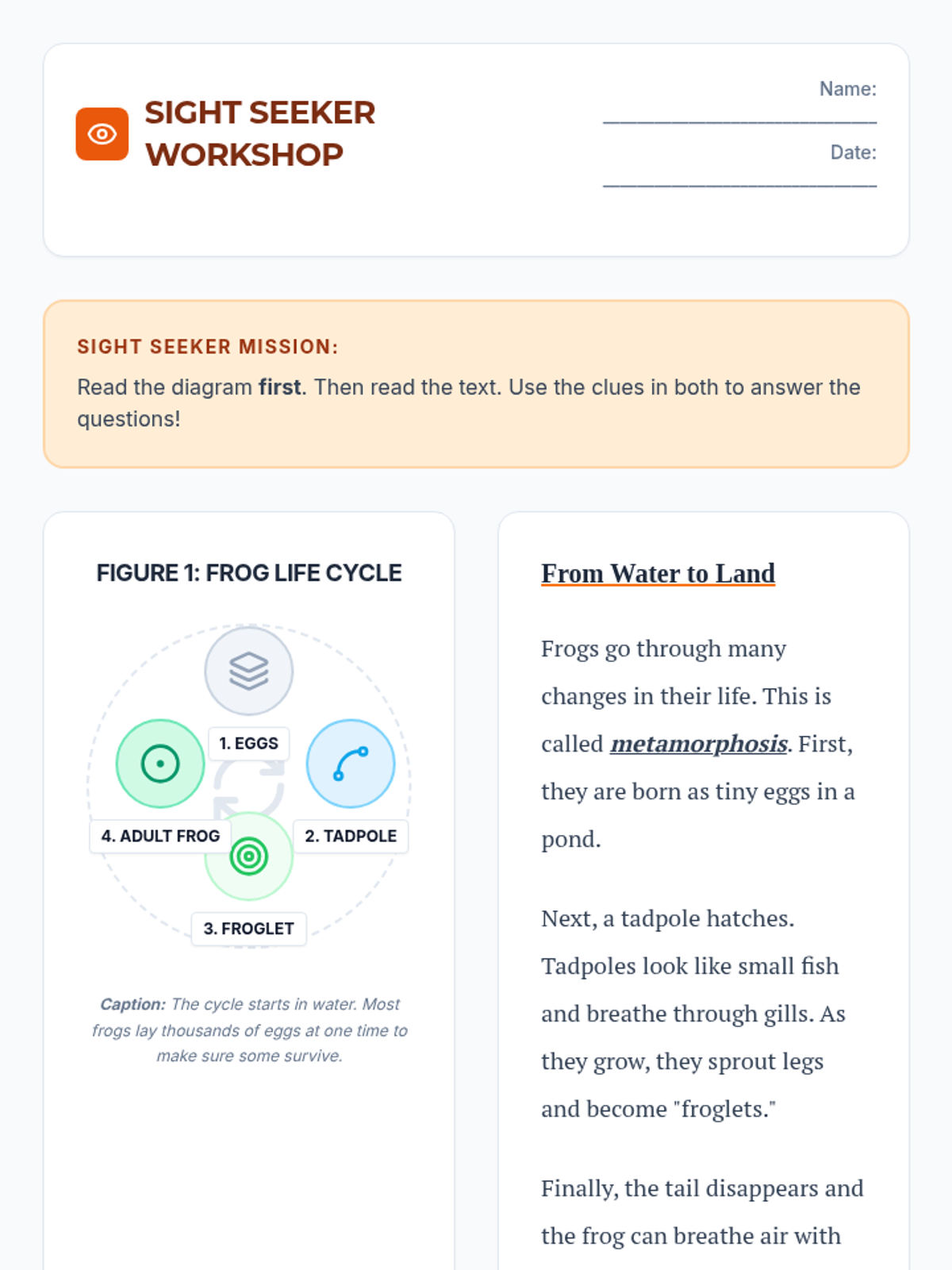
Strategies for interpreting non-text elements like diagrams and maps, and synthesizing that info with the reading passage.
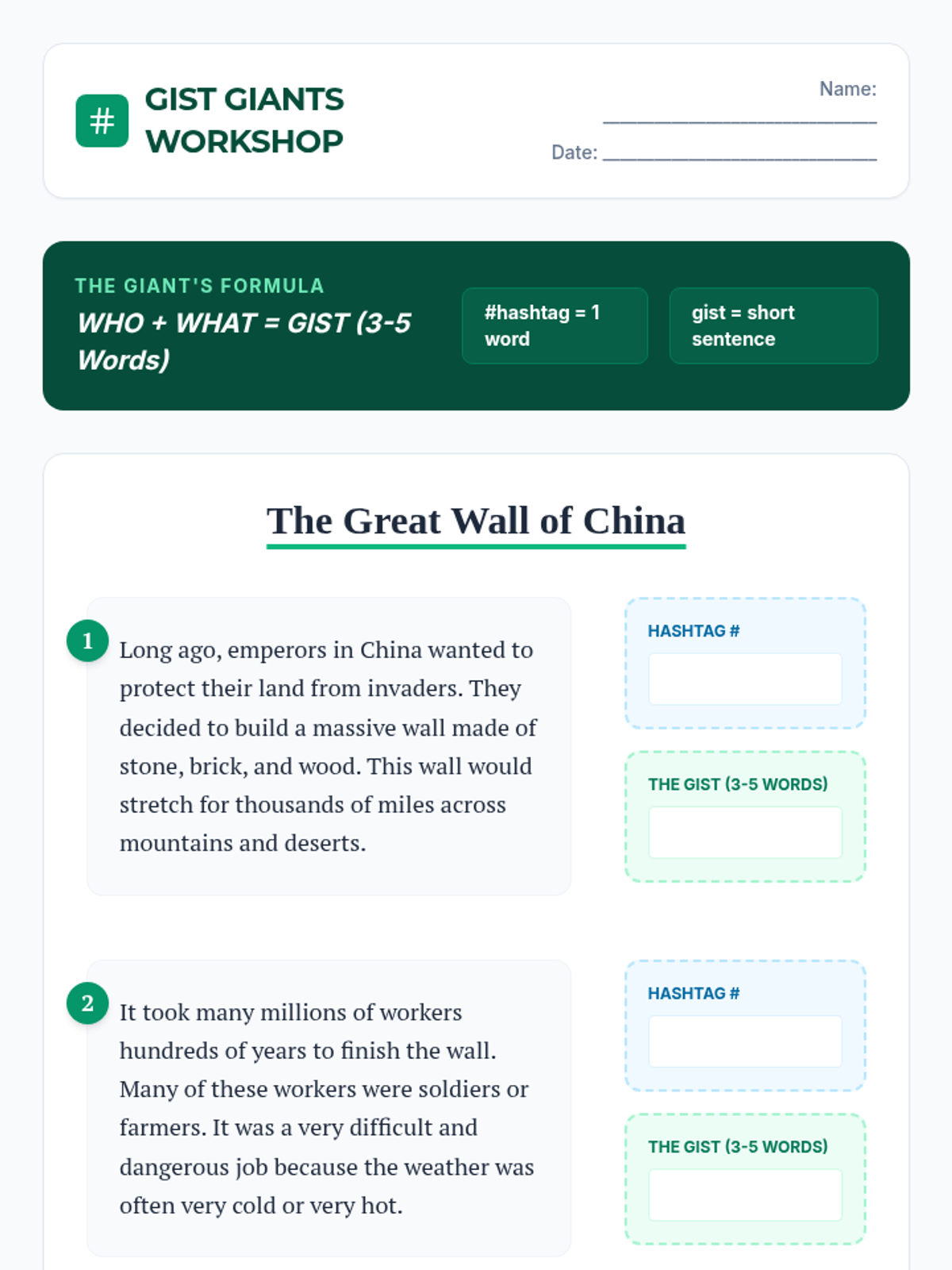
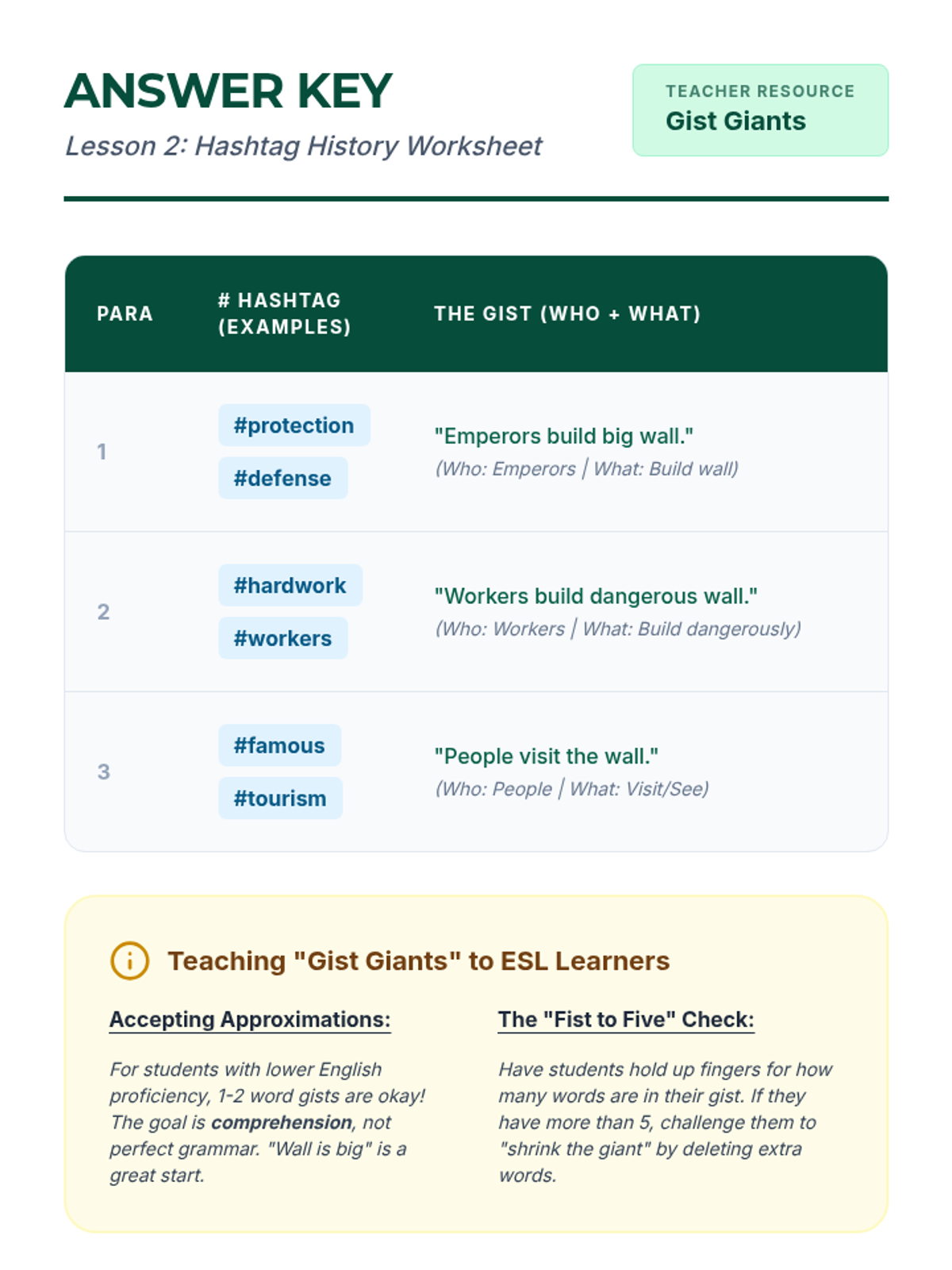
Focusing on identifying the main idea of paragraphs using short summaries and 'hashtags' to create a mental map of the text.
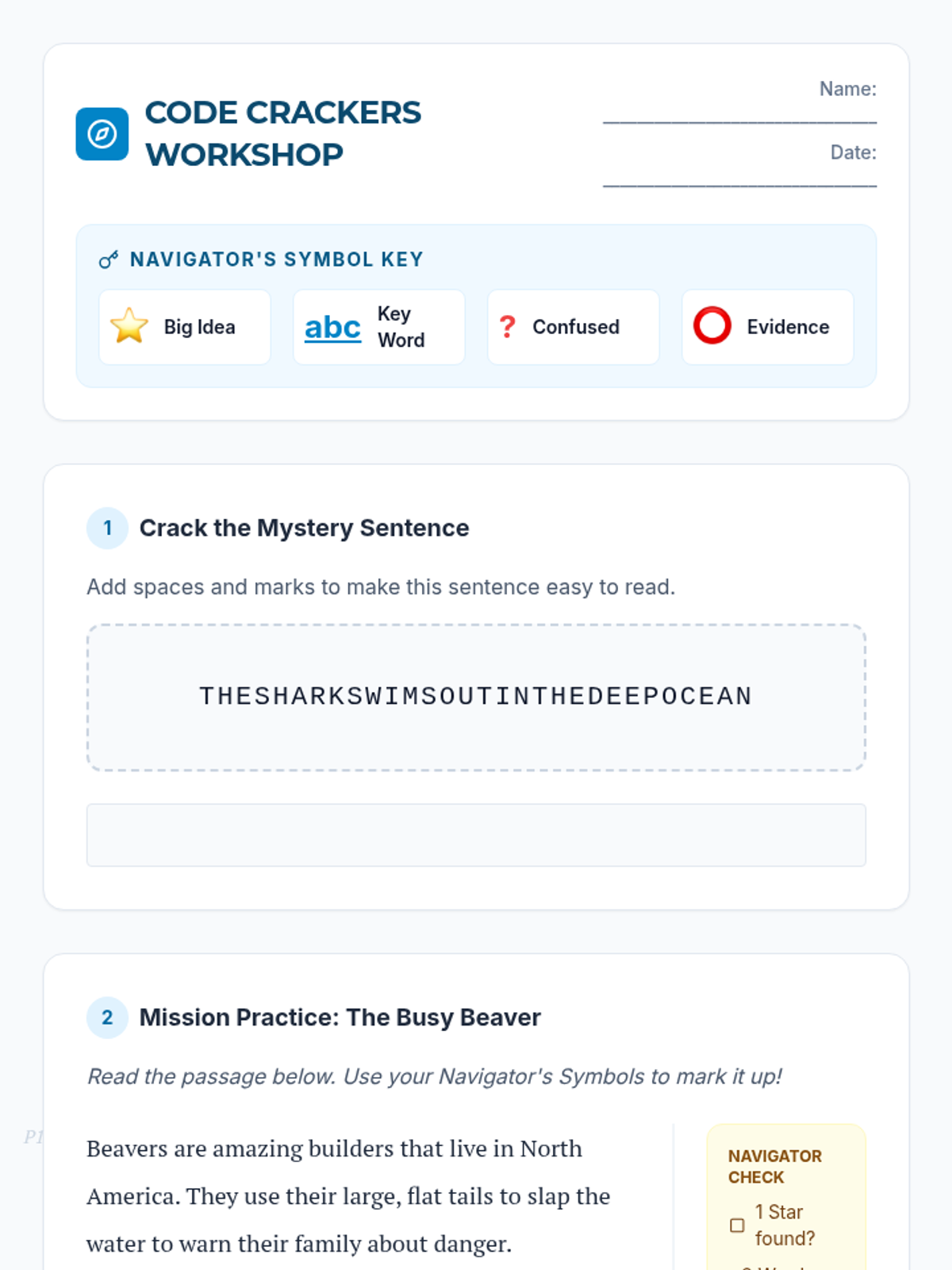
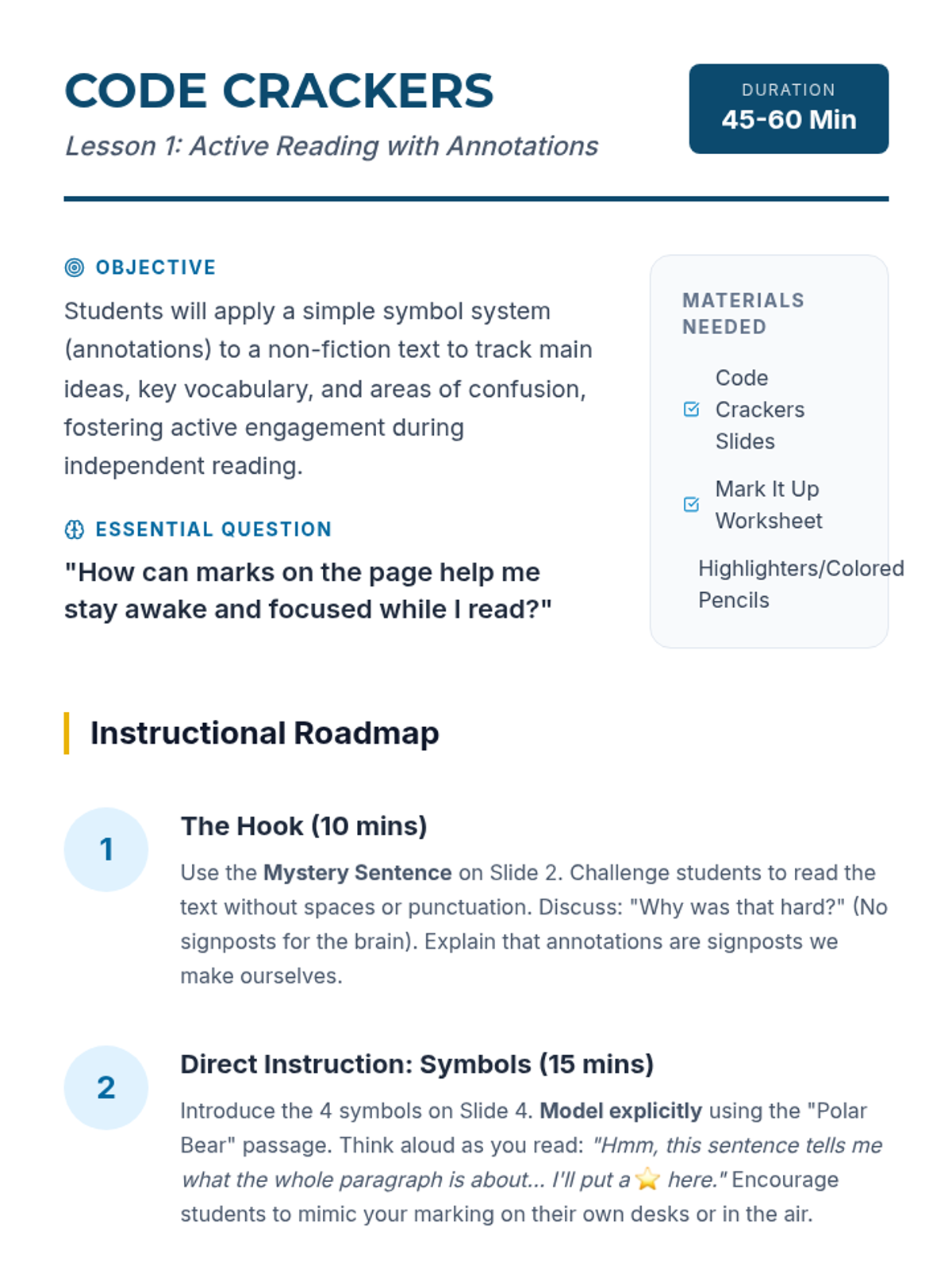
Introduction to a simple symbol system for active reading to help students engage with text and track key information.
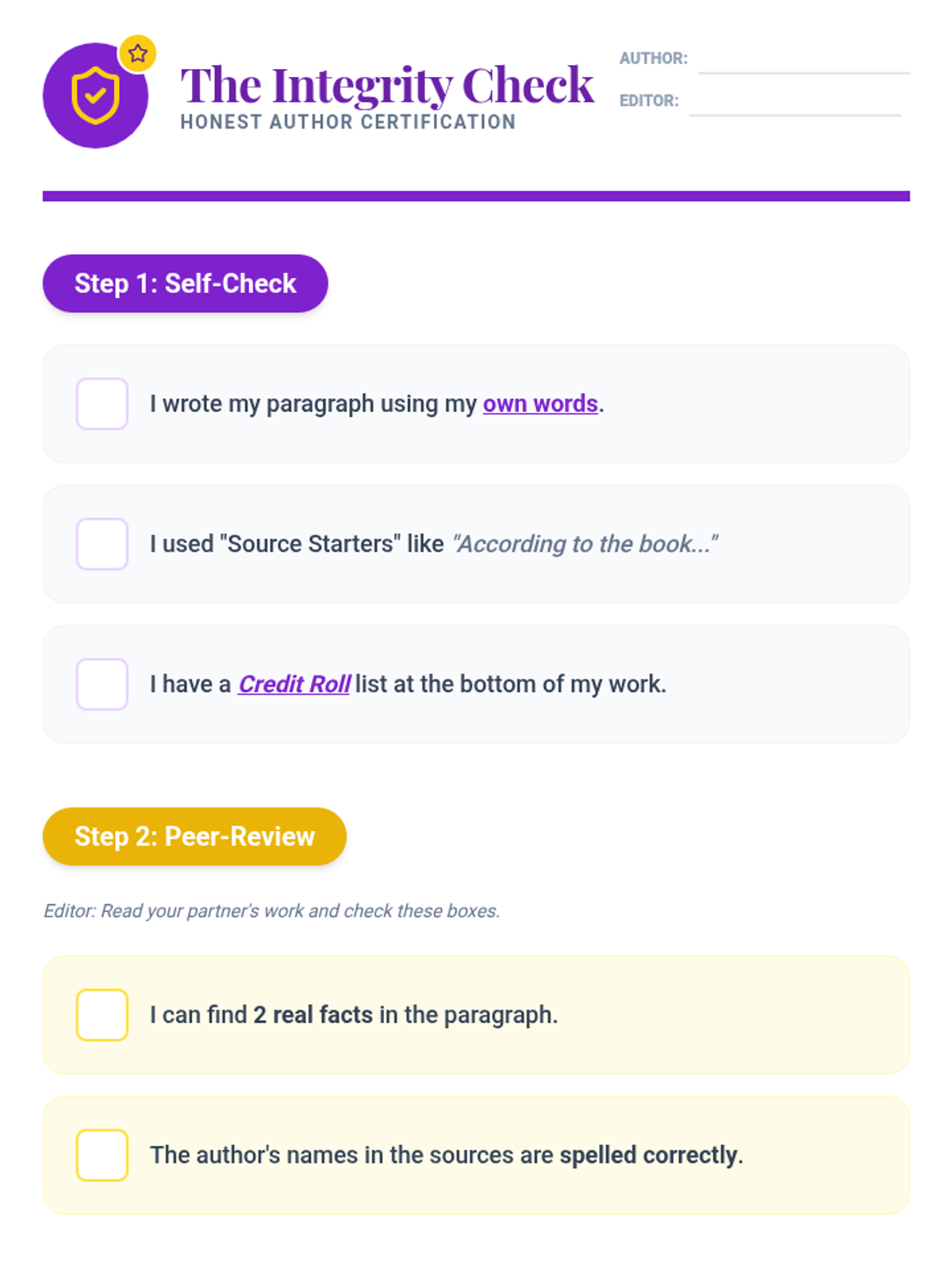
In the final phase, students use an 'Integrity Checklist' to peer-review their work for originality, accuracy, and proper sourcing.
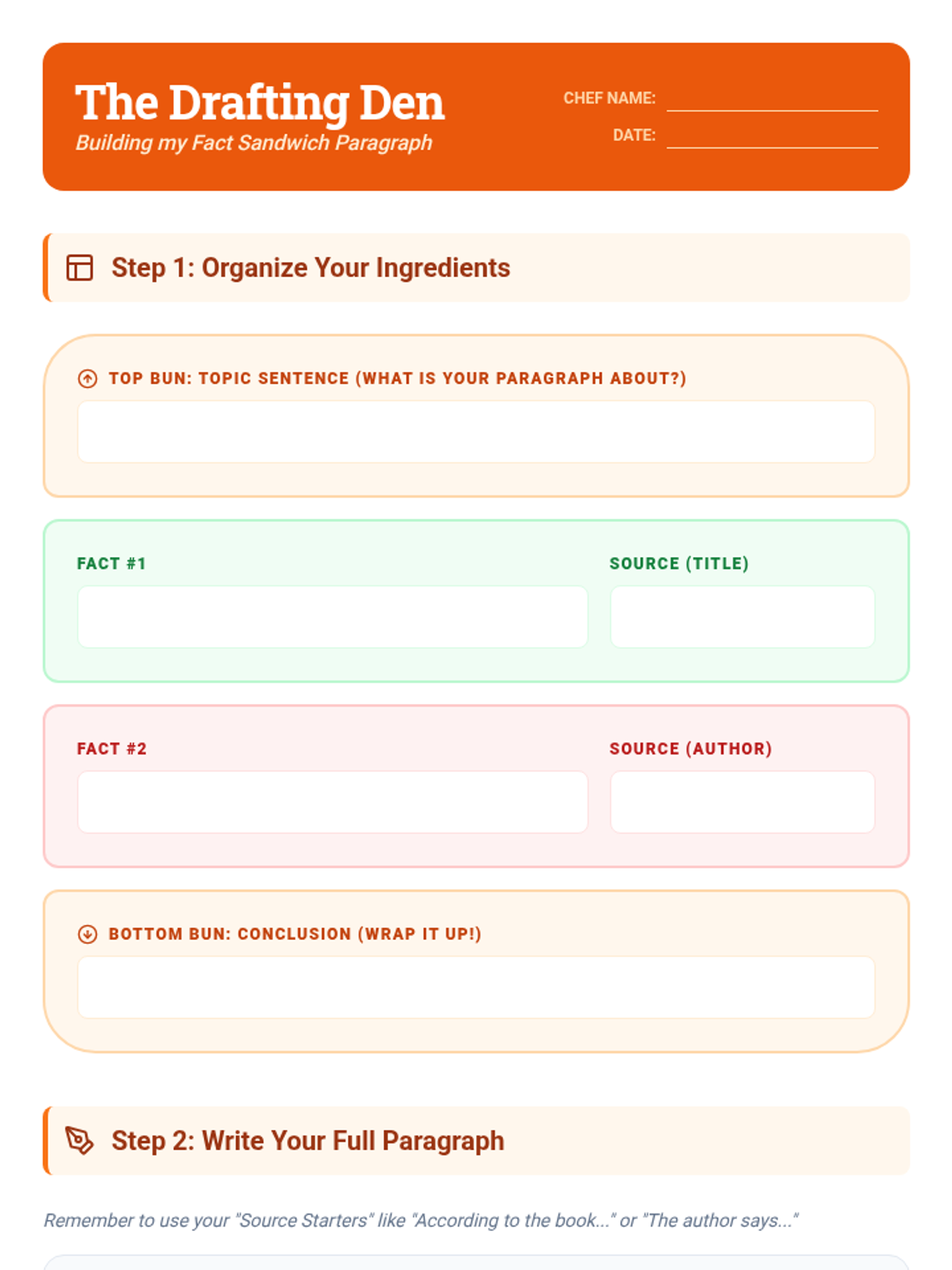
Students combine their research notes into a logical paragraph, using a 'Fact Sandwich' structure to organize their thoughts.
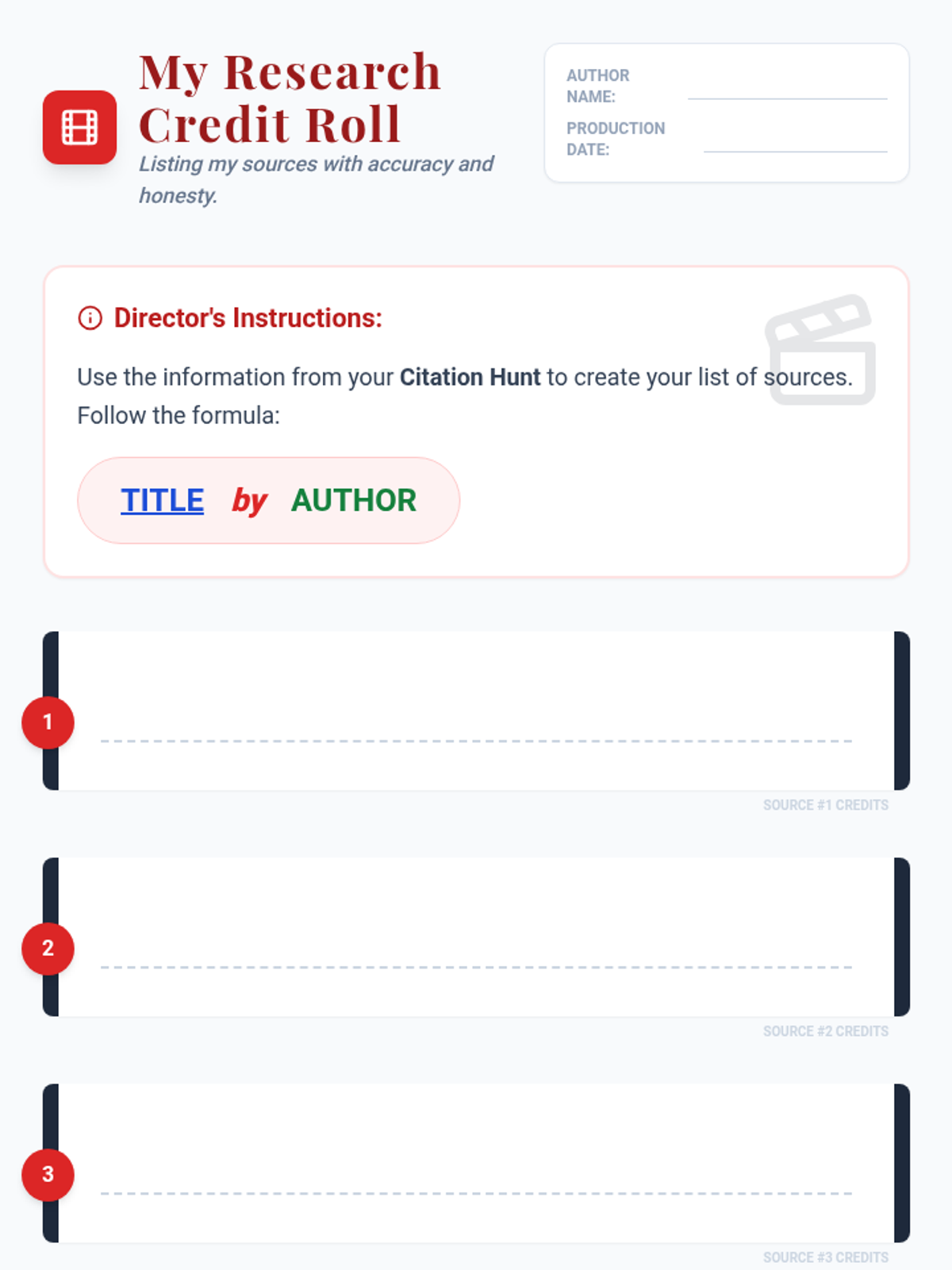
Students practice the mechanics of creating a simplified bibliography using the 'Title by Author' format to credit their sources.
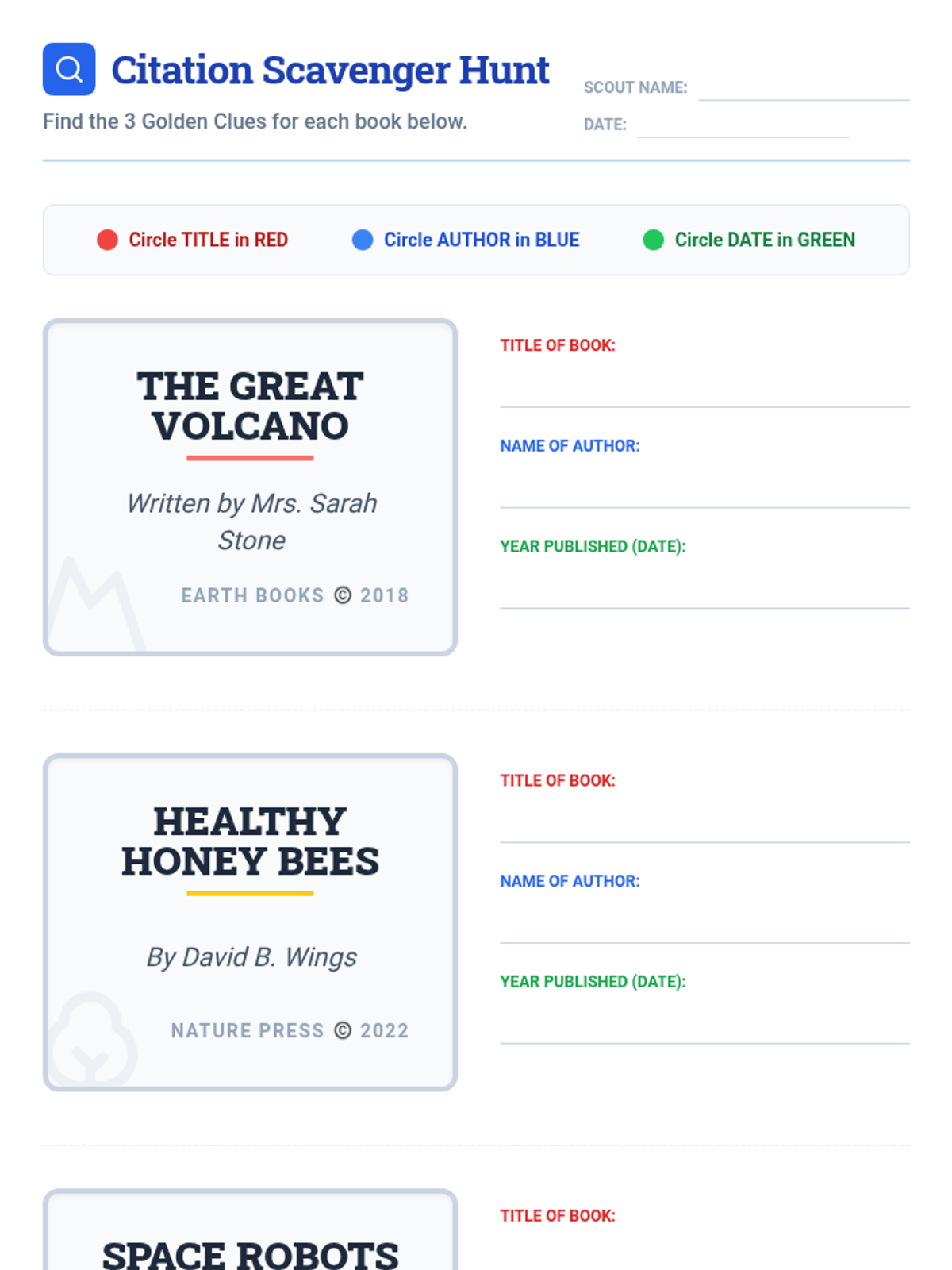
A hands-on exploration where students learn to identify and record key citation details like Title, Author, and Date from books and websites.
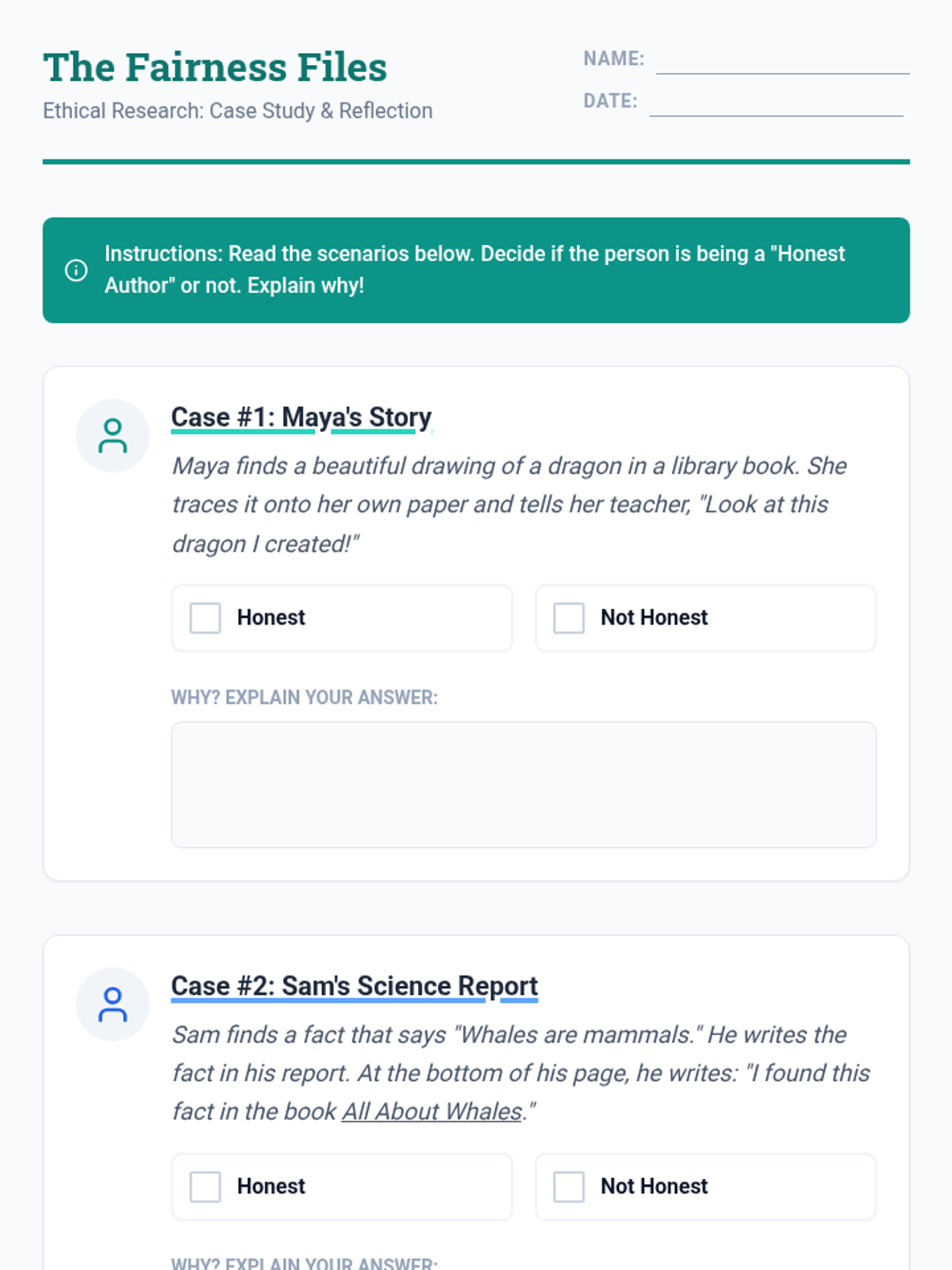
Students explore the concept of intellectual property through analogies of ownership and fairness, discussing the importance of acknowledging others' work.
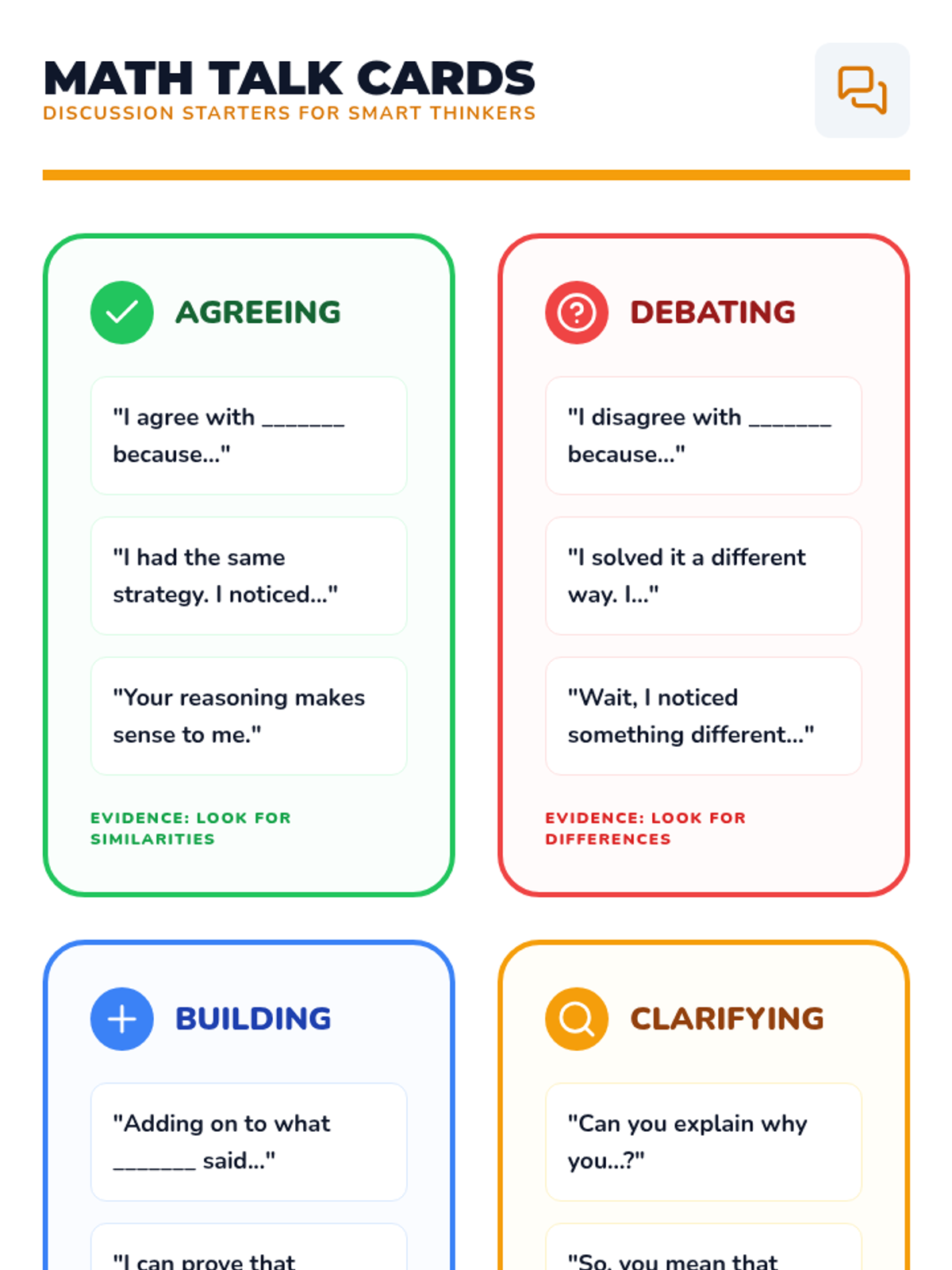
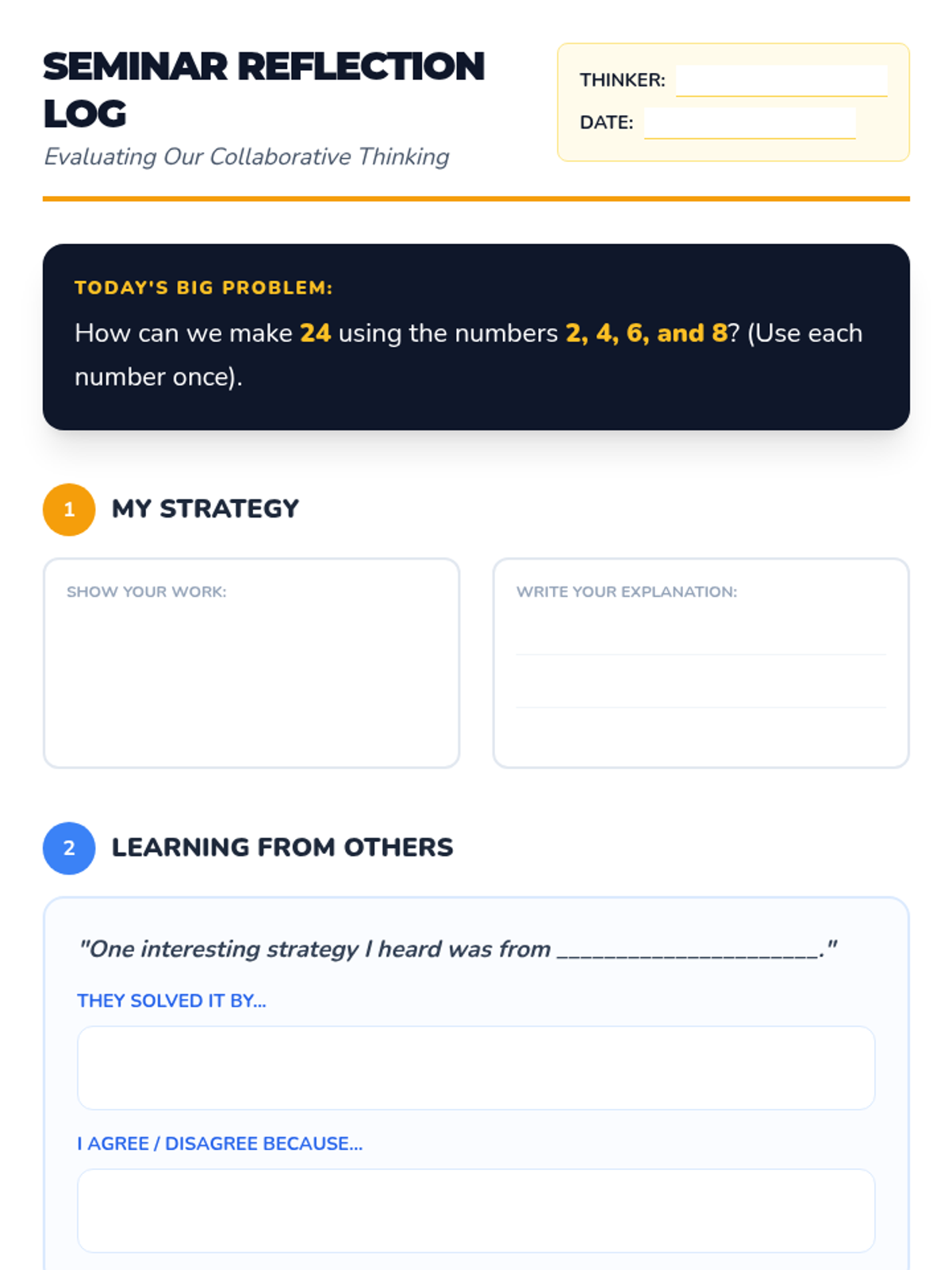
A culminating Socratic-style seminar where students engage in collaborative problem-solving using the language of agreement and disagreement.
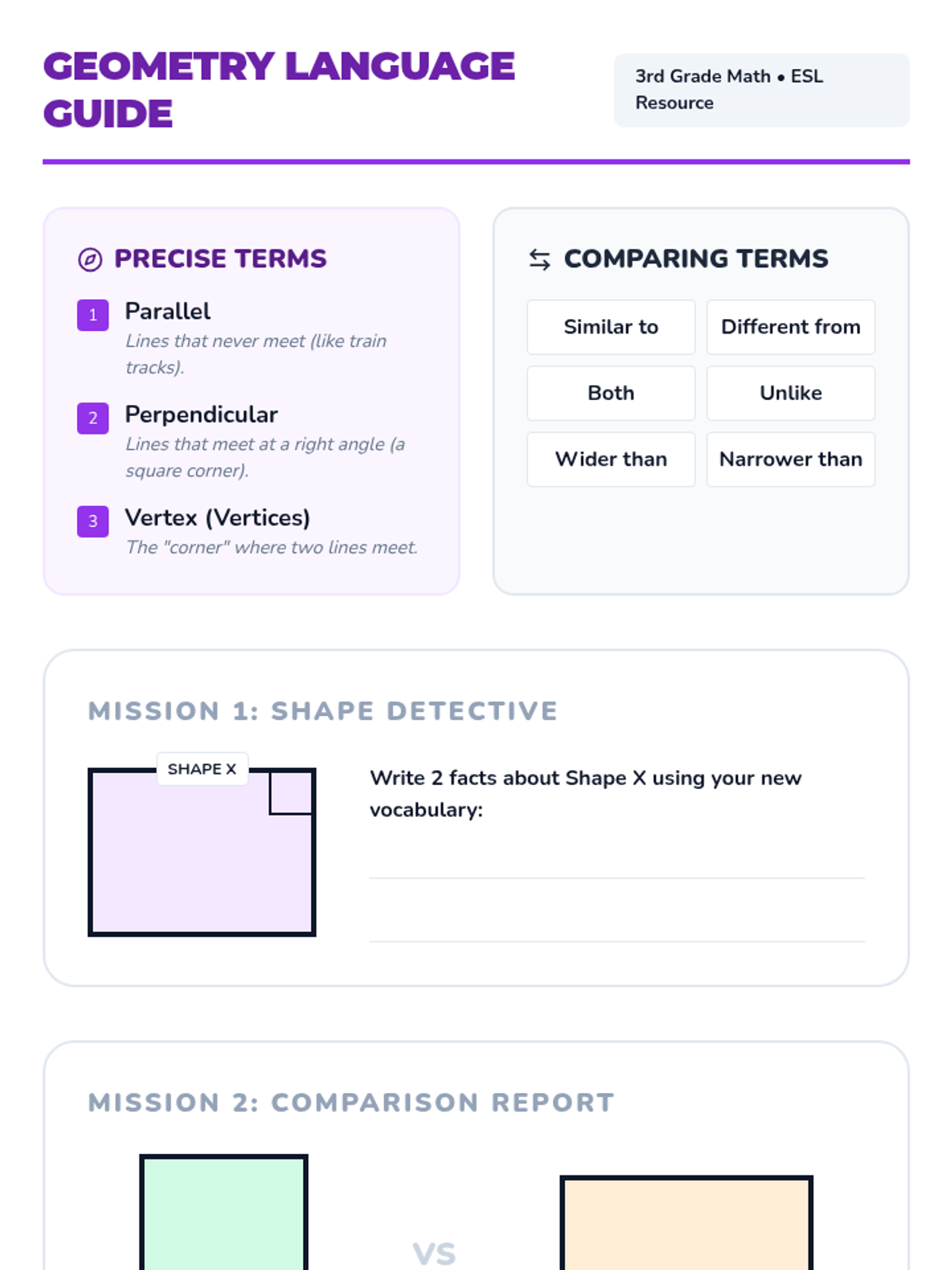
Students use comparative adjectives and spatial prepositions to describe and compare geometric shapes with precise terminology.
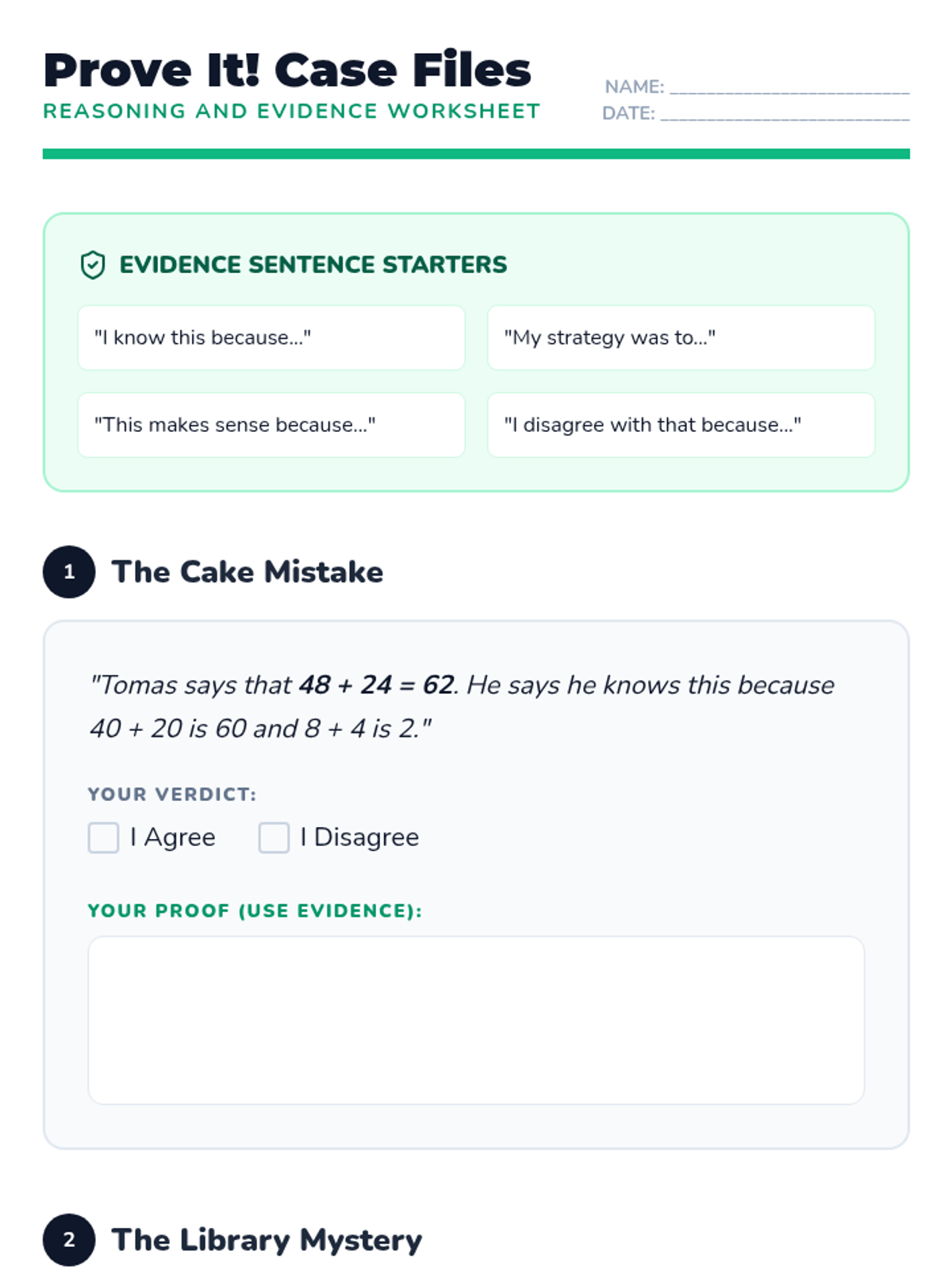
Students learn to justify their mathematical conclusions using evidence and sentence frames, while critiquing the reasoning of others through worked examples.
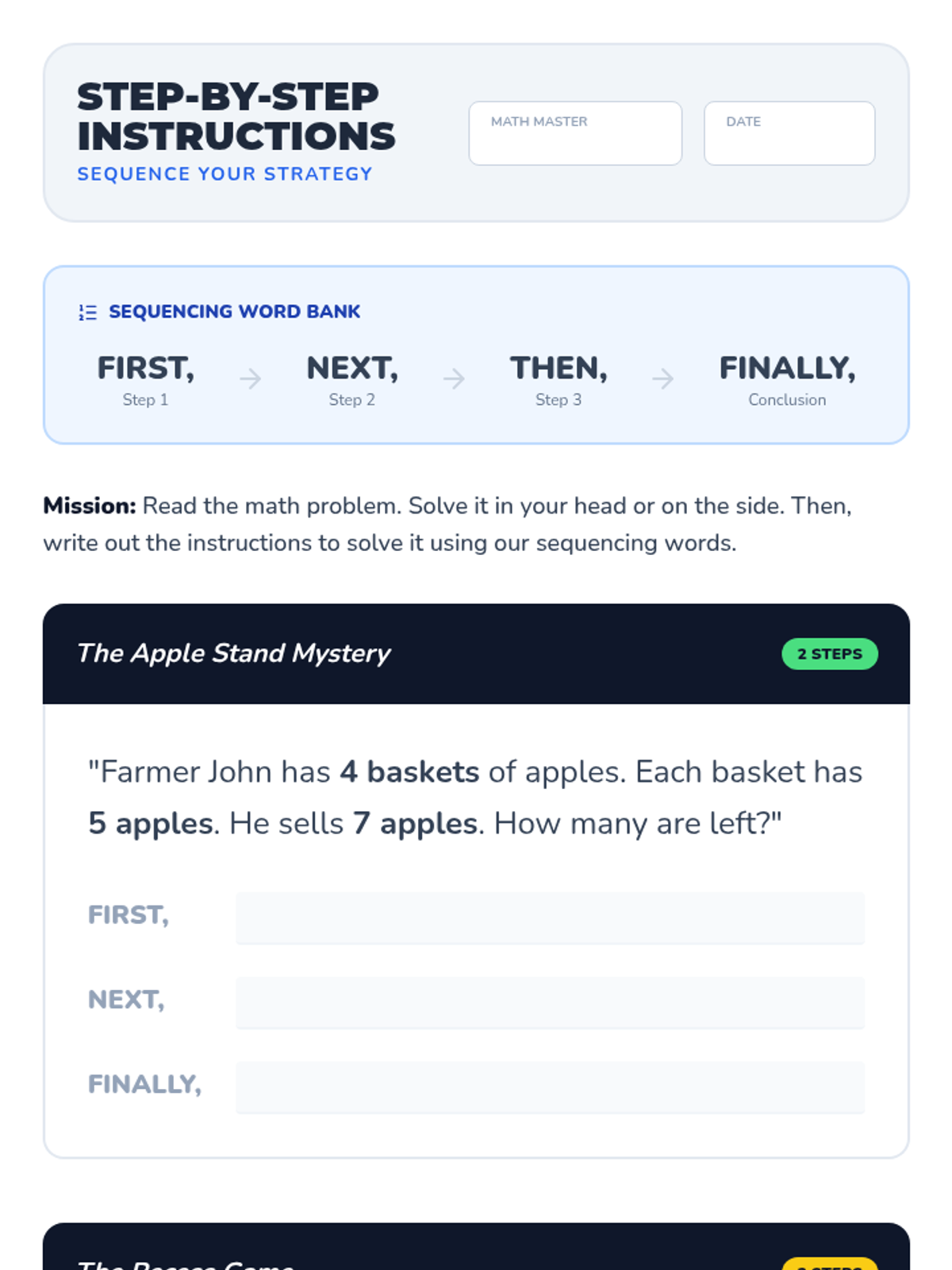
Focuses on using sequencing language (first, next, then, finally) to describe the steps of solving a multi-step math problem.
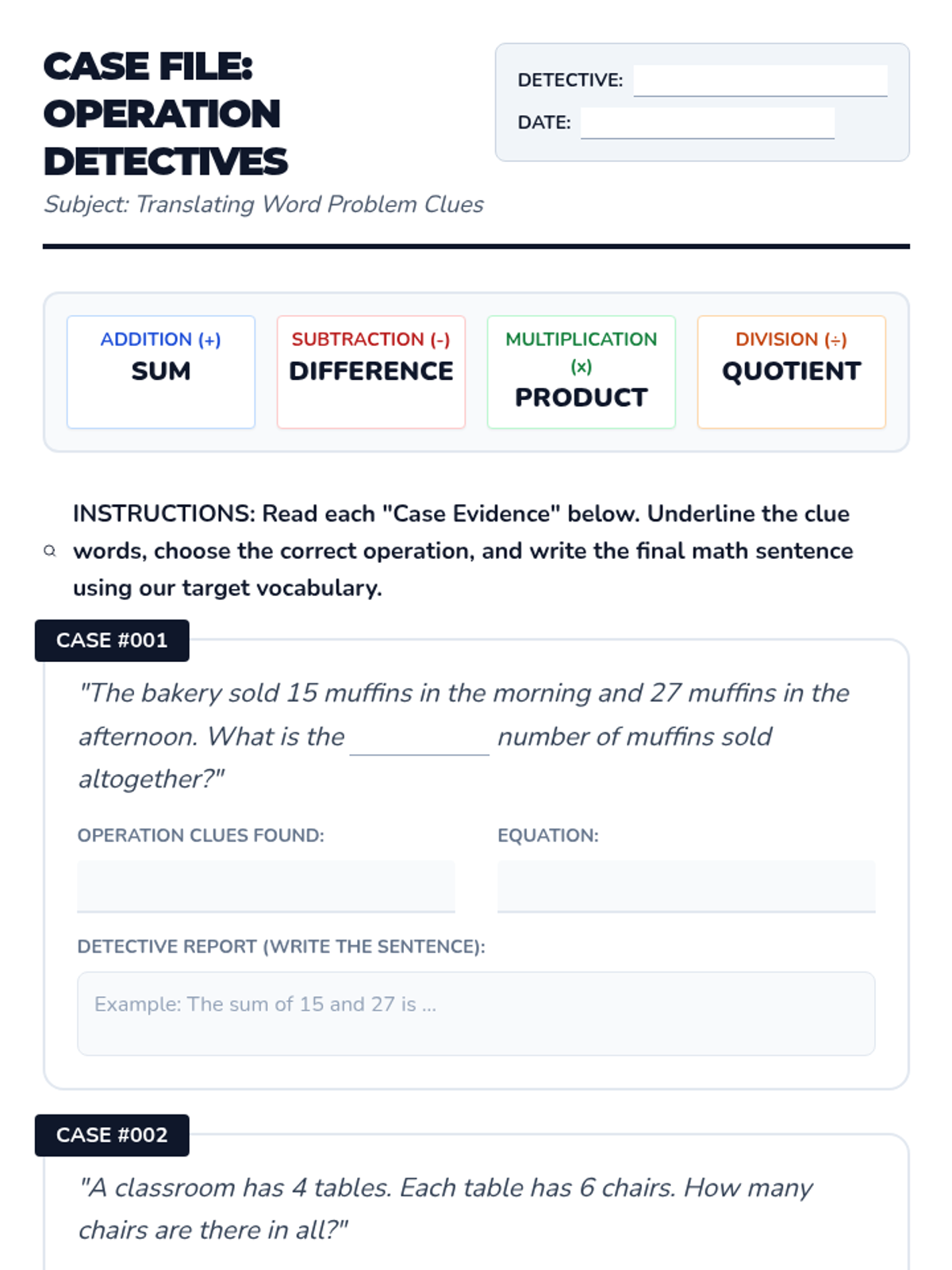
Students learn tier-3 mathematical vocabulary (sum, difference, product, quotient) and practice identifying clue words in word problems to determine which operation to use.
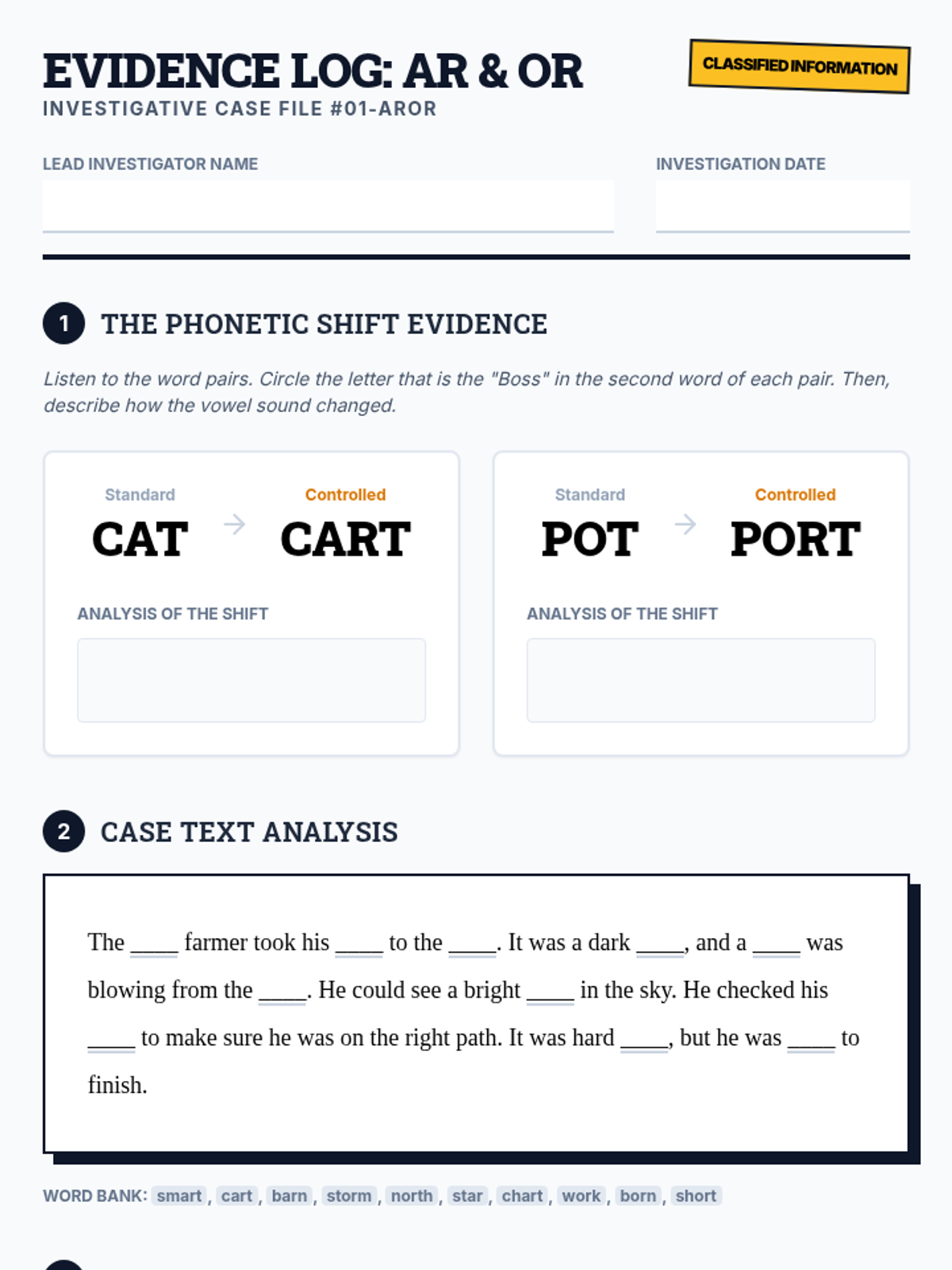
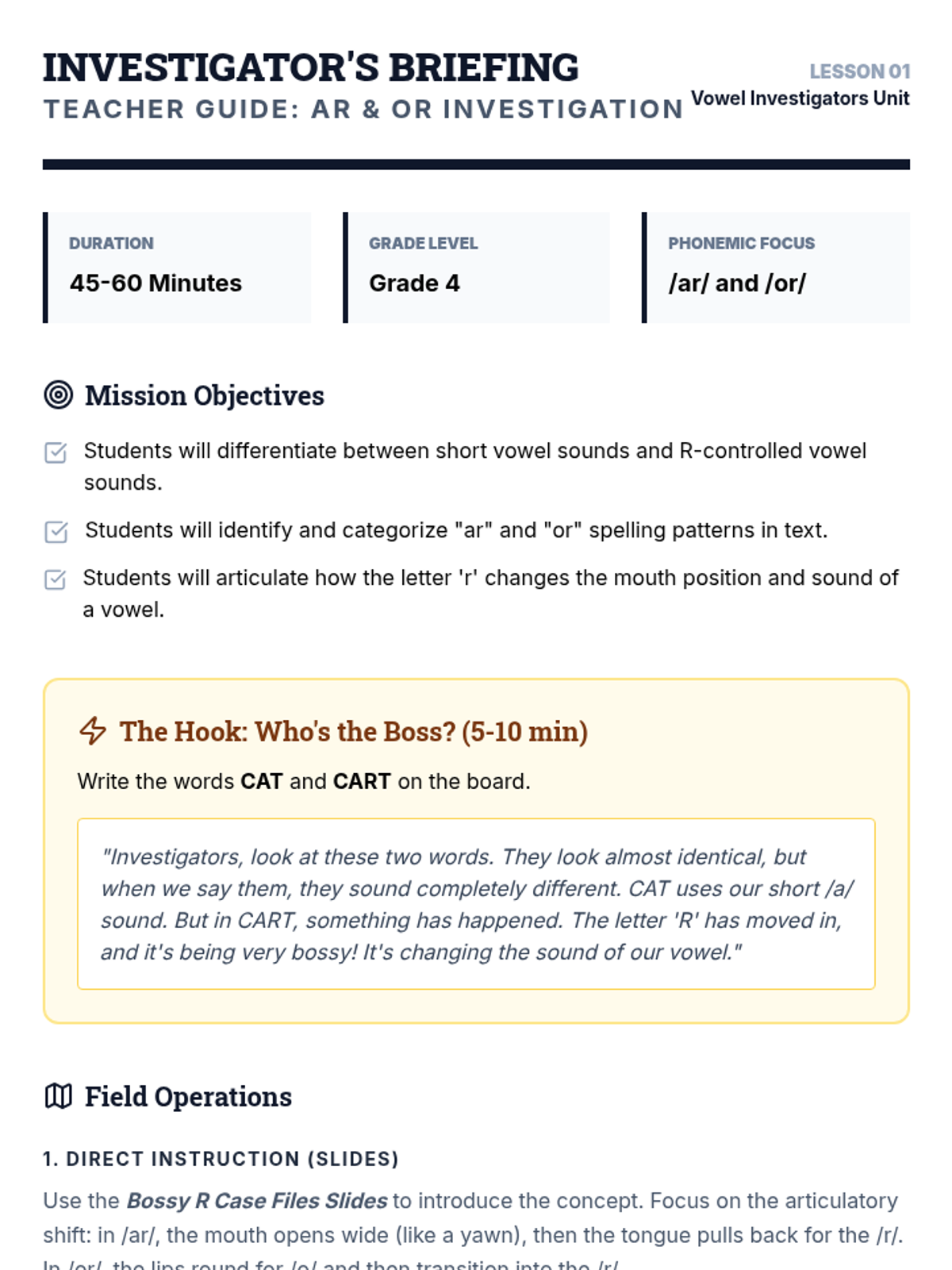
Students analyze a text to highlight words containing 'ar' and 'or', noting how the 'r' controls the vowel sound. They contrast these with short vowel words (cat vs. cart) to hear the phonetic shift.
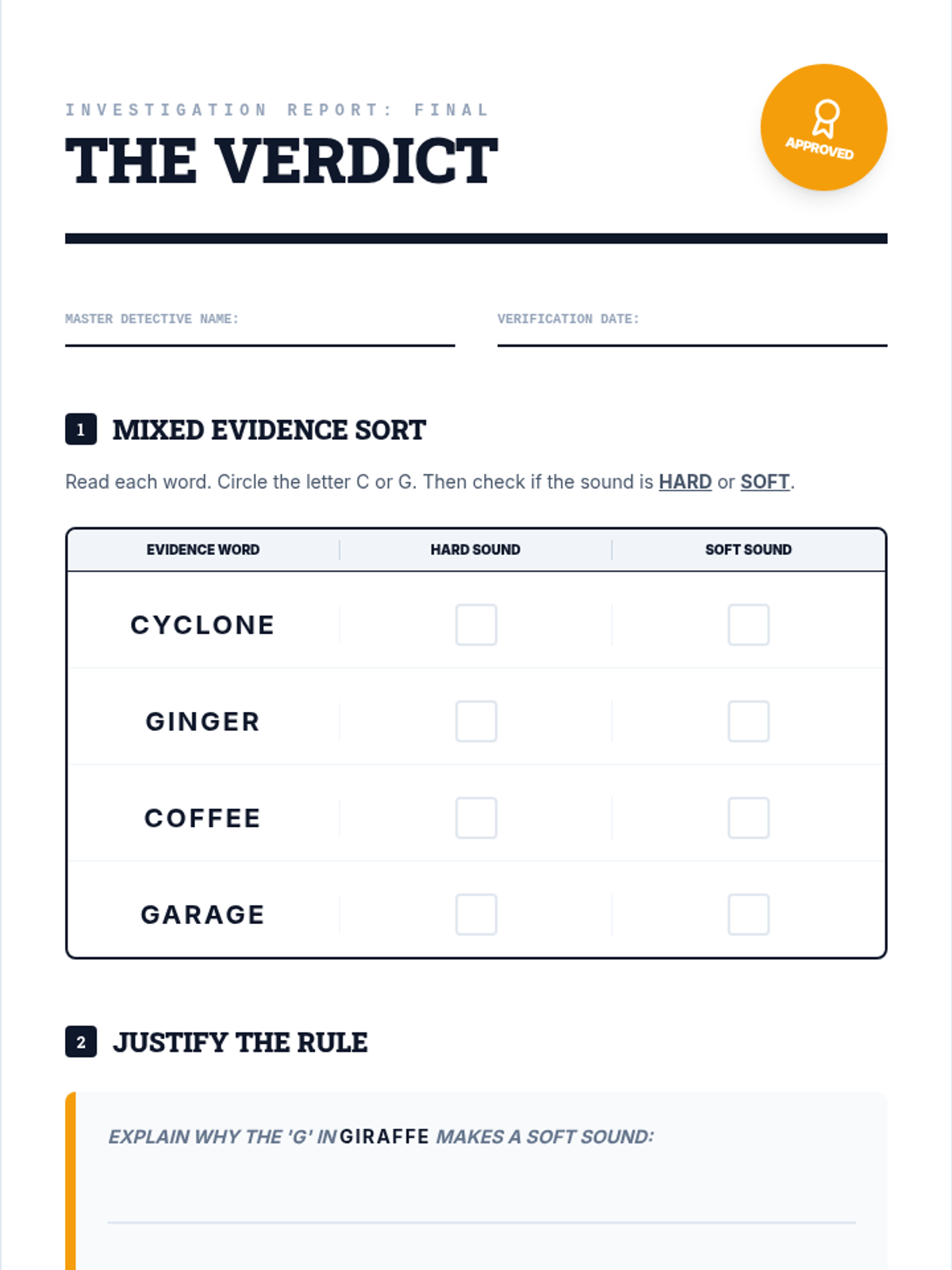
A final verification where students justify their pronunciation choices based on the rules they discovered.
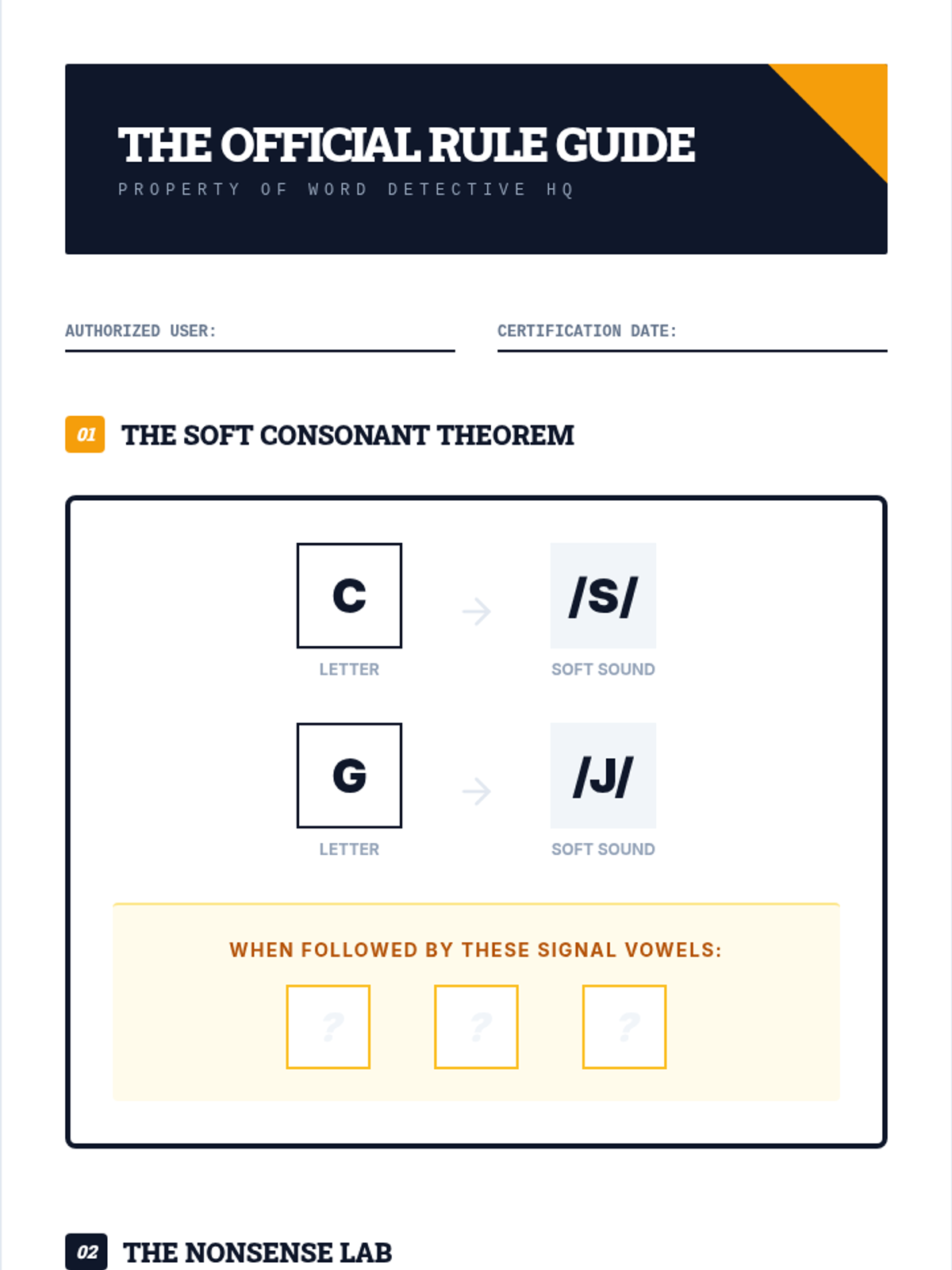
Students synthesize their findings into a formal rule and test it against nonsense words to prove mastery.
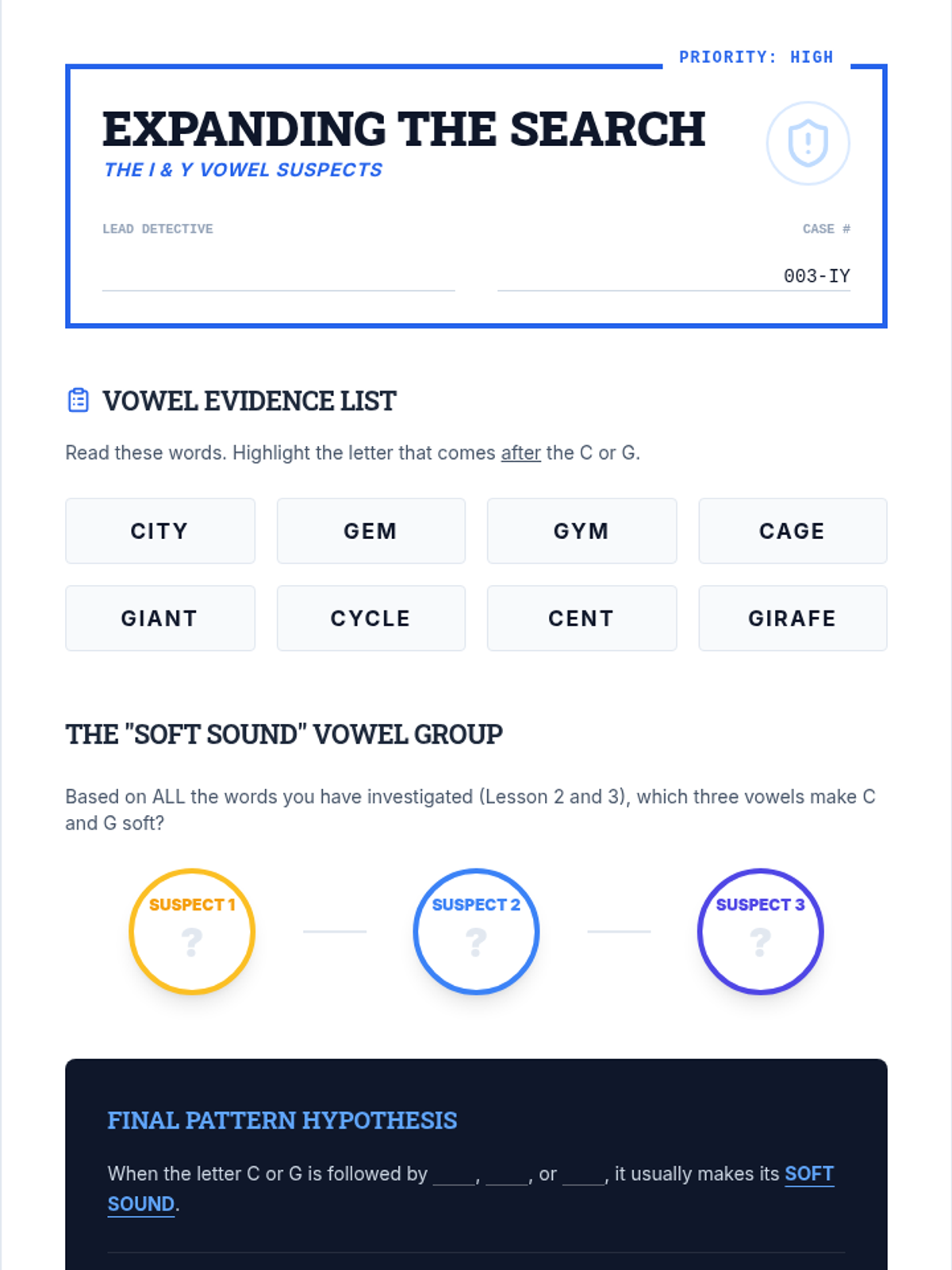
The investigation expands to include 'i' and 'y' as influencers, solidifying the pattern of soft sounds.
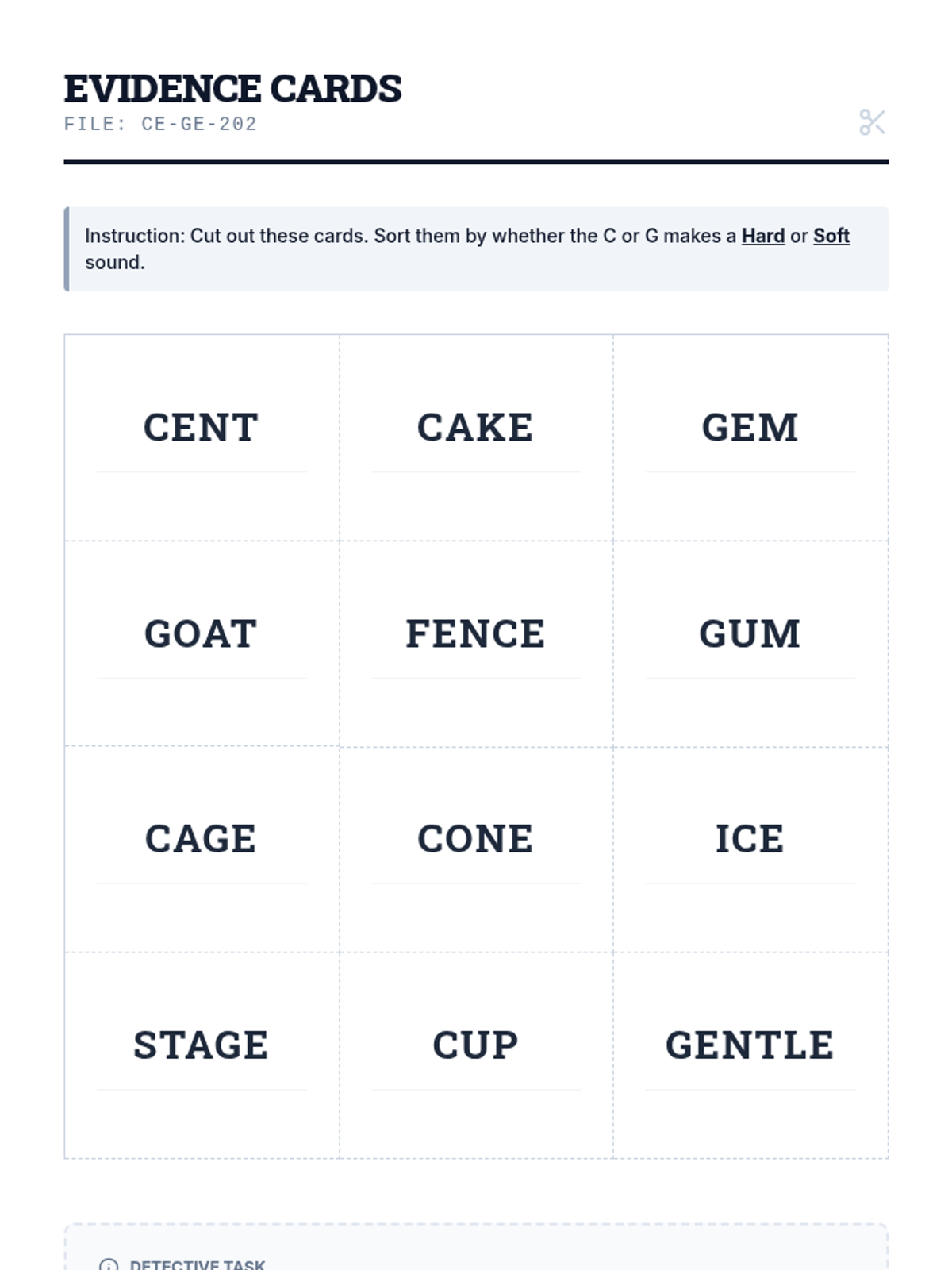
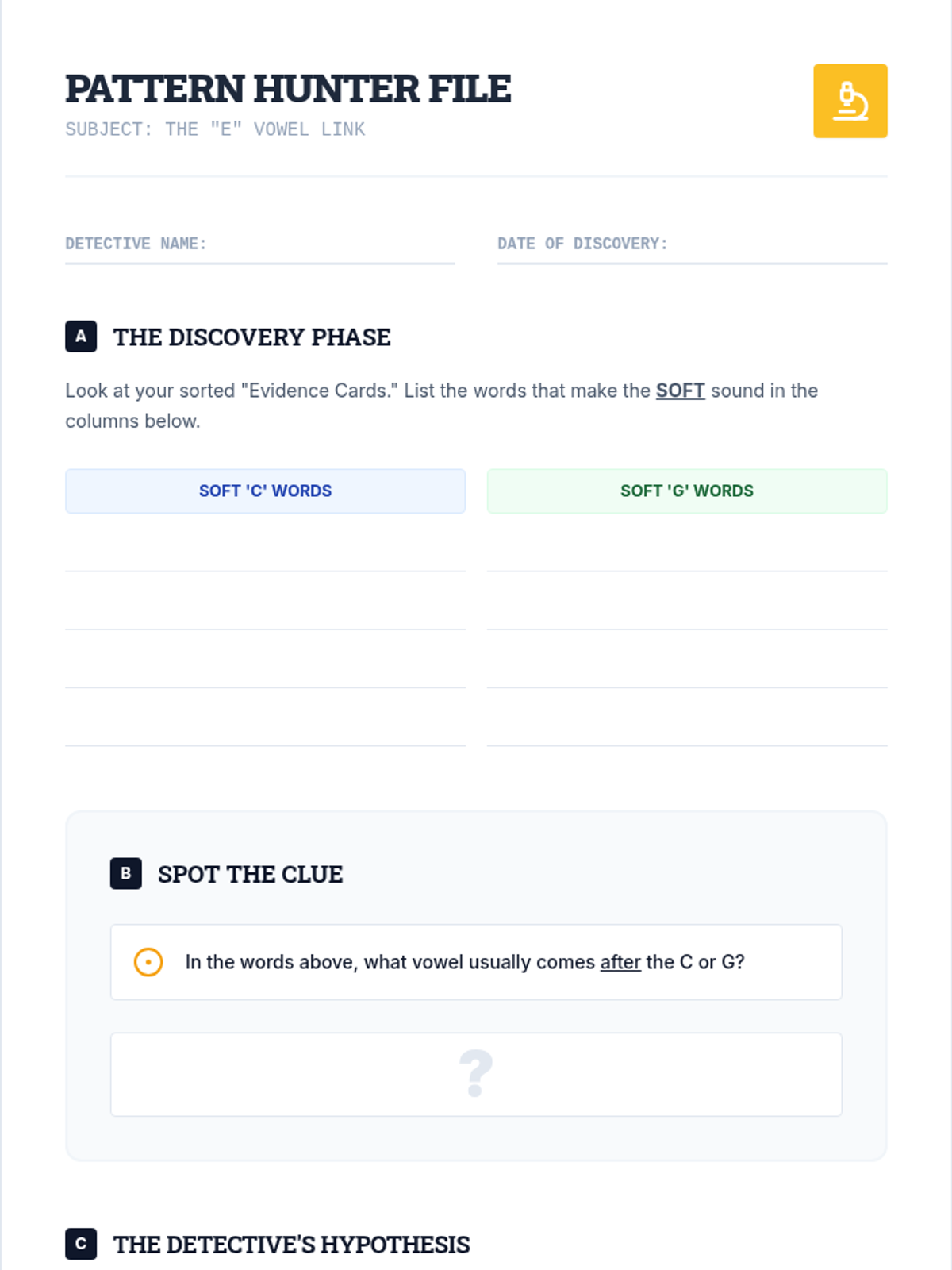
Students examine 'ce' and 'ge' words to identify 'e' as the first "clue" vowel that changes the hard sound to a soft sound.
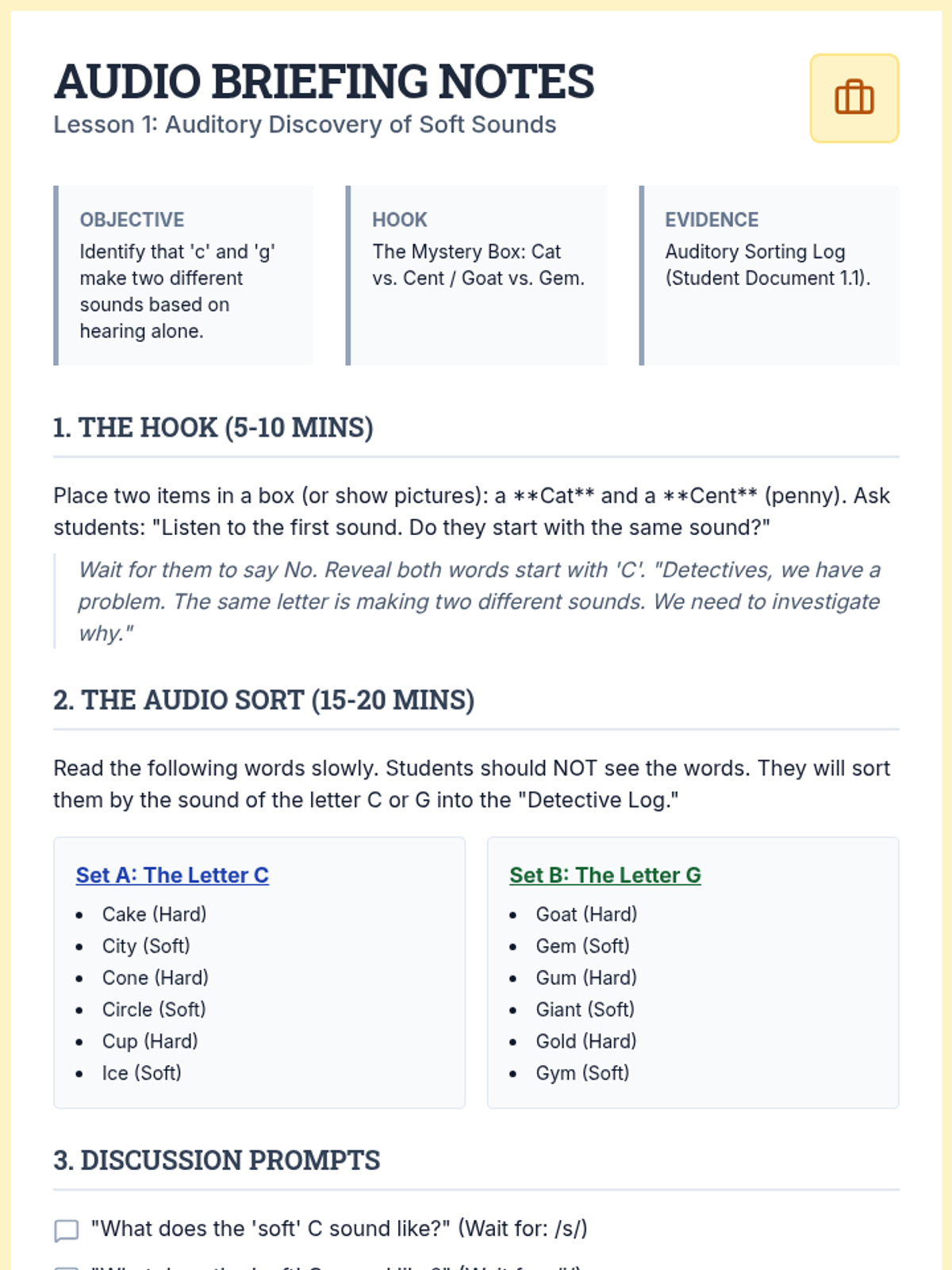
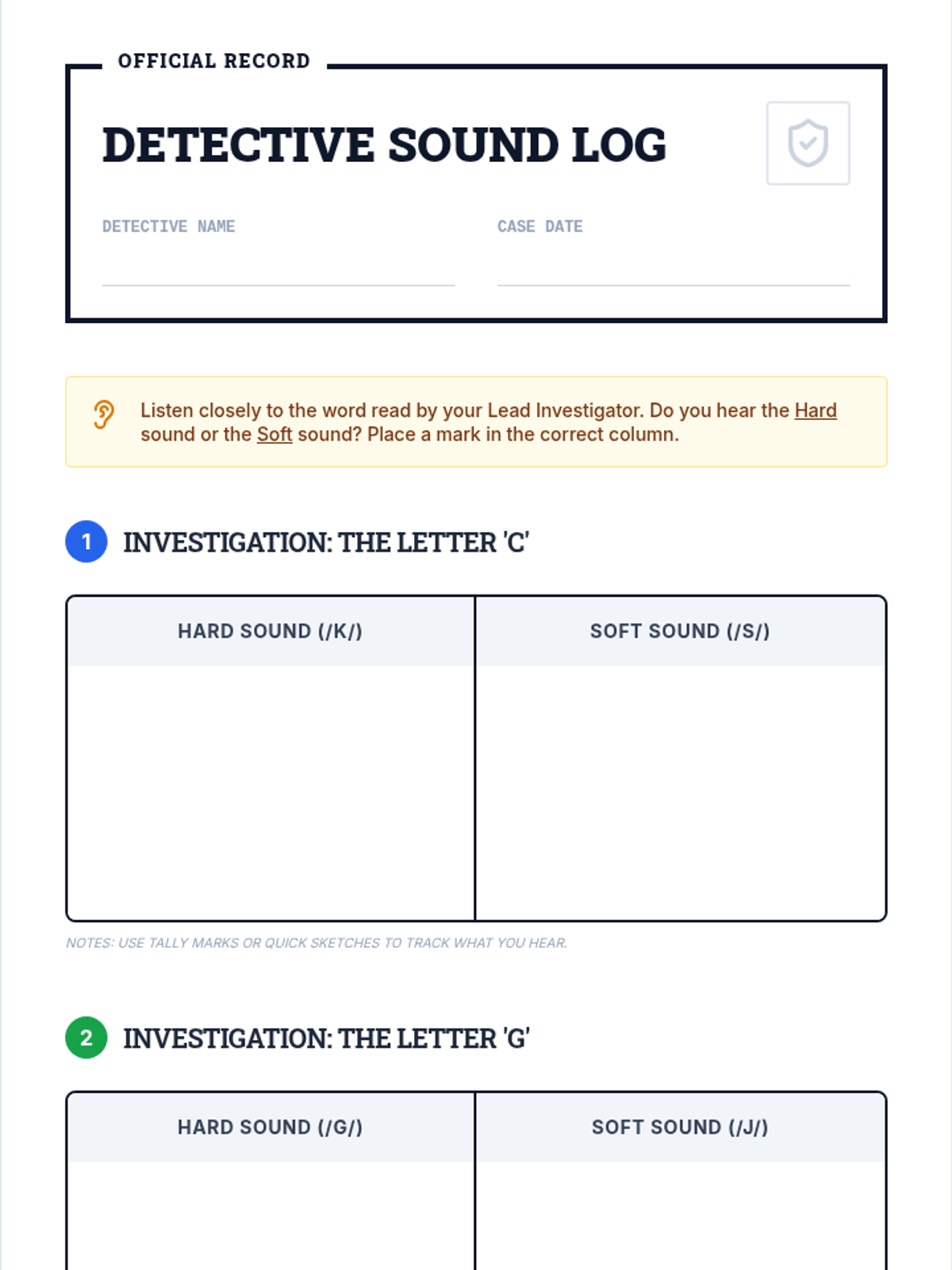
Students investigate the two distinct sounds of 'c' and 'g' through auditory discrimination, categorizing words without seeing their spelling to build phonological awareness.
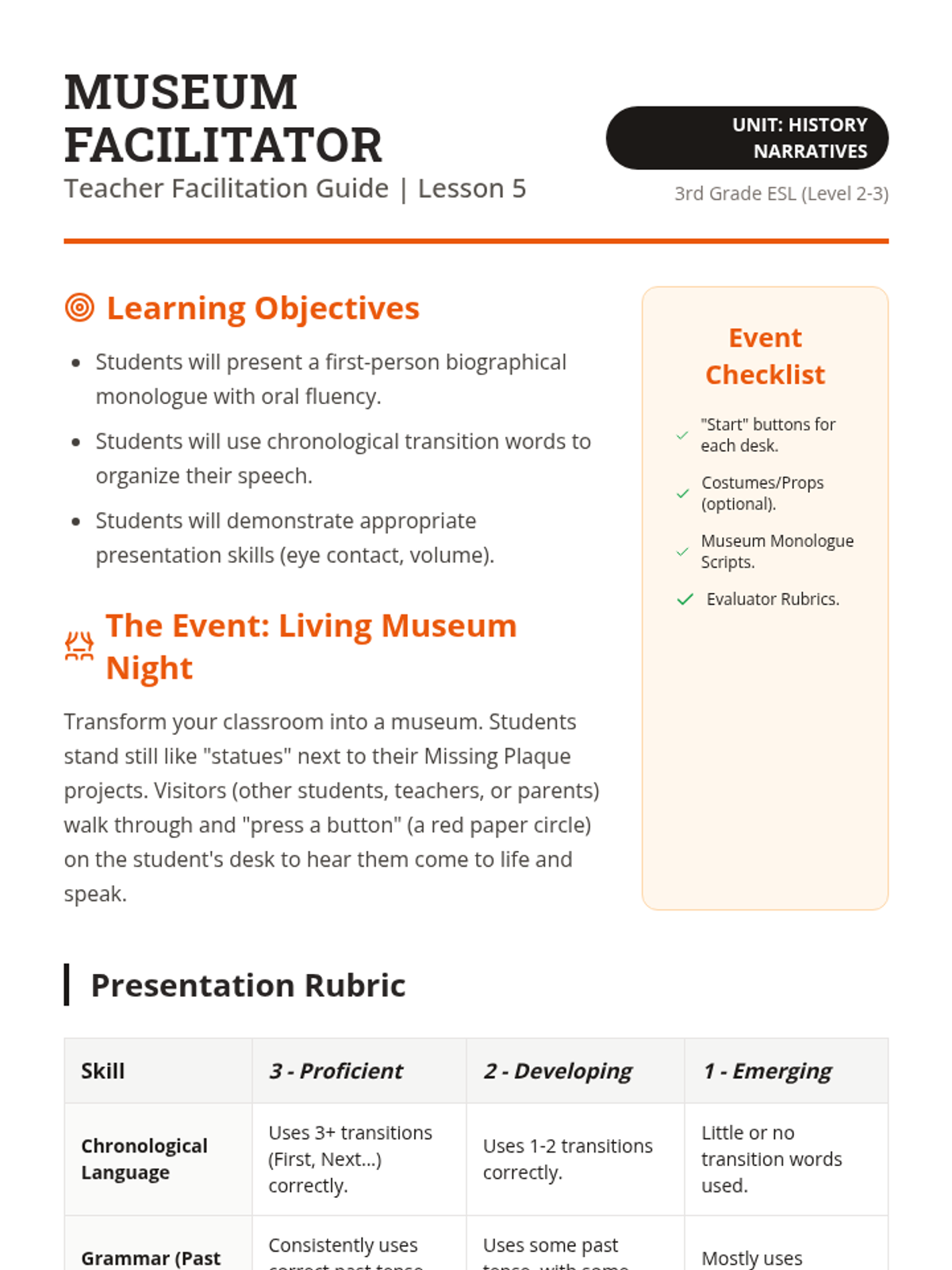
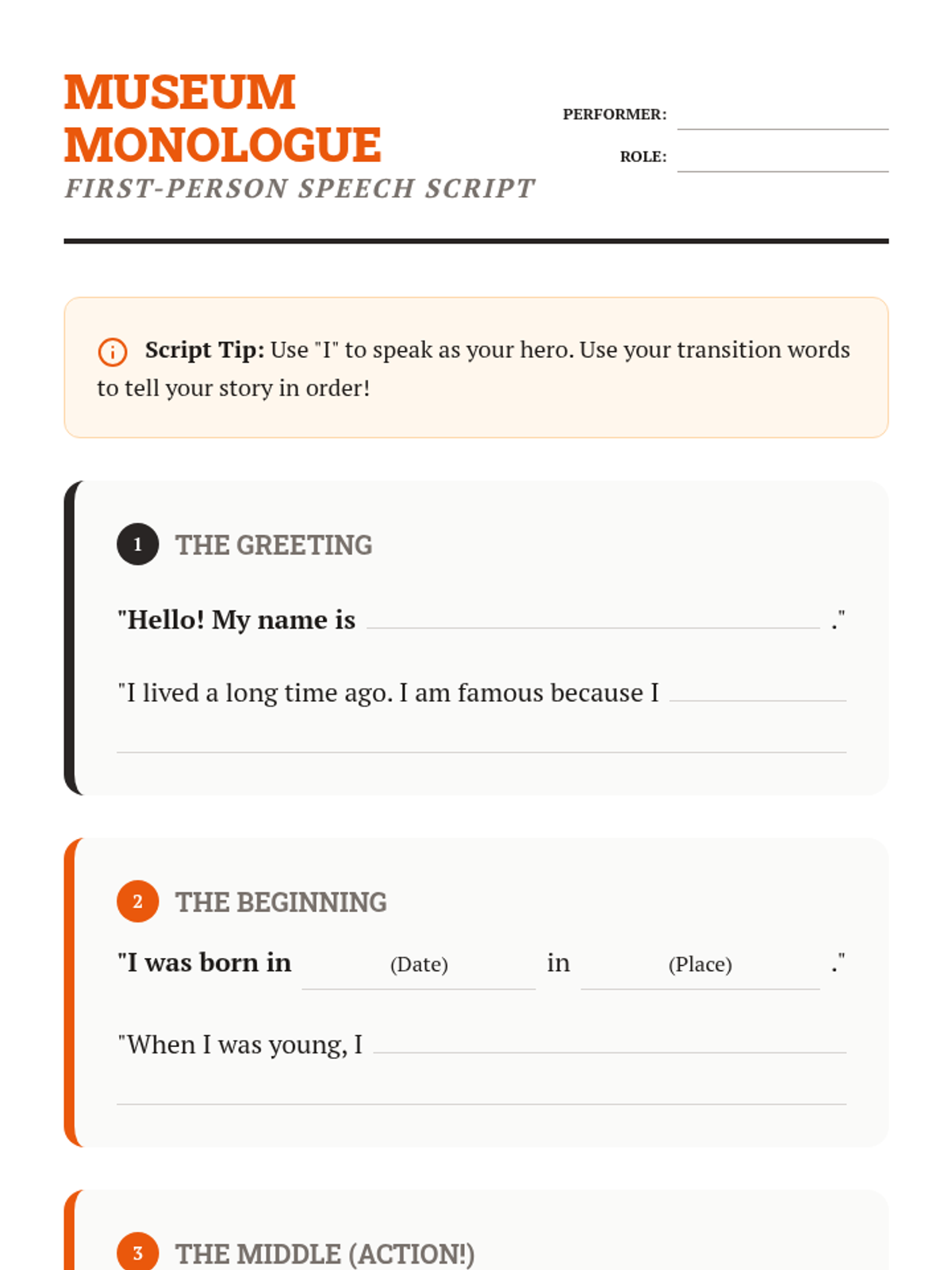
Students assume the role of a historical figure and present a first-person monologue. They must use appropriate chronological language to describe their life's major events to visitors.
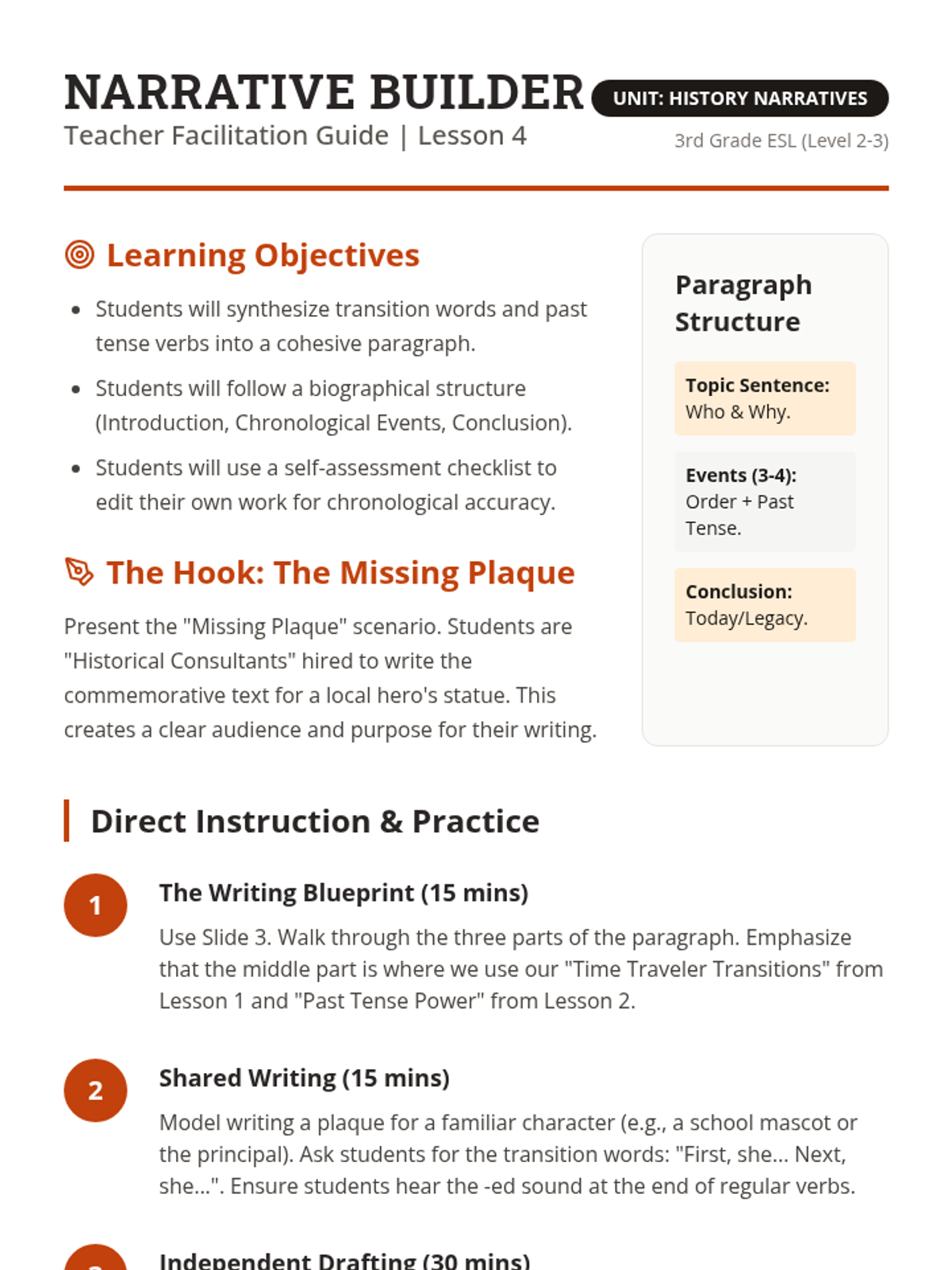
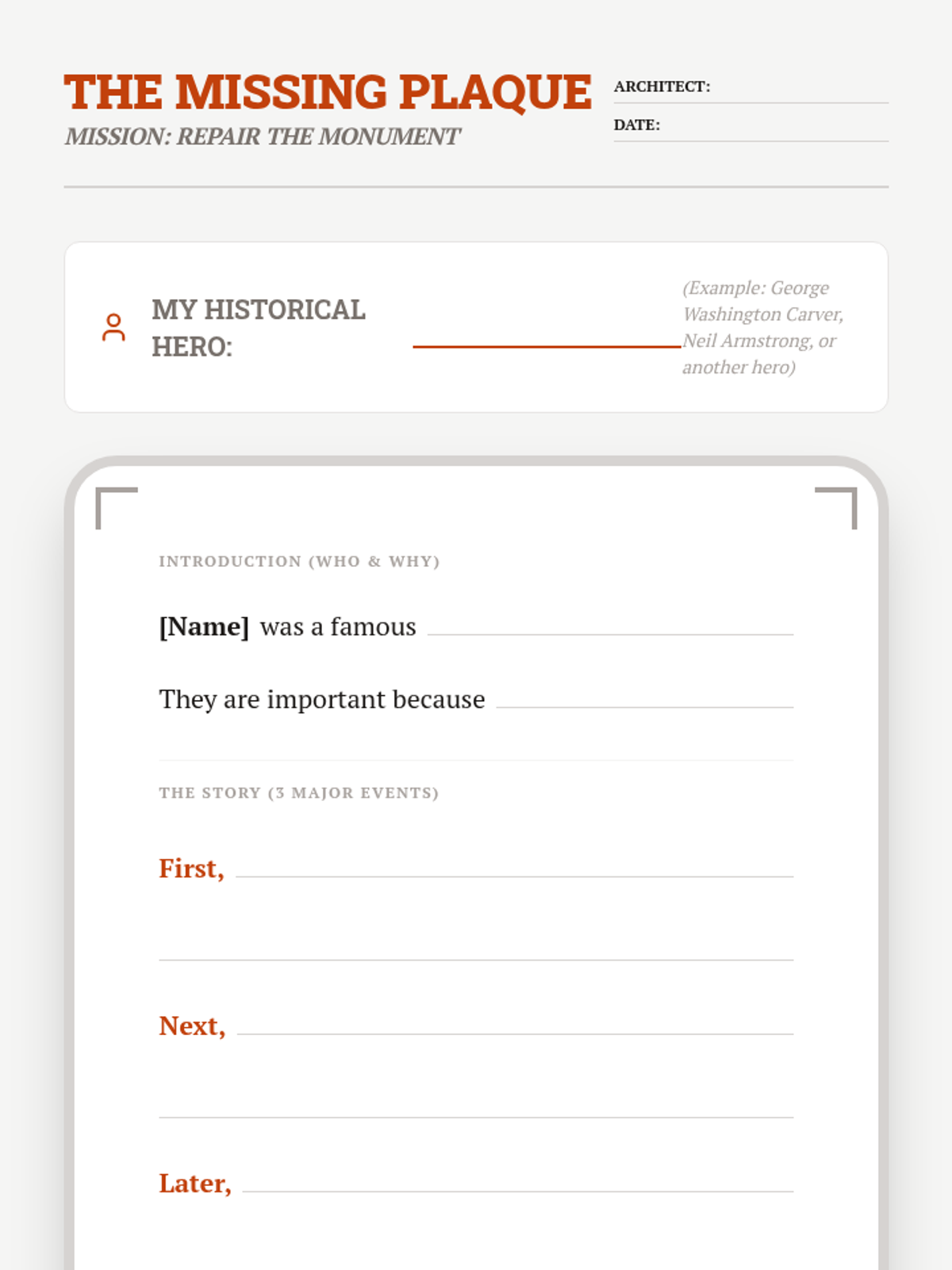
Students draft a short biographical paragraph about a historical figure. They combine their skills with time transitions and past tense verbs to write a cohesive narrative.
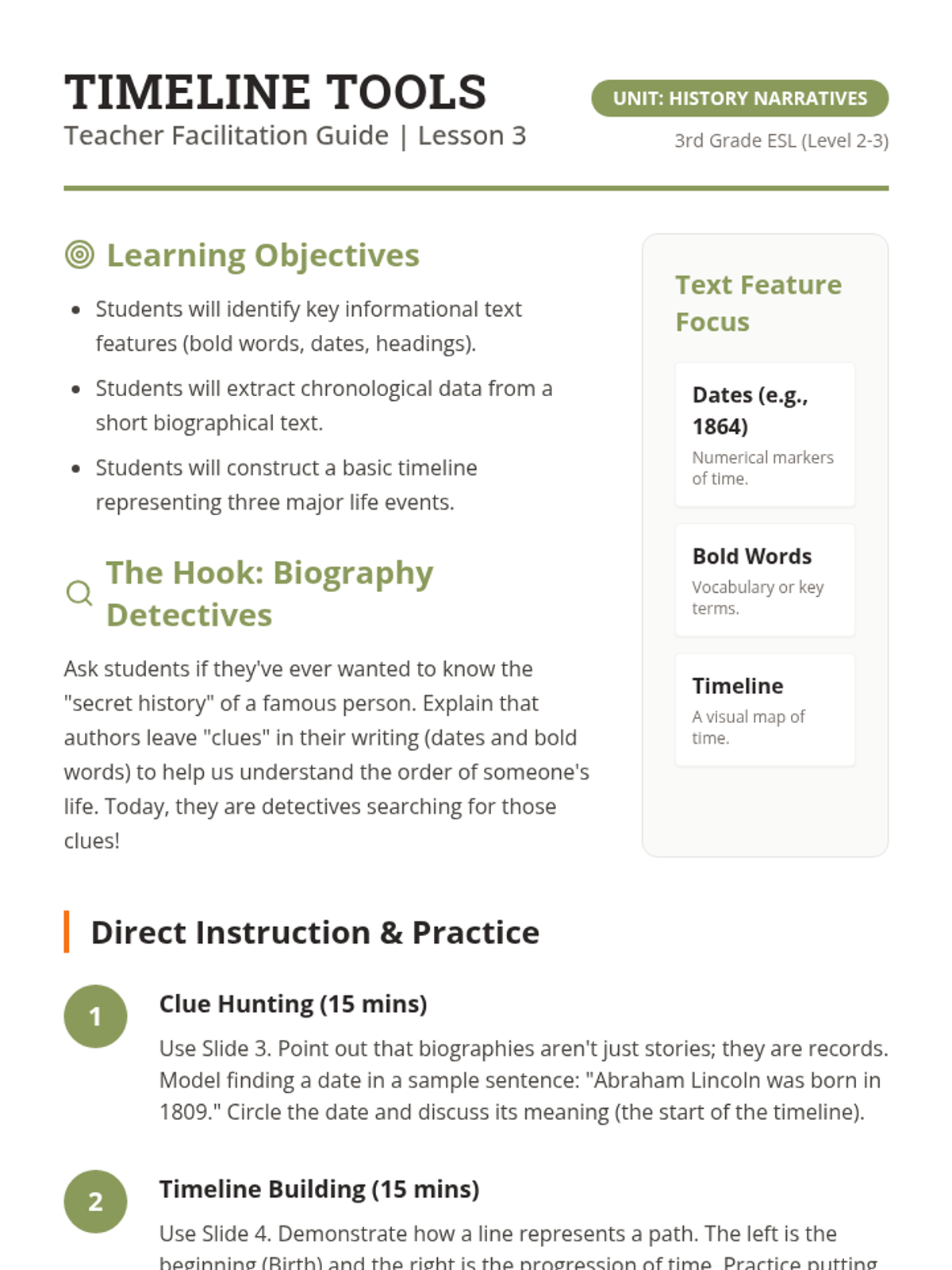
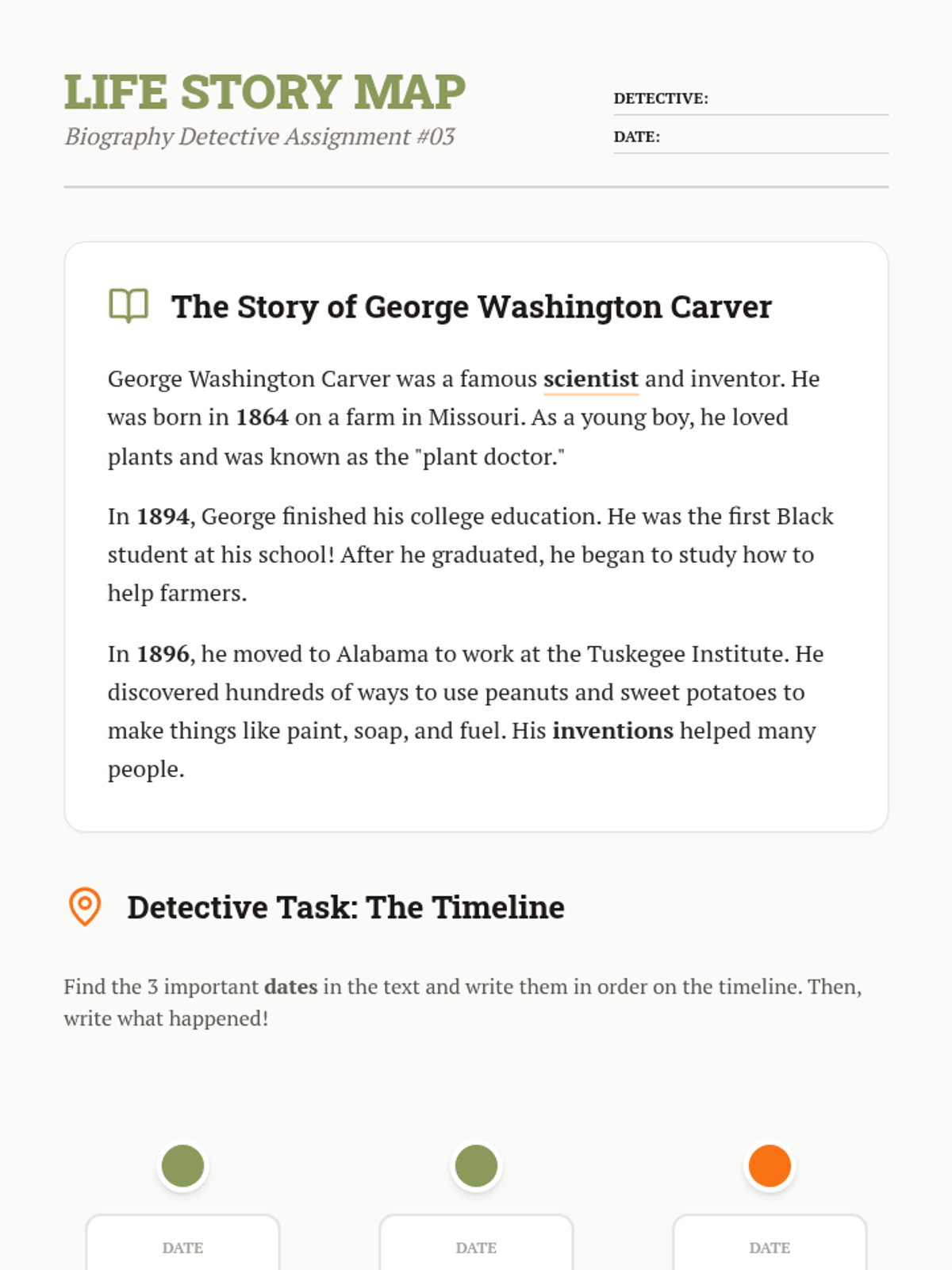
Students analyze short biographies to identify key text features: dates, bolded terms, and chronological structure. They translate a text-based biography into a visual timeline.
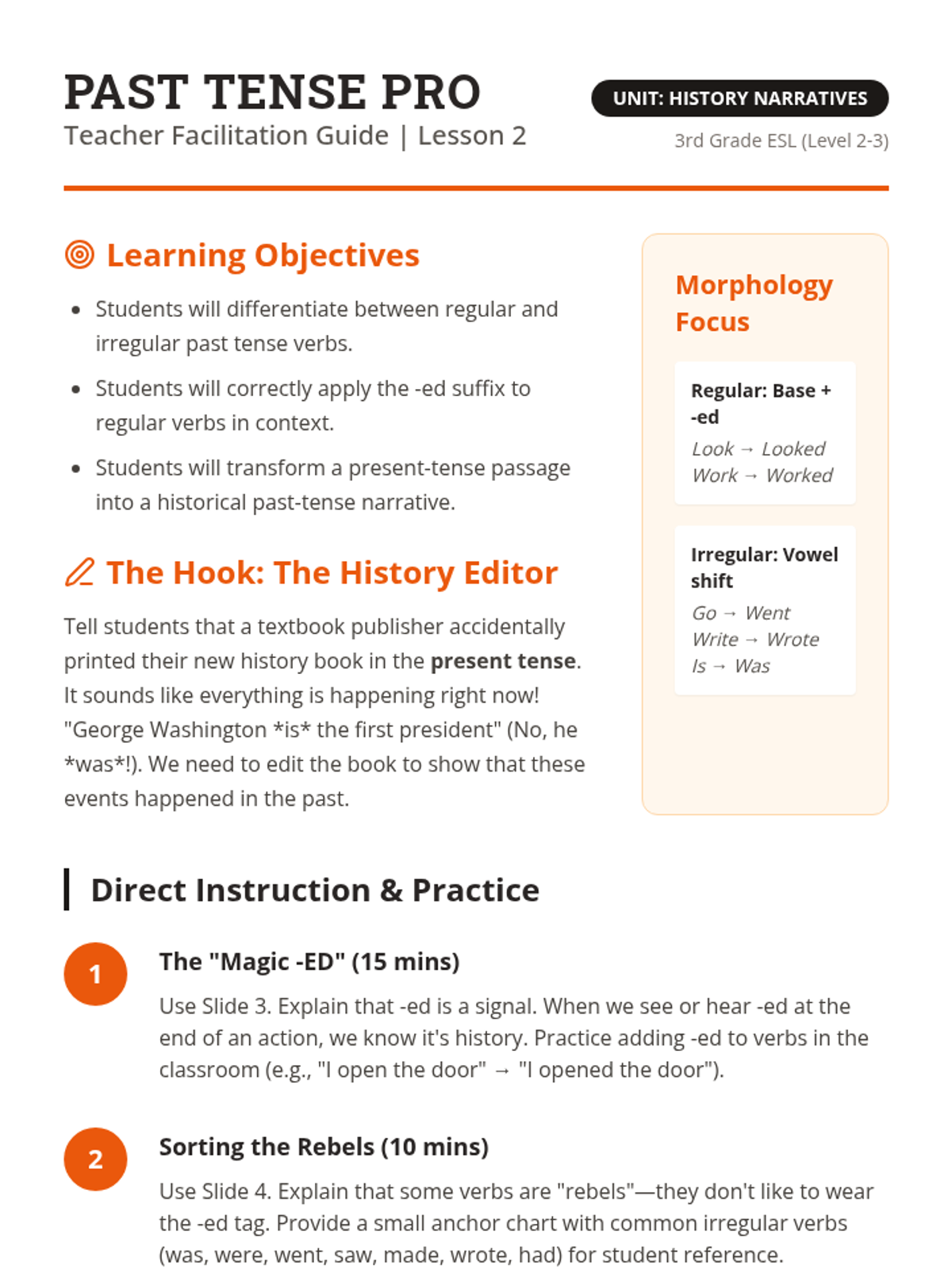
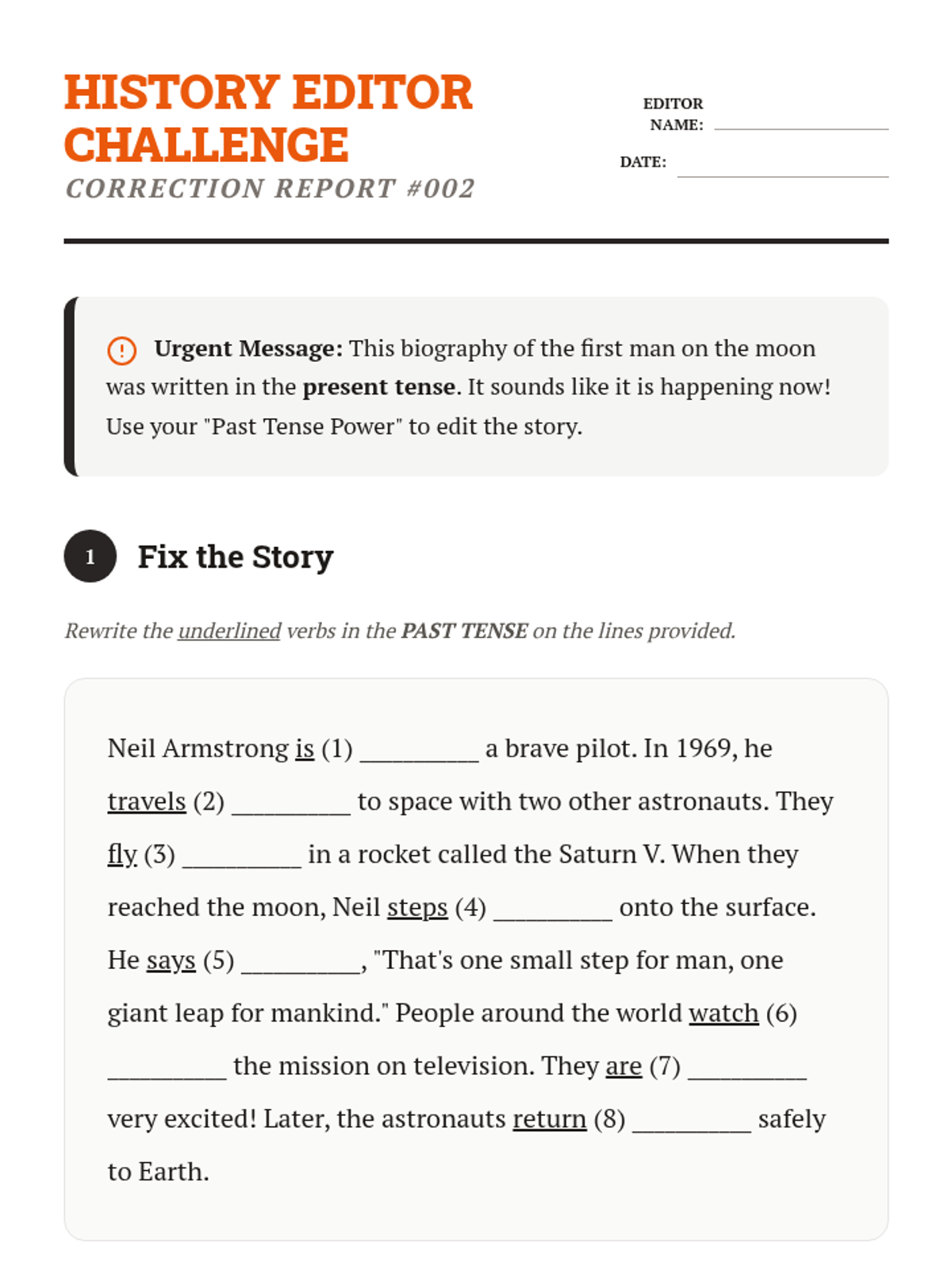
Students focus on the morphological changes of regular and irregular verbs when discussing history. They practice transforming present tense descriptions of actions into historical narratives.
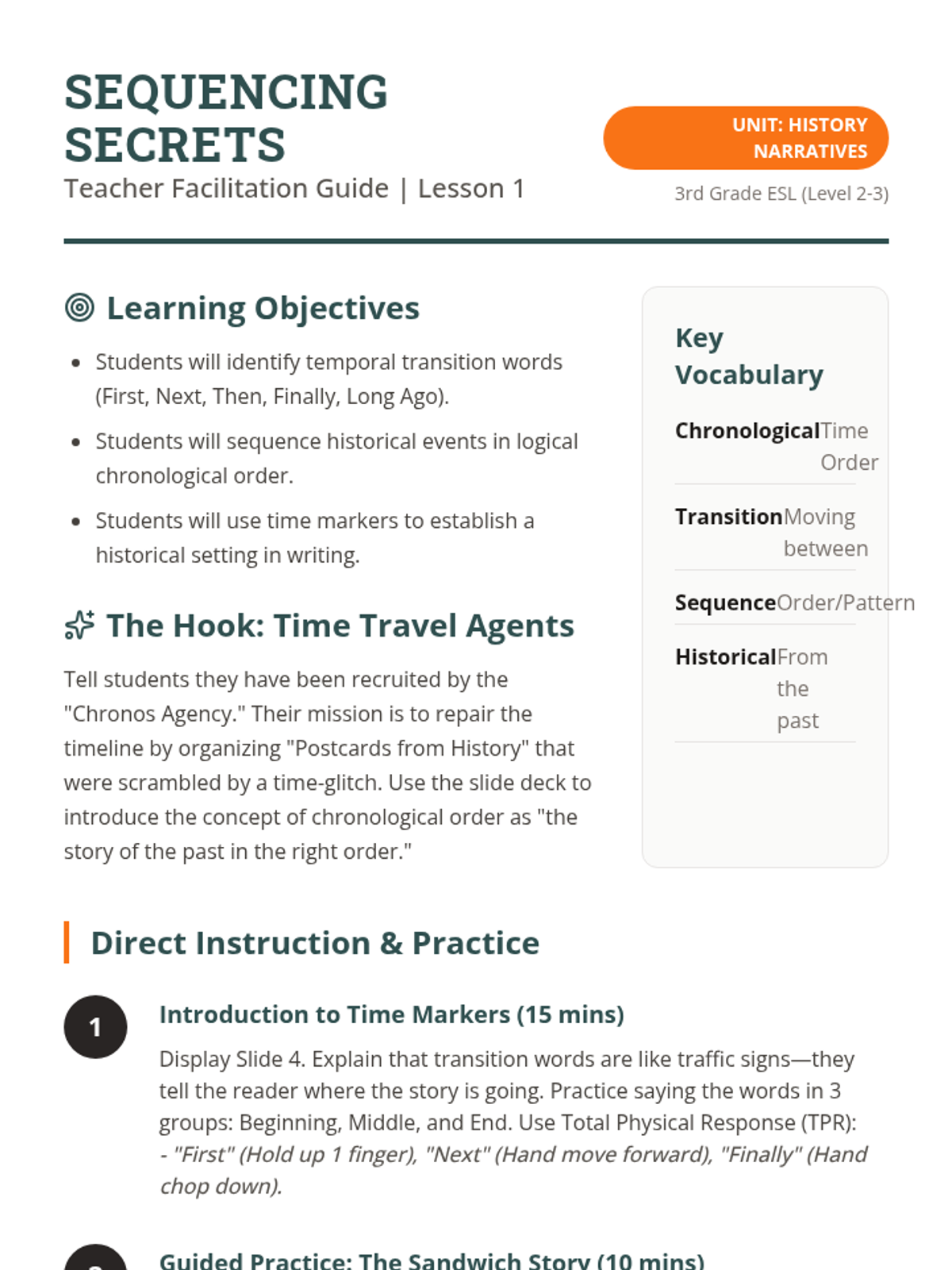
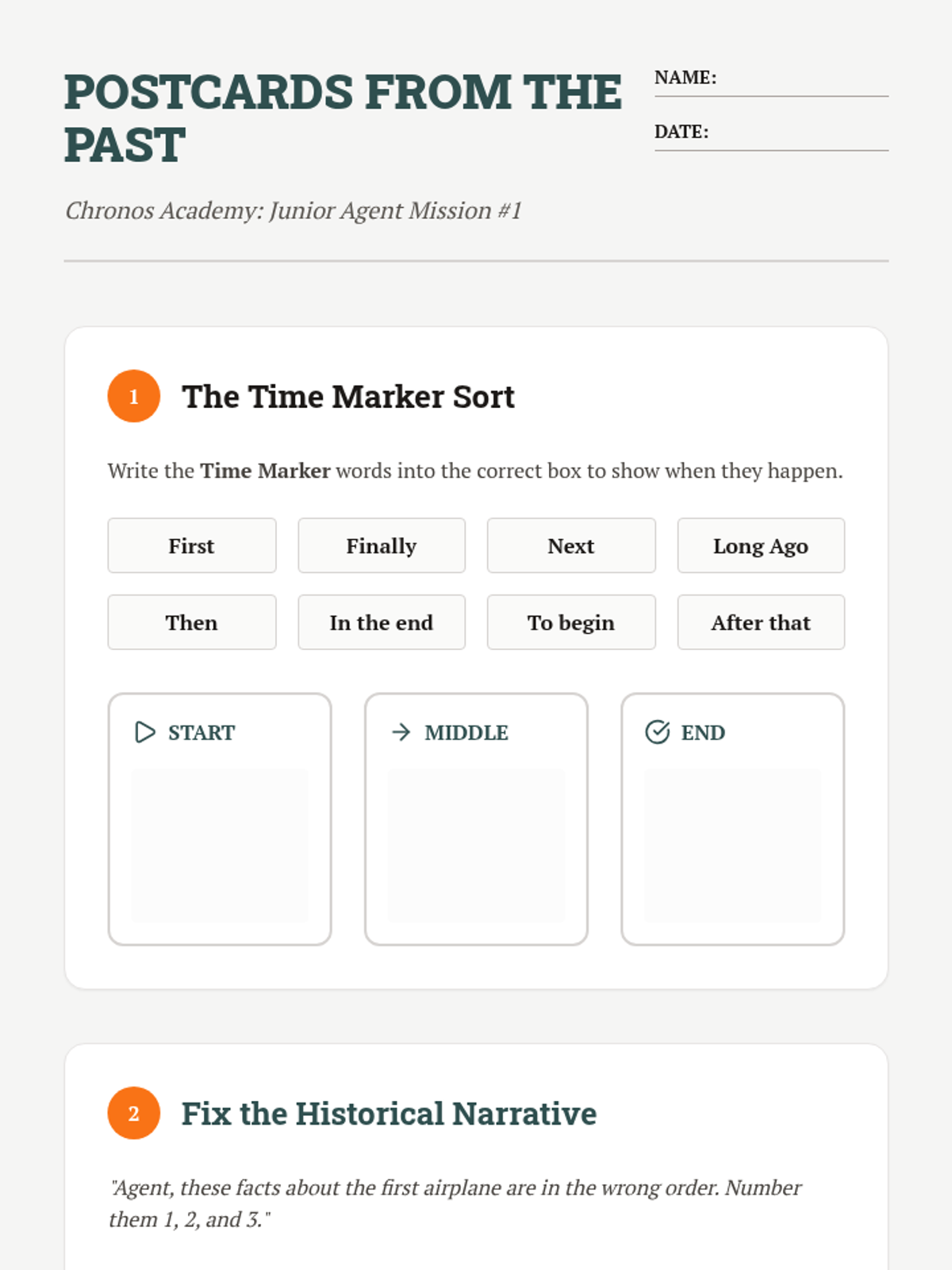
Students identify and practice temporal words to organize historical events into logical sequences.
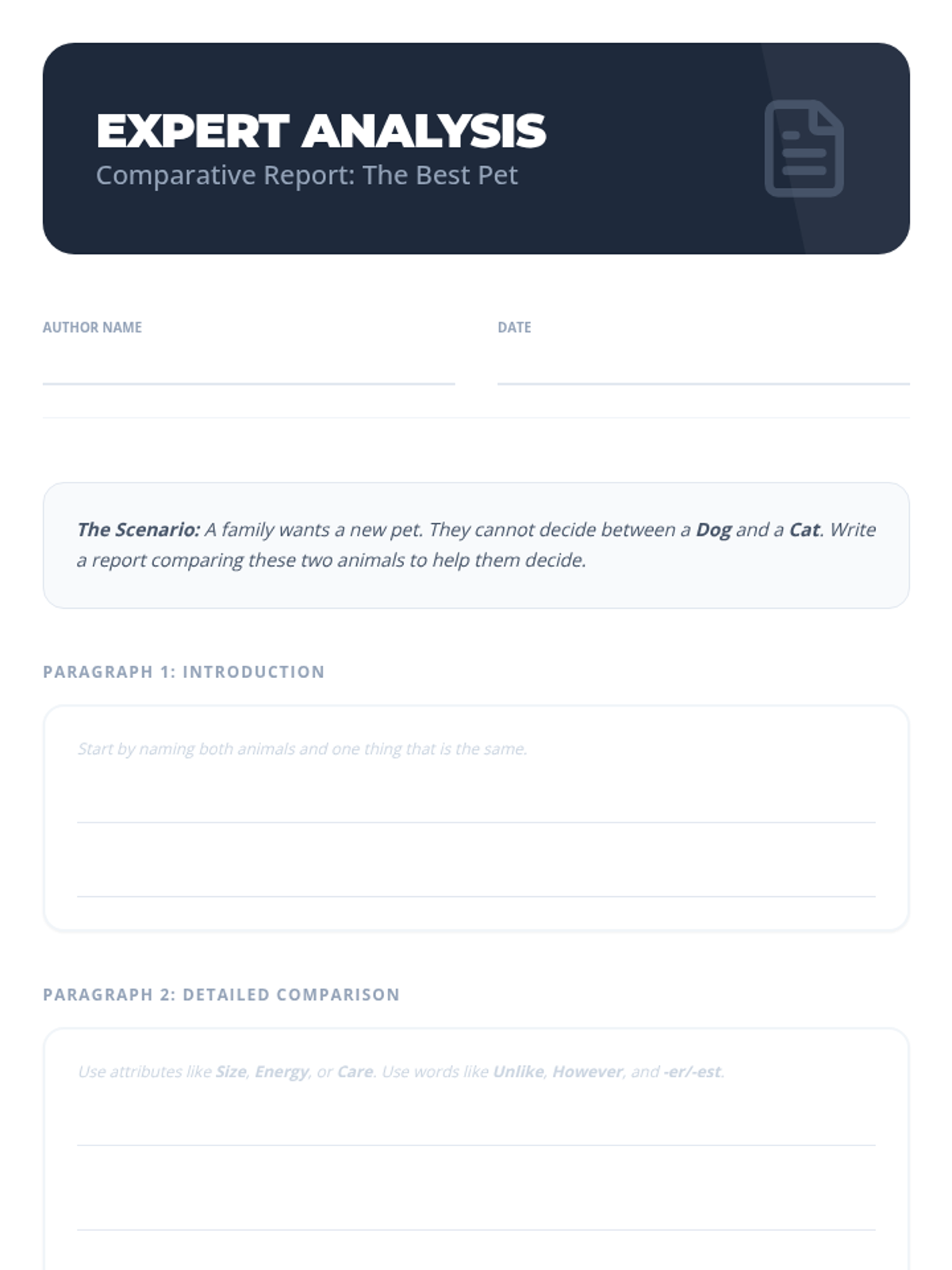
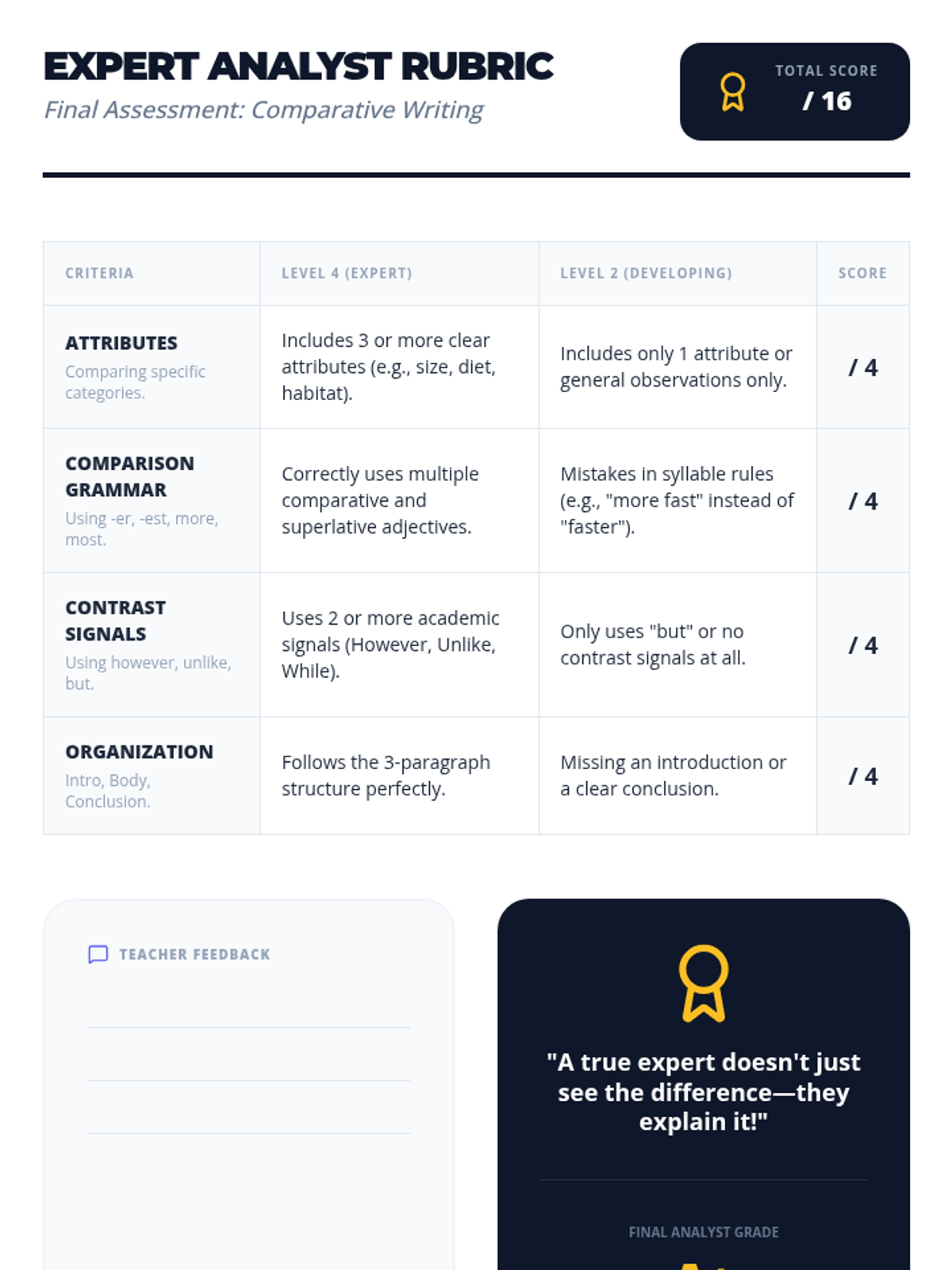
Students synthesize their learning to write a multi-paragraph comparative analysis comparing two topics, followed by a peer review session.
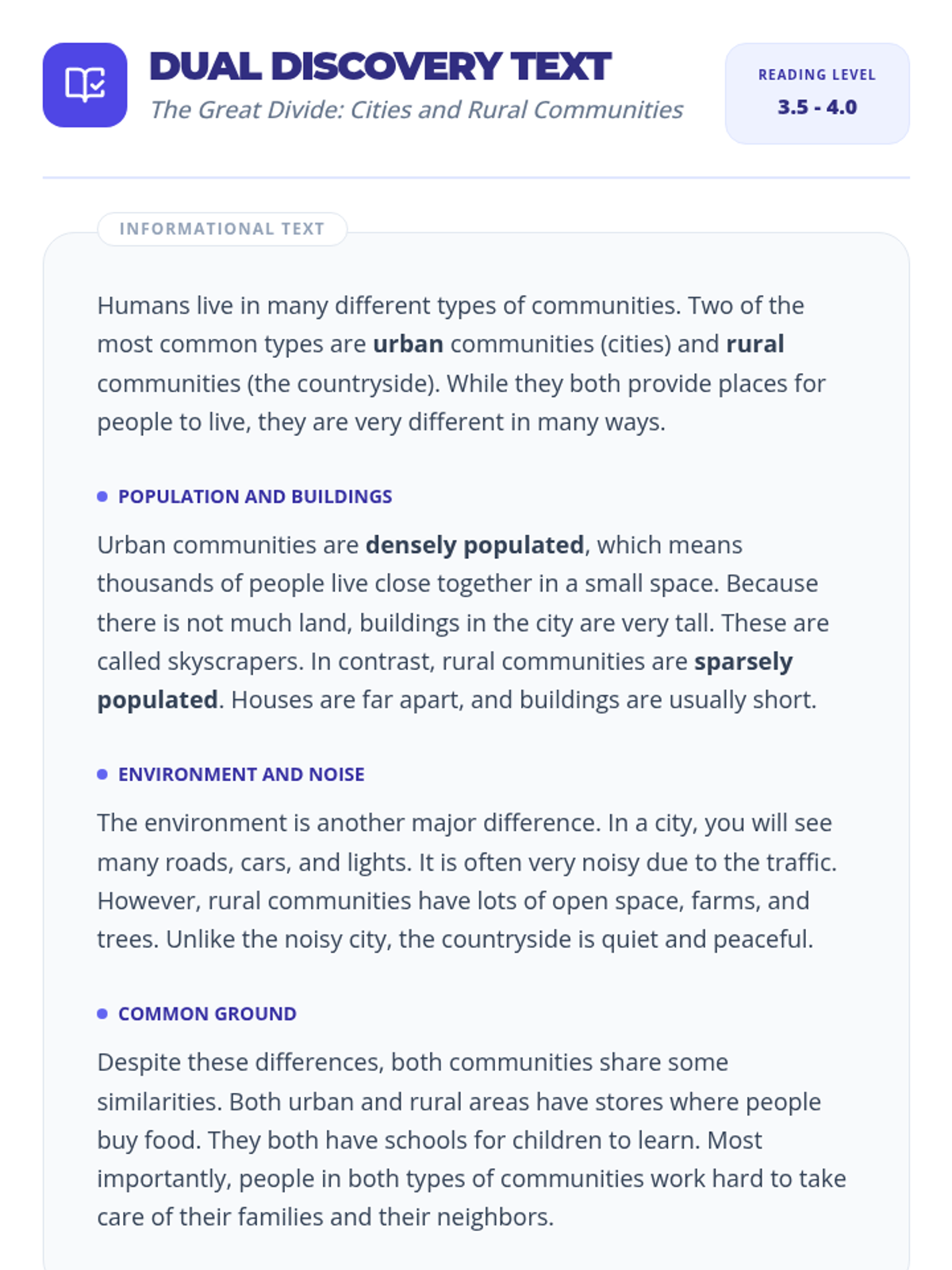
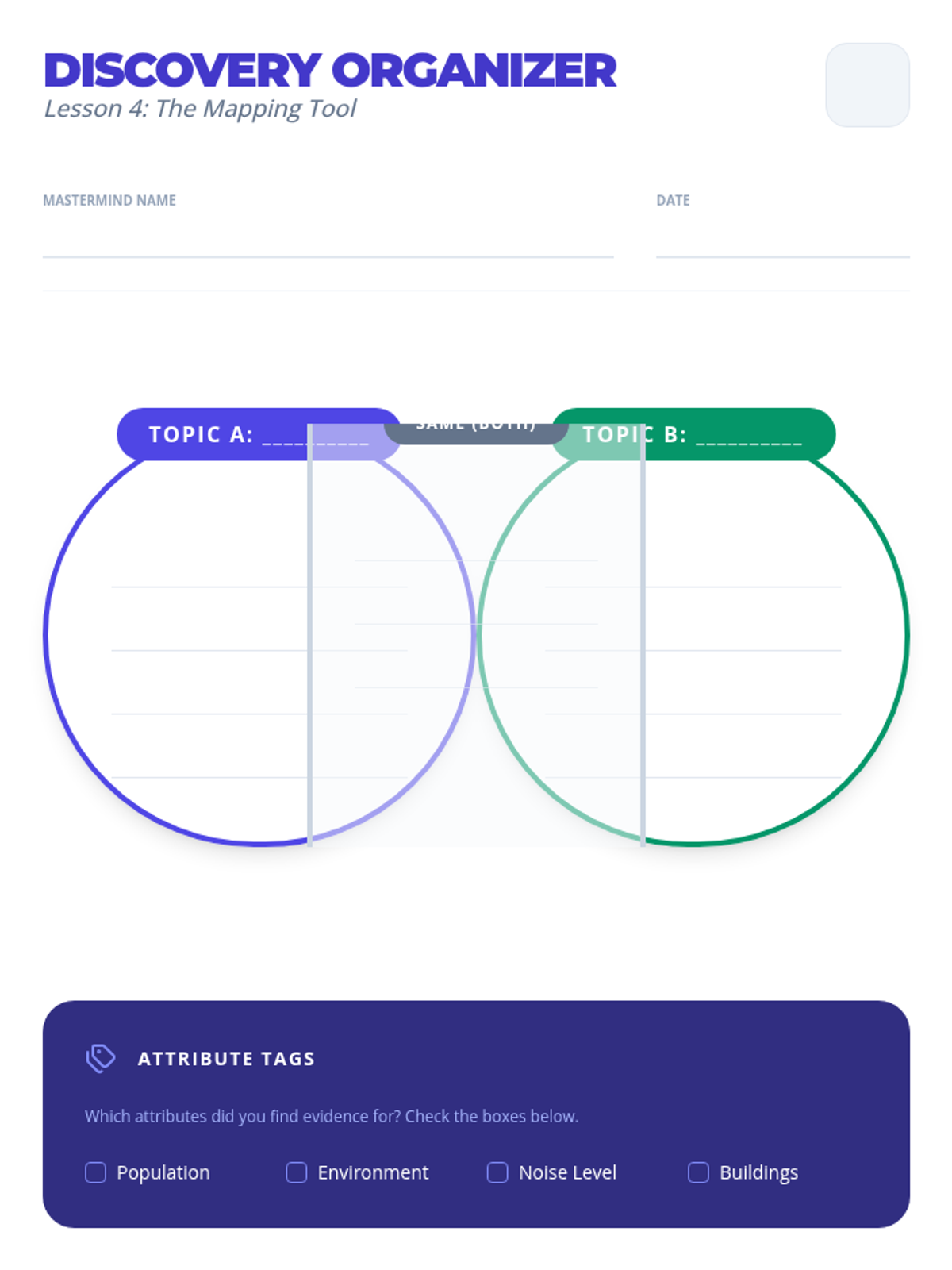
Students practice extracting information from informational texts and organizing it into Venn diagrams and T-charts.
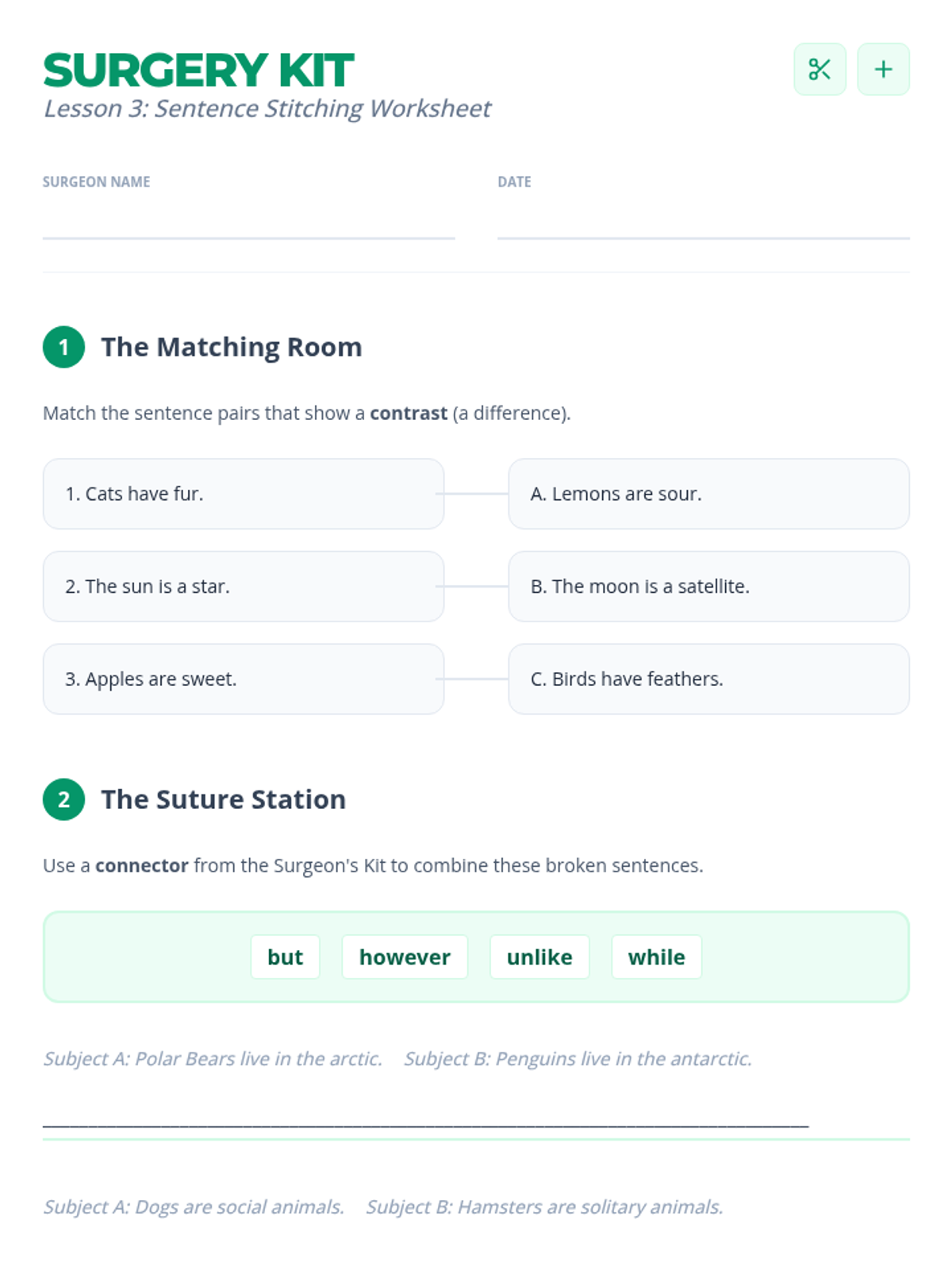
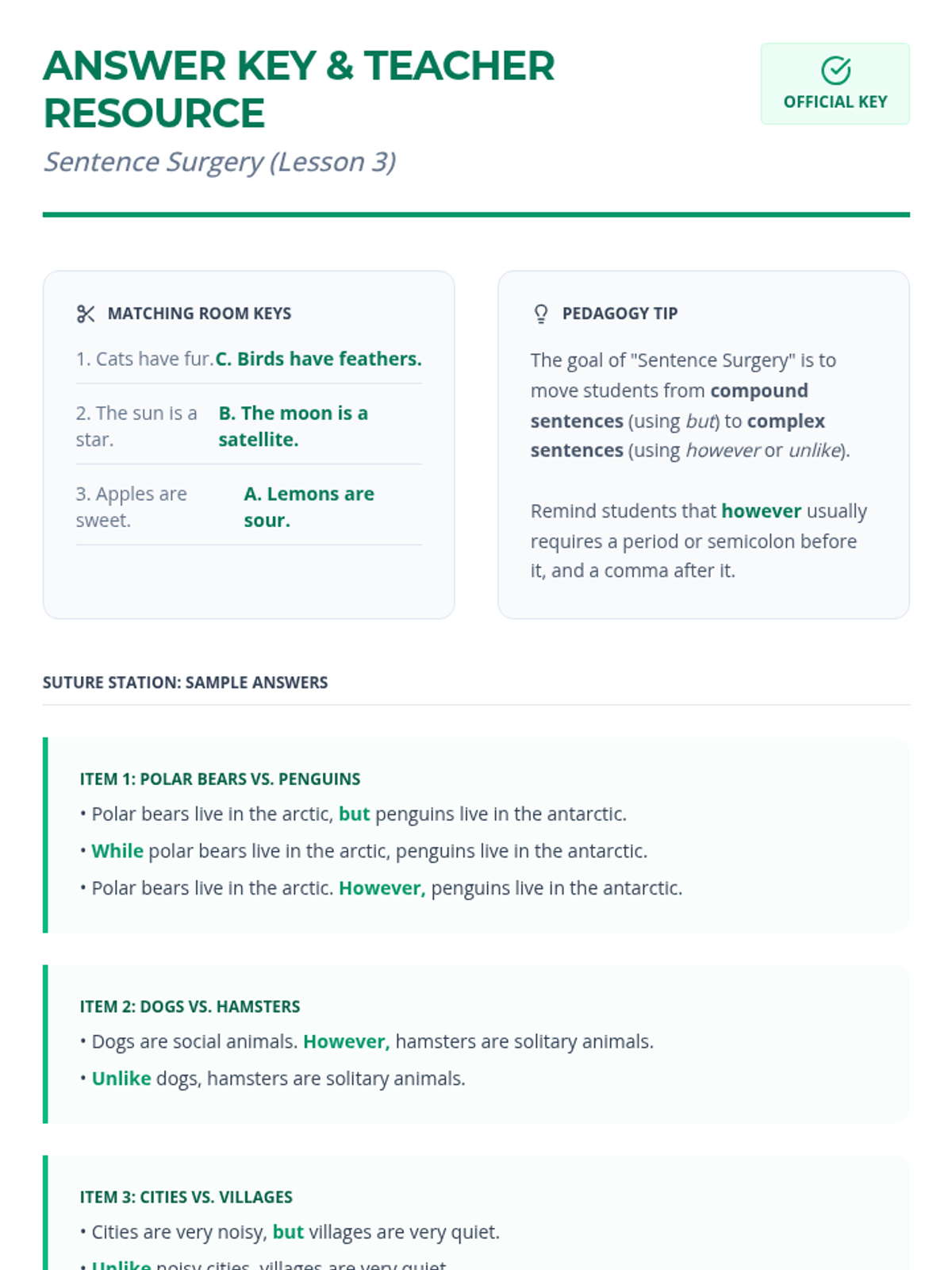
Students learn to use contrast signals like 'however' and 'unlike' to build complex sentences that highlight differences.
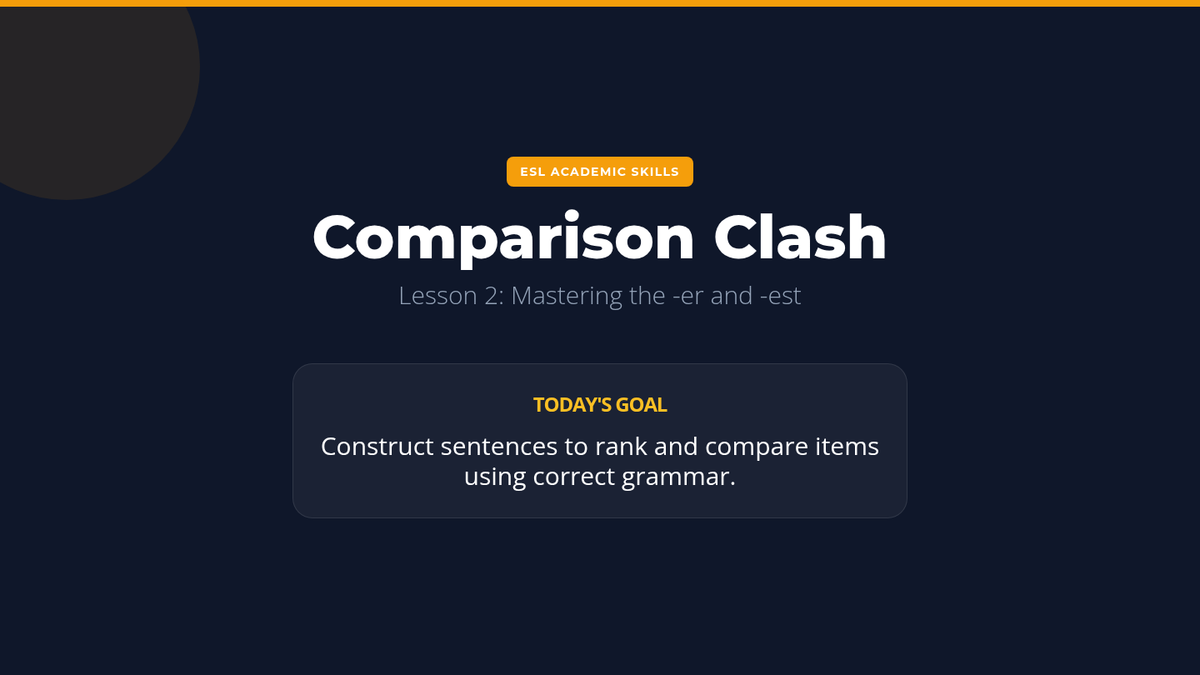
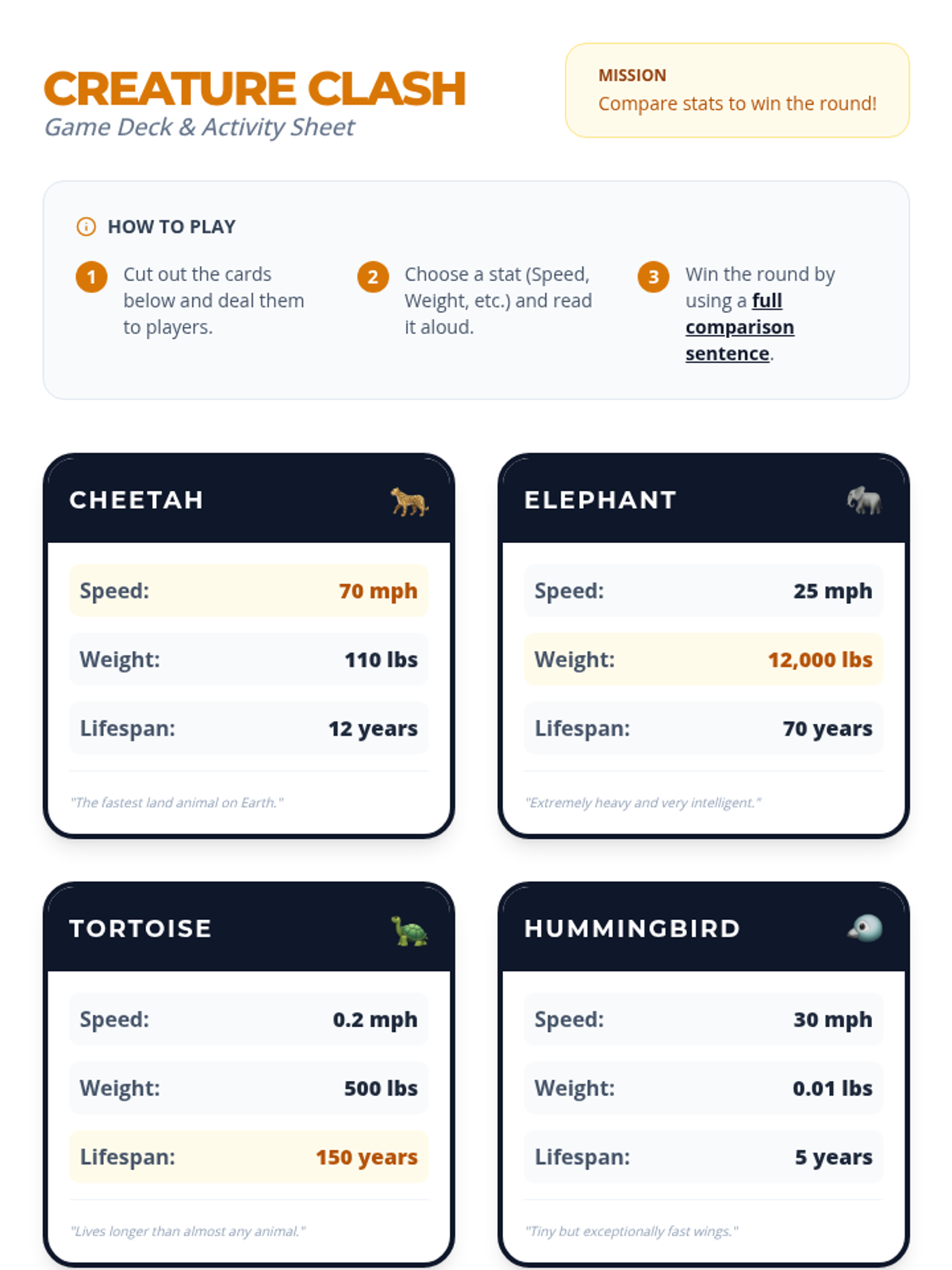
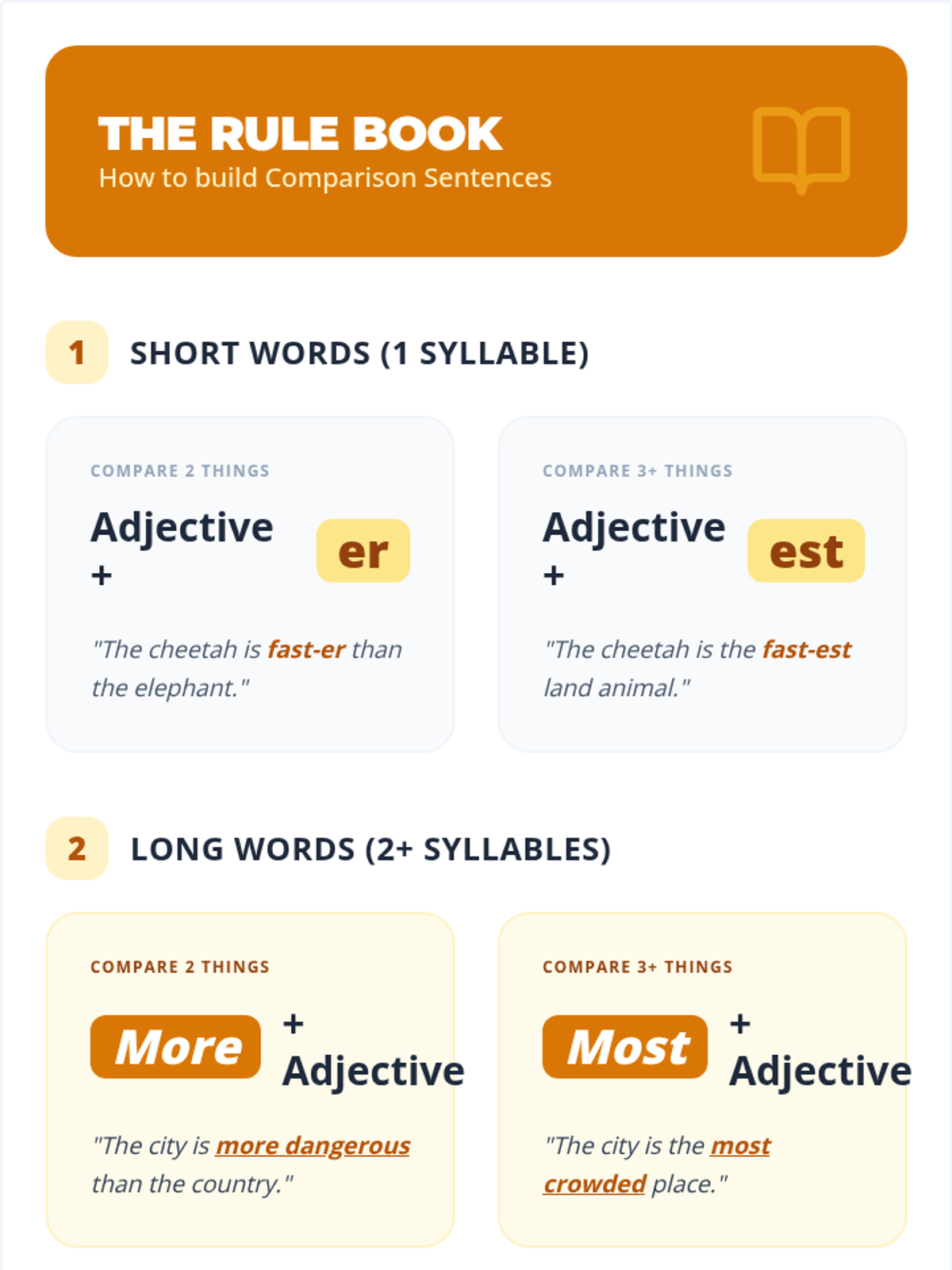
Students master the grammar of comparison, including -er/-est and more/most, through interactive games and data-driven comparisons.
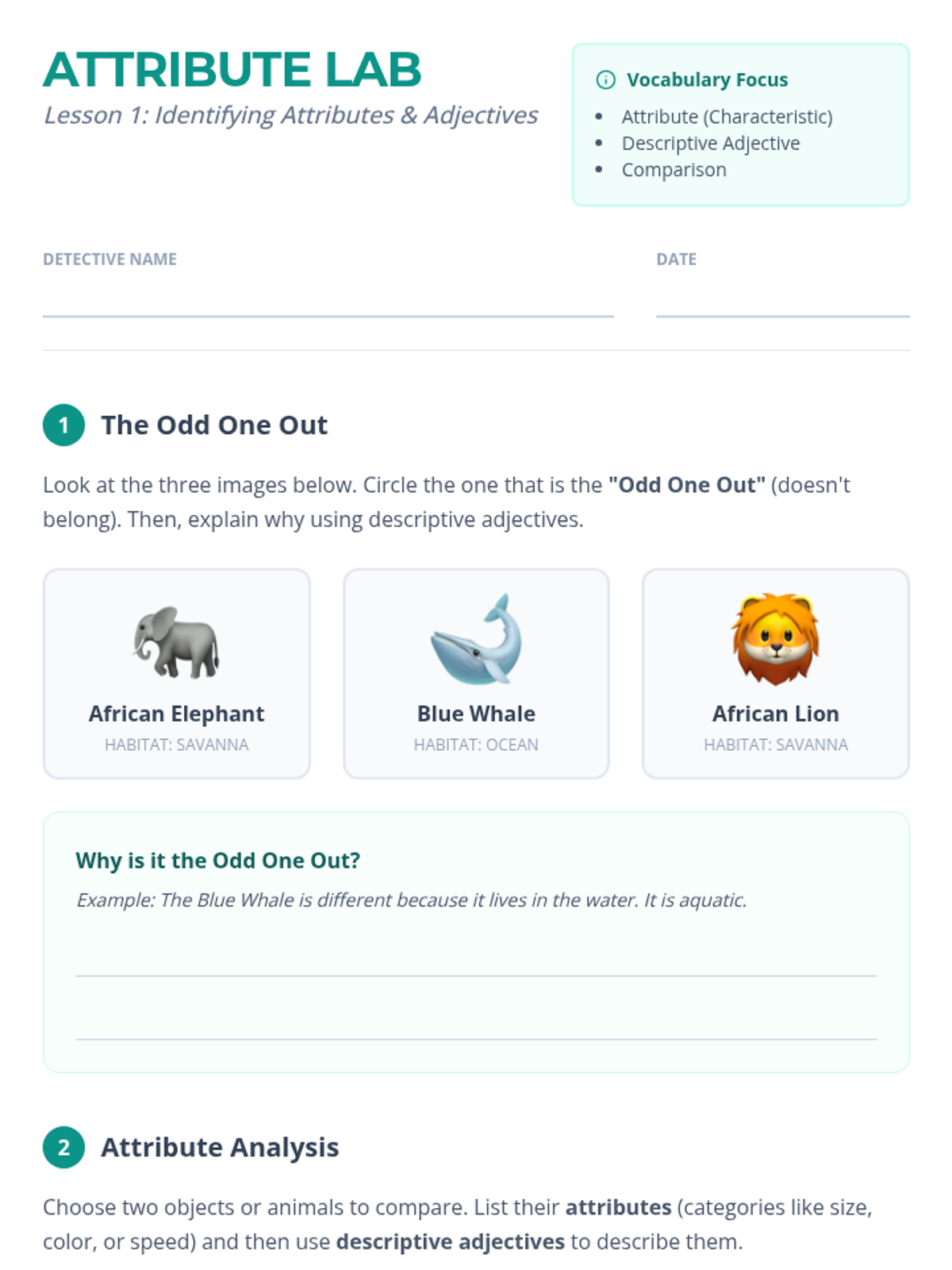
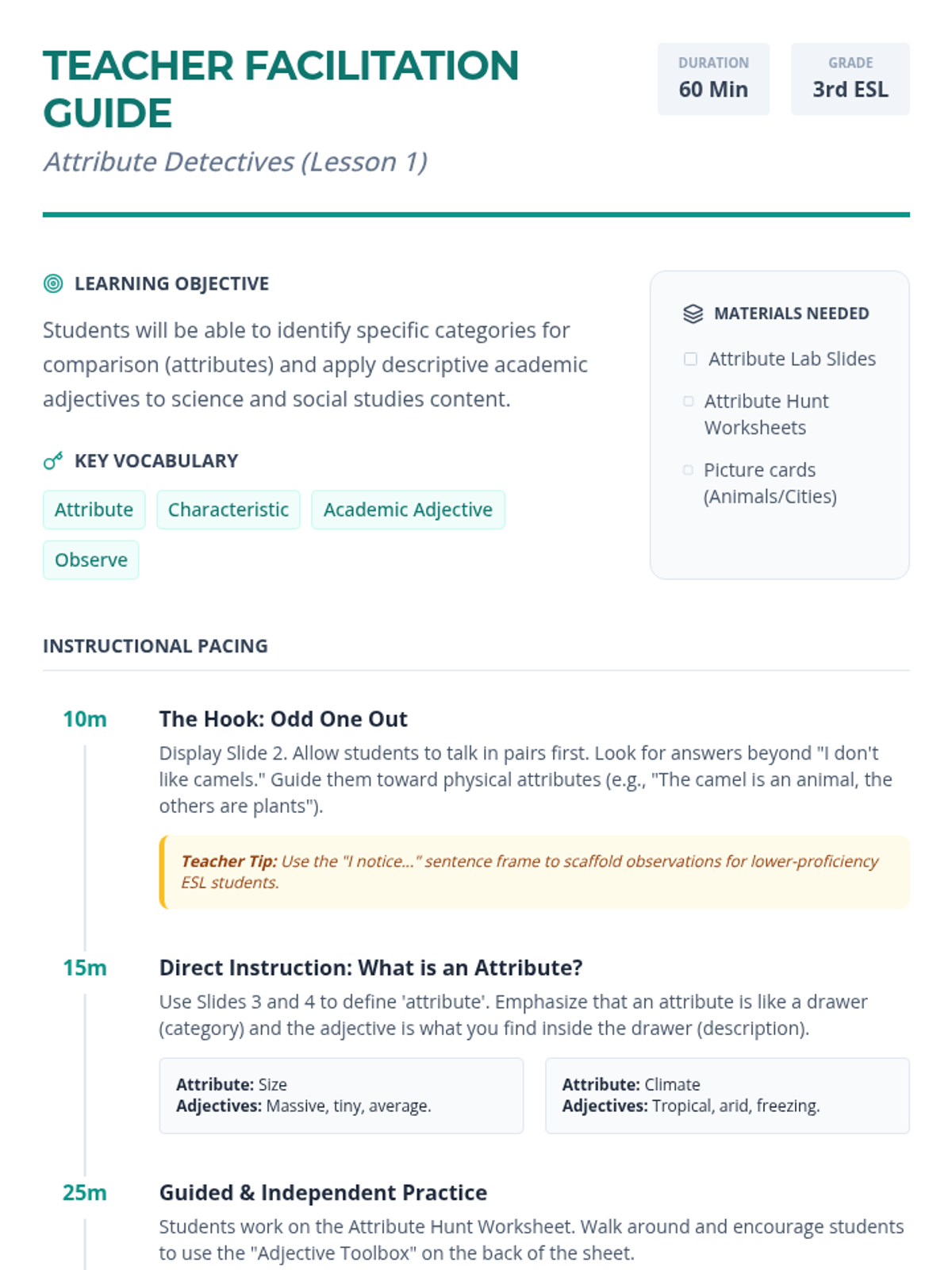
Students build a vocabulary of descriptive adjectives and identify specific attributes for comparison using images from science and social studies.
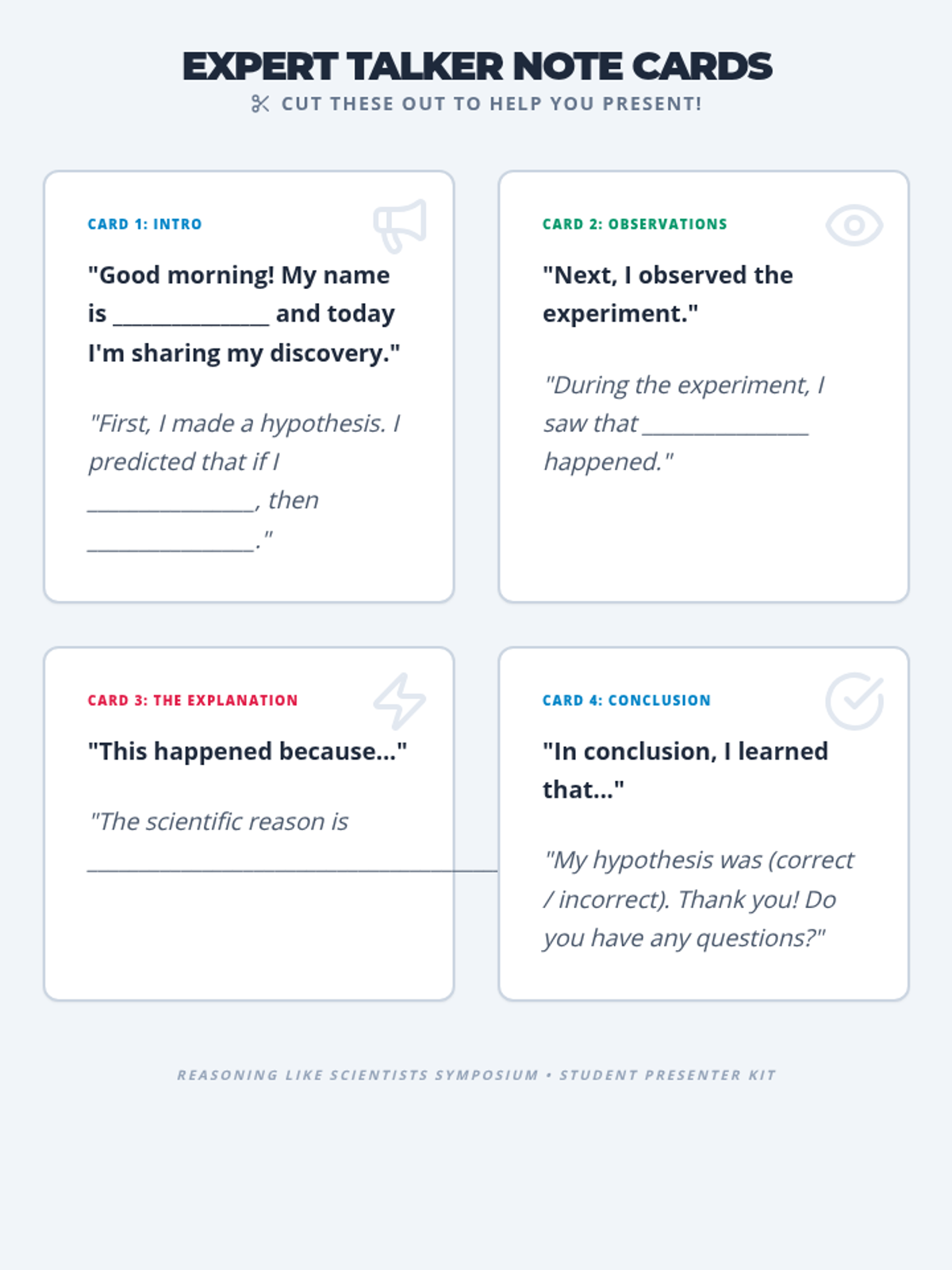
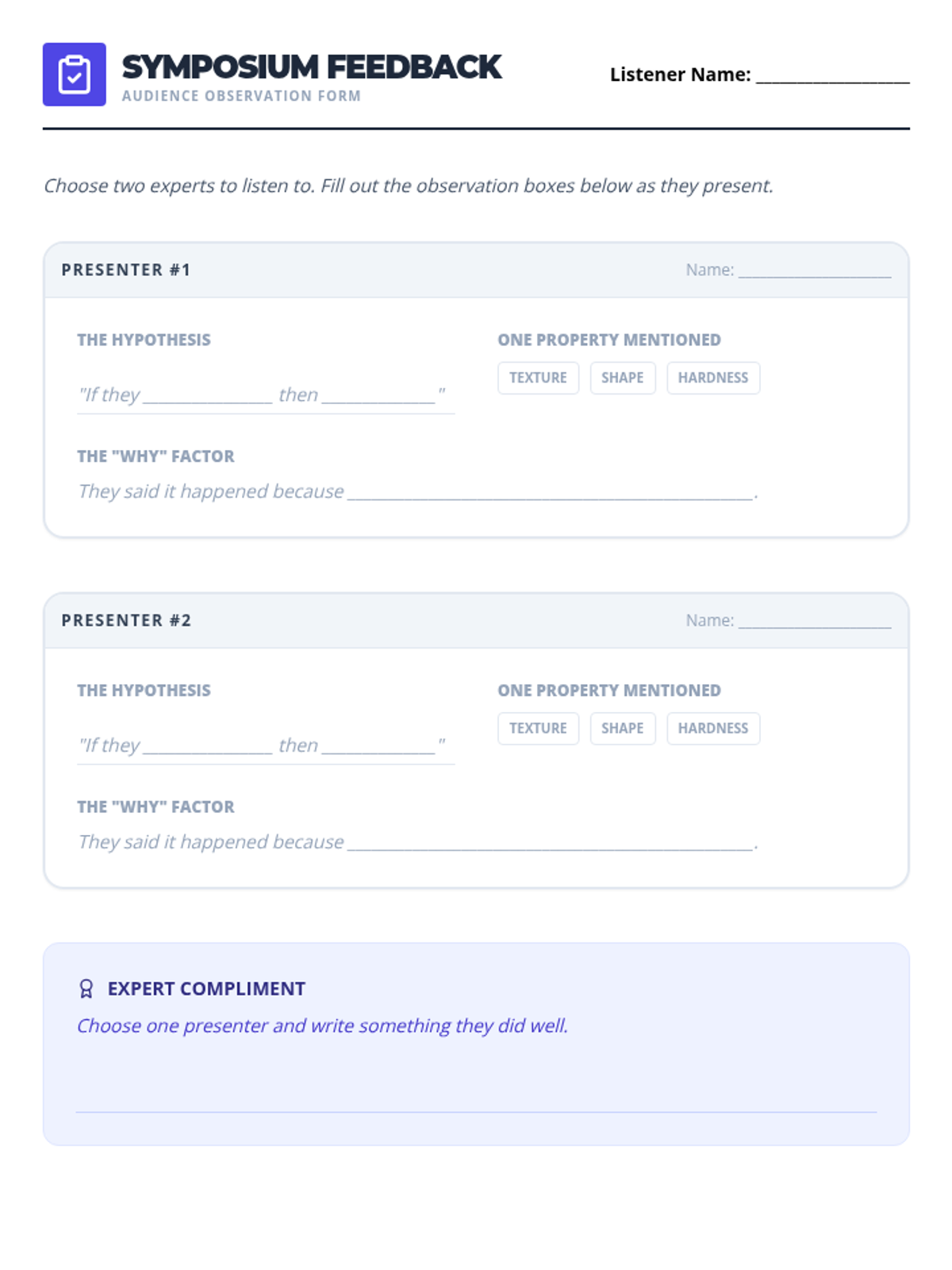
In this culminating lesson, students verbally present their results using a formal academic tone and specific science vocabulary.
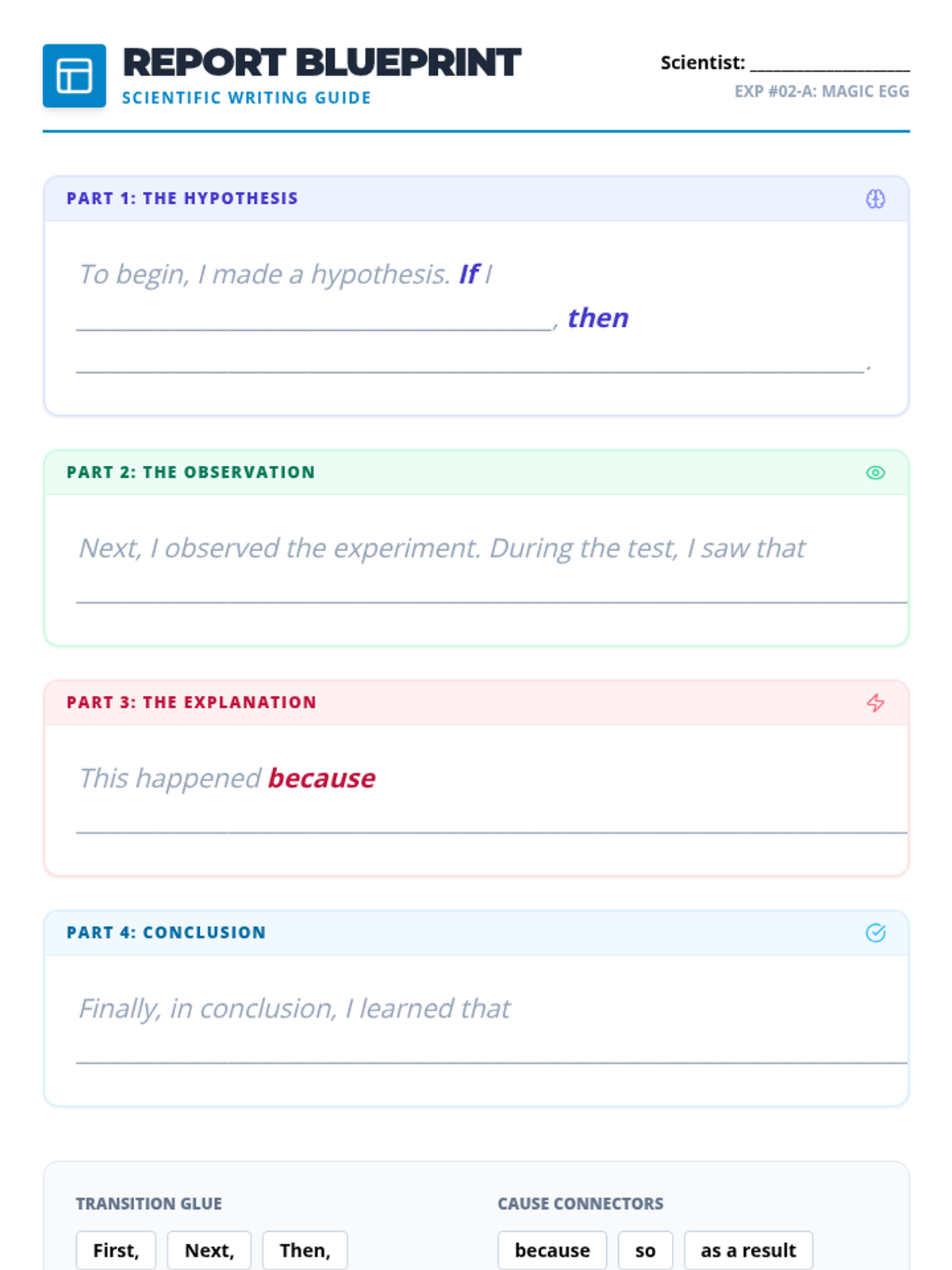
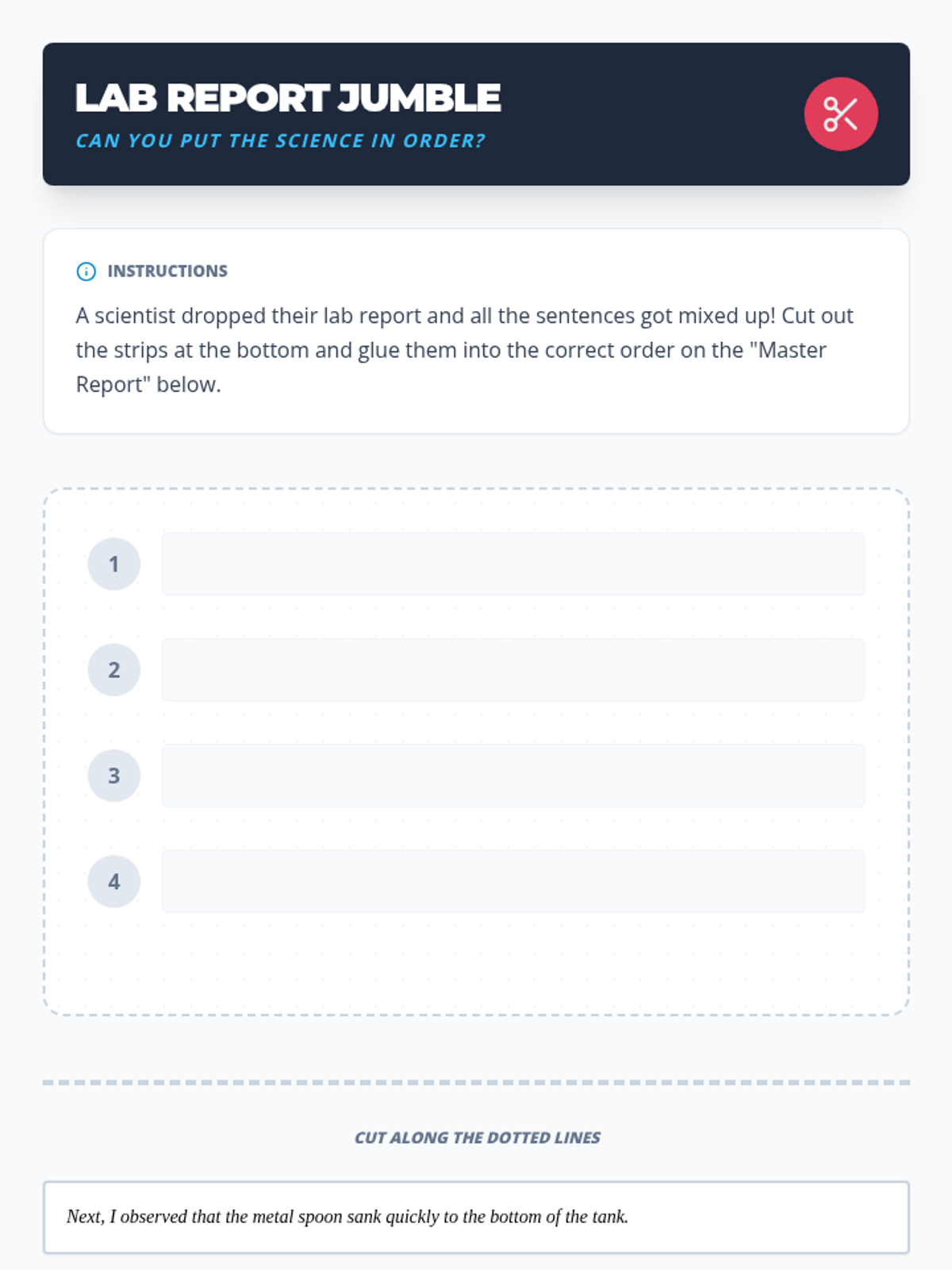
Students synthesize their hypotheses and observations into a cohesive paragraph using graphic organizers and transition words.
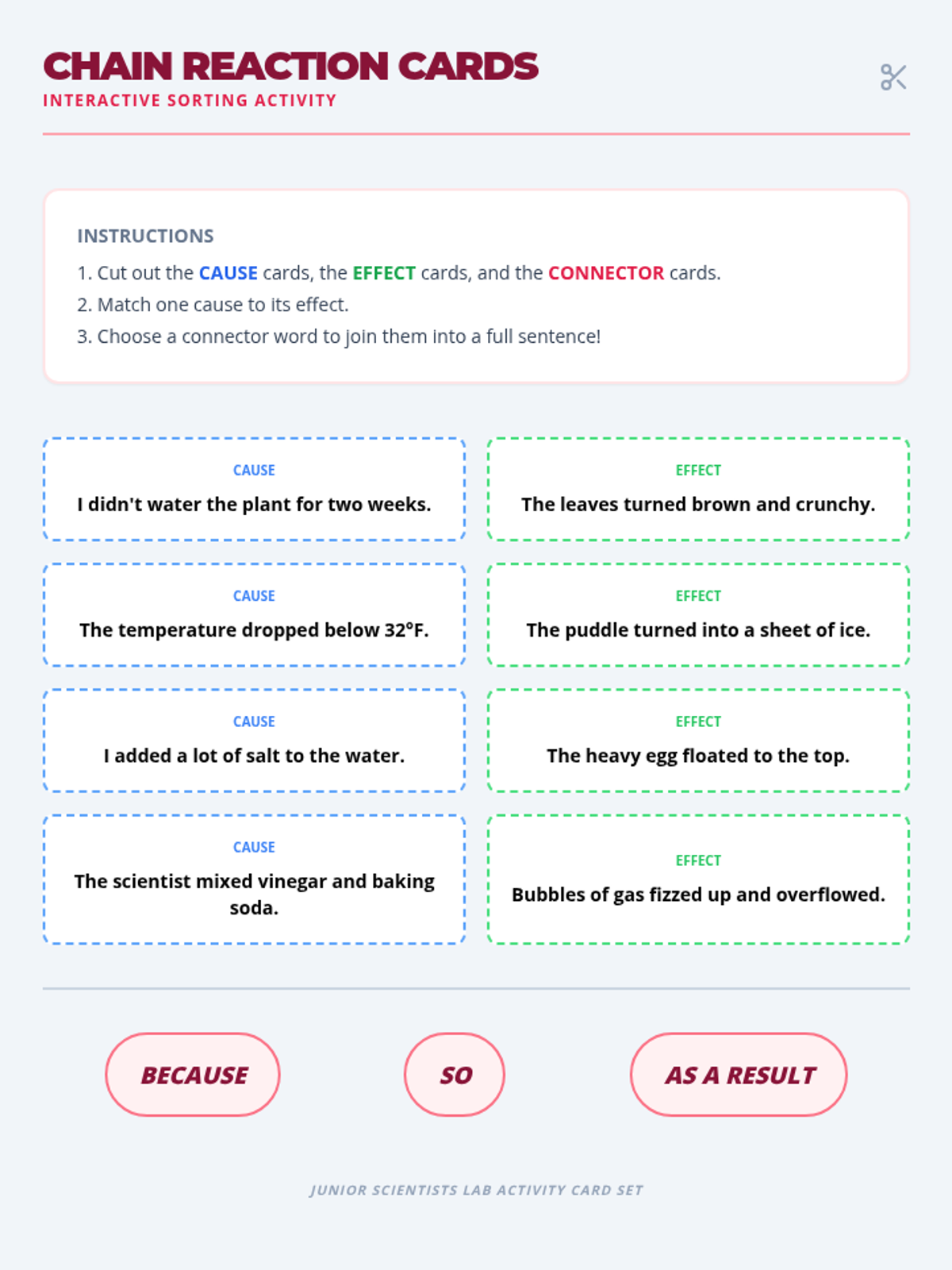
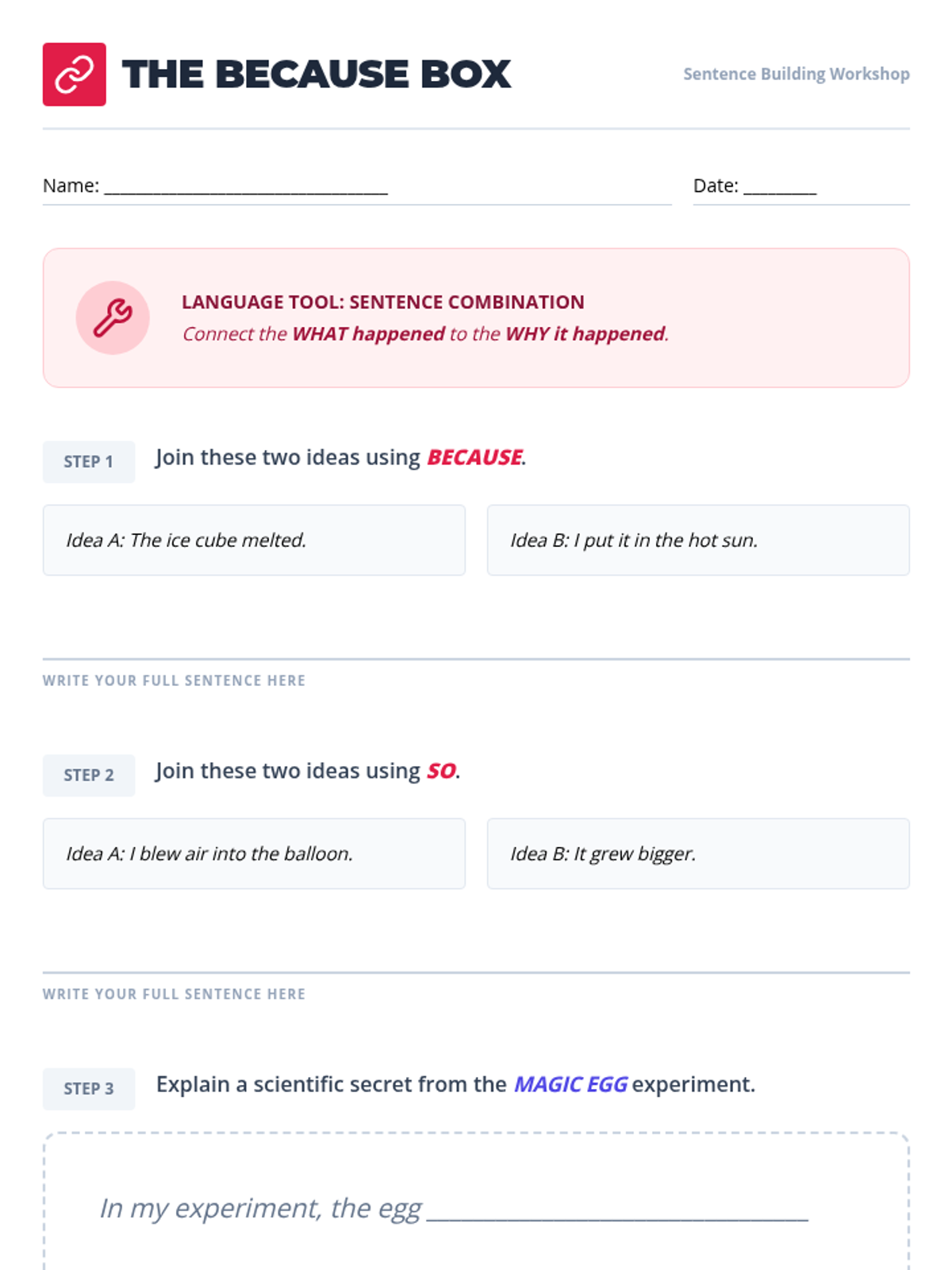
Students conduct experiments and use causal conjunctions (because, so, as a result) to link their observations to scientific reasons.