Essential grammar structures, high-frequency vocabulary, and foundational literacy skills. Equips learners with basic speaking and listening abilities for everyday interactions and introductory text comprehension.
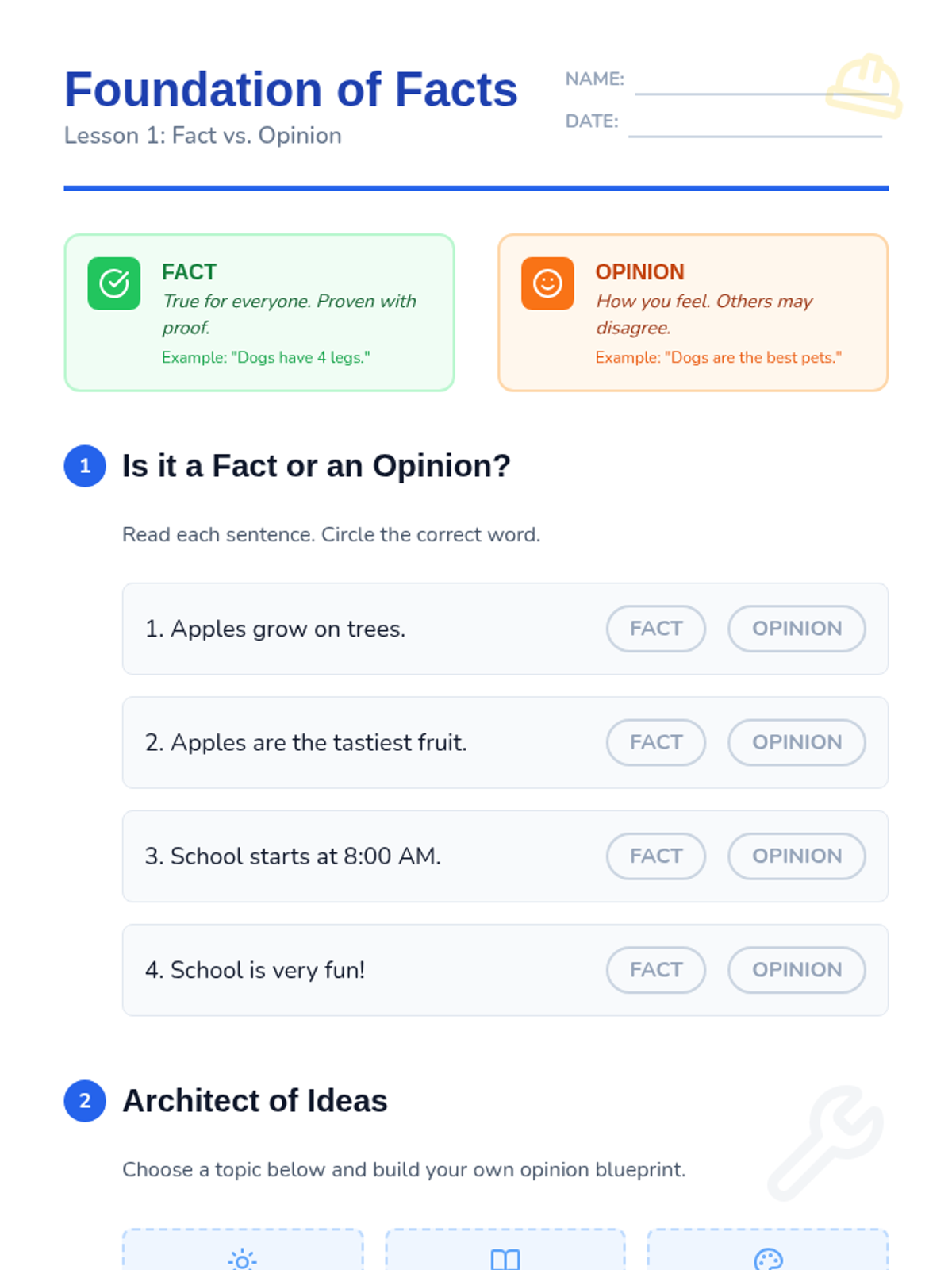
A 2nd-grade ESL sequence focused on academic discourse, teaching students to state opinions, cite evidence, and engage in respectful debate using structured sentence frames.
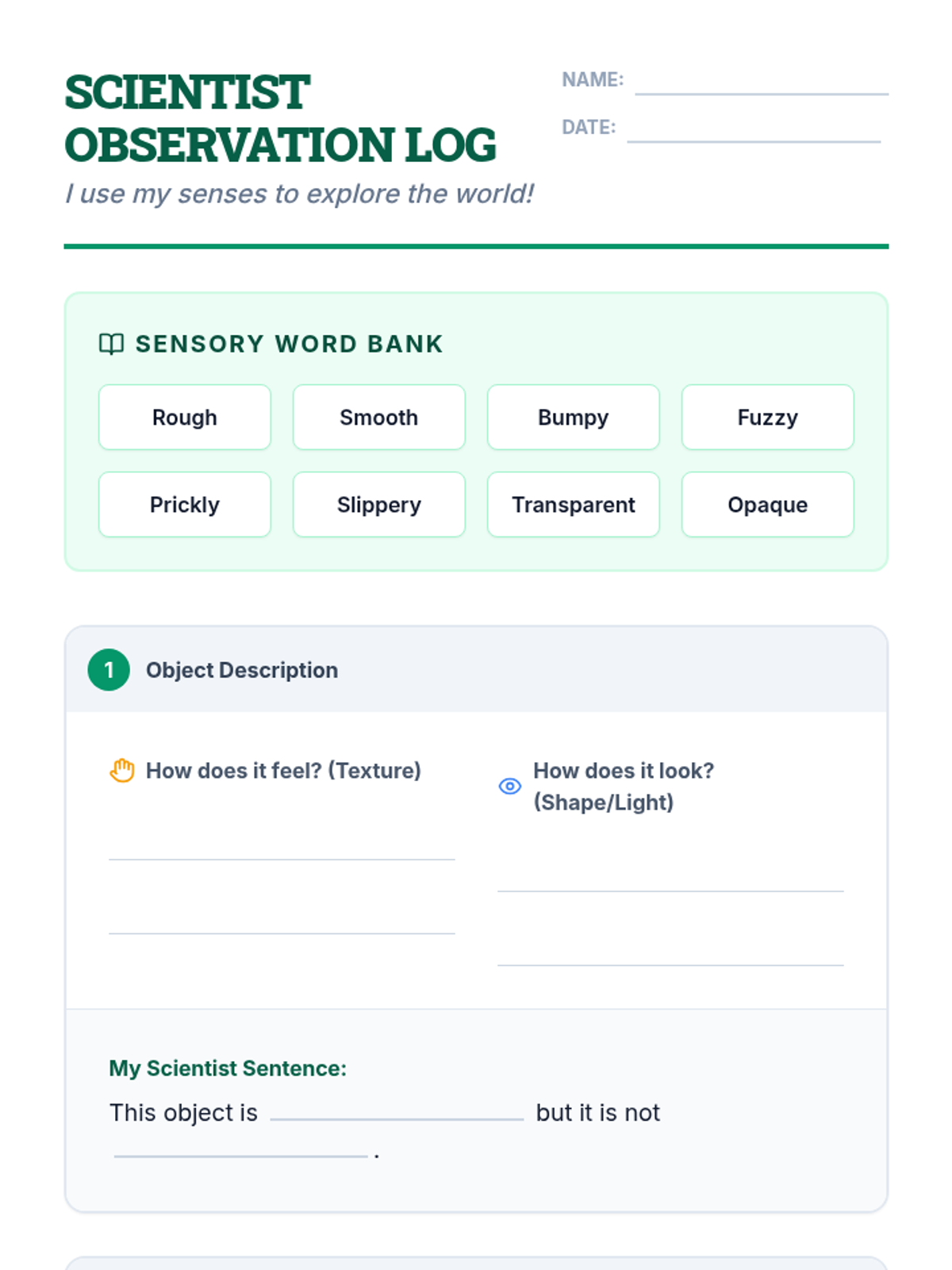
A 5-lesson sequence for 2nd Grade ESL students focusing on the precise academic language needed for scientific observation, classification, and description. Students move from basic sensory adjectives to sophisticated properties of materials and comparative analysis.
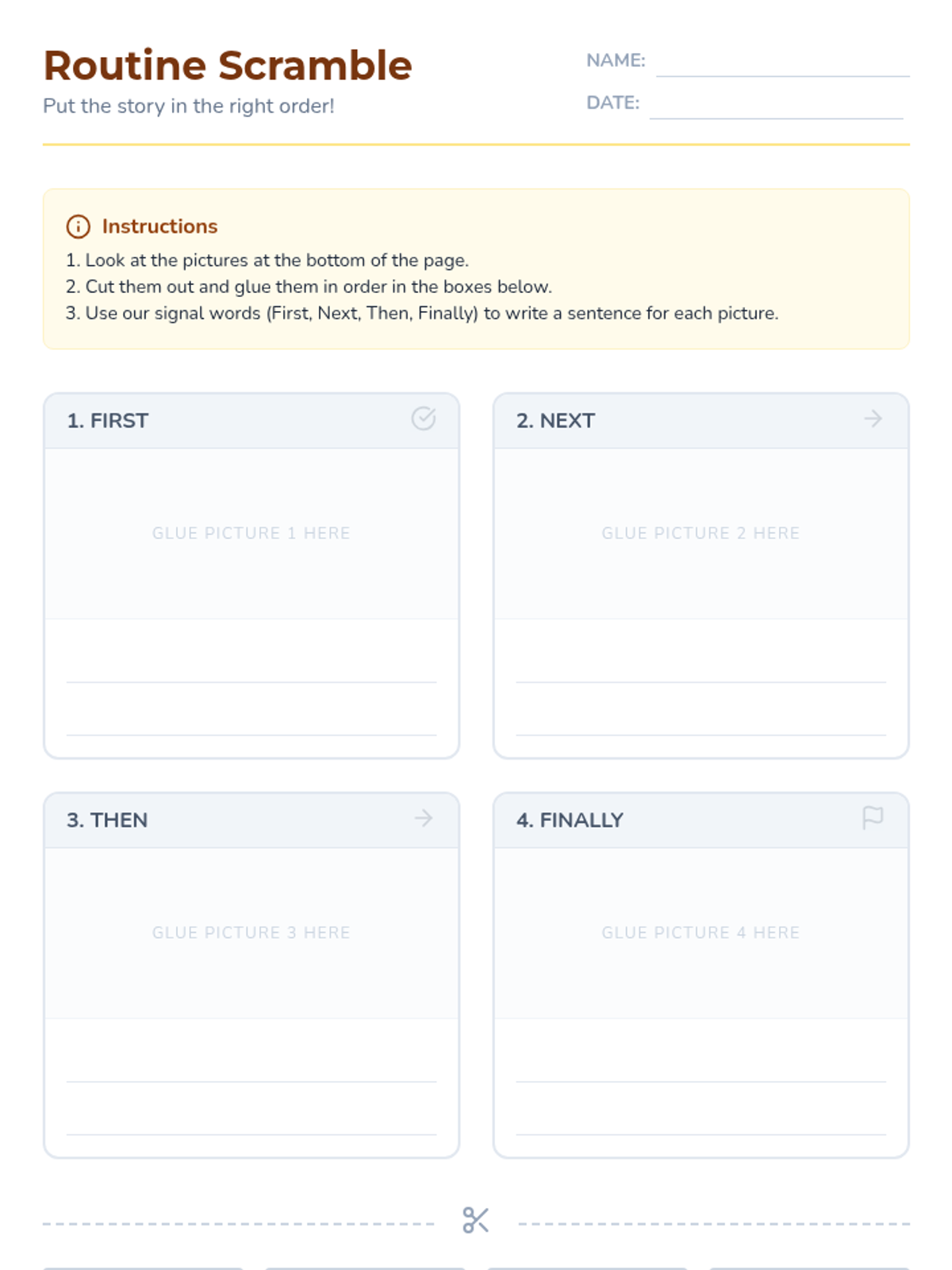
A 2nd-grade ESL sequence focused on transition words, past-tense verbs, and comparative language to help students sequence events and describe historical changes. Students move from daily routines to community history and final narrative projects.
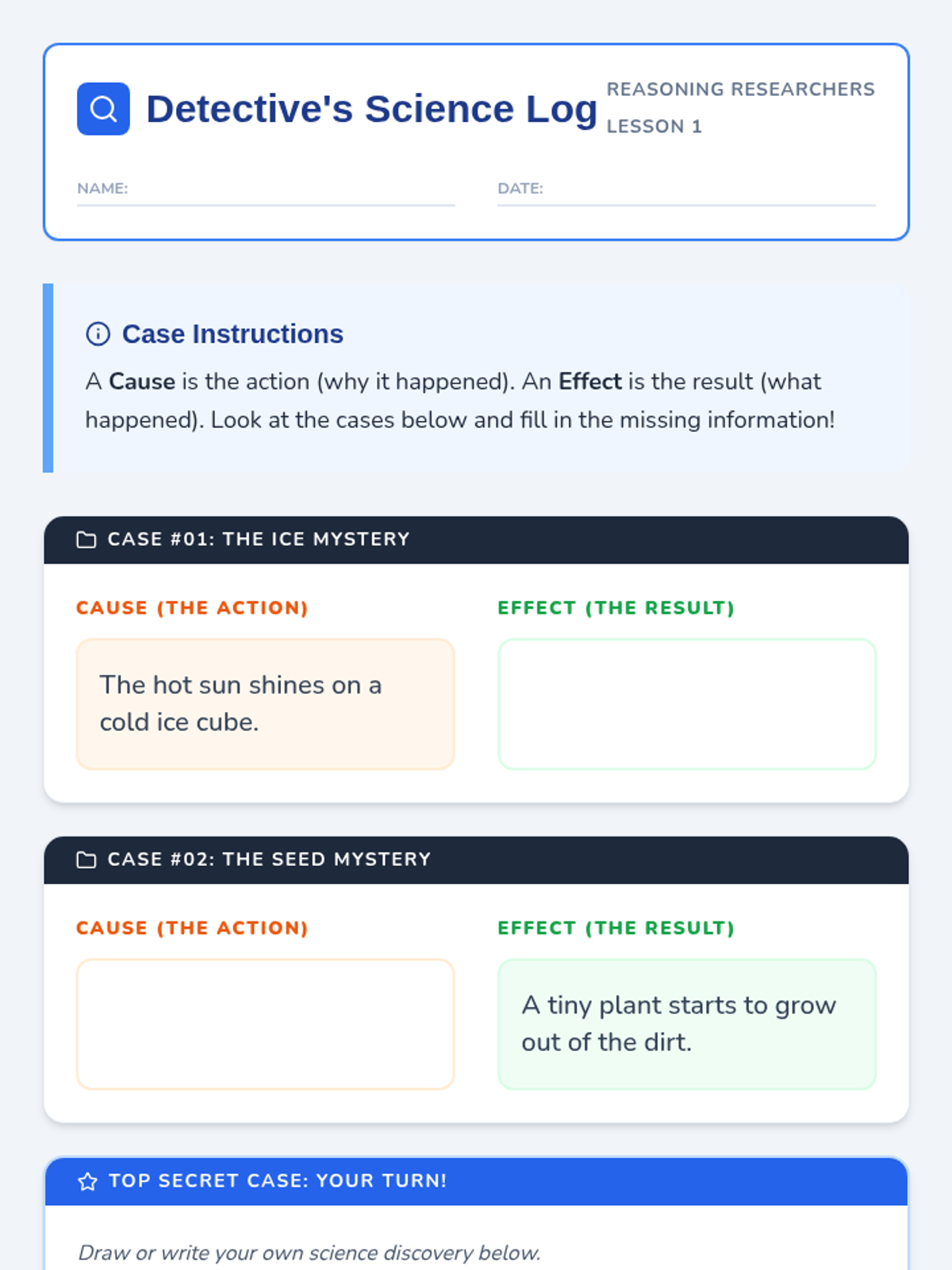
A 5-lesson sequence for 2nd Grade ESL students to master academic language for expressing cause-and-effect relationships in science through hands-on inquiry and scaffolded writing.
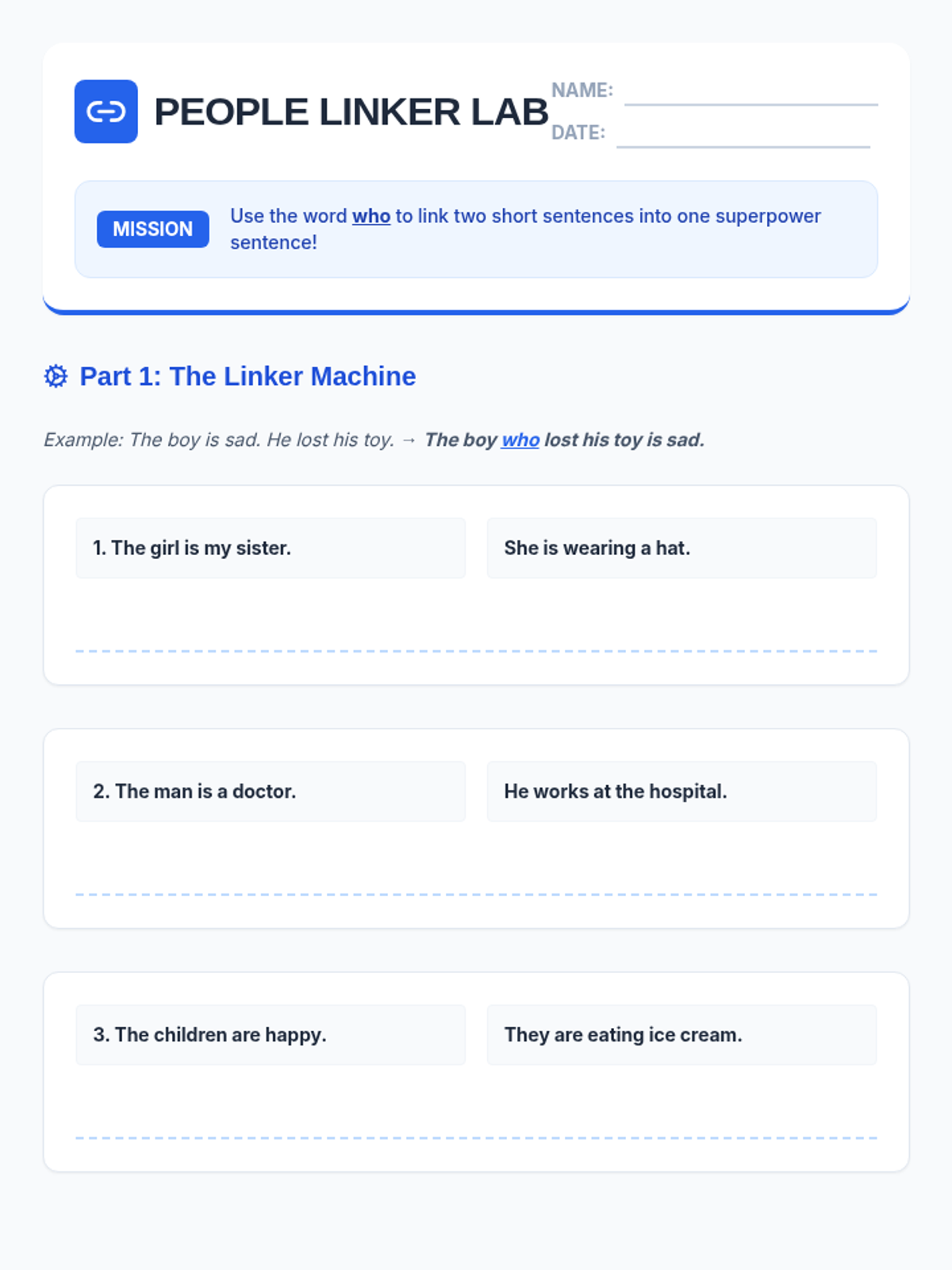
This sequence strengthens sentence complexity by introducing Relative Clauses with 'who', 'which', and 'that'. Students move beyond simple sentences to compound descriptions that identify specific people or objects through games and creative writing.
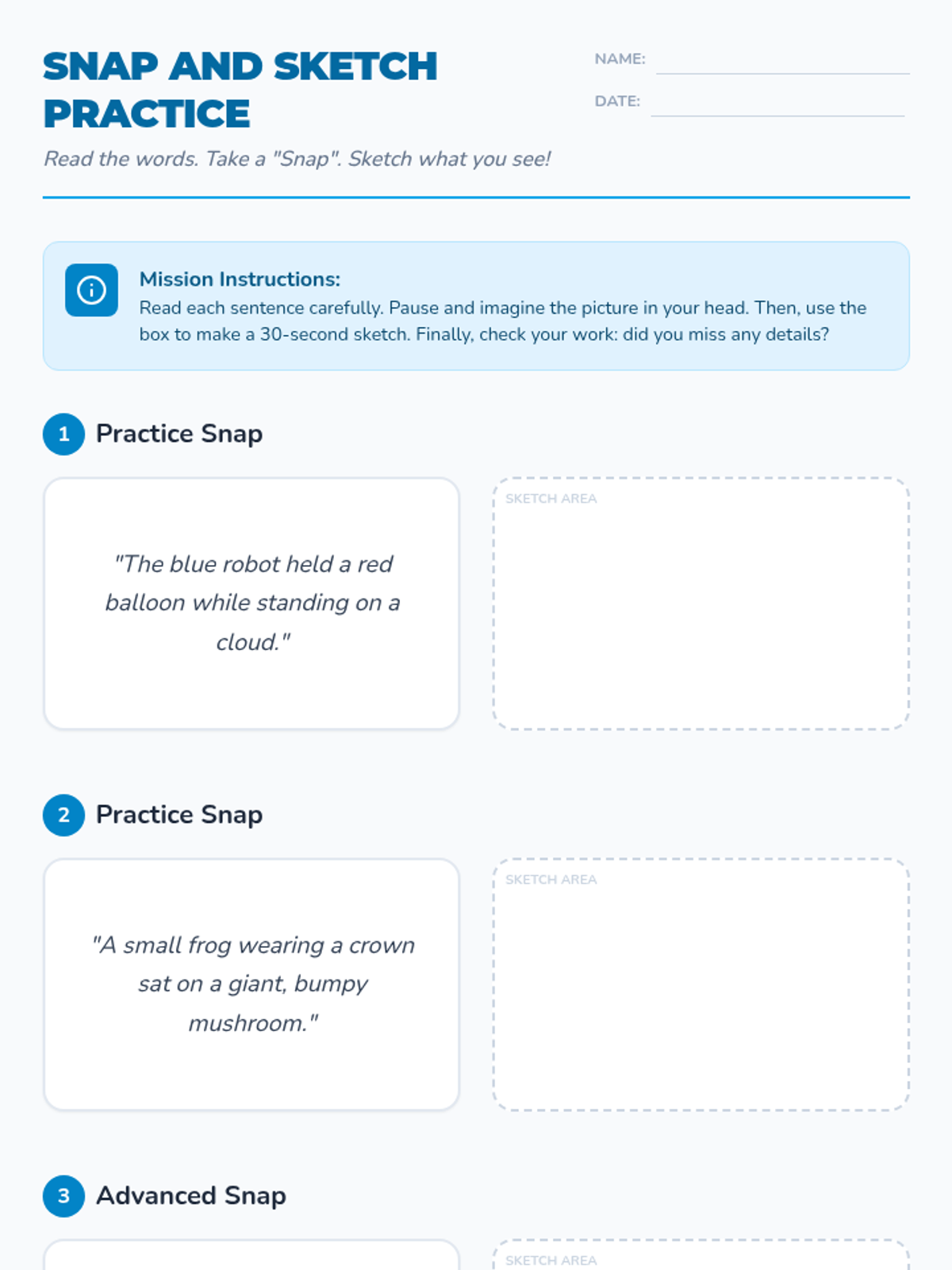
This sequence utilizes sketching as a concrete scaffold for students who struggle to hold images in their working memory. Known as 'Sketch-to-Stretch,' this approach allows students to externalize their thinking immediately after reading small chunks of text. By drawing what they read, students can self-monitor for understanding; if they cannot draw it, they likely did not comprehend it.
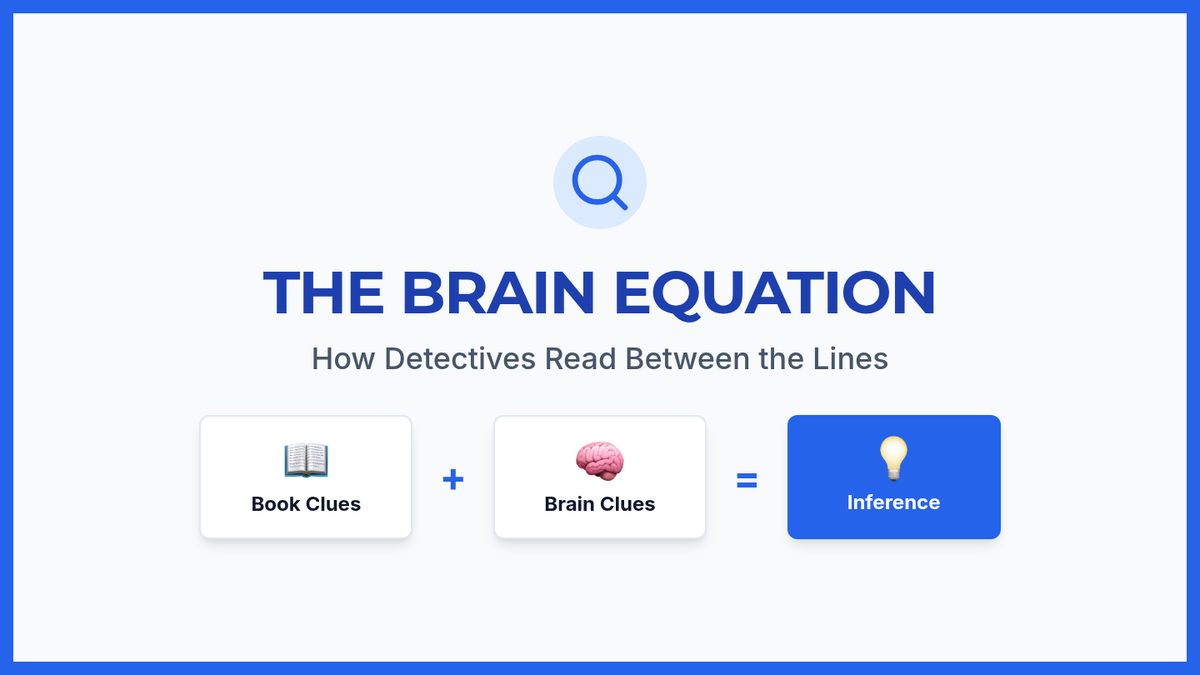
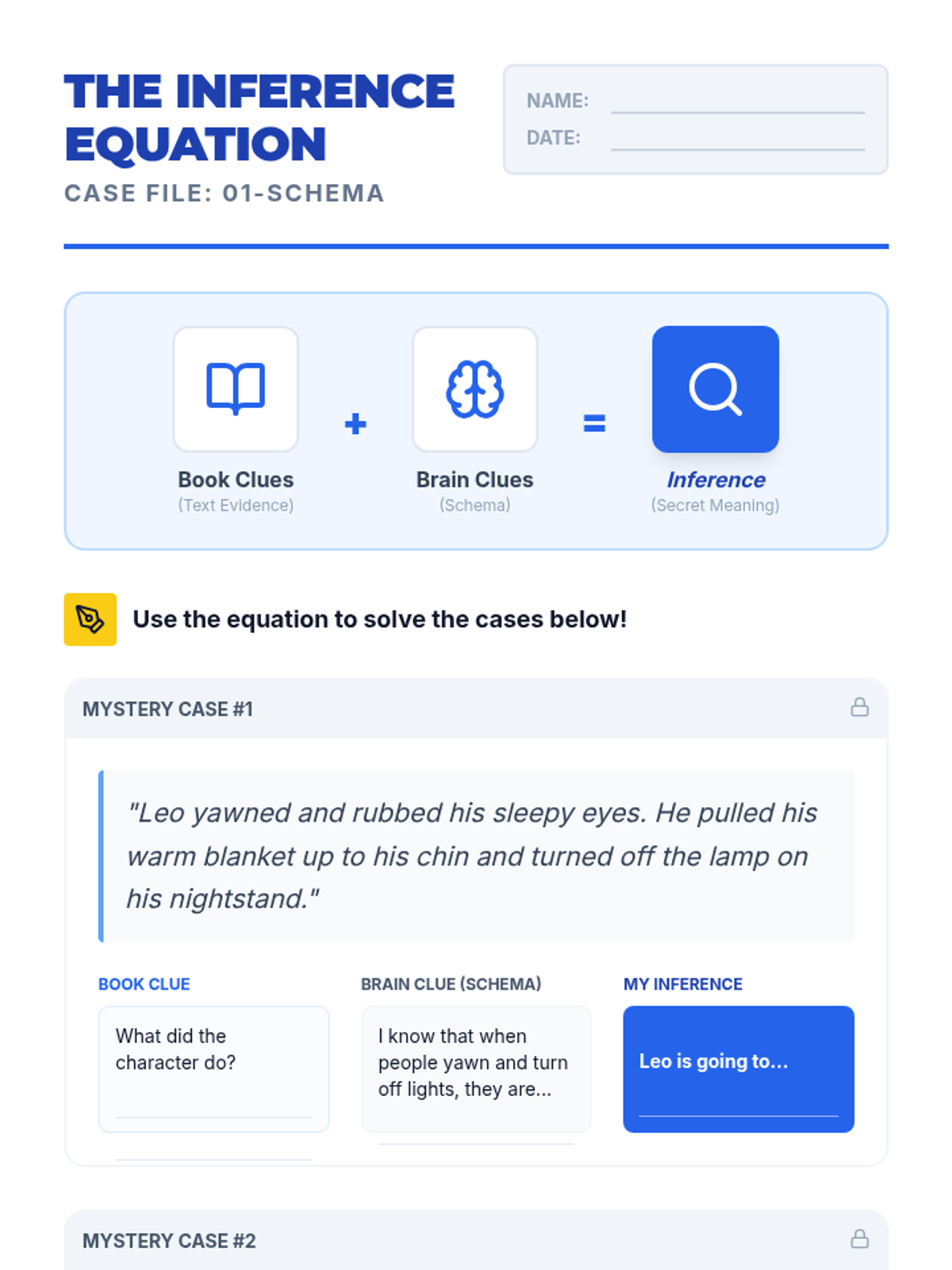
A 2nd-grade sequence designed for students needing academic support to master making inferences. It utilizes the 'Inference Equation' (Text Clues + Schema = Inference) through a detective-themed investigation structure, breaking down complex cognitive processes into manageable steps.
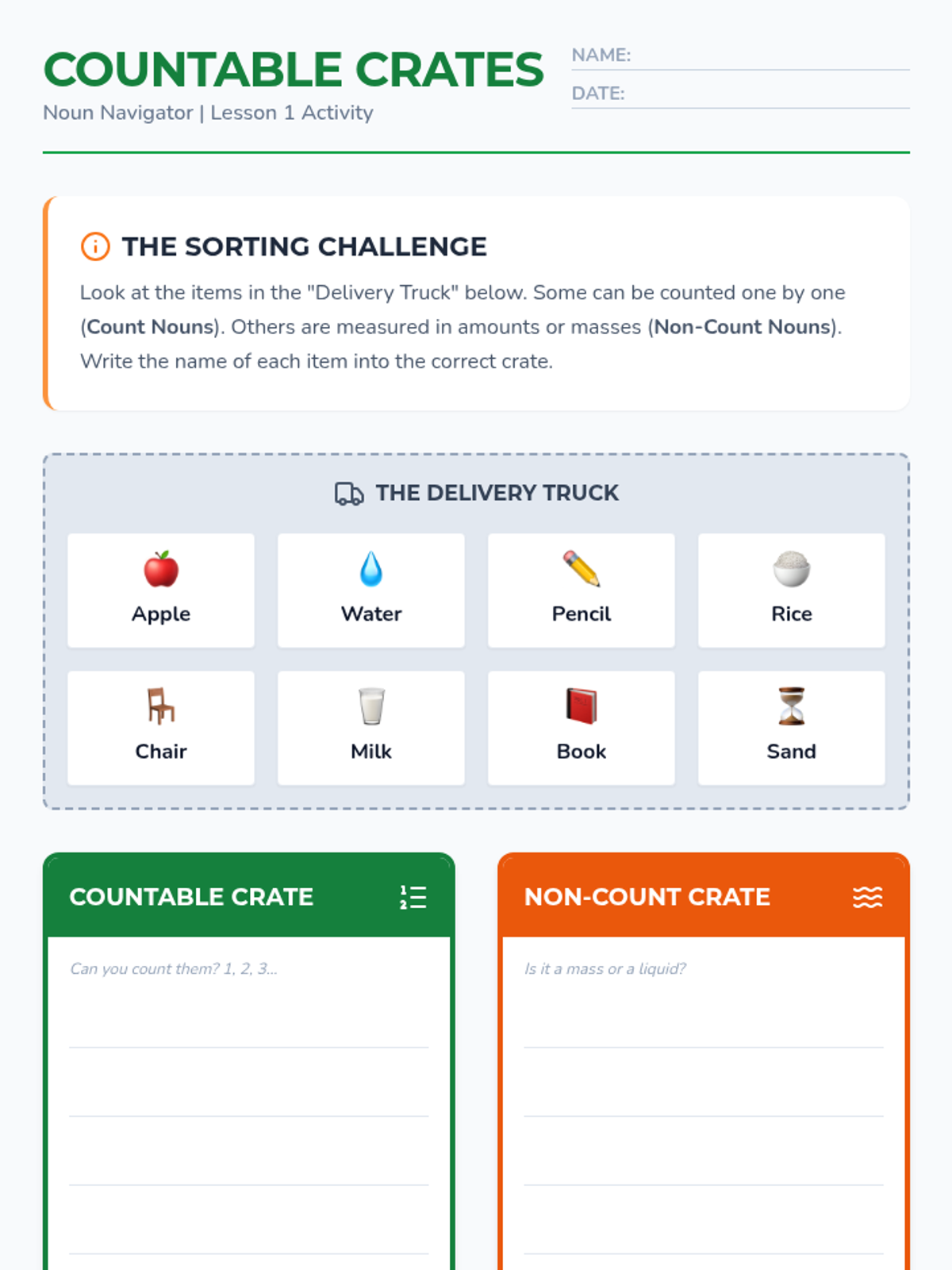
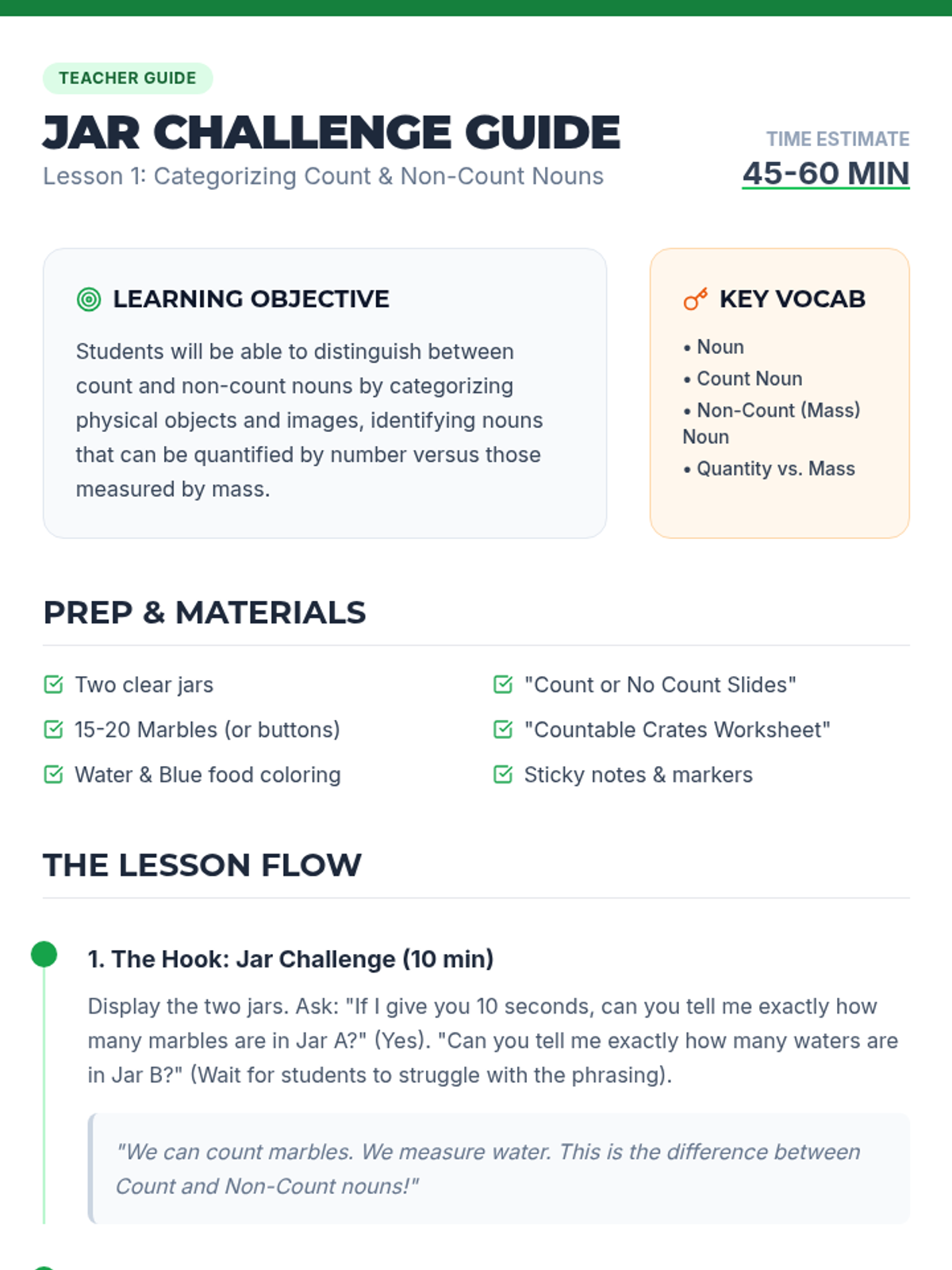
This sequence explores the relationship between articles and noun countability. Students distinguish between count and non-count nouns and learn the rules for using 'a', 'an', 'some', or no article, culminating in a market simulation.
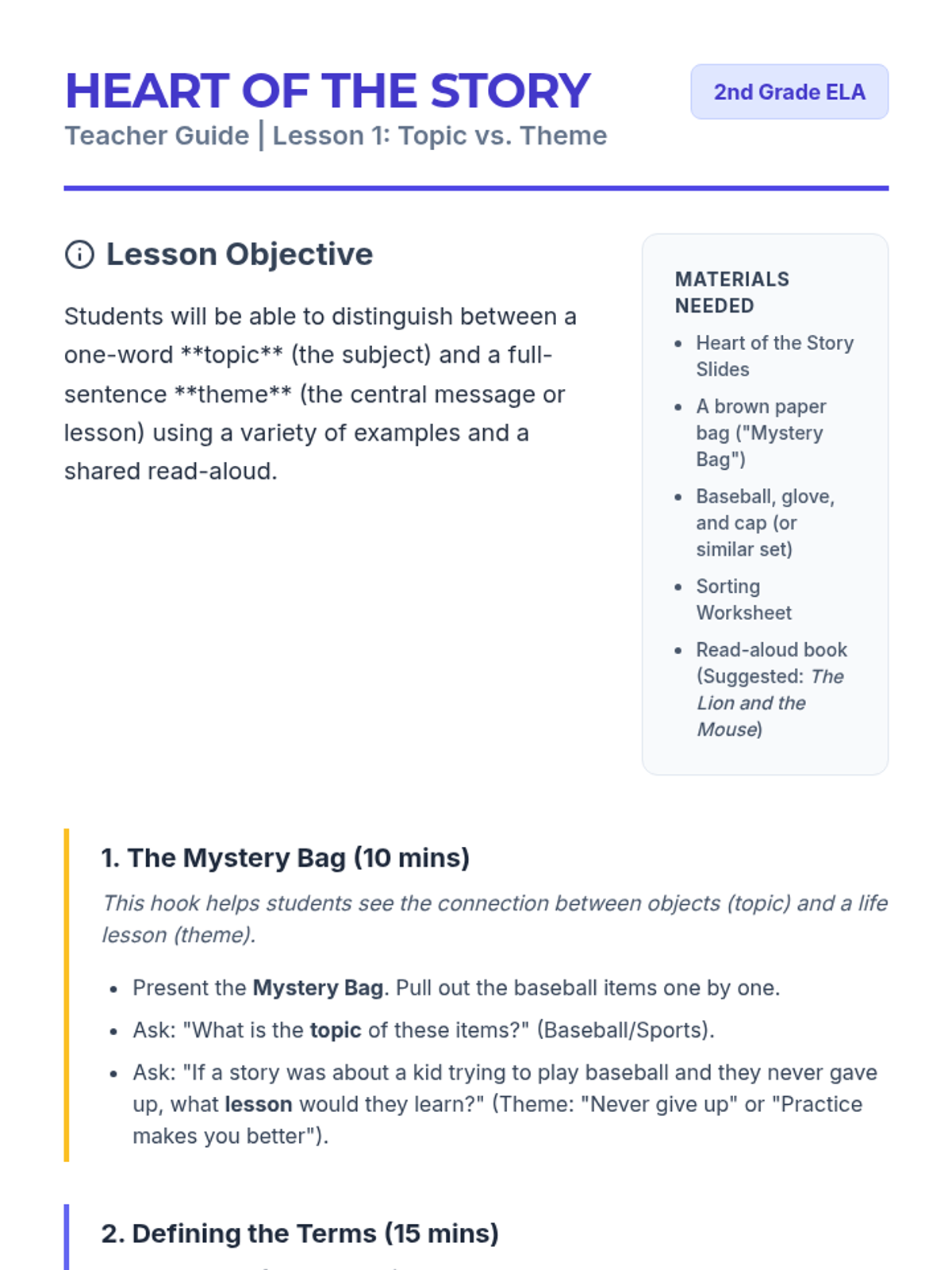
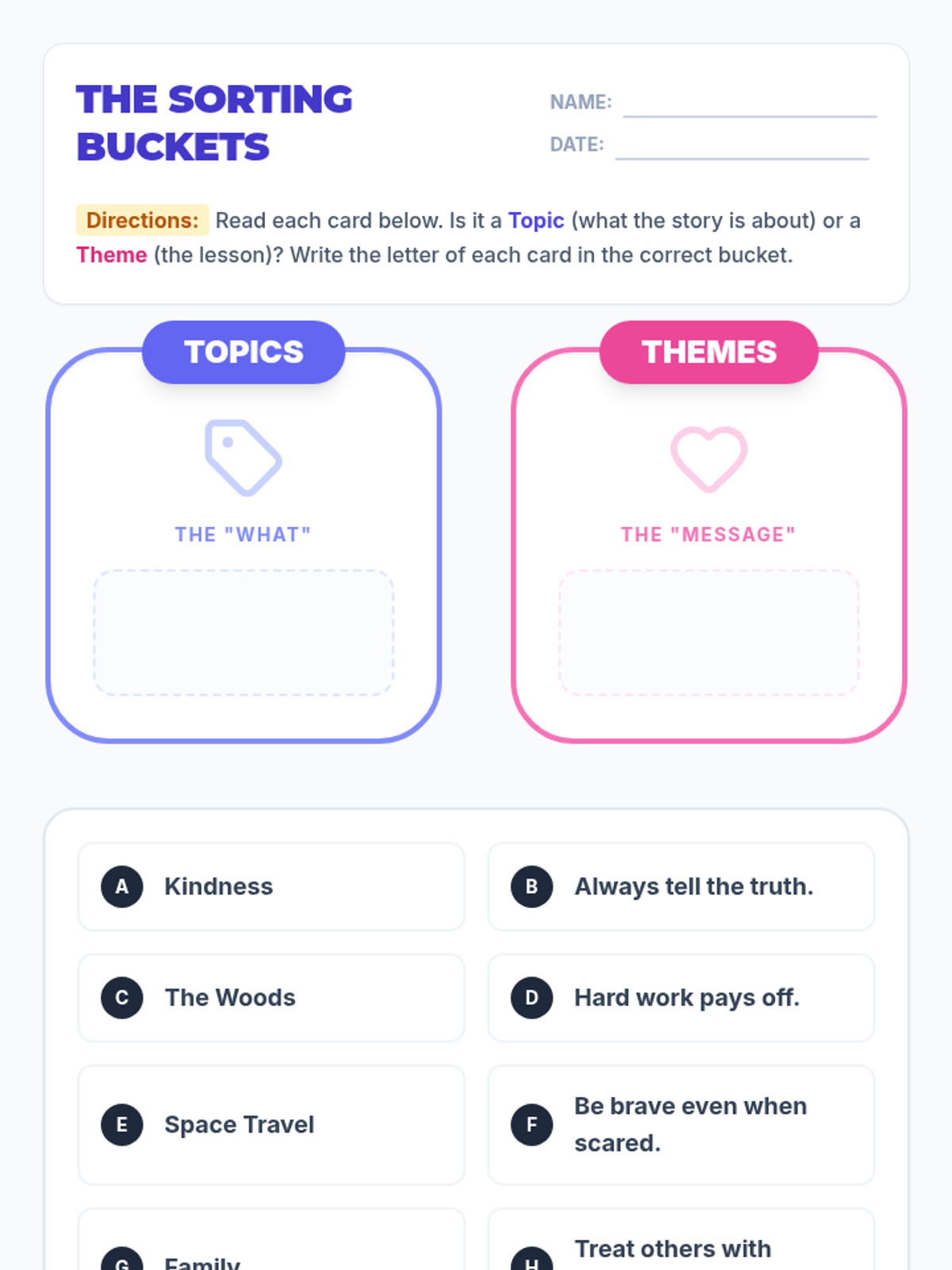
A 5-lesson sequence for 2nd grade students focused on identifying central messages and themes in traditional literature. Students move from distinguishing between a topic and a theme to citing text evidence and comparing themes across cultures.
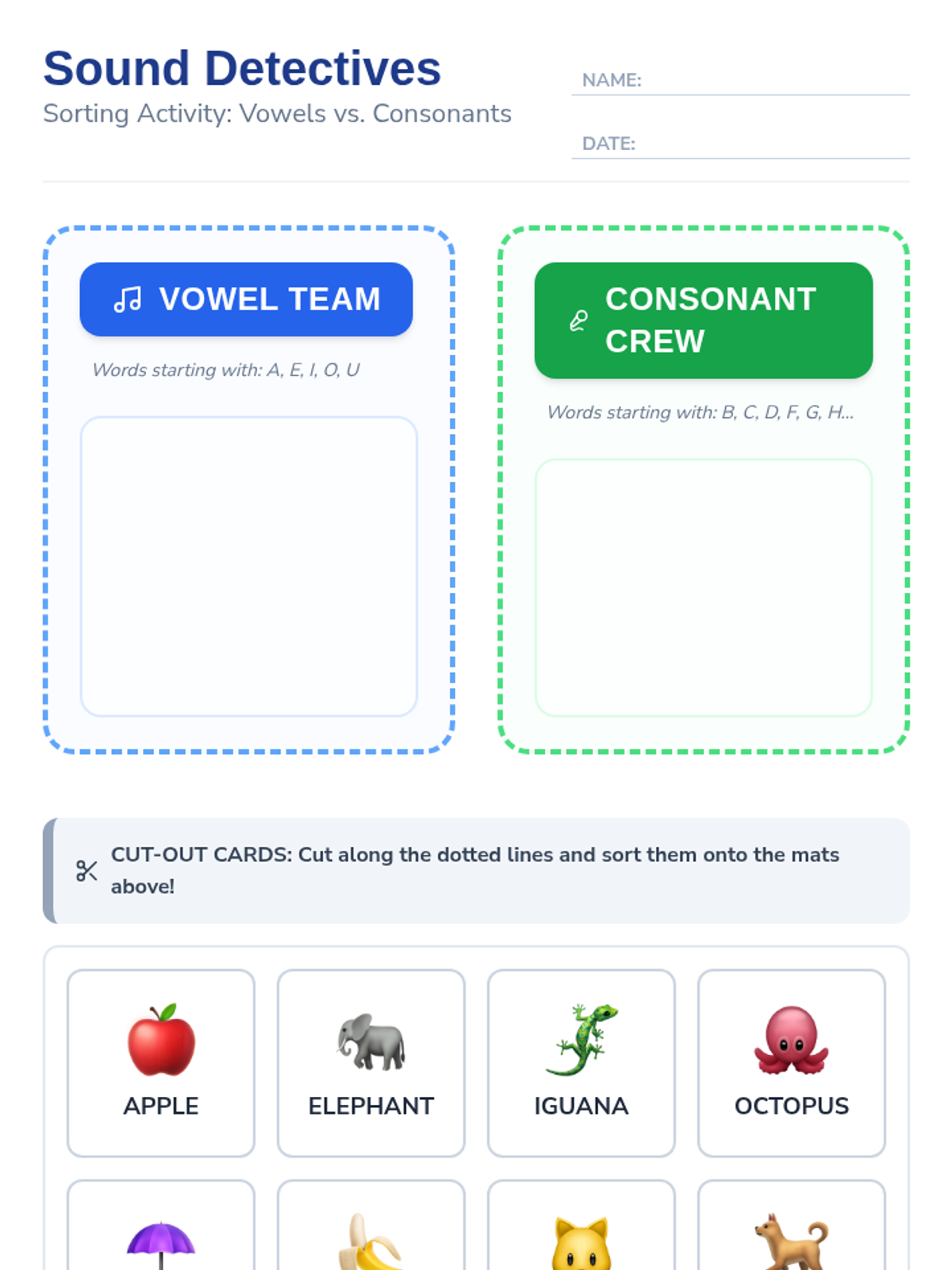
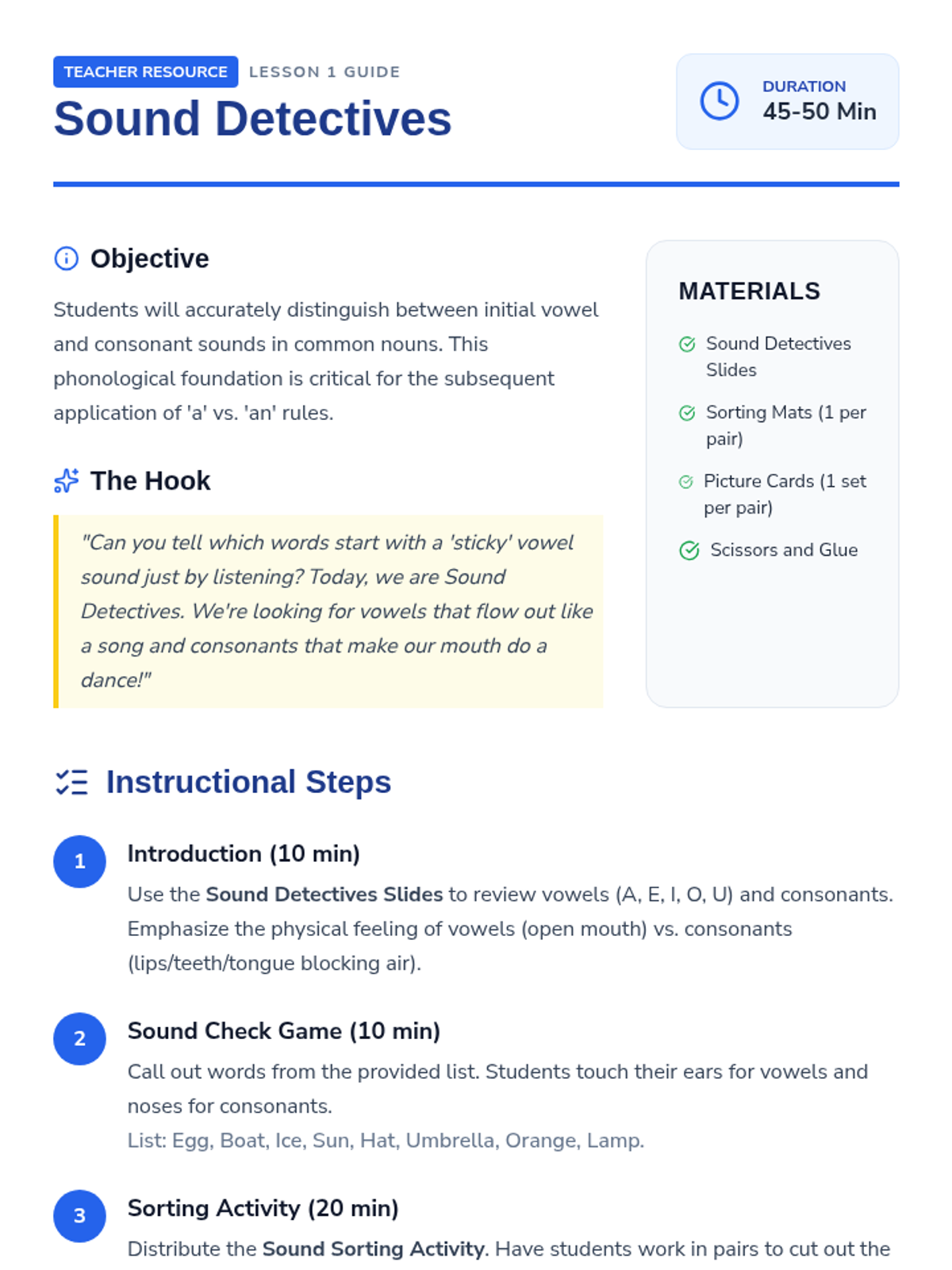
A comprehensive 2nd Grade sequence focusing on the phonetic rules of indefinite articles 'a' and 'an'. Students progress from phonemic awareness of initial sounds to applying article rules in complex sentences with adjectives.
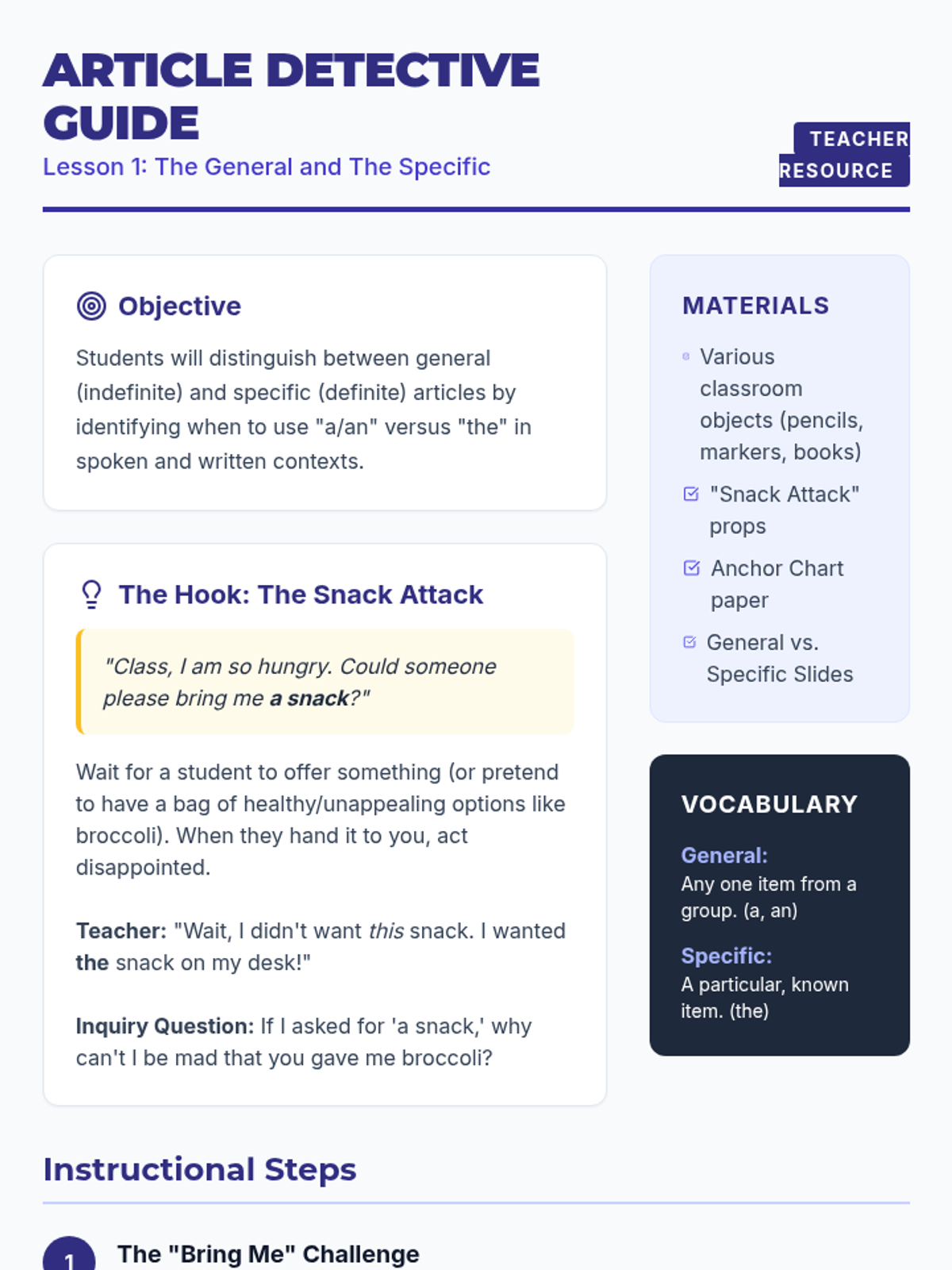
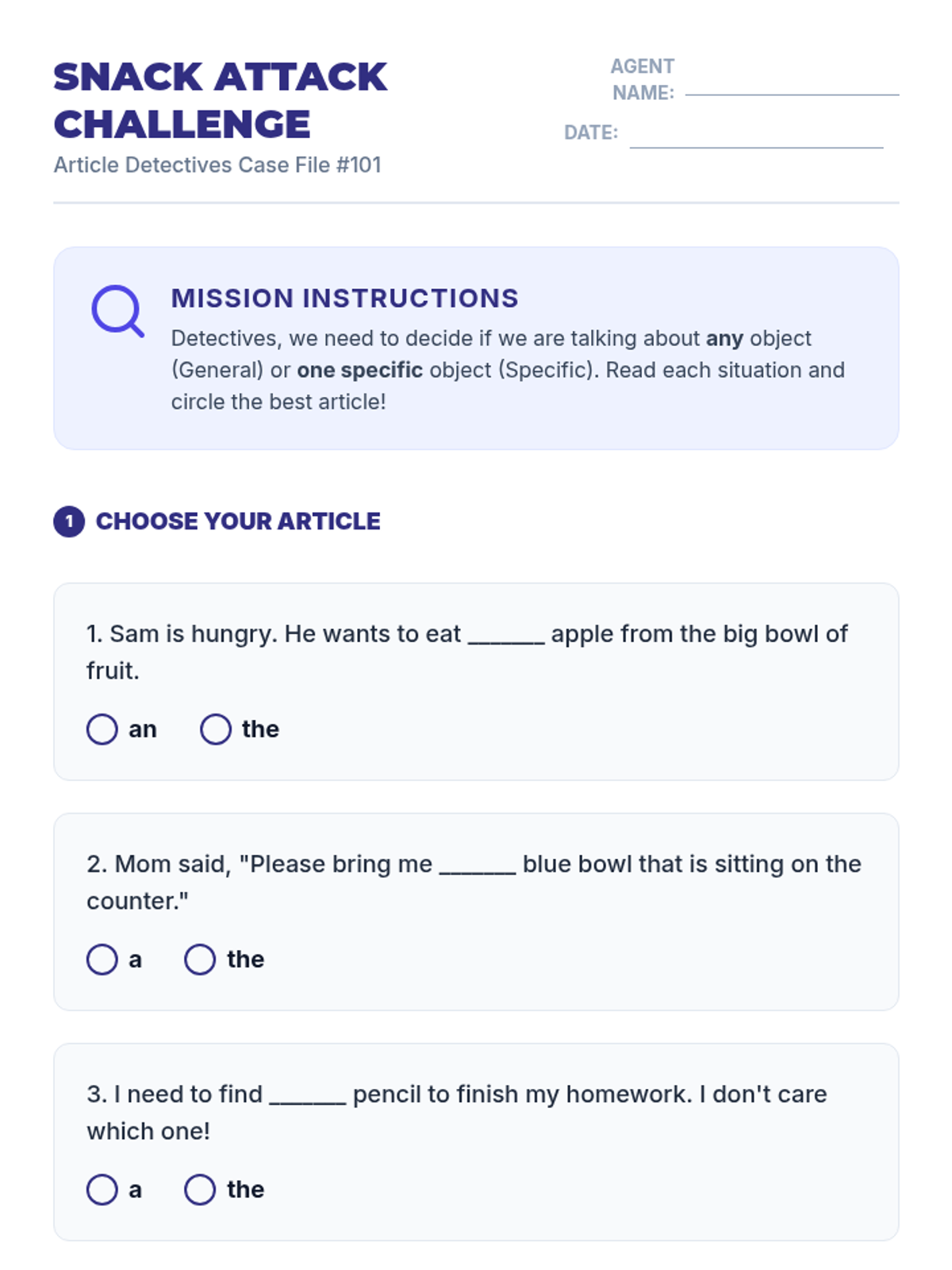
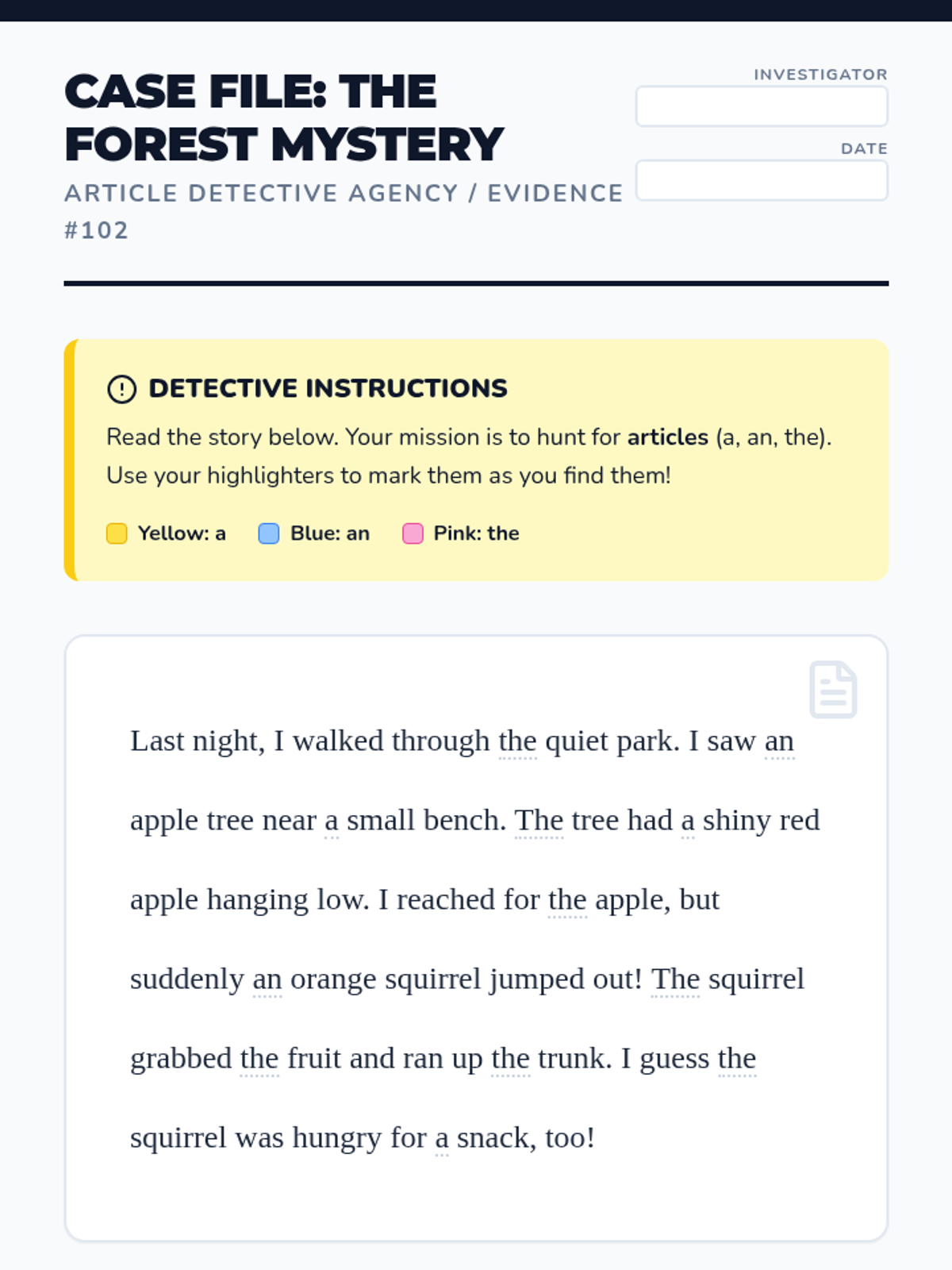
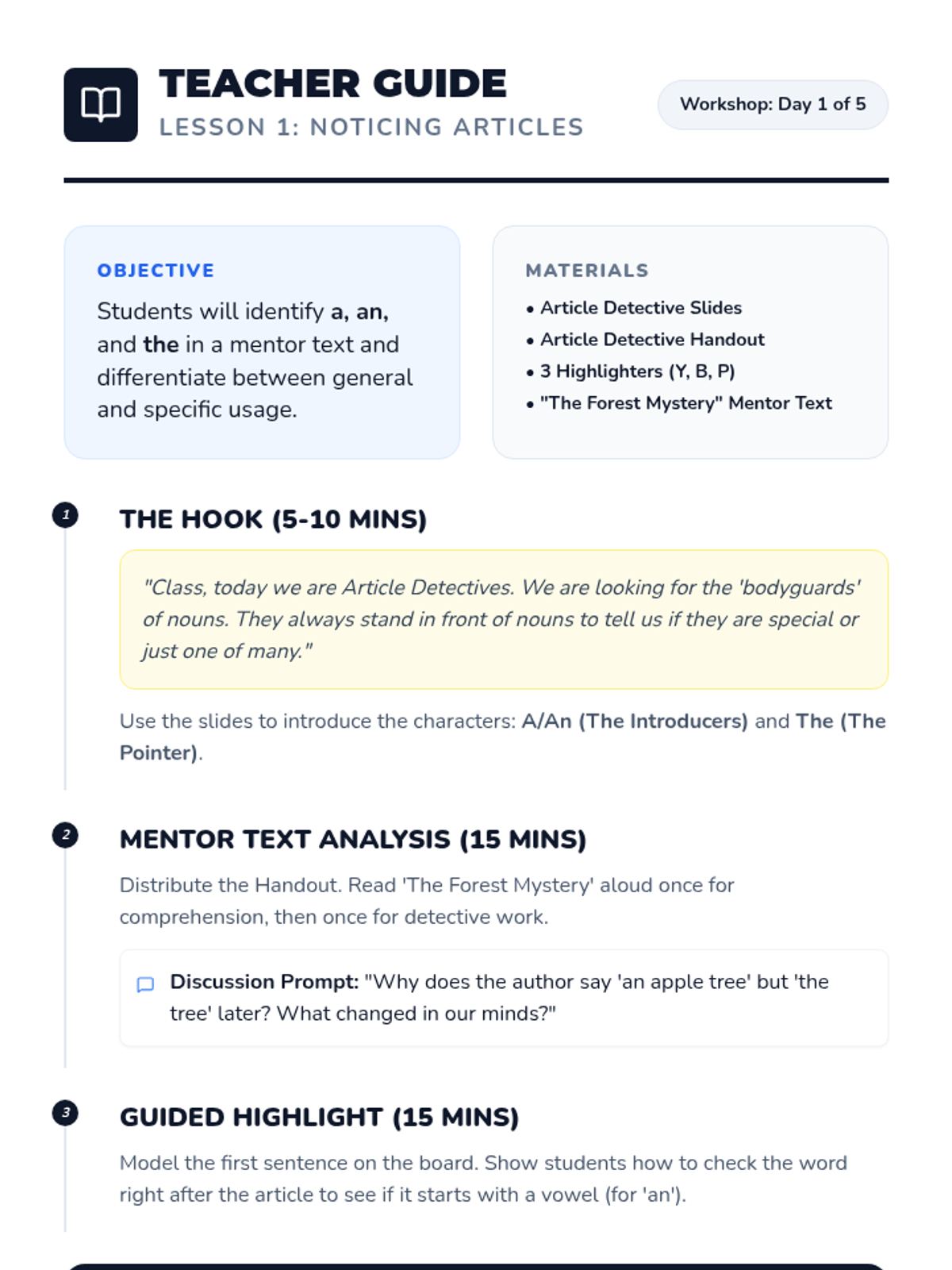
A 2nd-grade grammar sequence where students become 'Article Detectives' to master the difference between definite and indefinite articles. Through inquiry, simulations, and map-reading, students learn how 'a', 'an', and 'the' clarify whether we are discussing a general or specific object.
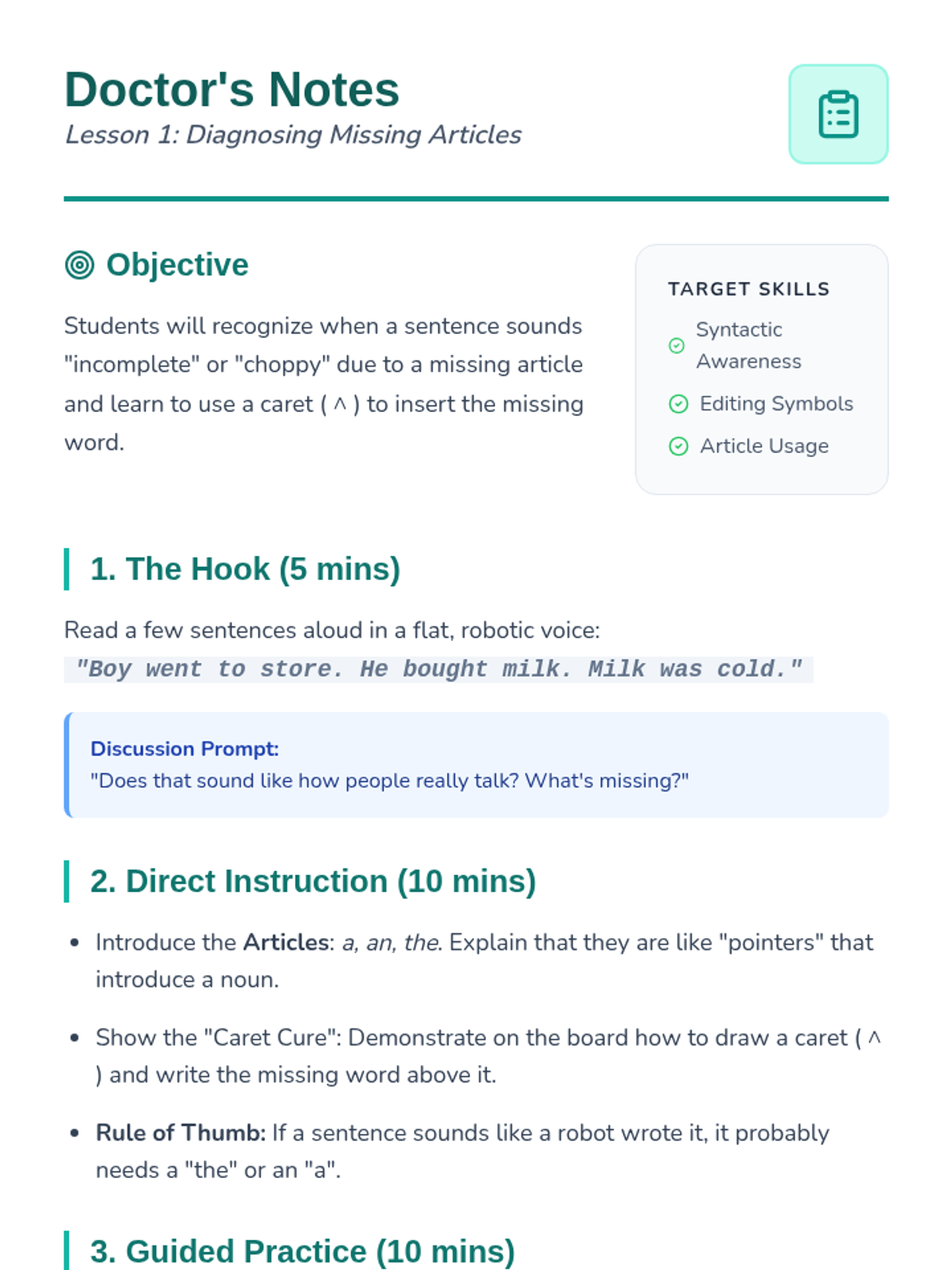
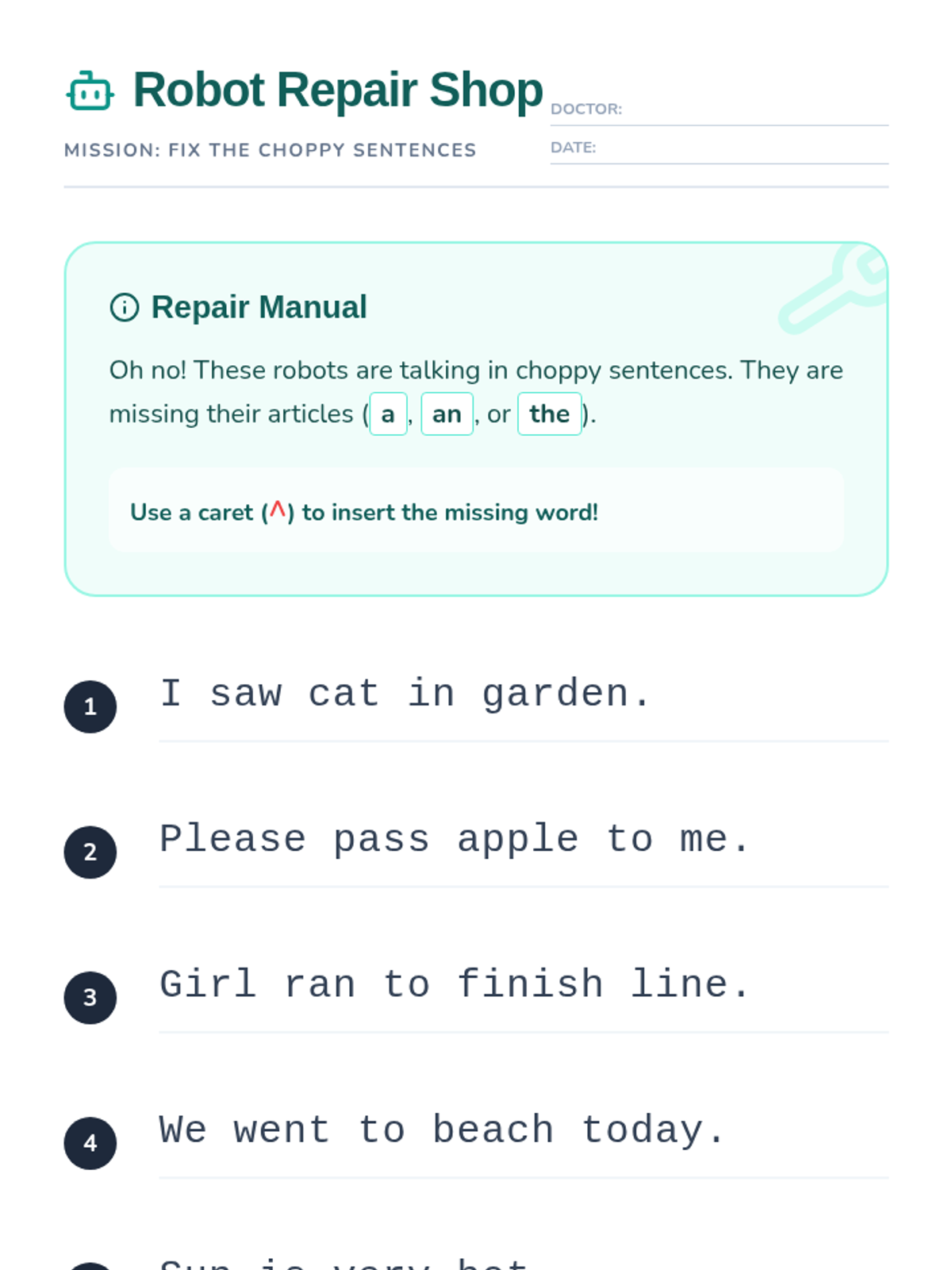
A 2nd-grade mastery-based sequence where students act as 'Grammar Doctors' to diagnose and treat article errors (a, an, the). Students progress from fixing missing articles to full paragraph surgery and creating their own reference guides.
A 2nd-grade Writer's Workshop sequence where students learn to use articles (a, an, the) through the creation and sharing of descriptive 'Who Am I?' riddles. Students move from analyzing mentor texts to drafting, peer editing, and publishing their work with a focus on grammar accuracy.
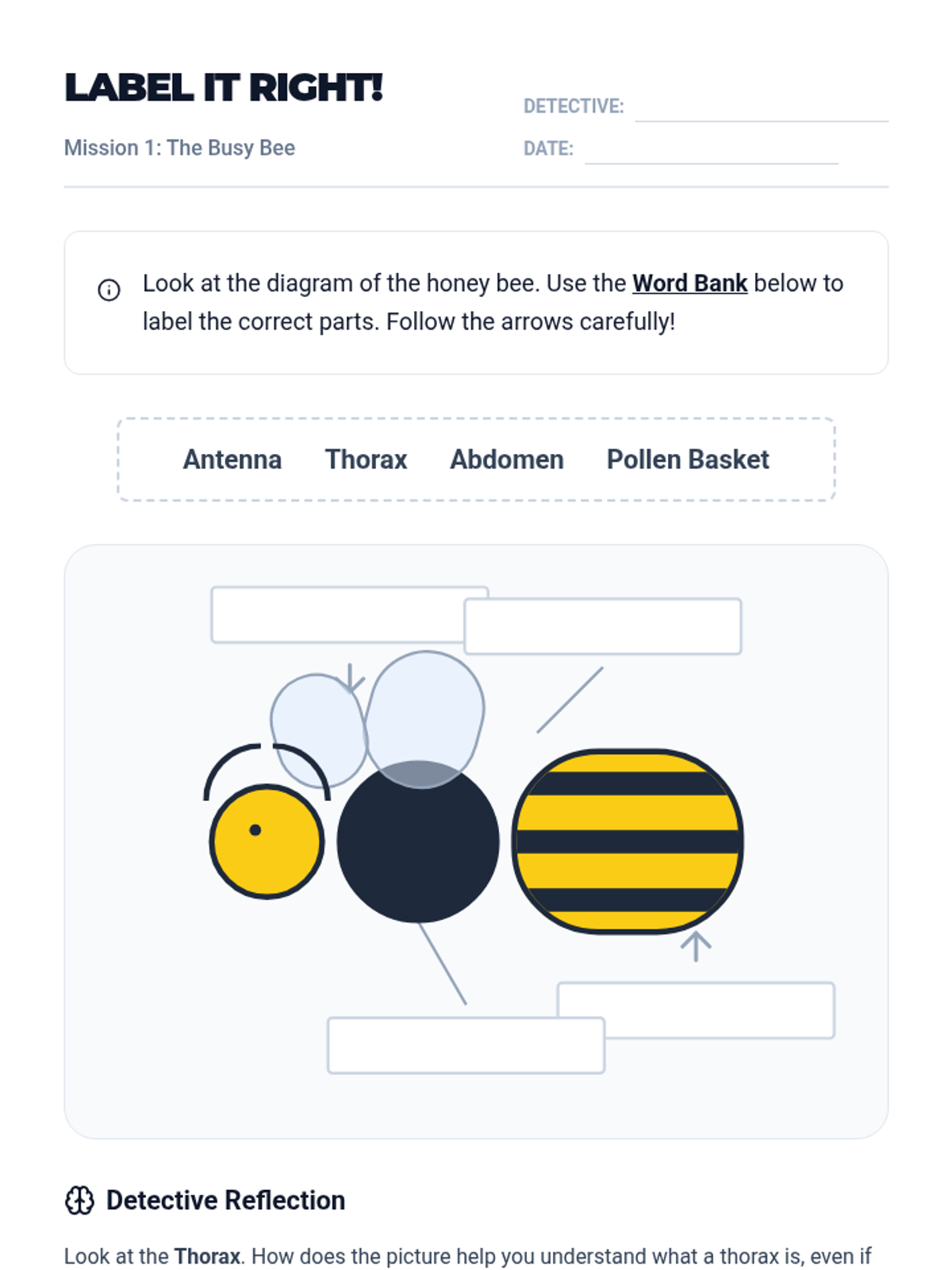
This sequence teaches 2nd-grade students how to use visual and textual context clues to decipher unfamiliar nonfiction vocabulary. Students will explore diagrams, infographics, and sentence-level clues to build academic vocabulary and visual literacy.
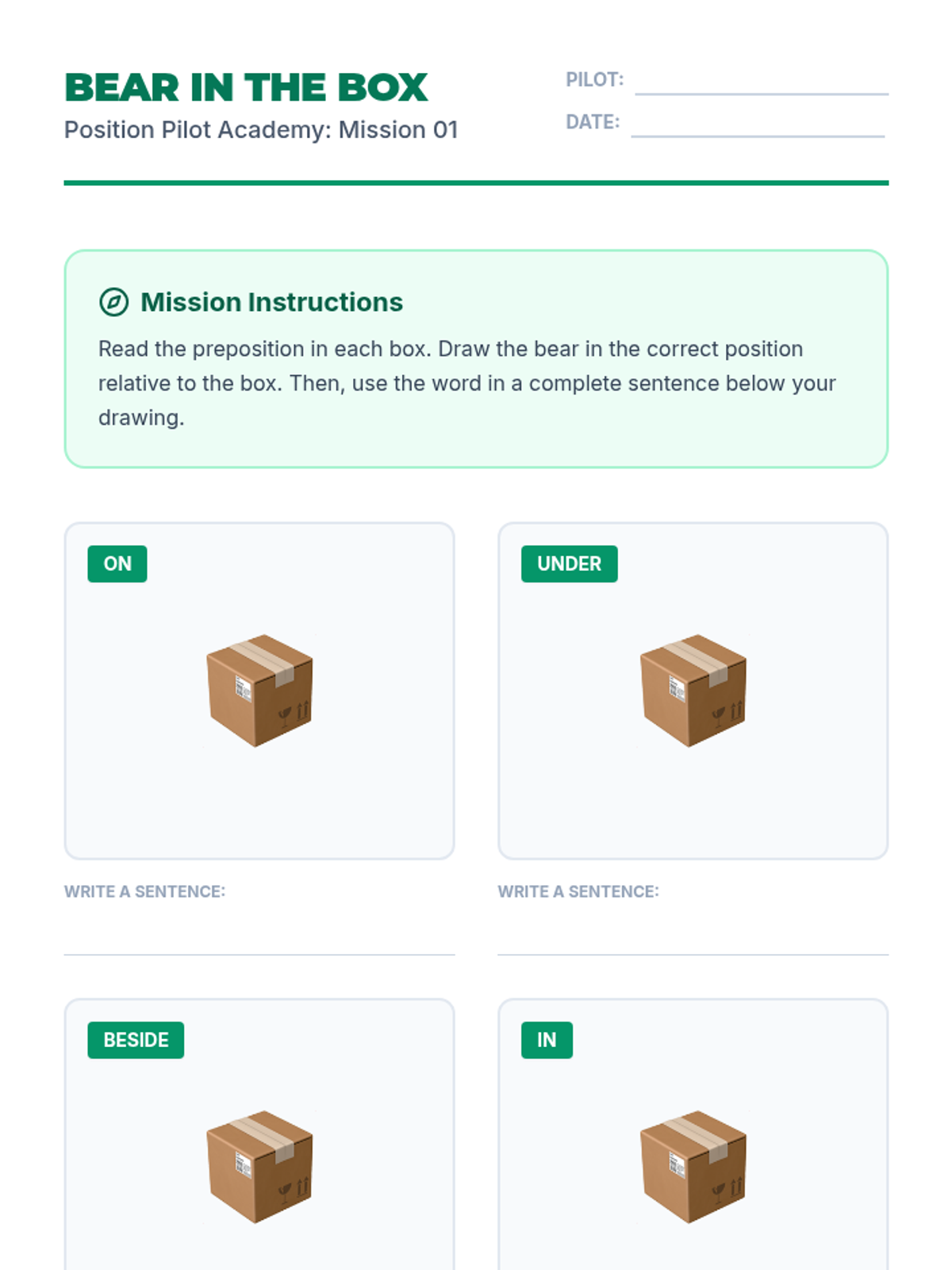
A 2nd-grade grammar sequence focusing on spatial prepositions through movement, mapping, and linguistic analysis. Students progress from basic identification to constructing complex prepositional phrases.
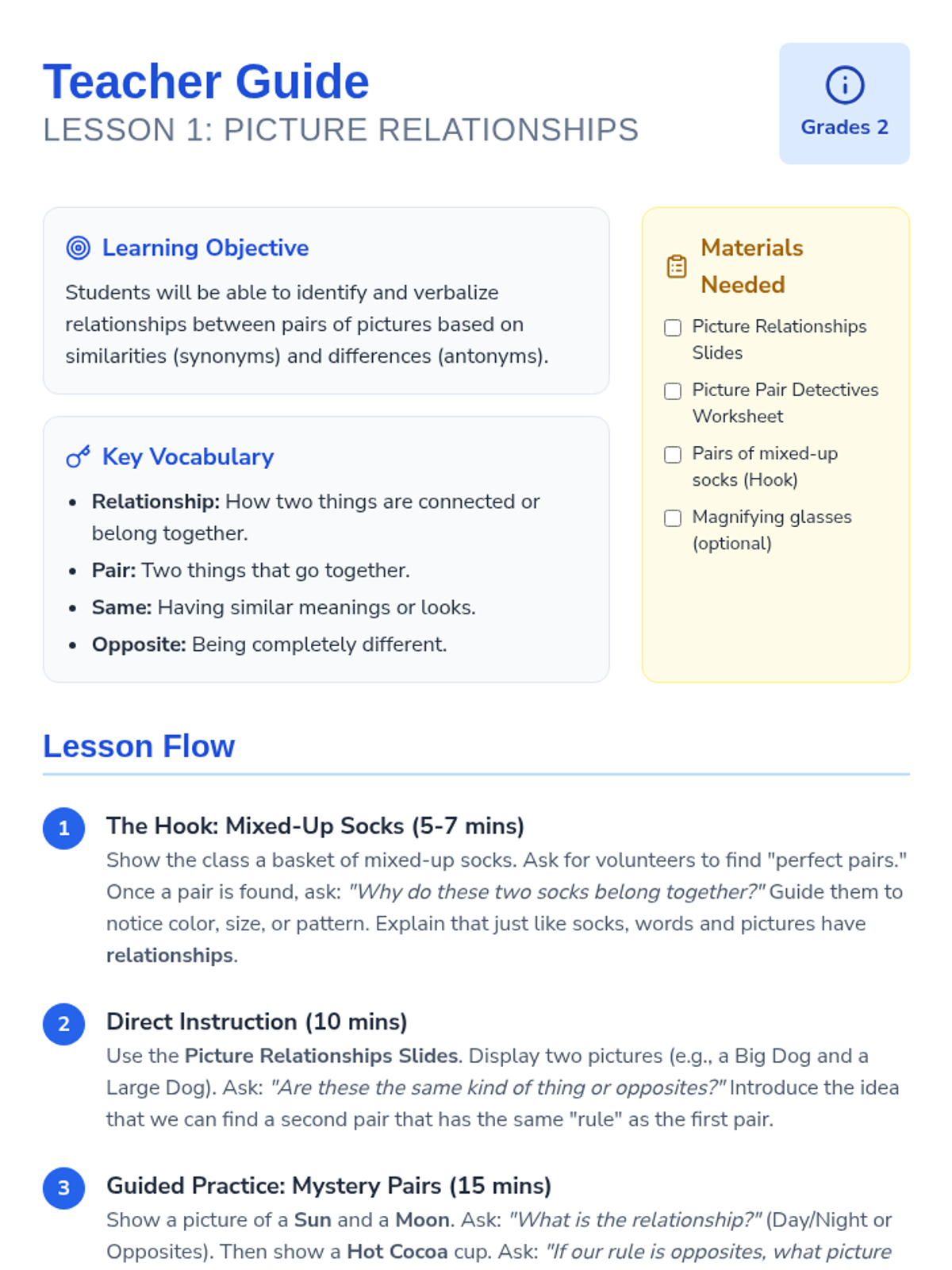
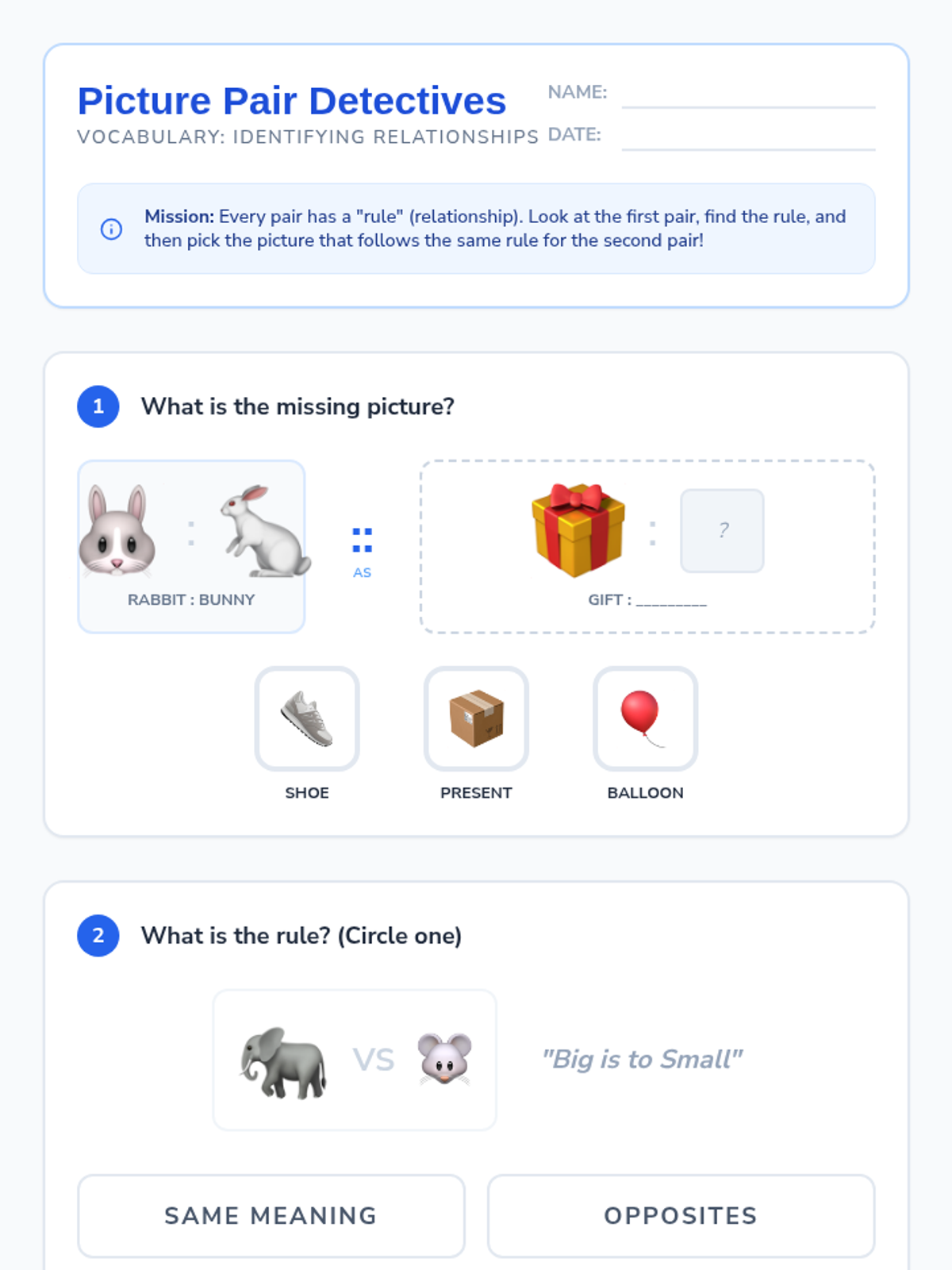
A 5-lesson sequence for 2nd graders to master synonym and antonym analogies. Students progress from visual relationships to using bridge sentences to solve complex word puzzles.
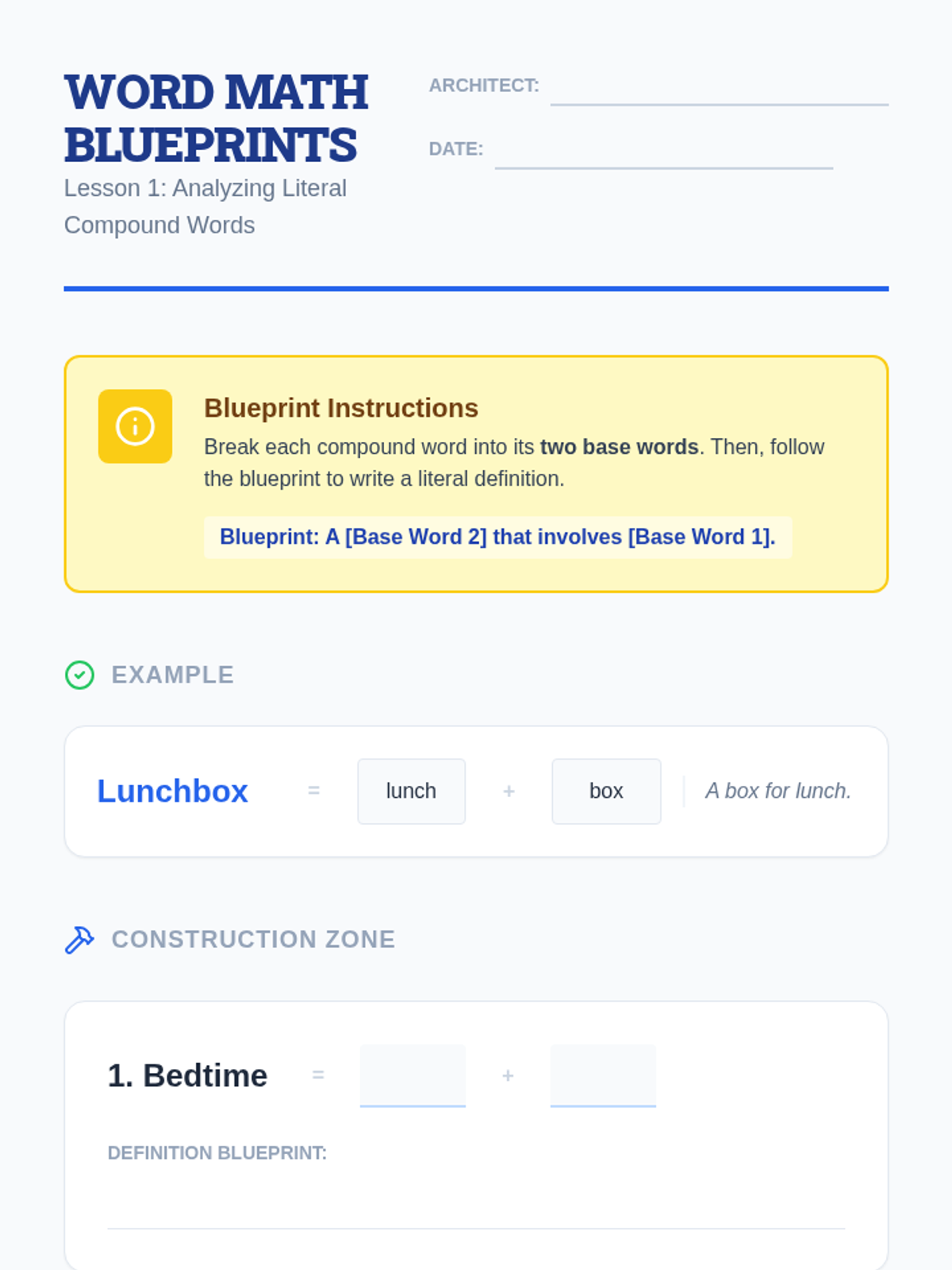
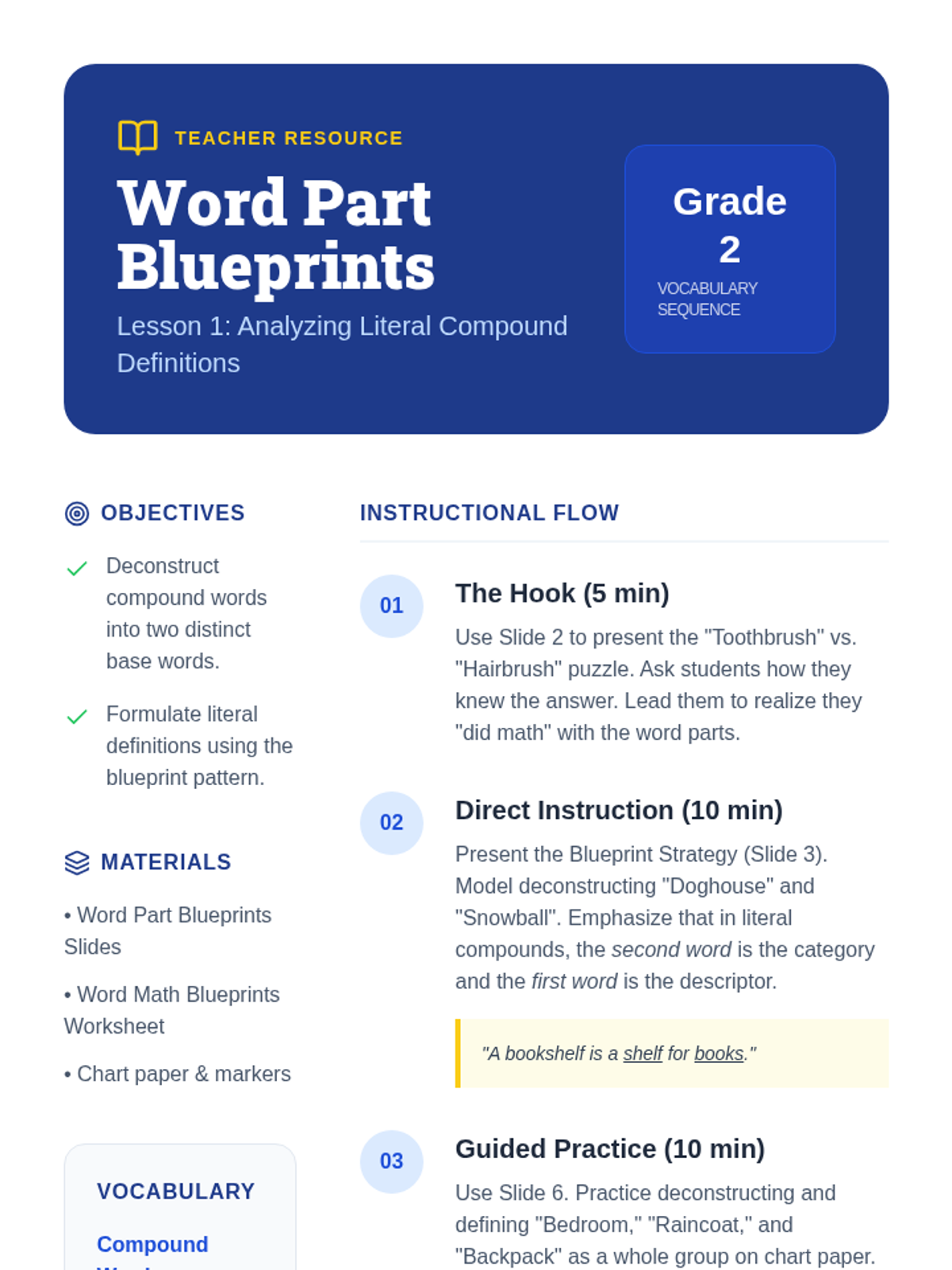
A 2nd-grade vocabulary sequence focused on compound words. Students learn to decode meanings by breaking words into parts, investigating literal vs. non-literal meanings, and using context clues.
Students explore soft 'c' and 'g' through a creative writing project where they develop characters and narratives. The sequence integrates phonics with literacy by having students brainstorm vocabulary, develop character profiles, and write a cohesive story.
This project-based sequence integrates phonics into creative writing and storytelling. Students explore how soft 'c' and 'g' words function in connected text by analyzing a mentor text and then creating their own 'Alliterative Alphabet Book' page or short story.
This workshop-style sequence focuses on the application of soft 'c' and 'g' patterns in spelling and writing. Students move from isolated word encoding to contextual sentence writing and peer editing, mastering the rules for ce, ci, cy, ge, gi, and gy.
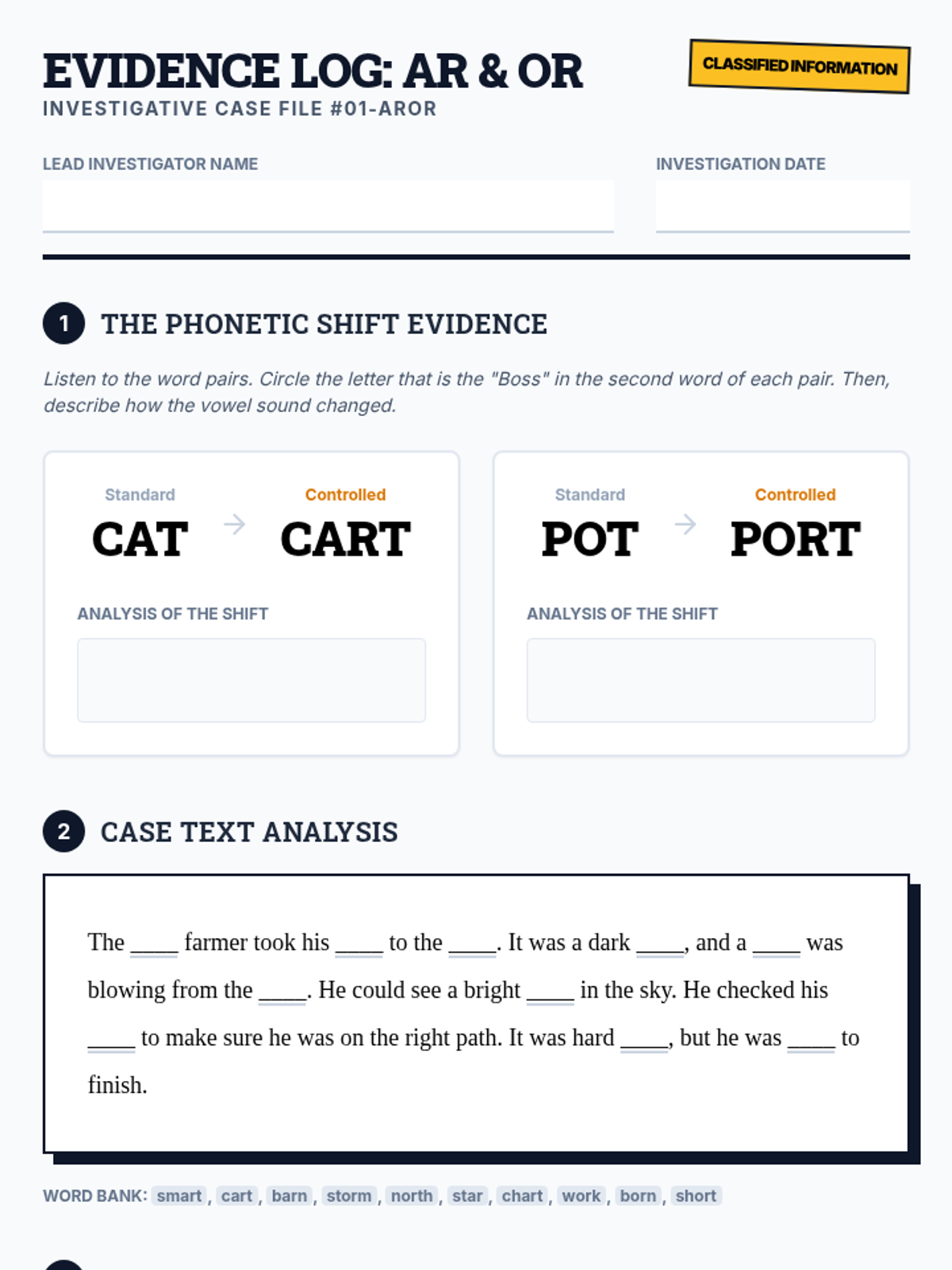
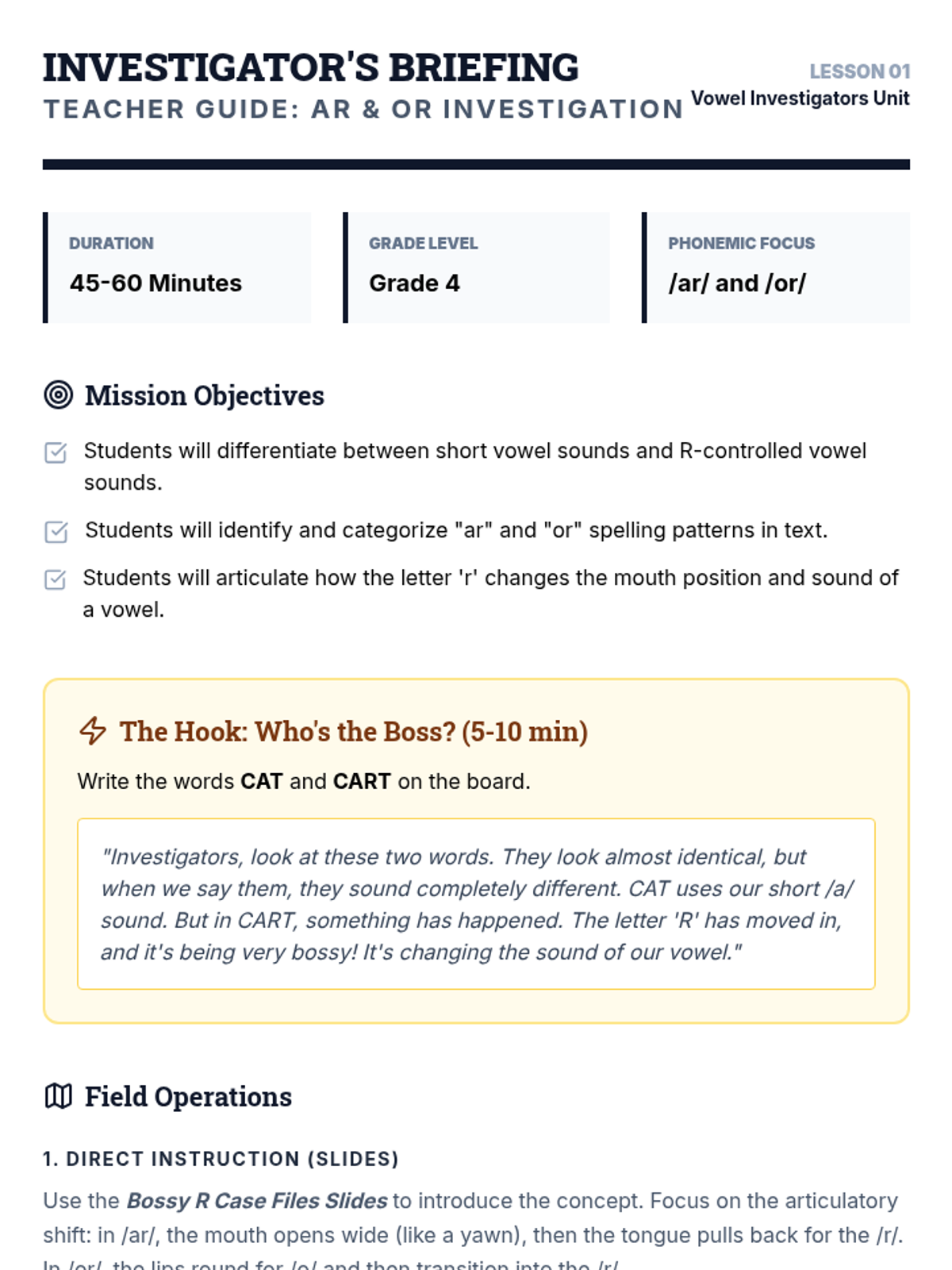
Students investigate the influence of the letter 'r' on preceding vowels, analyzing how it distorts standard vowel sounds to create new phonemes. Using an inquiry-based approach, the class acts as linguistic investigators to categorize 'bossy r' patterns and bridge into complex variations like 'air', 'ear', and 'ore'.
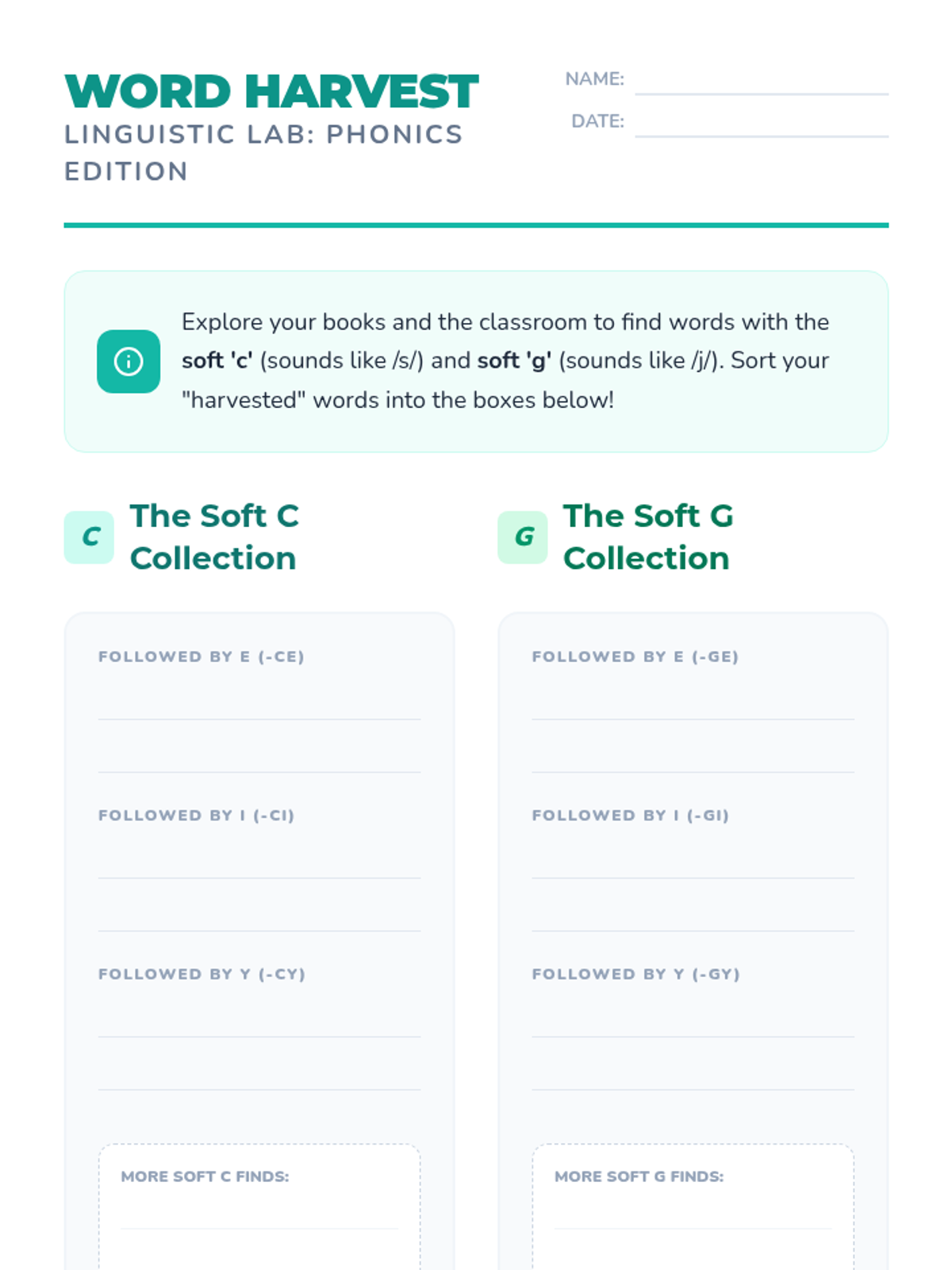
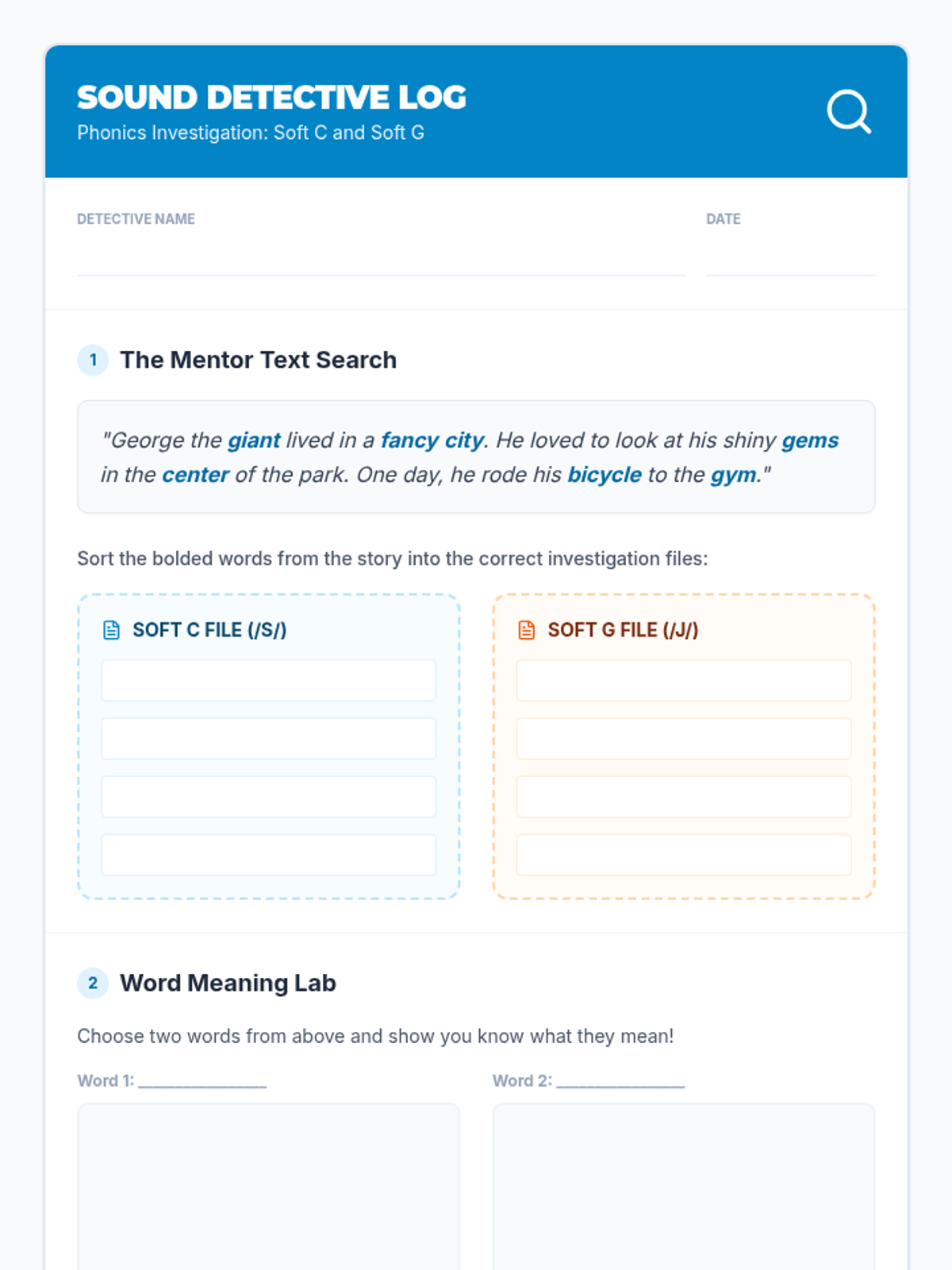
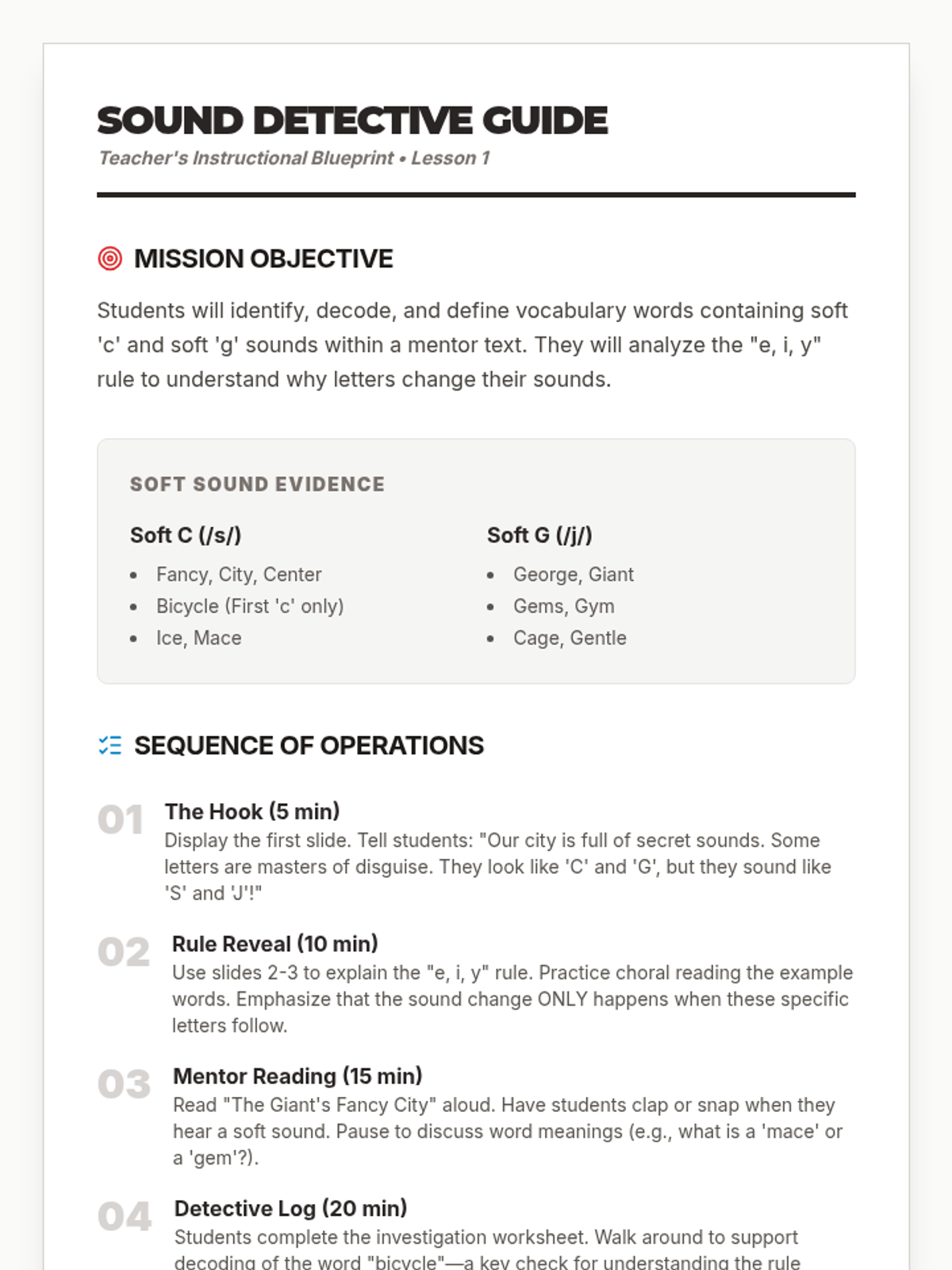
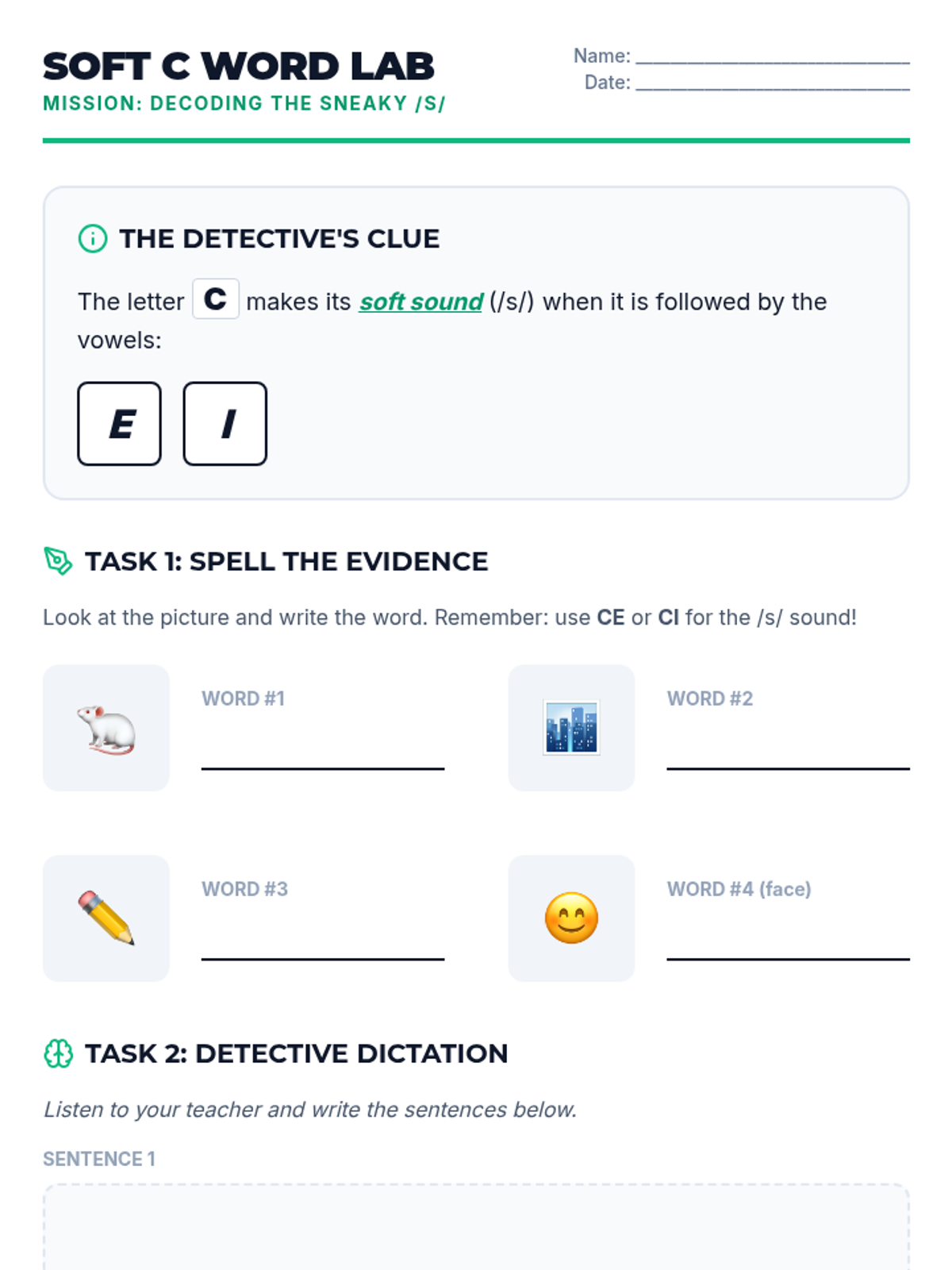
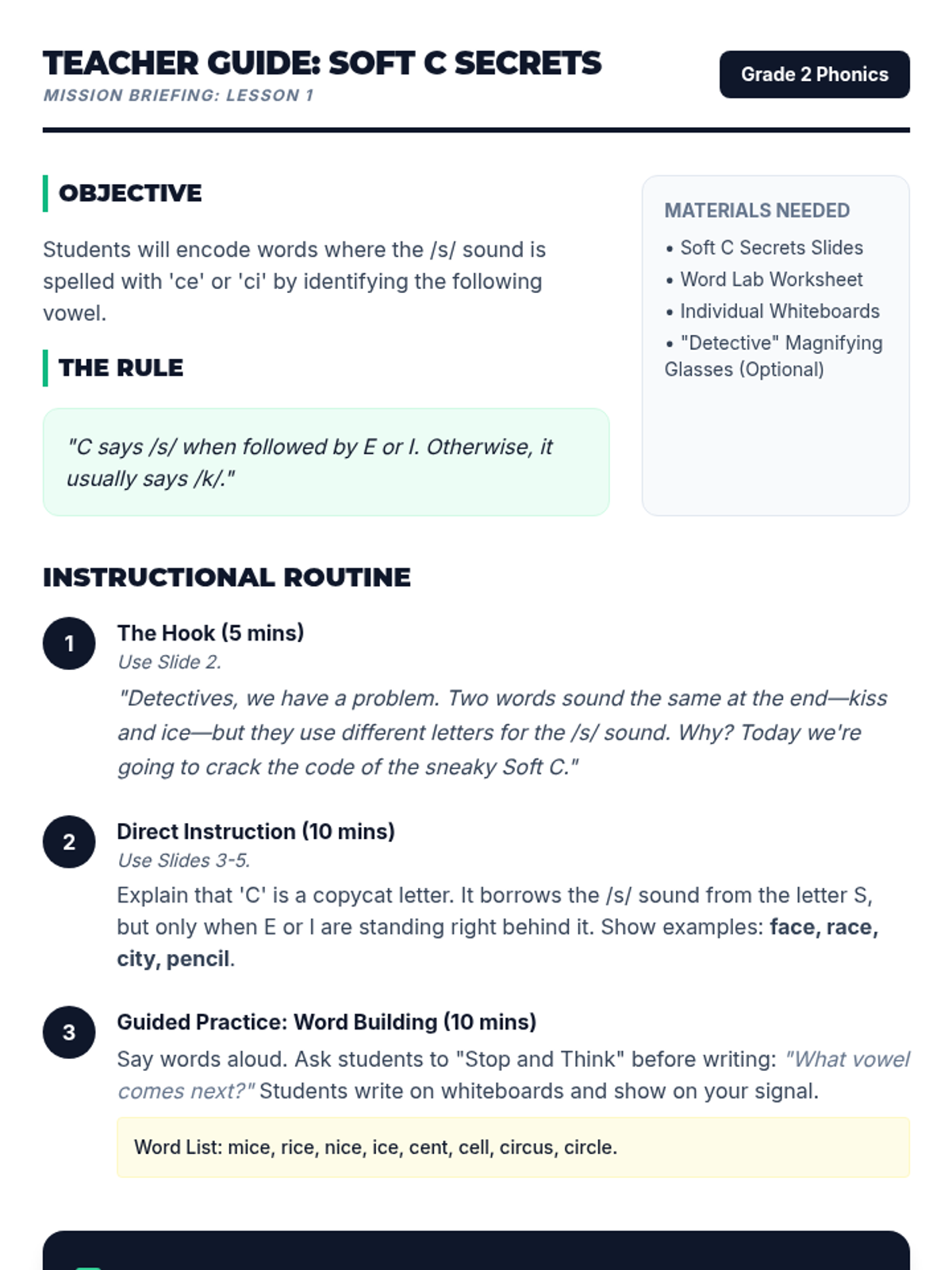
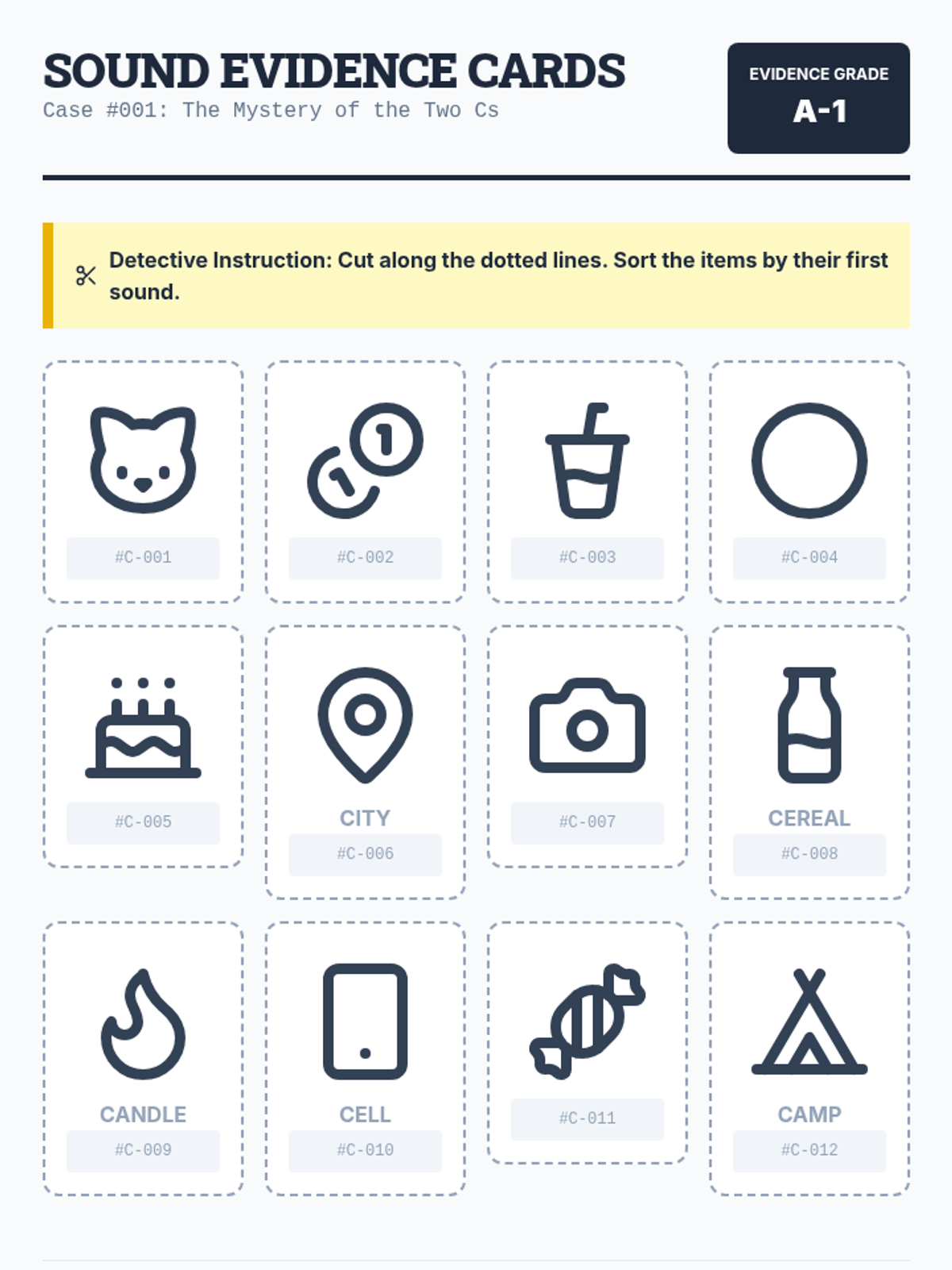
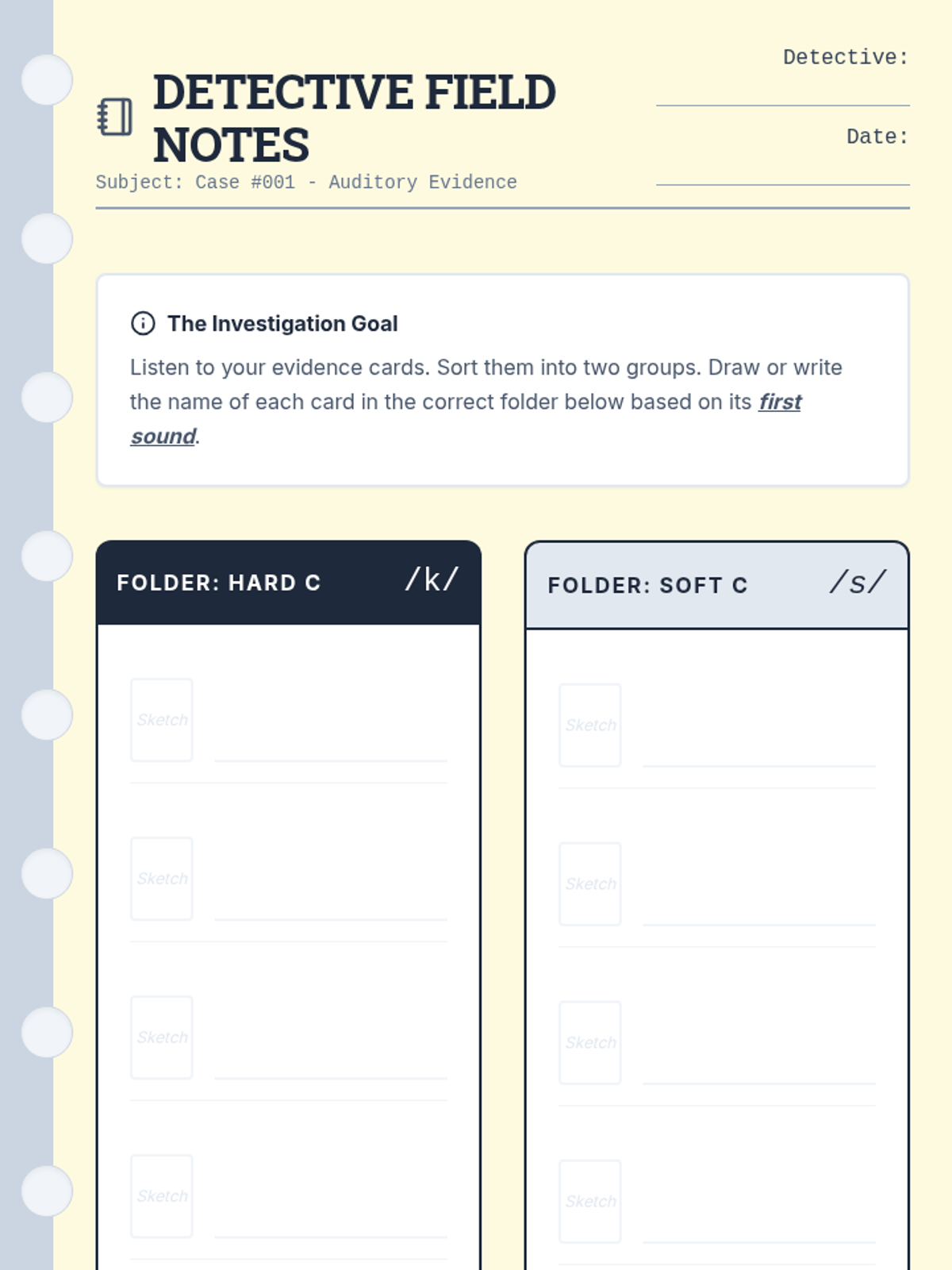
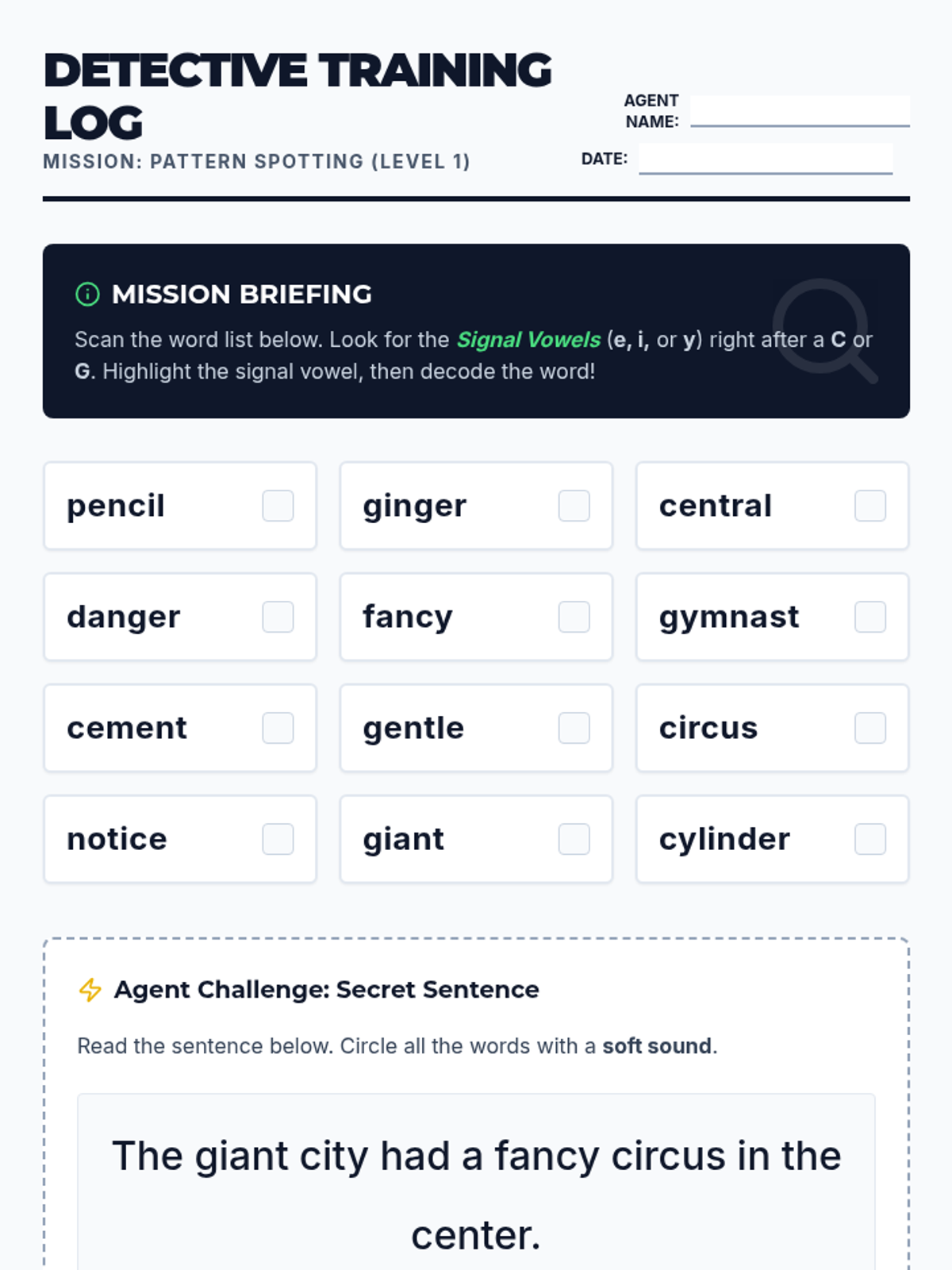
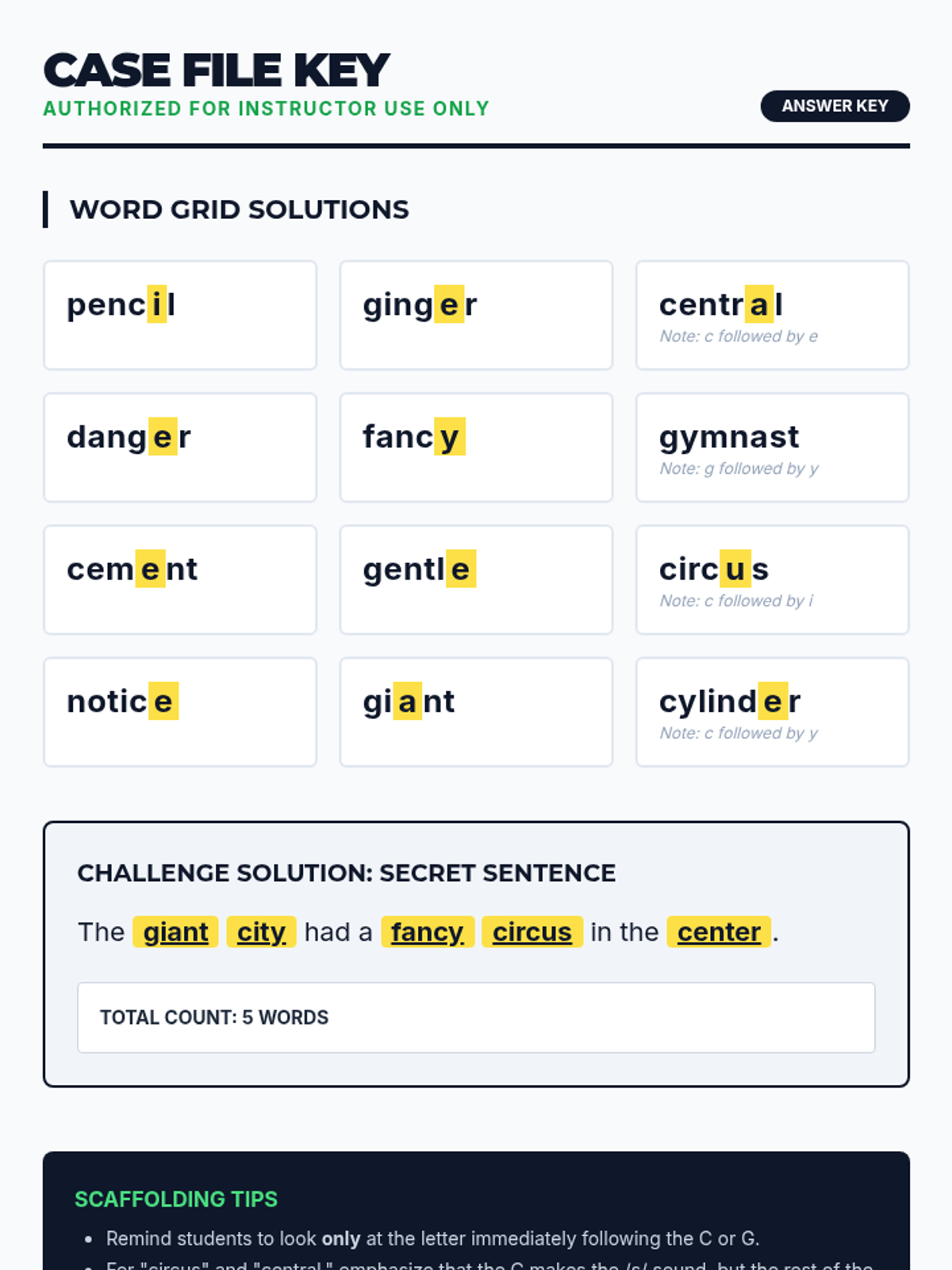
A 2nd-grade phonics sequence where students act as "Sound Detectives" to discover and master the rules for soft 'c' and 'g' sounds when followed by 'e', 'i', or 'y'.
A game-based phonics sequence for 2nd graders focusing on decoding multisyllabic words with soft 'c' and 'g' sounds. Students act as 'Secret Agents' to decode complex vocabulary through scanning, syllable division, word building, and fluency challenges.
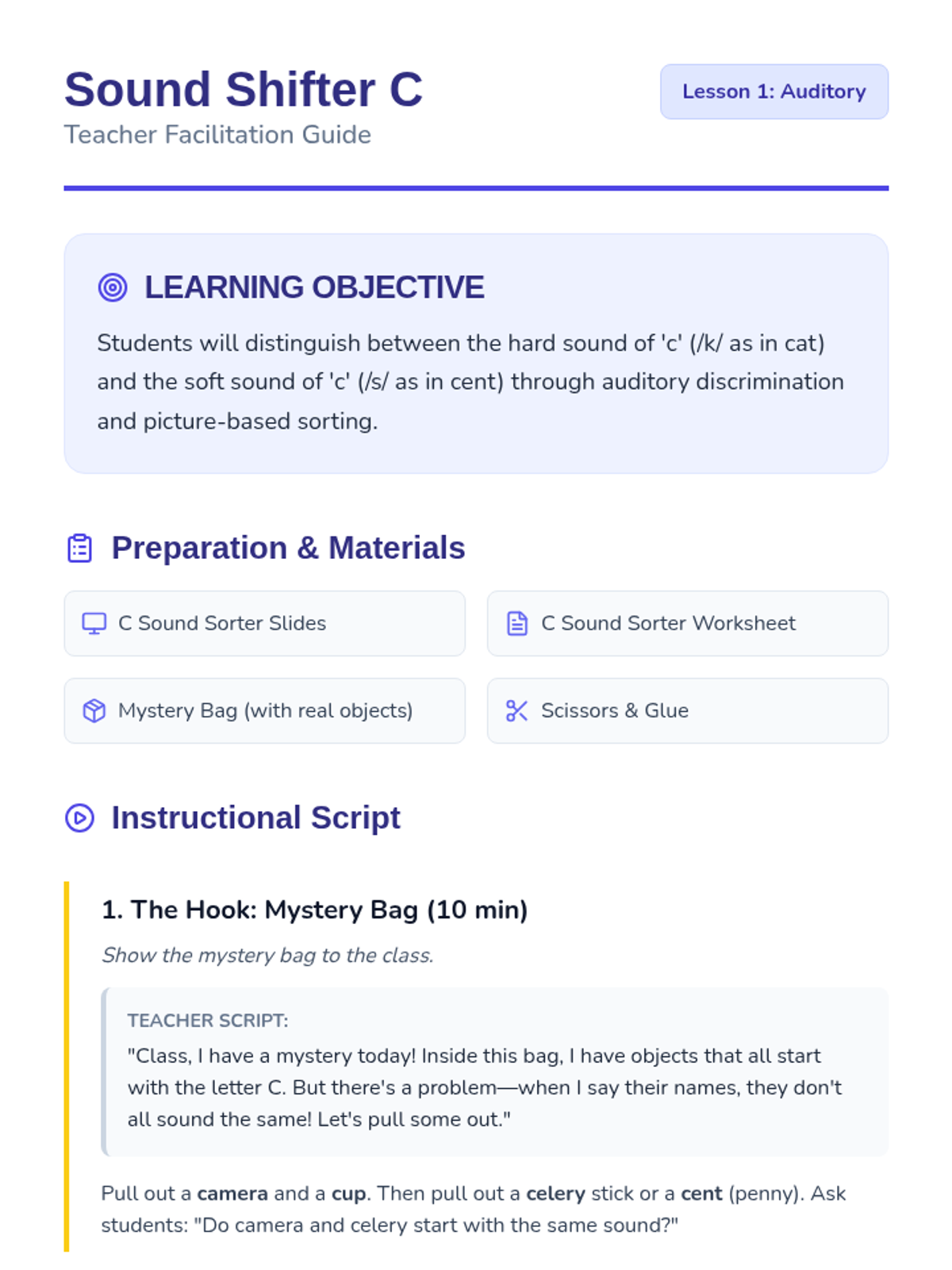
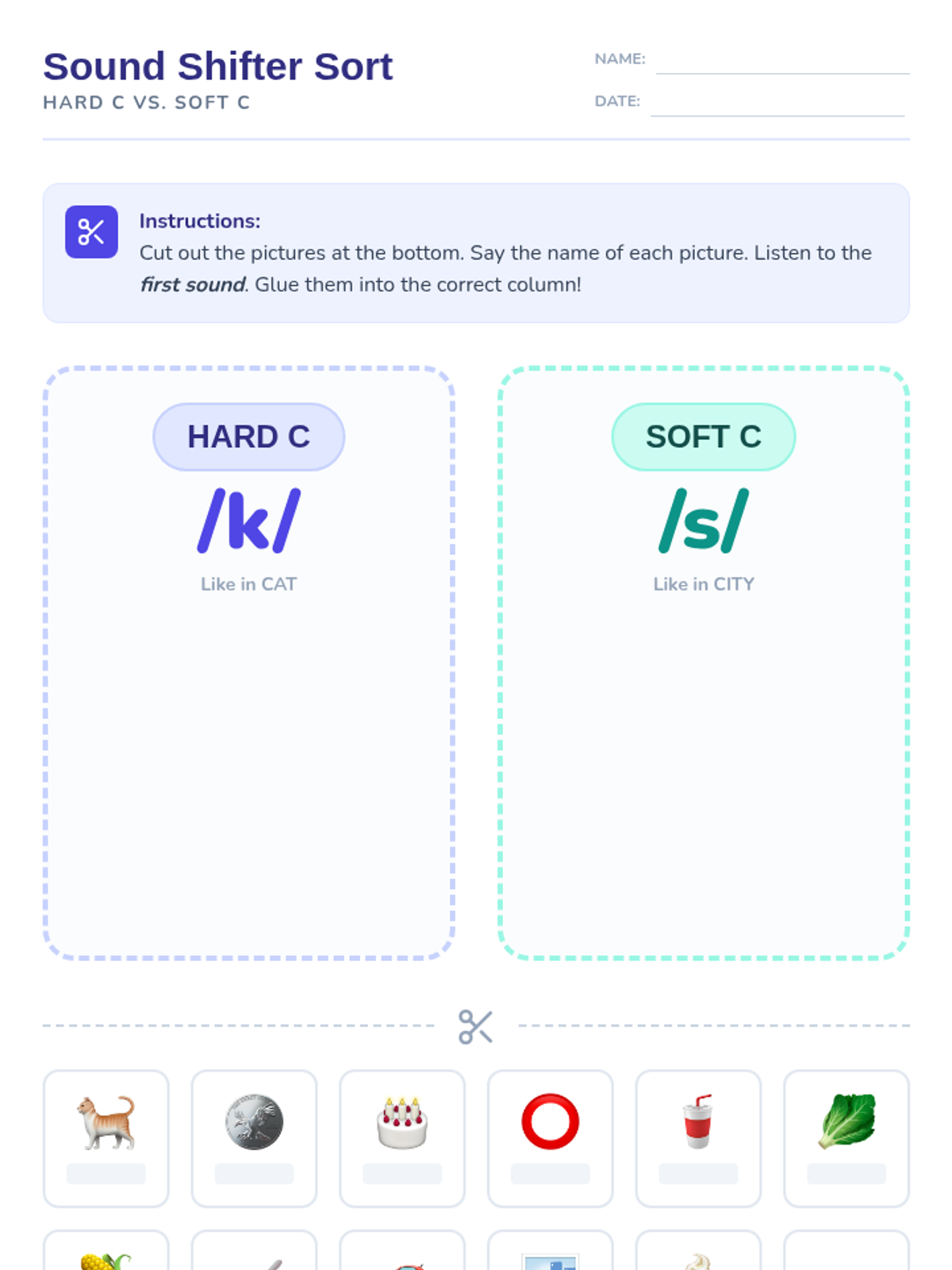
A 5-lesson phonics sequence for 1st grade students focusing on the hard and soft sounds of 'c' and 'g'. Students explore phonemic awareness, spelling patterns, and the influence of the 'magic vowels' e, i, and y.
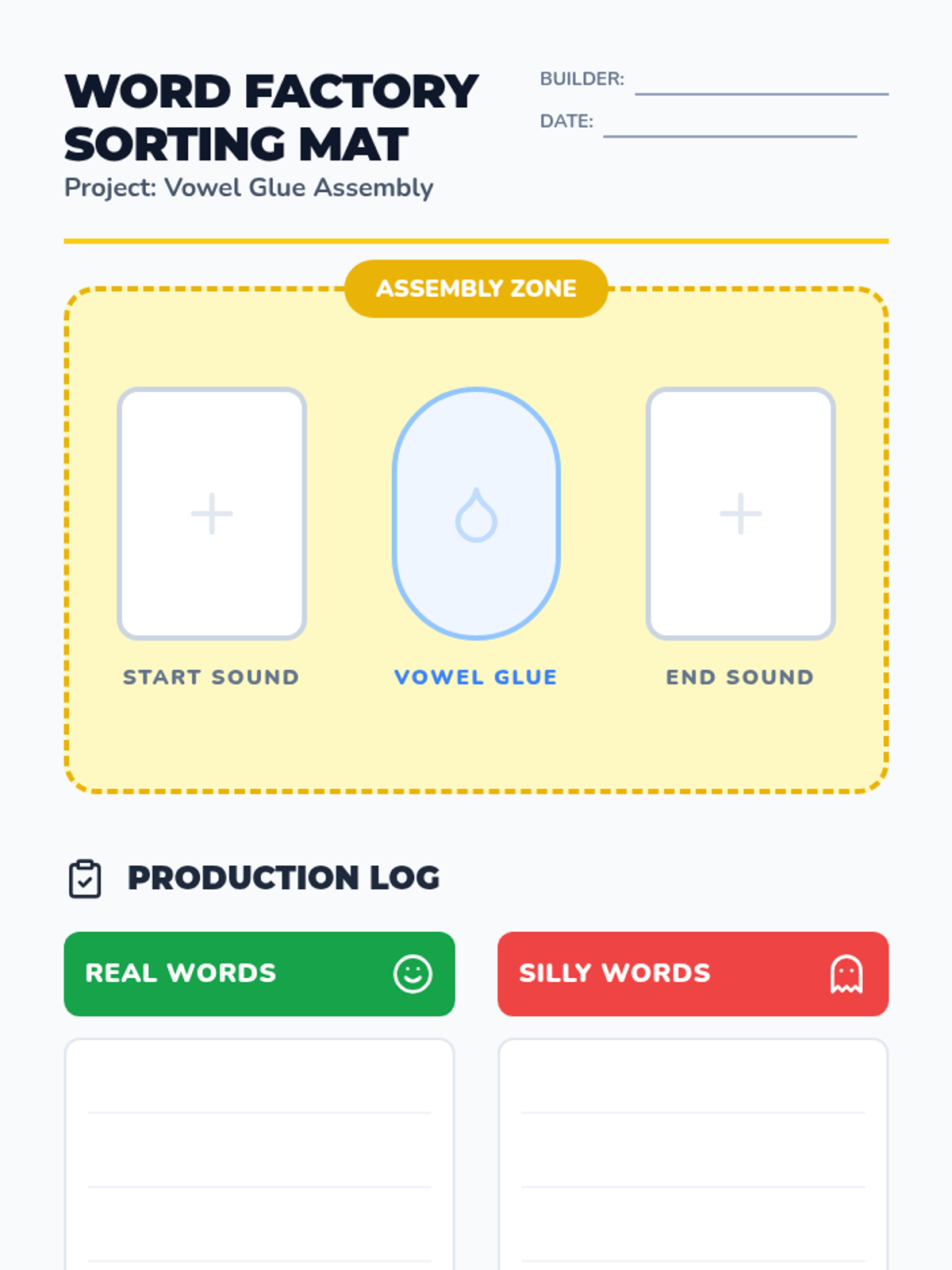
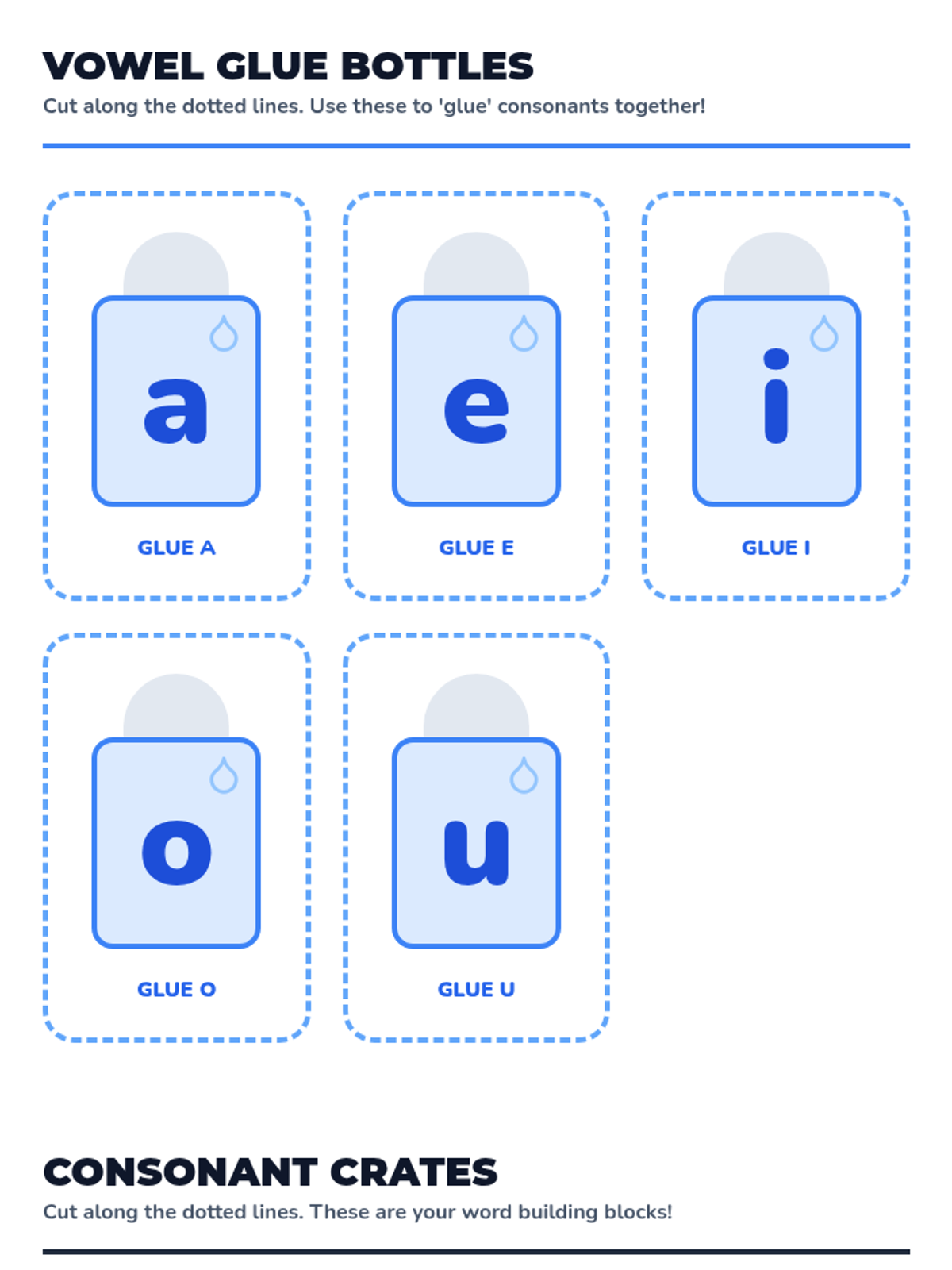
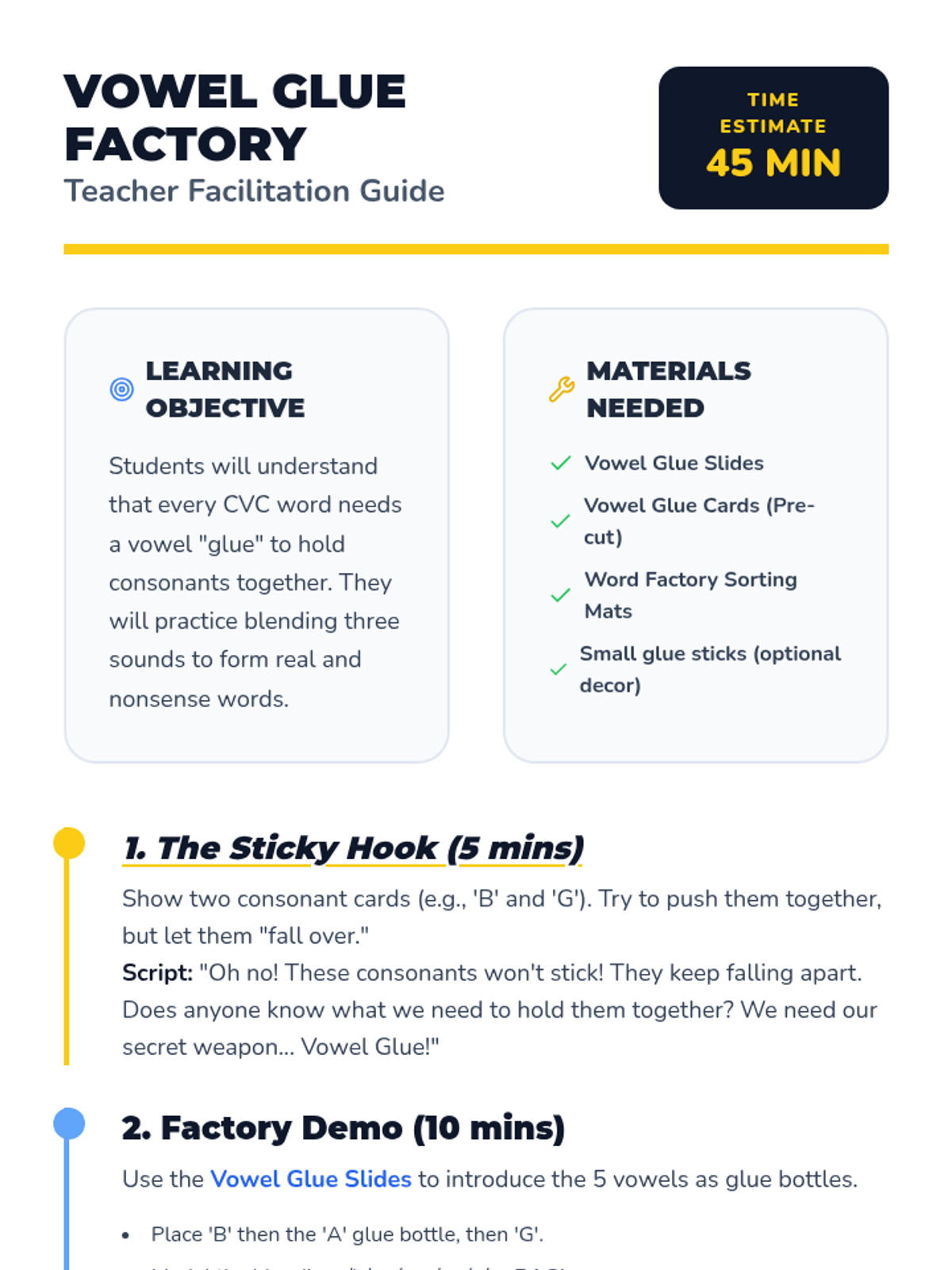
This sequence focuses on blending CVC words by treating vowels as the 'glue' that holds consonants together. Through hands-on workshop-style activities, students learn phonemic blending and segmentation in an engaging, construction-themed environment.
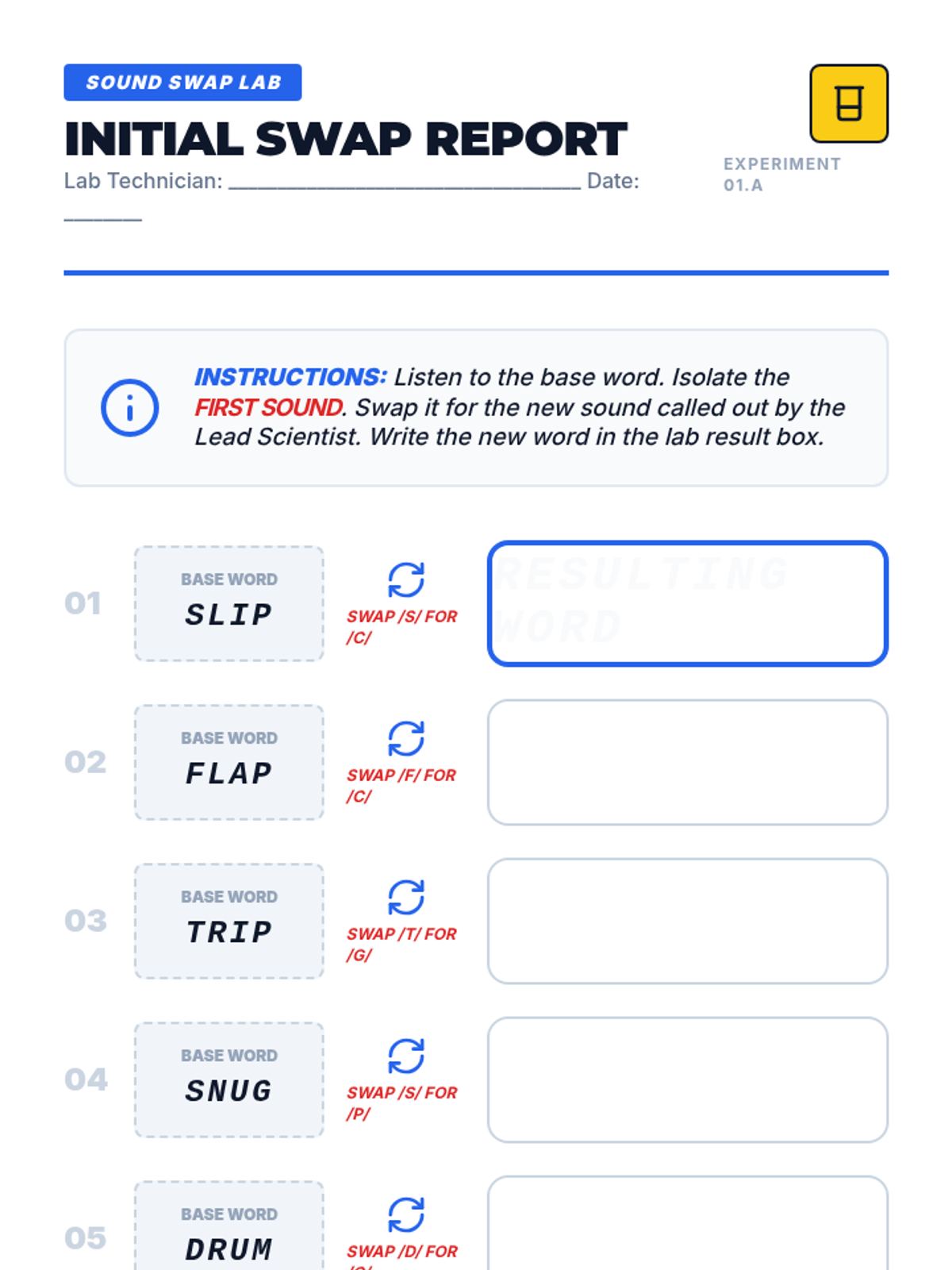
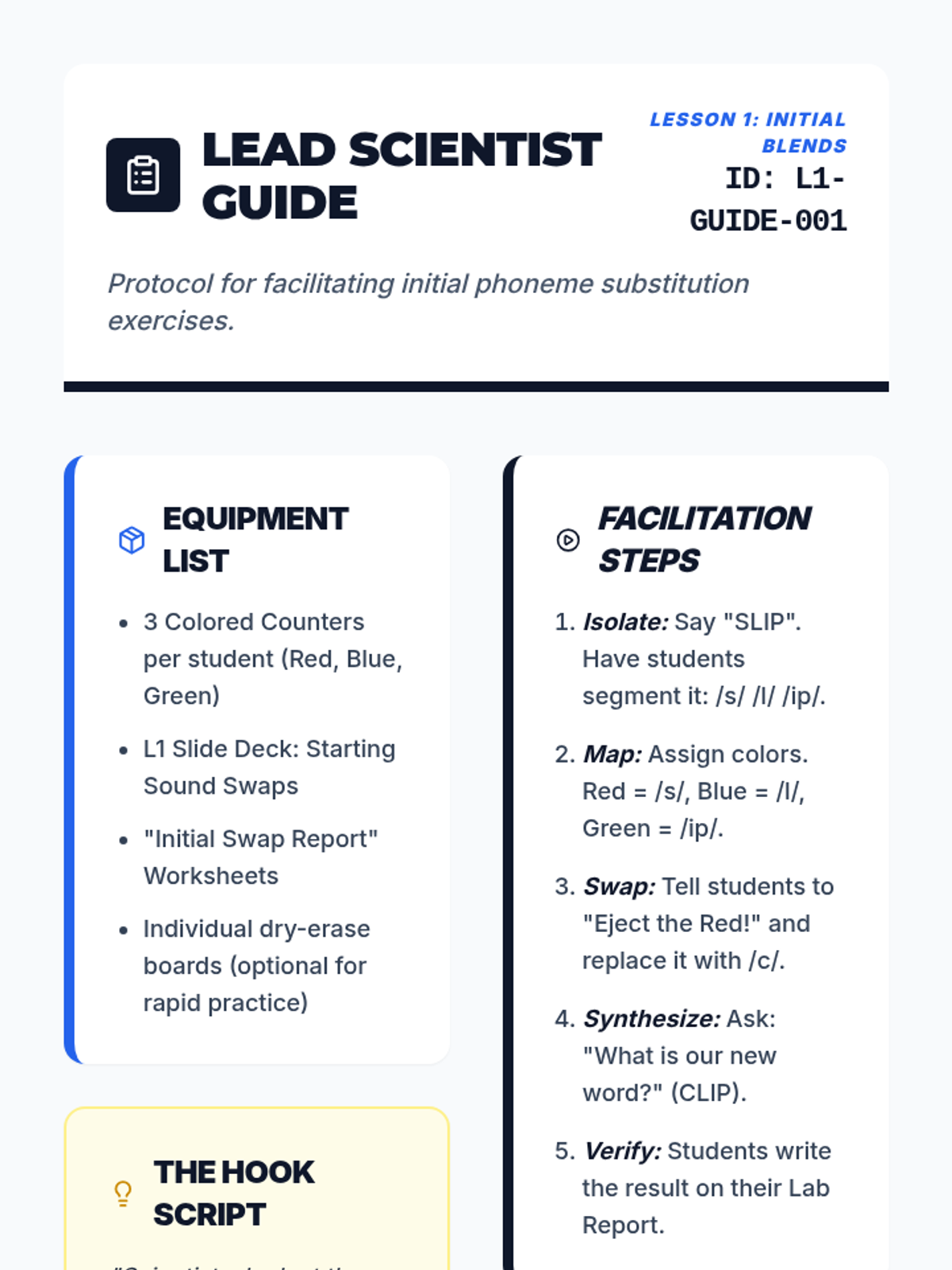
A comprehensive 2nd Grade phonics sequence focusing on substituting phonemes in consonant blends and digraphs. Students progress from initial sound changes to complex three-phoneme blends through interactive lab-themed activities and rapid-fire oral practice.
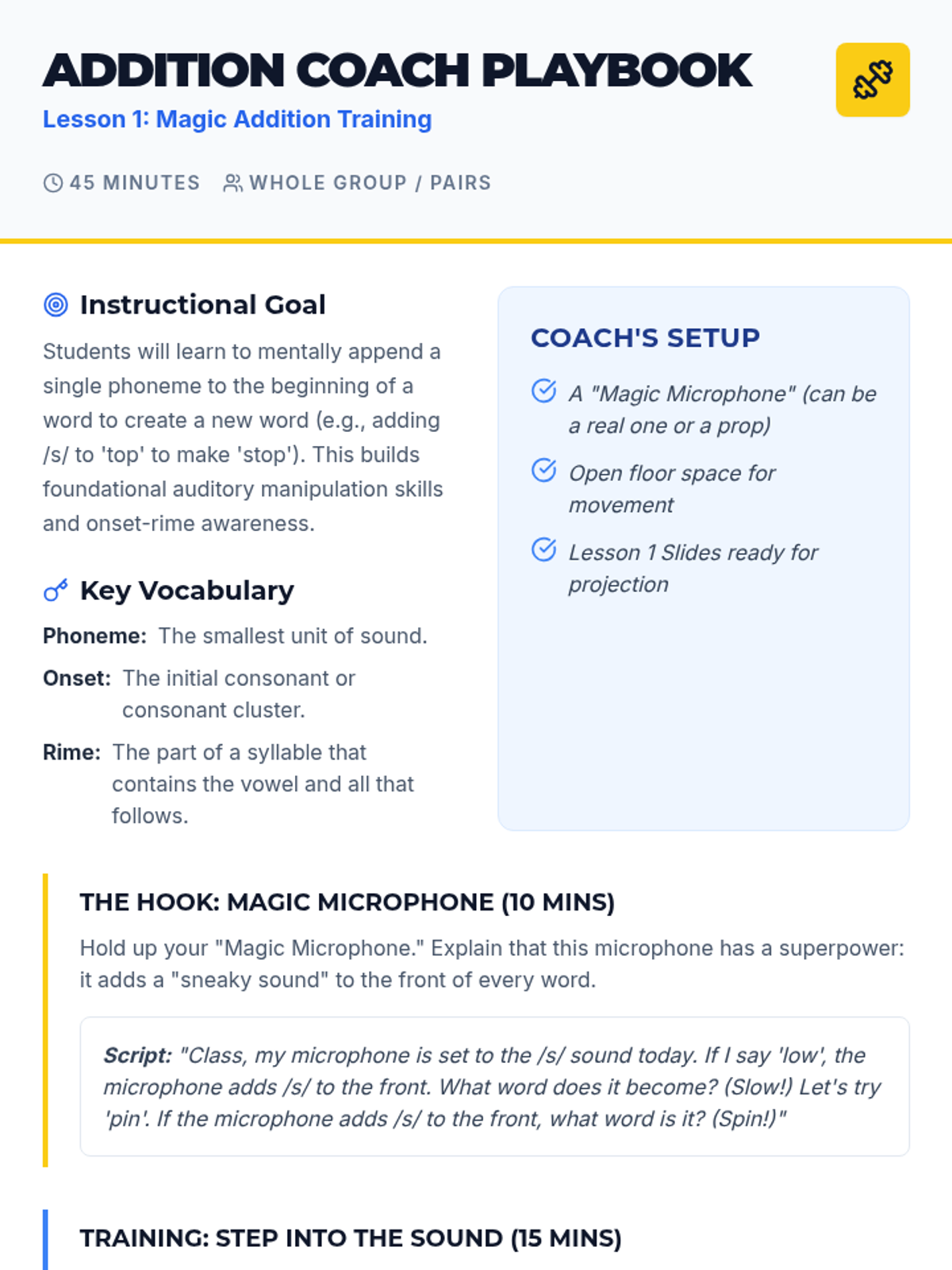
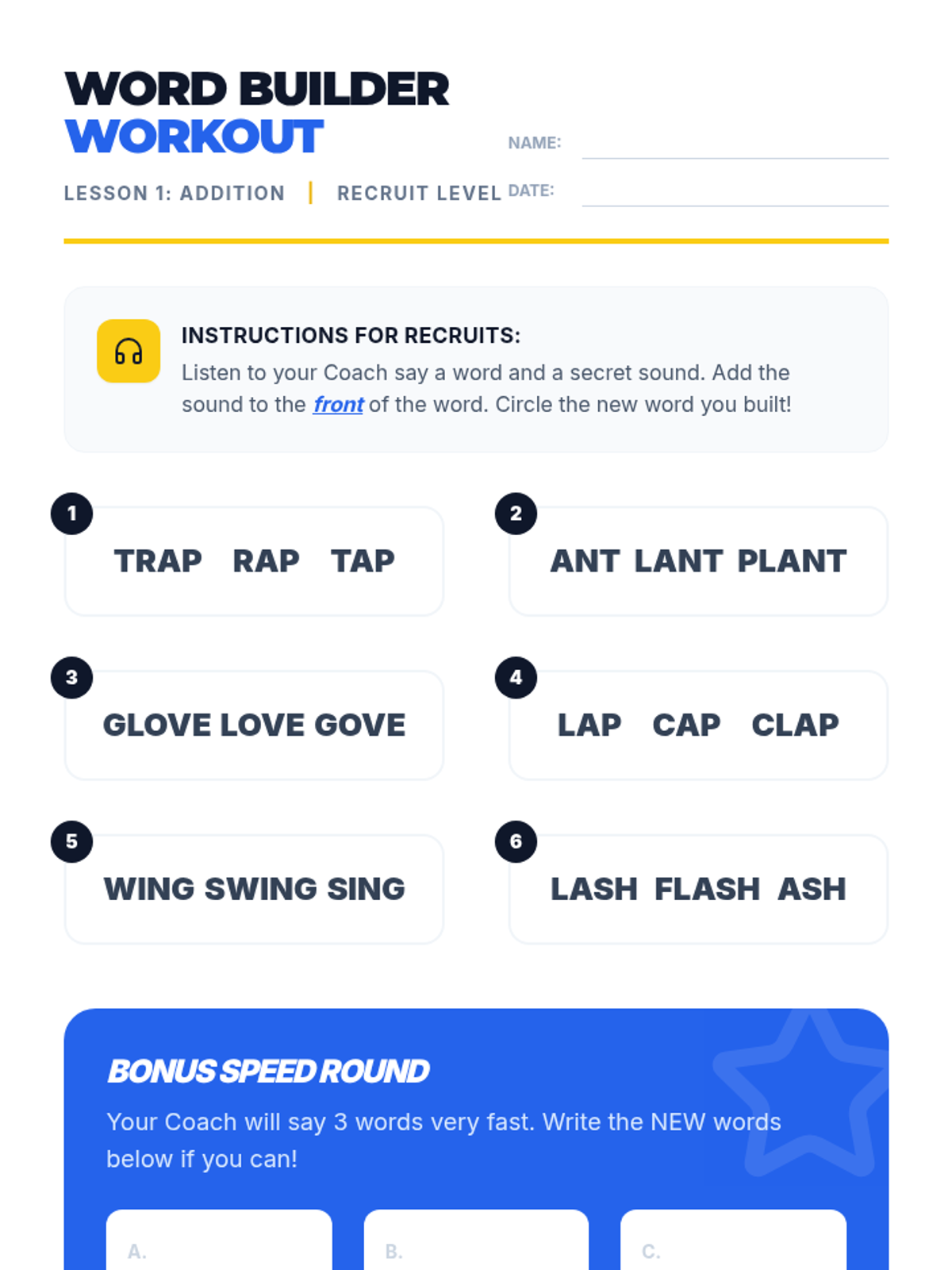
This 2nd Grade phonics sequence focuses on the auditory manipulation of phonemes through addition and deletion. Students engage in game-based activities to strengthen their phonological awareness, moving from simple onset addition to complex internal blend deletion, building the working memory needed for advanced decoding and spelling.
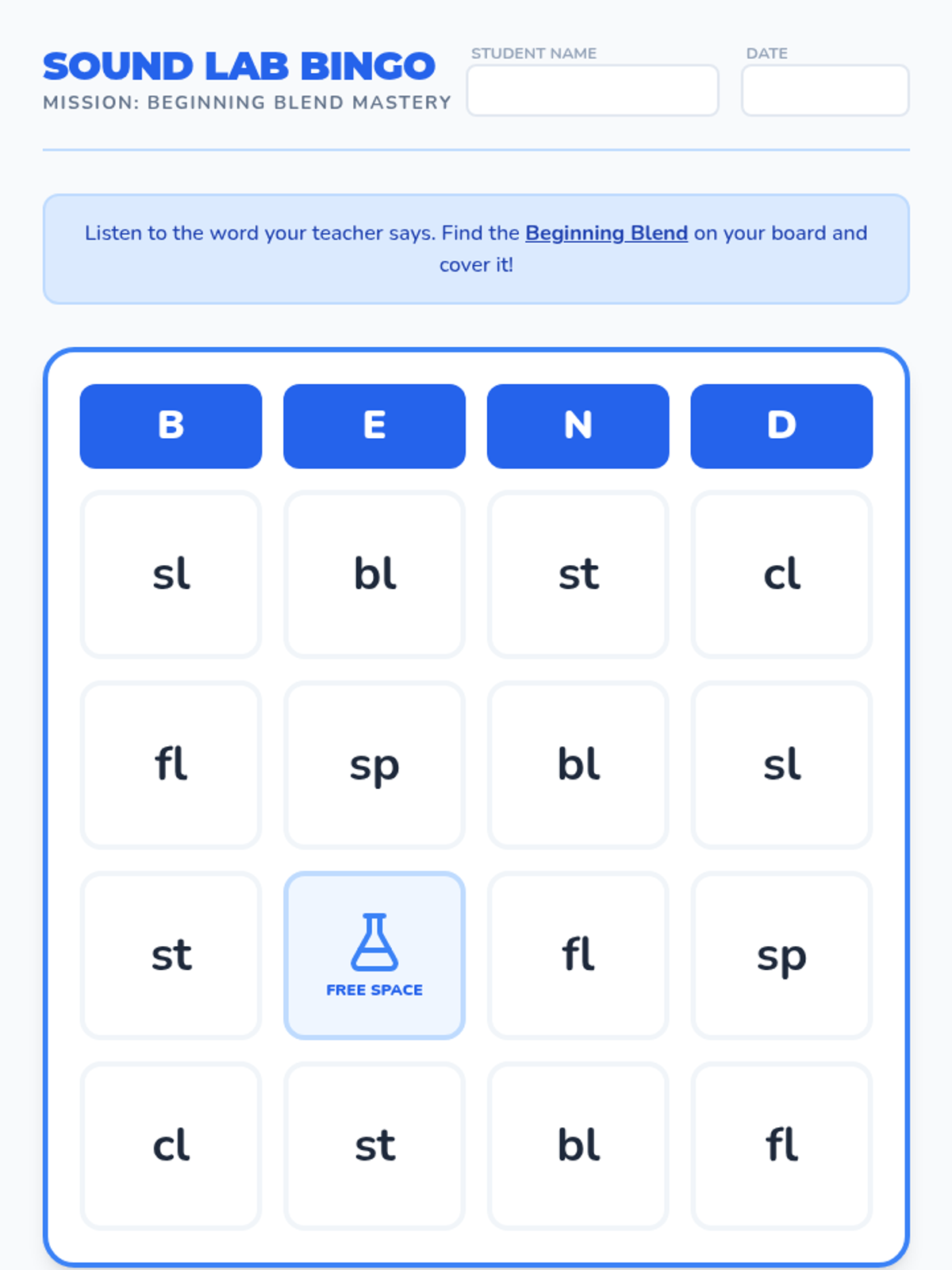
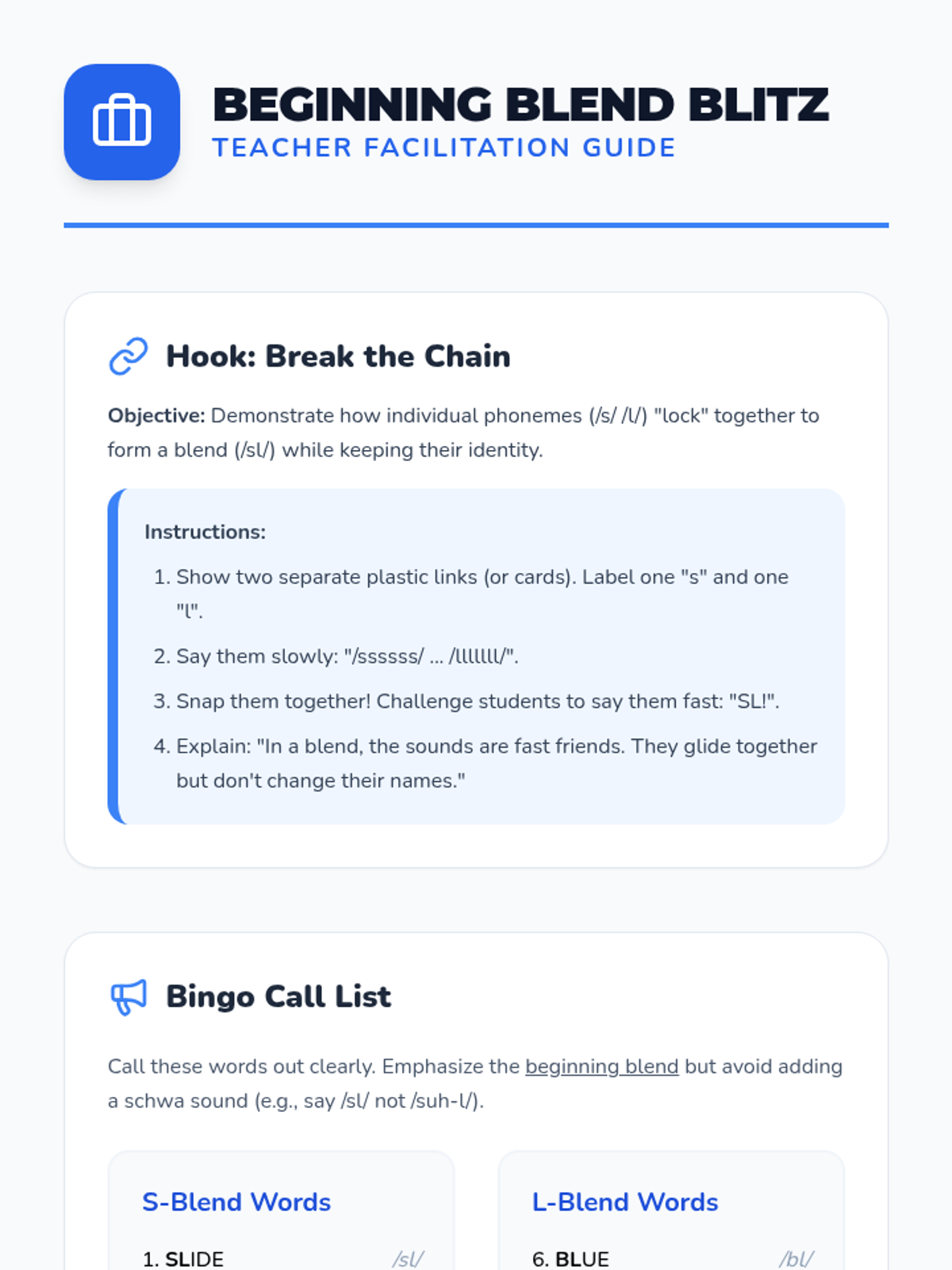
A comprehensive phonics sequence for 2nd grade focusing on consonant blends, from simple two-letter beginnings to complex three-letter clusters and glued sounds, using a 'Sound Lab' theme.
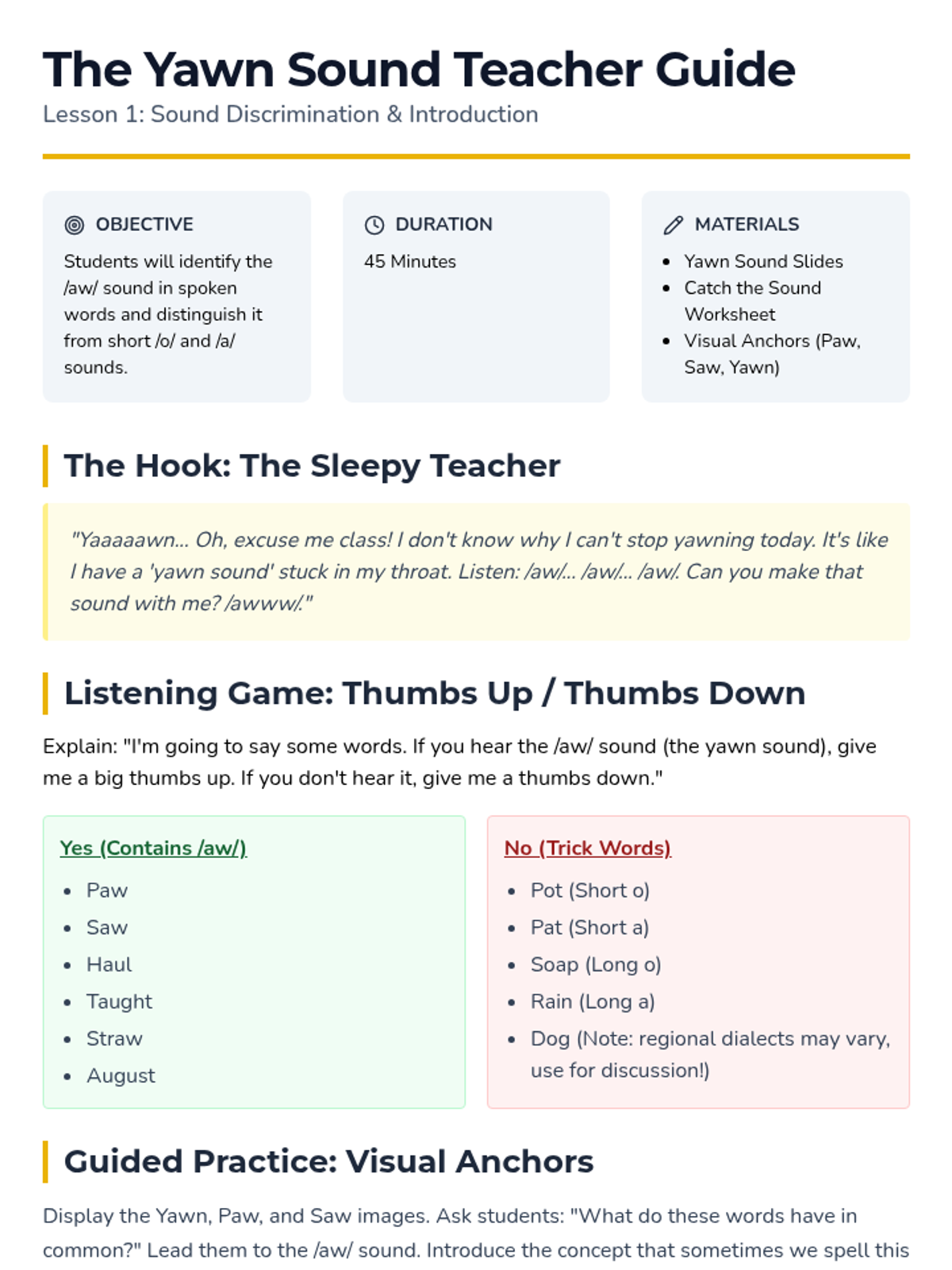
A game-based phonics sequence for 2nd graders to master the variant vowel sounds /au/ and /aw/. Students progress from basic sound recognition to decoding multisyllabic words and applying their knowledge in a mystery-solving context.
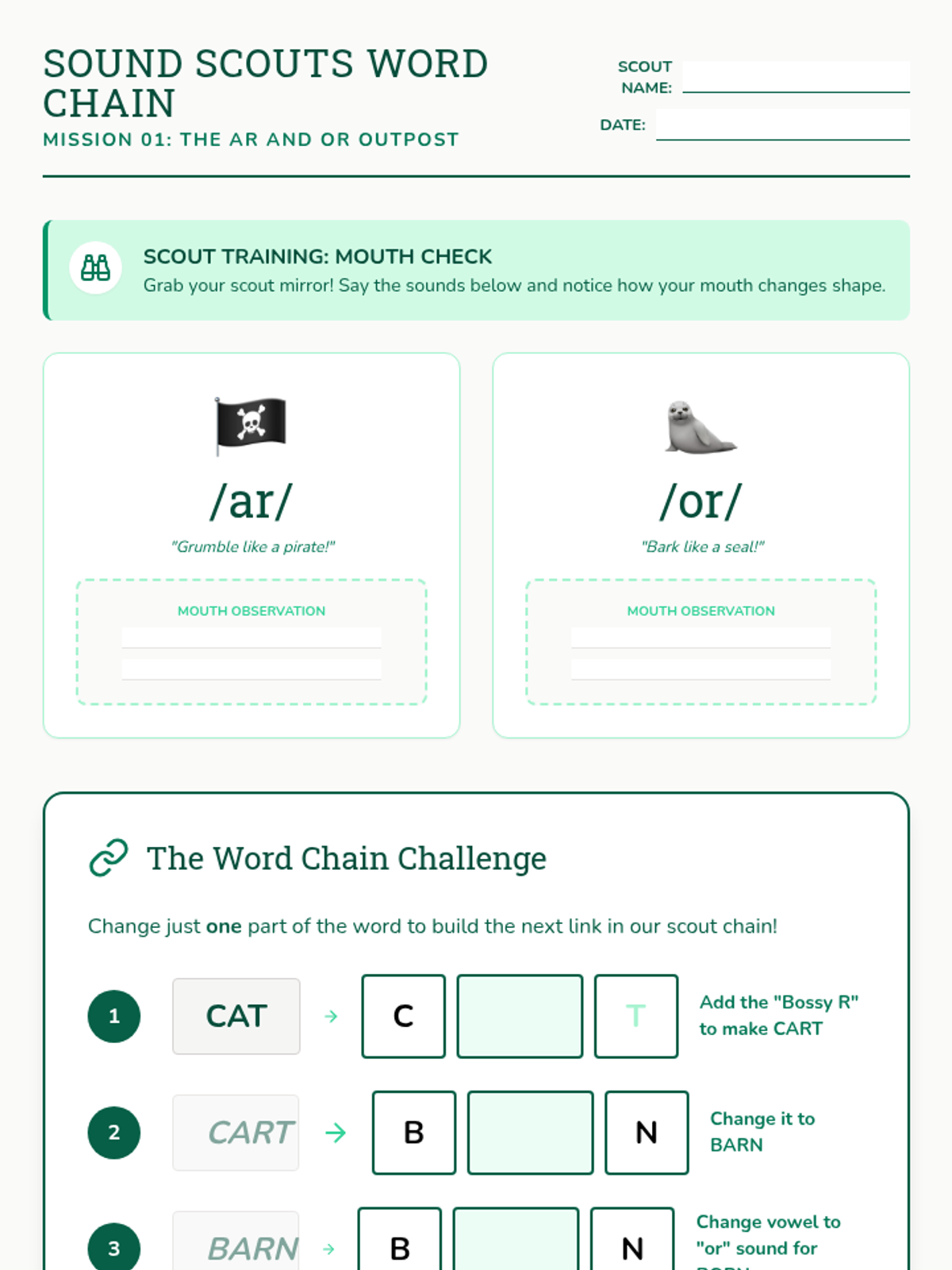
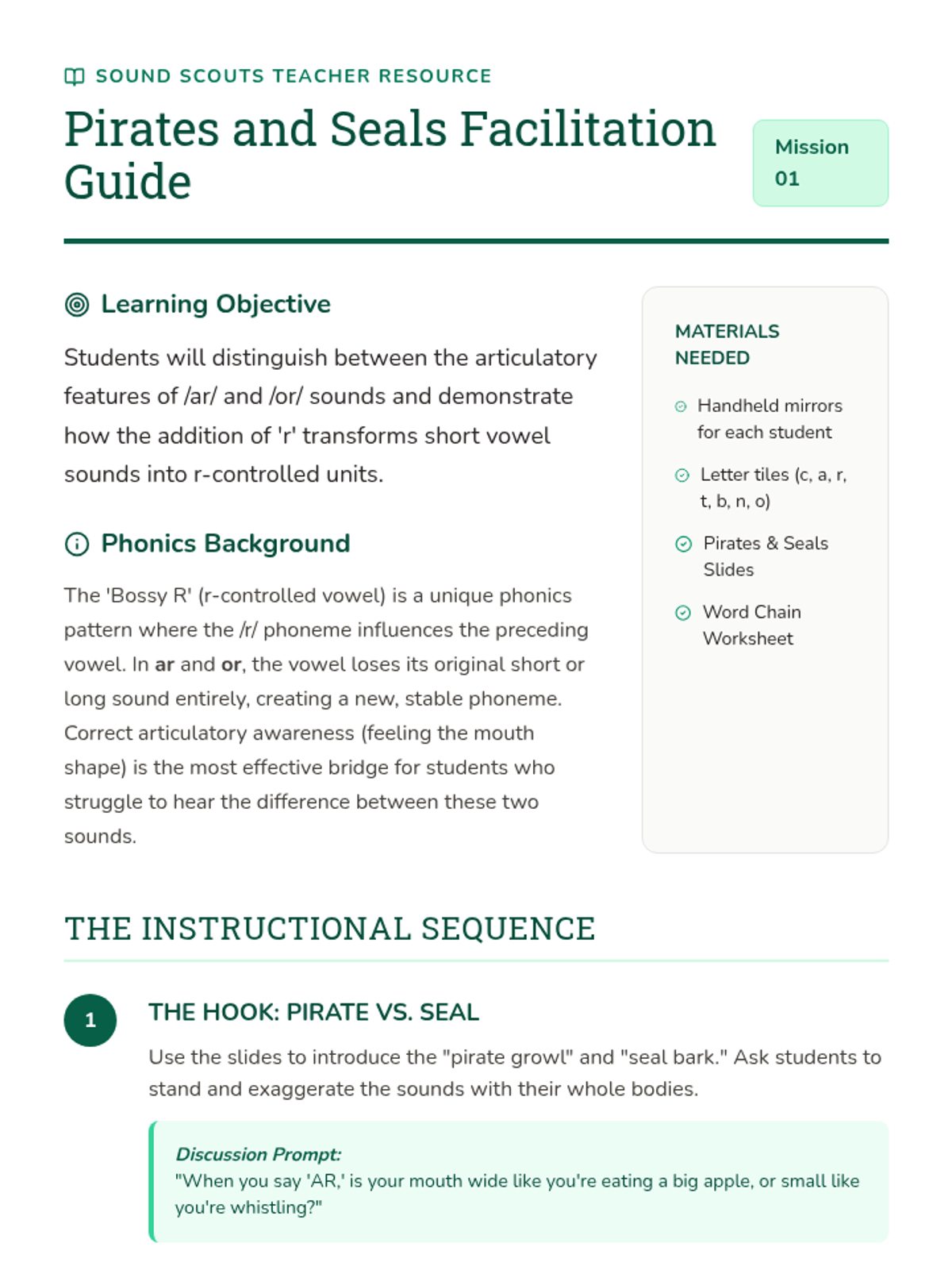
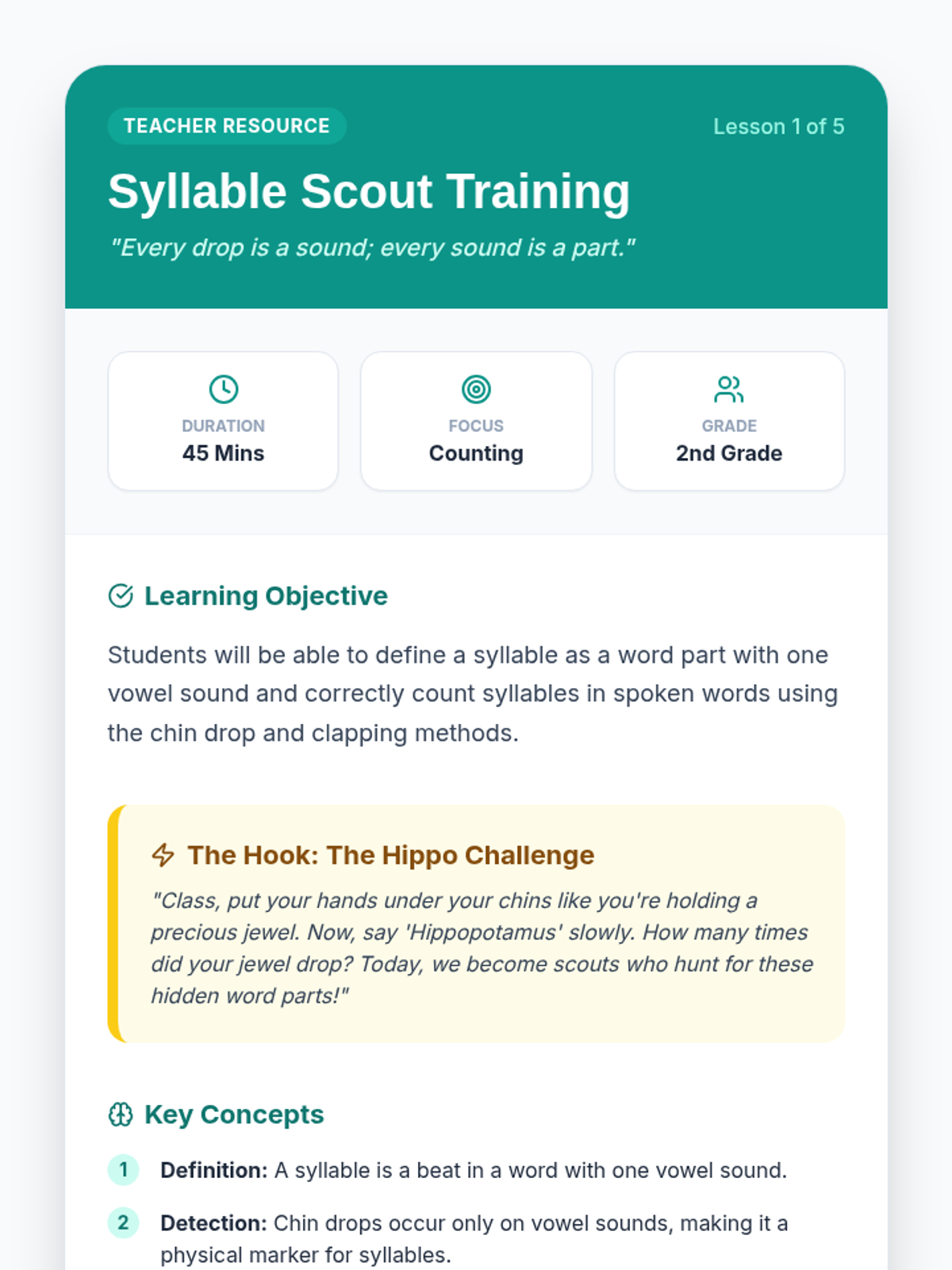
A comprehensive 2nd-grade phonics sequence focusing on r-controlled vowels (ar, or, er, ir, ur) in both single-syllable and multisyllabic words. Students use a workshop approach to master decoding, encoding, and syllabication through the 'Sound Scouts' wilderness theme.
This sequence teaches 2nd-grade students how to use the 5 Ws + H (Who, What, Where, When, Why, How) to improve reading comprehension. Students progress from making predictions to analyzing character motivations and distinguishing between literal and inferential questions through a "Question Detective" theme.
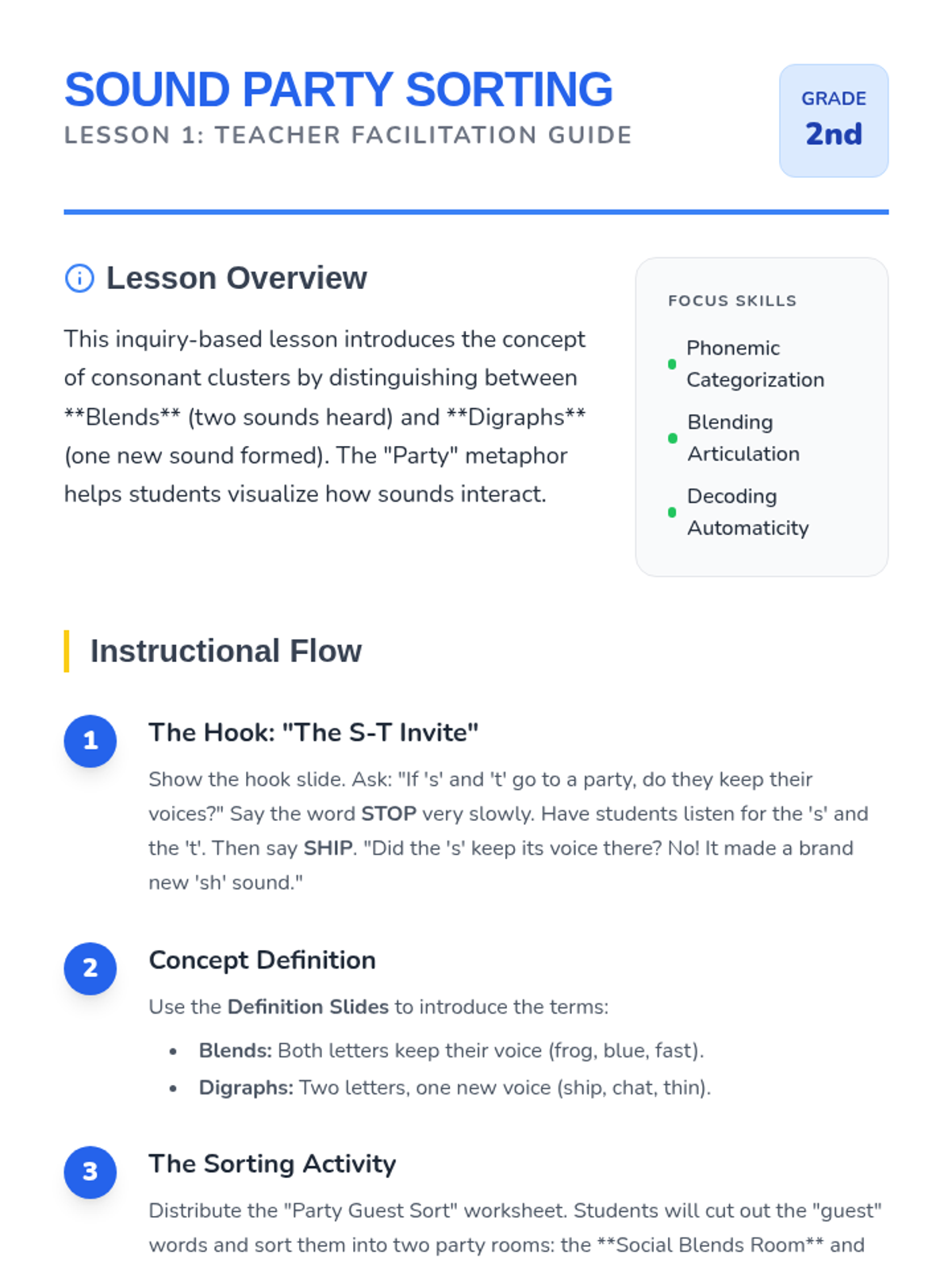
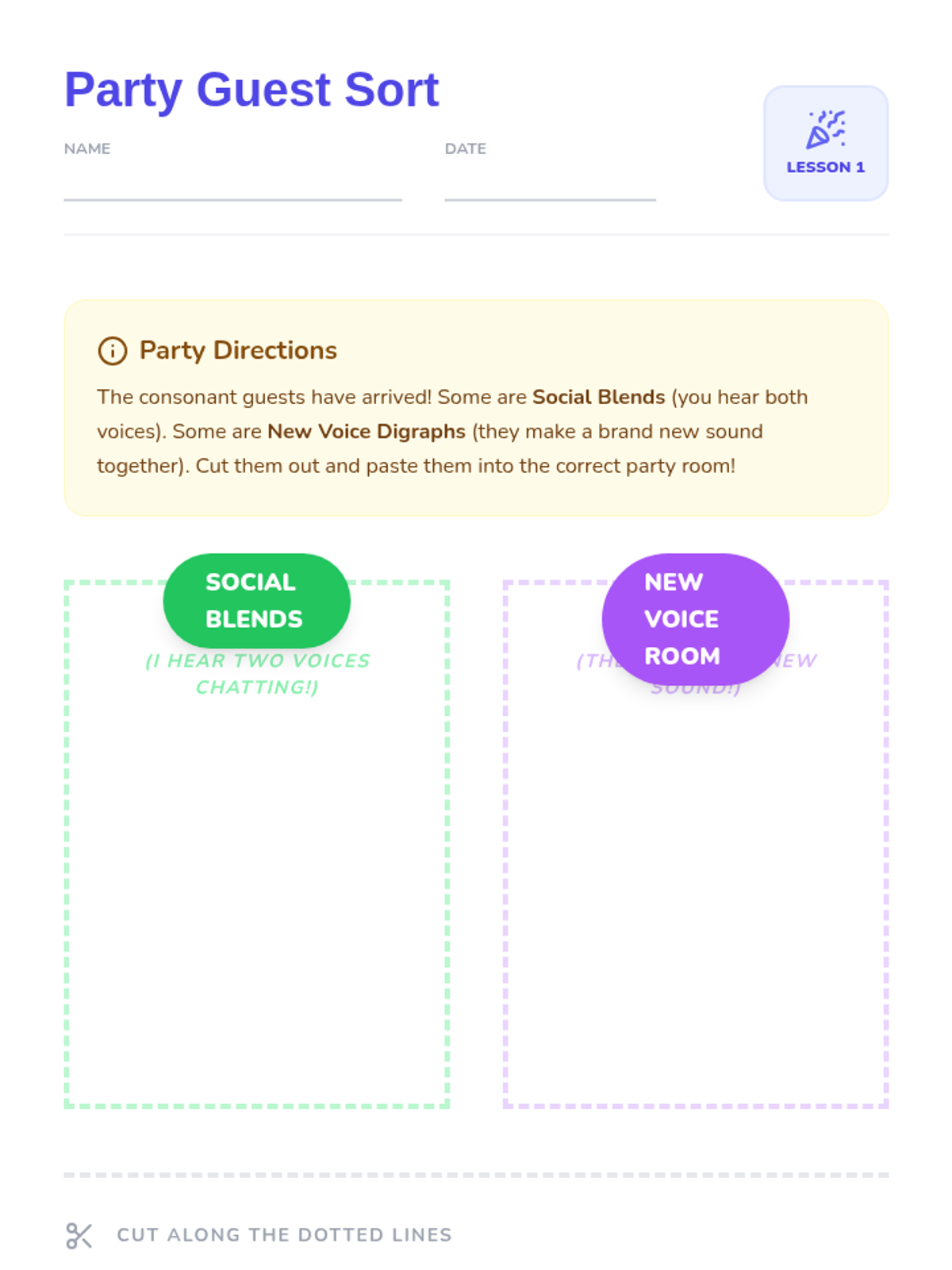
A game-based sequence where 2nd-grade students distinguish between consonant blends and digraphs through interactive sorting, relays, scavenger hunts, and a culminating board game.
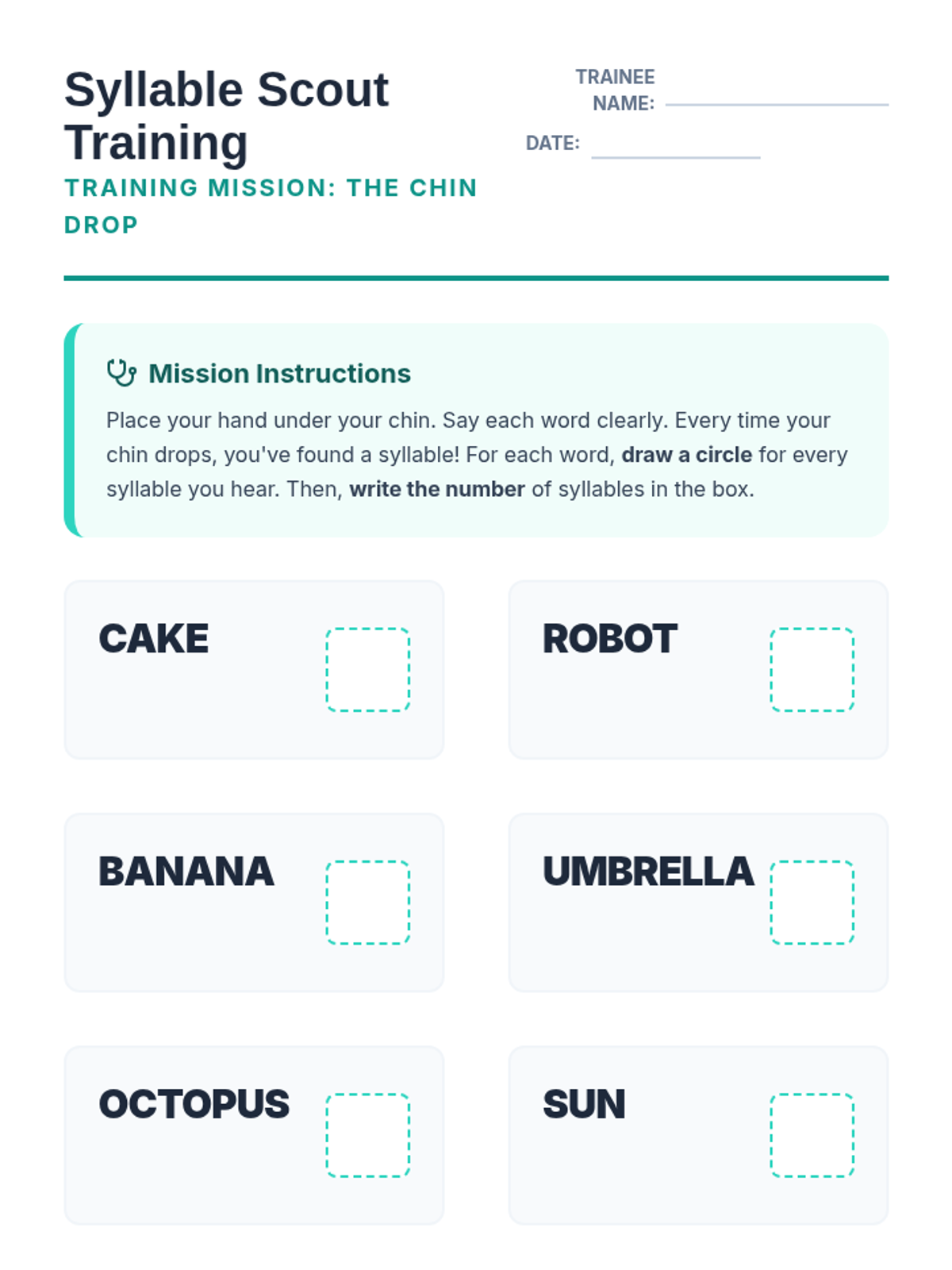
This mastery-based sequence moves students from single-syllable reading to decoding multisyllabic words by understanding open and closed syllables. Students learn to segment words based on vowel sounds, determining if a syllable ends in a consonant (short vowel/closed) or a vowel (long vowel/open). This structural analysis empowers students to tackle unknown vocabulary independently.
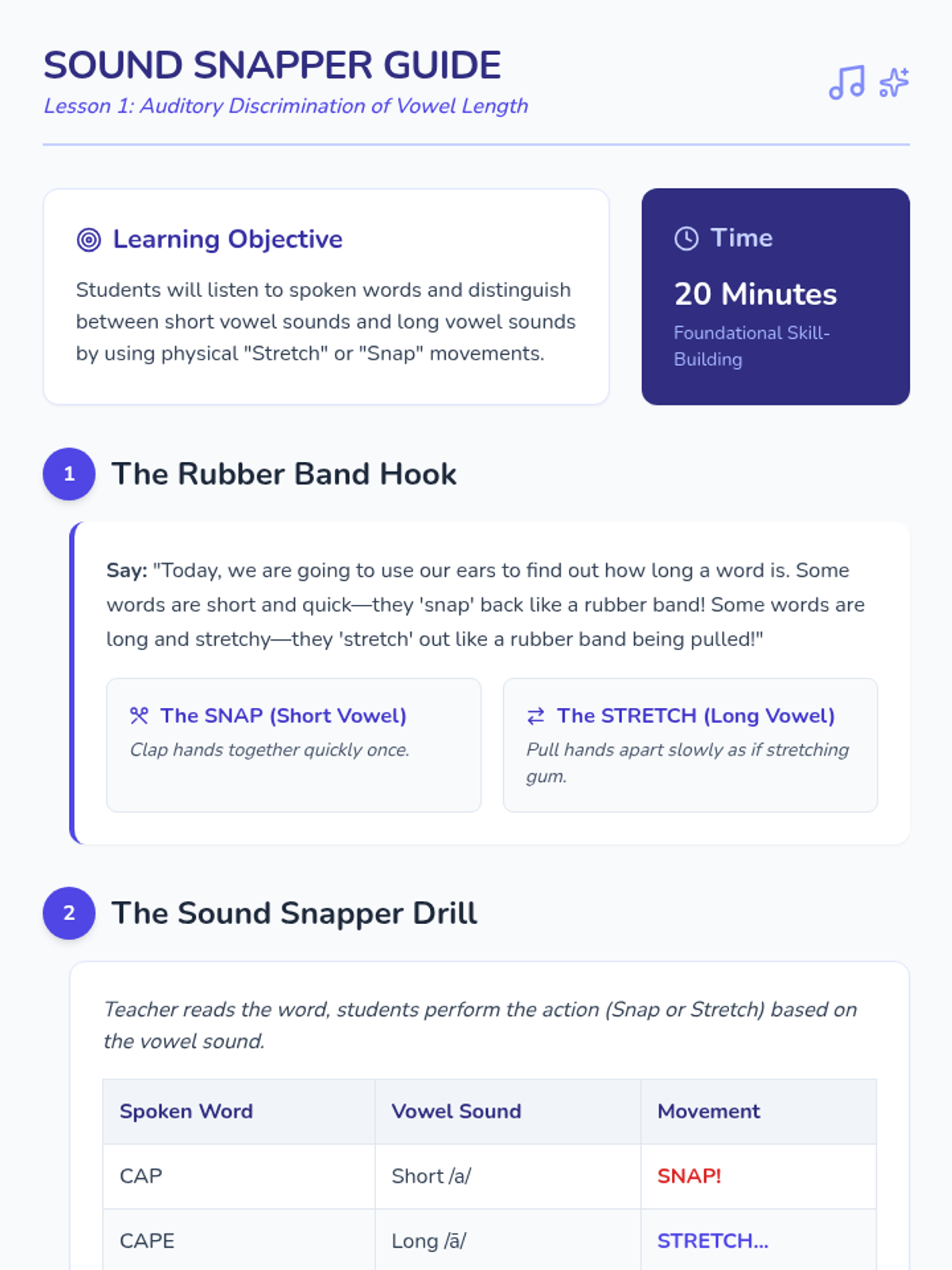
A comprehensive 2nd Grade phonics sequence focusing on the Silent E (CVCe) pattern. Students progress from auditory discrimination to pattern recognition, encoding, and reading decodable texts, mastering how the addition of a silent 'e' transforms short vowel sounds into long vowel sounds.
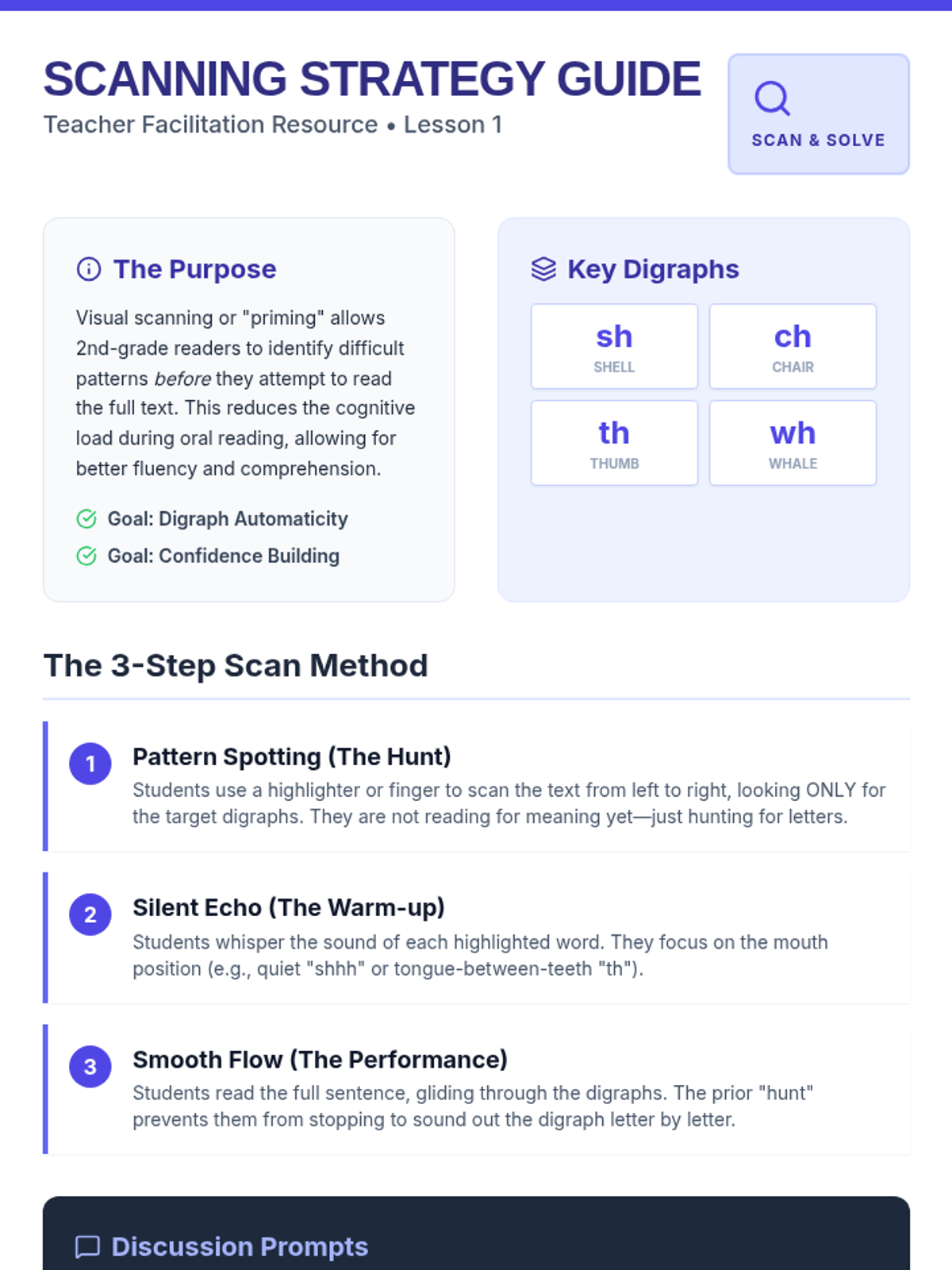
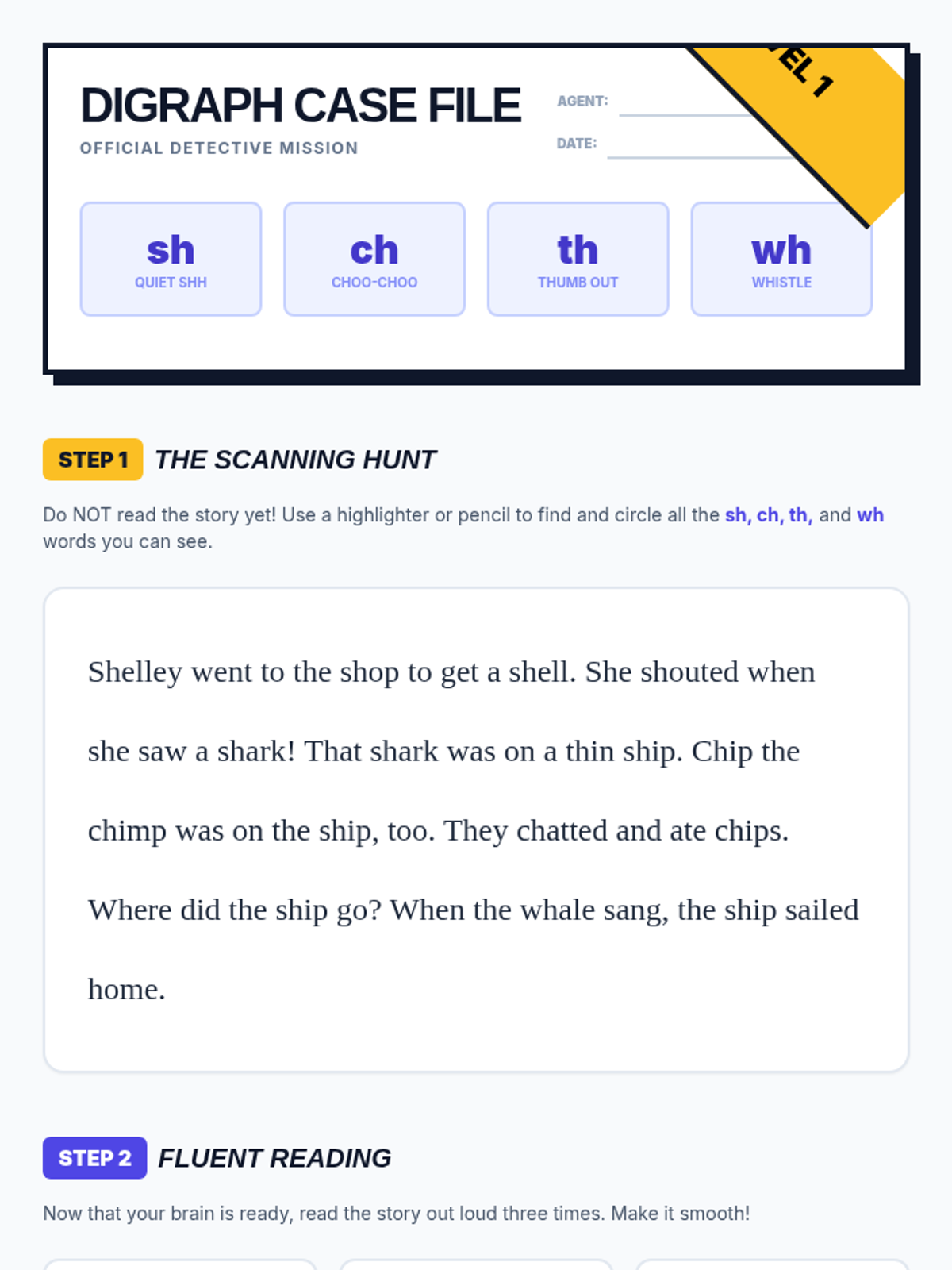
A 2nd-grade reading sequence that moves from isolated digraph recognition to fluent, expressive reading in context using a 'Digraph Detective' theme. Students practice scanning, choral reading, context clues, and performance to master ch, sh, th, and wh patterns.
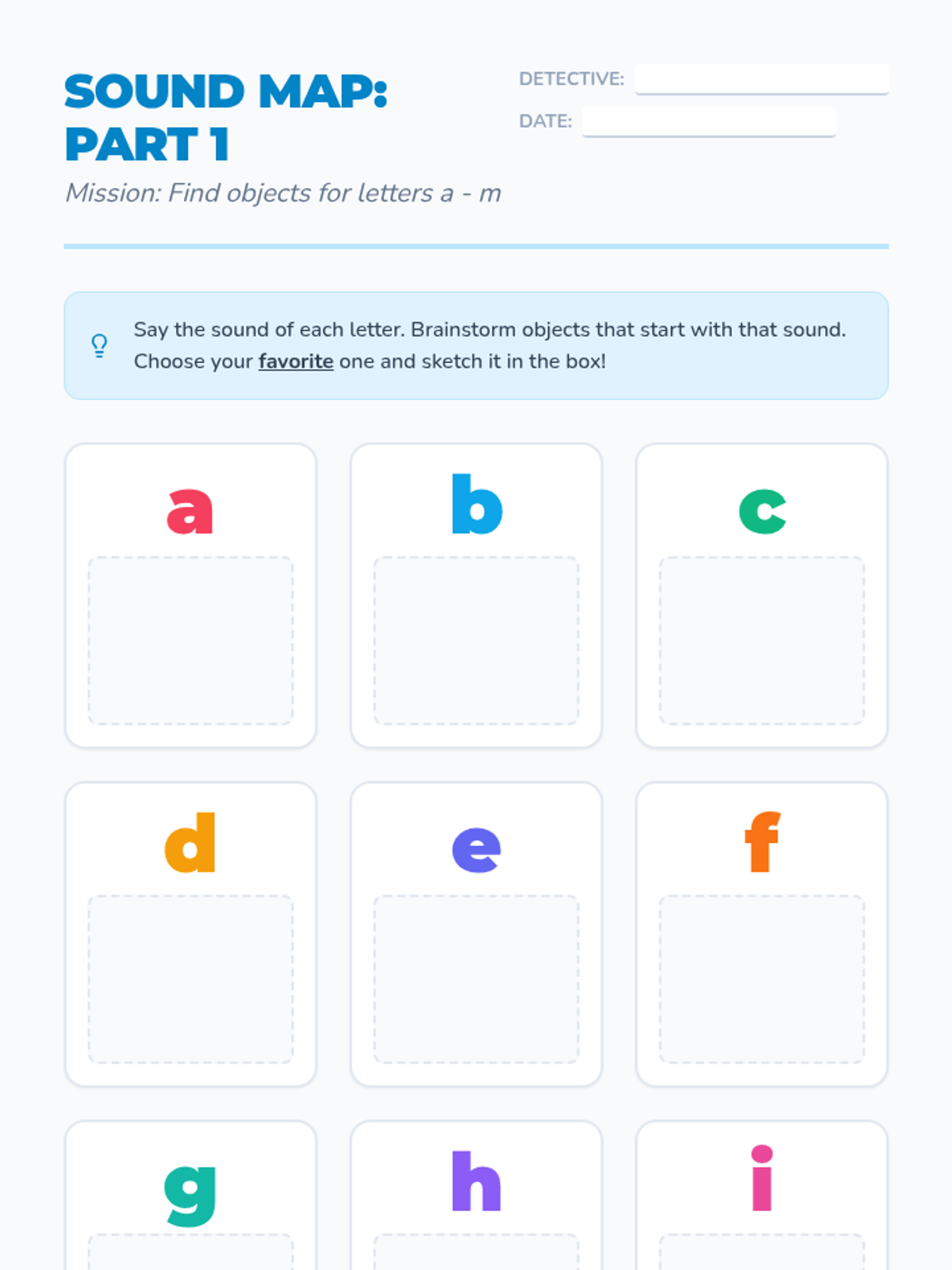
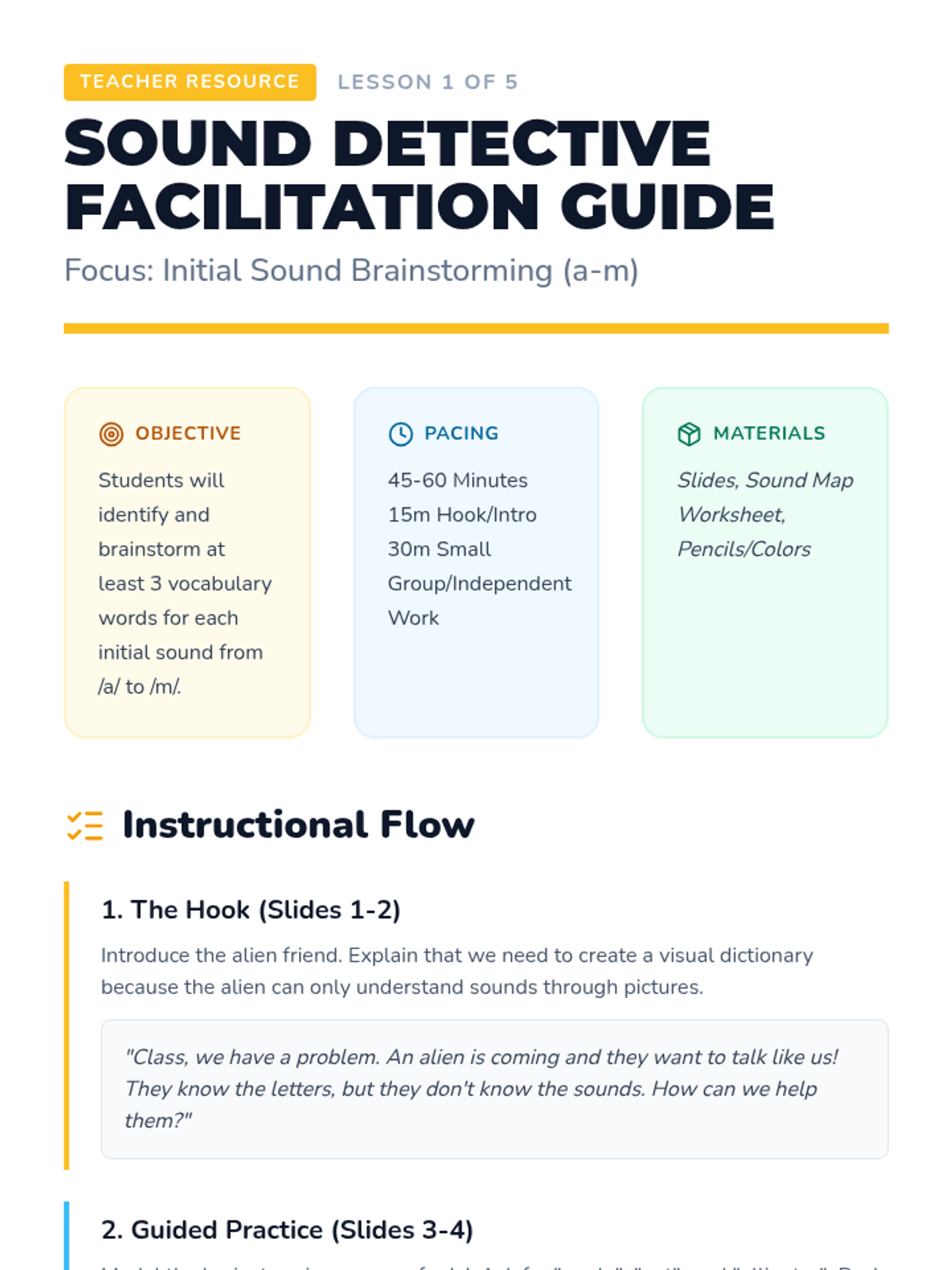
Students embark on a collaborative project to create a class-wide Picture Sound Dictionary, focusing on lowercase letter-sound associations, vocabulary development, and handwriting. This sequence moves from initial sound exploration and brainstorming to artistic illustration and final publication.
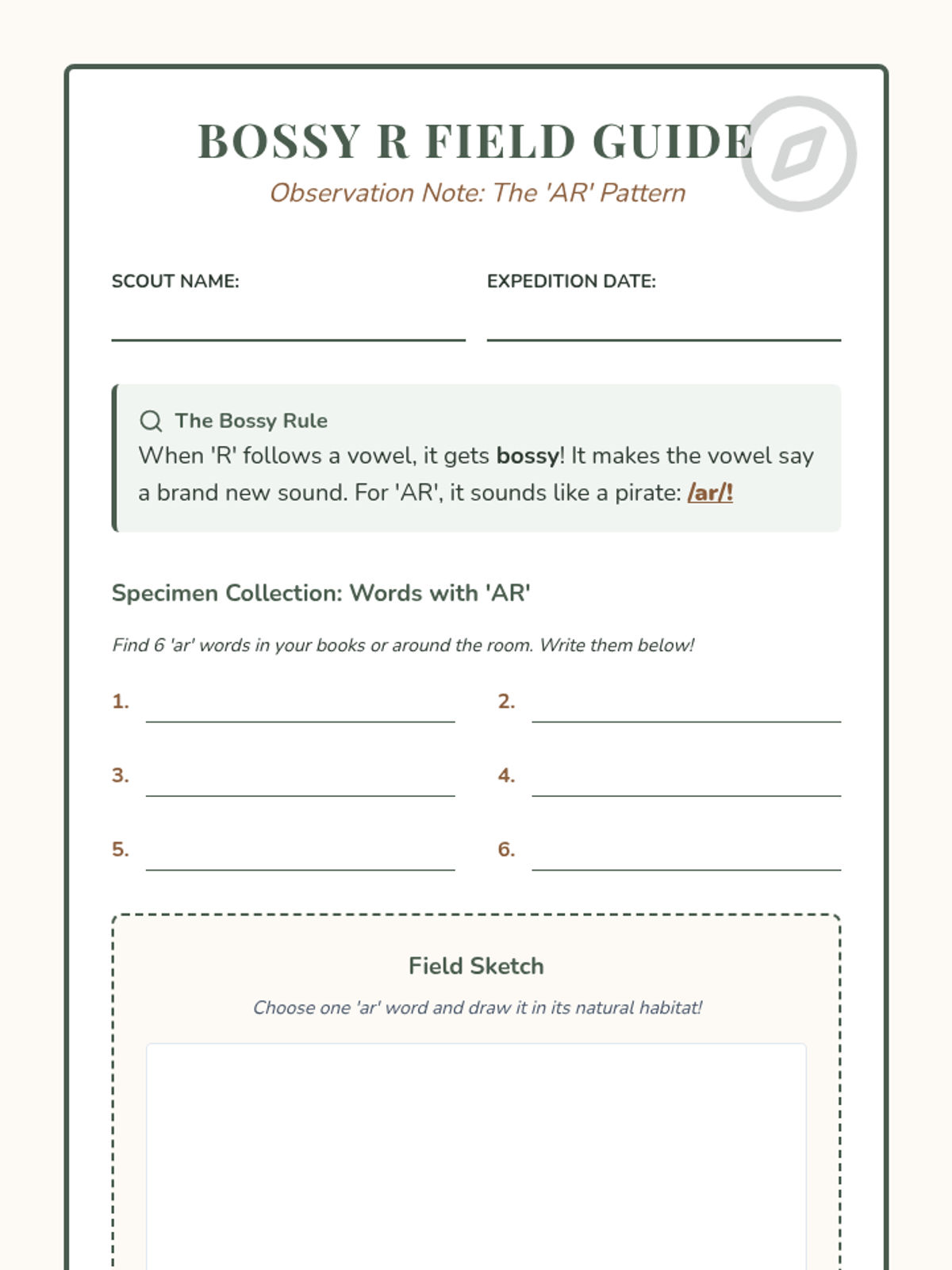
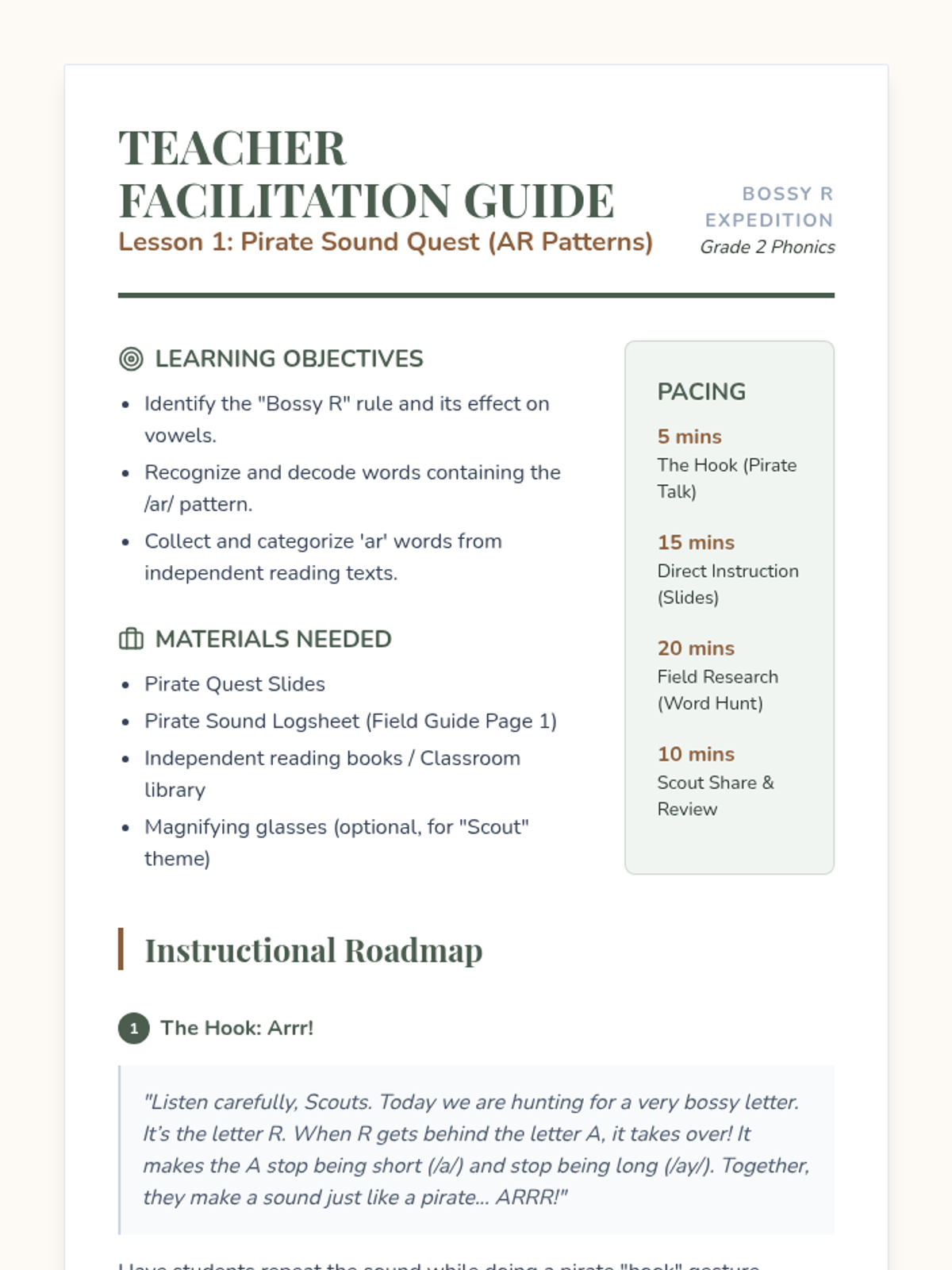
A 2nd-grade phonics project where students become 'Scouts' to track down the 'Bossy R' (r-controlled vowels). Throughout the week, they build a Field Guide documenting vowel transformations and mastering decoding of complex R-controlled patterns.
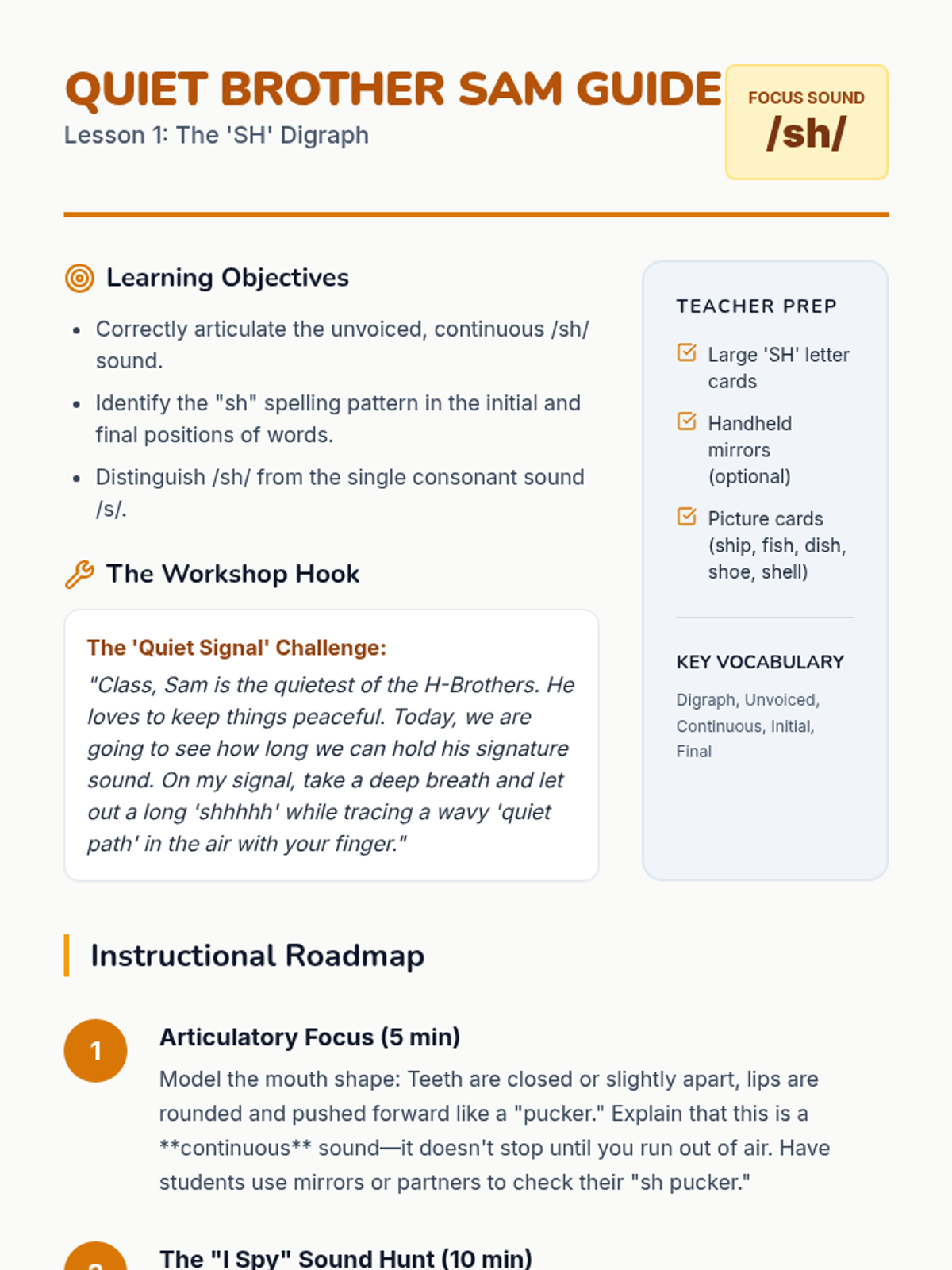
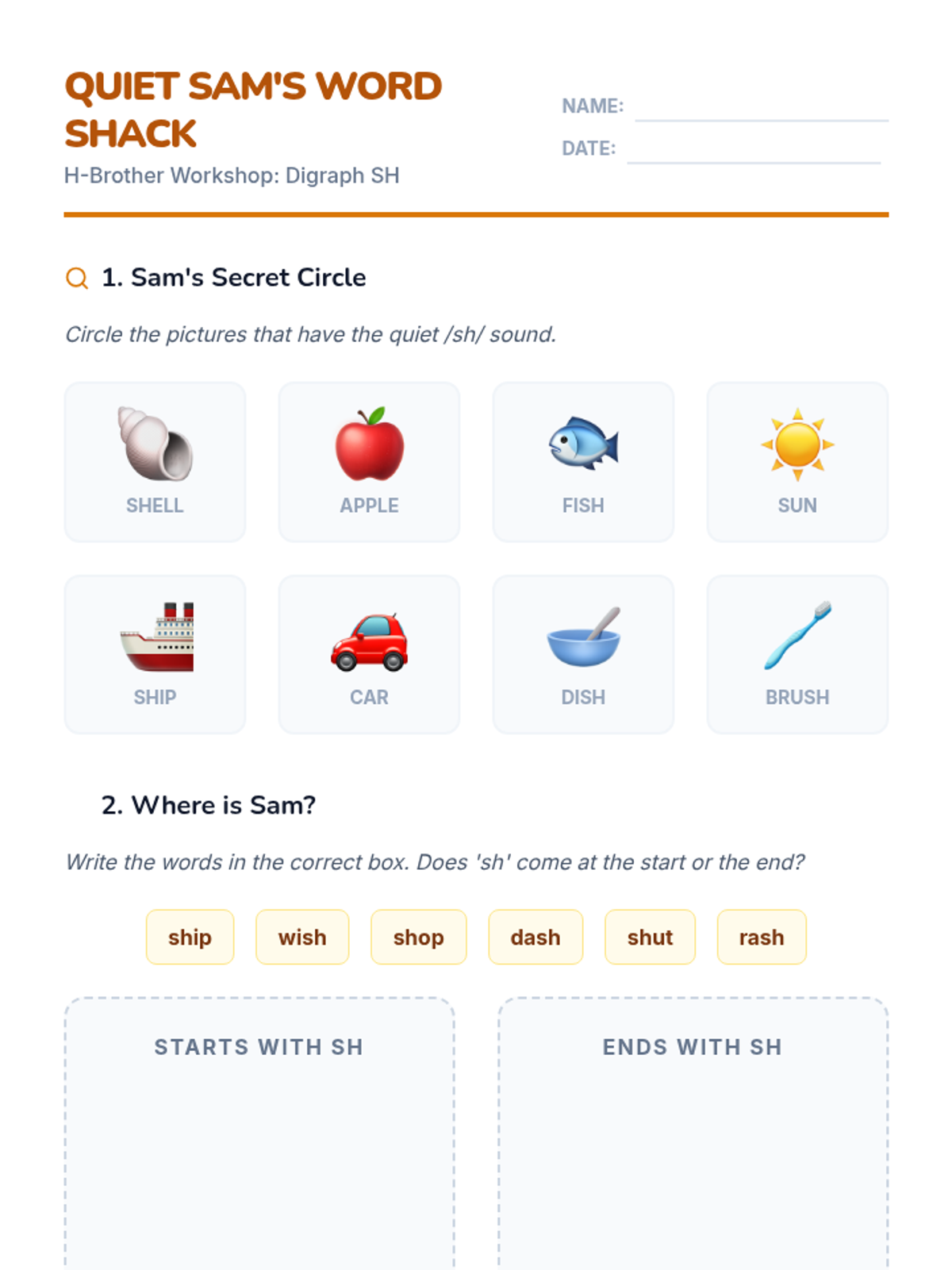
A comprehensive phonics sequence for 2nd Grade focused on identifying, articulating, and distinguishing the 'H-Brother' digraphs: sh, ch, th, and wh. Through tactile workshops and auditory discrimination tasks, students build decoding automaticity and phonemic awareness.
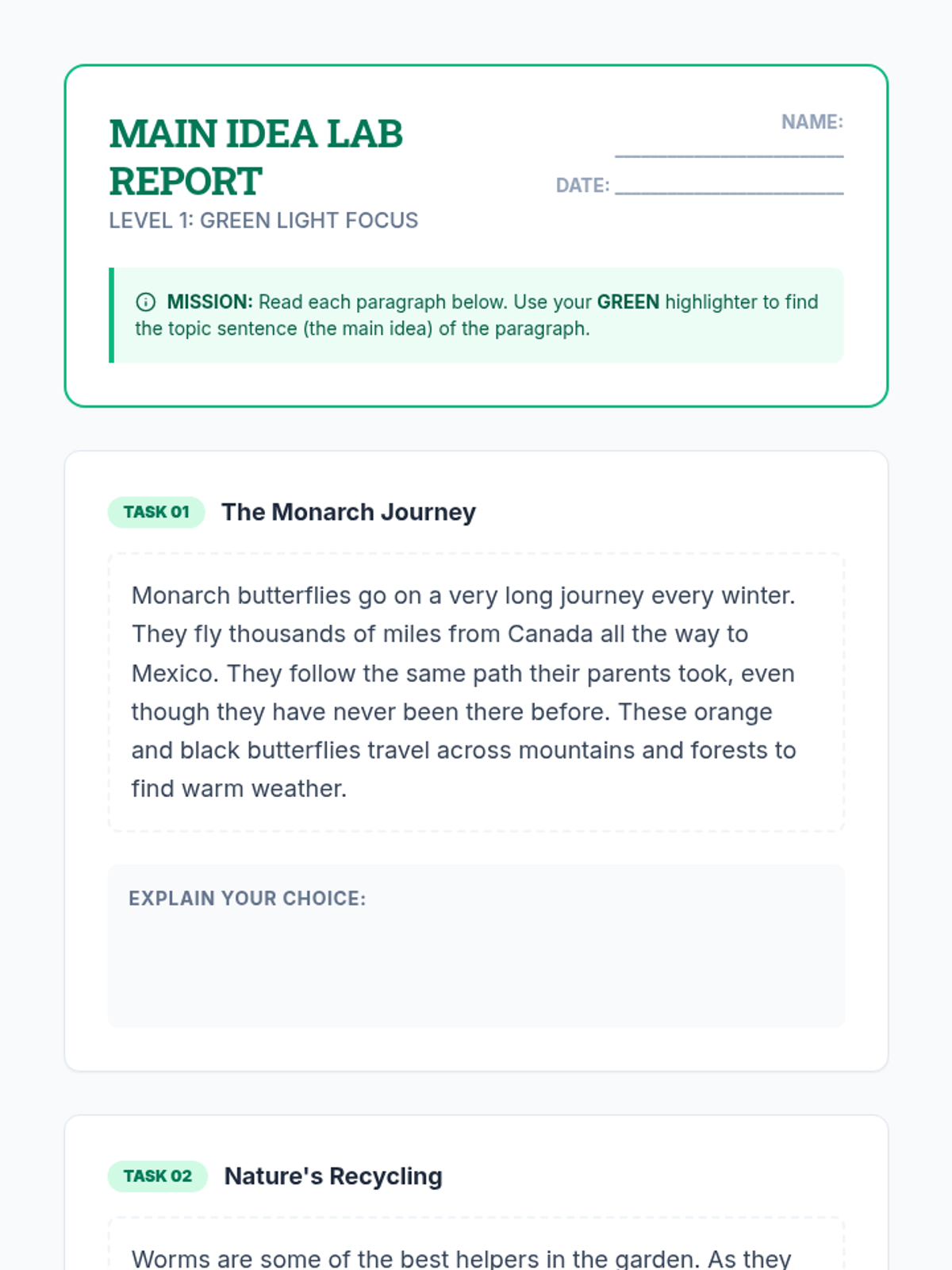
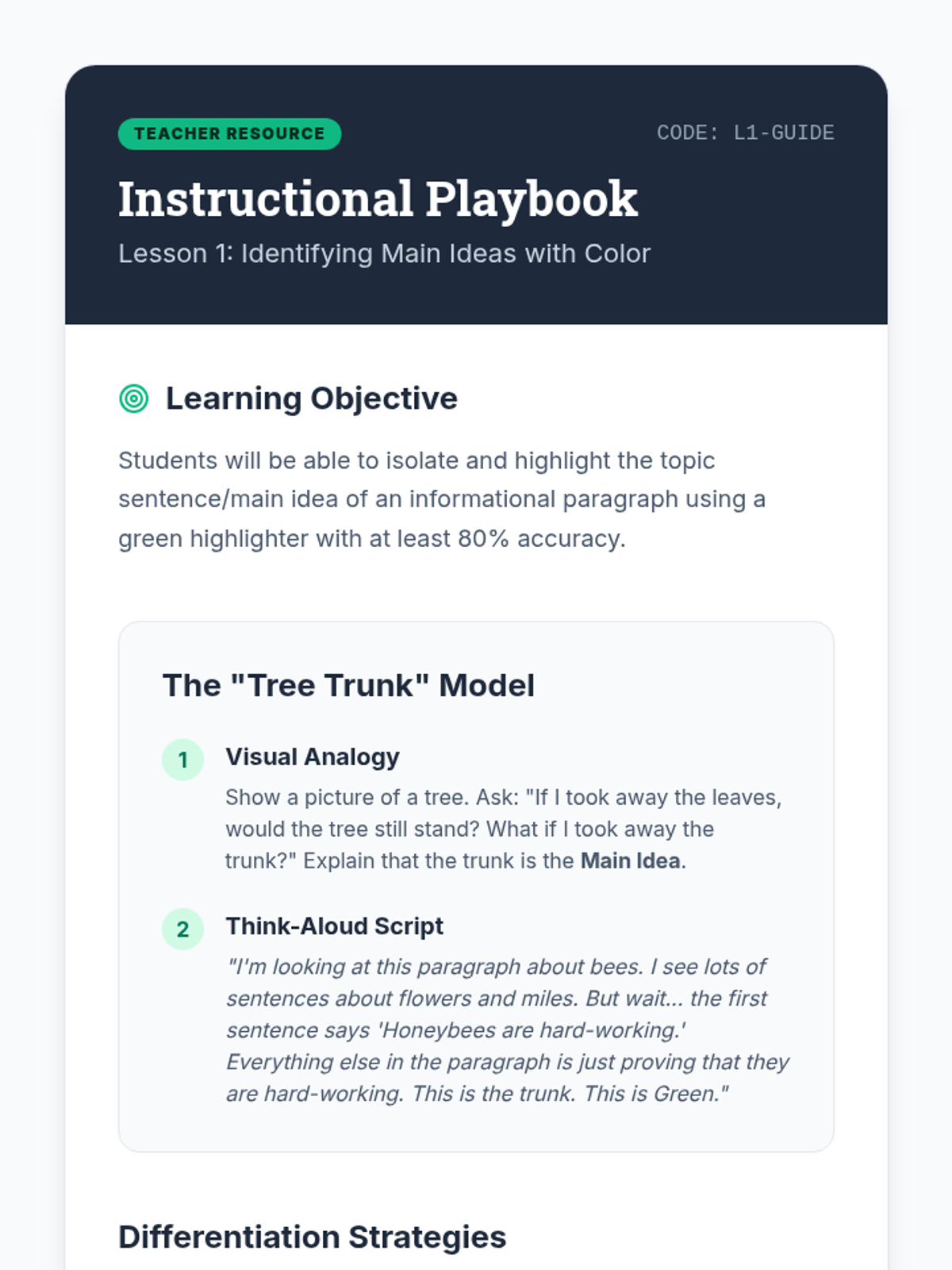
A multi-sensory, color-coded approach to reading comprehension. Students learn to systematically deconstruct informational texts using a tri-color system: green for main ideas, yellow for supporting details, and red for unknown vocabulary.
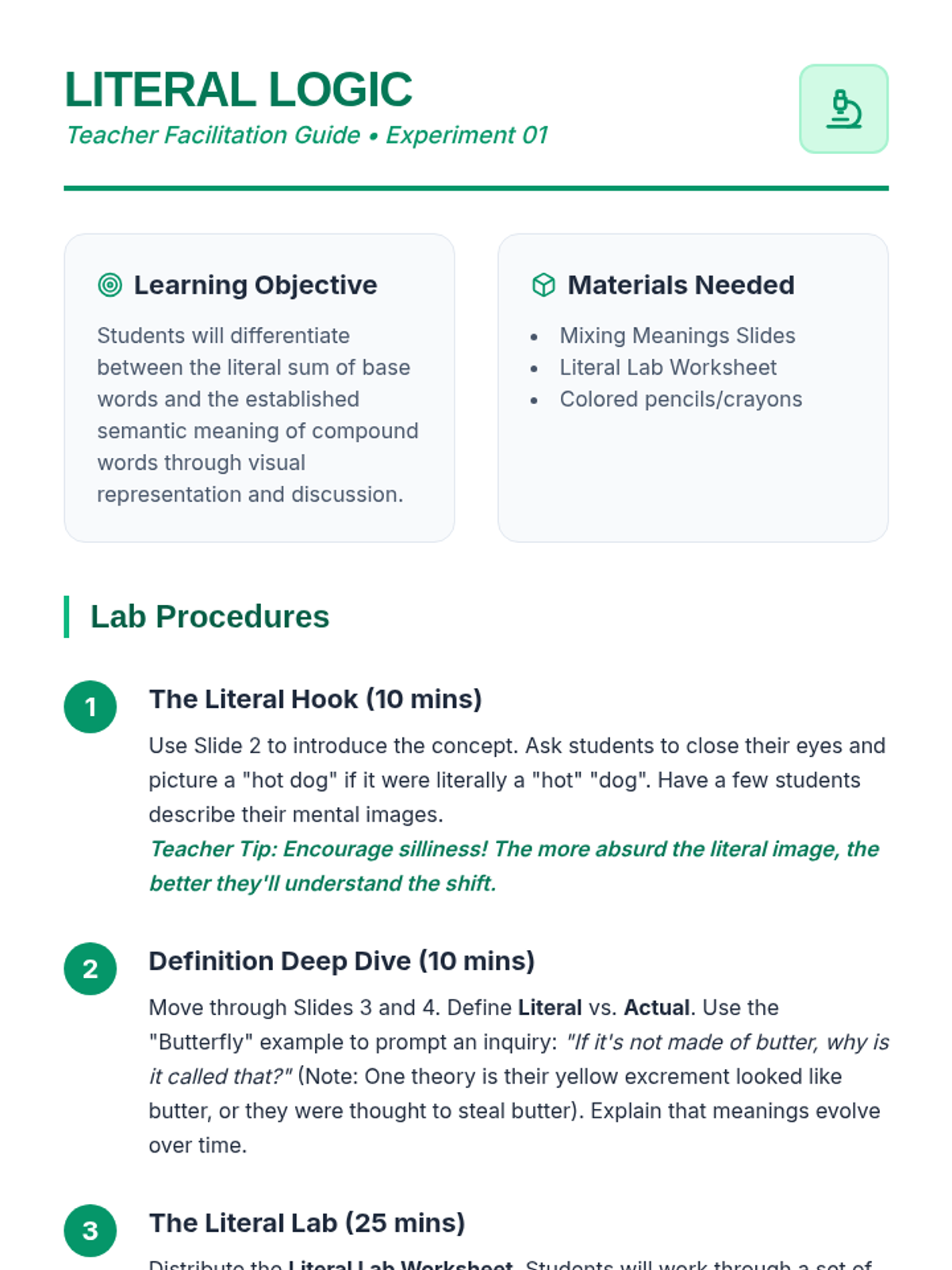
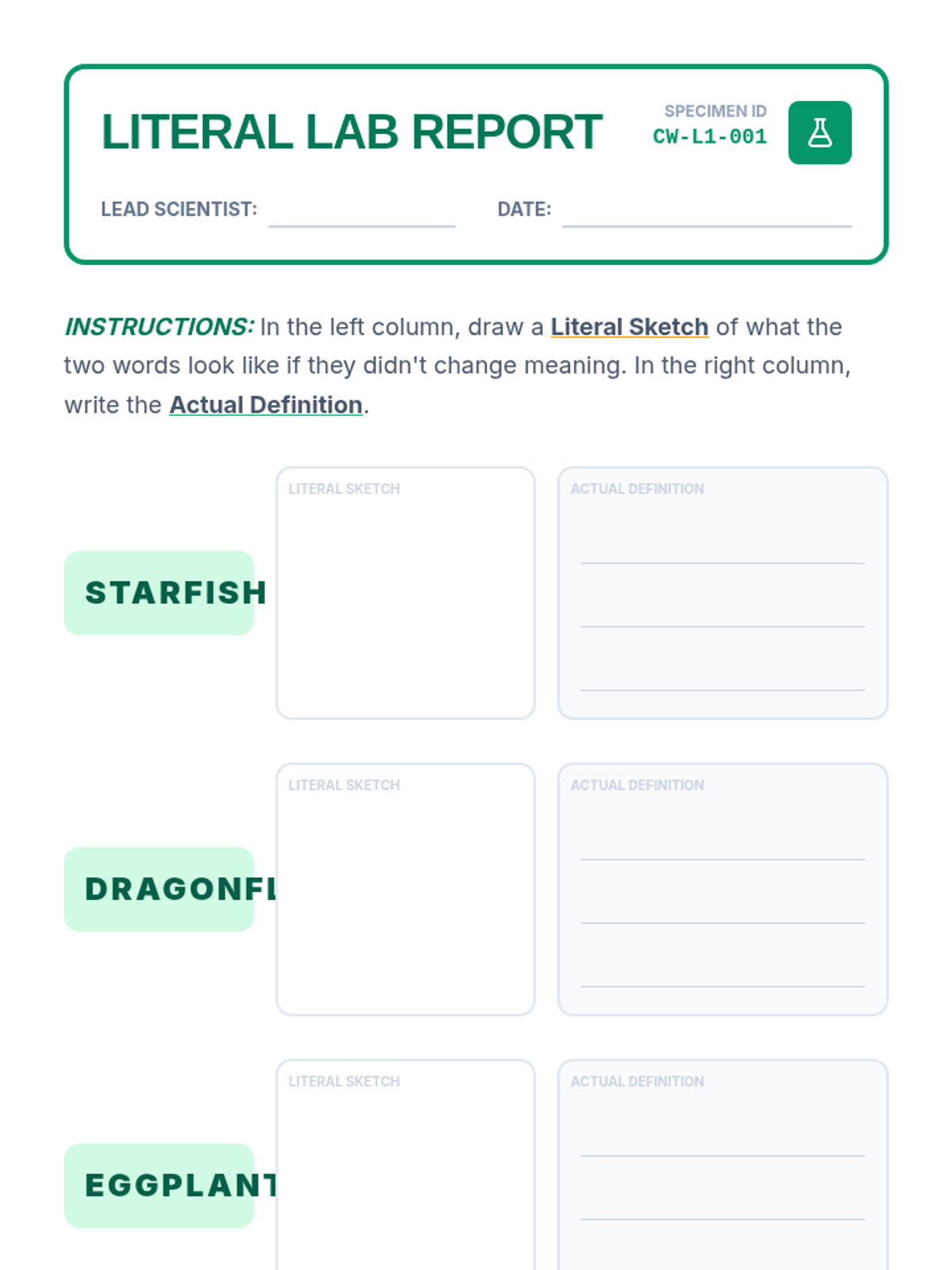
A 5-lesson inquiry into how compound words shift in meaning, comparing literal interpretations with actual definitions through a 'Word Lab' theme. Students explore transparent and opaque compounds, create riddles, and build semantic maps to understand language evolution.
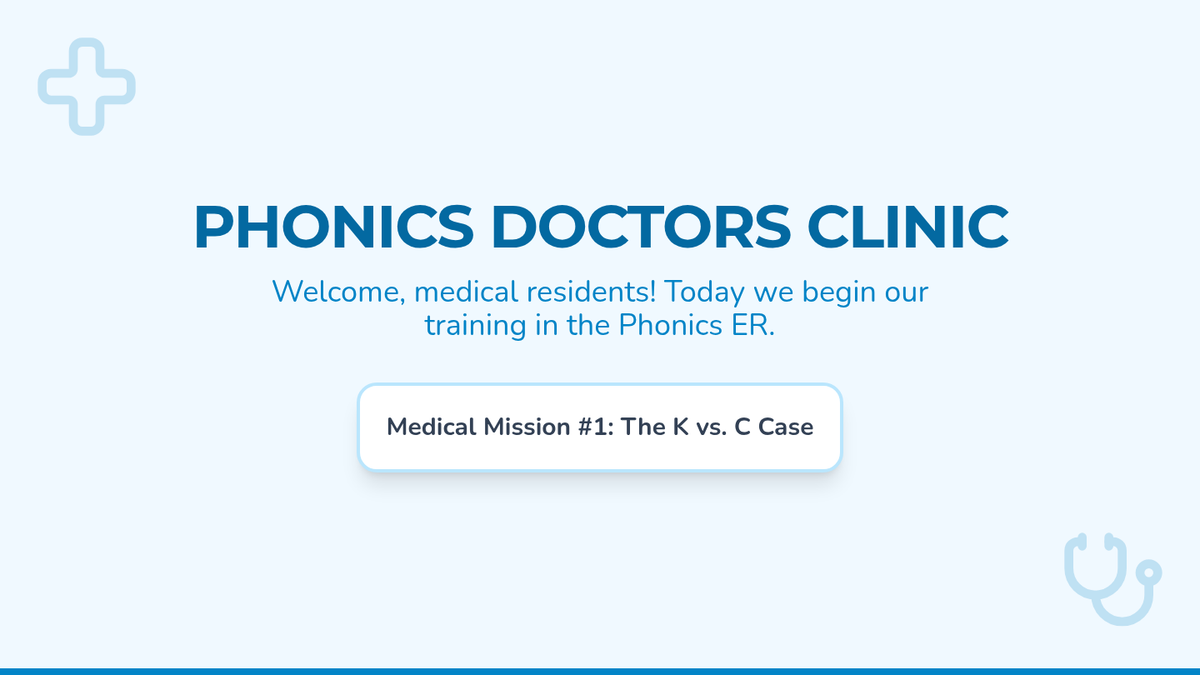
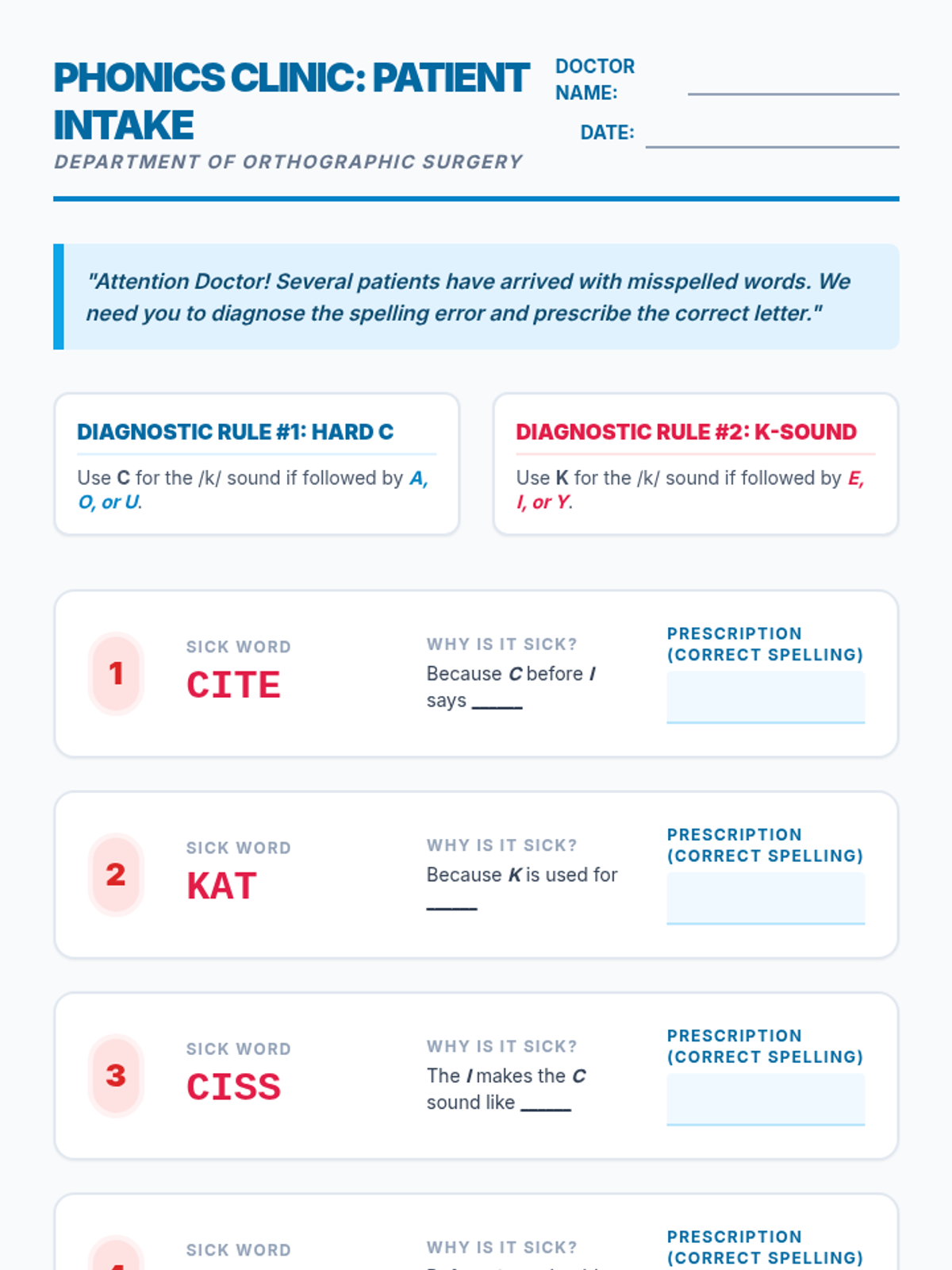
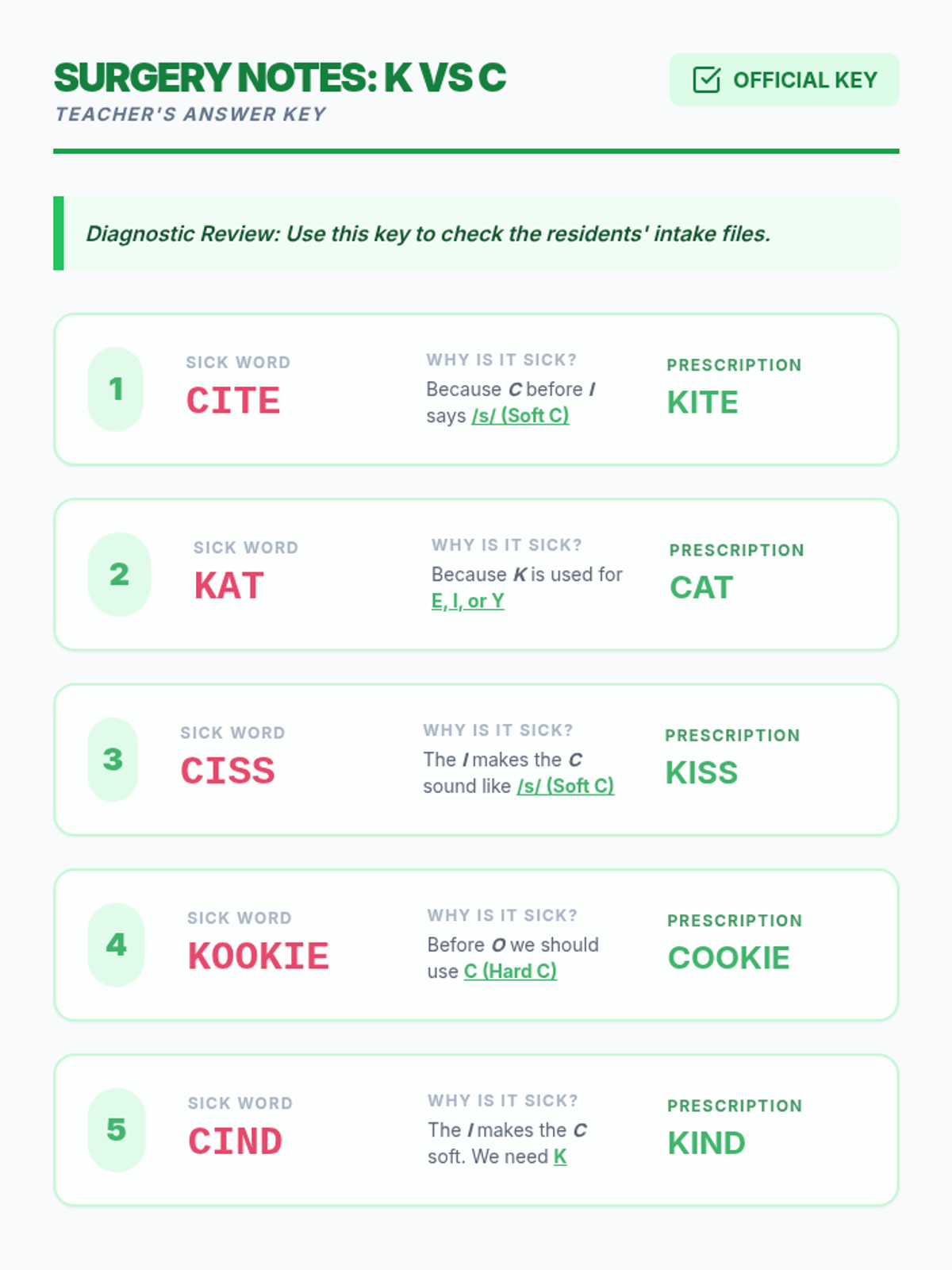
A simulation-based phonics sequence where 2nd-grade students act as 'Phonics Doctors' to diagnose and correct spelling errors related to soft C and G sounds. Students move from word-level diagnosis to paragraph-level editing, culminating in the creation of a professional phonics reference guide.