Essential grammar structures, high-frequency vocabulary, and foundational literacy skills. Equips learners with basic speaking and listening abilities for everyday interactions and introductory text comprehension.
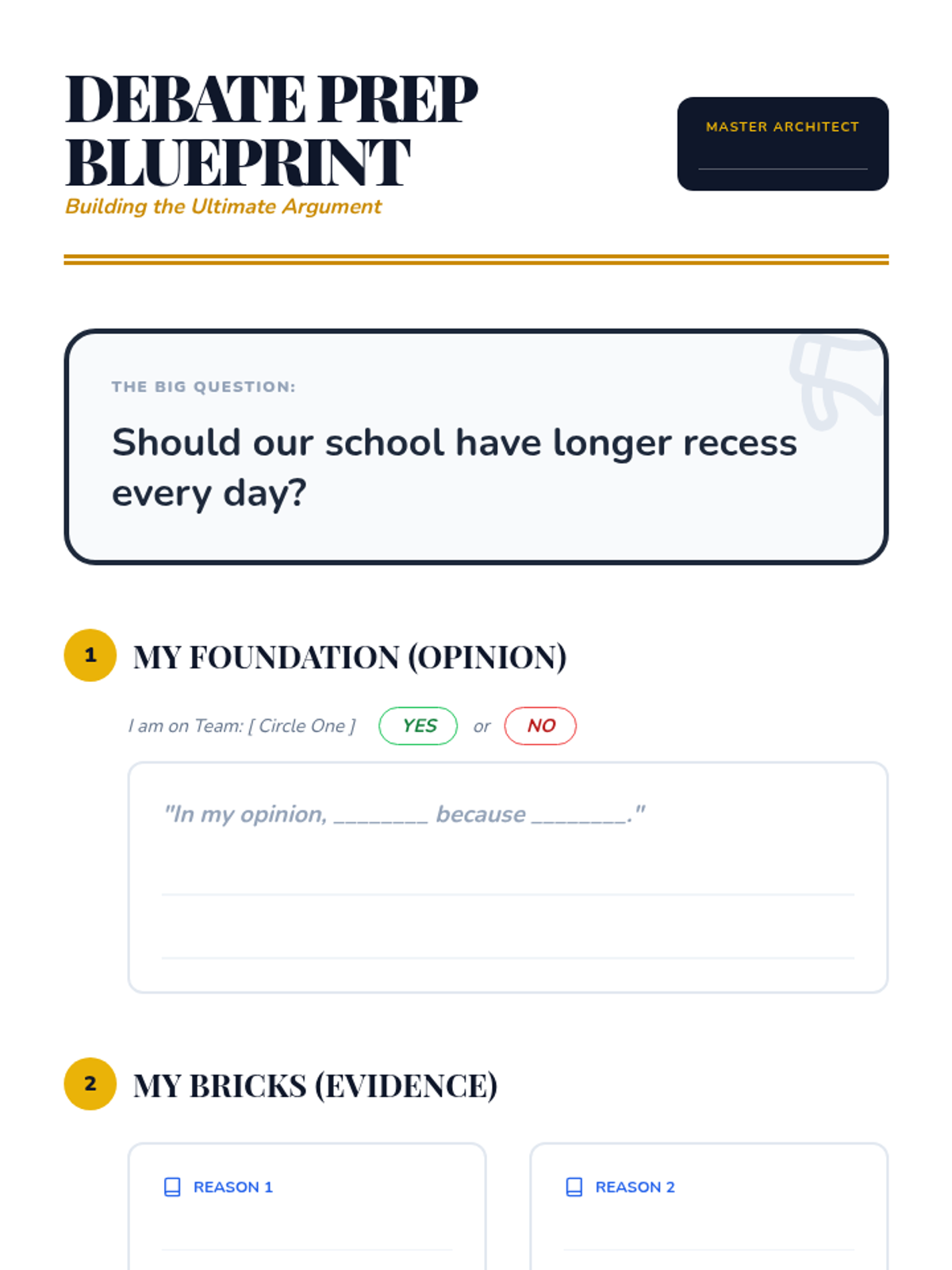
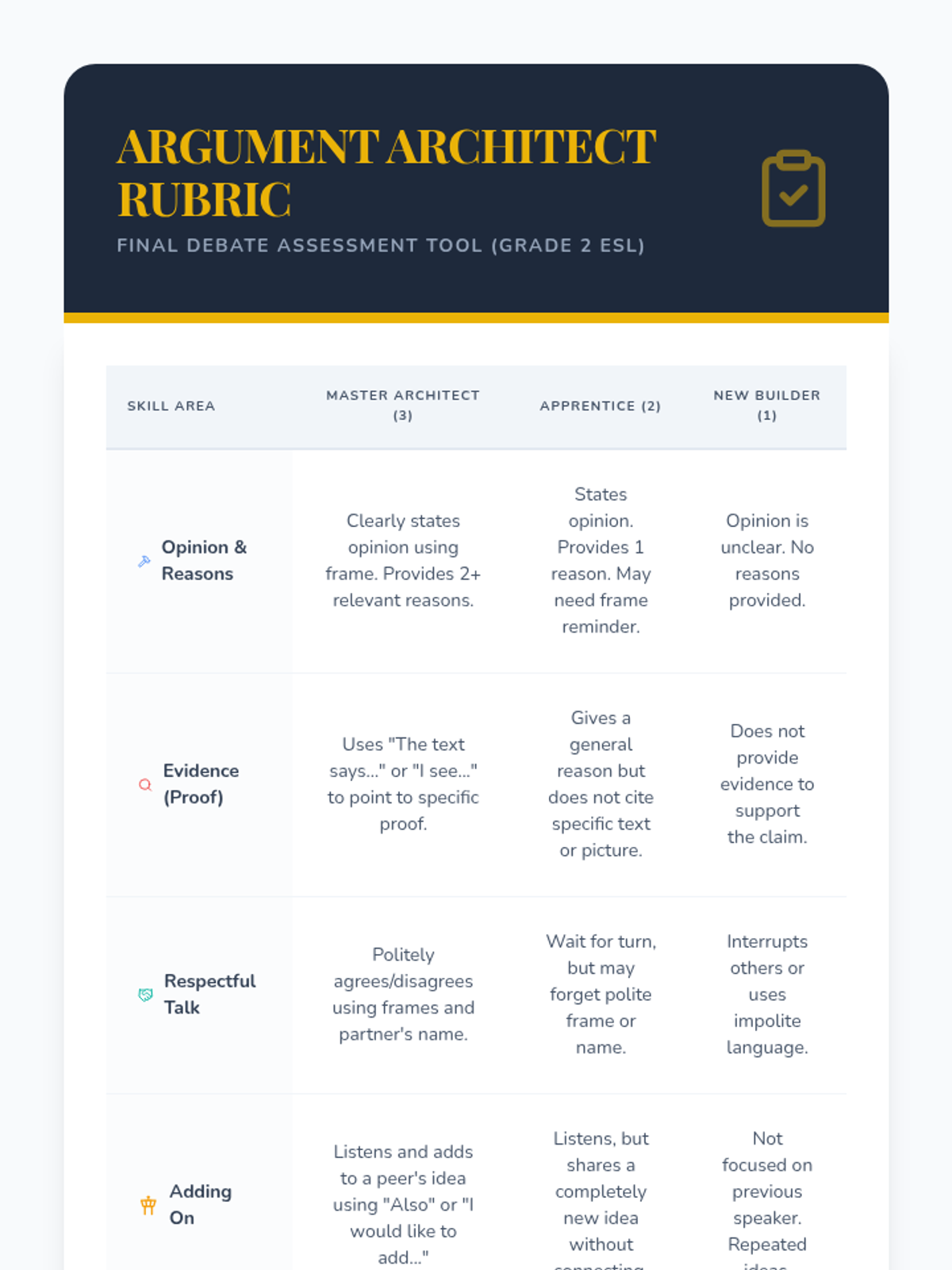
The sequence culminates in a structured debate where students apply all learned skills to argue for or against a school-related topic using evidence and respectful discourse.
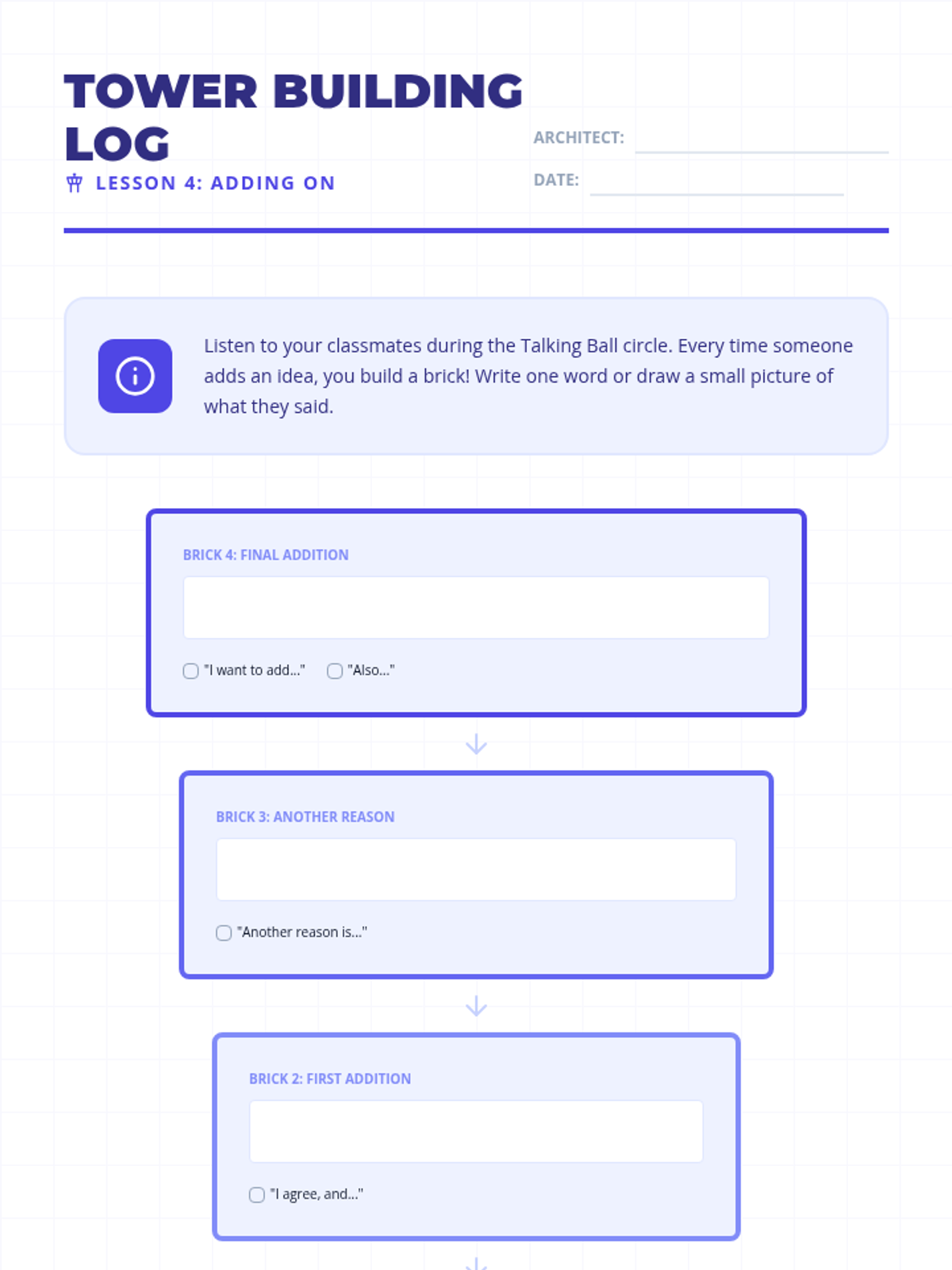
Students practice extending conversations by adding to what classmates have said, using connectors like 'Also' and 'Another reason is' to build a collaborative dialogue.
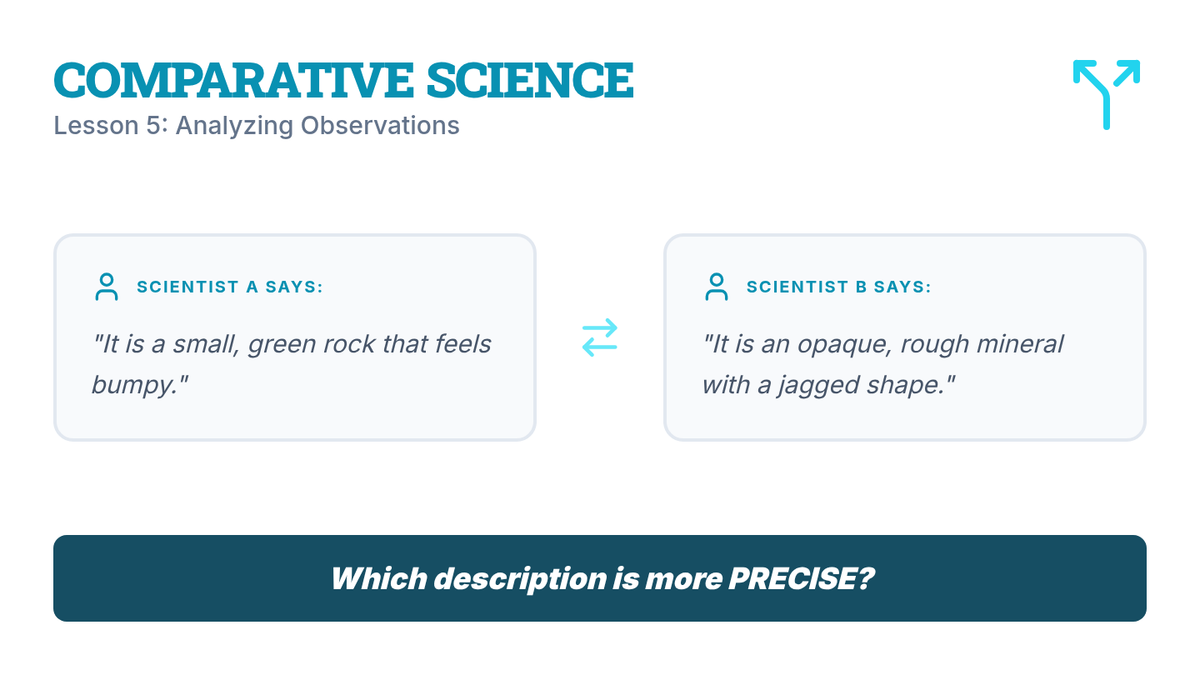
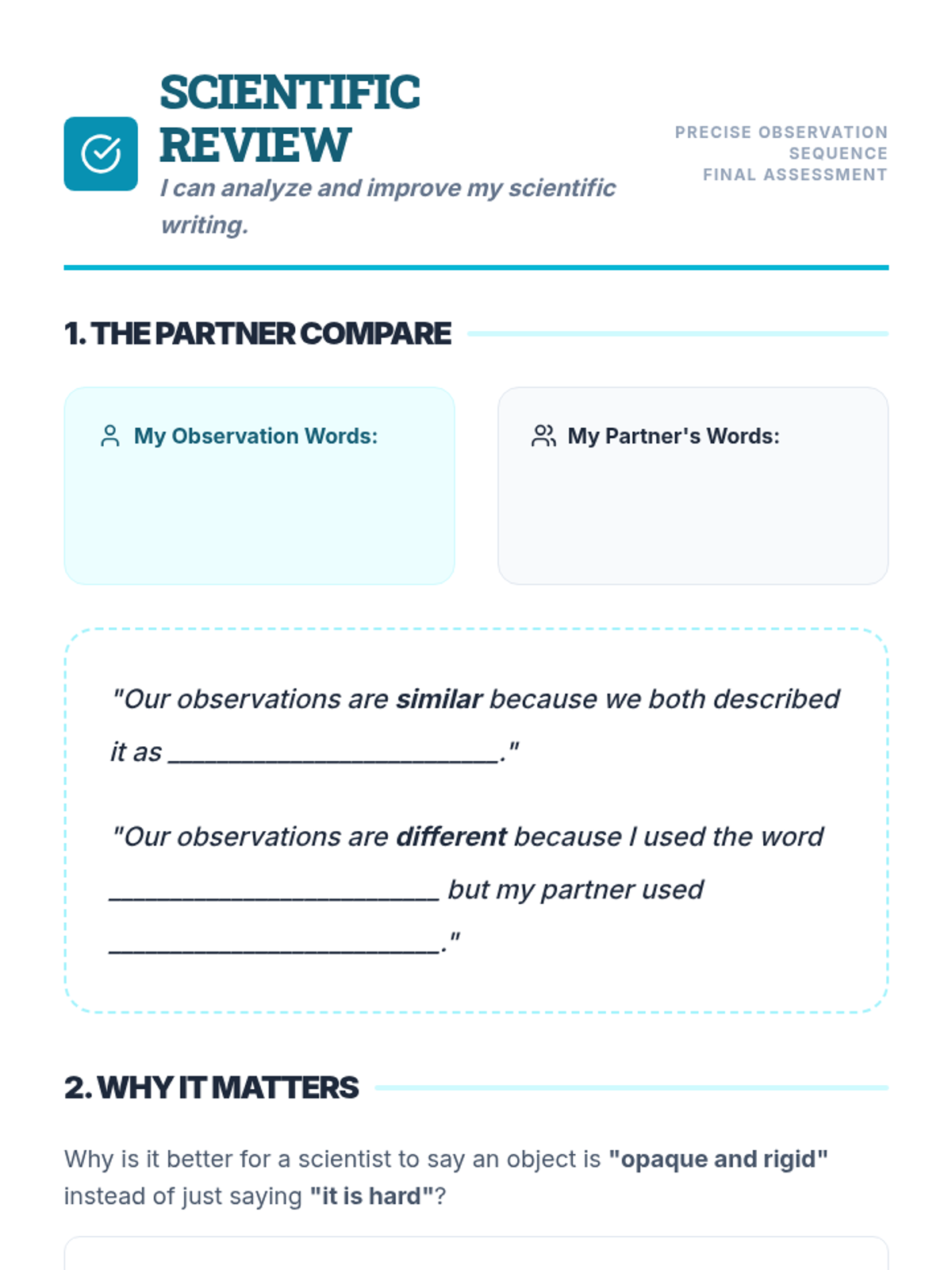
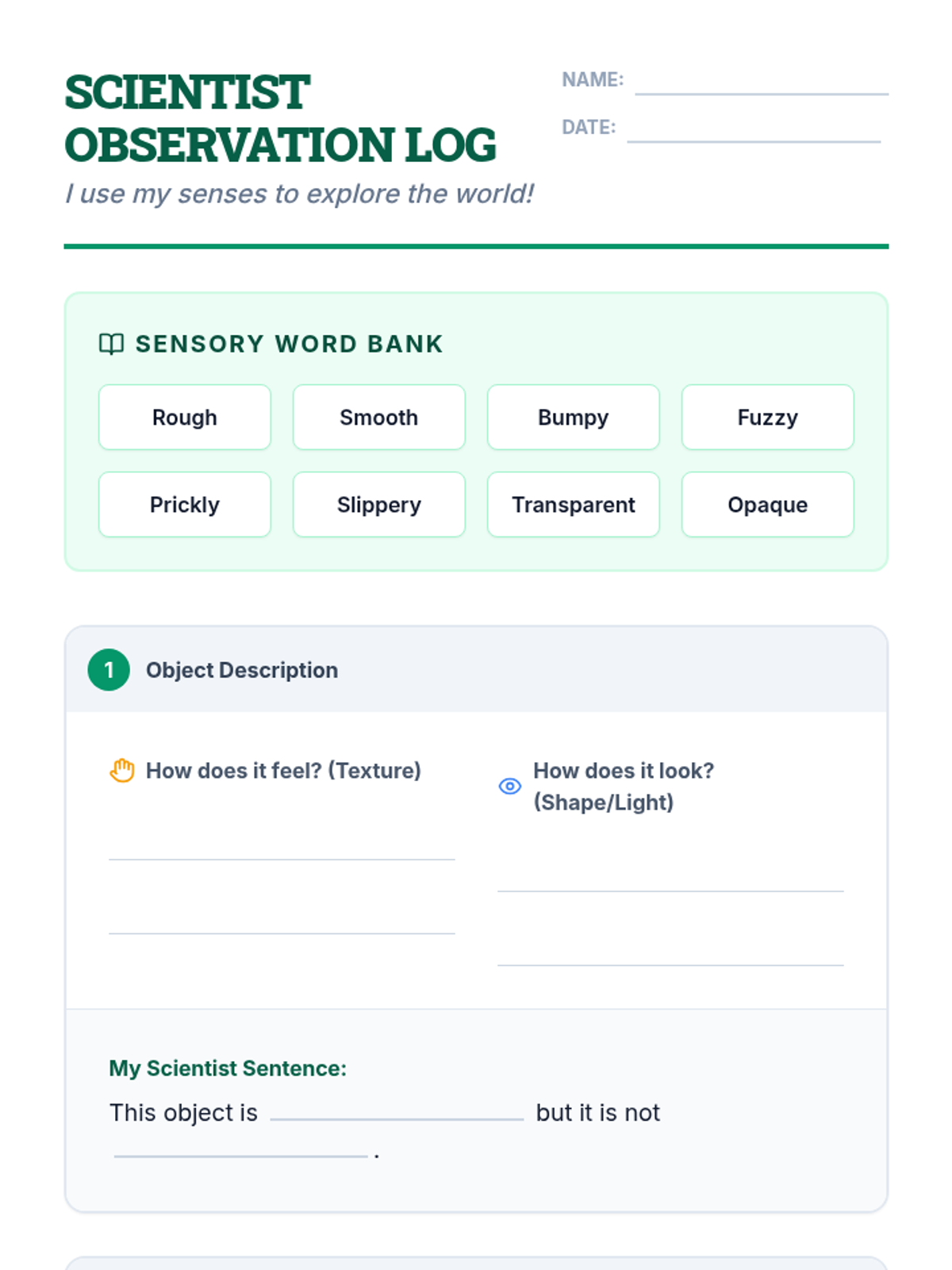
Students compare their observations with peers to discuss why scientists need standardized vocabulary. They use comparative language to analyze similarities and differences in their descriptions.
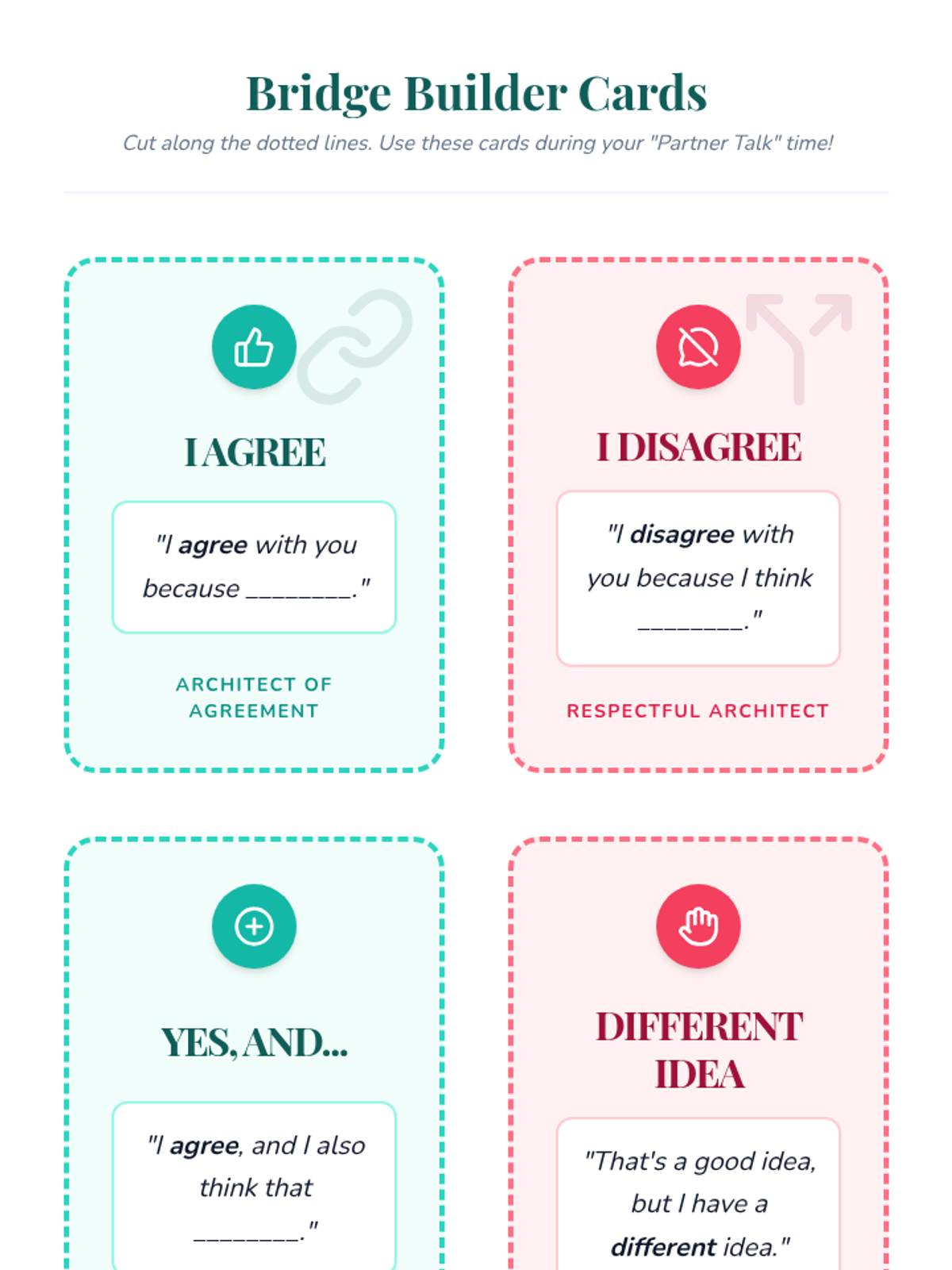
Students learn polite disagreement and agreement frames to maintain respectful academic conversations during group work and discussions.
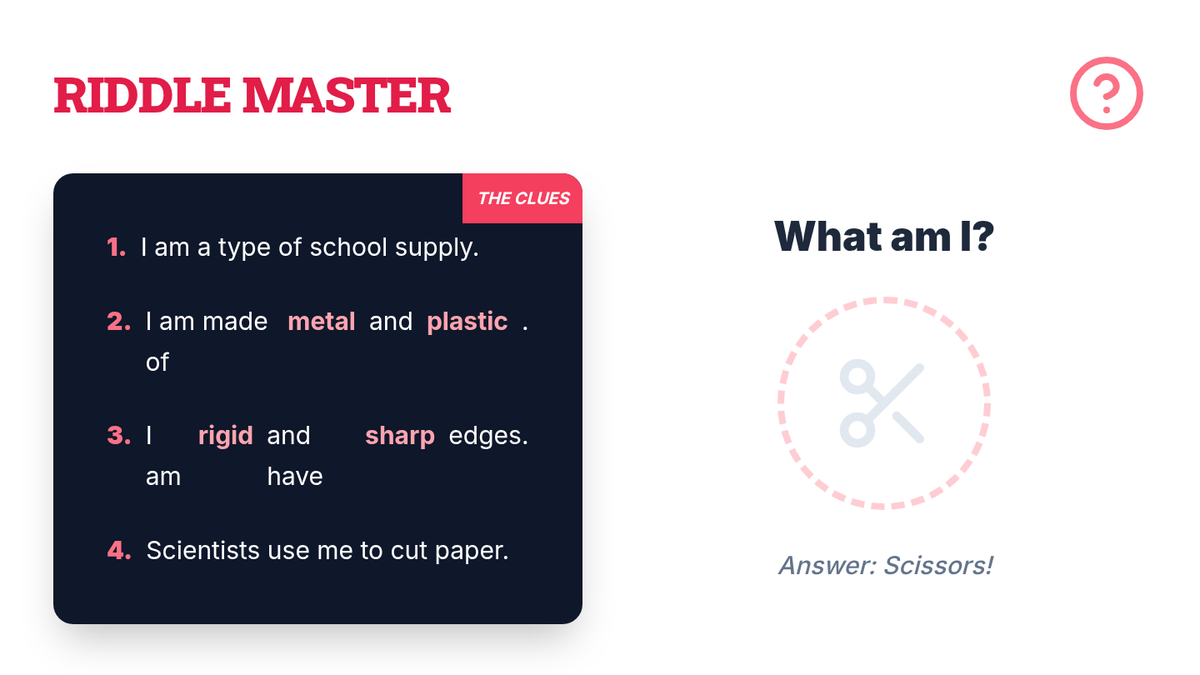
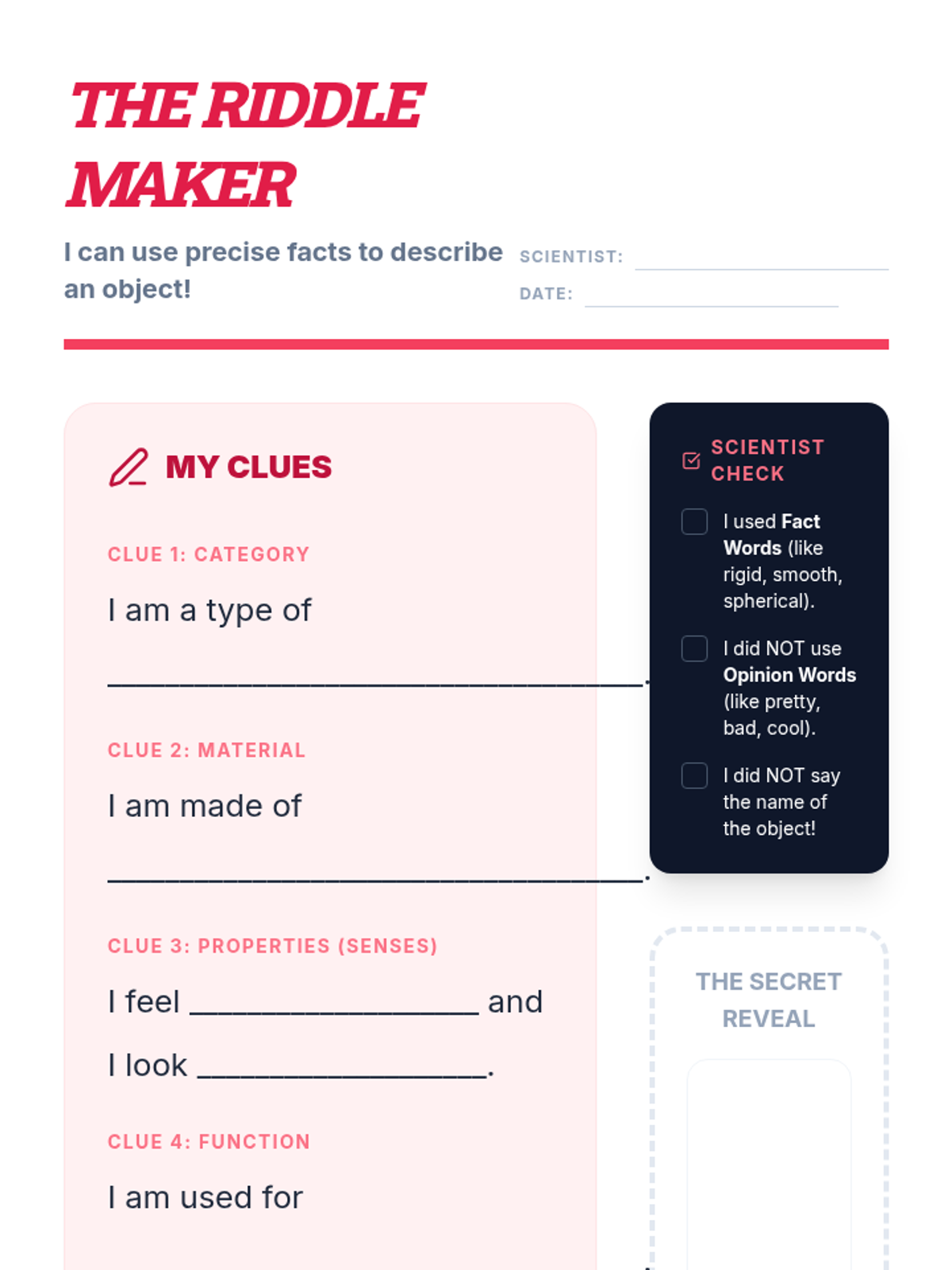
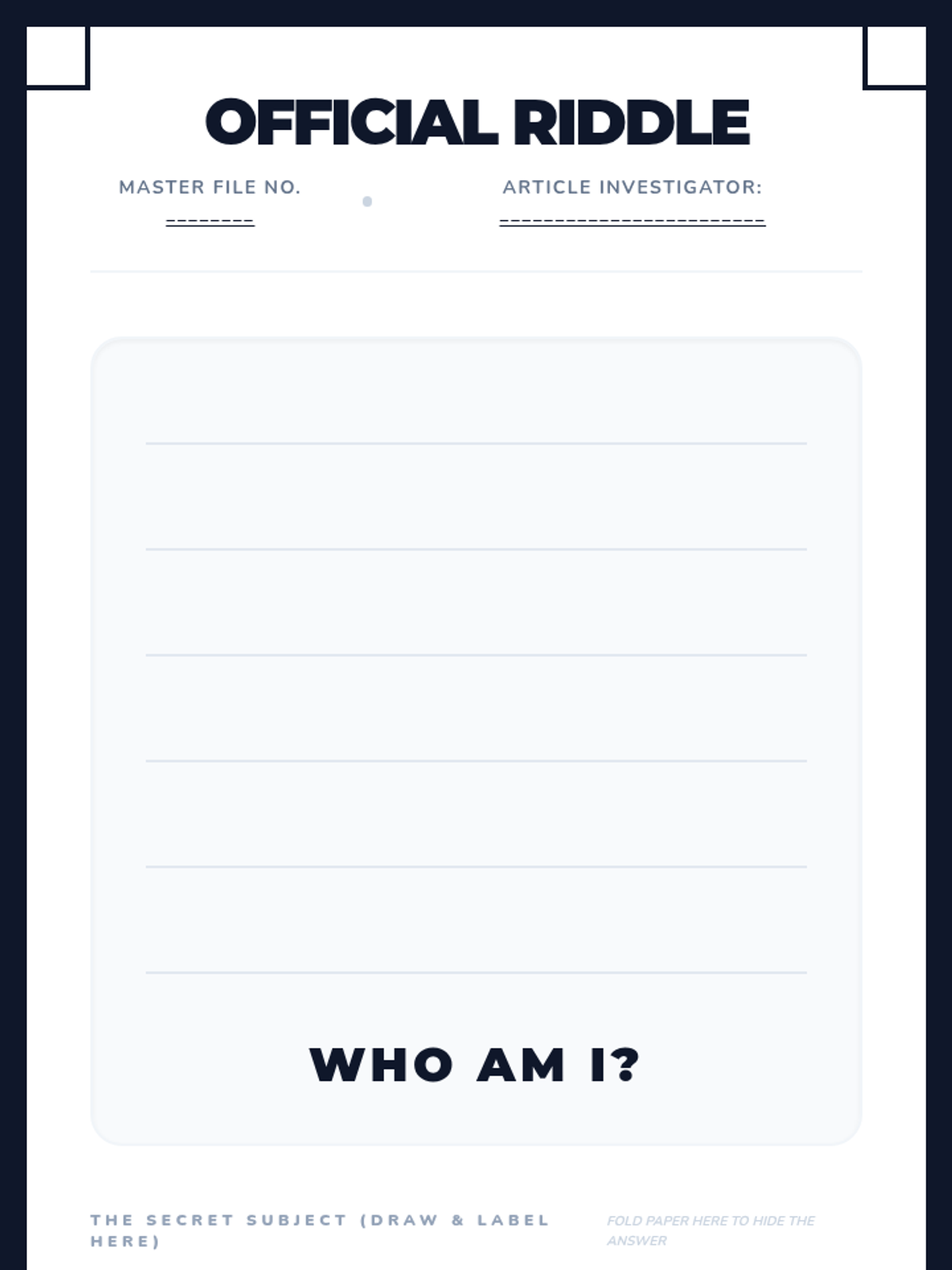
Students write descriptive riddles for animals or objects using specific vocabulary. This workshop-style lesson encourages precision and audience awareness in descriptive writing.
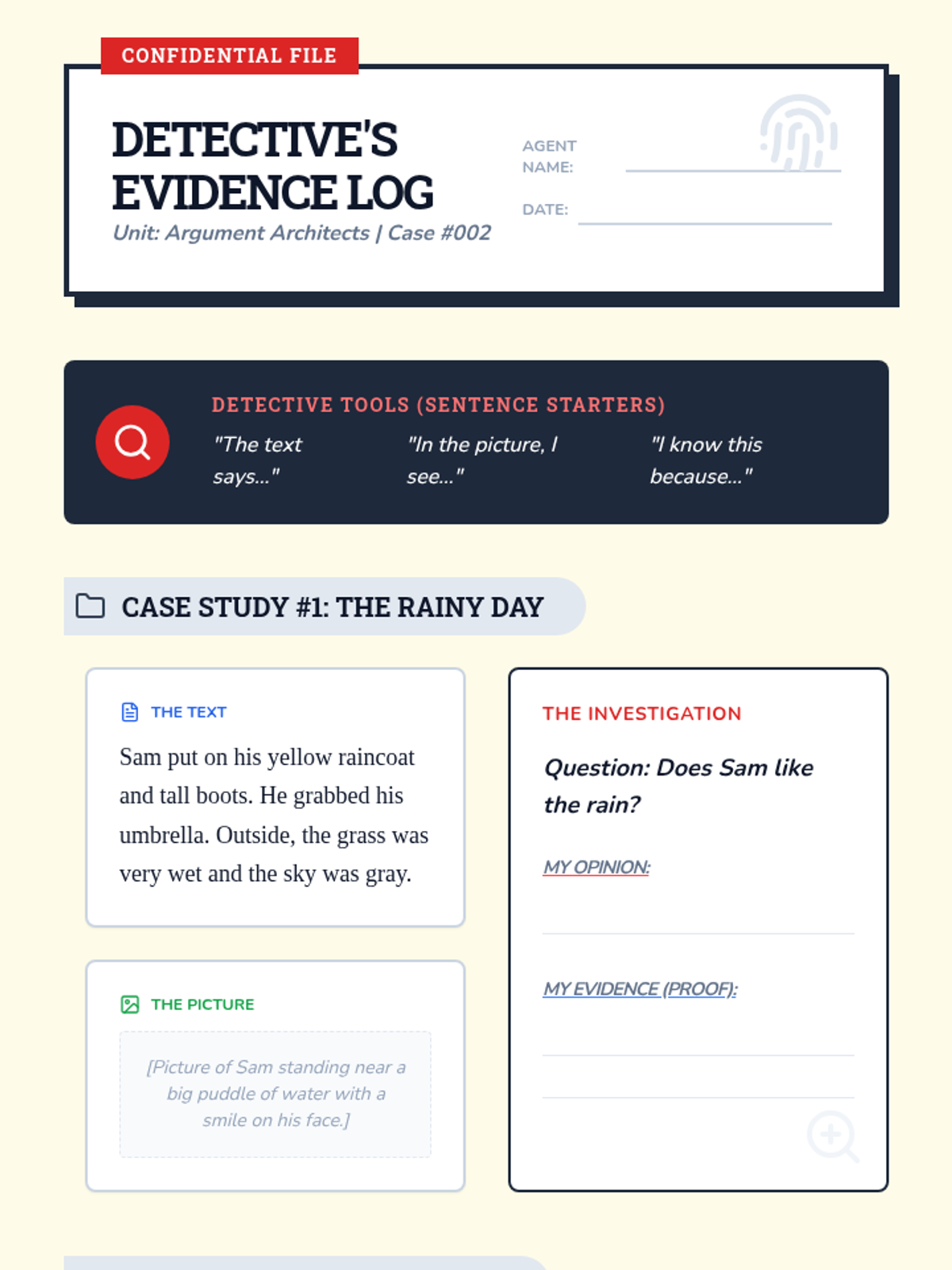
Learners practice finding evidence in texts and pictures to support their claims, using phrases like 'The text says...' or 'I know this because...' to ground their arguments.
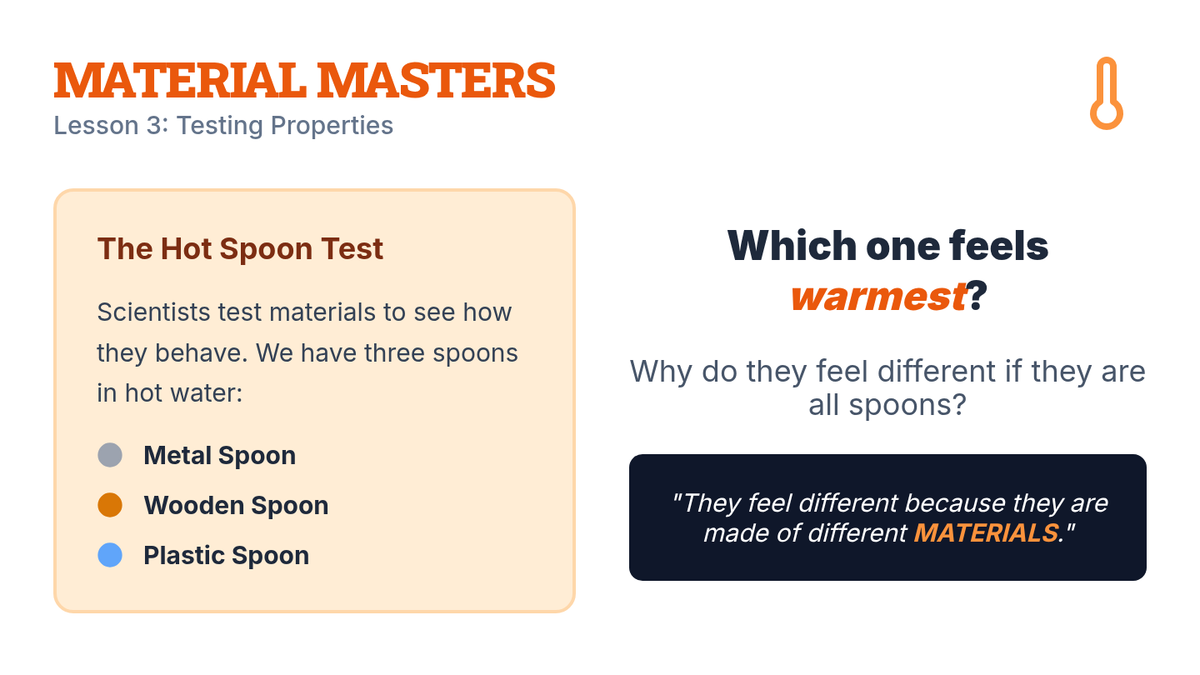
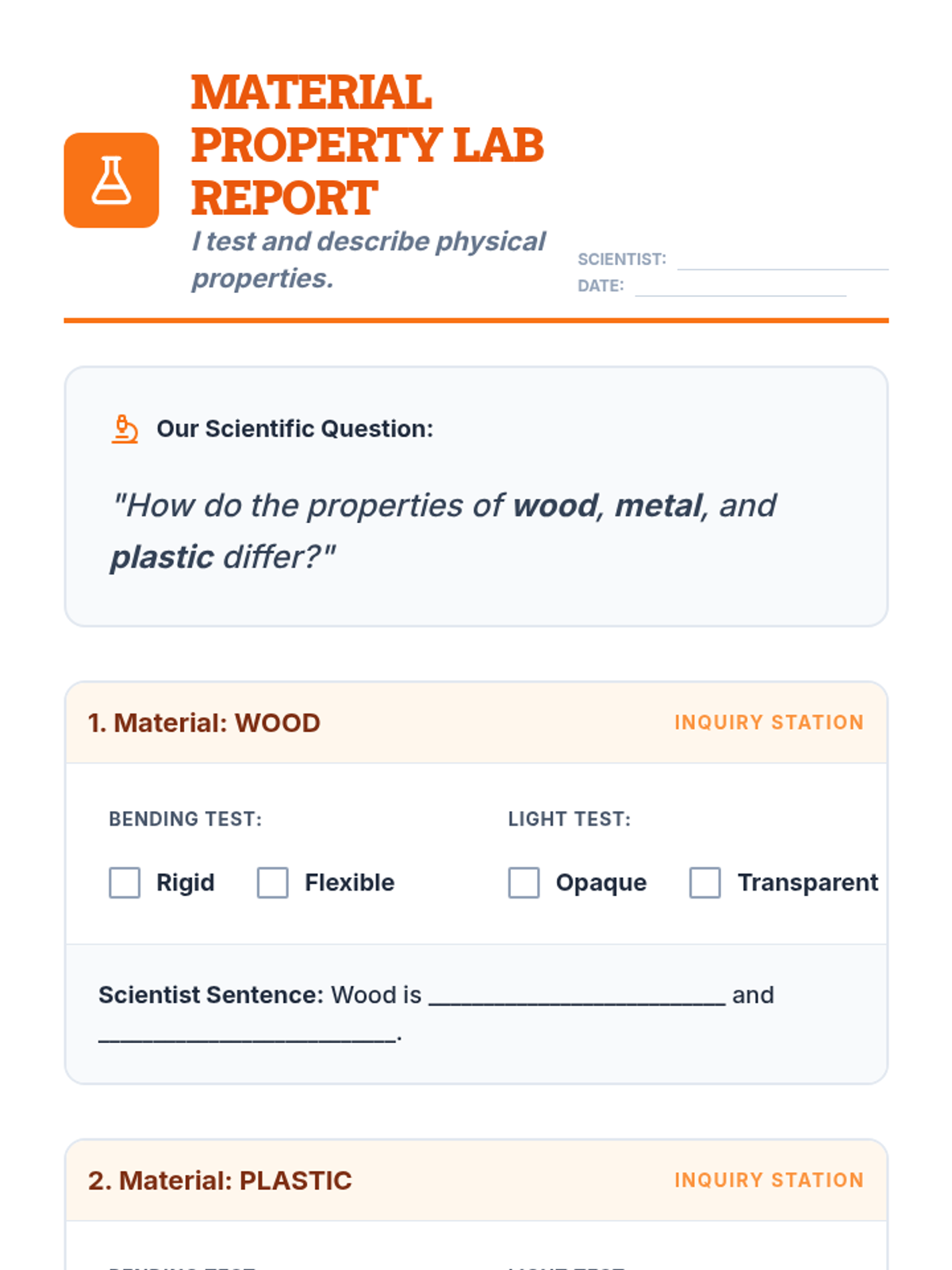
Students investigate wood, plastic, and metal to describe their properties using scientific terms like 'rigid' and 'opaque'. They record observations in a lab report to link material names with physical characteristics.
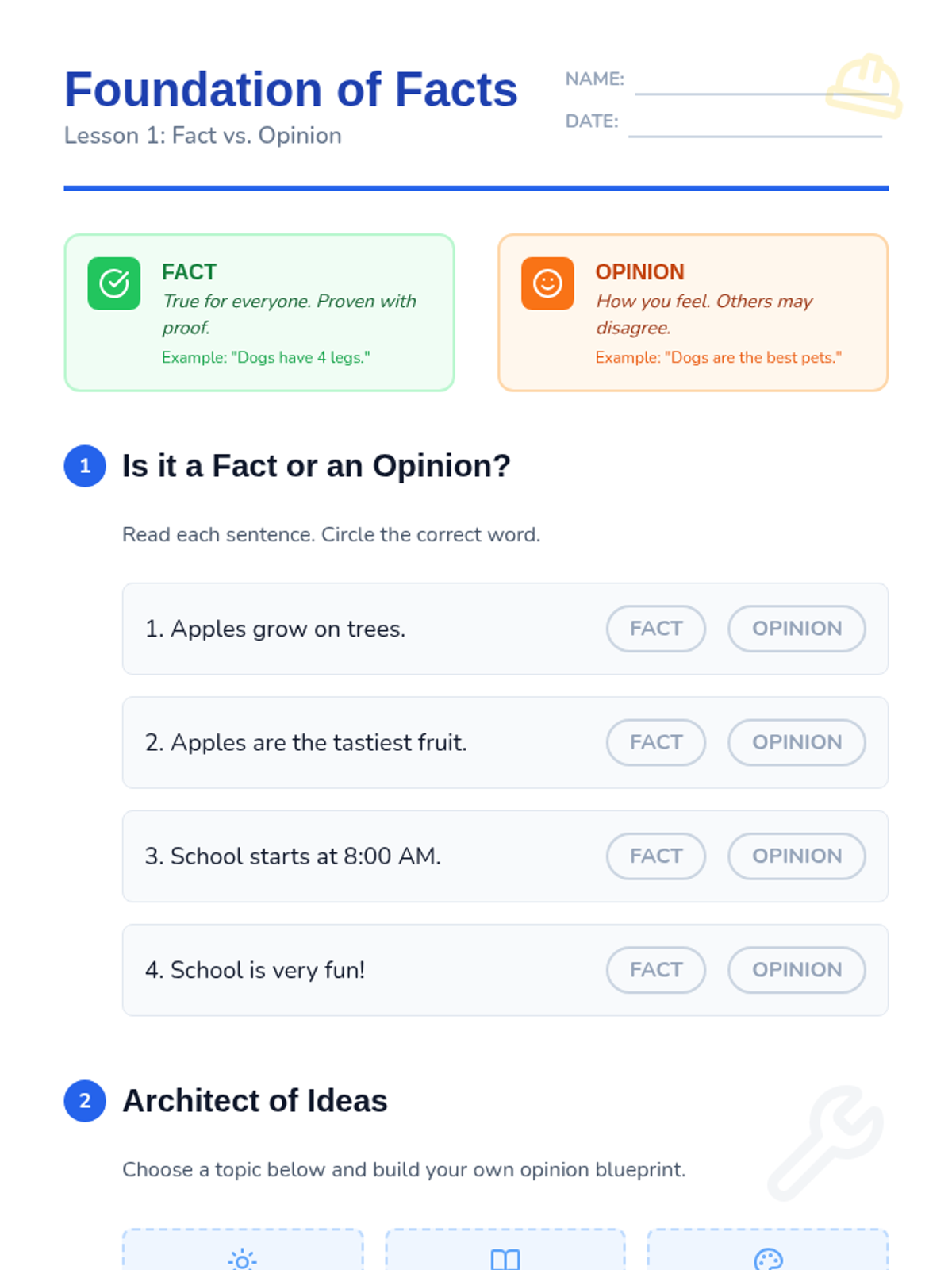
Students distinguish between fact and opinion and practice stating their own views using the frame 'In my opinion... because...' using familiar topics like food and toys.
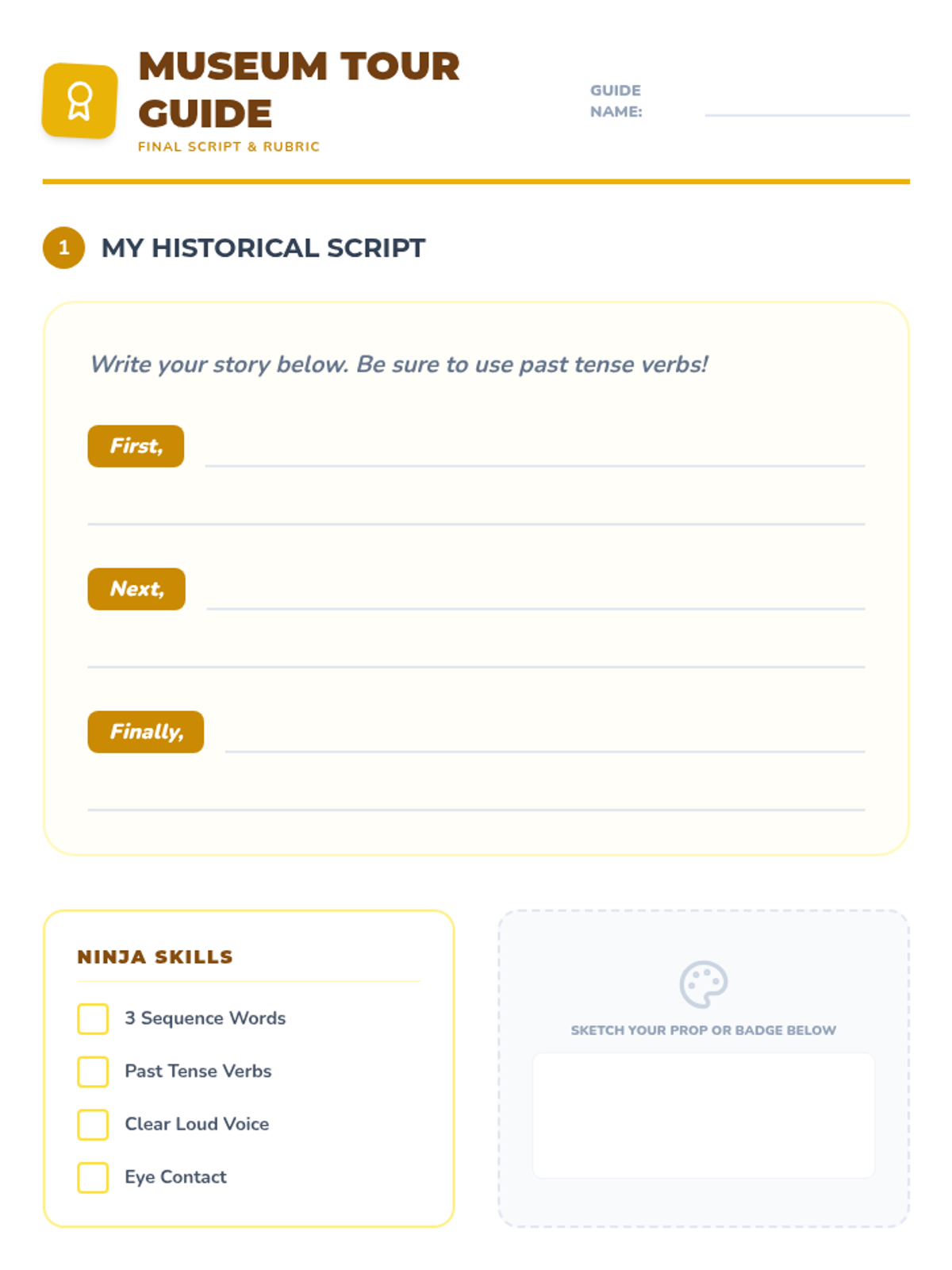
Students select a historical figure or event and present a short narrative using the sequence and temporal language practiced.
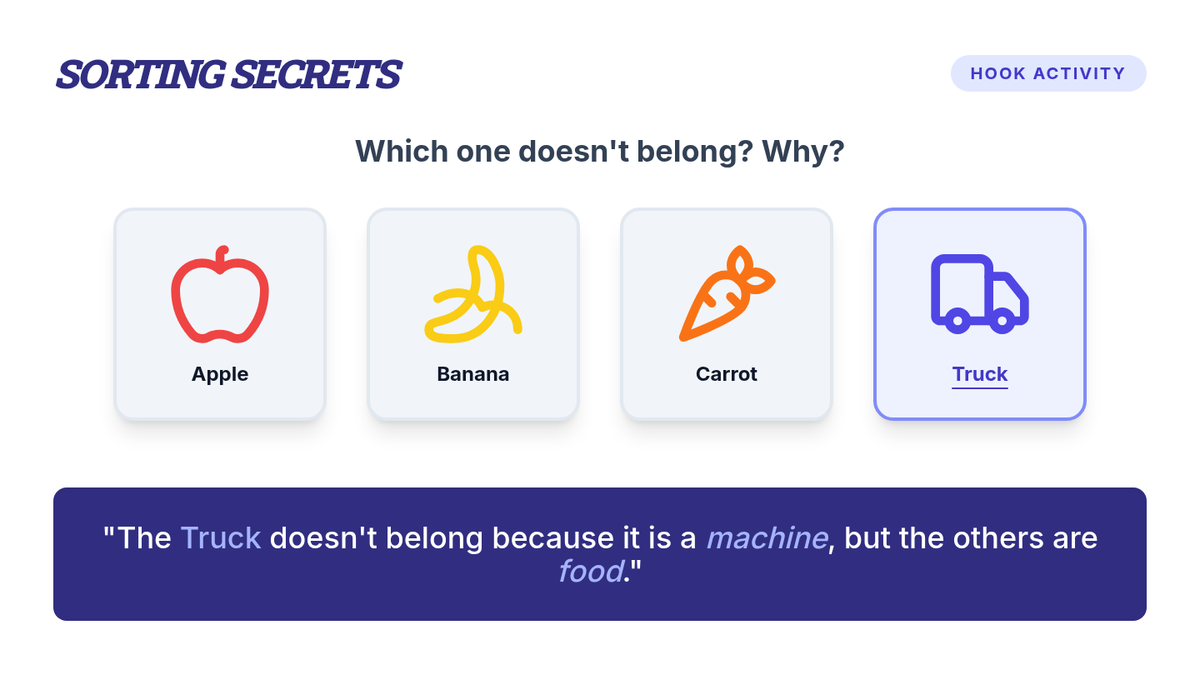
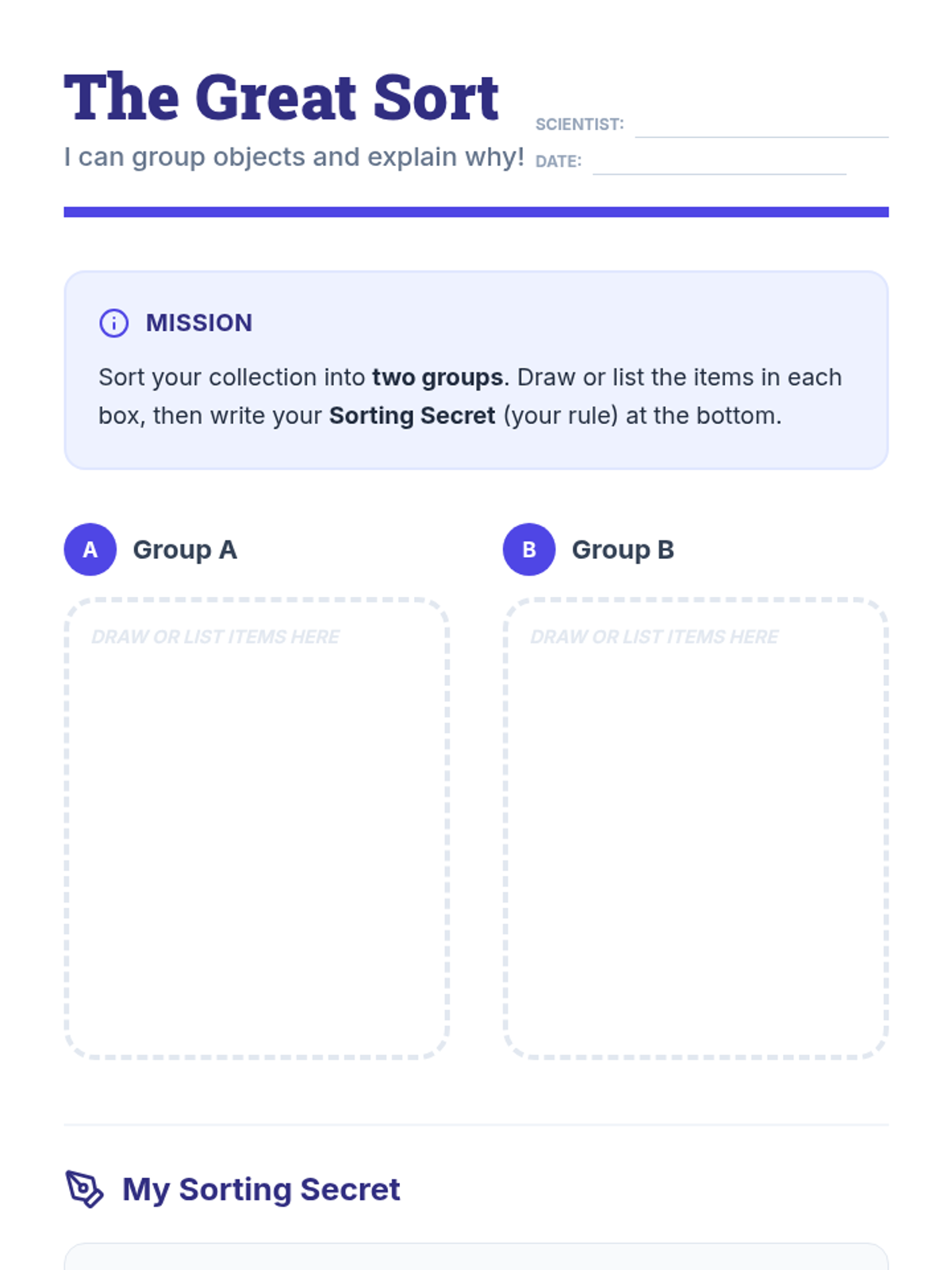
Learners sort collections of objects based on shared attributes and explain their sorting rules using justifying sentences. They practice using category labels to develop cognitive grouping and linguistic justification skills.
Students explore objects with different textures, shapes, and materials to brainstorm specific adjectives beyond 'good' or 'nice'. They create a 'Word Wall' of sensory terms to expand their lexical resource for scientific description.
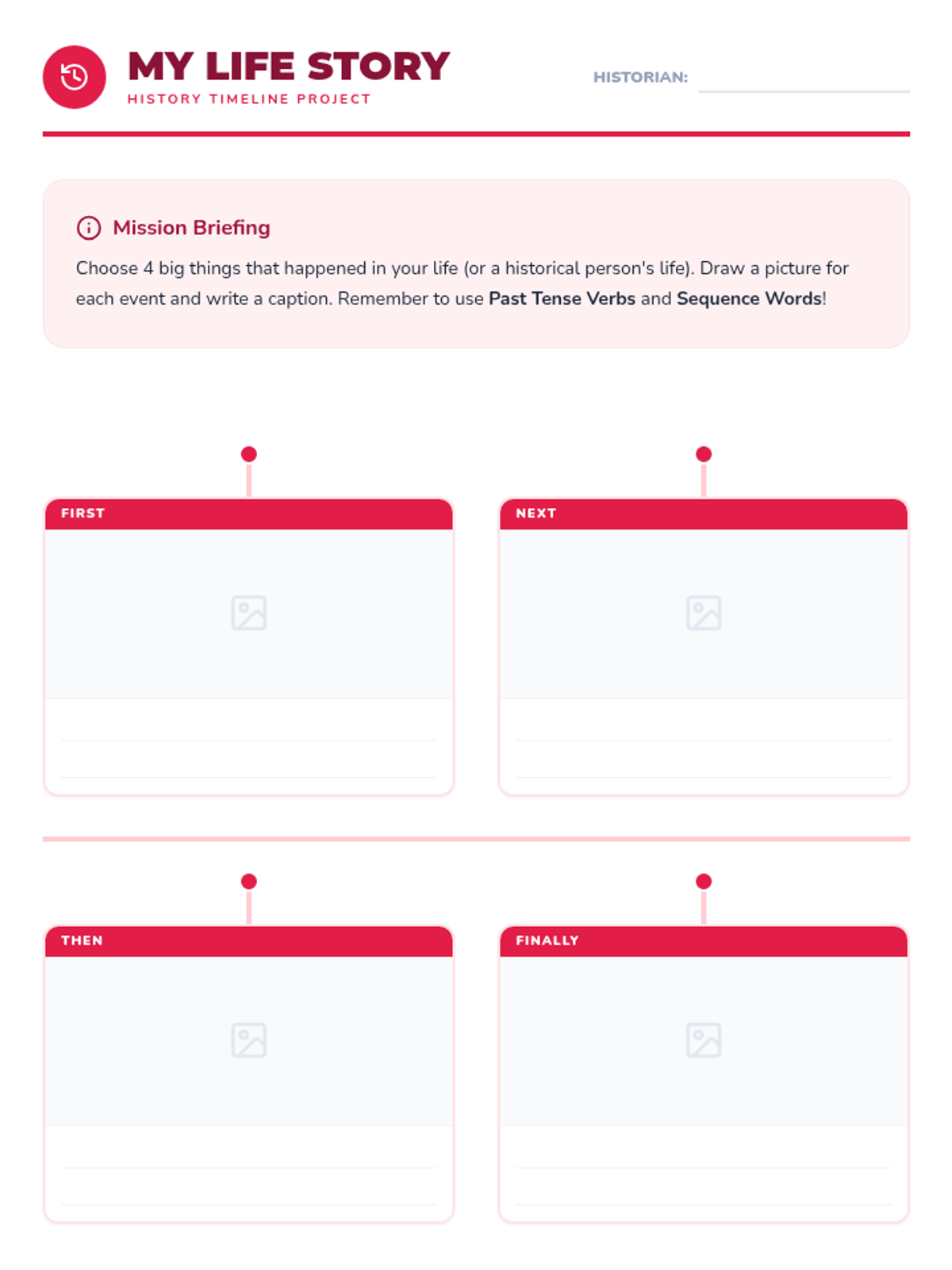
Learners build a personal or historical timeline, placing events in chronological order with written captions.
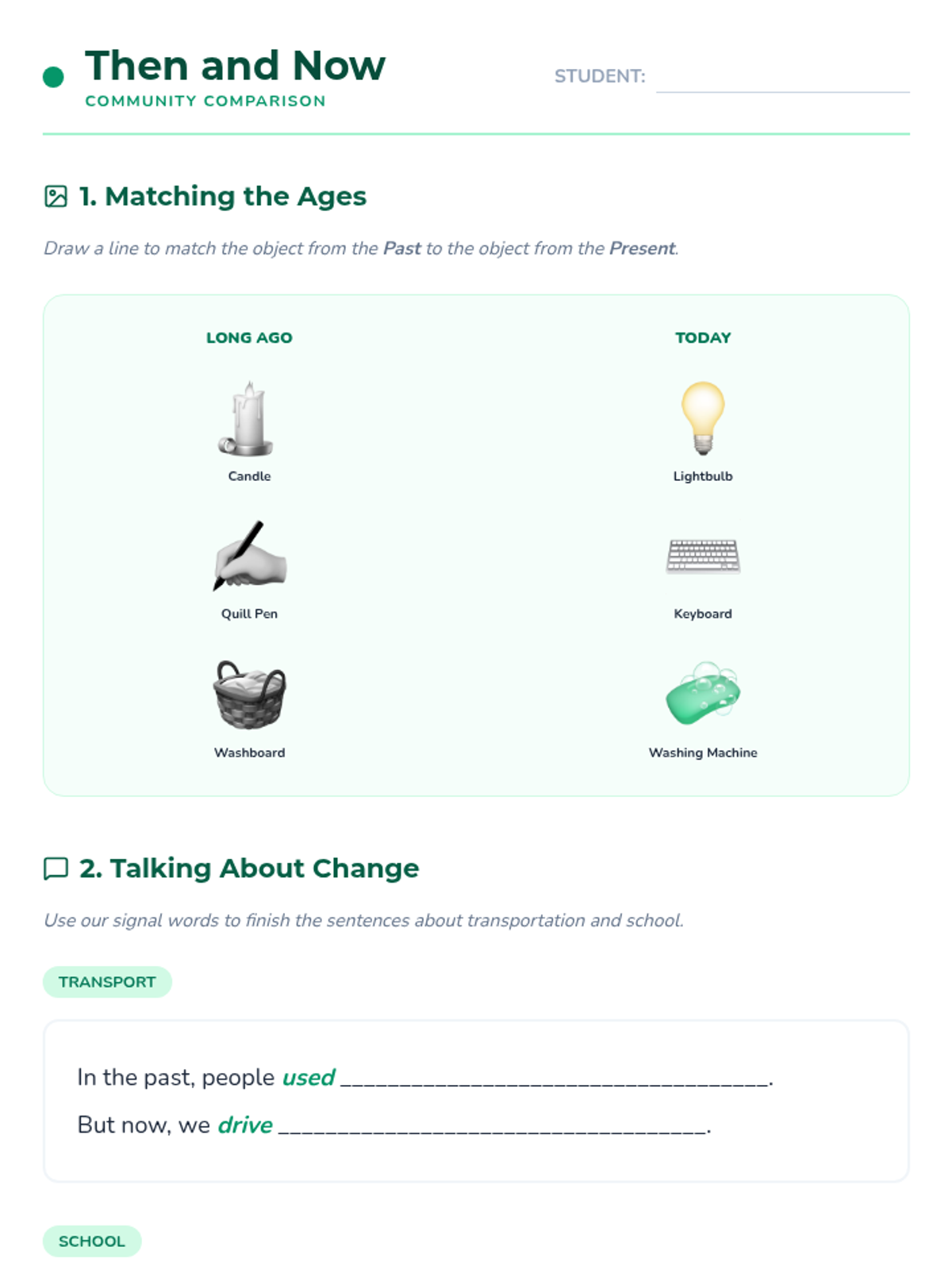
Students examine photographs of their community from the past and present, using comparative sentence frames to discuss changes.
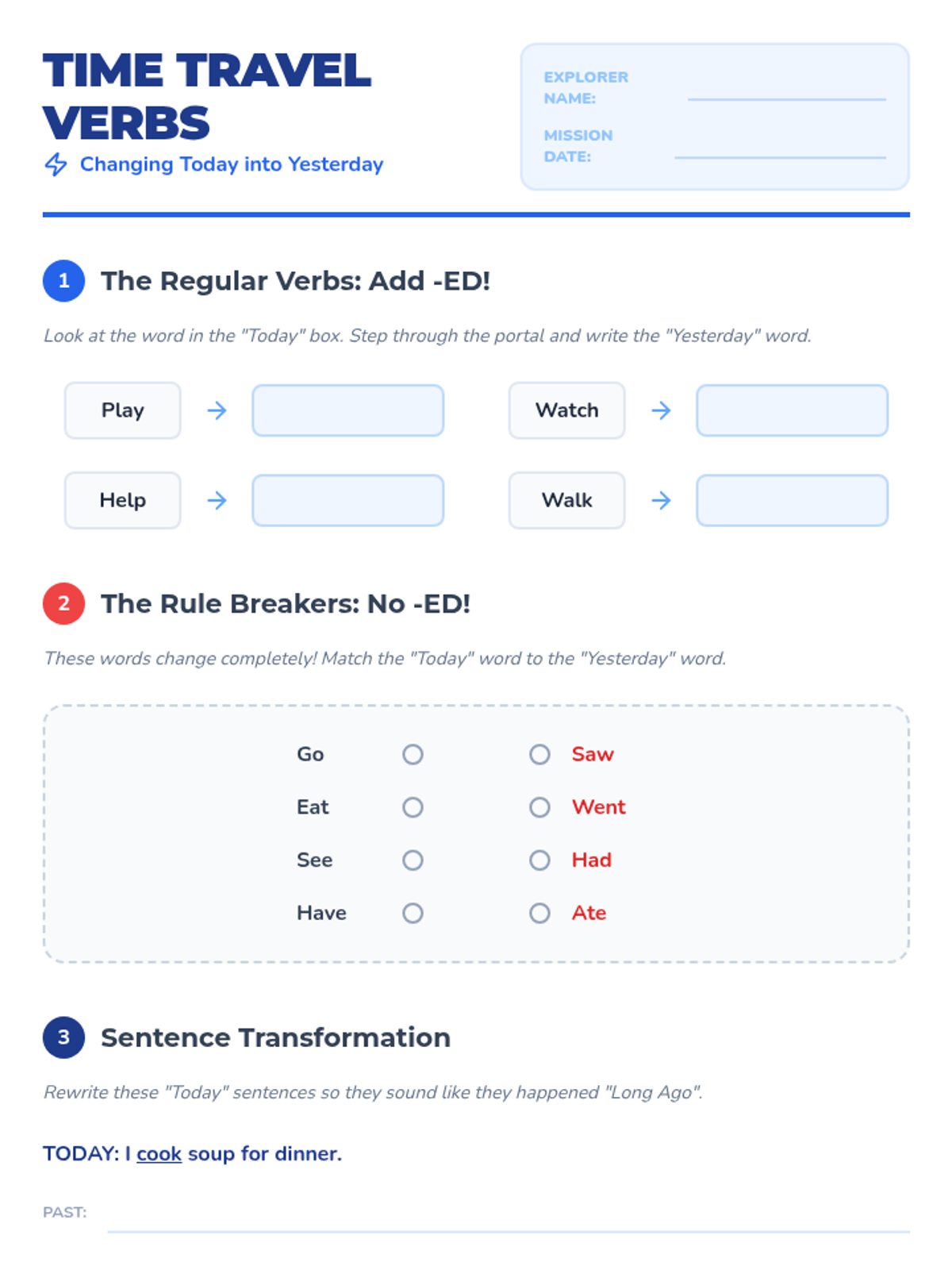
The lesson focuses on converting present tense verbs to past tense (regular and irregular) to describe things that have already happened.
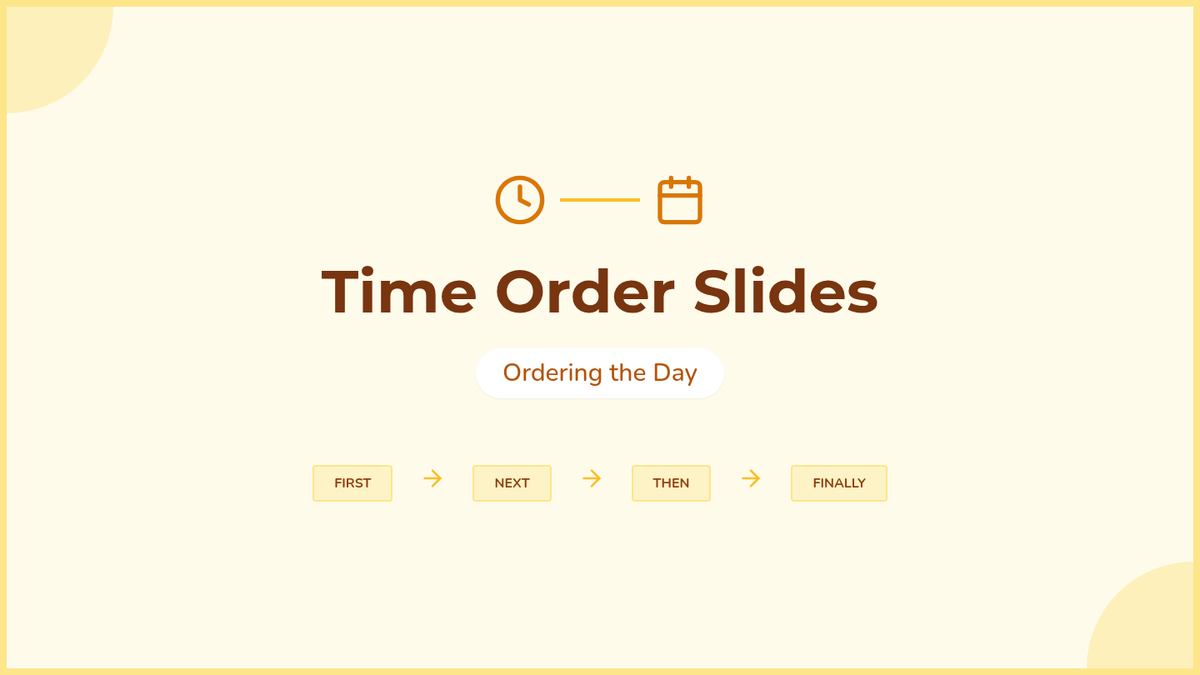
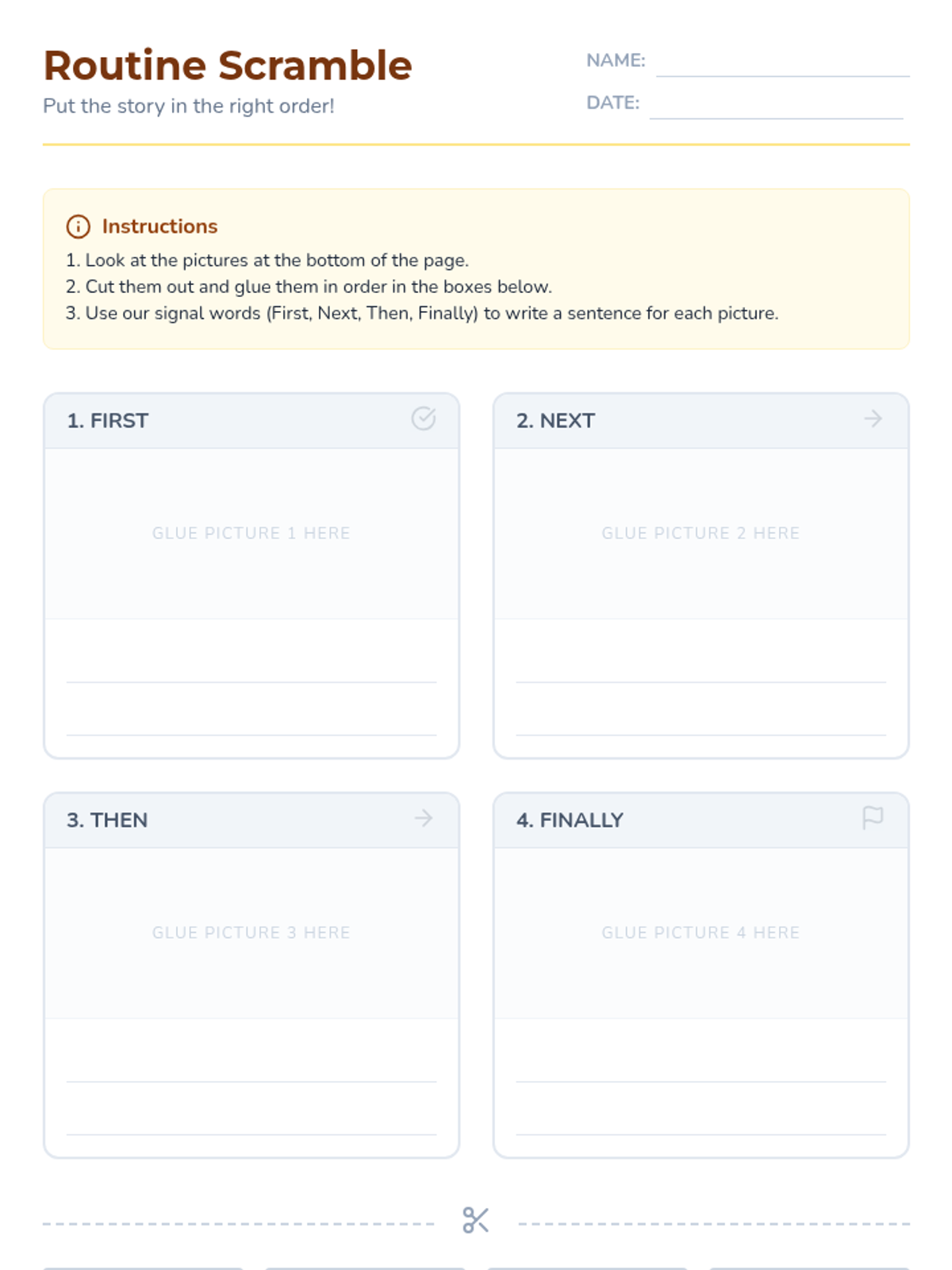
Students learn to order events logically using sequence words: "First," "Next," "Then," and "Finally" through daily routines and story scrambling.
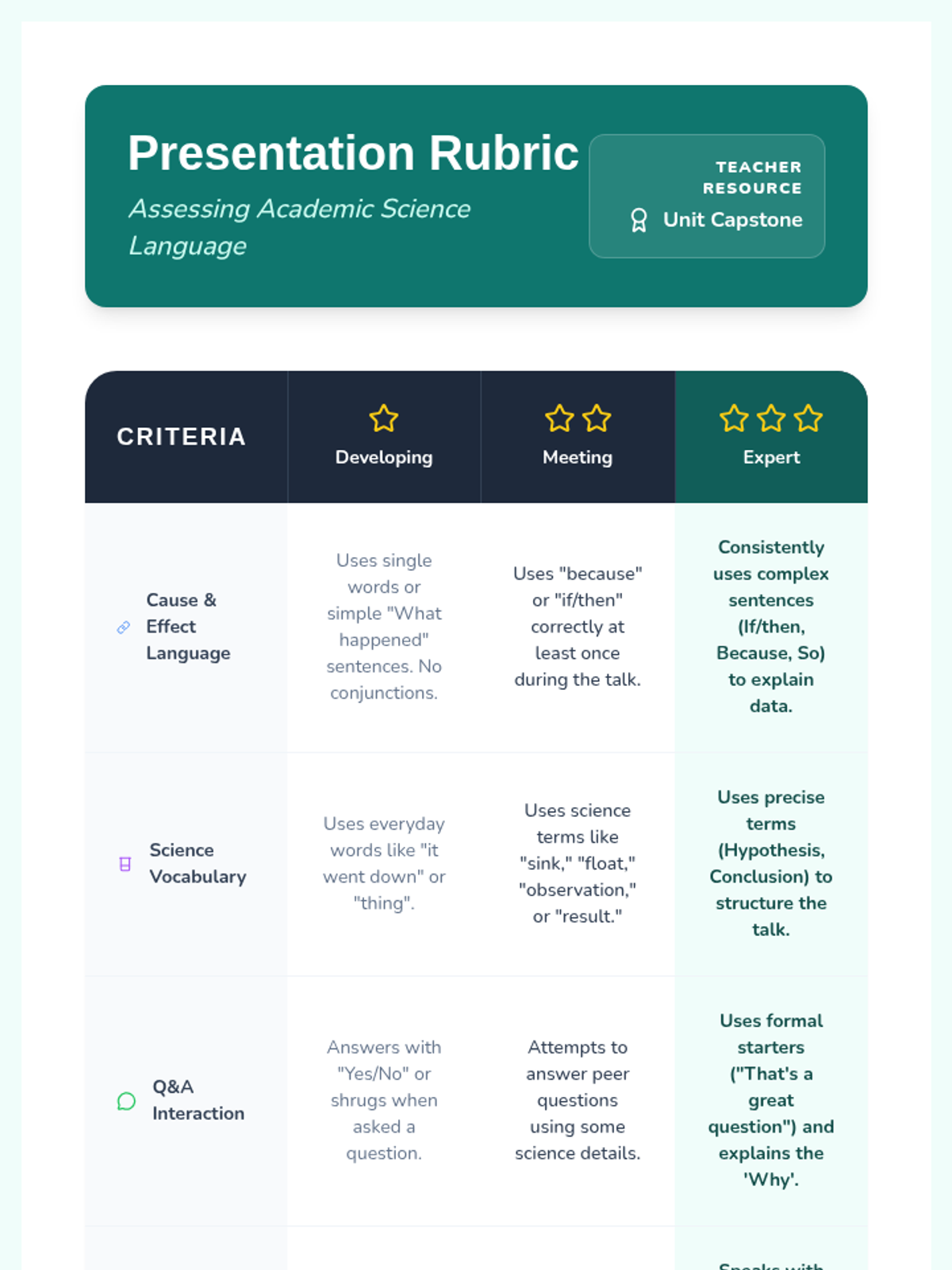
Students present their findings in a 'Science Symposium', using formal sentence starters to share data and answer peer questions.
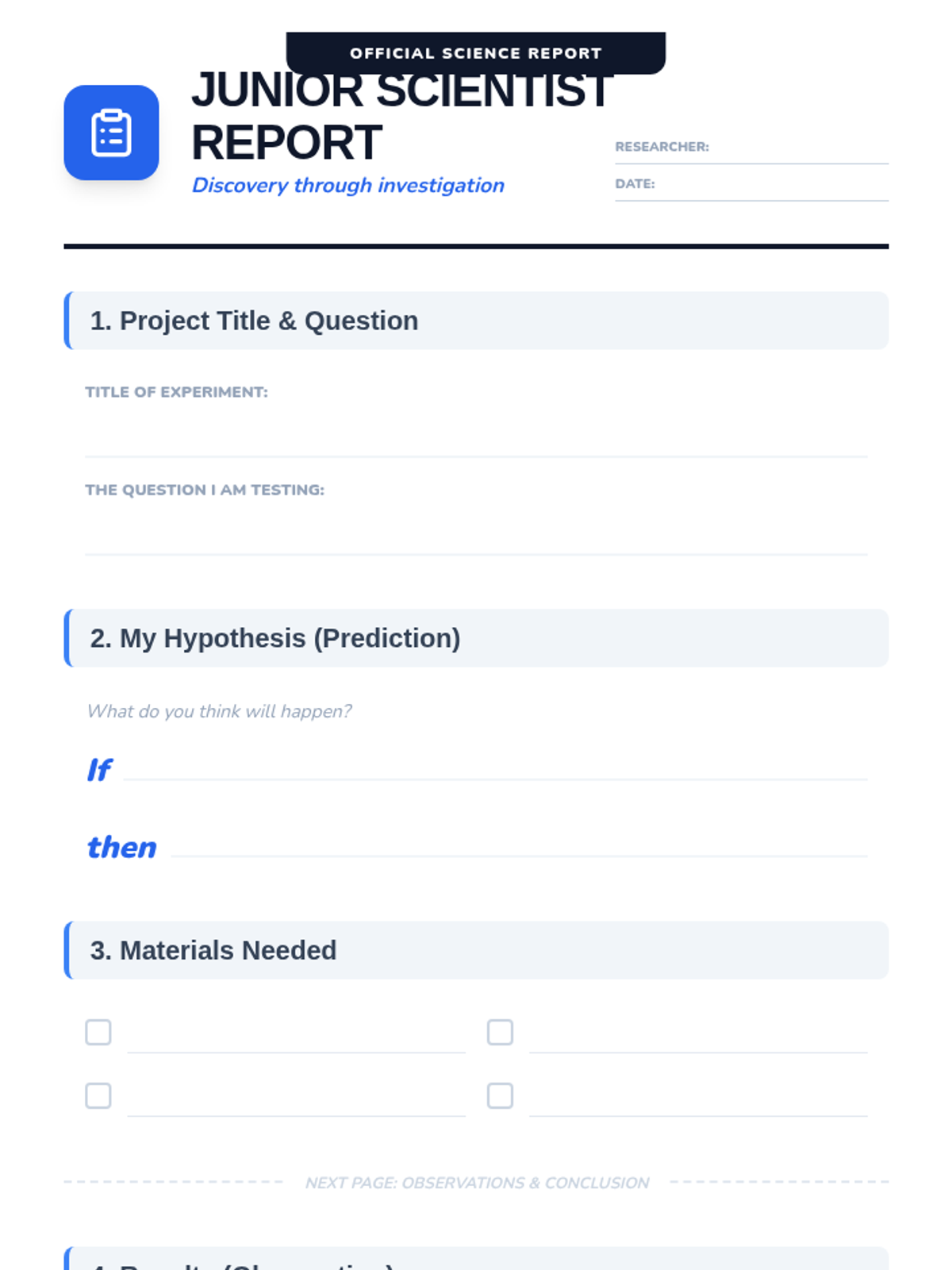
Using a scaffolded template, students draft a full lab report, applying their cause-and-effect vocabulary to write a cohesive conclusion paragraph.
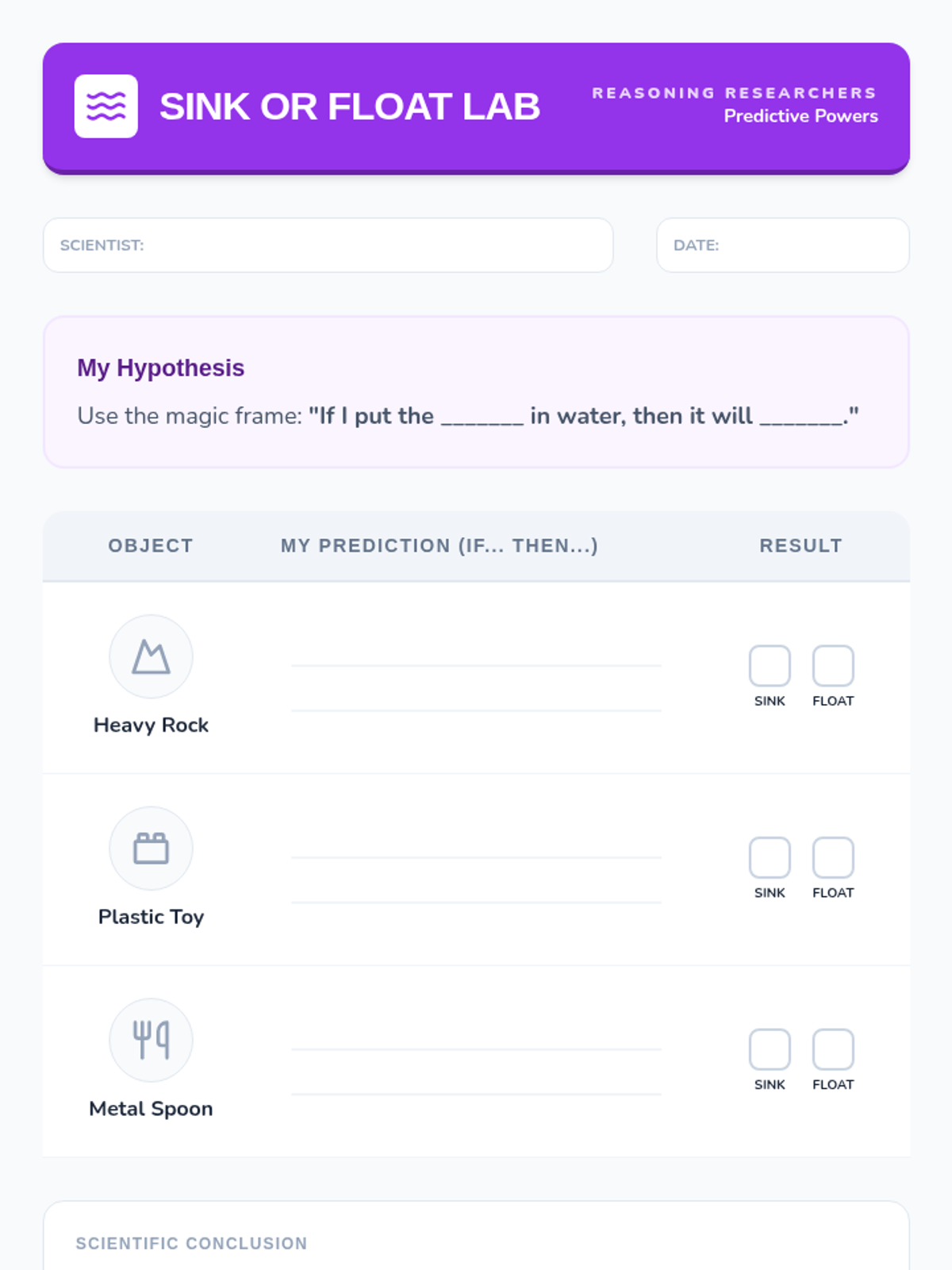
Students formulate hypotheses for sinking and floating experiments using the 'If... then...' structure, practicing conditional language in a scientific context.
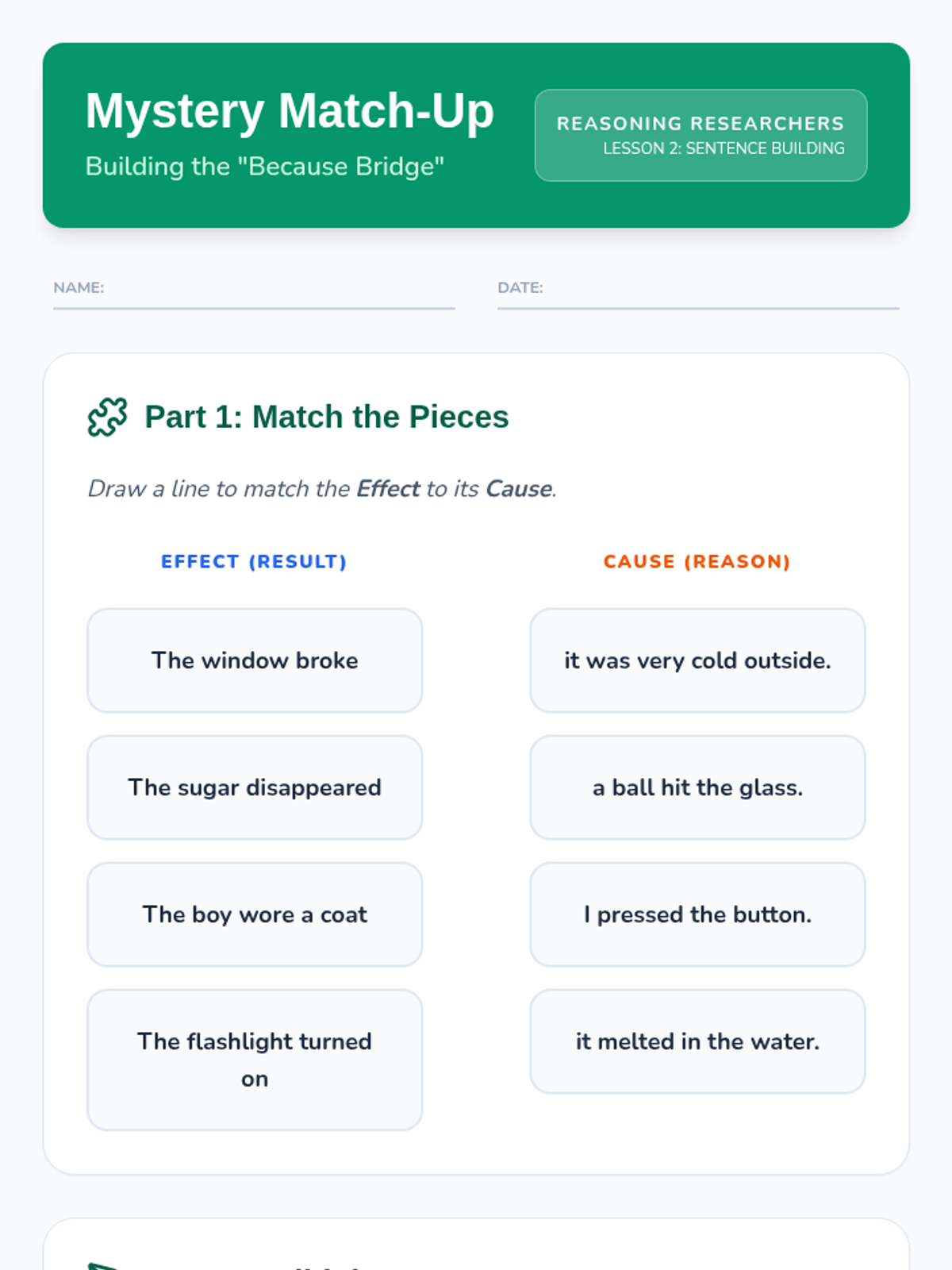
Learners practice combining observations into complex sentences using 'because', bridging oral observation with written academic expression through matching activities.
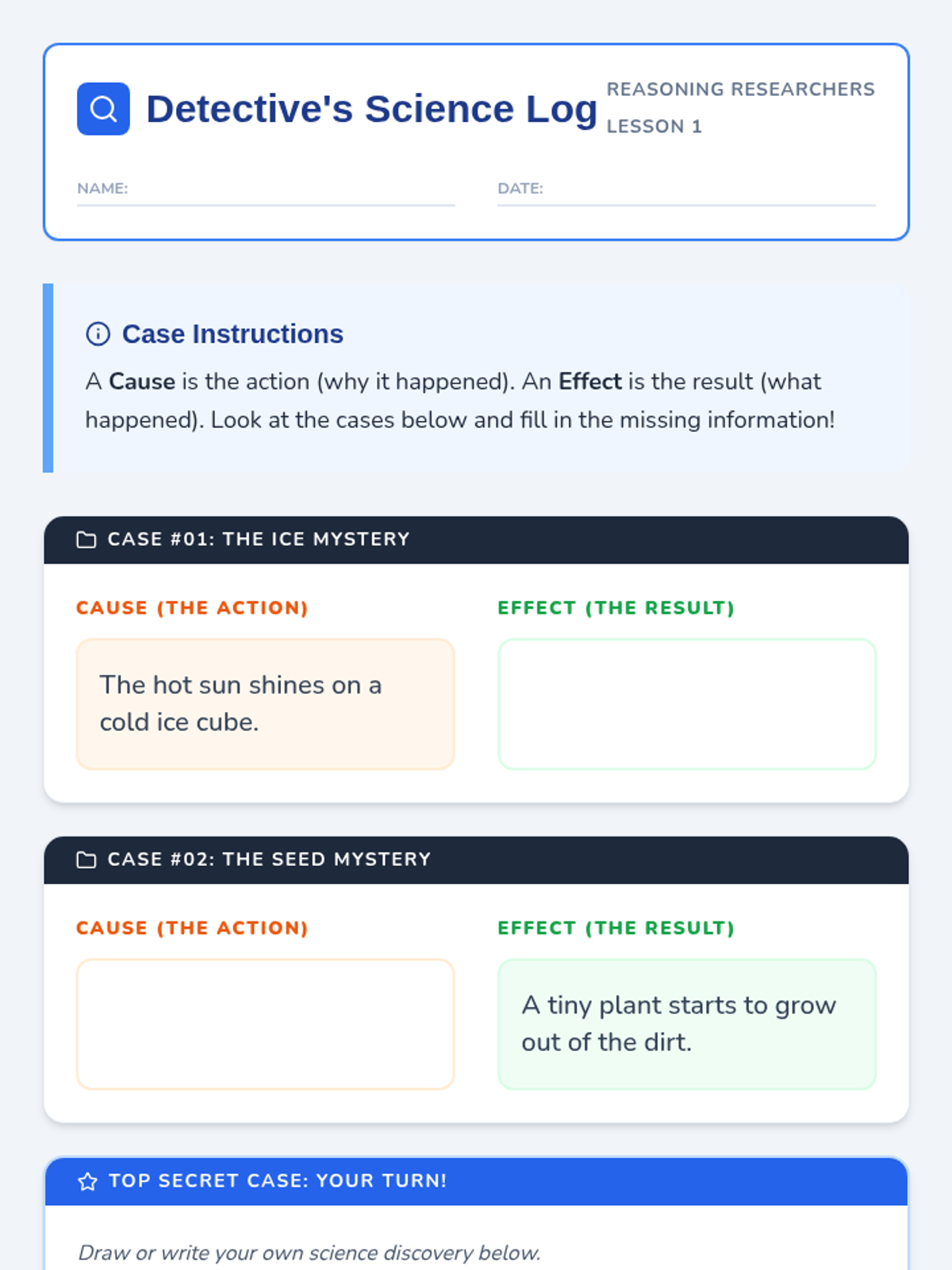
Students identify simple causal links in physical phenomena using a 'Detective' lens, distinguishing between an action (cause) and a result (effect) with visual organizers.
The final challenge where students independently apply the tri-color system to a new text and justify their choices through peer review.
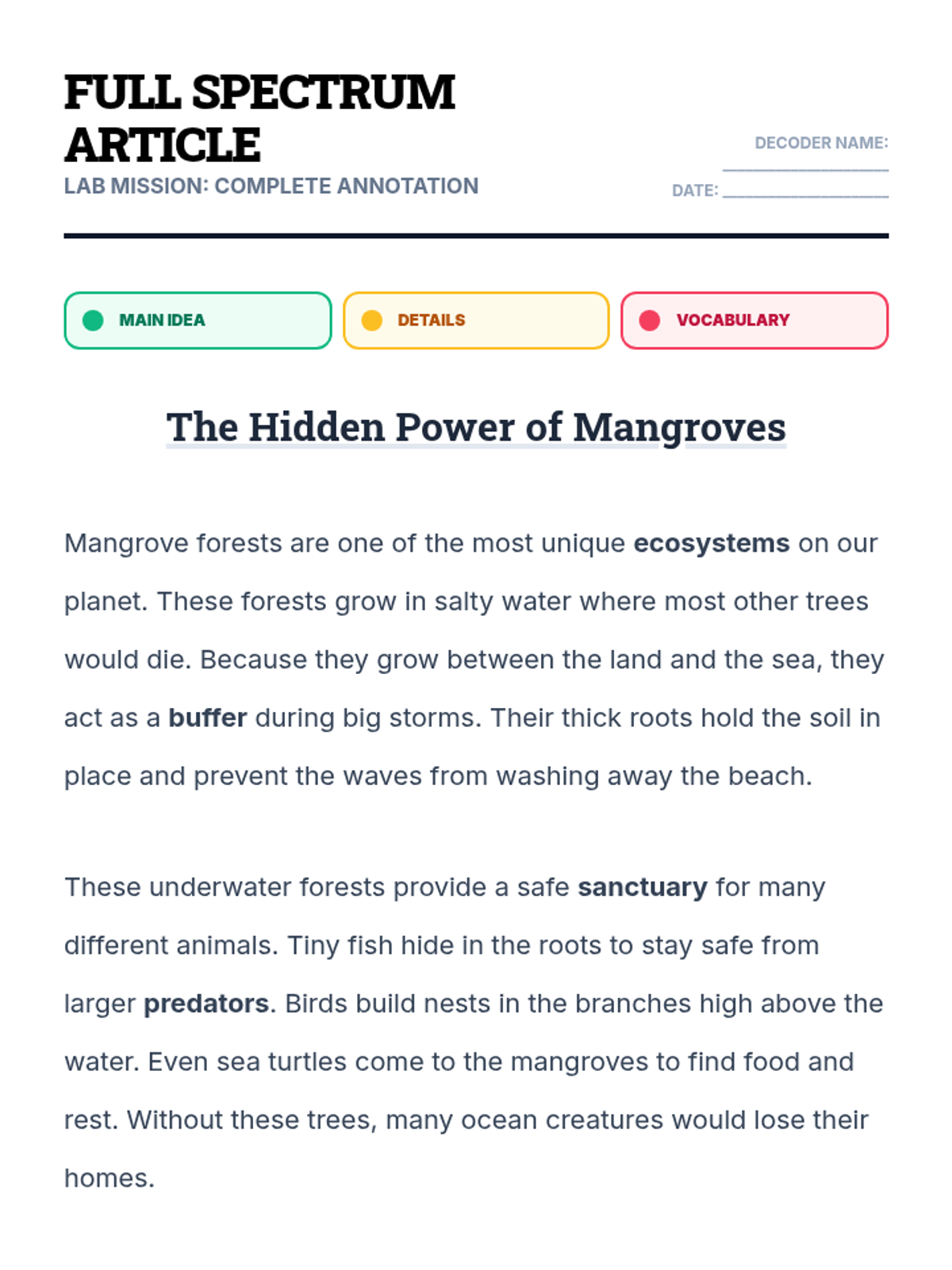
A synthesis lesson where students integrate all three colors on a full-length informational article through guided modeling.
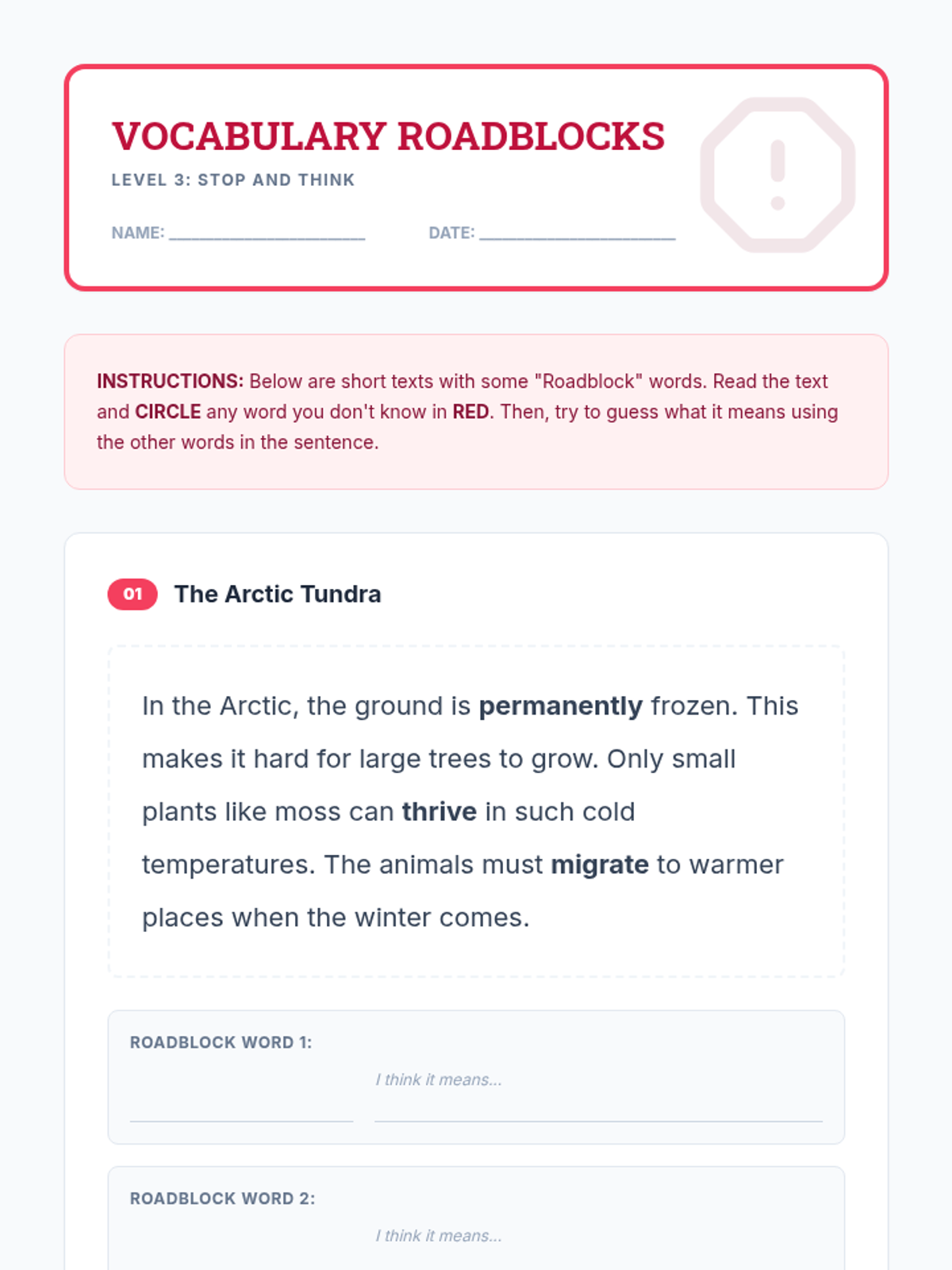
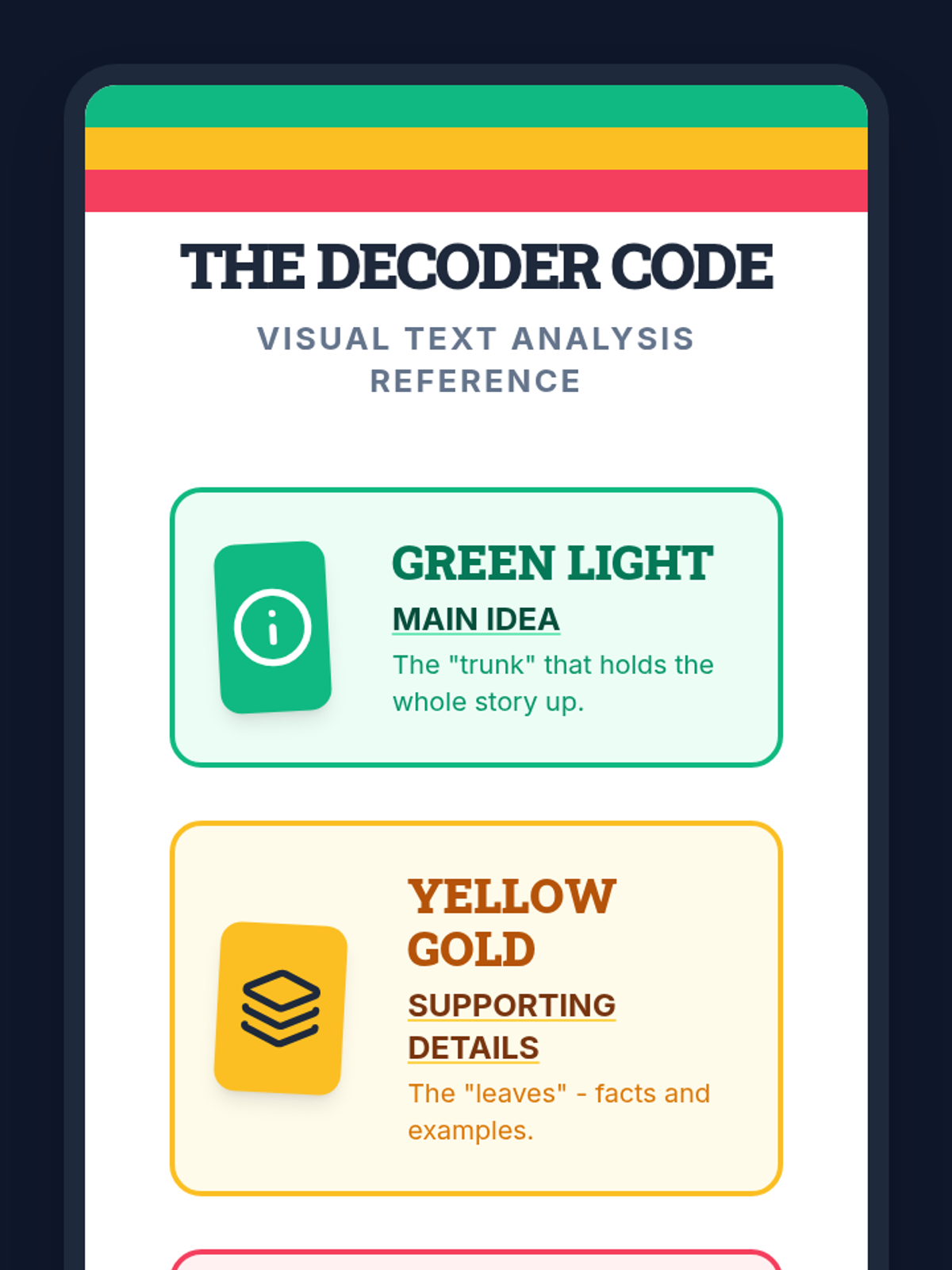
Students add a third layer of annotation using red or pink to identify 'roadblock' words that hinder their understanding.
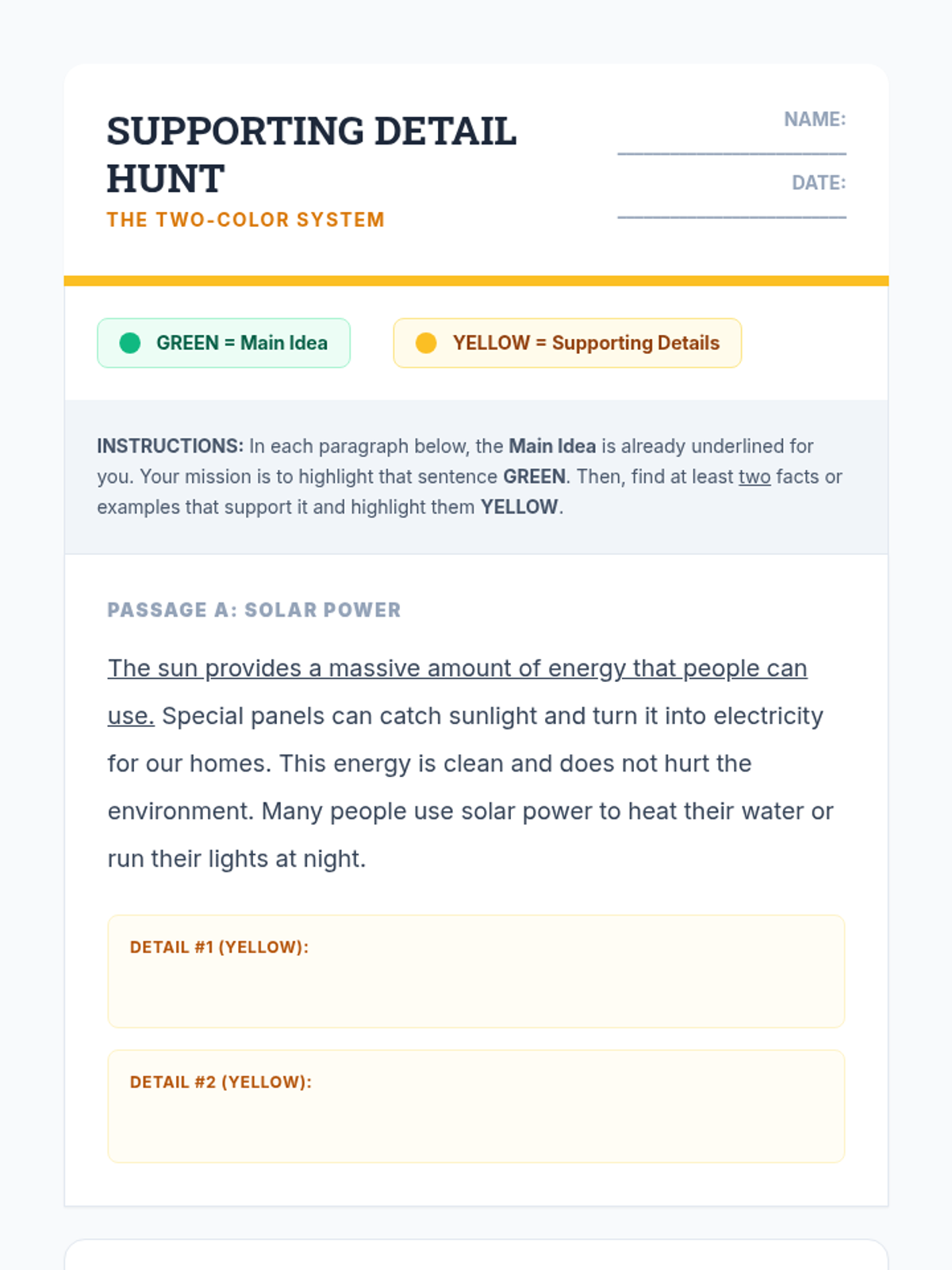
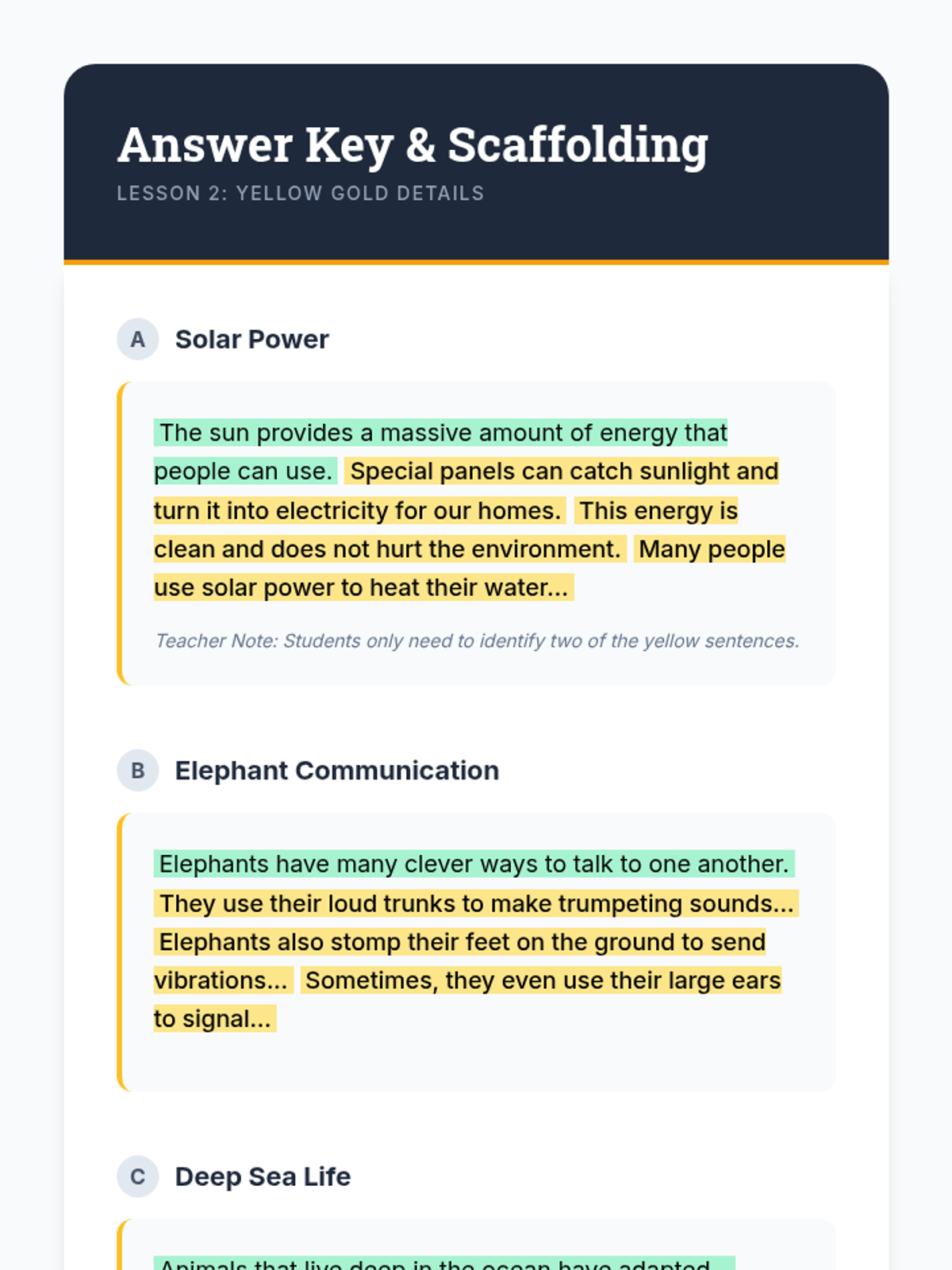
Building on the main idea, students learn to use yellow to highlight facts and examples that support the central message.
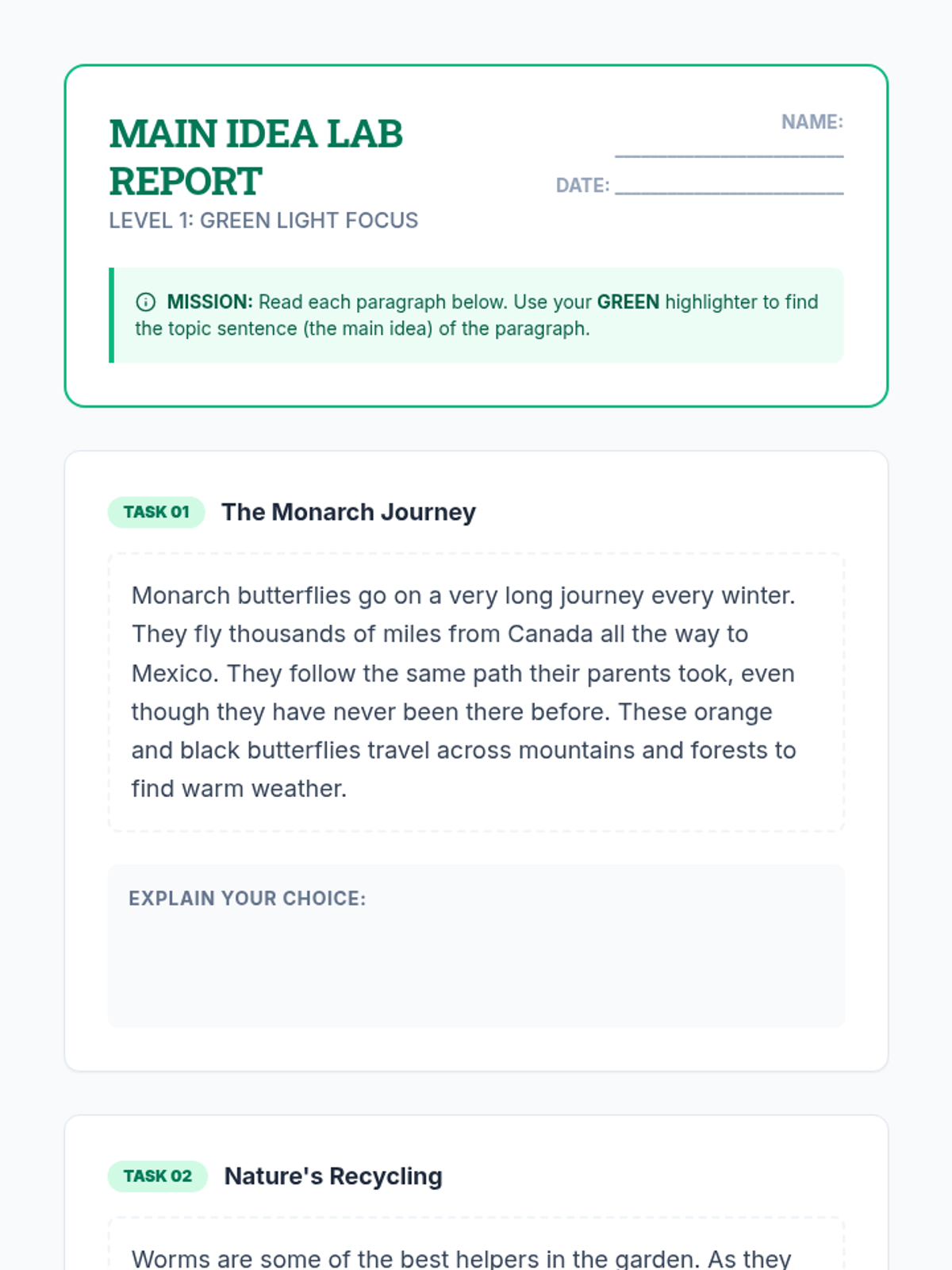
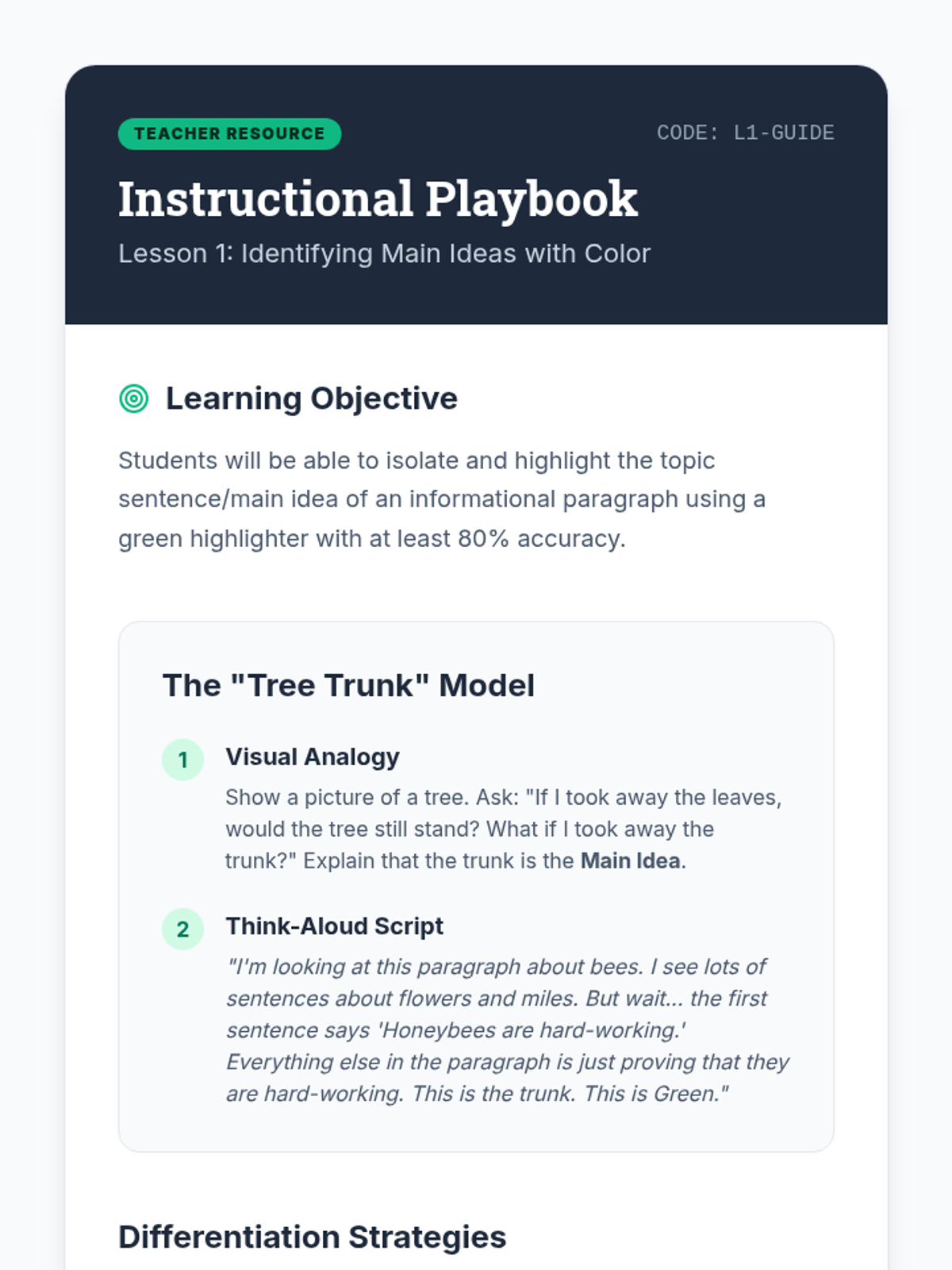
Introduces the 'Green for Go' concept, focusing exclusively on identifying the main idea or topic sentence within short paragraphs using the color green.
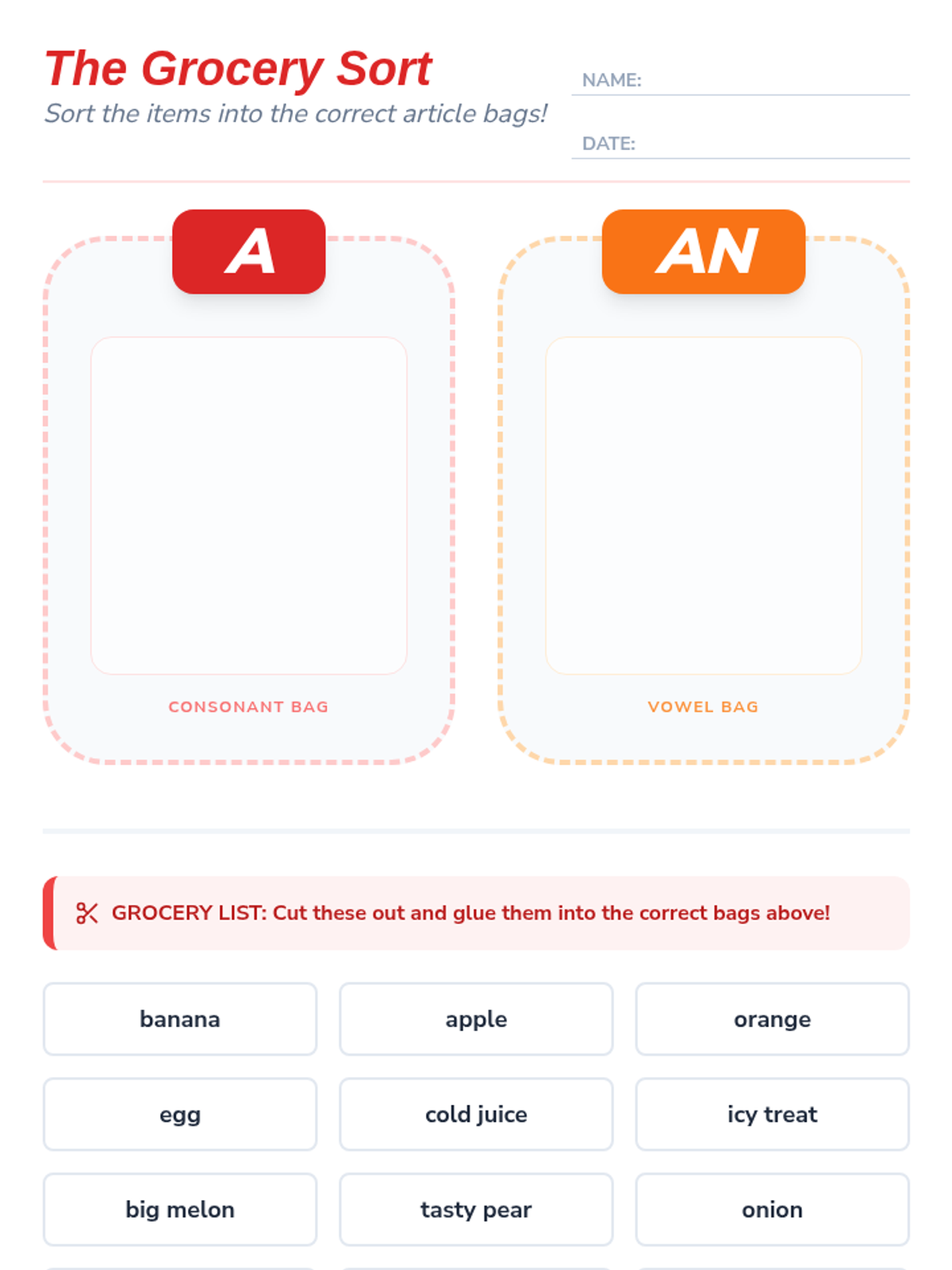
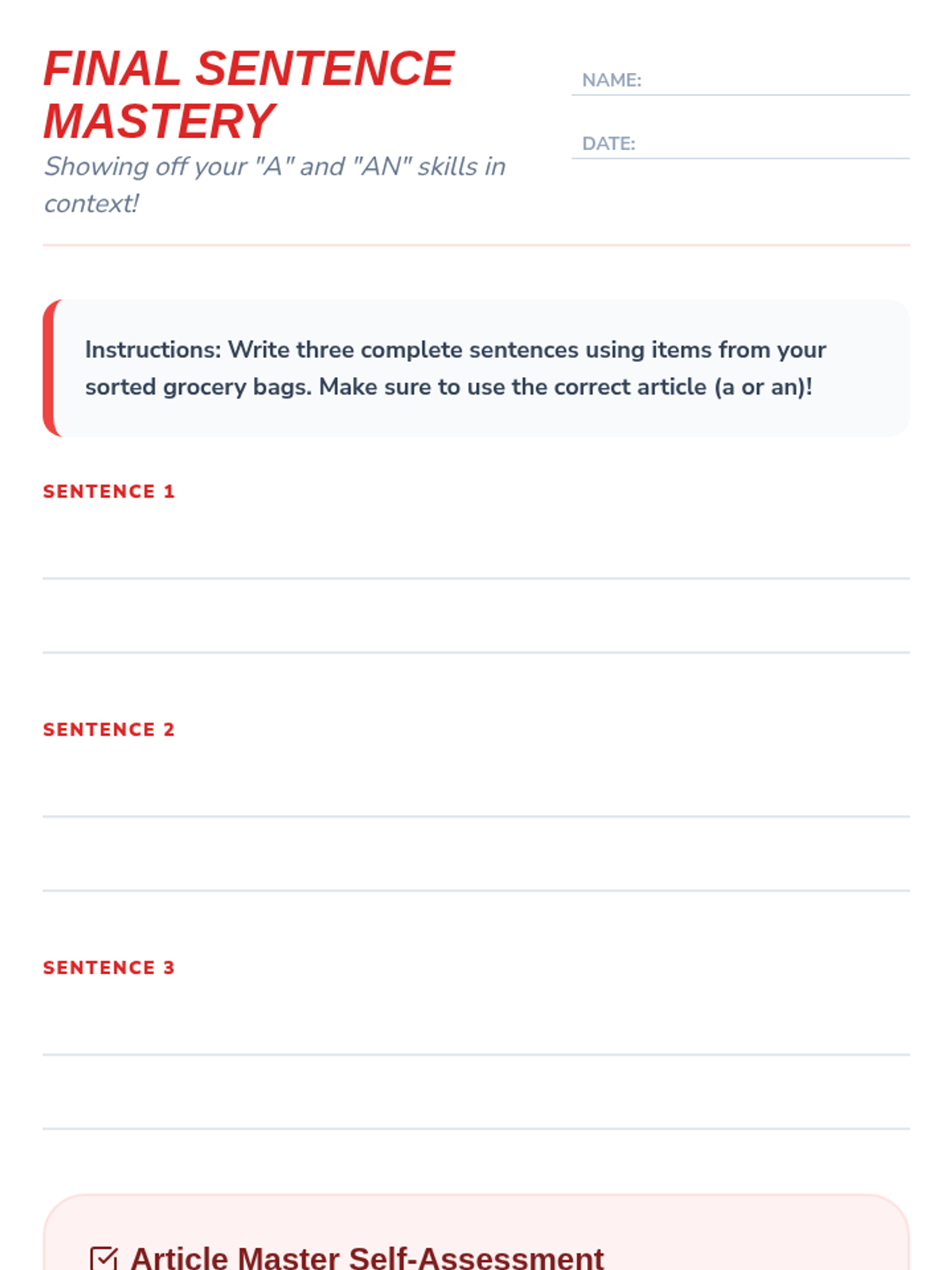
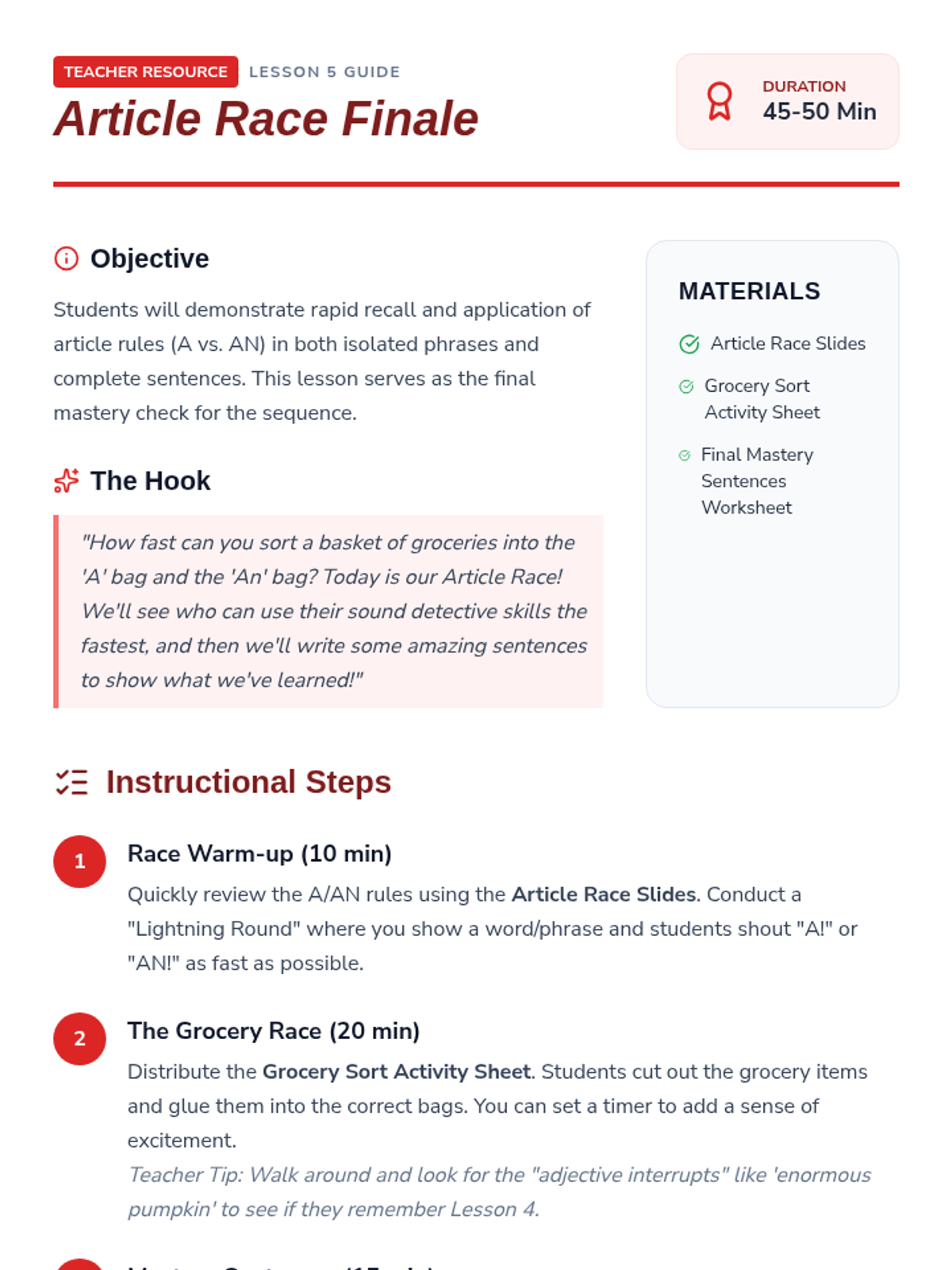
In this culminating fluency lesson, students compete in a friendly relay to sort words and phrases into 'A' and 'An' bins. They then write complete sentences and complete a self-assessment.
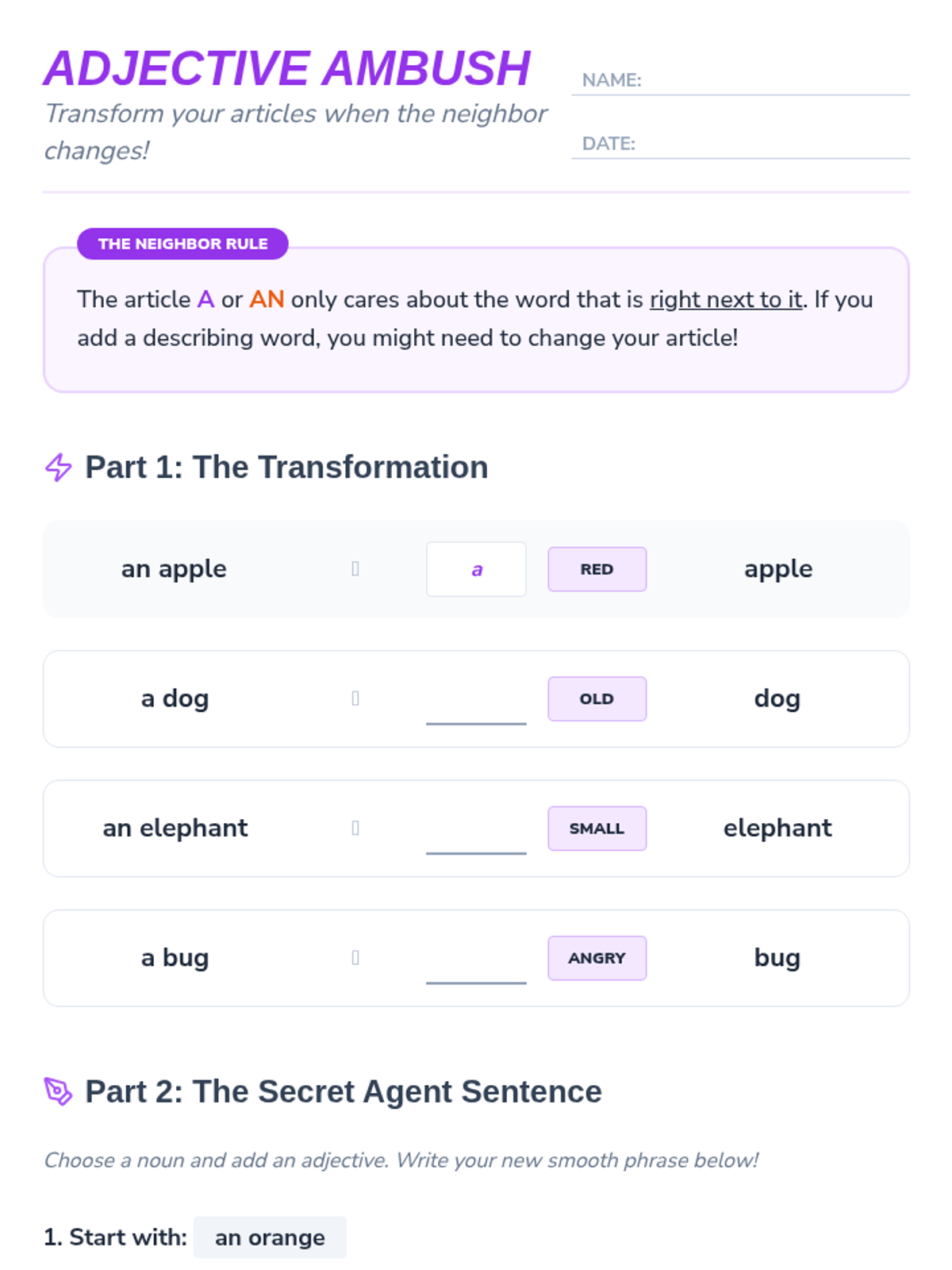
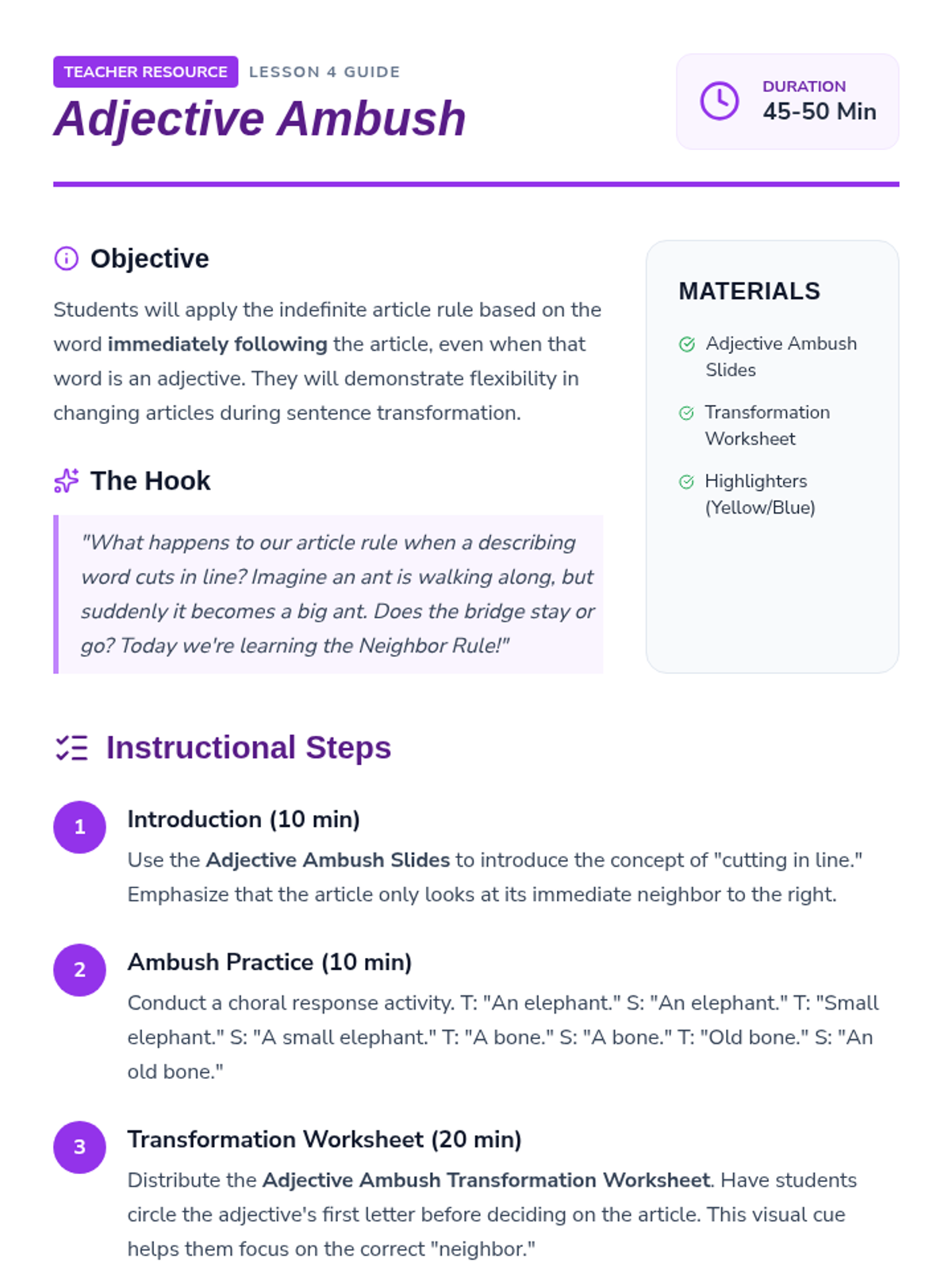
Students learn how adding an adjective between the article and noun can change which article is needed (e.g., 'an ant' becomes 'a big ant'). They participate in a transformation activity where they insert descriptive words.
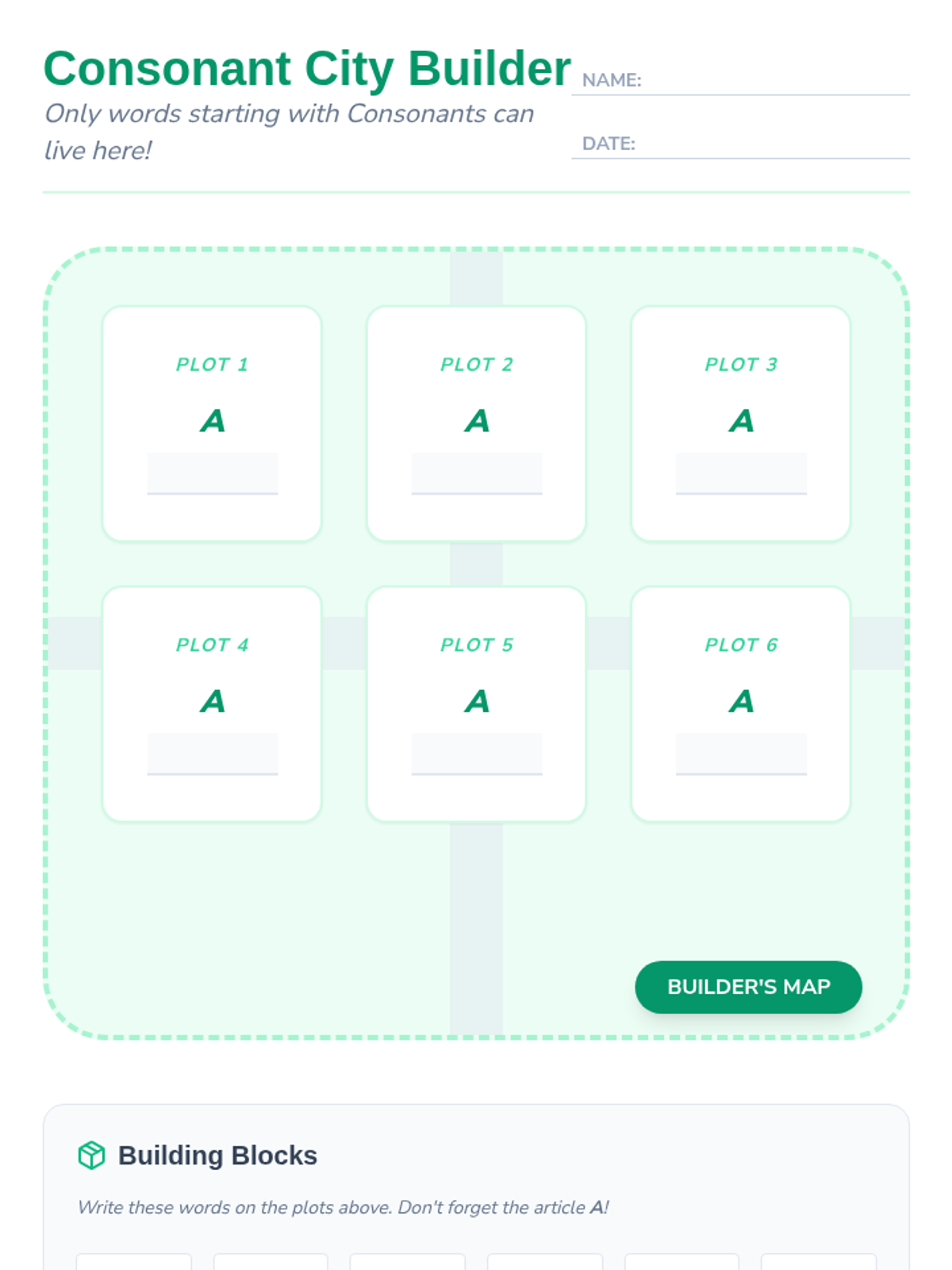
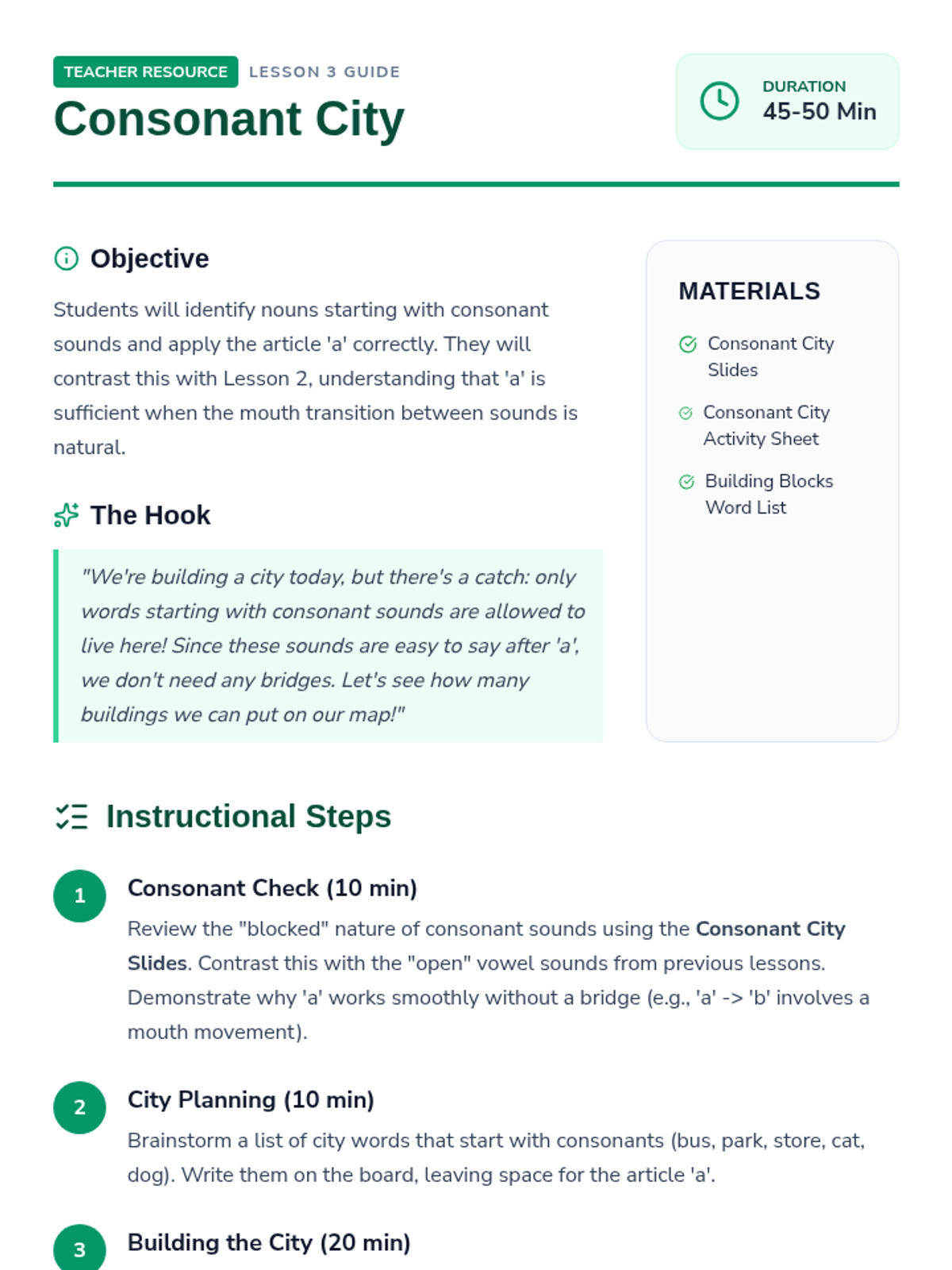
This lesson shifts focus to the article 'a' and its use with consonant-initial words. Students build a 'Consonant City' using word blocks that require the article 'a'. They practice saying phrases aloud to verify smooth transitions.
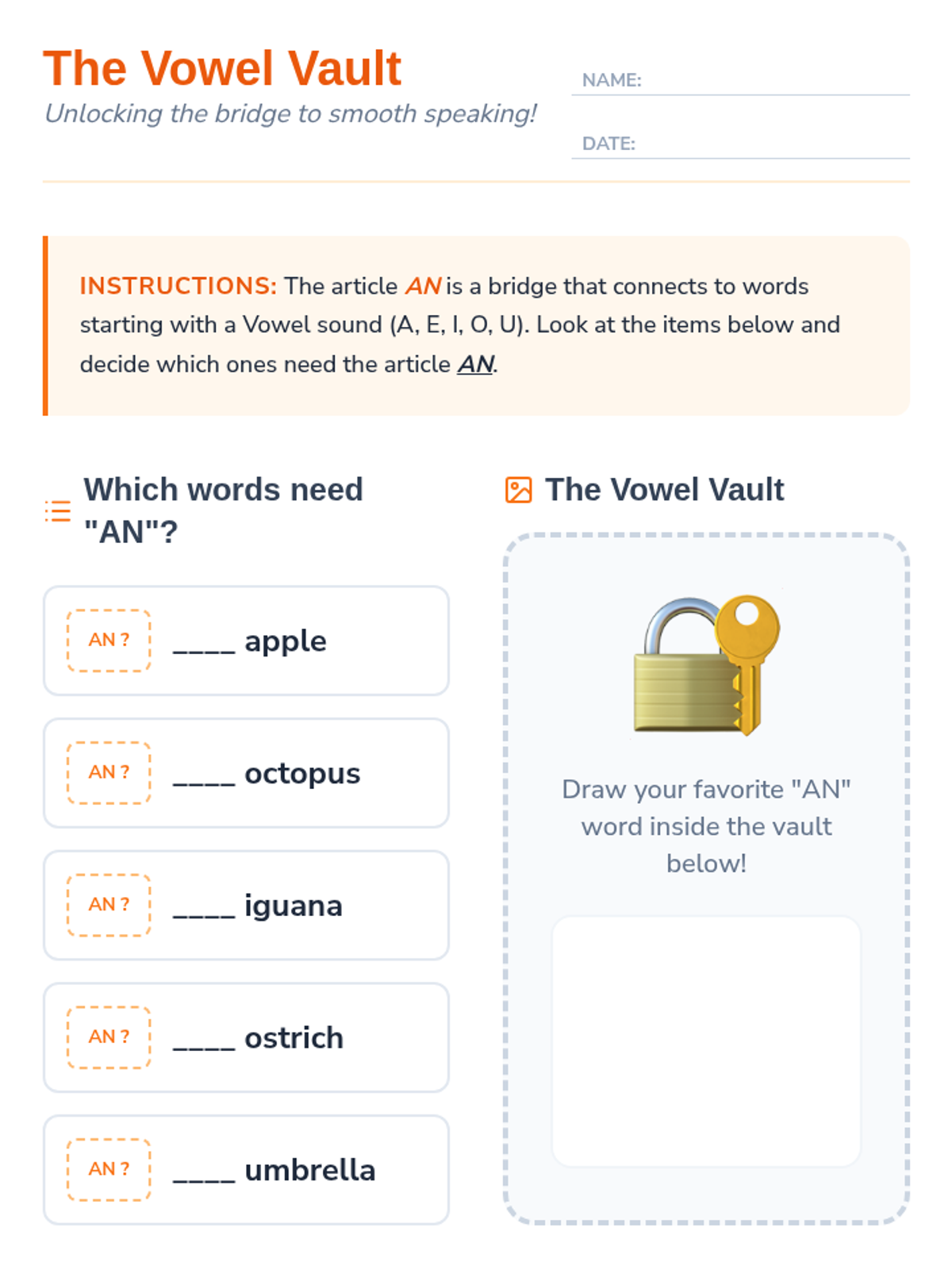
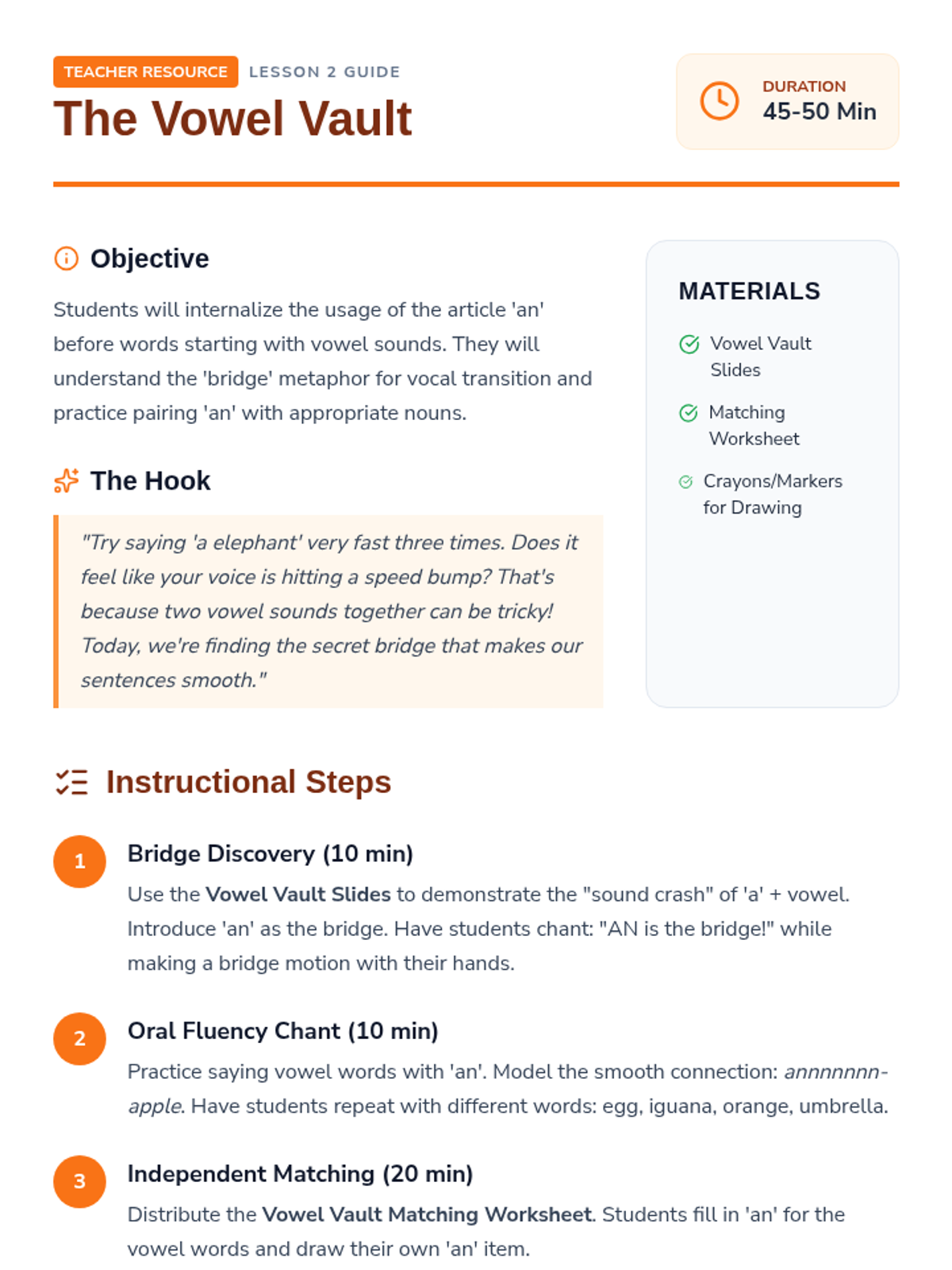
Learners focus specifically on the article 'an' and its relationship to words beginning with vowel sounds. They engage in a matching game where they pair the word 'an' with appropriate image cards, reinforcing the vocal bridge between the article and the noun.
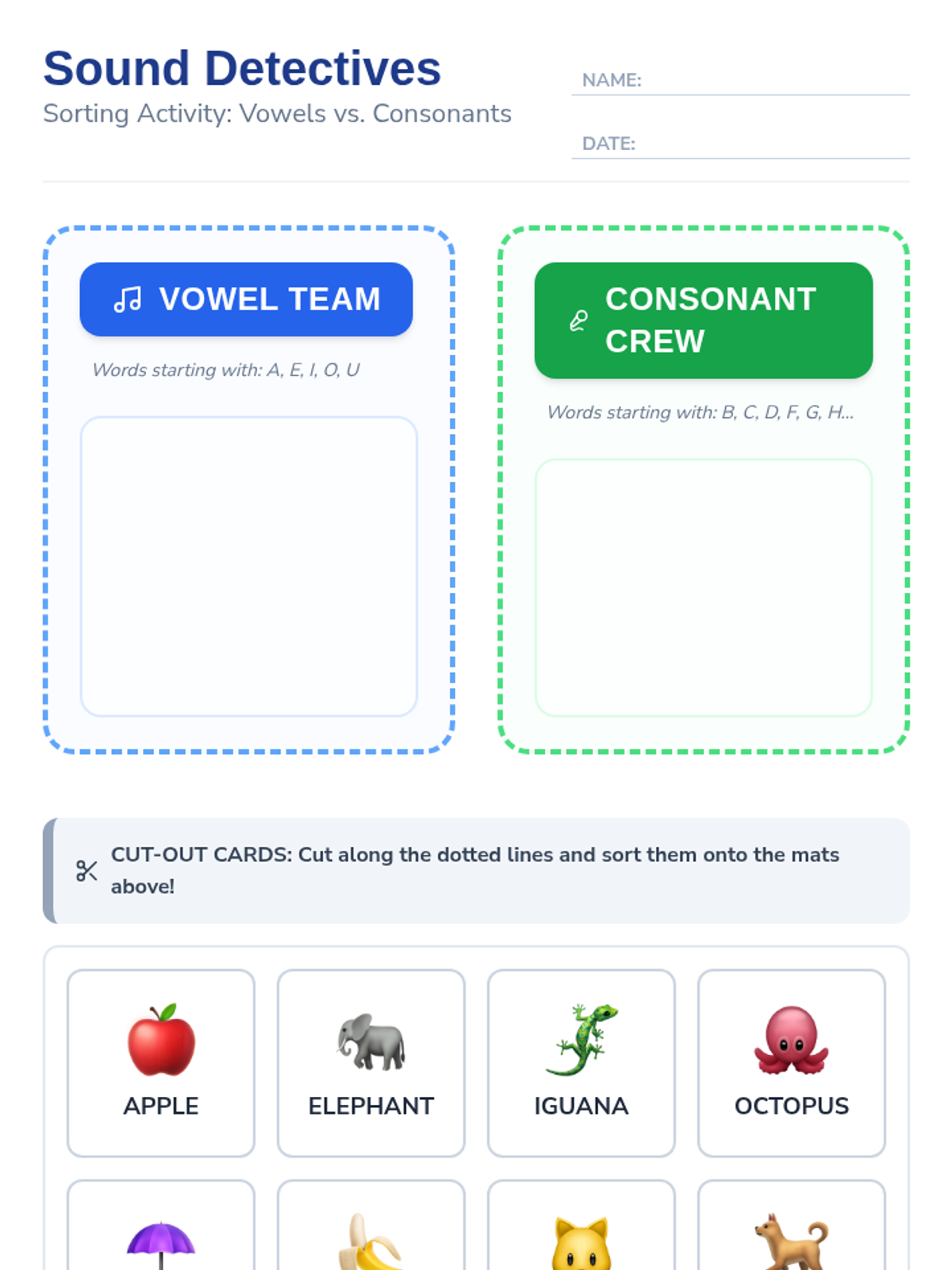
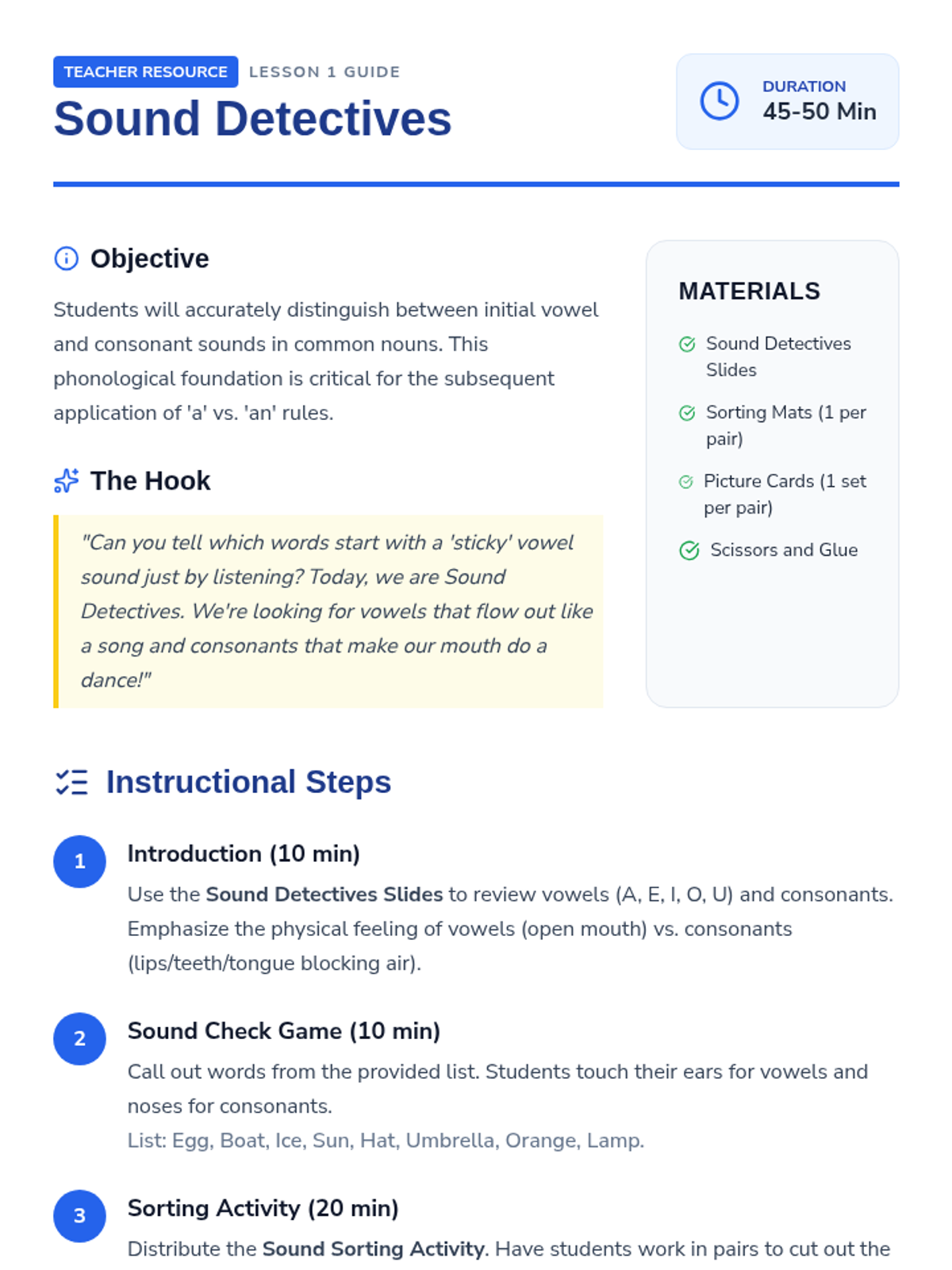
Students participate in a listening activity to distinguish between initial vowel and consonant sounds in common words. They practice sorting picture cards into two groups based on the starting sound without yet applying articles.
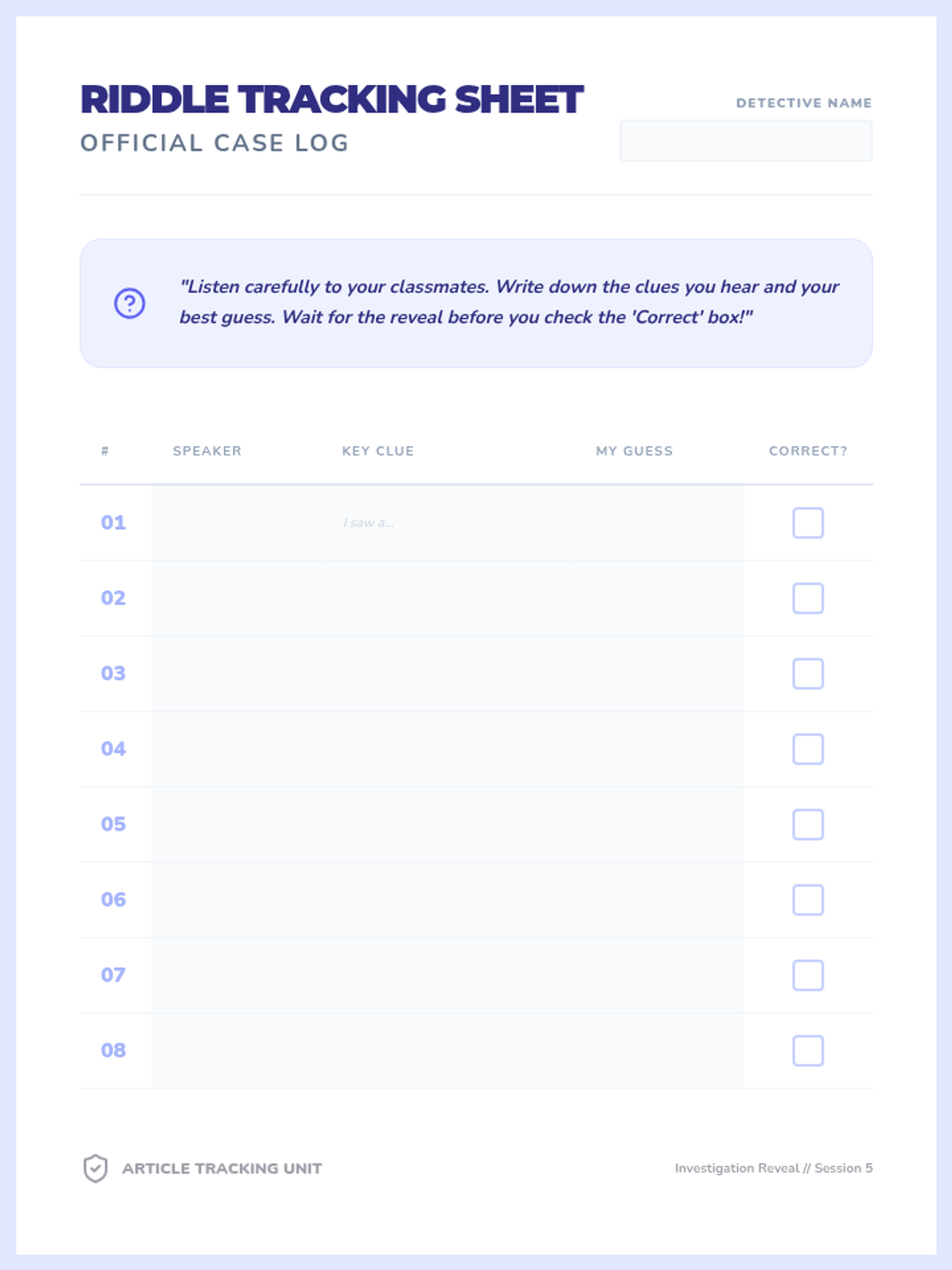
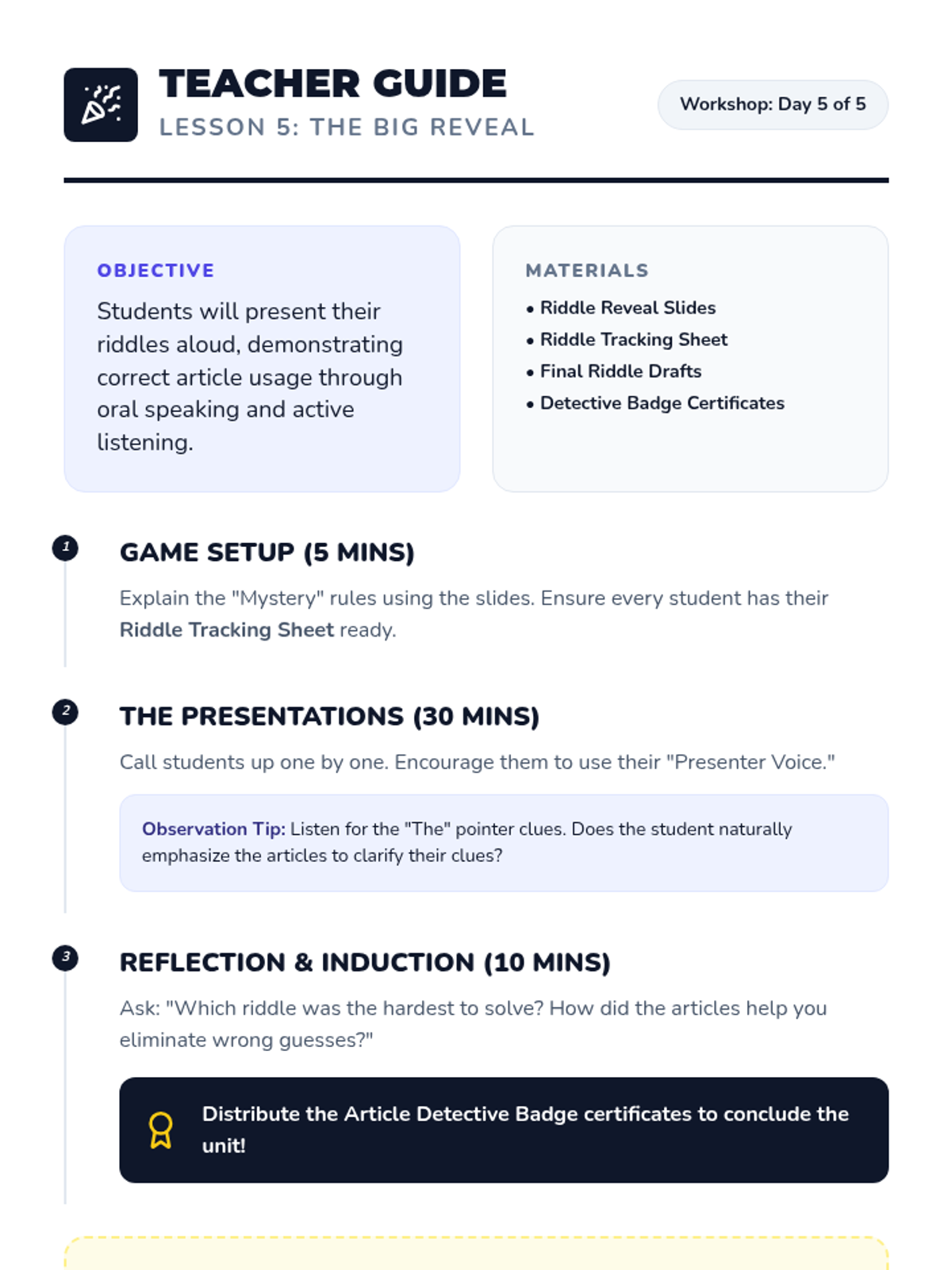
Students present their riddles to the class for a guessing game, celebrating their writing and grammar skills.
Students finalize their riddles with polished handwriting and matching illustrations for publication.
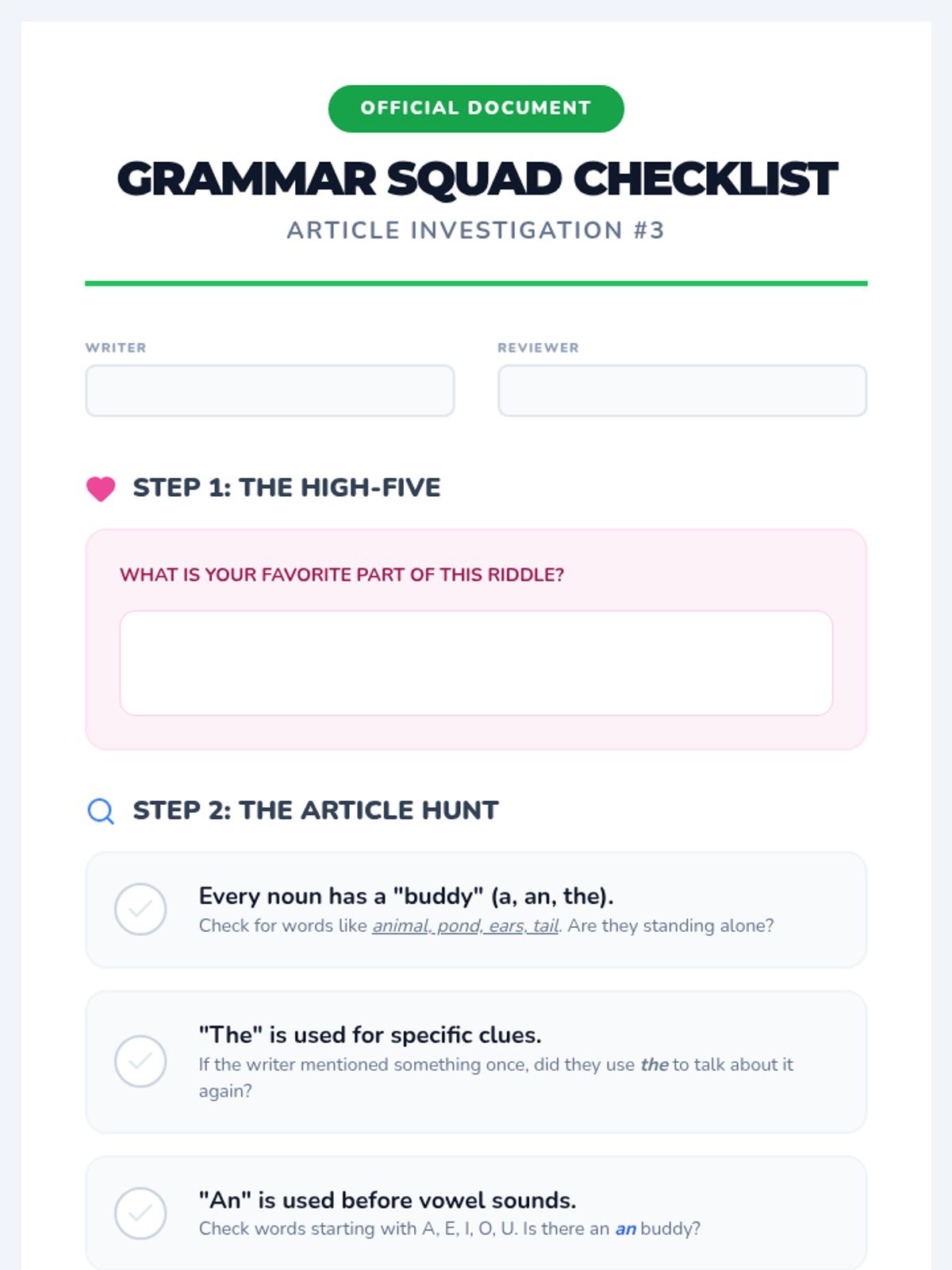
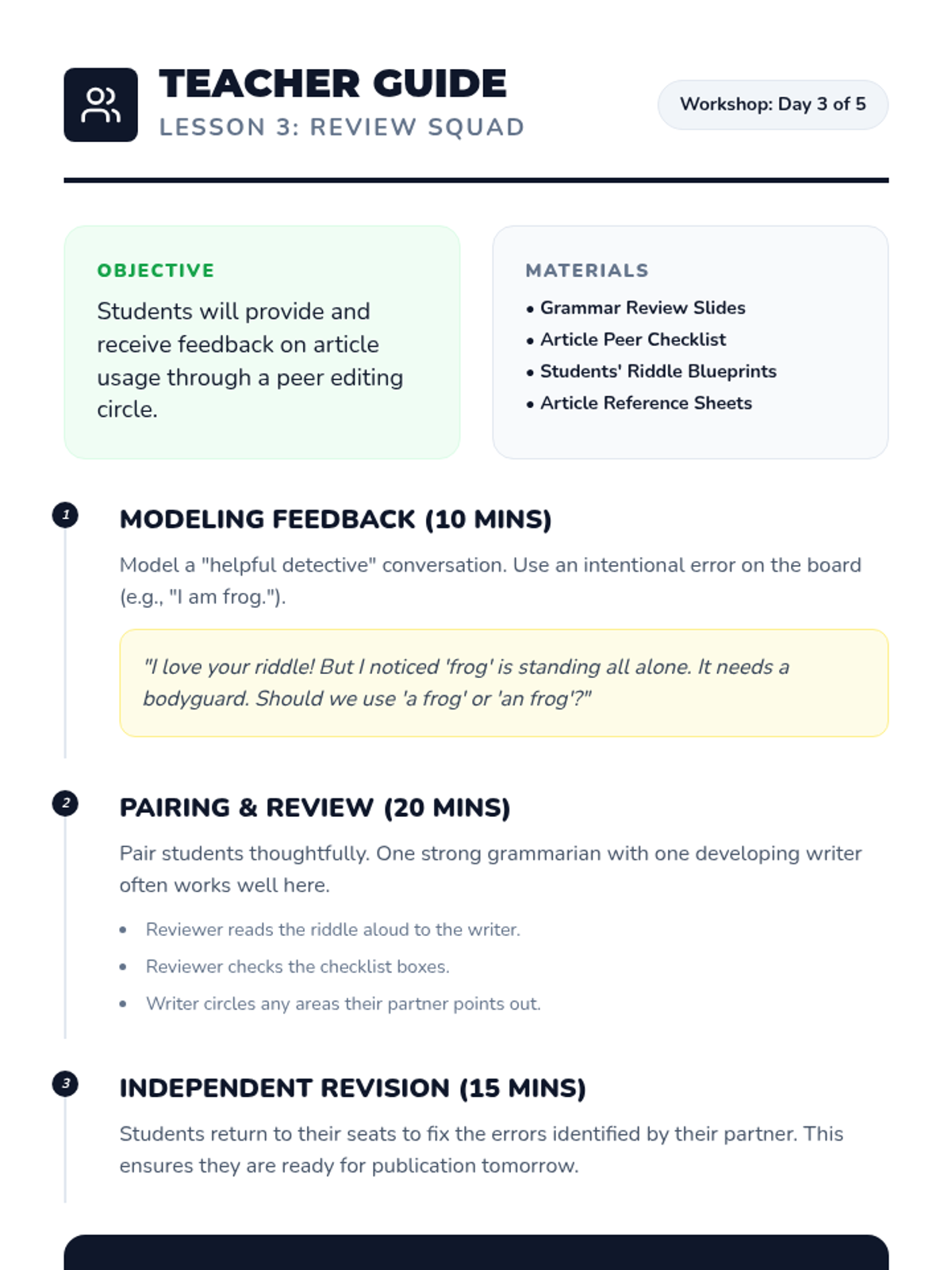
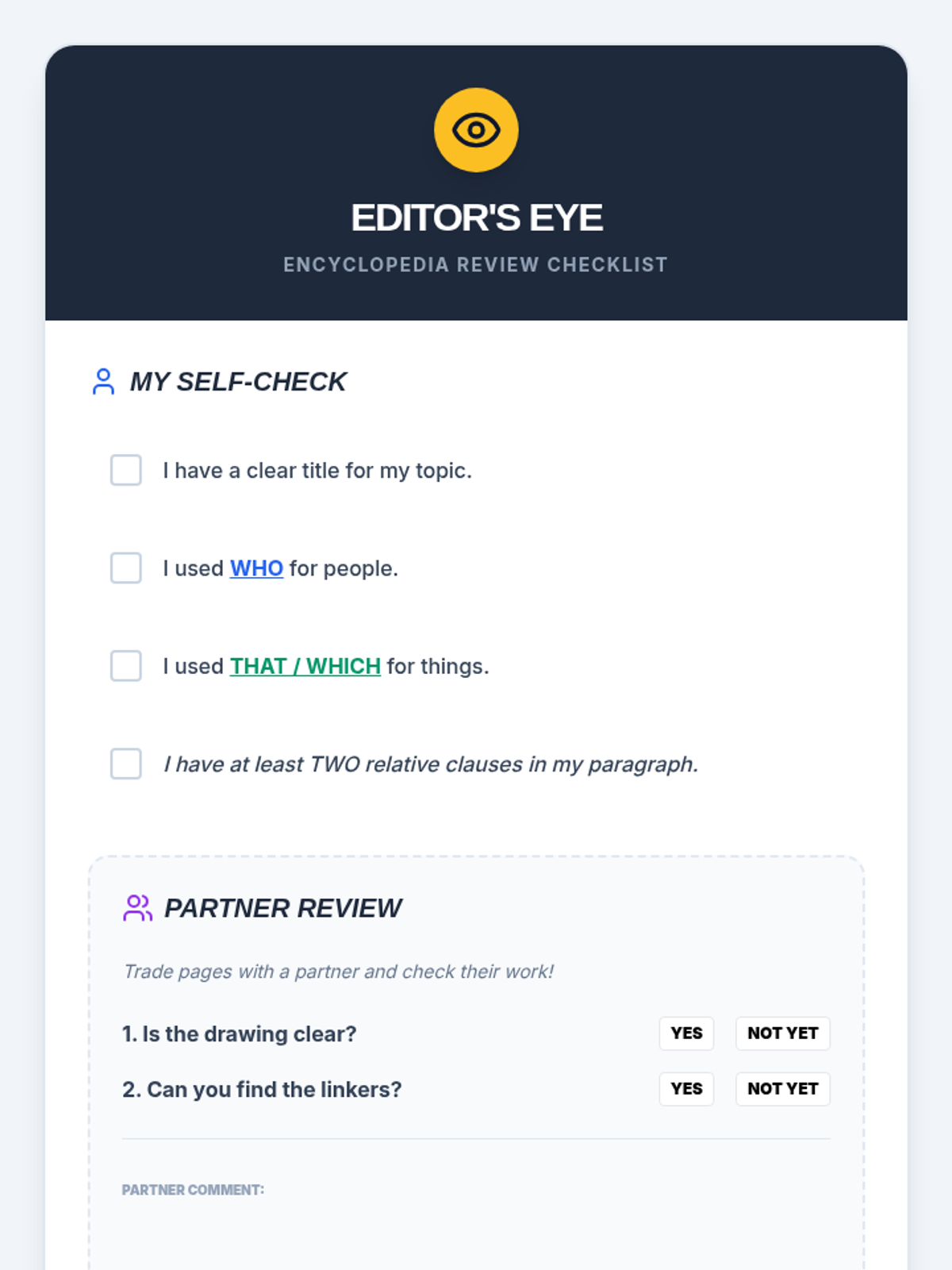
Students work in pairs to review article usage in their riddles using a focused checklist.
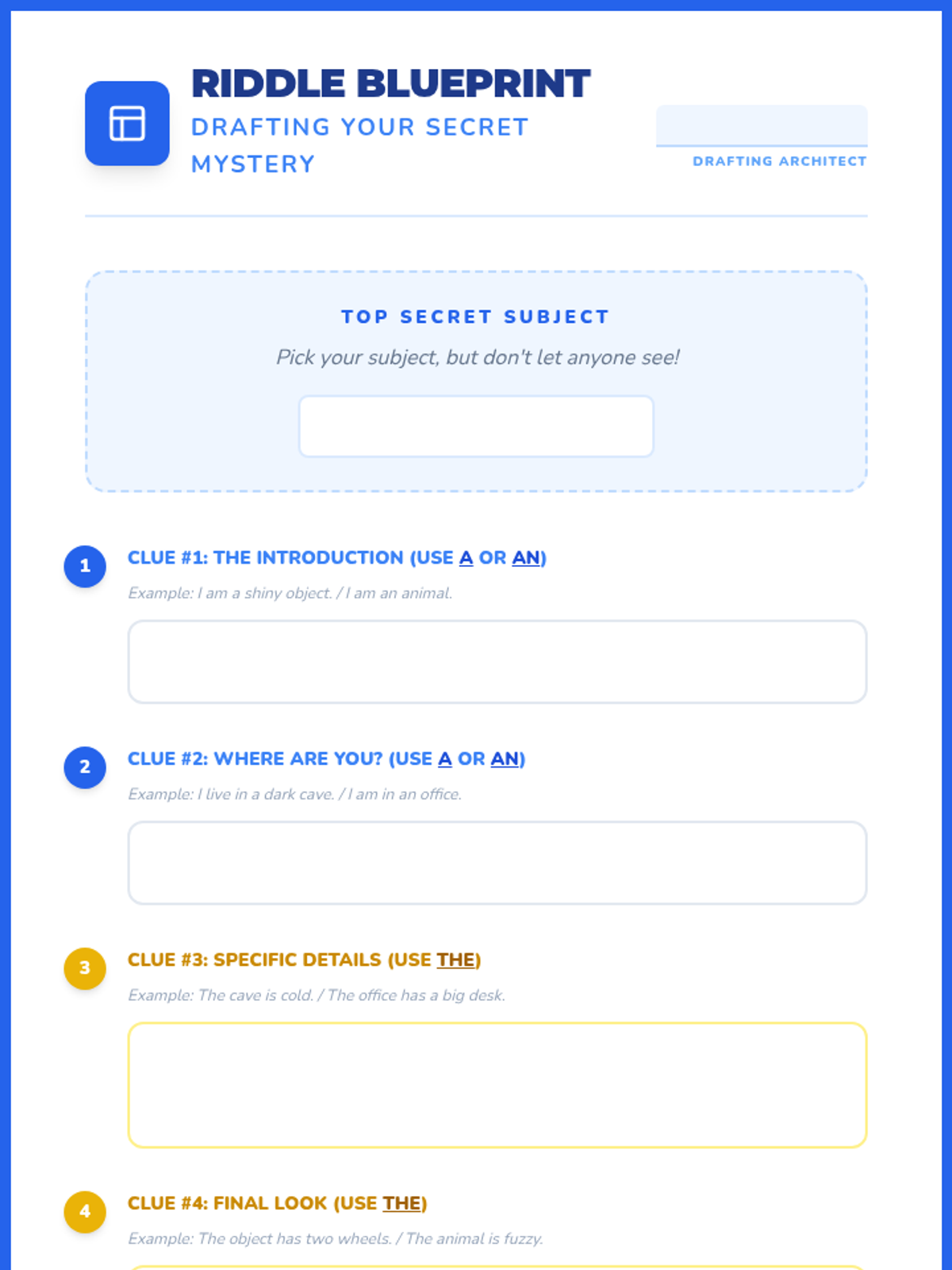
Students draft descriptive riddles using articles to distinguish between general and specific clues.
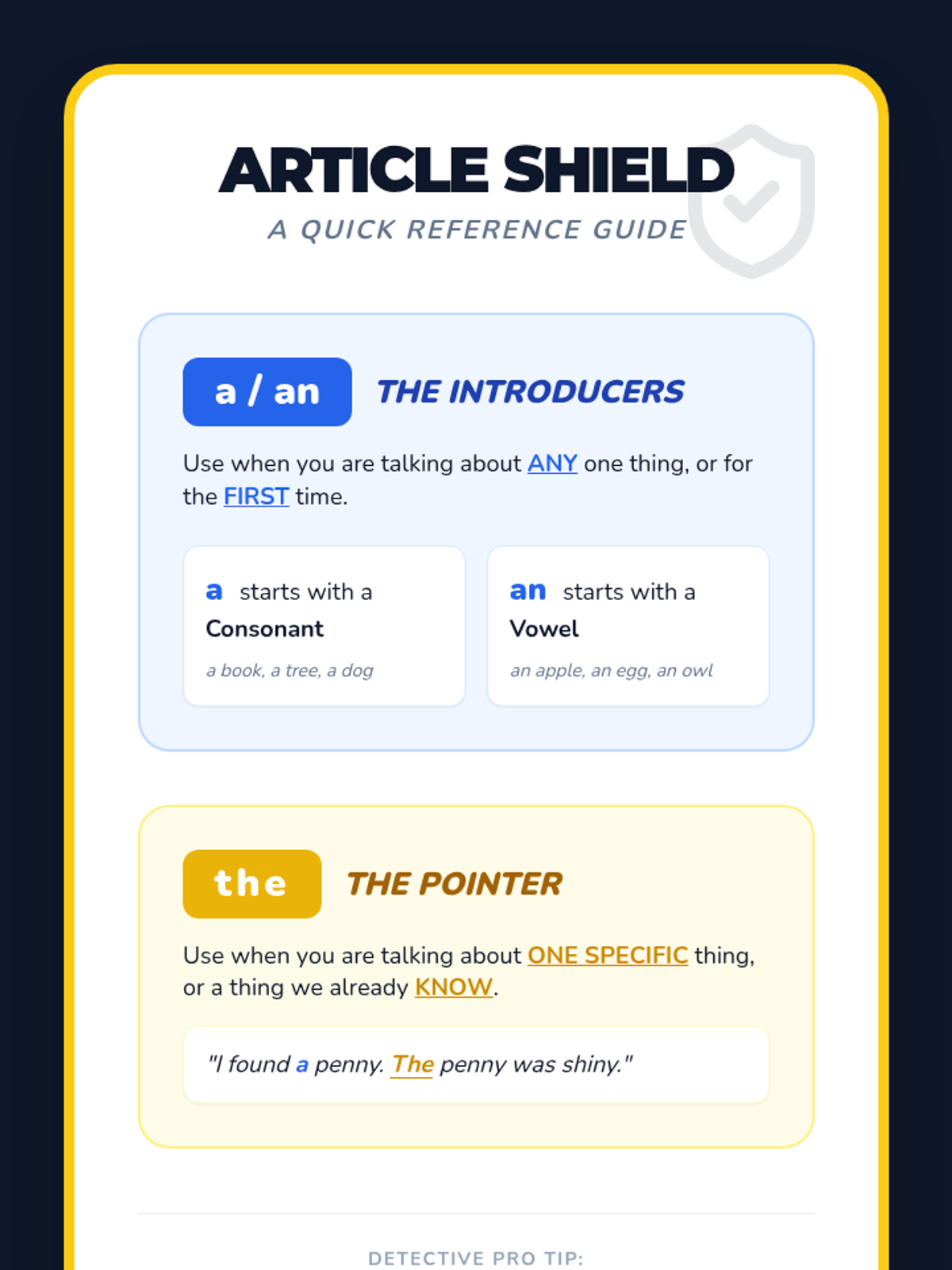
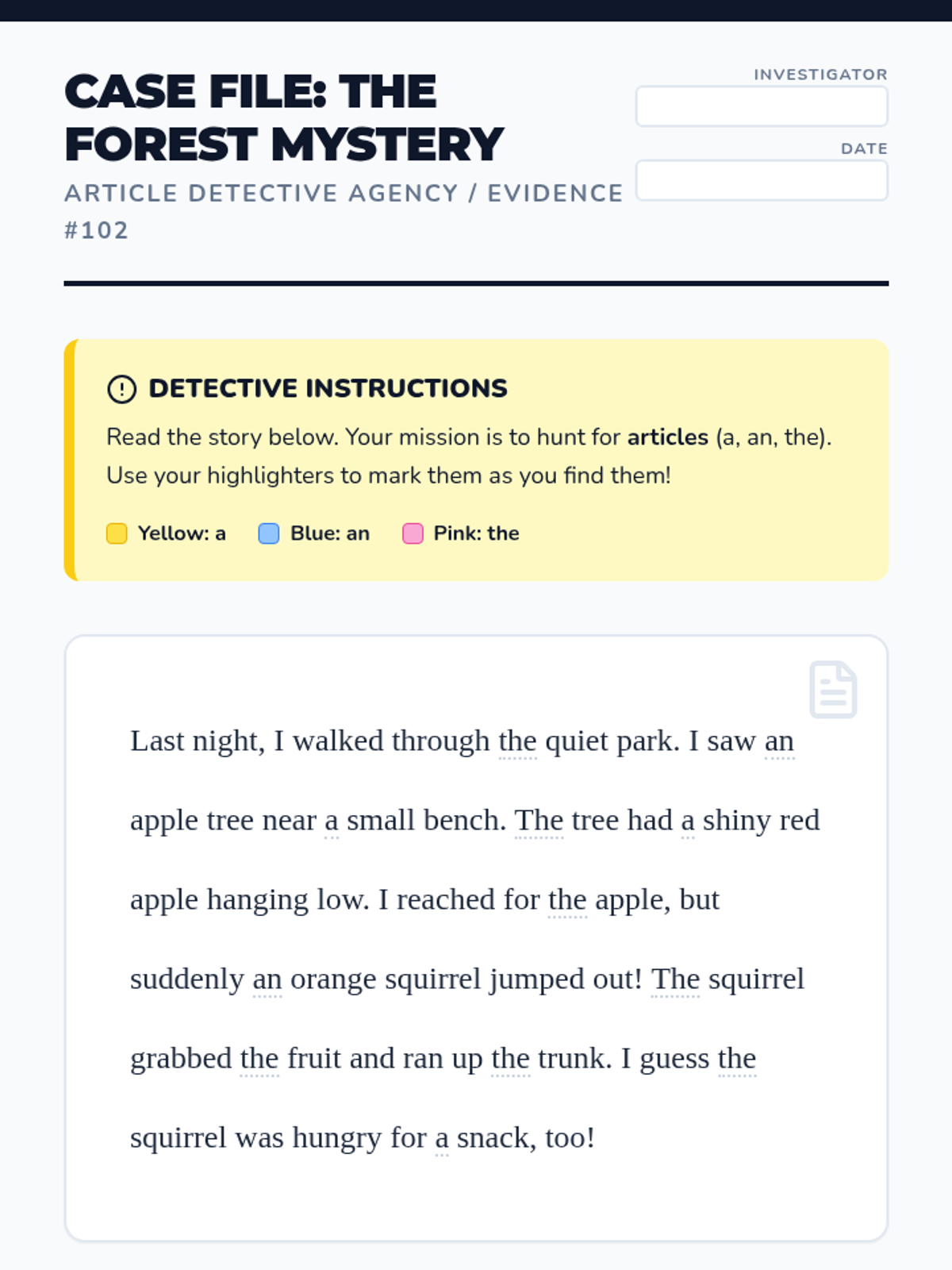
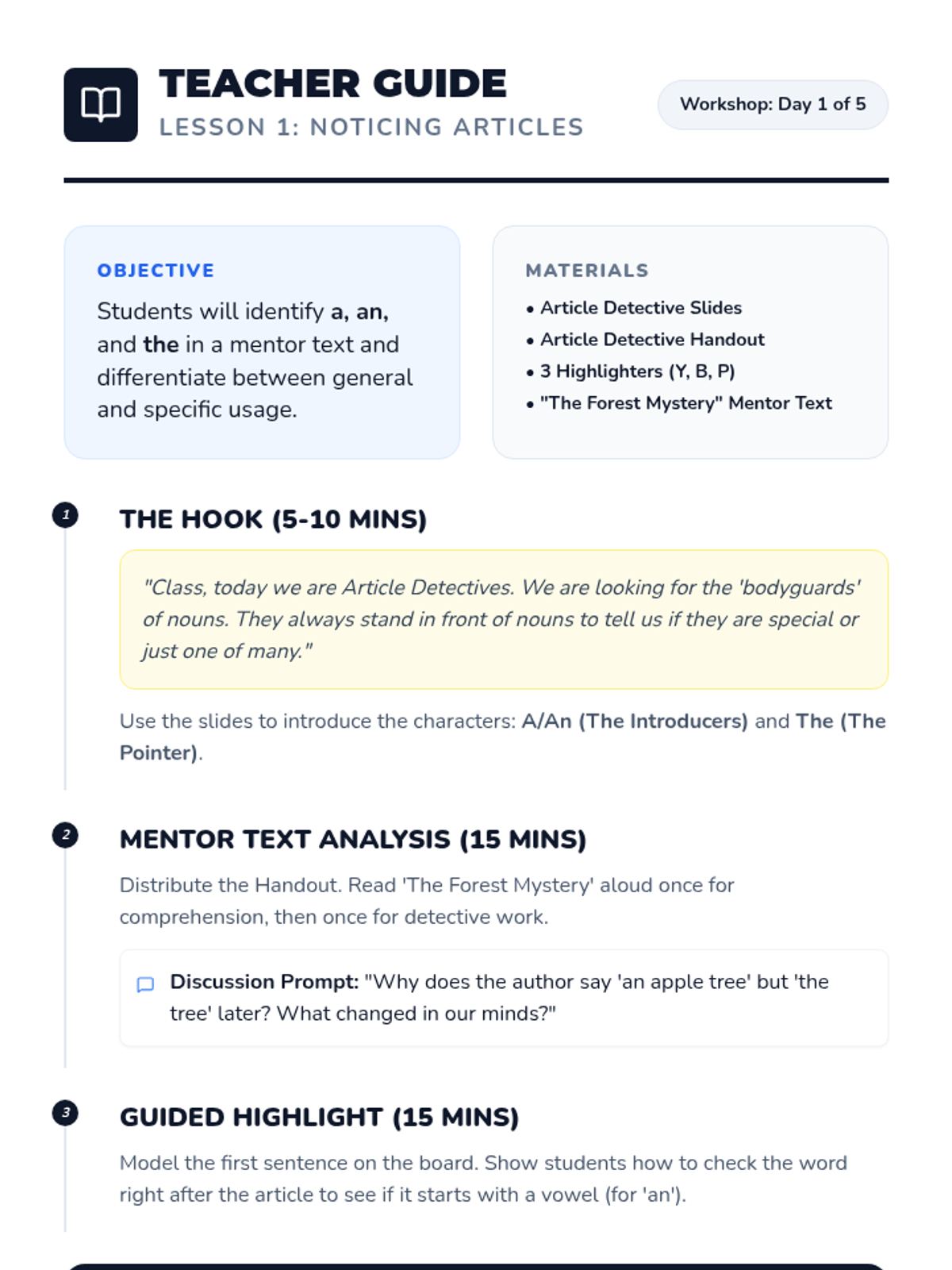
Students identify articles in a mentor text and discuss their function in introducing or specifying nouns.
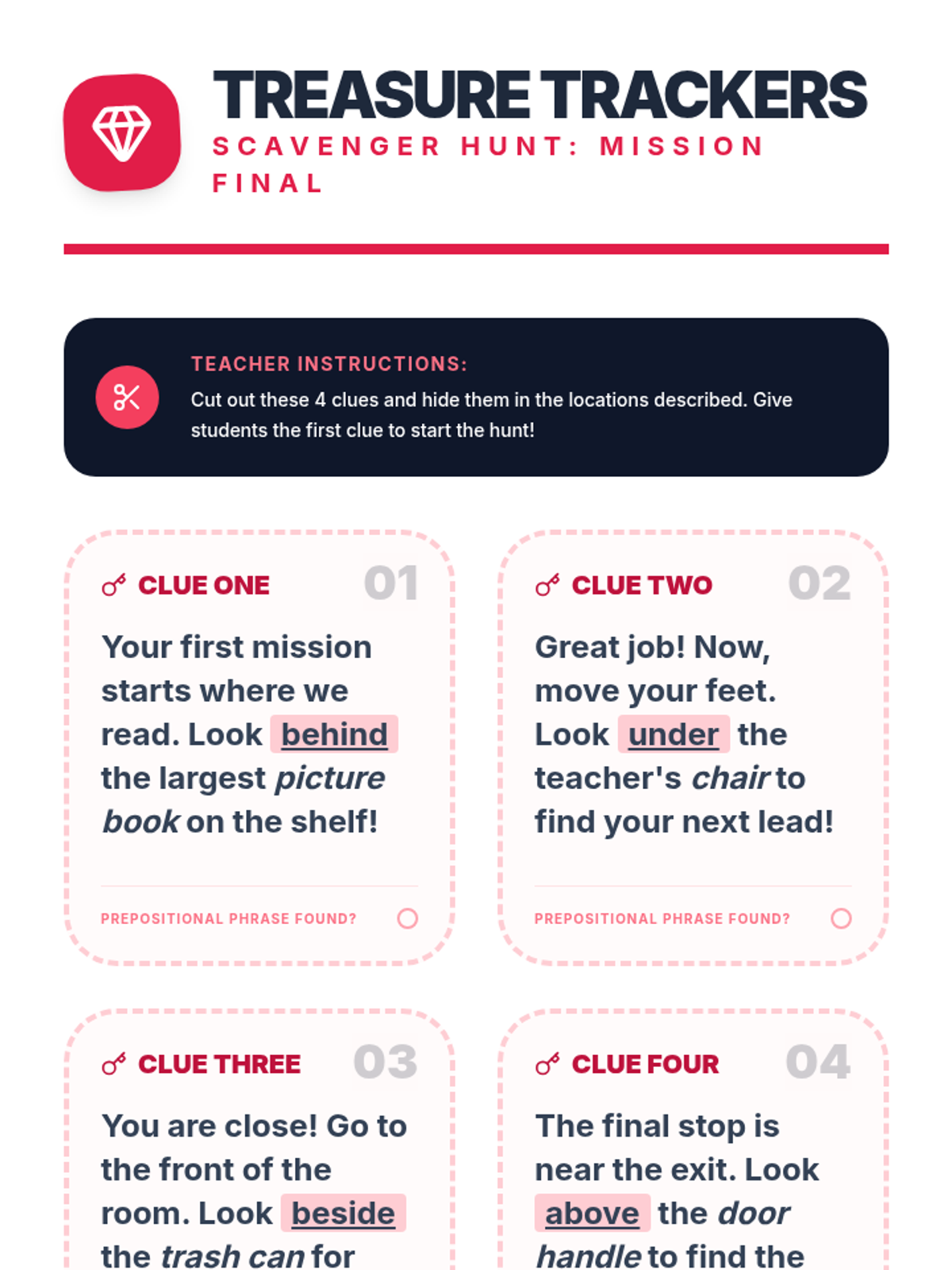
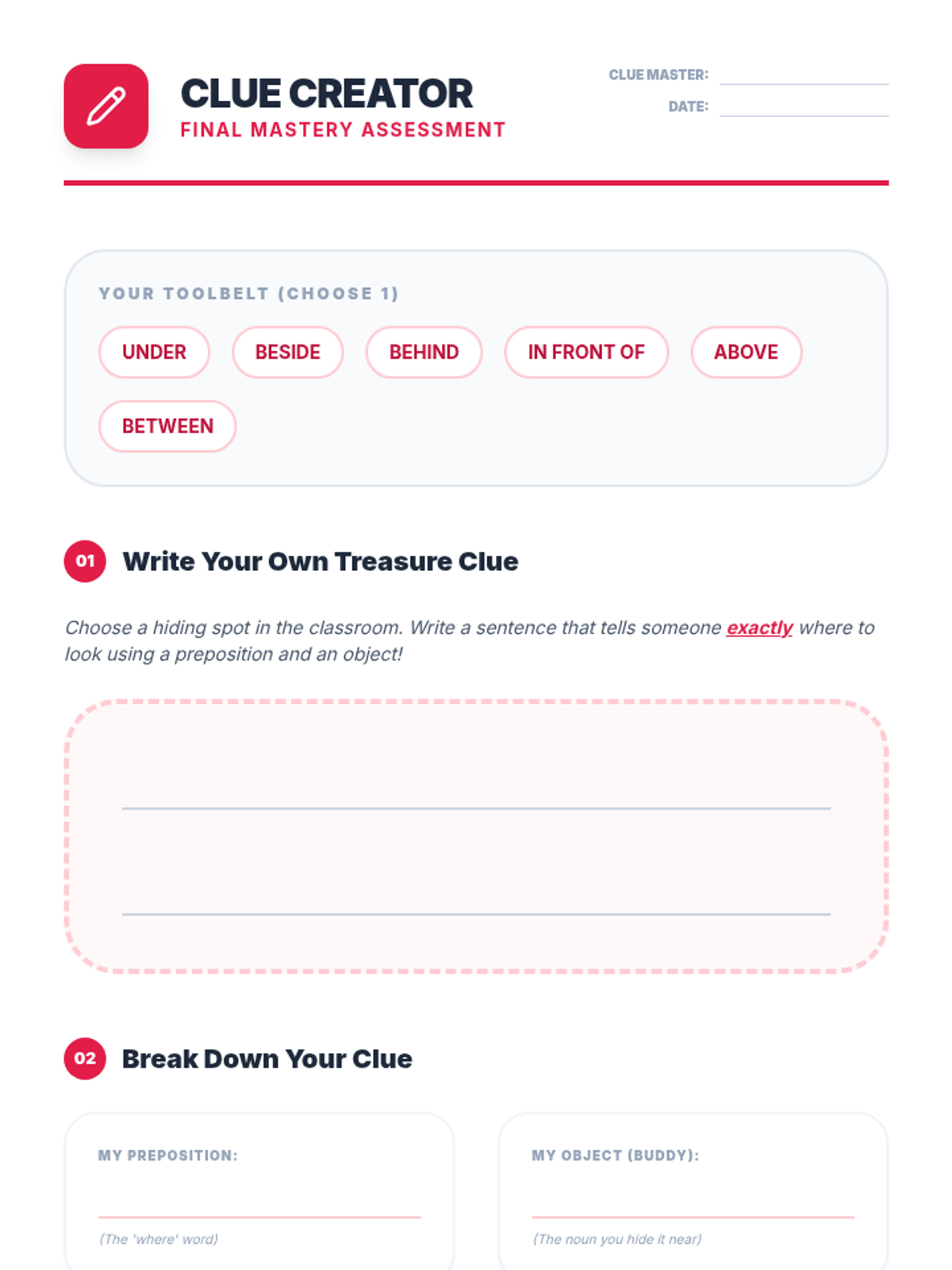
A cumulative scavenger hunt where students read and write complex spatial clues to solve a classroom mystery.
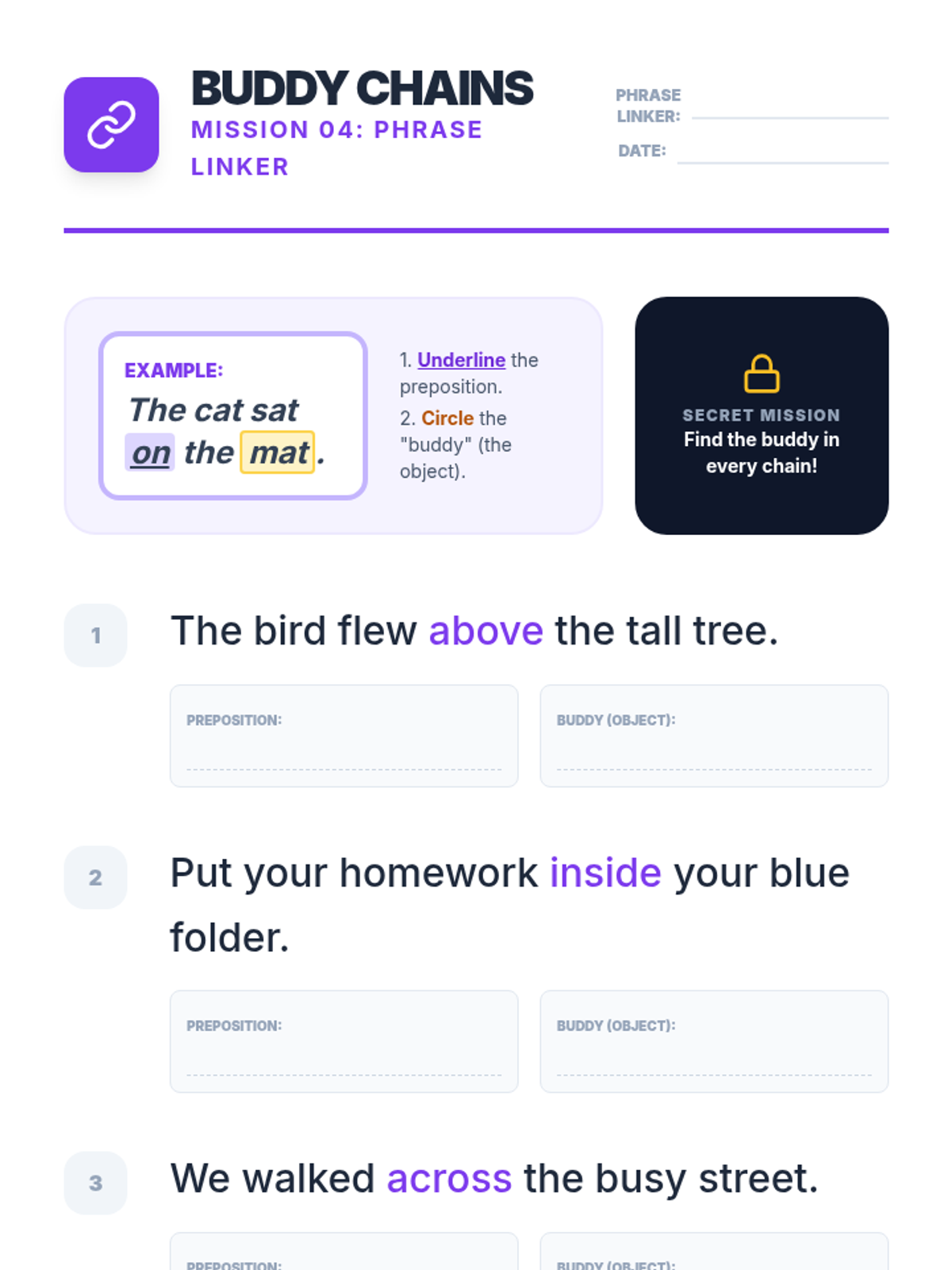
An analysis of the relationship between prepositions and nouns, identifying the 'buddy' or object that completes the phrase.
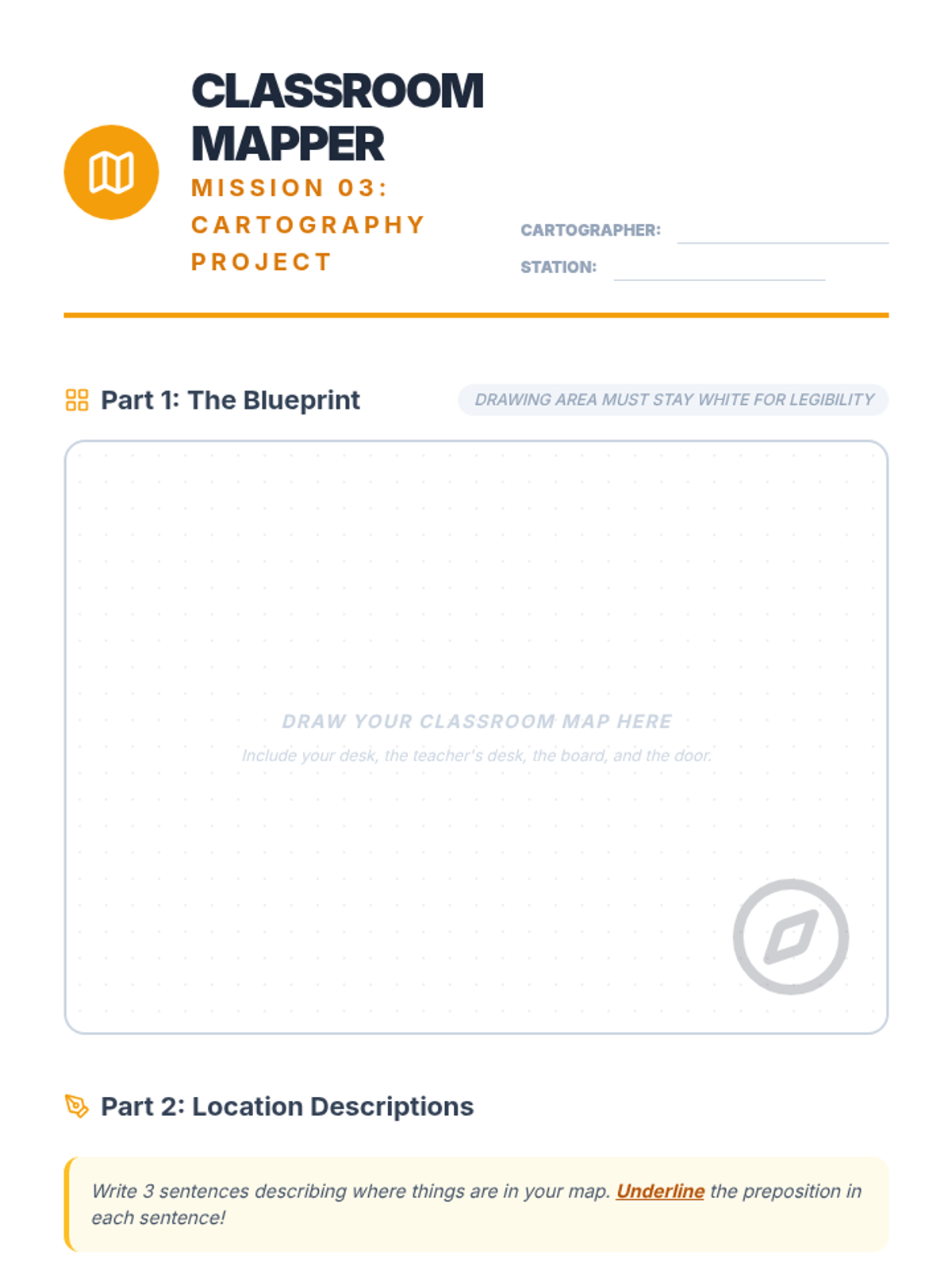
Applying prepositional knowledge to a classroom mapping project, bridging oral language and descriptive writing.
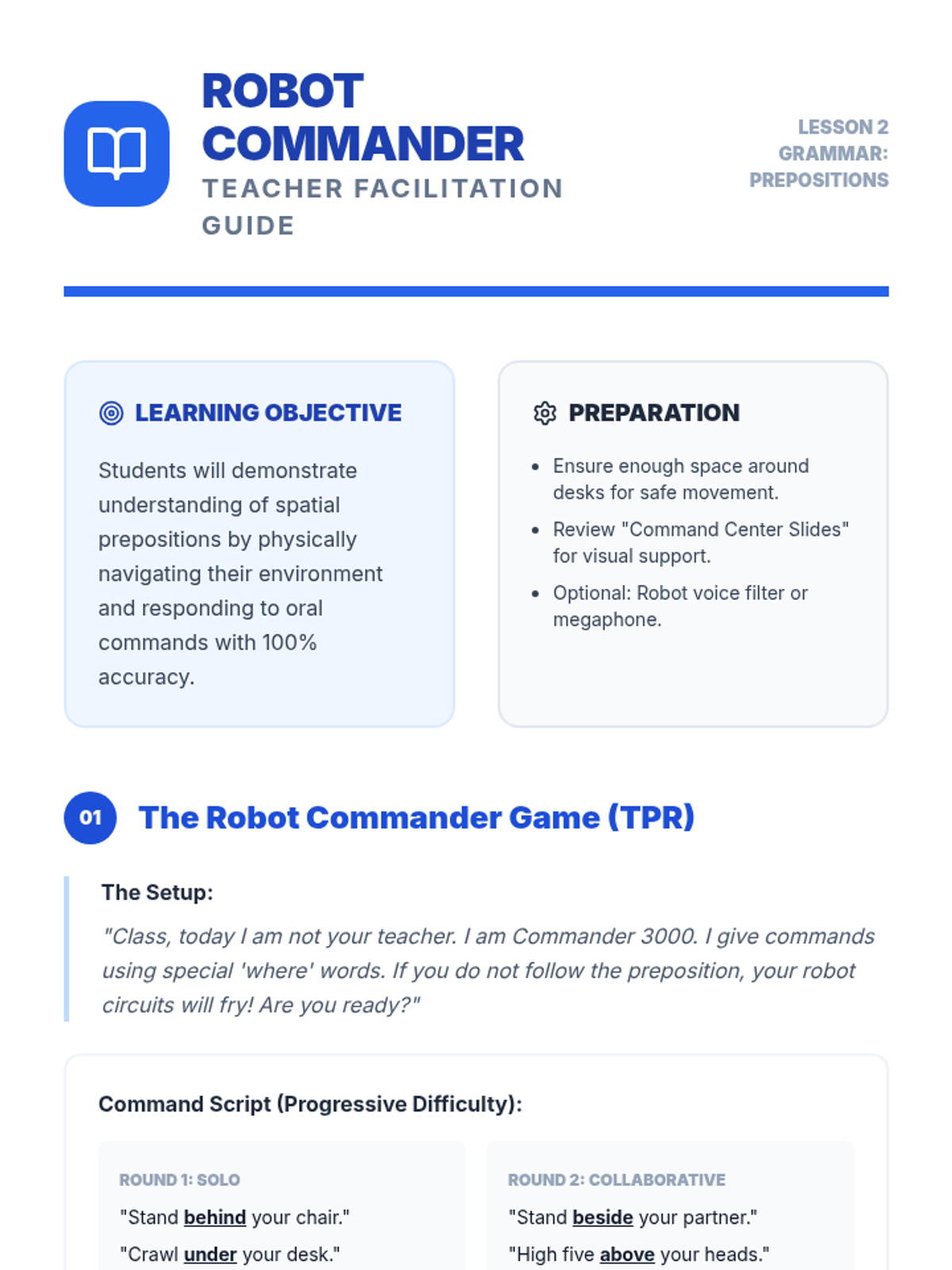
A kinesthetic approach to prepositions where students use their bodies to demonstrate and follow spatial directions.
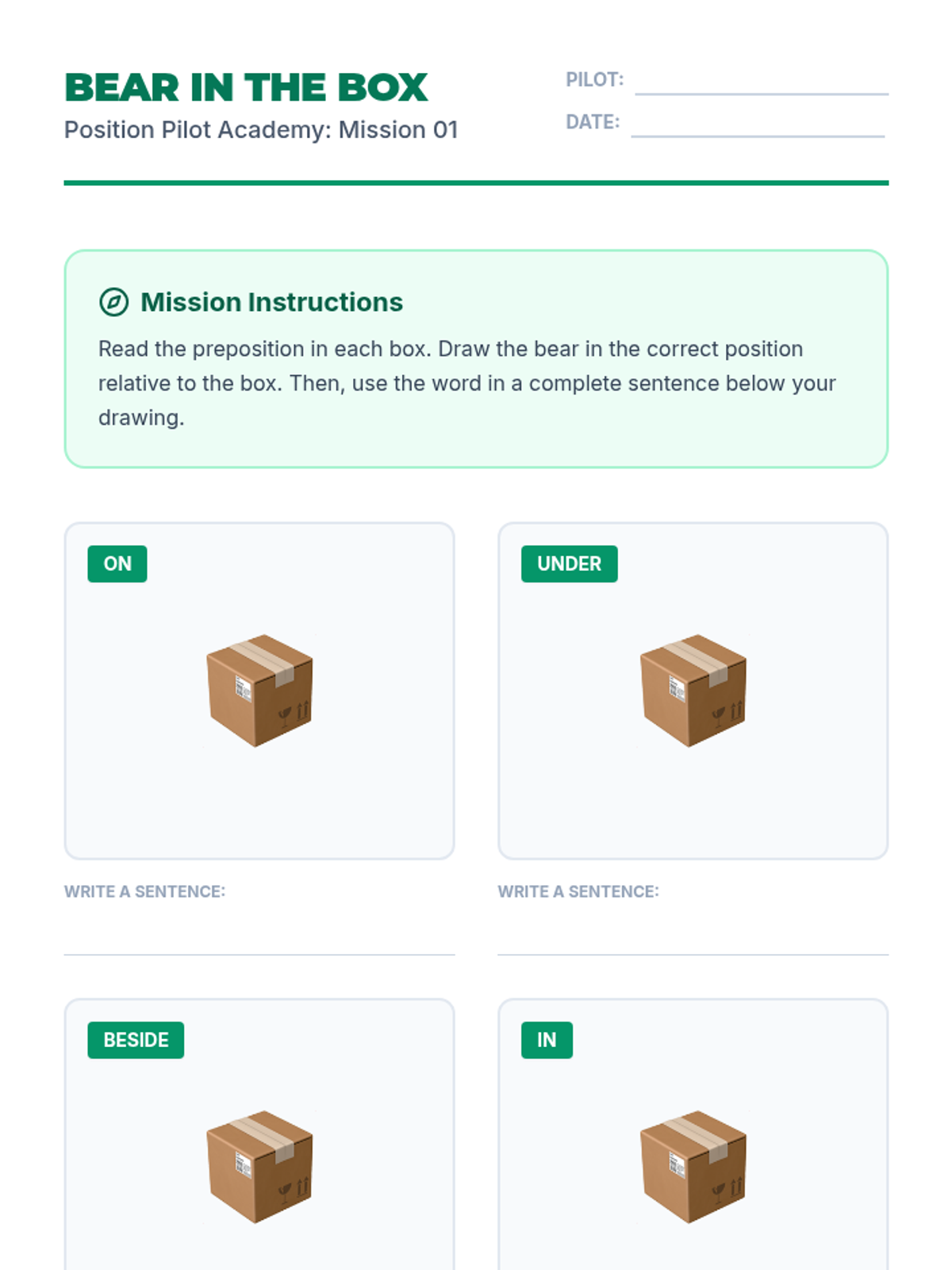
An introduction to spatial prepositions using concrete objects and visual aids to define 'where' words.
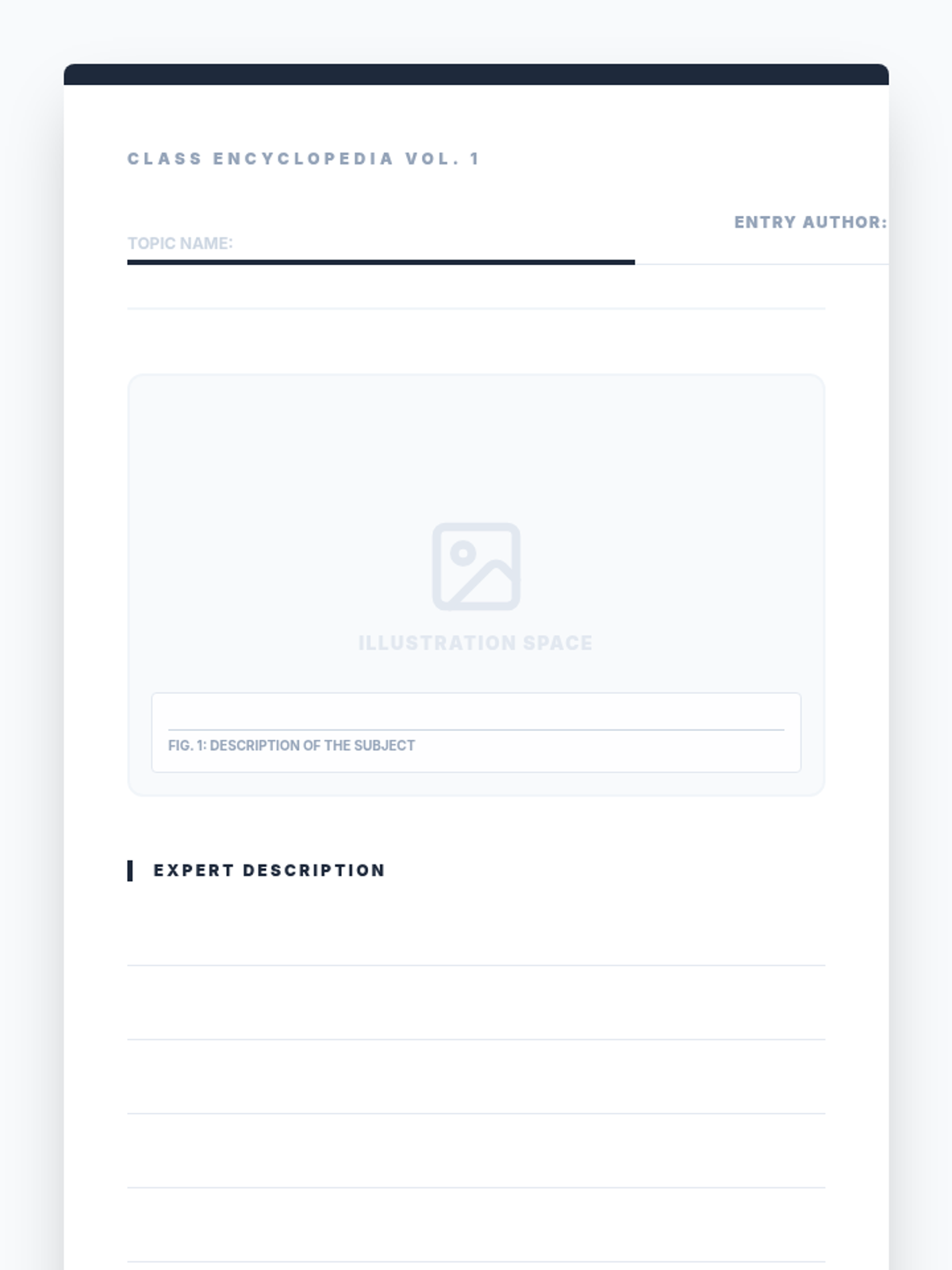
Students apply their skills to create a collaborative class encyclopedia with detailed entries using relative clauses.
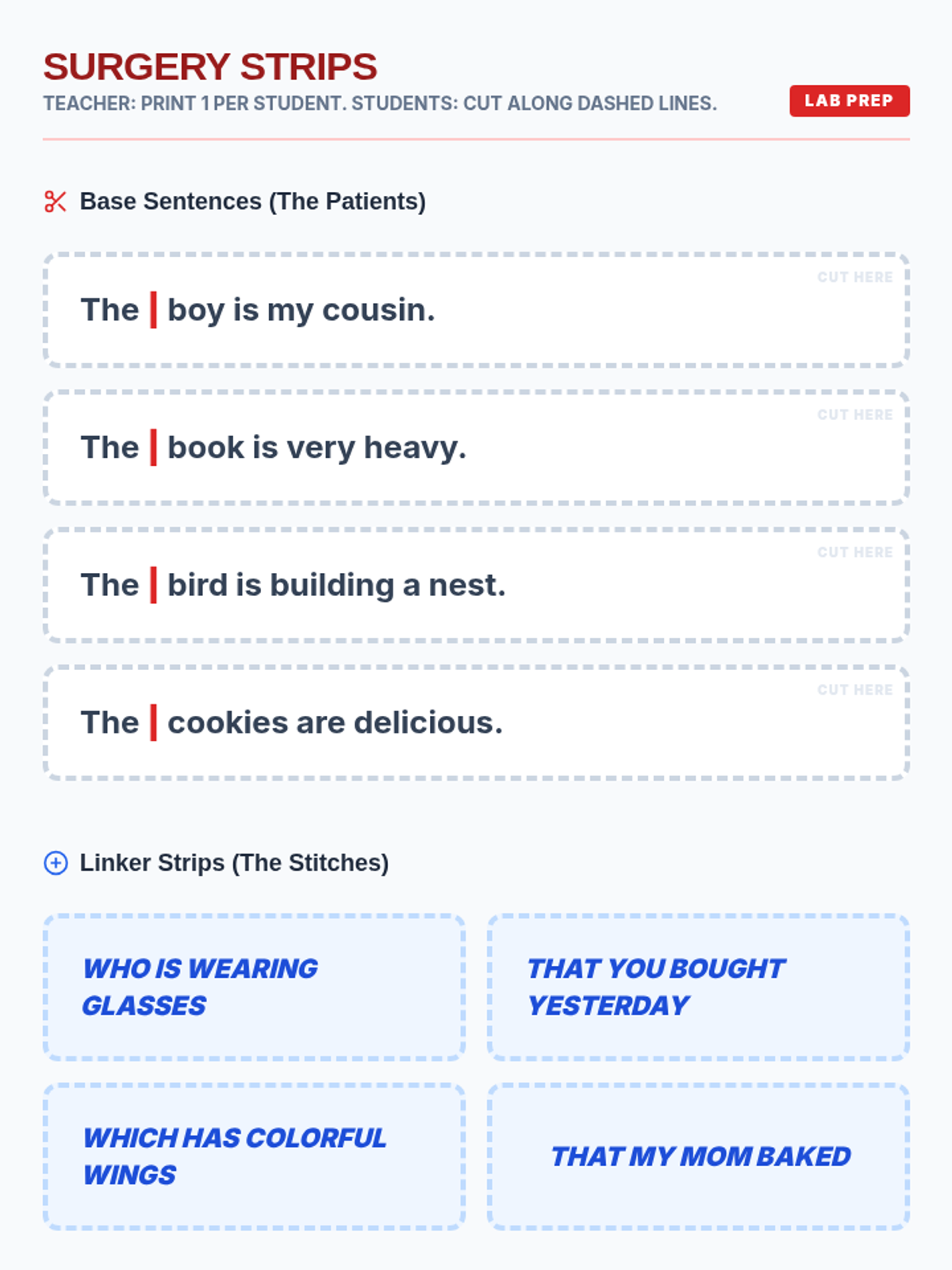
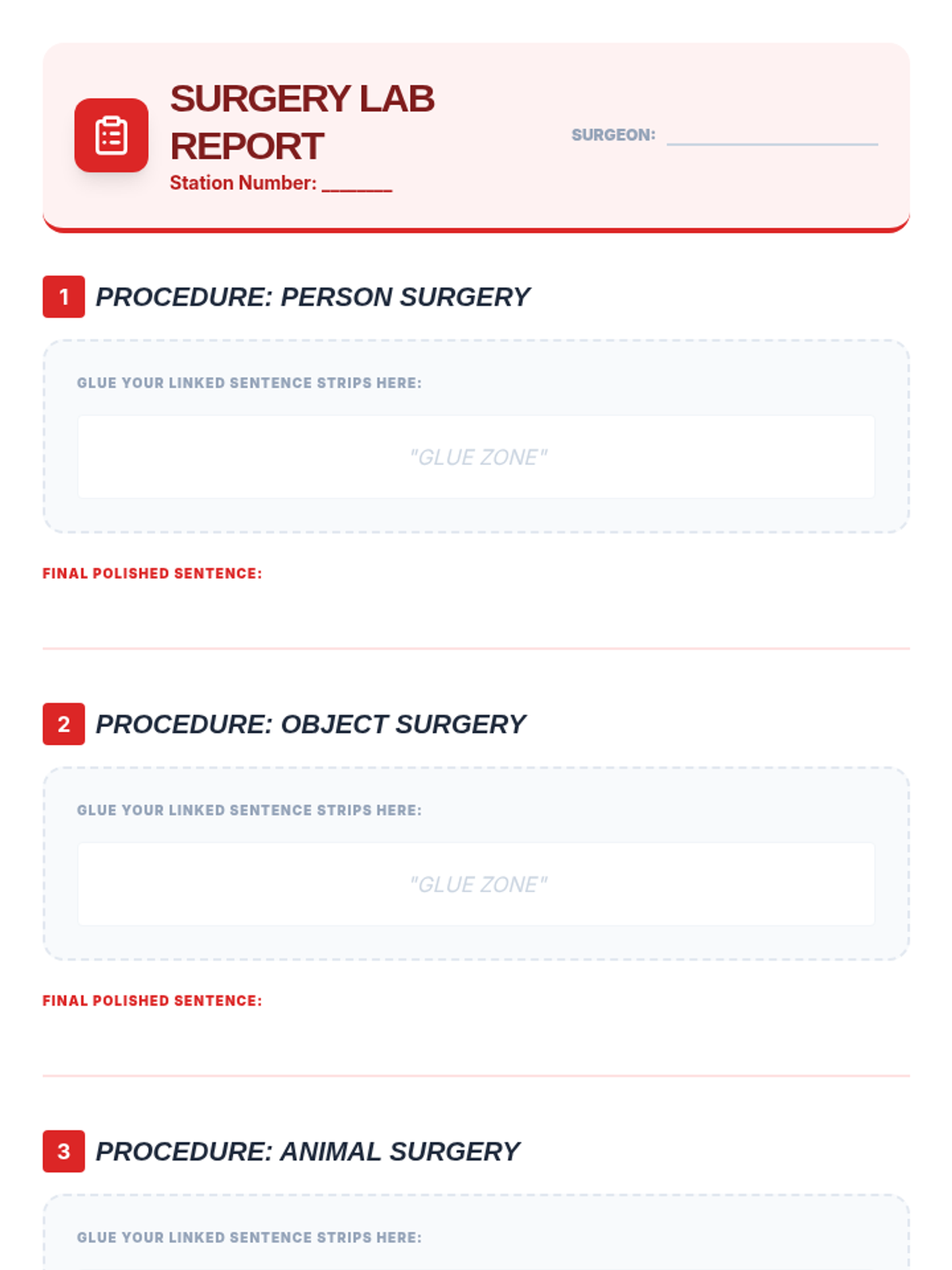
A workshop where students physically manipulate sentence parts using strips to understand where relative clauses fit best.
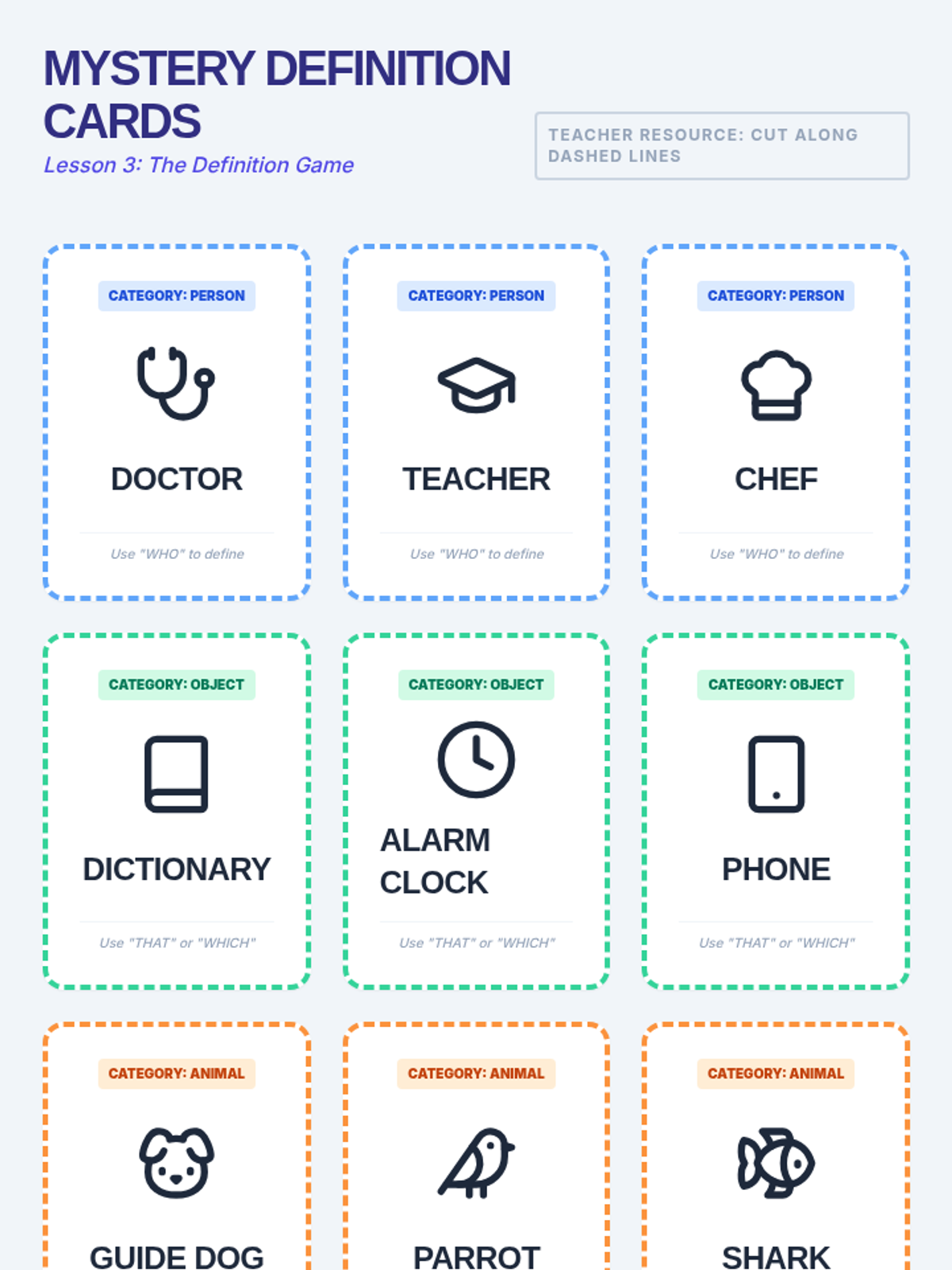
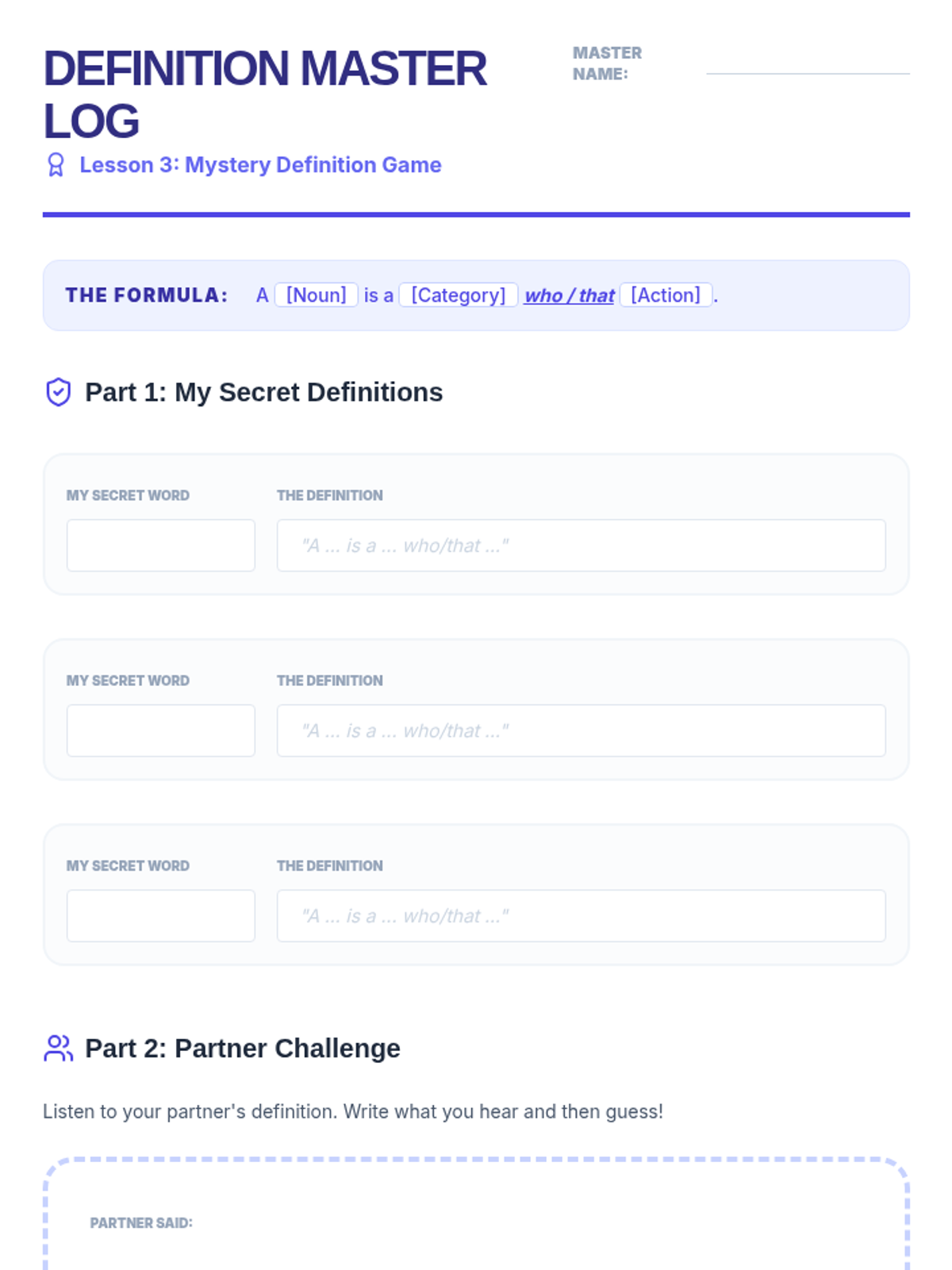
Students write definitions for common words using relative clauses and quiz their peers in a game-based setting.
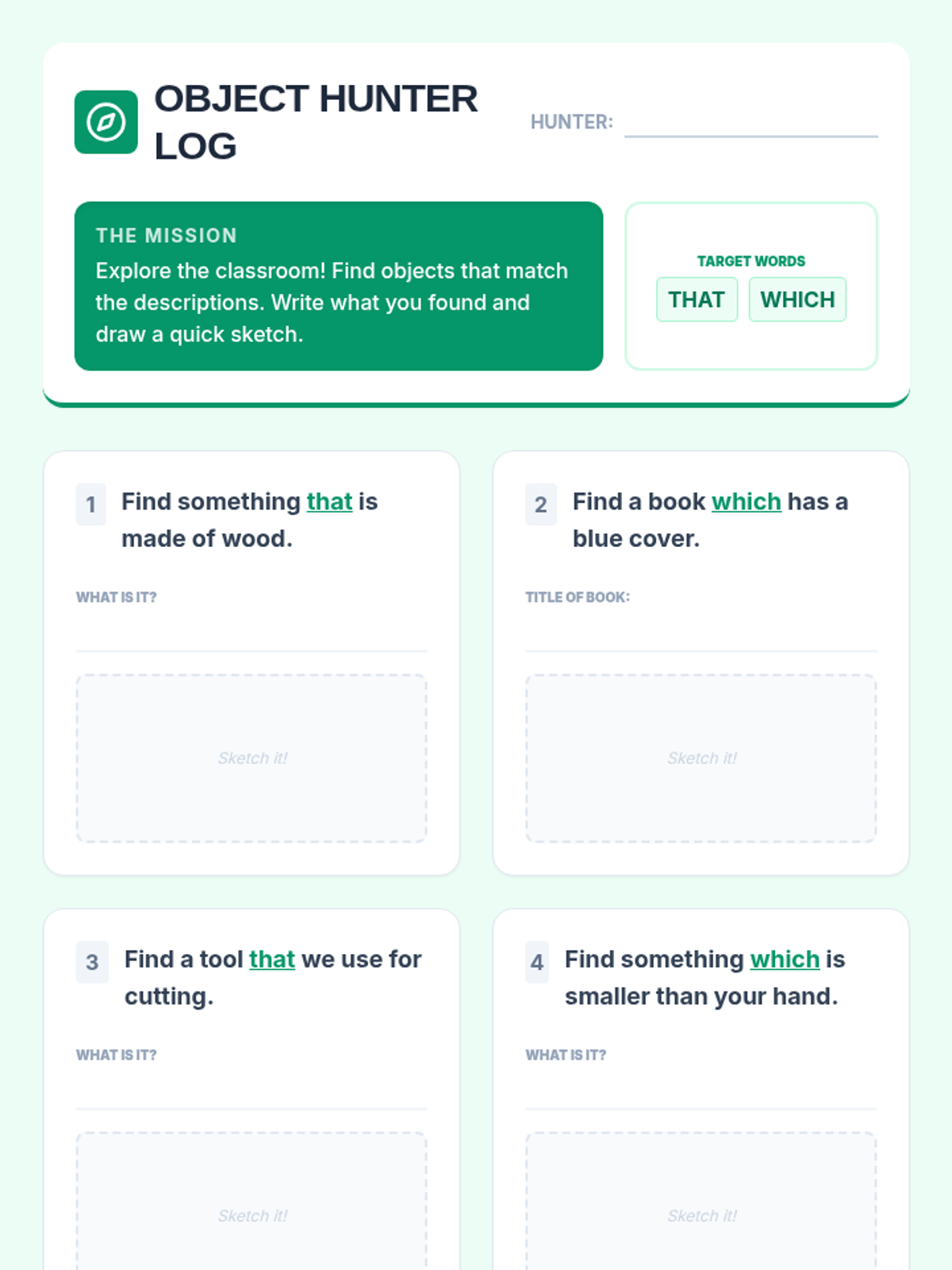
Students practice describing objects and animals using 'which' and 'that' through a scavenger hunt and descriptive exercises.
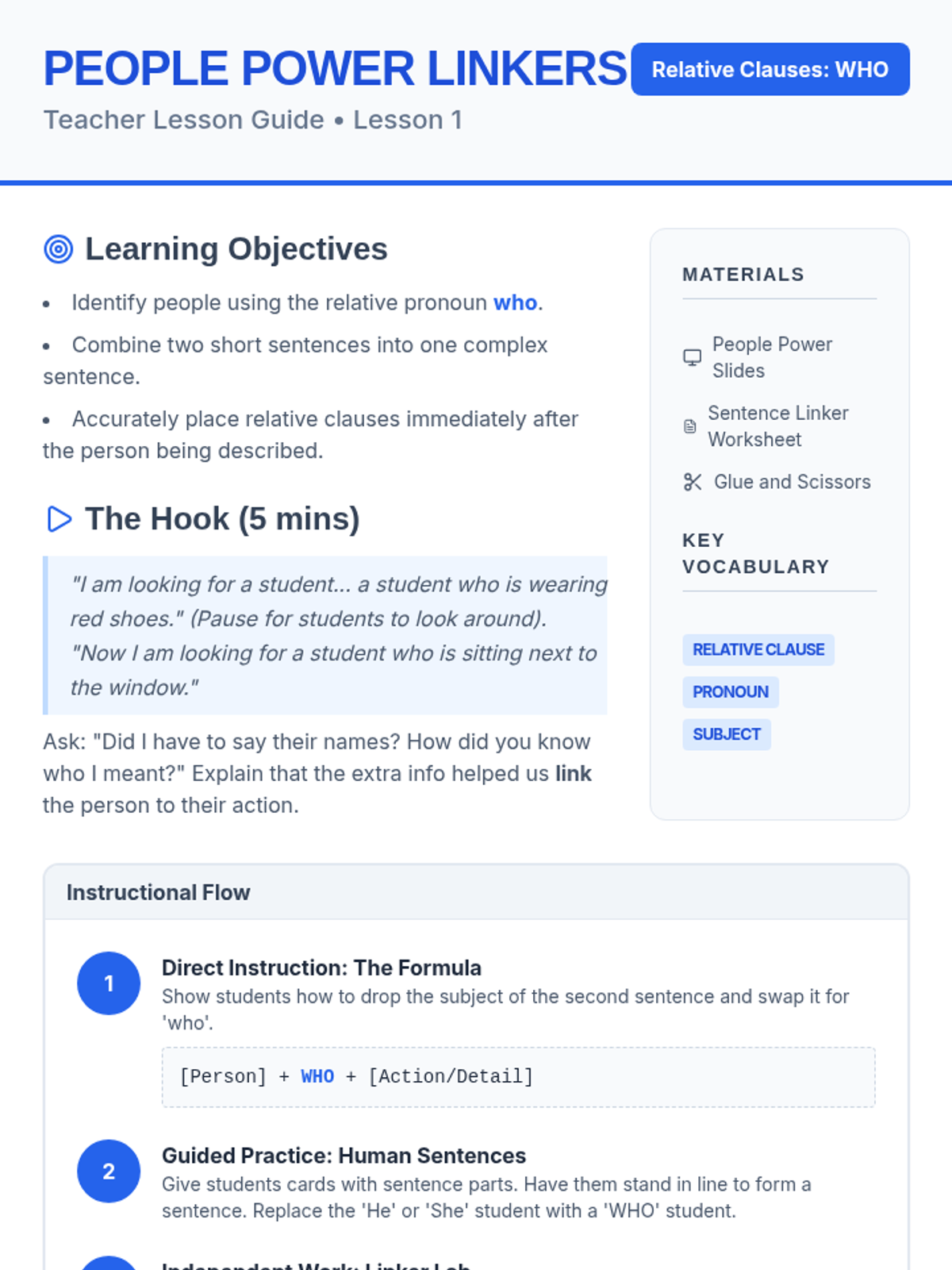
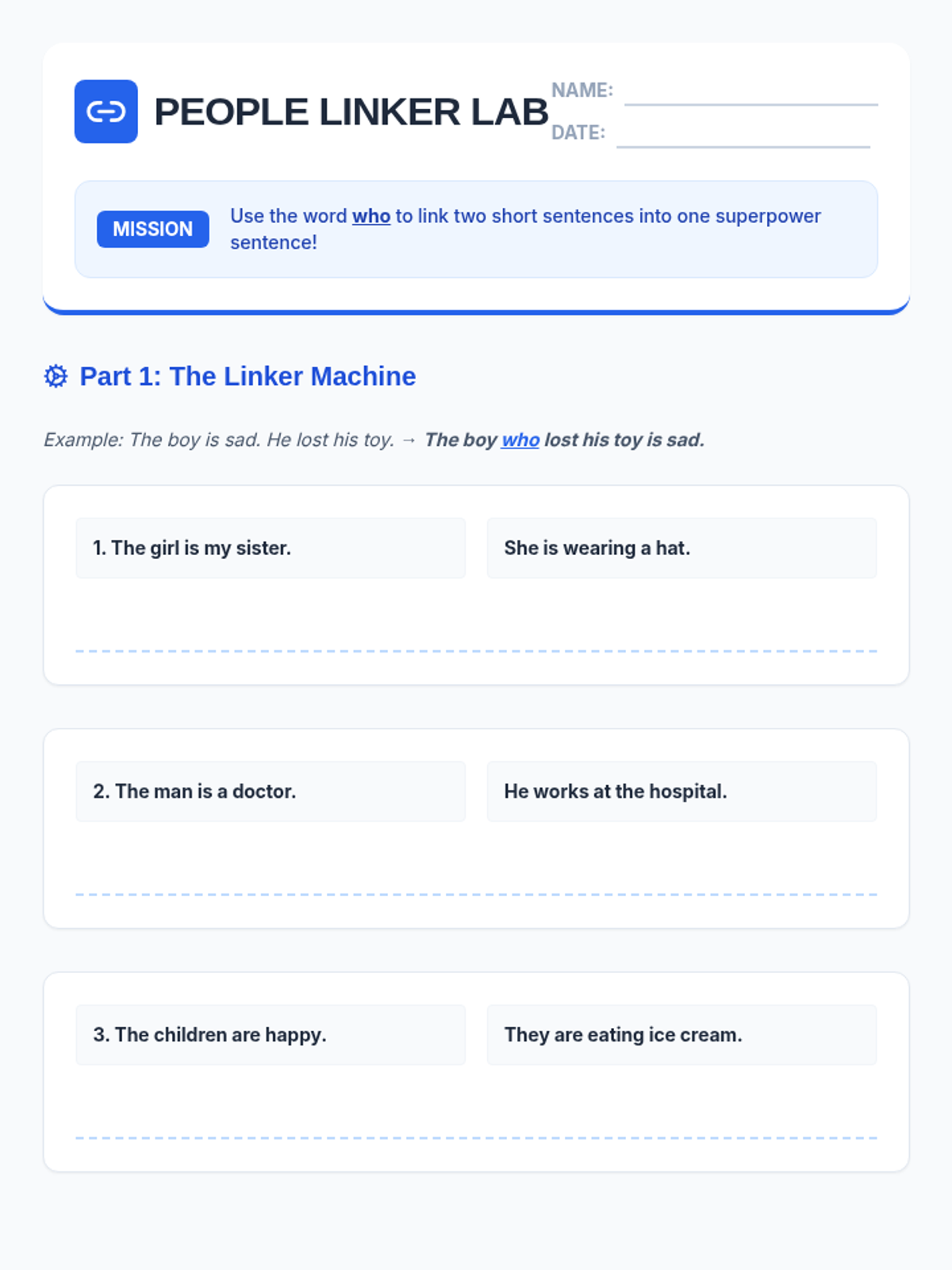
Students focus on describing people using the relative pronoun 'who' to combine two simple sentences into one complex description.
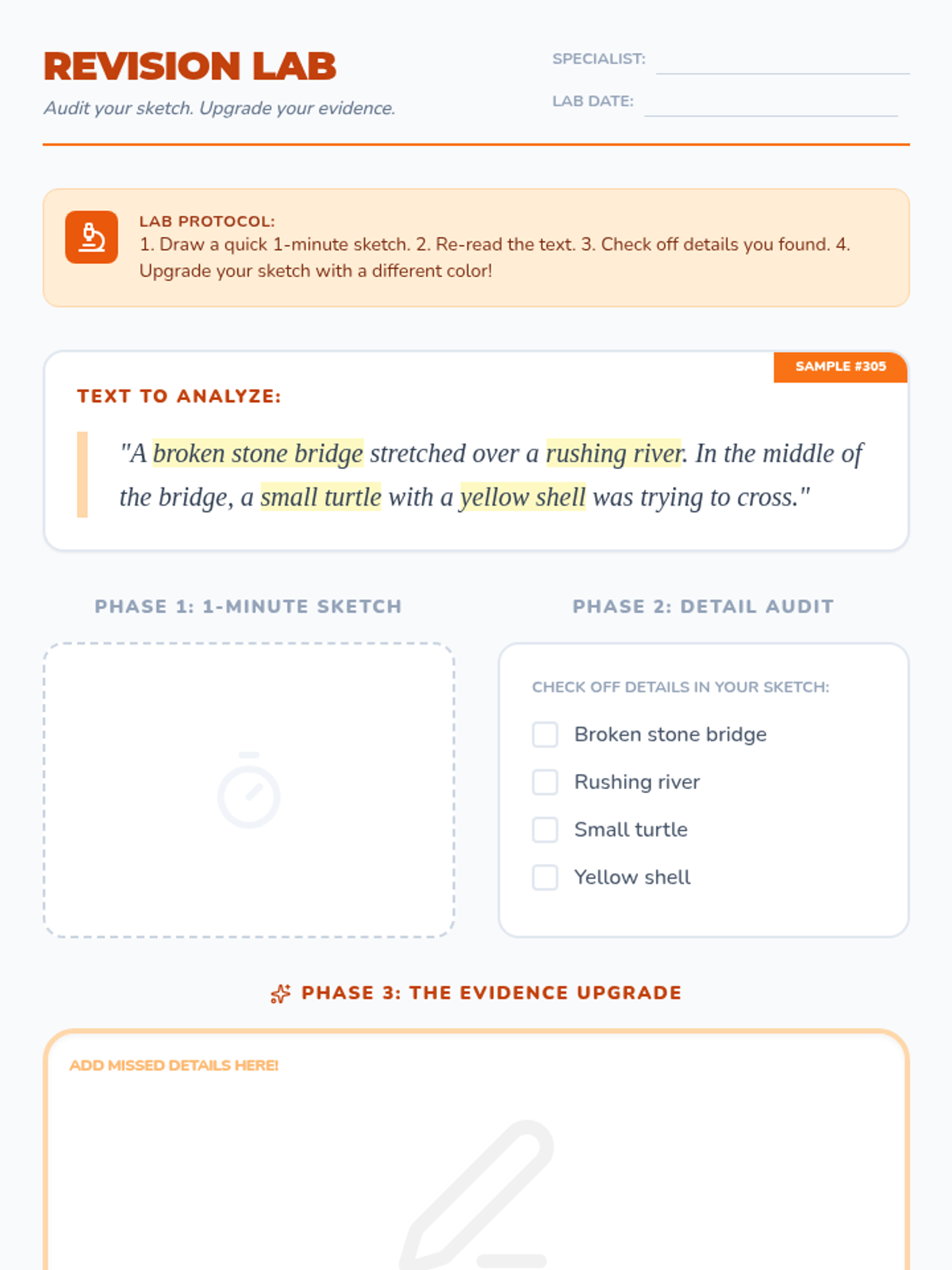
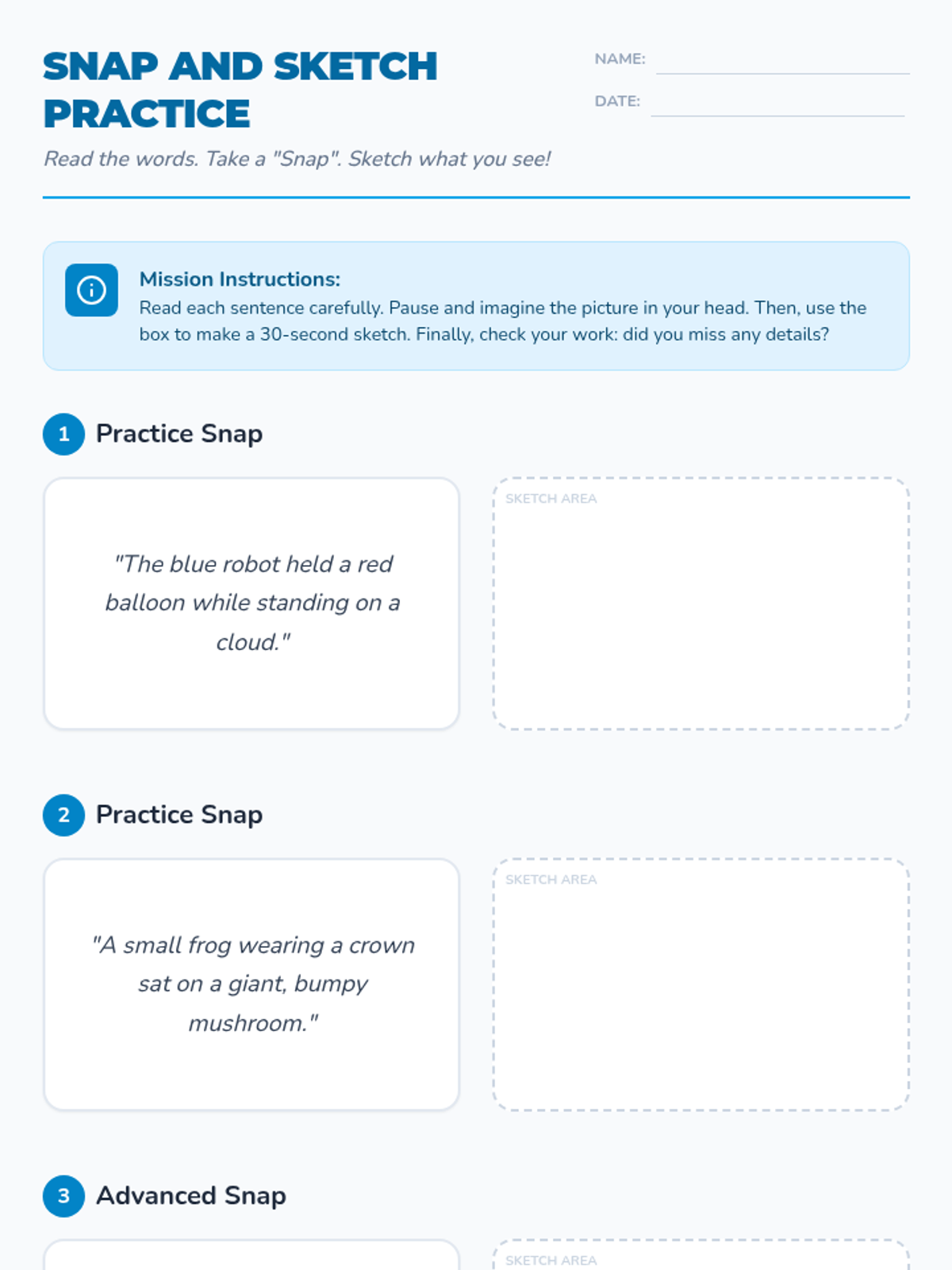
Students review their initial sketches against the text and practice 'revising' their drawings based on missed evidence. This explicitly teaches the habit of re-reading when the mental image is incomplete.
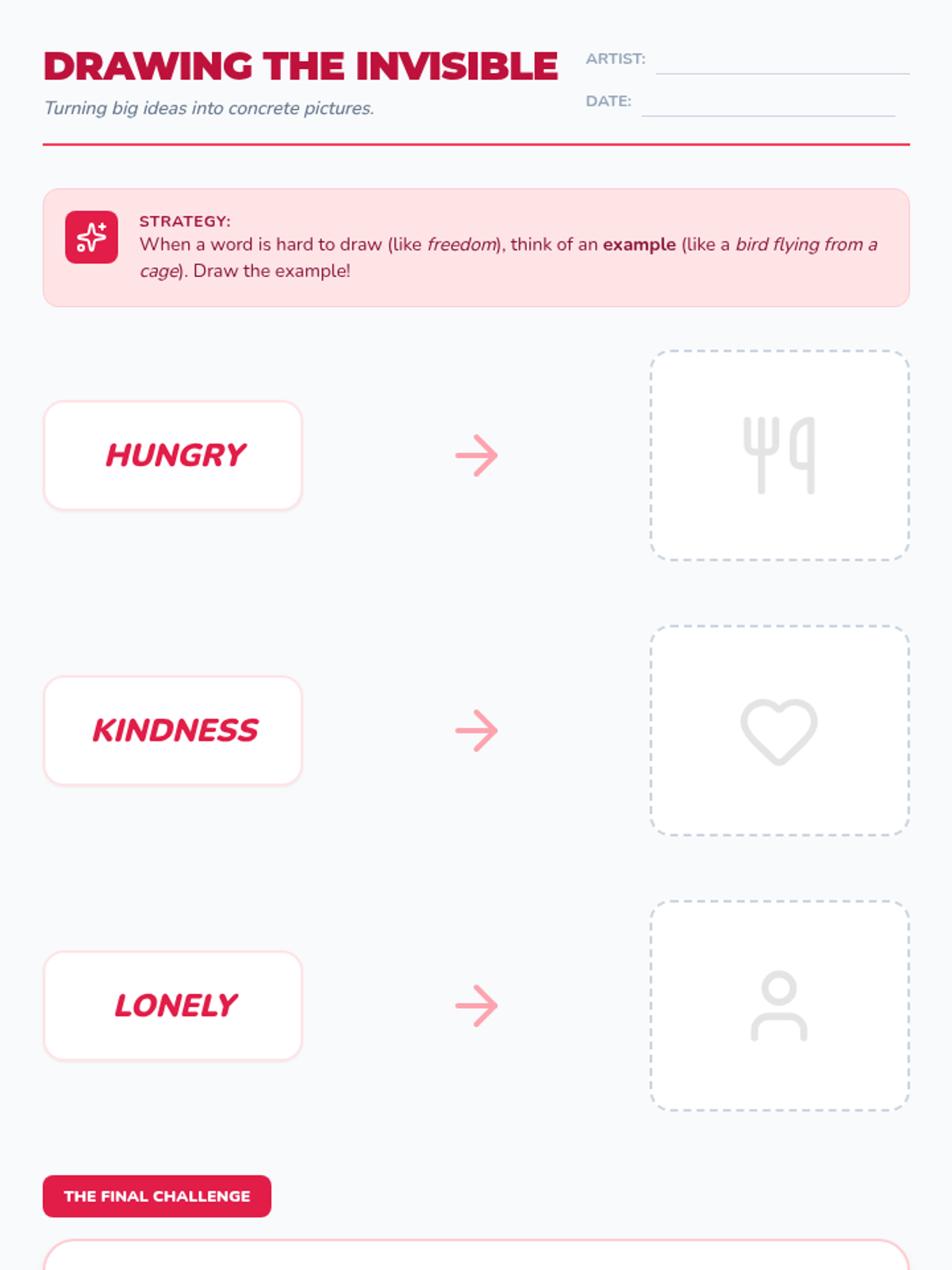
Students tackle the challenge of drawing abstract words by visualizing concrete examples of those concepts. This scaffolds the move from literal to inferential comprehension.
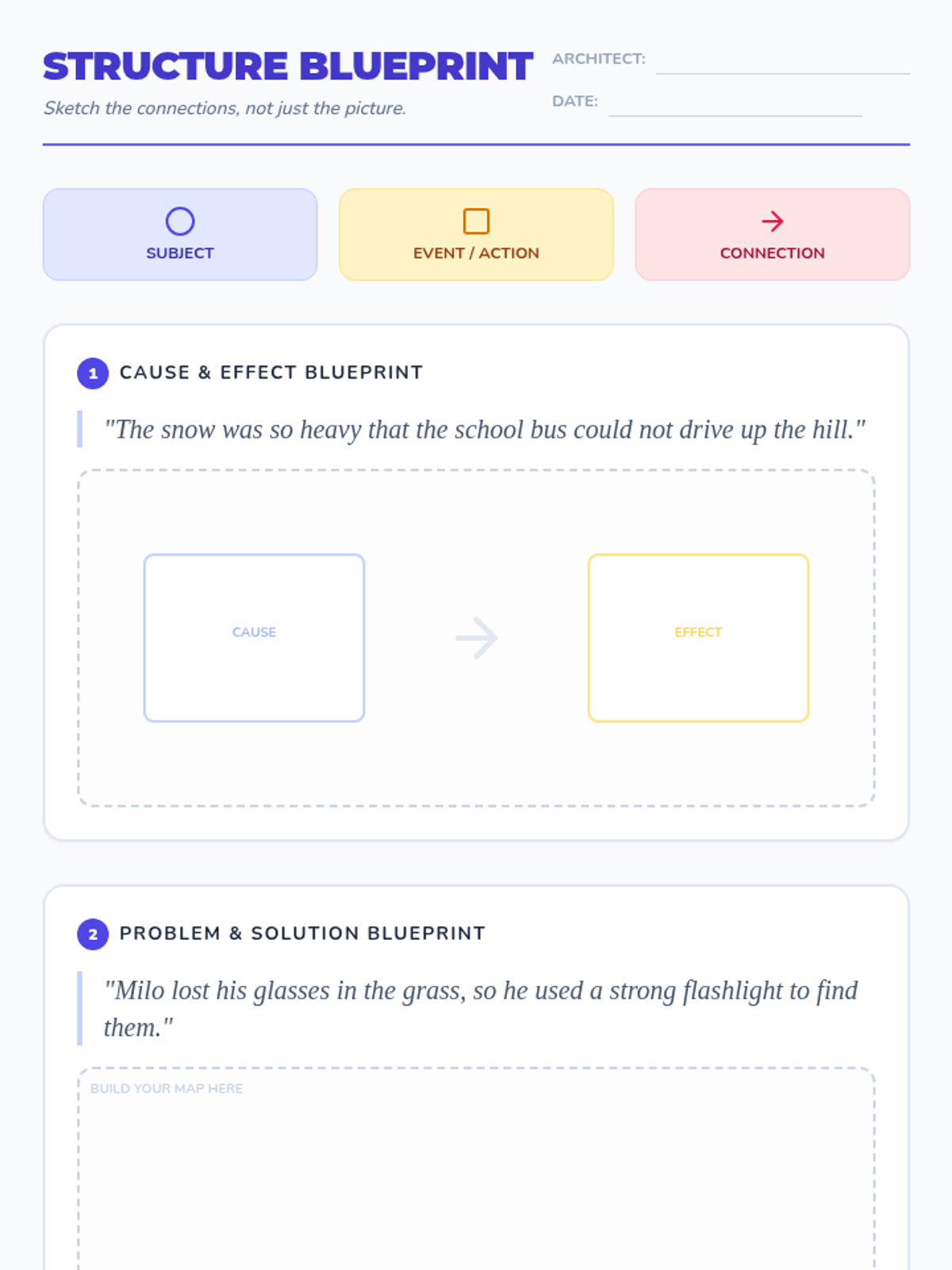
Students use simple shapes and arrows to sketch the relationship between ideas rather than just artistic scenes. This moves visualization from artistic to structural.
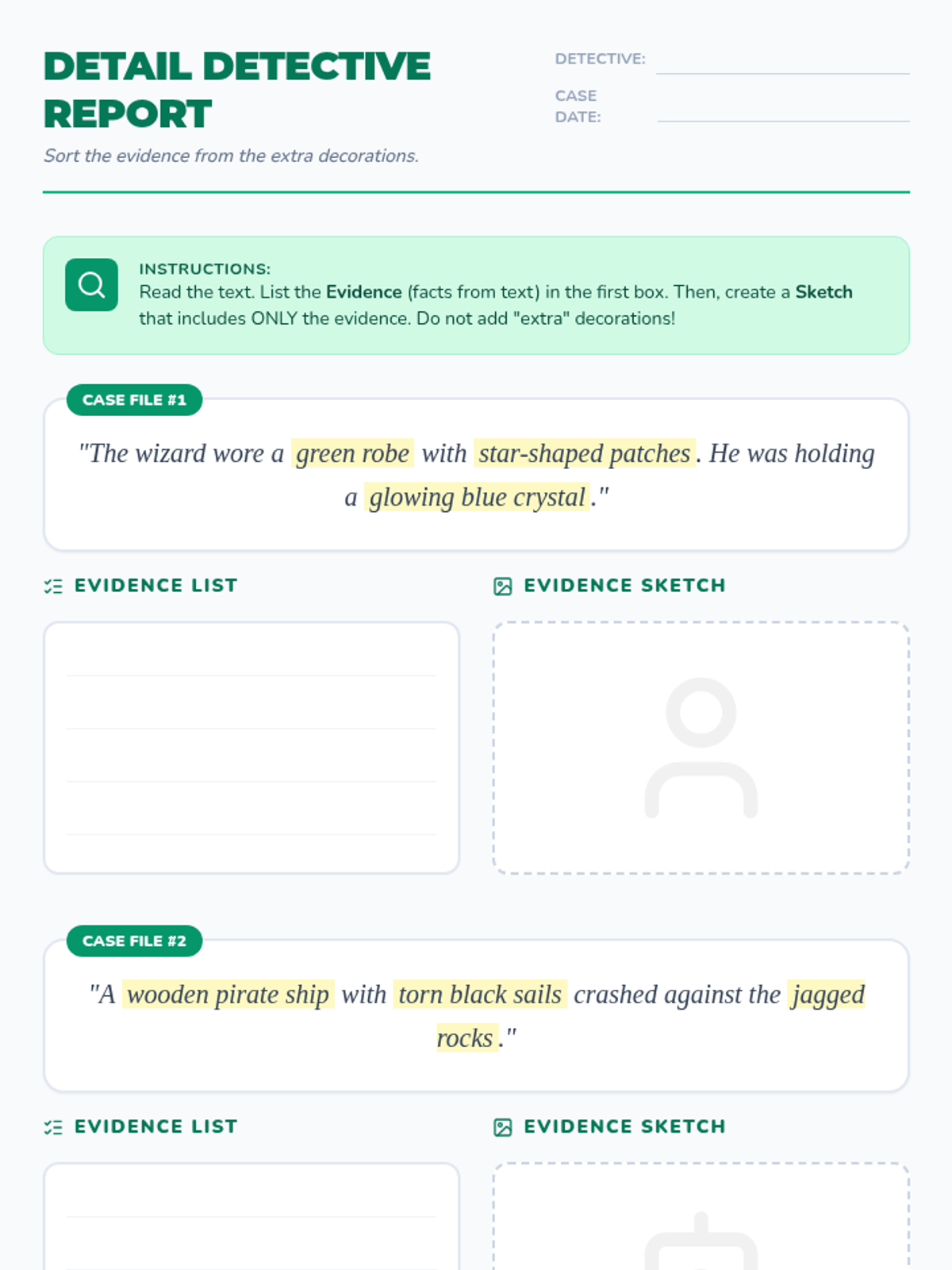
Students learn to distinguish between important details that must be drawn and irrelevant decorations. This lesson refines the ability to identify main ideas through visual representation.
Students are introduced to the concept of drawing as a comprehension check. They read a sentence, pause, and make a quick sketch, then compare the sketch to the text to verify accuracy.
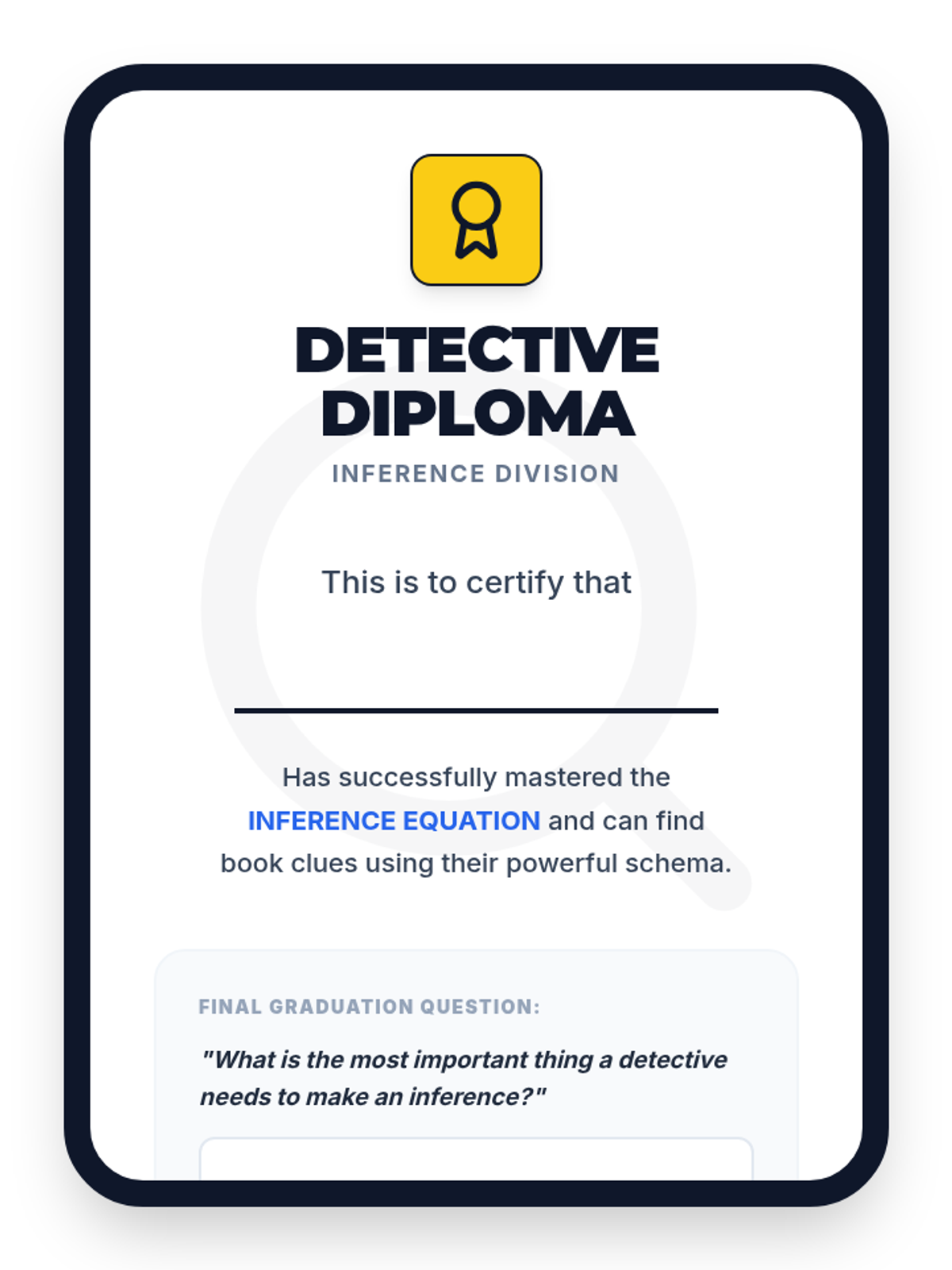
Independent application of the inference equation to leveled readers, culminating in a 'Case File' gallery walk.
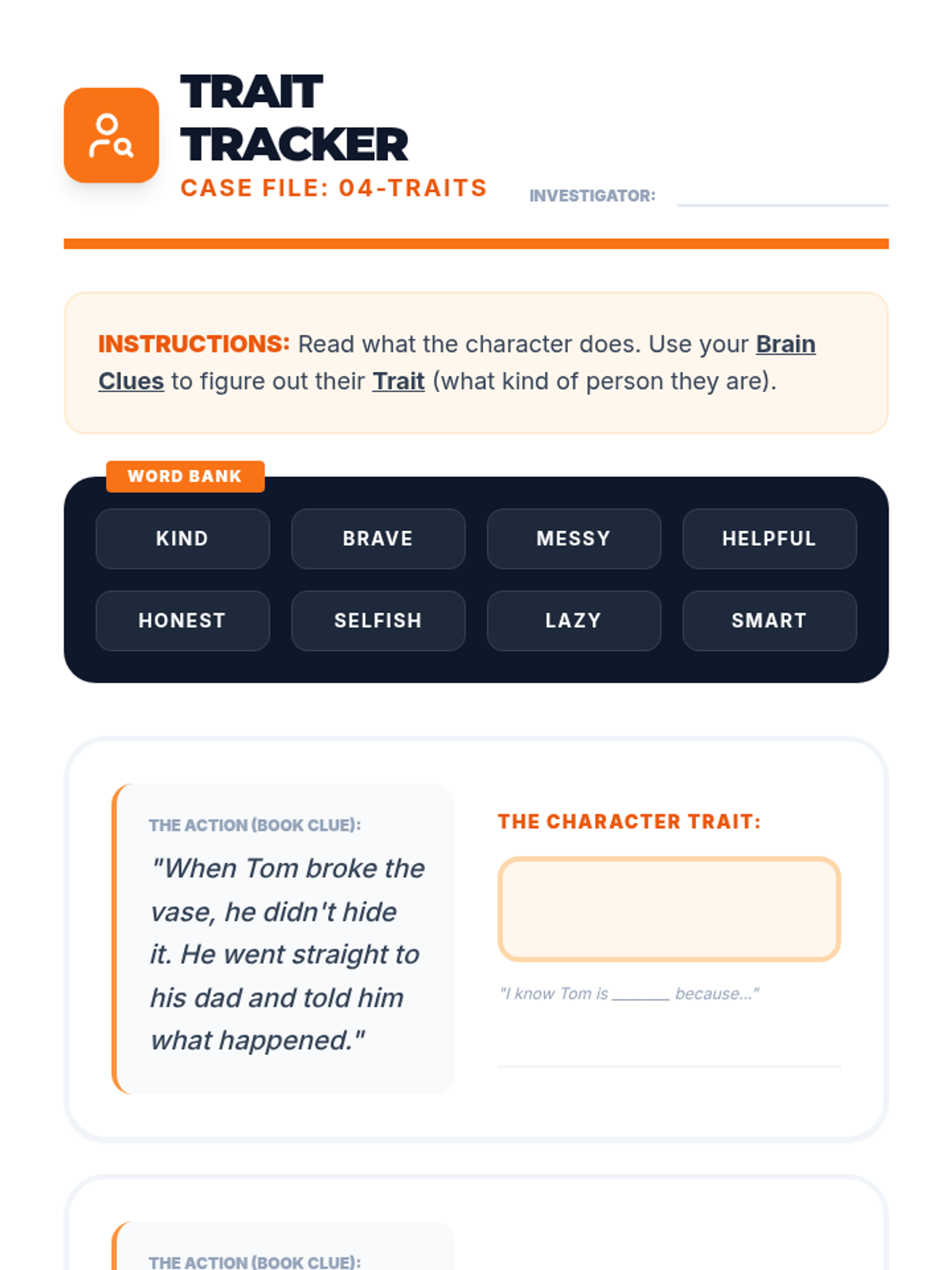
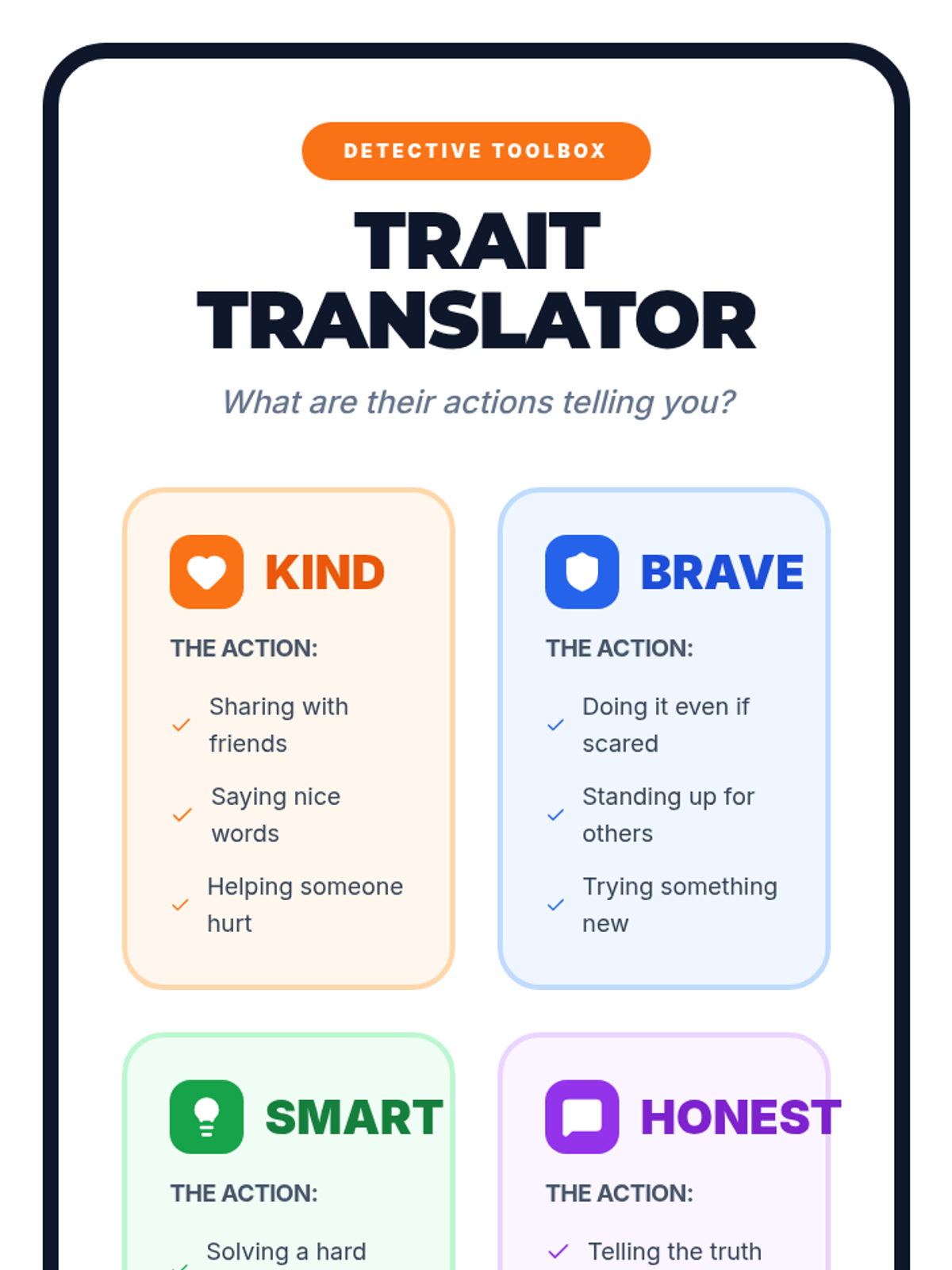
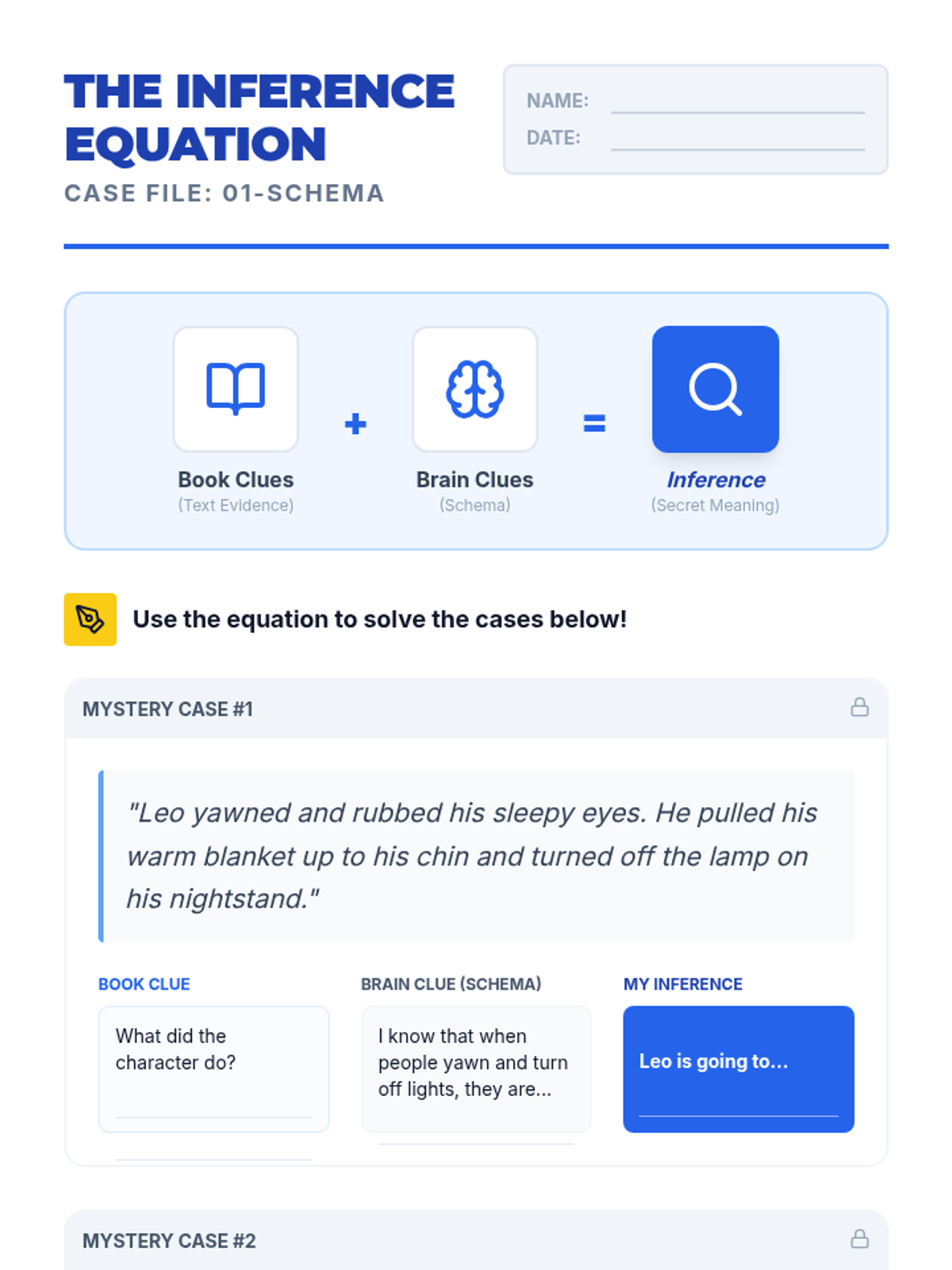
Applying the inference equation to identify character traits and motivations based on actions and dialogue.
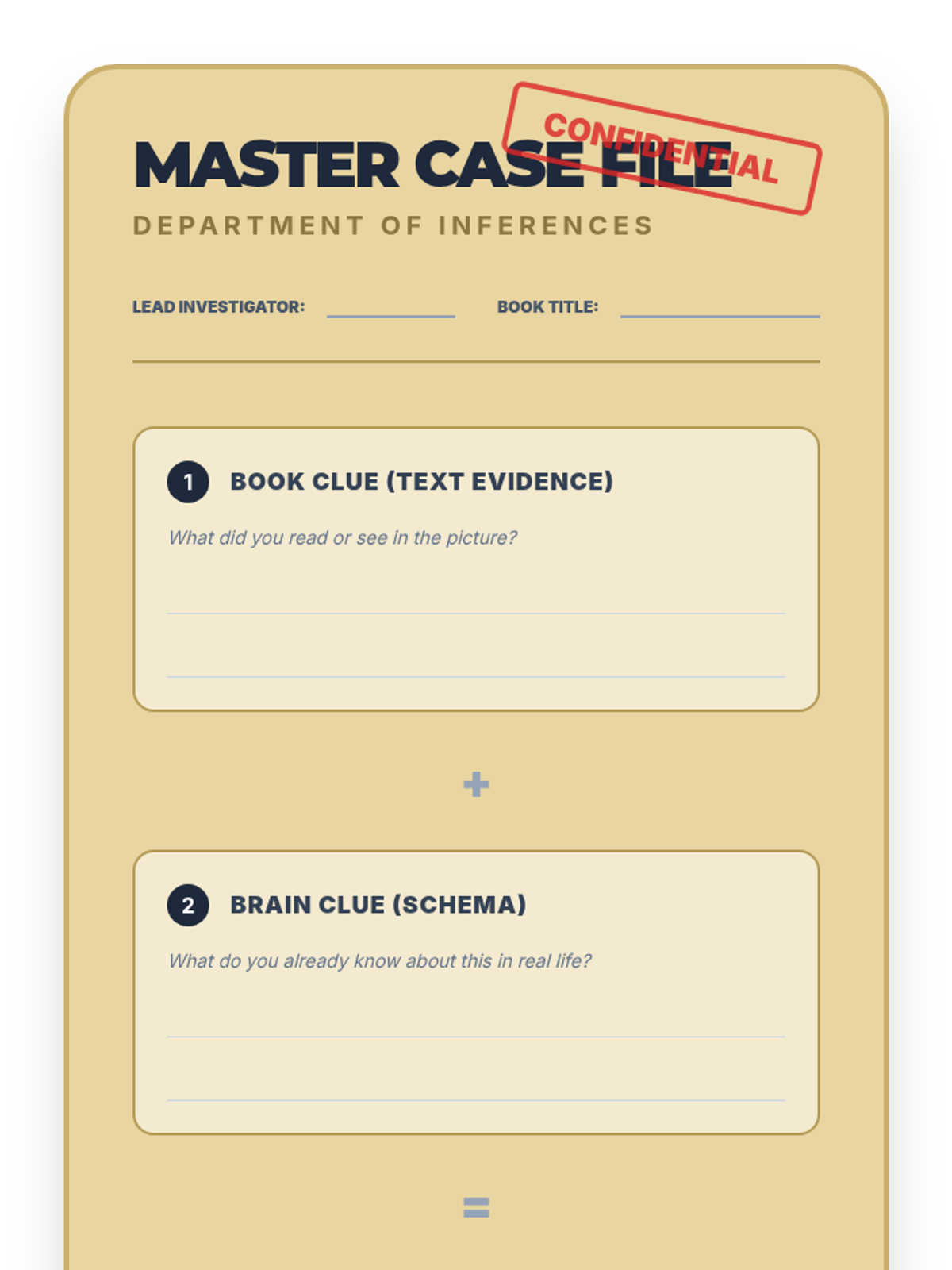
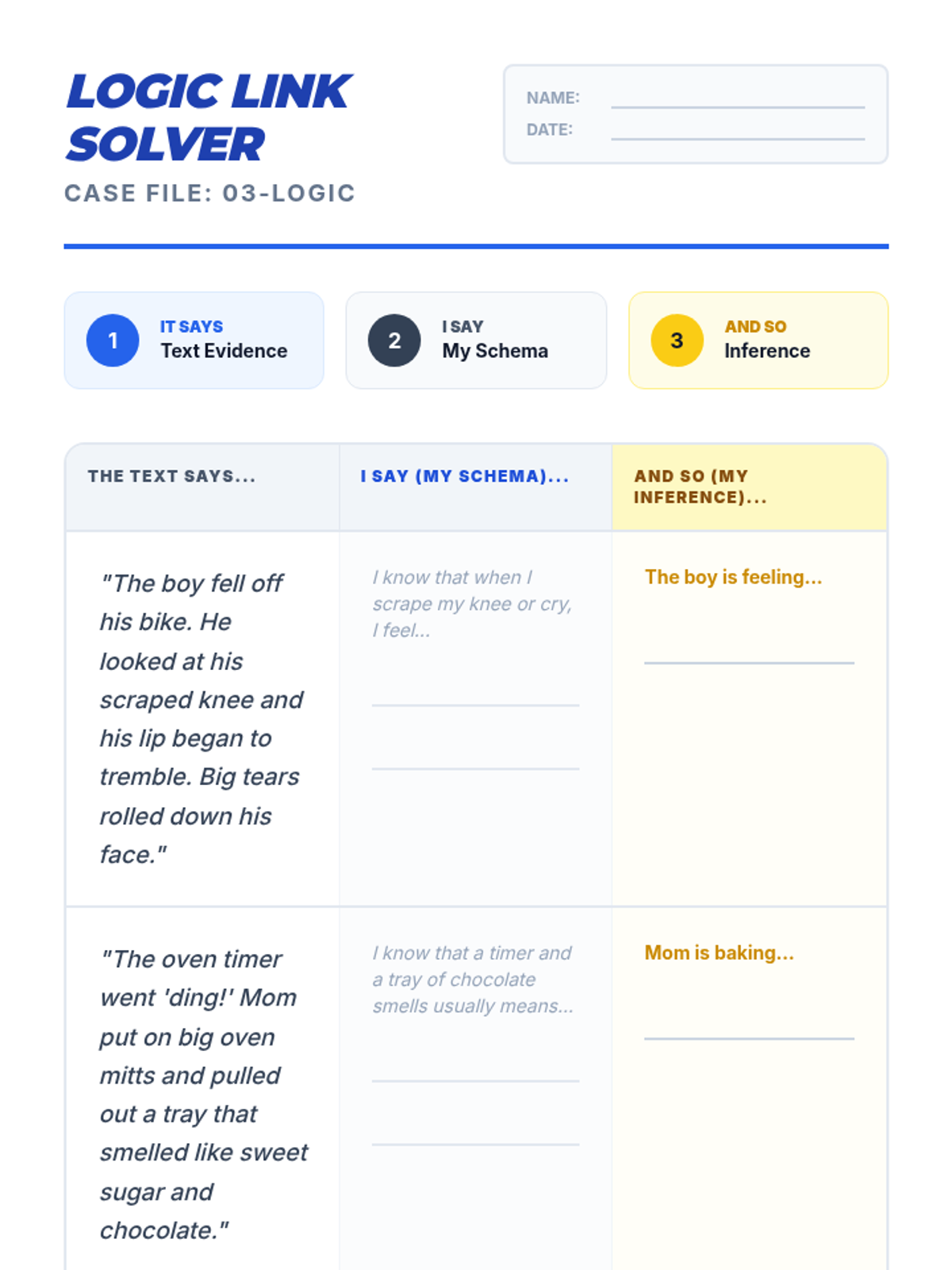
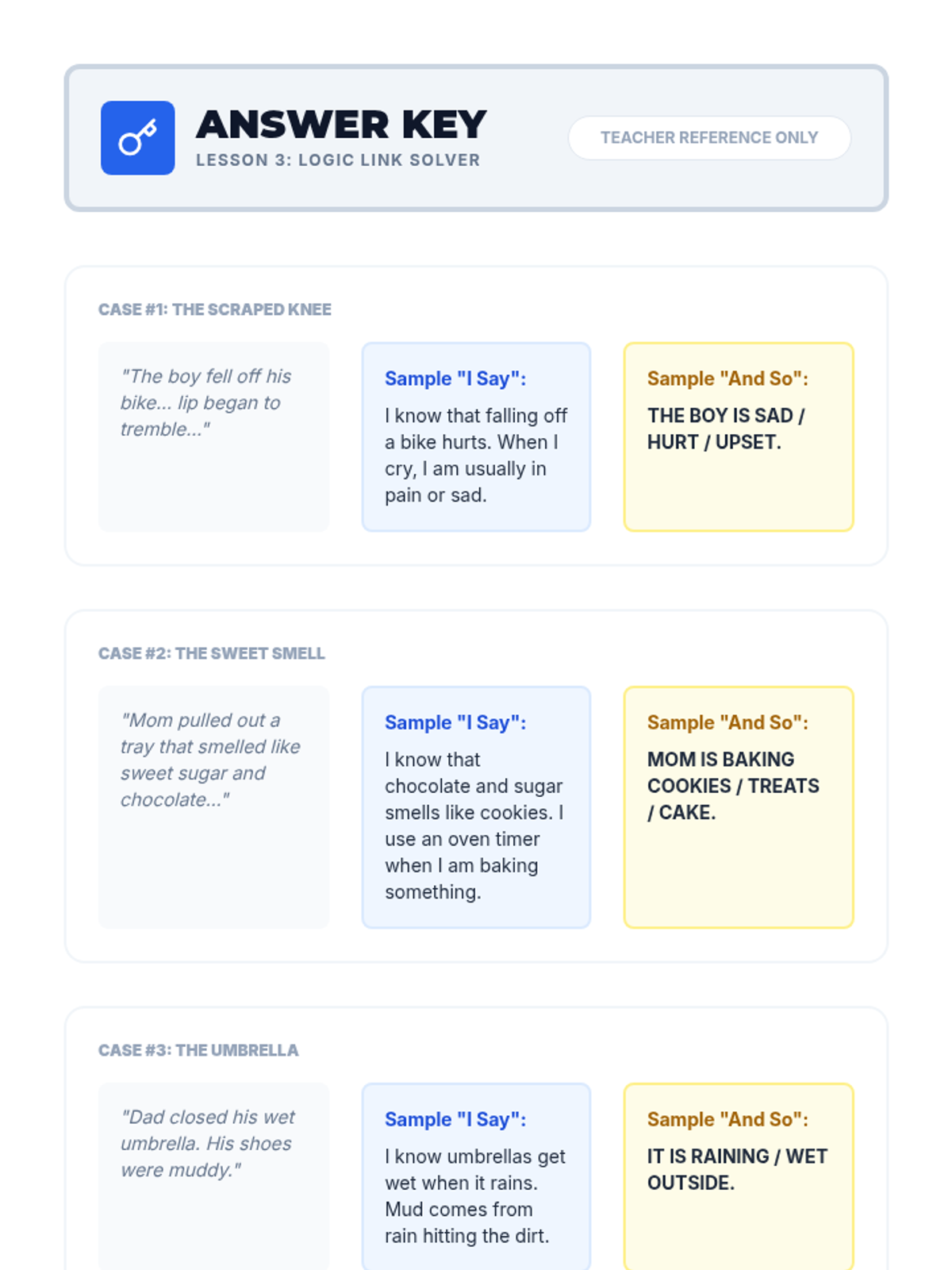
Using 'It Says, I Say, And So' organizers to explicitly link text clues with personal schema.
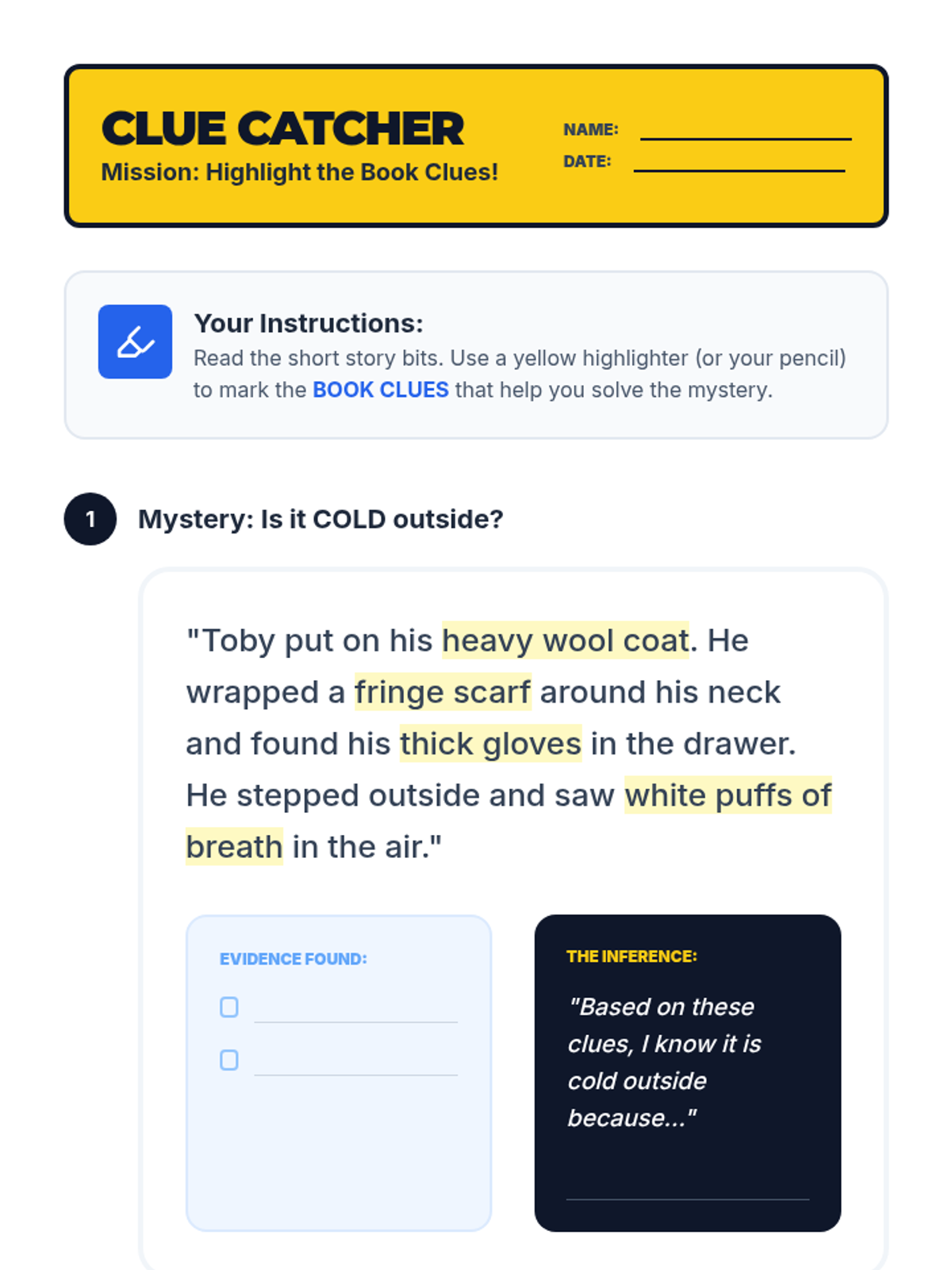
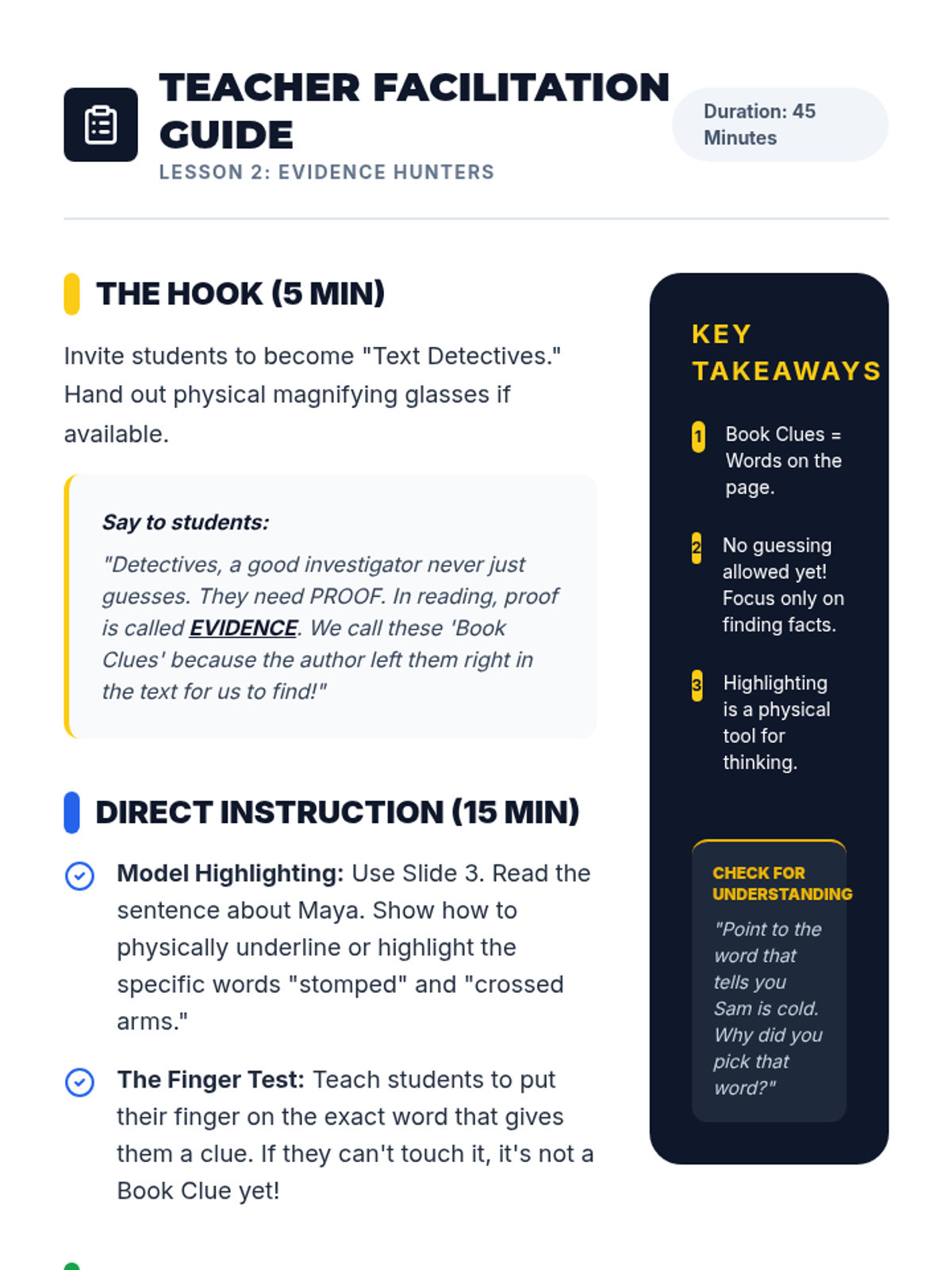
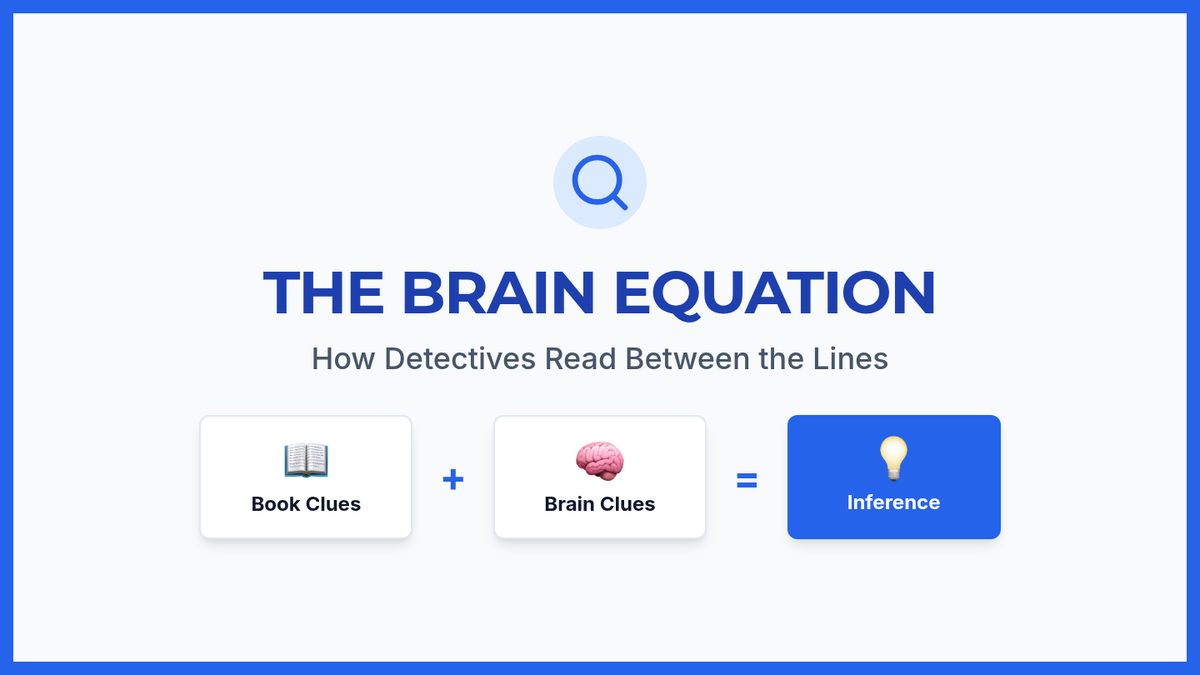
Focus on identifying 'Book Clues' (text evidence) in short passages to build the first part of the inference equation.
Introduction to the 'Inference Equation' and the concept of 'Schema' (background knowledge) using a raincoat hook to demonstrate everyday inferencing.