Fundamental notation, instrumental proficiency, and vocal techniques across various genres. Connects historical analysis with original composition and creative performance skills.
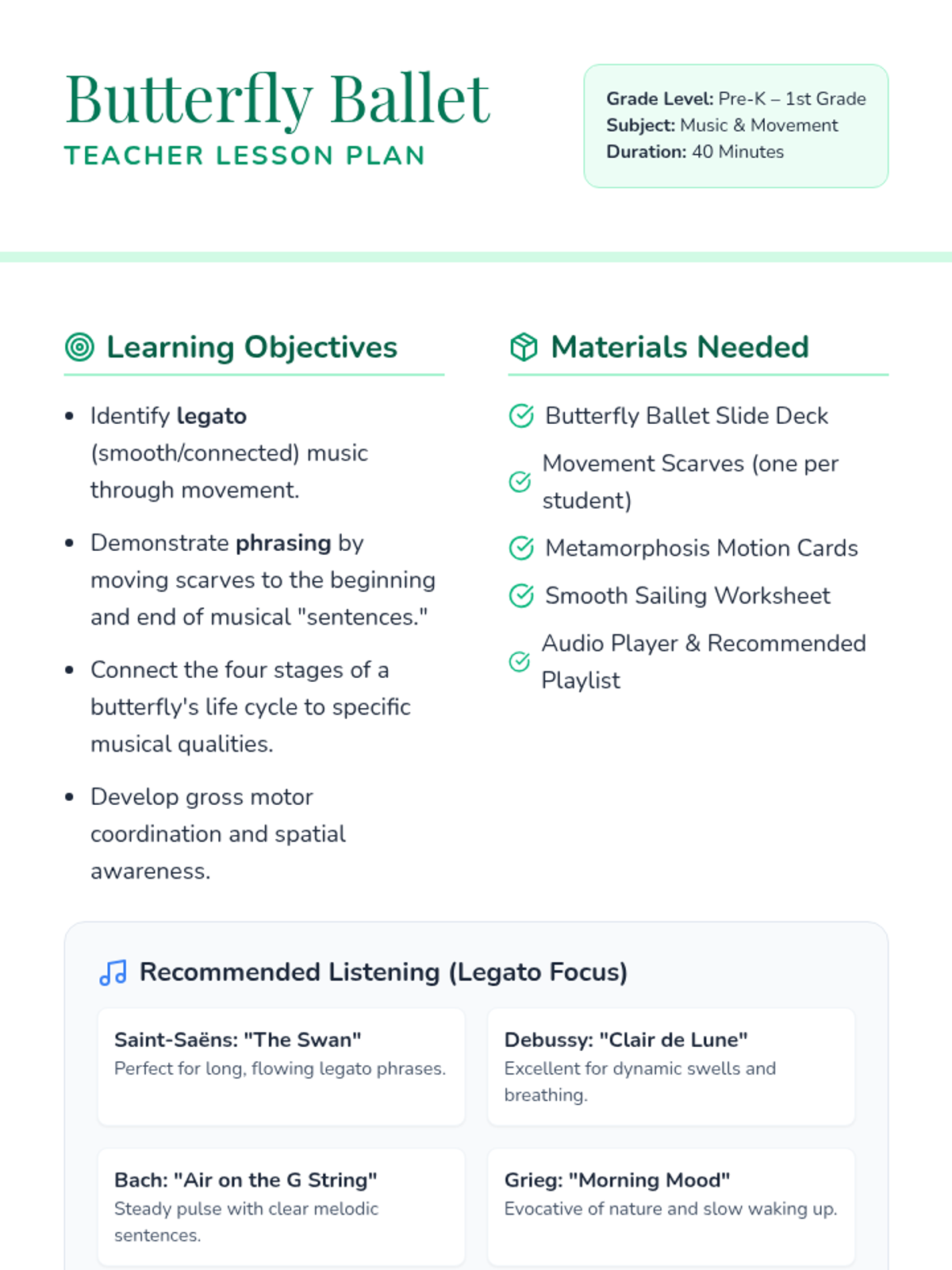
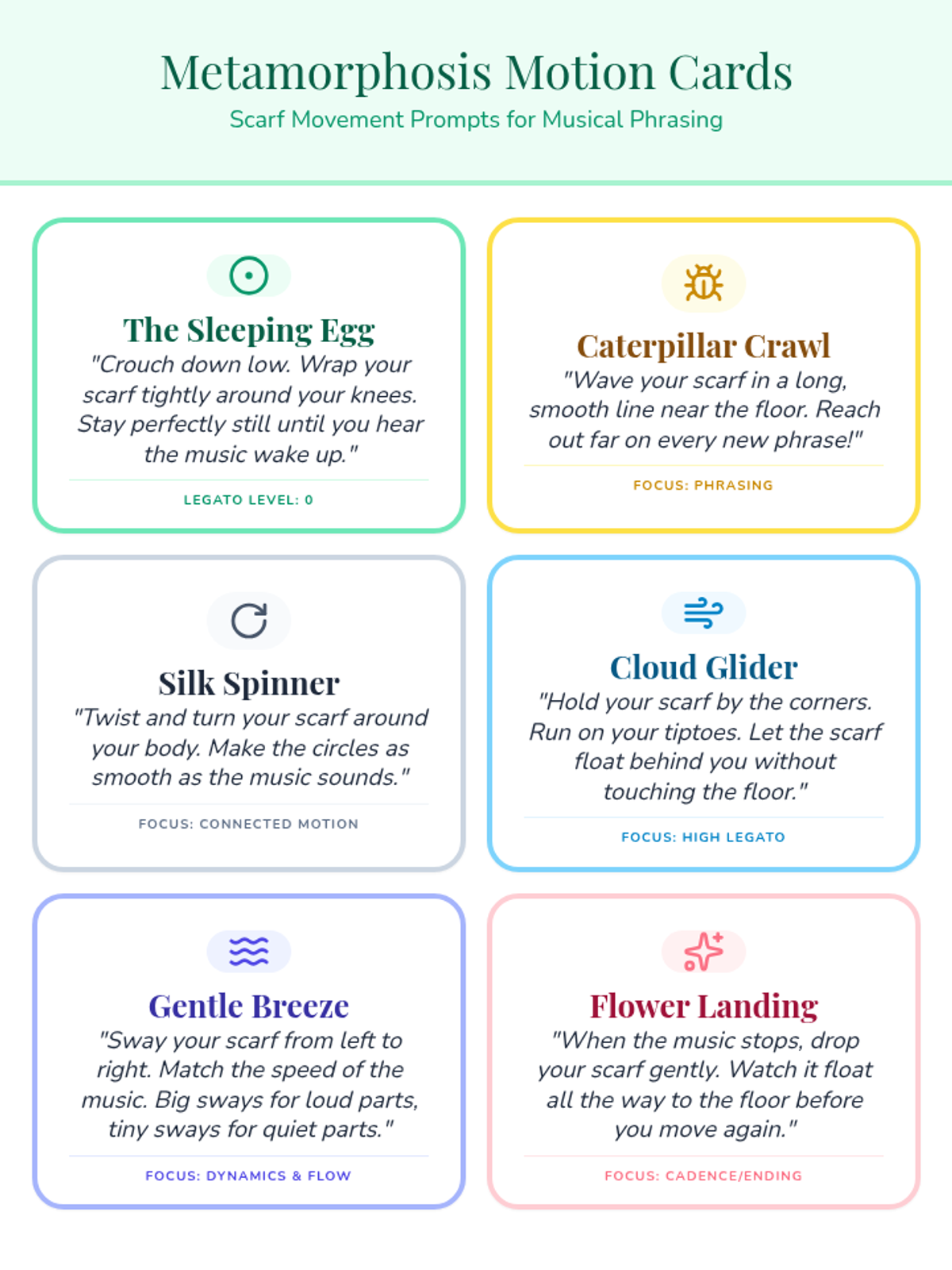
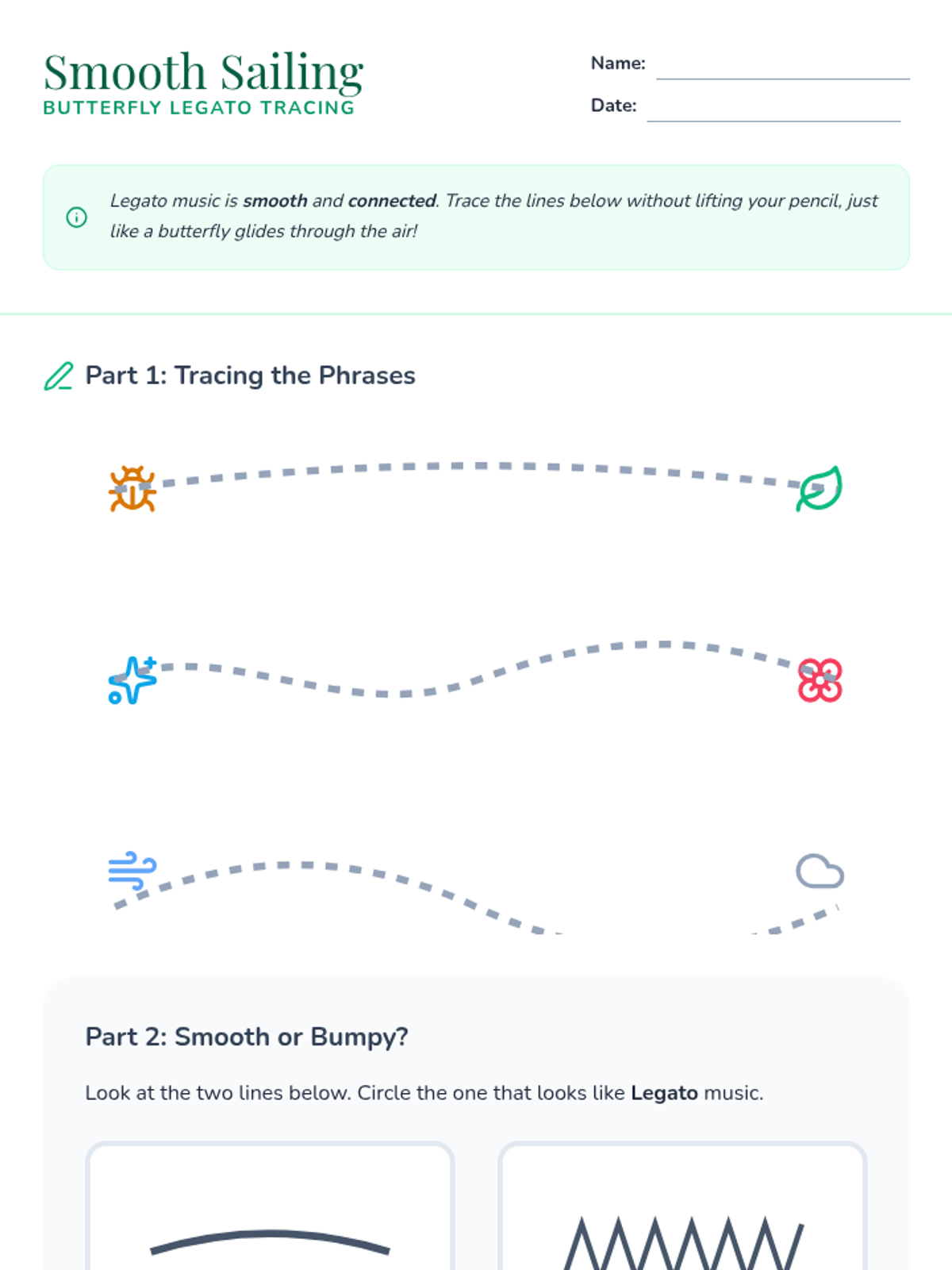
A music and movement lesson for early childhood students exploring phrasing and legato through the life cycle of a butterfly. Students use scarves to interpret smooth musical lines while learning about metamorphosis.
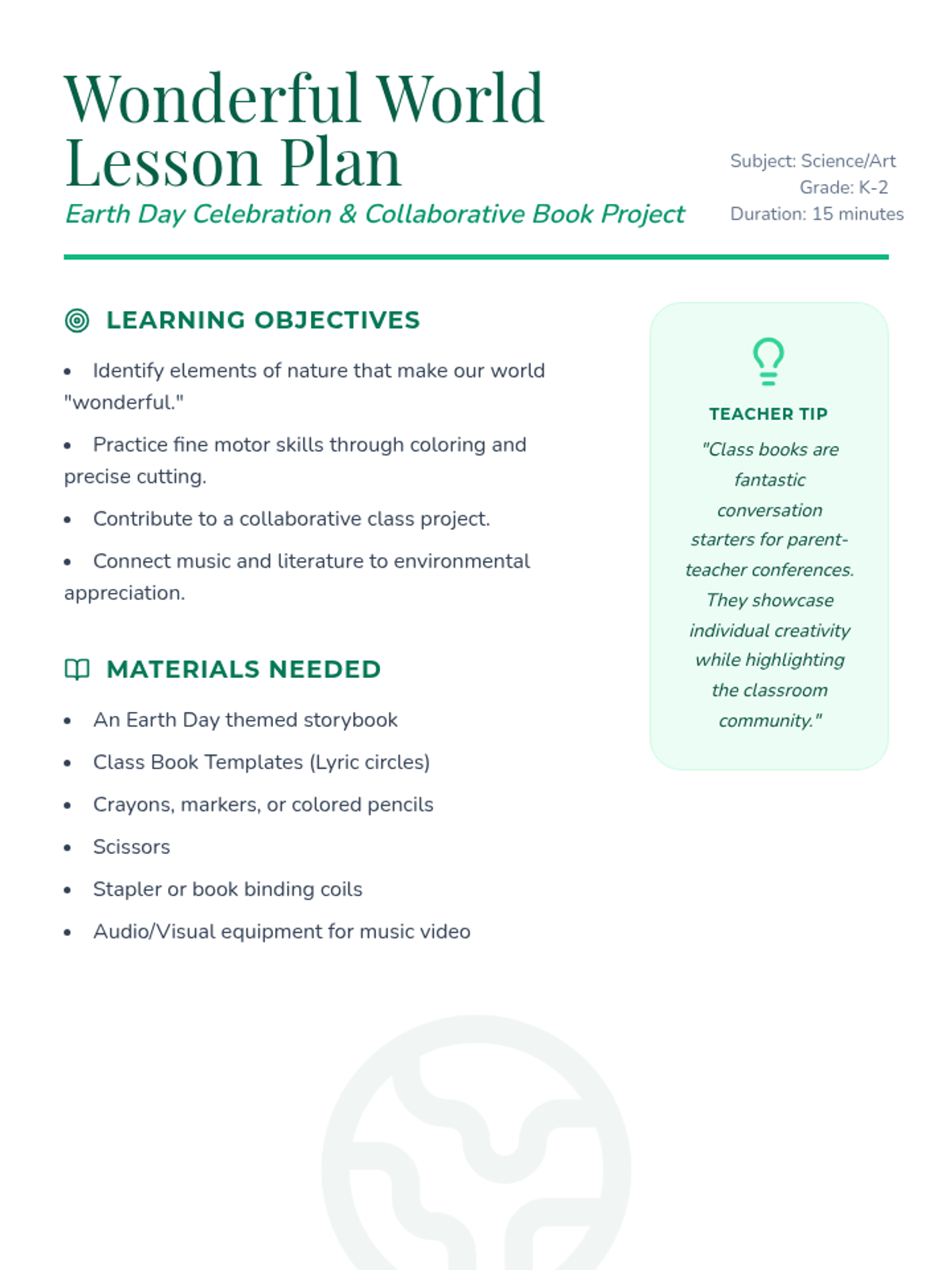
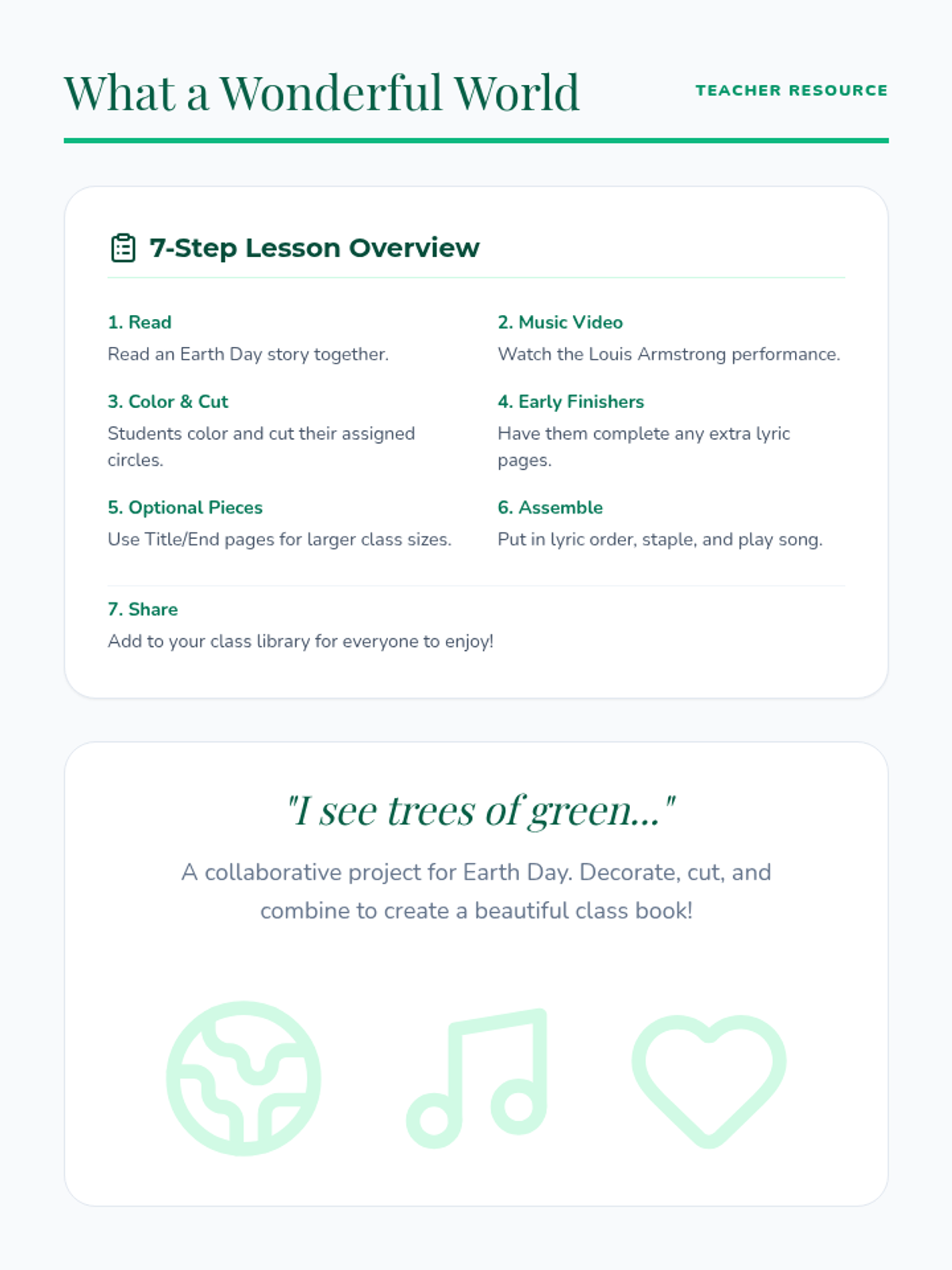
A collaborative Earth Day lesson where students create a class book inspired by Louis Armstrong's 'What a Wonderful World'. Includes a detailed teacher guide and presentation slides with a video embed.
The final performance day where groups showcase their choreography and celebrate each other's creativity.
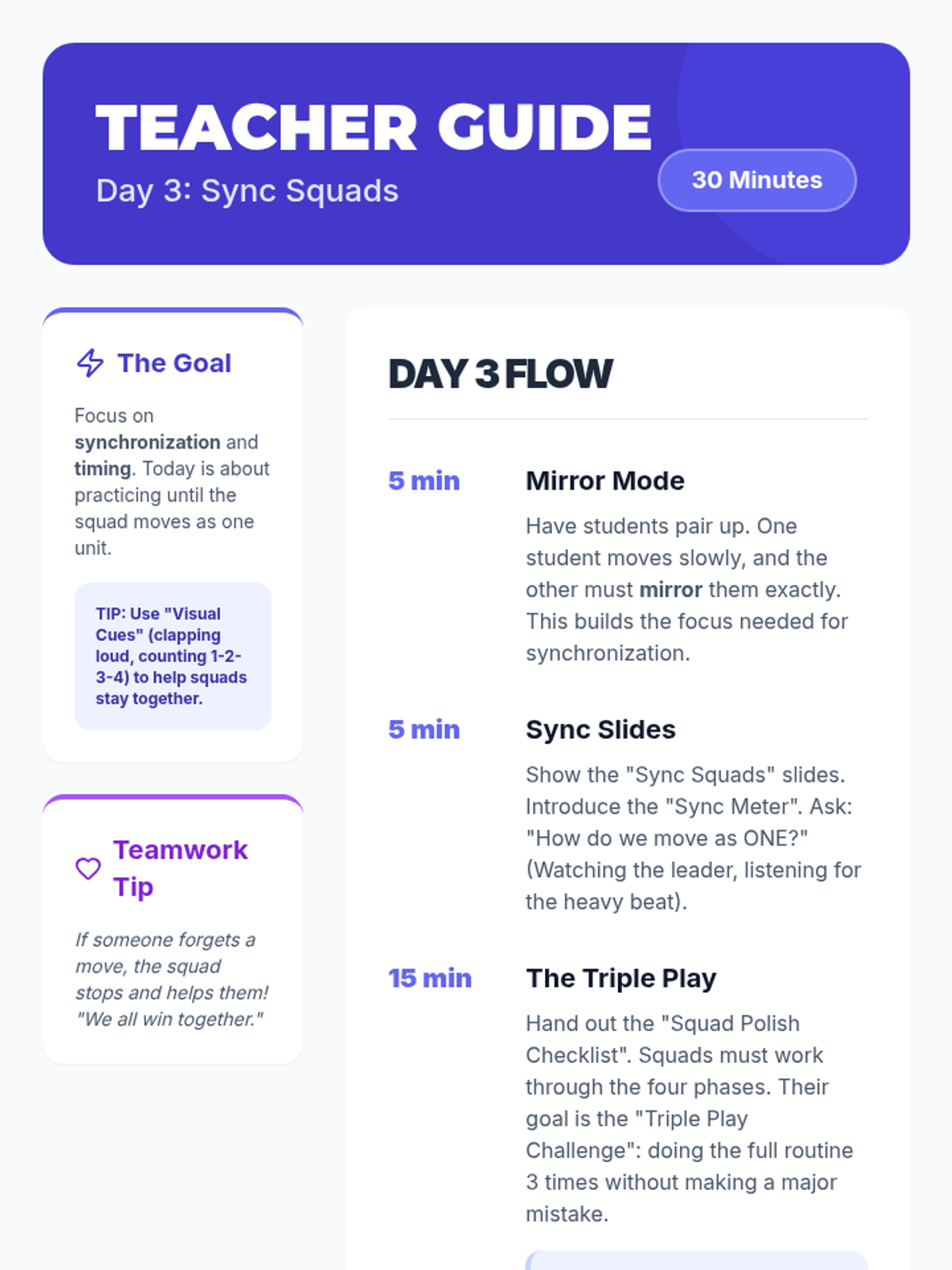
Squads practice their full routine, adding transitions and ensuring every member is in sync.
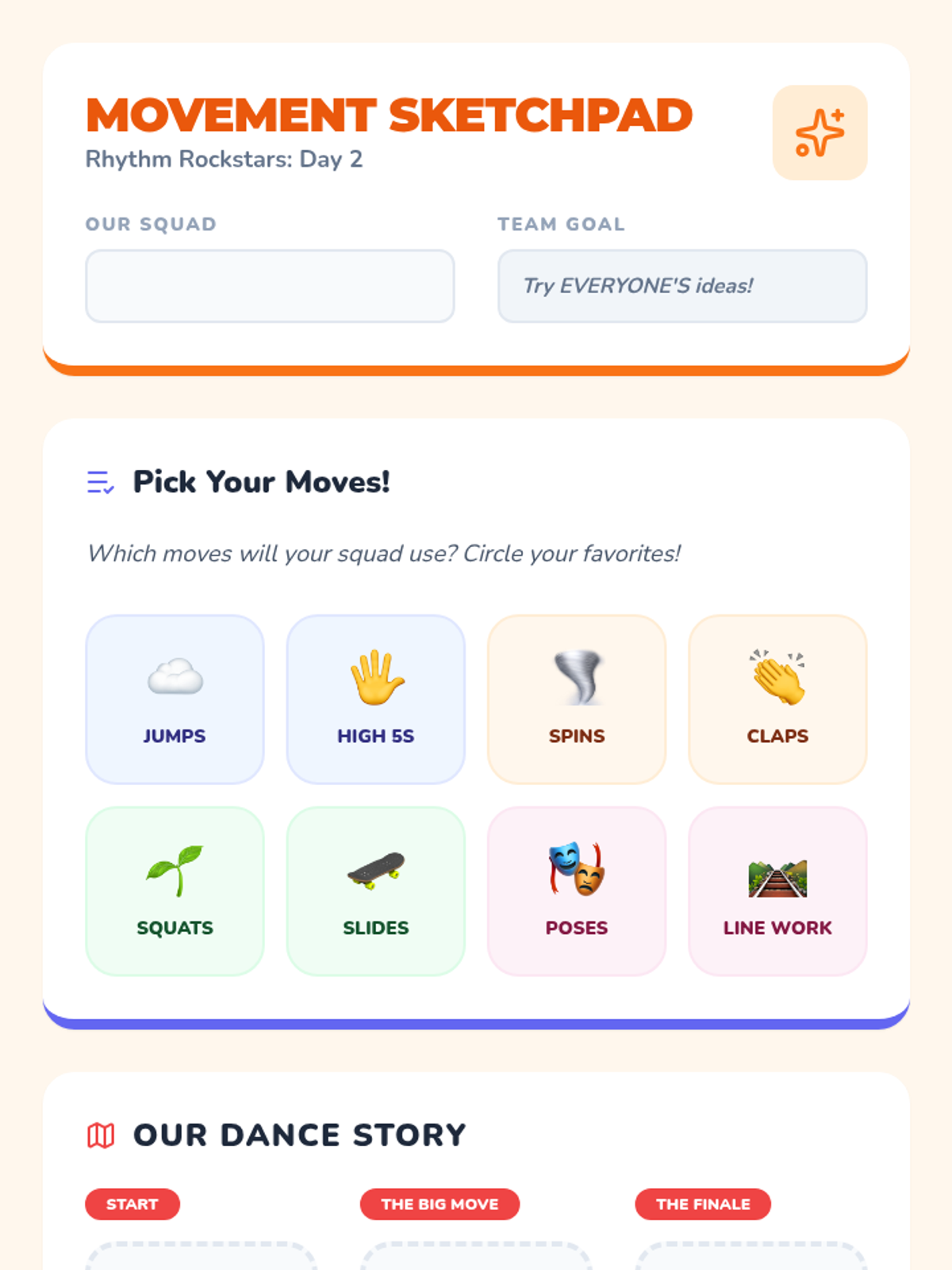
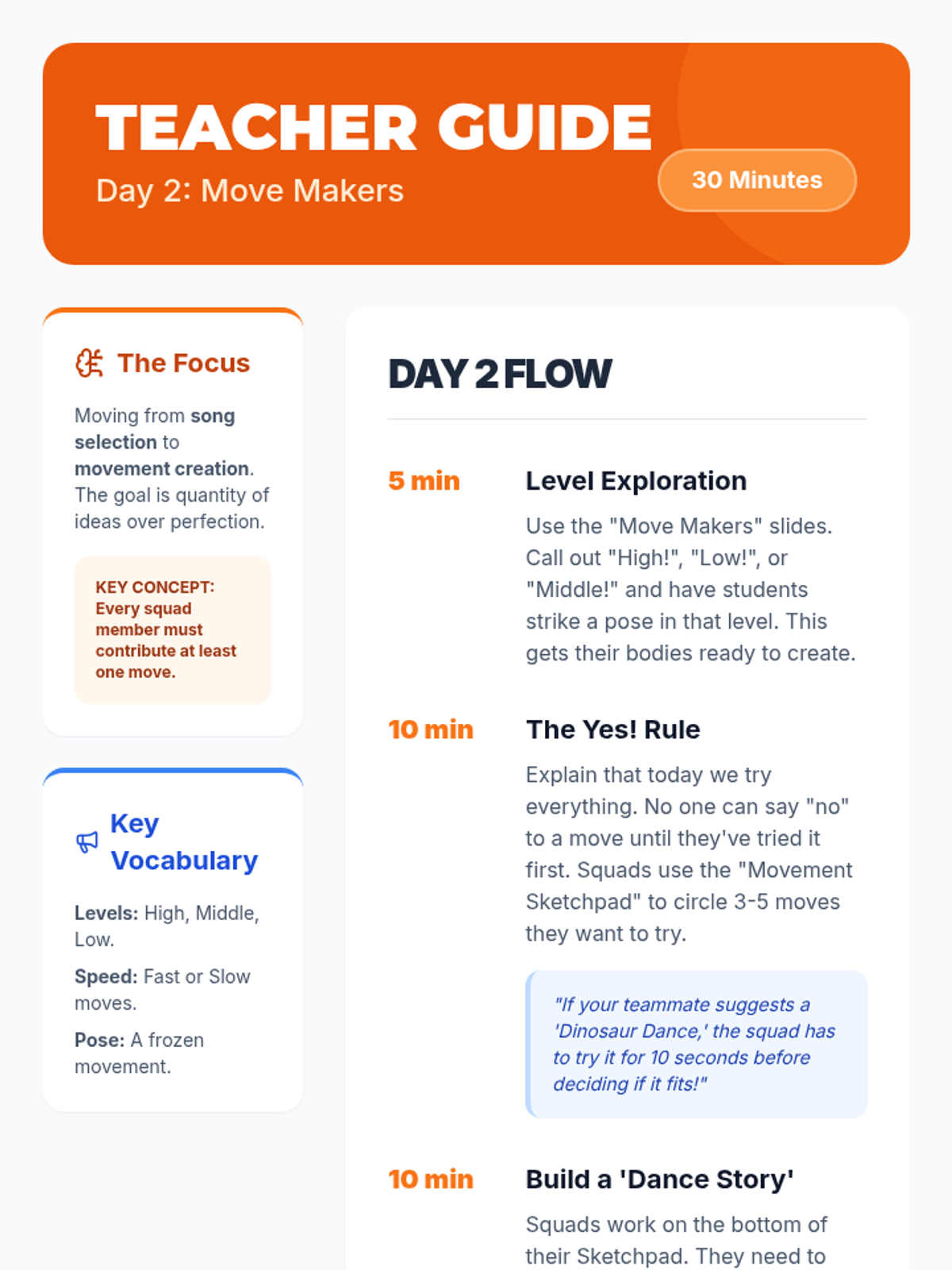
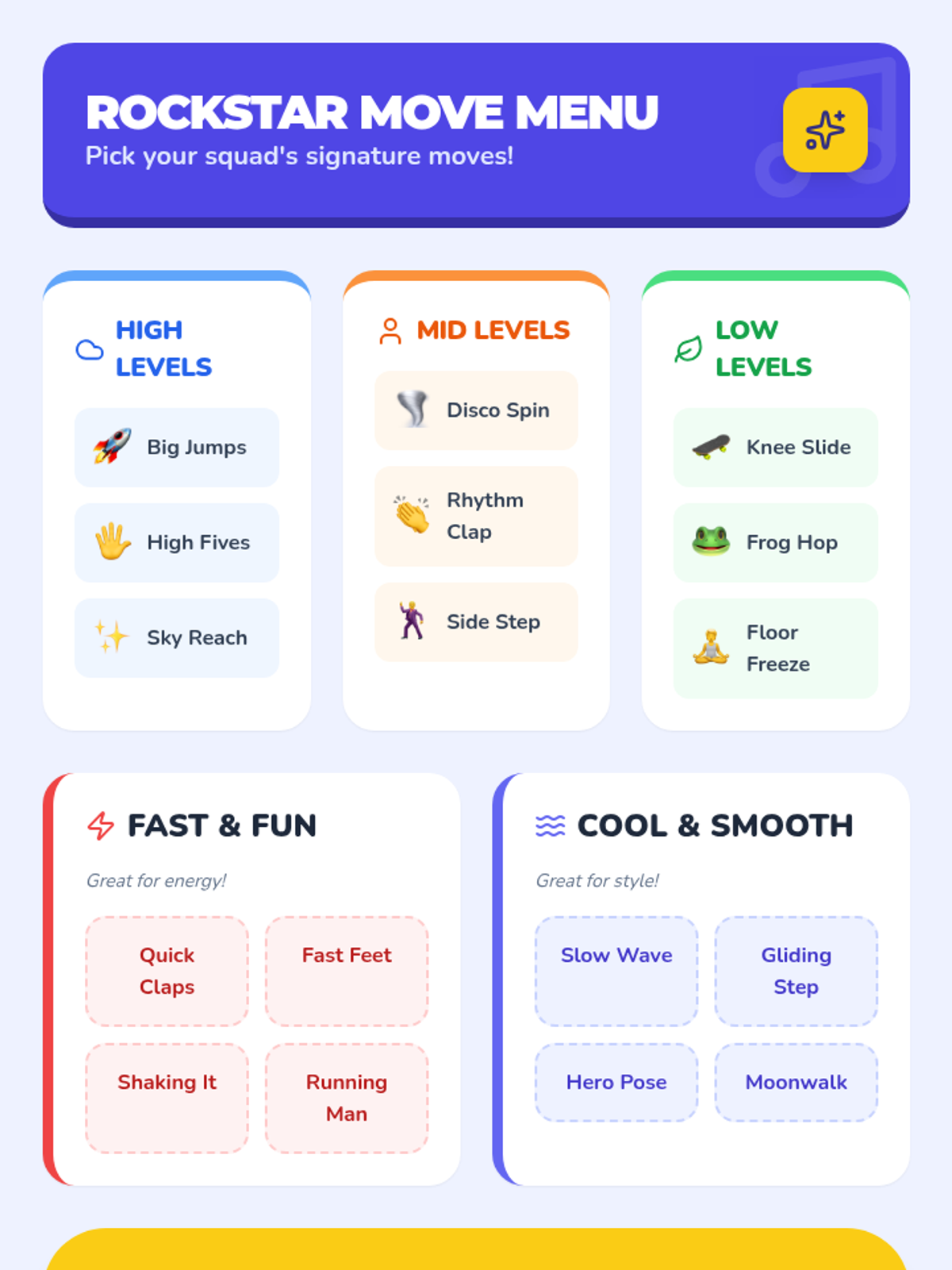
Groups brainstorm dance moves using different levels and speeds, focusing on including everyone's ideas.
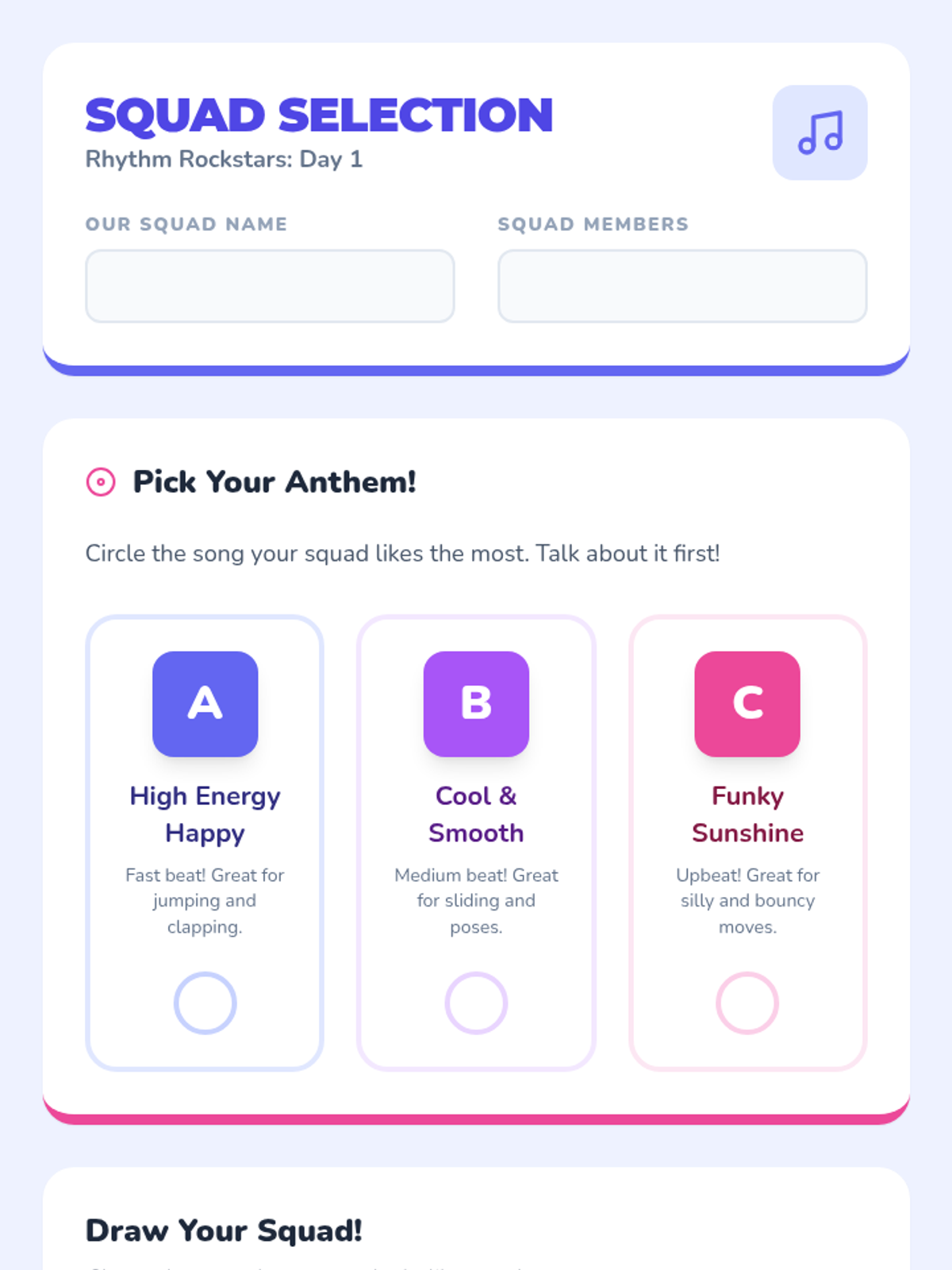
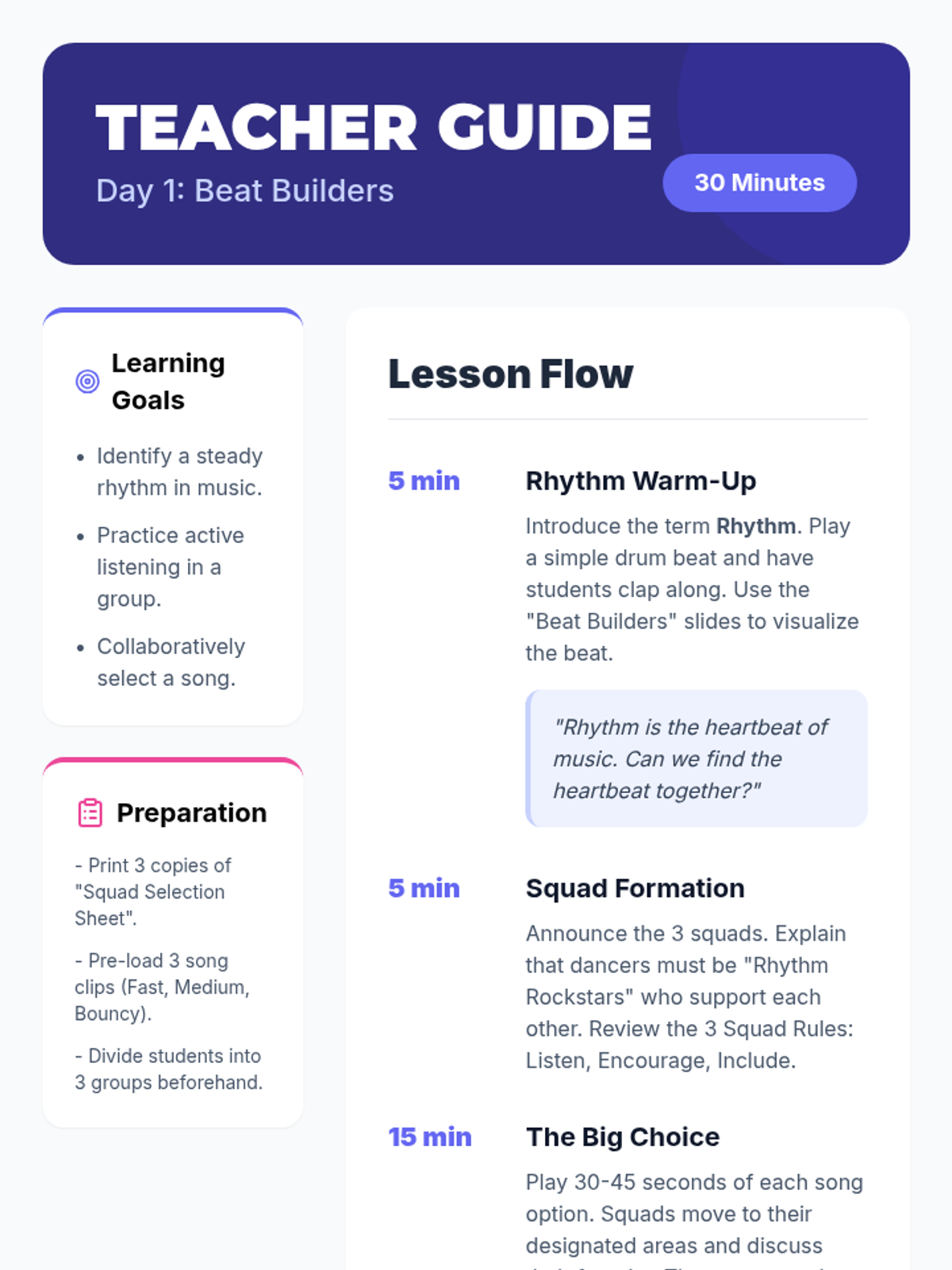
Students explore rhythm and tempo, form their dance squads, and select their group's performance song.
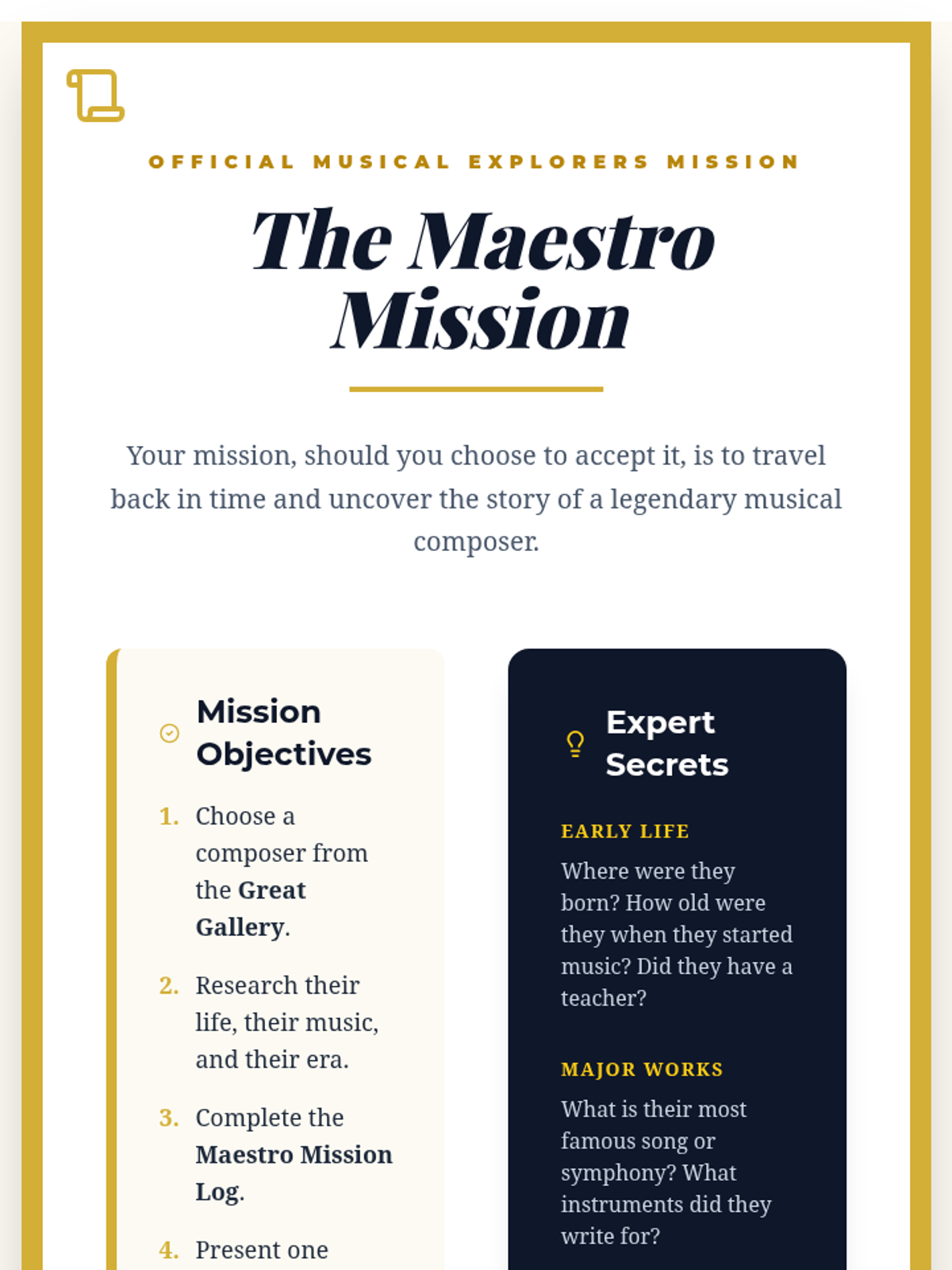
Guides students through researching and presenting a biography of a famous composer.
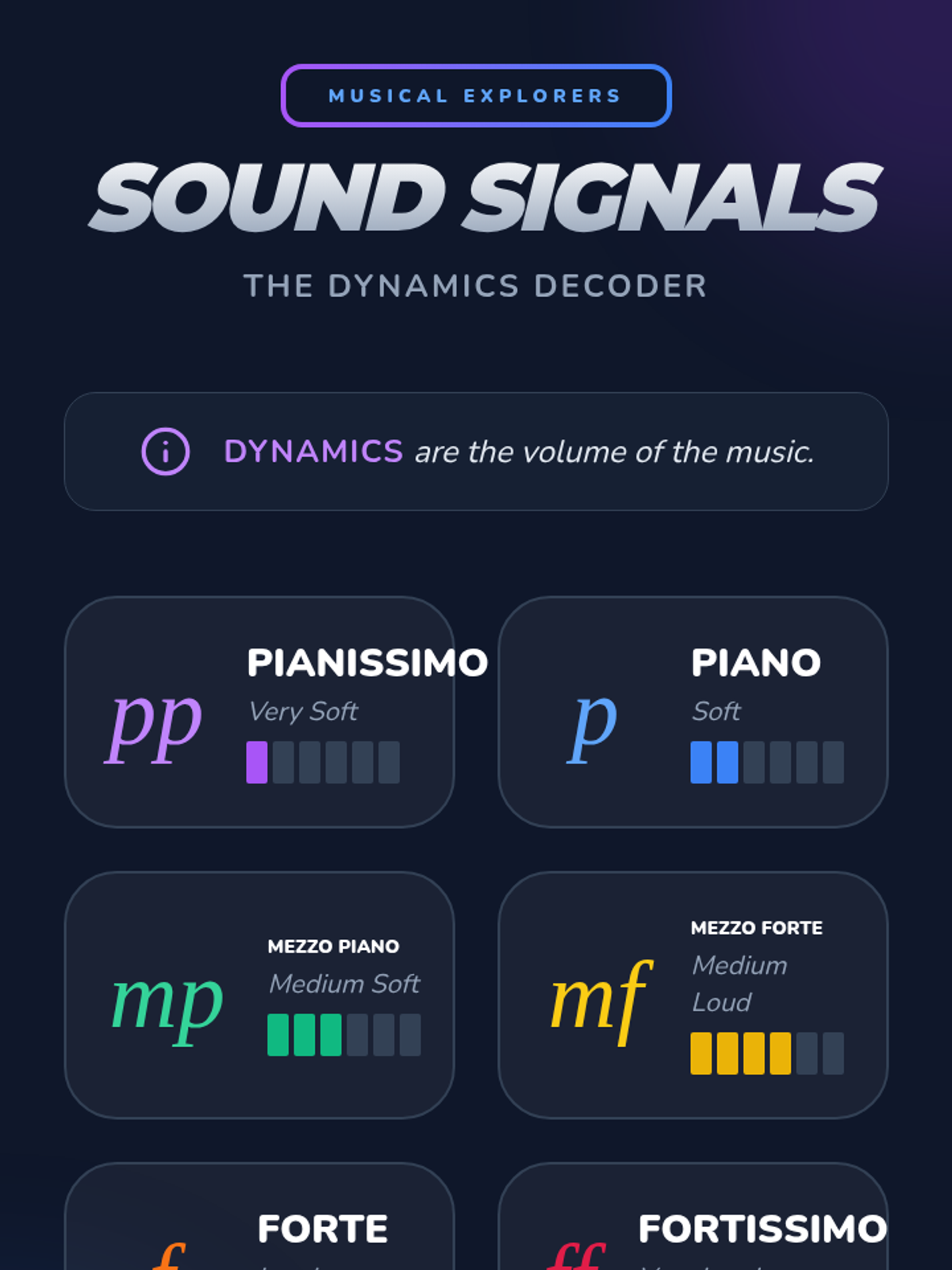
Explores the concept of dynamics through vocabulary and visual aids.
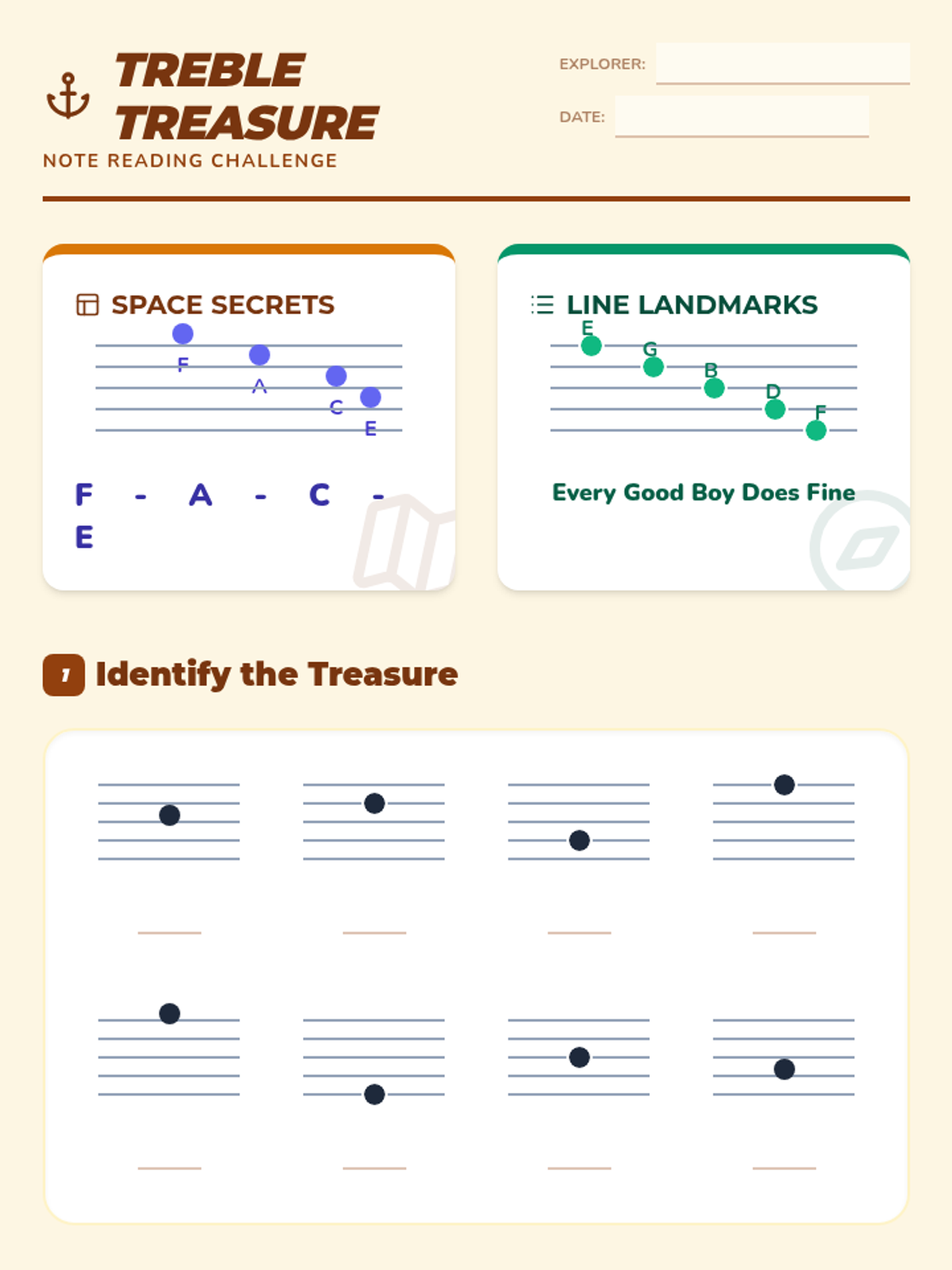
Introduces the treble clef and provides practice for identifying notes on the staff.
Focuses on the fundamentals of rhythm for 2nd graders and incorporates active movement activities suitable for Kindergarteners.
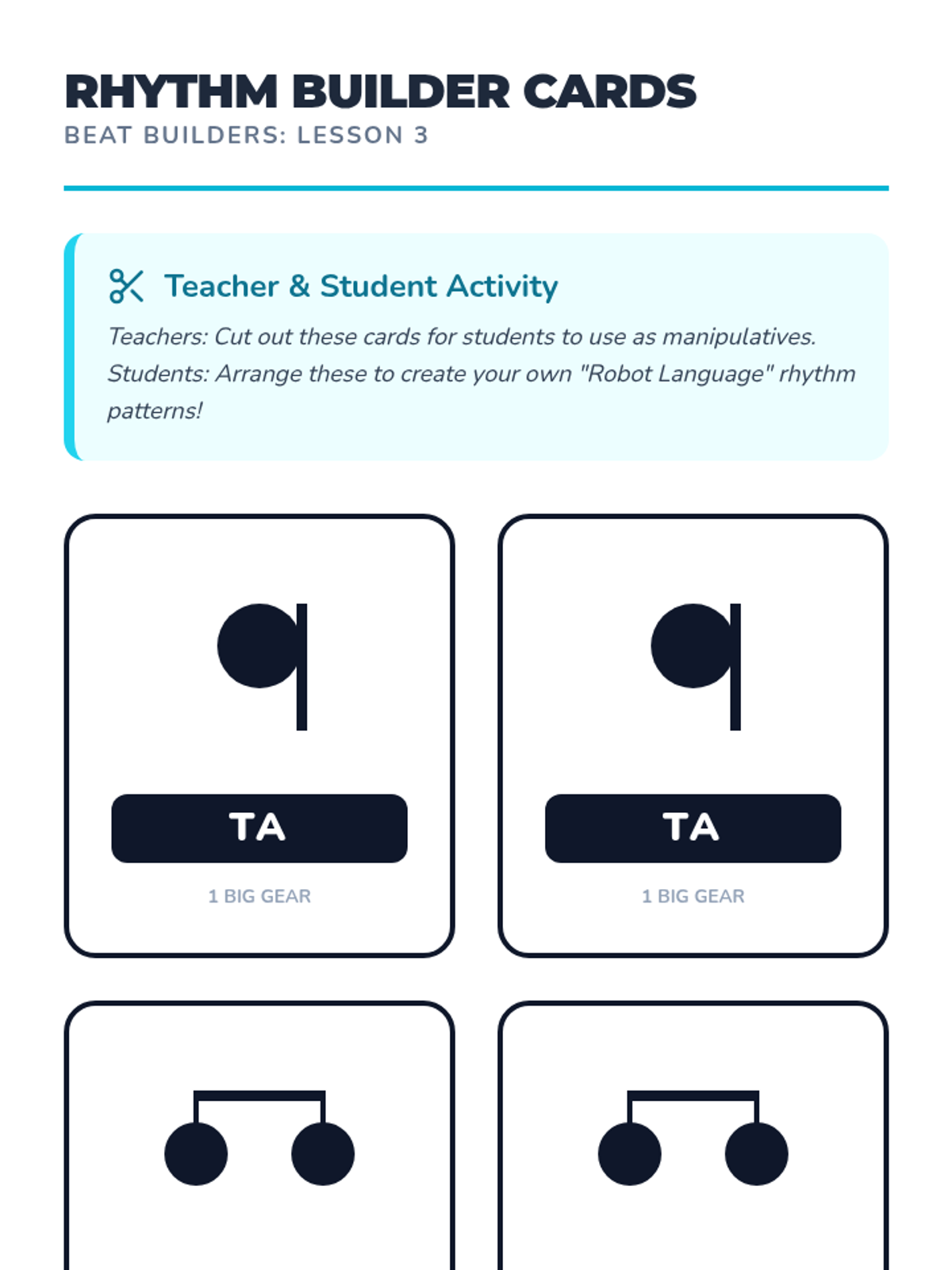
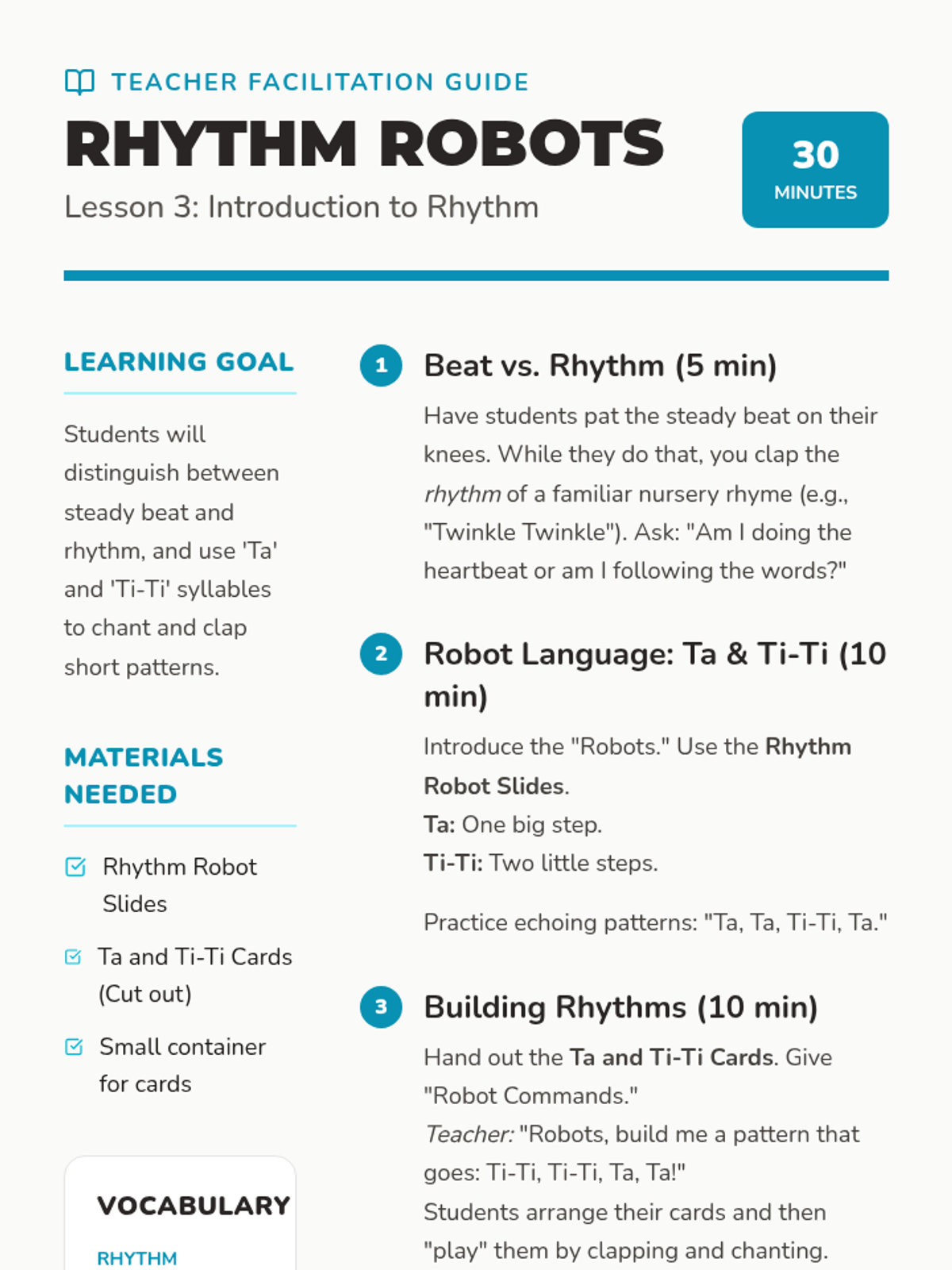
Introducing the concept of rhythm as the way words go, contrasting it with the steady beat using simple 'Ta' and 'Ti-Ti' patterns.
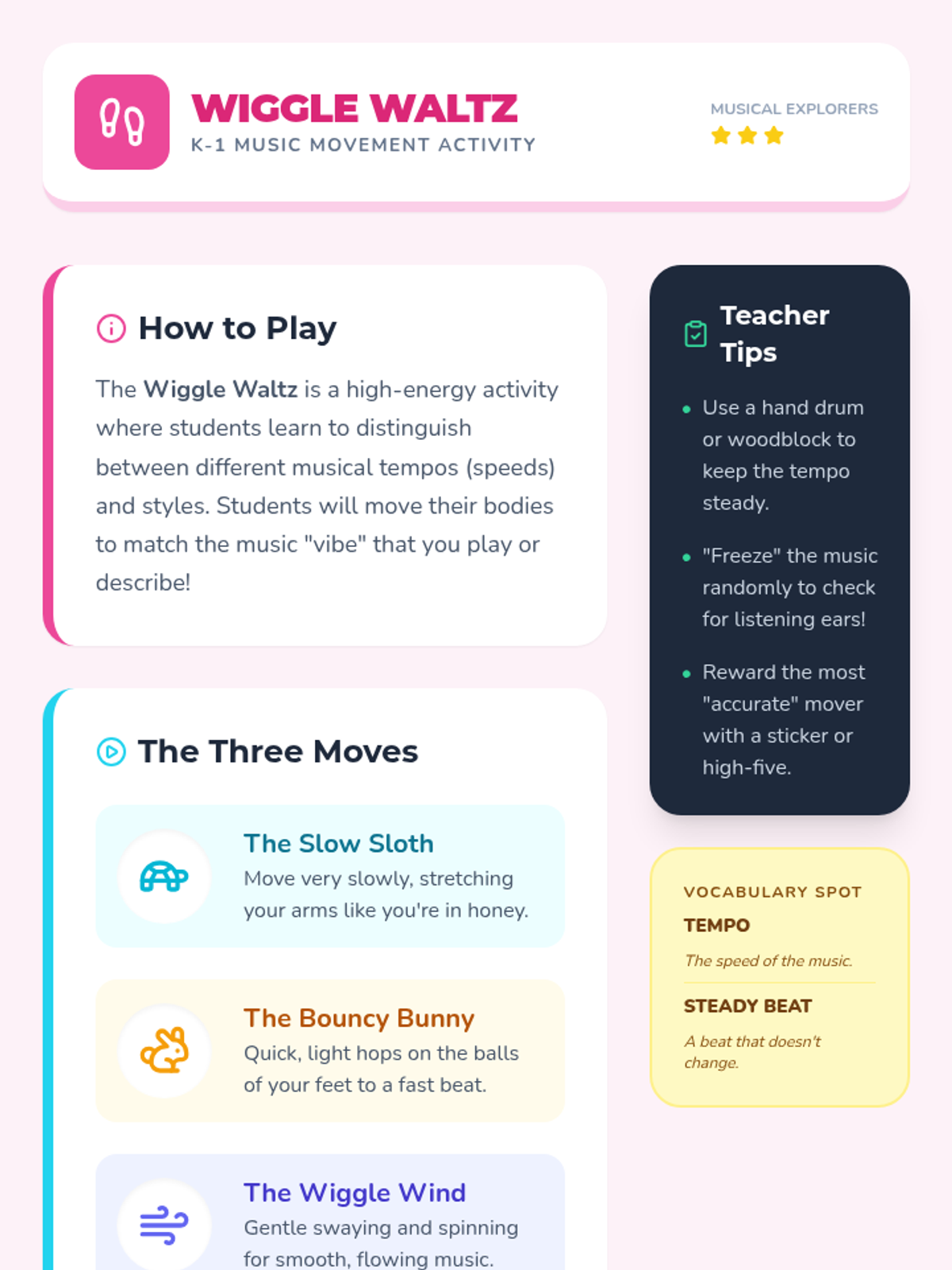
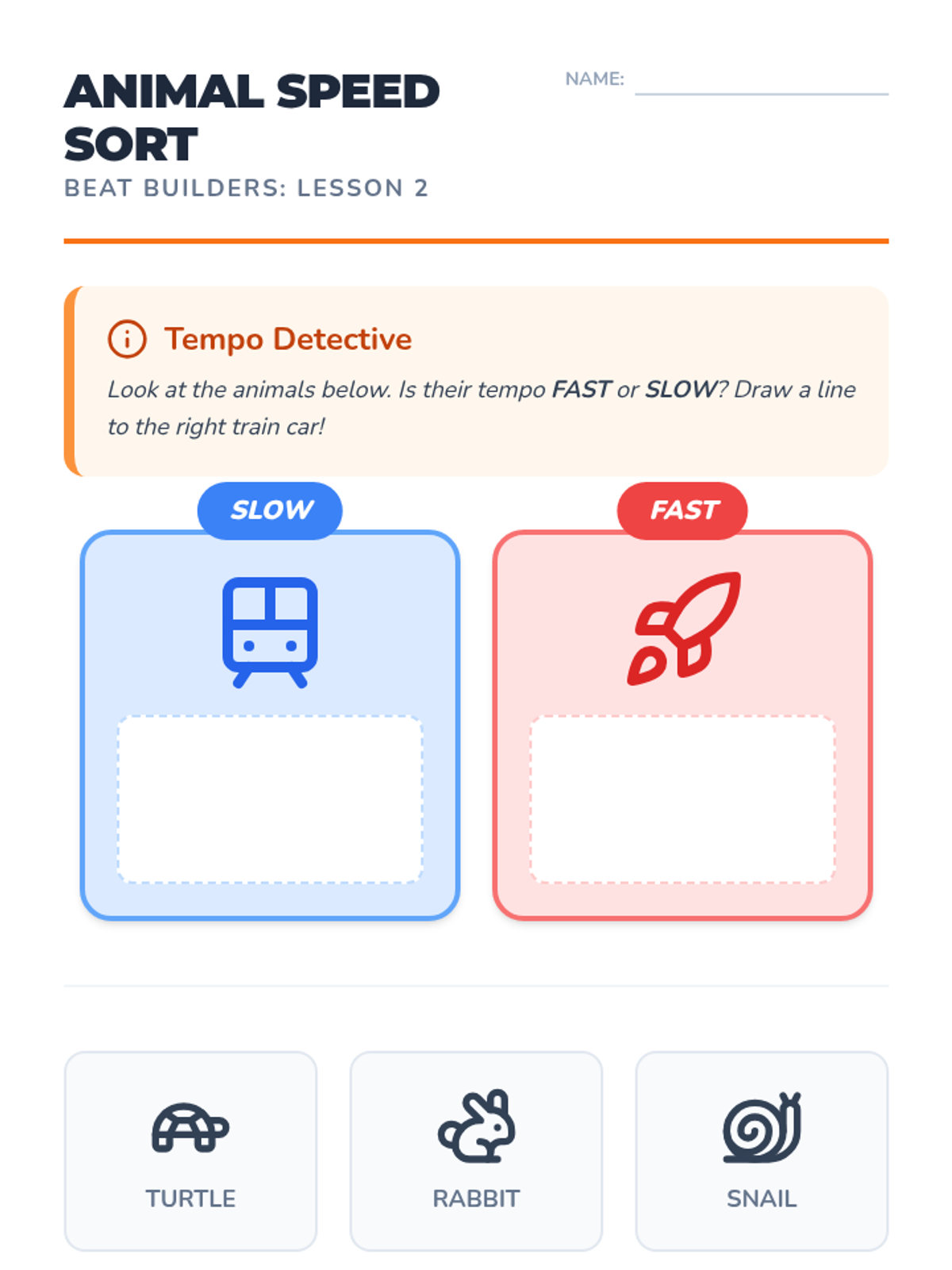
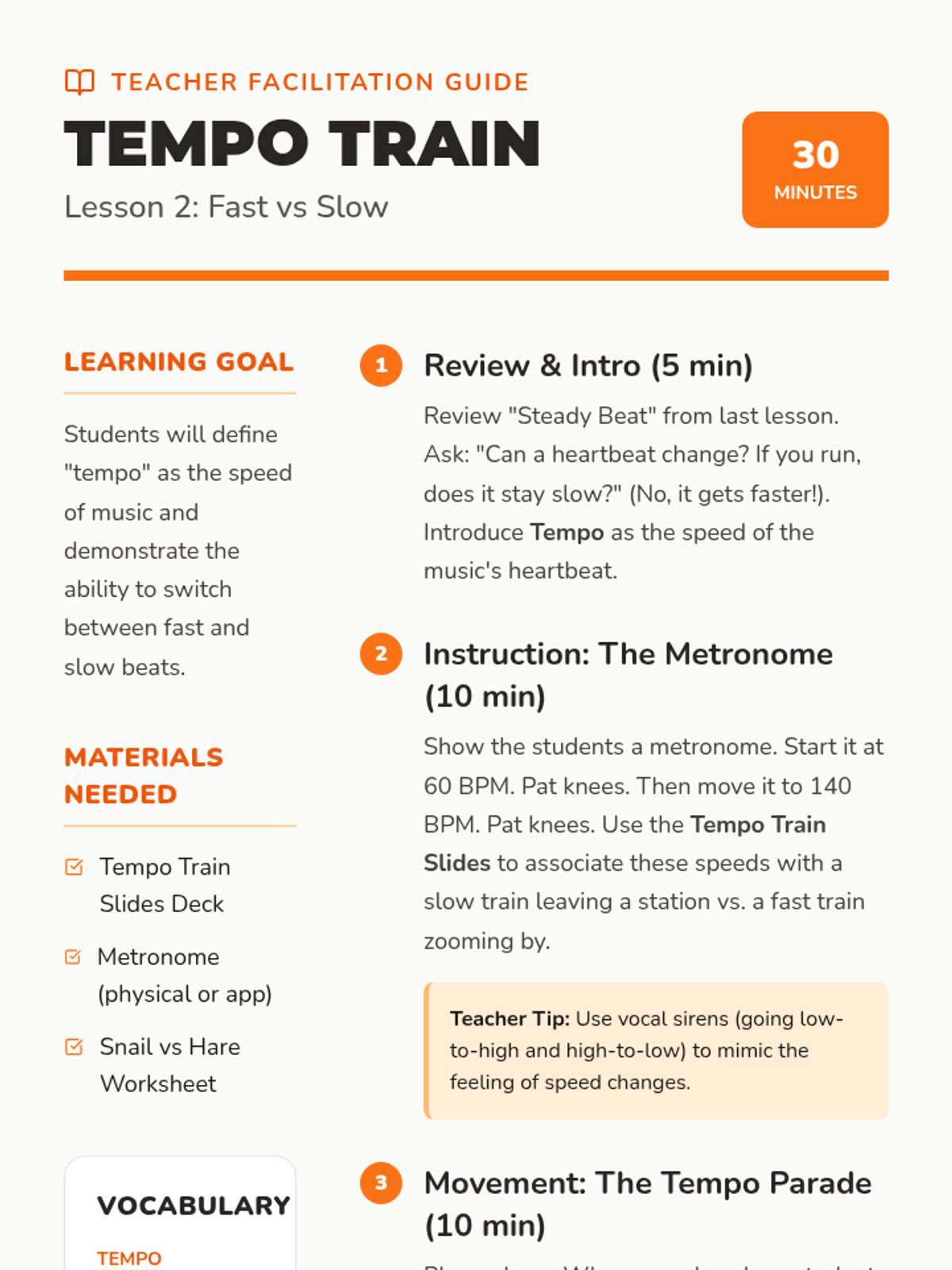
Exploring tempo through fast and slow speeds, using animal imagery and locomotive movement to feel changes in pace.
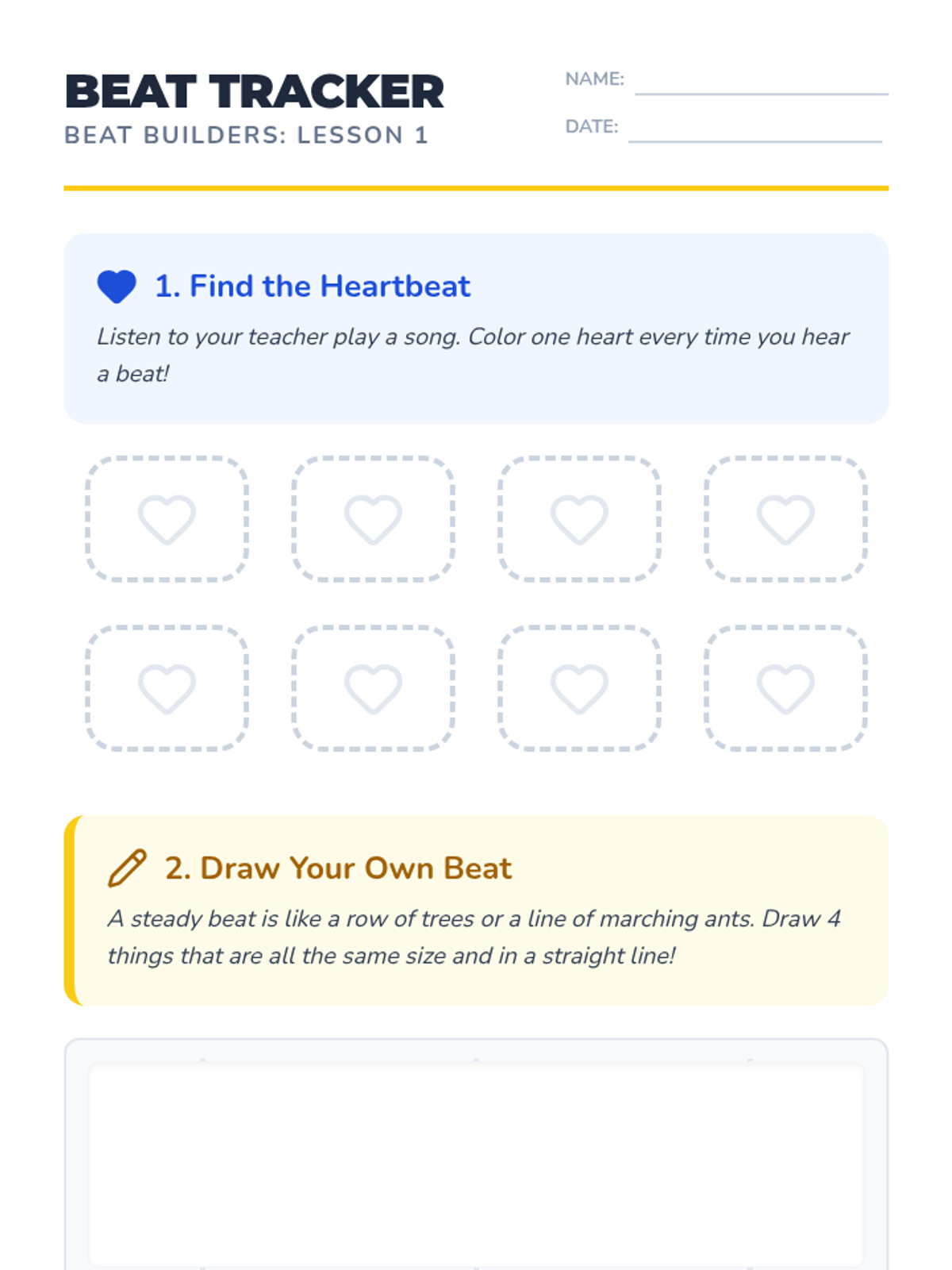
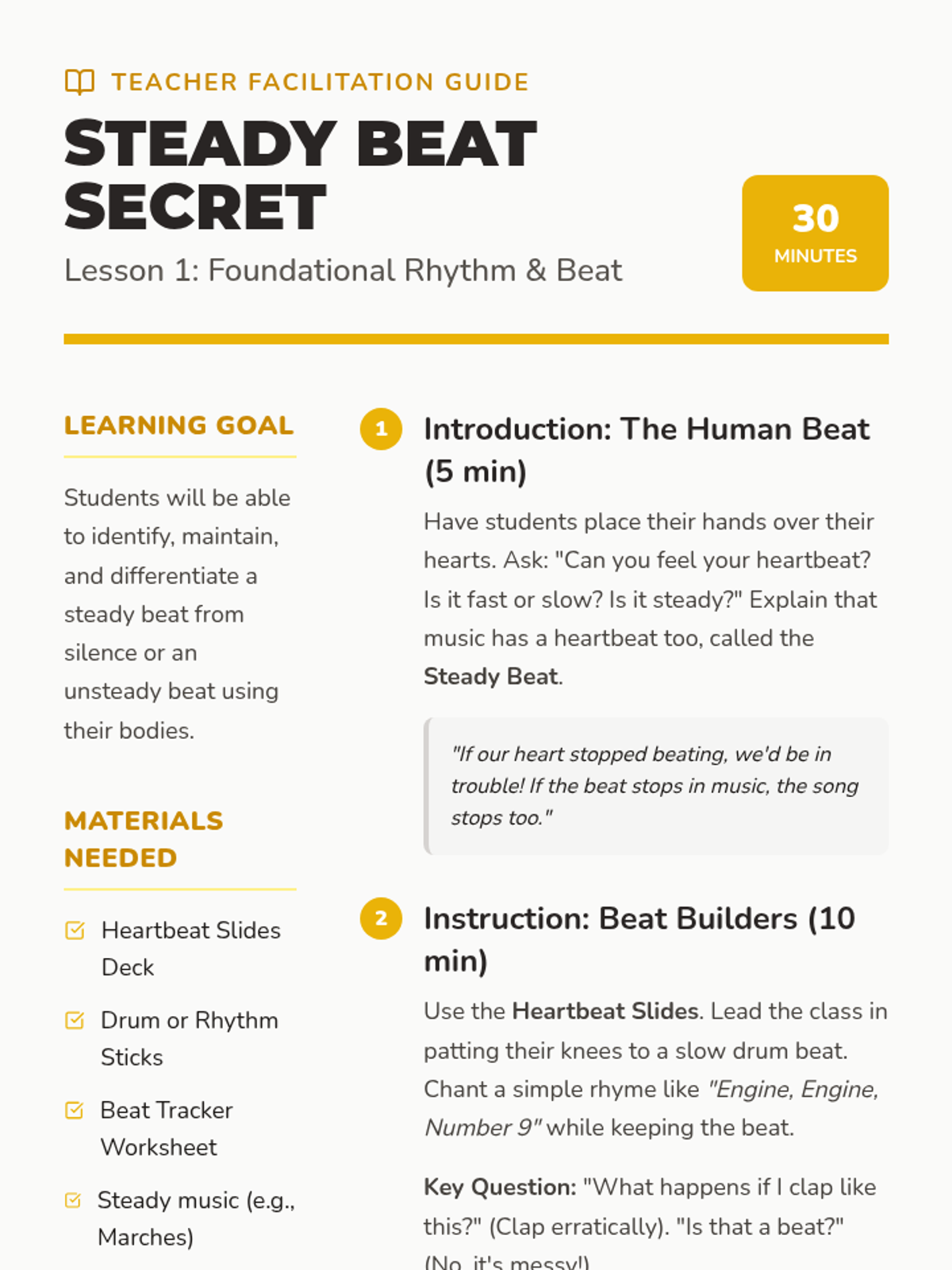
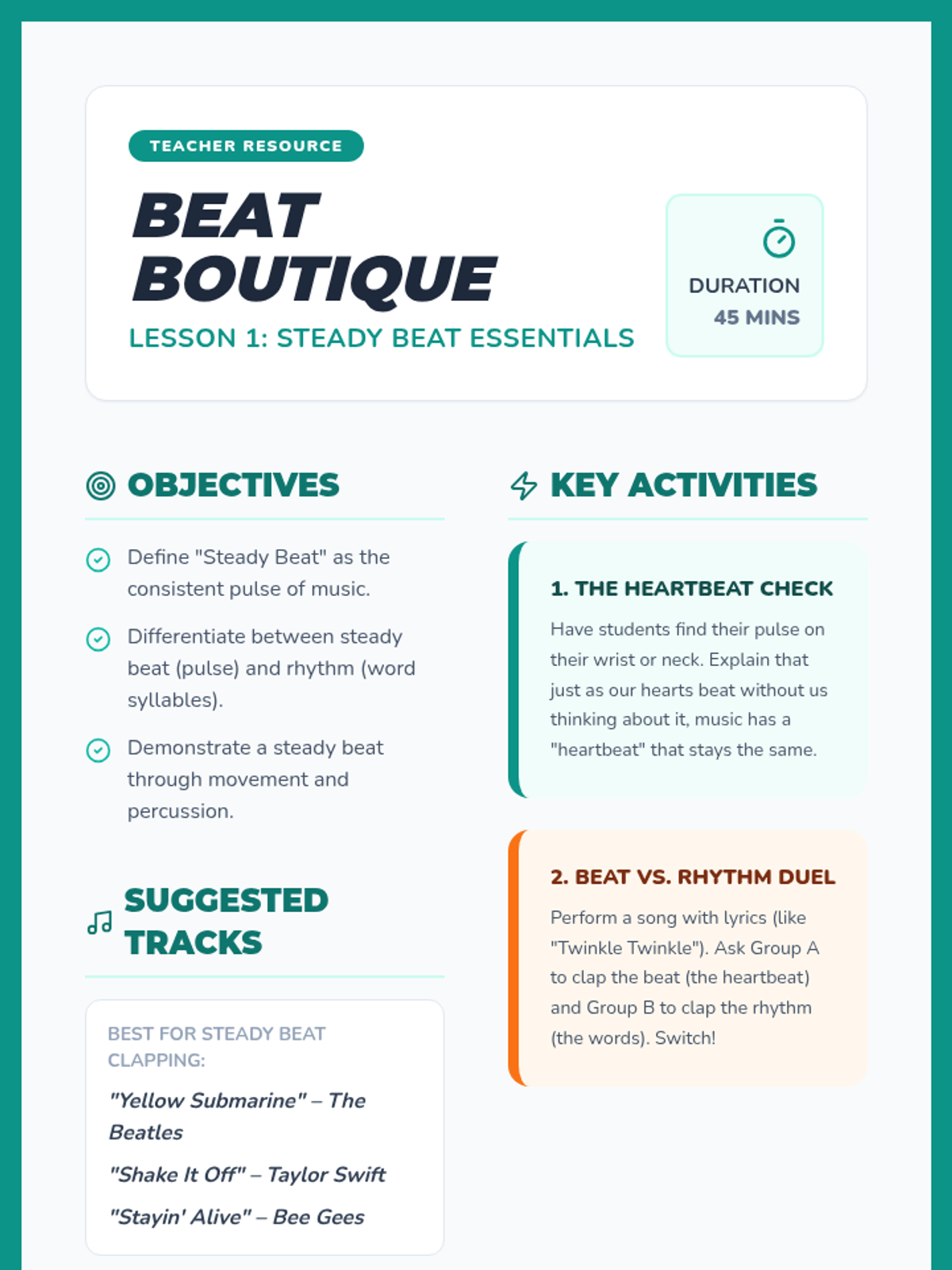
Introduction to the concept of a steady beat as the 'heartbeat' of music, using movement and simple percussion.
A culminating play-along experience combining rhythm and tempo in a performance-based session.
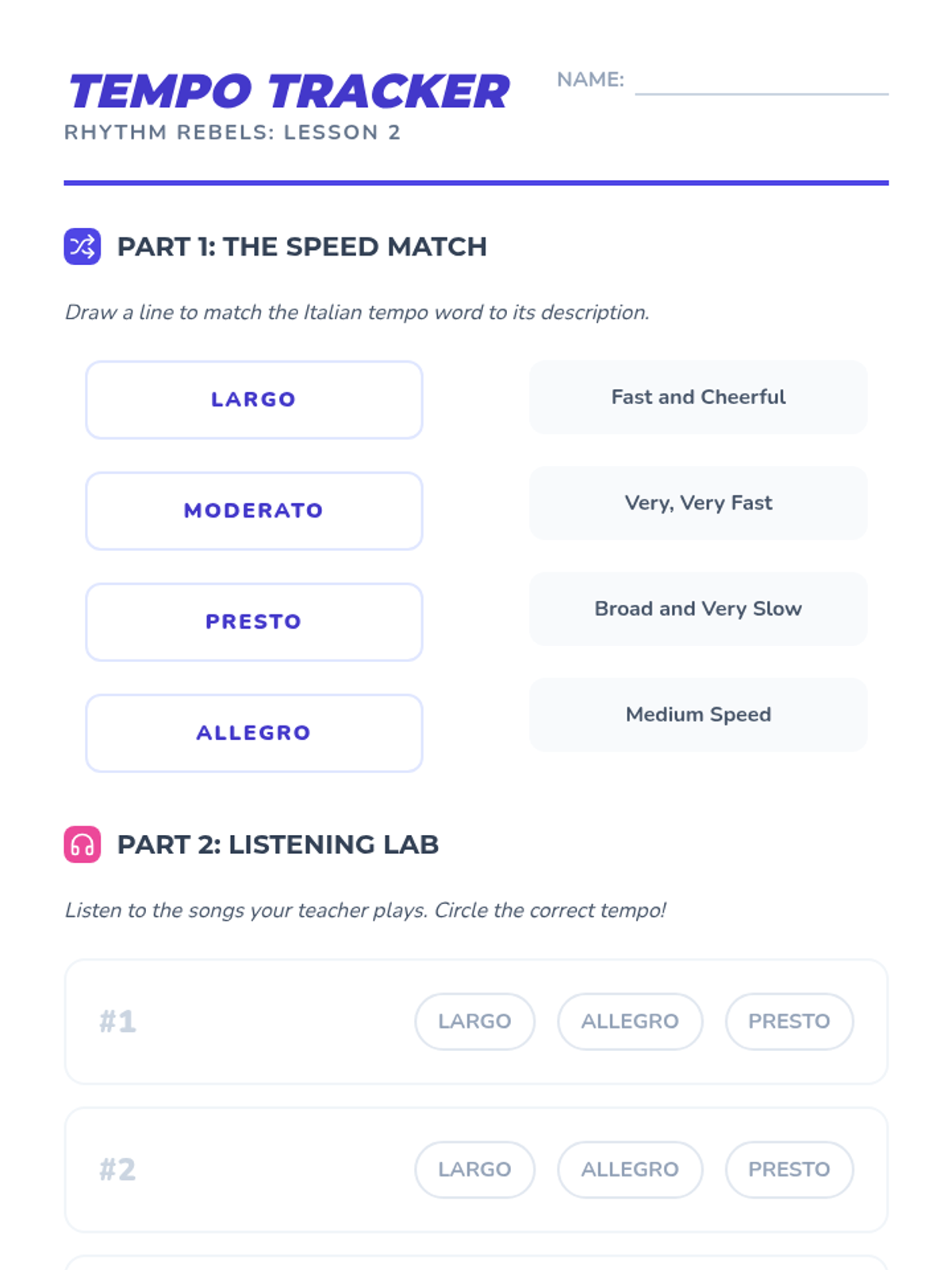
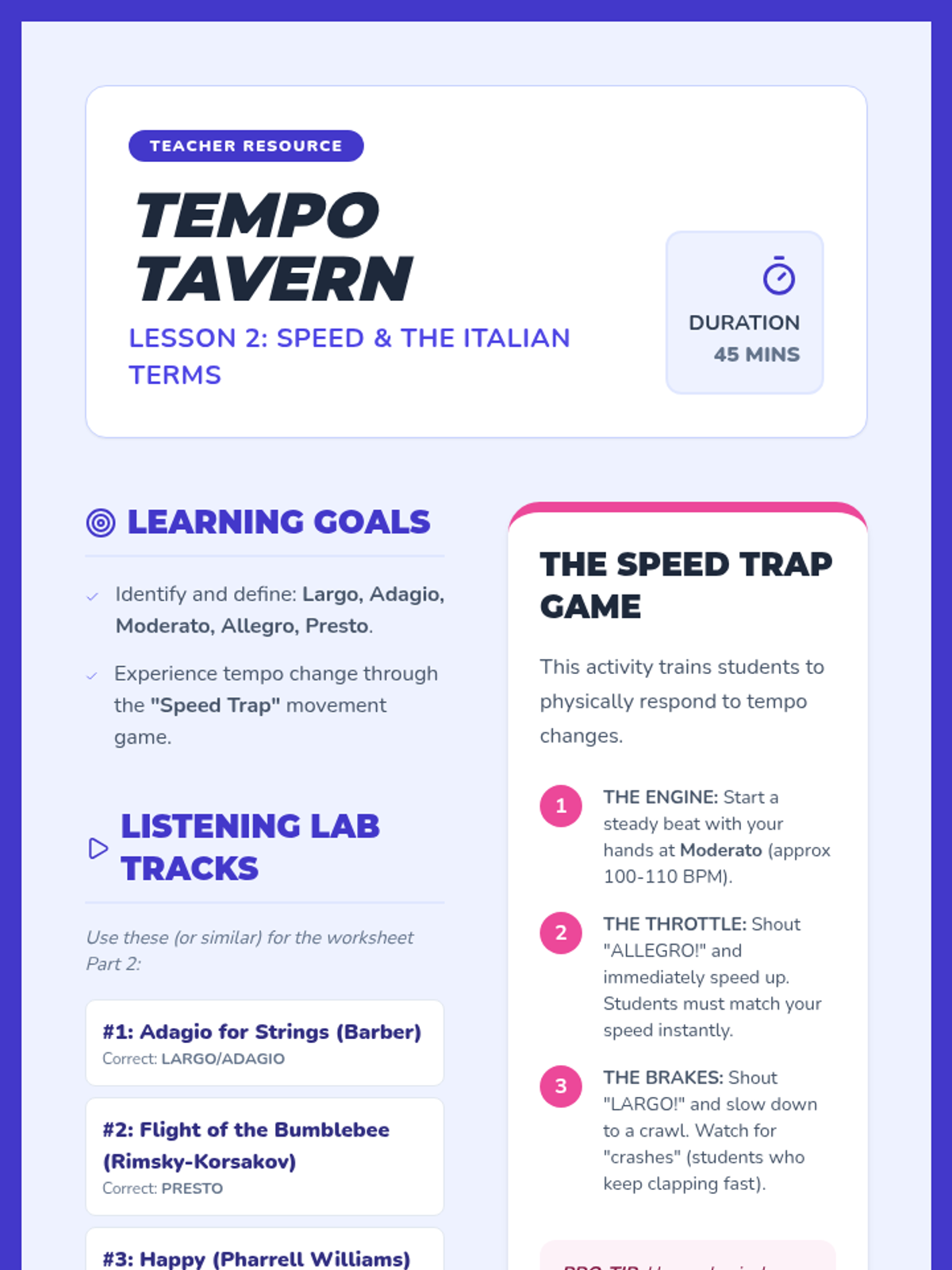
An exploration of musical speed using Italian tempo terms and movement-based play-alongs.
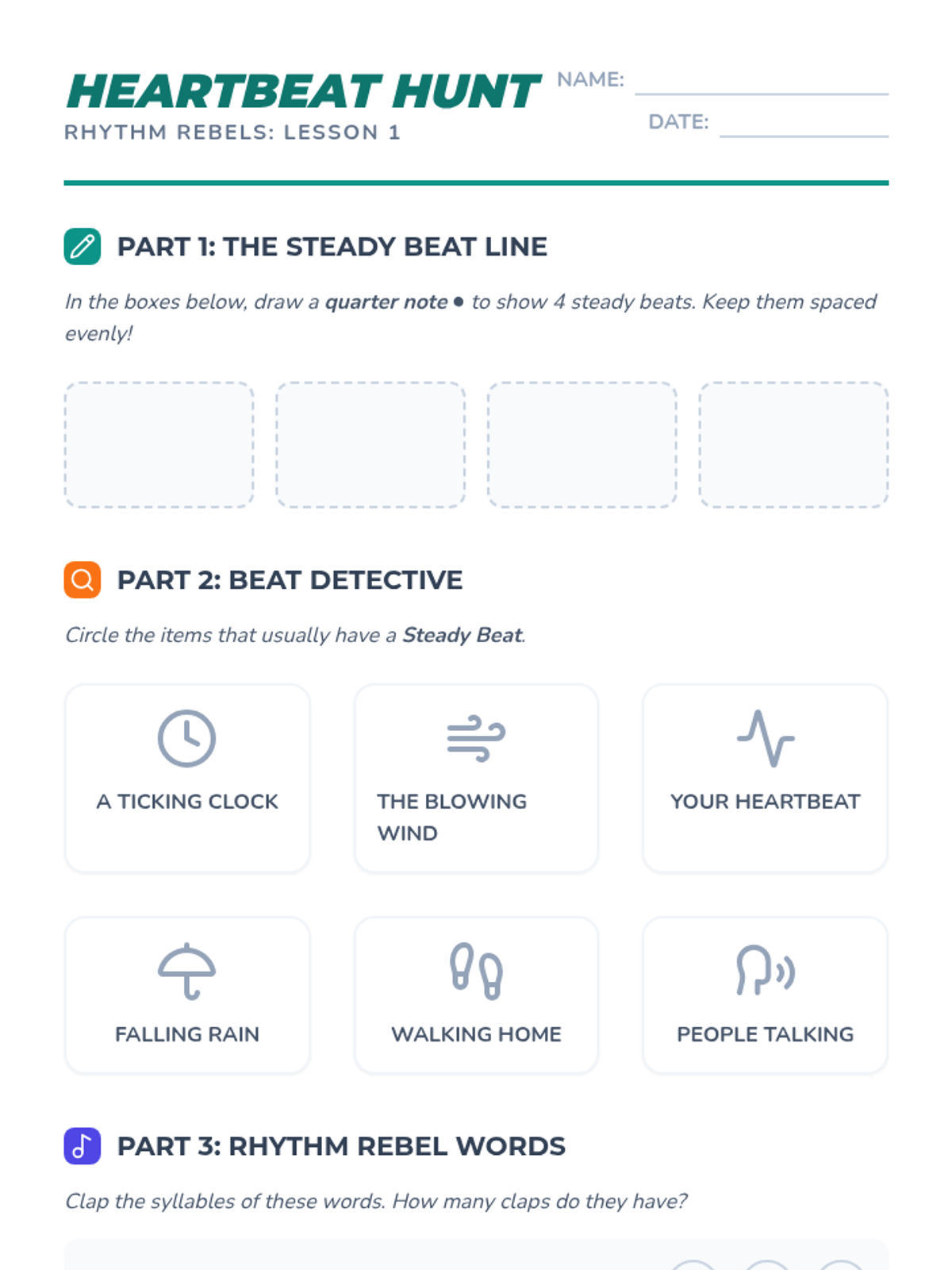
Students will differentiate between rhythm and steady beat using 'heartbeat' exercises and interactive clapping games.
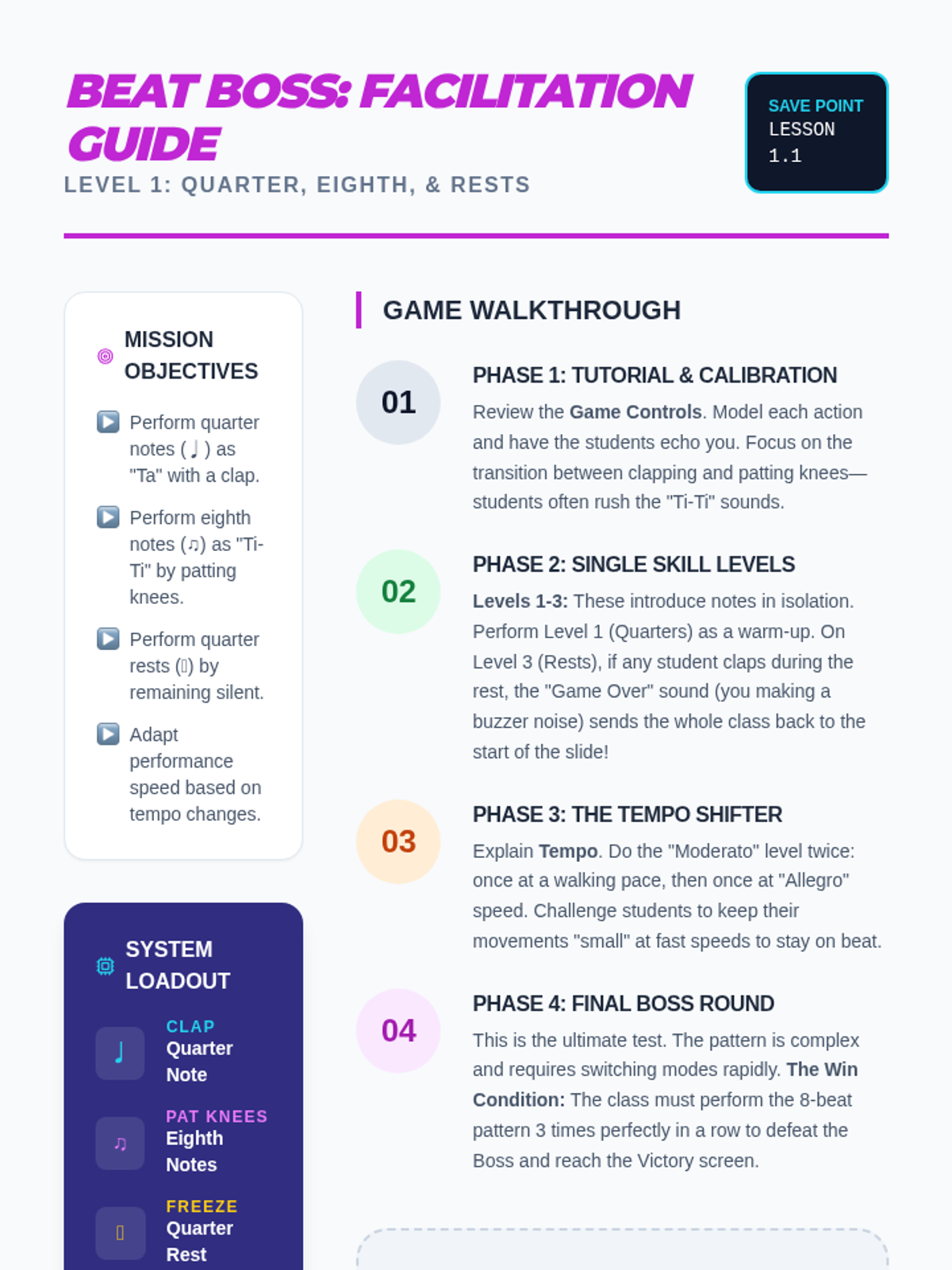
An interactive, game-based lesson where students use body percussion to perform quarter notes, eighth notes, and quarter rests at varying tempos.
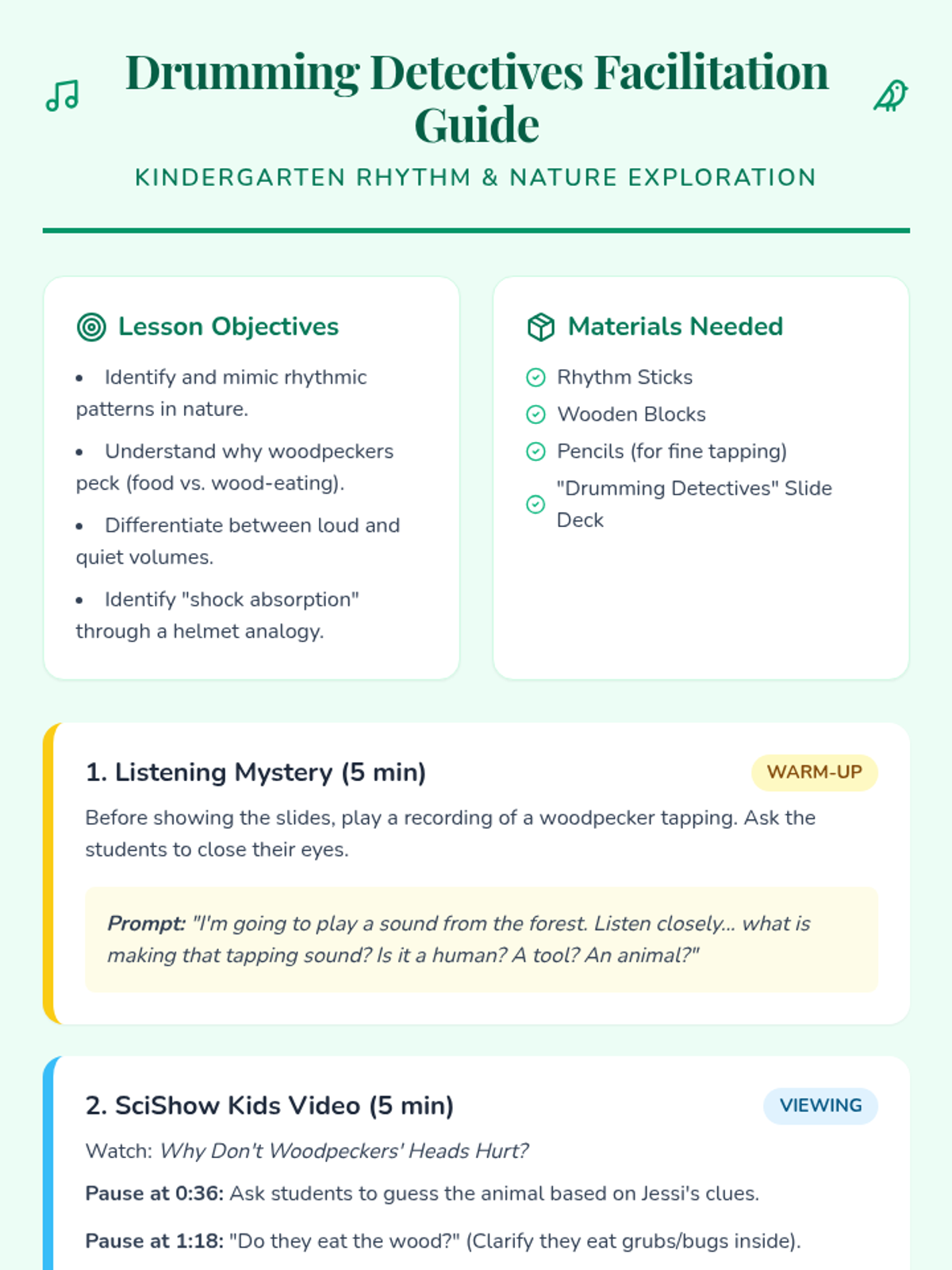
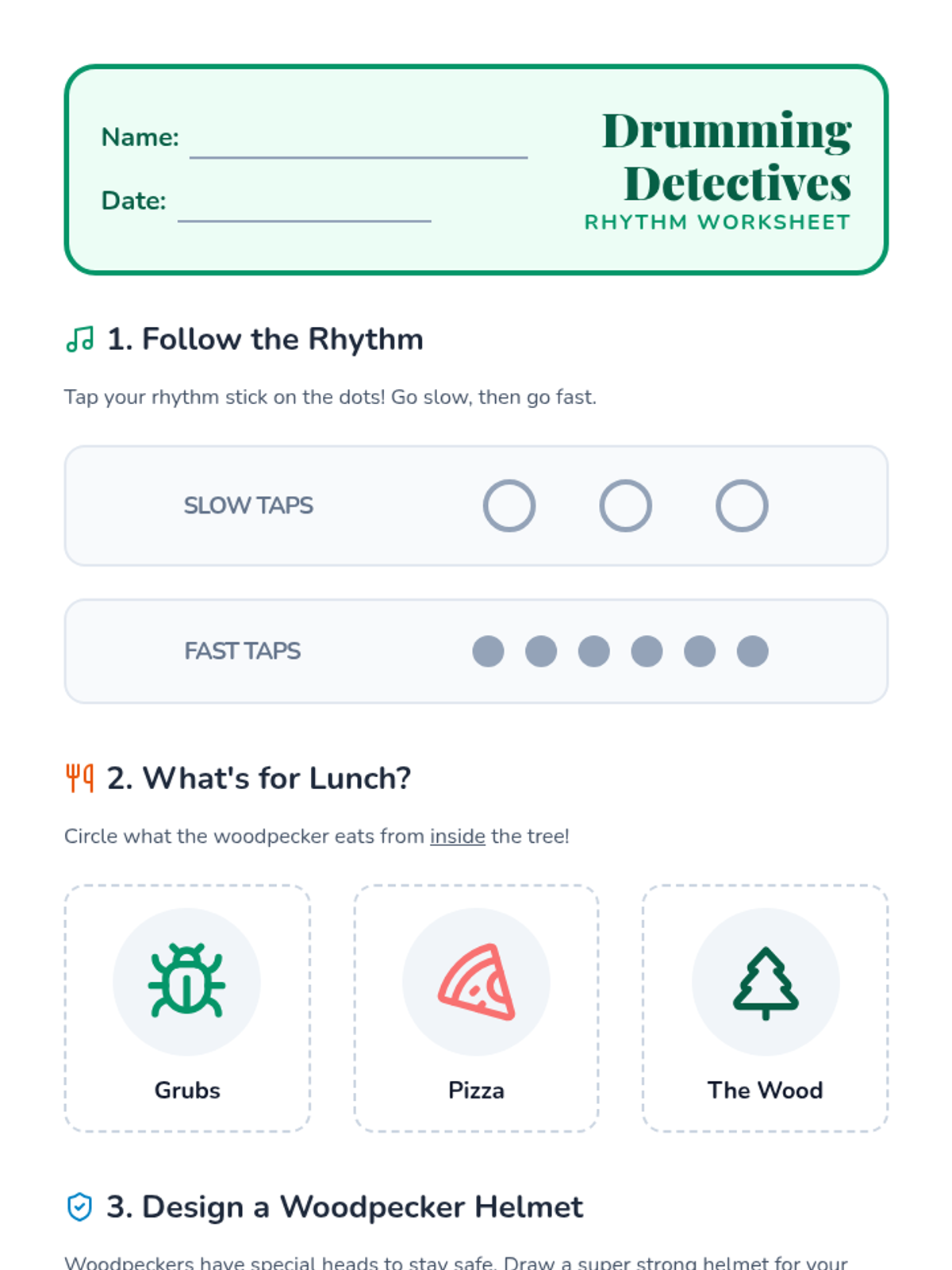
In this kindergarten music and science lesson, students explore rhythm and nature by investigating how and why woodpeckers 'drum' on trees. They use rhythm sticks and wooden blocks to mimic bird patterns, learn about biological adaptations through a video, and practice volume control.
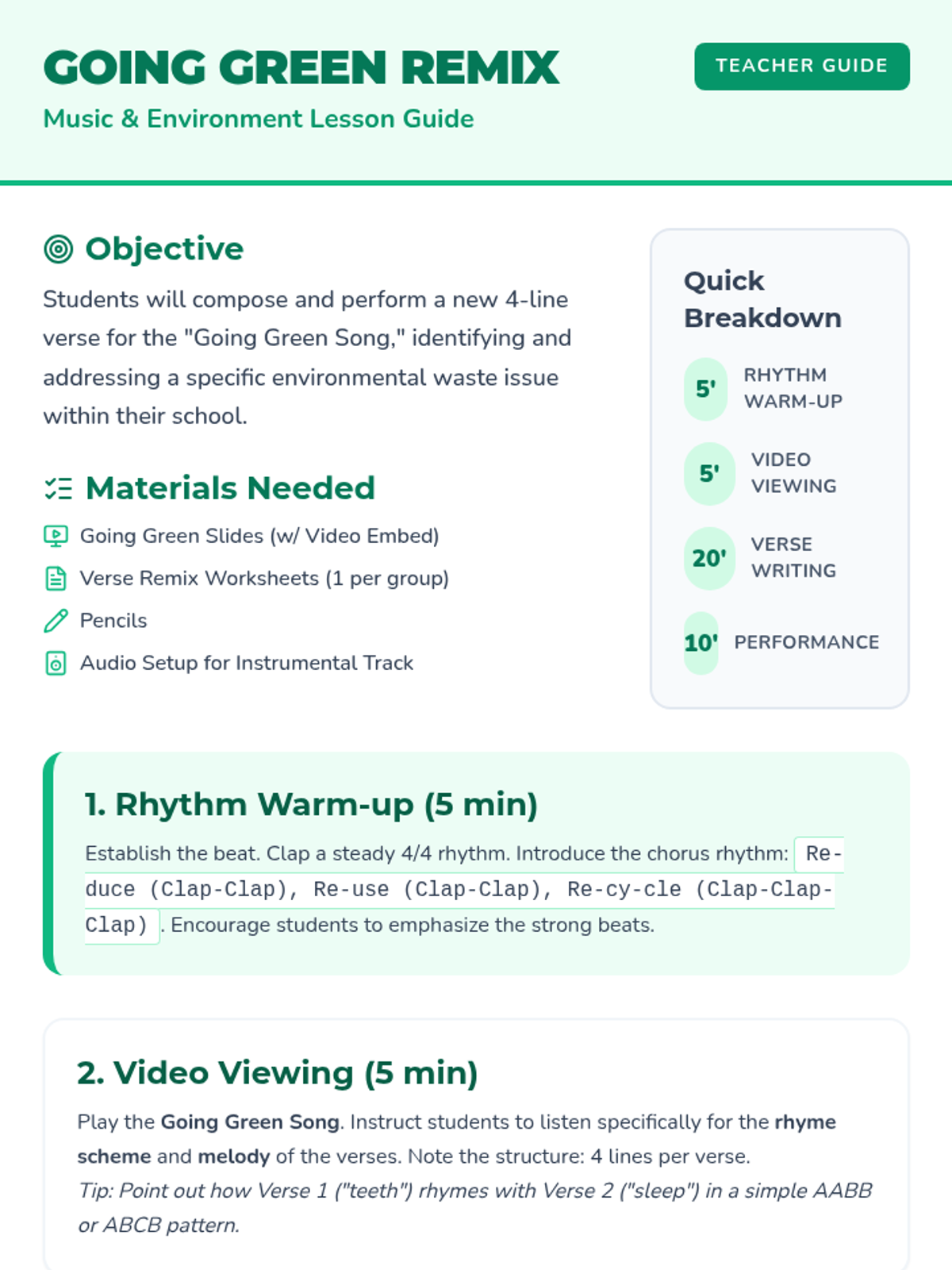
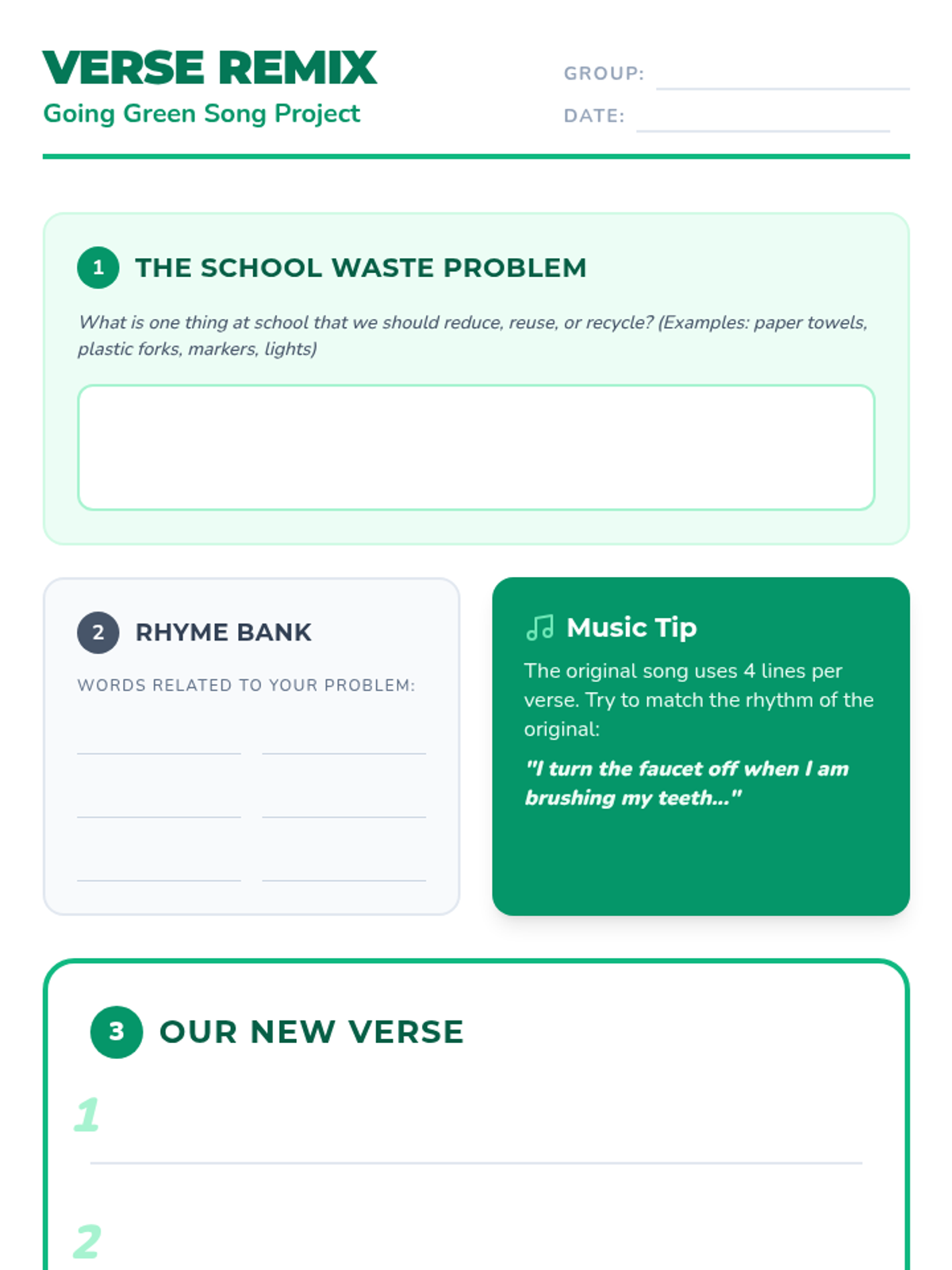
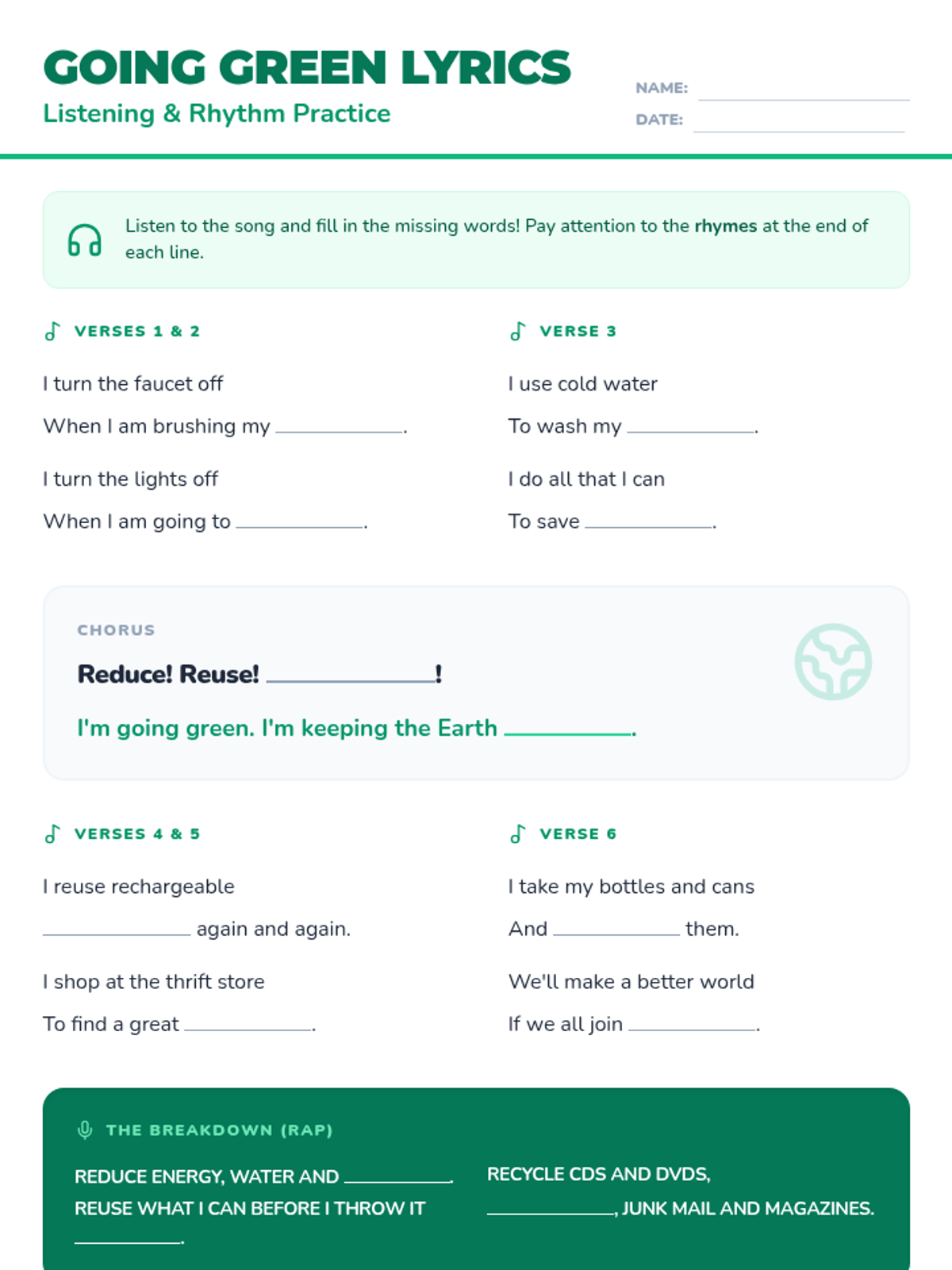
A music lesson where students compose and perform a new verse for 'Going Green Song' about environmental issues in their own school.
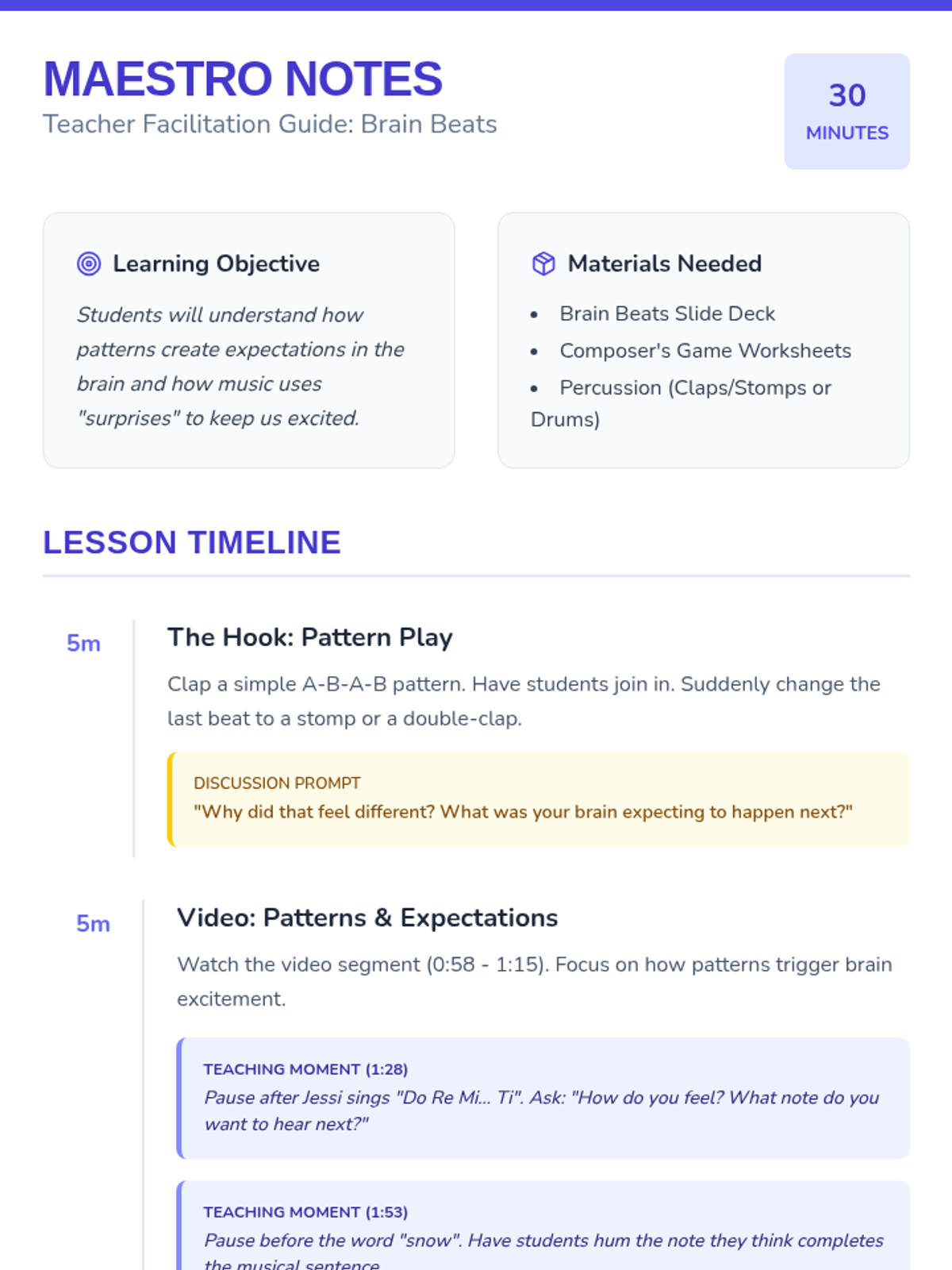
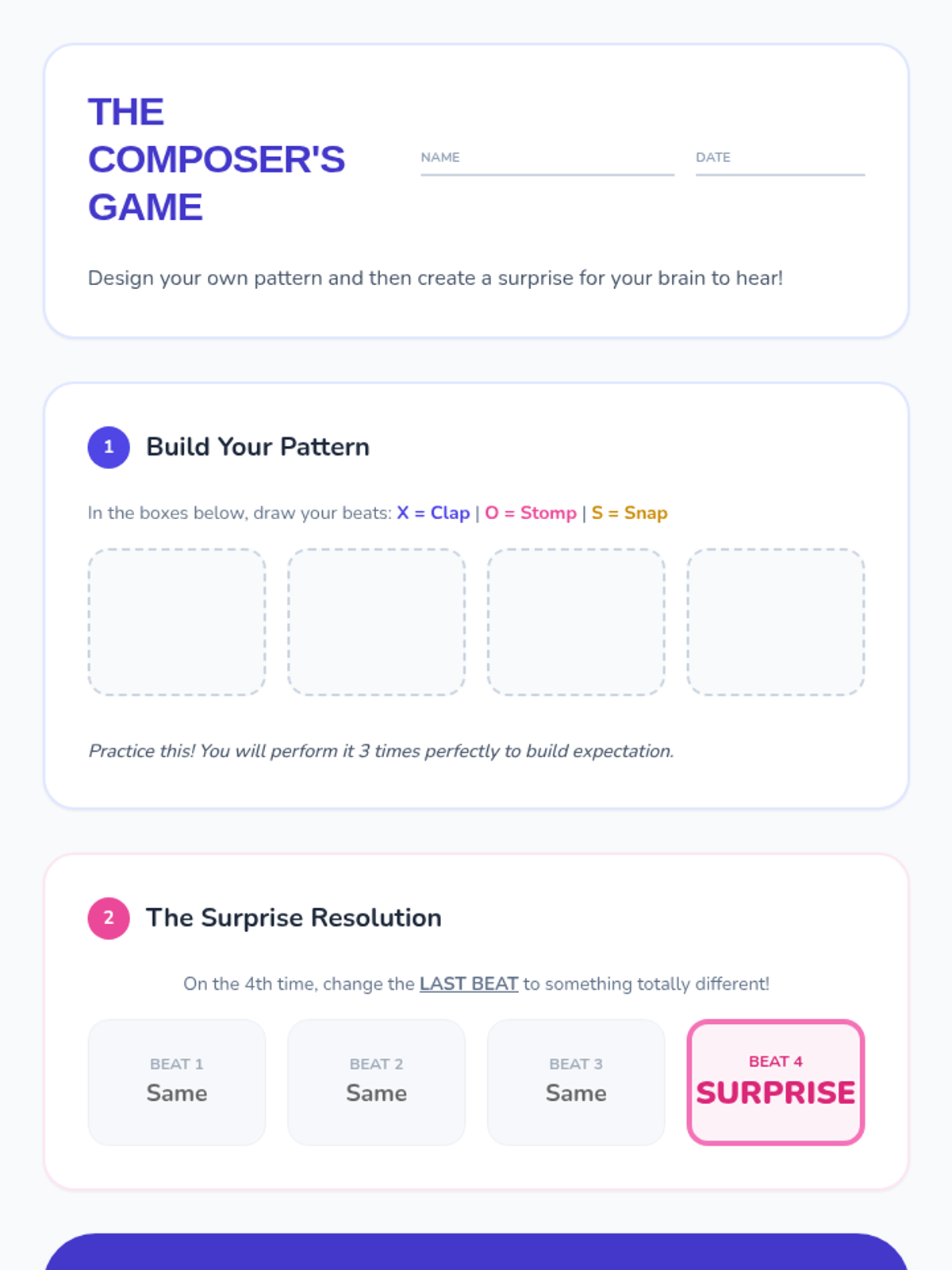
Students explore how the brain uses patterns and expectations to process music, learning about the 'tonic' and 'resolution' through a rhythmic composition game.
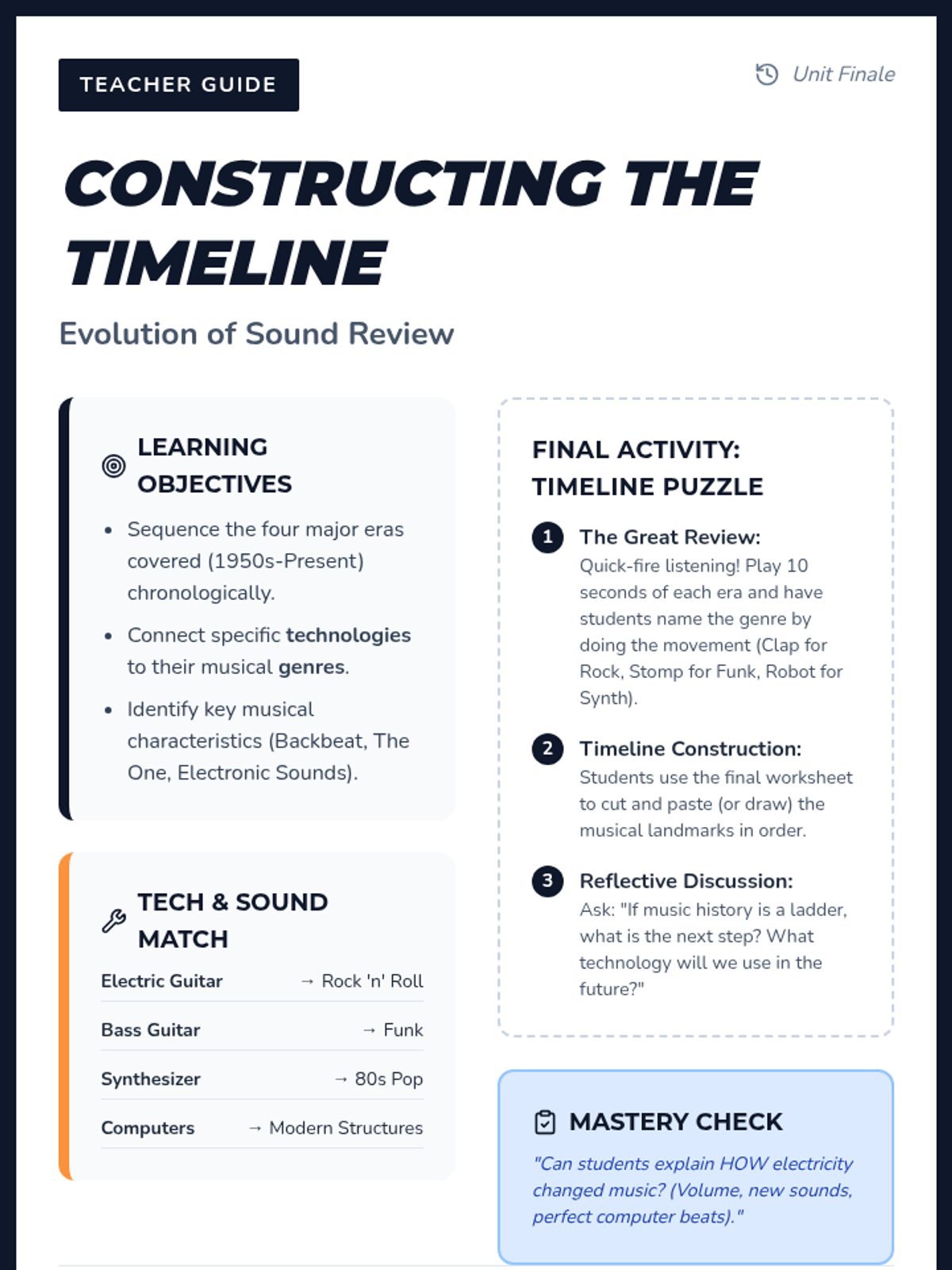
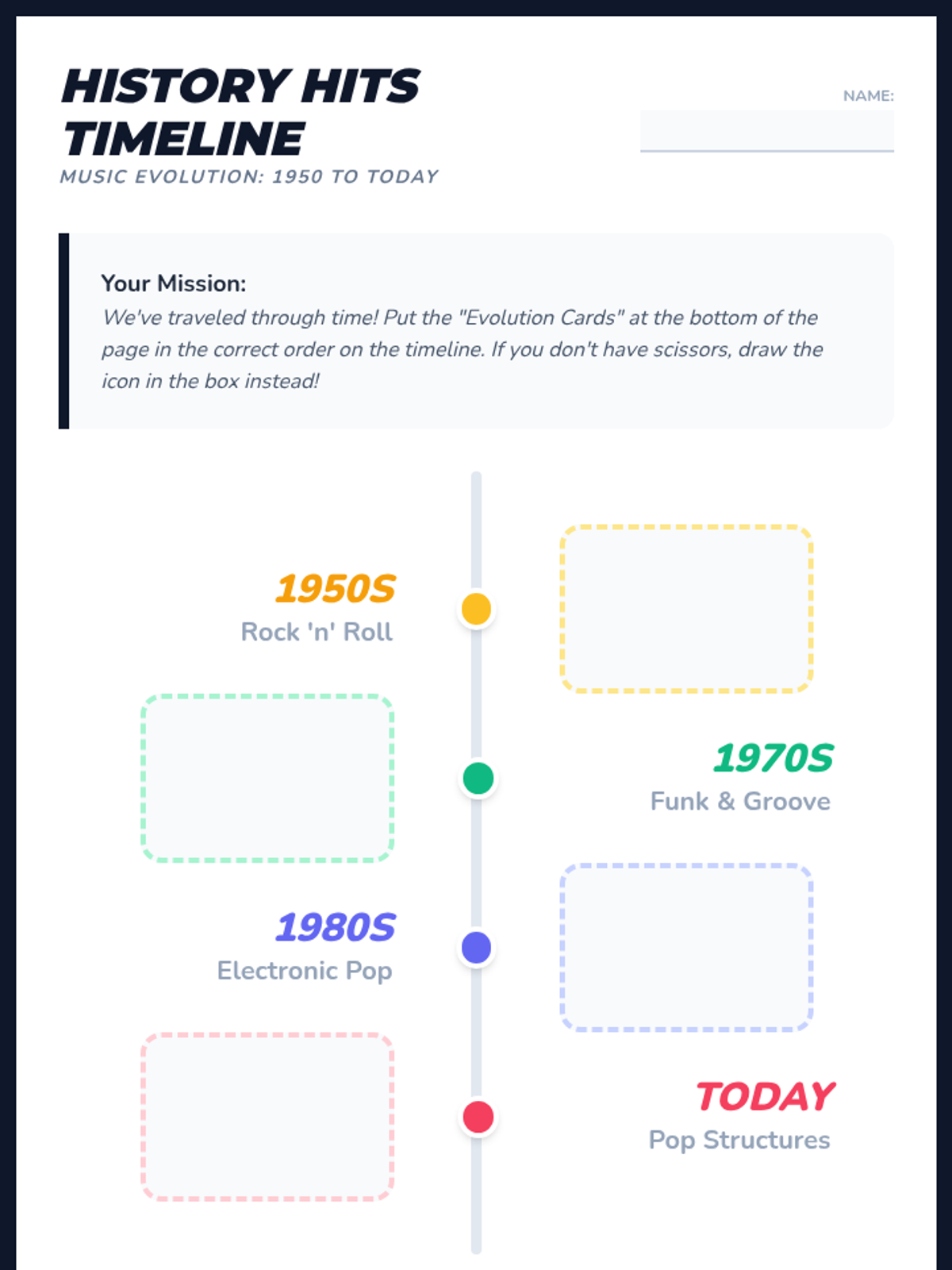
A cumulative review where students synthesize their knowledge to build a complete timeline of music history. They categorize genres by their technological and musical characteristics.
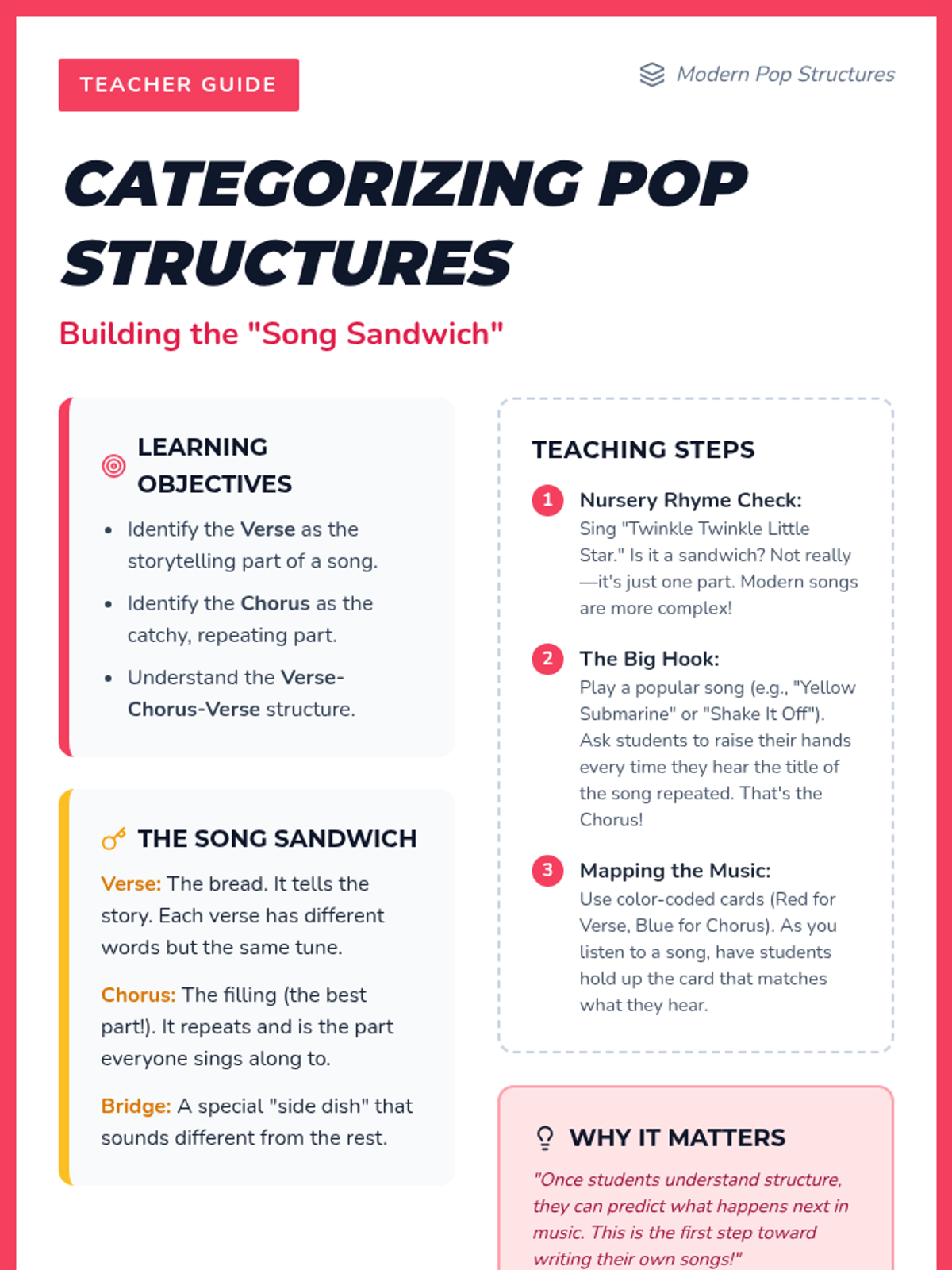
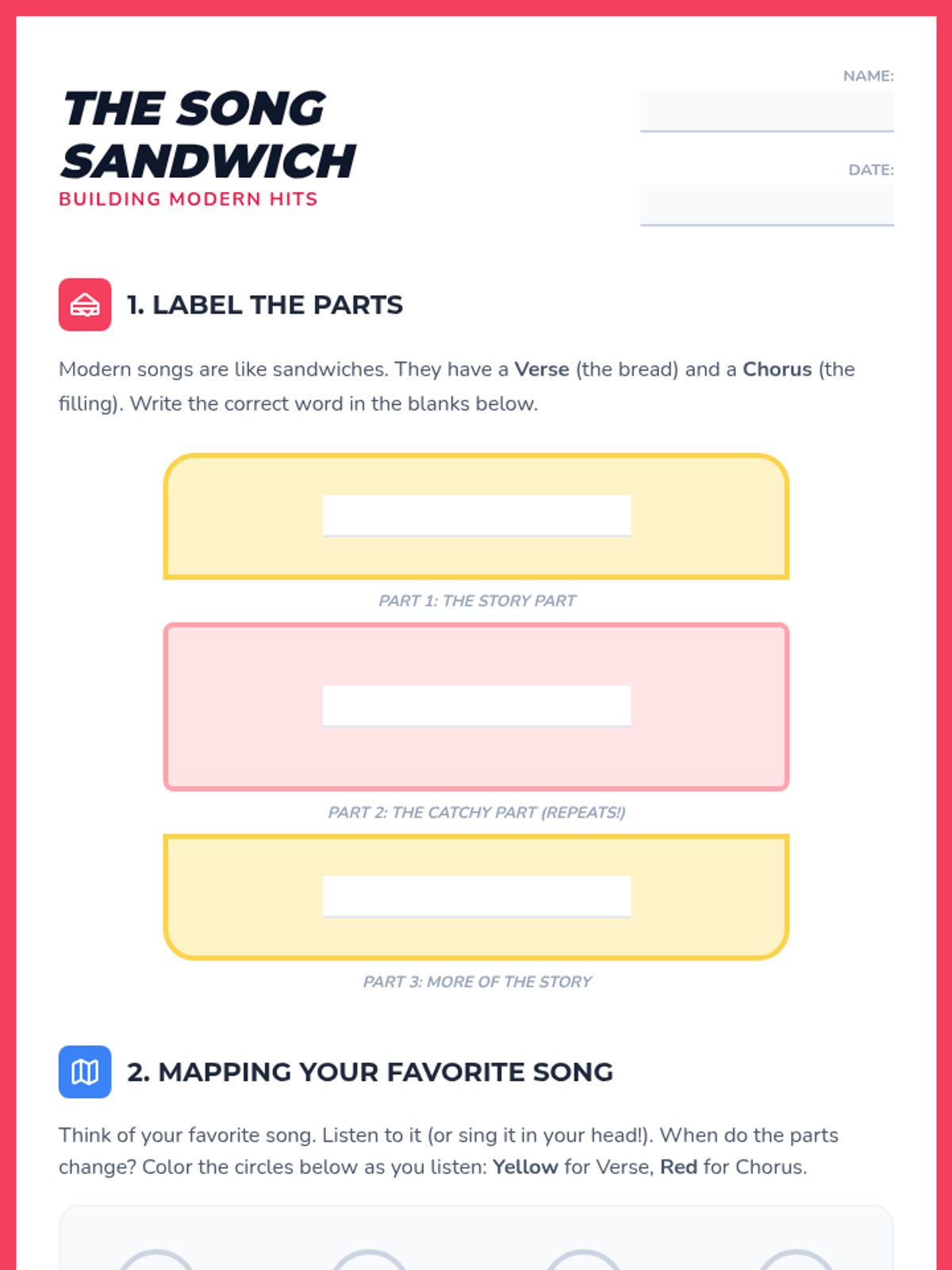
Students deconstruct modern pop songs to find the 'Verse-Chorus' pattern. They use a 'Song Sandwich' analogy to understand how most modern music is structured.
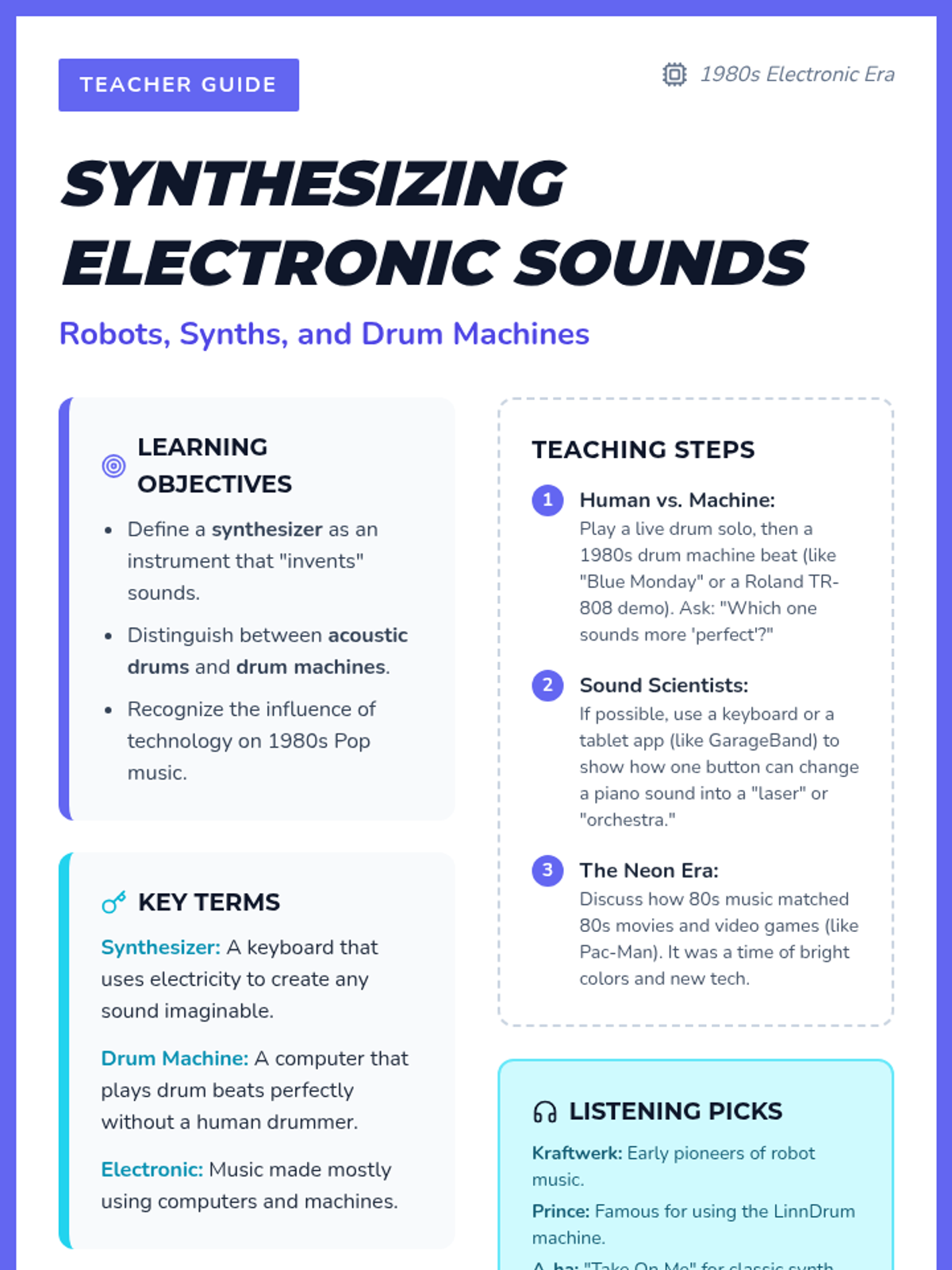
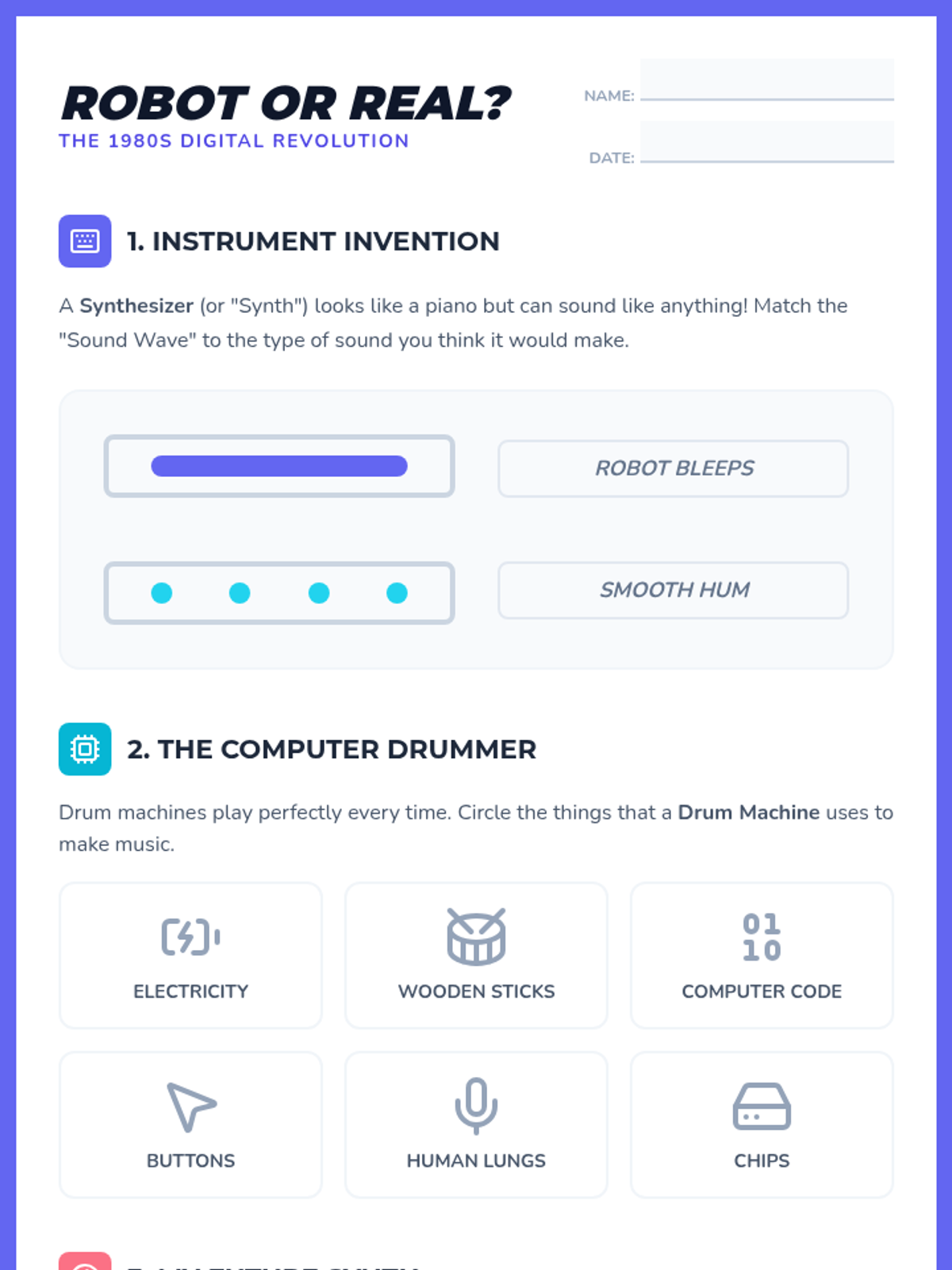
An introduction to the digital age of music, where students explore synthesizers and drum machines from the 1980s. They compare electronic sounds with traditional acoustic instruments.
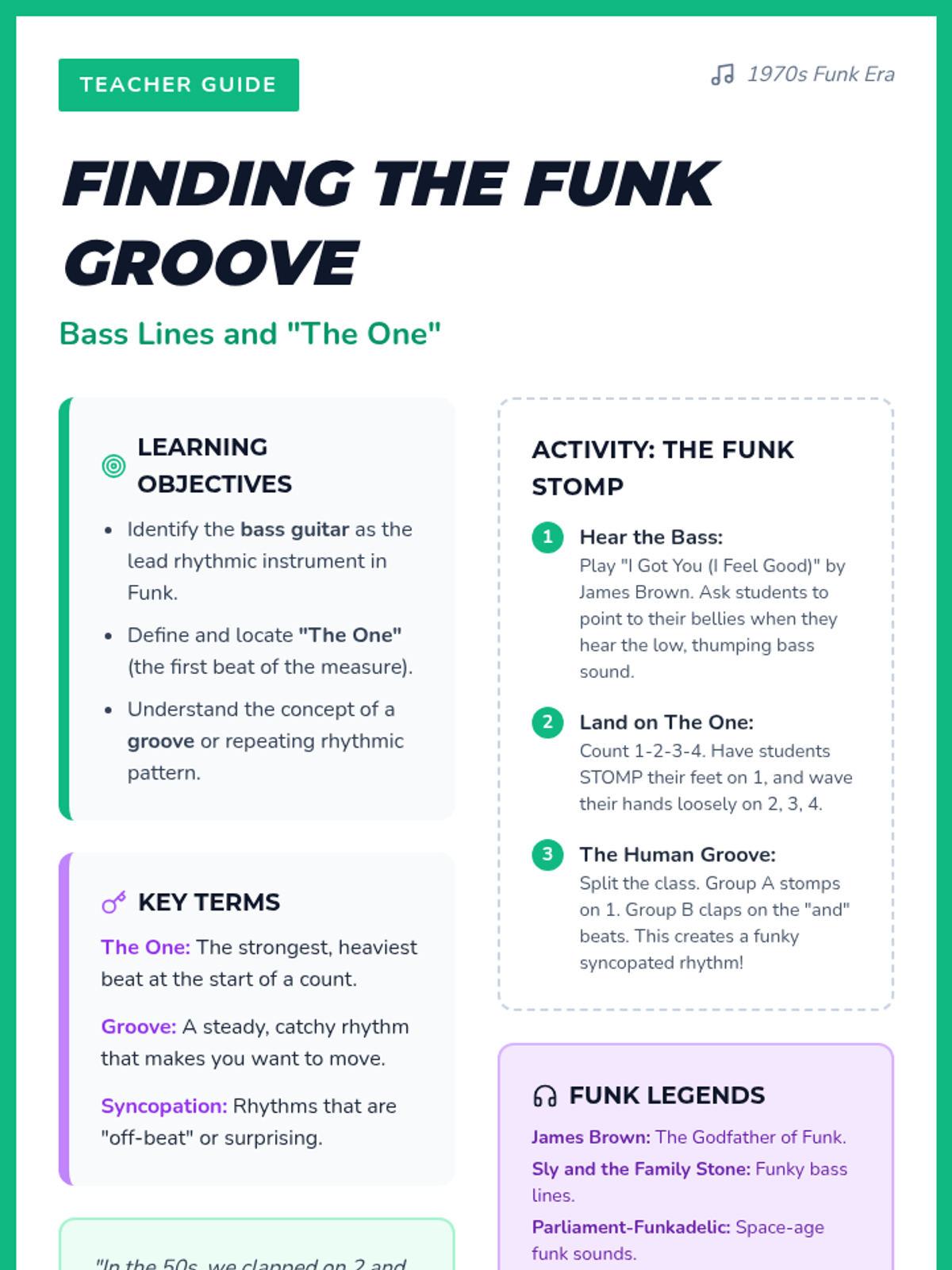
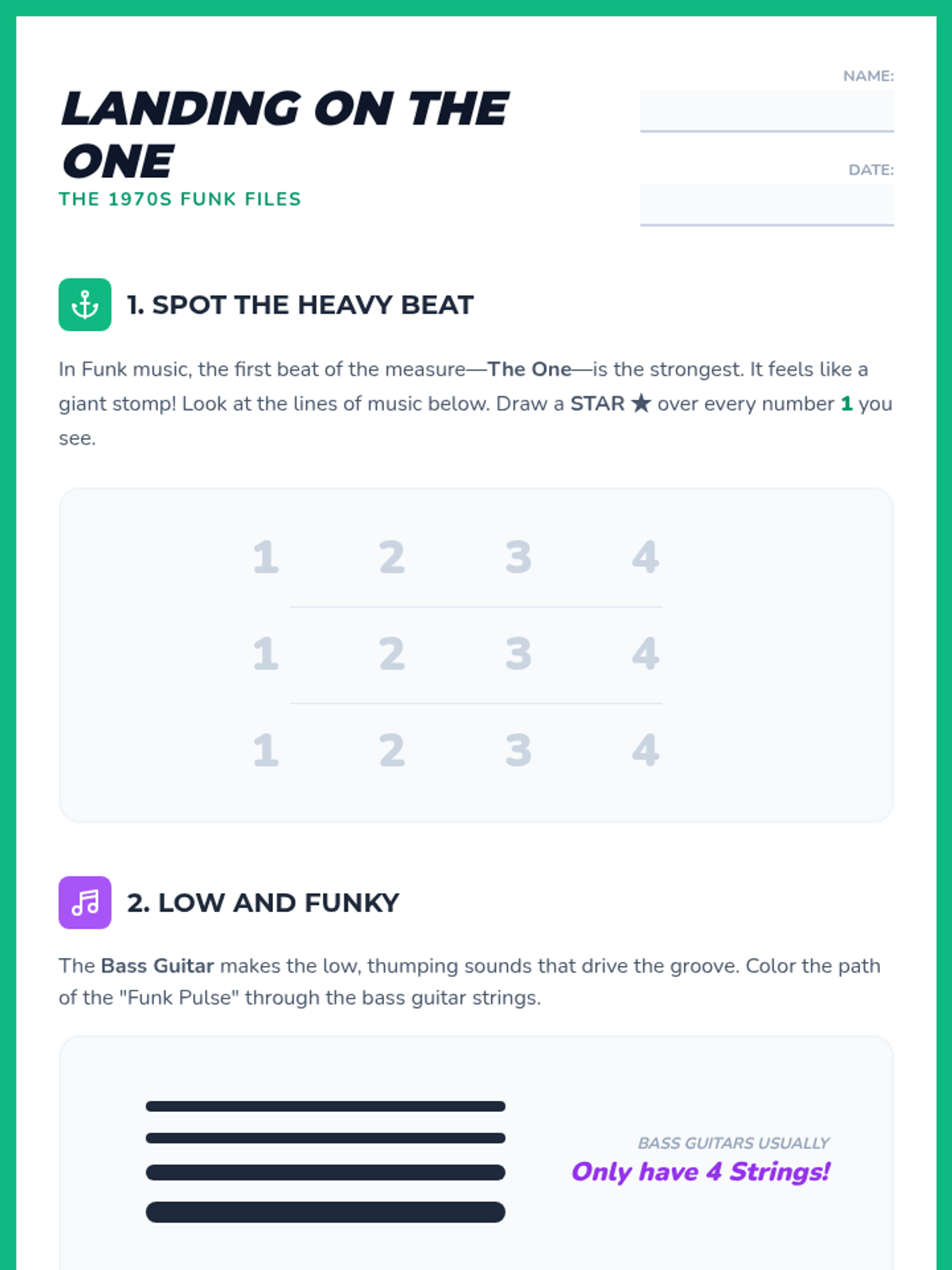
Learners dive into the 1970s Funk era, focusing on the bass guitar and the importance of 'The One.' They practice rhythmic grounding through movement and listening exercises.
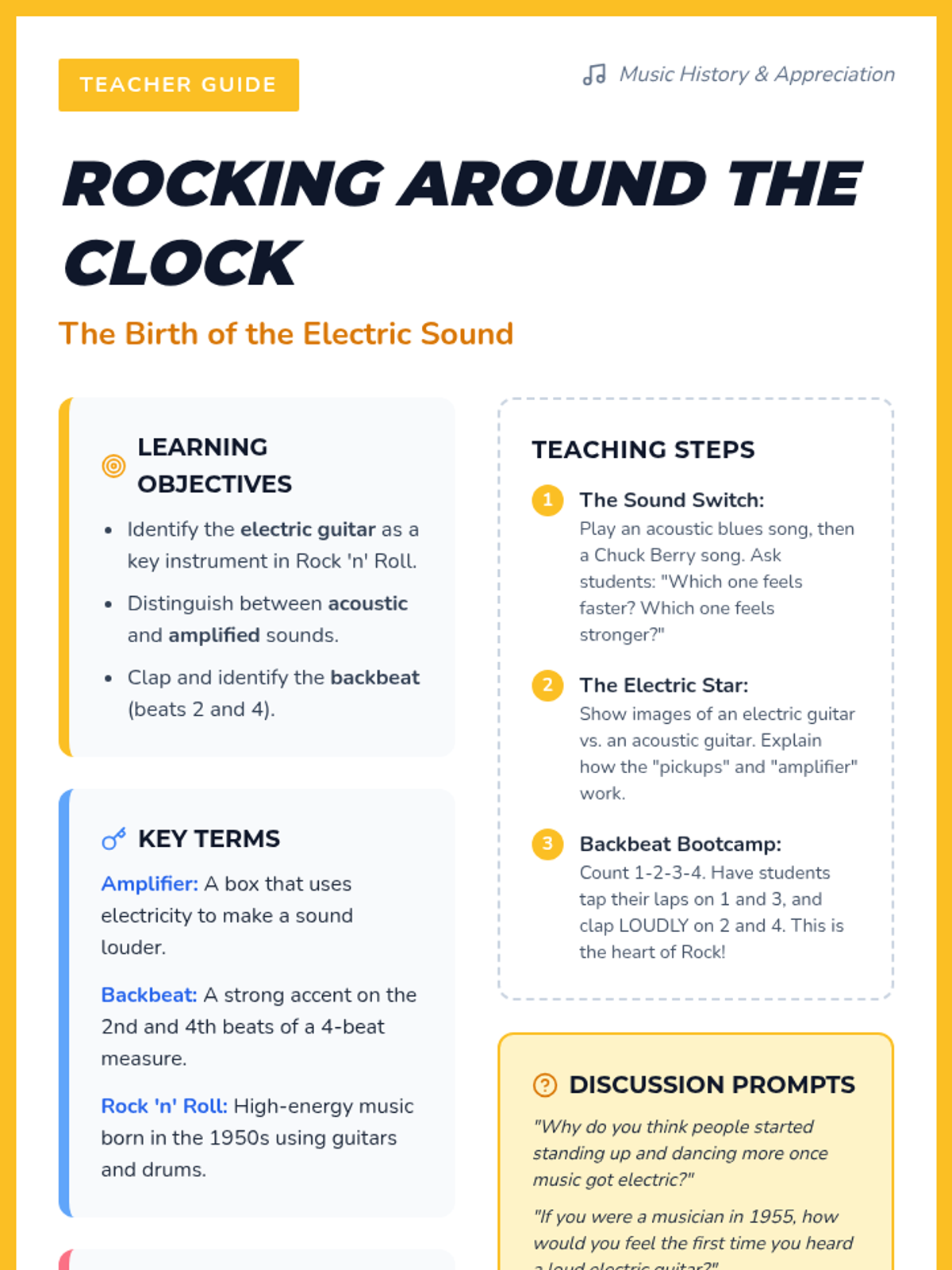
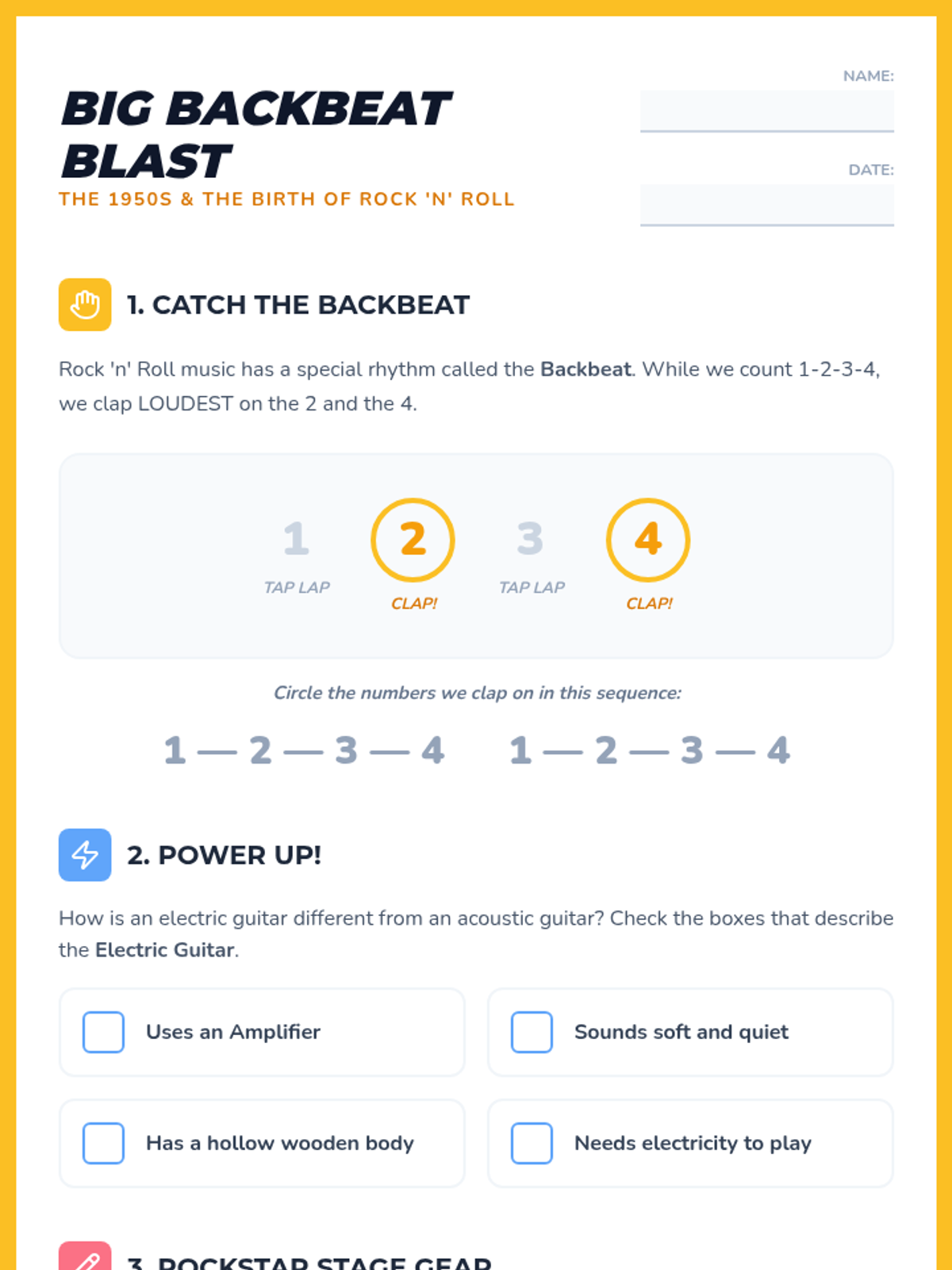
Students explore the birth of Rock 'n' Roll, focusing on the electric guitar and the shift from acoustic to amplified sound. They learn to identify the backbeat and understand how electricity changed the energy of music.
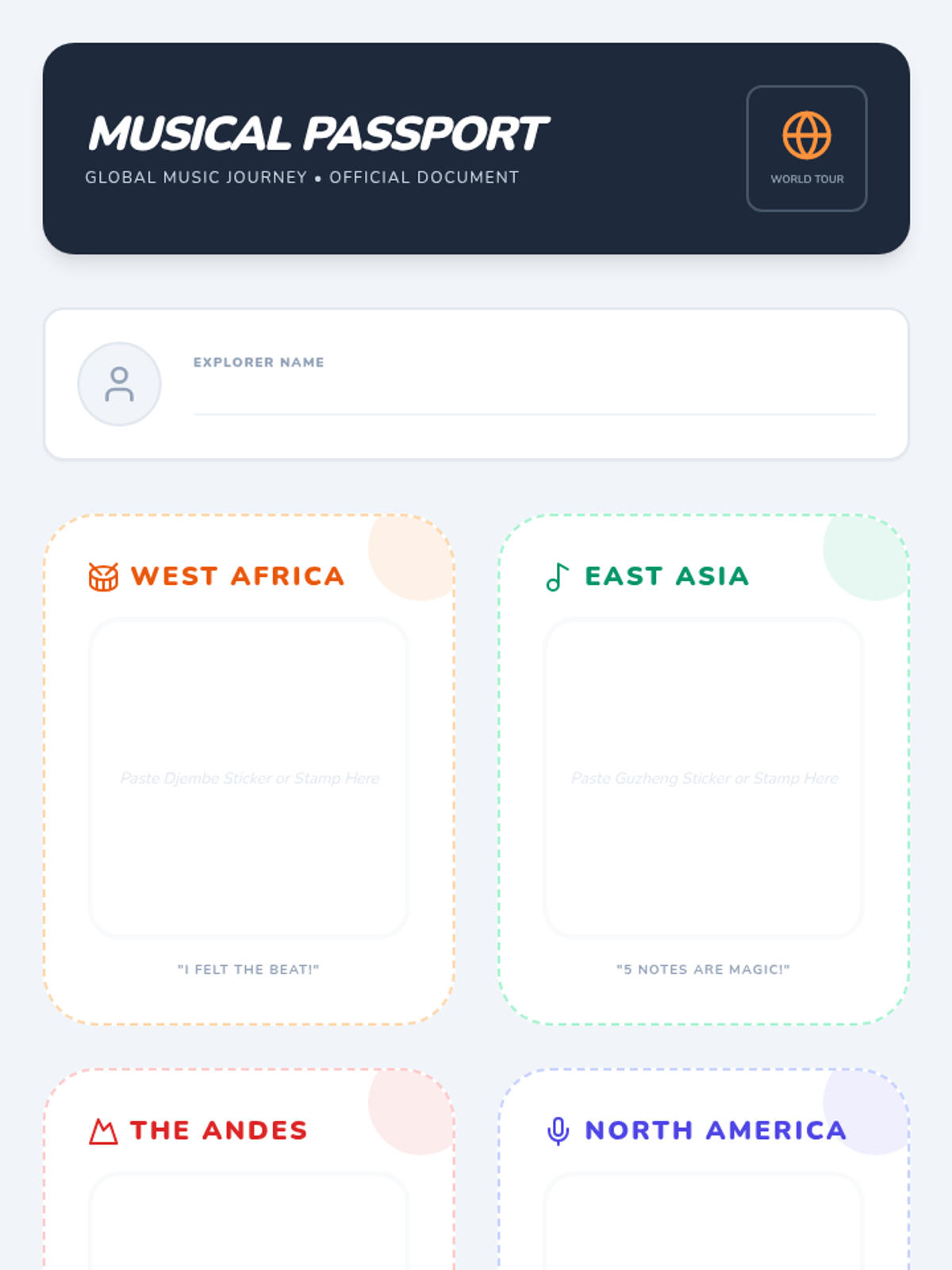
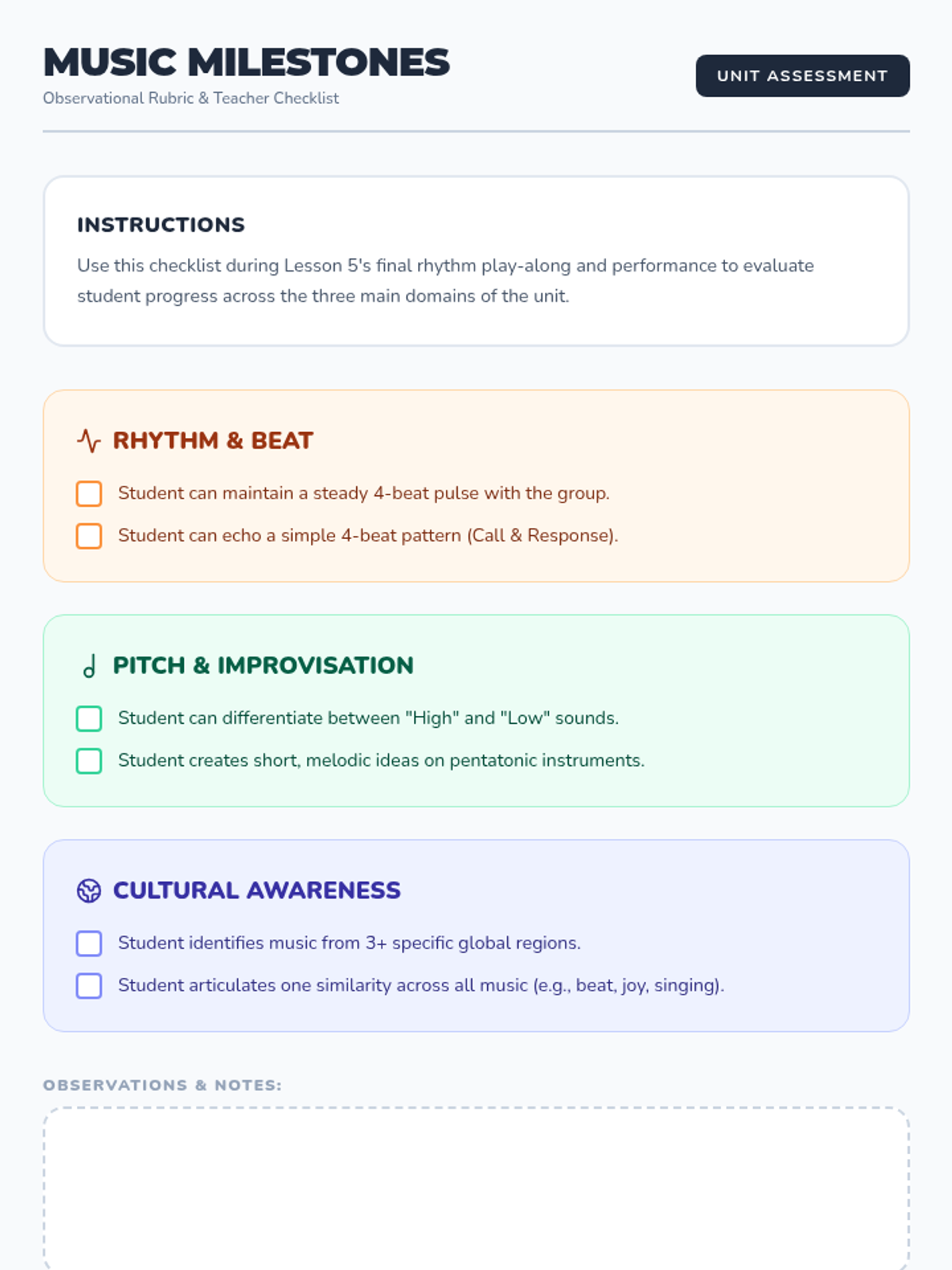
A cumulative celebration where students synthesize their learning by creating a musical passport and identifying universal themes in global music making.
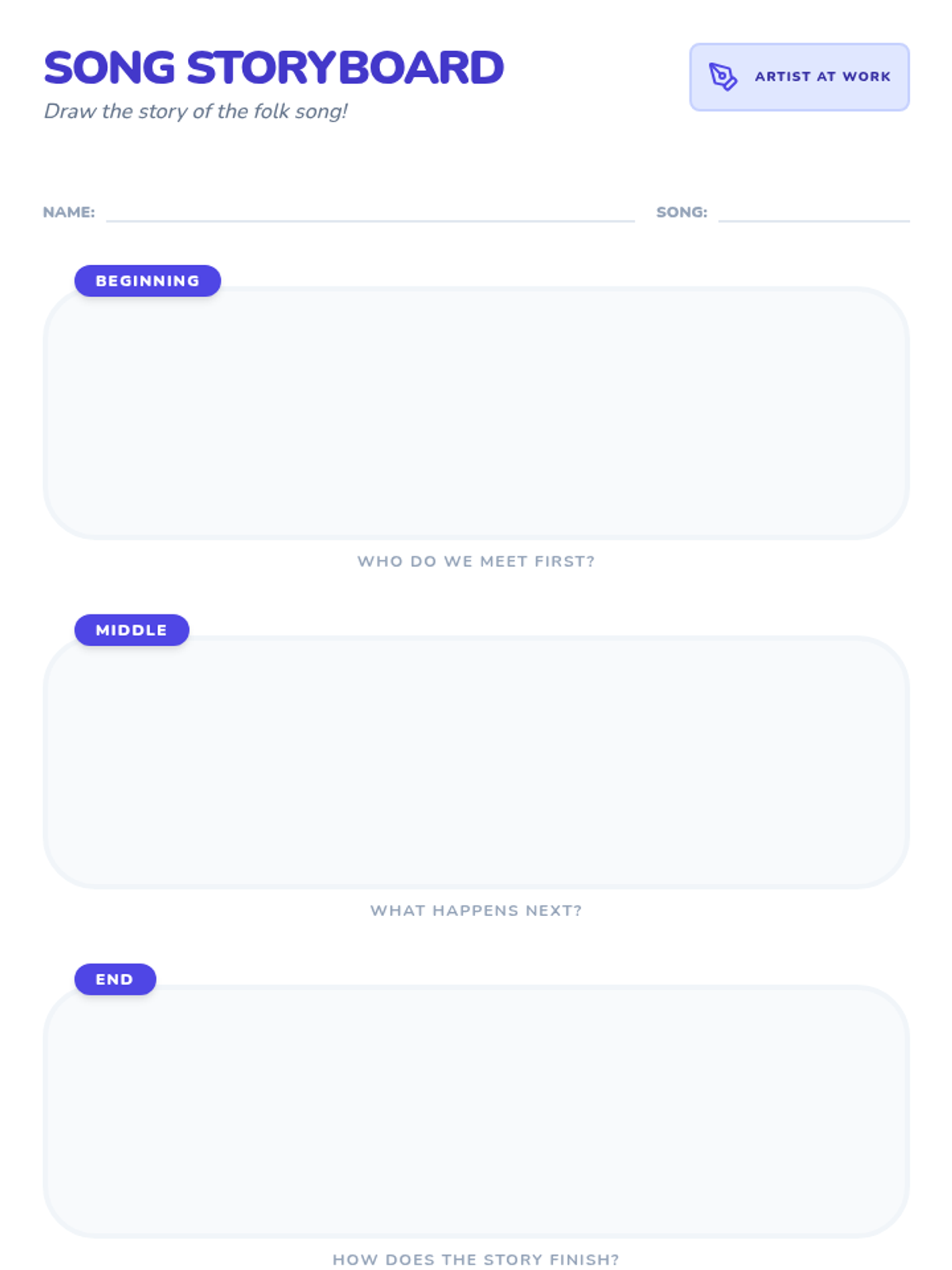
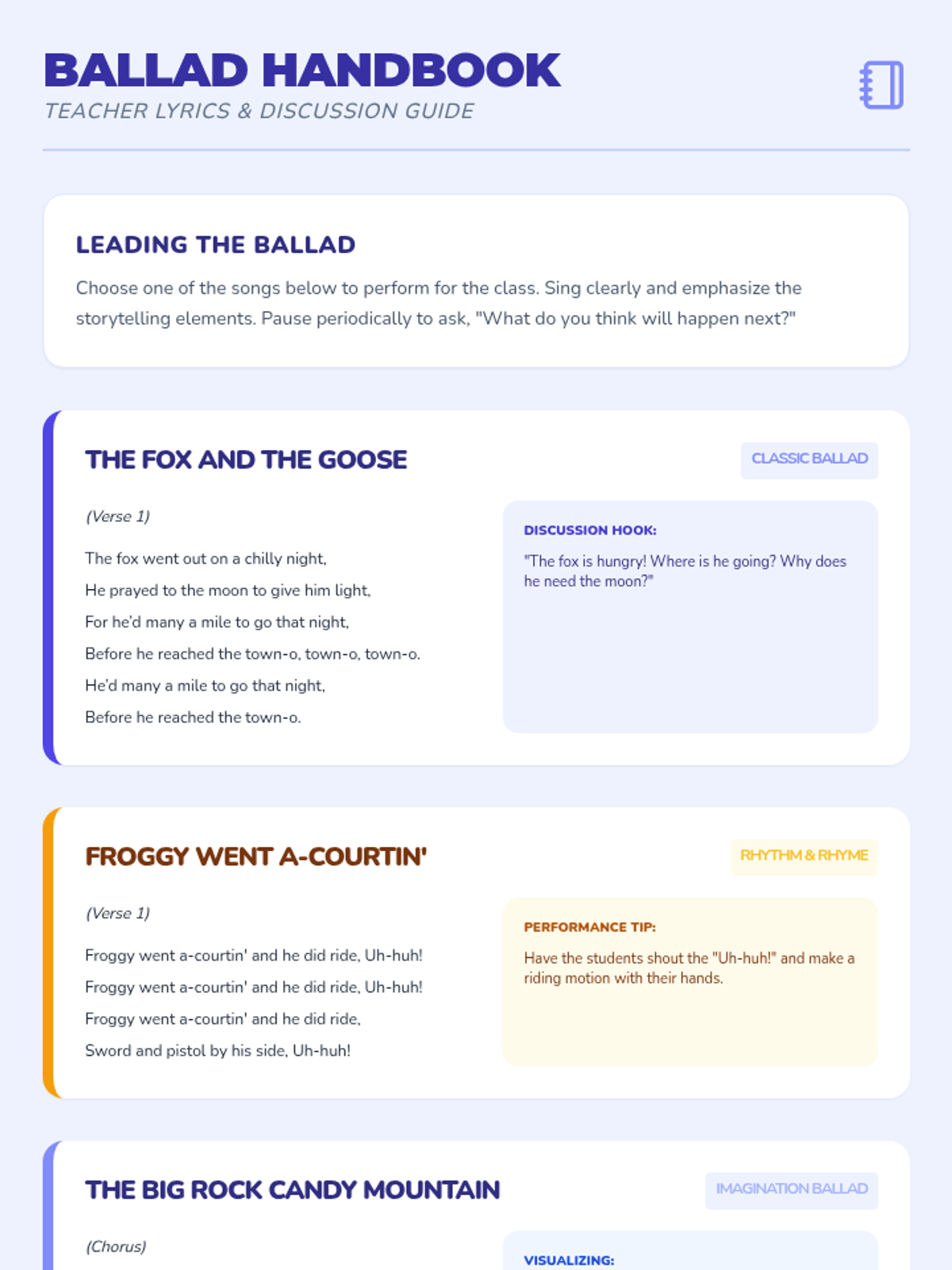
An exploration of American folk music where students discover the banjo and fiddle while learning how songs tell stories of history and daily life.
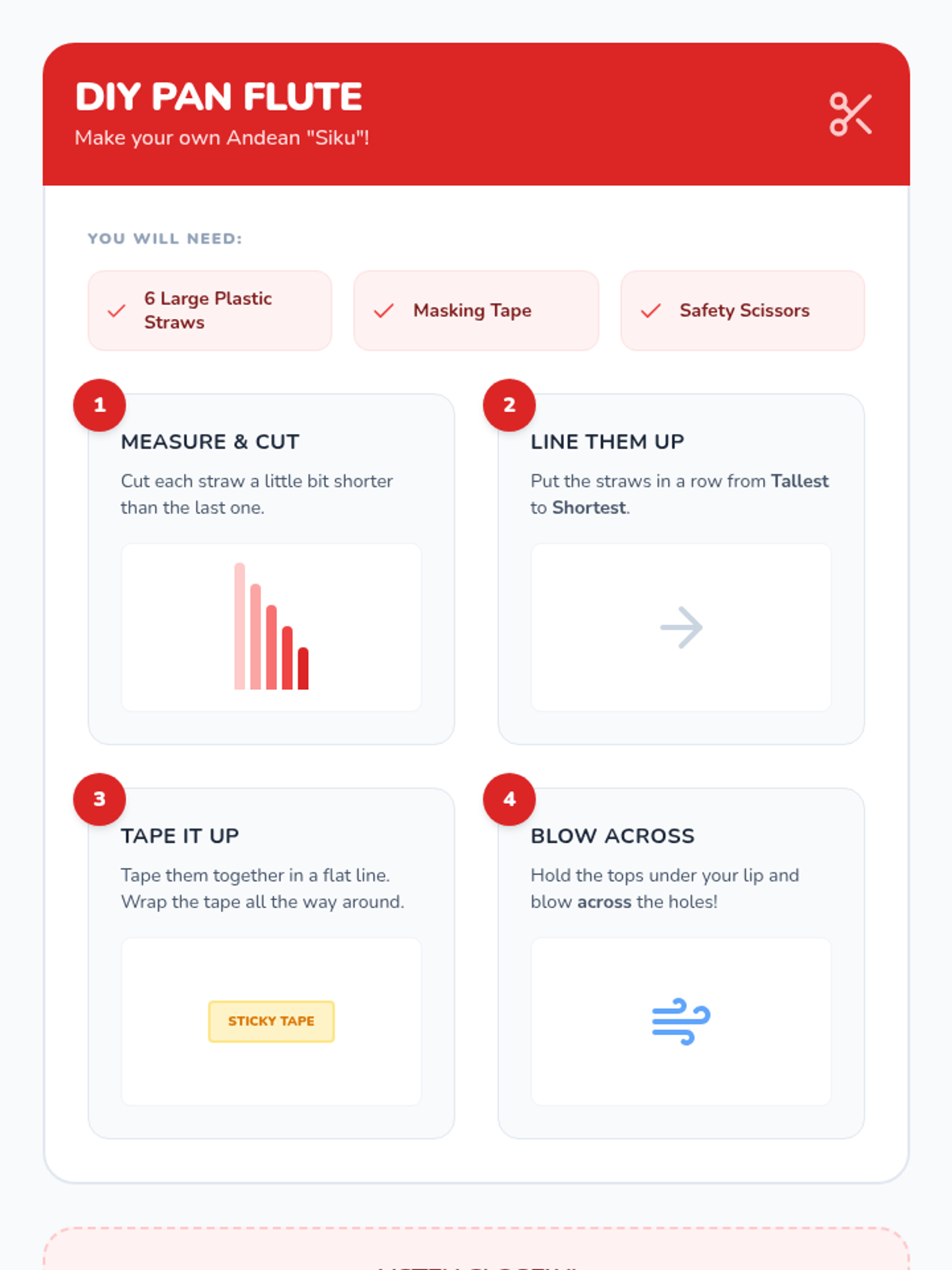
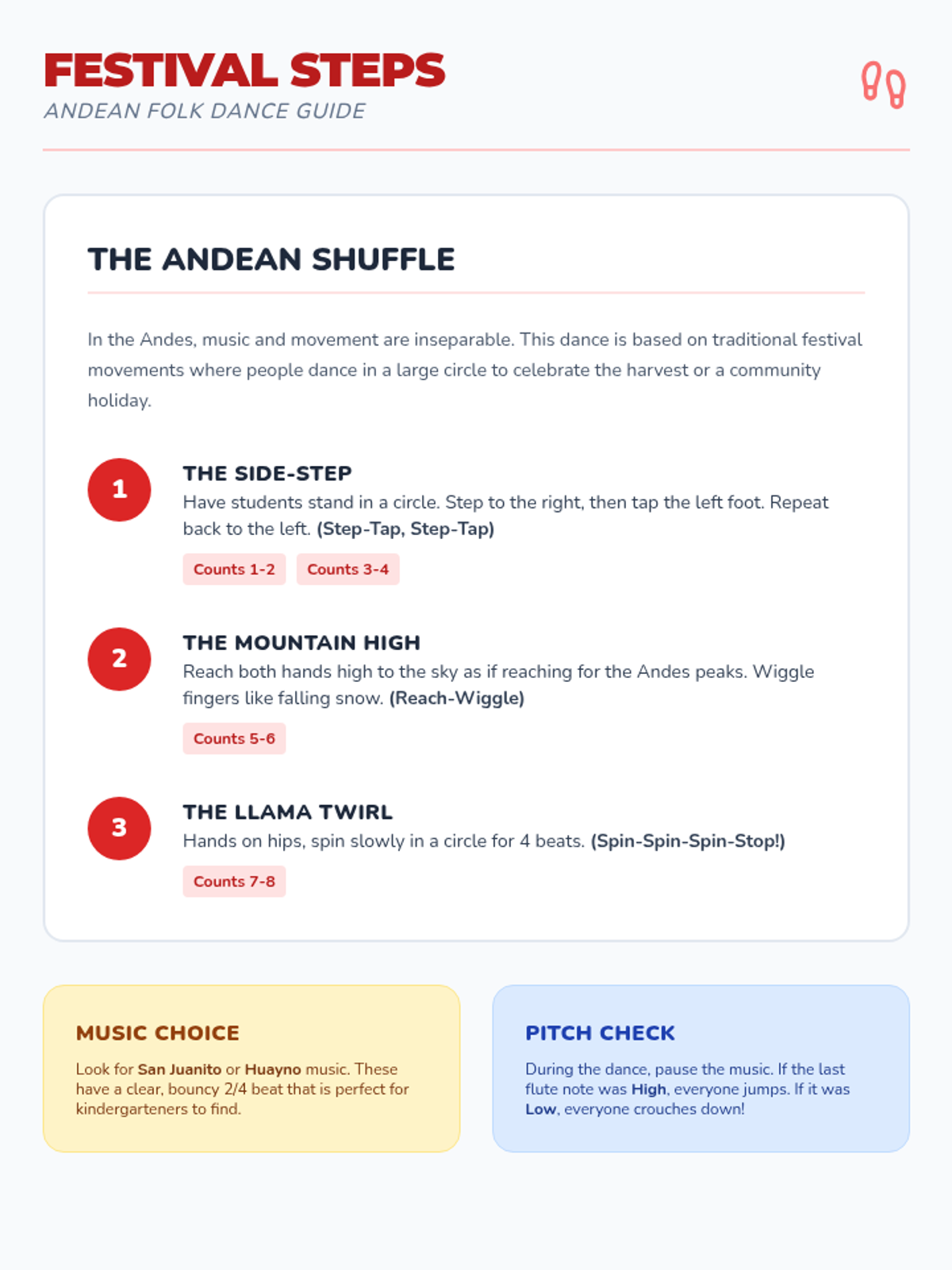
Students investigate the pan flute and the charango, learning about Andean festivals and experiencing traditional dance and pitch variation.
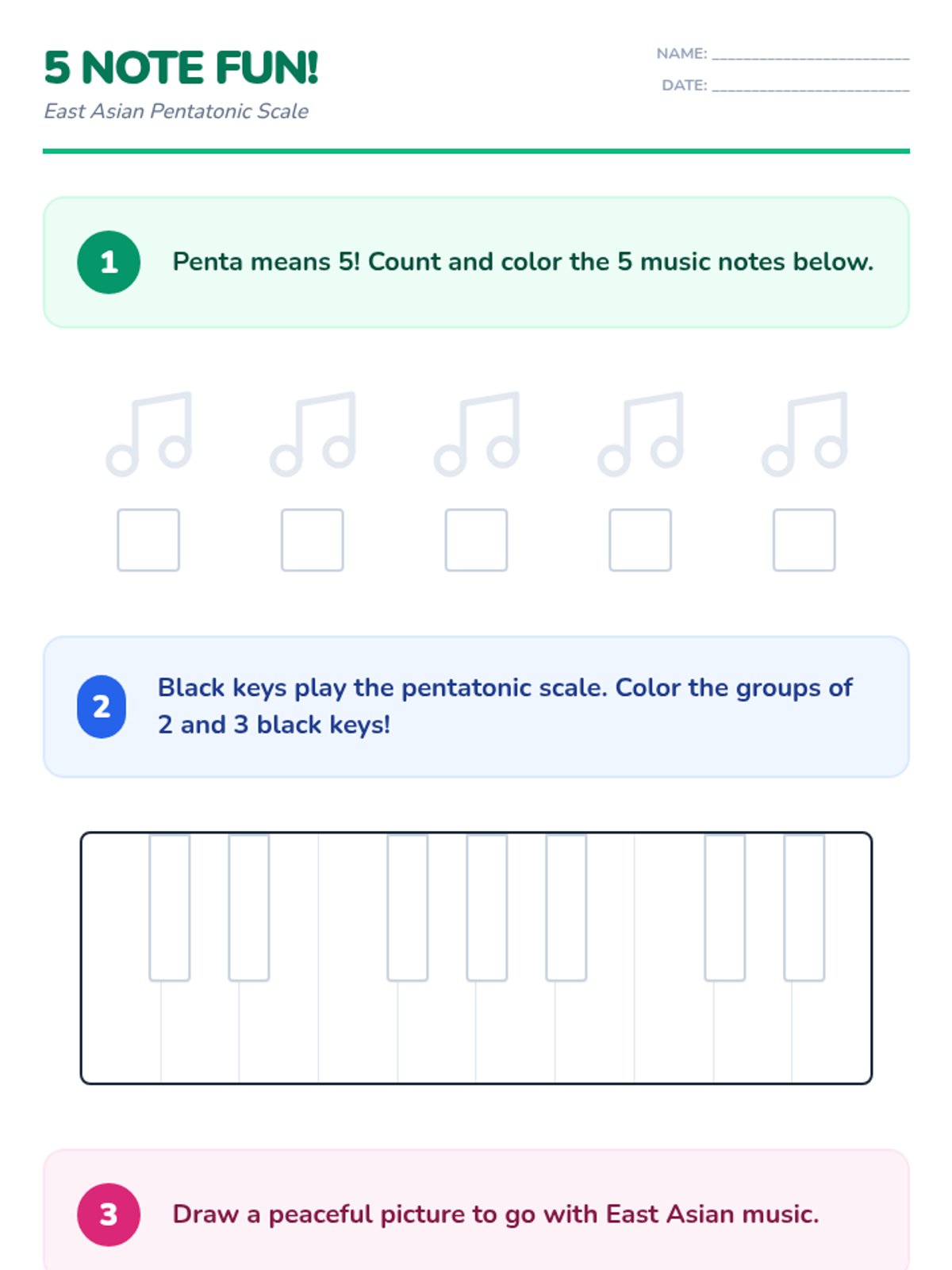
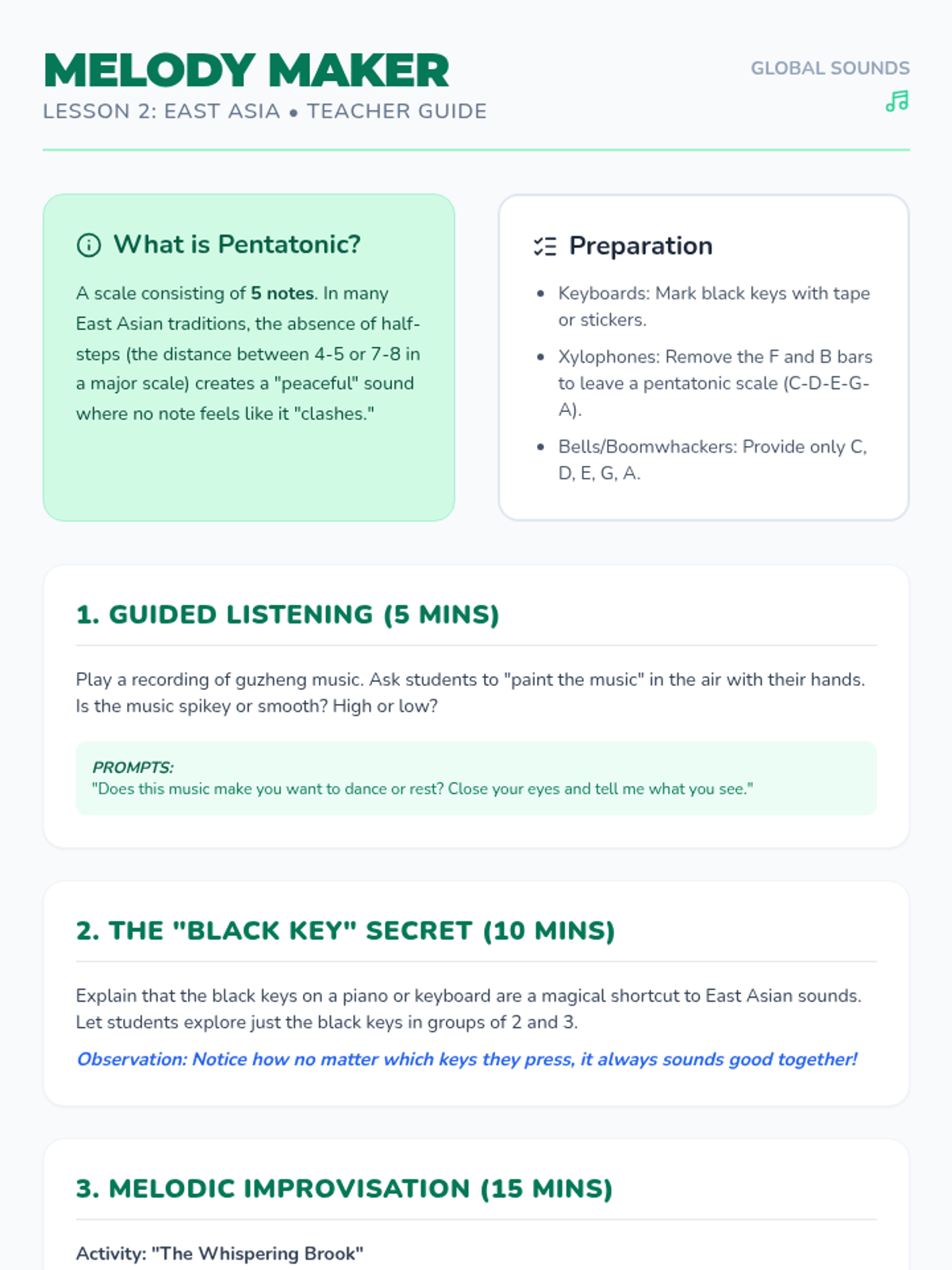
Learners explore the peaceful sounds of the guzheng and the pentatonic scale, practicing melodic improvisation on simple instruments.
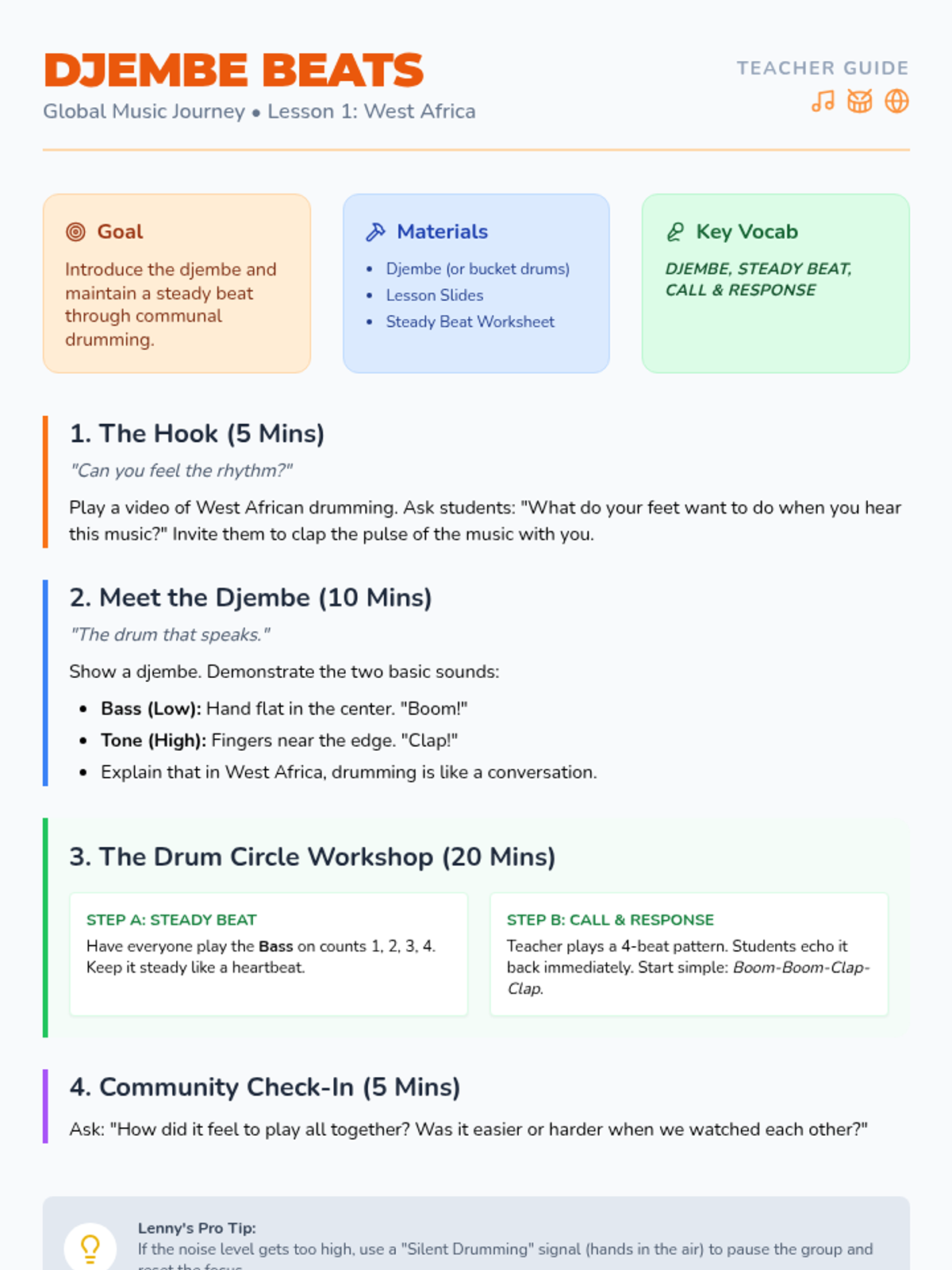
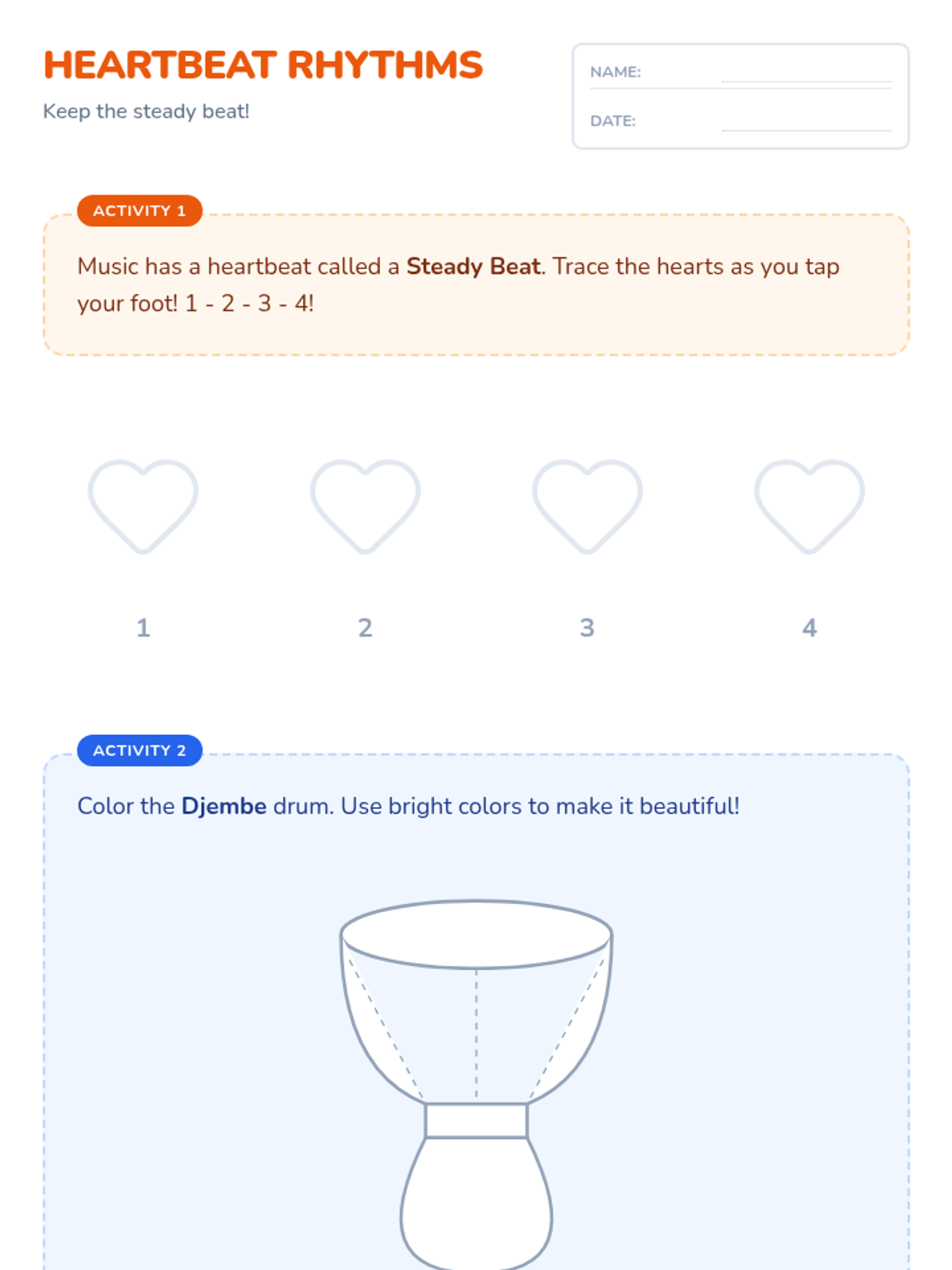
Students discover the djembe and the vibrant traditions of West African drumming, focusing on maintaining a steady beat and participating in a call-and-response circle.
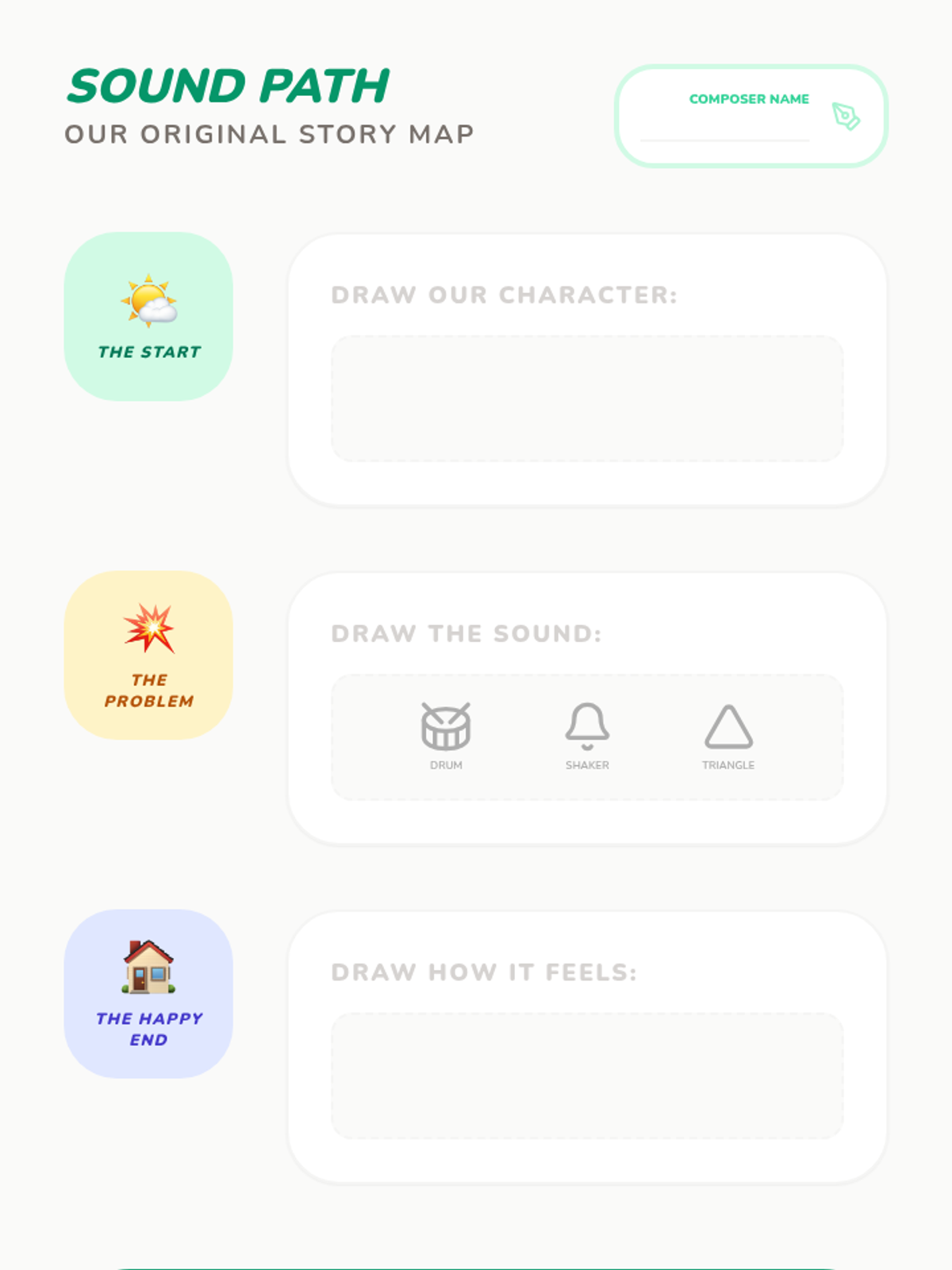
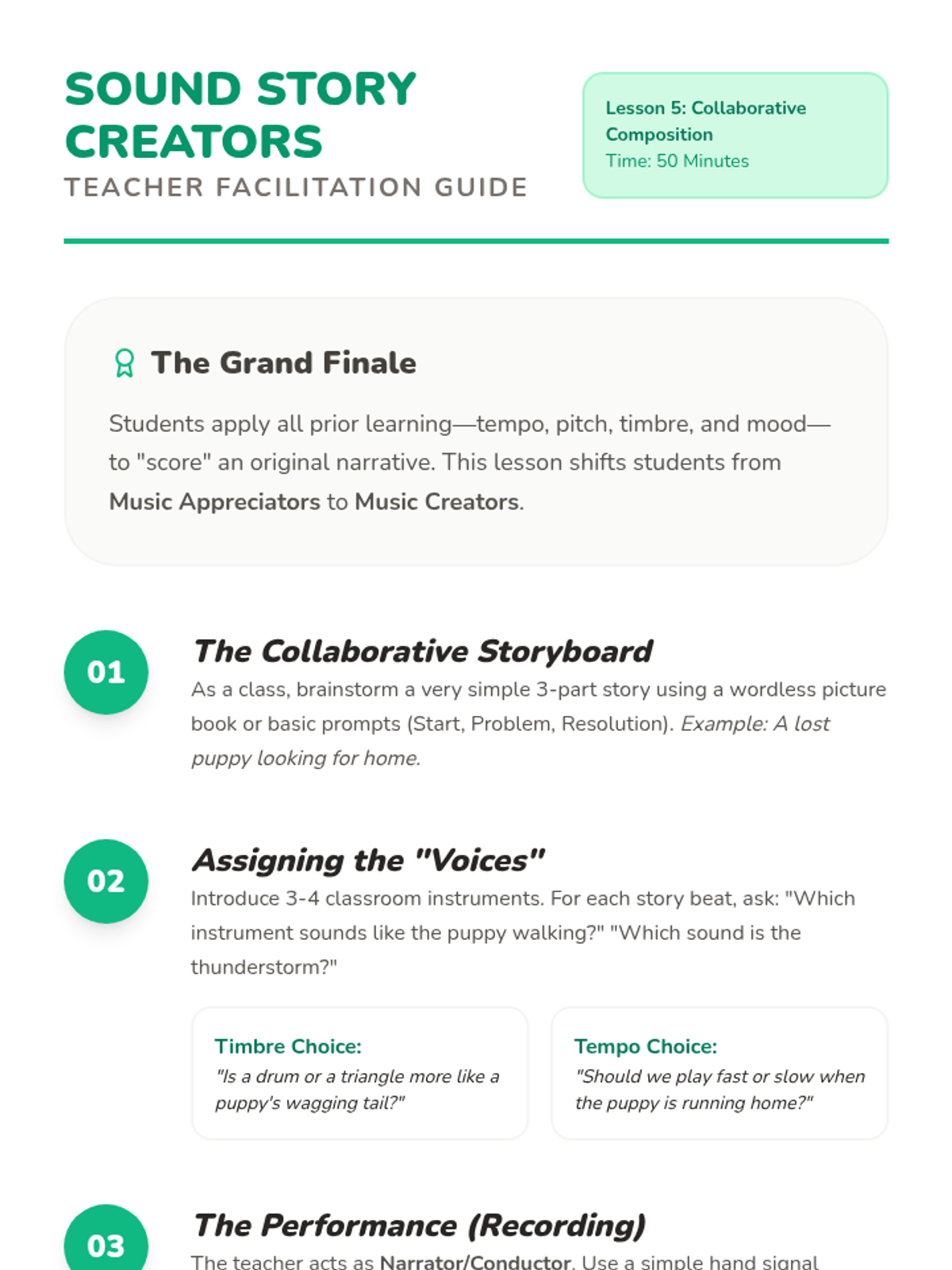
The capstone lesson where students collaborate to score a wordless story using classroom instruments, applying their knowledge of musical representation.
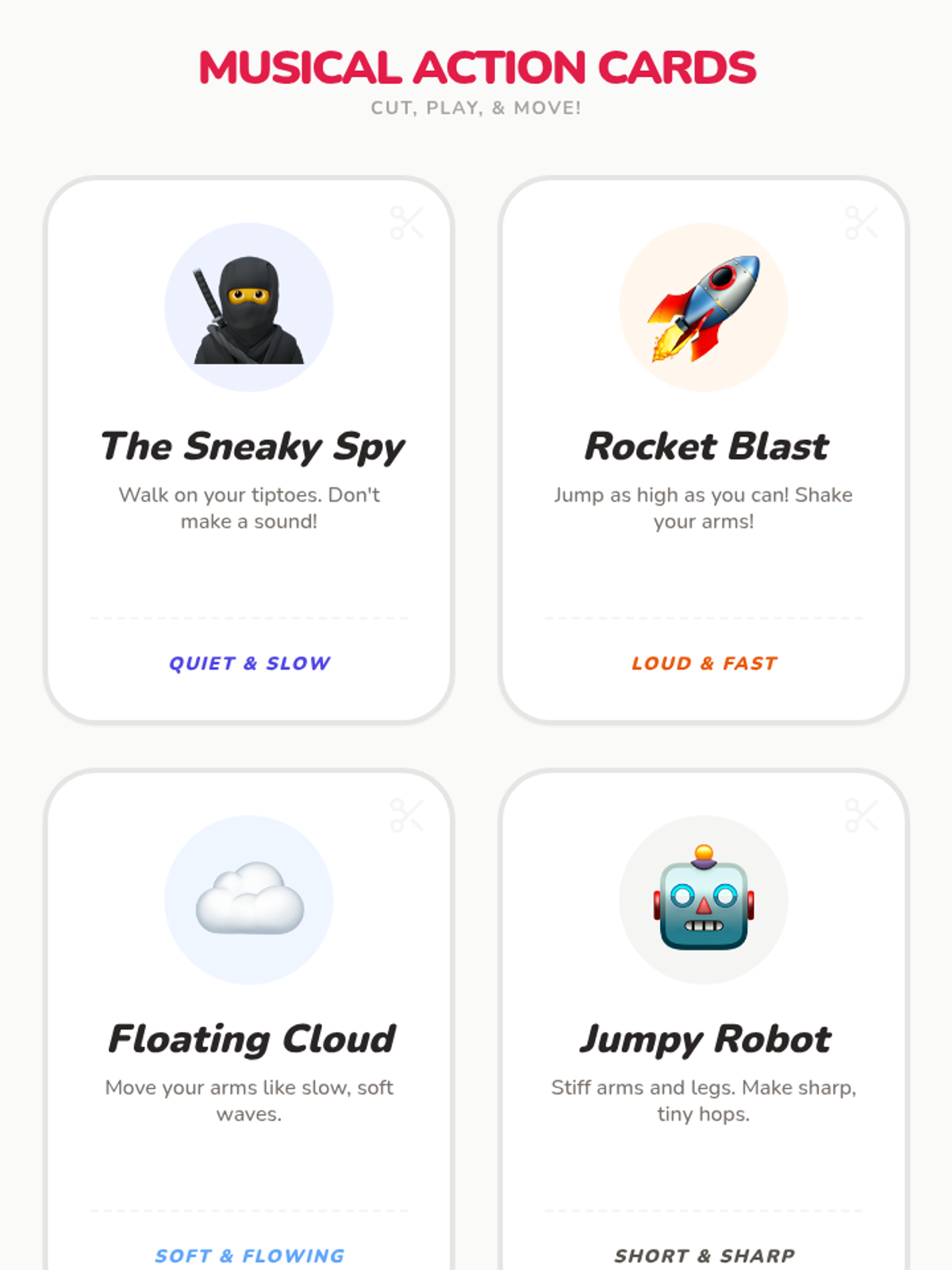
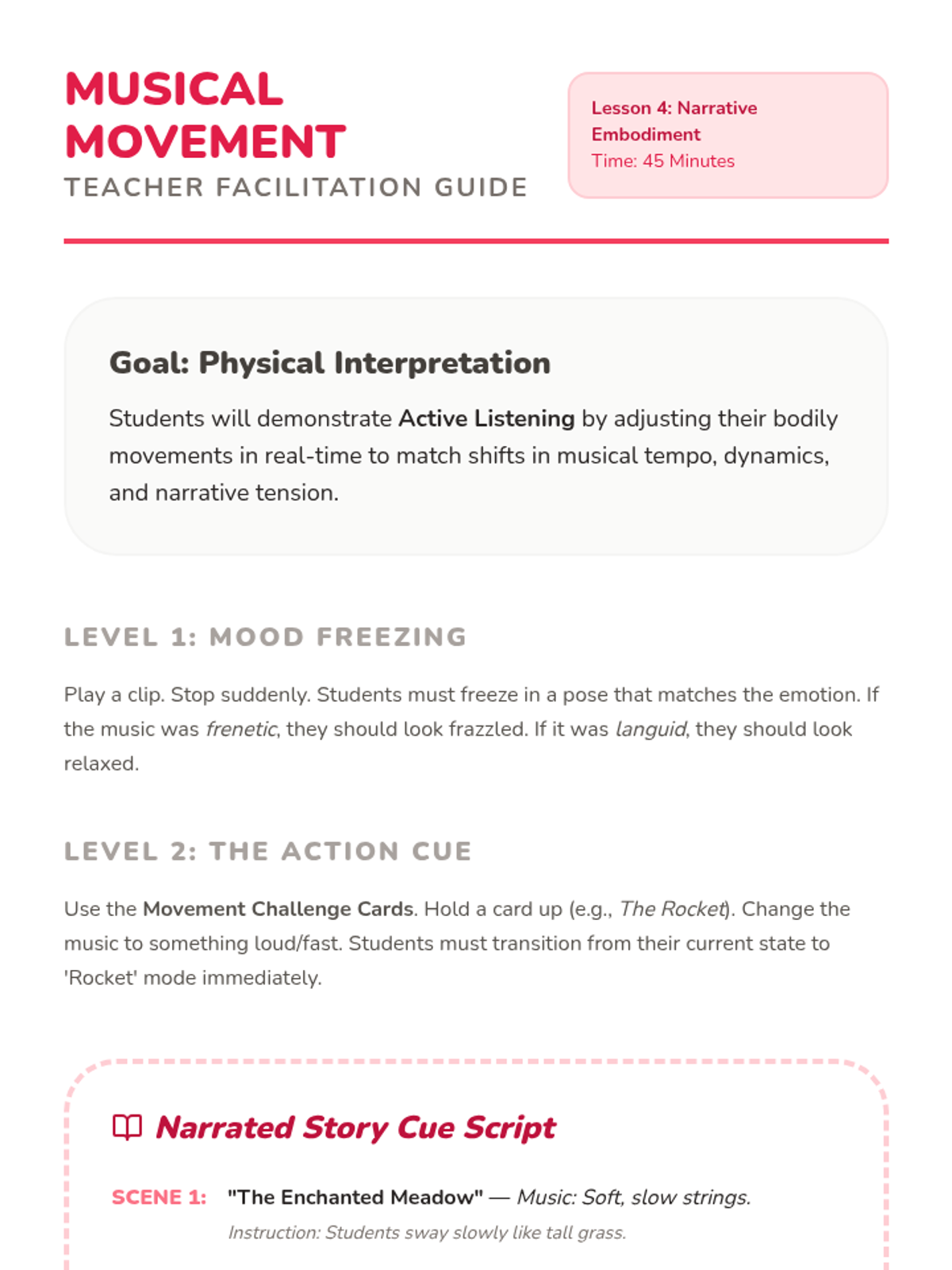
An active listening lesson where students use their bodies to interpret musical changes, reacting to shifts in narrative energy and mood through movement.
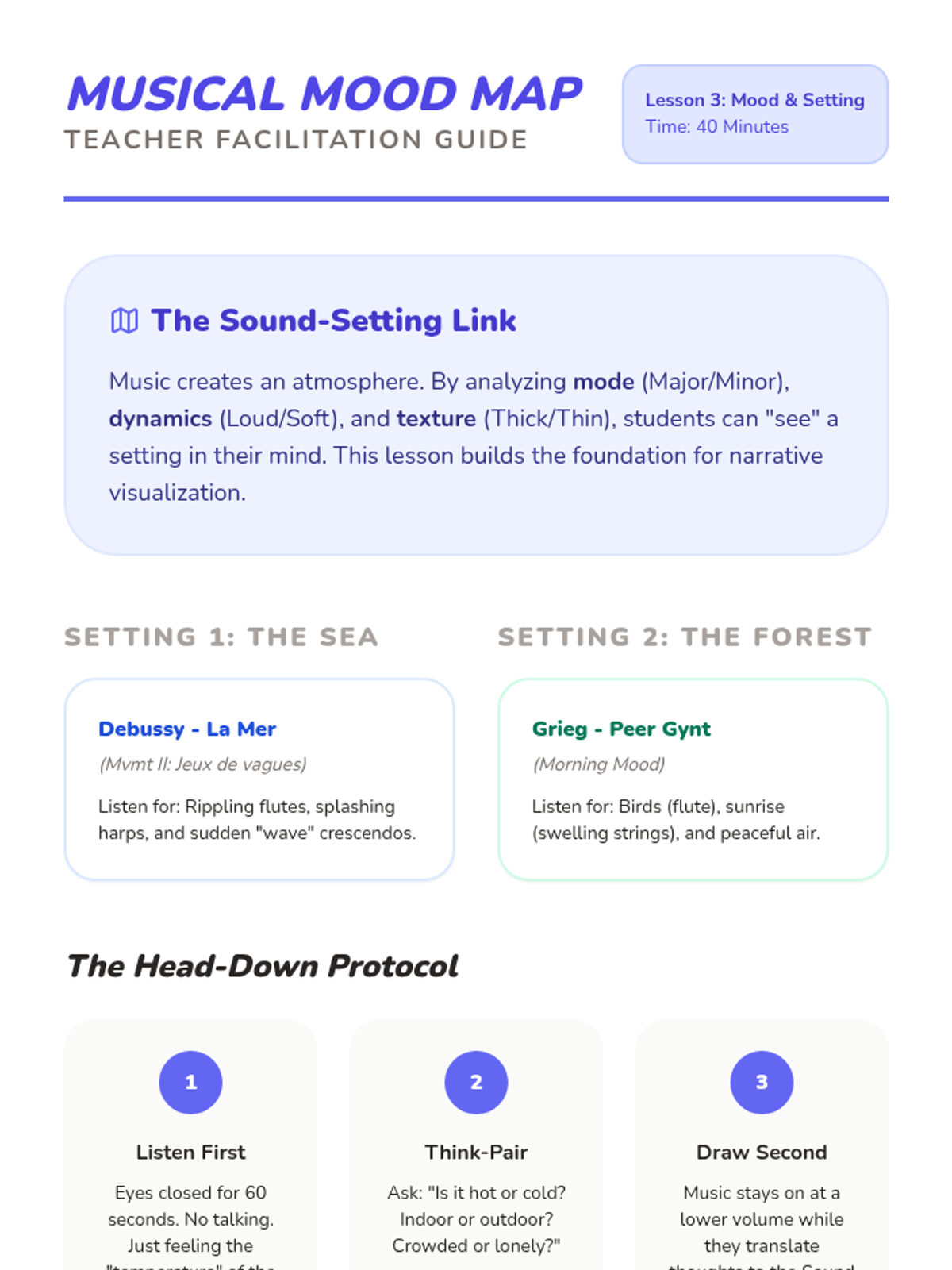
Students explore how music creates atmosphere and setting, using visualization techniques to connect sound to imaginary landscapes.
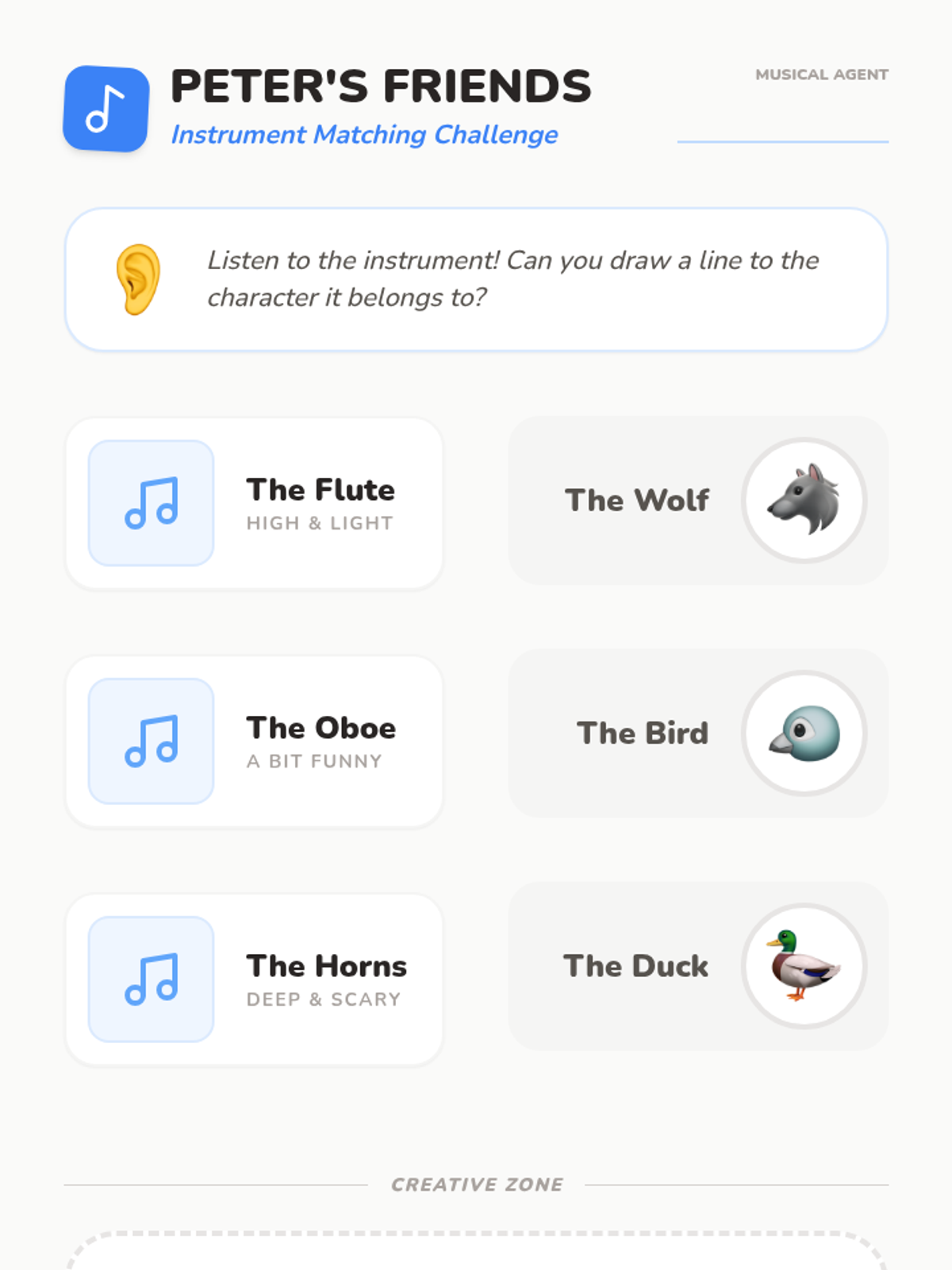
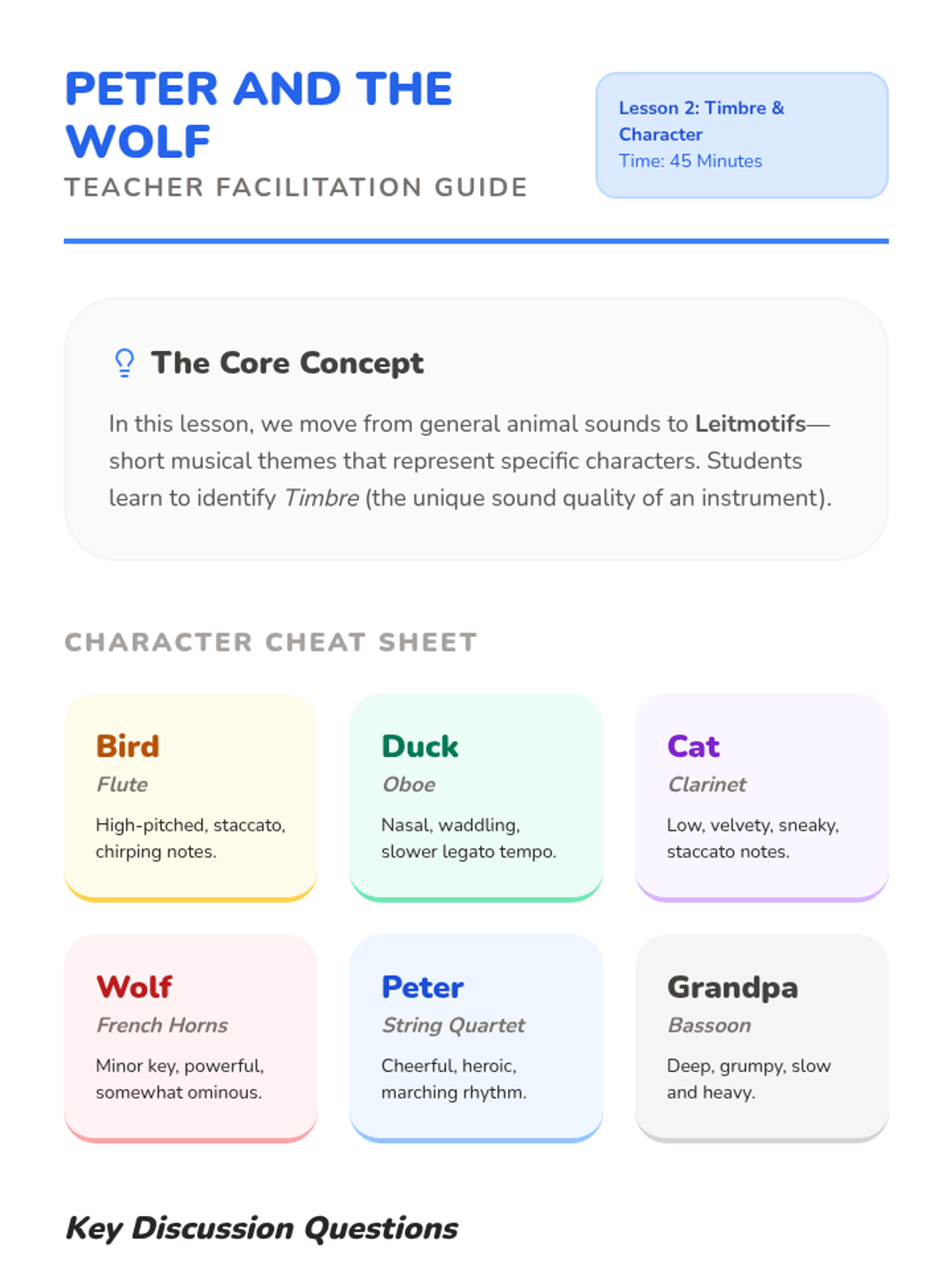
Focusing on Prokofiev's 'Peter and the Wolf', students learn to associate specific instrument timbres with specific characters and their personalities.
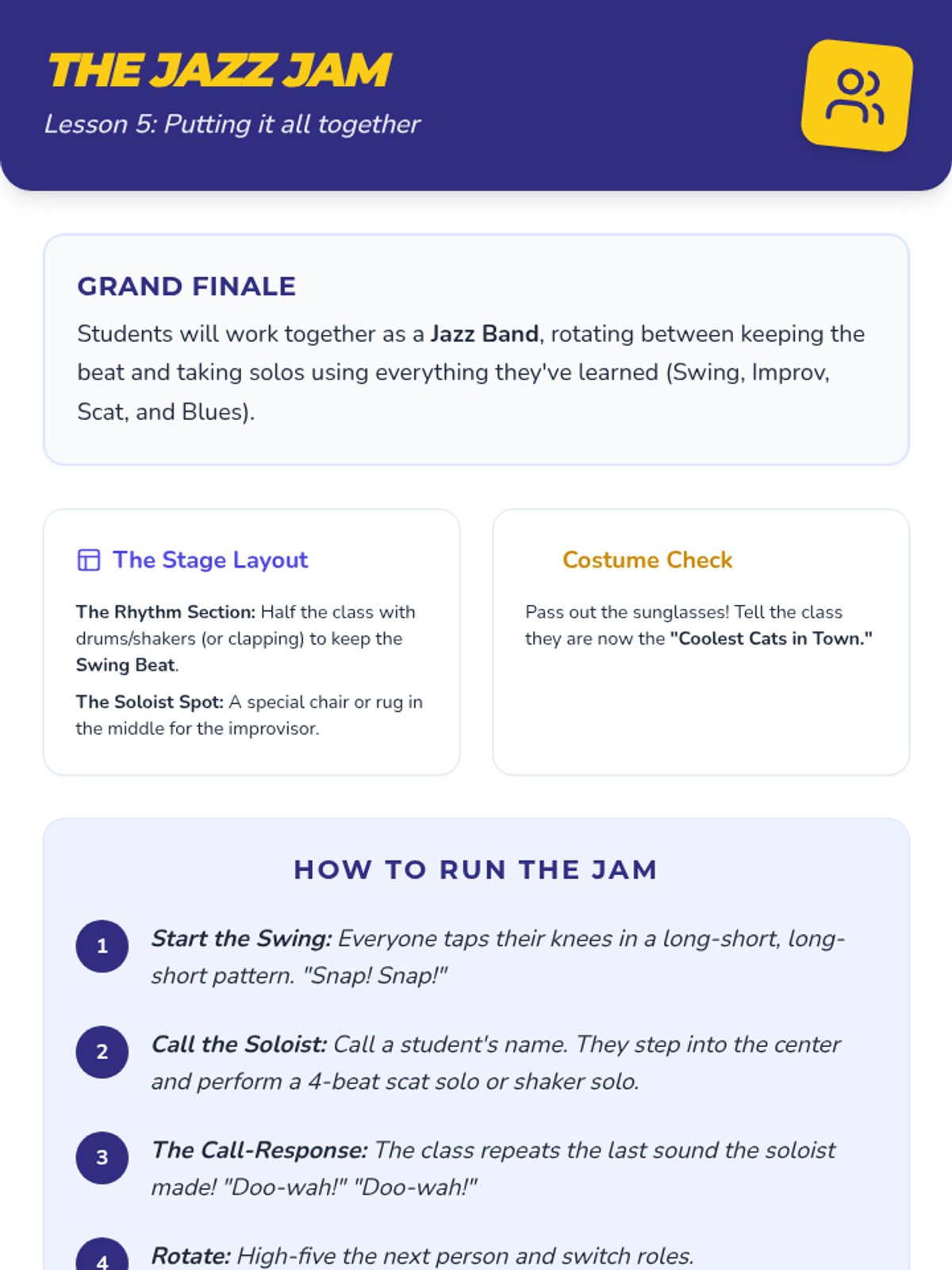
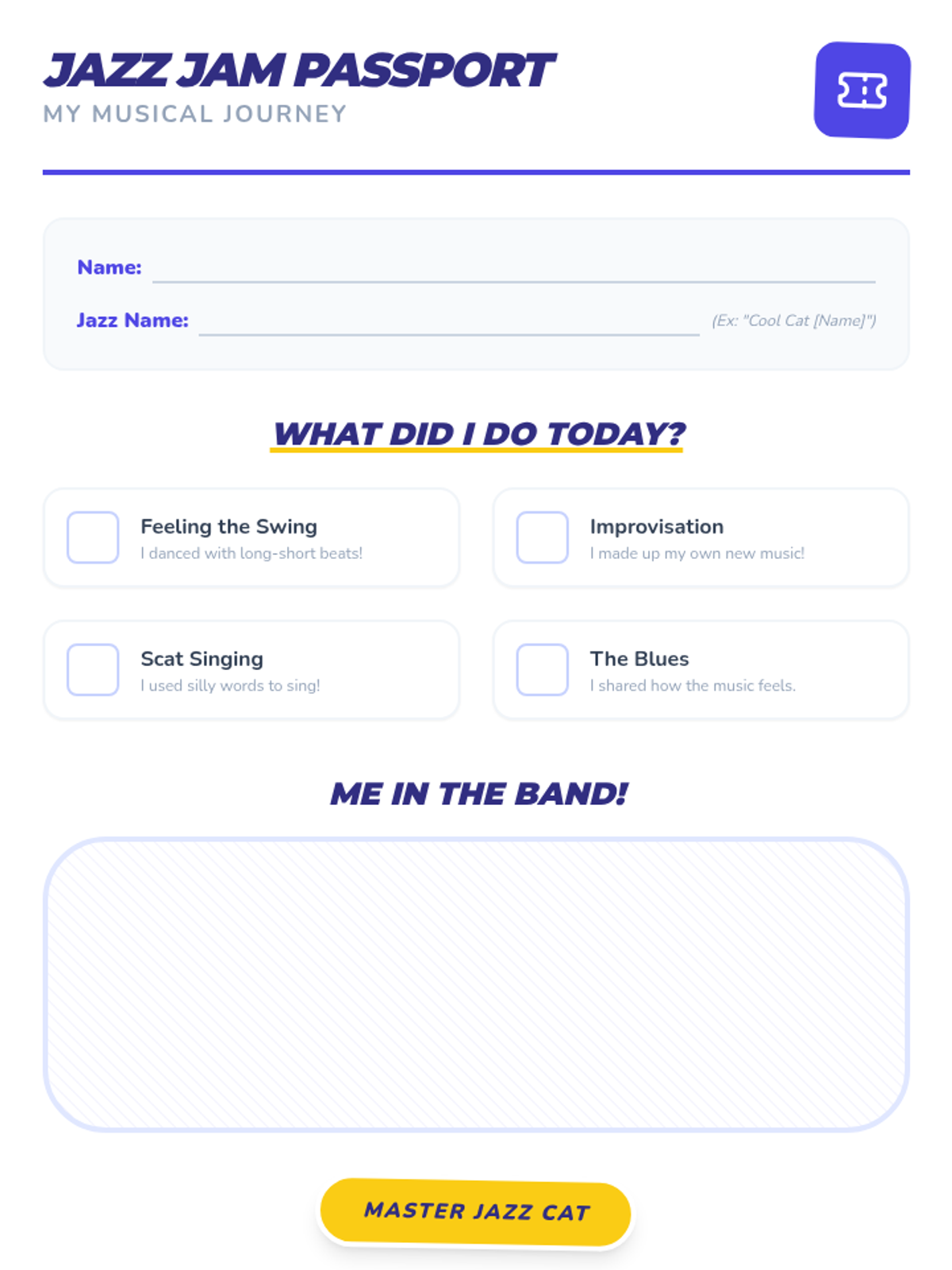
A culminating project-based lesson where students perform together in a classroom jazz jam.
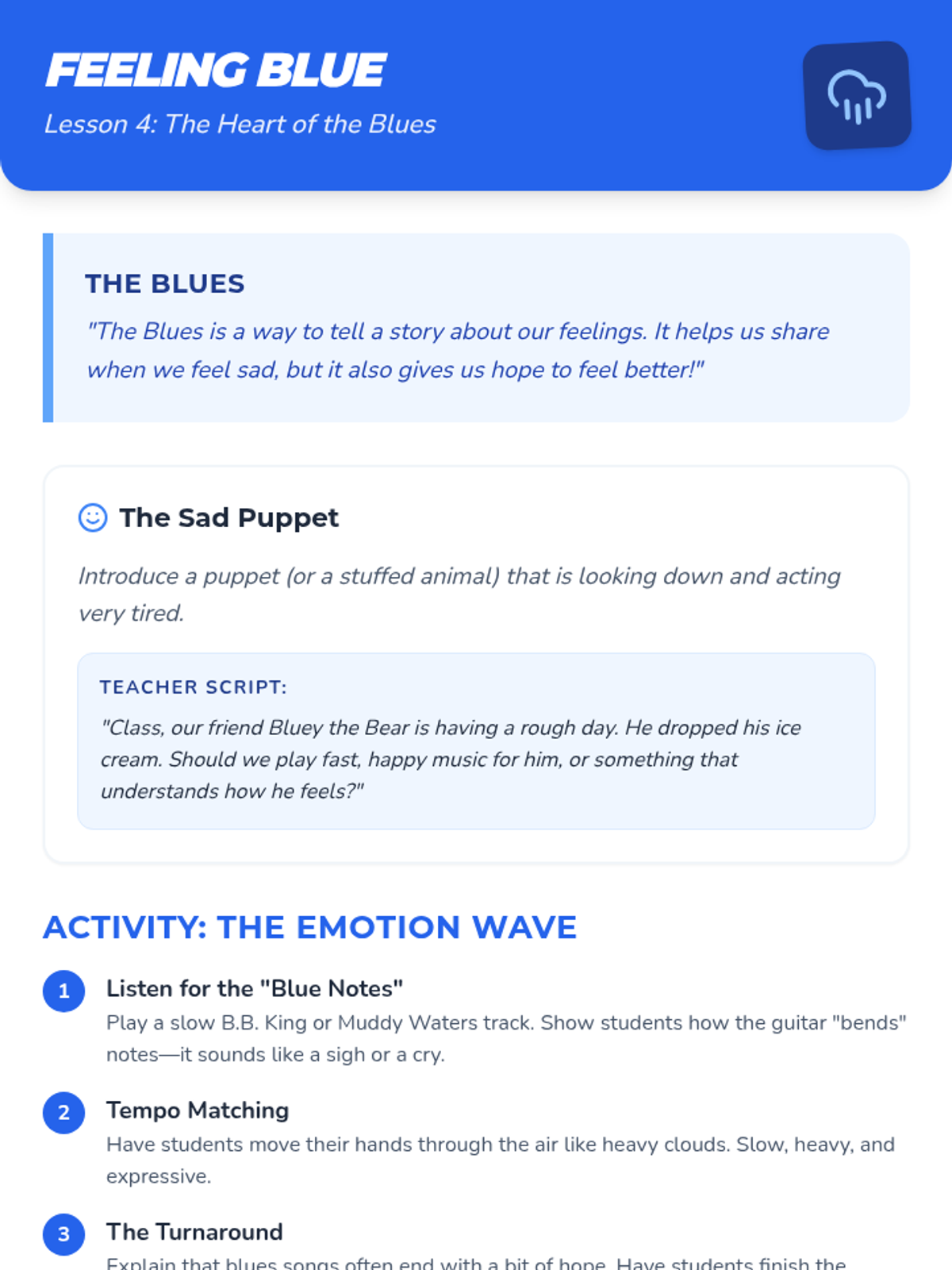
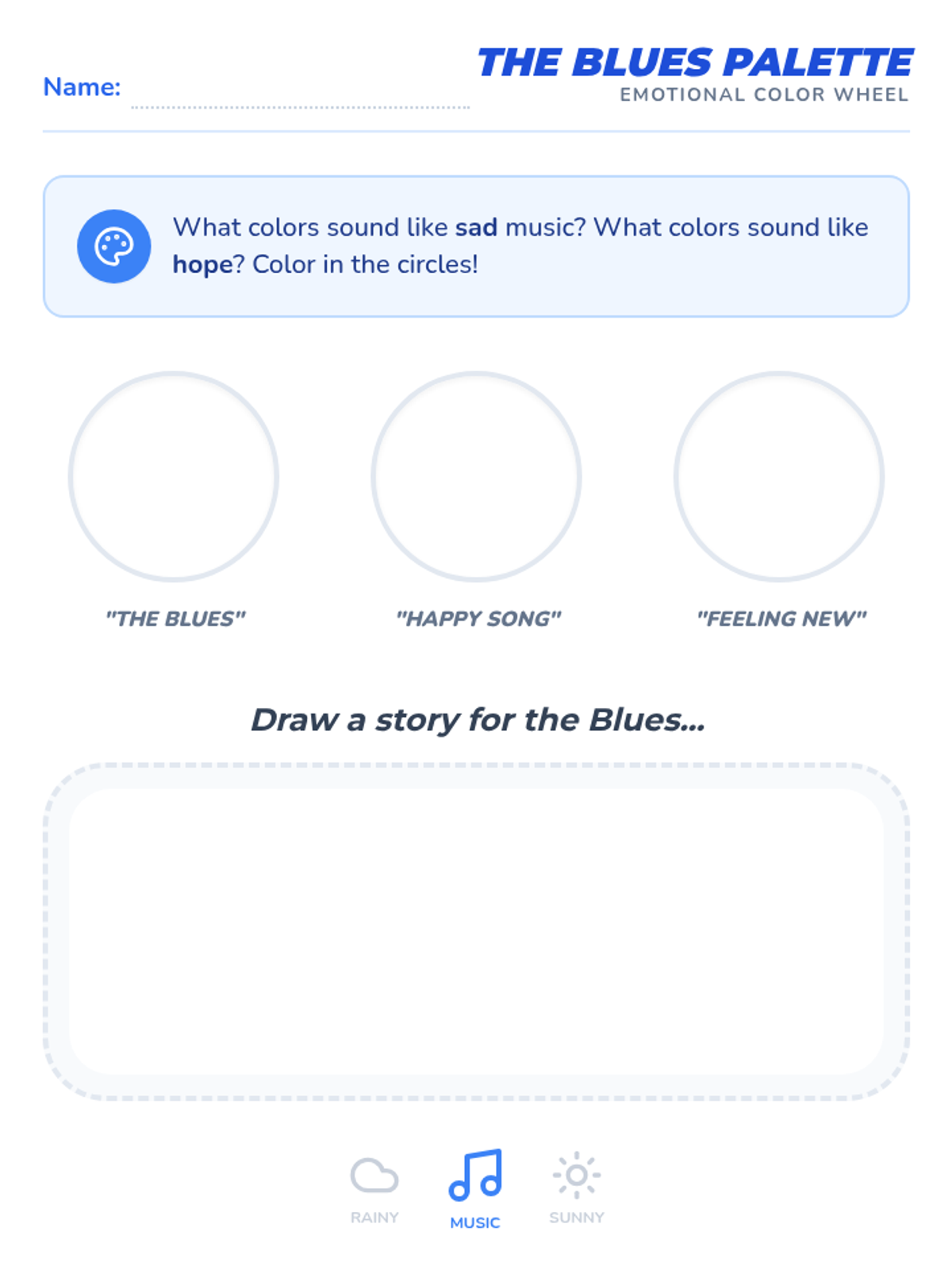
Students discuss the 'blues' as a way to express emotions like sadness and hope through music.
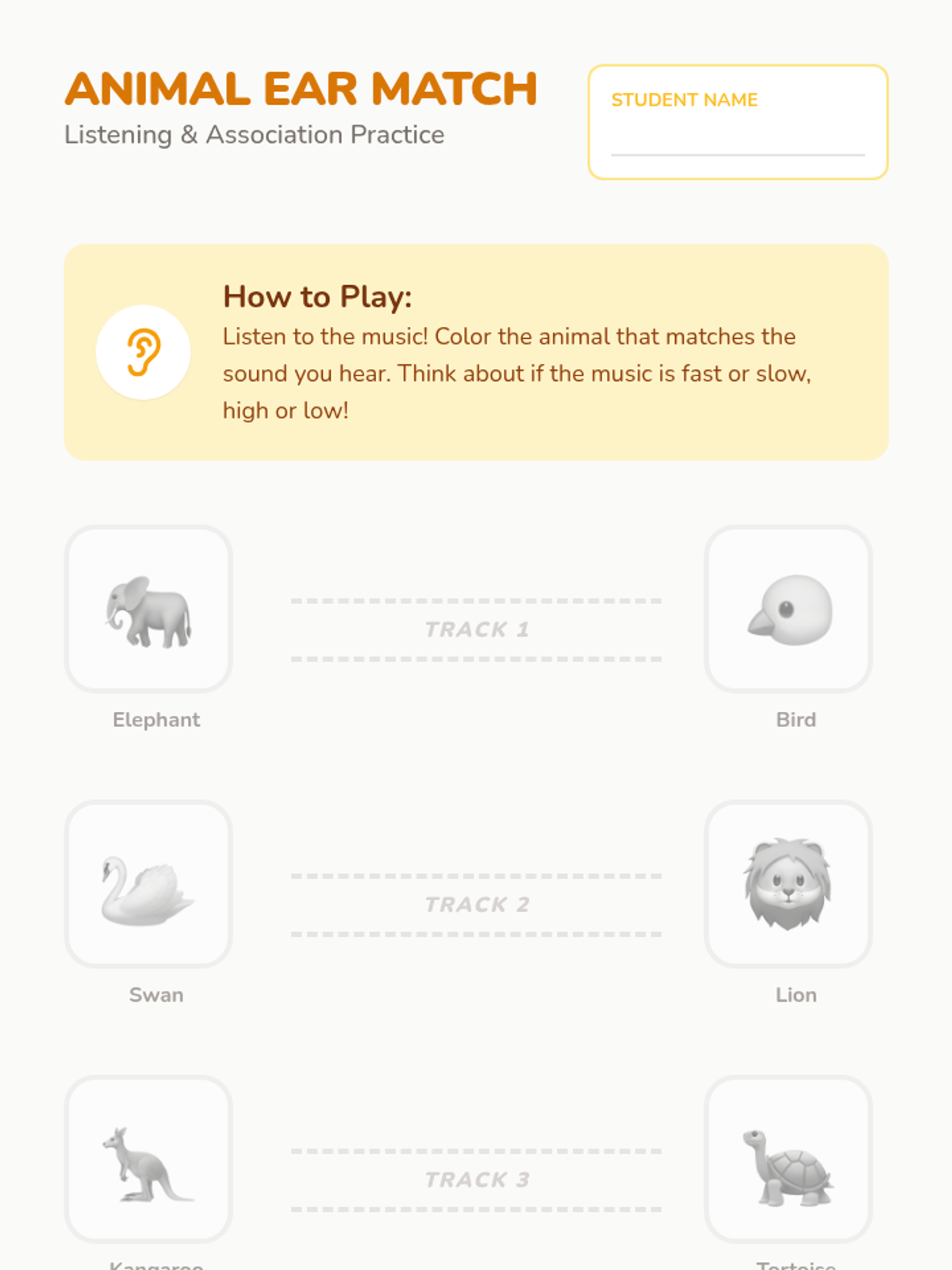
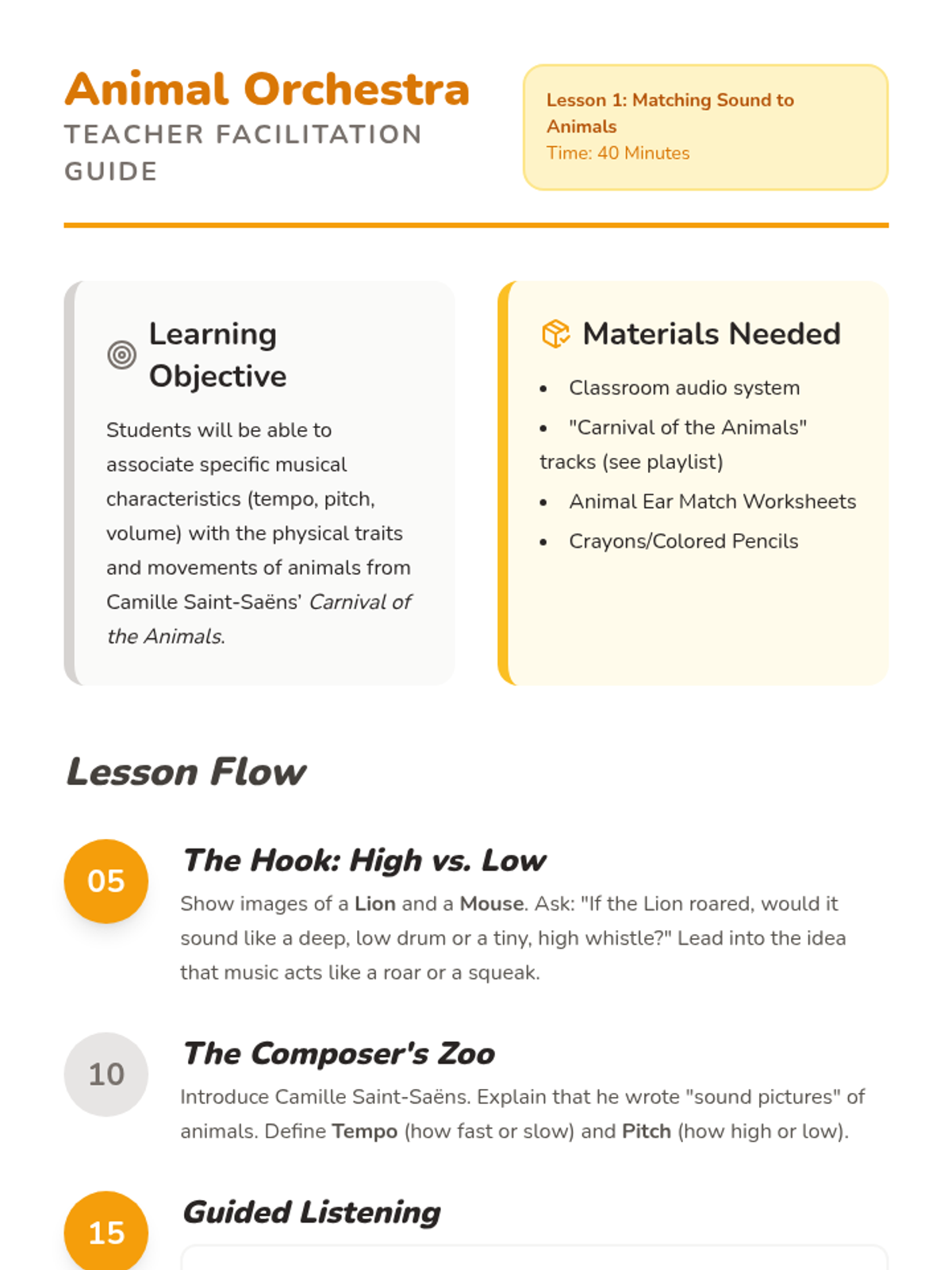
Students explore Saint-Saens' 'Carnival of the Animals' to understand how music can mimic the physical characteristics and movements of animals through pitch and tempo.
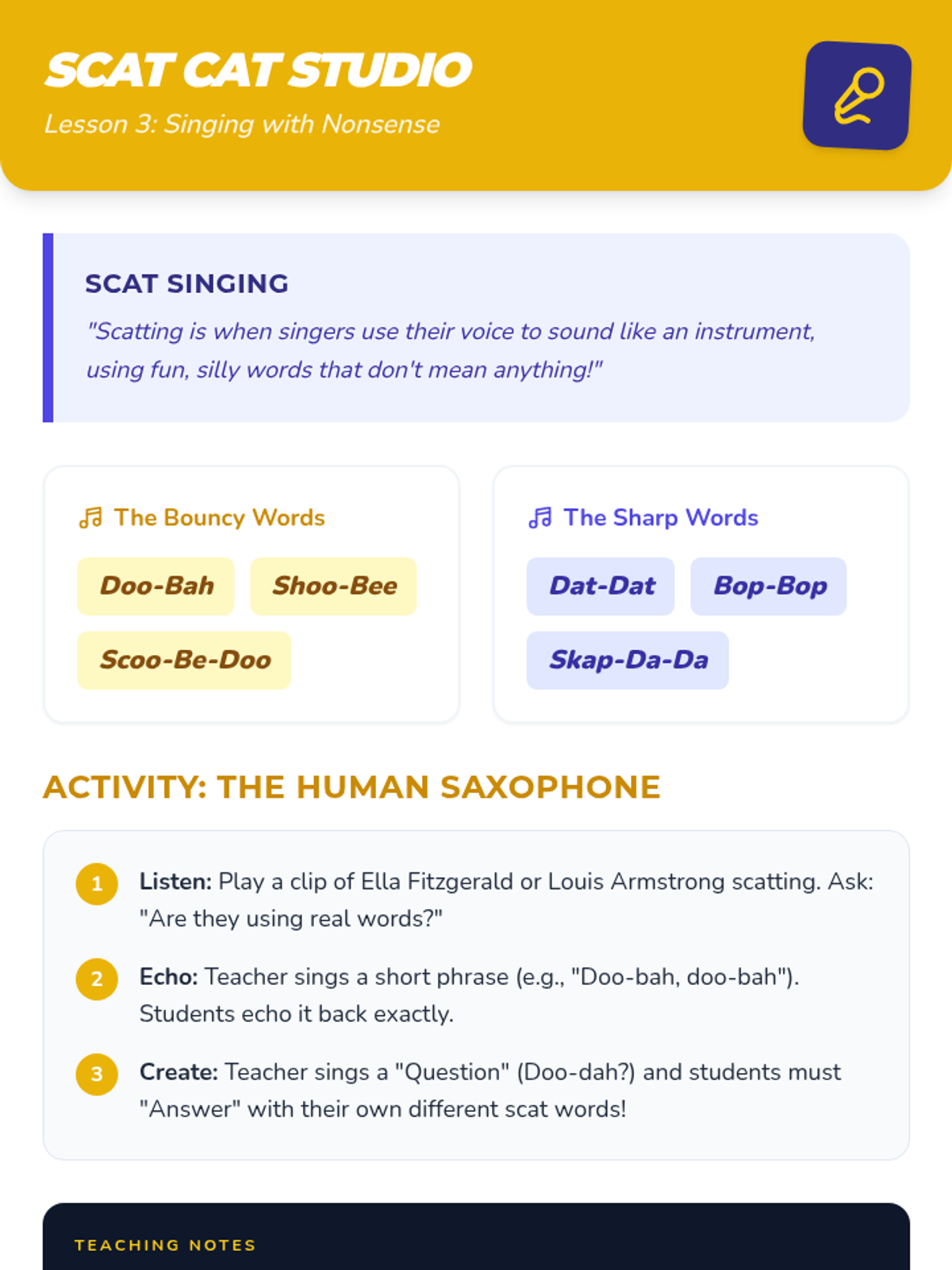
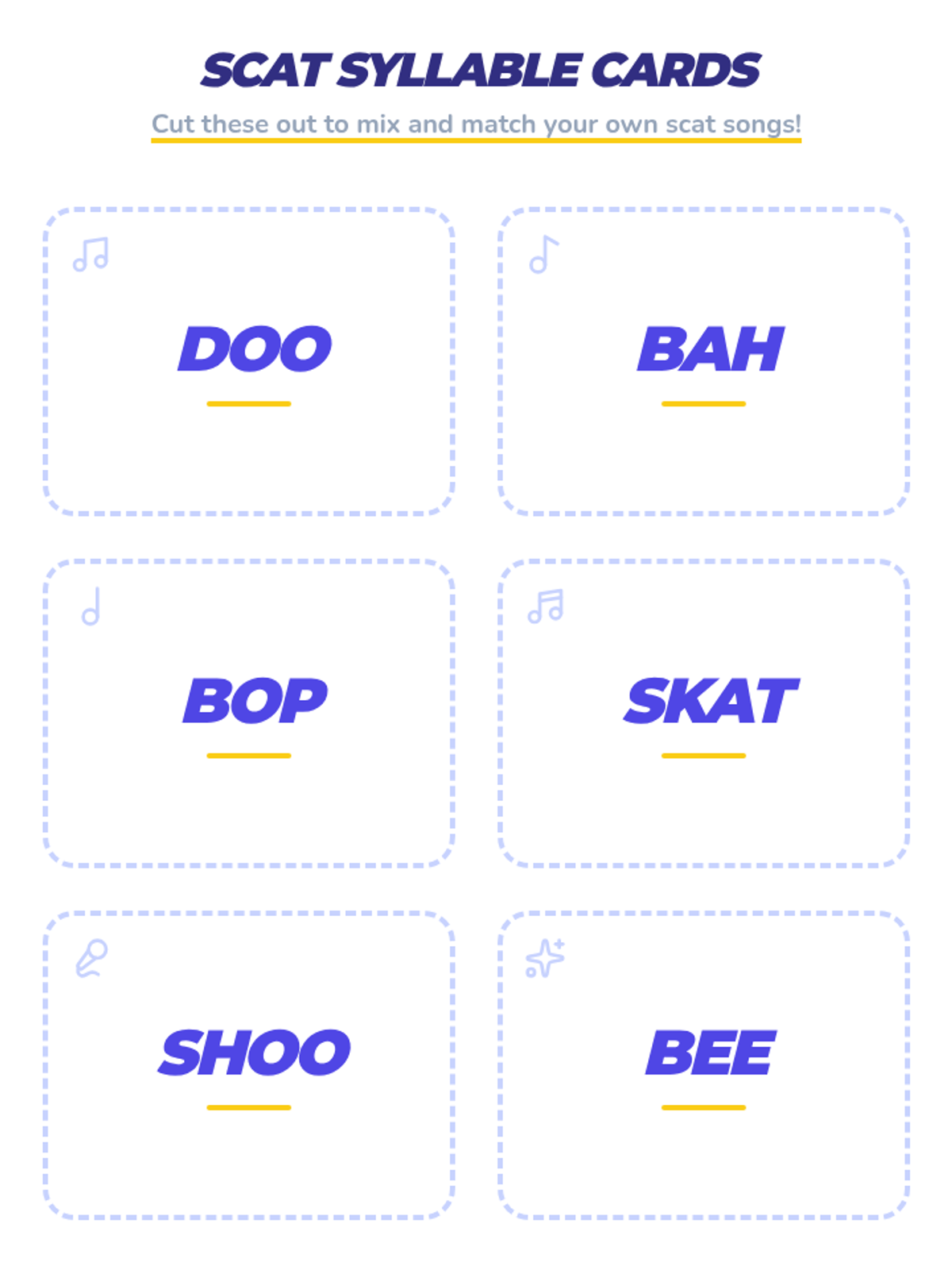
Students learn about scat singing and call-and-response using nonsense syllables like 'doo-bah'.
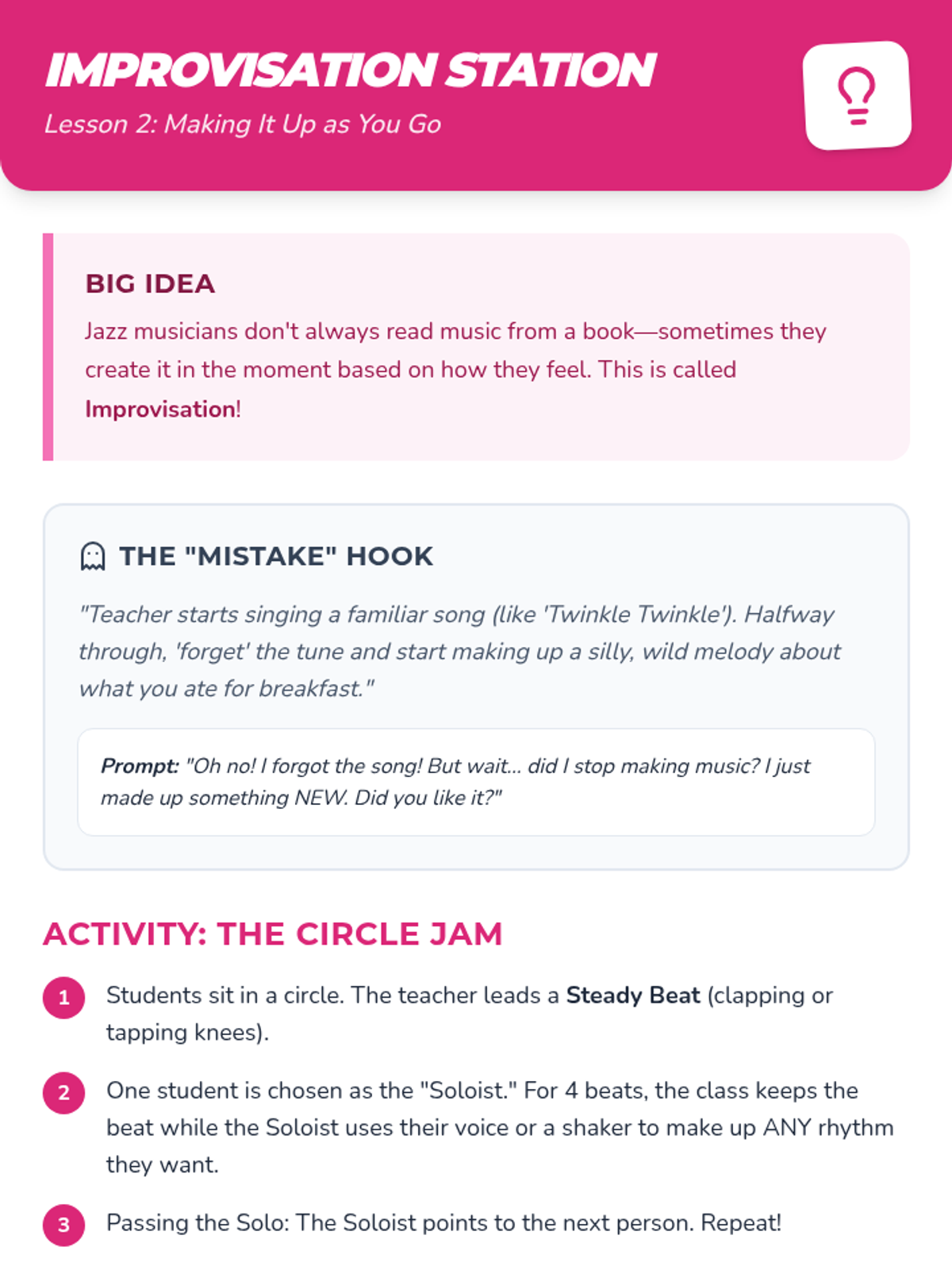
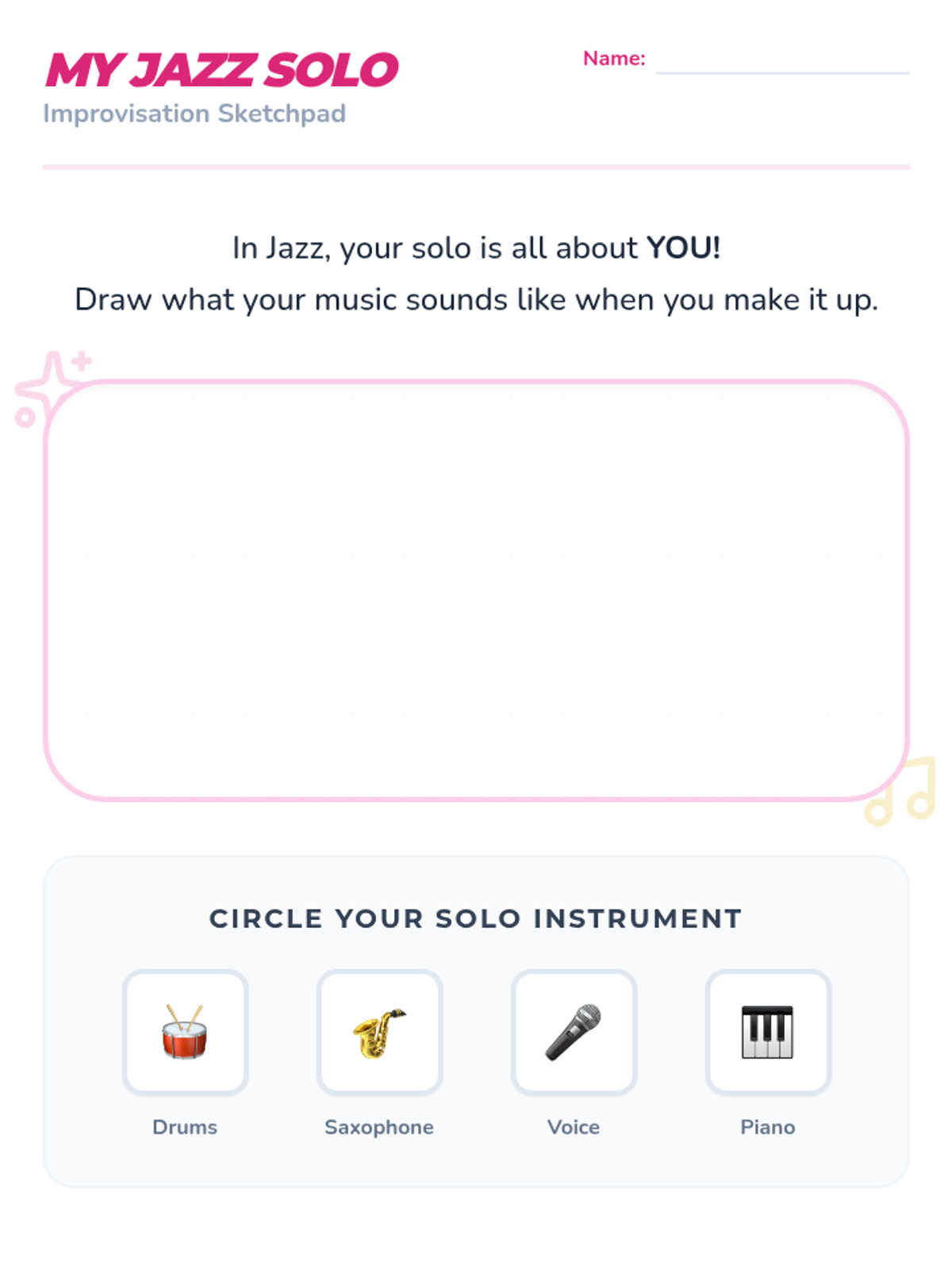
Learners explore making up music as they go using simple percussion and rhythmic solos.
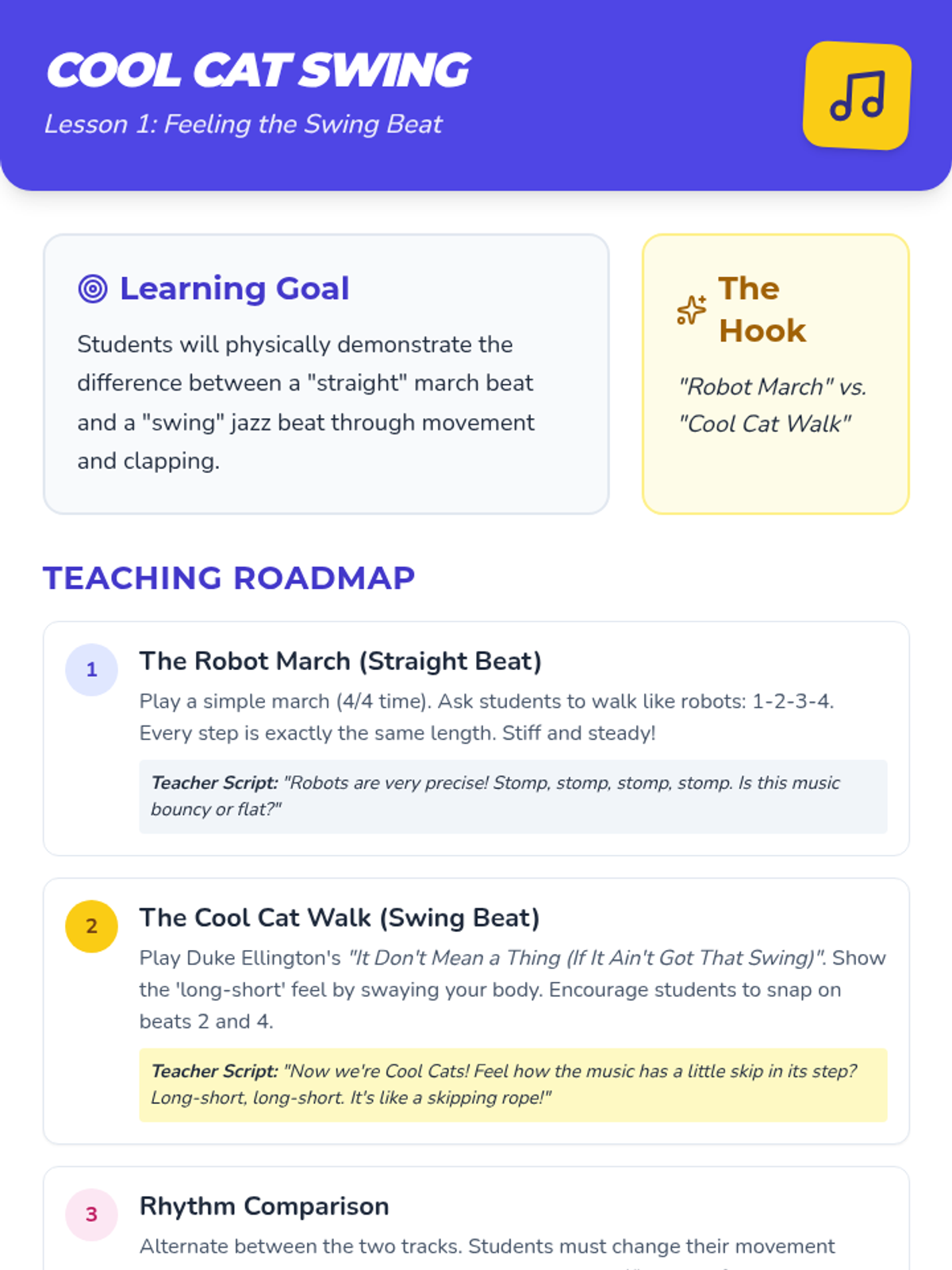
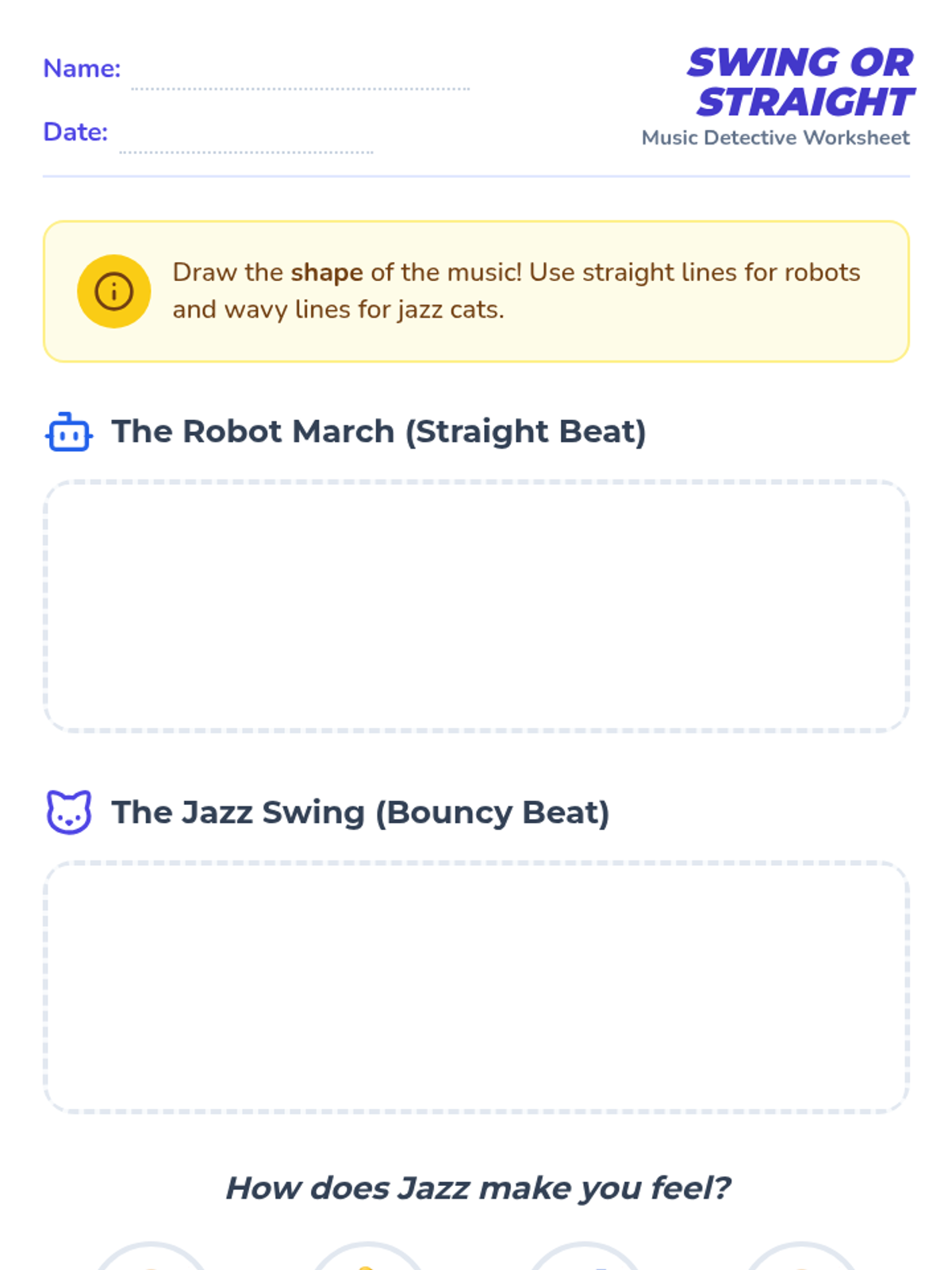
Students are introduced to the 'long-short' rhythm that defines jazz swing through movement and listening to Duke Ellington.
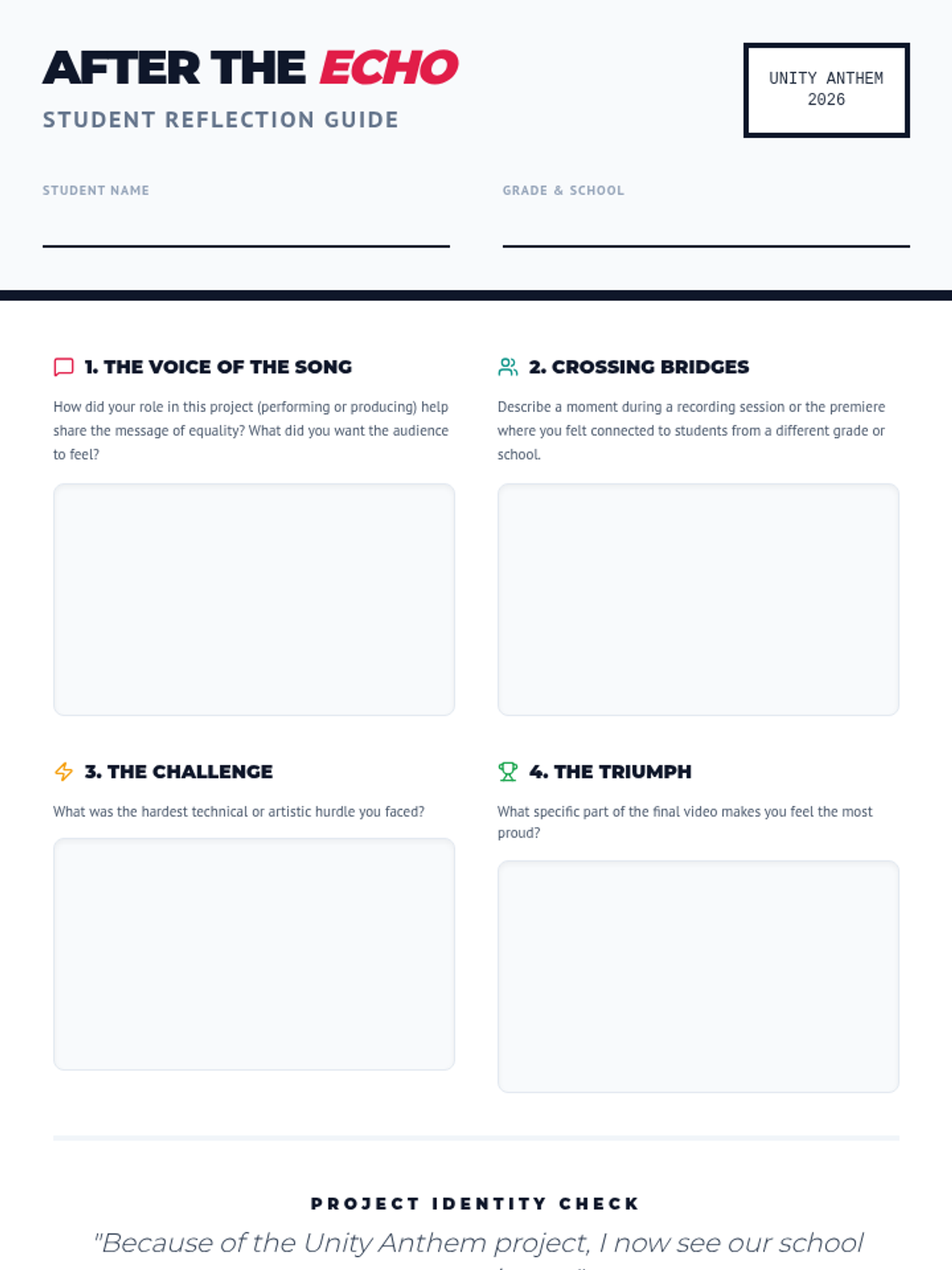
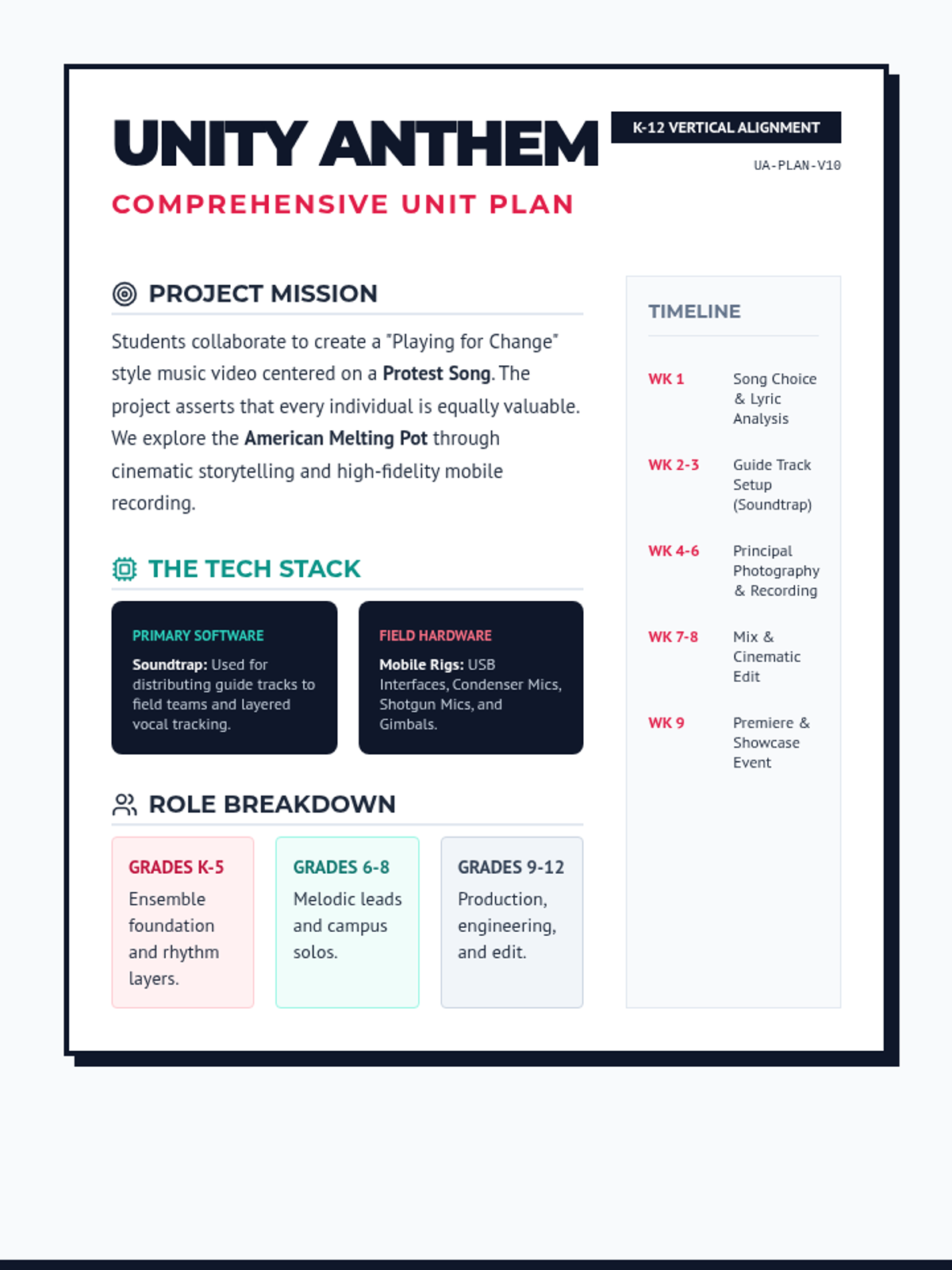
The final premiere of the music video at the All-town Music Tech Showcase, followed by a live performance and student reflection on the collaborative process.
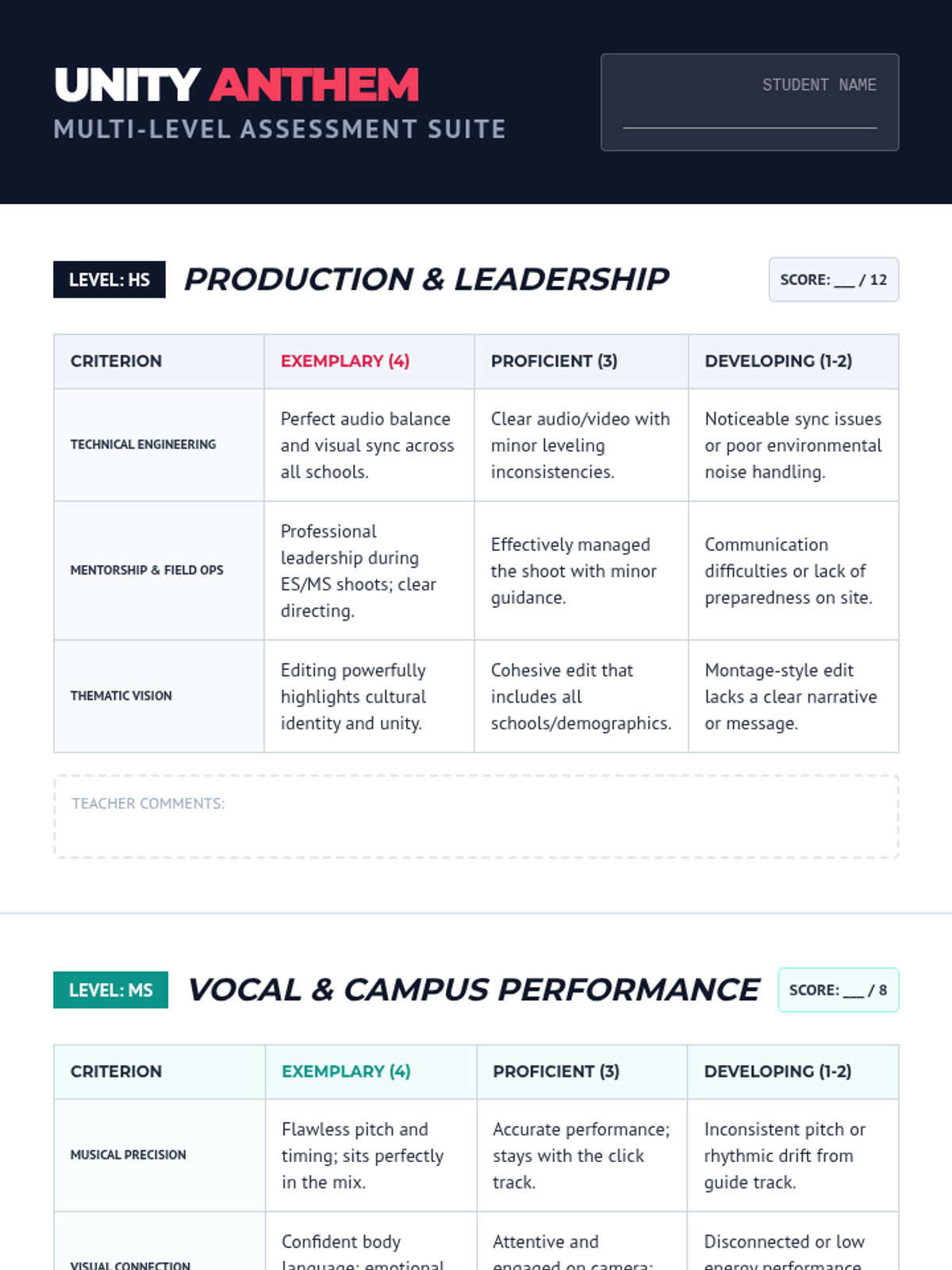
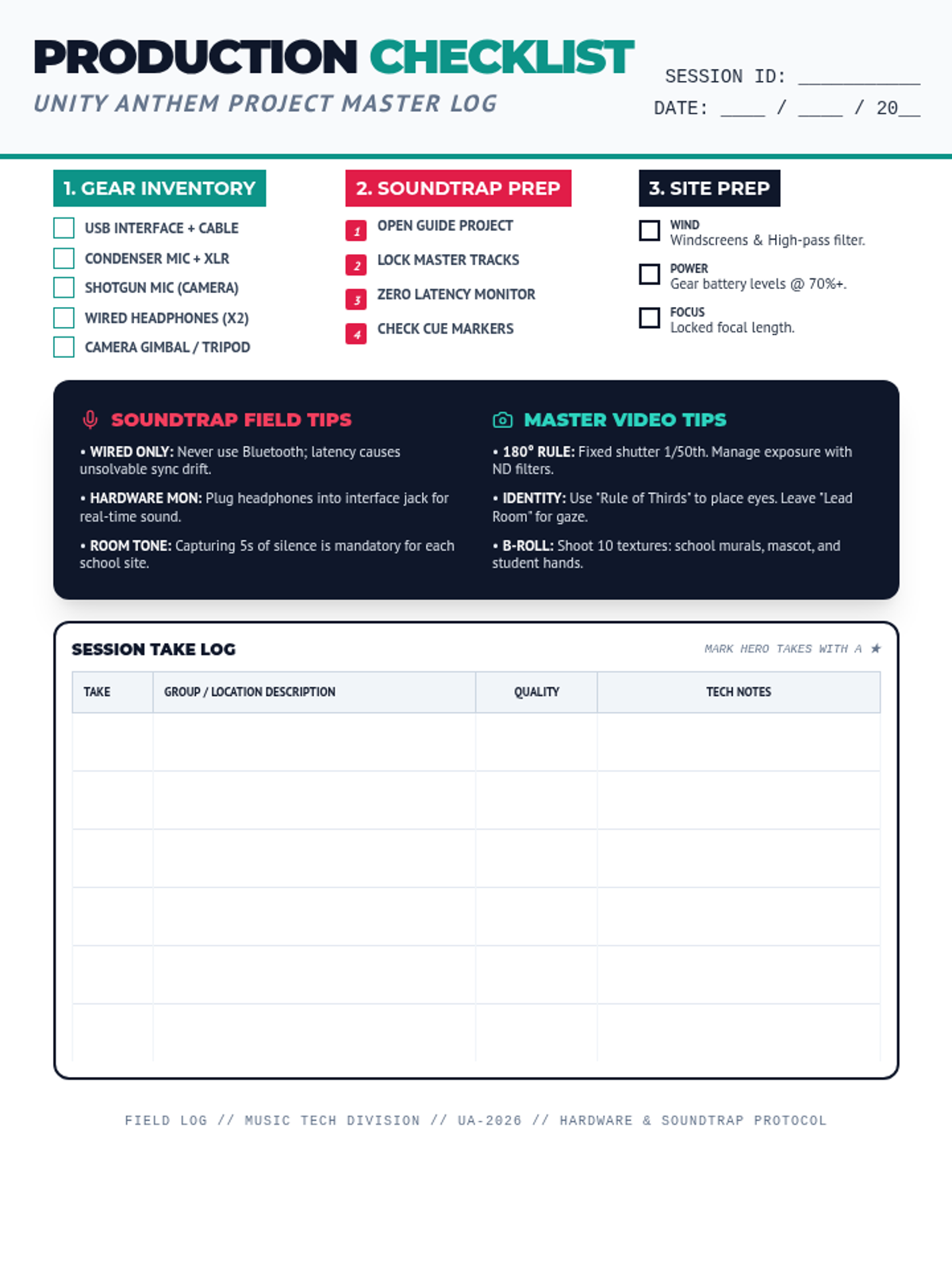
The technical phase involving on-location recordings at elementary and middle schools, followed by high school student-led mixing and video production.
Introduction to the 'Playing for Change' concept, exploring the themes of the chosen protest song, and laying the groundwork for the K-12 collaboration.
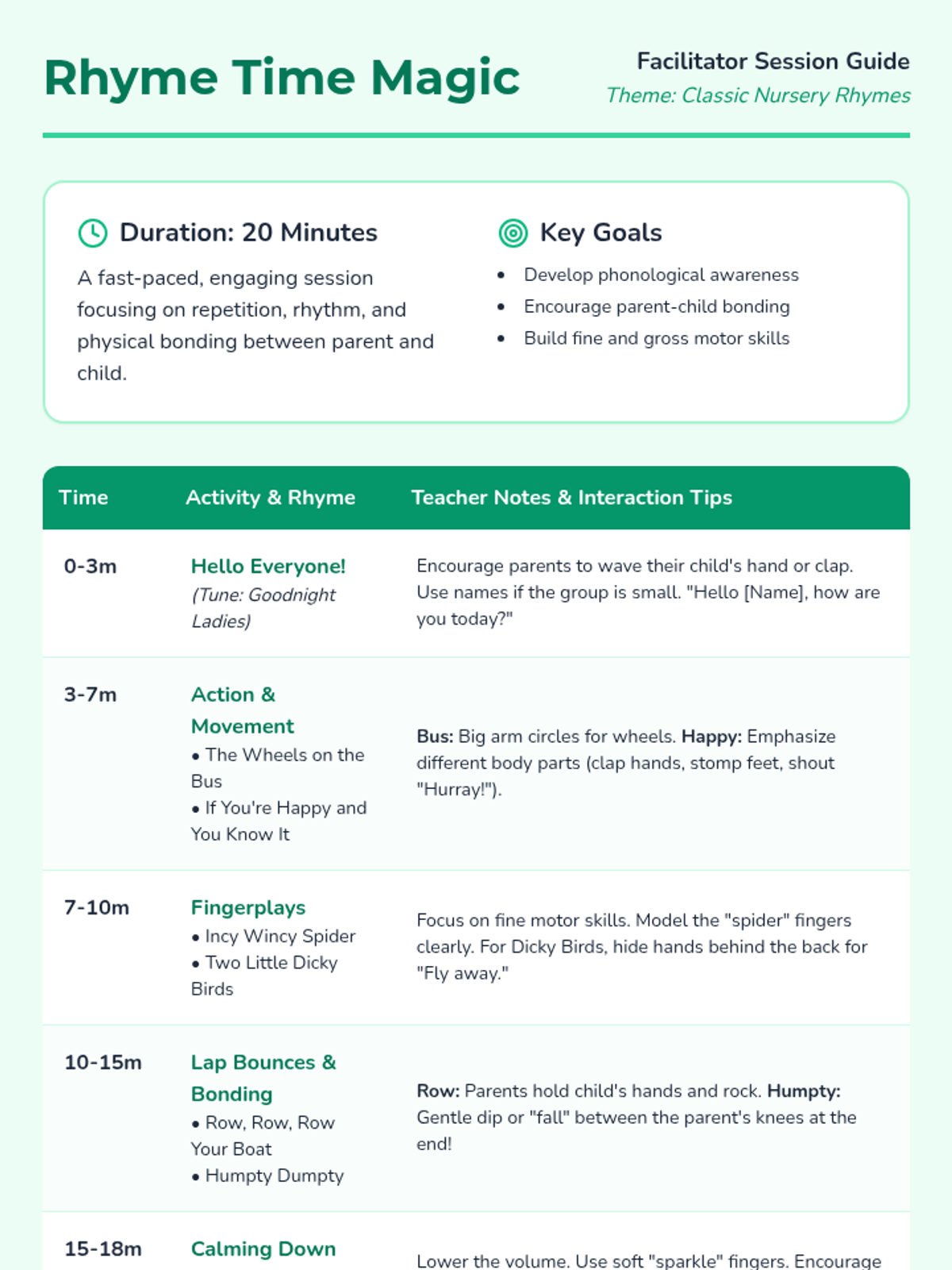
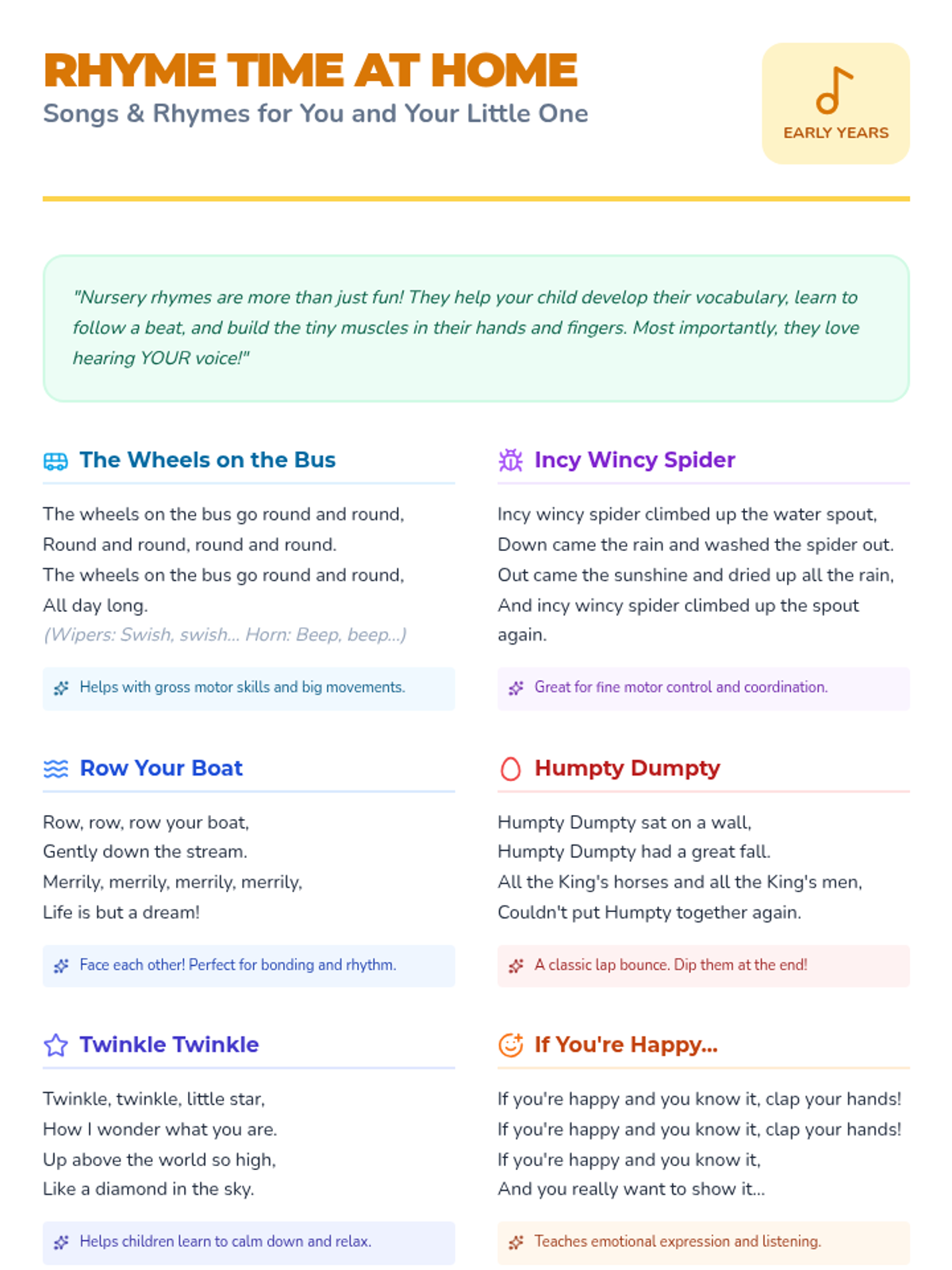
A 20-minute parent and child nursery rhyme session designed for early years to promote bonding, language development, and motor skills through classic songs and interactive play.
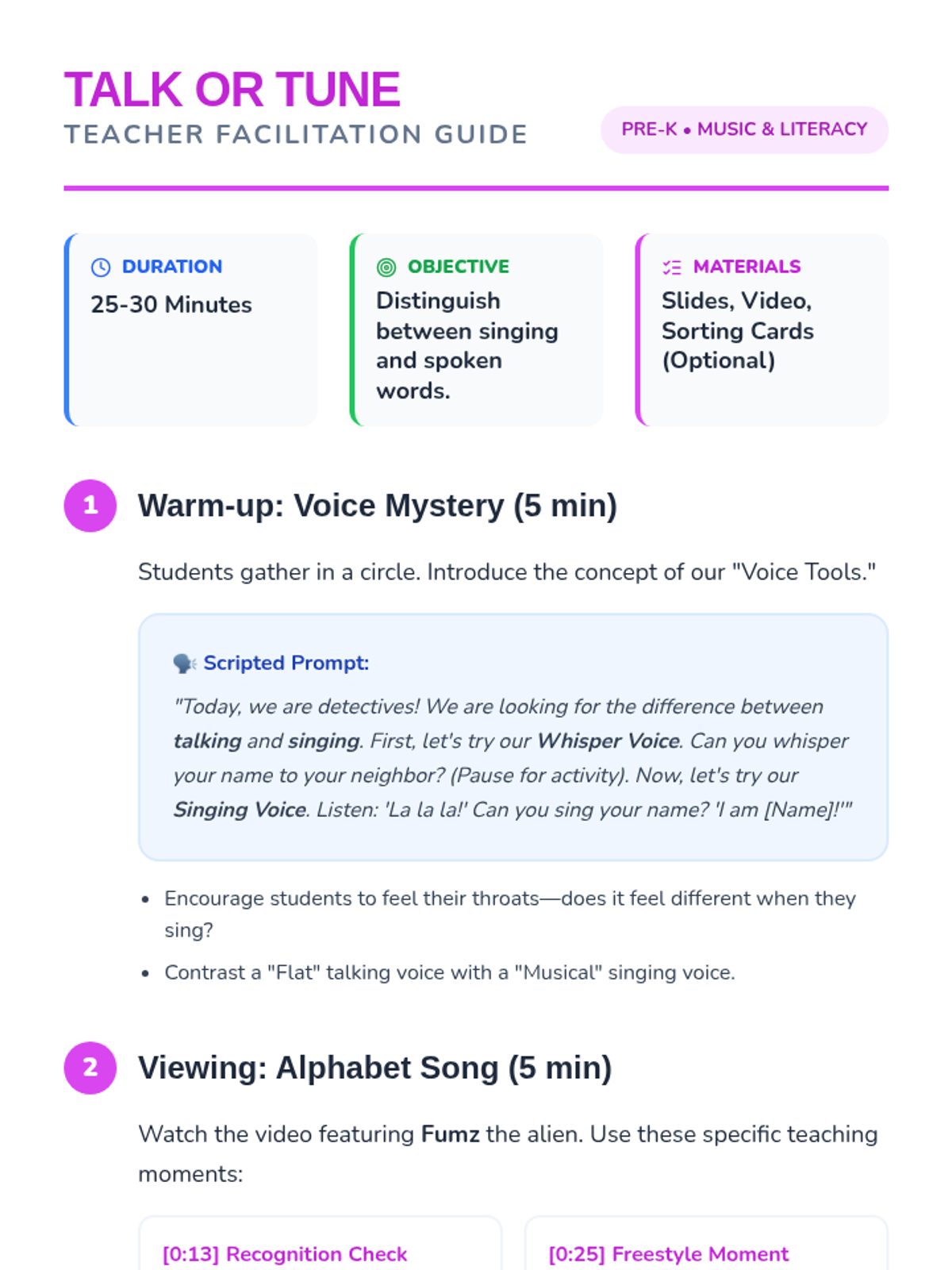
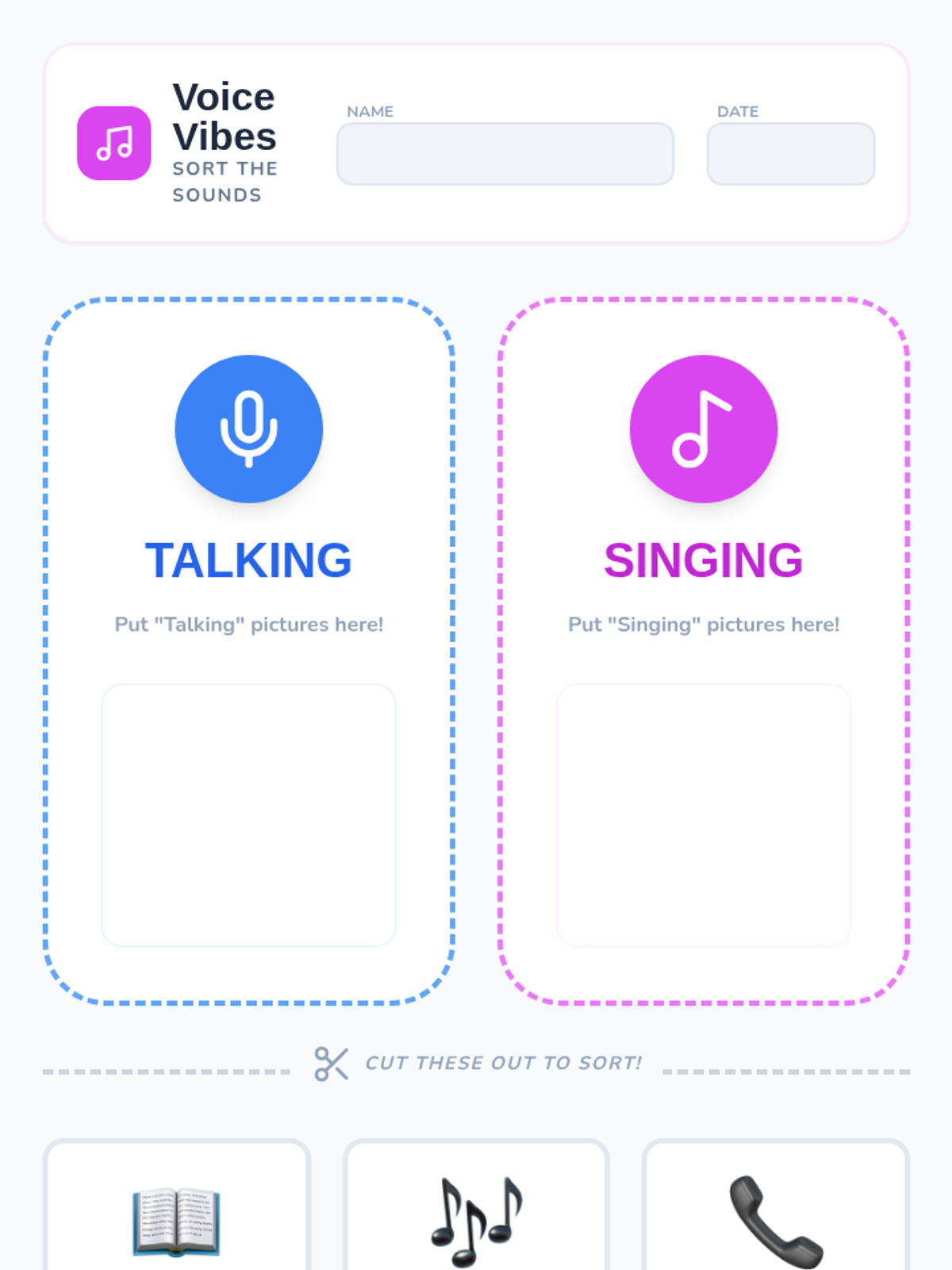
A high-energy Pre-K lesson that helps students distinguish between singing and speaking voices using the 'Alphabet Song' and interactive vocal play.
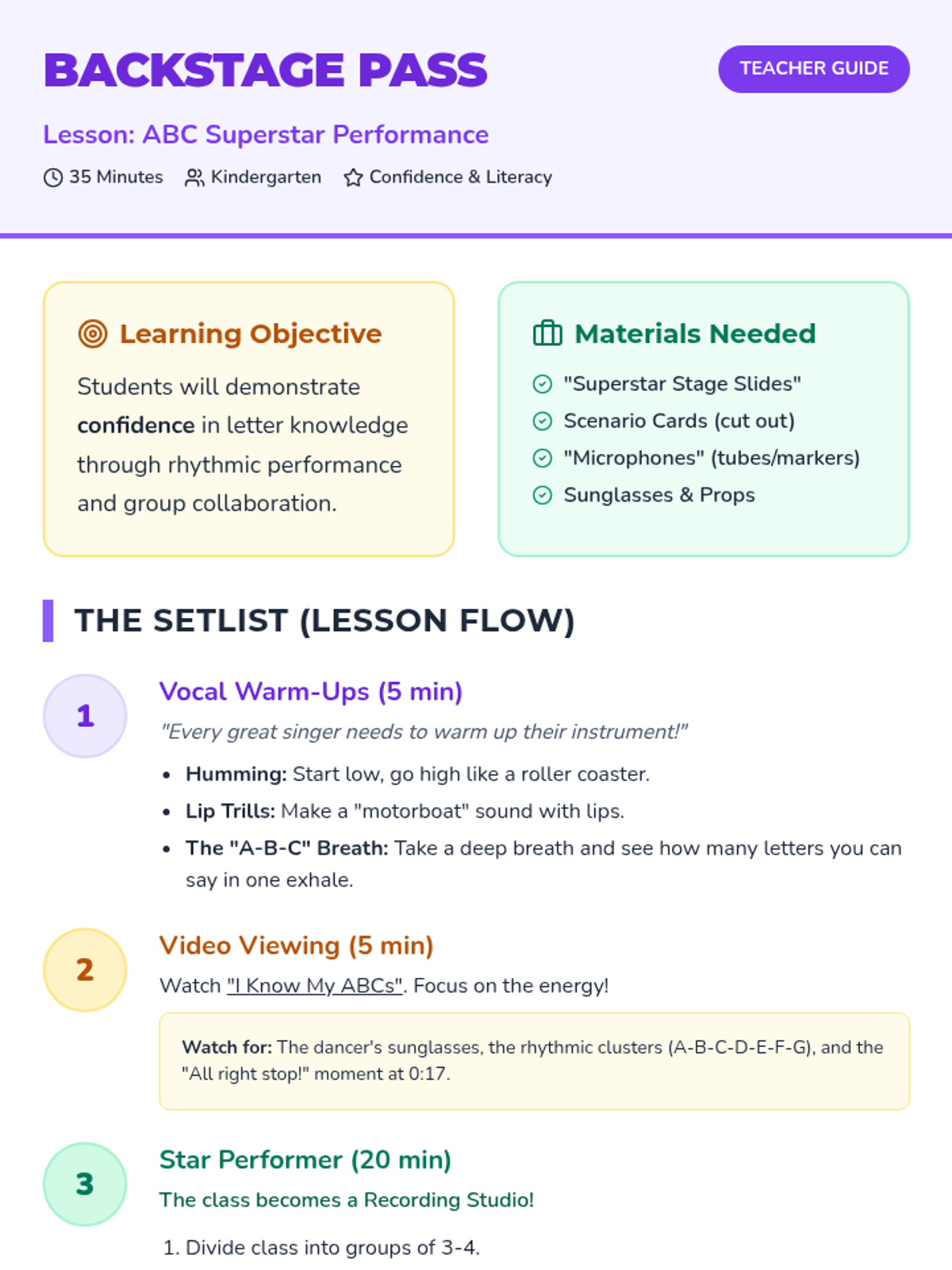
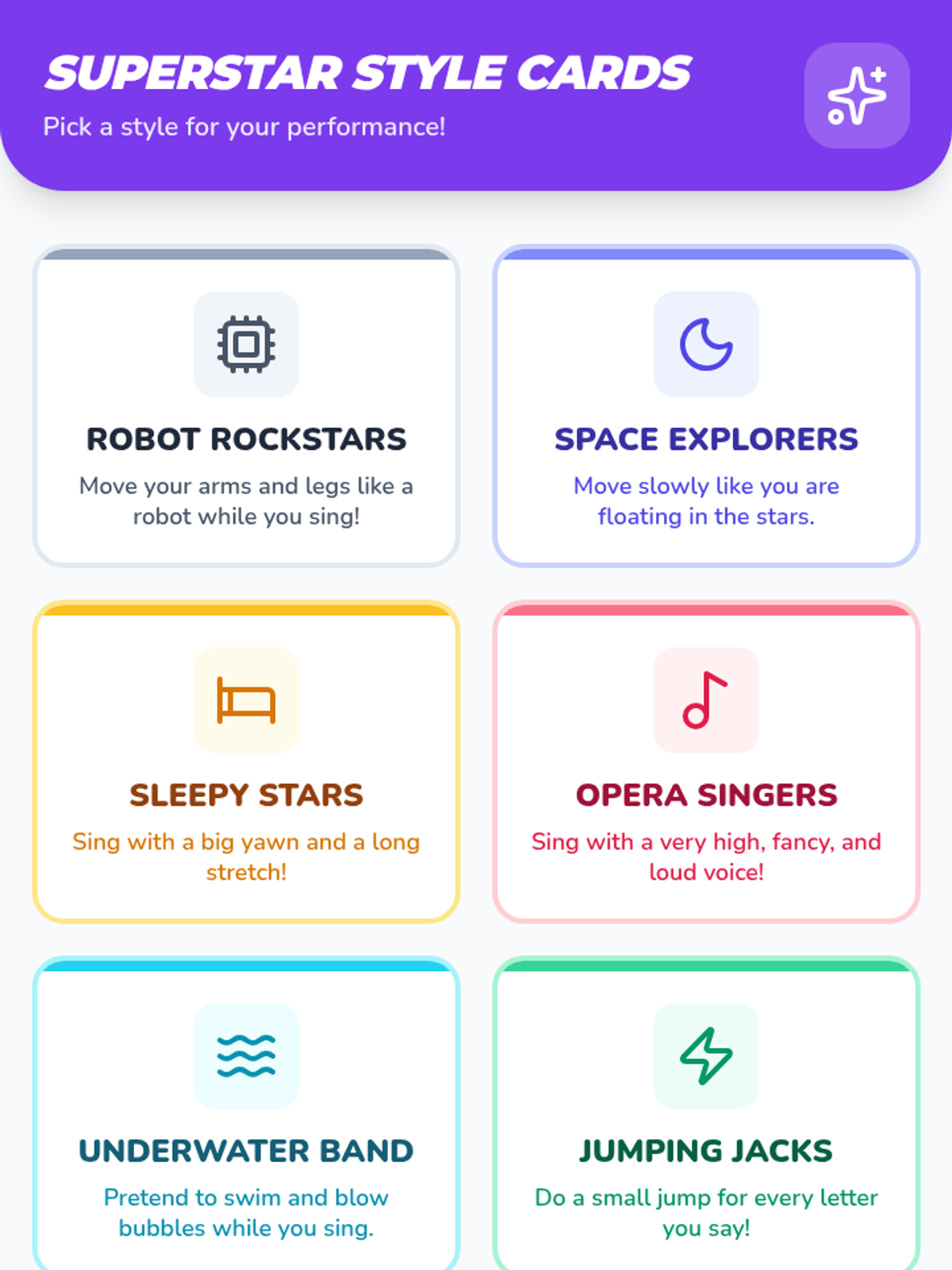
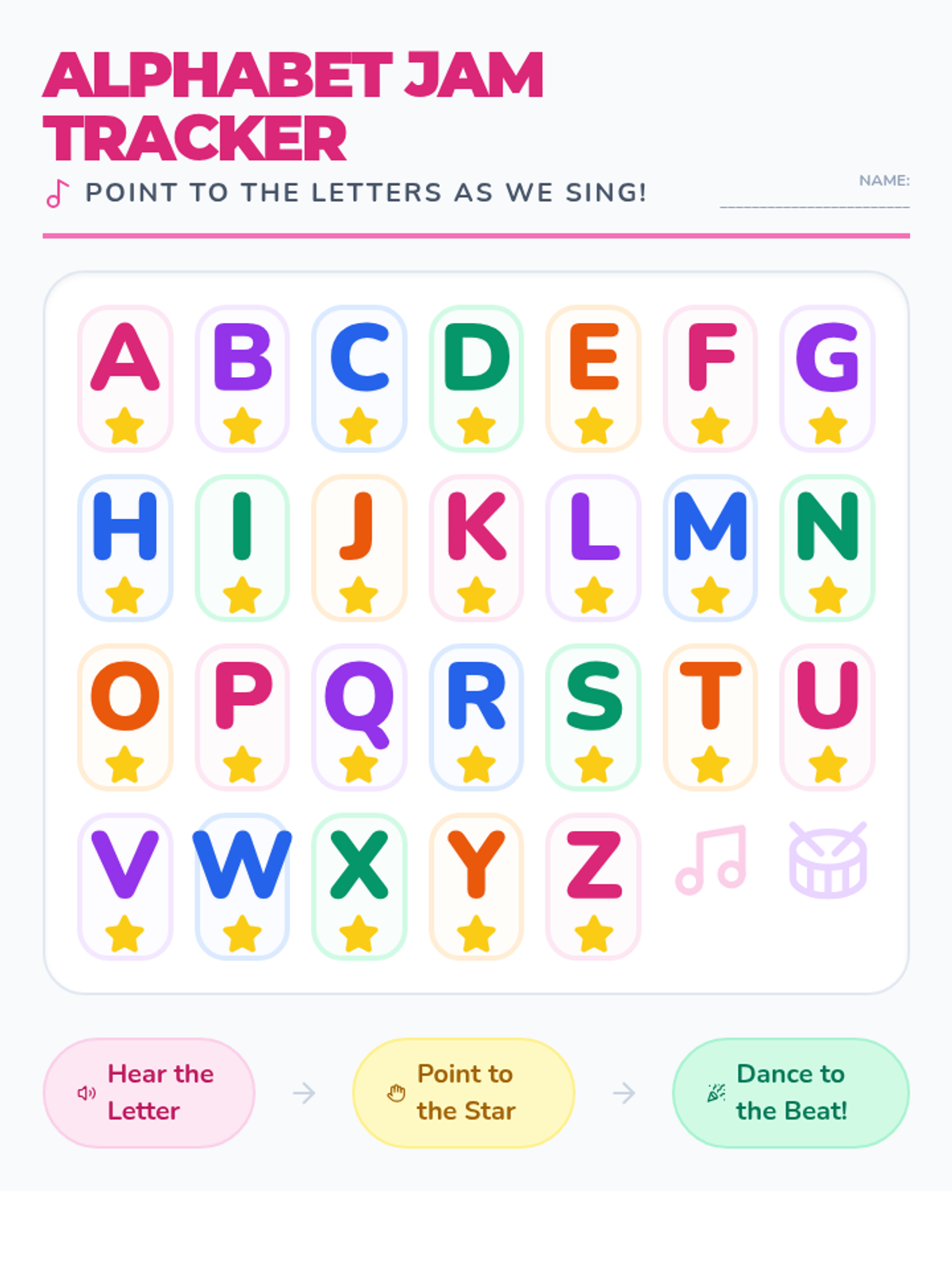
A high-energy Kindergarten lesson where students build confidence in their alphabet knowledge through a music-video-inspired performance activity. Students watch a rap video, practice vocal warm-ups, and perform the ABCs in groups using microphones and sunglasses.
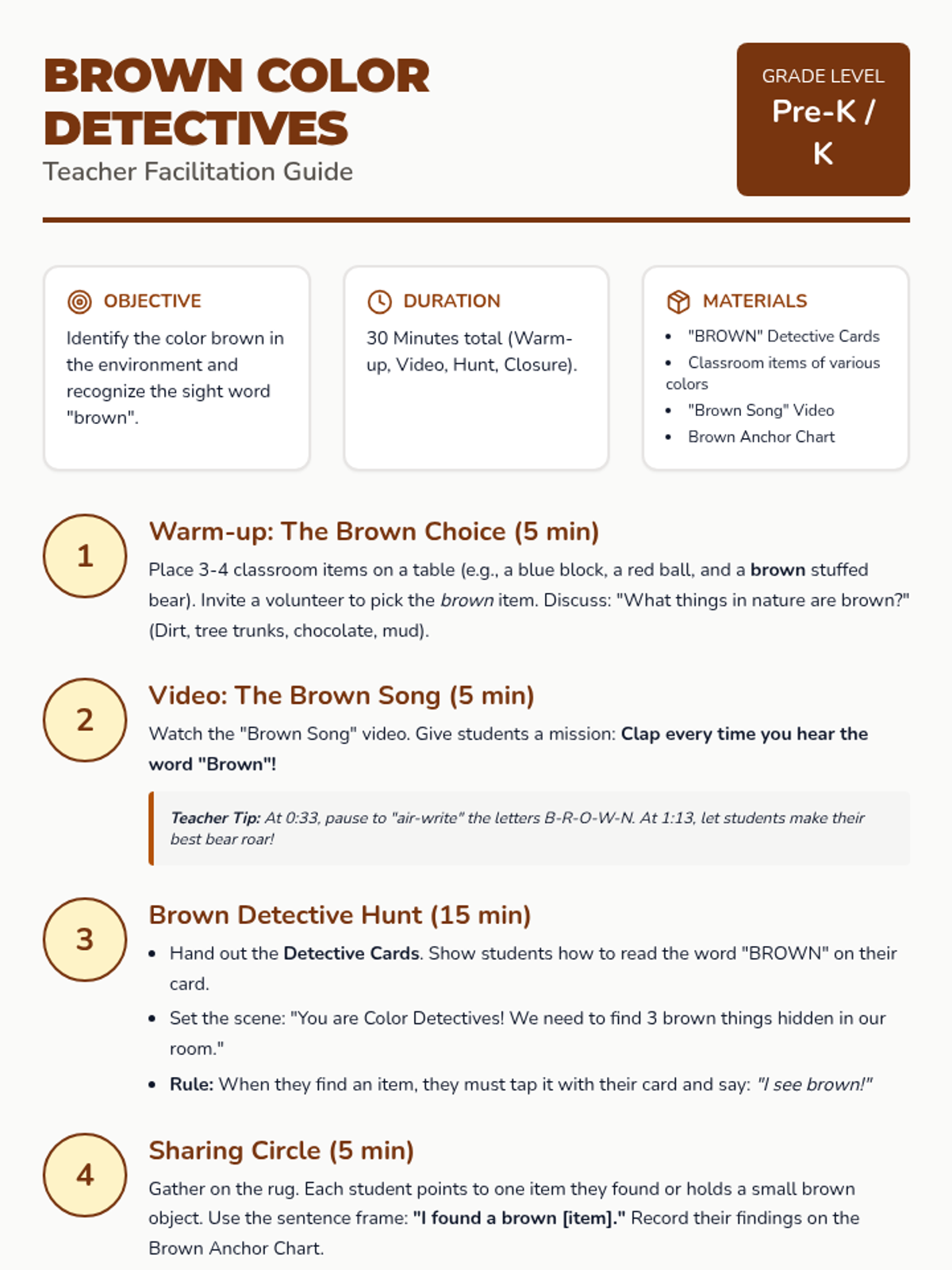
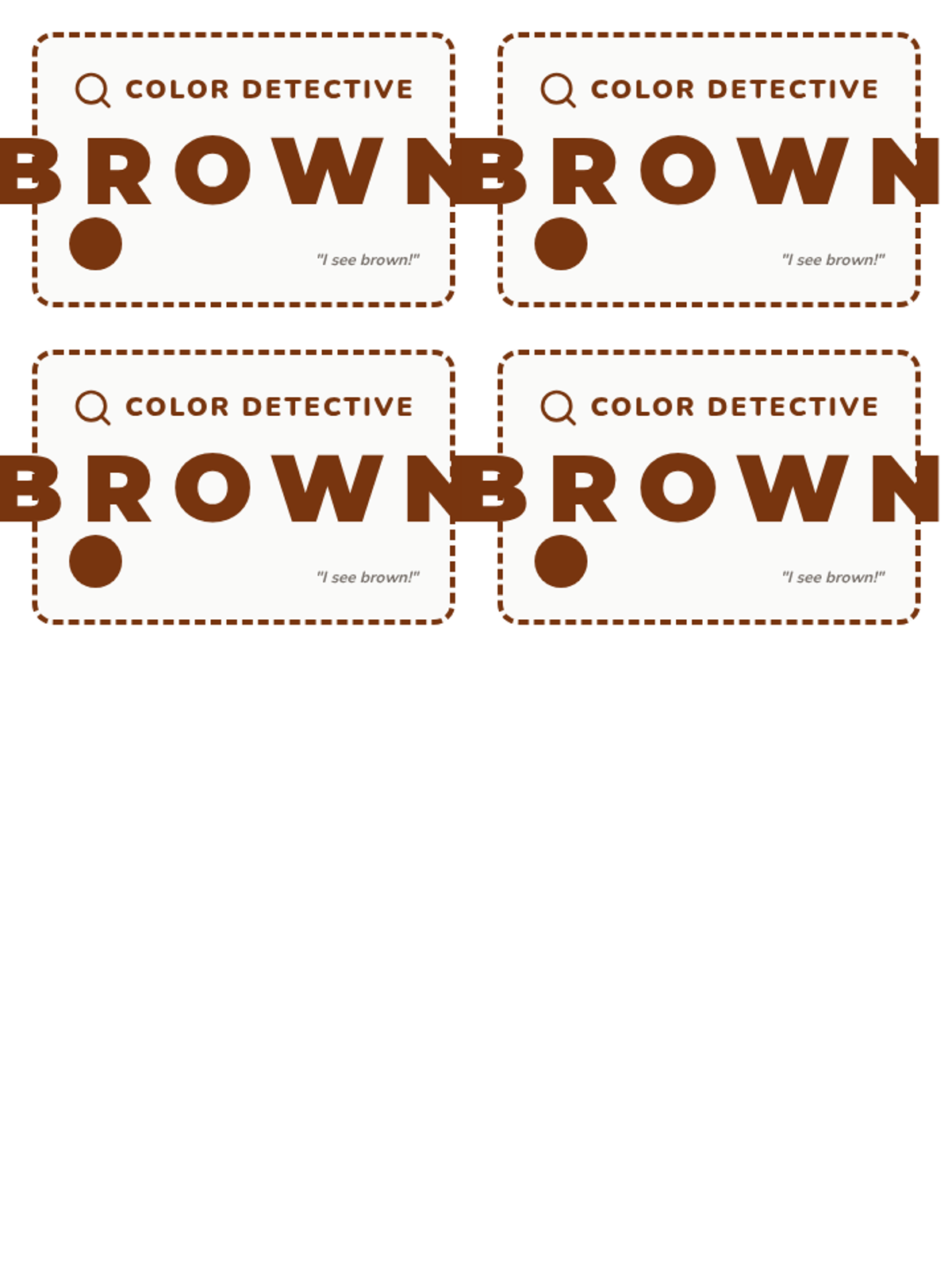
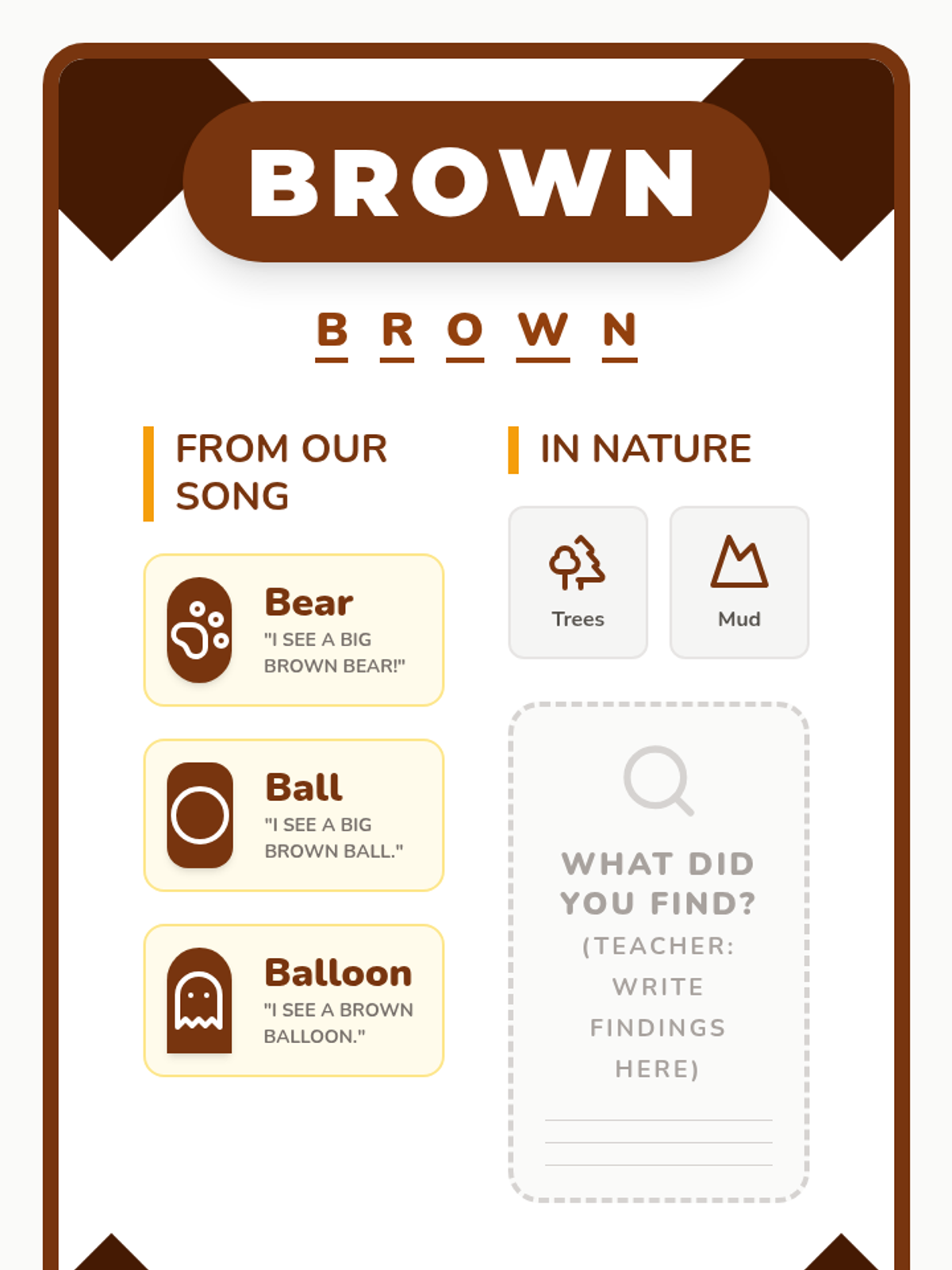
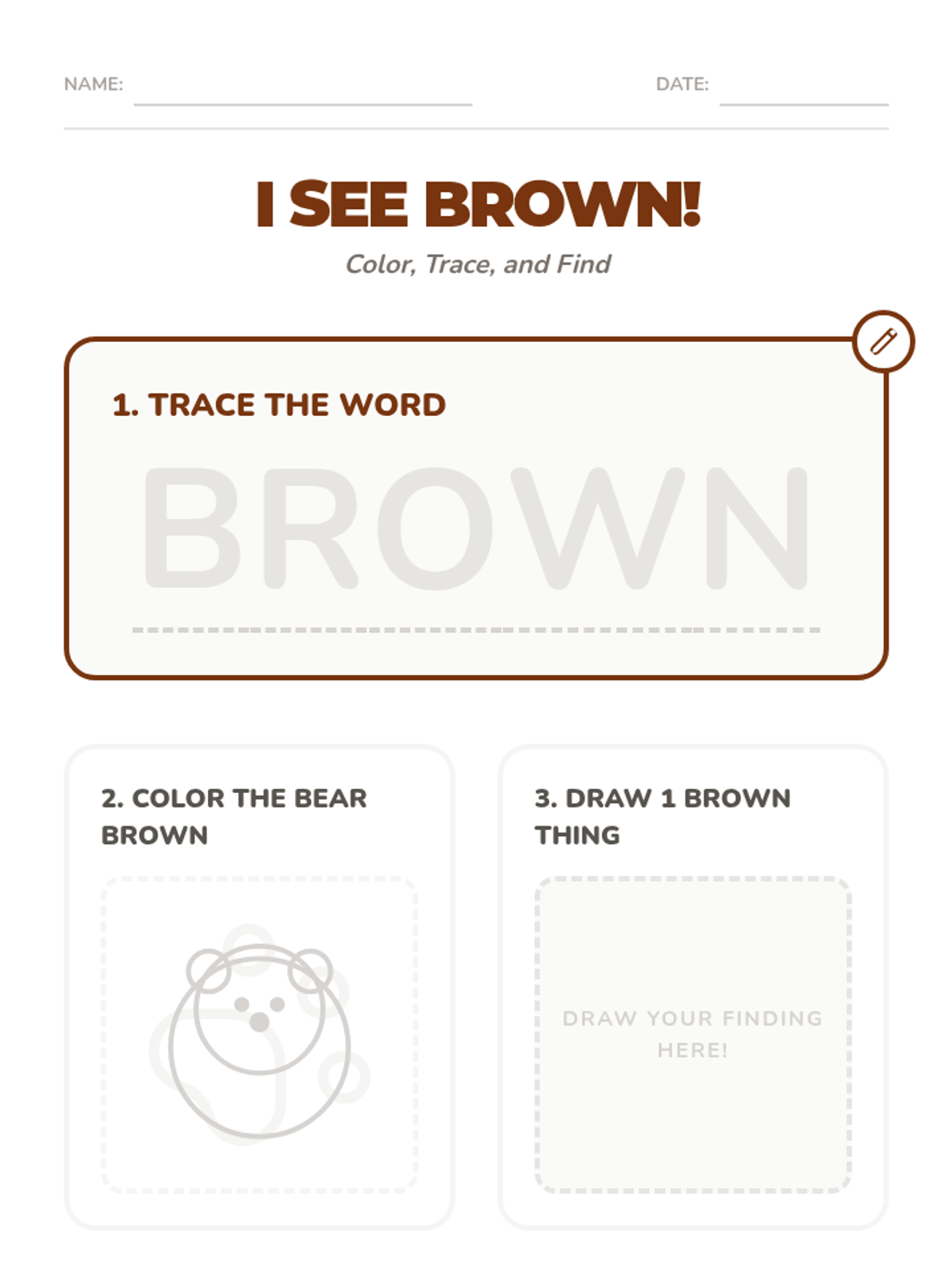
A fun, interactive lesson for Pre-K and Kindergarten students to identify the color brown and recognize the sight word 'brown' through music, movement, and a 'detective' hunt.
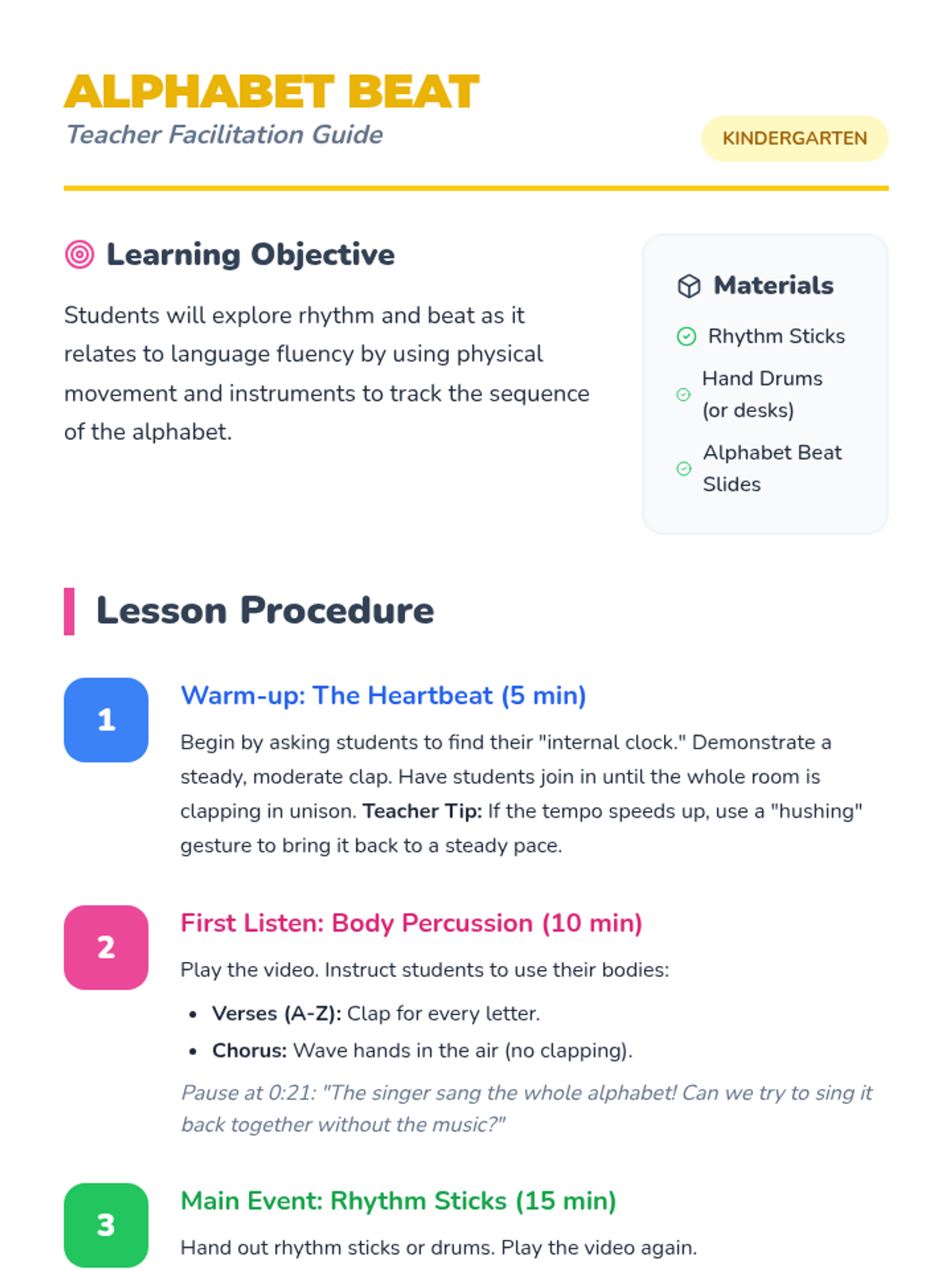
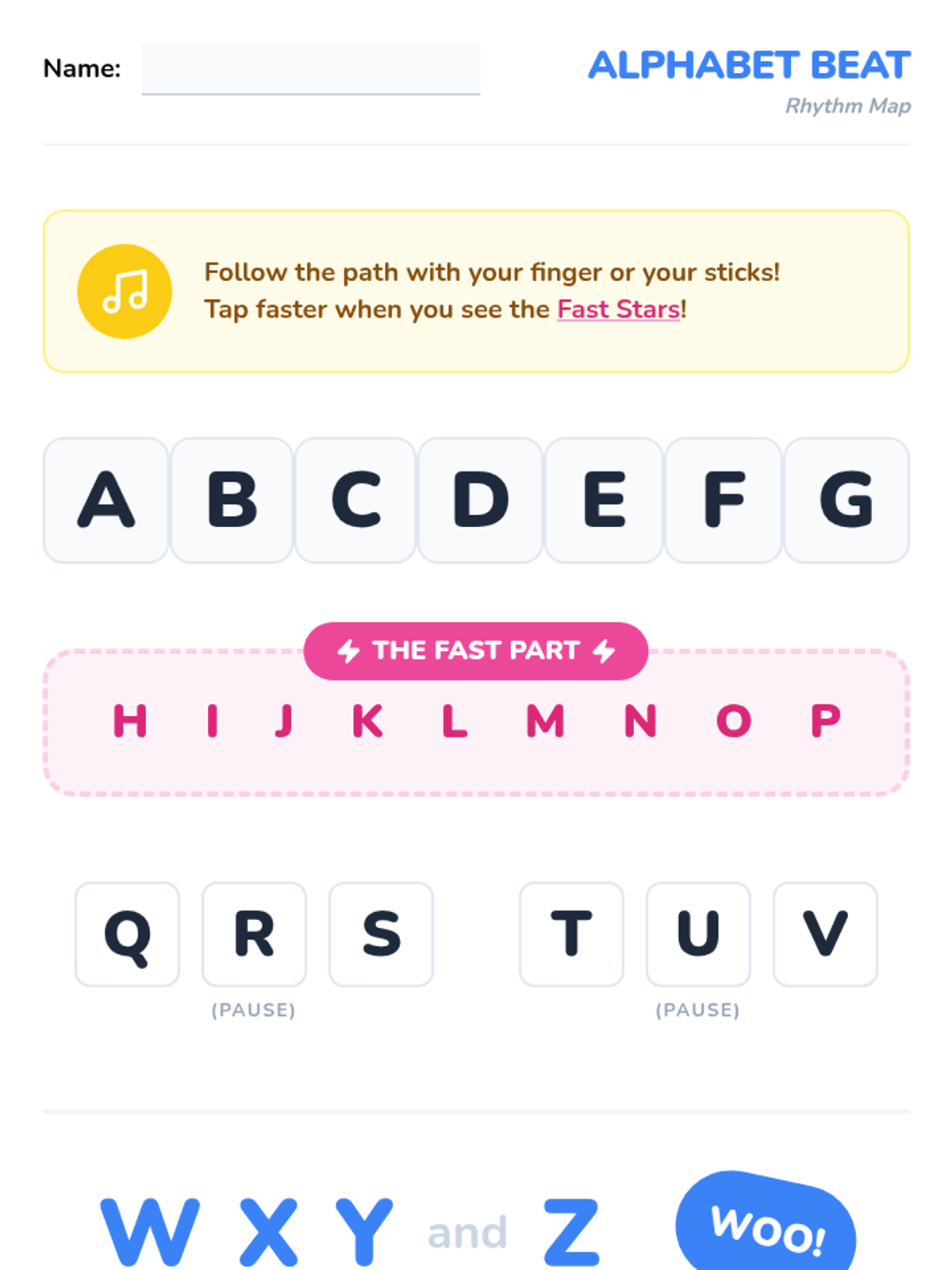
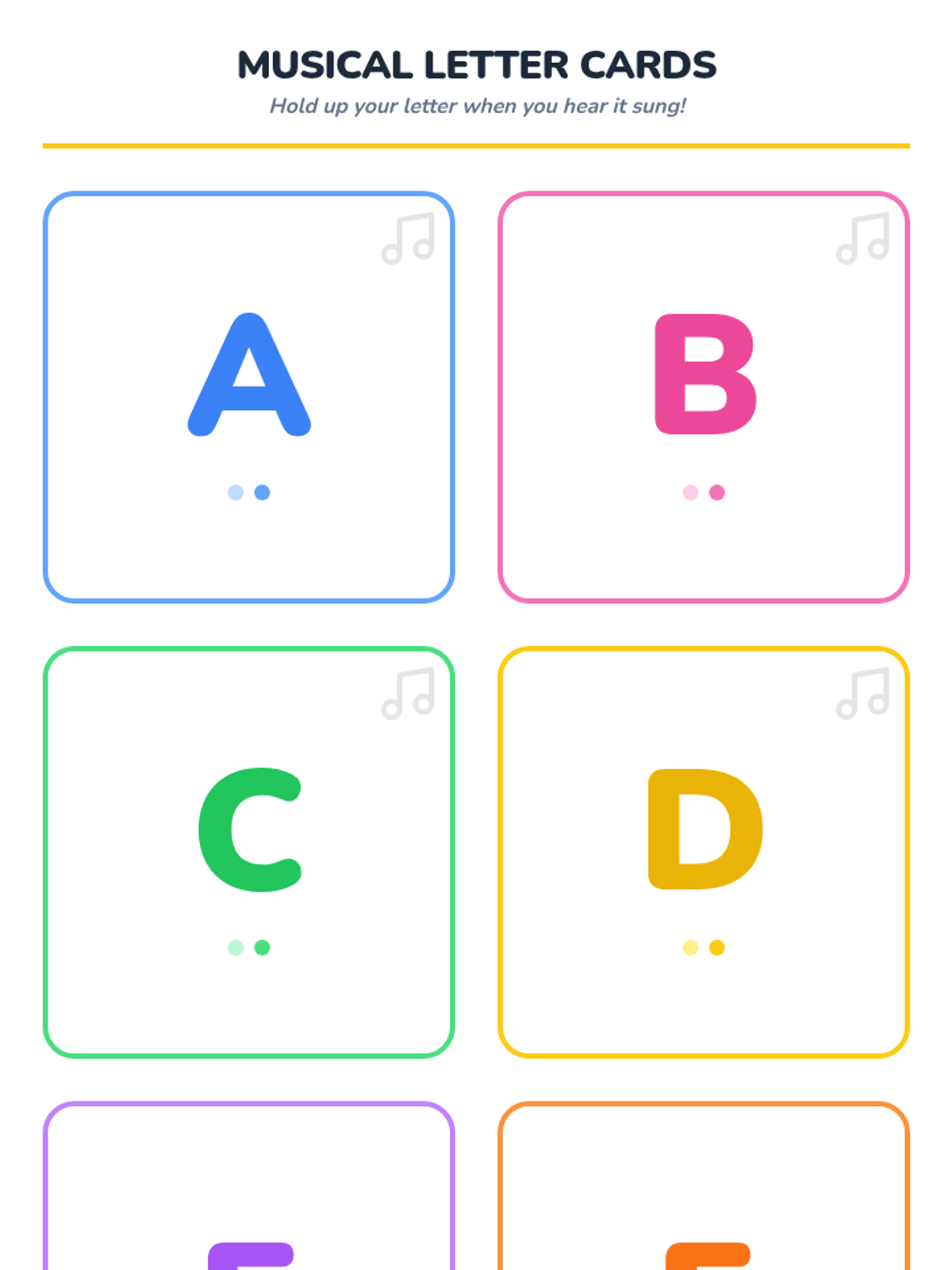
A high-energy Kindergarten lesson using music and rhythm sticks to explore the beat of the alphabet and improve language fluency.
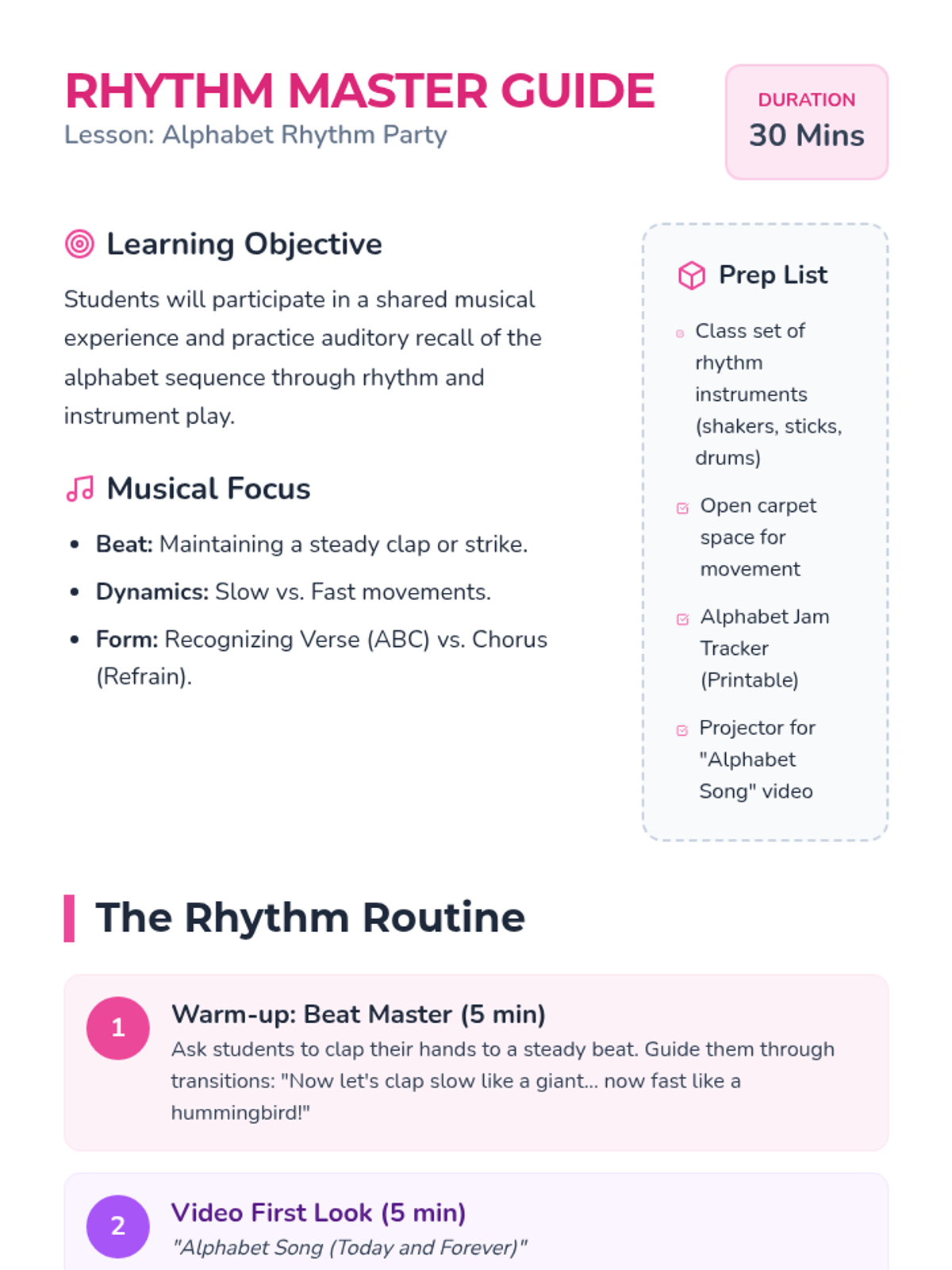
A high-energy musical lesson where Pre-K students use instruments to explore the alphabet through a reggae rhythm. Students practice auditory recall and beat-keeping while distinguishing between song sections.
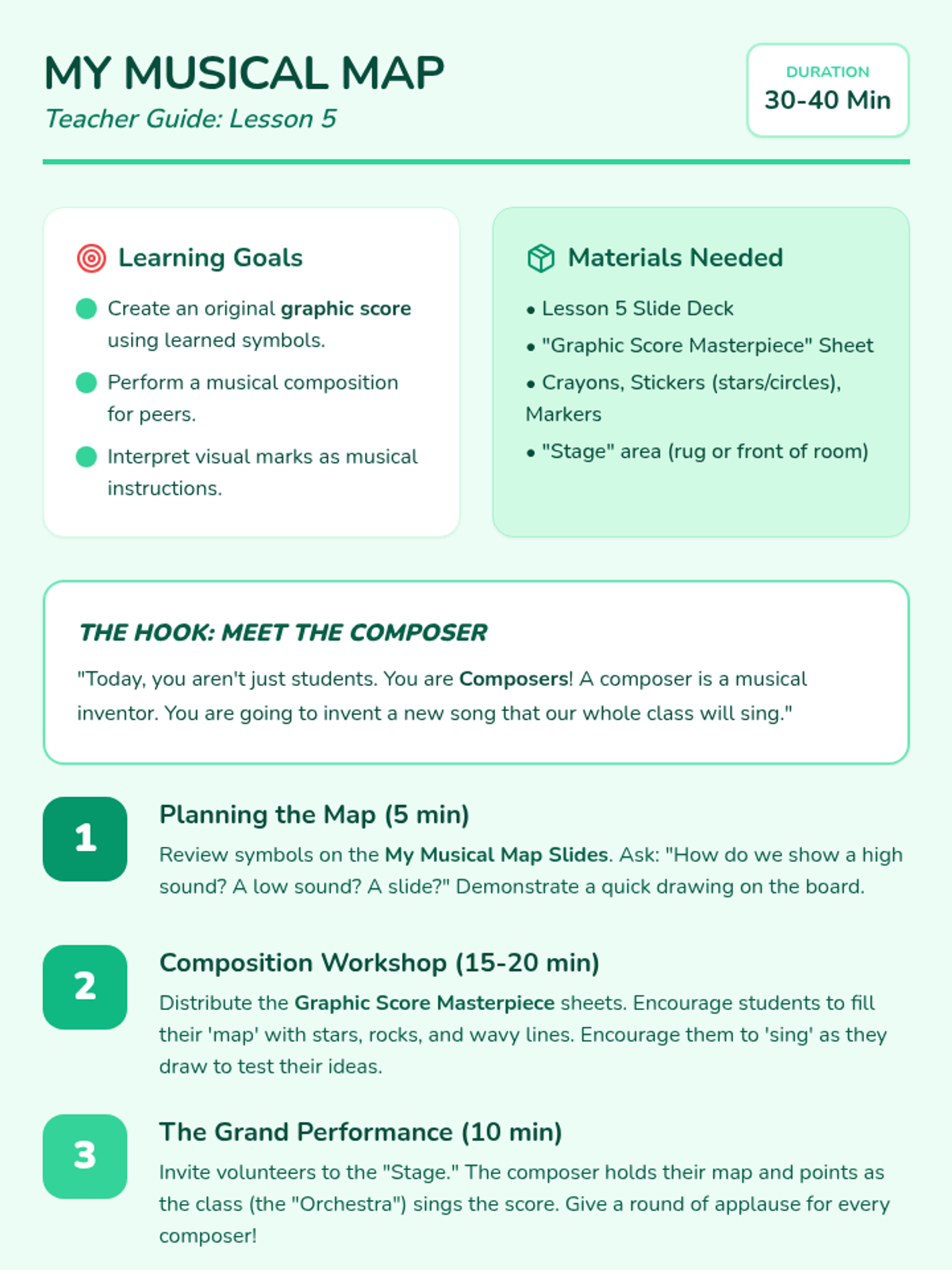
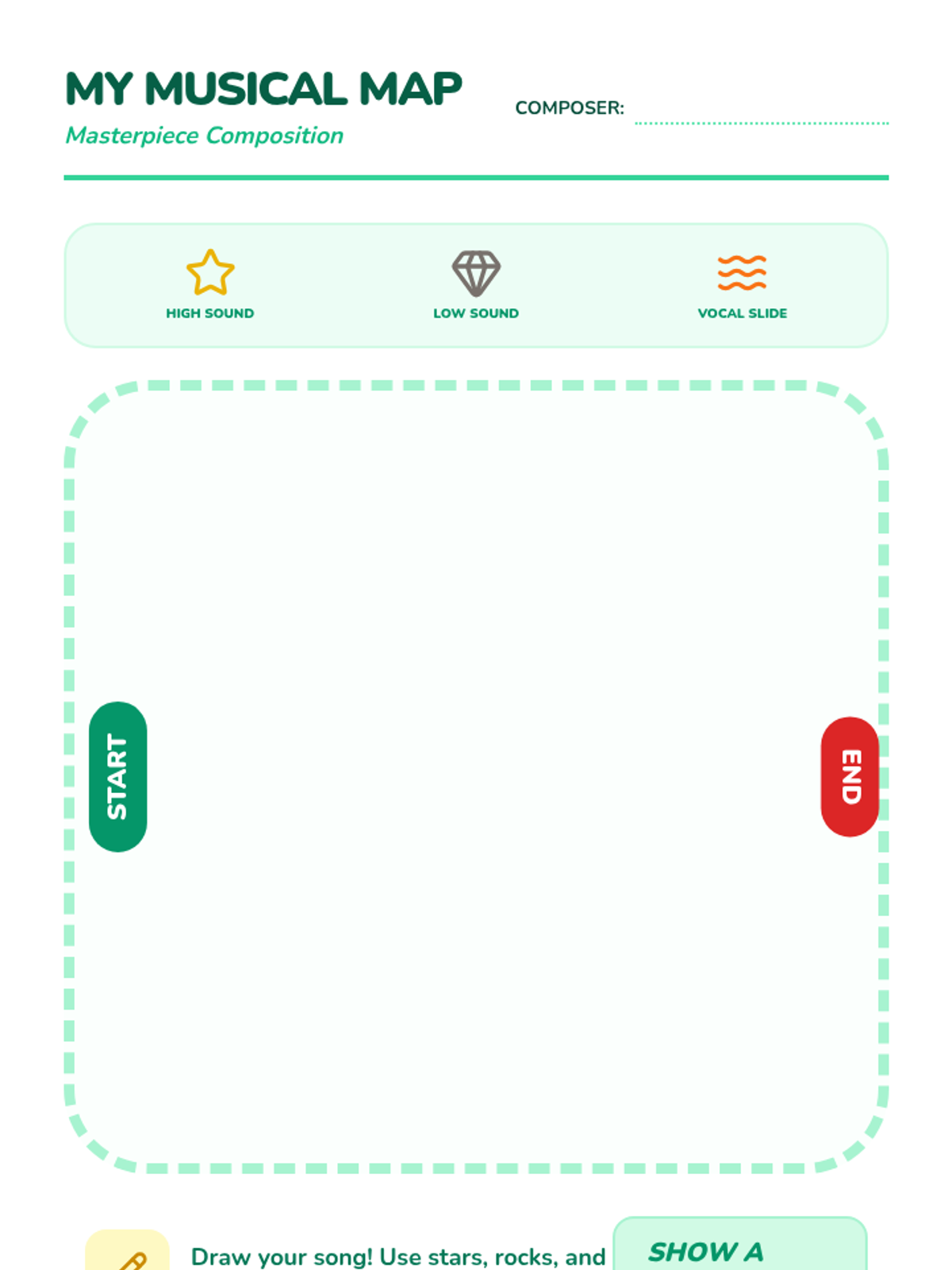
The culmination of the sequence where students compose their own graphic scores and perform them for their peers, demonstrating their understanding of high, low, and sliding sounds.
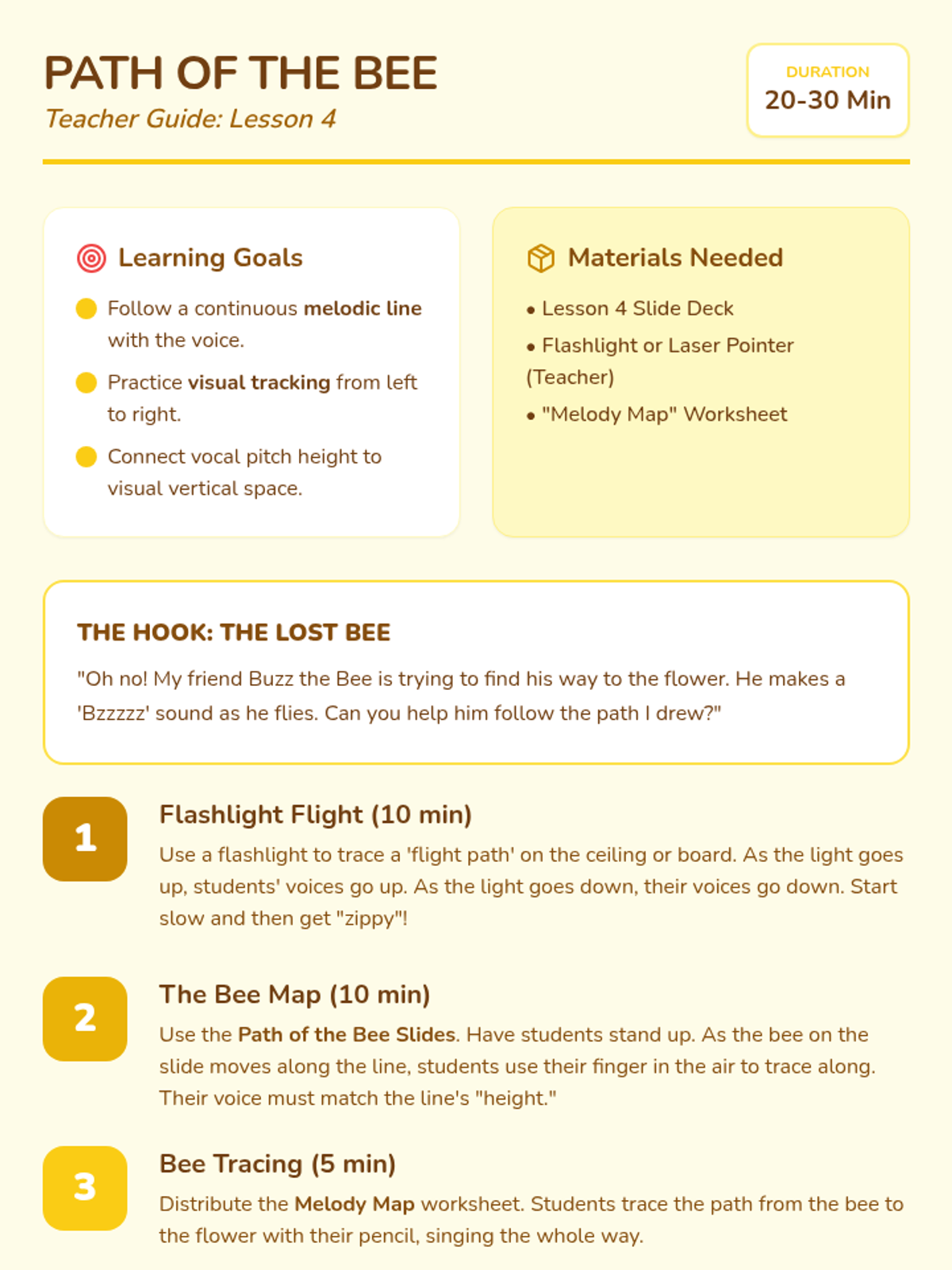
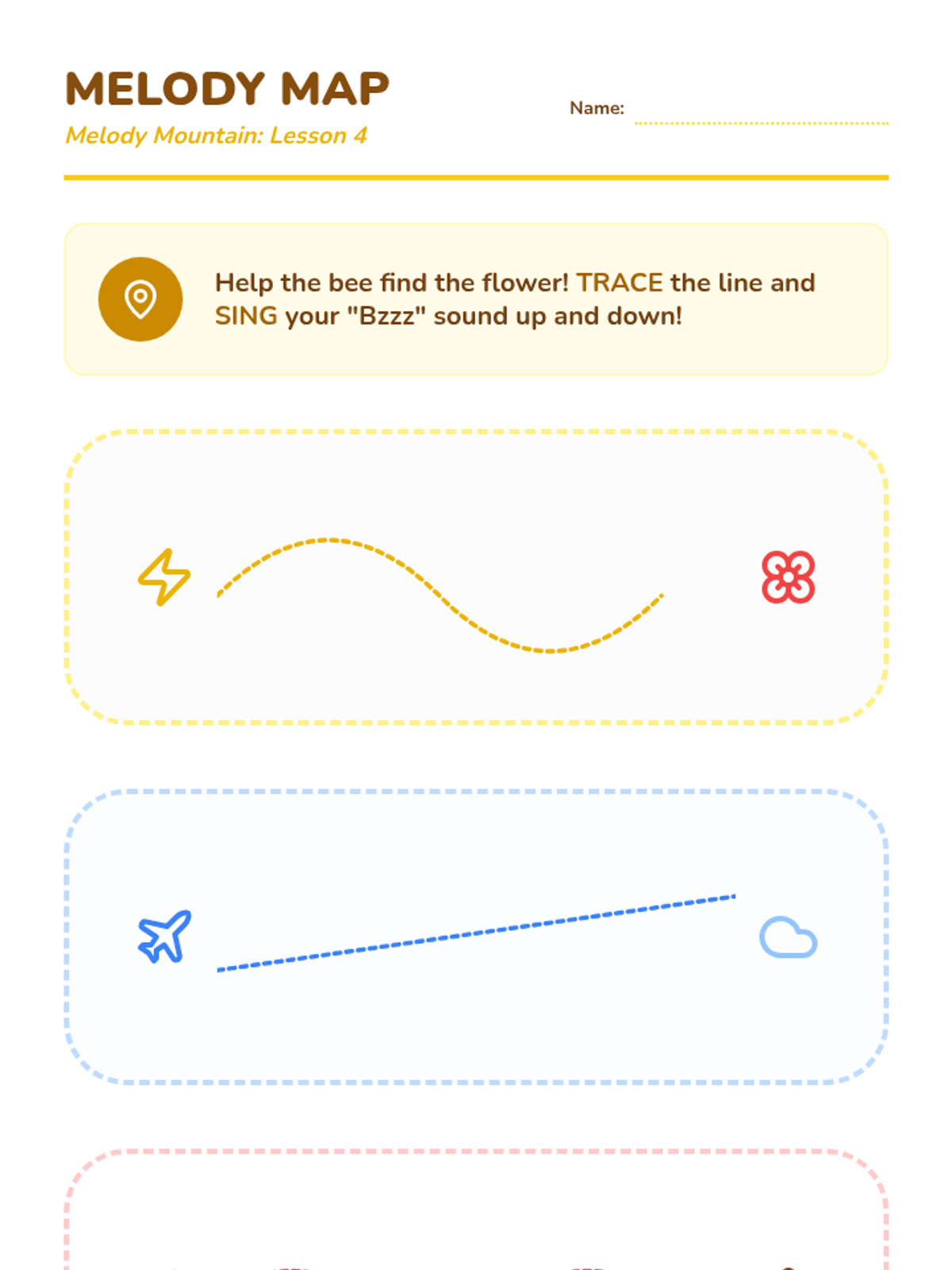
Students connect visual lines to pitch movement, tracing 'melody maps' that show the path of a sound moving continuously through high and low spaces.
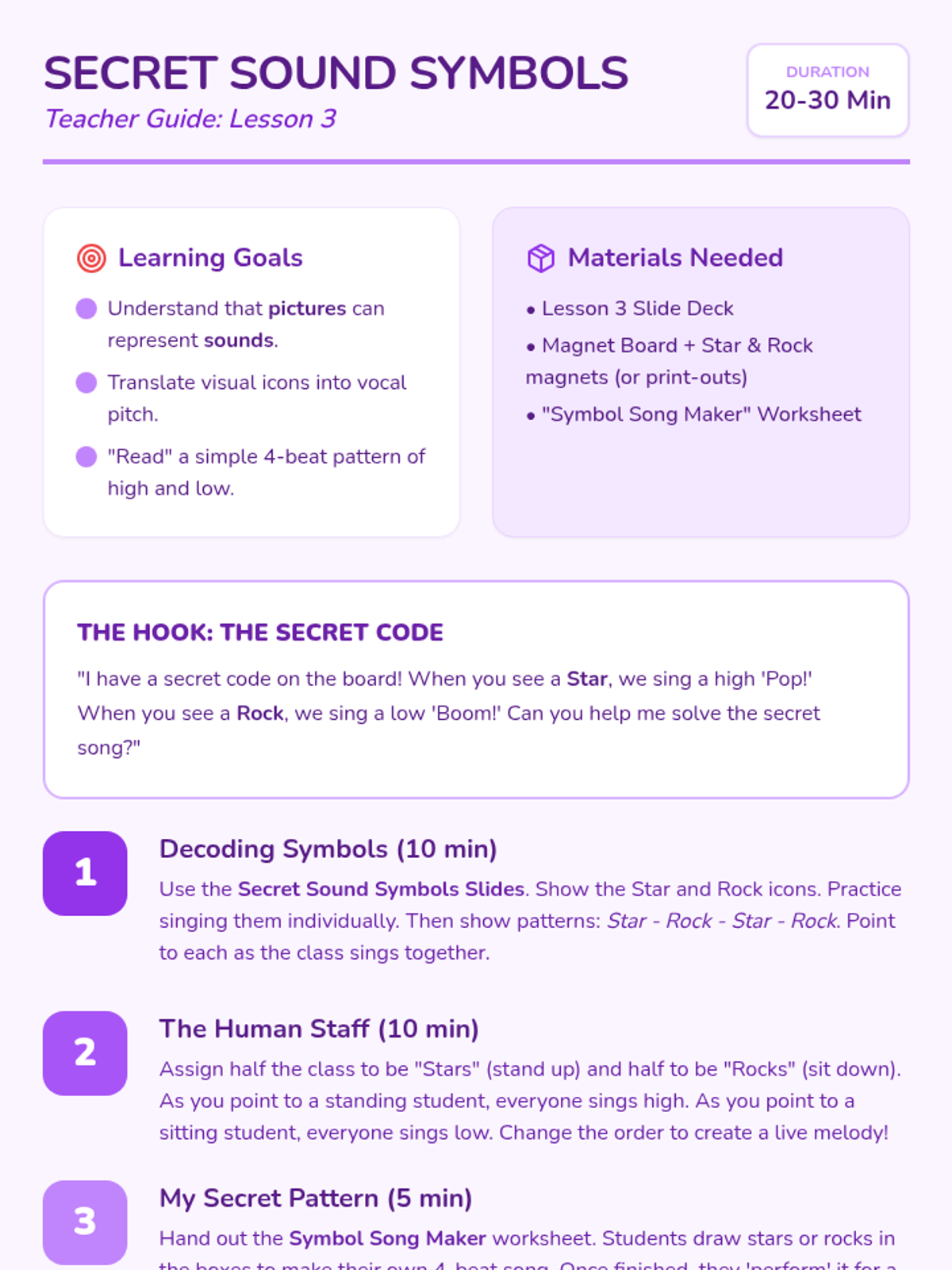
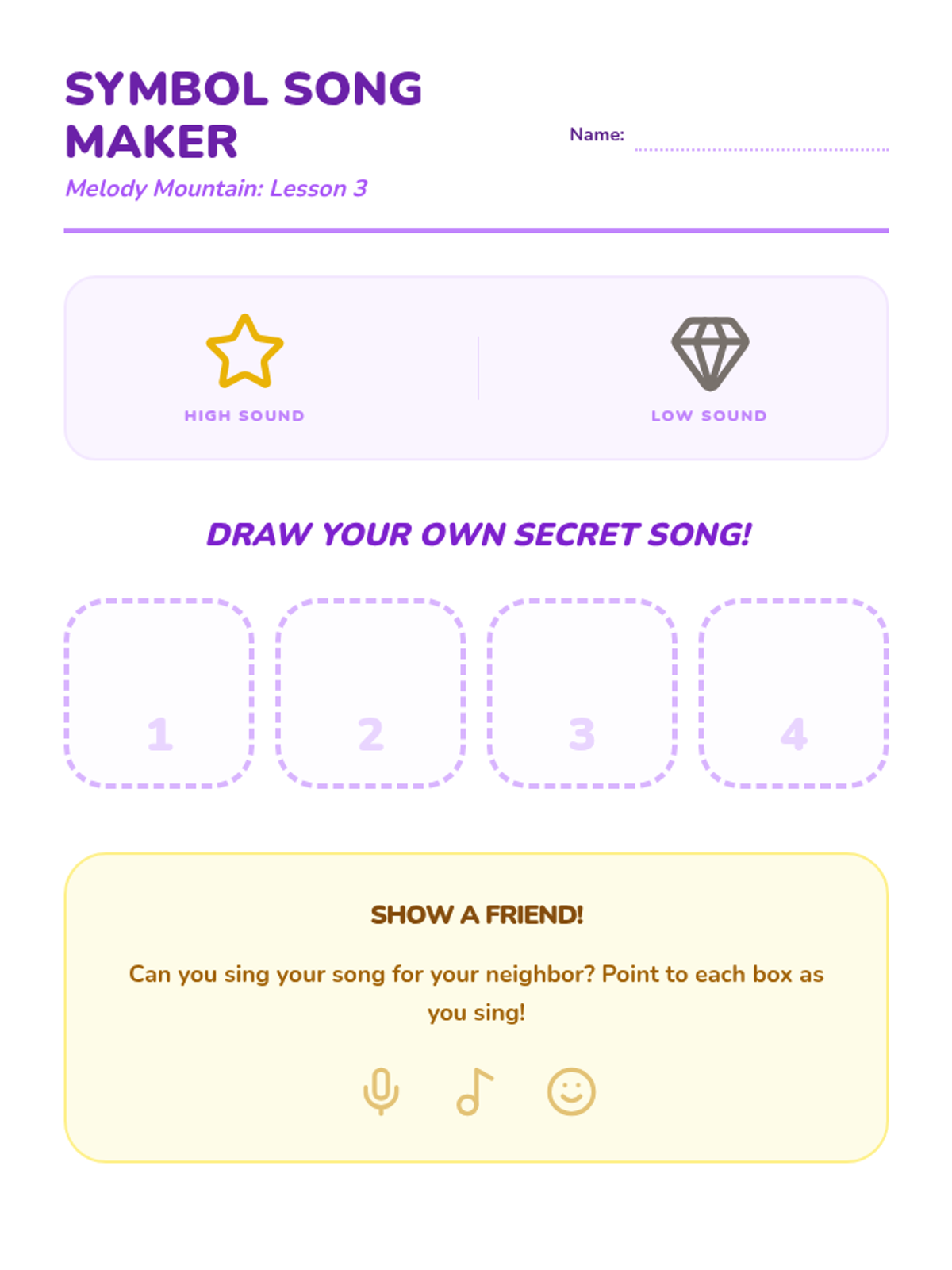
Introduces the concept of musical notation by using simple icons like stars and rocks to represent high and low sounds in a sequence.
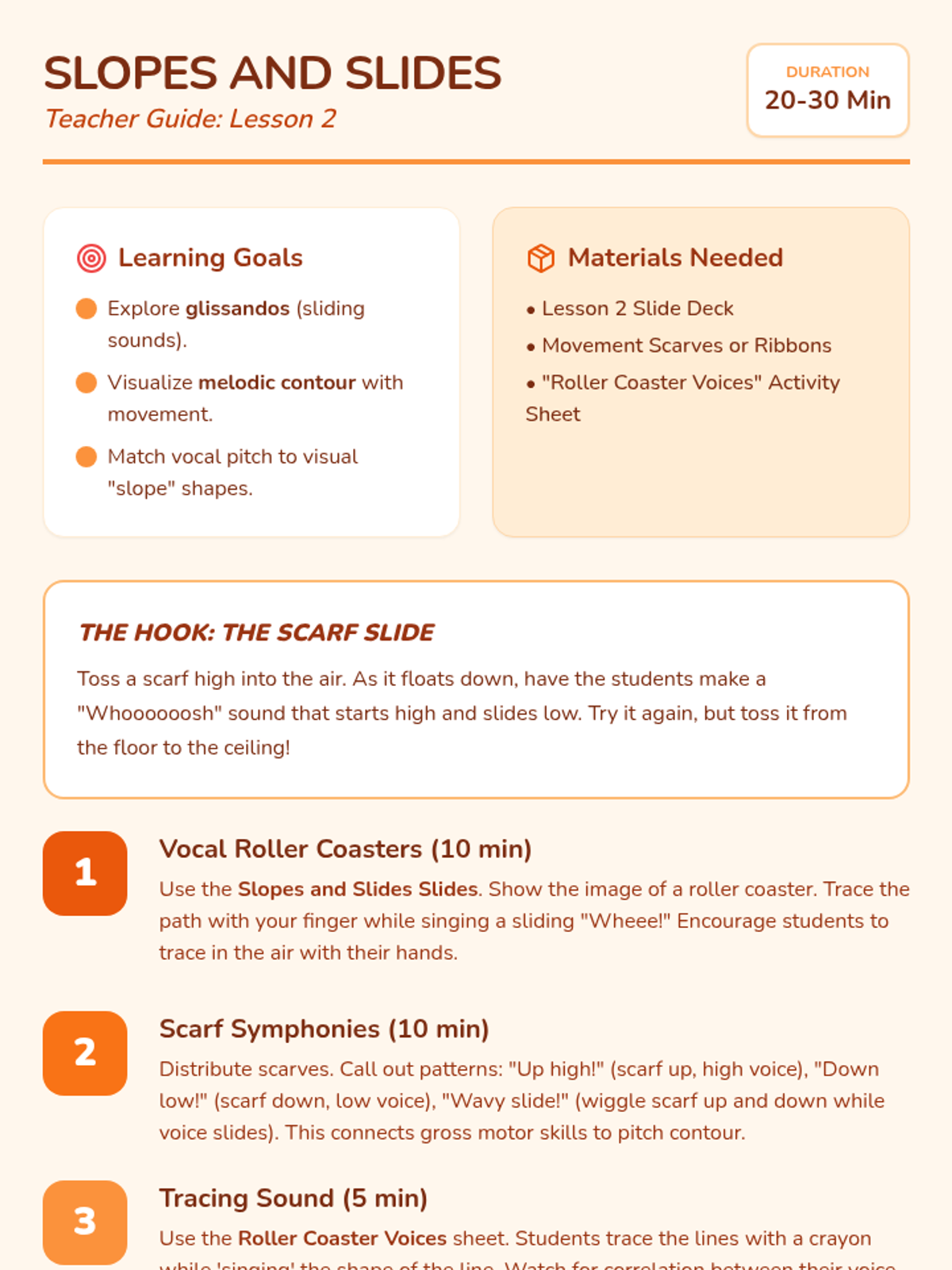
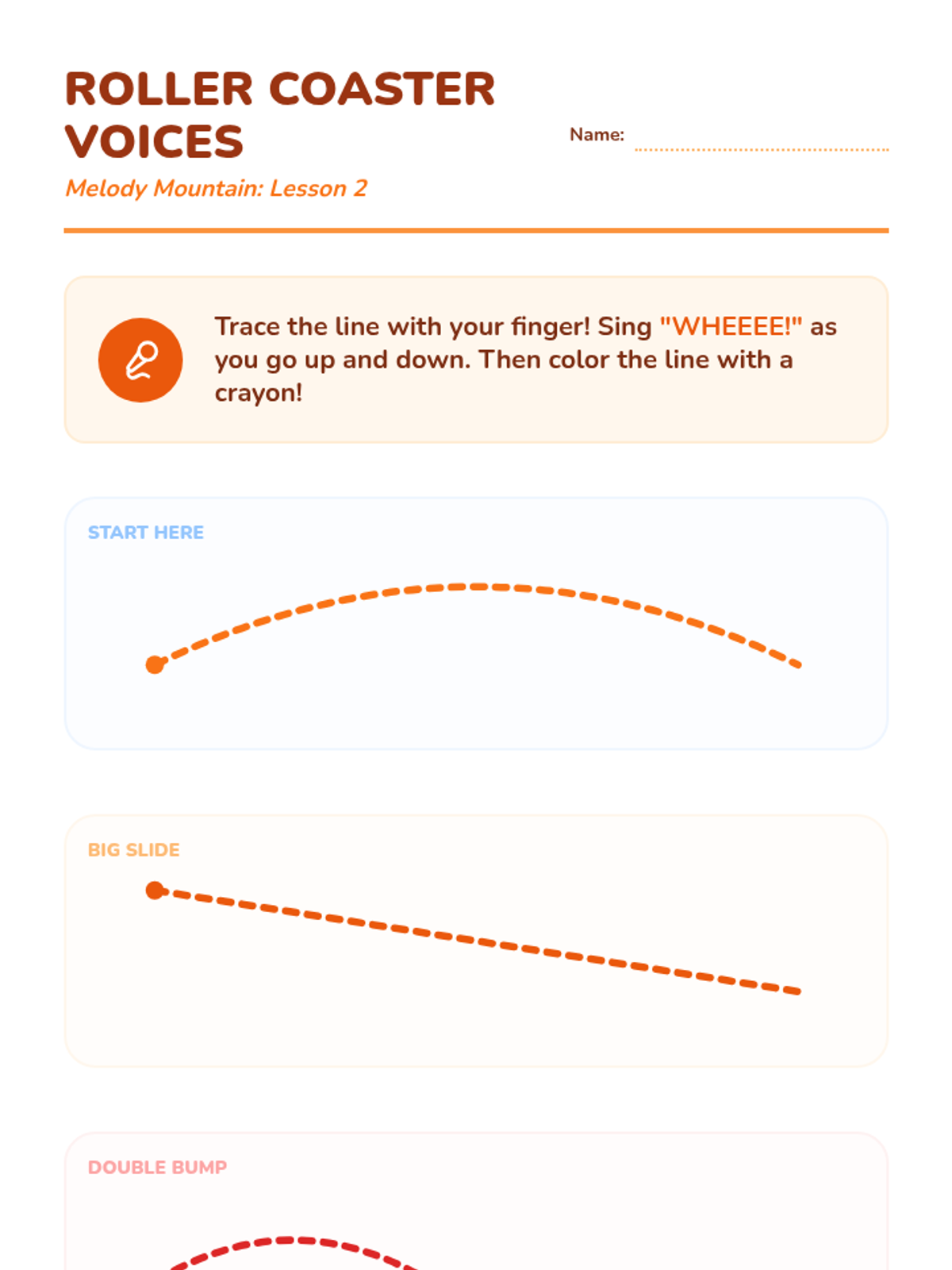
Focuses on melodic contour using glissandos, where students use their voices and scarves to mimic the smooth upward and downward paths of sirens and roller coasters.
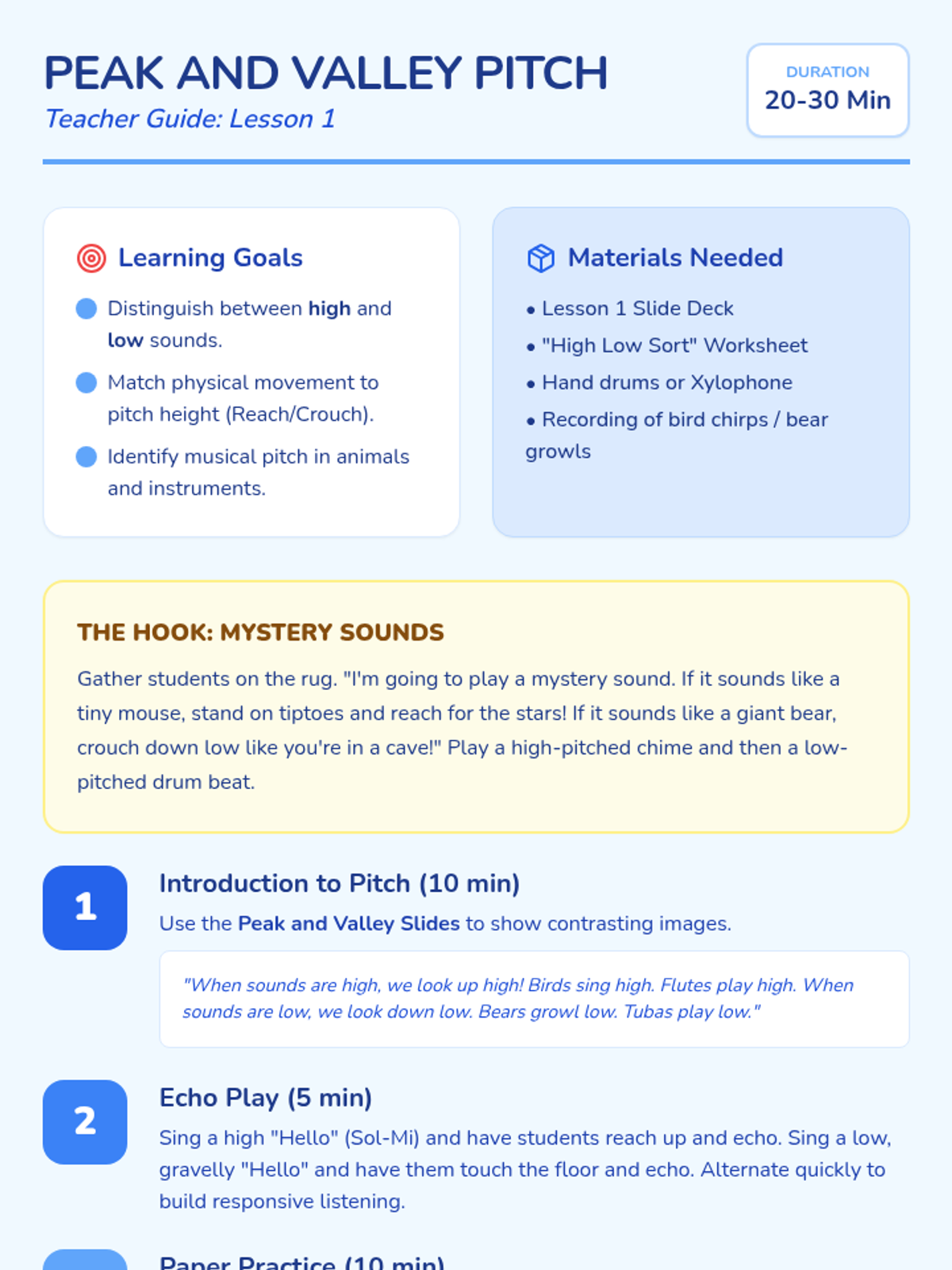
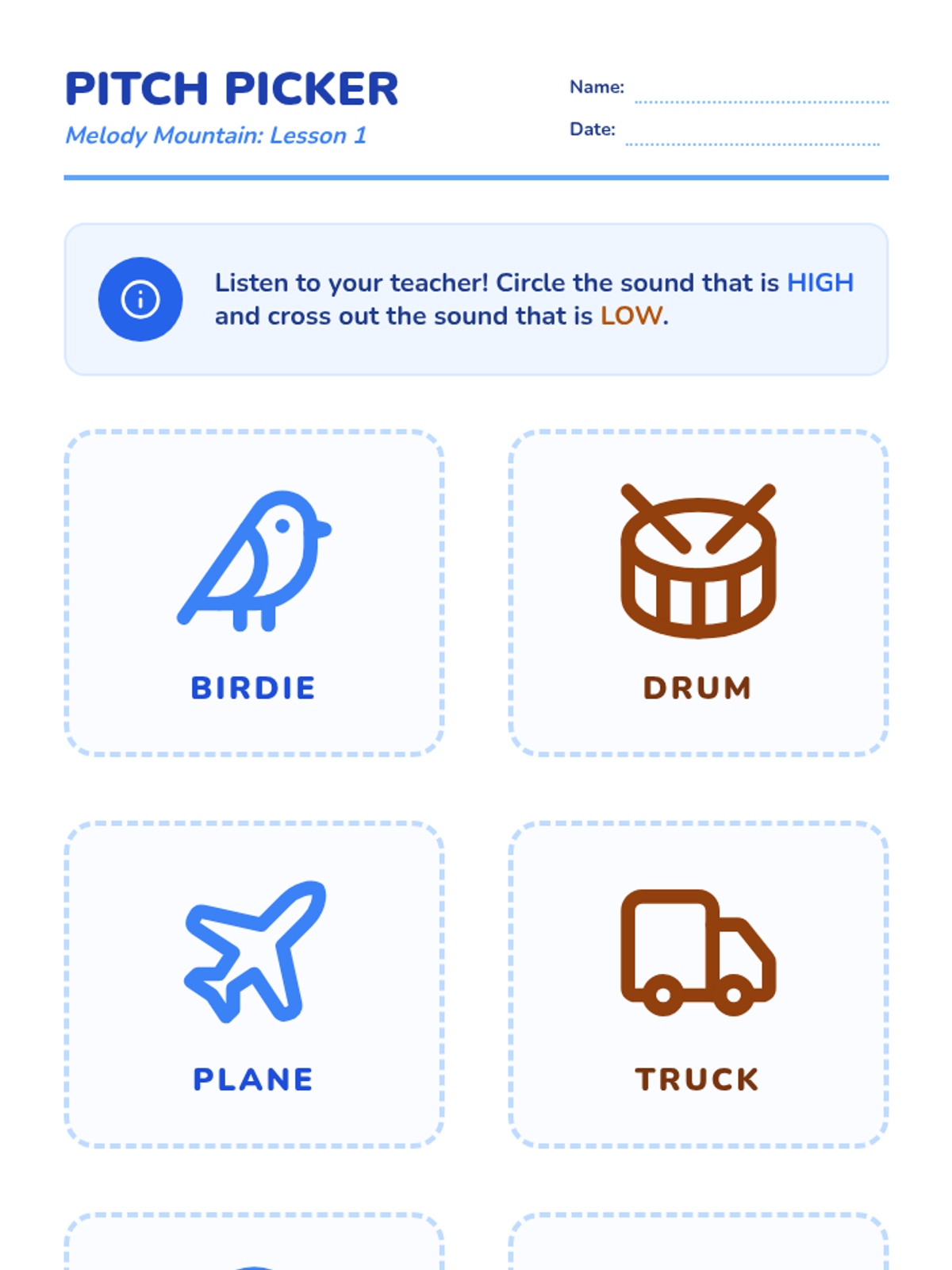
Students explore the concept of high and low pitch through active listening and whole-body movements, associating high sounds with the sky and low sounds with the ground.
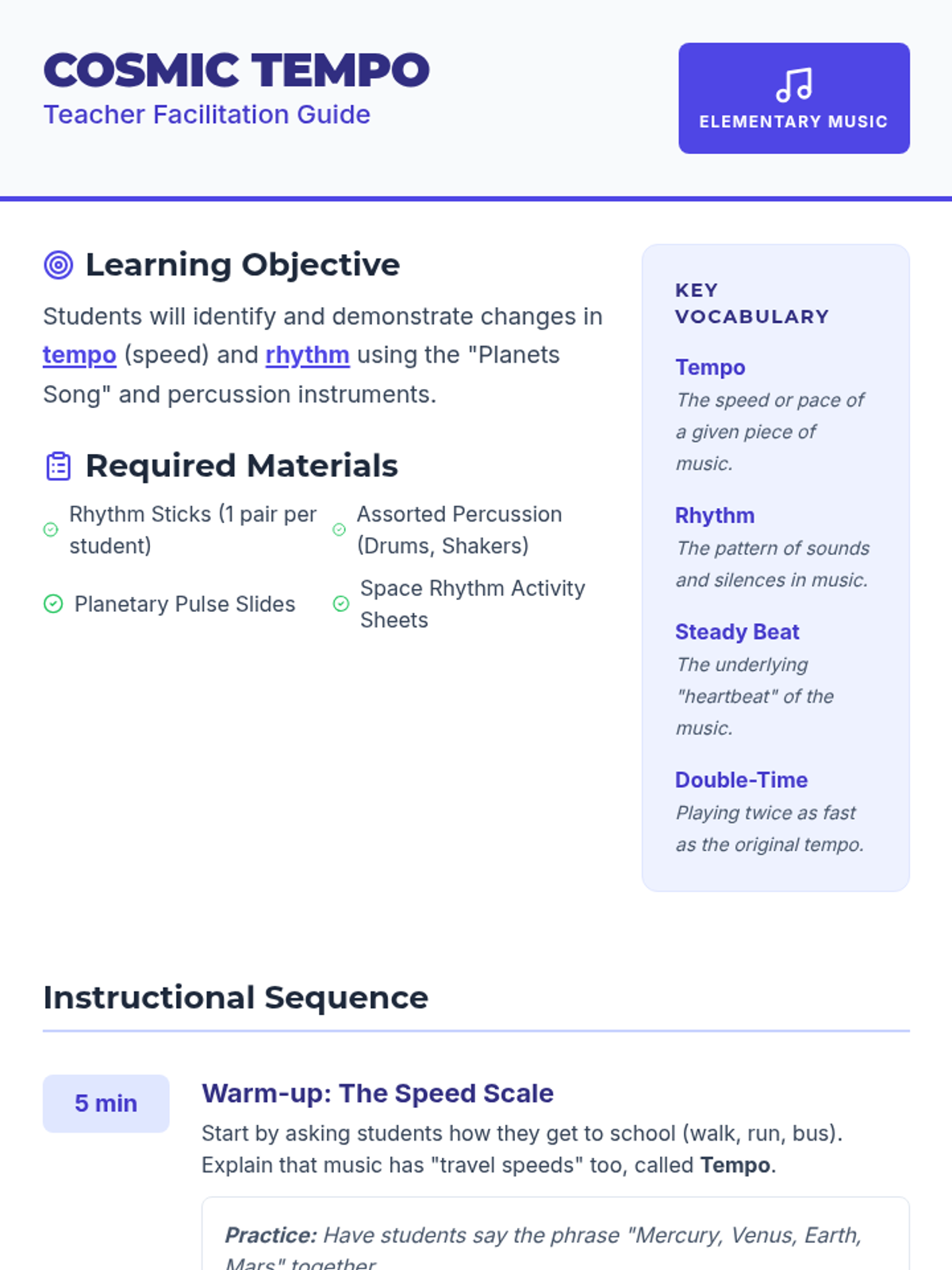
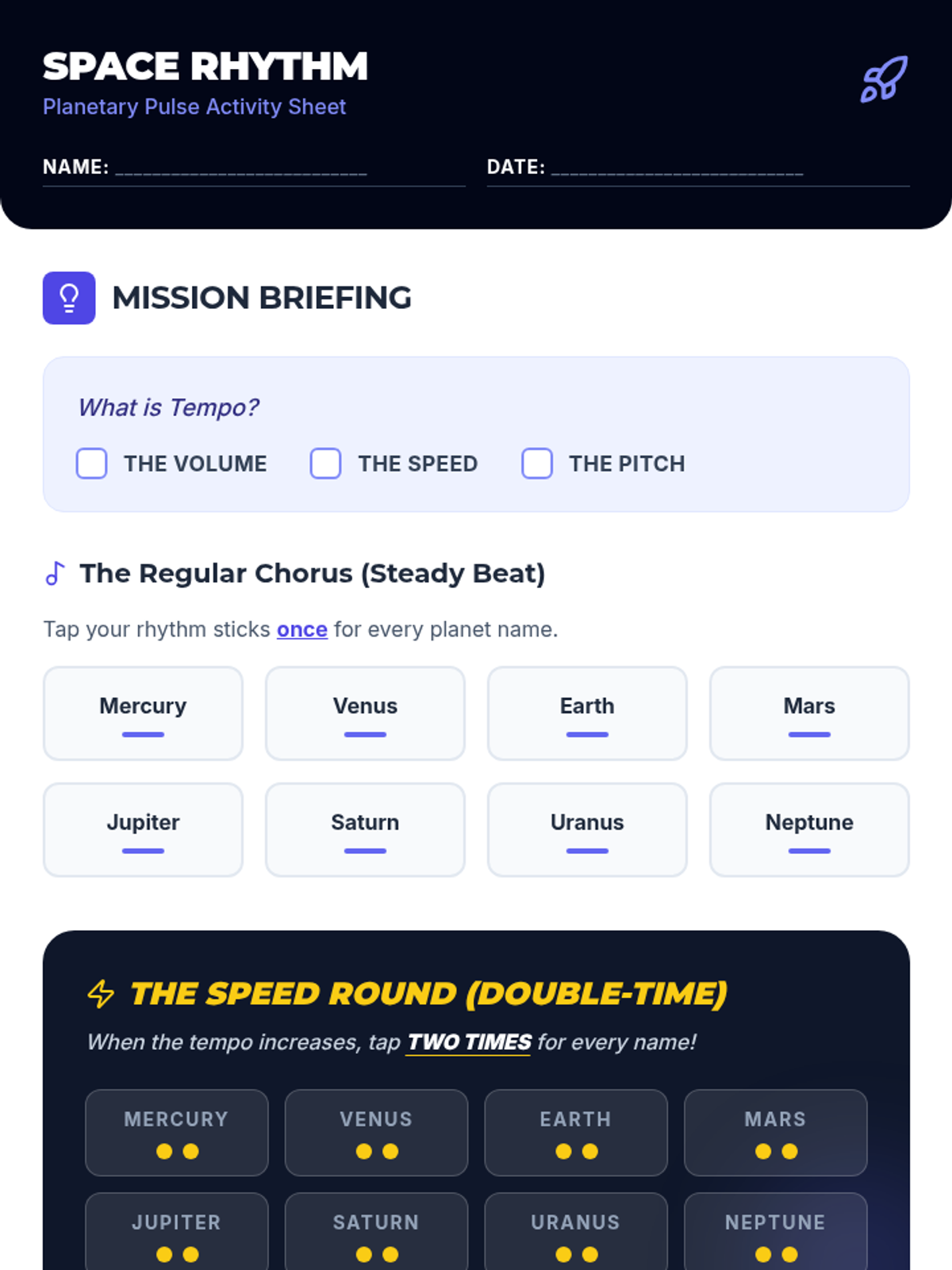
Students explore the concept of tempo and rhythm through a catchy song about the solar system, using rhythm sticks to match shifting speeds.
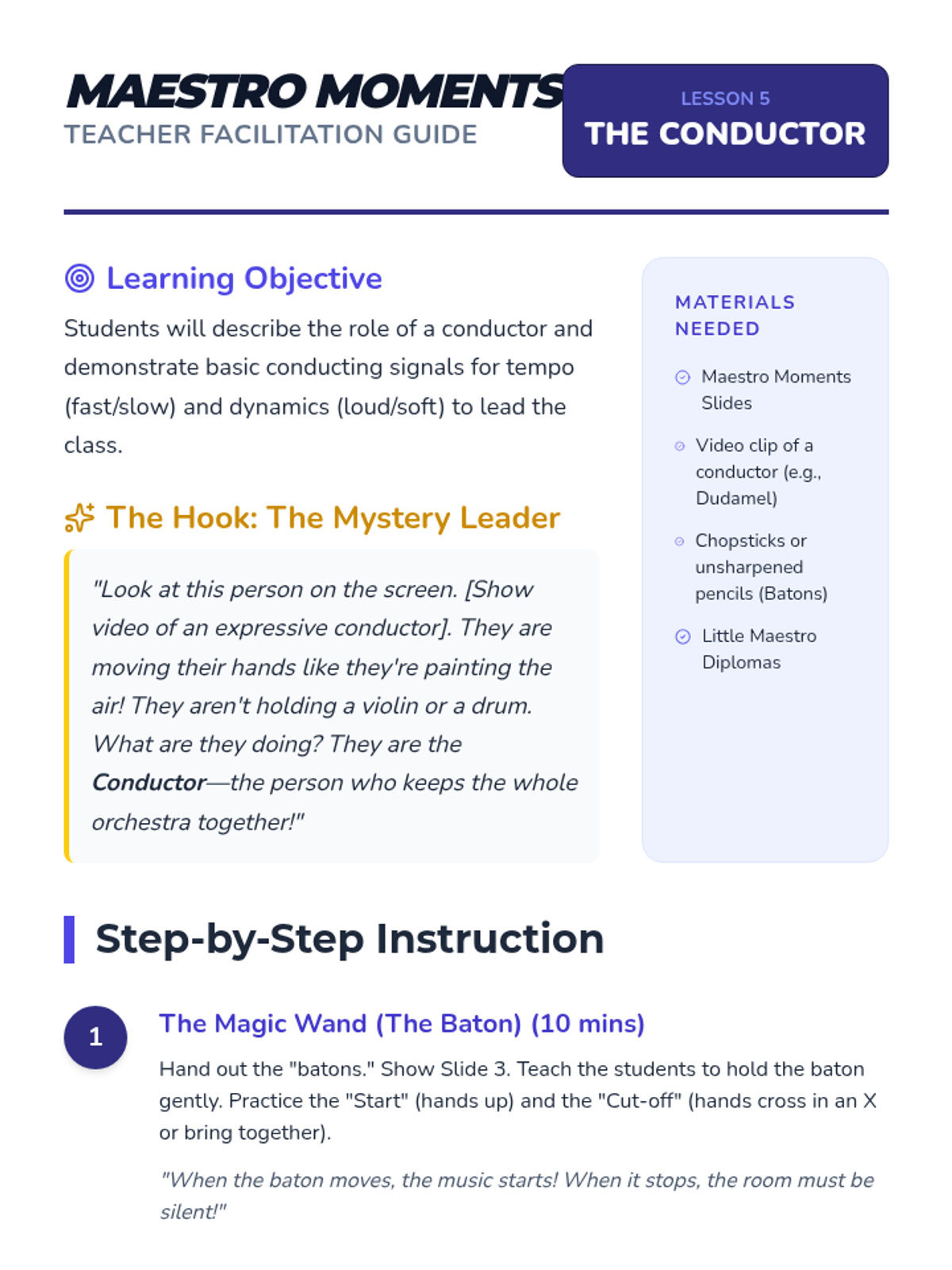
The sequence culminates with students learning the role of a conductor in unifying the instrument families and leading the class.
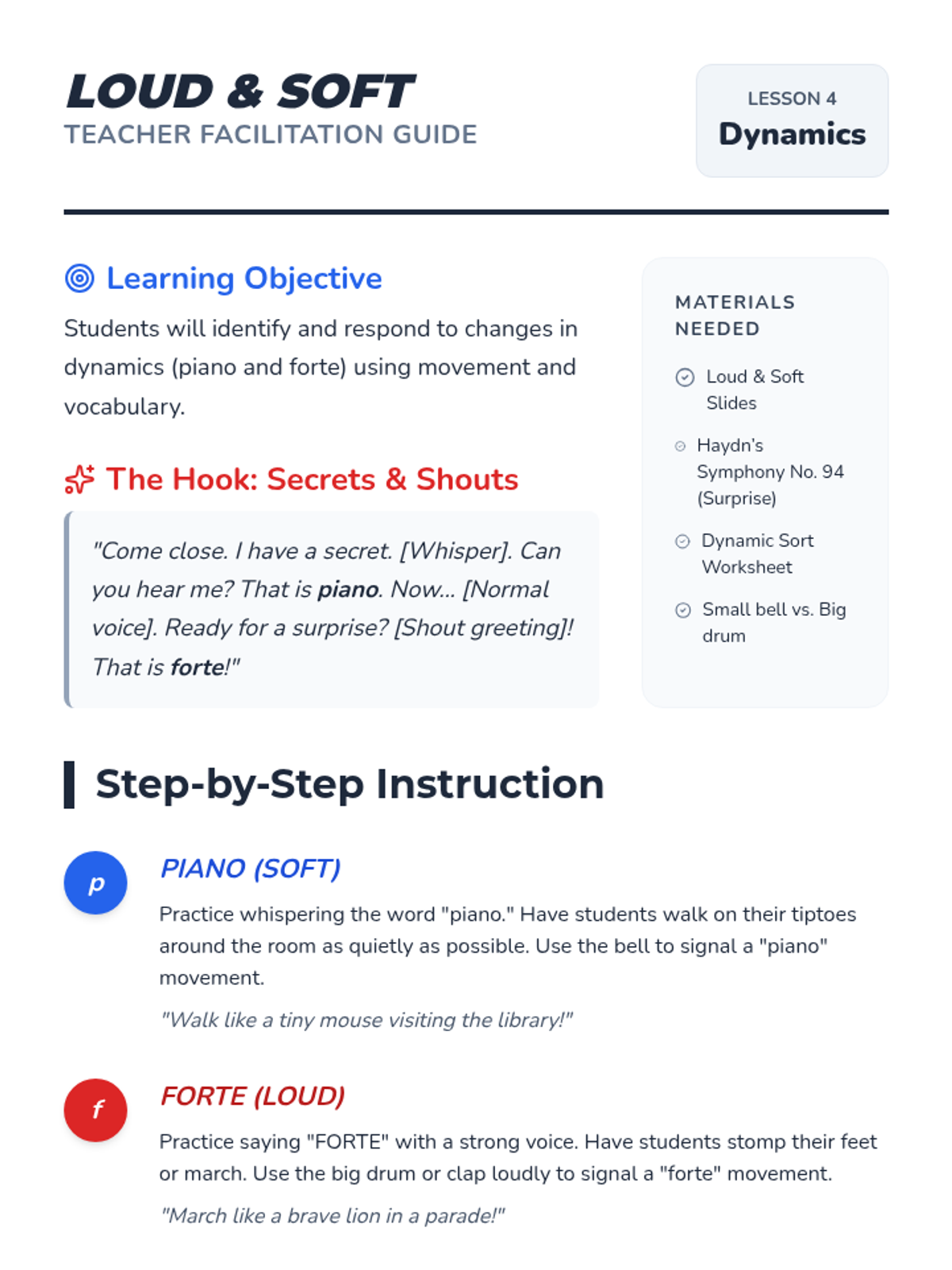
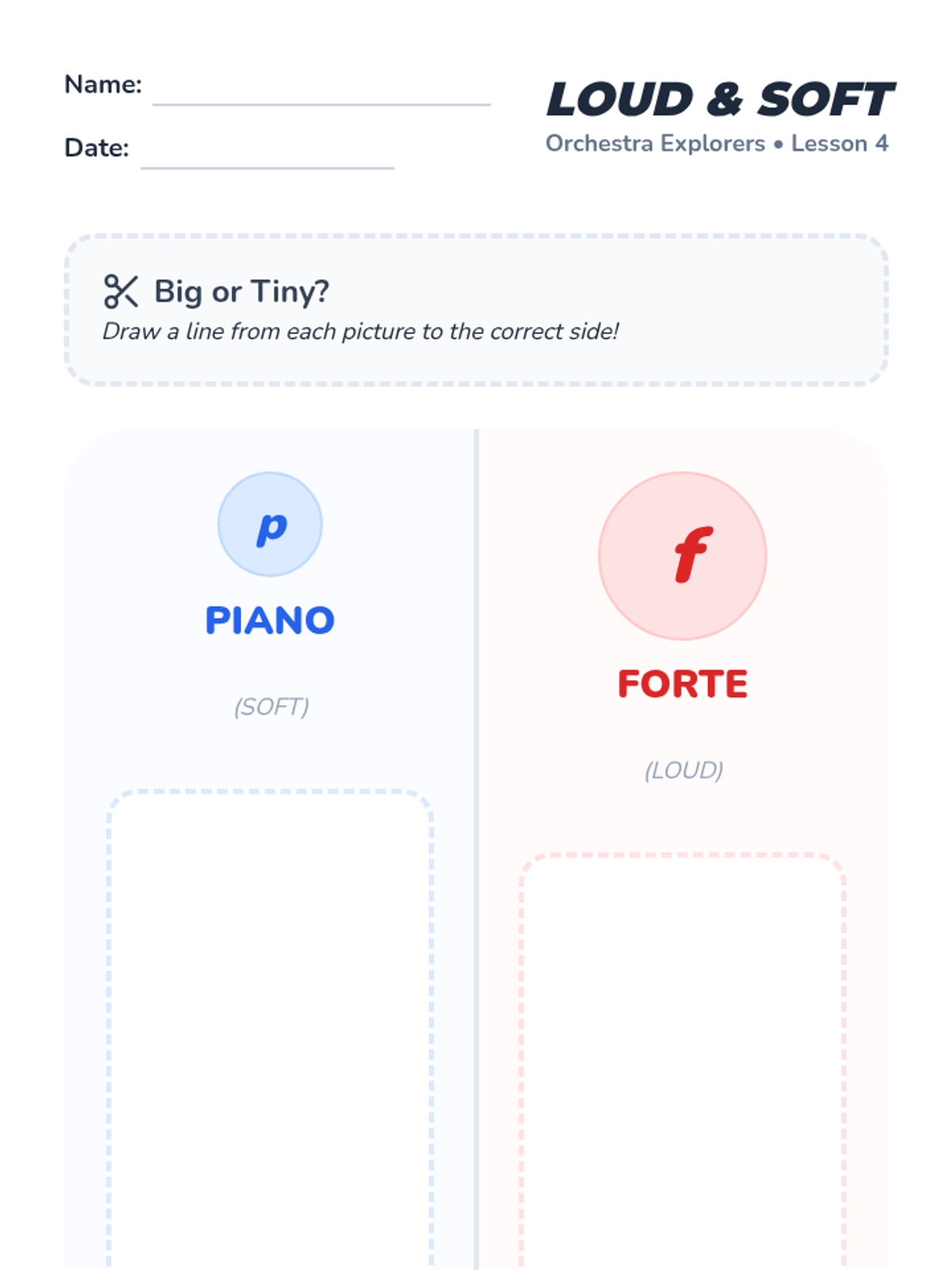
Using the instruments learned previously, students practice identifying dynamic changes (forte and piano) through a kinesthetic movement game.
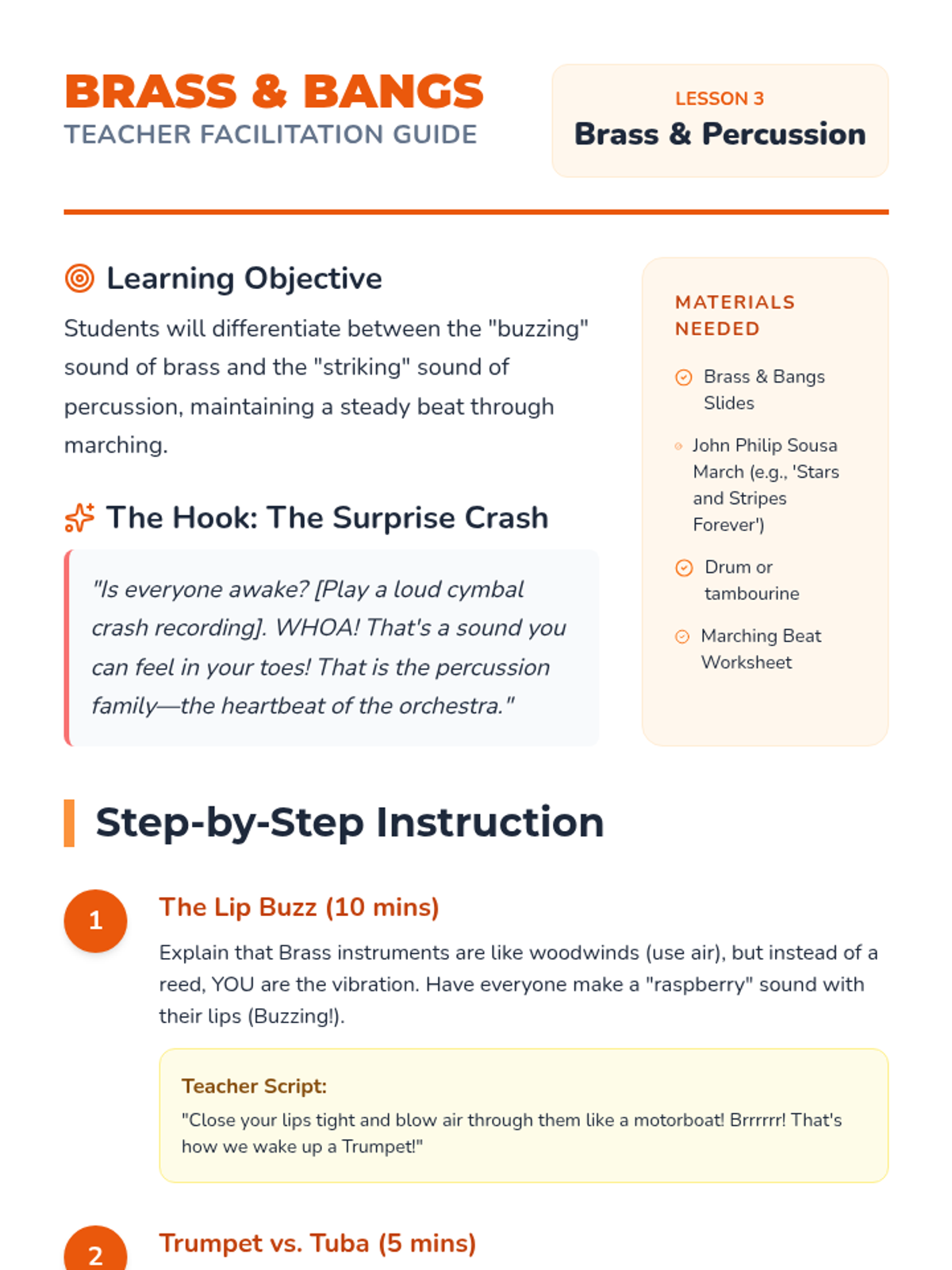
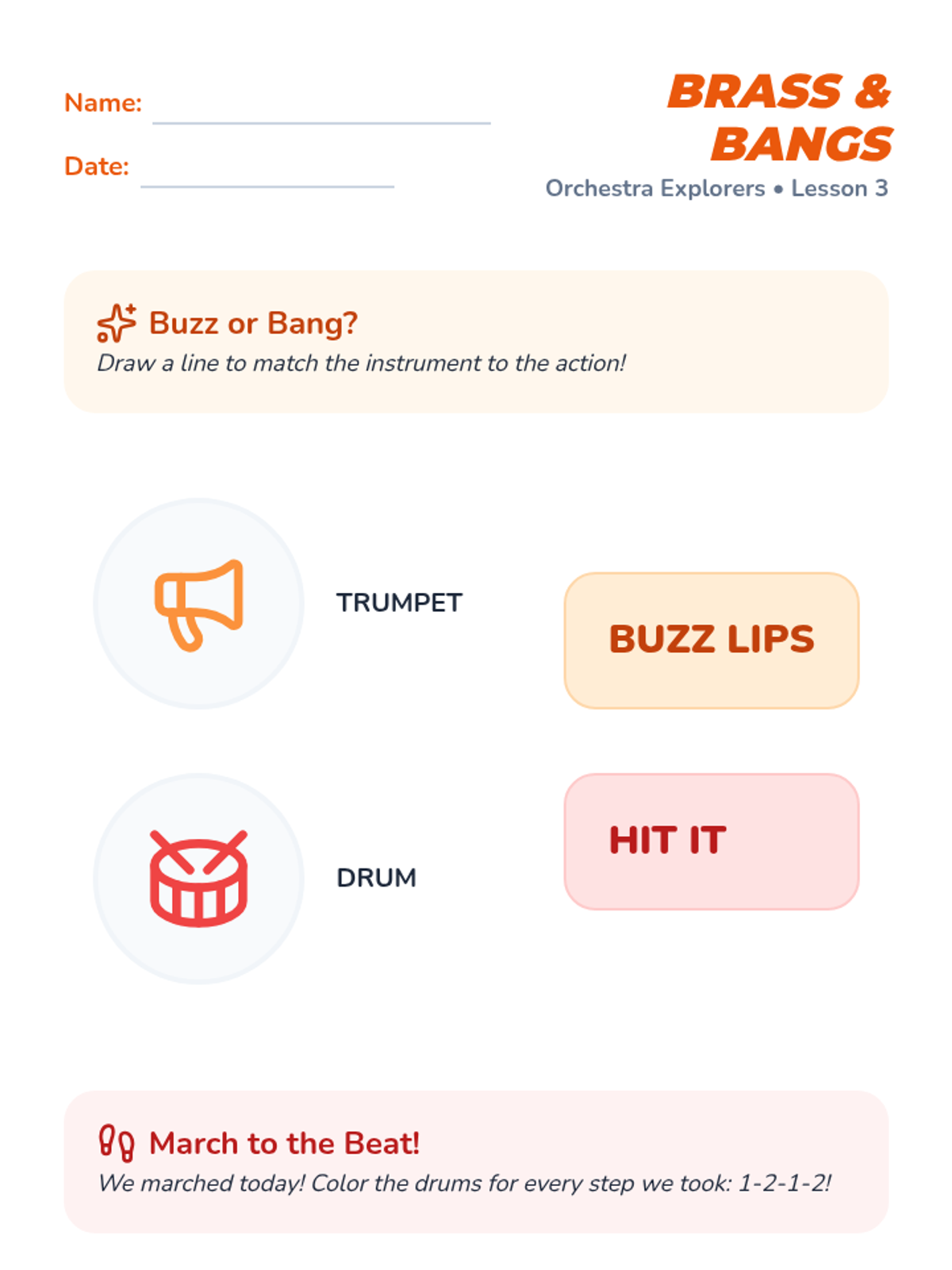
Students engage with the loud, bold sounds of the brass family and the rhythmic drive of percussion through marching and body percussion.
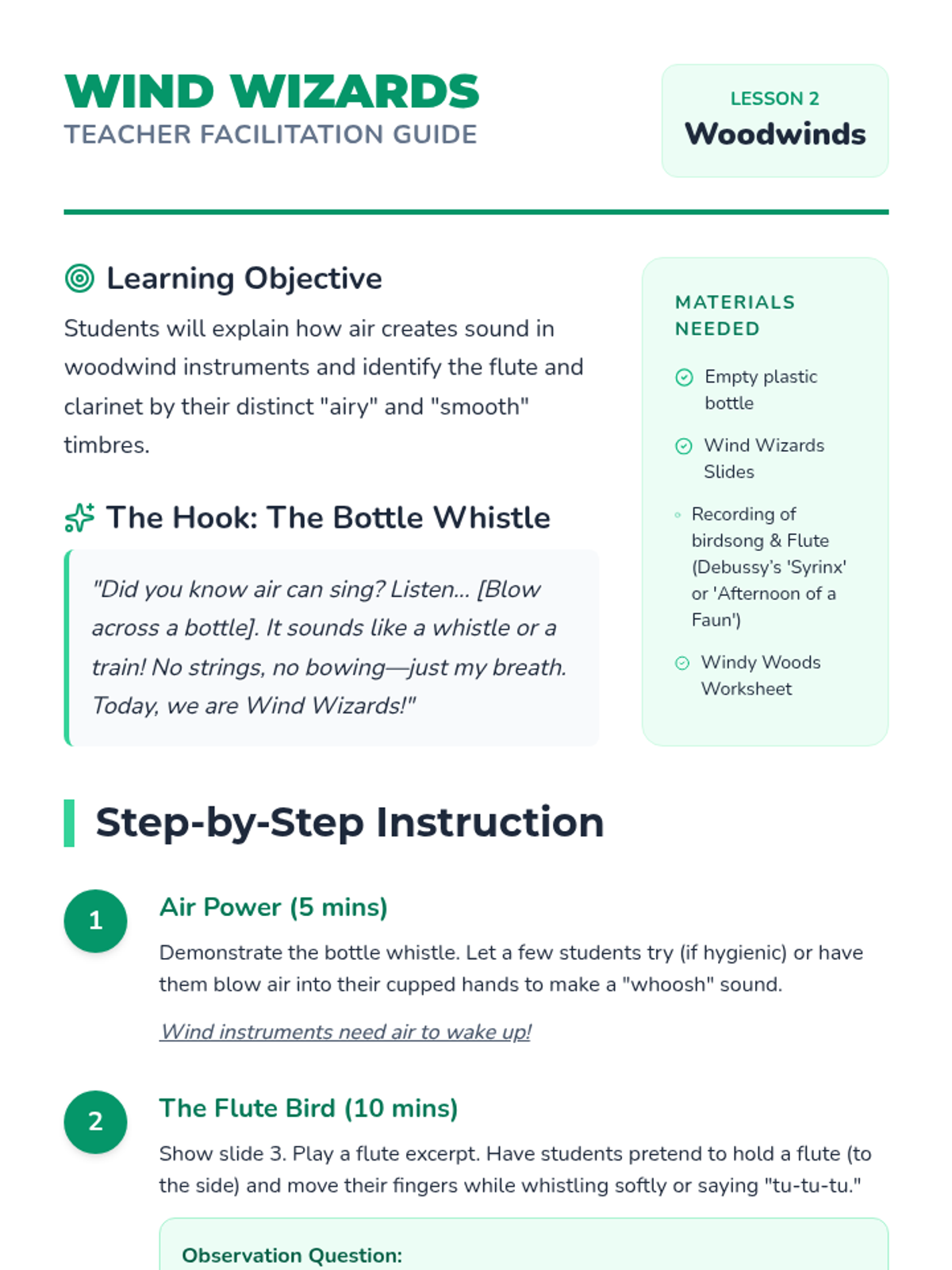
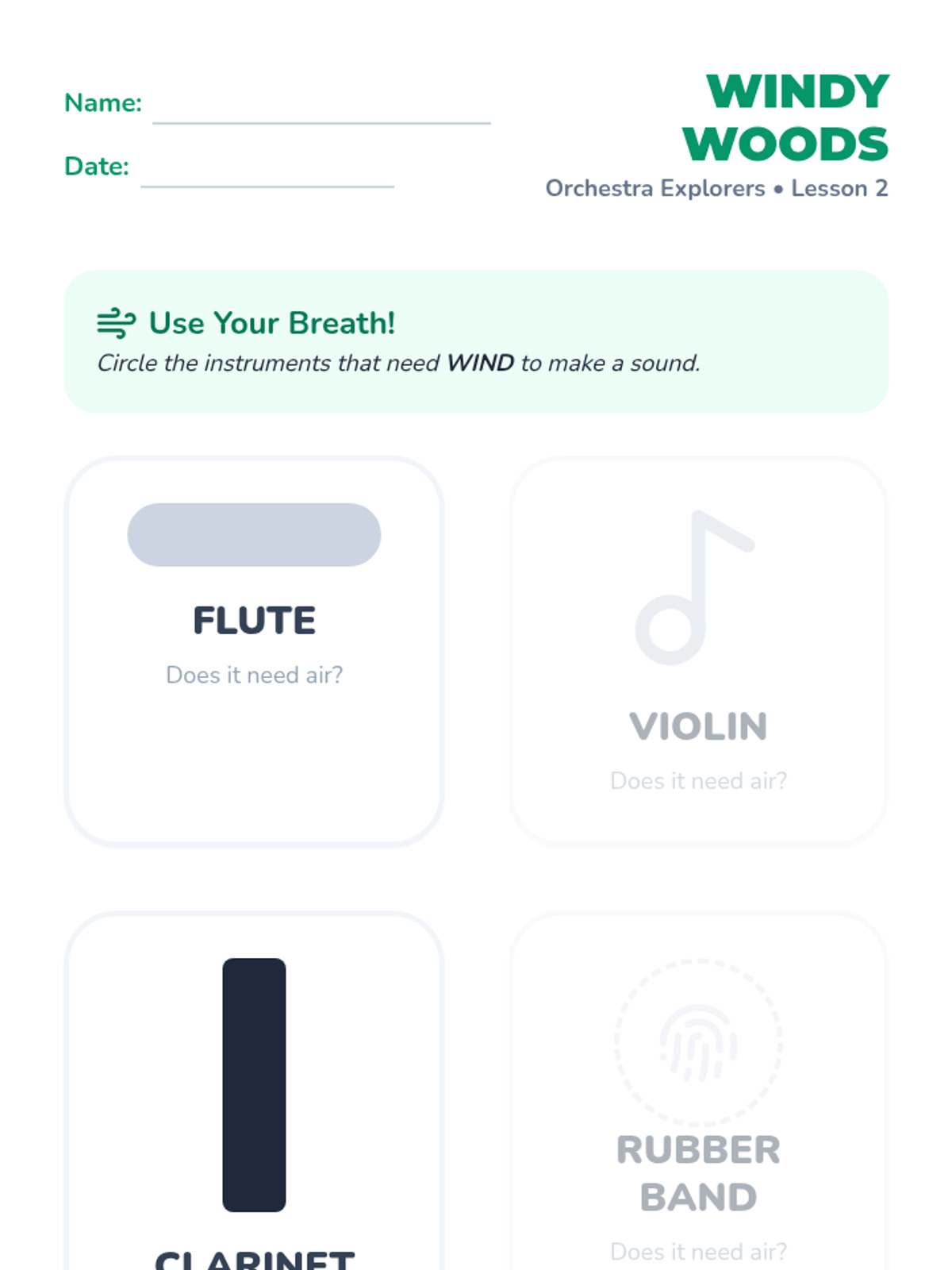
Learners investigate woodwind instruments, focusing on the flute and clarinet, and how wind creates sound through musical mimicry.