Develops technical proficiency and creative movement skills across various styles. Examines choreographic principles alongside the historical and cultural origins of diverse global dance forms.
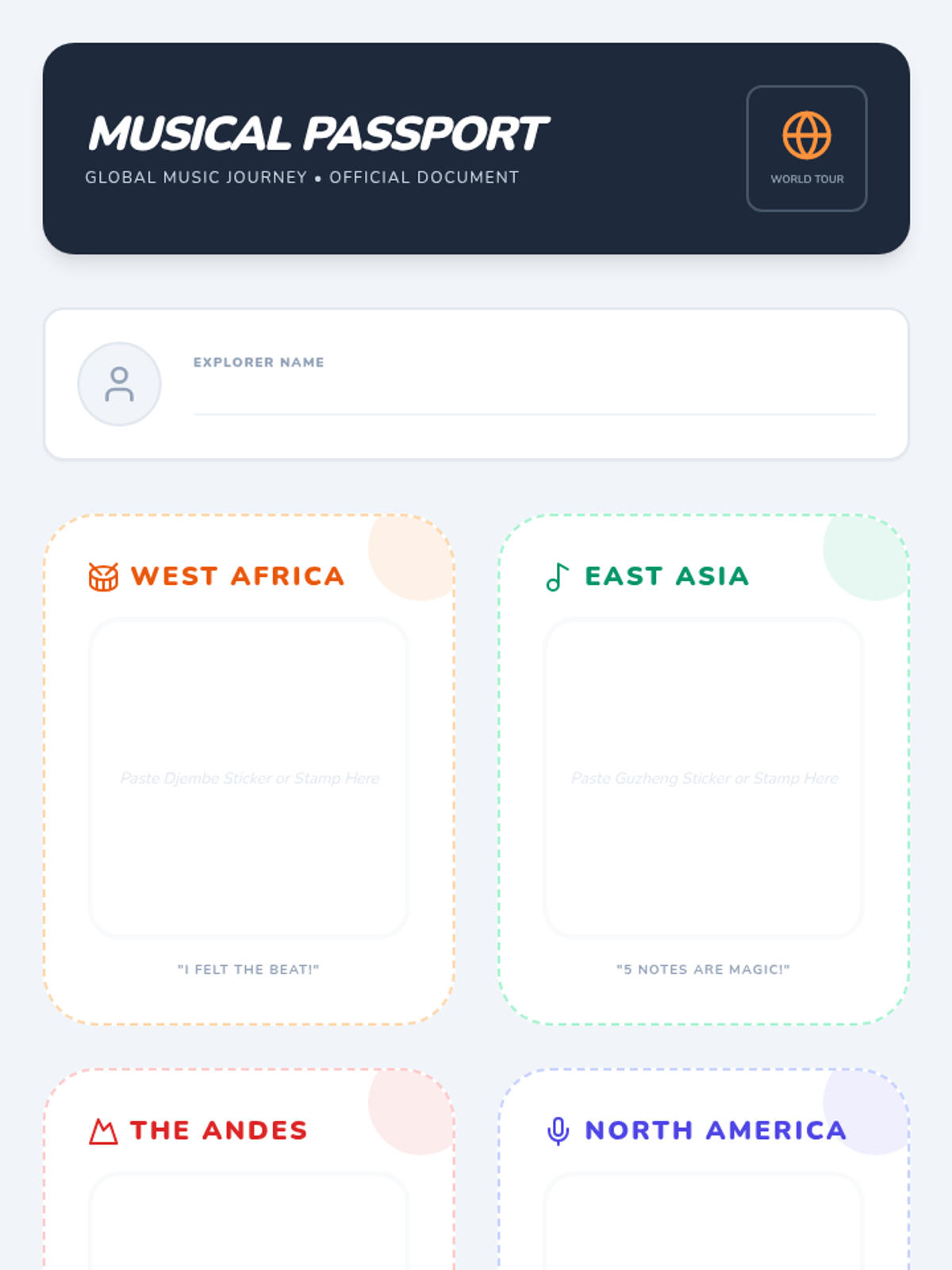
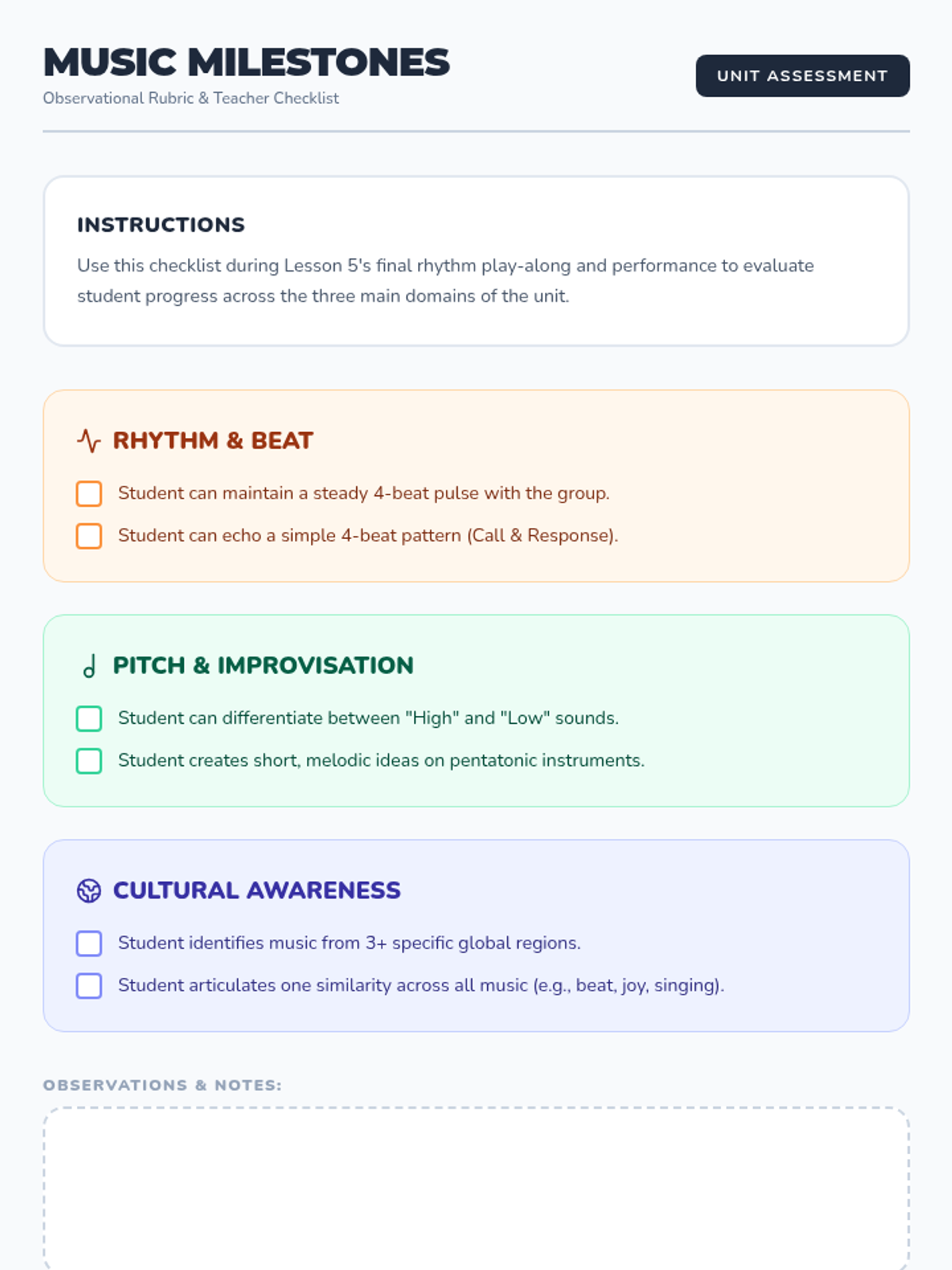
A cumulative celebration where students synthesize their learning by creating a musical passport and identifying universal themes in global music making.
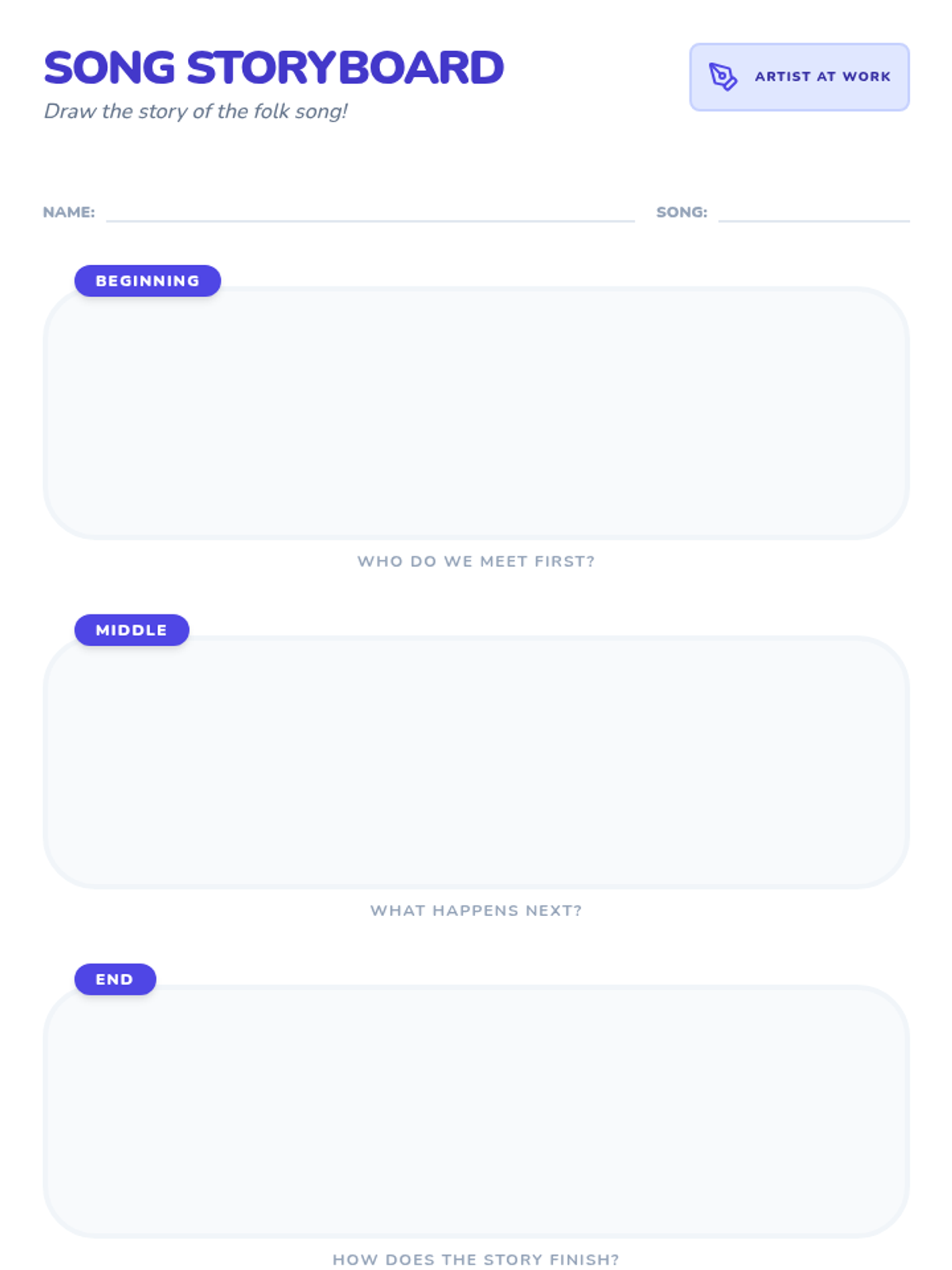
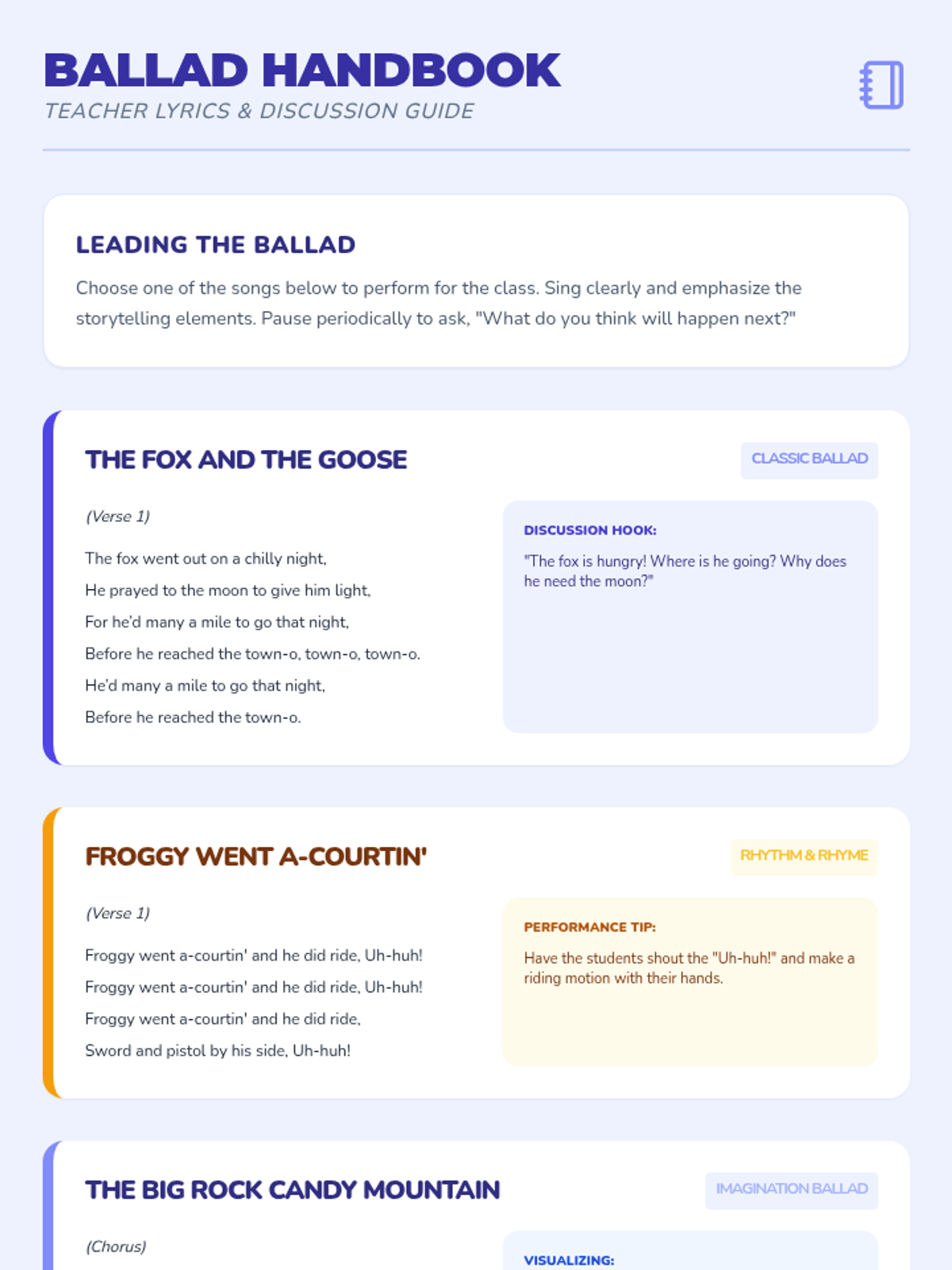
An exploration of American folk music where students discover the banjo and fiddle while learning how songs tell stories of history and daily life.
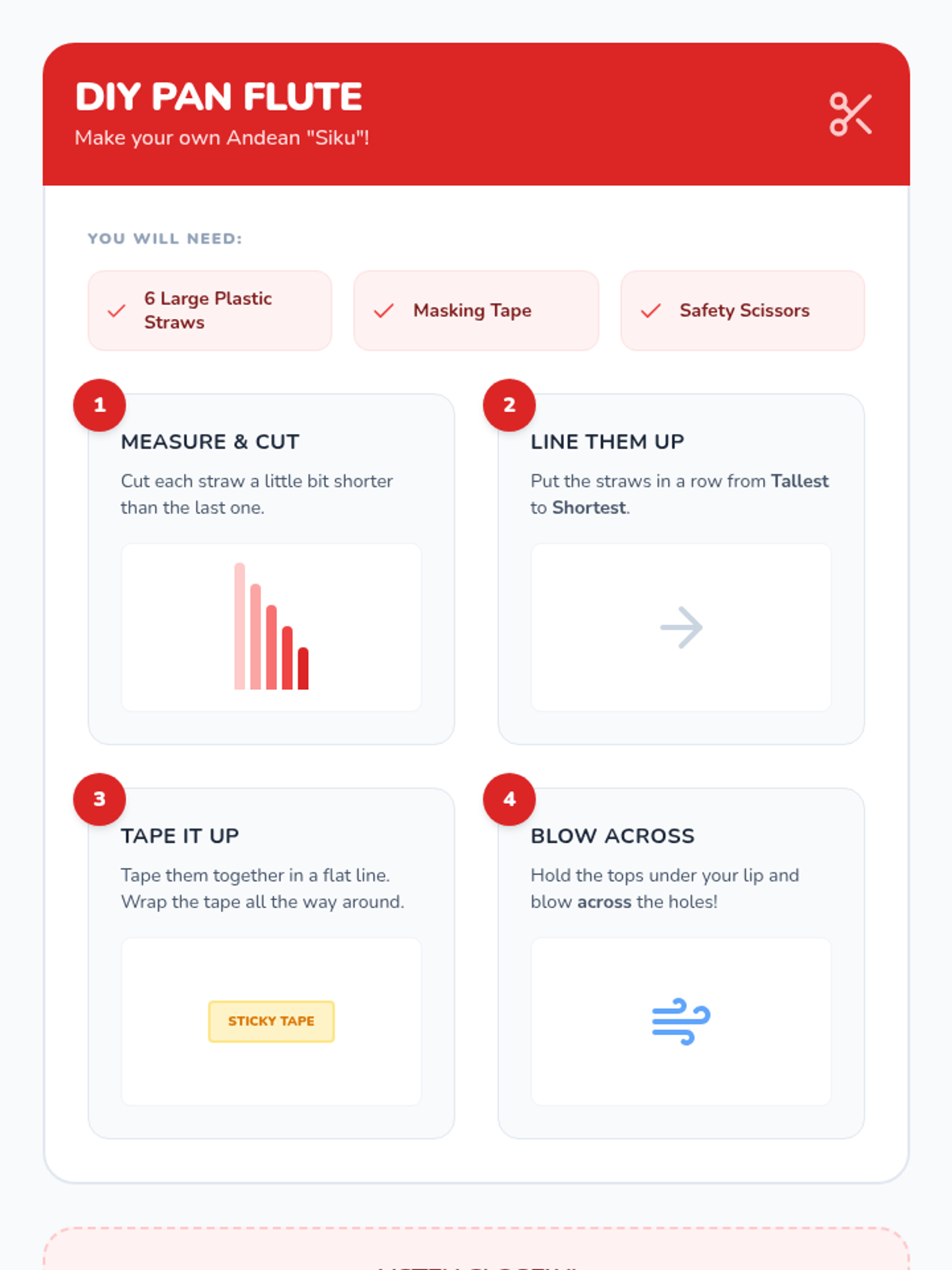
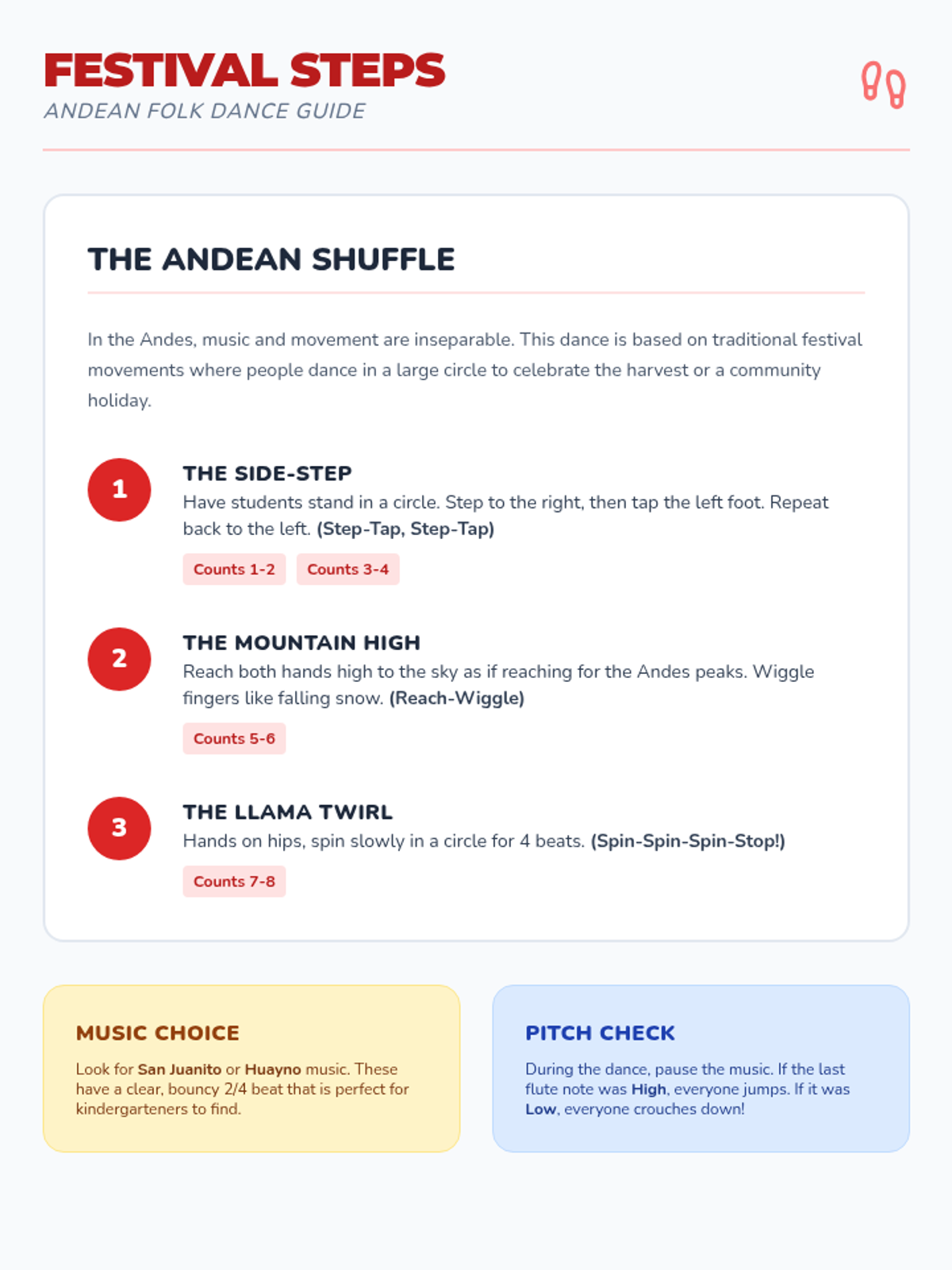
Students investigate the pan flute and the charango, learning about Andean festivals and experiencing traditional dance and pitch variation.
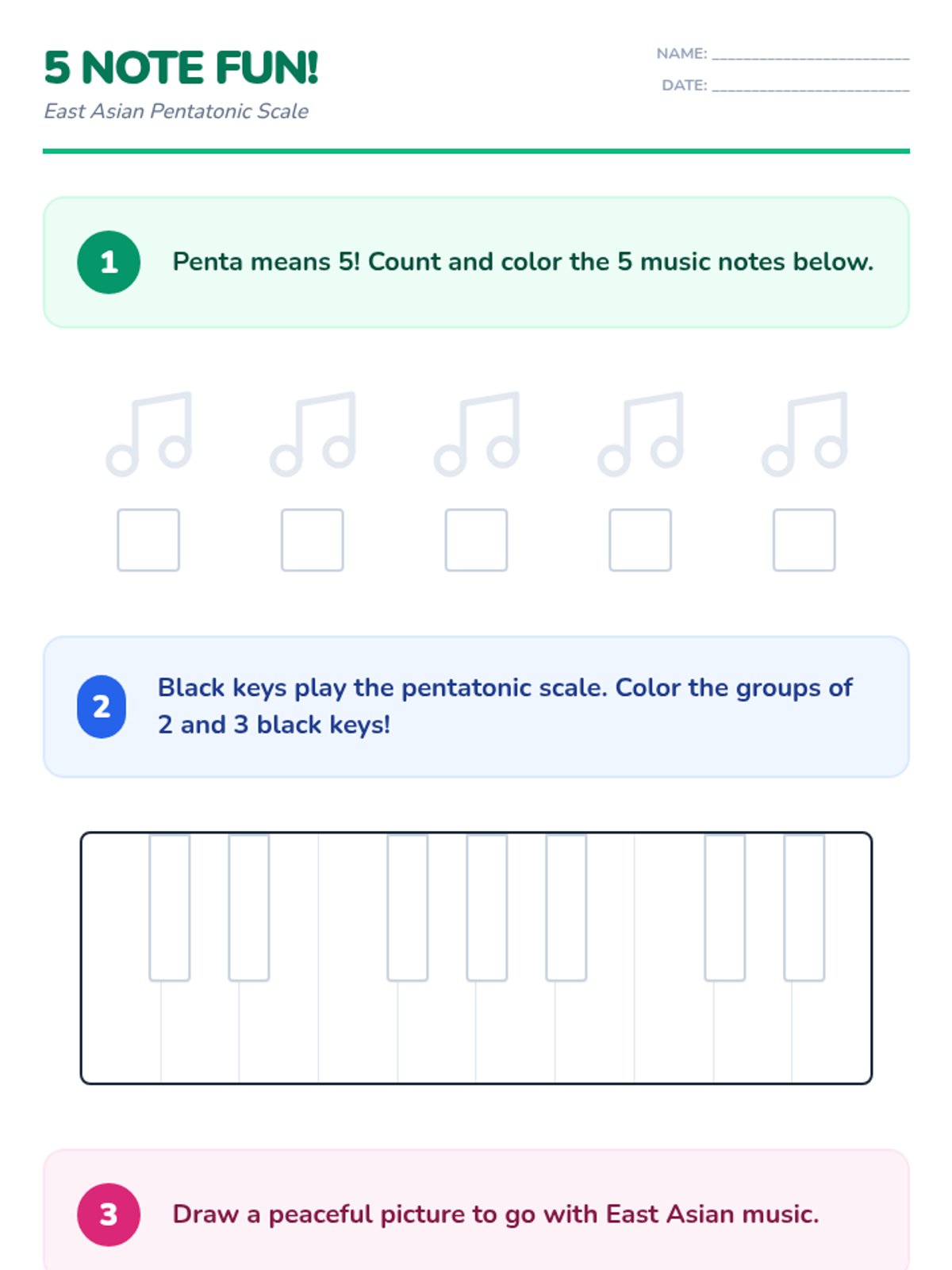
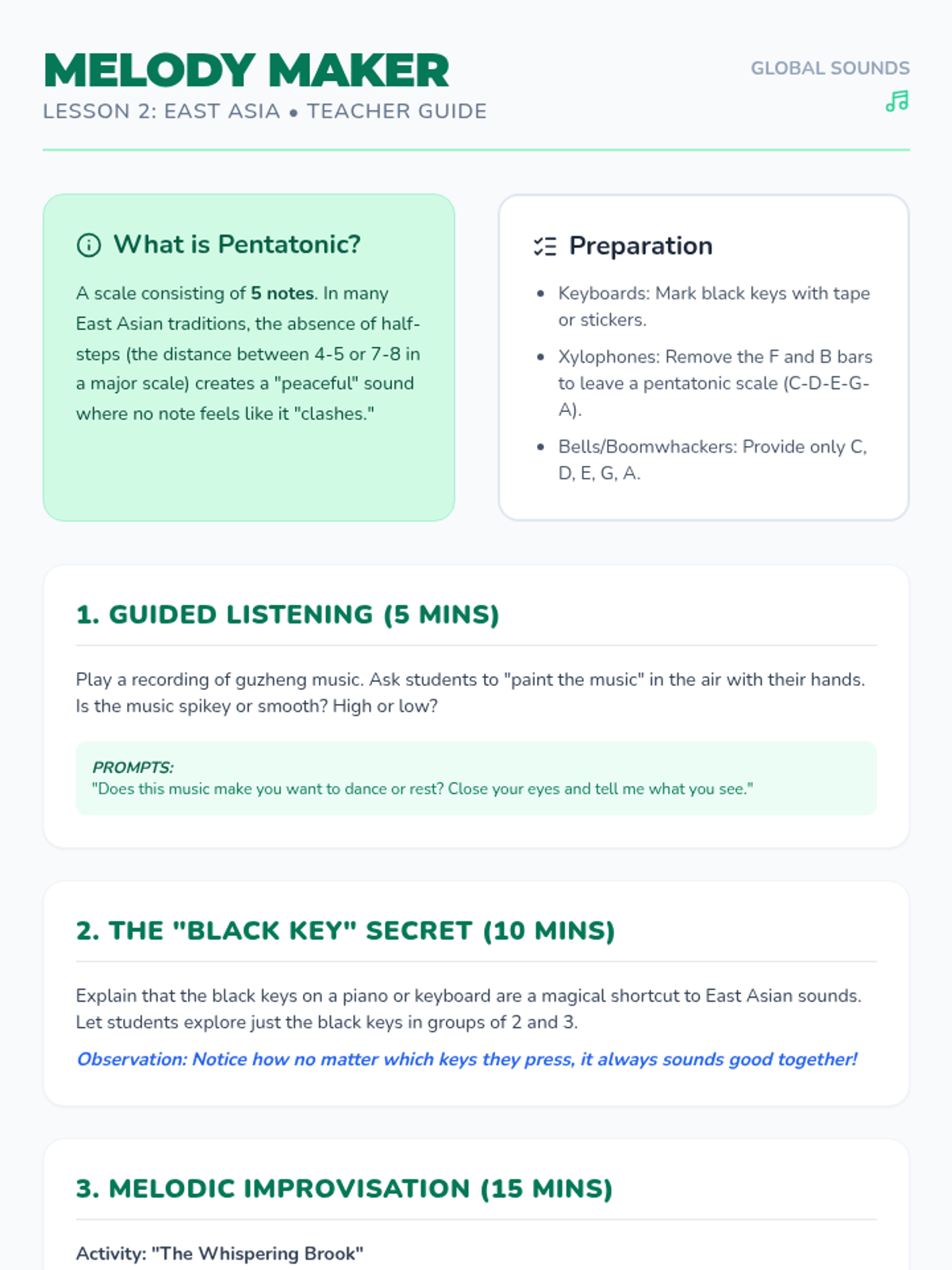
Learners explore the peaceful sounds of the guzheng and the pentatonic scale, practicing melodic improvisation on simple instruments.
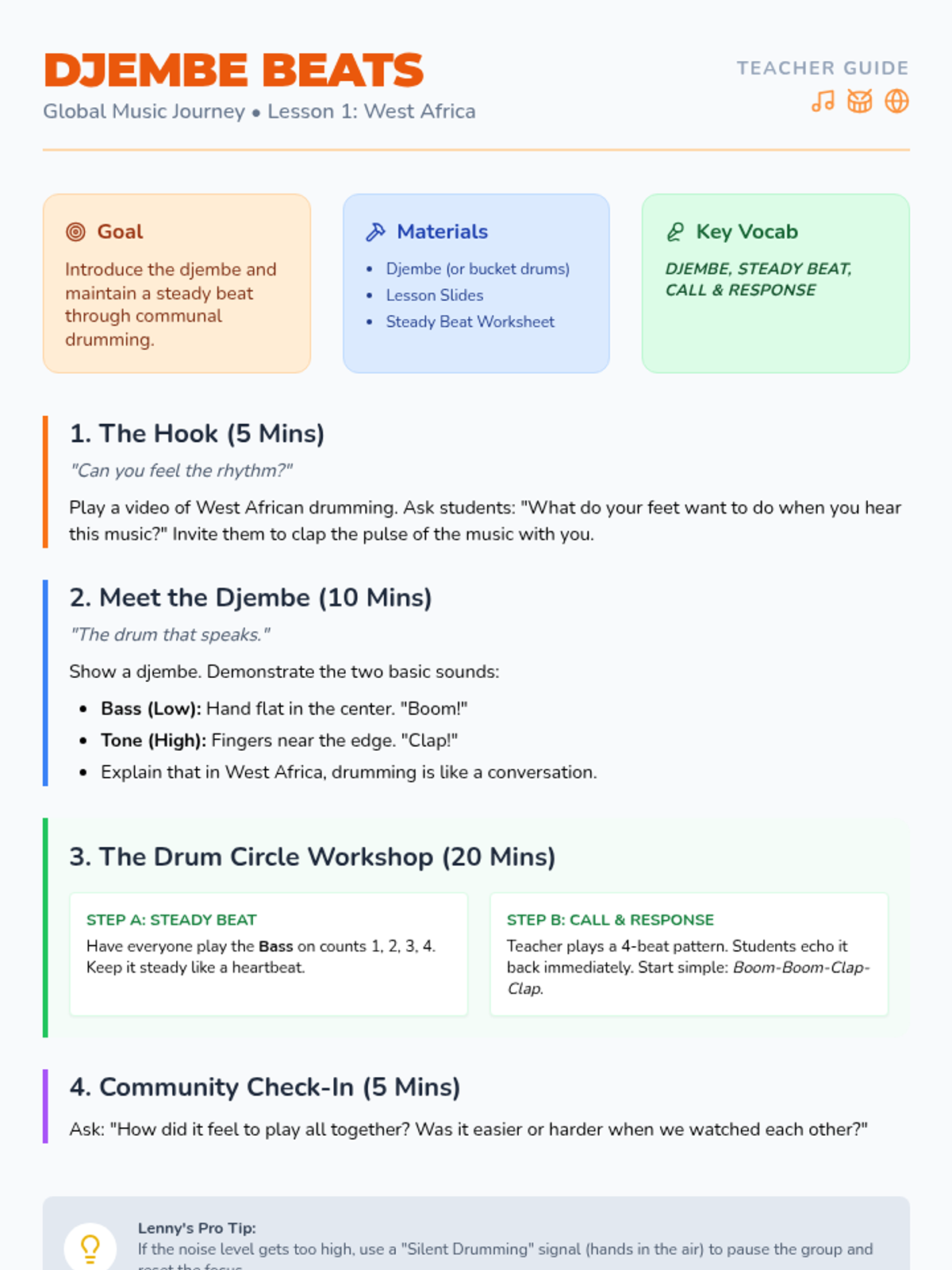
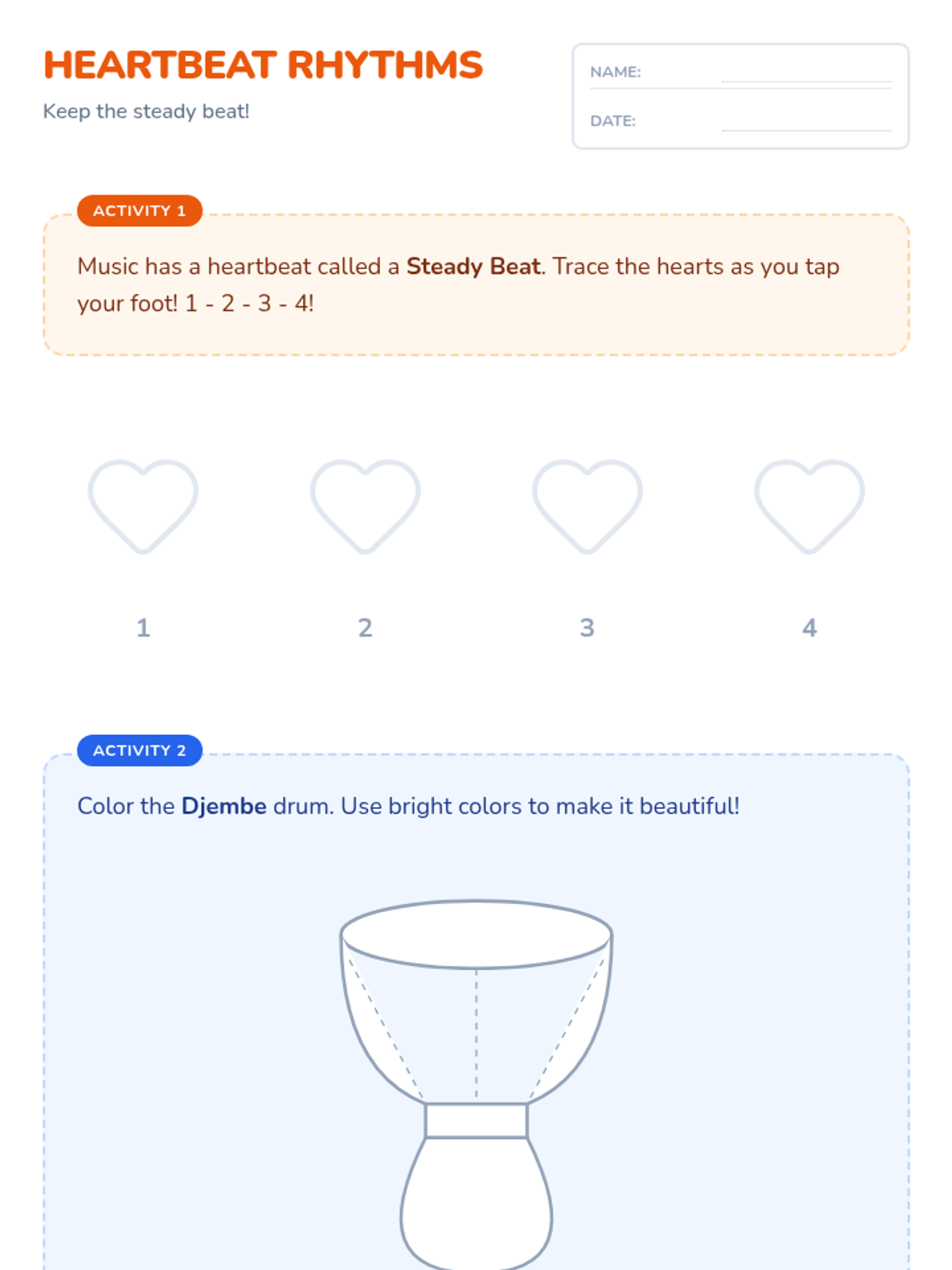
Students discover the djembe and the vibrant traditions of West African drumming, focusing on maintaining a steady beat and participating in a call-and-response circle.
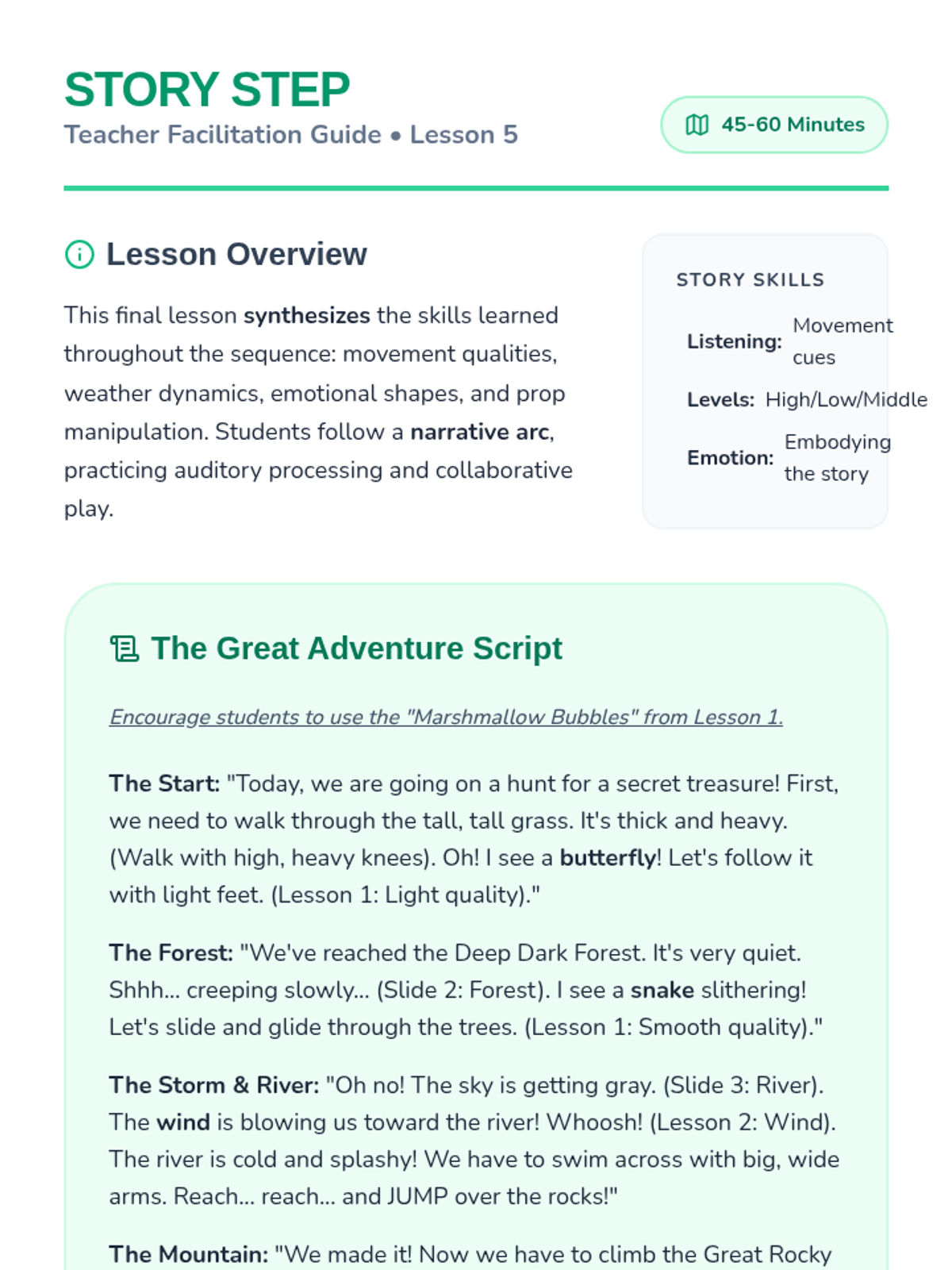
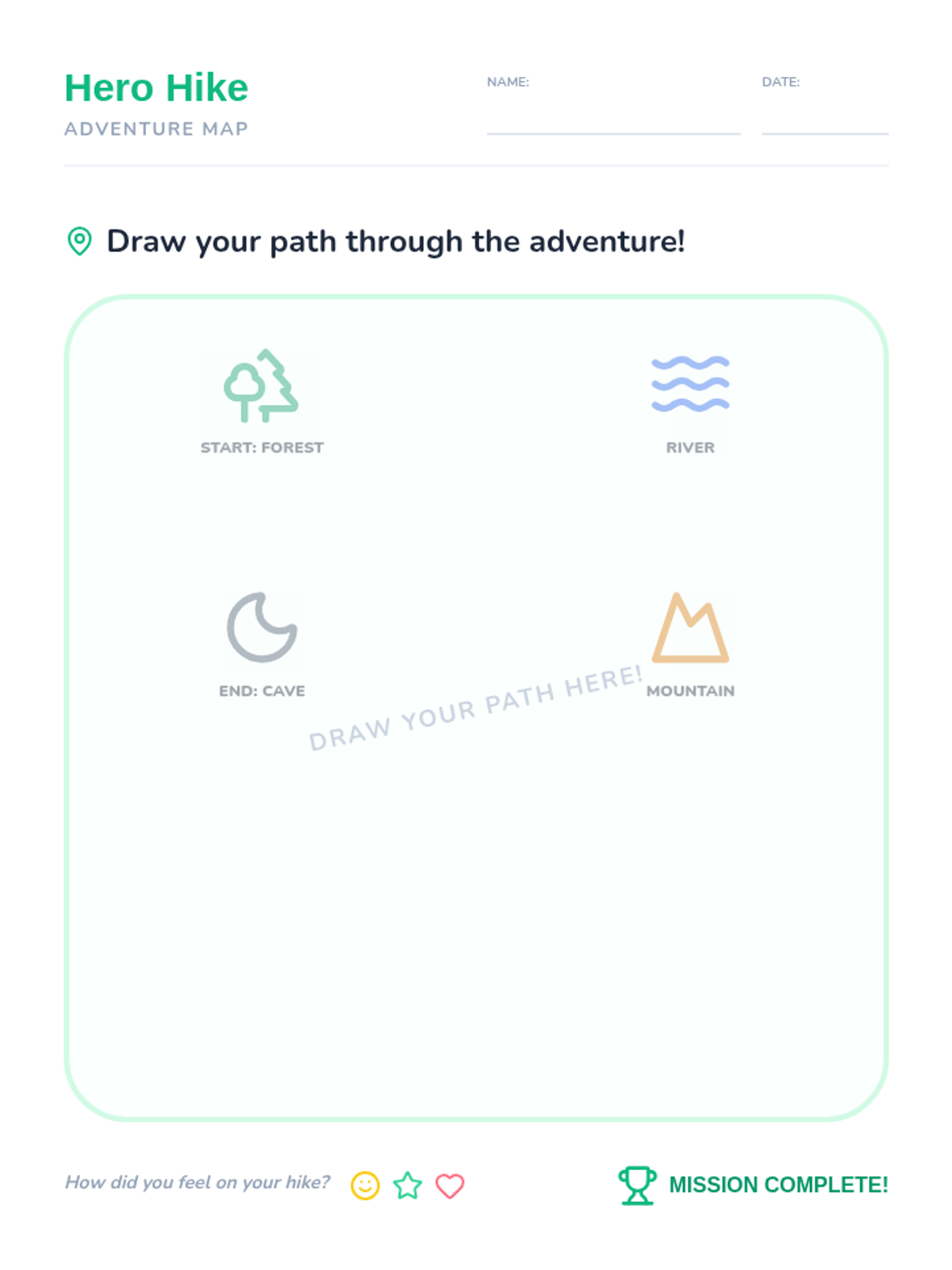
The teacher narrates a simple adventure story, and students act it out collectively using the skills they have learned. They might cross a river (jumping), climb a mountain (high levels), or hide in a cave (low levels). This synthesizes listening skills with creative movement.
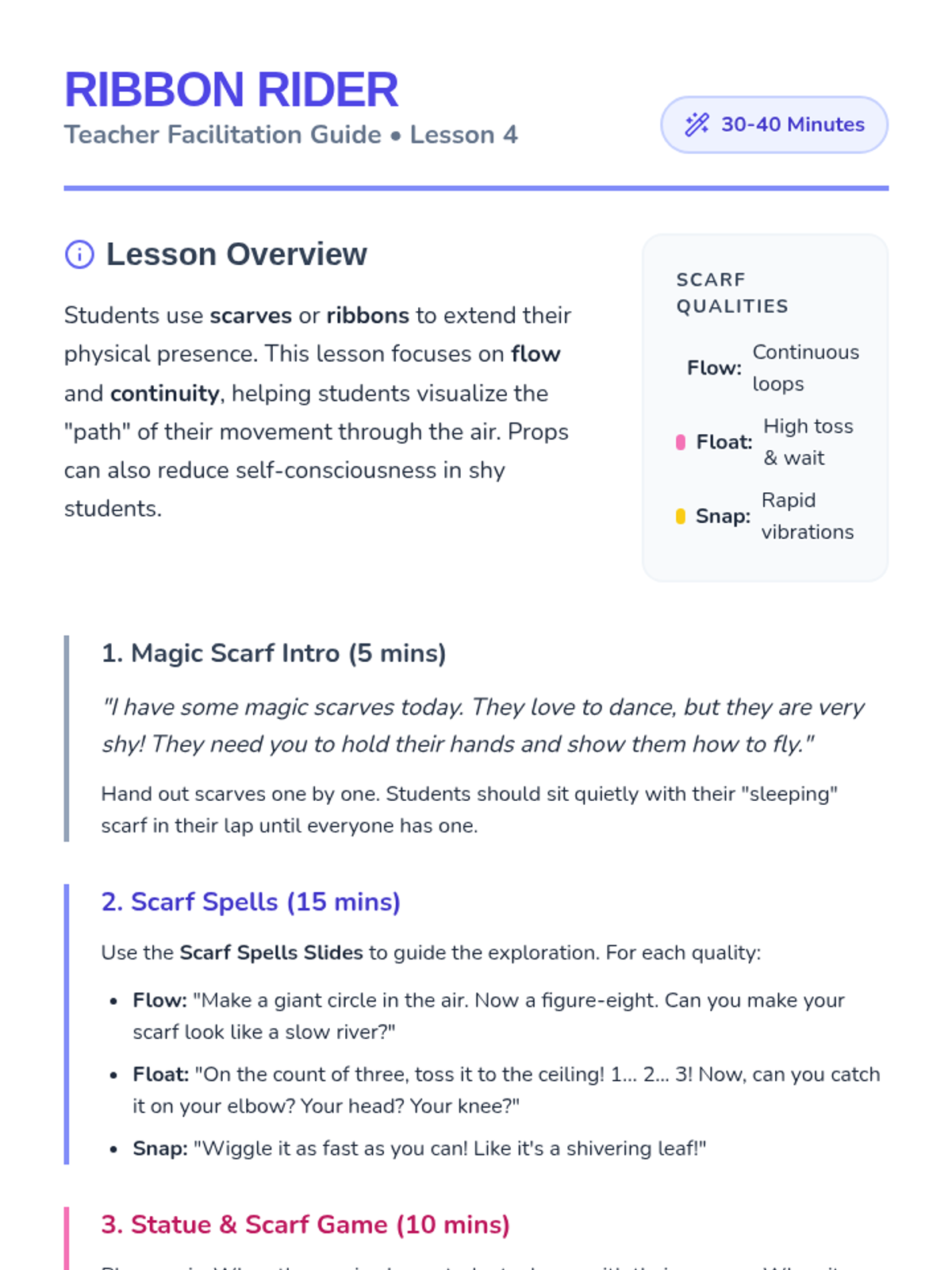
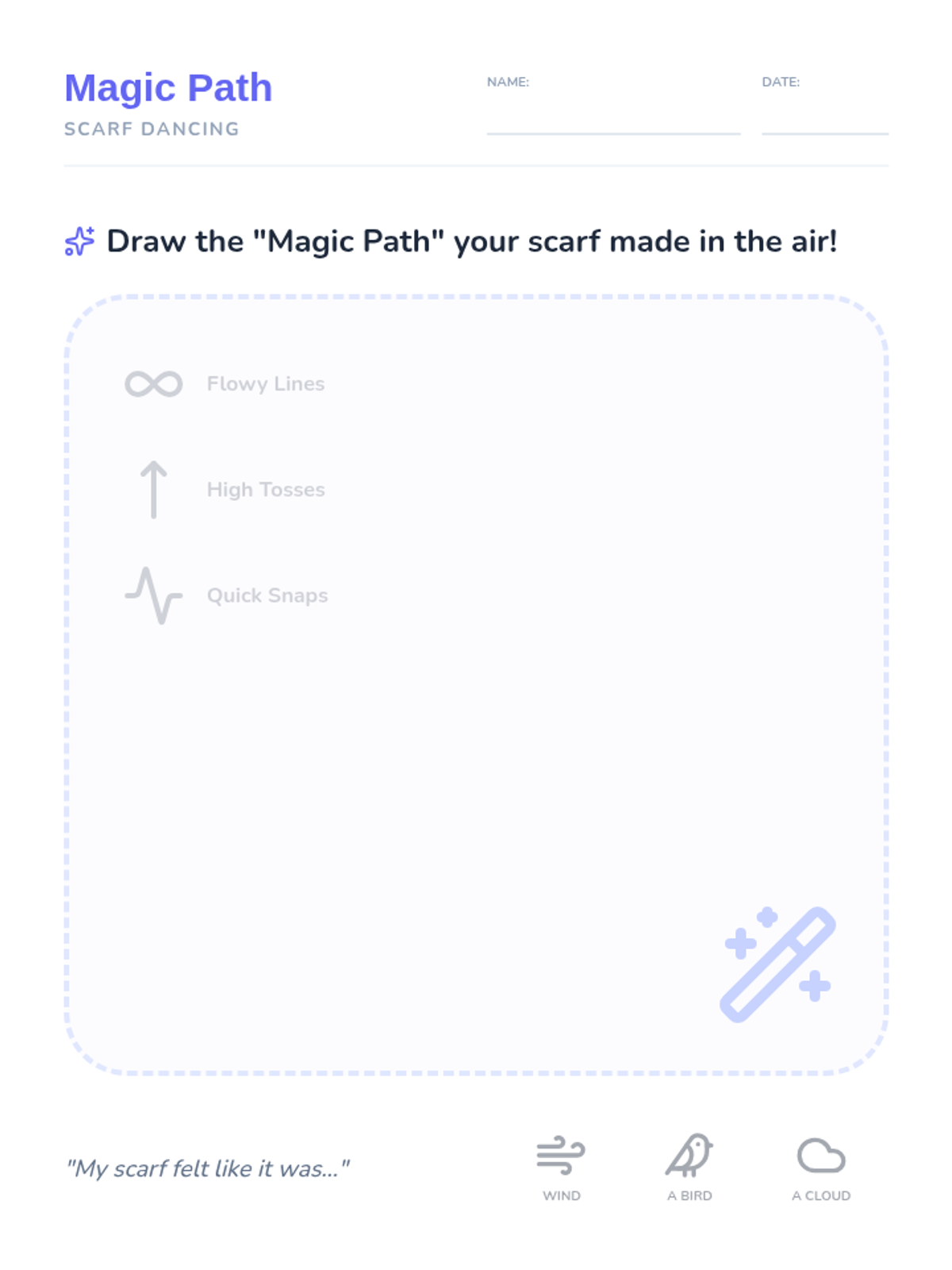
Students use scarves or ribbons to extend their movement range and visual expression. They explore how the prop reacts to their movement, creating soft, flowing lines or sharp snaps. The prop serves as a partner, helping shy students express themselves more boldly.
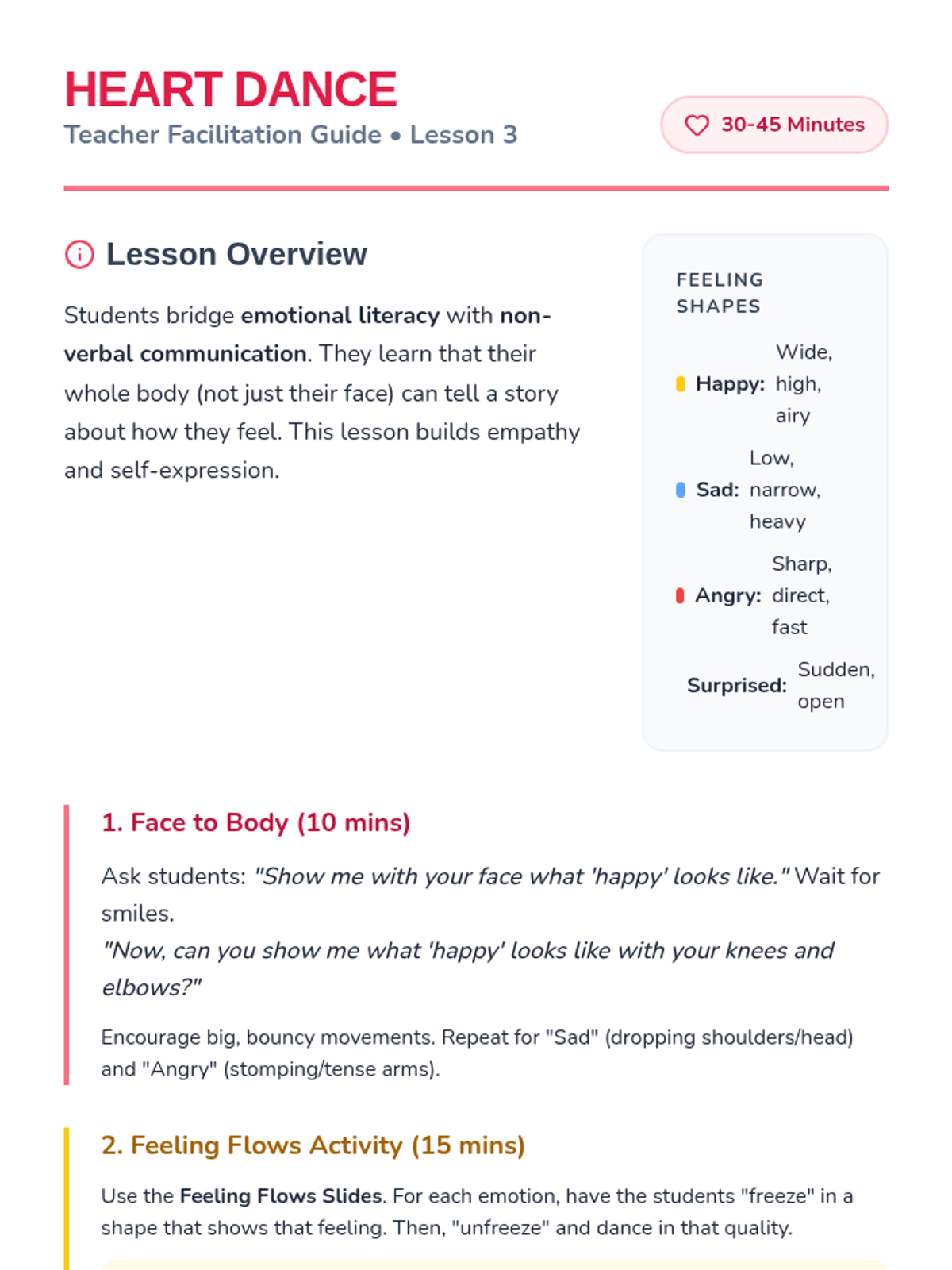
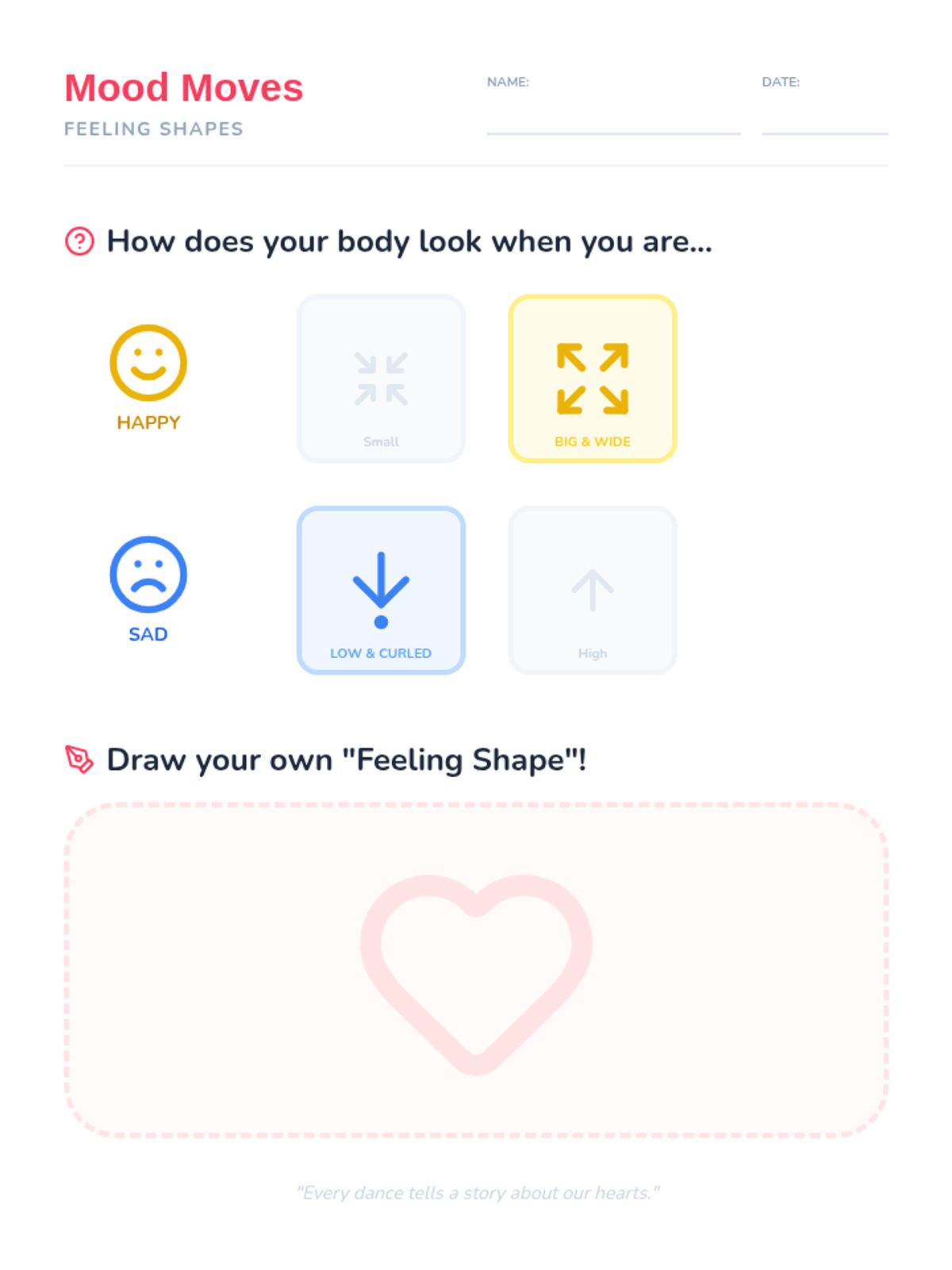
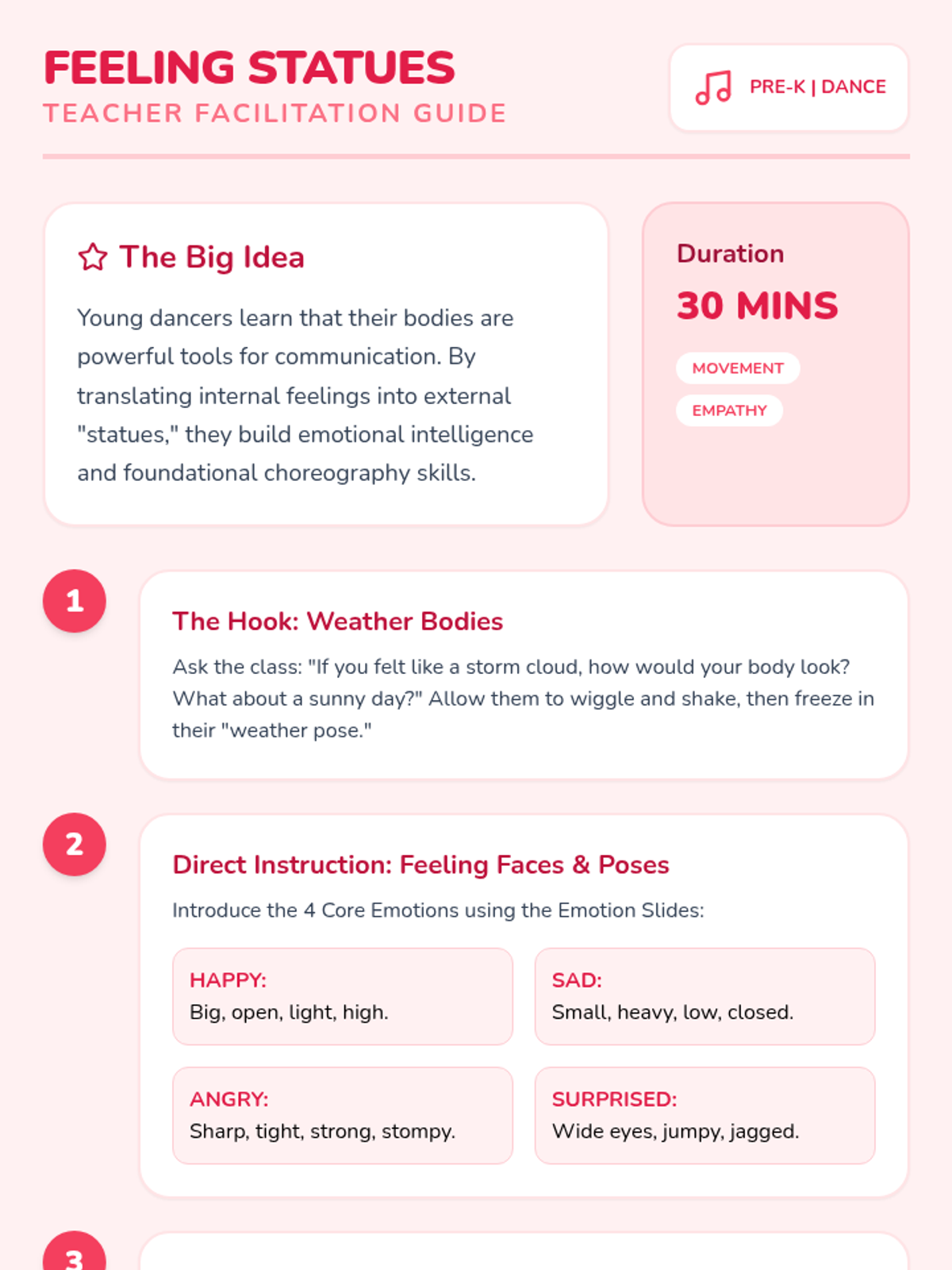
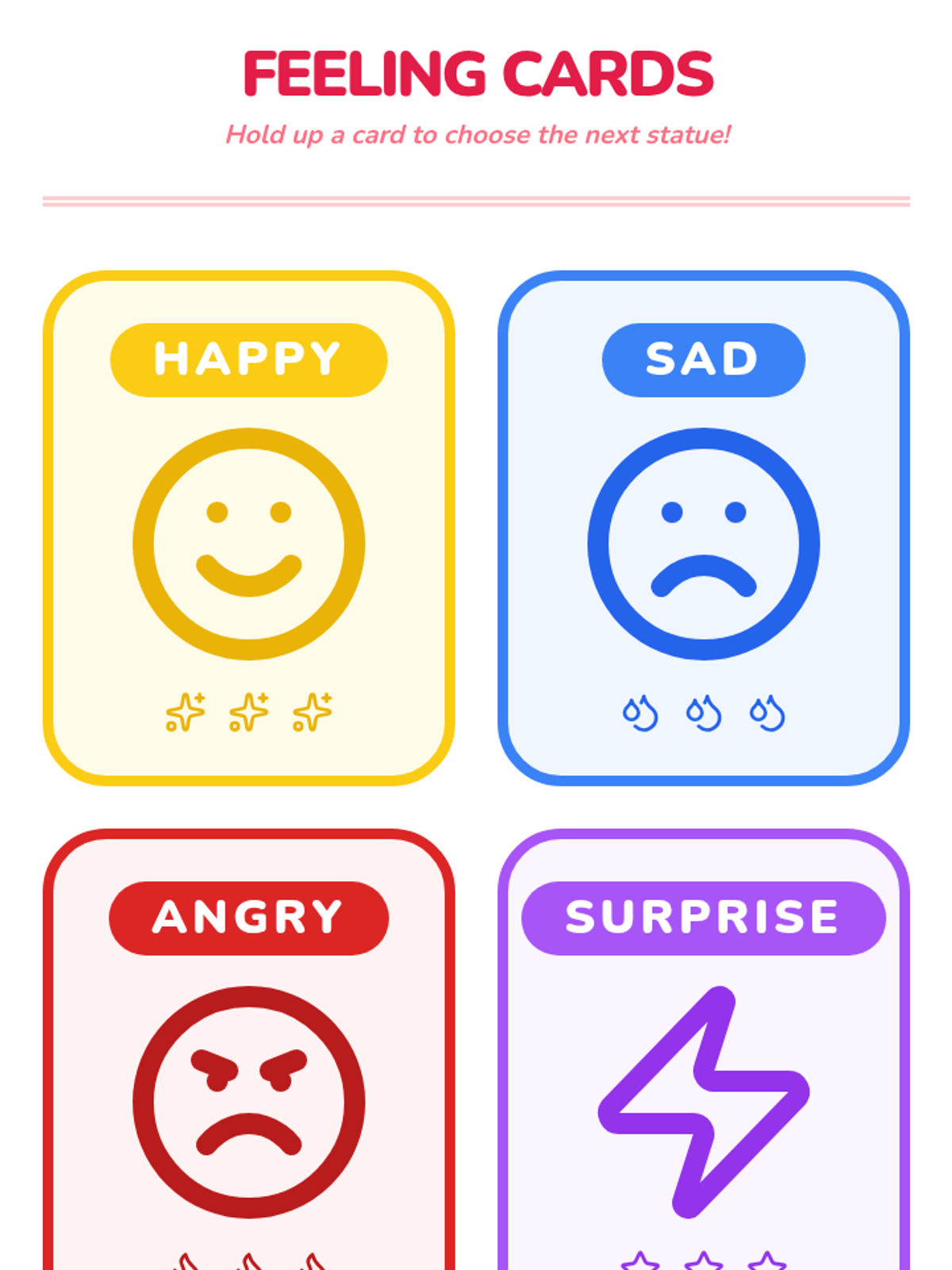
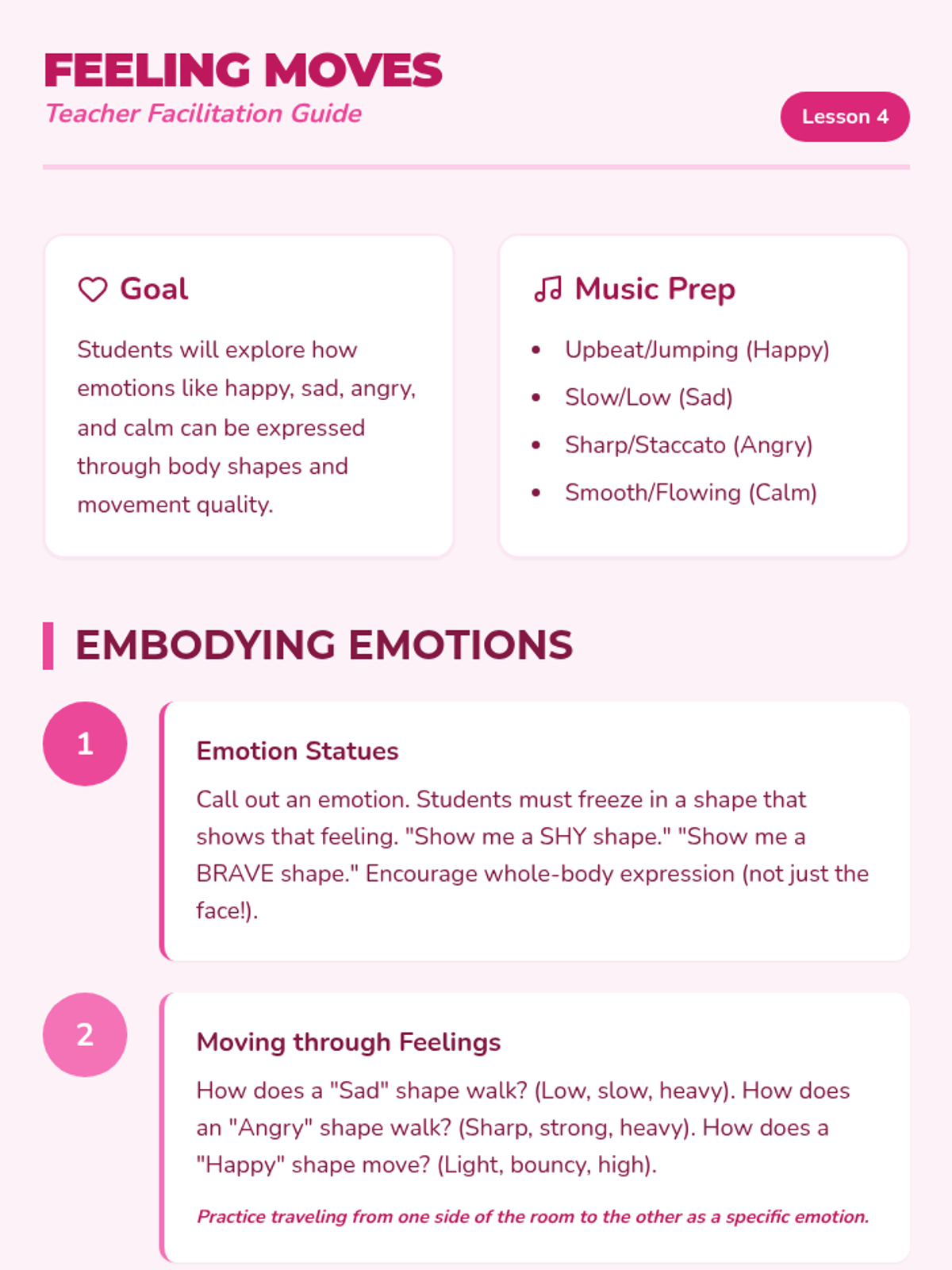
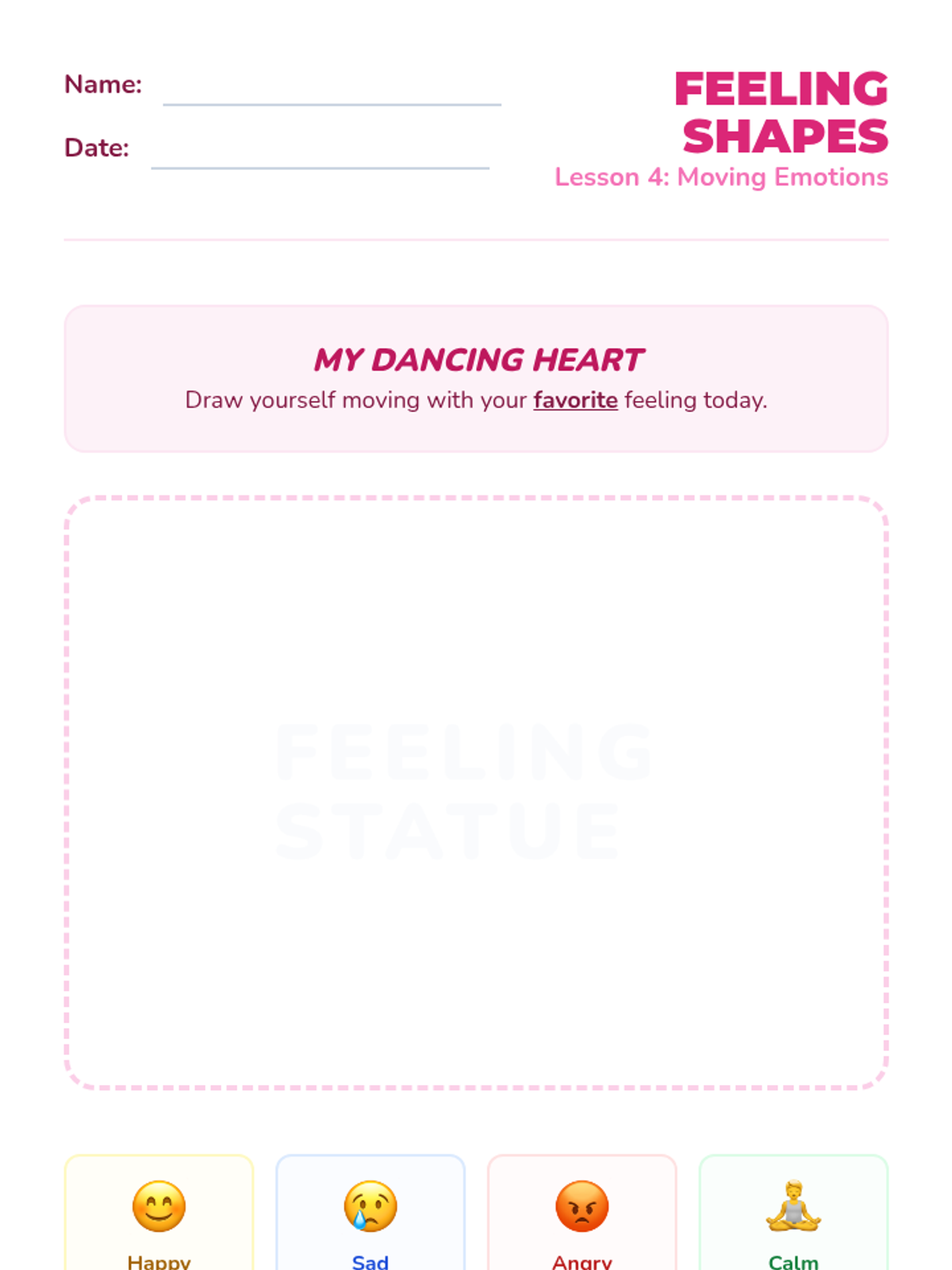
Students identify basic emotions (happy, sad, angry, surprised) and create body shapes that represent them. They explore how an 'angry' dance might look sharp and fast, while a 'sad' dance might be slow and low. This connects emotional literacy with physical expression.
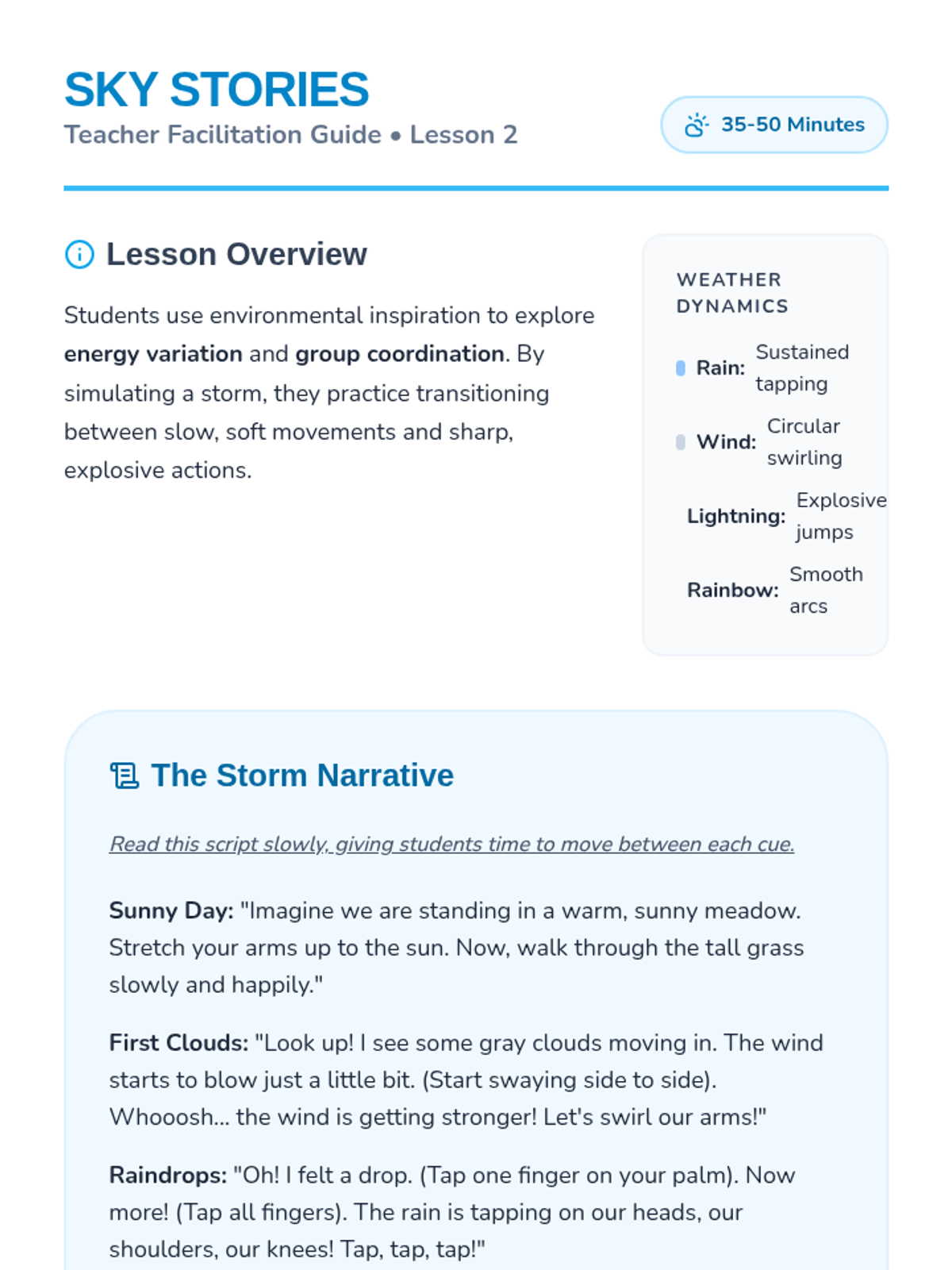
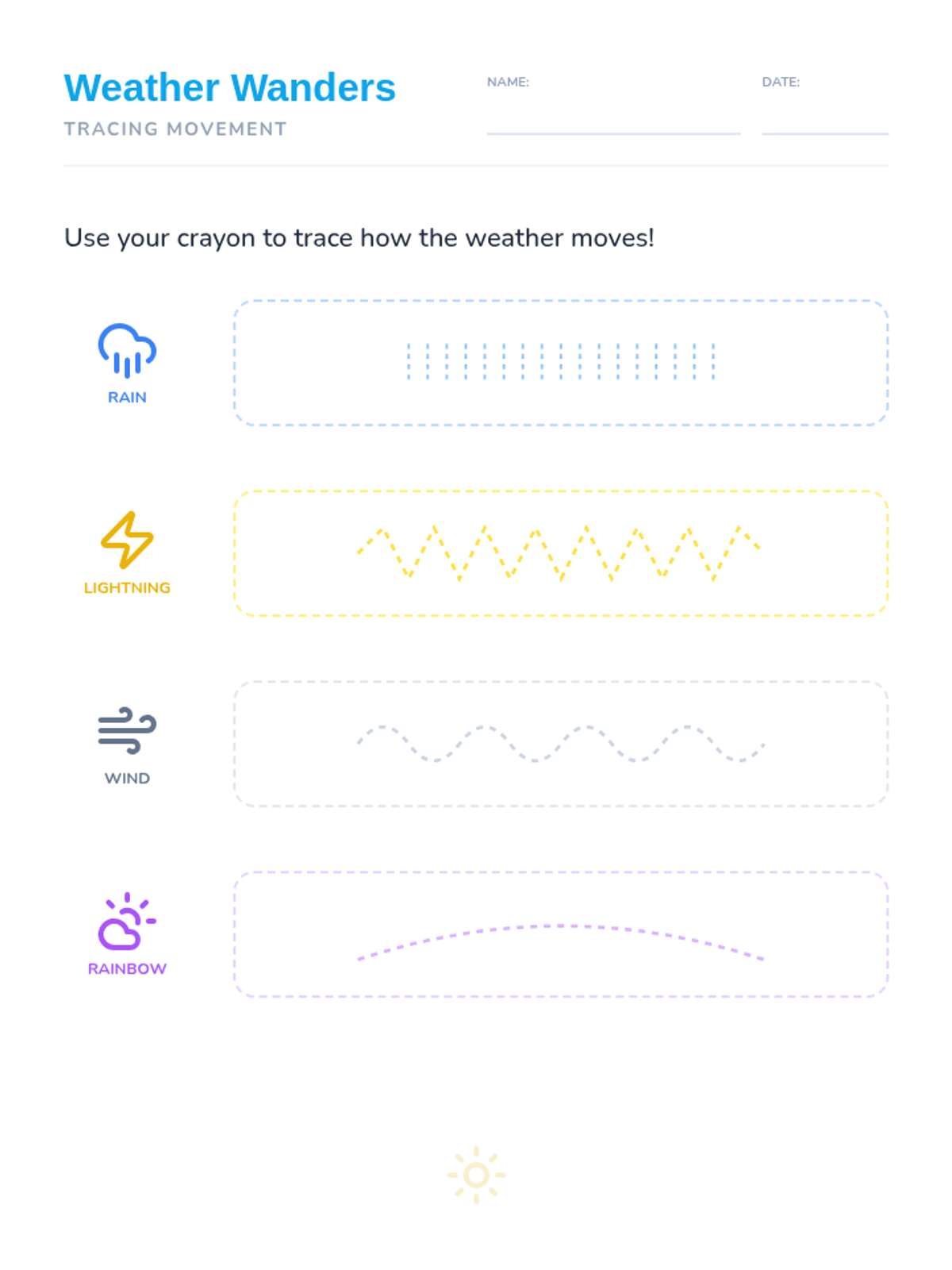
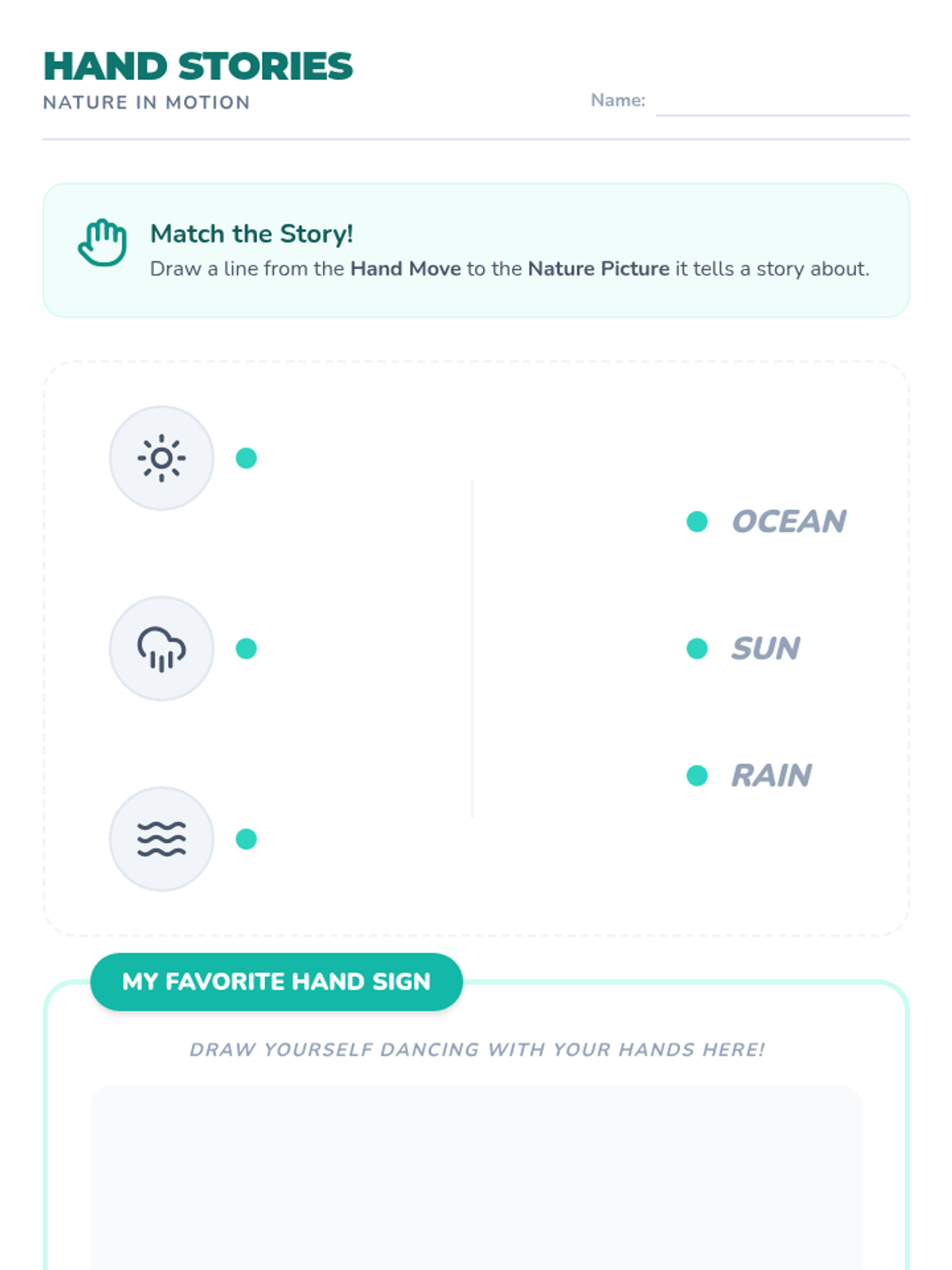
Using the environment as inspiration, students use their bodies to depict weather conditions. They swirl for wind, tap for rain, and jump for lightning. The teacher guides a 'storm' narrative where the class transitions from a sunny day to a storm and back to a rainbow.
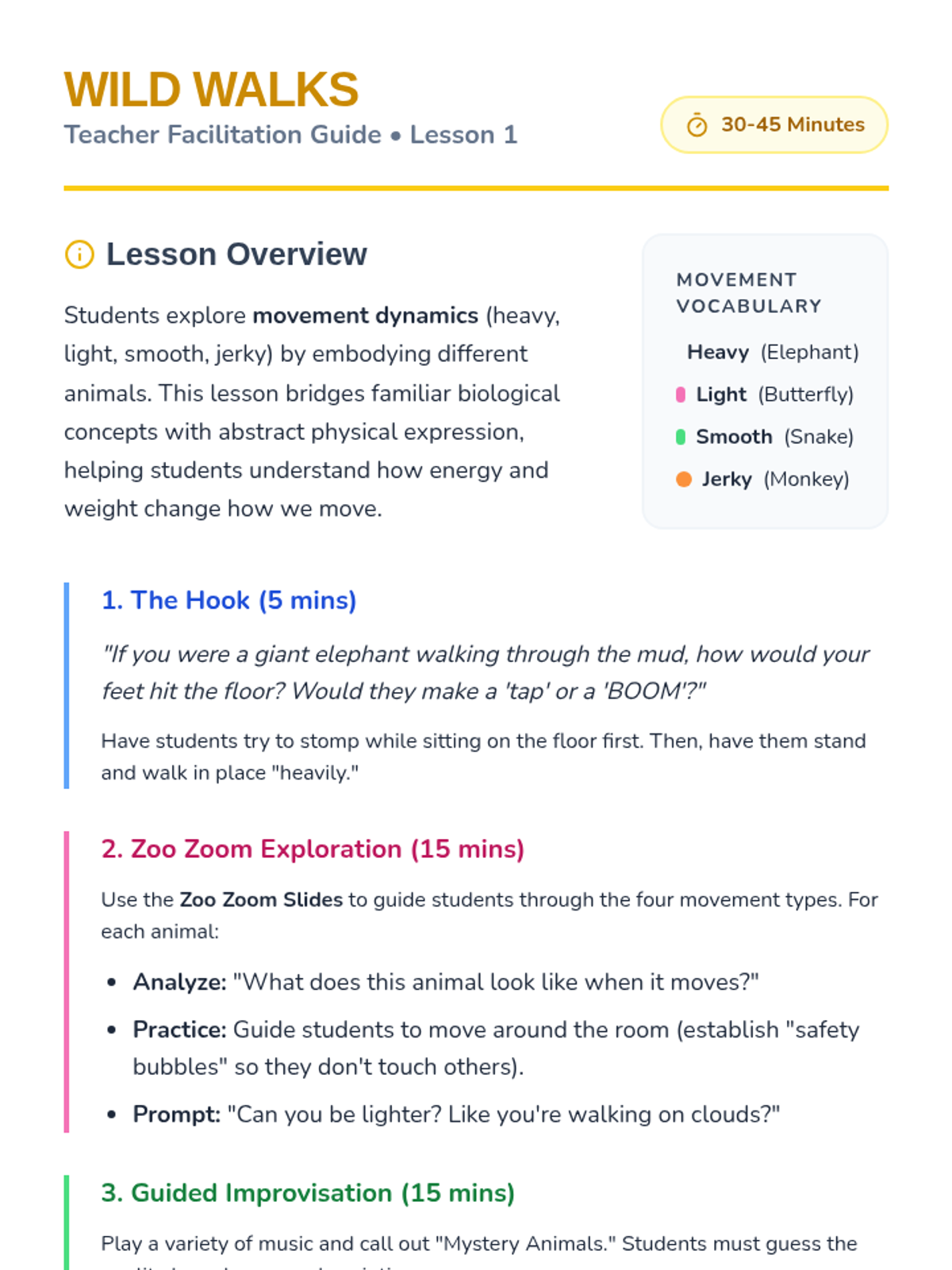
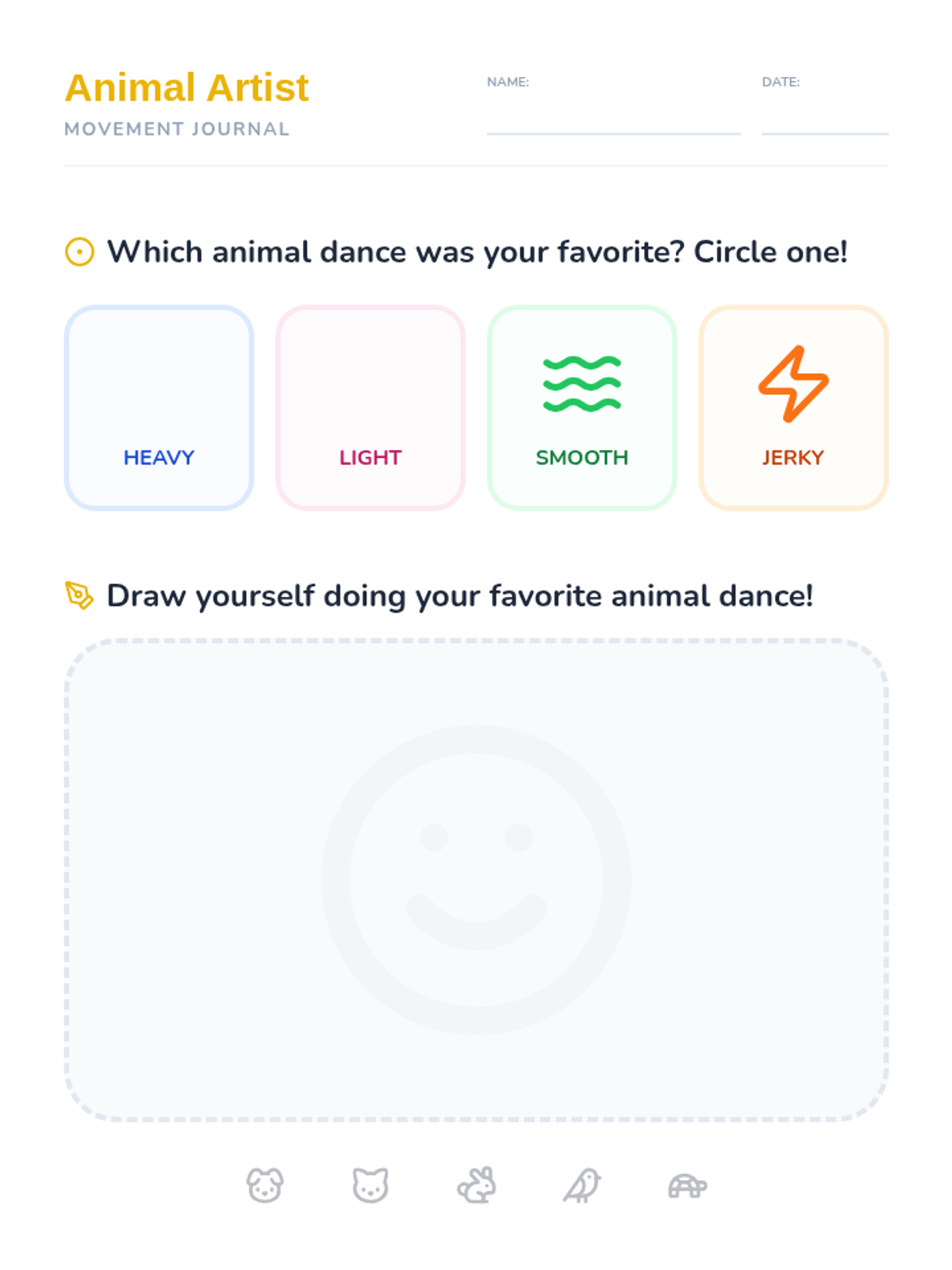
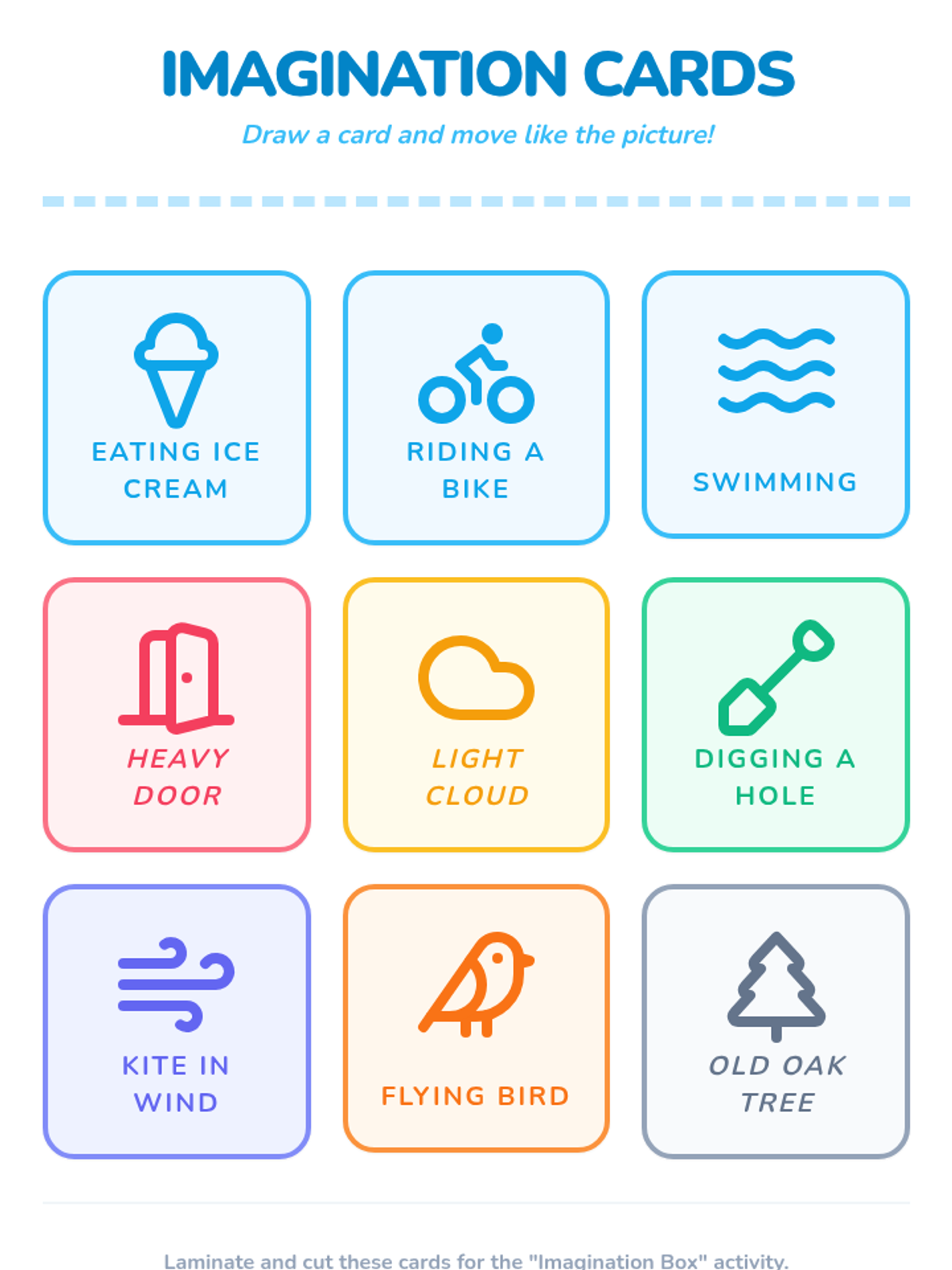
Students explore movement qualities like heavy, light, jerky, and smooth by imitating animals. They learn to translate visual and conceptual ideas into physical actions.
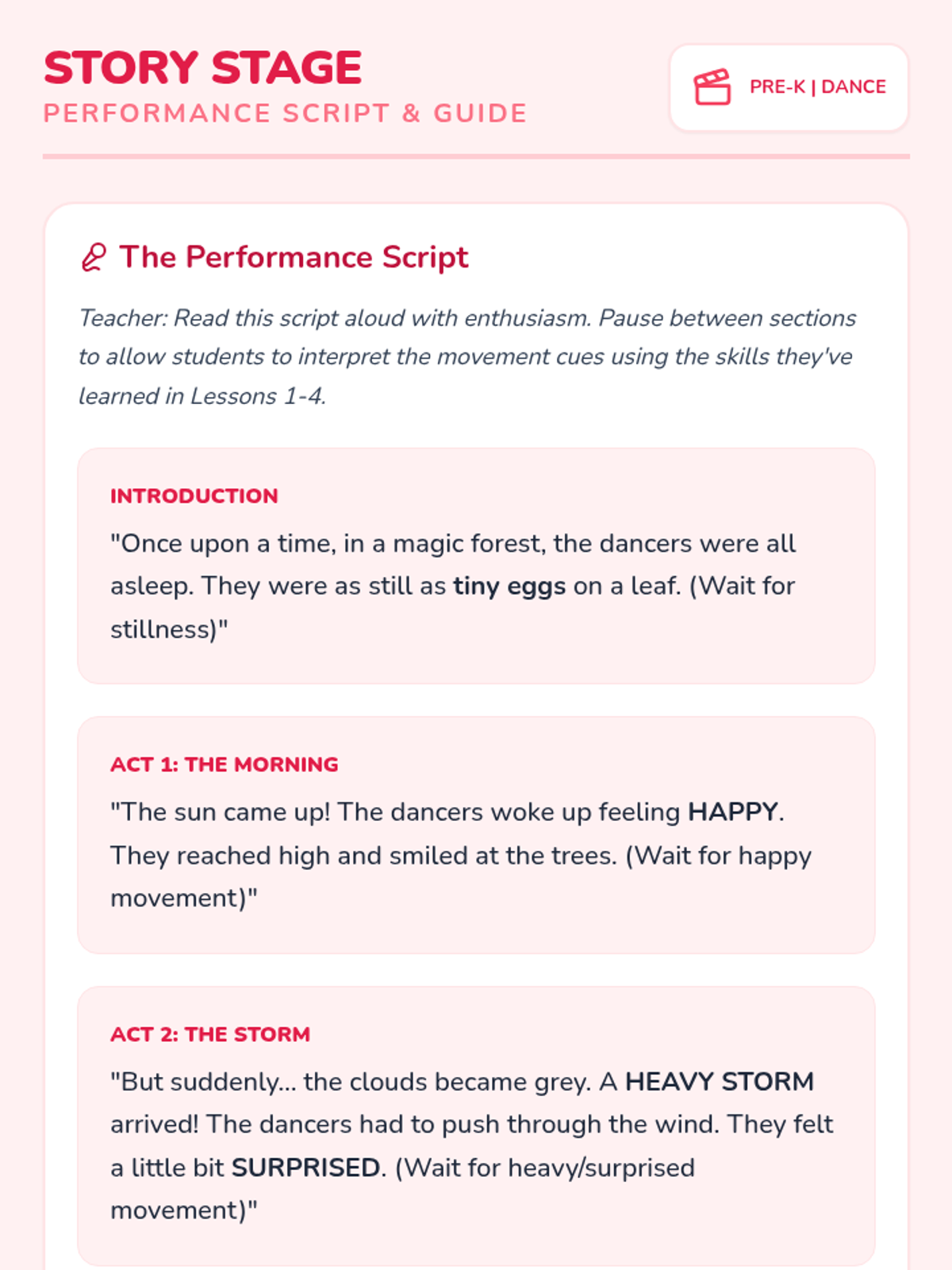
The sequence concludes with a grand performance where students dance along to a teacher-narrated story. This lesson synthesizes all previous skills into a collaborative group dance.
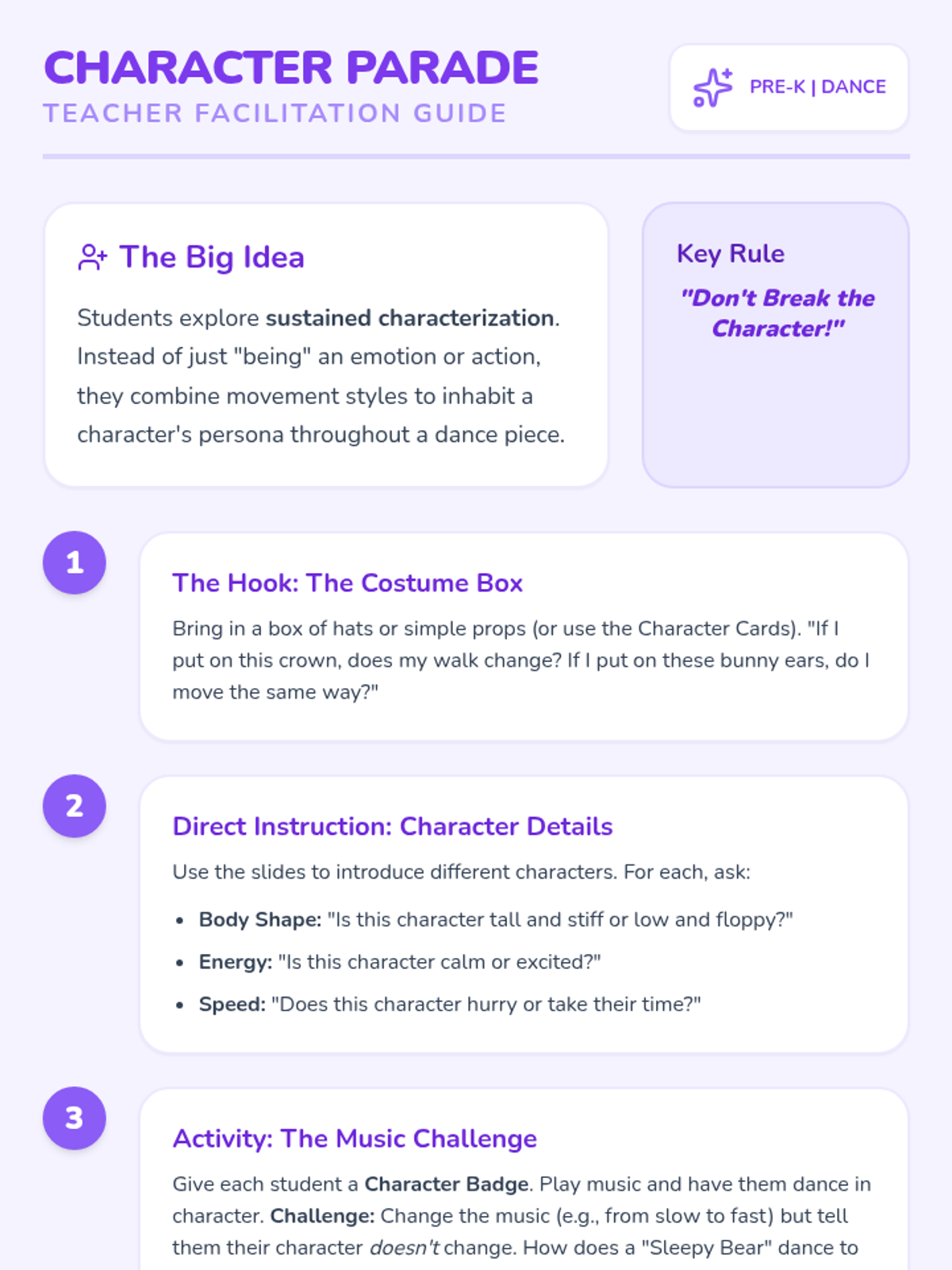
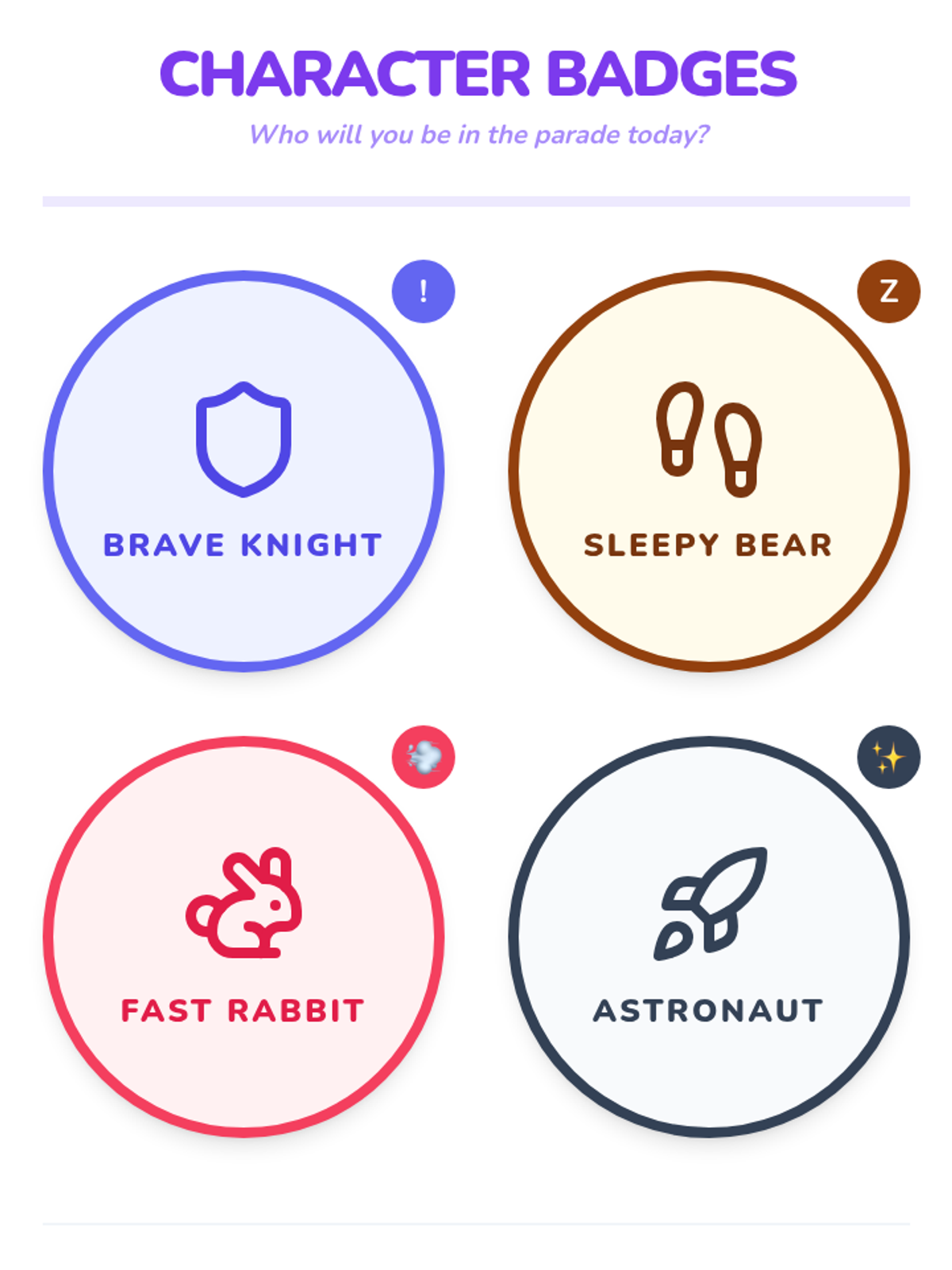
Children choose and inhabit a character through movement, exploring how different characters walk, jump, and dance. They practice staying in character while reacting to music.
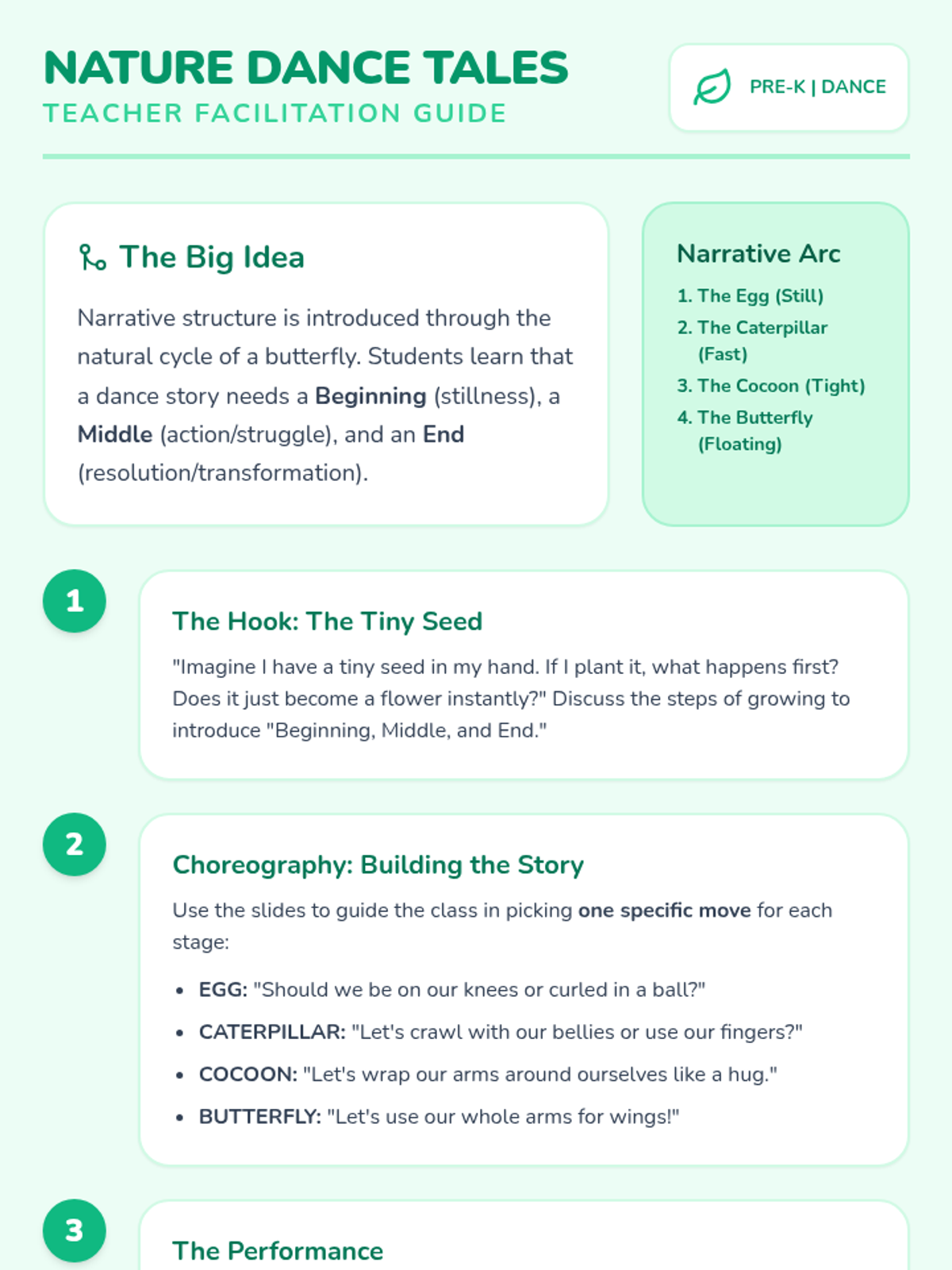
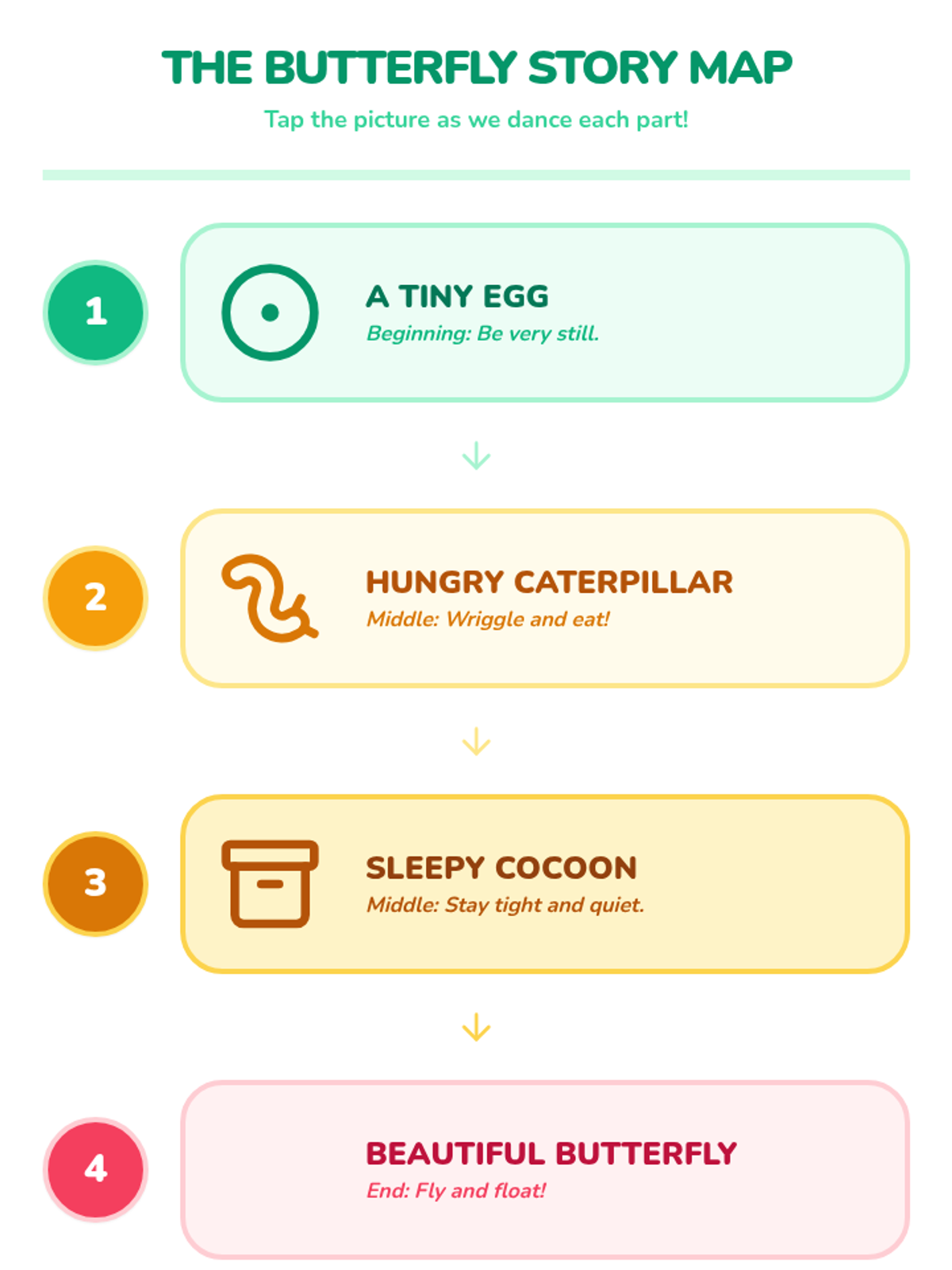
Students learn about narrative structure (beginning, middle, and end) by dancing the lifecycle of a butterfly. This lesson introduces the concept of sequencing in choreography.
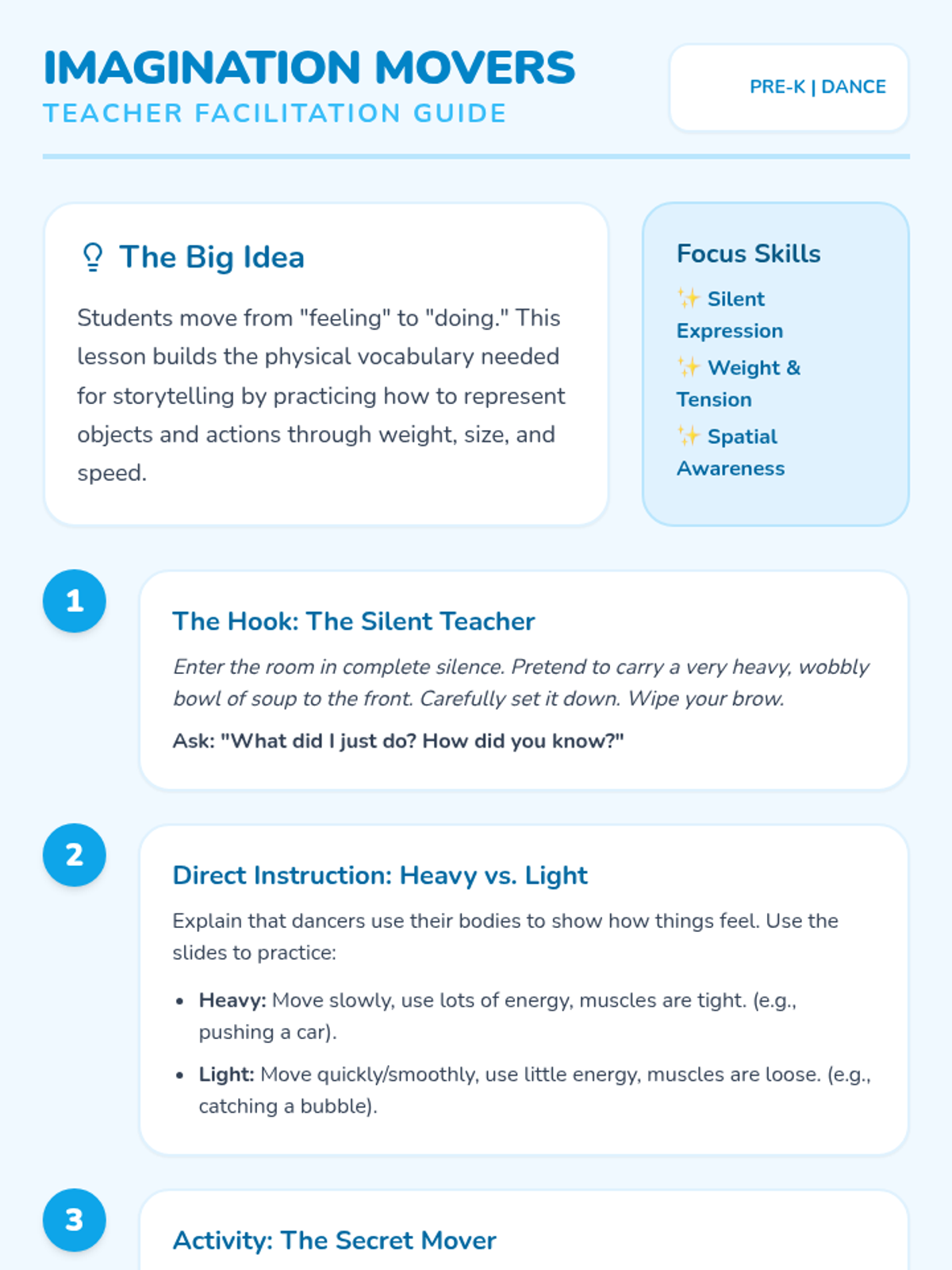
Learners use their bodies to represent objects and actions without speaking, building a 'movement vocabulary' for storytelling. Activities include a pantomime guessing game and creative imagination challenges.
Students explore the connection between emotions and movement by creating 'statues' that represent feelings like joy, sadness, and anger. This lesson focuses on nonverbal communication and body awareness.
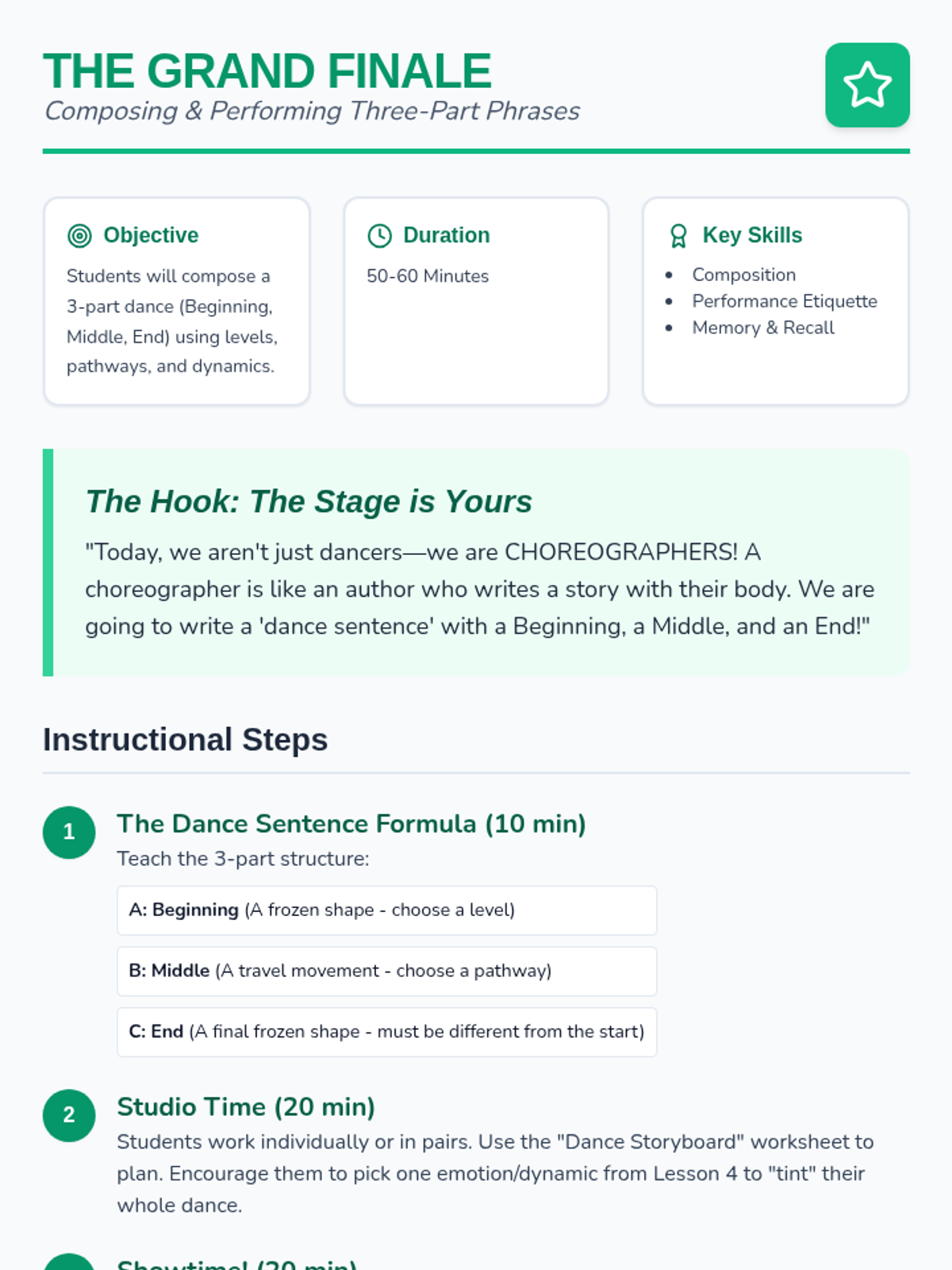
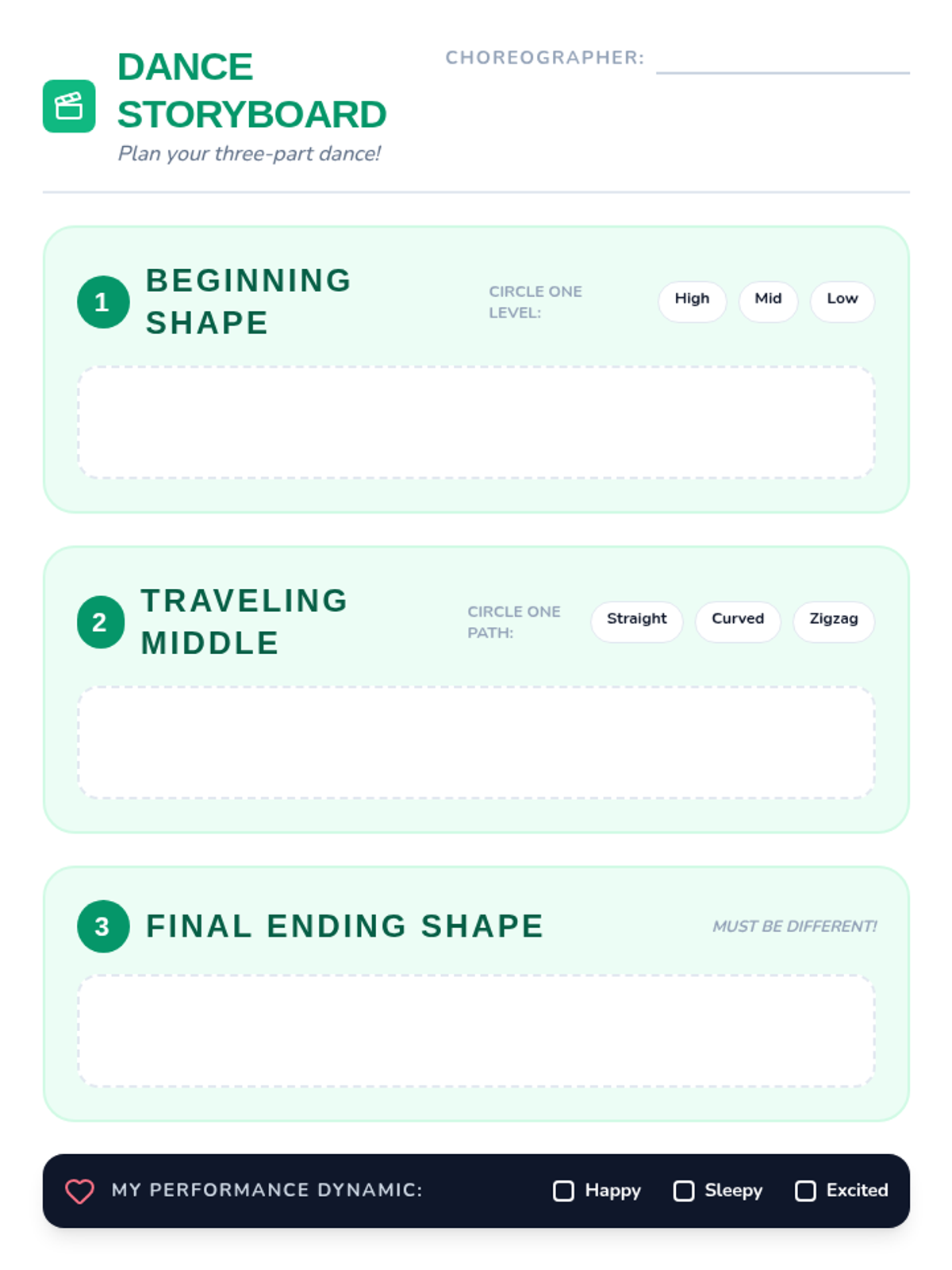
Students synthesize their learning by composing and performing a three-part dance phrase with a clear beginning, middle, and end.
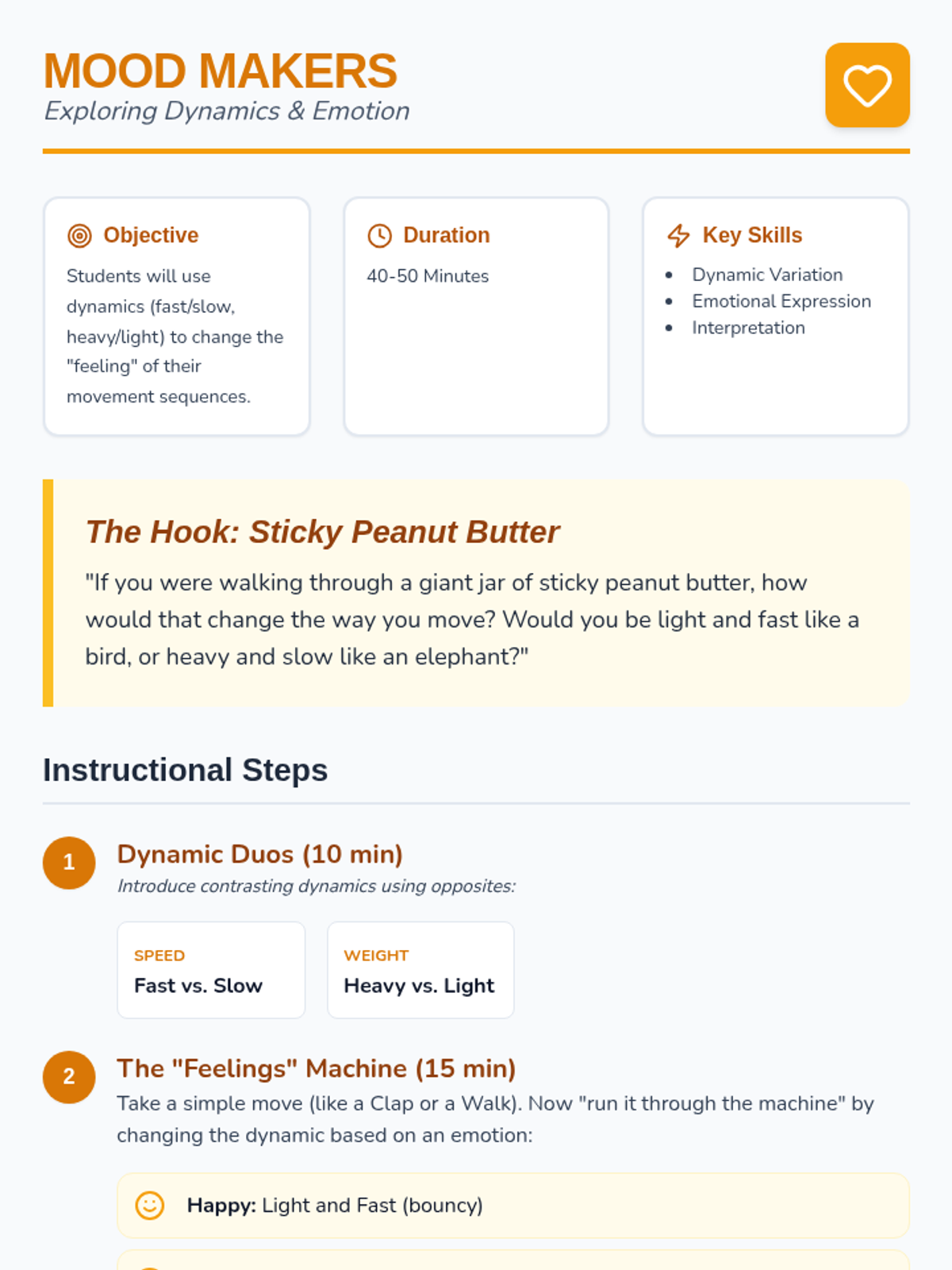
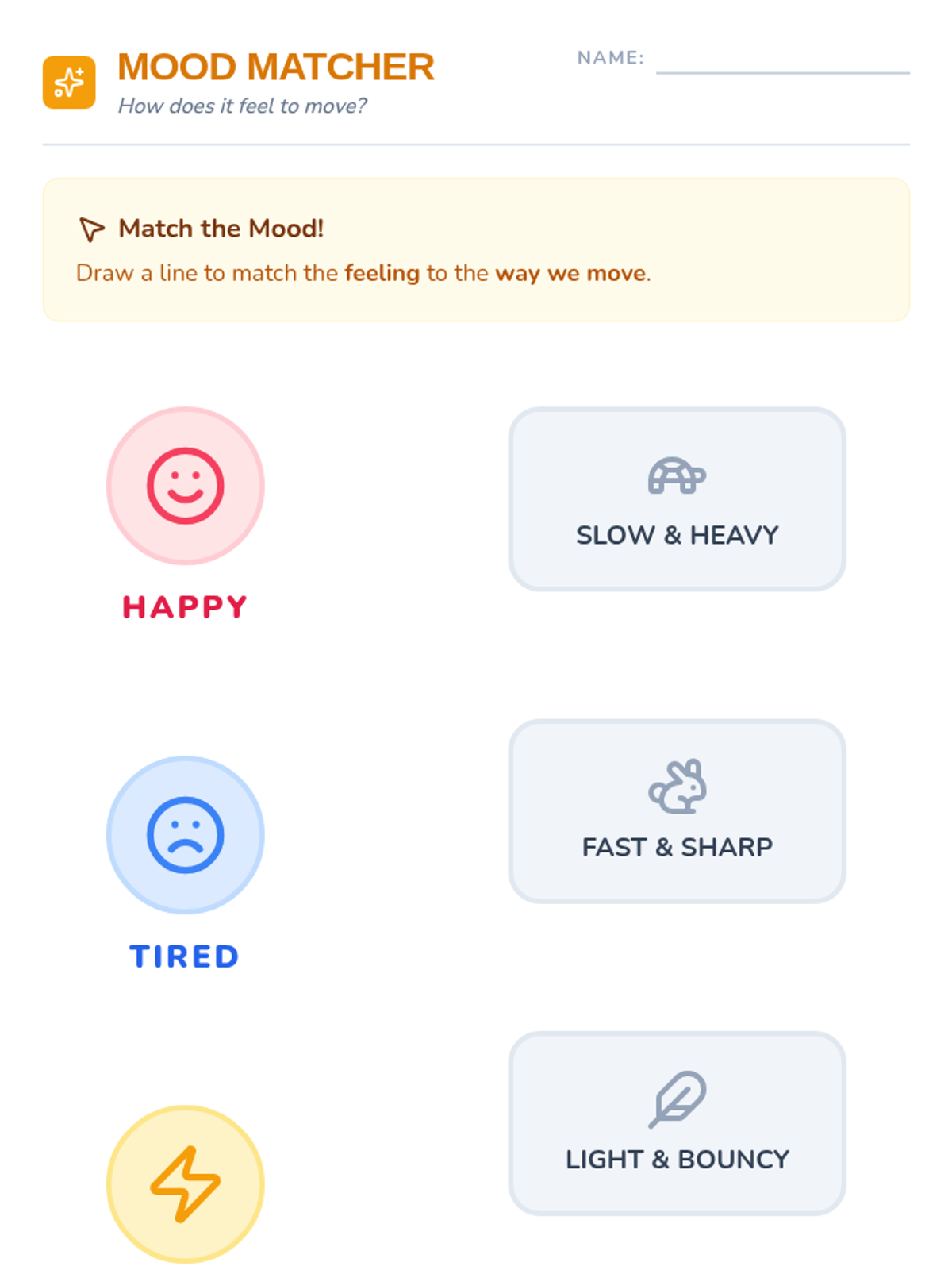
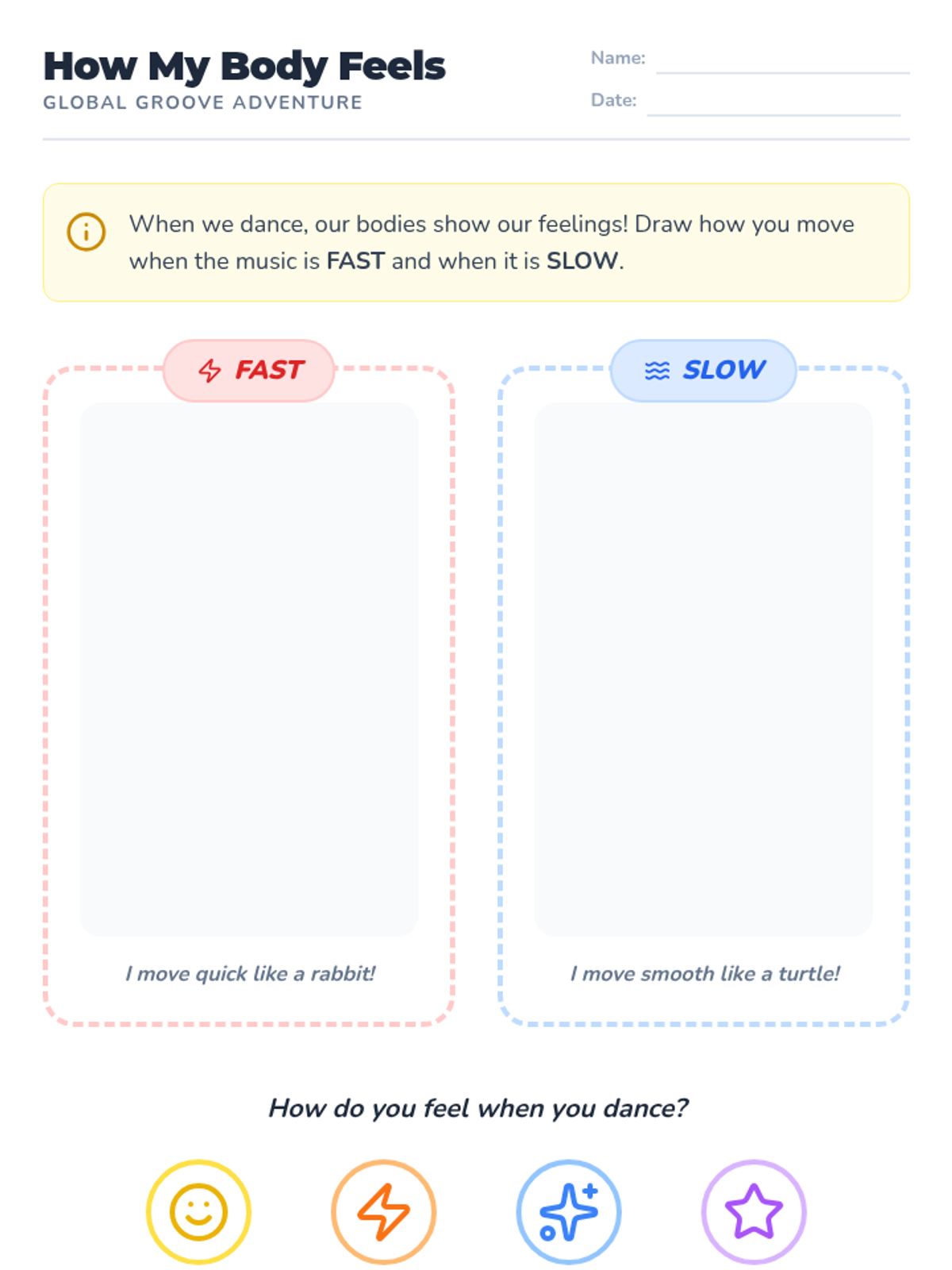
Students explore dynamics like fast/slow and heavy/light to express emotions through their movement sequences.
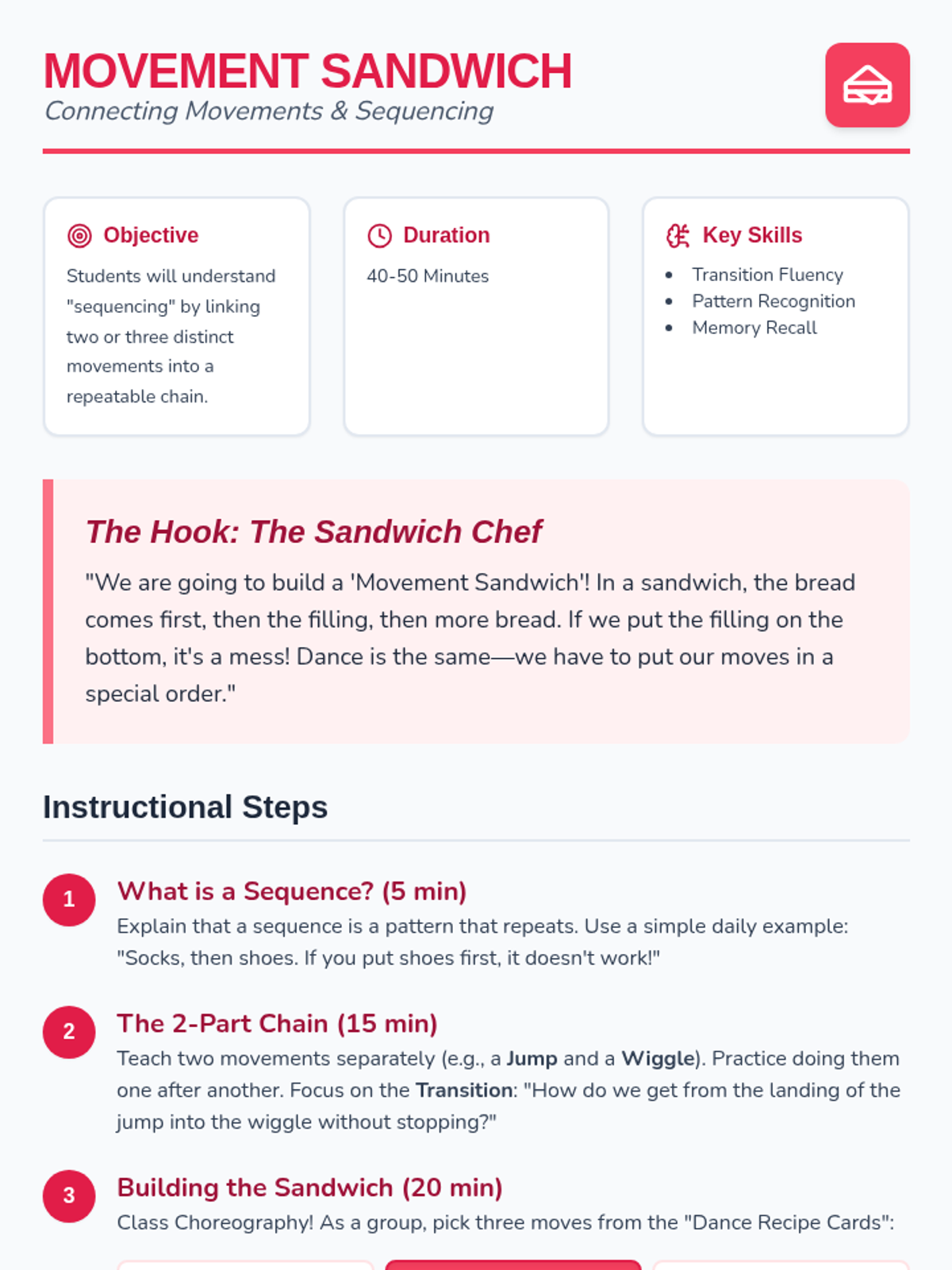
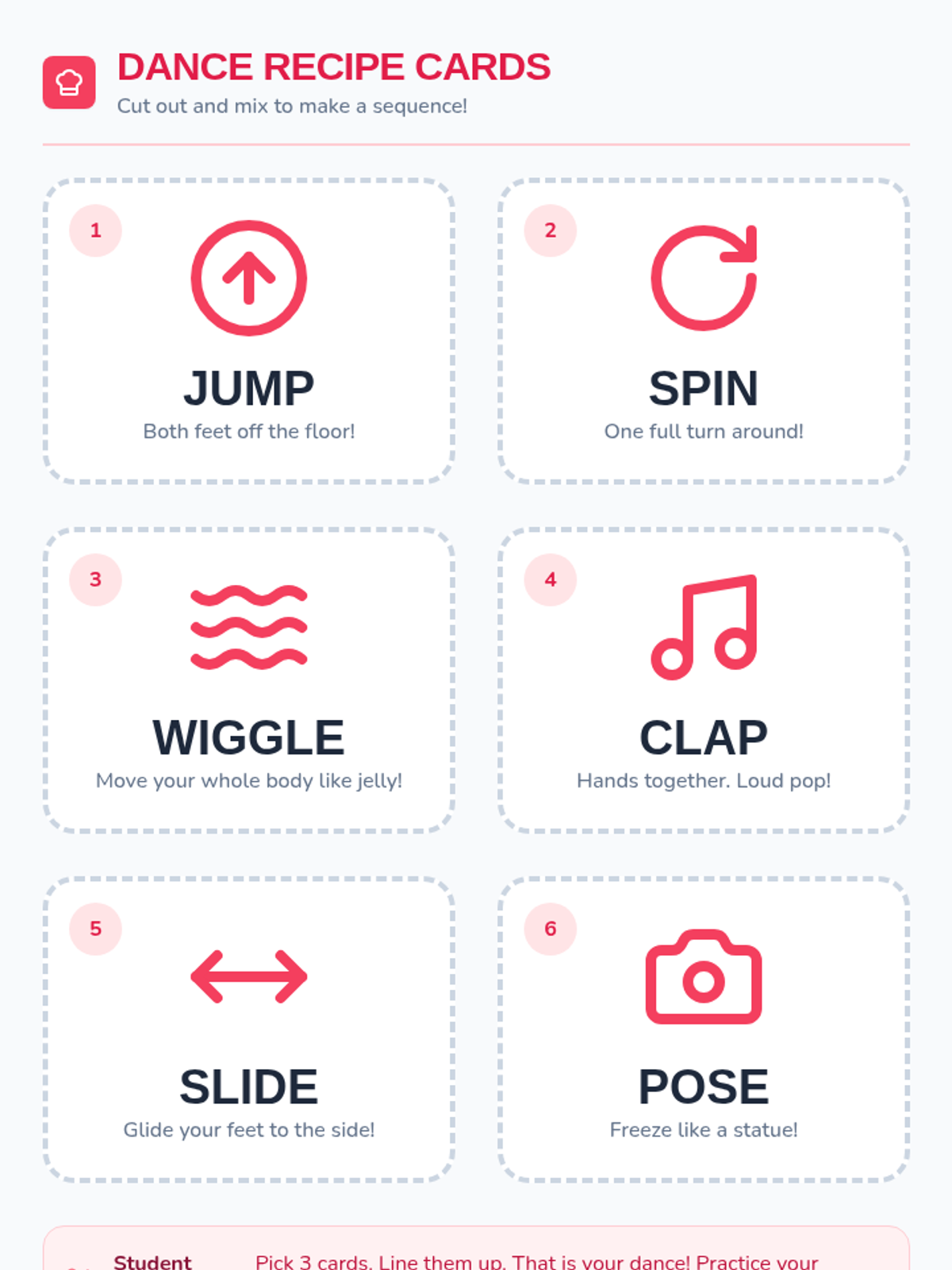
Students link distinct movements together to create small chains, focusing on smooth transitions and repetition.
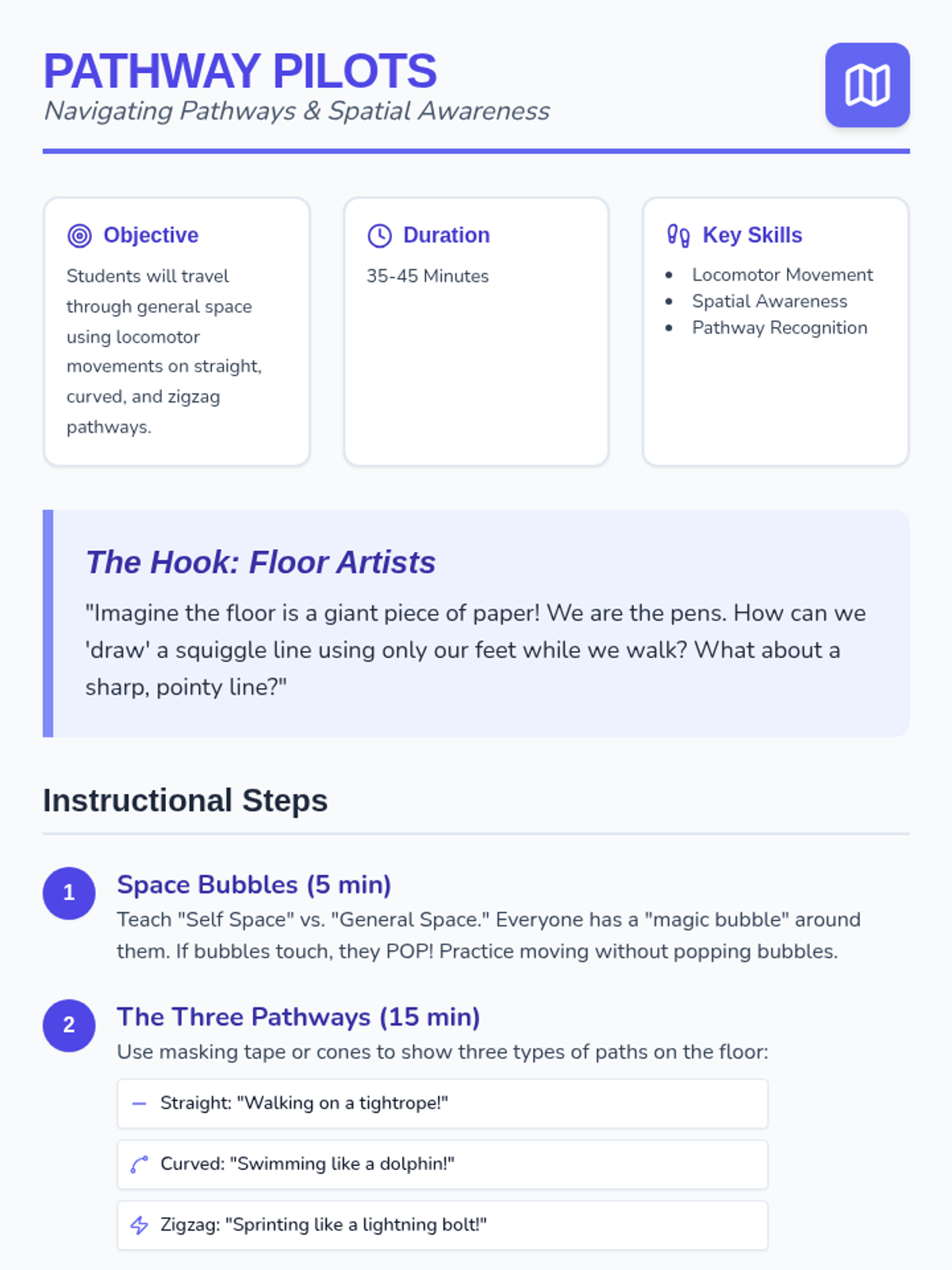
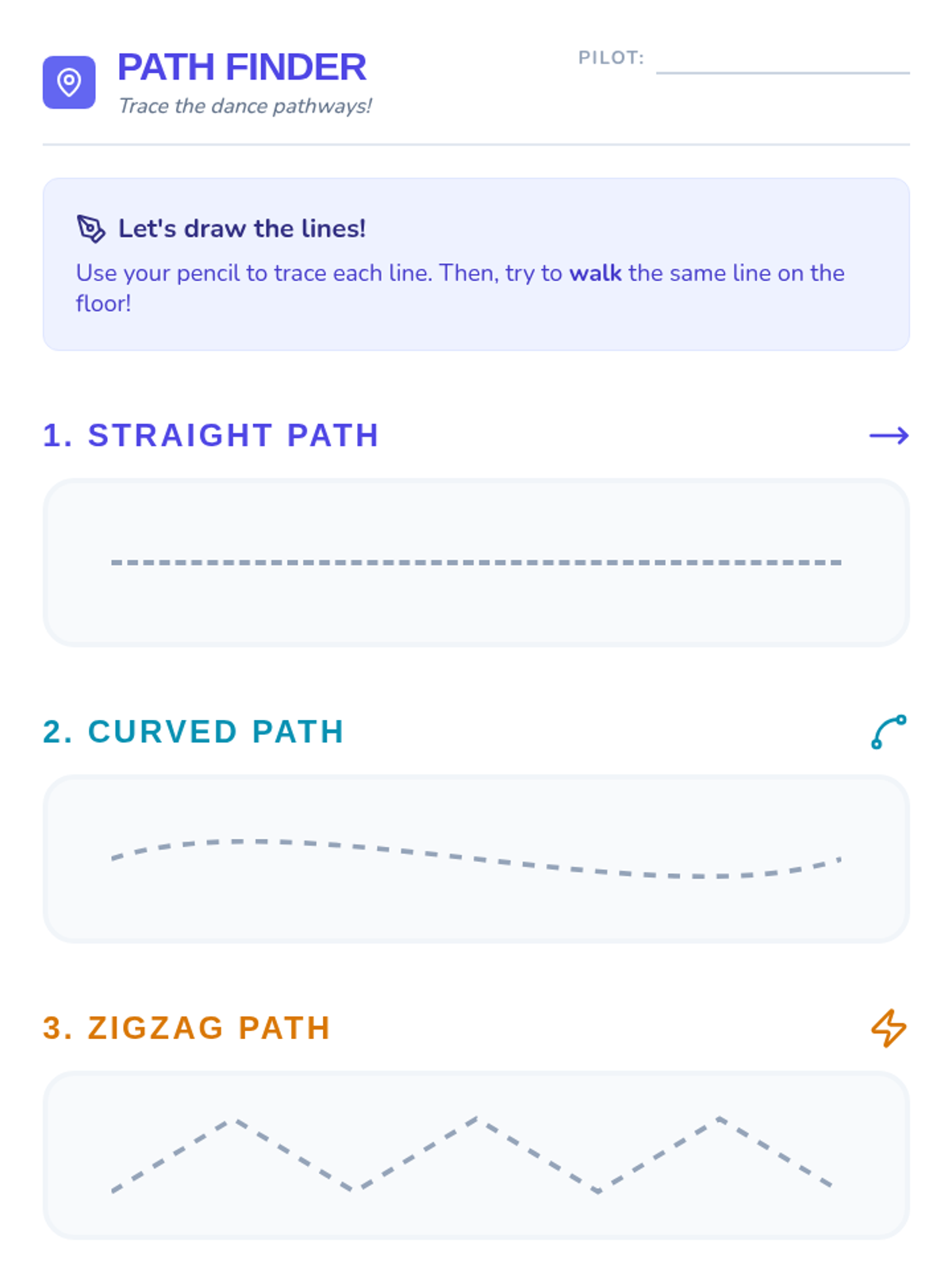
Learners explore moving through space using locomotor movements and experimenting with straight, curved, and zigzag pathways.
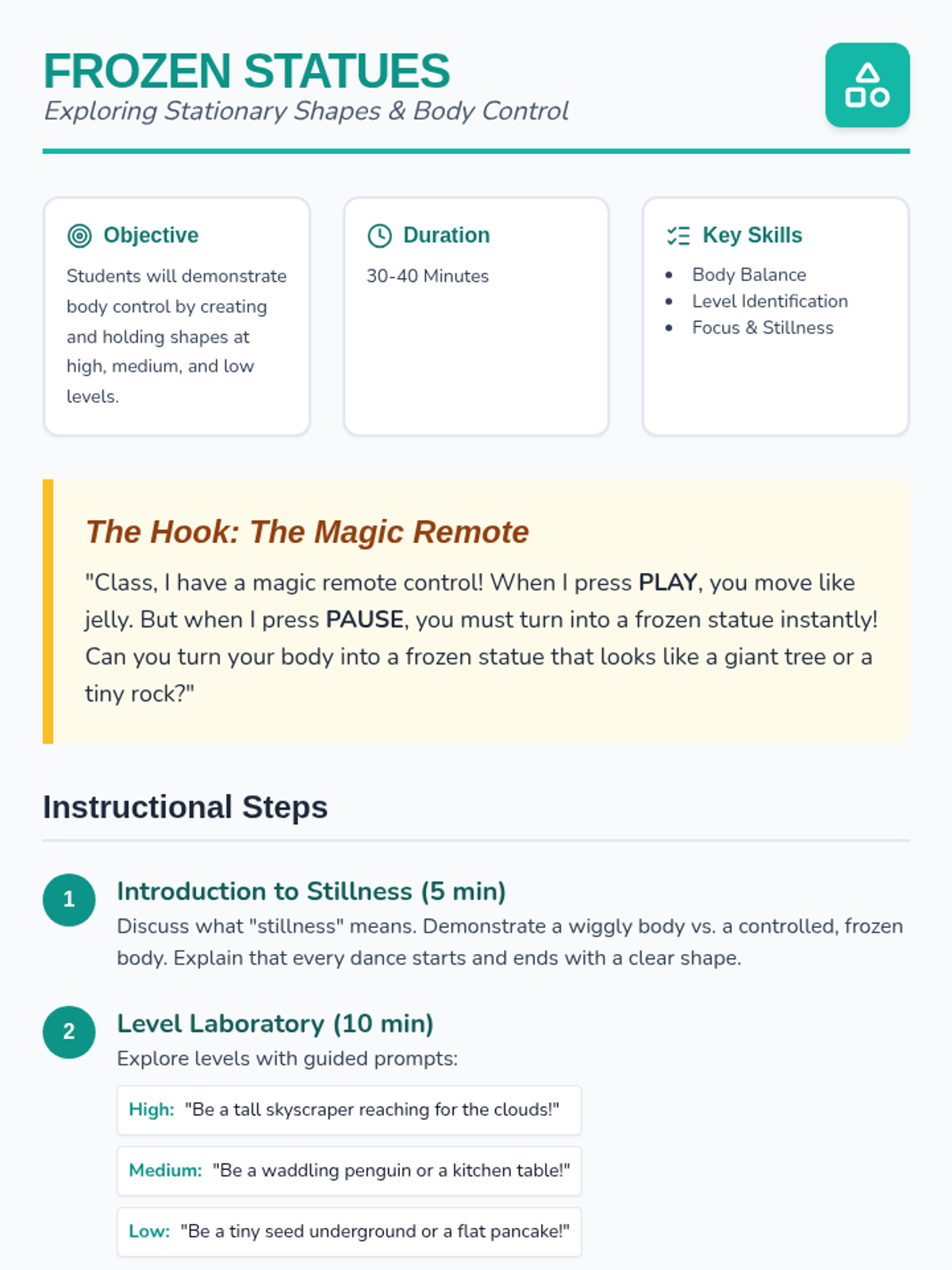
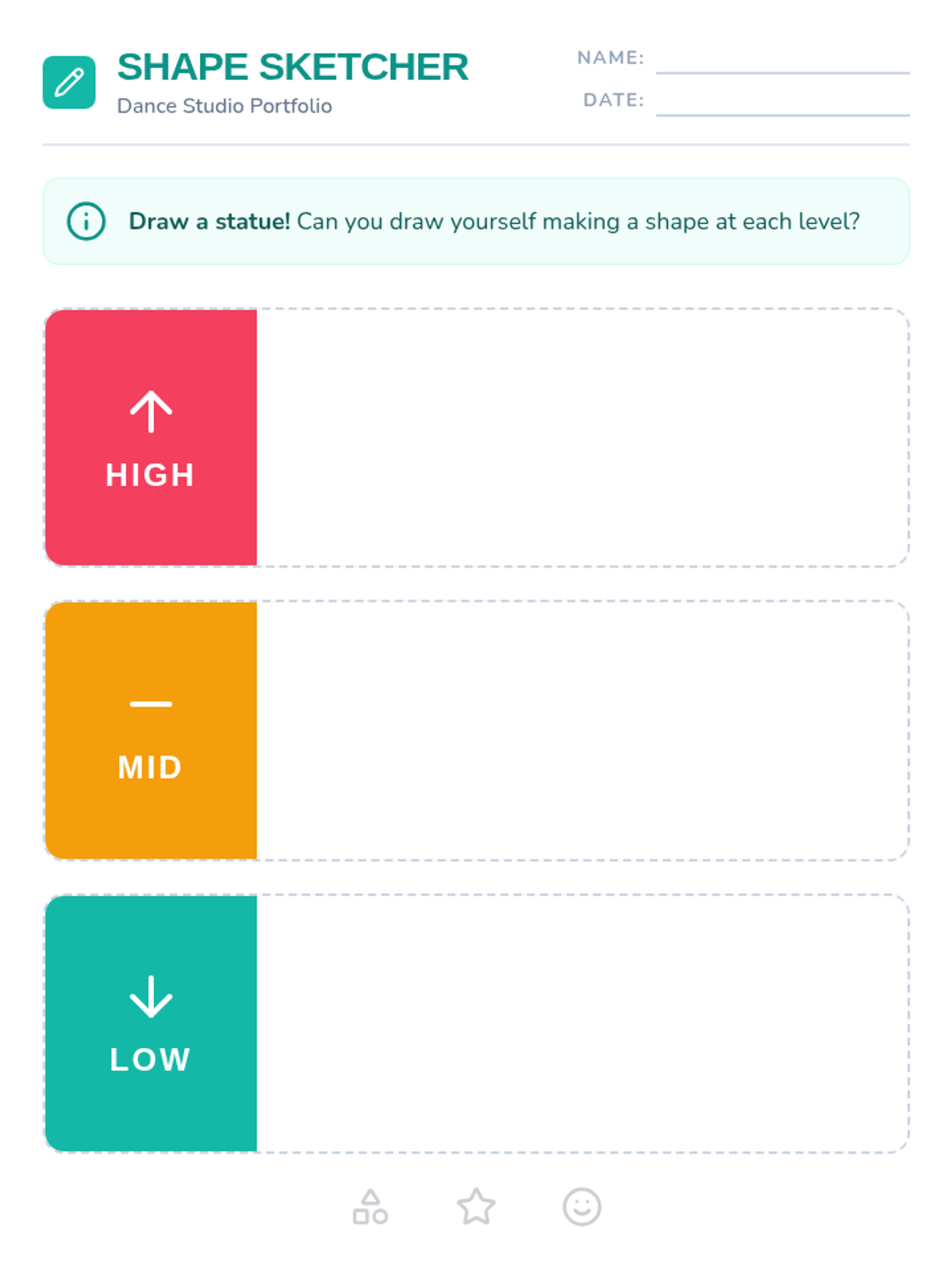
Students investigate the concept of 'stillness' versus 'movement' by creating body shapes at high, medium, and low levels.
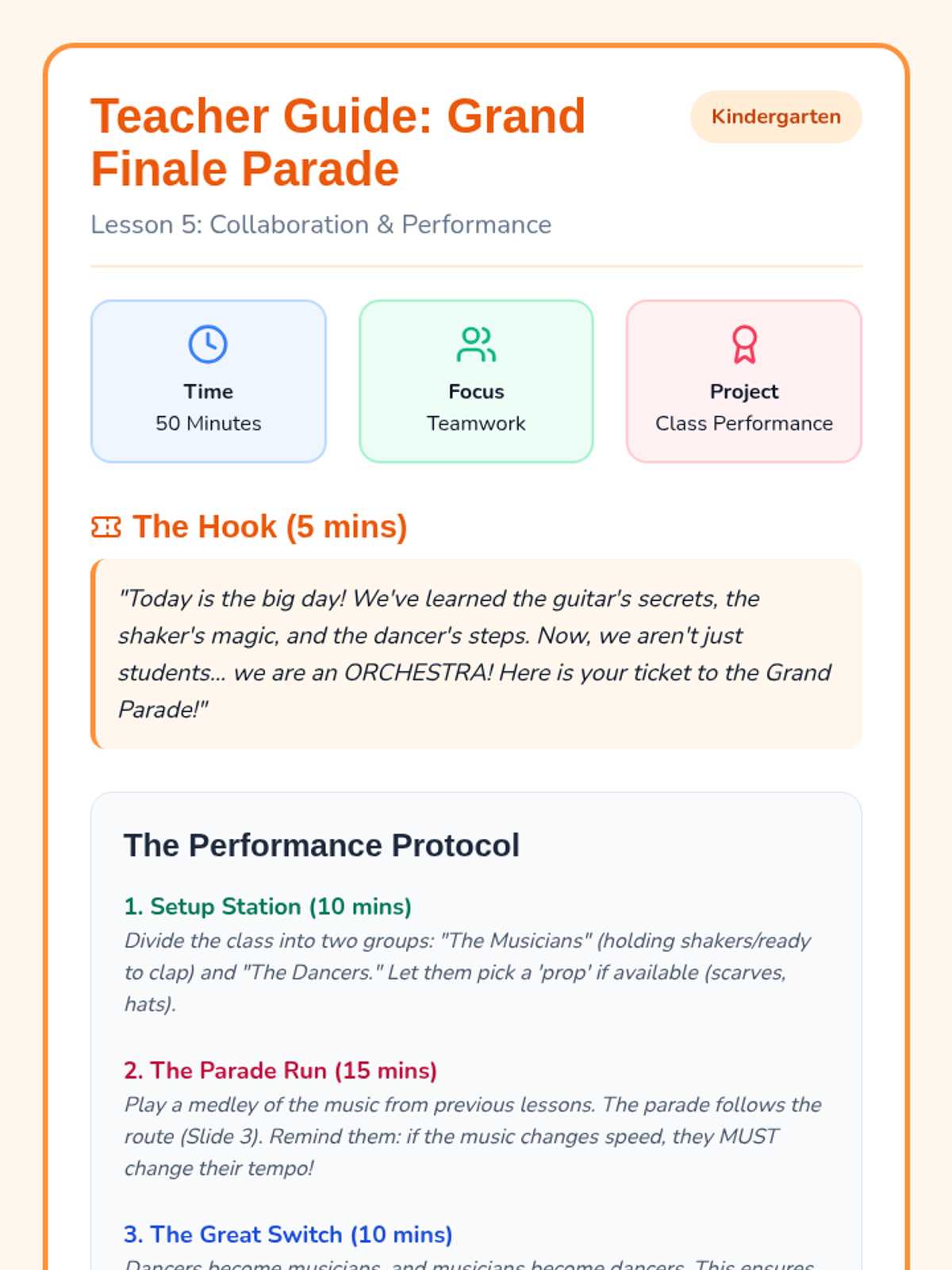
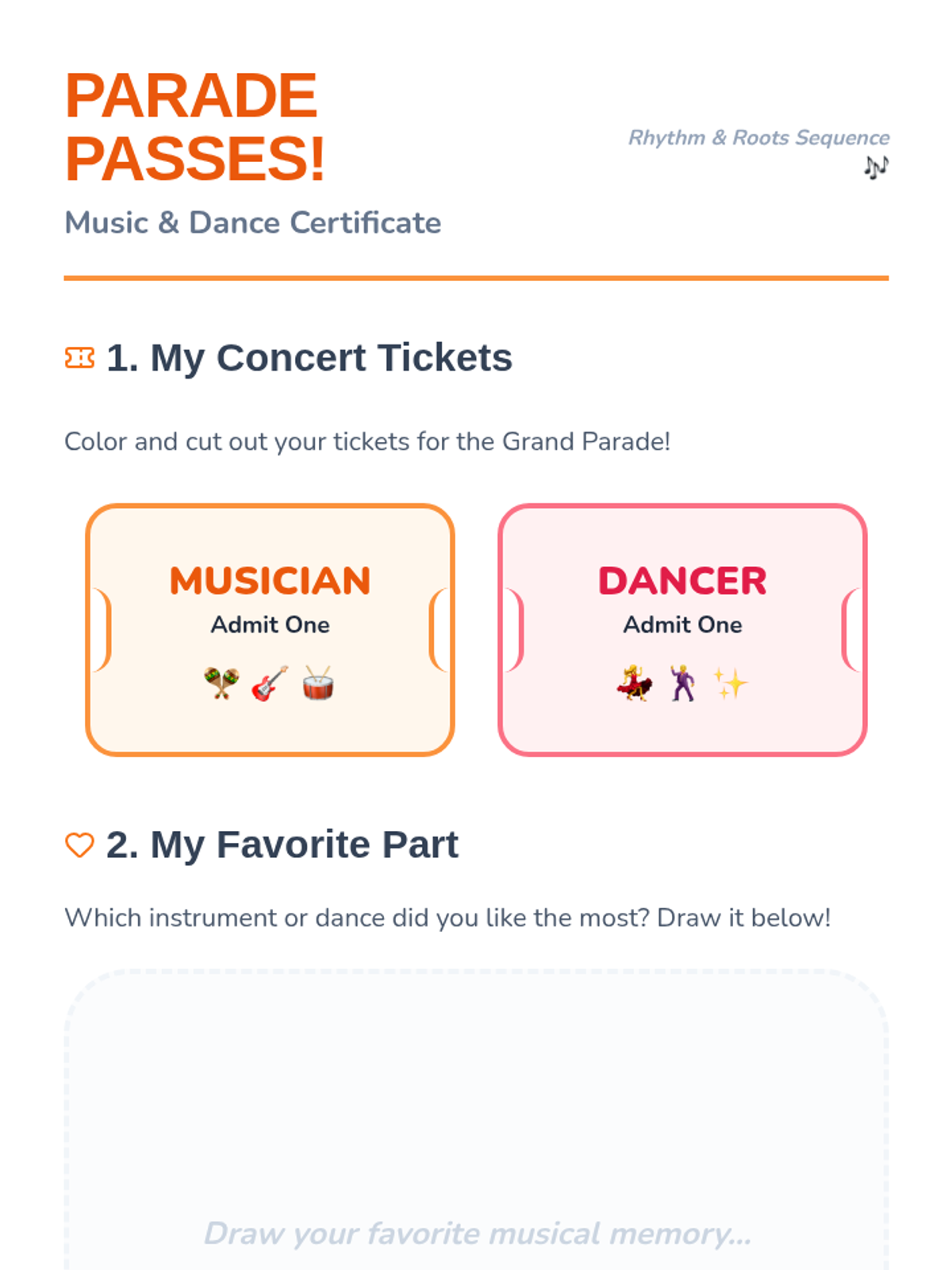
A celebratory final lesson where students combine their musical skills for a classroom parade, taking turns as musicians and dancers.
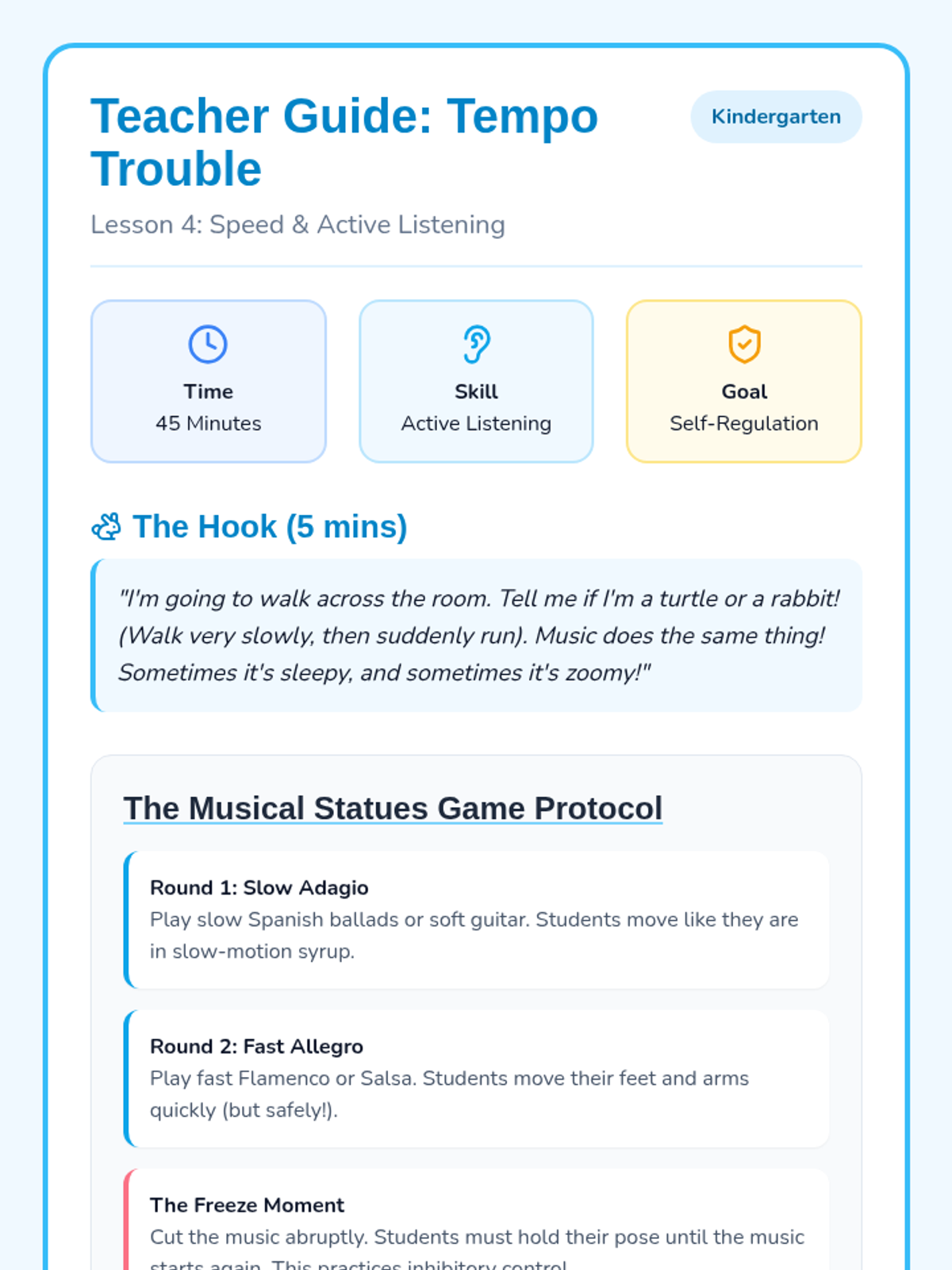
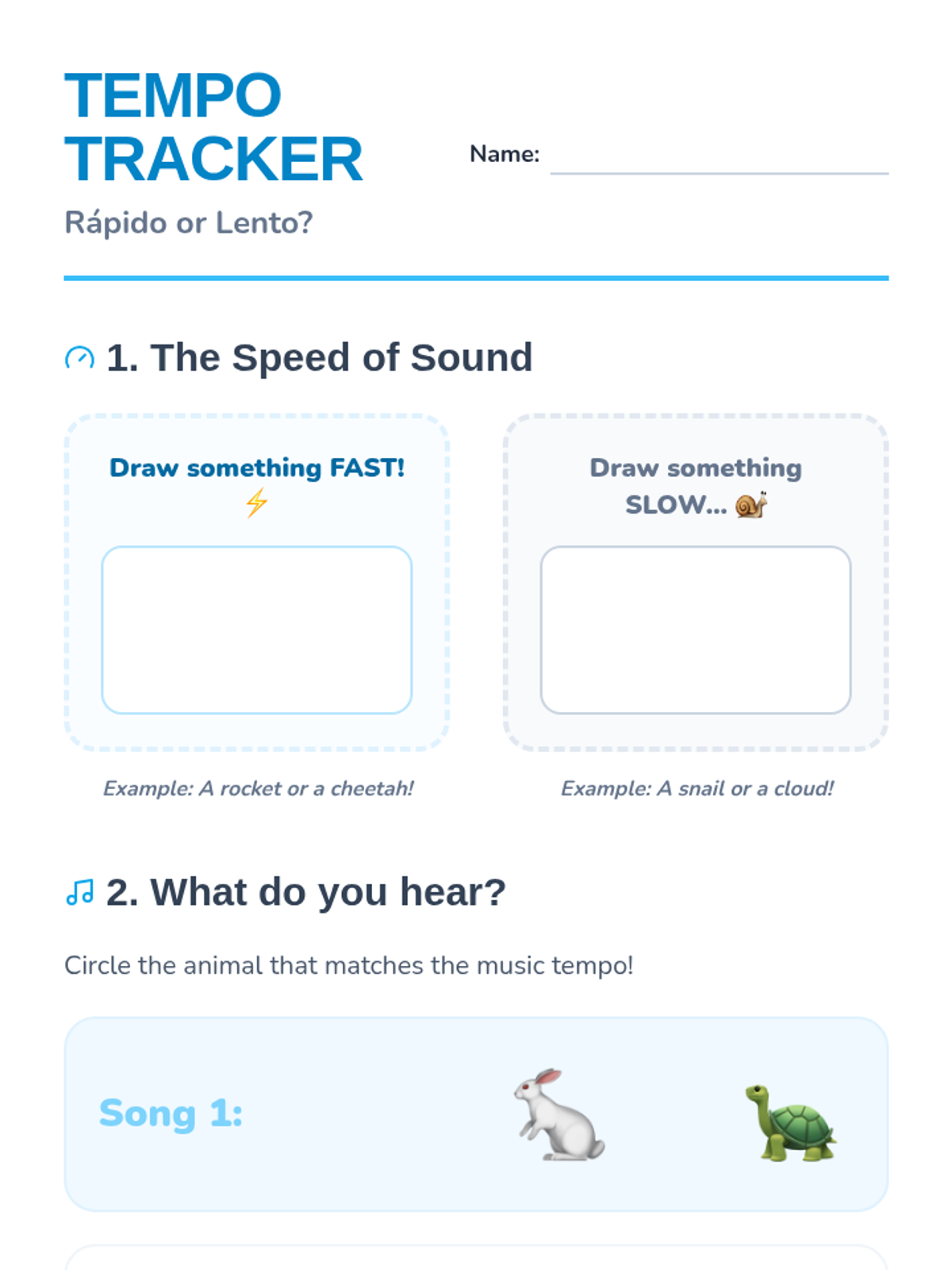
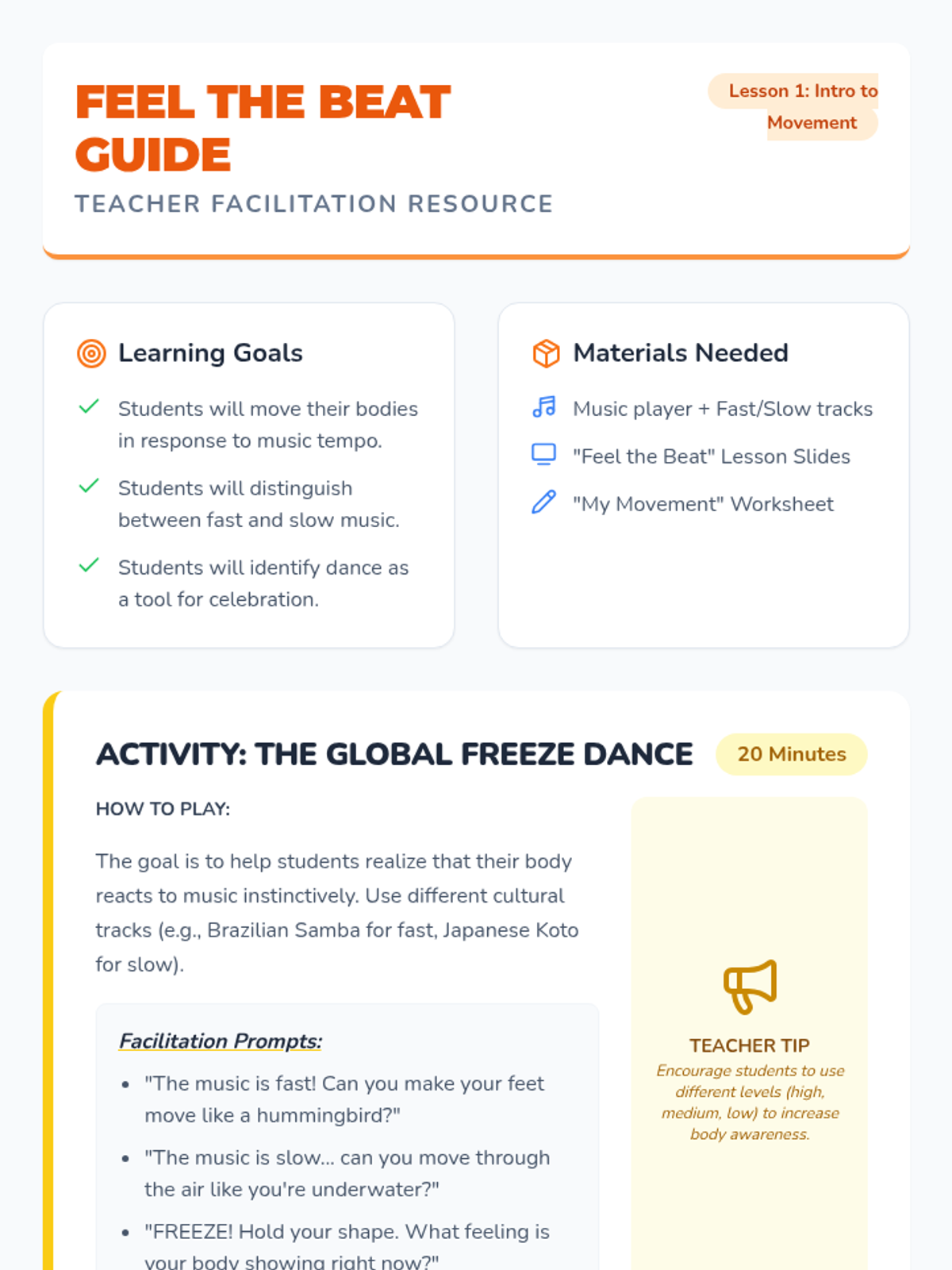
Through a game of Musical Statues, students differentiate between fast and slow tempos, practicing active listening and self-regulation.
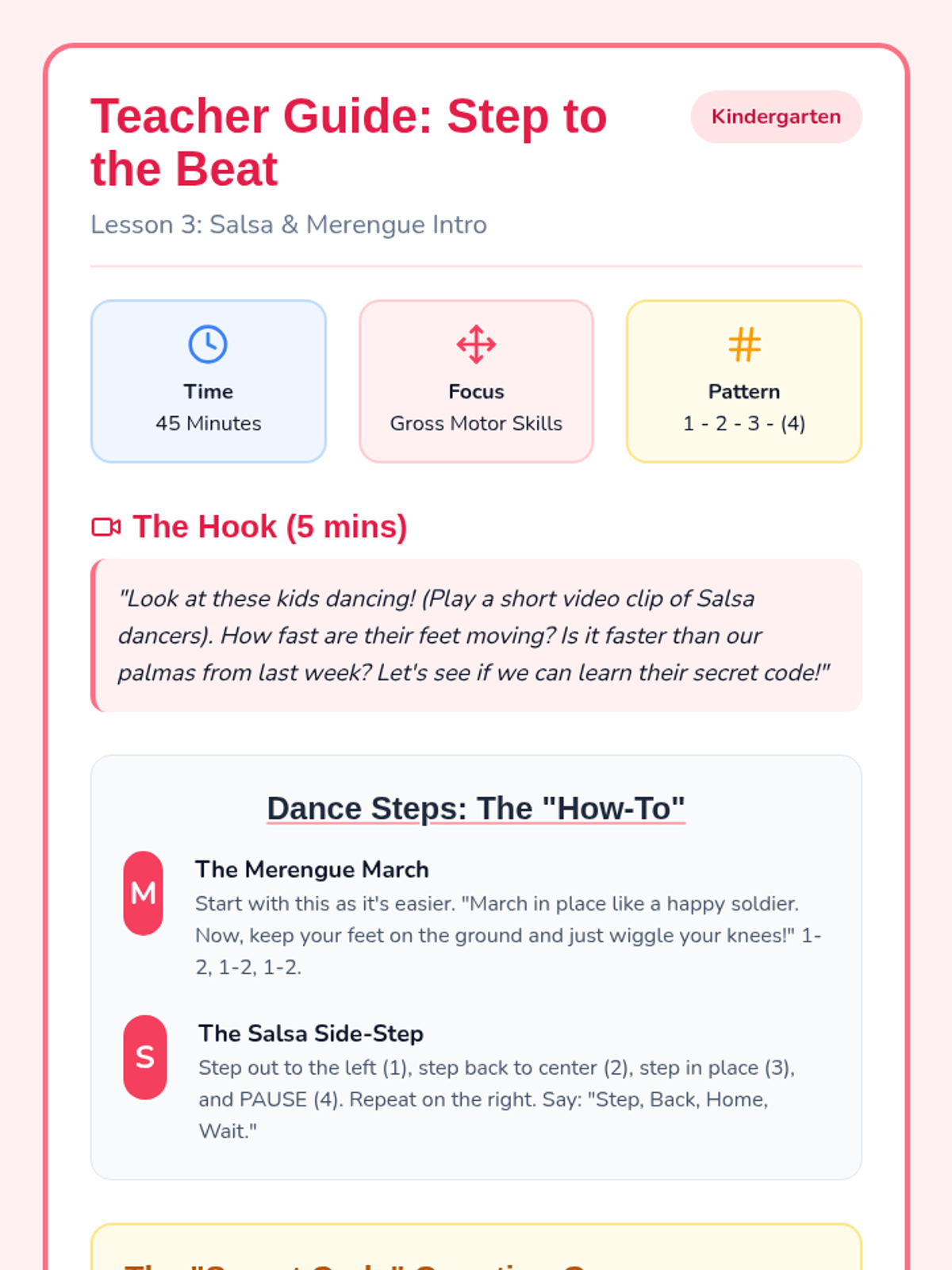
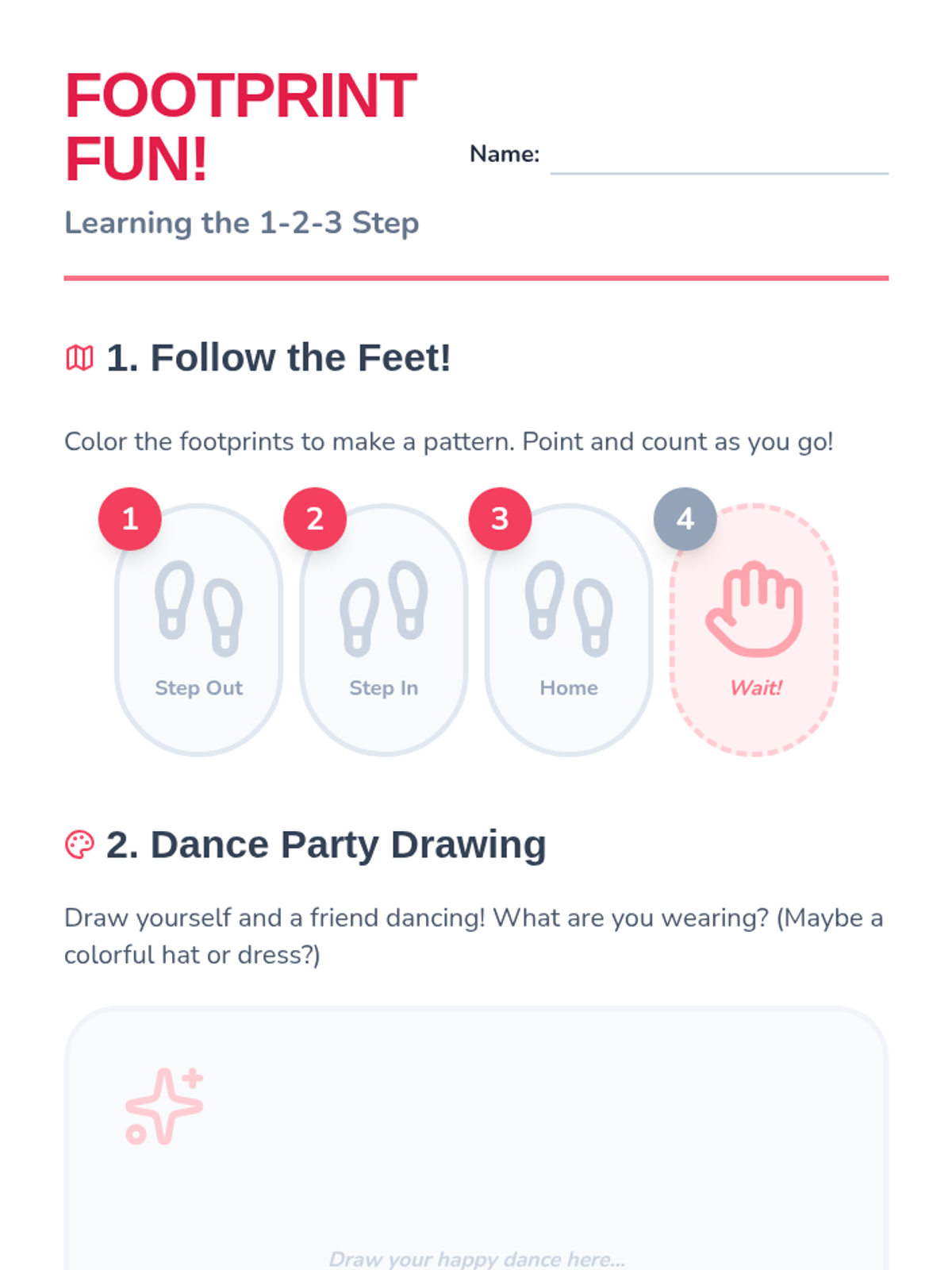
Students learn basic 1-2-3 dance steps for Salsa and Merengue, discovering how dance is used for celebration in Latin cultures.
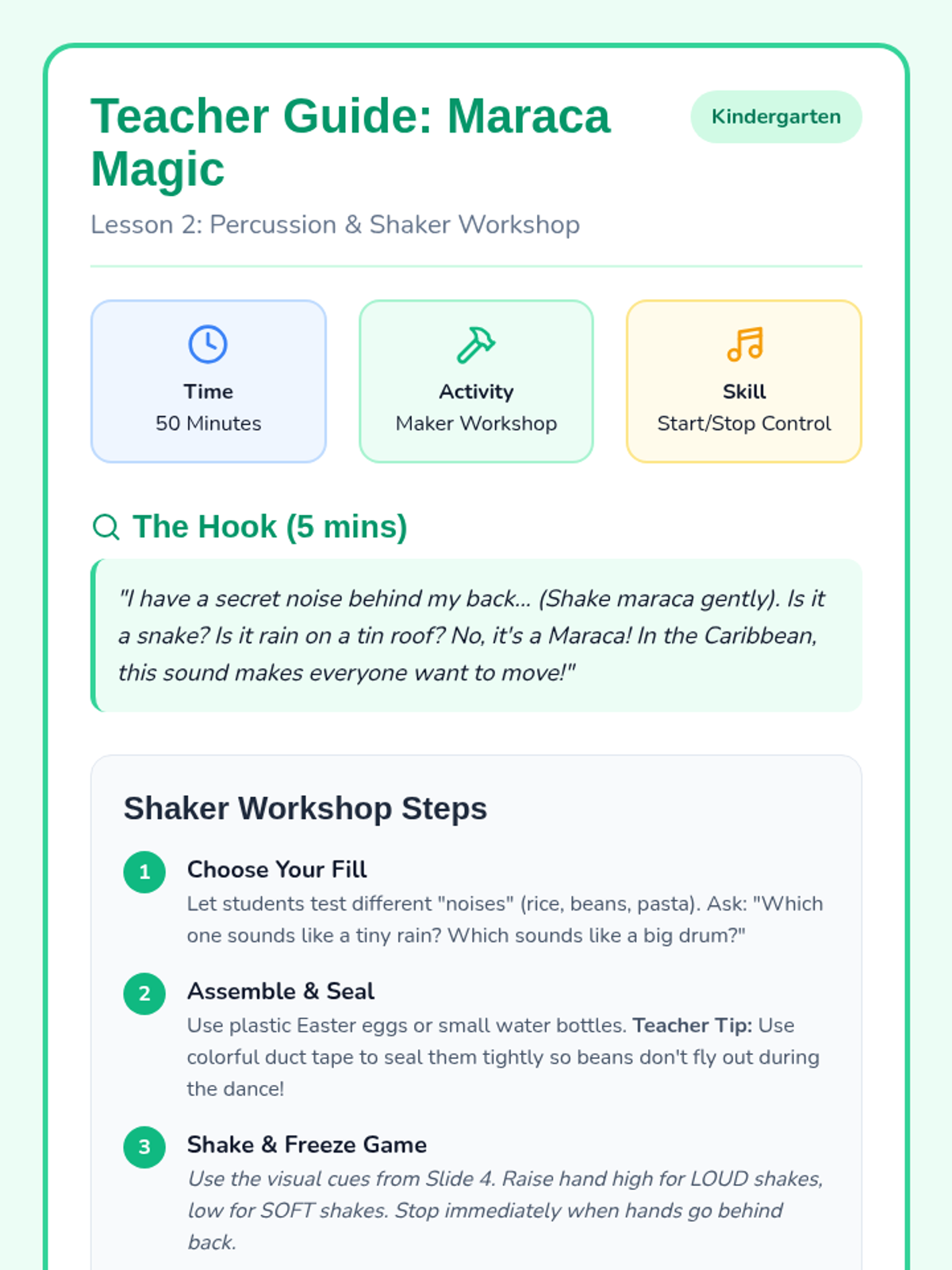
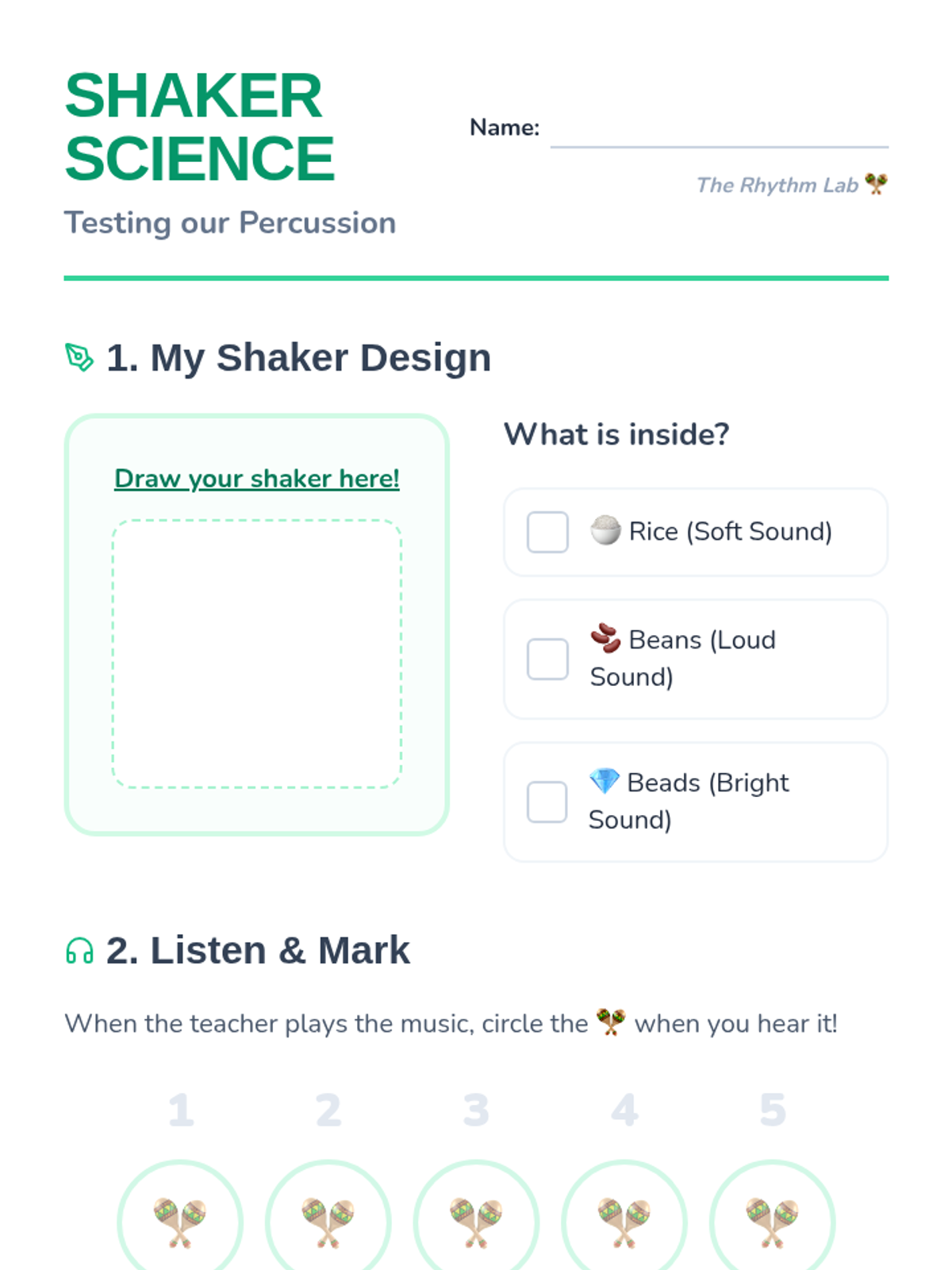
Focusing on percussion, students explore maracas and make their own shakers. They learn to follow a conductor's cues to start and stop their rhythms.
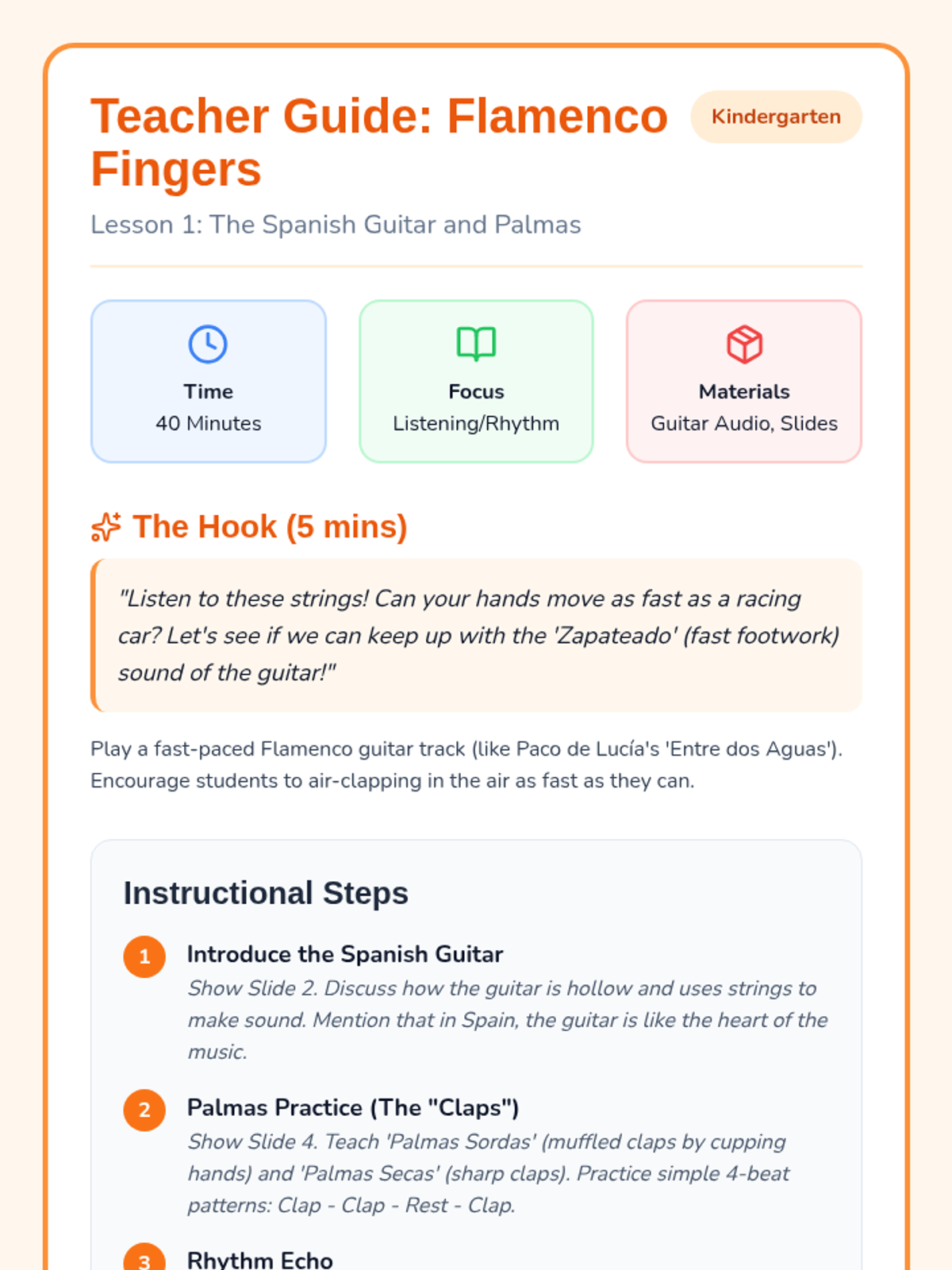
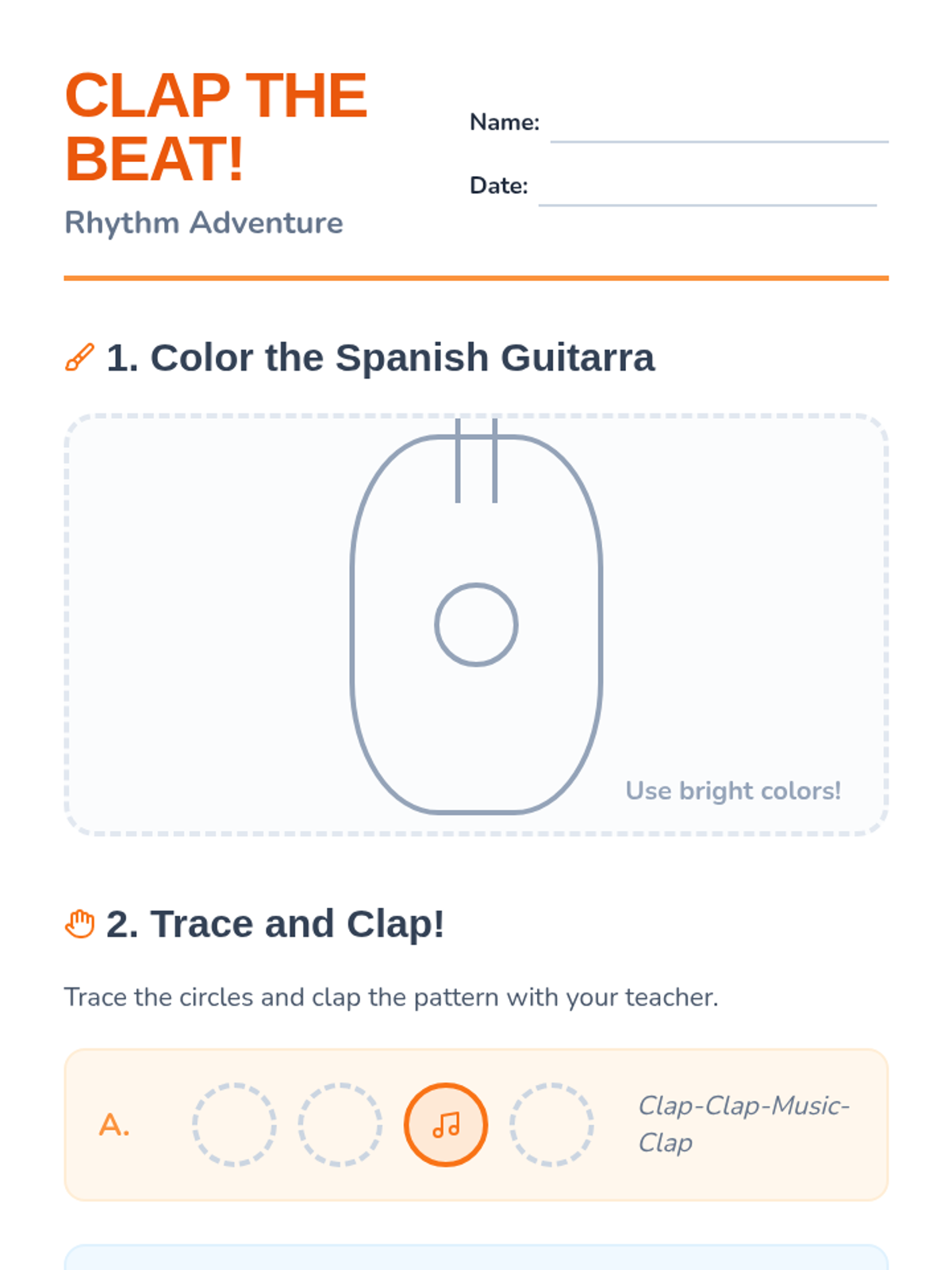
Students discover the soulful sounds of the Spanish guitar and the rhythmic tradition of Flamenco palmas (hand clapping). They practice coordination by matching claps to different speeds of music.
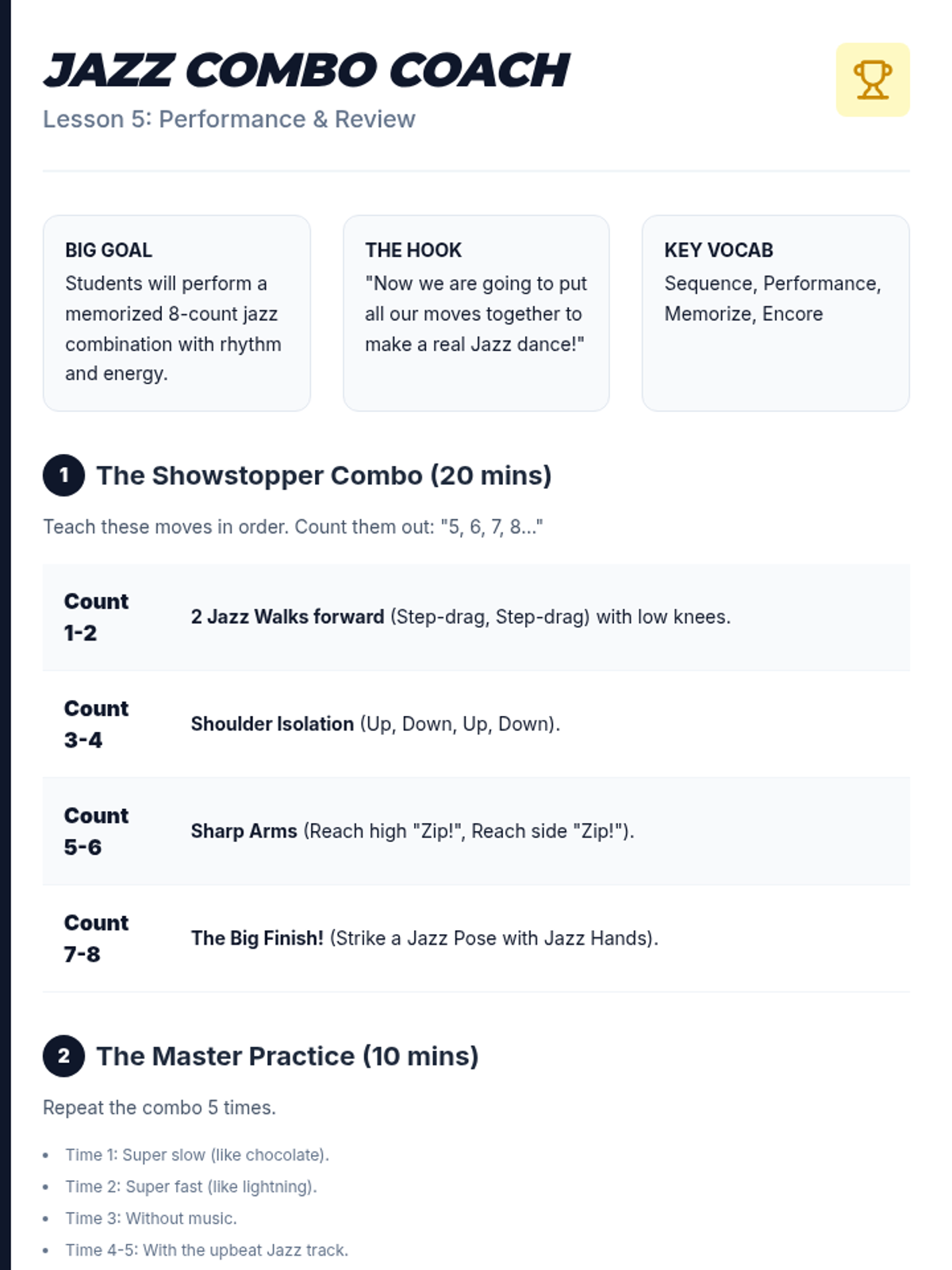
Students combine isolations, walks, and poses into a short 4-count or 8-count sequence. The lesson focuses on memorizing the order of movements and performing them with high energy.
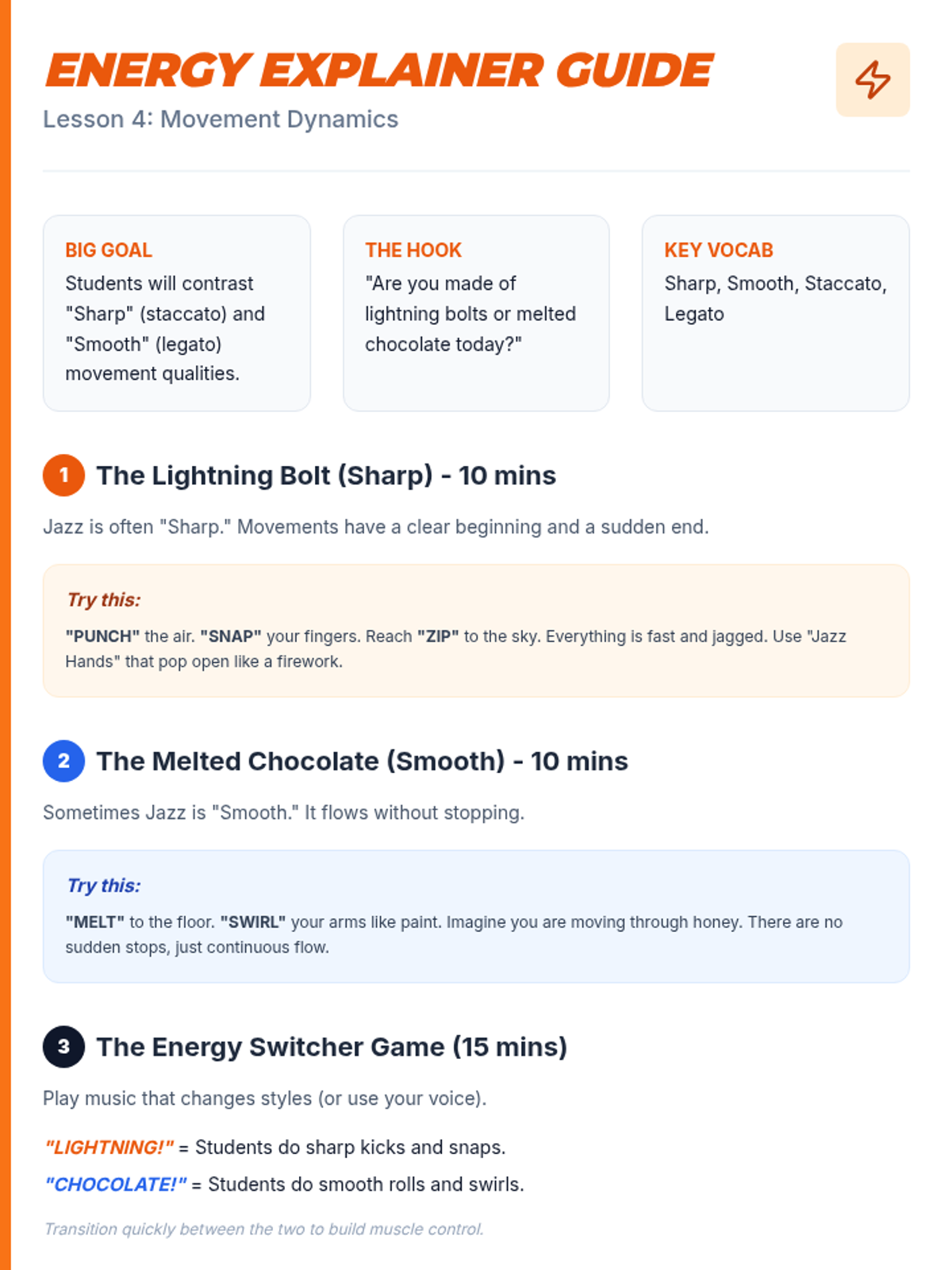
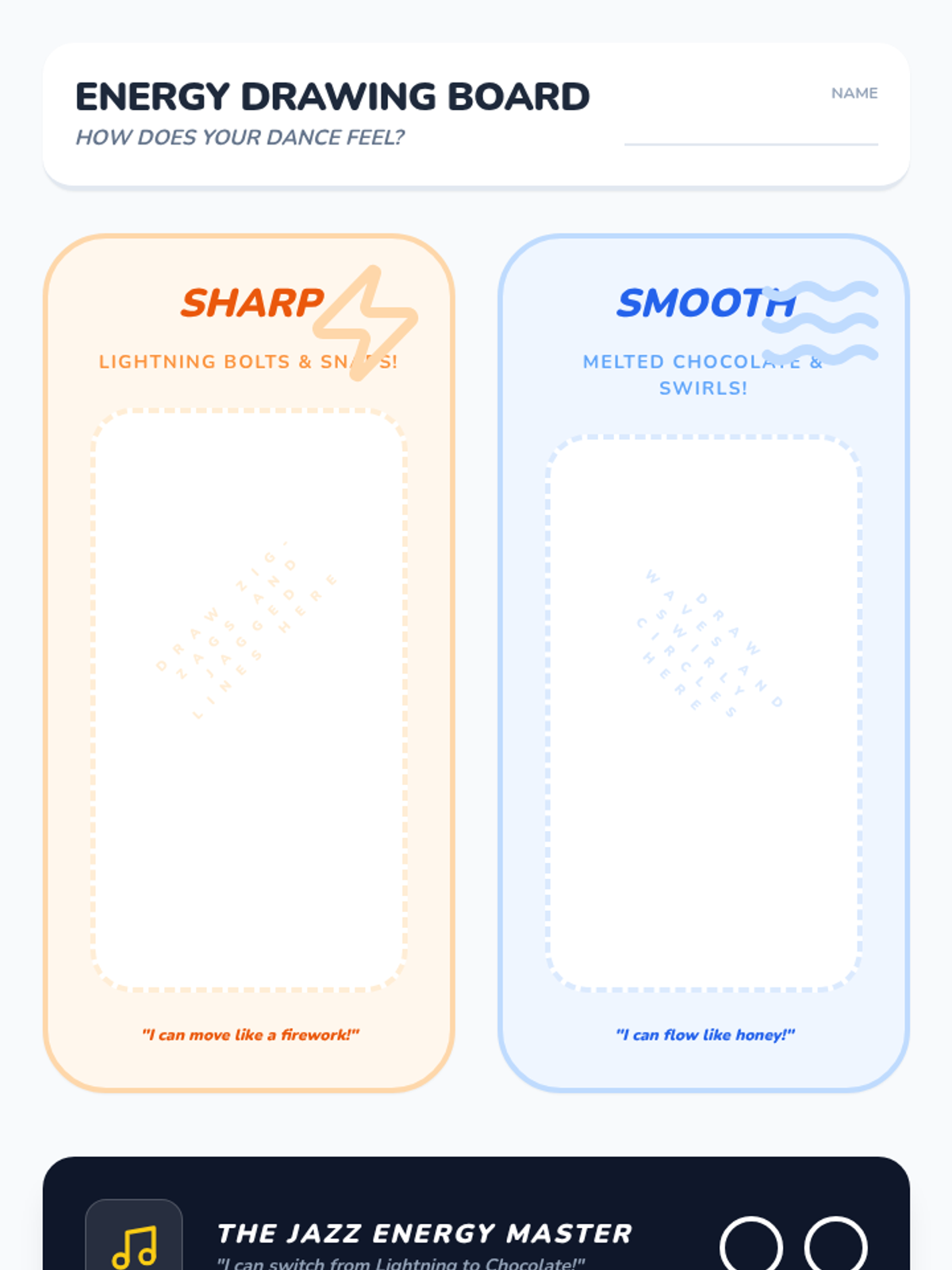
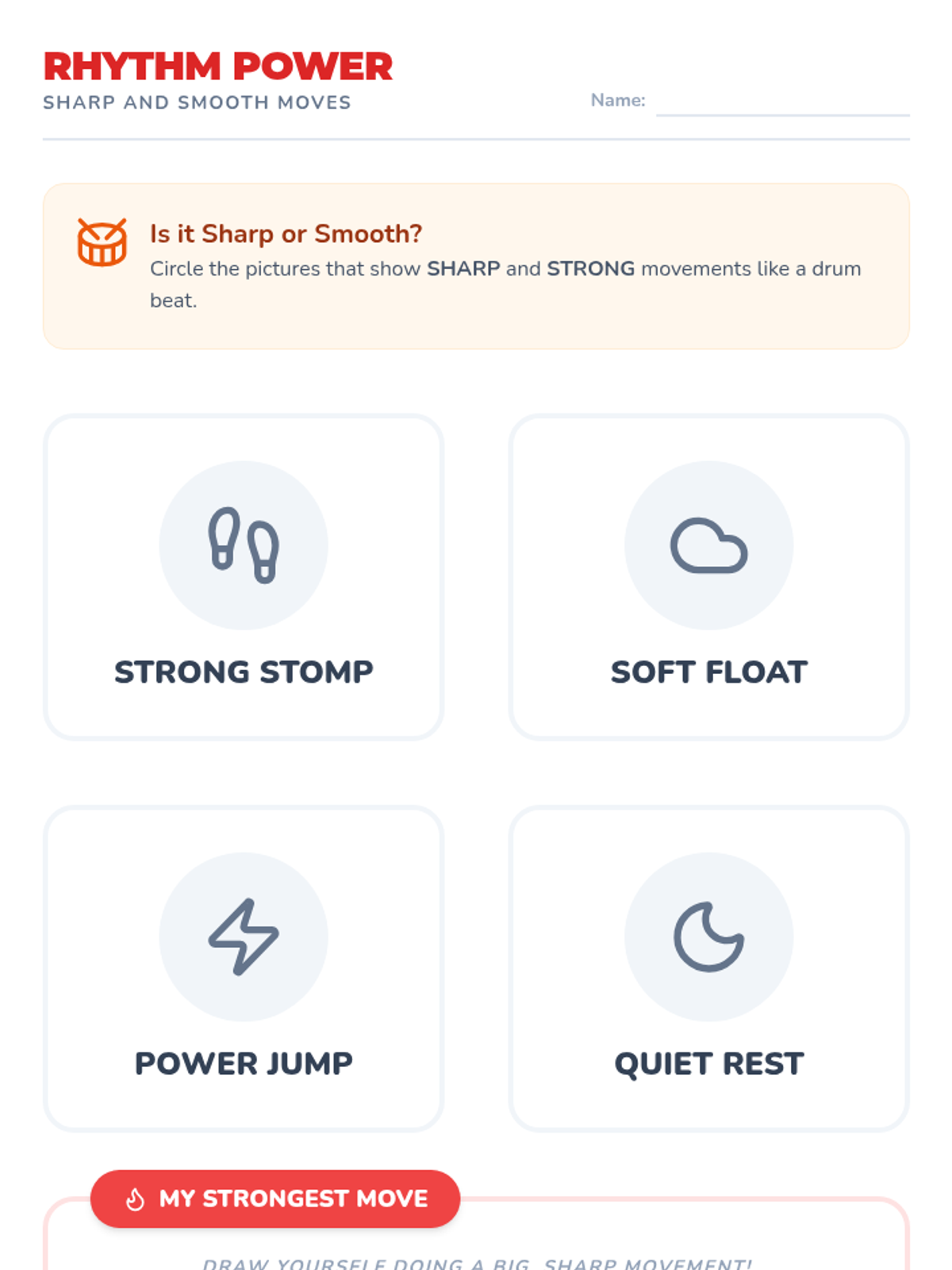
Students explore dynamic qualities, alternating between sharp, jagged movements (staccato) and smooth, melting movements (legato). They apply these energies to 'Jazz Hands' and poses.
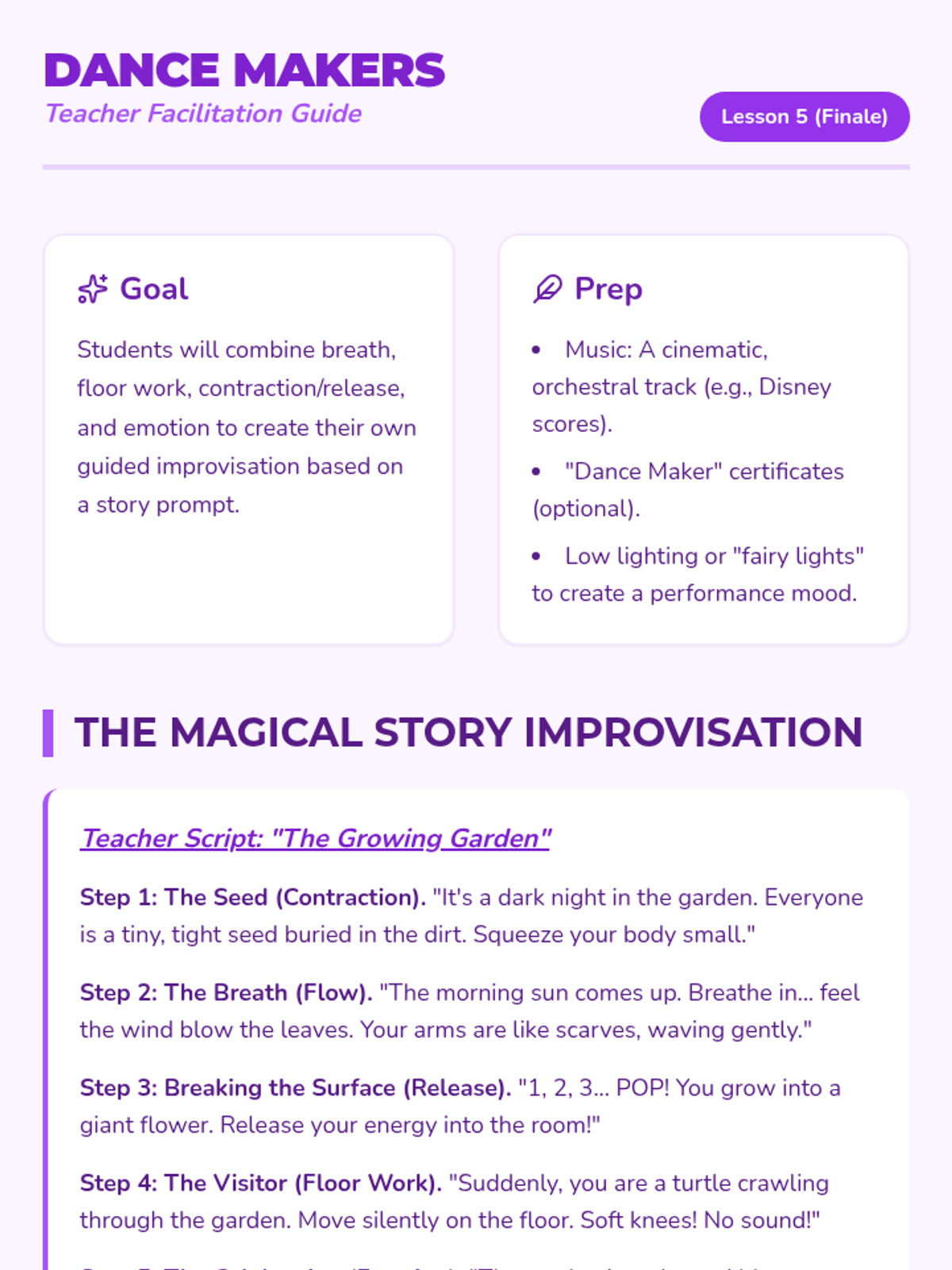
A culminating session where students use their skills to improvise movements based on a thematic story.
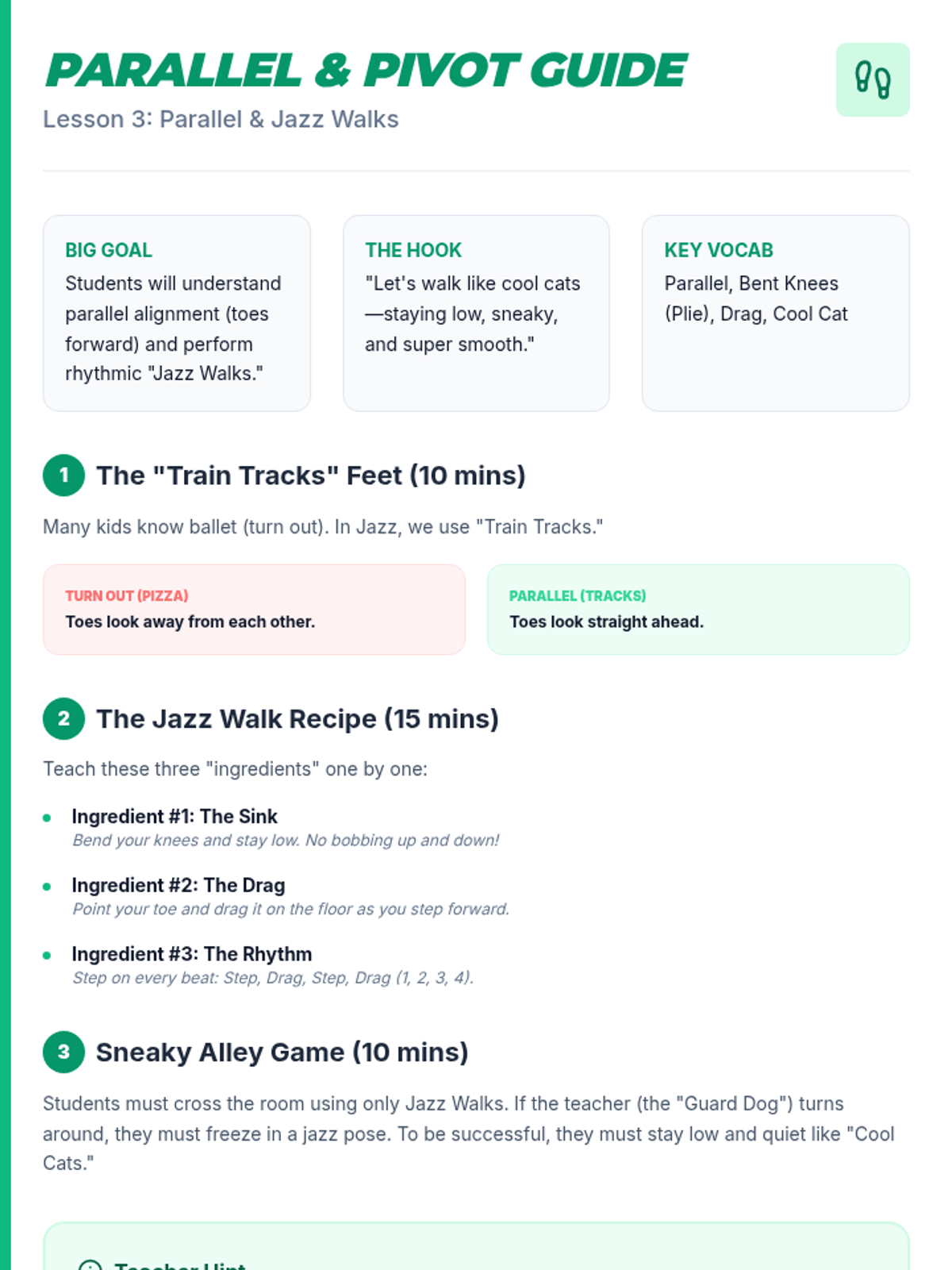
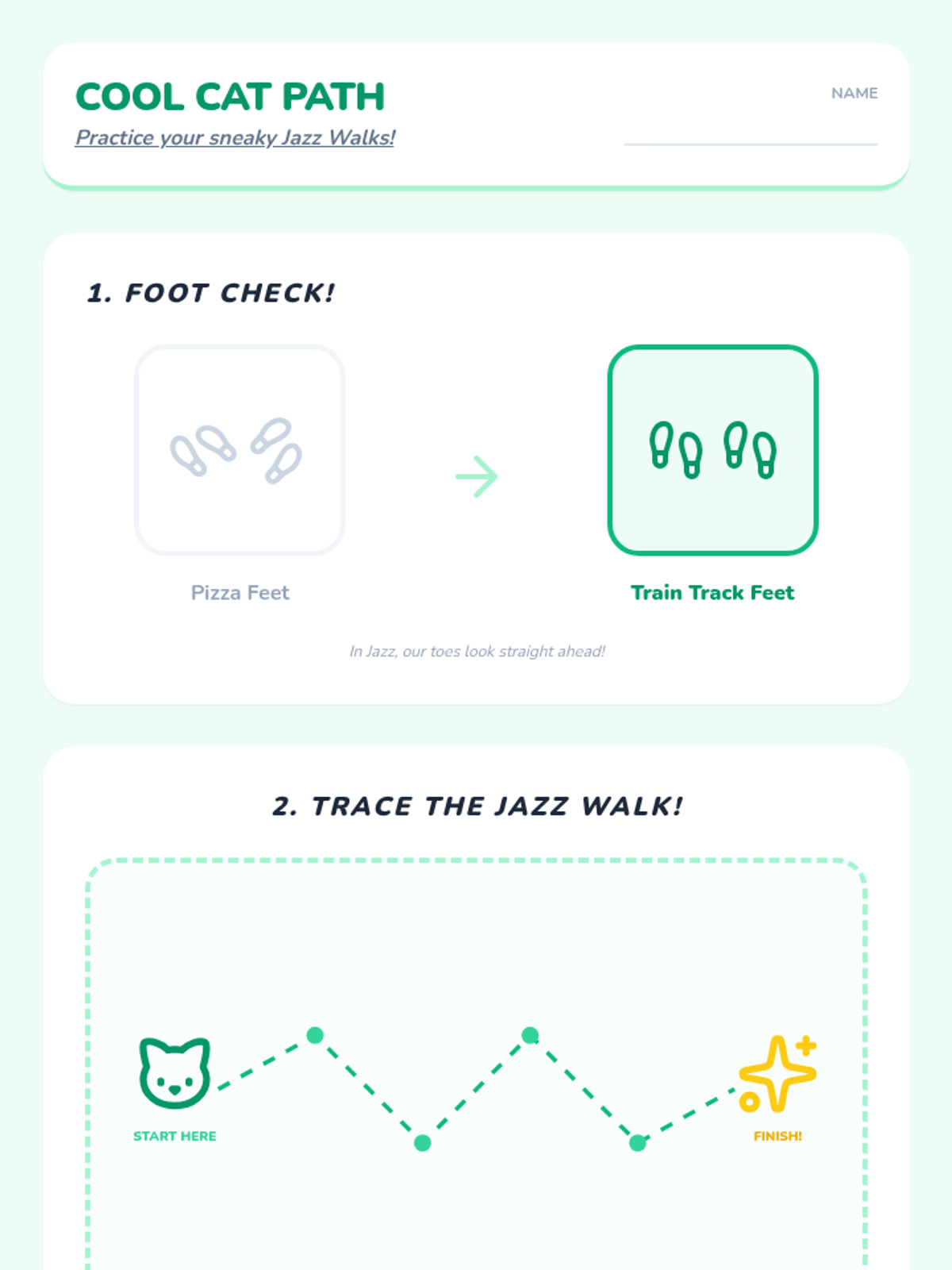
Contrasting with ballet, students learn parallel foot positions (toes forward). They practice 'Jazz Walks'—staying low to the ground with bent knees and dragging toes.
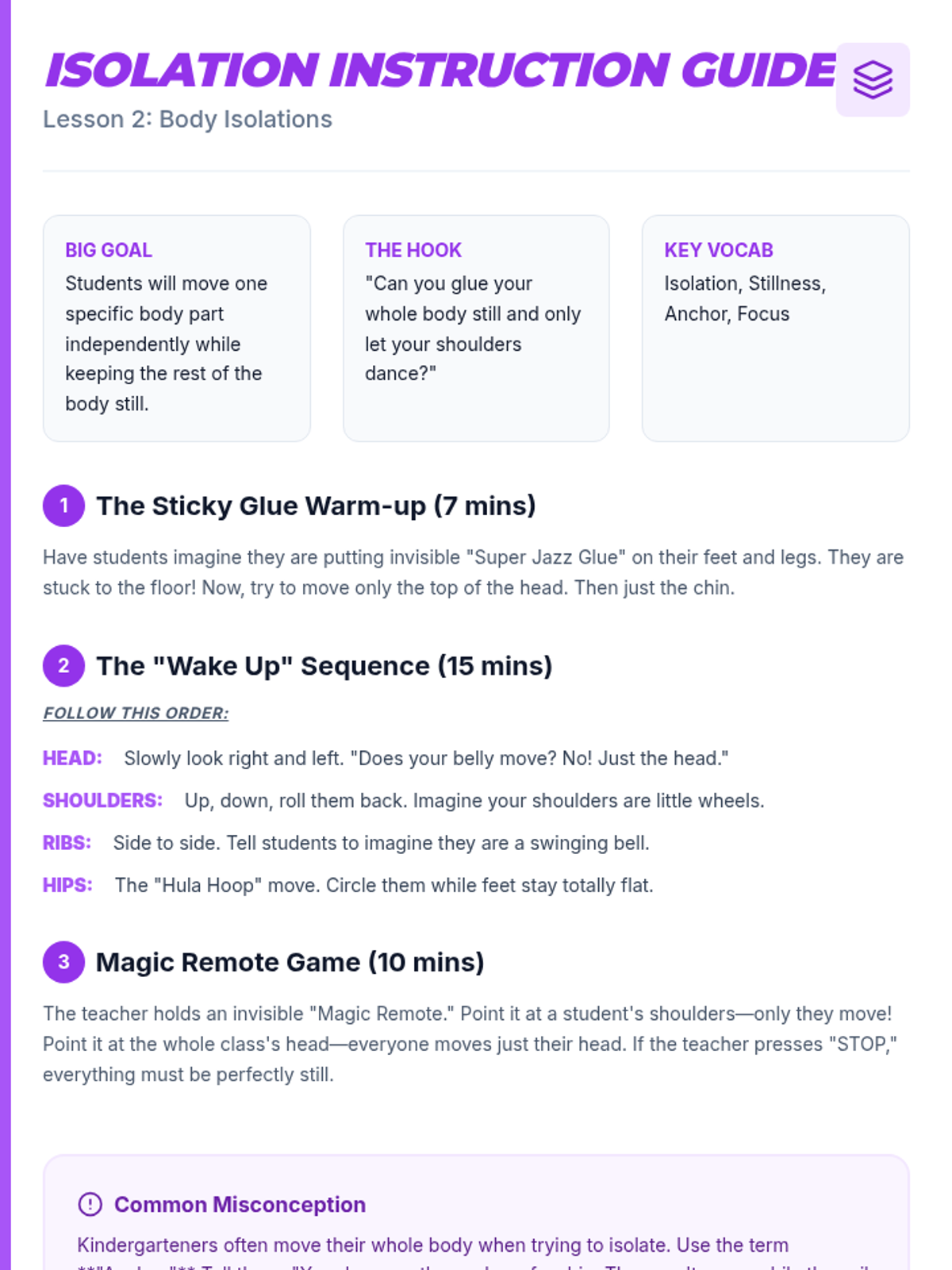
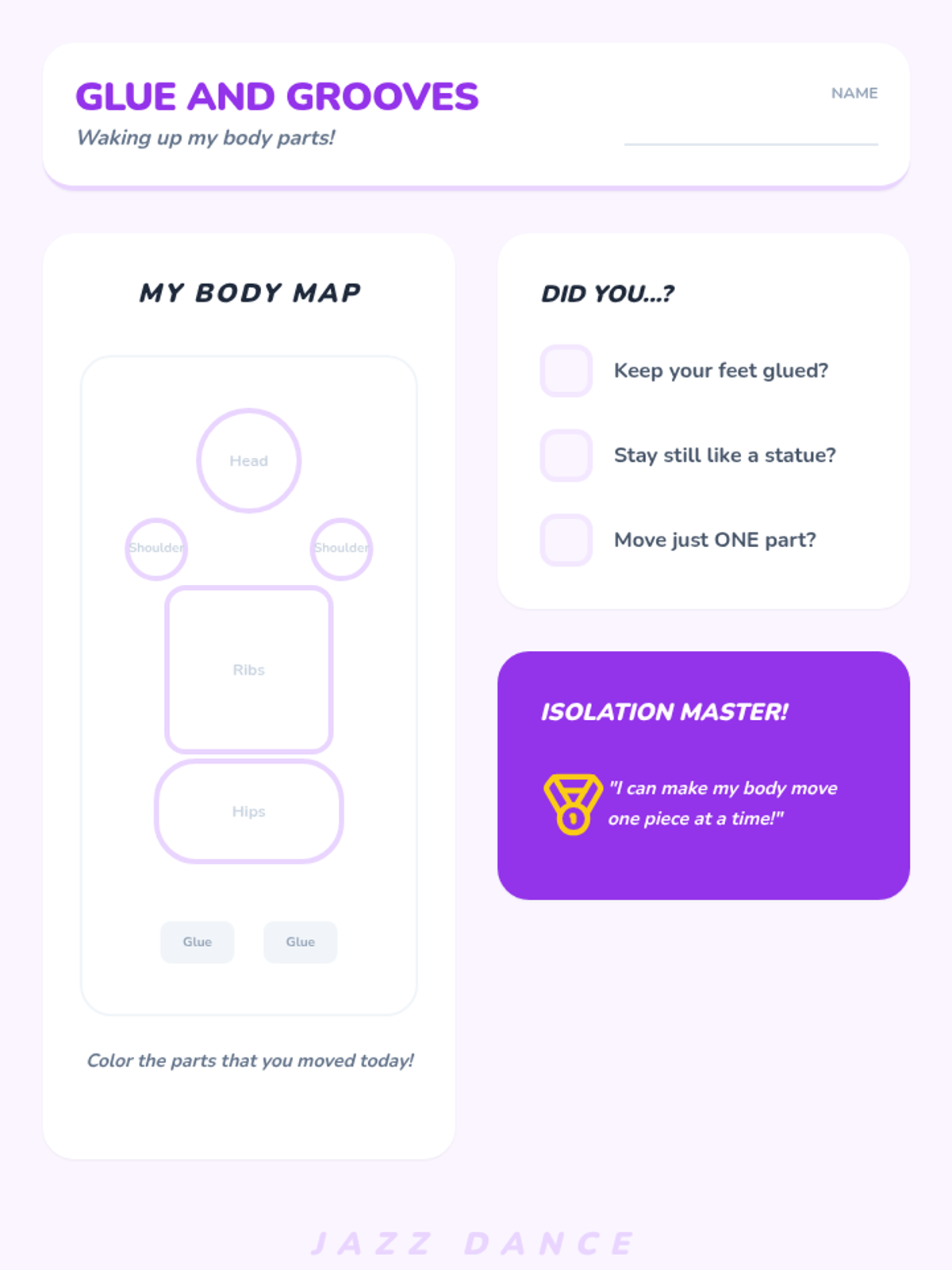
Students practice moving only one body part at a time (head, shoulders, ribs, hips). They learn the concept of isolation, keeping the rest of the body still while one part 'wakes up.'
Exploring how emotions can be translated into physical shapes and movement across the floor.
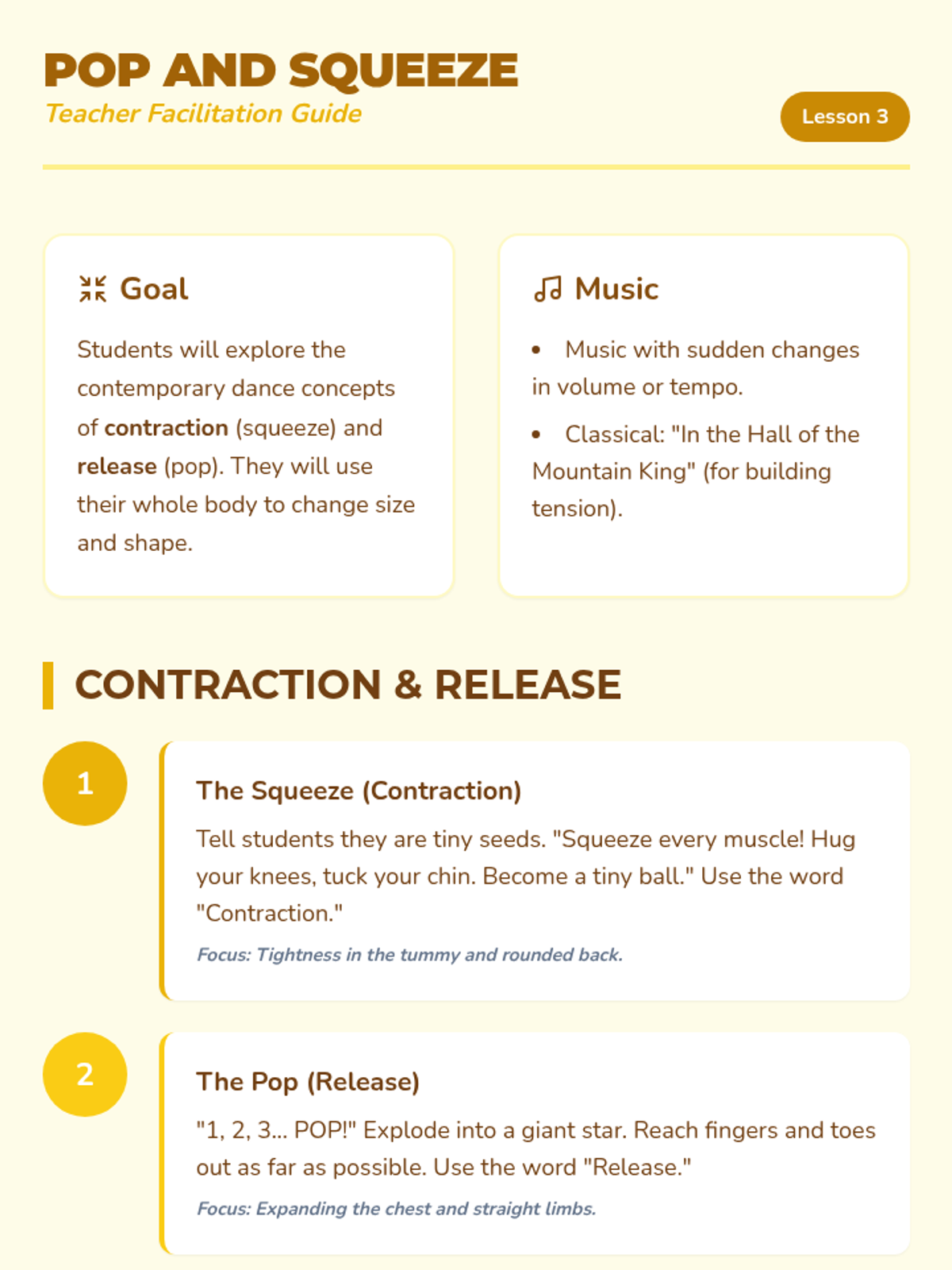
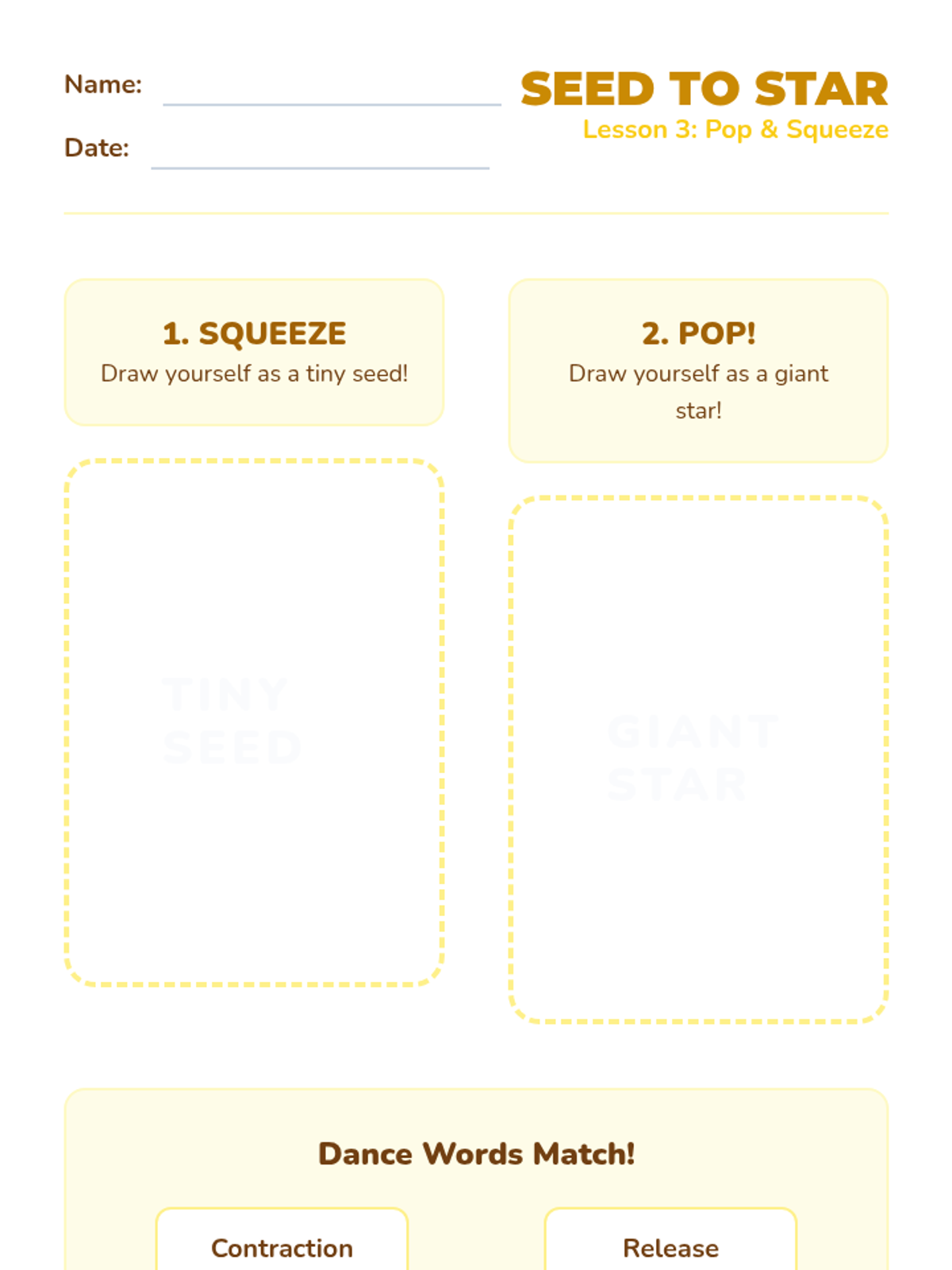
Students learn the contemporary concepts of contraction and release by making their bodies small like seeds and big like stars.
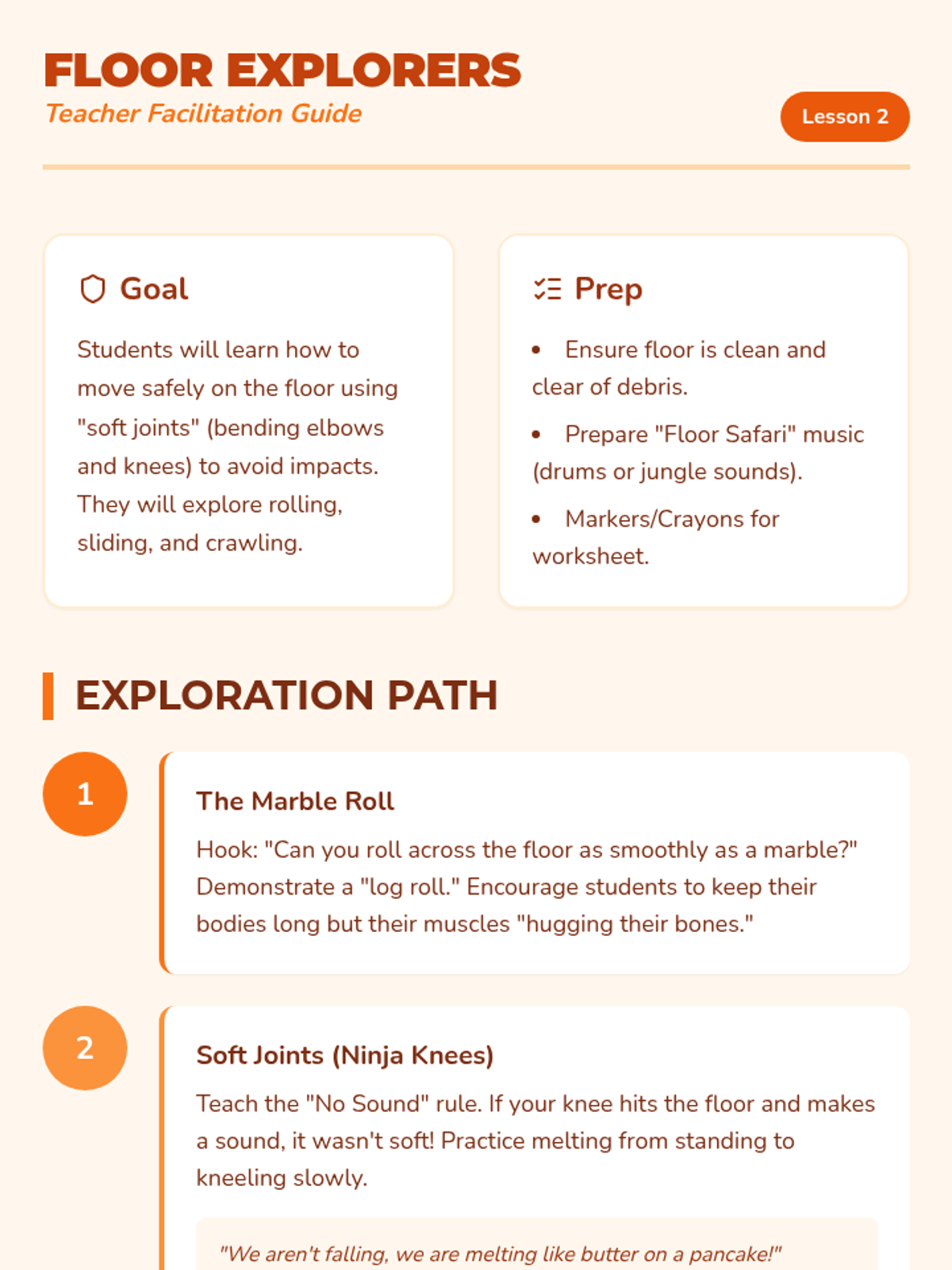
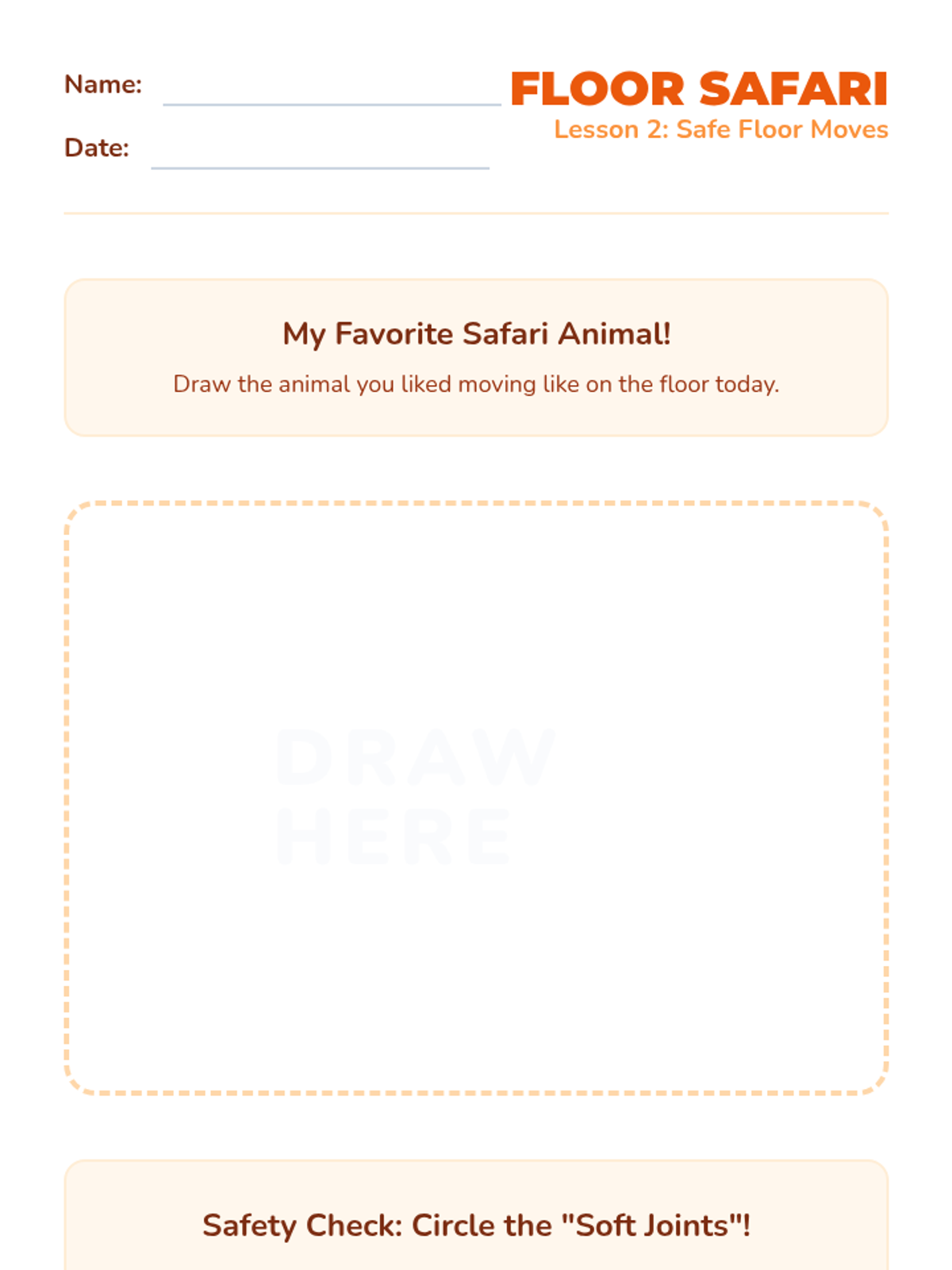
An introduction to moving safely on the floor, focusing on soft joints and smooth transitions between levels.
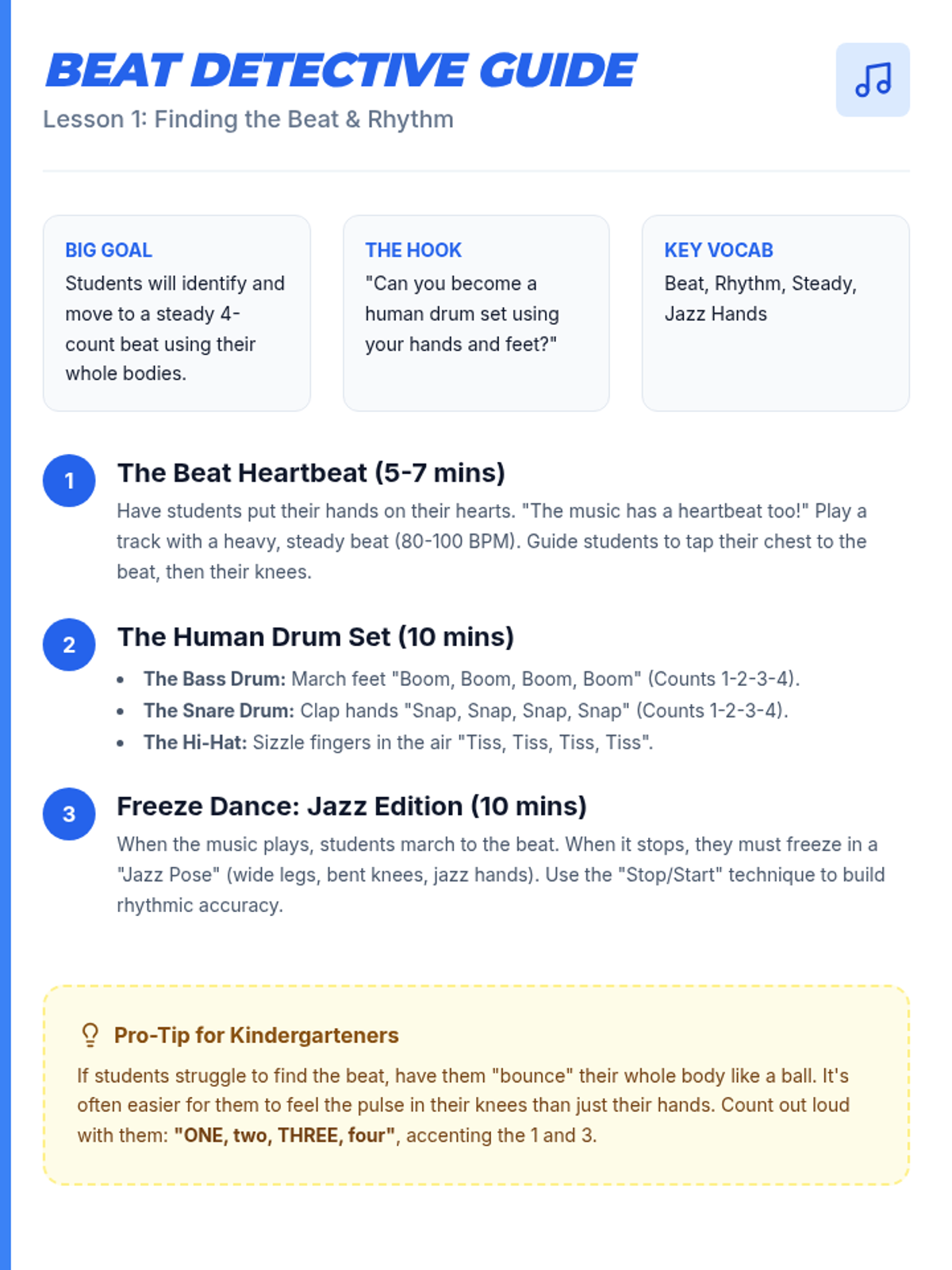
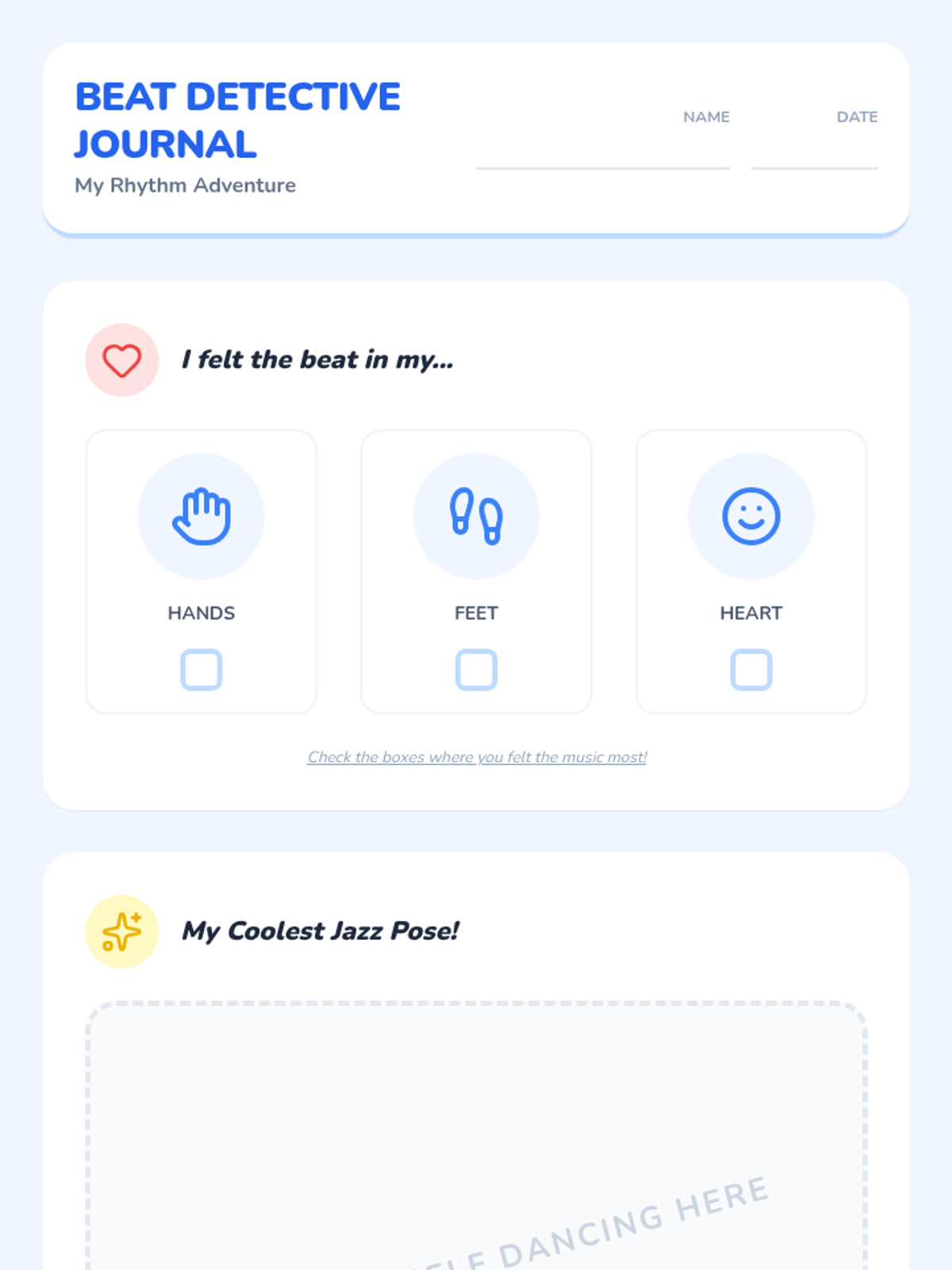
Students listen to upbeat music to identify the steady beat through clapping, marching, and bouncing. They learn to count '1-2-3-4' and start and stop movements exactly on the beat.
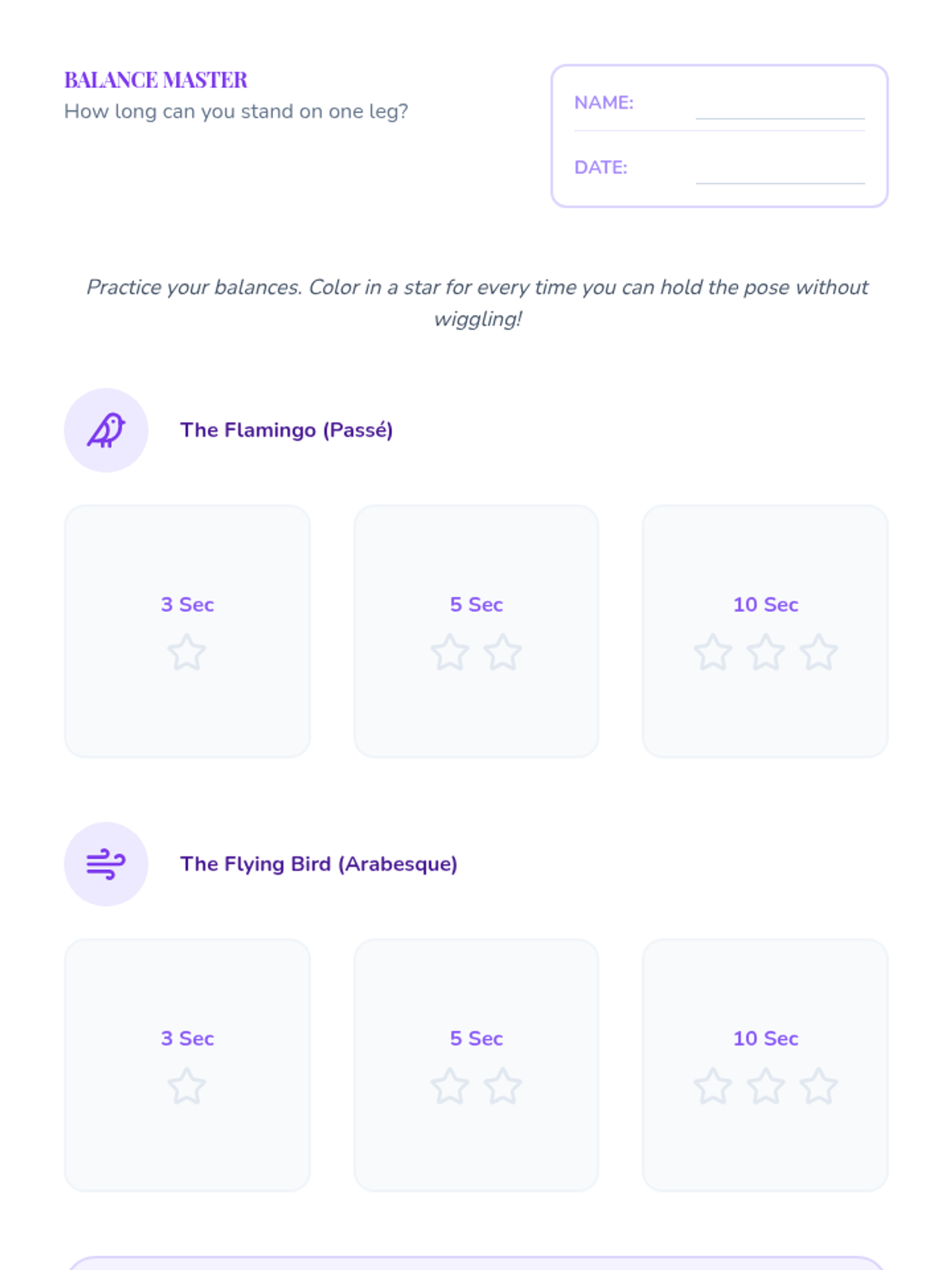
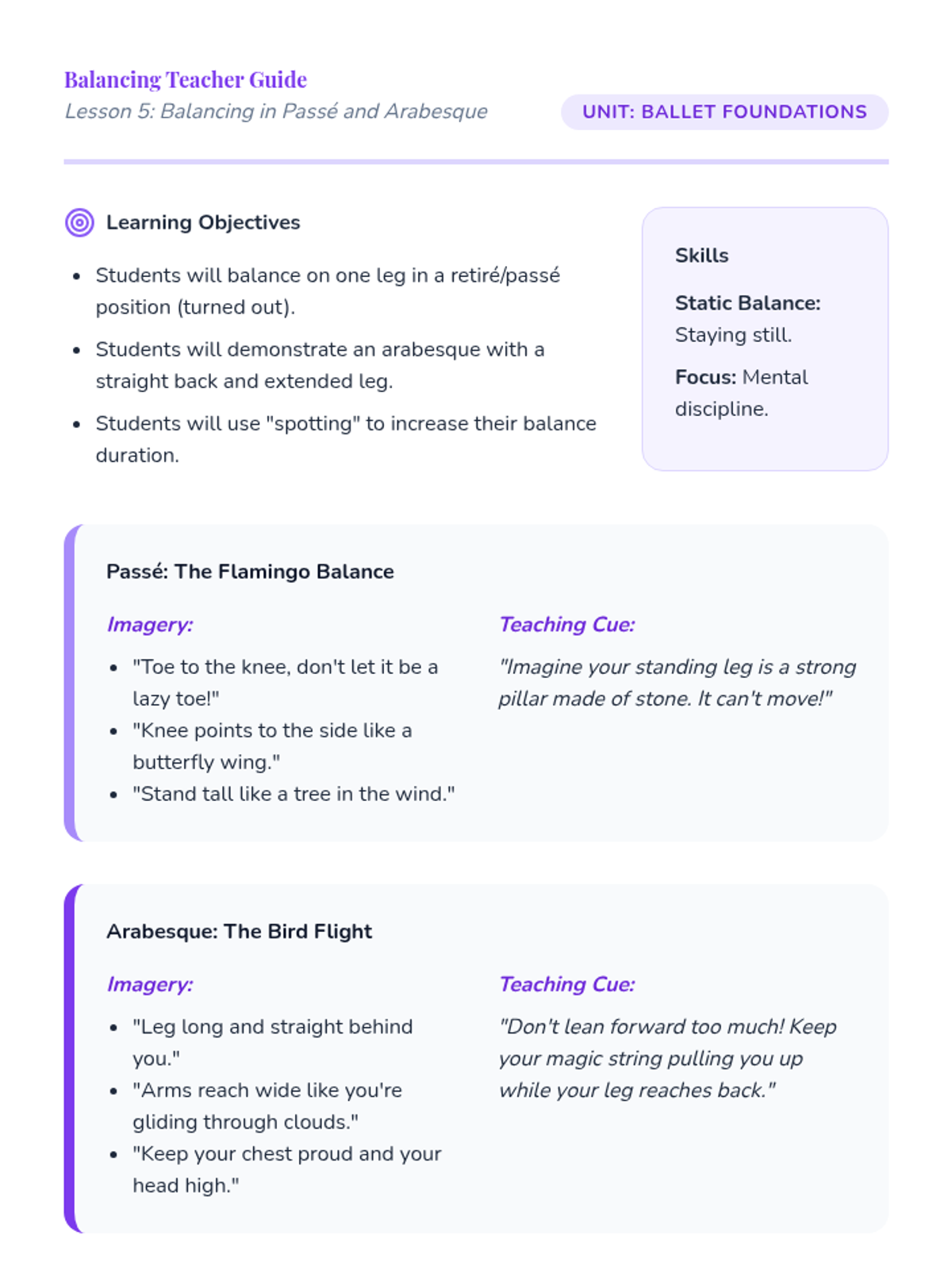
Students attempt one-legged balances using 'flamingo legs' (passé) and 'flying birds' (arabesque), learning the concept of spotting.
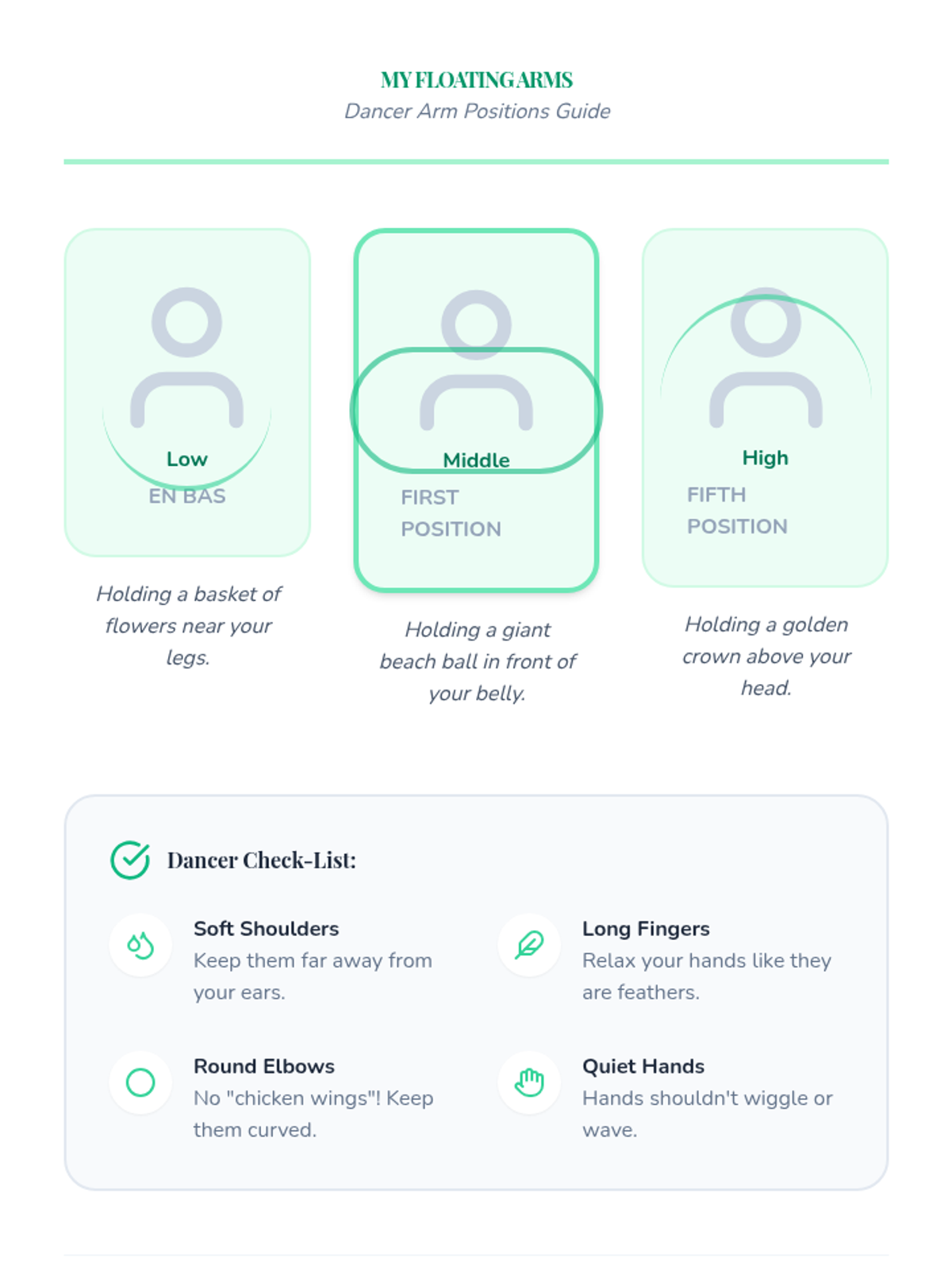
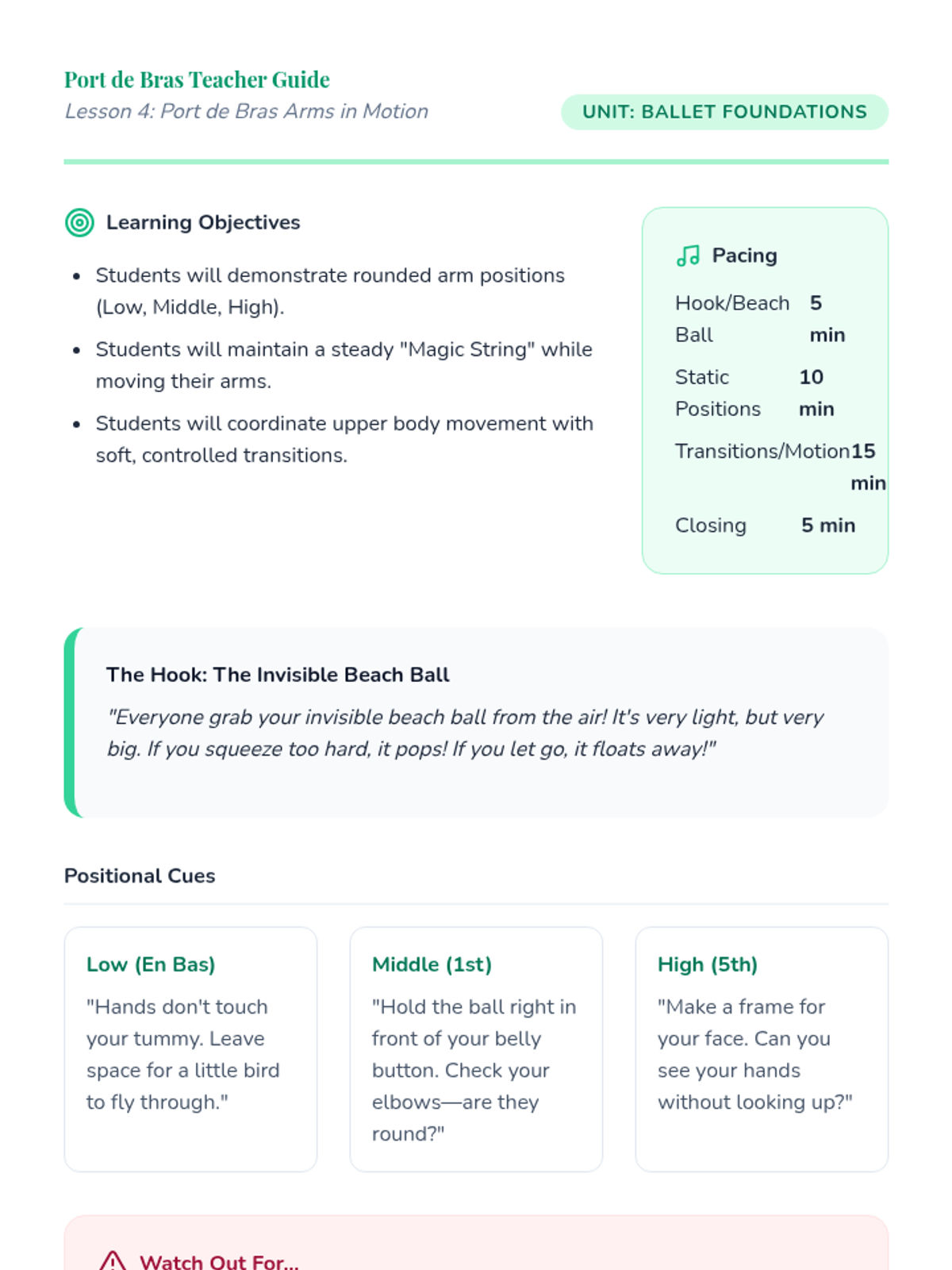
Students learn basic arm positions focusing on soft elbows and long fingers, coordinating movement with dancer posture.
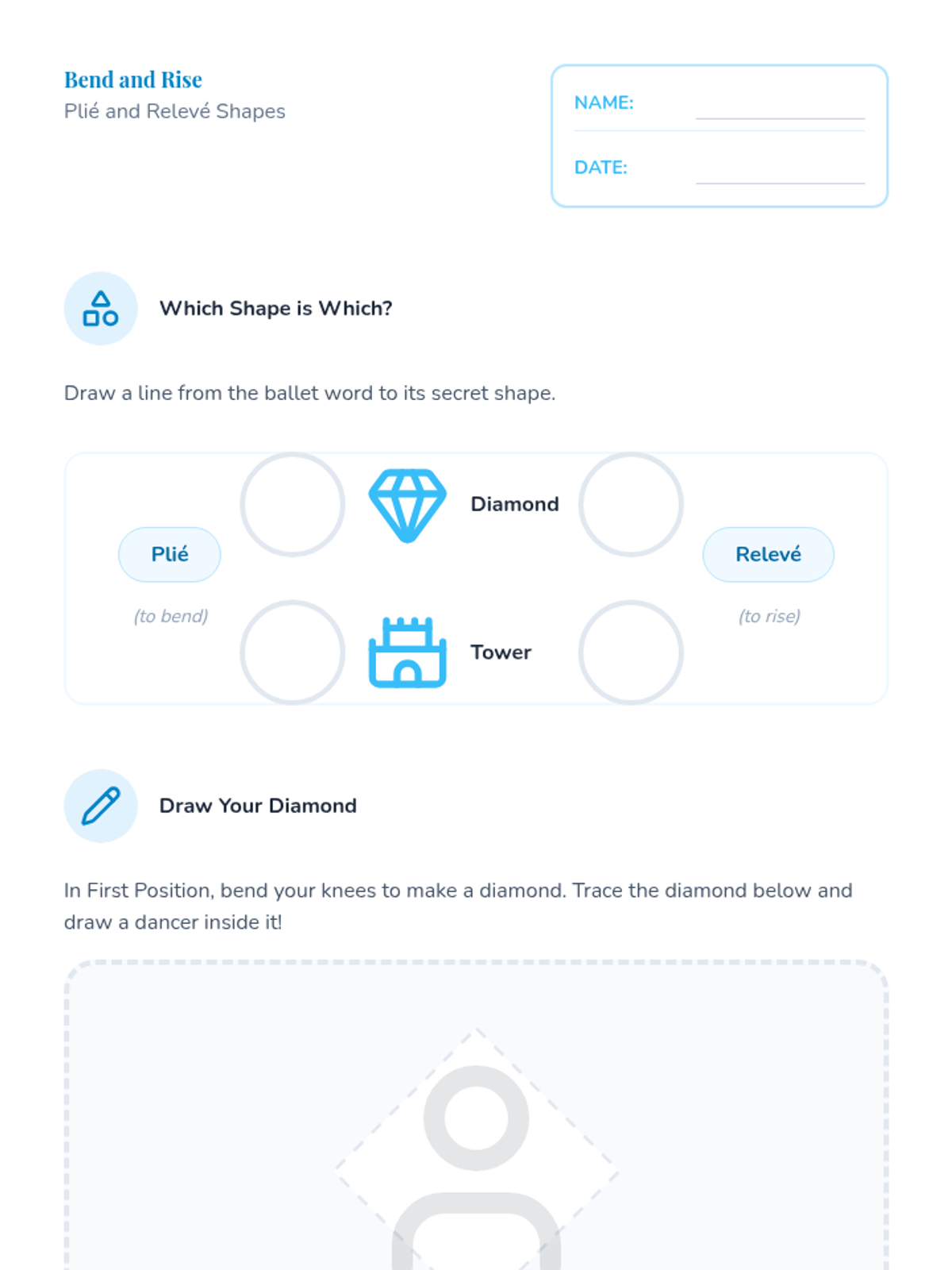
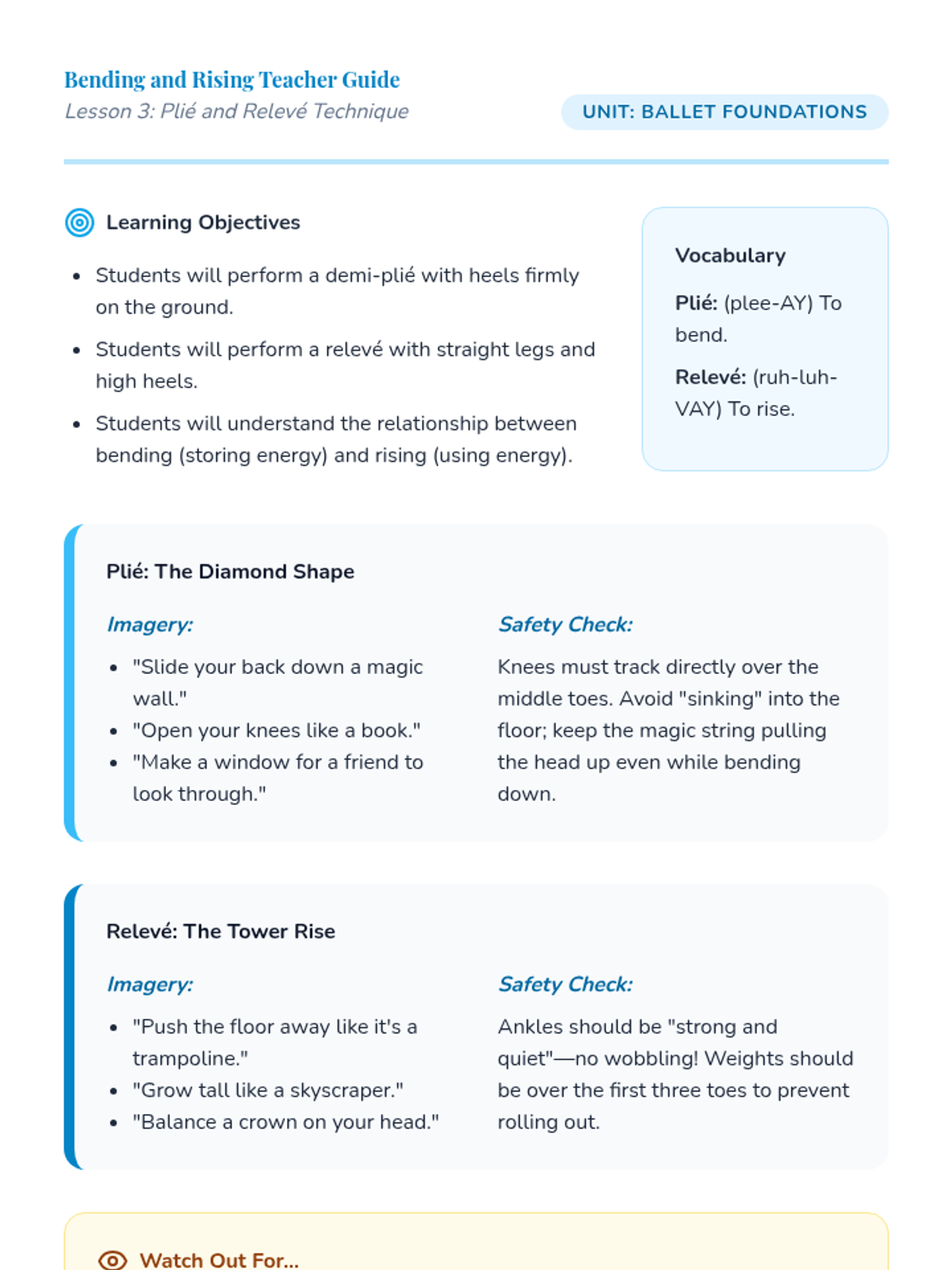
Focuses on bending (plié) and rising (relevé), teaching students to keep heels down during bends and ankles strong during rises.
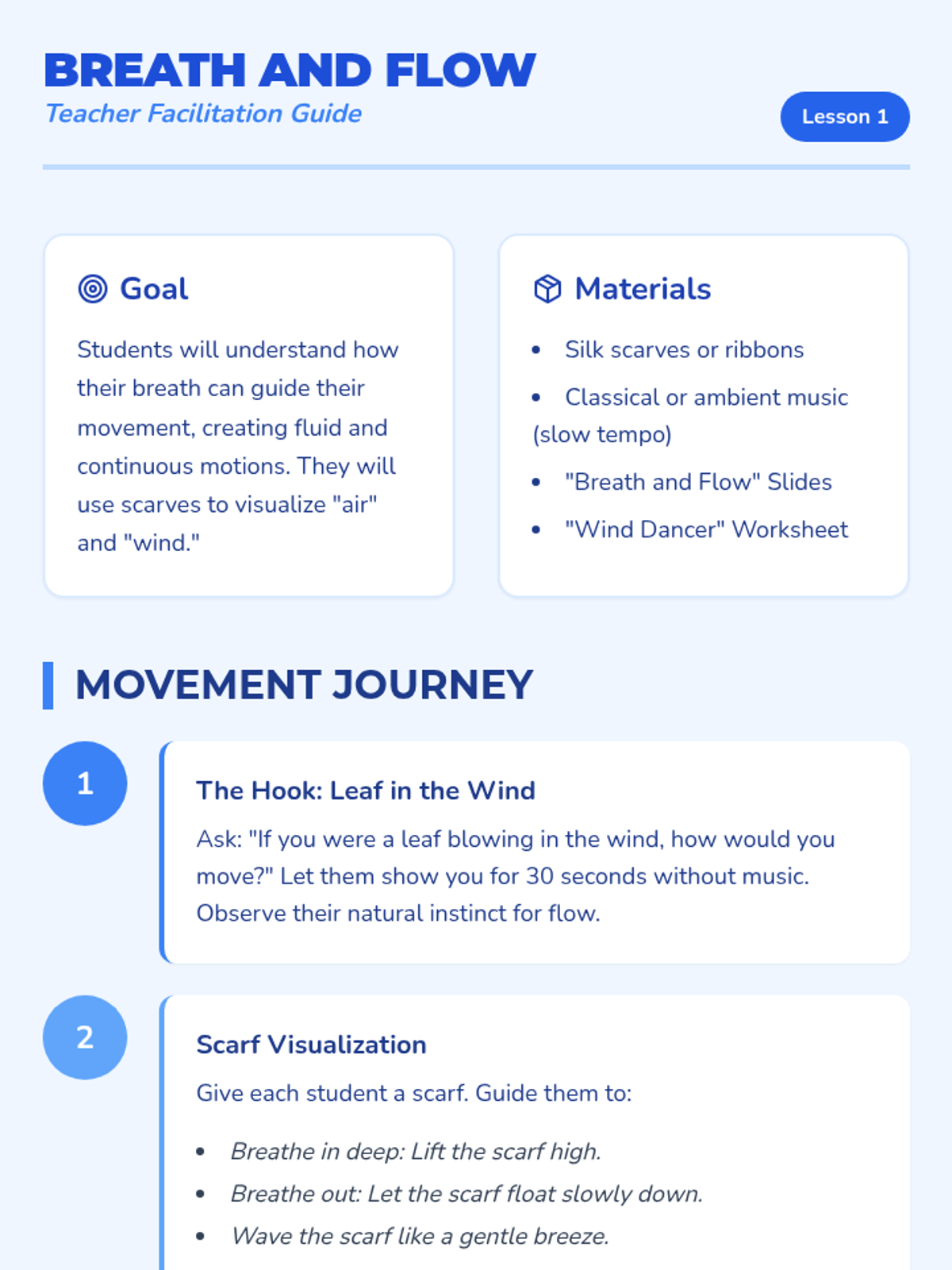
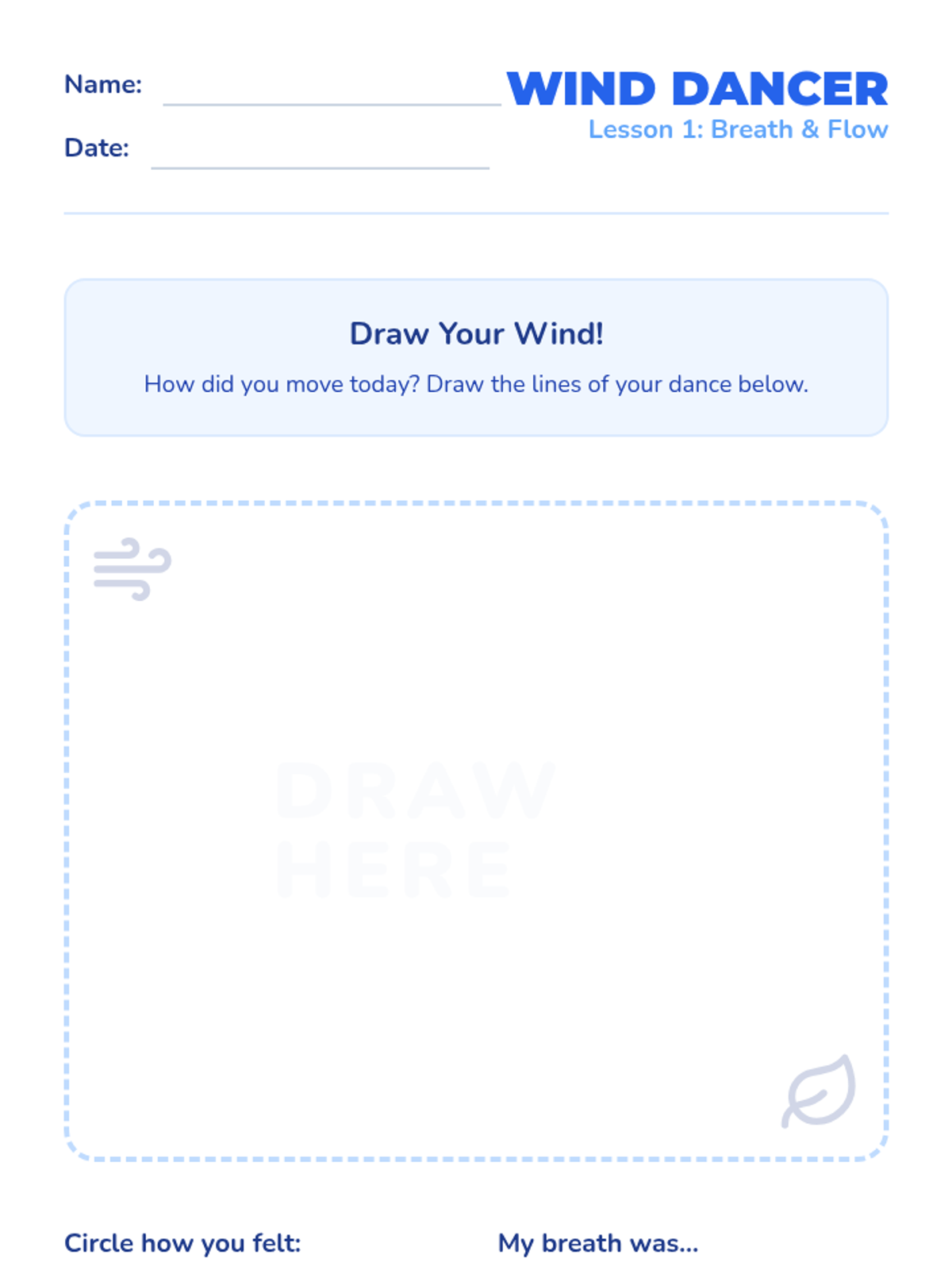
Students explore the relationship between breathing and movement using scarves and ribbons to visualize fluid motion.
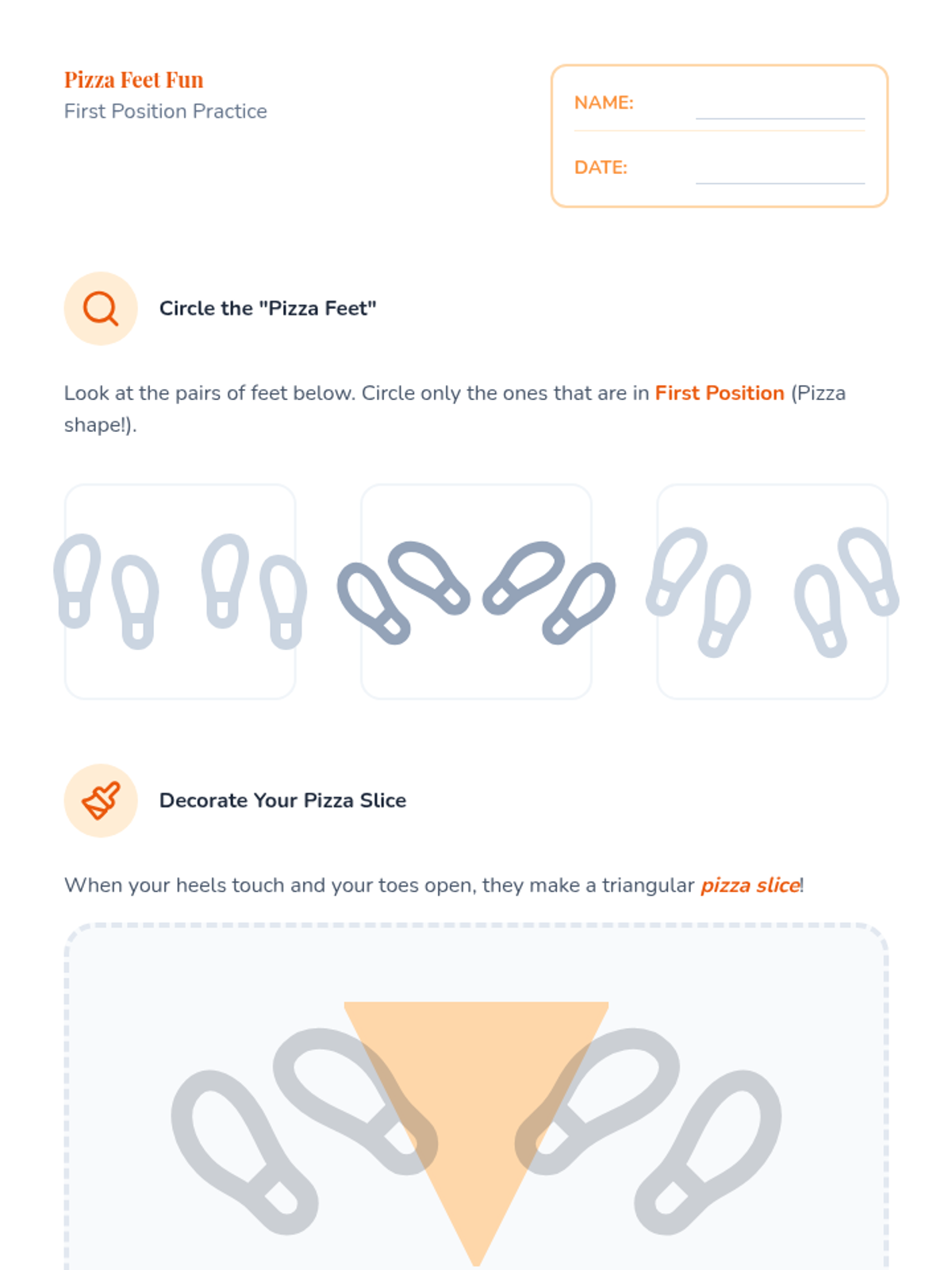
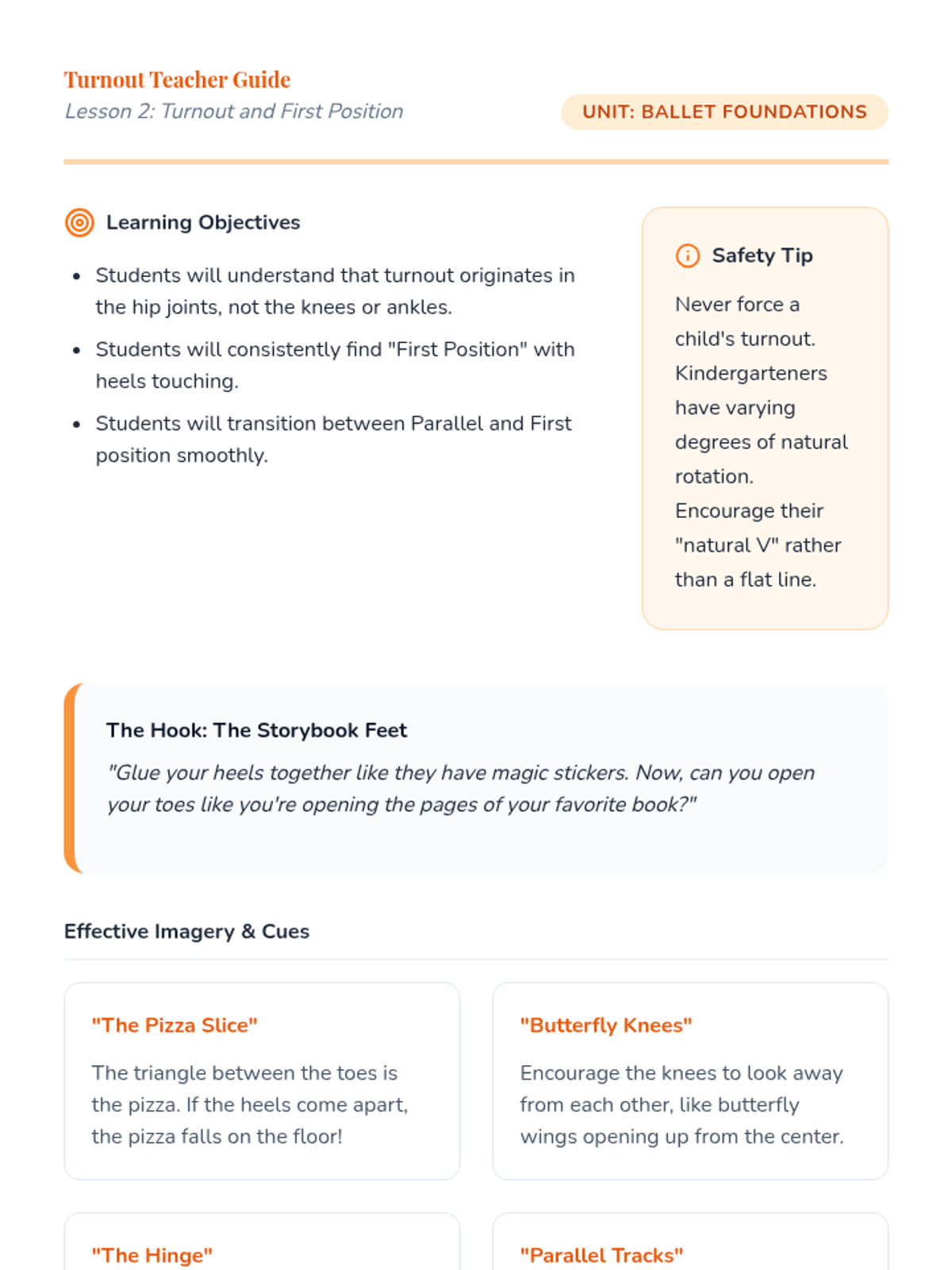
Students explore natural rotation of the legs to create 'pizza feet' (First Position). They practice opening and closing the feet from the hips.
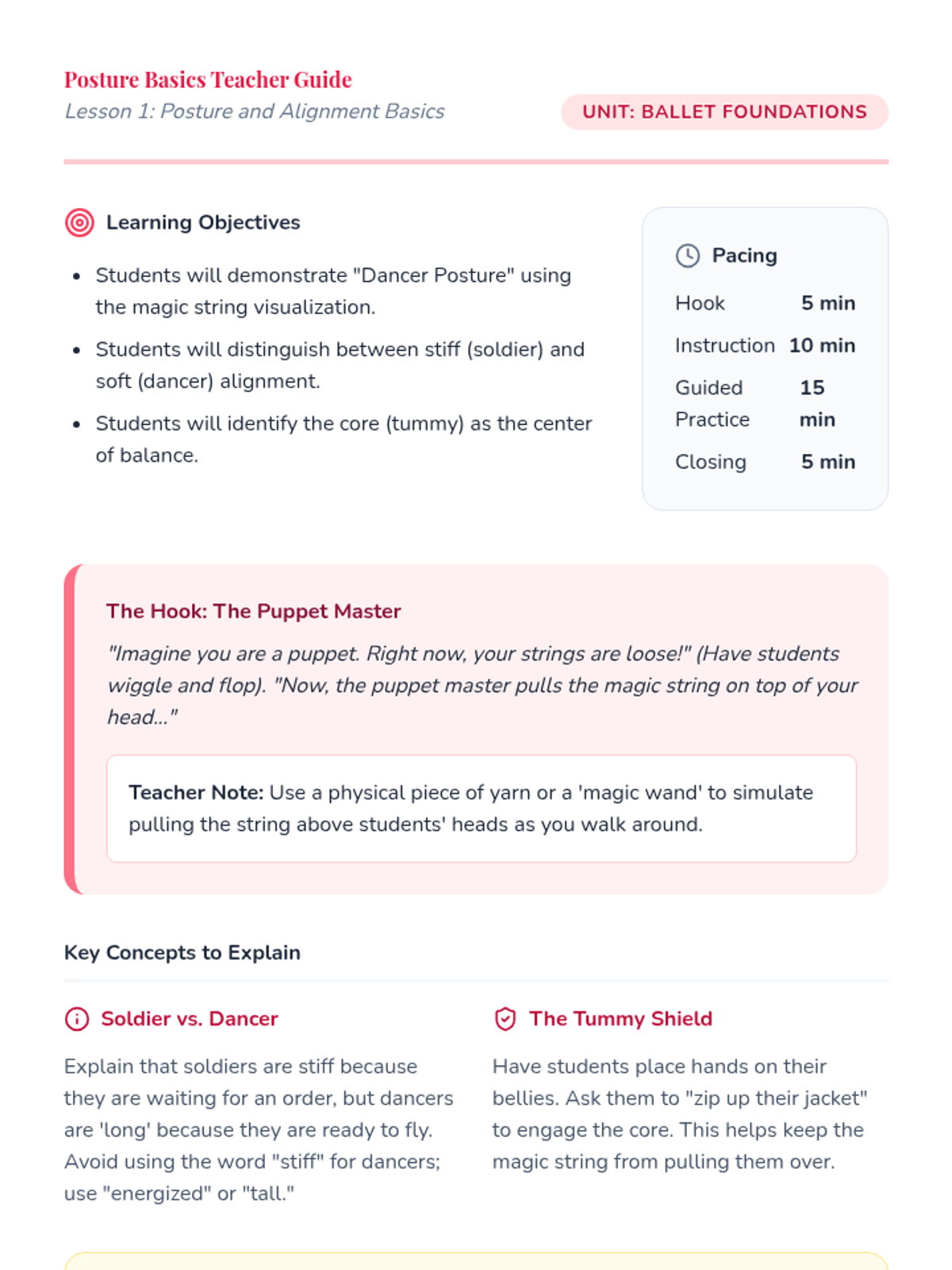
Students learn the 'soldier' vs. 'dancer' posture, visualizing an imaginary string pulling the top of their heads. They practice lengthening the spine and engaging the core.
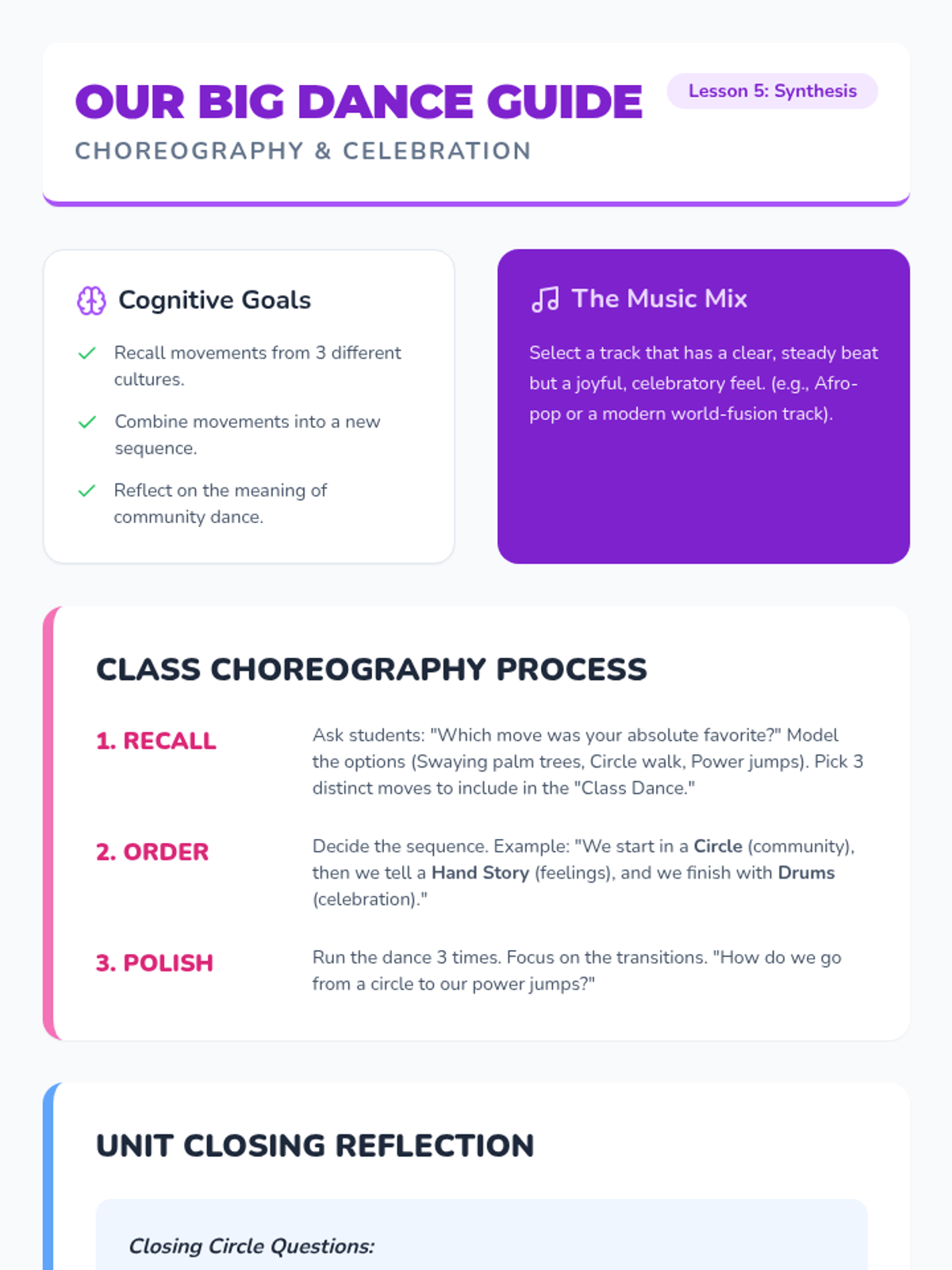
Students combine their favorite movements from the unit to create and perform a unique class celebration dance.
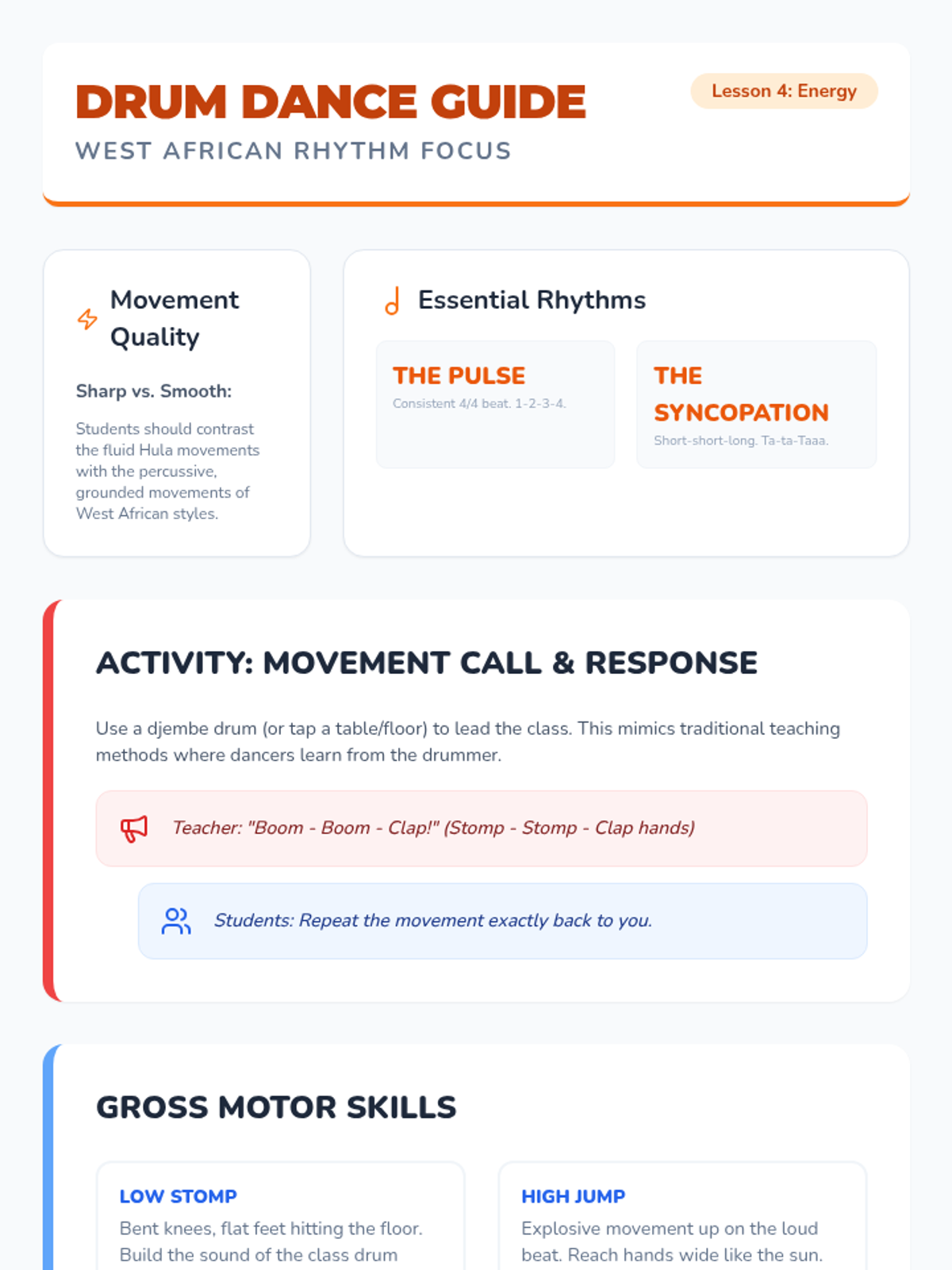
Students experience the energy of West African dance and drumming, focusing on rhythmic stomping and high-energy movement.
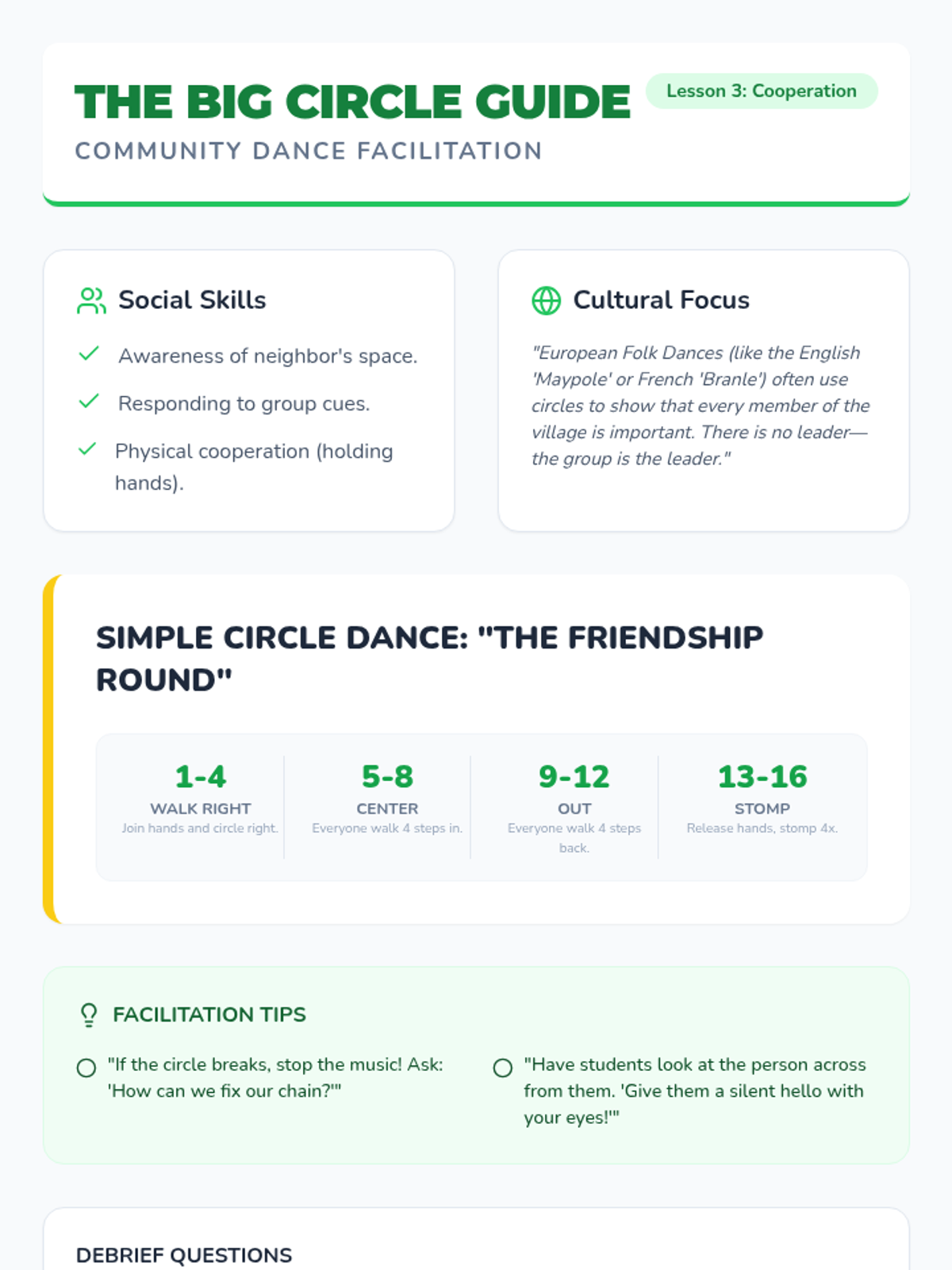
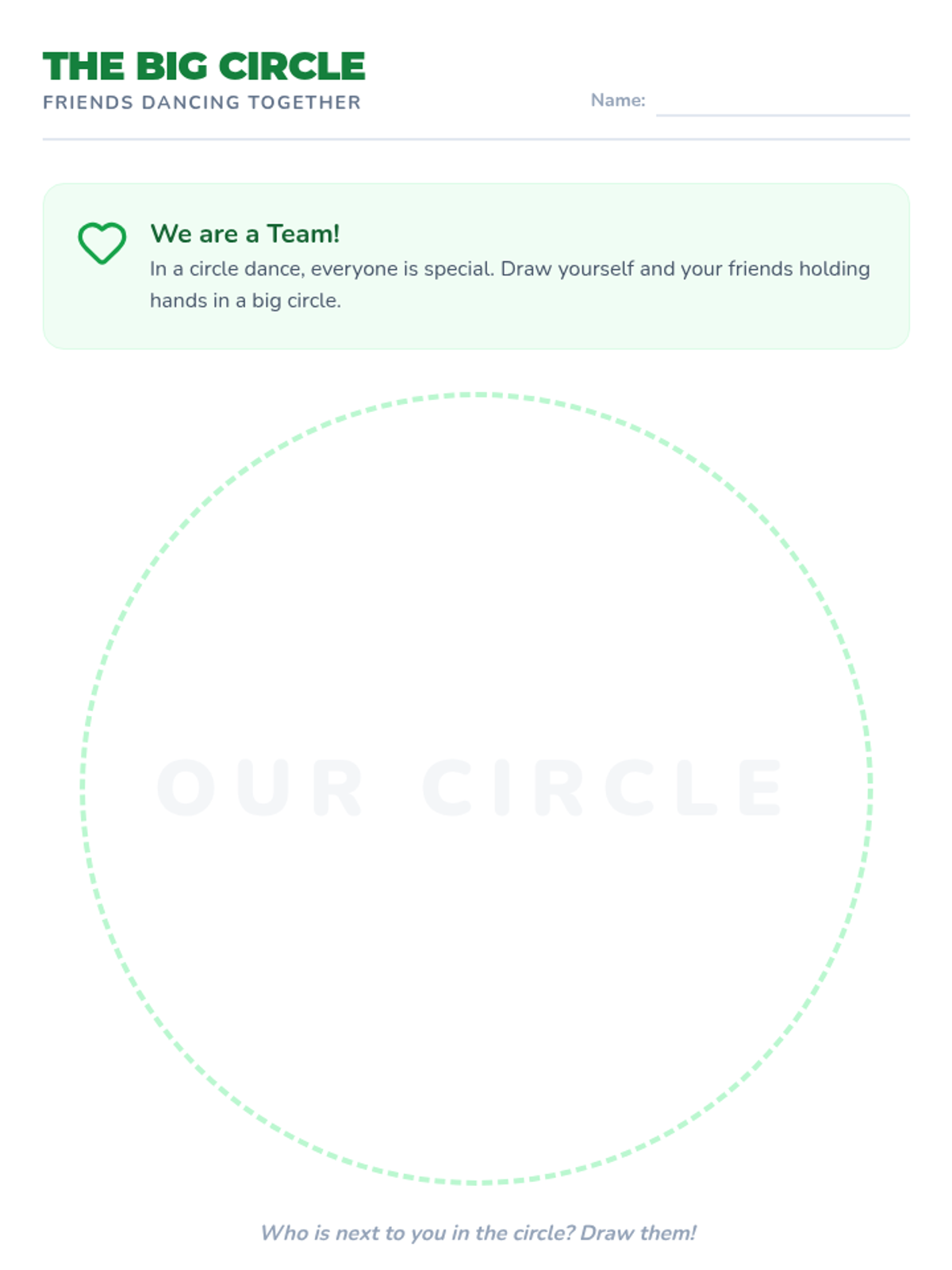
Students explore European-style folk dances to learn about cooperation and moving together in a circle.
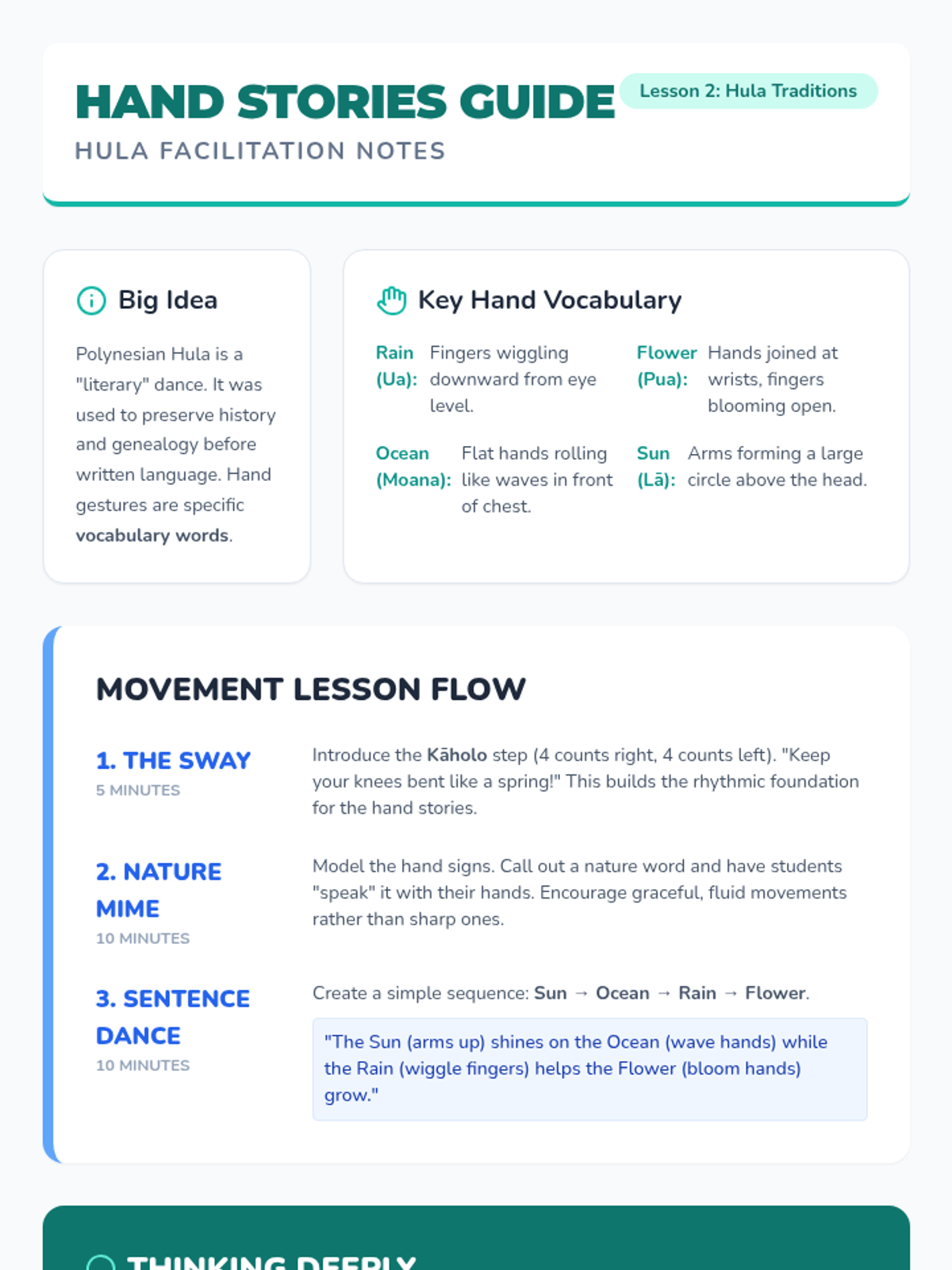
Students discover Polynesian Hula traditions and learn how hand gestures can tell stories about nature.
Students explore the basics of rhythm and how movement can express different feelings and tempos.
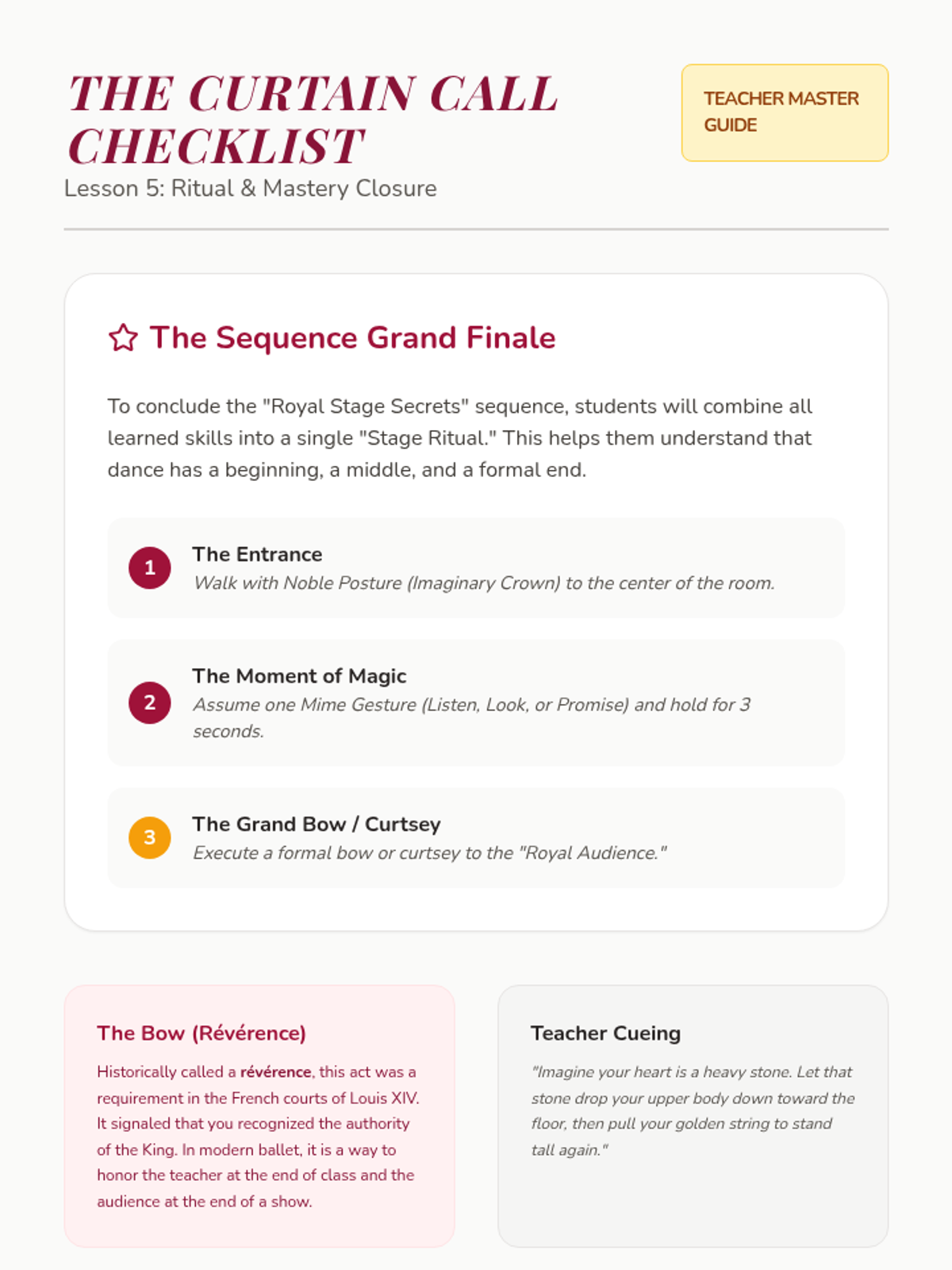
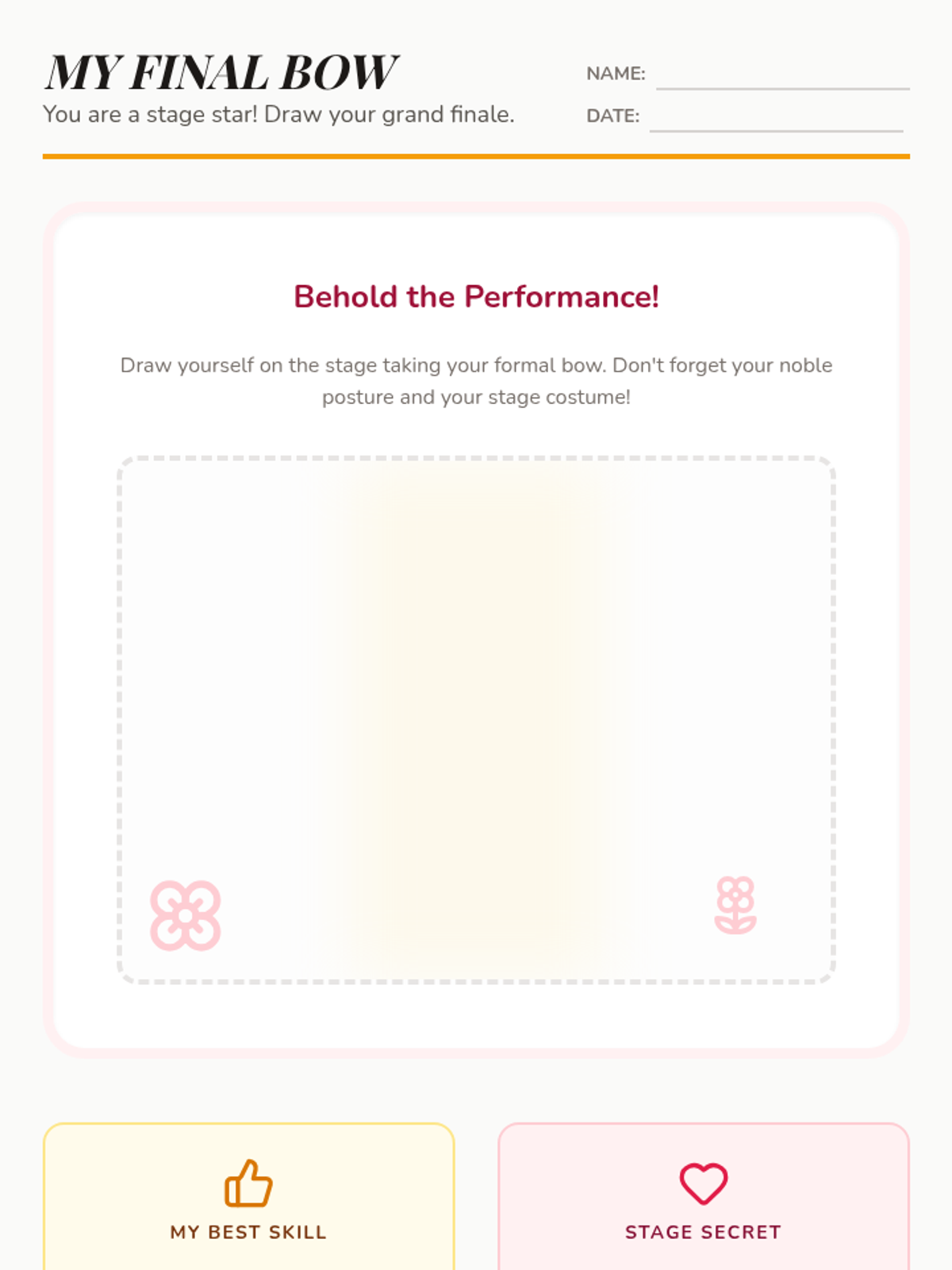
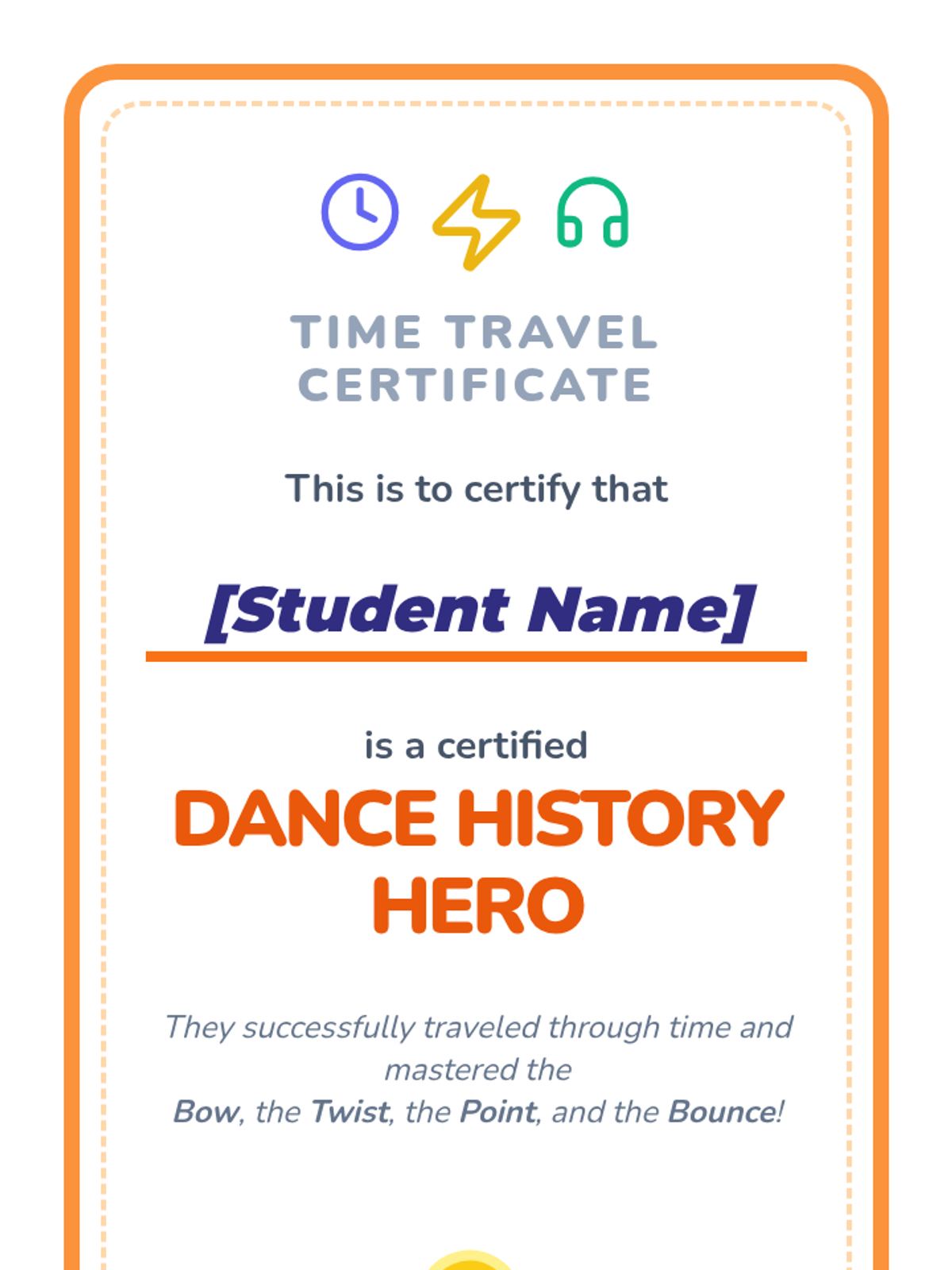
In this final lesson, students master the tradition of the curtain call, learning the historical significance of the bow and curtsey as a gesture of mutual respect between performer and audience.
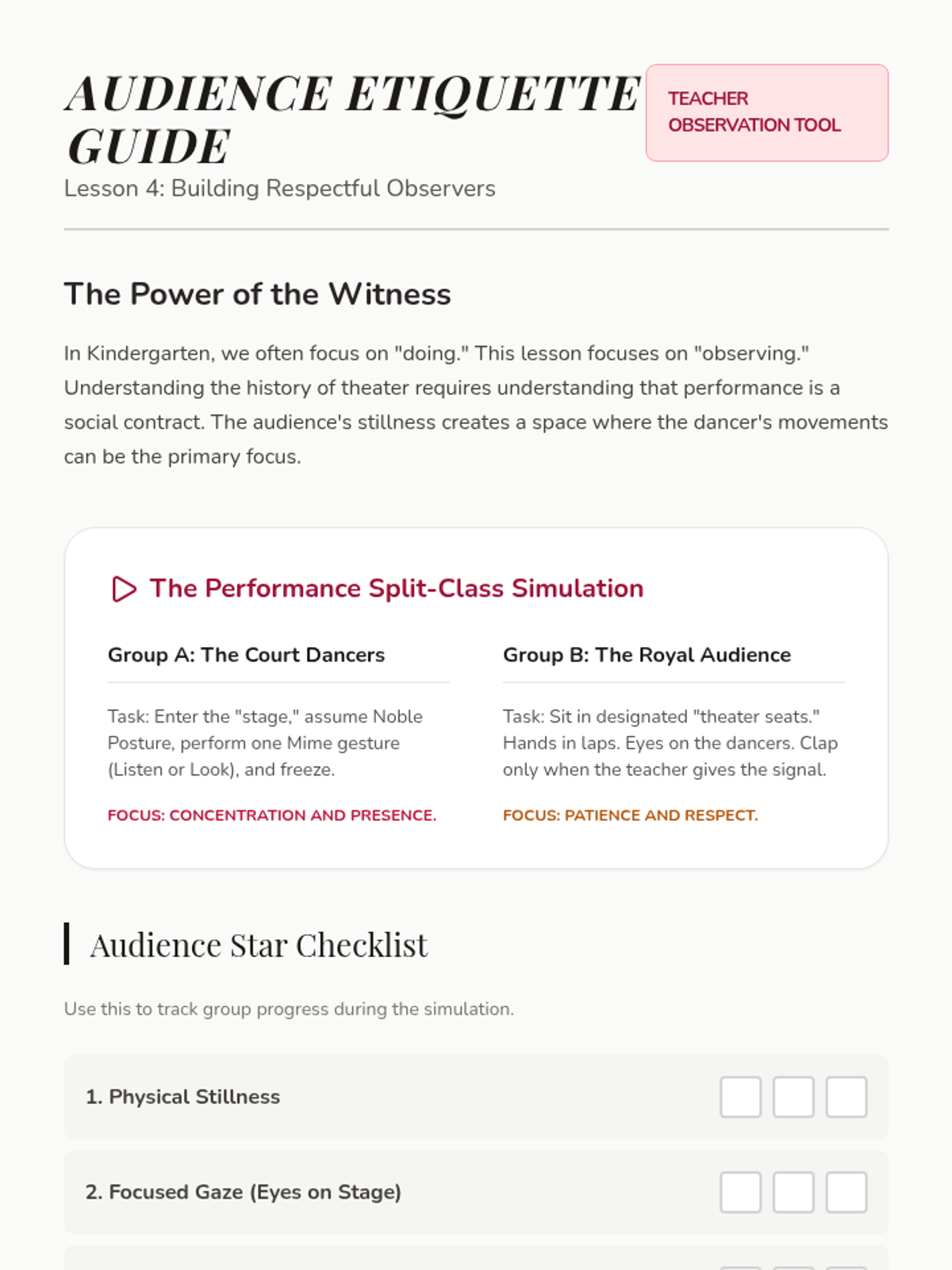
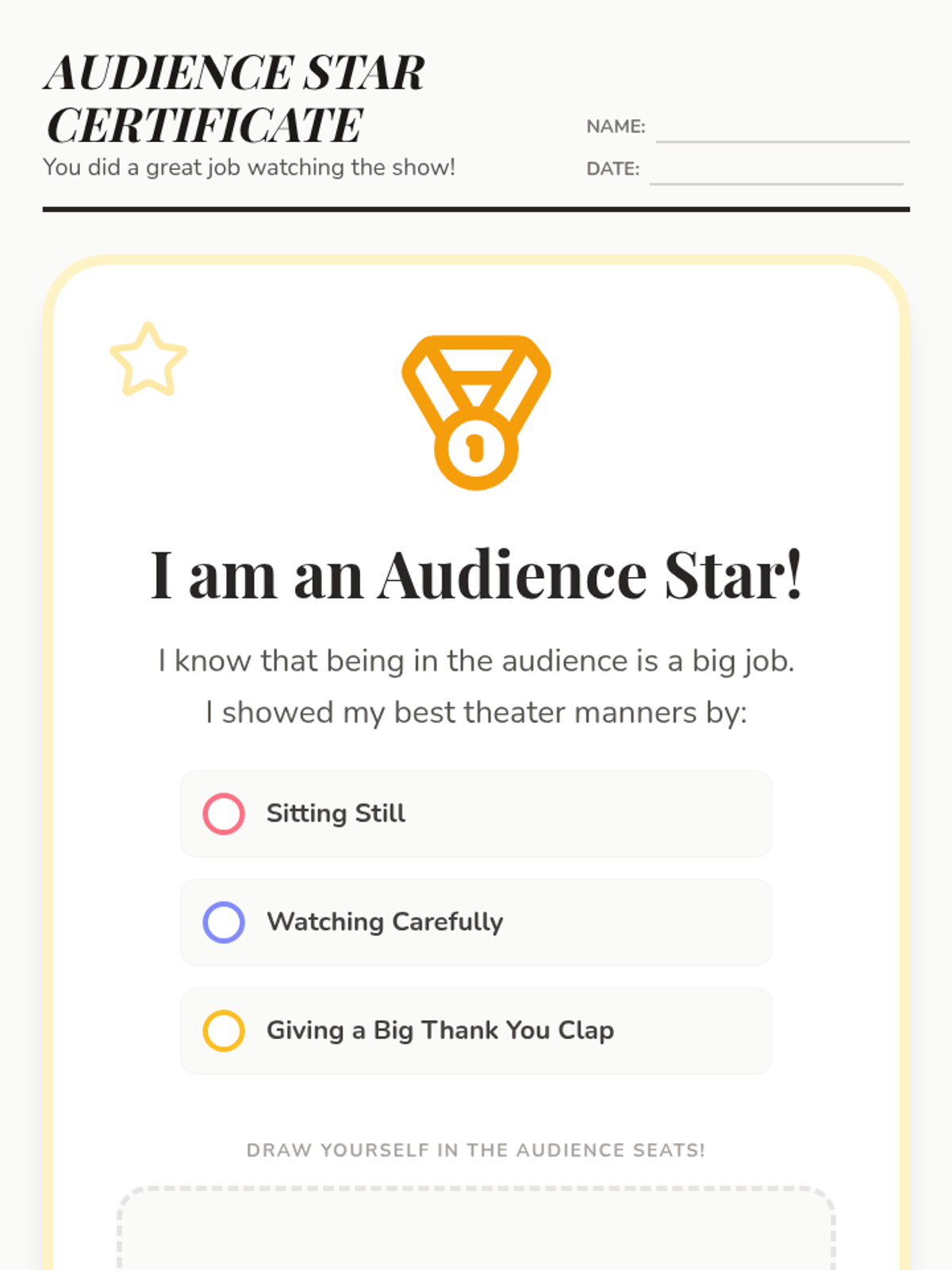
Students learn the historical and social importance of the theater audience, practicing self-regulation, attentive watching, and appropriate applause etiquette during live performances.
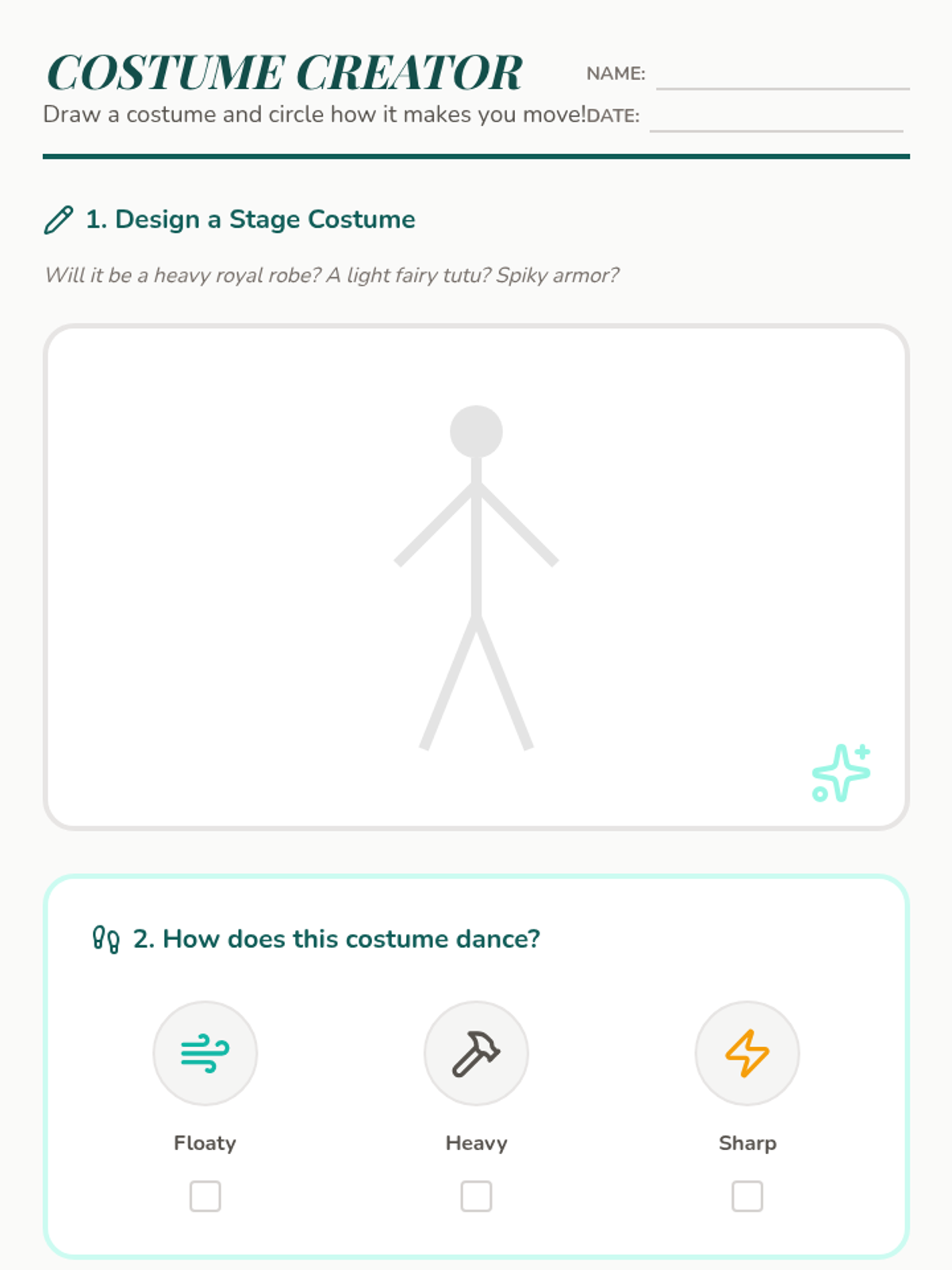
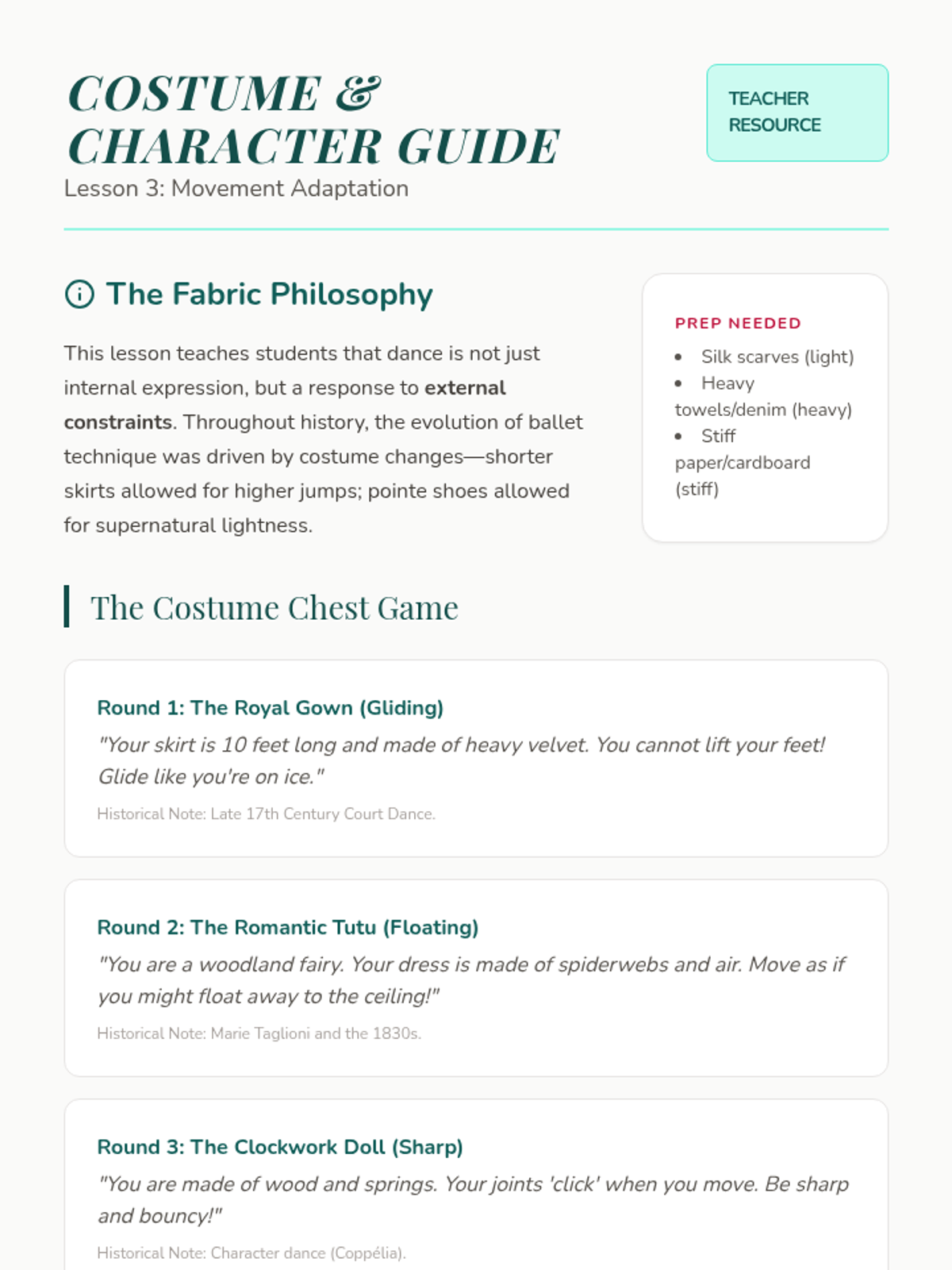
Students investigate how historical costumes—from stiff leather boots to light, airy tutus—shaped the way dancers move, using fabric exploration to adapt their own movement styles.
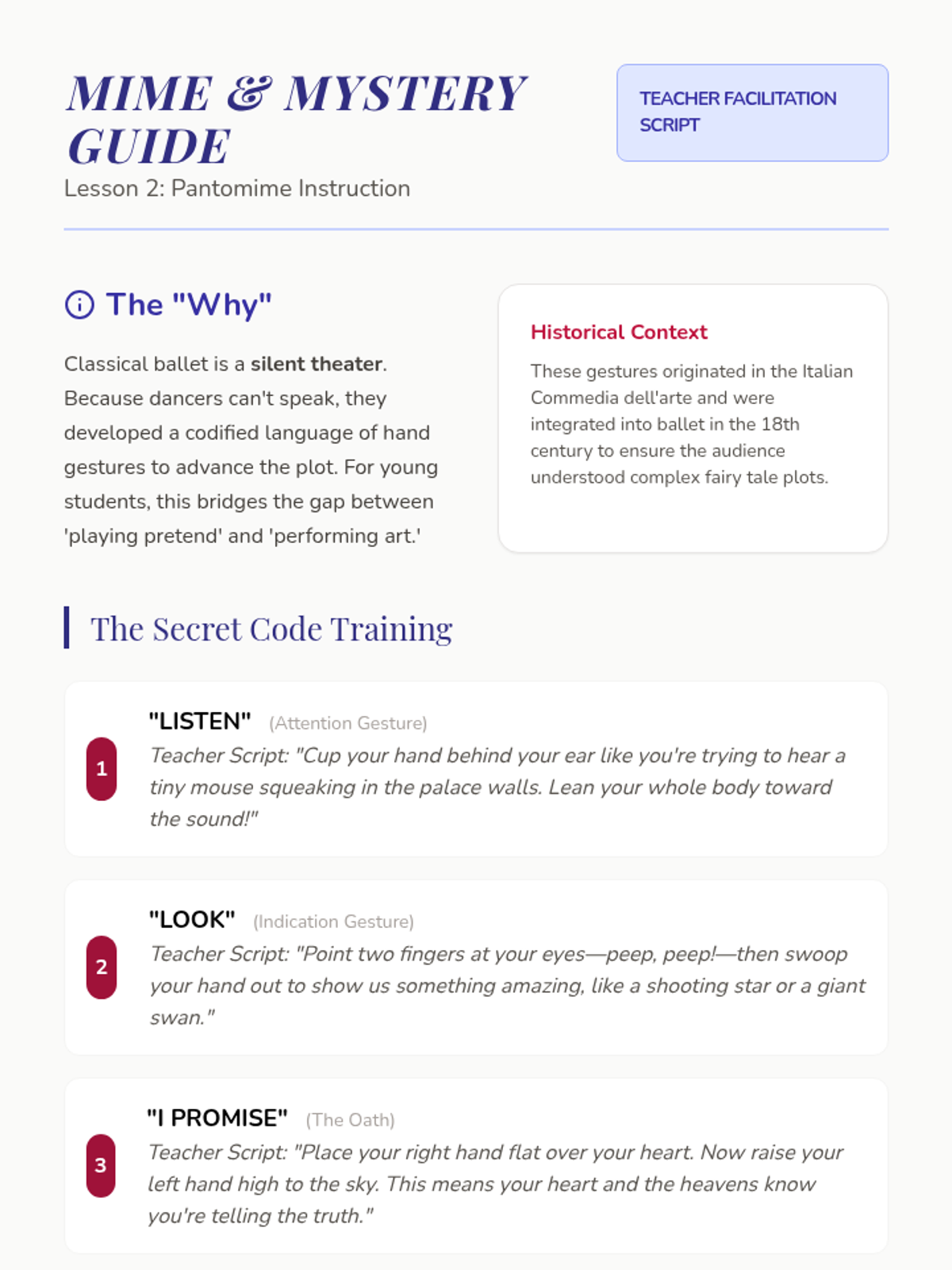
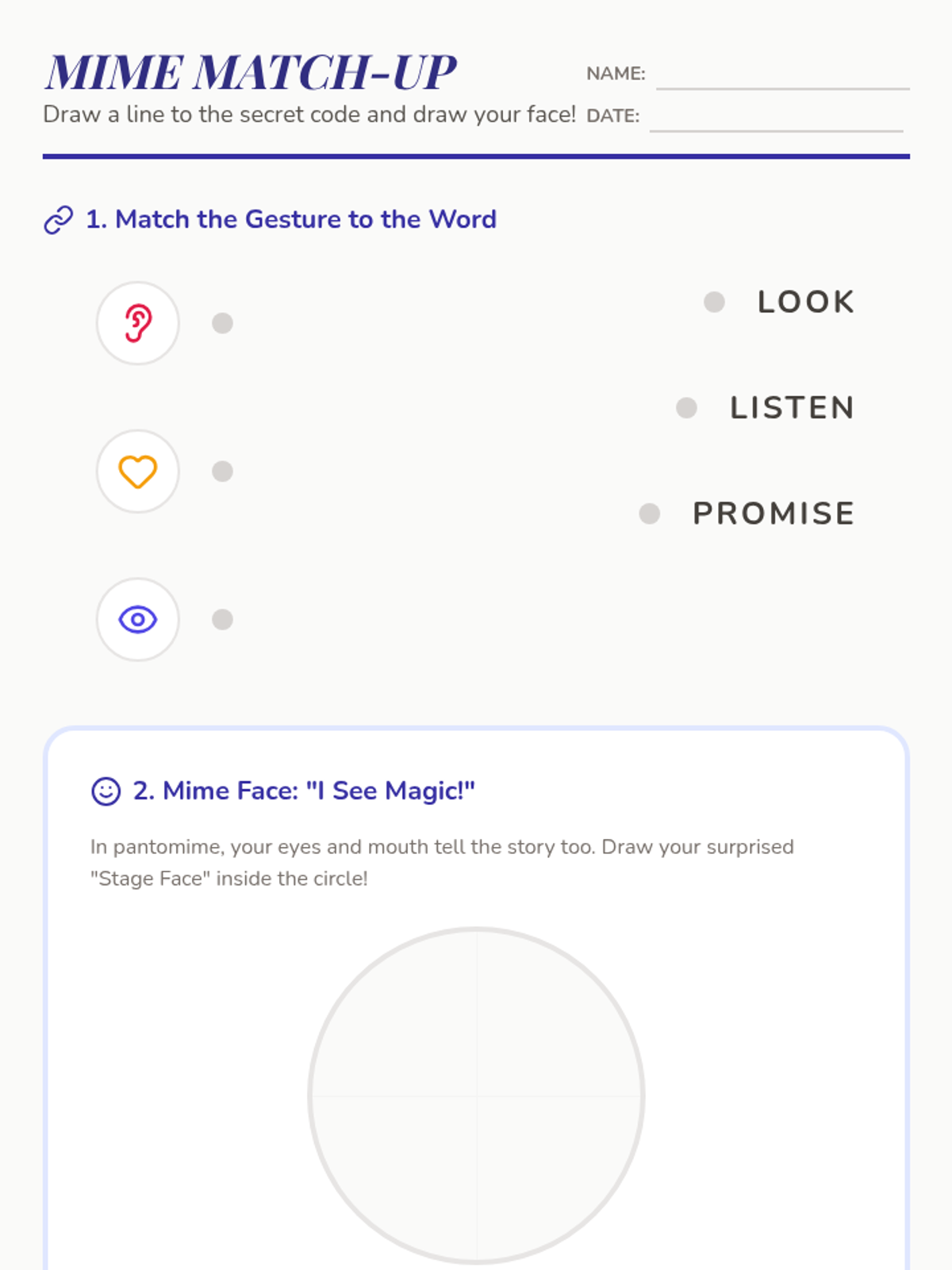
Students discover the storytelling power of classical dance through pantomime, practicing traditional mime gestures used in famous ballets to communicate without words.
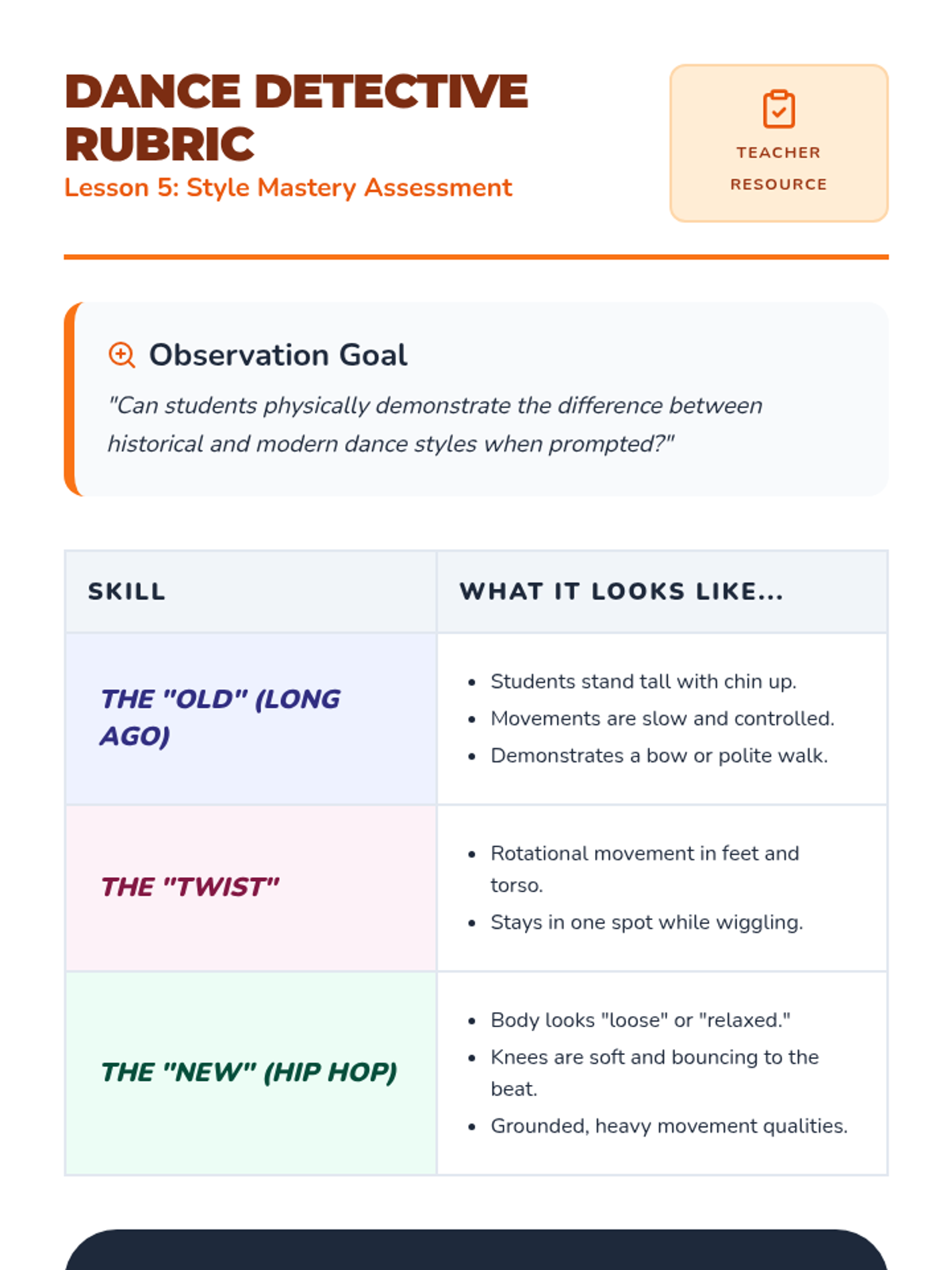
Students create a 'Mashup' dance, switching between styles to reinforce the evolution of dance history.