Fundamental techniques for drawing, painting, sculpture, and photography alongside modern digital design principles. Analyzes historical artistic movements while building skills in printmaking and graphic media.
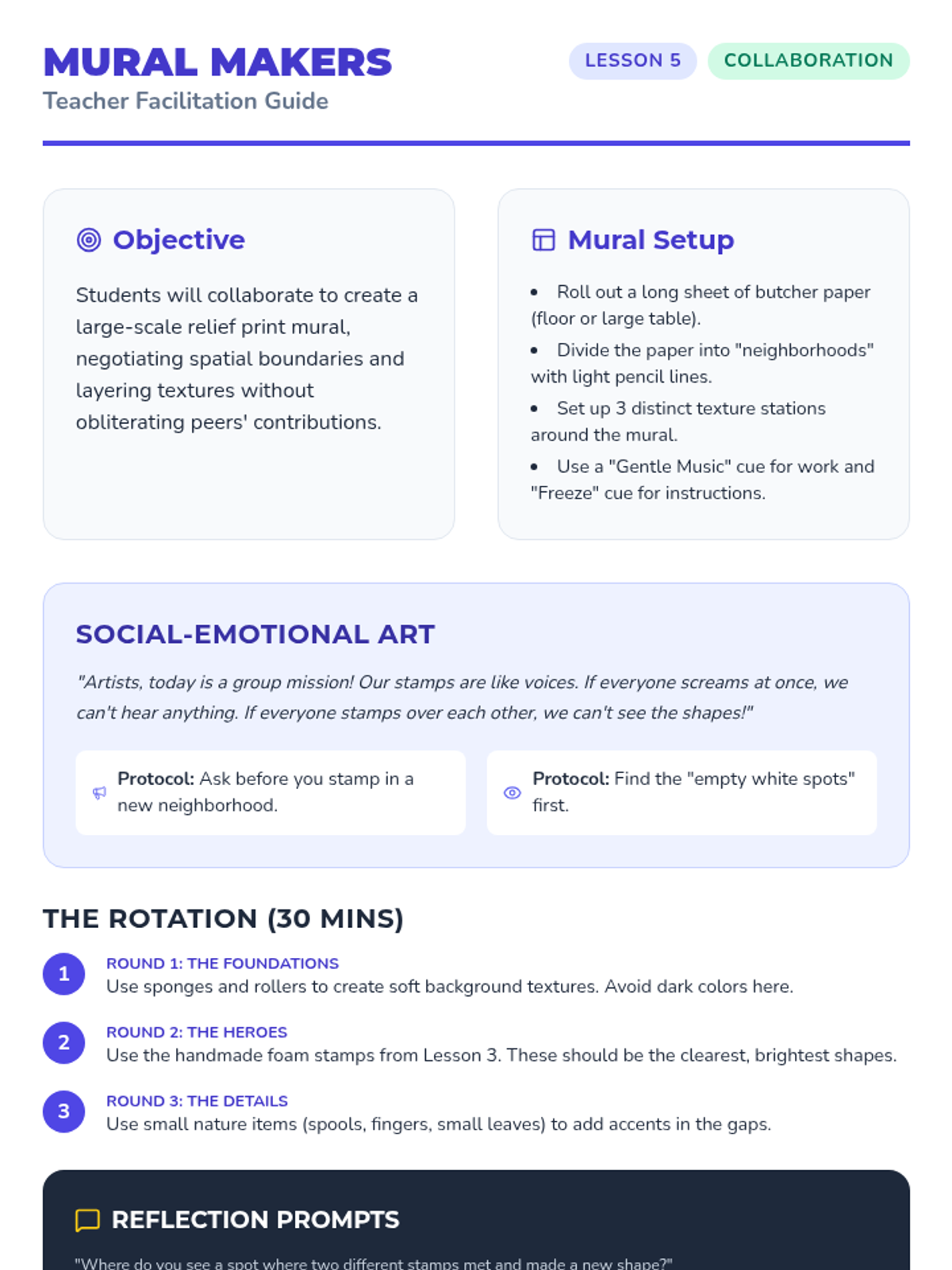
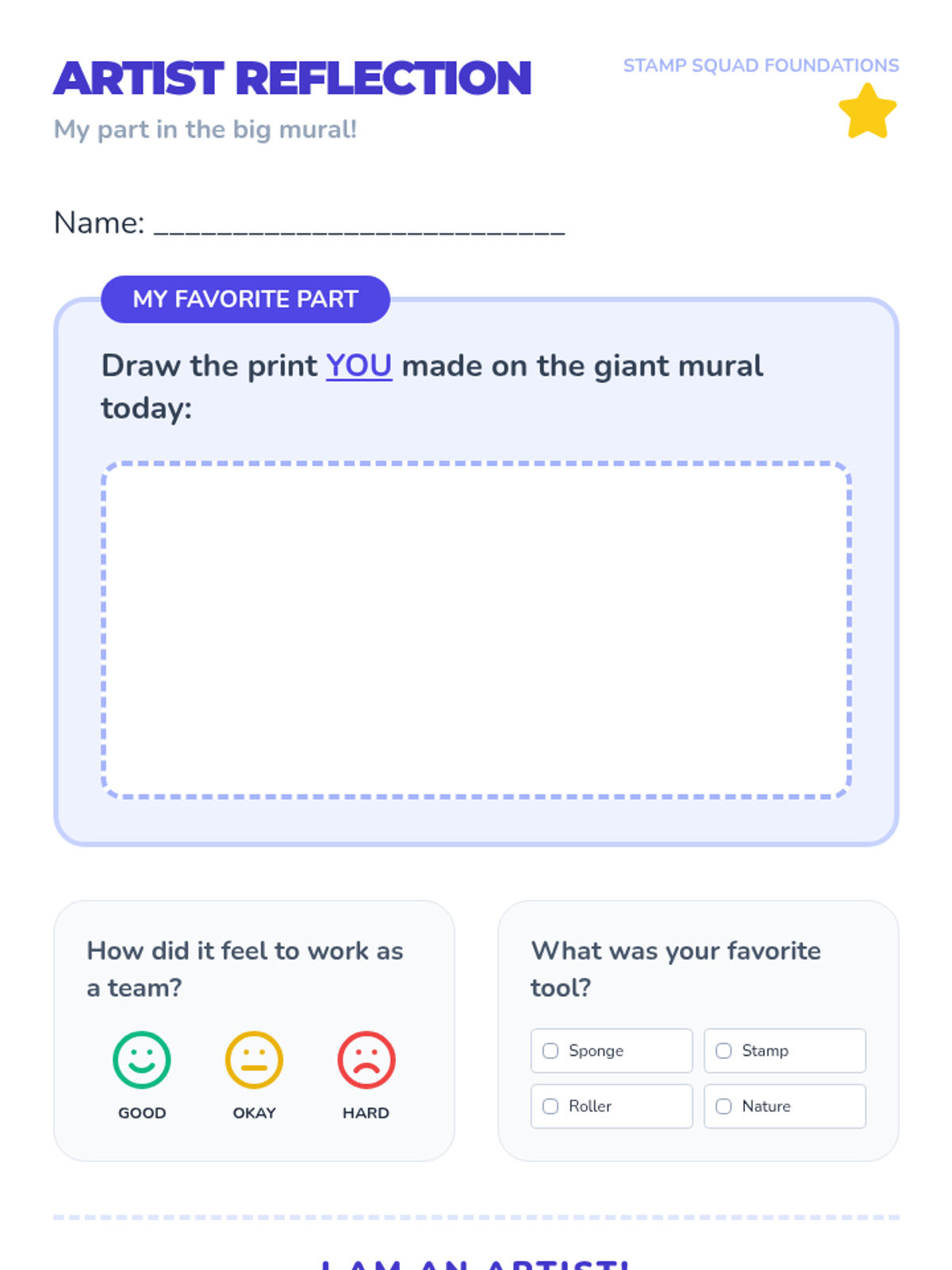
A collaborative finale where students combine techniques to create a large-scale mural. Emphasis is on teamwork, layering, and spatial awareness.
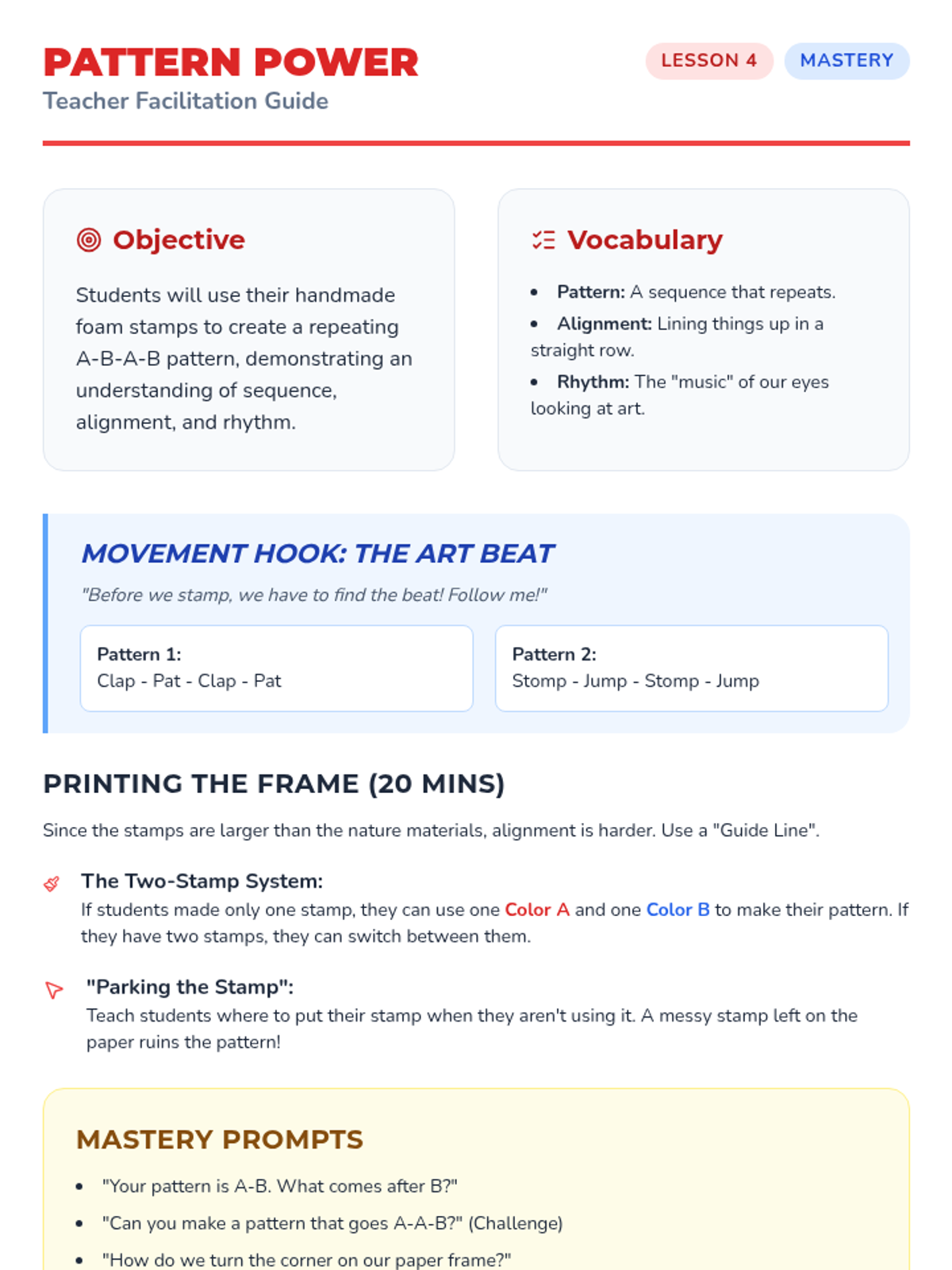
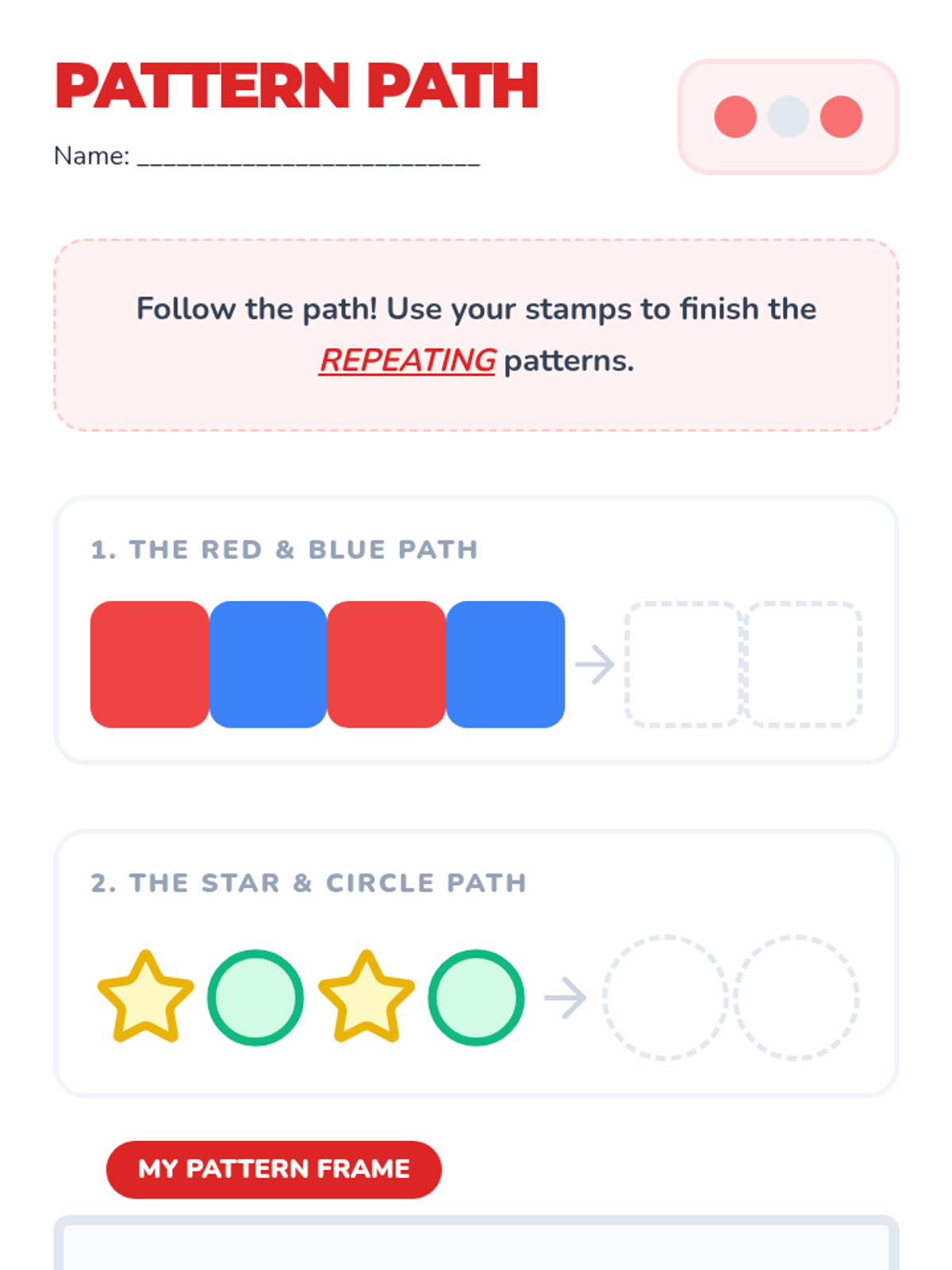
Students use their custom stamps to create A-B-A-B patterns. The lesson focuses on repetition, rhythm, and alignment in graphic design.
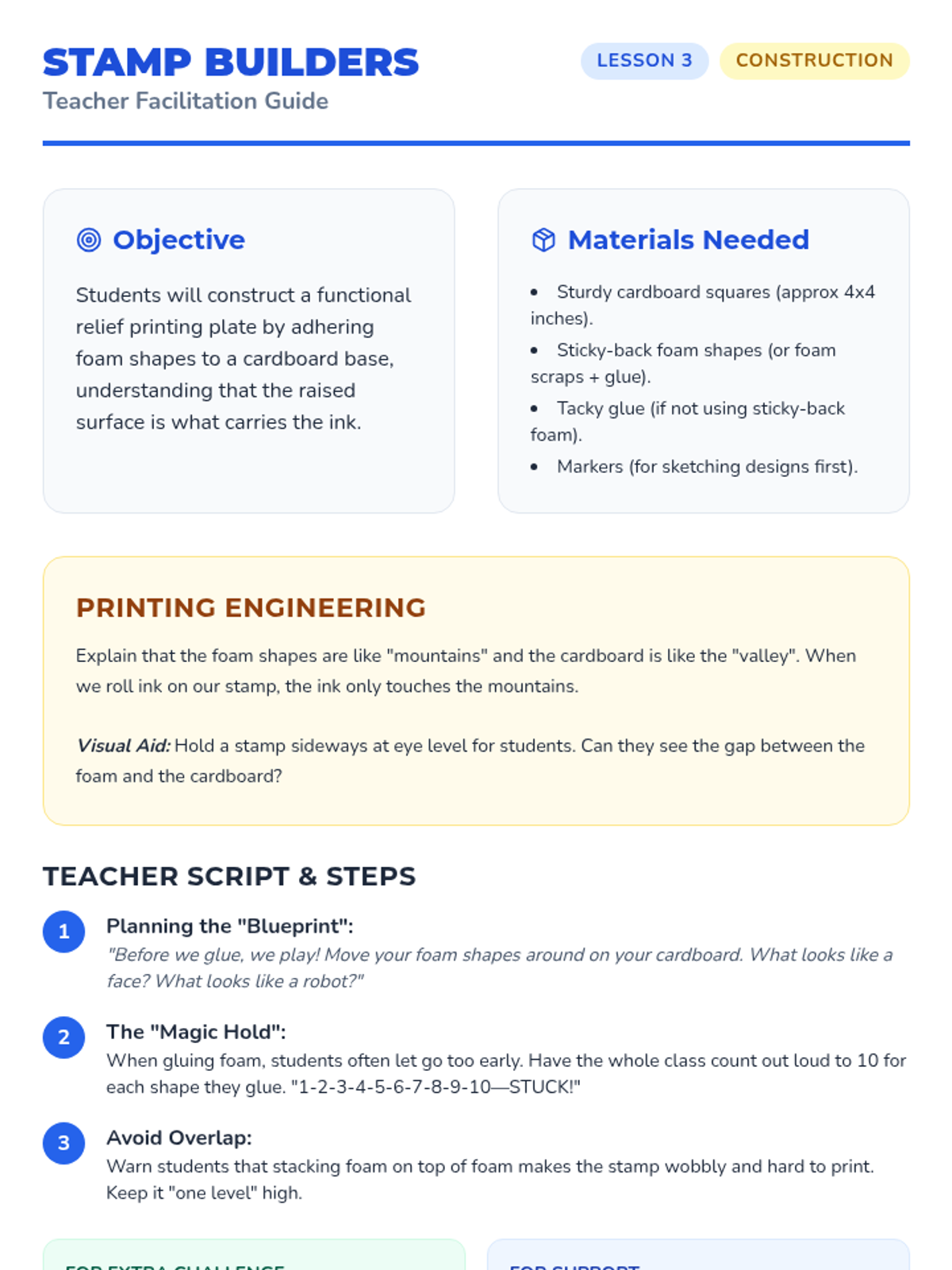
Students construct their own relief plates by gluing foam shapes to cardboard. This lesson introduces the engineering side of printmaking and the concept of a 'plate'.
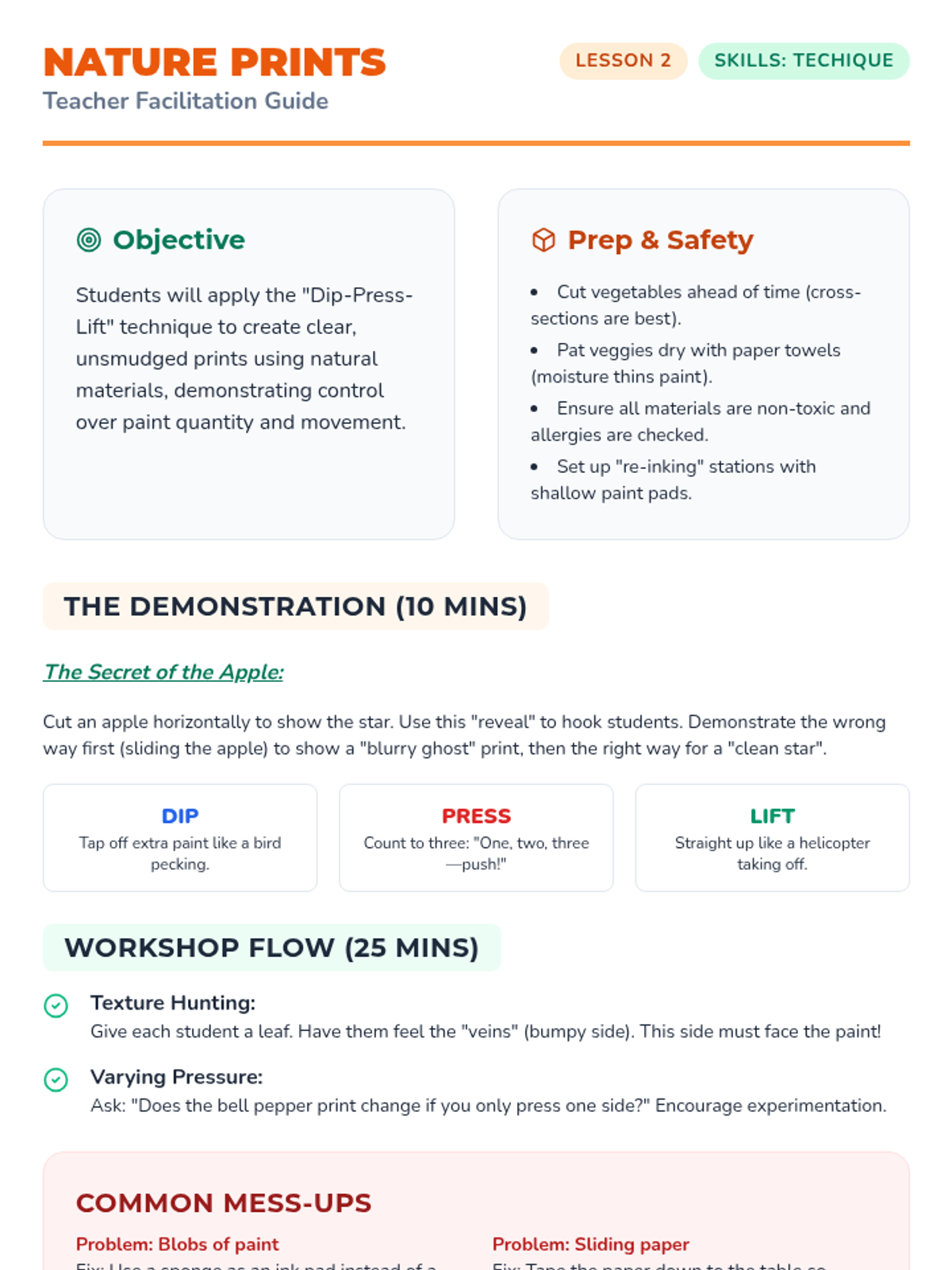
Using nature and vegetables as stamps, students learn the technique of 'inking' and 'pressing' to reveal hidden shapes. This lesson emphasizes hand-eye coordination and paint control.
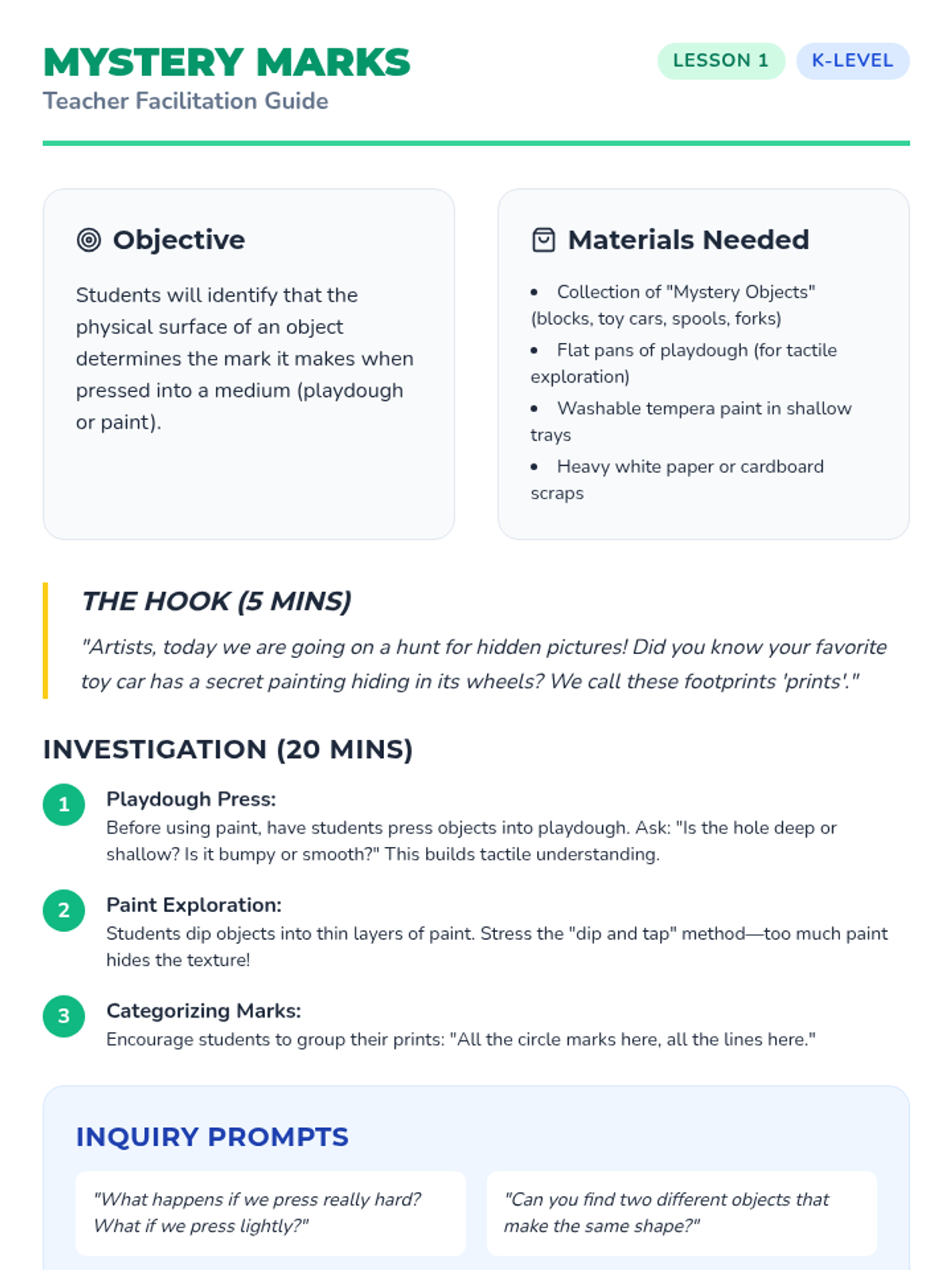
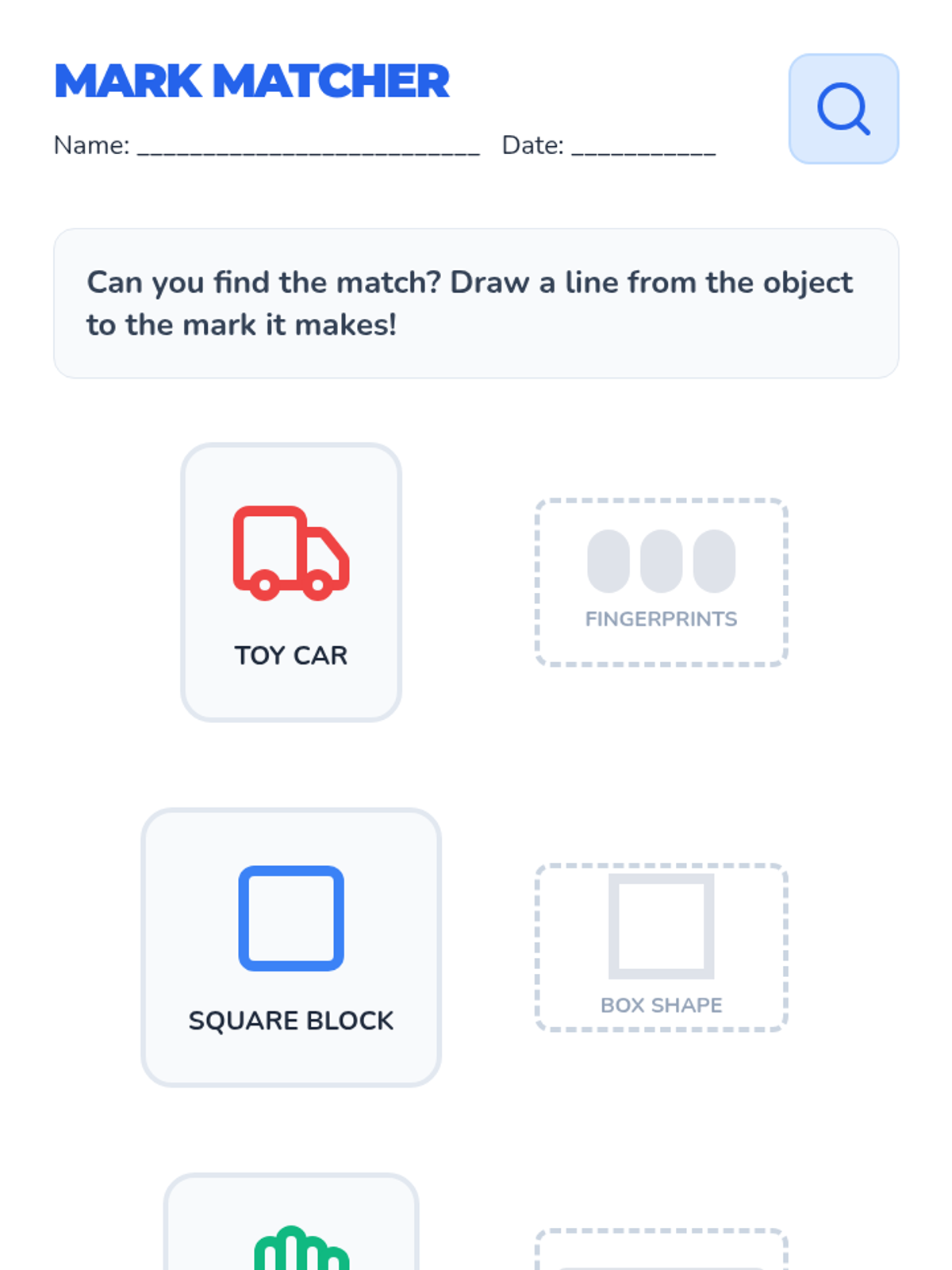
Students explore how everyday objects like toy cars and blocks leave unique prints in playdough or paint. This lesson focuses on observation and shape recognition.
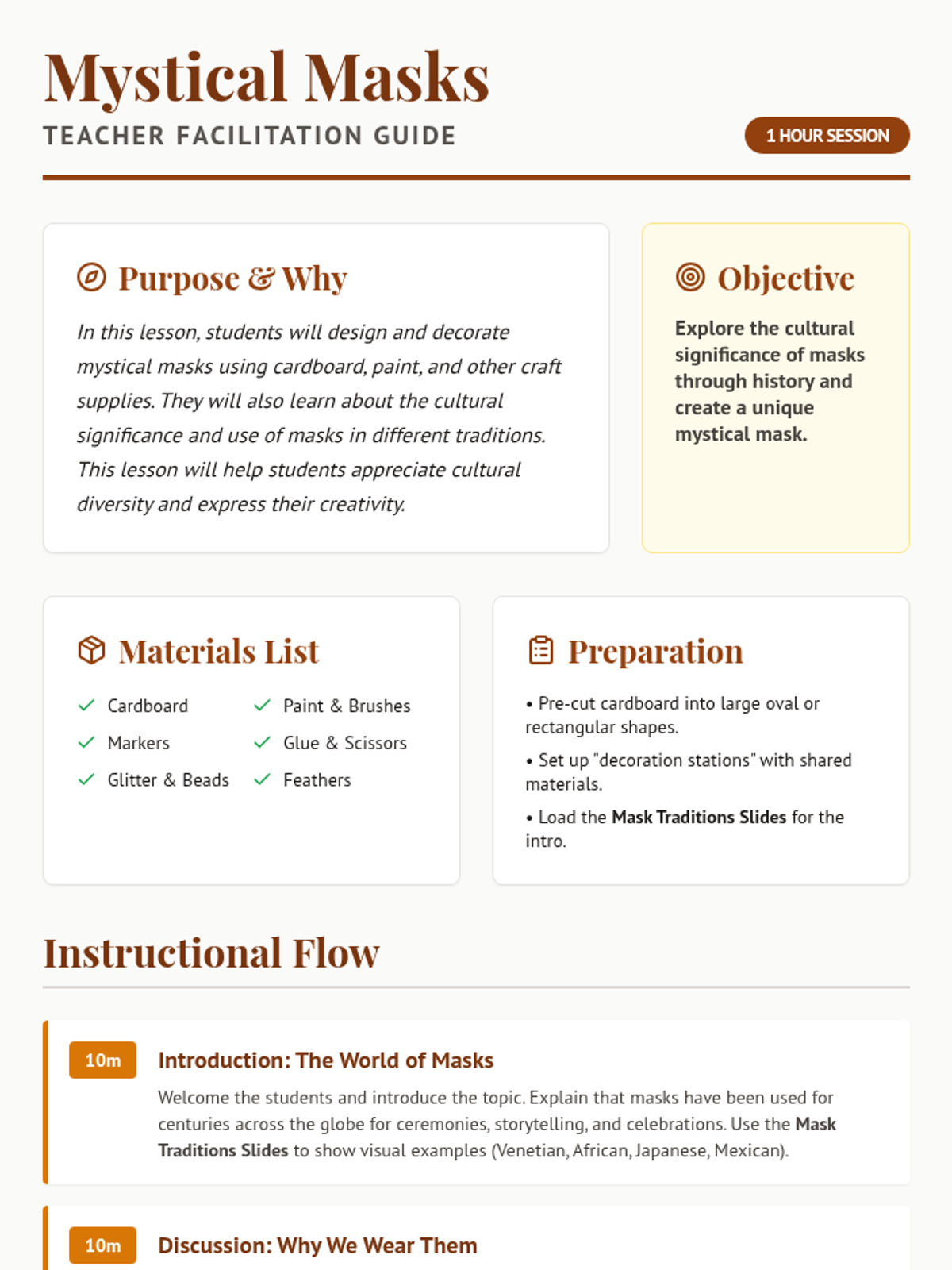
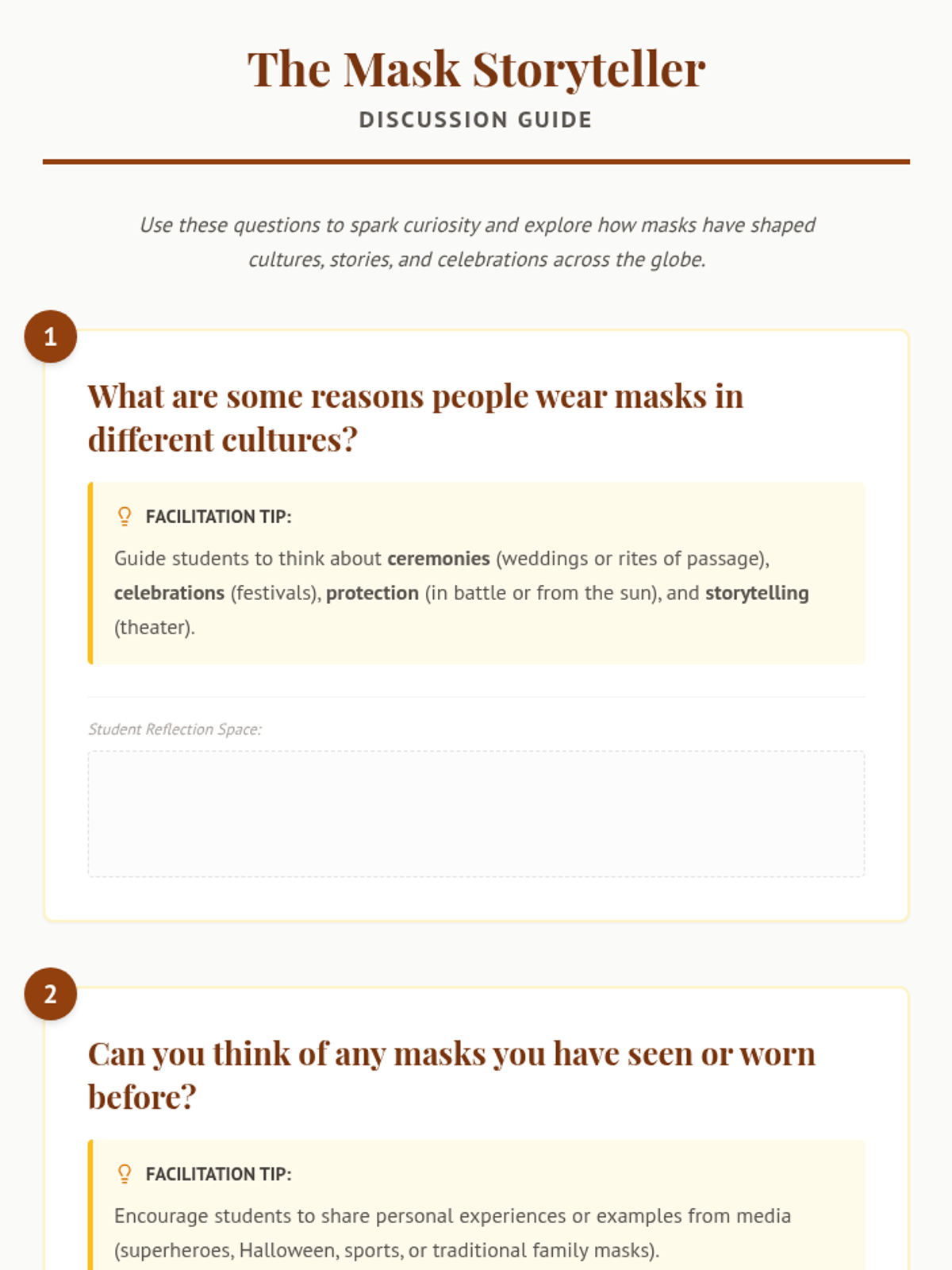
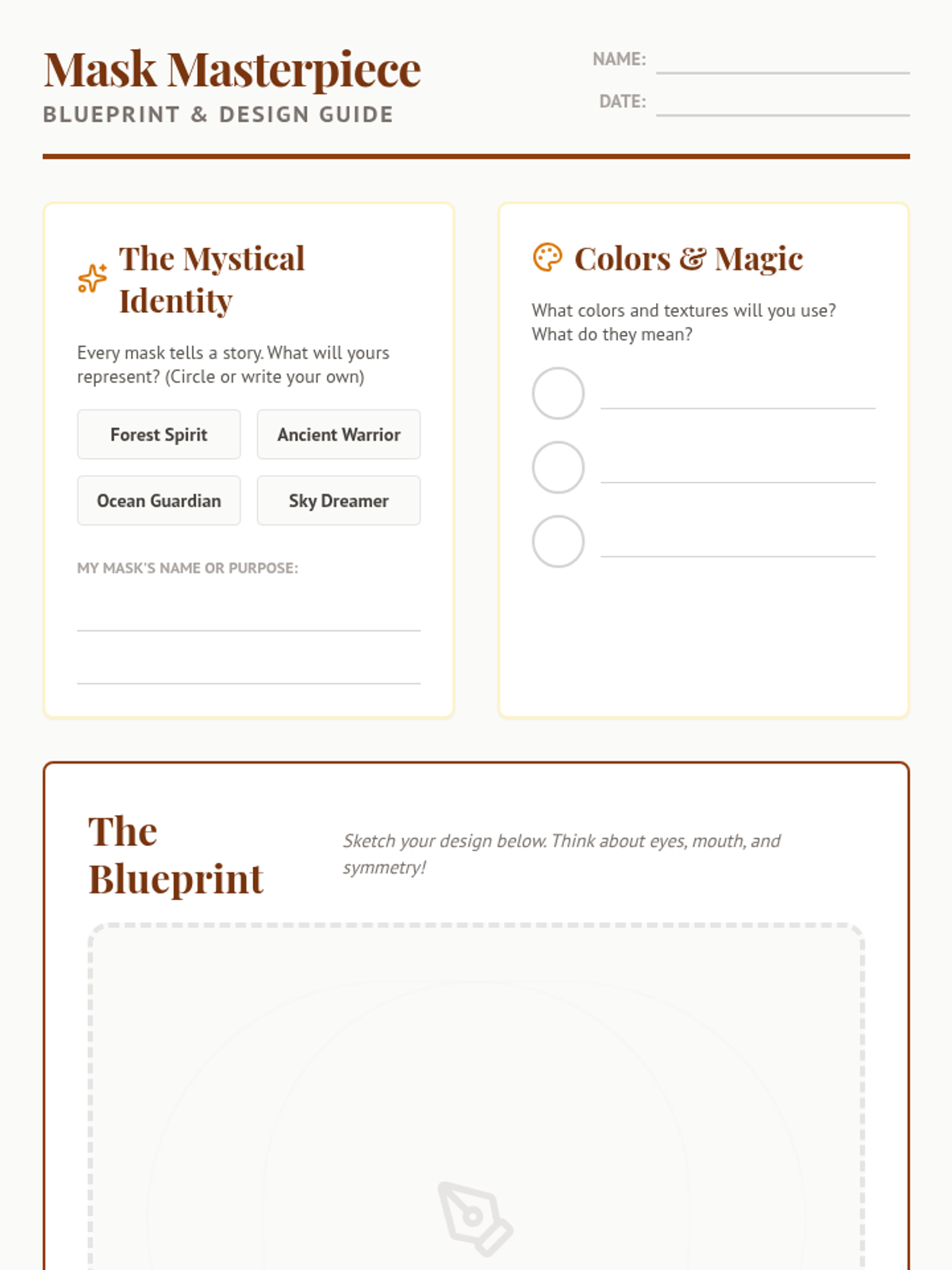
Students explore the cultural significance of masks from around the world and design their own mystical masks using cardboard and craft supplies.
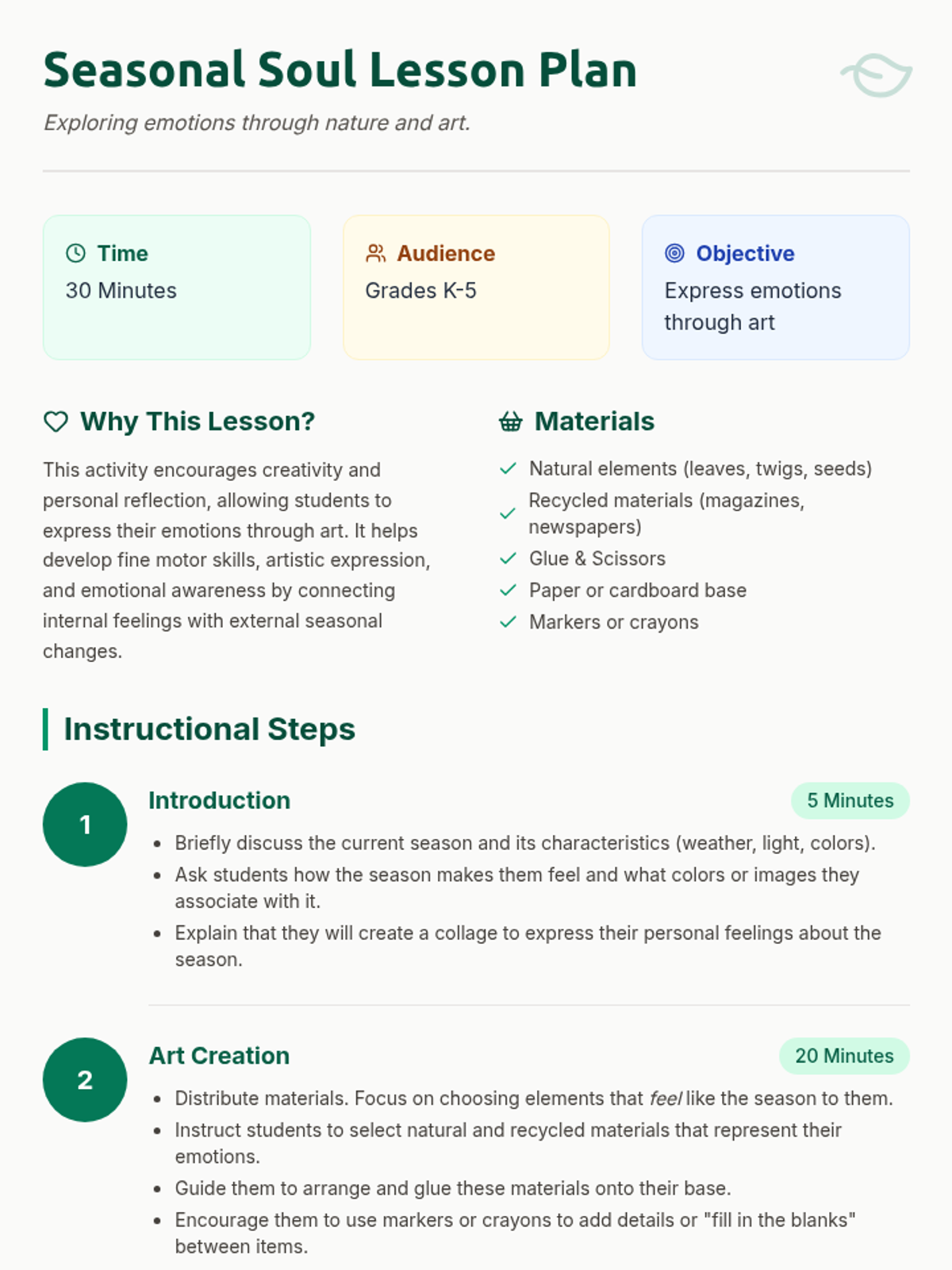
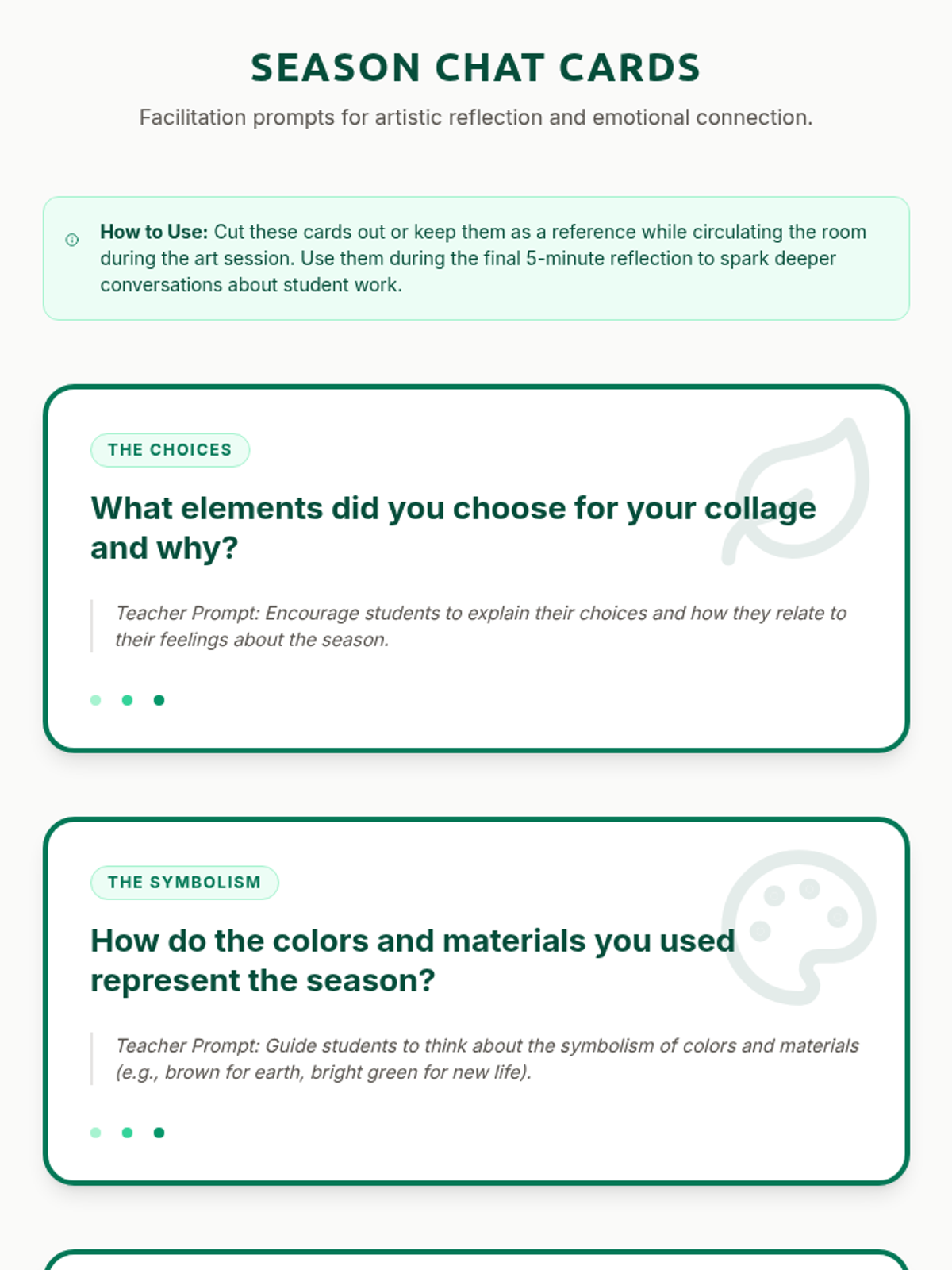
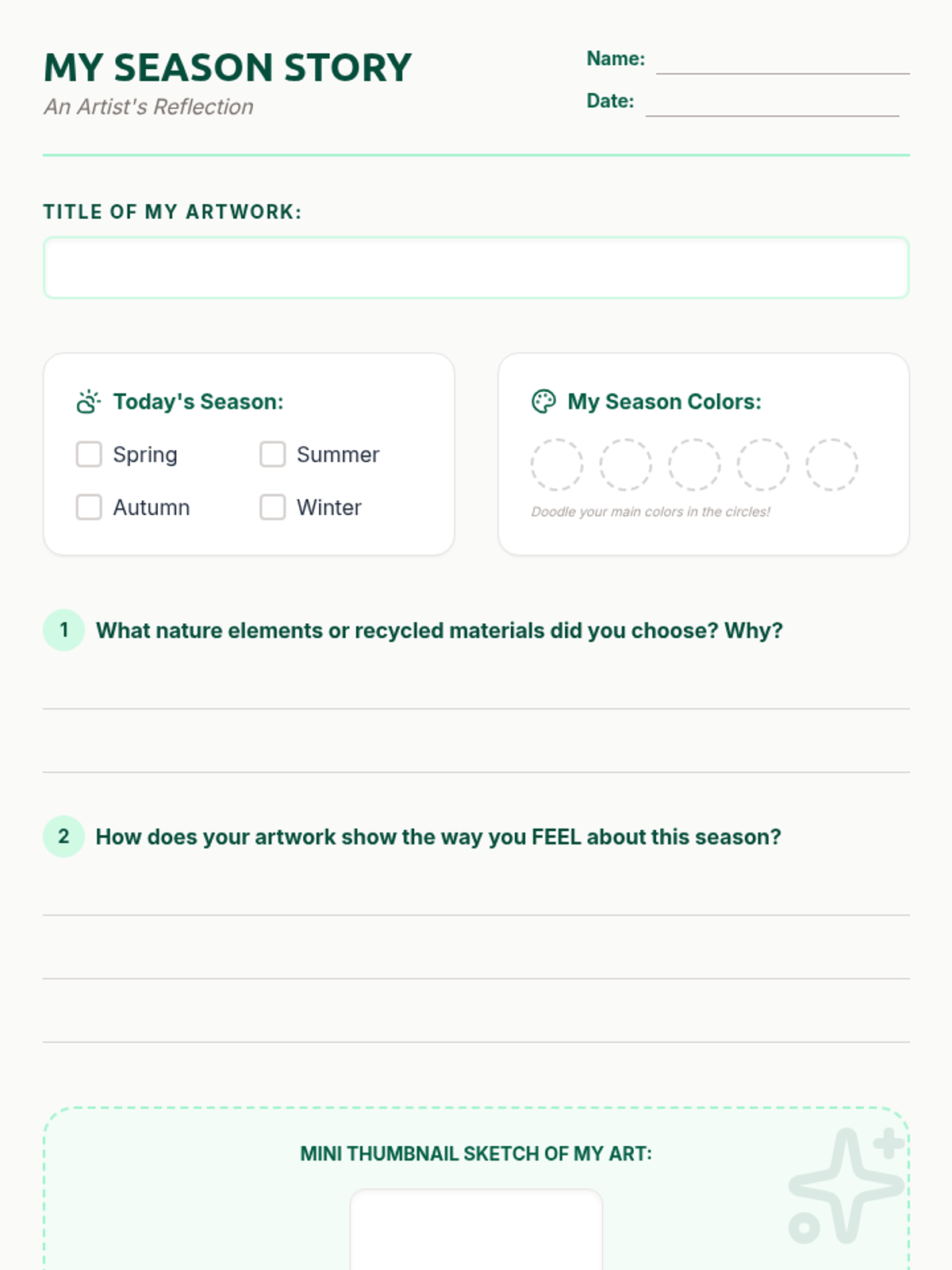
In this lesson, students will create collage artworks that represent their feelings about the current season using elements from nature and recycled materials. This activity encourages creativity and personal reflection, allowing students to express their emotions through art. It helps develop fine motor skills, artistic expression, and emotional awareness.
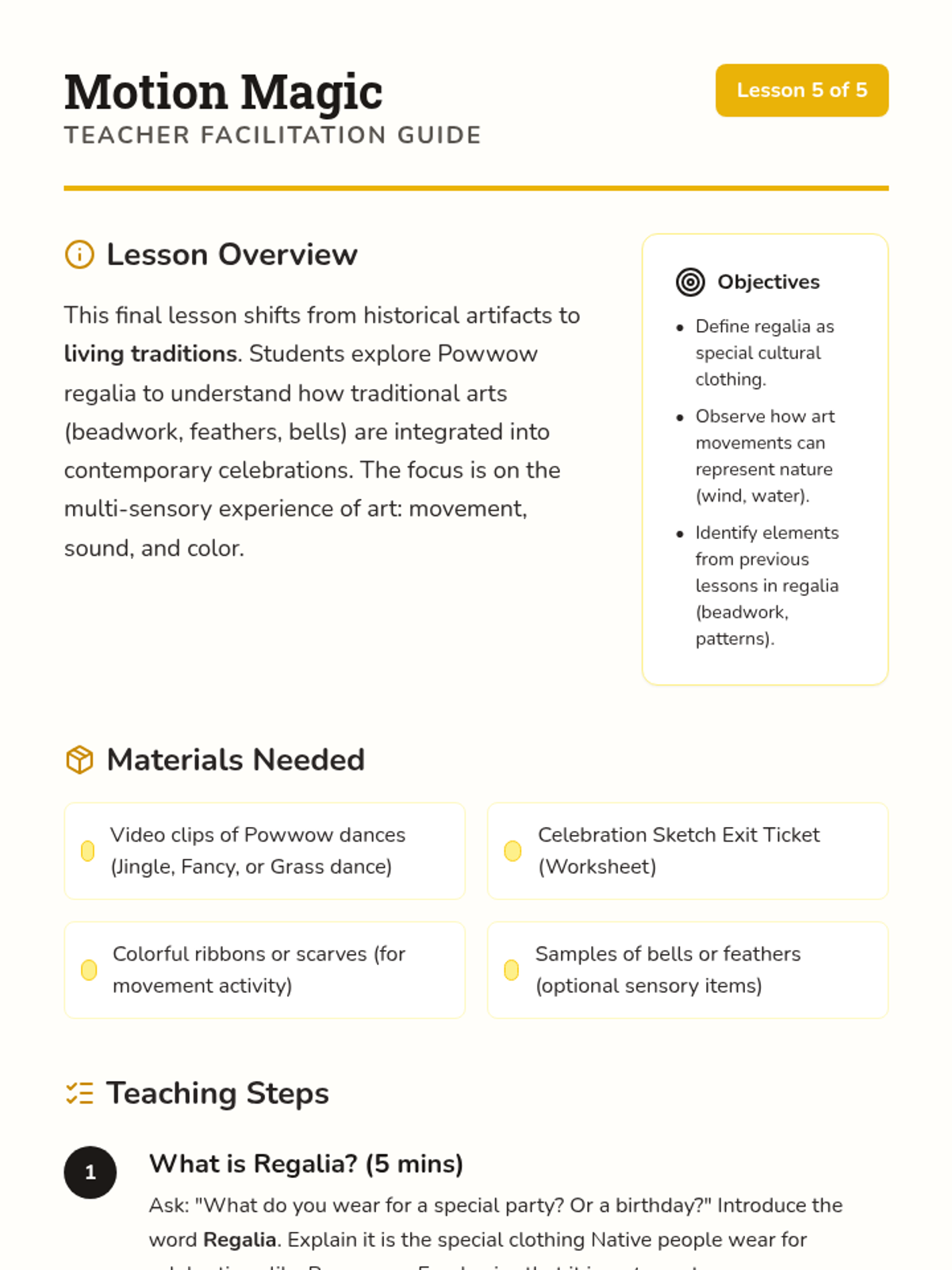
The sequence concludes by exploring modern Powwow regalia, observing how traditional art comes to life through movement, sound, and dance in contemporary Native cultures.
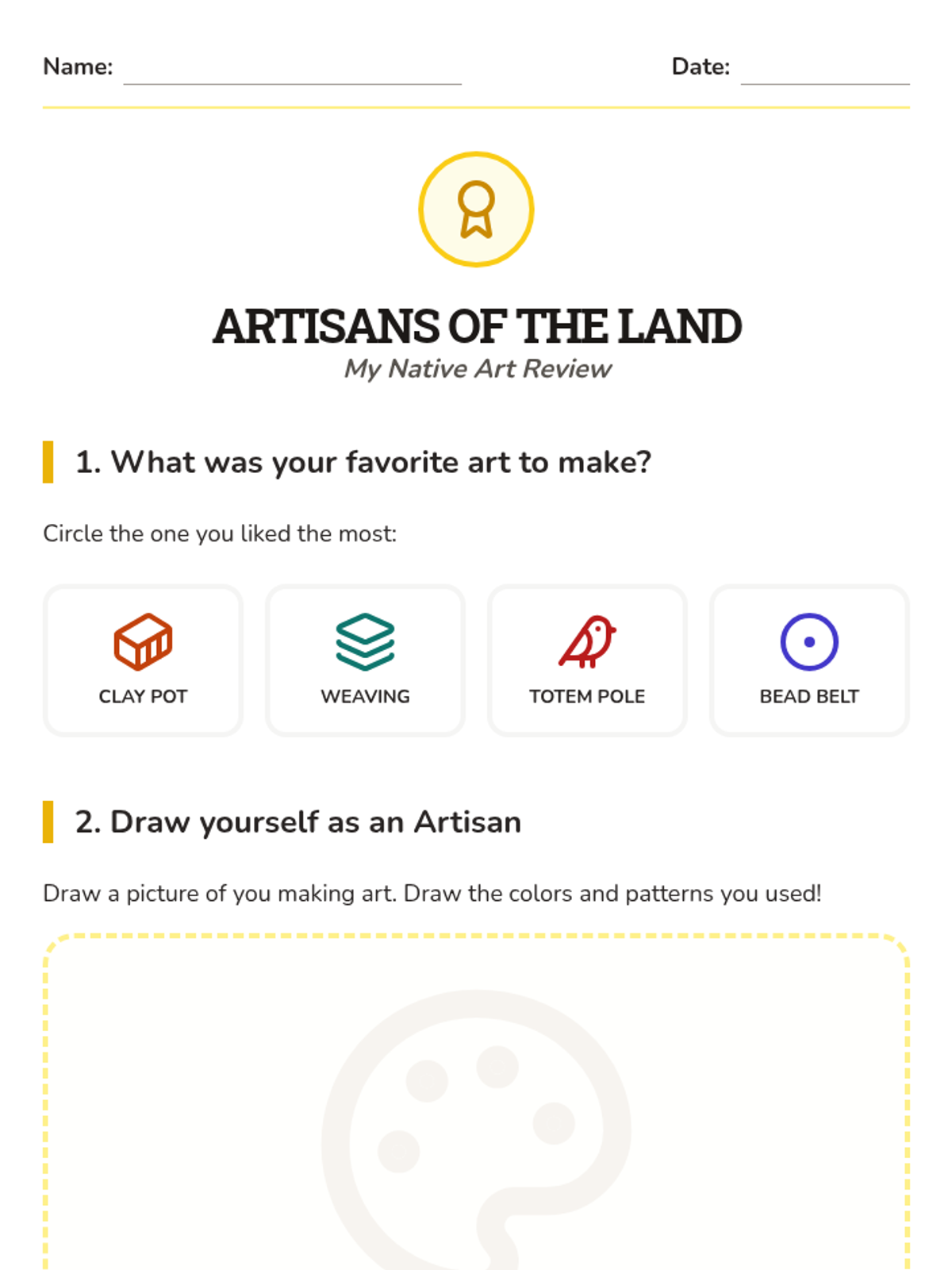
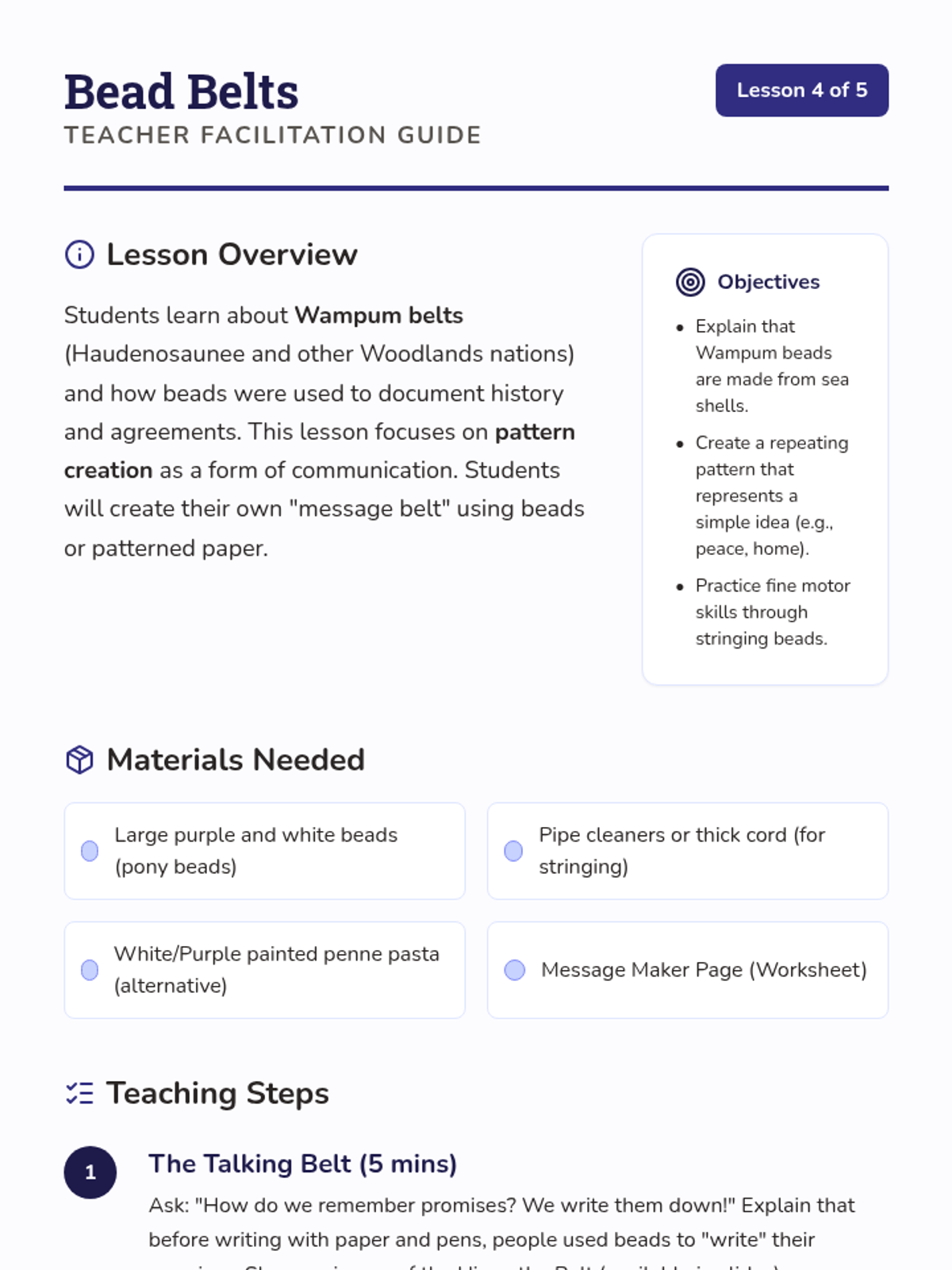
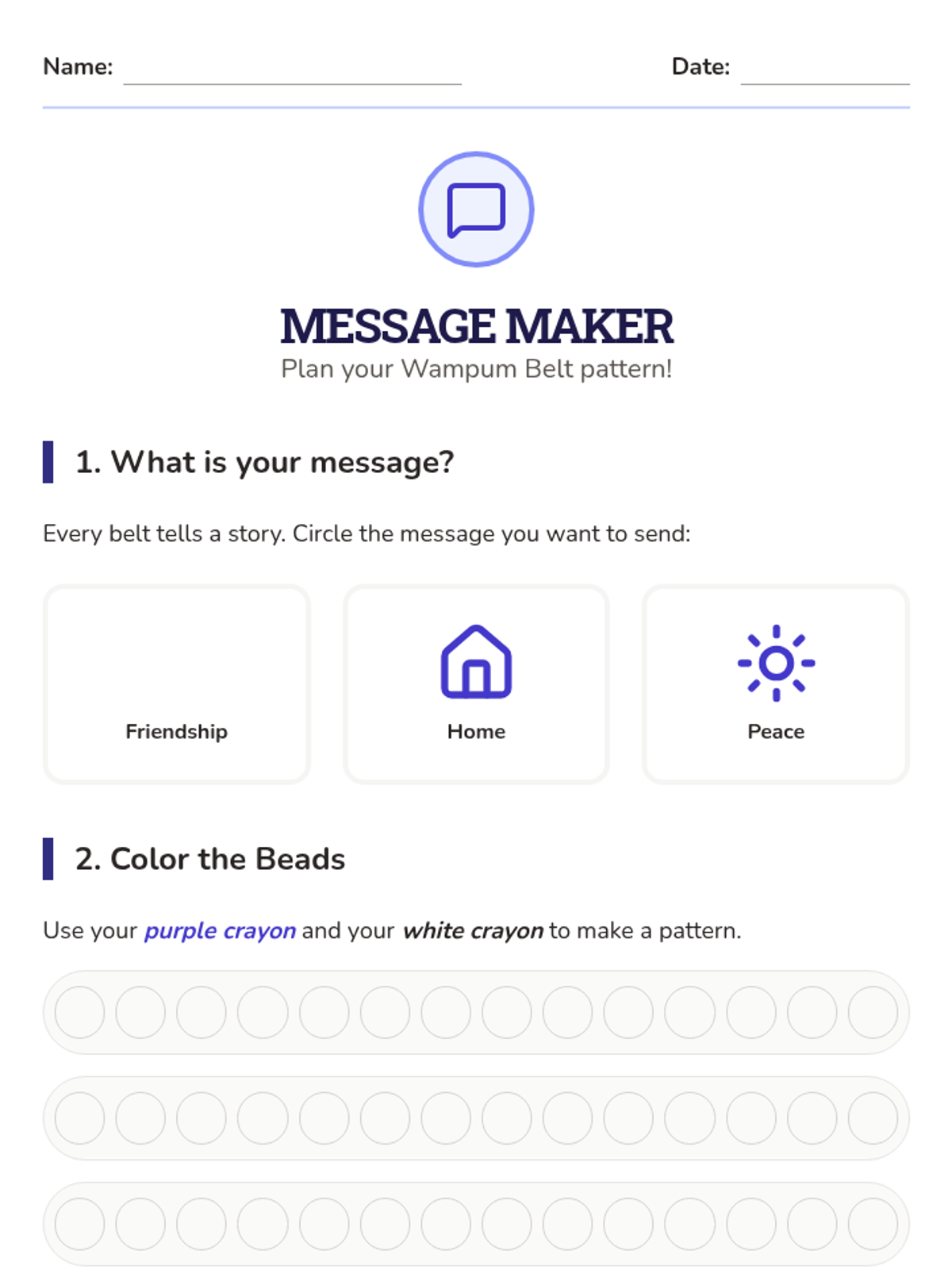
The class examines the intricate beadwork of Plains and Woodlands nations, learning how Wampum belts were used to communicate important messages and stories through patterns.
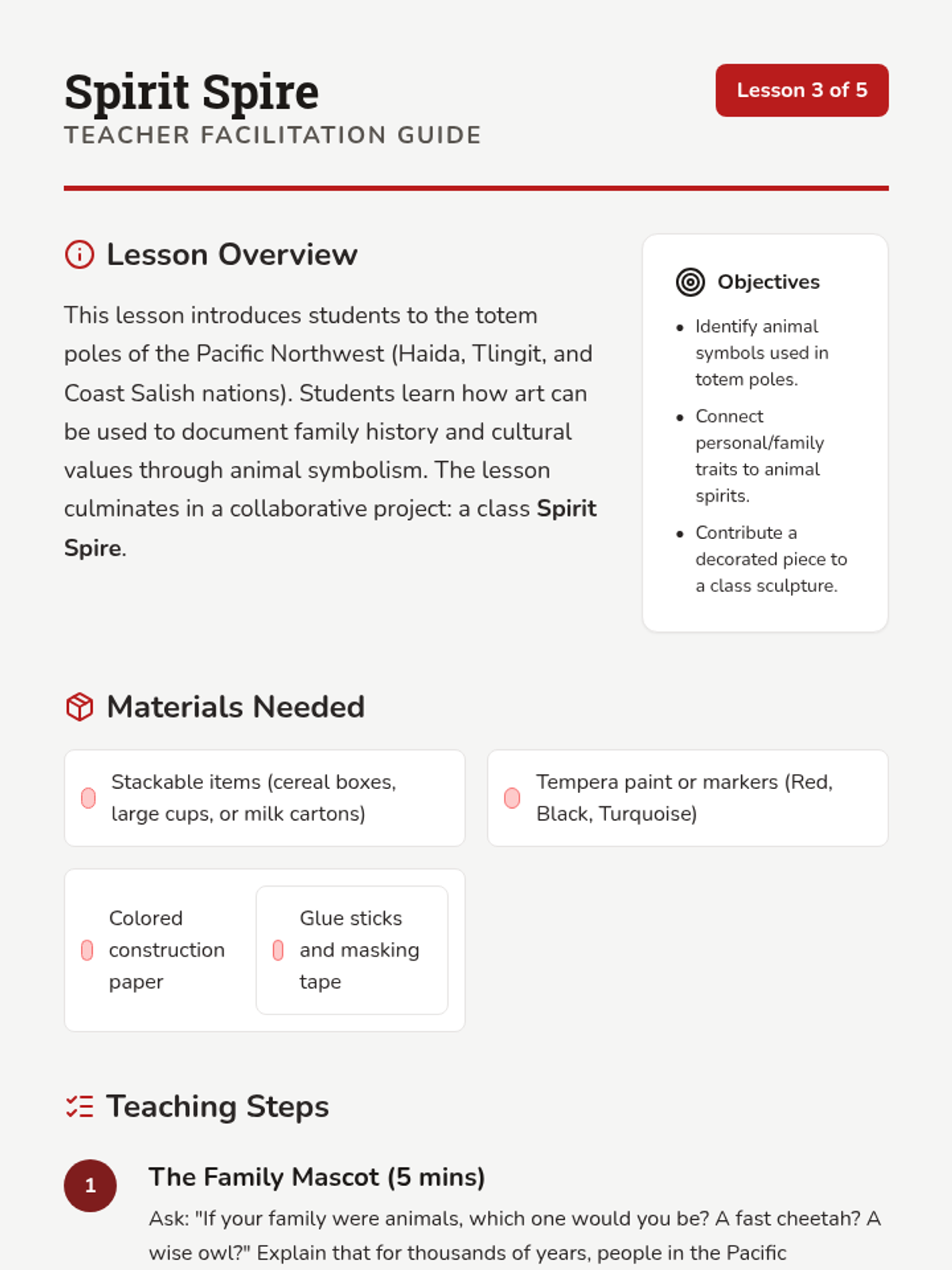
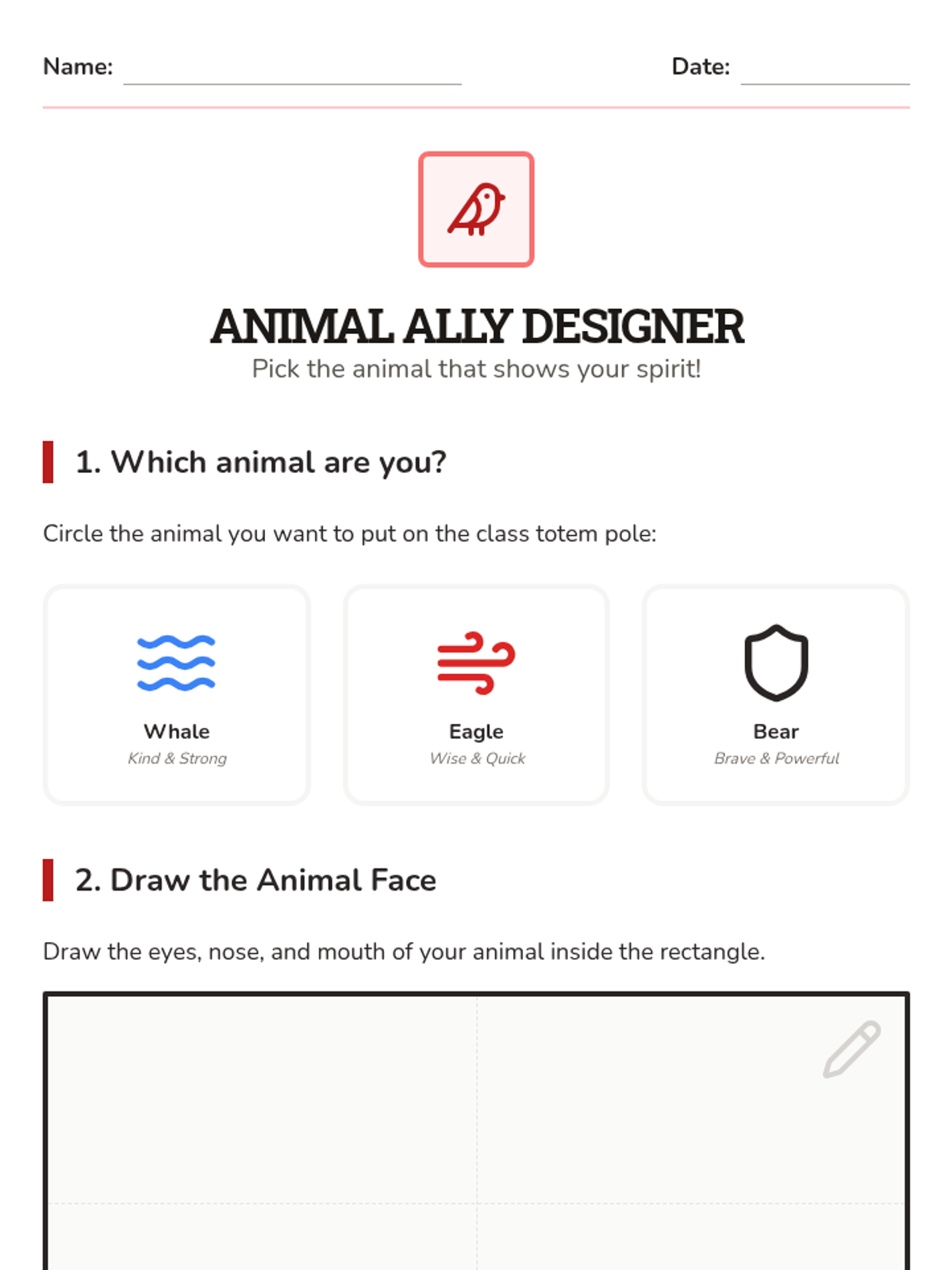
Students discover the storytelling power of totem poles from the Pacific Northwest, focusing on animal symbols and family history. They create individual symbols to contribute to a class spire.
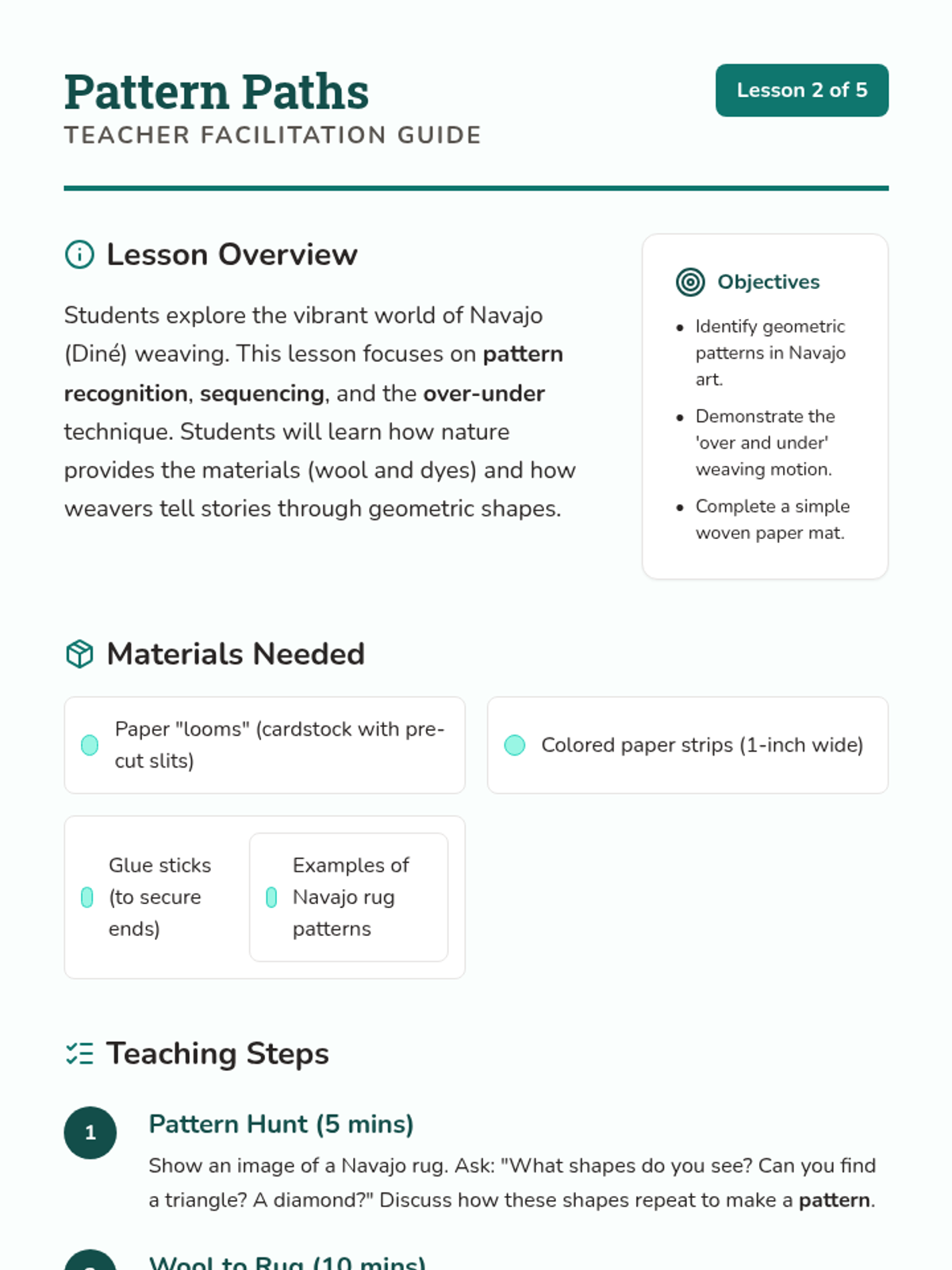
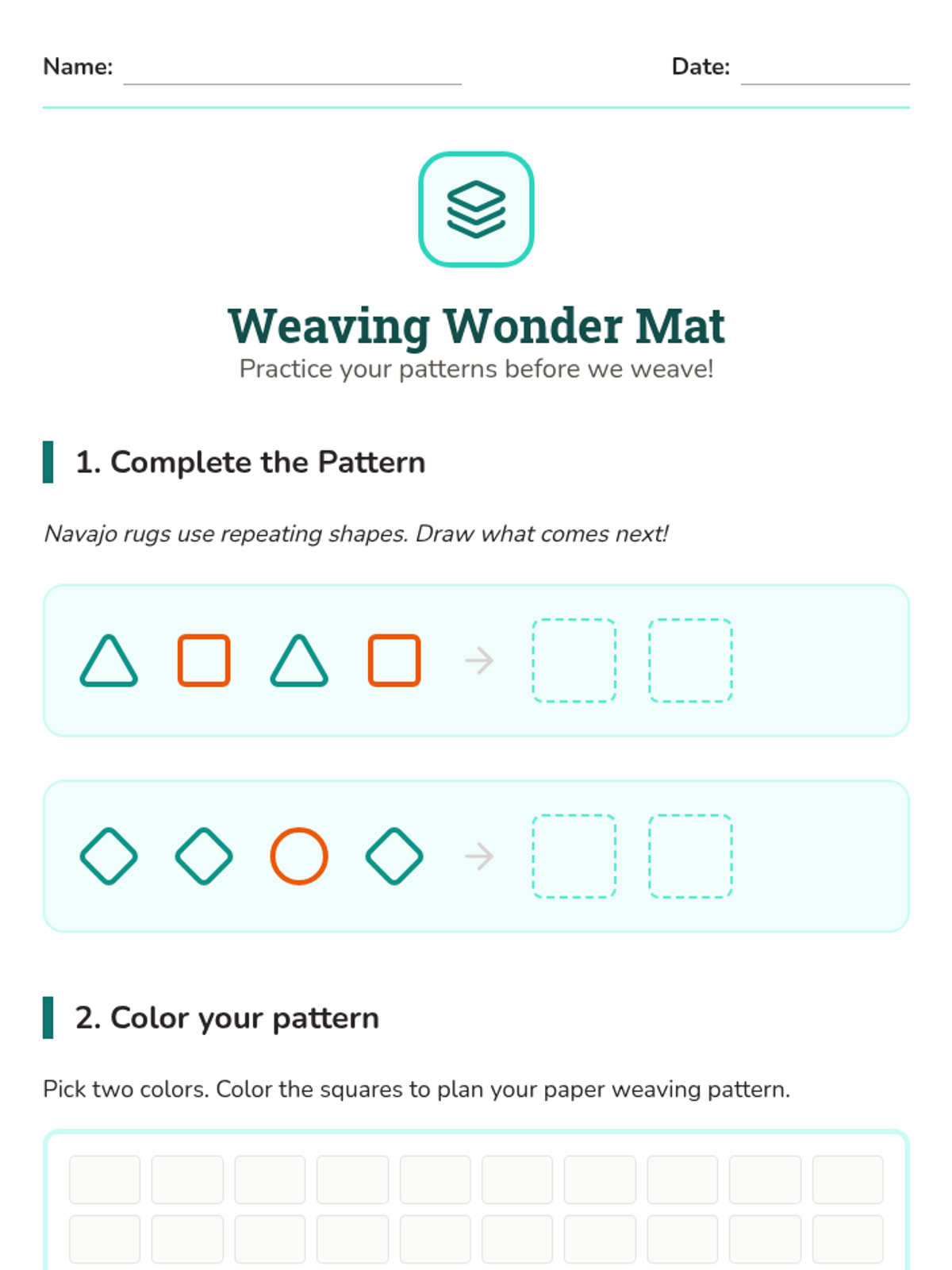
Learners investigate the geometric patterns of Navajo weaving and practice basic 'over and under' techniques using paper strips to create their own woven mats.
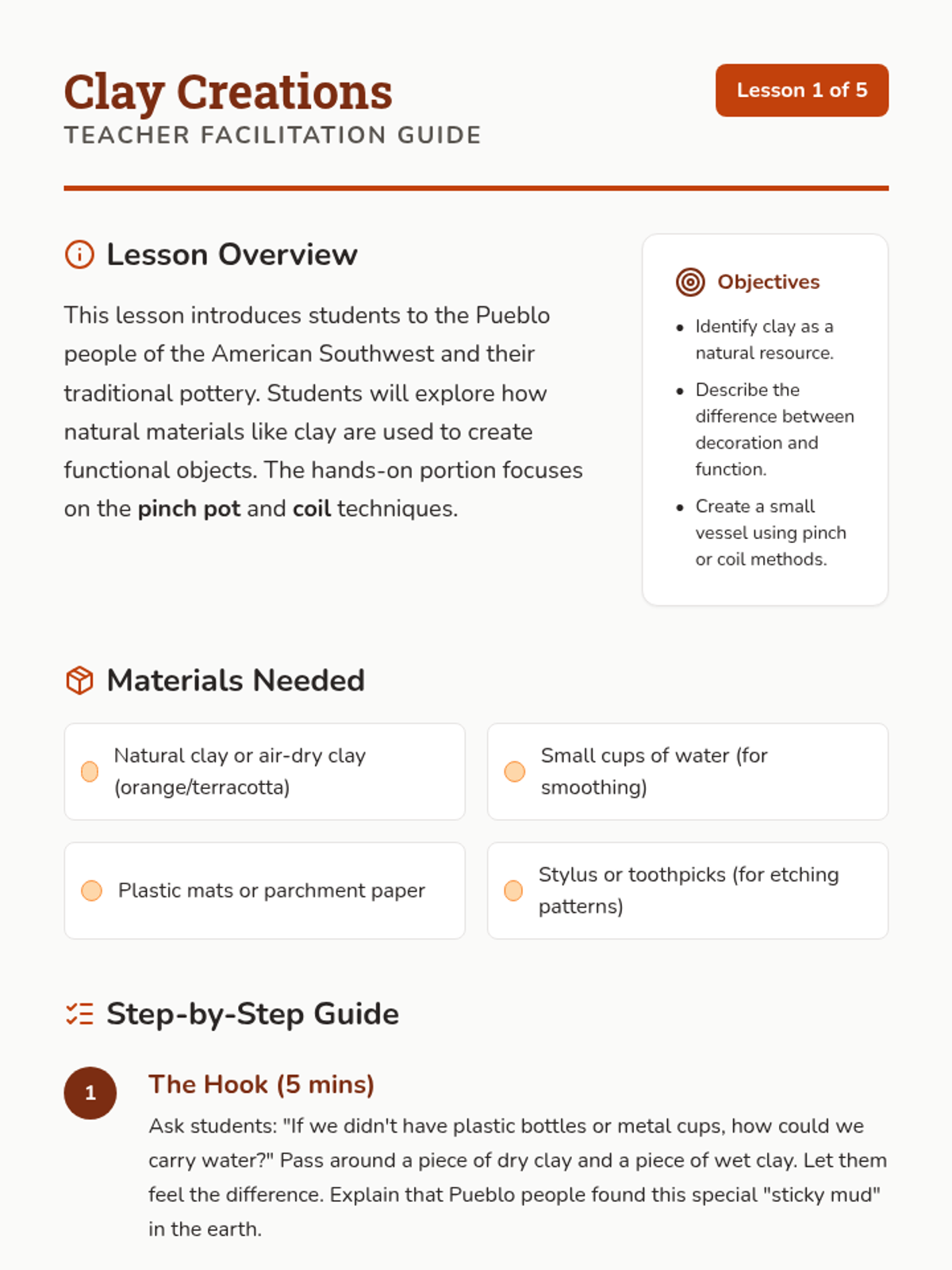
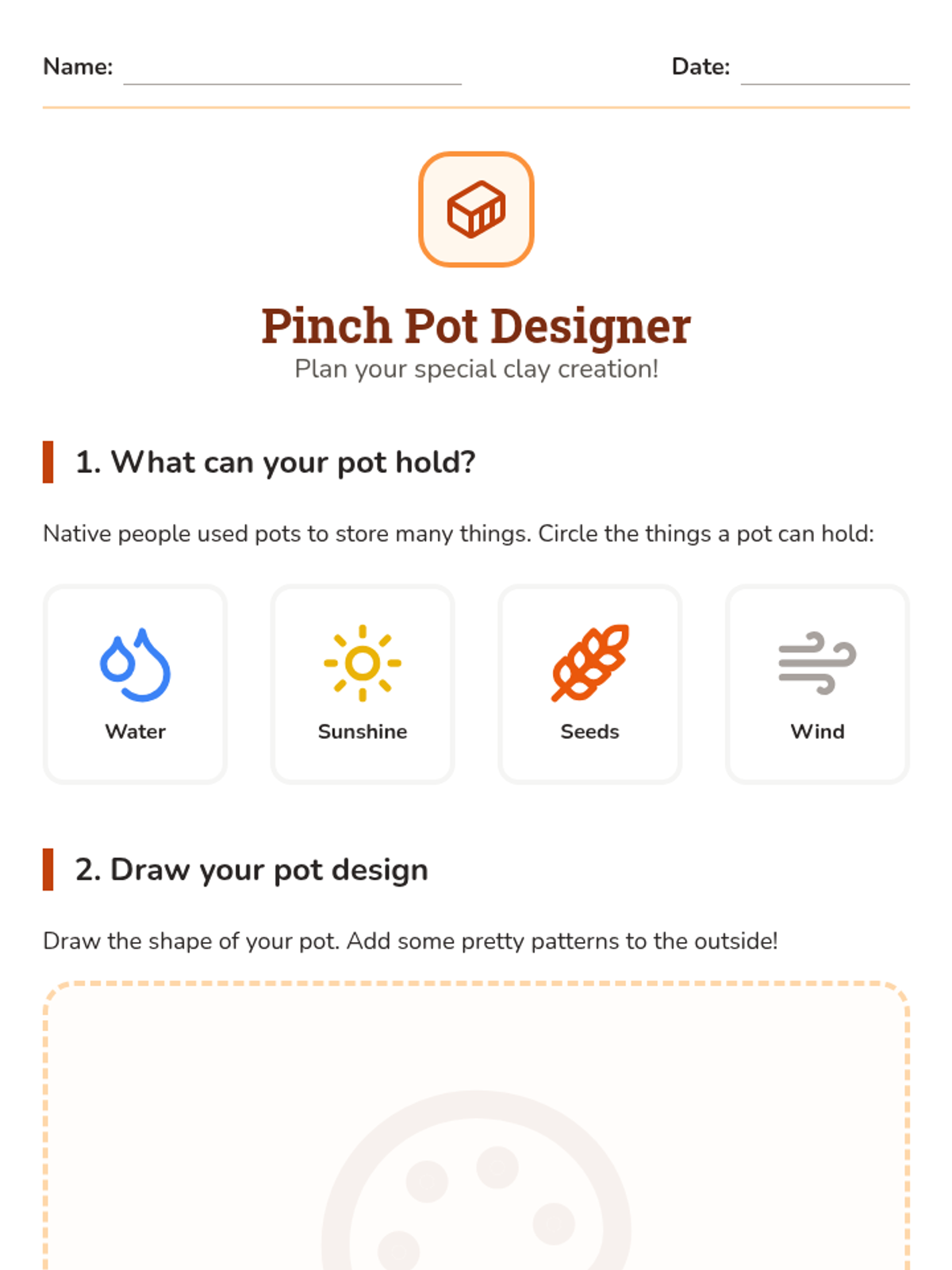
Students explore Pueblo pottery, learning how natural clay is used to create functional containers for water and food. They practice the coil and pinch techniques to create their own small vessels.
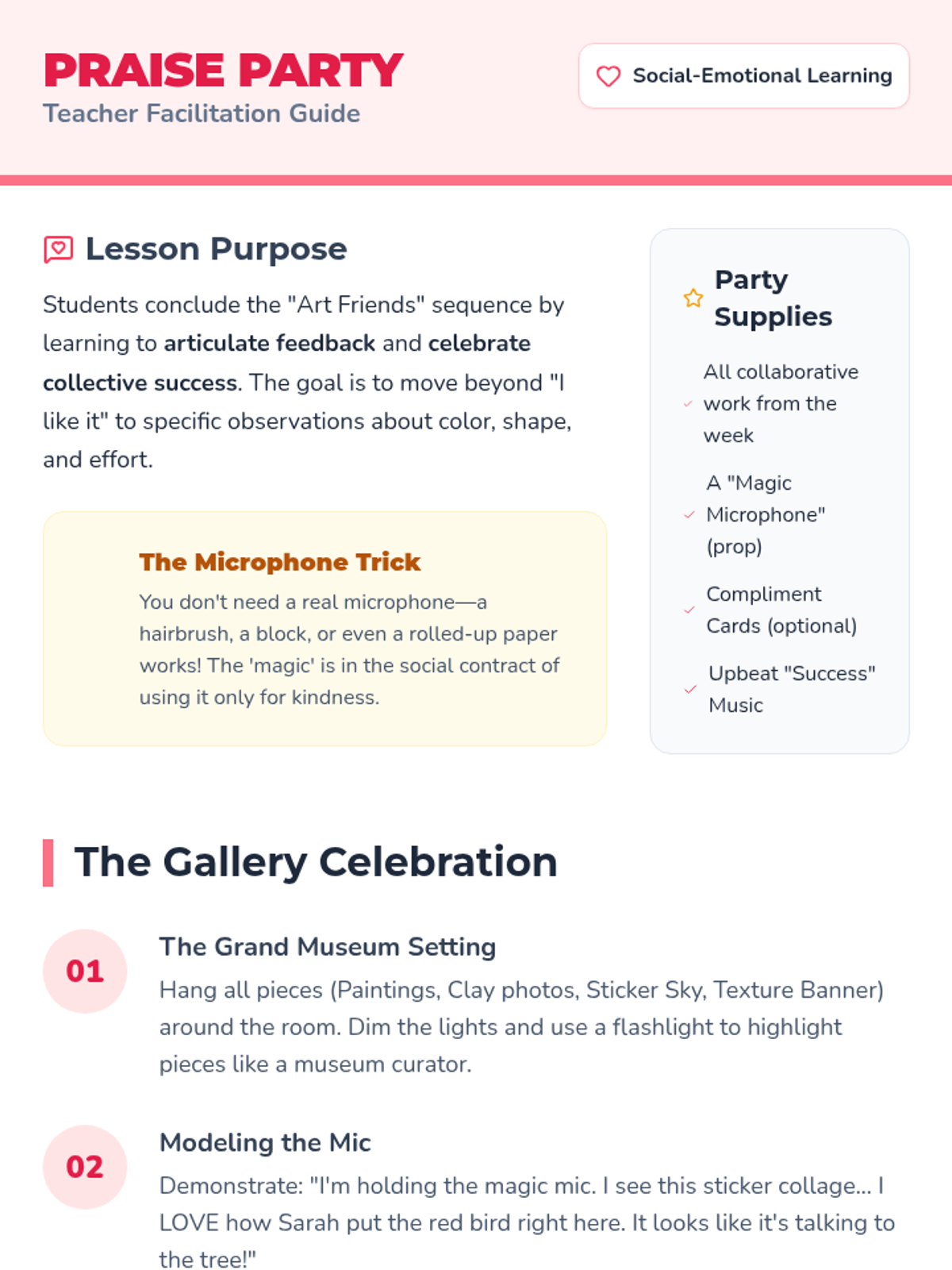
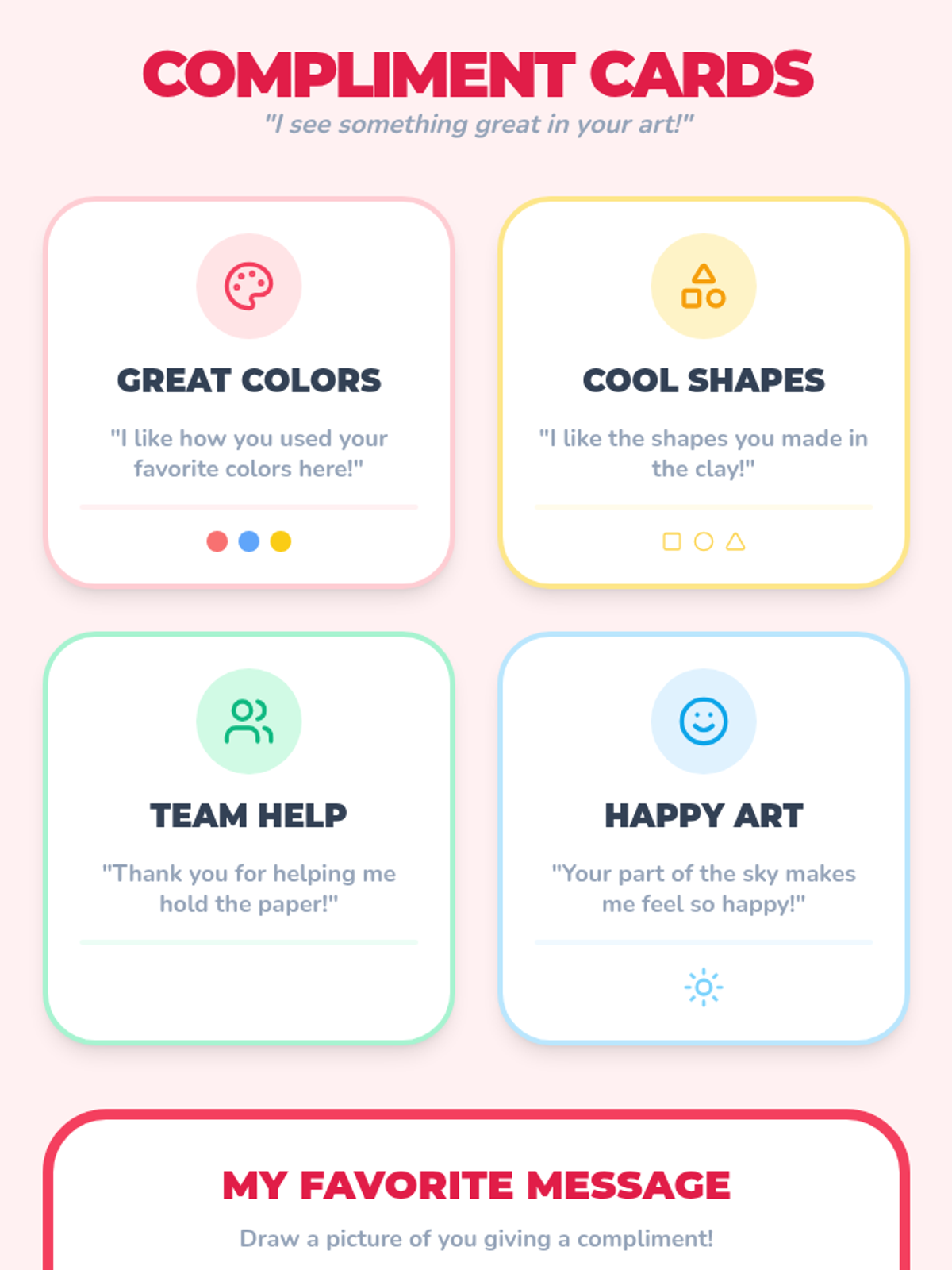
Students conclude the week by reviewing their collaborative pieces and practicing giving specific, positive feedback to their peers.
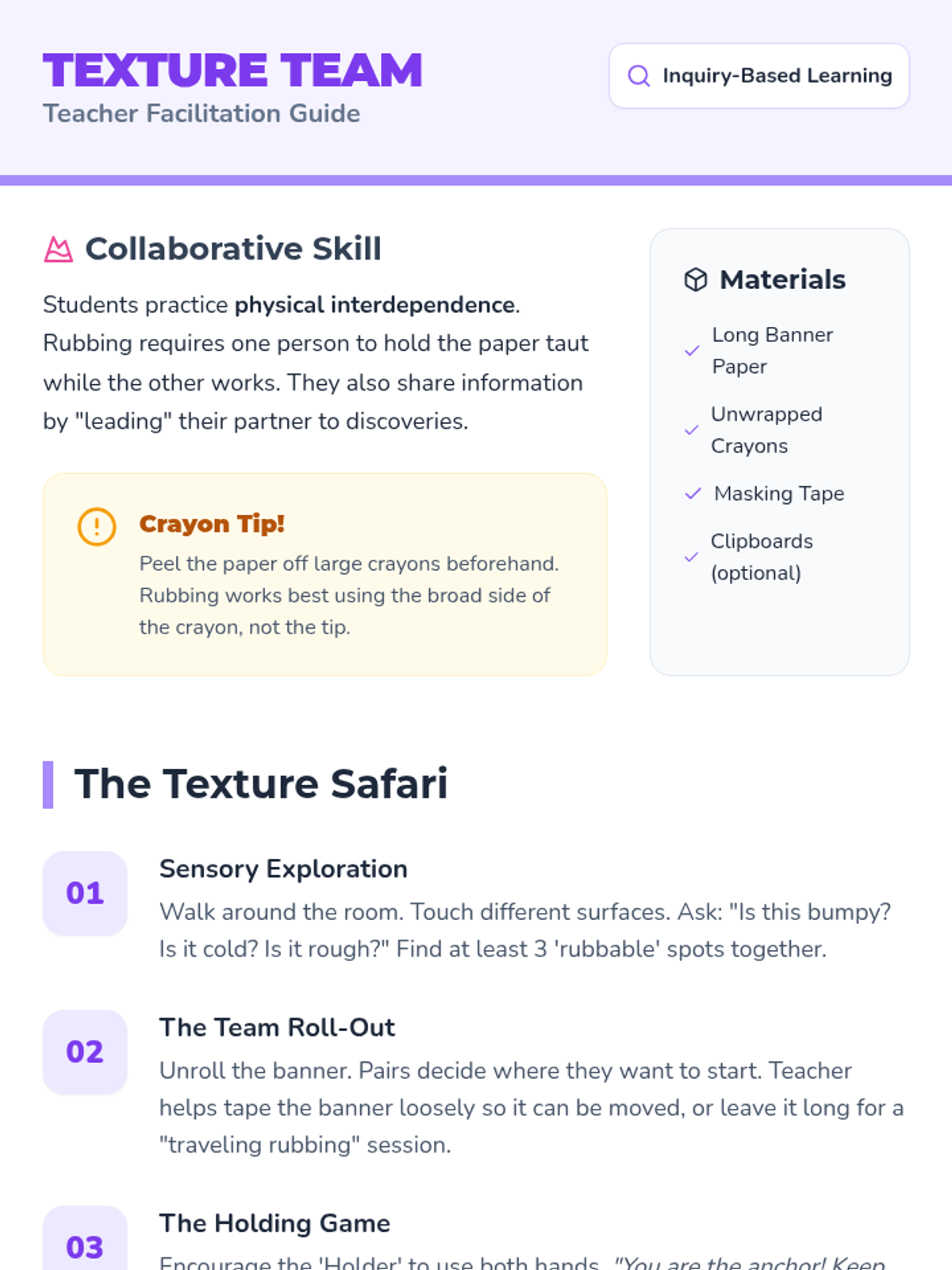
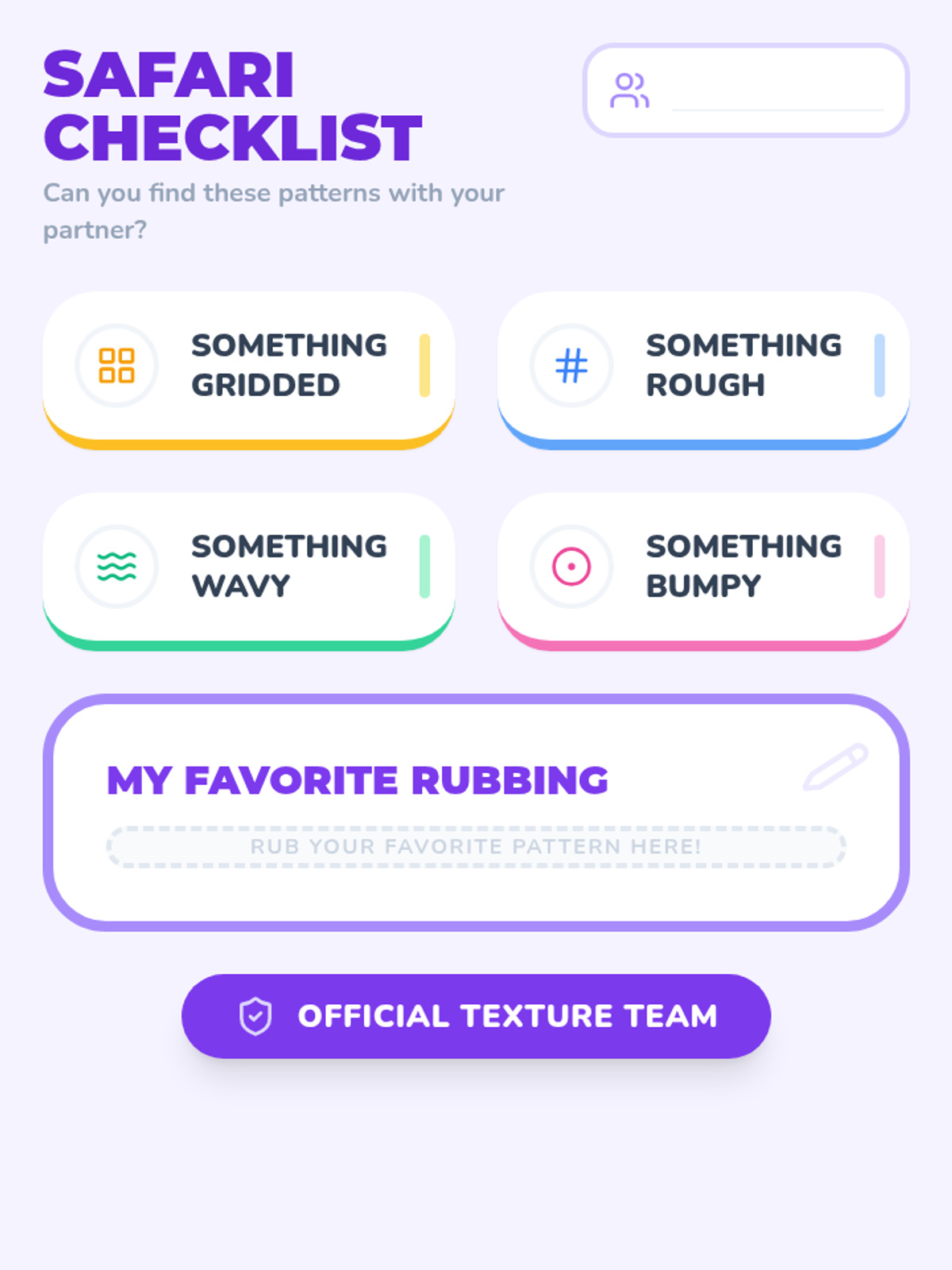
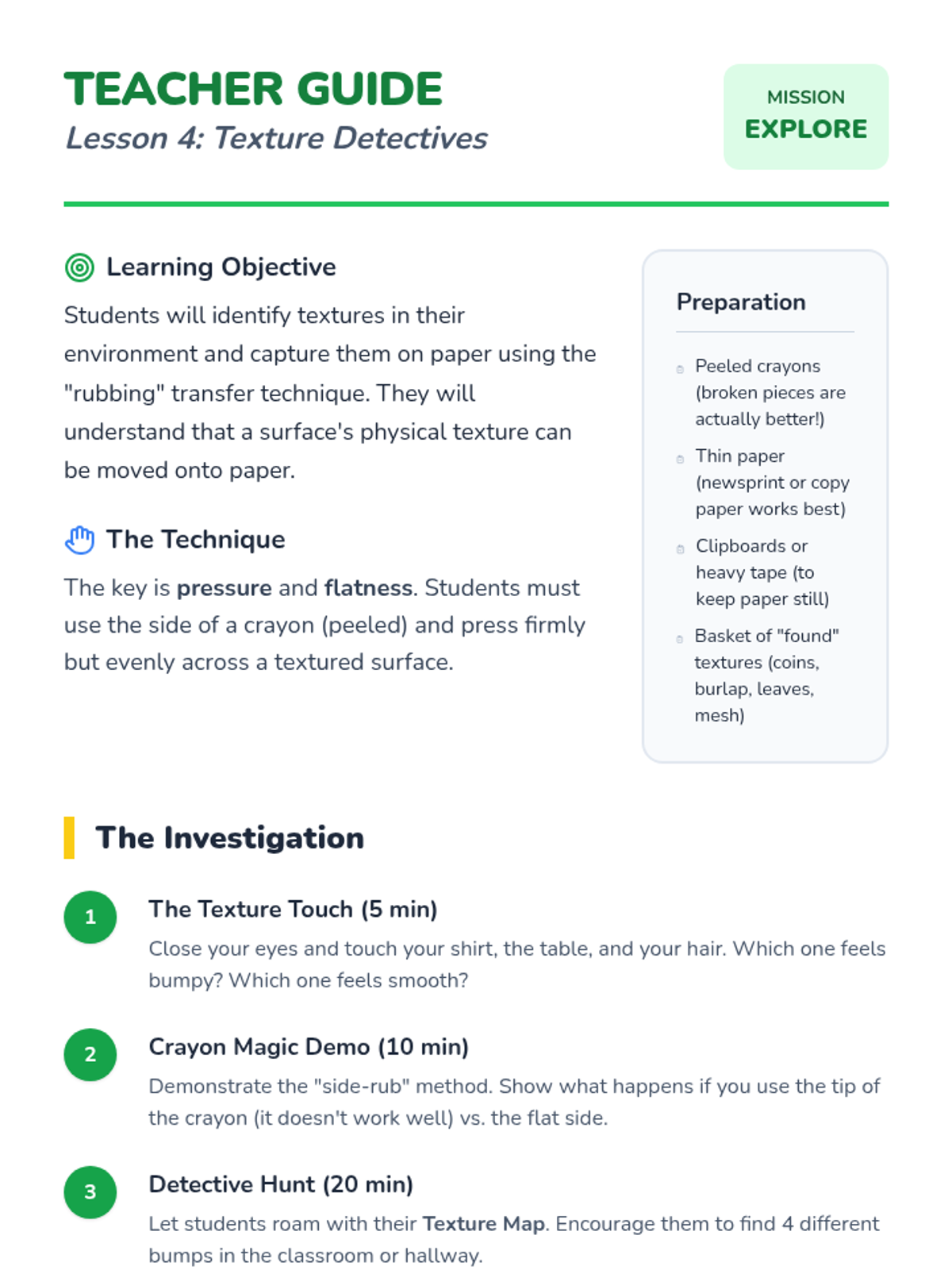
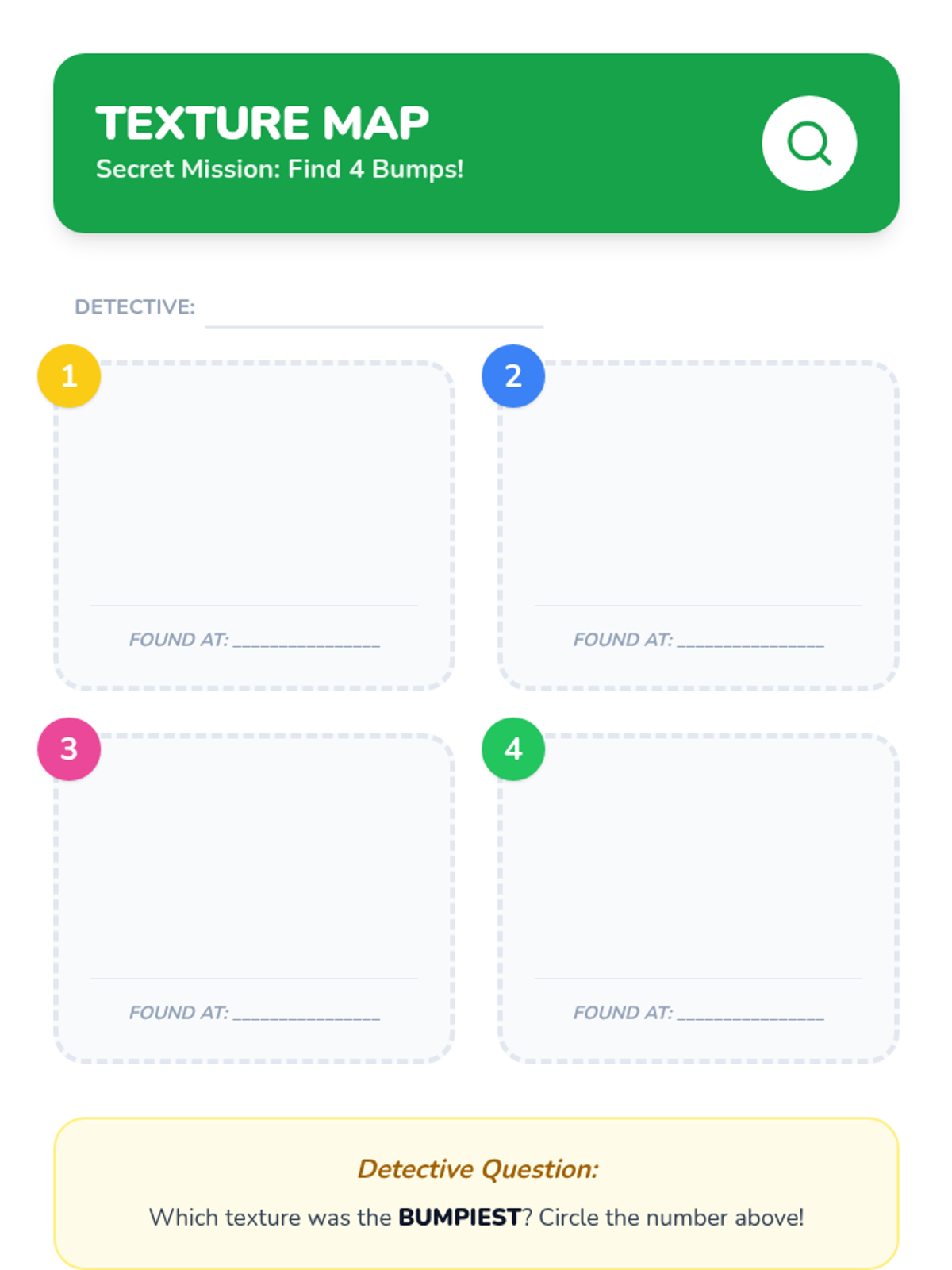
Students go on a 'texture safari' in the classroom, working in teams to create rubbings on a shared banner.
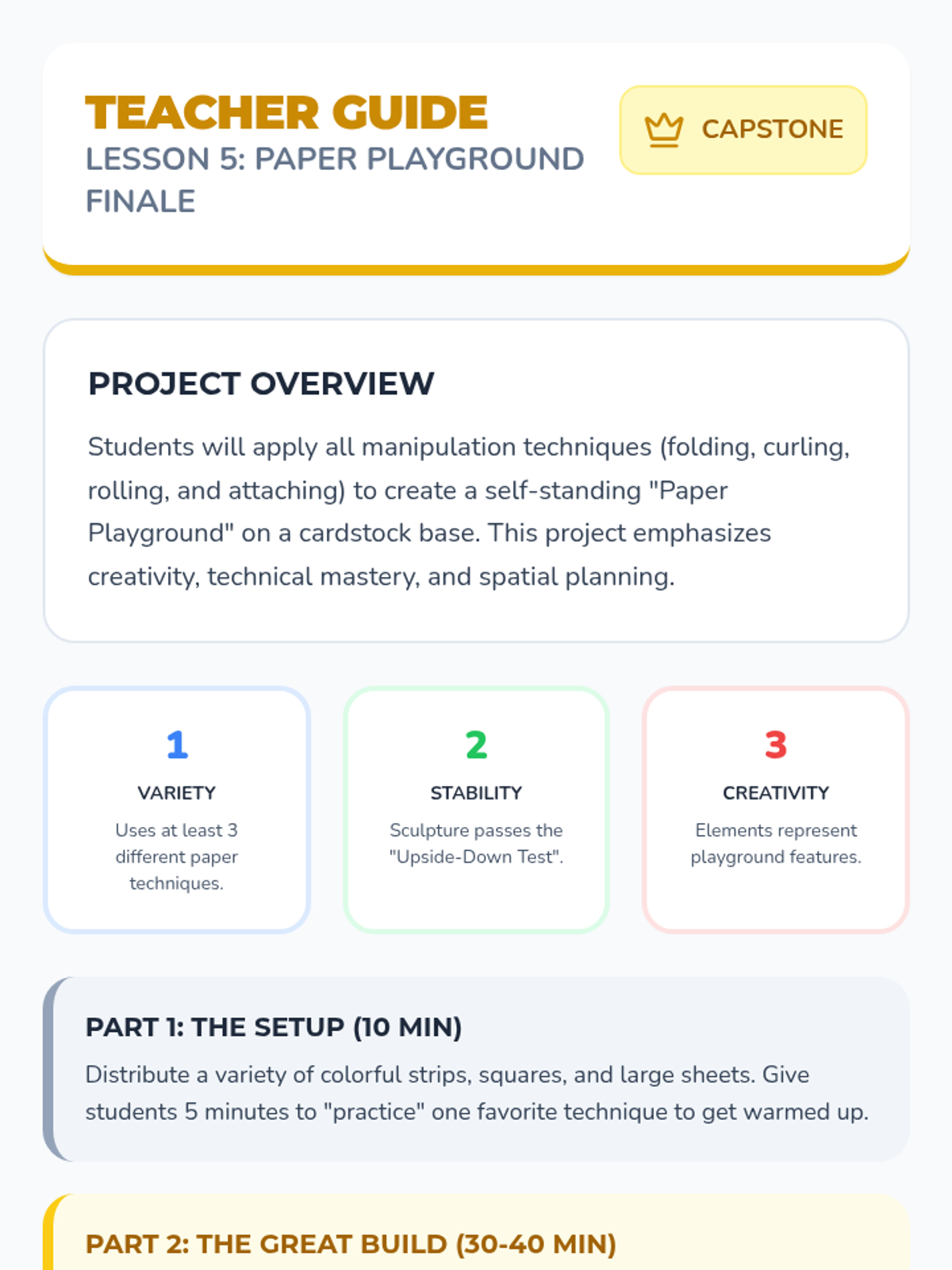
In the final project-based lesson, students synthesize all learned techniques to design and build a 'Paper Playground'. They apply their skills to create slides, tunnels, and ladders in a free-standing sculpture.
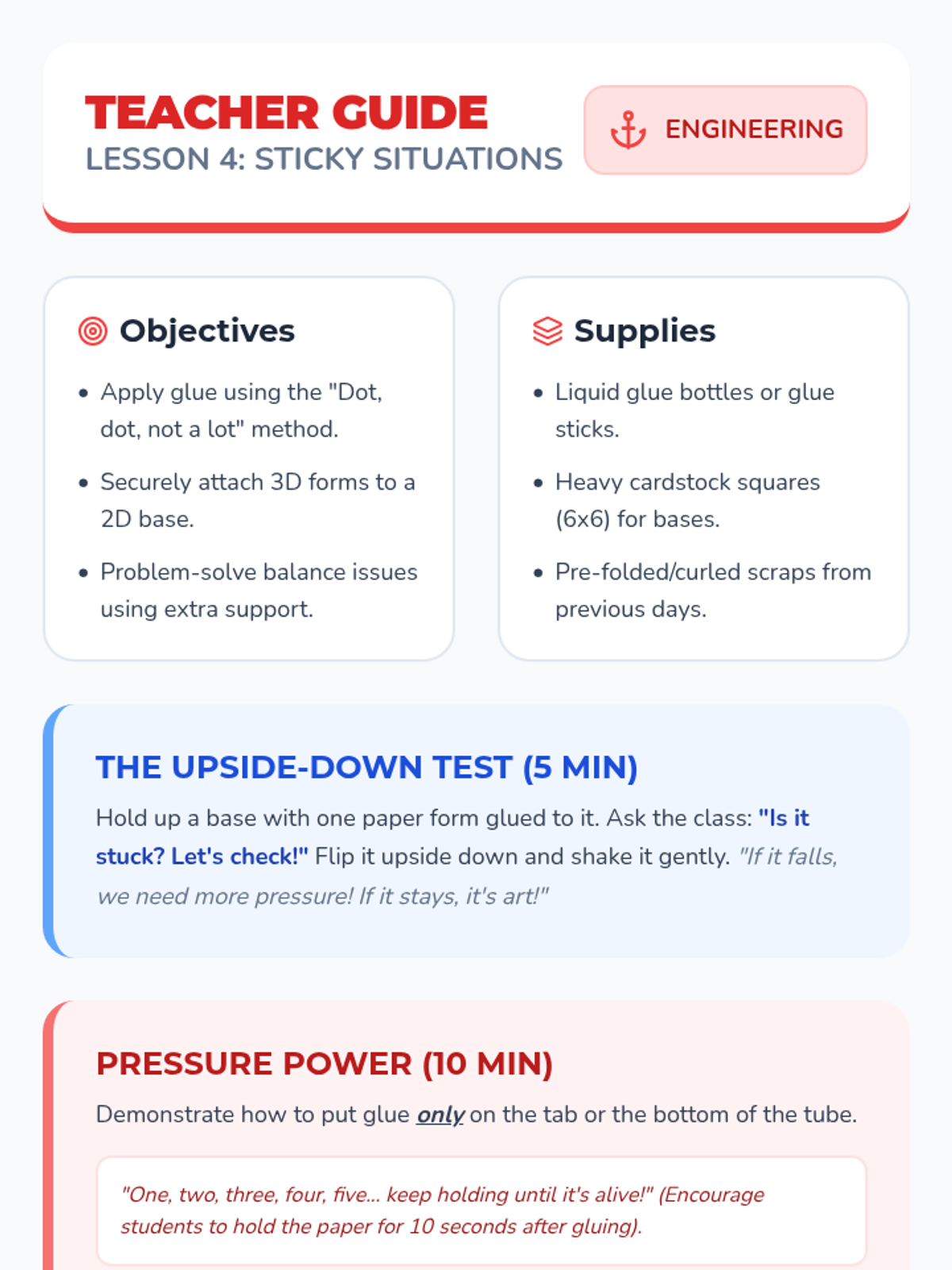
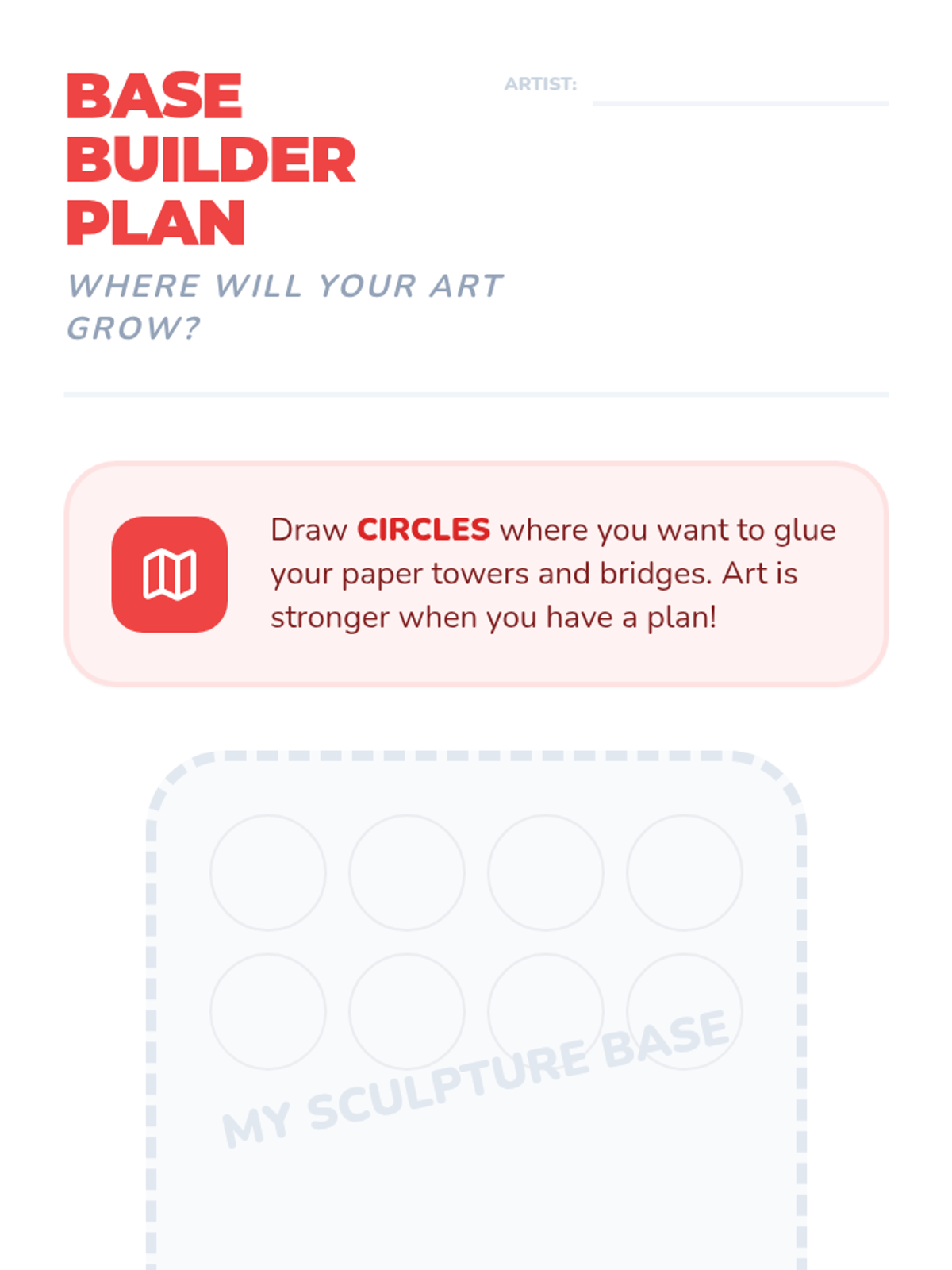
This lesson focuses on the engineering of sculpture, teaching students how to adhere 3D components to a base and achieve balance. Students learn the 'upside-down test' for structural stability.
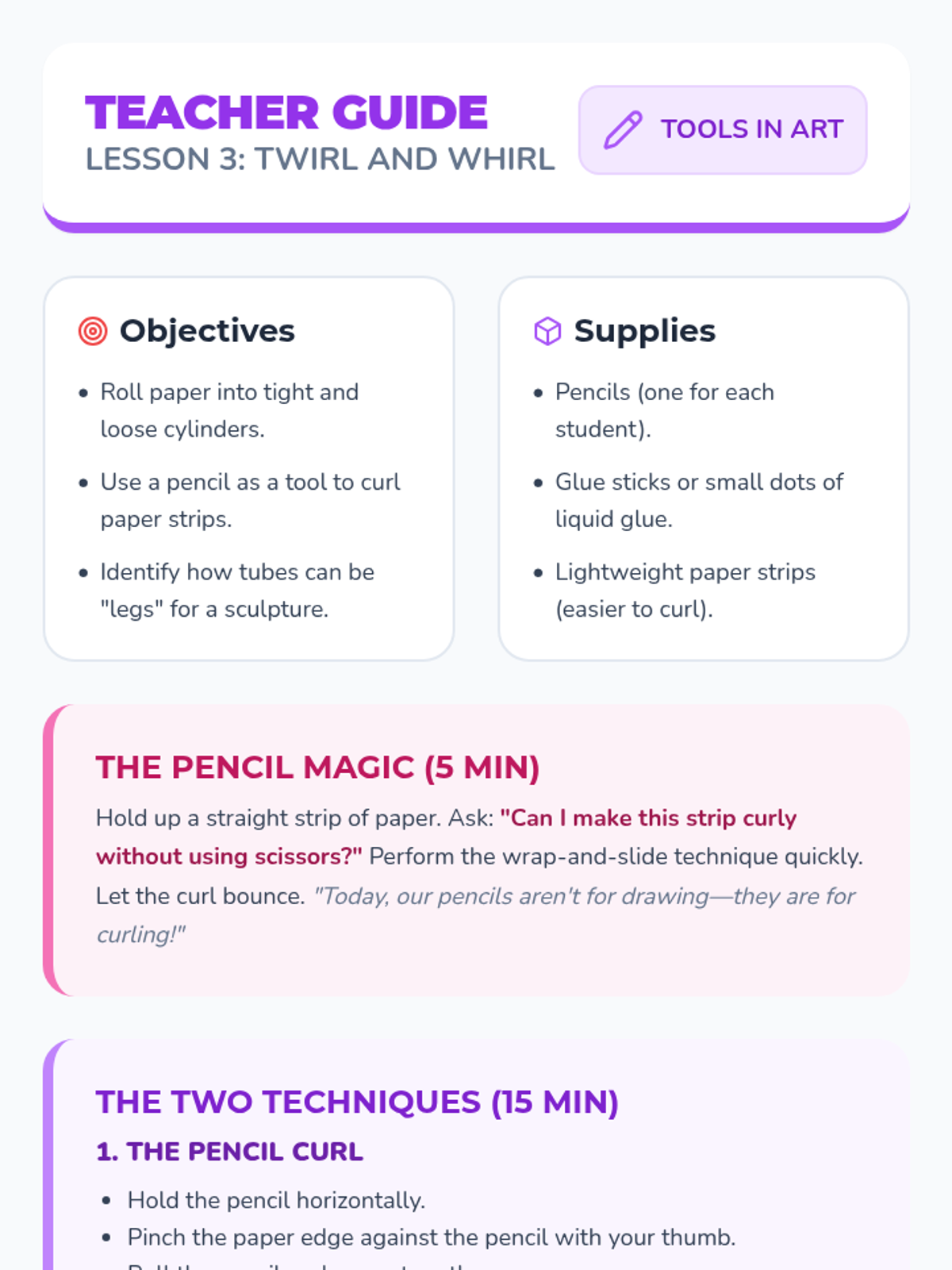
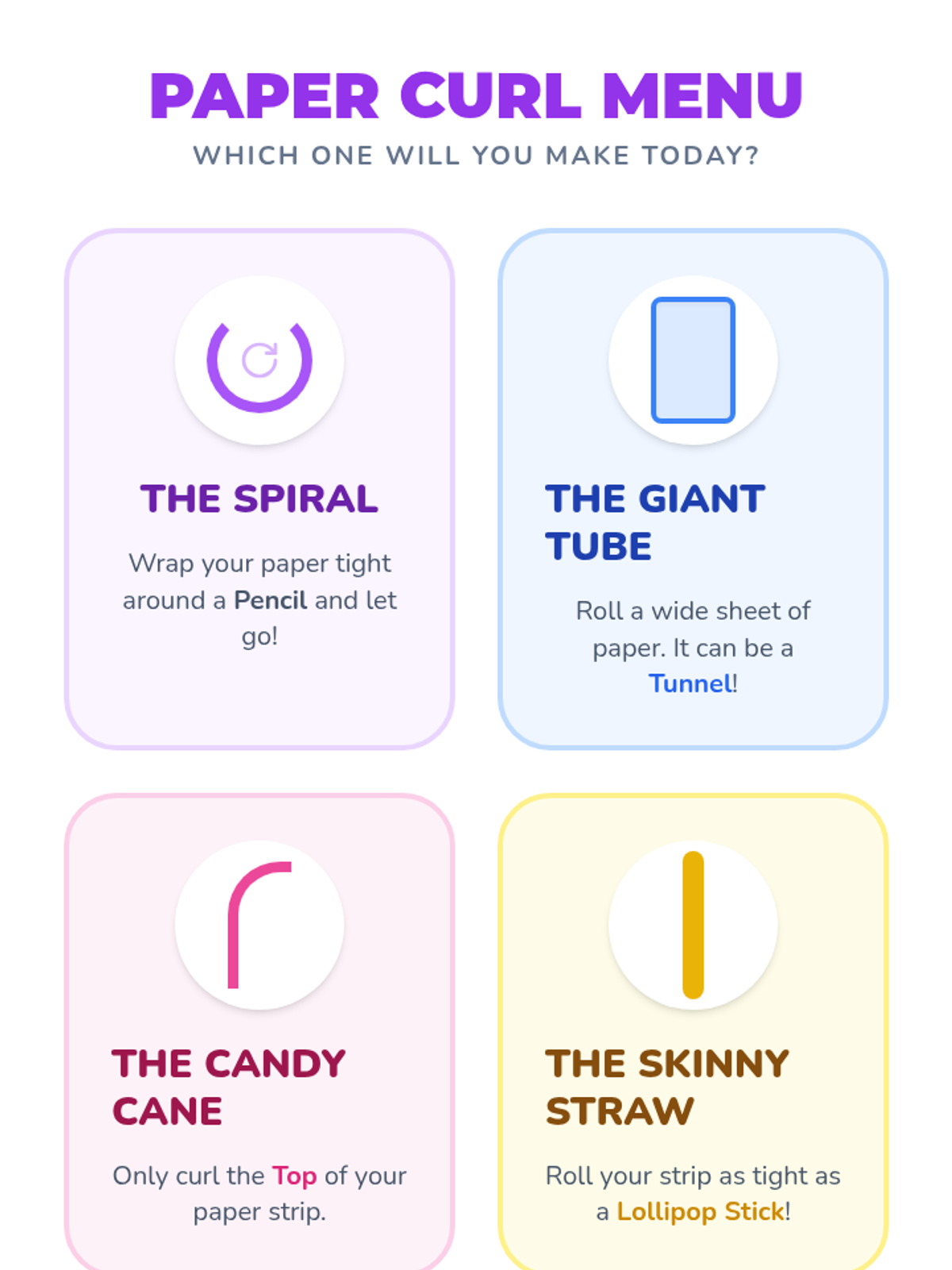
Students expand their sculptural toolkit by learning to roll tubes and curl paper around pencils. These techniques introduce cylindrical forms and decorative volume to their paper constructions.
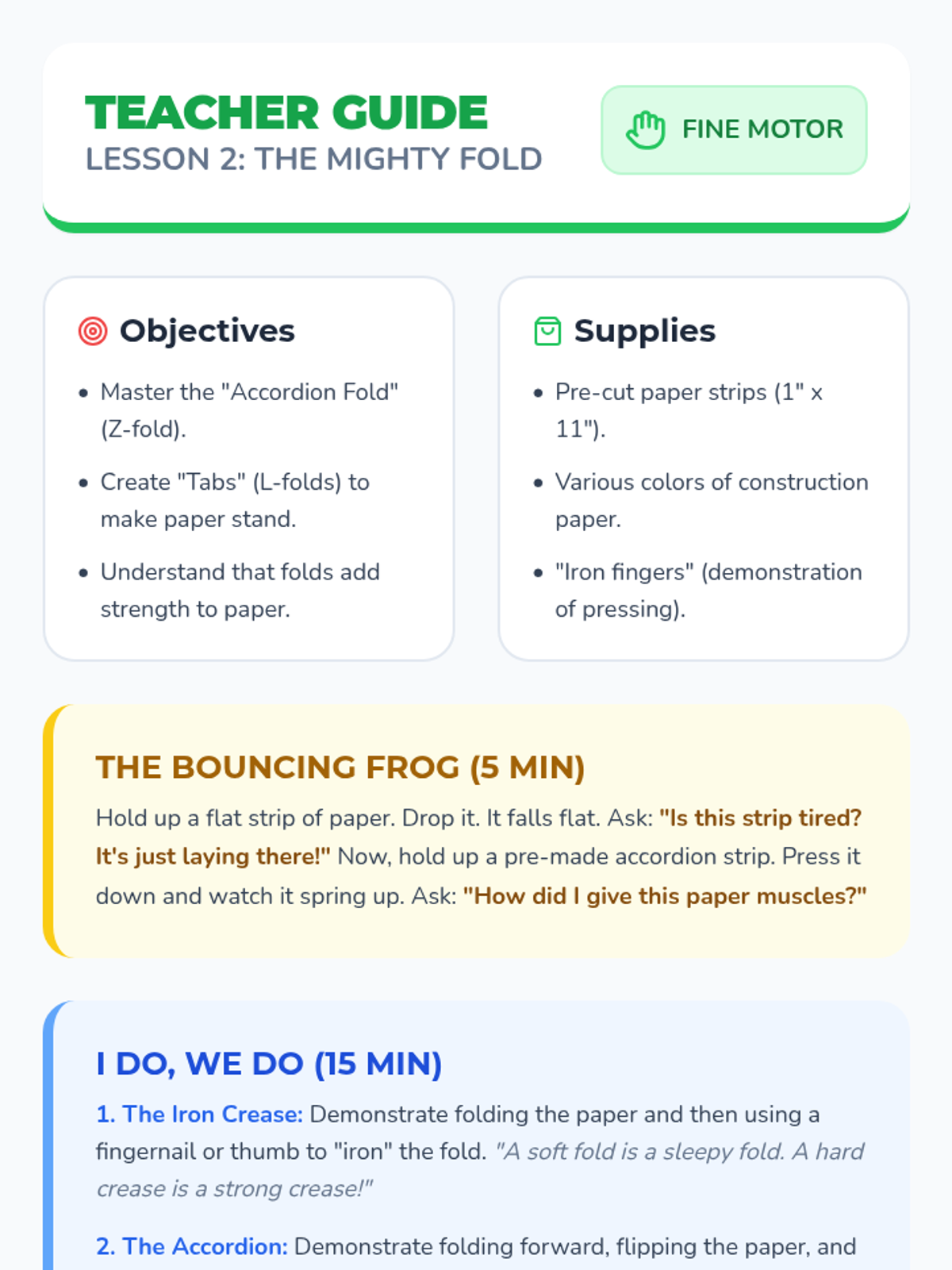
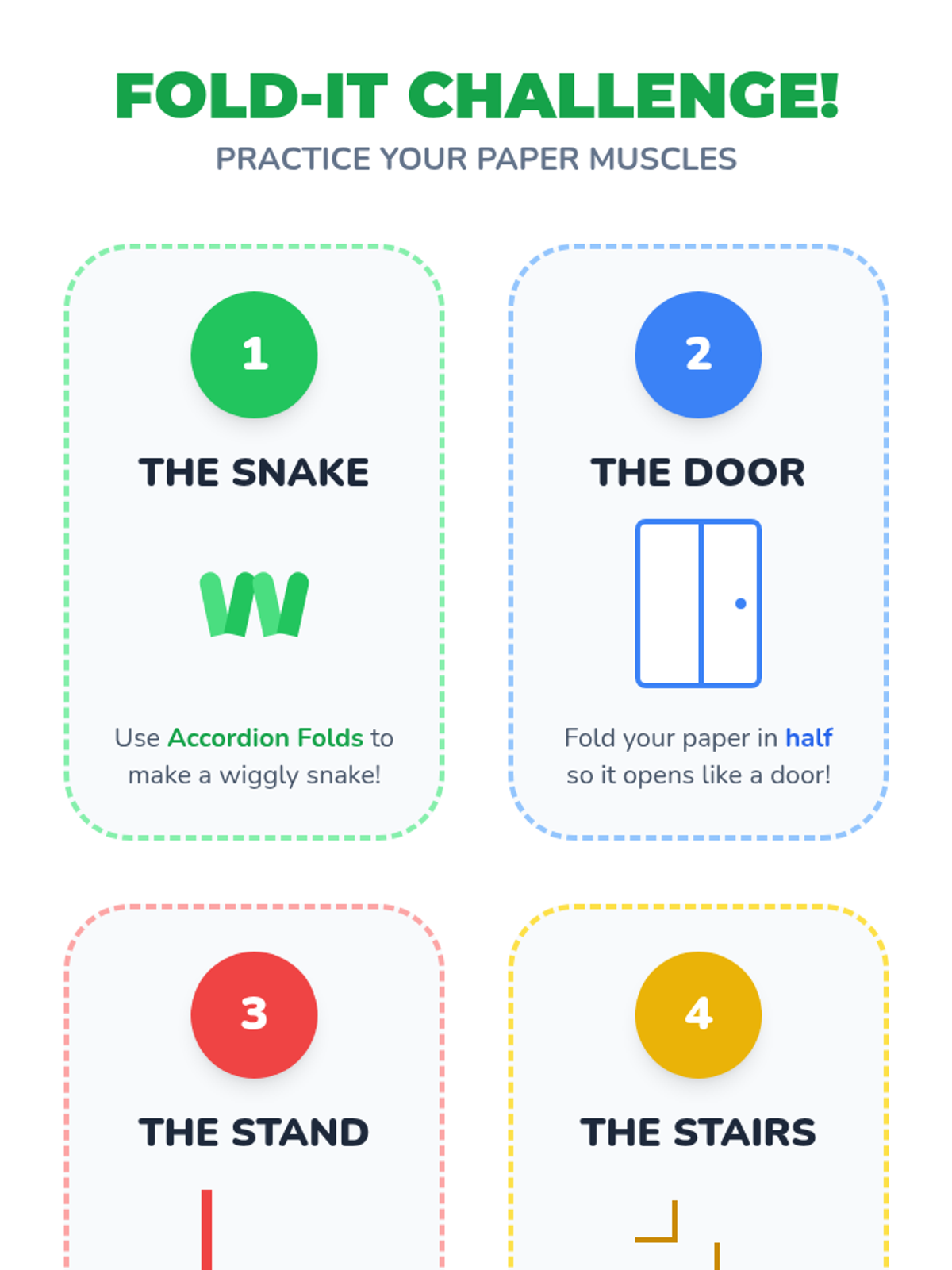
A hands-on workshop where students learn to create structural integrity in paper through accordion and tab folds. This lesson focuses on making sharp creases to turn limp paper into rigid building blocks.
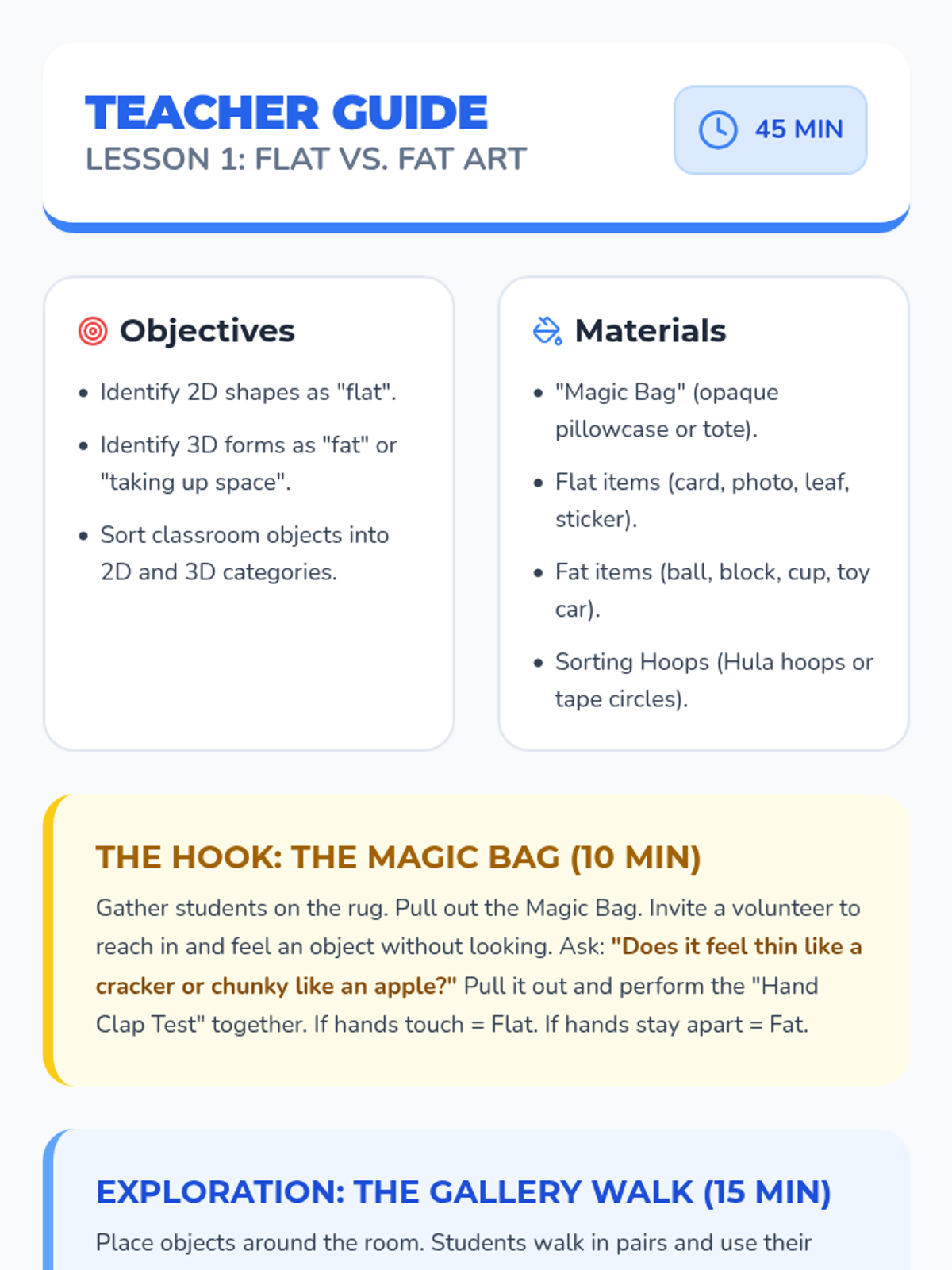
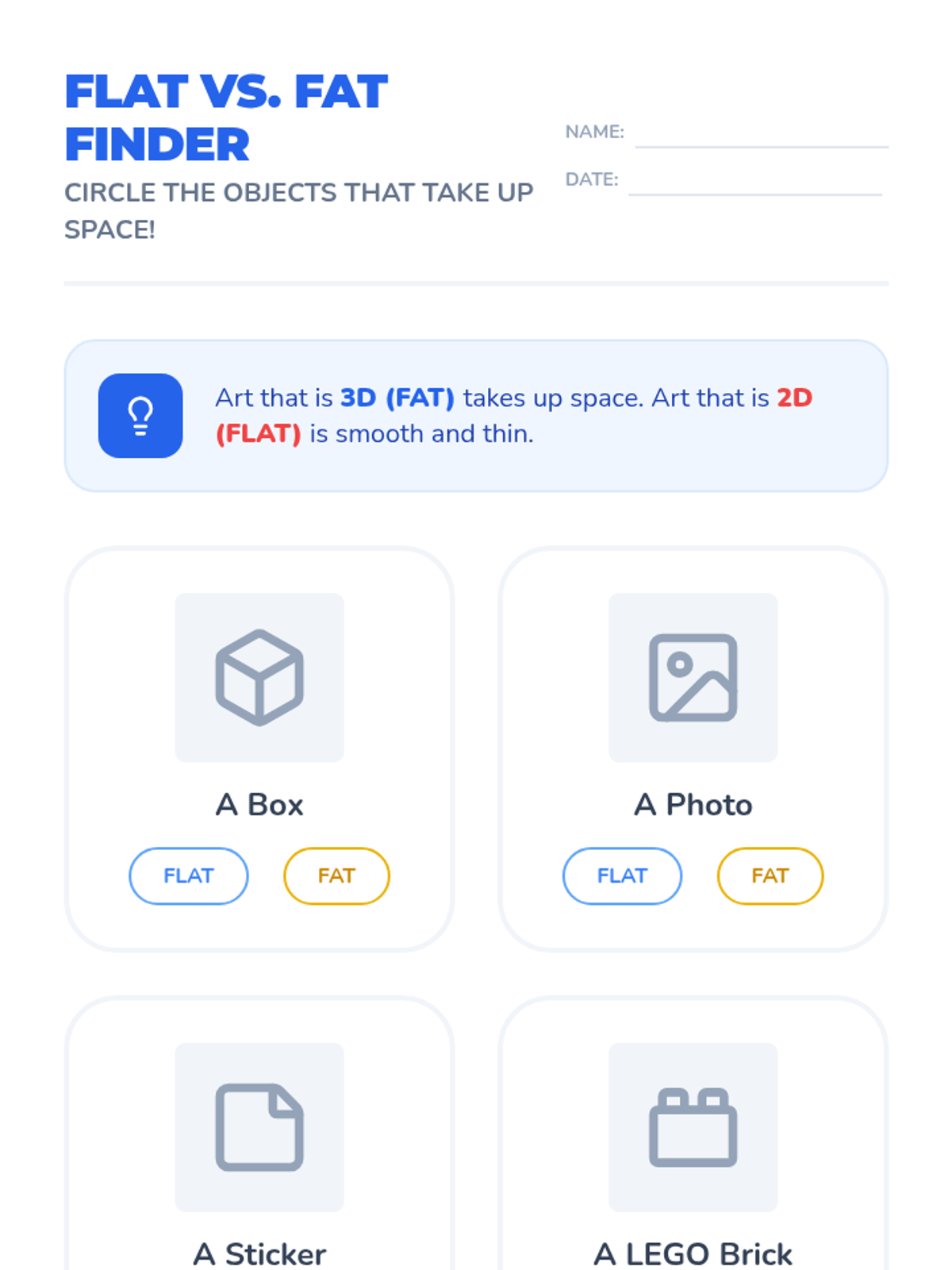
Students explore the difference between flat shapes and three-dimensional forms through tactile observation and sorting. They build foundational vocabulary like 'flat' and 'fat' to distinguish between 2D and 3D art.
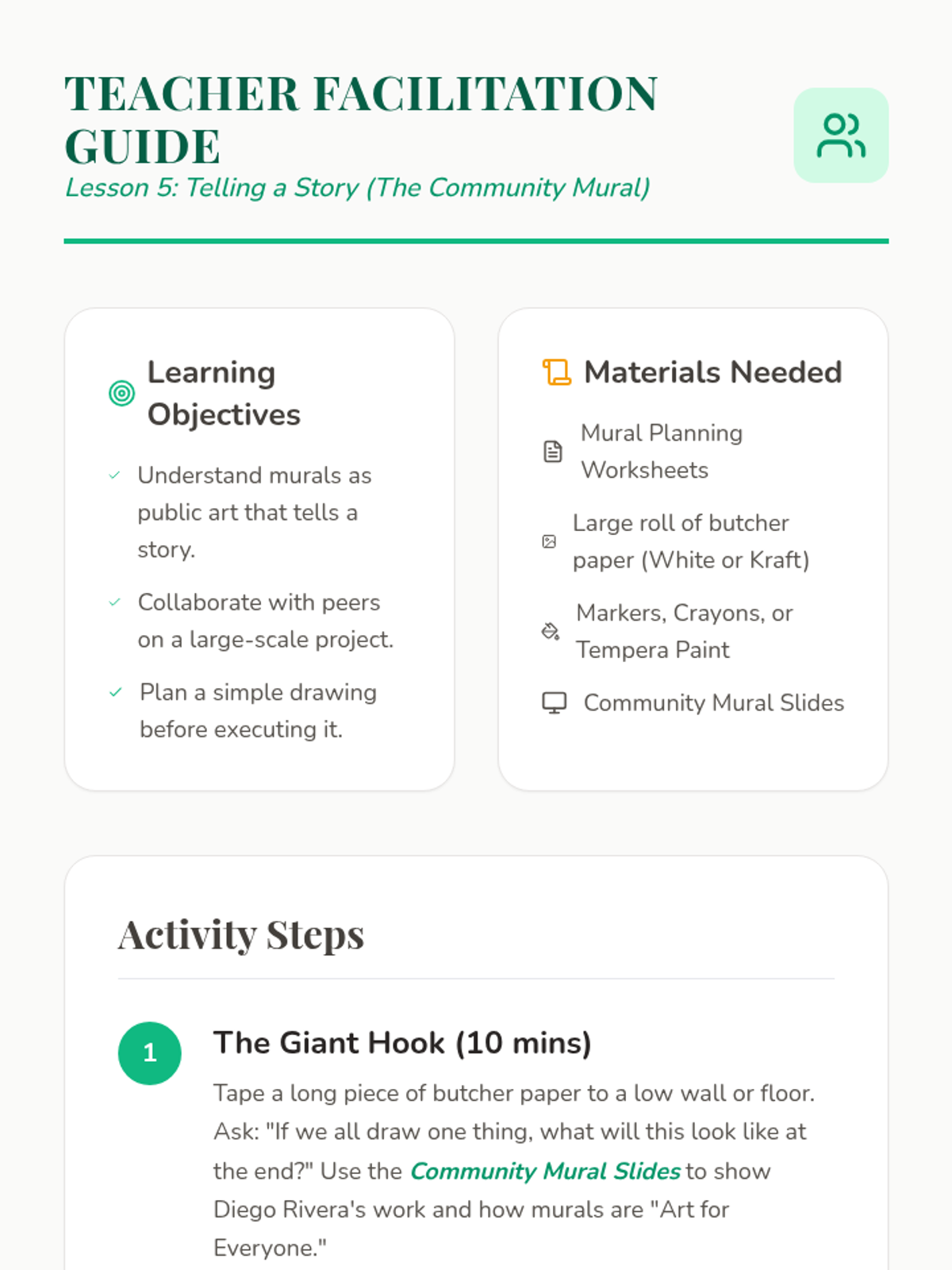
Inspired by muralists like Diego Rivera, students work together to color a large butcher-paper scene. They learn that murals are big paintings on walls that tell stories for everyone to see.
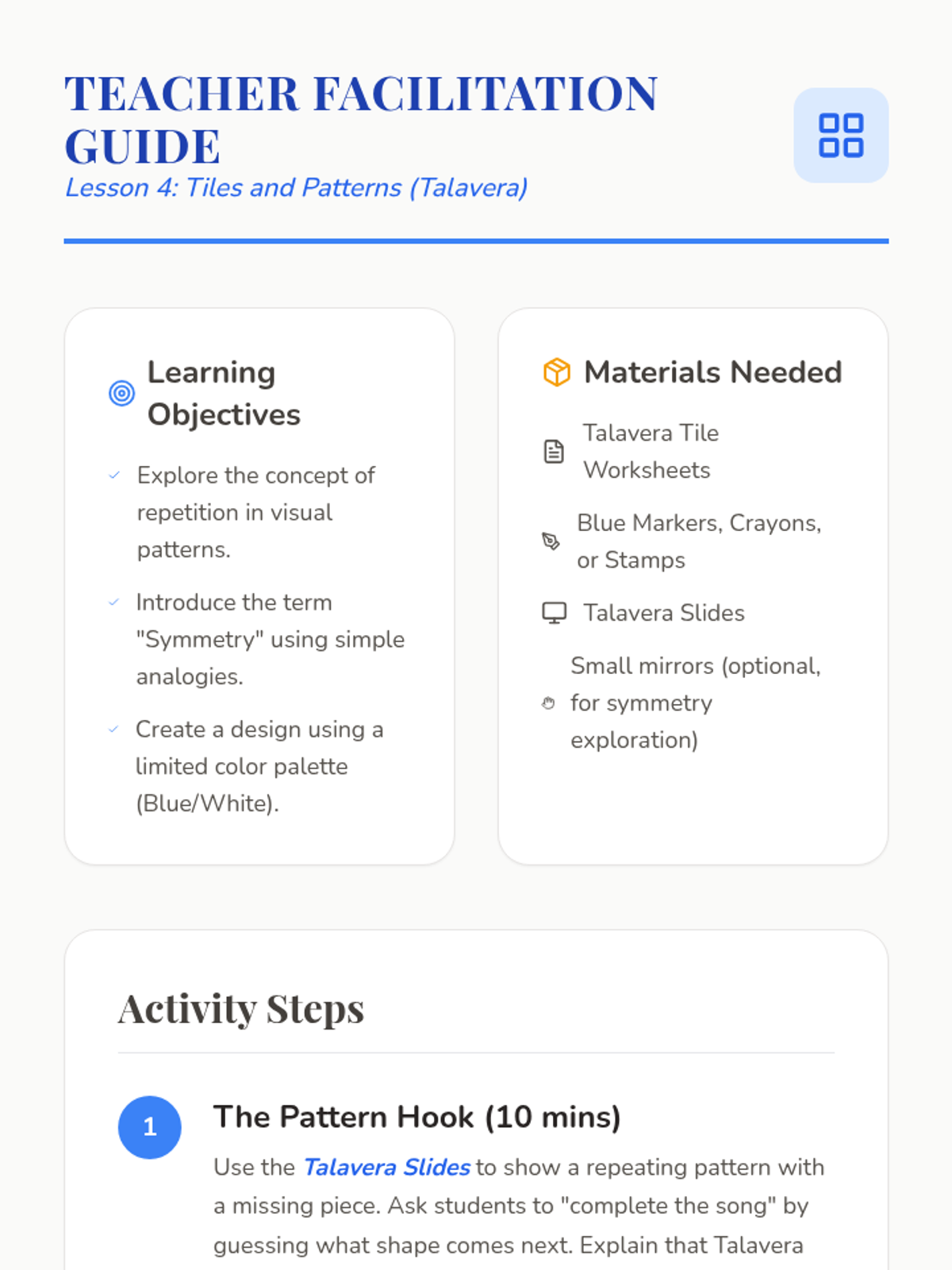
Students explore the blue and white patterns of Talavera pottery from Mexico and Spain. They use stamps or stencils to create a repeating pattern on a paper square, learning the concept of repetition.
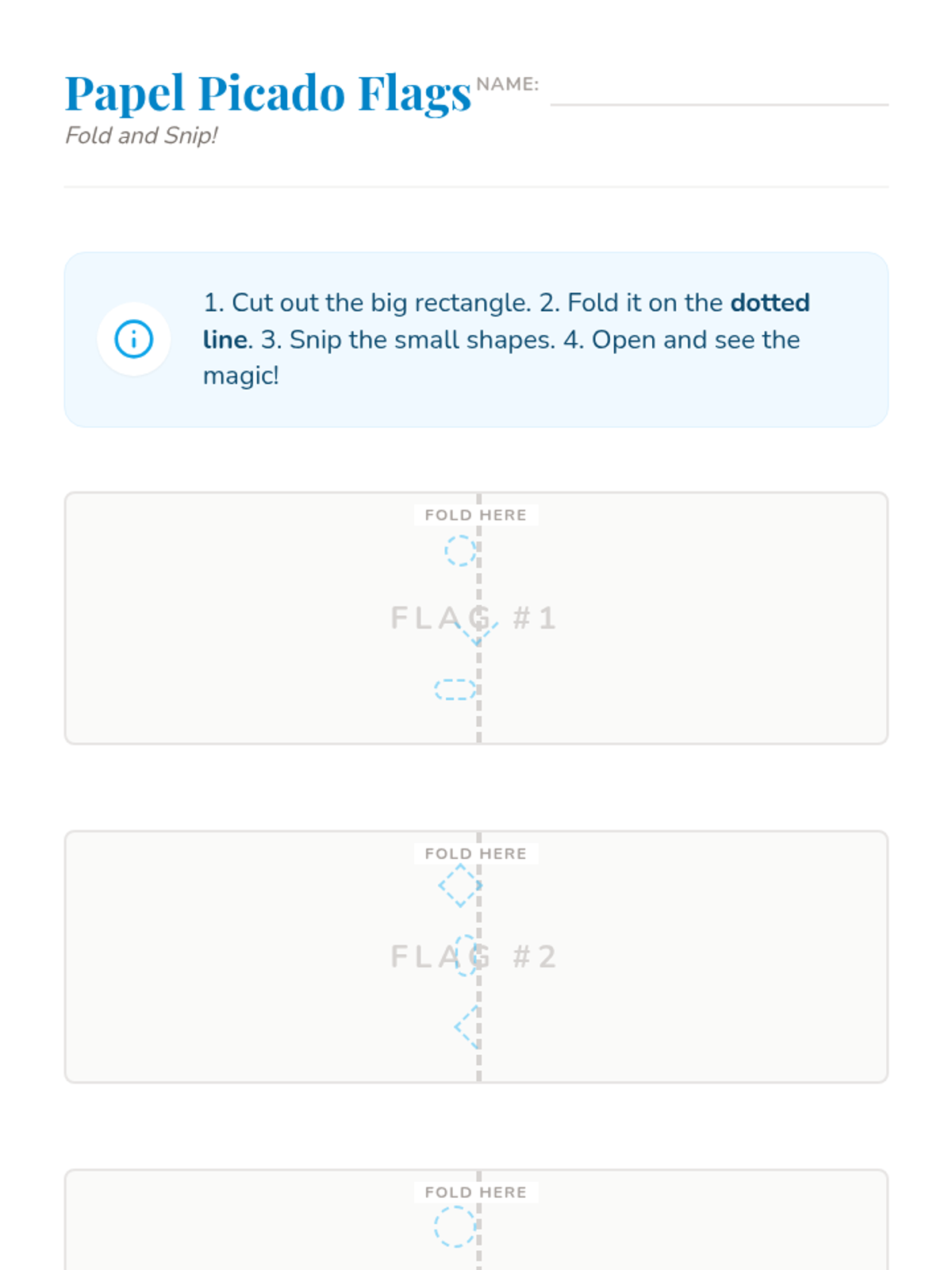
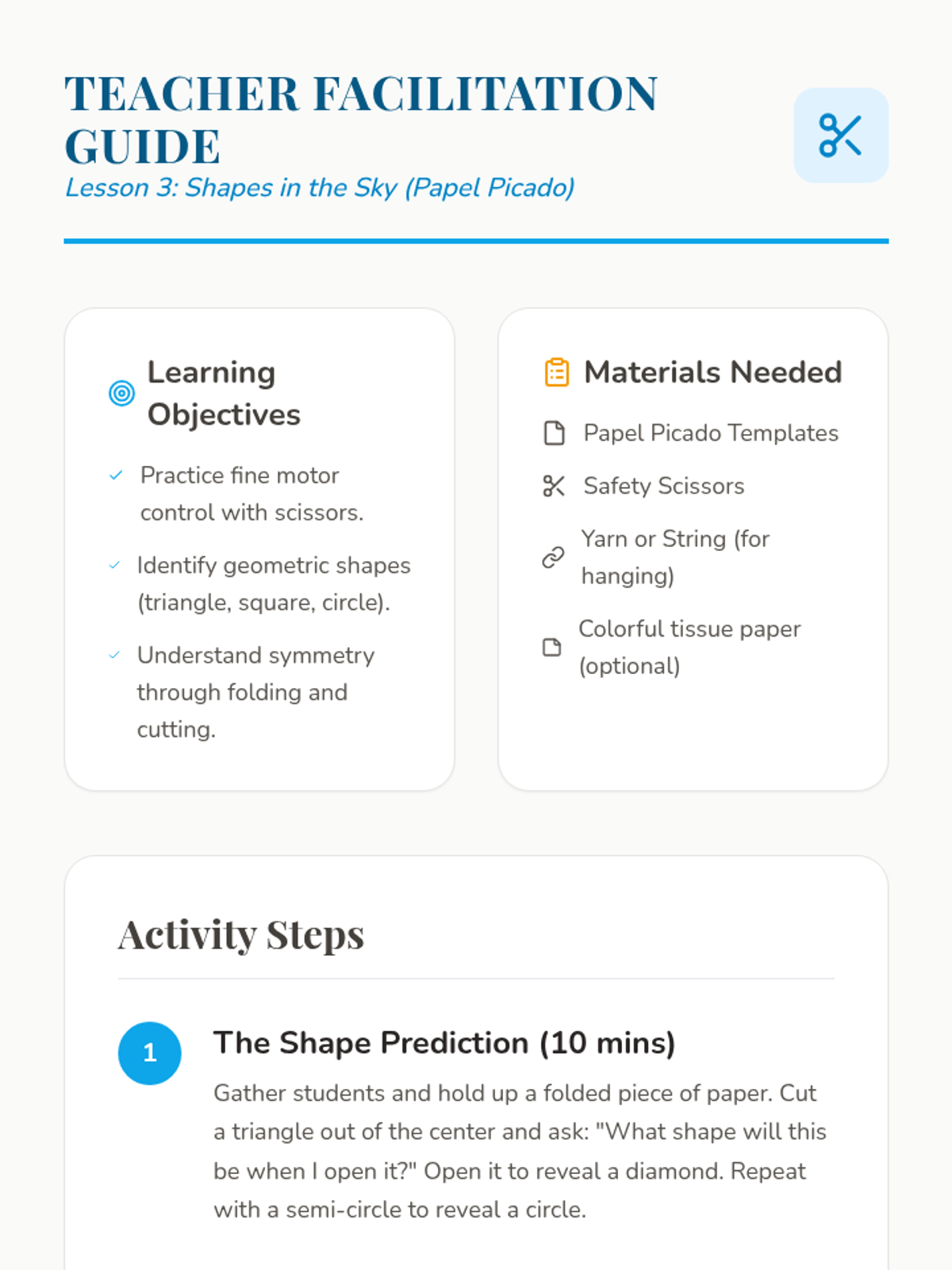
This lesson focuses on the geometric patterns found in Papel Picado (cut paper). Students practice fine motor skills by folding paper and cutting simple shapes to create a string of flags.
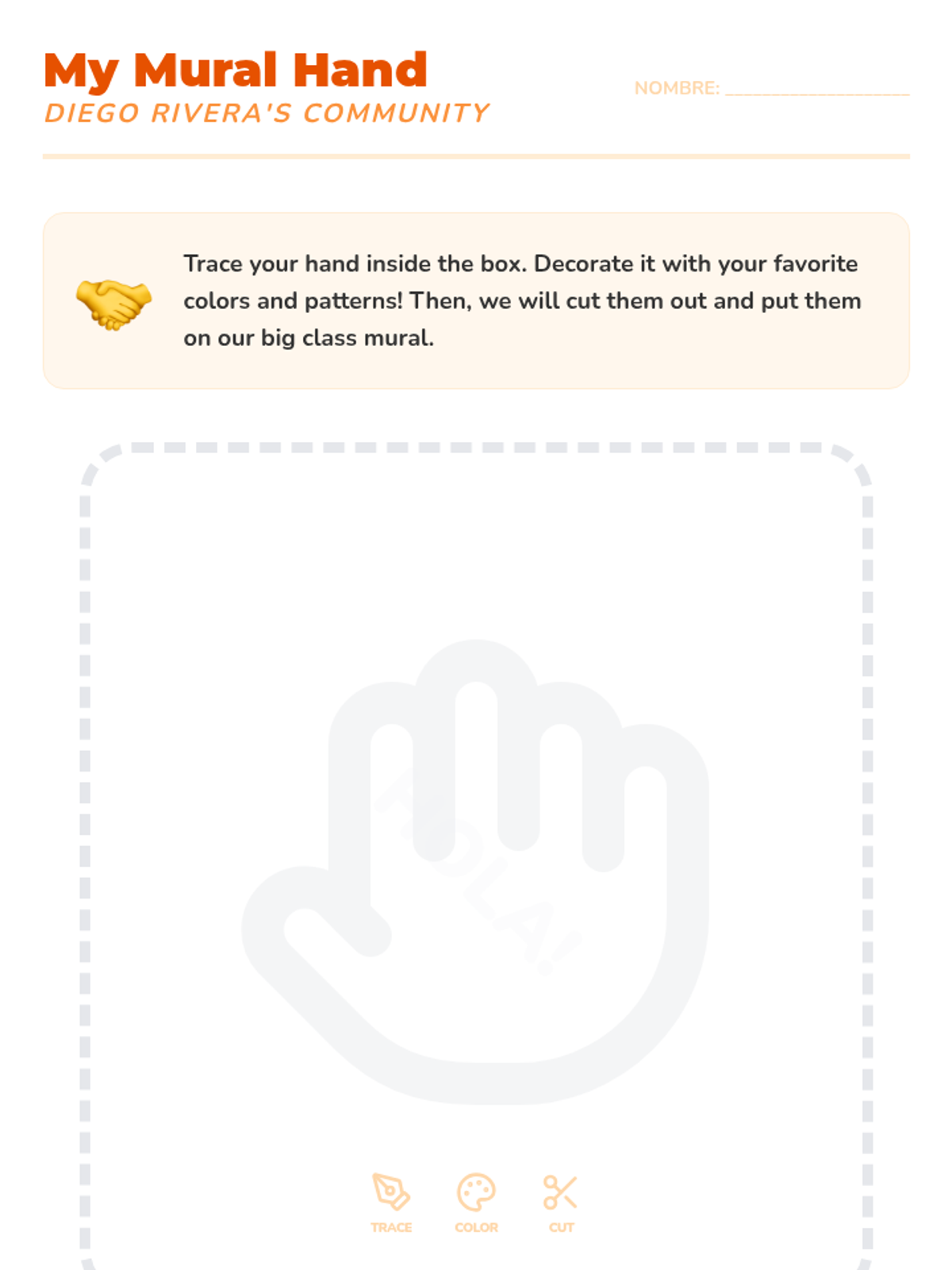
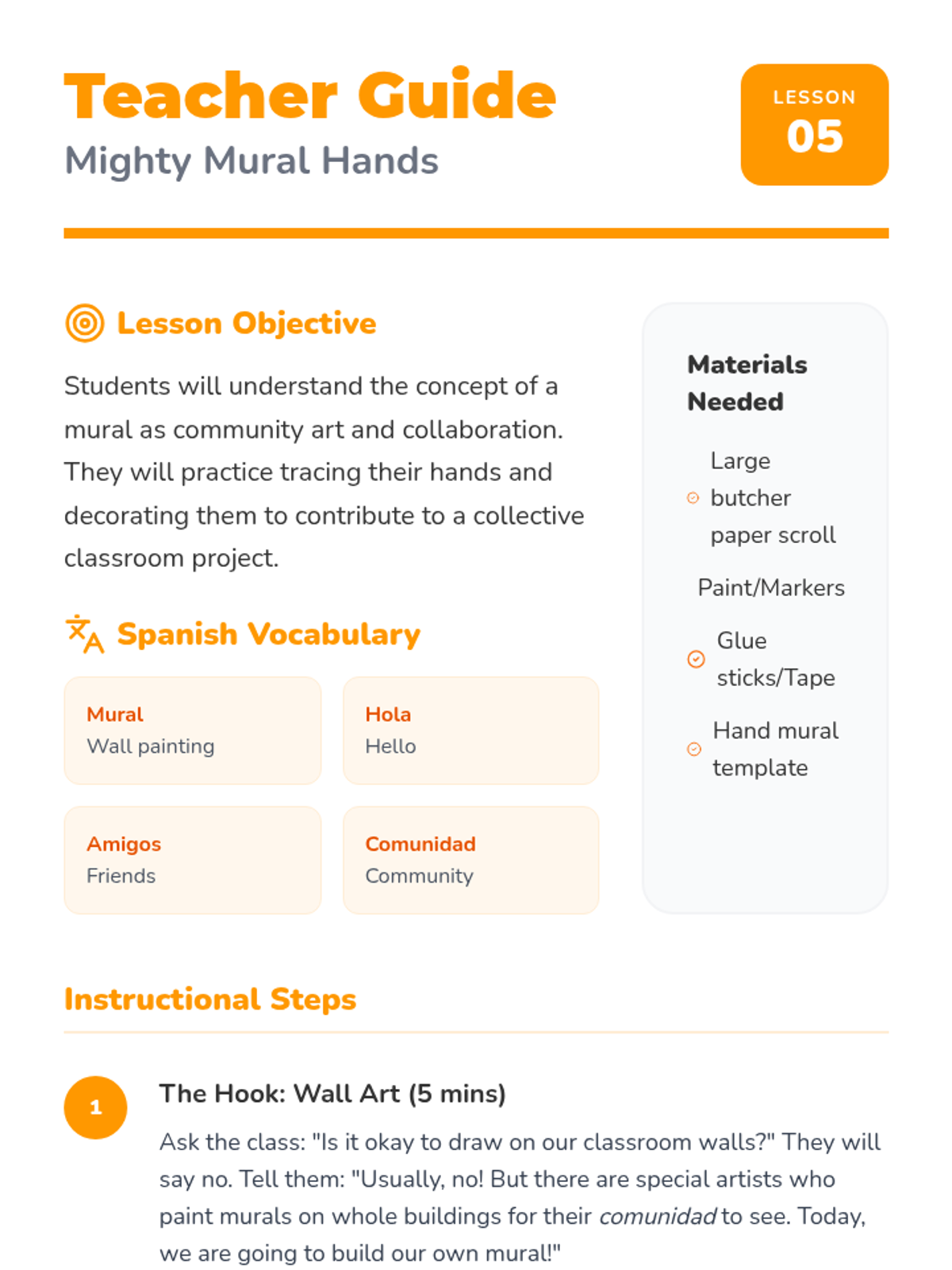
Inspired by Diego Rivera, students learn about murals and collaboration by creating a shared 'mural' of their own decorated handprints.
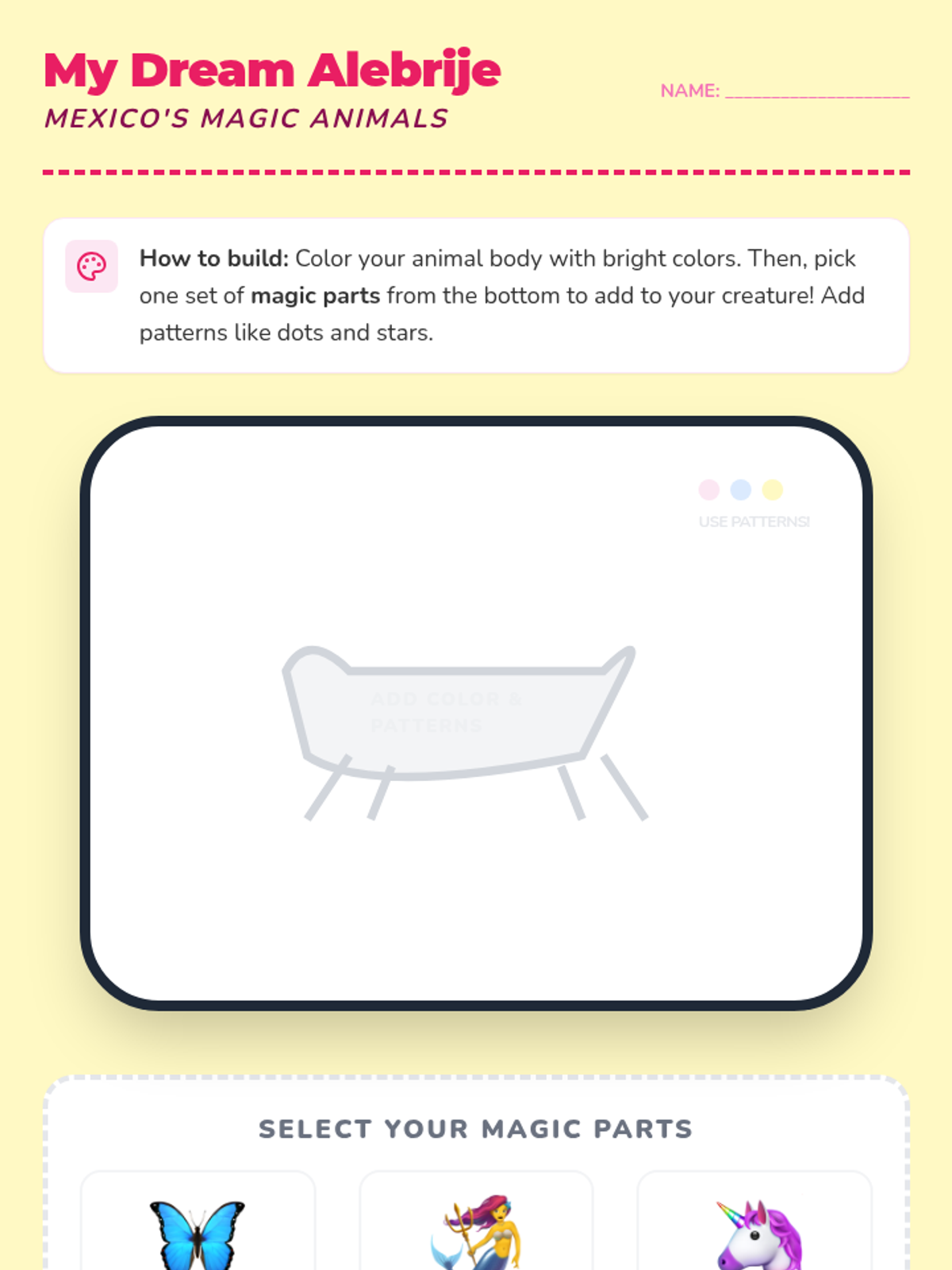
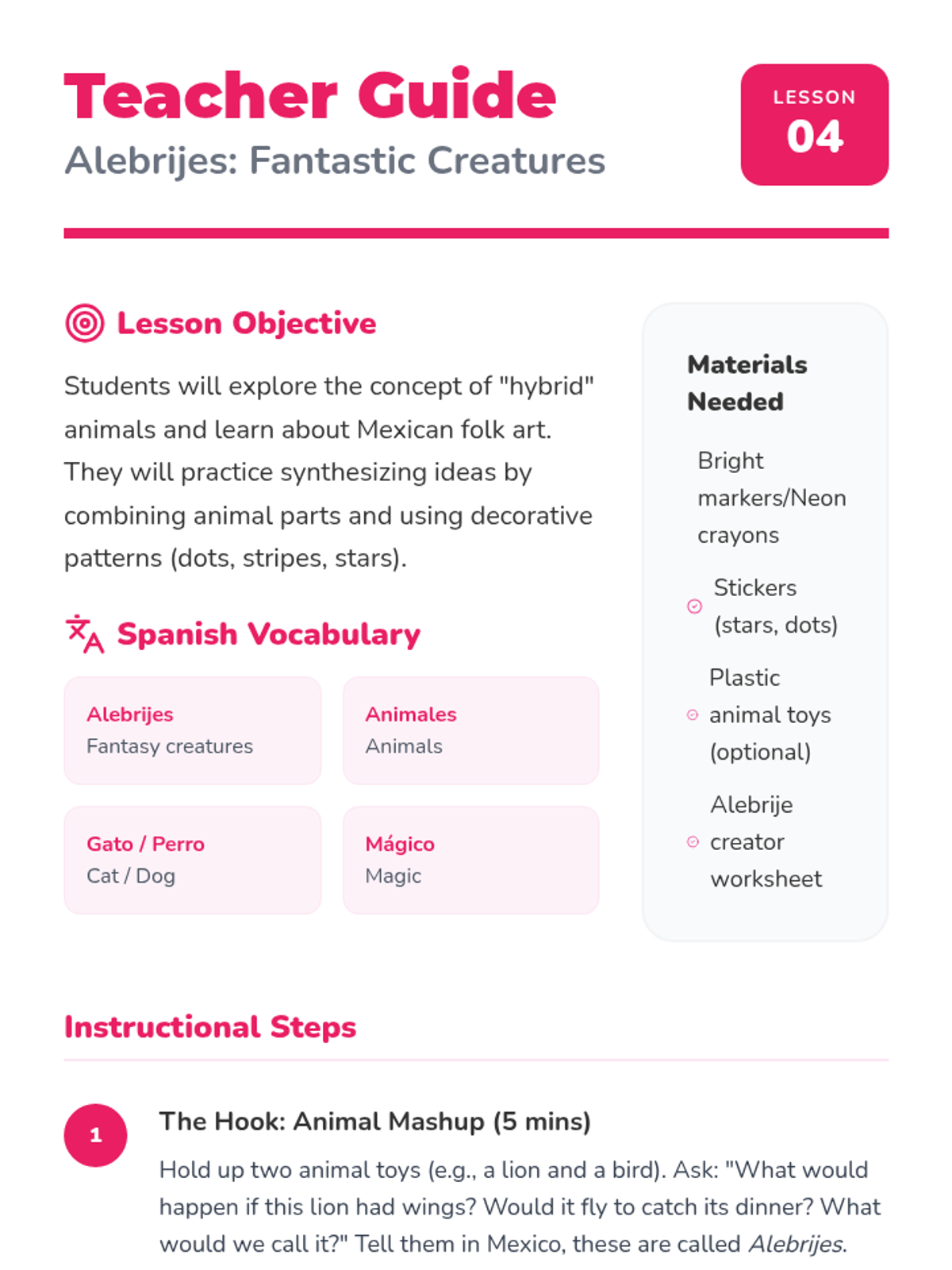
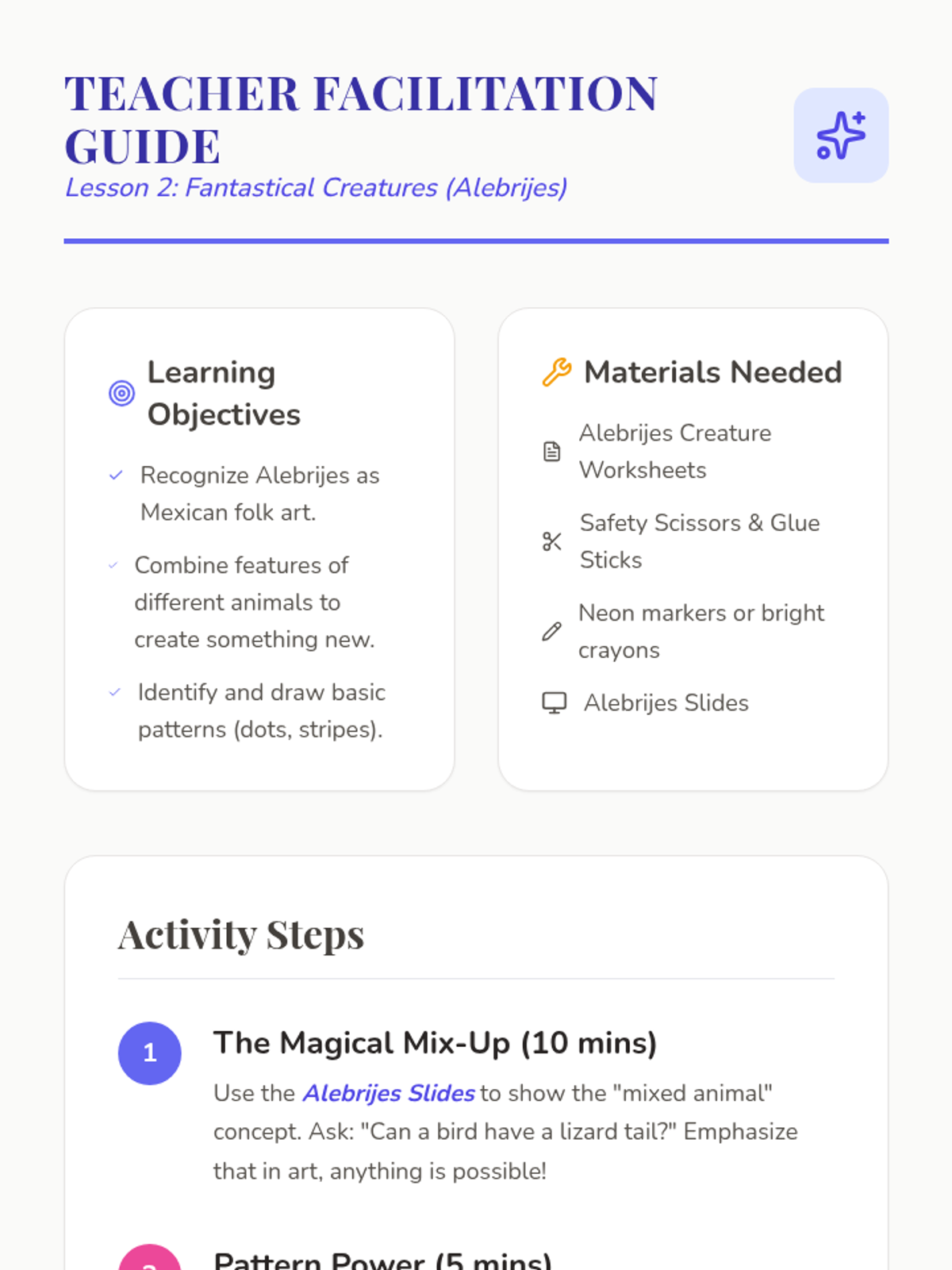
Students discover the colorful world of Mexican Alebrijes and create their own imaginary 'protector' animals by combining different creatures.
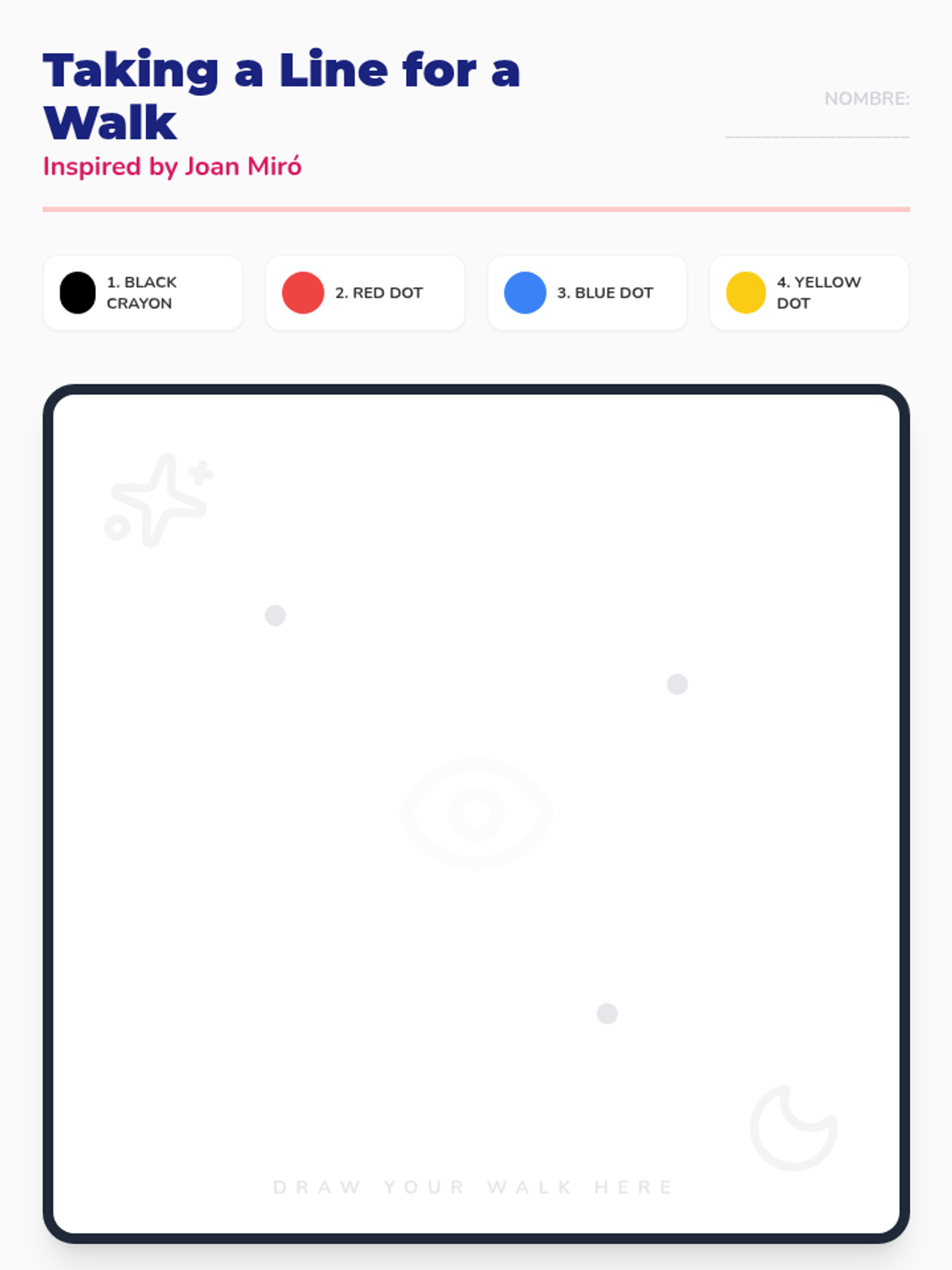
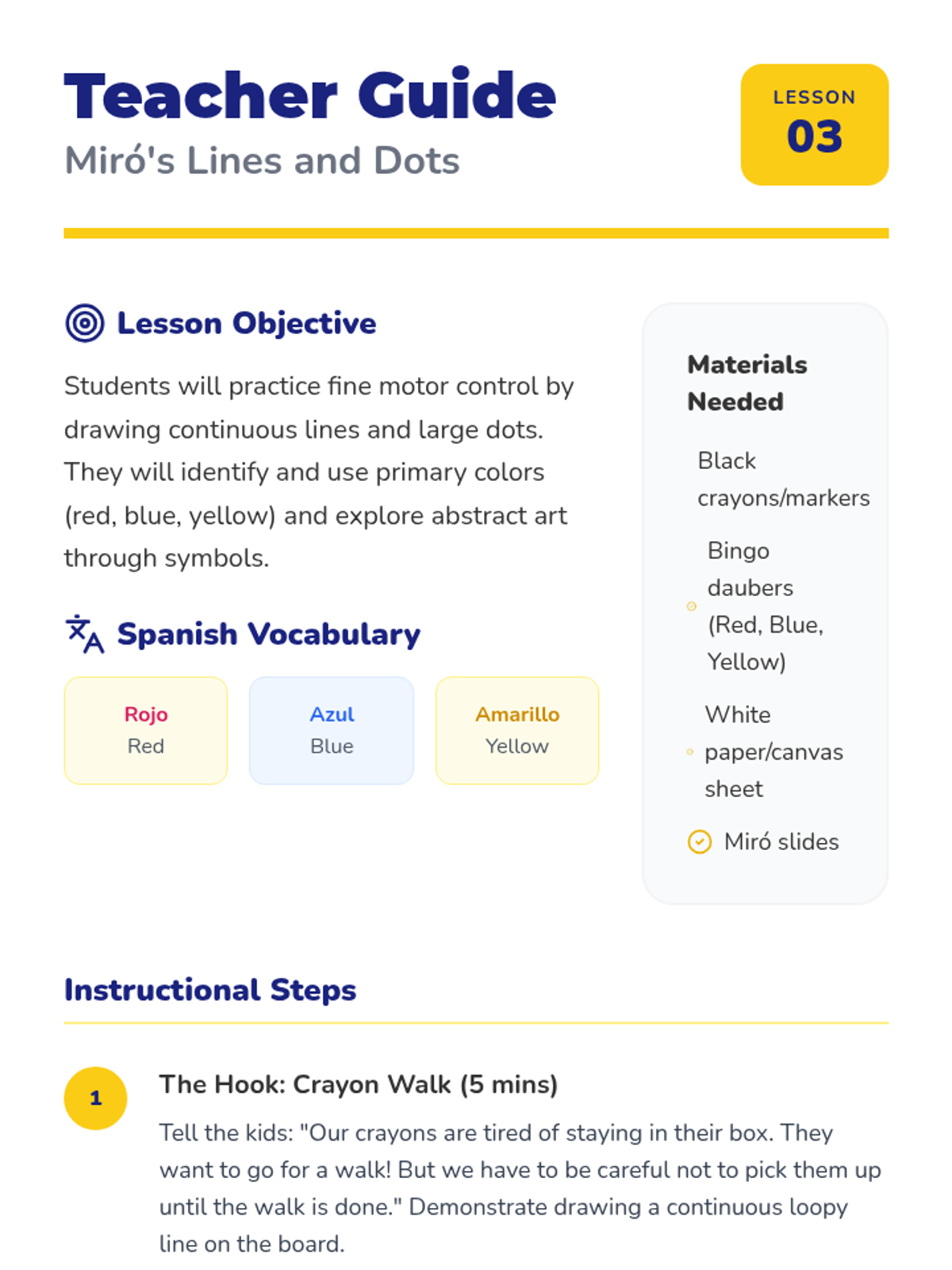
Focusing on fine motor skills and imagination, students follow Joan Miró's lead by taking lines for a 'walk' and adding colorful dots.
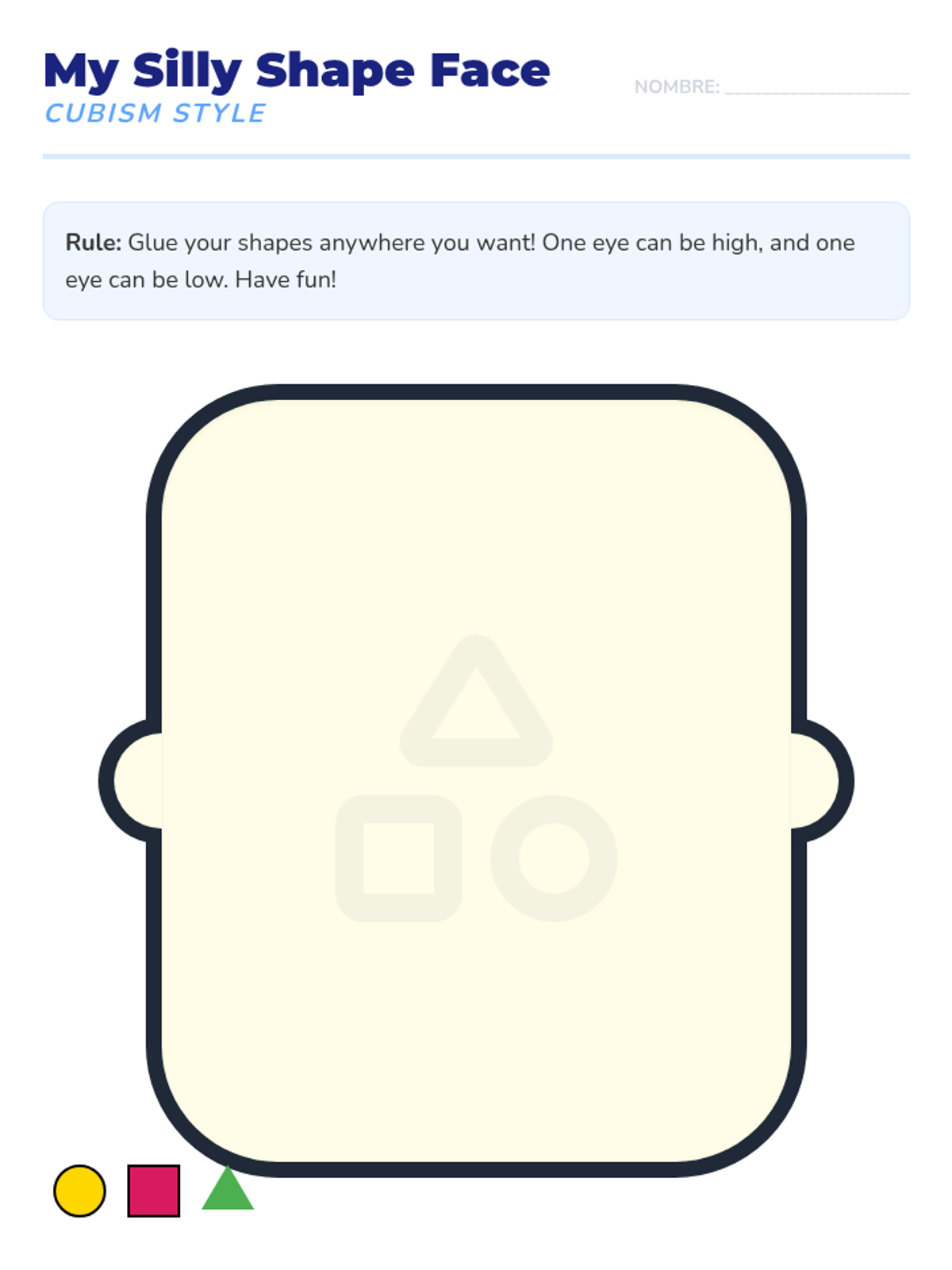
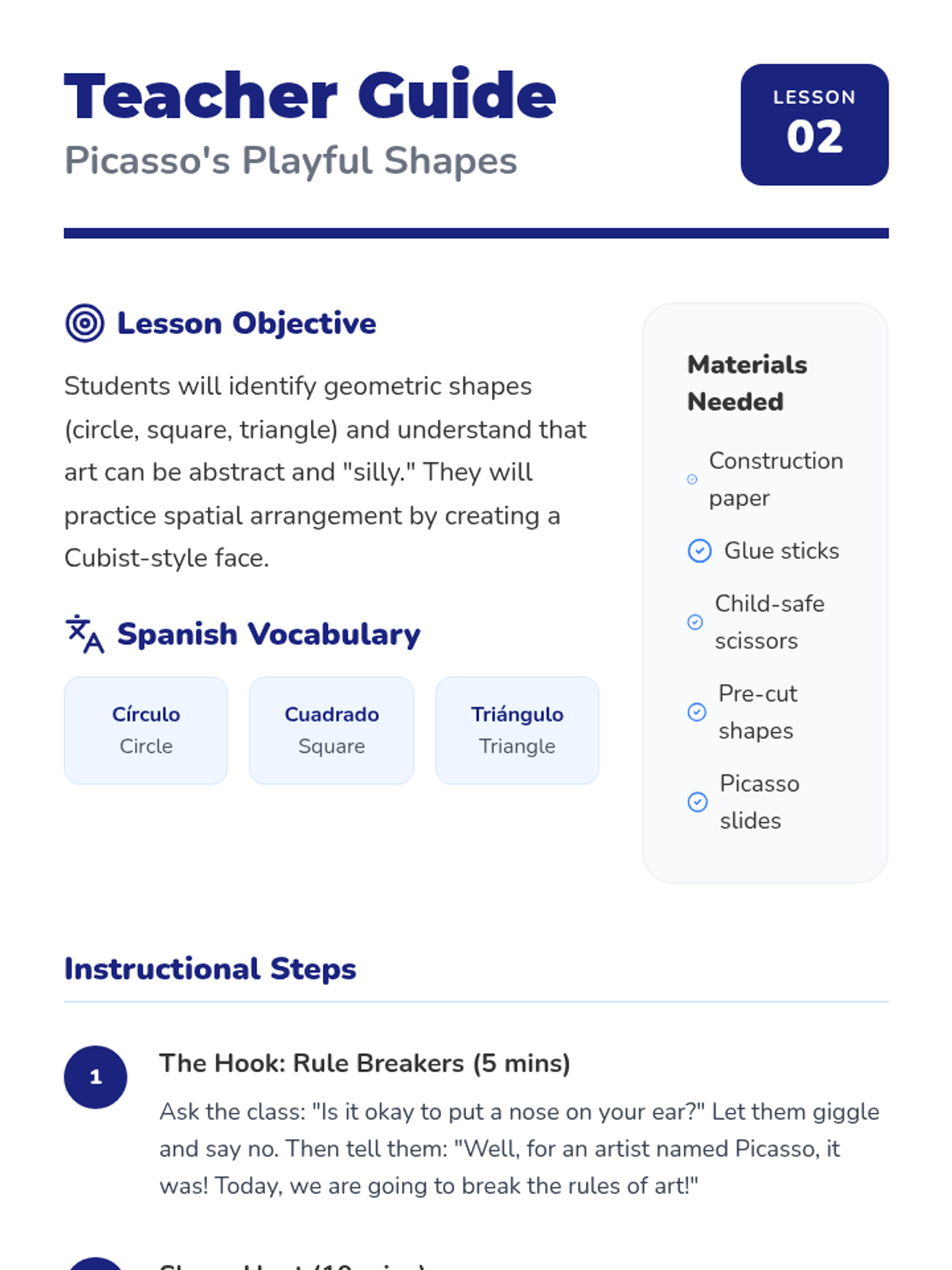
An introduction to Cubism where students learn that art can be silly and rule-breaking. They use geometric shapes to create abstract portraits.
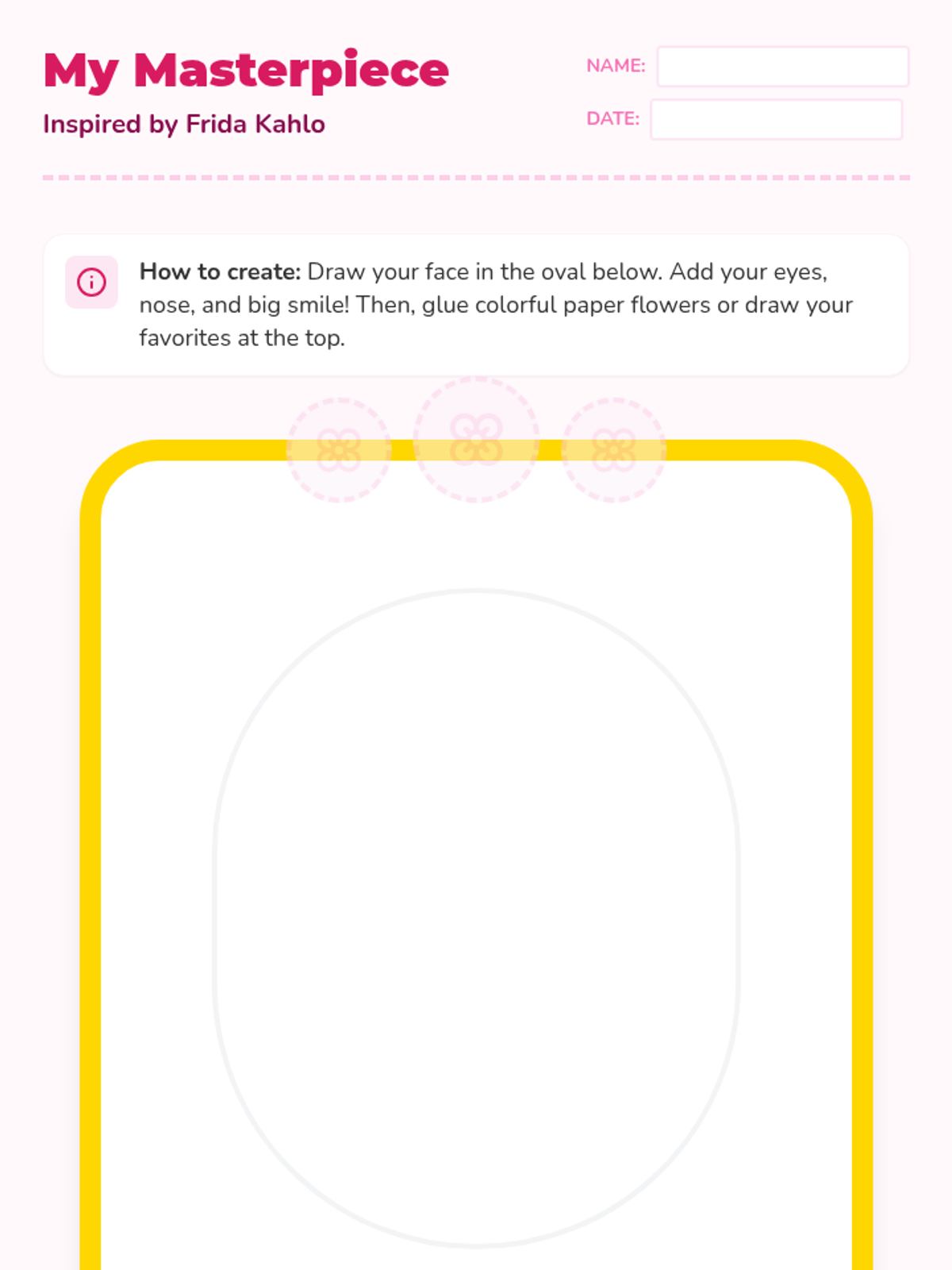
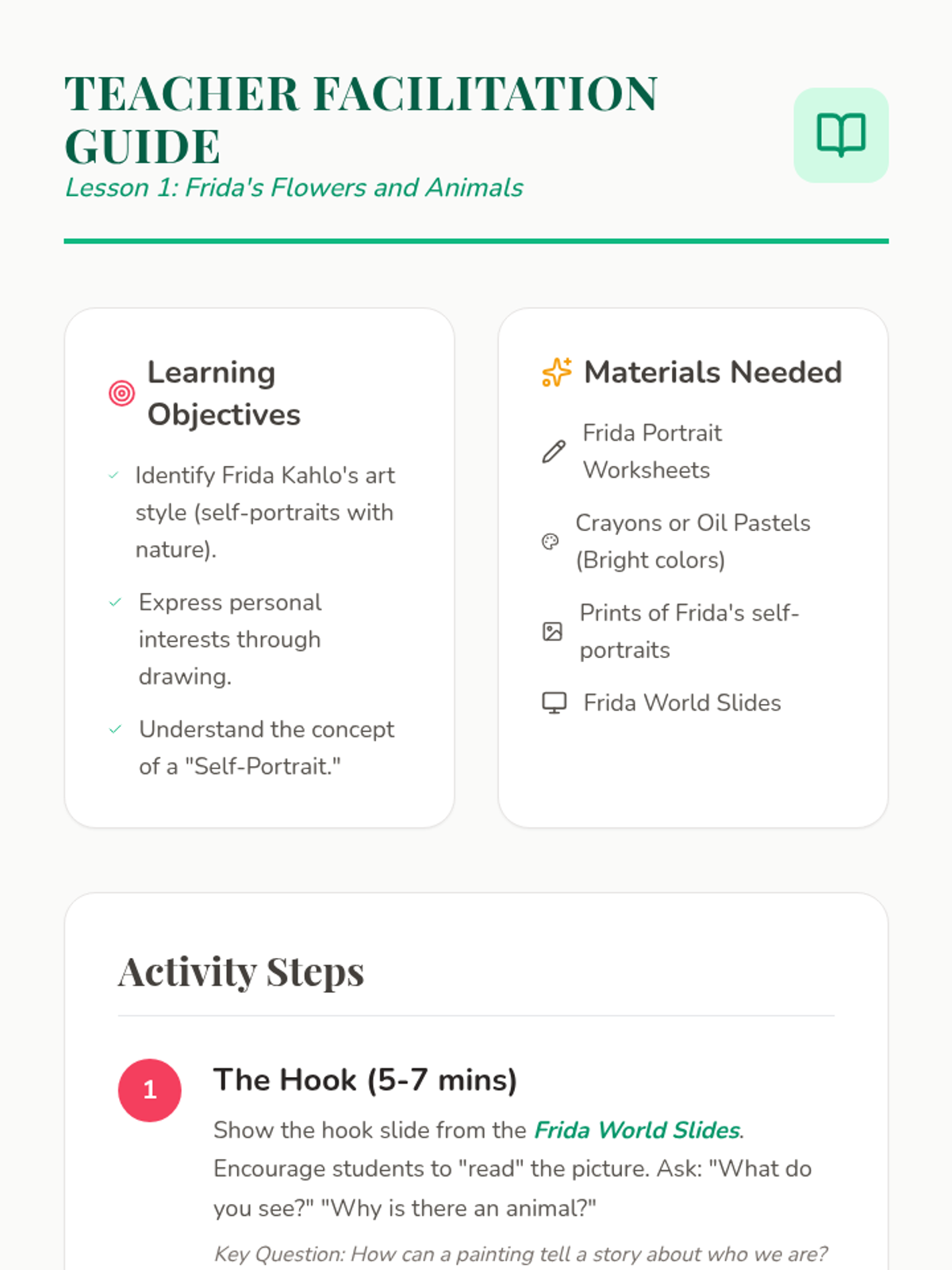
Students explore Frida Kahlo's self-portraits, focusing on how she used flowers and animals to tell her story. They create their own self-portraits embellished with nature.
Students discover the bright, patterned folk art sculptures called Alebrijes. They mix and match animal parts (e.g., wings on a lizard) using paper cutouts to create their own creature.
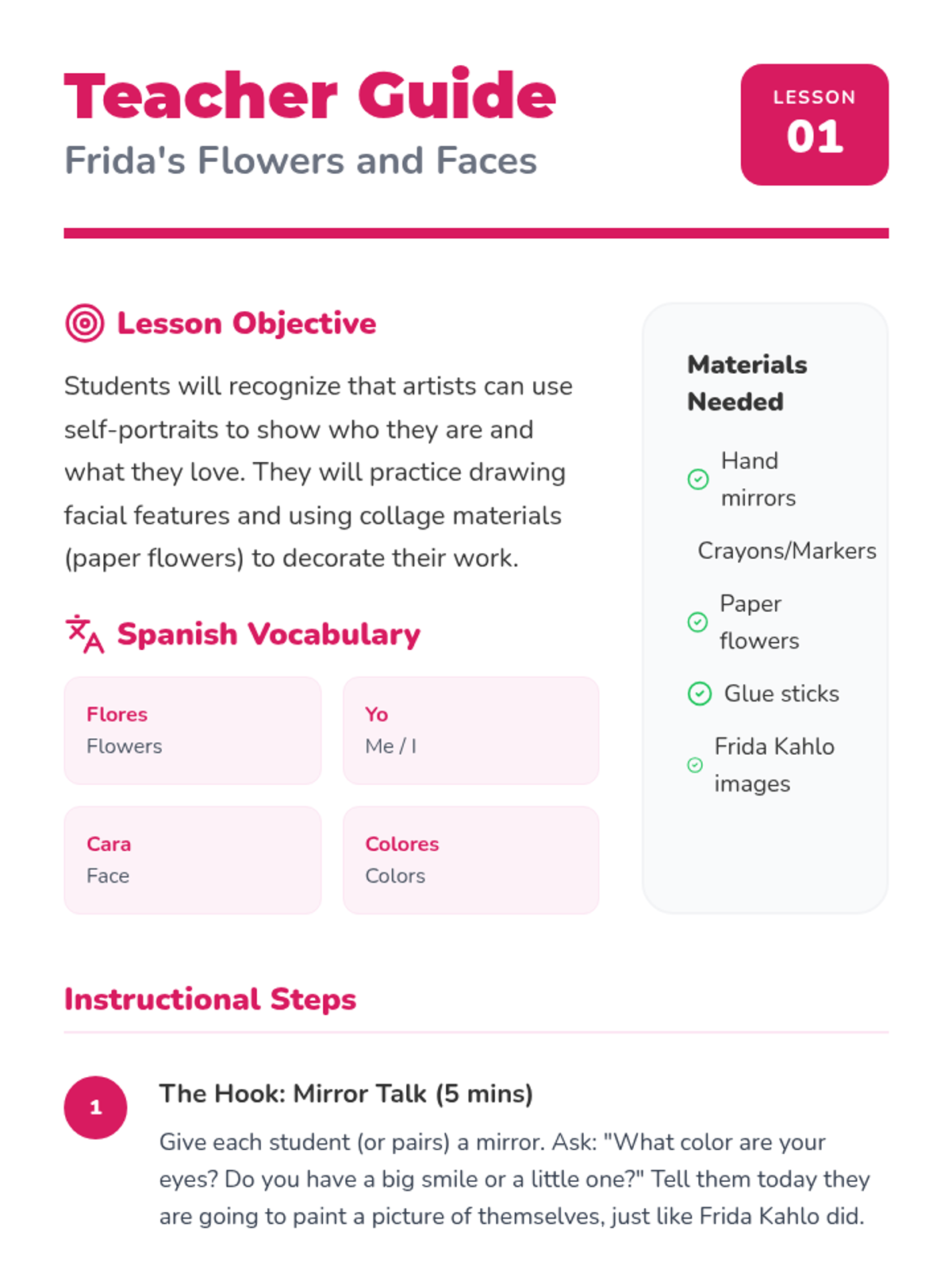
Students explore the life and art of Frida Kahlo, focusing on her love for nature and animals. They create self-portraits that include their favorite plants or animals, practicing observation and self-expression.
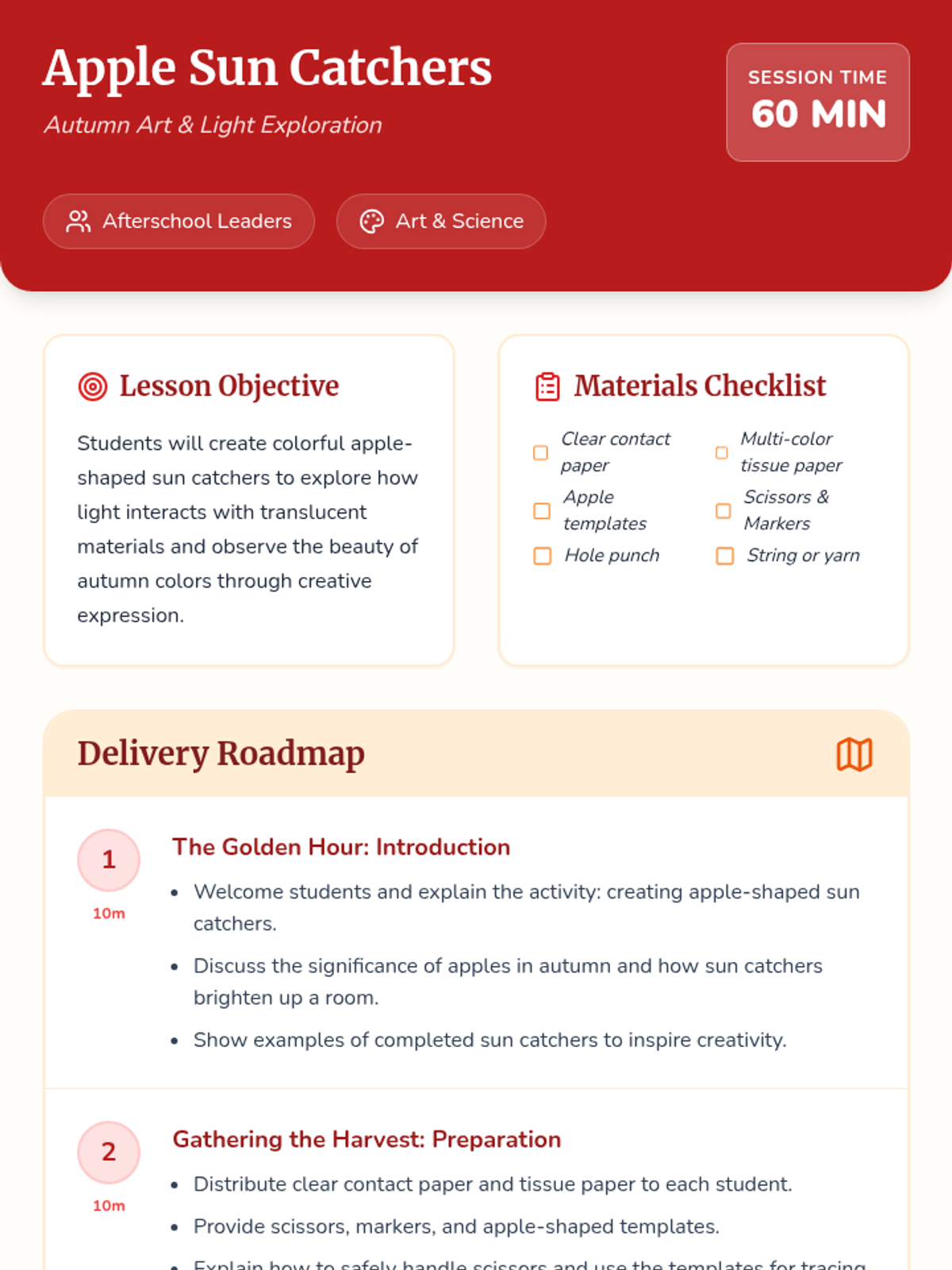
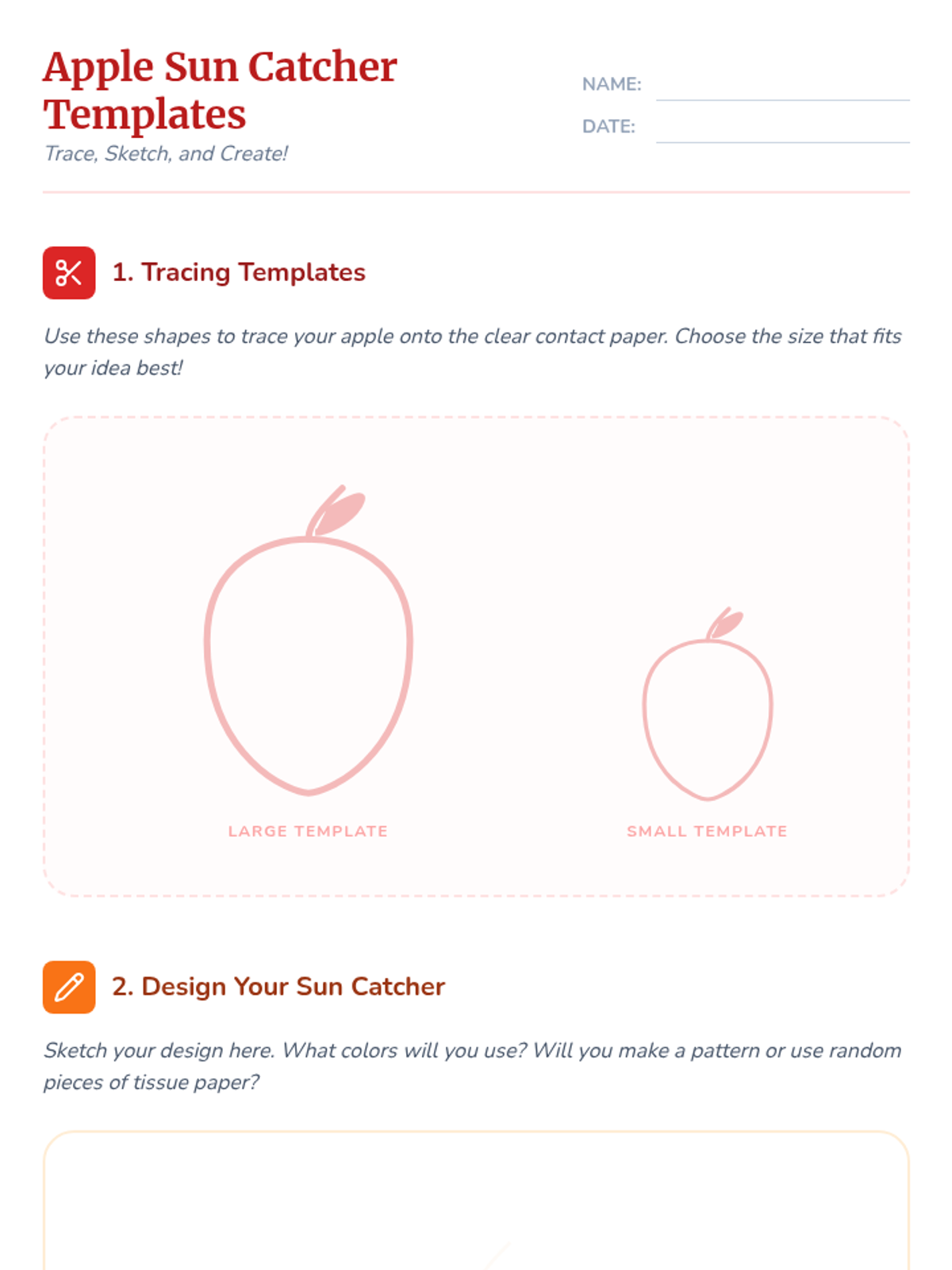
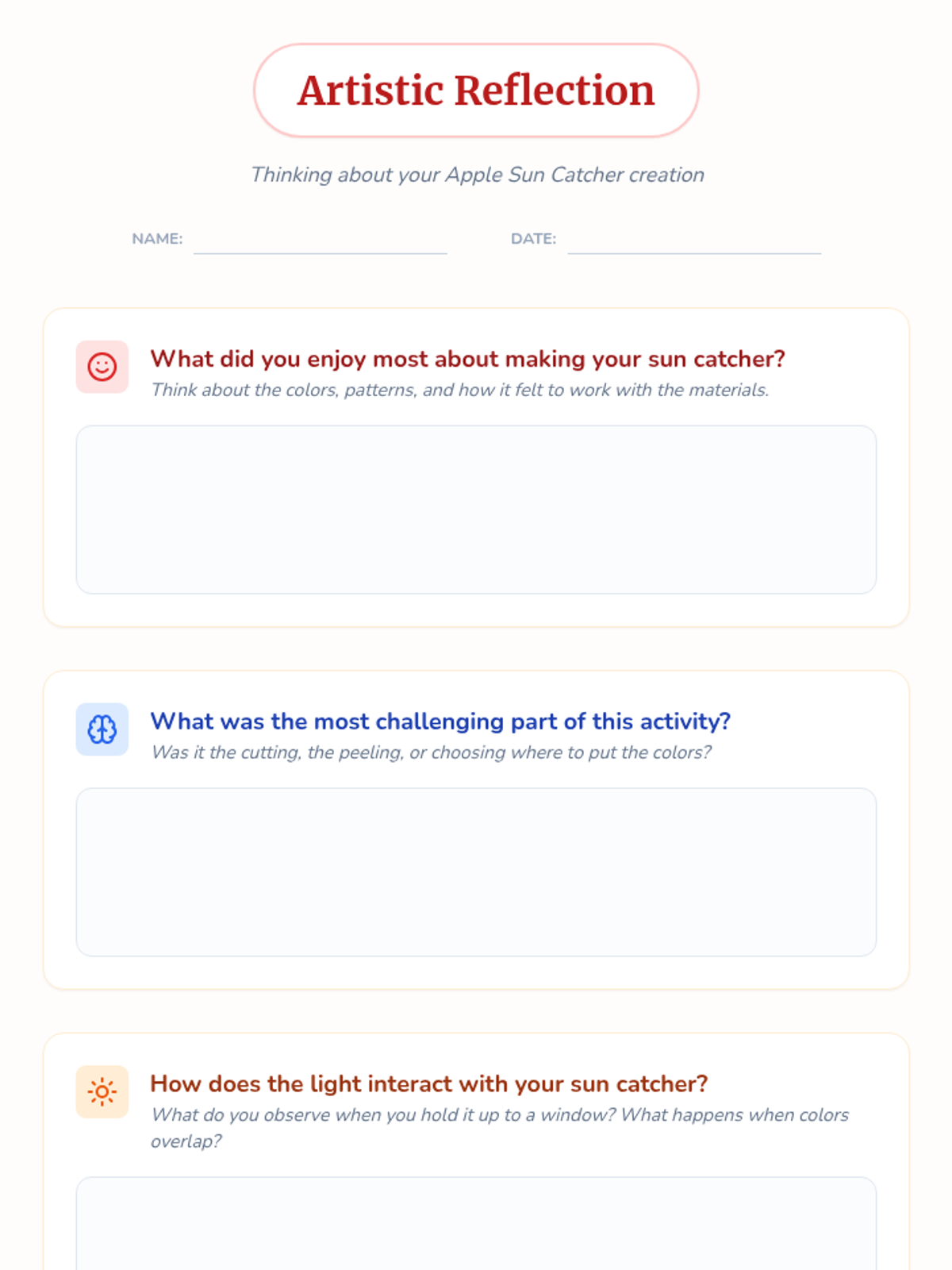
A hands-on autumn art lesson where students create apple-shaped sun catchers using tissue paper and contact paper to explore color and light.
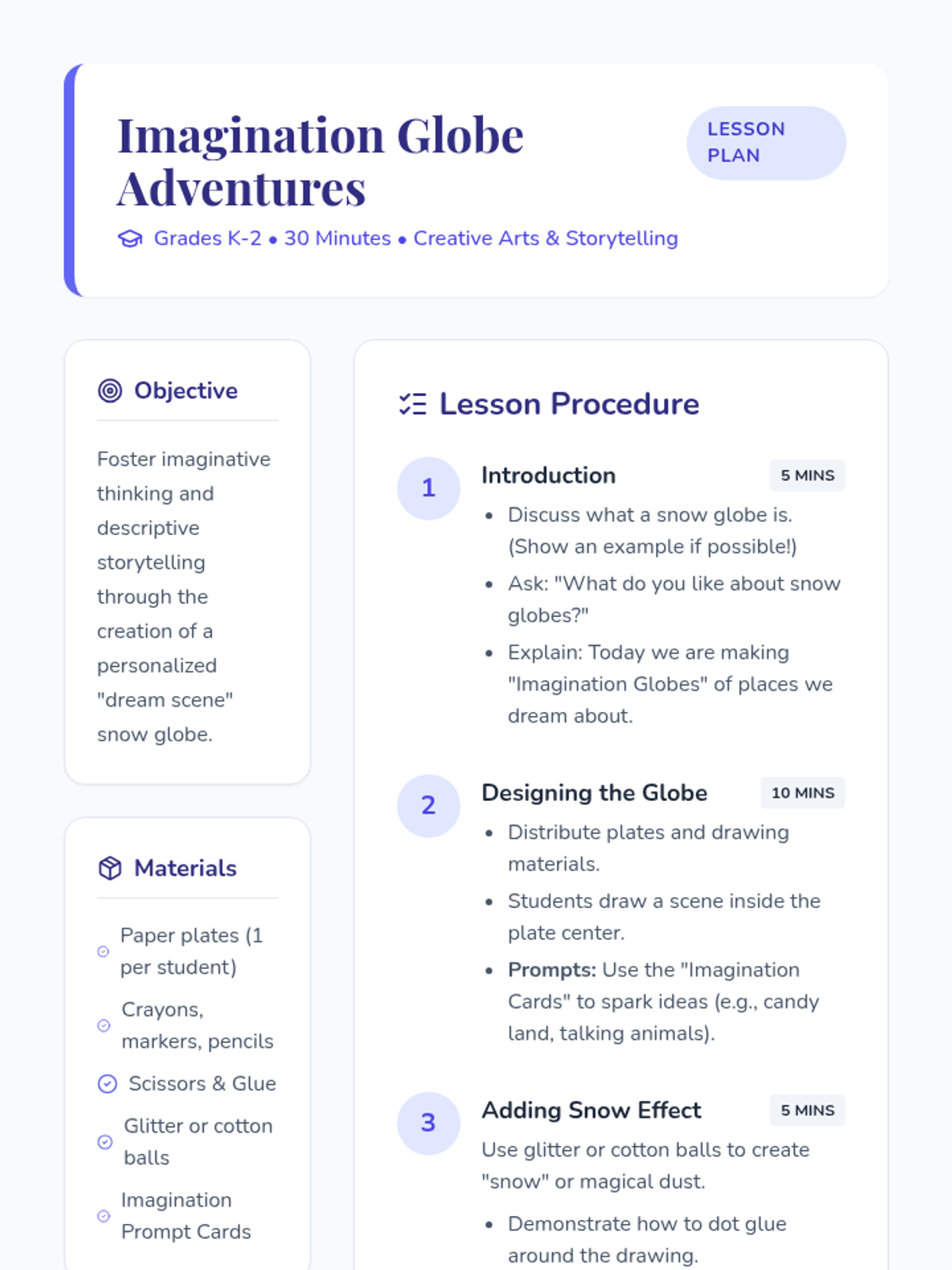
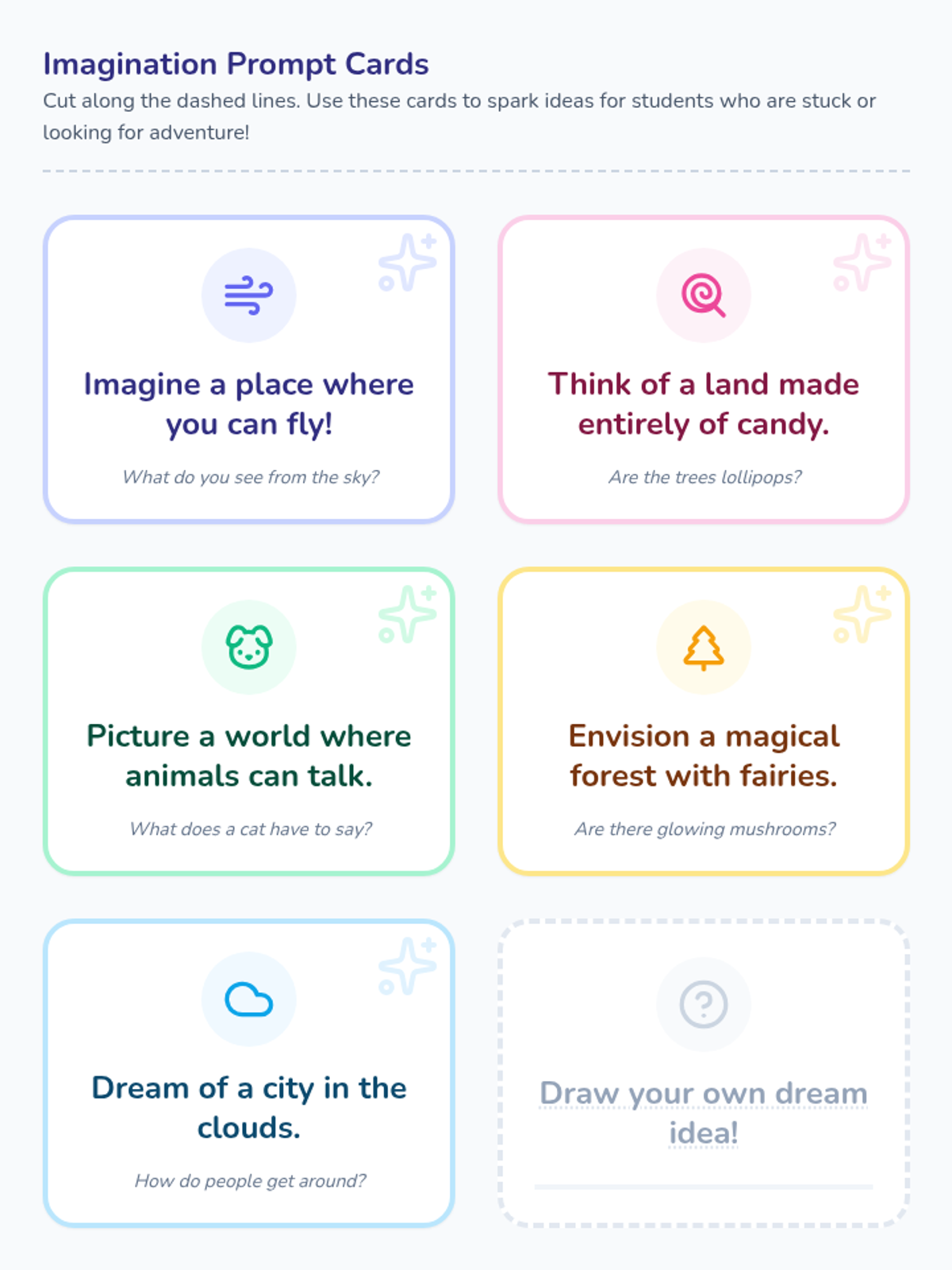
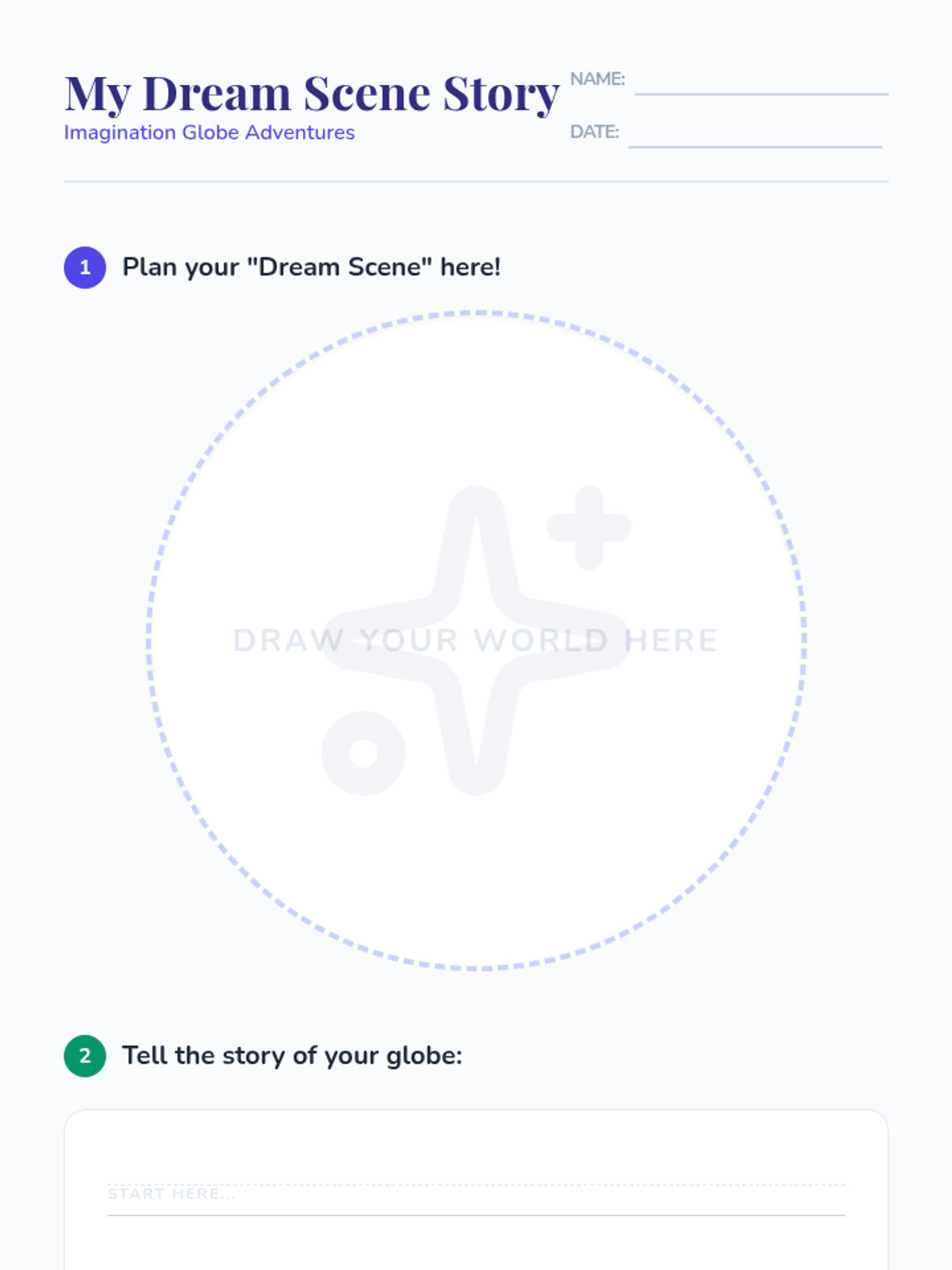
Students design personalized snow globes using paper plates to explore imaginative storytelling and creative expression. This K-2 lesson fosters dreaming and aspirational thinking through hands-on art.
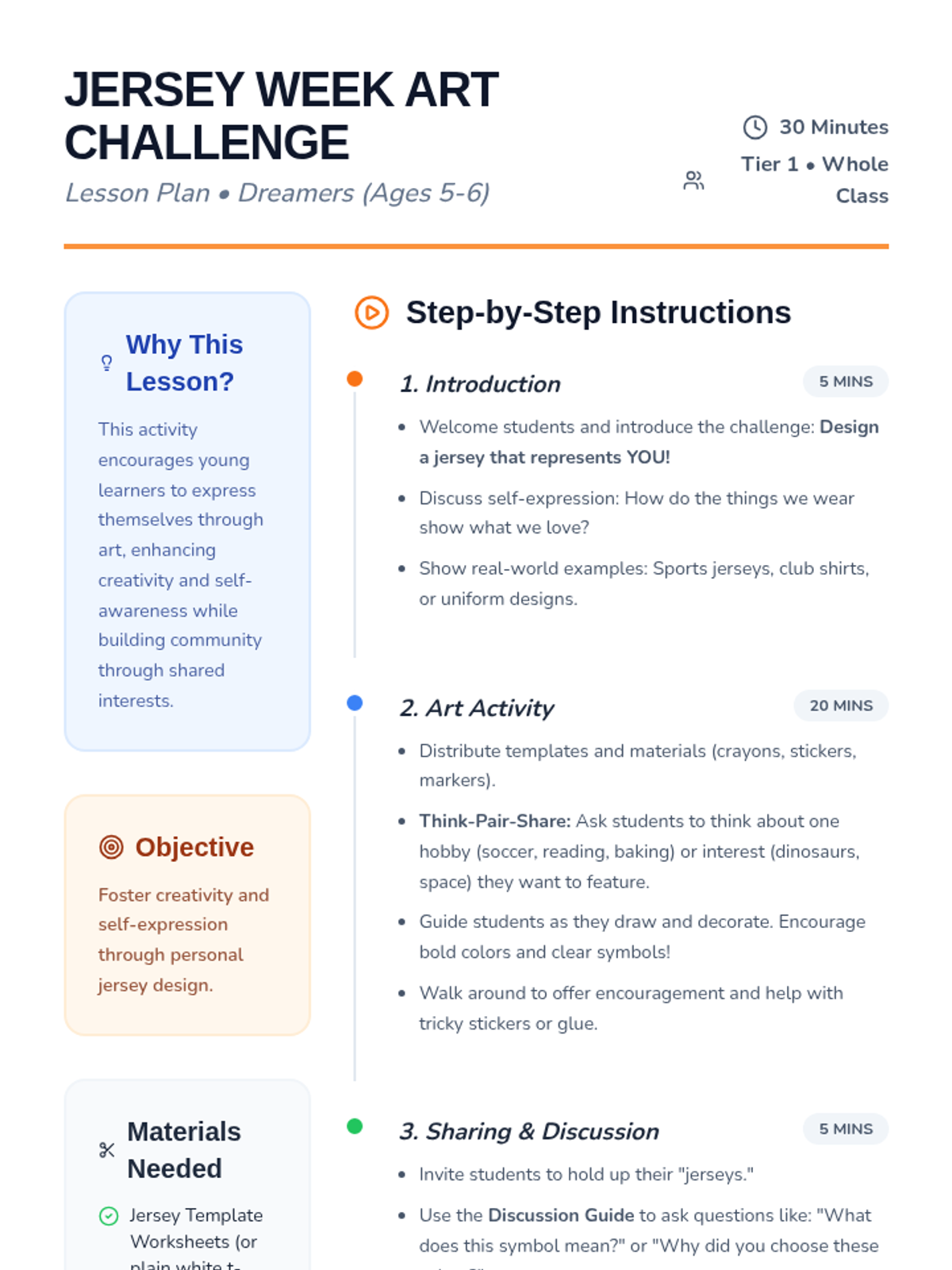
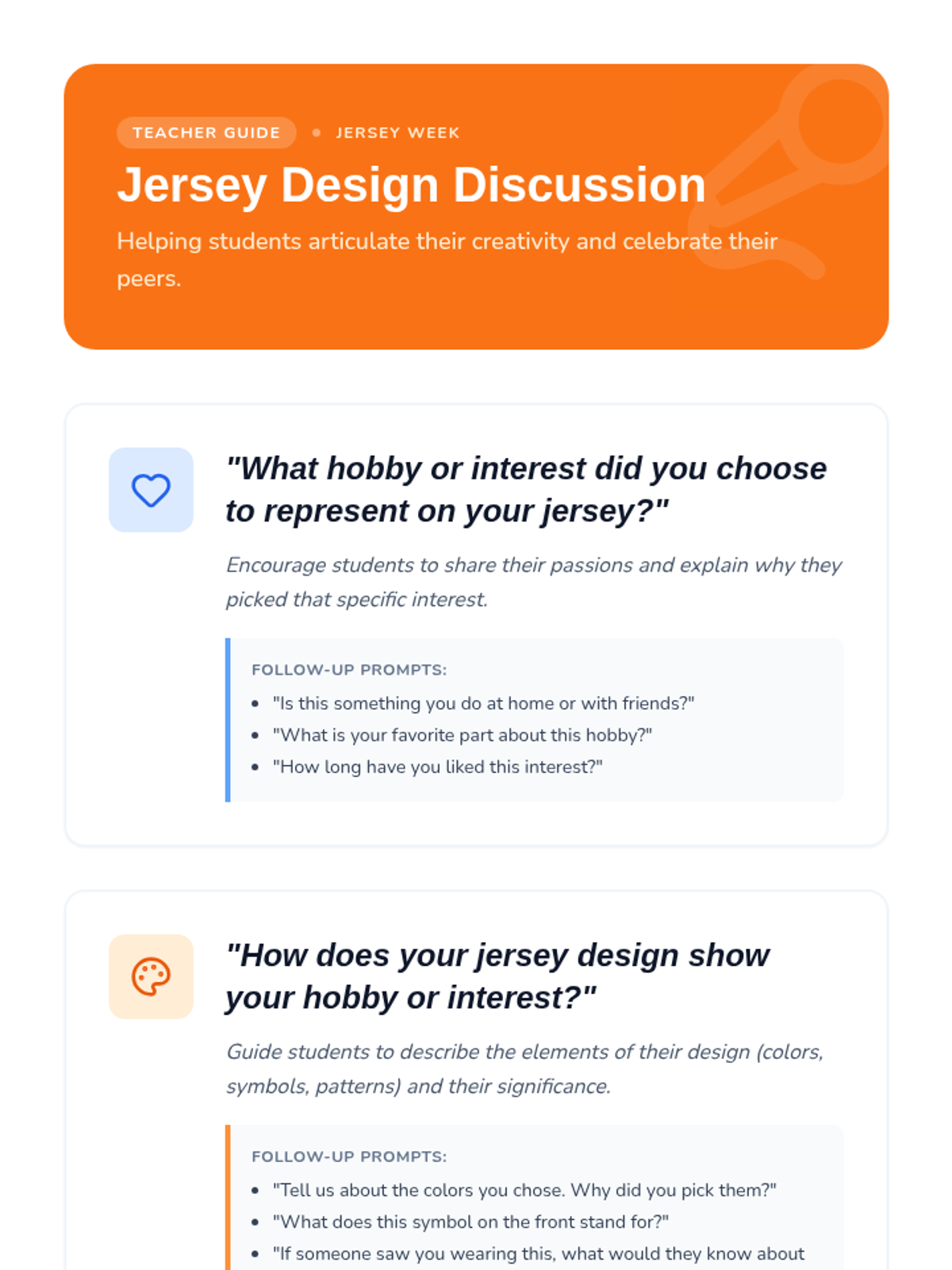
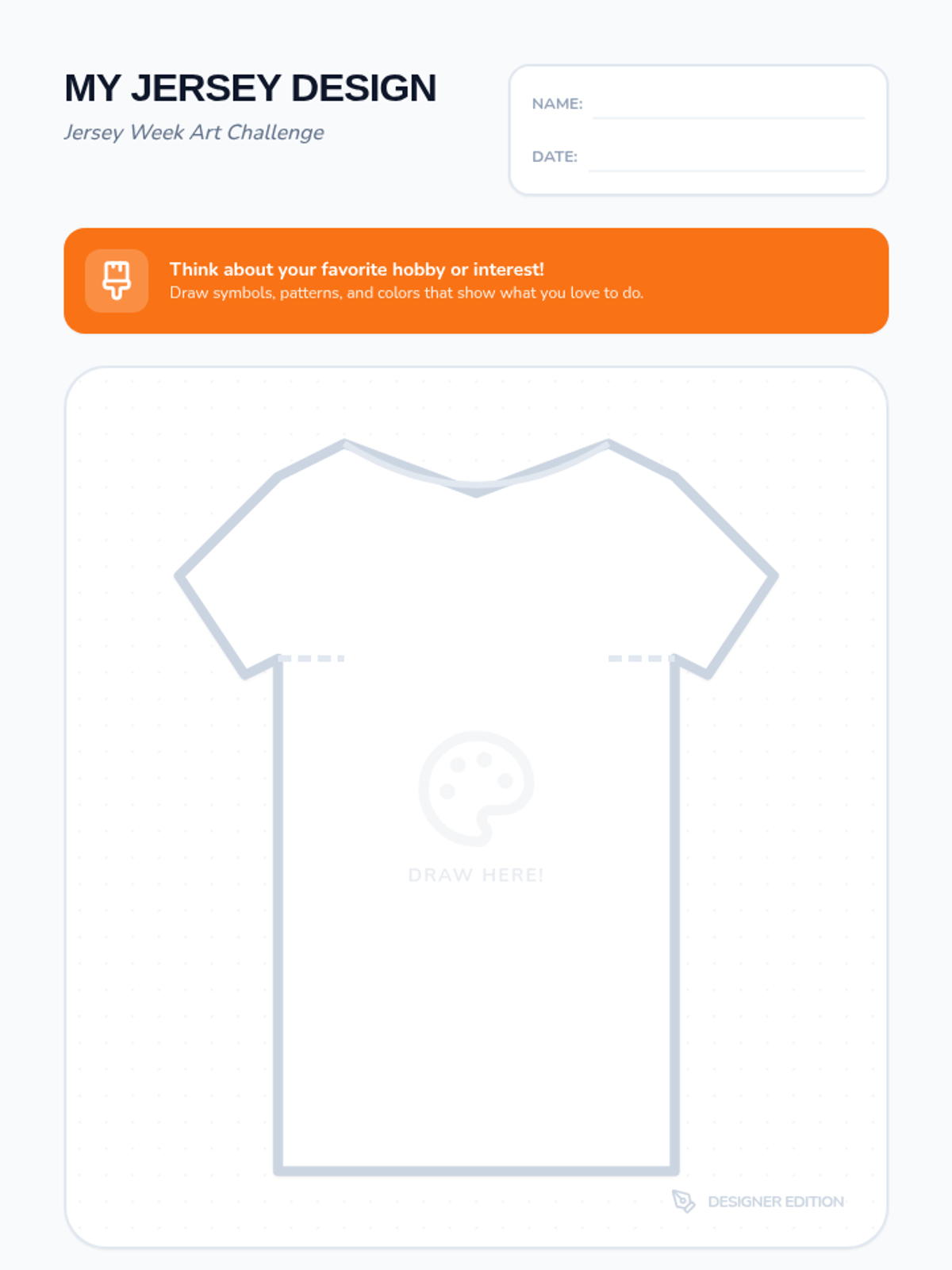
A creative art challenge where students design jerseys representing their favorite hobbies or interests, fostering self-expression and community.
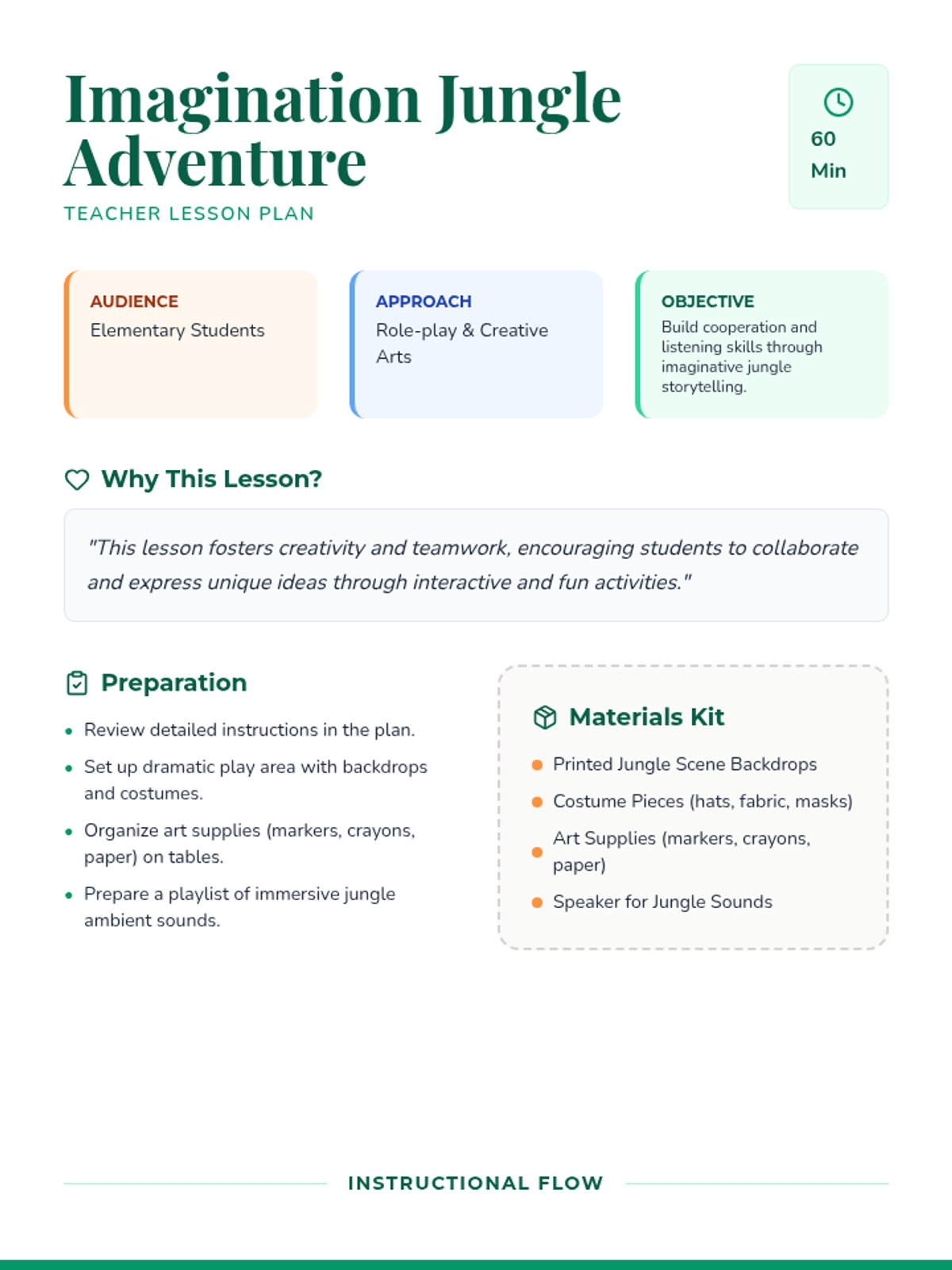
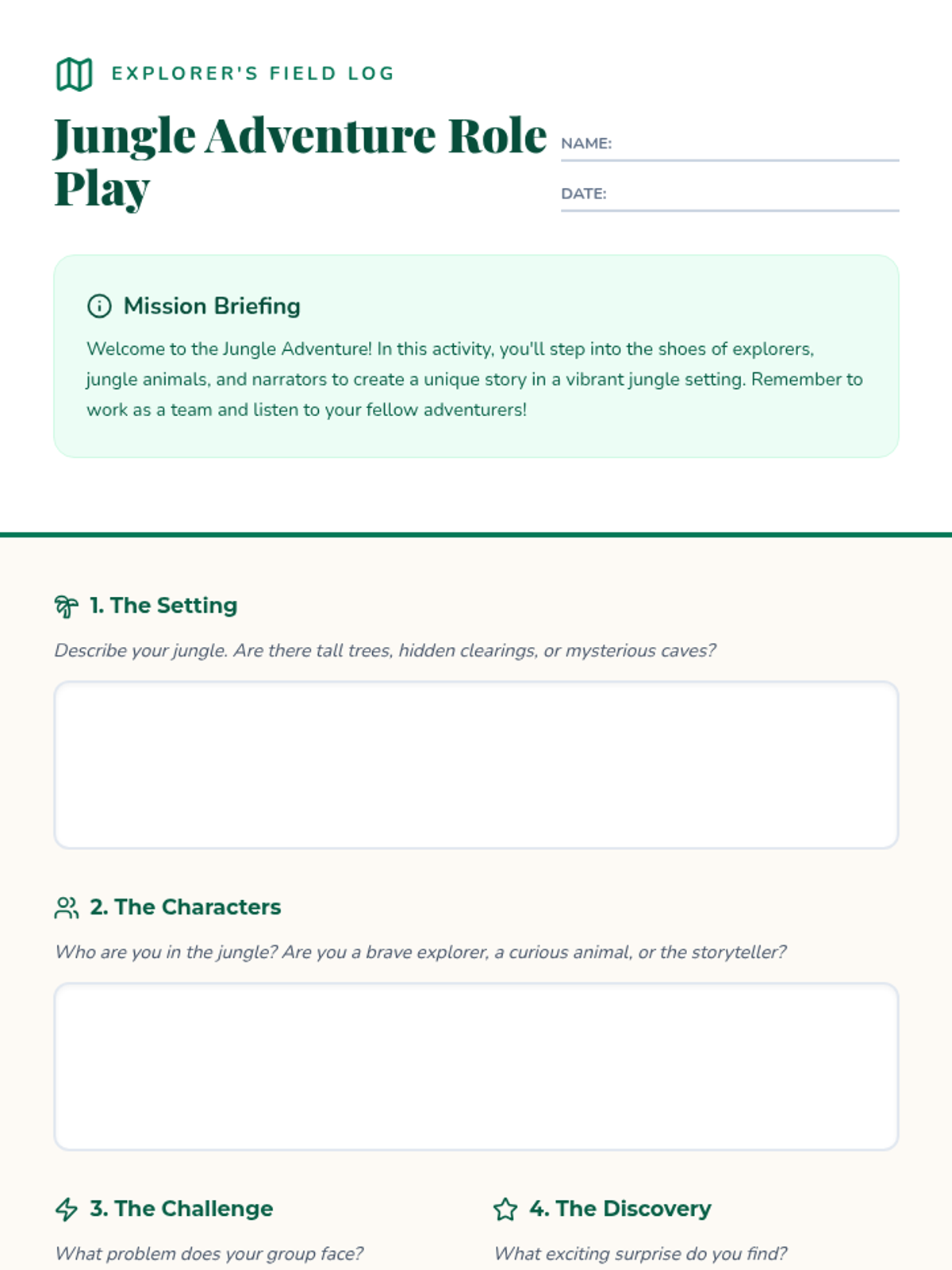
An interactive elementary lesson where students explore a vibrant jungle through dramatic play and creative arts, fostering teamwork and imaginative storytelling.
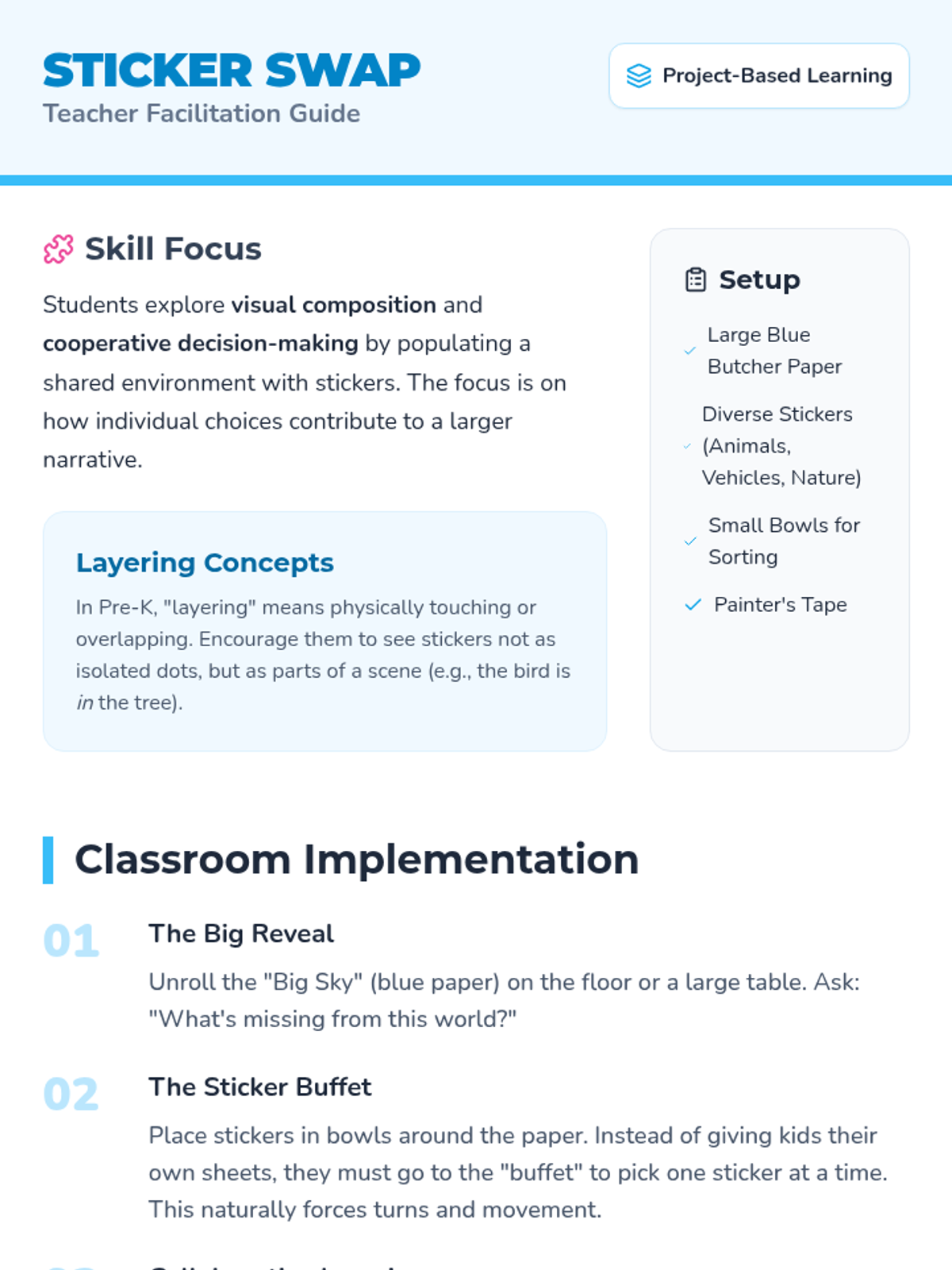
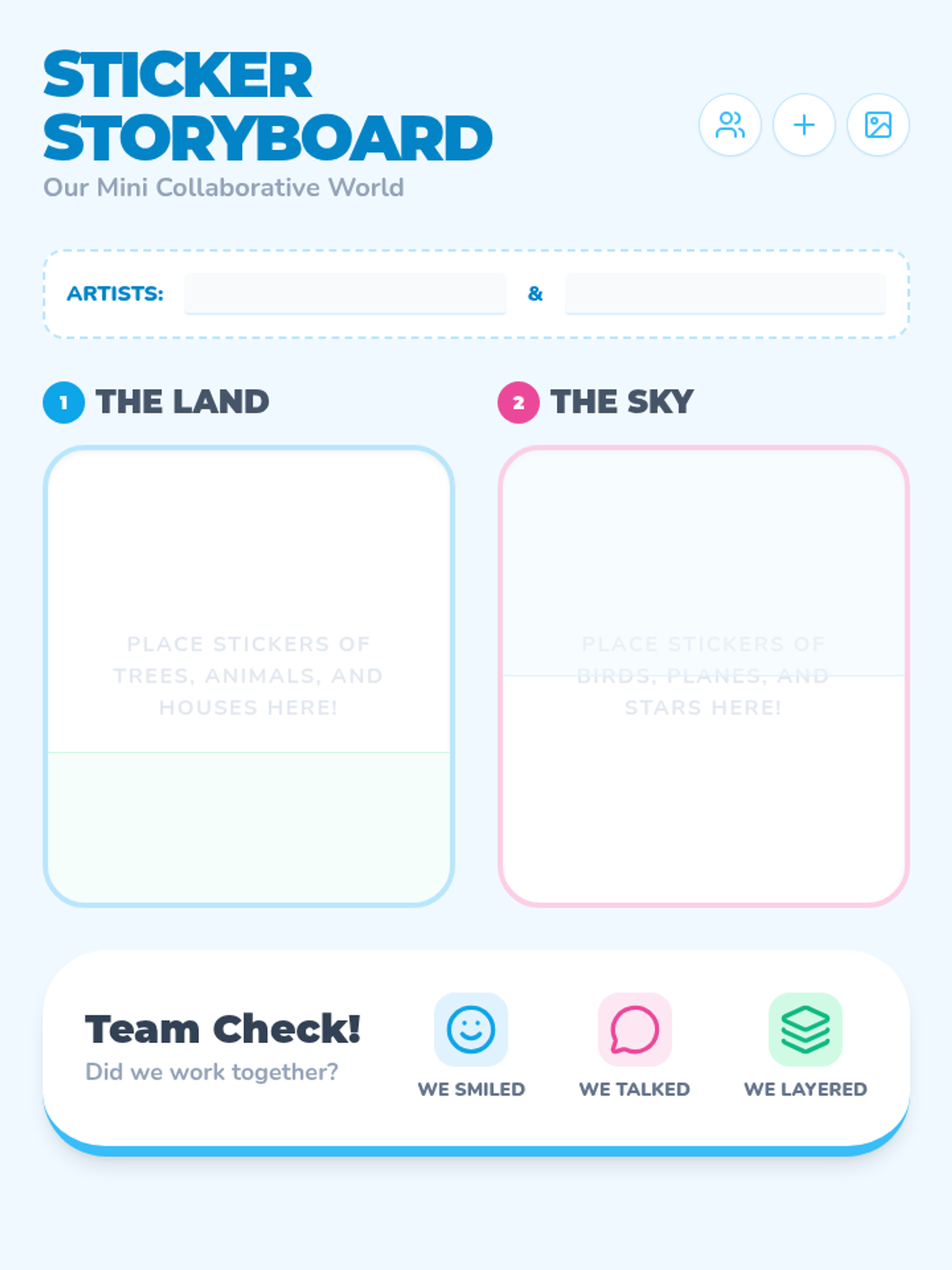
Students work together to fill a giant sky background with stickers, learning to layer and overlap ideas to create a cohesive scene.
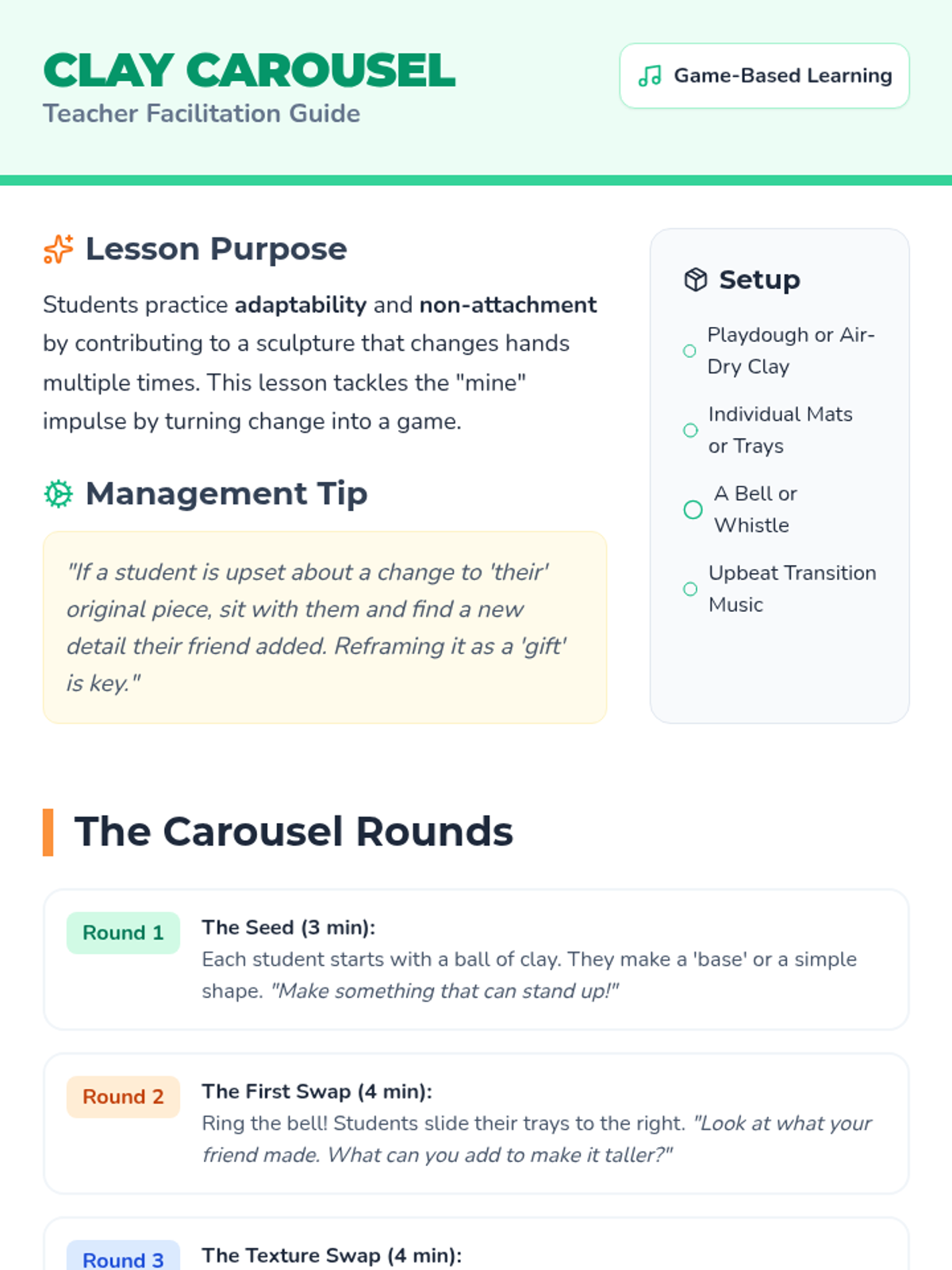
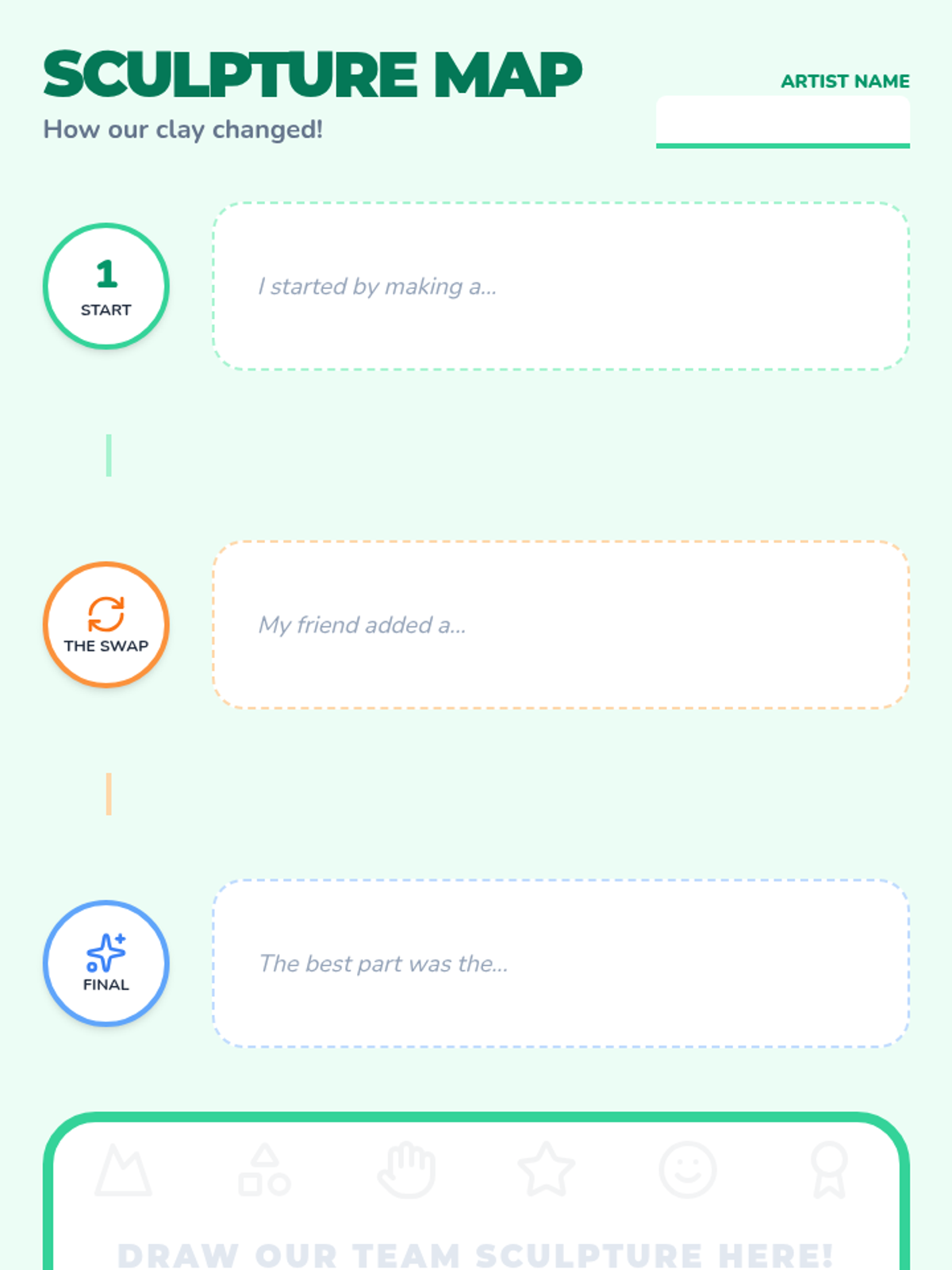
Students participate in a 'musical chairs' style clay activity where they must adapt and add to a sculpture started by a peer.
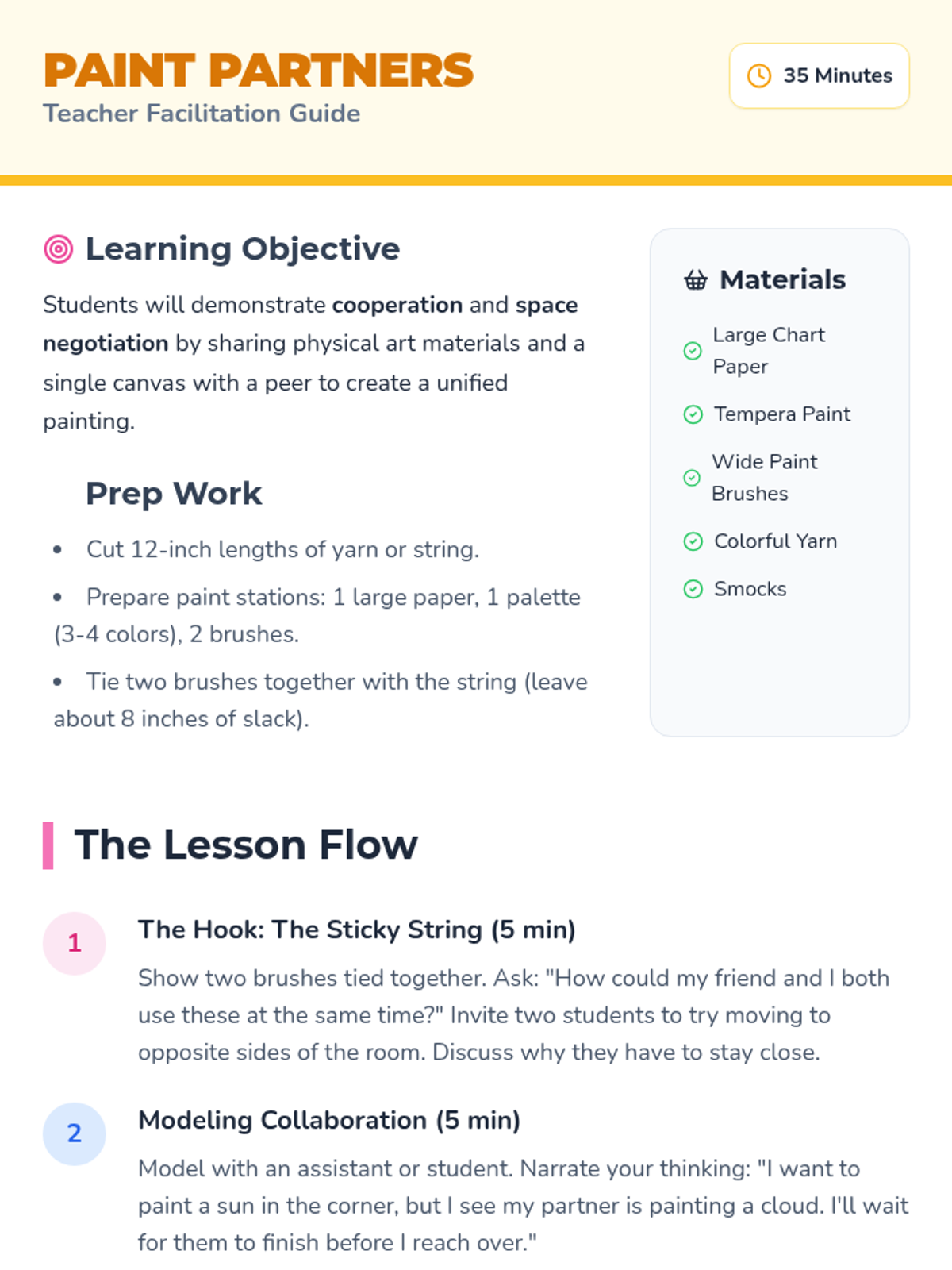
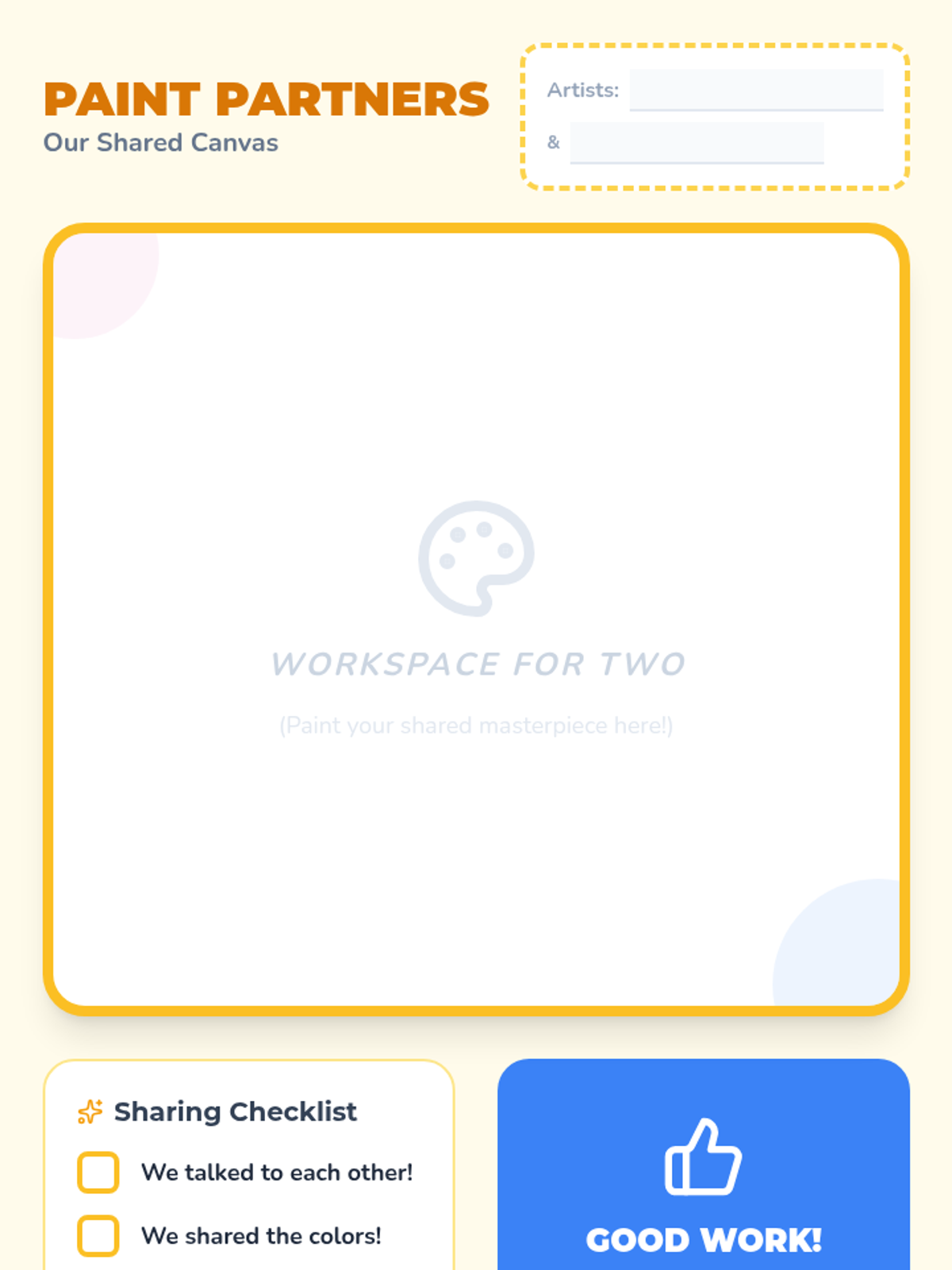
Students work in pairs to share a single piece of paper and palette, learning to negotiate space and coordinate movements.
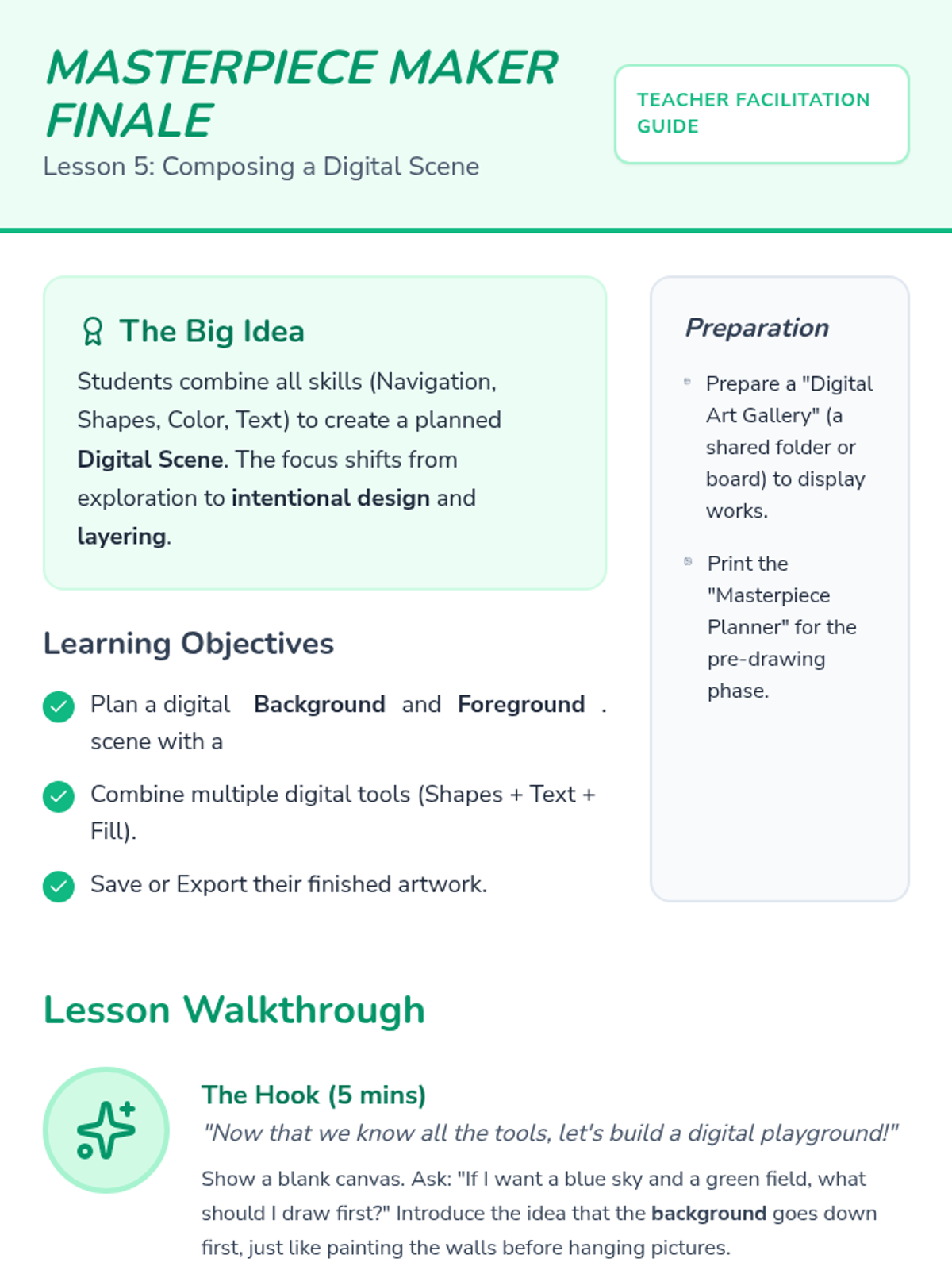
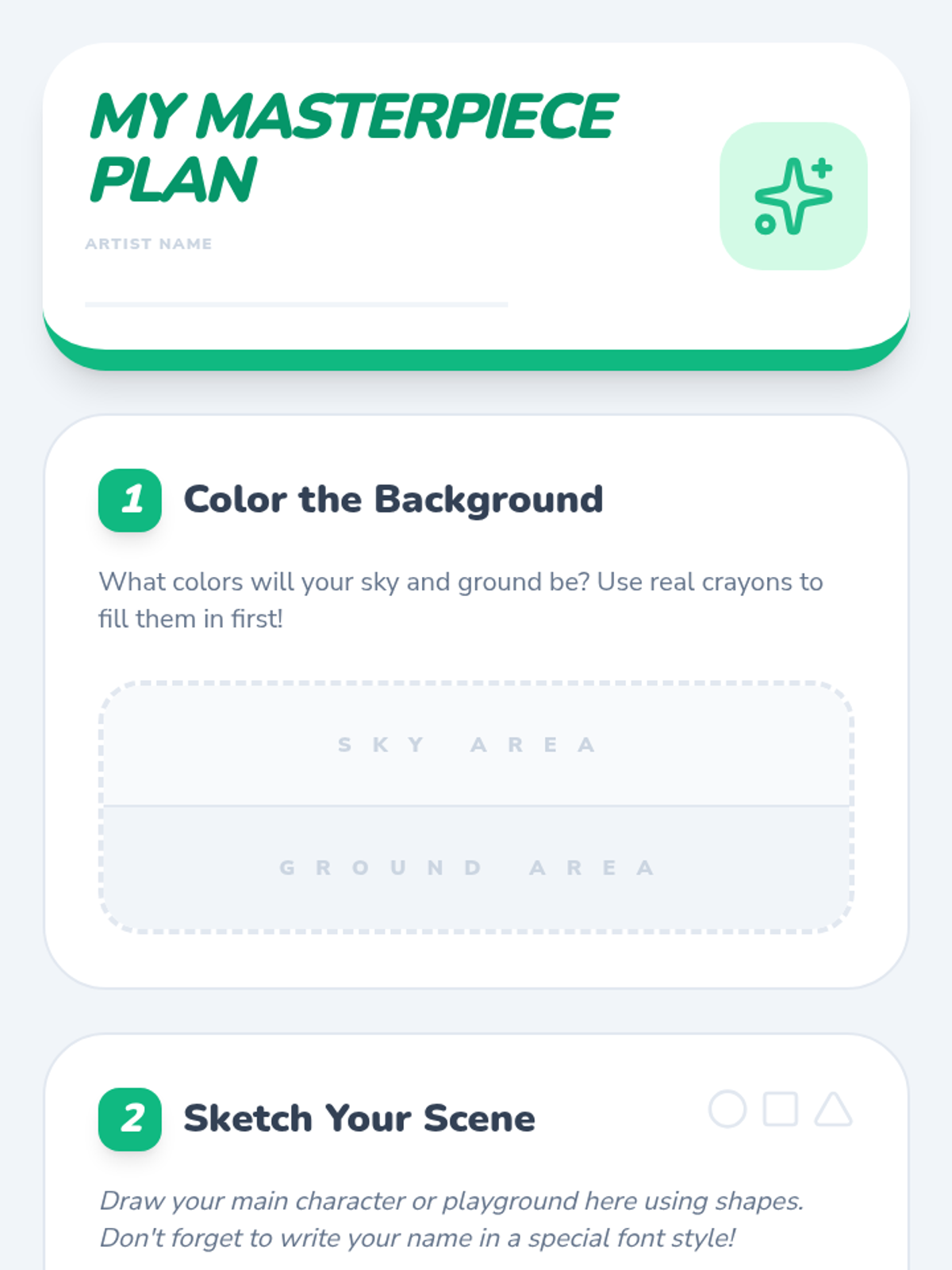
A culminating project where students combine shapes, colors, and text to create a planned digital scene.
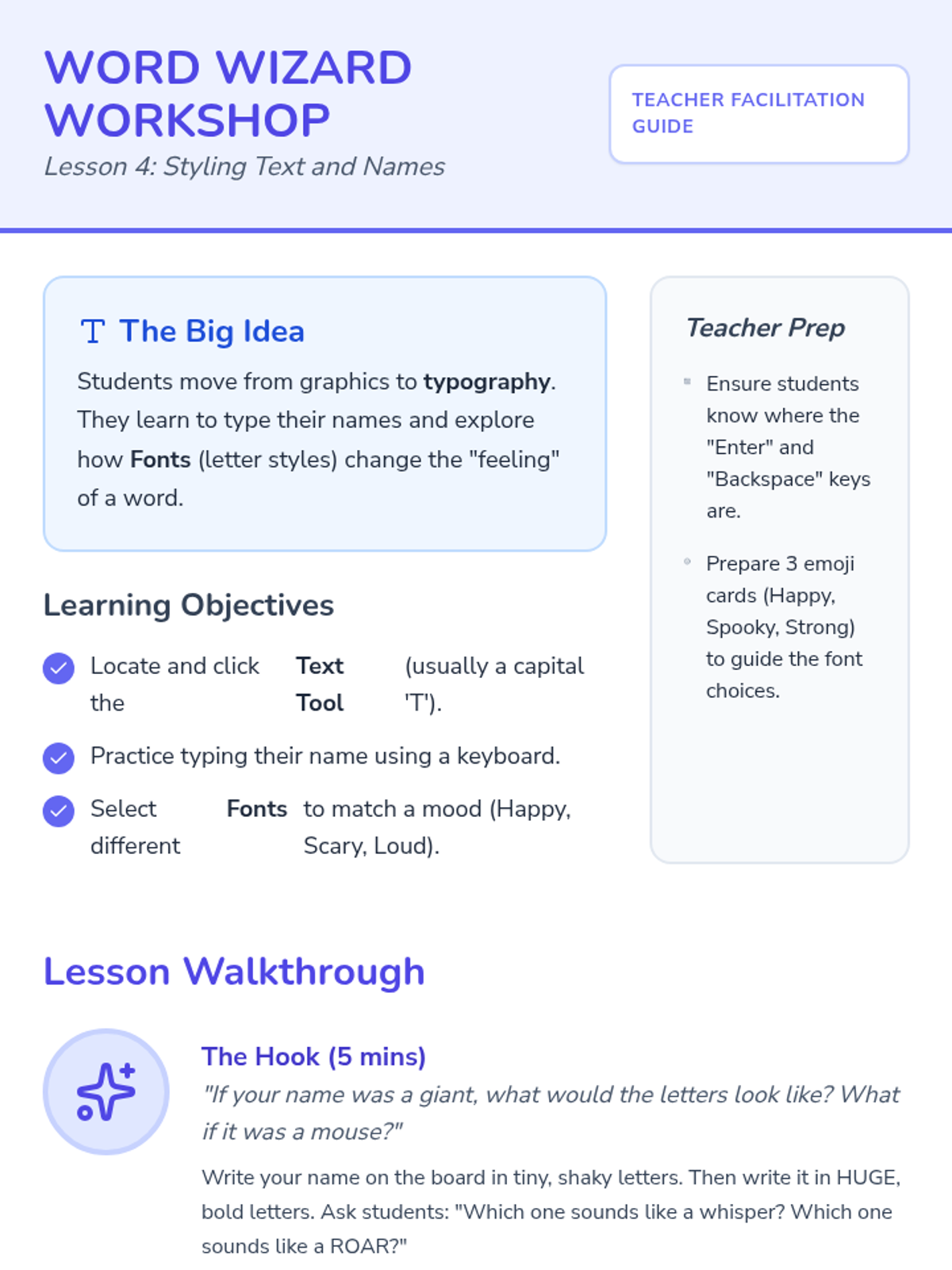
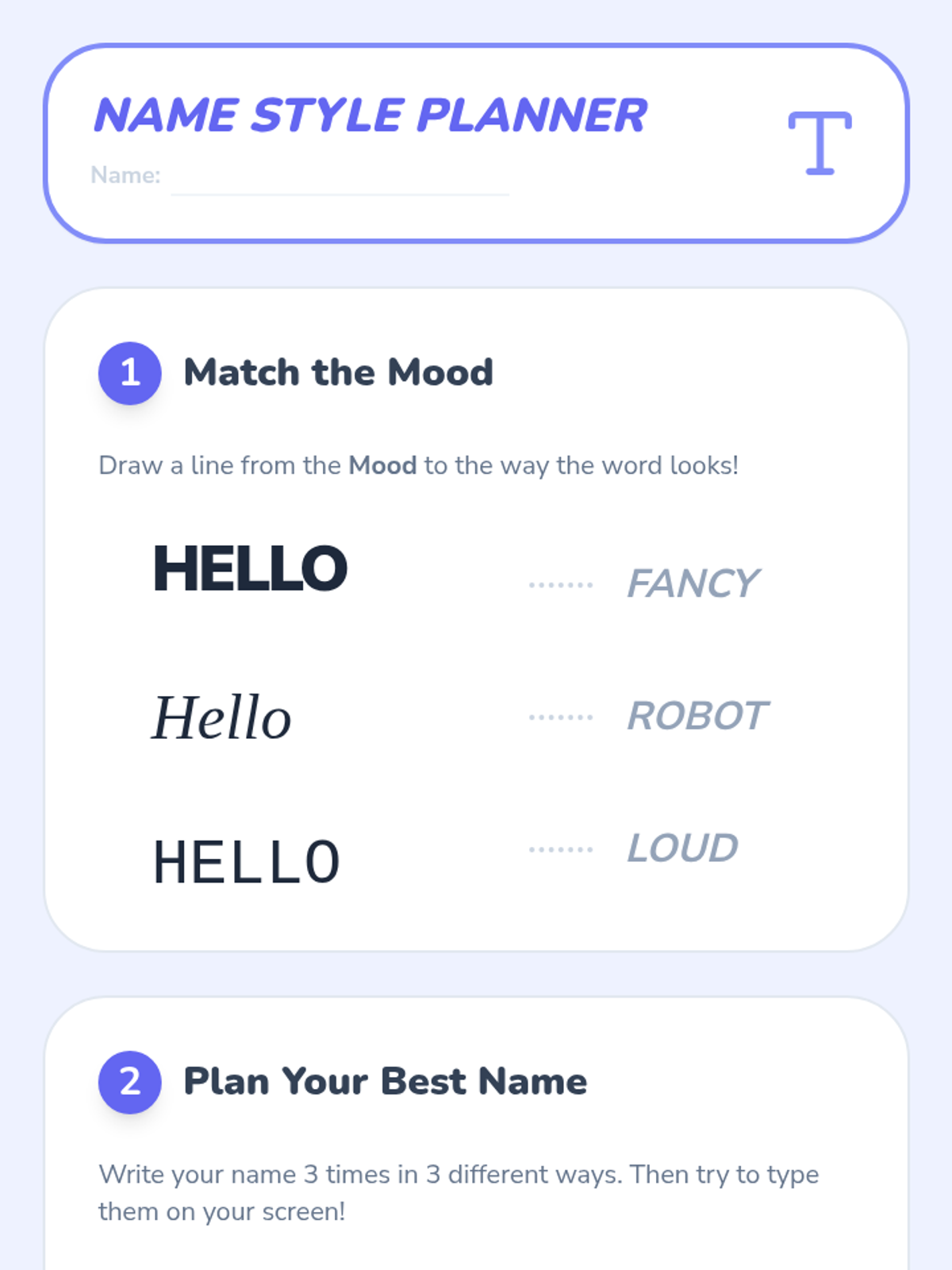
Introduction to digital typography where students practice typing and changing font styles to express different feelings.
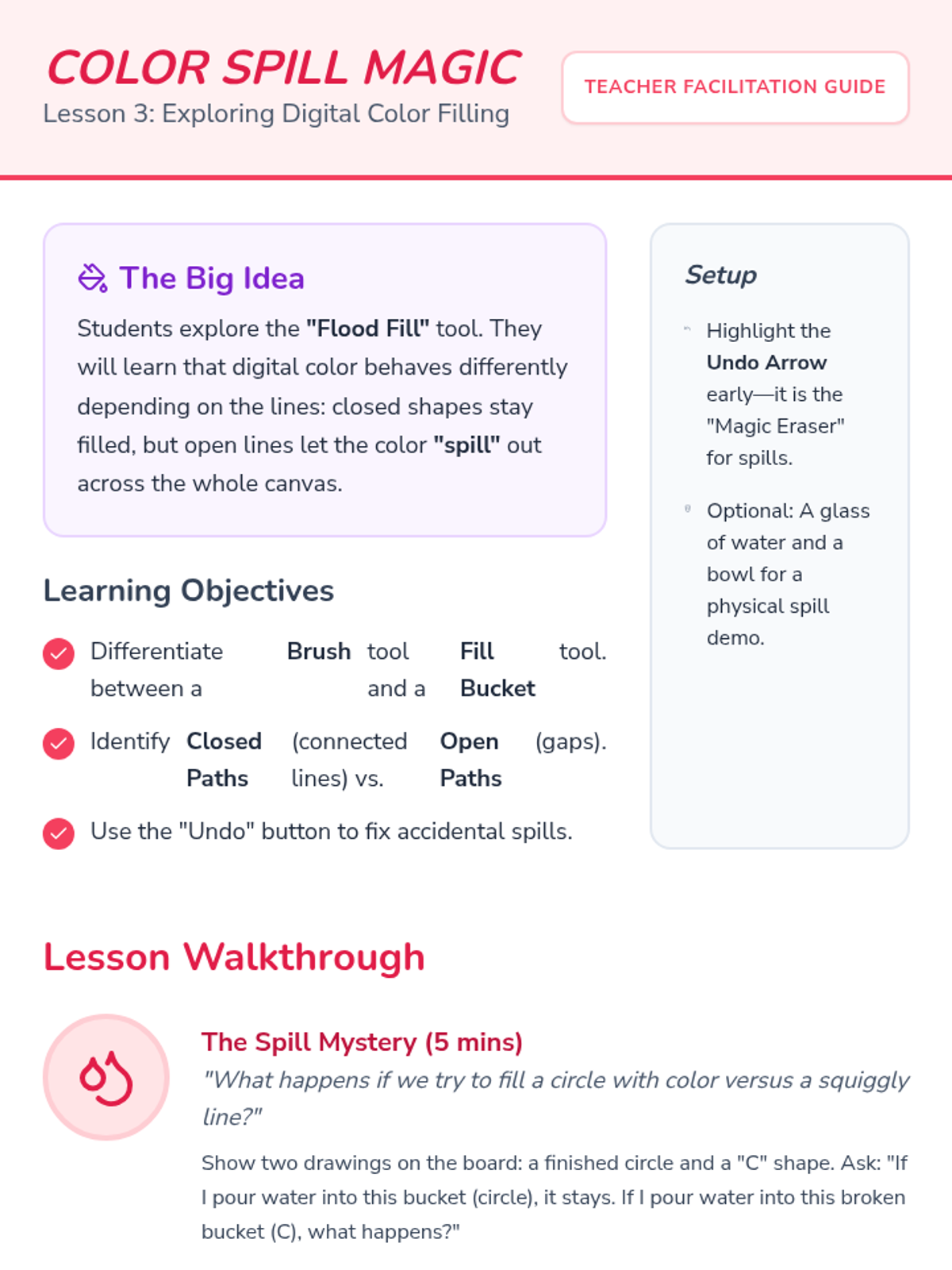
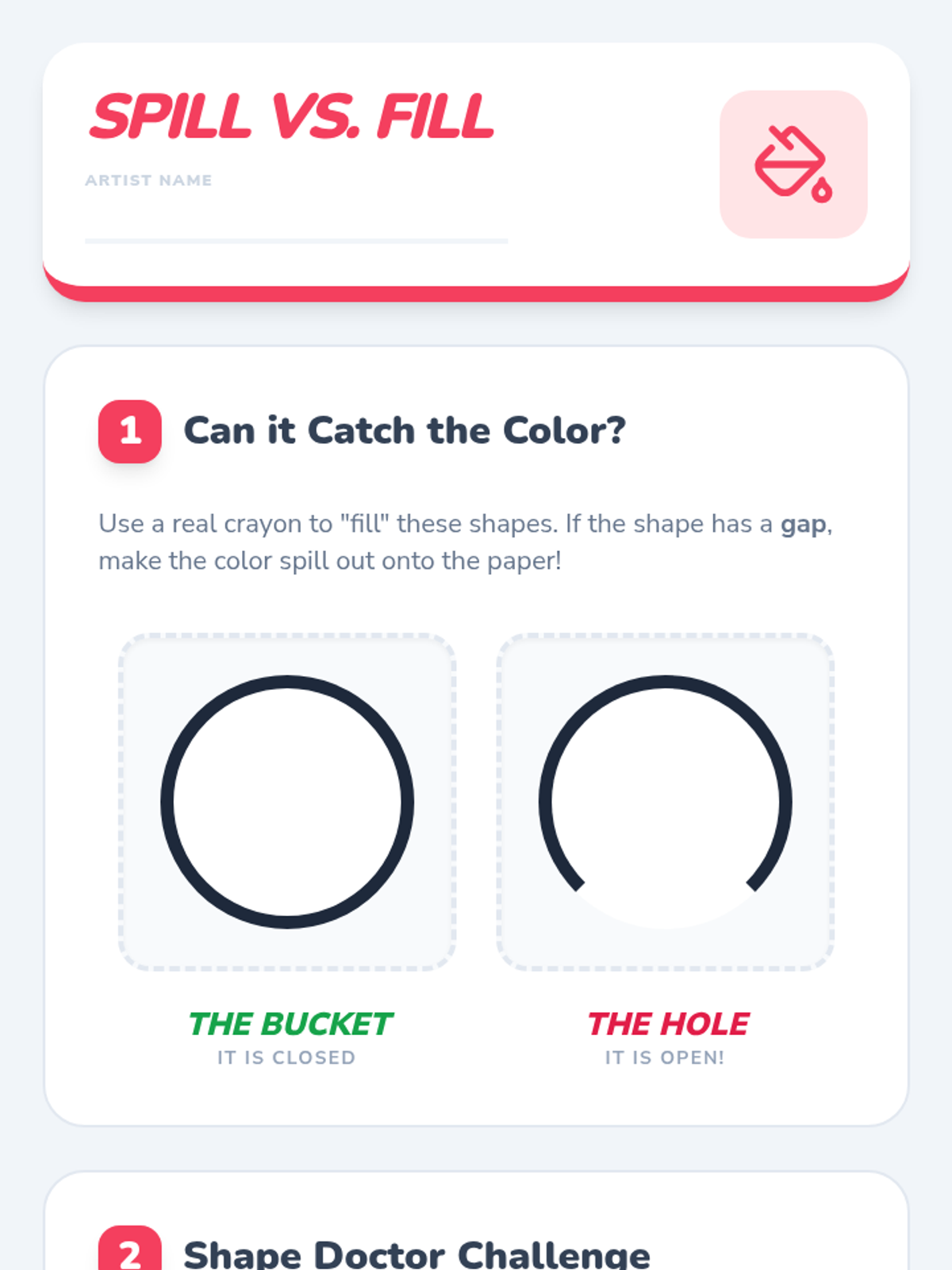
Students investigate the 'fill bucket' tool and learn the difference between closed and open paths through digital color experimentation.
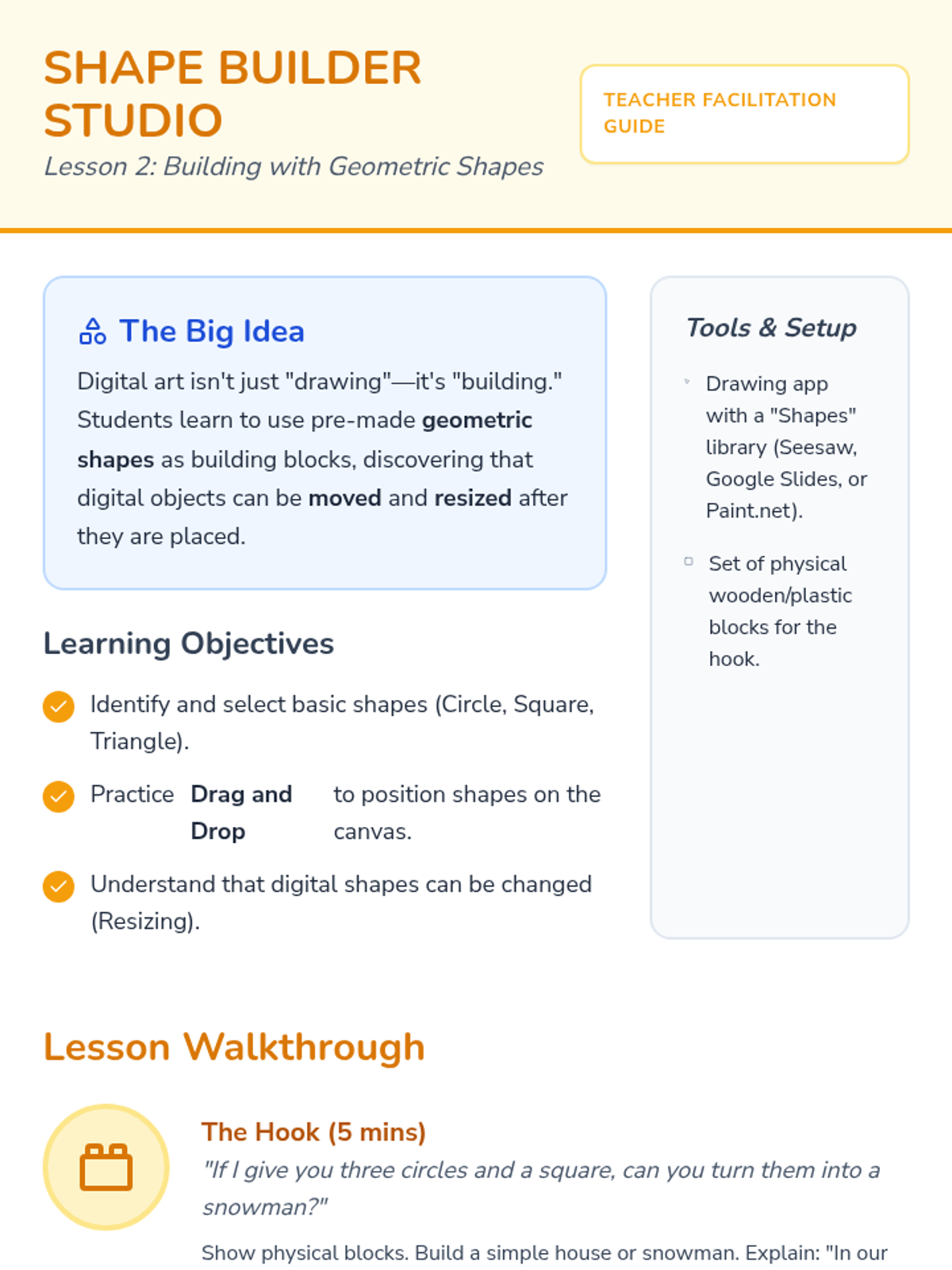
Focusing on digital construction, students select and manipulate geometric shapes to build objects, learning that digital art can be moved and resized.
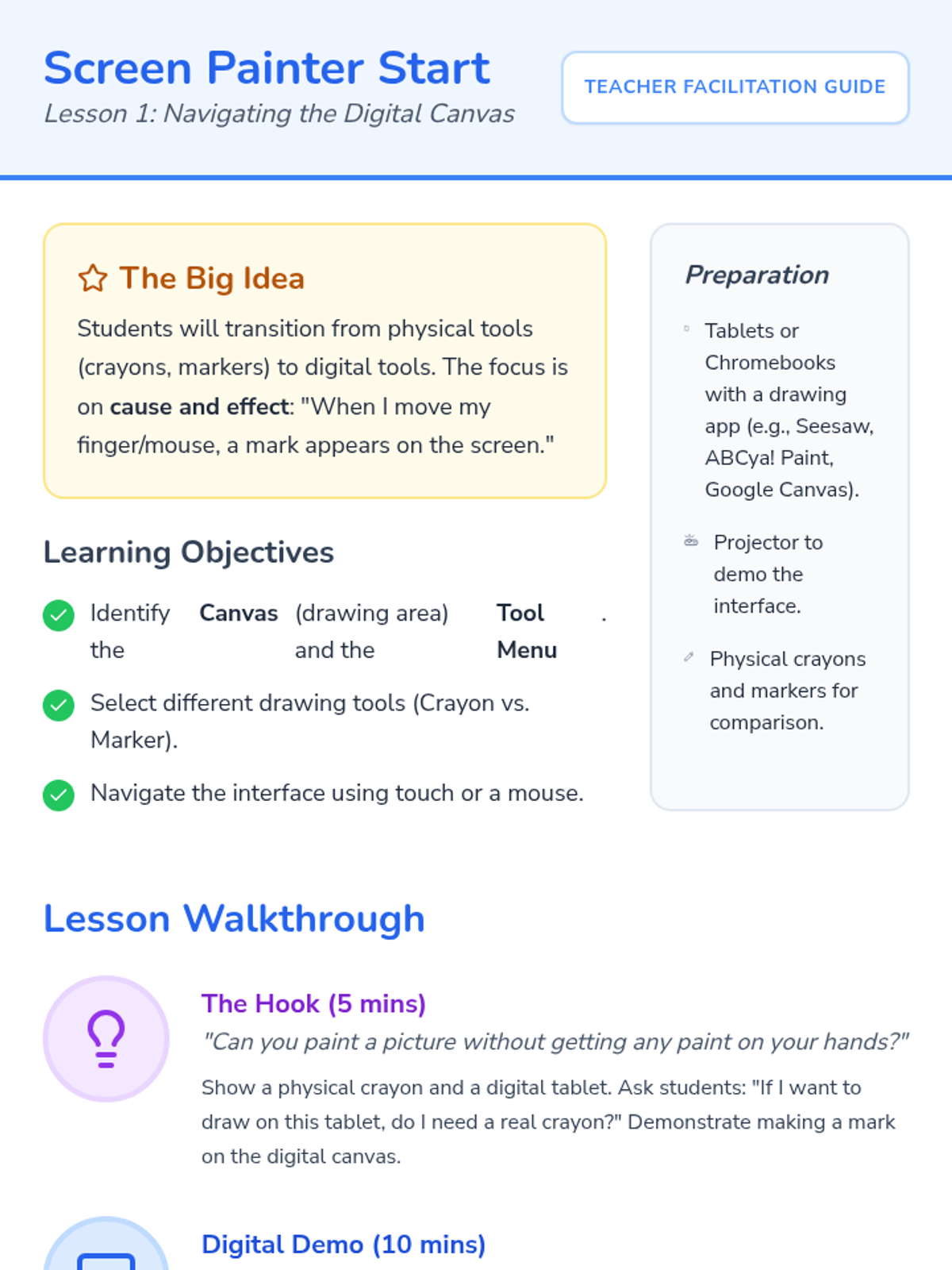
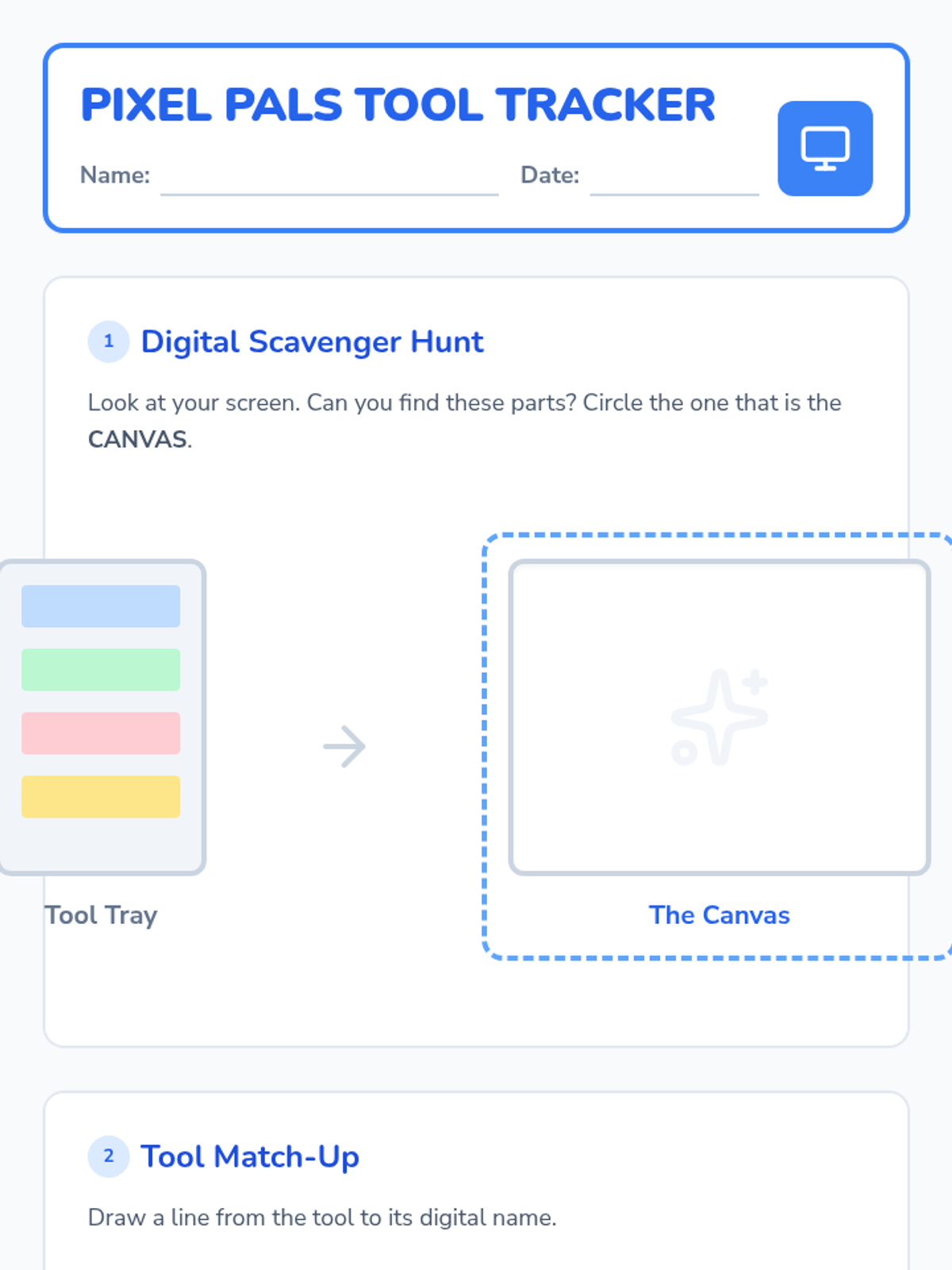
Students explore a digital drawing application, identifying the difference between the drawing area (canvas) and the tool menu while practicing basic input control.
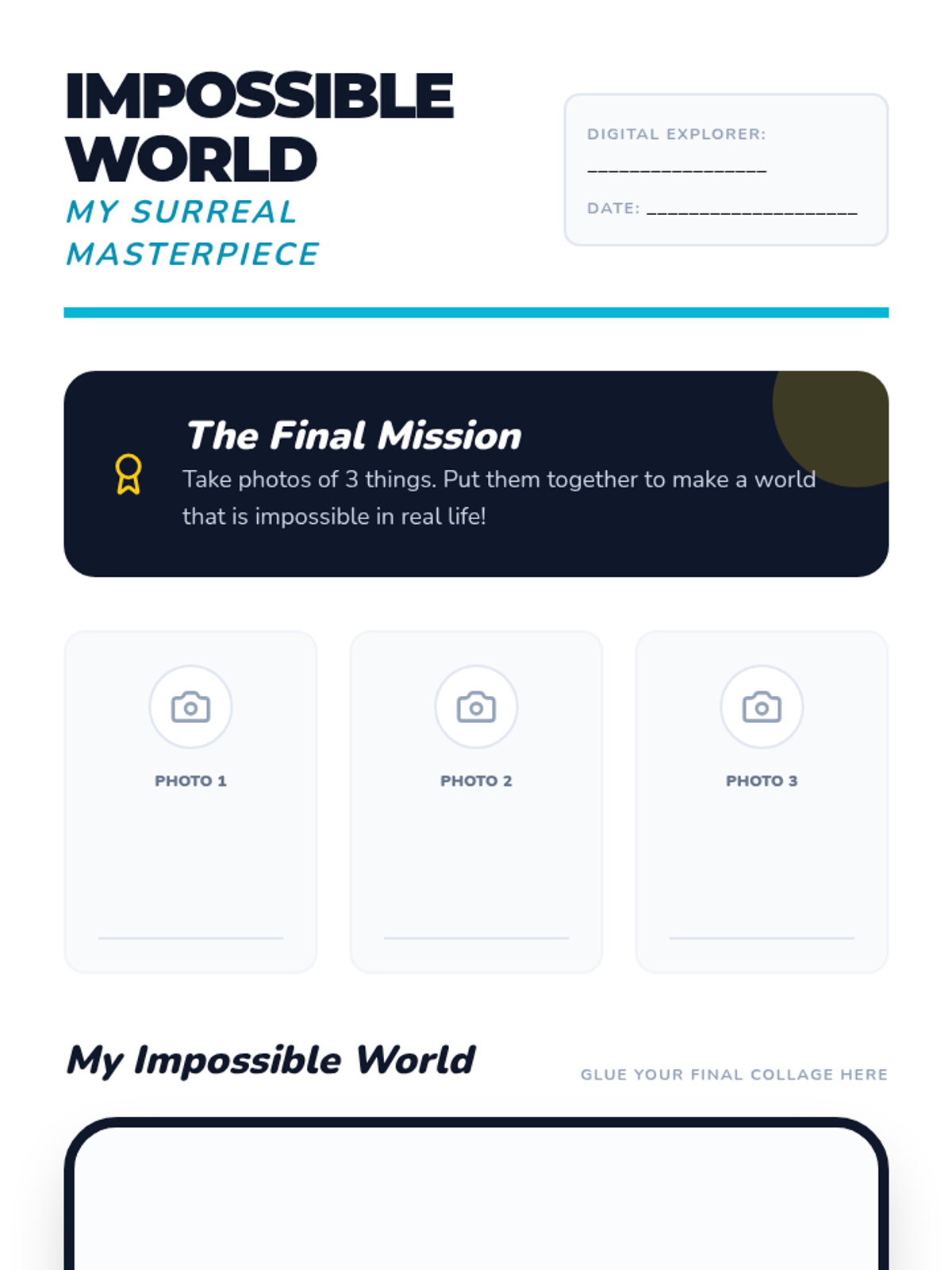
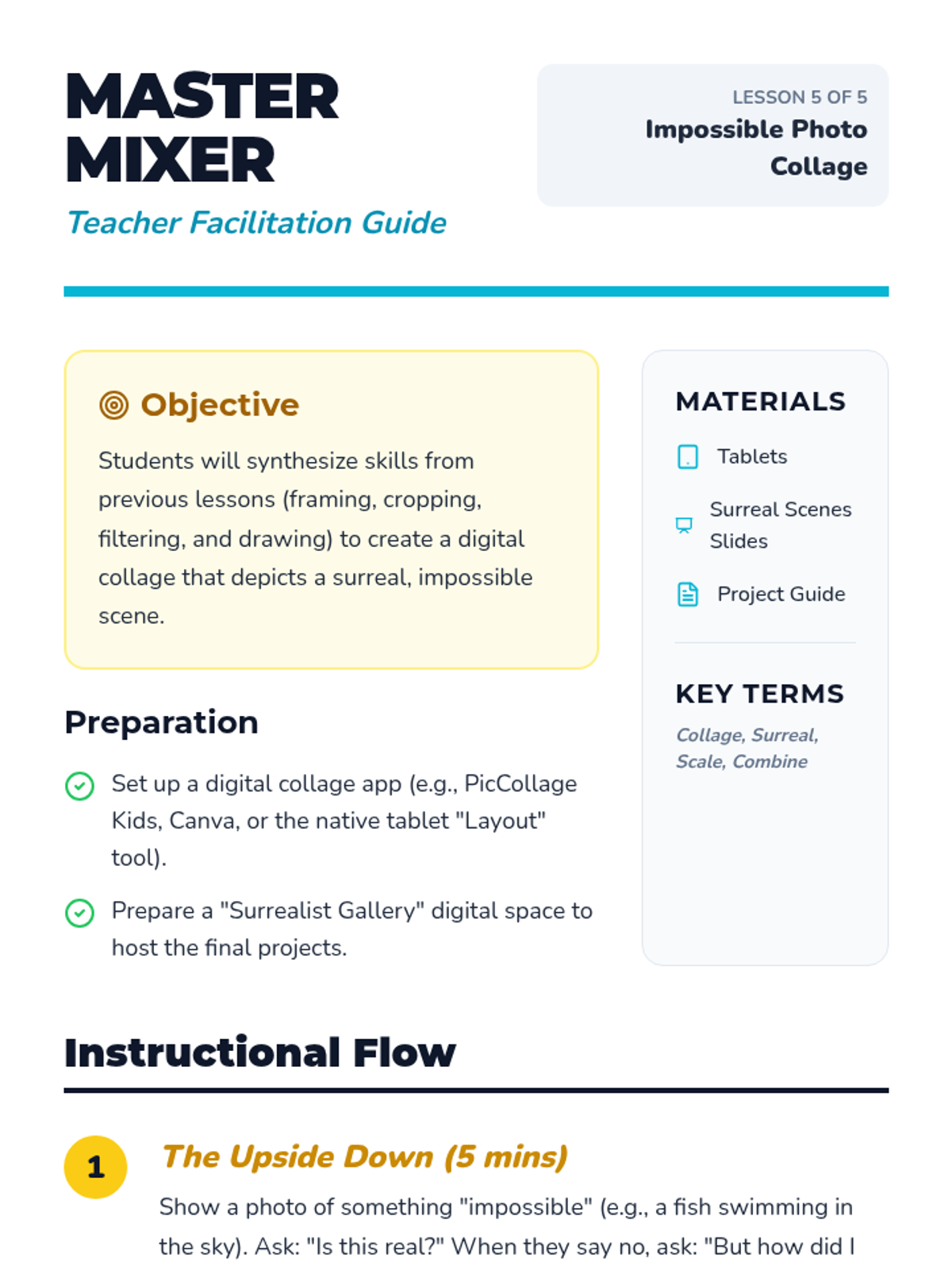
Students take photos of objects in the room and combine them on a single digital canvas to create a scene that couldn't happen in real life.
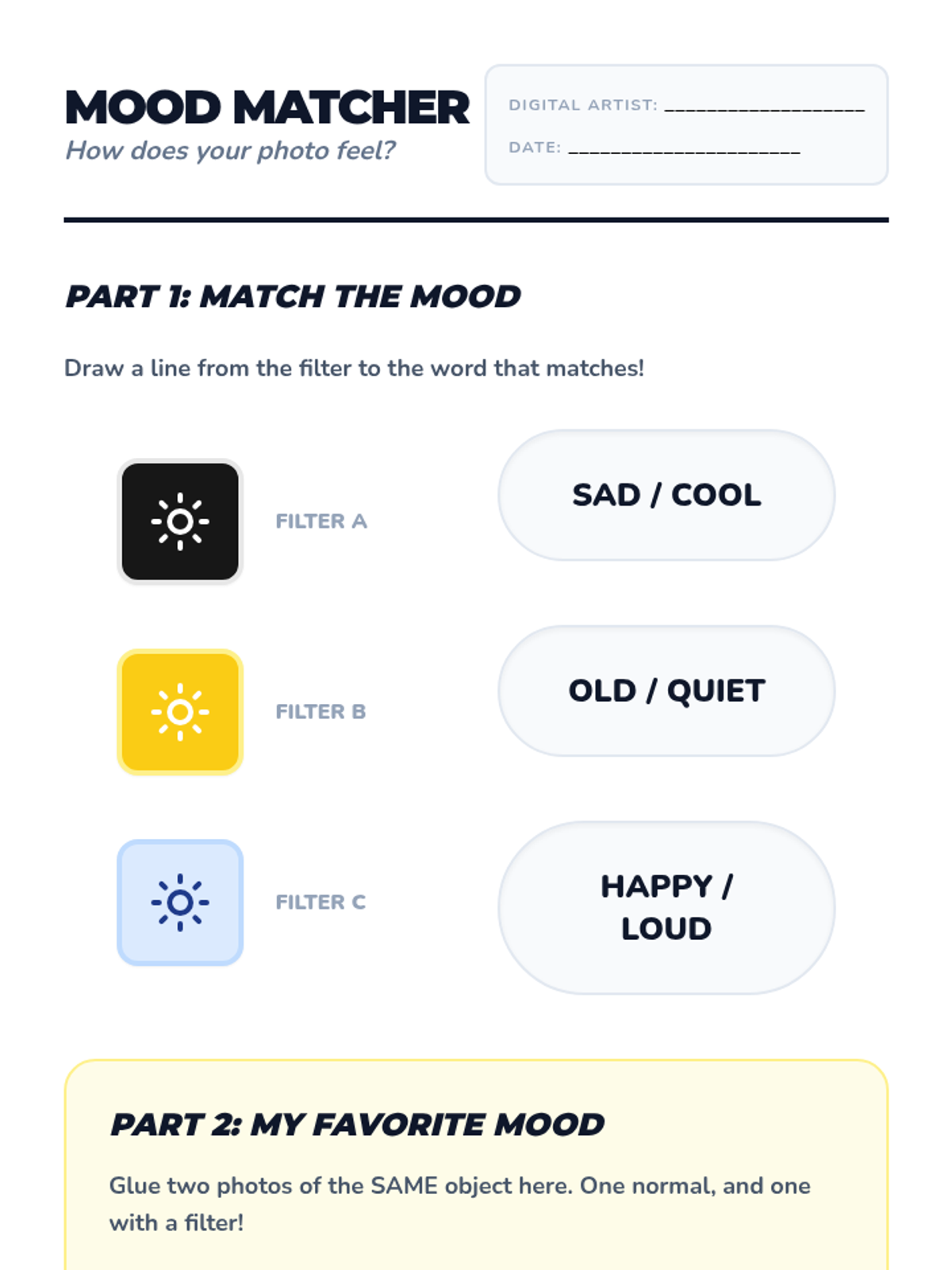
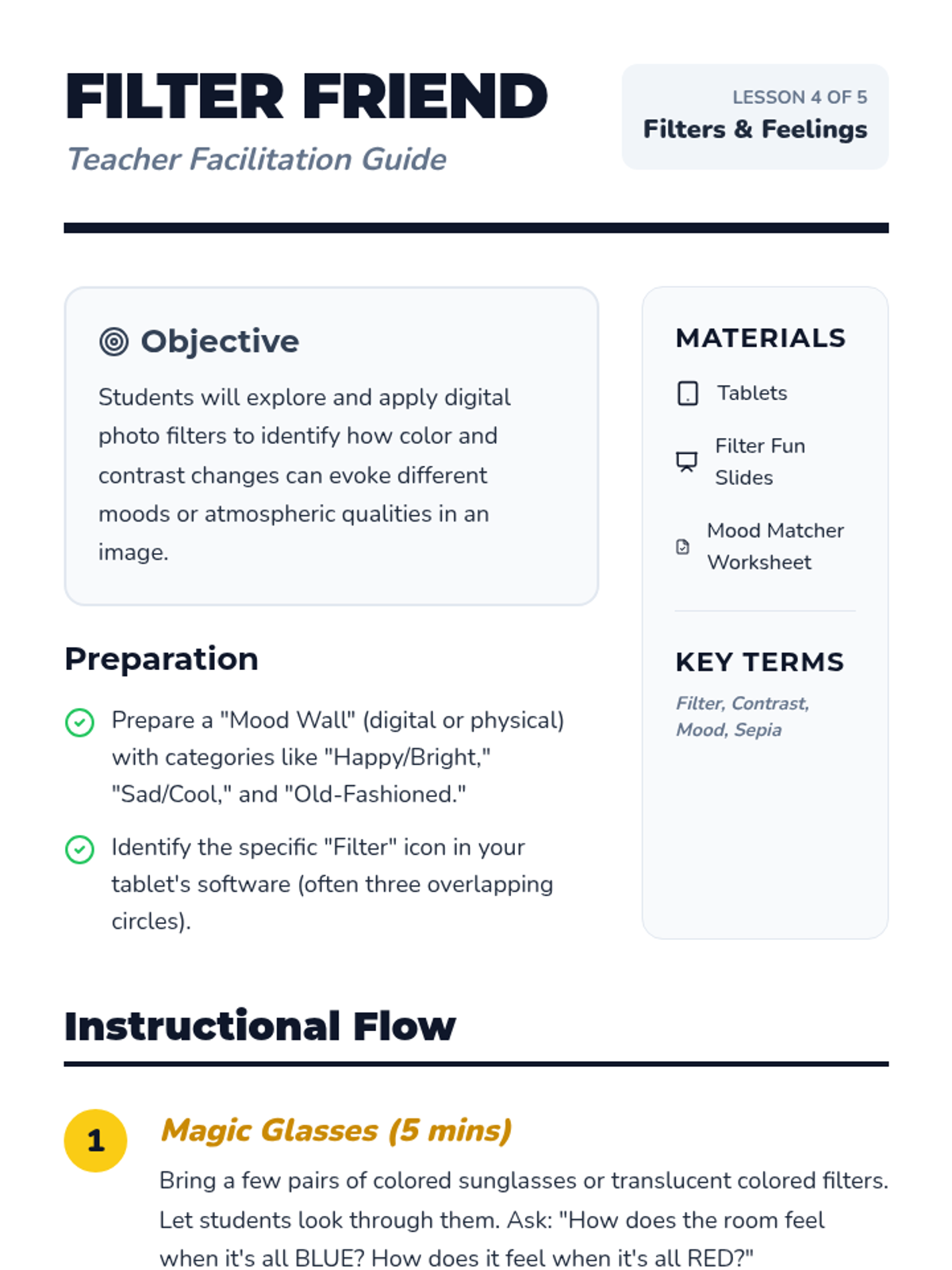
Students explore simple photo filters (black and white, sepia, high contrast) to see how they change the mood of a photo. They compare the original photo to the filtered version.
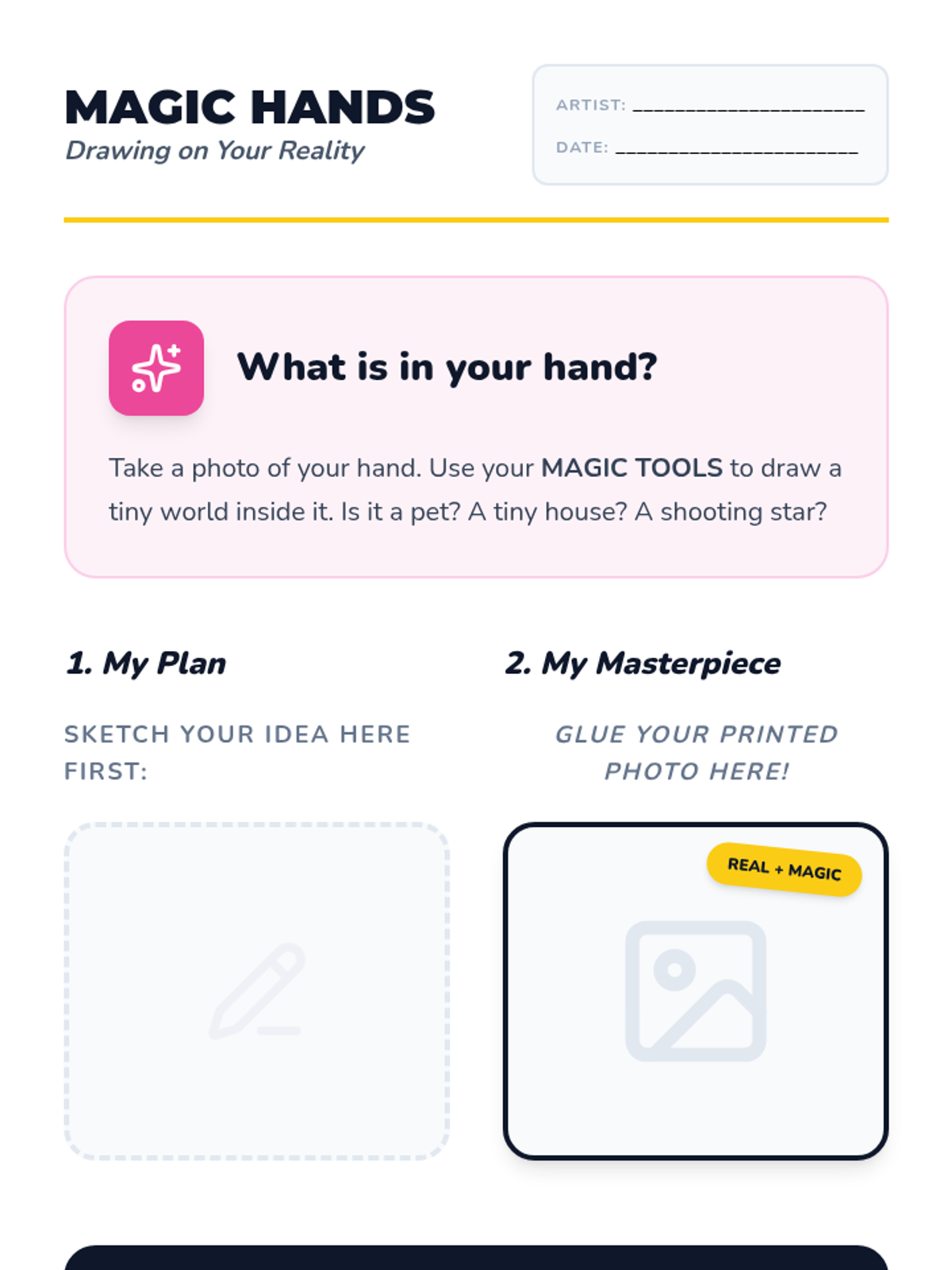
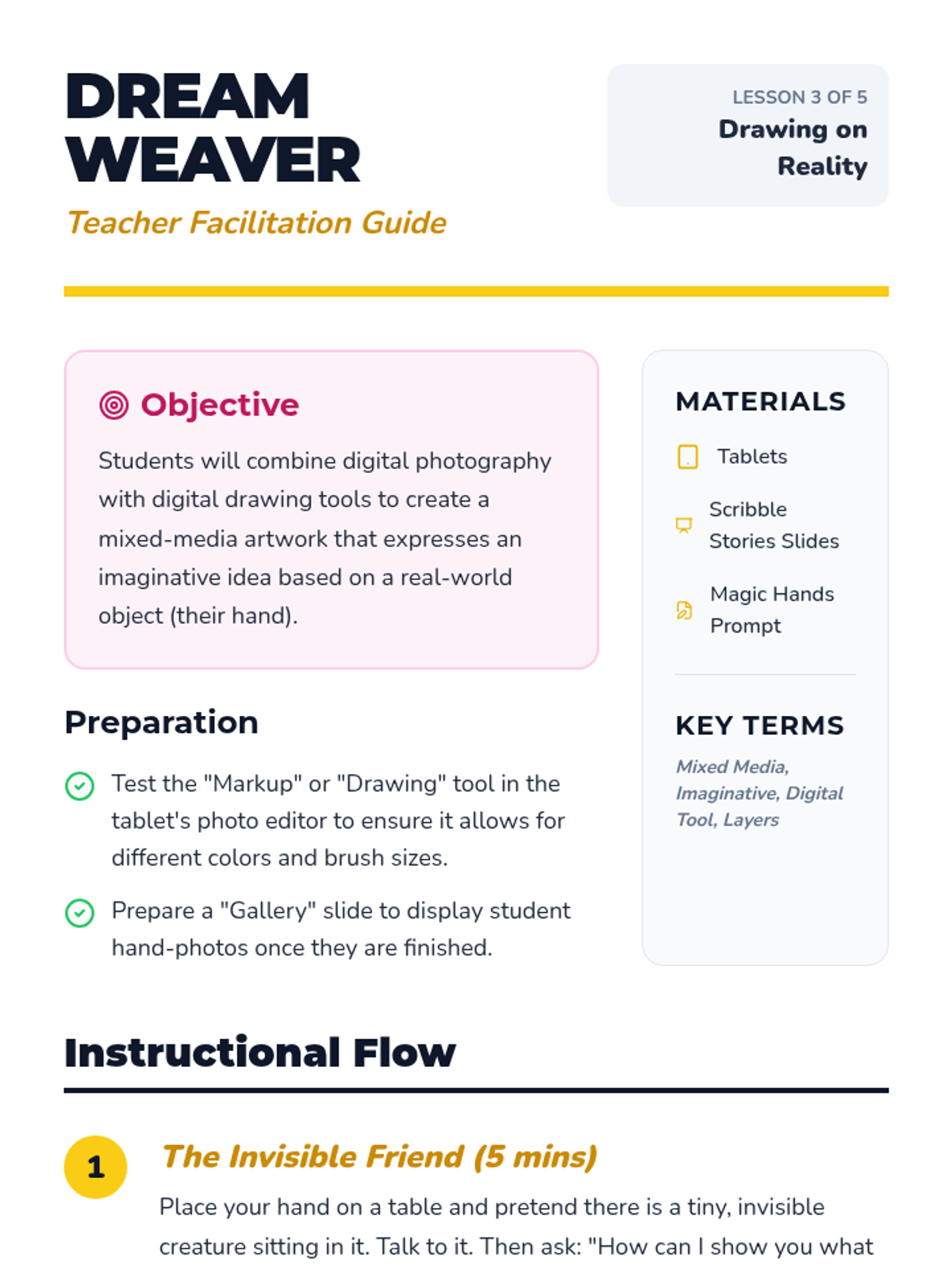
Students import a photo and use drawing tools to add imaginary elements on top. They might draw a bird landing on their hand.
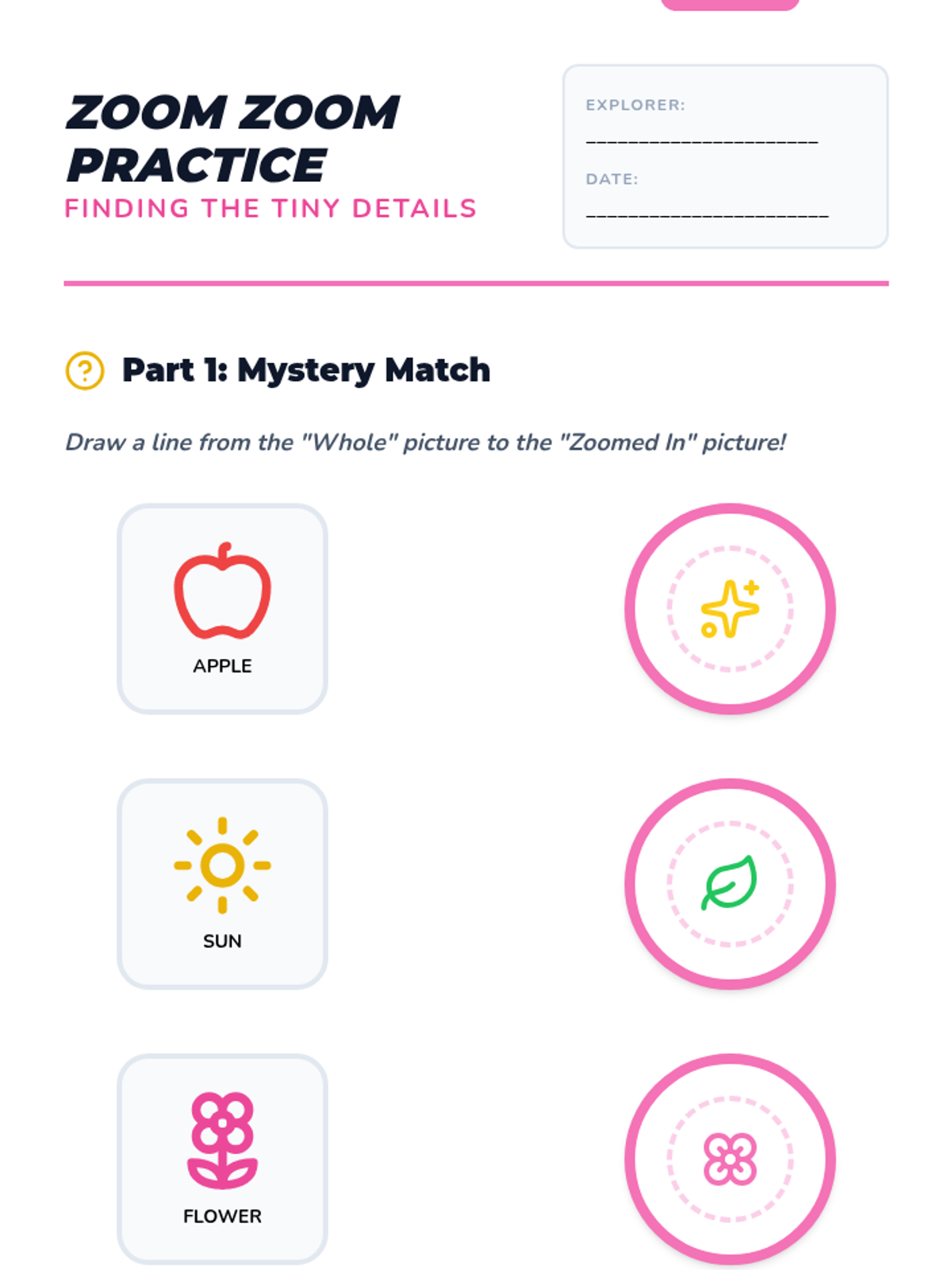
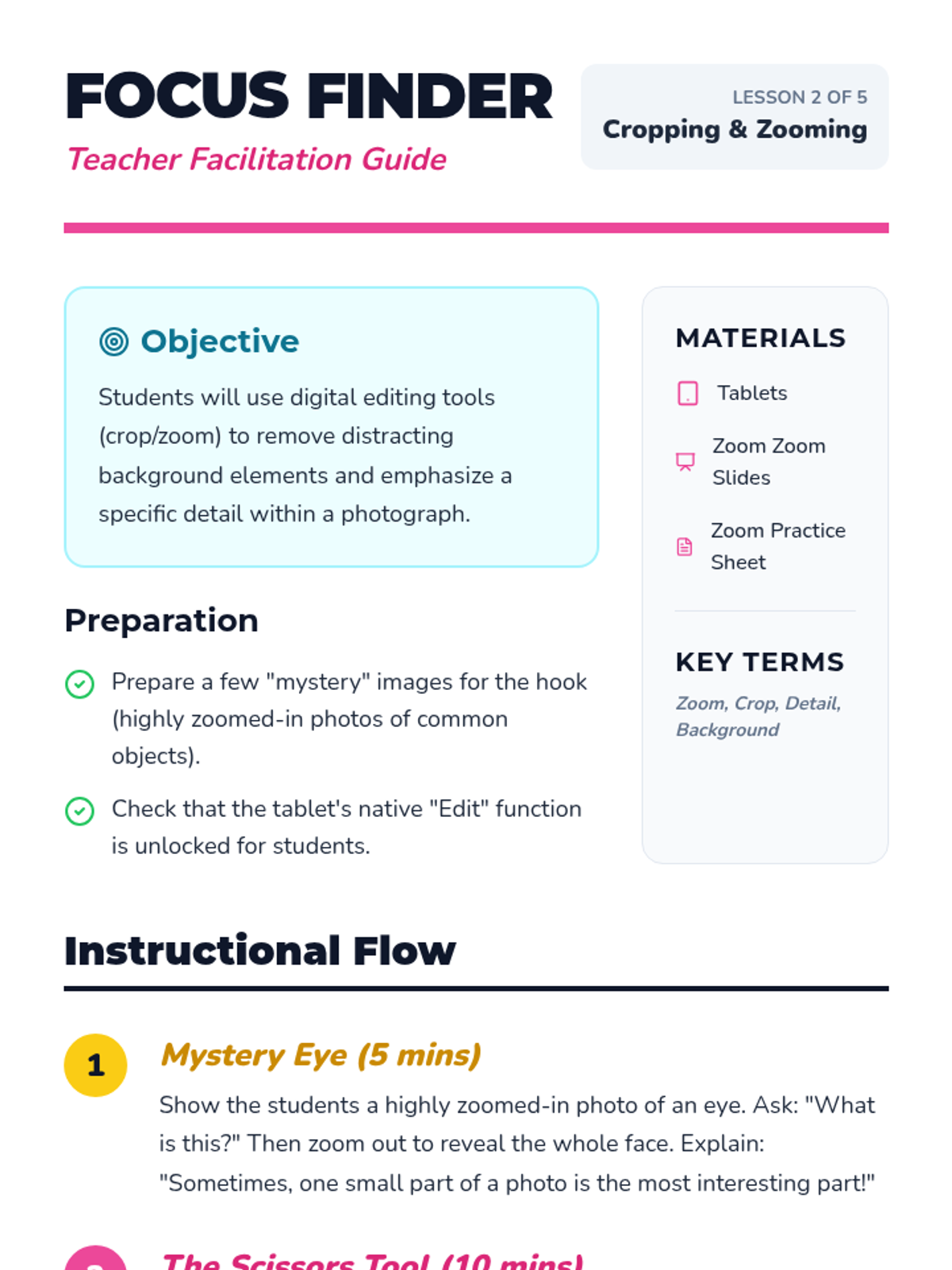
Students take a photo and then use edit tools to crop it or zoom in. They discover how removing background clutter helps the viewer focus on the main subject.
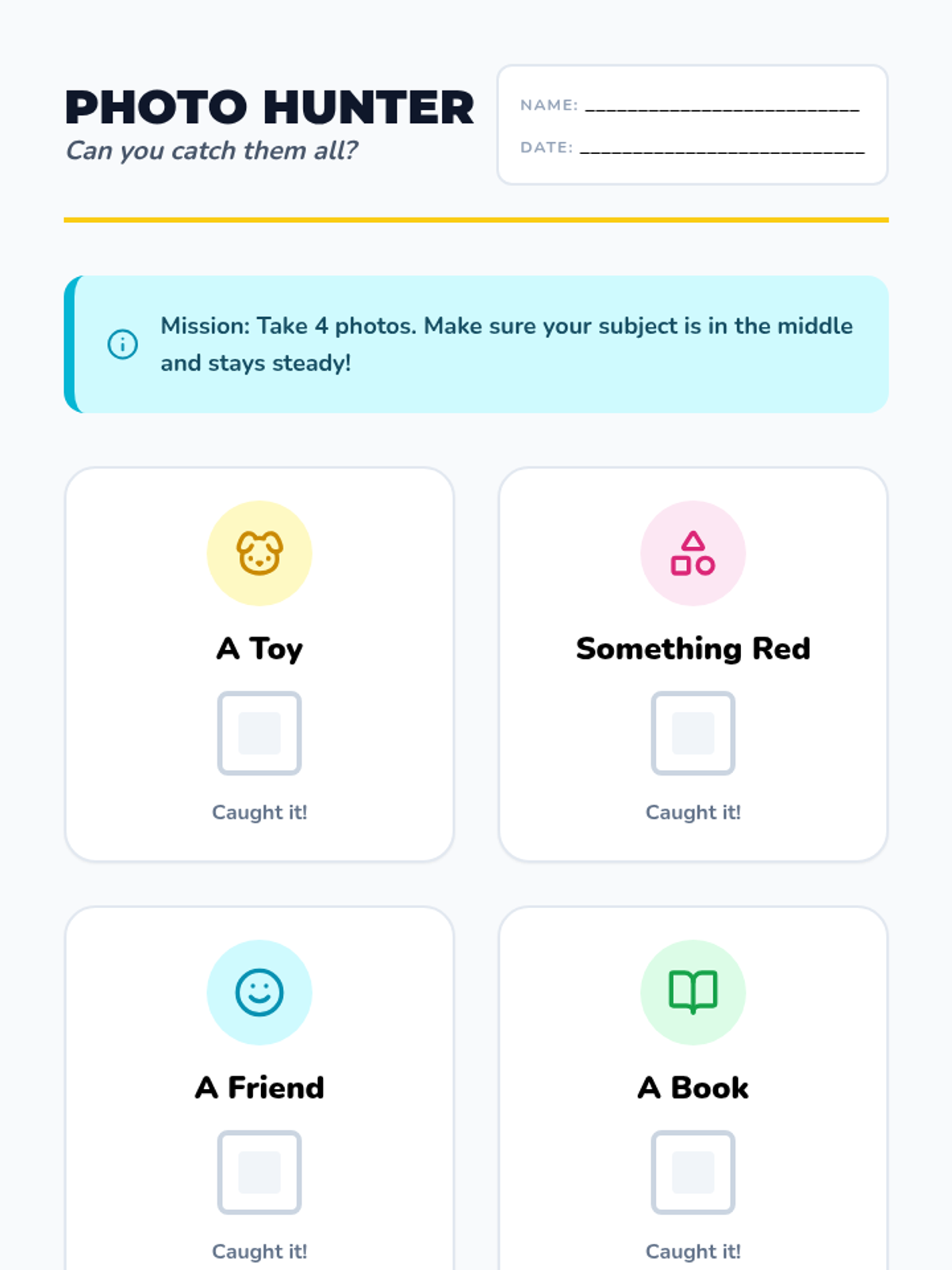
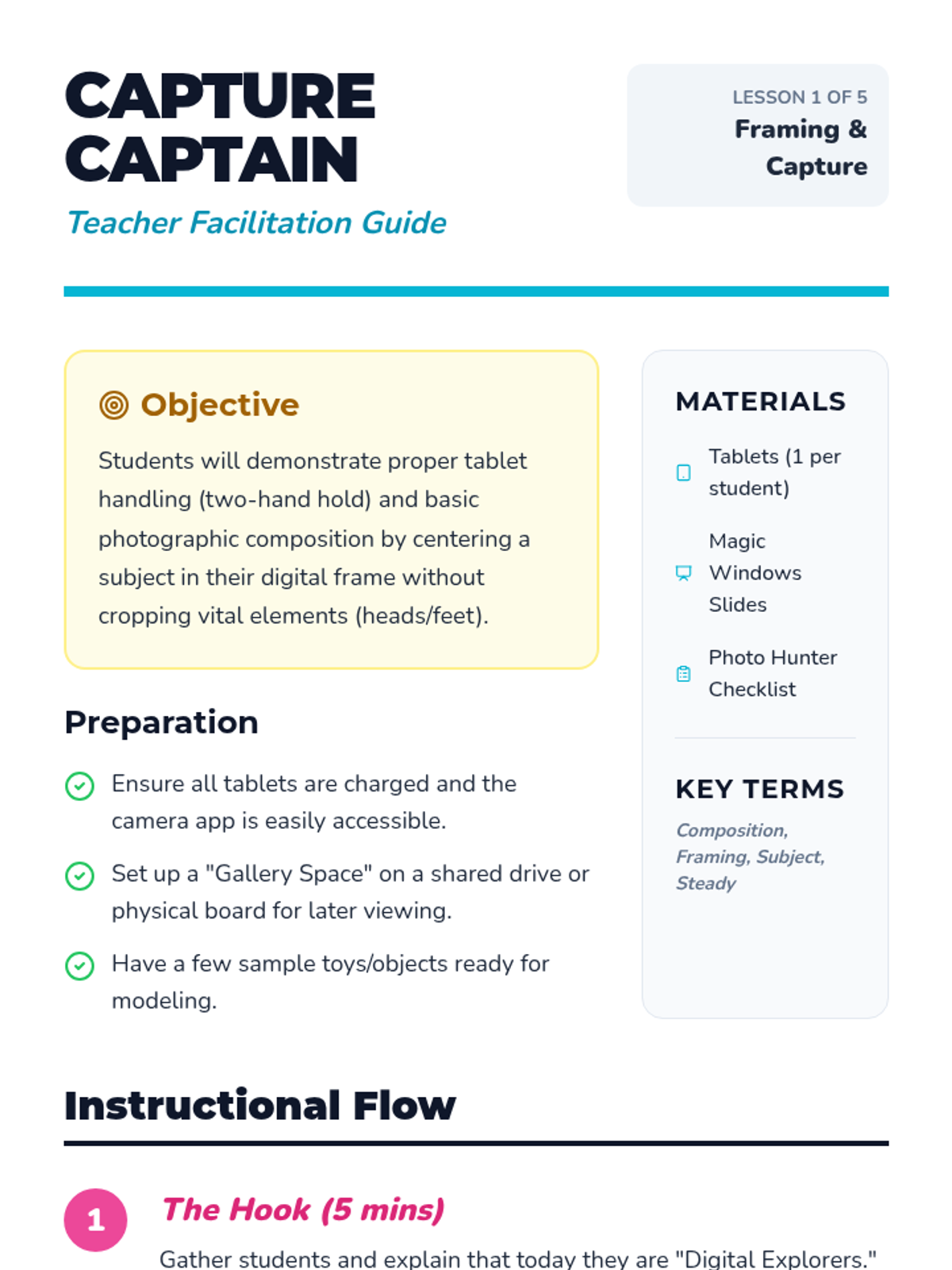
Students learn how to hold a tablet steady to take a clear photo. They practice 'framing' by trying to fit a specific object in the center of the screen without cutting off heads or feet.
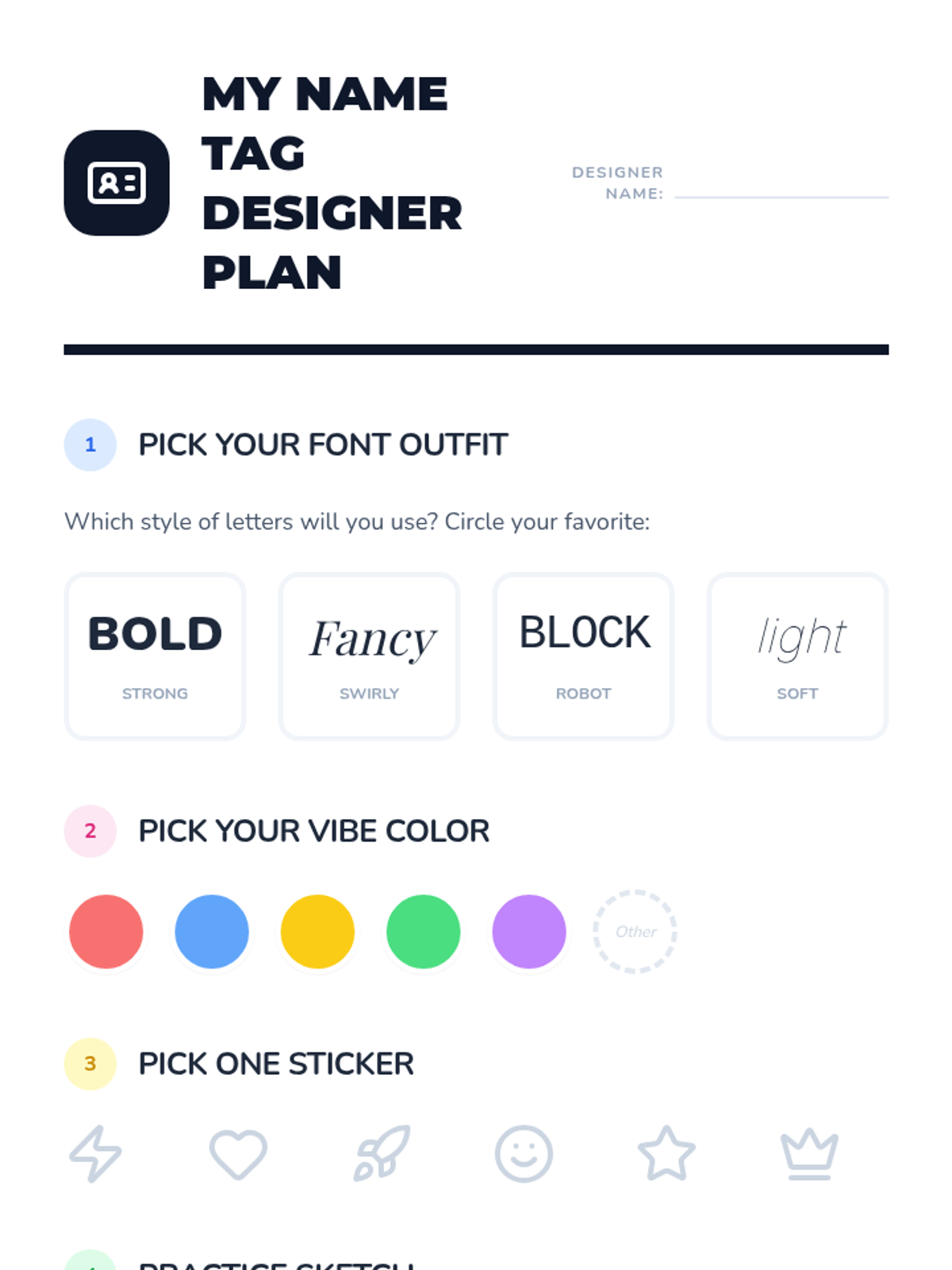
The capstone project where students apply their learning to create a personalized digital name tag. They select a font, color, and decorative elements that reflect their personality.
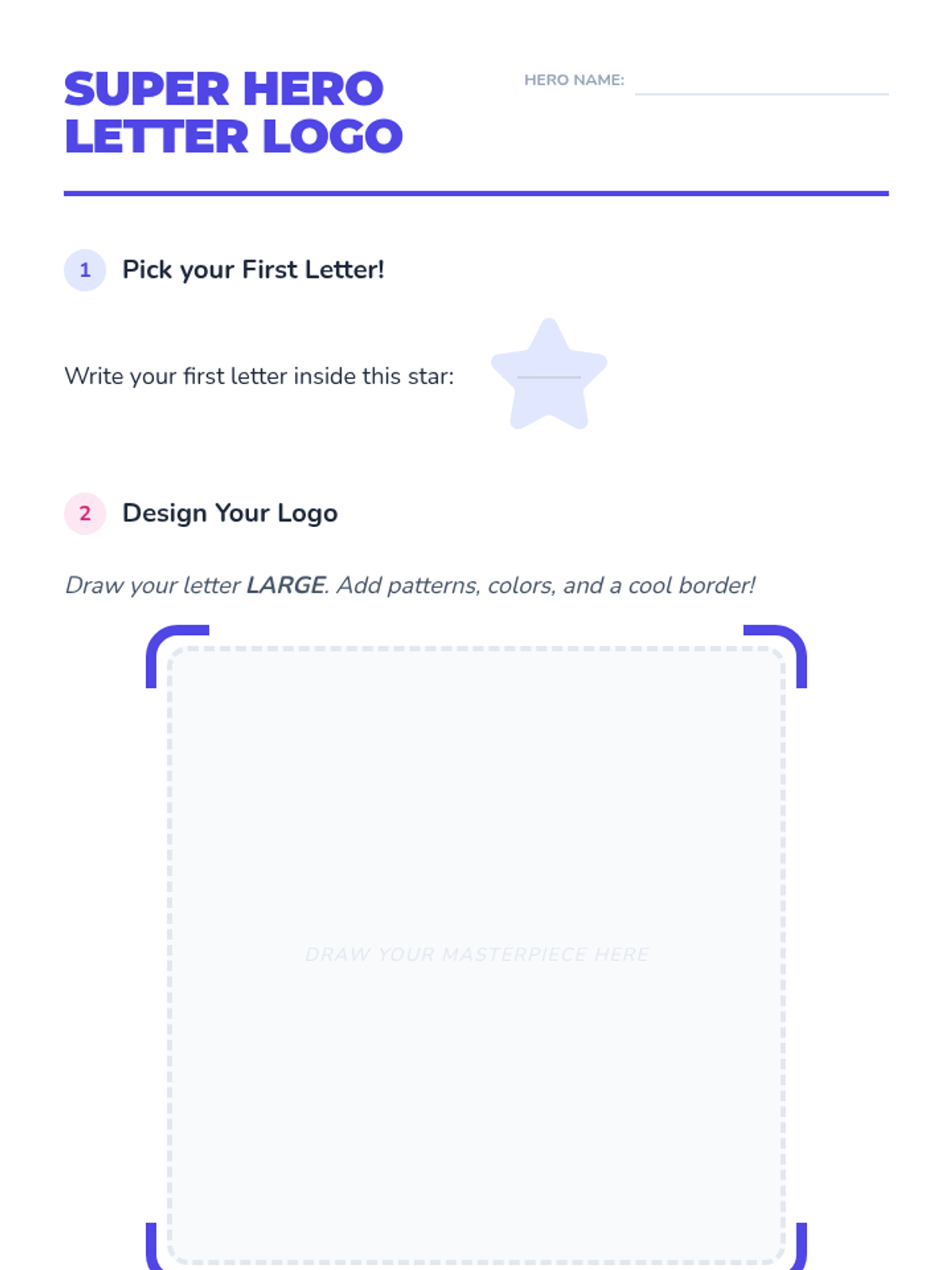
Students treat individual letters as canvas for art. They decorate letters with patterns and colors, reinforcing the concept of typography as a form of graphic design.
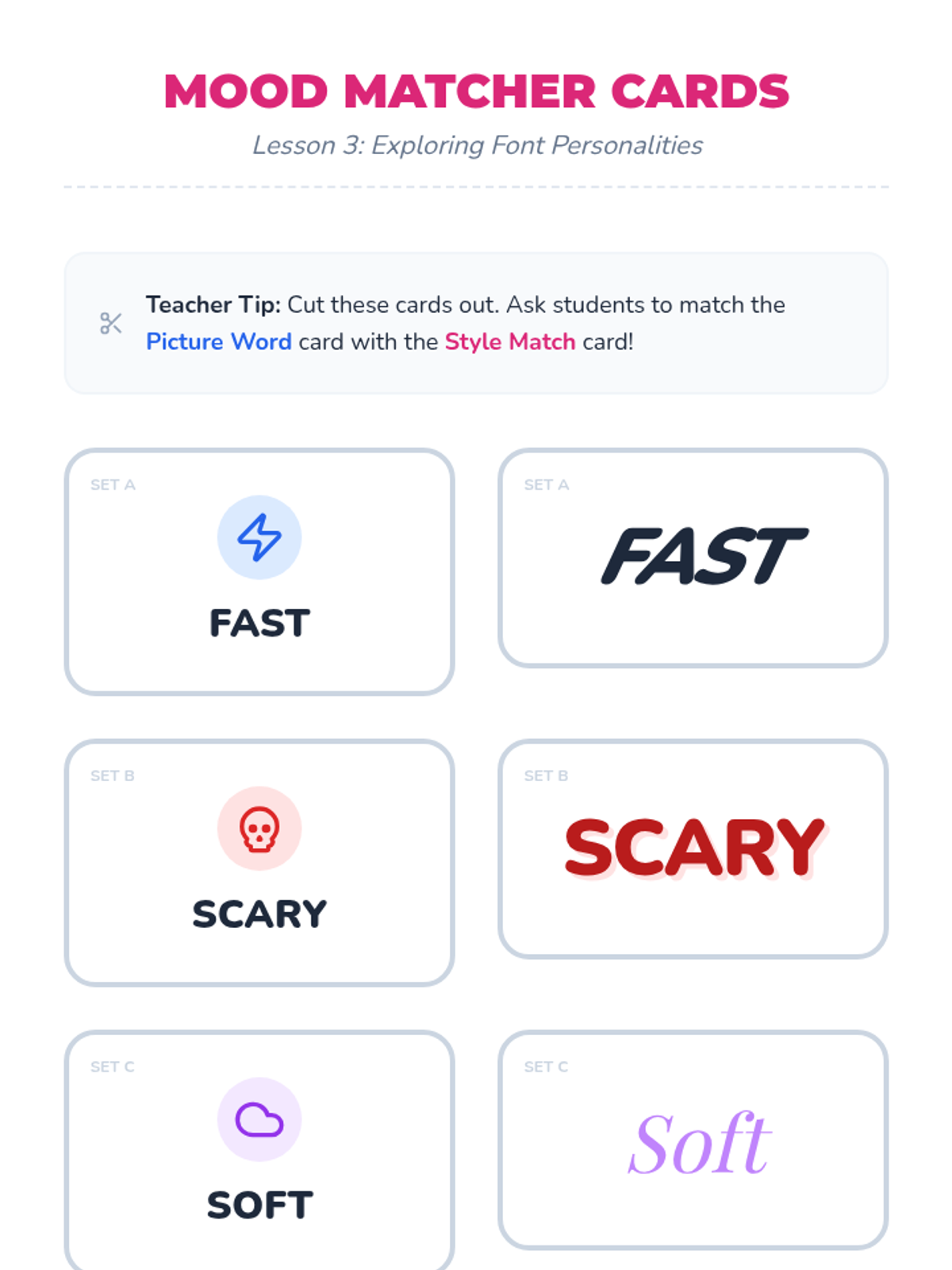
A fun exploration of how fonts convey mood and meaning. Students match descriptive words to appropriate font styles and discuss why certain shapes feel 'fast', 'slow', or 'scary'.
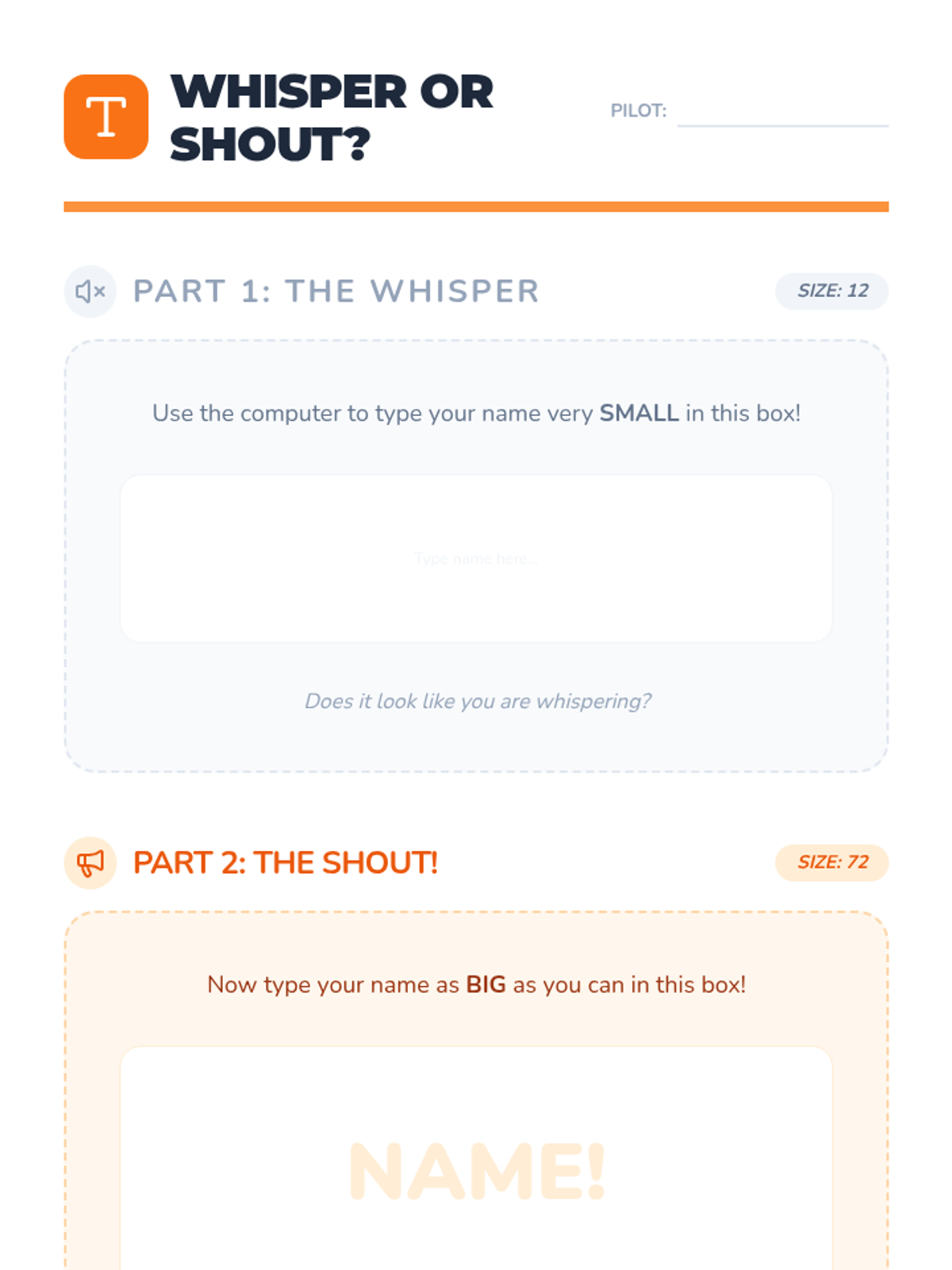
An introduction to using text tools in a digital environment. Students learn to type their names and manipulate size to make words 'whisper' (small) or 'shout' (large).
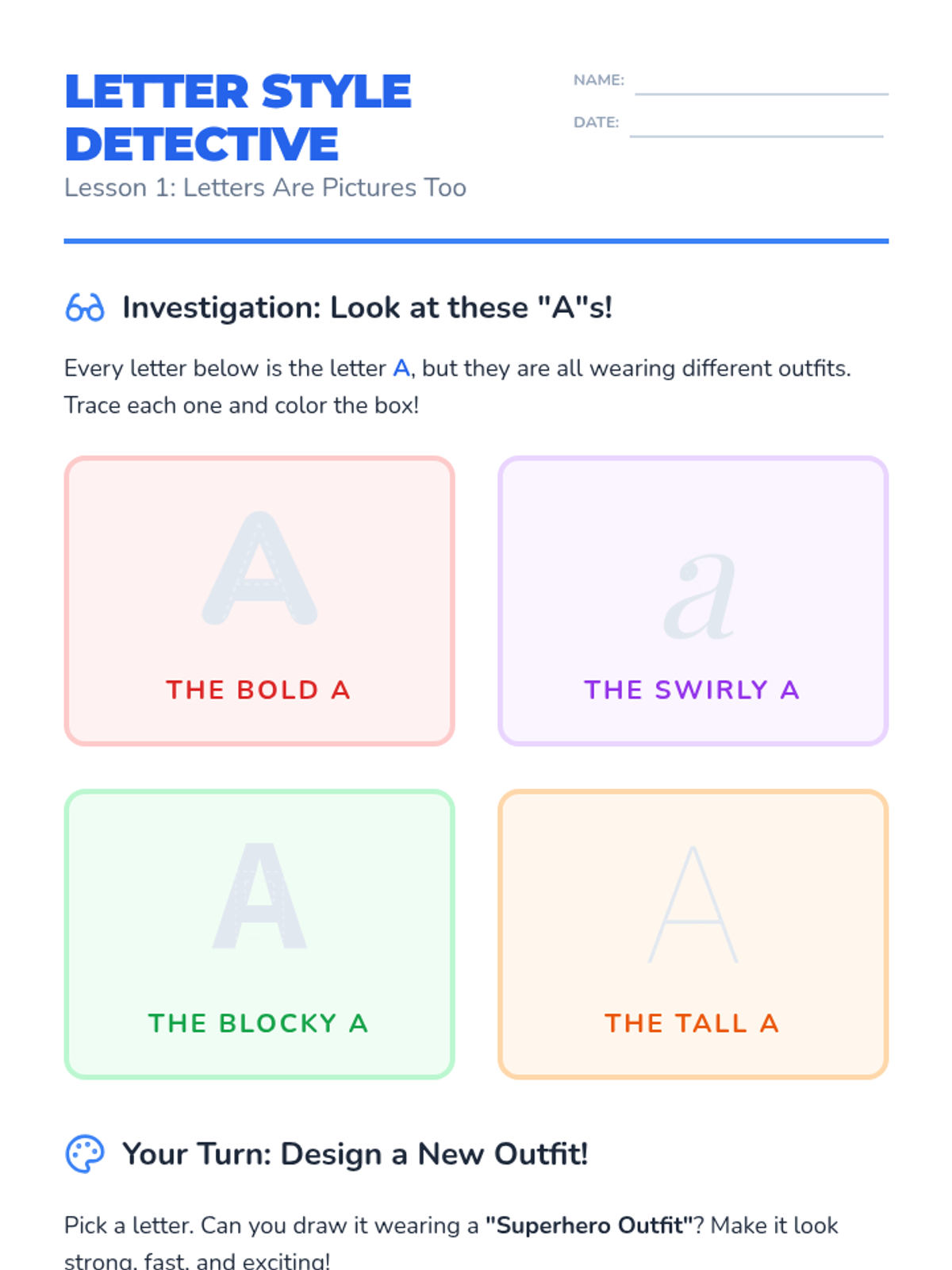
Students explore the idea that letters are made of shapes and lines and can wear different 'outfits' (fonts). They will observe bold, script, and blocky styles to see how the look of a letter changes.
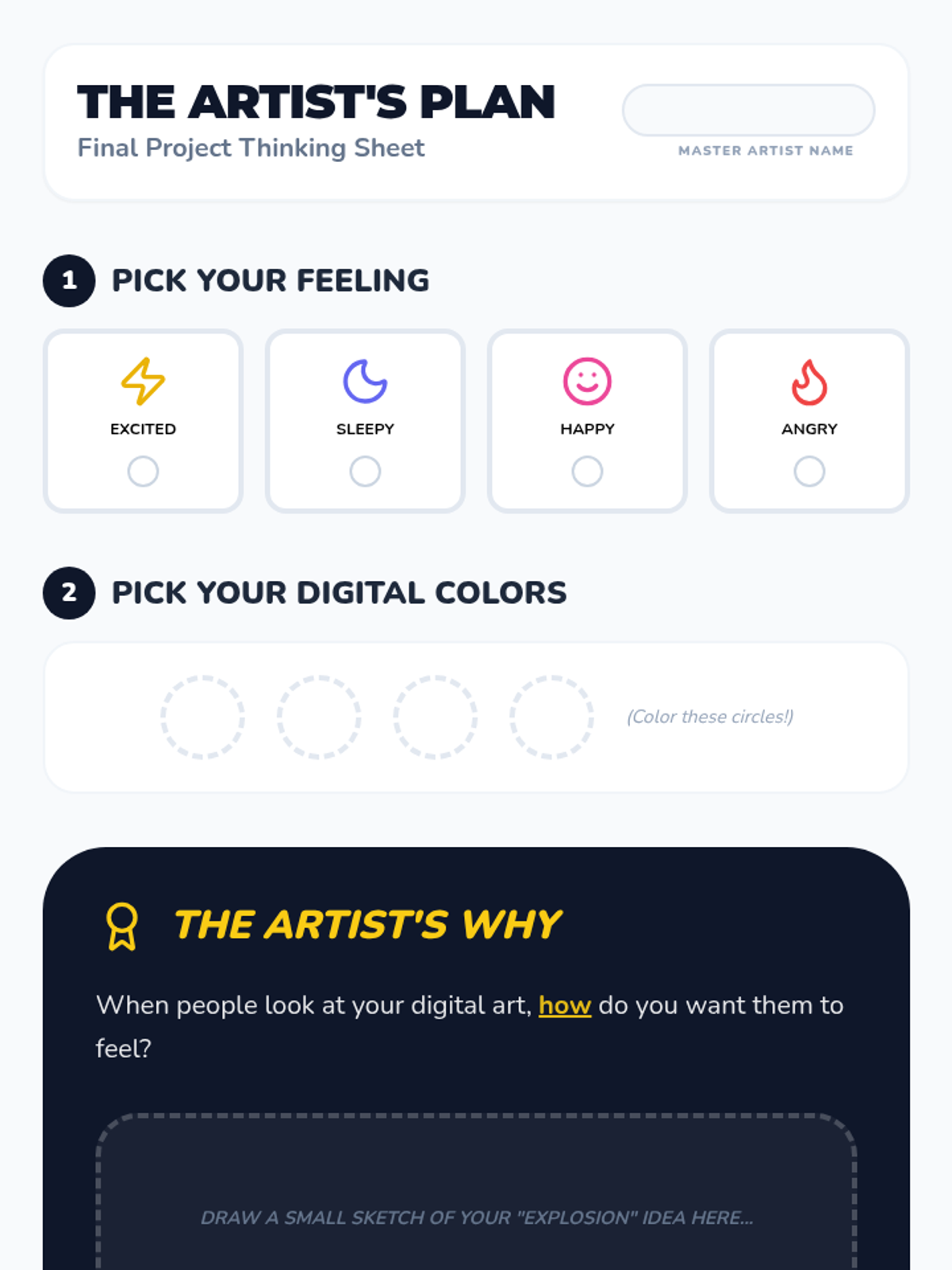
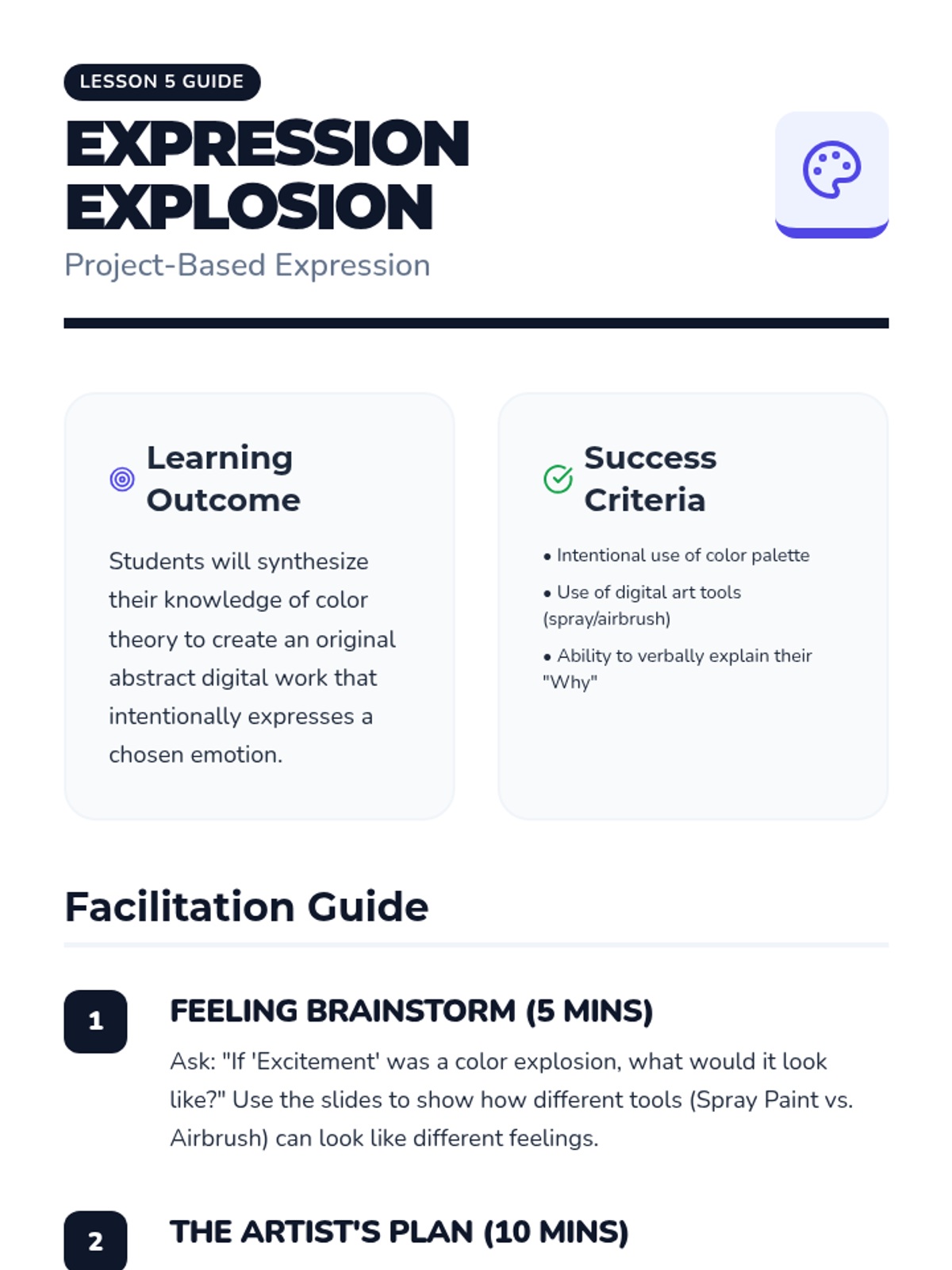
Students create an abstract expressive piece using digital tools to communicate a specific feeling.
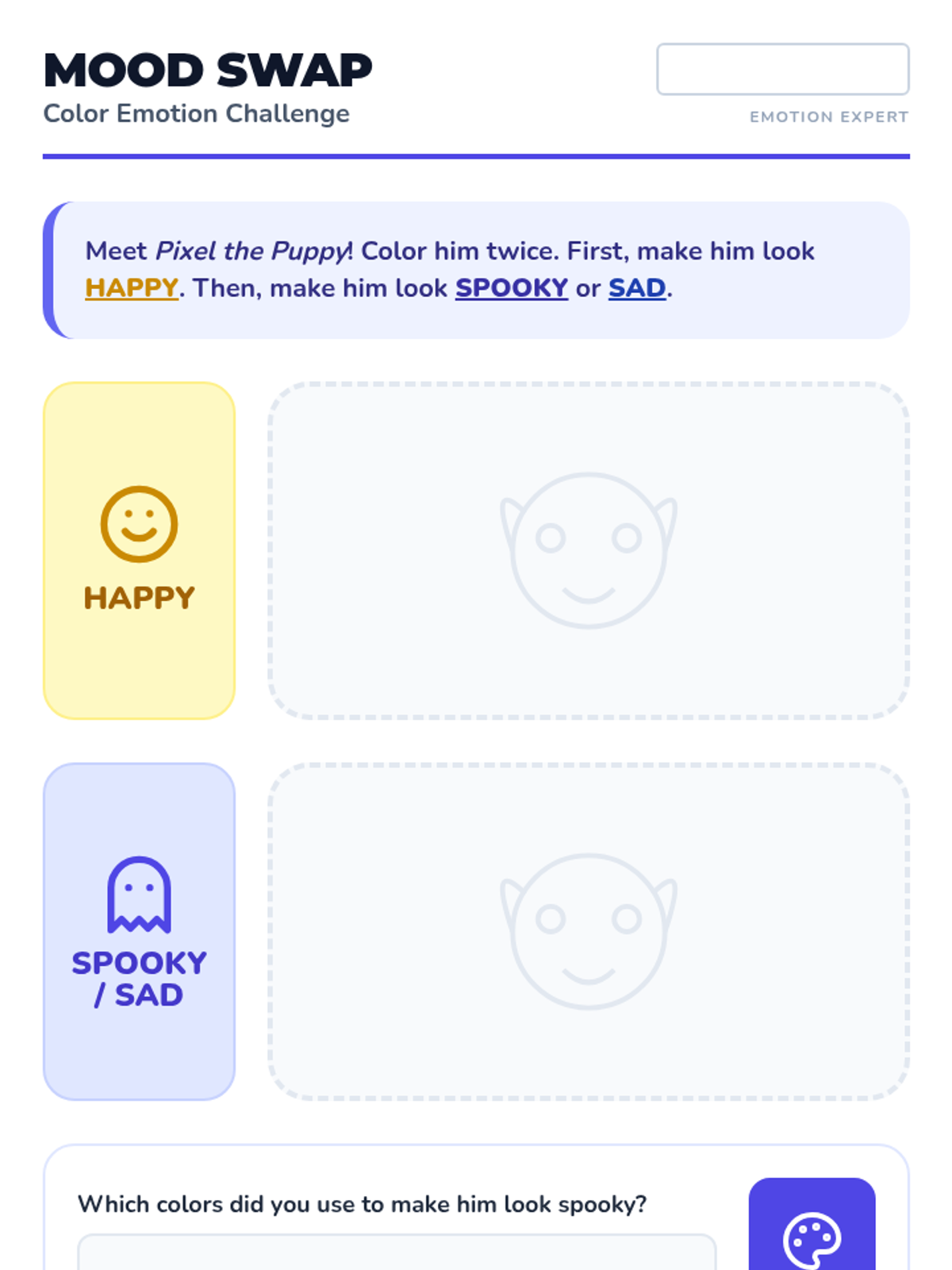
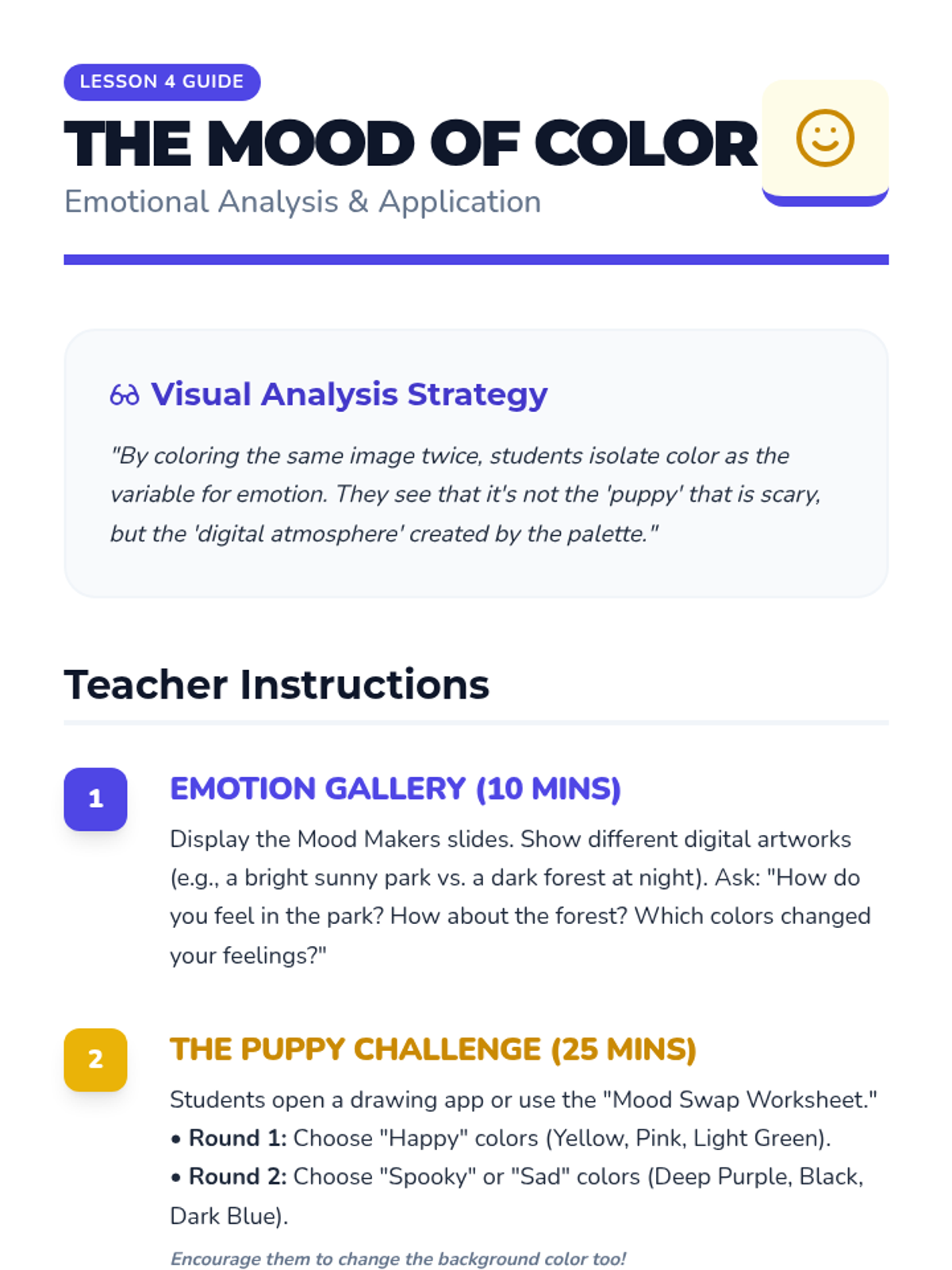
Students analyze how color affects mood and practice using color to change the feeling of an image.
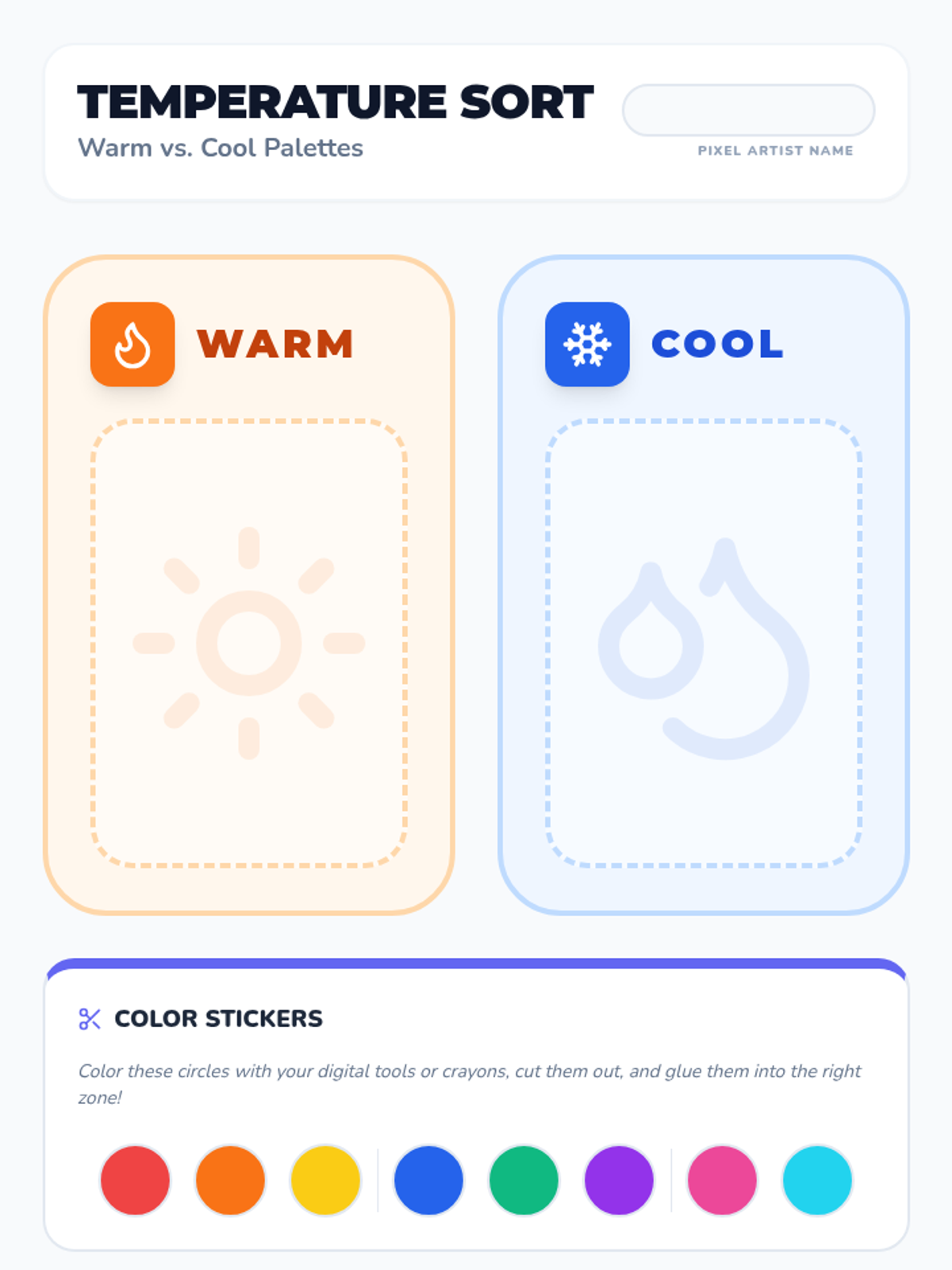
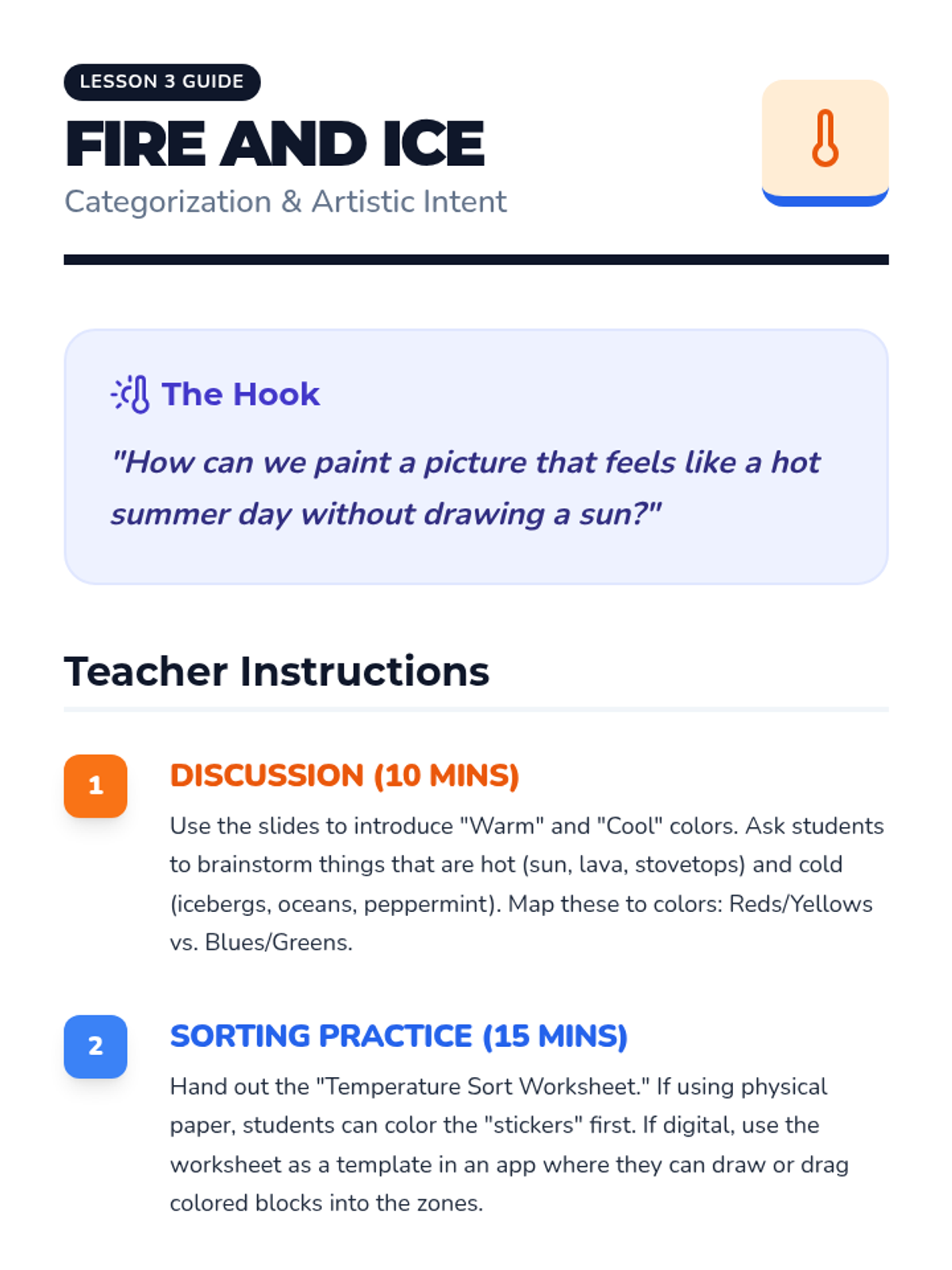
Students explore temperature through color, creating scenes with warm and cool digital palettes.
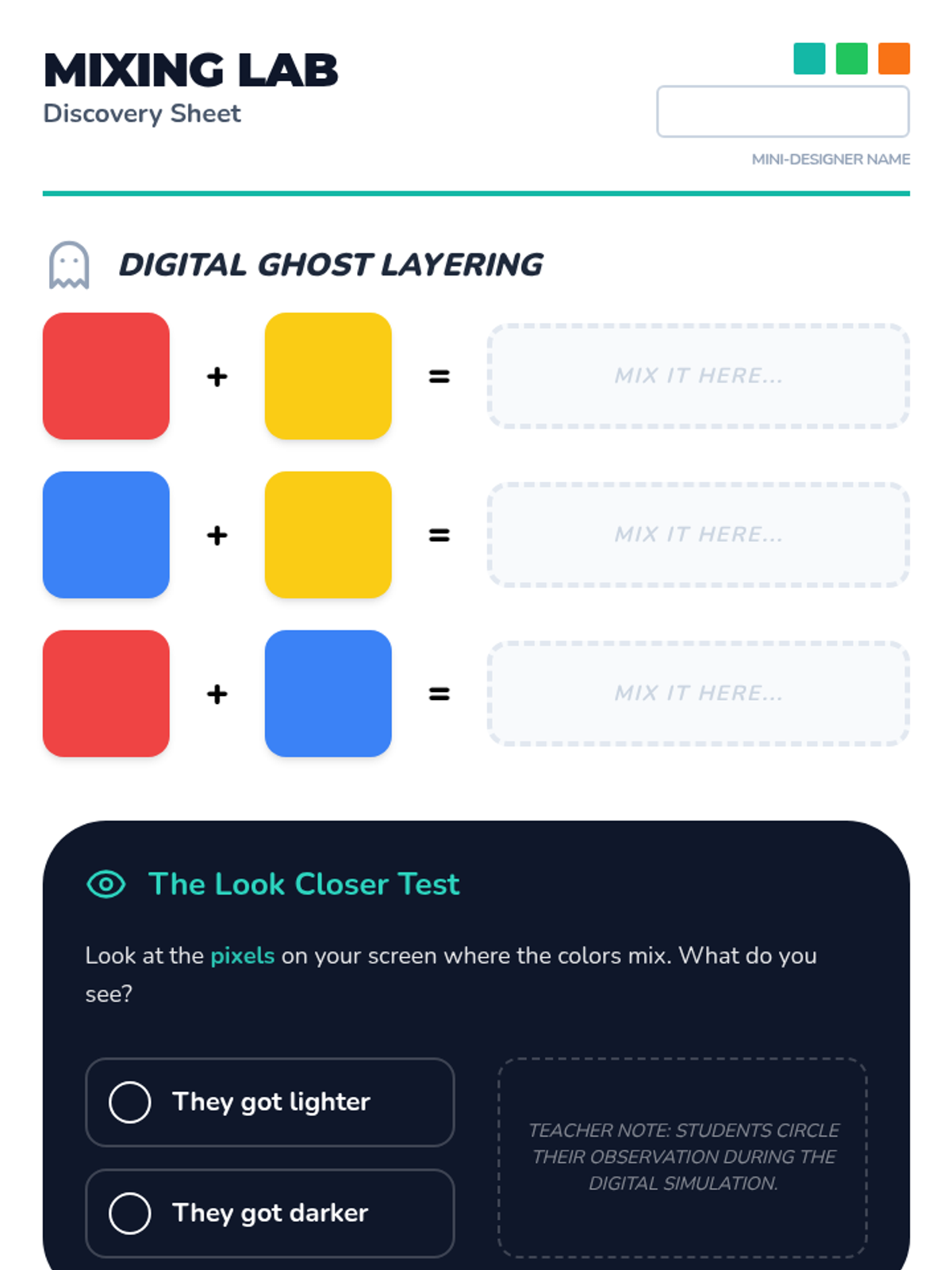
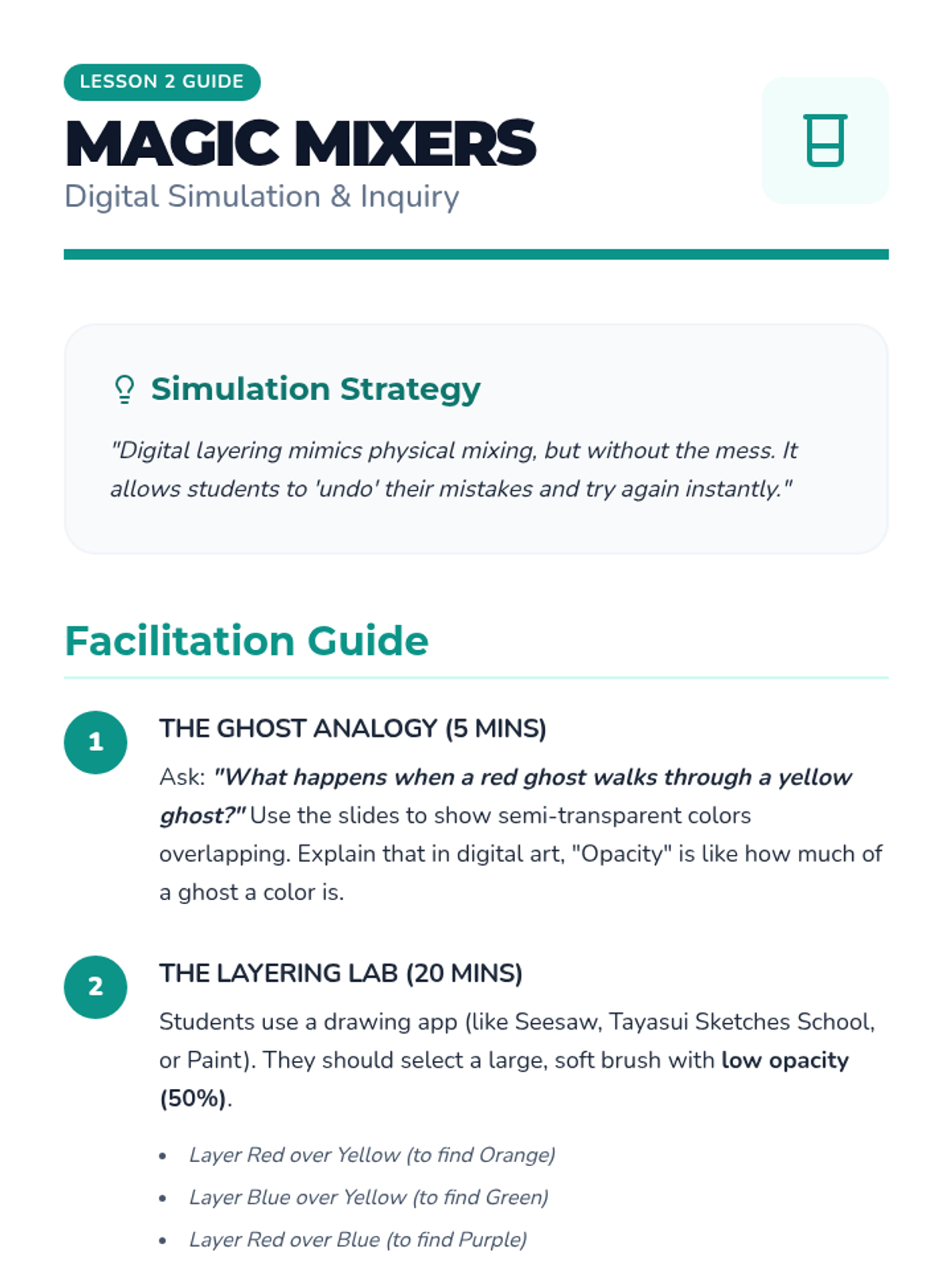
Students layer primary colors digitally to discover secondary colors (orange, green, purple) and observe digital layering.
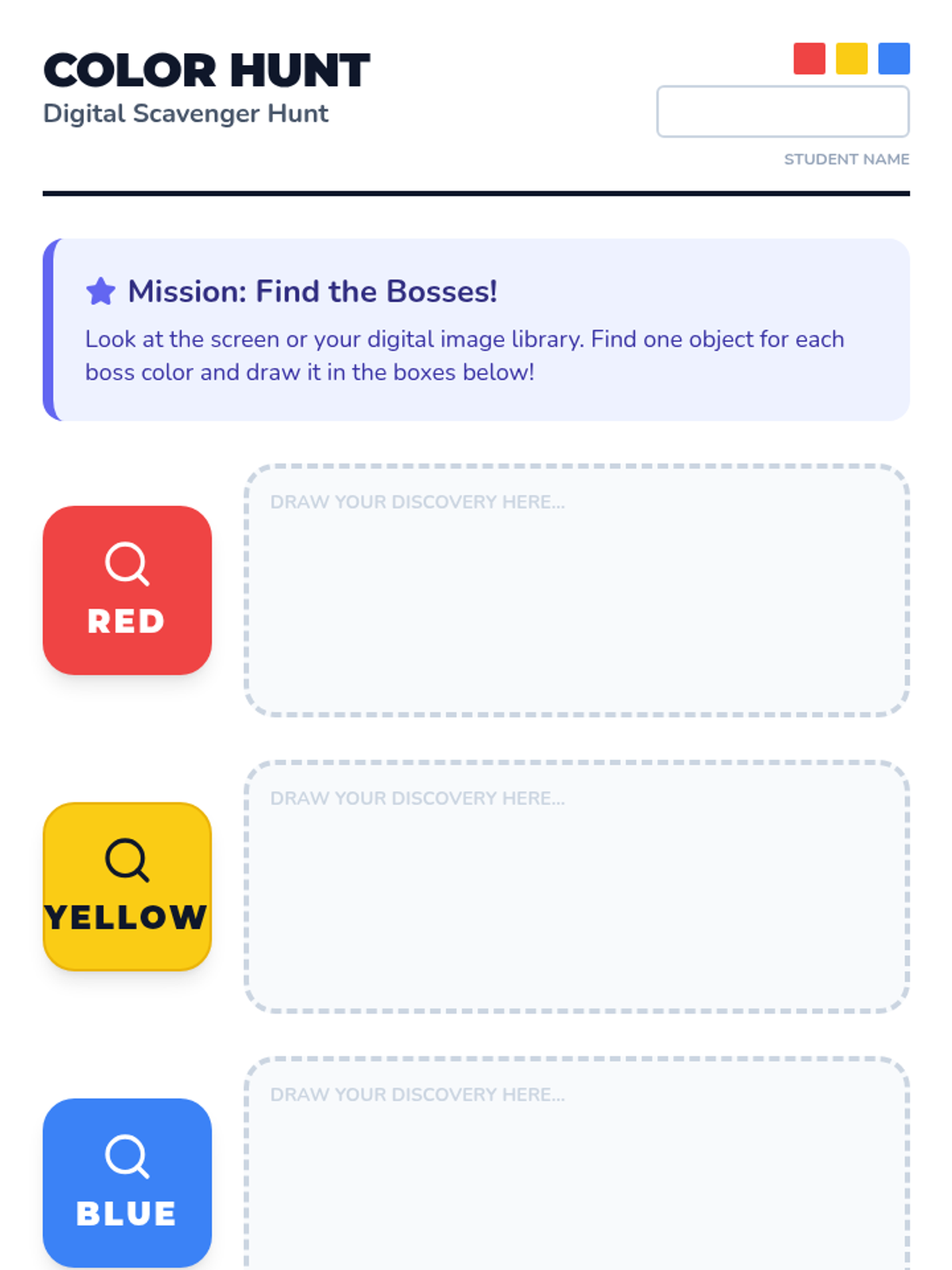
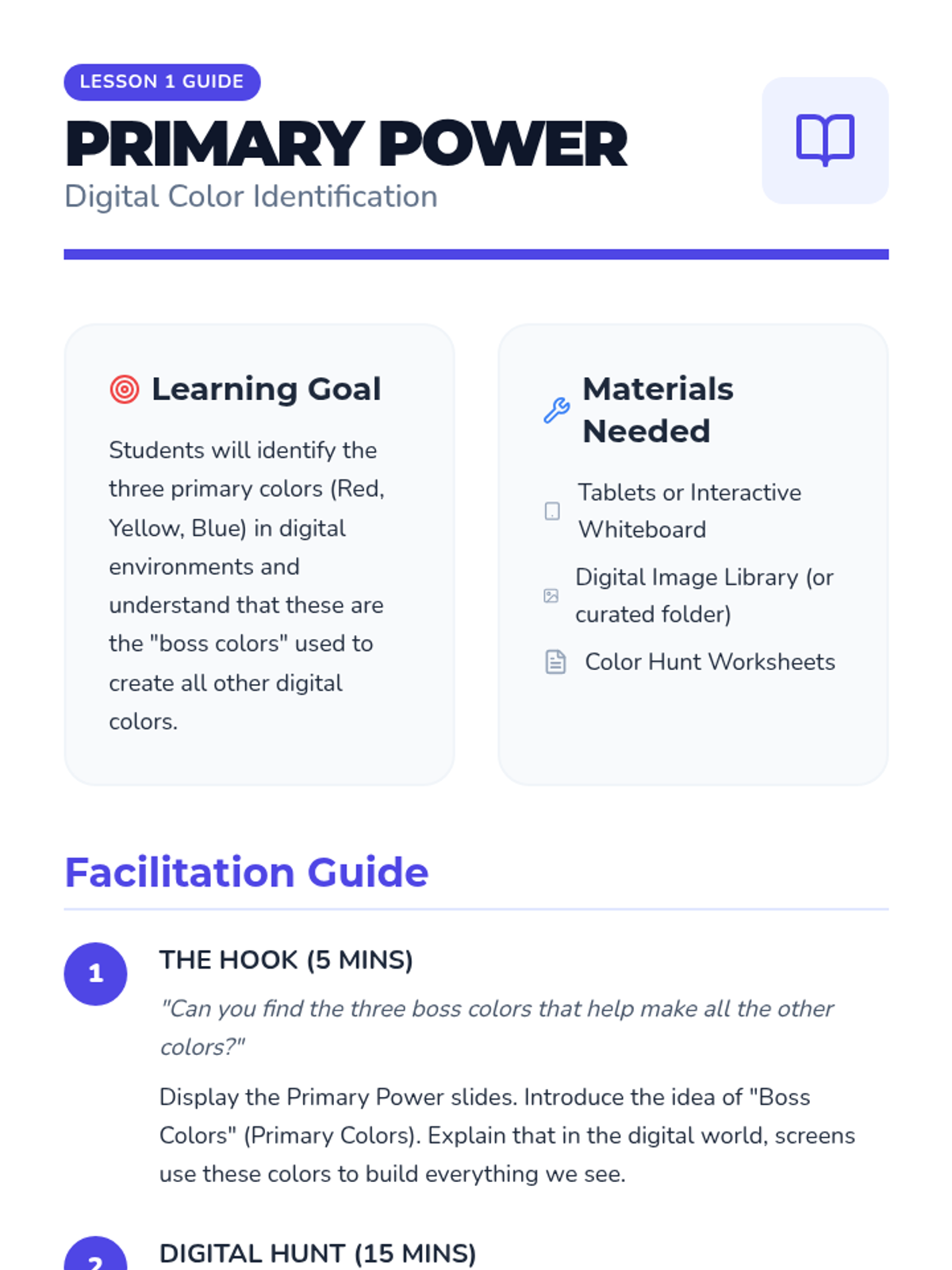
Students identify red, yellow, and blue on a digital color wheel and engage in a digital scavenger hunt to find objects of these colors.
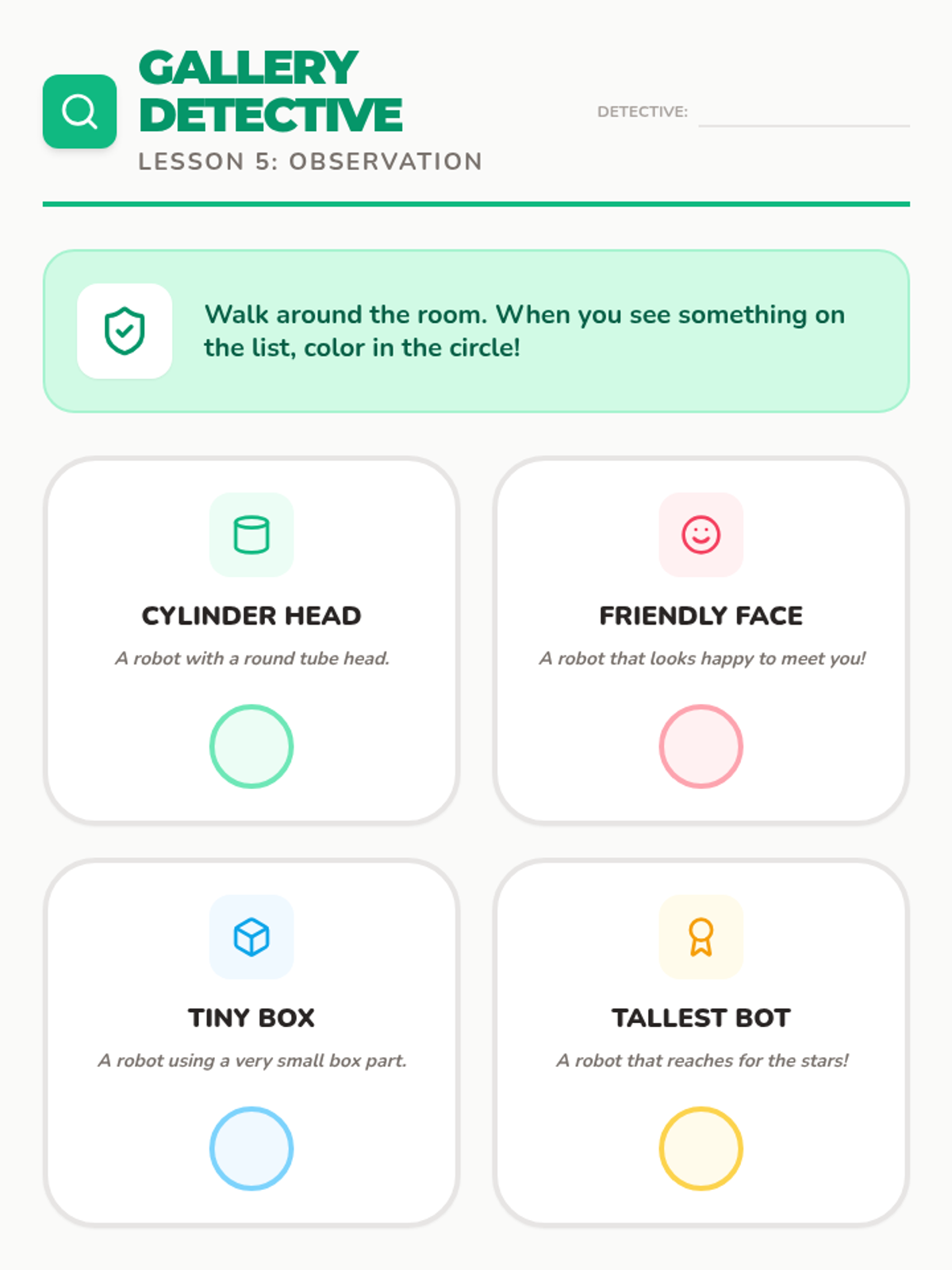
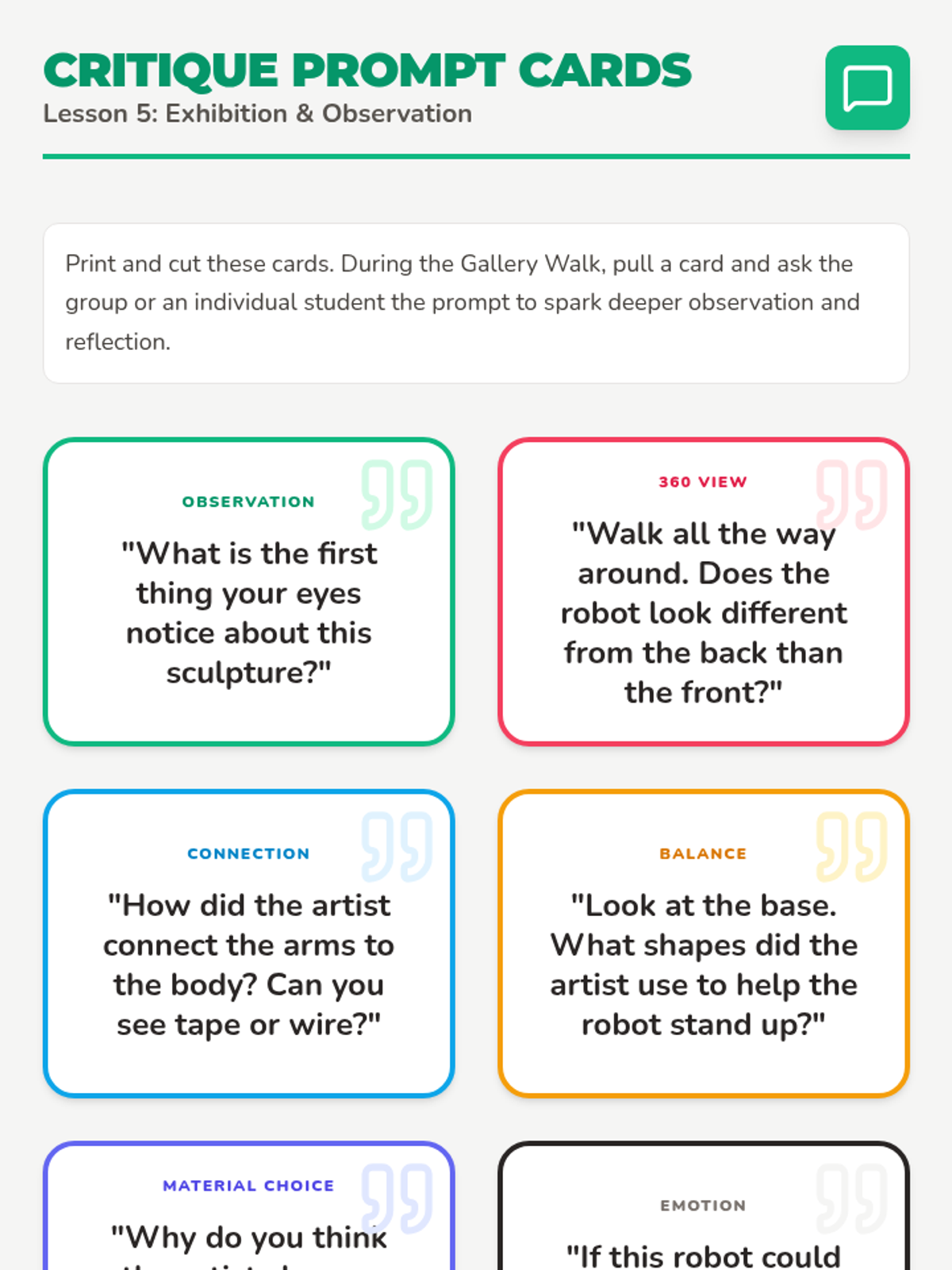
Students display their assemblages in a classroom 'museum' and practice 360-degree observation and art critique.
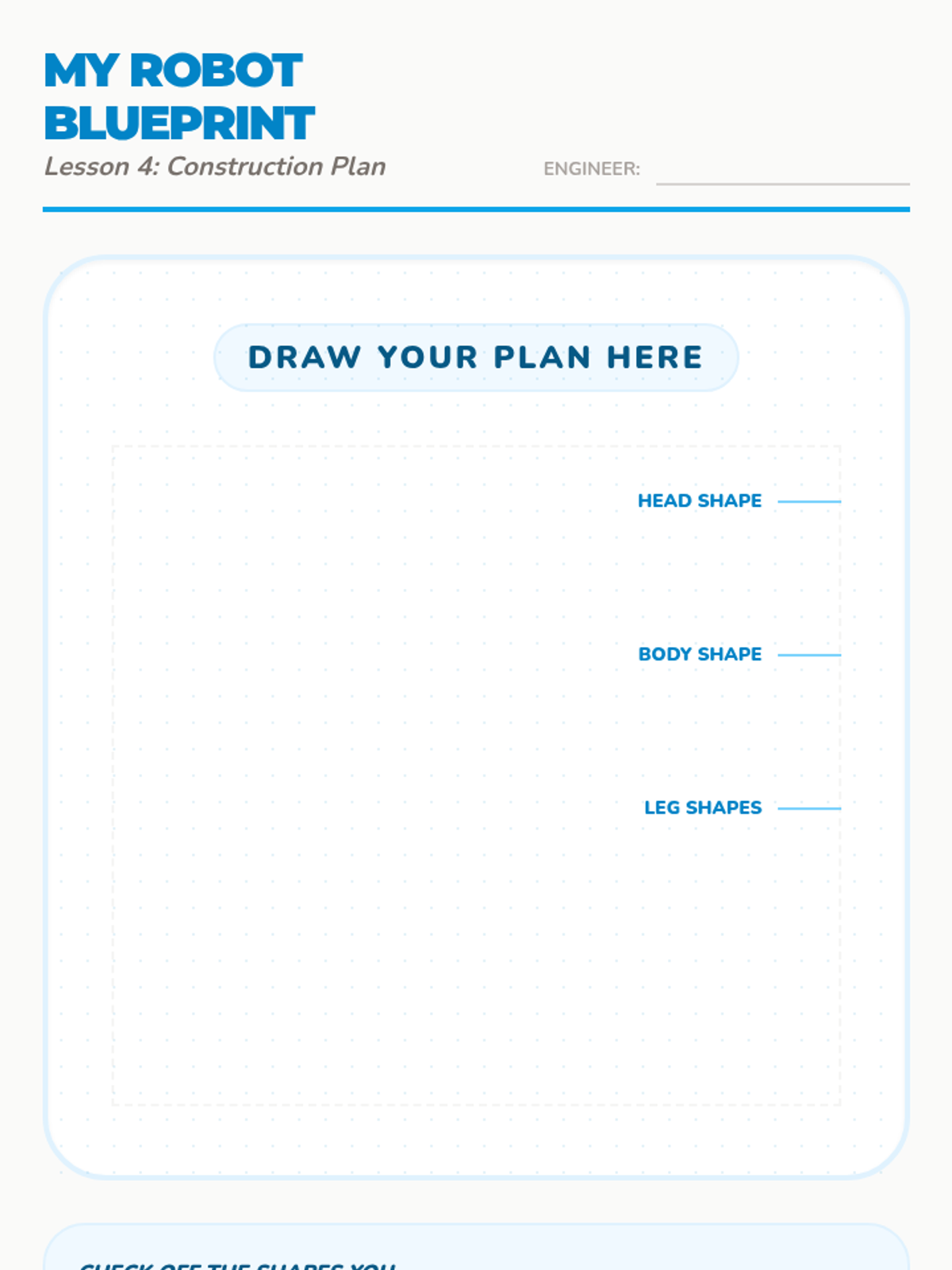
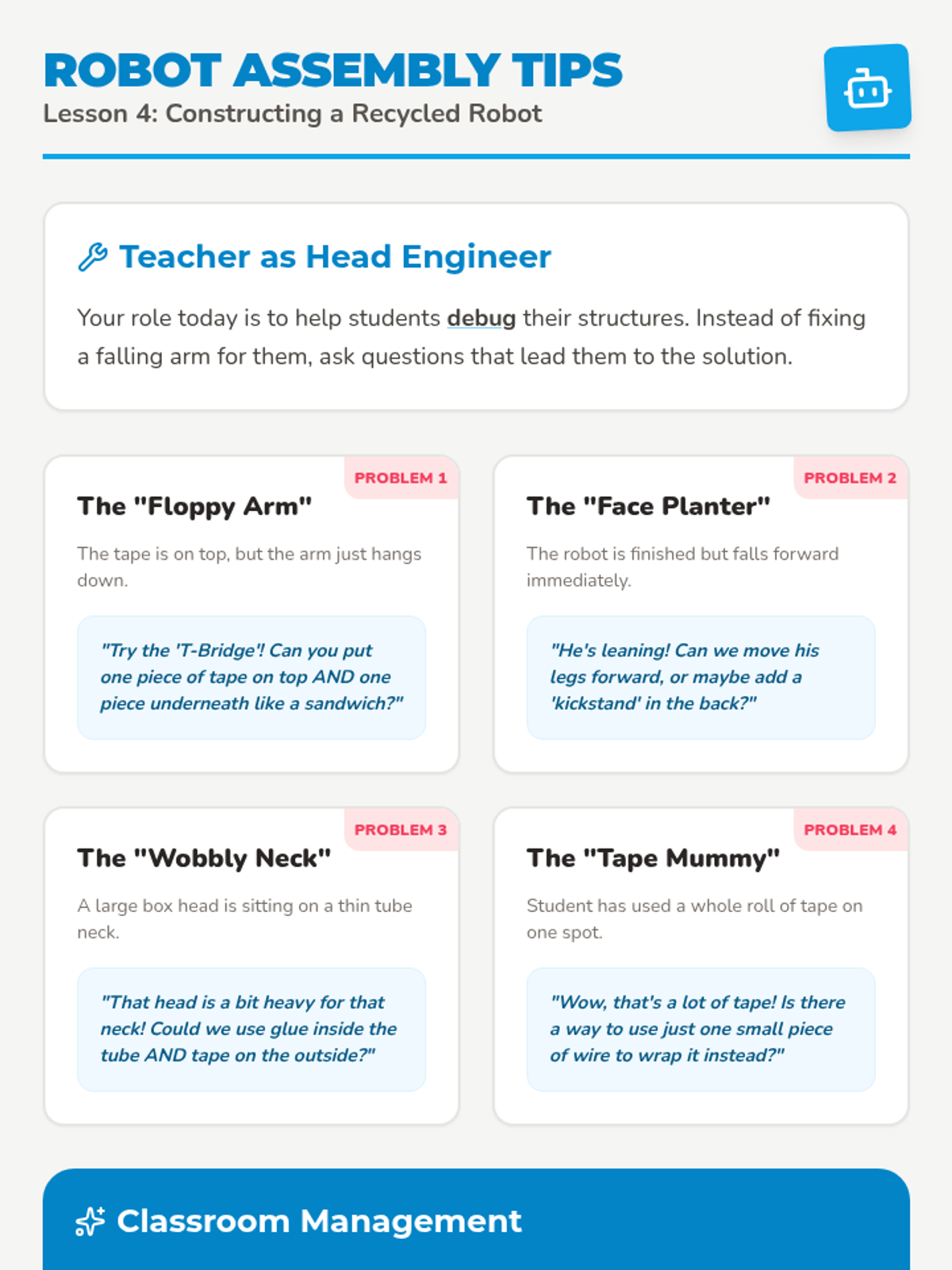
Applying knowledge of balance and fastening, students construct a recycled robot, solving structural problems to ensure it stands.
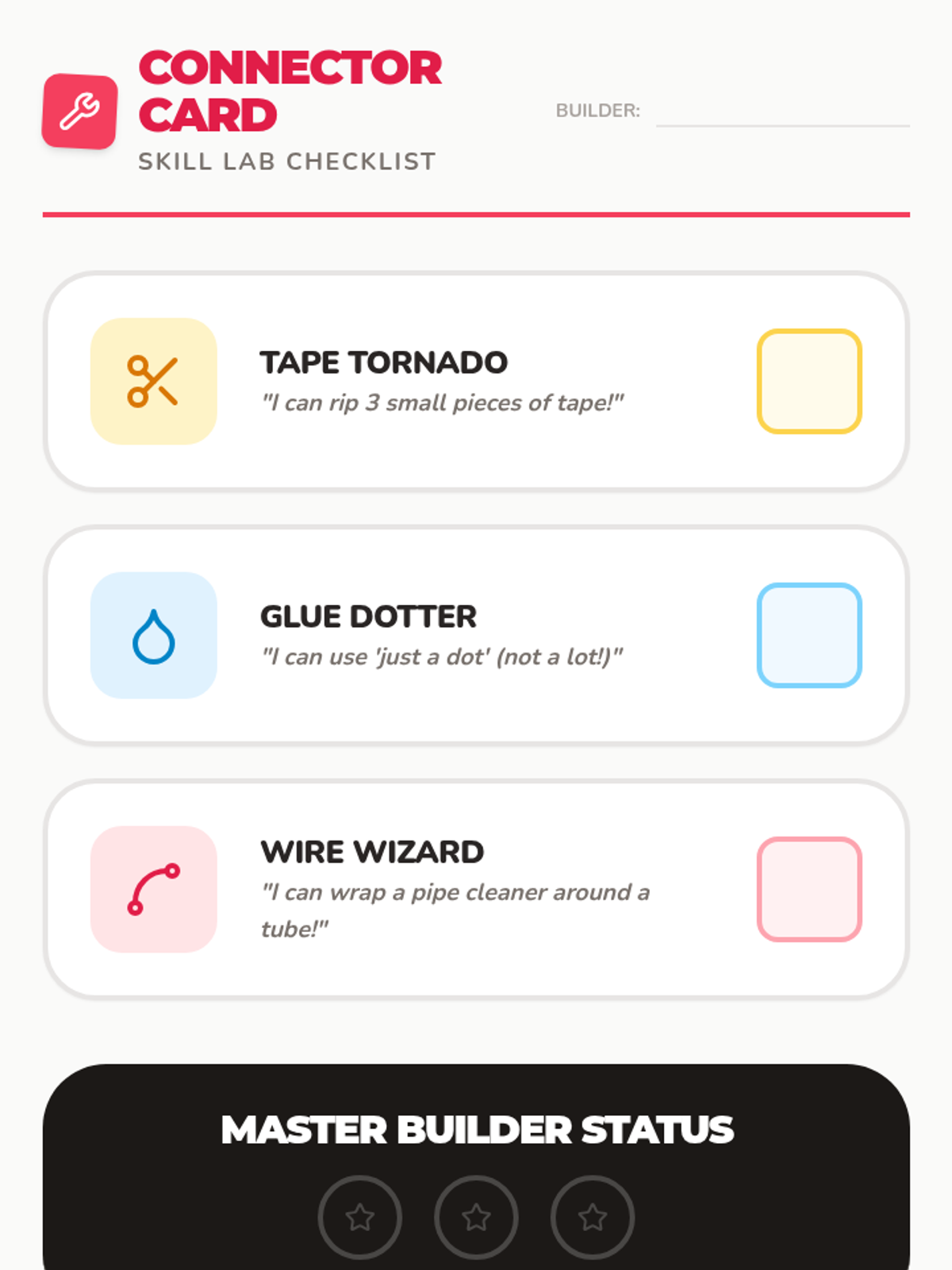
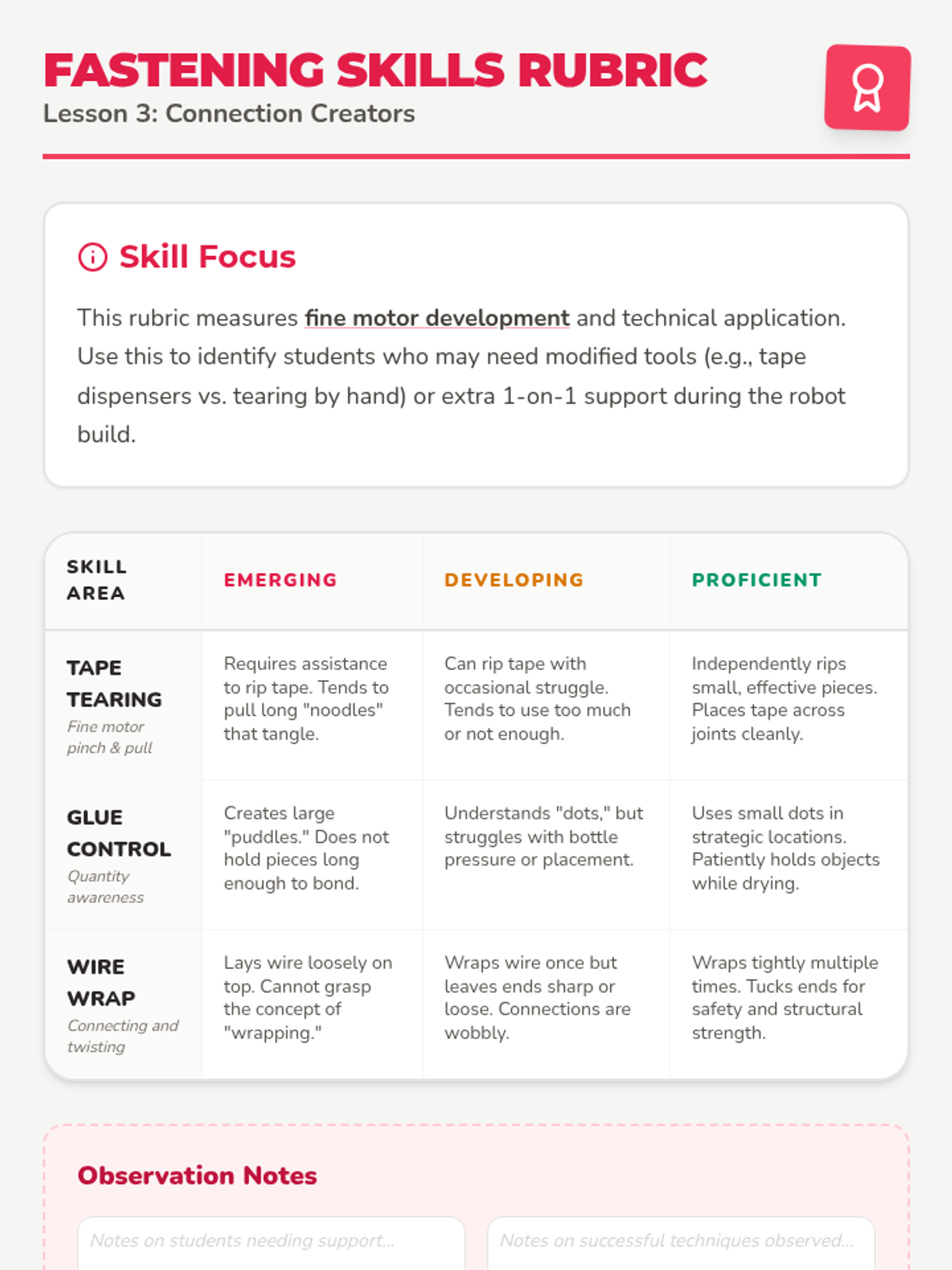
Students learn how to use tape, pipe cleaners, and other connectors to join distinct objects together securely.
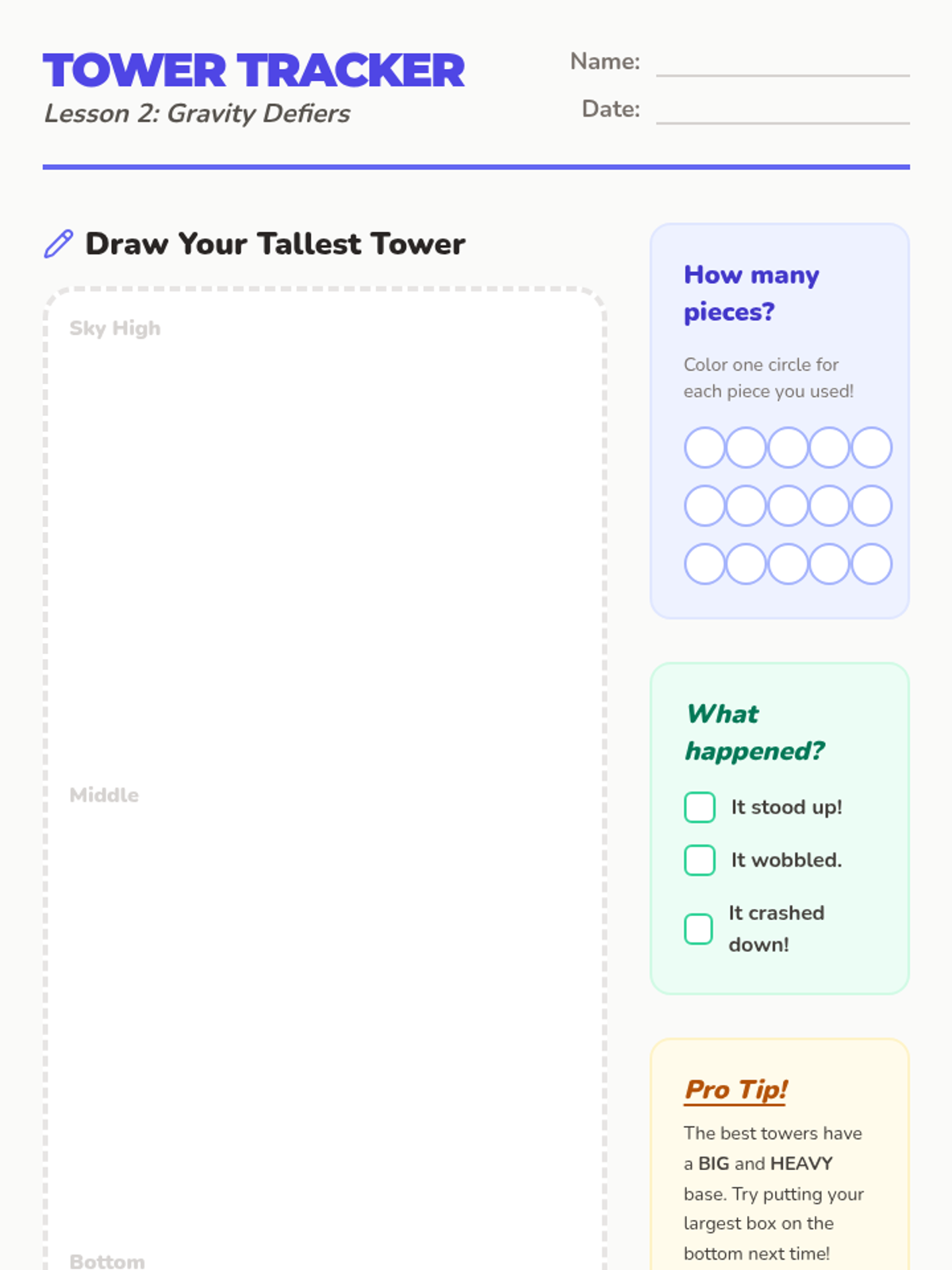
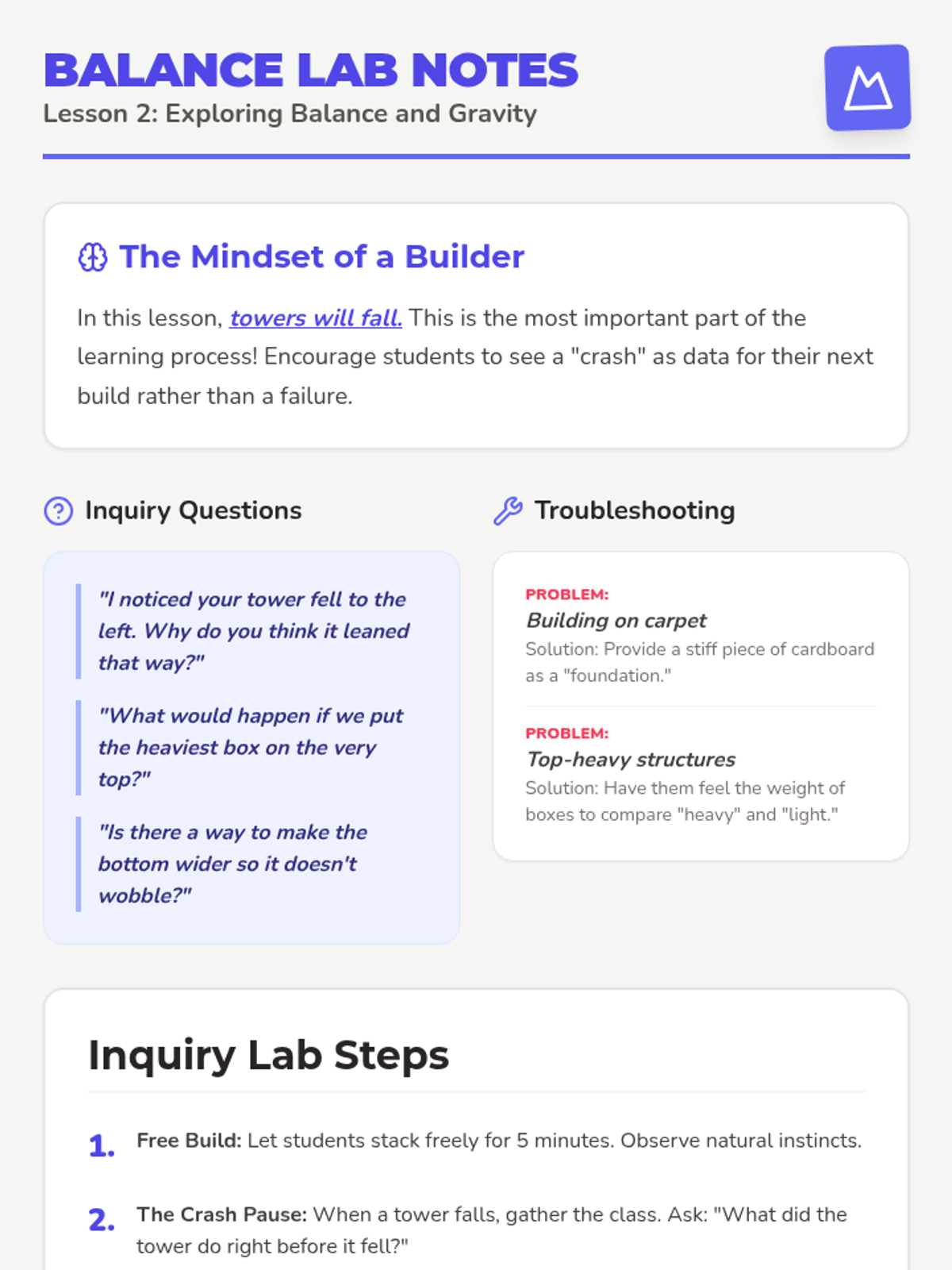
Students experiment with stacking objects to understand weight distribution and gravity, discovering which shapes make effective bases.
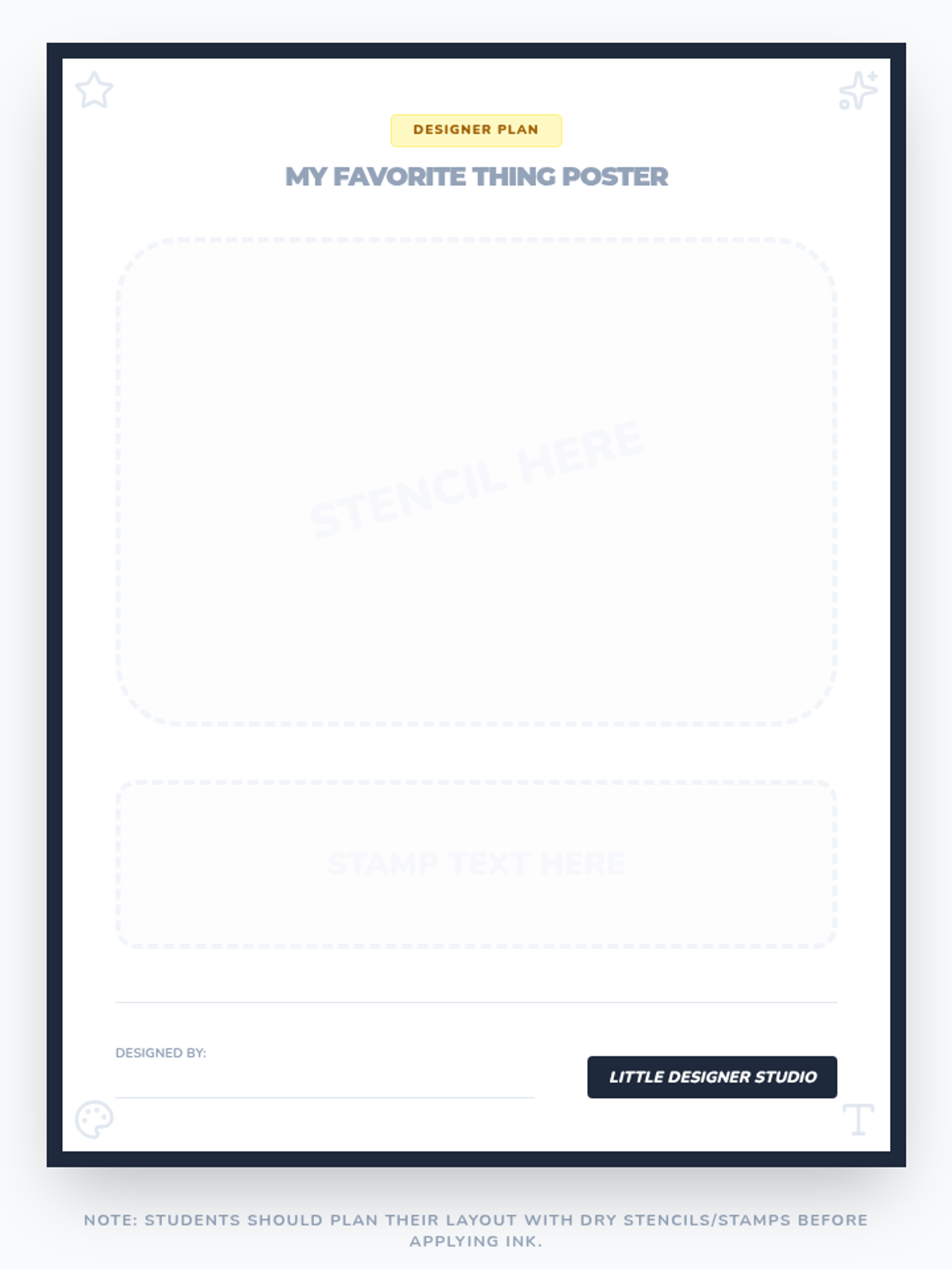
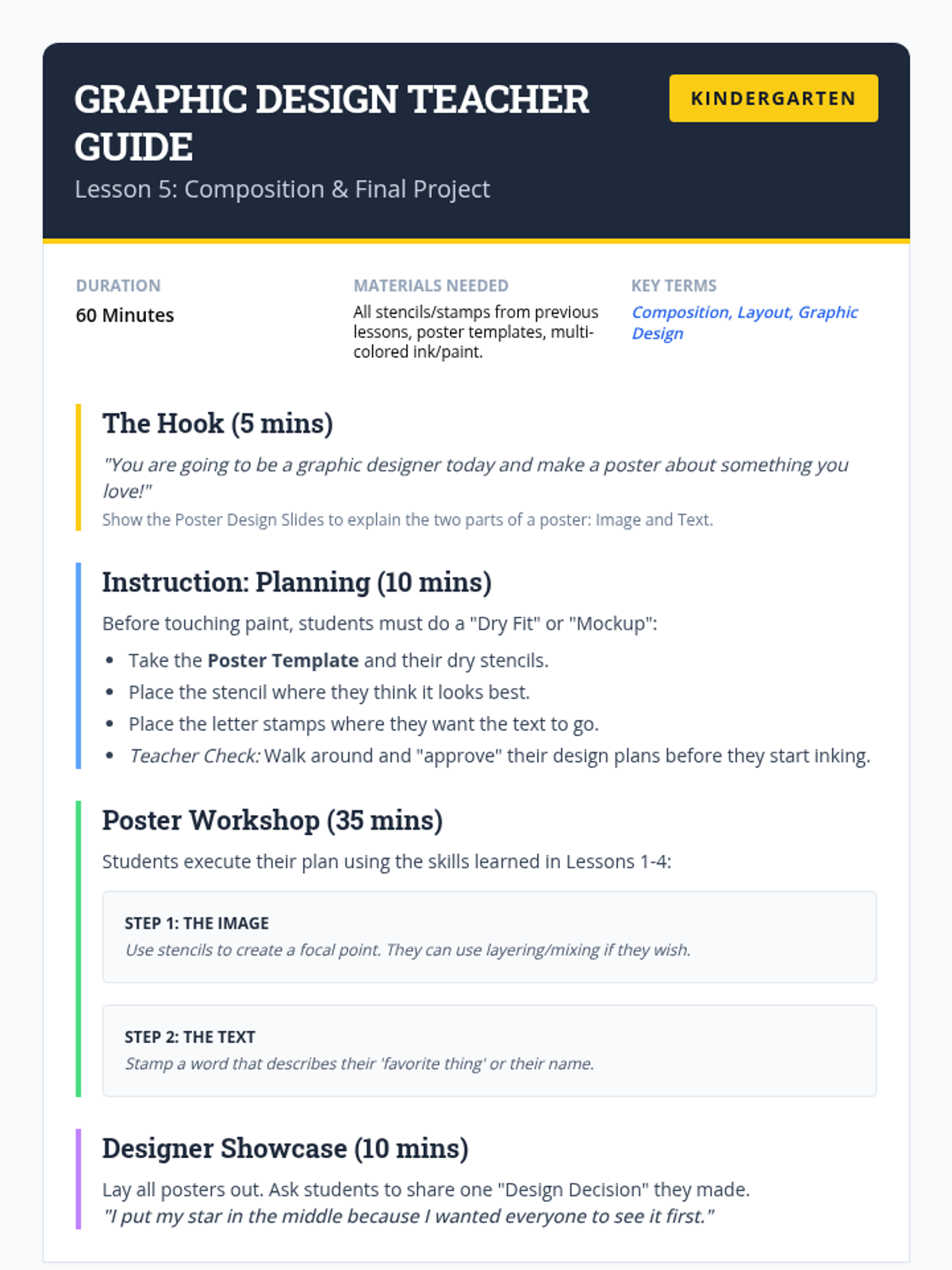
Students act as graphic designers, combining a stencil image with stamped text to create a simple poster. They plan their layout, deciding where to place elements for the best message.
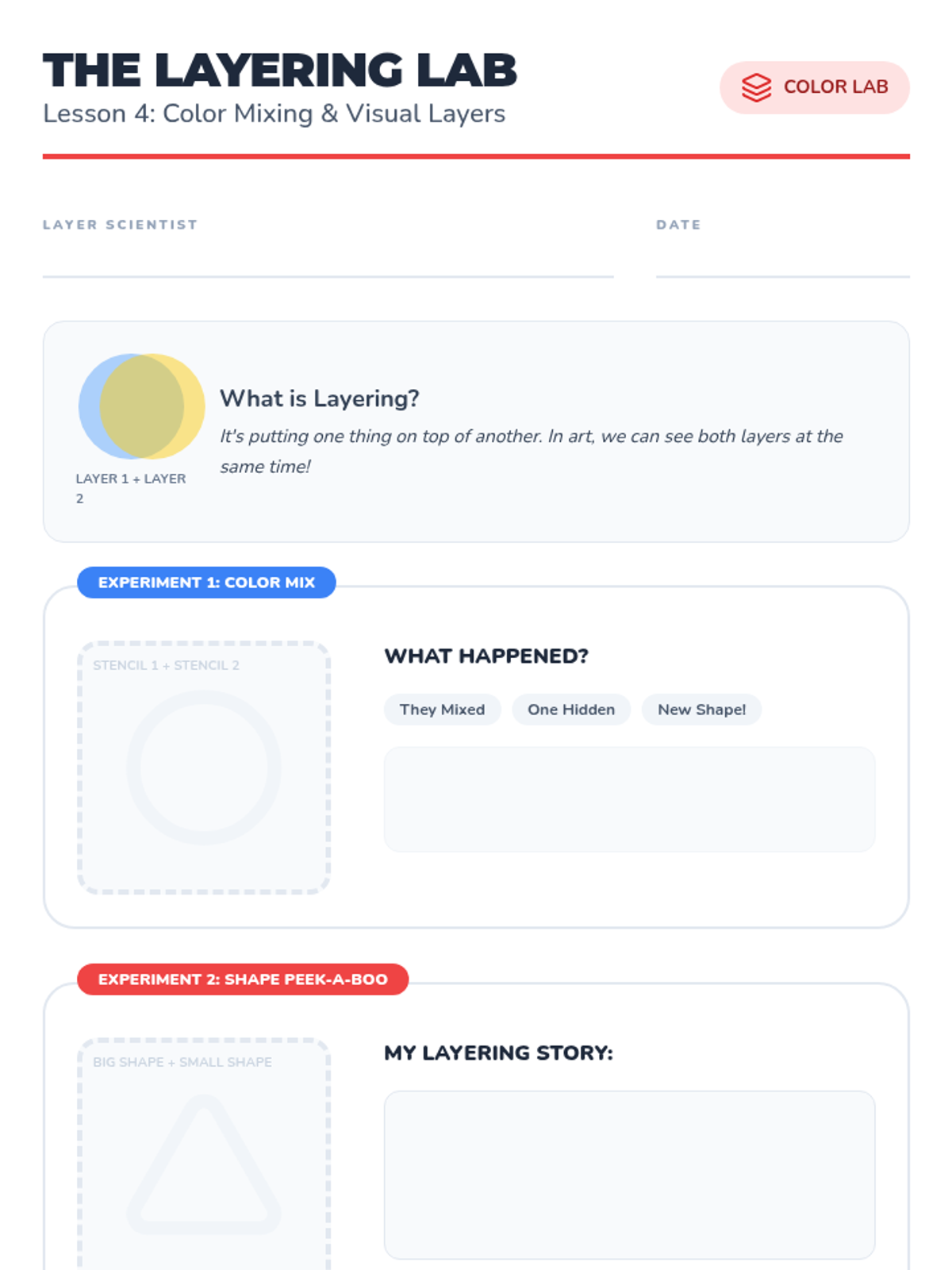
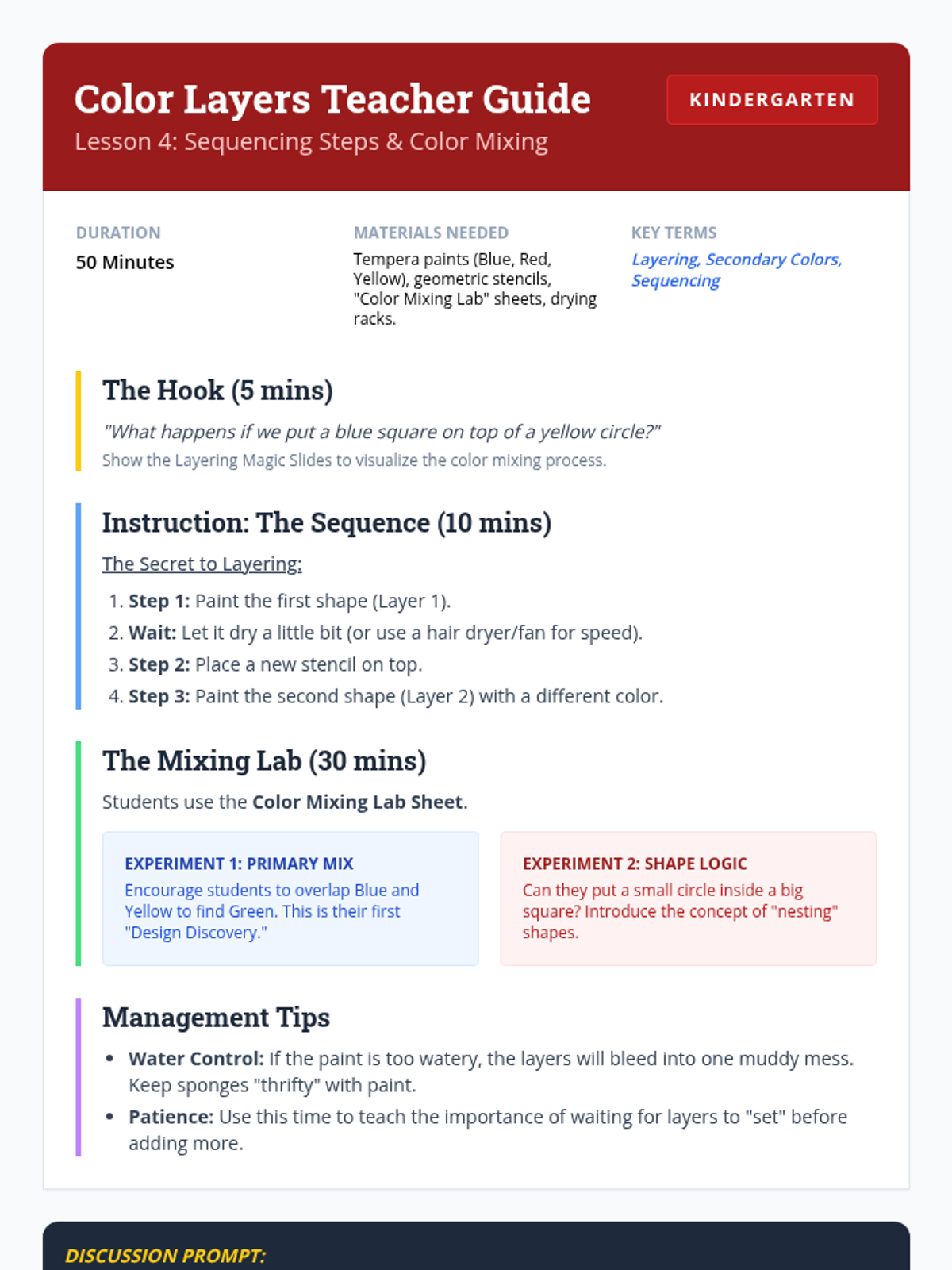
Students revisit their stencils to learn about layering. They apply a second color over a dry first layer, discovering how colors mix and how graphic designers use layers to create depth.
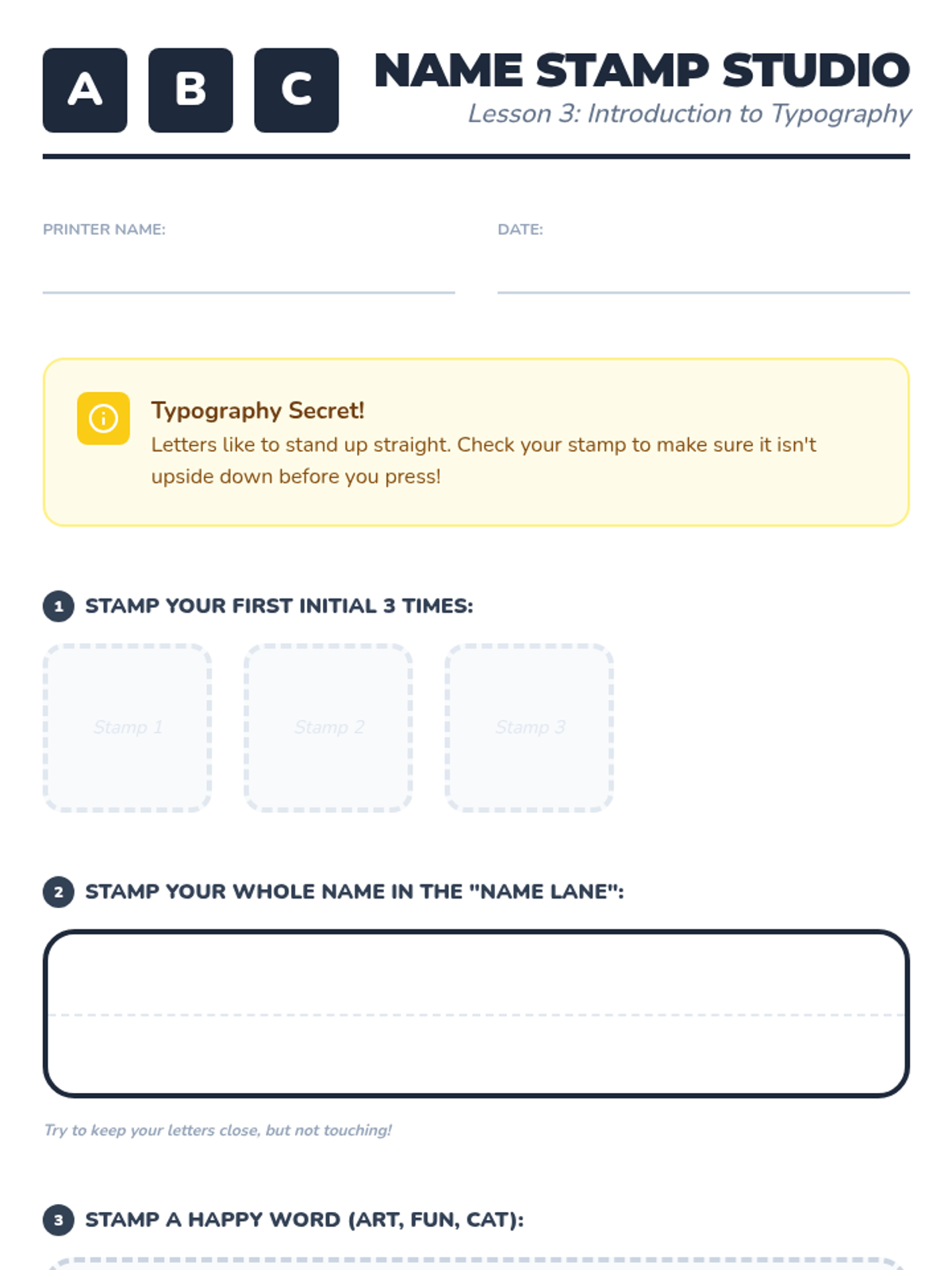
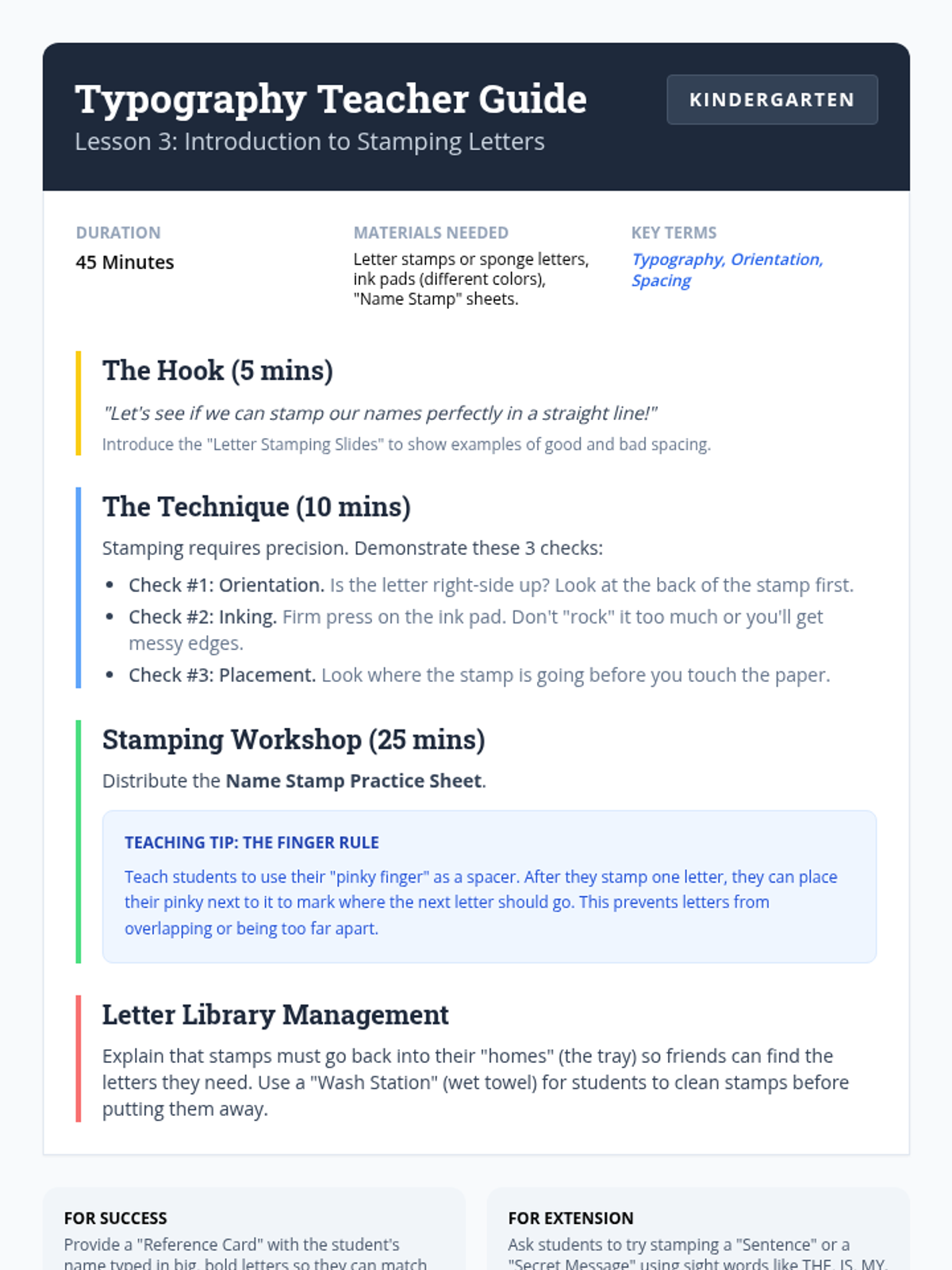
Students are introduced to letter stamps or sponge letters. They practice stamping their initials and simple words, focusing on orientation and horizontal alignment.
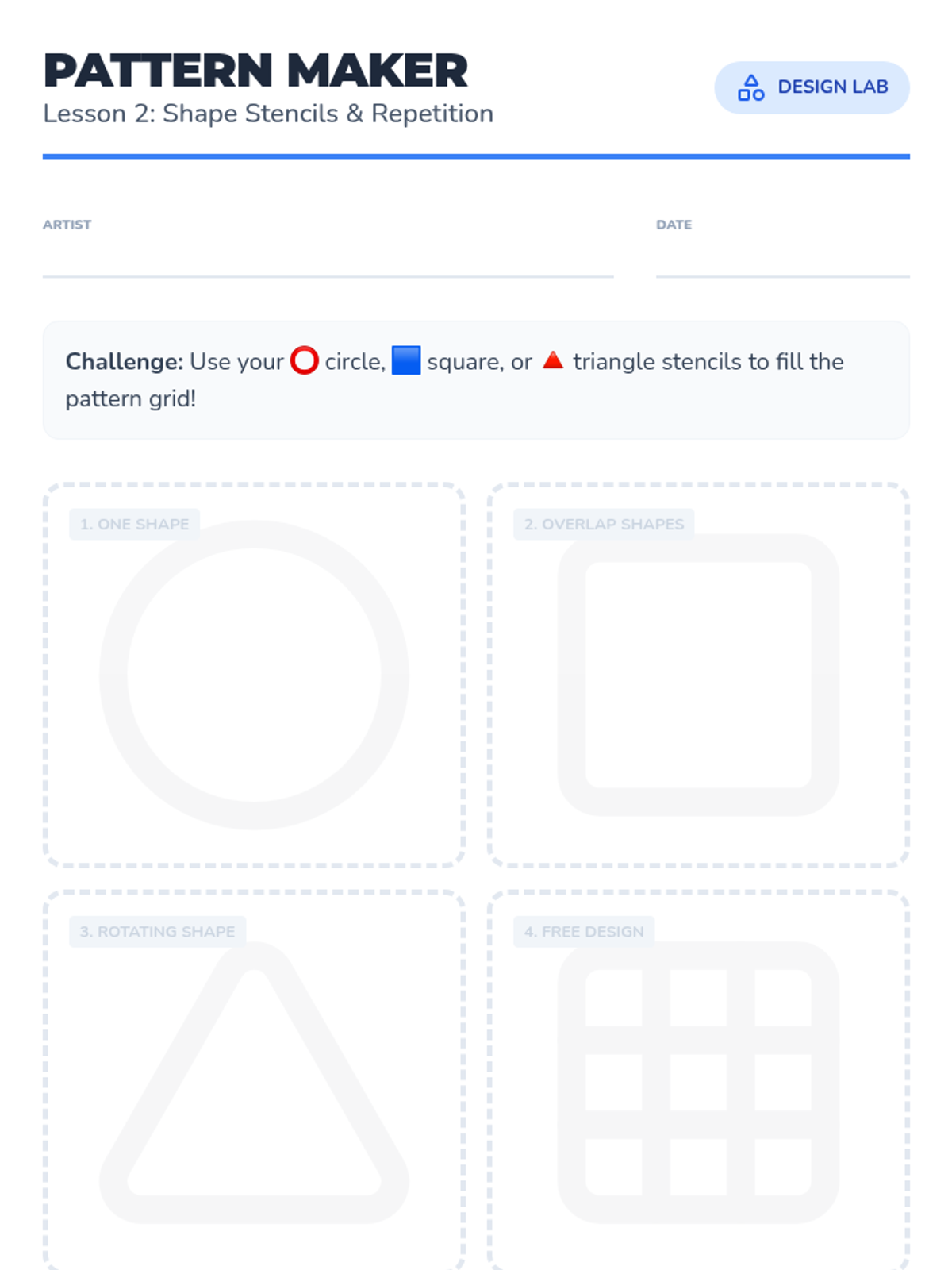
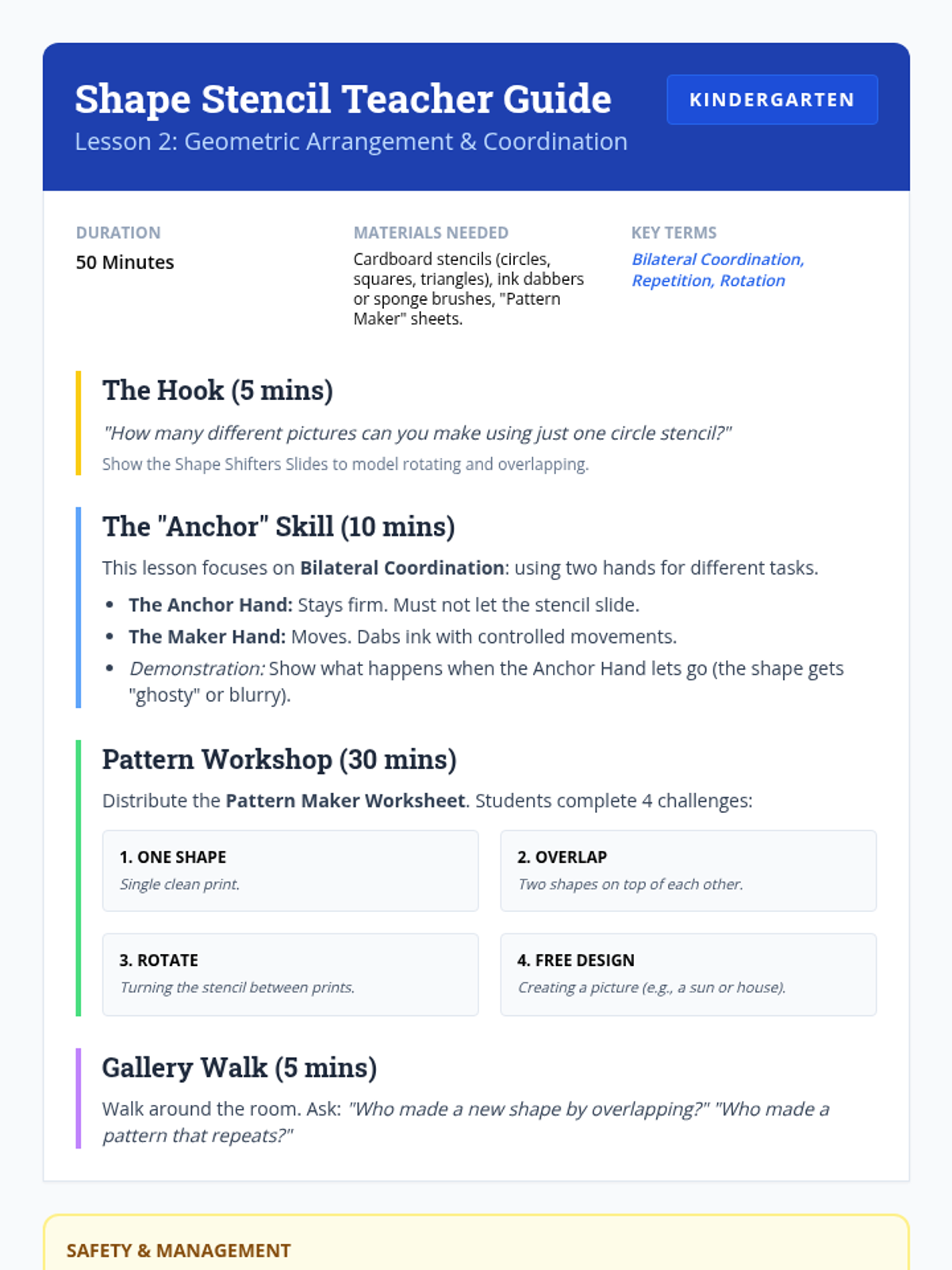
Students use pre-cut geometric stencils to explore shape, repetition, and rotation. They learn bilateral coordination by holding the stencil still while applying ink.
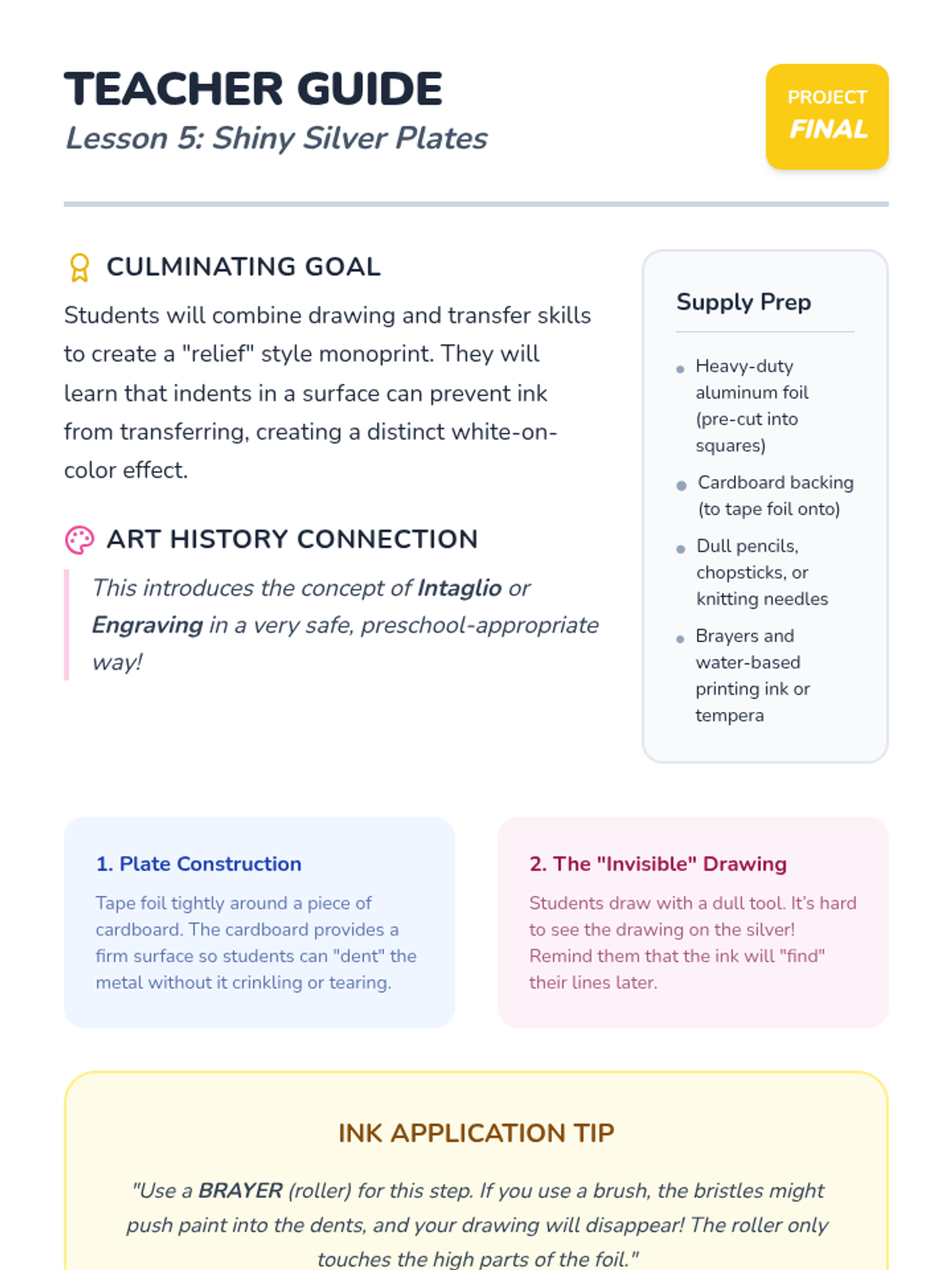
Students use aluminum foil to create indented drawing plates for a final monoprint project.
Students capture textures from their environment using crayons and paper rubbings.
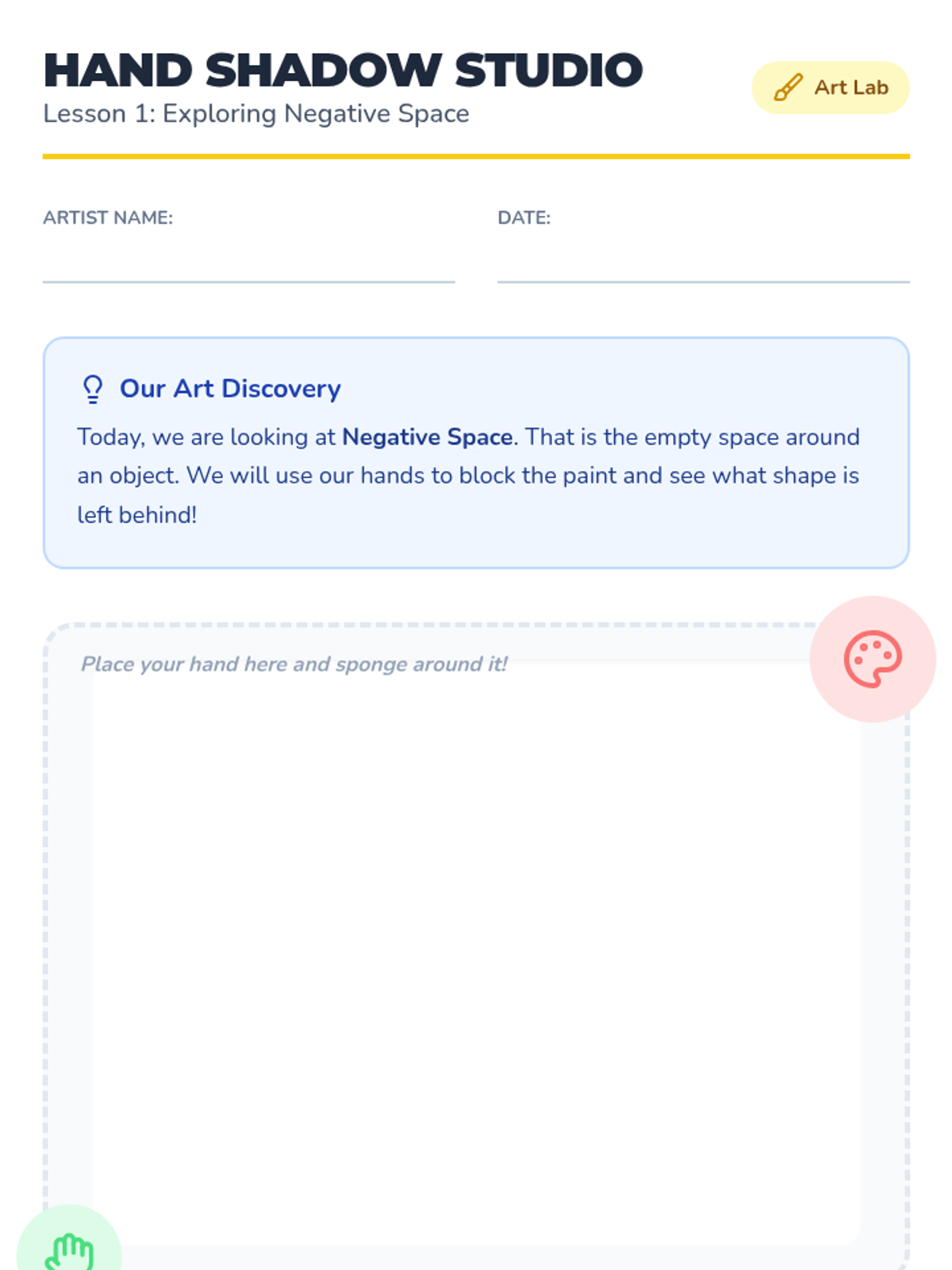
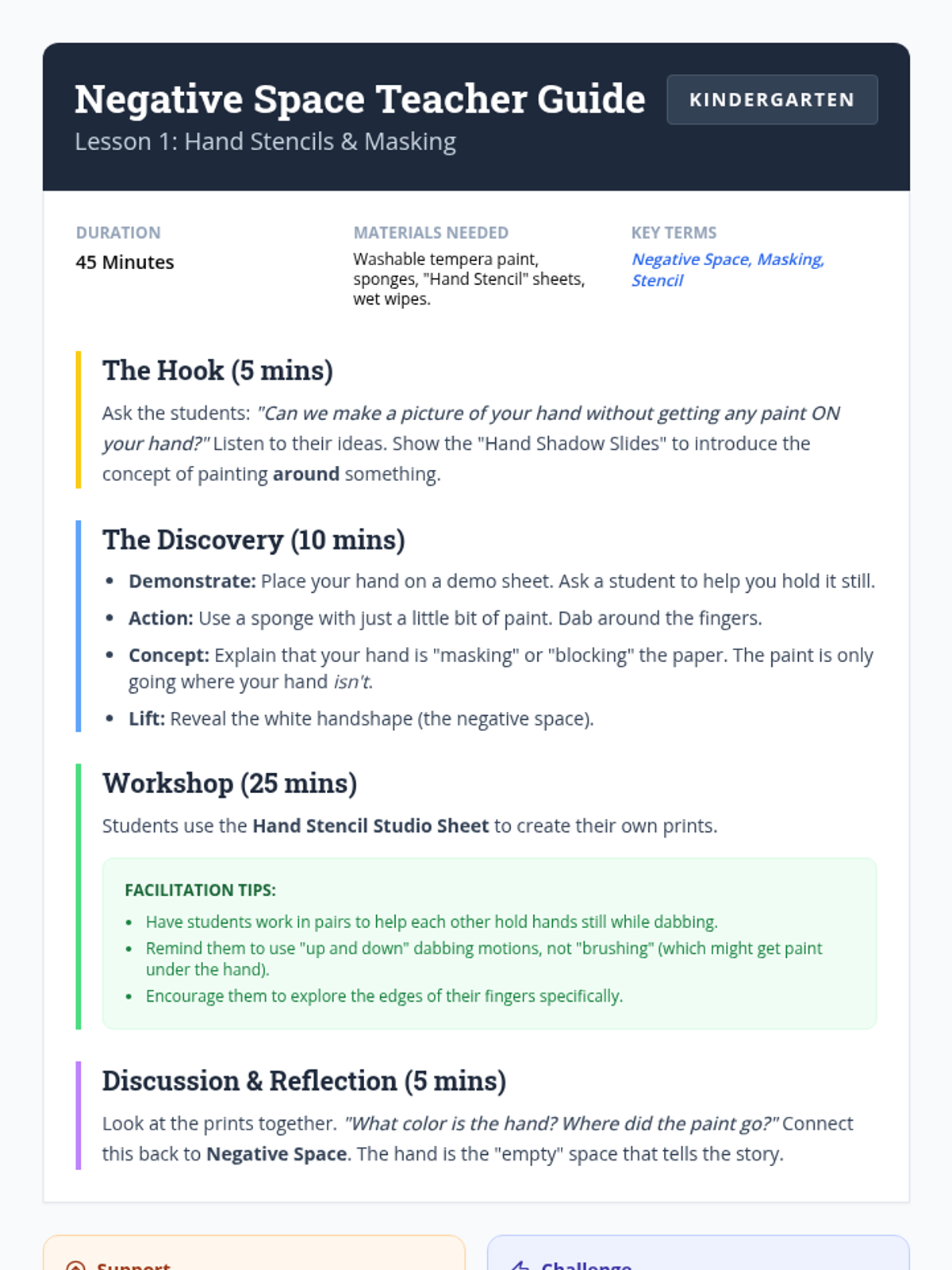
Students explore negative space by using their hands as stencils. They learn how blocking ink creates a shape and discuss the concept of the 'empty' space making the picture.
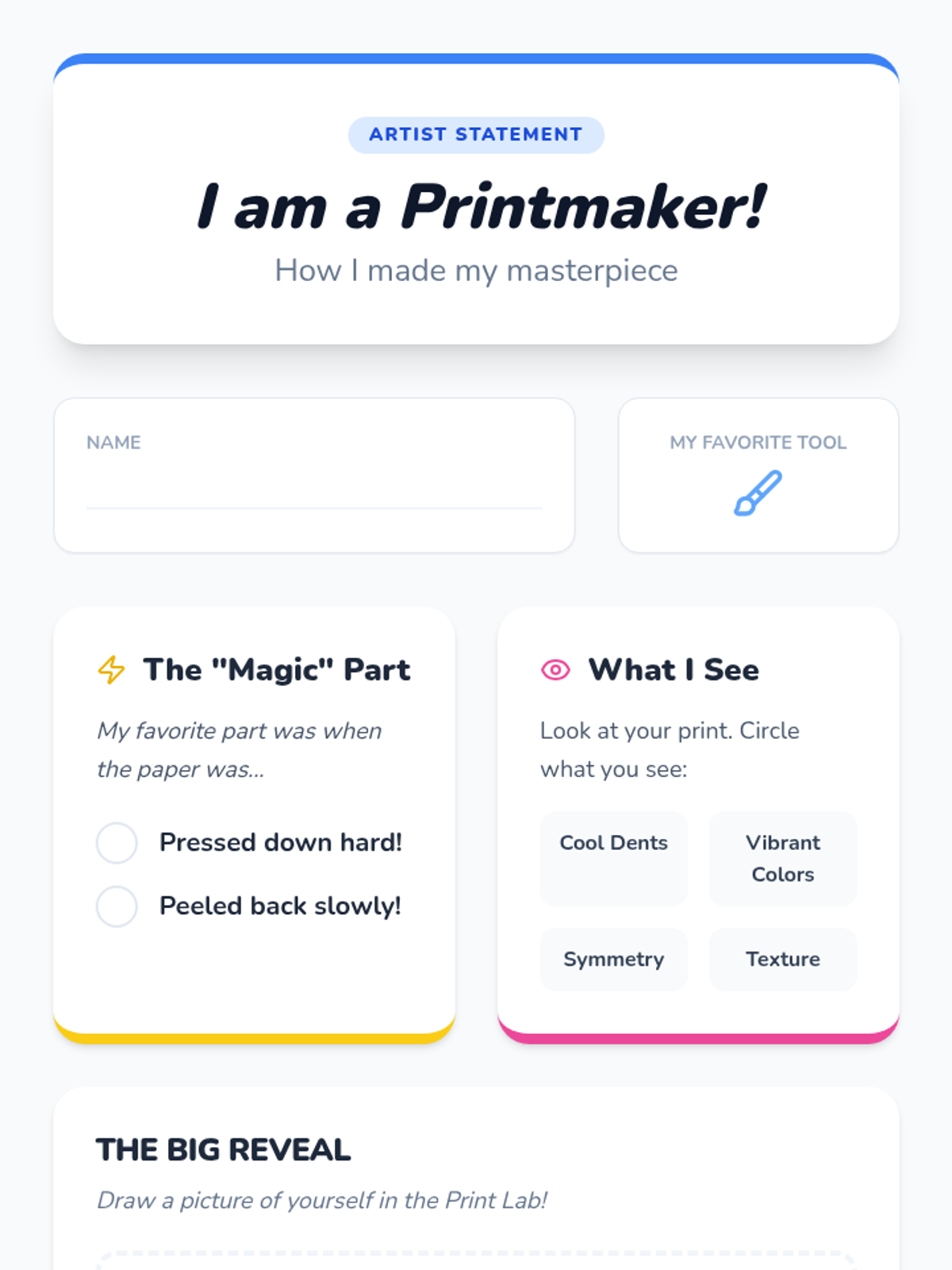
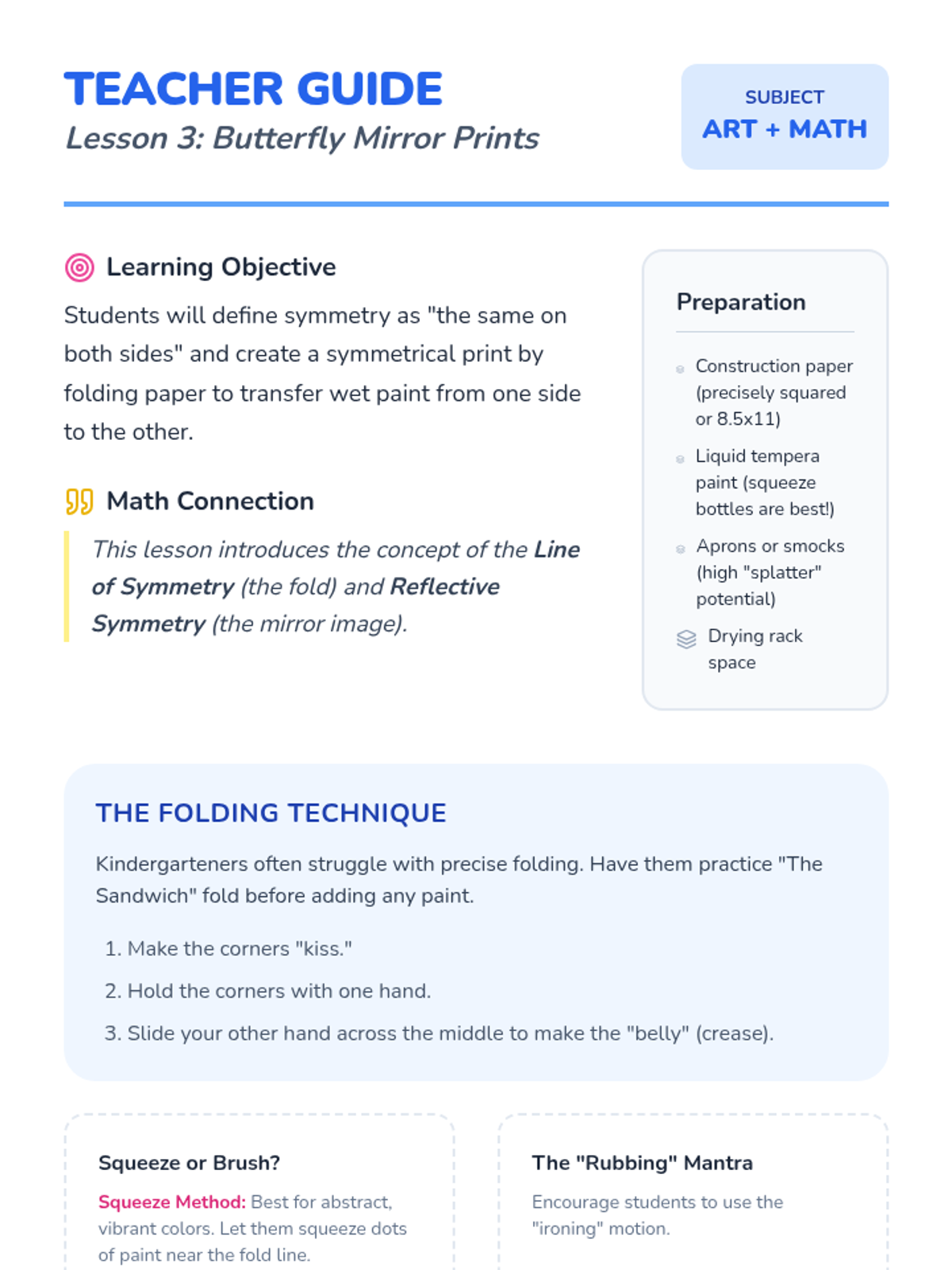
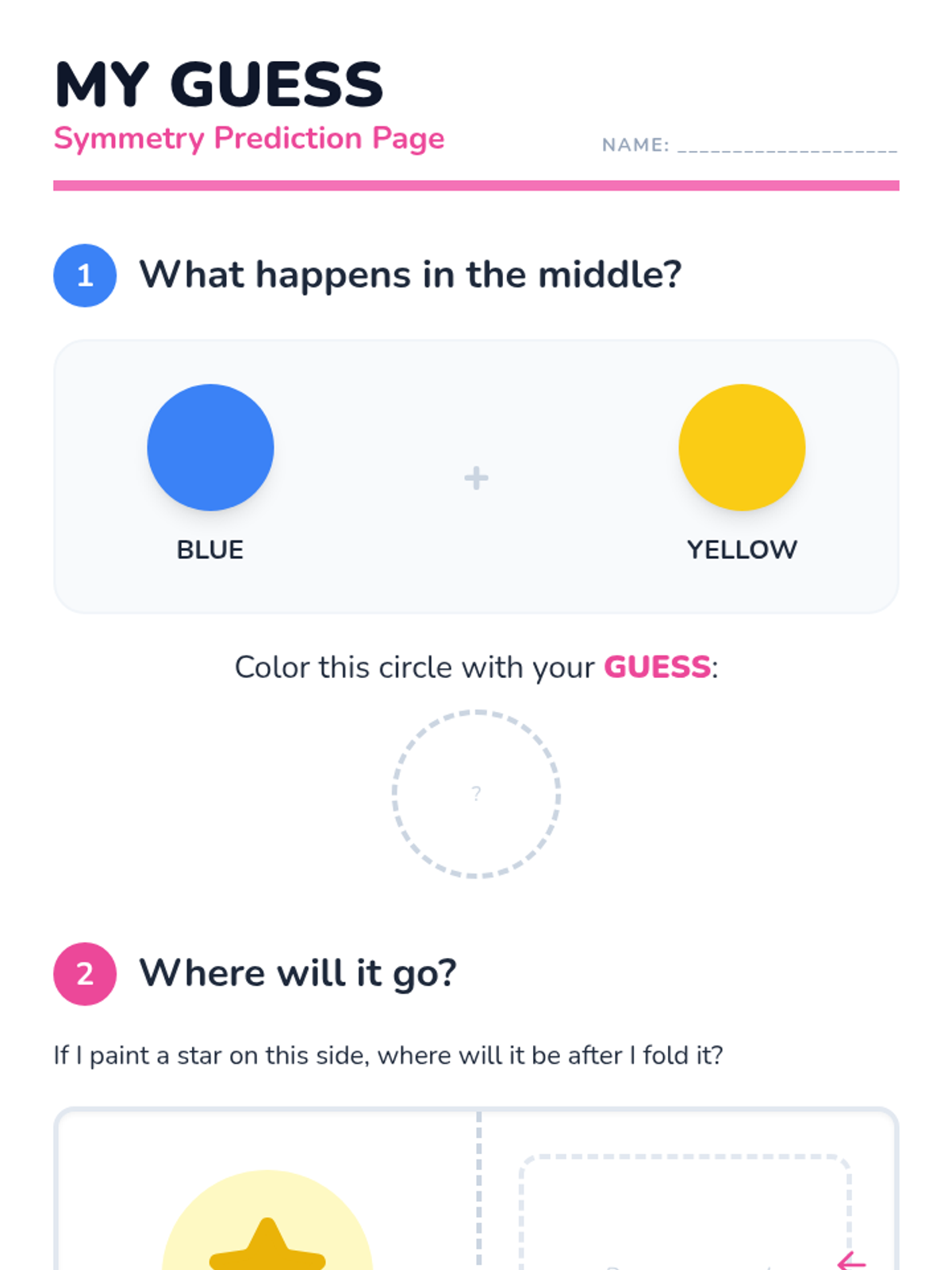
Students create symmetrical images by painting one side of a paper and folding it to transfer the image.
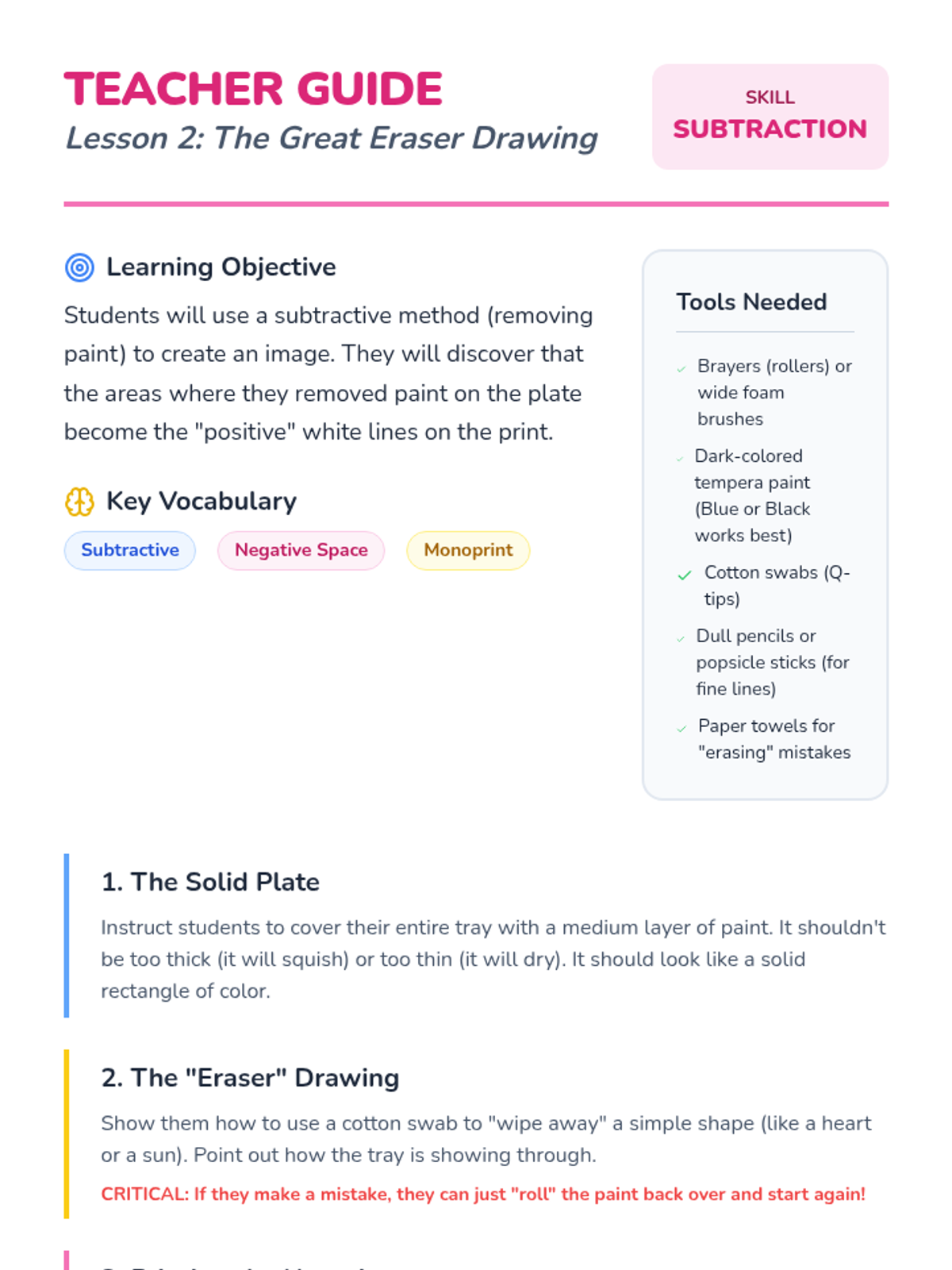
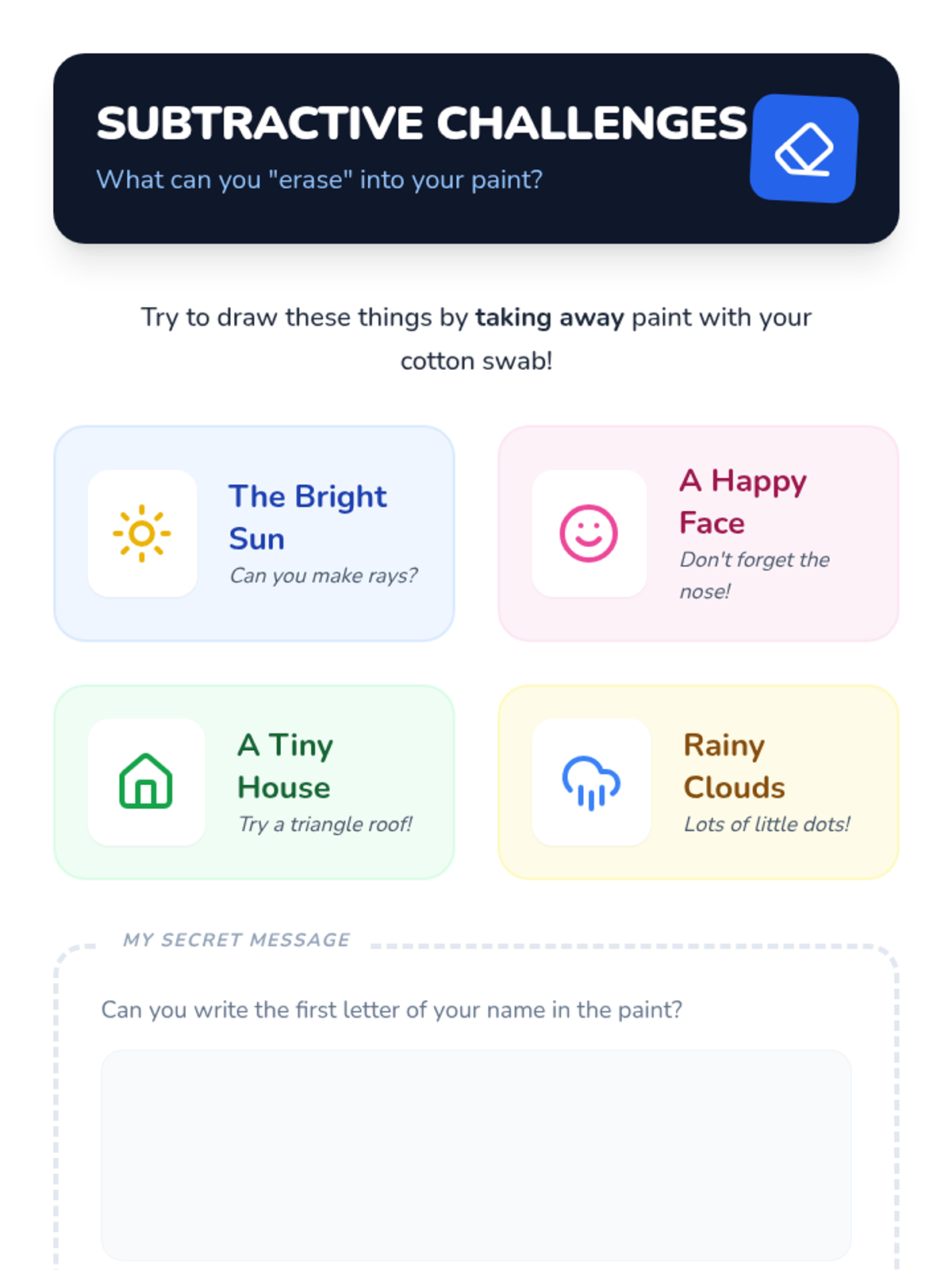
Students explore drawing by removing paint from a surface before printing, introducing negative space.
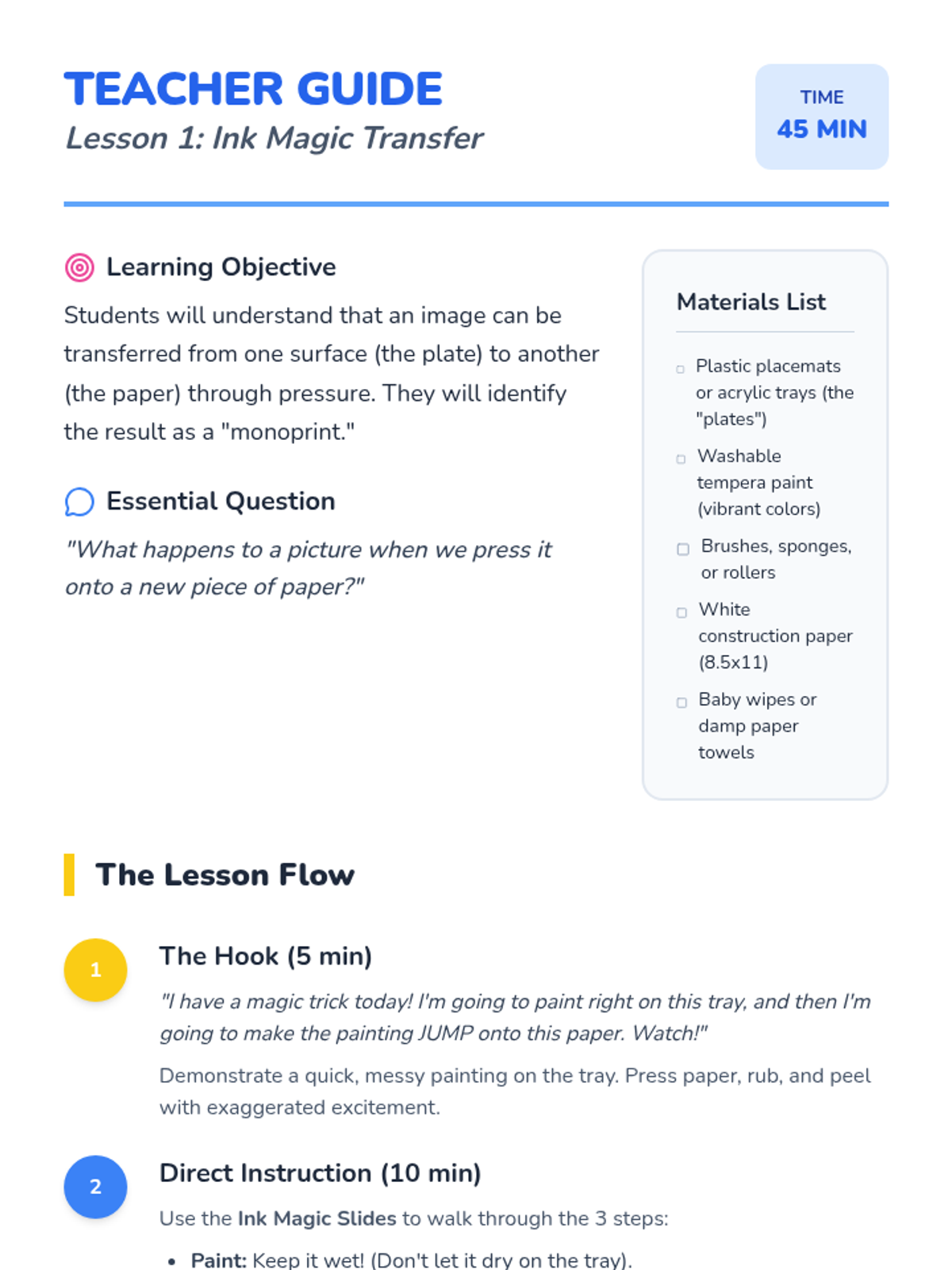
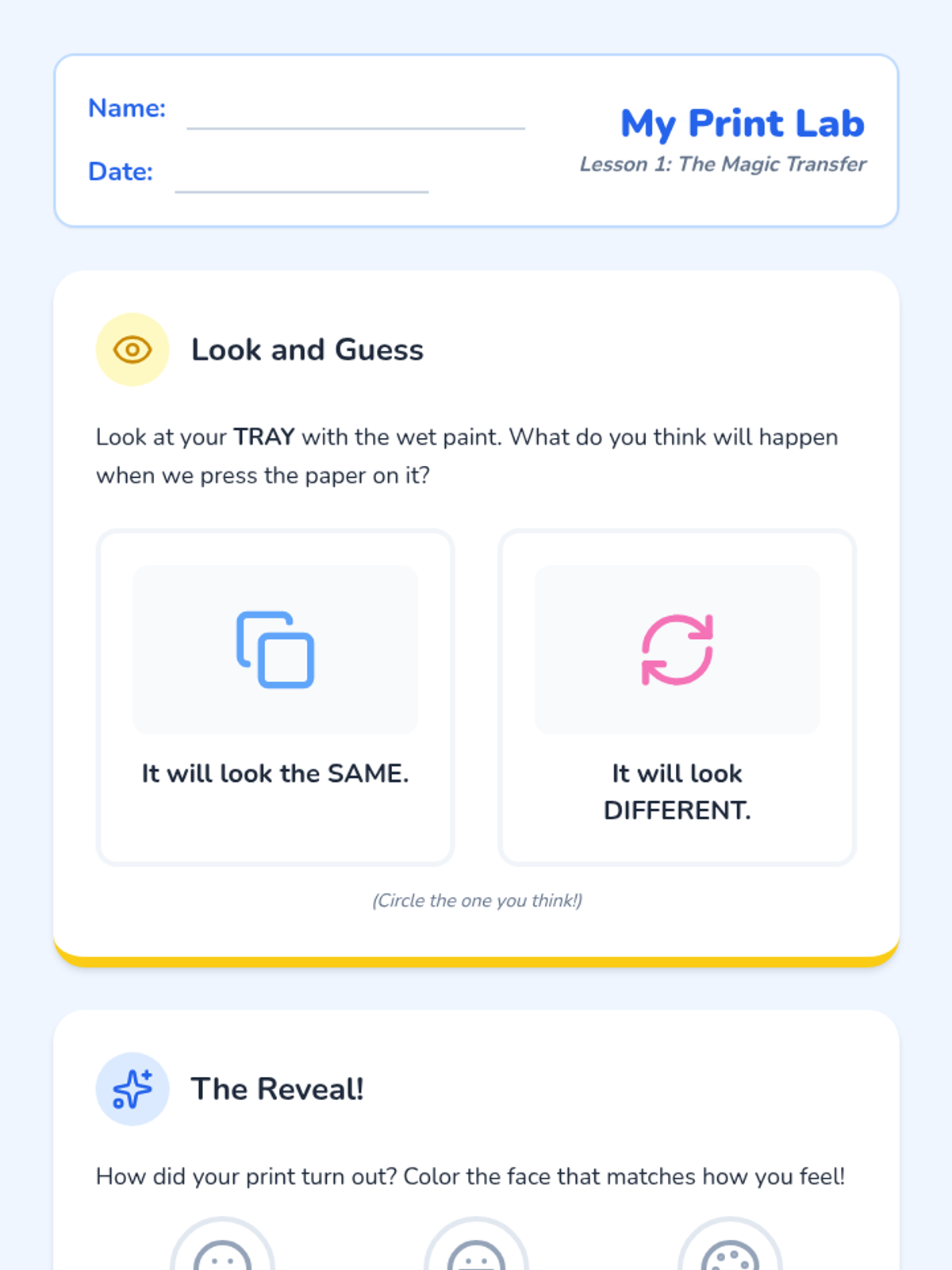
Students learn the basic concept of transferring paint from one surface to another using a smooth tray or placemat.
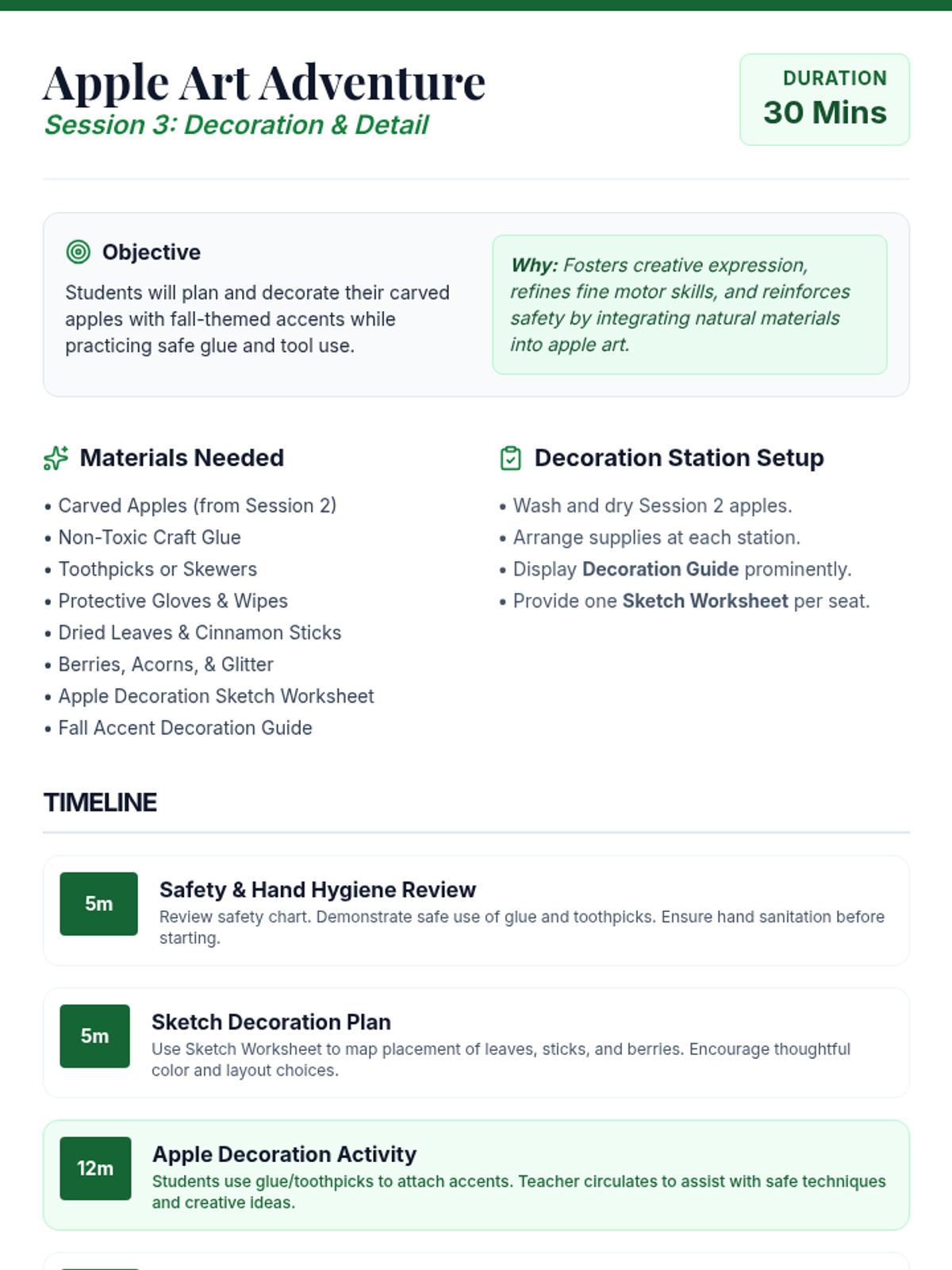
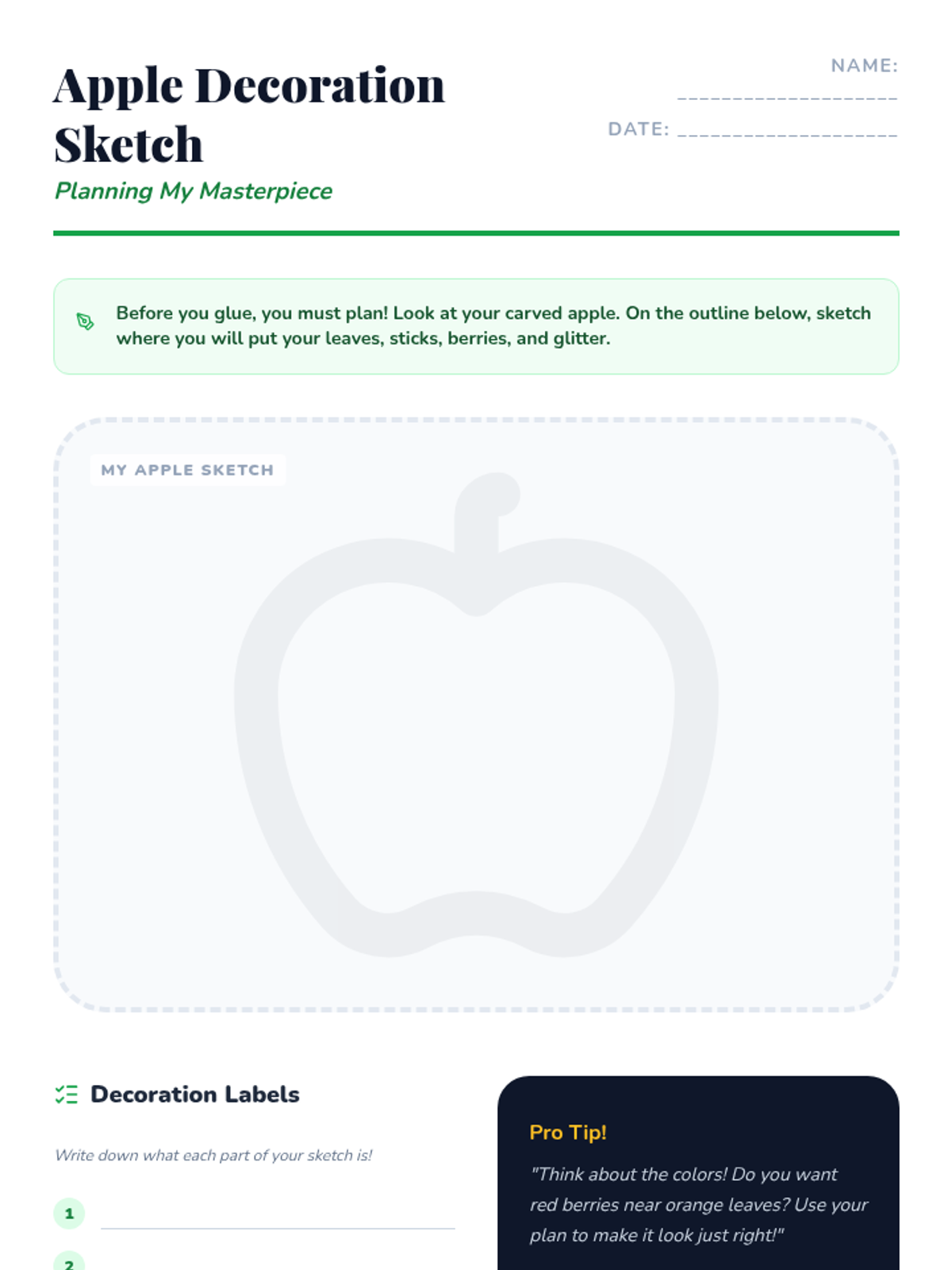
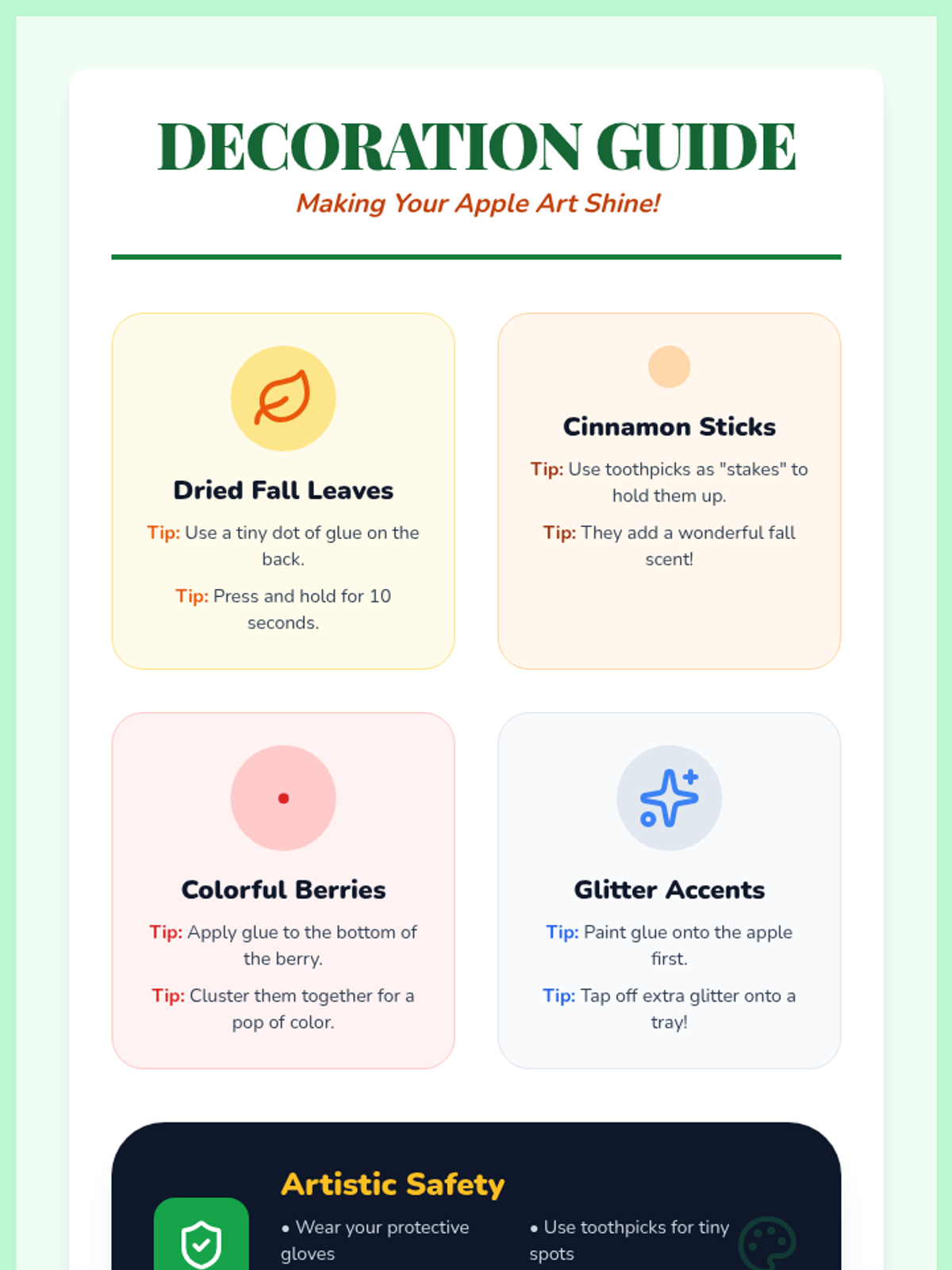
Focuses on artistic detail by adding fall accents like leaves and cinnamon sticks to carved apples using safe decoration techniques.
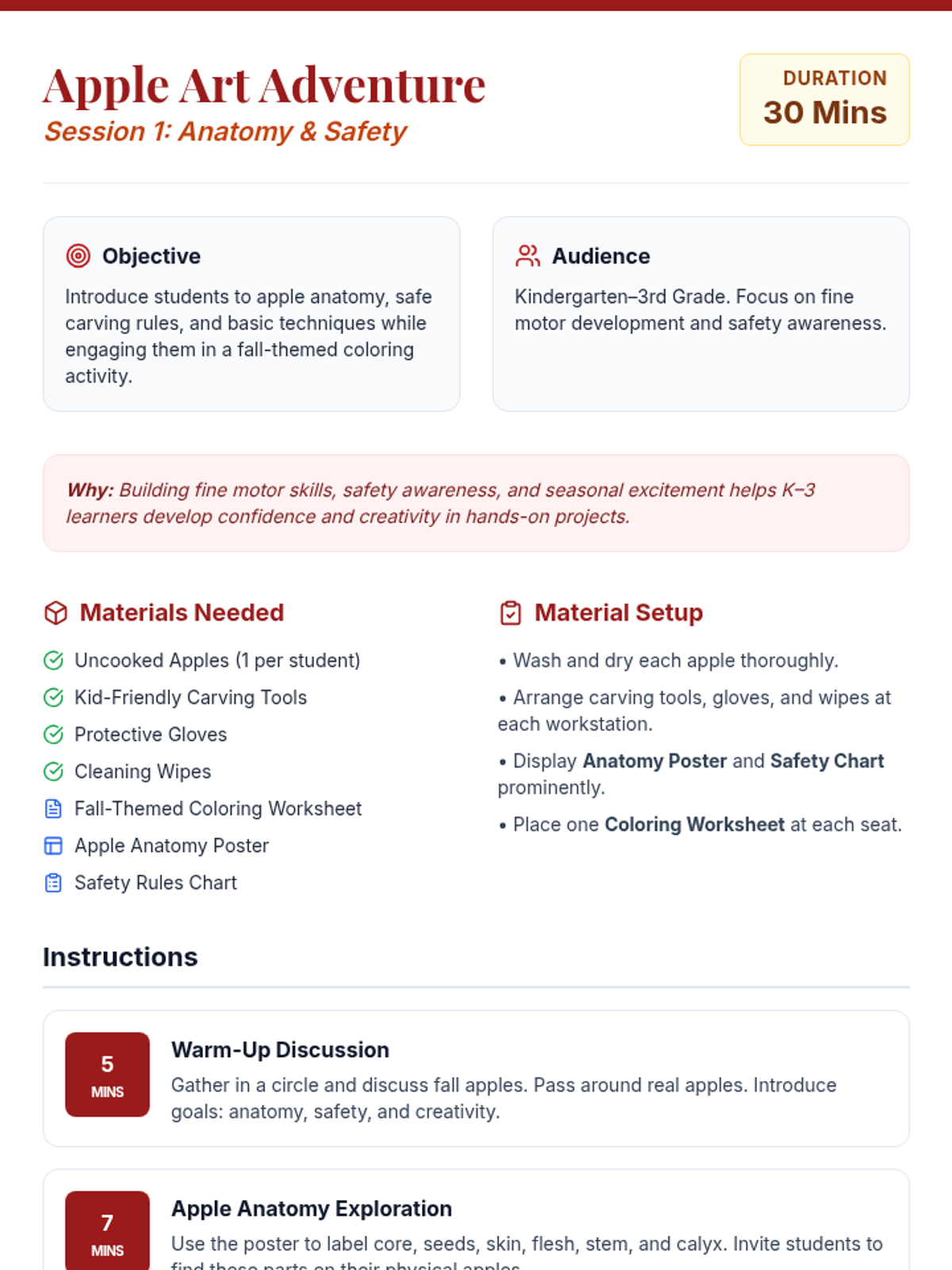
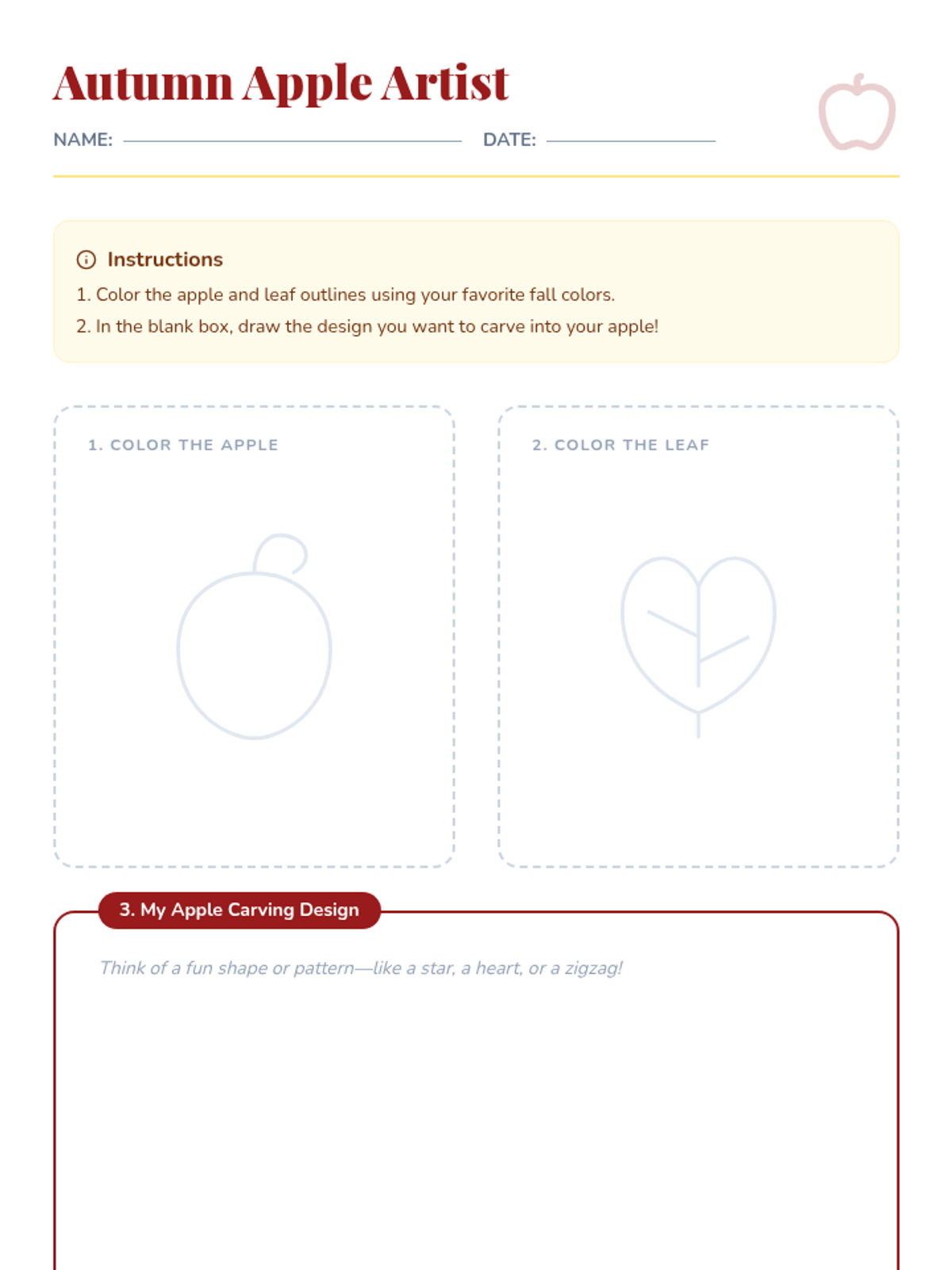
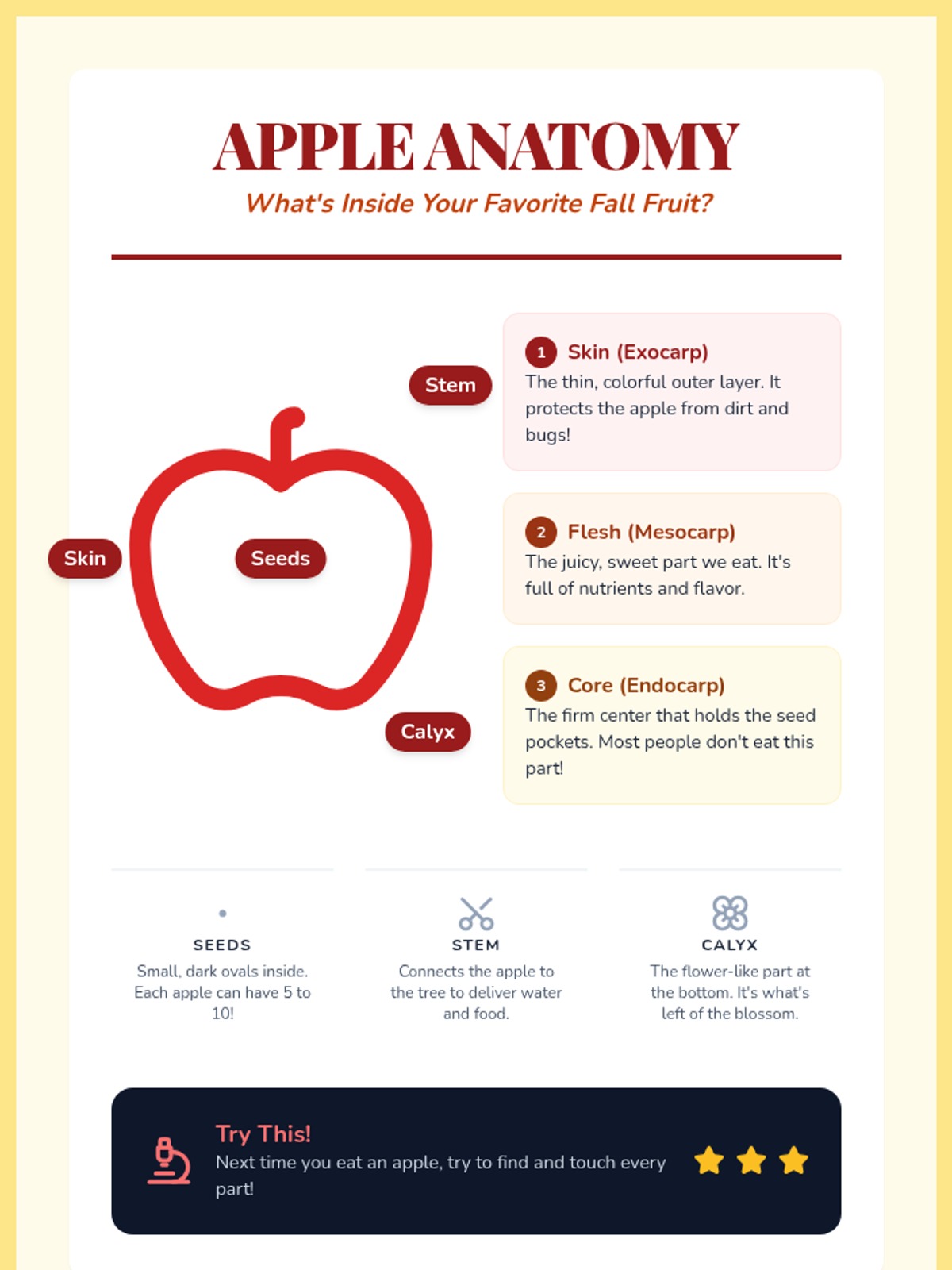
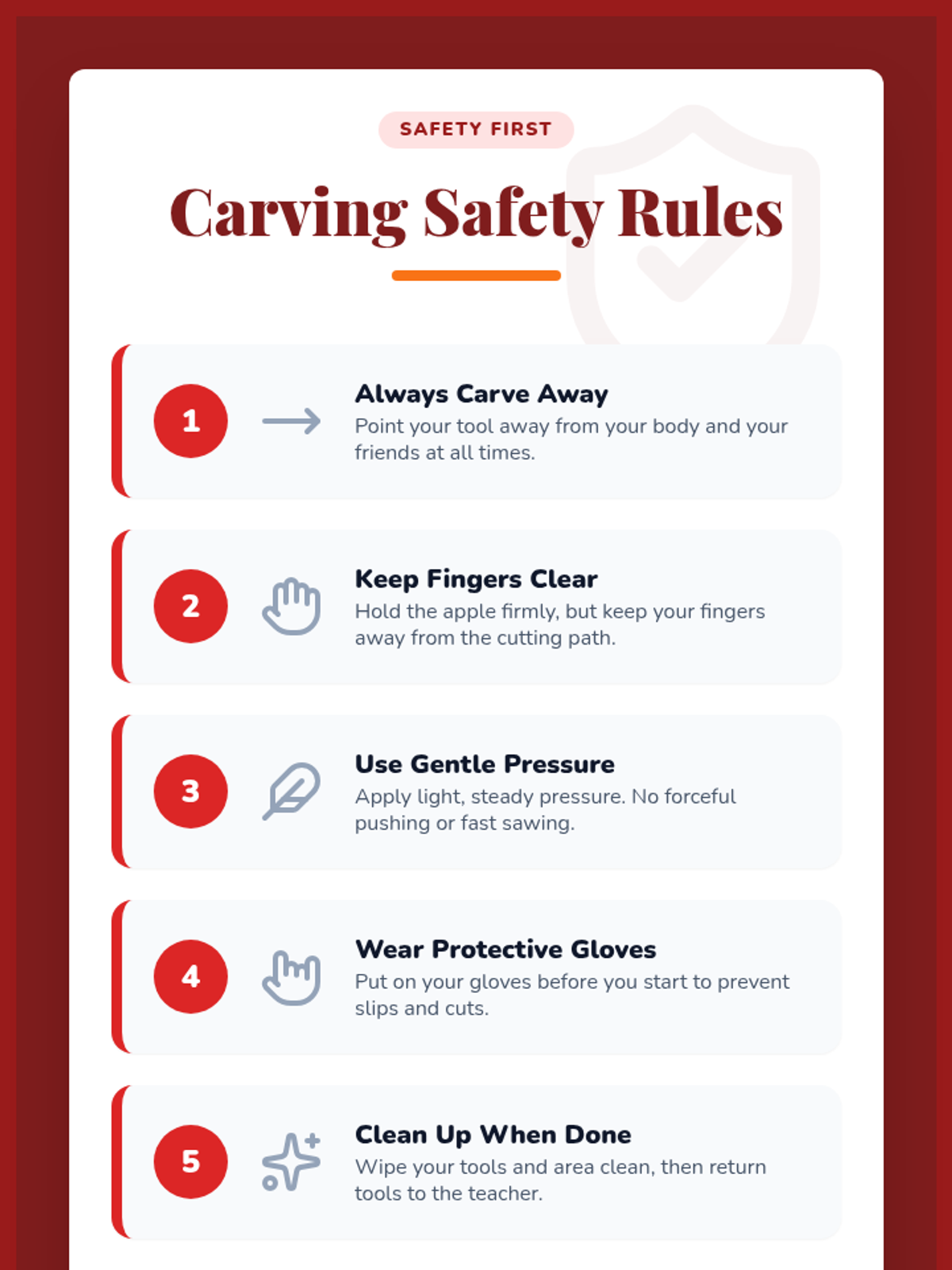
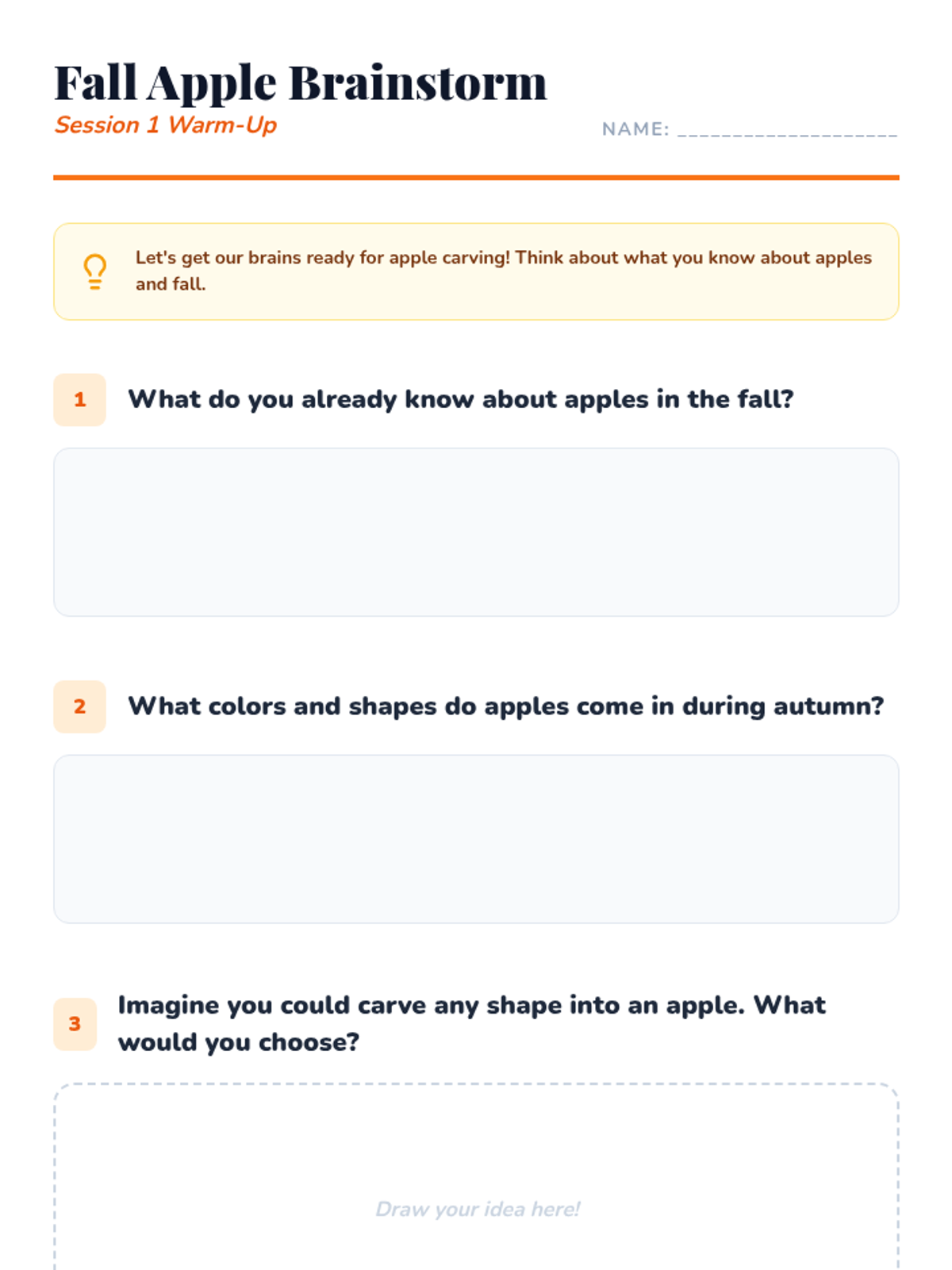
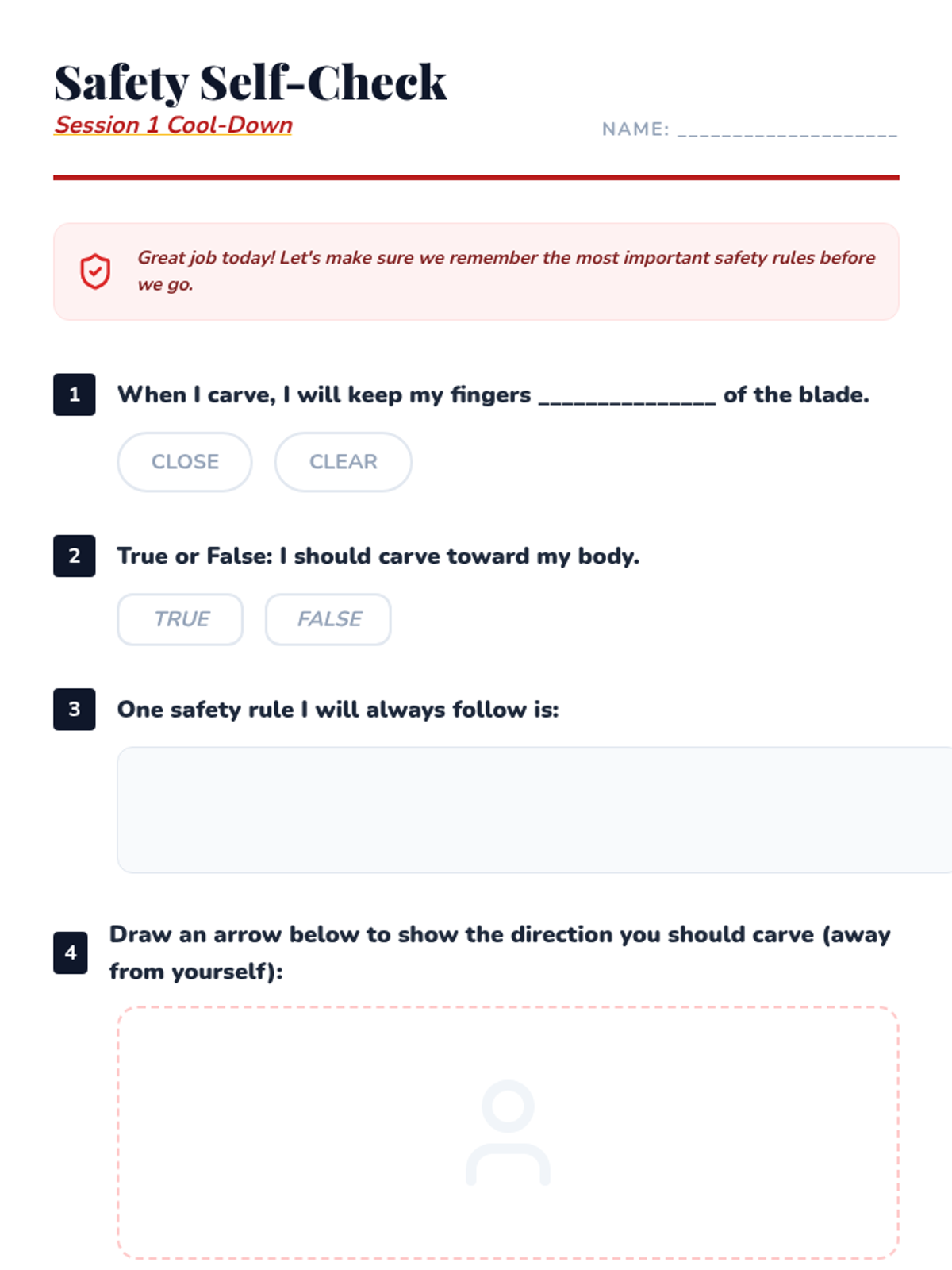
Introduces apple anatomy, essential carving safety rules, and basic techniques through demonstration and creative design sketching.
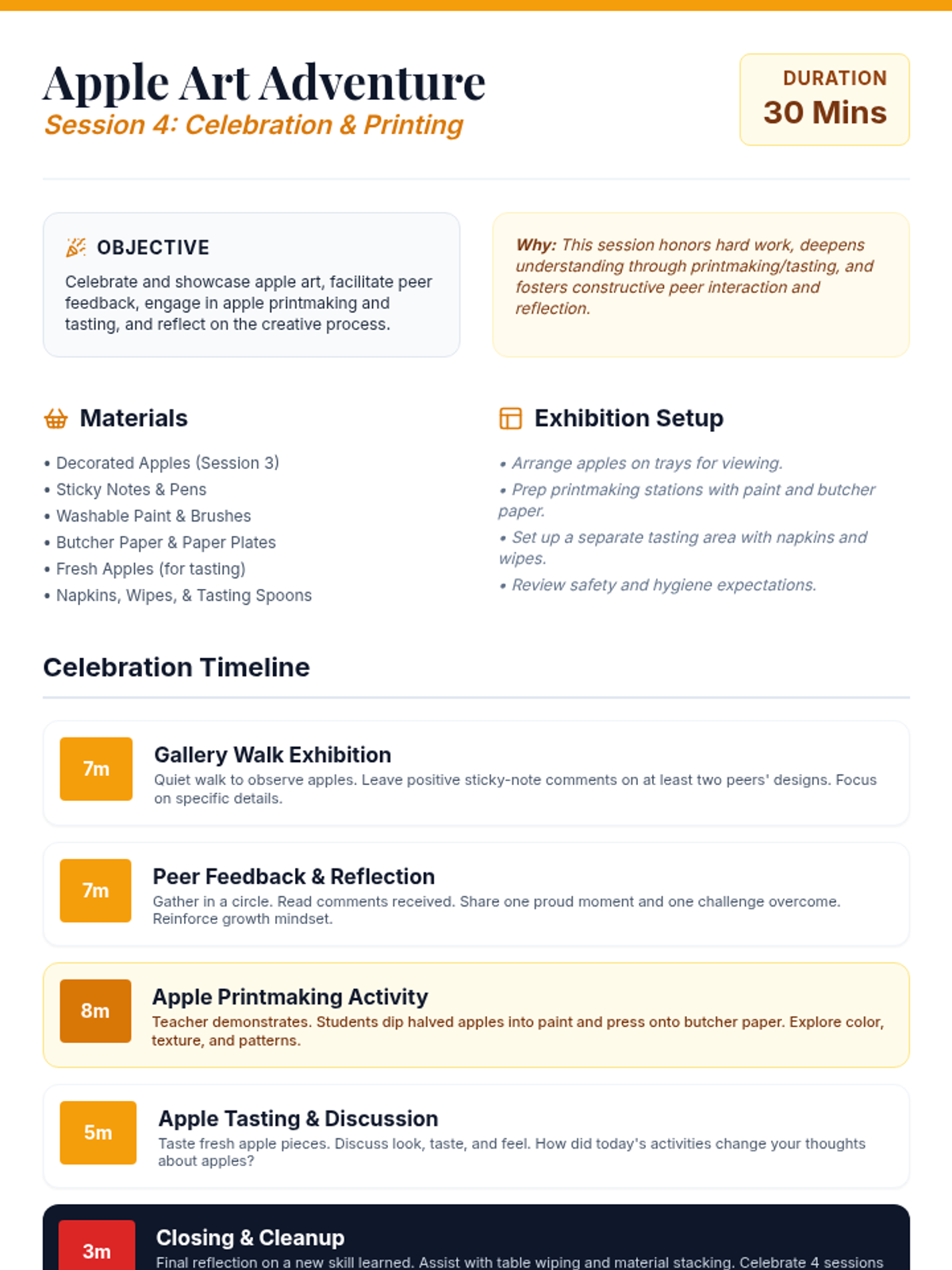
A celebratory session featuring a gallery walk for peer feedback, apple printmaking, and a seasonal tasting experience.
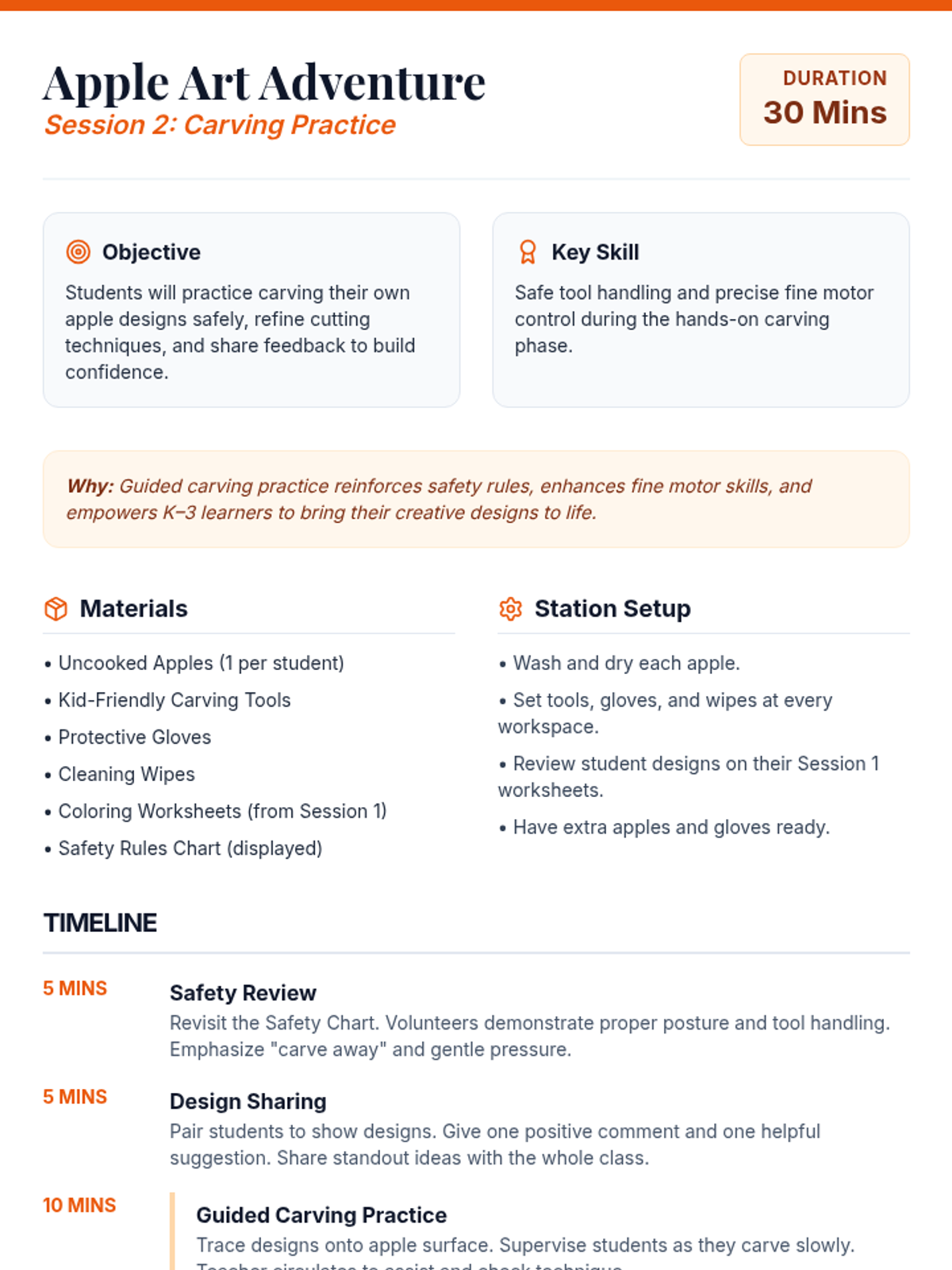
Students practice carving their custom designs onto apples with guided teacher support, emphasizing safety and peer feedback.