Historical evolution of performance, technical stagecraft, and core acting techniques. Develops playwriting skills and fosters imaginative expression through script development and production management.
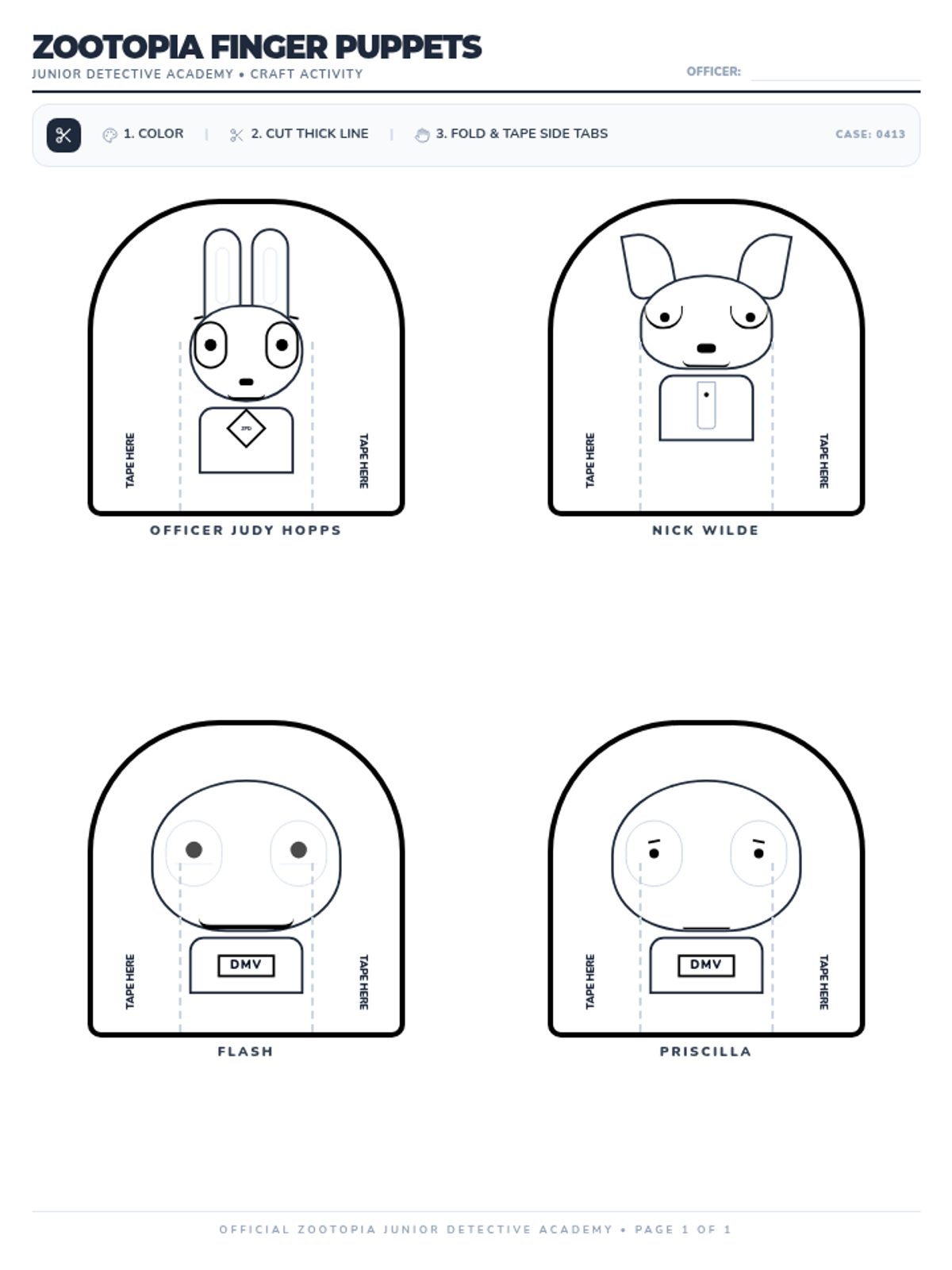
A creative craft lesson where students color and create their own finger puppets of favorite Zootopia characters to practice storytelling and role-playing.
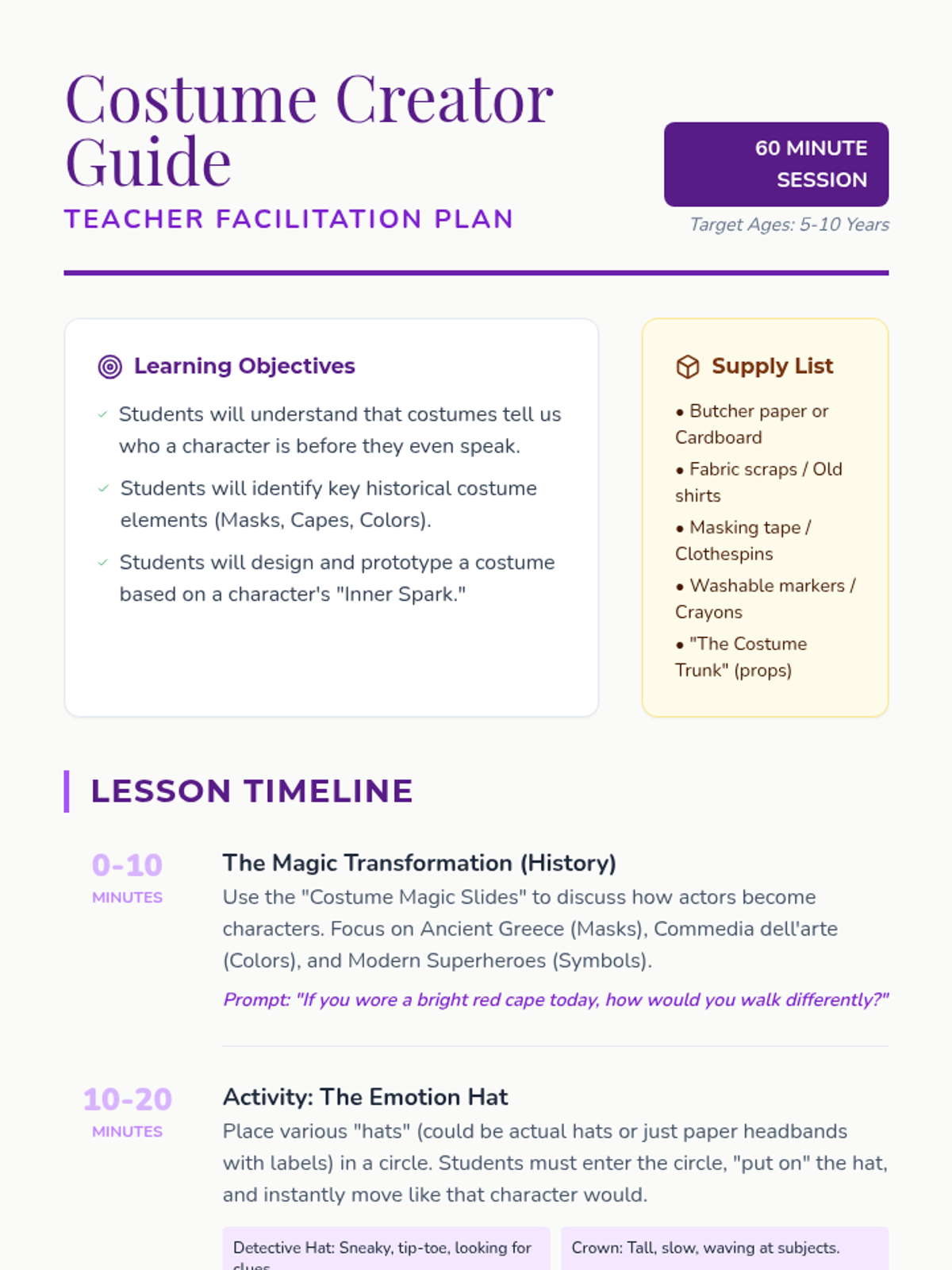
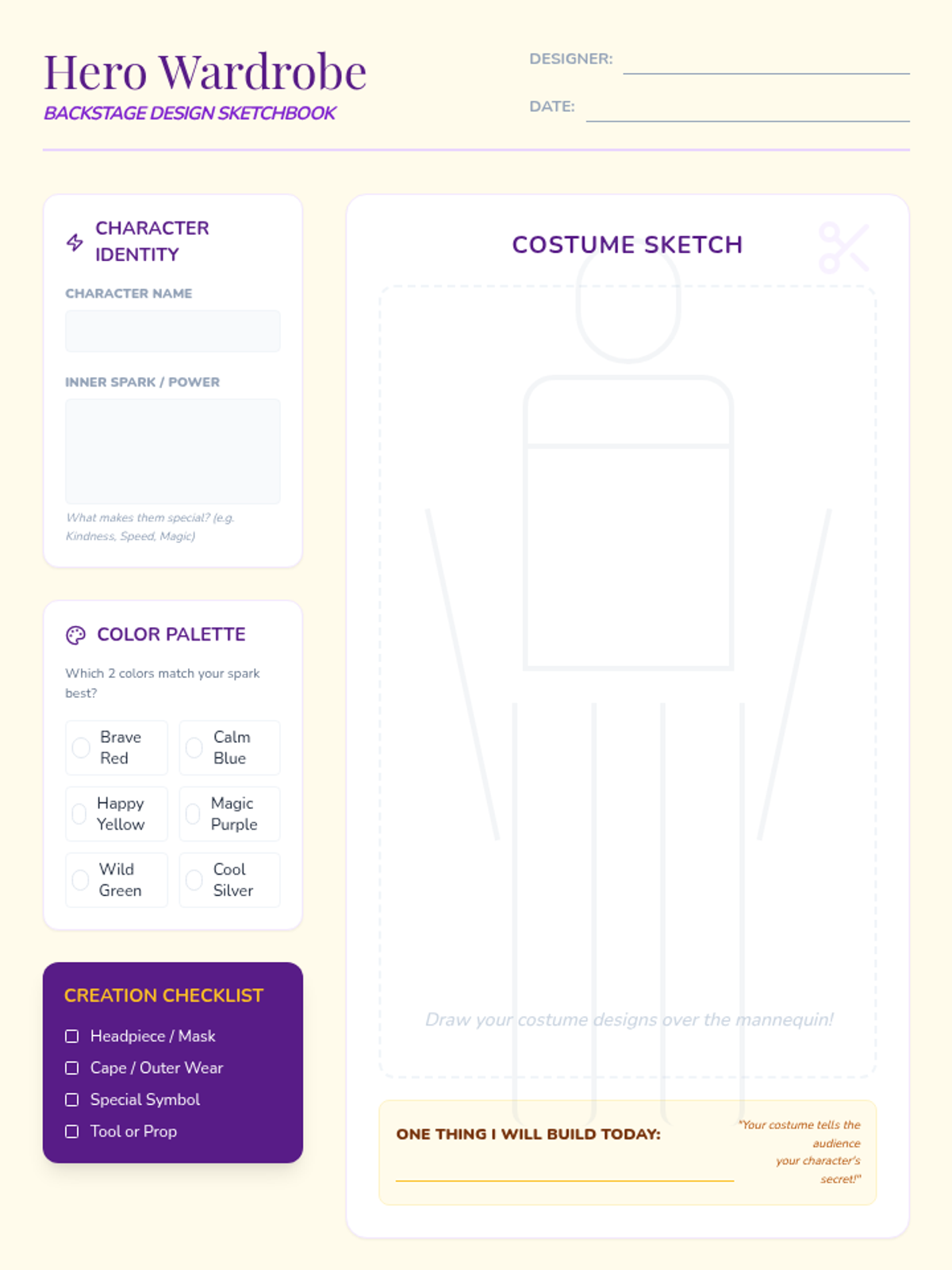
A 60-minute exploration into the world of theatrical costume design, featuring a simplified history of stage attire, interactive character-building games, and a hands-on design workshop for young creators.
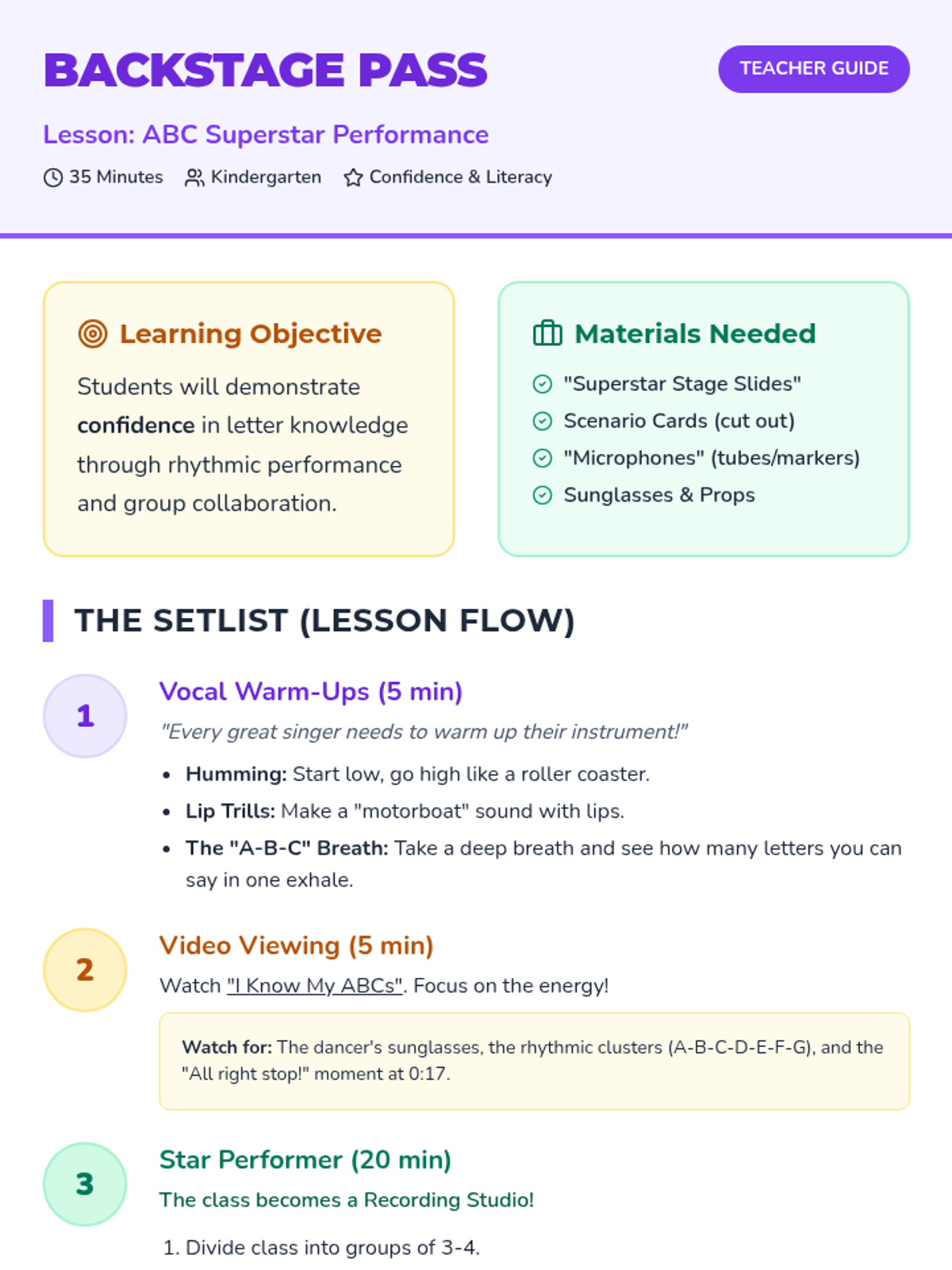
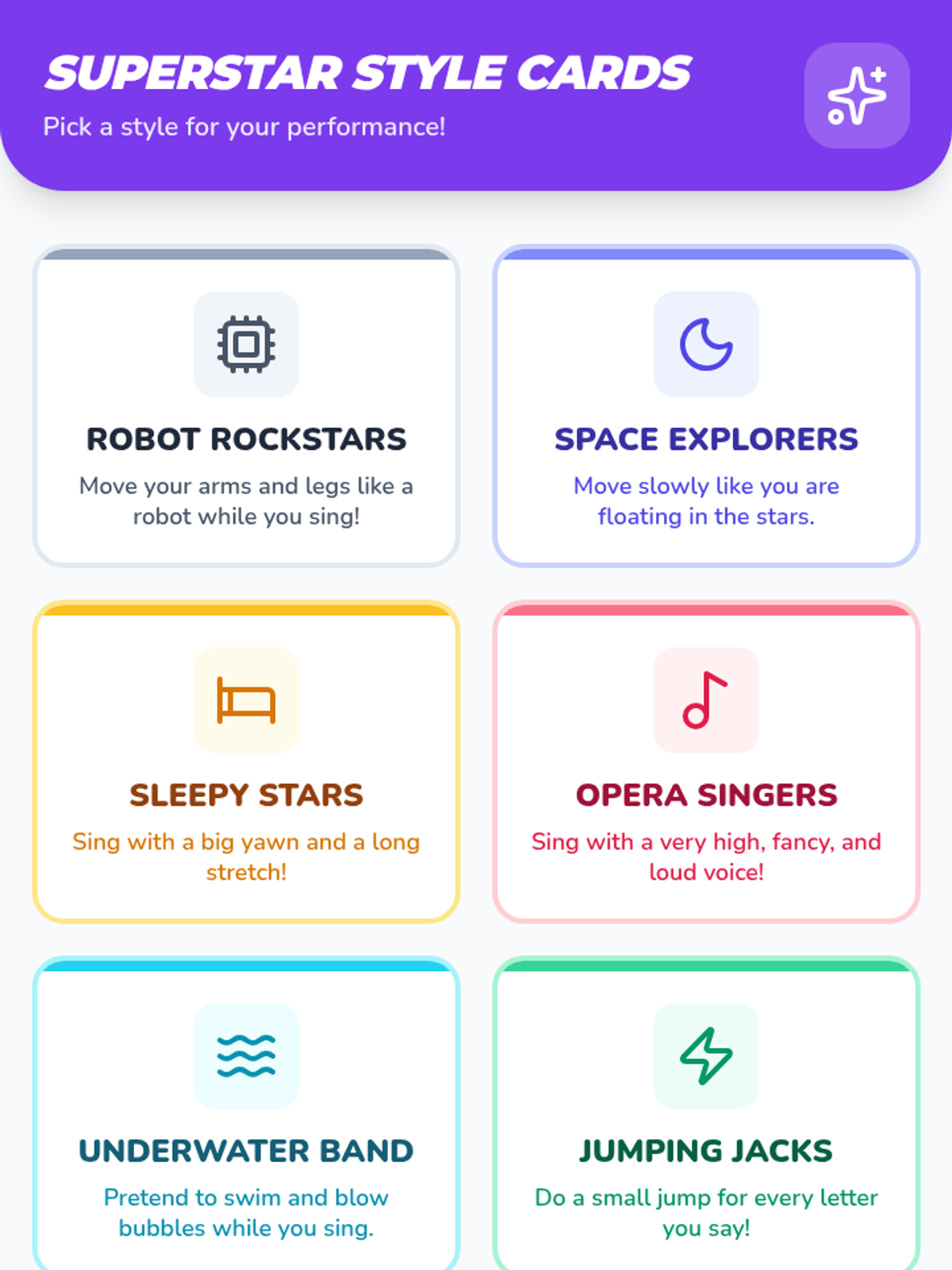
A high-energy Kindergarten lesson where students build confidence in their alphabet knowledge through a music-video-inspired performance activity. Students watch a rap video, practice vocal warm-ups, and perform the ABCs in groups using microphones and sunglasses.
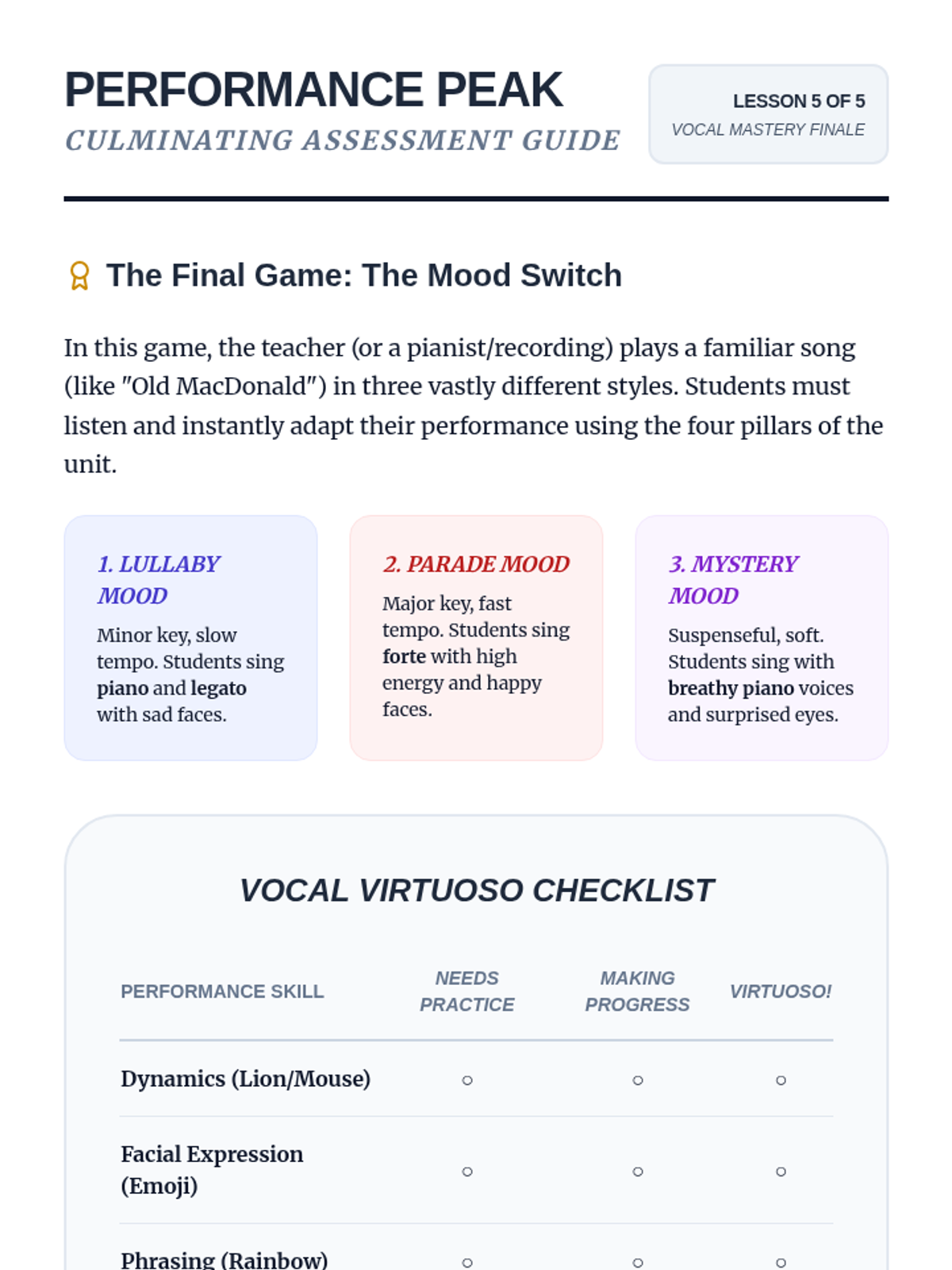
A culminating performance activity where students adapt their singing style, dynamics, and expression to match changing musical moods and accompaniments.
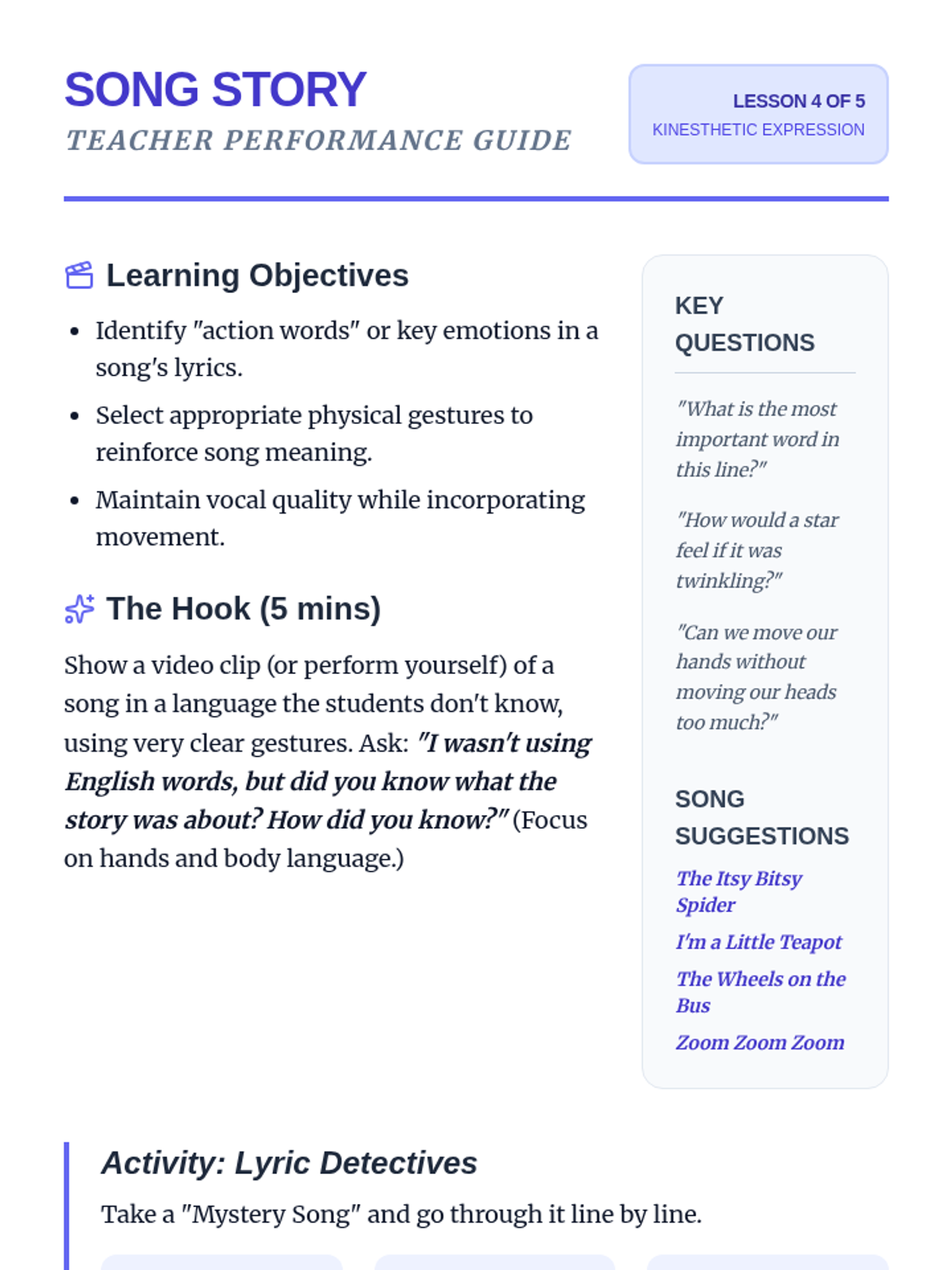
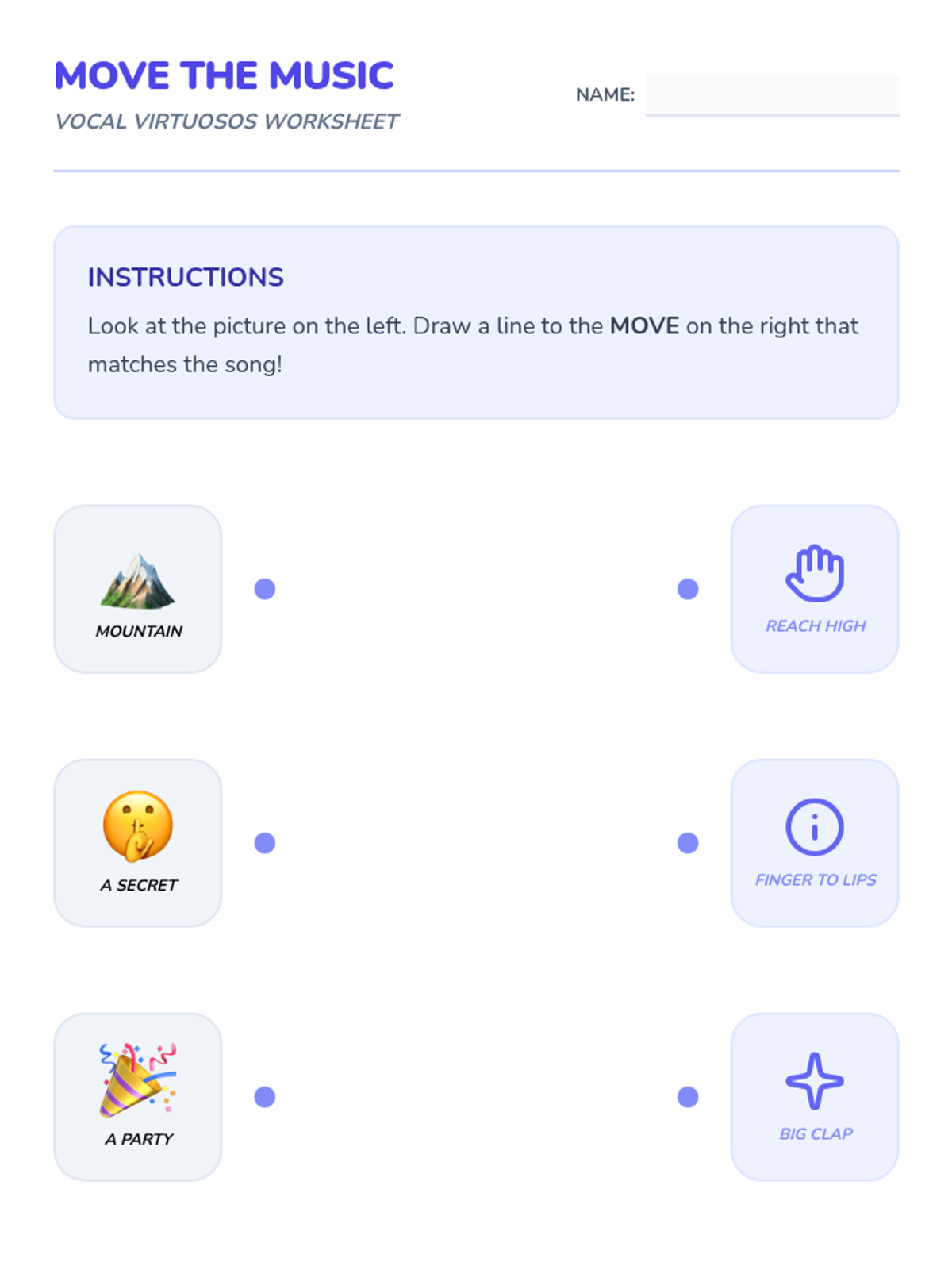
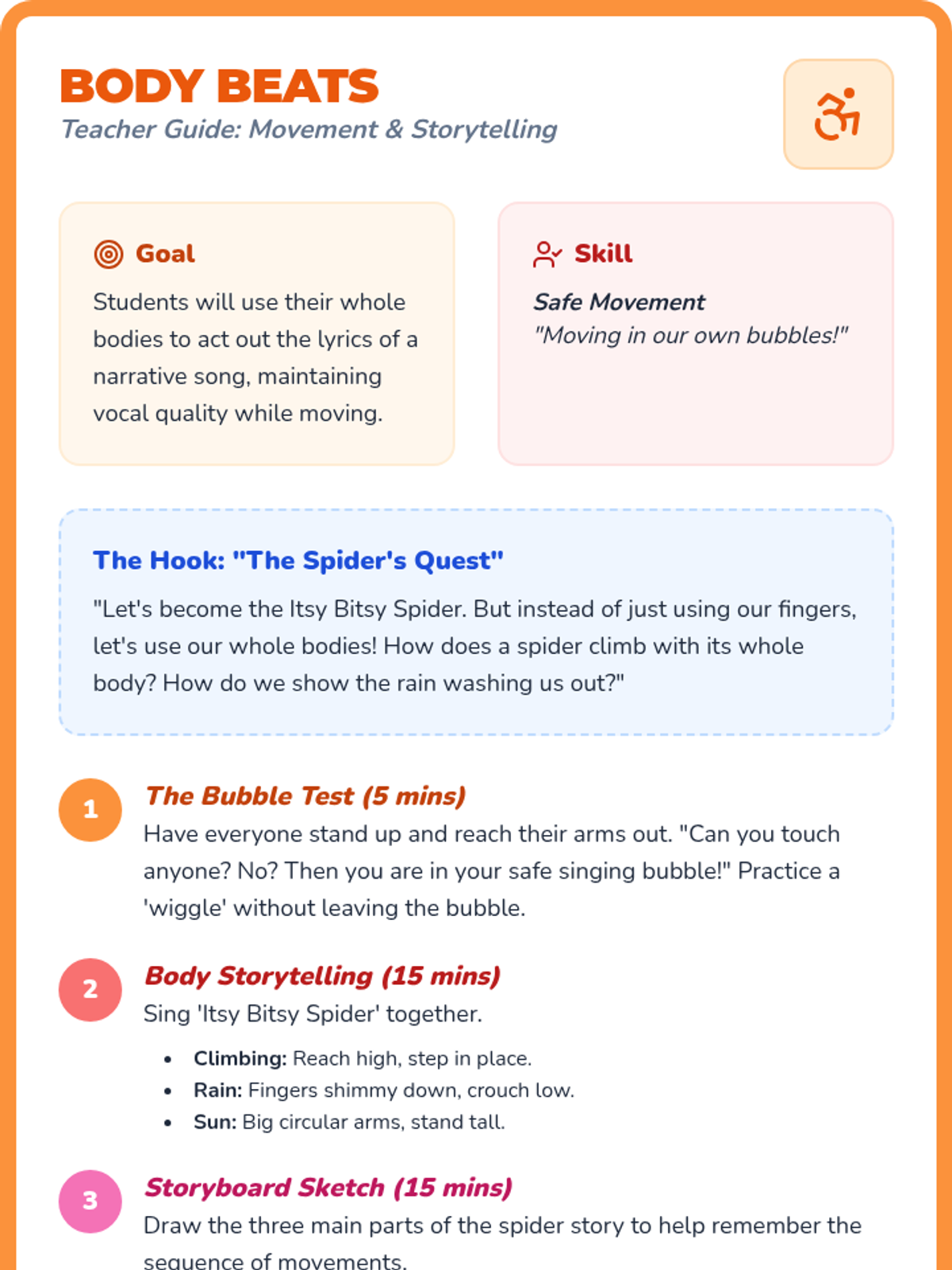
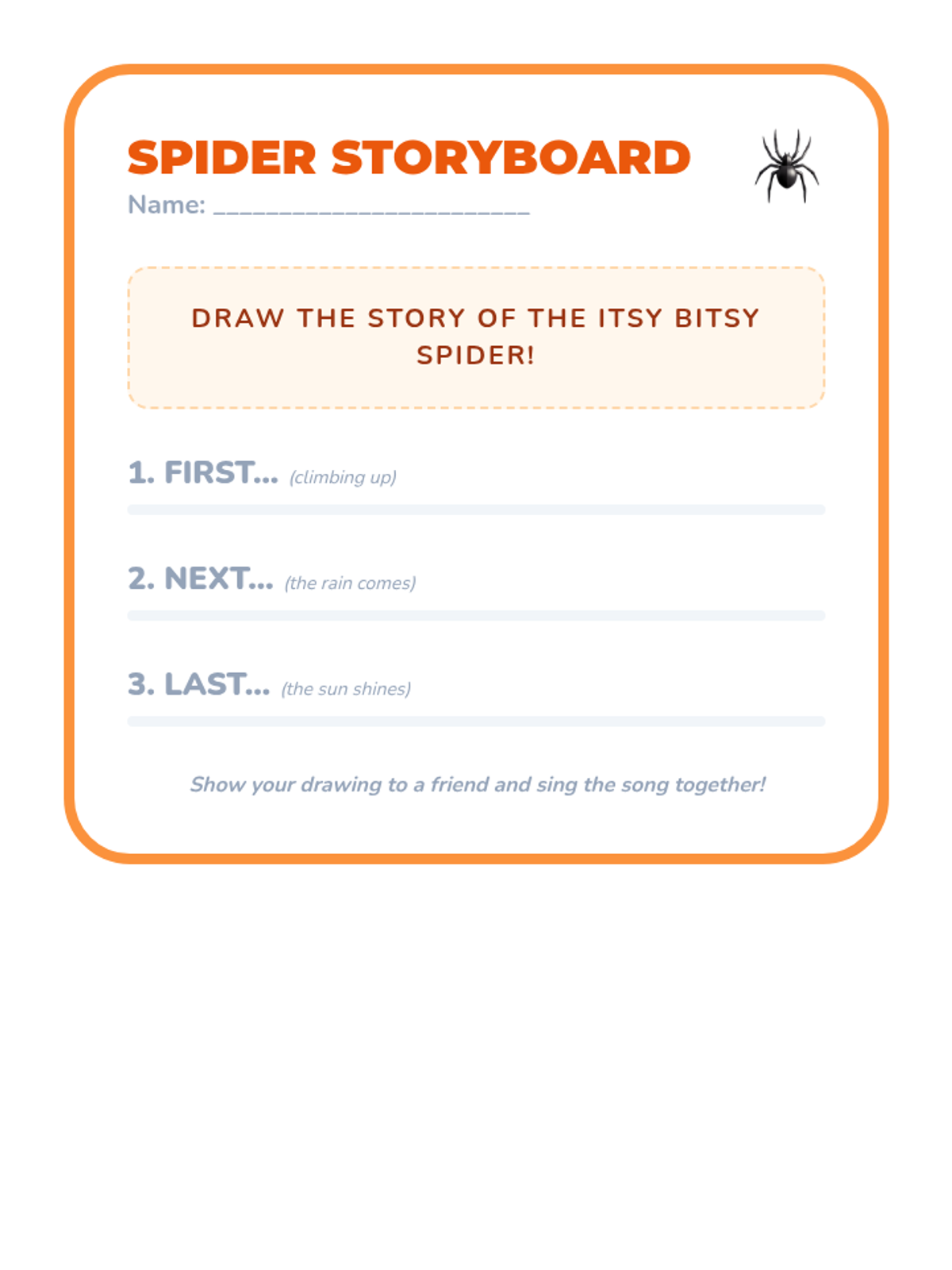
Students add physical gestures and movements to story-songs to help communicate the lyrics' meaning to an audience.
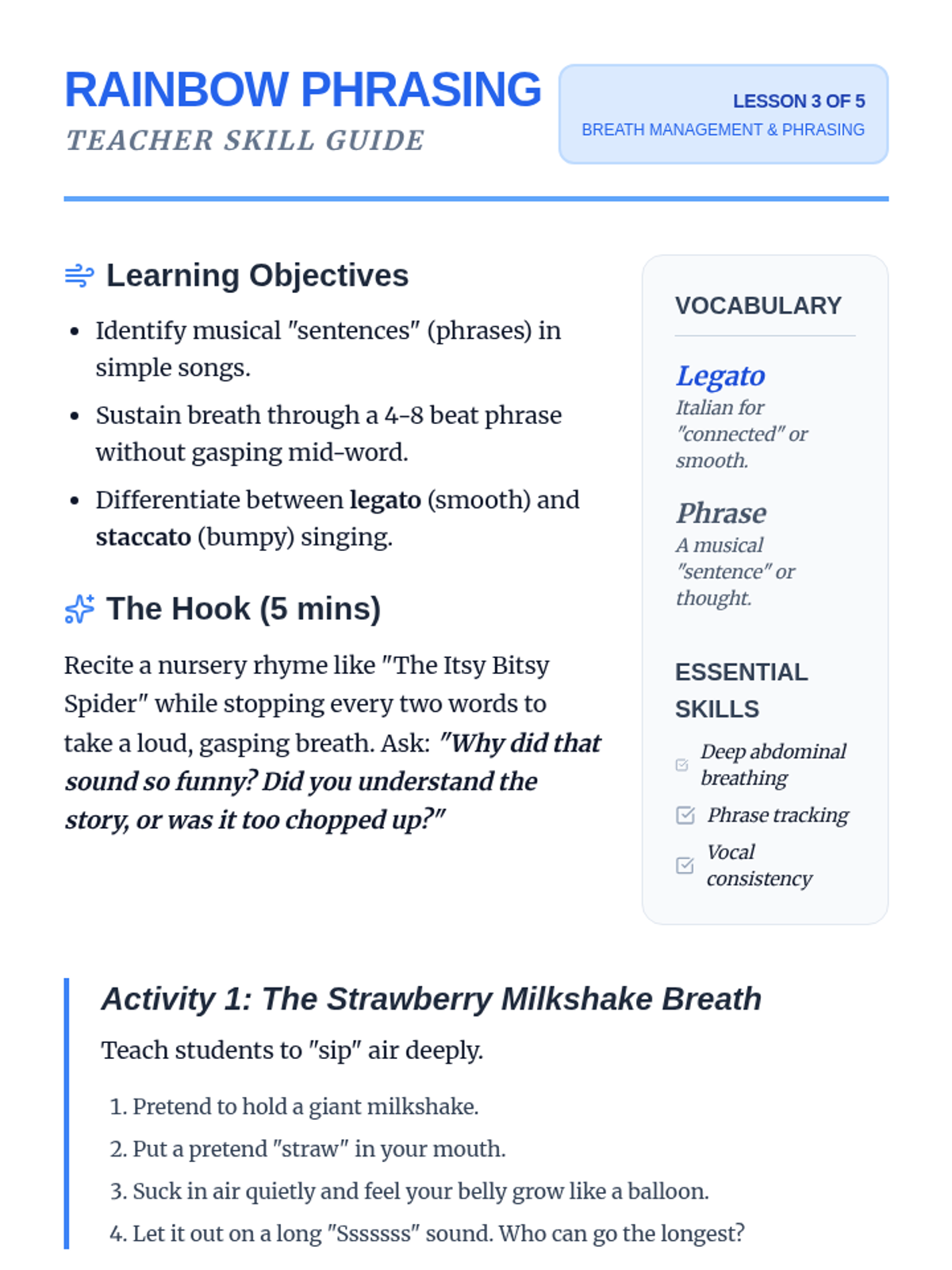
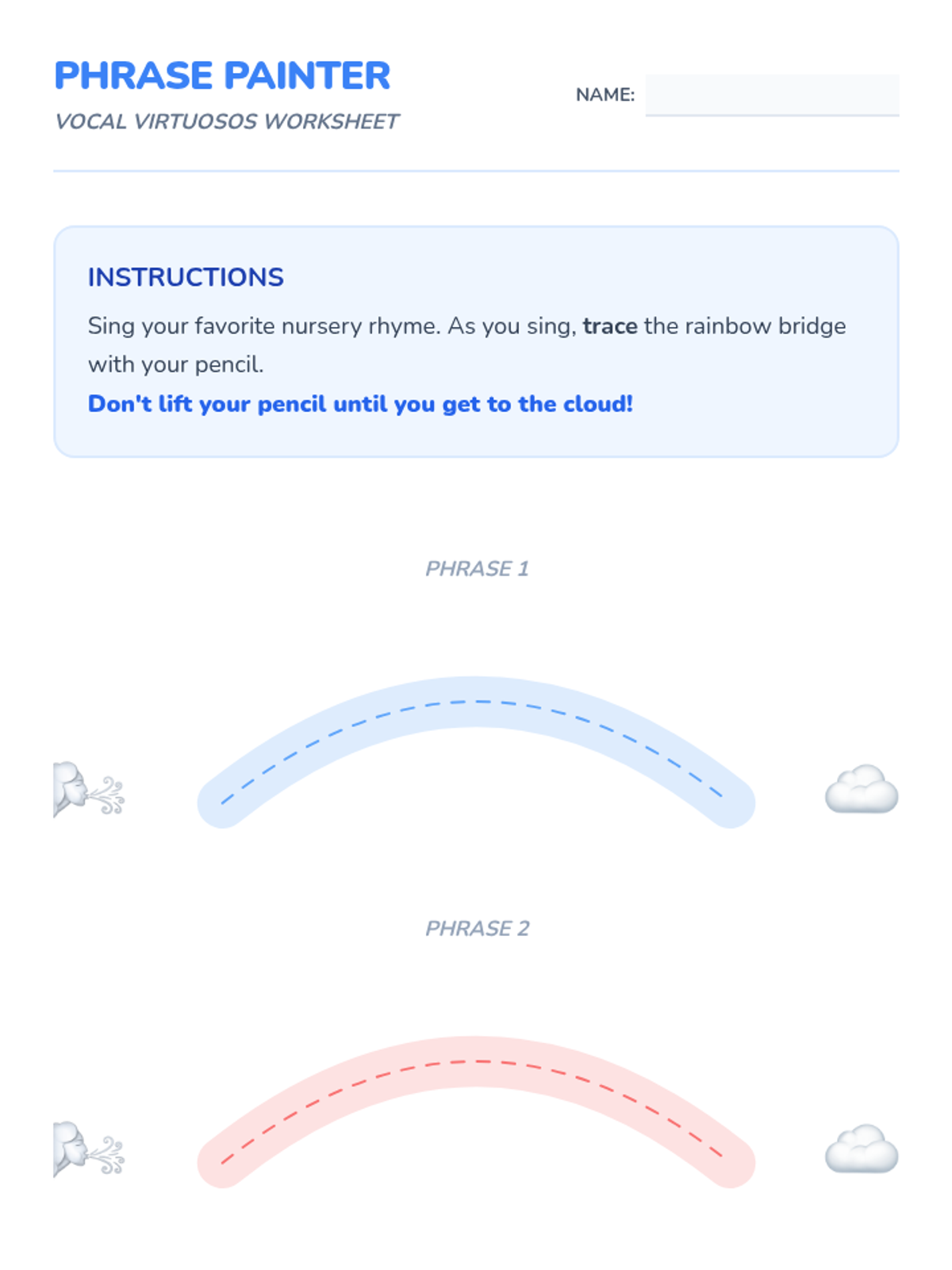
Students are introduced to musical phrasing using the visual of a rainbow arc. They learn to sing full musical 'sentences' in one breath to achieve a legato sound.
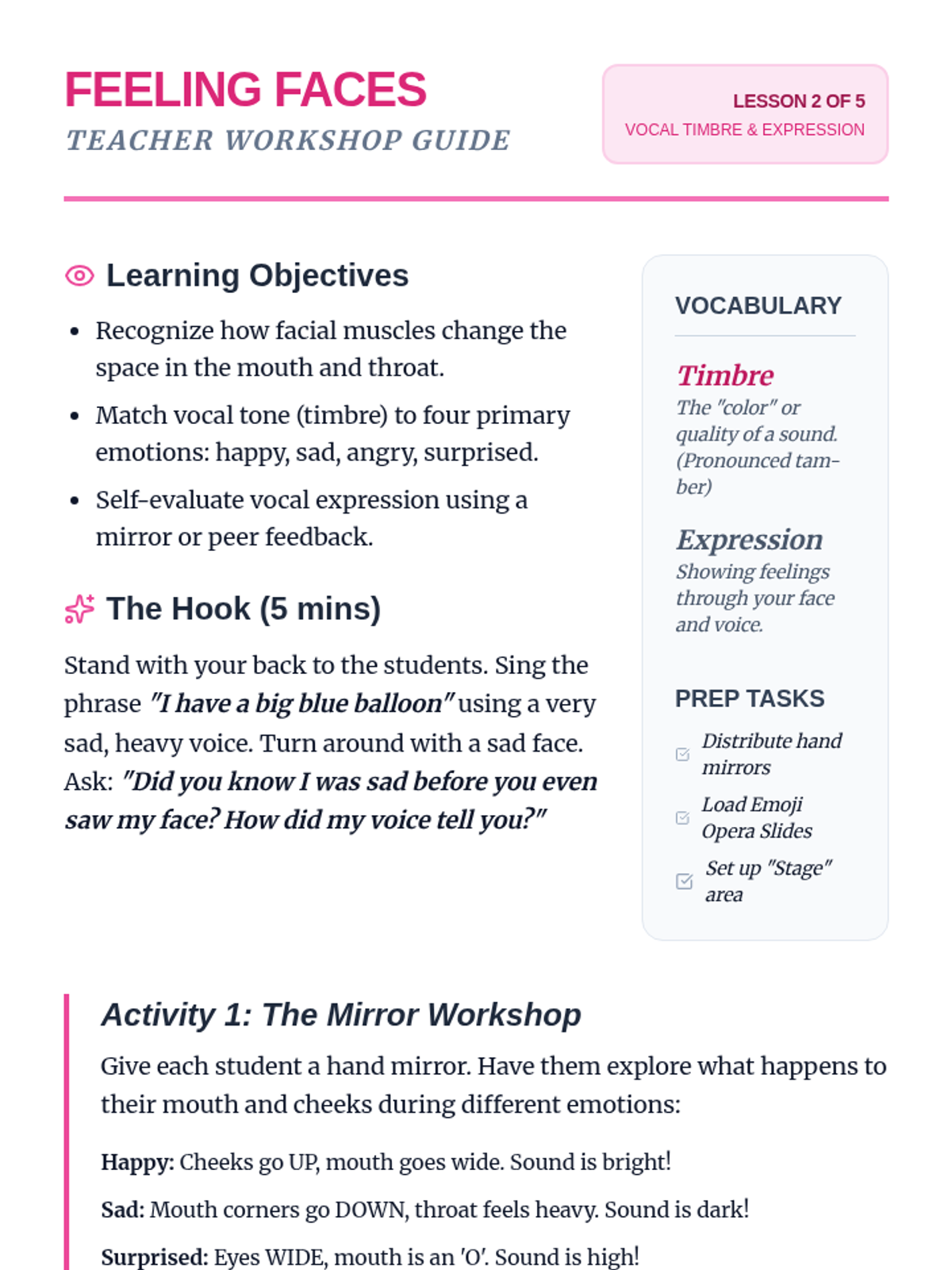
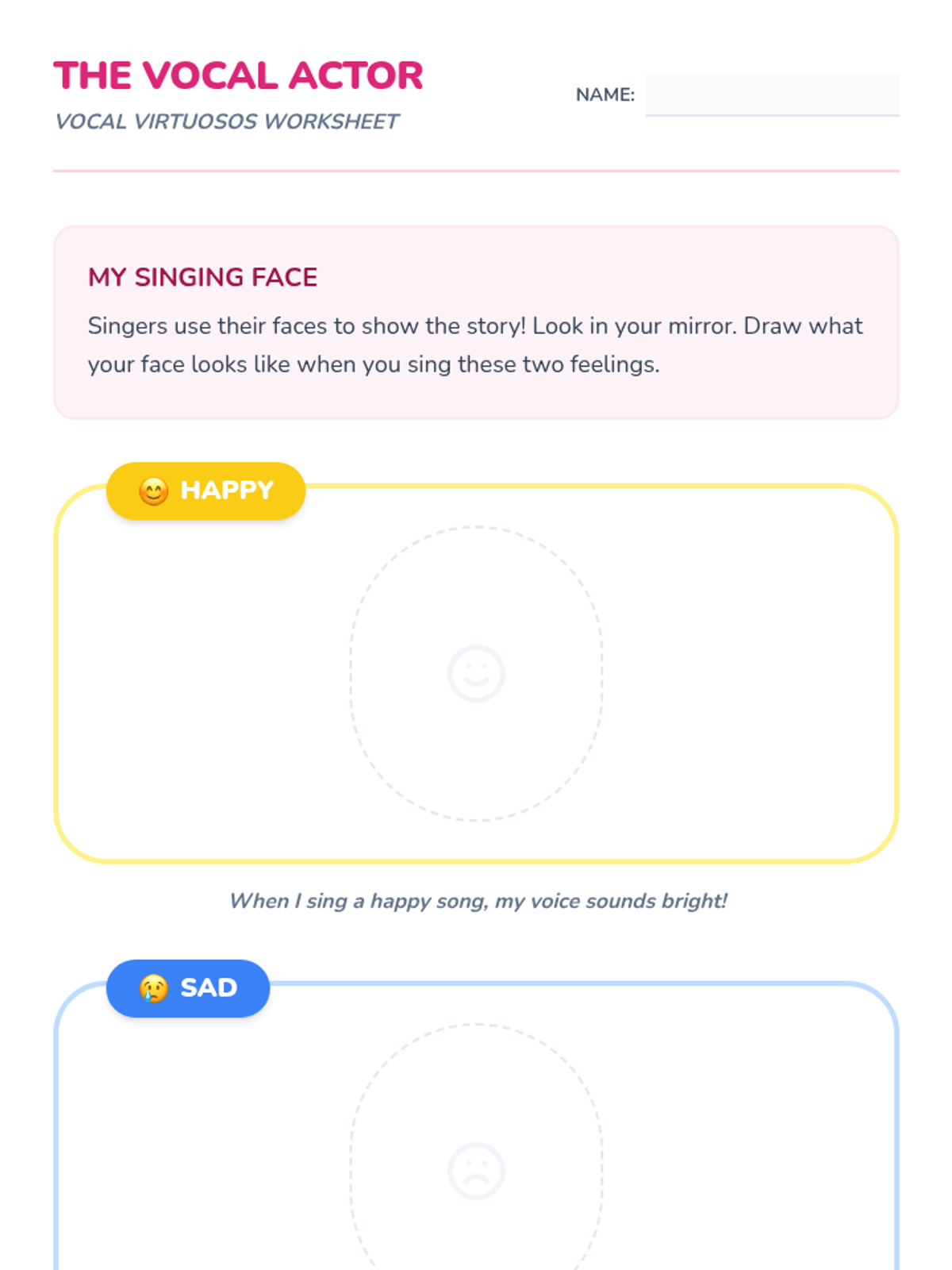
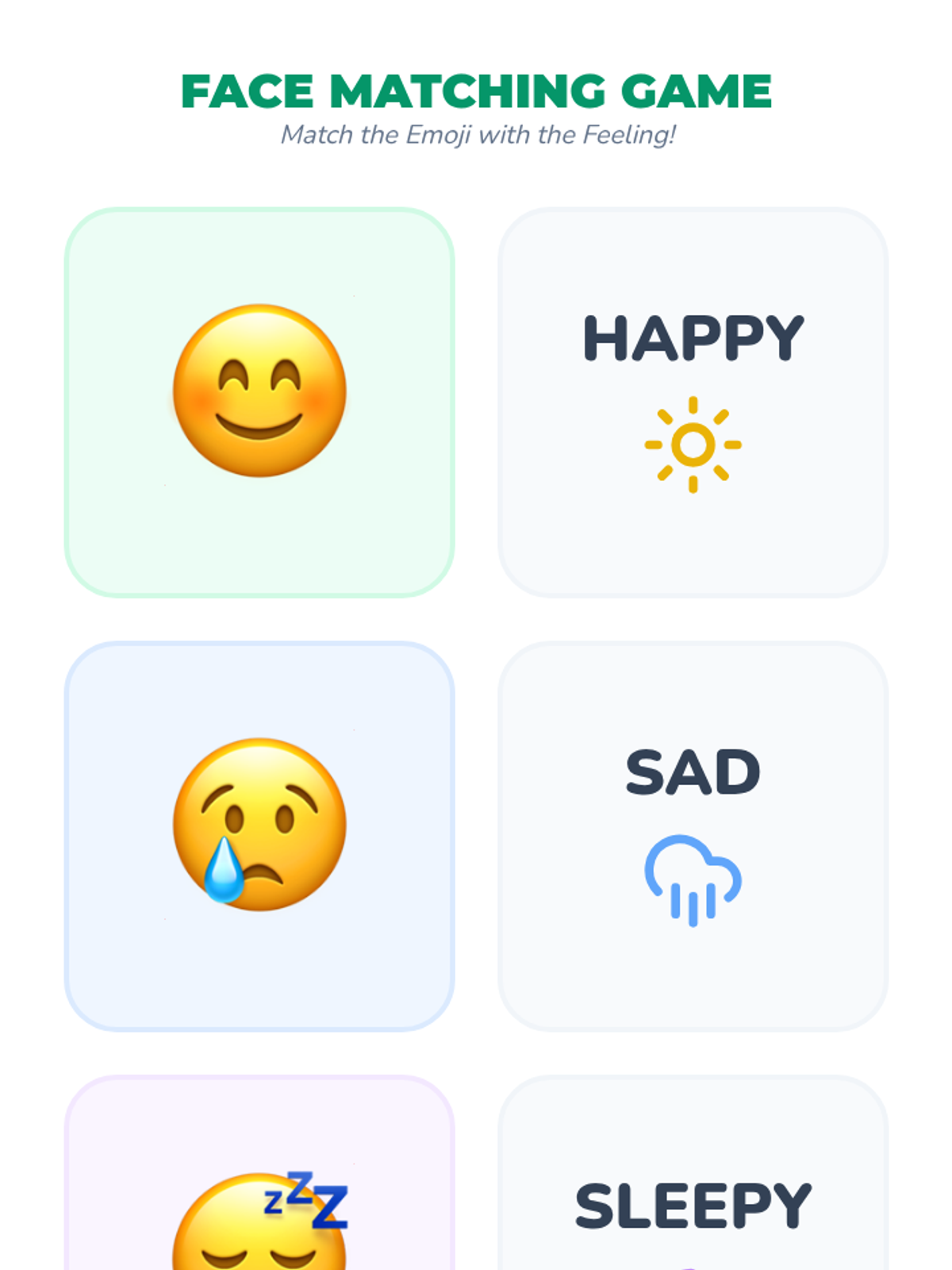
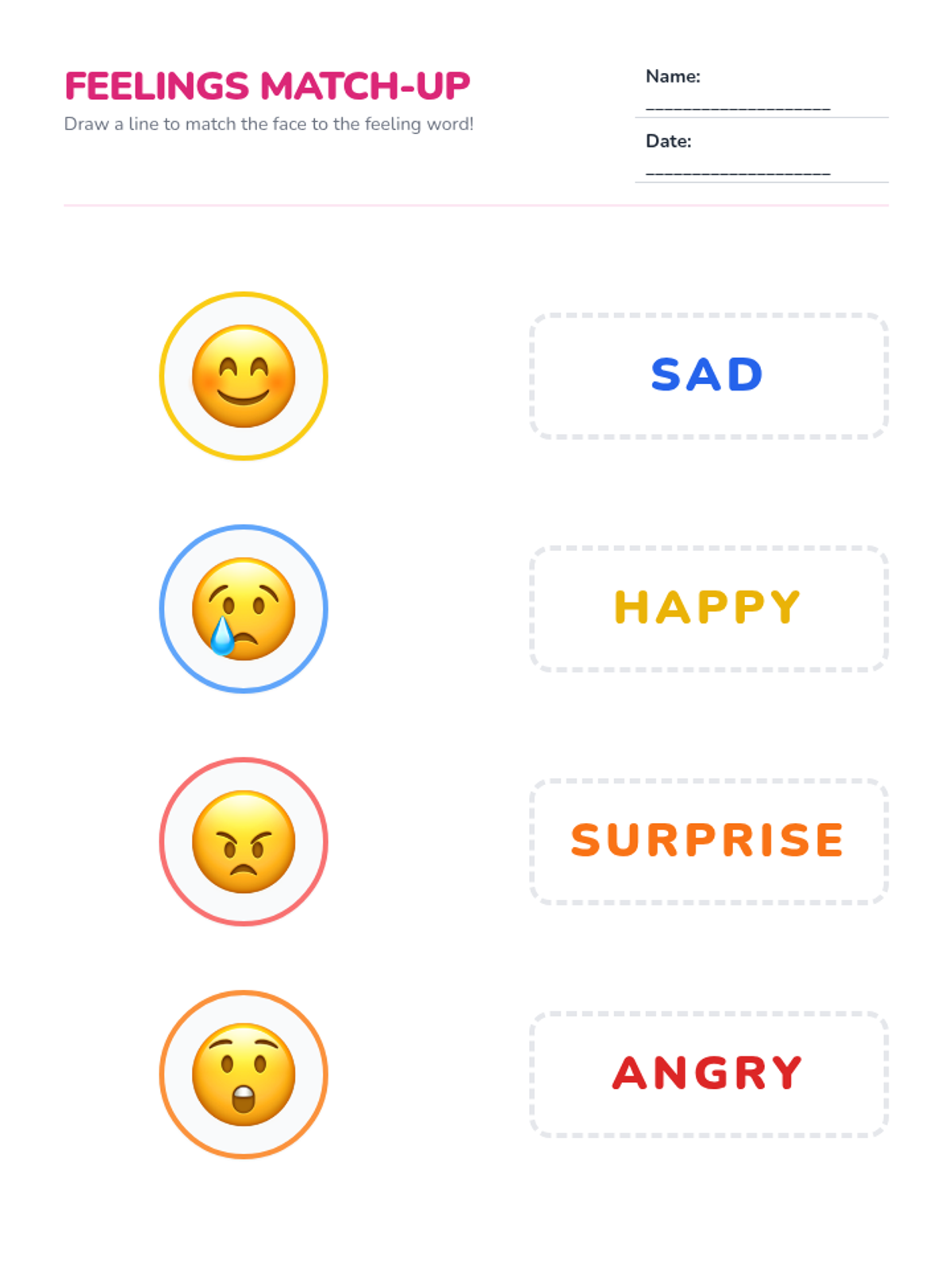
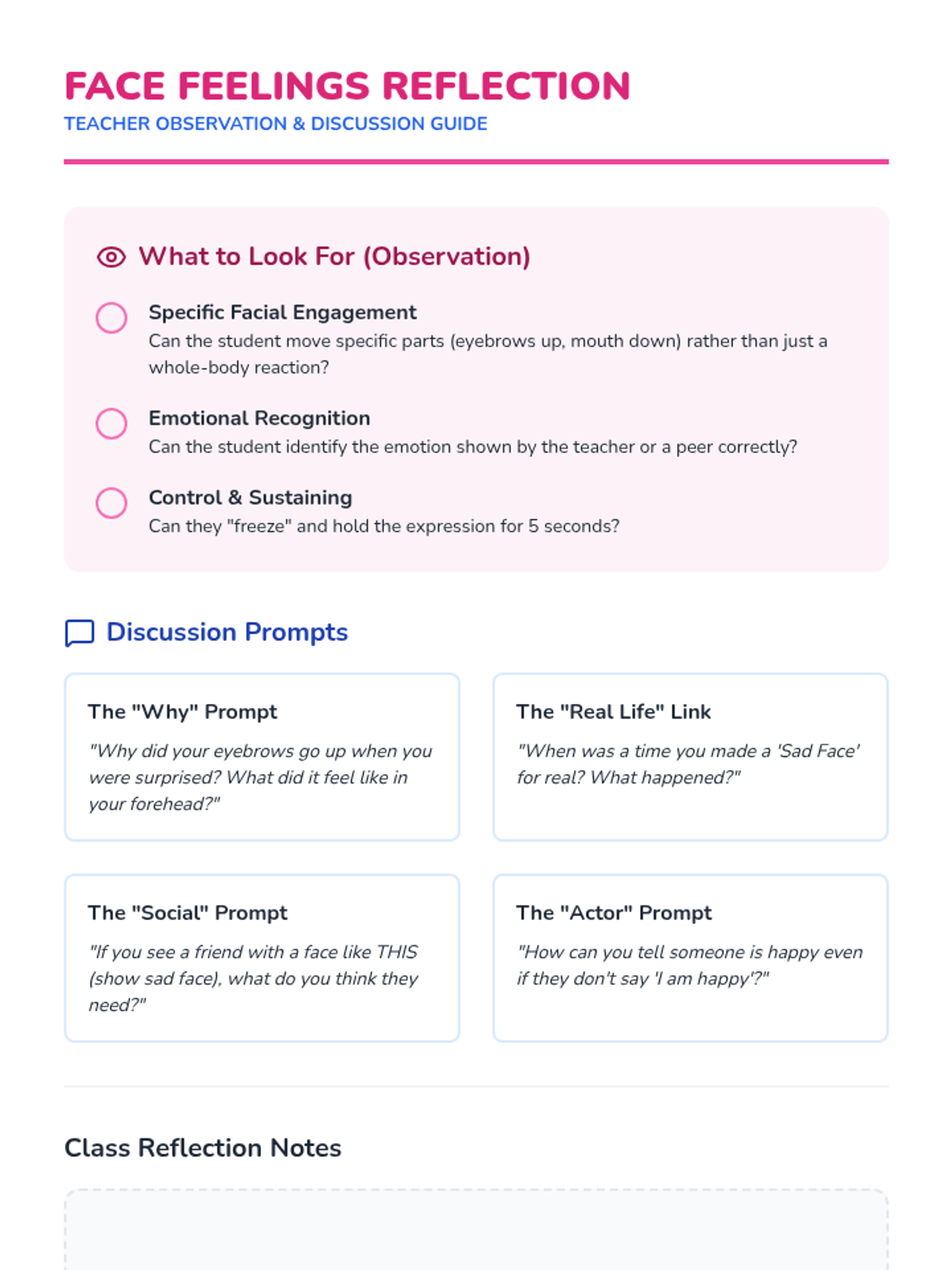
Students connect facial expressions to vocal timbre, learning how different emotions (happy, sad, angry, surprised) change the sound of their singing voice.
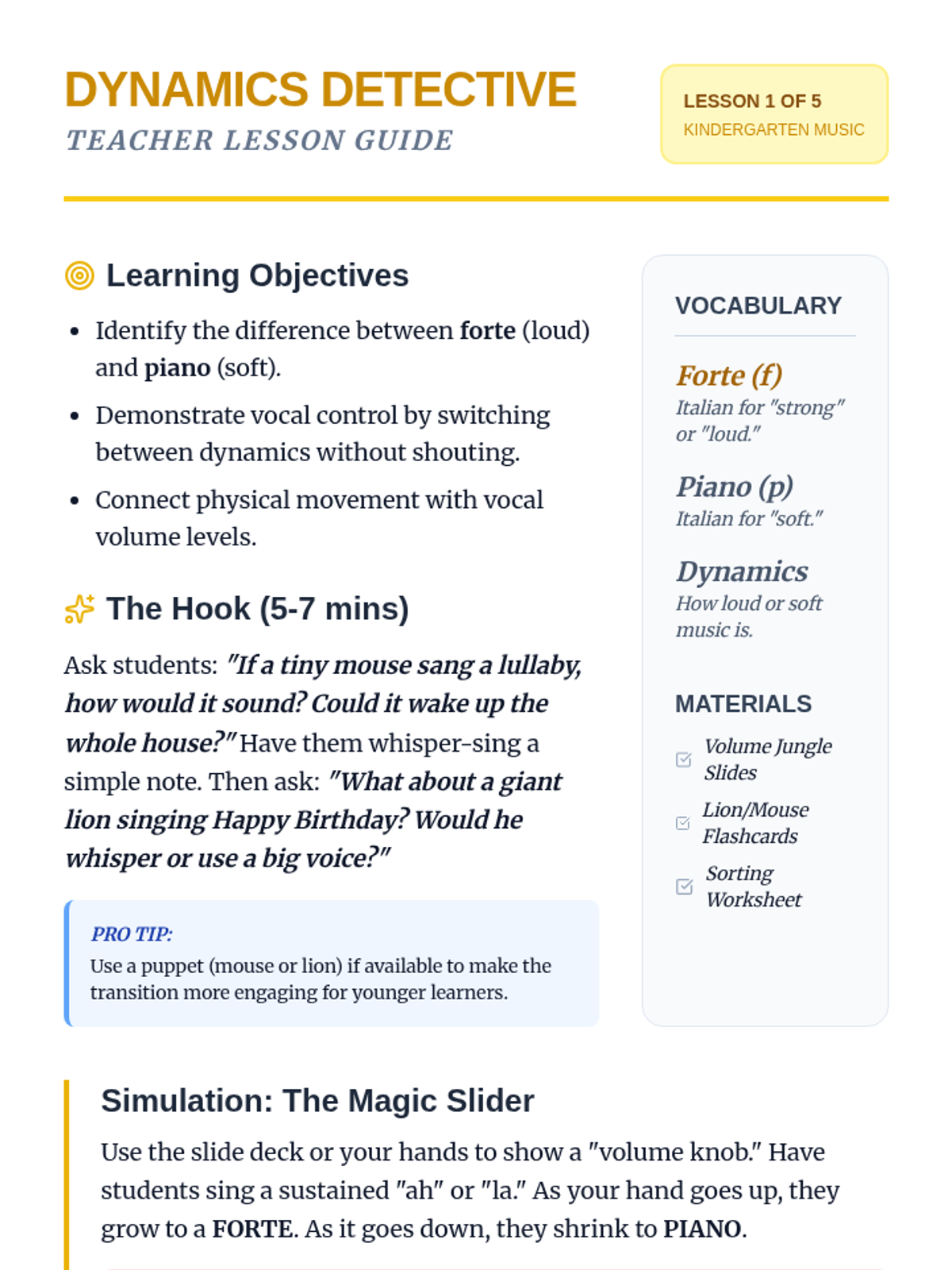
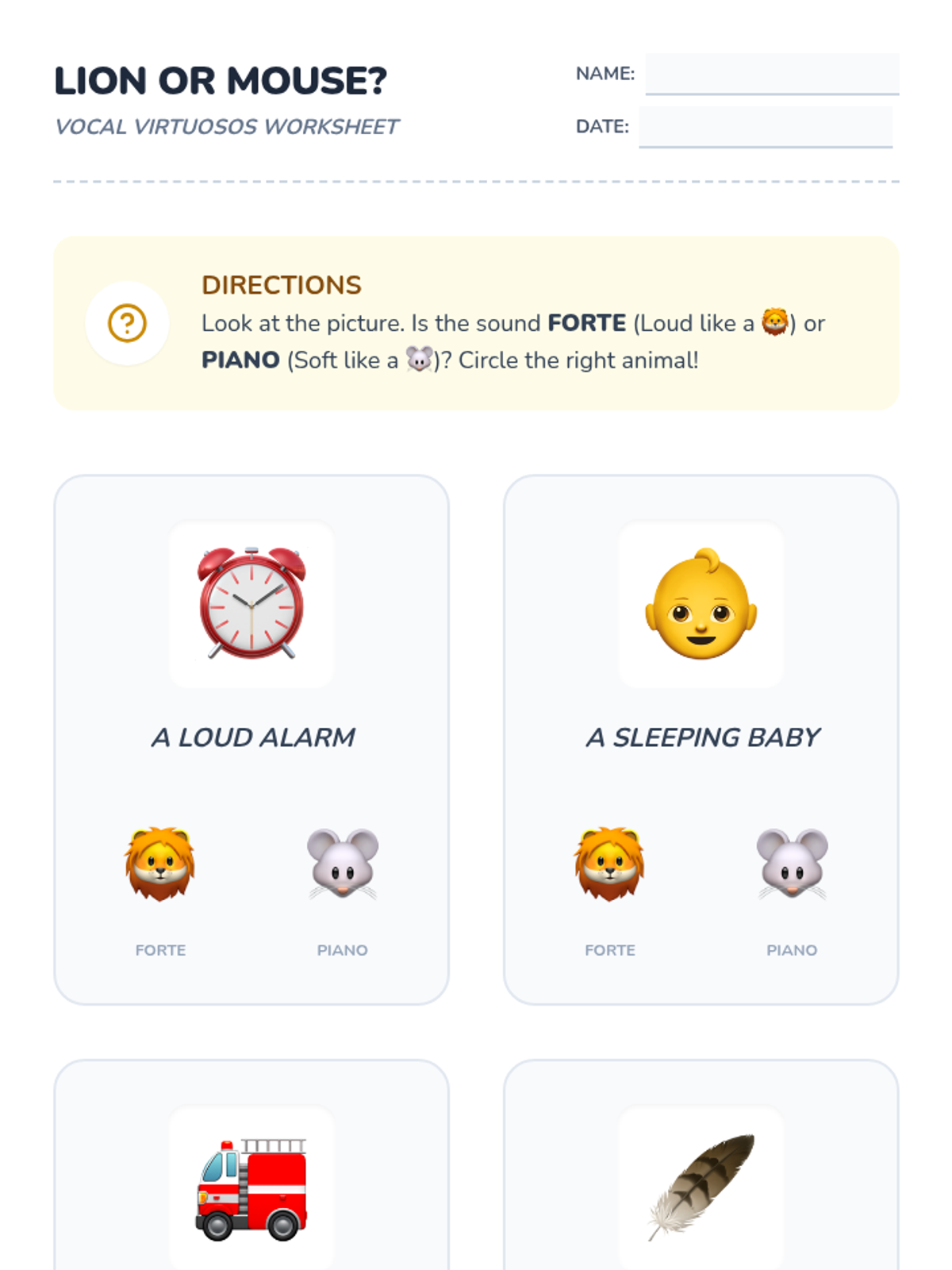
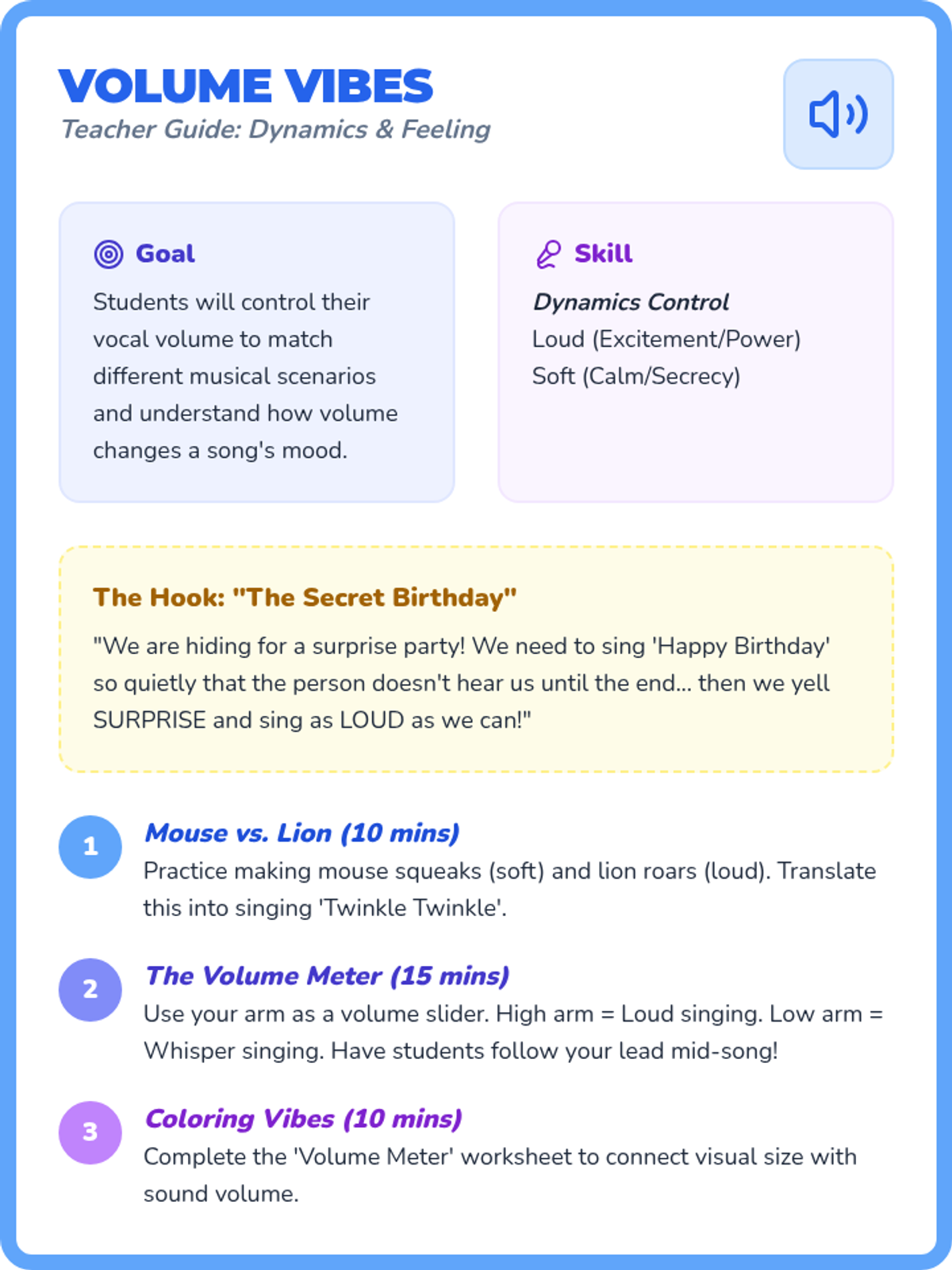
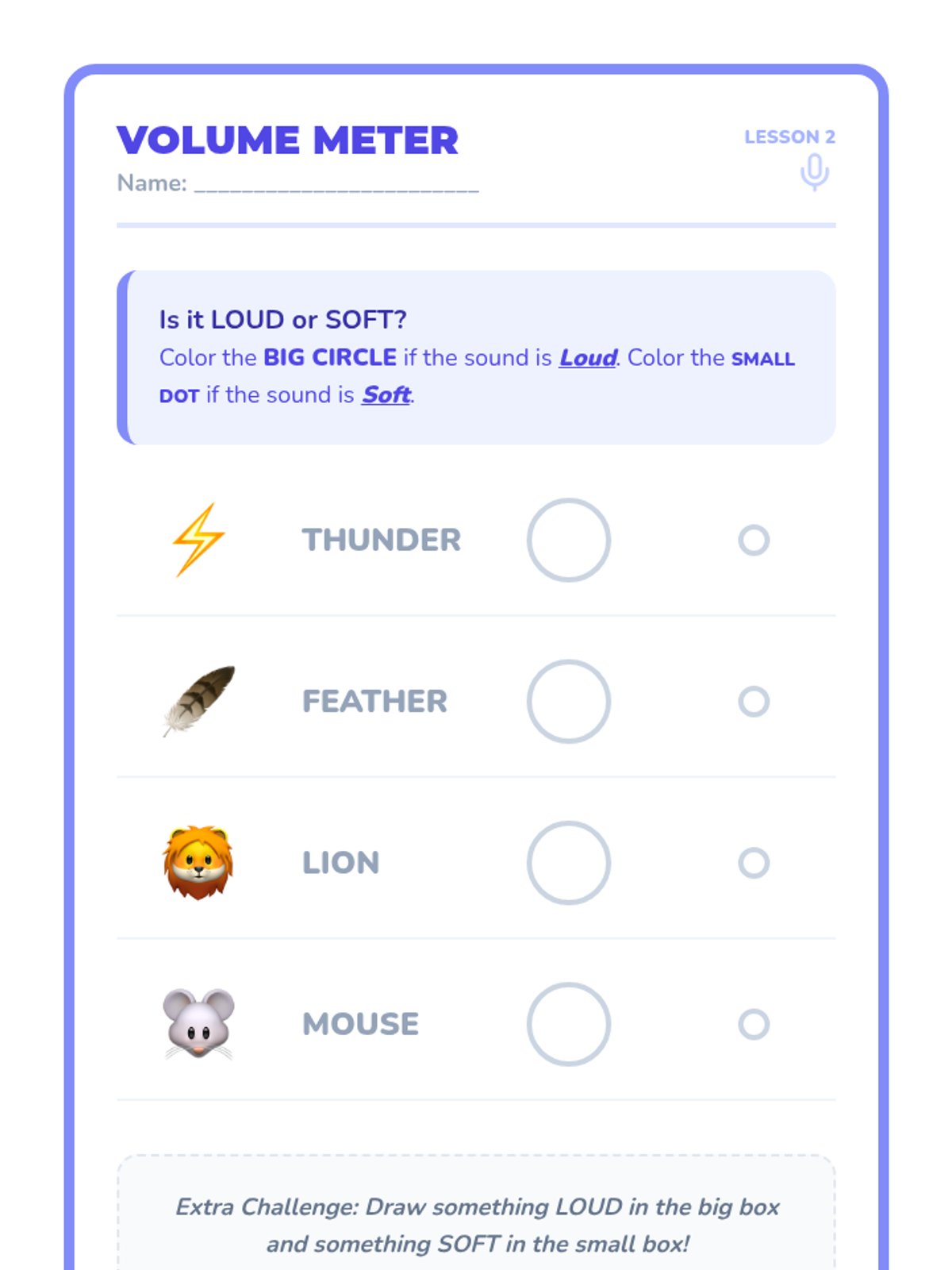
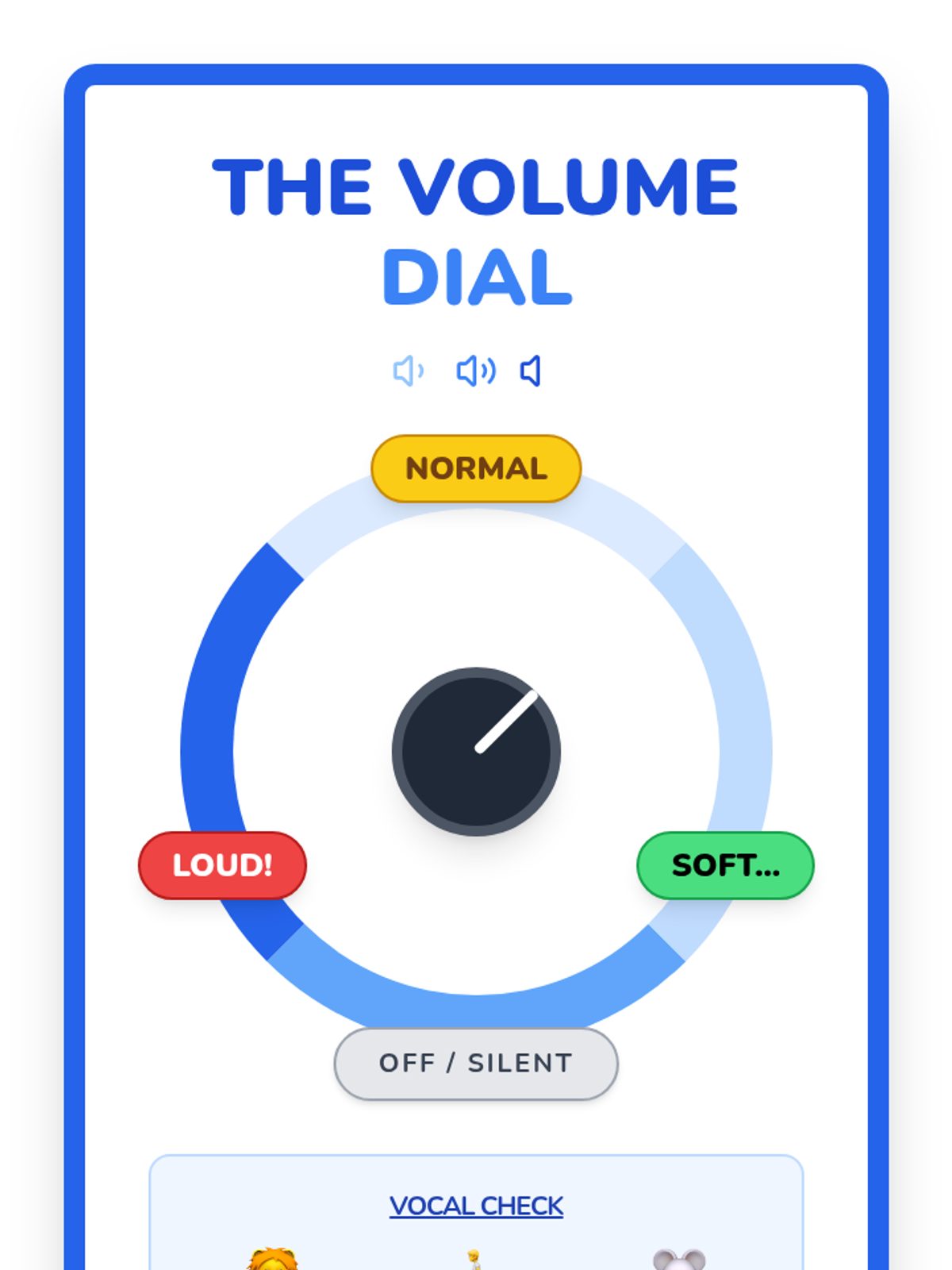
Students explore vocal dynamics using animal metaphors (Lion and Mouse) to understand the difference between forte (loud) and piano (soft). They practice controlling volume without straining their voices.
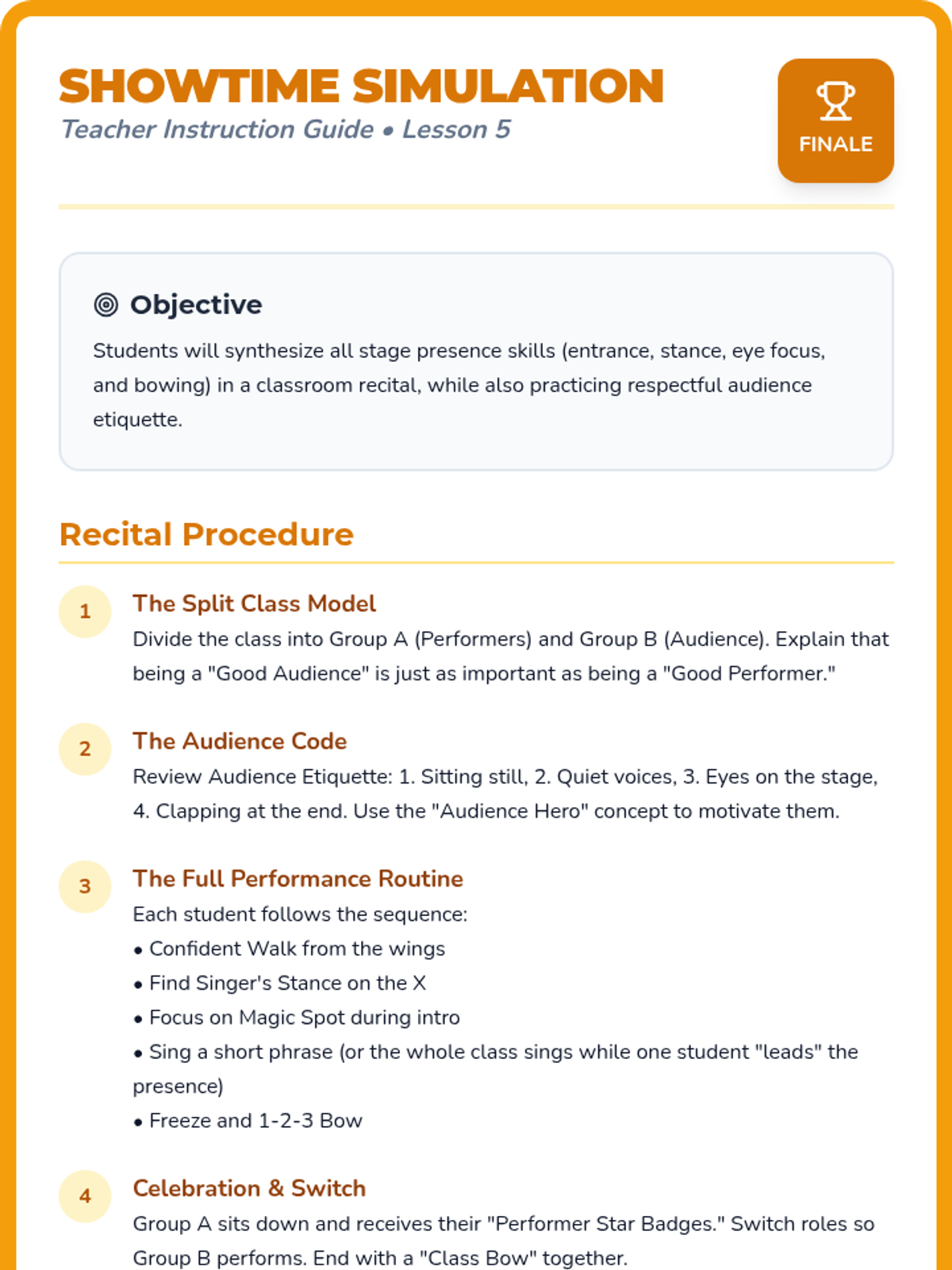
A mock recital where students synthesize all skills learned, practicing both performing and being a respectful audience member.
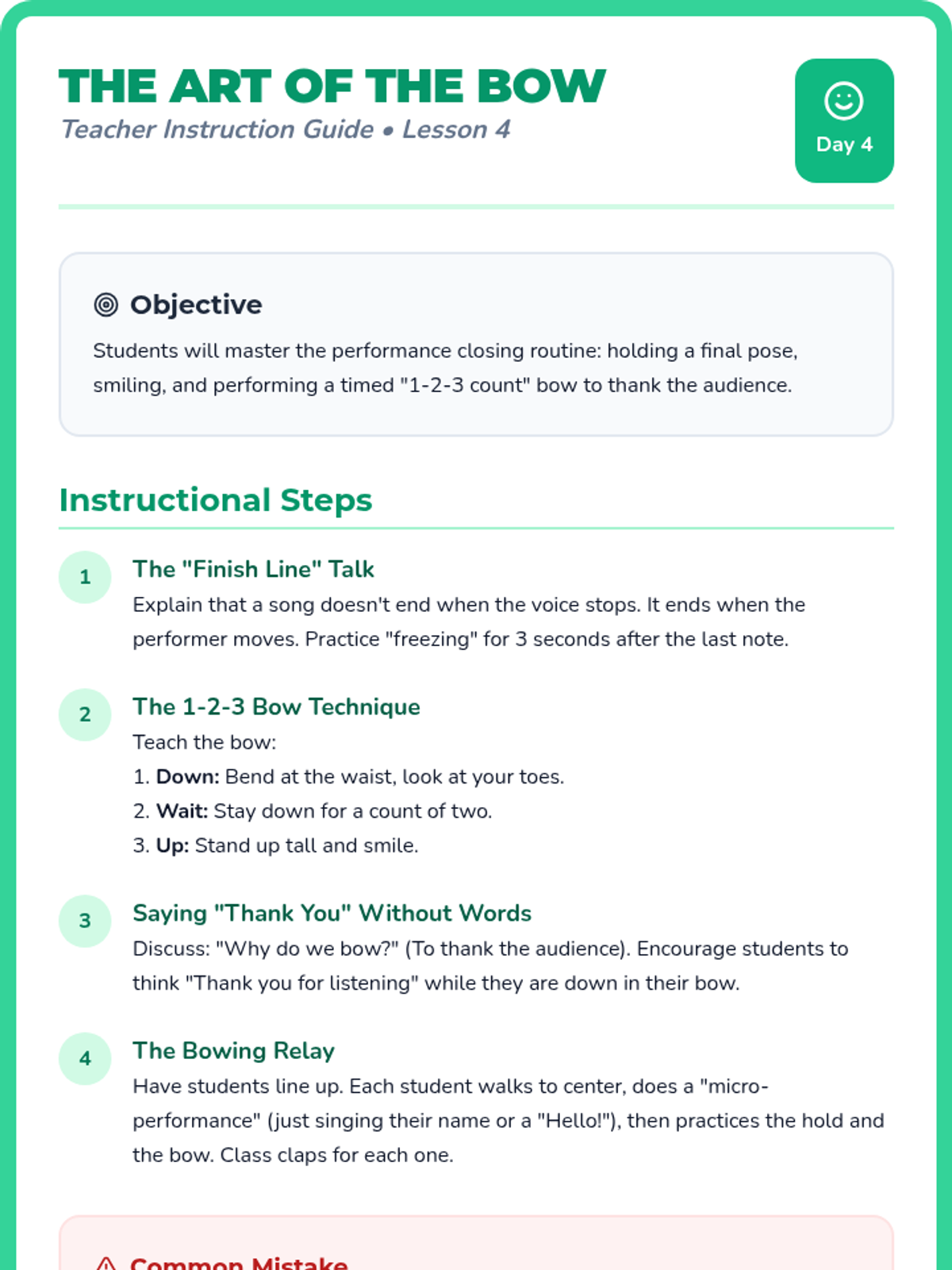
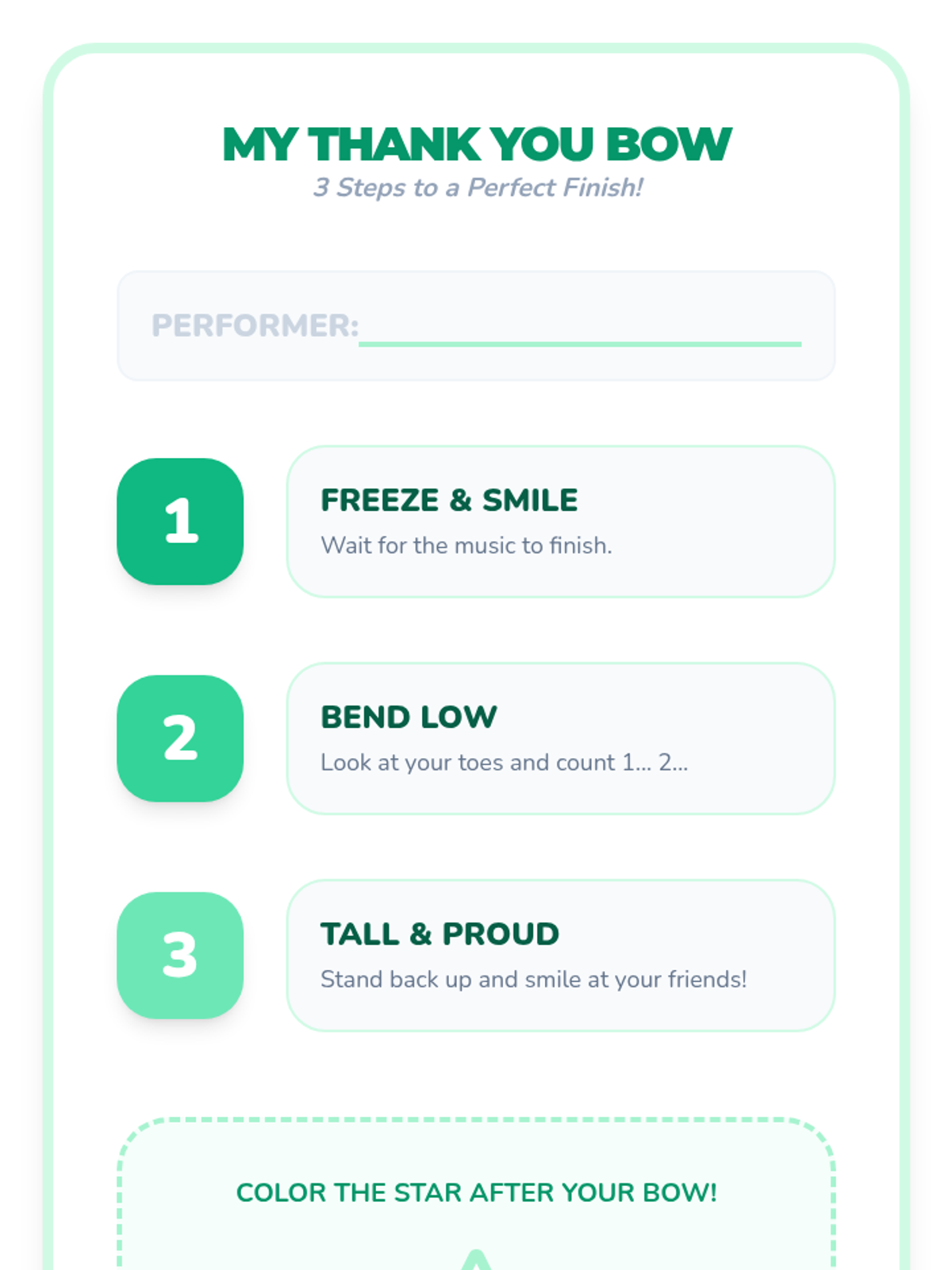
Students master the protocol for ending a performance, including holding the final pose and taking a timed bow to thank the audience.
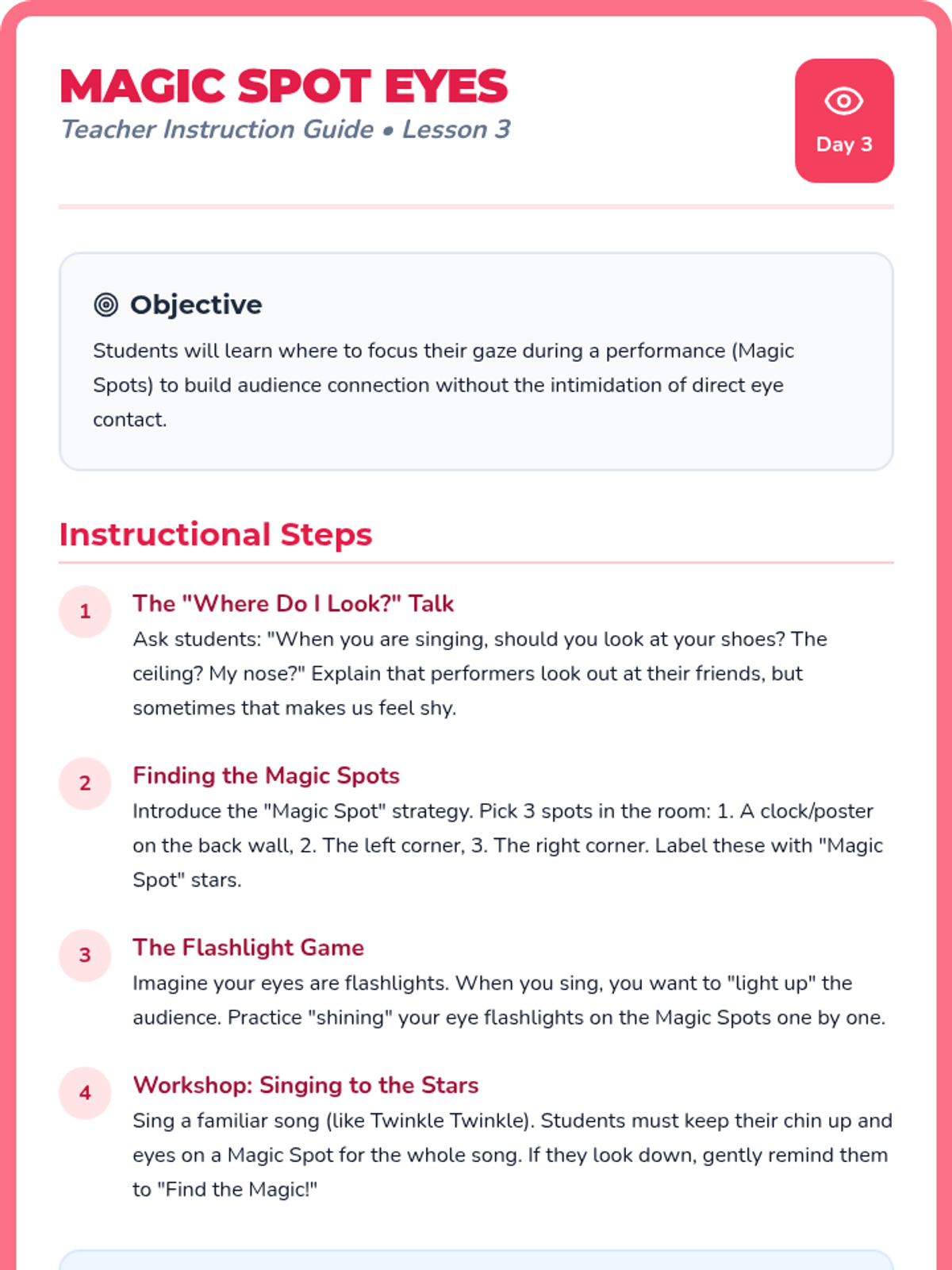
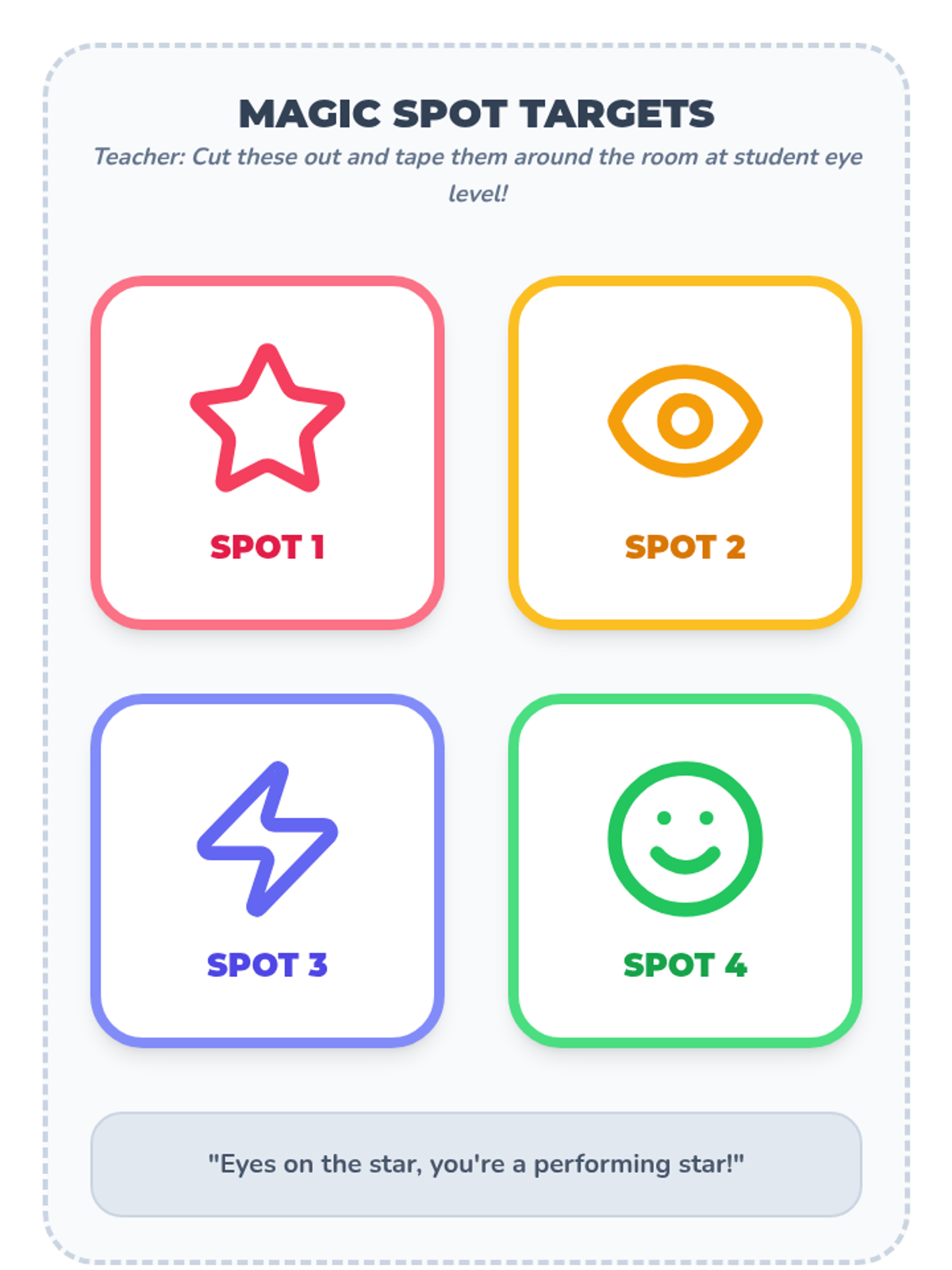
Students learn where to look while performing, practicing focal points to build connection without the pressure of direct eye contact.
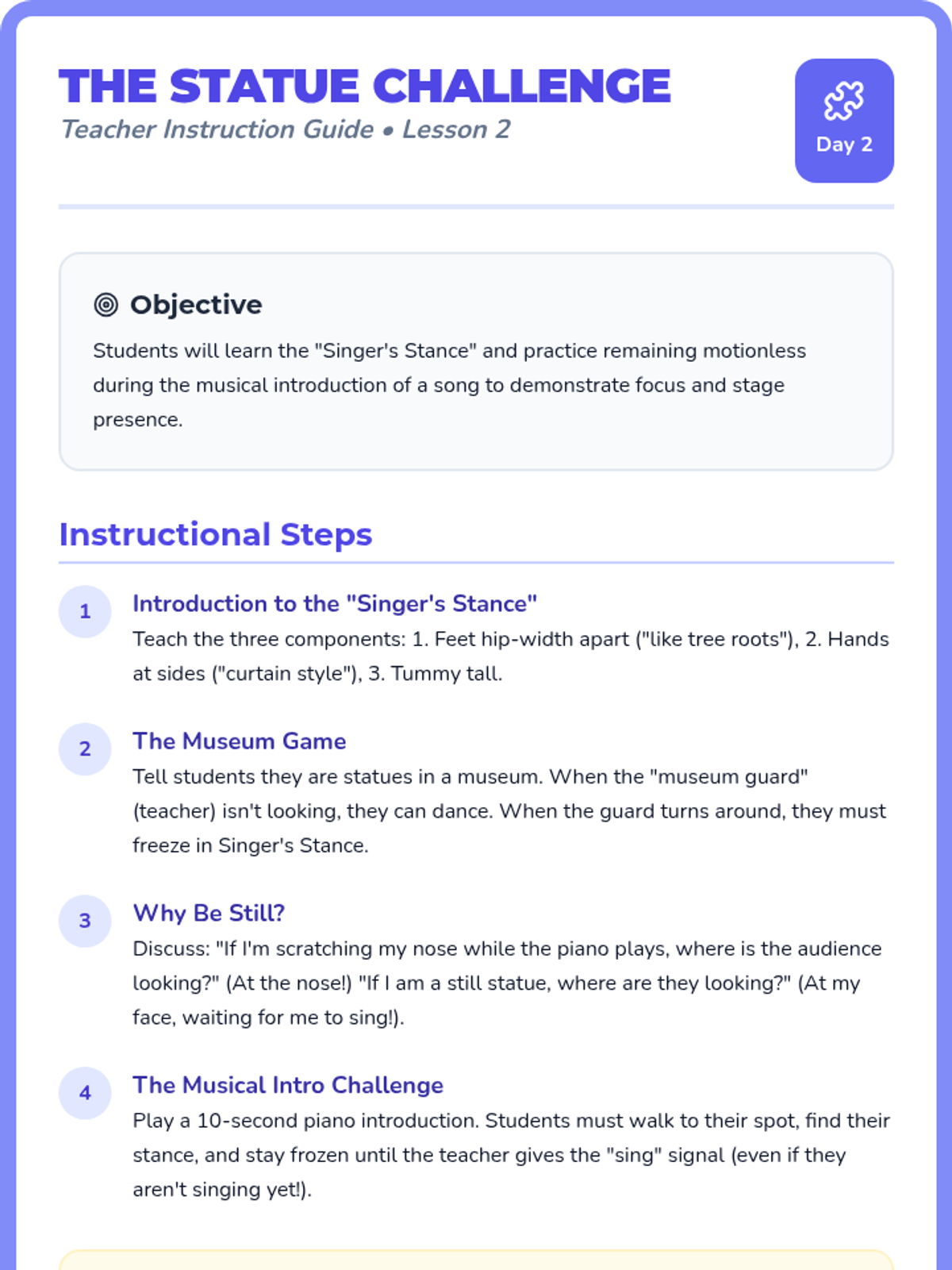
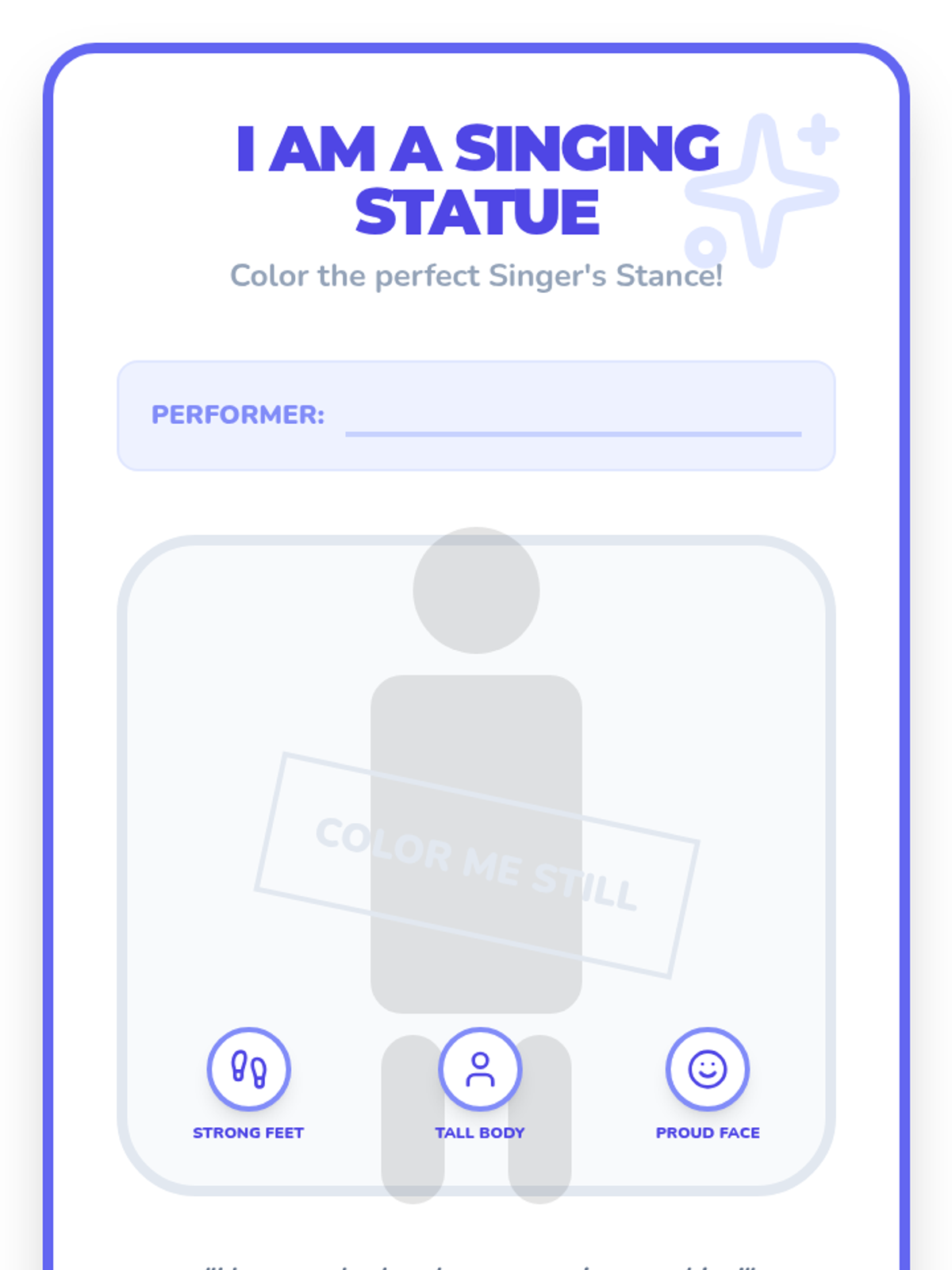
Students learn the 'Singer's Stance' and practice remaining still during musical introductions to draw audience attention to their performance.
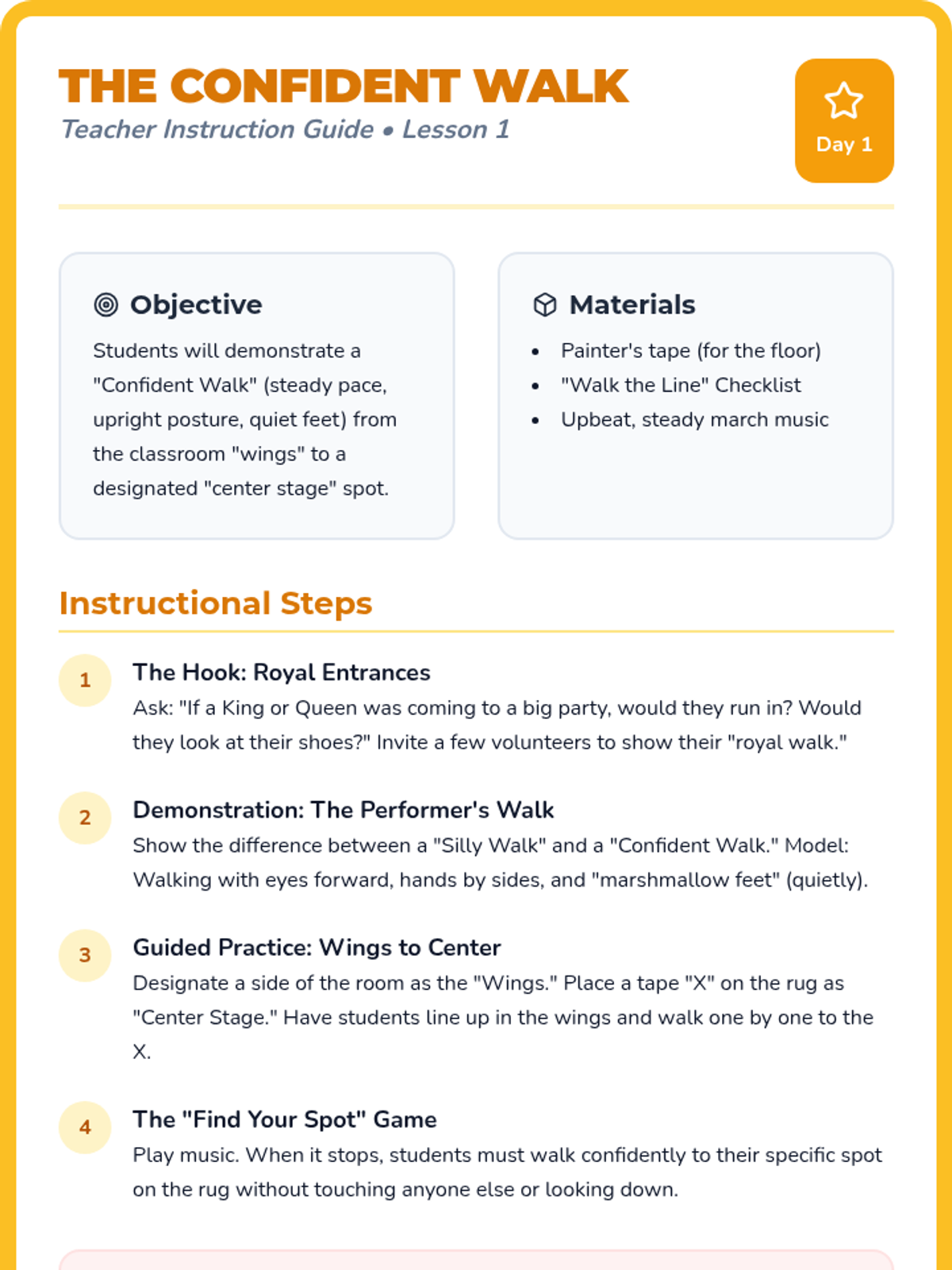
Students practice walking from the 'wings' to 'center stage' with quiet feet and heads held high, establishing the beginning of a performance routine.
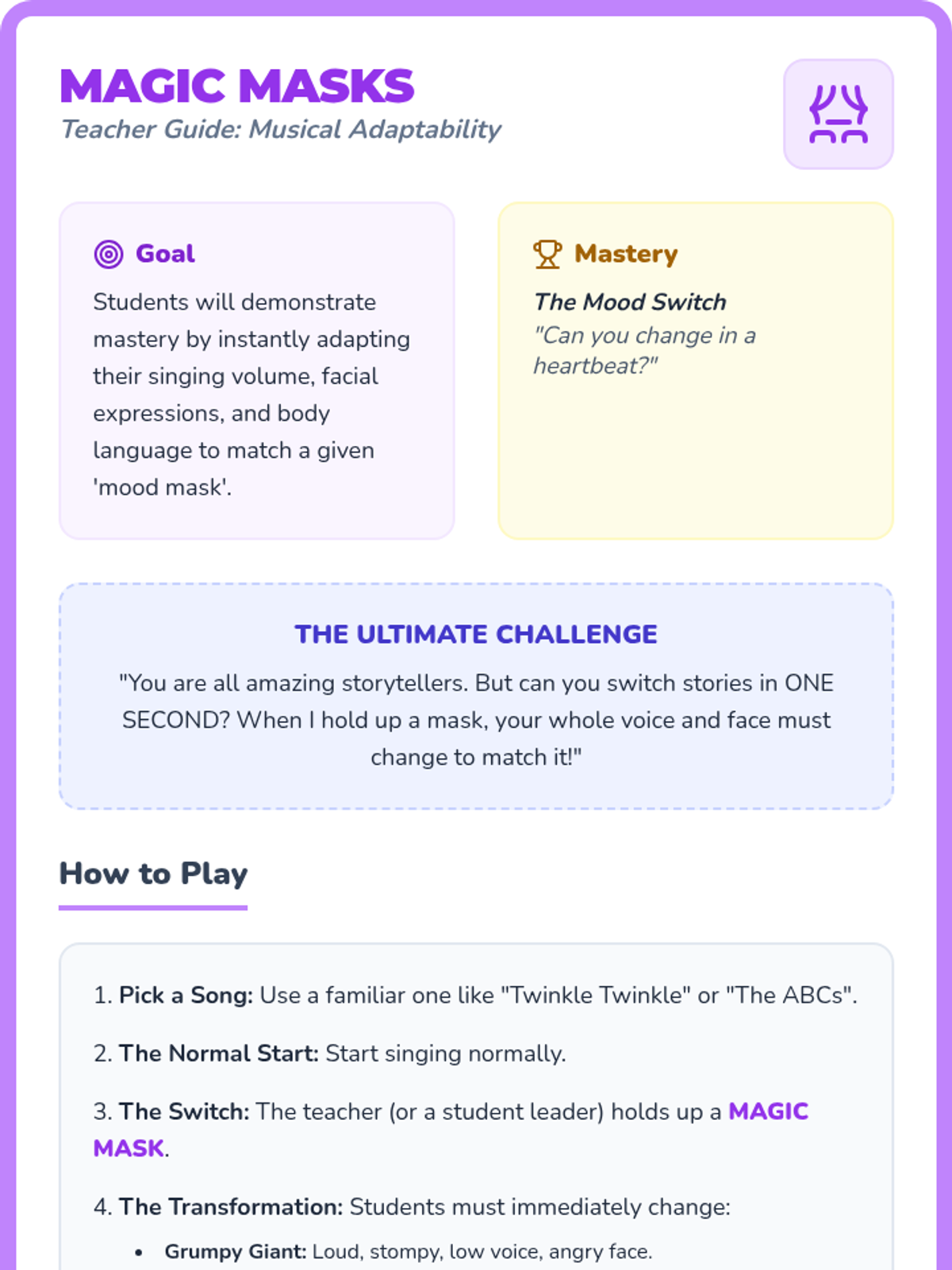
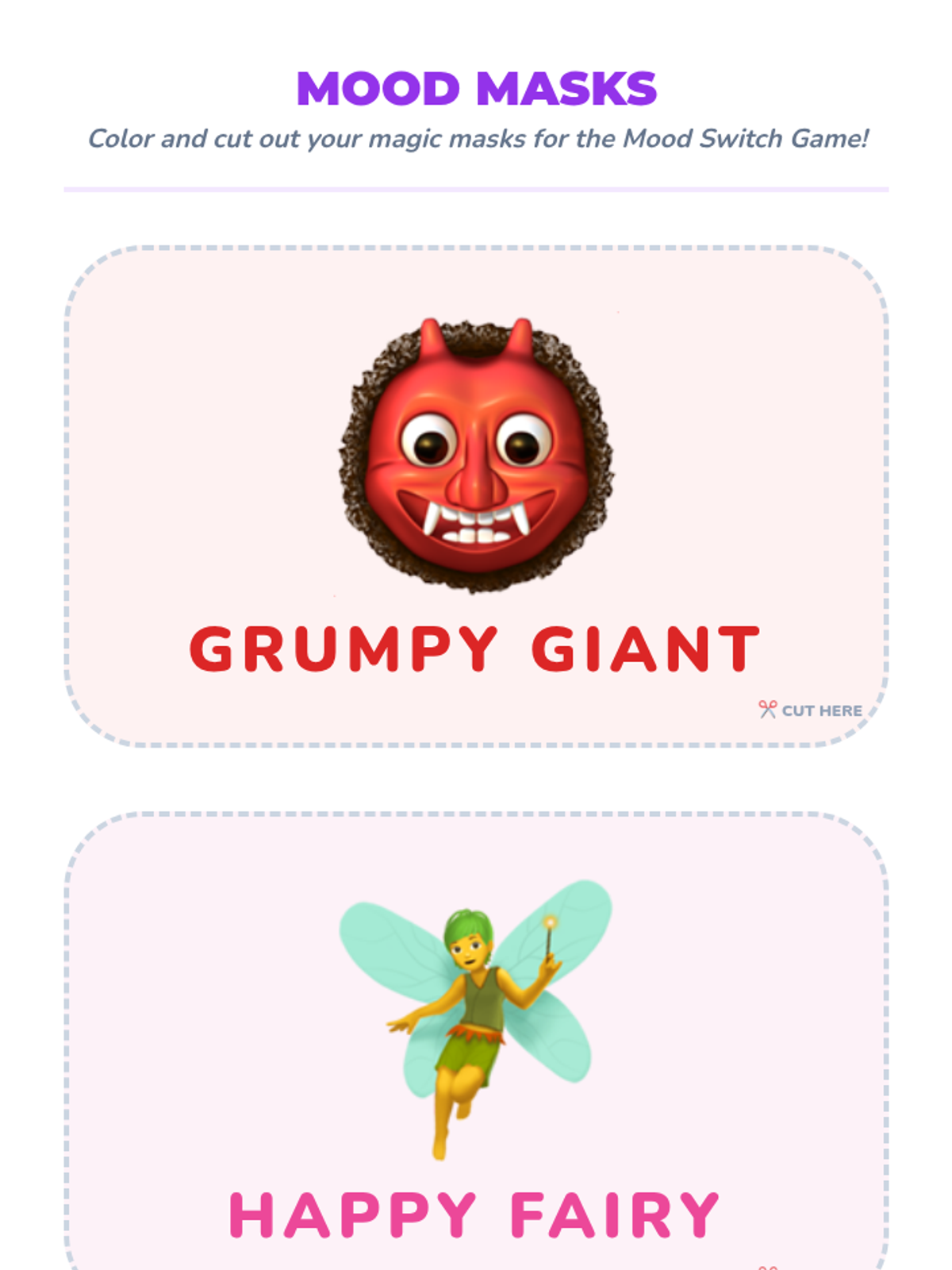
A culminating game where students must quickly adapt their singing style and facial expressions to match changing 'mood masks,' demonstrating mastery of vocal and visual expression.
Students add movement and gestures to narrative songs, learning how to use their whole bodies to help tell the story while maintaining vocal performance.
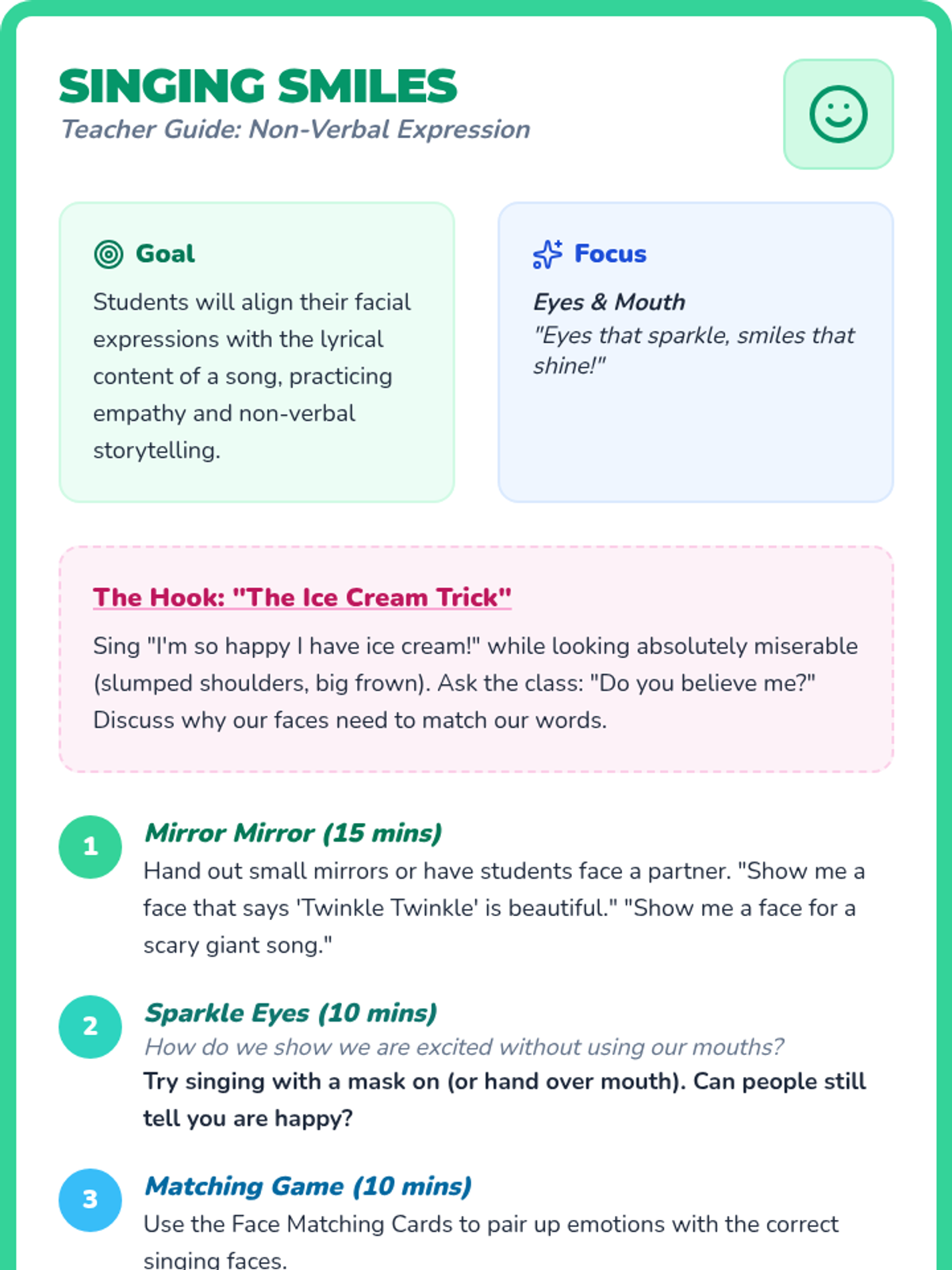
Focusing on non-verbal communication, students use mirrors and partner work to match their facial expressions to the mood of the song they are singing.
Introduction to dynamics (loud and soft) as a tool for expression. Students learn how changing their volume can turn a song into a quiet lullaby or an exciting celebration.
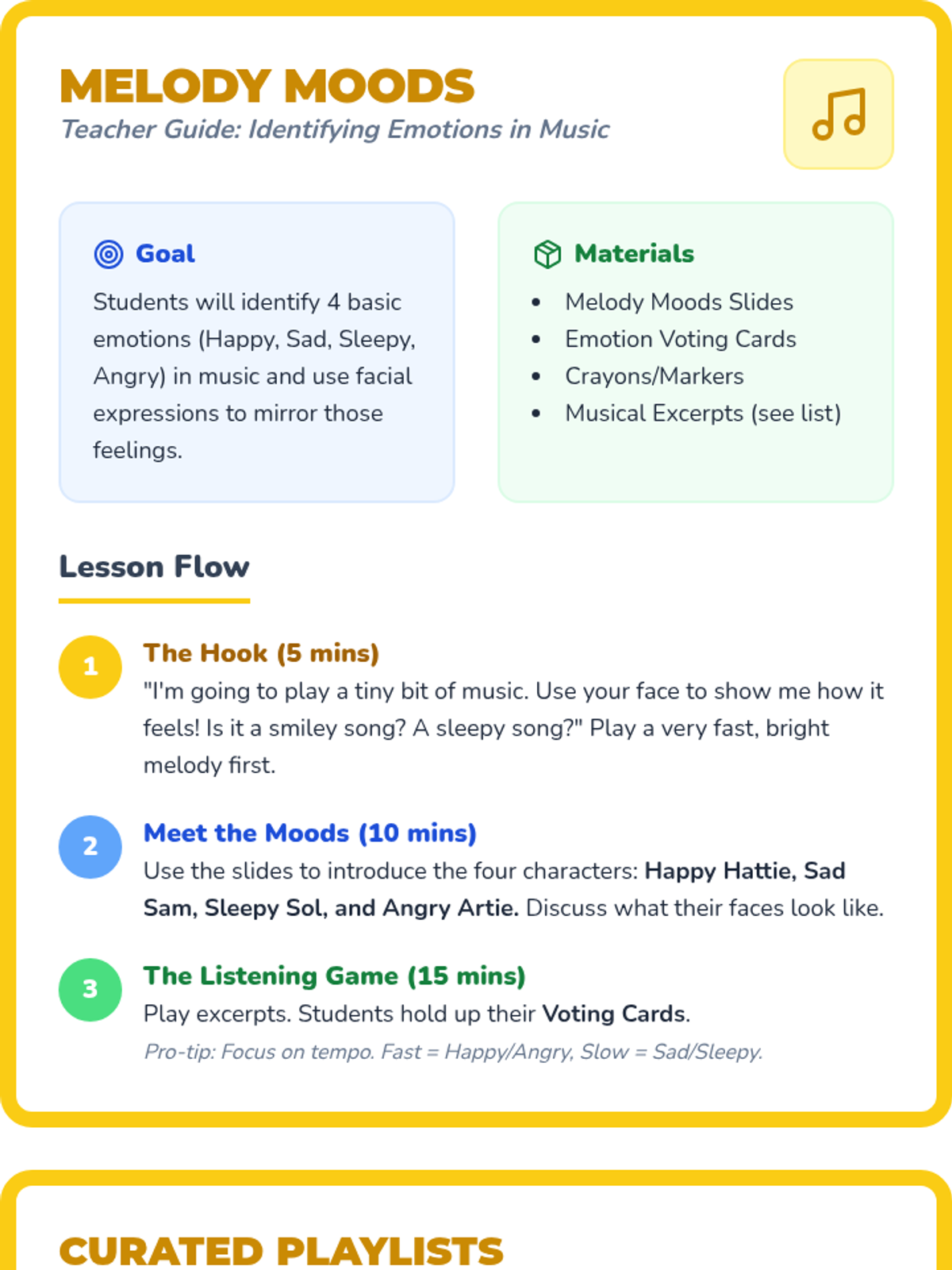
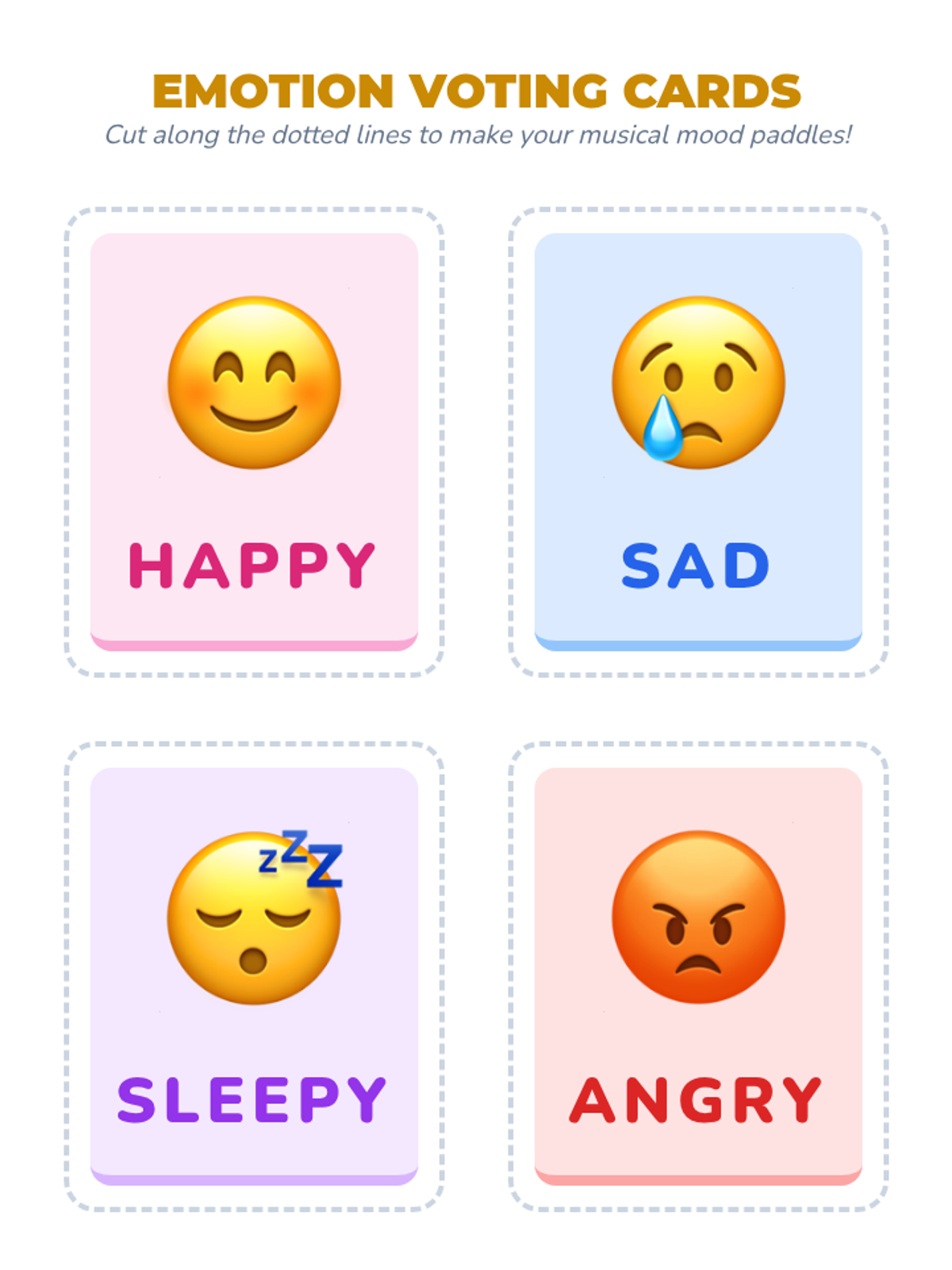
Students explore how different sounds and rhythms in music can make us feel happy, sad, sleepy, or angry. They practice active listening and use visual aids to identify musical emotions.
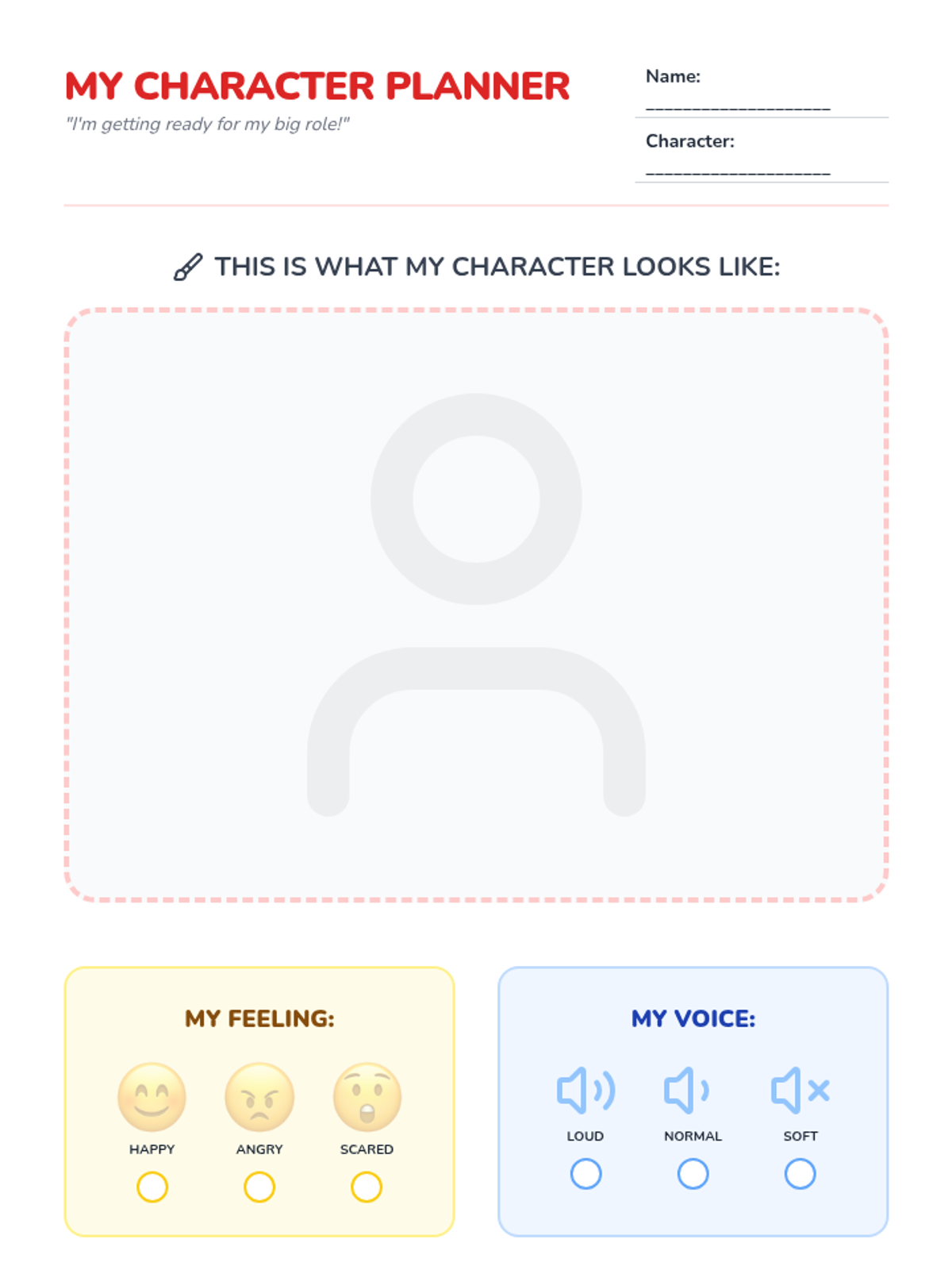
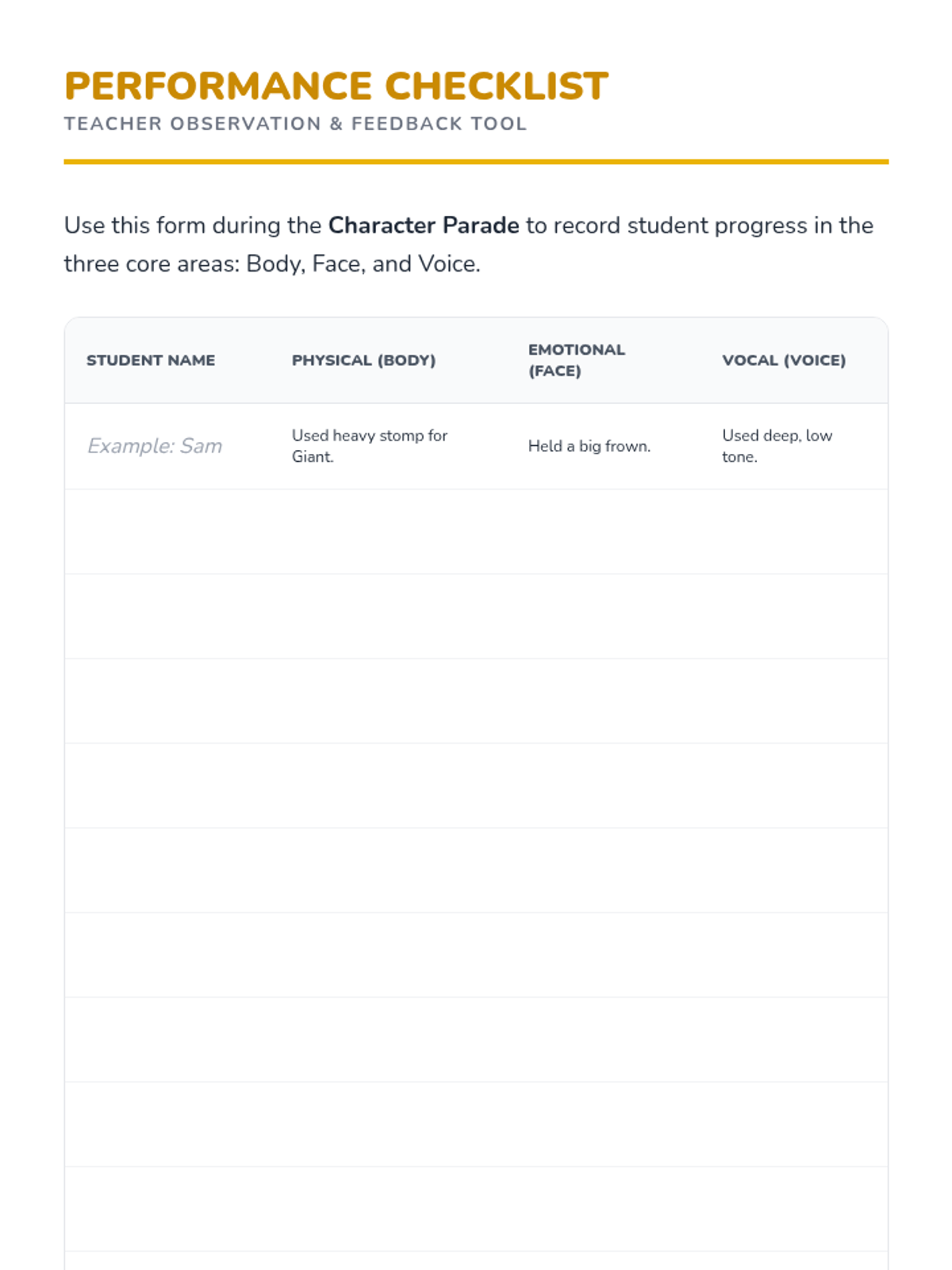
A culminating experience where students integrate movement, voice, and emotion to portray a complete character in a guided dramatic play scenario.
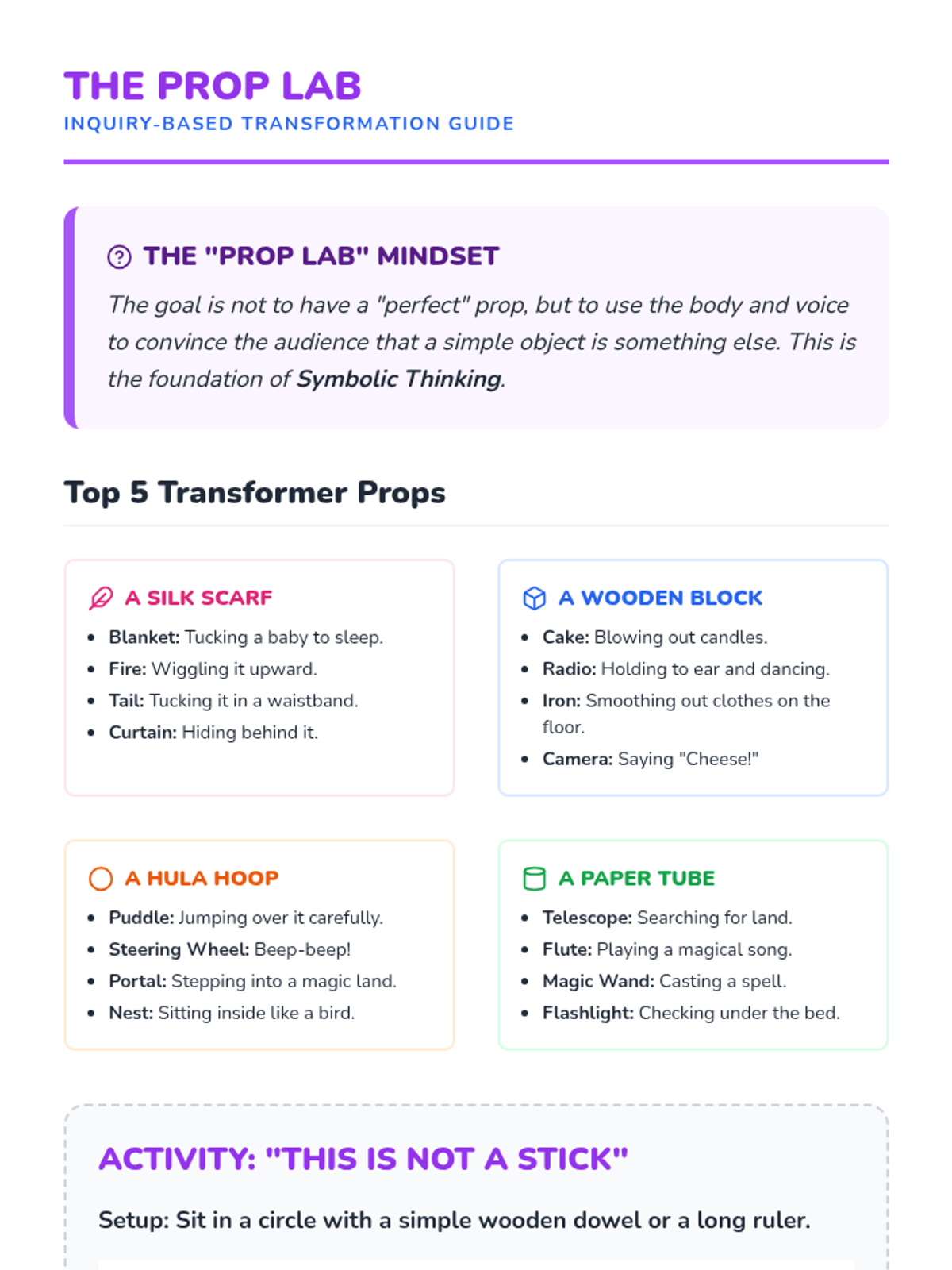
Introduces symbolic play by transforming everyday objects into props, fostering abstract thinking and imaginative context-building.
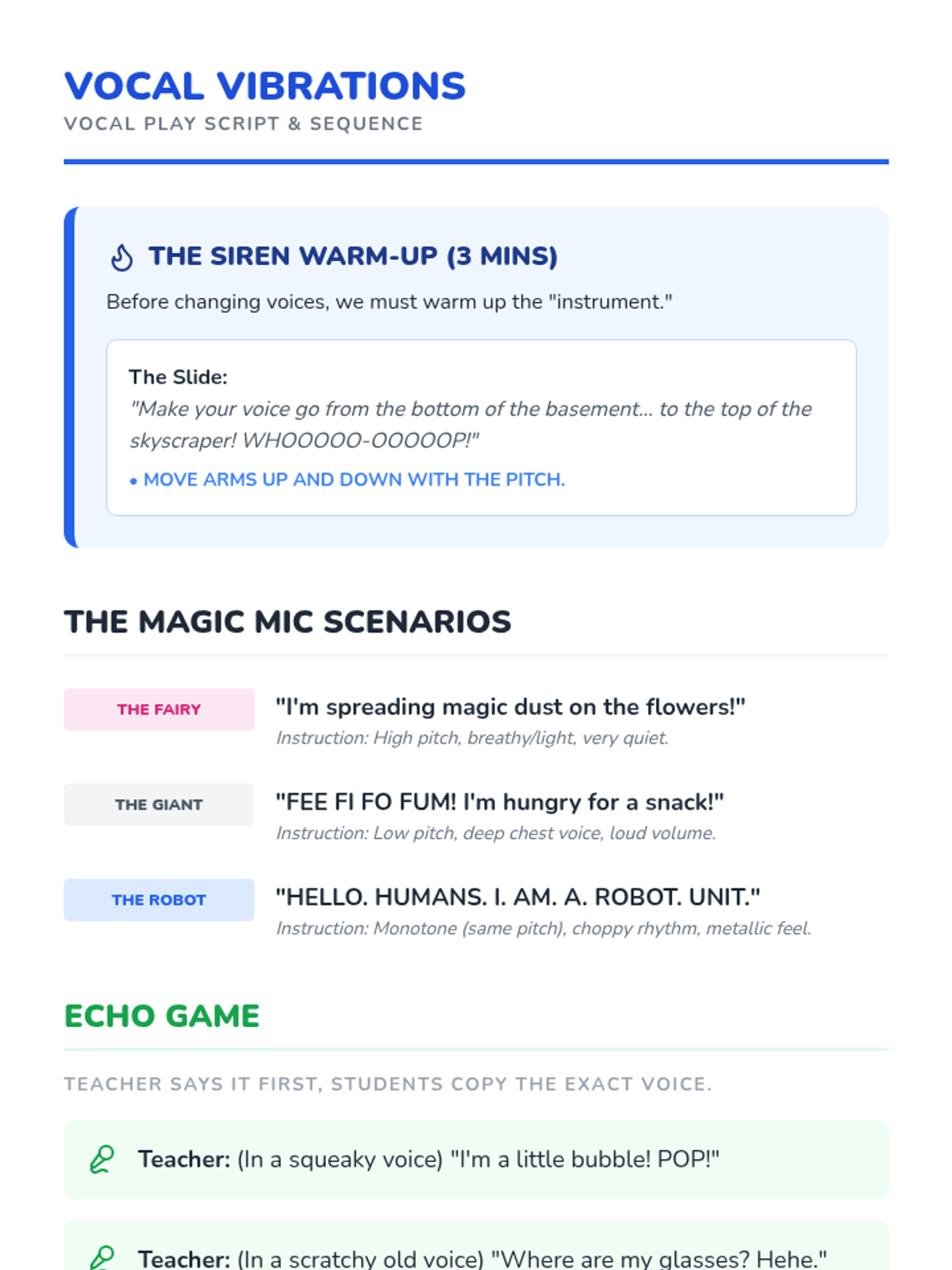
Explores how pitch, volume, and tone can change a character's identity, using vocal play to experiment with different sounds and voices.
Focuses on non-verbal communication through facial expressions, helping students identify and perform basic emotions like joy, sadness, and surprise.