Specialized vocabulary across disciplines, research methodologies, and effective note-taking systems. Equips learners with information literacy skills and strategies for navigating standardized exams.
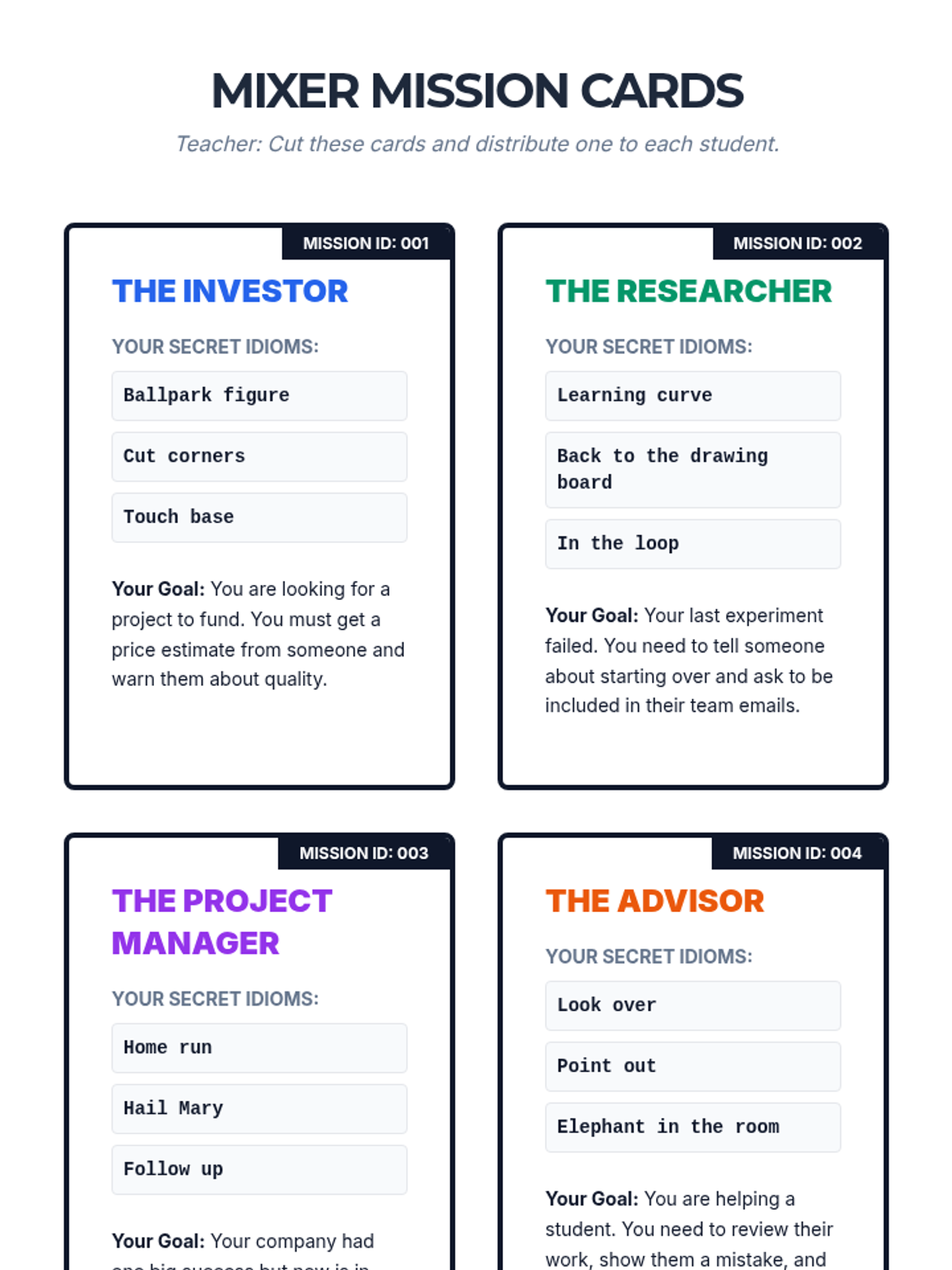
A high-stakes simulated networking mixer where students must apply their knowledge of idioms, phrasal verbs, and social listening to complete specific "missions."
Students analyze how speakers use shorthand references to history, pop culture, and sports to convey complex ideas, and develop strategies for asking for clarification when references are missed.
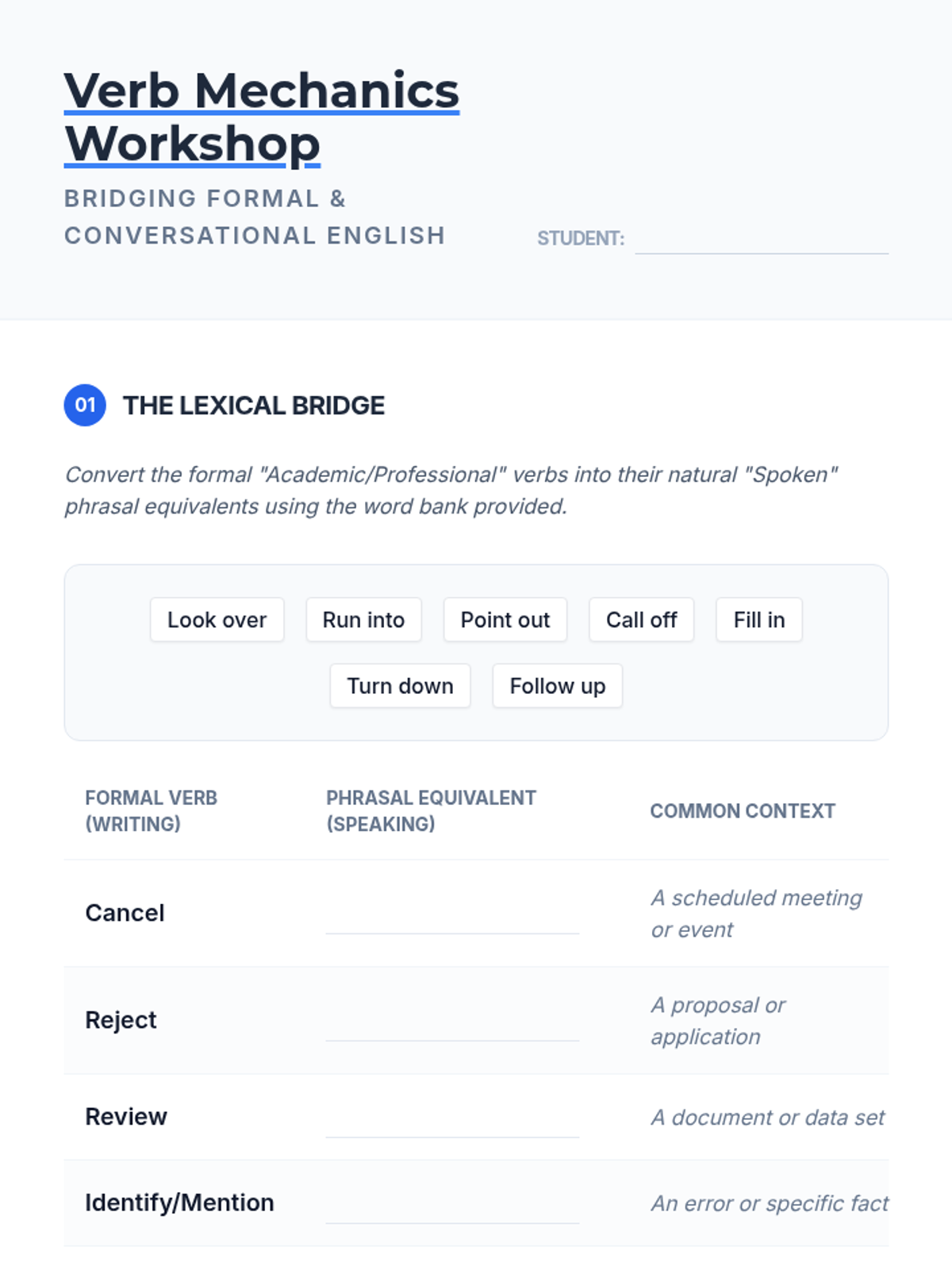
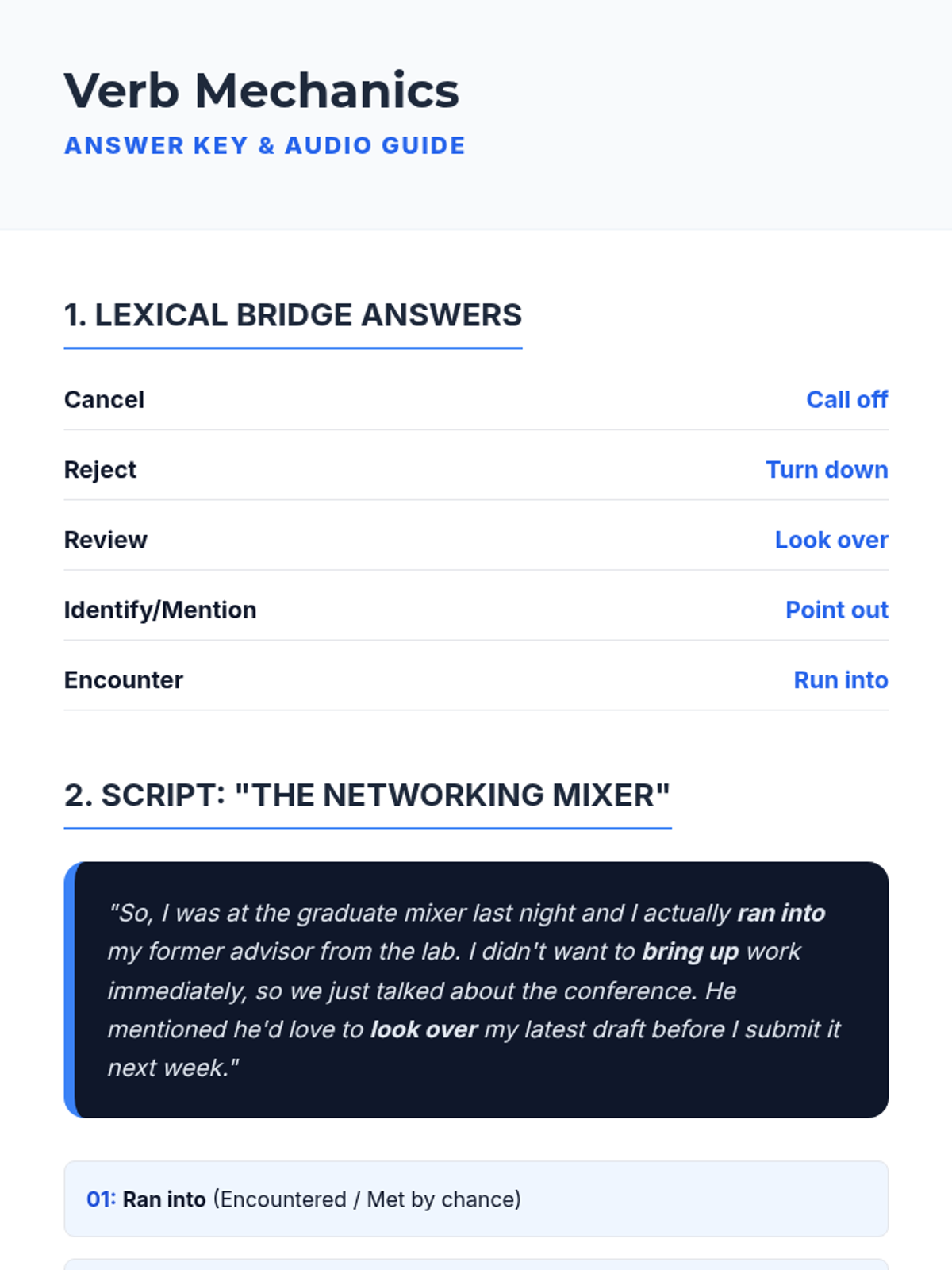
Focuses on the transition from formal to informal spoken English by identifying and decoding phrasal verbs in narrative segments.
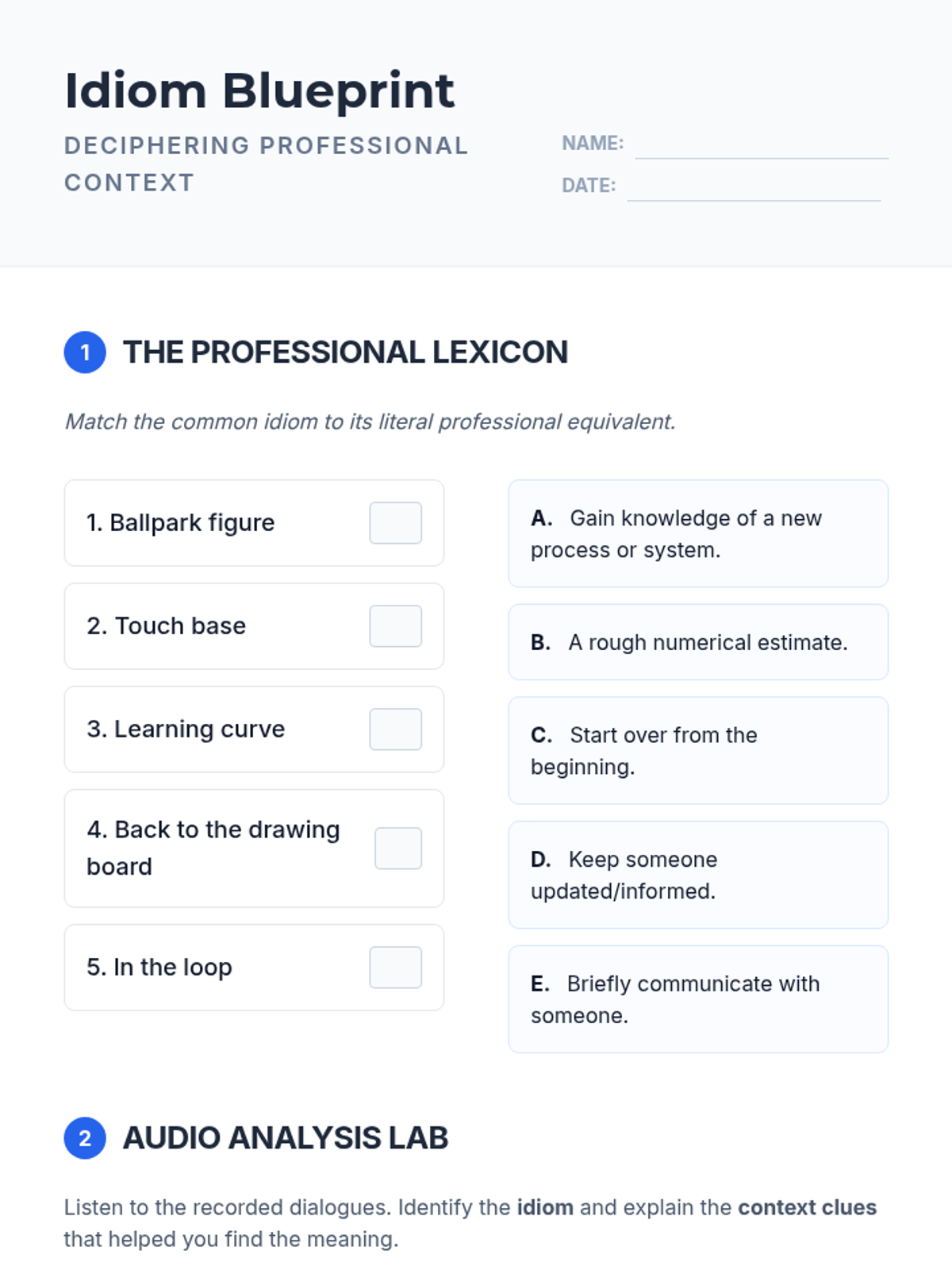
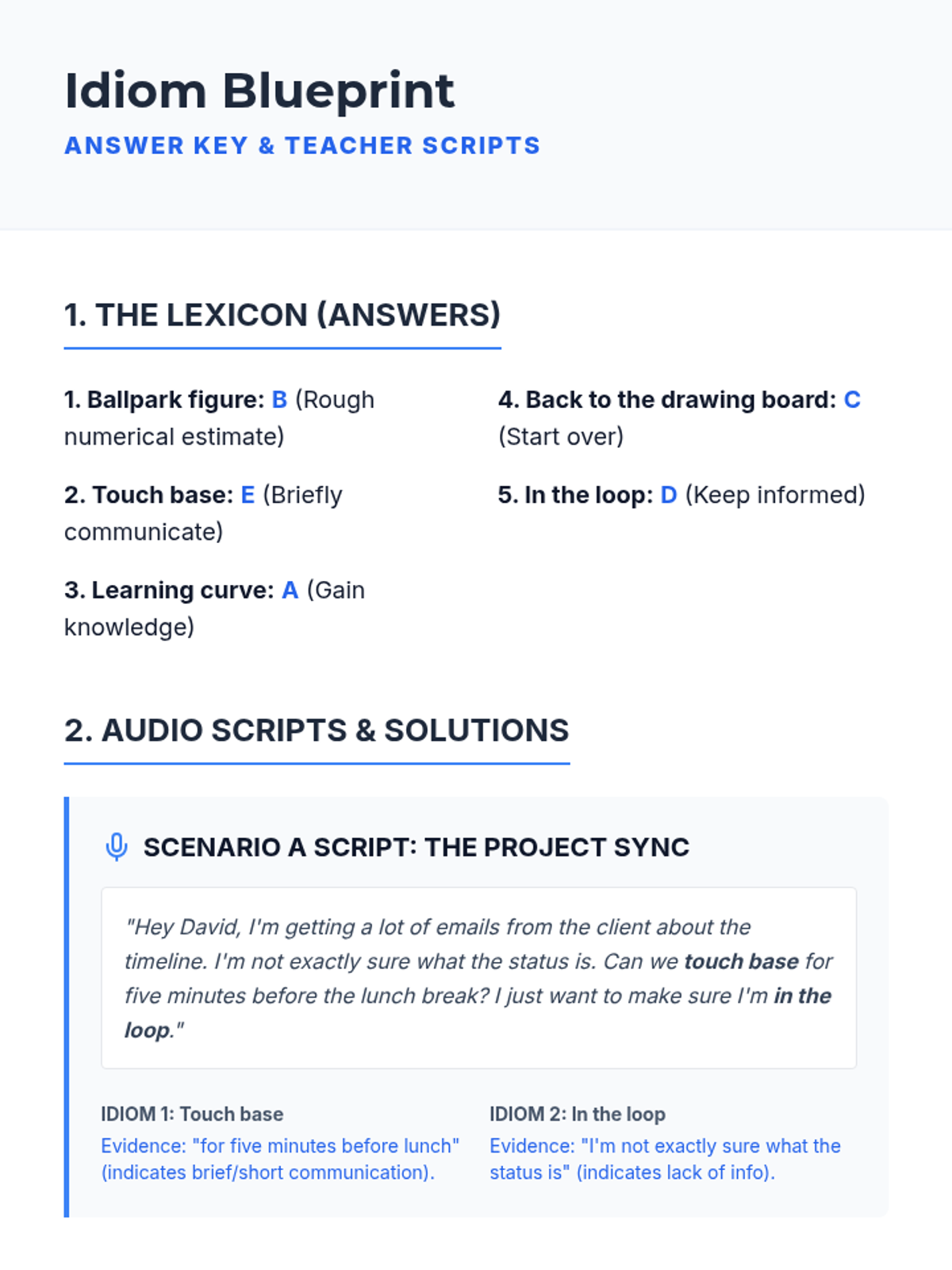
Students encounter high-frequency idioms used in professional settings through context-rich audio simulations, moving beyond rote memorization to contextual inference.
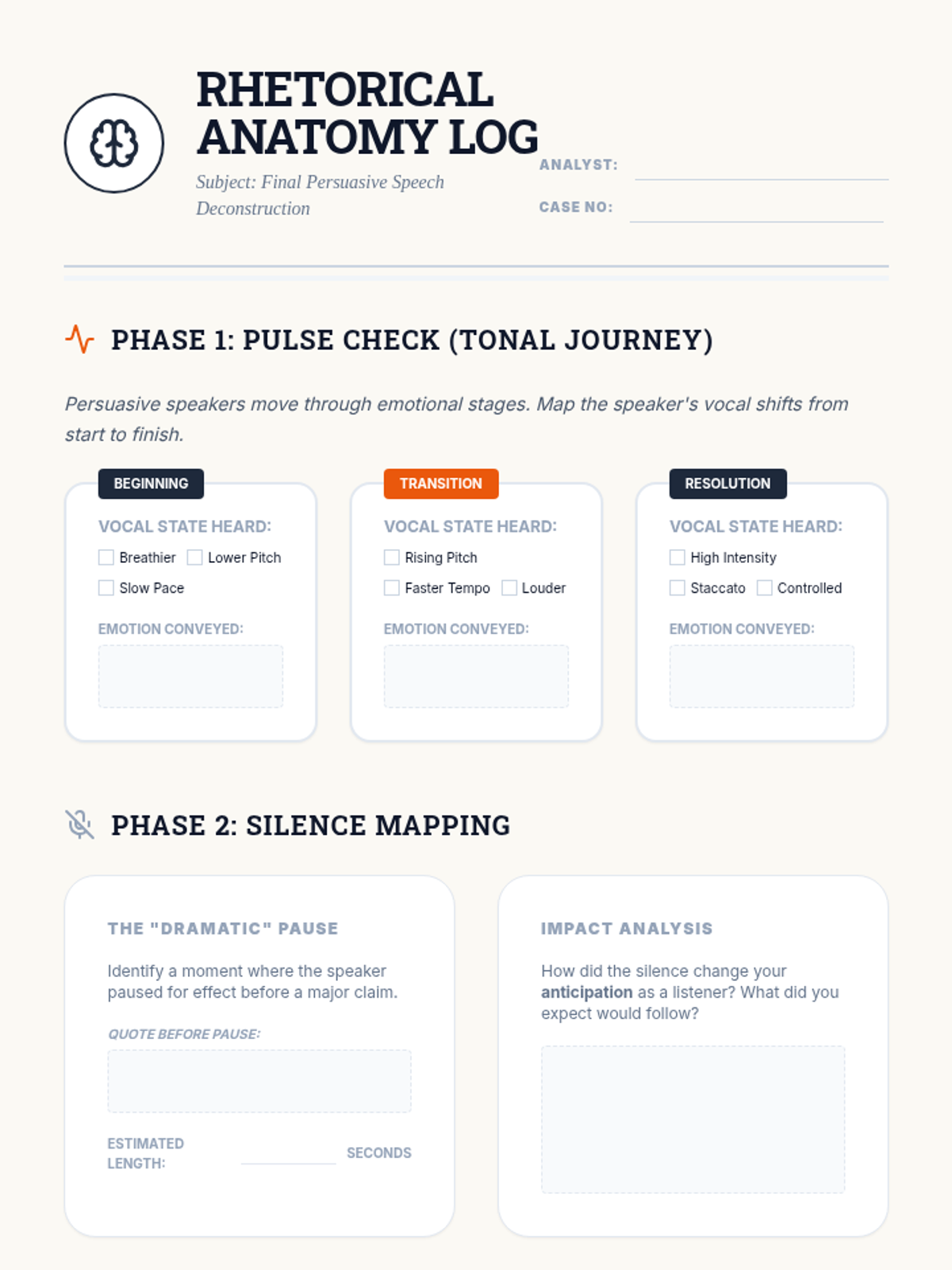
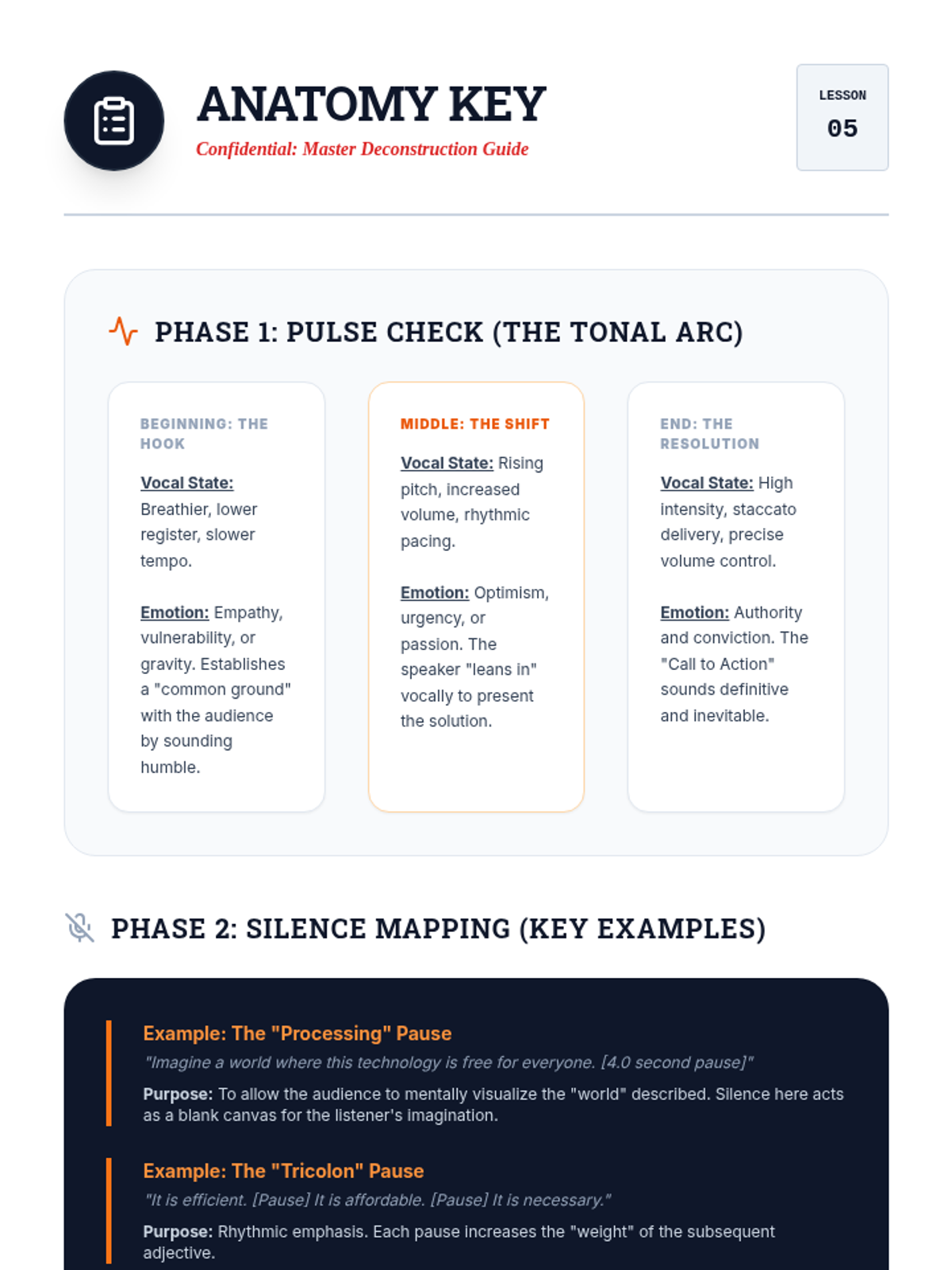
Deconstructs persuasive speech to identify rhetorical strategies, tonal journeys, and the use of strategic pauses for emotional impact.
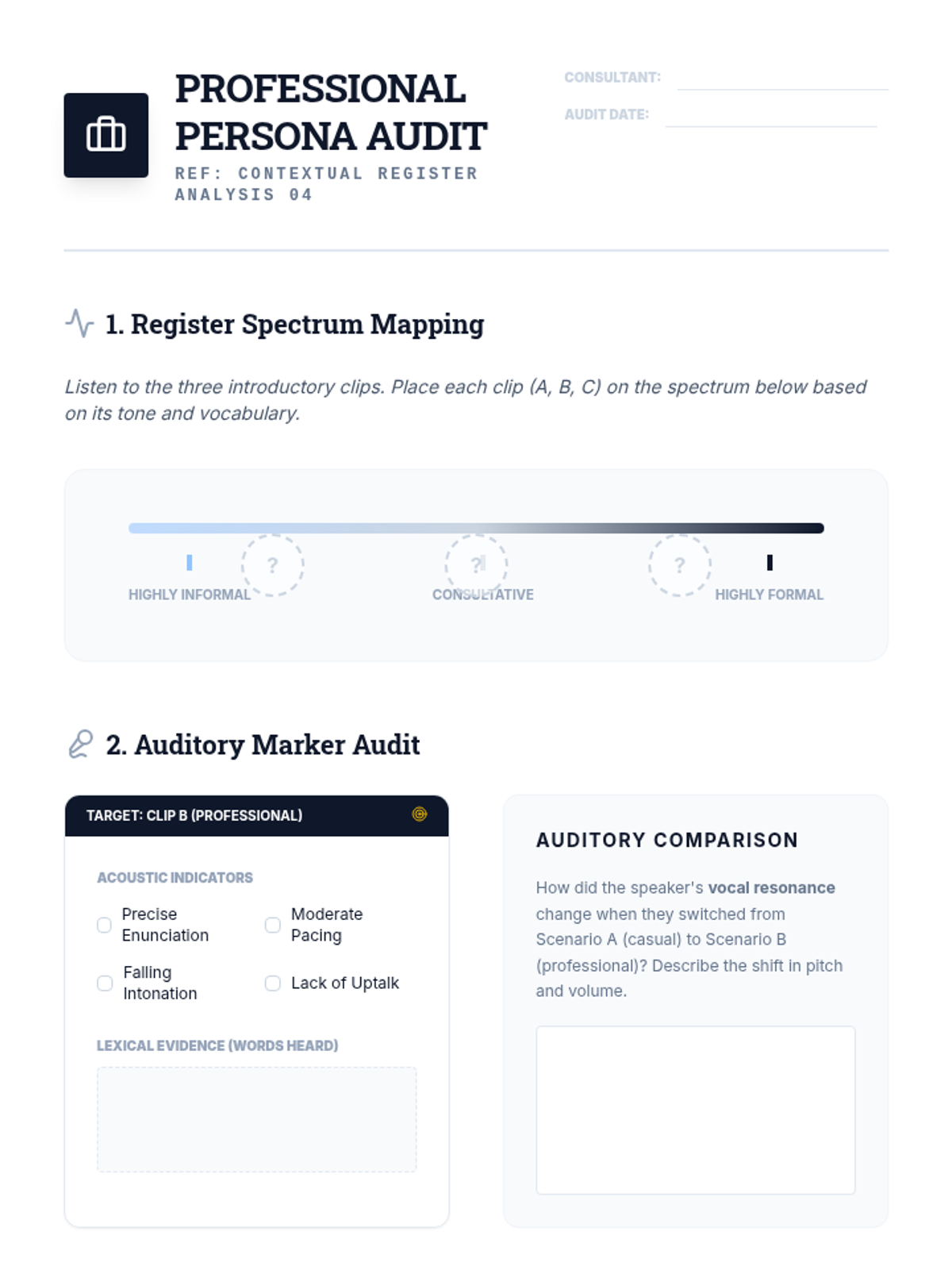
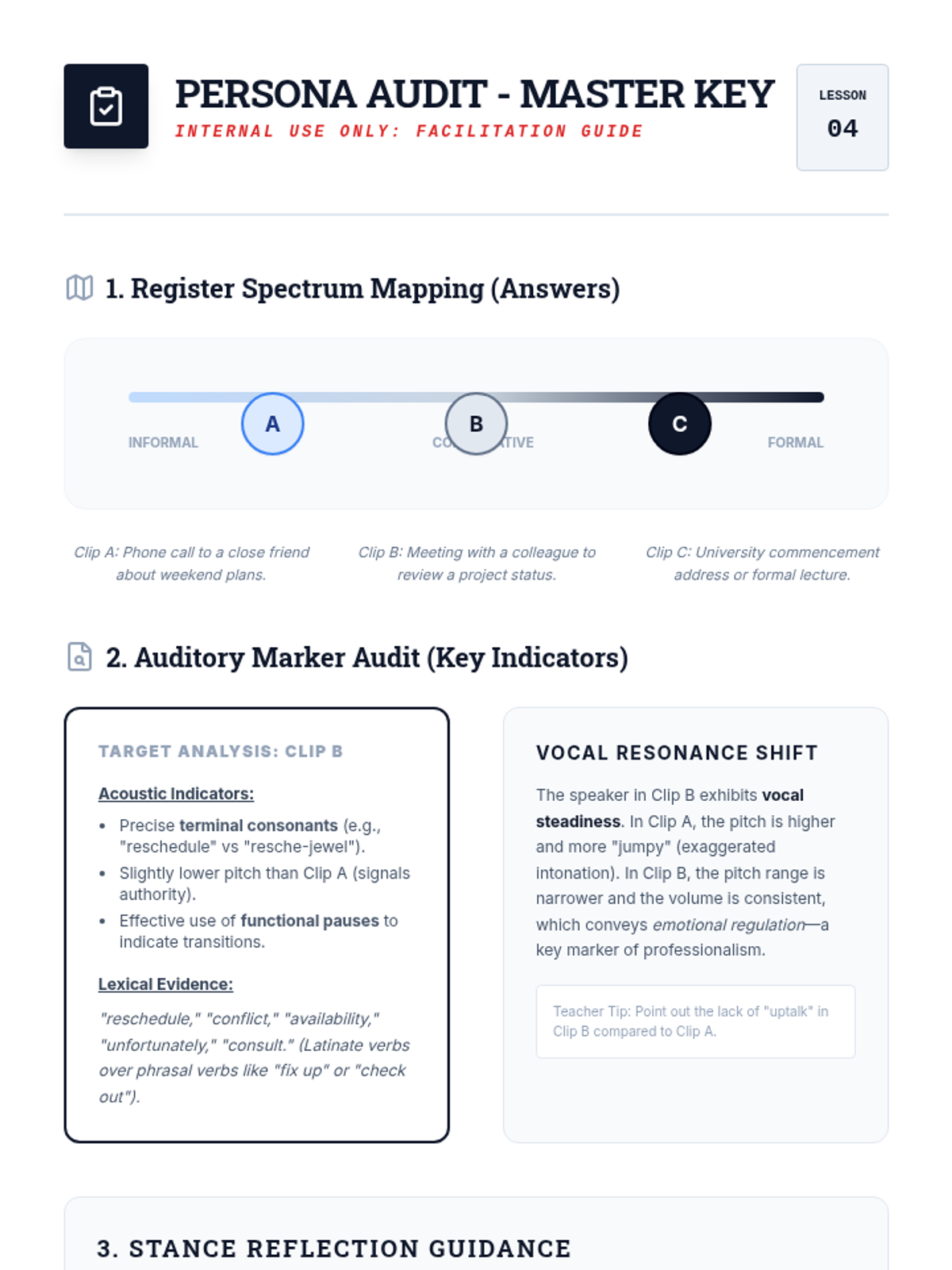
Examines how speakers adjust their register and tone based on audience and context, focusing on professional vs. informal markers.
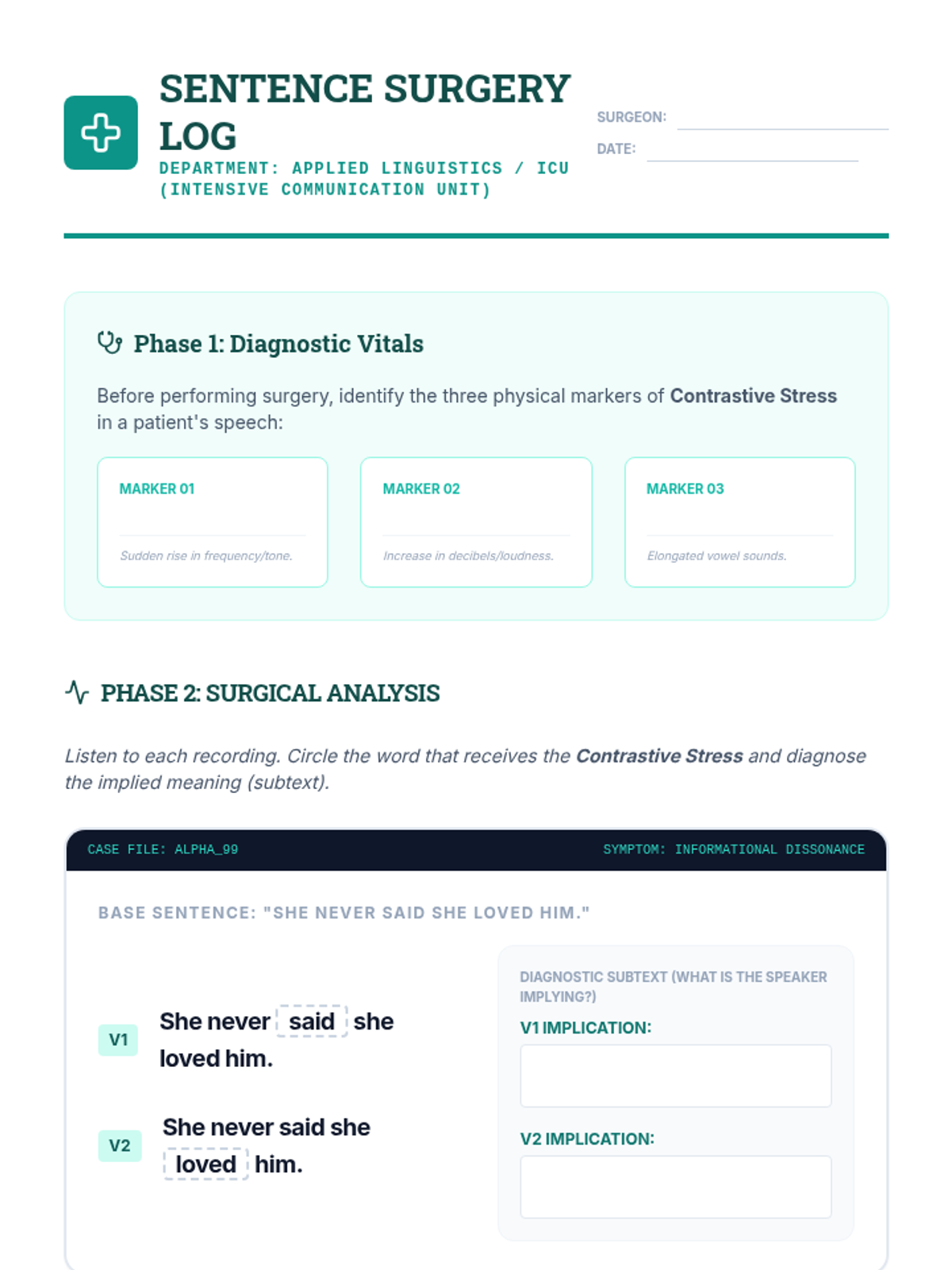
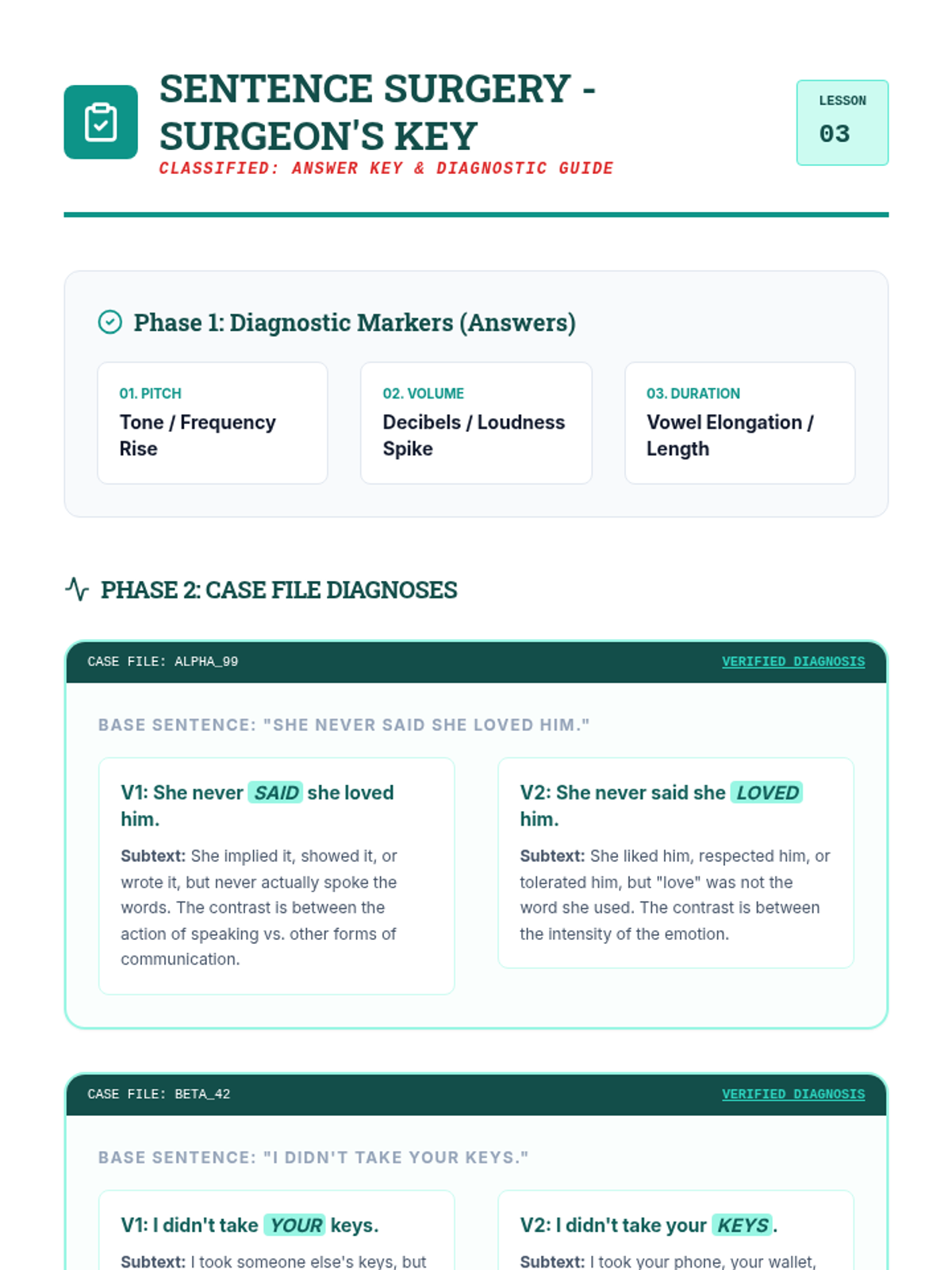
Explores how shifting stress within a single sentence radically alters its implied meaning and subtext.
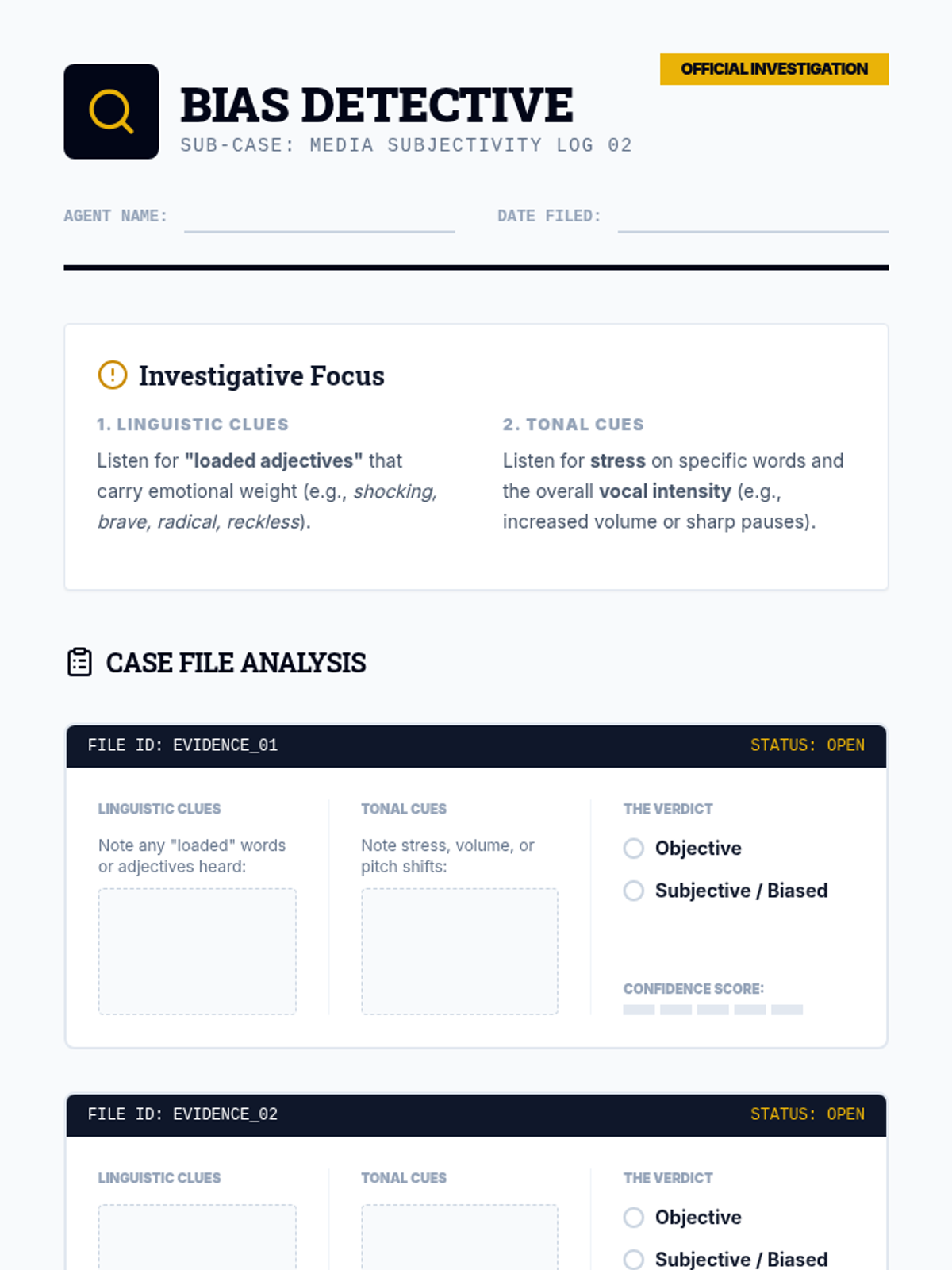
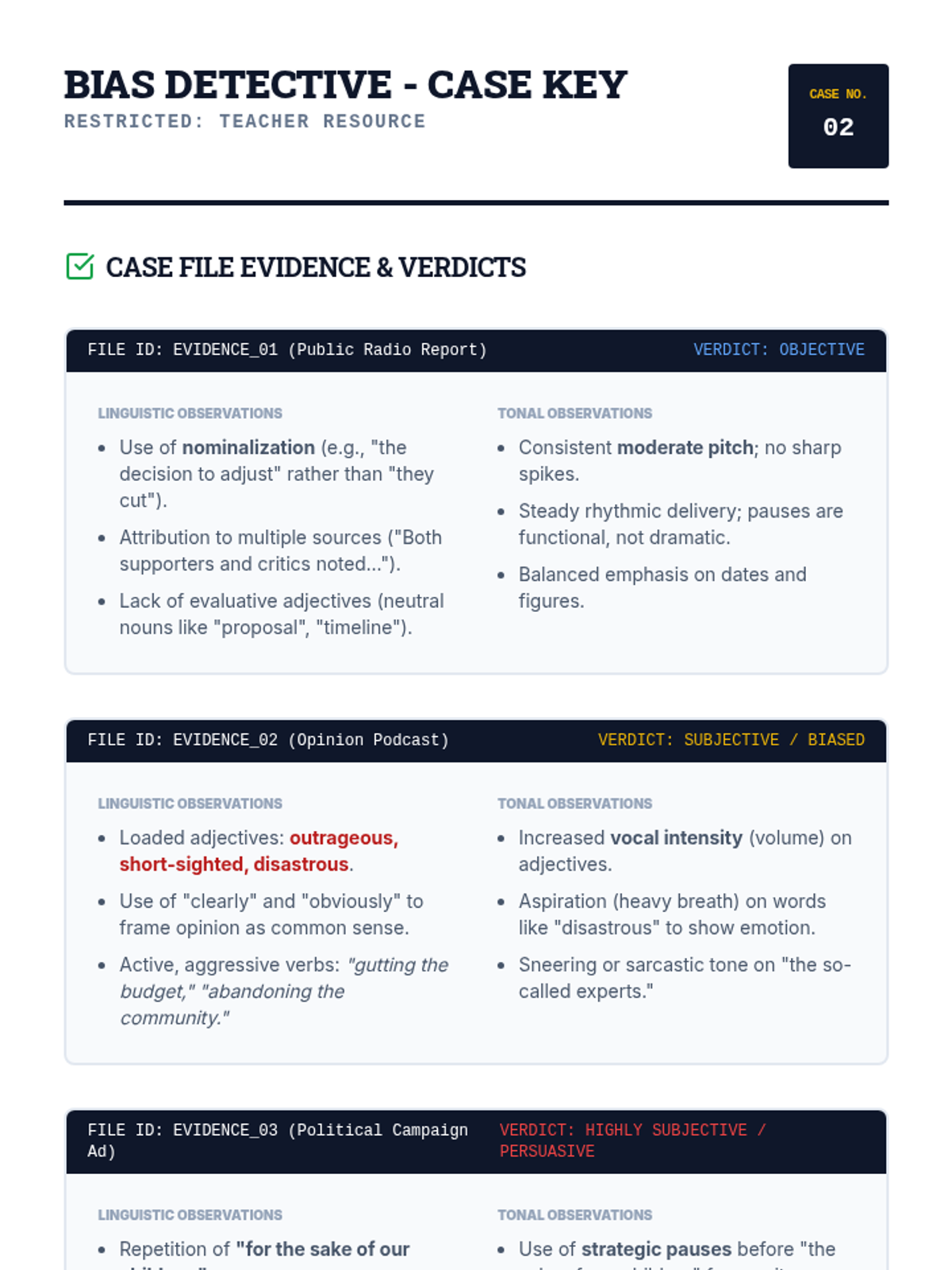
Focuses on identifying bias and subjectivity in media and speeches by analyzing word choice, emotional tone, and selective emphasis.
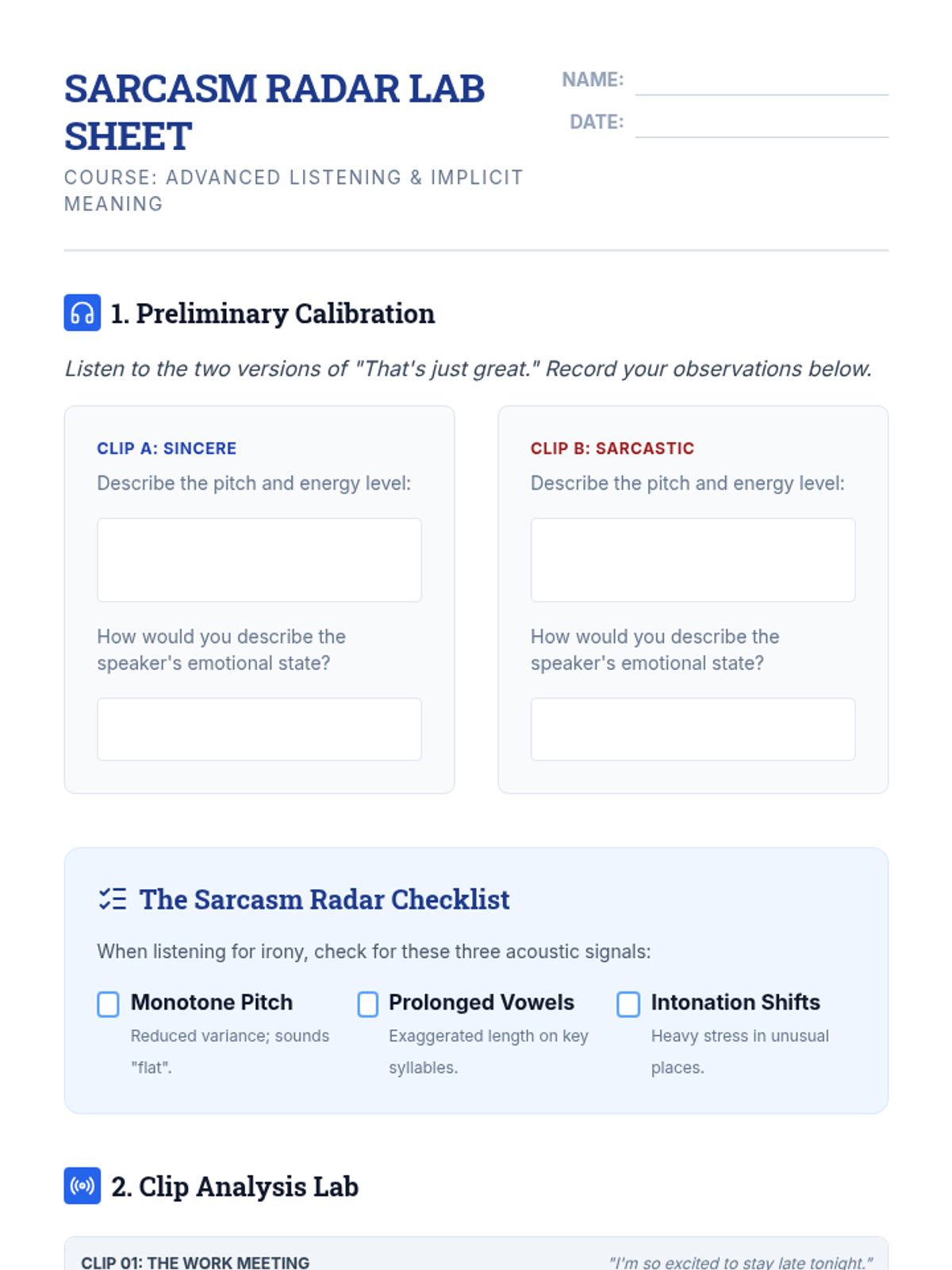
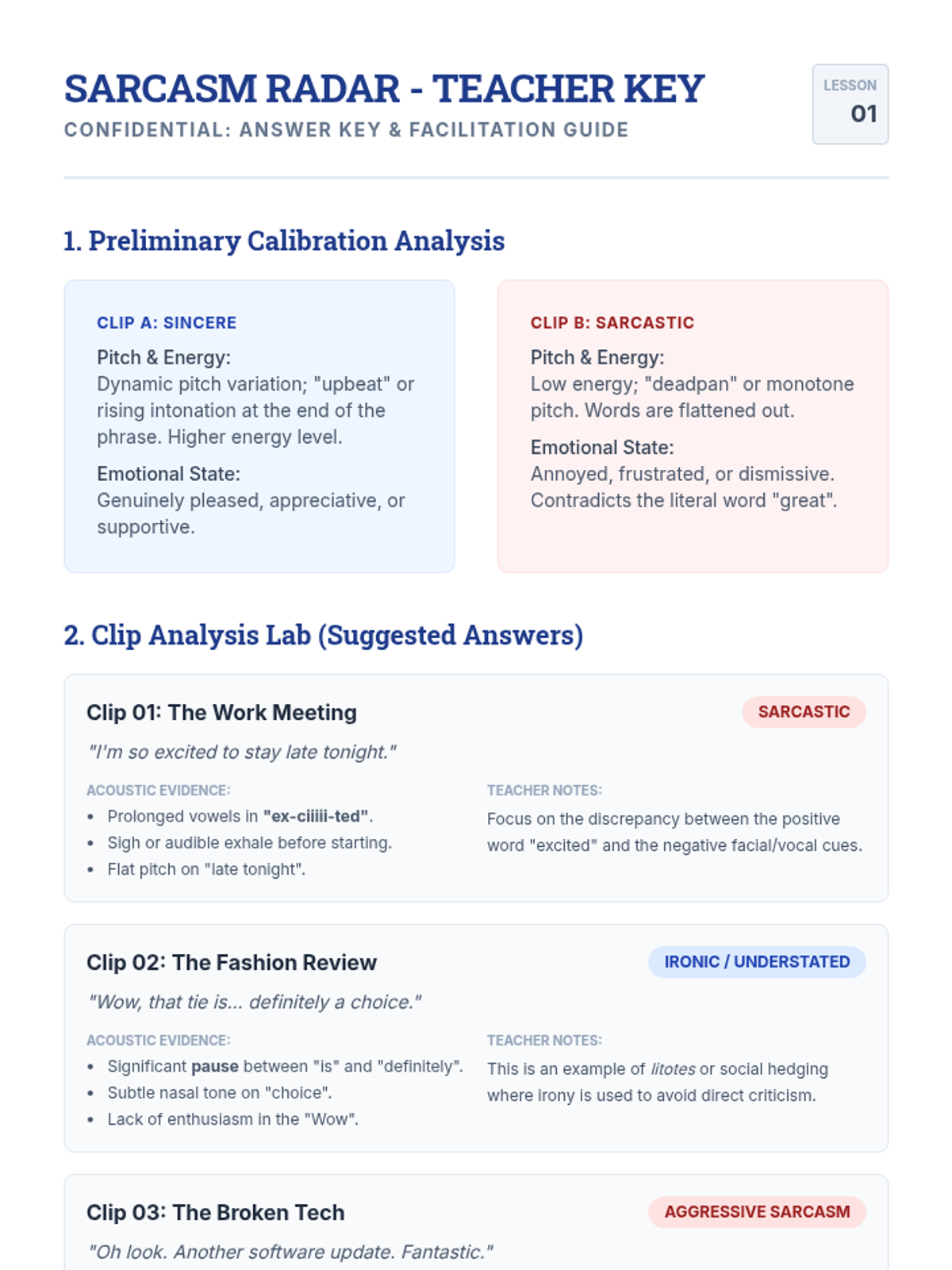
Students analyze the acoustic cues of irony and sarcasm—such as pitch, length, and intonation—to distinguish between literal and intended meaning in spoken English.
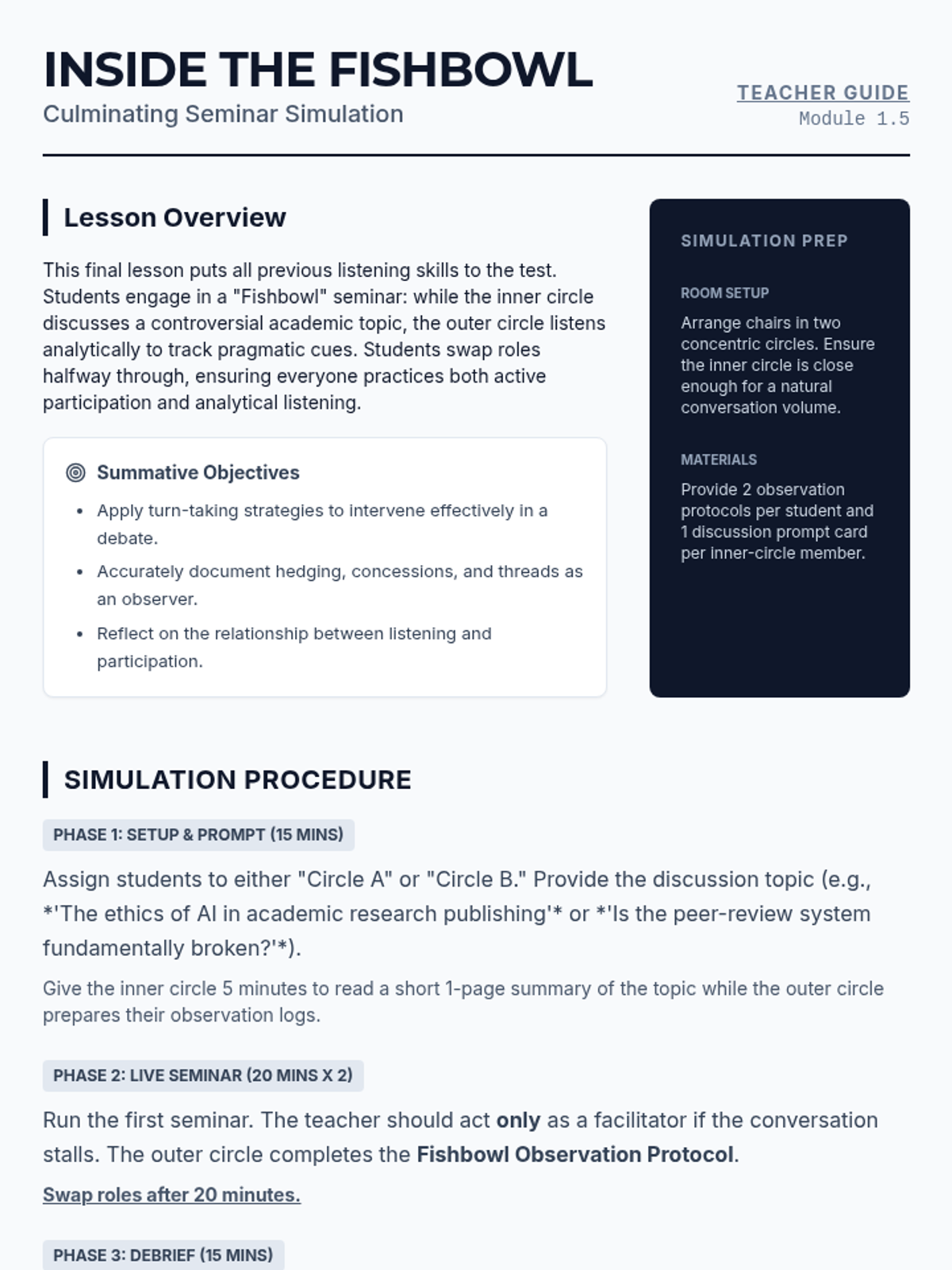
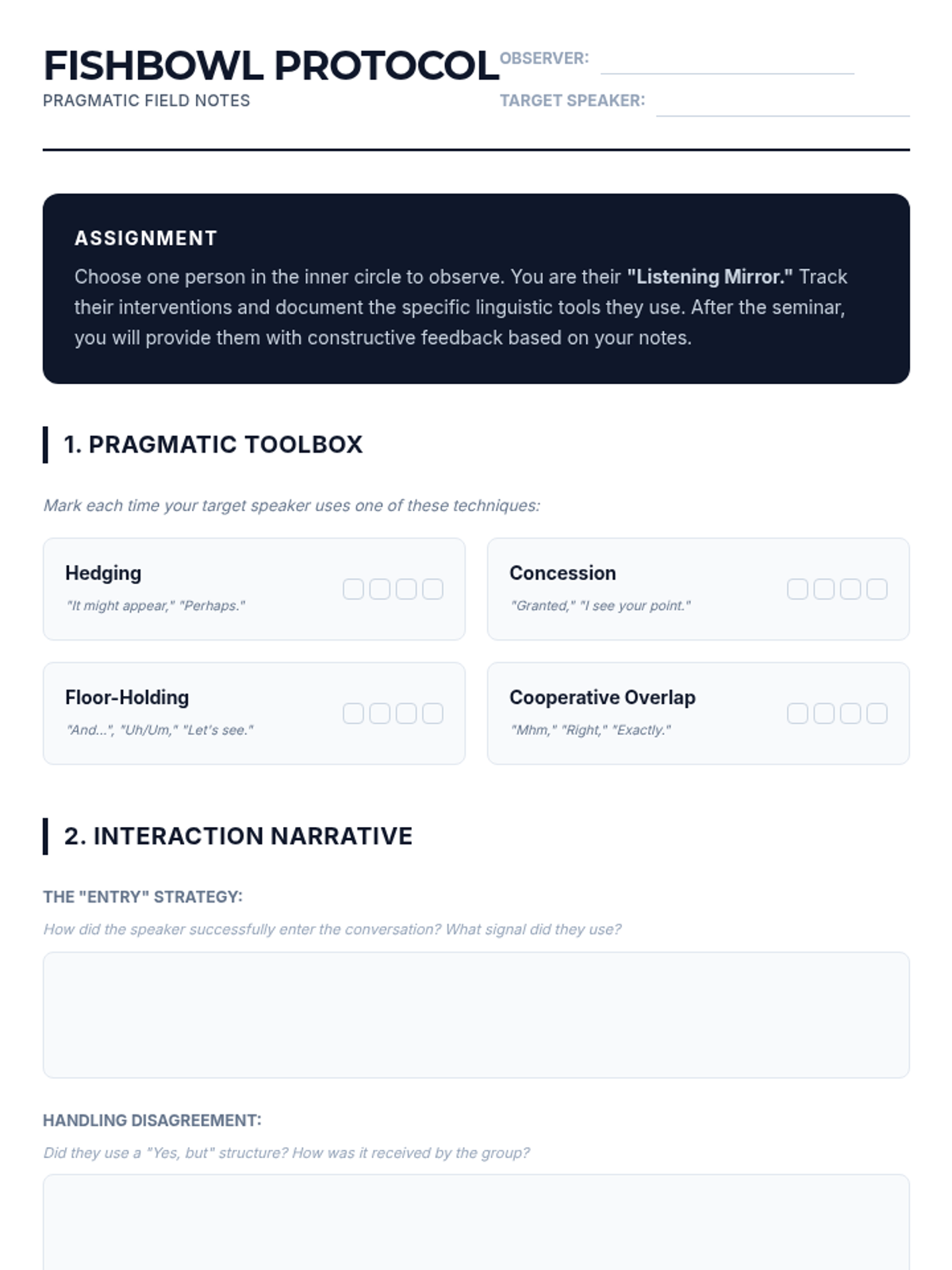
A culminating simulation where students alternate between active participation and observational analysis using the fishbowl method. Focuses on applying all previously learned listening skills.
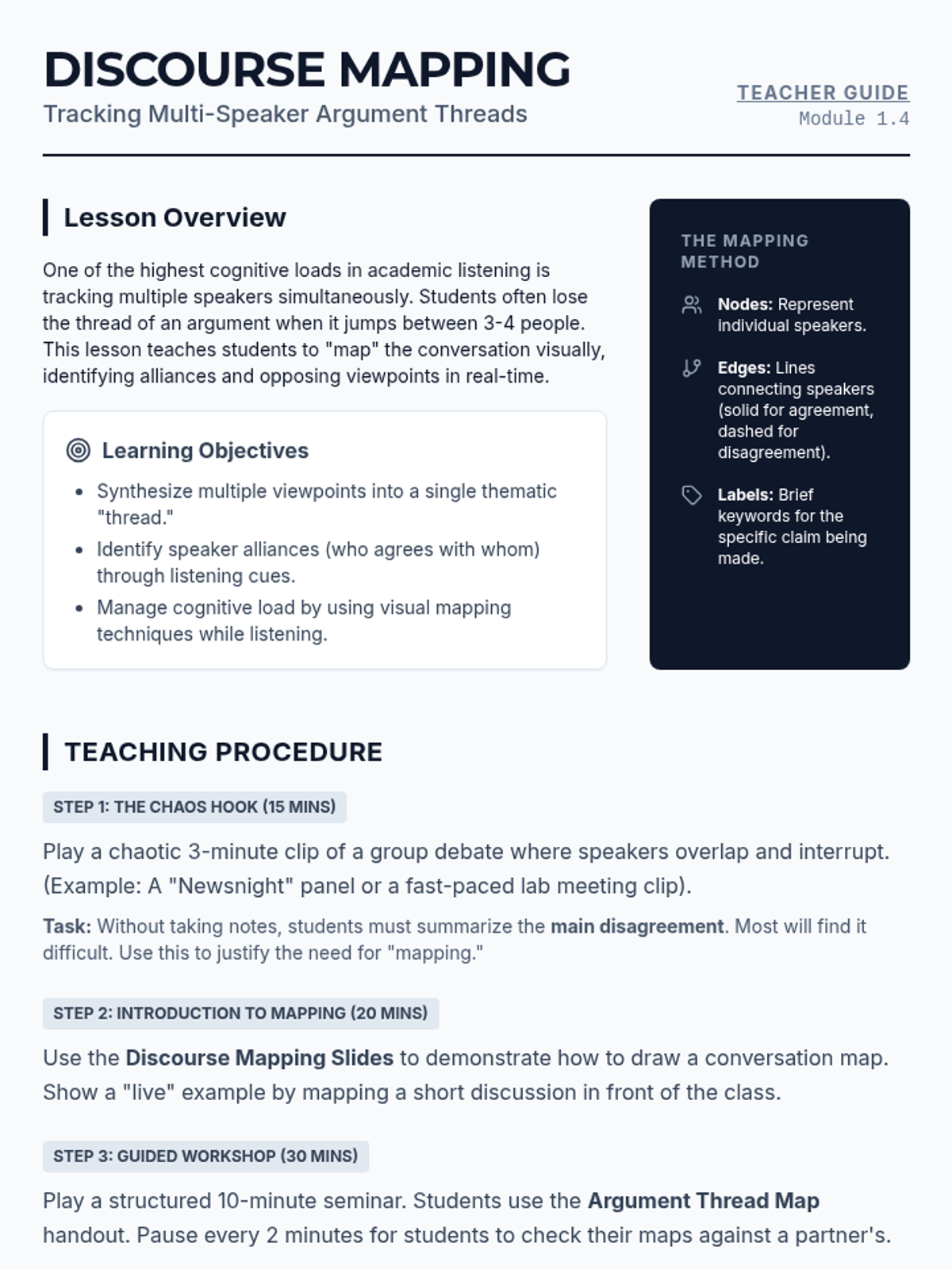
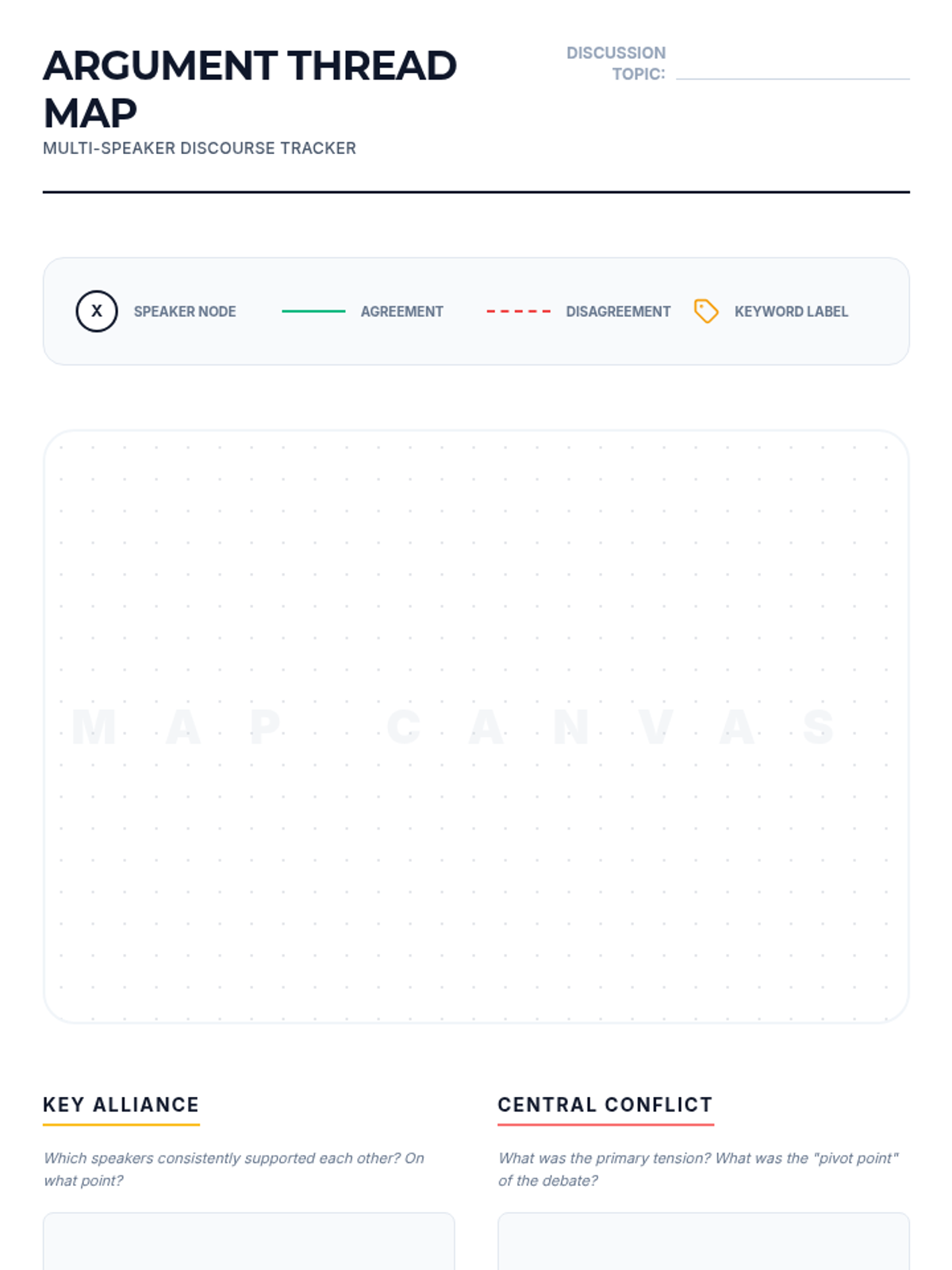
Focuses on the cognitive load of tracking multiple speakers in a fast-paced environment. Students practice mapping argument threads and identifying alliances in group discourse.
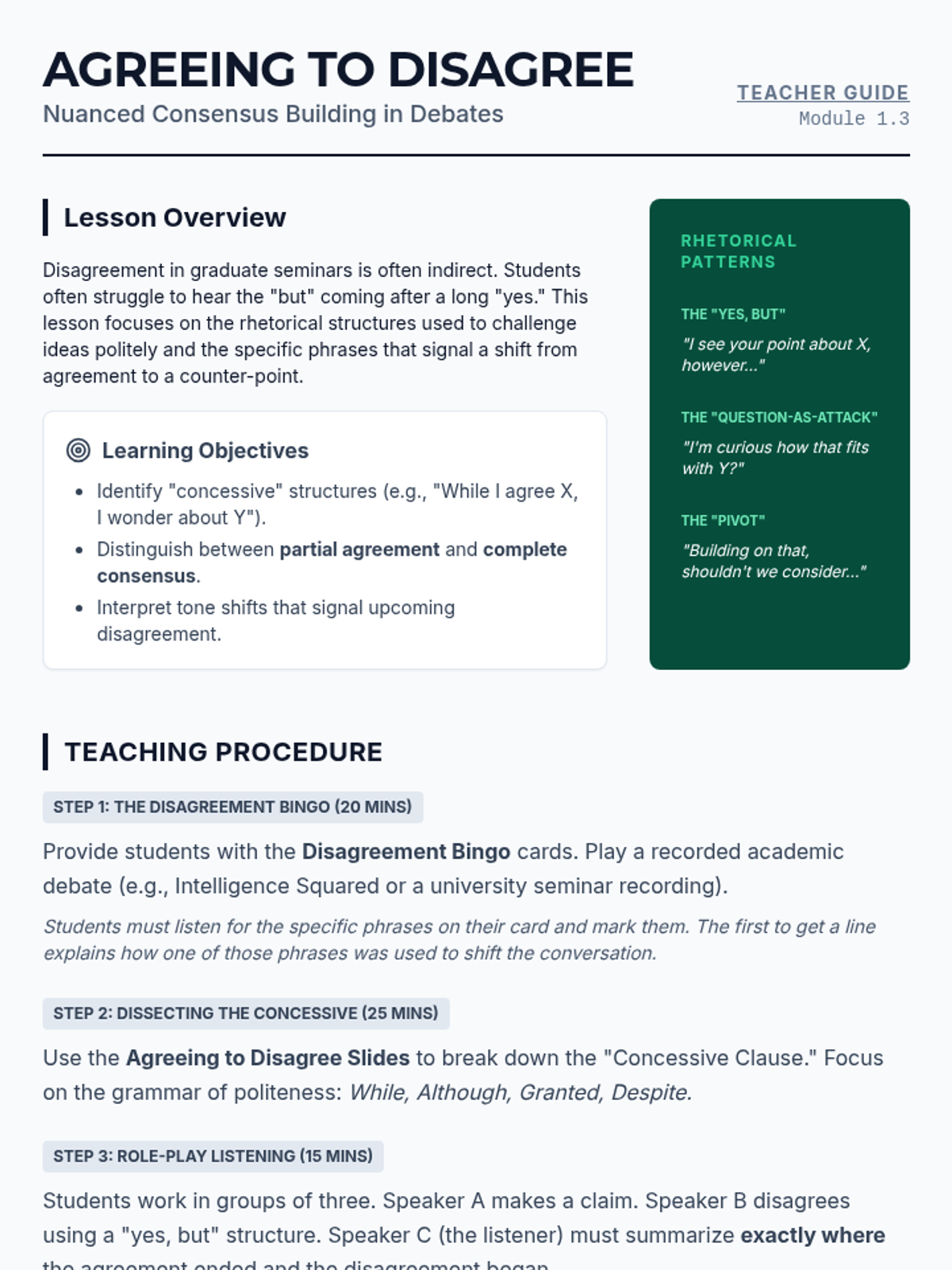
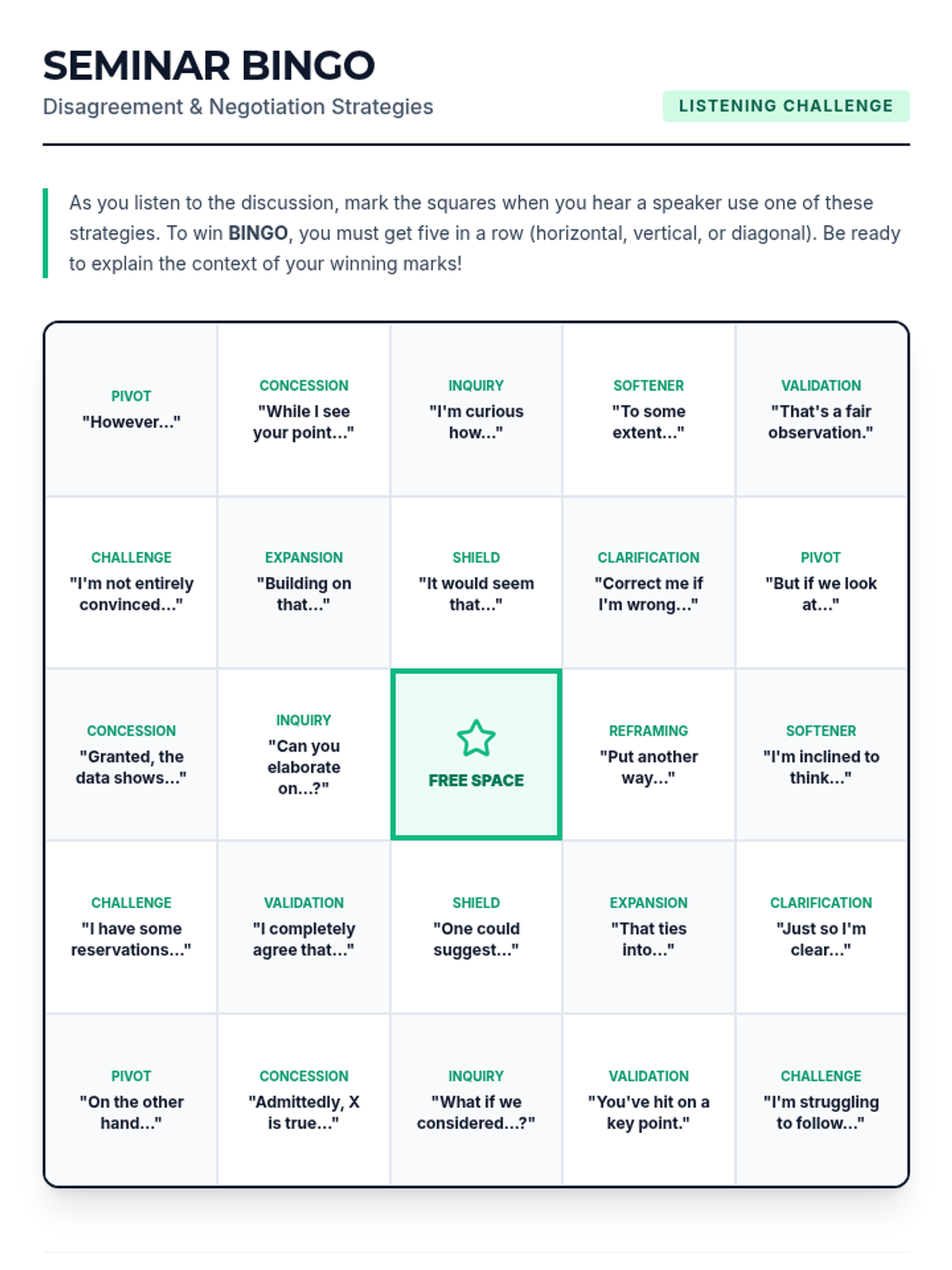
Students identify the rhetorical structures used to agree and disagree in intellectual debates. The lesson focuses on 'yes, but' constructions and nuanced consensus building.
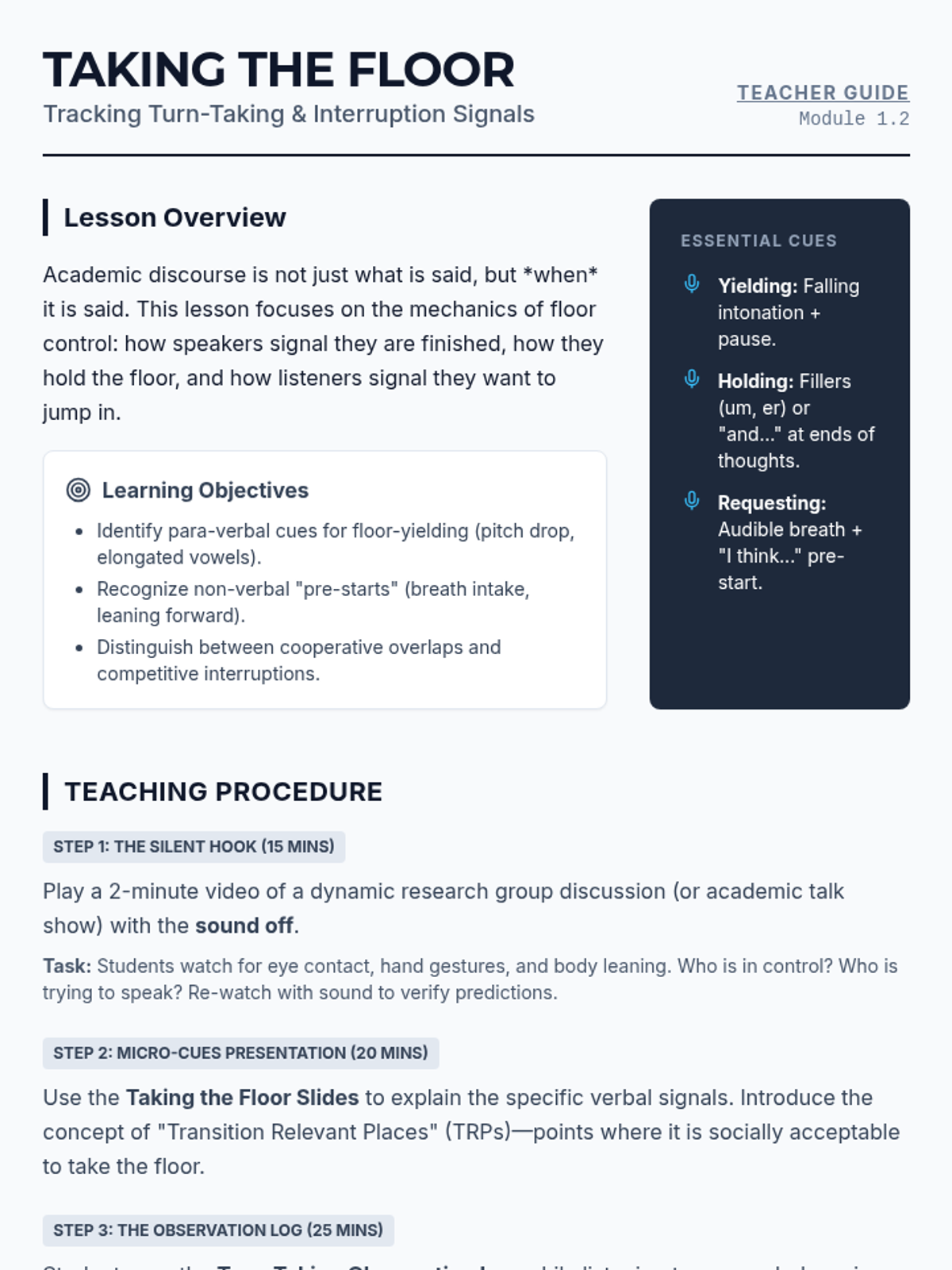
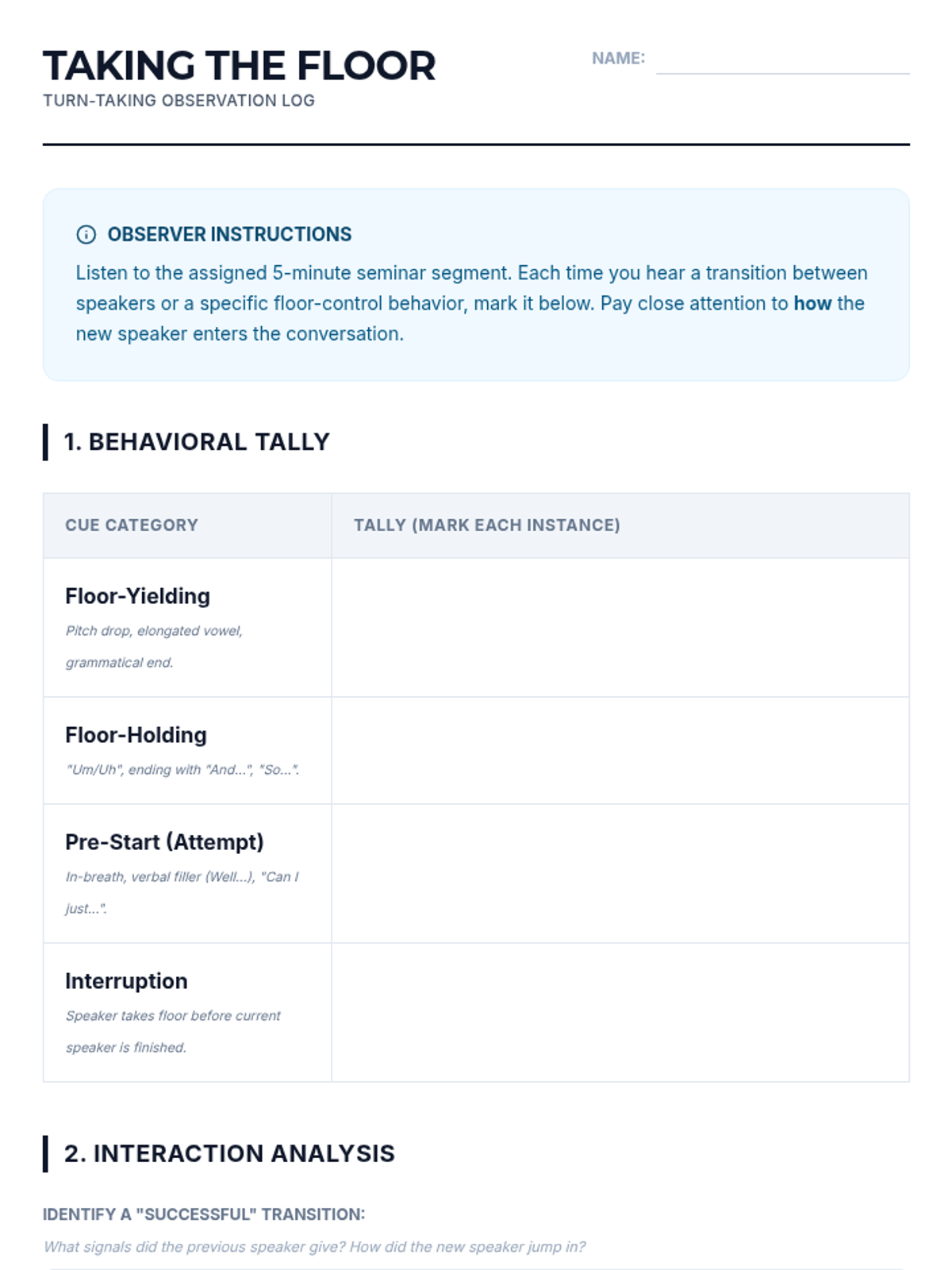
An analysis of the verbal and non-verbal cues used to manage floor control in academic discussions. Students learn to predict and identify transitions between speakers.
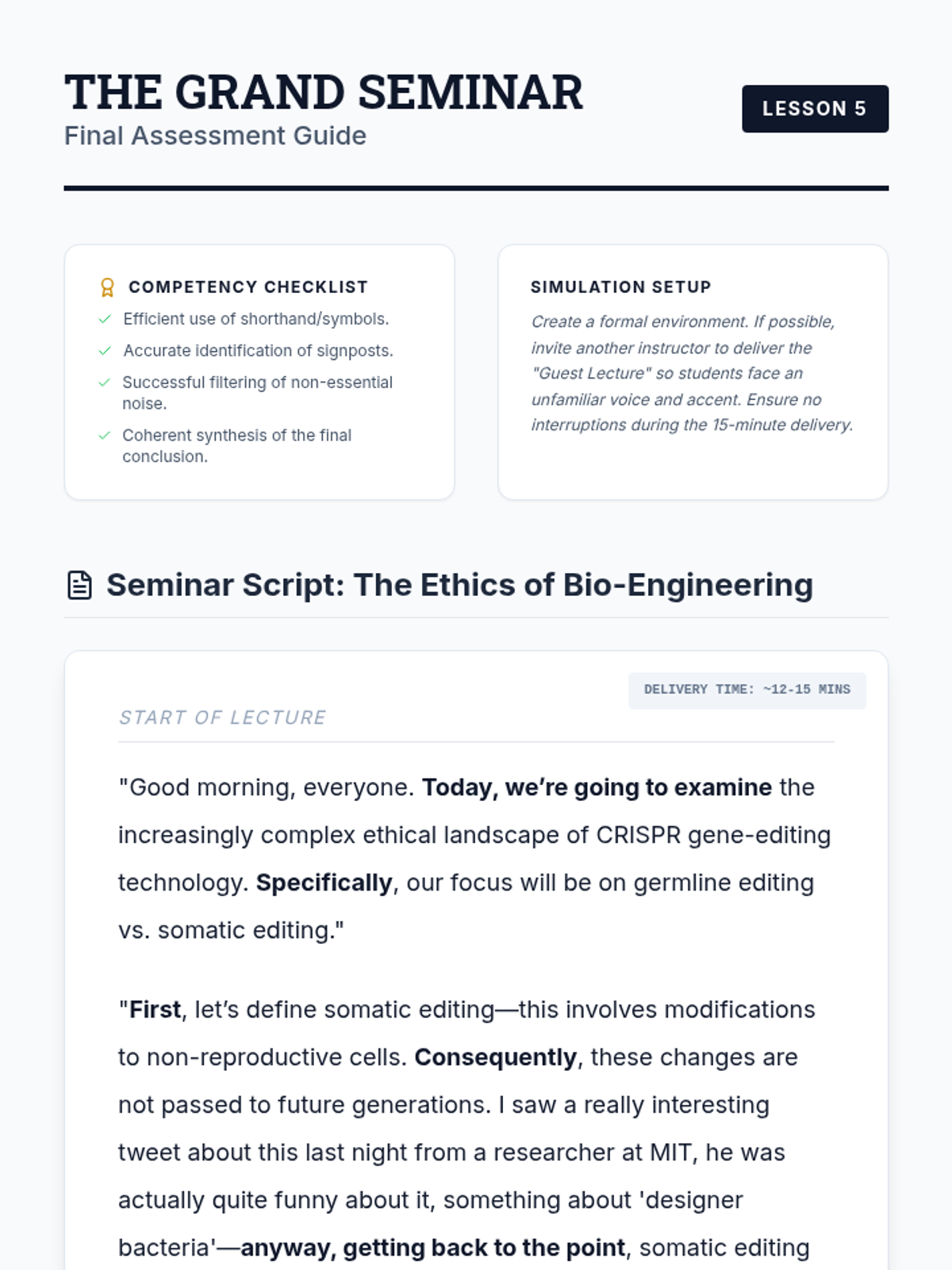
A culminating simulation where students apply all strategies during a mock academic lecture assessment.
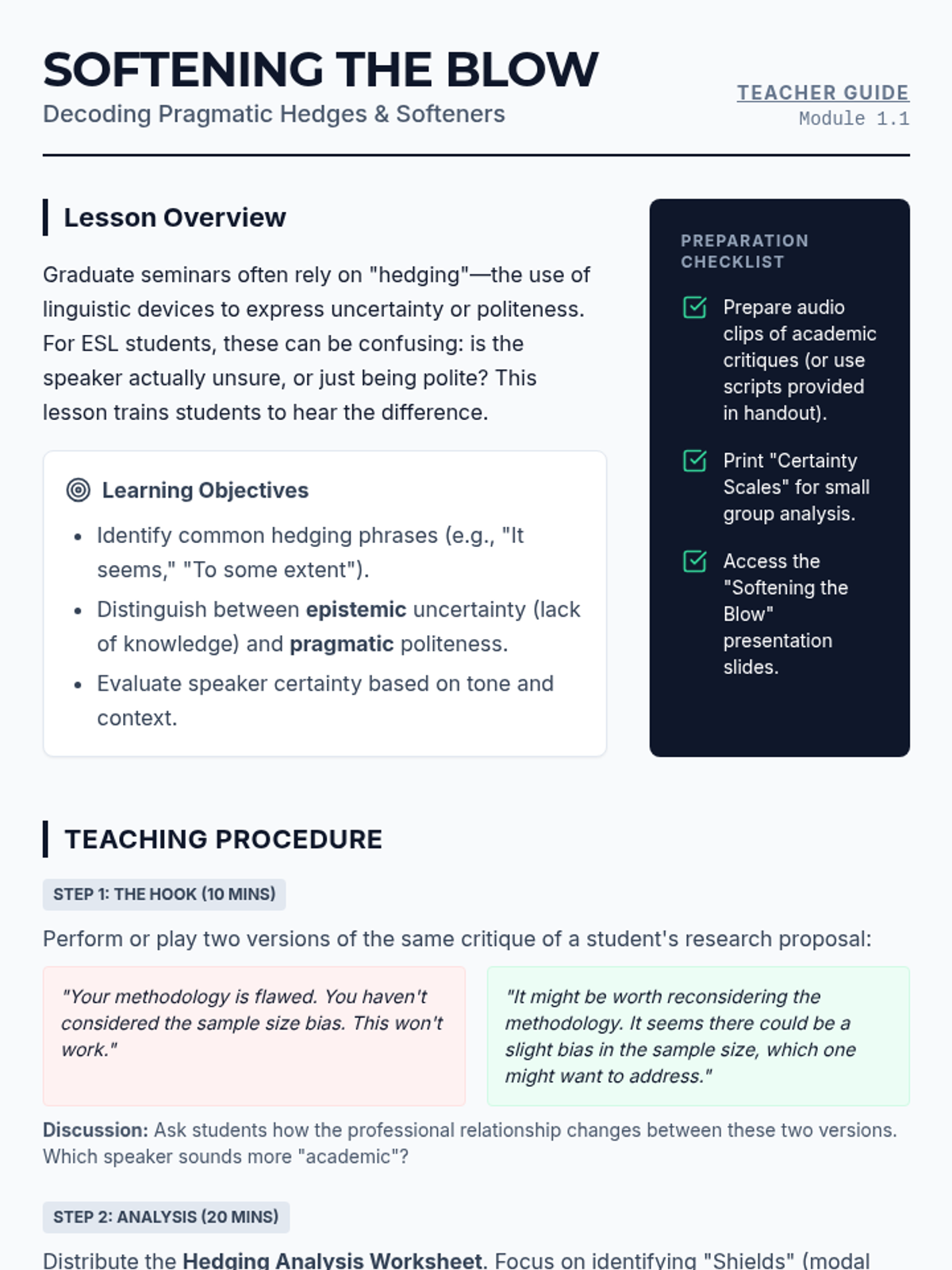
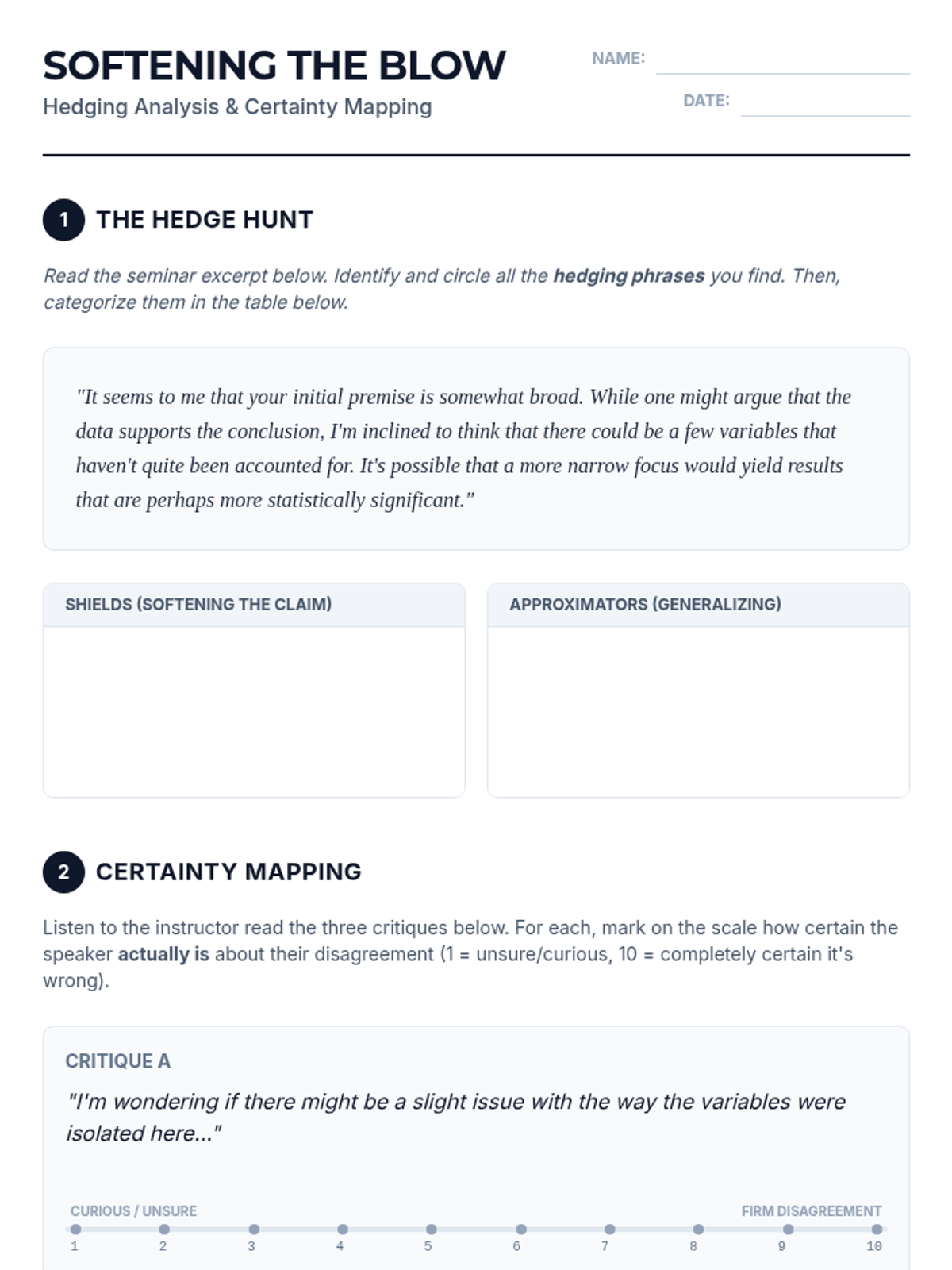
Students explore how academic speakers use hedging language to soften assertions and maintain professional relationships. Activities focus on distinguishing between literal meaning and pragmatic intent.
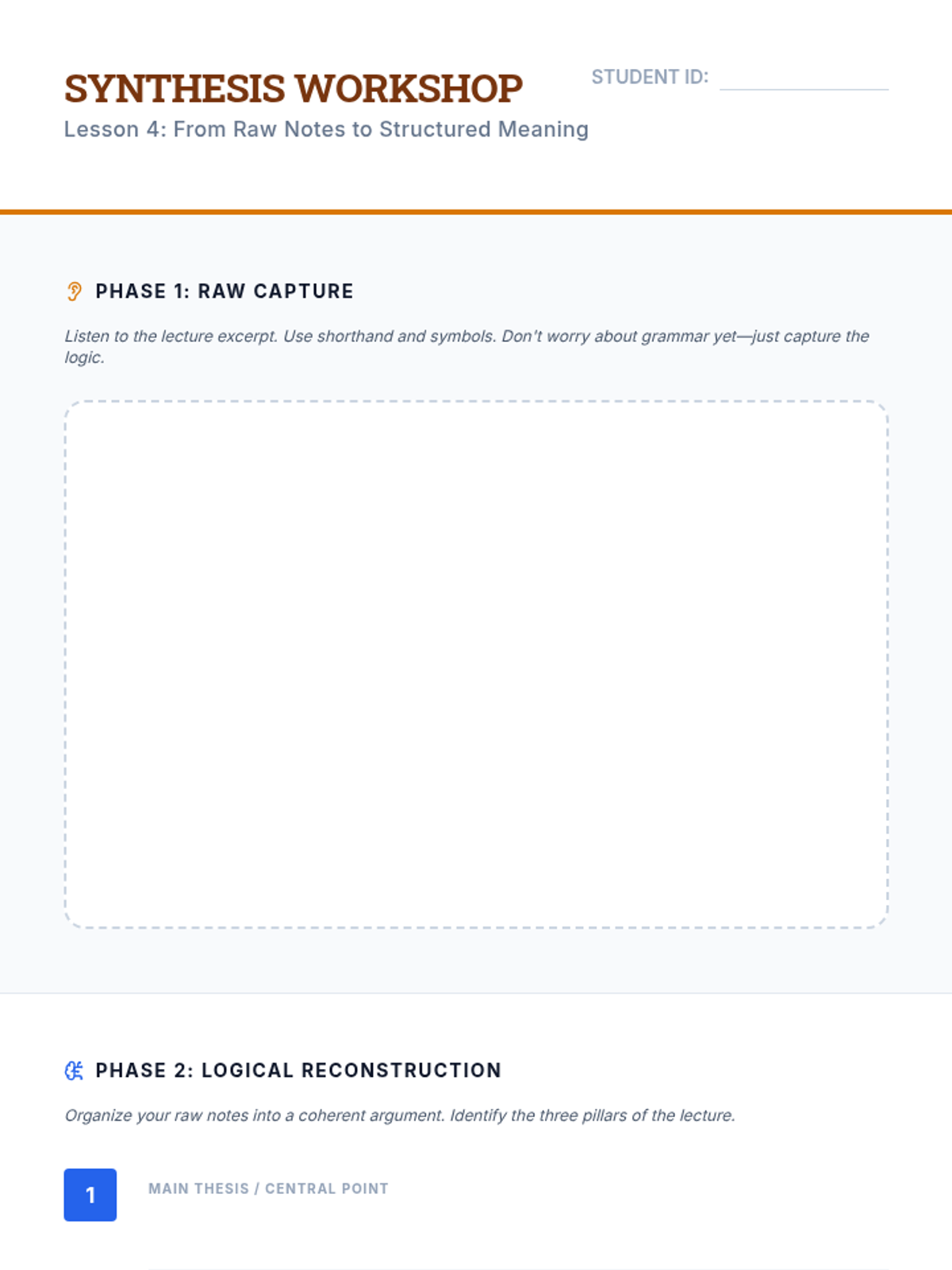
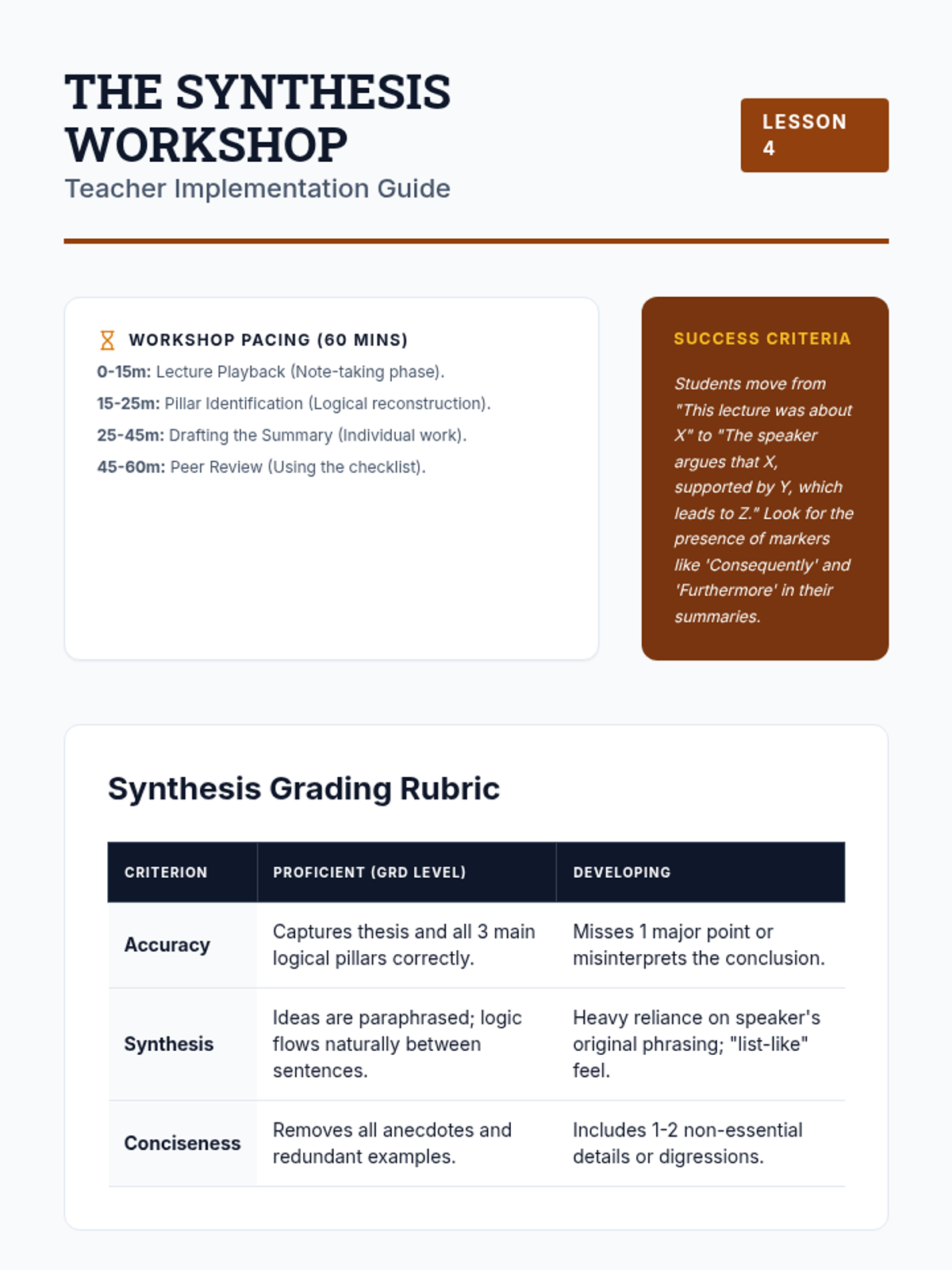
Students practice synthesizing auditory information into concise, logical summaries and paraphrasing key points.
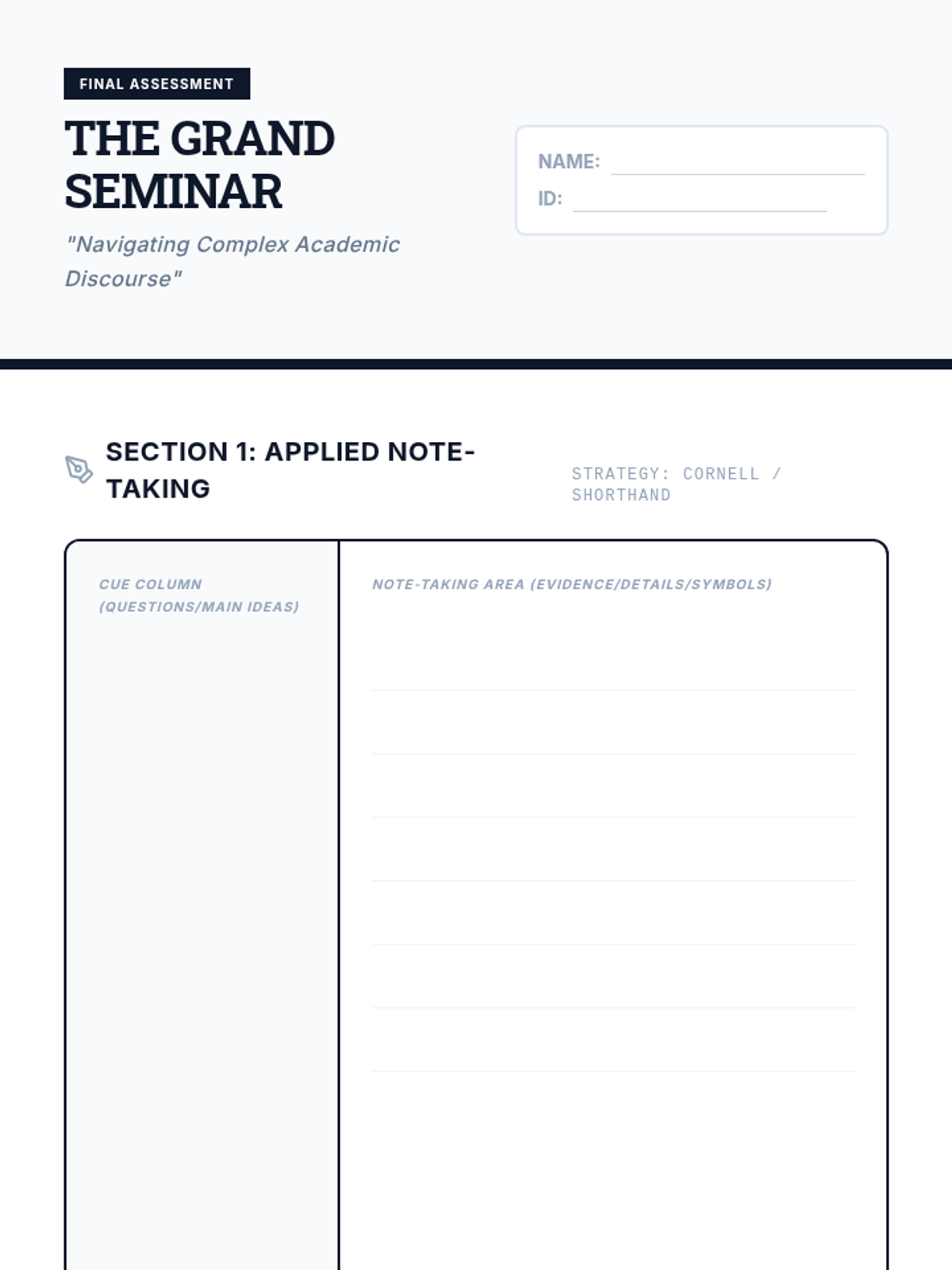
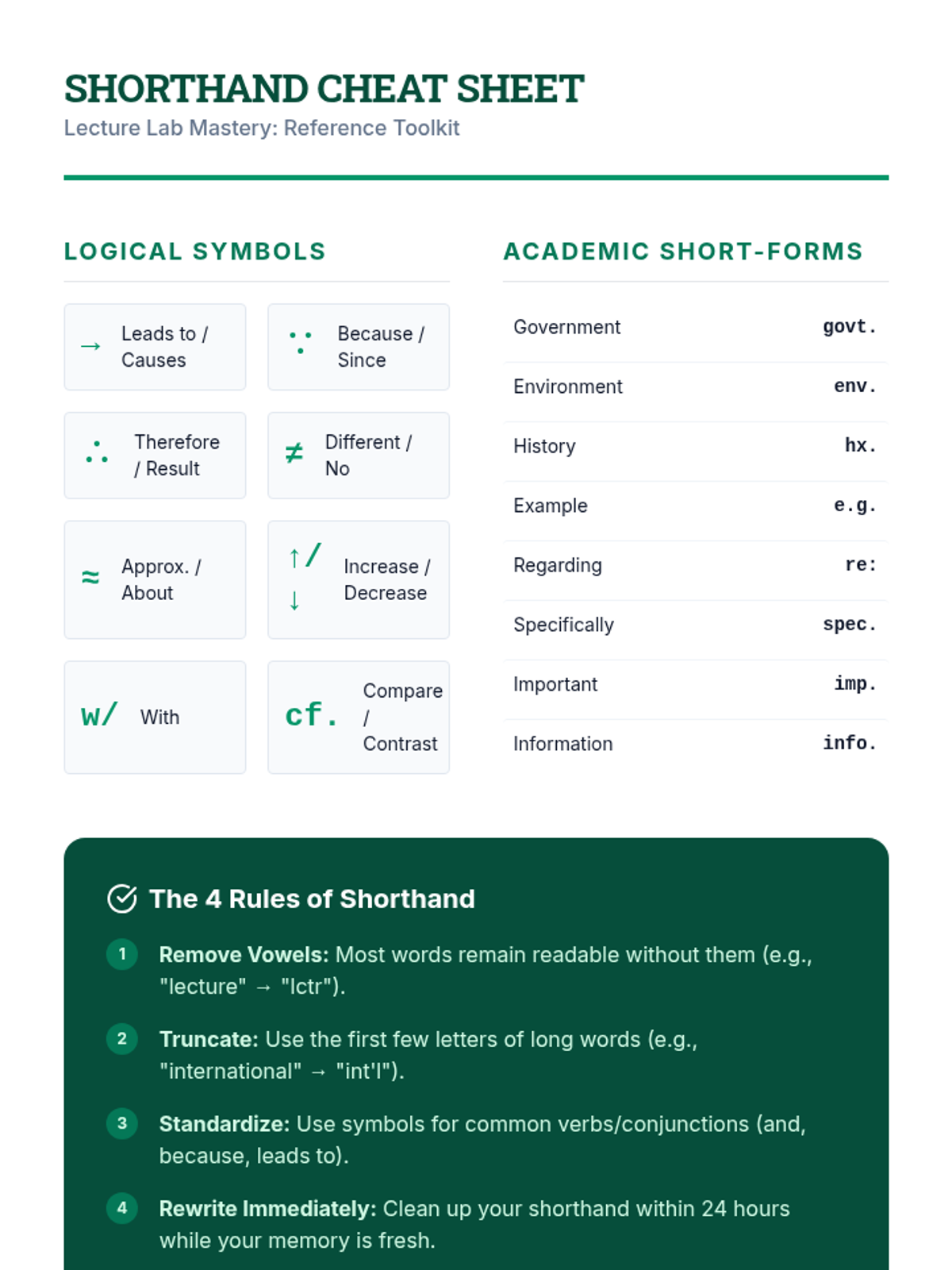
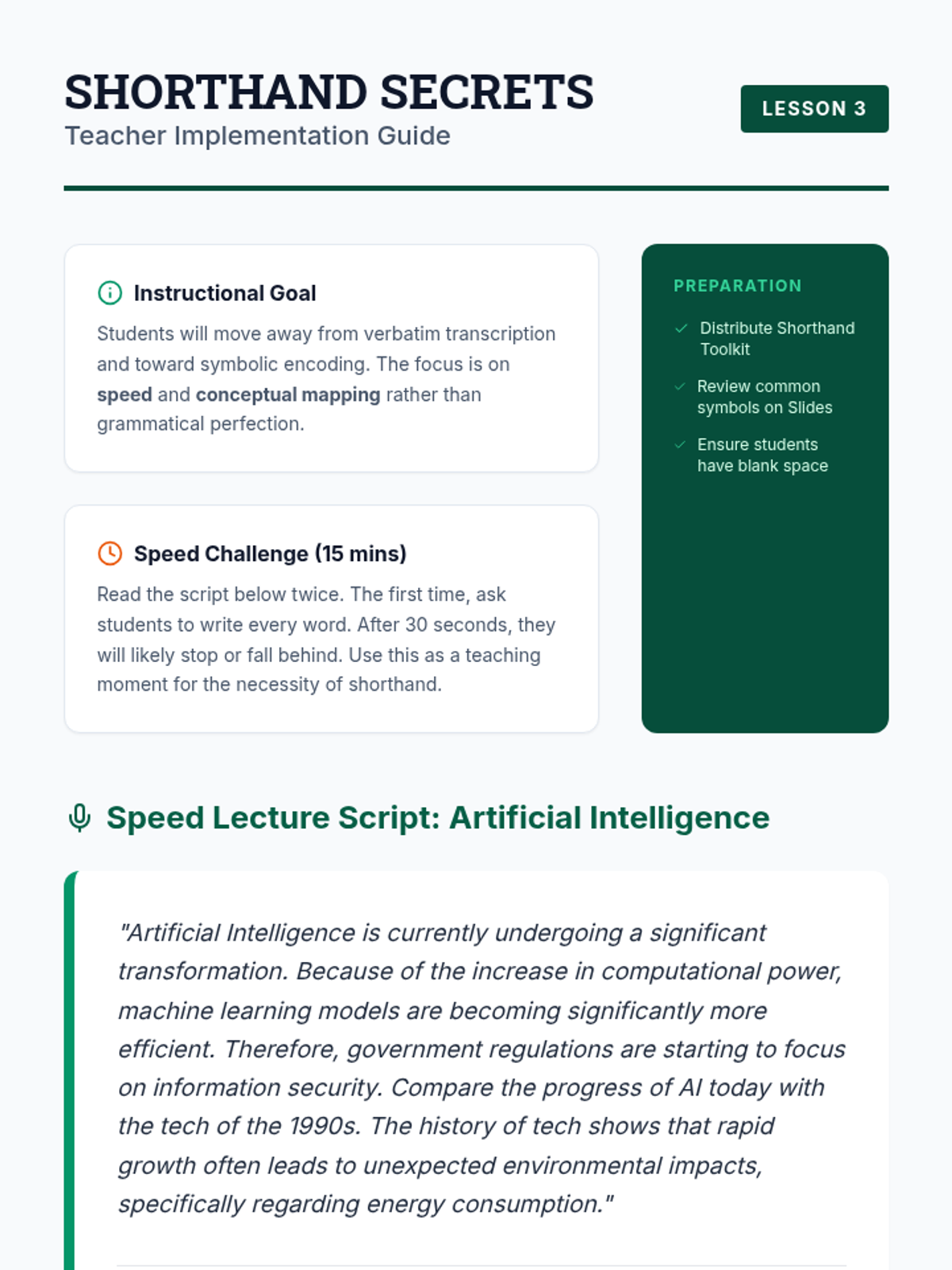
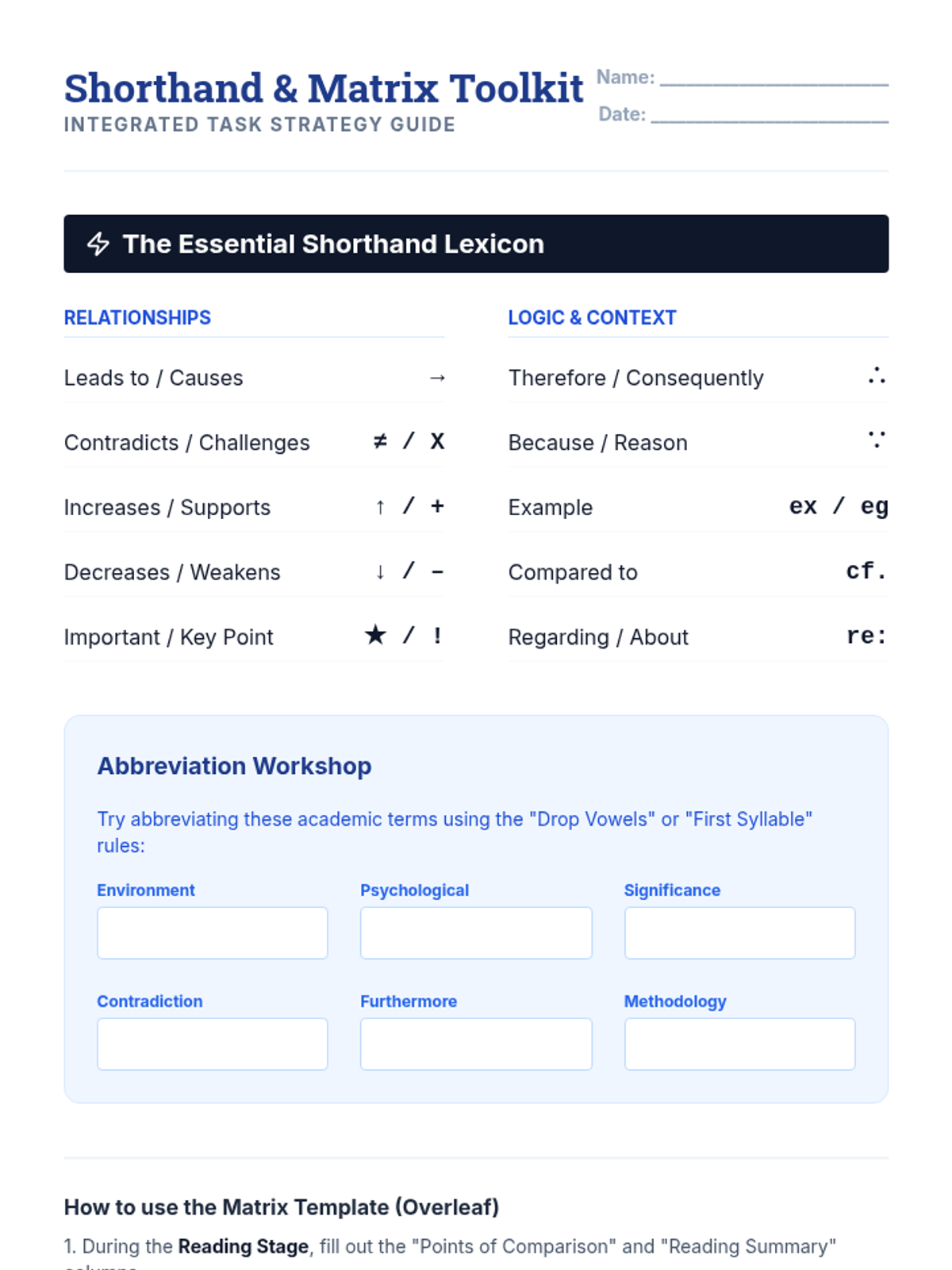
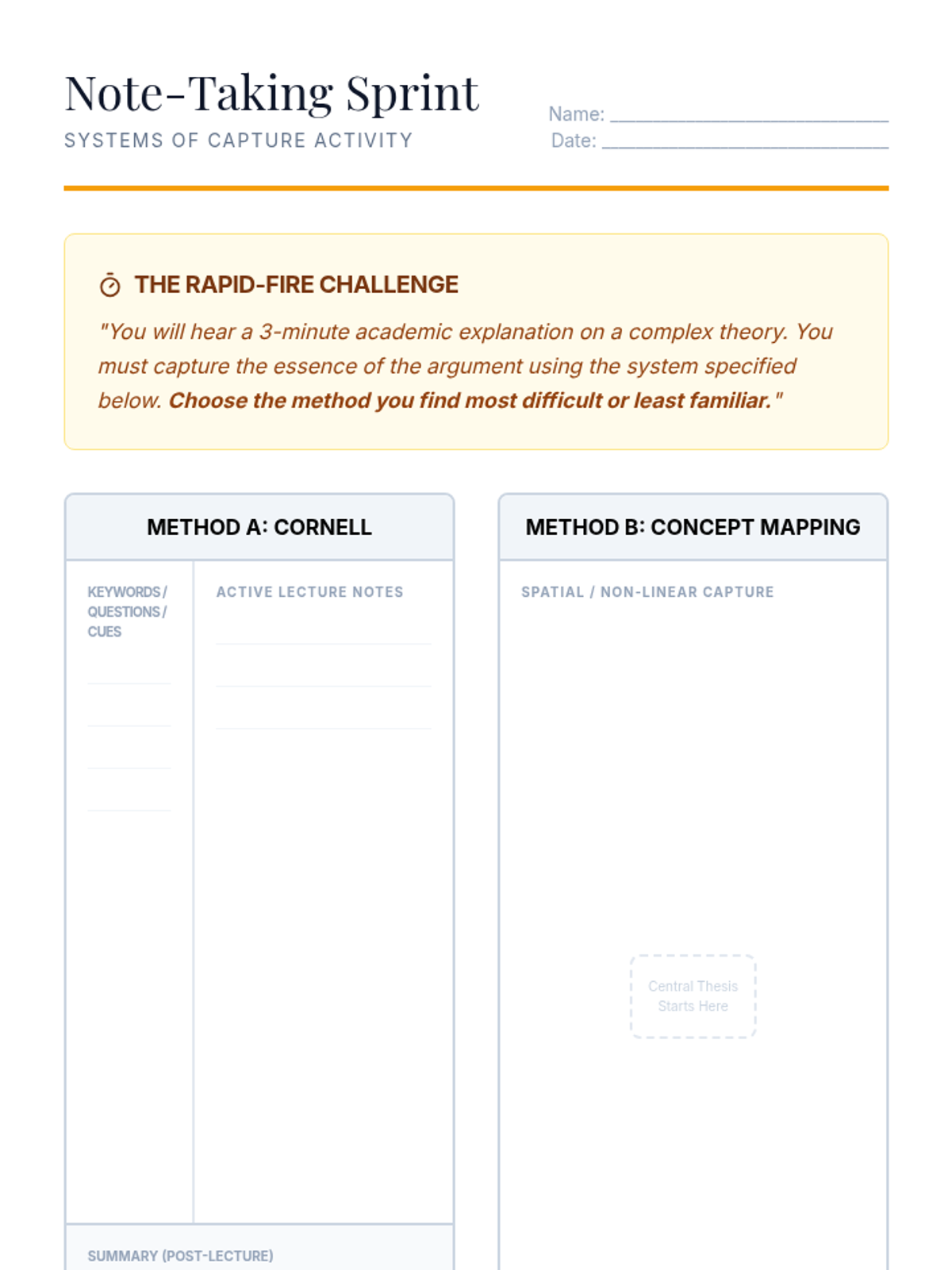
Introduction to shorthand, symbols, and the Cornell note-taking method for capturing information in real-time.
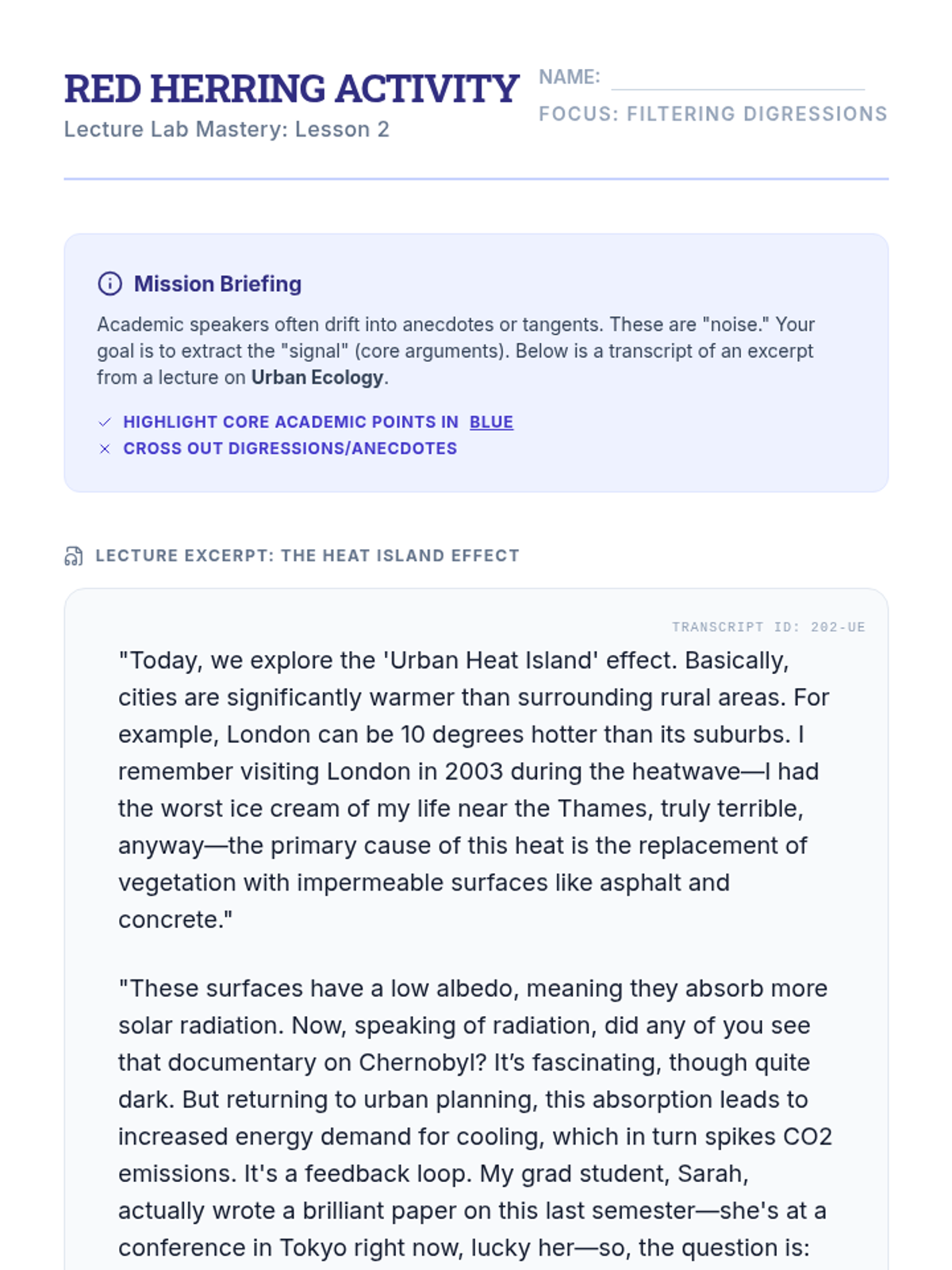
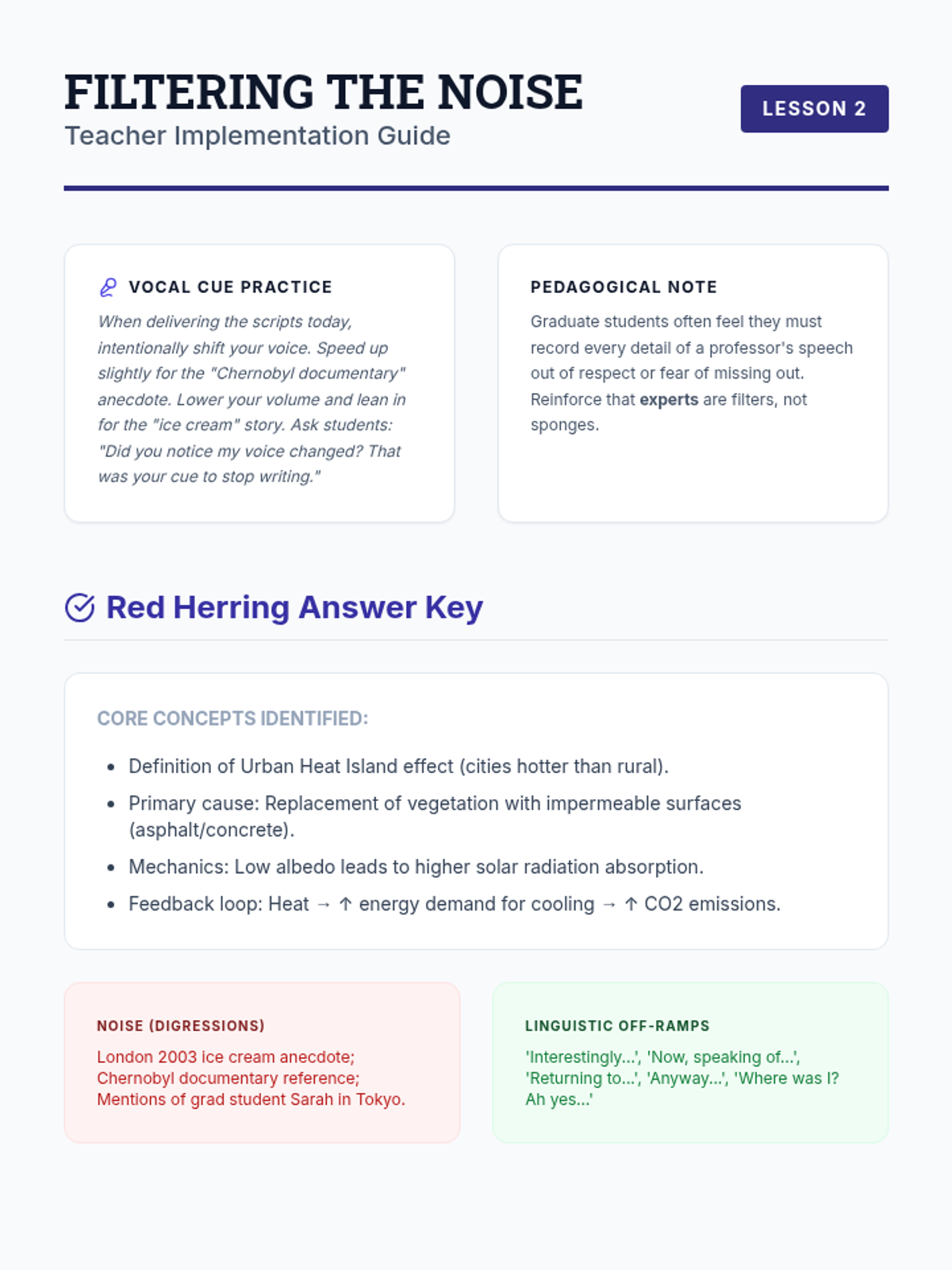
Focuses on distinguishing core academic arguments from anecdotes and digressions using linguistic and vocal cues.
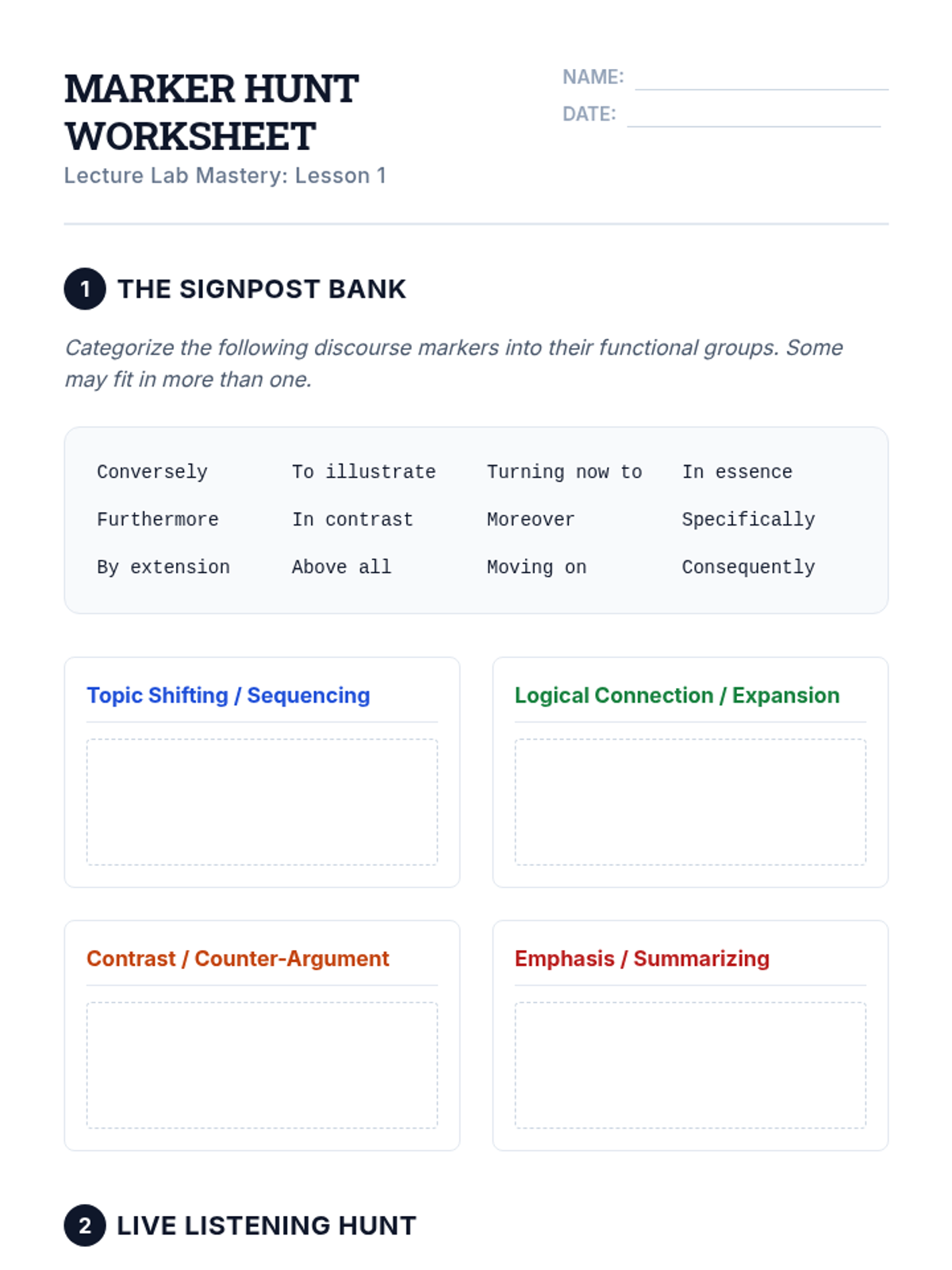
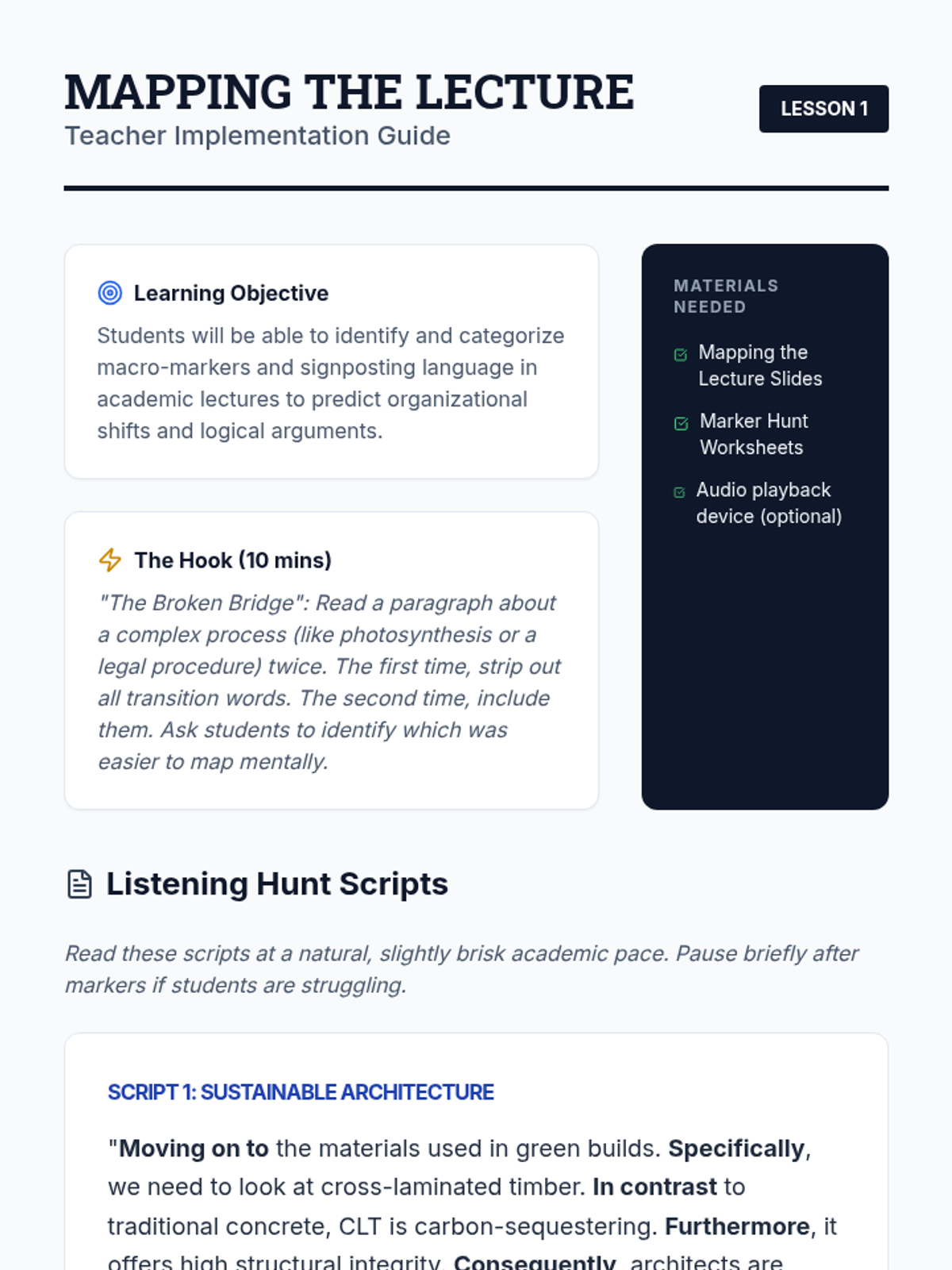
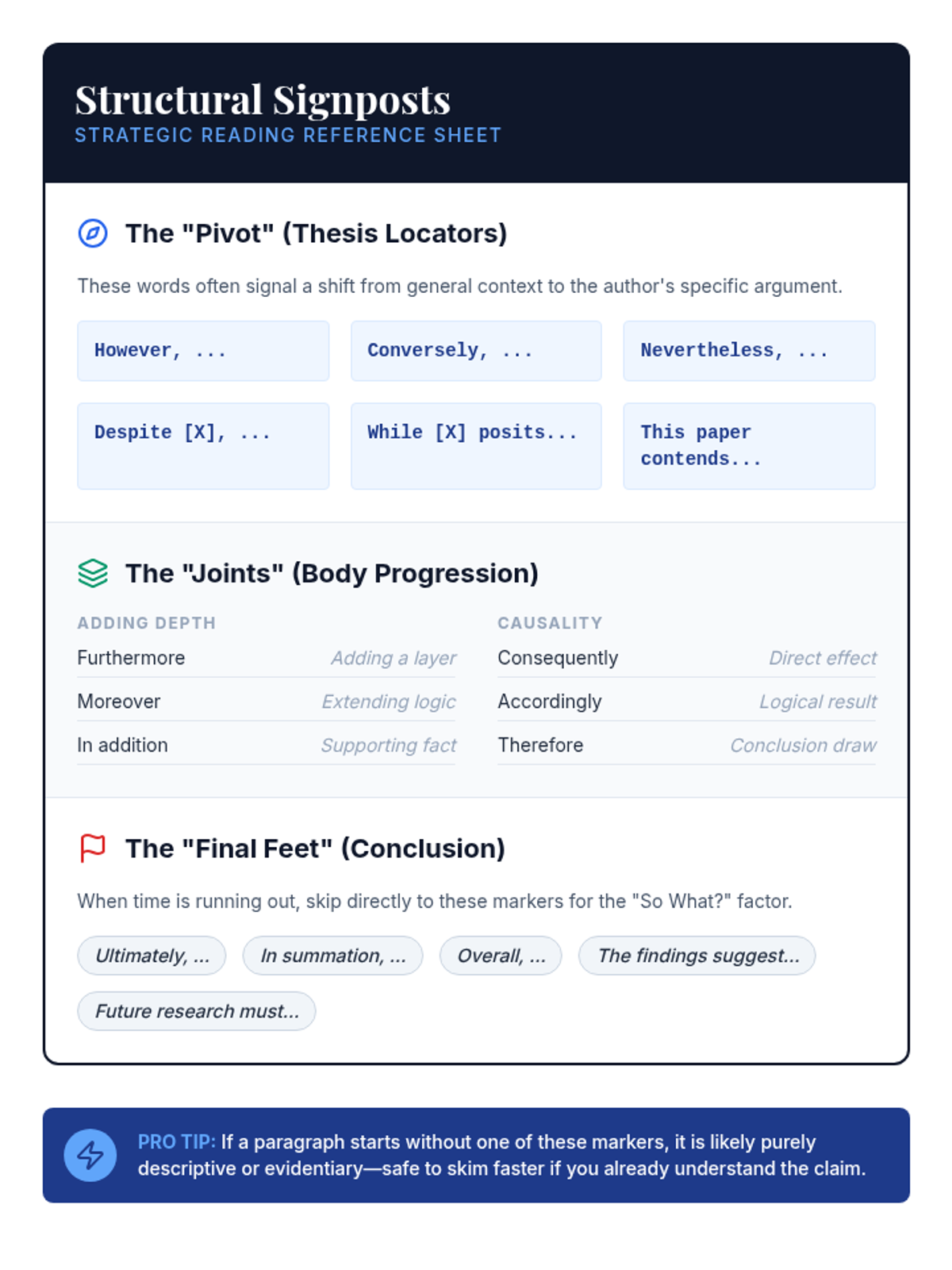
Students learn to identify macro-markers and signposting language that signal organizational structure in academic lectures.
Integrating all previous strategies under strict time constraints with a focus on meta-cognitive monitoring.
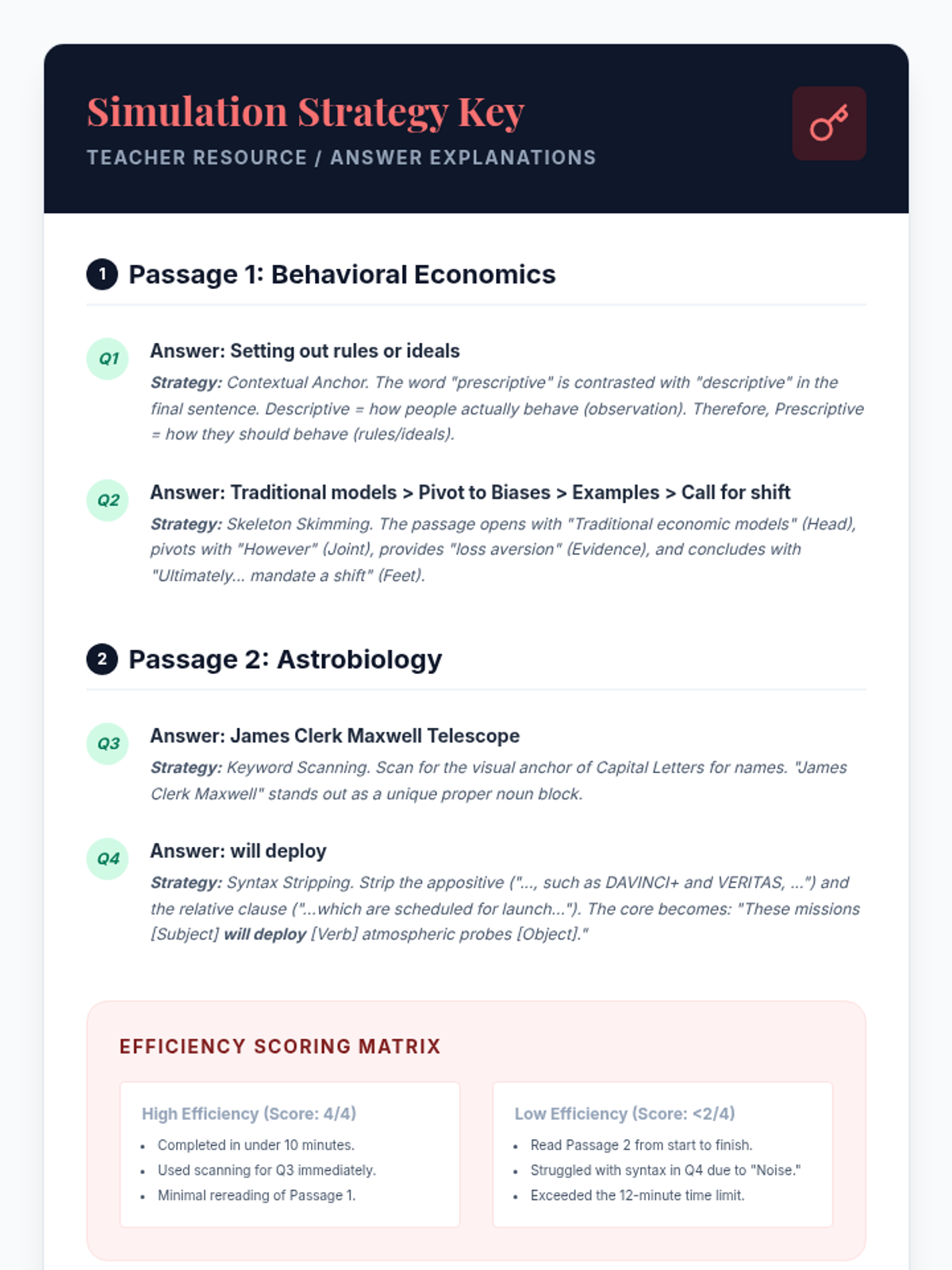
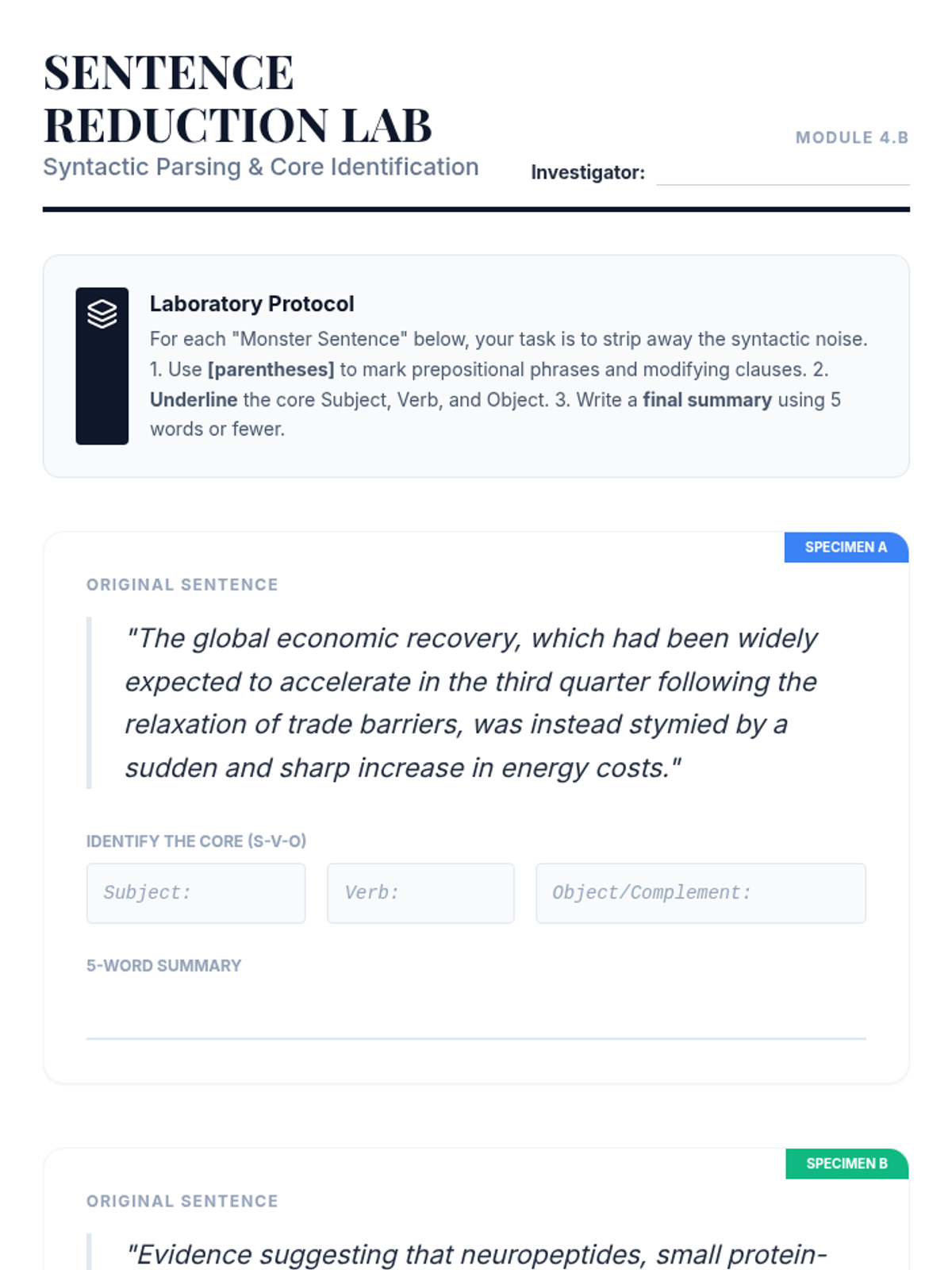
Breaking down convoluted academic sentences into core S-V-O components and identifying ignorable modifying clauses.
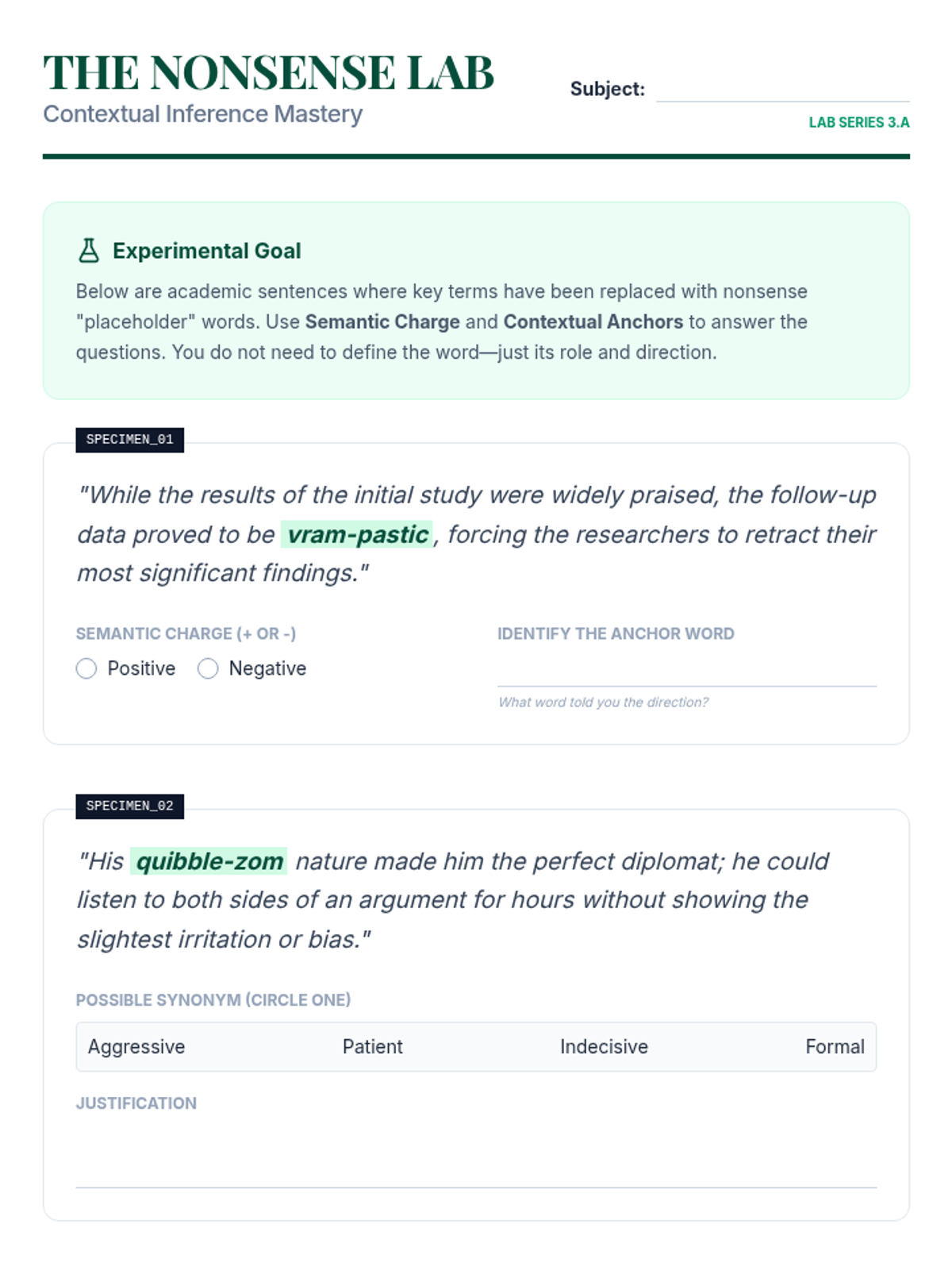
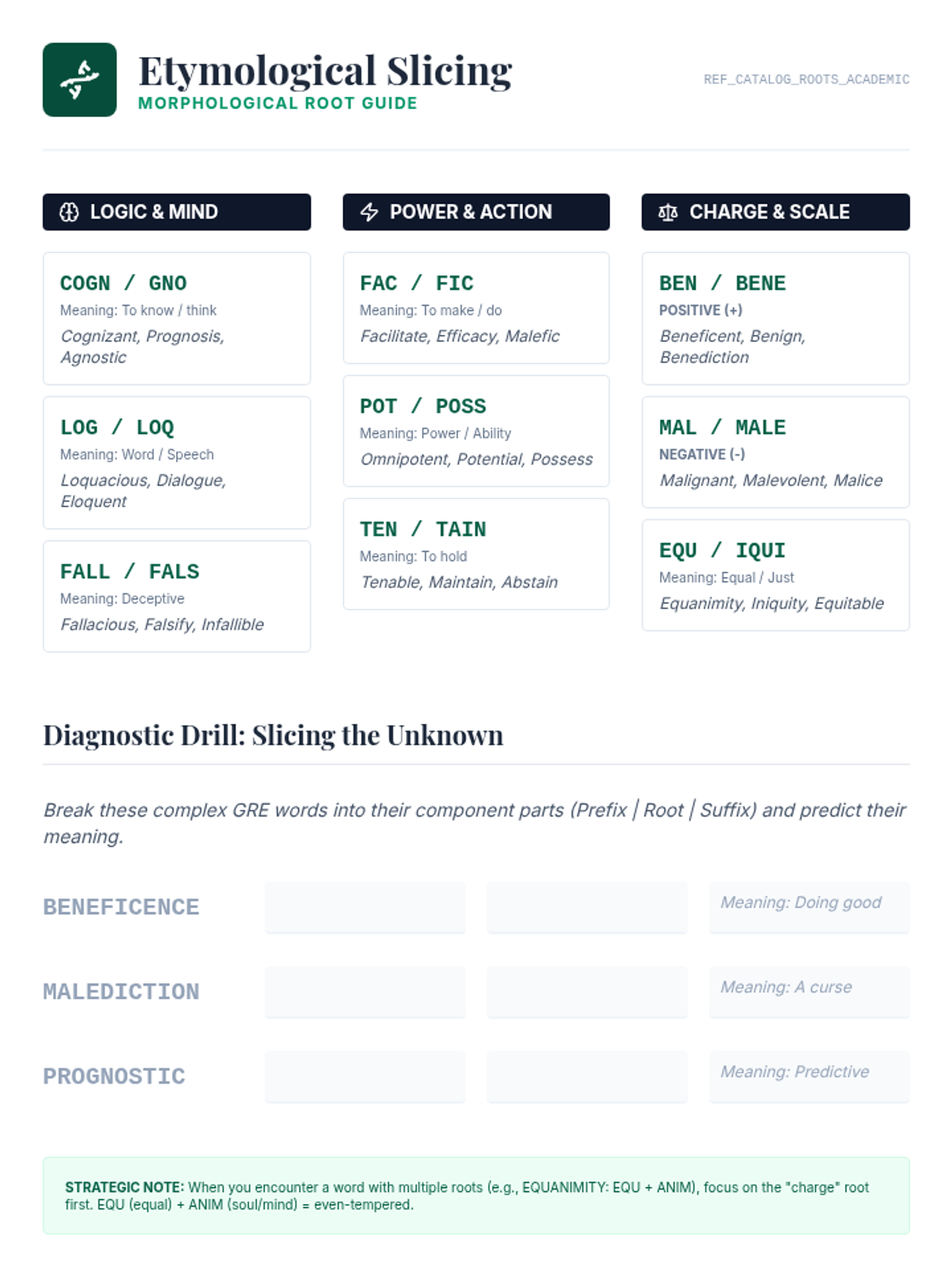
Strategies to infer meaning of advanced vocabulary through syntactic context and etymological roots, focusing on semantic charge.
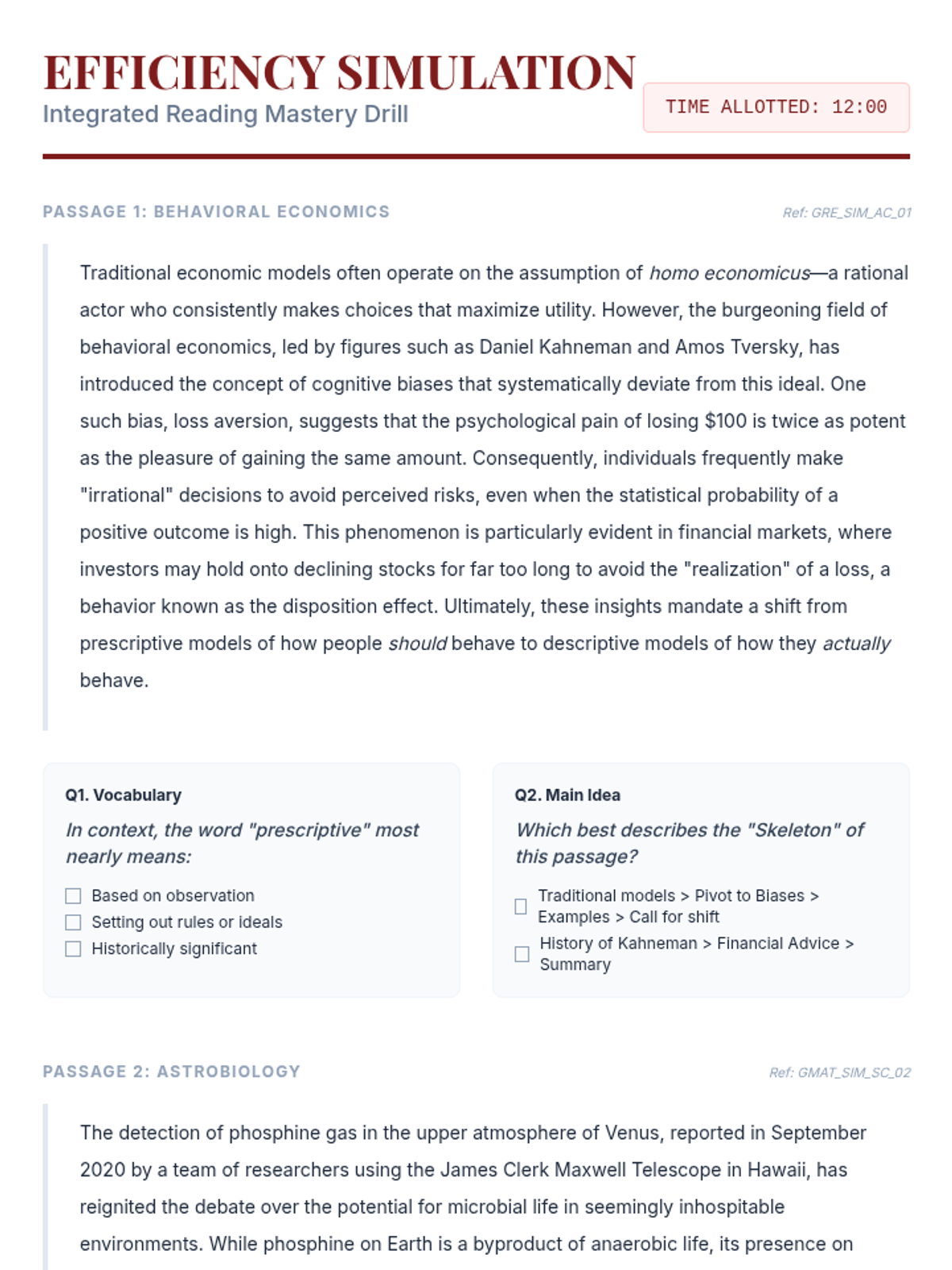
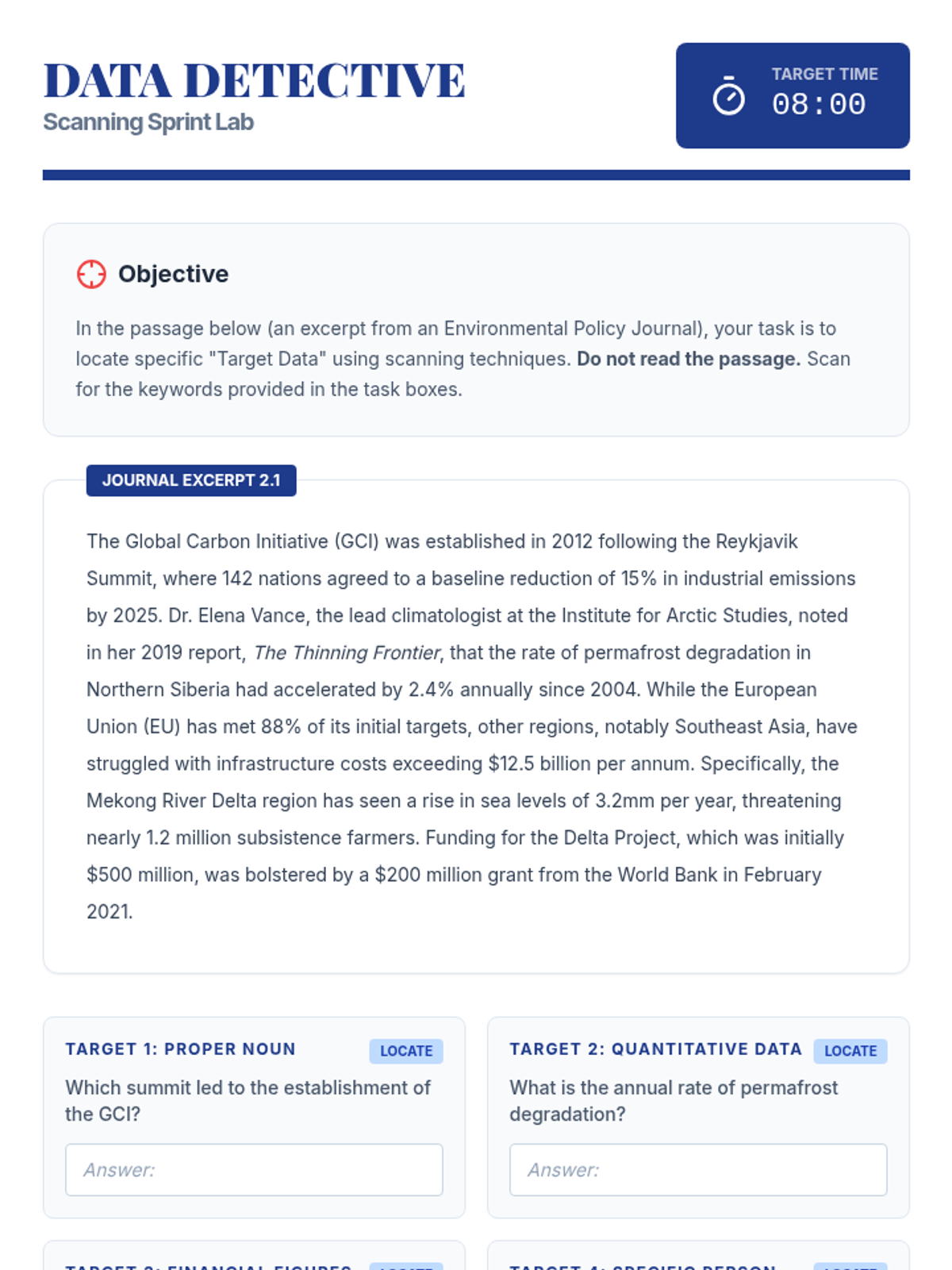
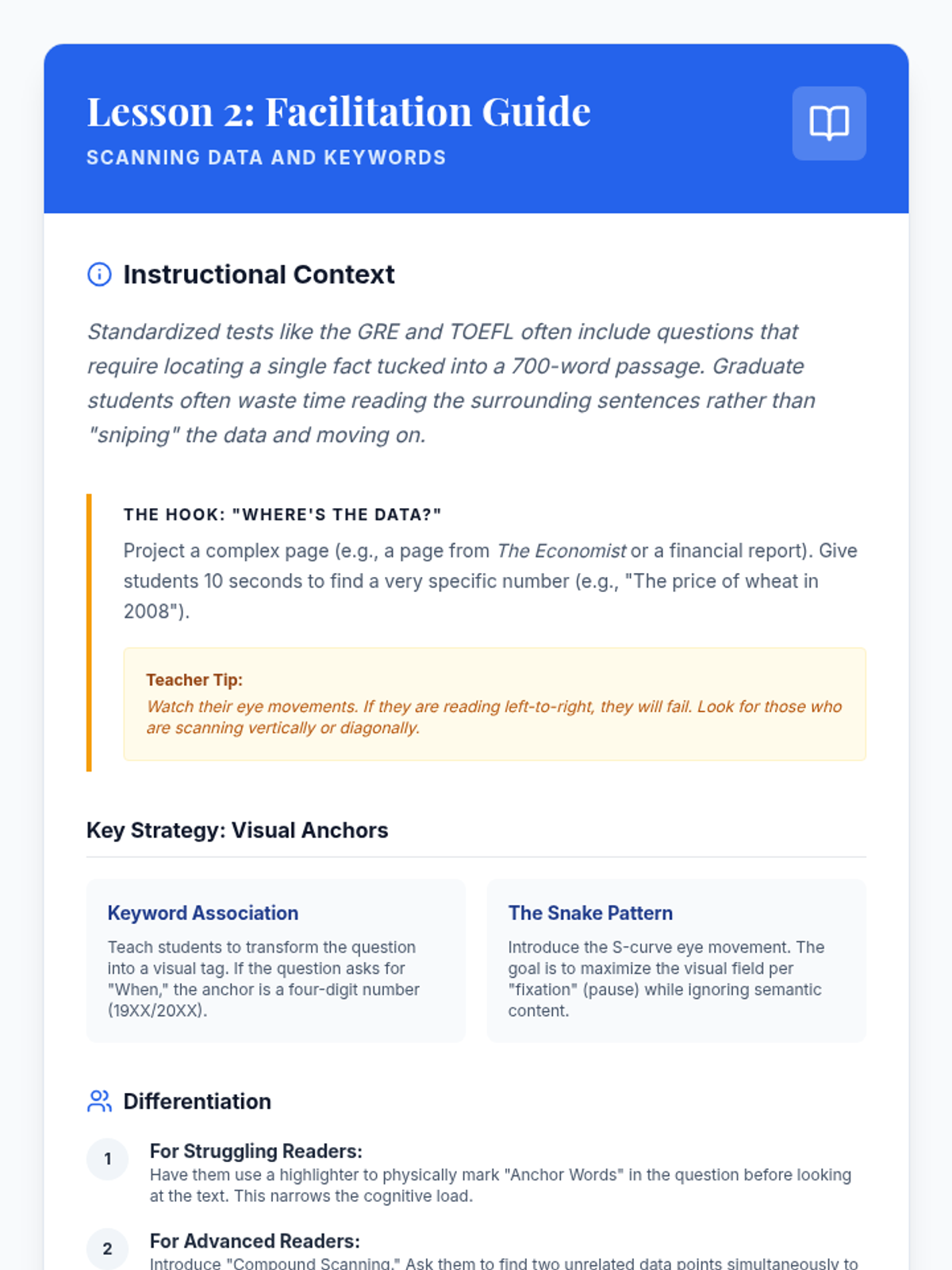
Targets the ability to locate specific details within dense text using keyword association and signpost words.
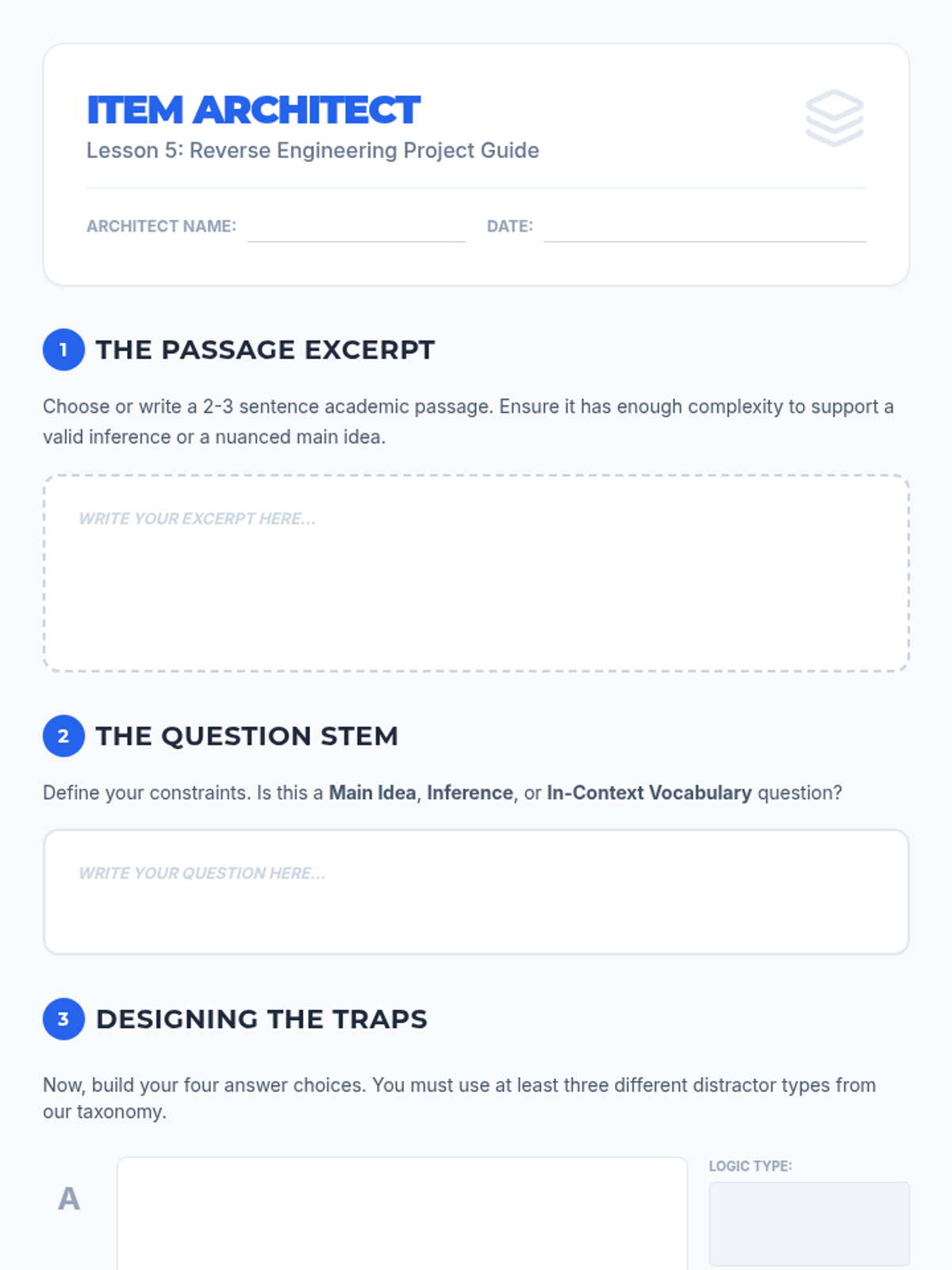
A project-based finale where students apply their knowledge by reverse-engineering test items, creating their own distractors to challenge their peers.
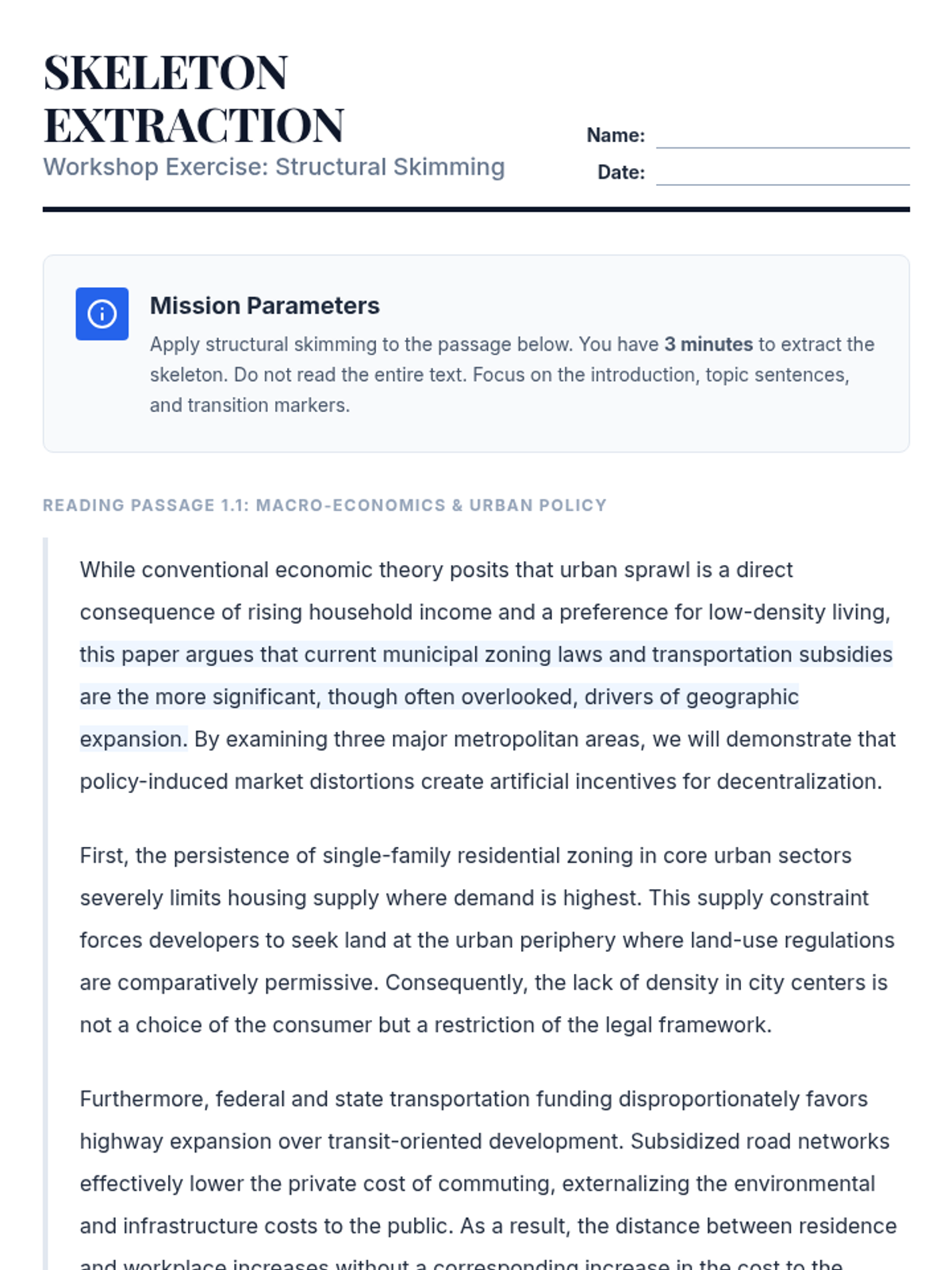
Students practice identifying the 'skeleton' of academic passages by focusing on structural markers and argumentative arcs to speed up comprehension.
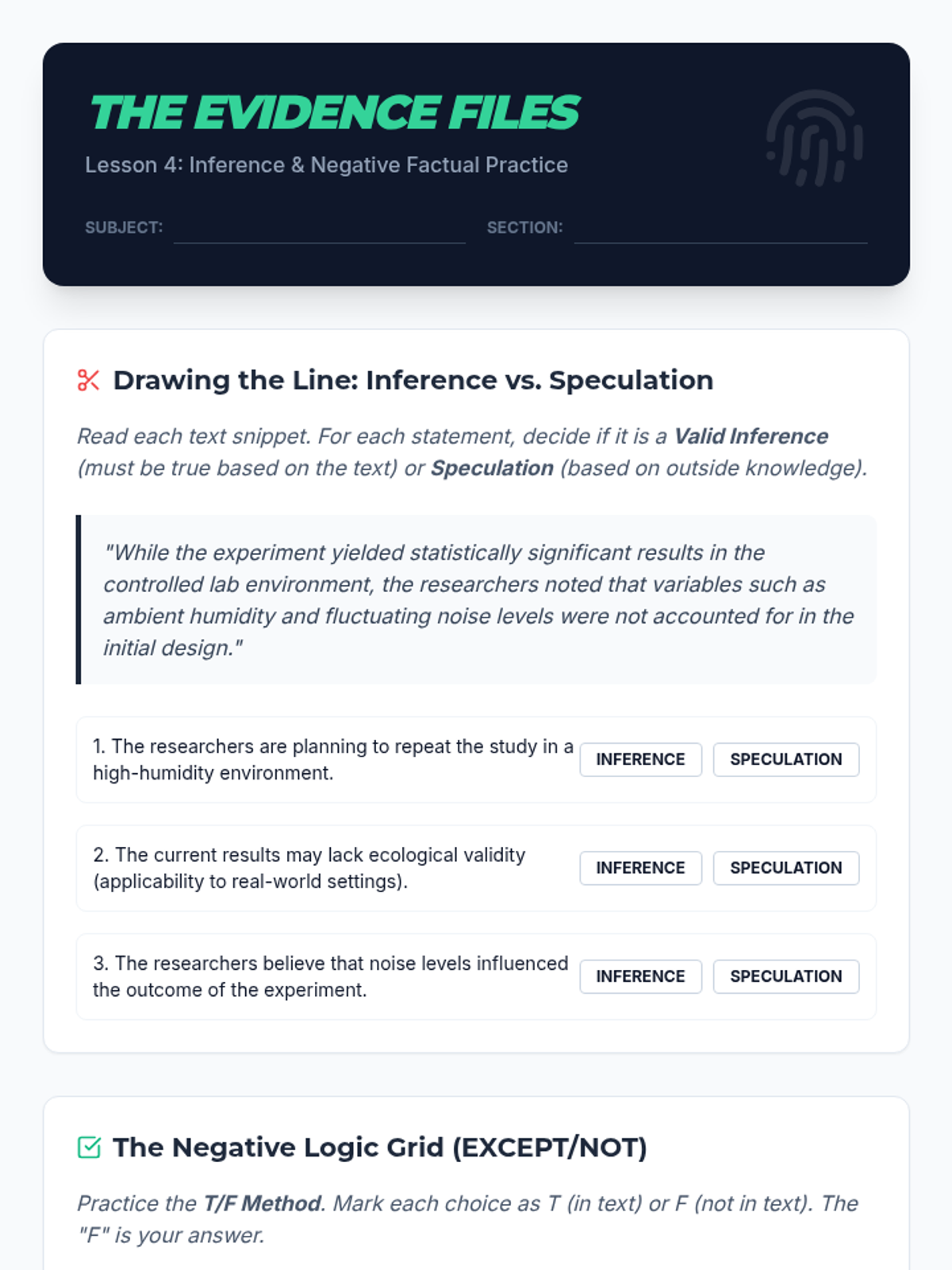
Focuses on the strict evidence rules of inference questions and the 'True/False' elimination method for handling negative factual questions (EXCEPT/NOT).
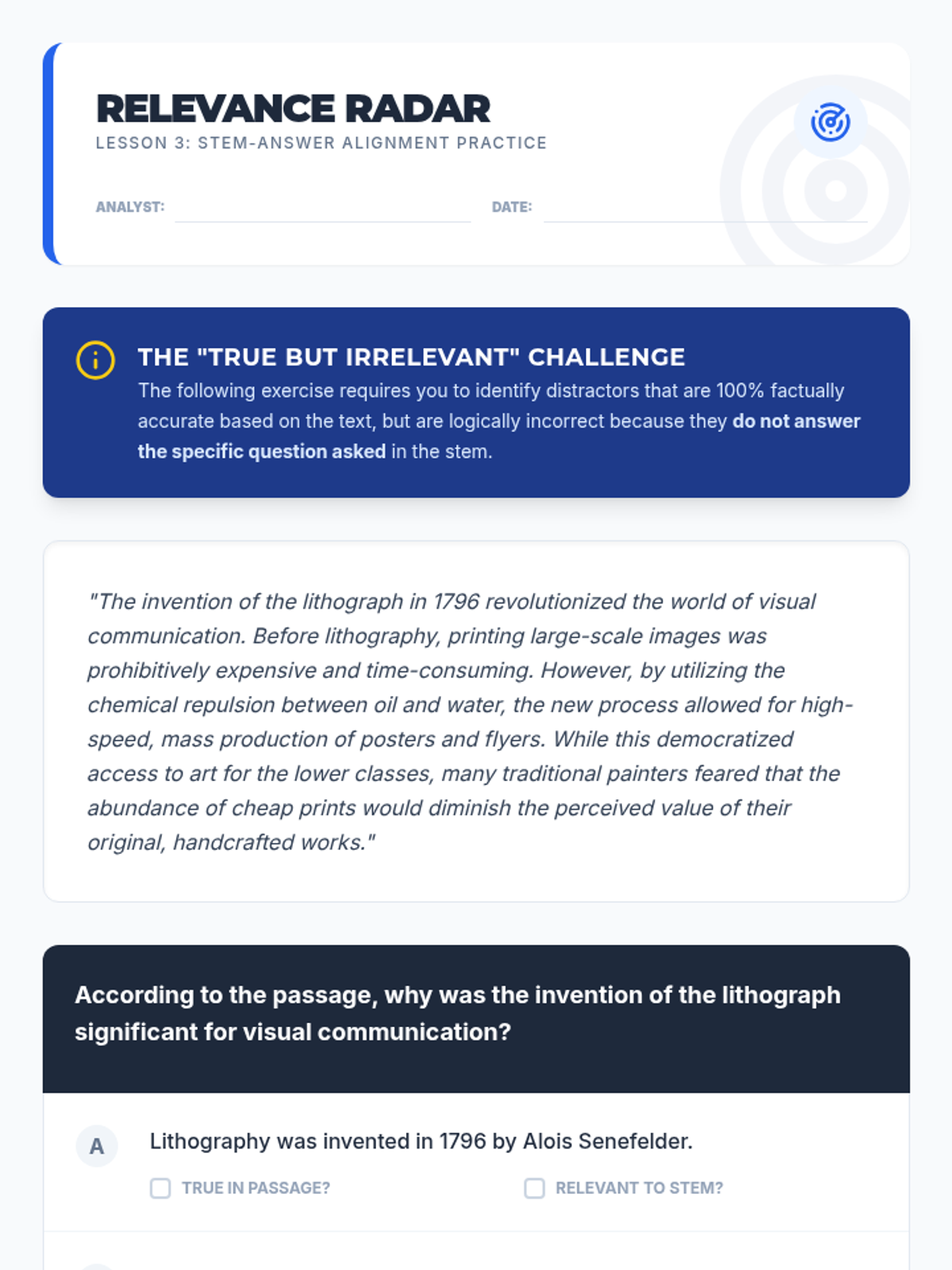
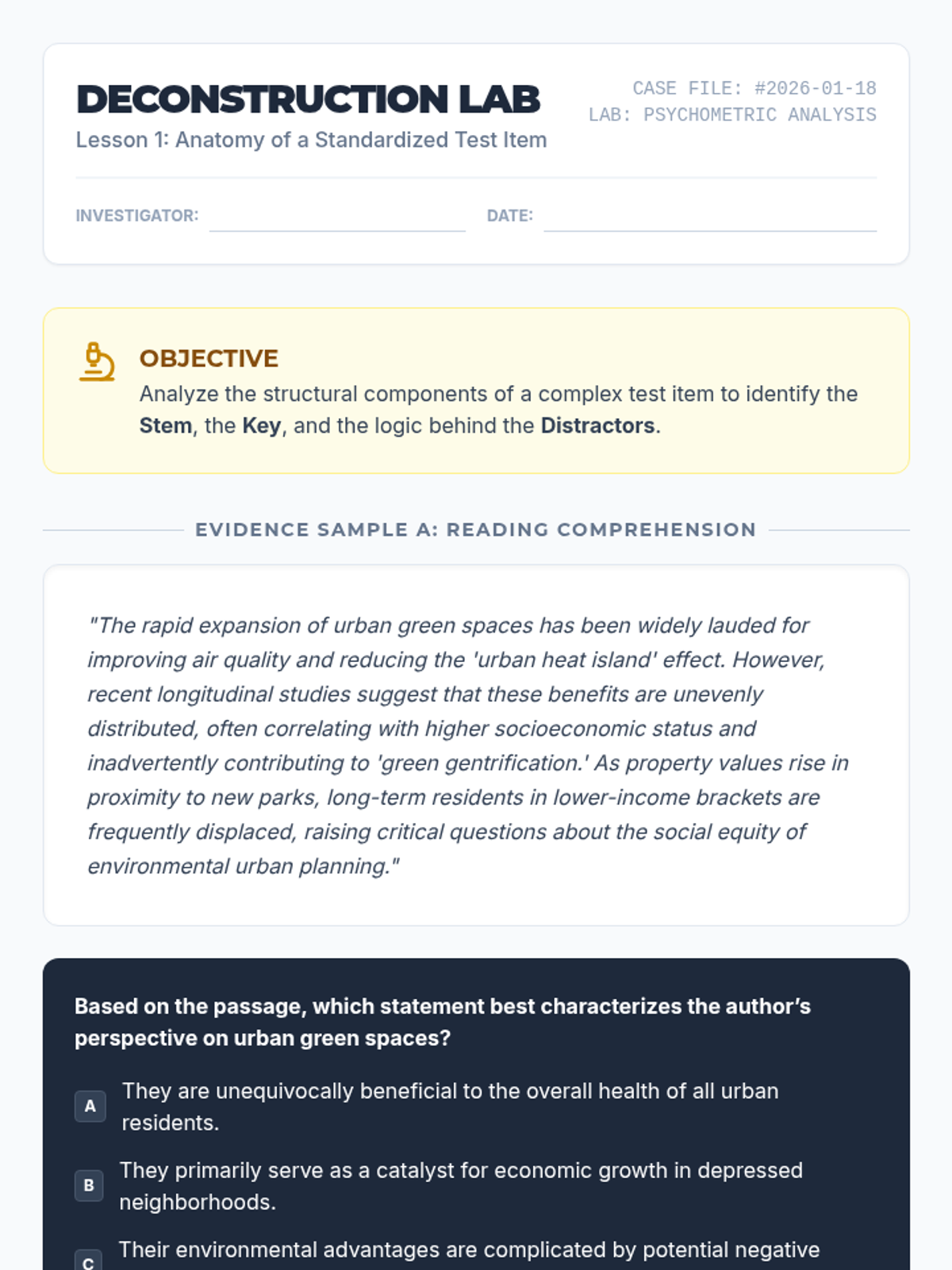
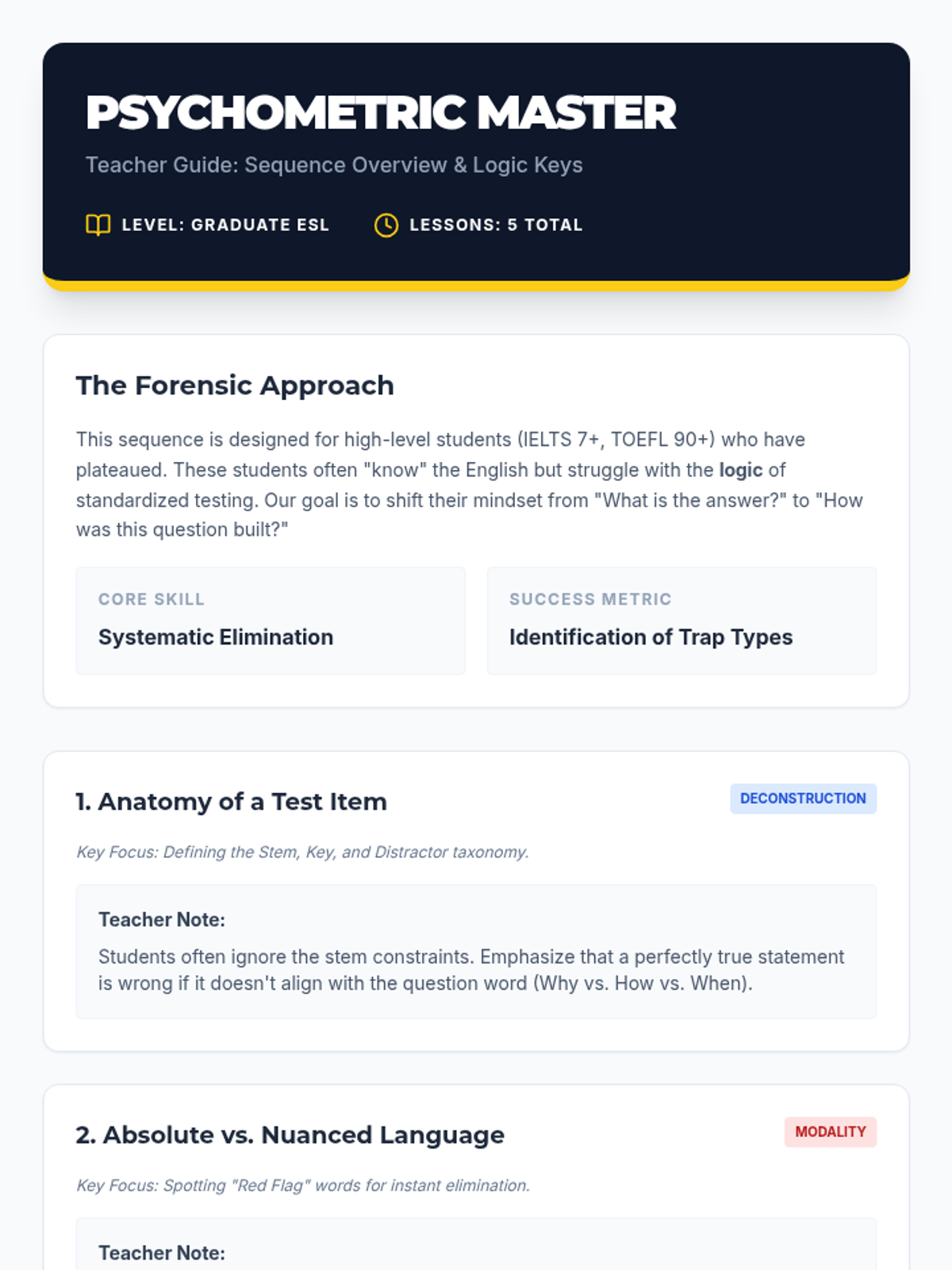
Students learn to identify distractors that are factually true based on a text but fail to address the specific constraints of the question stem.
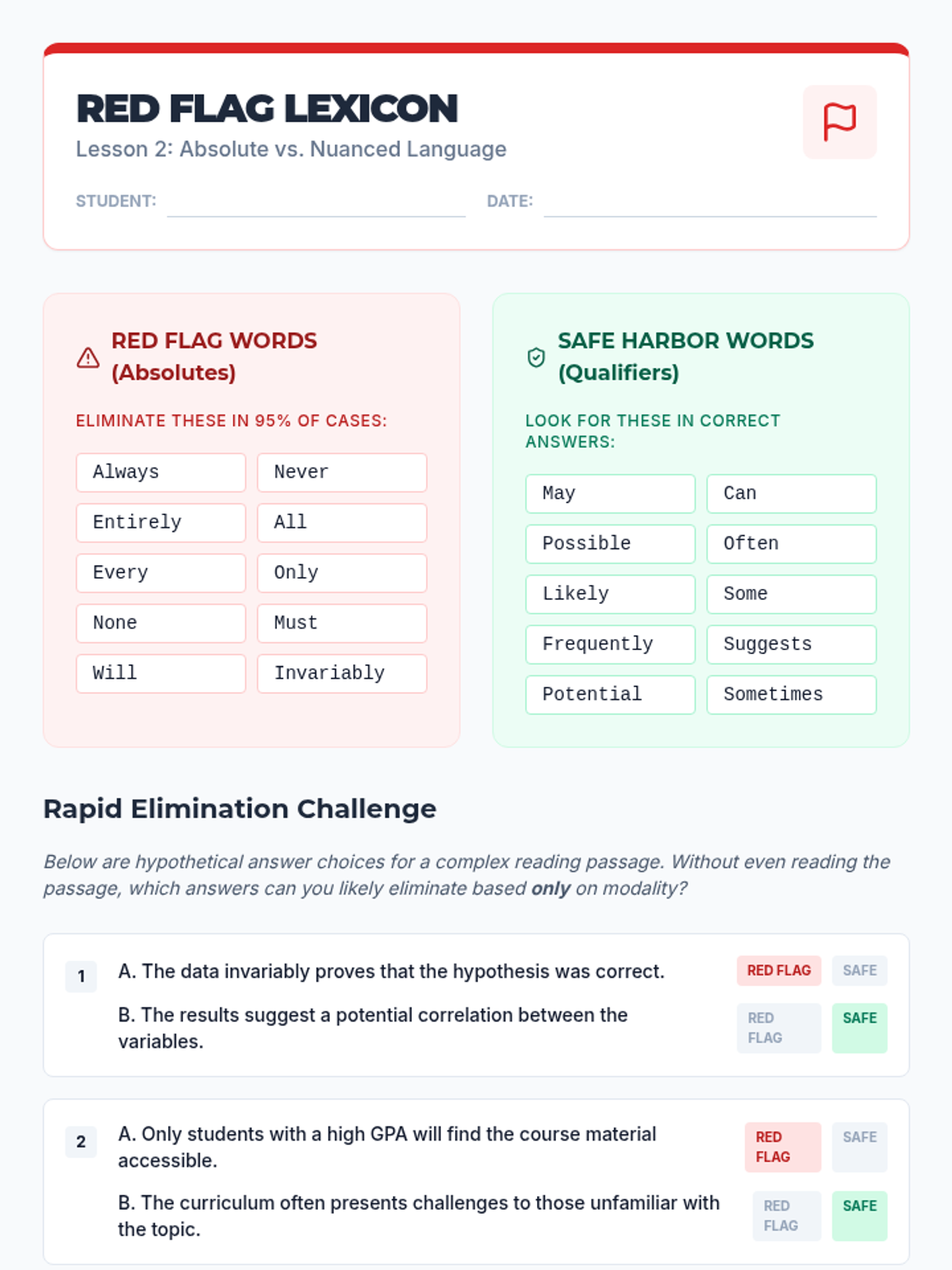
This lesson focuses on identifying modality and tone, teaching students to spot and eliminate 'absolute' distractors (always, never) in favor of academic nuance.
Students deconstruct standardized test items into stems, keys, and distractors, establishing a shared vocabulary for common trap types used by major test-makers like ETS and GMAC.
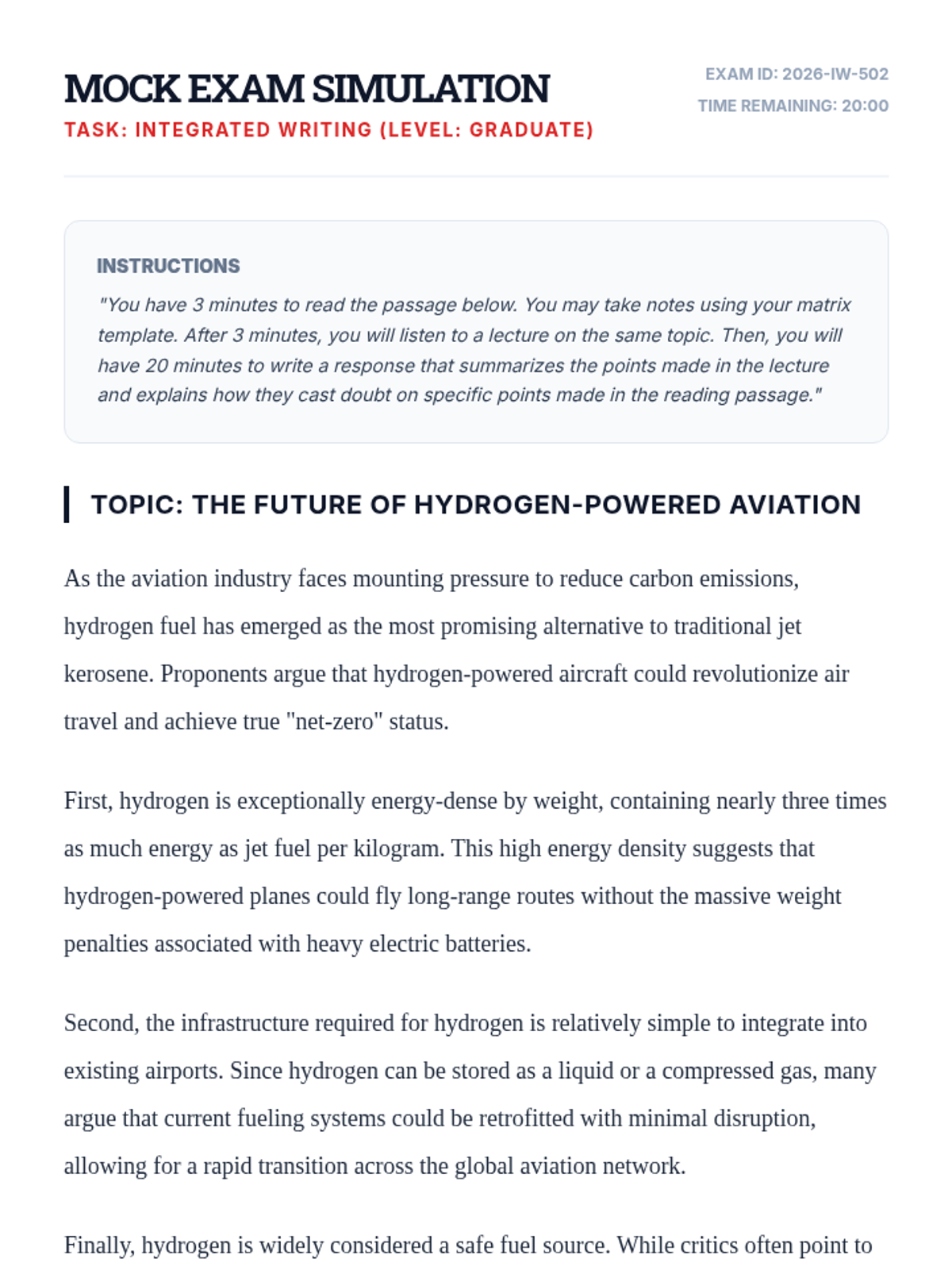
A full-length integrated task simulation under exam conditions followed by self-assessment using official rubric criteria.
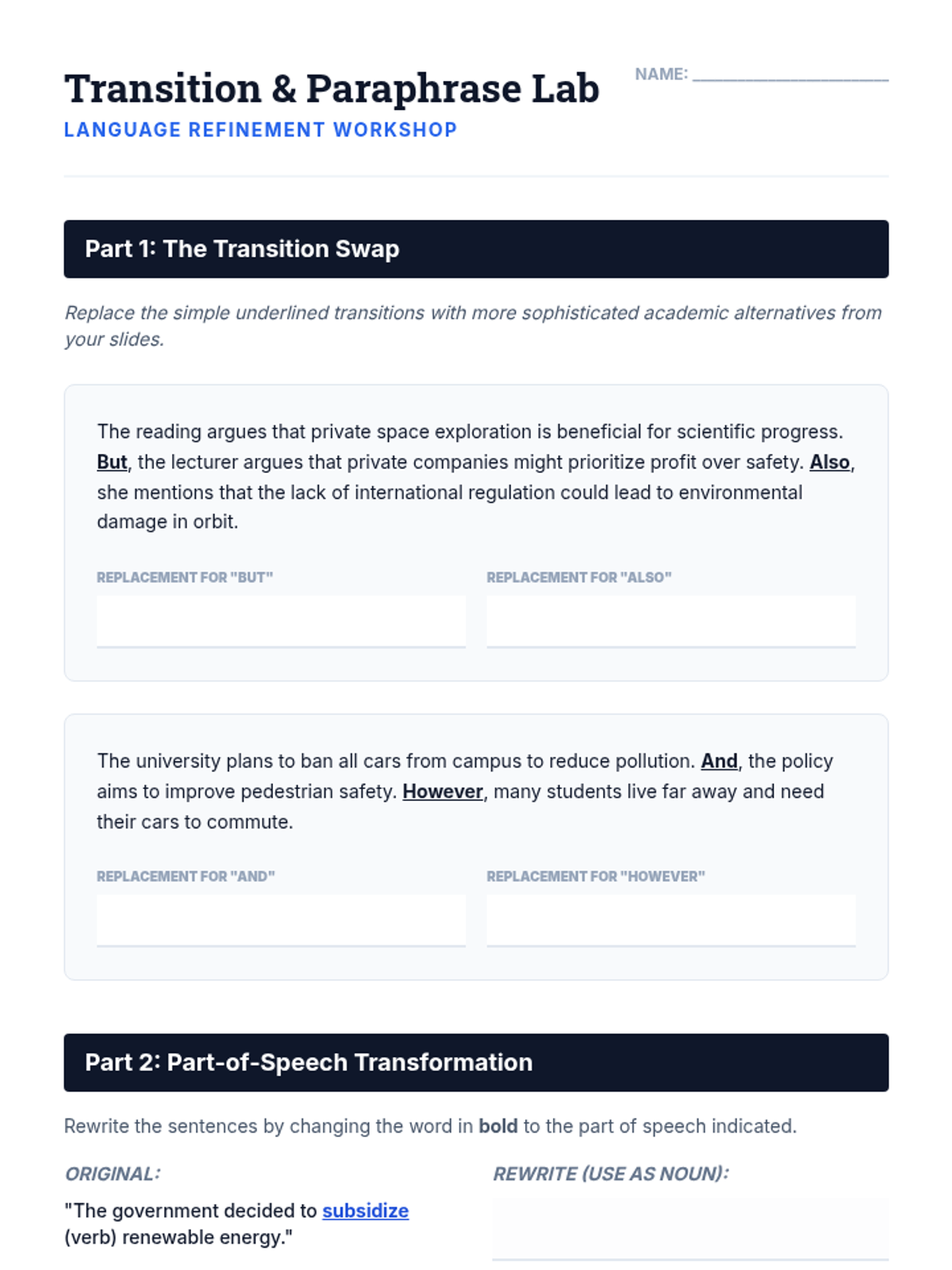
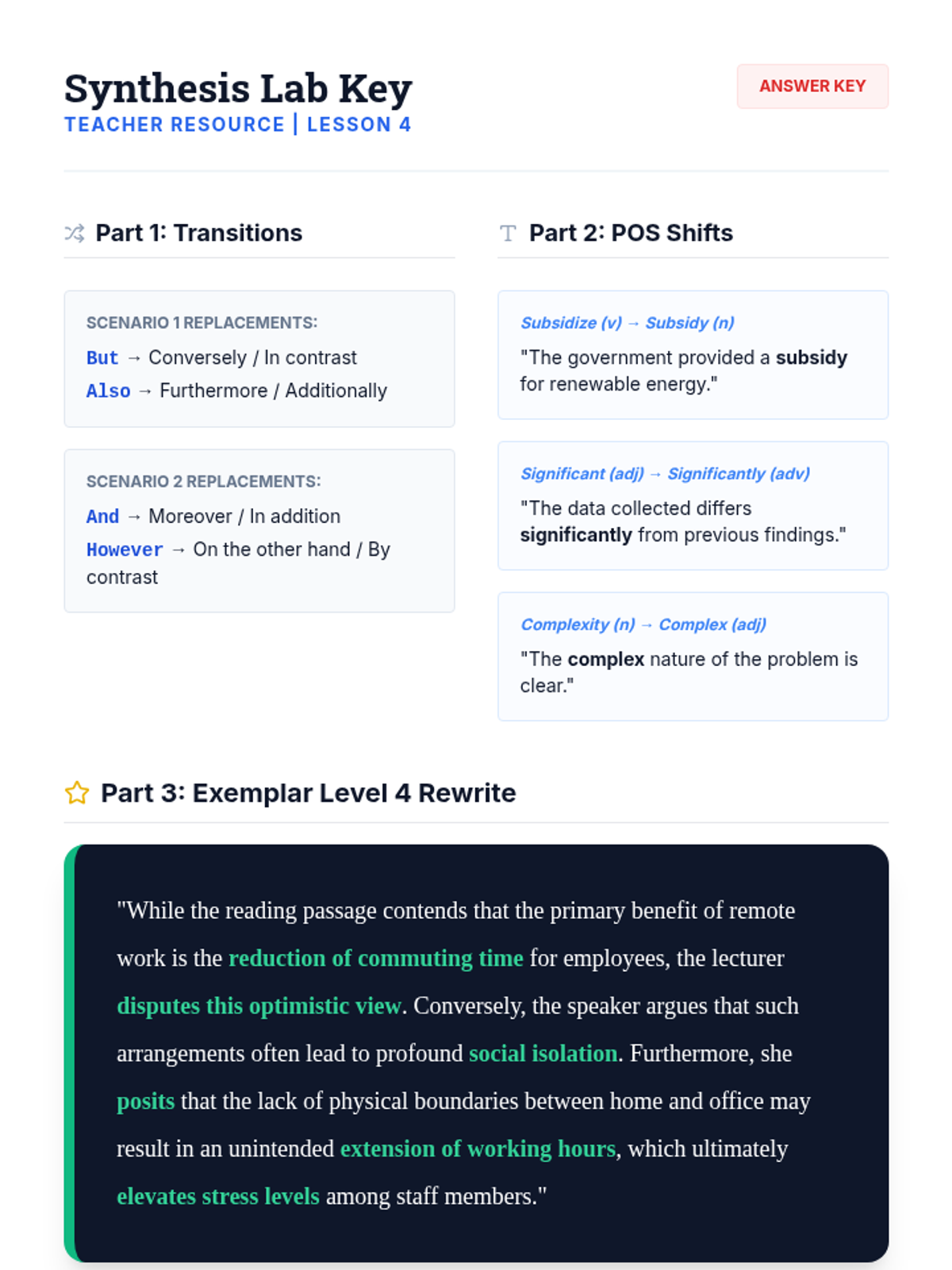
Covers transitions that signal contrast and addition, alongside paraphrasing techniques to avoid plagiarism and demonstrate vocabulary range.
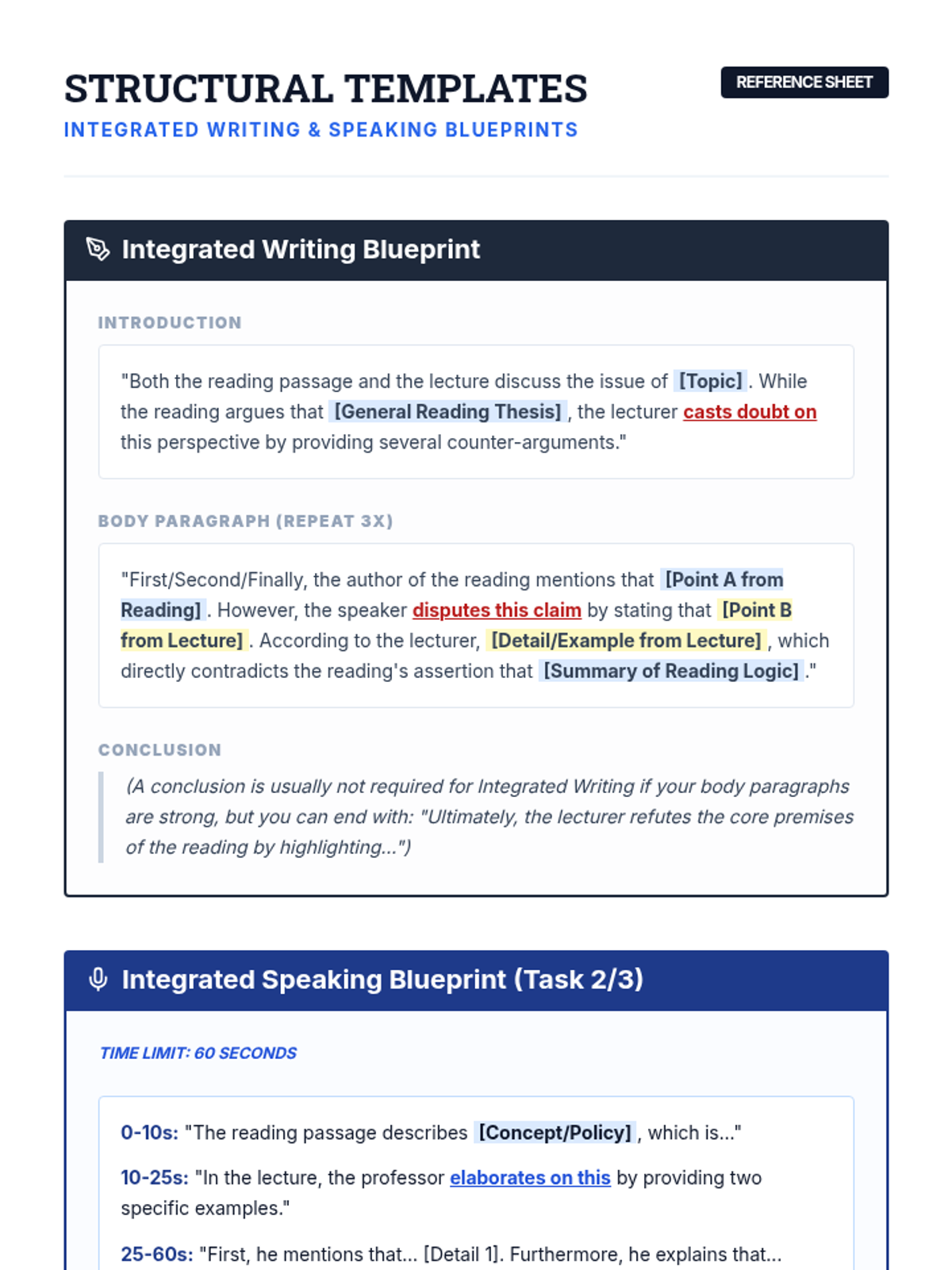
Students practice using structural templates for integrated tasks, emphasizing the importance of creating a solid skeleton plan before writing.
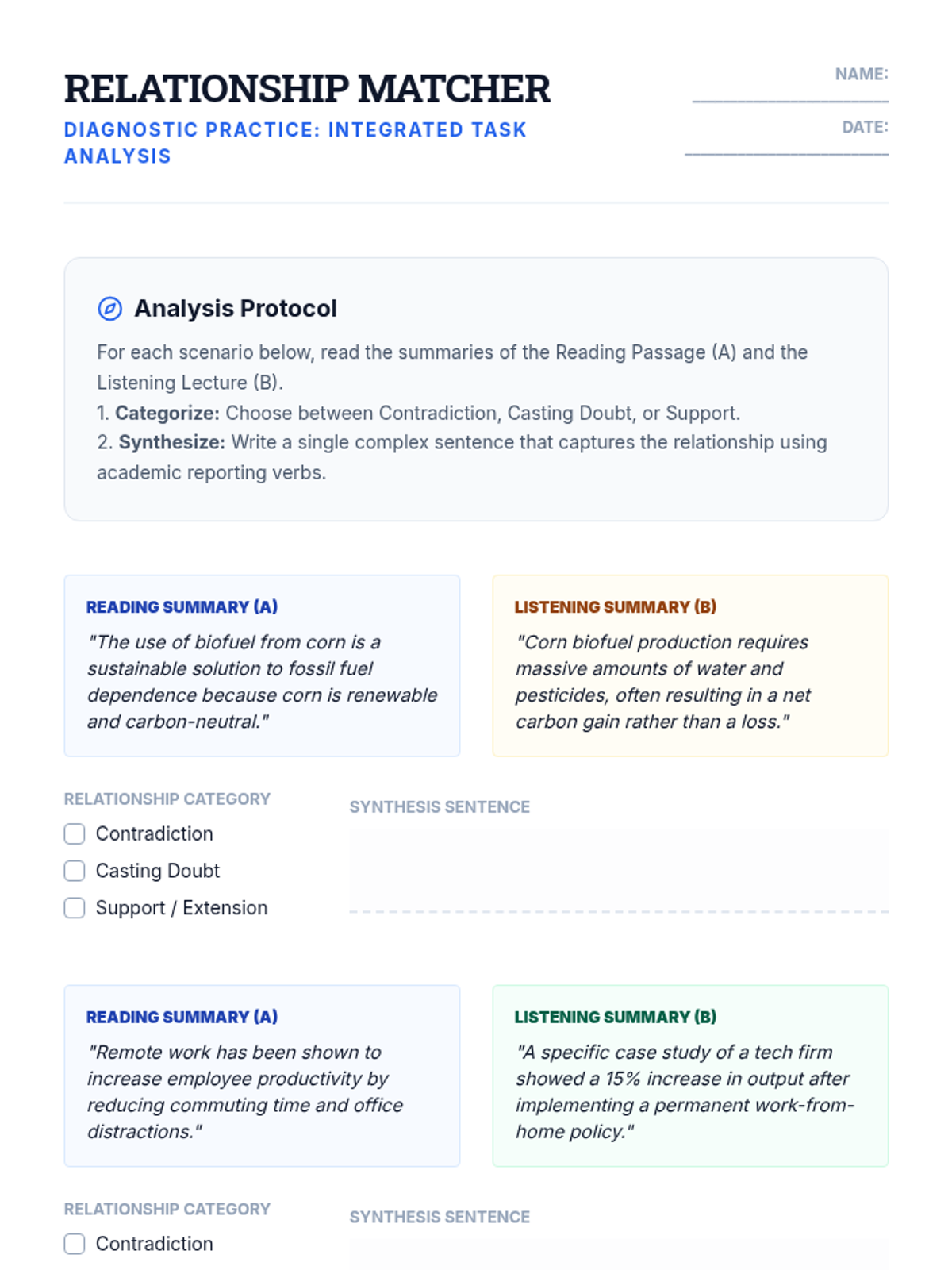
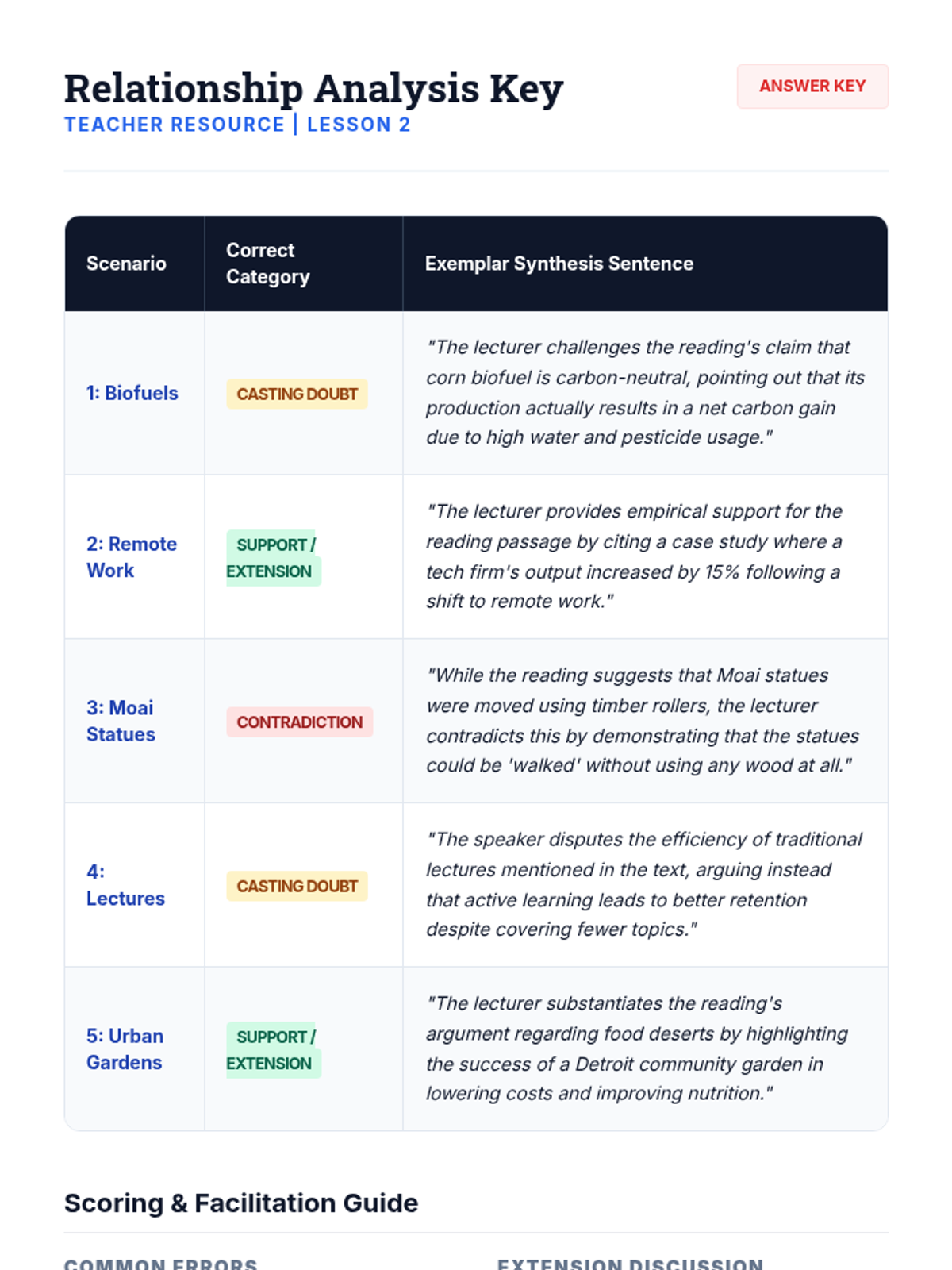
Focuses on identifying how a listening passage relates to a reading passage, specifically looking for contradiction, casting doubt, or providing examples.
Students develop a personalized shorthand system and learn to organize notes in a matrix format that visually represents the relationship between reading and listening inputs.
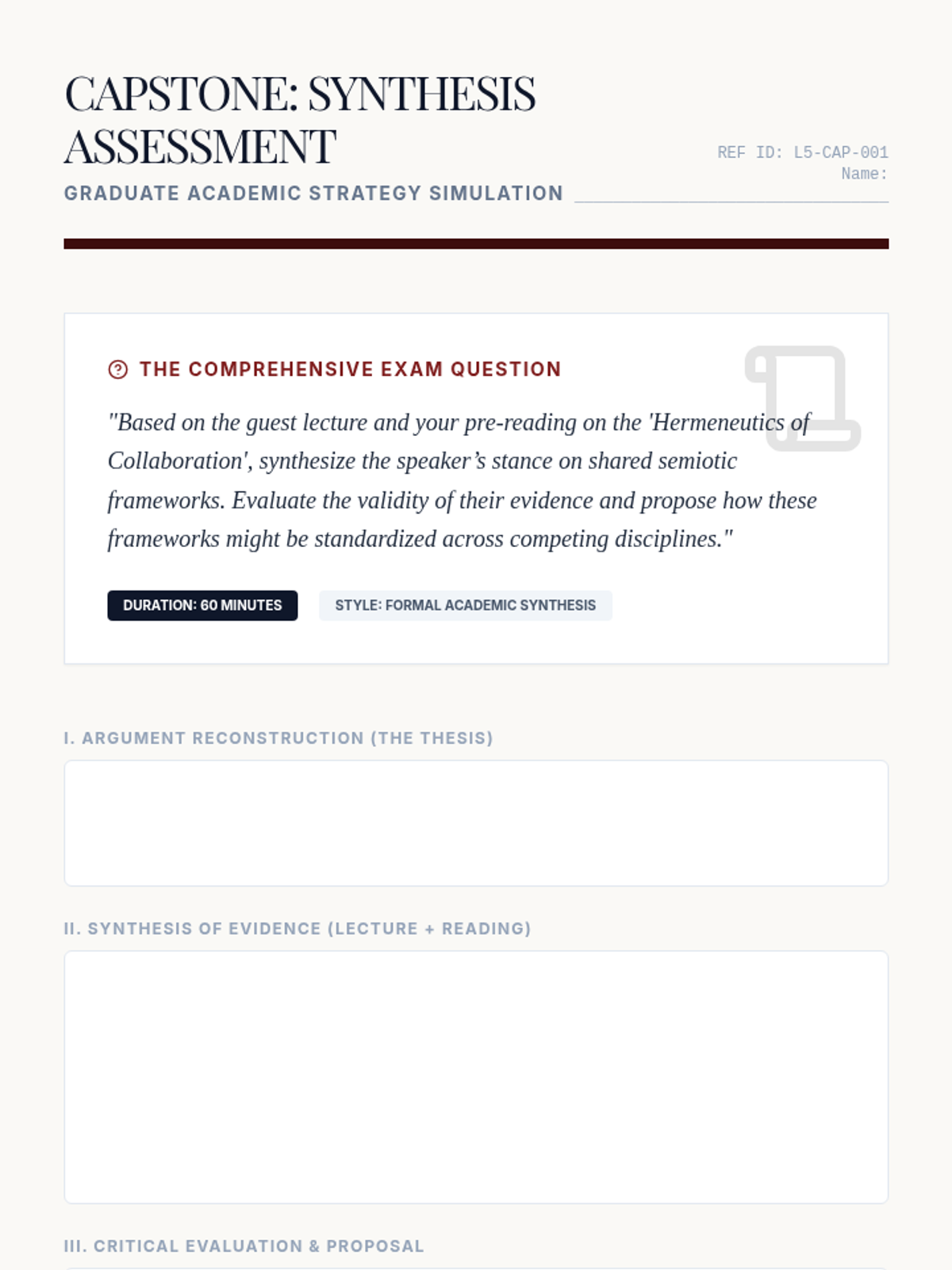
In this capstone, students attend a full-length lecture and produce a synthesized summary integrating notes with external readings. This simulates the authentic graduate task of reconstructing arguments for comprehensive examinations.
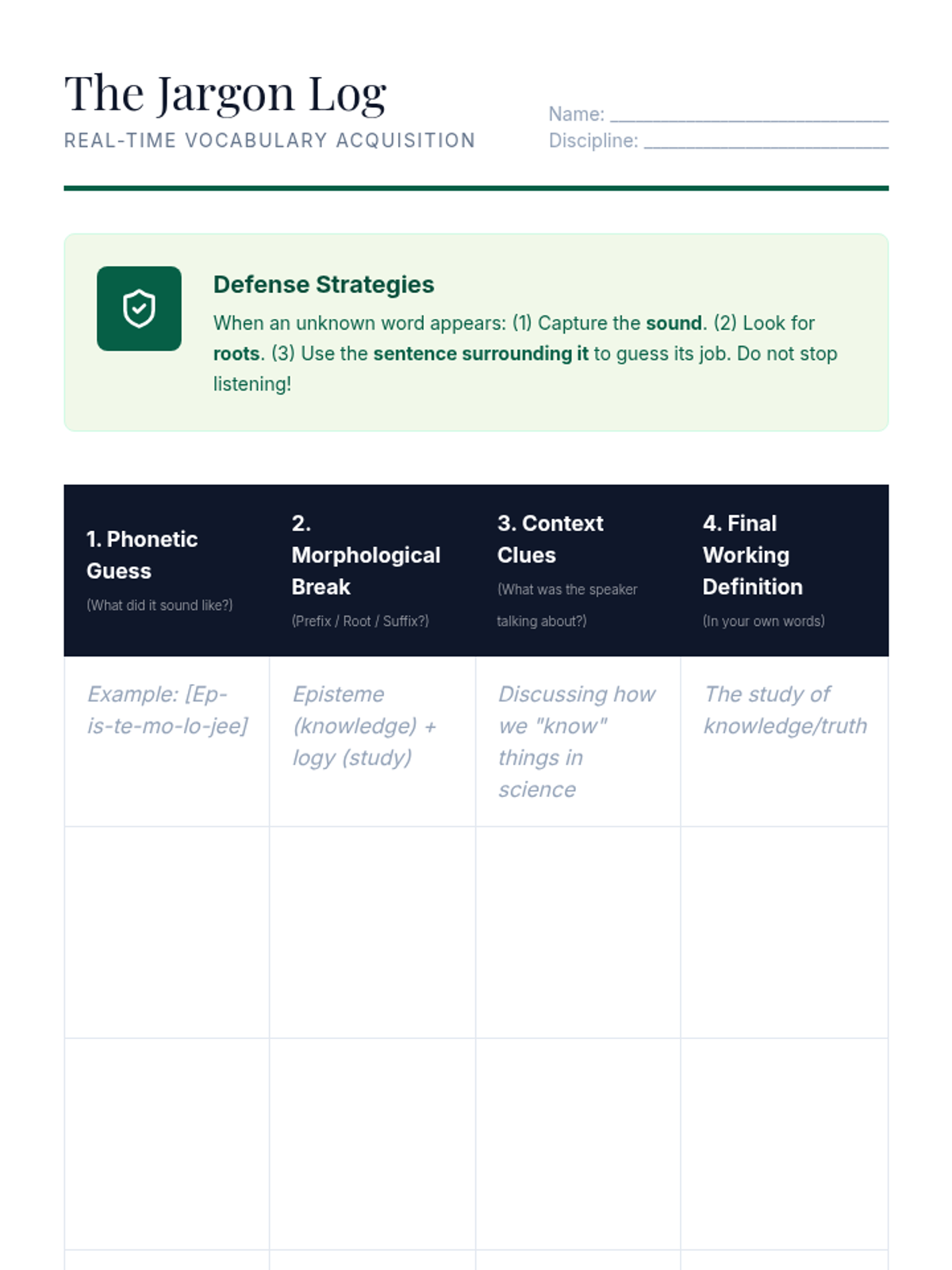
Students develop strategies for handling unfamiliar discipline-specific terminology in real-time. Techniques include phonetic approximation, context-based inference, and morphological analysis, culminating in the creation of an interdisciplinary glossary.
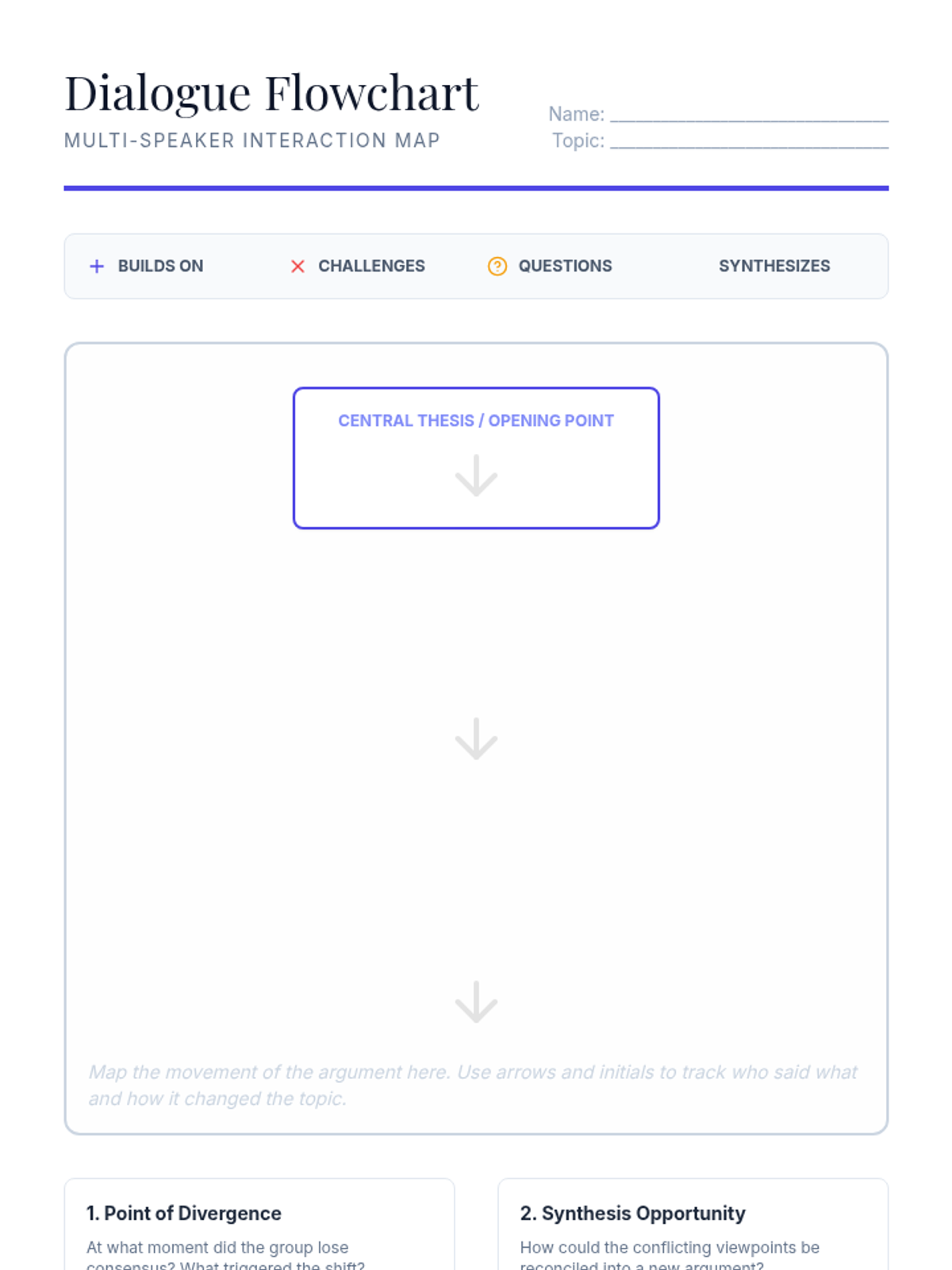
Focusing on multi-speaker interactions, students practice tracking seminar discussions and Q&A sessions. They learn to flowchart the evolution of ideas, identifying consensus, dissent, and how questions extend main lecture points.
Learners evaluate linear (Cornell) and non-linear (Concept Mapping) note-taking systems. Through a seminar simulation, they determine which methodologies best capture different types of academic information, from timelines to theoretical frameworks.
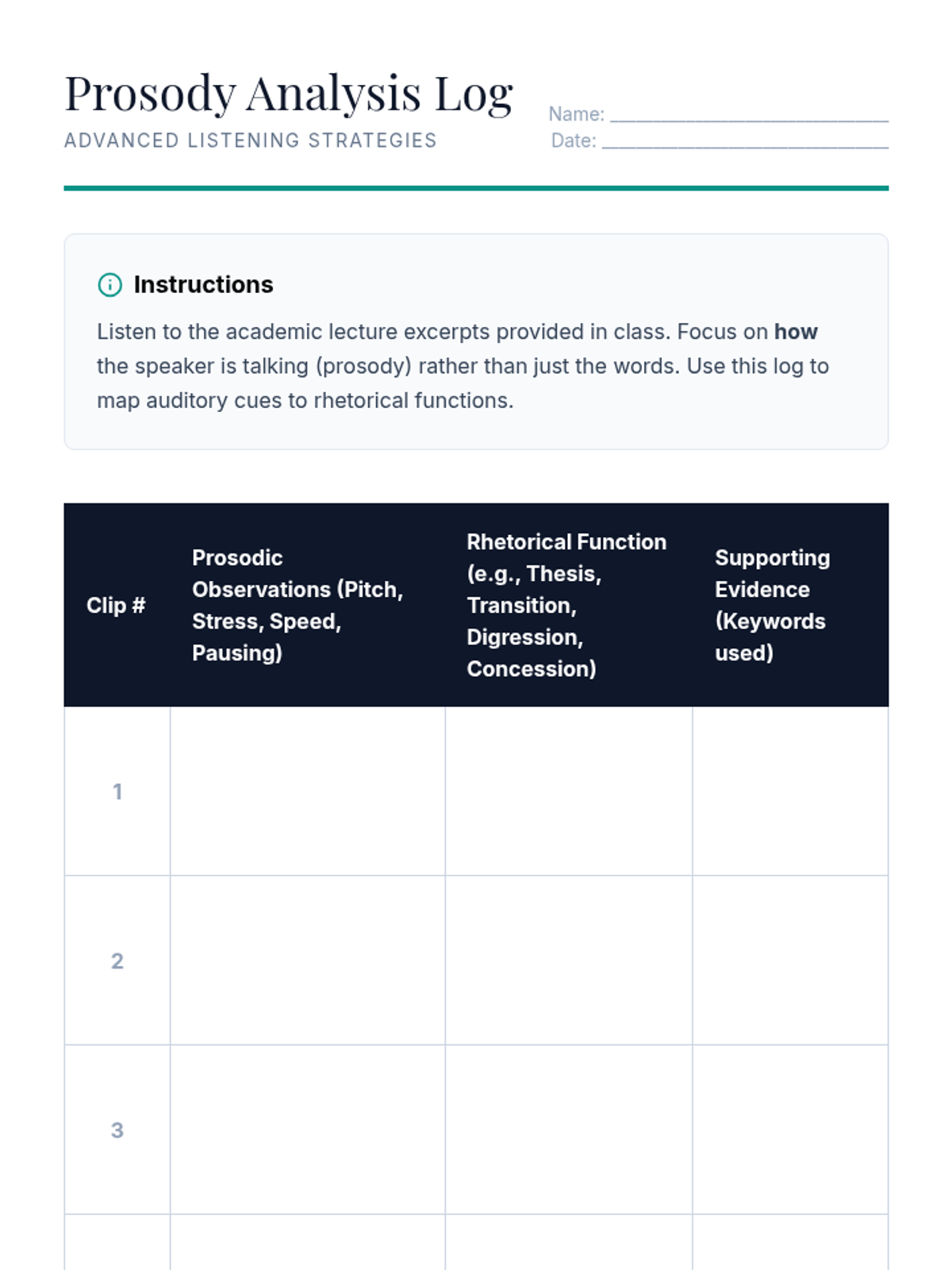
Students analyze academic lecture prosody—intonation, stress, and pausing—to identify rhetorical shifts. They learn to map auditory cues to functions like counter-arguments and conclusions, distinguishing core content from illustrative digressions.
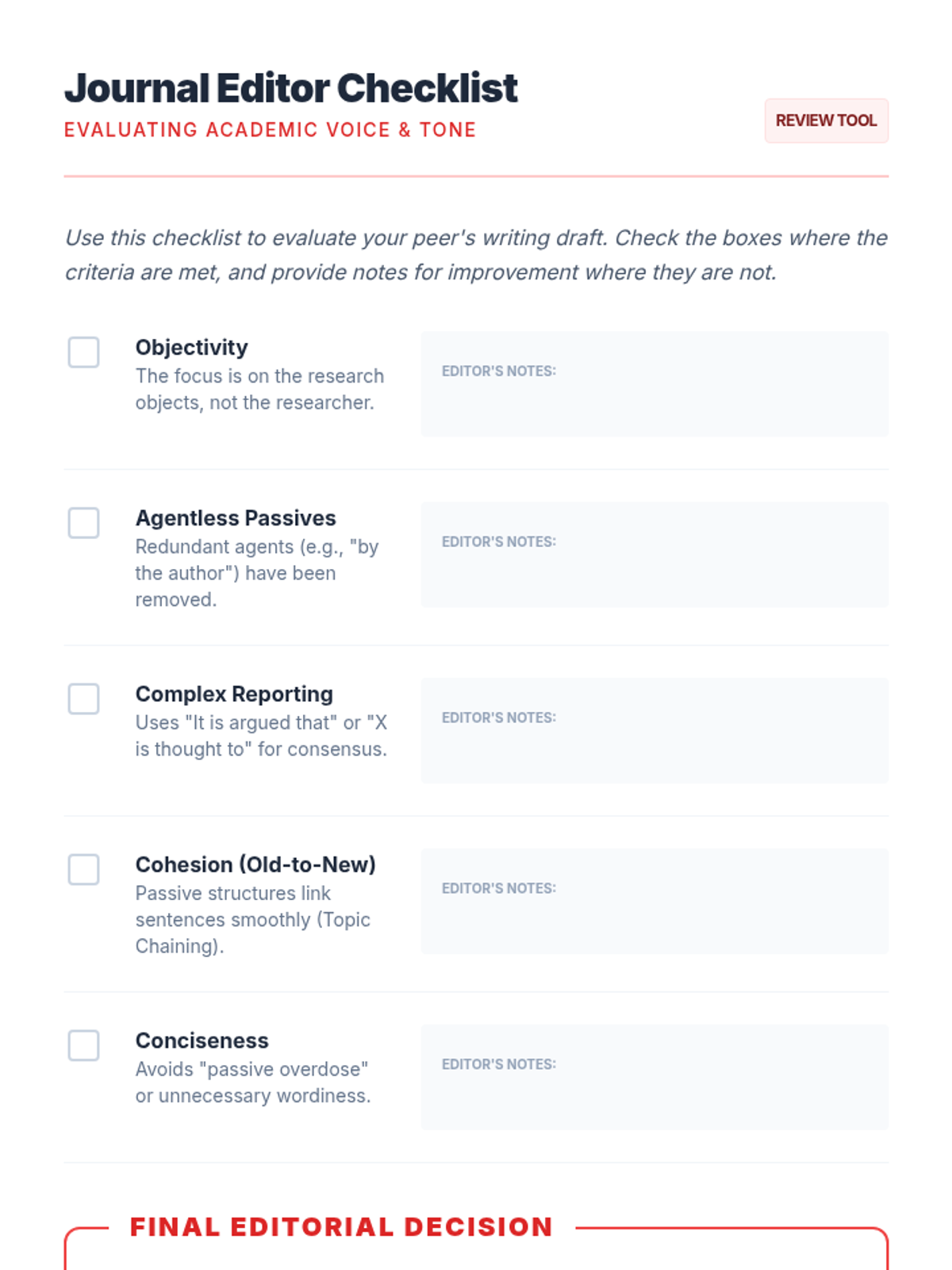
In this culminating session, students bring their own draft writing to apply the week's concepts. They utilize a checklist to identify overuse of the passive voice (wordiness) vs. appropriate use (objectivity). They provide feedback to peers on the 'scholarly sound' of their work.
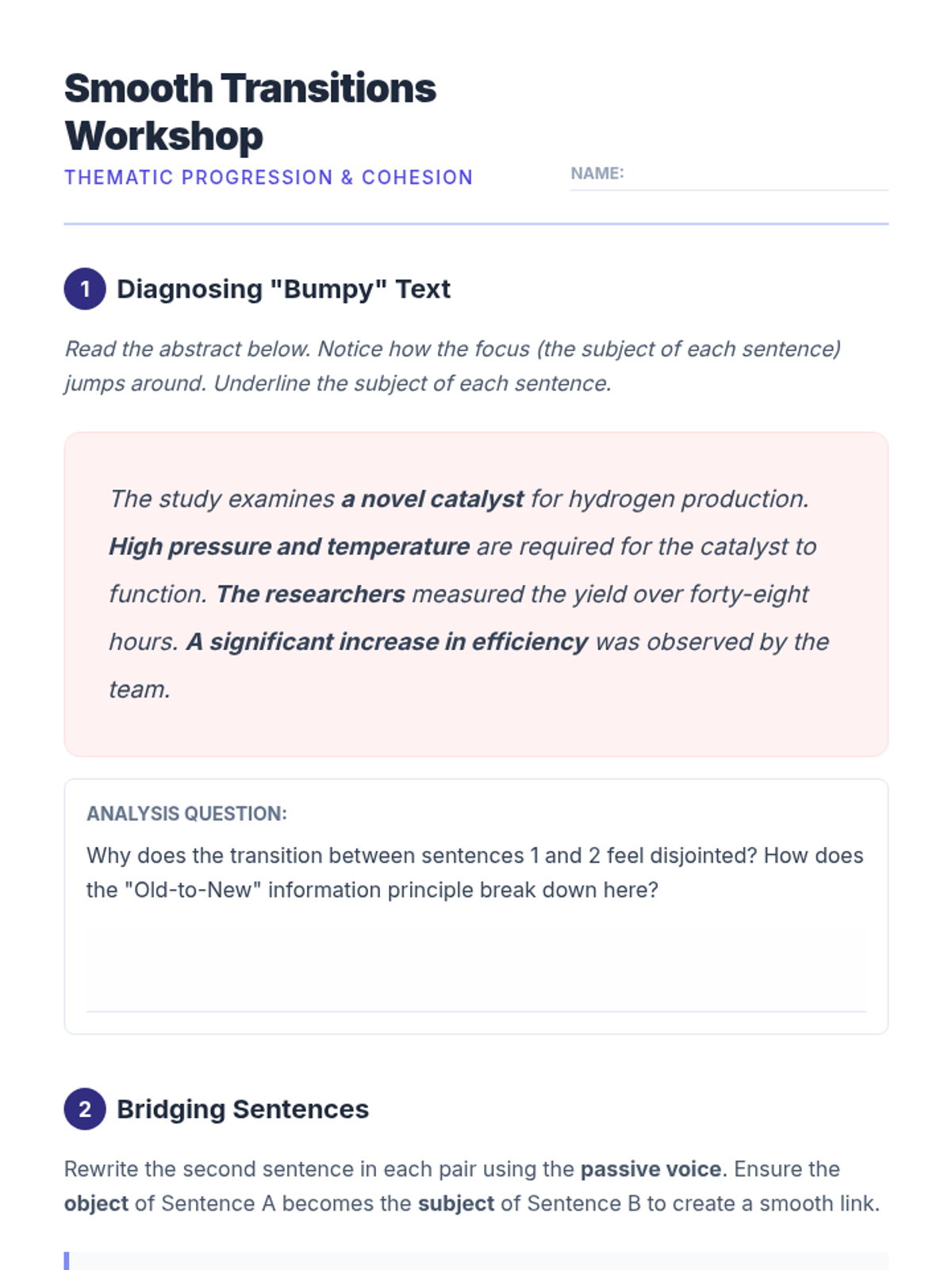
Students learn how to use the passive voice to maintain thematic progression (old information to new information) within a paragraph. They analyze texts to trace how the object of one sentence becomes the subject of the next.
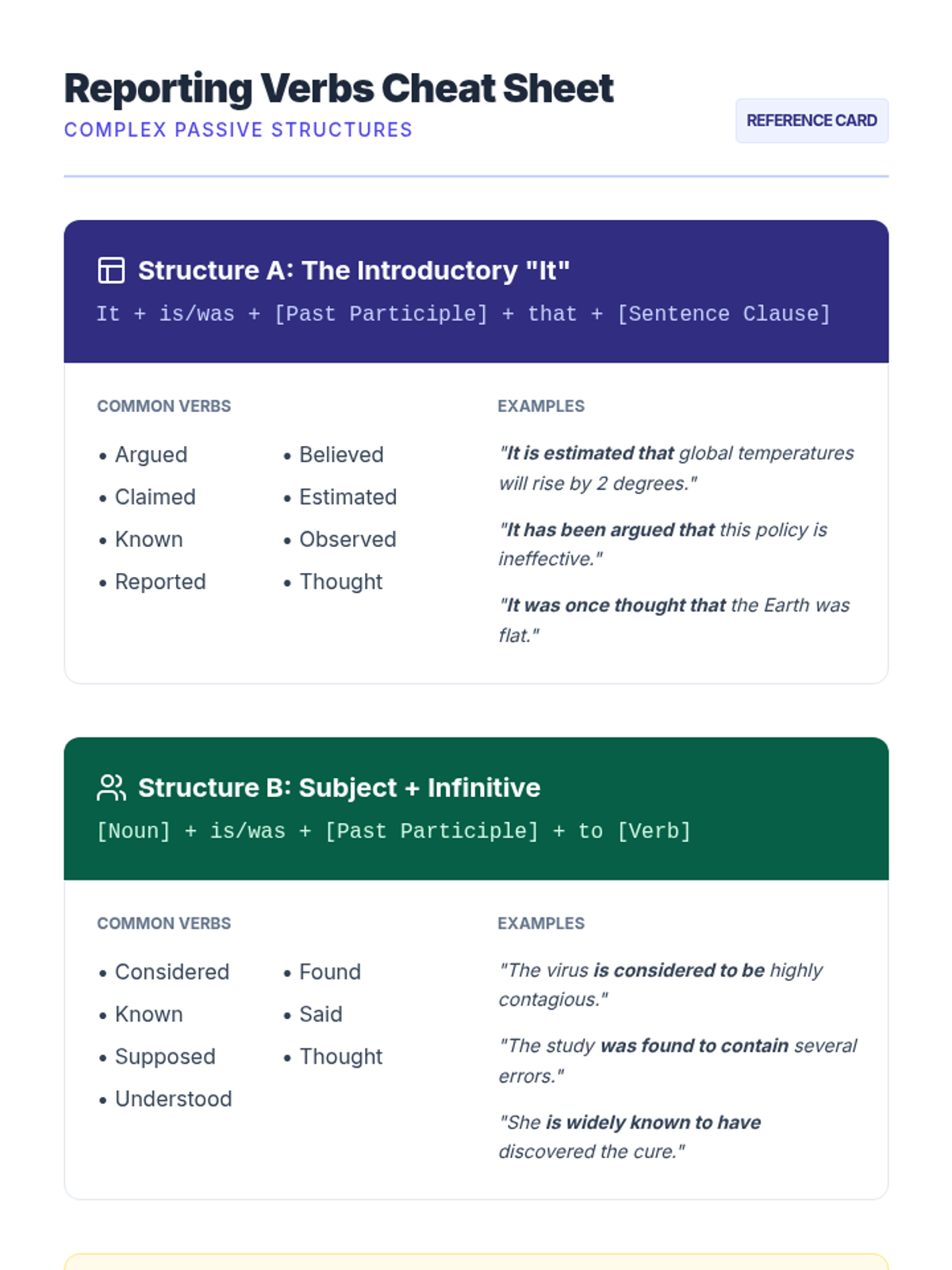
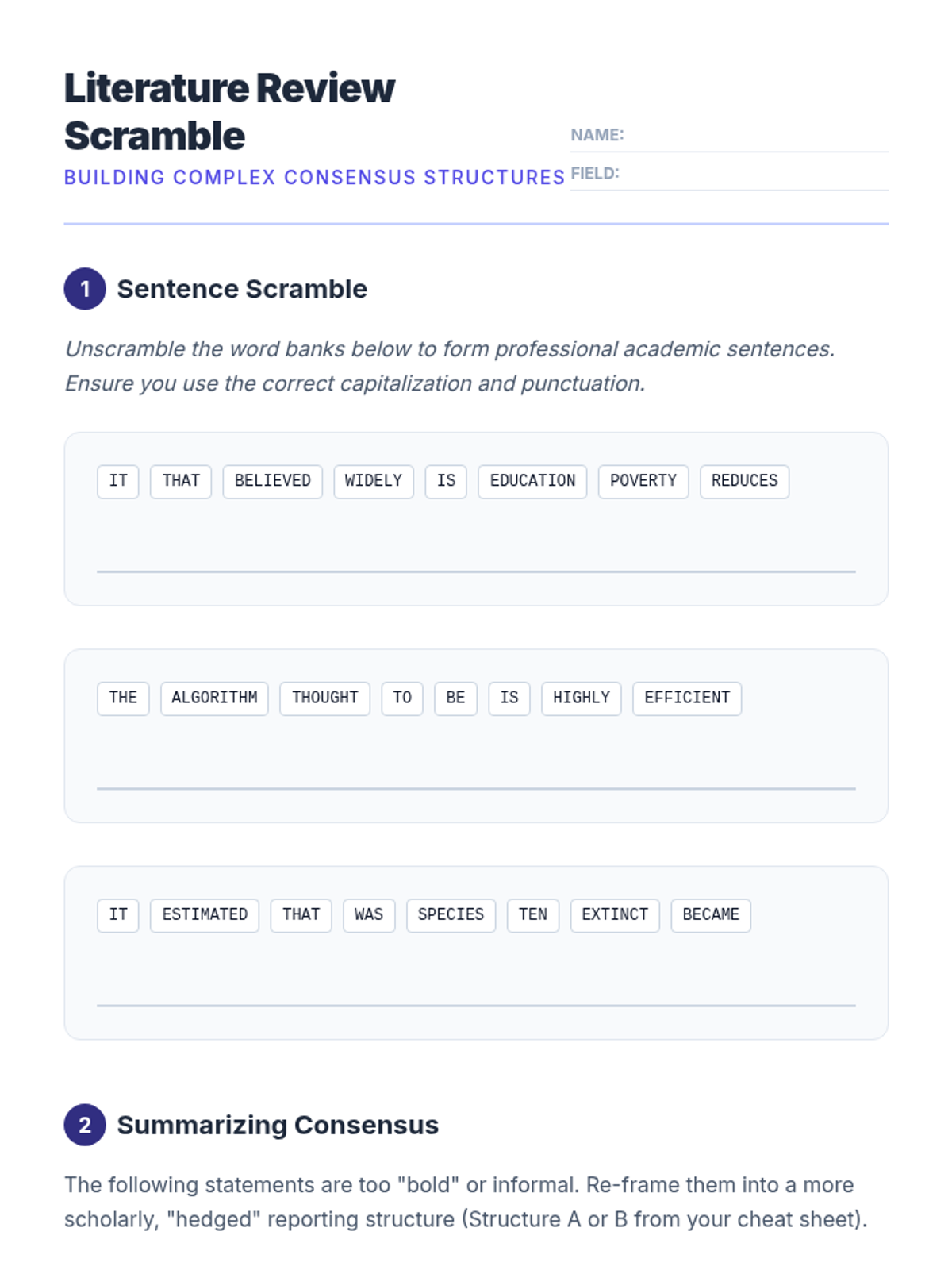
Students explore complex structures like 'It is argued that...' or 'X is considered to be...', often used in Literature Reviews. The lesson covers the grammar of introductory 'it' subjects and infinitive complements.
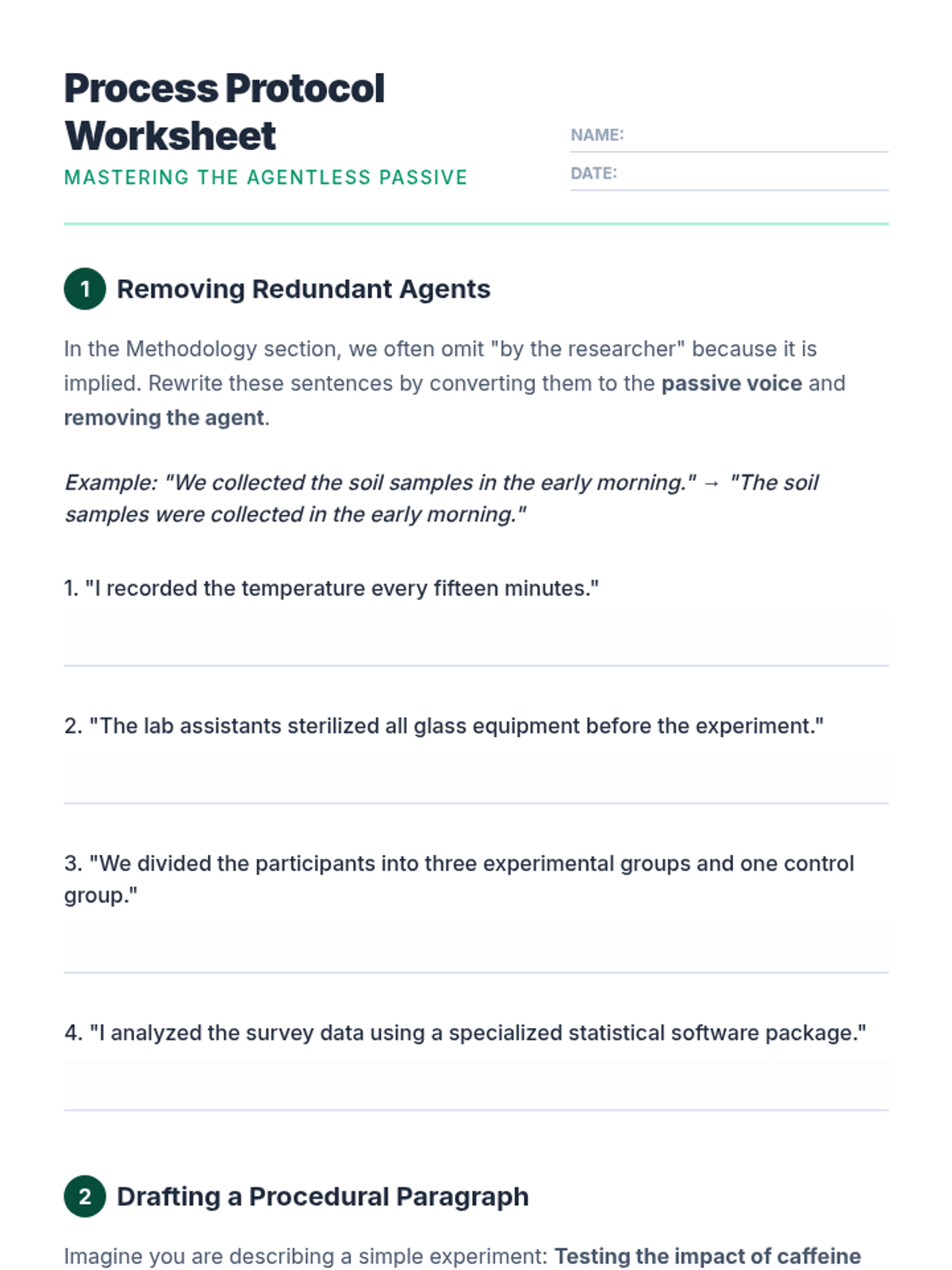
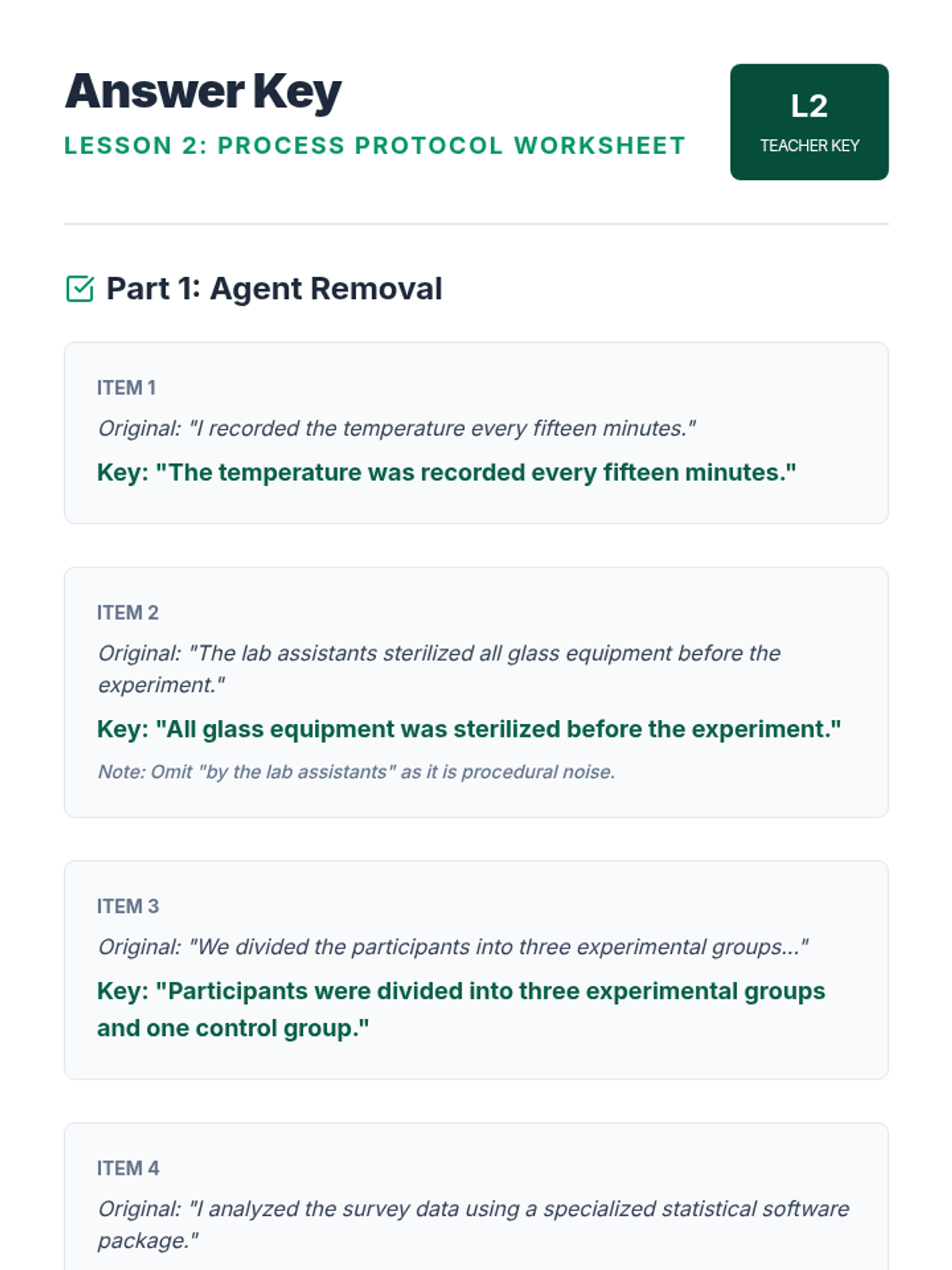
This lesson focuses on the 'agentless' passive, crucial for writing Methodology sections where the researcher's identity is secondary to the process. Students practice removing the 'by phrase' effectively and maintaining flow.
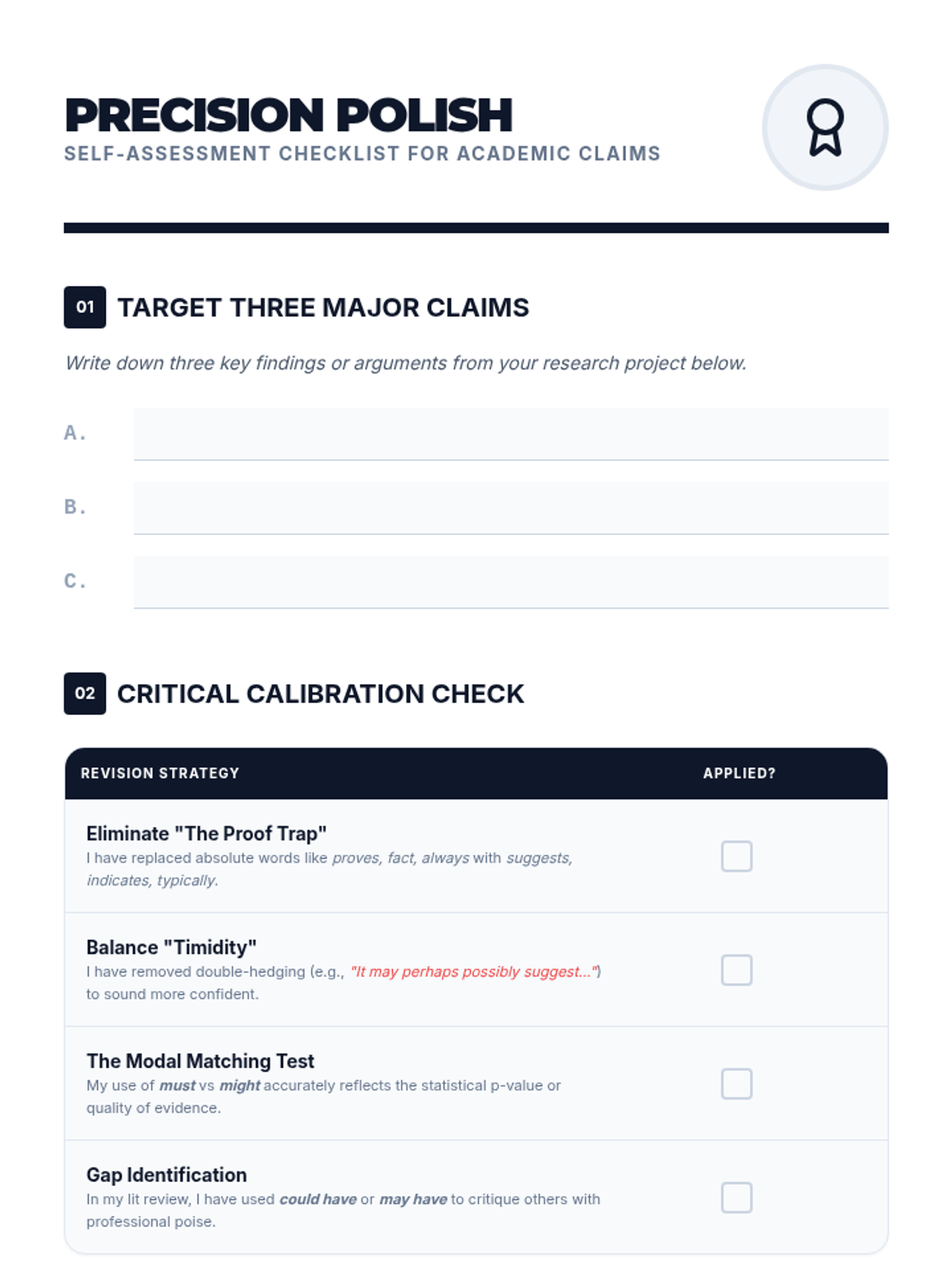
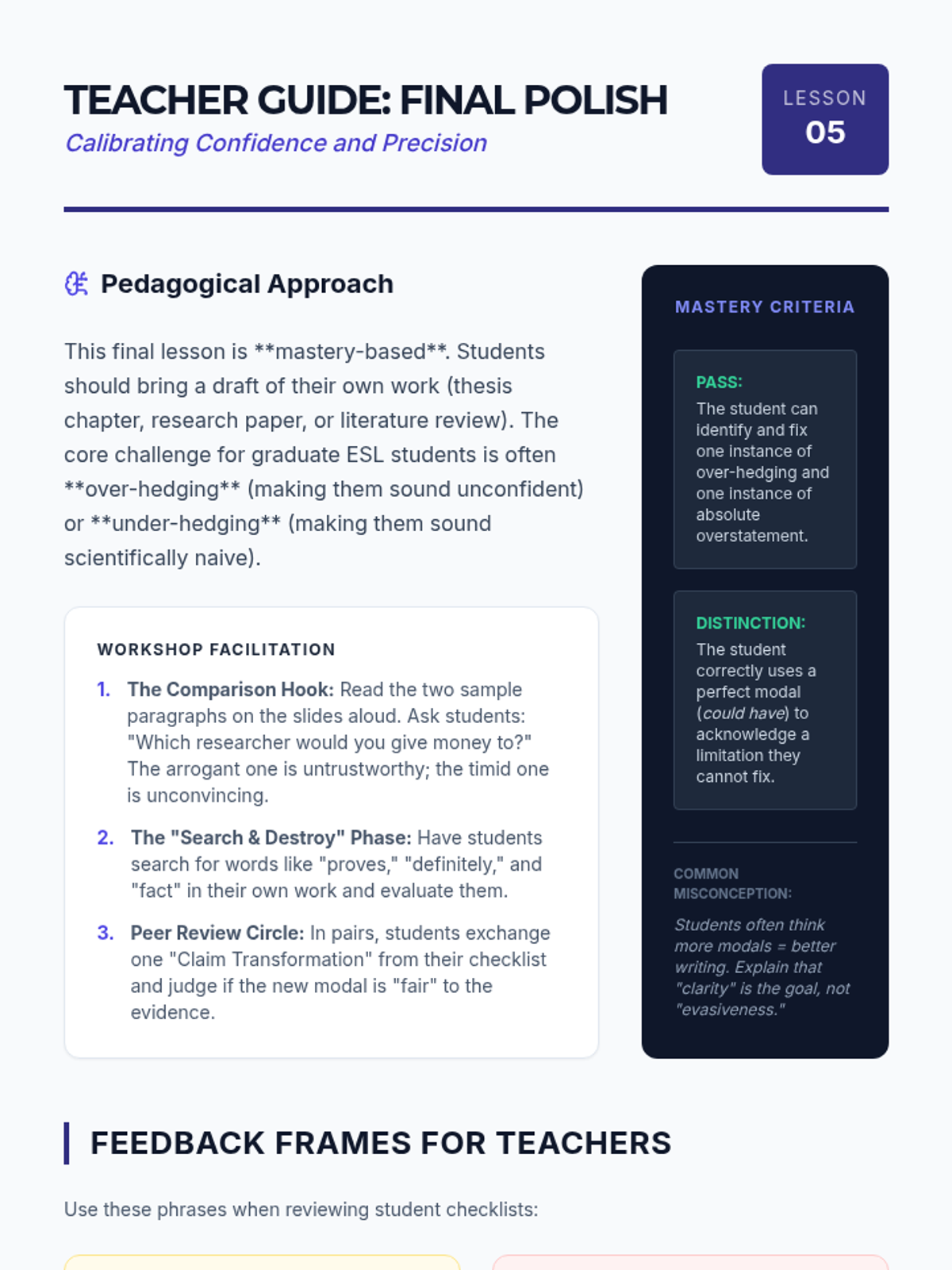
In this final workshop, students apply their skills to their own writing. They calibrate the strength of their claims, ensuring their language accurately reflects the strength of their evidence.
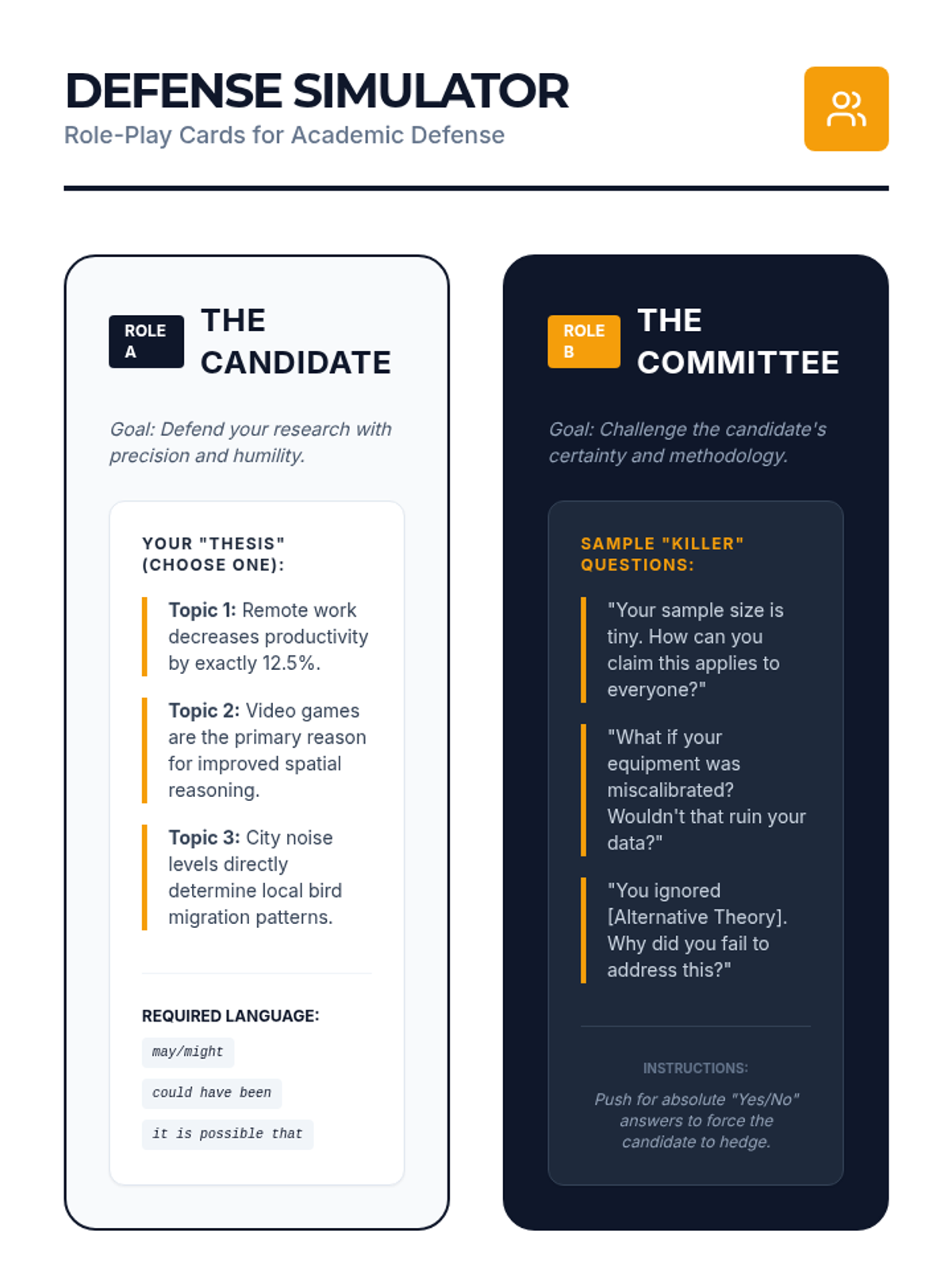
A simulation-based lesson where students practice oral defense techniques. They use hedging and modals to handle challenging questions from a mock committee with poise and academic rigor.
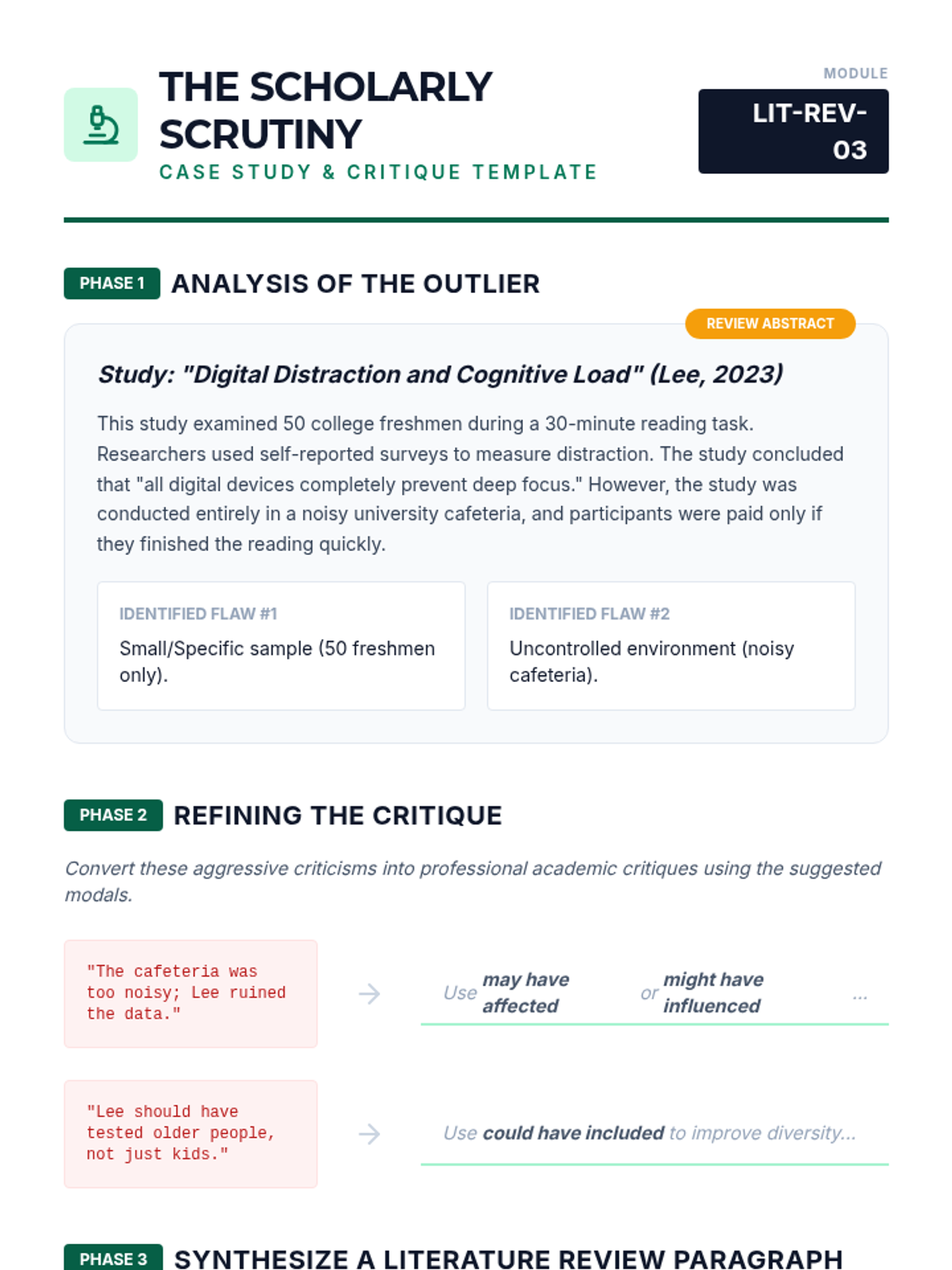
Students analyze how scholars use modals to identify research gaps and critique existing literature. They practice writing constructive critiques using perfect modals like 'could have' and 'might have.'
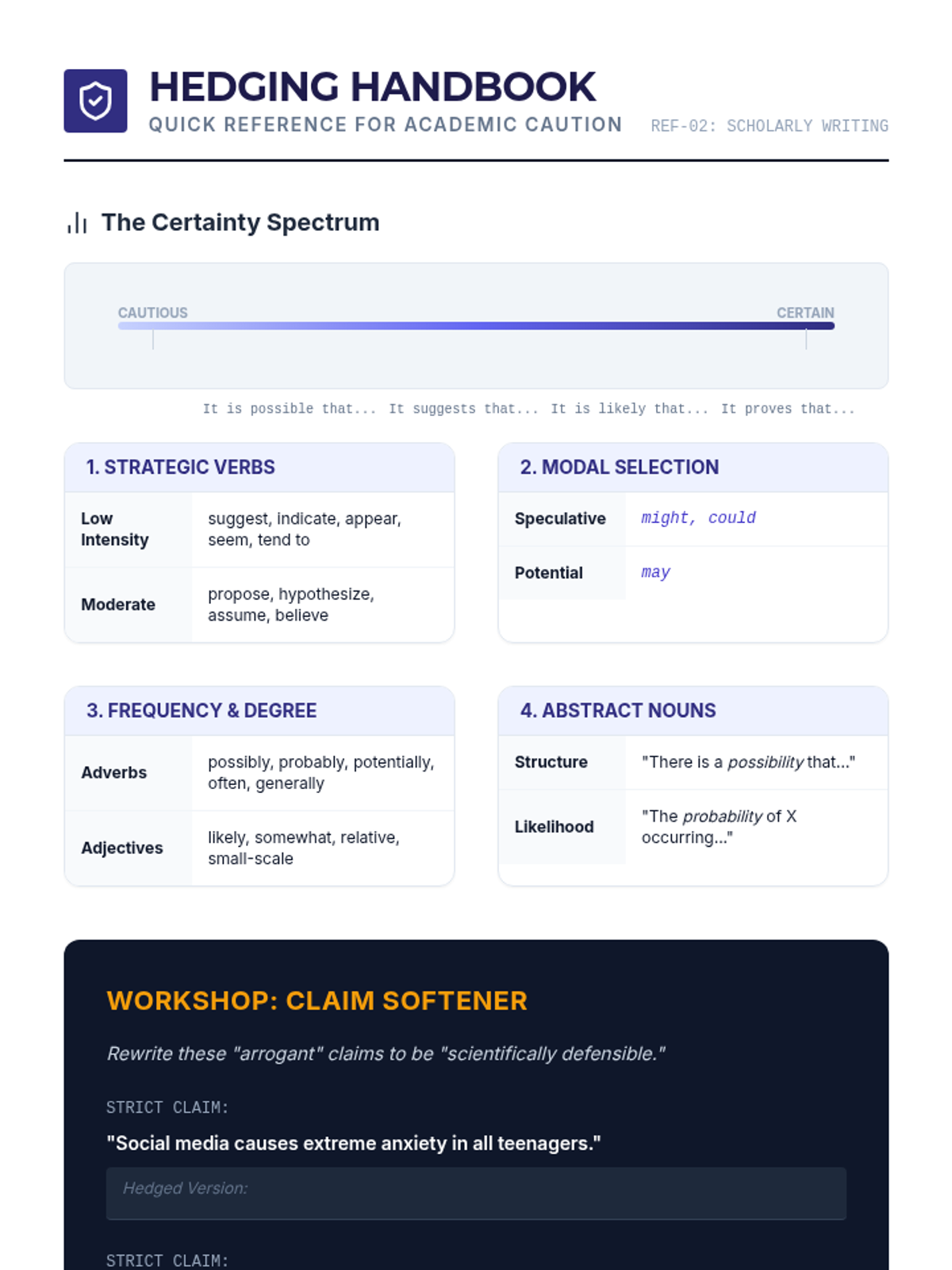
This lesson focuses on 'hedging'—the academic practice of using cautious language to avoid overstatement. Students learn to soften claims using modals and lexical verbs like 'suggest' and 'indicate.'
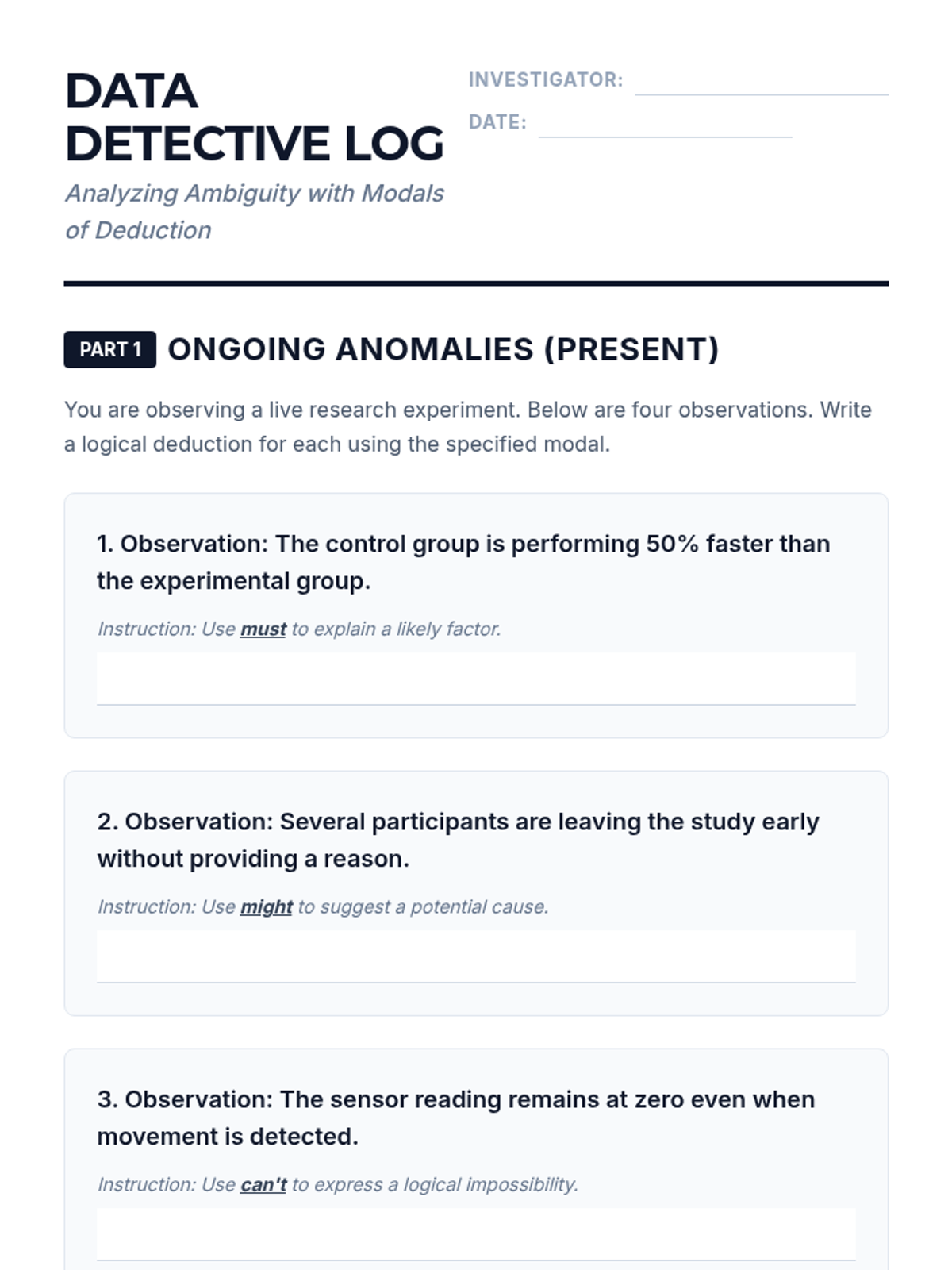
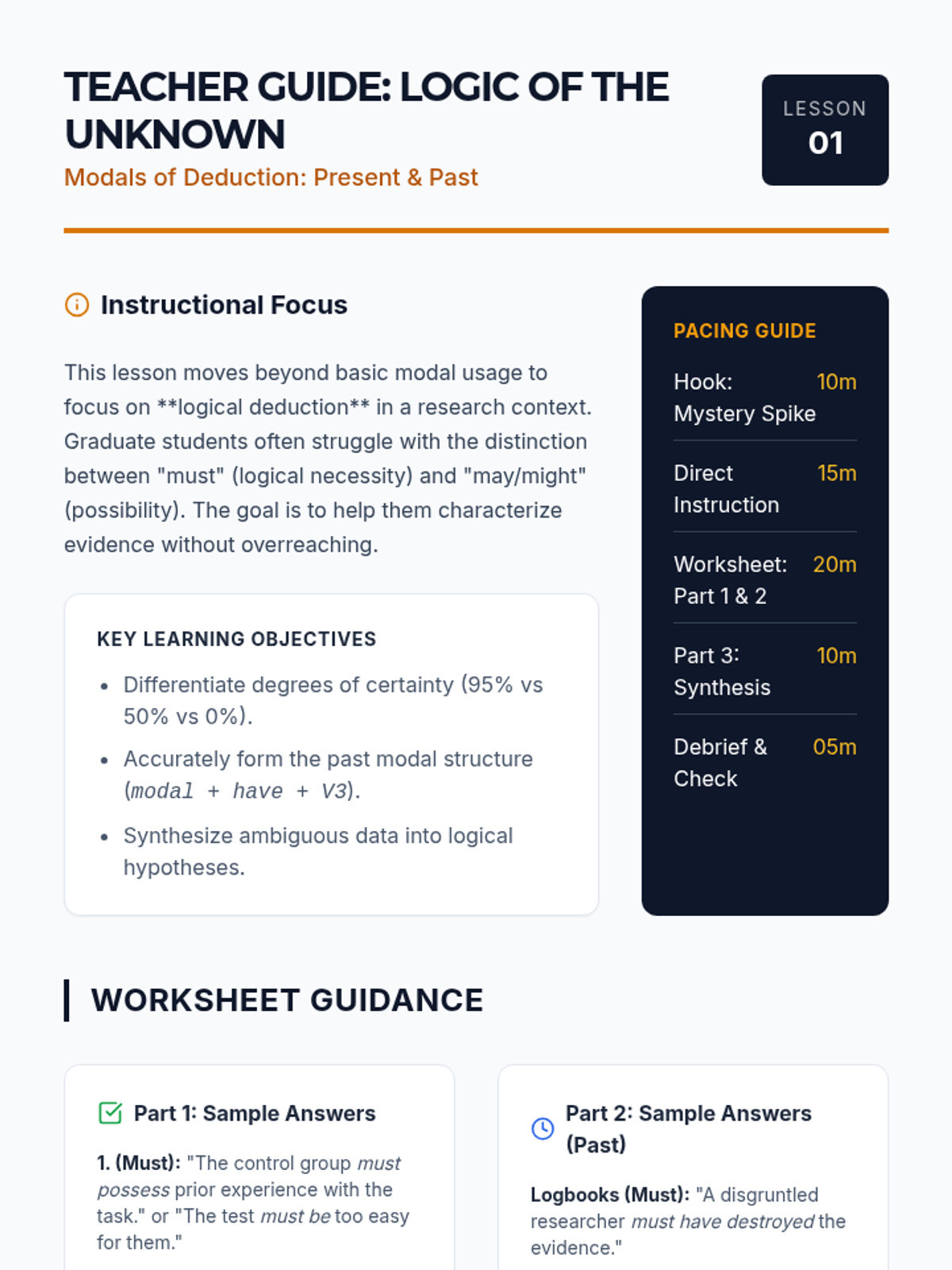
Students explore modals used for logical assumptions in present and past contexts. Through a 'data detective' simulation, they practice using 'must,' 'might,' and 'could' to interpret ambiguous research findings.
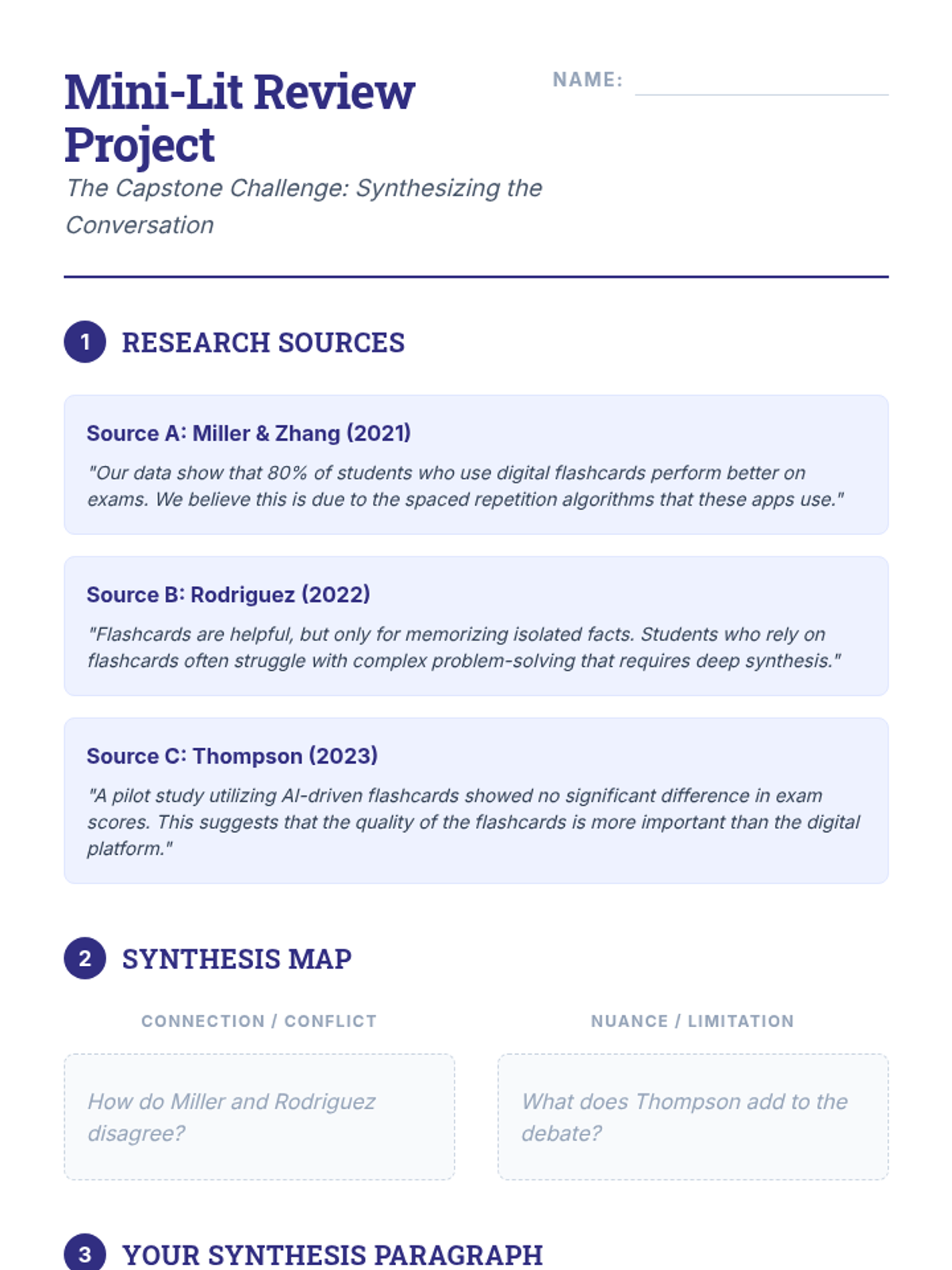
A capstone workshop where students synthesize multiple sources into a coherent paragraph using the skills learned.
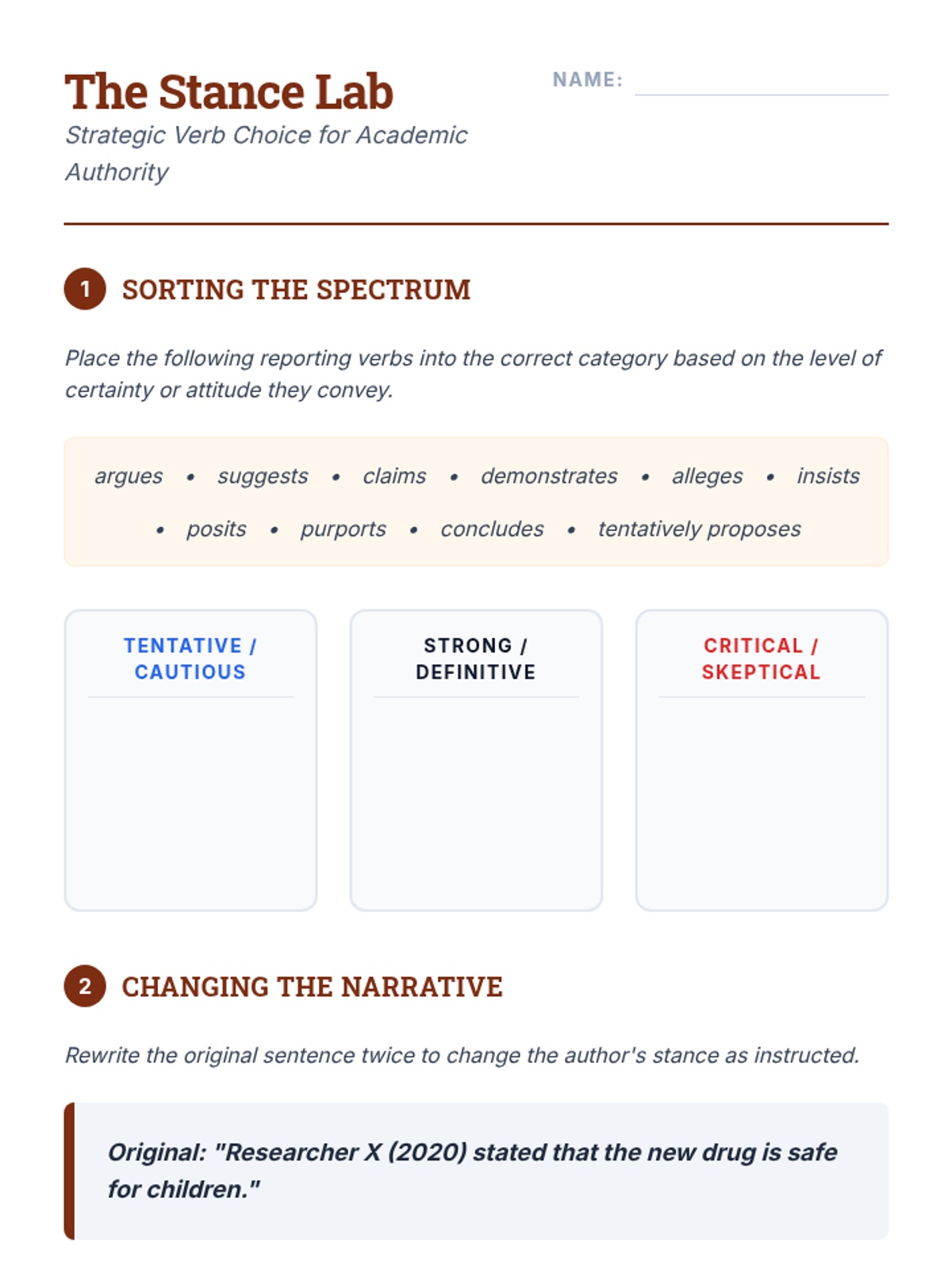
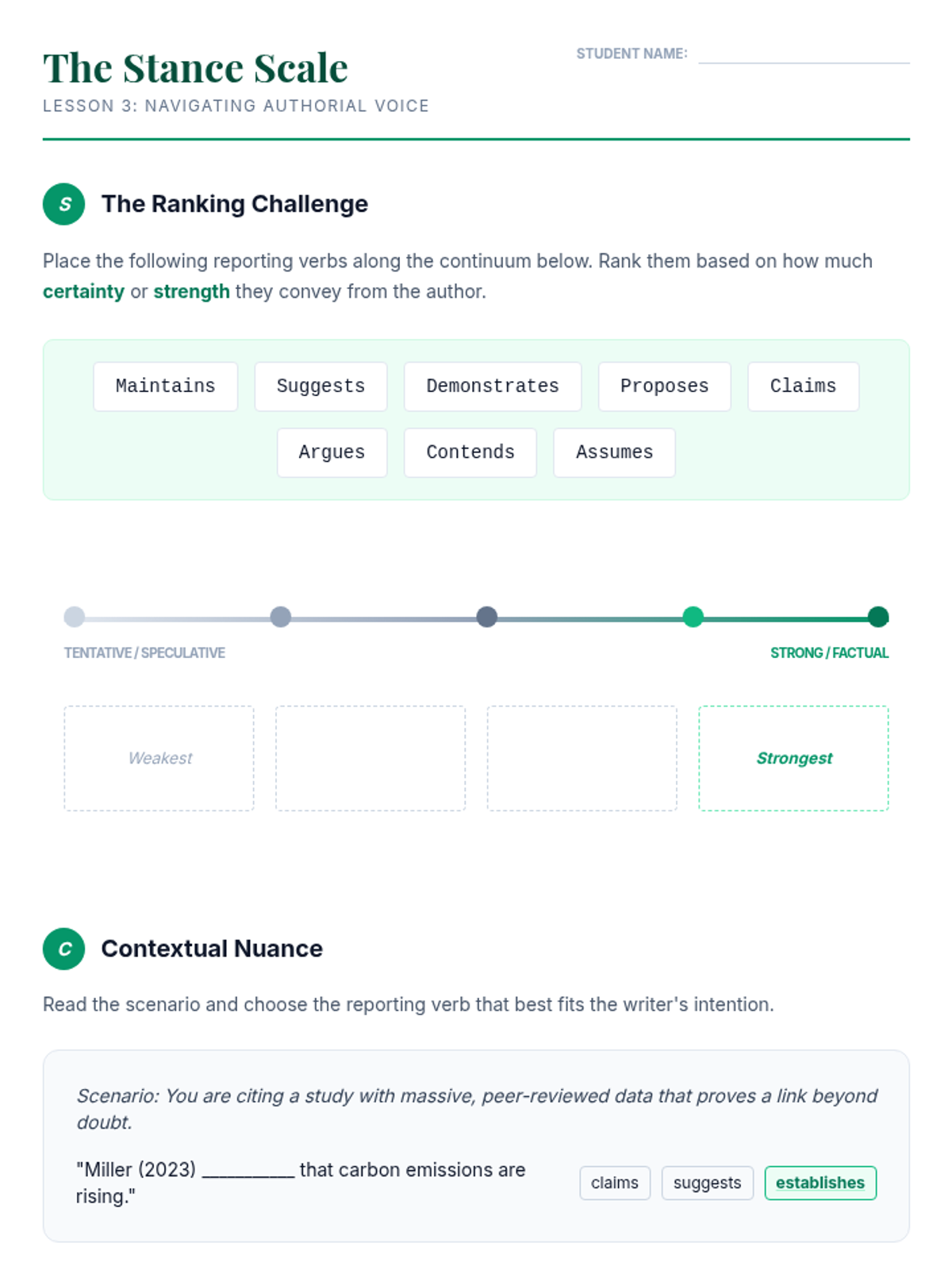
Explores the nuance of reporting verbs and how they signal an author's stance on research findings.
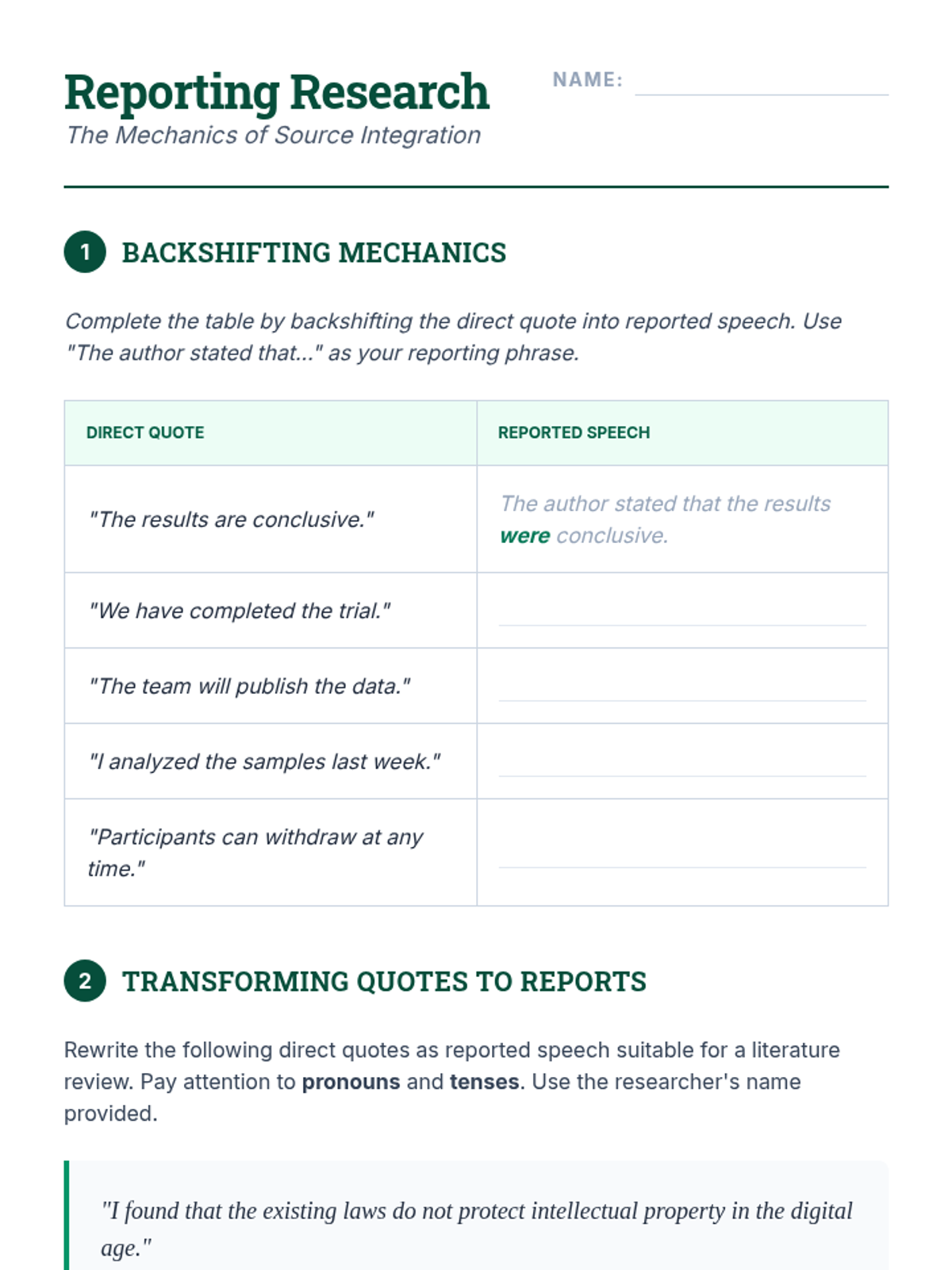
Covers the mechanics of reported speech and backshifting for integrating research quotes into literature reviews.
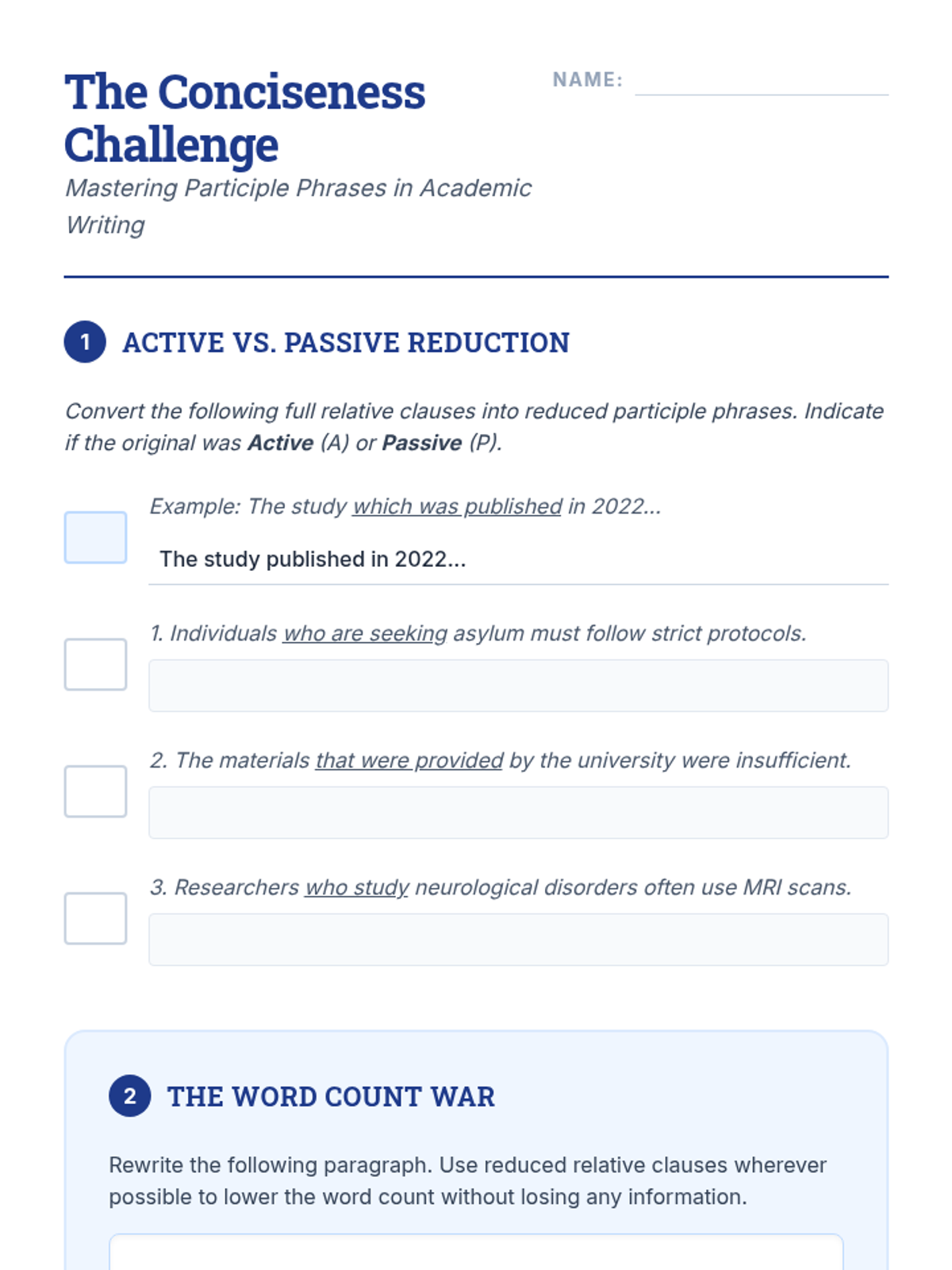
Focuses on condensing academic writing by reducing full relative clauses to participle phrases.
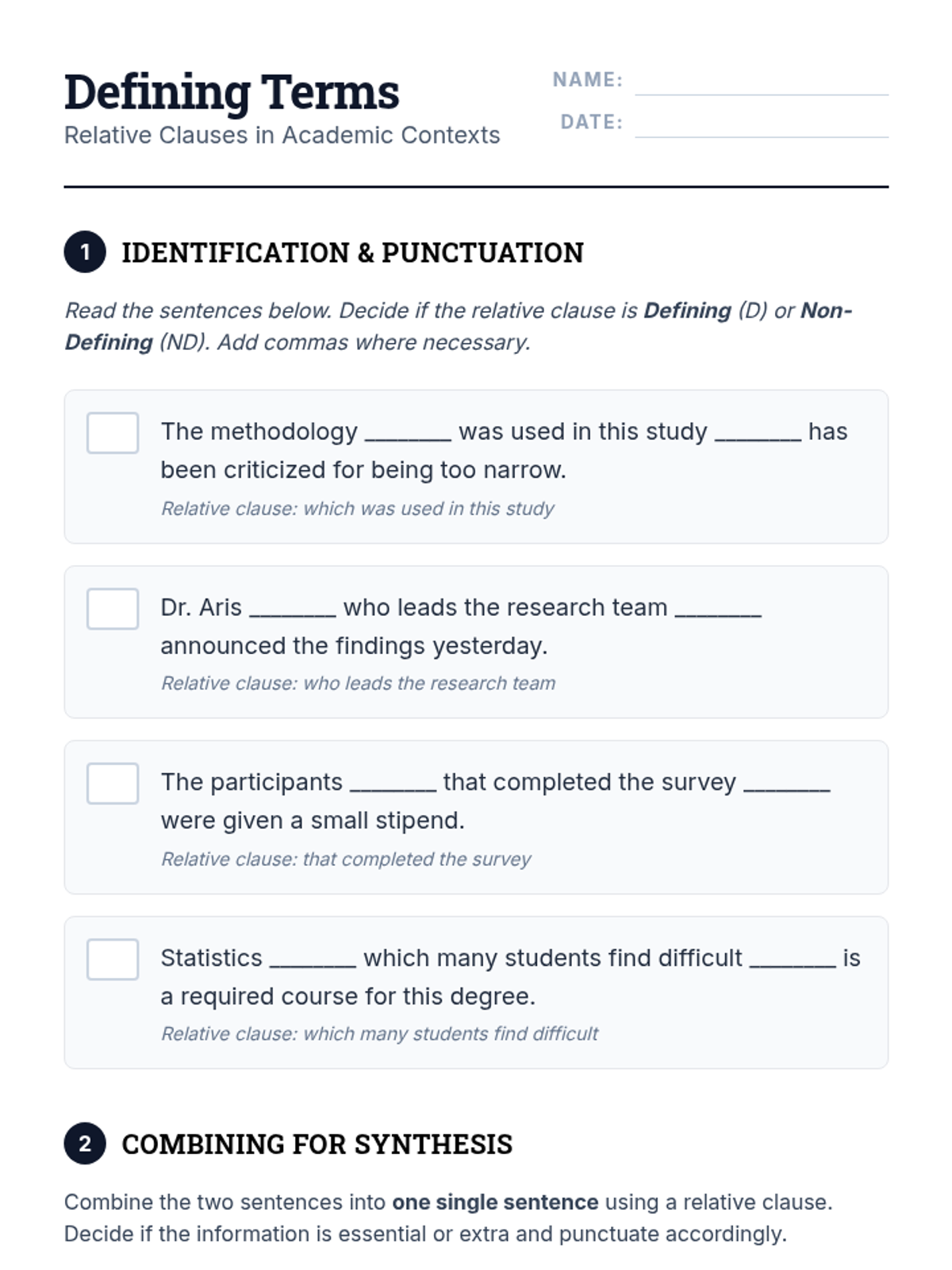
Students distinguish between essential and non-essential relative clauses, focusing on punctuation and academic definitions.
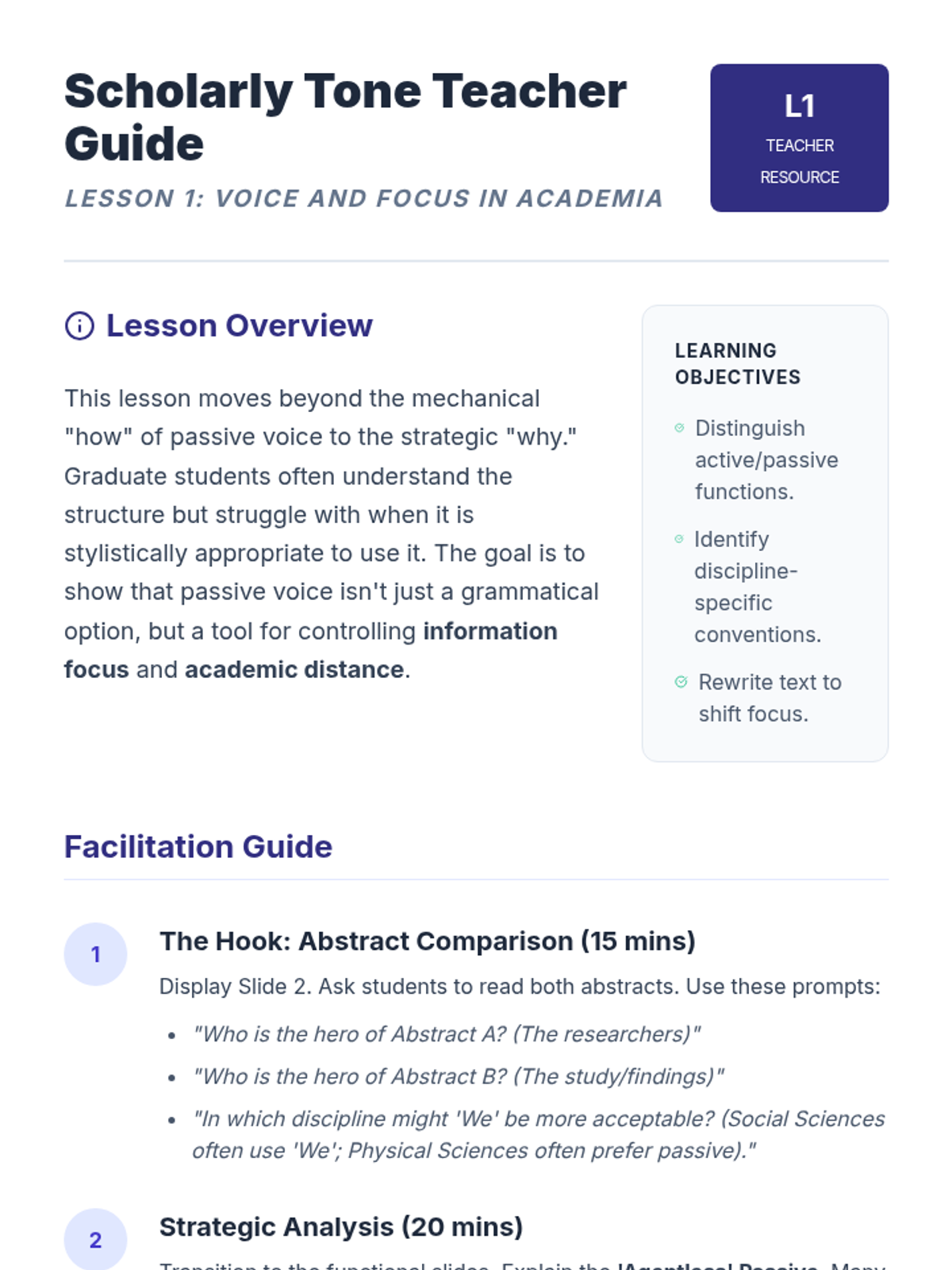
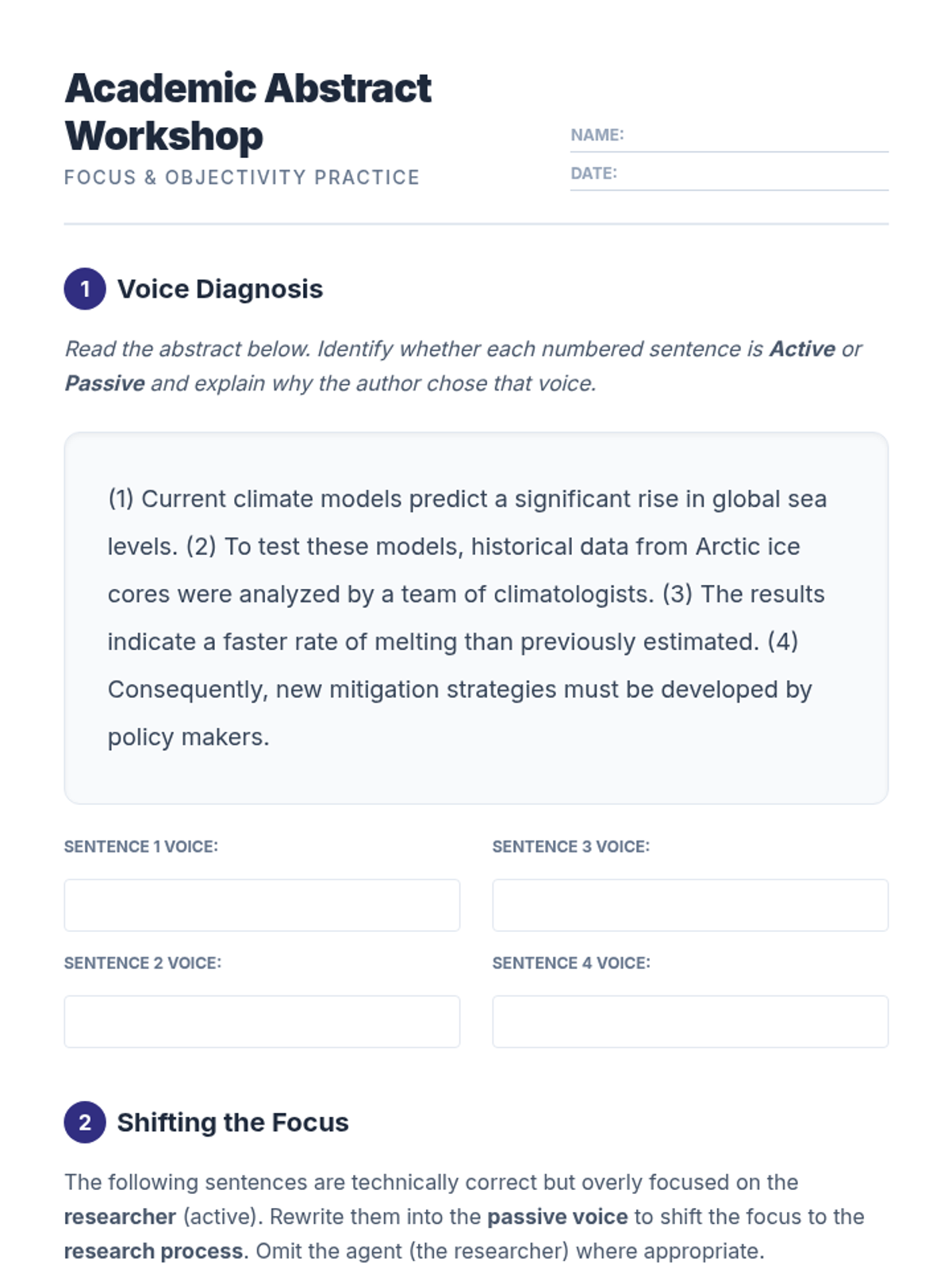
Students examine the functional differences between active and passive voice in academic disciplines, focusing on how voice shifts emphasis from the actor to the research object.
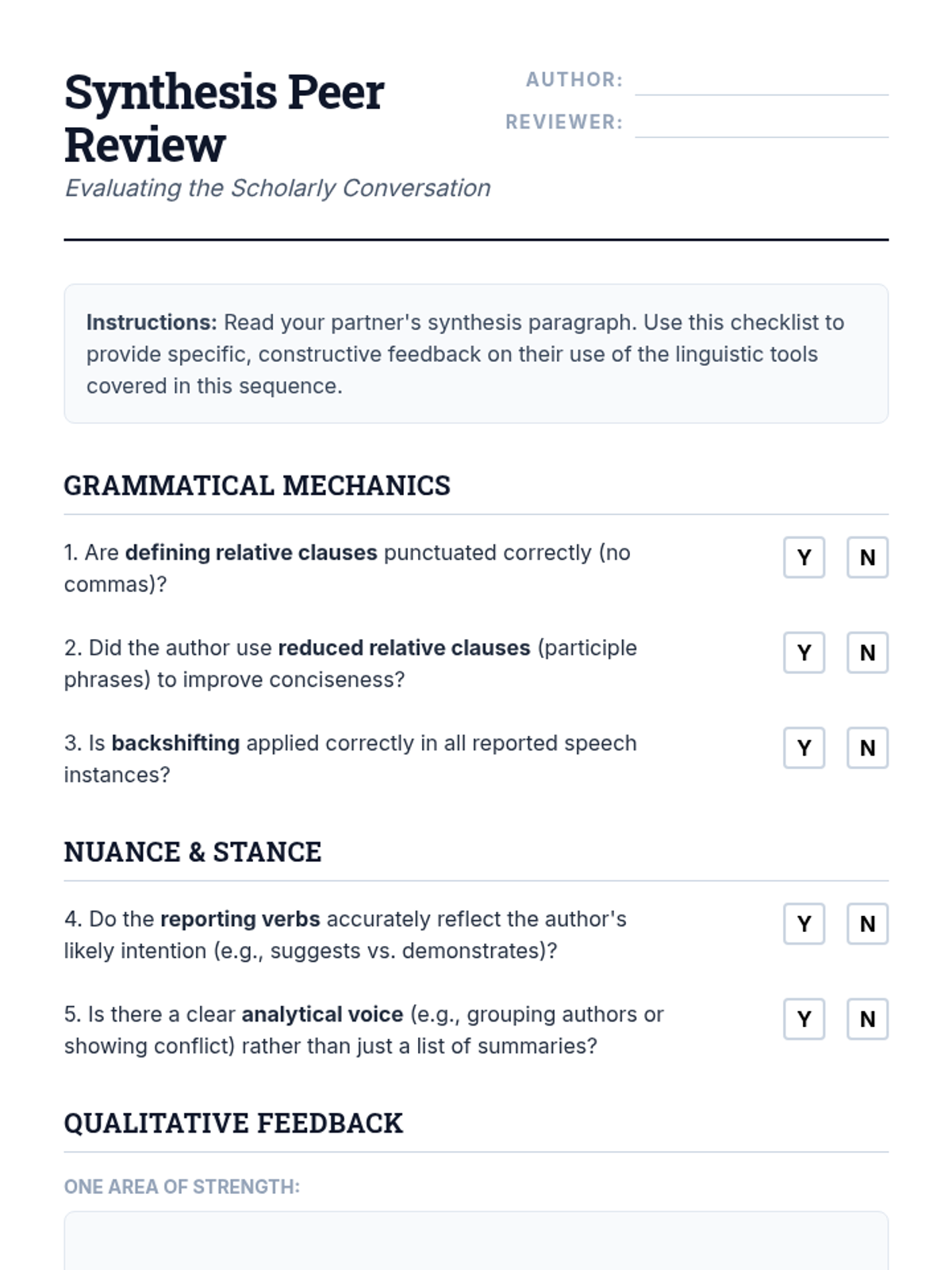
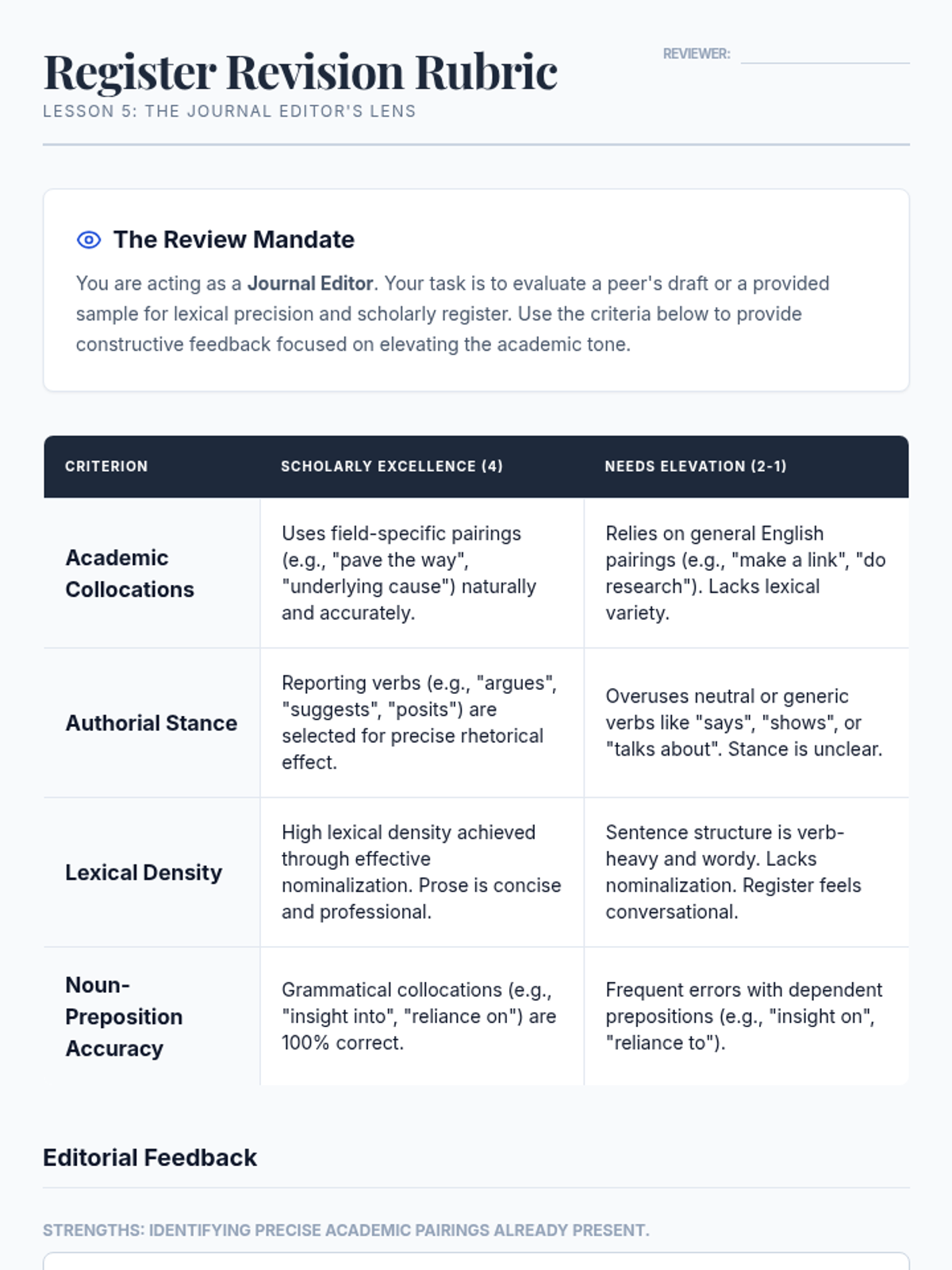
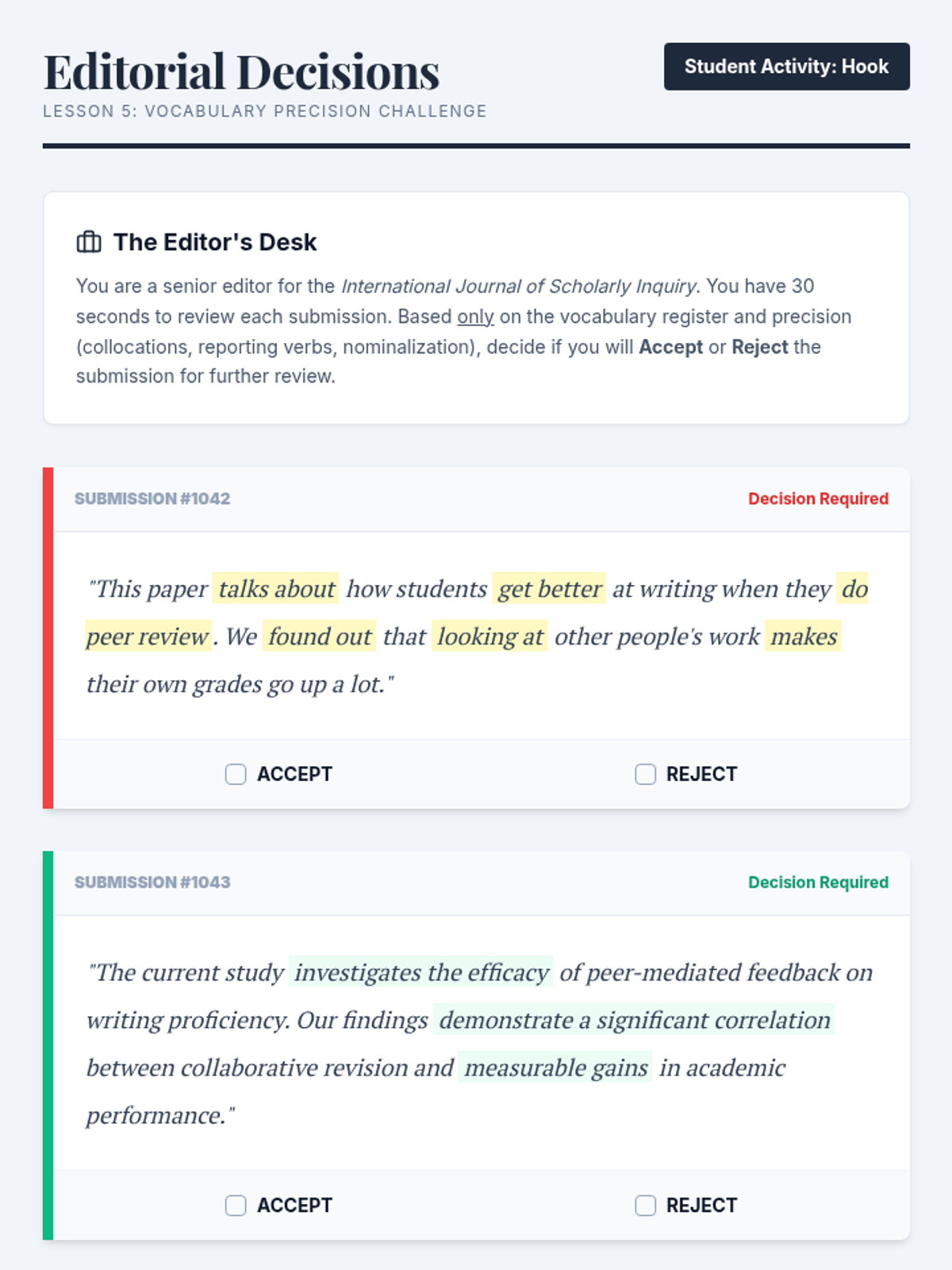
A culminating peer-review session where students apply collocation and register principles to edit and elevate scholarly writing samples.
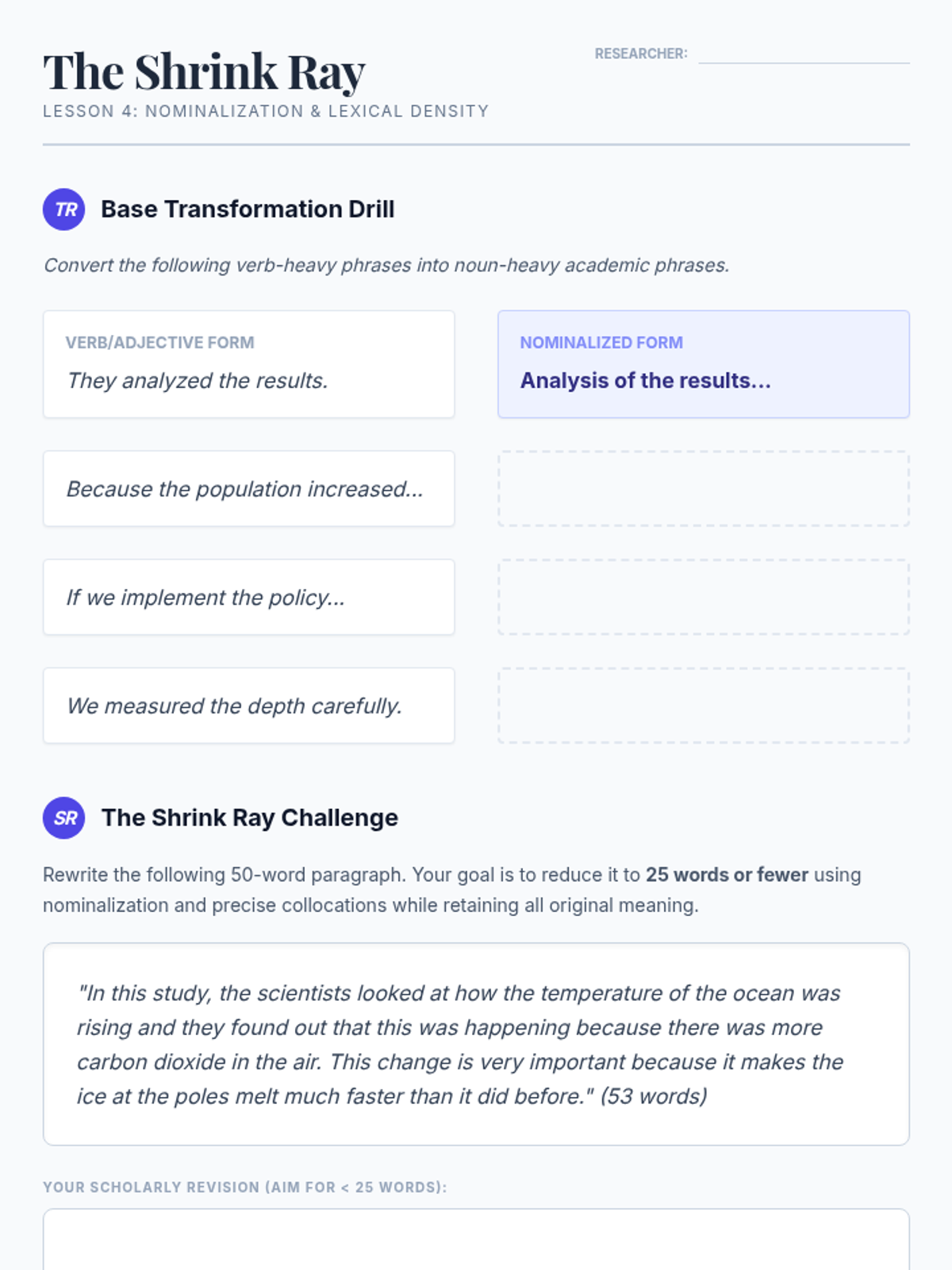
Teaches nominalization techniques to transform informal phrases into concise, lexically dense academic prose.
Explores the nuances of reporting verbs used for citation and data analysis, focusing on stance-taking and vocabulary precision.
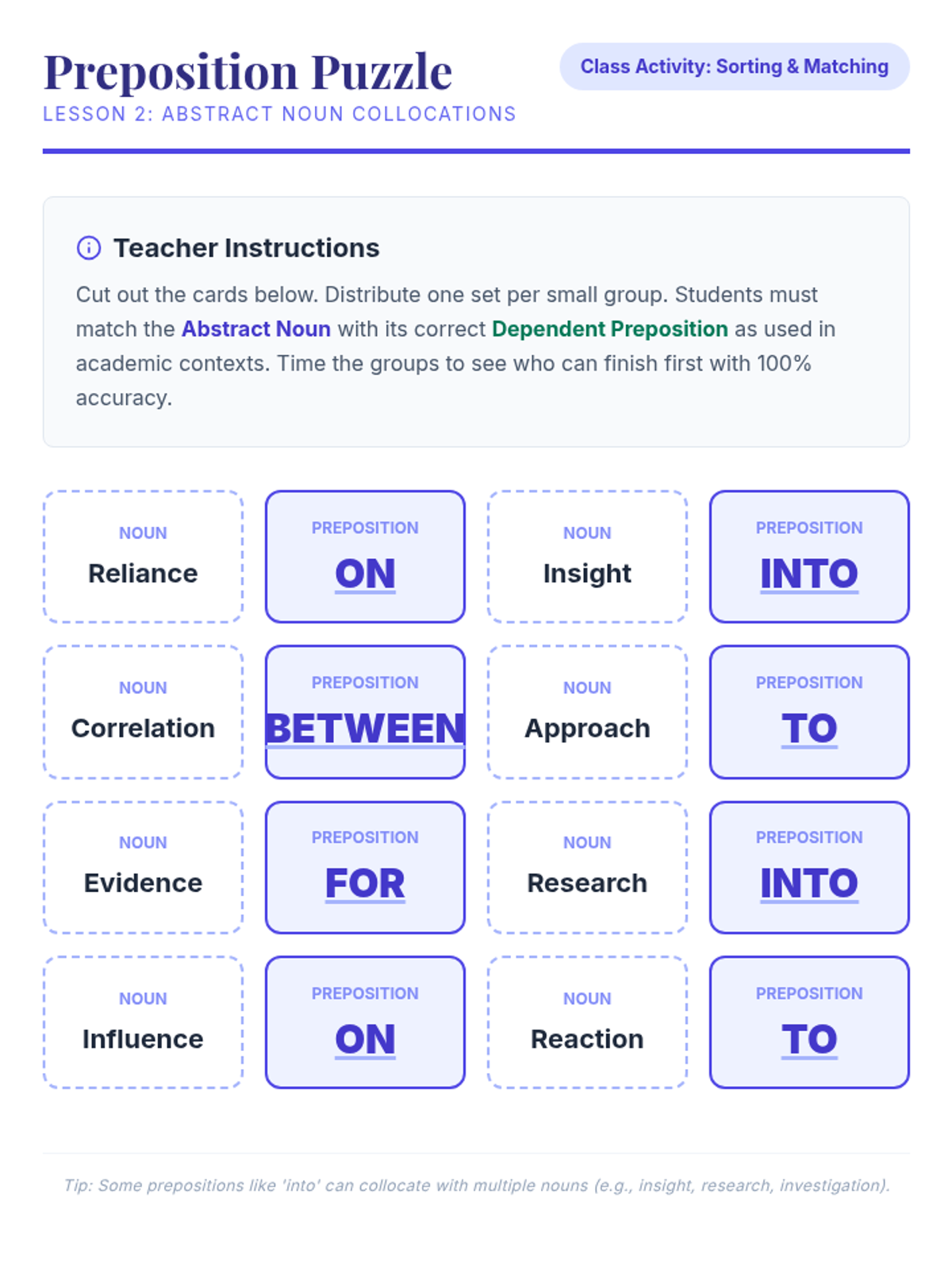
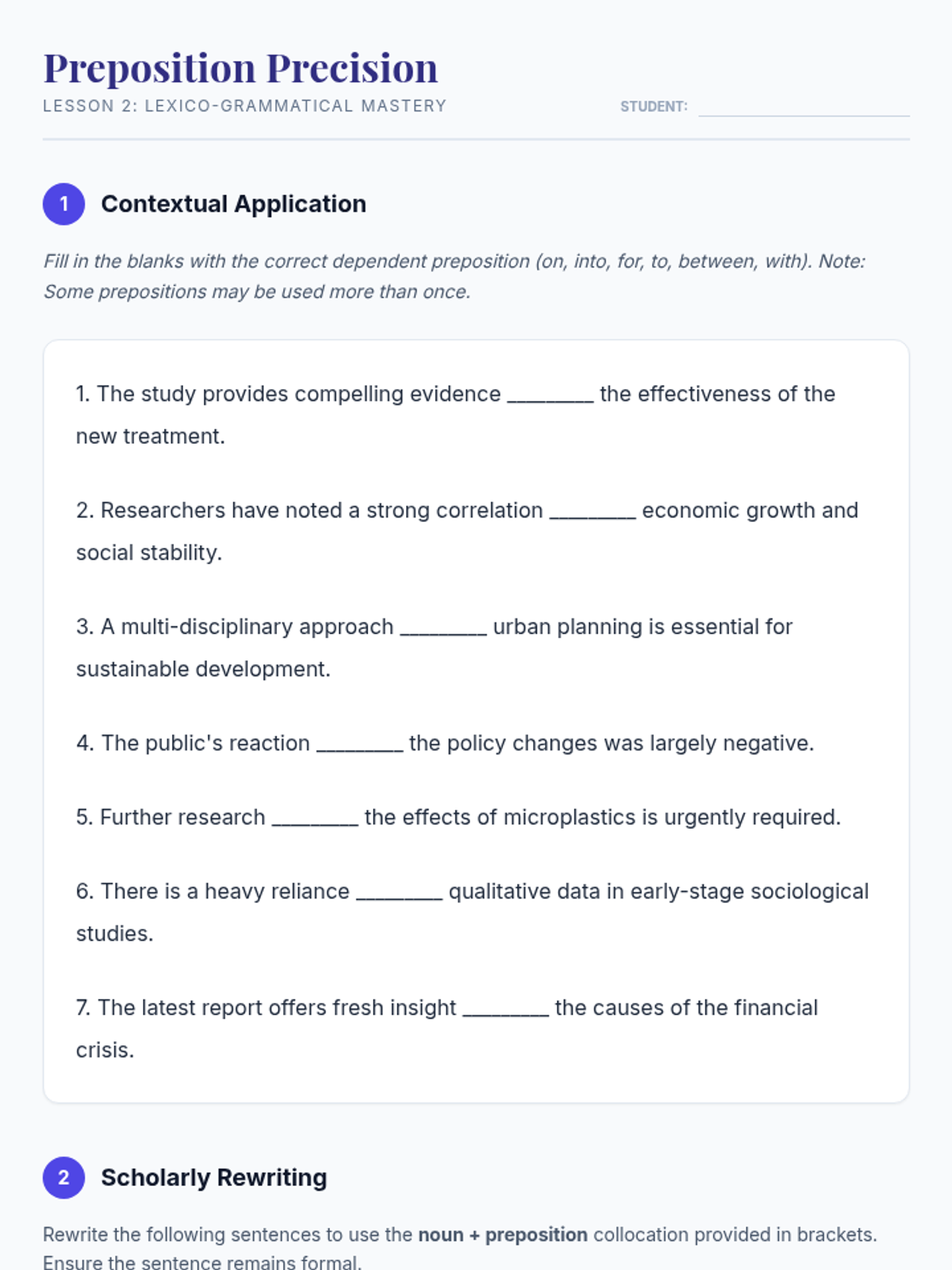
Focuses on the grammatical relationships between academic abstract nouns and their dependent prepositions through gap-fill and rewriting tasks.
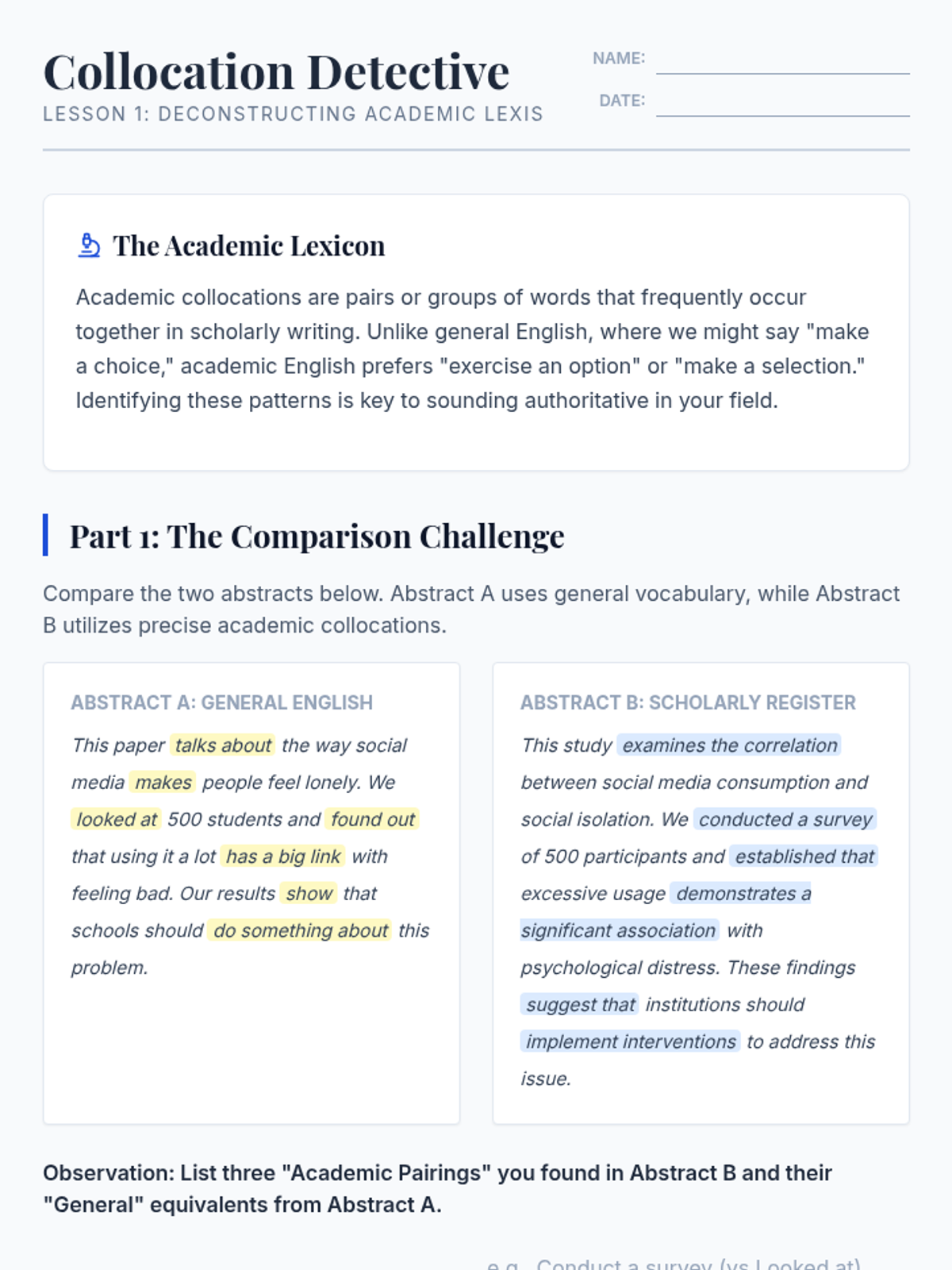
Students analyze research excerpts to identify high-frequency academic collocations and lexical bundles, distinguishing between general English and scholarly pairings.