Specialized vocabulary across disciplines, research methodologies, and effective note-taking systems. Equips learners with information literacy skills and strategies for navigating standardized exams.
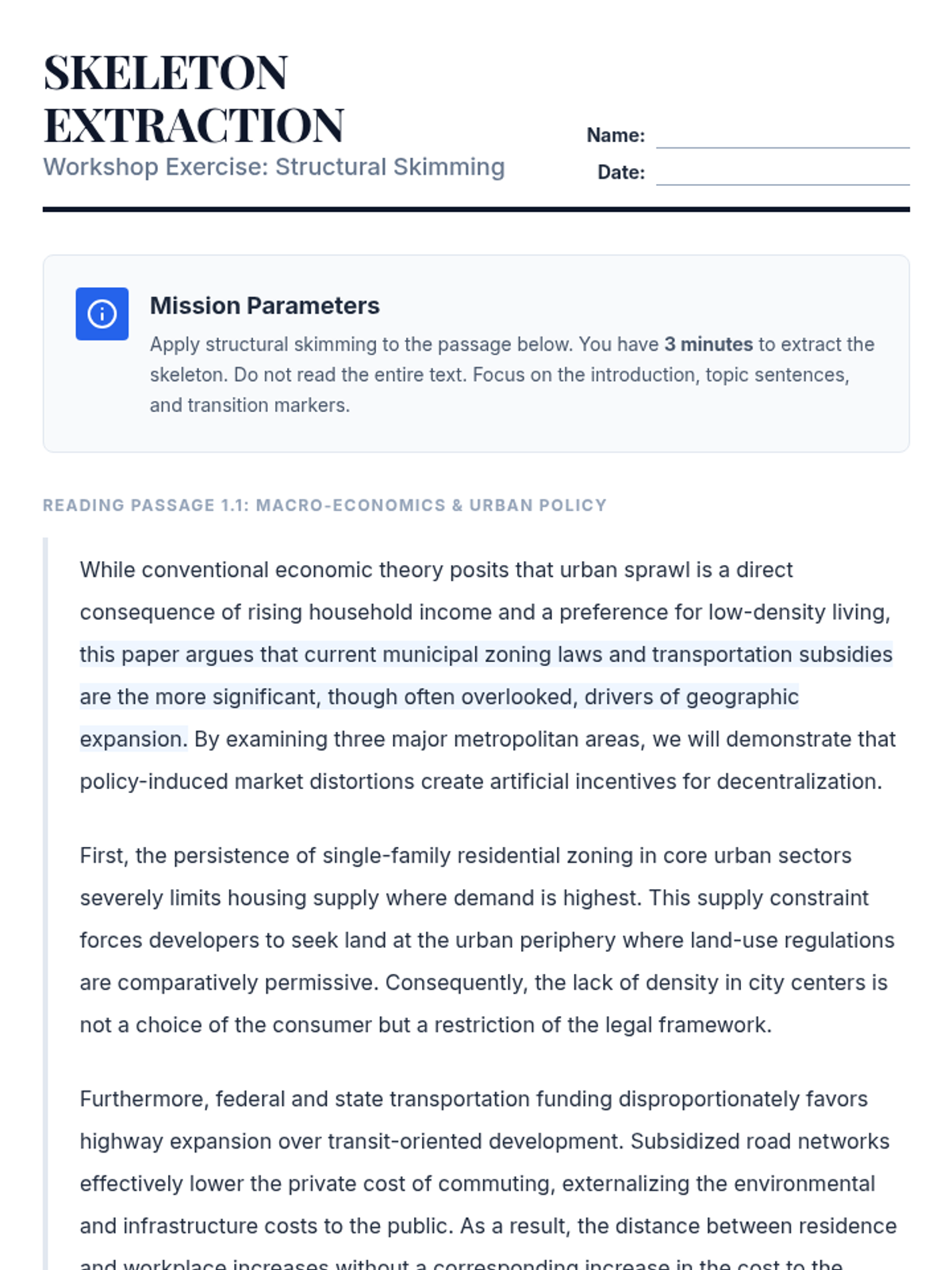
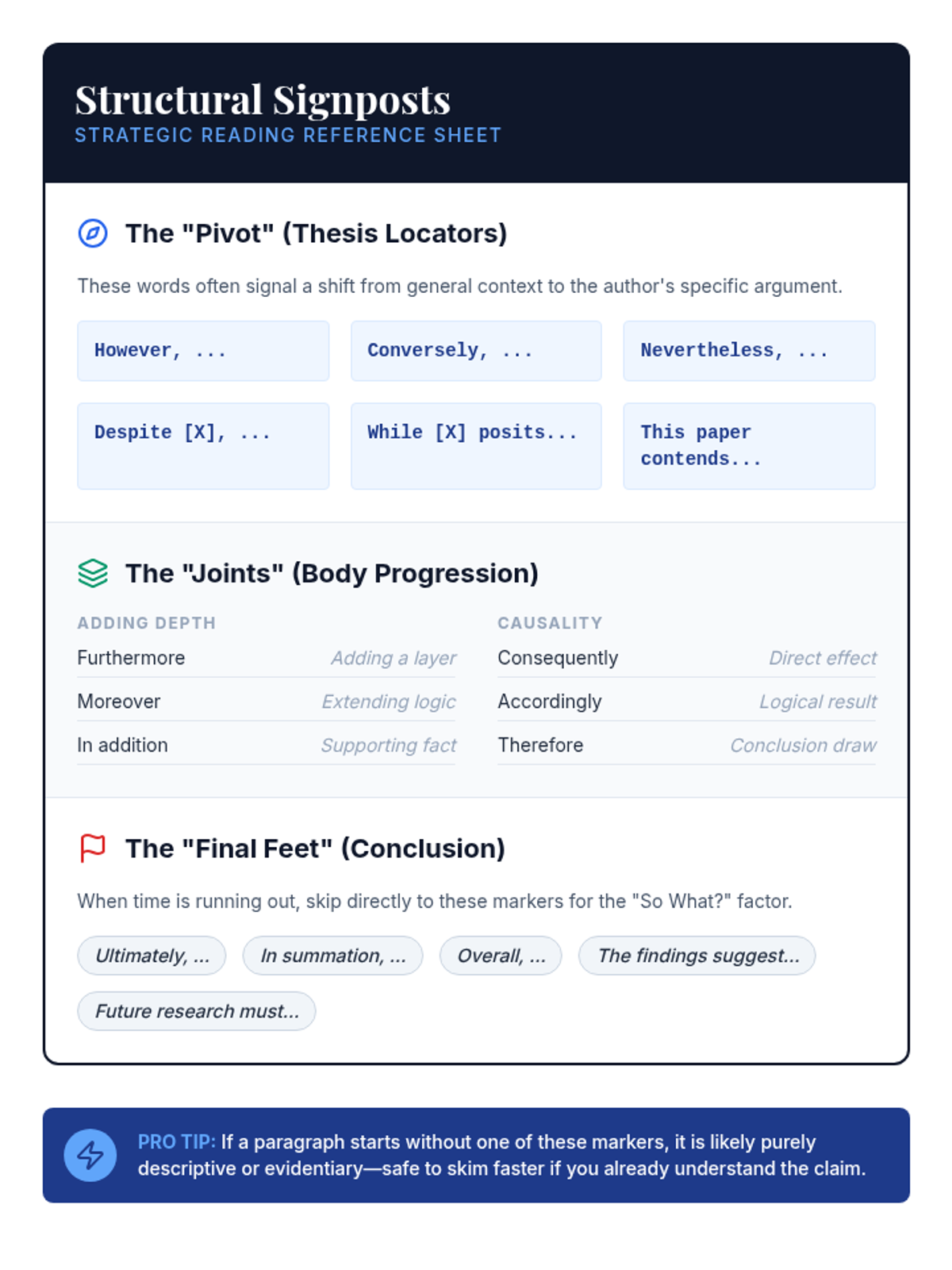
A high-intensity workshop sequence designed for graduate students to master the reading demands of the GRE, GMAT, and TOEFL. Focuses on skimming, scanning, contextual vocabulary, and syntactic deconstruction for maximum efficiency.
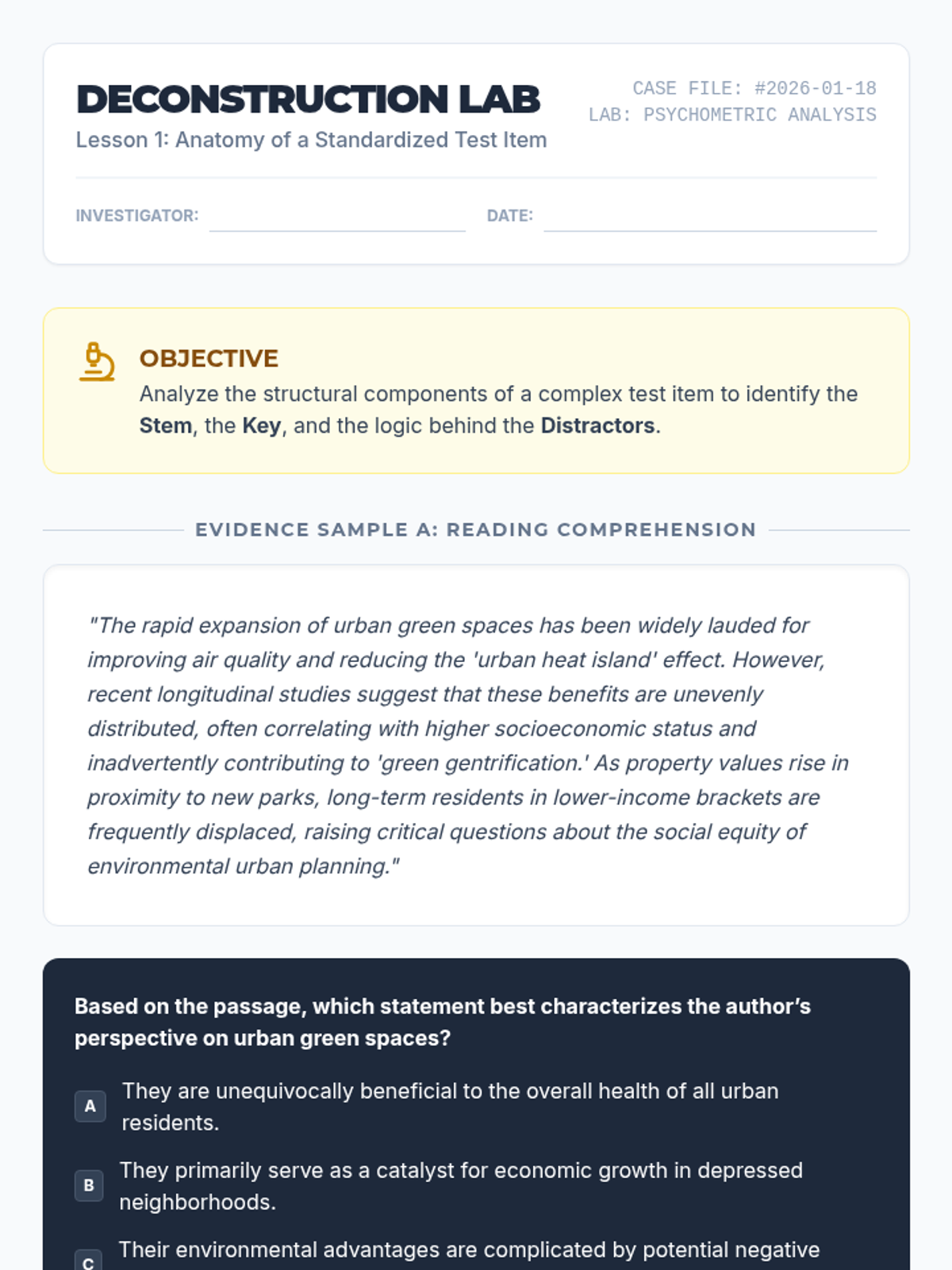
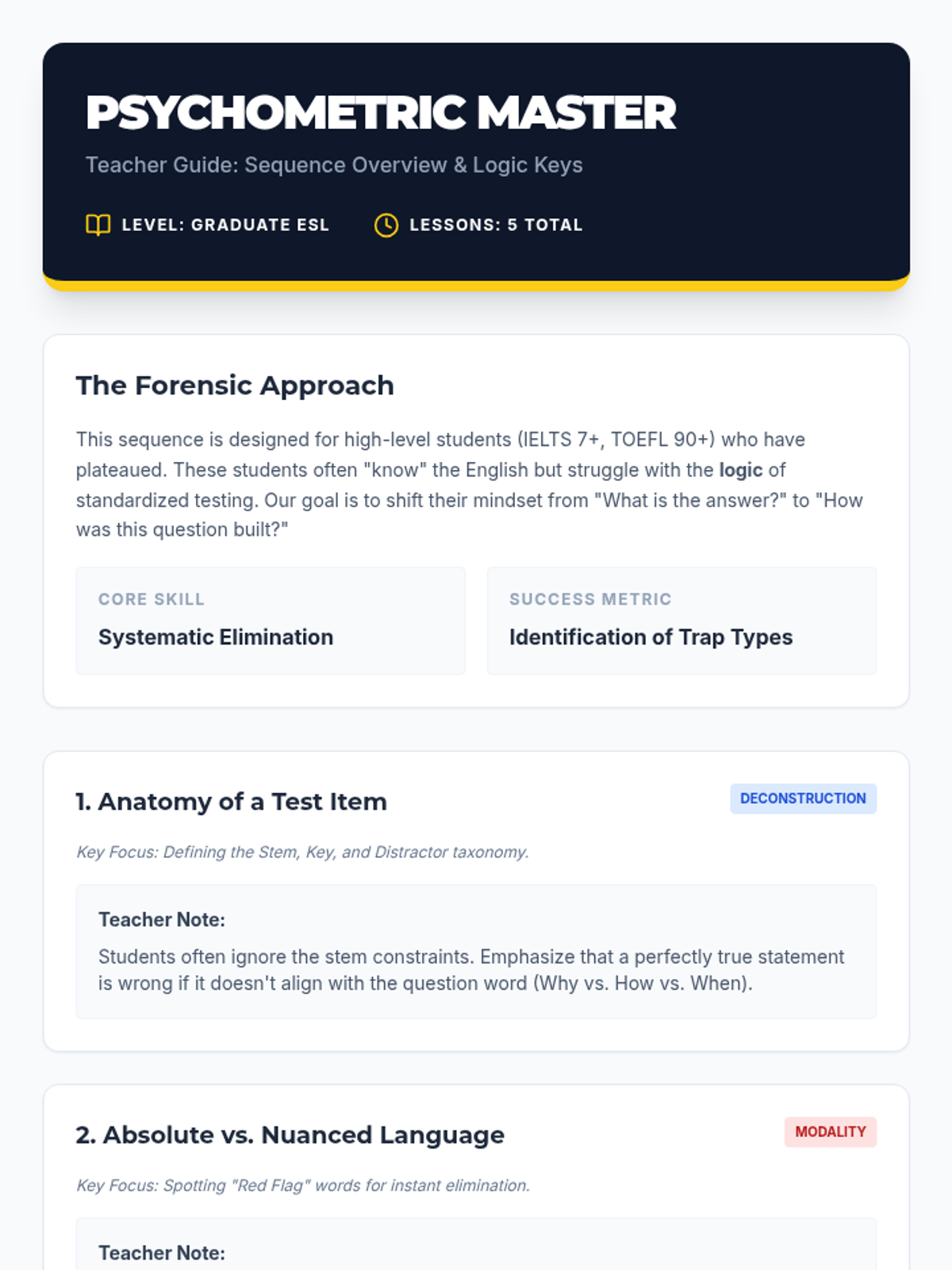
This sequence trains graduate-level ESL students to analyze the psychometric logic of standardized test questions. Students learn to identify common distractor patterns—such as absolute language, irrelevant truths, and faulty inferences—transforming their approach from guessing to systematic logical elimination.
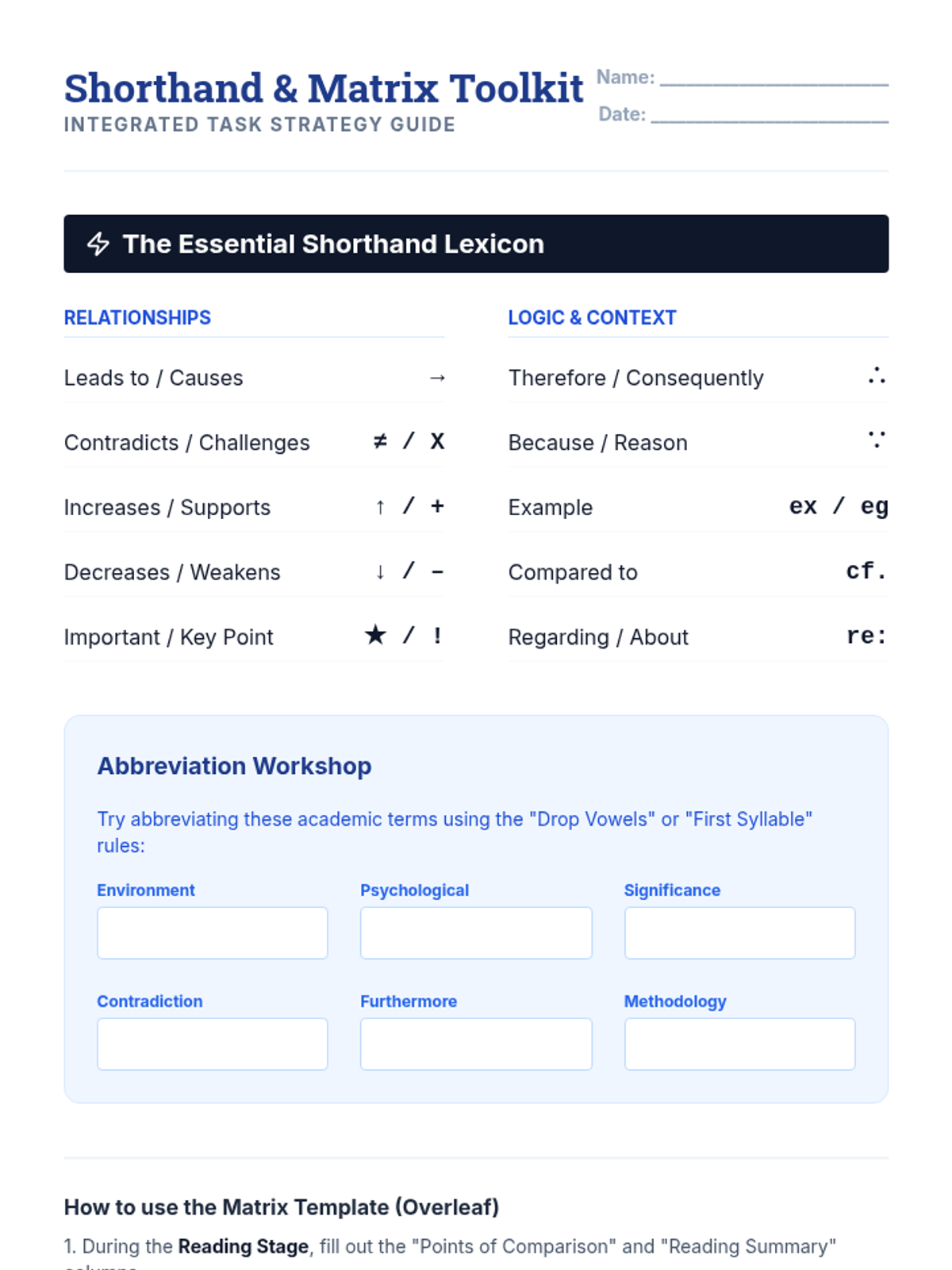
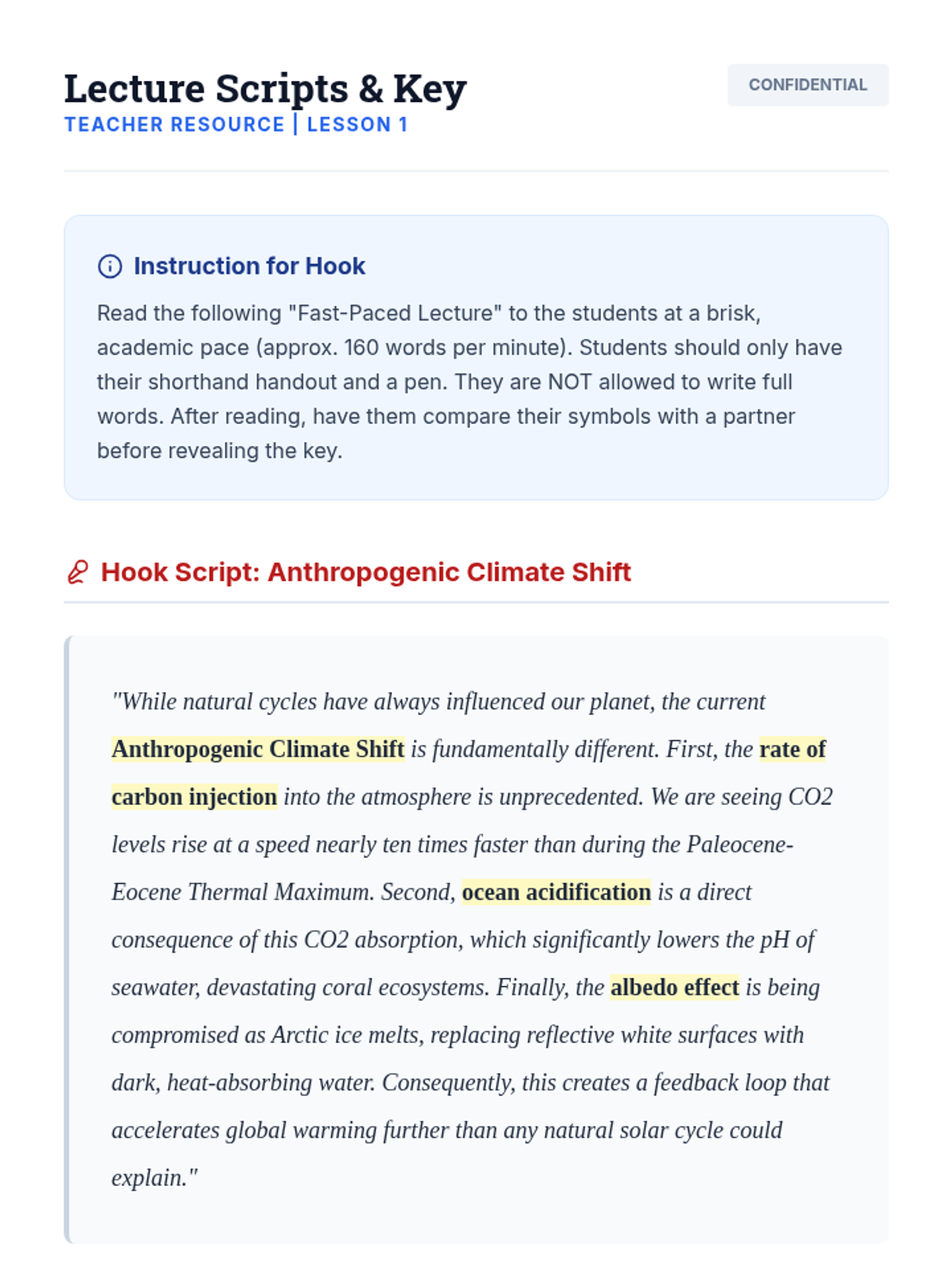
A comprehensive sequence designed for graduate ESL students to master the integrated writing and speaking tasks of high-stakes academic exams like TOEFL iBT and IELTS. The curriculum focuses on shorthand note-taking, identifying inter-source relationships, utilizing structural templates, and rapid synthesis under timed conditions.
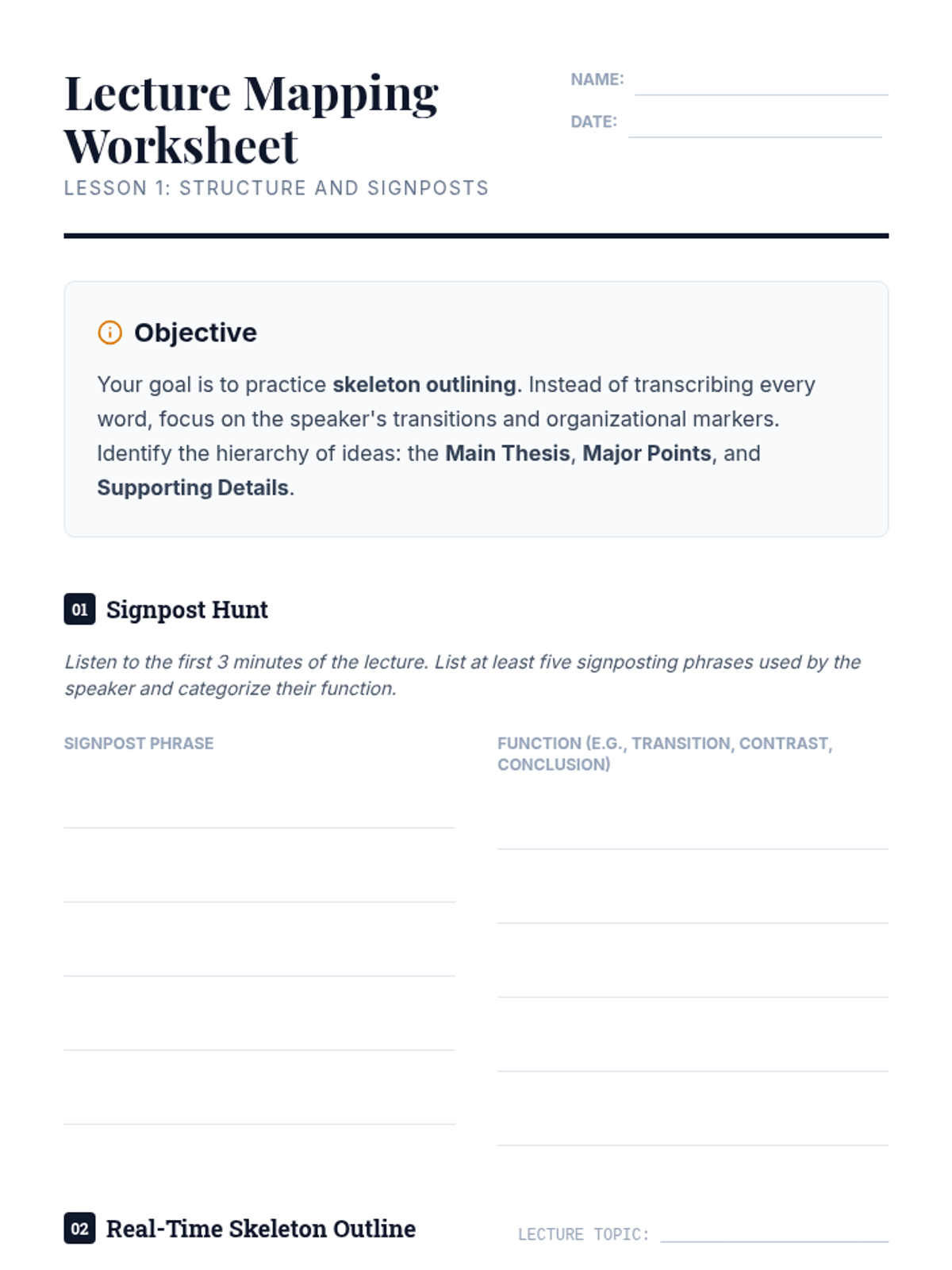
This sequence equips graduate-level English language learners with advanced strategies for processing complex academic discourse. Students will master rhetorical signposting, compare diverse note-taking systems, and develop techniques for capturing multi-speaker seminar dialogues and discipline-specific vocabulary in real-time.
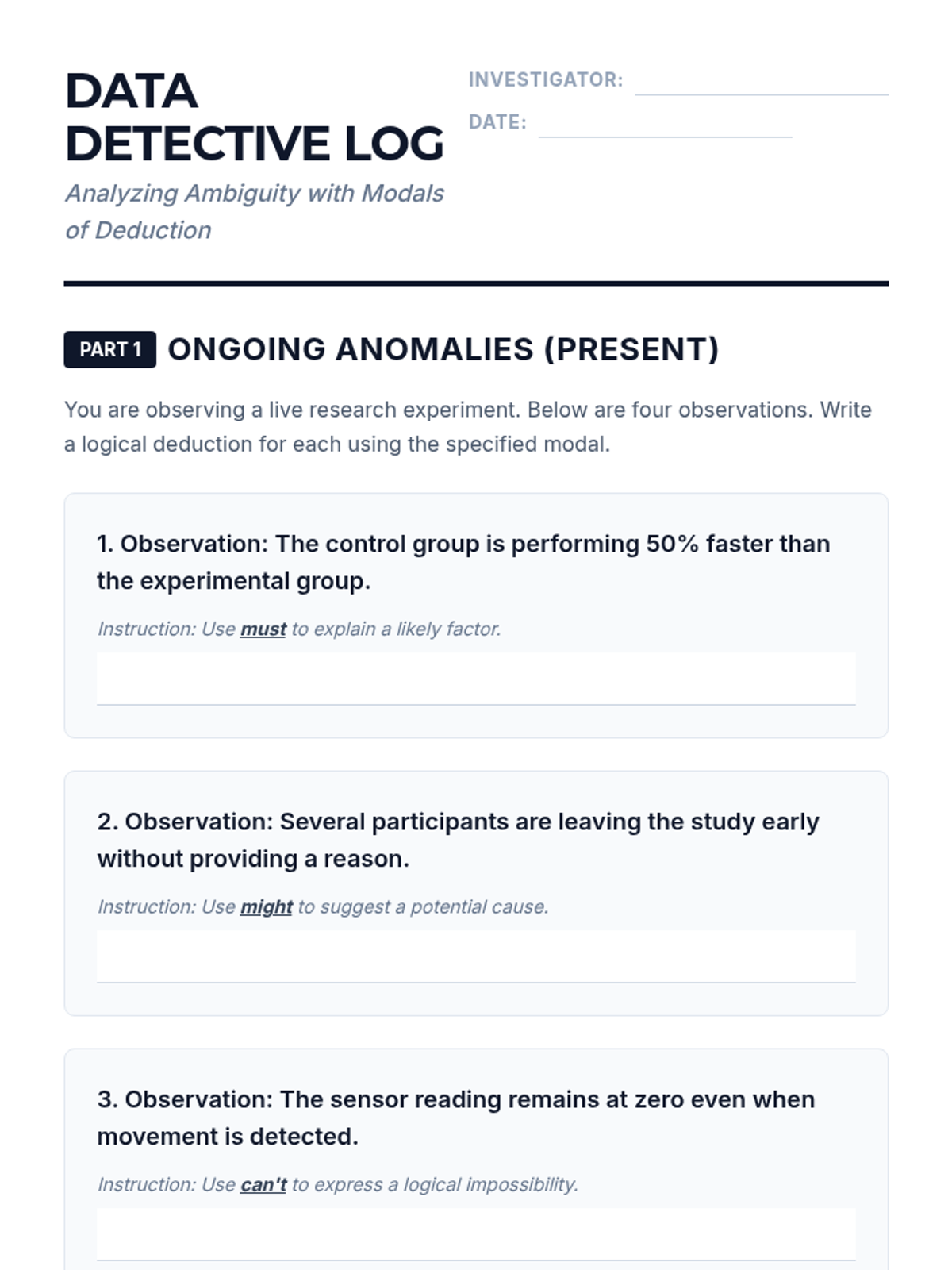
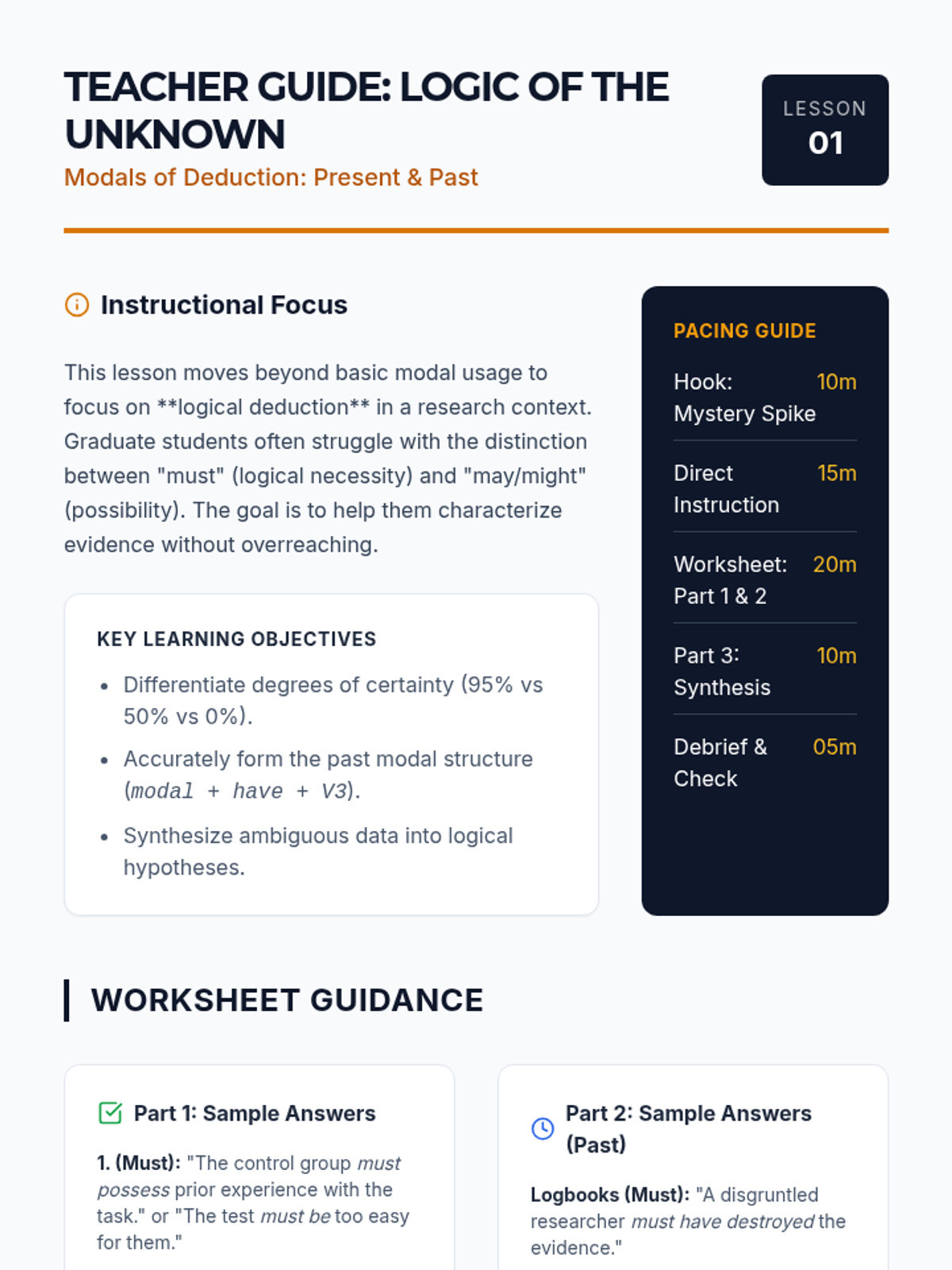
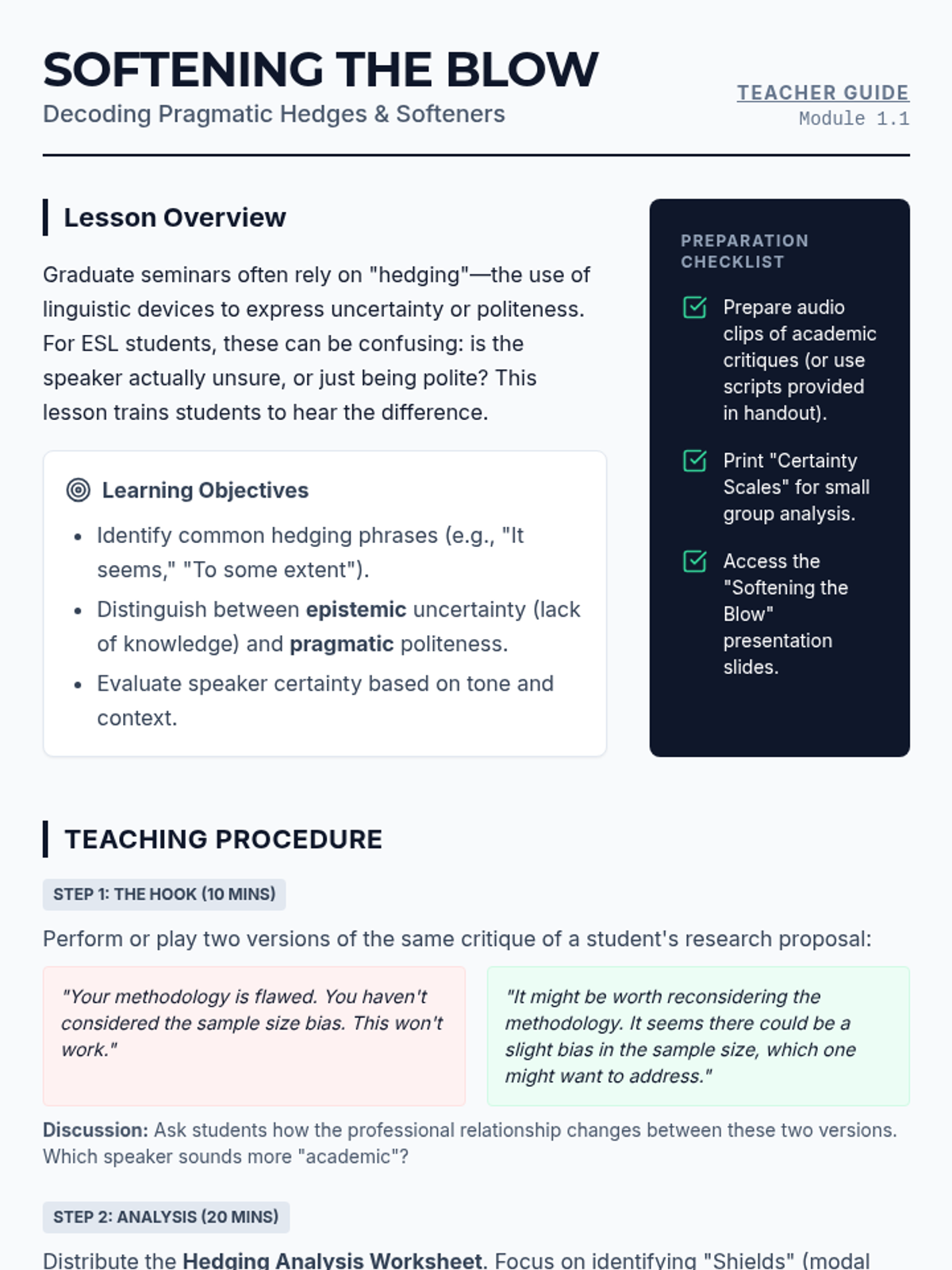
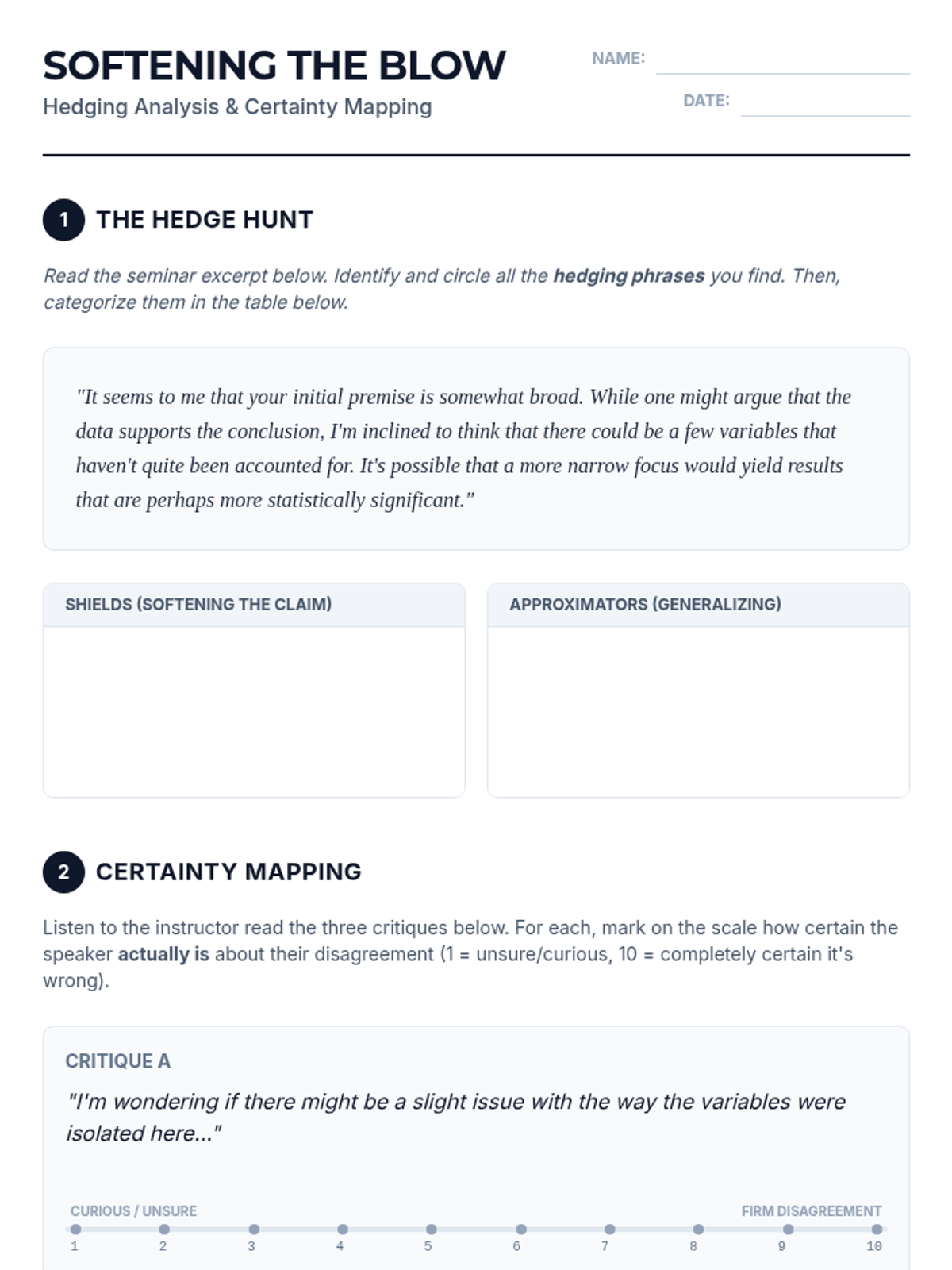
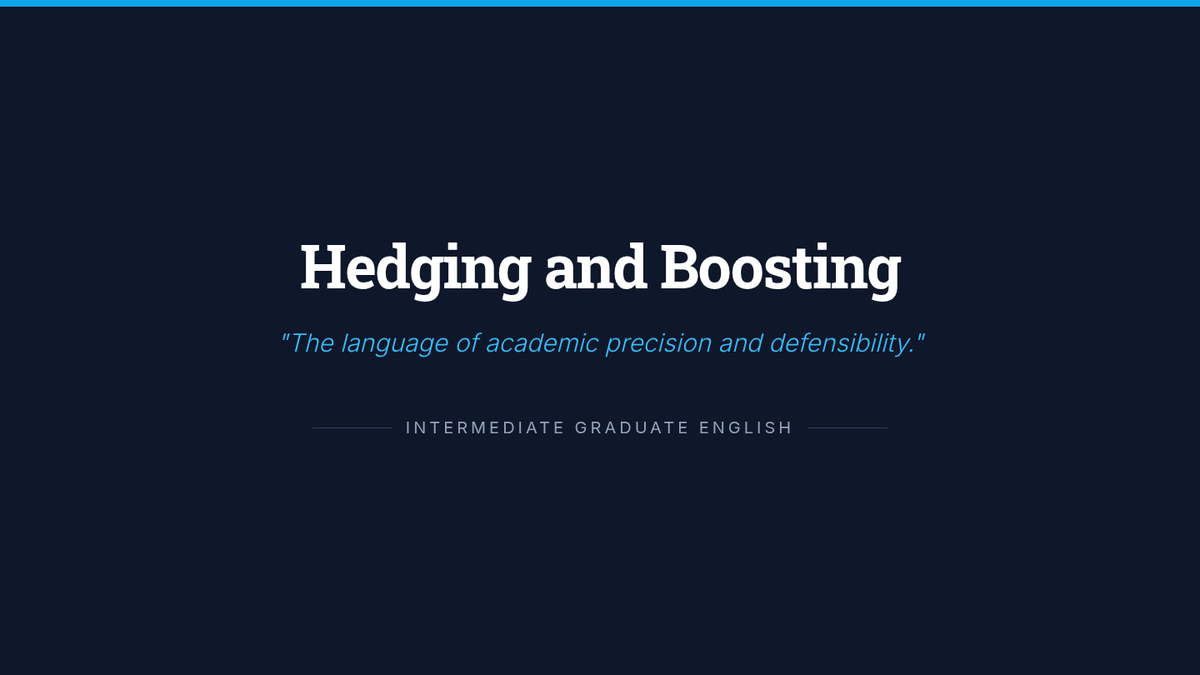
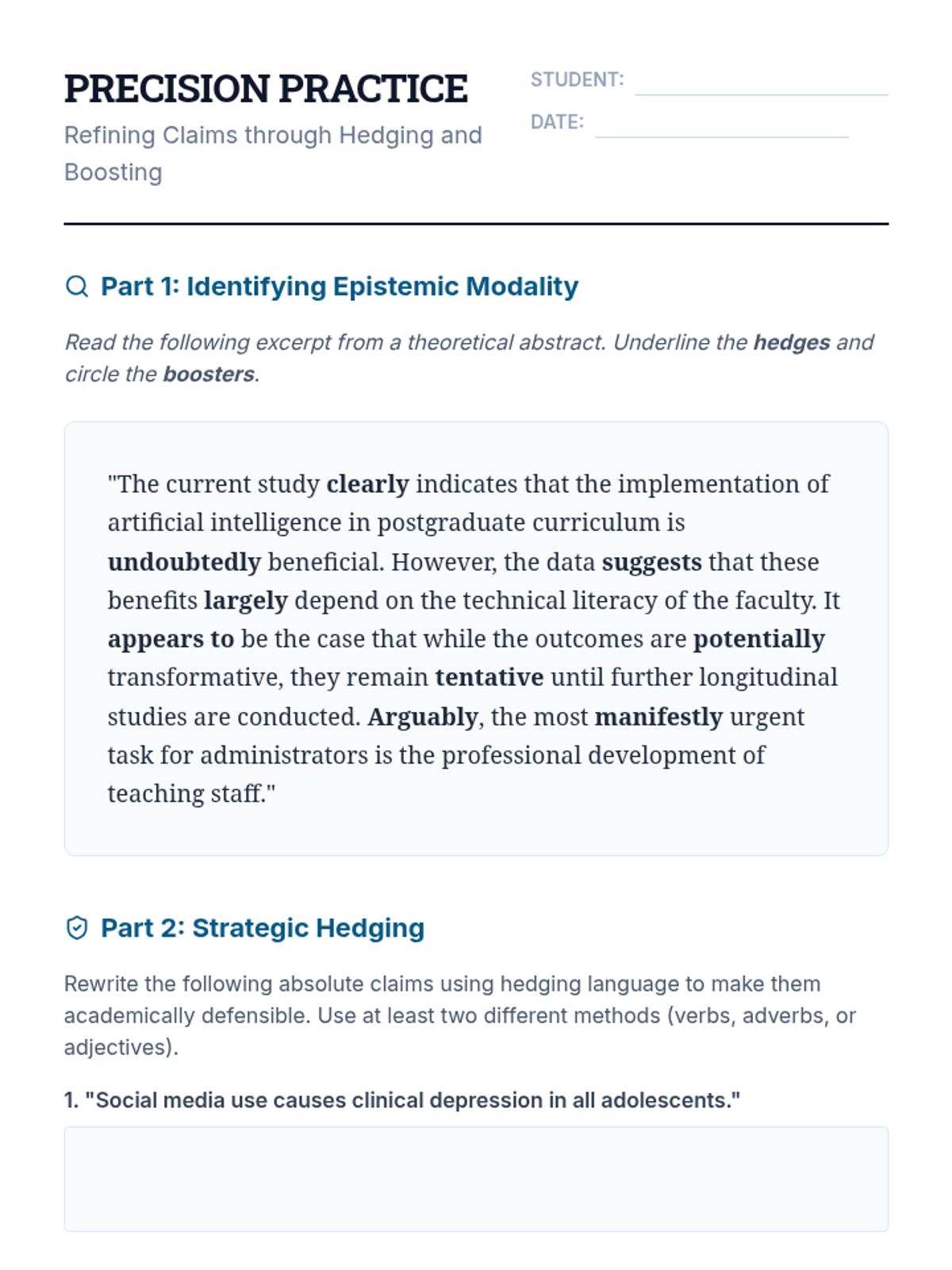
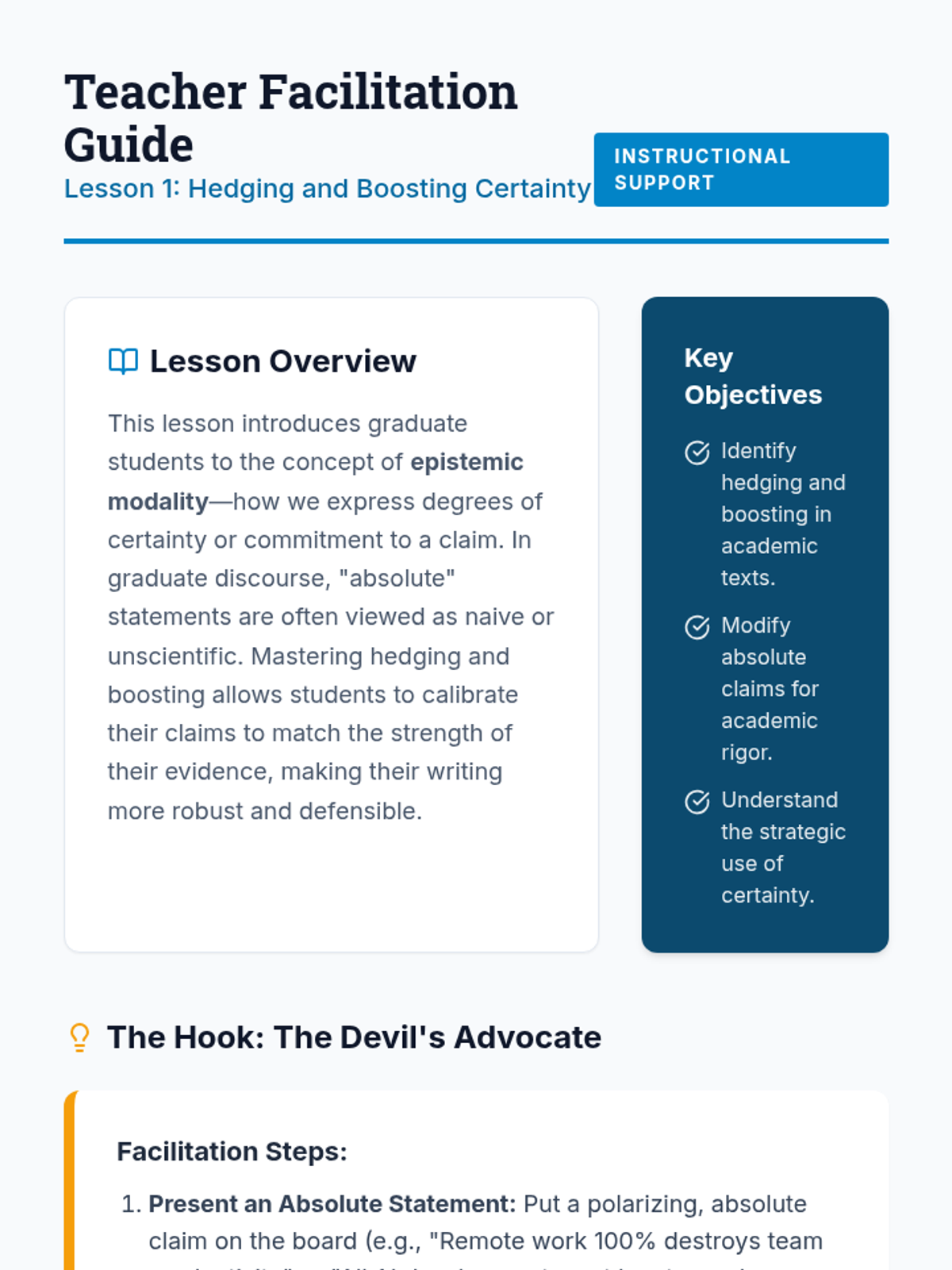
This sequence equips graduate students with the linguistic tools to navigate academic uncertainty. Focusing on modals of deduction and the strategic use of hedging, students learn to interpret data cautiously, critique literature politely, and defend their research with calibrated confidence.
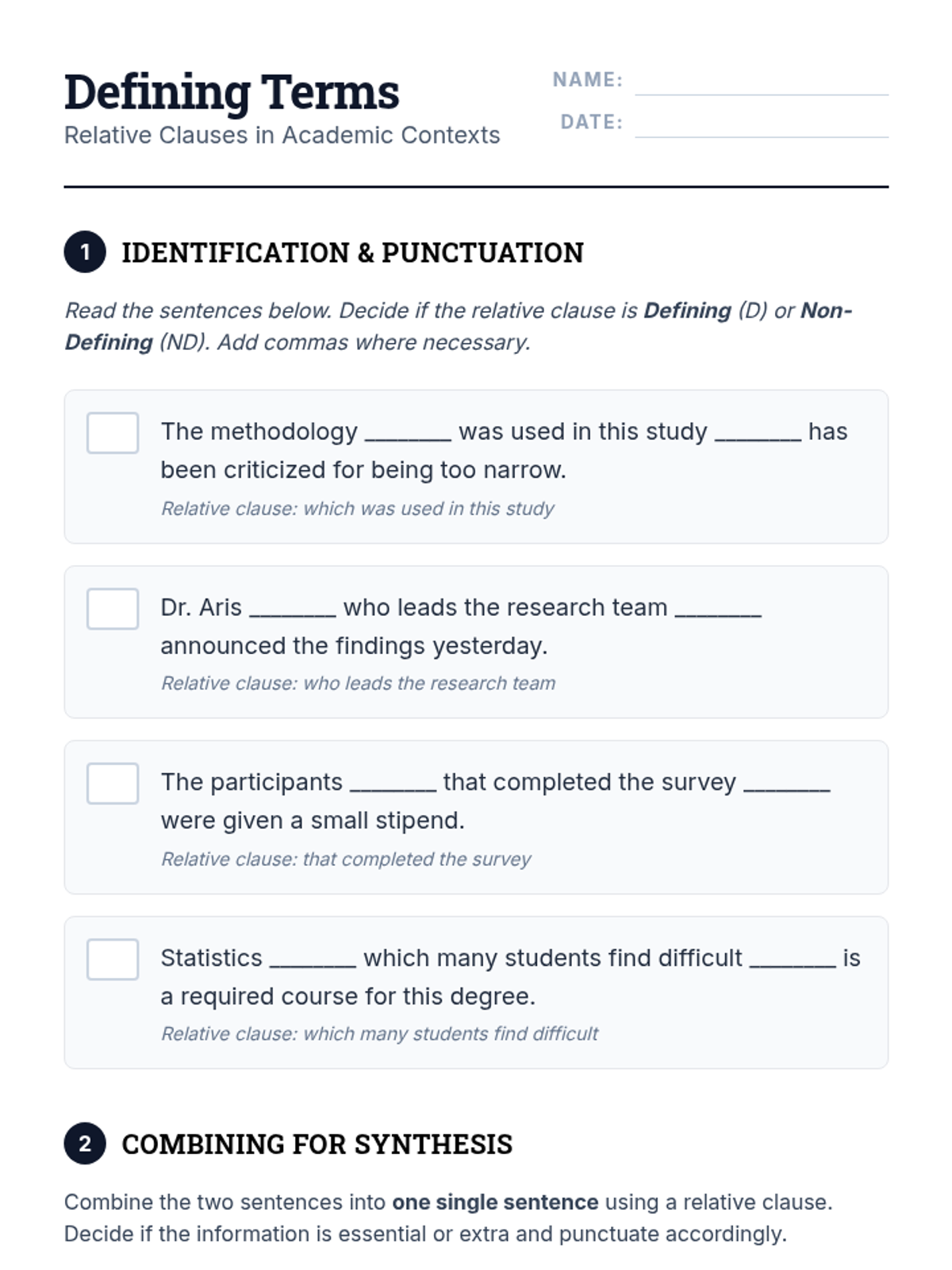
A comprehensive graduate-level ESL grammar sequence focusing on the linguistic tools needed for academic synthesis: relative clauses and reported speech. Students progress from sentence-level mechanics to paragraph-level synthesis.
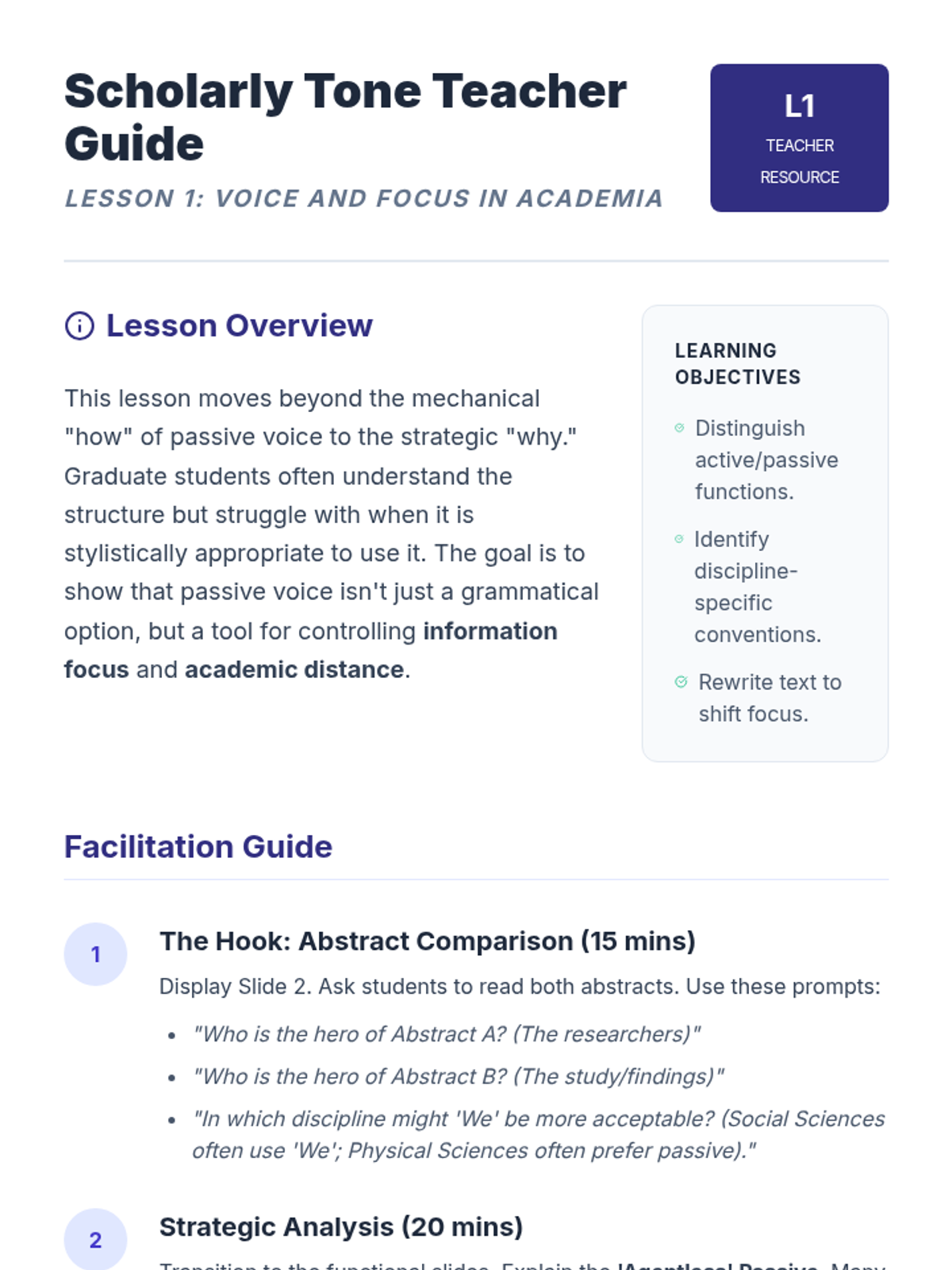
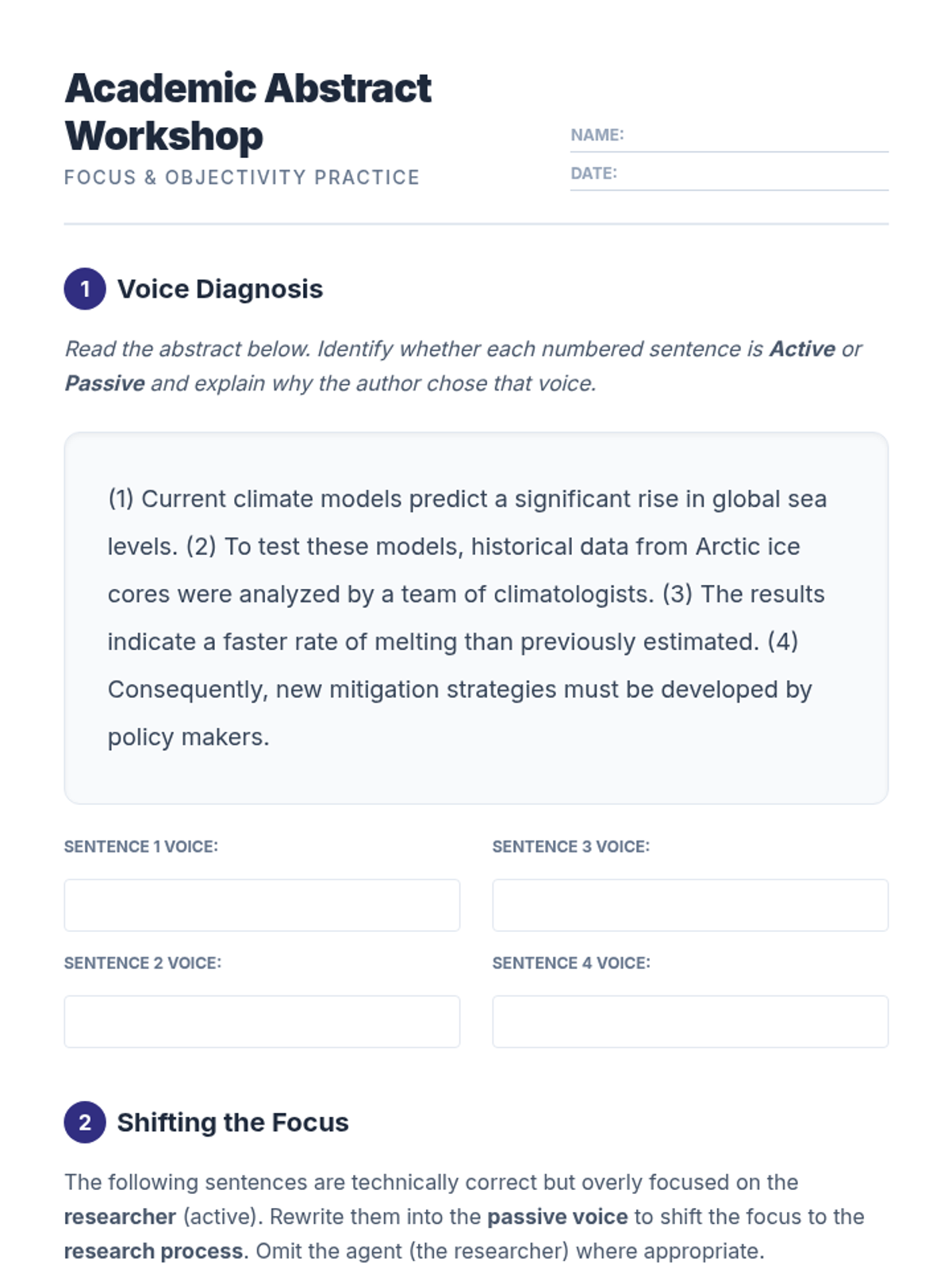
A comprehensive workshop sequence for graduate ESL students focusing on the strategic and functional use of passive voice in academic research writing. Students move from basic construction to sophisticated applications in methodology, literature reviews, and paragraph cohesion.
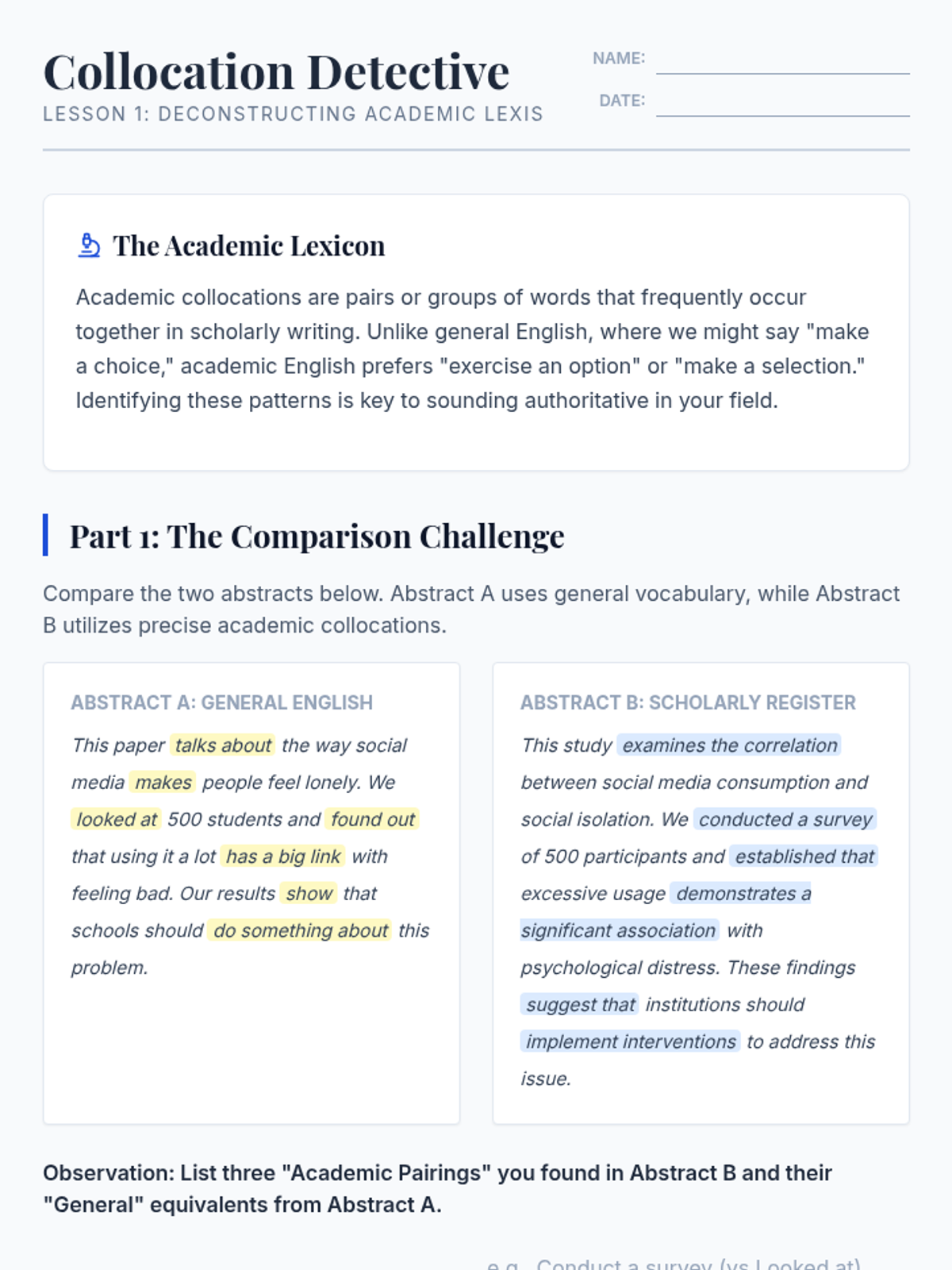
A comprehensive unit designed for graduate students to transition from general English to high-frequency academic collocations and formal register. Students will analyze research literature, master abstract noun-preposition pairings, refine reporting verbs, and use nominalization to enhance lexical density in their scholarly writing.
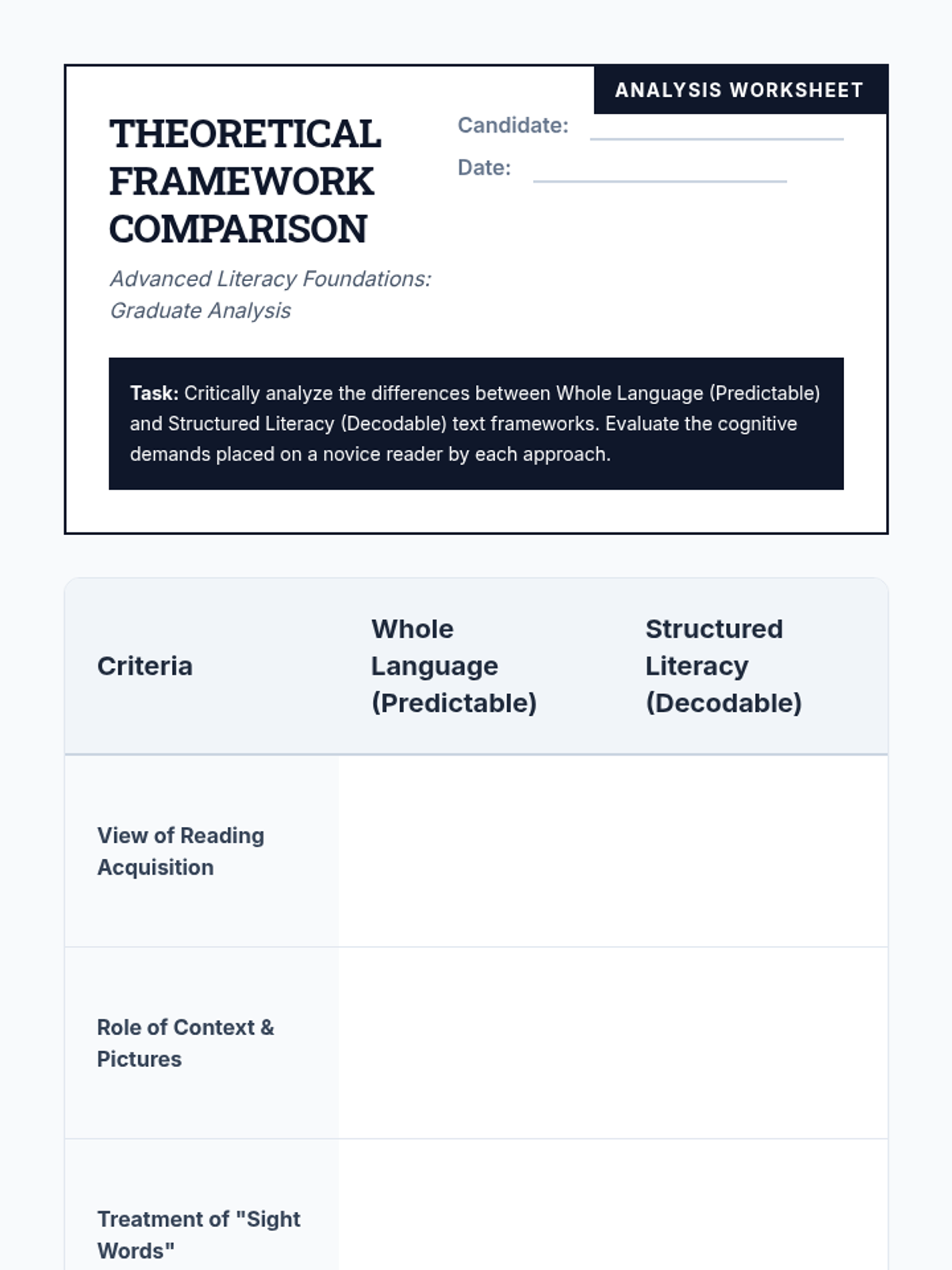
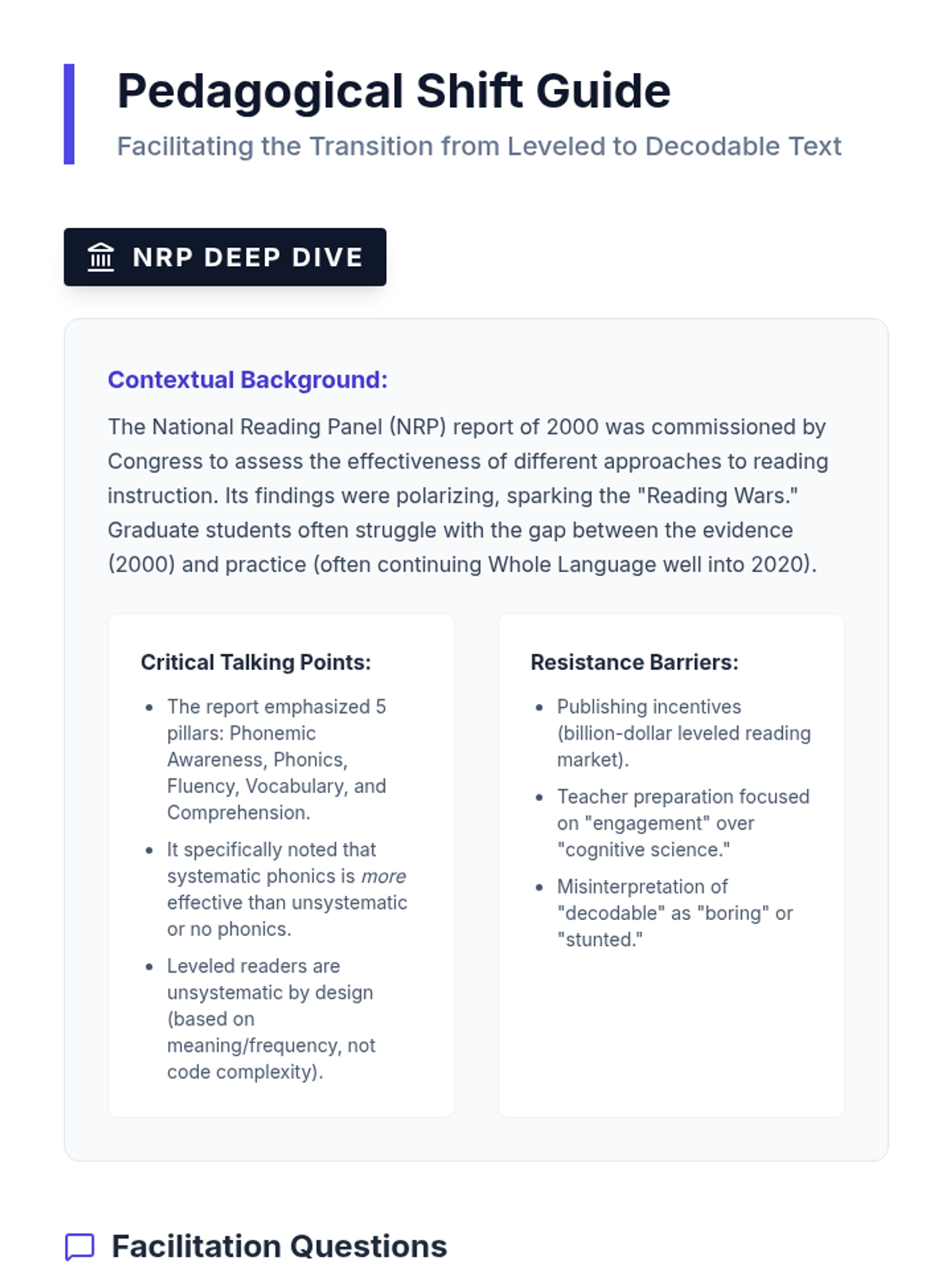
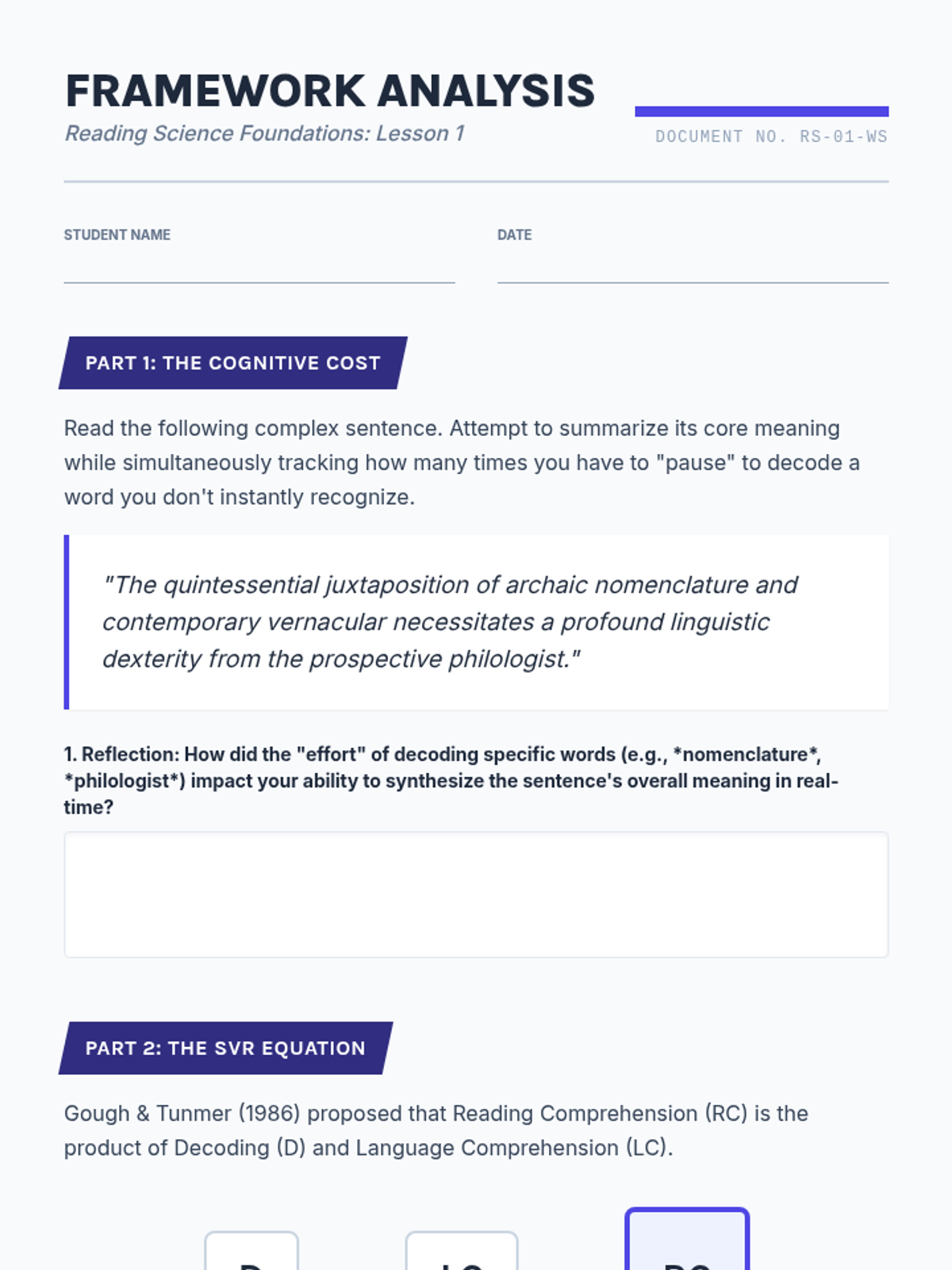
This sequence provides graduate students with a deep dive into the theoretical and cognitive foundations of decodable texts. It explores the transition from whole-language leveled readers to phonics-aligned materials through the lens of the Science of Reading, orthographic mapping, and research synthesis.
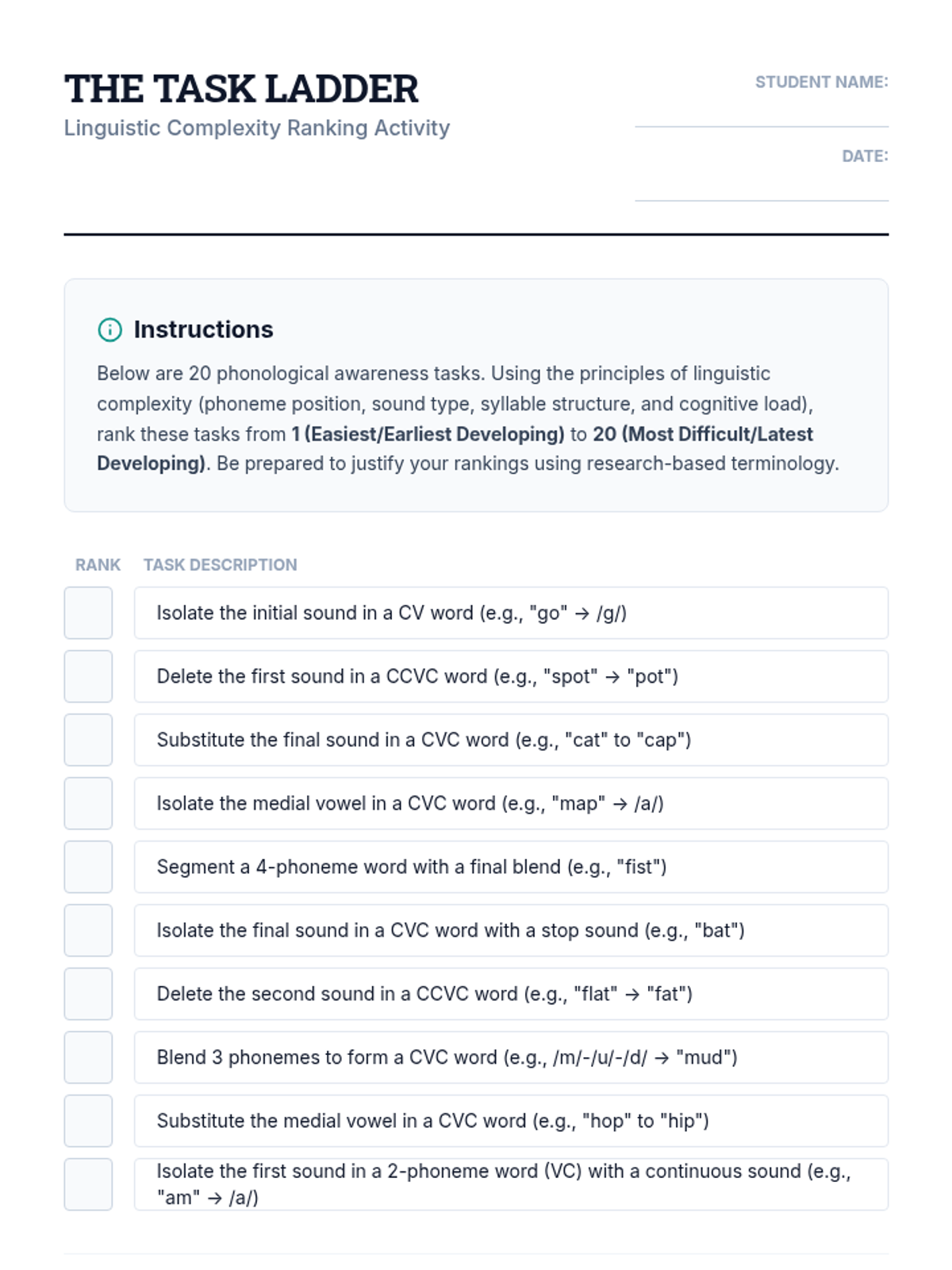
A graduate-level sequence focused on the instructional design of phoneme manipulation interventions, covering developmental hierarchies, research-based debates, multisensory scaffolding, and advanced manipulation tasks.
This sequence explores the cognitive science behind phoneme manipulation, connecting phonemic proficiency to orthographic mapping and the neurological processes of reading. Students investigate the 'why' behind reading instruction through the lens of cognitive load, brain imaging, and contemporary research debates.
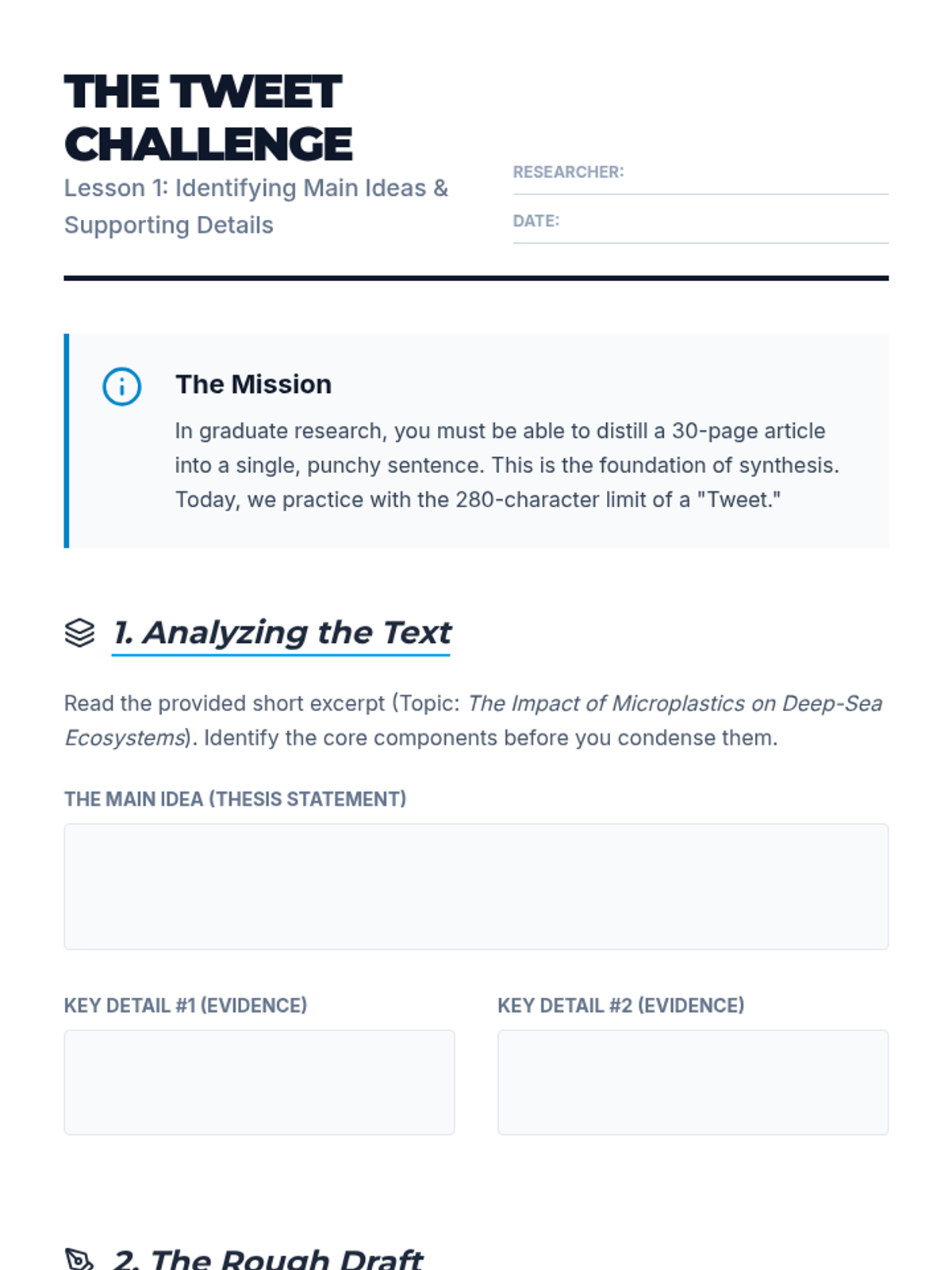
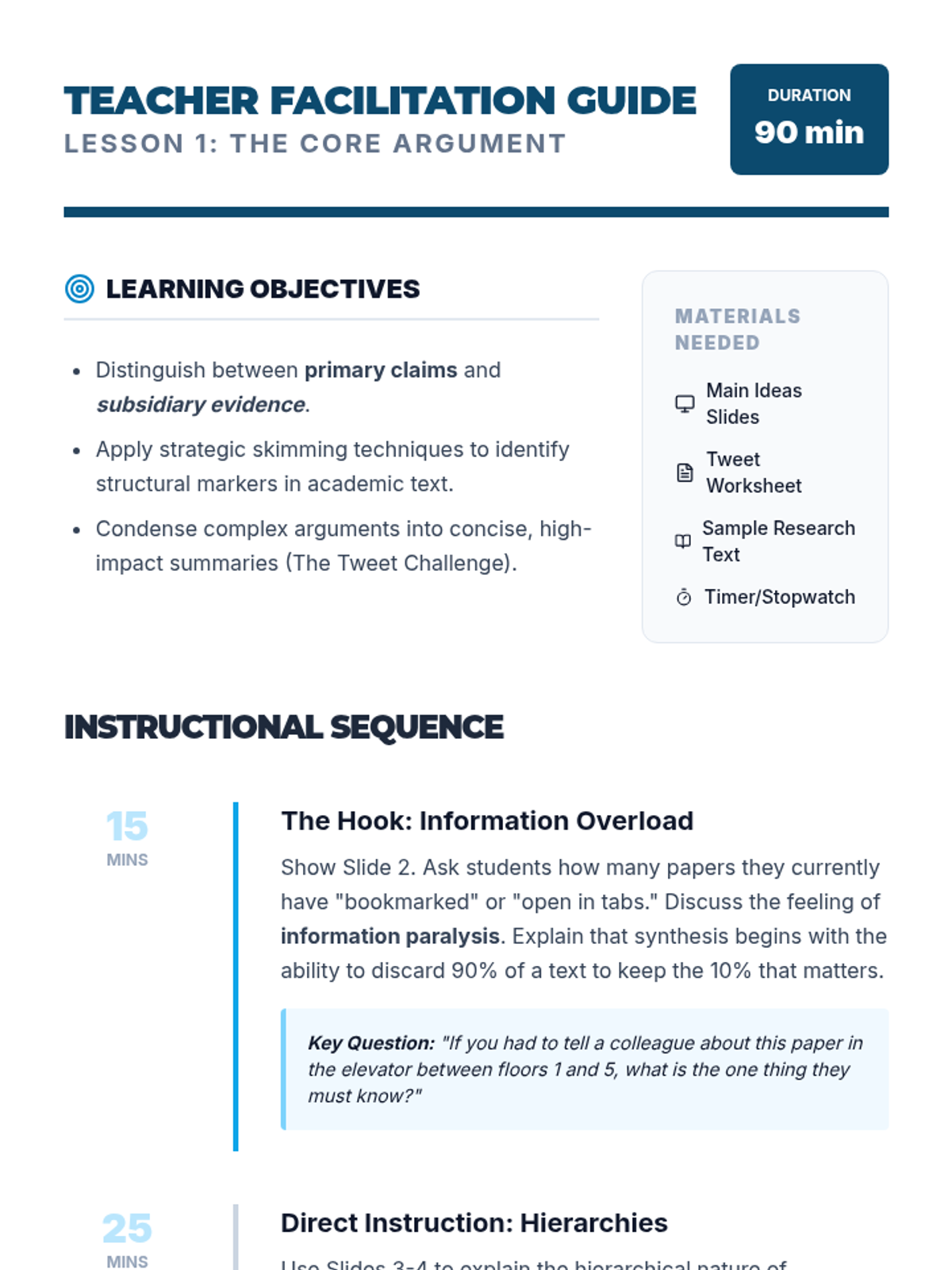
A comprehensive series for graduate-level ESL students focused on the critical academic skill of synthesizing multiple sources. Students move from core comprehension of single texts to mapping complex intertextual relationships and constructing academic synthesis.
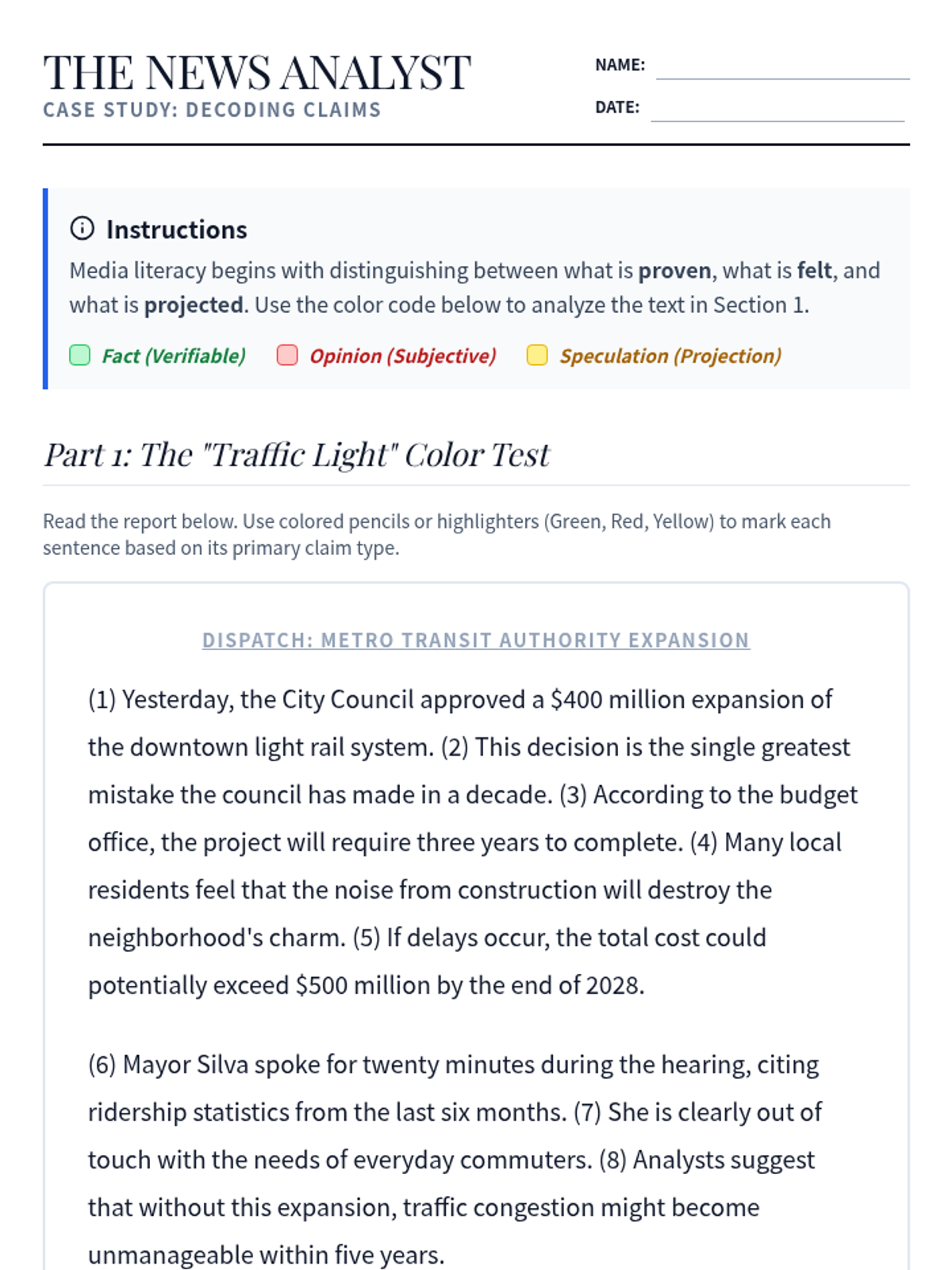
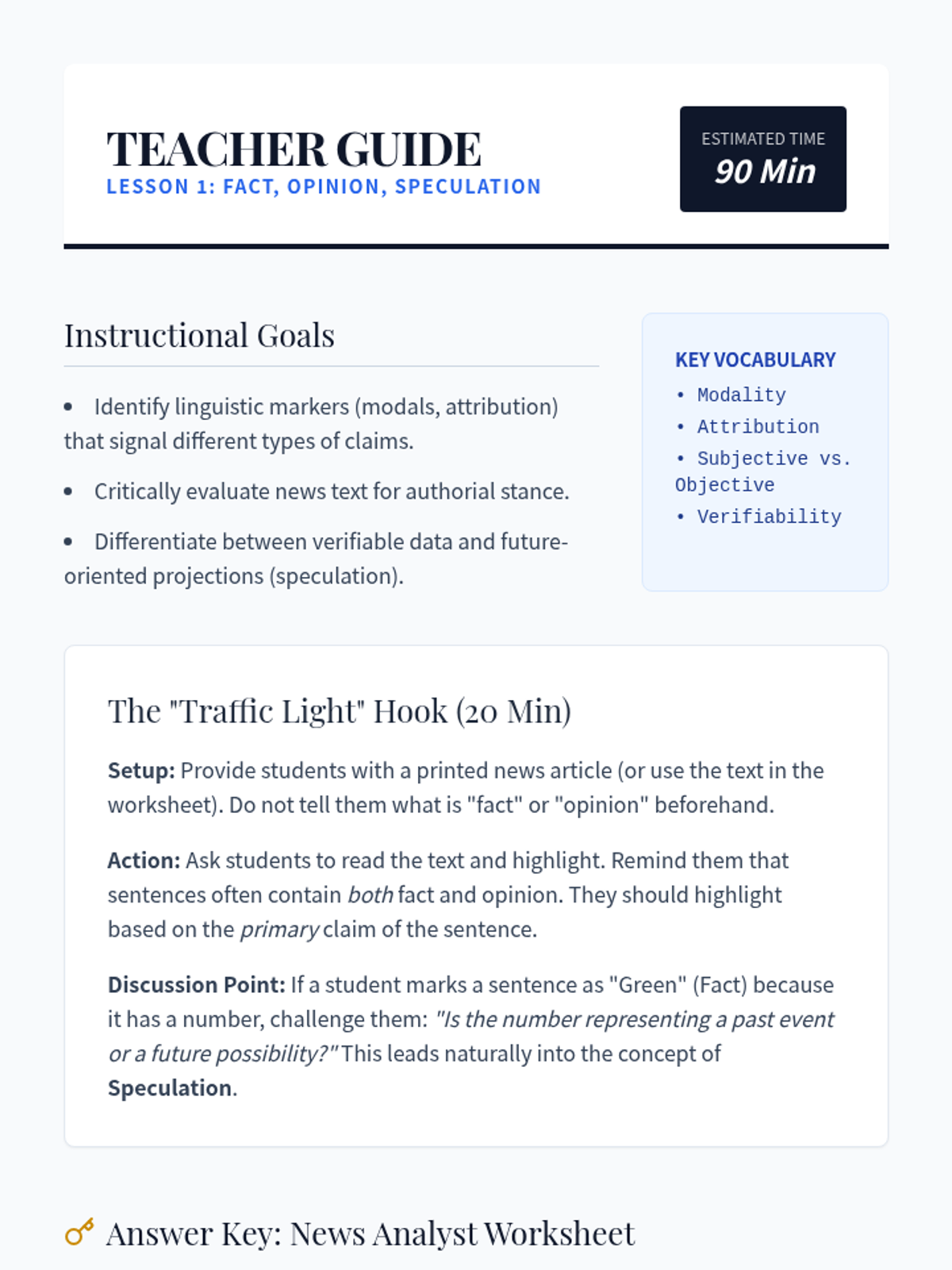
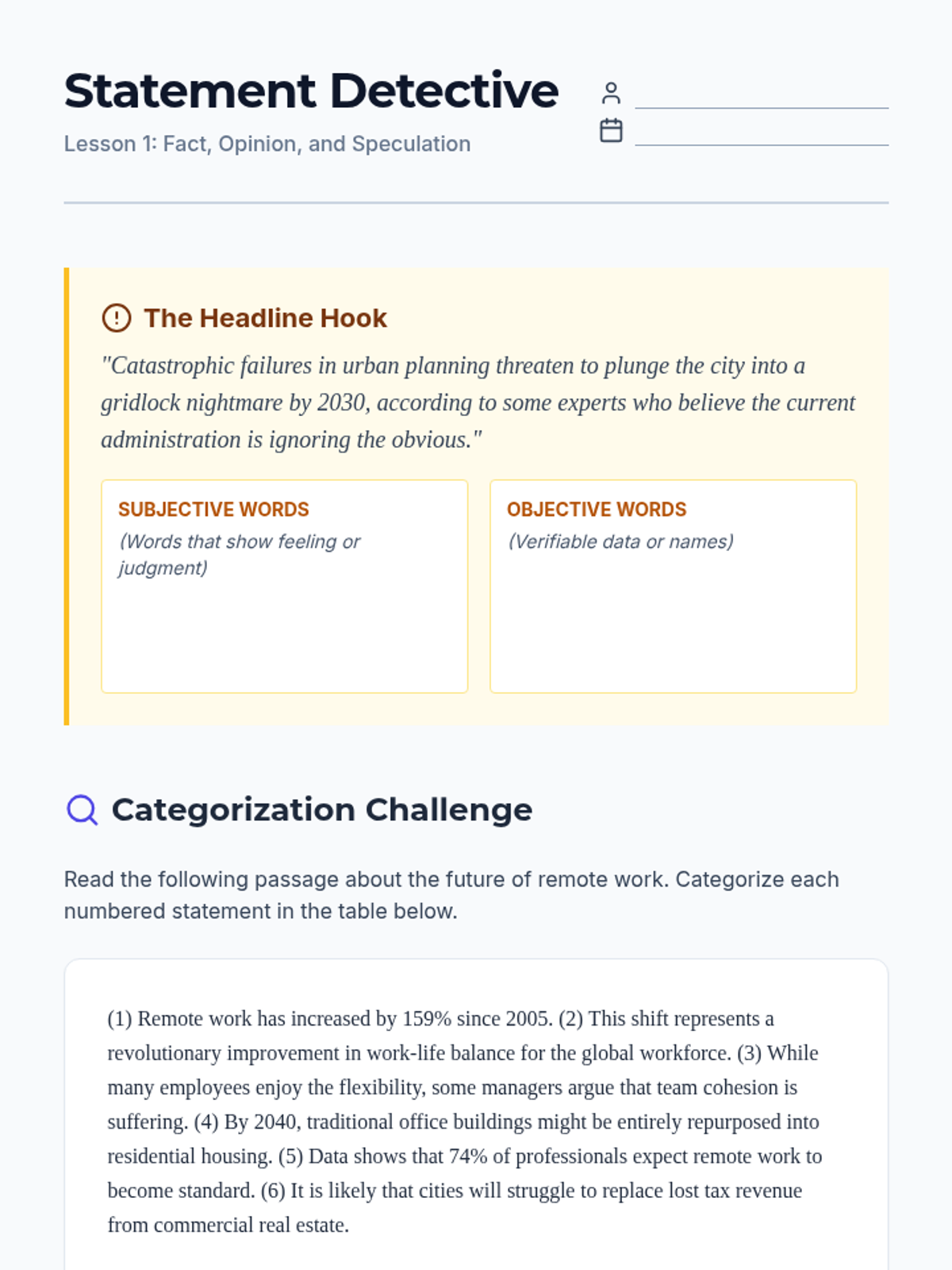
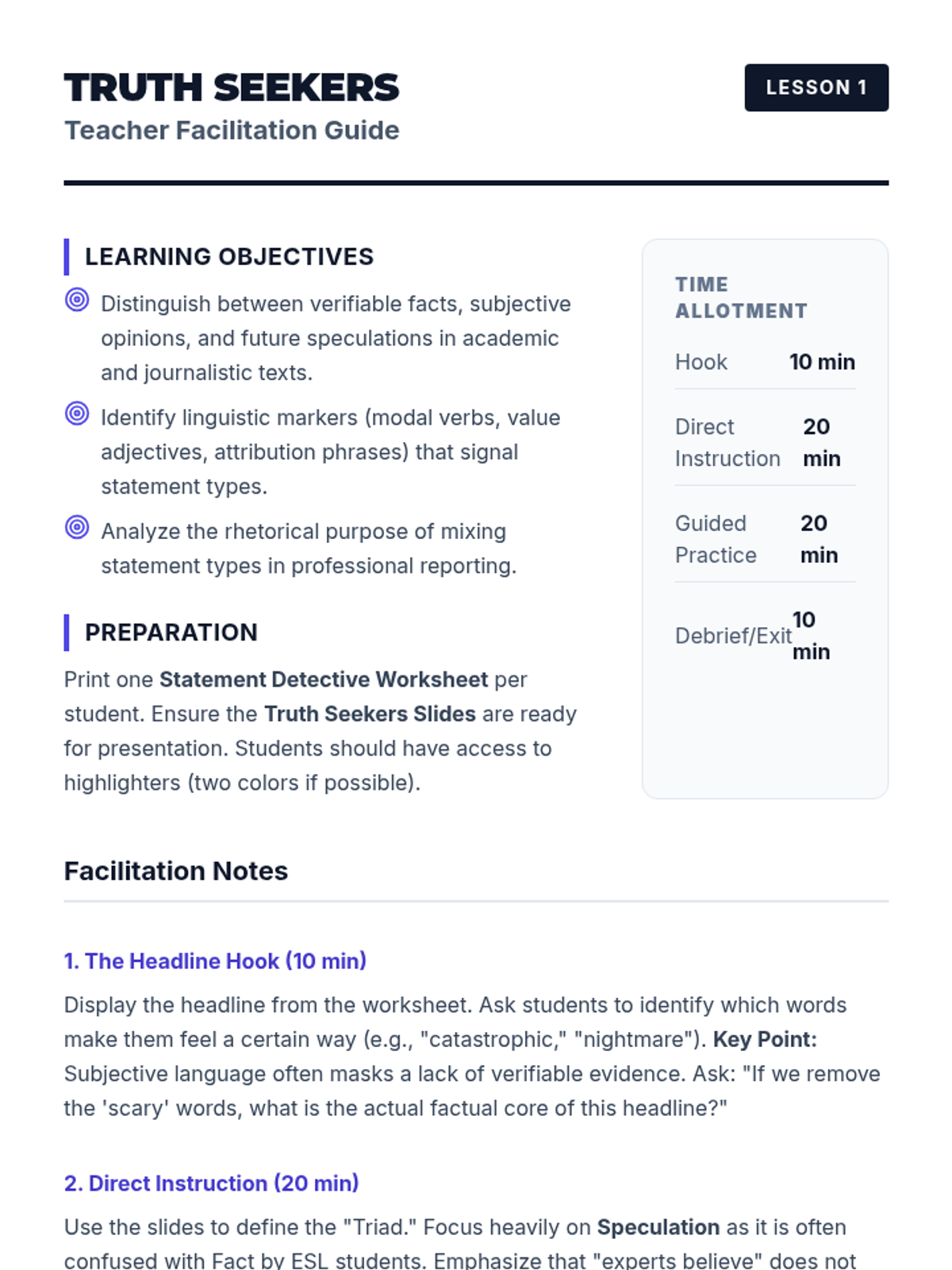
This sequence for intermediate ESL graduate students develops critical media literacy skills, focusing on the linguistic markers of fact, opinion, and speculation, the impact of connotative vocabulary, and the detection of bias and satire in complex texts.
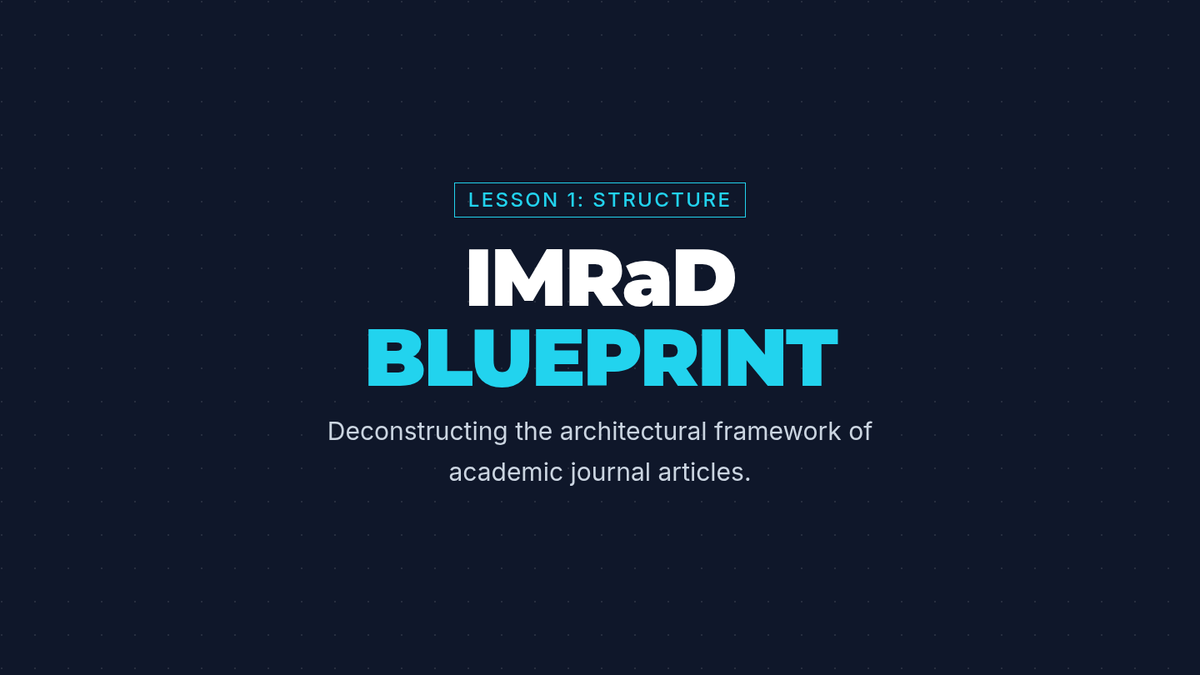
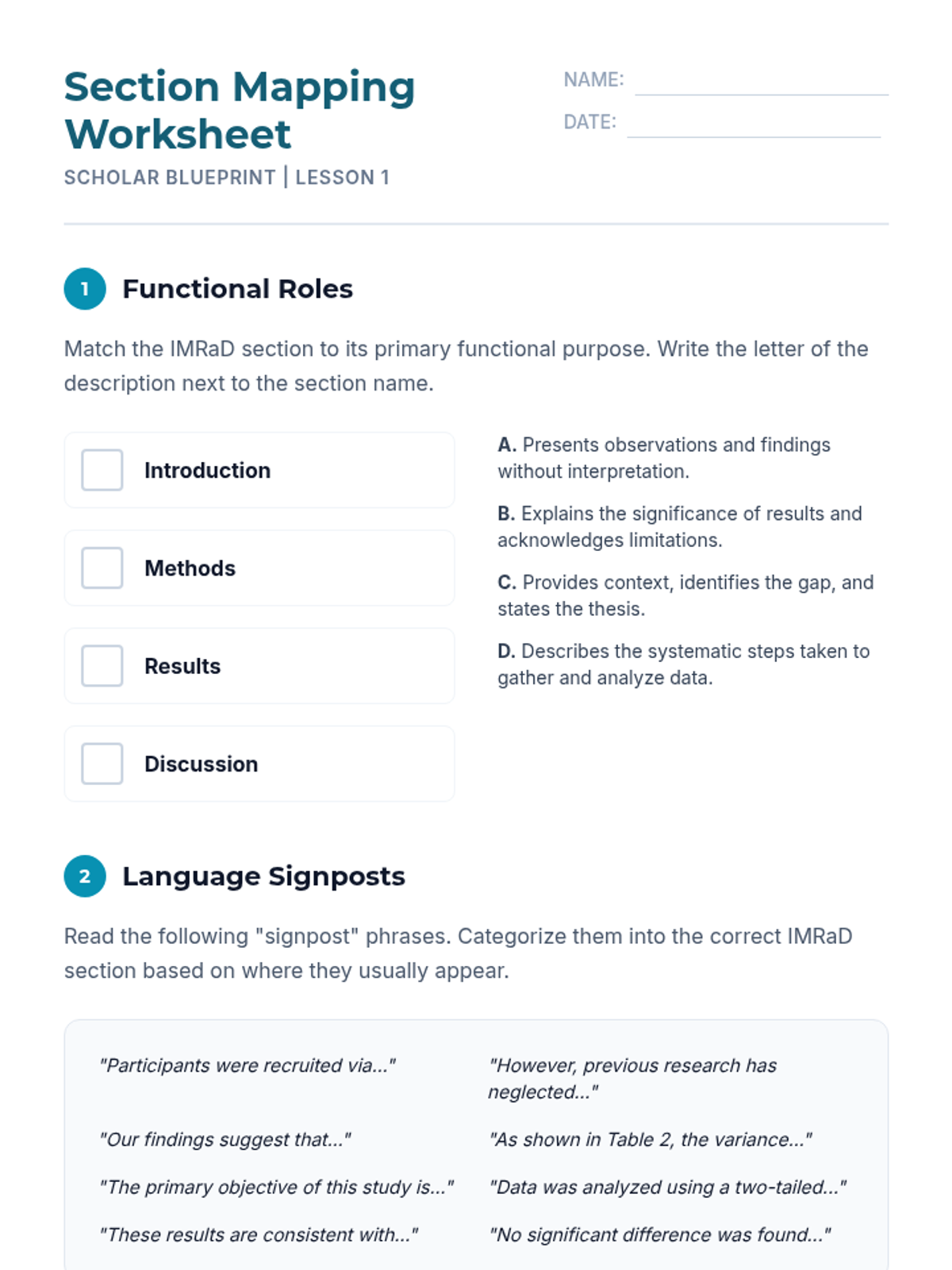
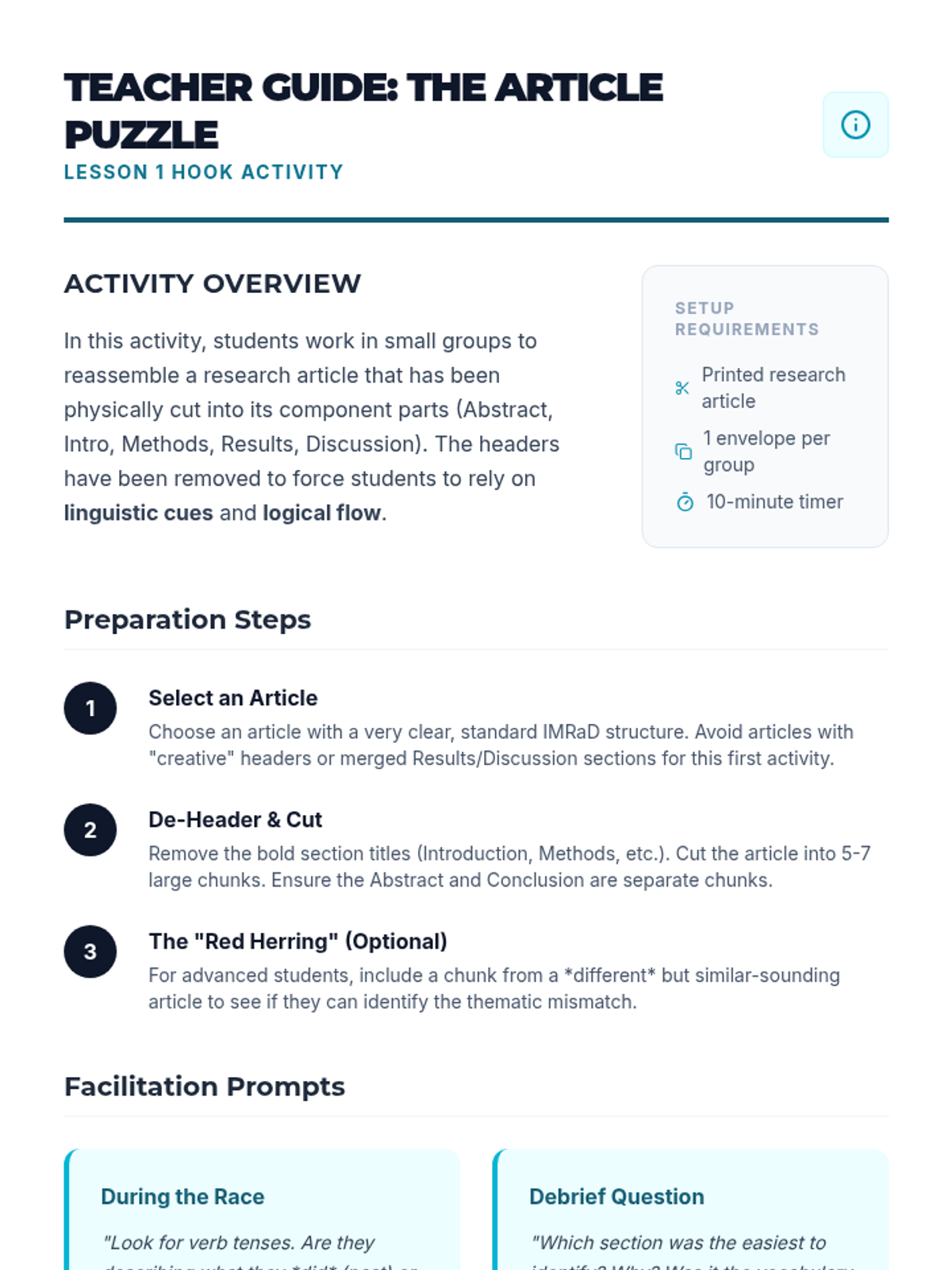
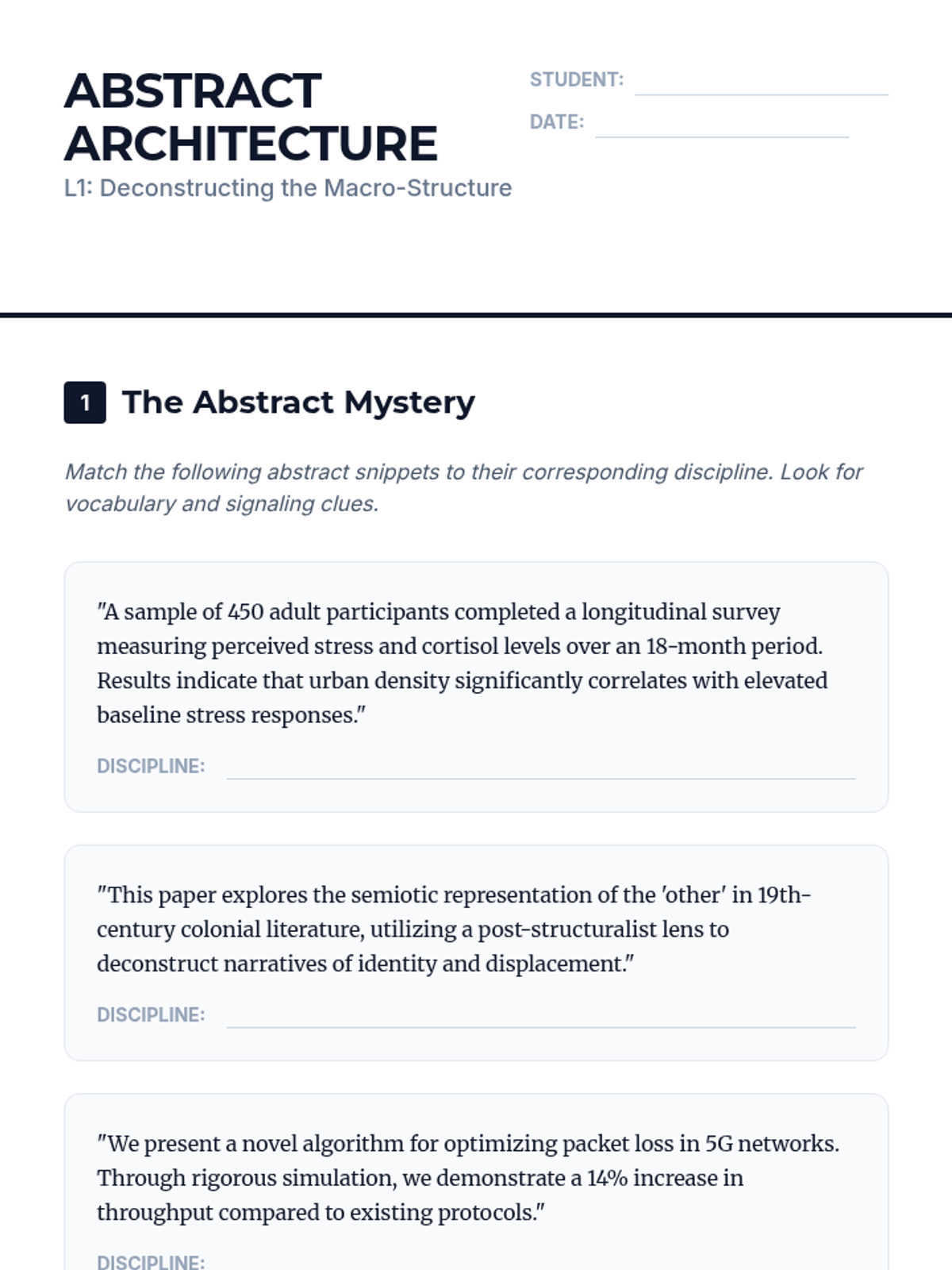
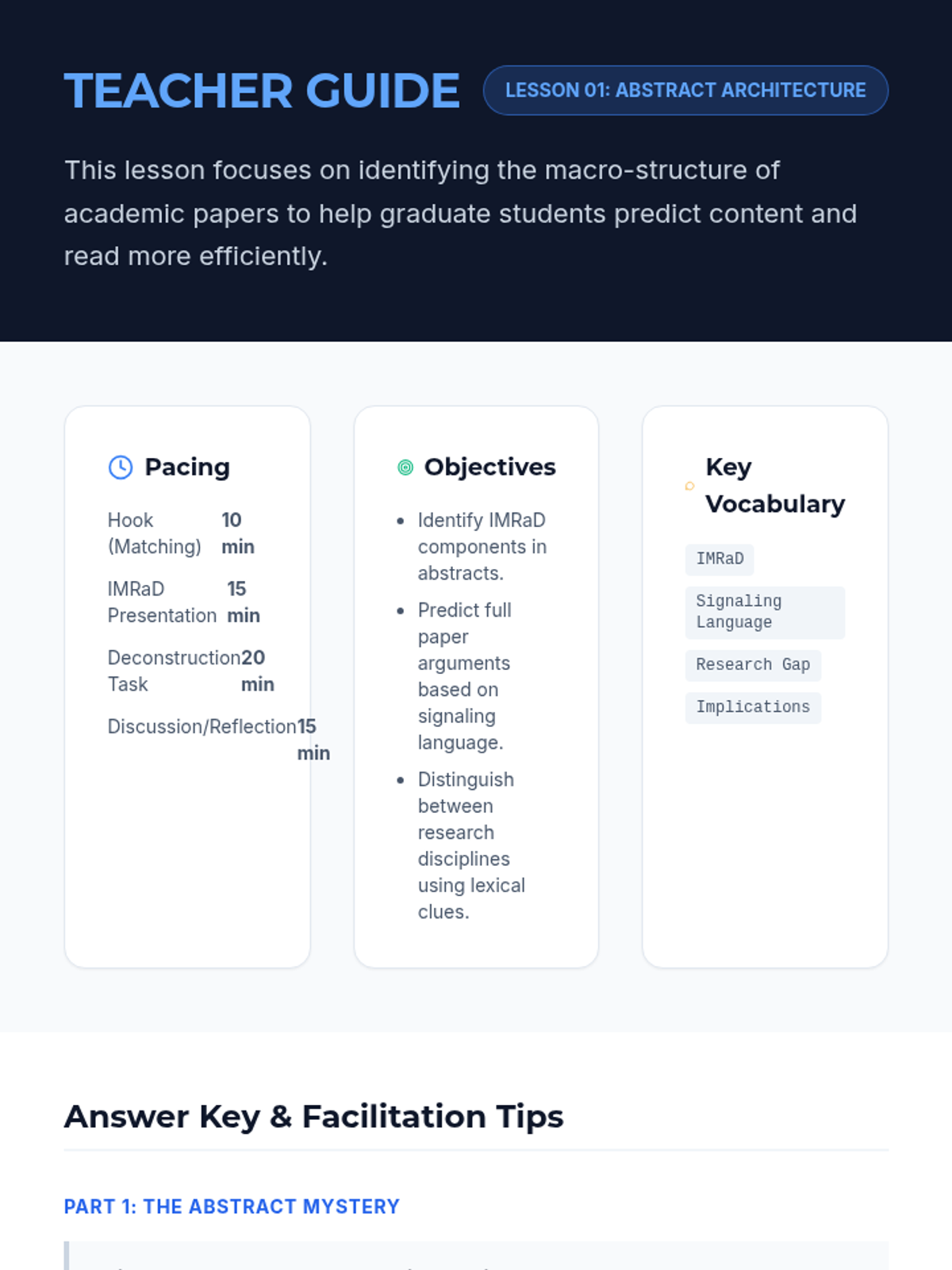
A comprehensive sequence for graduate ESL students to master the structure, language, and strategic reading of academic journal articles using the IMRaD model and syntactic parsing strategies.
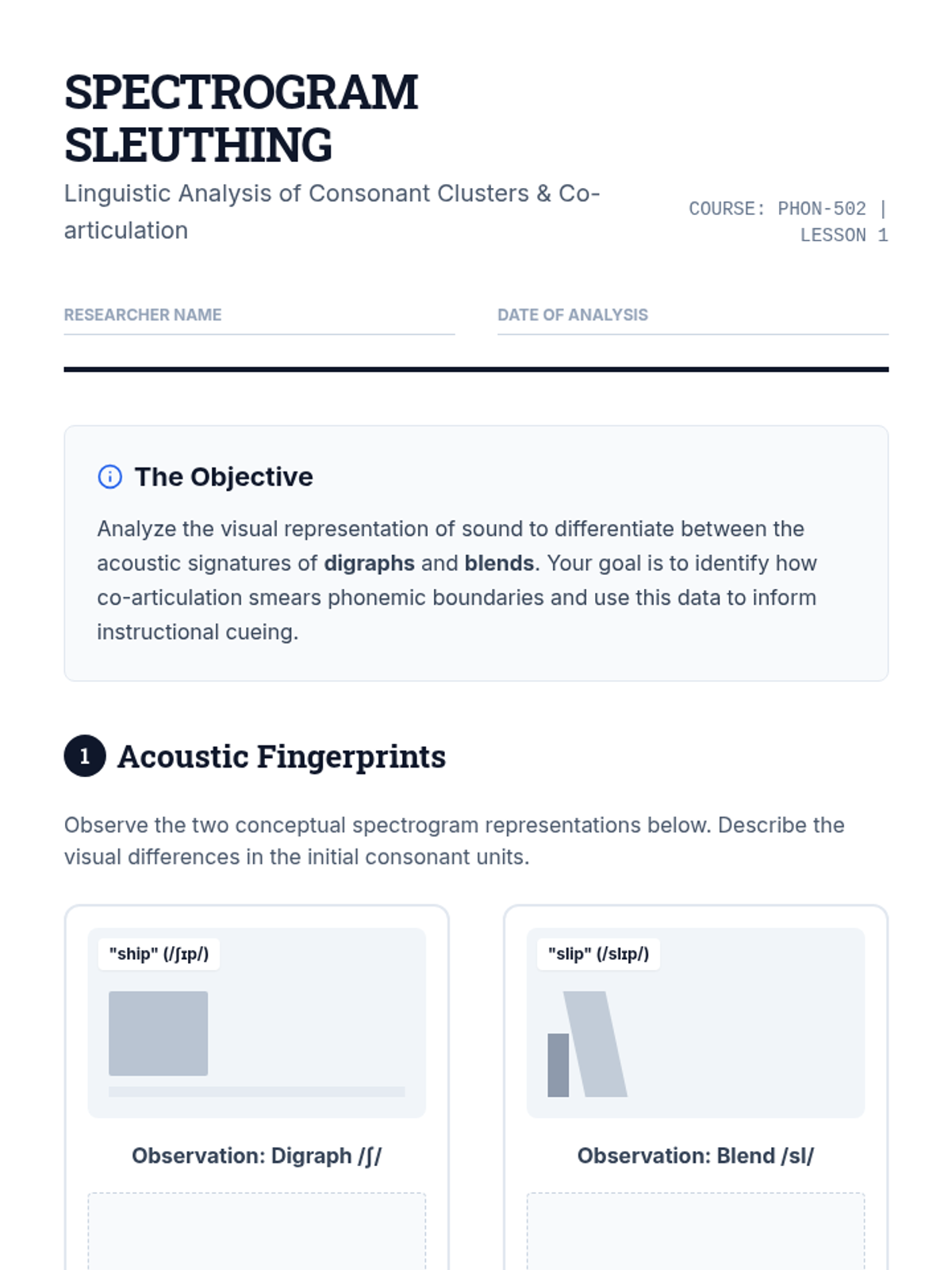
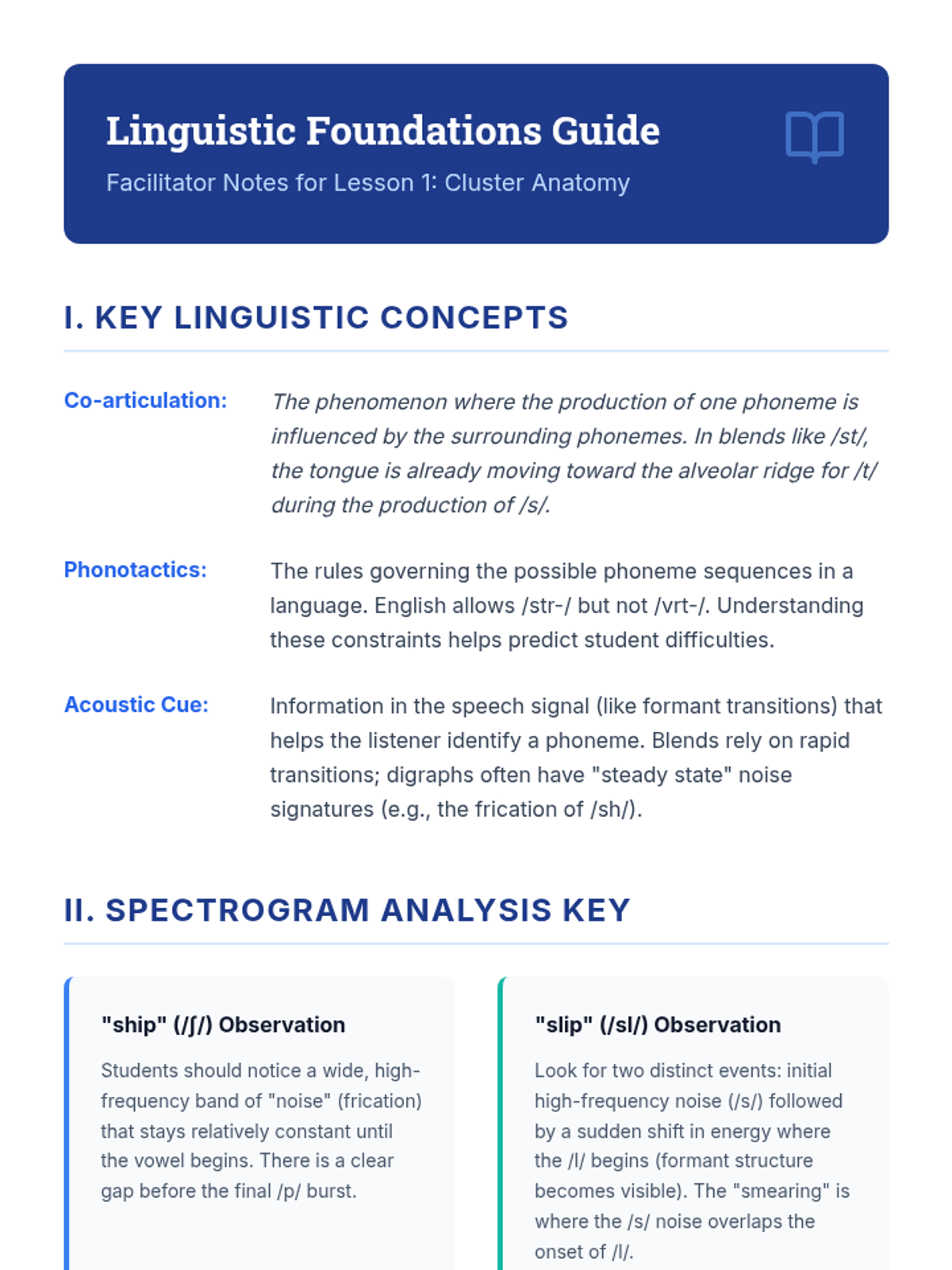
This graduate-level sequence explores the pedagogical engineering of phonics instruction, focusing on the articulatory and cognitive complexities of blends, digraphs, and trigraphs. Students will bridge the gap between linguistic theory and classroom practice through curriculum design, case study analysis, and instructional simulation.
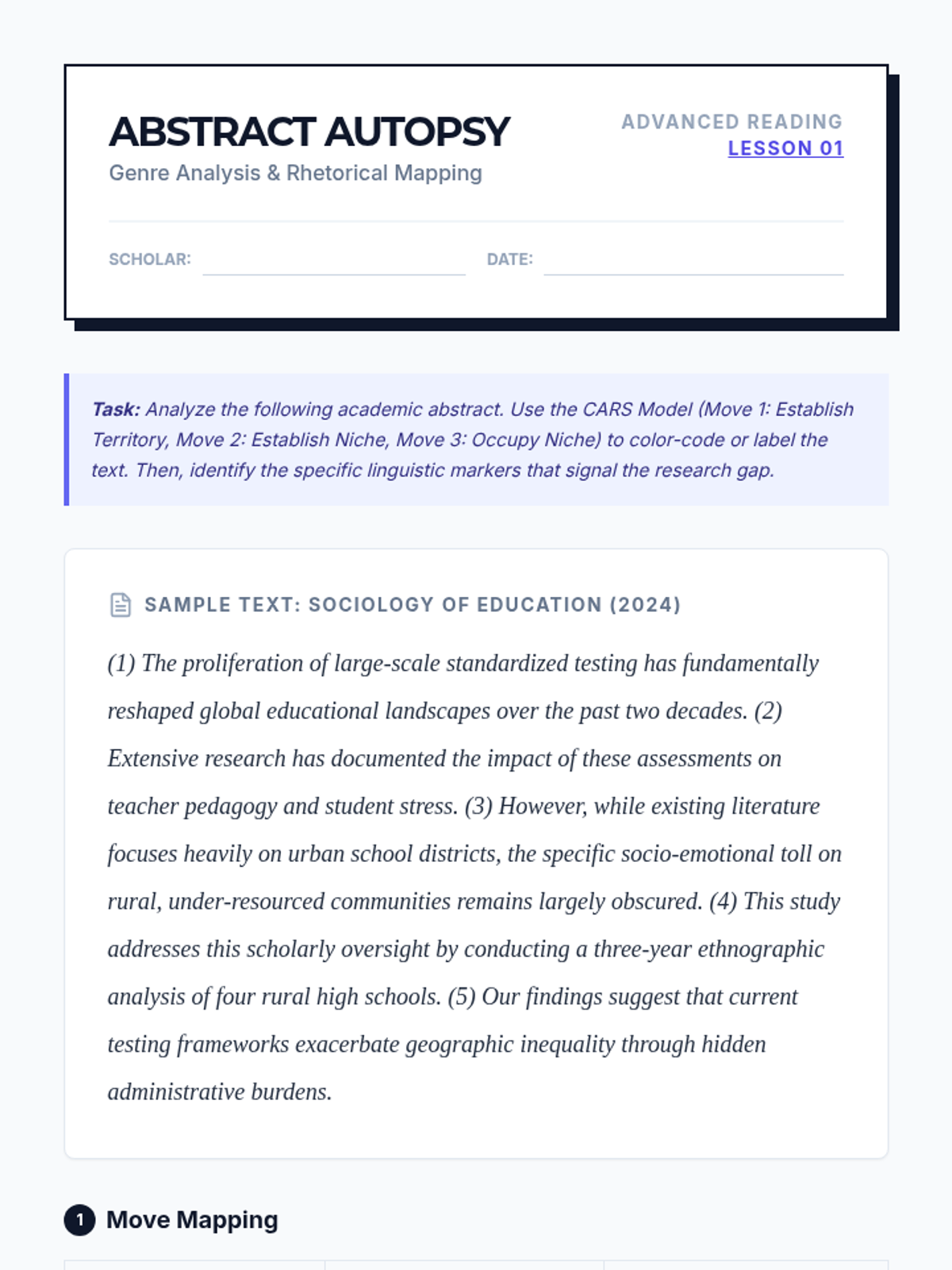
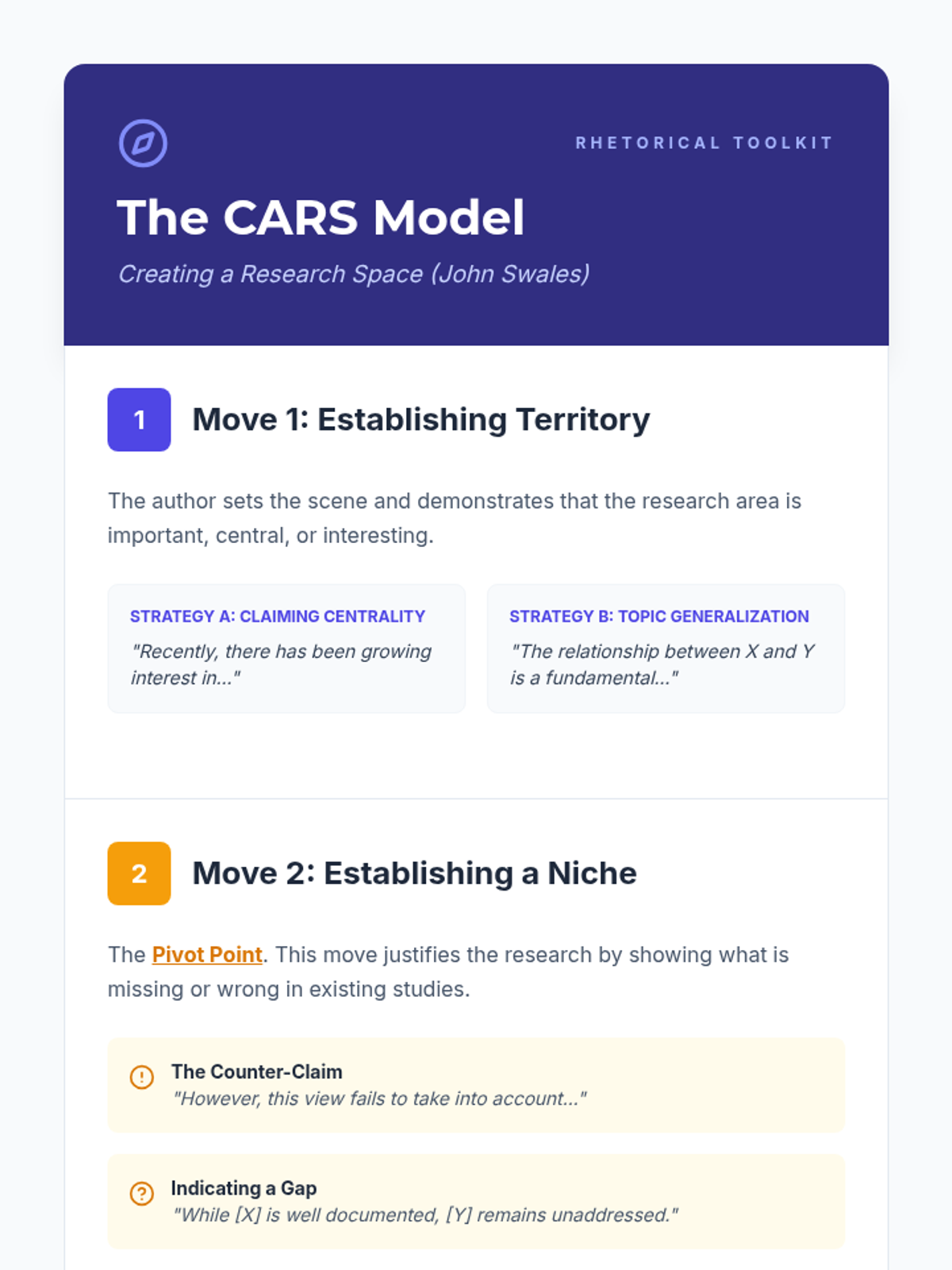
An advanced academic reading sequence for graduate students, focusing on the rhetorical structures of scholarly discourse. Students will deconstruct abstracts, synthesize literature, analyze hedging/stance, and critique methodological validity to master high-level academic communication.
A comprehensive sequence for graduate ESL students focusing on critical reading, tone analysis, and identifying bias in academic and journalistic texts. Students progress from basic fact-checking to sophisticated analysis of irony and comparative source evaluation.
A comprehensive sequence for graduate students focusing on advanced academic reading strategies, including IMRaD deconstruction, skimming, scanning, paragraph cohesion, and multi-source synthesis.
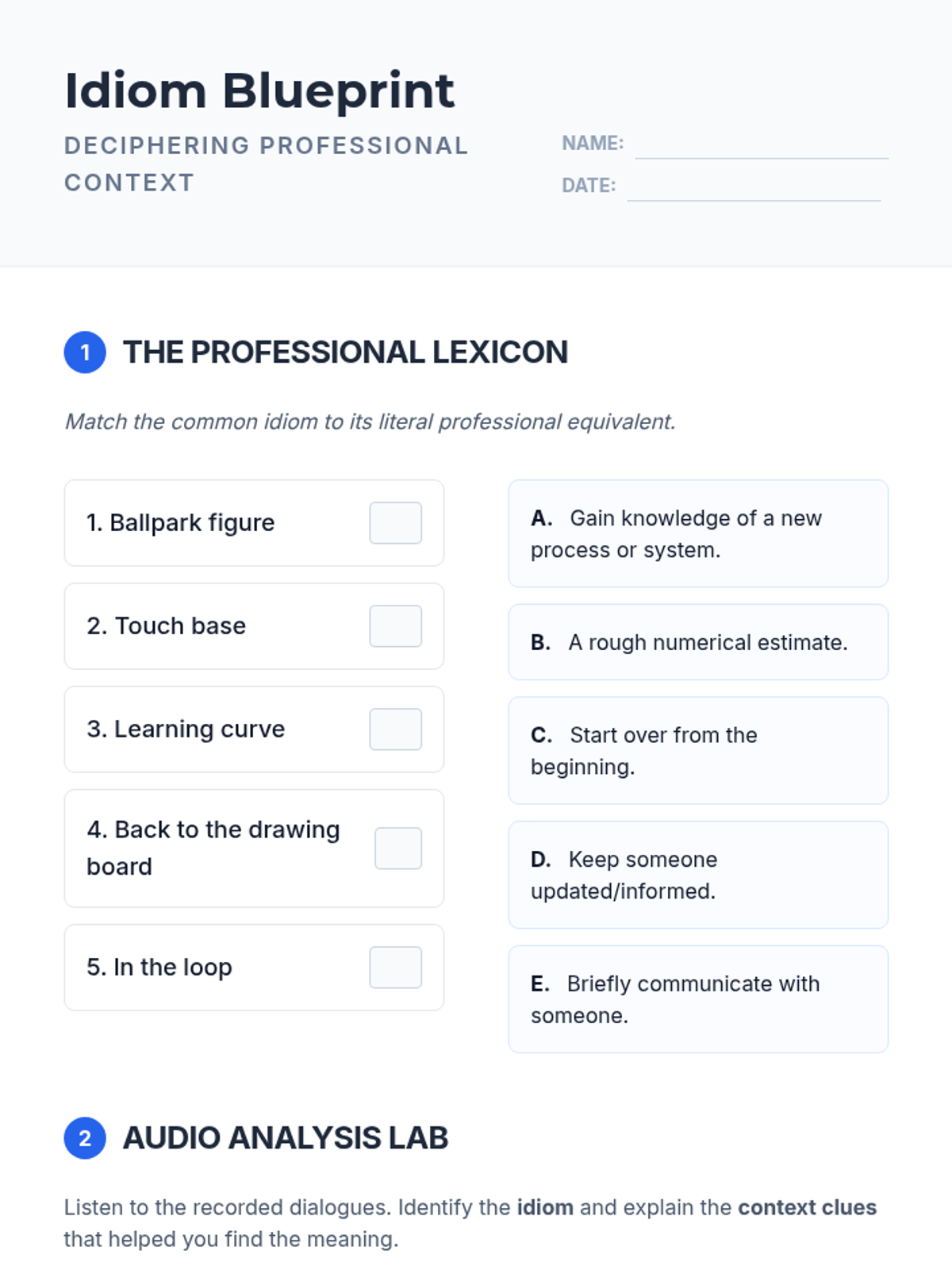
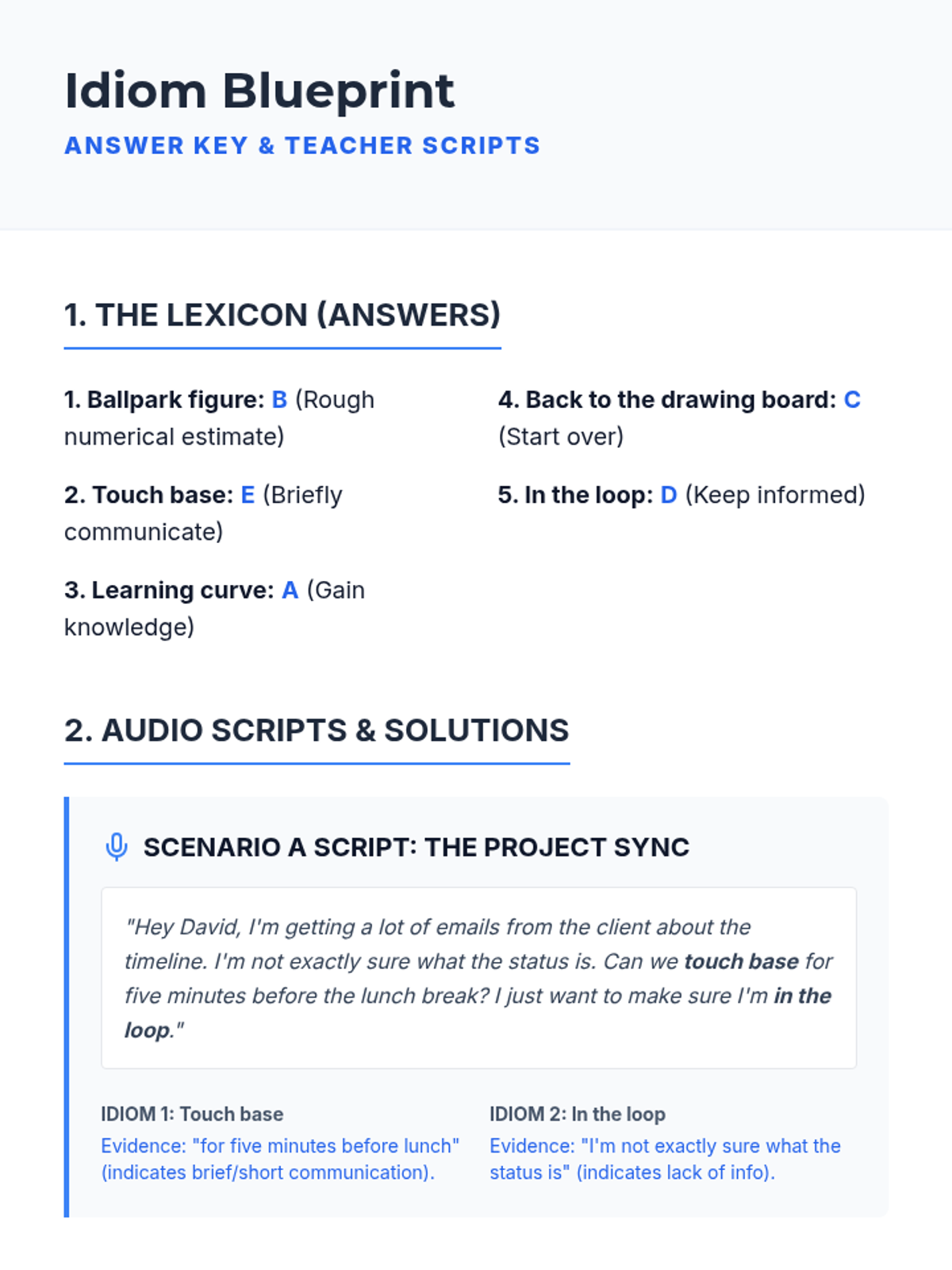
A 5-lesson sequence for graduate students to master idiomatic language, phrasal verbs, and cultural nuances in professional and academic networking environments. Students move from decoding literal meaning to applying figurative language in a high-stakes networking simulation.
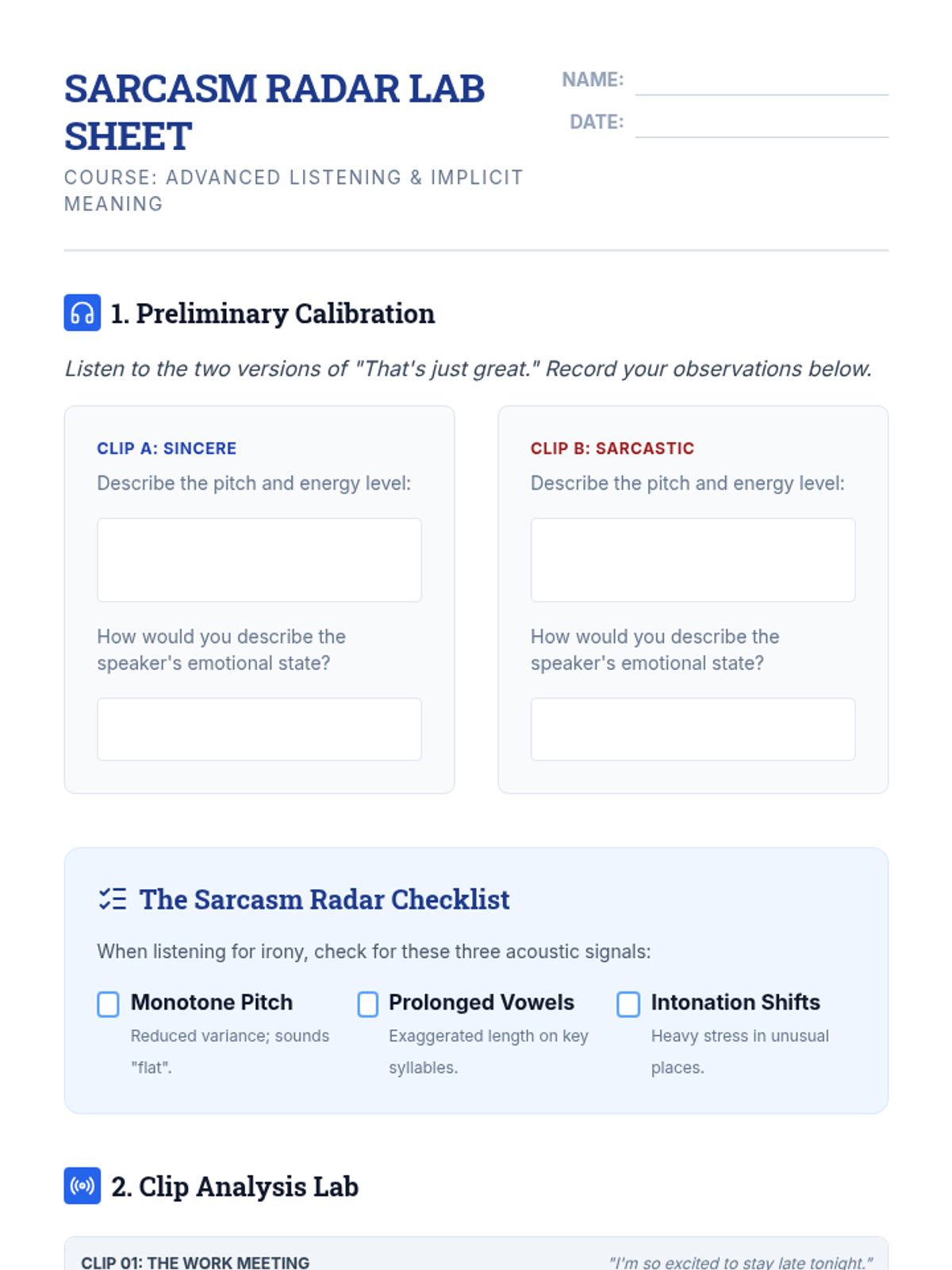
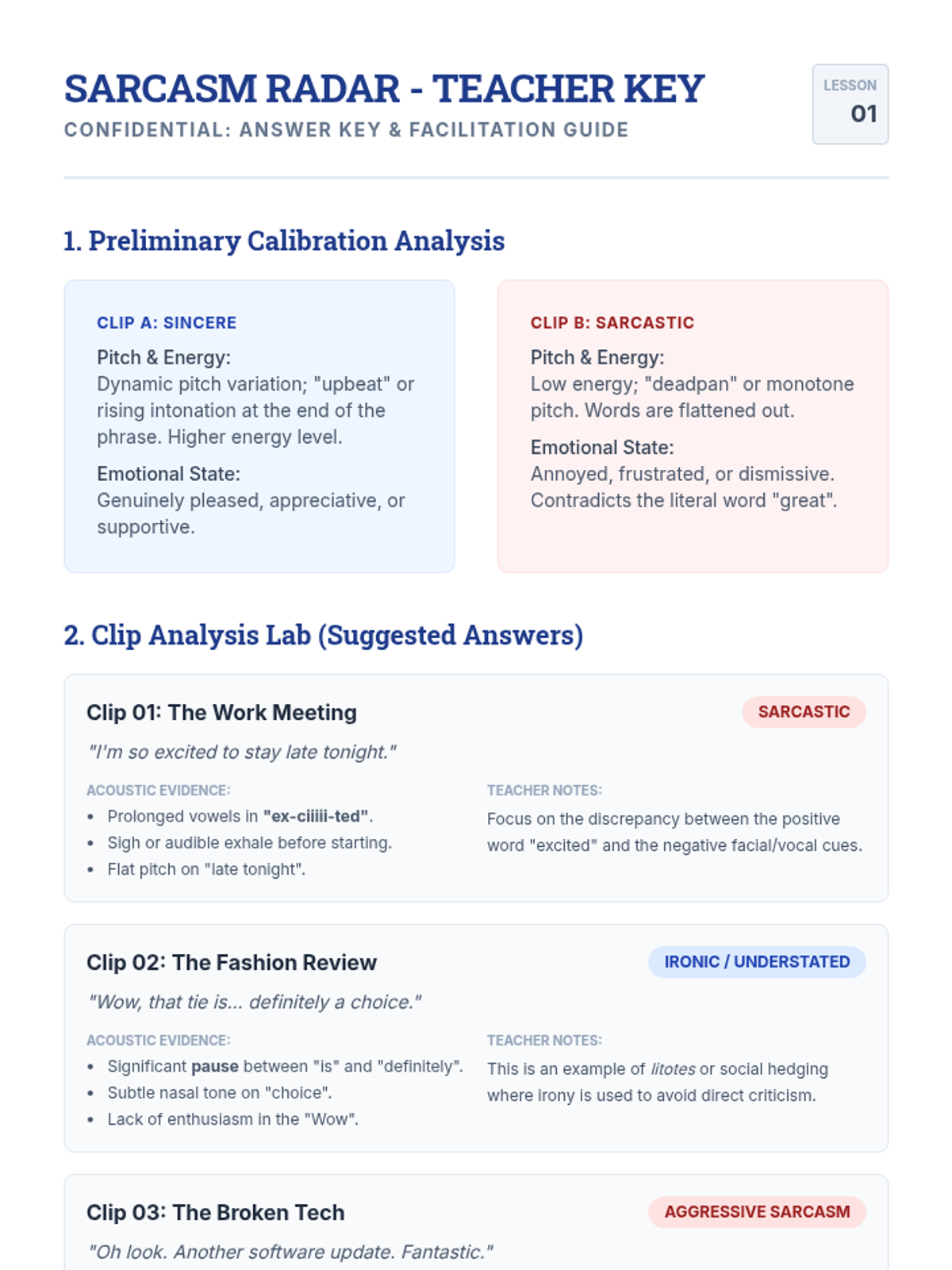
This sequence for graduate ESL students explores the nuances of English beyond literal meaning. Students will master the ability to detect sarcasm, bias, contrastive stress, and professional register, equipping them for complex academic and professional communication.
A graduate-level ESL listening sequence focused on the pragmatics of academic discourse. Students learn to navigate the subtleties of seminar discussions by identifying hedging, turn-taking signals, disagreement strategies, and multi-speaker argument threads.
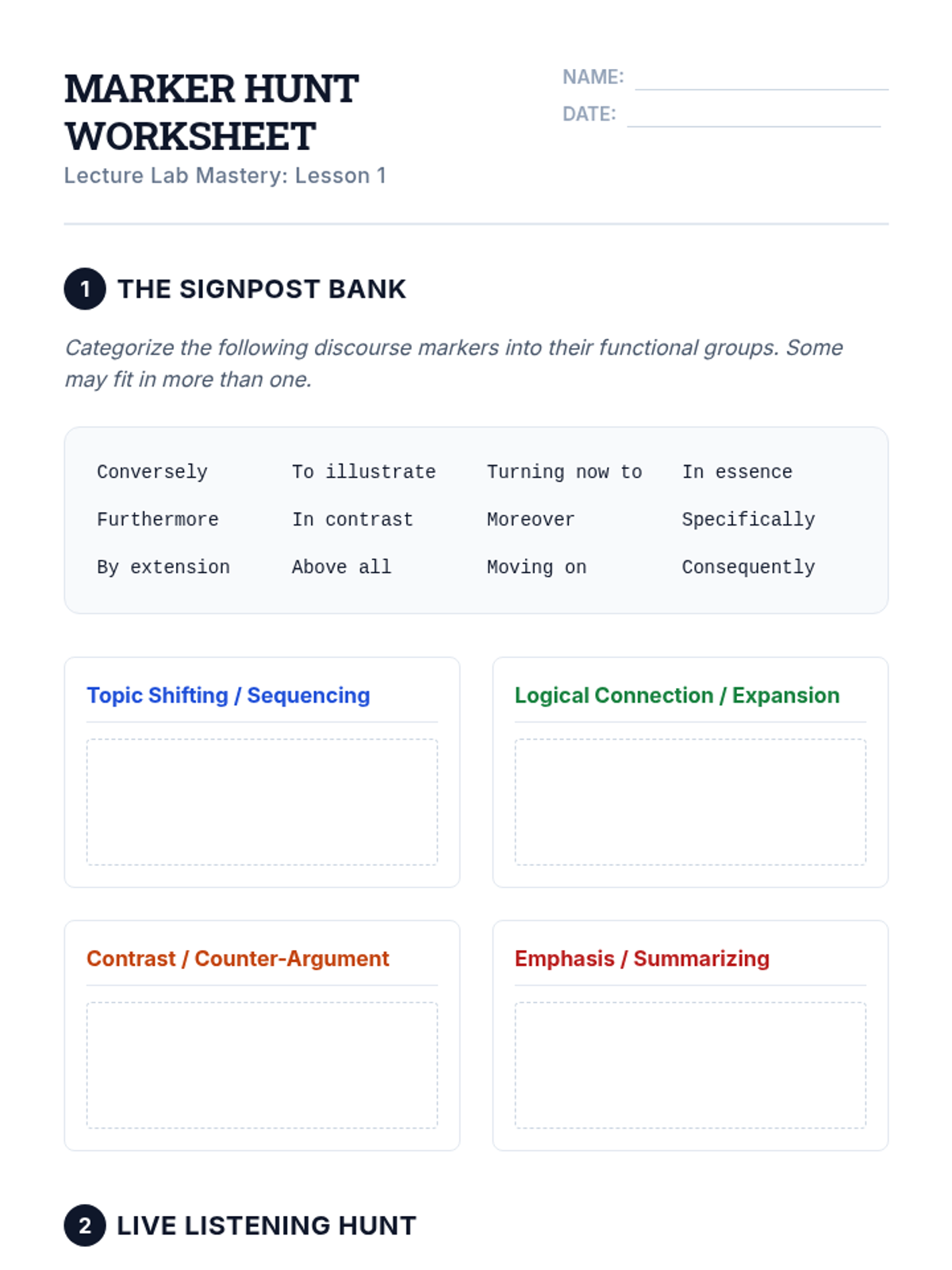
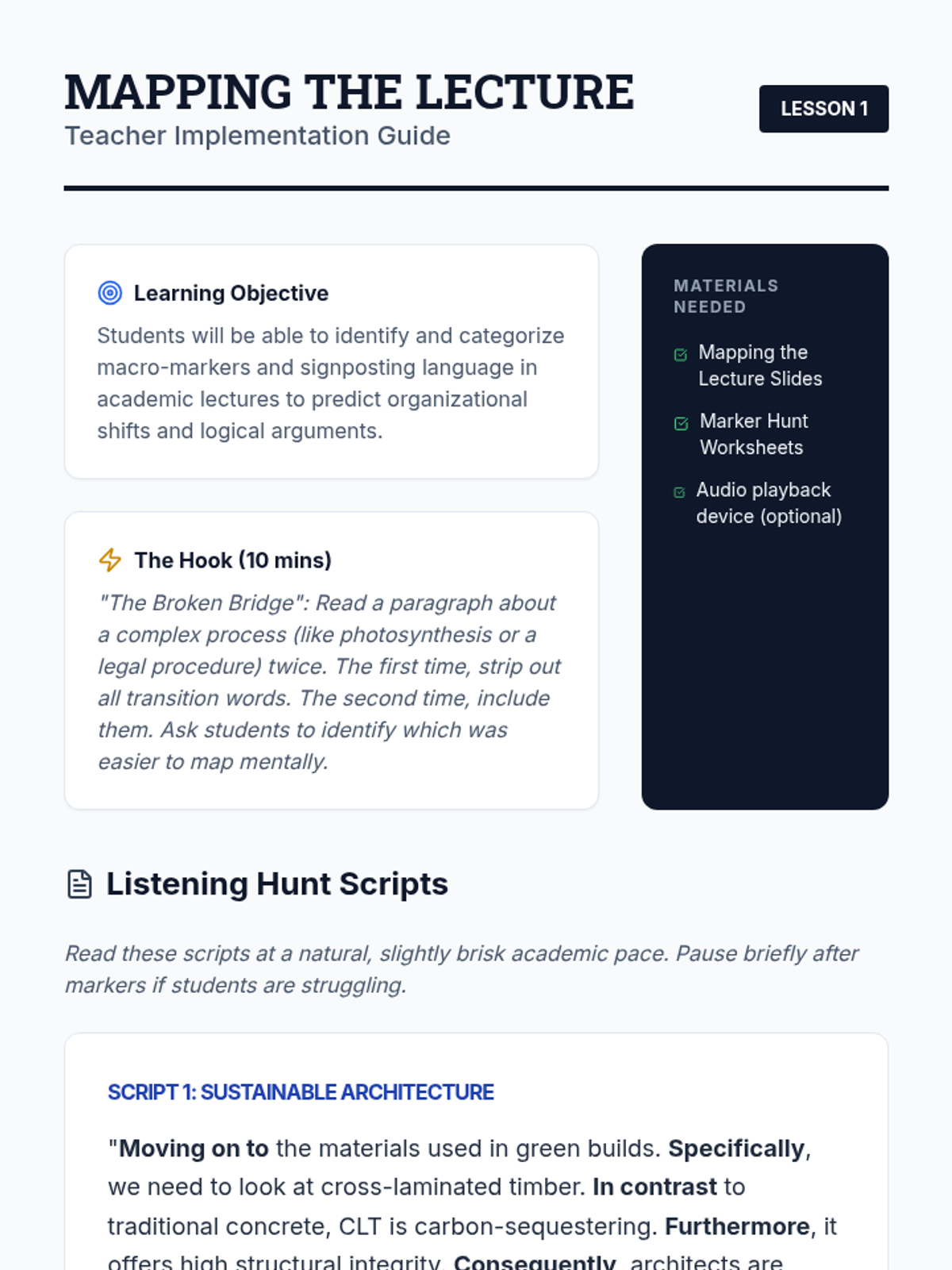
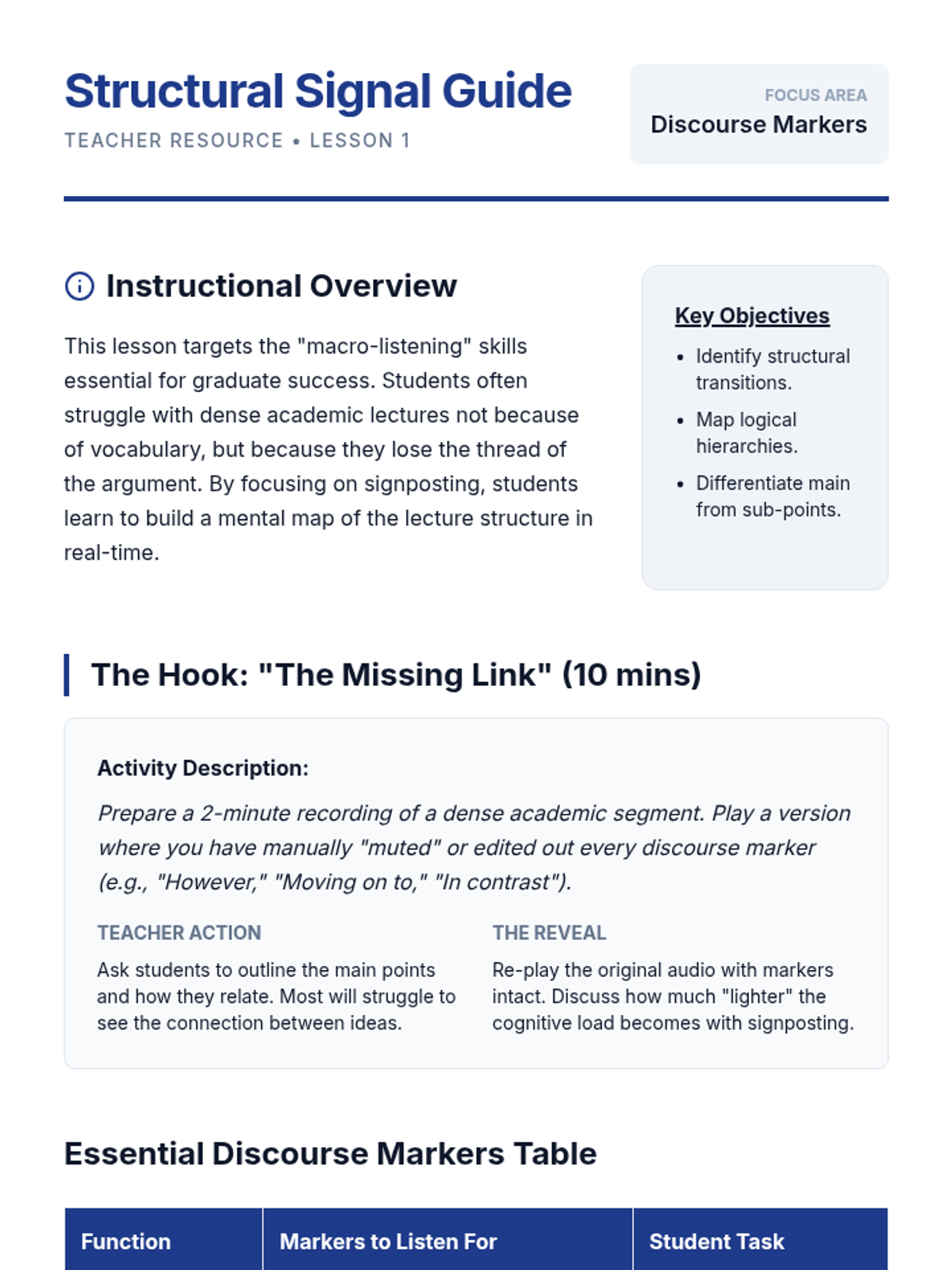
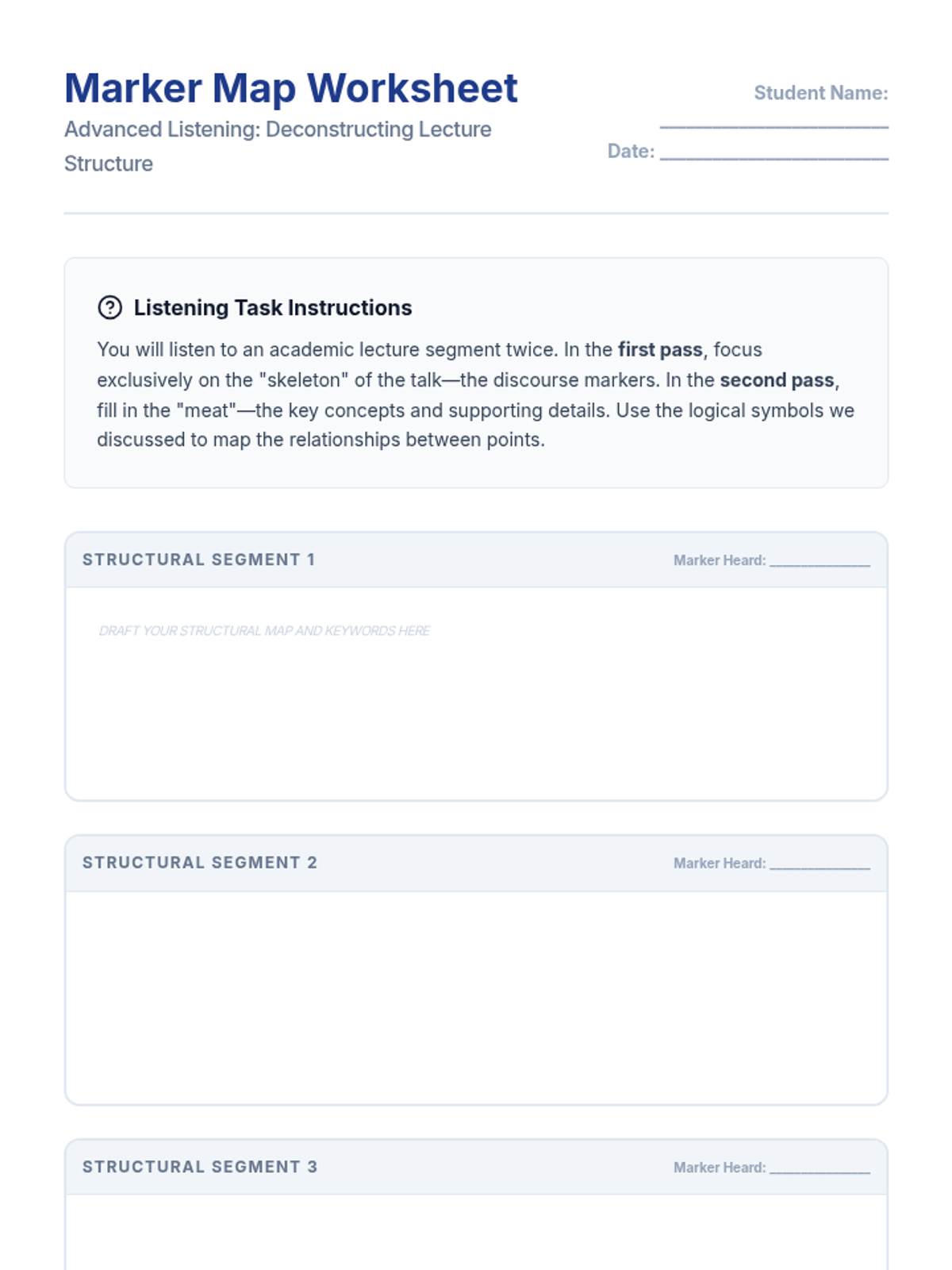
A comprehensive sequence for intermediate ESL graduate students focused on mastering academic lecture comprehension, identifying discourse markers, filtering digressions, and implementing effective note-taking strategies.
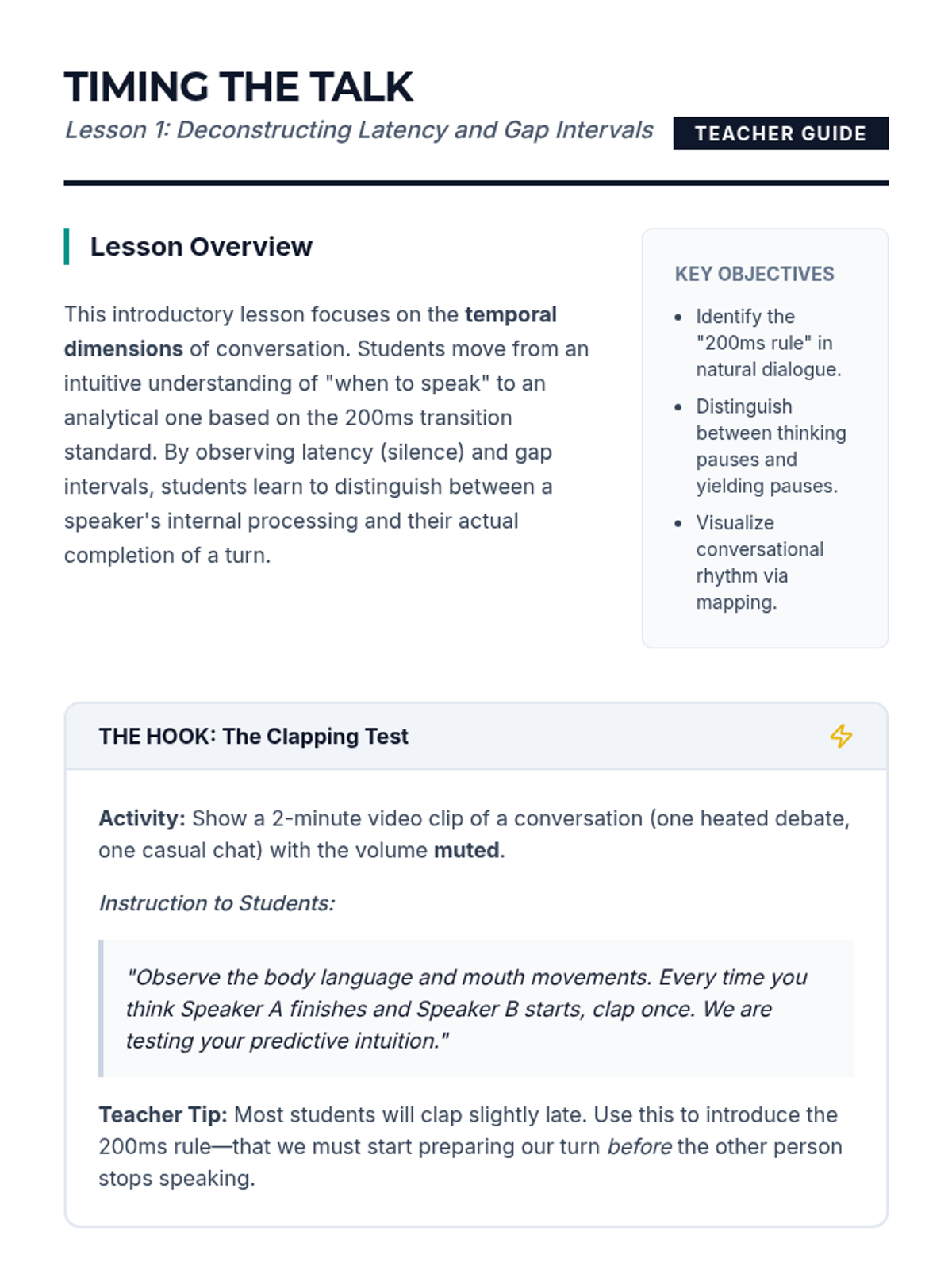
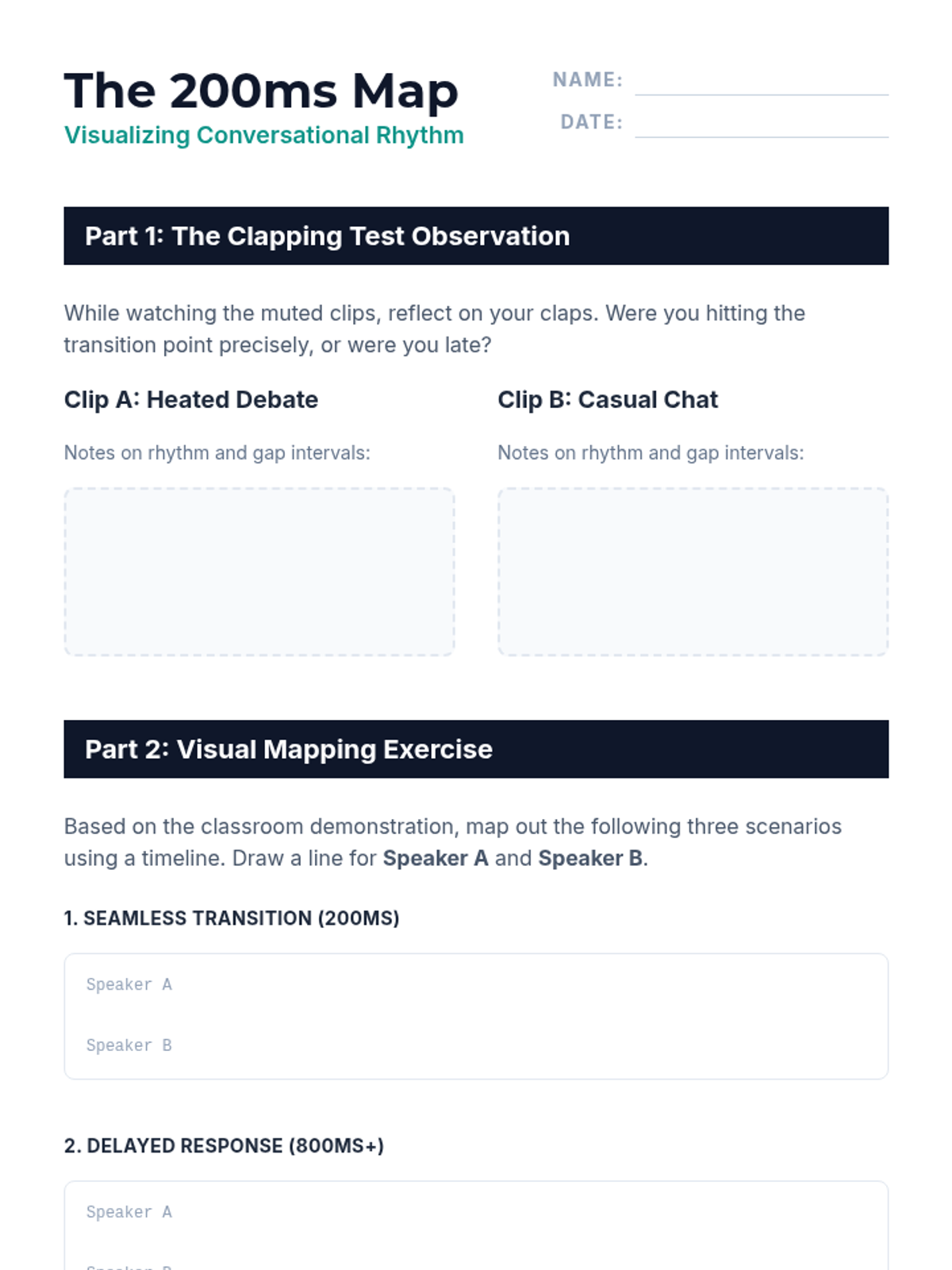
An advanced exploration of conversational pragmatics for undergraduate students, focusing on the micro-behaviors of turn-taking, timing, and non-verbal cues in professional settings. Students progress from analyzing 200ms latency gaps to managing complex multi-party seminar dynamics.
A high-level ESL sequence focusing on sophisticated argumentative structures, rhetorical strategies, and formal debate for graduate students. Students move from complex grammar to high-stakes persuasion.
This sequence immerses undergraduate students in the rigorous environment of university-level academic discourse, focusing on the deconstruction of complex lectures and presentations. Students move from identifying structural signposts to evaluating implicit bias, speaker intent, and rhetorical strategies in real-time.
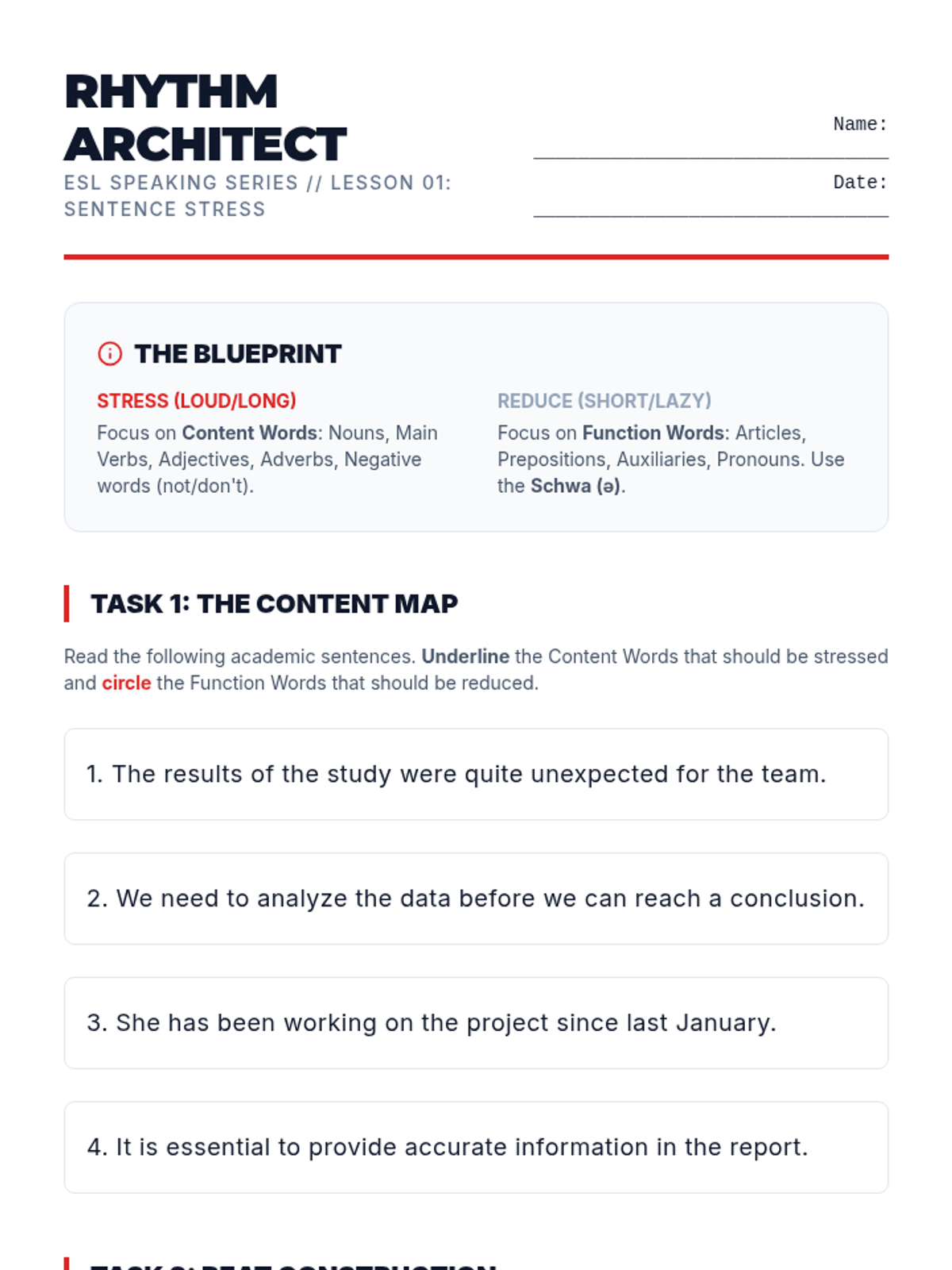
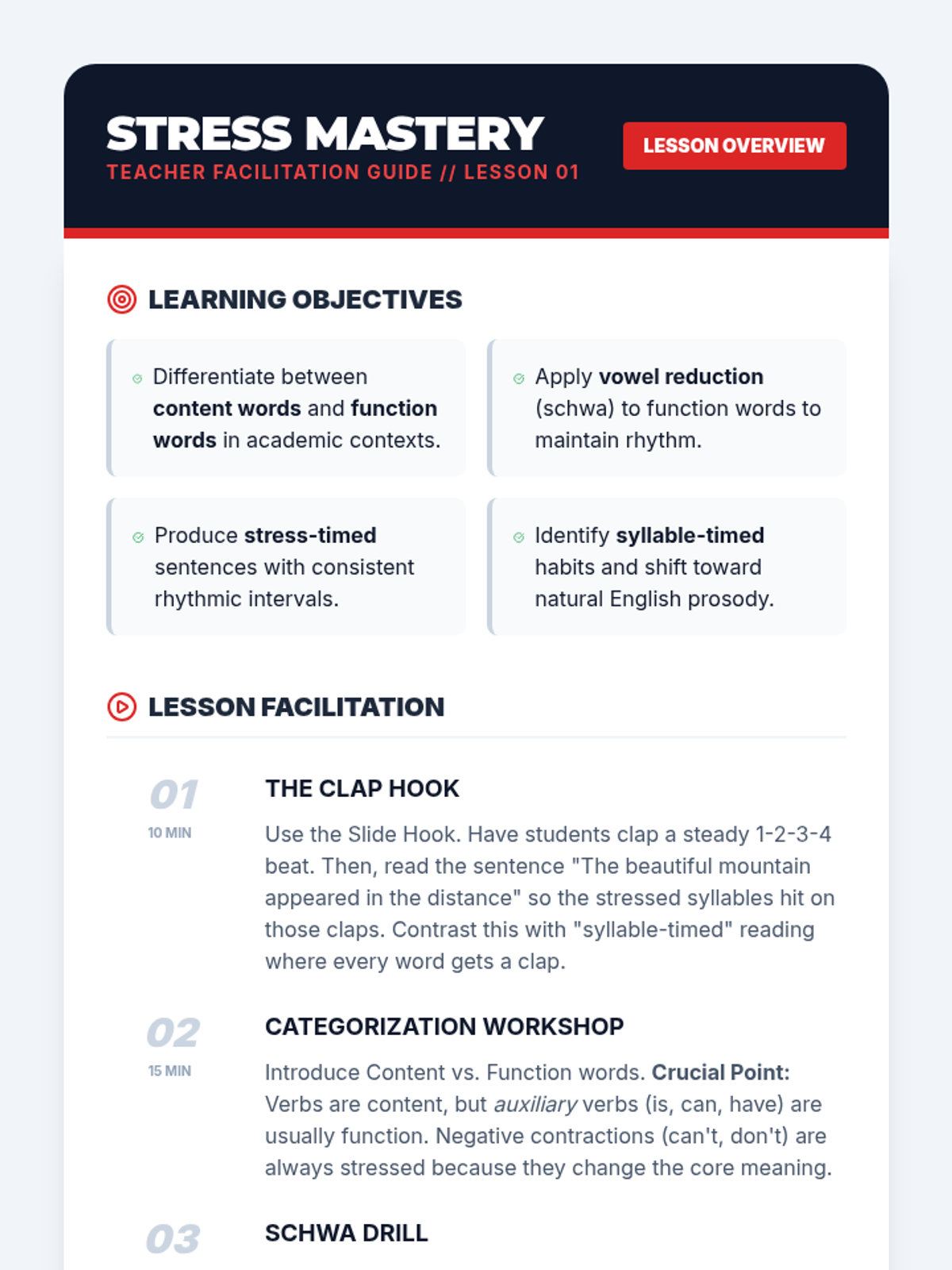
This sequence addresses the mechanical aspects of speaking that often hinder comprehensibility for intermediate graduate learners: stress, rhythm, and intonation. Students move from analyzing recorded speech to intense drilling of sentence stress, finally applying these skills to a recorded monologue to improve clarity and professional delivery.
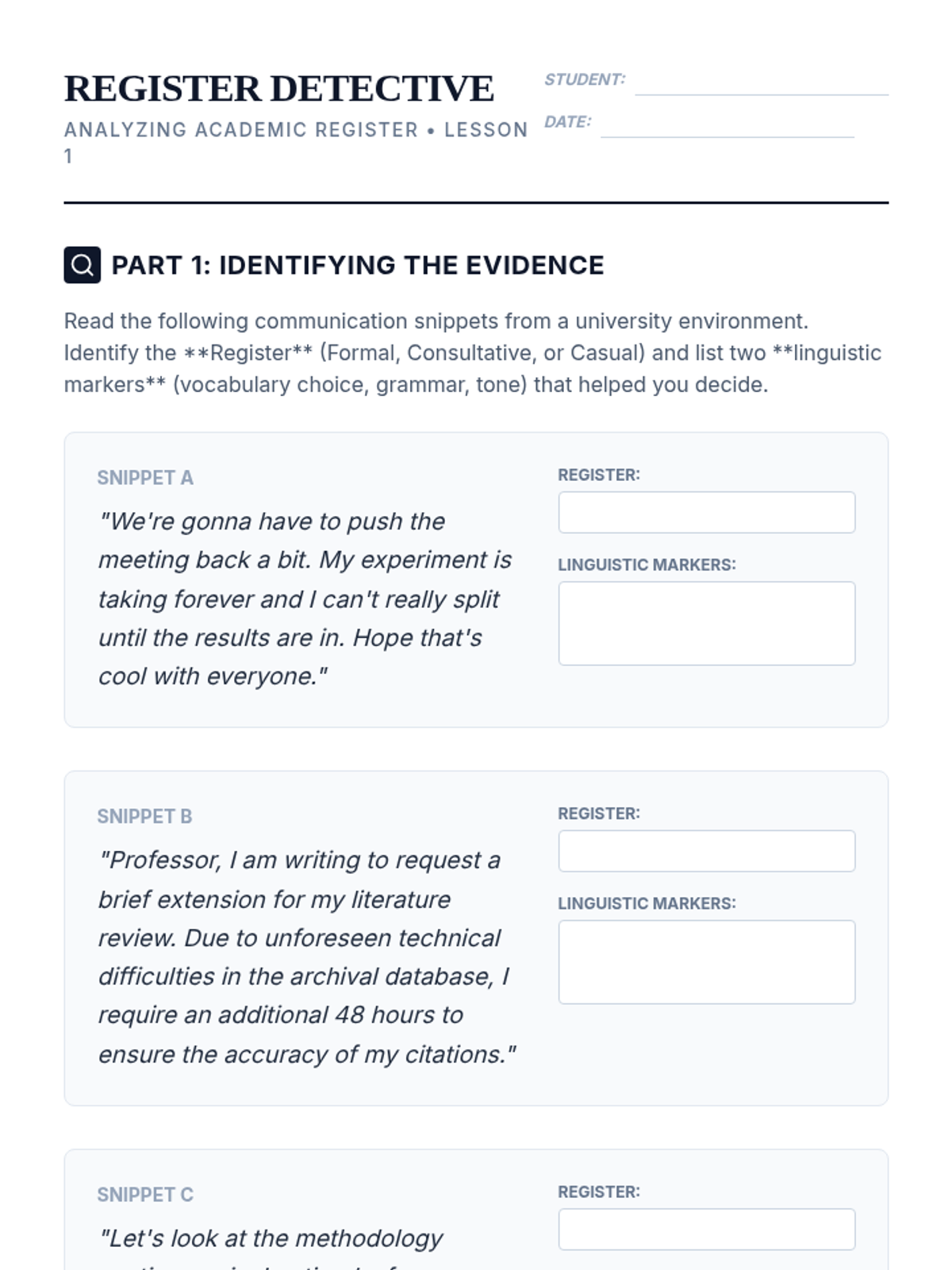
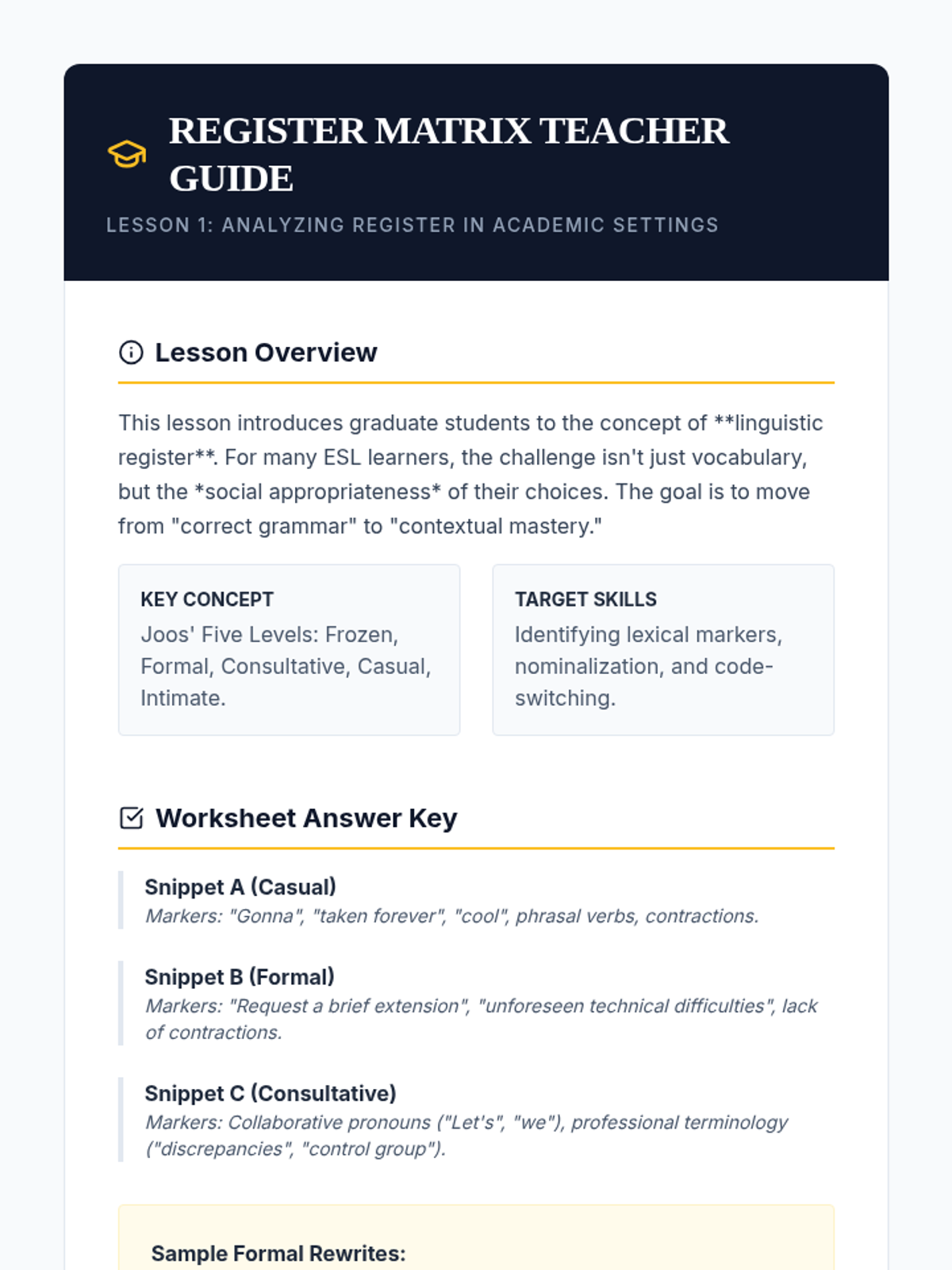
This sequence helps graduate students navigate the nuances of academic and professional English. Students learn to adjust their linguistic register based on context, audience, and power dynamics, moving from formal lectures to casual networking events.
A comprehensive graduate-level ESL sequence focusing on the cognitive processing of academic lectures. Students move from identifying structural markers to evaluating complex rhetorical strategies and stance-taking.
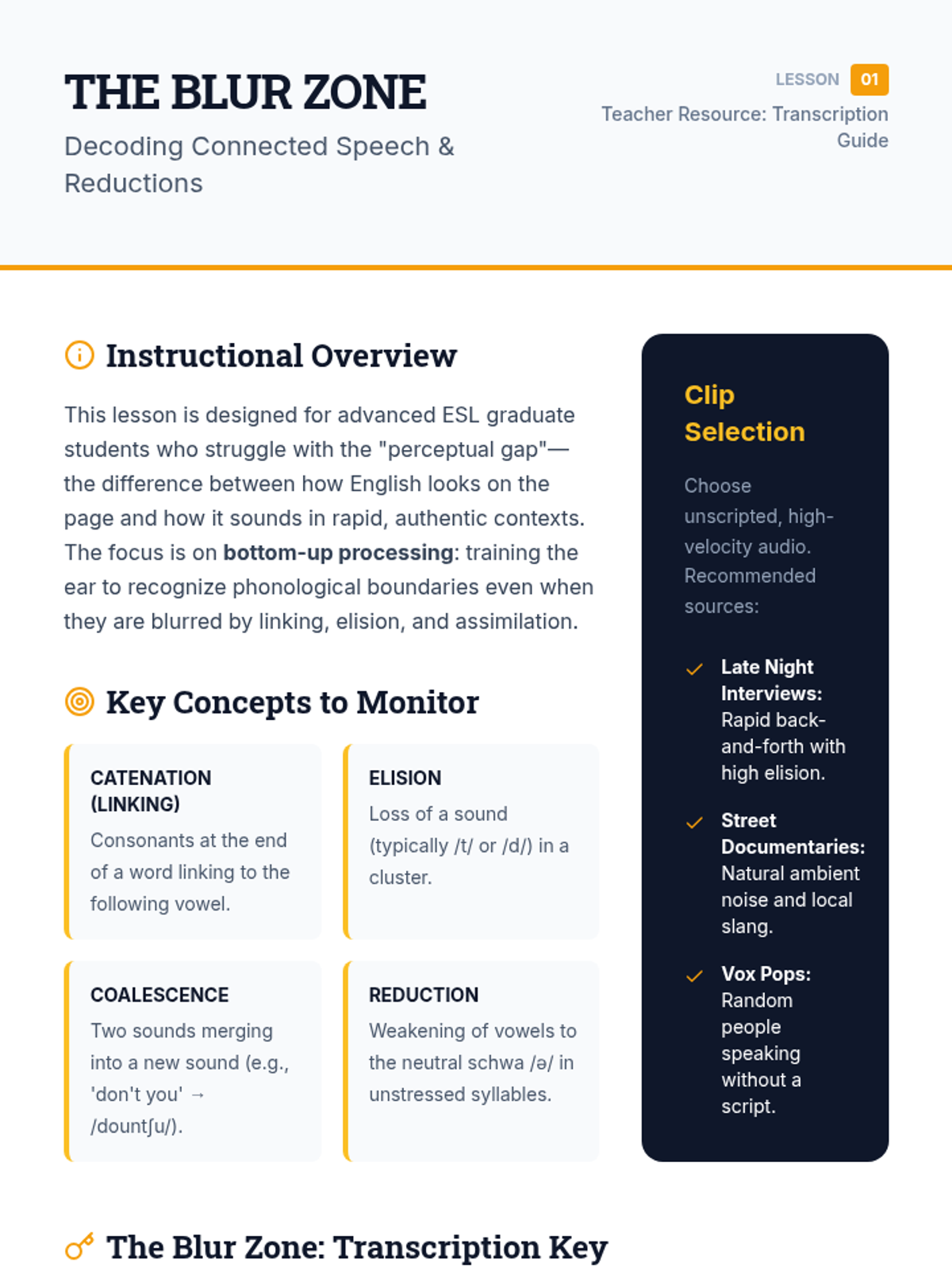
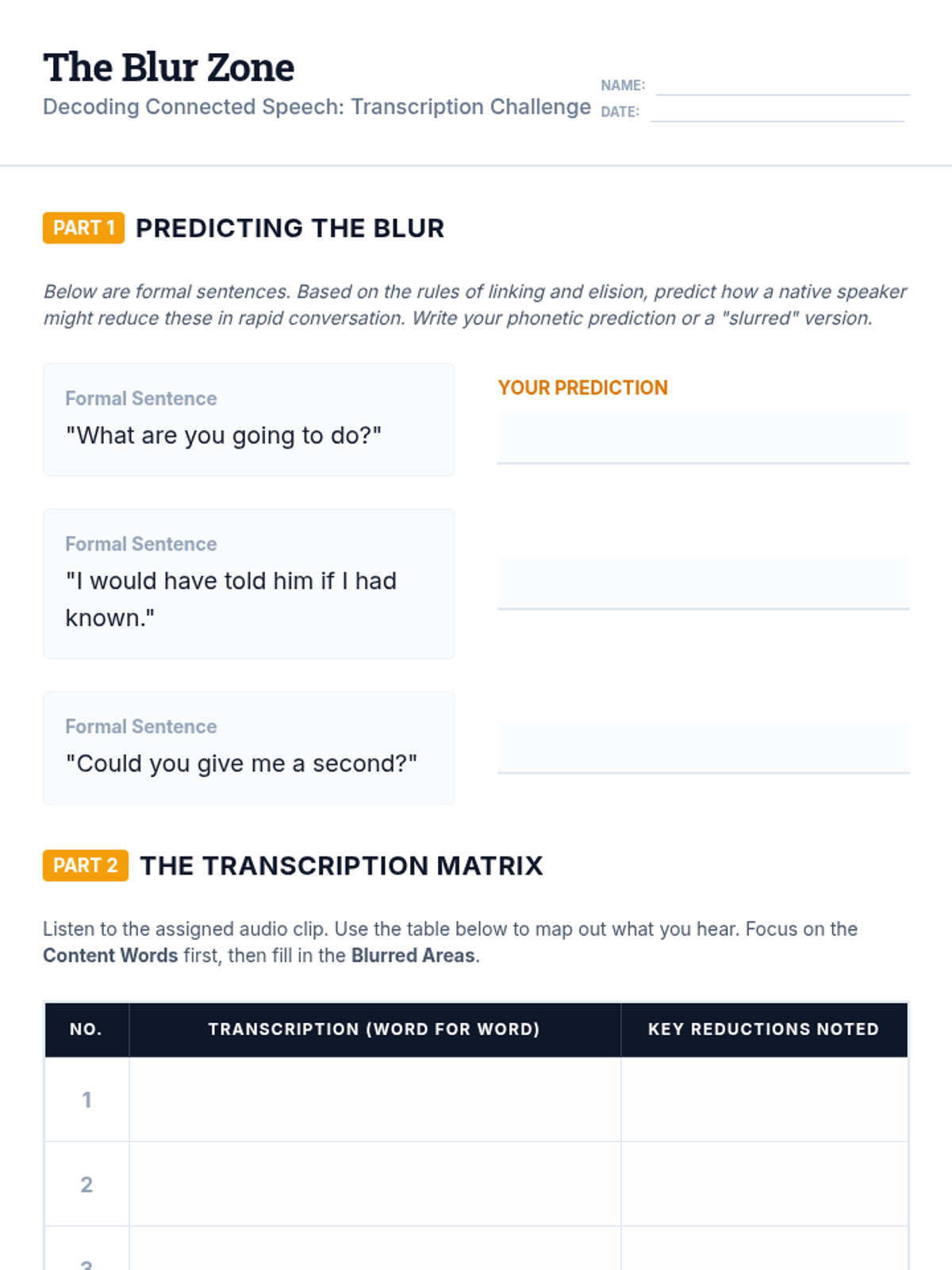
A high-level sequence for graduate ESL students focusing on the phonological, semantic, and pragmatic challenges of advanced English listening, including regional dialects, connected speech, and implicit meaning.
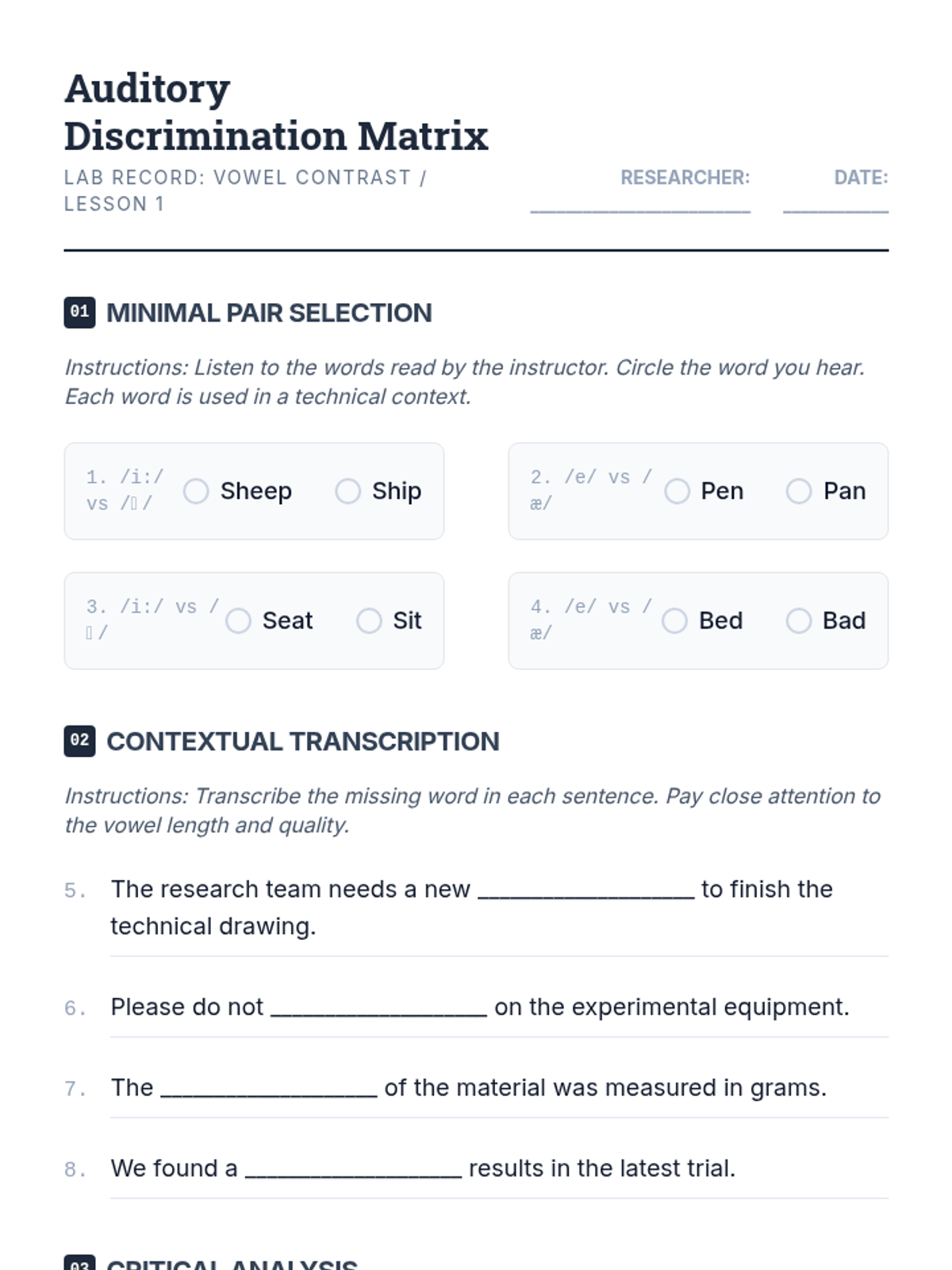
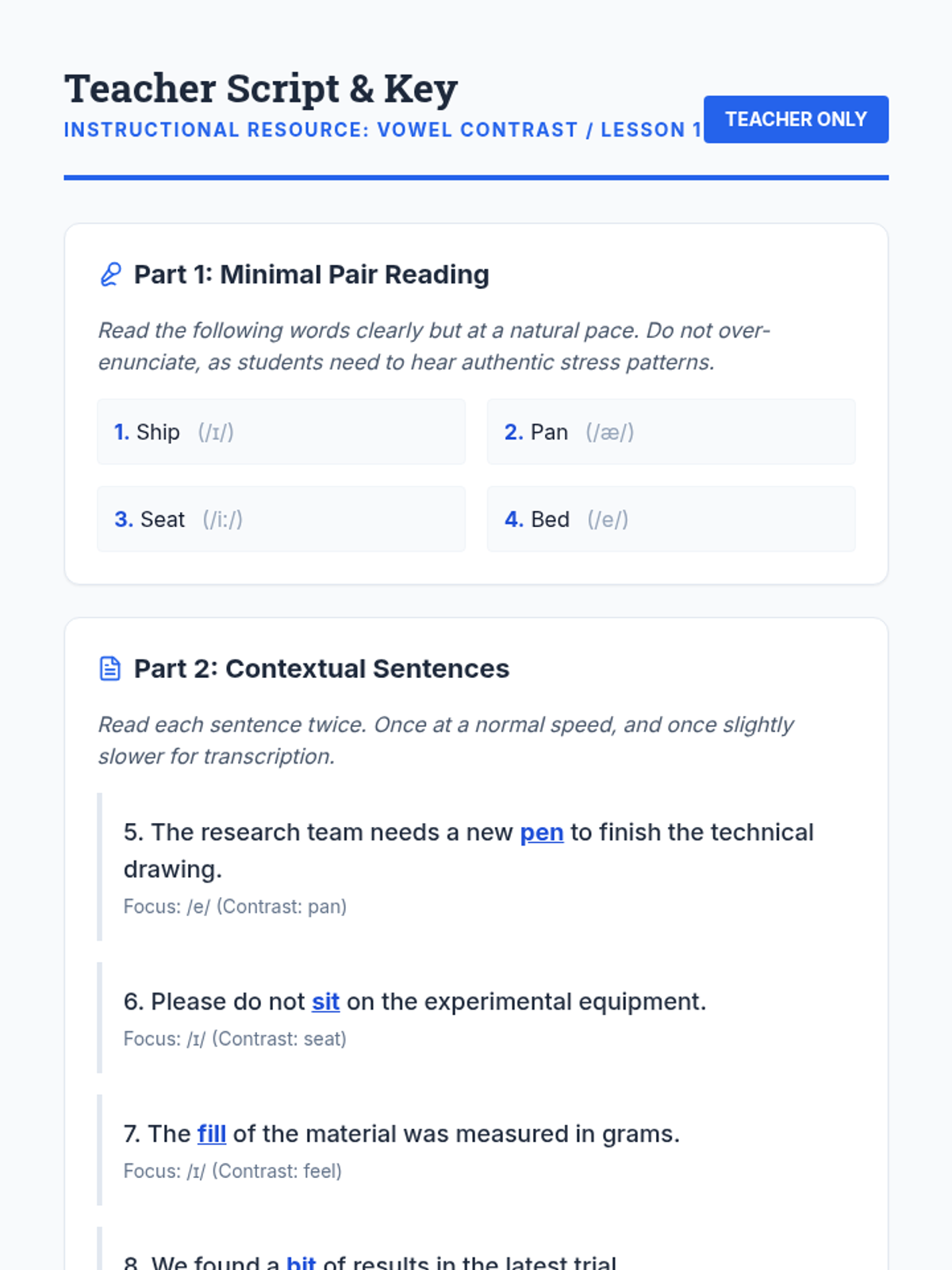
A technical ESL sequence for graduate students focusing on phonemic awareness and precise quantitative data capture. The course bridges the gap between basic listening skills and the accuracy required for academic research and professional communication.
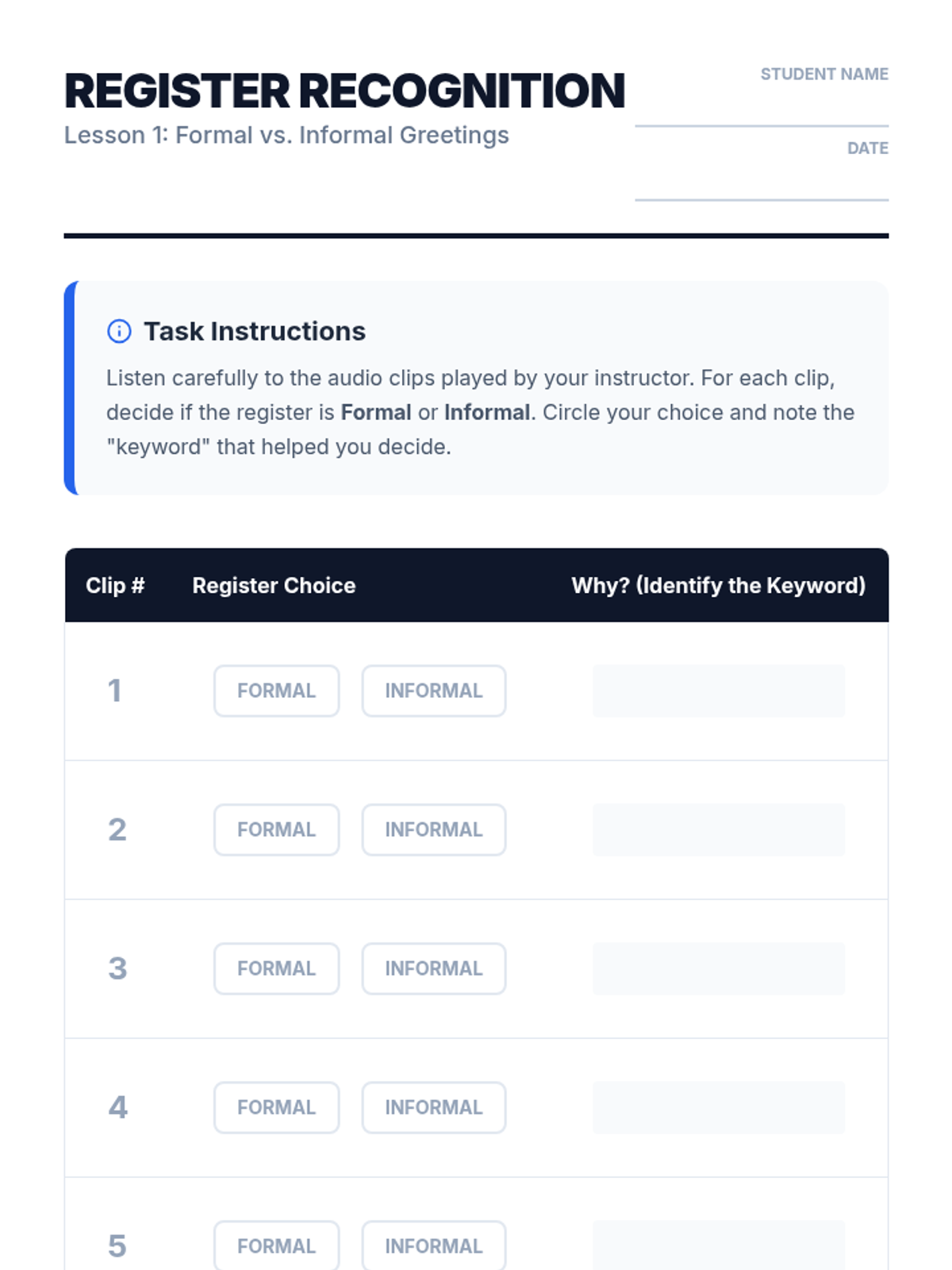
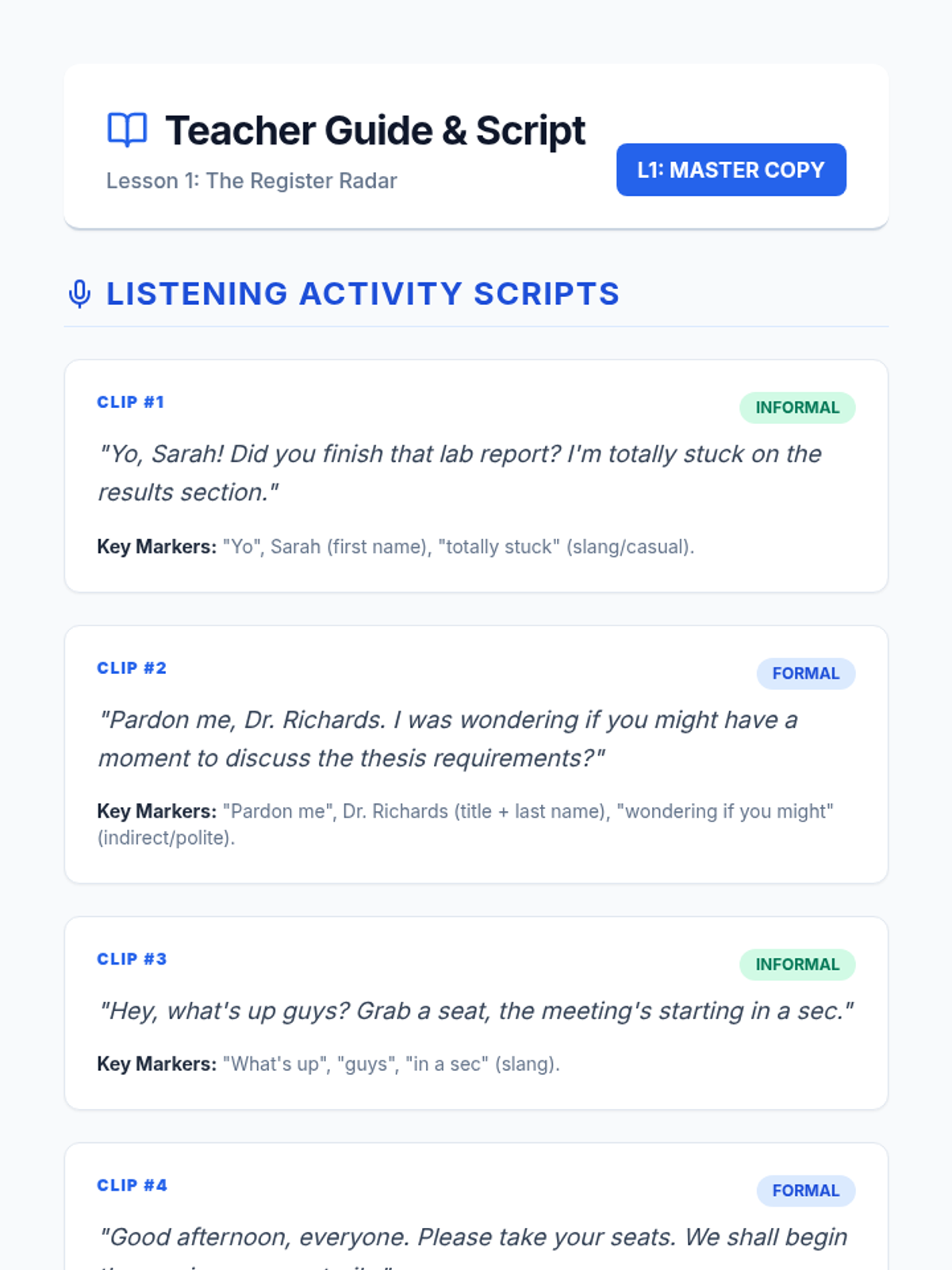
A specialized ESL listening sequence for graduate students, focusing on navigating academic registers, classroom imperatives, campus logistics, and administrative interactions. Students will develop the ability to distinguish between formal and informal tones and follow multi-step oral instructions in a university setting.
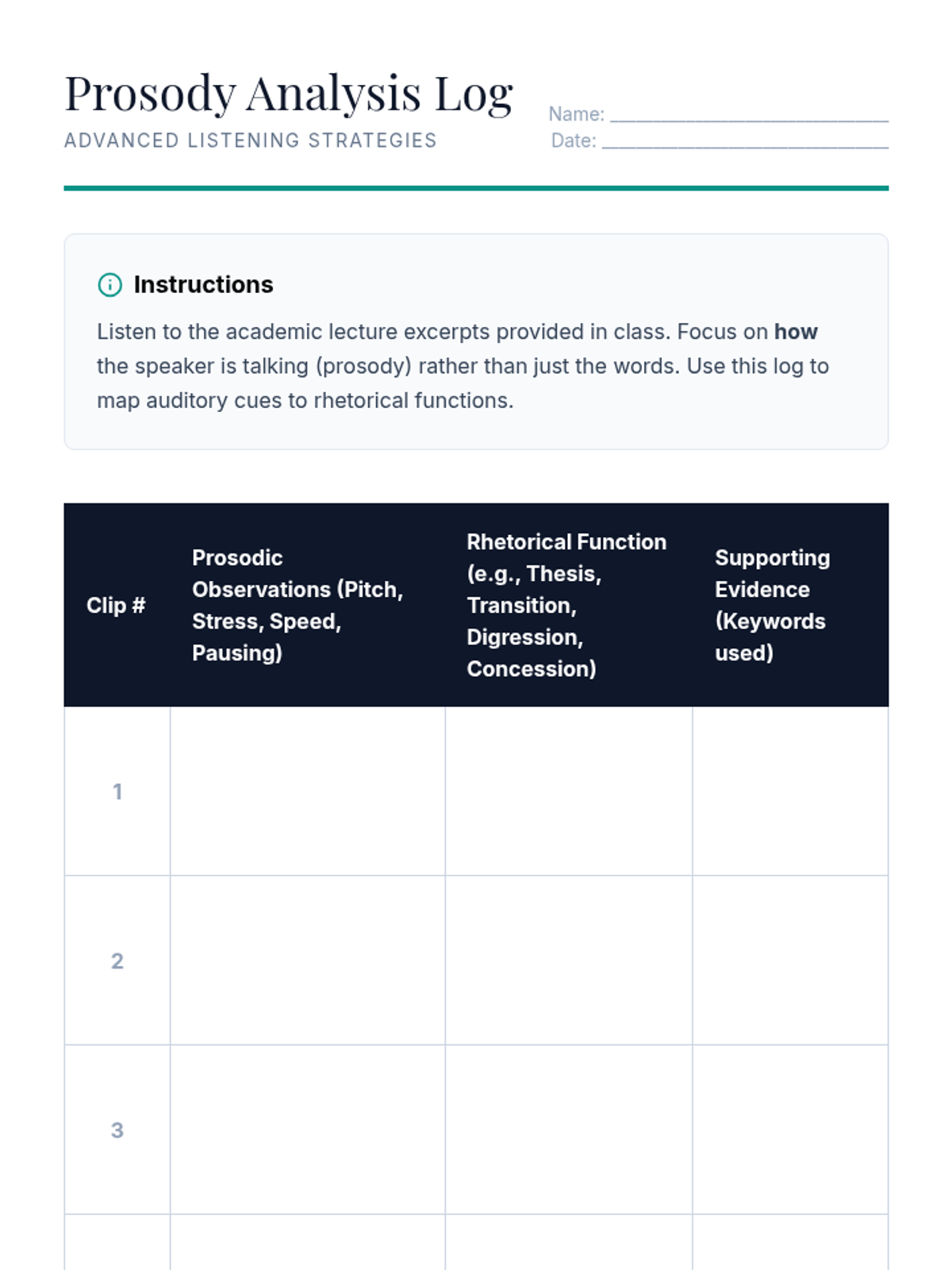
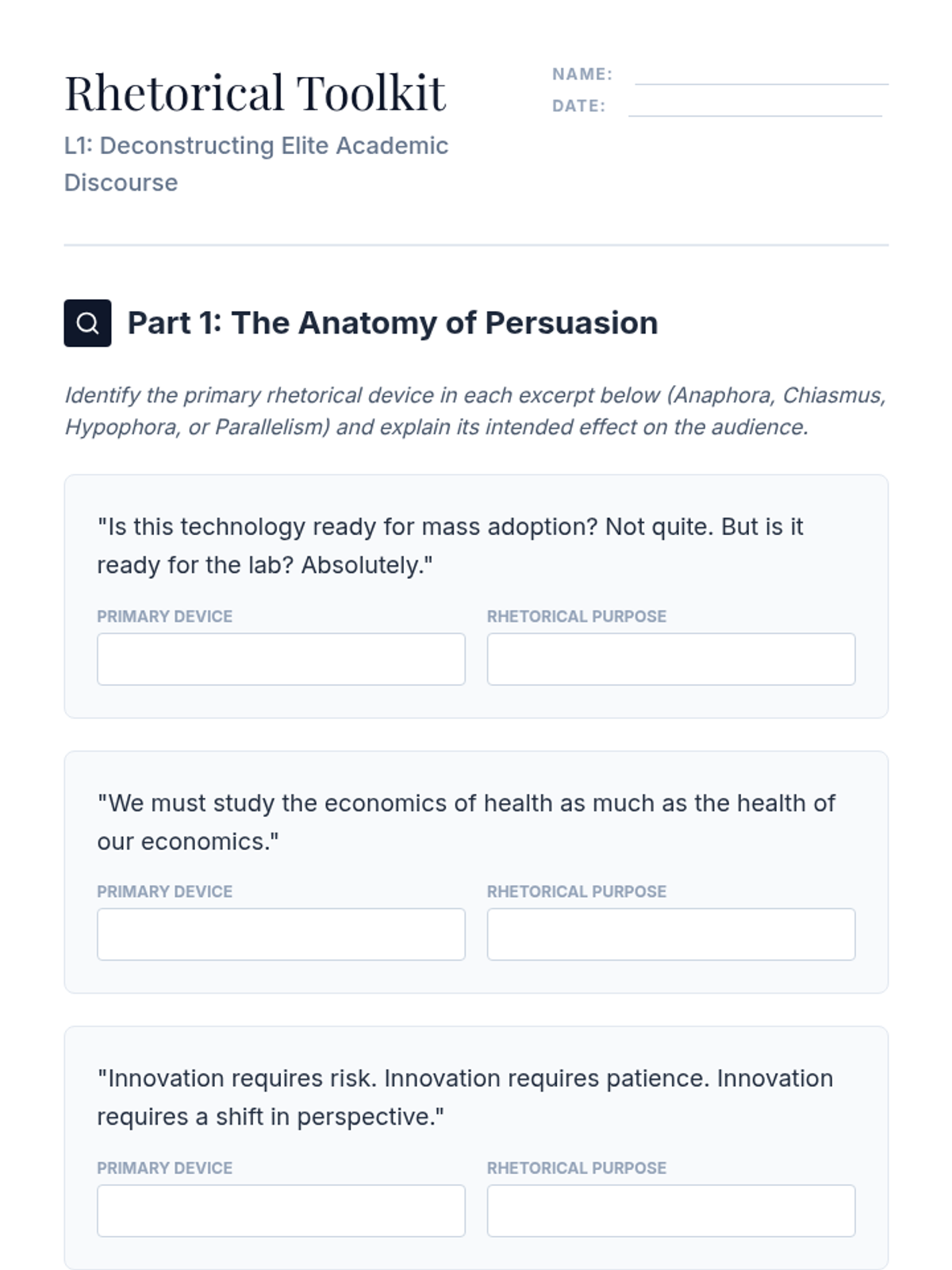
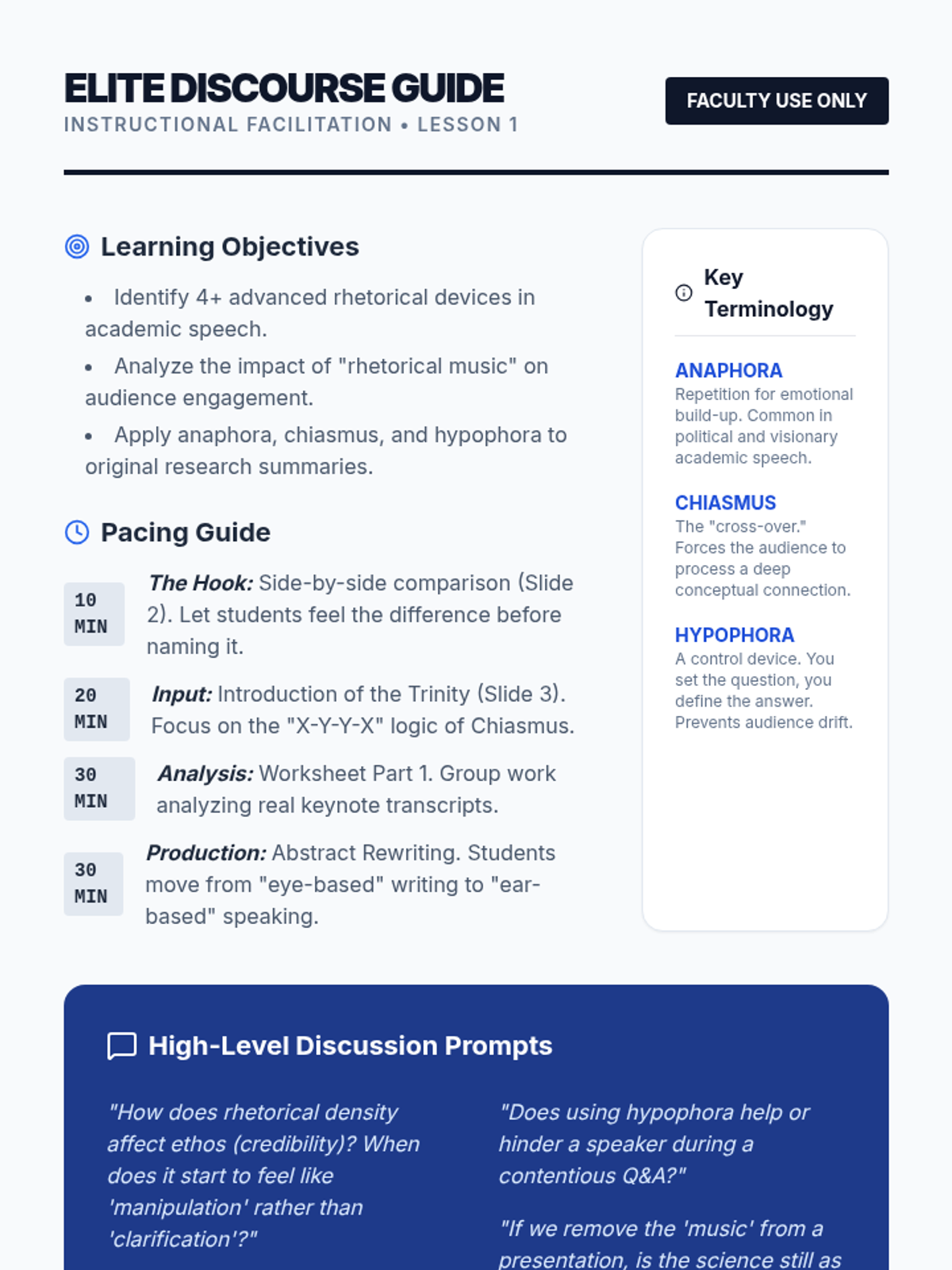
This advanced sequence for graduate ESL students focuses on mastering rhetorical strategies, prosodic control, and academic ethos for high-stakes presentations. Students move from analyzing elite discourse to defending their own research in a simulated conference environment.
A comprehensive sequence for graduate students focusing on advanced academic vocabulary for critique, defense, and argumentation, moving from basic claims to sophisticated thesis-level discourse.
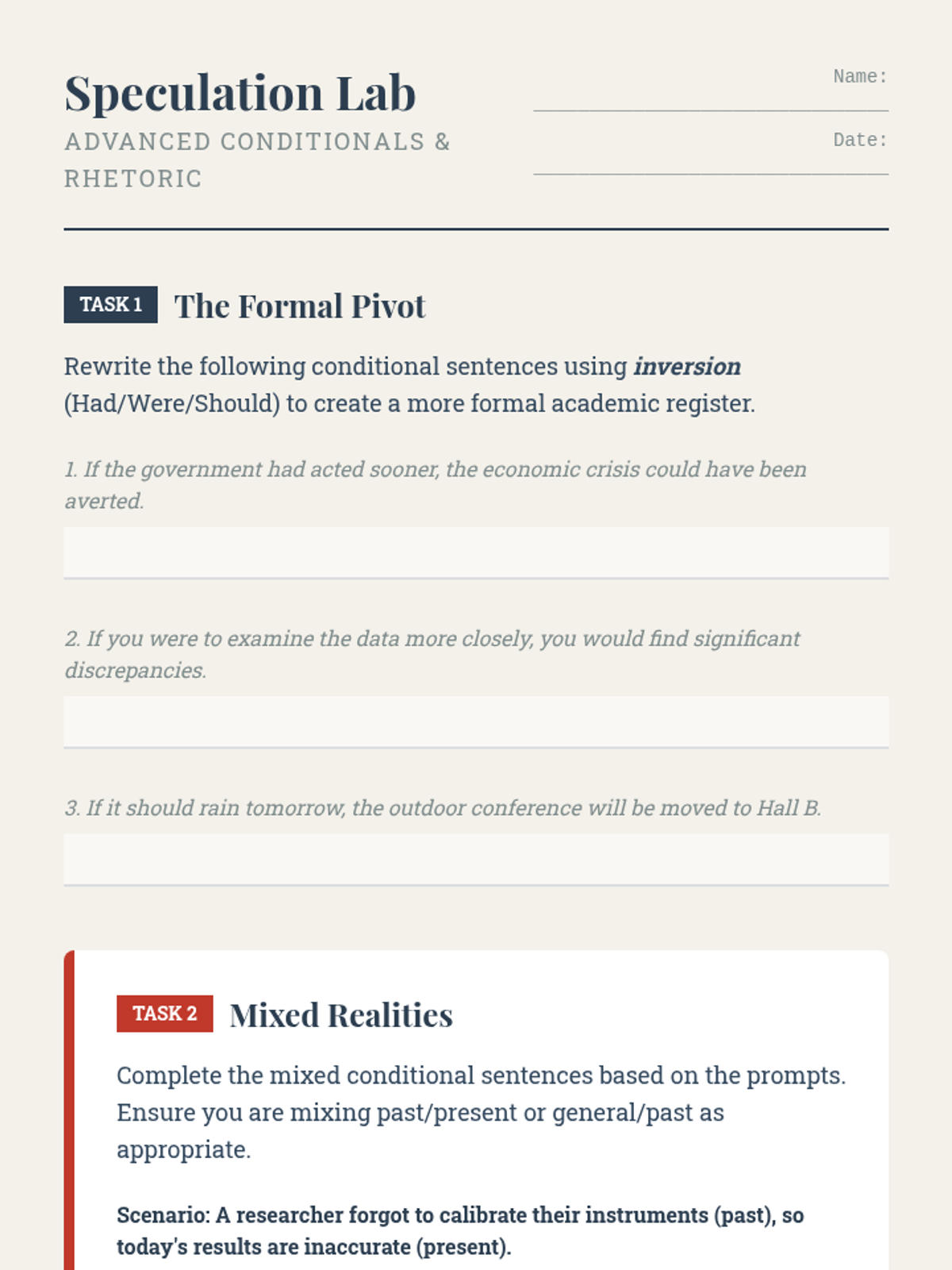
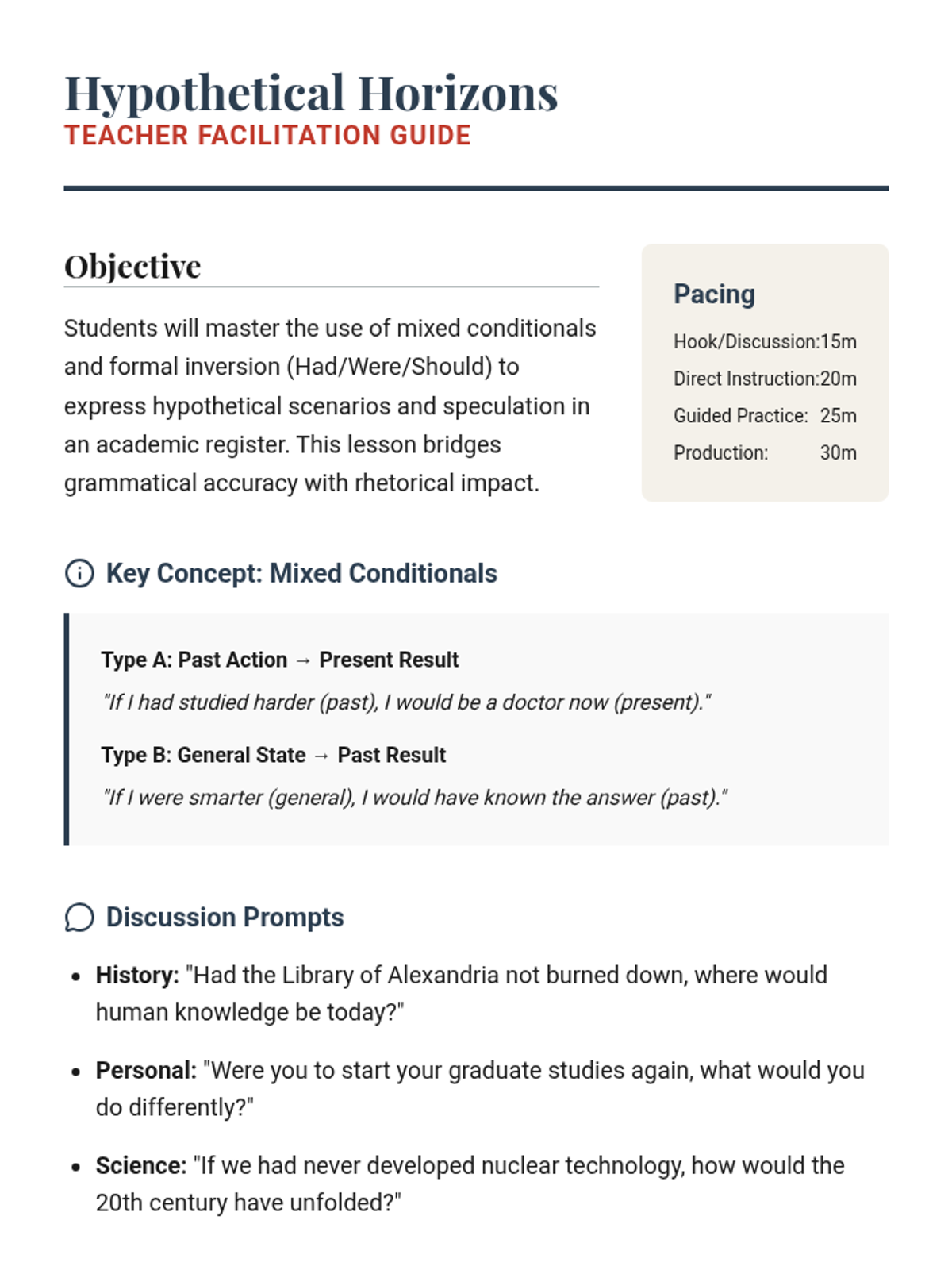
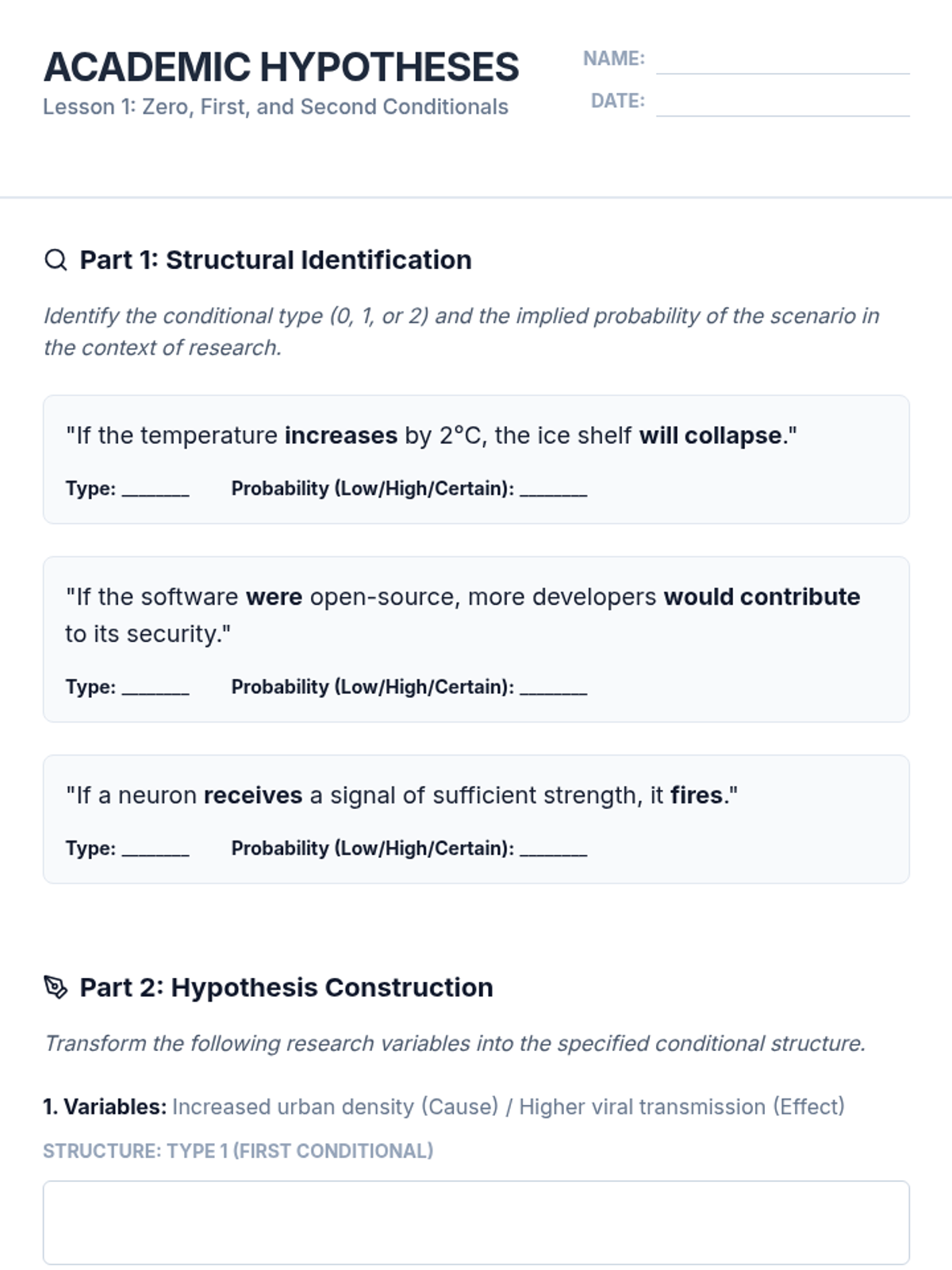
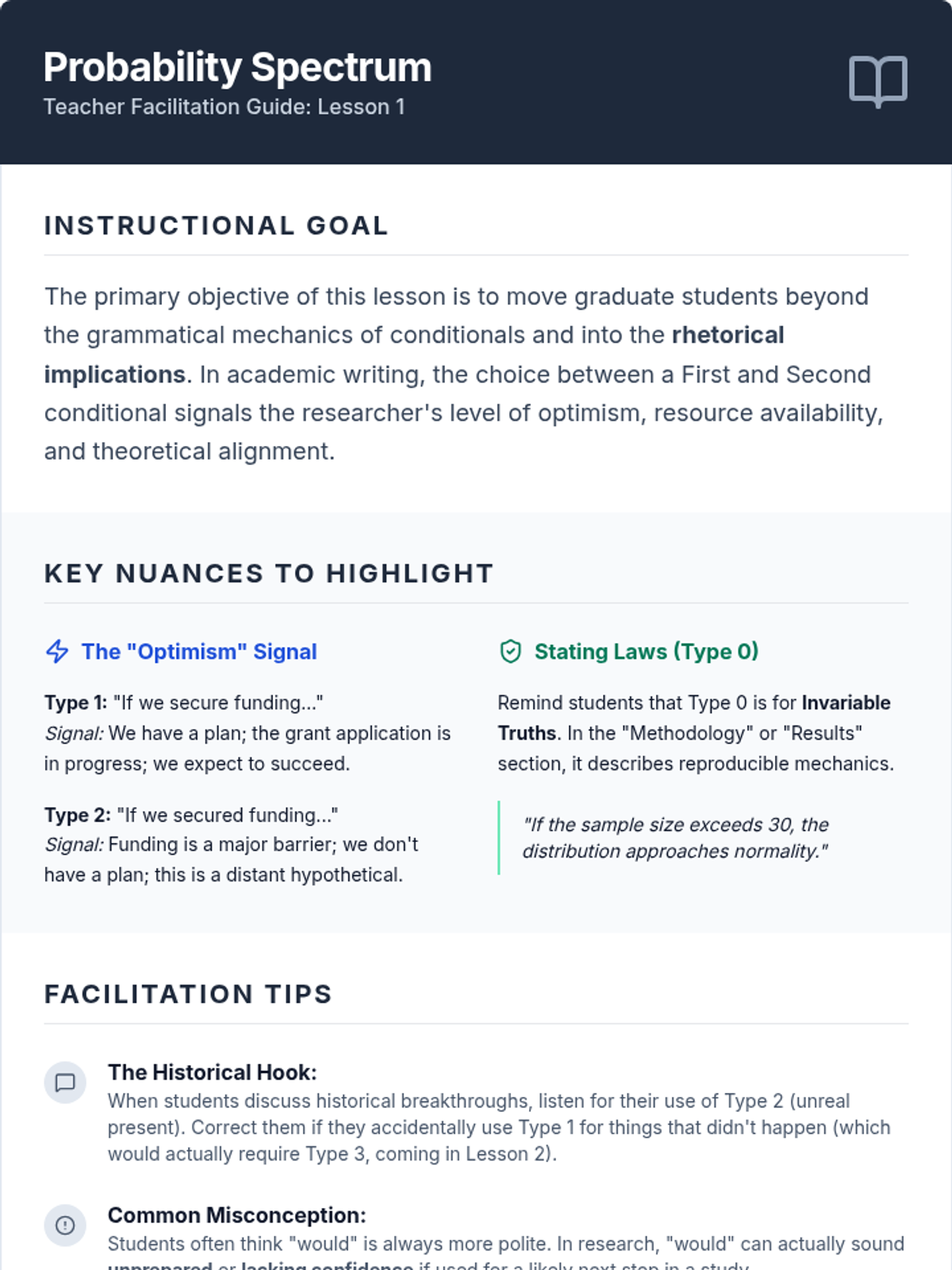
A sequence for graduate ESL students focusing on using complex conditional structures (0, 1, 2, 3, mixed, and inverted) to build academic arguments, analyze research limitations, and propose future studies. Students move from basic review to advanced stylistic inversions and synthesis in a 'Future Directions' research context.
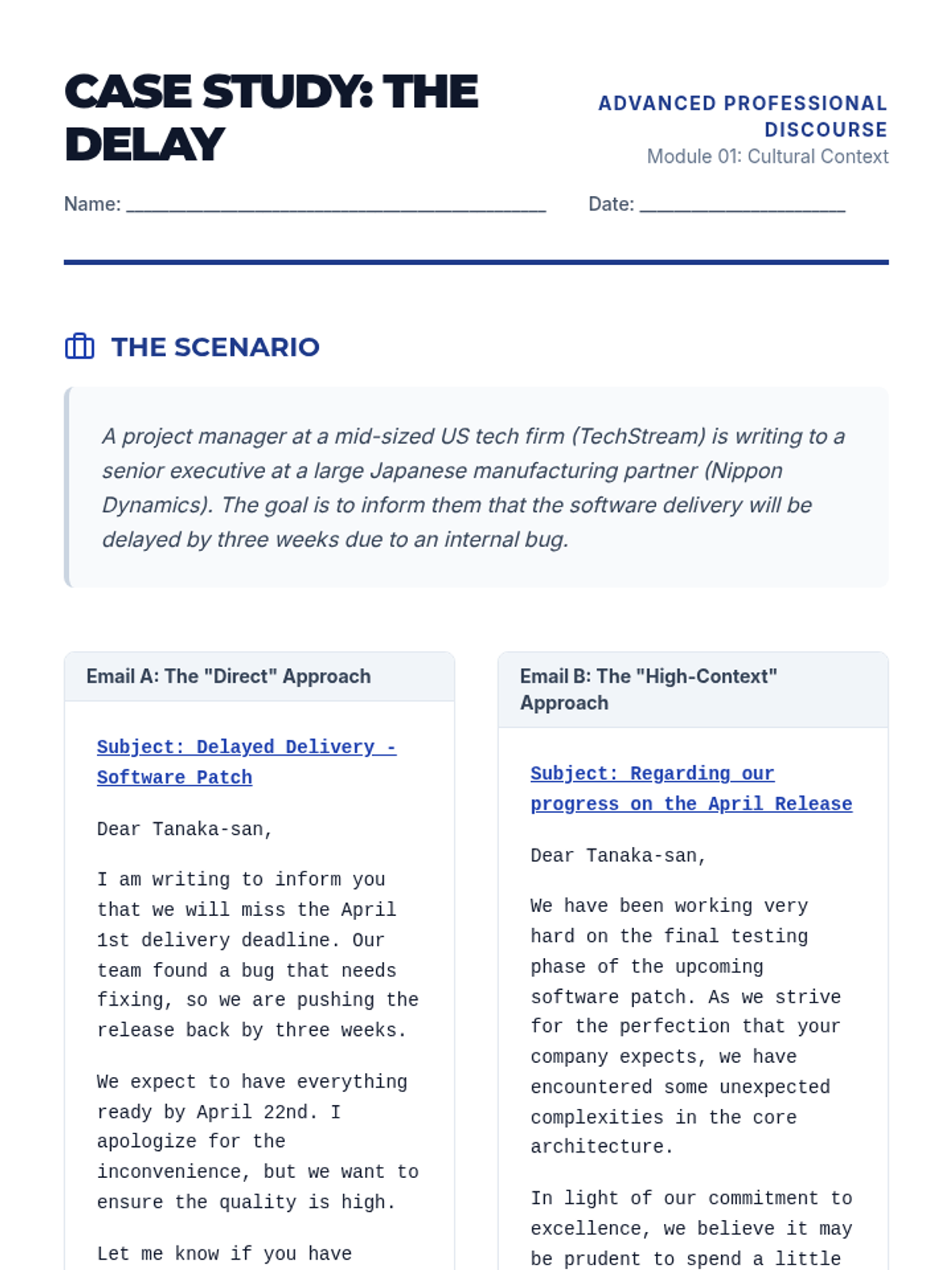
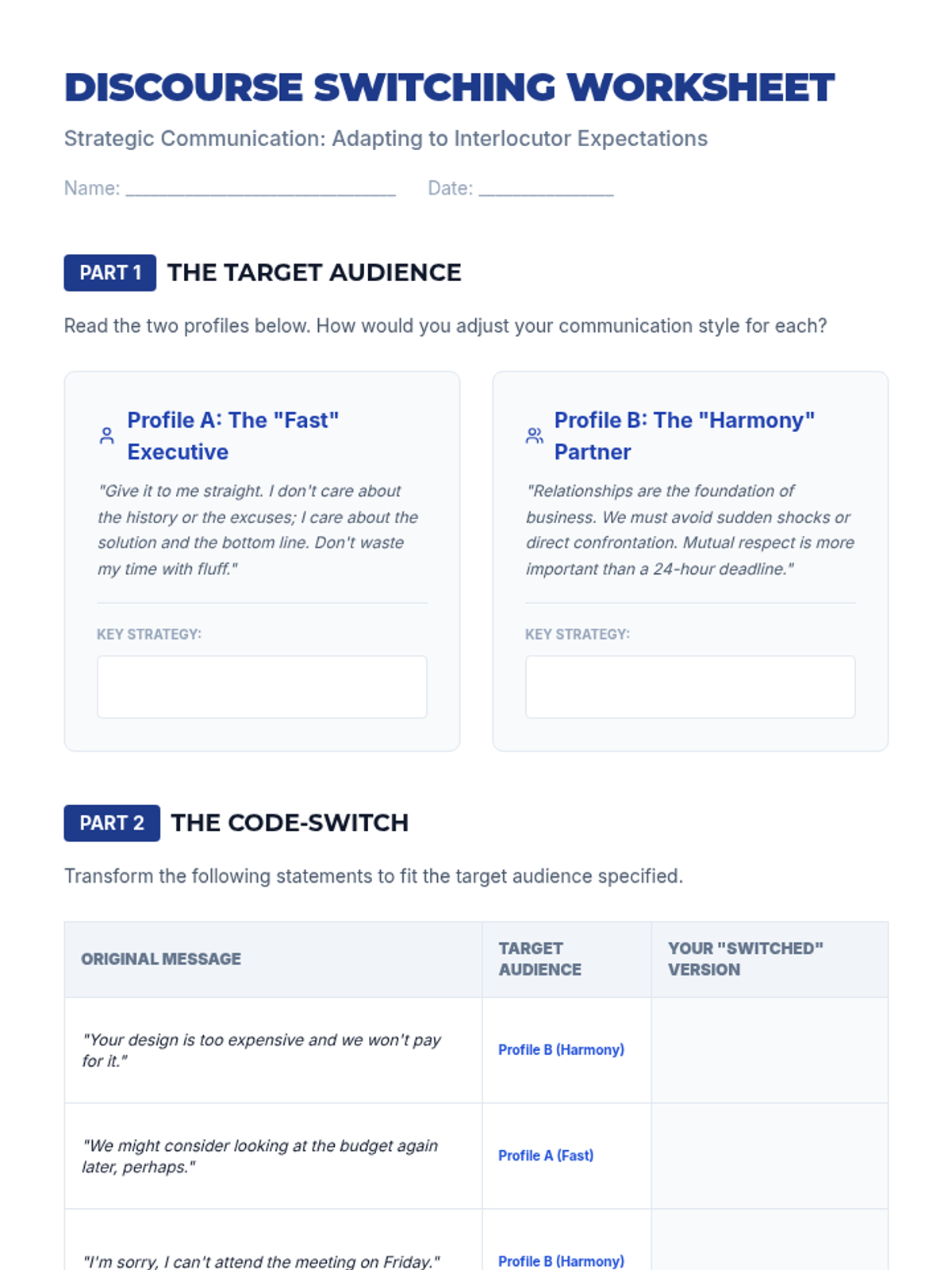
A high-level ESL sequence for graduate students focusing on linguistic maneuvering, cultural dimensions of discourse, and diplomatic negotiation strategies in international professional contexts. Students analyze intercultural communication styles and master the art of 'saving face' through advanced English speaking techniques.