Complex grammar structures, idiomatic expressions, and phrasal verbs. Strengthens reading and listening comprehension while building conversational fluency for varied social and professional settings.
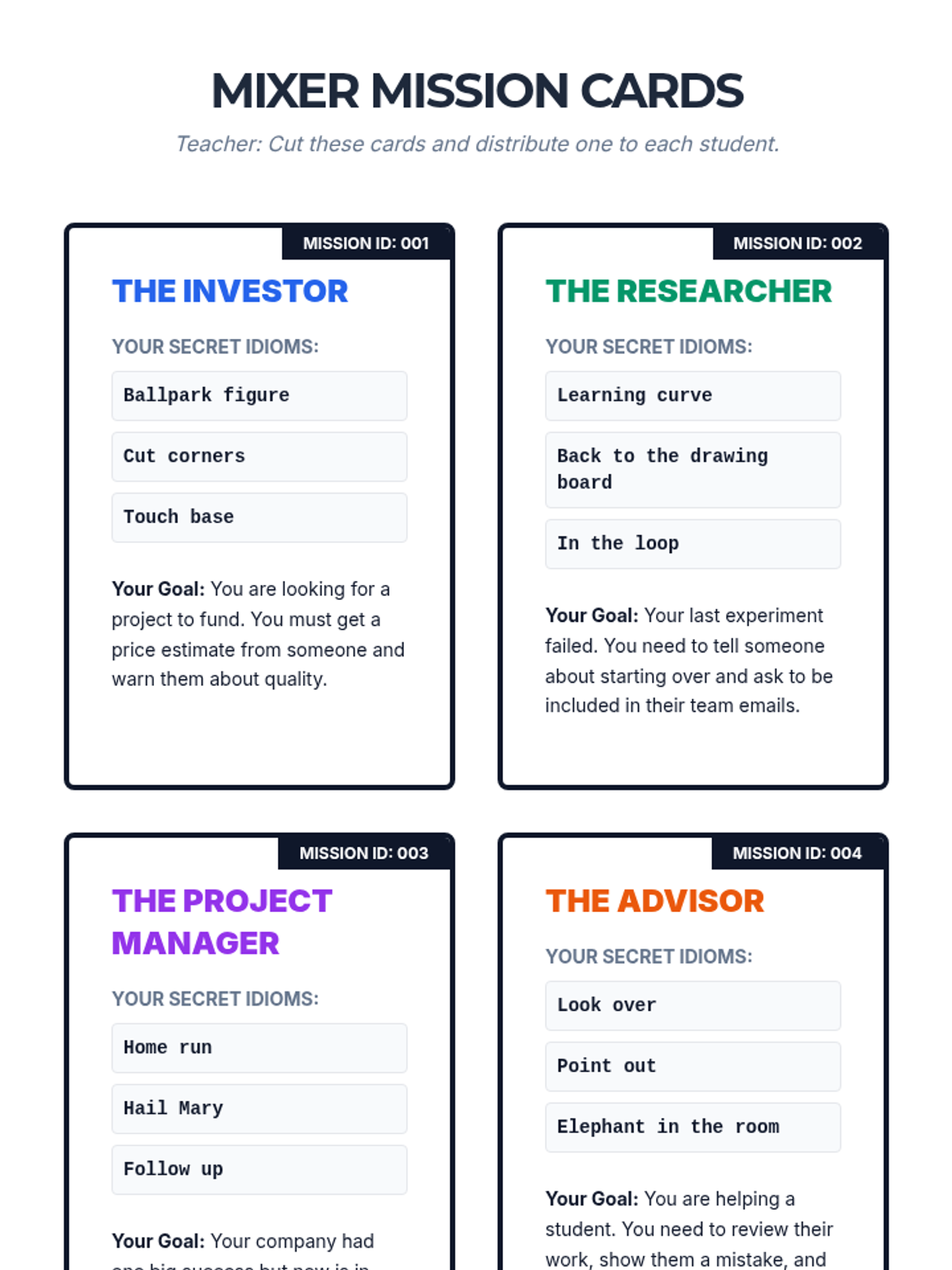
A high-stakes simulated networking mixer where students must apply their knowledge of idioms, phrasal verbs, and social listening to complete specific "missions."
Students analyze how speakers use shorthand references to history, pop culture, and sports to convey complex ideas, and develop strategies for asking for clarification when references are missed.
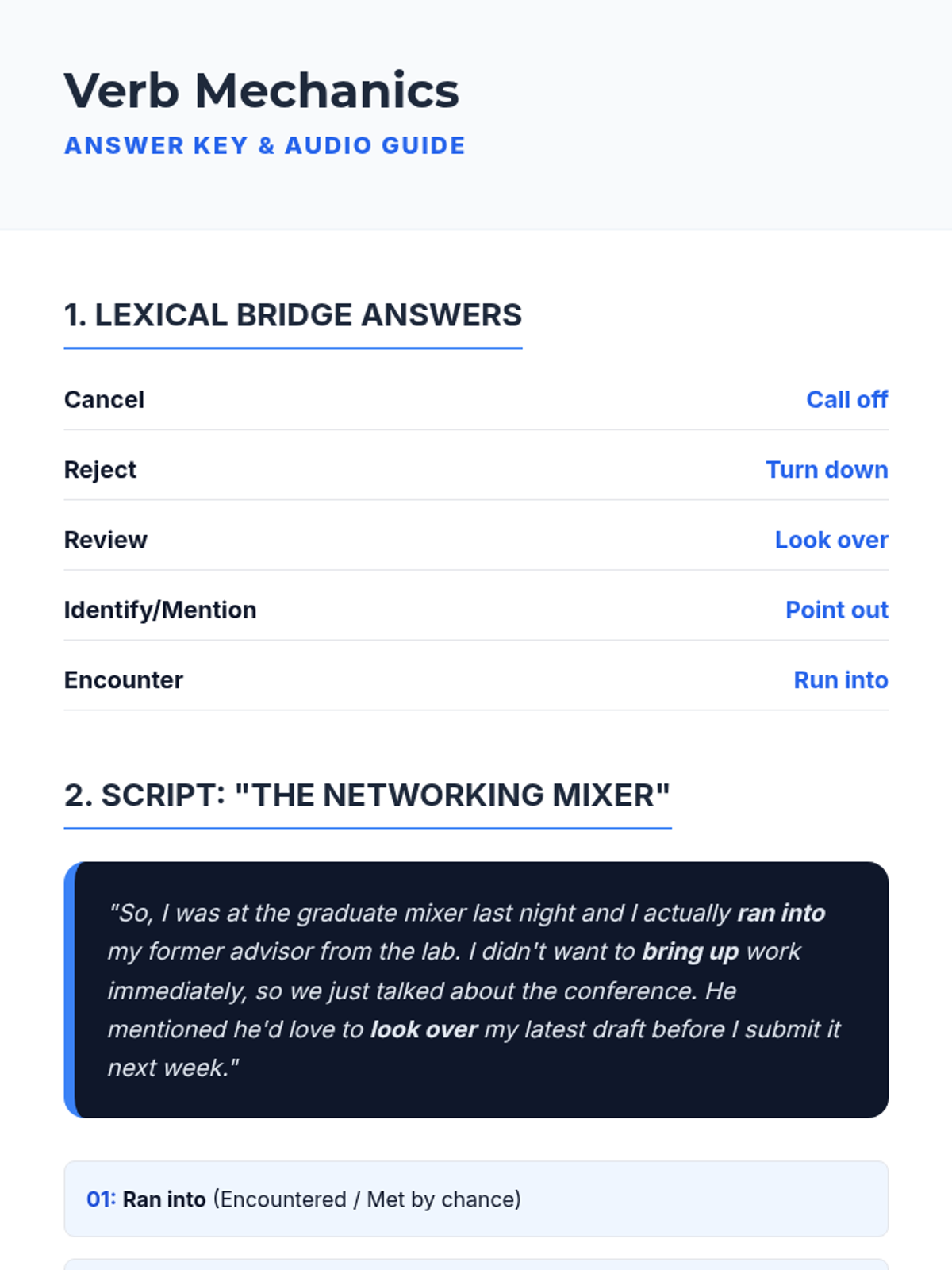
Focuses on the transition from formal to informal spoken English by identifying and decoding phrasal verbs in narrative segments.
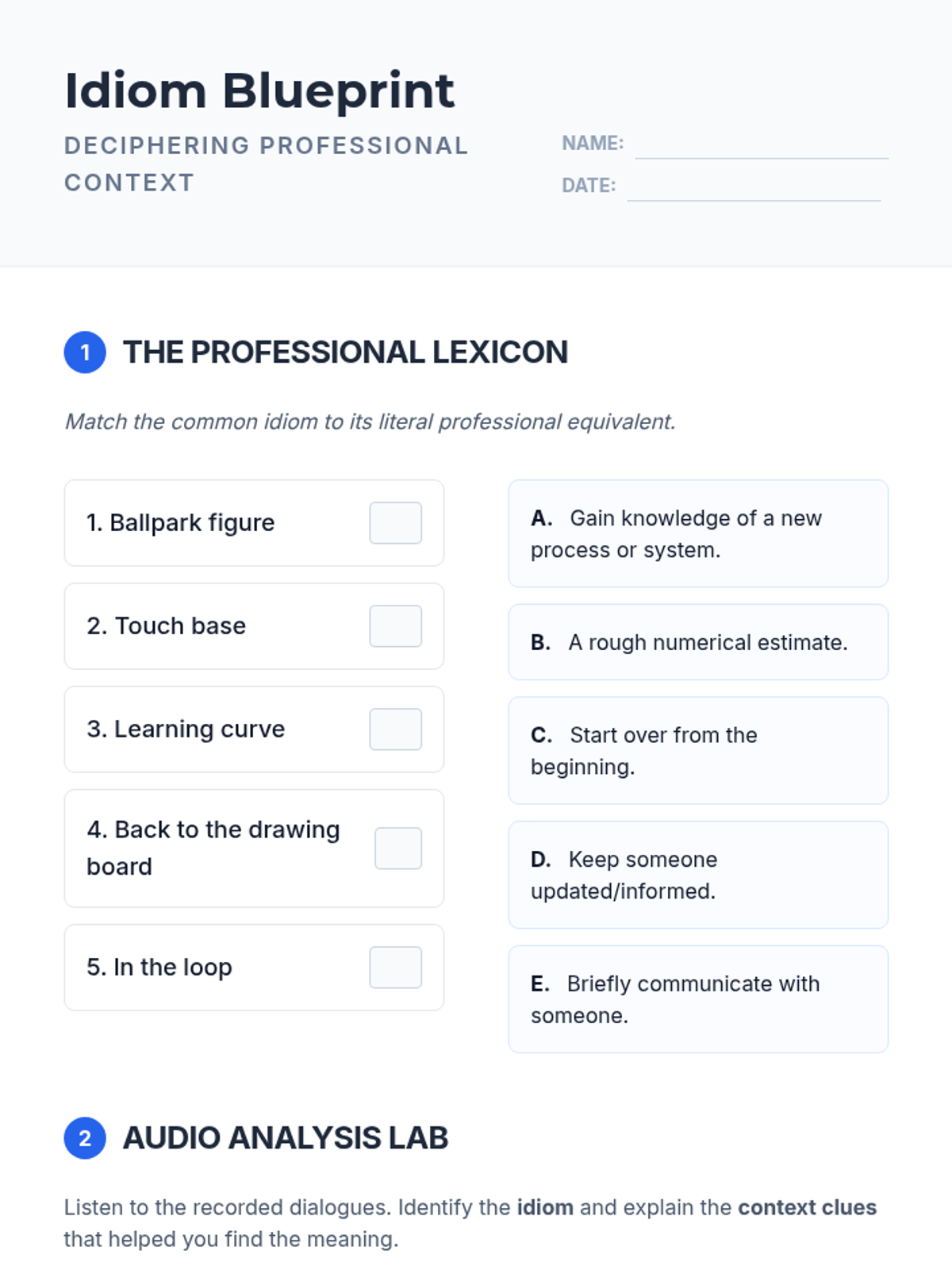
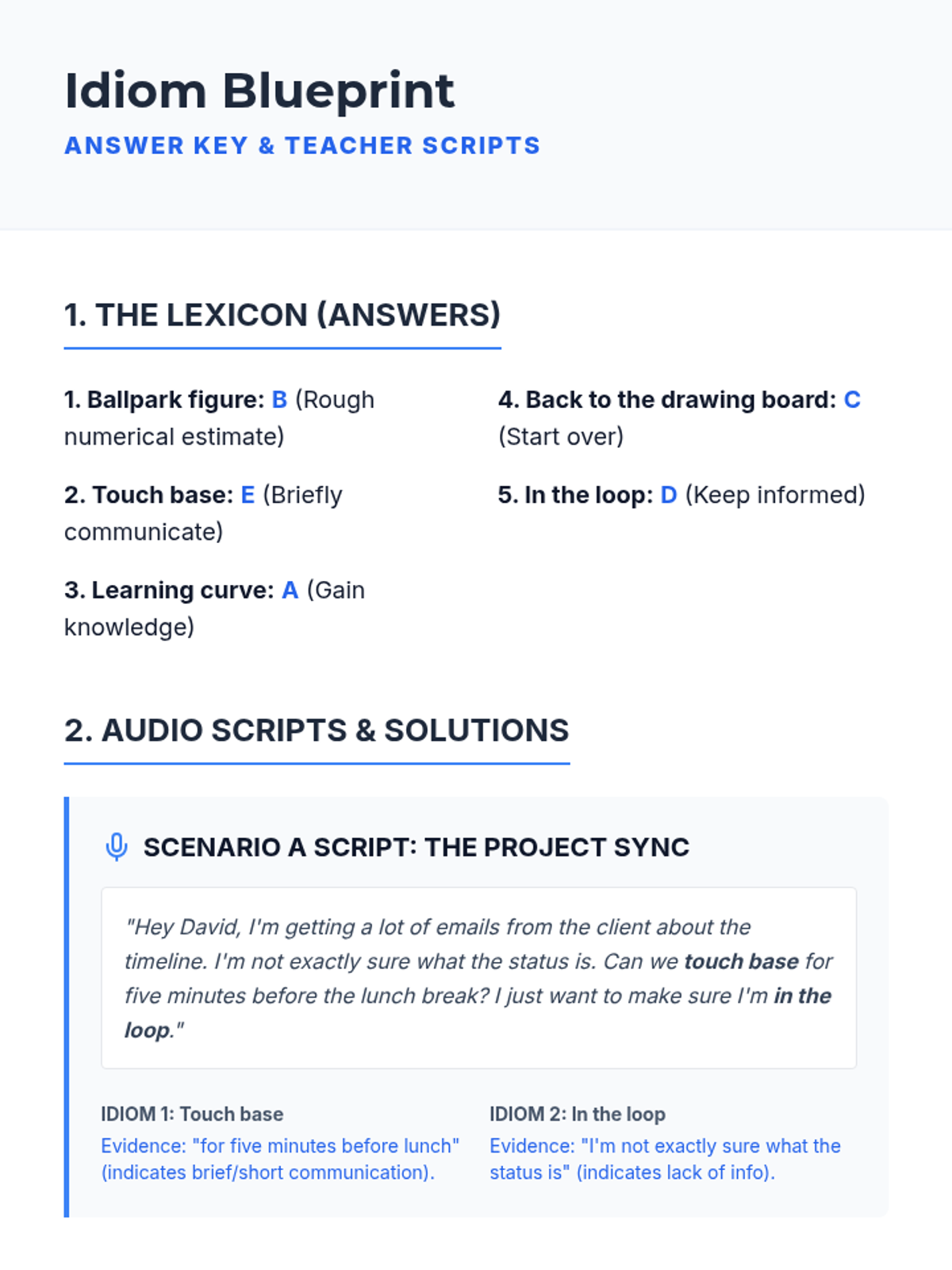
Students encounter high-frequency idioms used in professional settings through context-rich audio simulations, moving beyond rote memorization to contextual inference.
A culminating simulation where students apply all strategies during a mock academic lecture assessment.
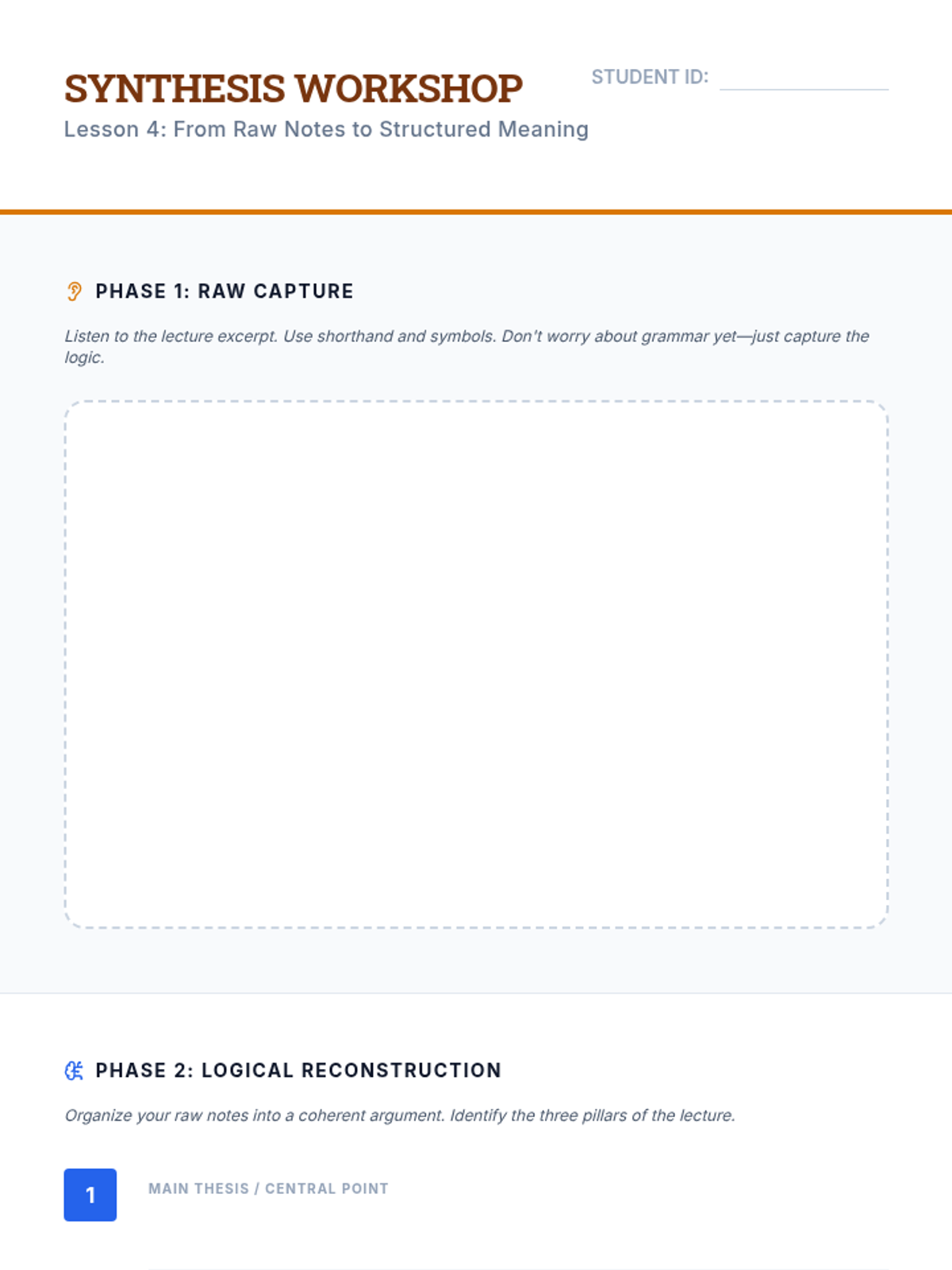
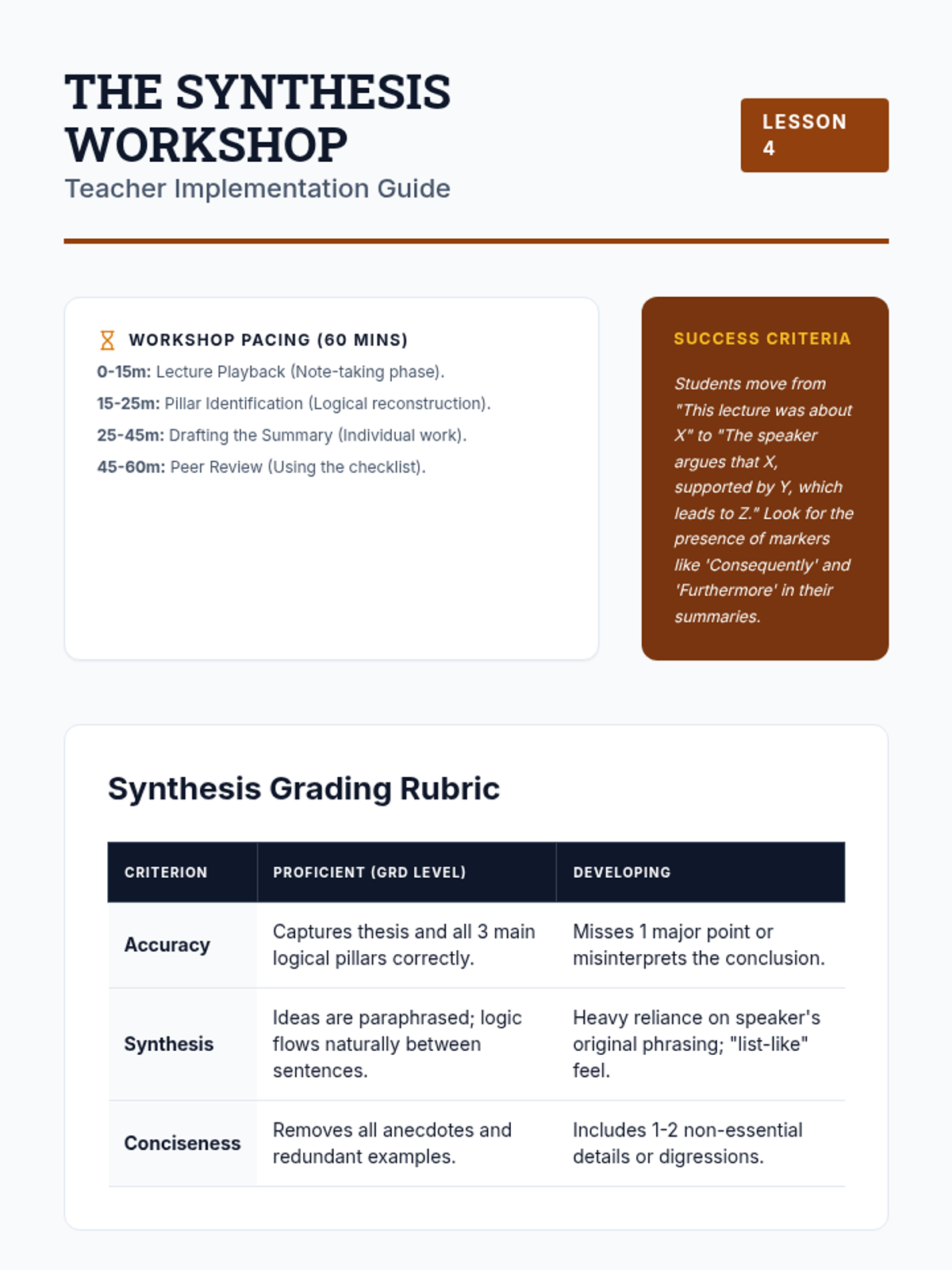
Students practice synthesizing auditory information into concise, logical summaries and paraphrasing key points.
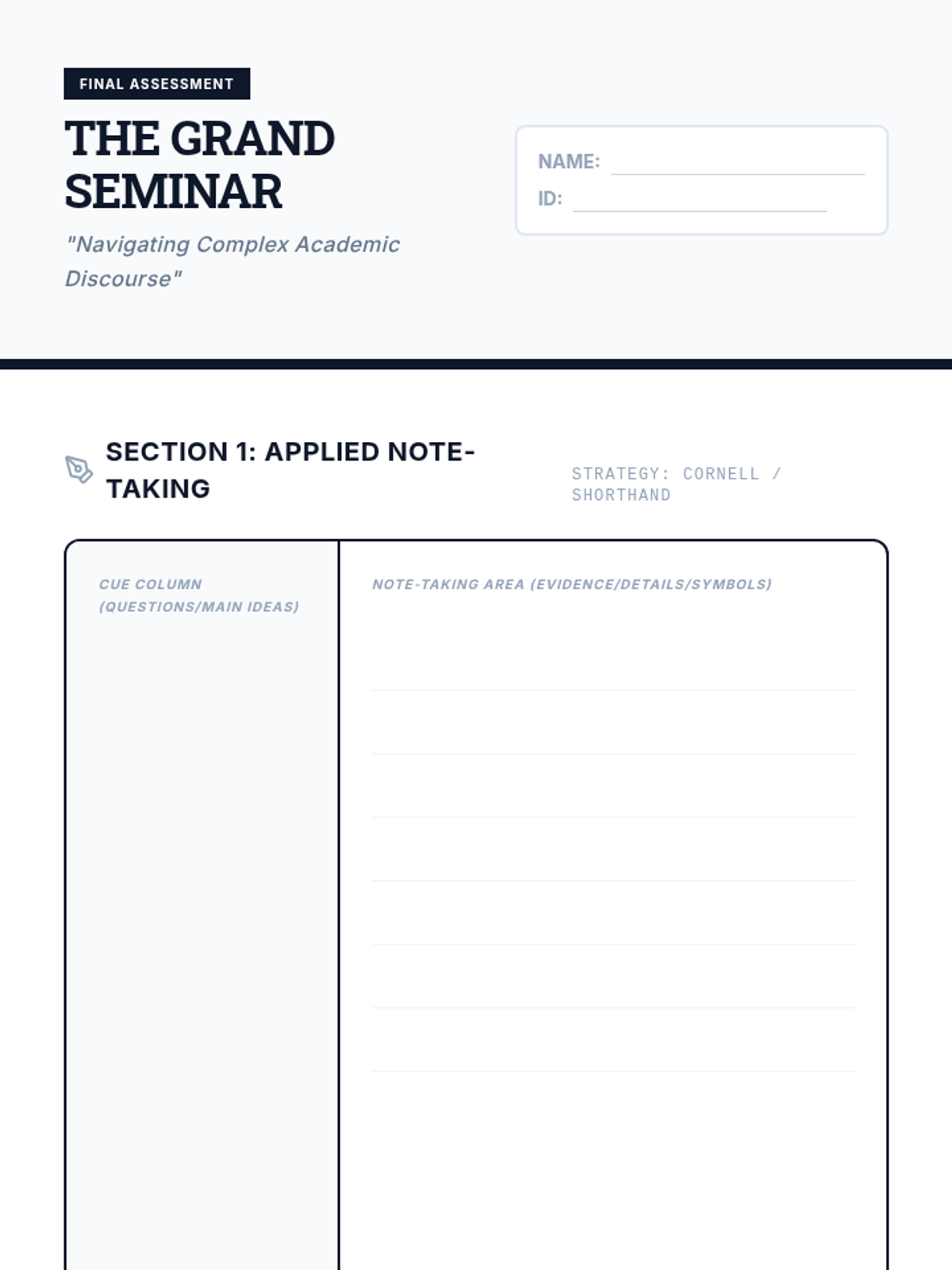
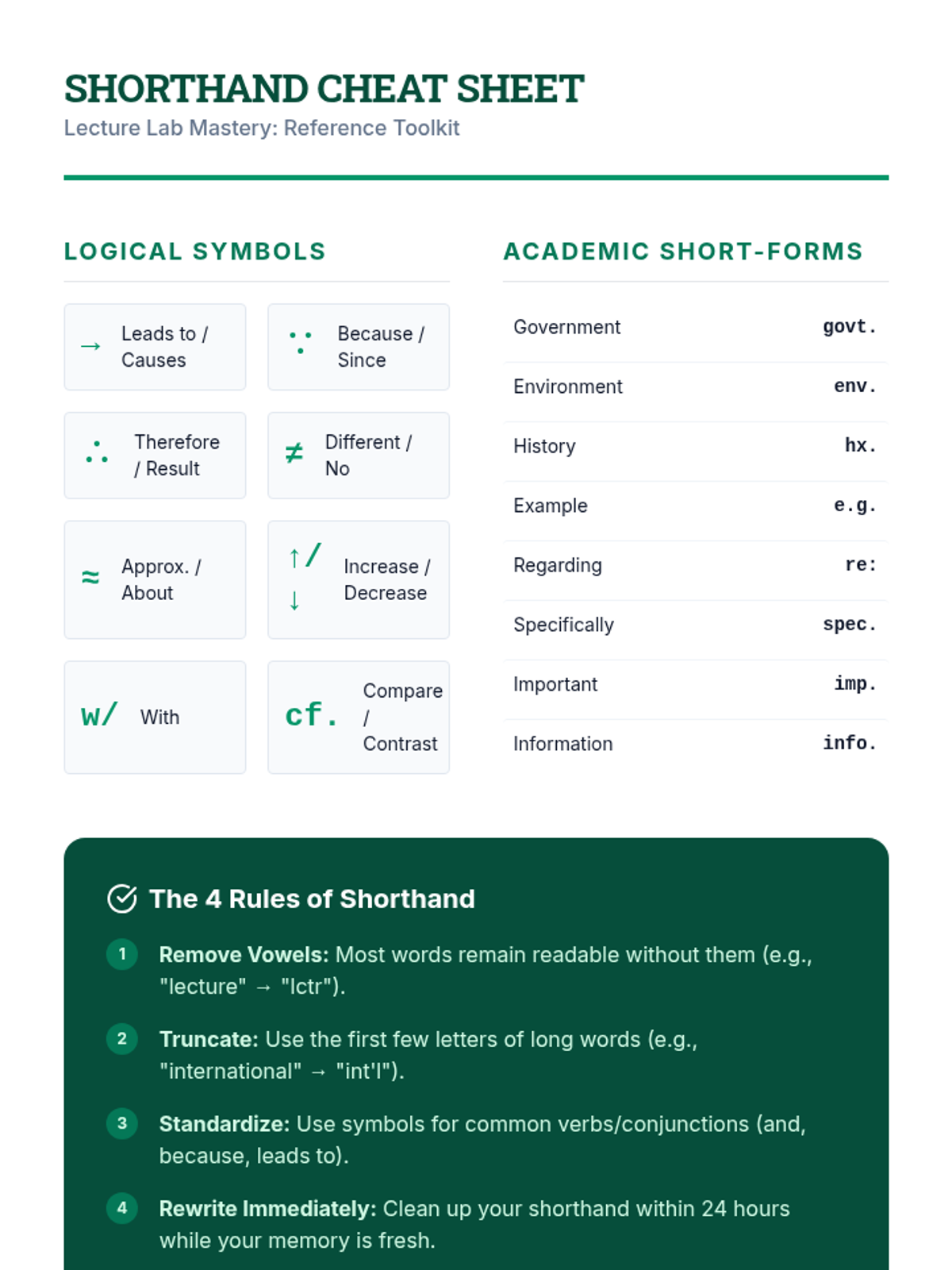
Introduction to shorthand, symbols, and the Cornell note-taking method for capturing information in real-time.
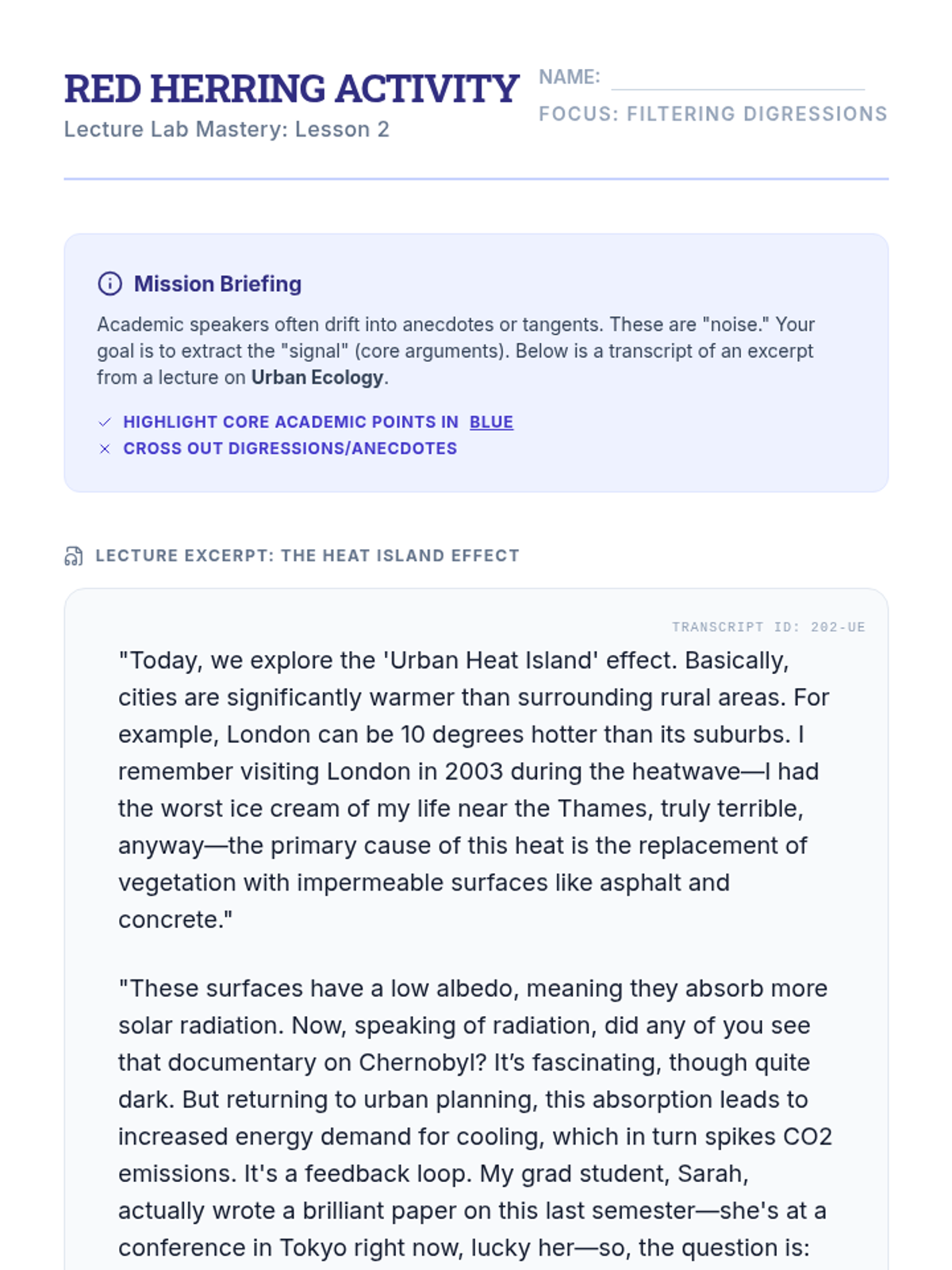
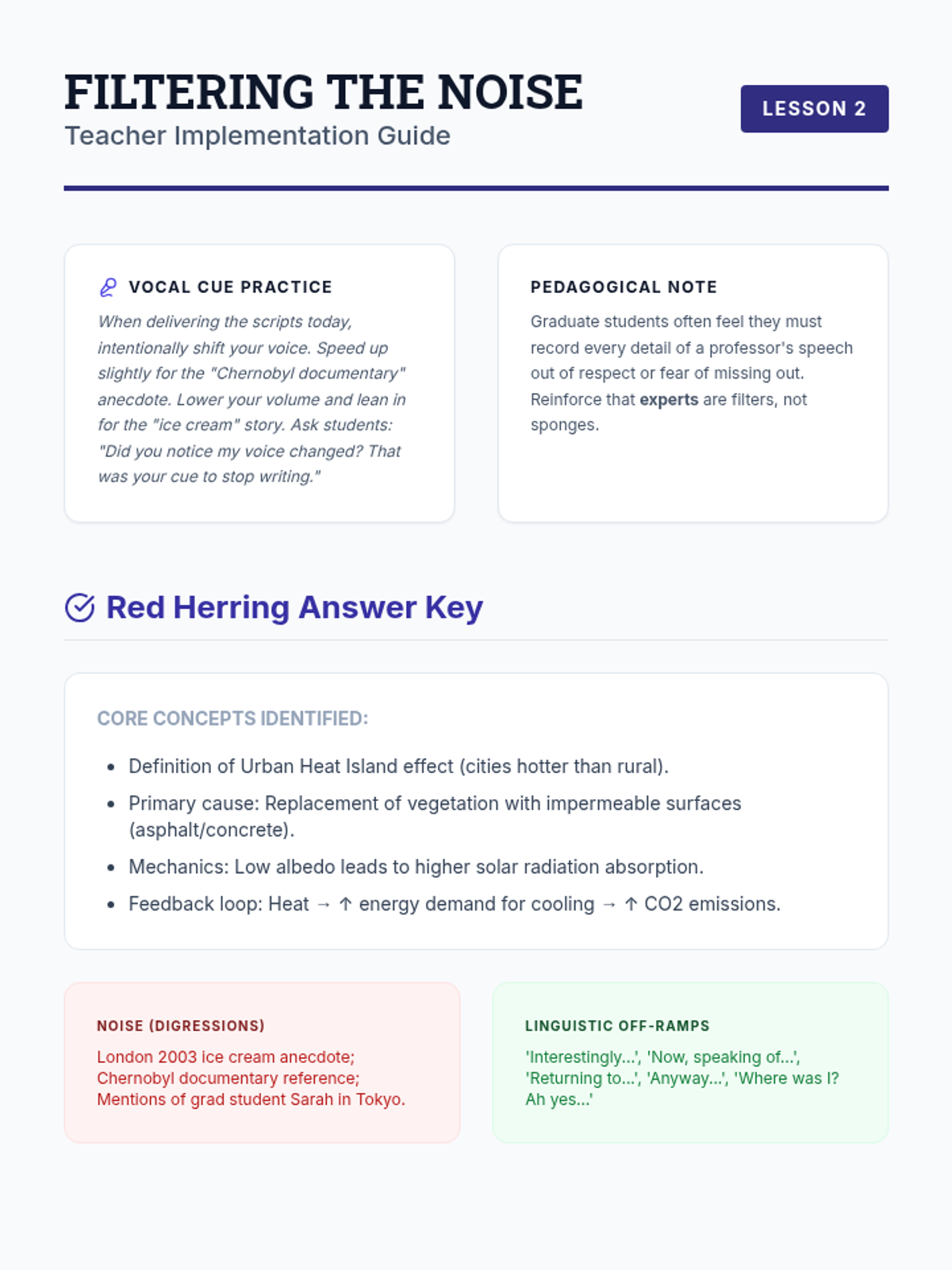
Focuses on distinguishing core academic arguments from anecdotes and digressions using linguistic and vocal cues.
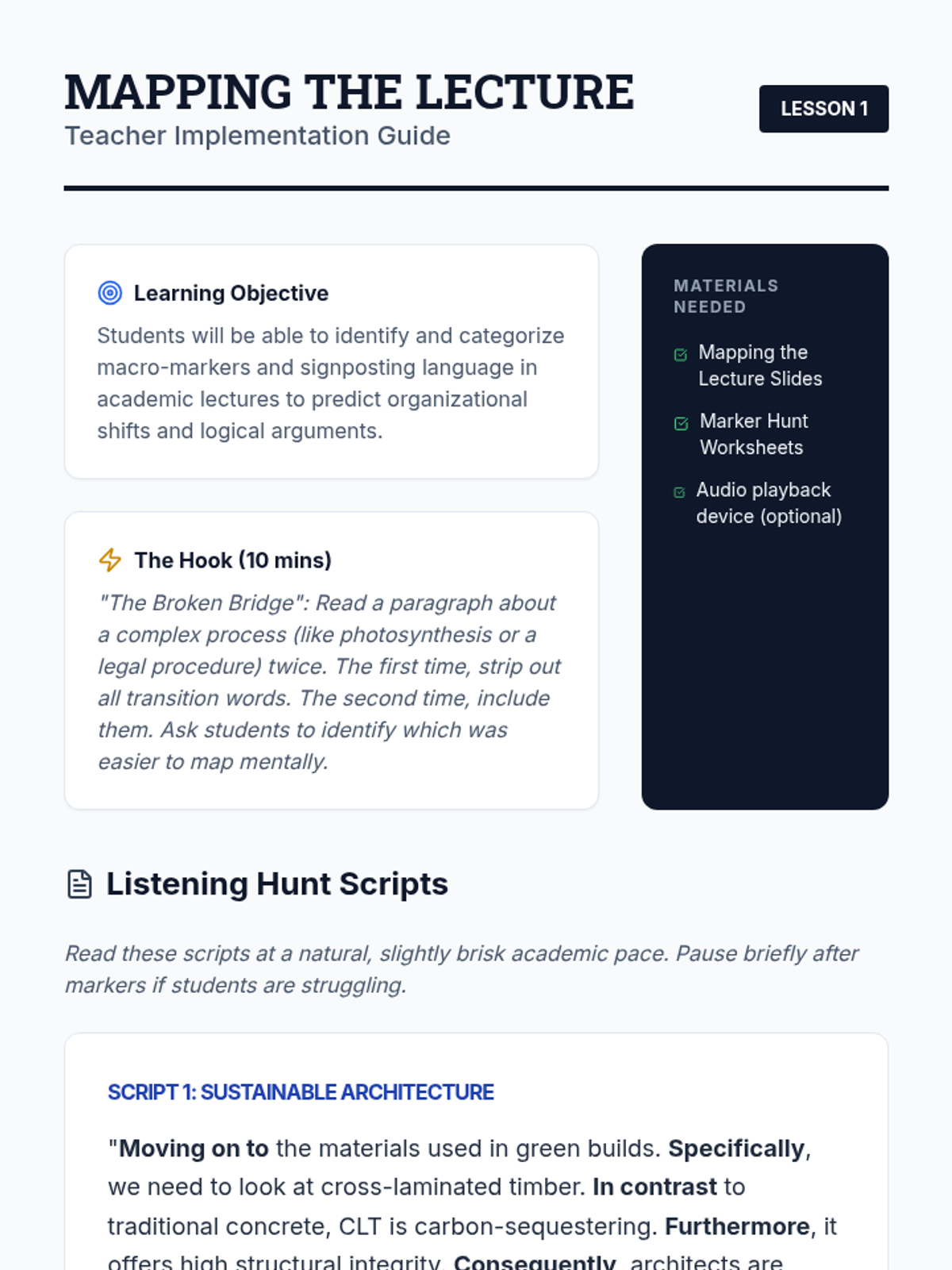
Students learn to identify macro-markers and signposting language that signal organizational structure in academic lectures.
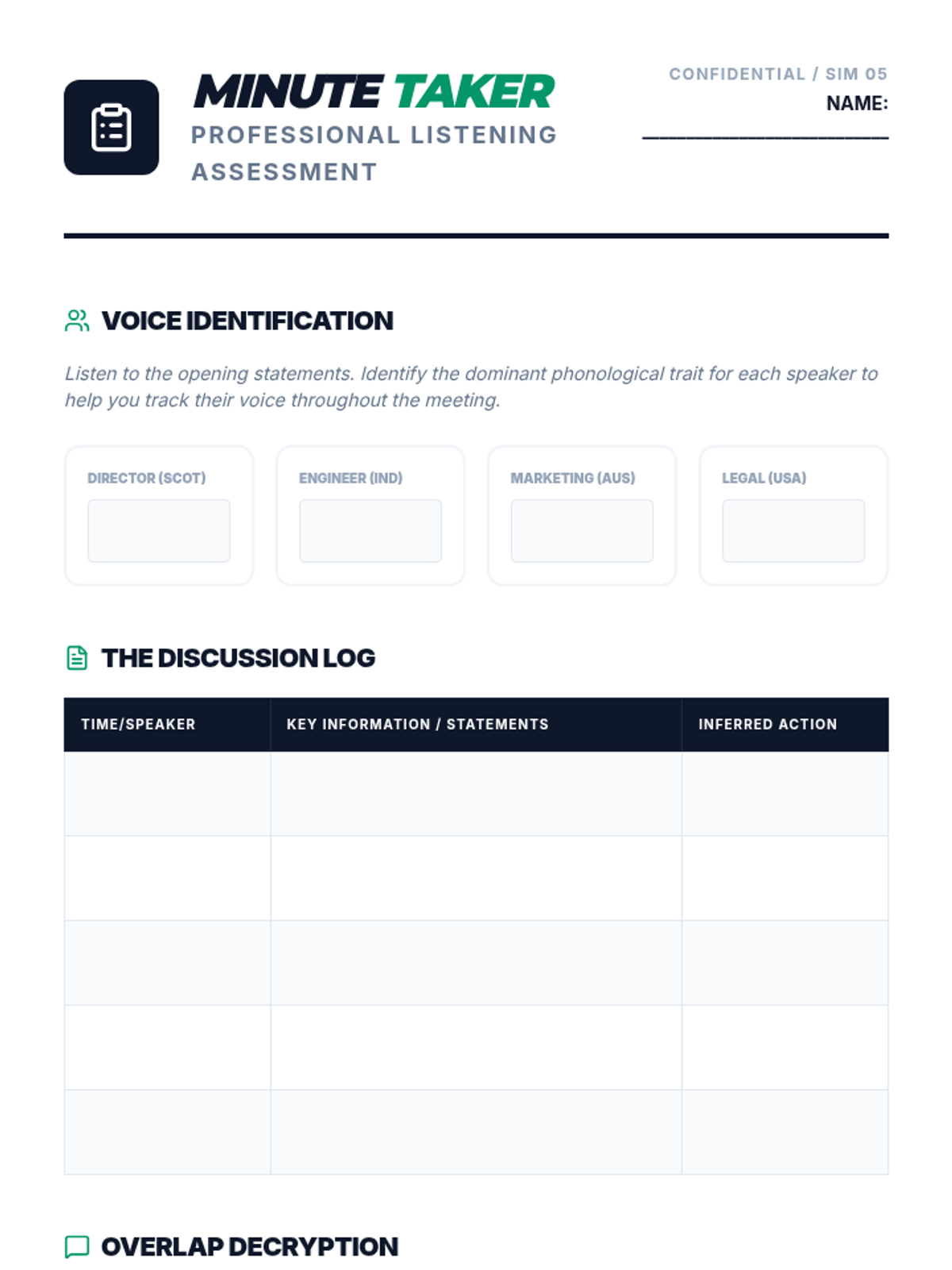
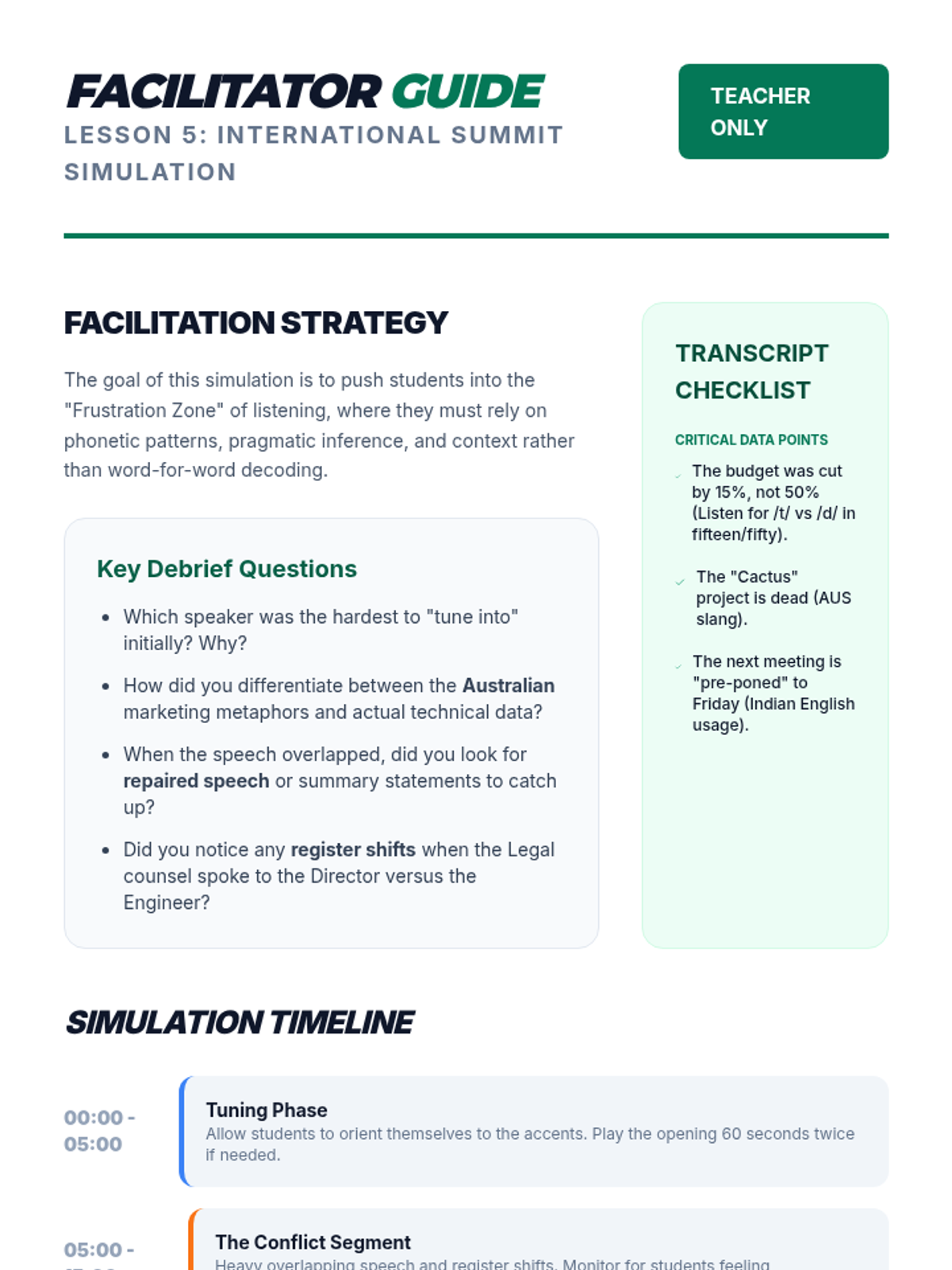
The sequence concludes with a complex simulation of an international business meeting or research group. Students must navigate overlapping speech and diverse accents to extract key action items and decisions.
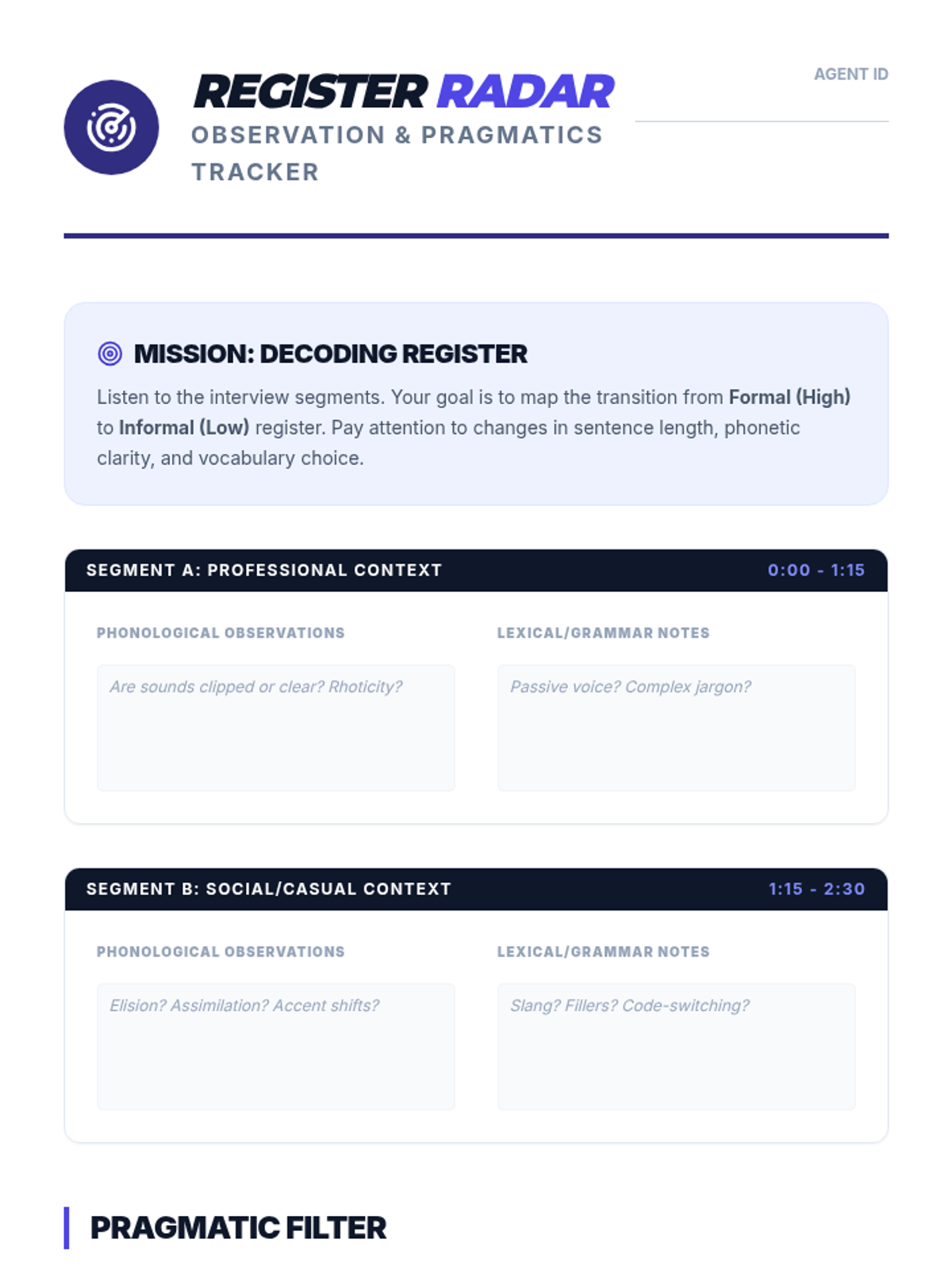
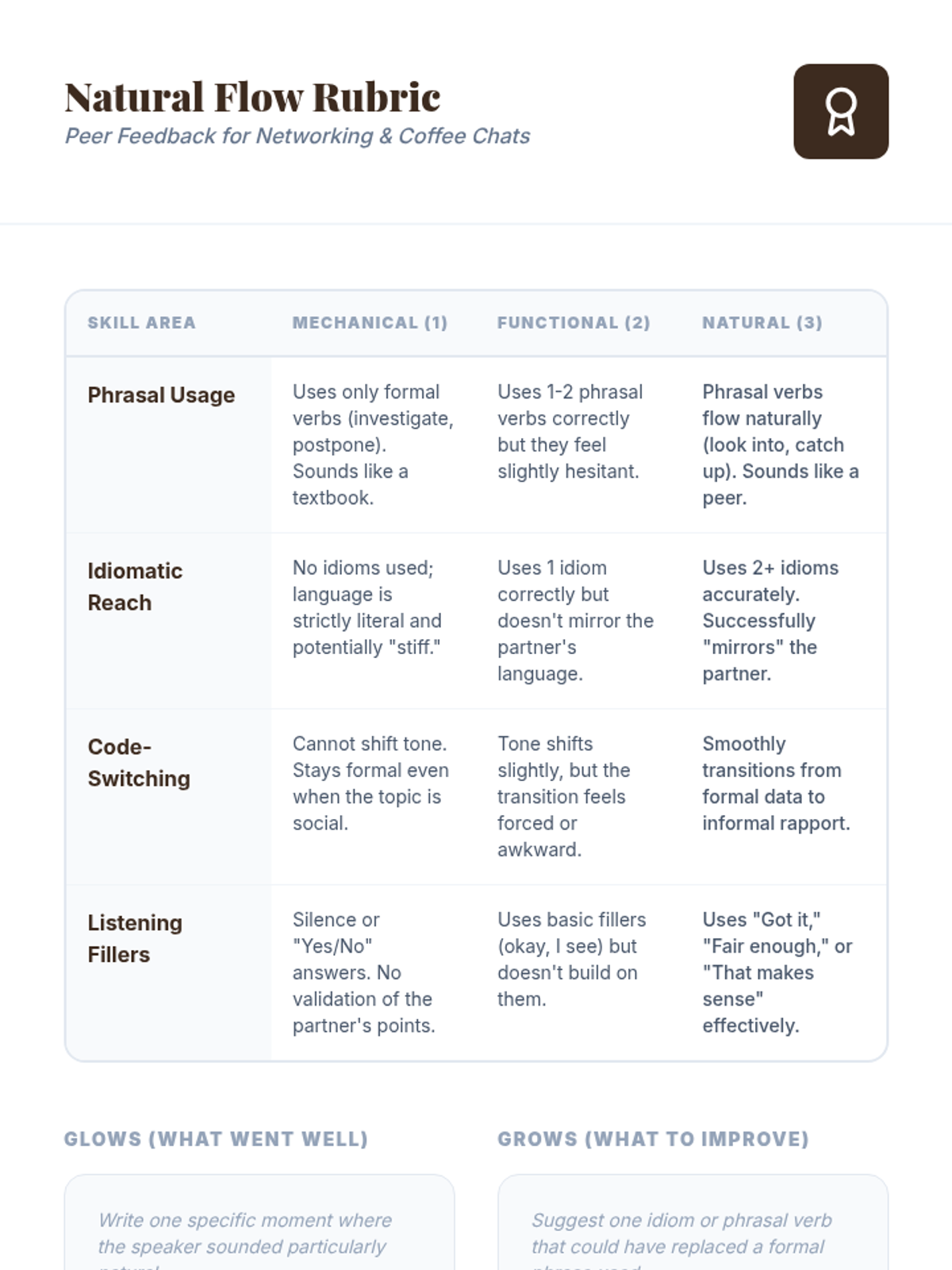
Students investigate how speakers shift their language style based on social context, analyzing pragmatics, code-switching, and register. Activities include analyzing interviews where speakers shift between formal and informal tones.
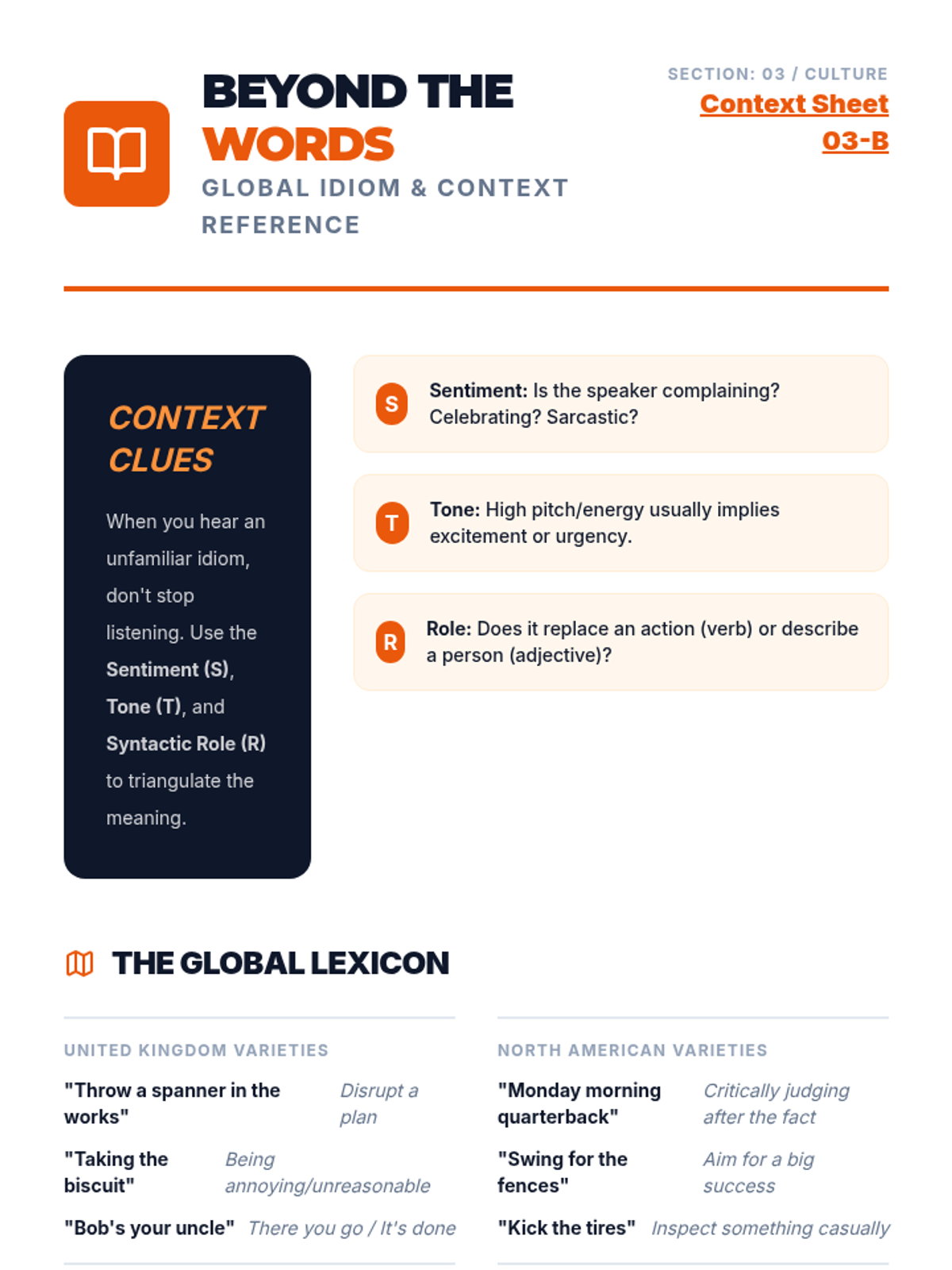
Learners tackle the challenge of high-context communication where meaning depends on cultural knowledge and idiomatic usage. Using clips from various media, students practice deriving meaning from context clues when faced with unfamiliar slang or references.
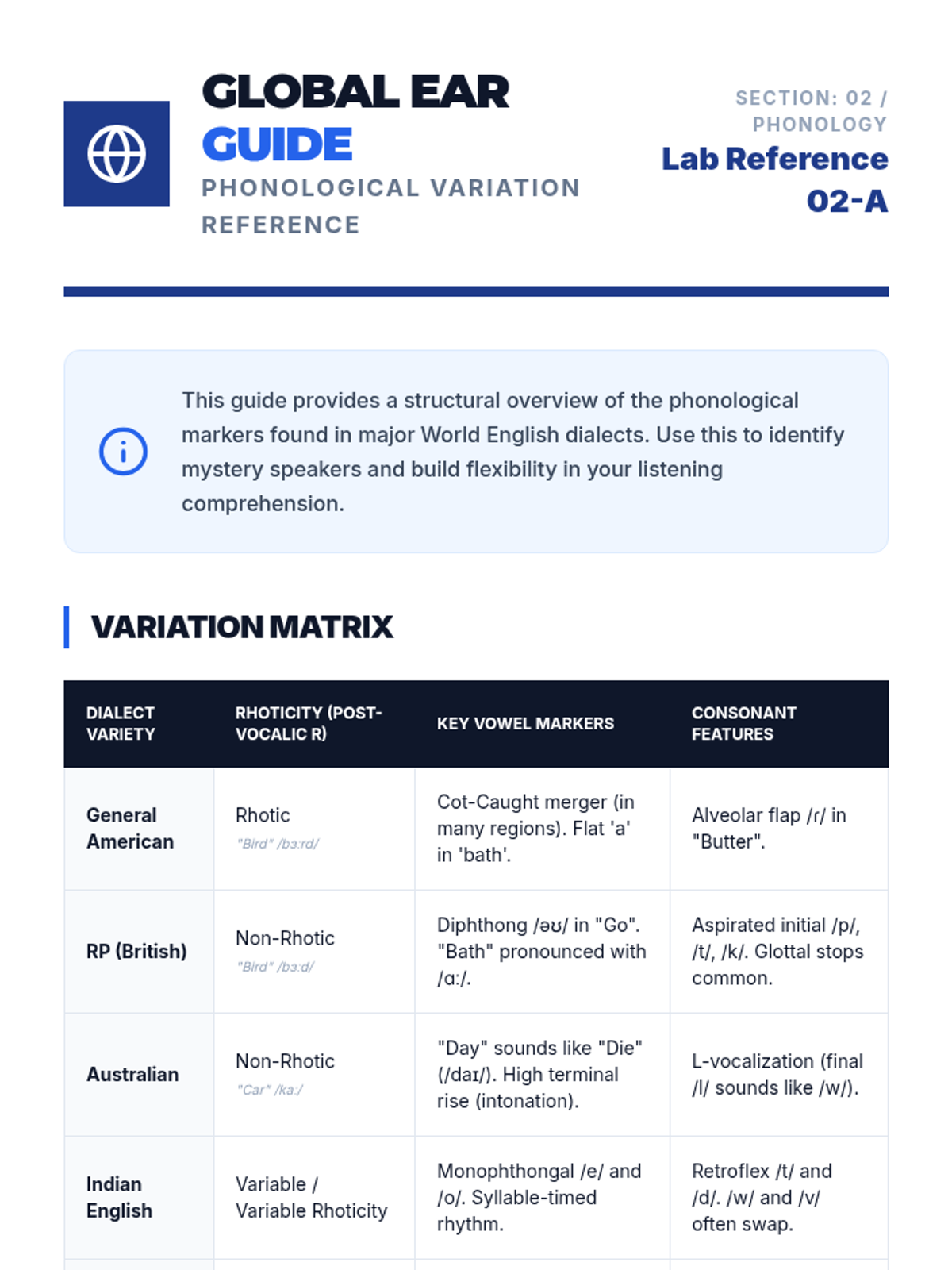
This lesson exposes students to a variety of World Englishes, including Australian, Scottish, Indian, and South African accents. Students analyze specific vowel shifts and consonant variations to build flexibility in listening comprehension.
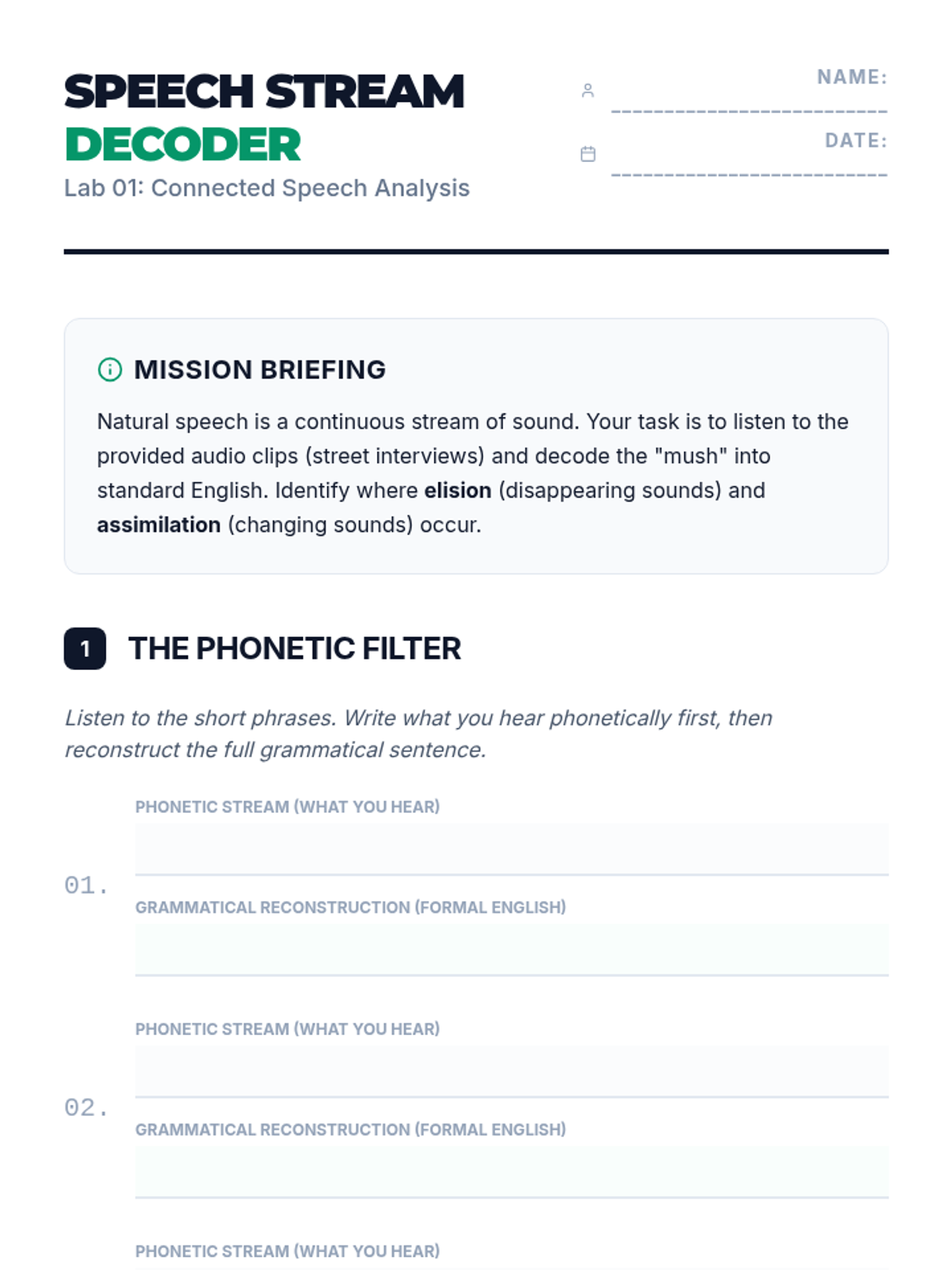
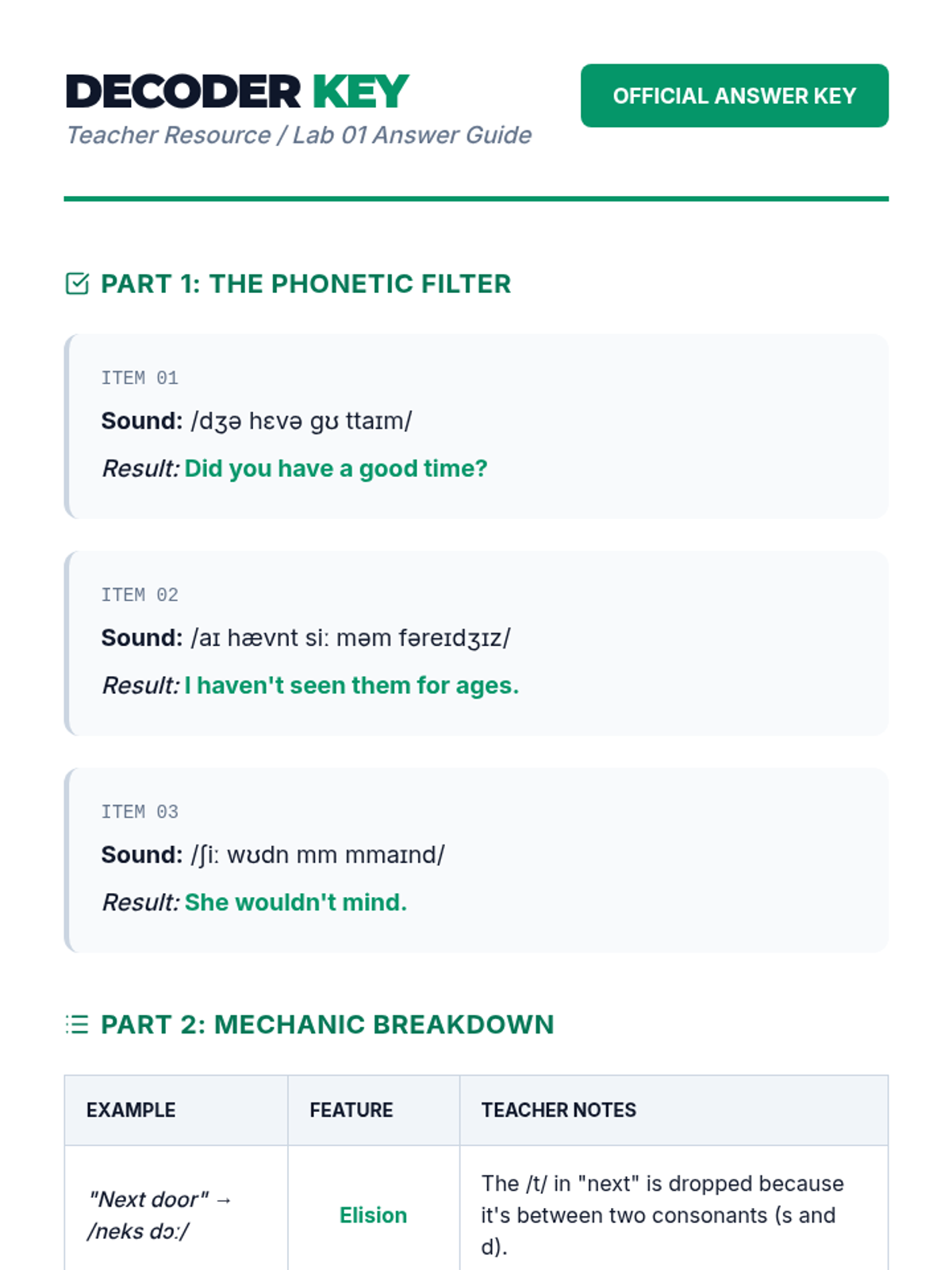
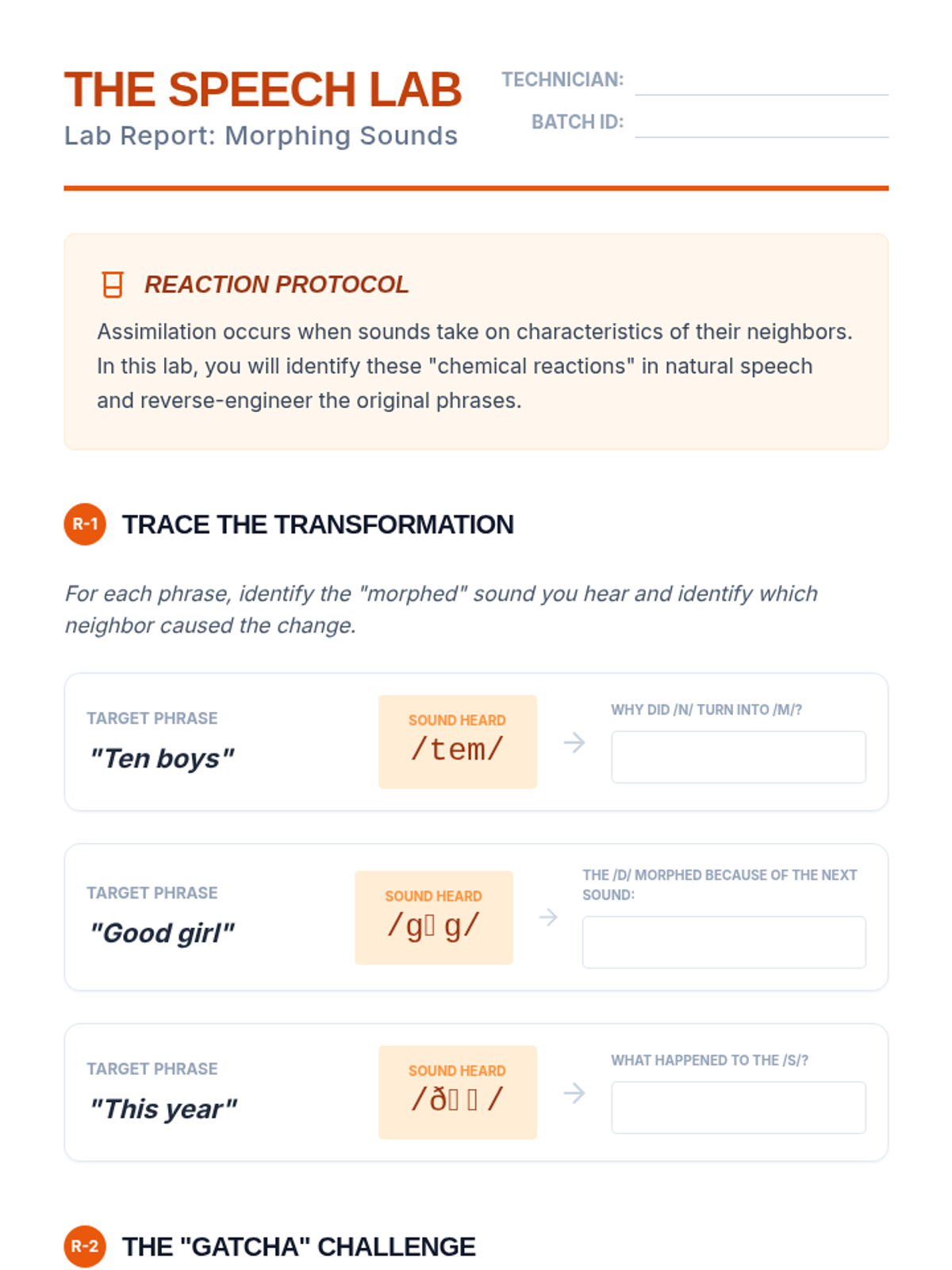
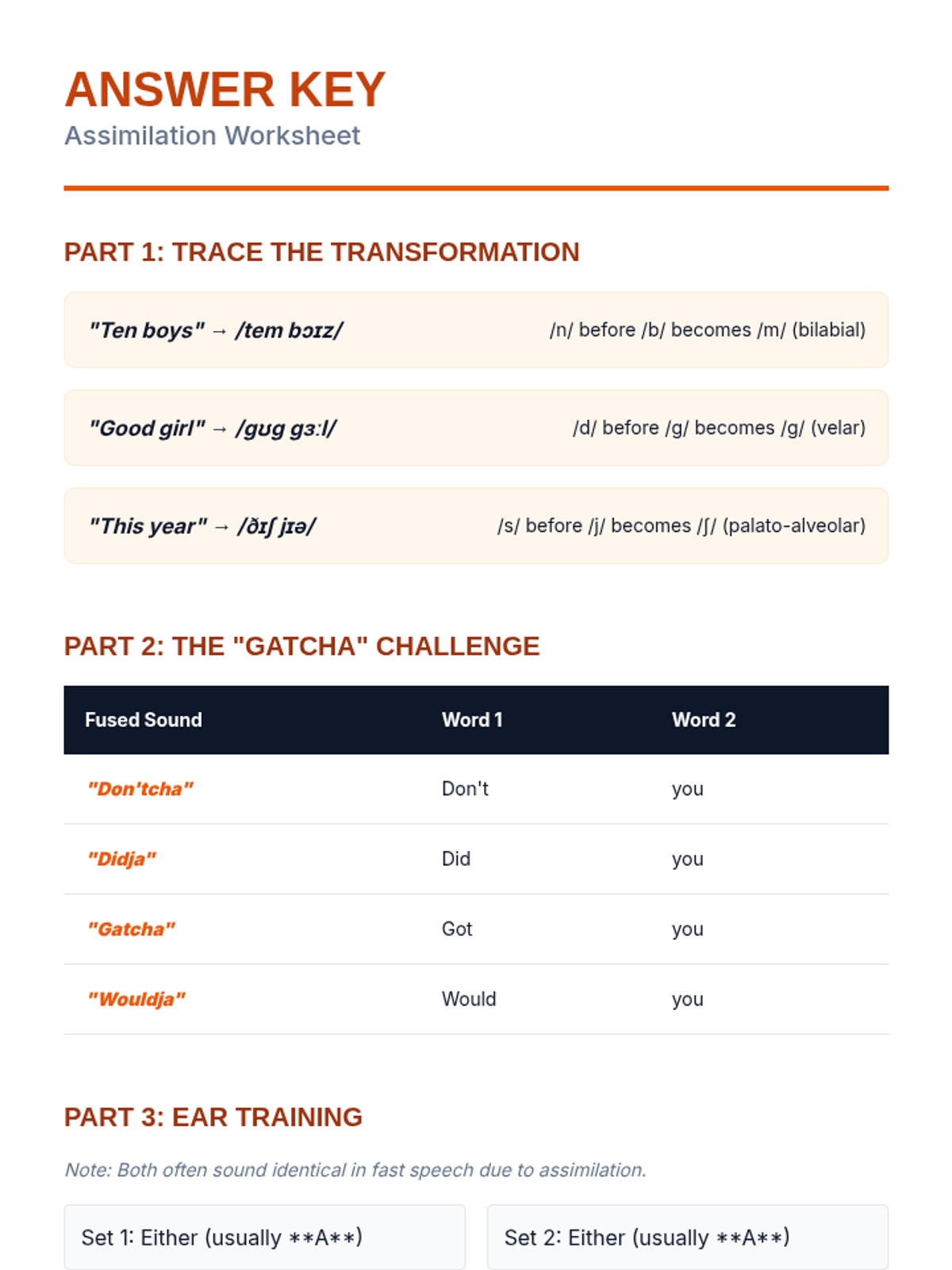
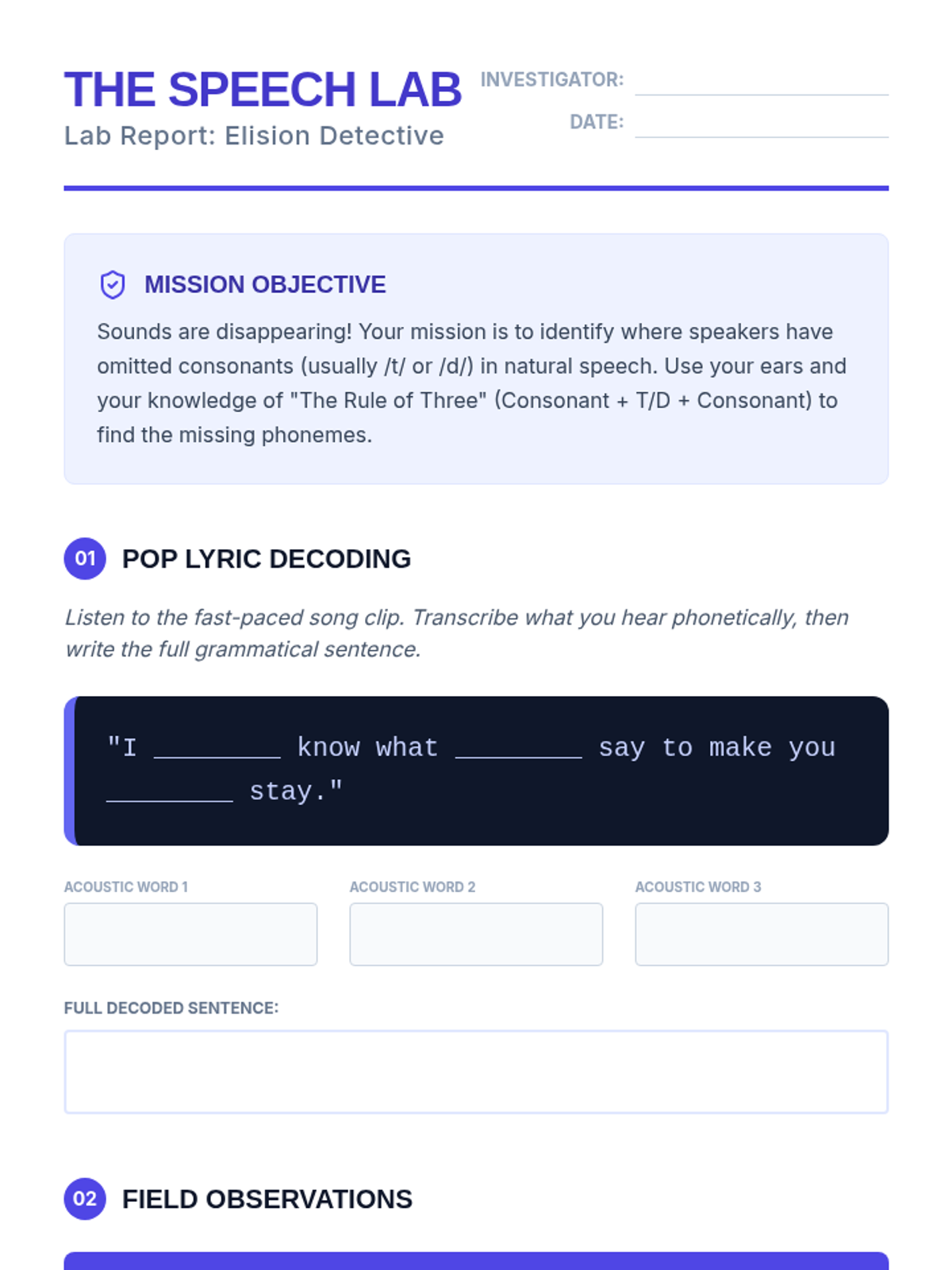
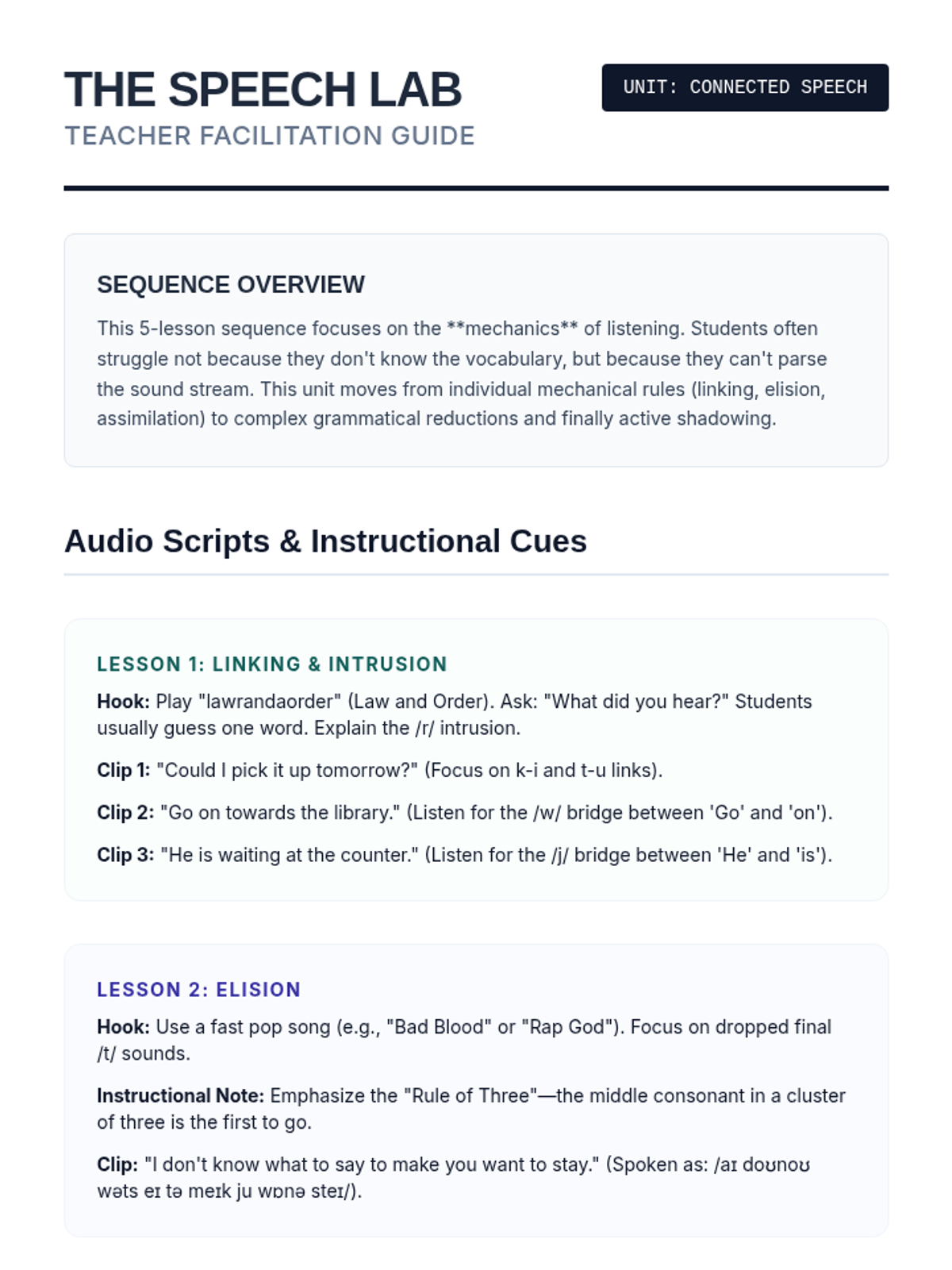
Students explore why natural speech often sounds like a continuous stream of sound rather than distinct words, focusing on elision and assimilation. Through transcription exercises, students learn to parse reduced forms and reconstruct original grammatical structures.
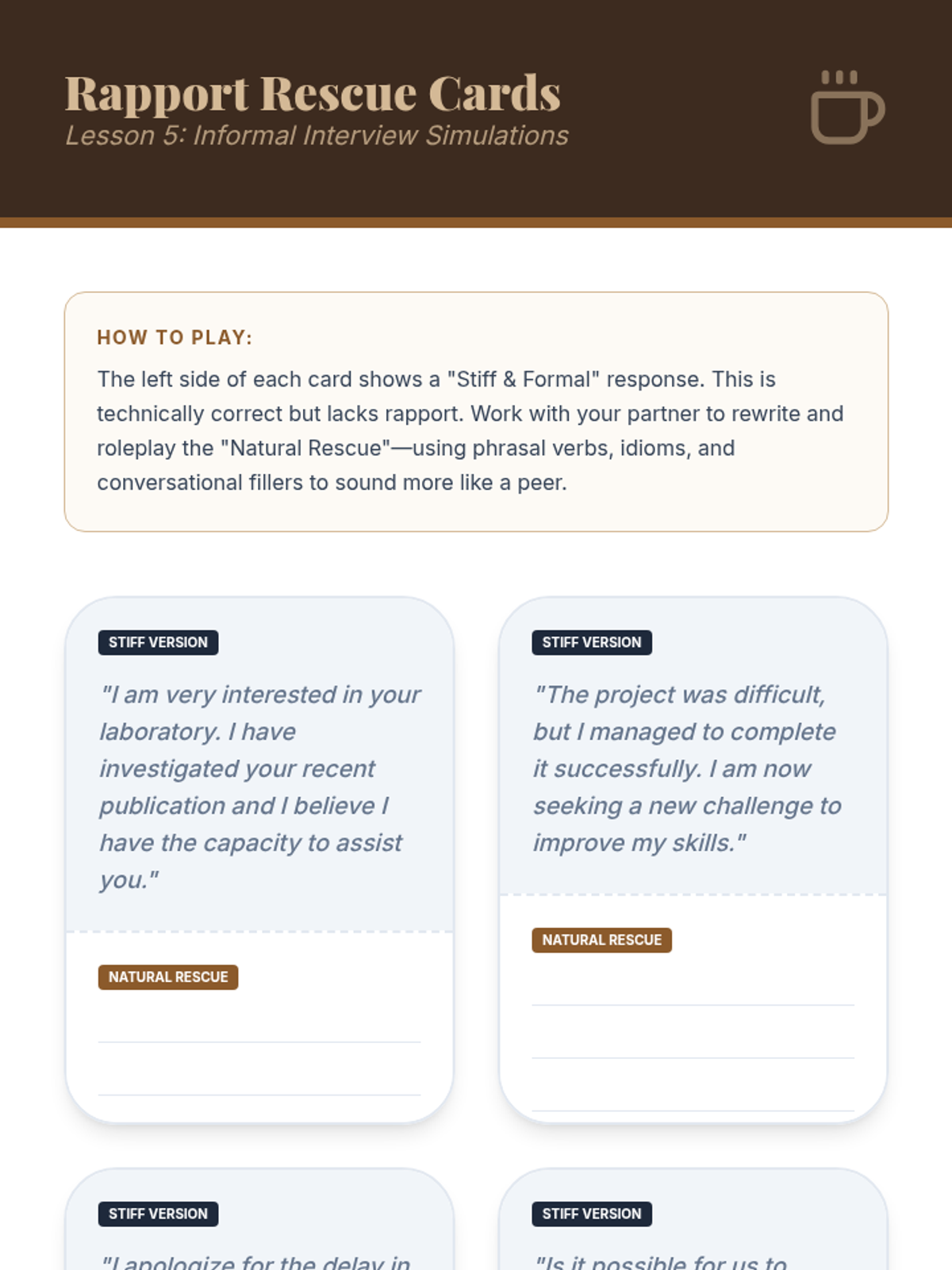
Applies conversational fluency and idiomatic usage to low-stakes professional networking and informal interviews.
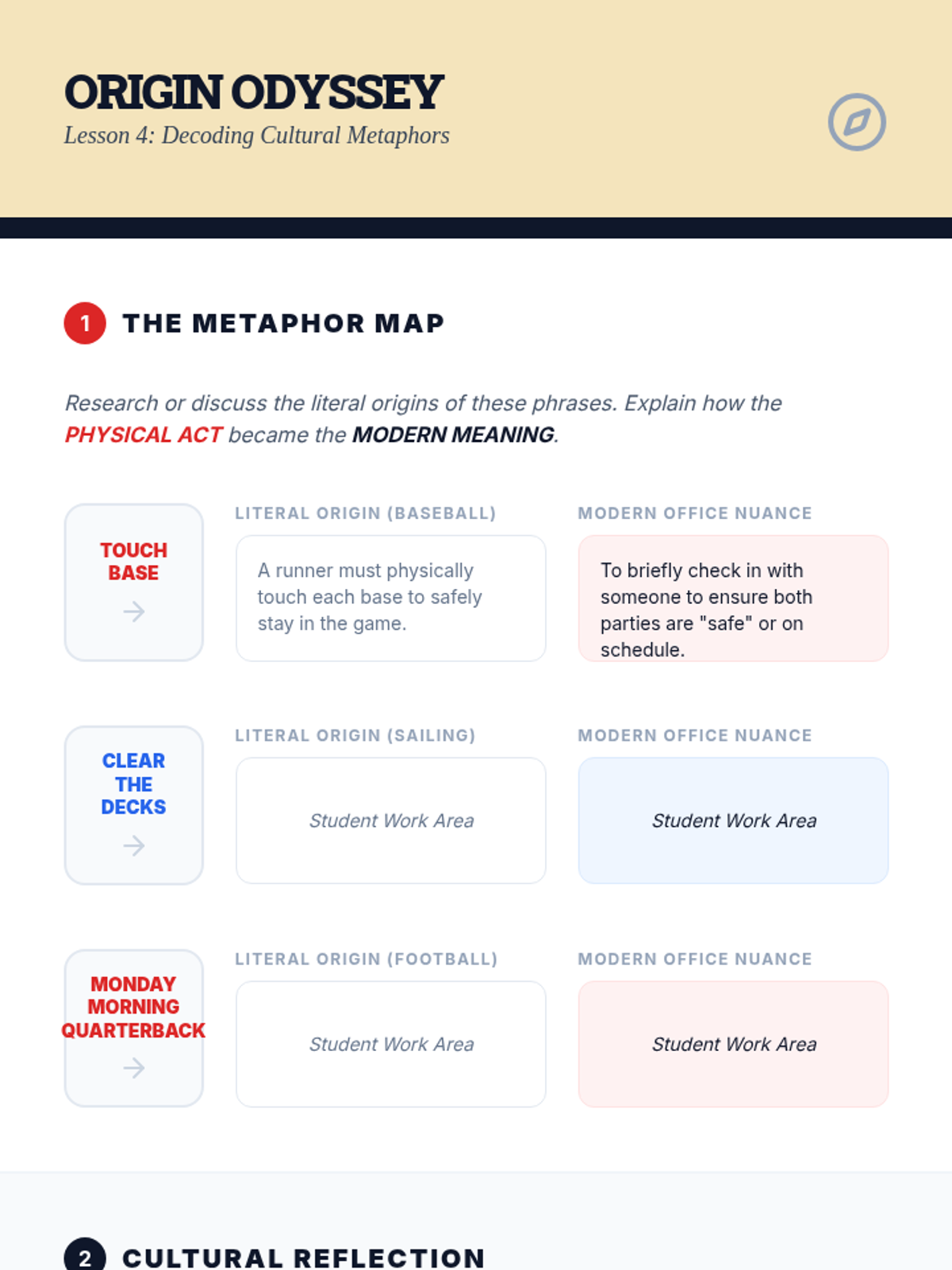
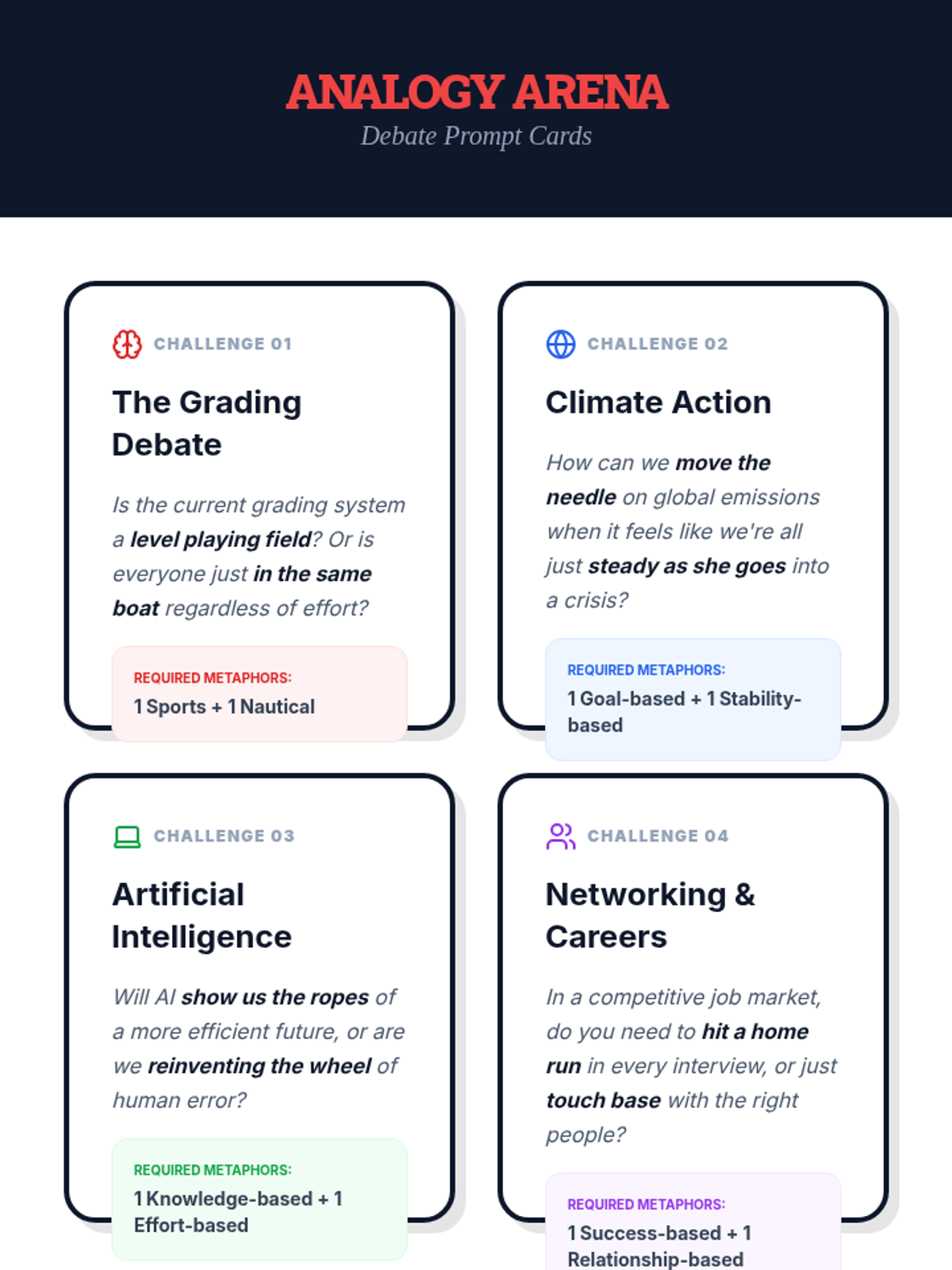
Investigates the cultural origins of sports and nautical metaphors and how to apply them in persuasive speaking and debates.
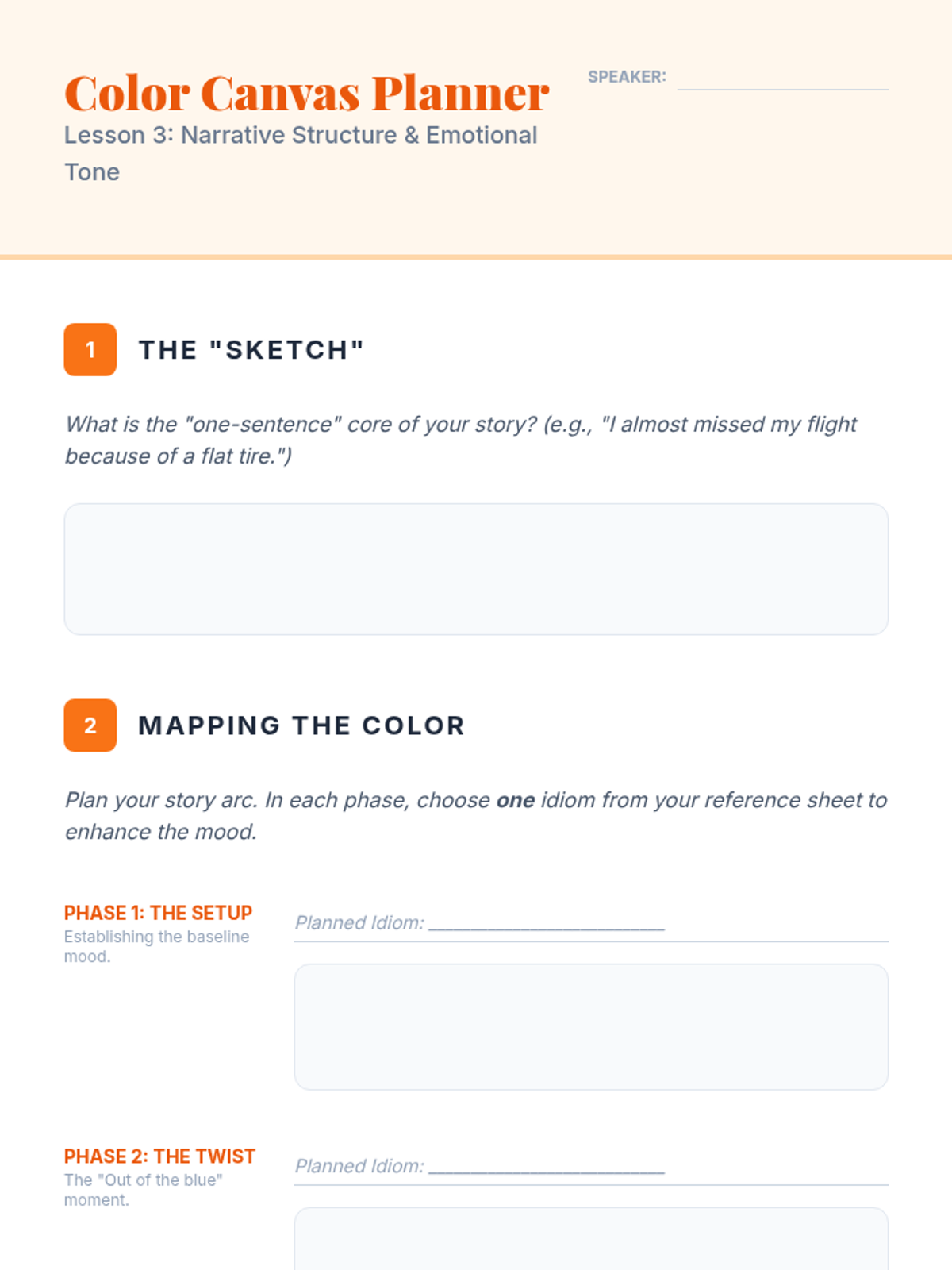
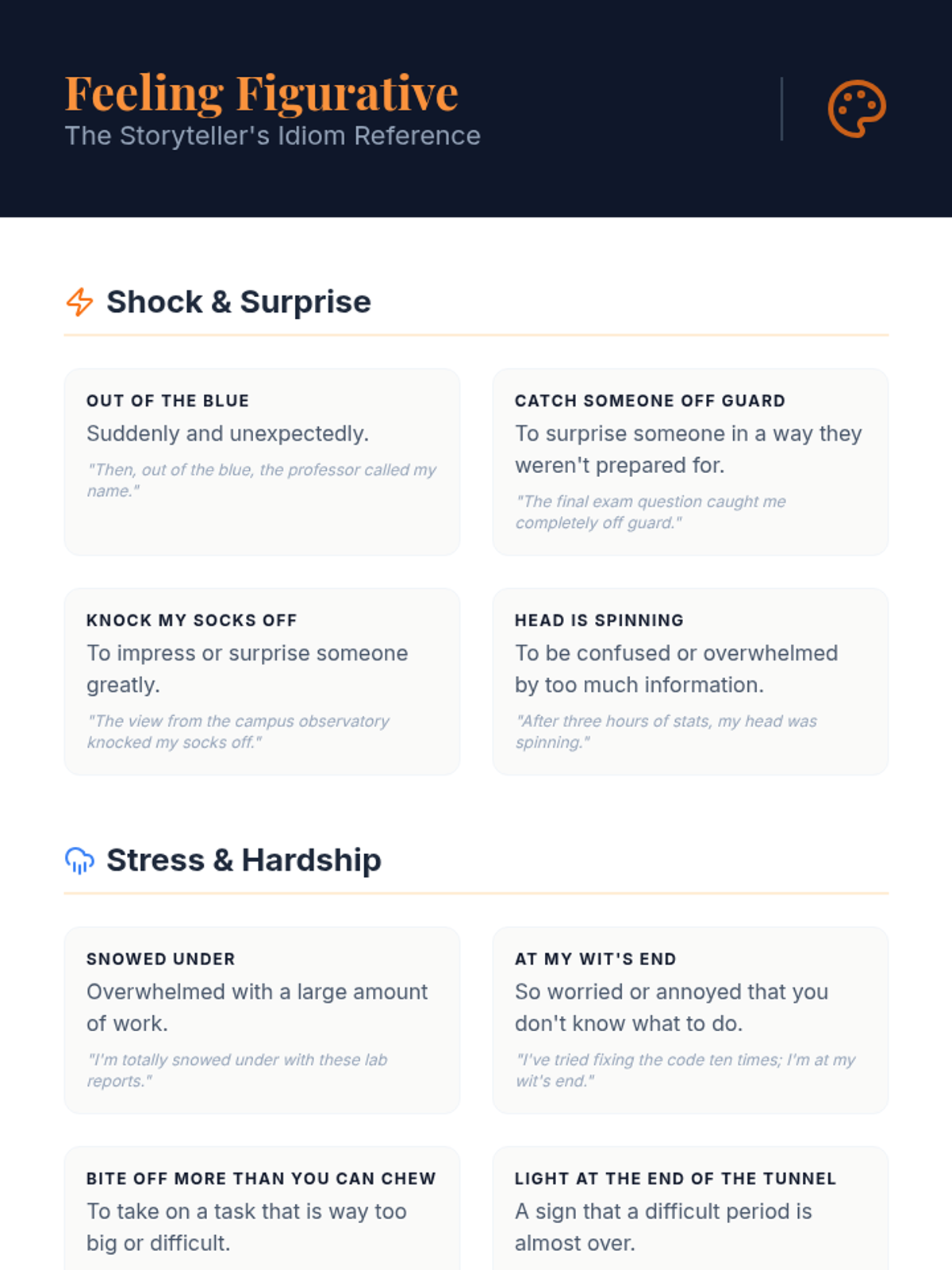
Uses idiomatic expressions to enhance personal storytelling, adding emotional depth and vivid imagery to spoken narratives.
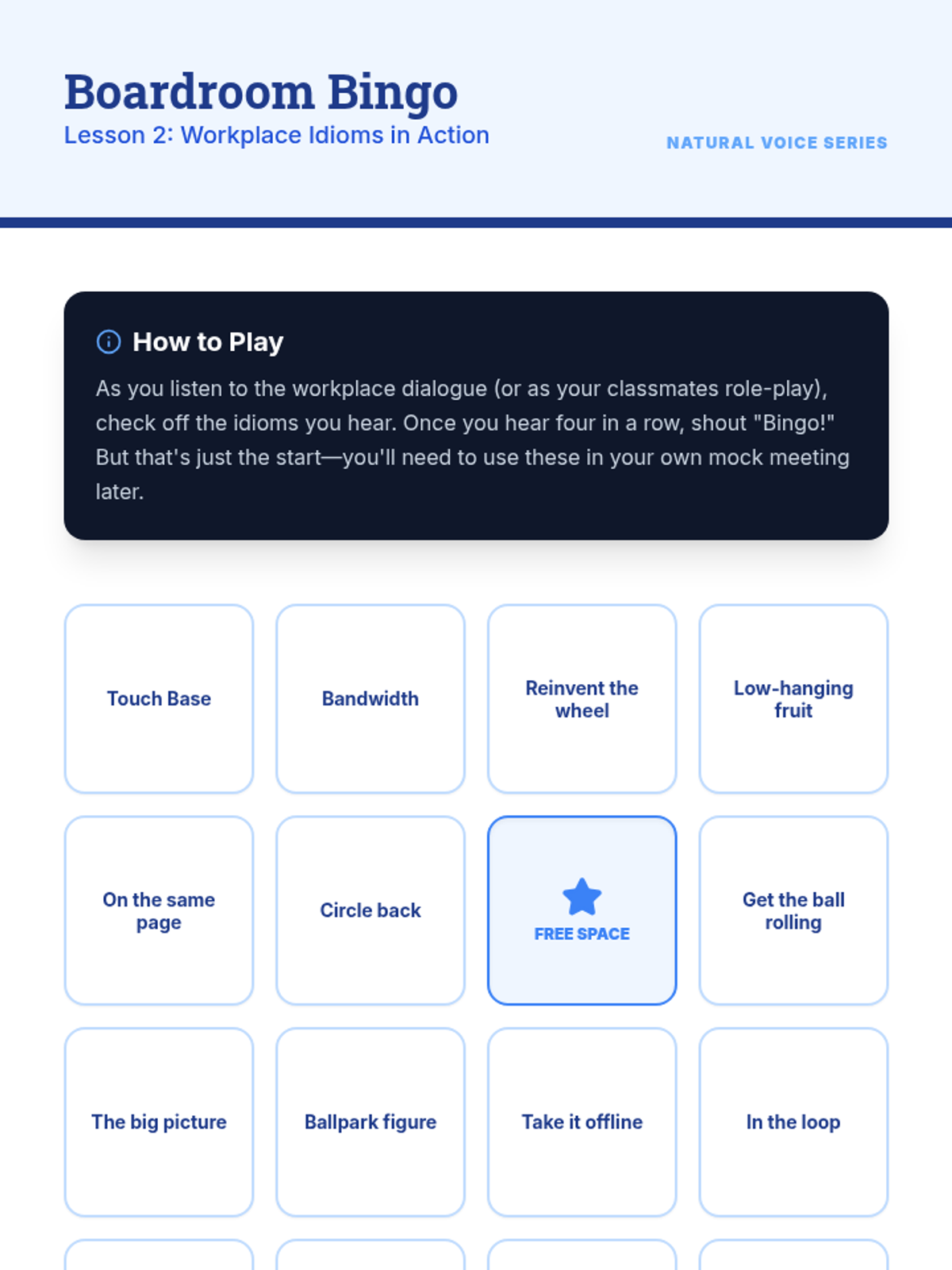
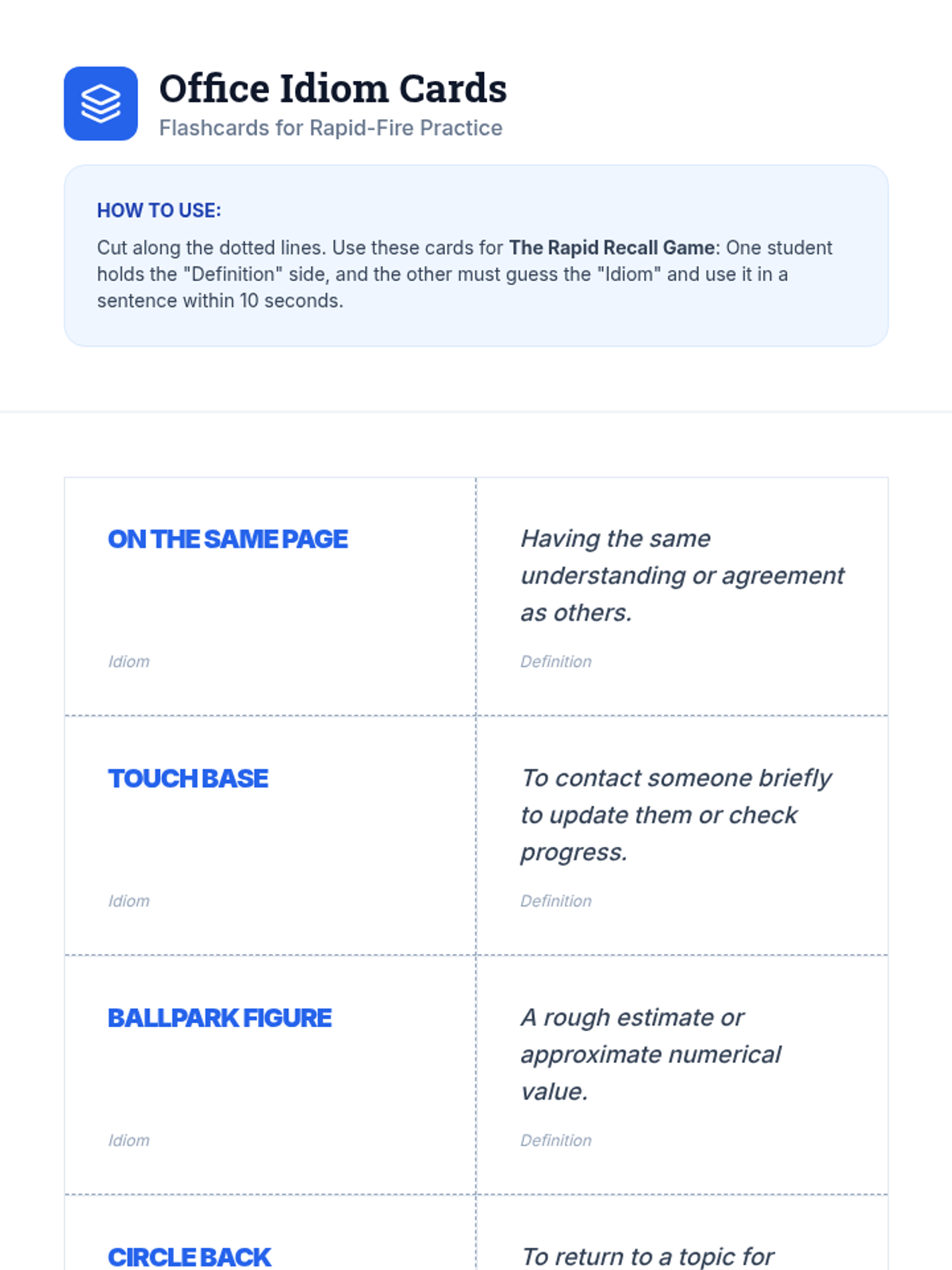
Explores idiomatic expressions common in professional and academic environments through dialogue analysis and simulated meetings.
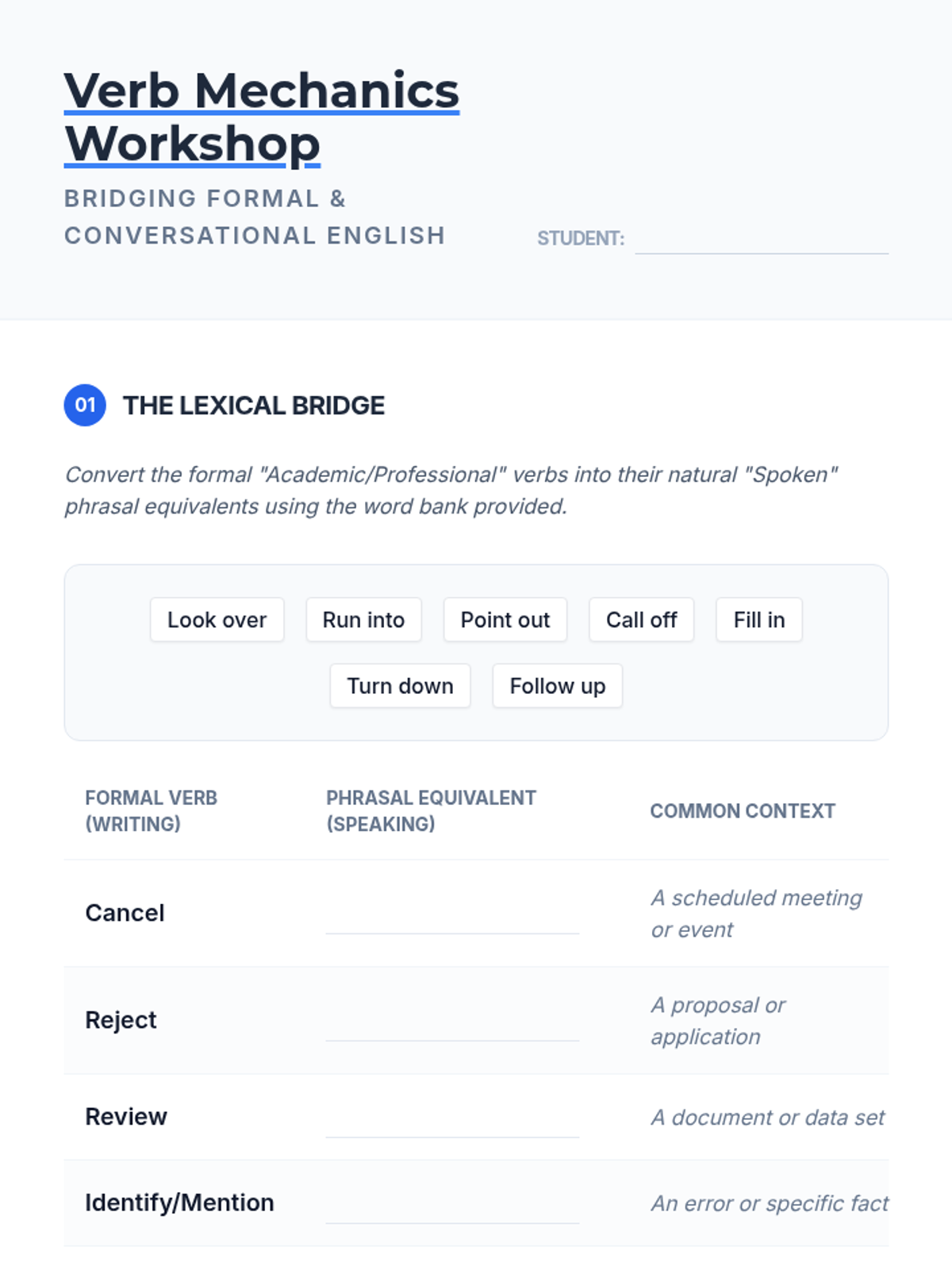
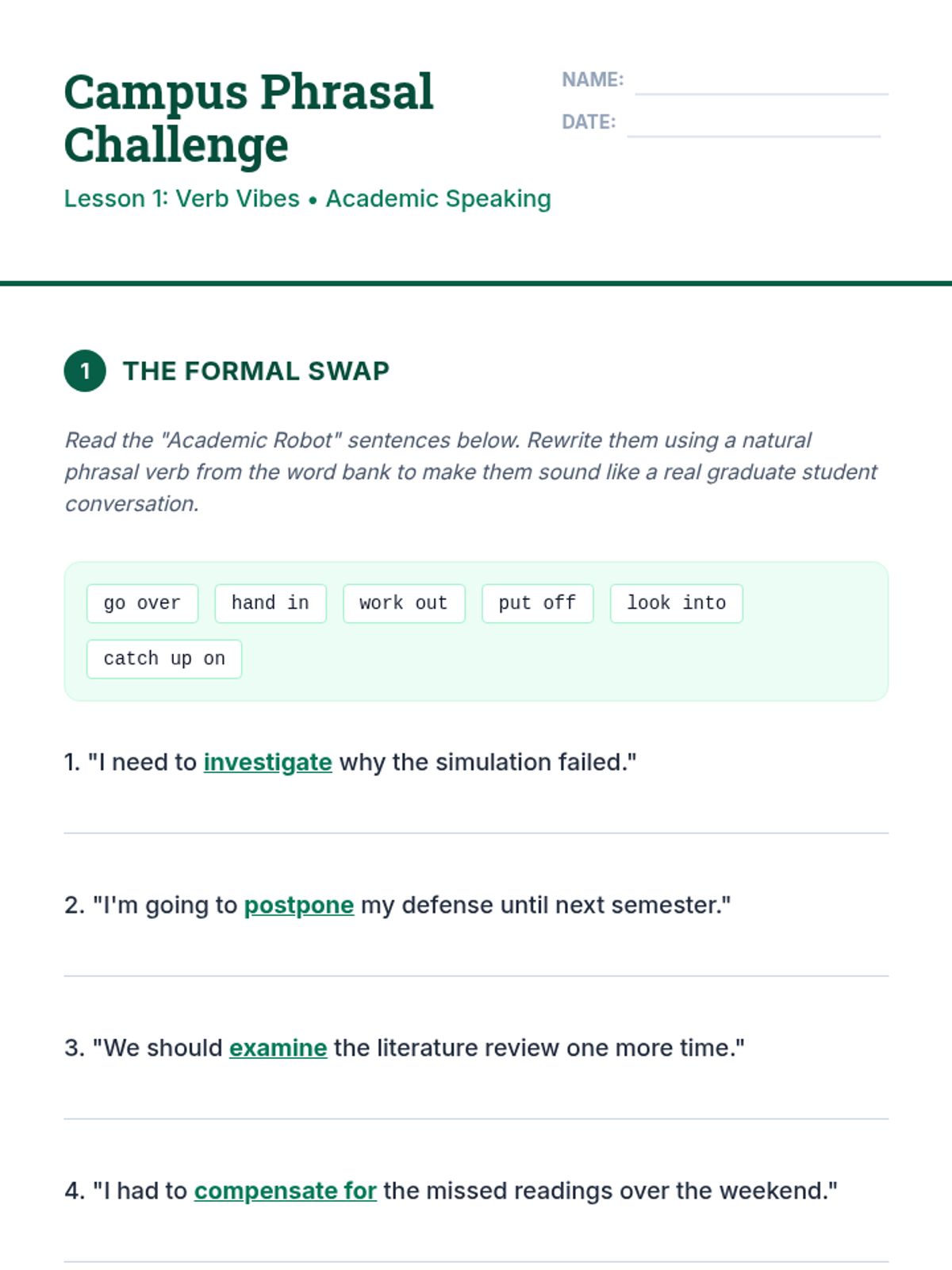
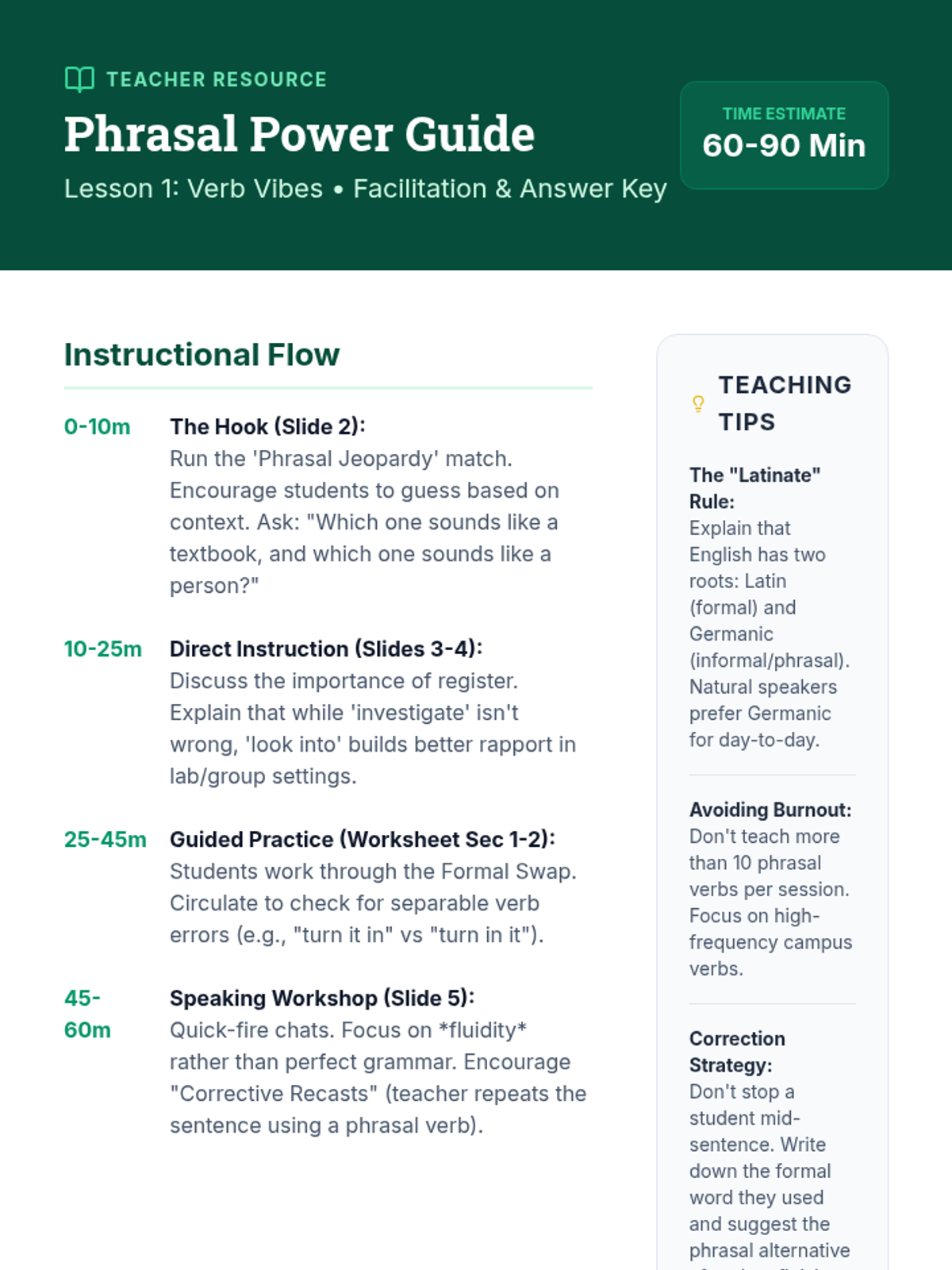
Focuses on identifying and using common phrasal verbs in academic and graduate life to replace formal verbs and sound more natural.
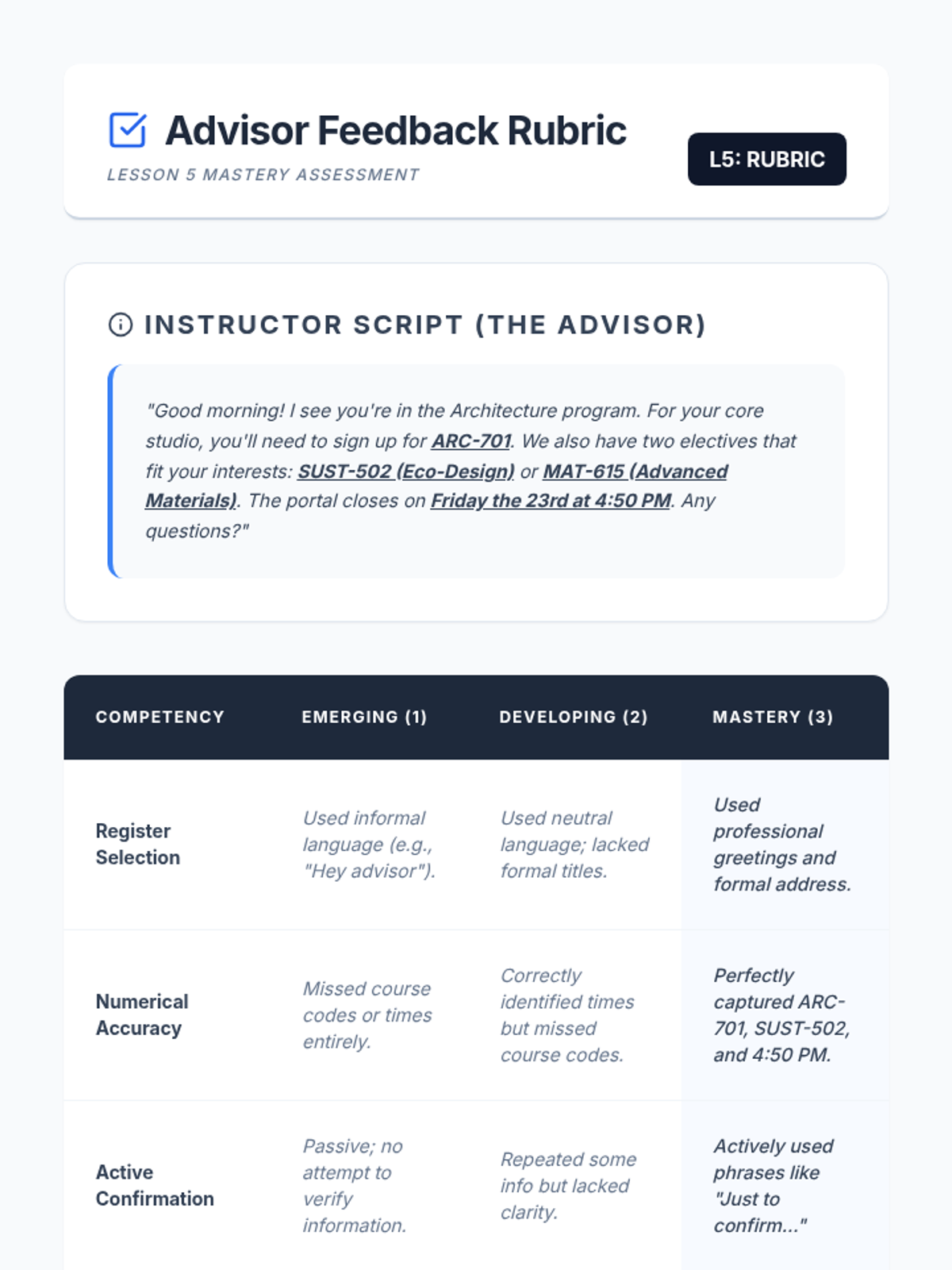
A culmination of listening skills through a simulated academic advisor meeting, requiring active listening, synthesis of information, and verbal confirmation.
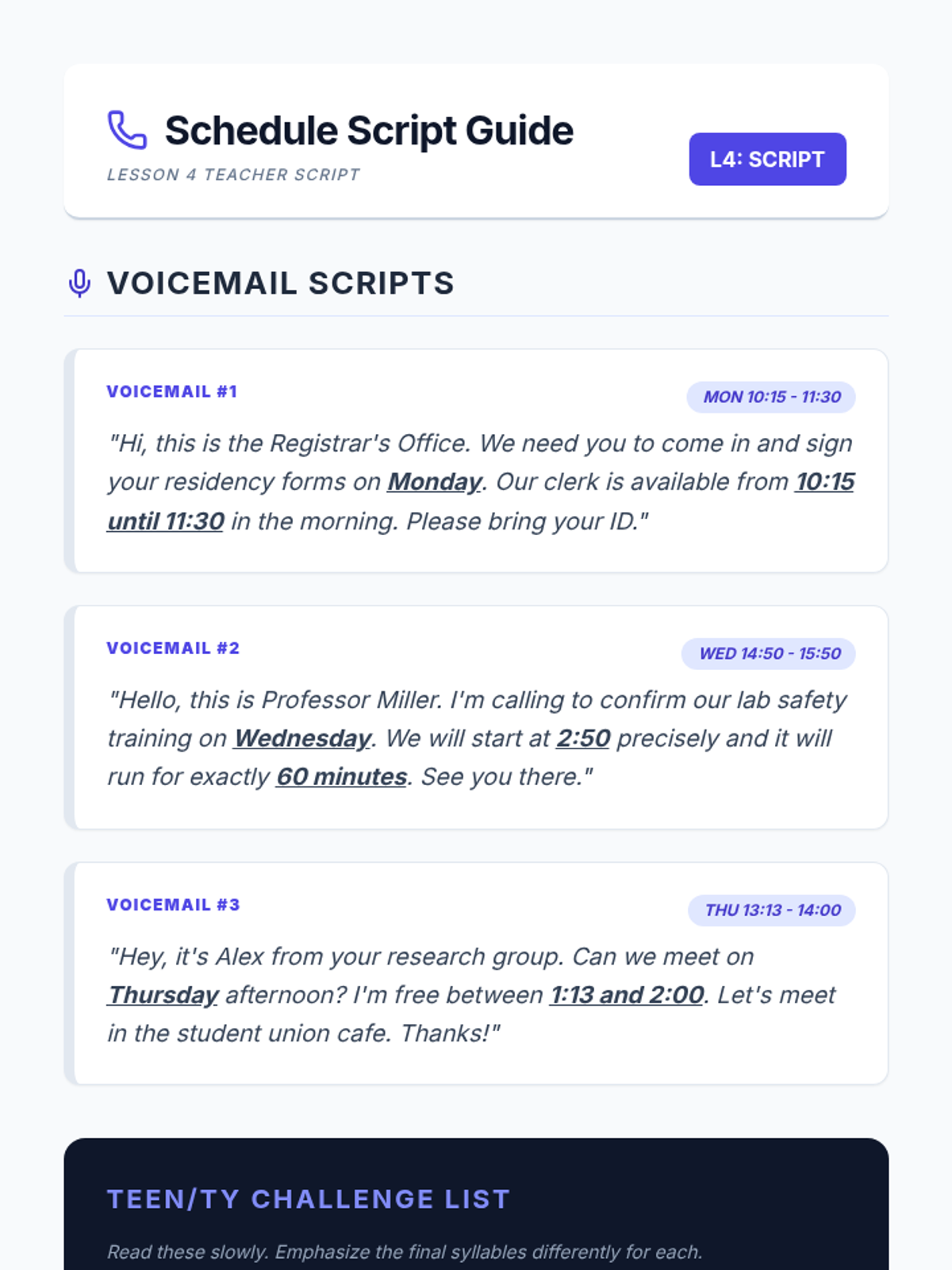
Developing precision in listening for specific details like days, times, and durations, with a focus on distinguishing similar-sounding numbers in an academic schedule.
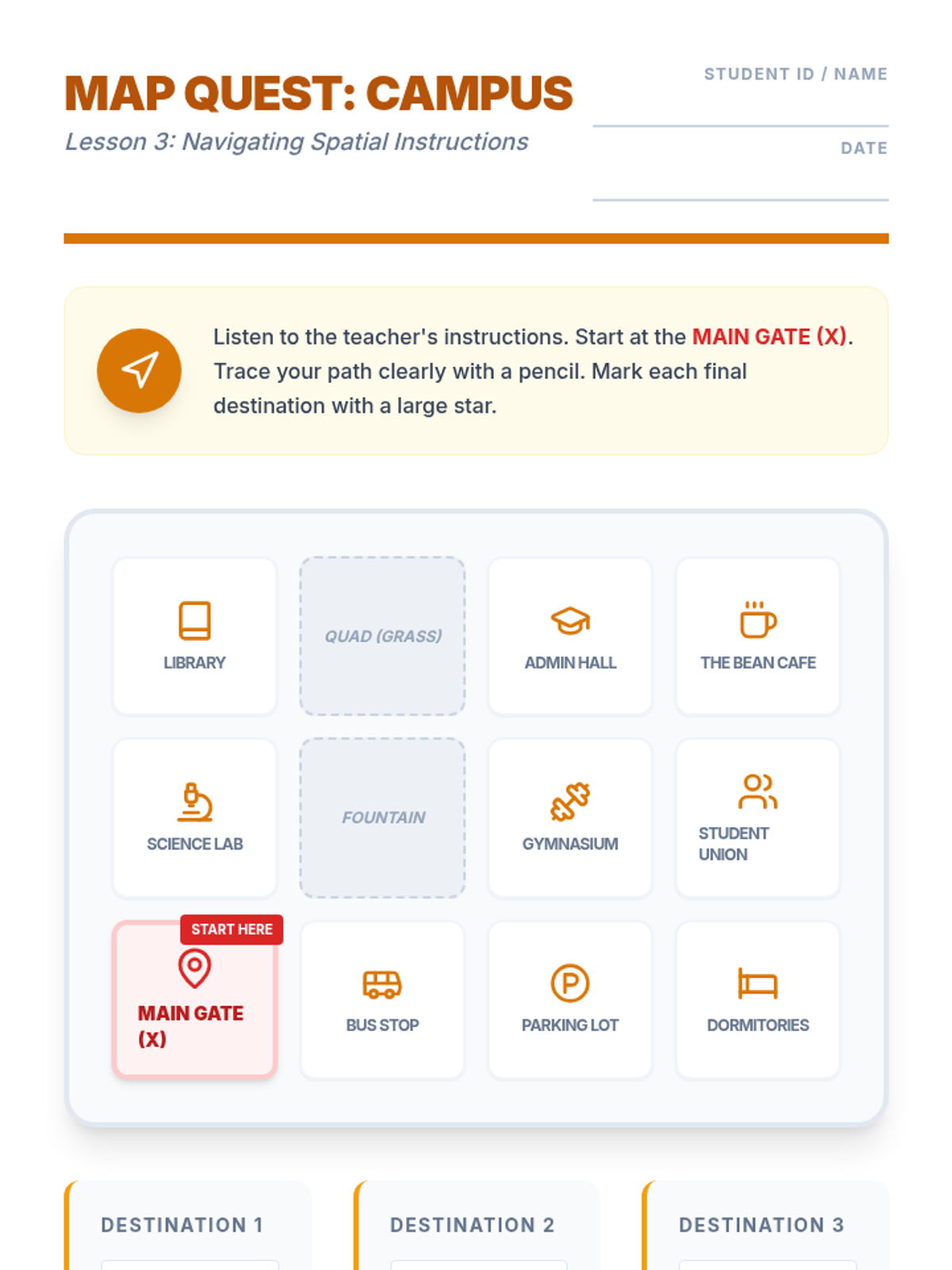
Students practice spatial listening skills by navigating a university campus map using prepositions of place and directional language.
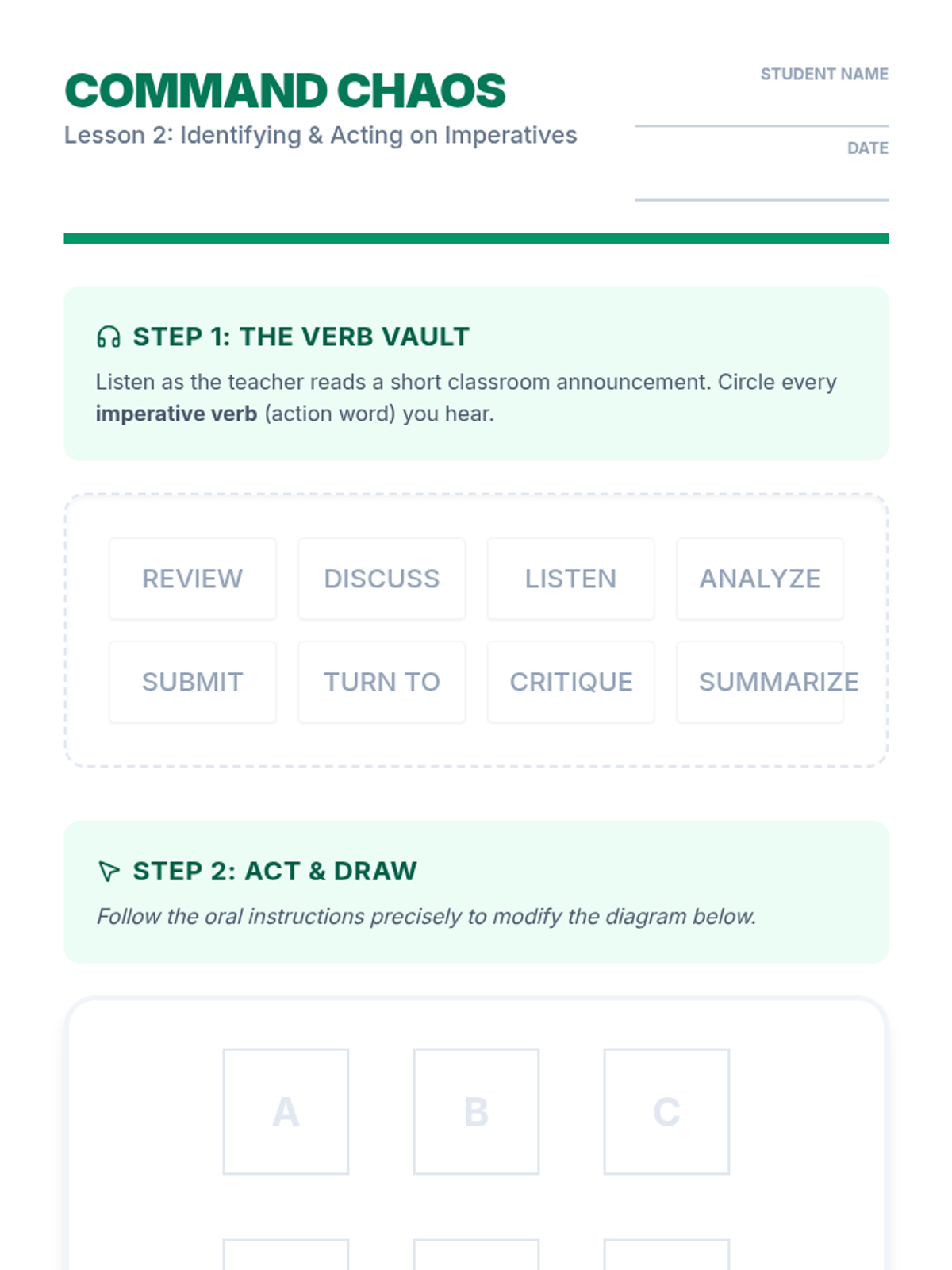
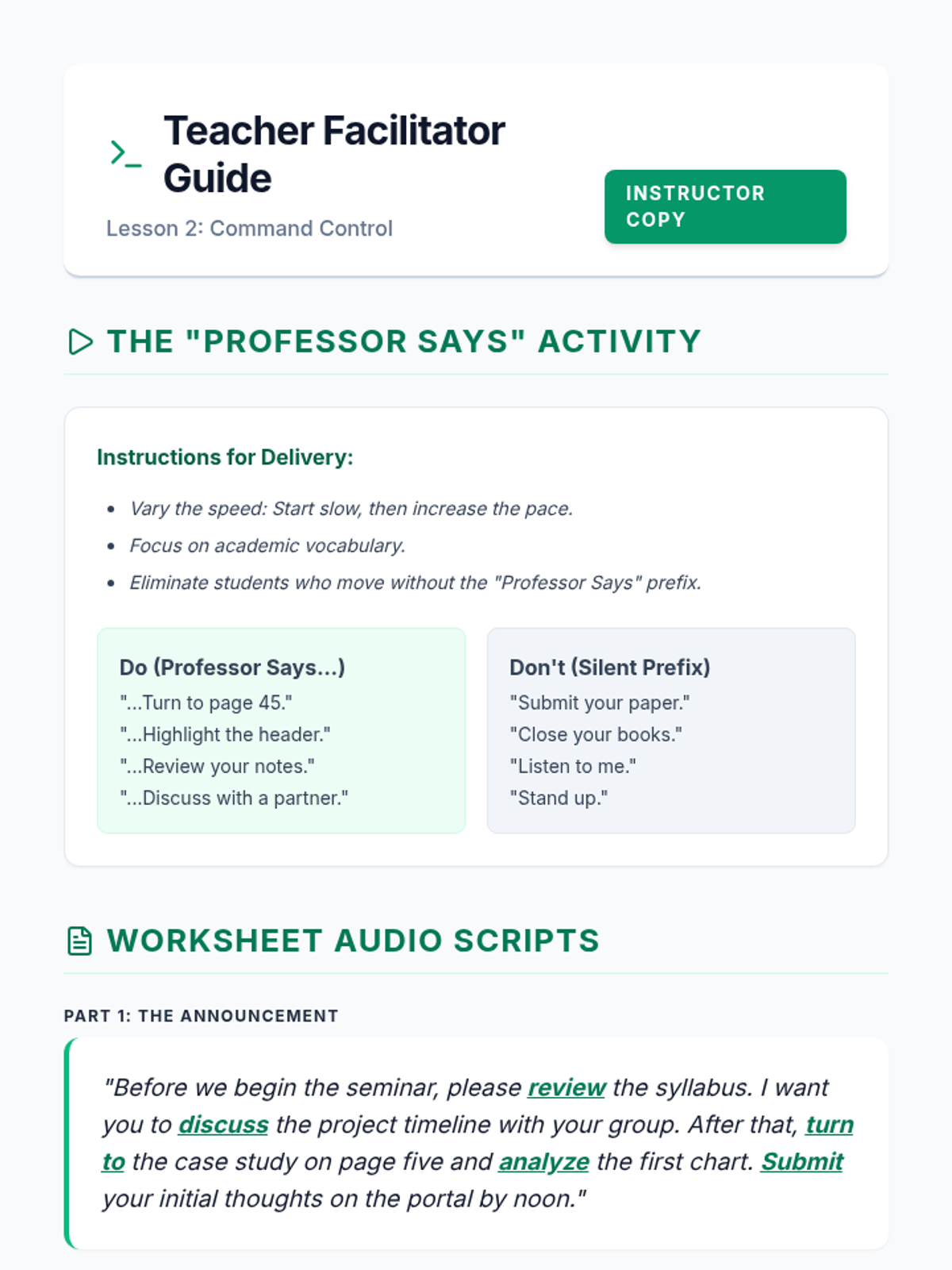
Focuses on recognizing and responding to imperative verbs commonly used by professors and administrative staff in classroom settings.
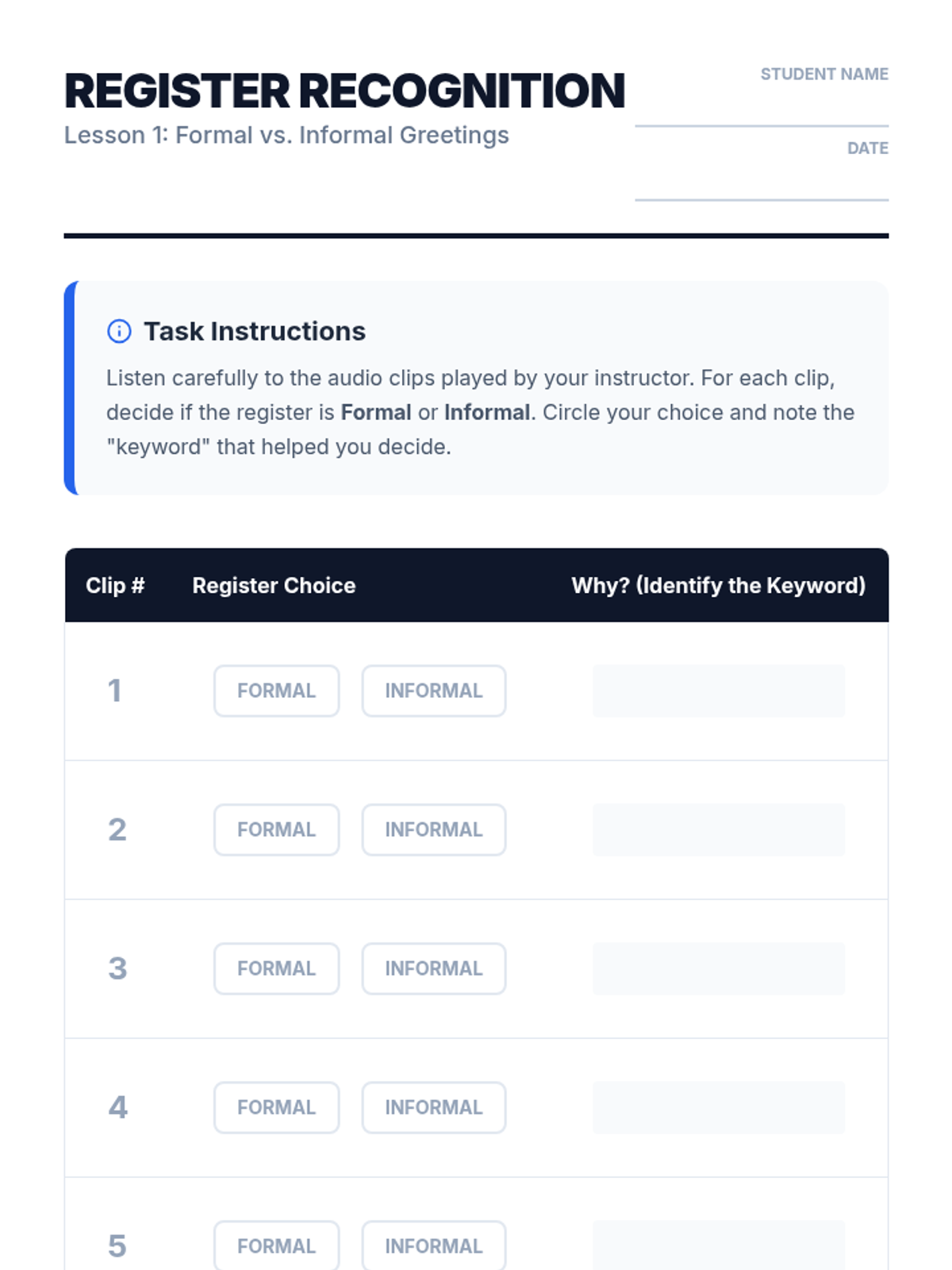
Students learn to identify the difference between peer-to-peer and student-to-professor interactions by listening for register markers and appropriate greeting formulas.
A culminating simulation of an academic conference mixer where students apply their knowledge of phrasal verbs and idioms to achieve specific conversational goals.
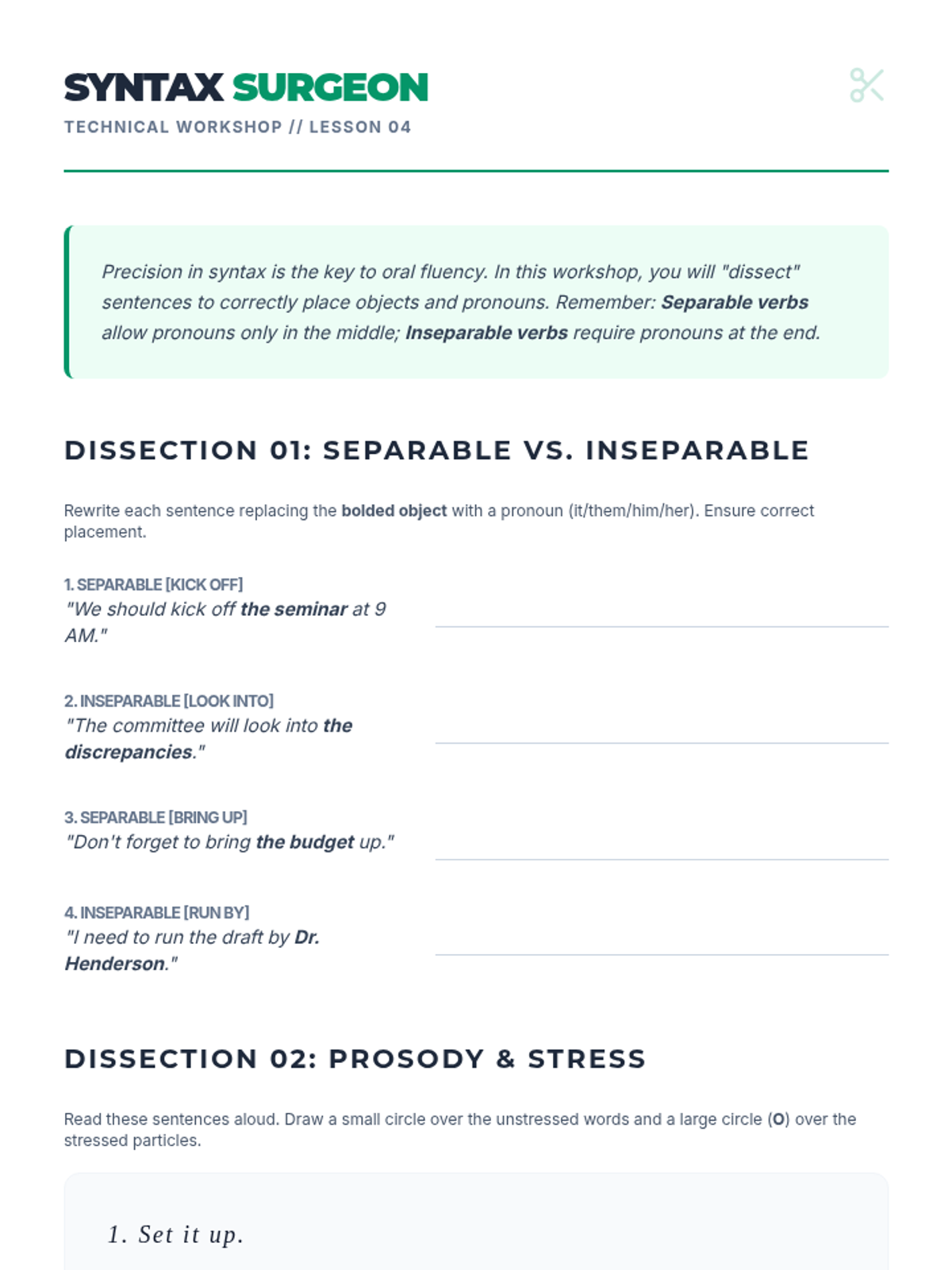
A technical workshop on the syntax of phrasal verbs, focusing on separable vs. inseparable structures and natural stress patterns in speech.
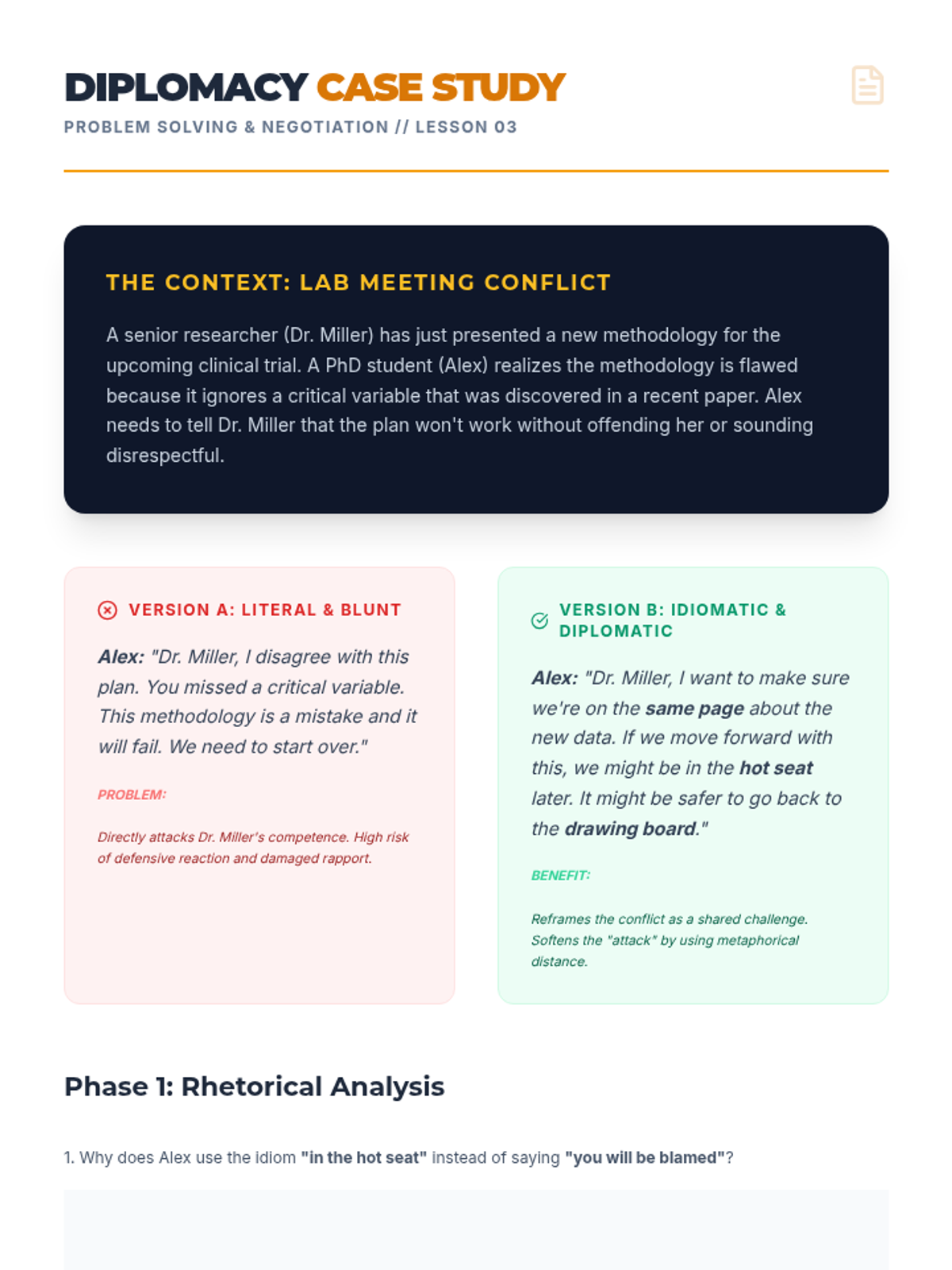
Exploration of idioms for problem-solving and negotiation, focusing on using idiomatic language to soften criticism and propose solutions diplomatically.
Introduction to phrasal verbs for organizing time and tasks in research and professional settings, with a focus on register differences between phrasal verbs and Latinate equivalents.
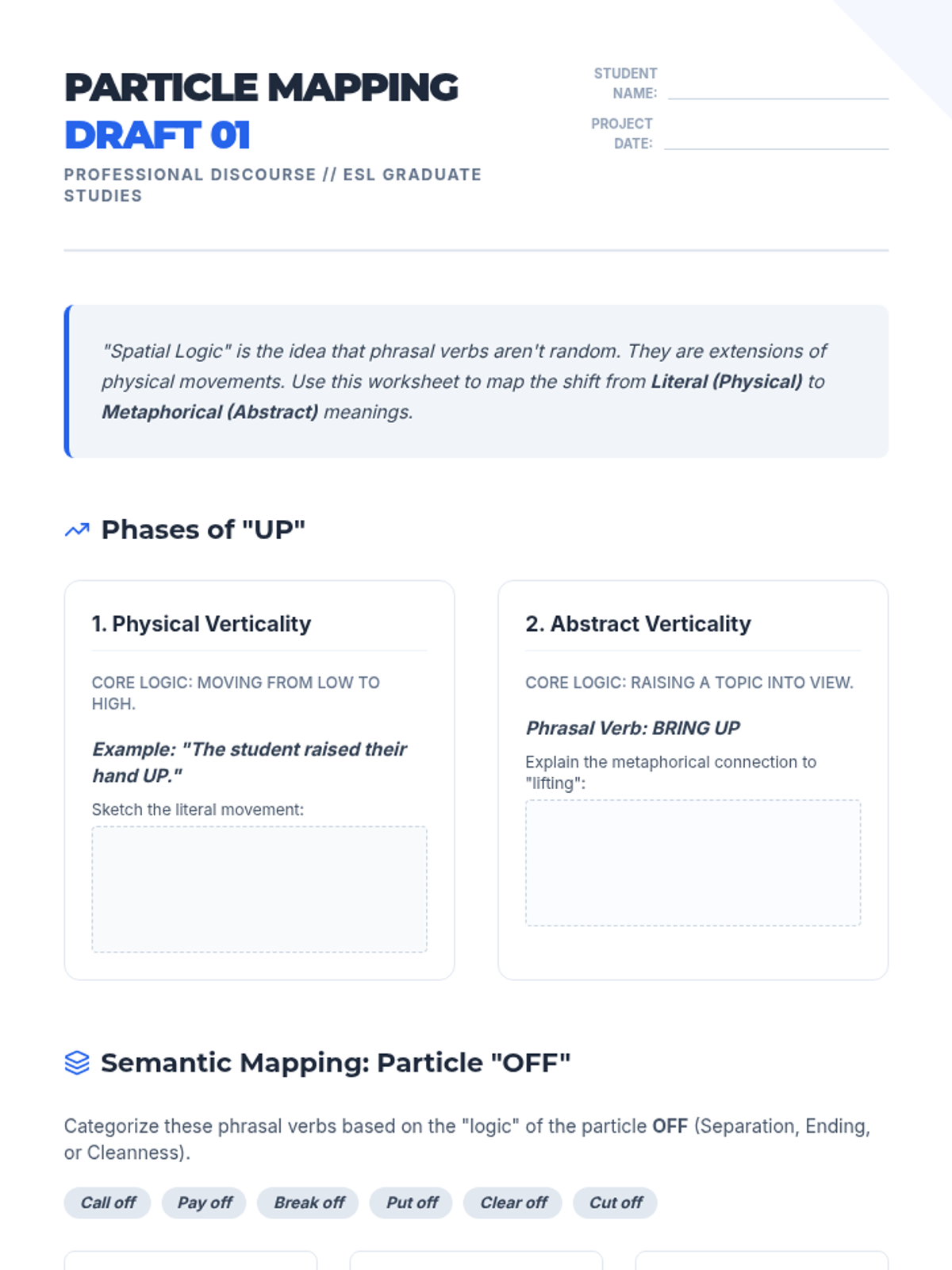
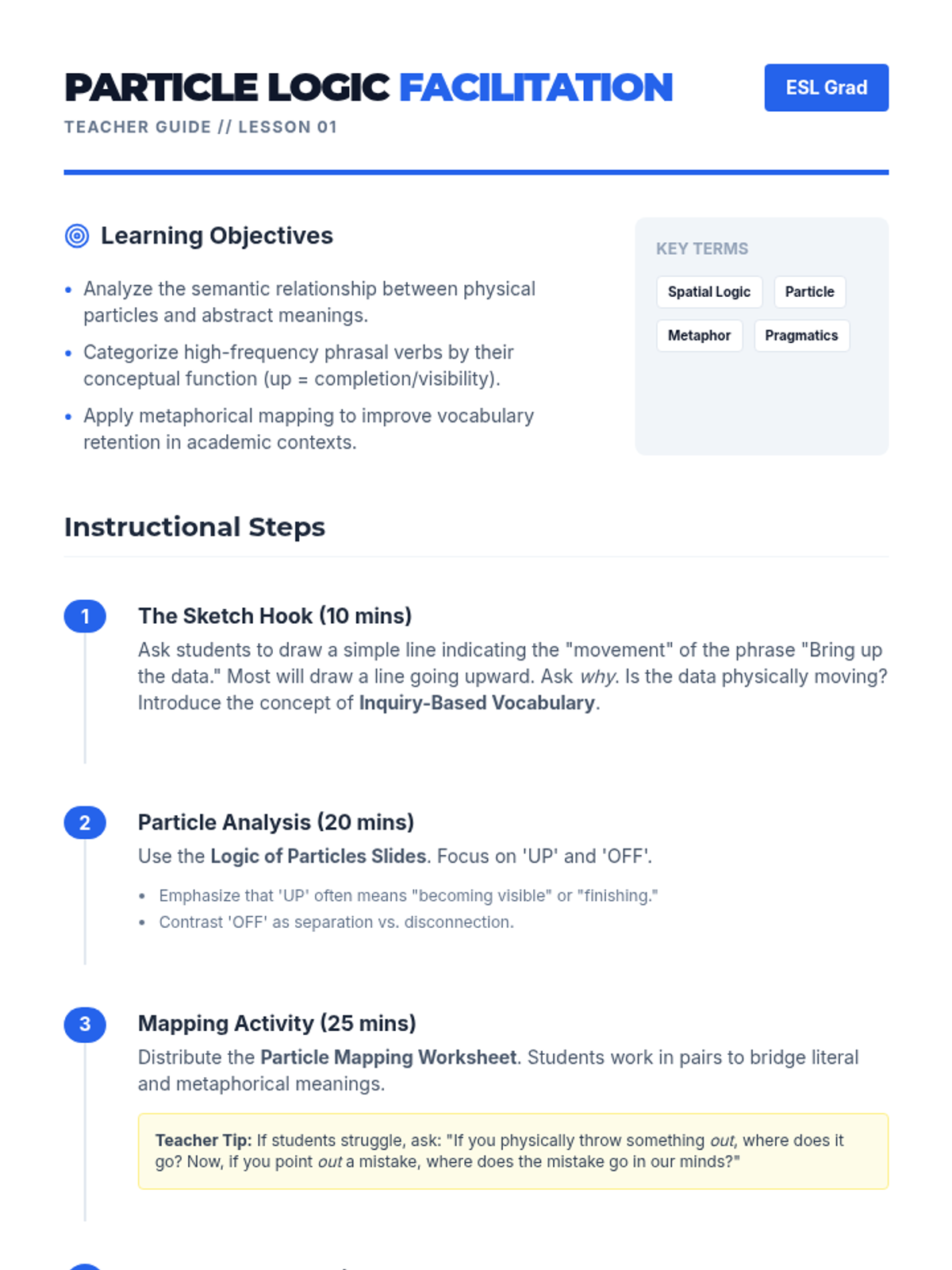
Students investigate the spatial and metaphorical meanings of common particles (up, down, off, out) to understand the logic behind phrasal verbs rather than relying on rote memorization.
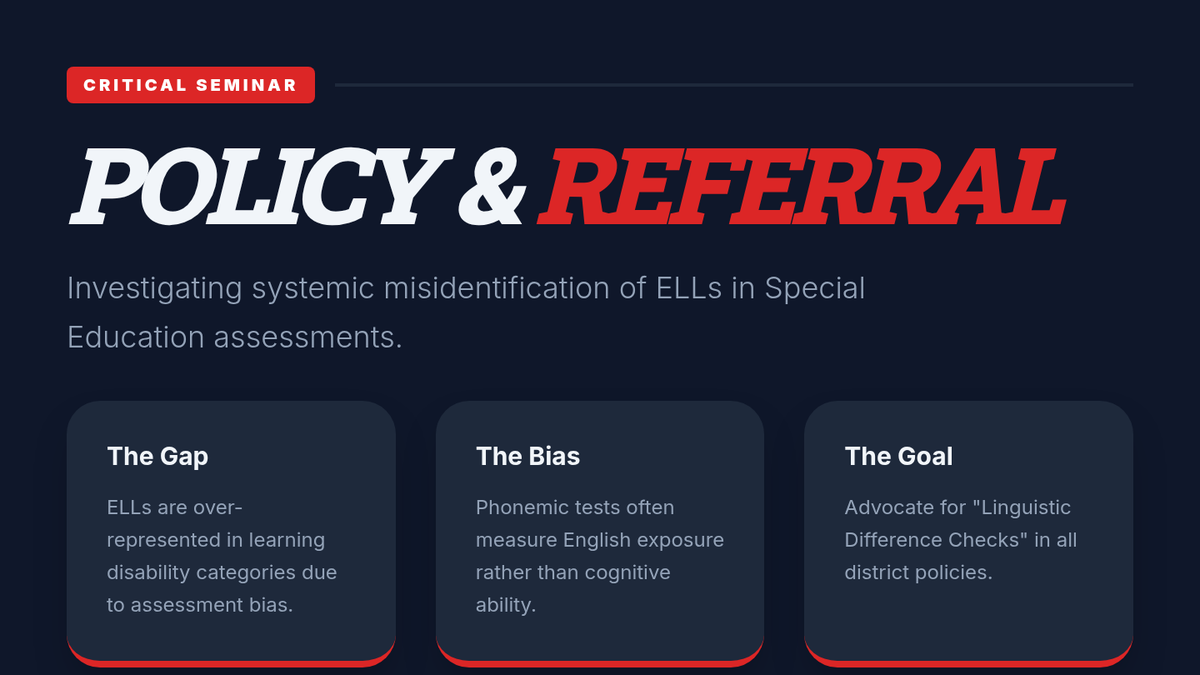
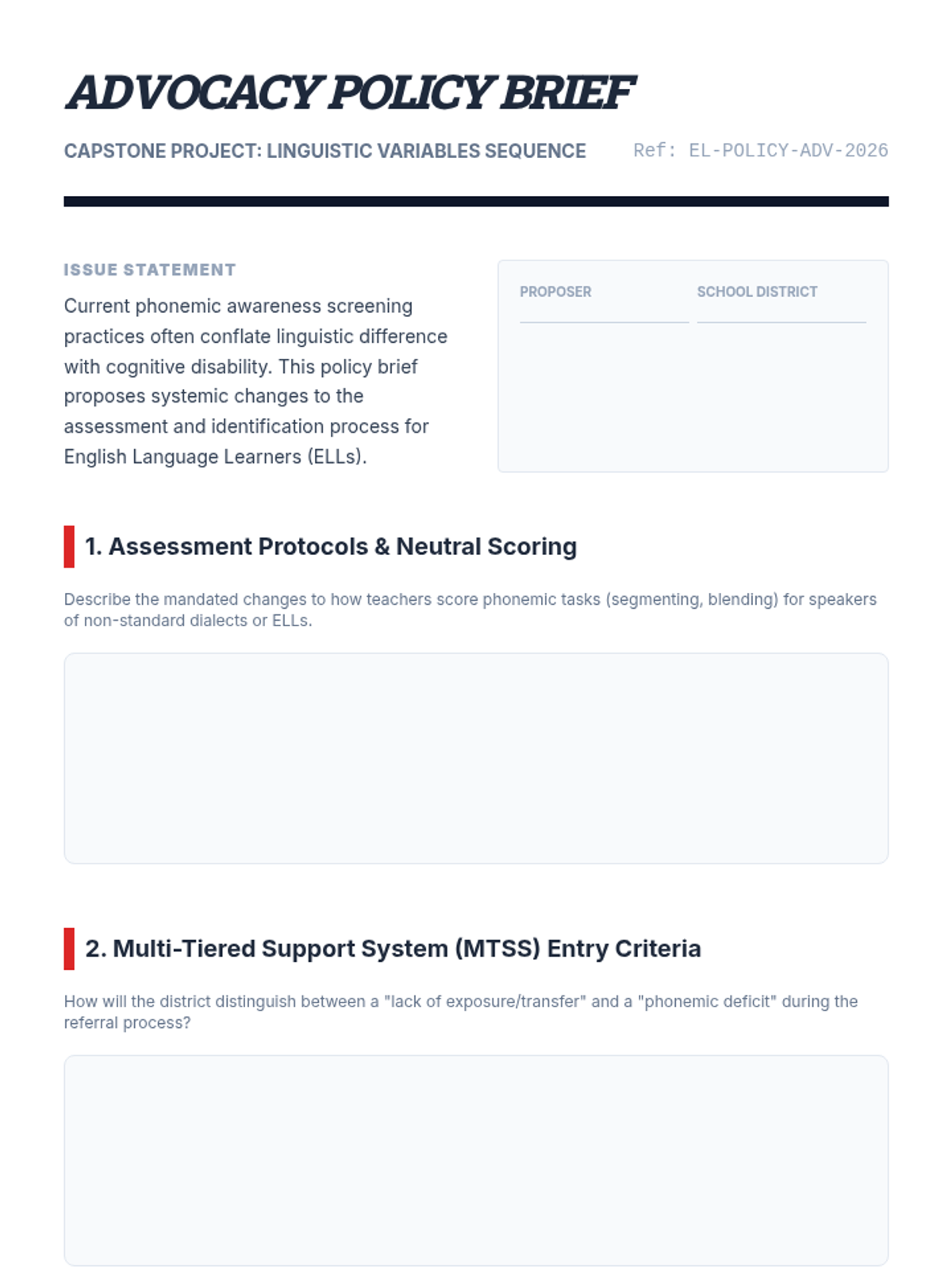
Examines systemic issues in identifying ELLs for special education and guides students in developing advocacy plans to address disproportionality in linguistically diverse settings.
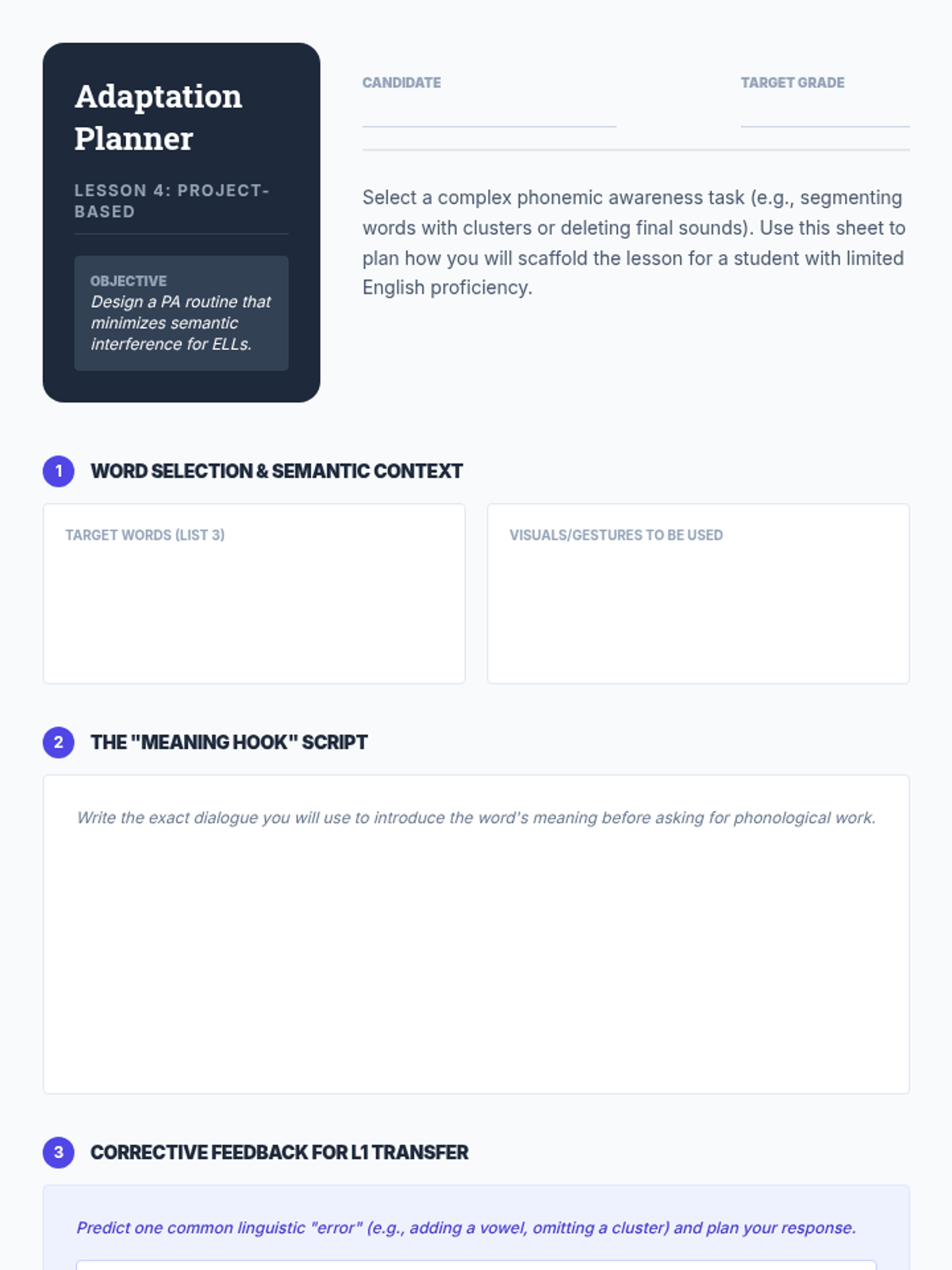
Focuses on designing sheltered phonemic awareness instruction that integrates vocabulary development, ensuring students understand word meanings before performing phonological tasks.
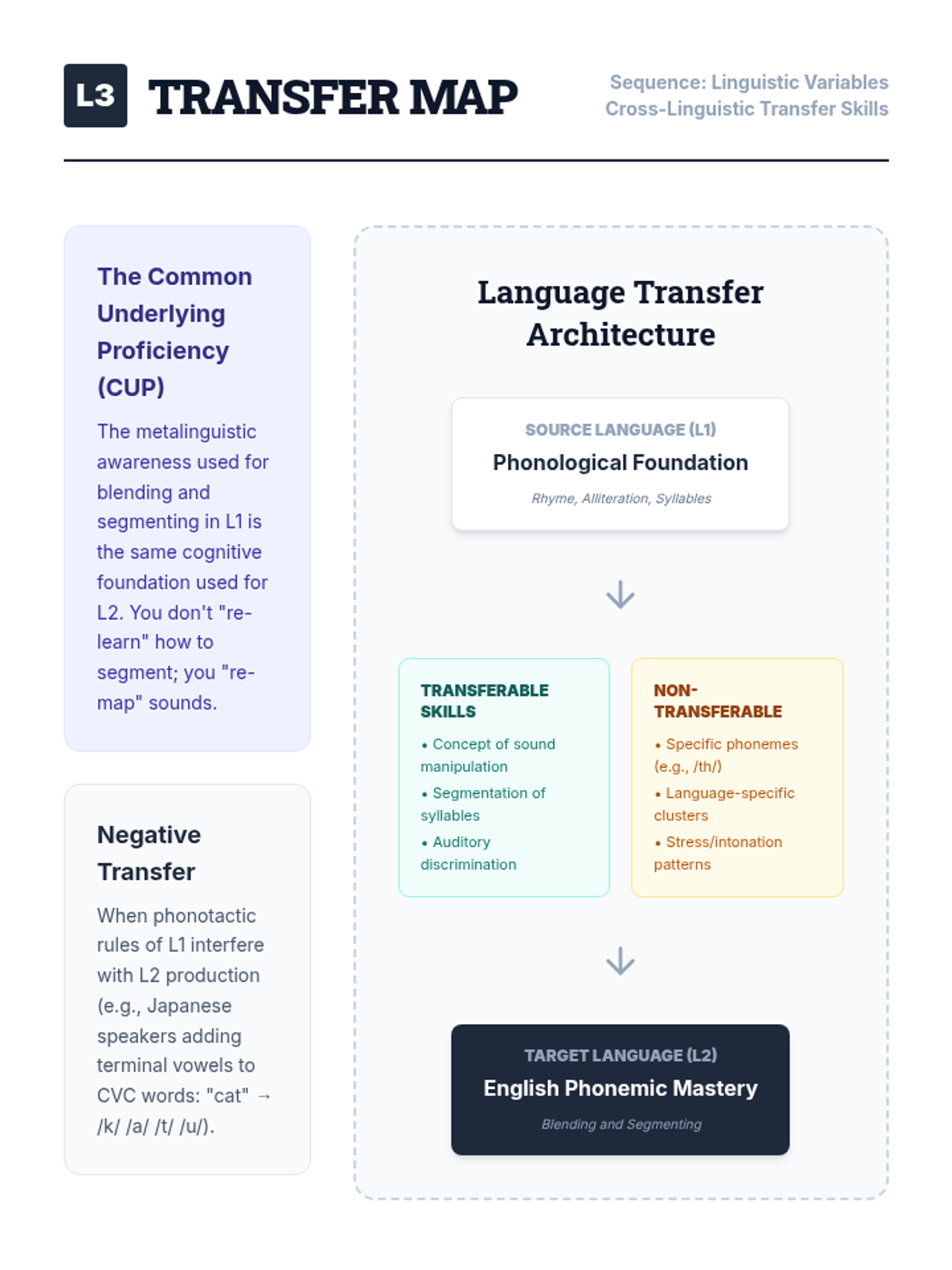
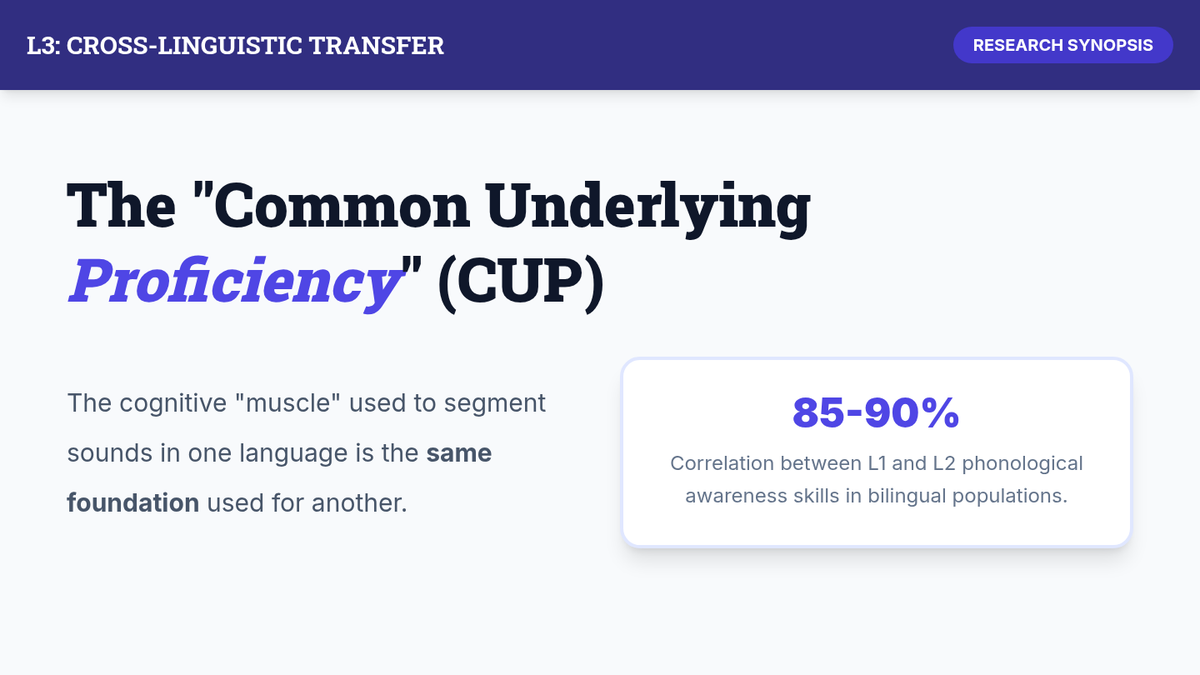
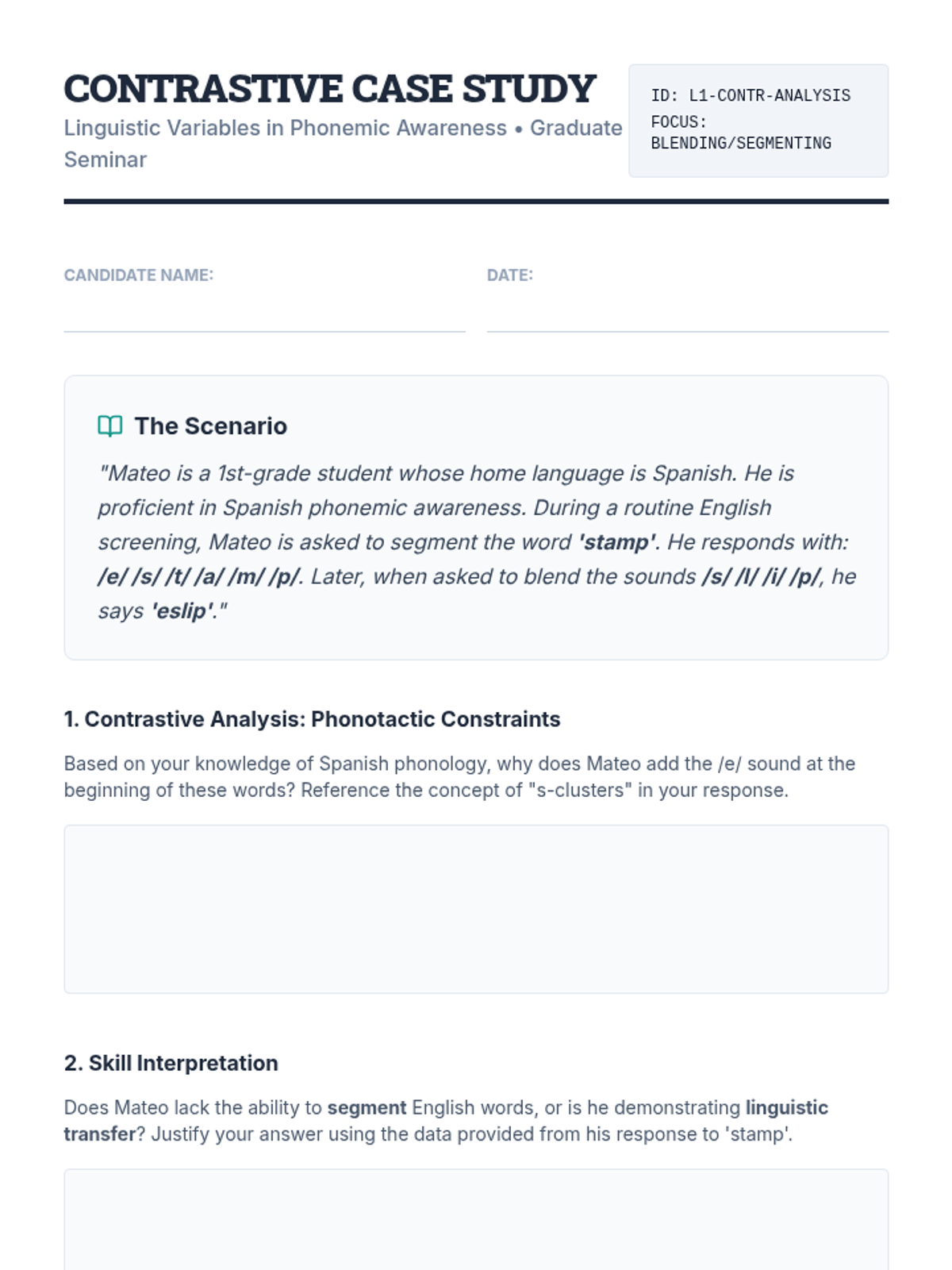
Reviews research on phonological awareness transfer between languages and focuses on leveraging L1 strengths to support English blending and segmenting skills.
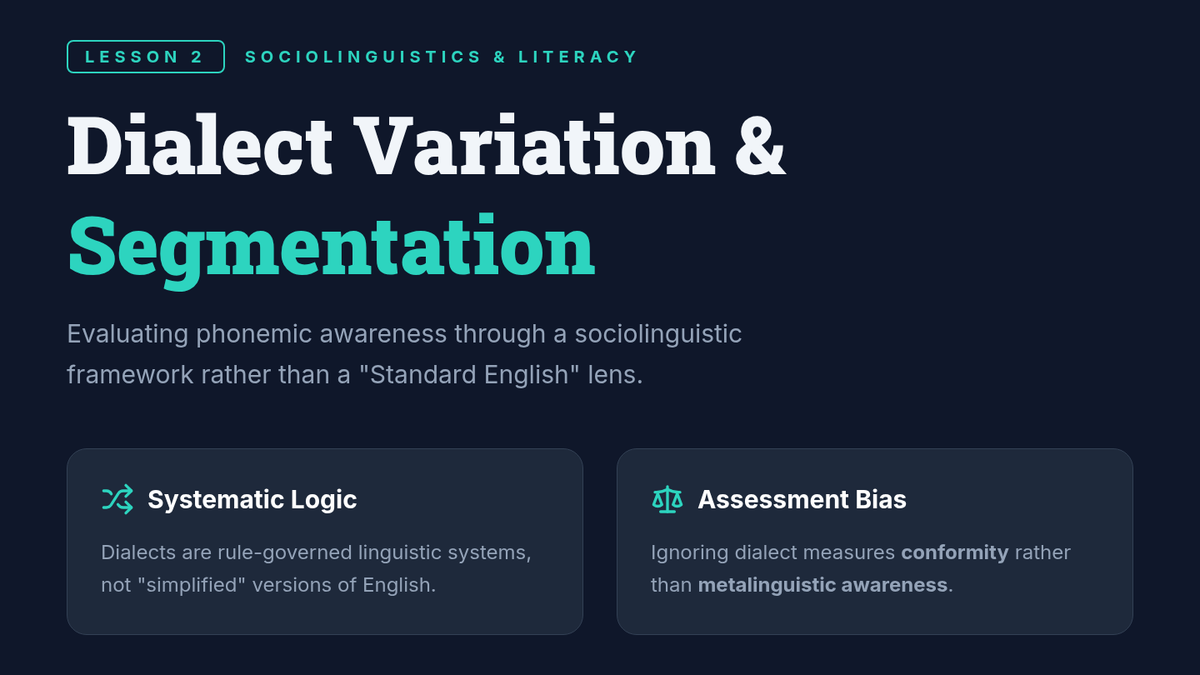
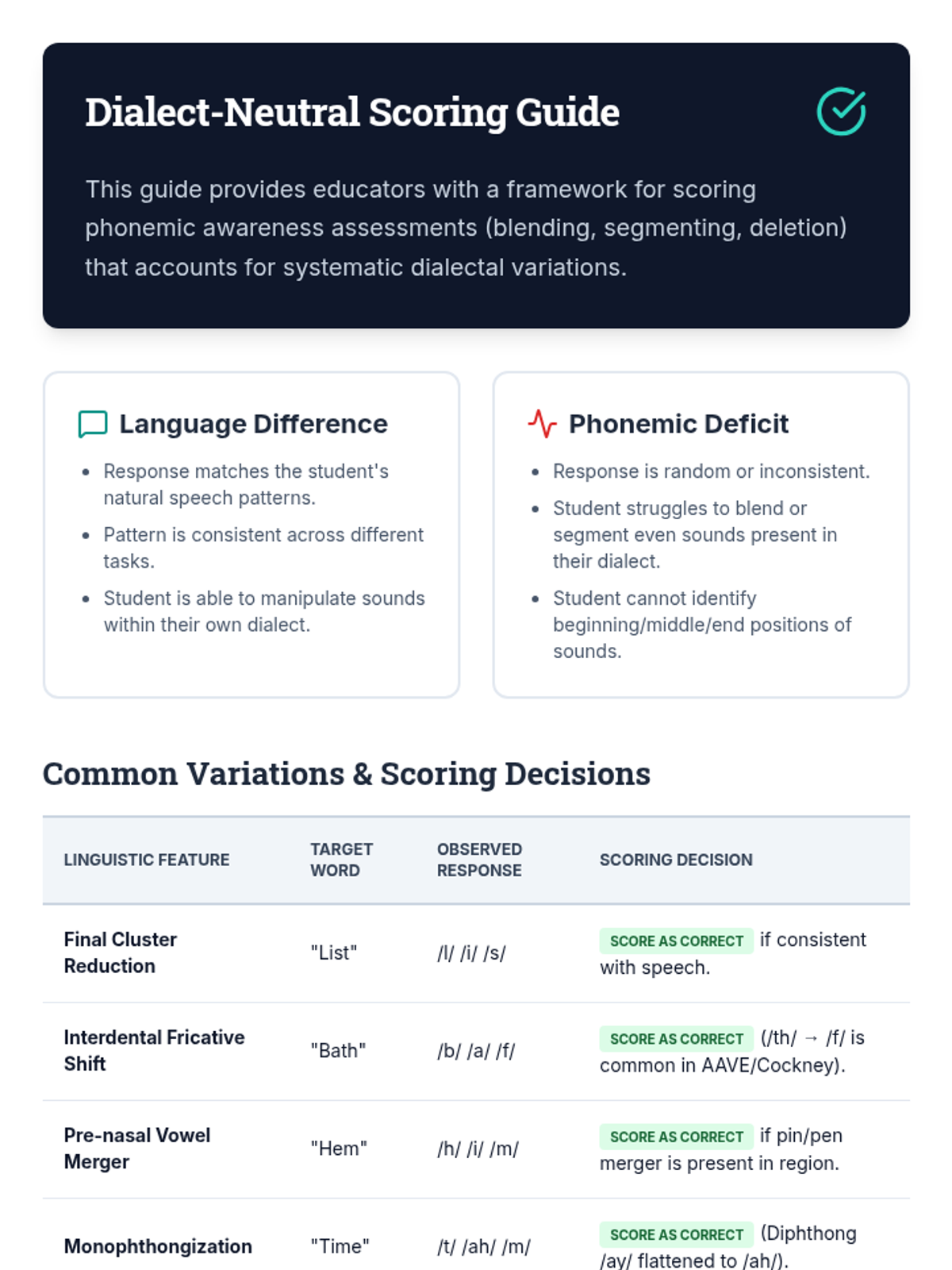
Explores how dialects like AAVE influence phonemic tasks and teaches students to score assessments with dialect-neutral criteria to ensure unbiased literacy instruction.
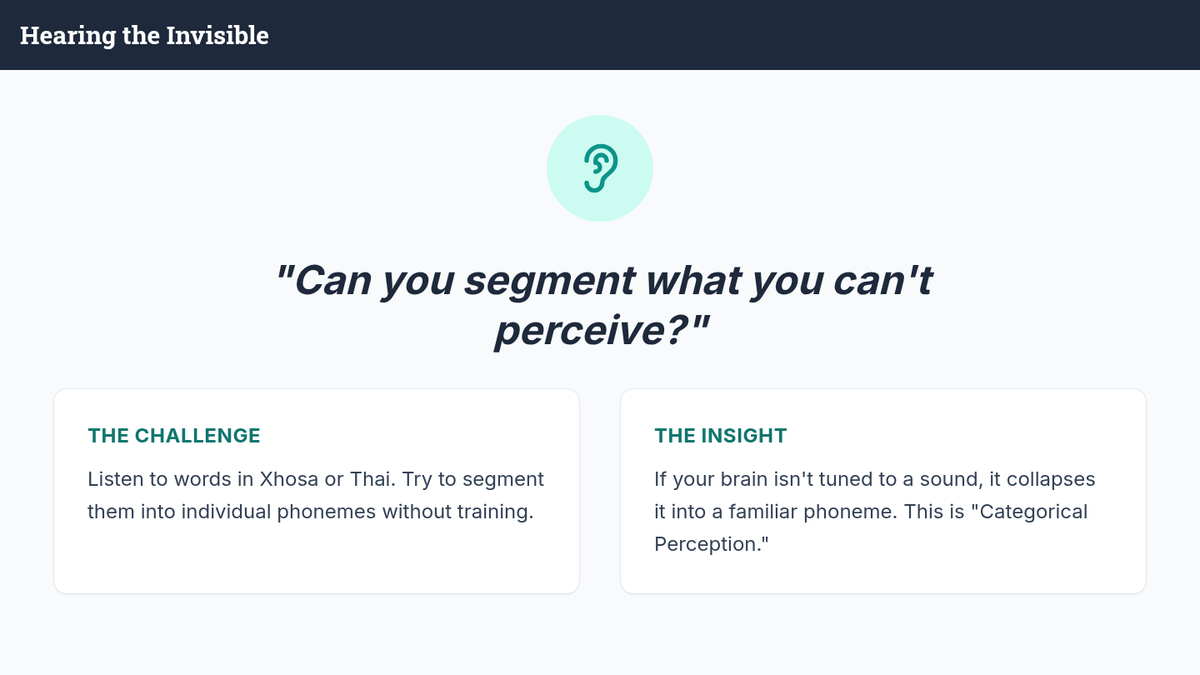
Students compare the phonemic inventories of English and other common languages (Spanish, Mandarin, Arabic) to predict specific blending and segmenting difficulties based on contrastive analysis.
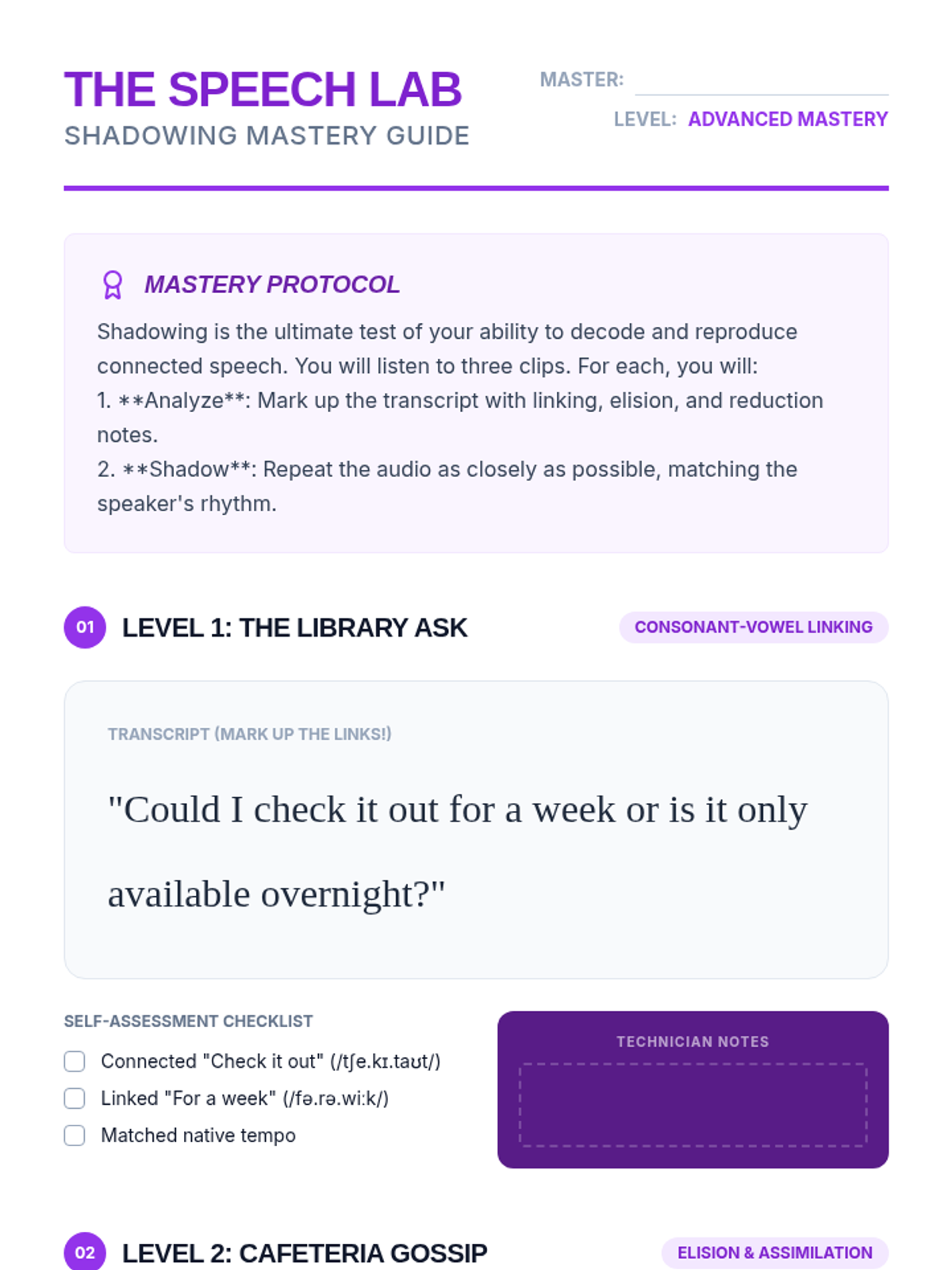
Students engage in a 'shadowing' technique, repeating audio immediately after hearing it to internalize the rhythm and flow of connected speech. This active processing reinforces their ability to predict and process sound streams.
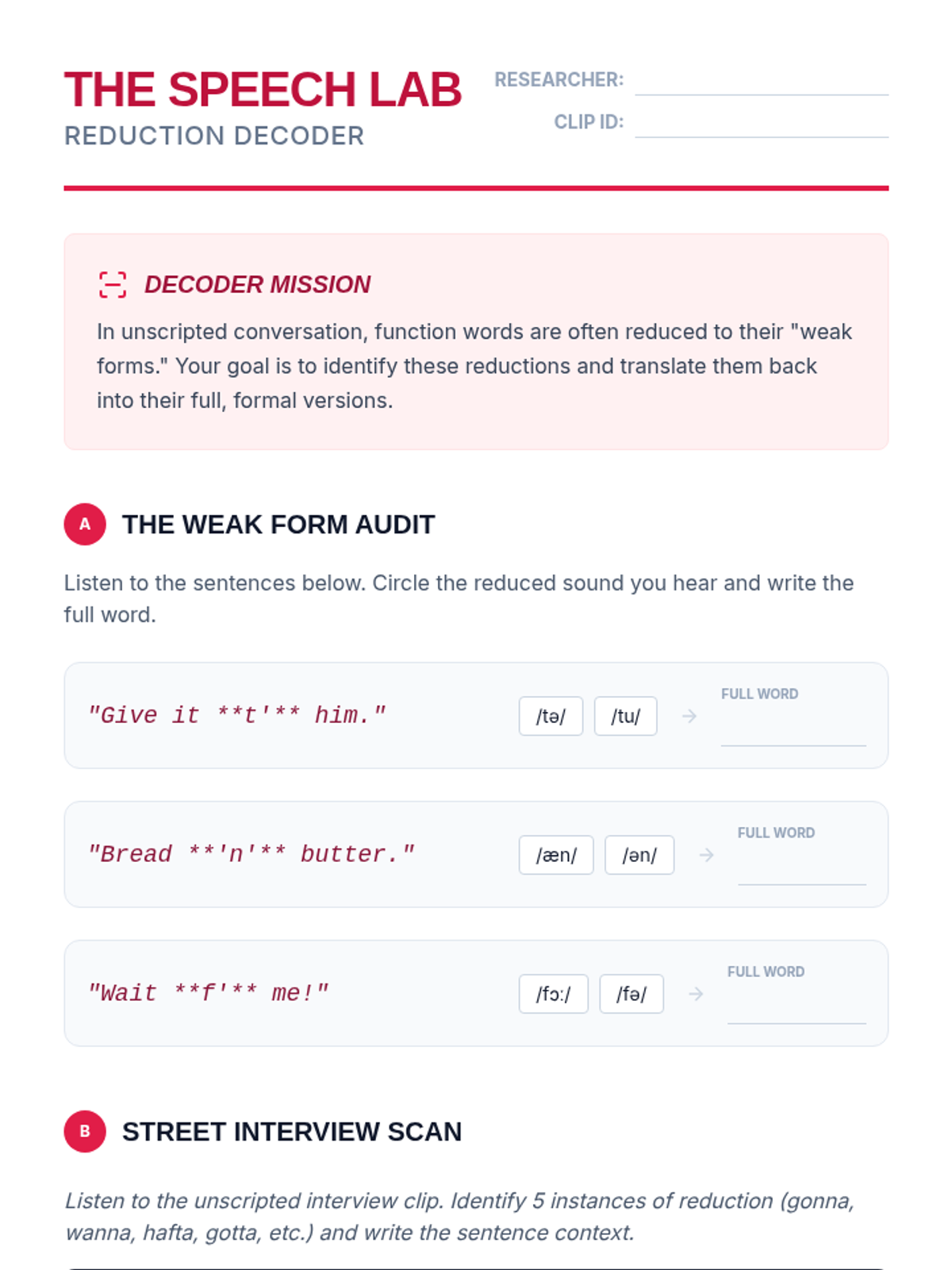
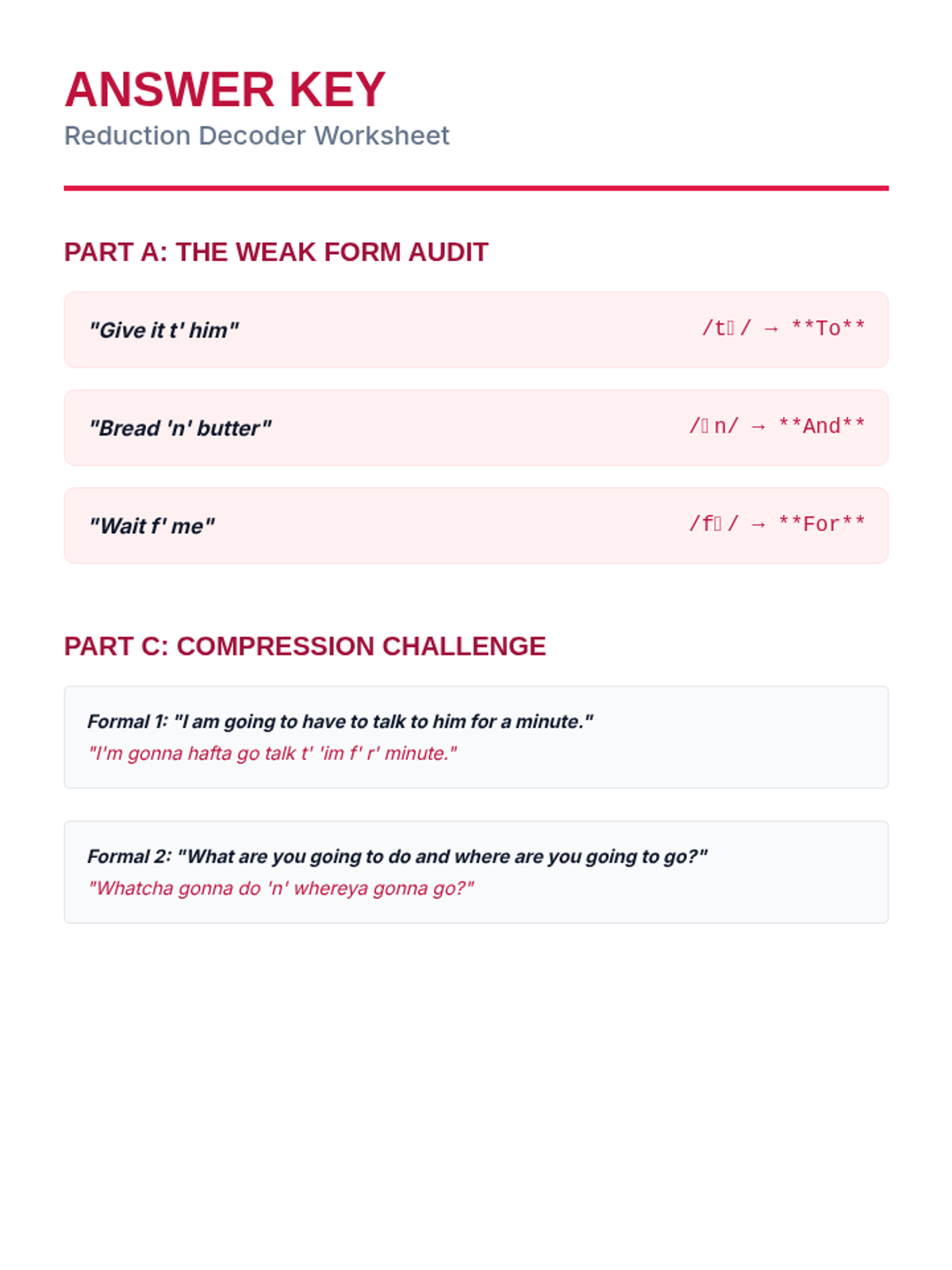
Focusing on function words, this lesson tackles common reductions like 'gonna,' 'wanna,' and weak forms of auxiliary verbs. Students analyze unscripted interviews to catch these reductions in context.
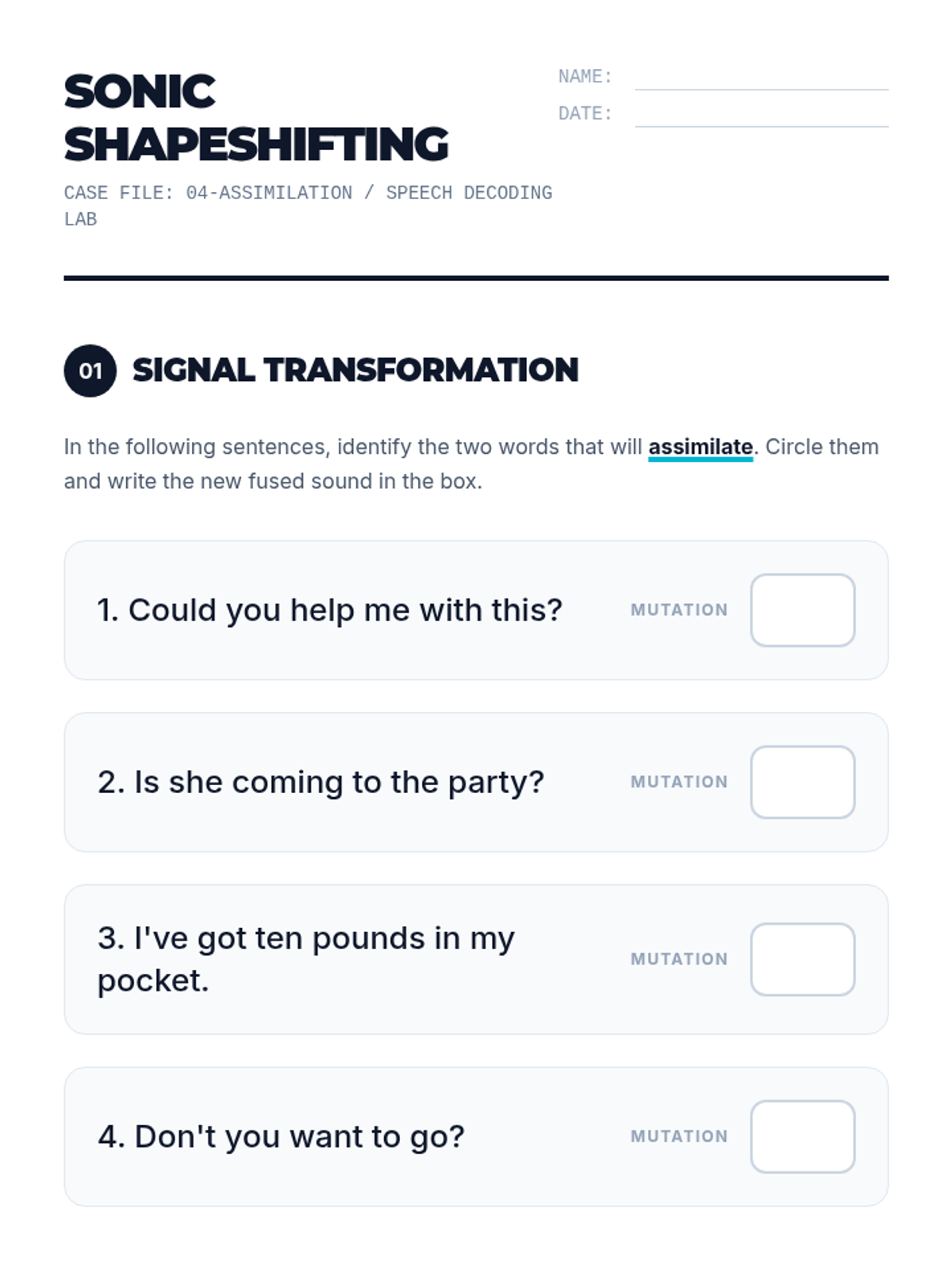
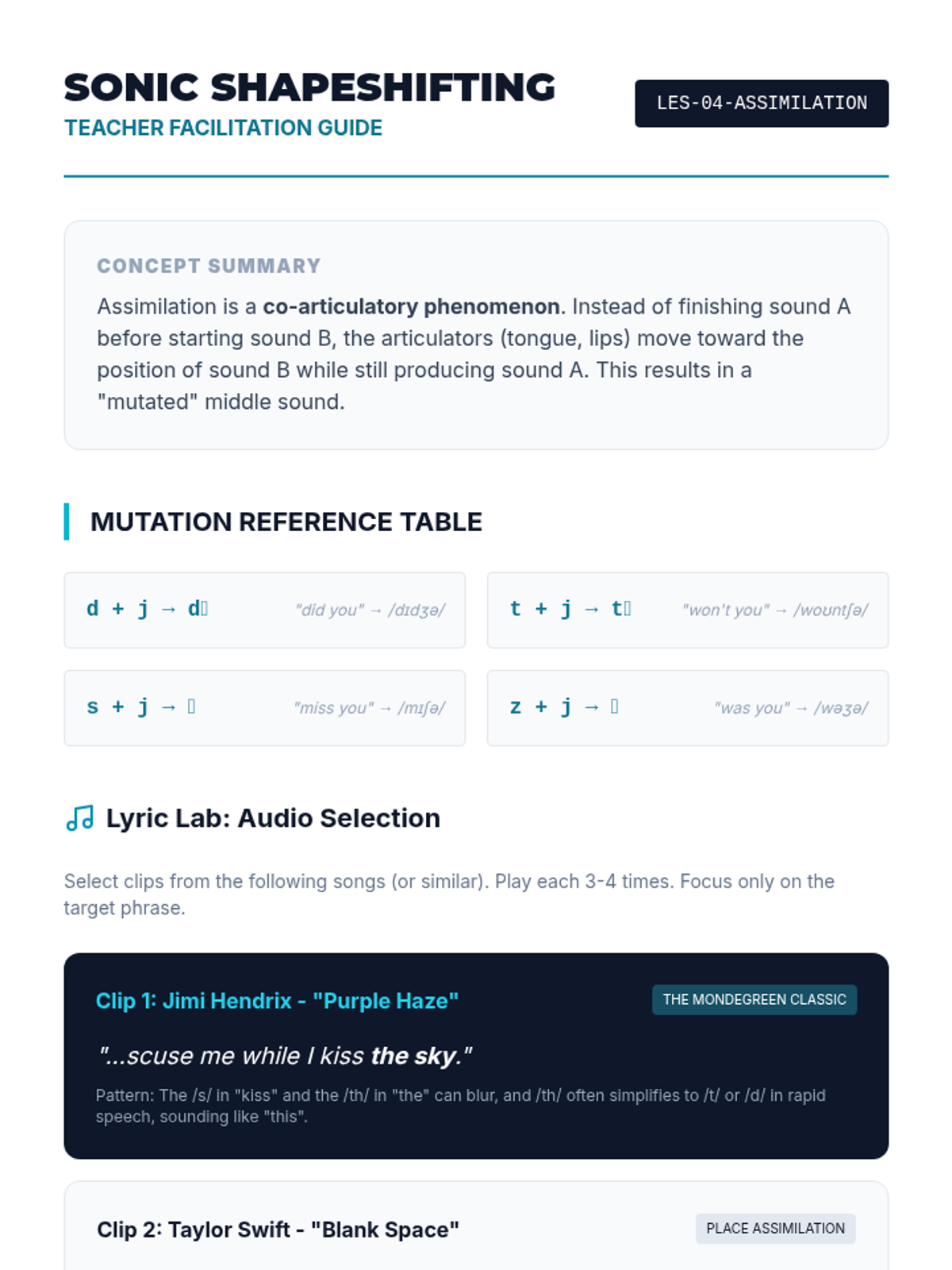
Students learn how sounds influence their neighbors (e.g., 'hand bag' becoming 'hambag'). The lesson uses minimal pair discrimination and dictation exercises to train ears to recognize words despite phonological changes.
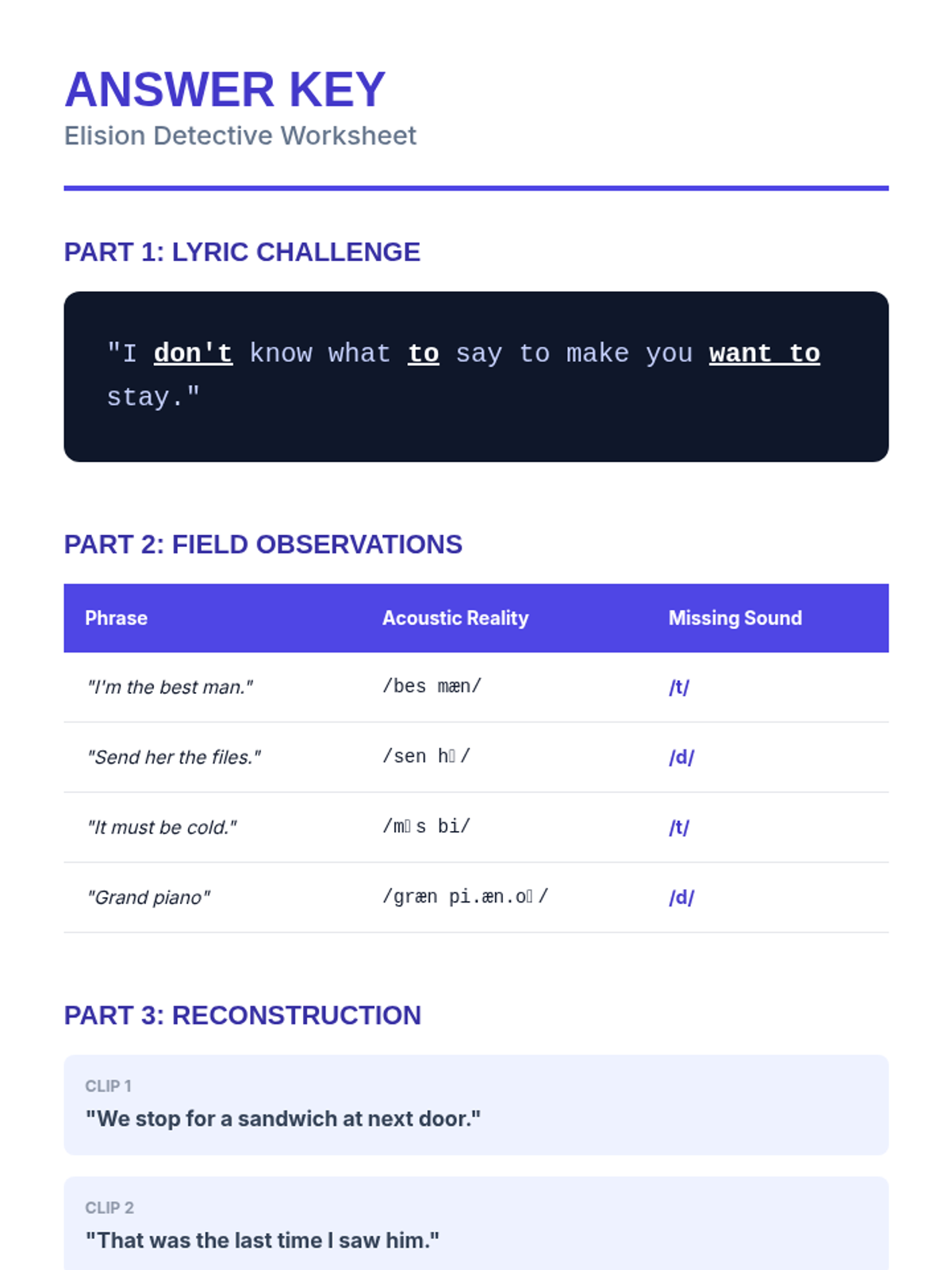
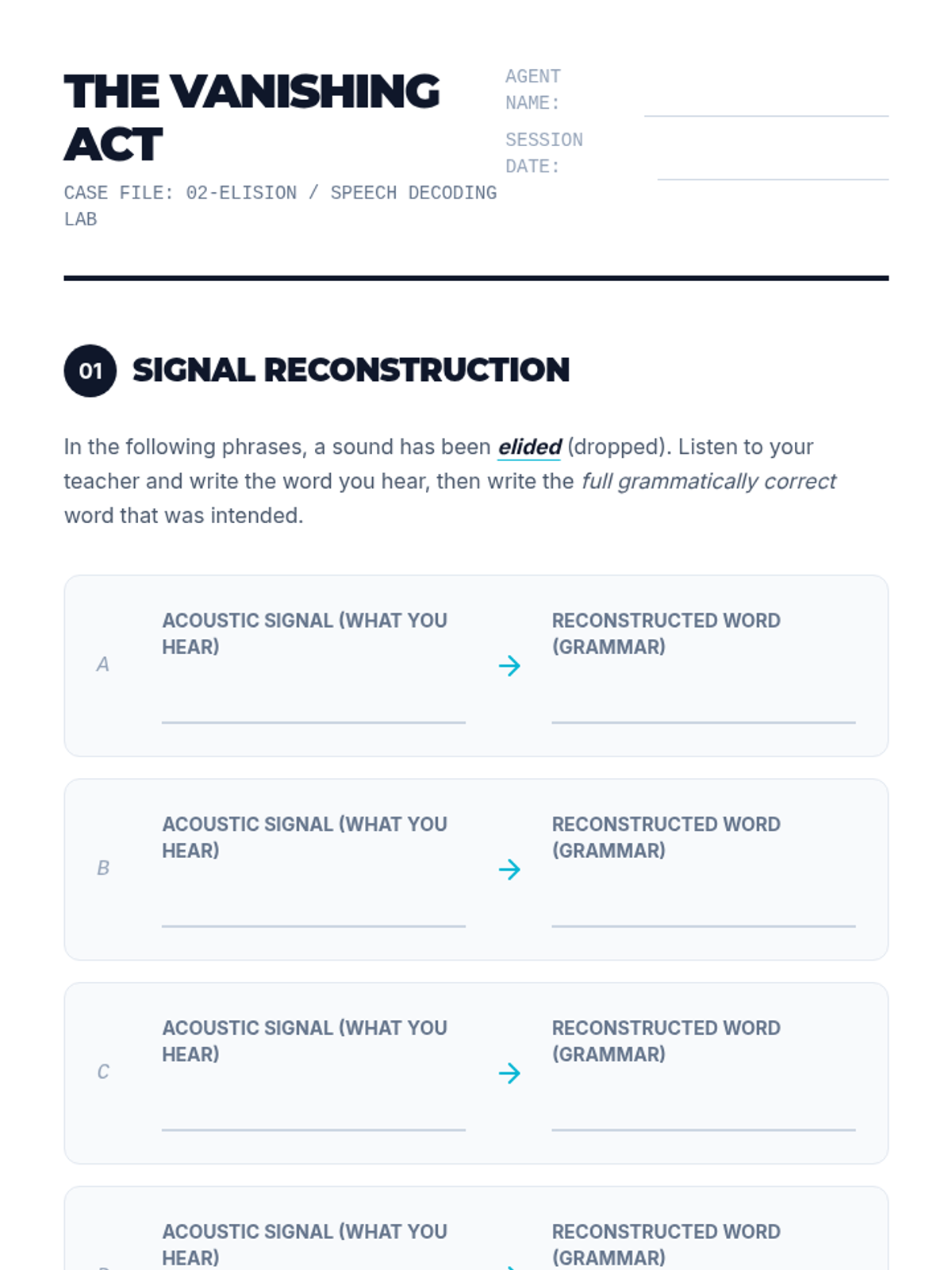
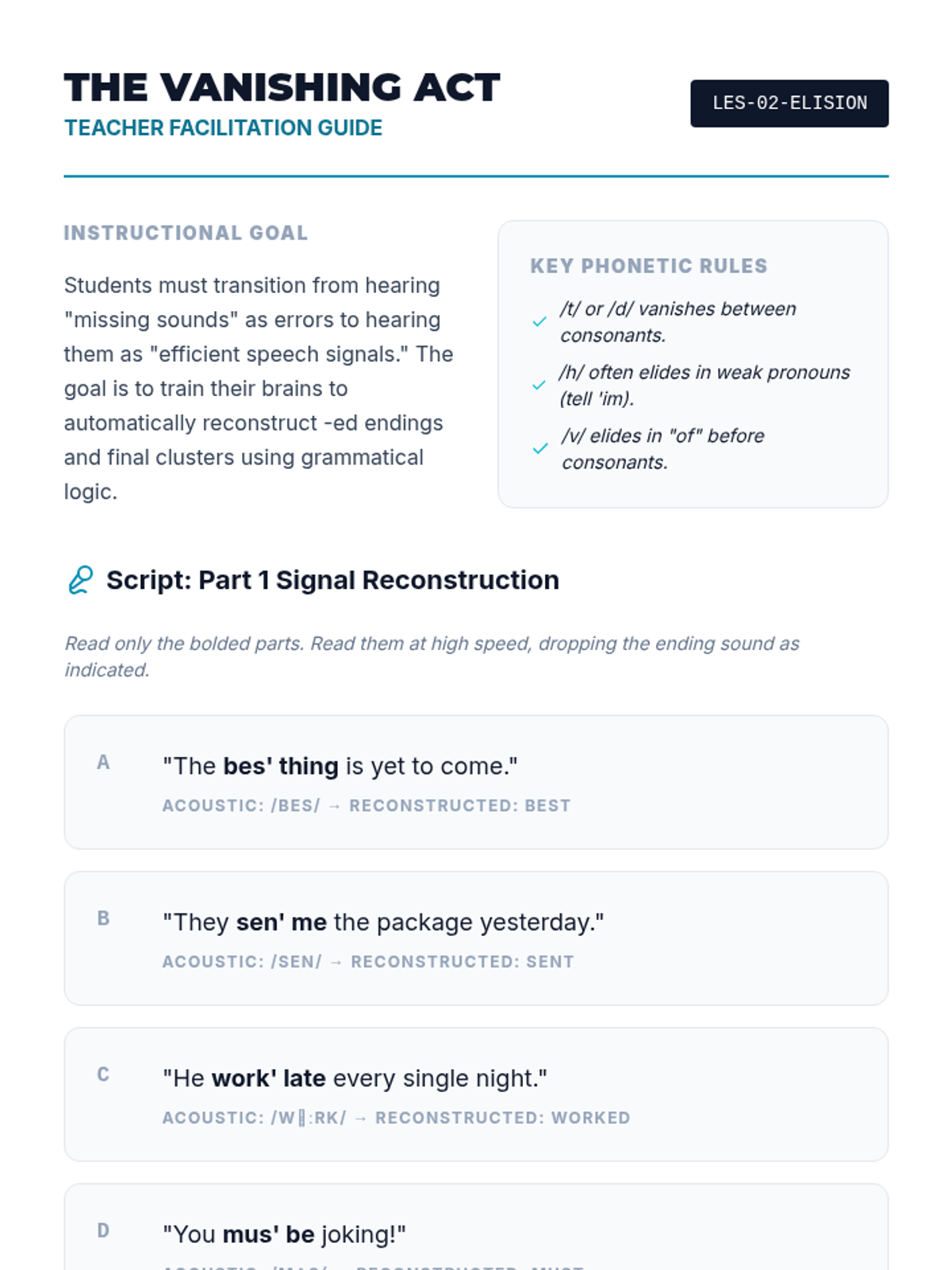
This lesson covers the phenomenon of elision, where sounds (particularly /t/ and /d/) disappear in rapid speech. Students practice listening to high-speed dialogues to identify words that have been 'swallowed' by the speaker.
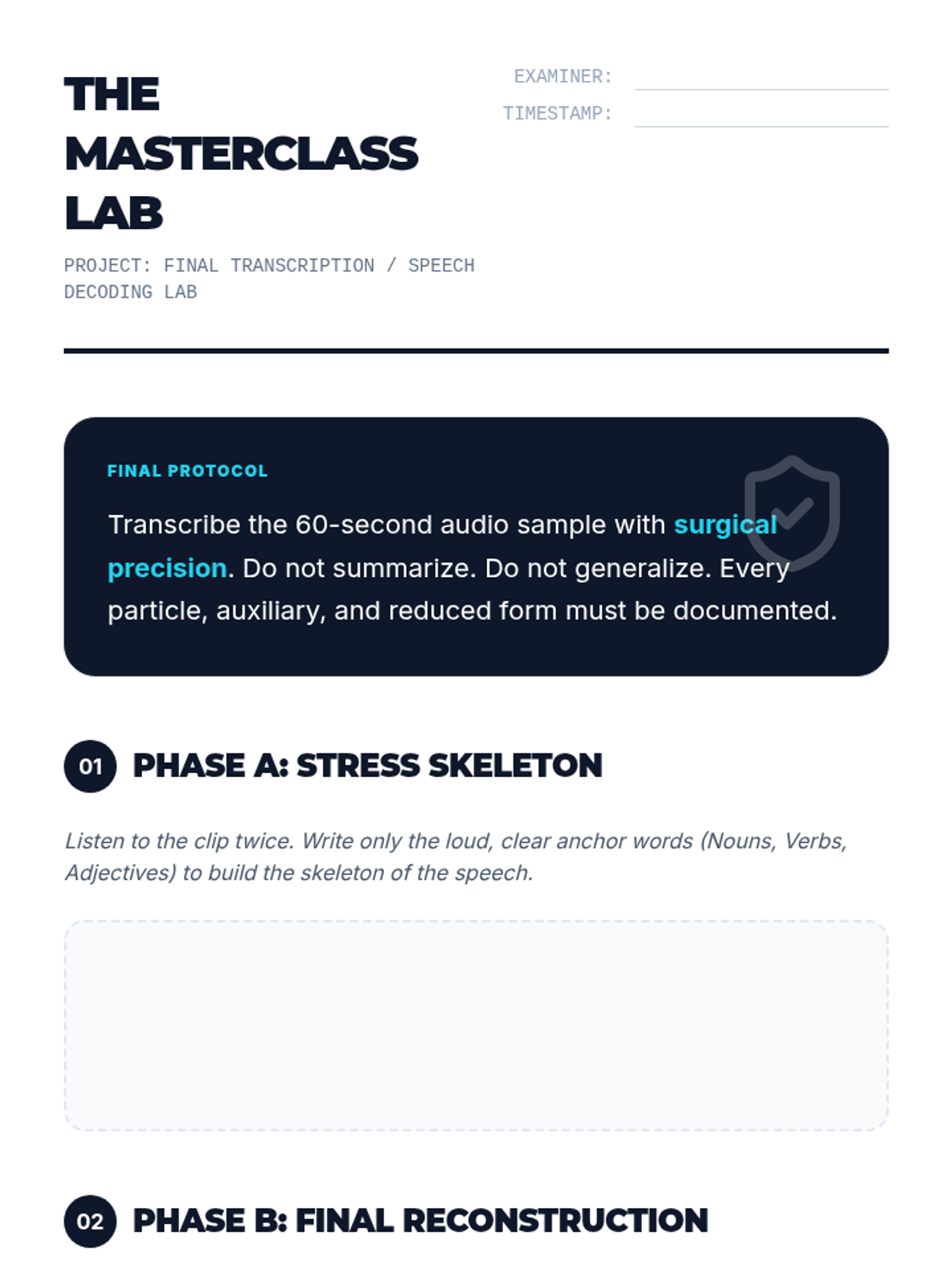
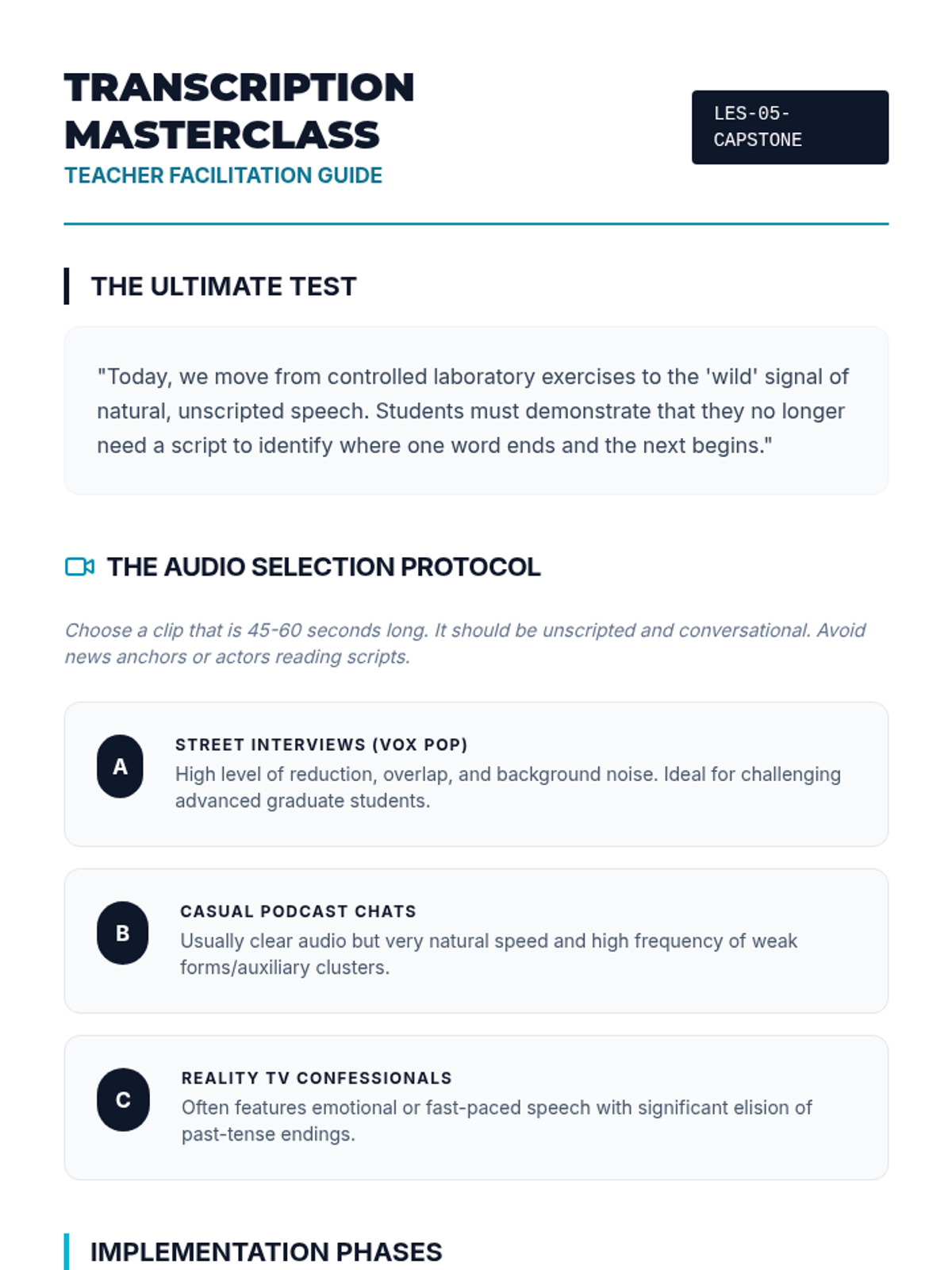
A capstone transcription challenge where students apply all decoding skills to unscripted natural speech.
Analyzes how sounds influence each other, changing their identity based on neighboring sounds.
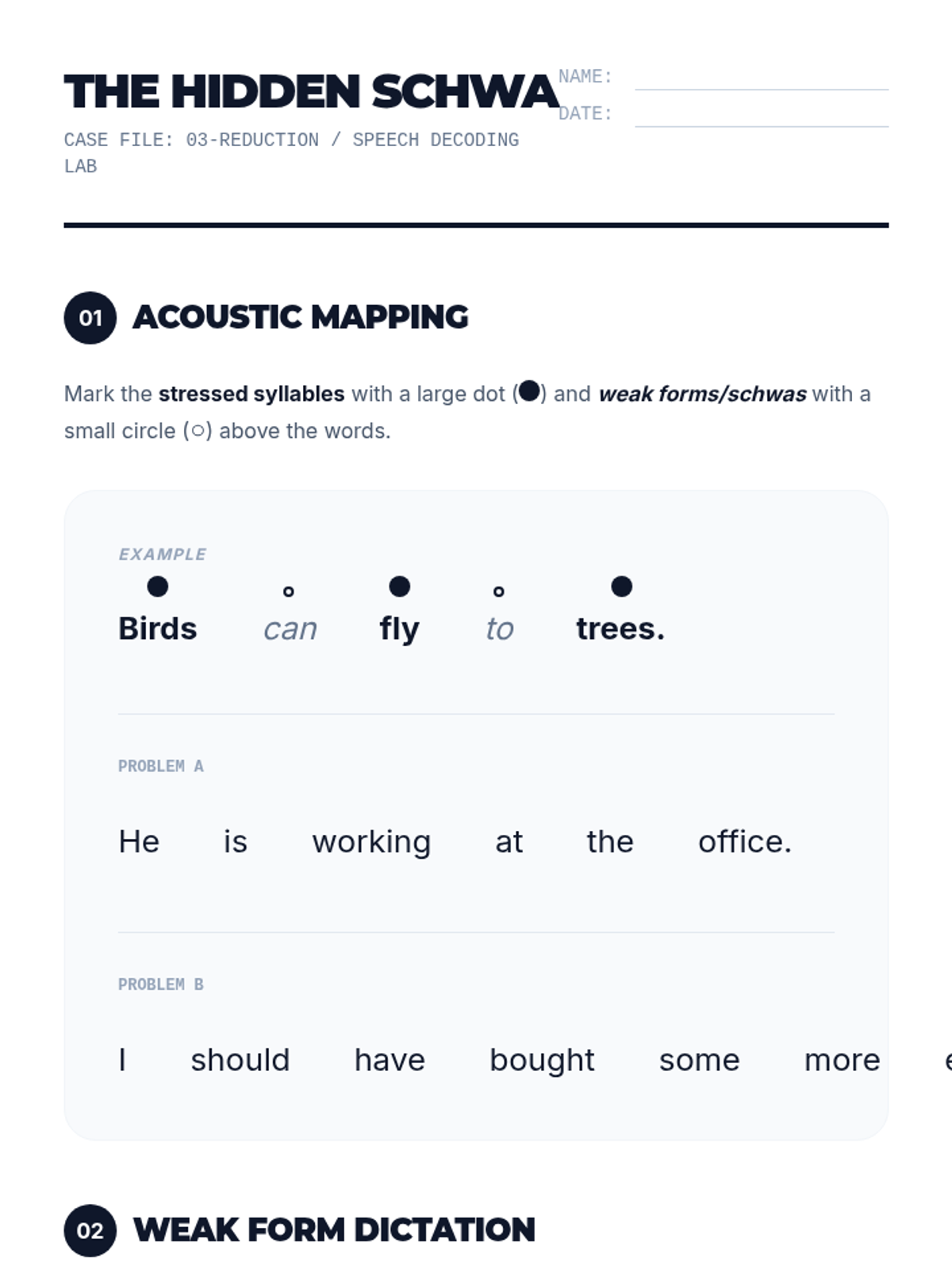
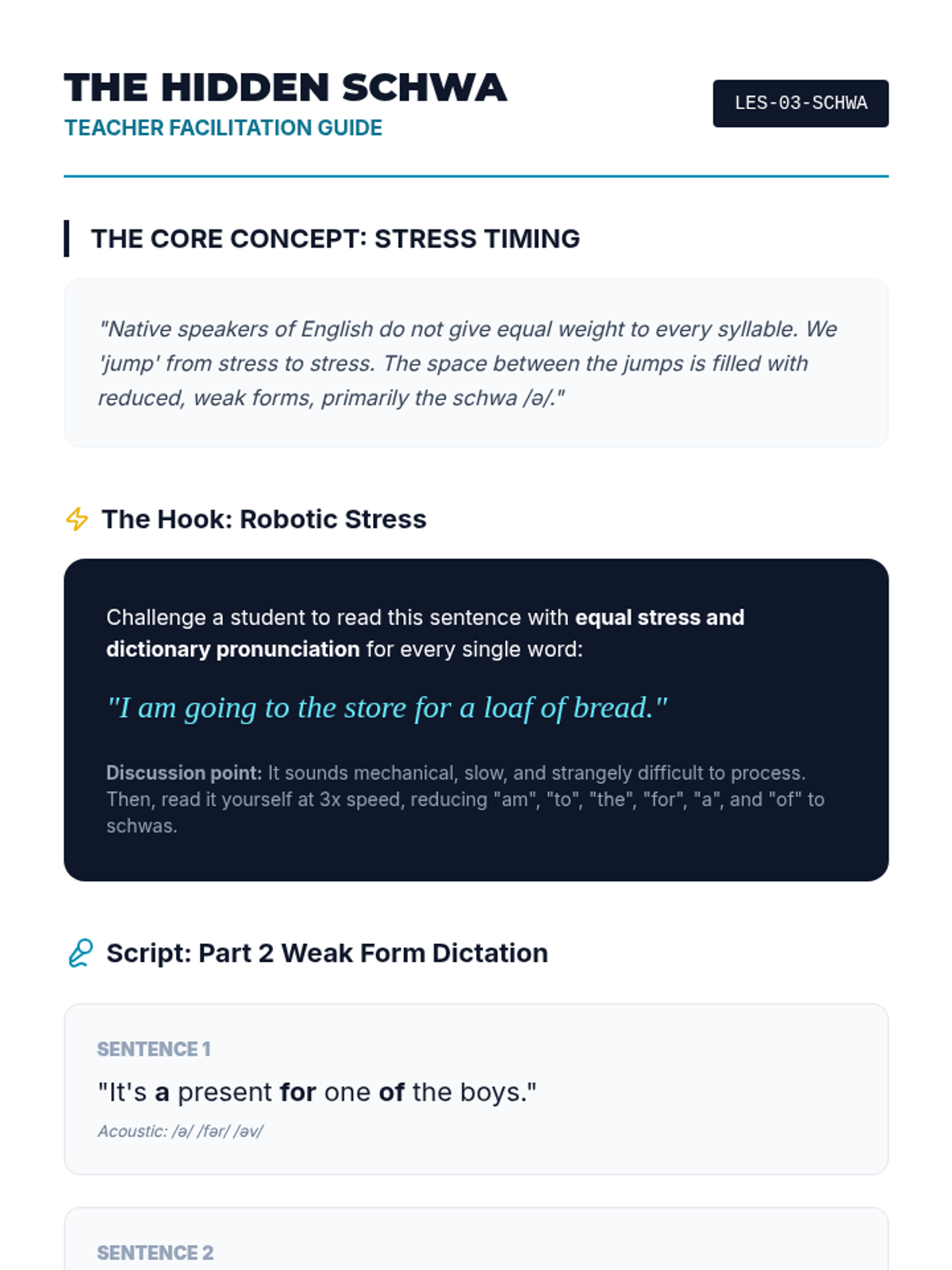
Explores the schwa sound and weak forms of function words that maintain English rhythm.
Investigates sound loss in rapid speech, specifically focusing on dropped /t/ and /d/ sounds in clusters.
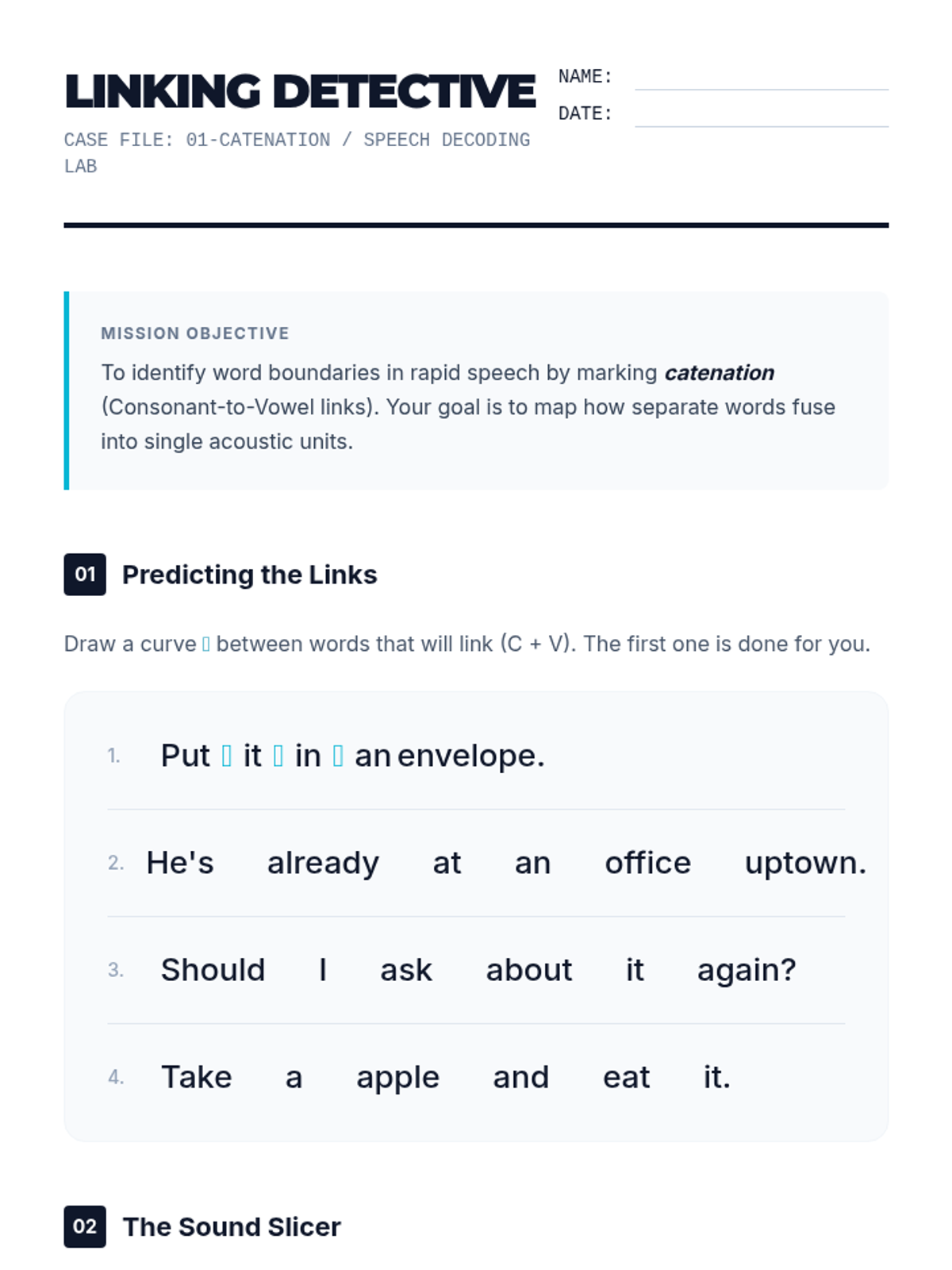
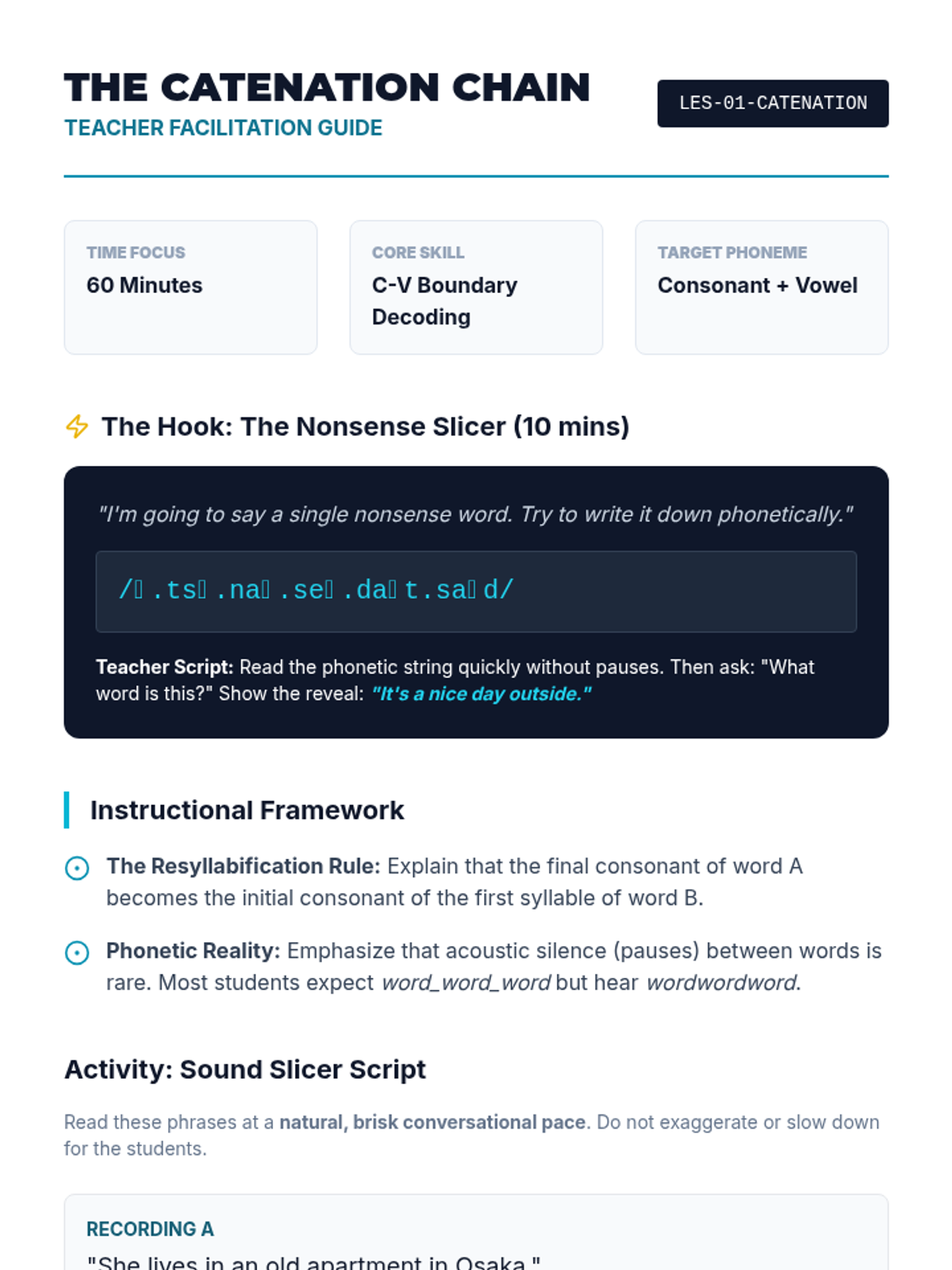
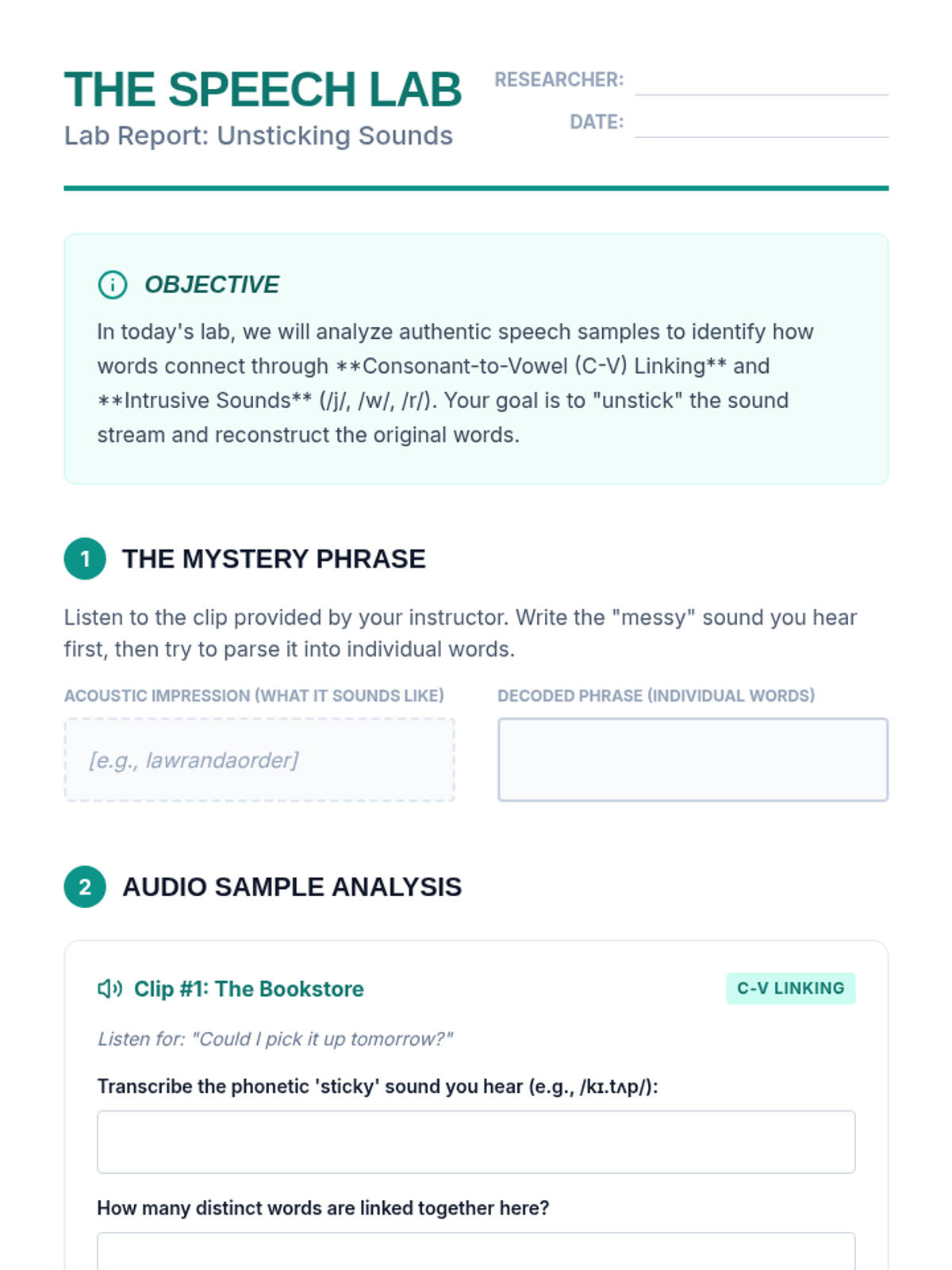
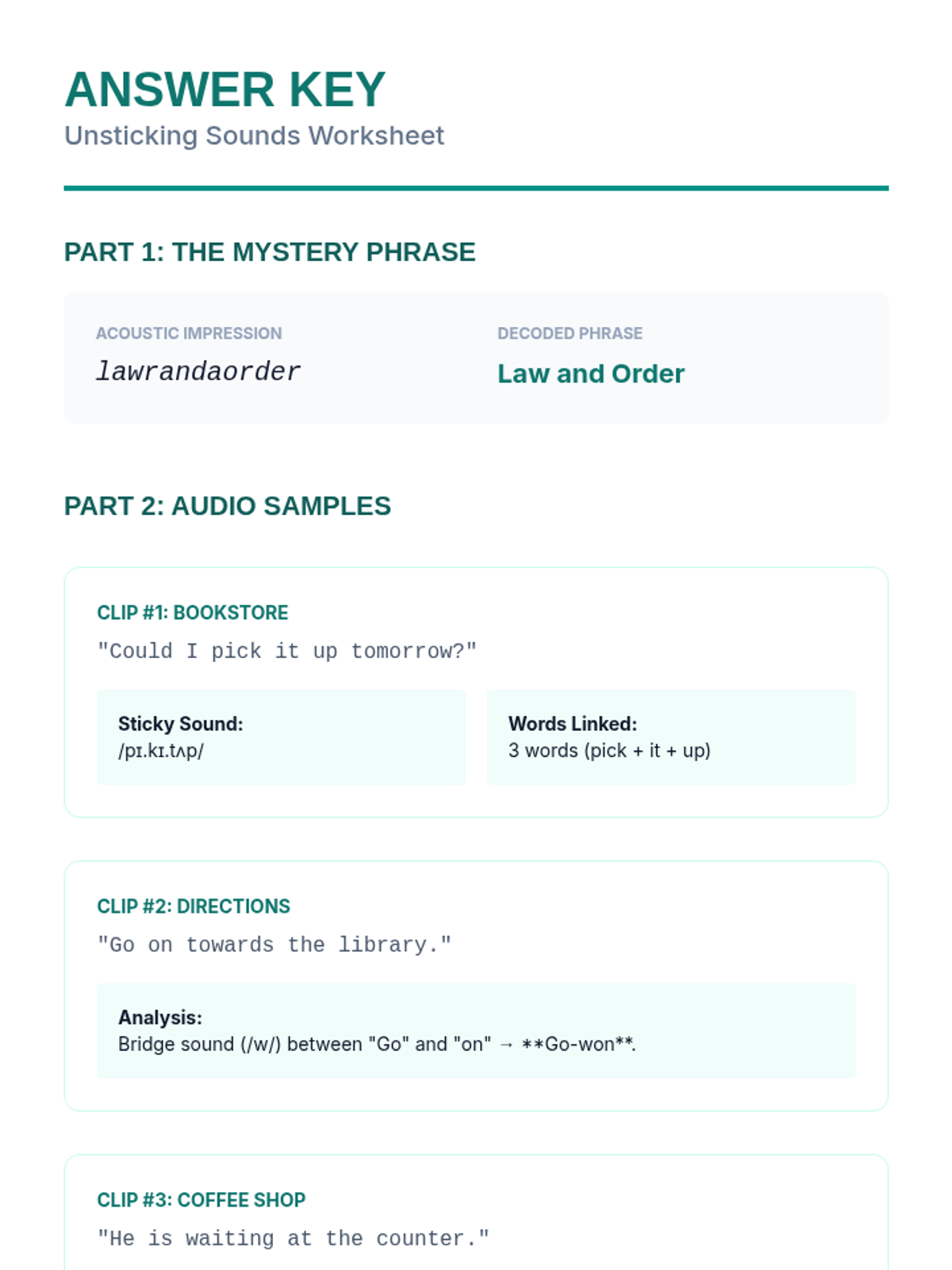
Focuses on consonant-vowel linking (catenation) to help students identify word boundaries in rapid speech.
Students investigate how words flow together in natural speech, specifically focusing on consonant-vowel linking and intrusive sounds (/r/, /w/, /j/). They analyze audio samples to 'unstick' connected words.
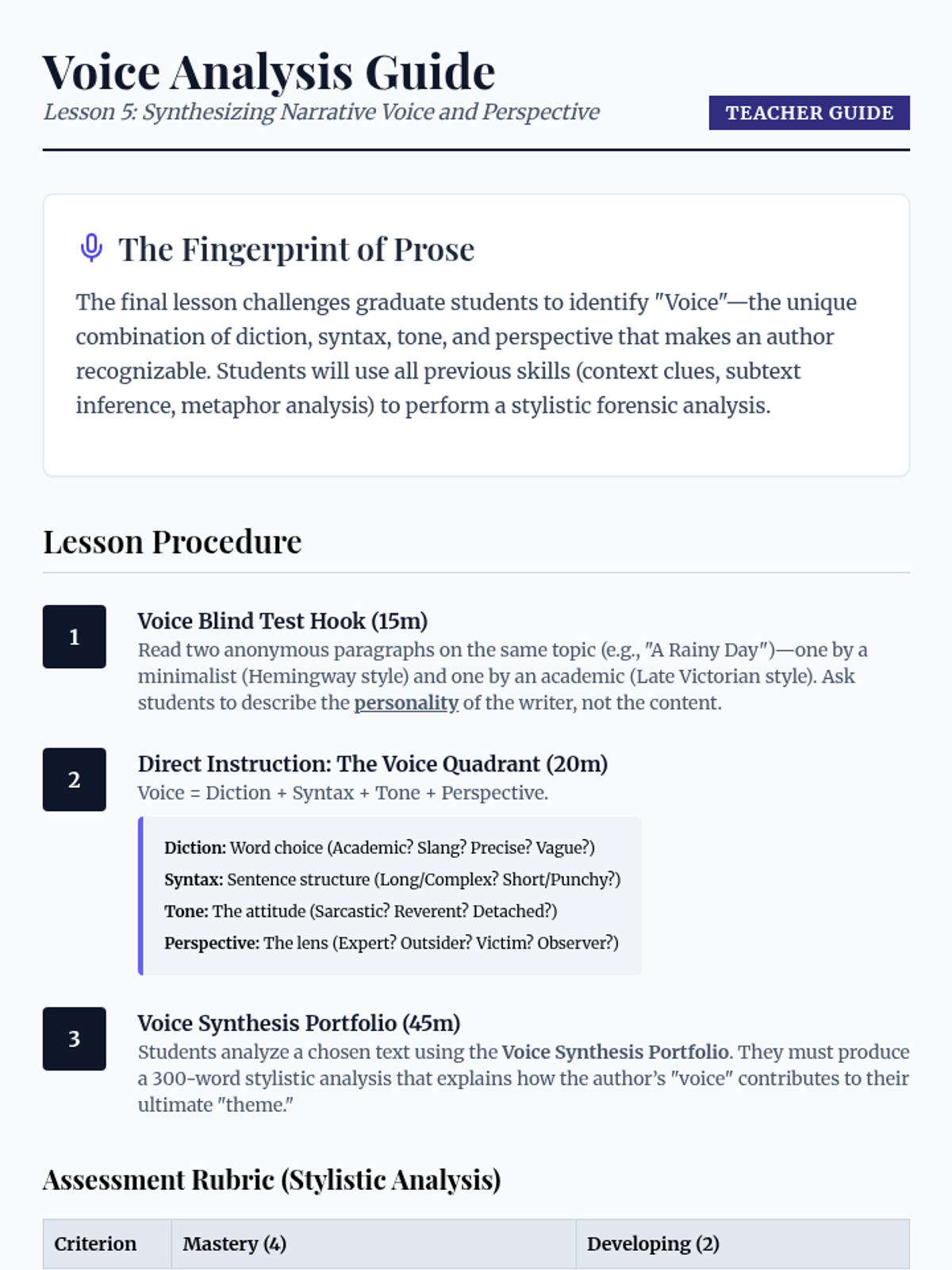
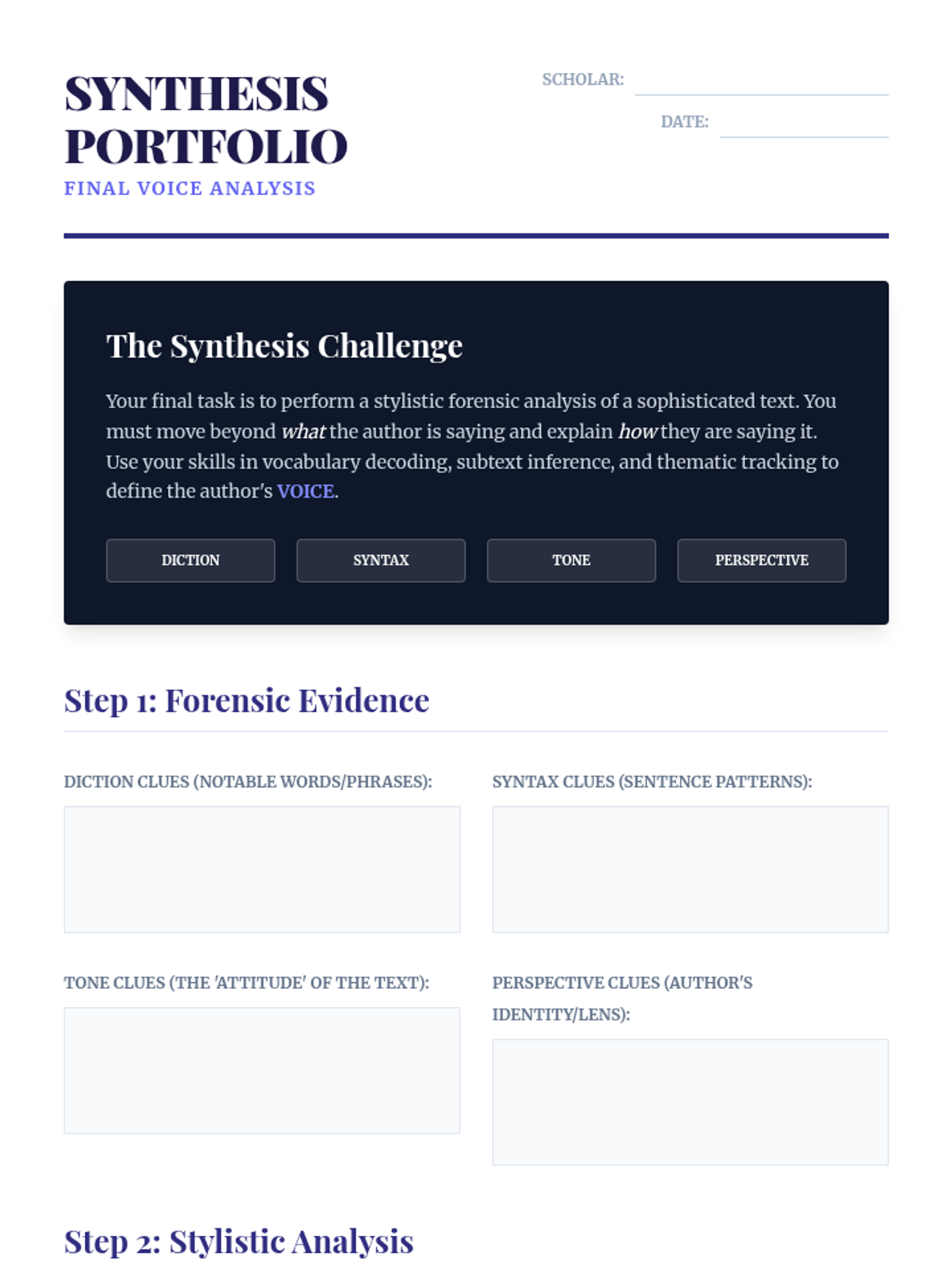
In this final lesson, students produce a written or oral analysis of a narrative's 'voice.' They combine their knowledge of vocabulary, tone, and inference to explain how the author constructs a unique perspective.
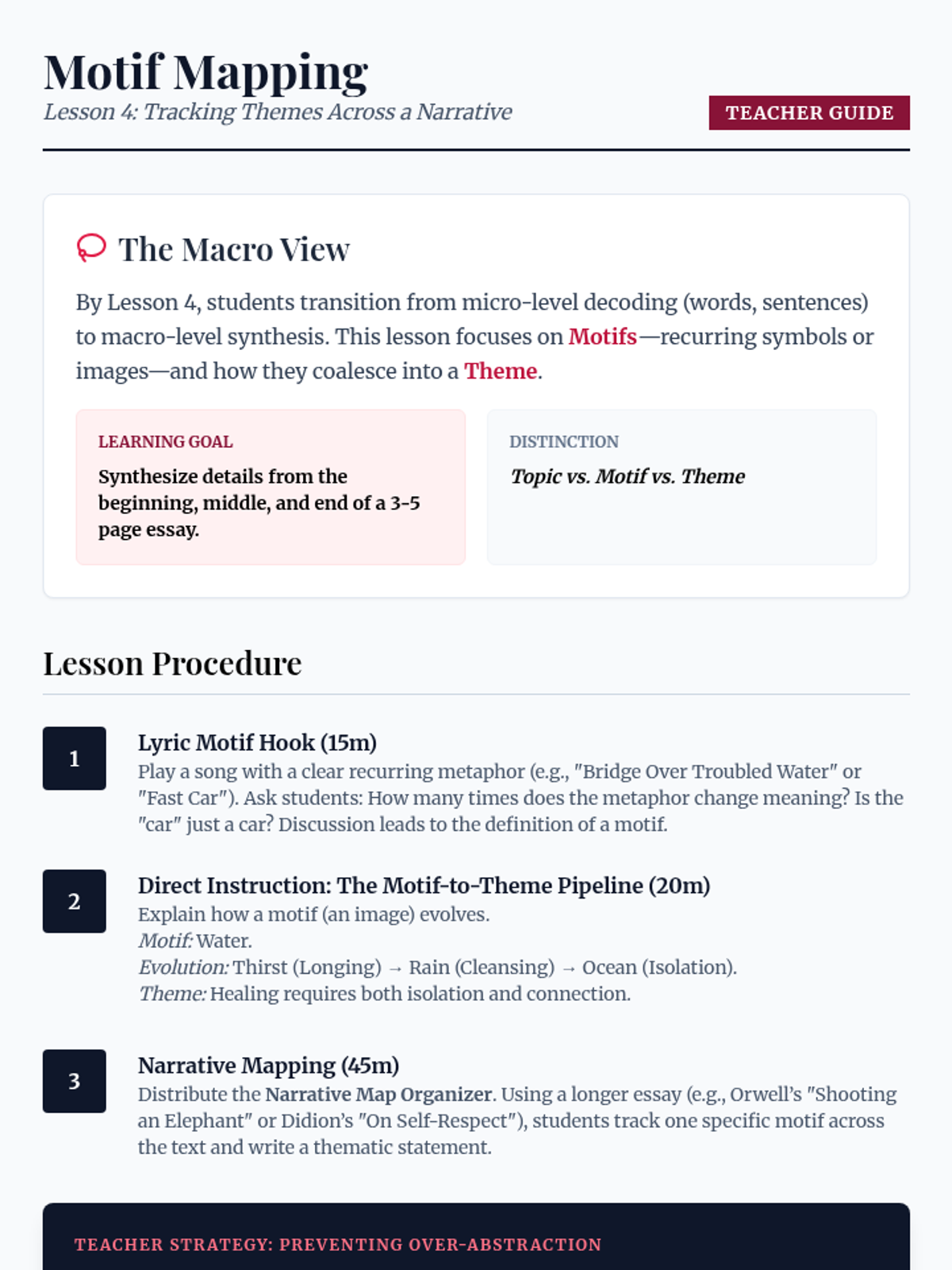
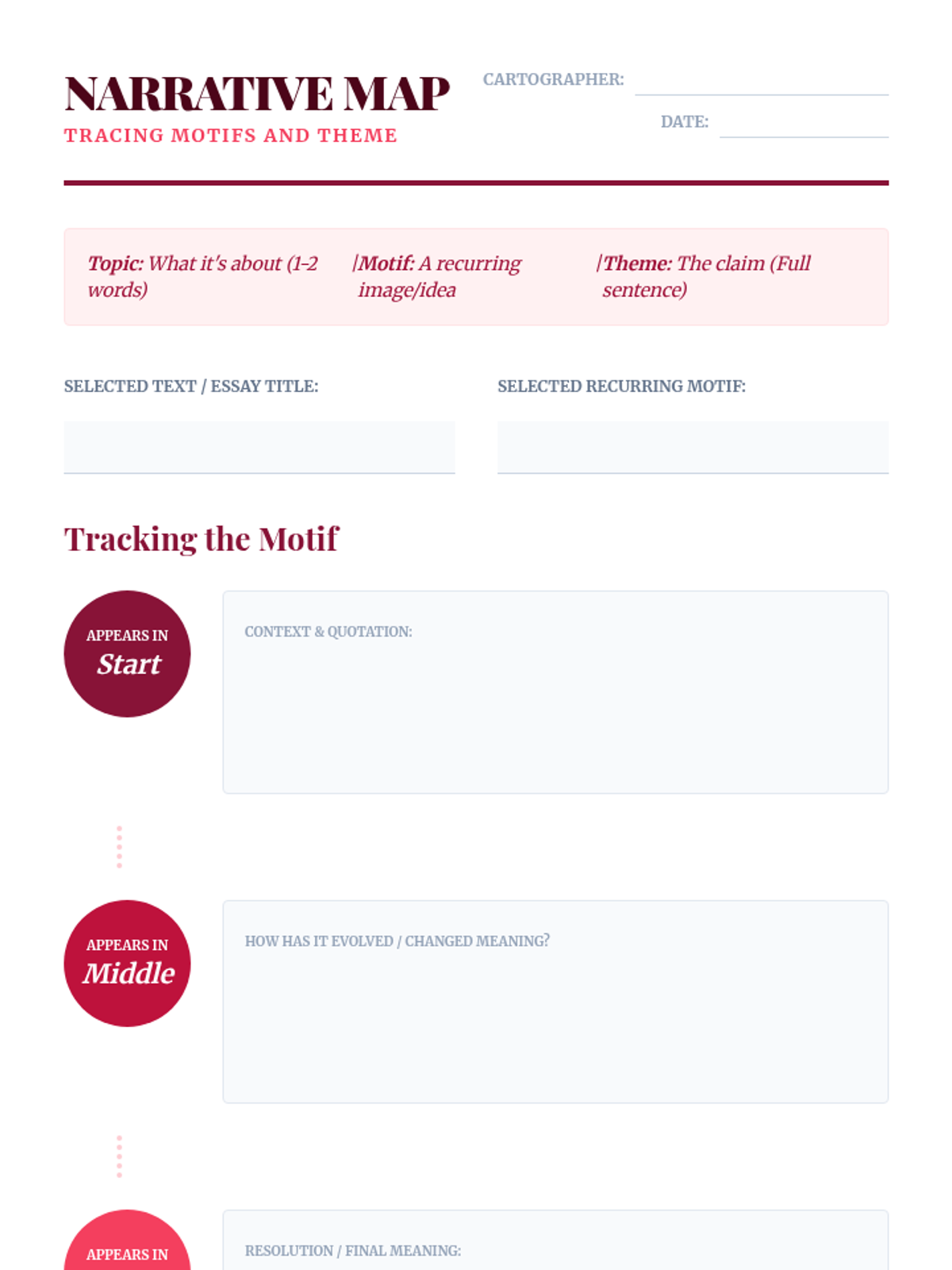
Students practice identifying recurring motifs and themes in a longer narrative piece. They map the development of a central idea from the beginning to the resolution of the text.
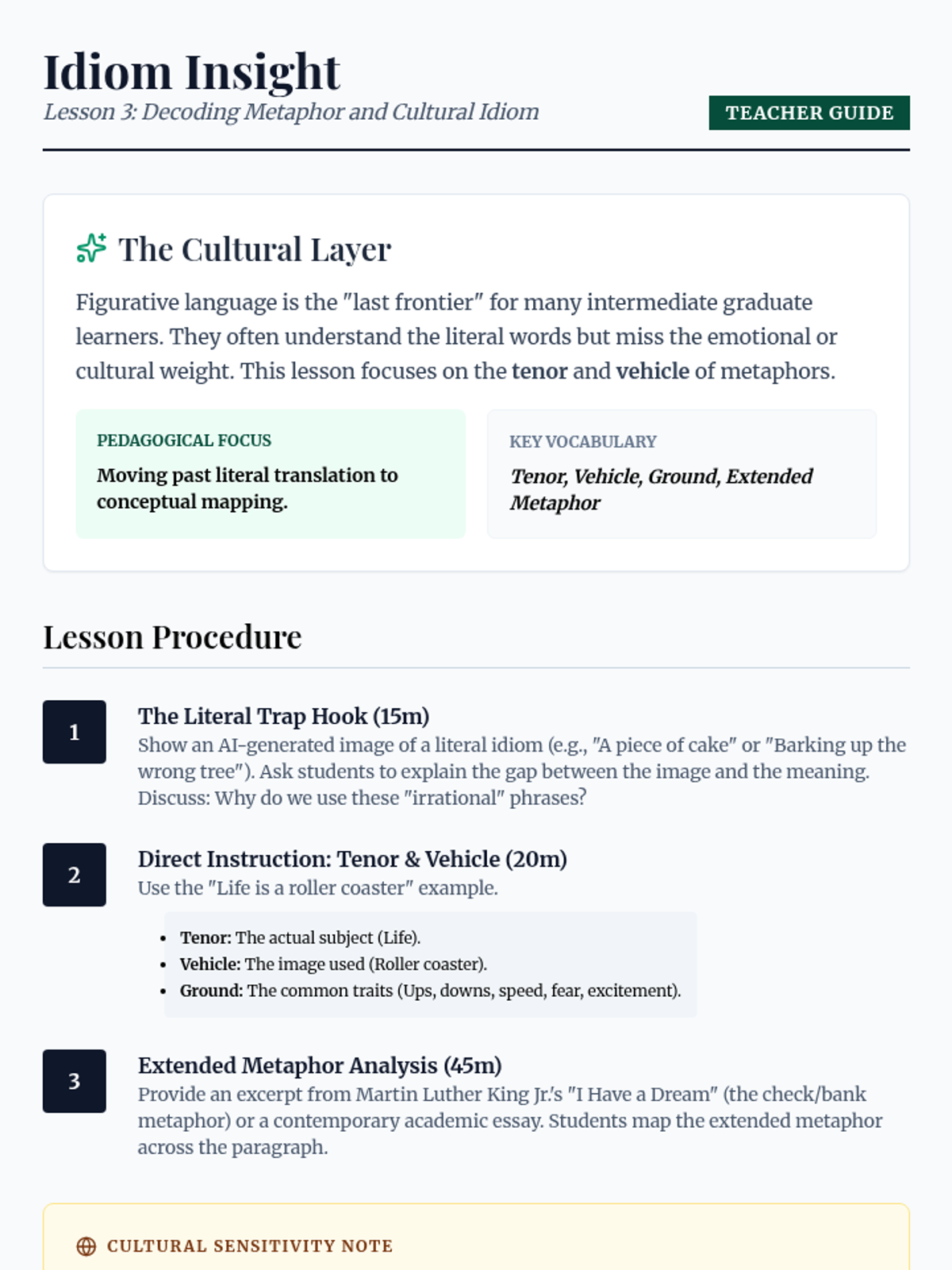
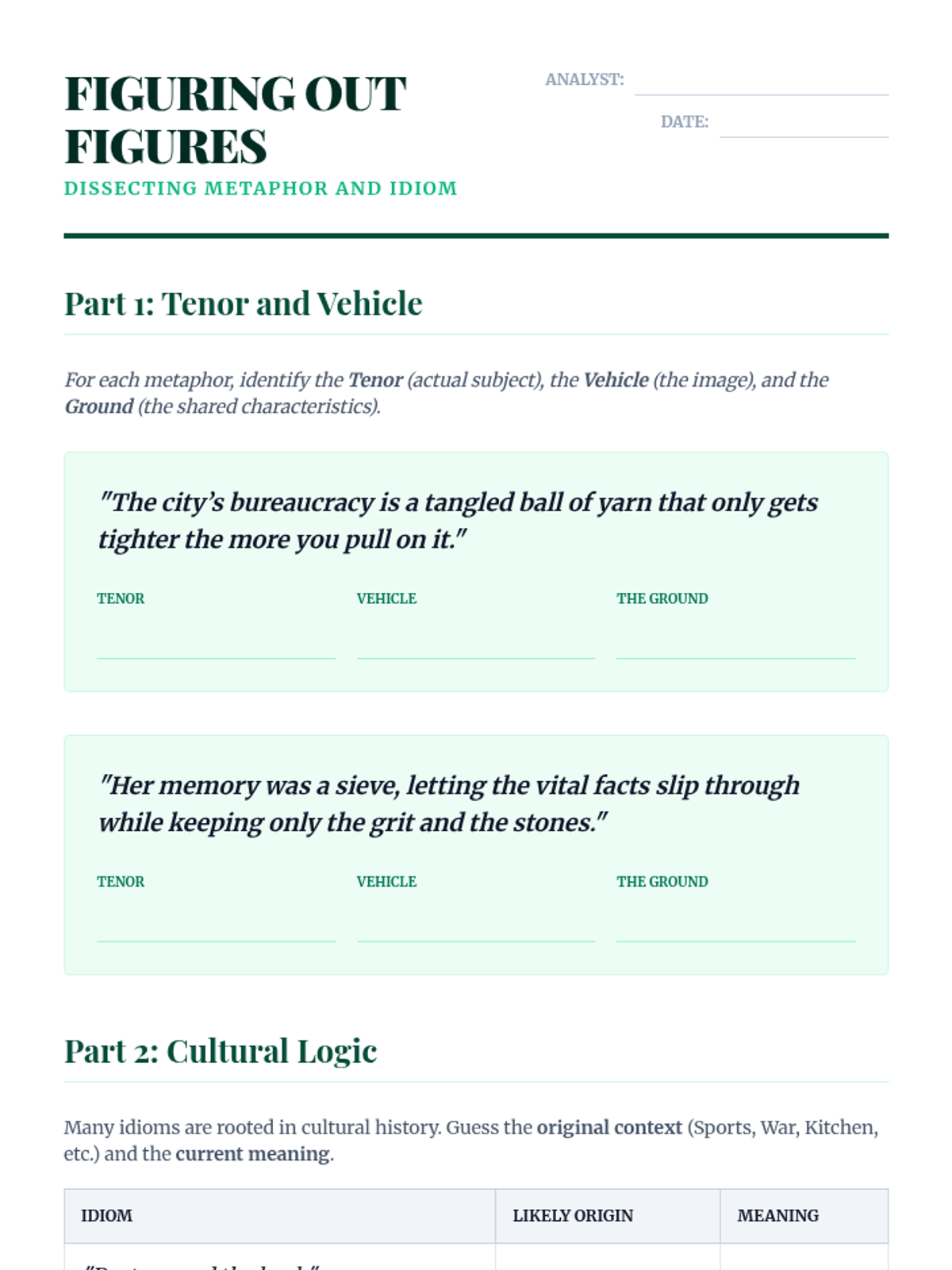
This lesson addresses figurative language that often confuses intermediate learners. Students dissect extended metaphors and culturally specific idioms found in high-level essays, discussing how they enhance meaning.
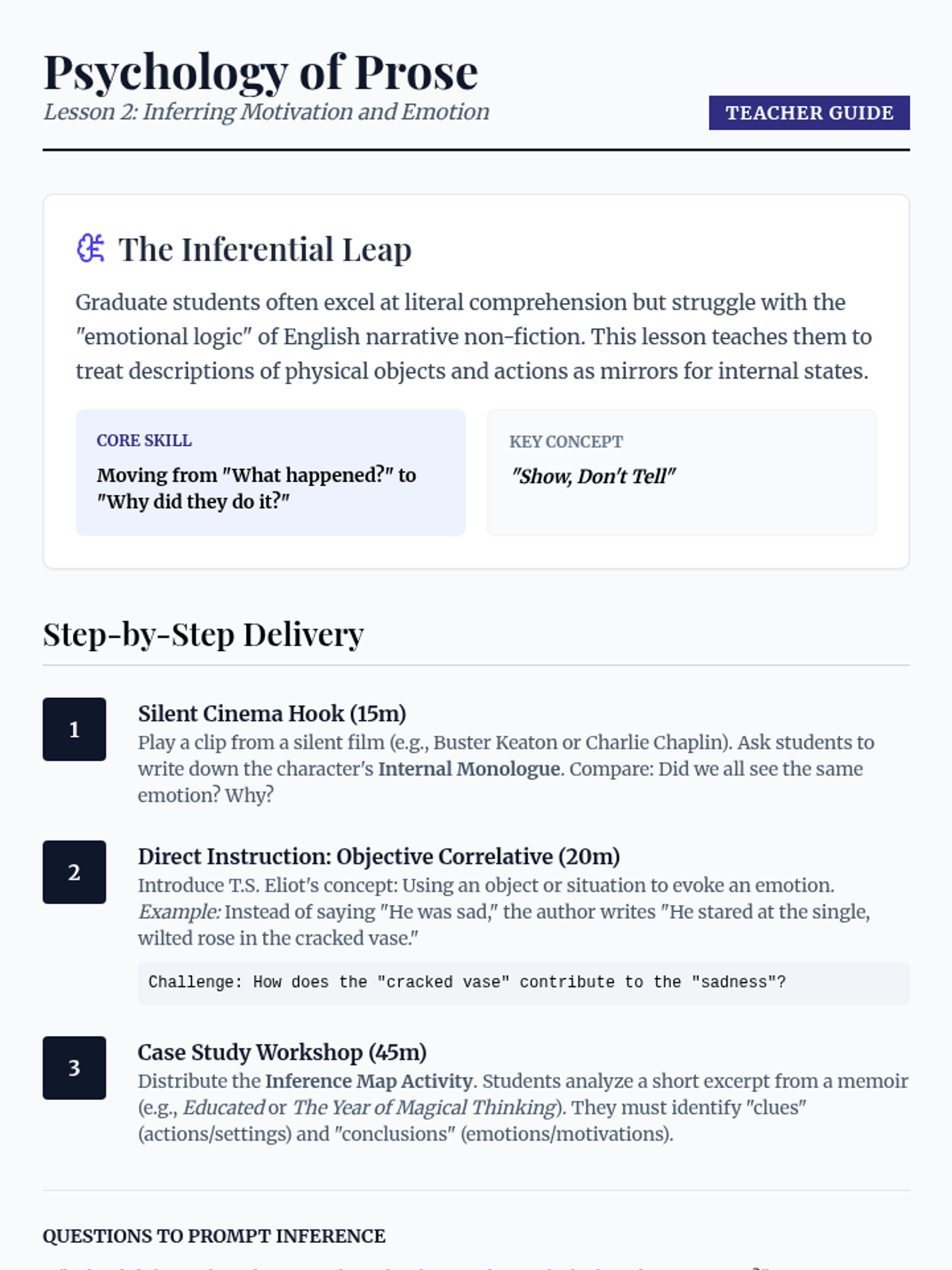
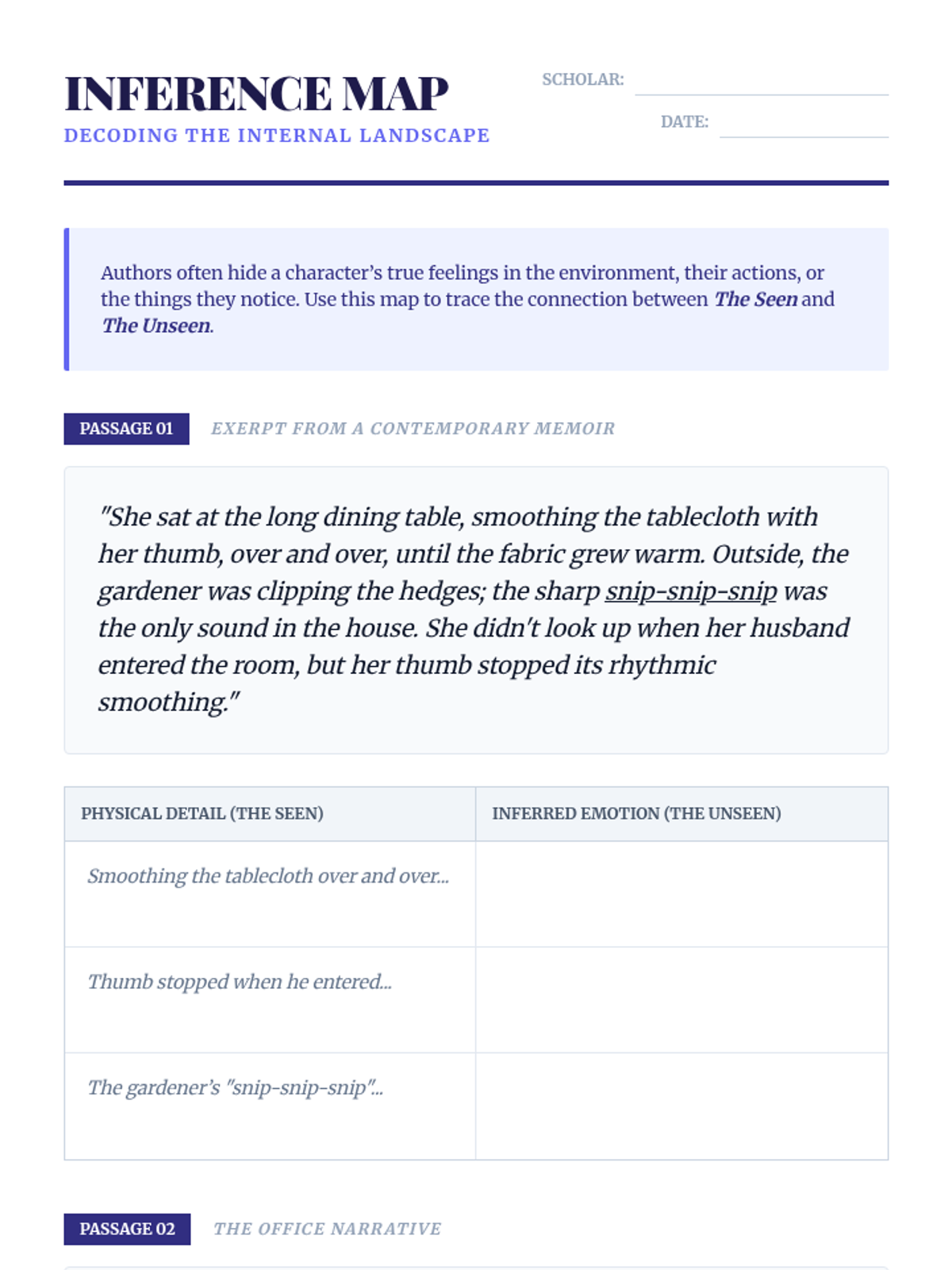
Learners analyze short memoir excerpts to infer internal states that are not explicitly stated. They focus on 'showing vs. telling' and how descriptions of action or setting reflect a subject's psychology.
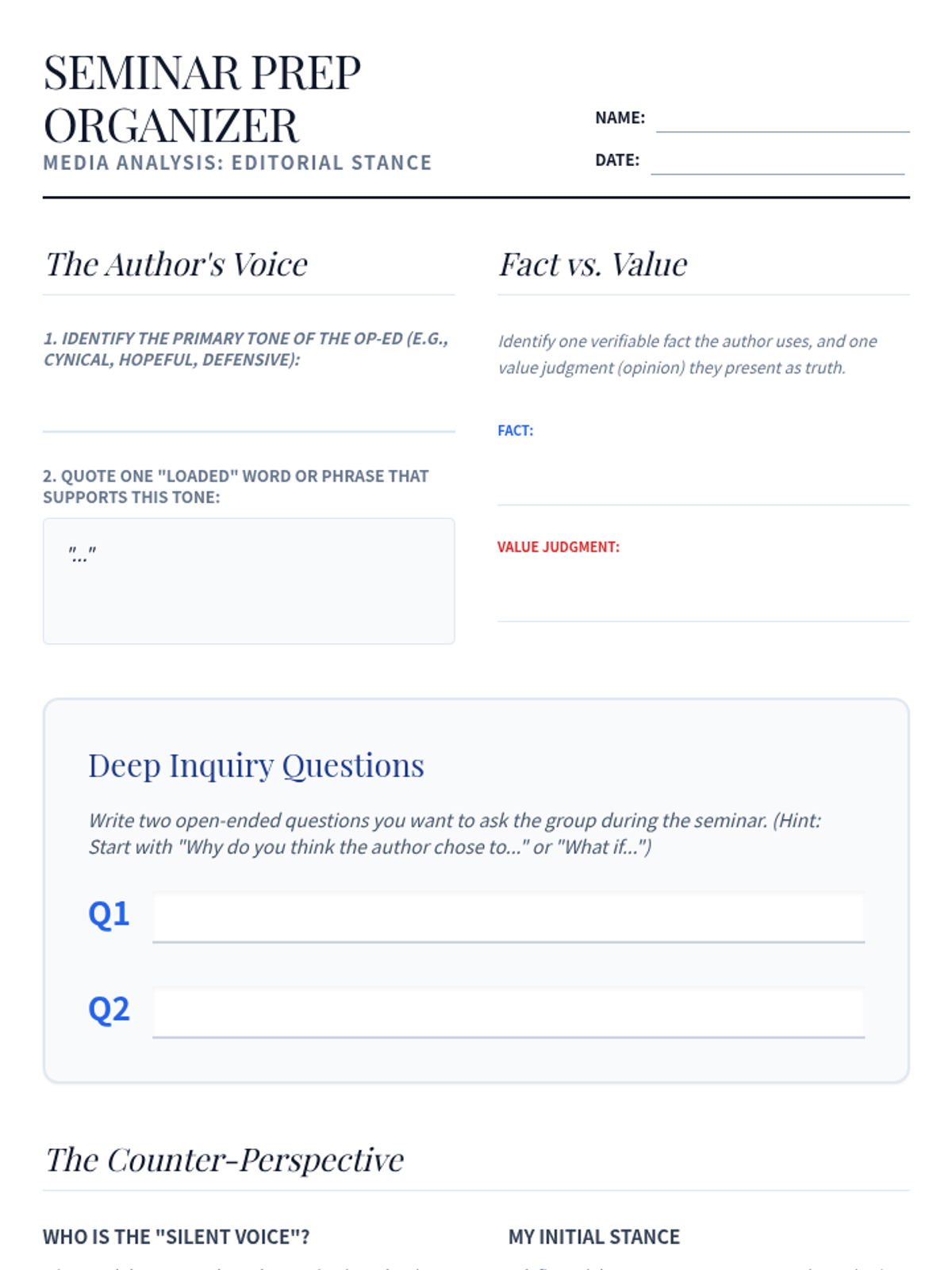
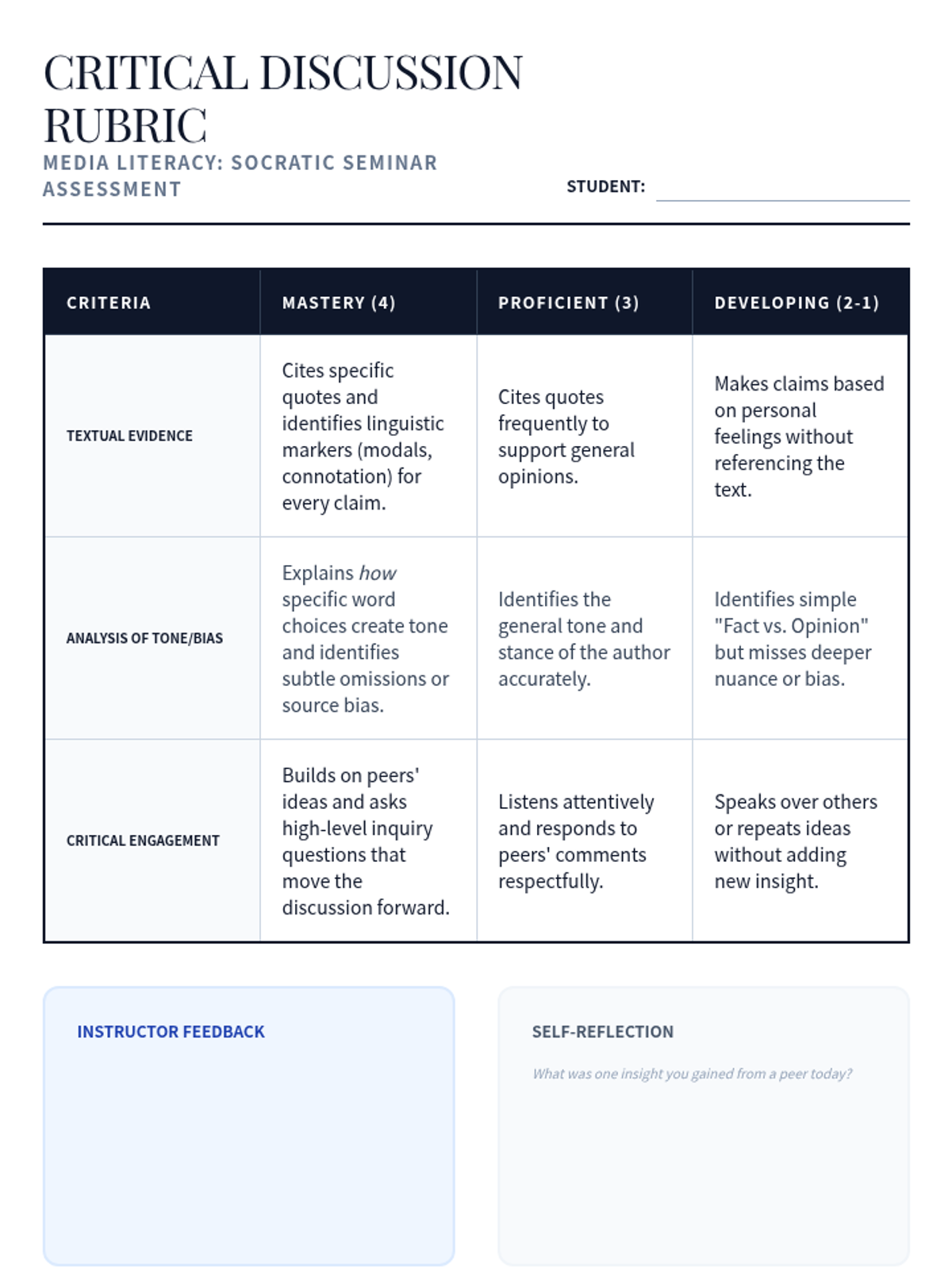
A culminating Socratic seminar where students analyze a complex Op-Ed piece, citing evidence for tone and stance.
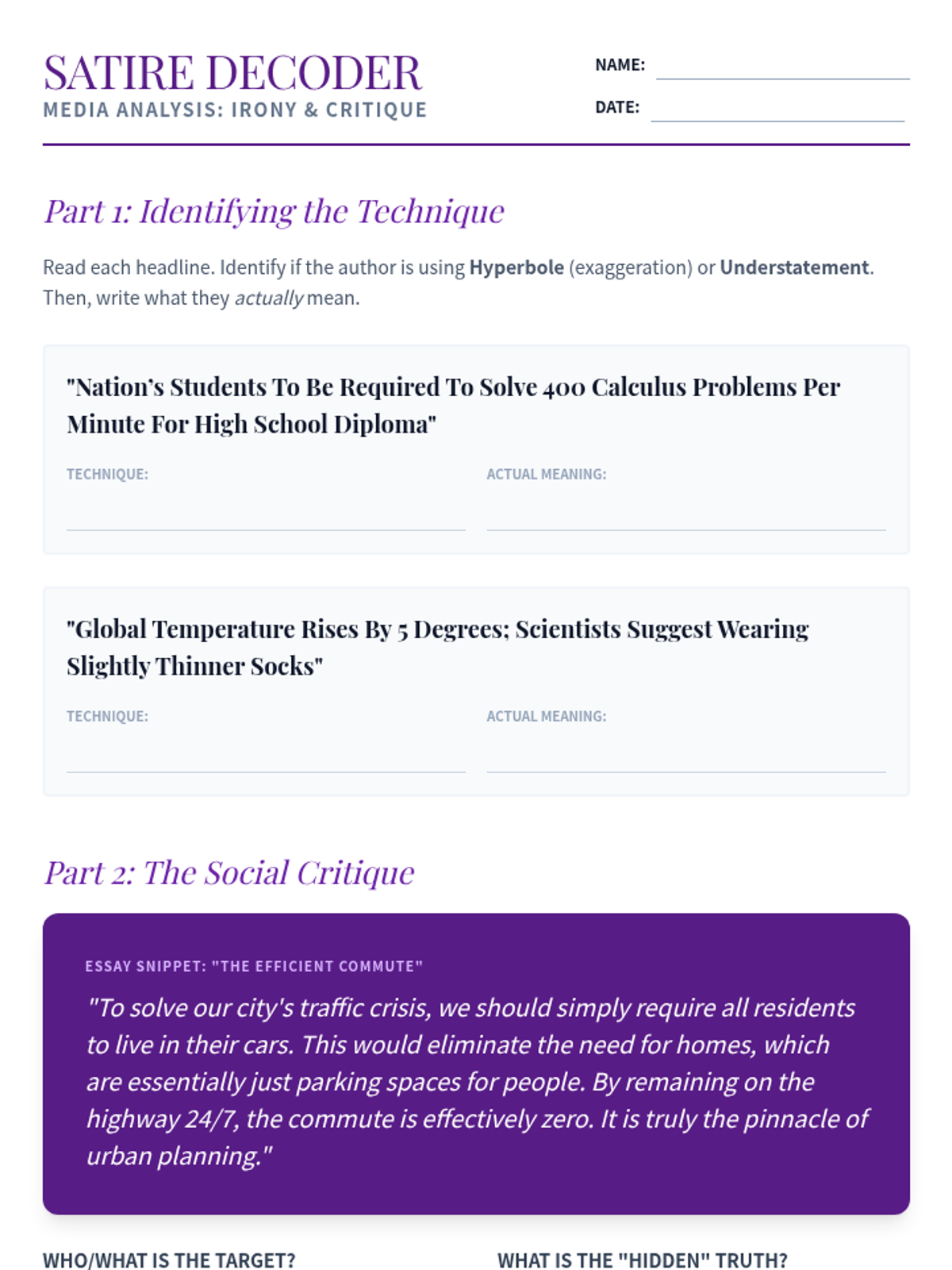
Students examine satirical essays and political cartoons to identify irony, exaggeration, and understatement in media.
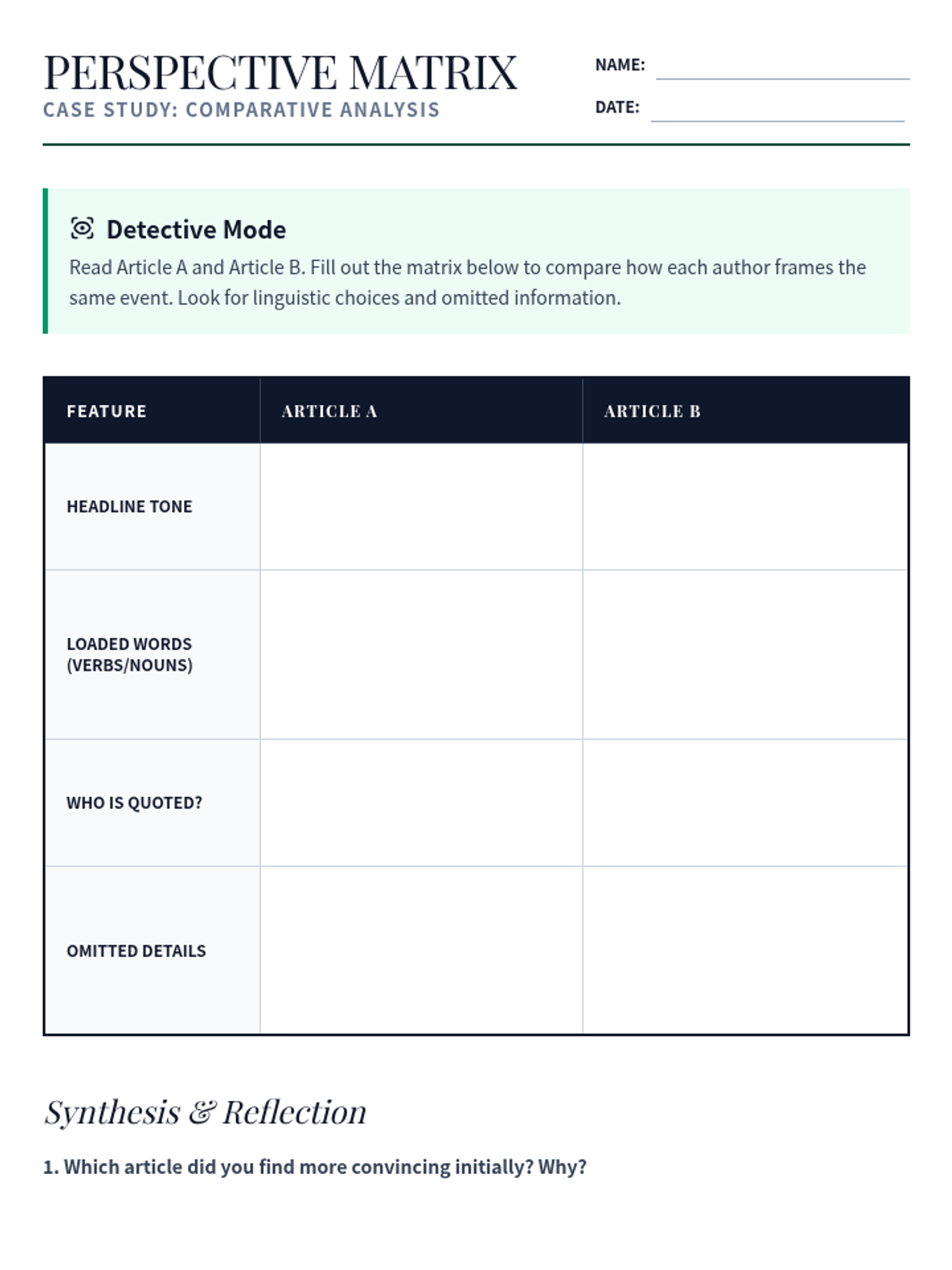
Students perform comparative reading of articles on the same event to track differences in source selection, vocabulary, and omitted details.
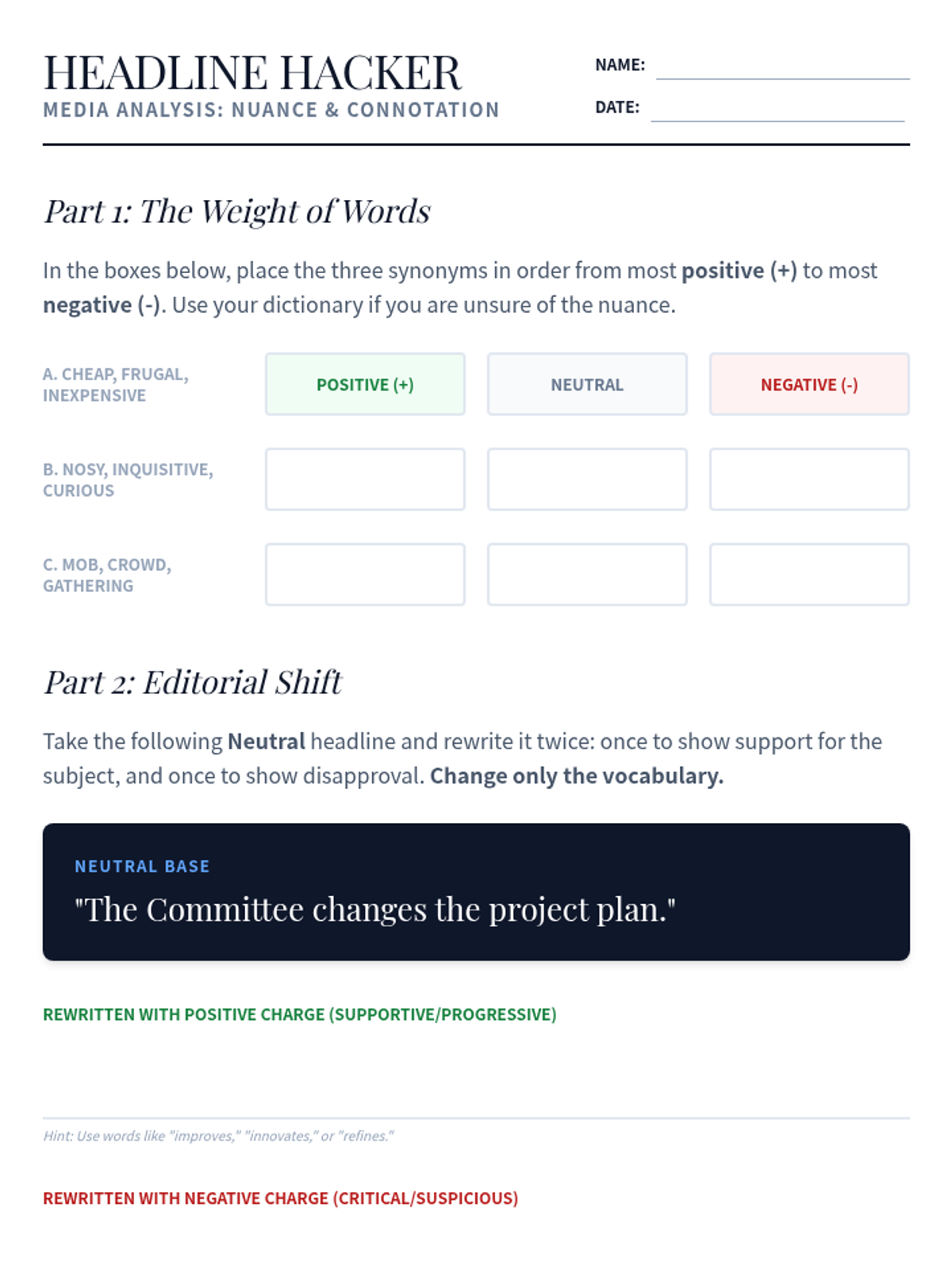
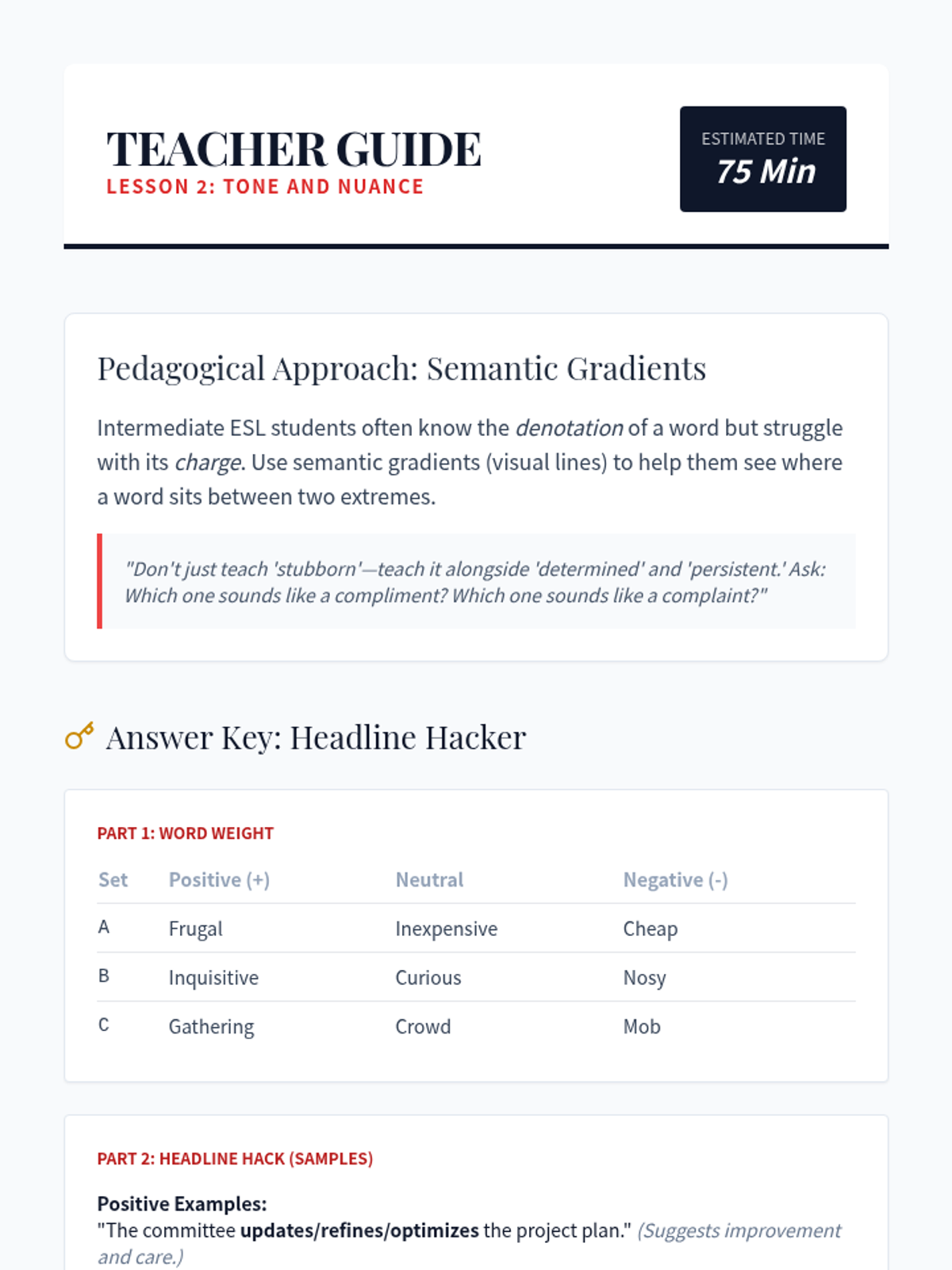
Learners explore how synonyms with different charges alter meaning and identify 'loaded' language that reveals authorial attitude.
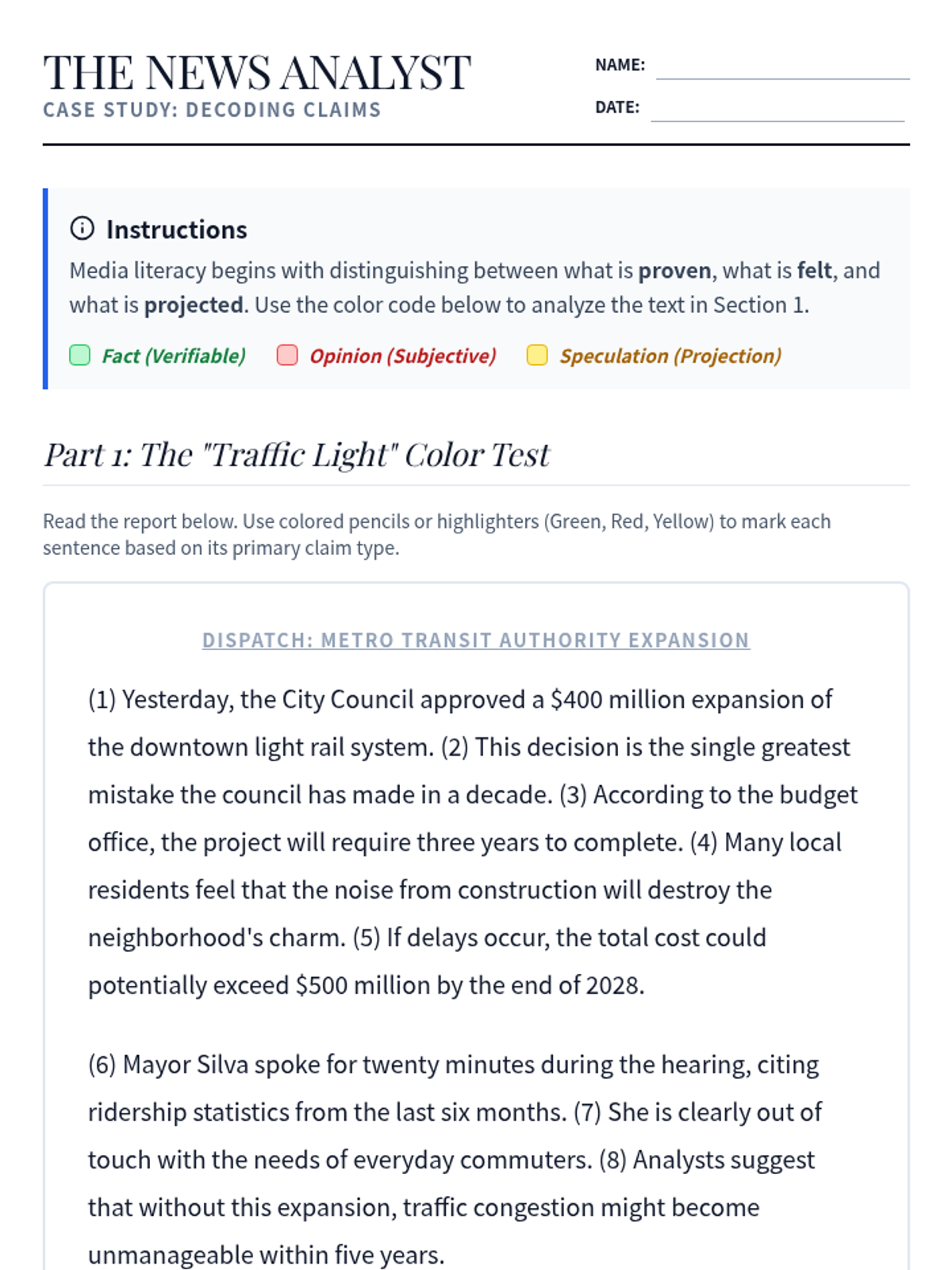
Students review the linguistic markers that distinguish verifiable facts from authorial opinions and future speculations, emphasizing modal verbs and attribution markers in journalism.
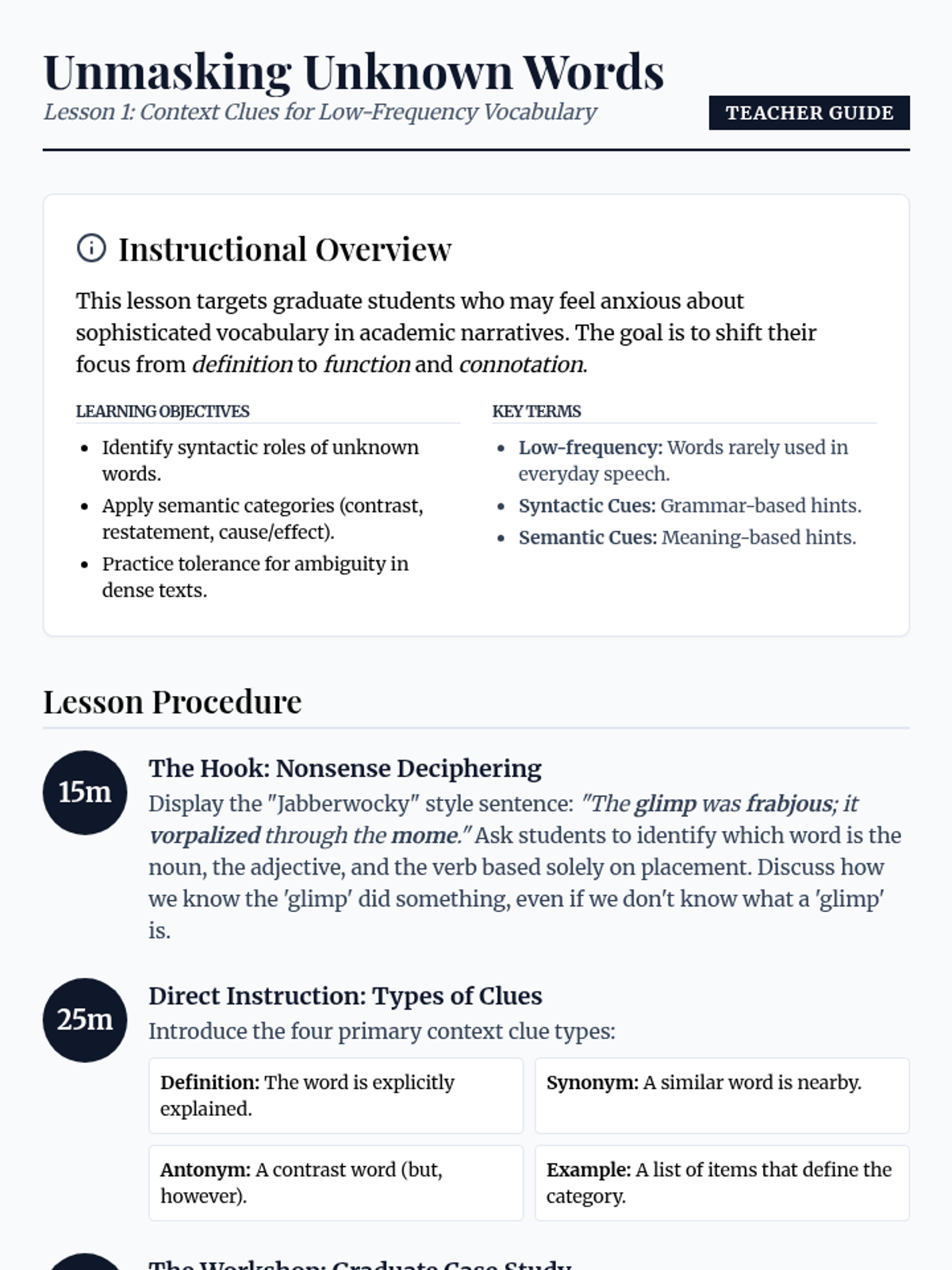
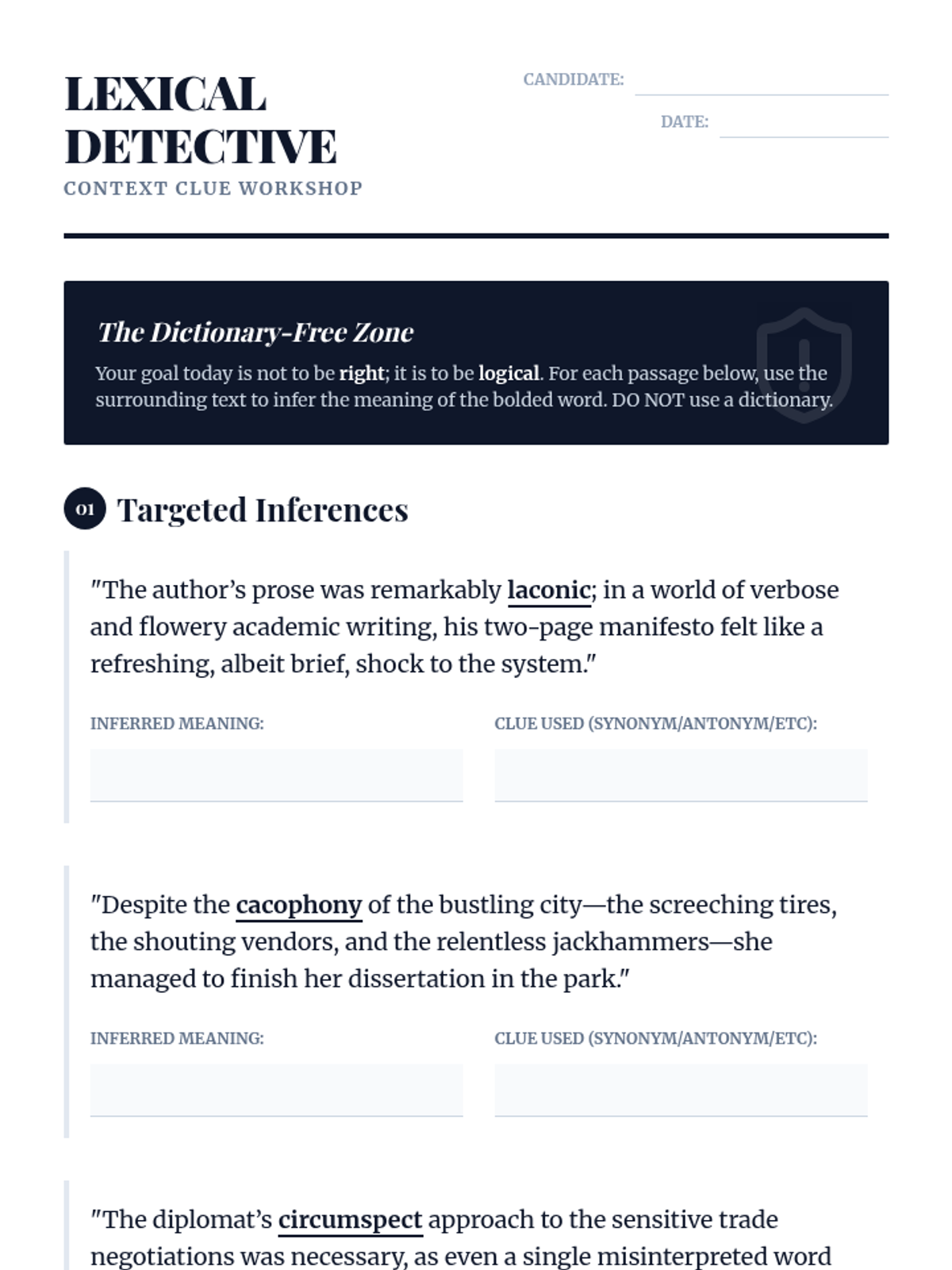
Students learn to decode low-frequency academic and literary vocabulary using syntactic and semantic context clues, reducing dictionary dependence.