Cultural identity, community development, and public policy through the lens of creative practice. Addresses arts advocacy strategies and integrates interdisciplinary connections across social and professional sectors.
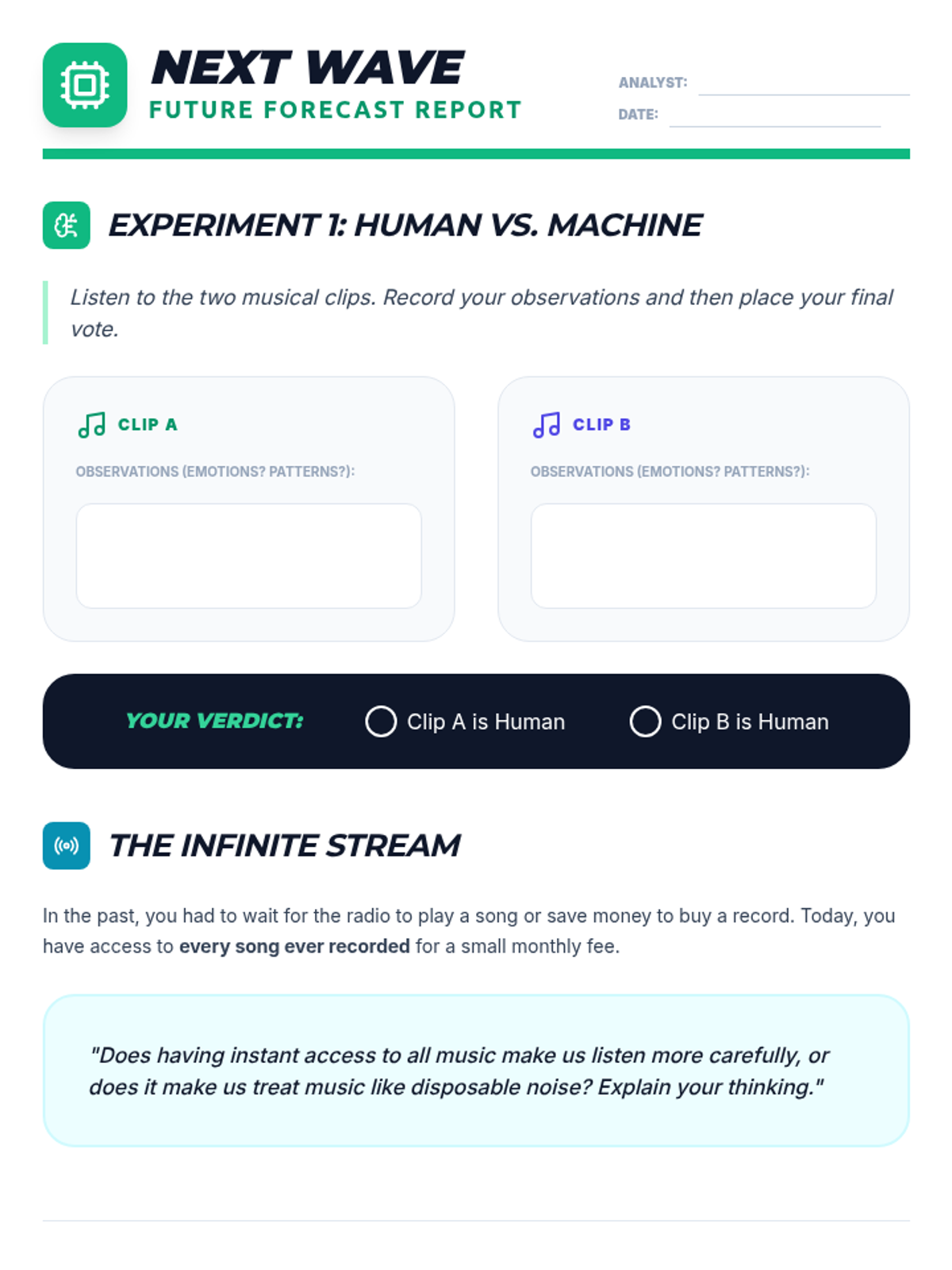
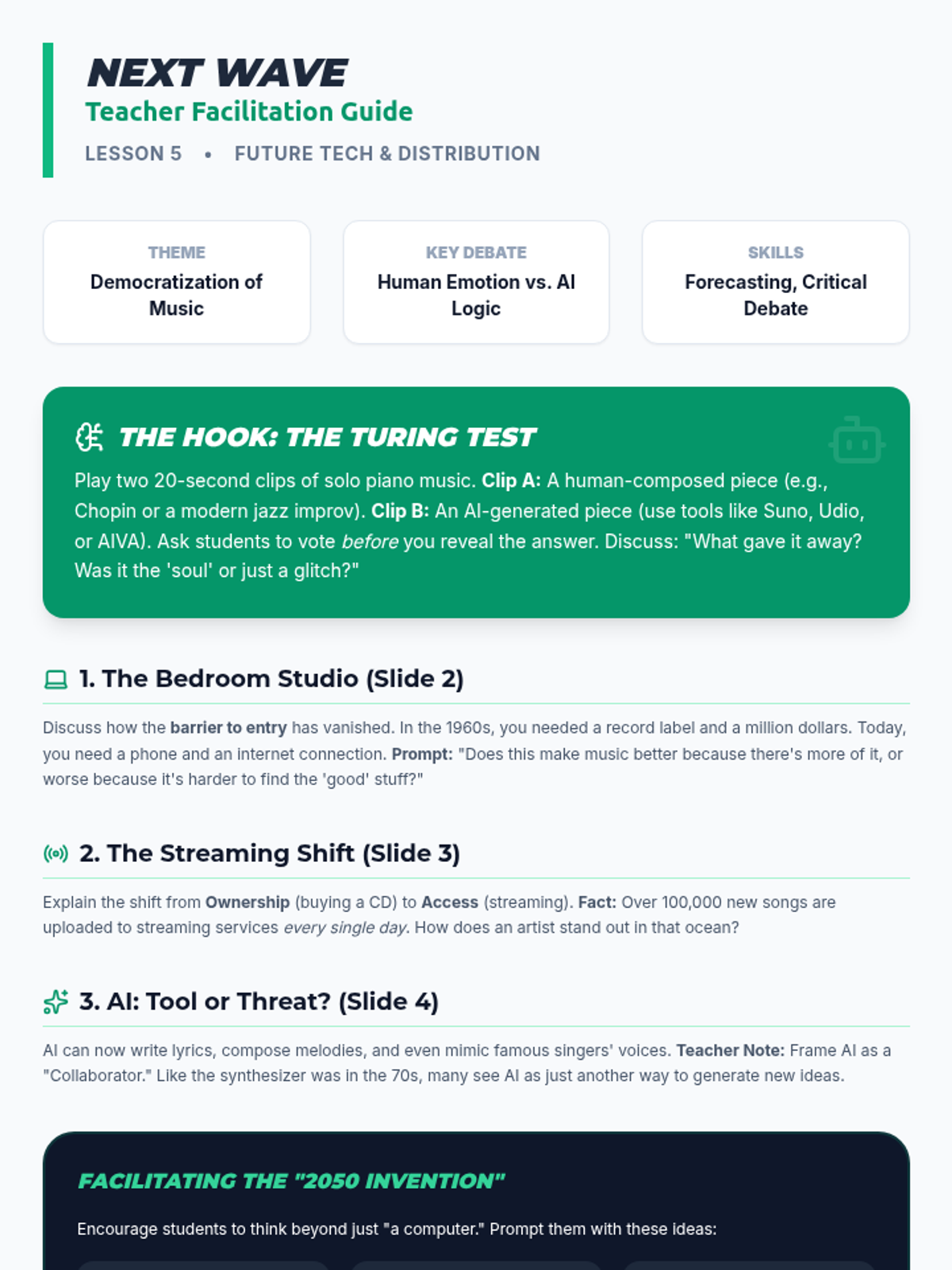
Students debate the future of music history, looking at streaming, AI composition, and bedroom production, analyzing how digital tools change the creation and distribution of music.
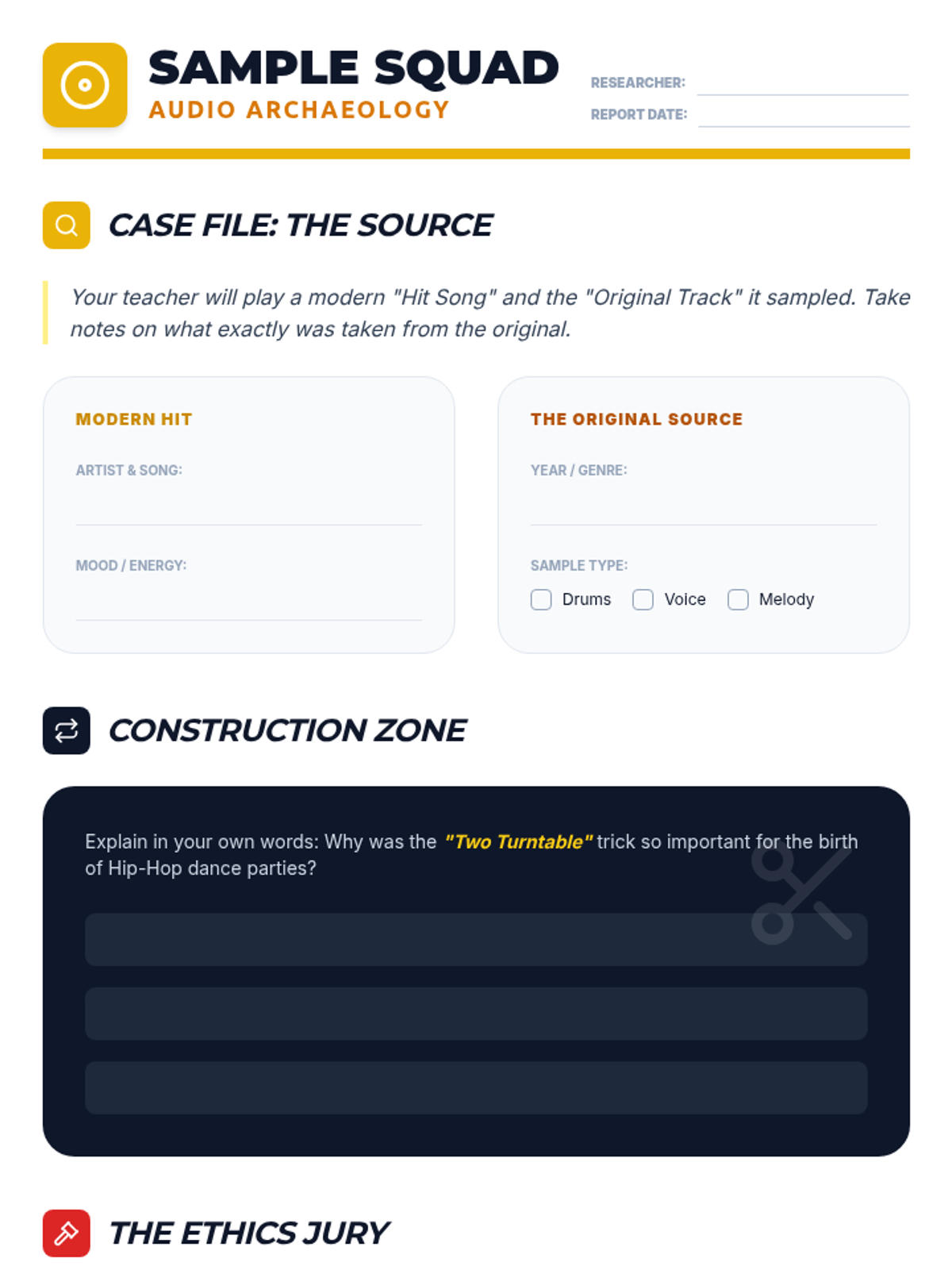
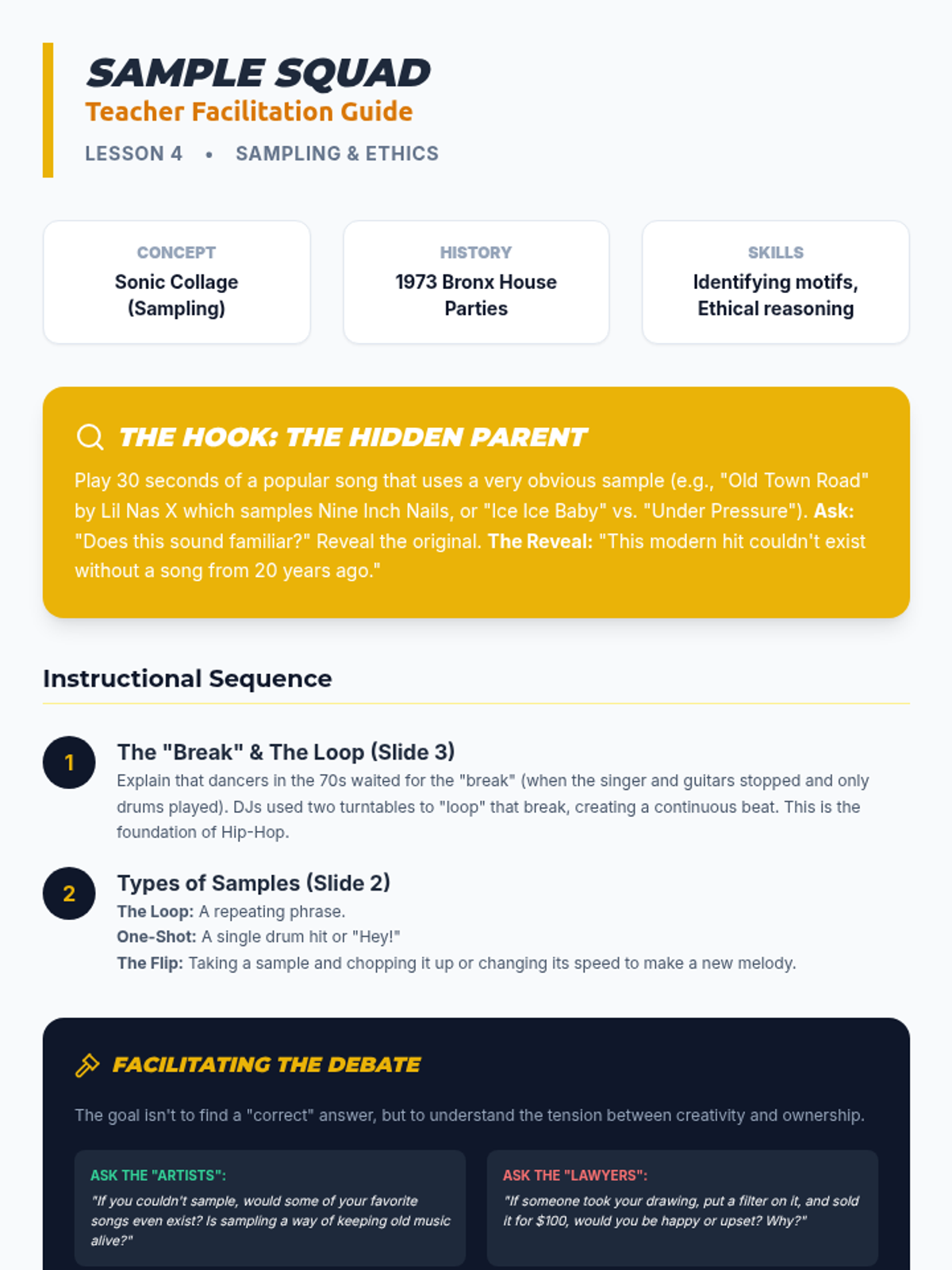
Students investigate the origins of Hip-Hop and the revolutionary technique of sampling, discussing the artistic and legal implications of repurposing existing audio to create new music.
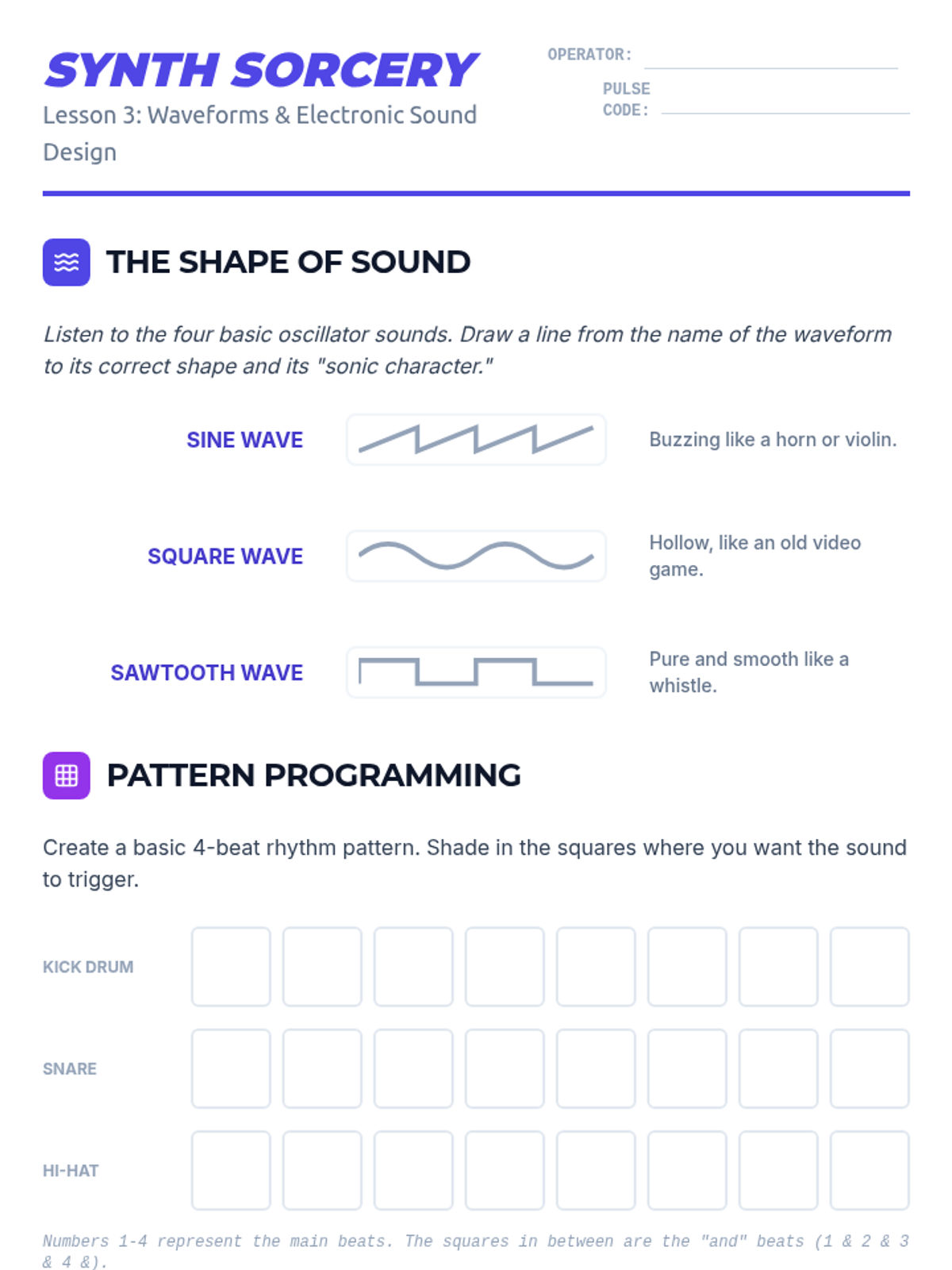
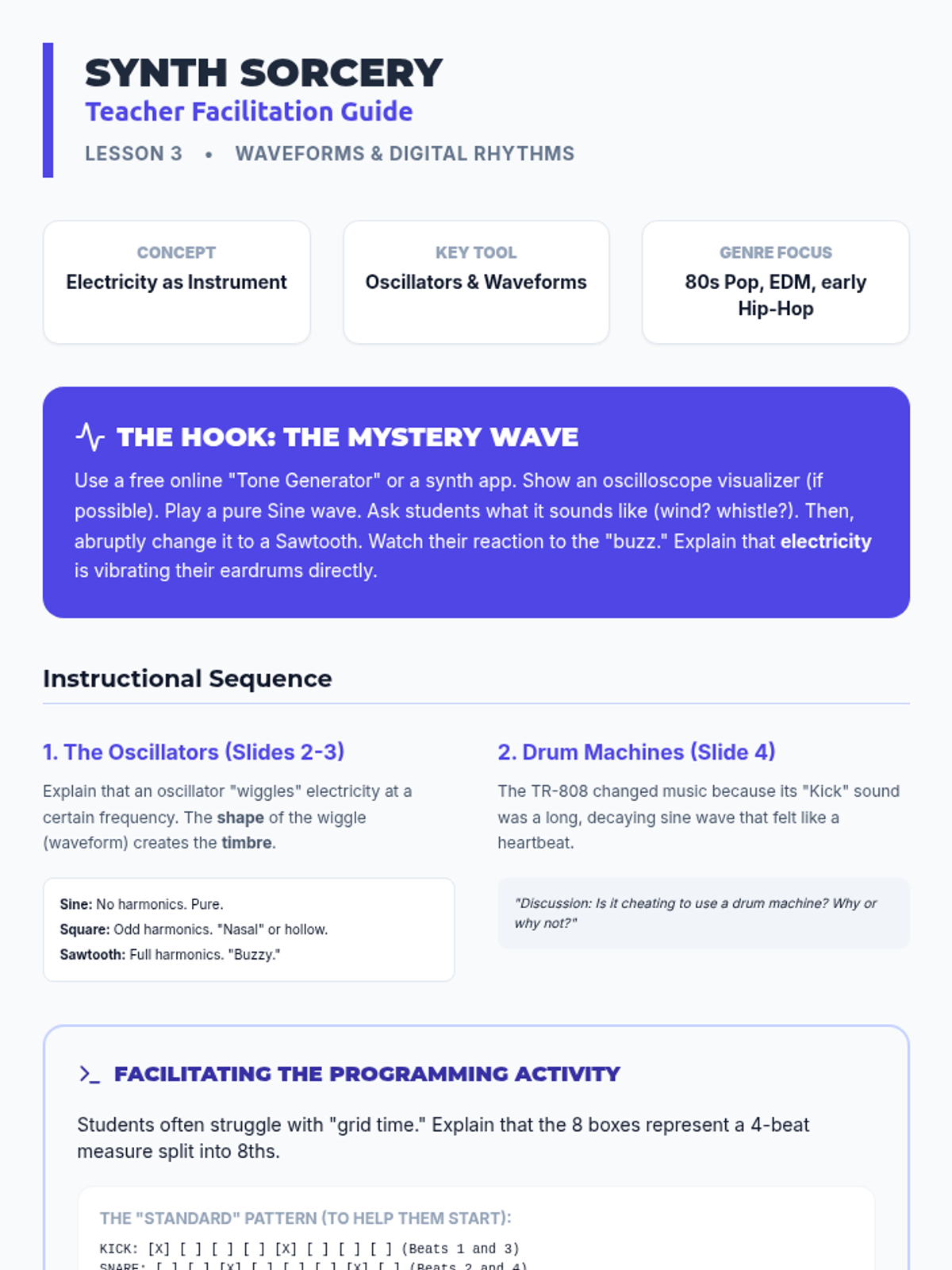
Students explore the introduction of synthesizers and drum machines in the 70s and 80s, learning about waveforms and how electricity can be used to design completely new sounds.
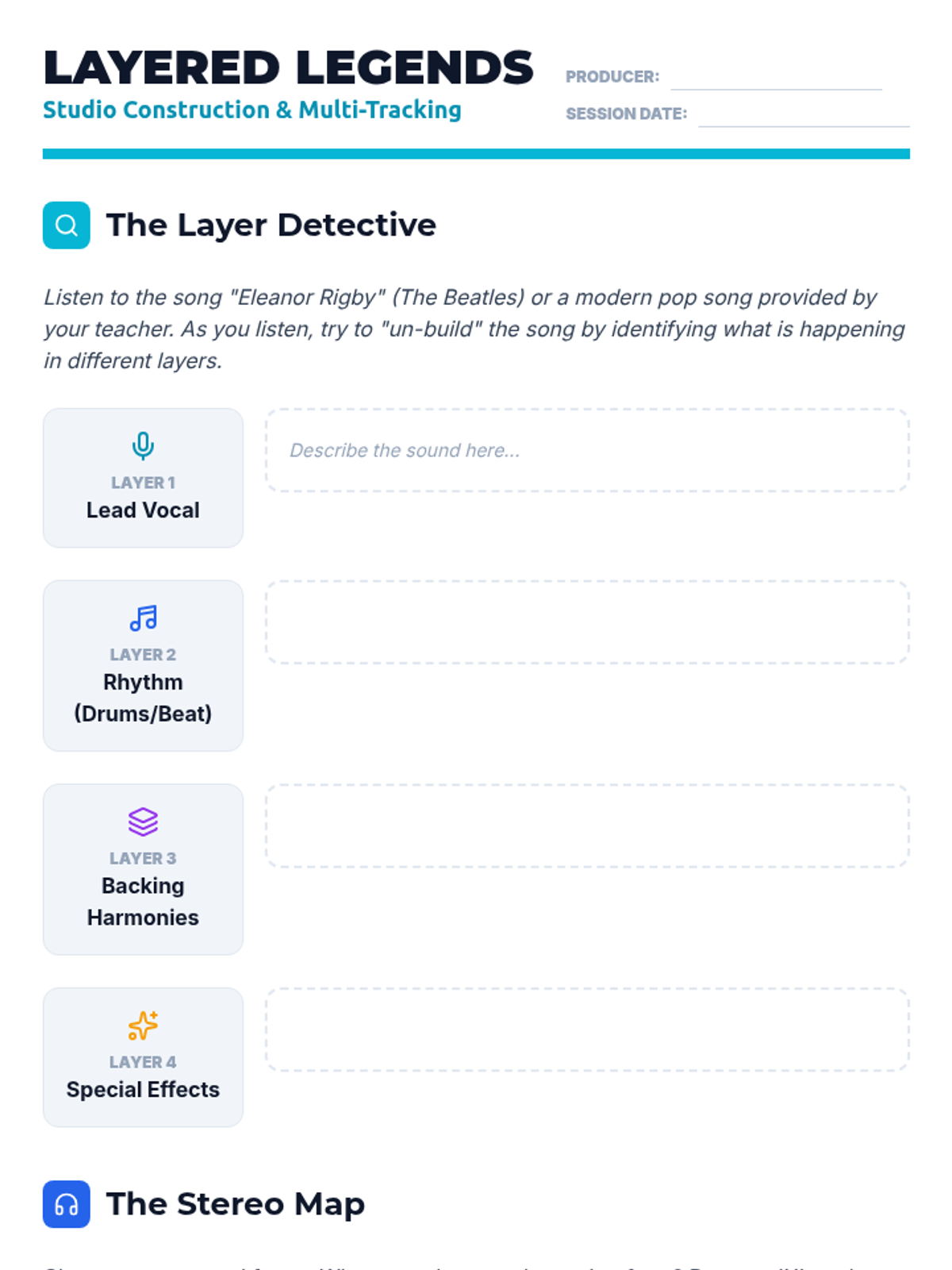
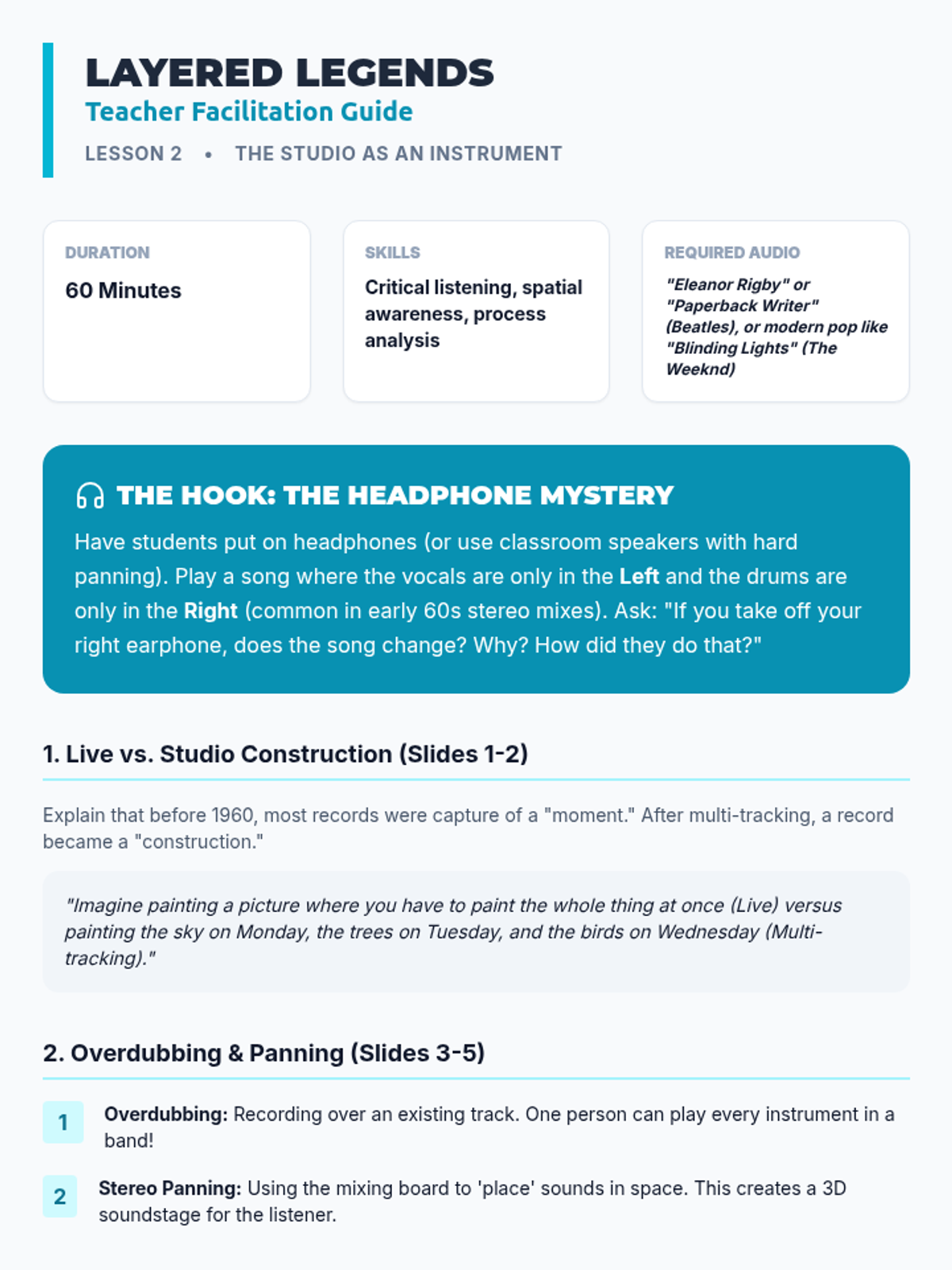
Students explore the 1960s shift from live recording to studio construction, learning about multi-tracking, tape loops, and how The Beatles used the recording studio as a creative instrument.
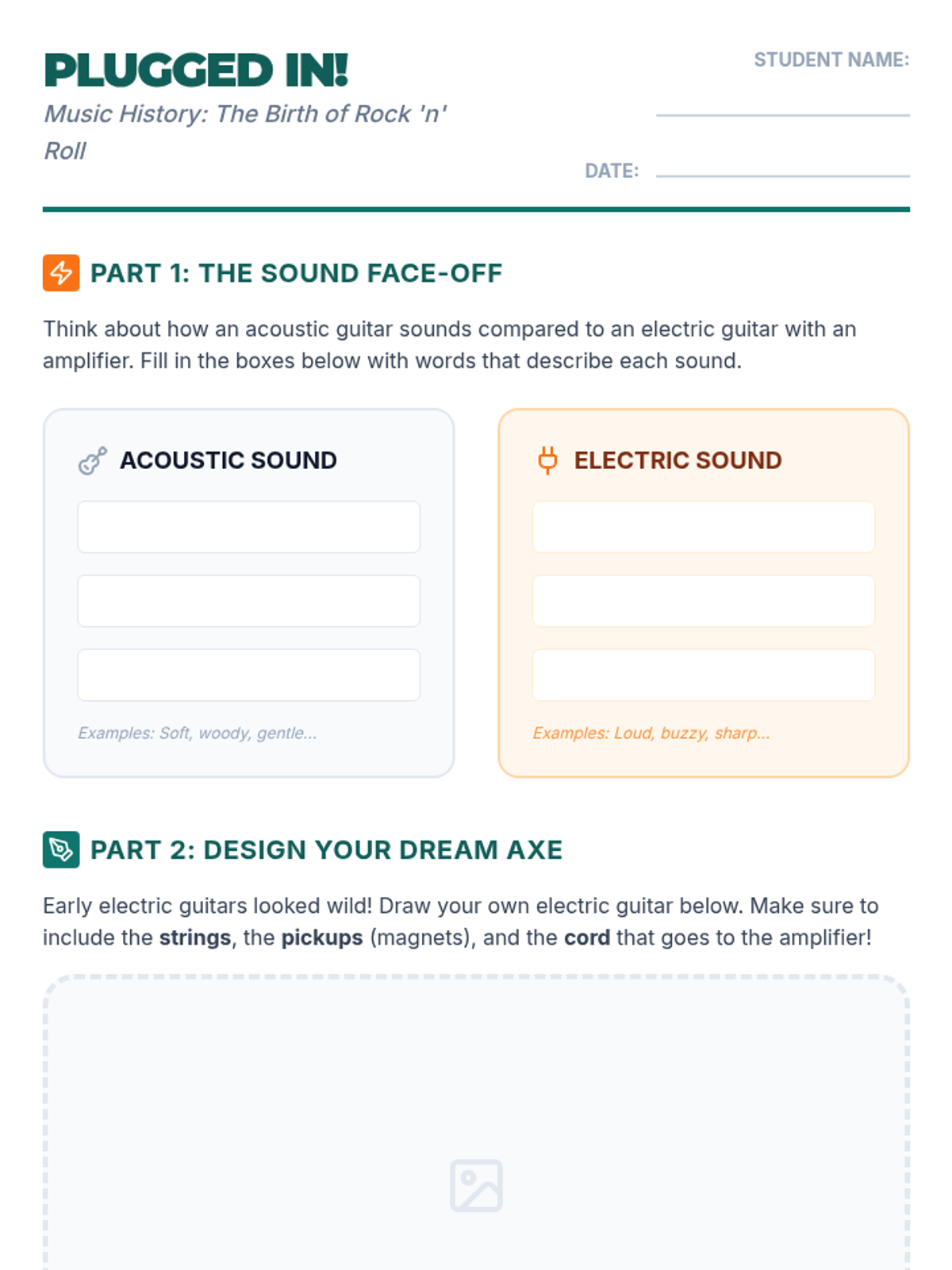
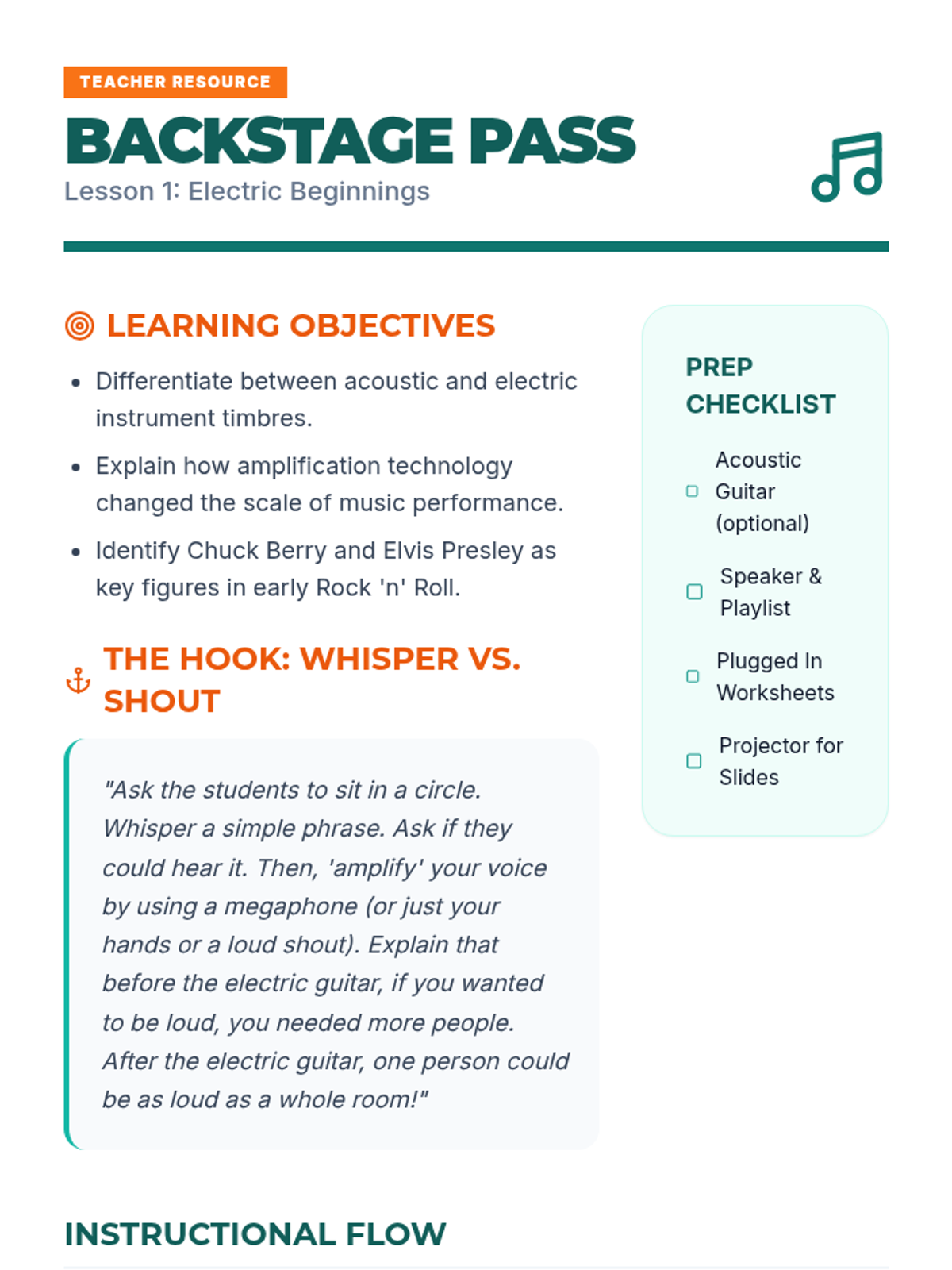
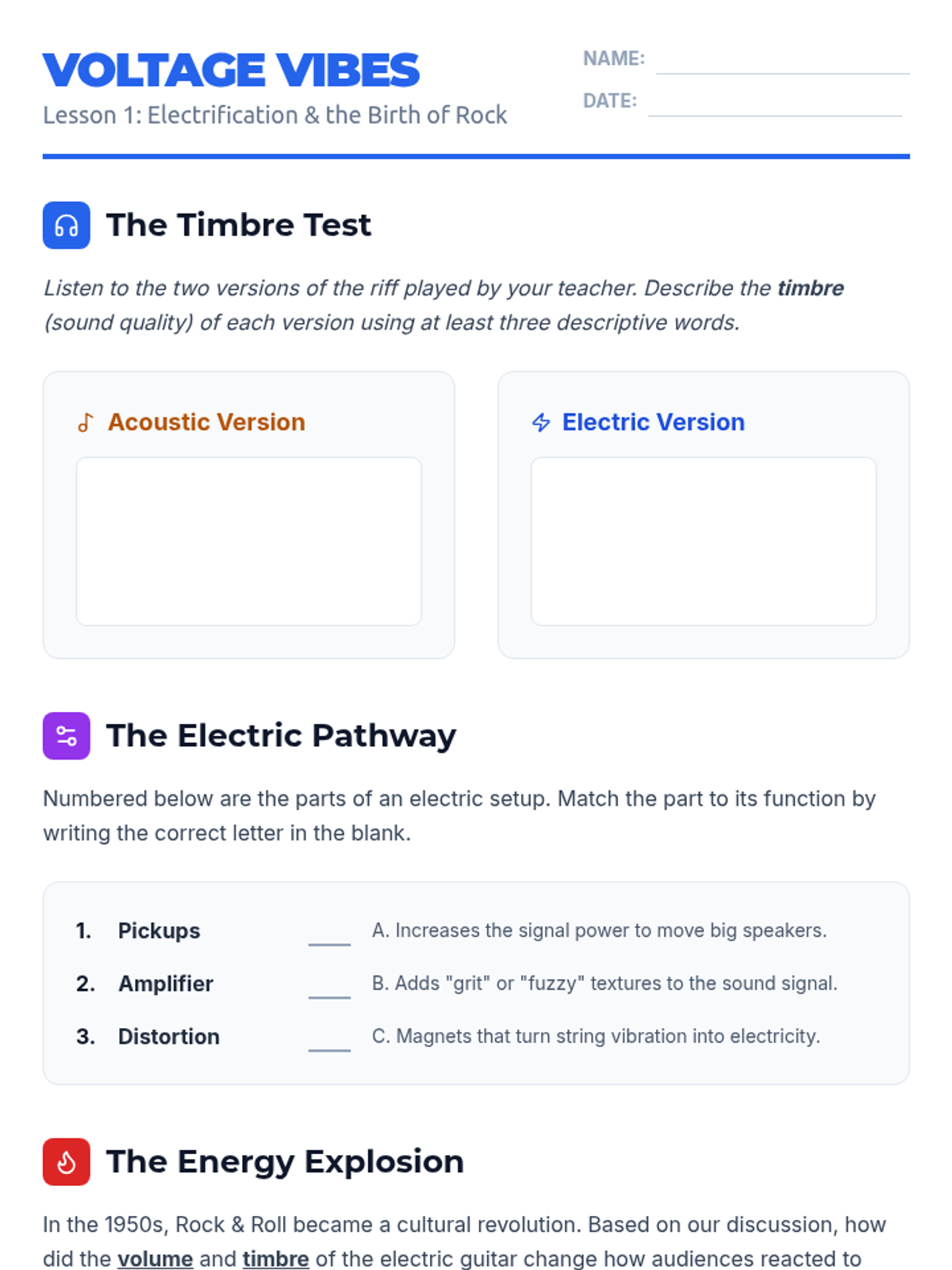
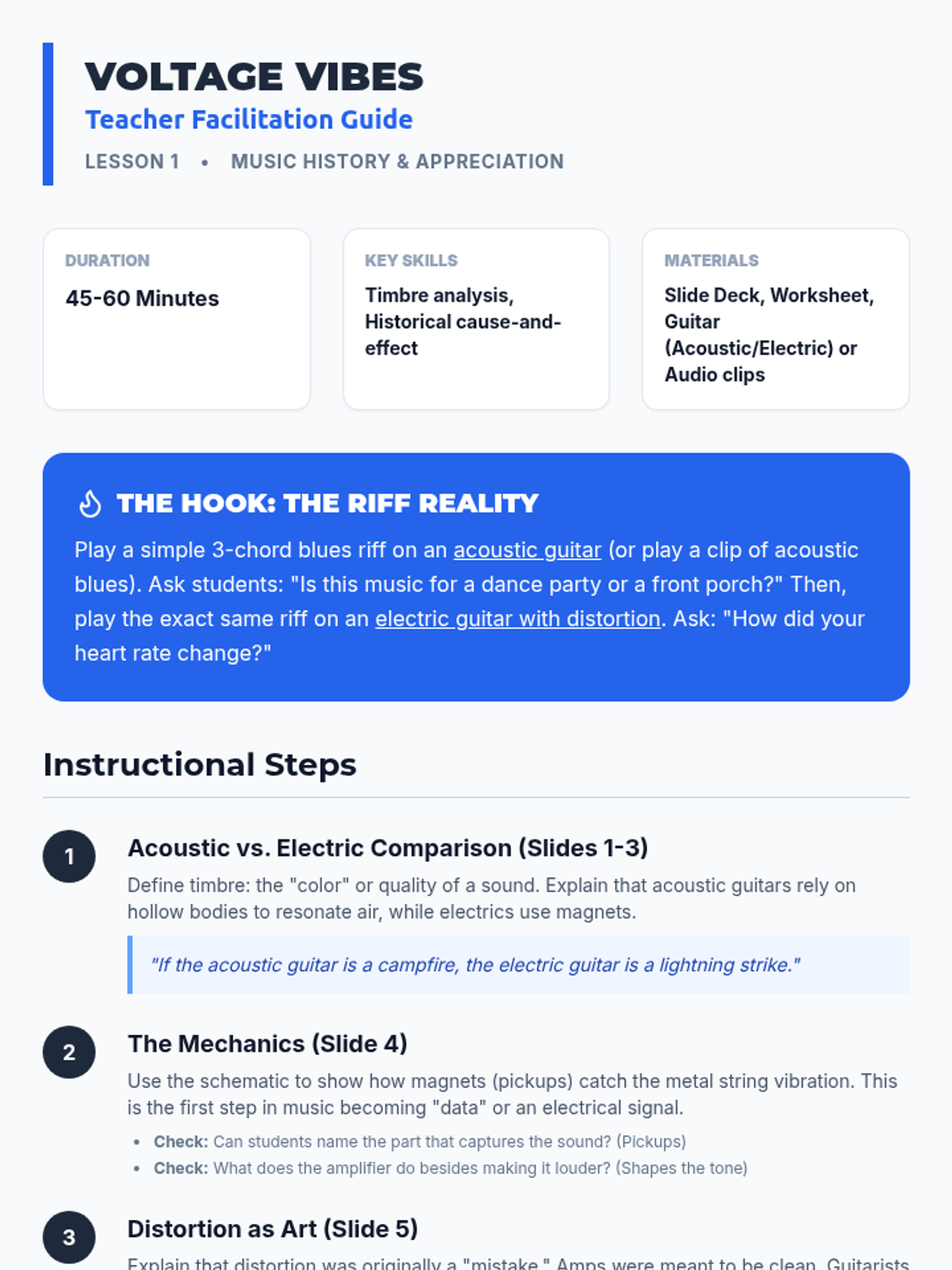
Students compare acoustic and electric sounds, exploring how amplification birthed Rock 'n' Roll through pioneers like Chuck Berry and Elvis Presley.
Students analyze the transition from acoustic to electric instruments in the 1950s, exploring how amplification and the electric guitar changed the sound and energy of music.
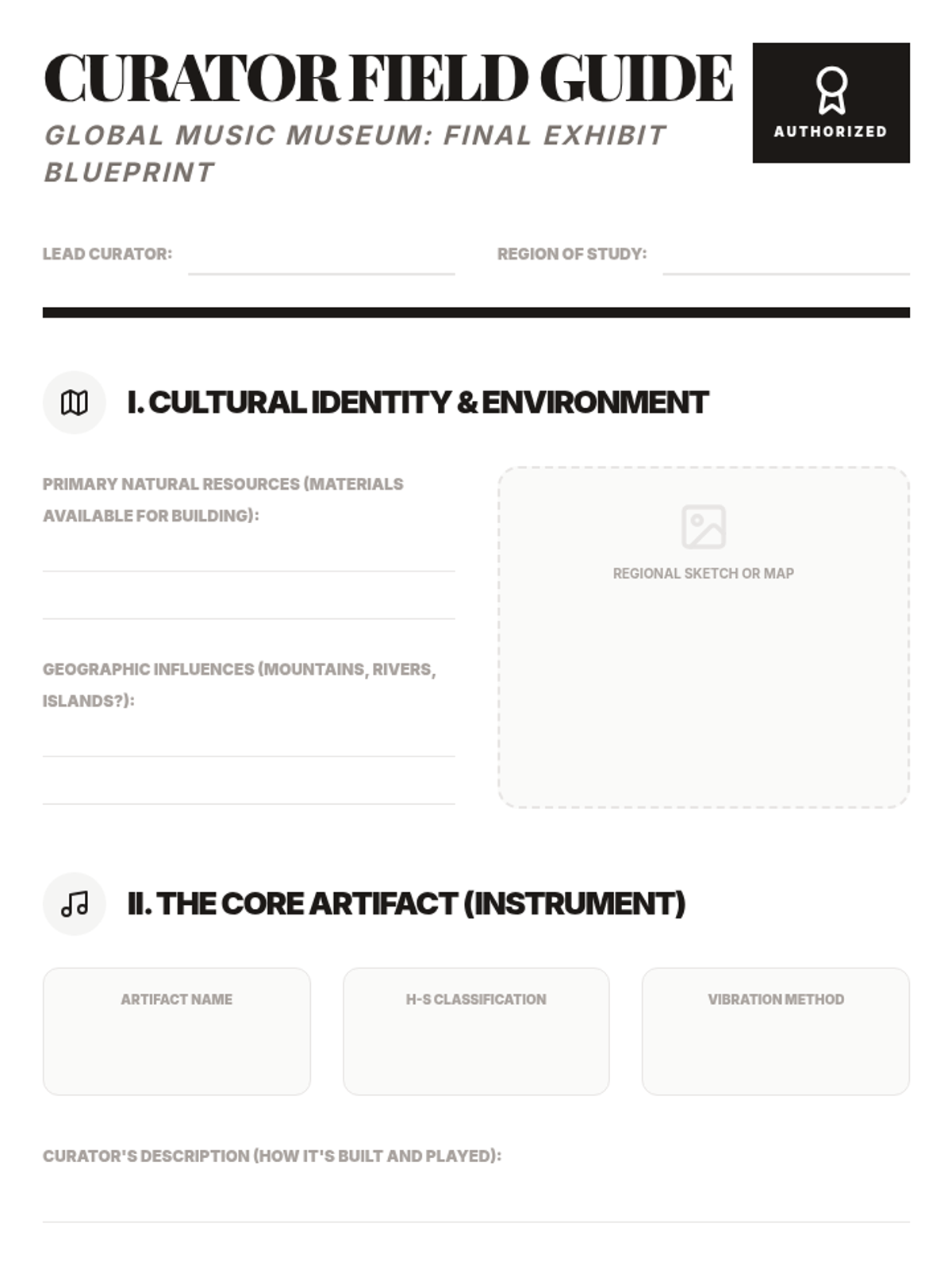
Students act as museum curators to design an exhibit showcasing a specific musical tradition. They synthesize their knowledge of classification, rhythm, and scale into a final presentation.
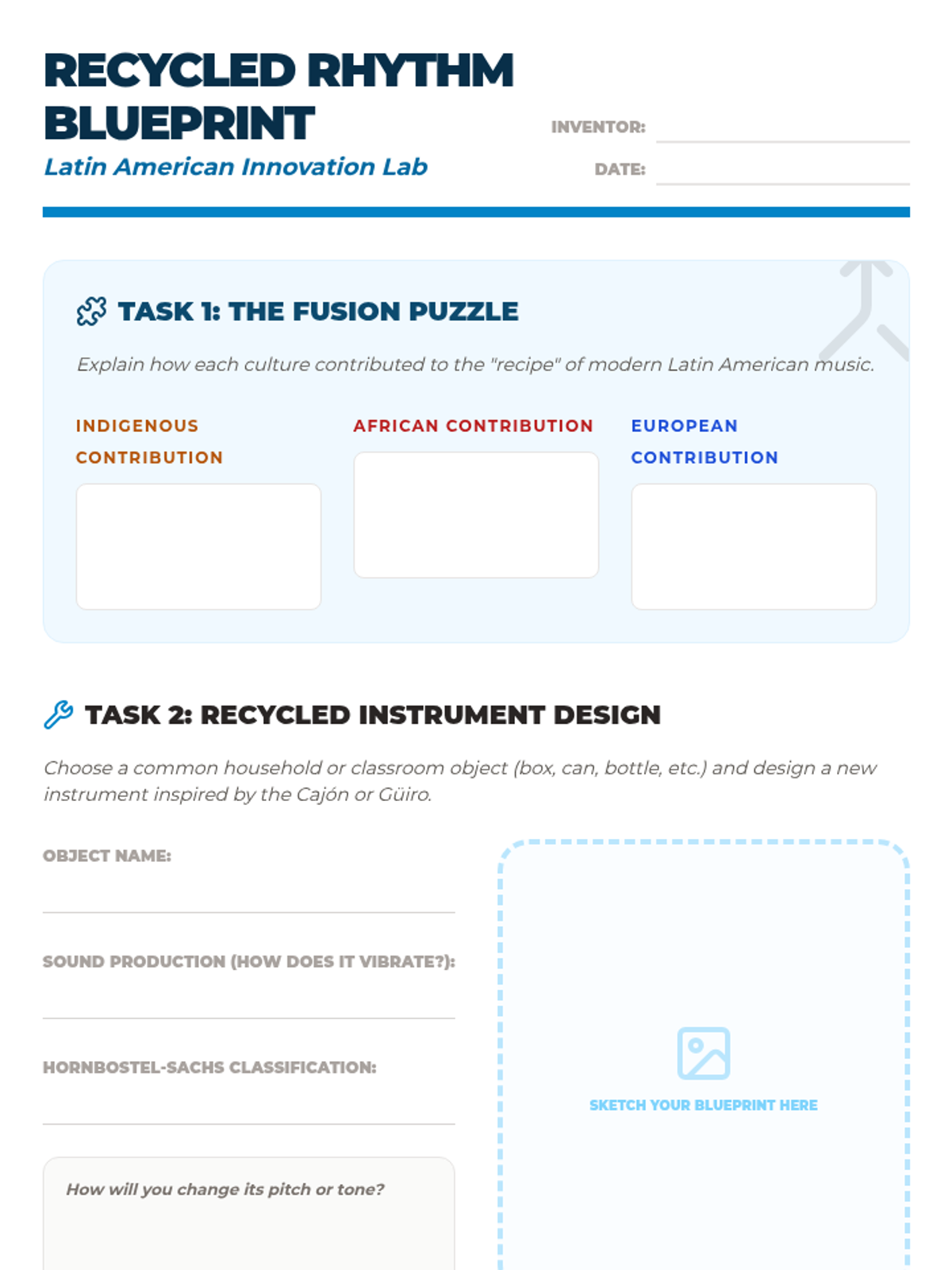
Analysis of the fusion of Indigenous, African, and European influences in Latin American music. Students learn the fundamental Clave rhythm and explore instruments made from recycled materials.
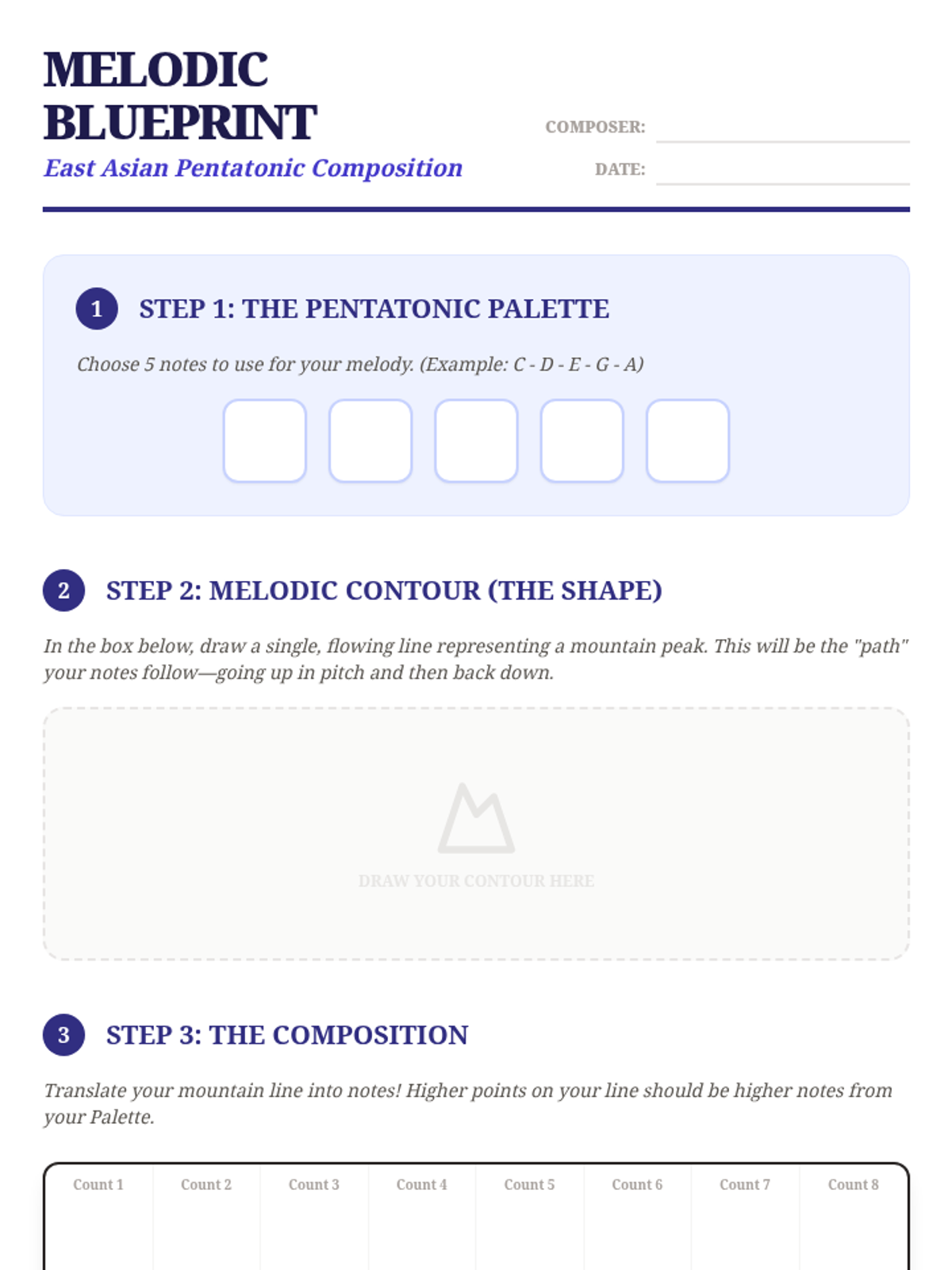
Investigation of the pentatonic scale and its connection to nature and silence in East Asian music. Students compose their own melodies using a restricted scale.
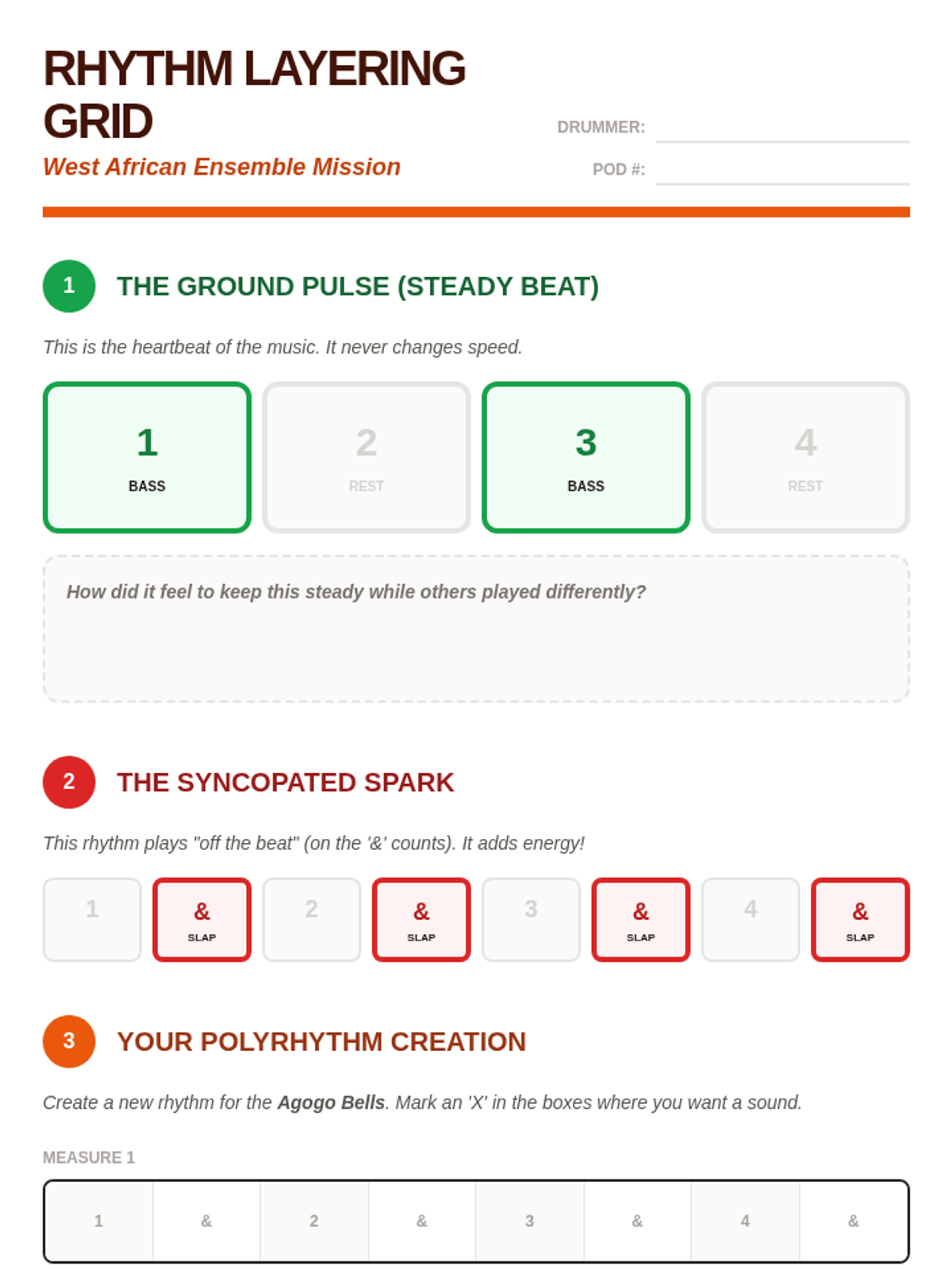
Exploration of West African polyrhythms and the role of music as communication. Students practice layering rhythms and understand the cultural significance of community drumming.
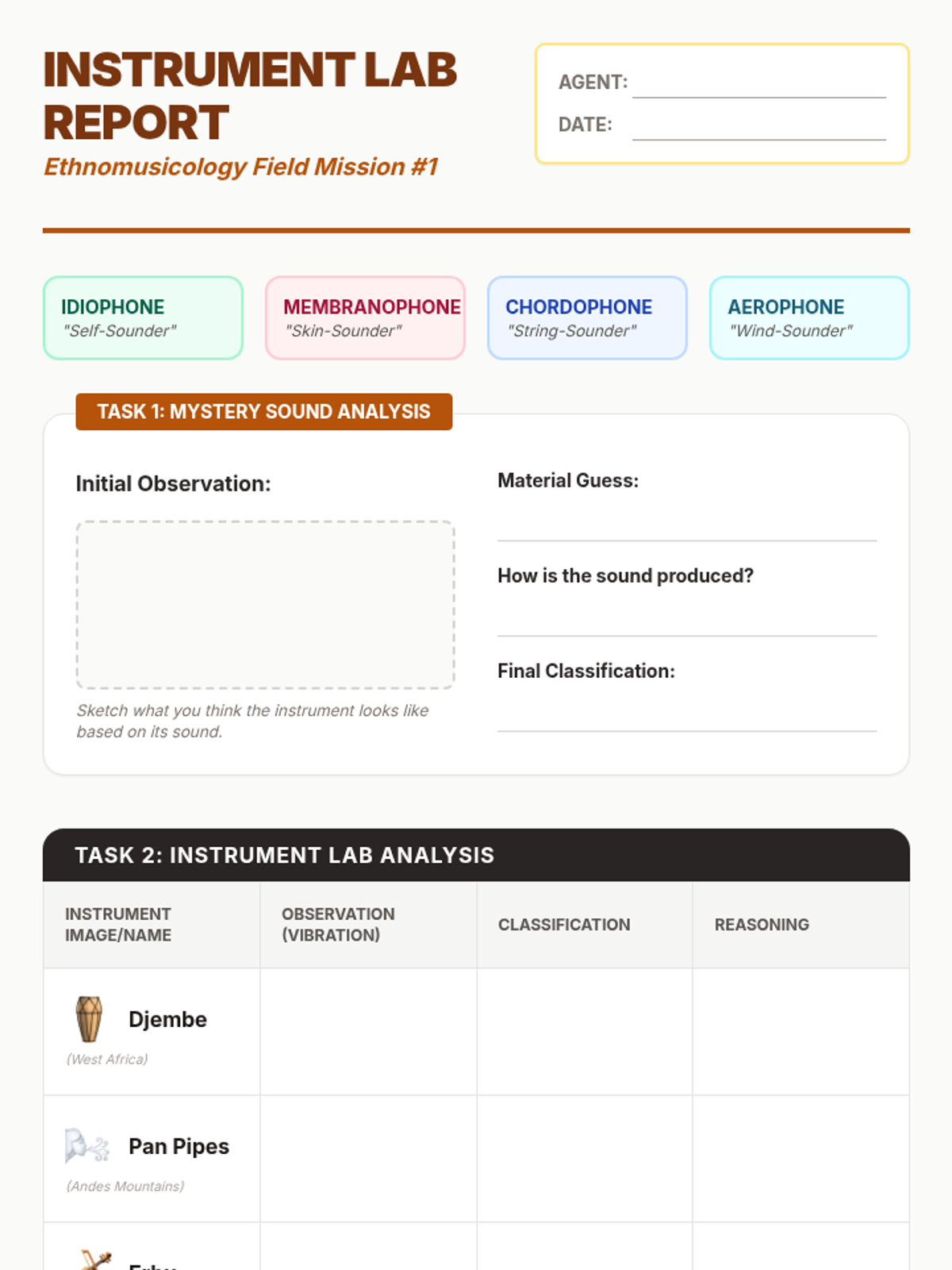
Introduction to the Hornbostel-Sachs system of instrument classification. Students analyze how instruments produce sound using categories like aerophones, chordophones, idiophones, and membranophones.
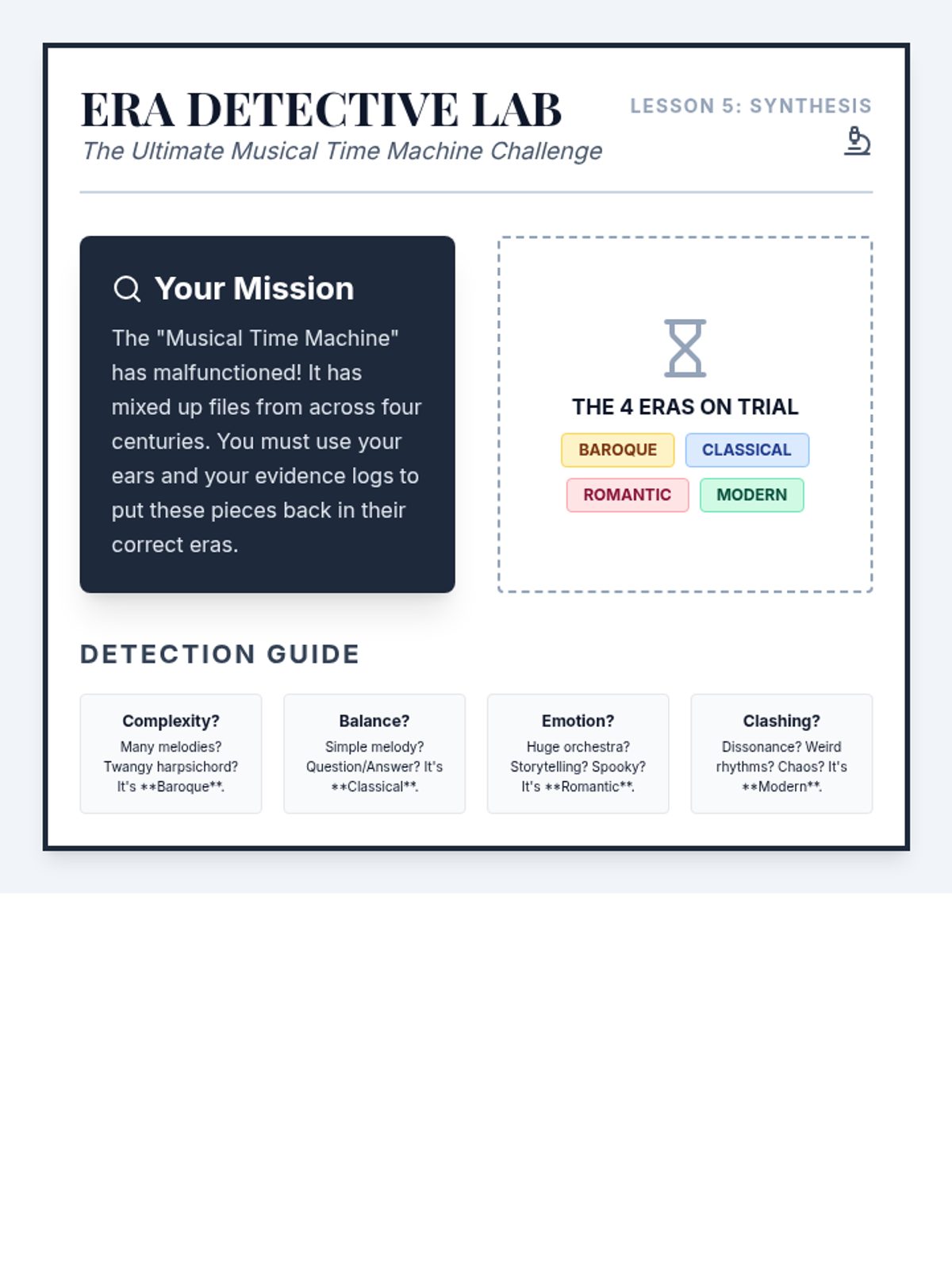
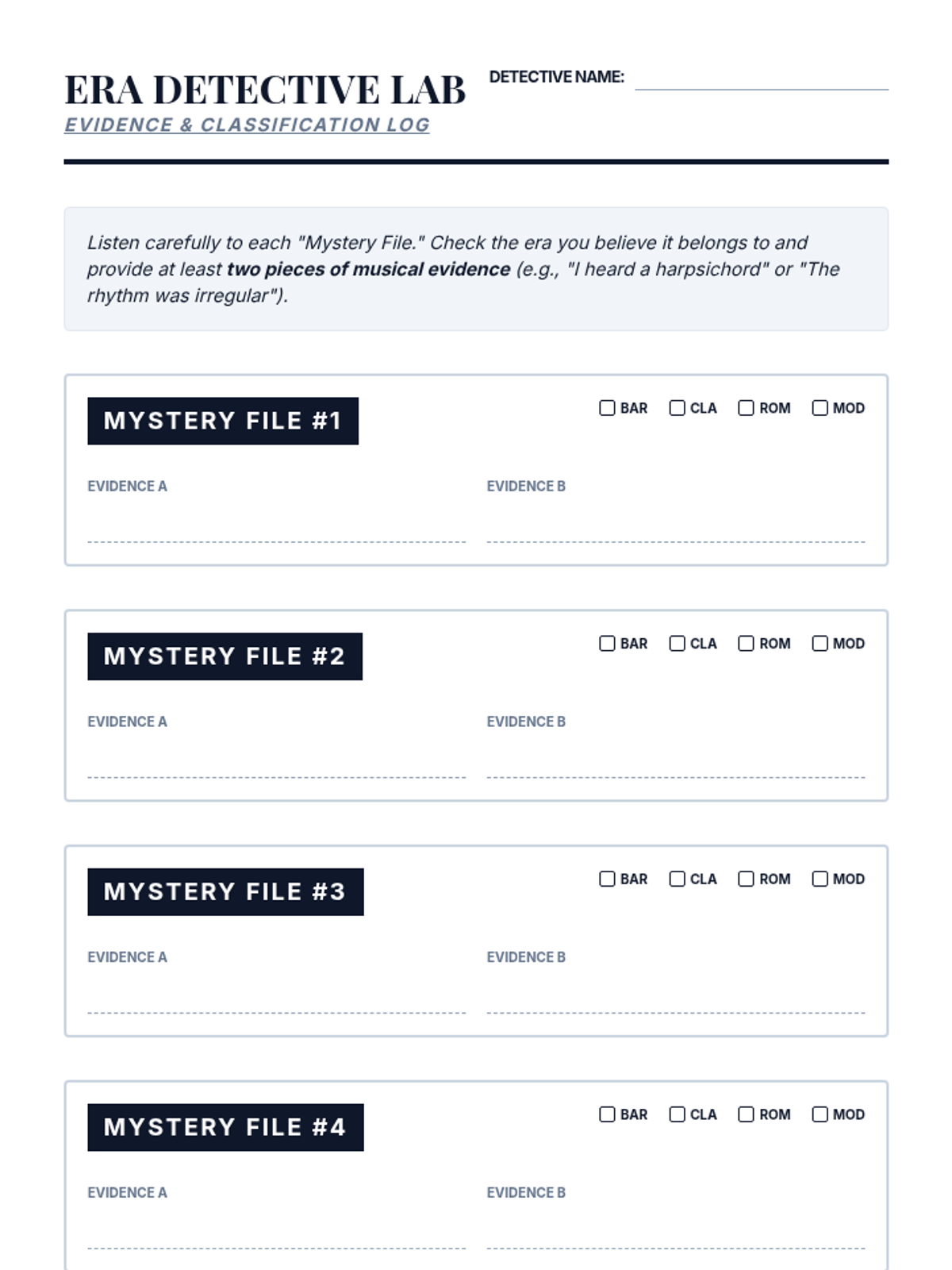
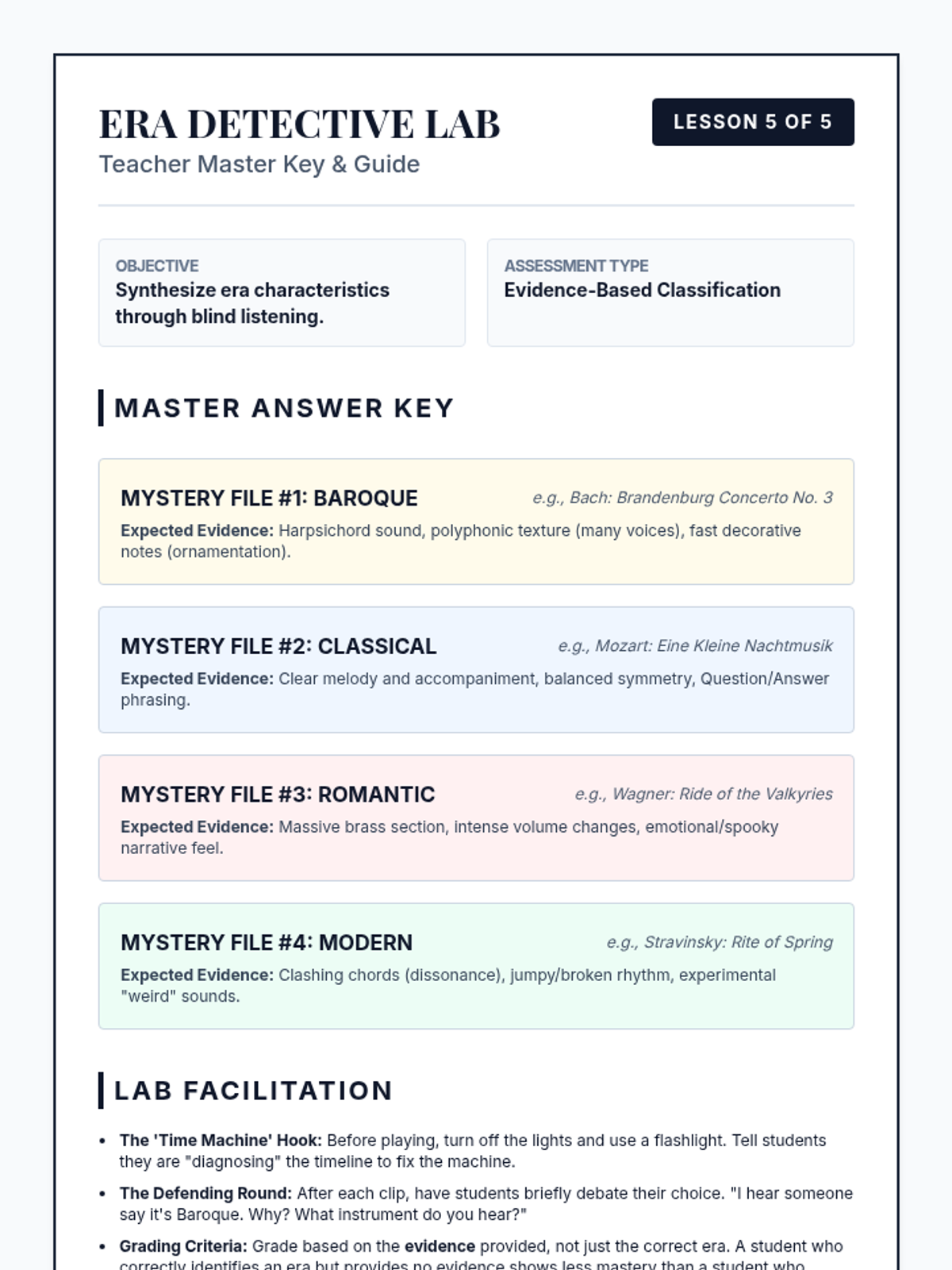
A synthesis lesson where students participate in a blind listening challenge to categorize excerpts into correct eras.
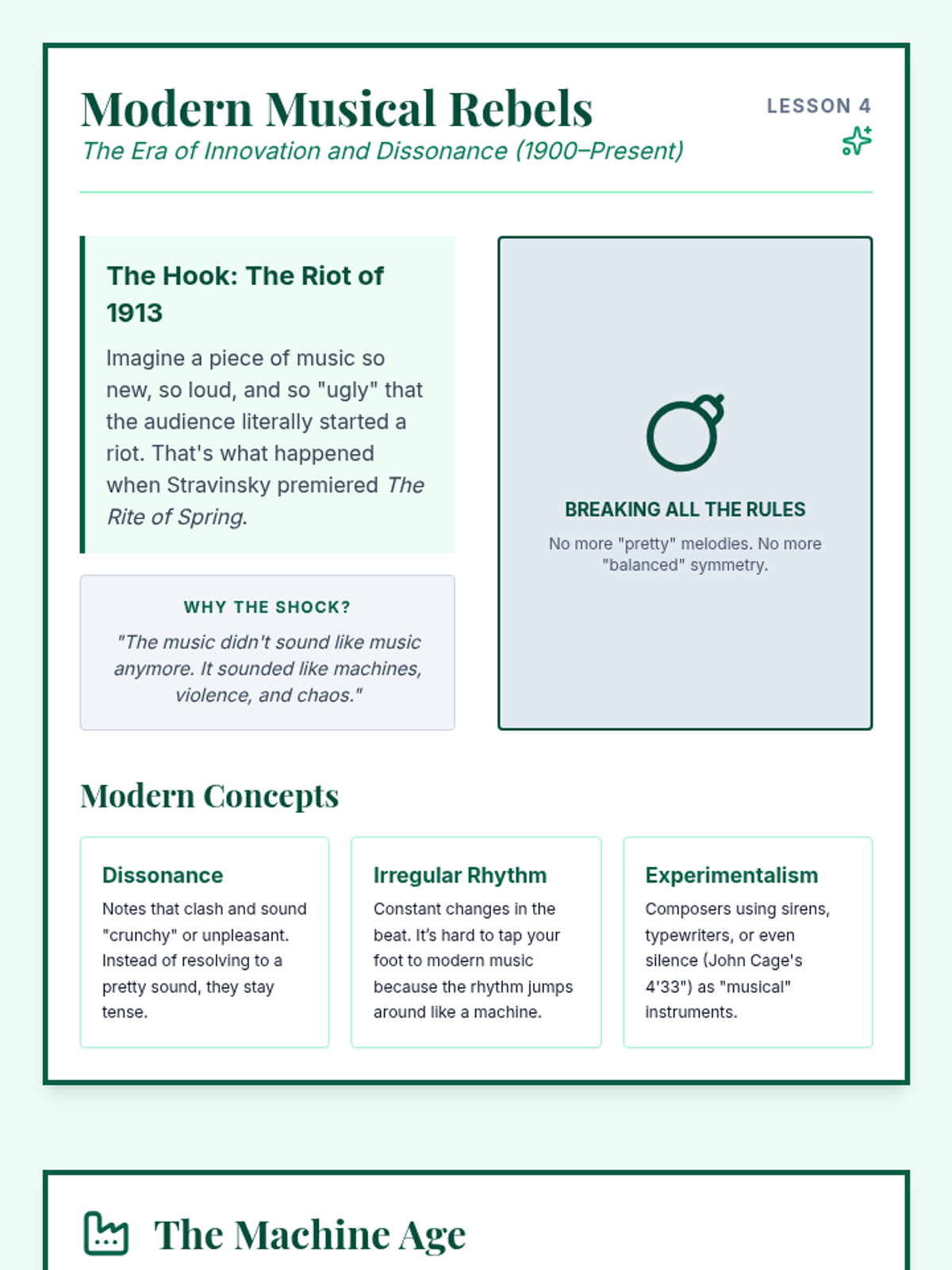
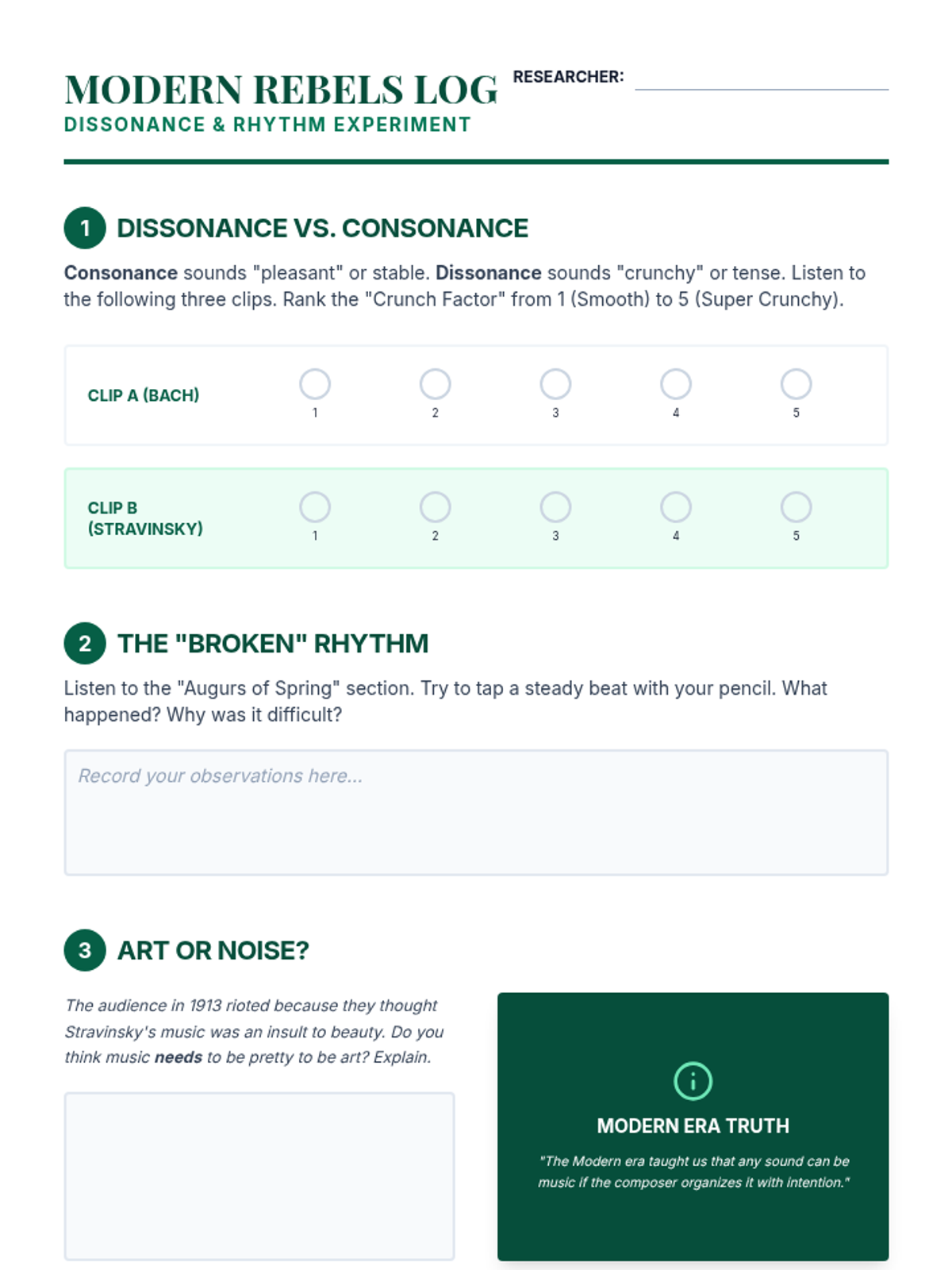
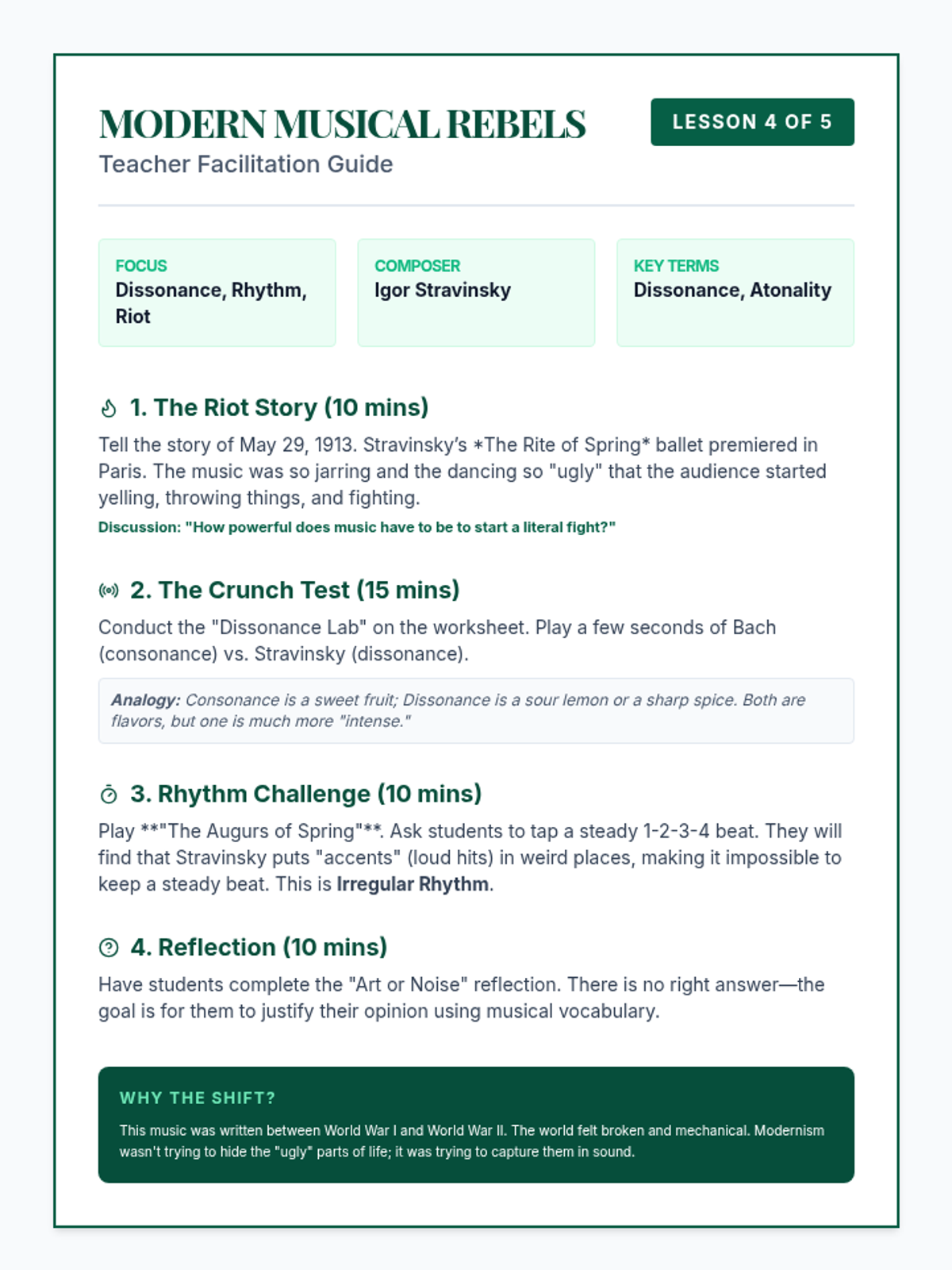
Cover the radical shift in the 1900s where composers broke traditional rules of harmony and rhythm.
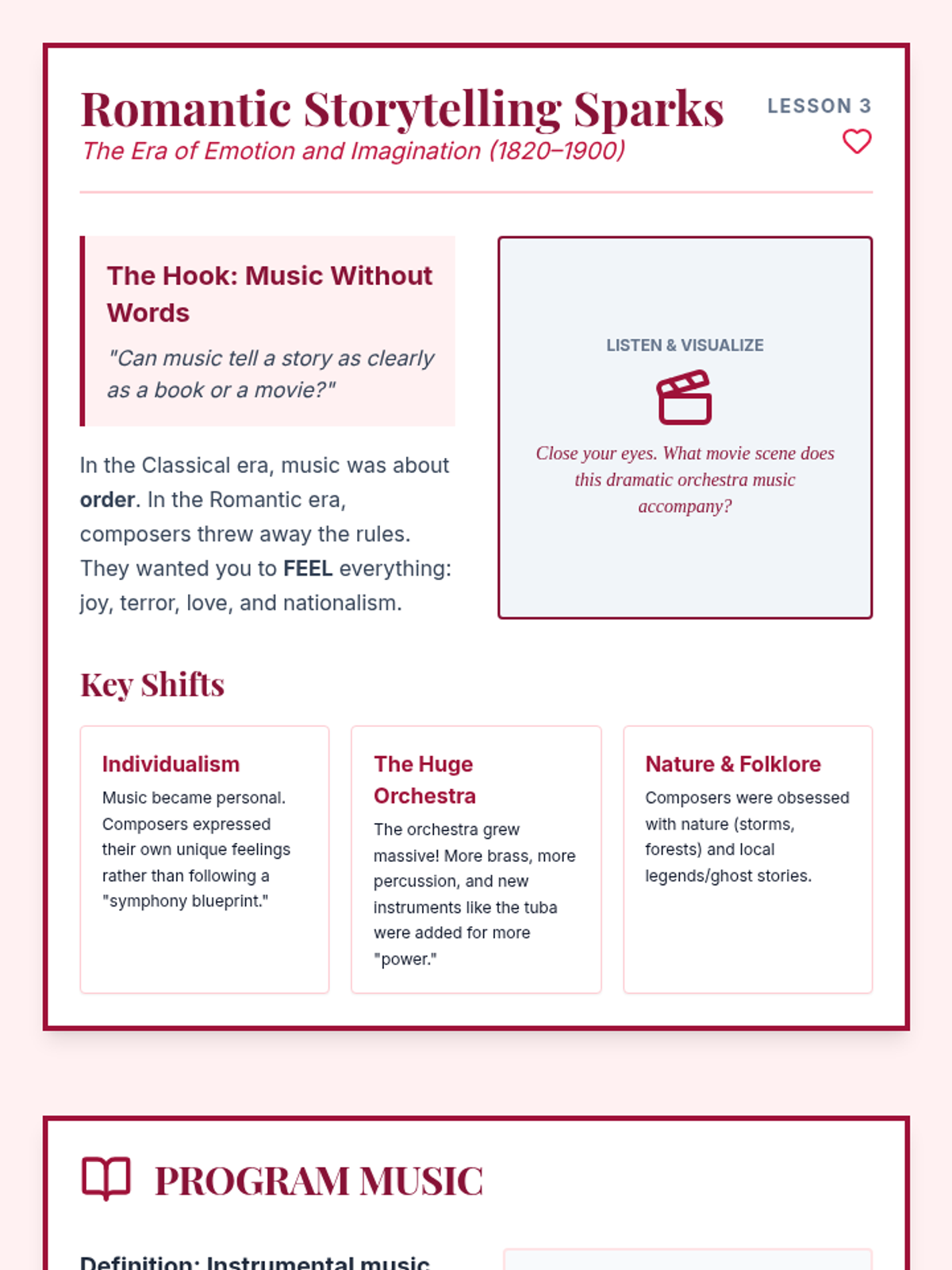
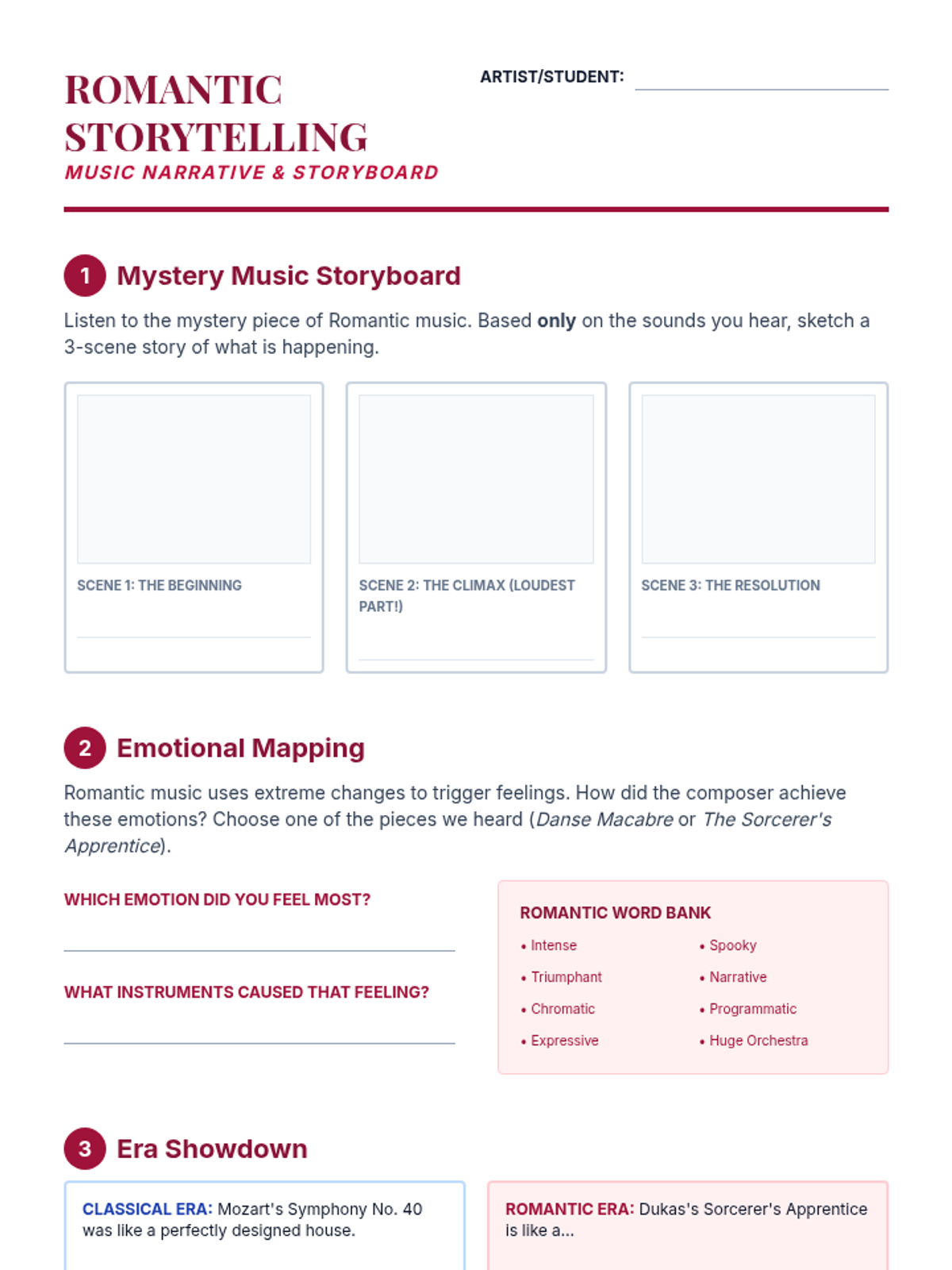
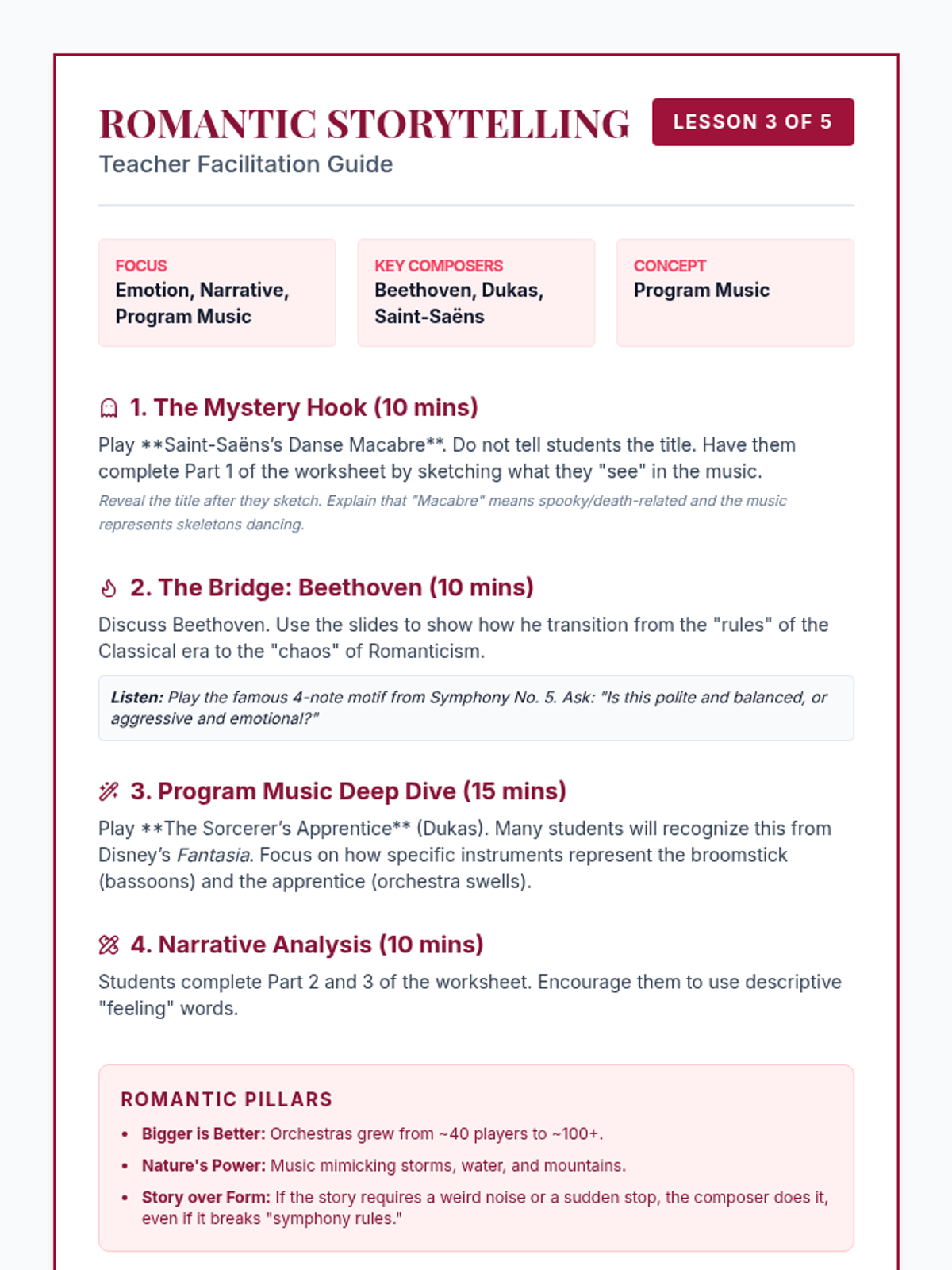
Investigate how music shifted towards intense emotion and storytelling (Program Music) during the Romantic era.
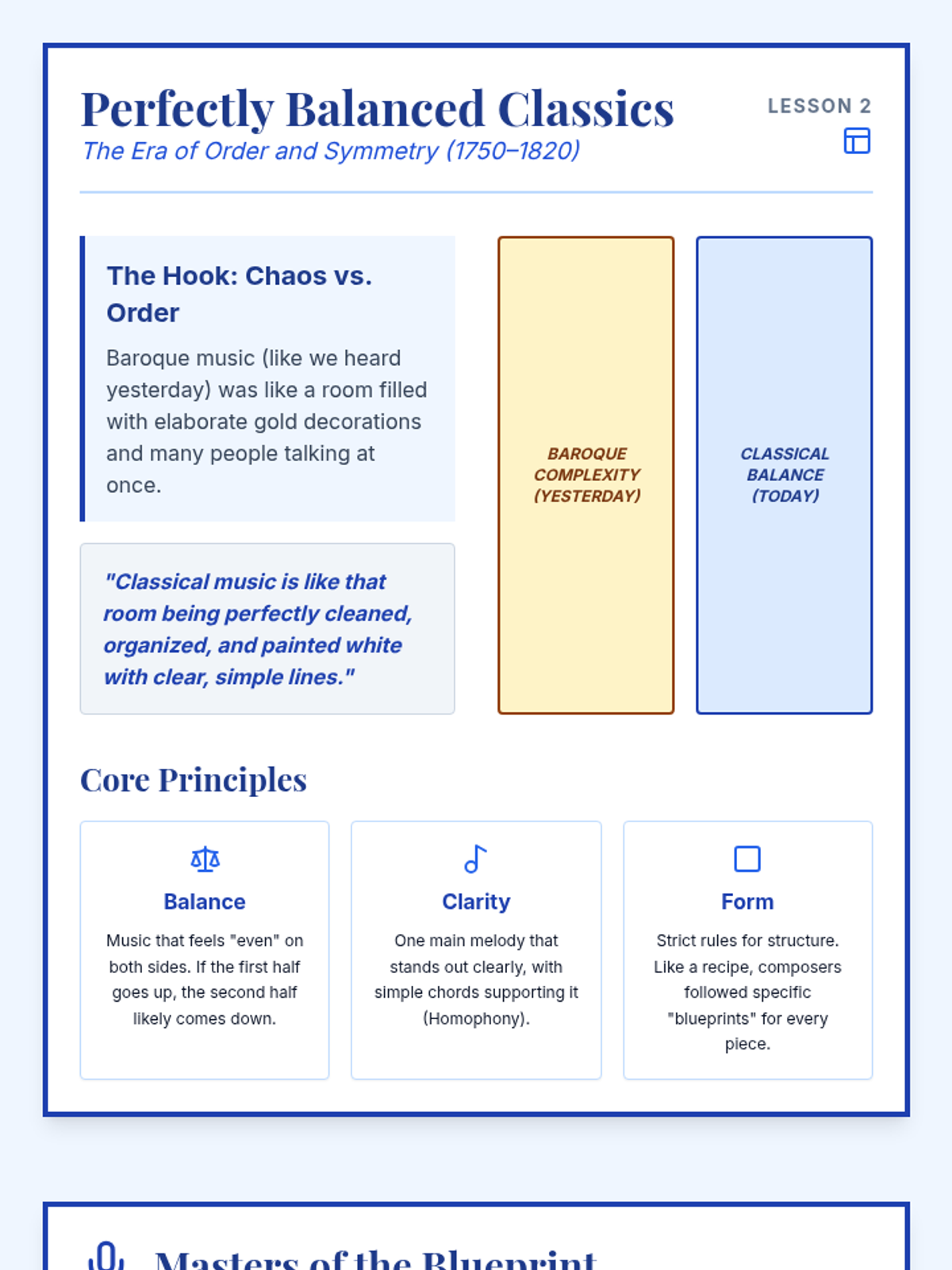
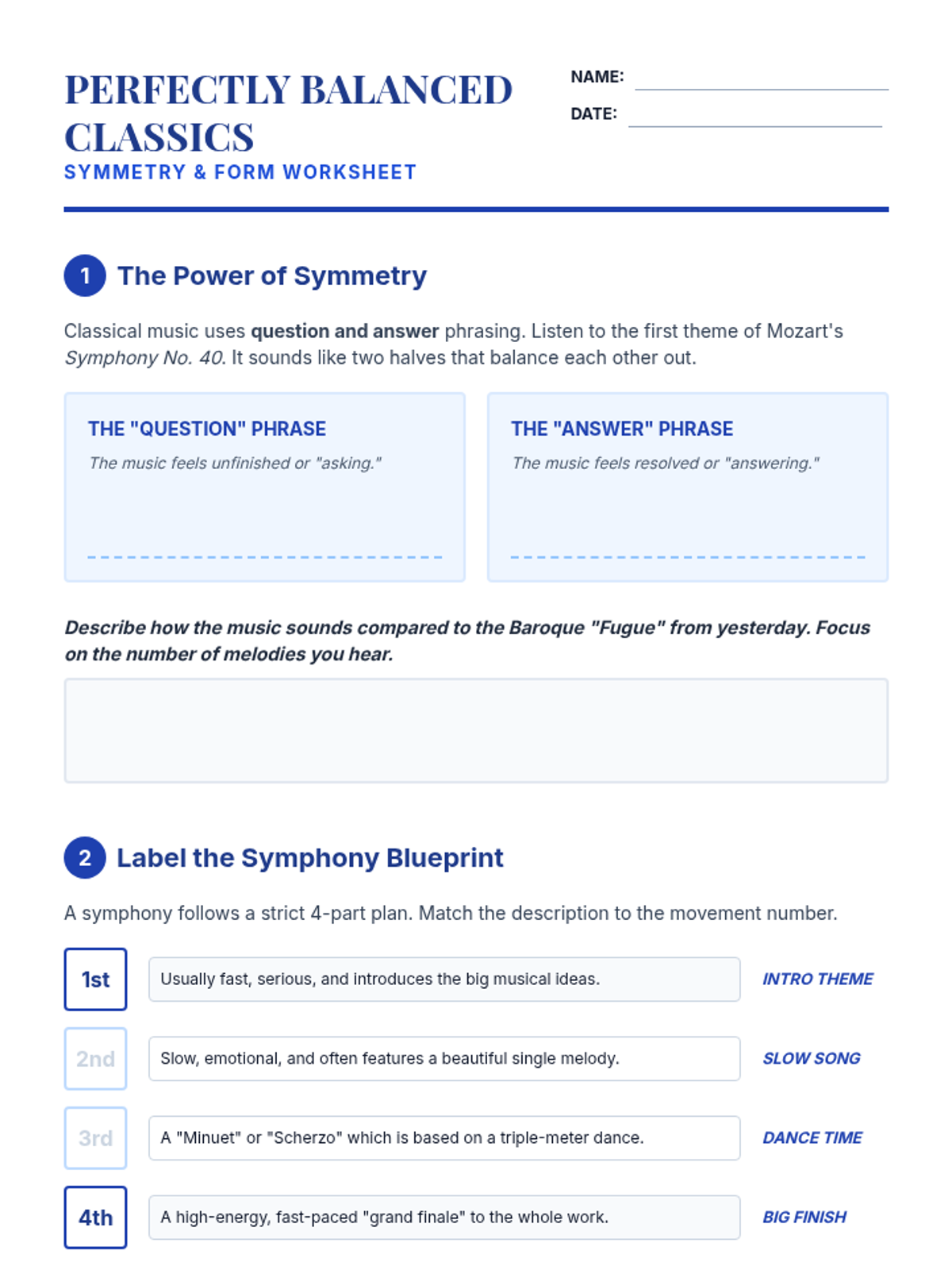
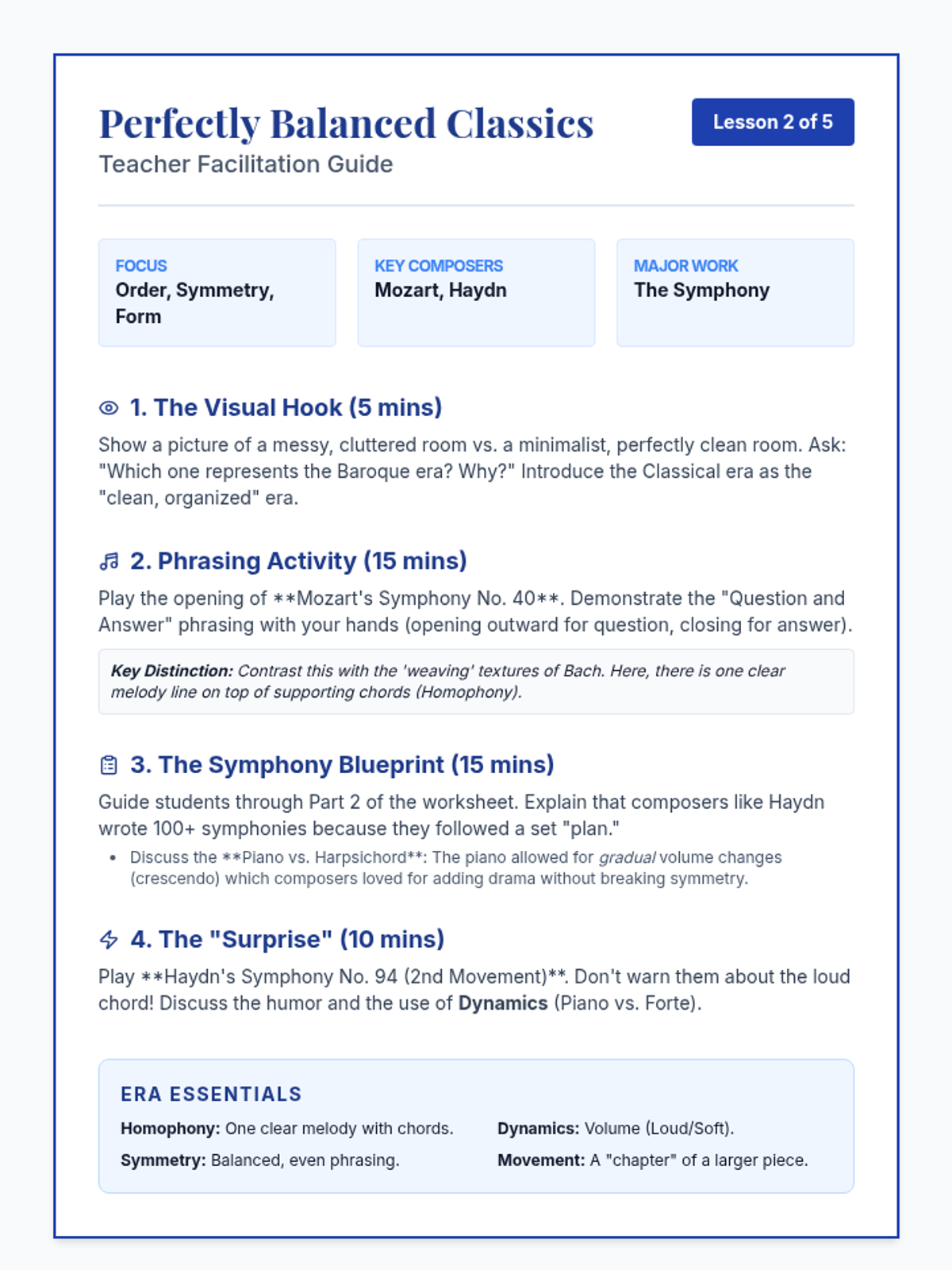
Introduce the Classical era's obsession with order, symmetry, and clear melody through Mozart and Haydn.
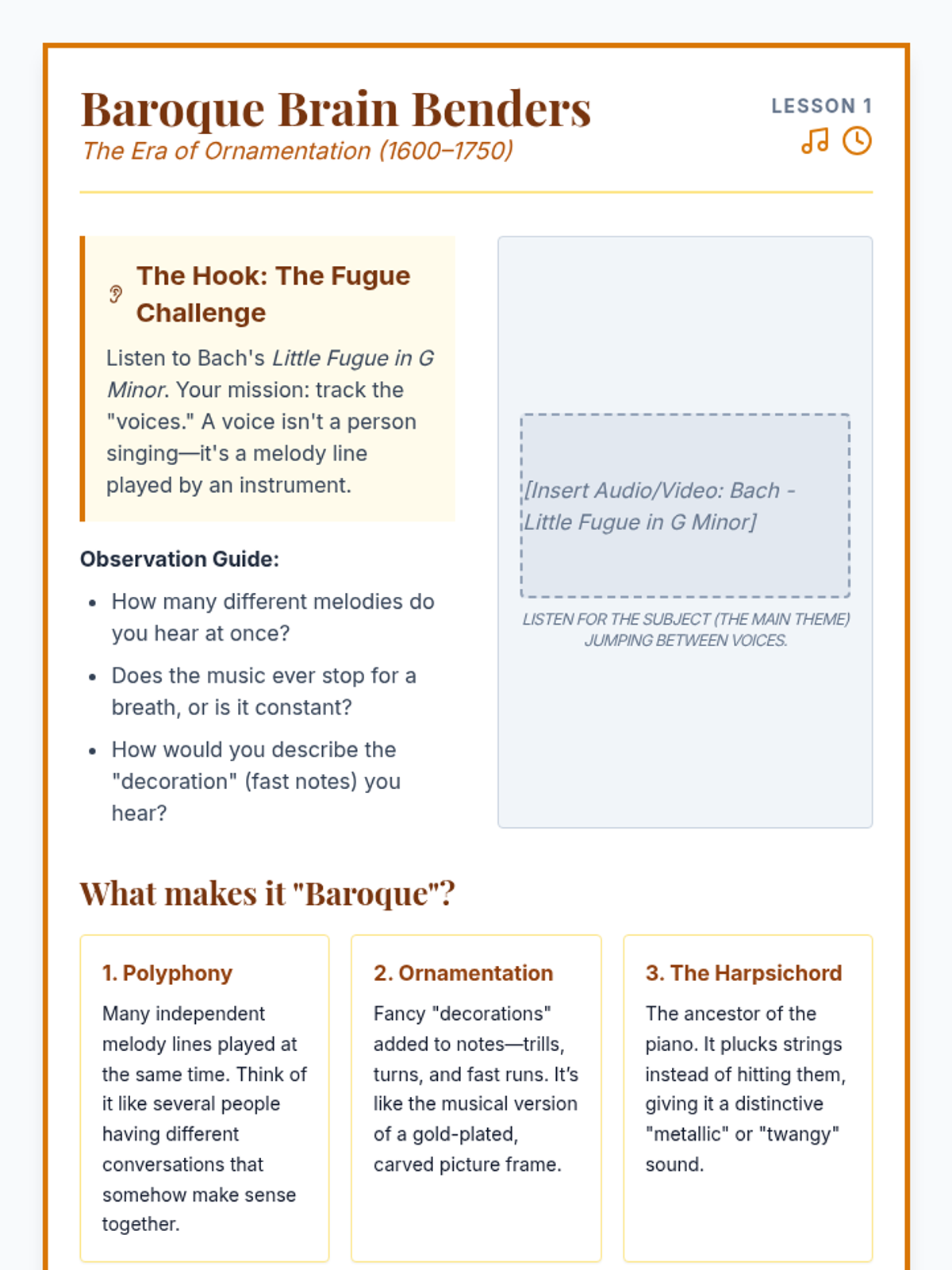
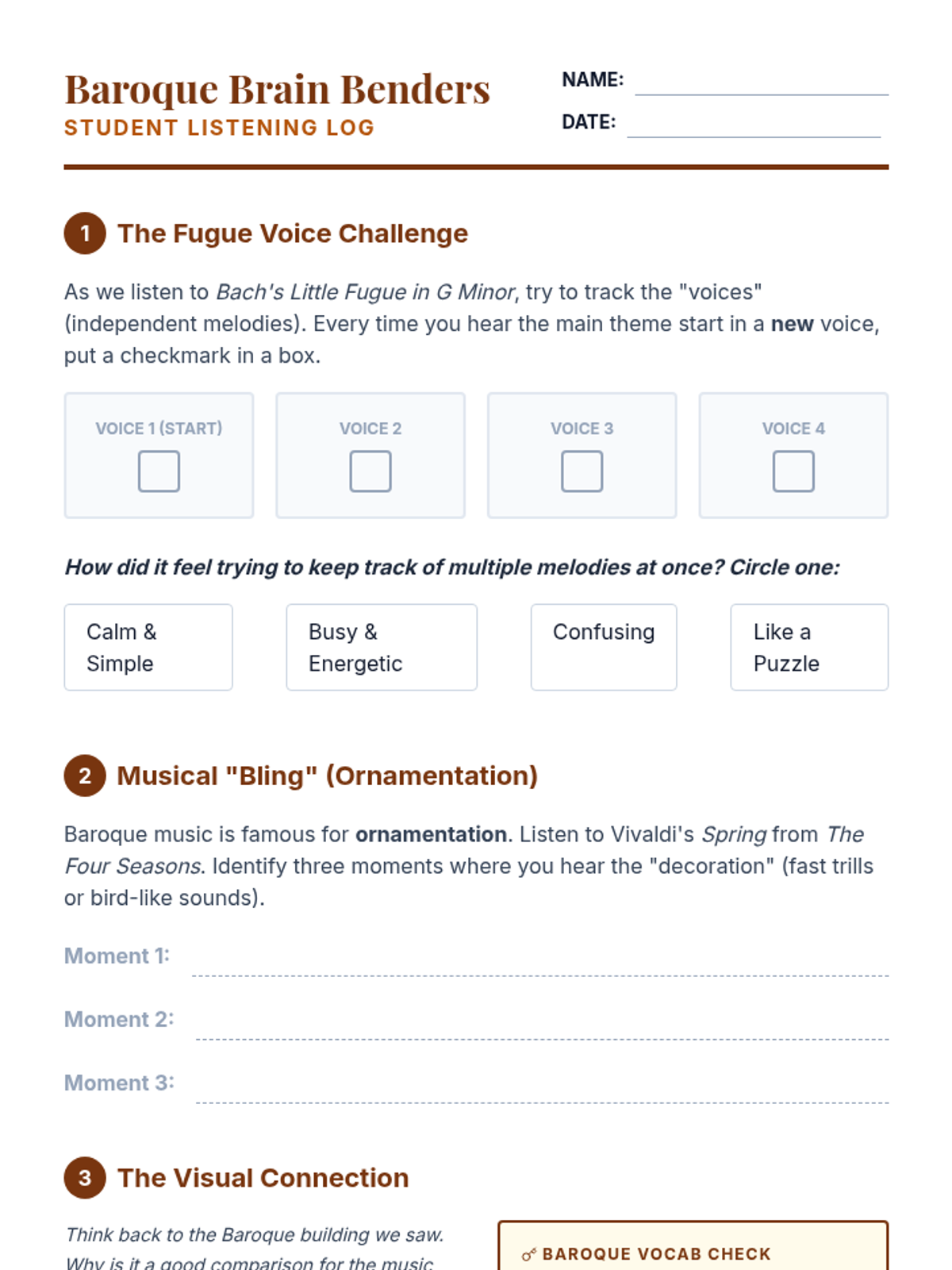
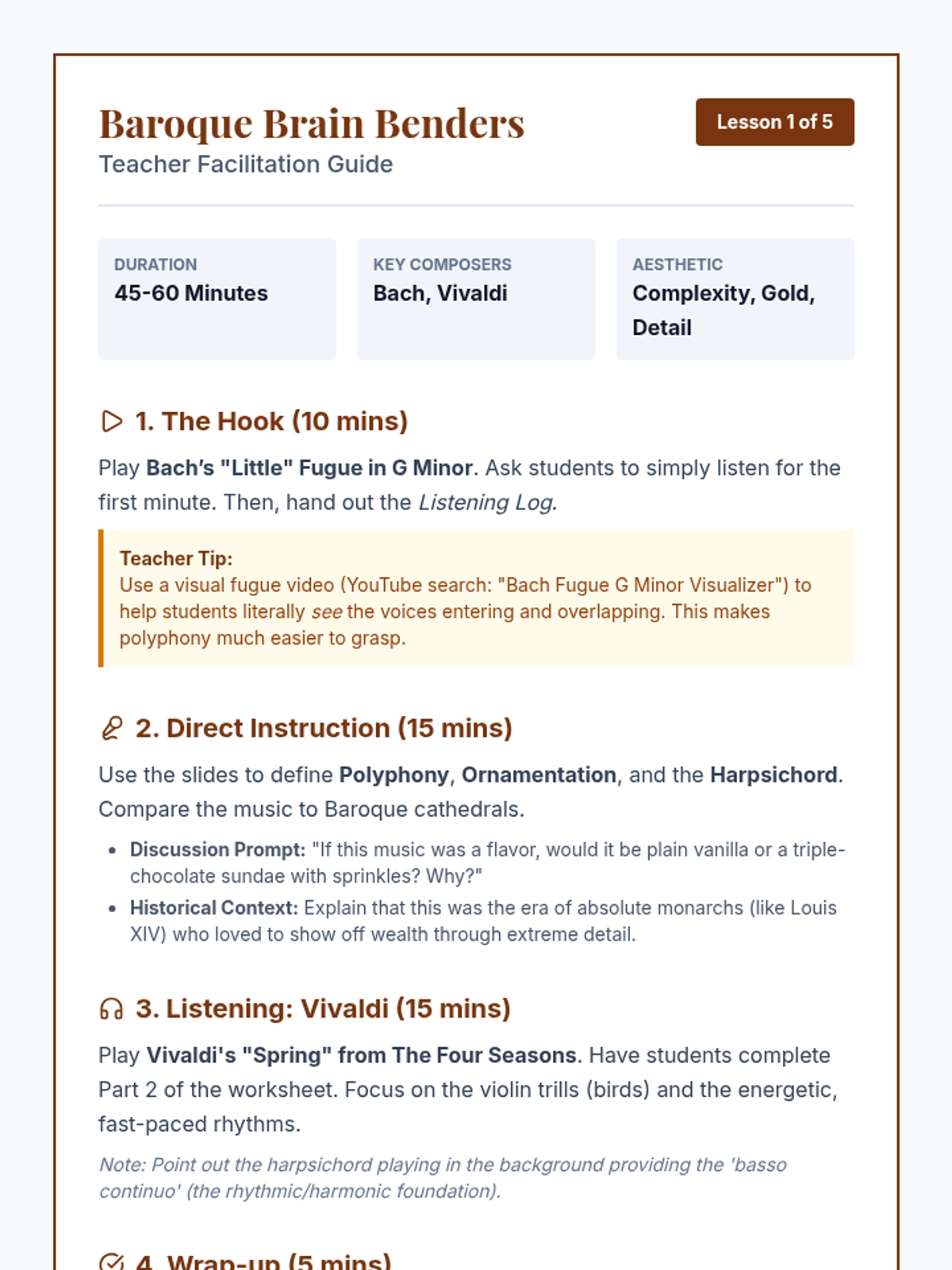
Explore the ornate style of the Baroque period through the works of Bach and Vivaldi, focusing on polyphony and harpsichord.
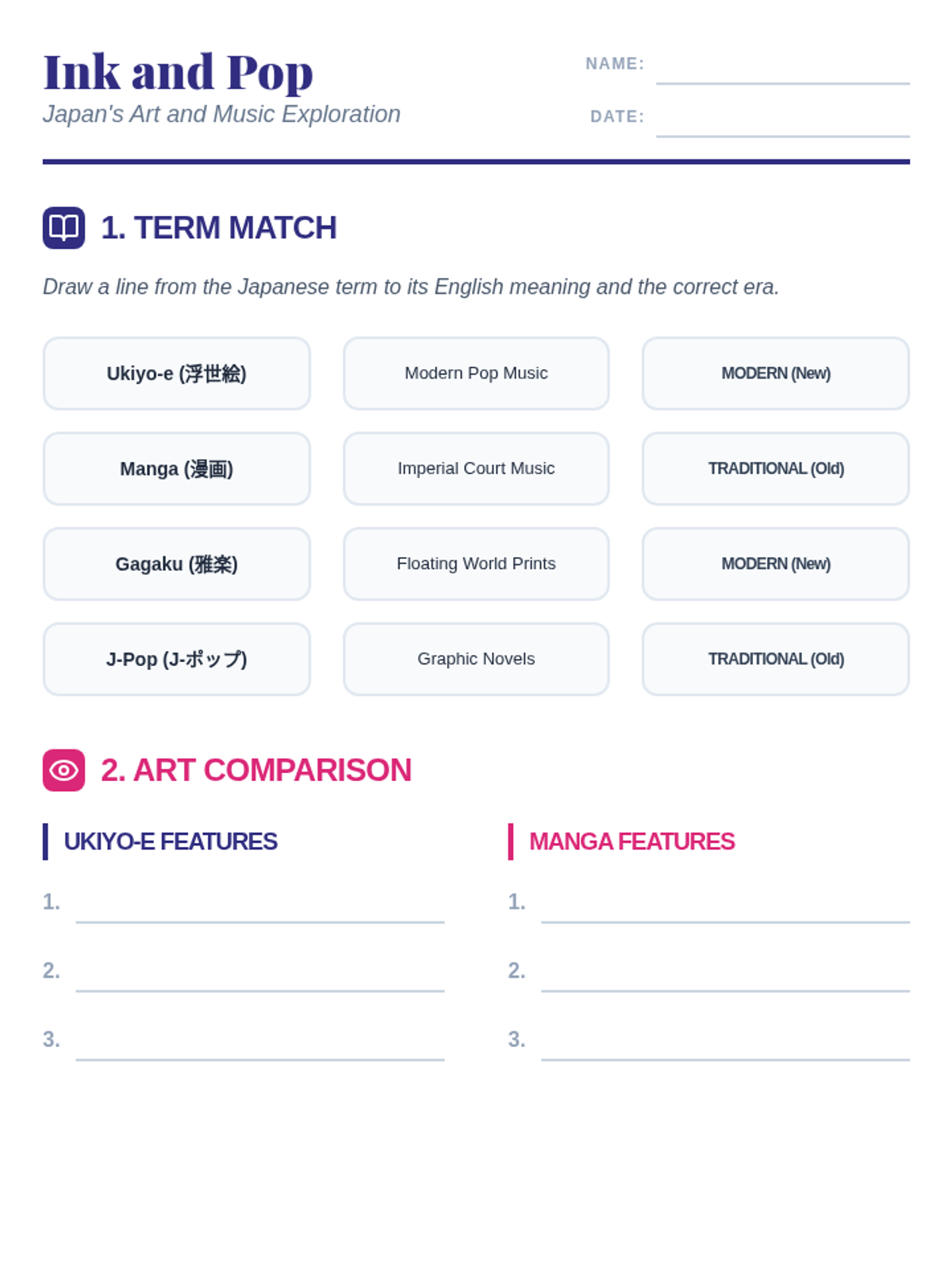
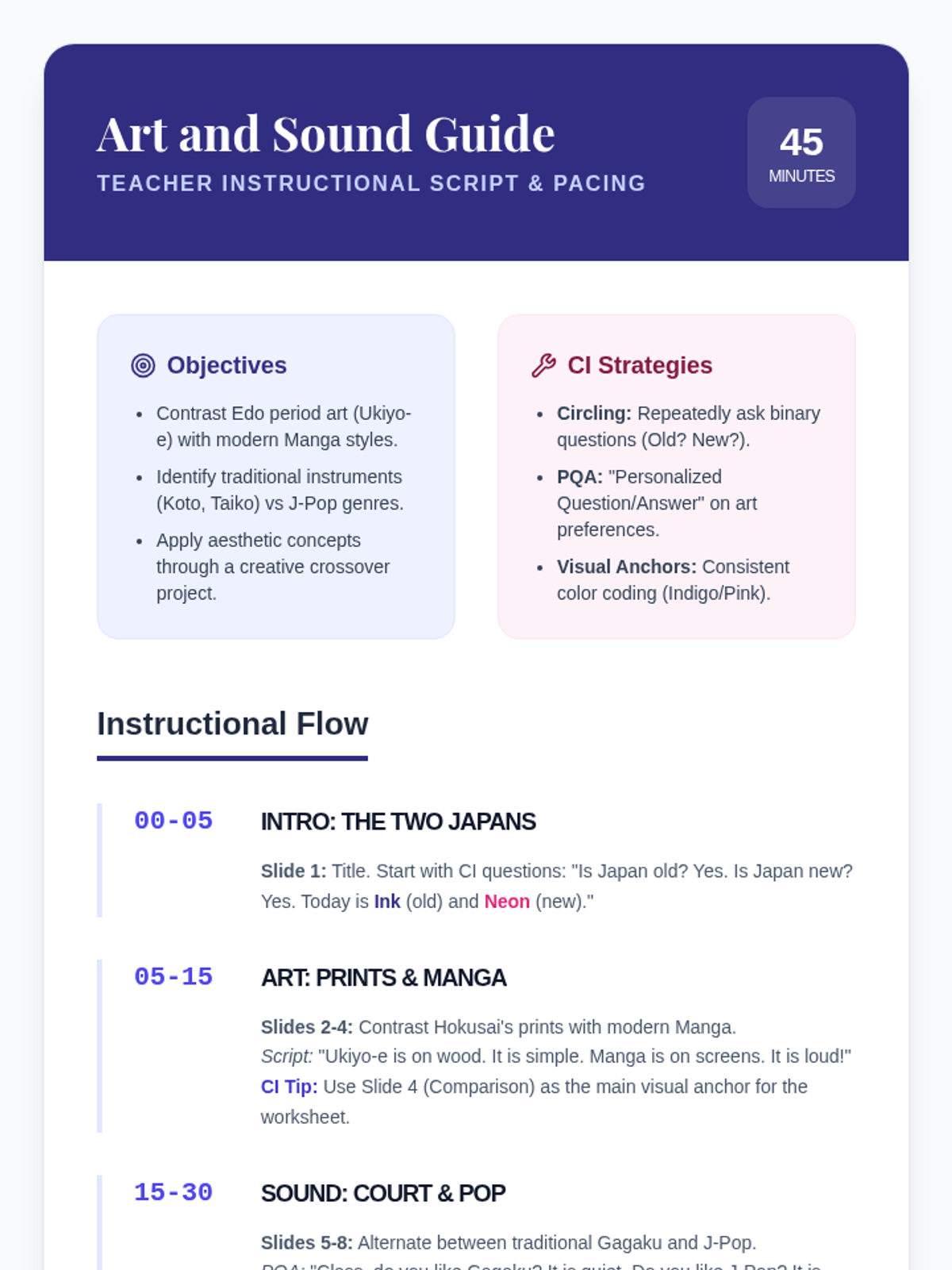
A 45-minute exploratory lesson for 8th graders on Japanese art and music, bridging the Edo period and modern pop culture using Comprehensible Input strategies.
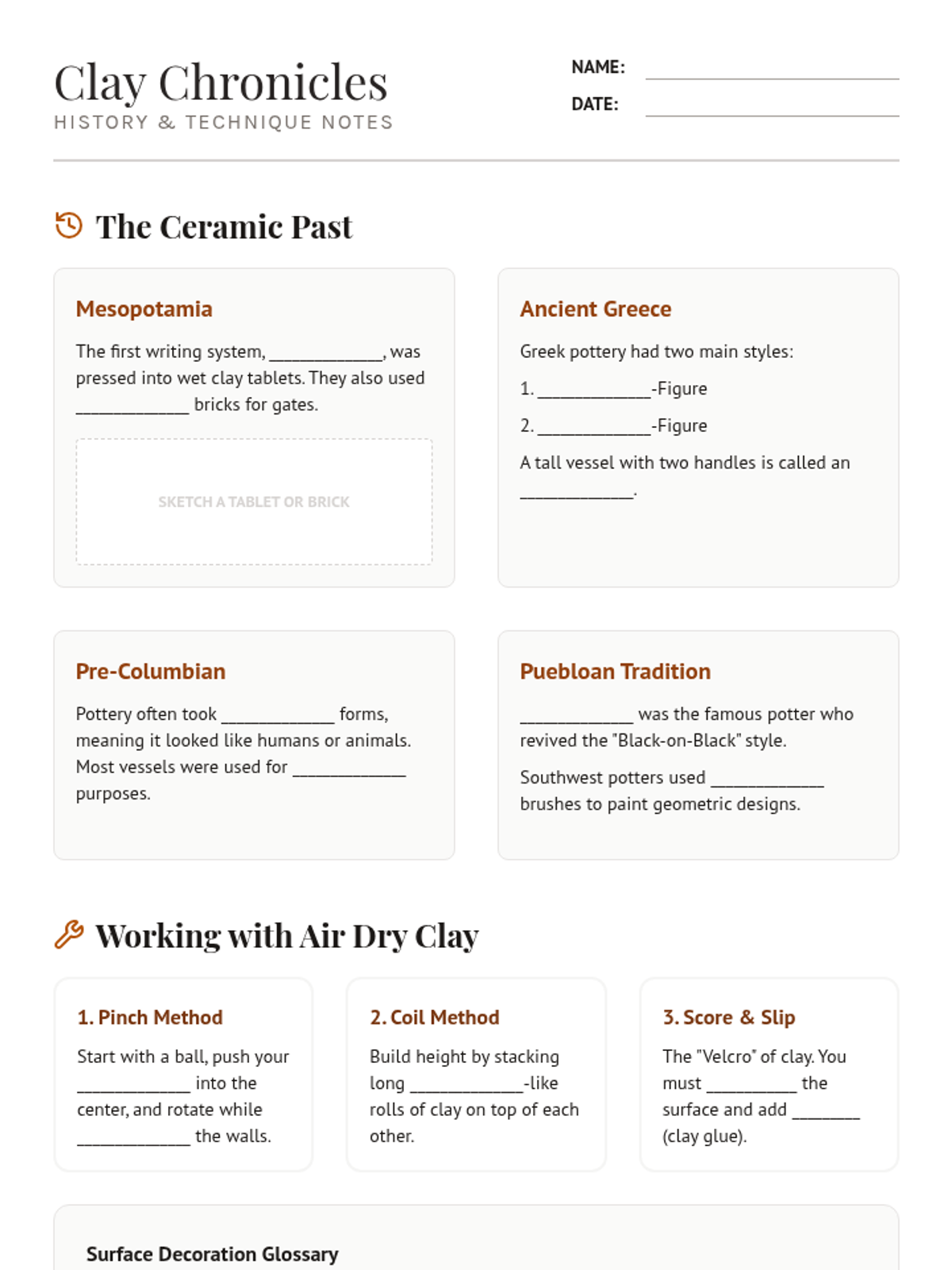
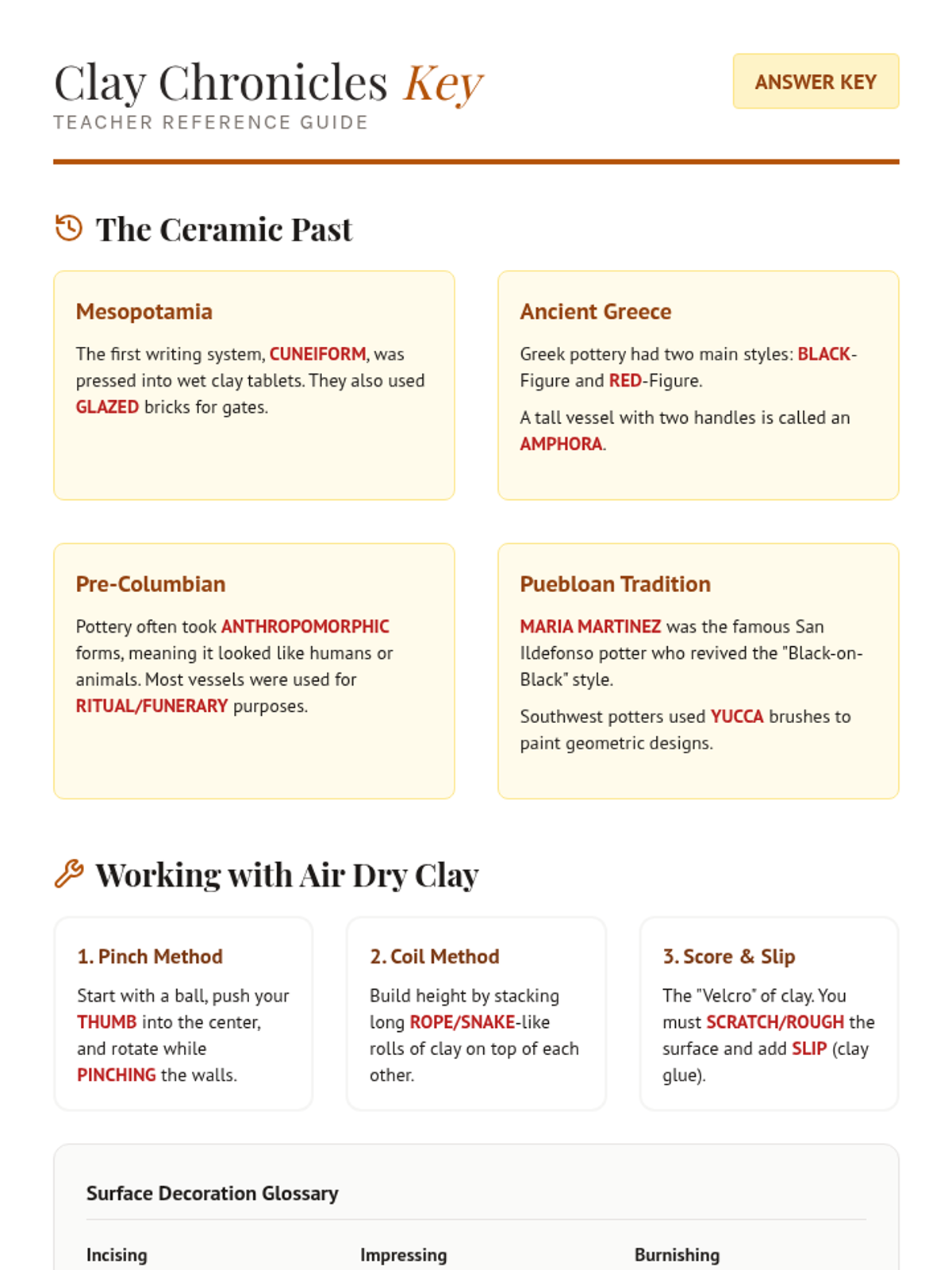
A comprehensive lesson covering the evolution of ceramics across Mesopotamia, Greece, and the Americas, paired with technical skills for working with air-dry clay including pinching, coiling, and joining techniques.
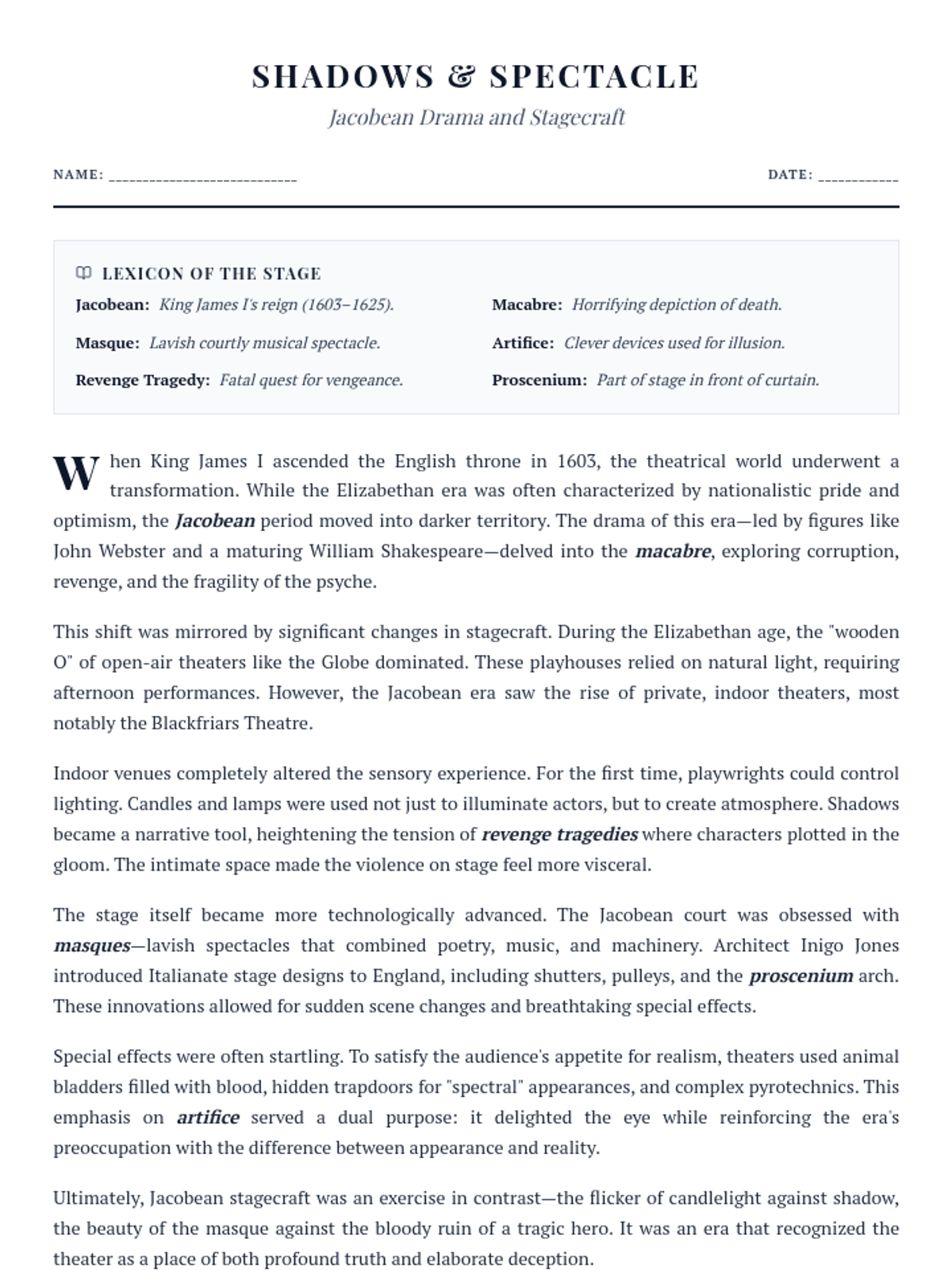
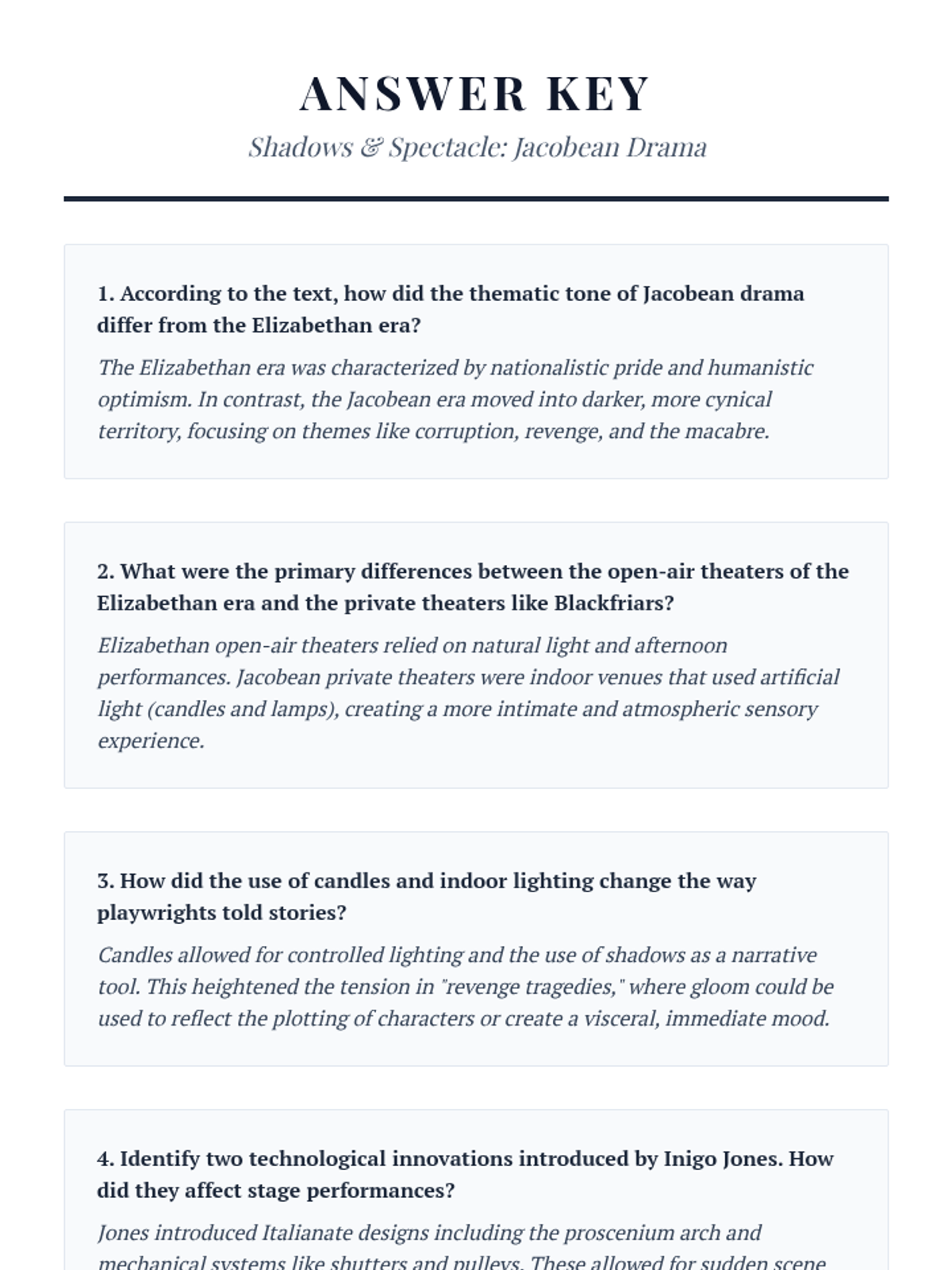
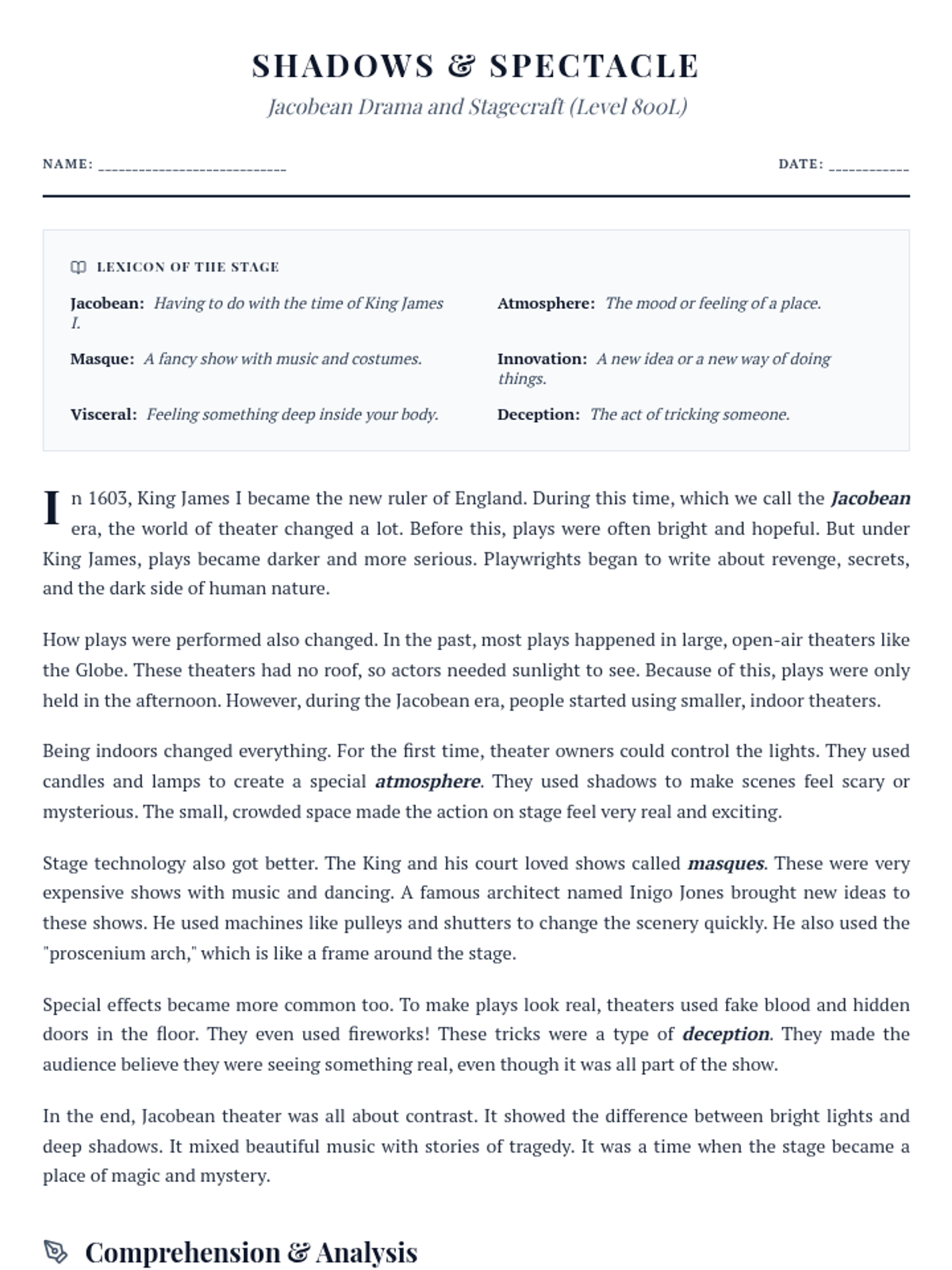
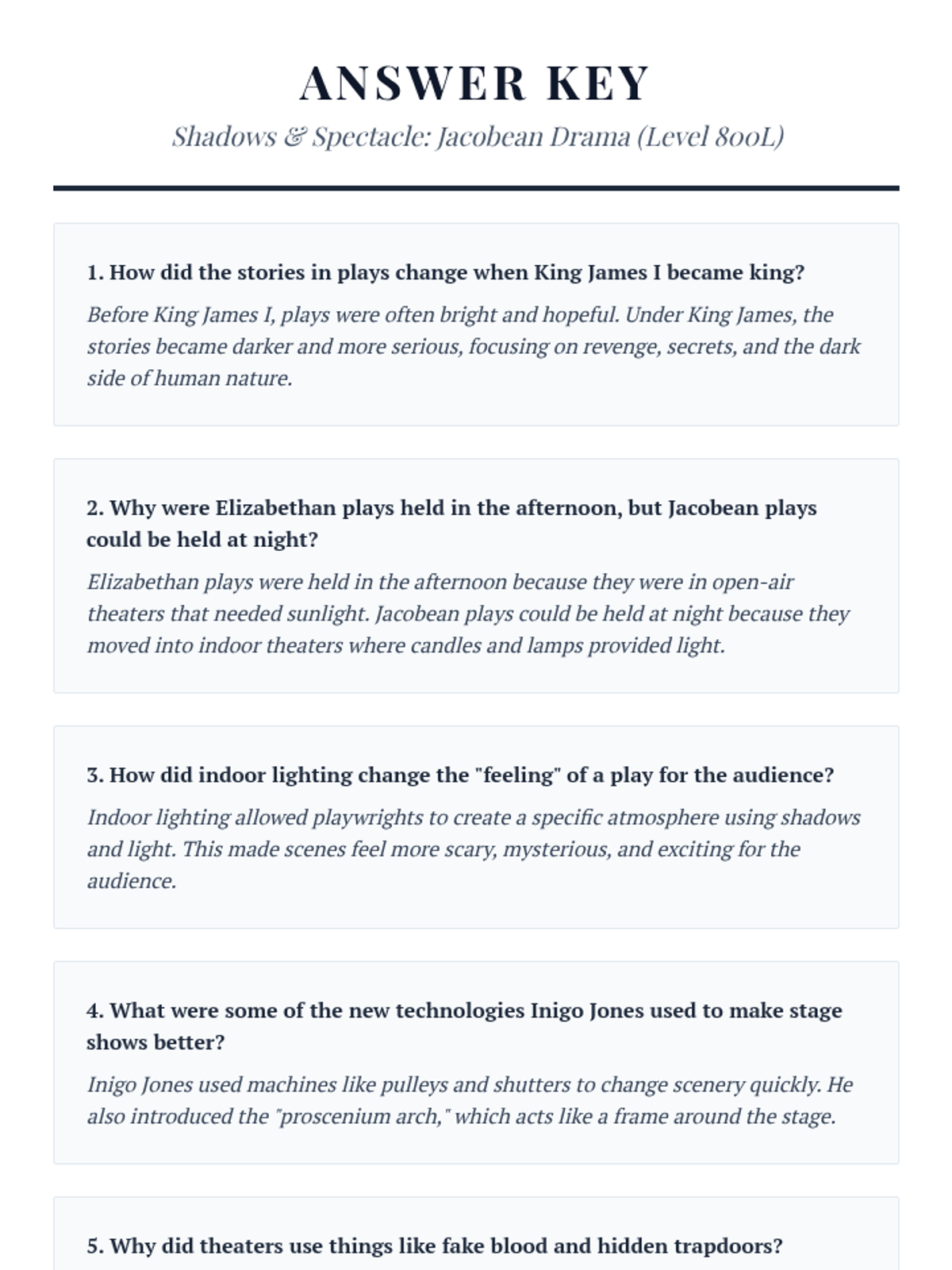
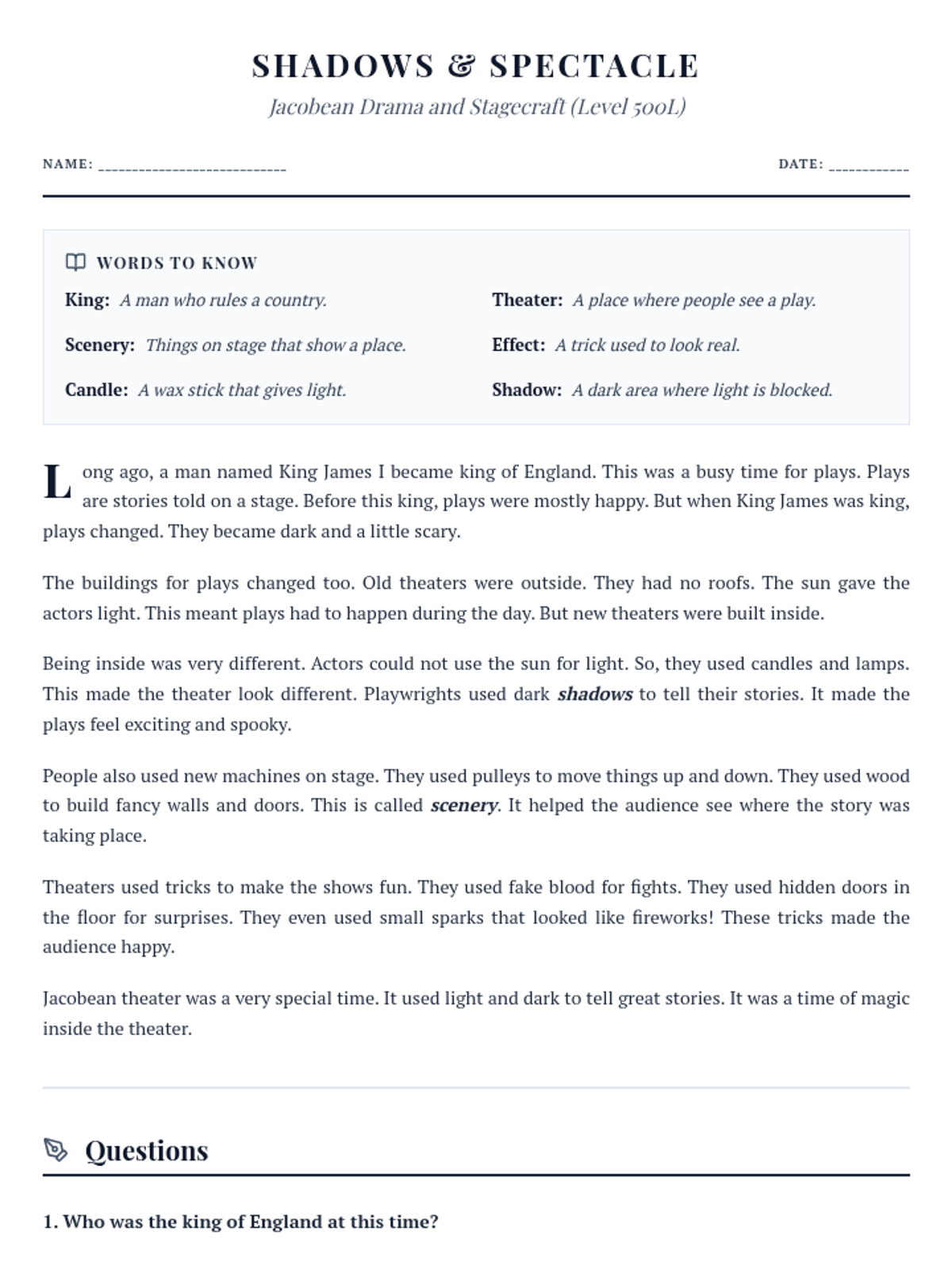
A lesson exploring the evolution of English theater during the reign of King James I, focusing on stagecraft, darker themes, and the transition to indoor performance spaces.
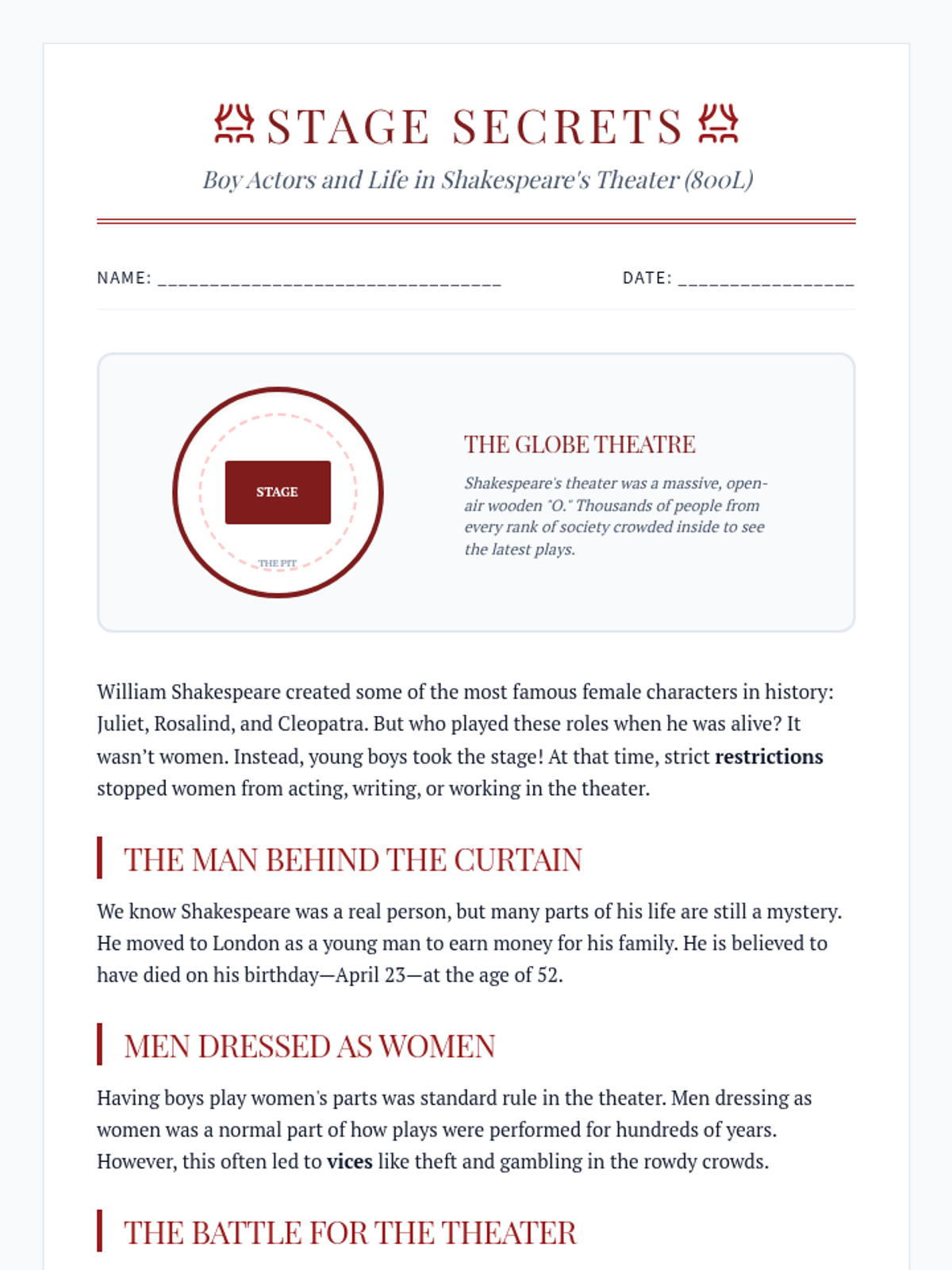
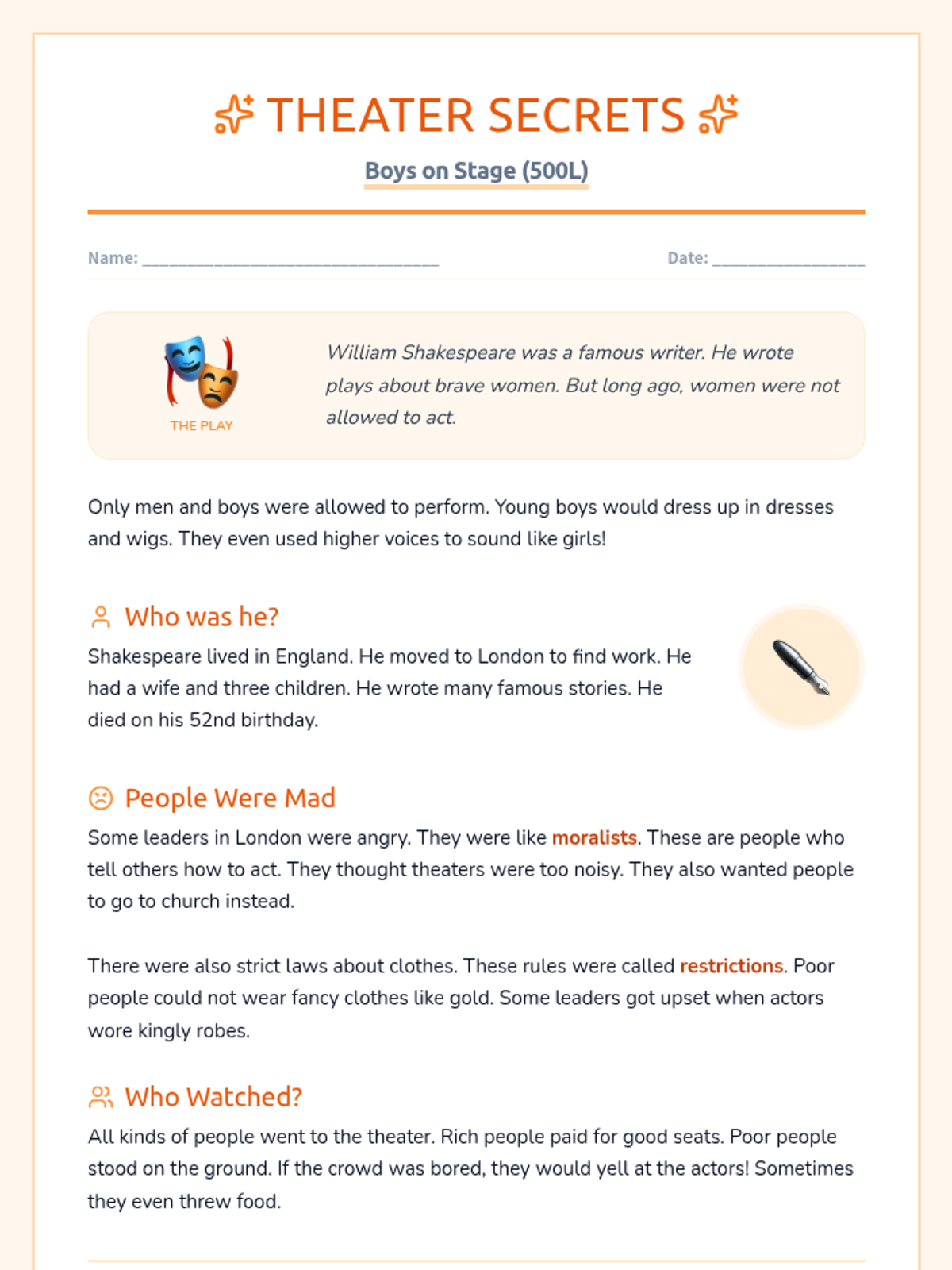
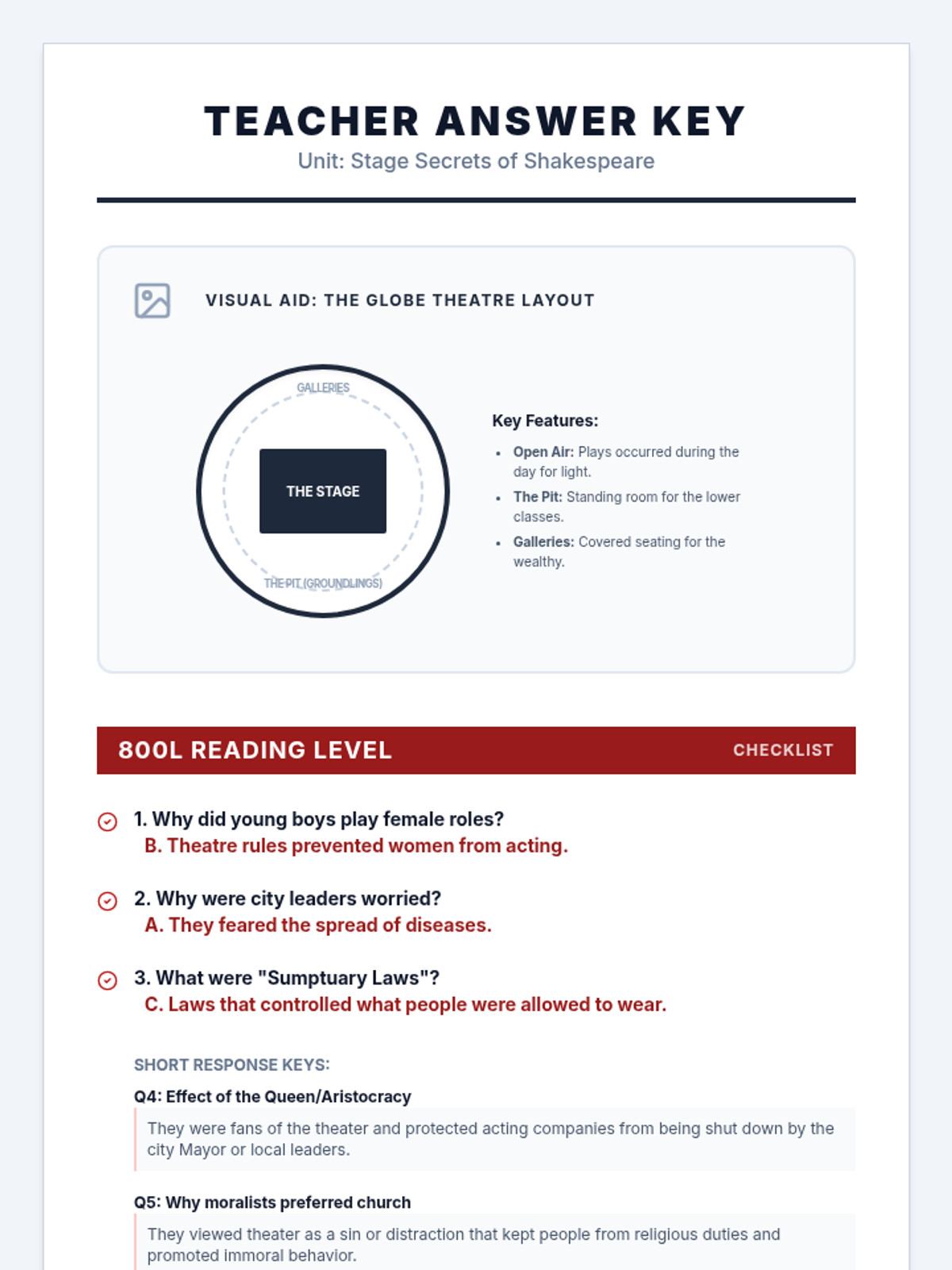
A comparison of Shakespearean theater practices, focusing on the historical context of boy actors and social reactions to the stage across different reading levels.
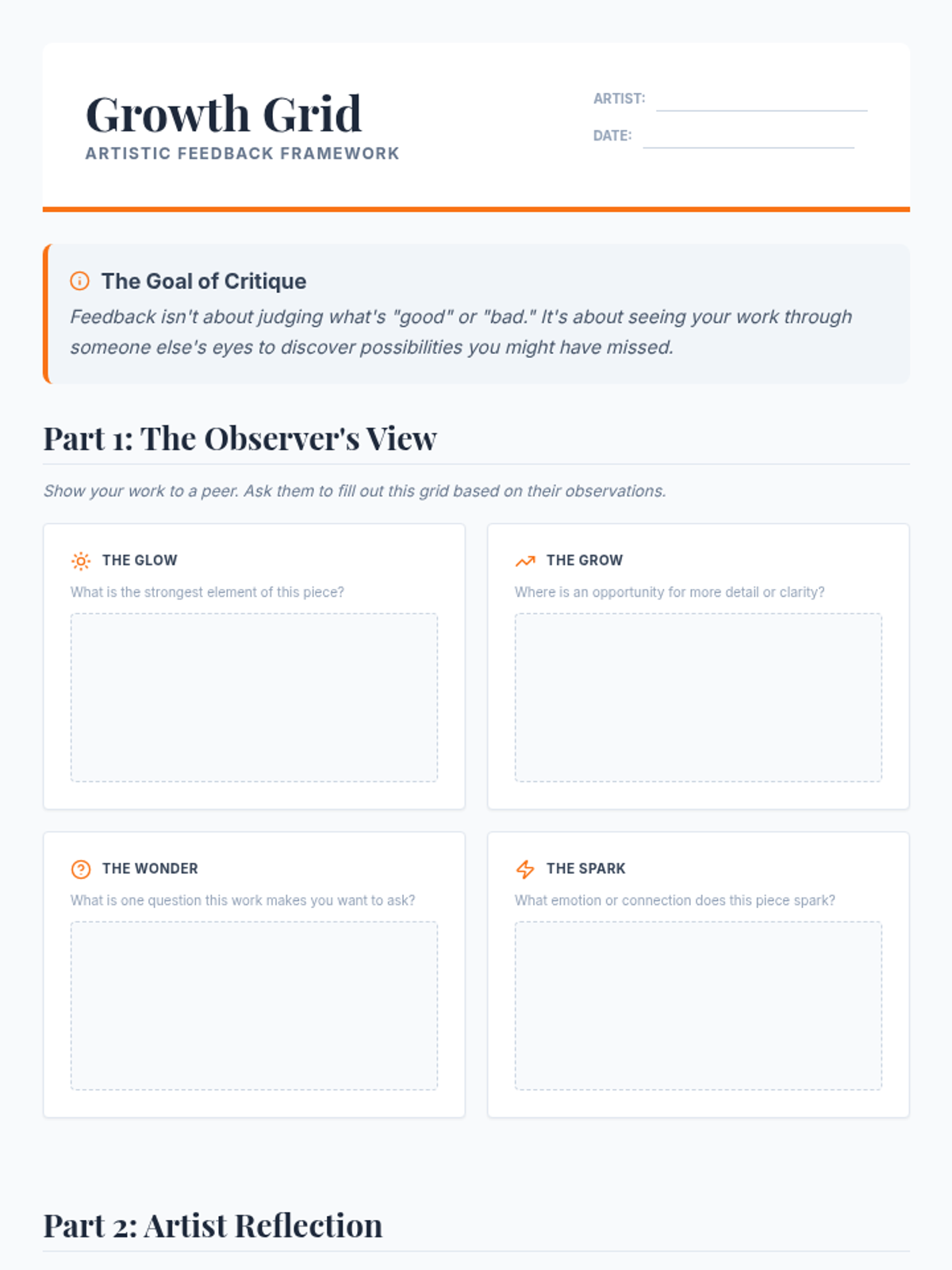
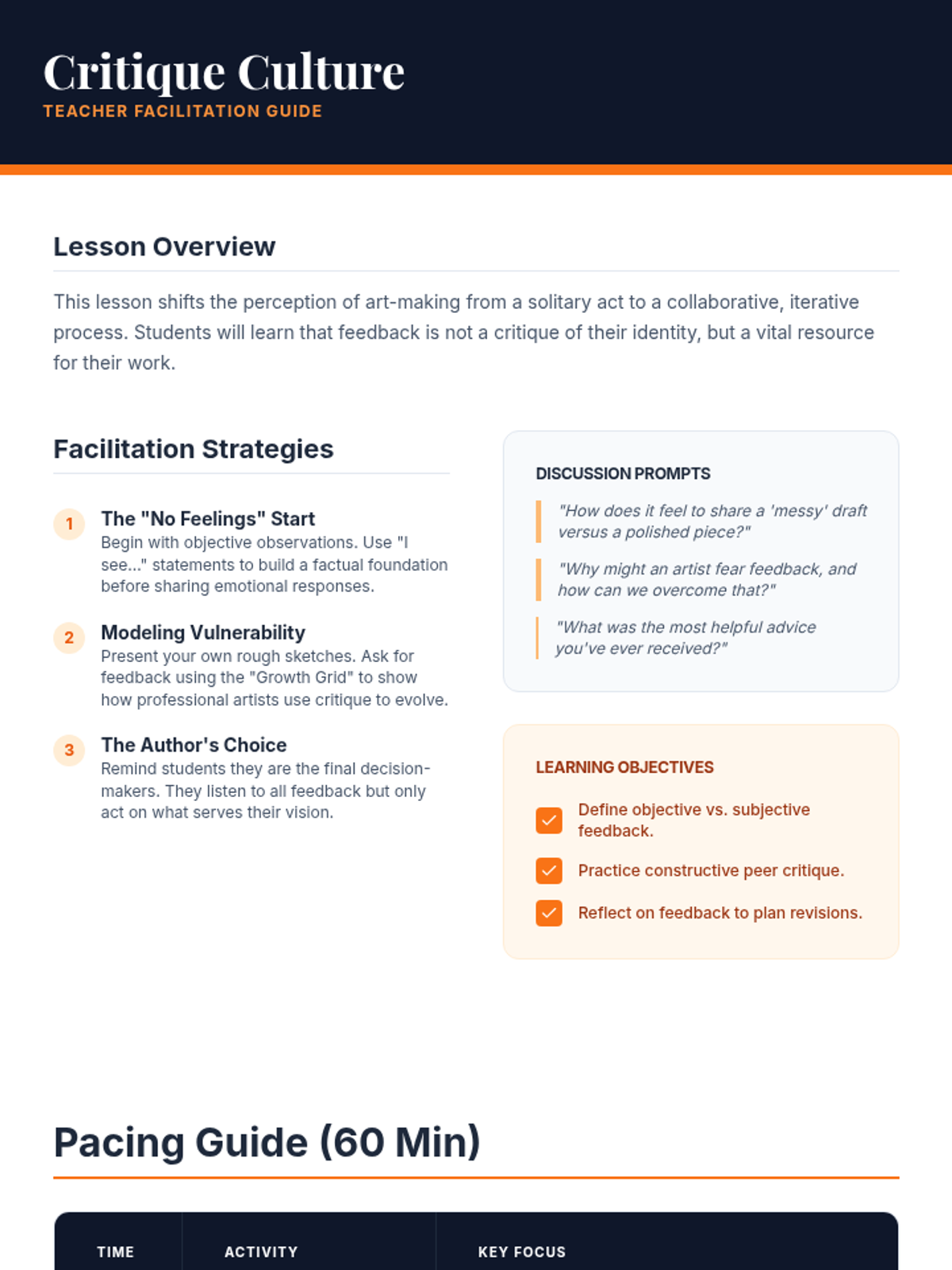
A lesson focused on the power of peer feedback in the contemporary art process, teaching students how to give and receive constructive criticism to fuel growth.
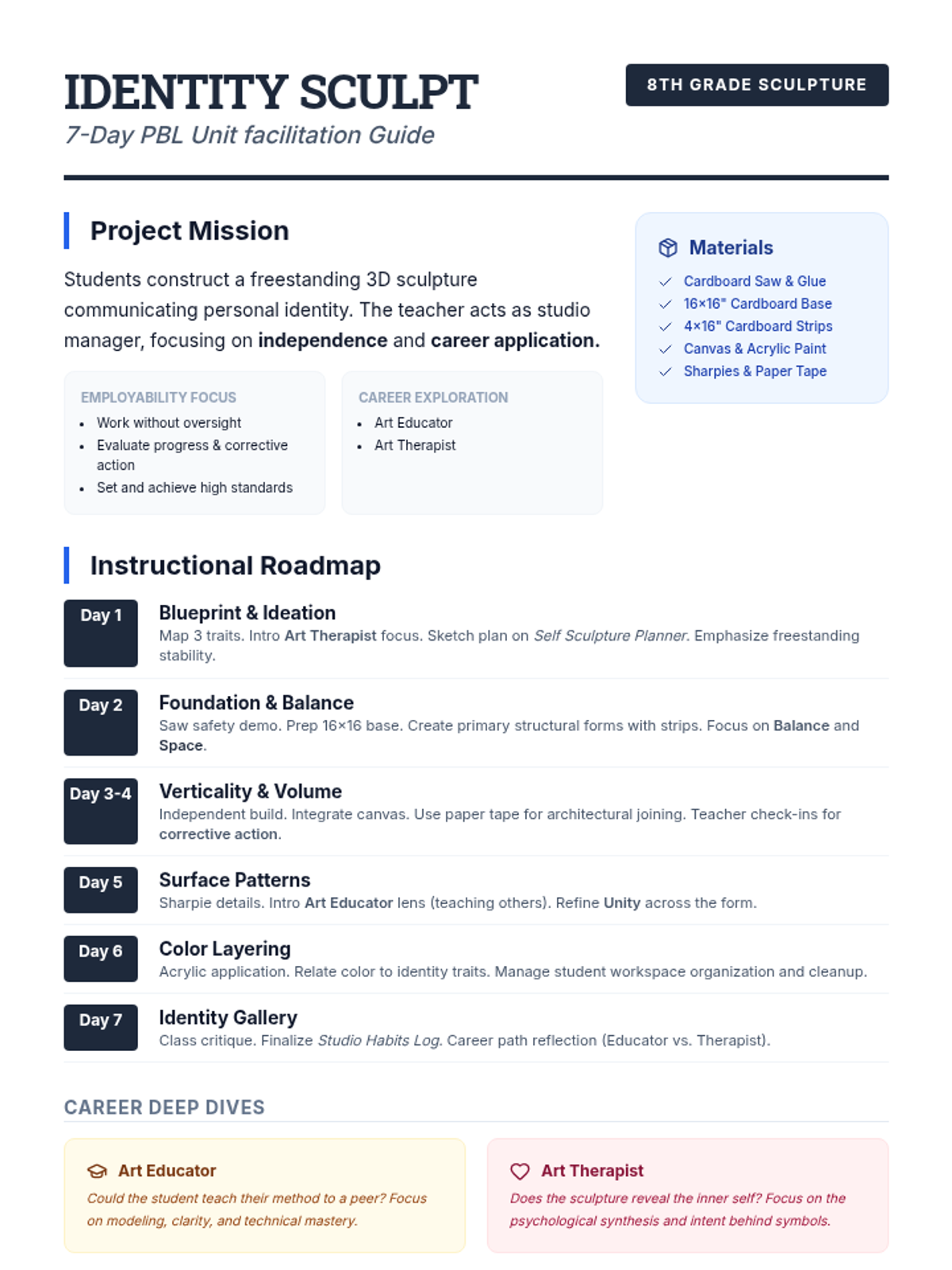
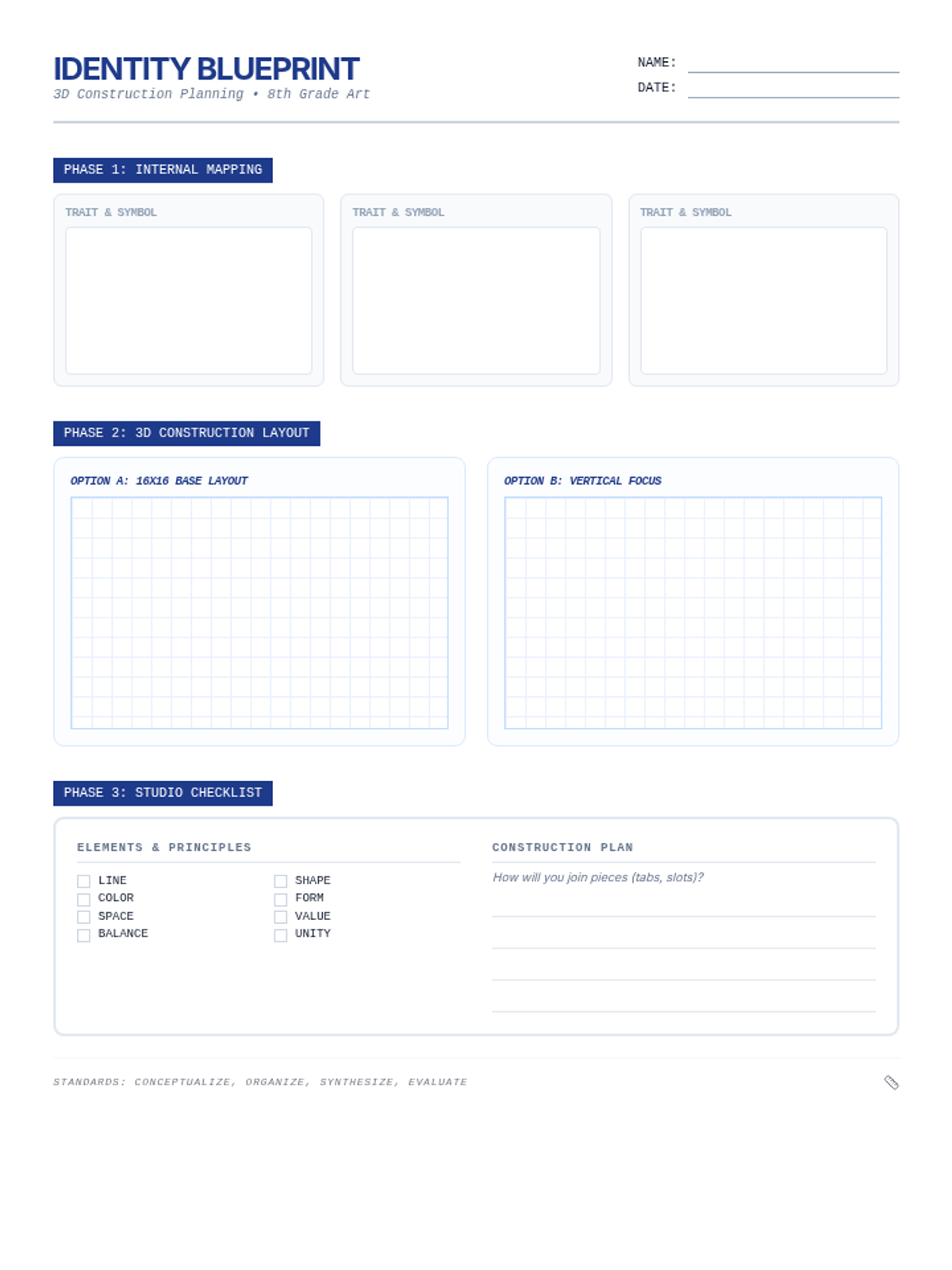
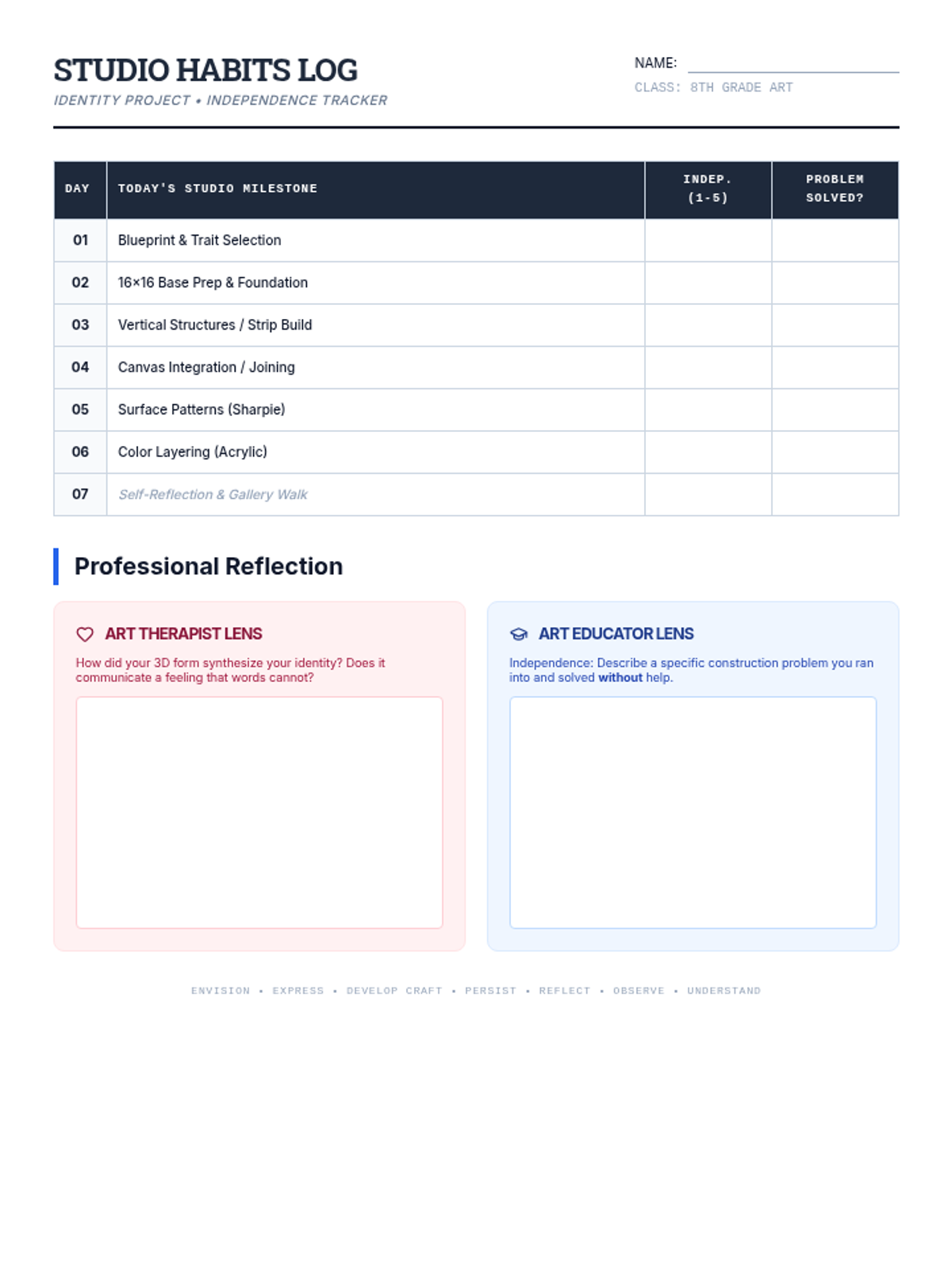
A 7-day independent project-based learning unit where students create a freestanding cardboard sculpture that symbolizes their personal identity, focusing on studio habits and career exploration.
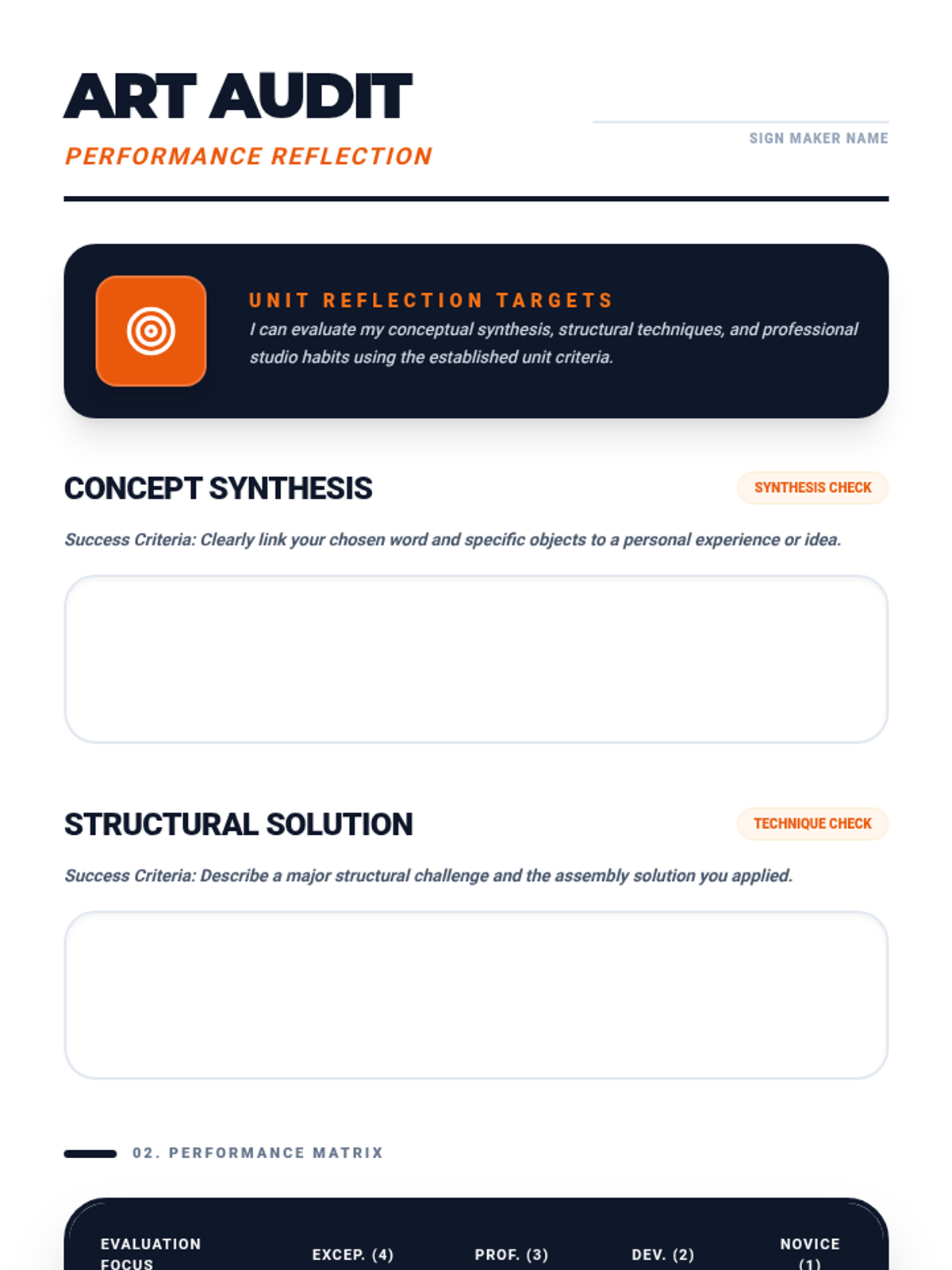
Final presentation and critique where students reflect on their work through the lens of a Sign Maker and self-assess their studio habits and technical growth.
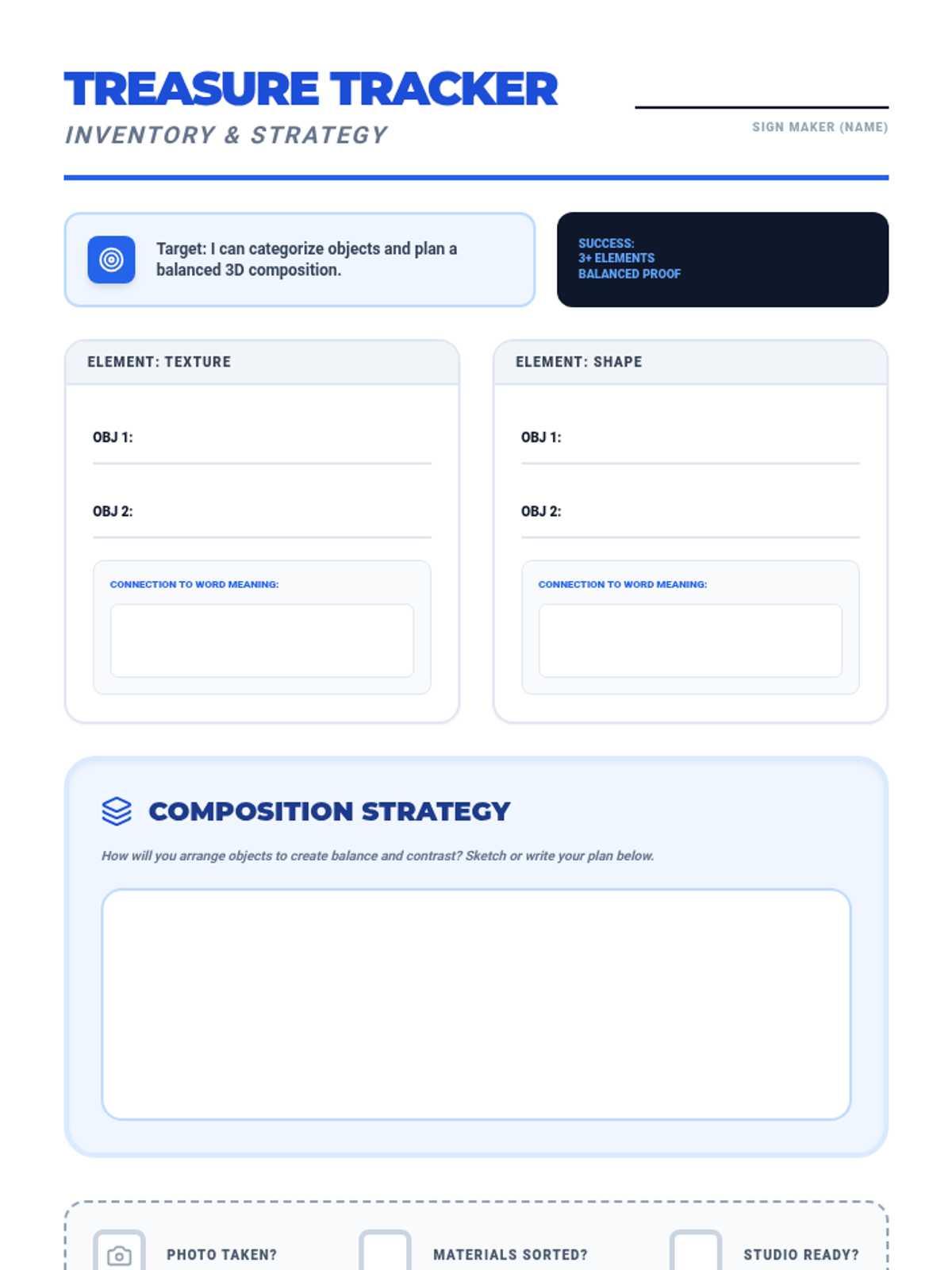
Students hunt for found objects and categorize them by art elements and design principles. They create a physical prototype of their word art, focusing on balance and contrast.
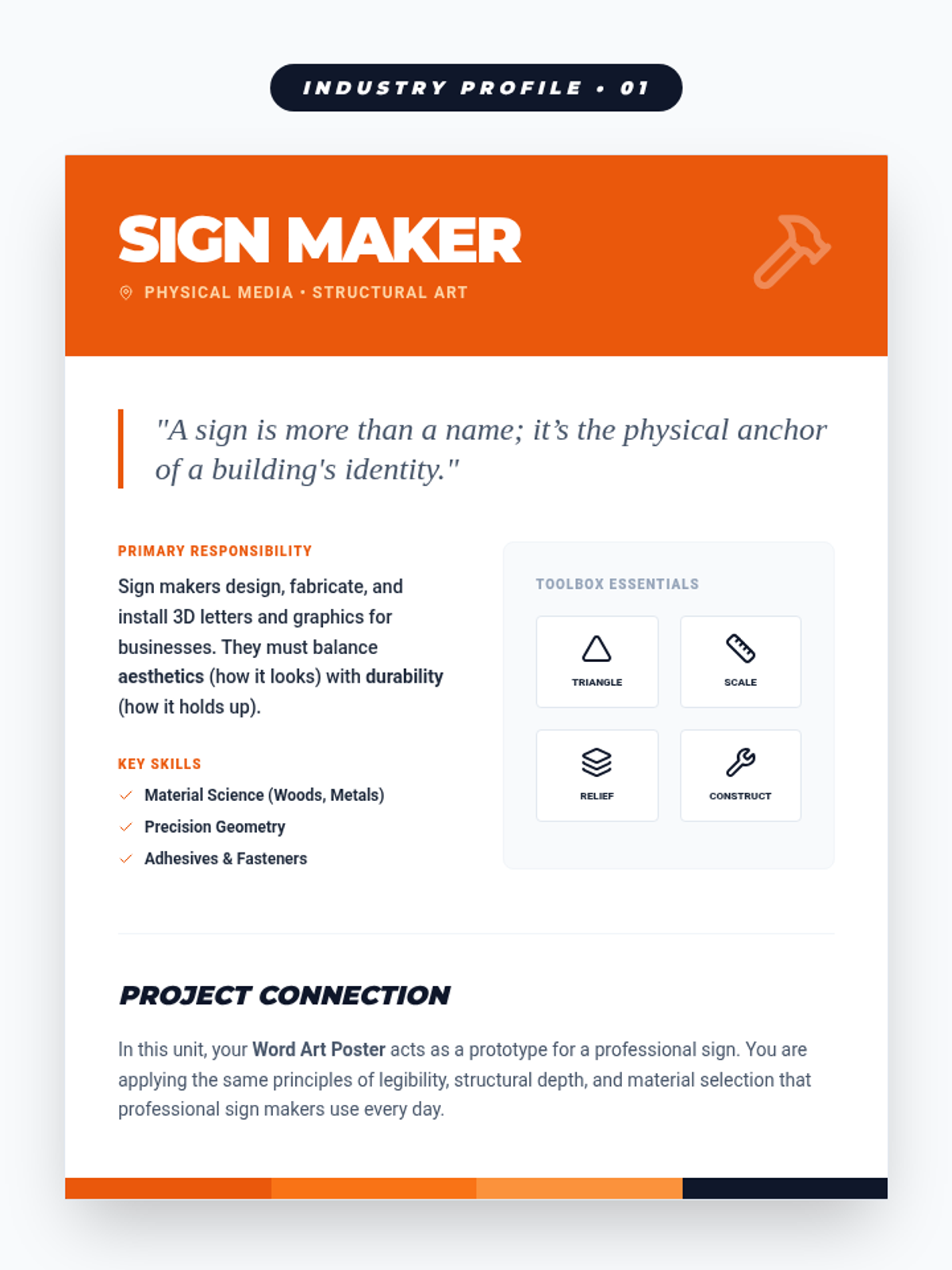
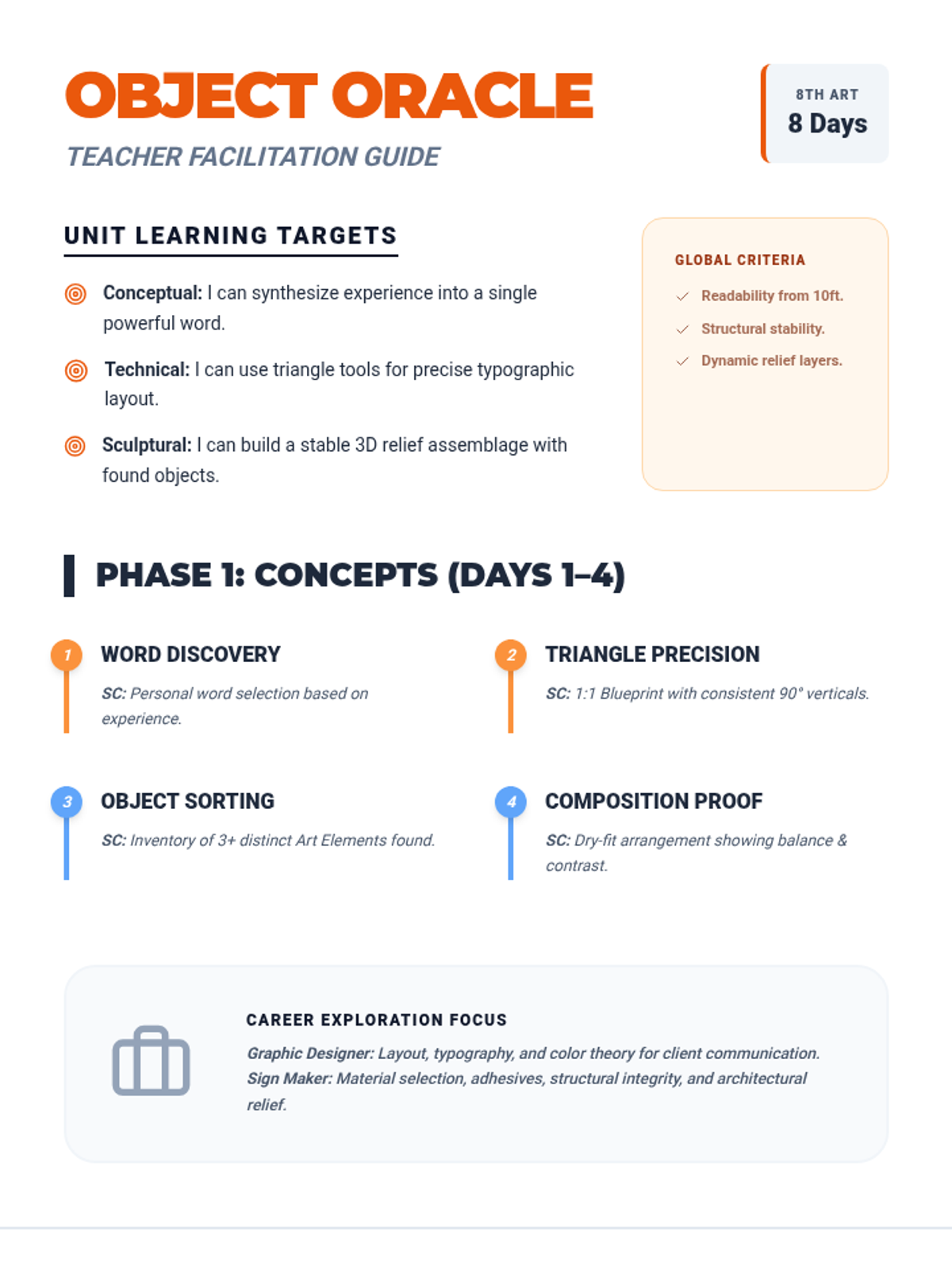
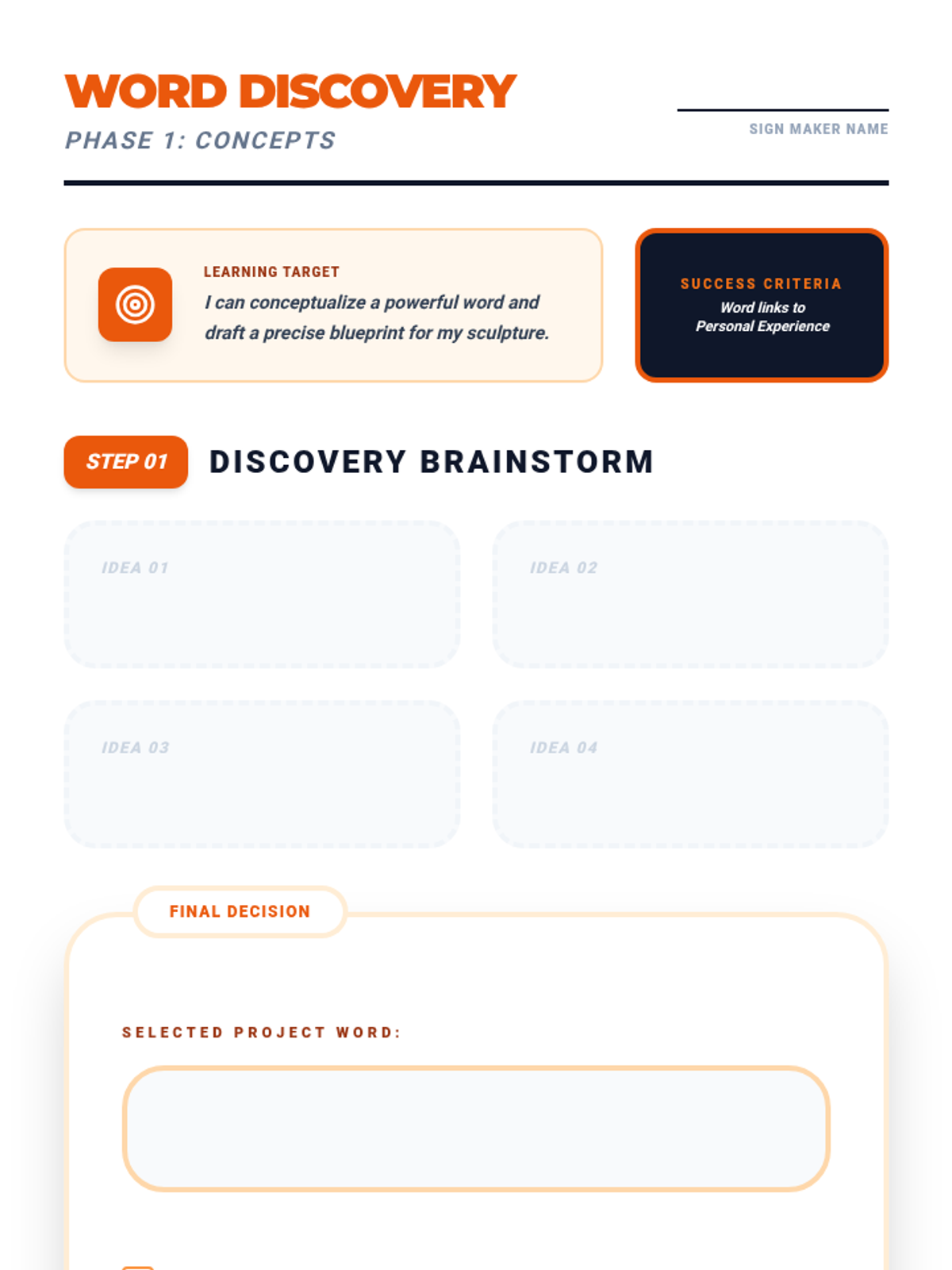
Introduction to the 8-day project, exploring the careers of Graphic Designers and Sign Makers, and brainstorming the central 'word' for the assemblage. Students use triangle tools to create precise layout sketches.
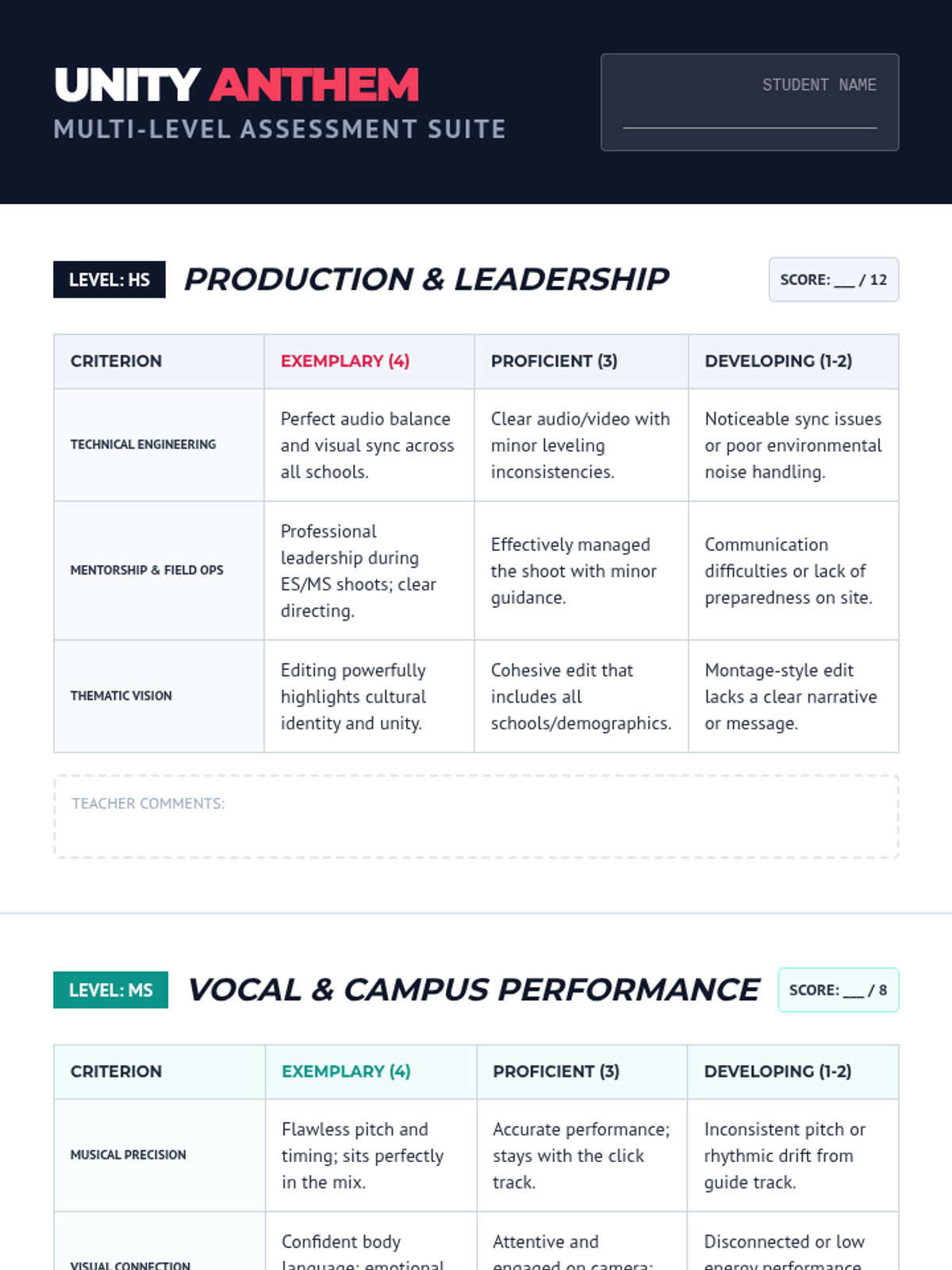
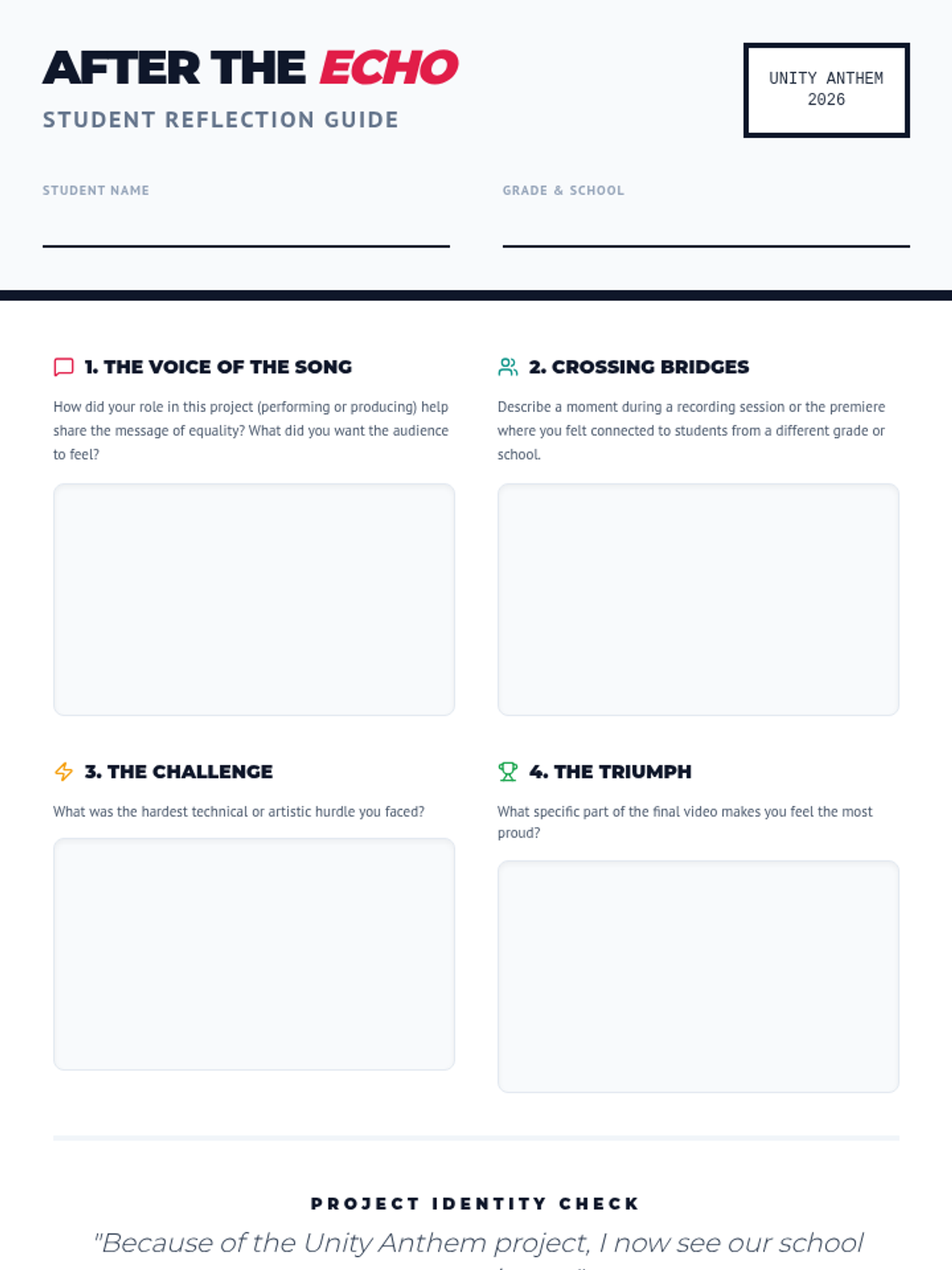
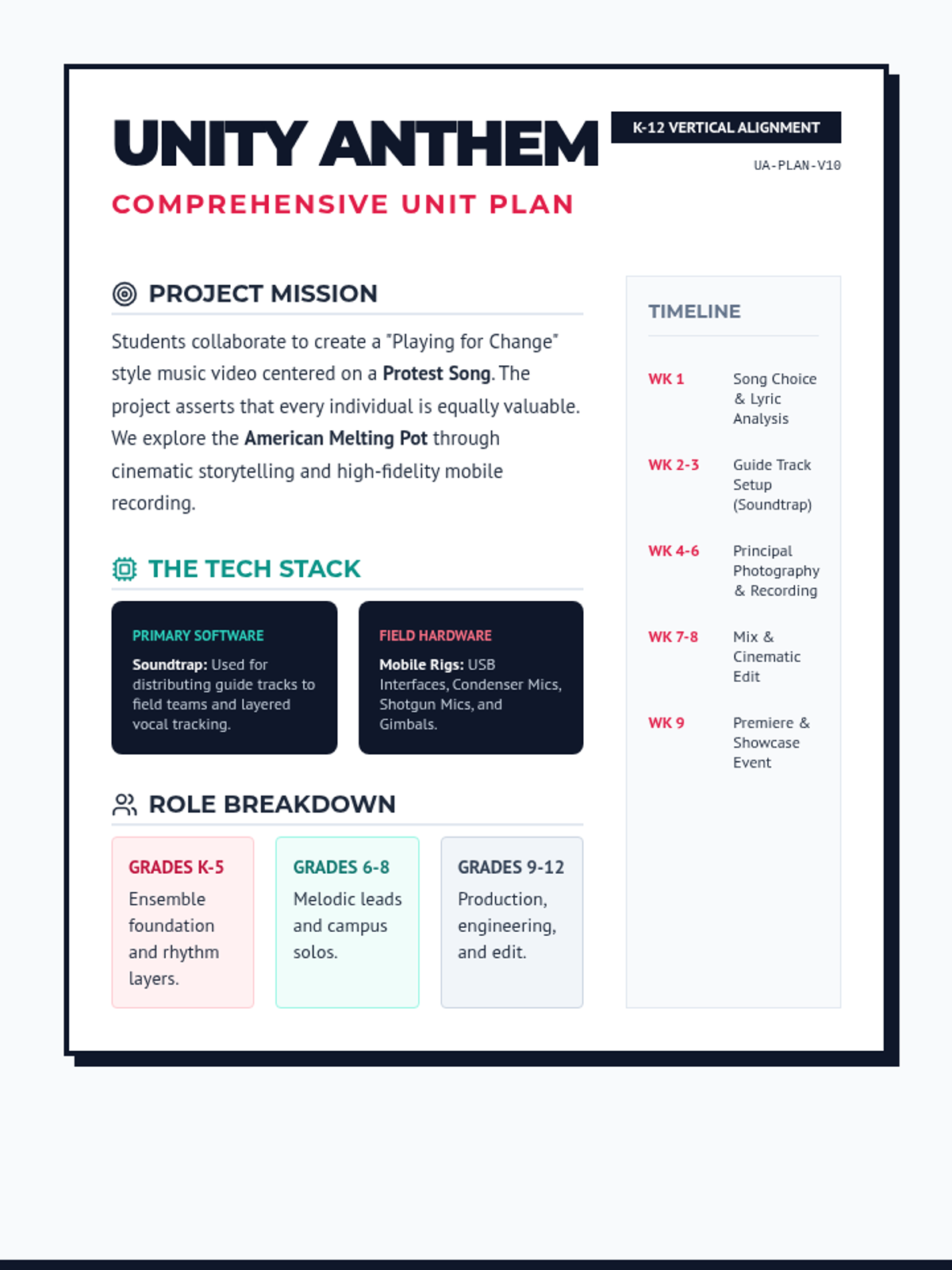
The final premiere of the music video at the All-town Music Tech Showcase, followed by a live performance and student reflection on the collaborative process.
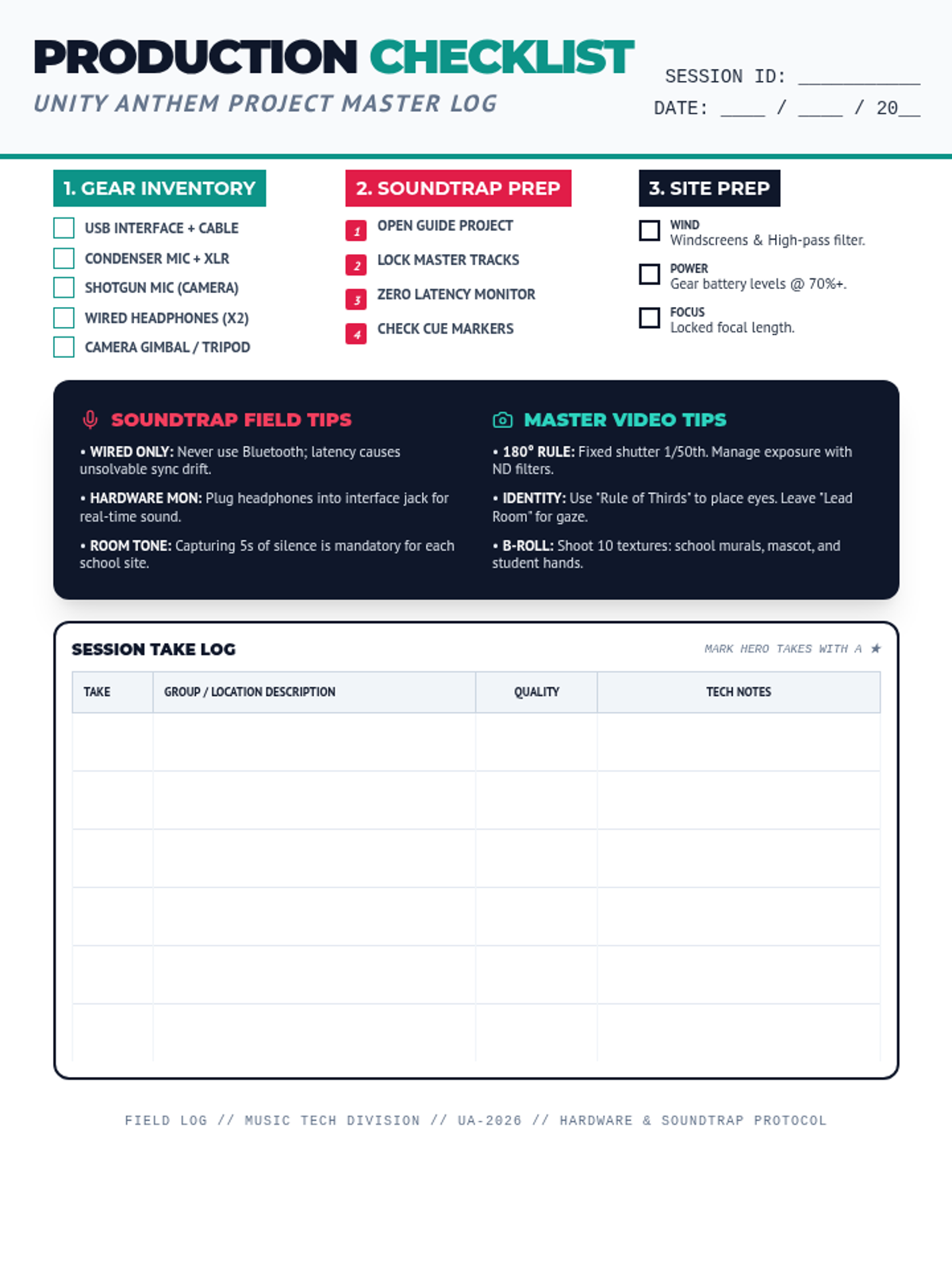
The technical phase involving on-location recordings at elementary and middle schools, followed by high school student-led mixing and video production.
Introduction to the 'Playing for Change' concept, exploring the themes of the chosen protest song, and laying the groundwork for the K-12 collaboration.
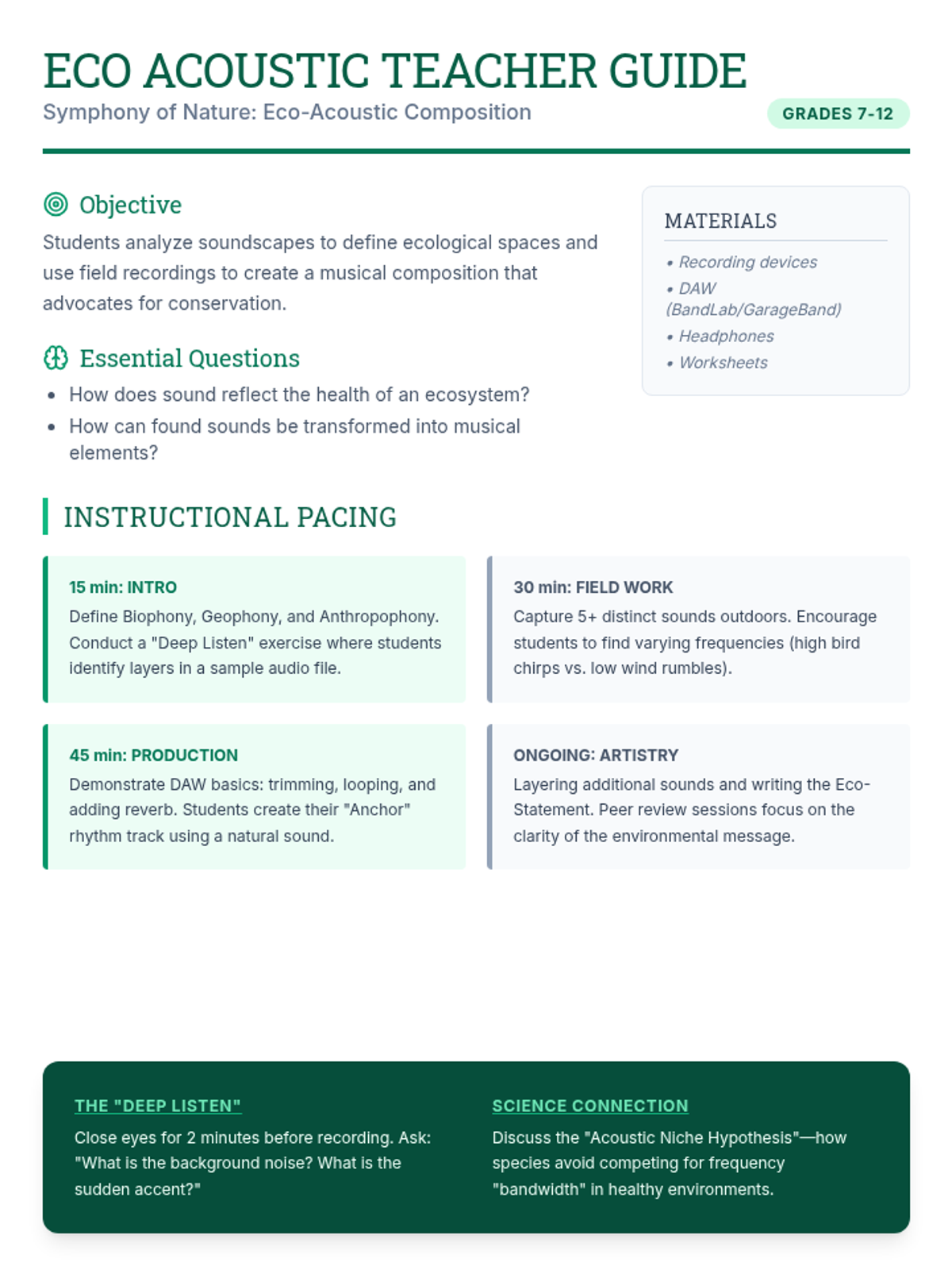
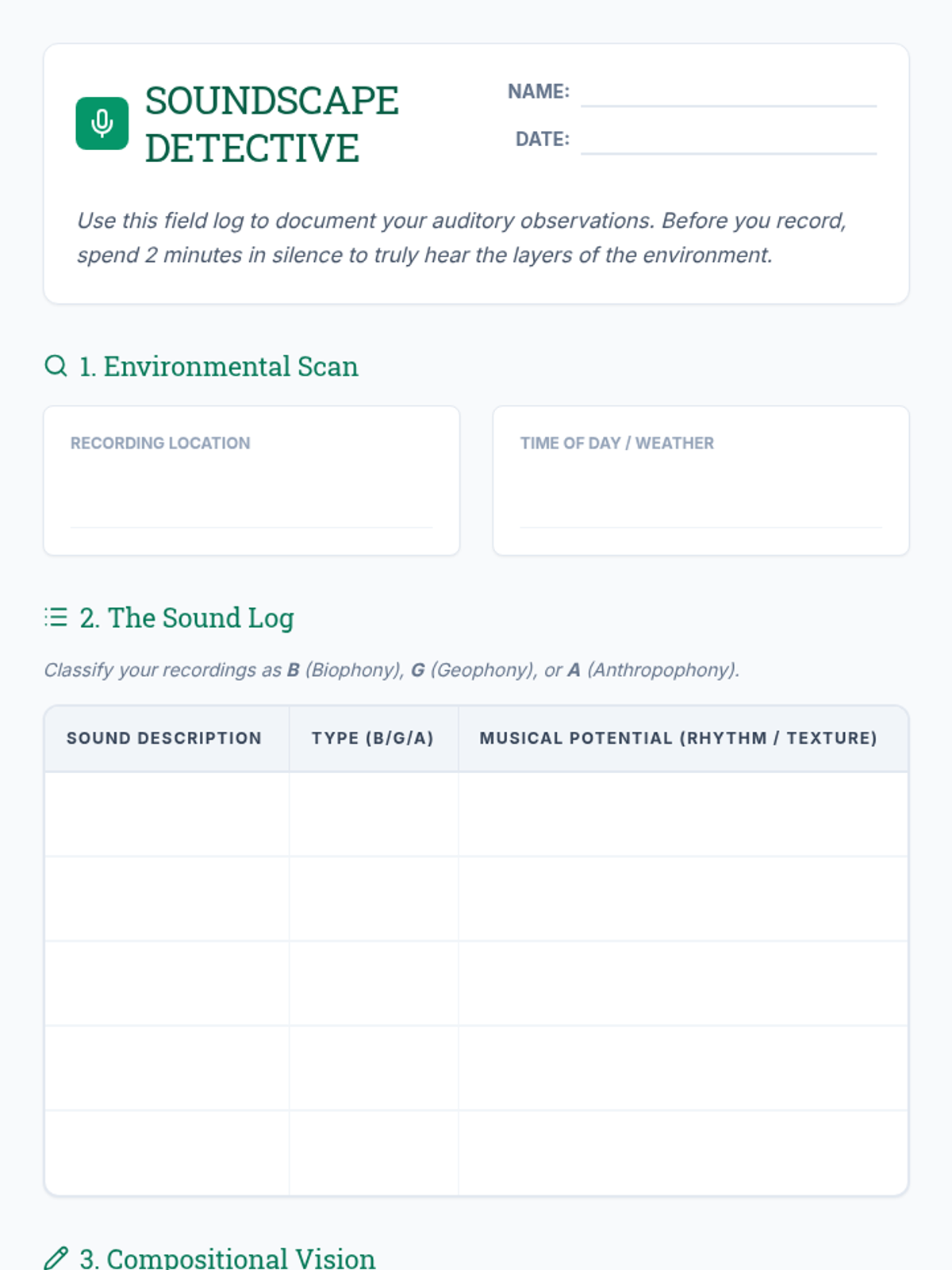
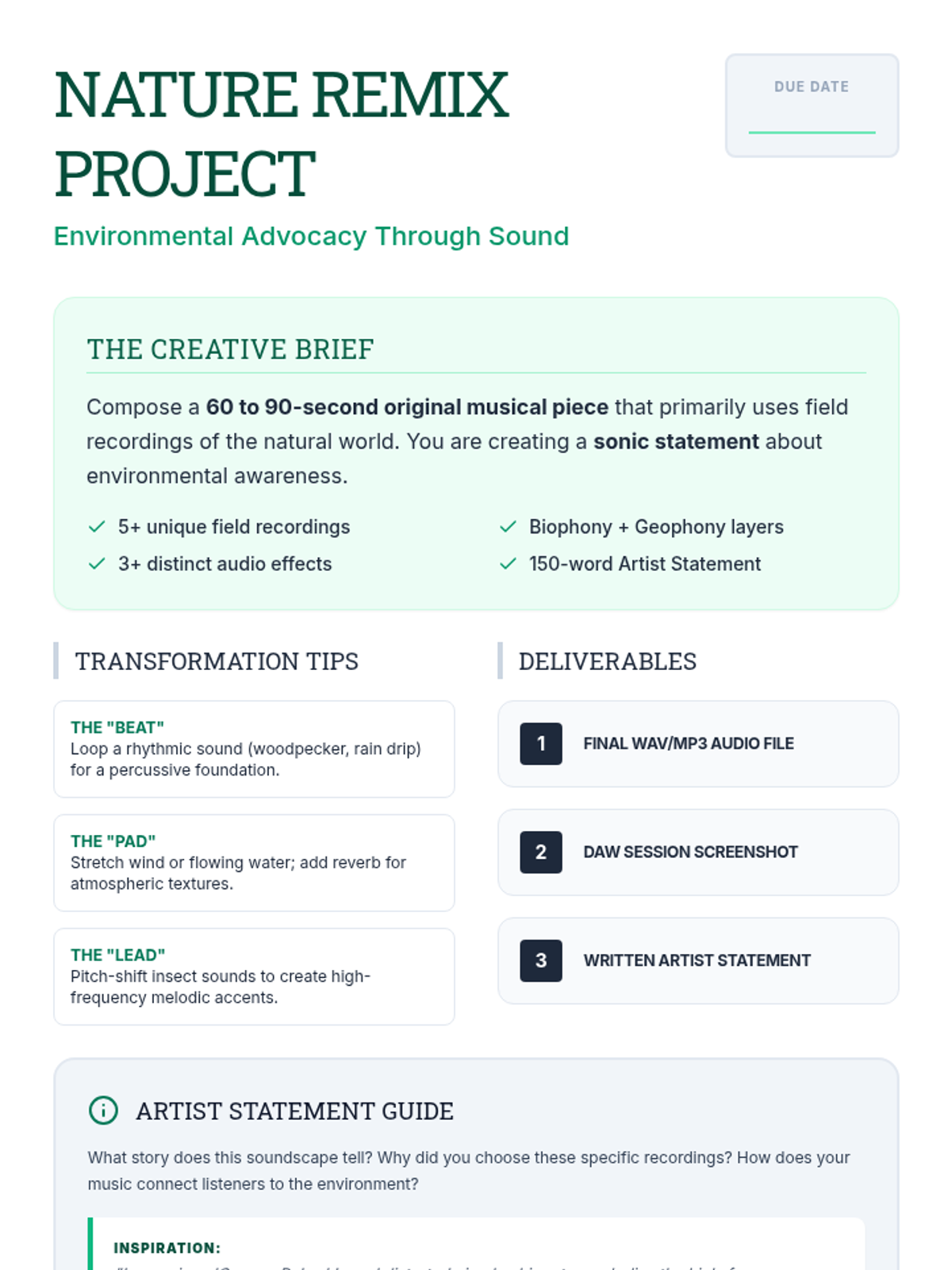
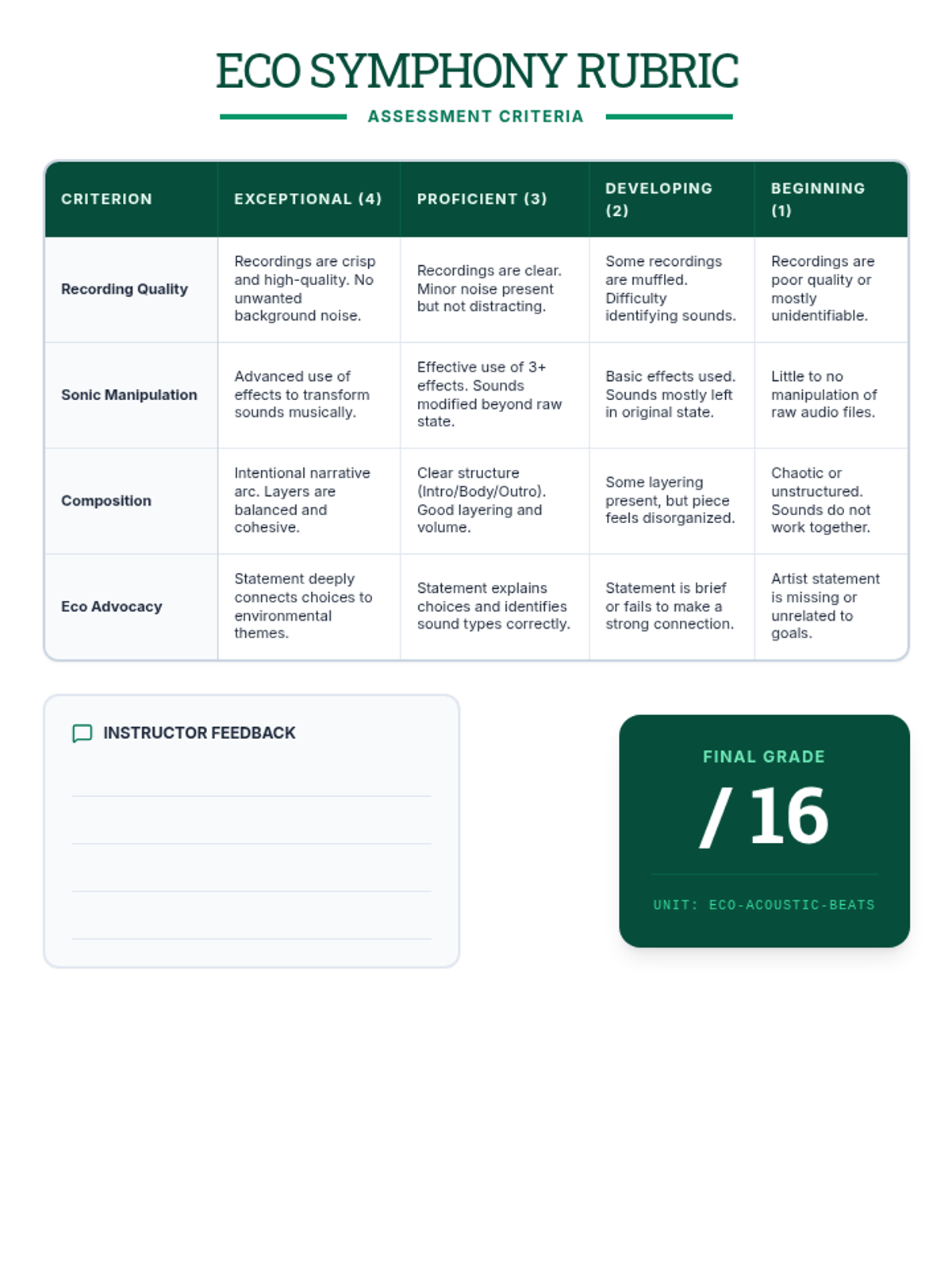
A multi-disciplinary lesson where students blend environmental science and music production. They will analyze natural soundscapes and create original compositions using field recordings to promote ecological awareness.
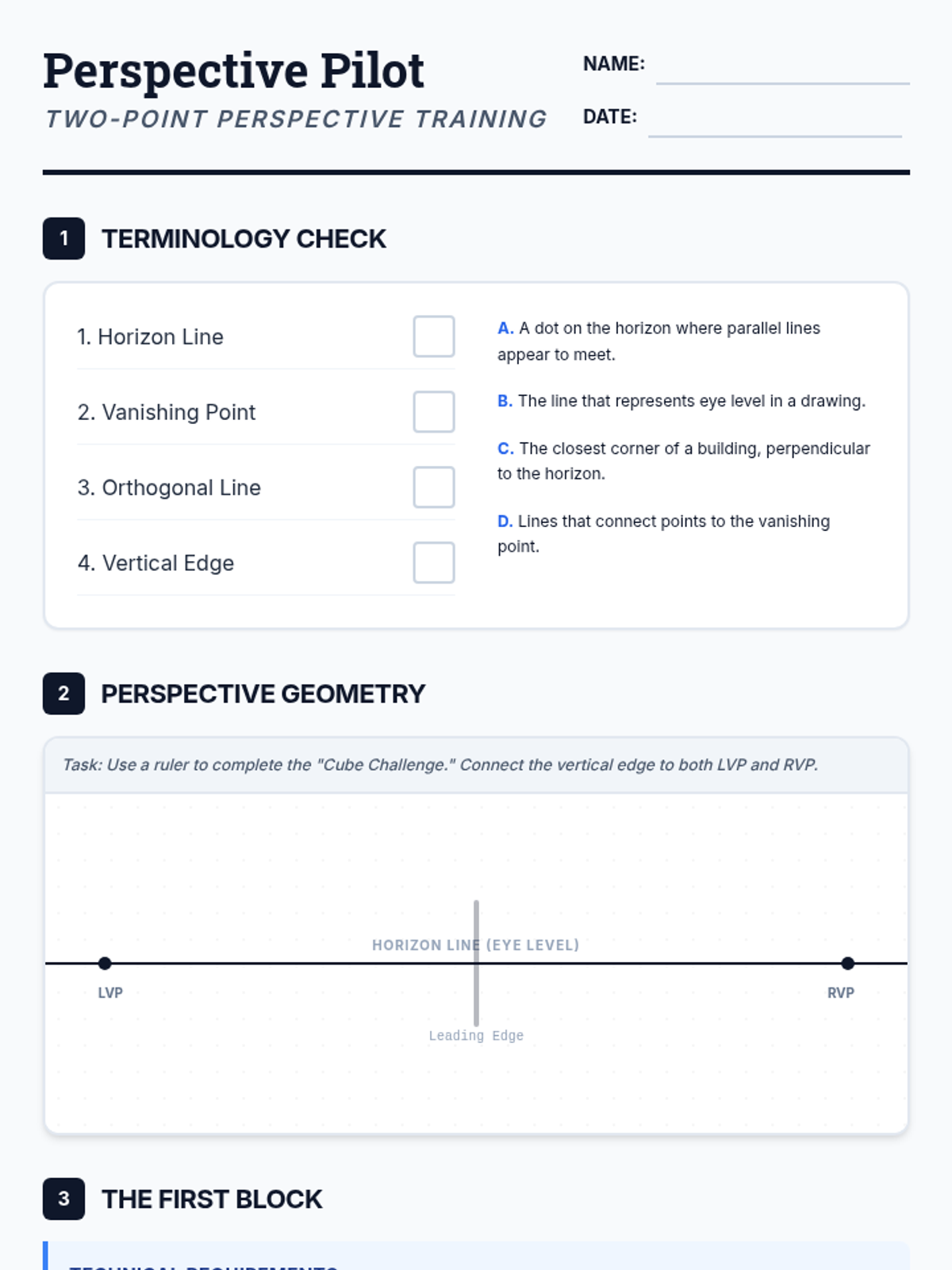
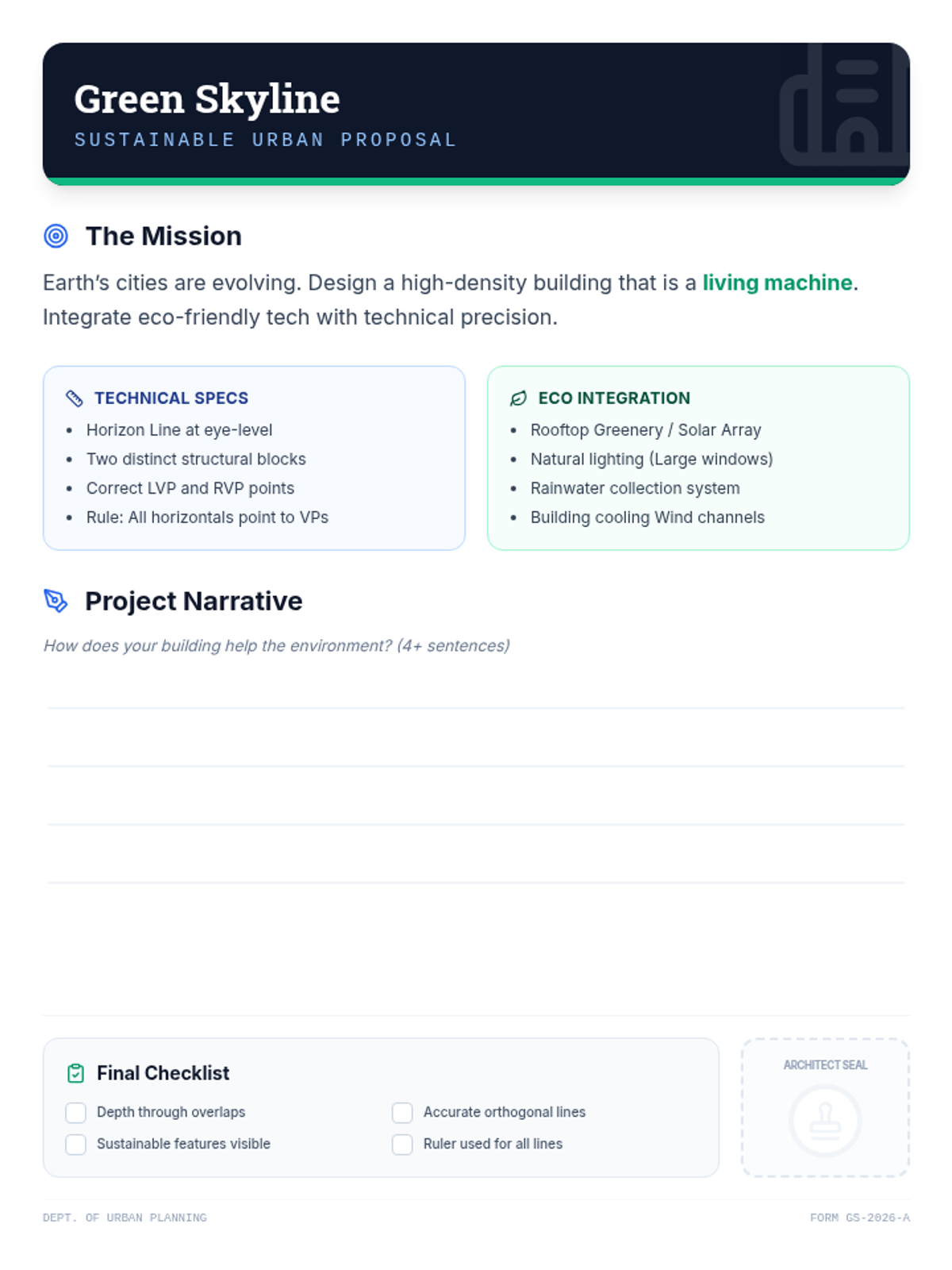
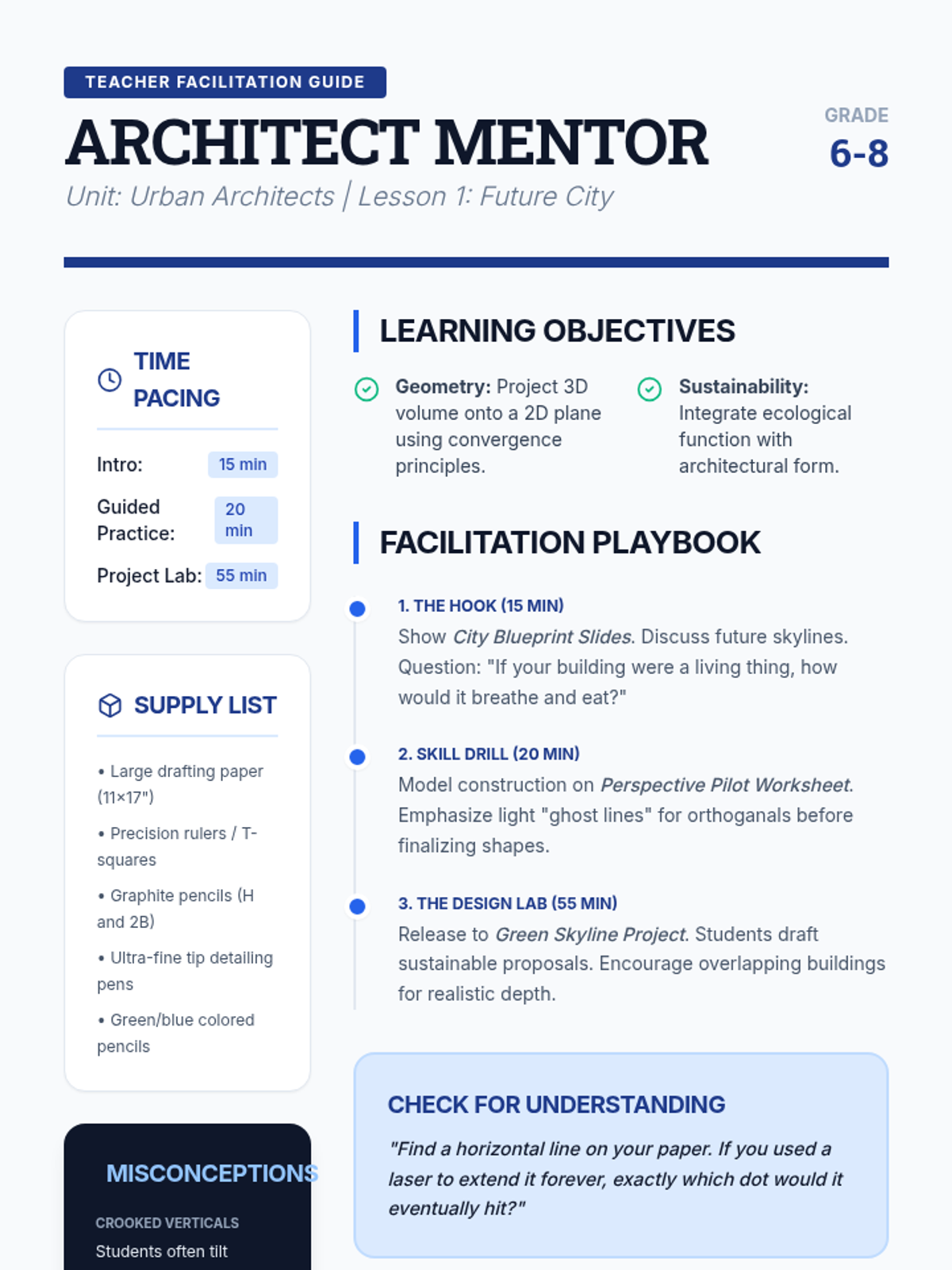
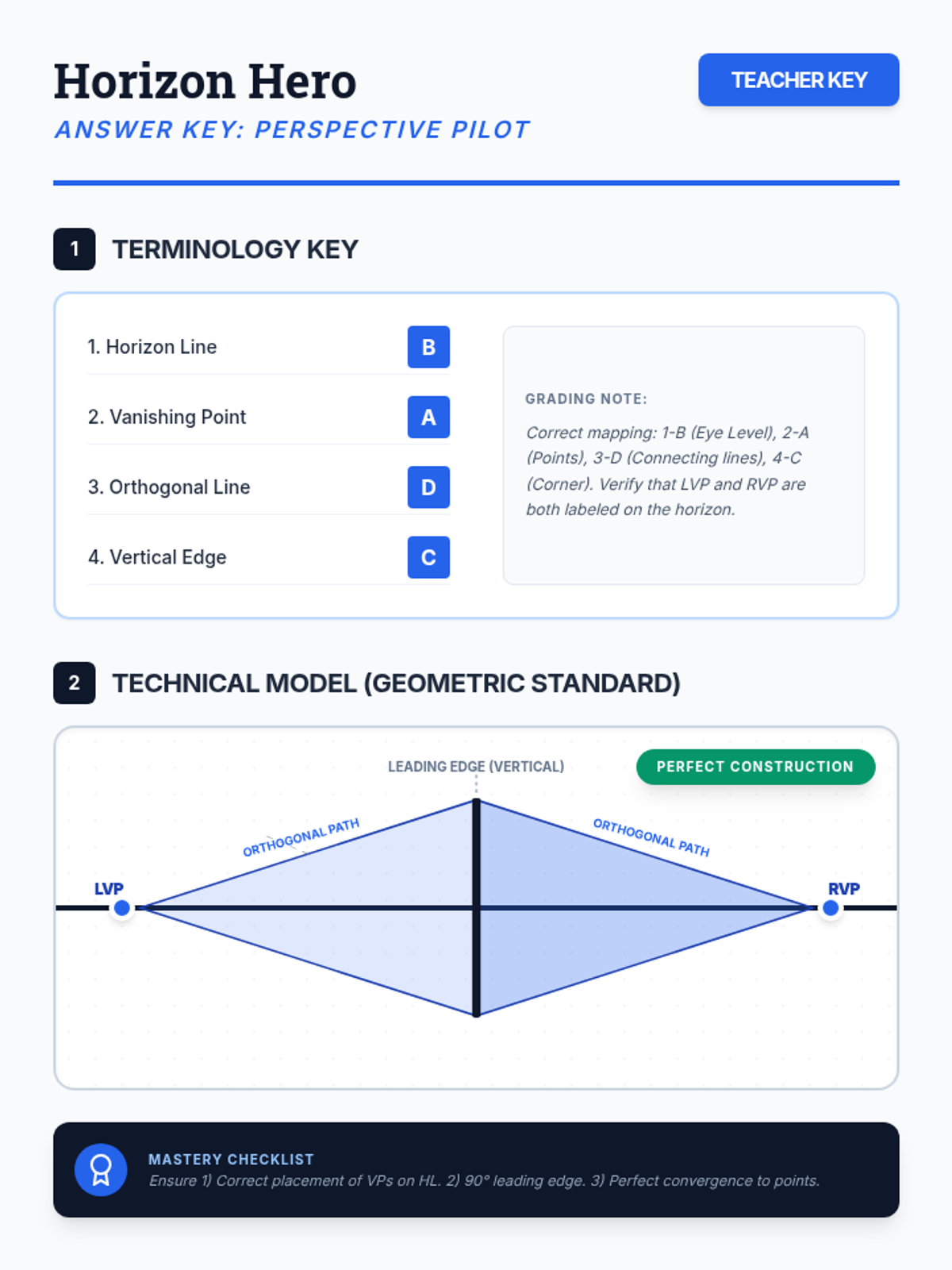
A middle school art and math integration lesson where students master two-point perspective to design a sustainable city of the future. Students will learn technical drawing skills while considering urban efficiency and environmental impact.
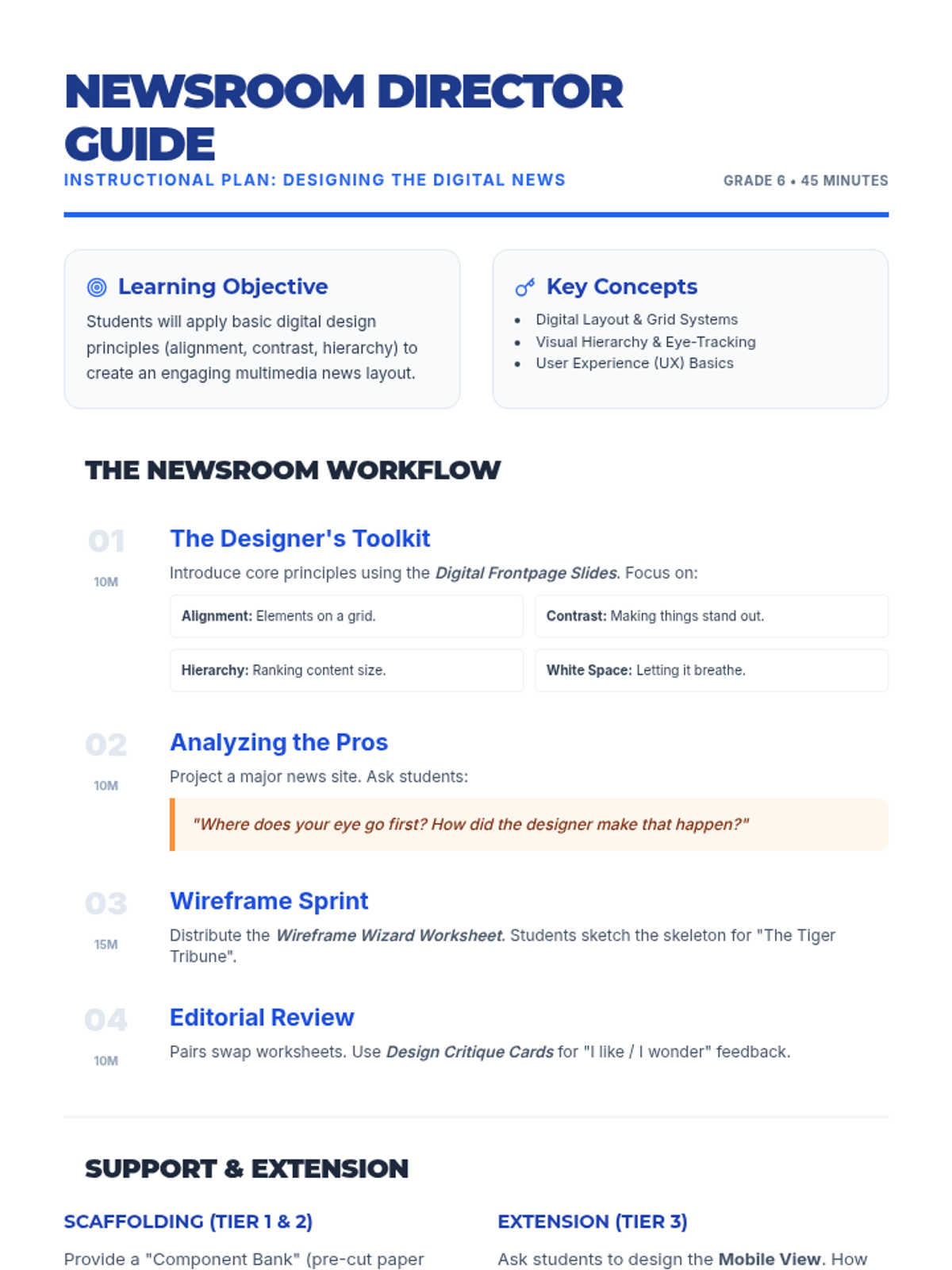
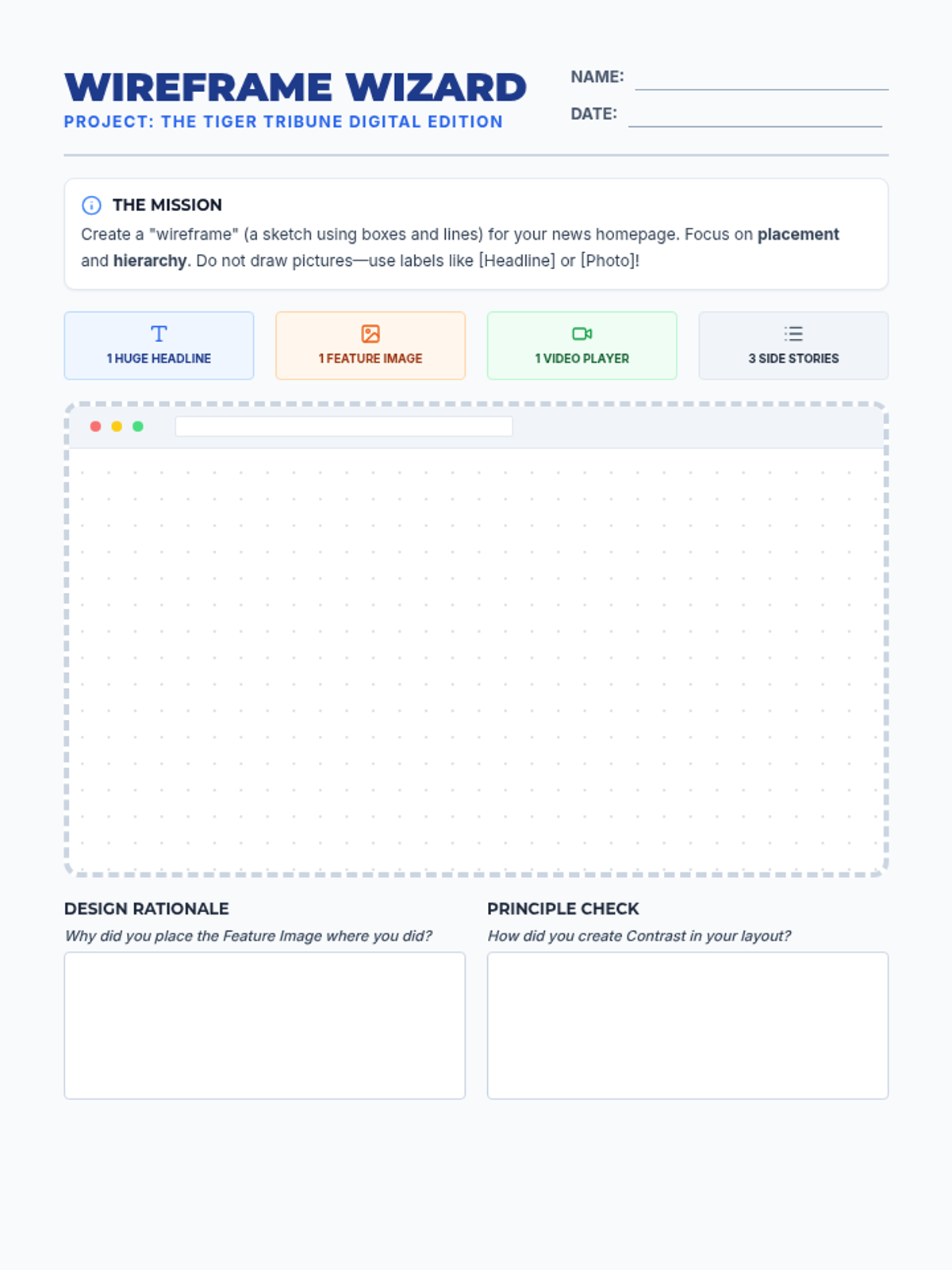
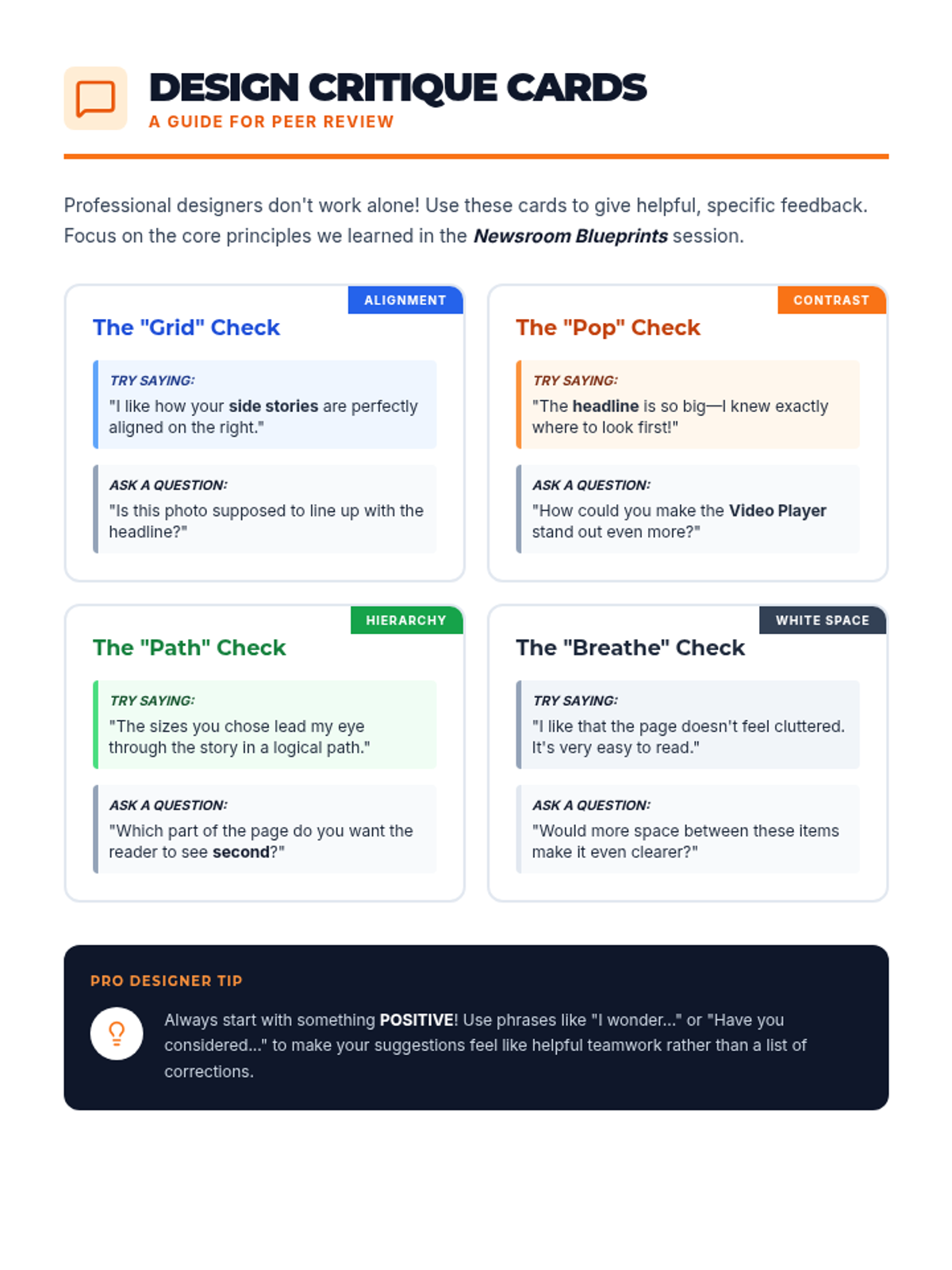
In this lesson, students step into the role of digital news designers, learning the principles of alignment, contrast, and user experience to create effective multimedia layouts for a modern audience.
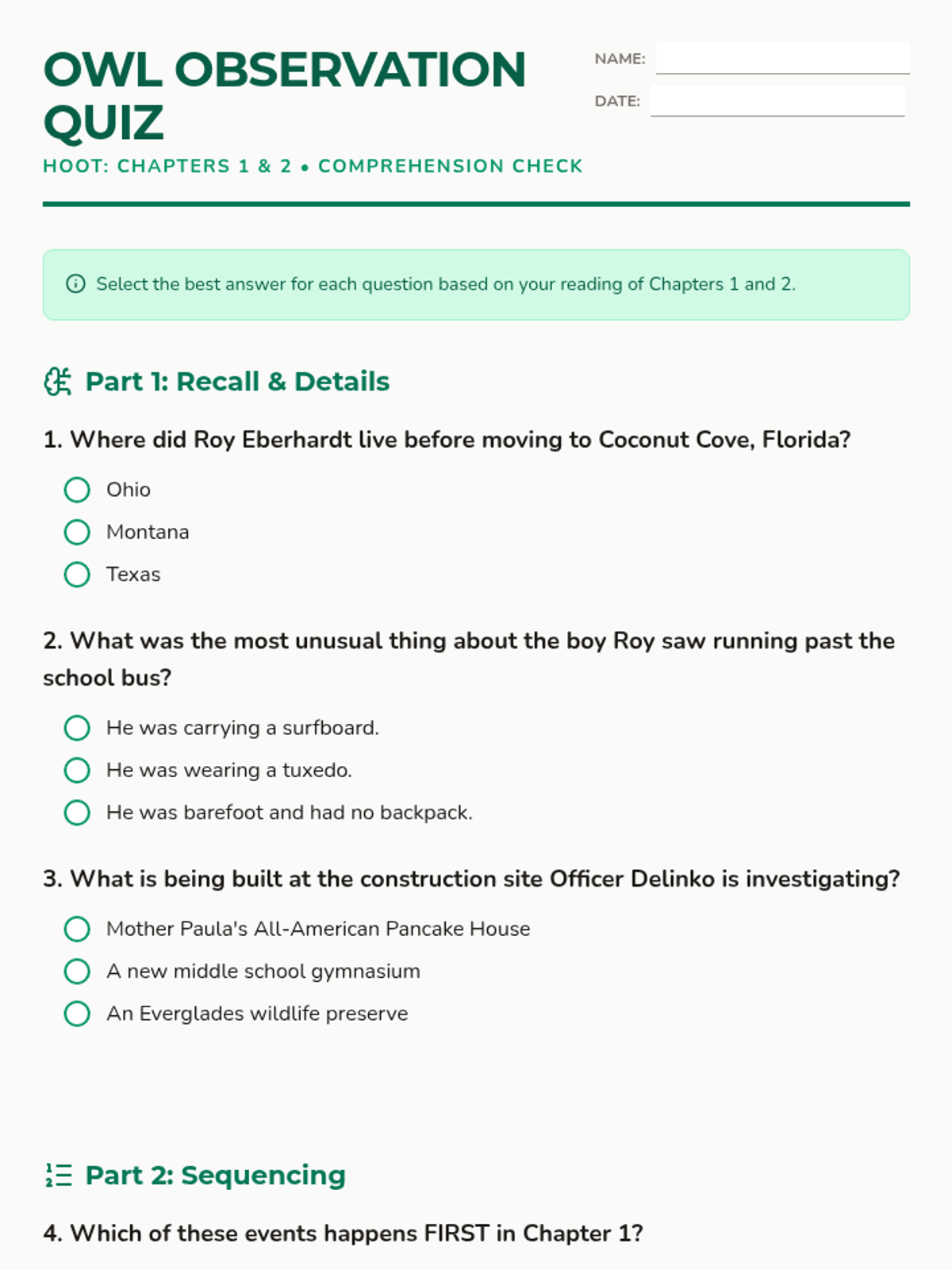
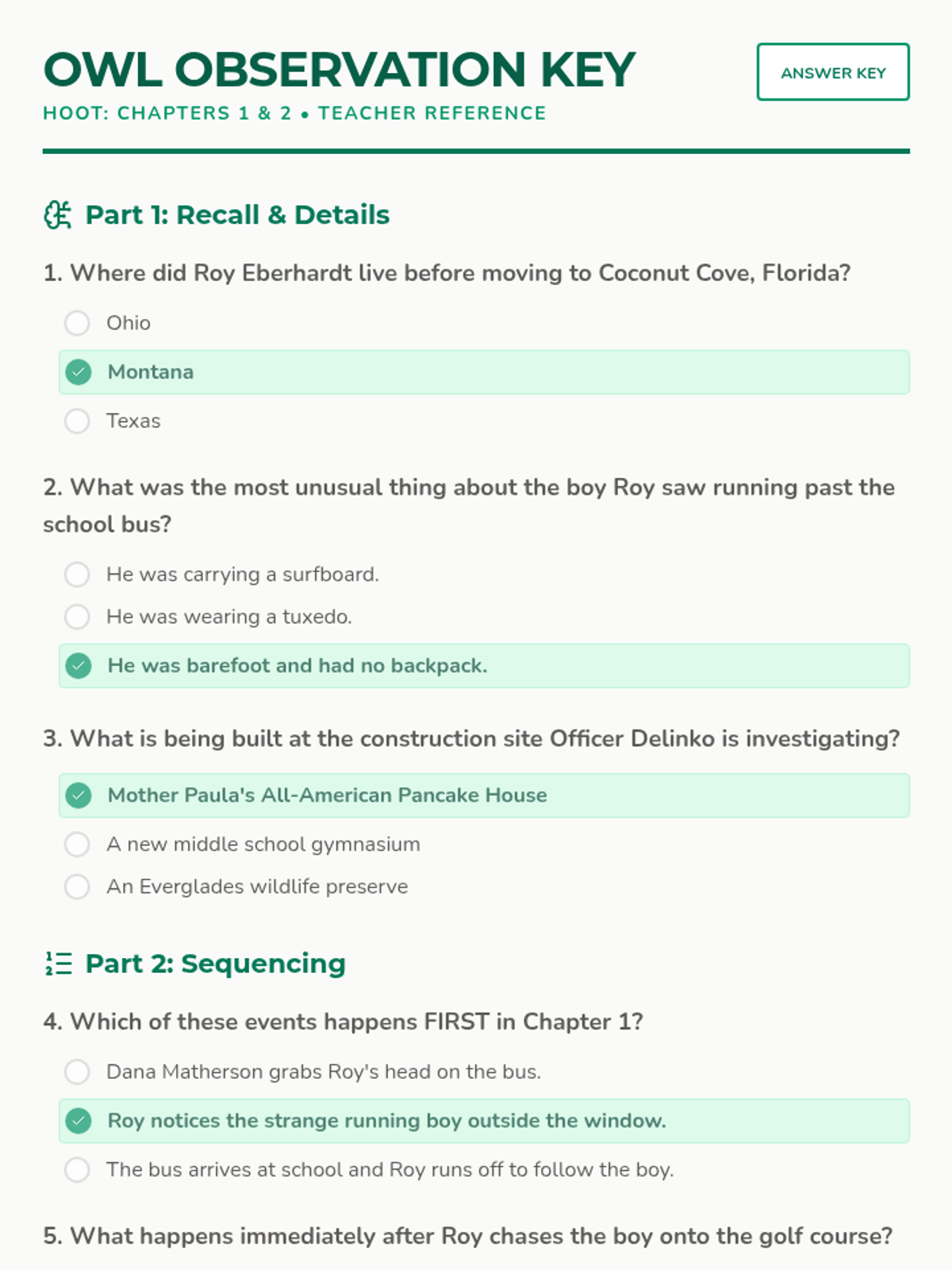
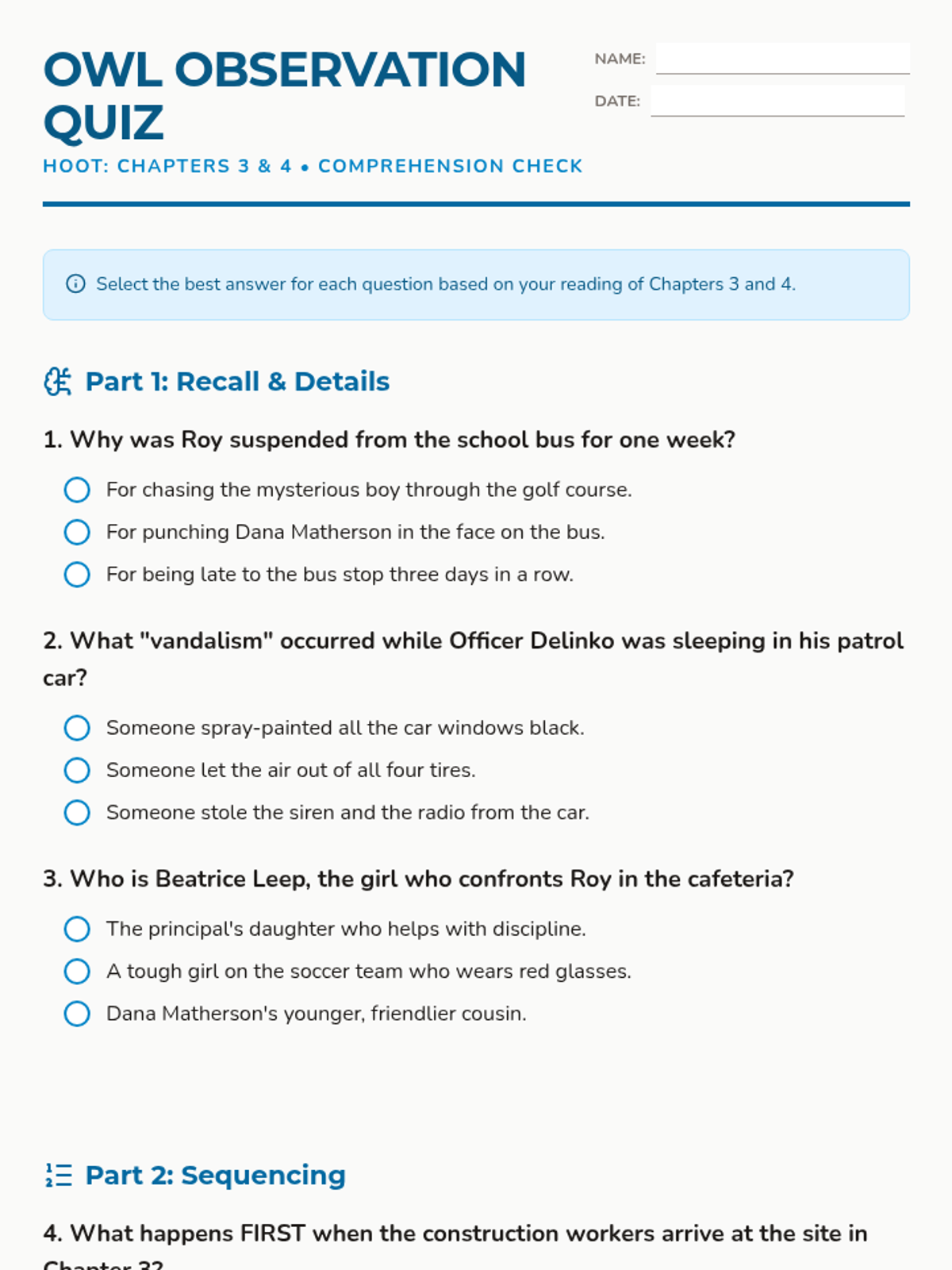
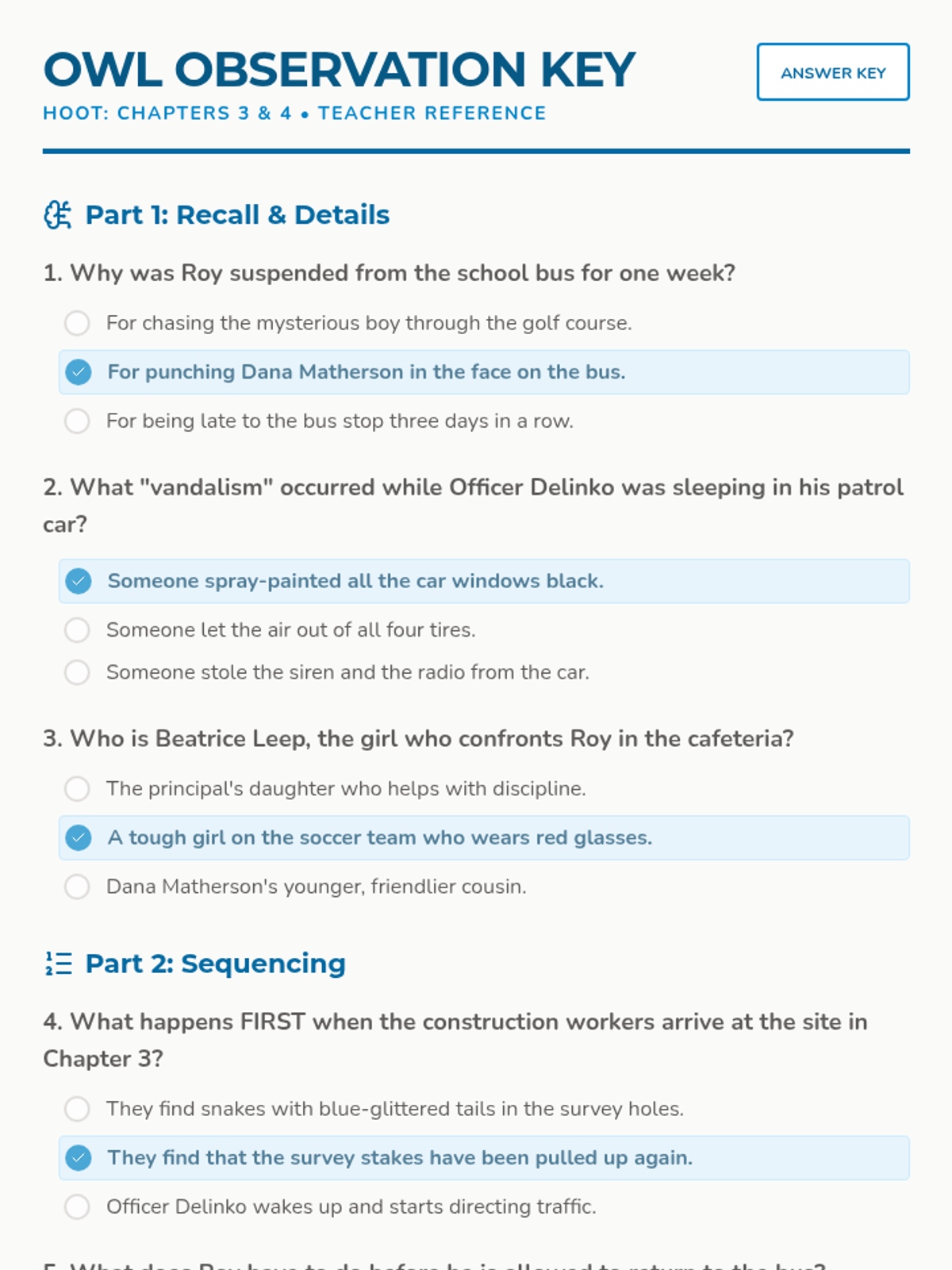
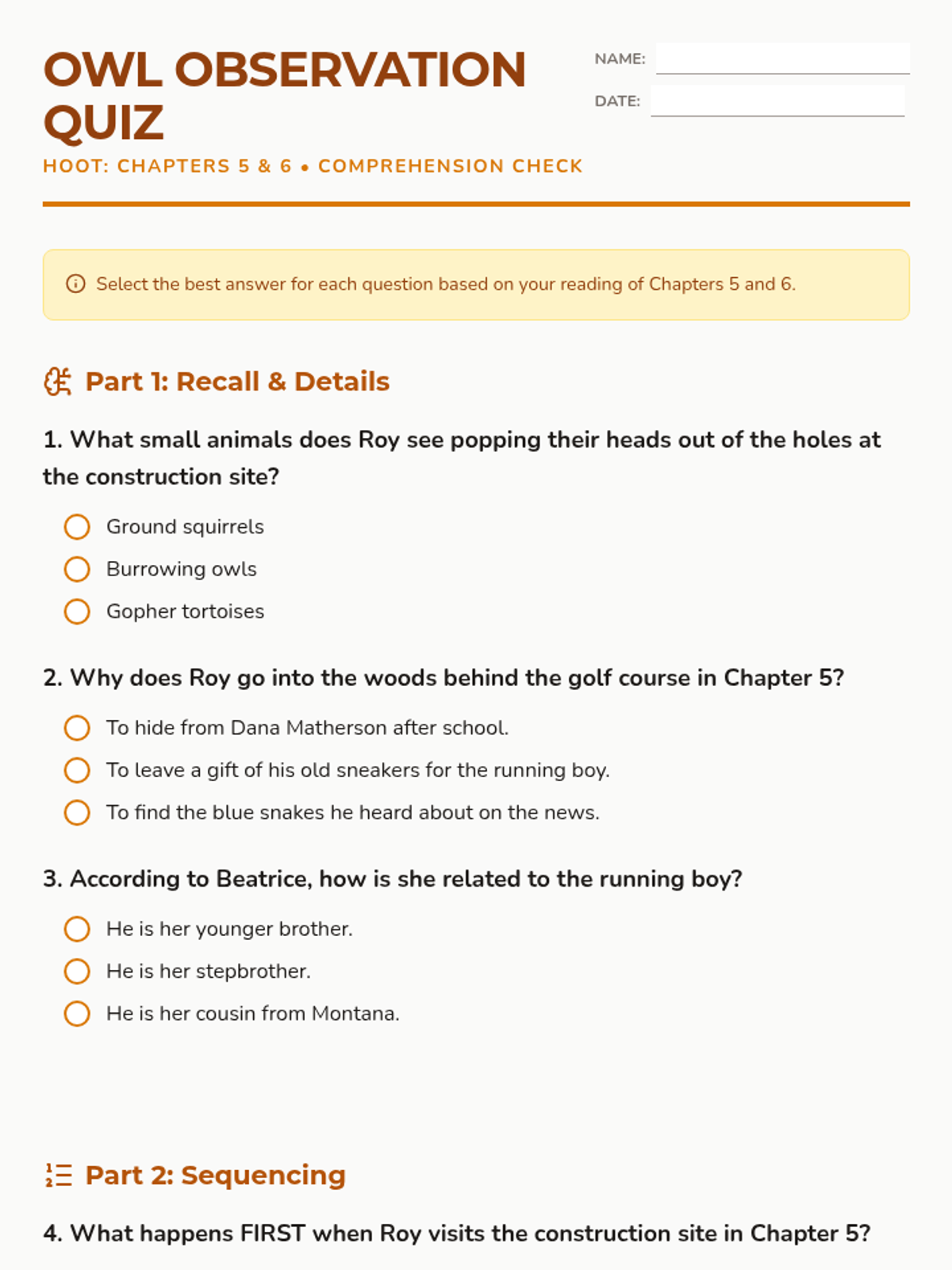
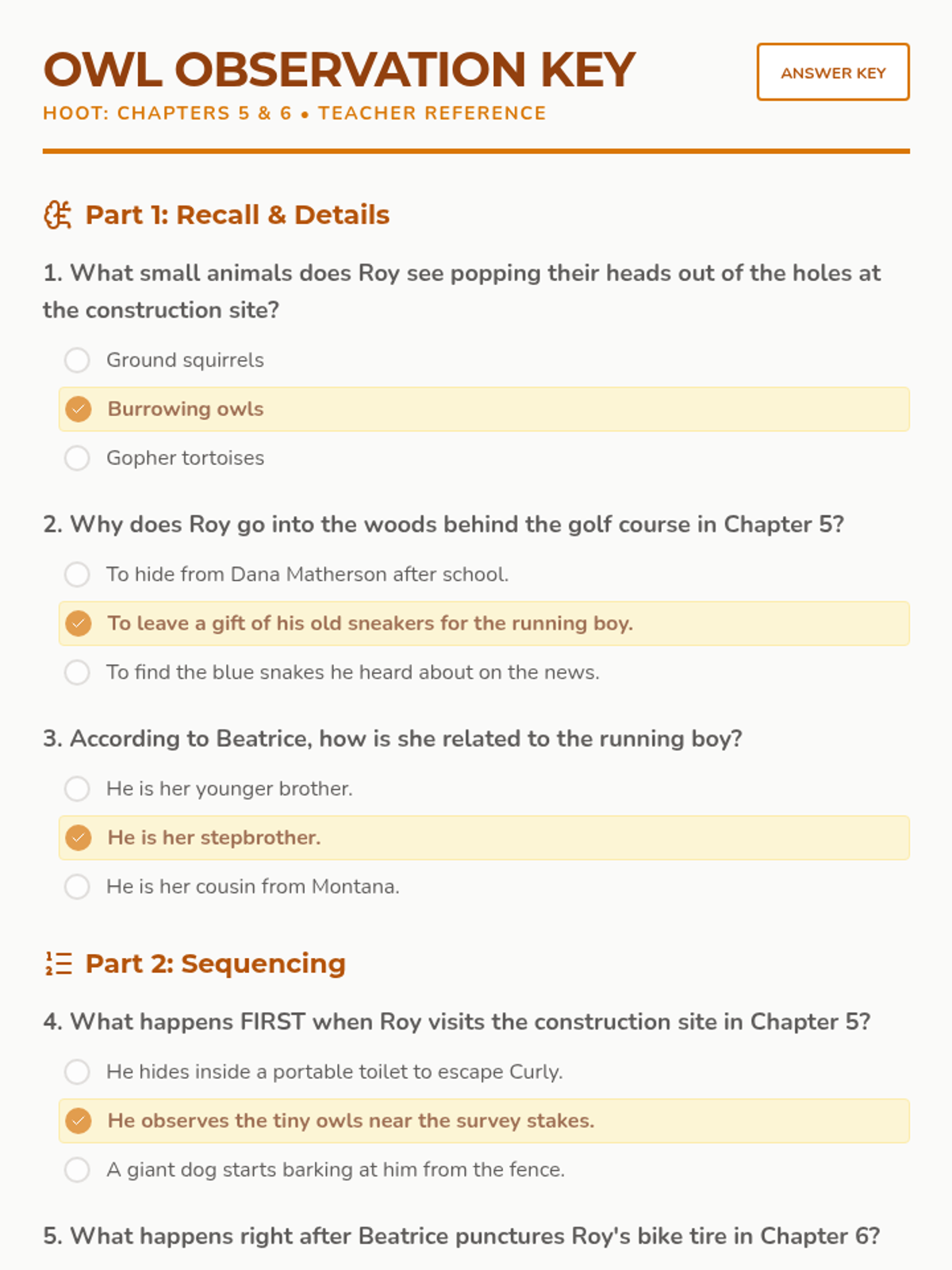
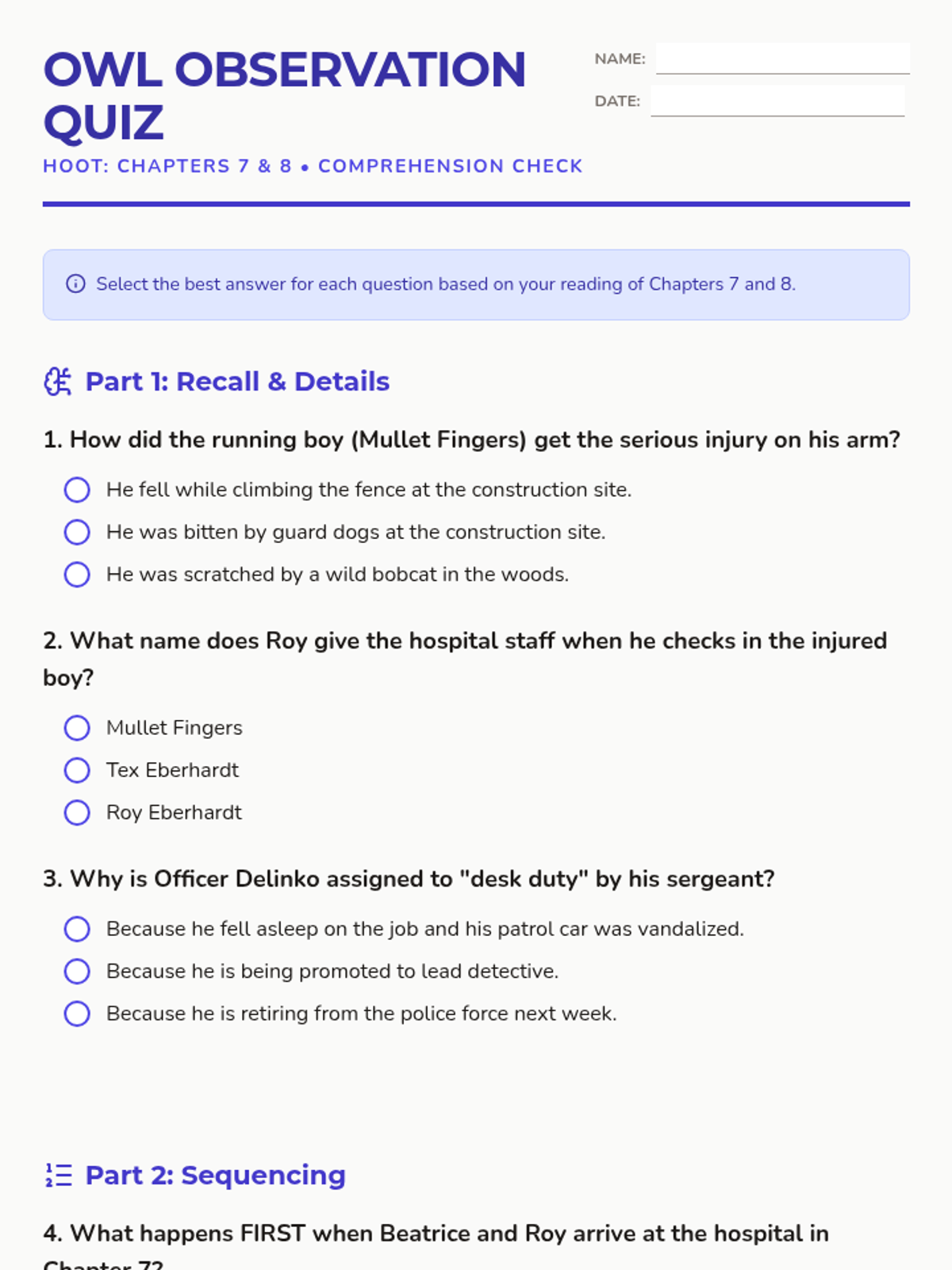
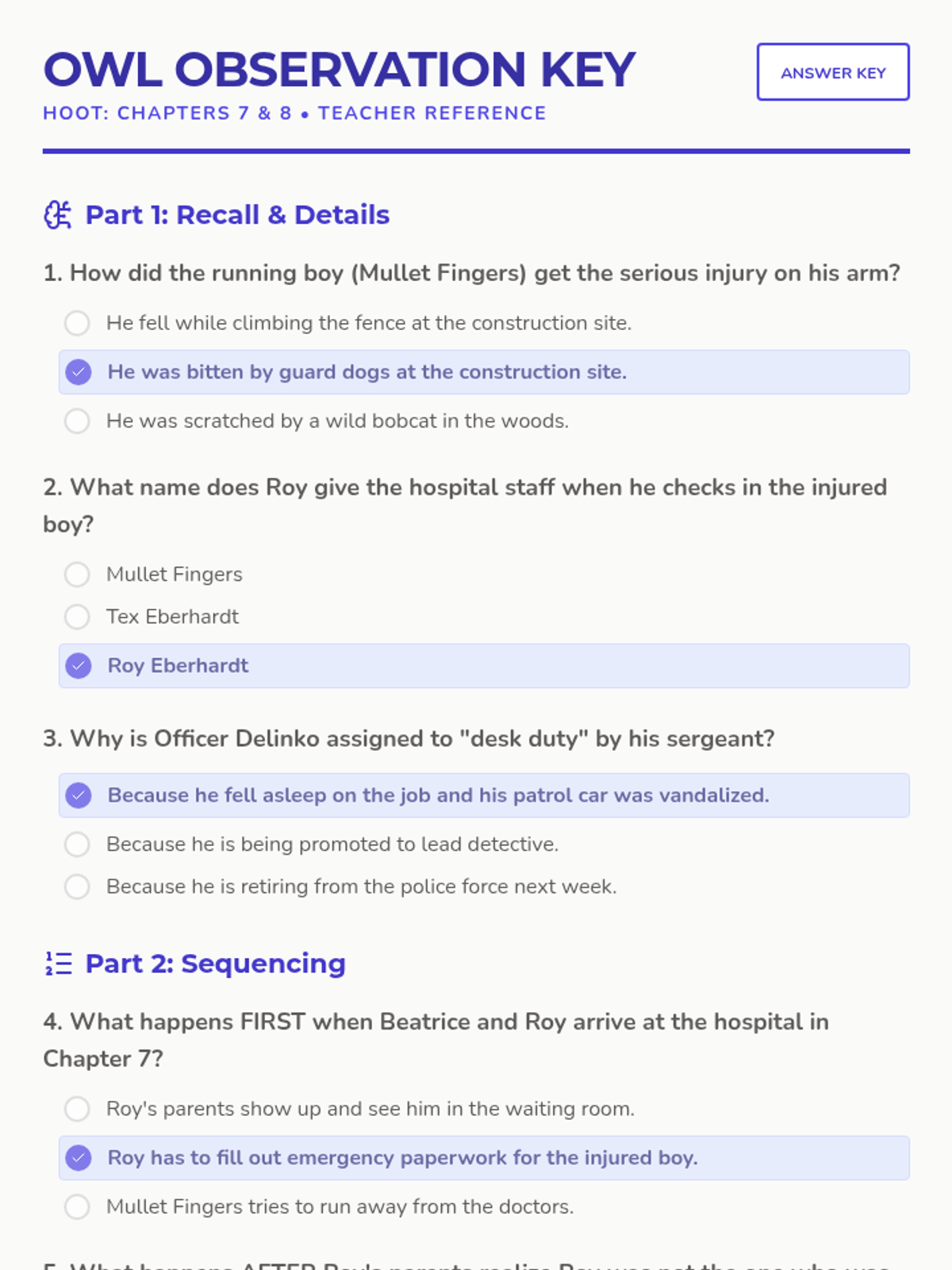
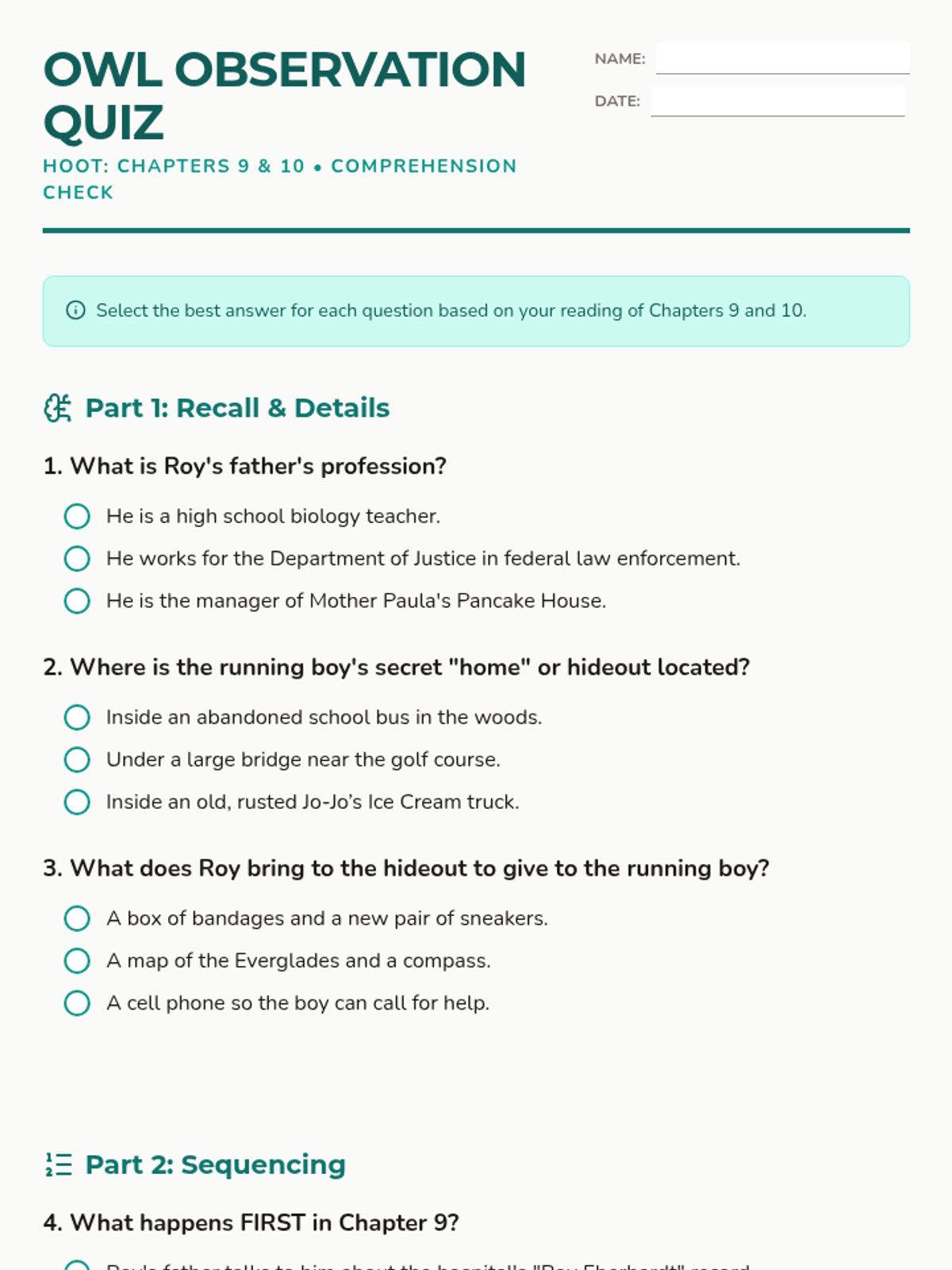
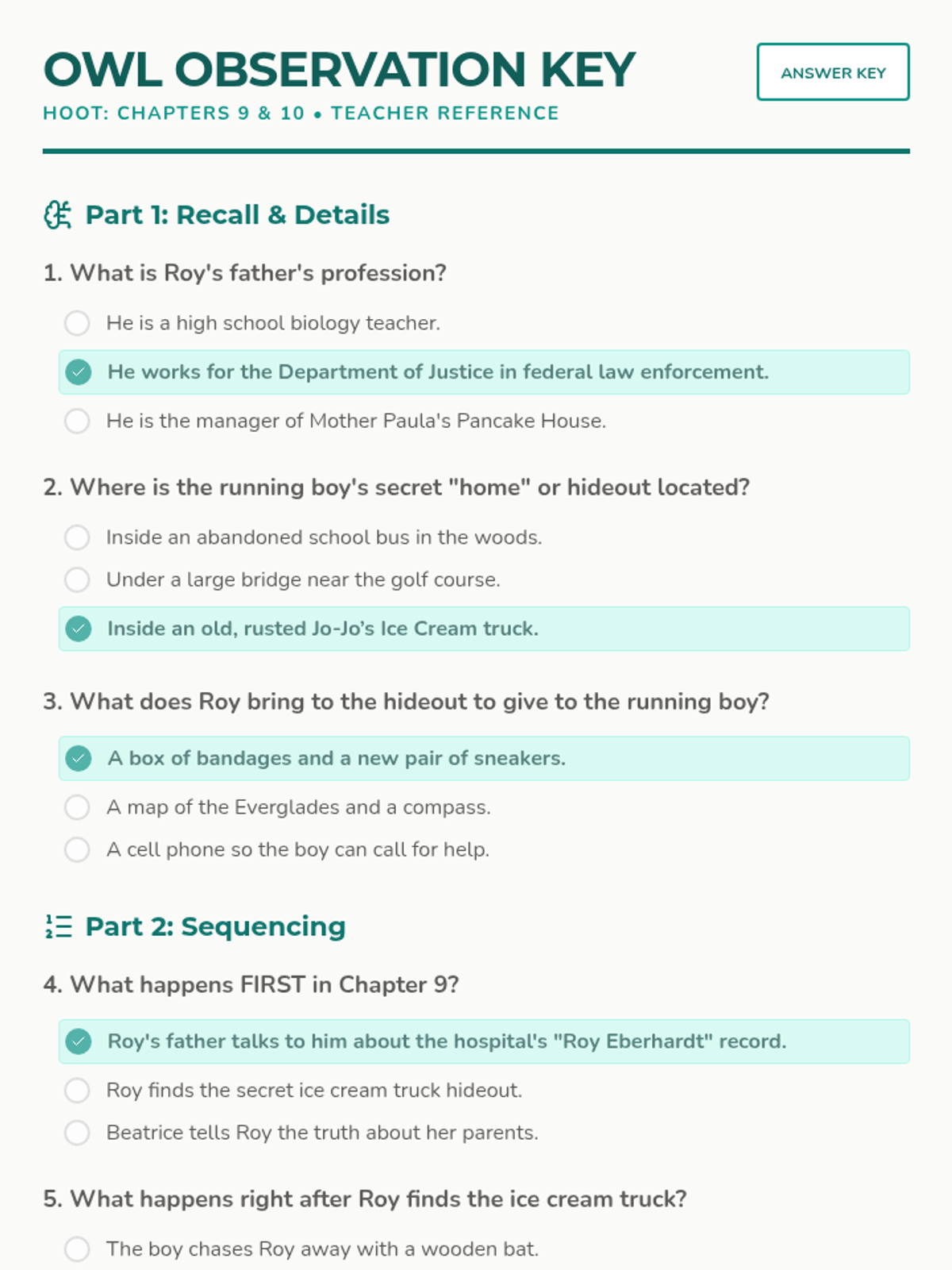
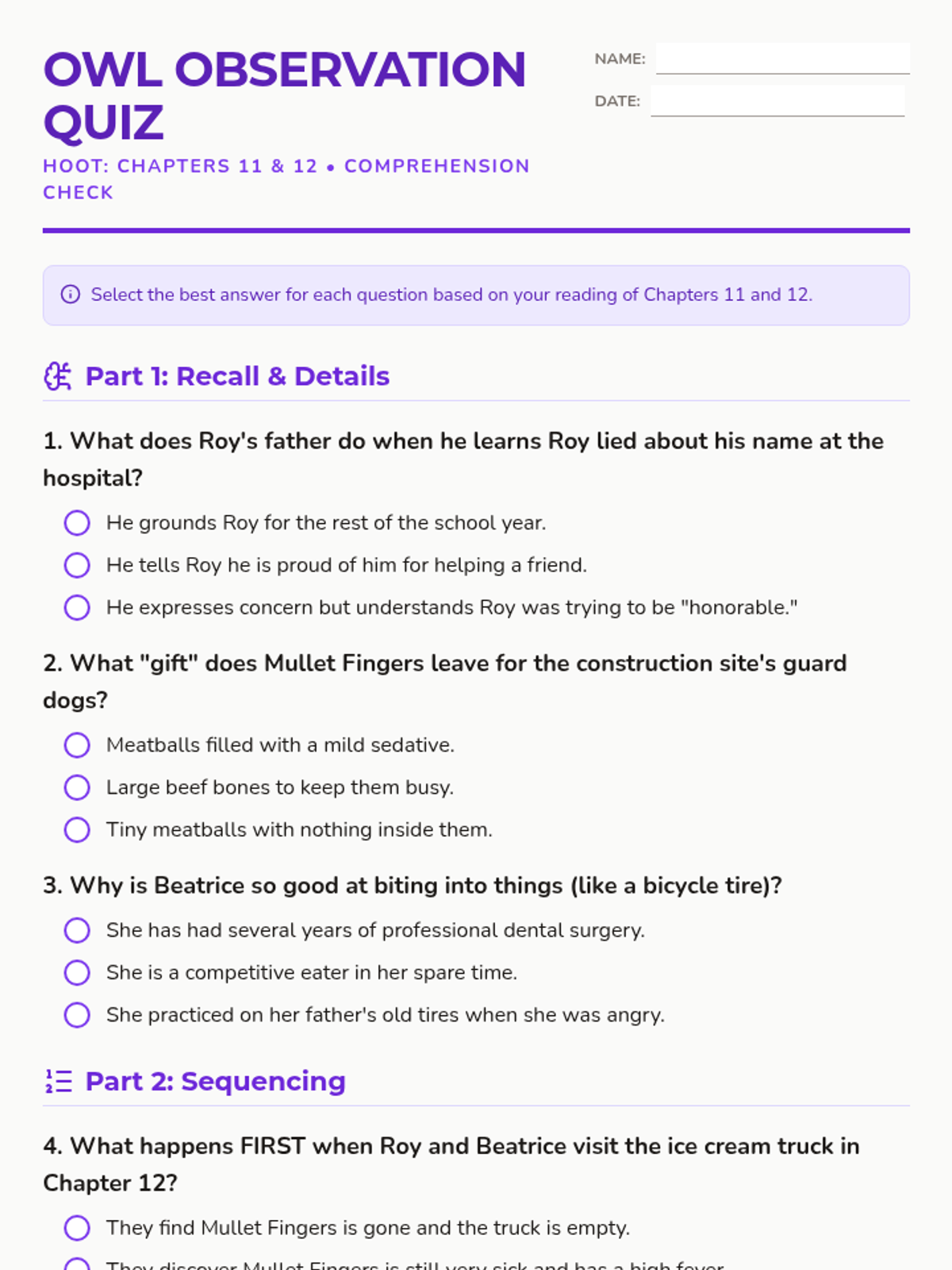
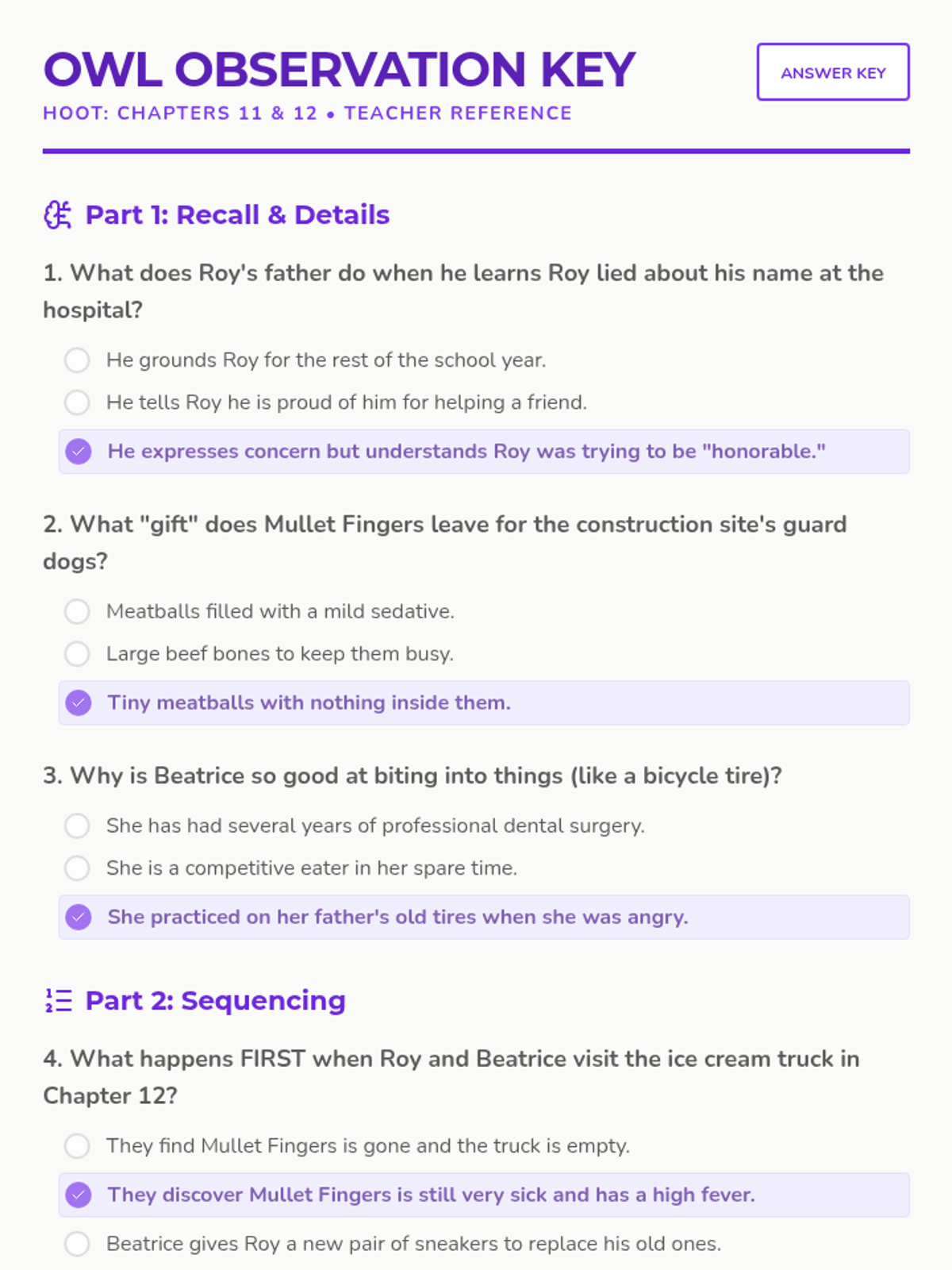
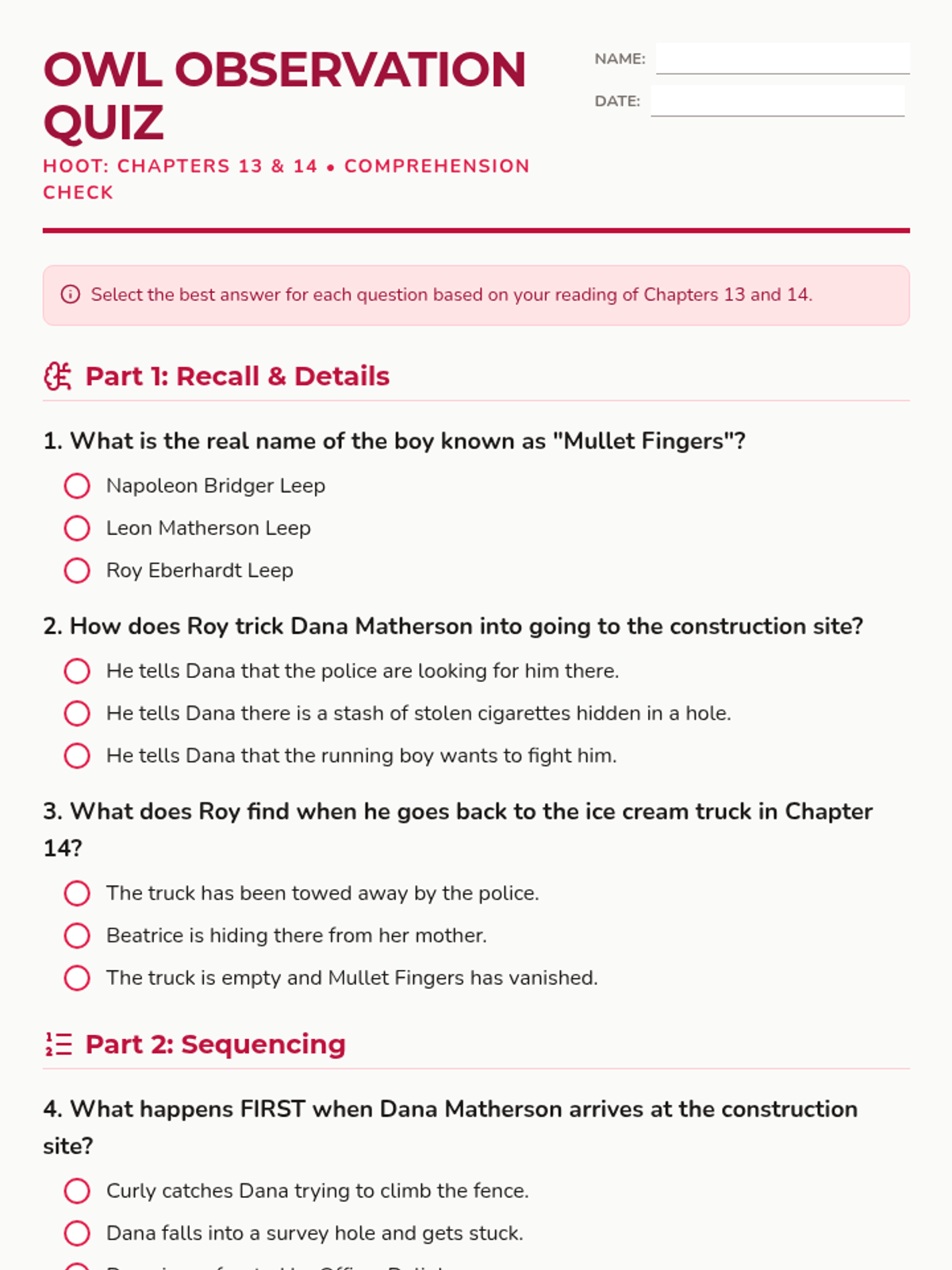
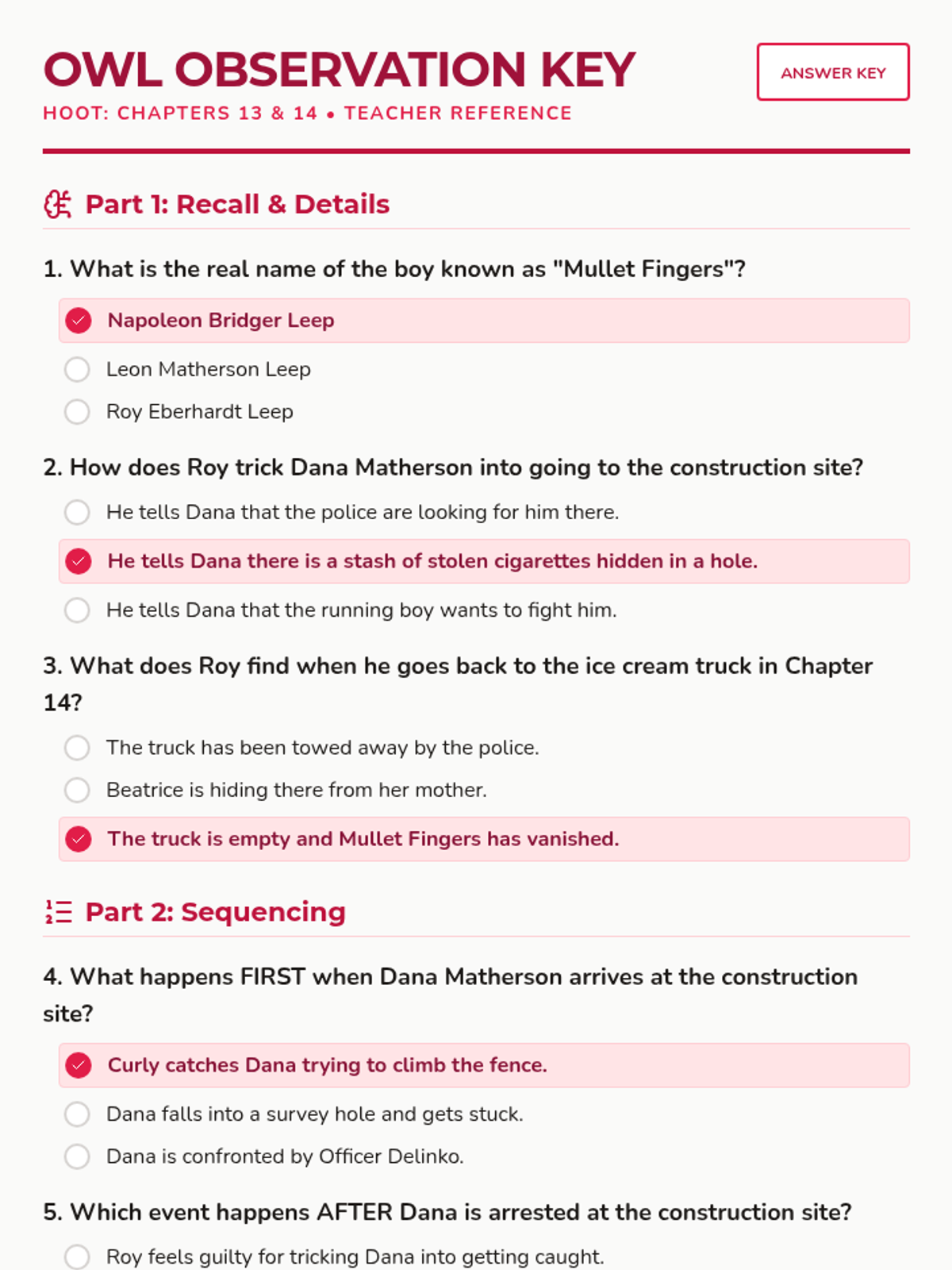
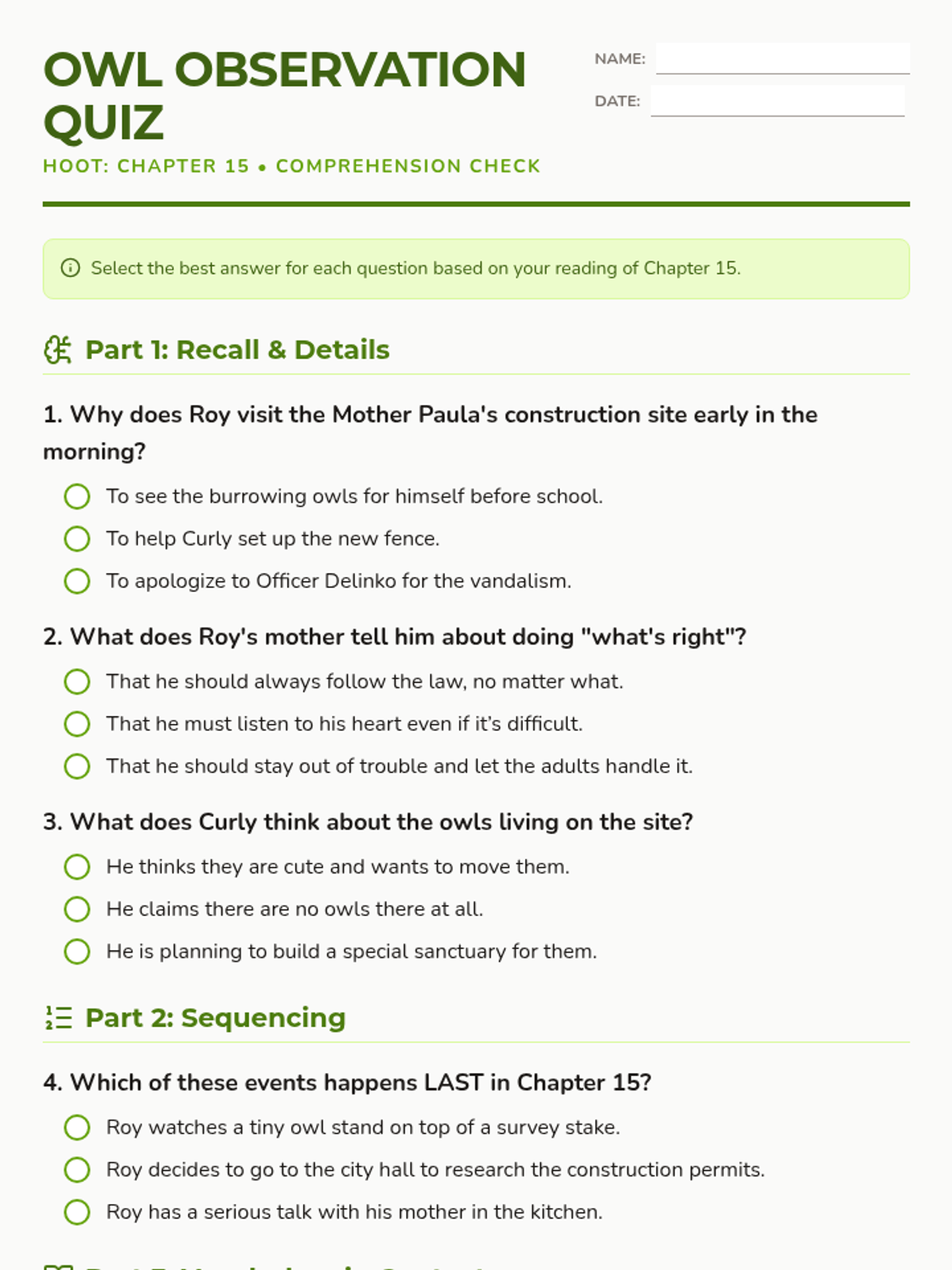
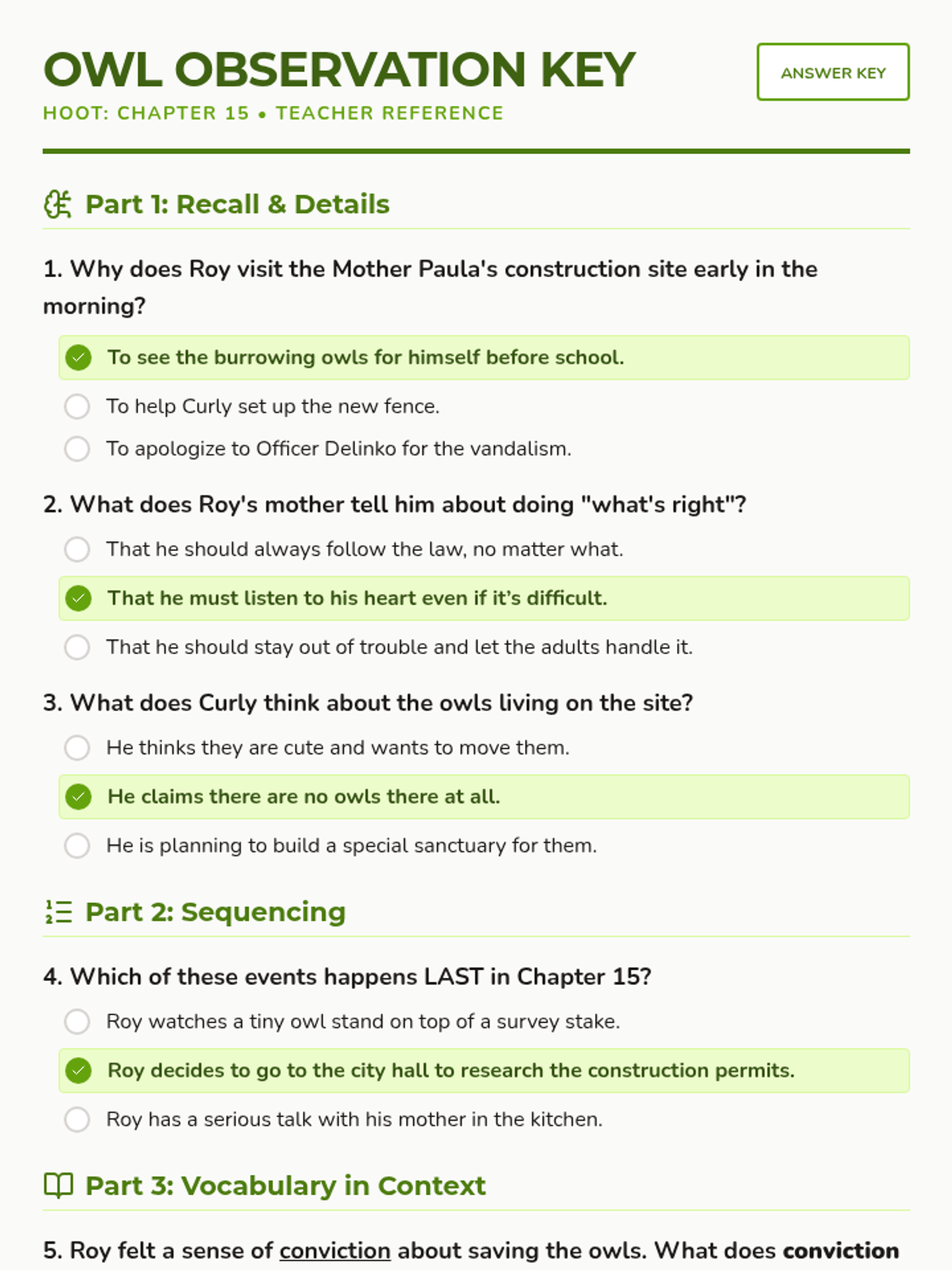
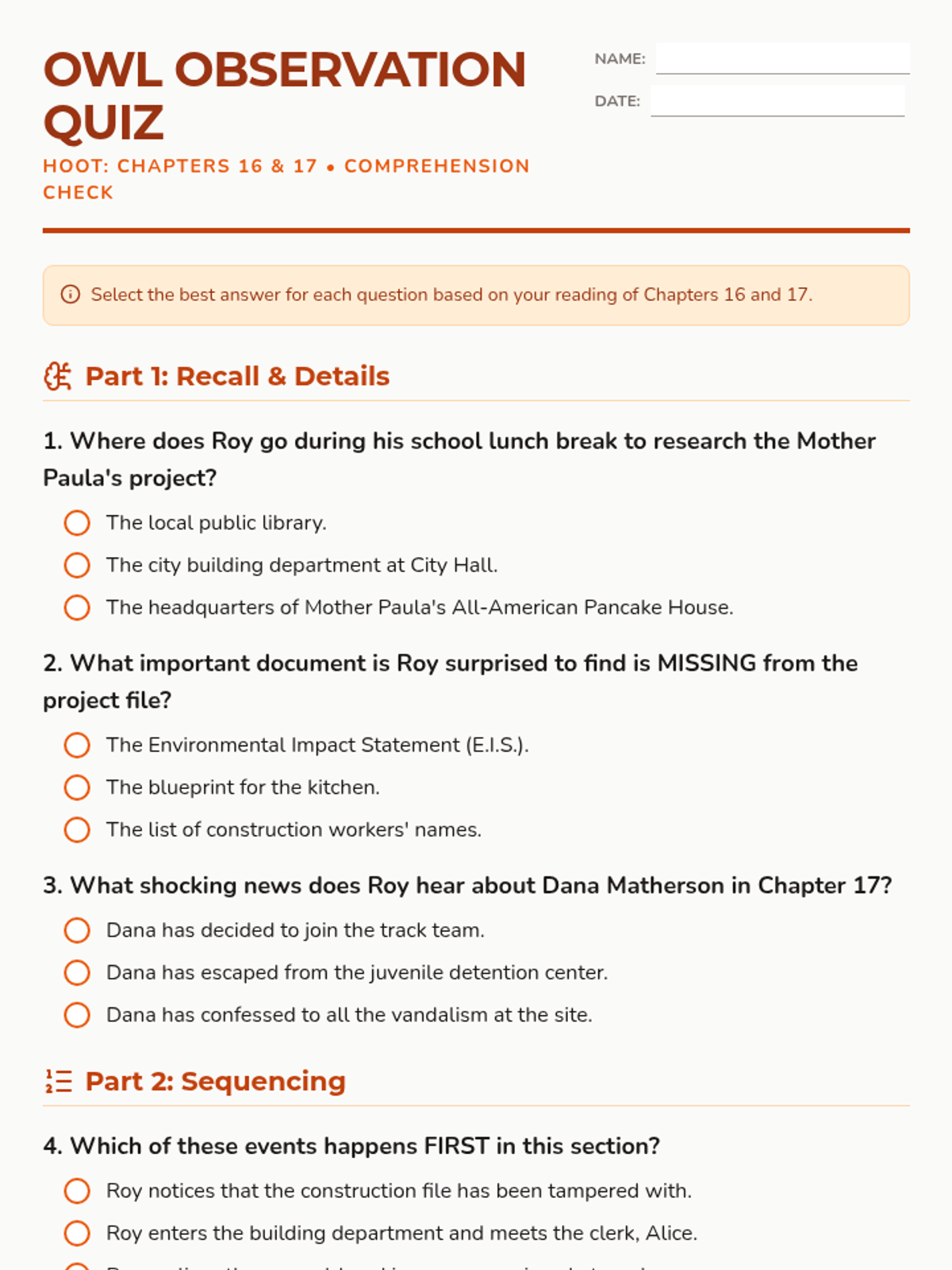
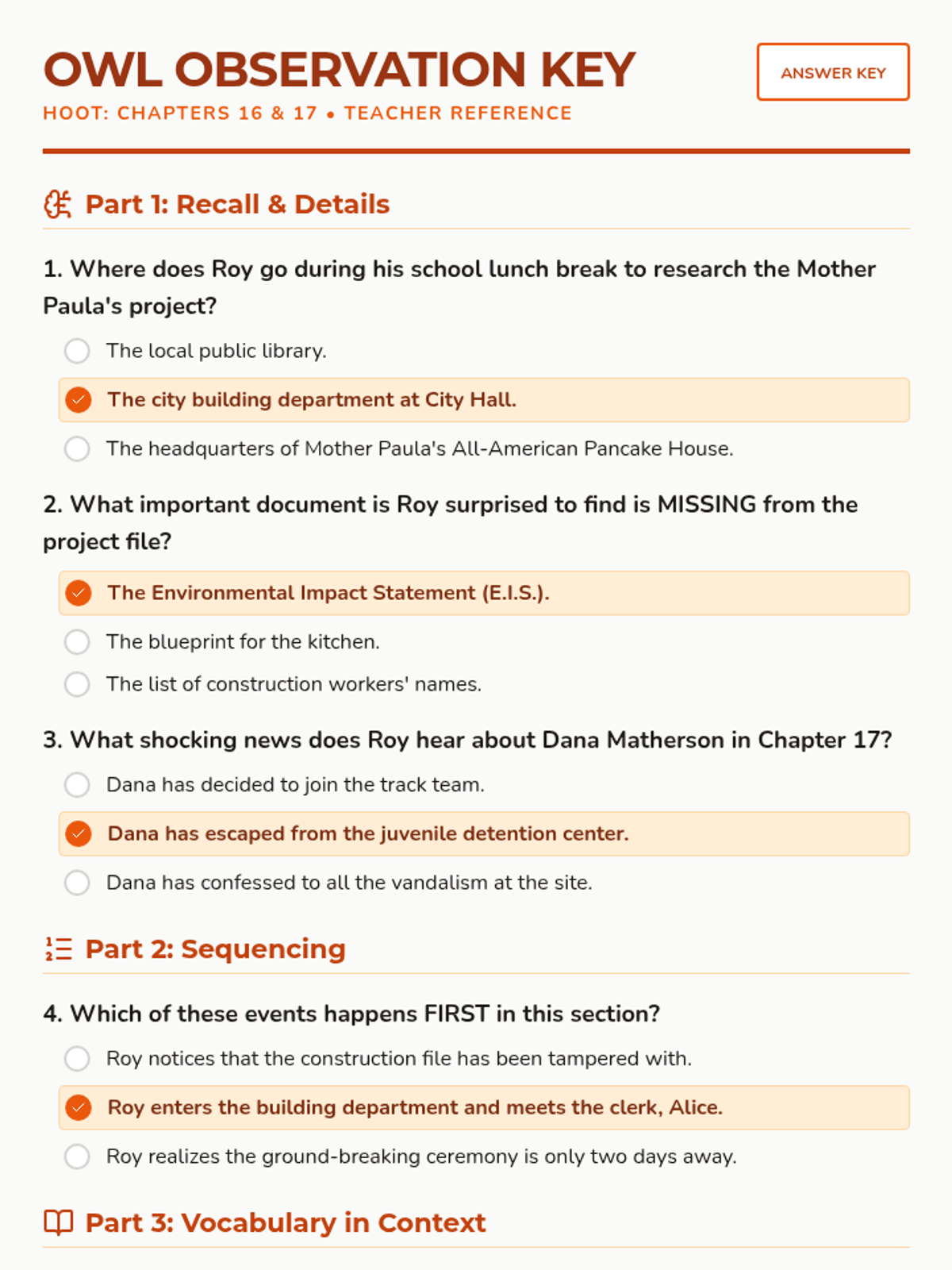
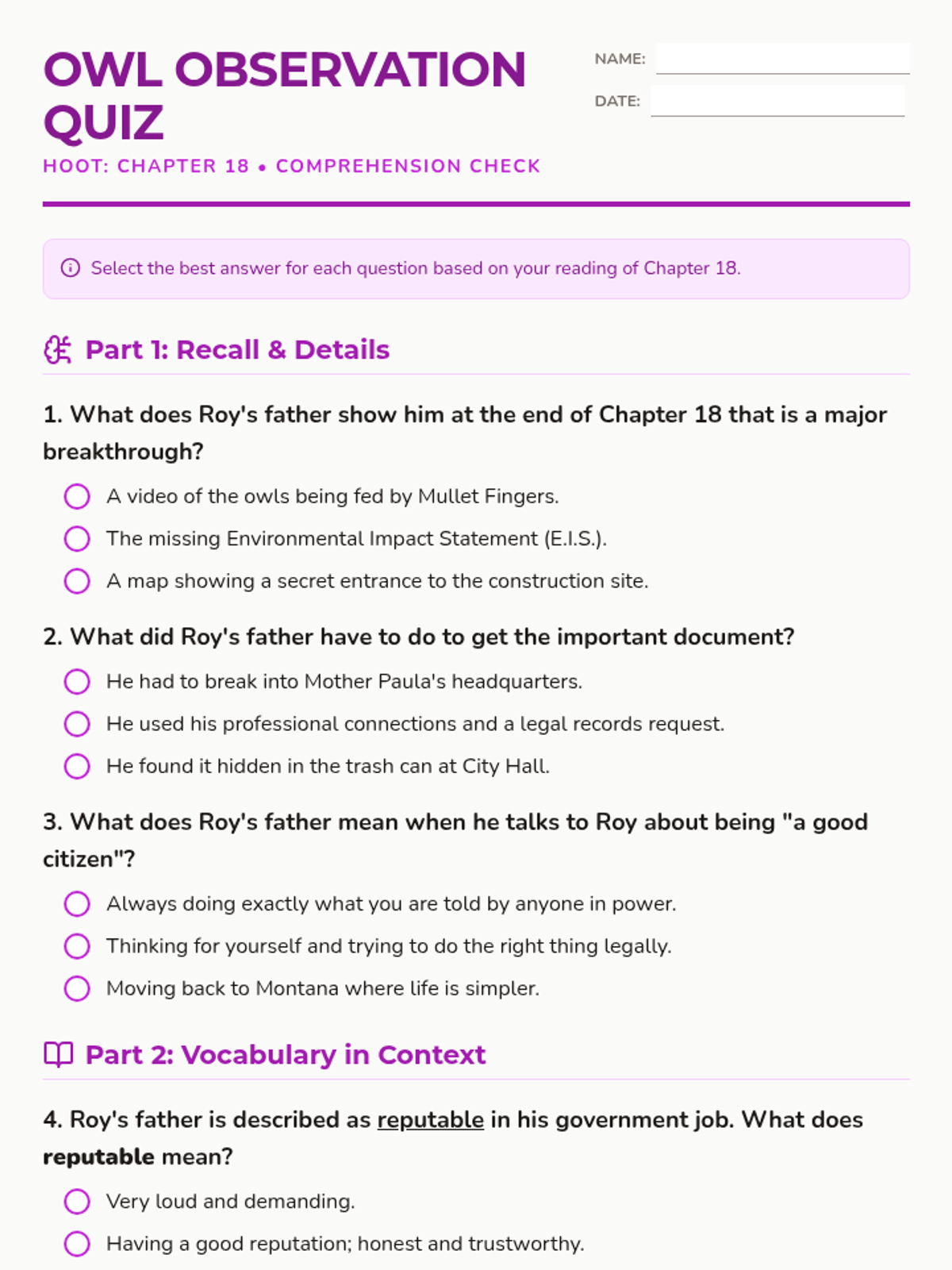
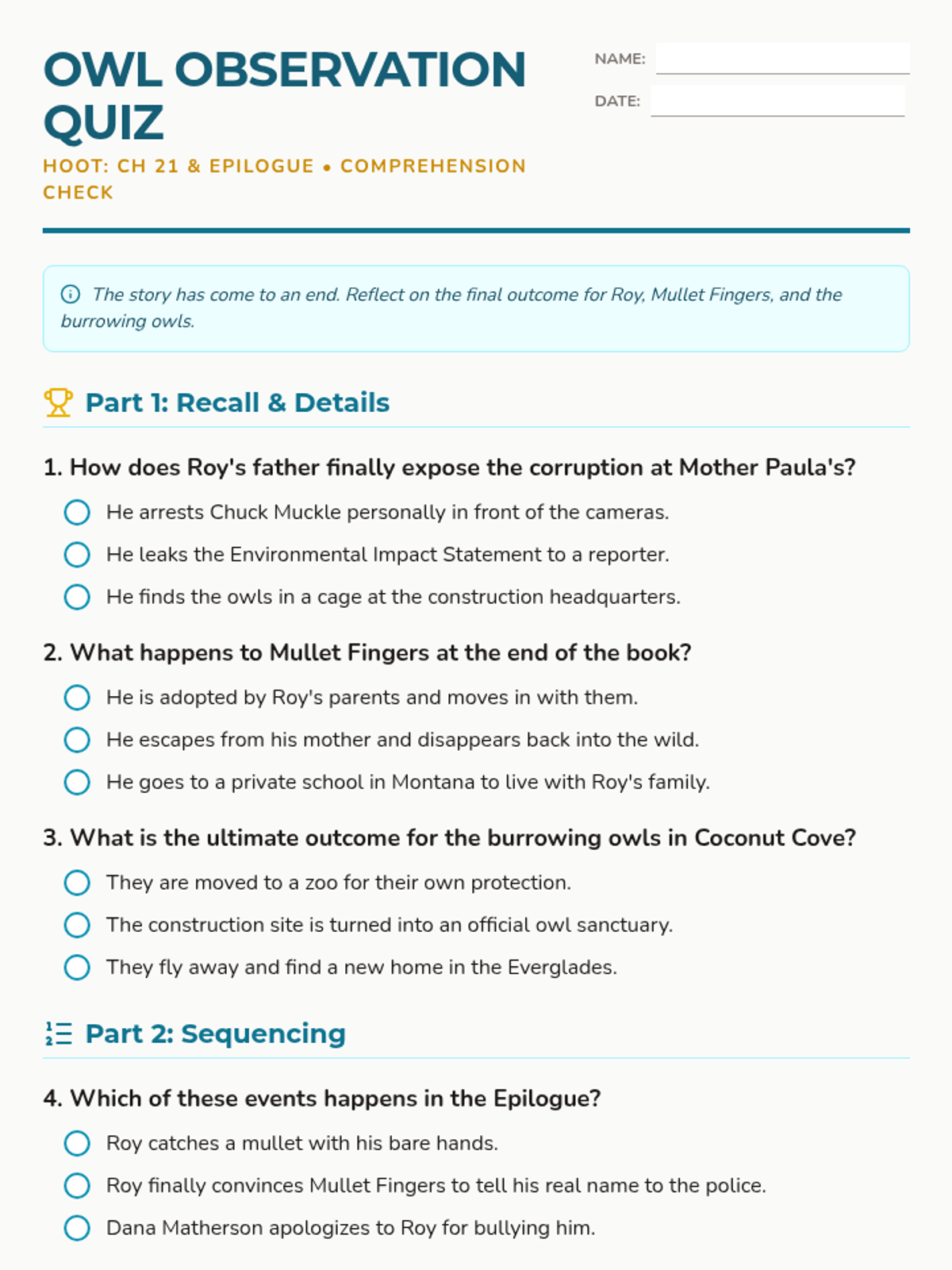
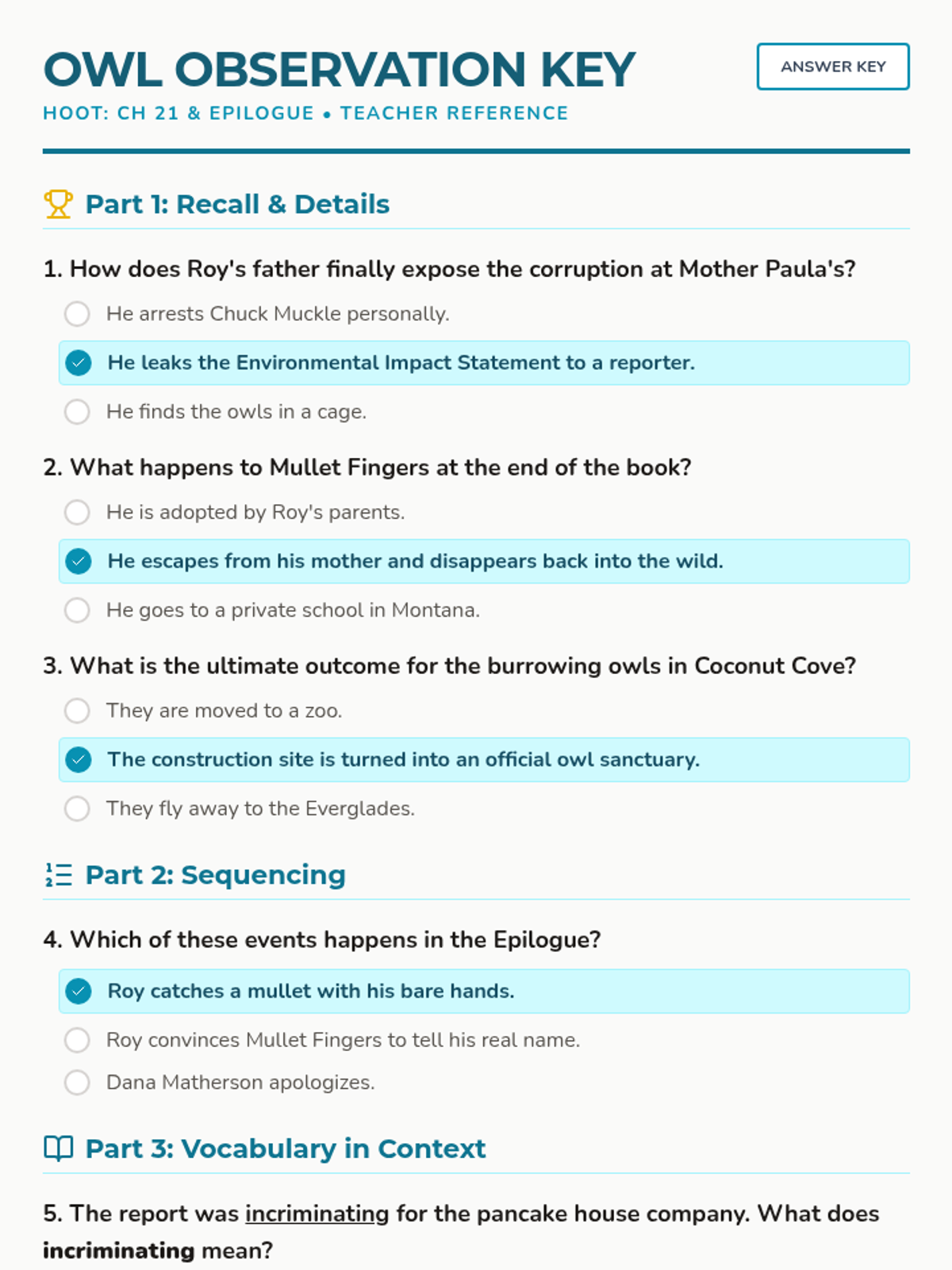
A focused exploration of the opening chapters of Carl Hiaasen's Hoot, introducing Roy Eberhardt, the mysterious running boy, and the conflict at the pancake house construction site.
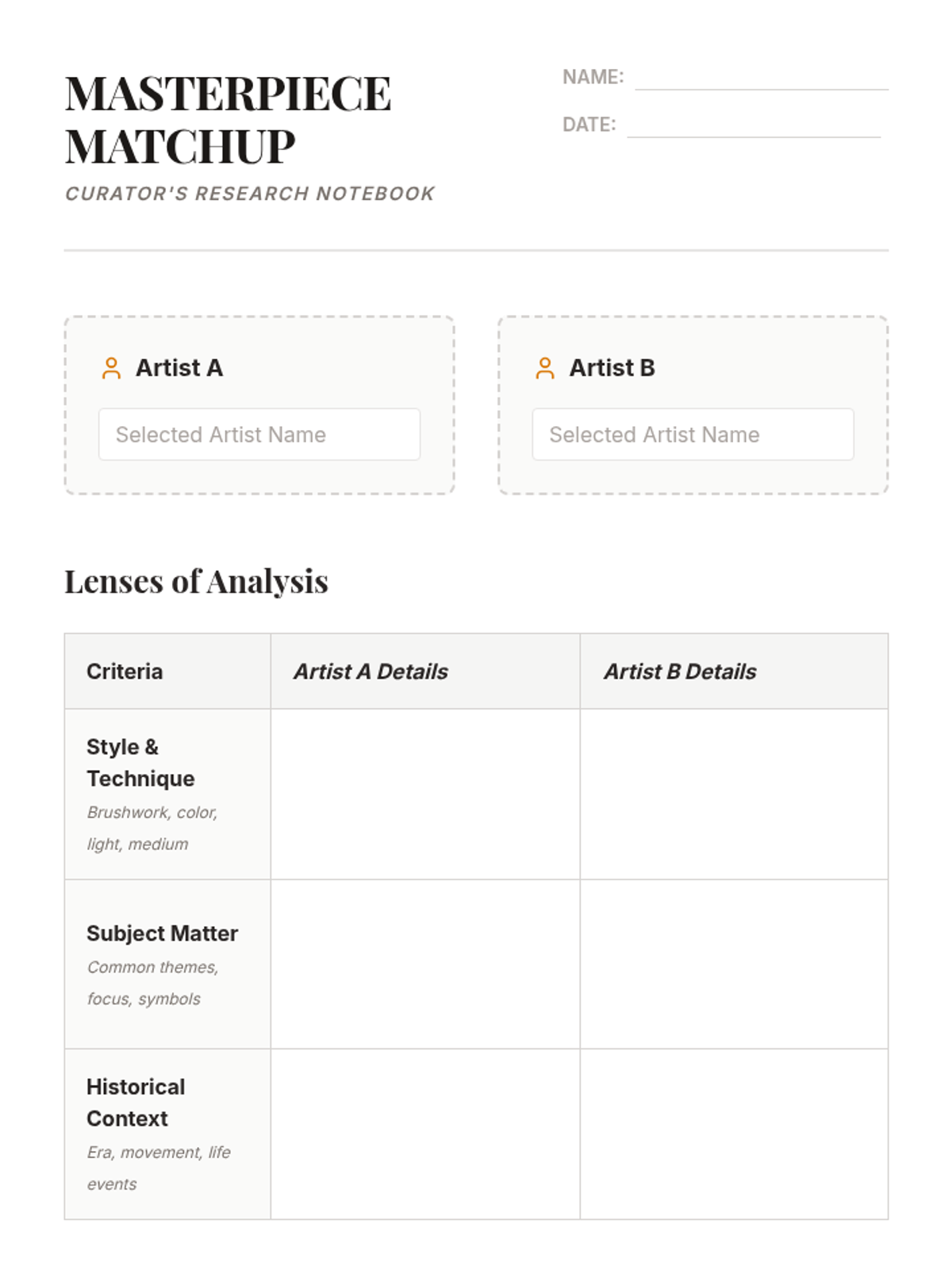
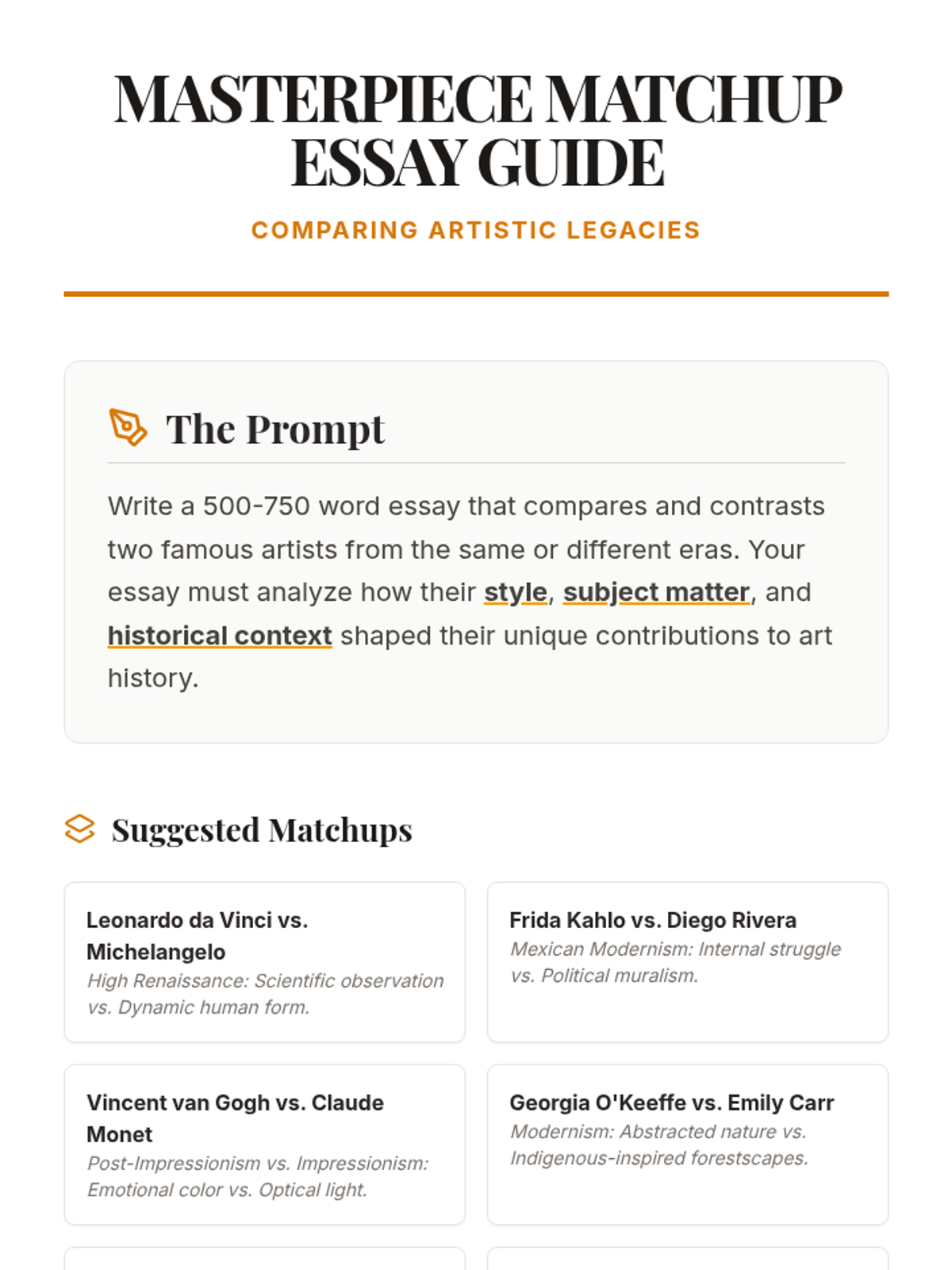
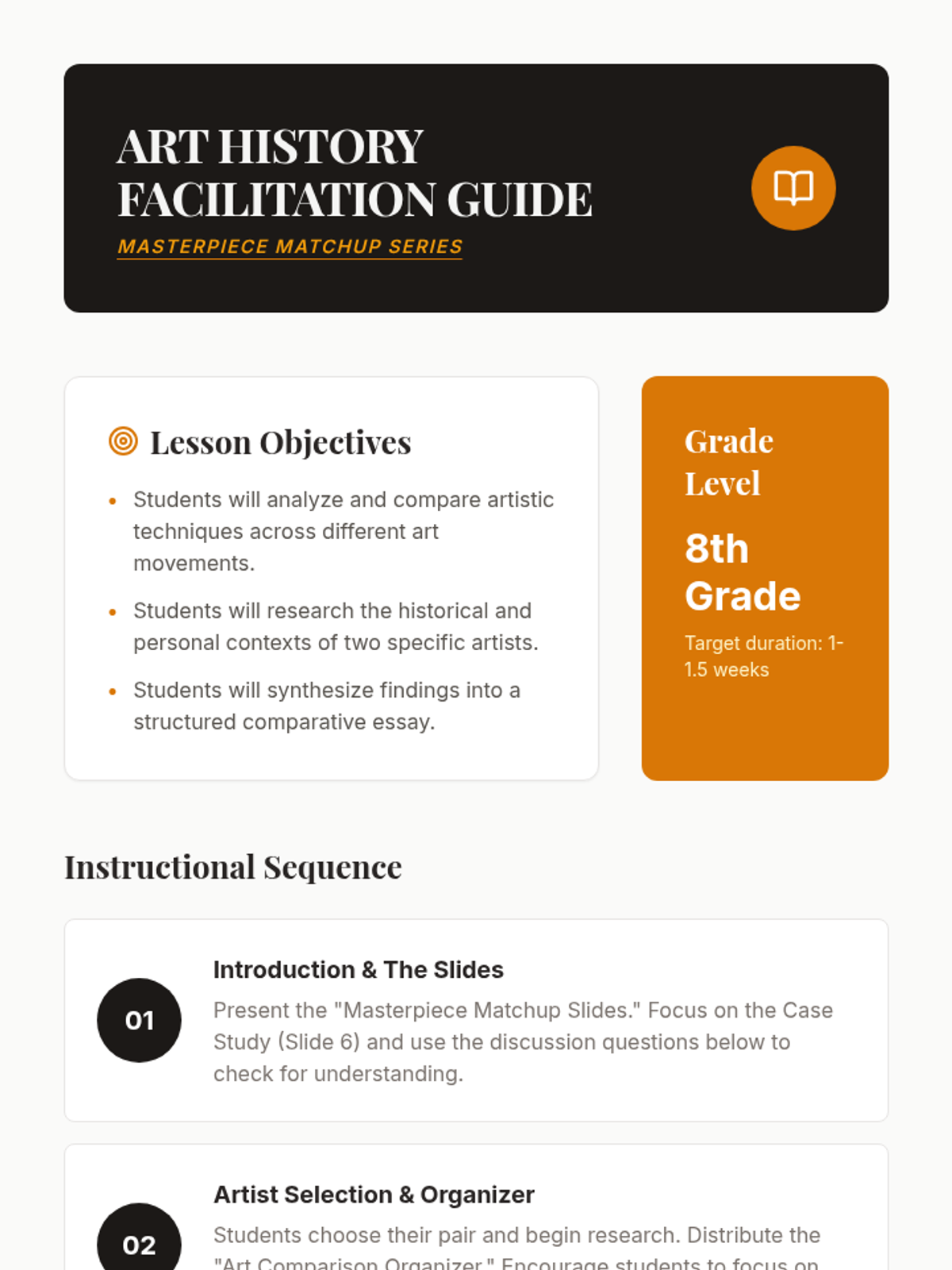
A lesson focused on teaching 8th-grade students how to analyze and compare famous artists through their techniques, subjects, and historical contexts, culminating in a comparative essay.
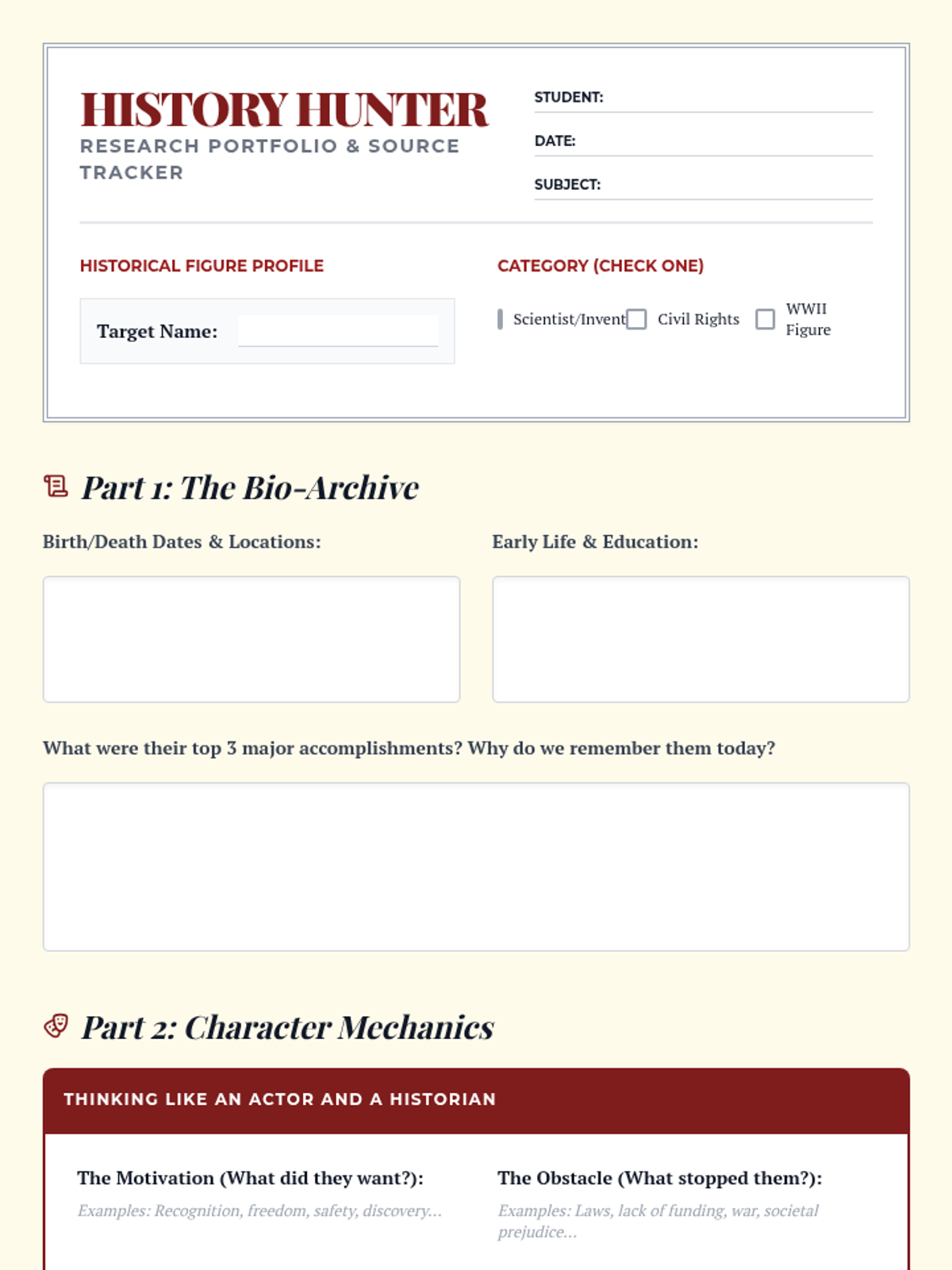
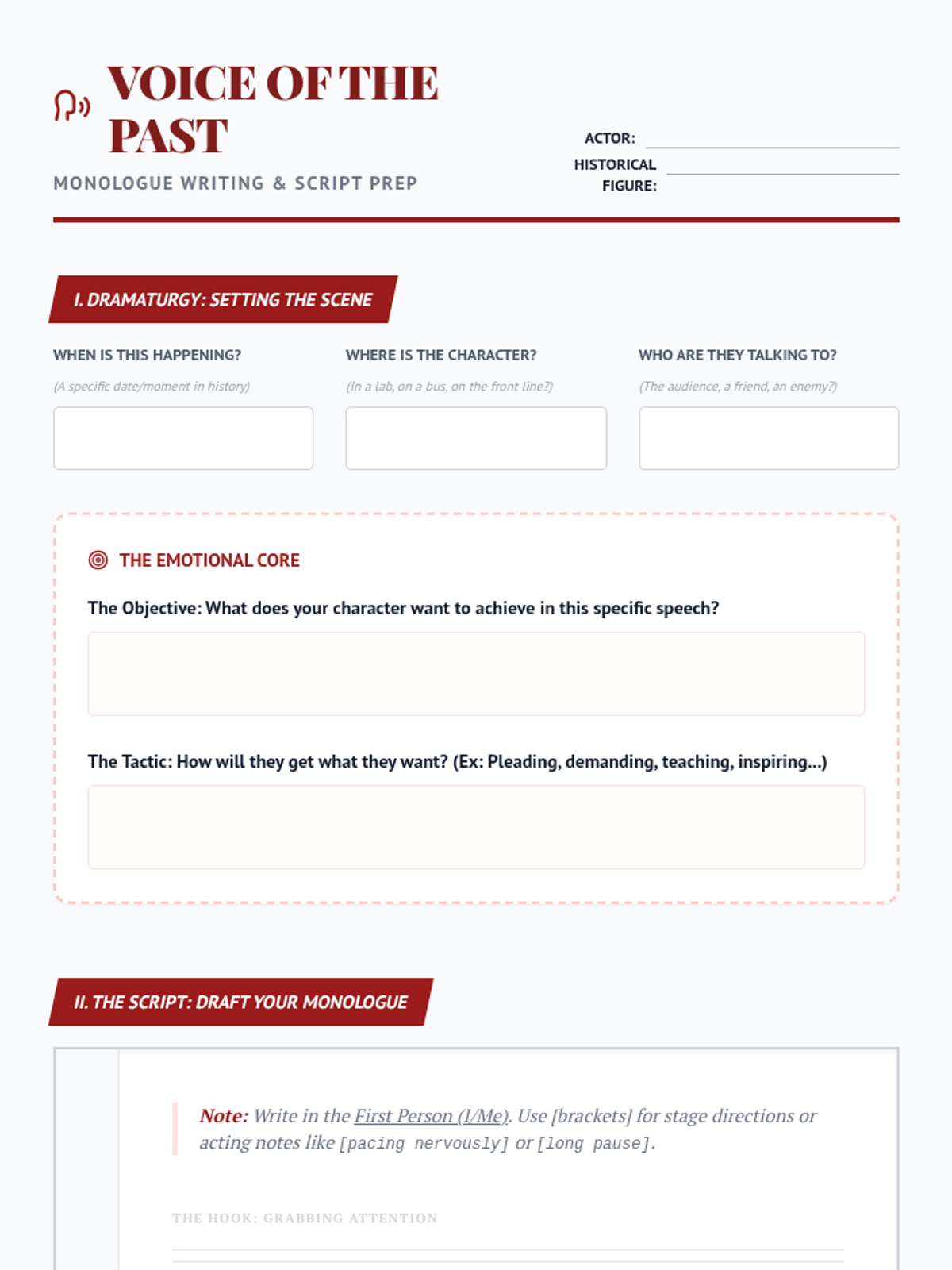
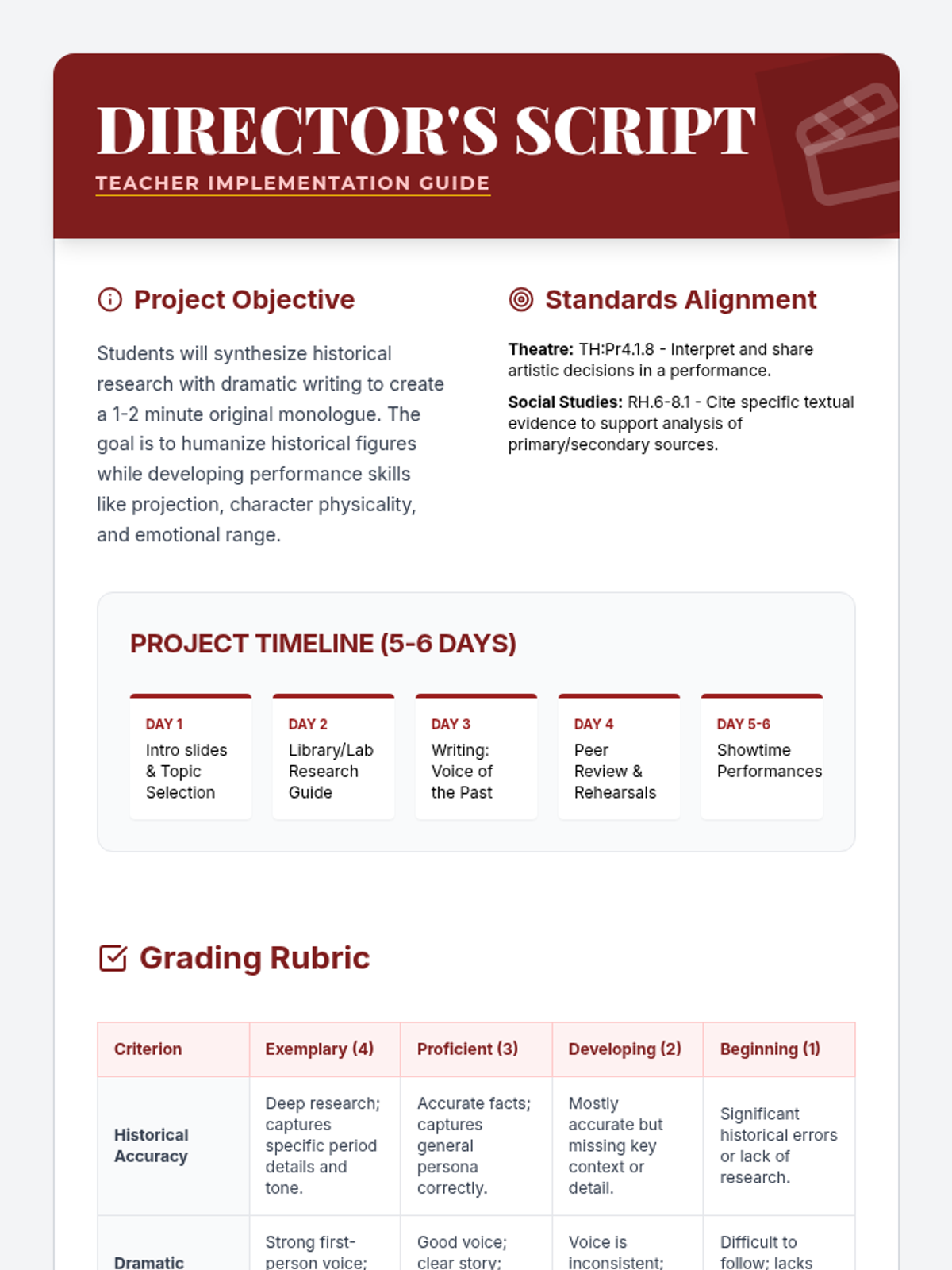
A cross-curricular project where students research a significant historical figure from the fields of science, civil rights, or WWII and transform their findings into a compelling 1-2 minute theatrical monologue. Students develop both historical inquiry skills and dramatic performance techniques.
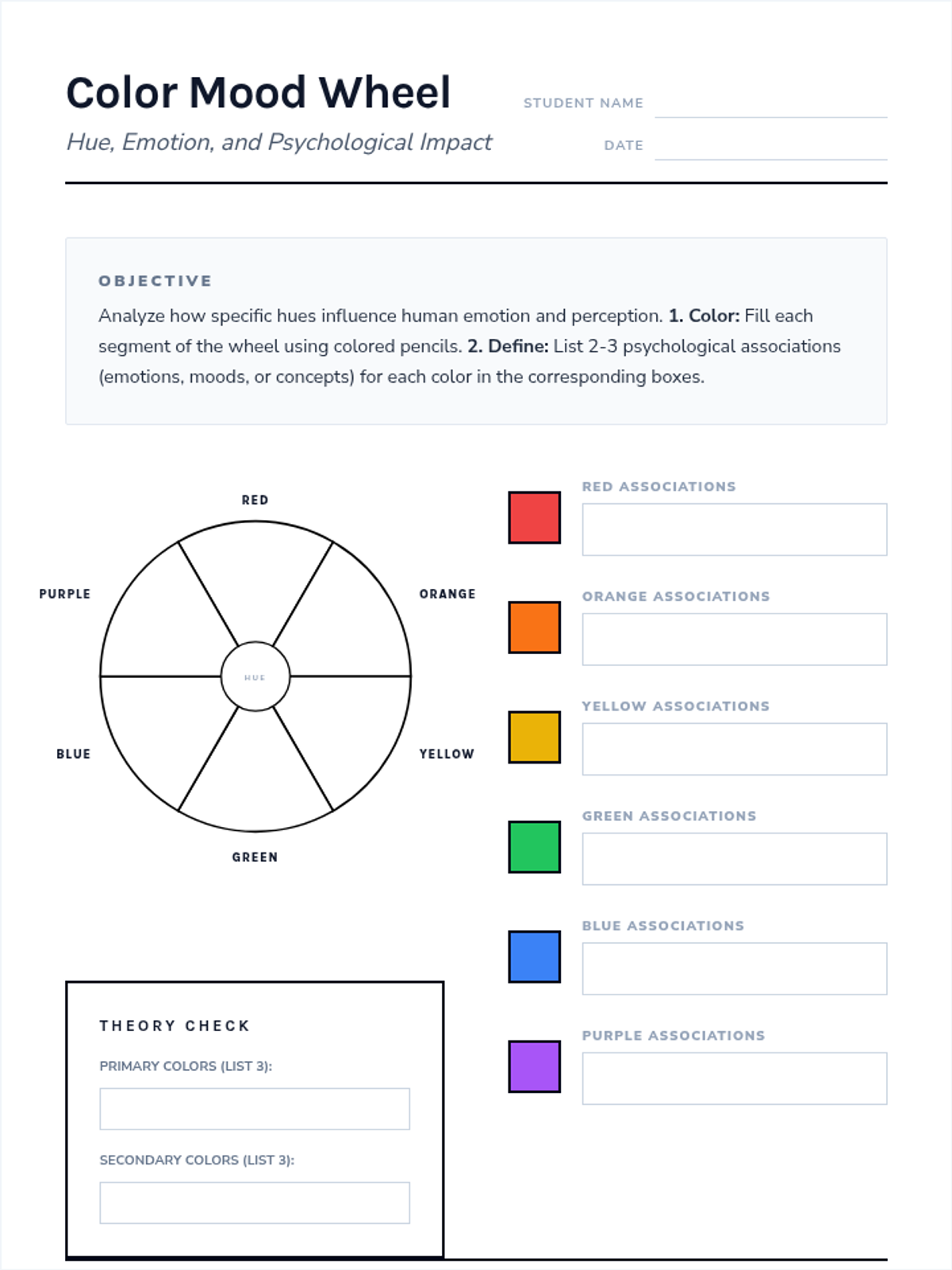
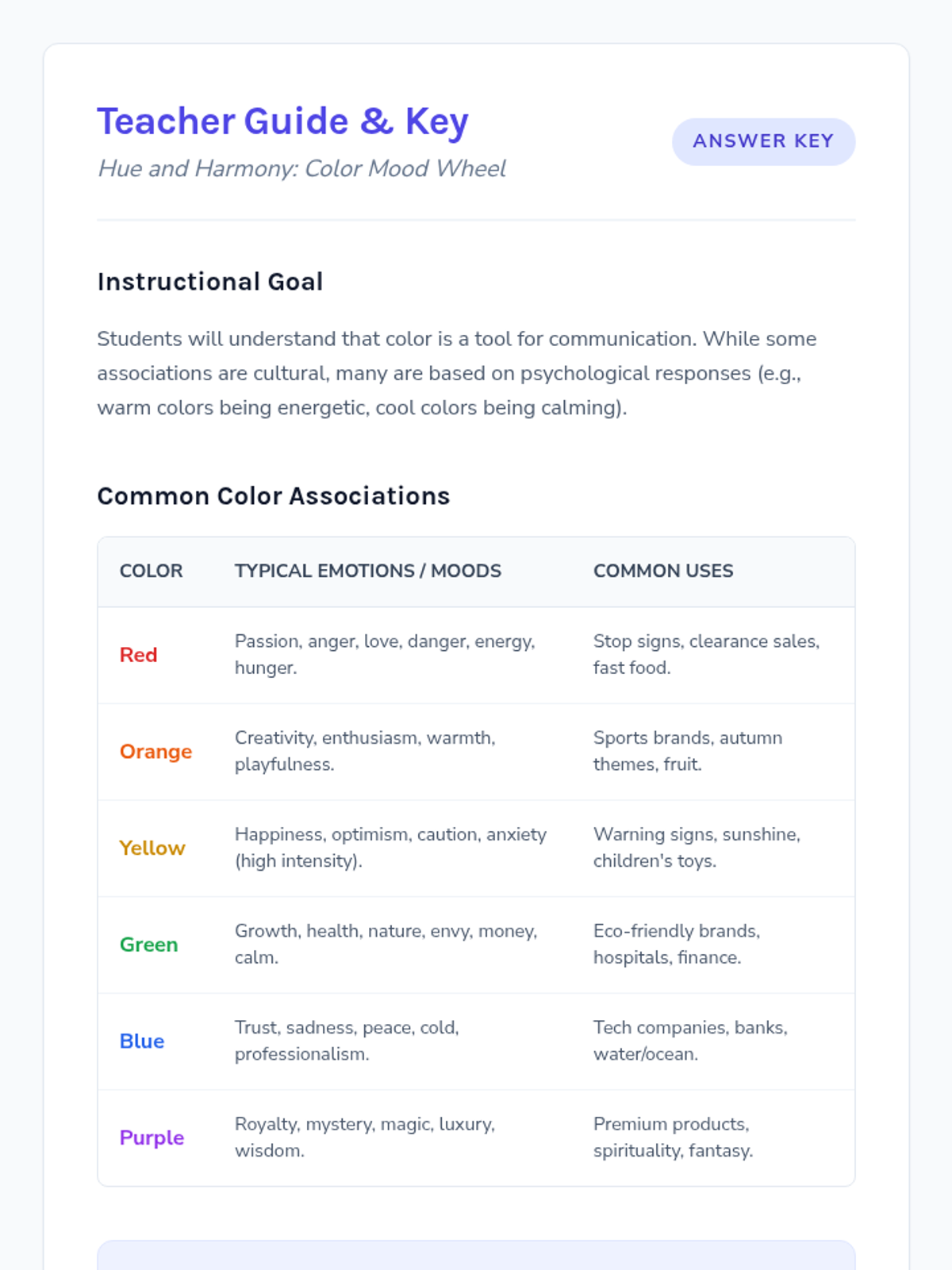
This lesson explores the psychological impact of colors and how they influence human emotion and perception in art and design.
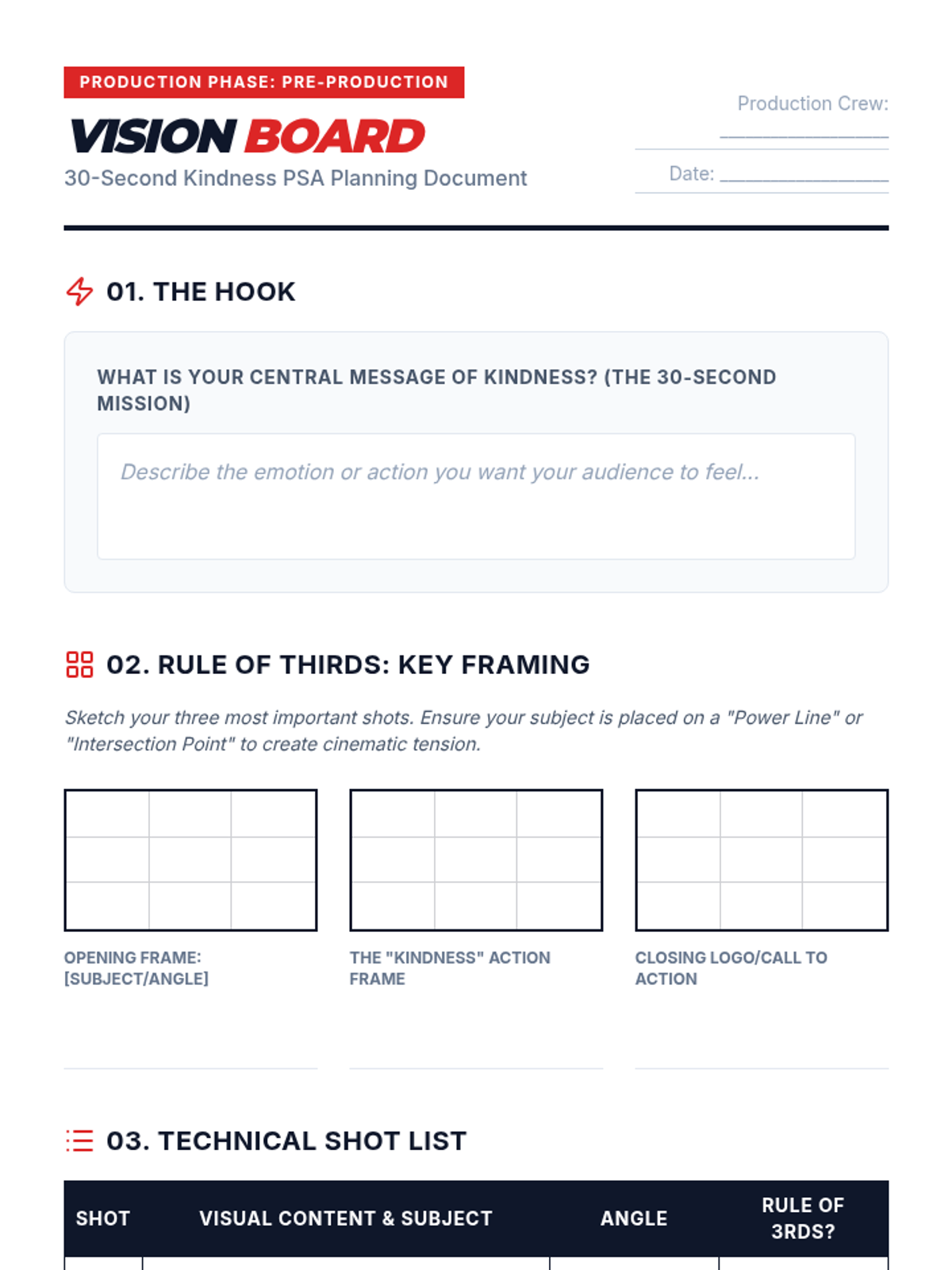
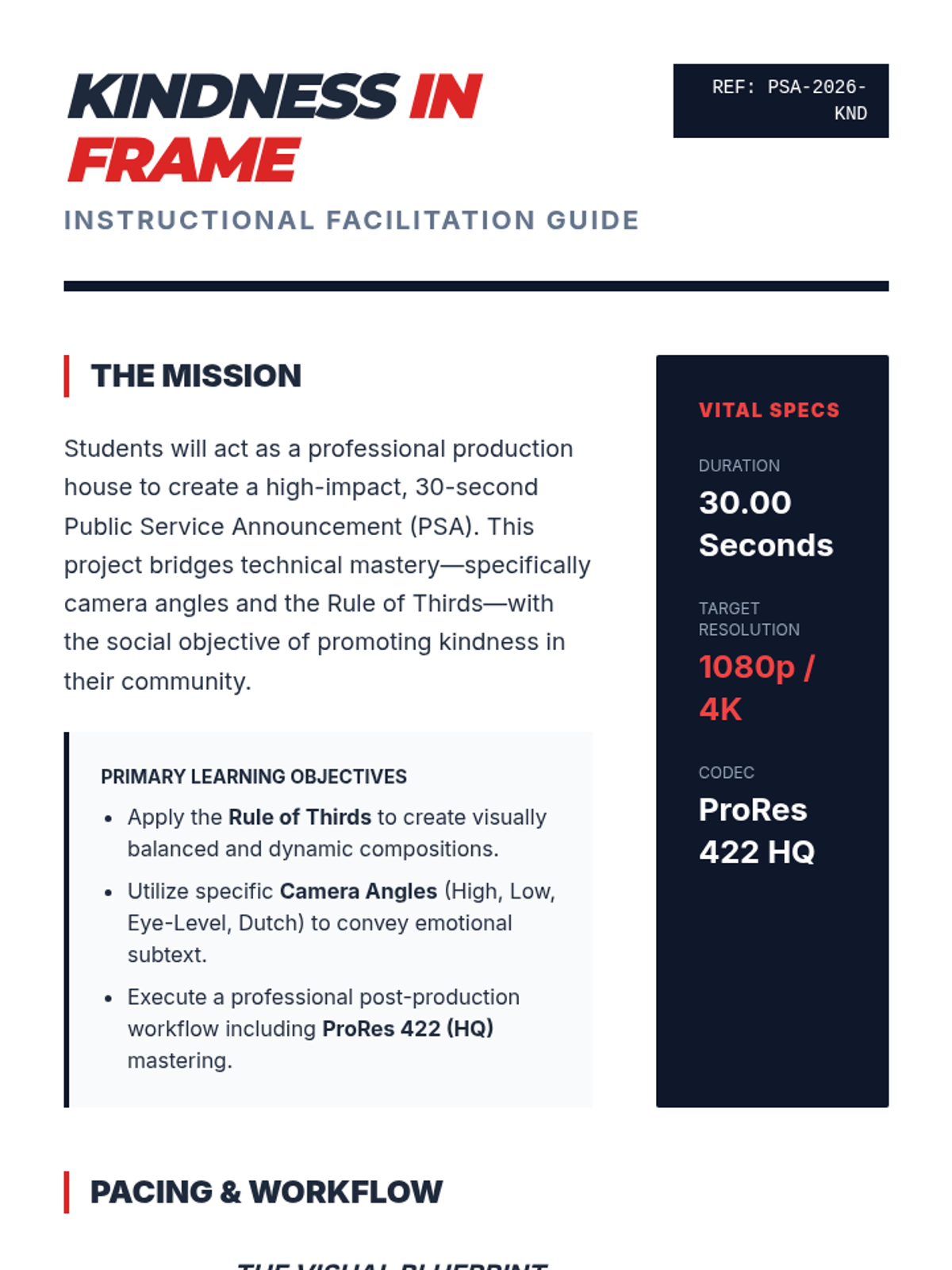
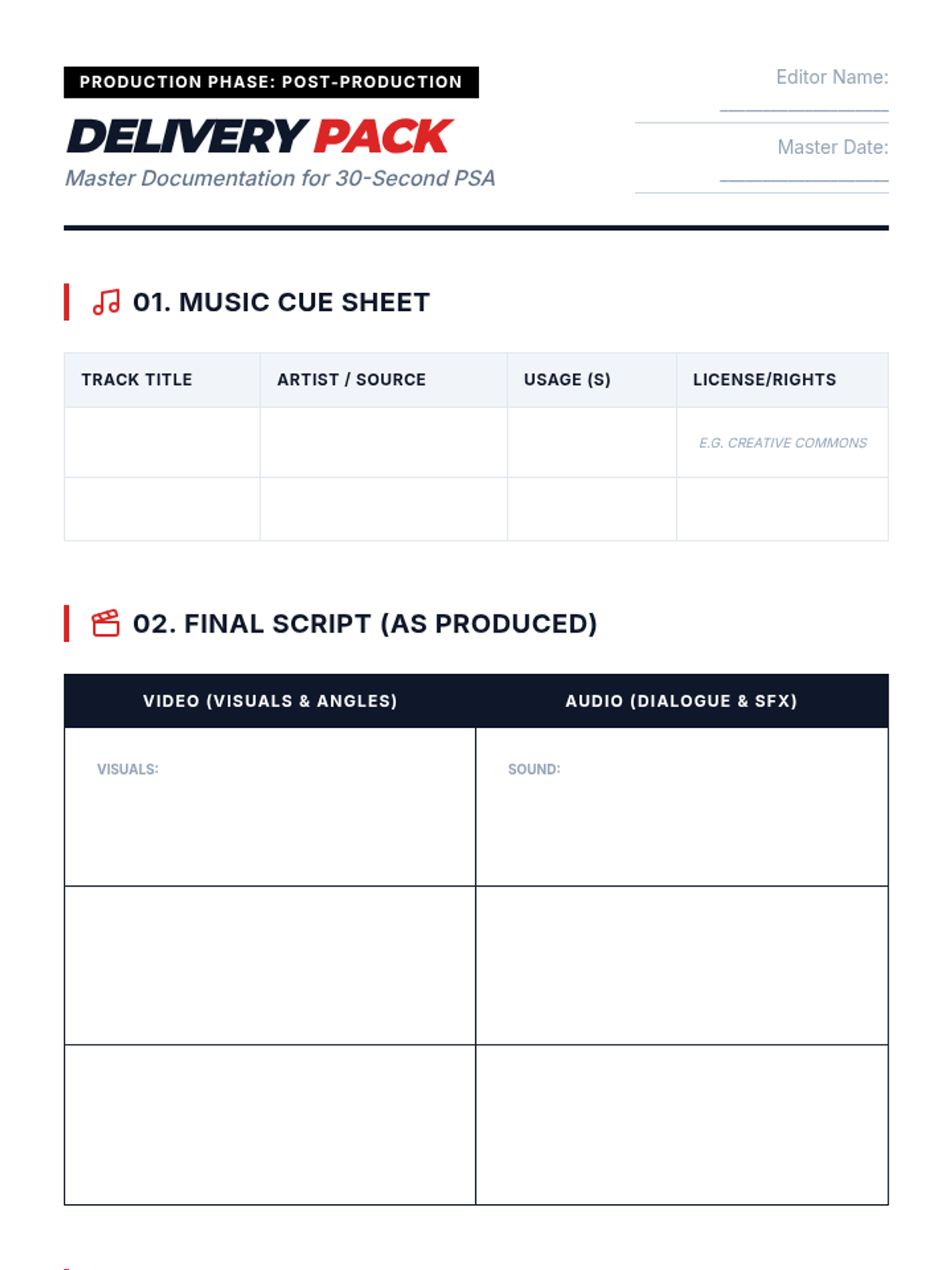
A project-based lesson where students create a 30-second kindness PSA, focusing on the technical mastery of camera angles, the rule of thirds, and professional delivery standards.
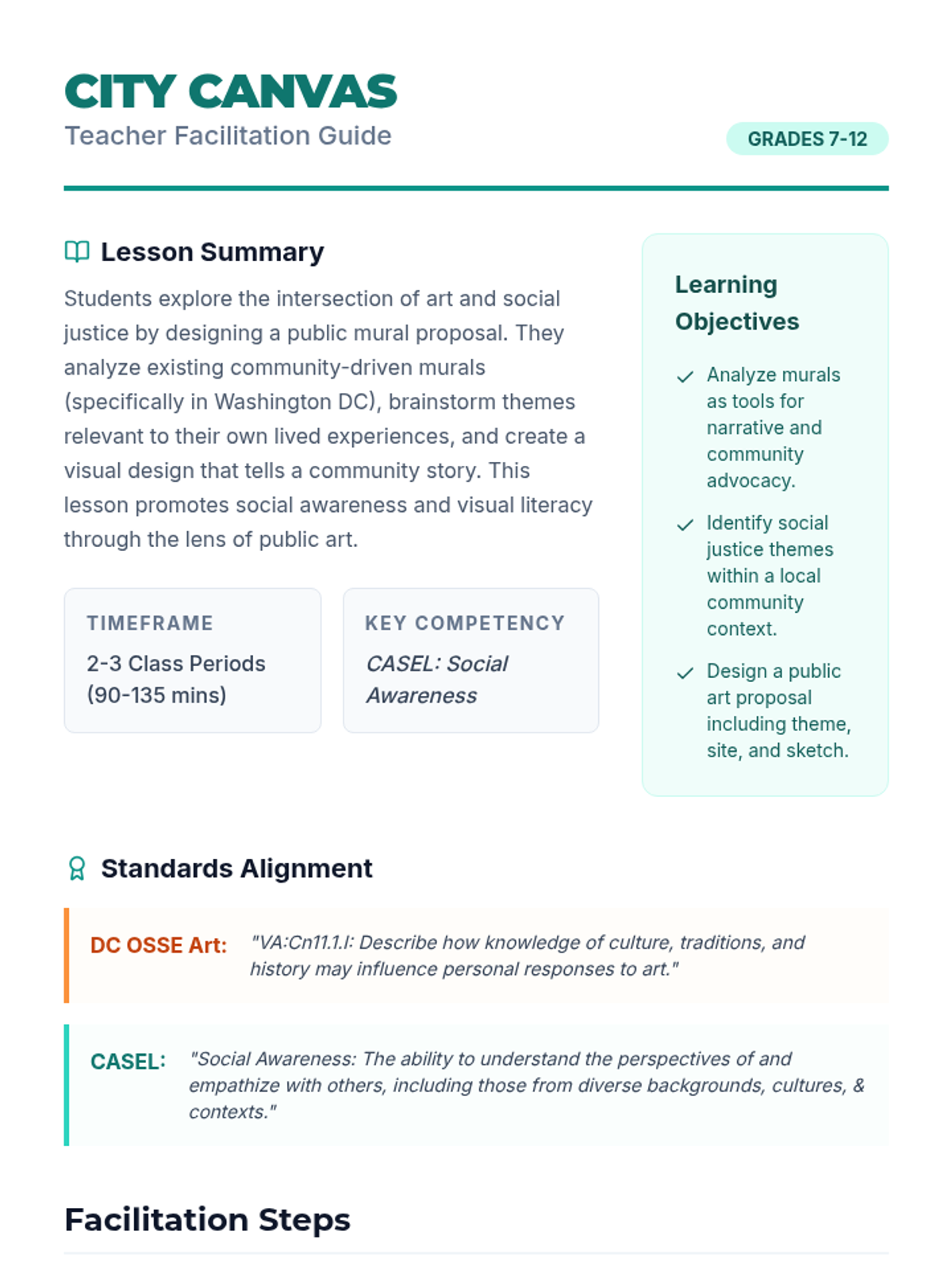
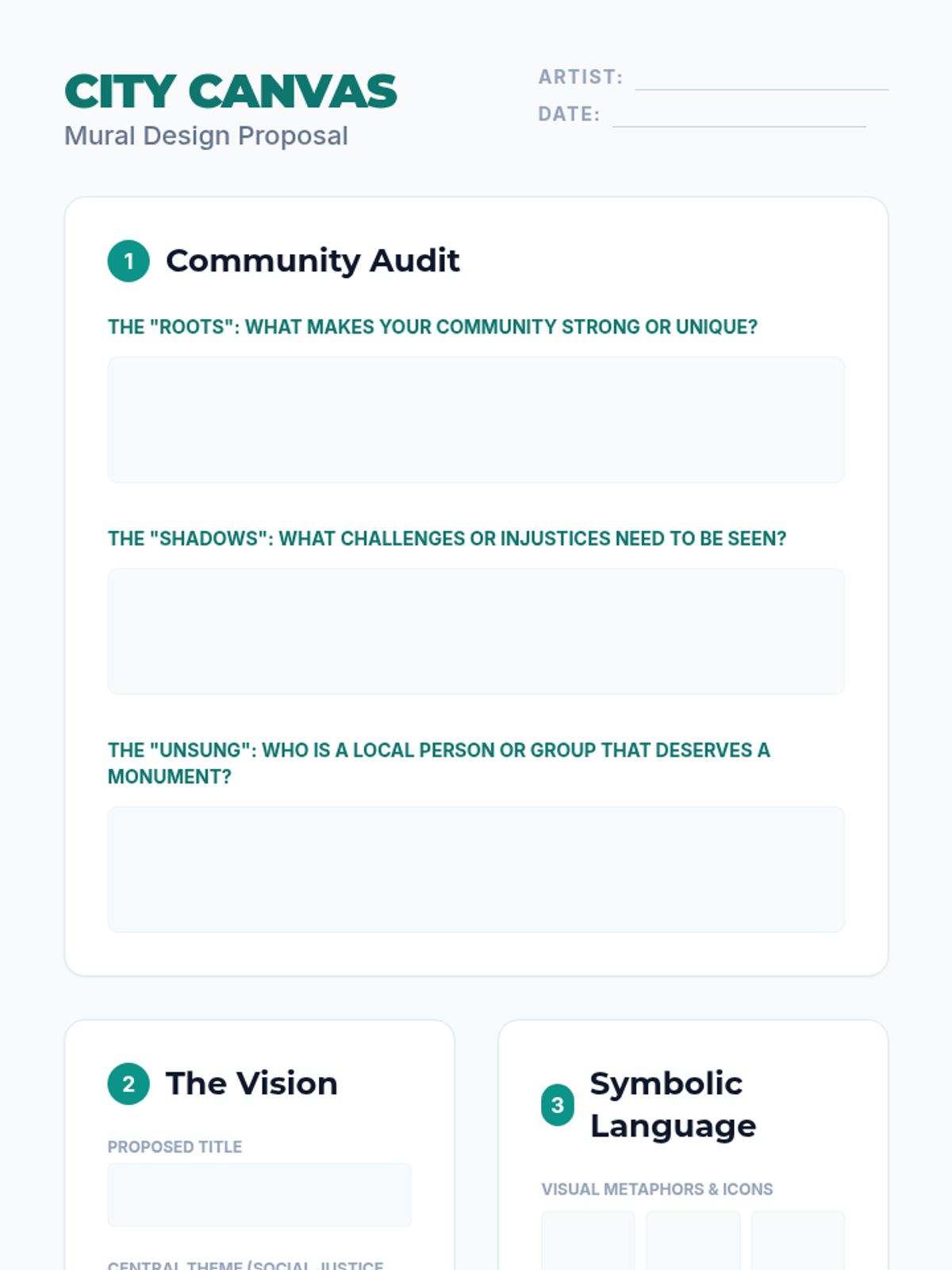
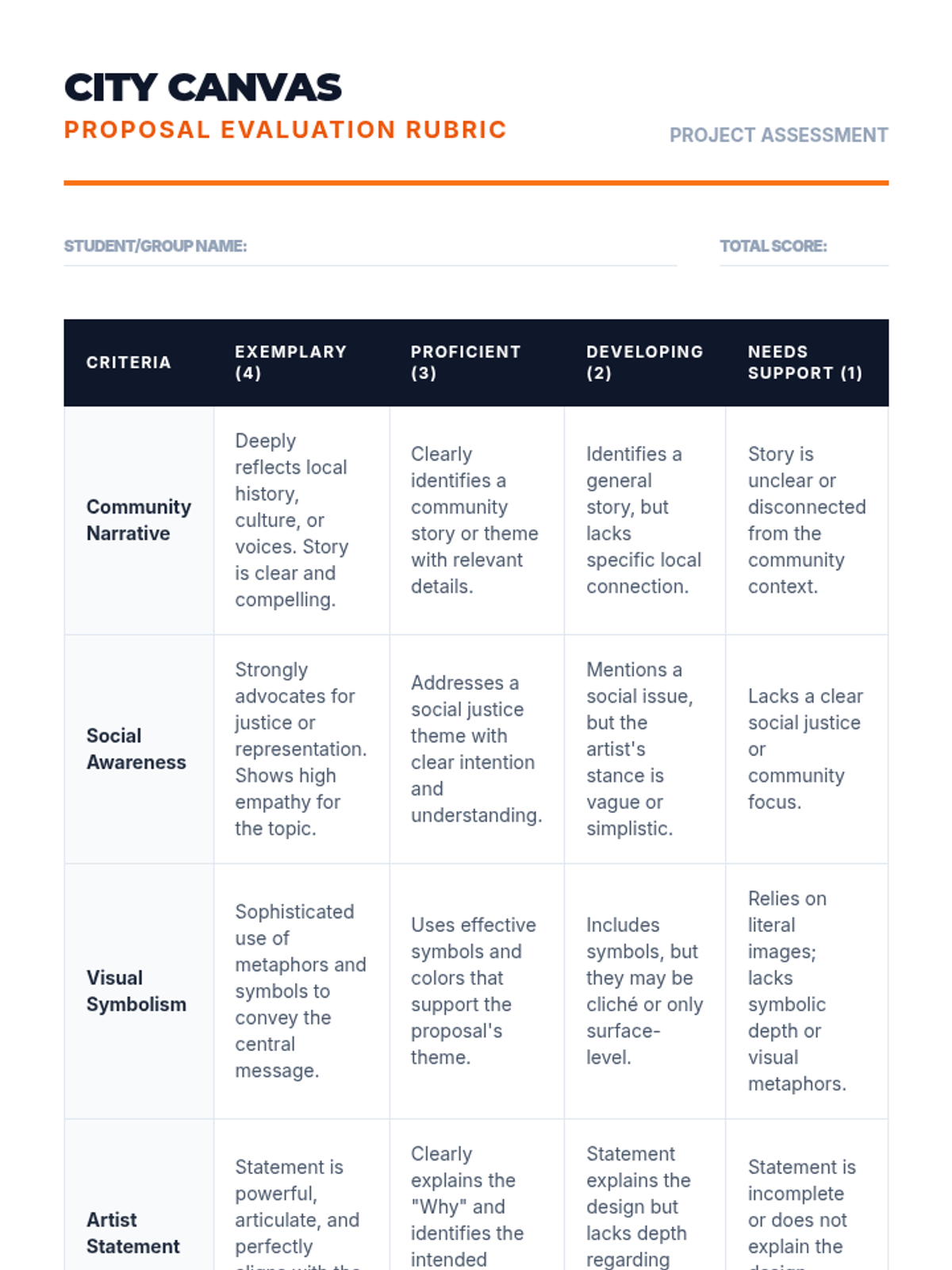
A high school art and social studies lesson where students design public art proposals that reflect community stories and social justice themes. Students analyze existing murals in DC and elsewhere to understand the impact of visual storytelling in public spaces.
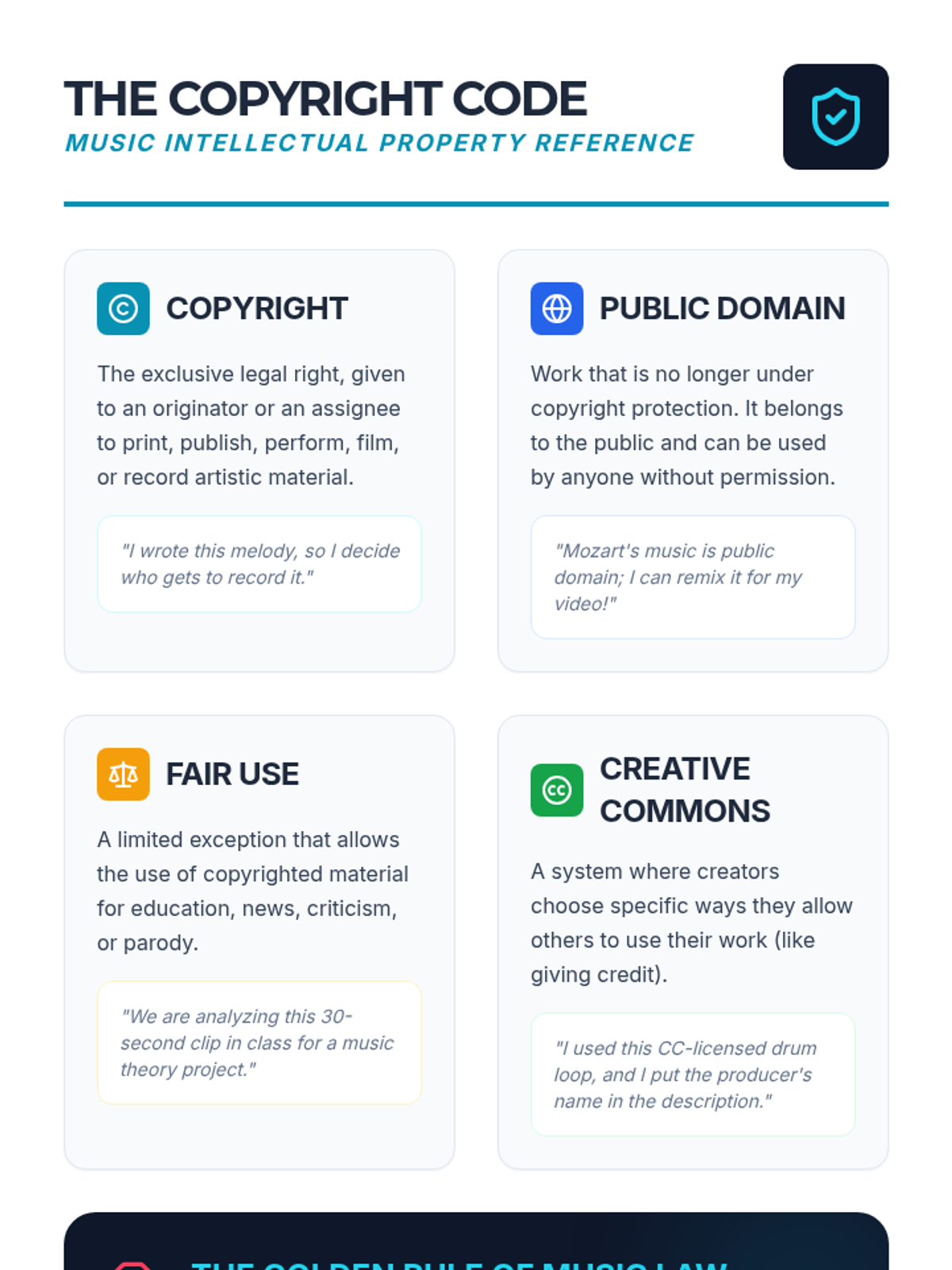
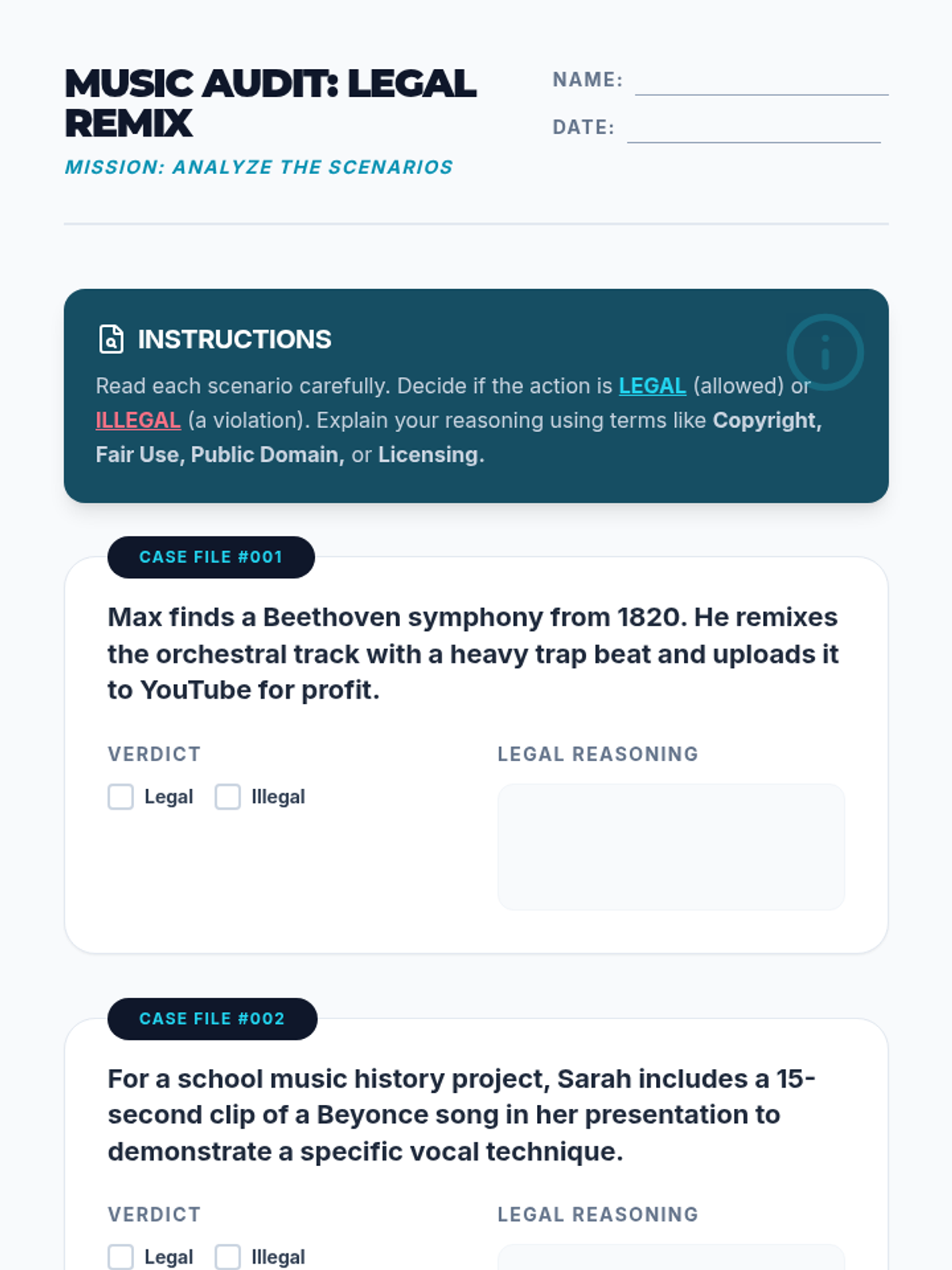
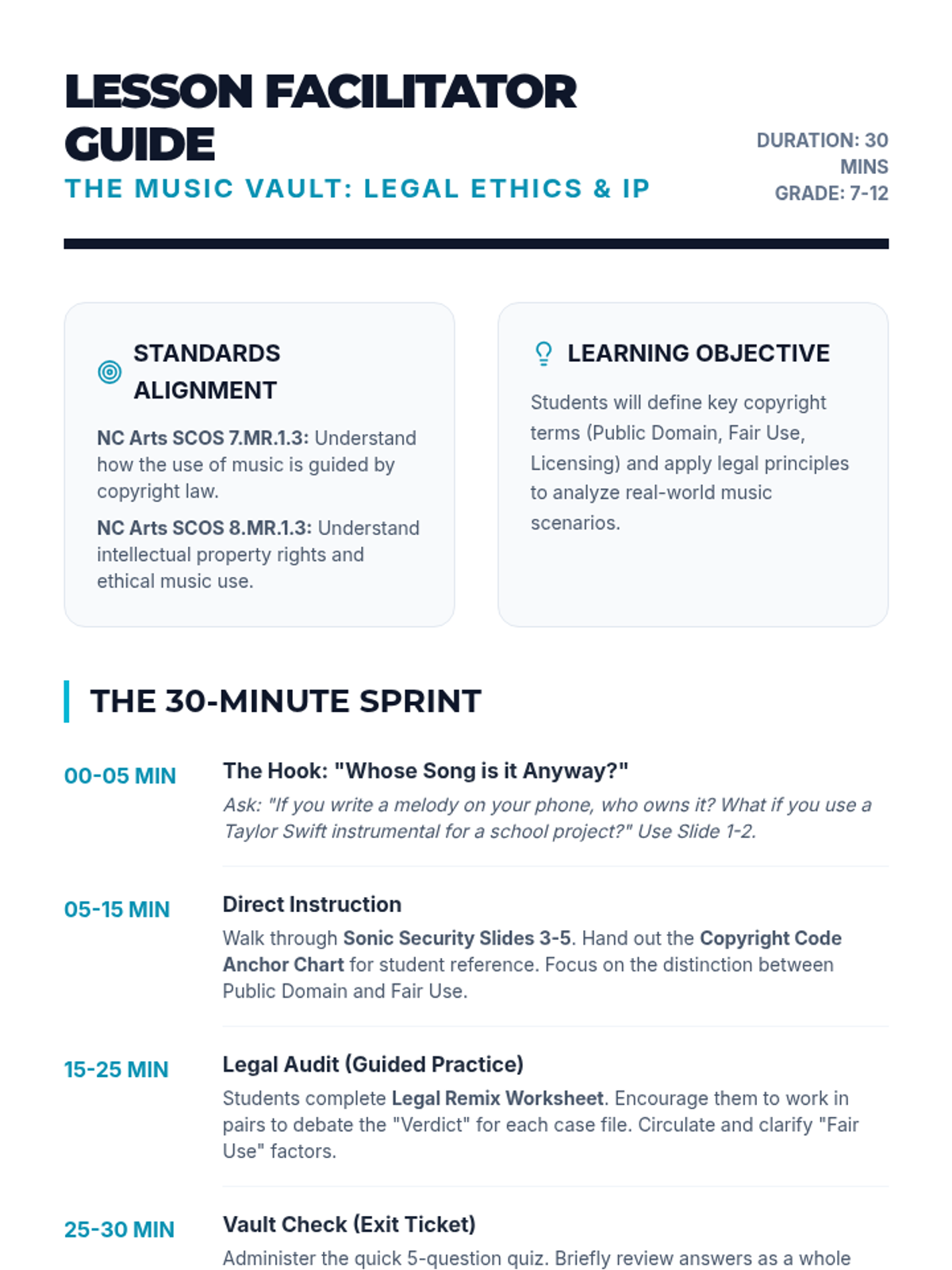
An introductory lesson on music copyright laws, fair use, and legal practices for using and creating music, aligned with NC Arts SCOS.
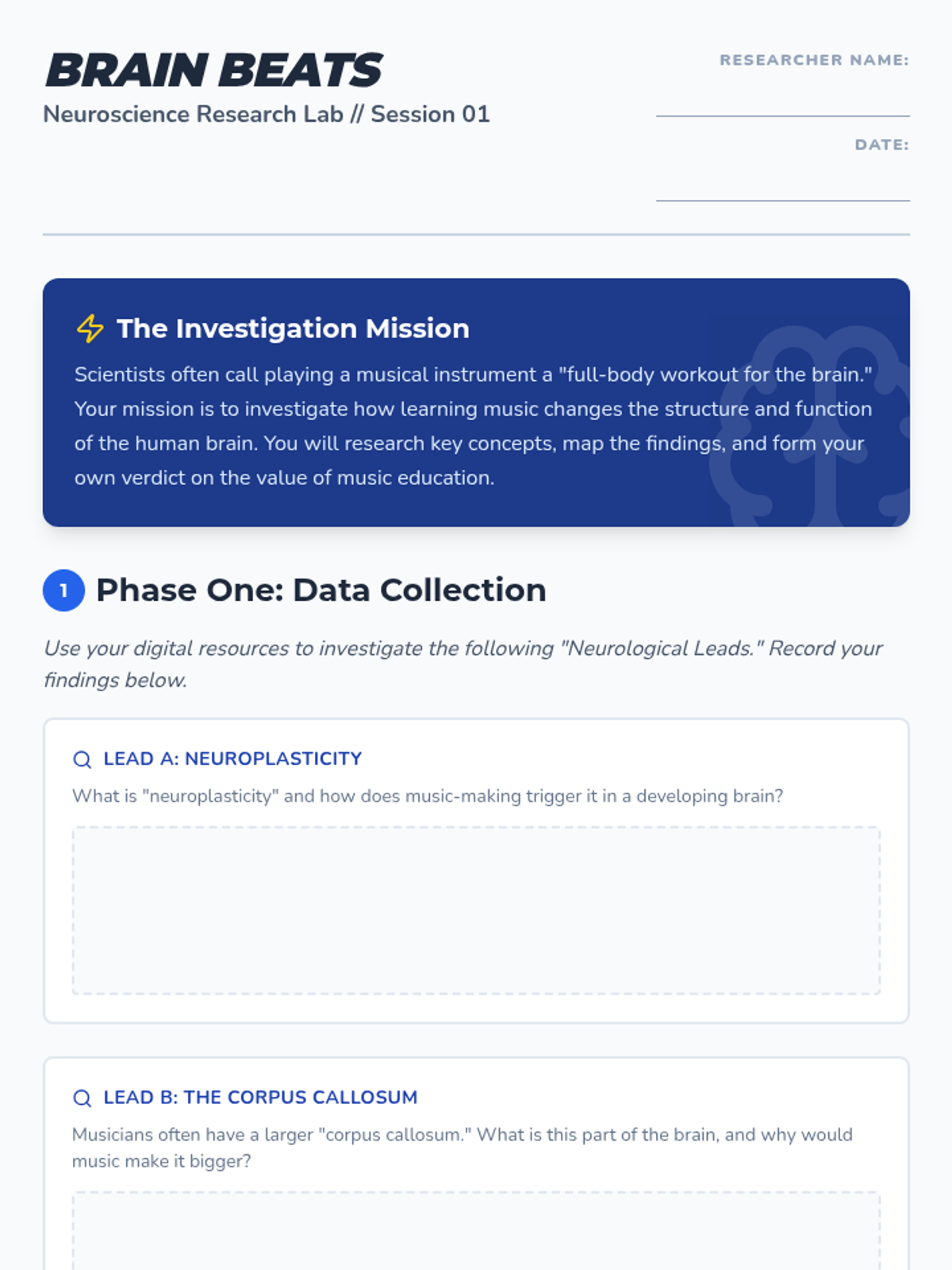
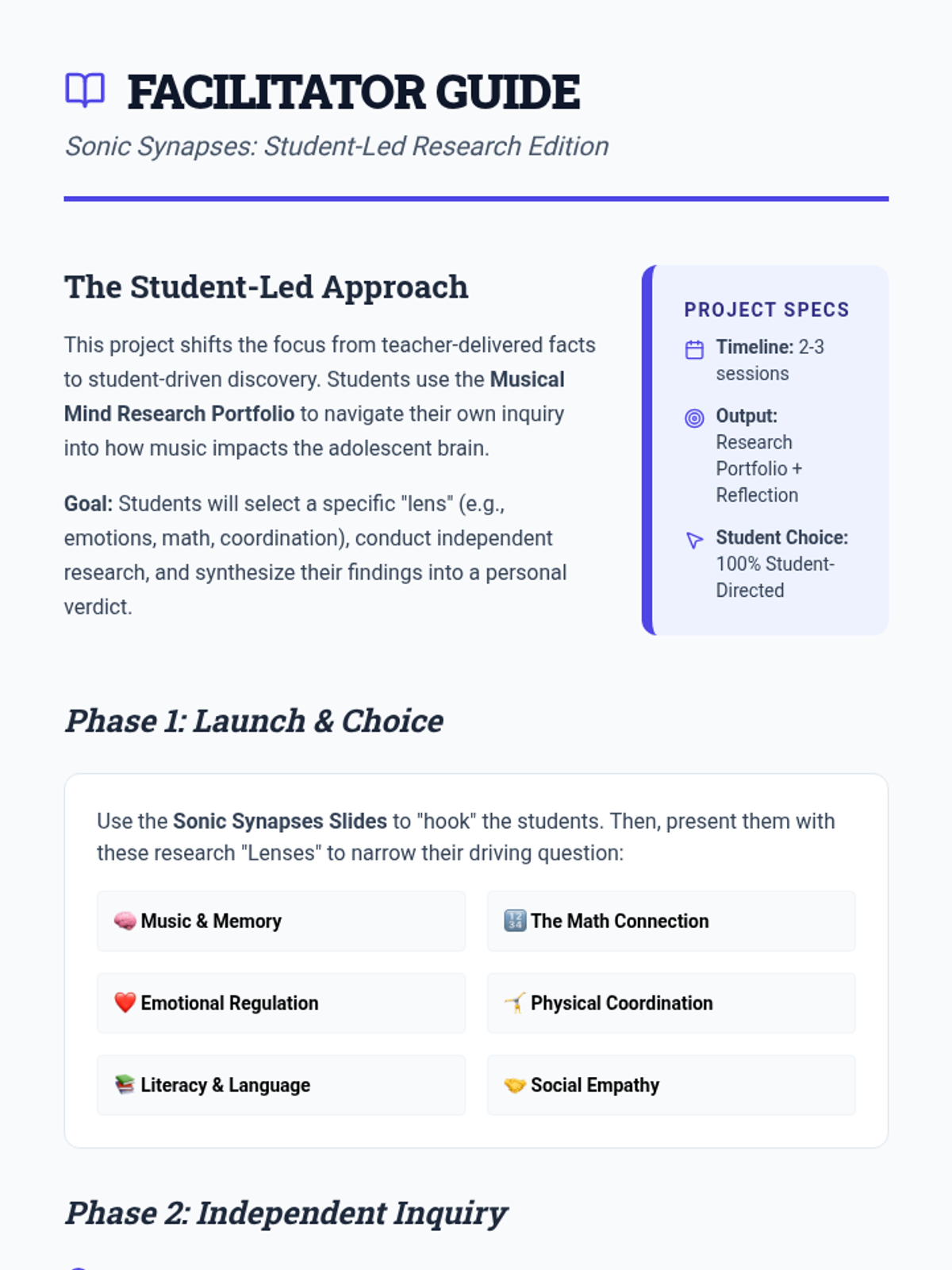
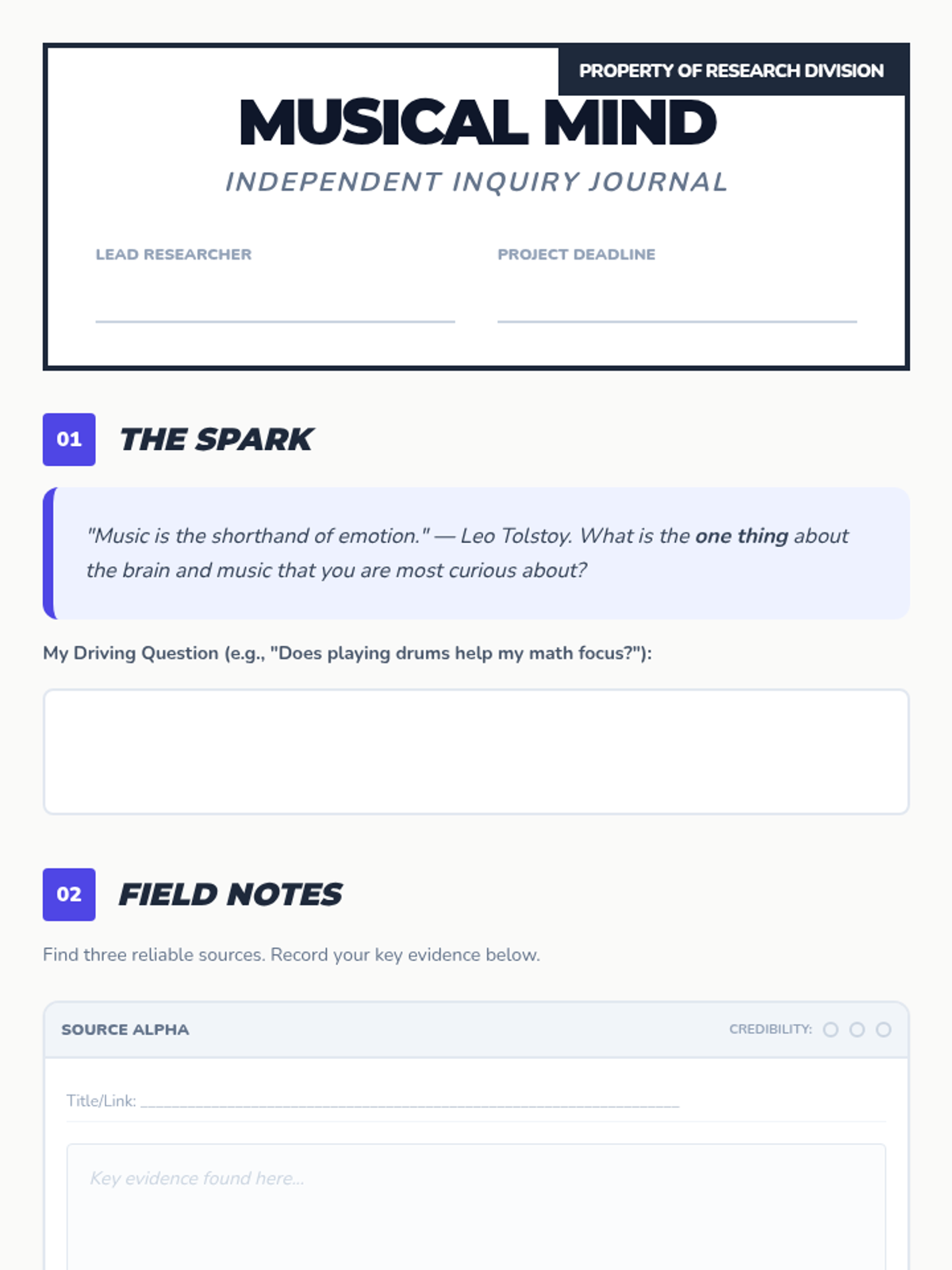
A student-led inquiry project exploring the intersection of music and neuroscience. Students choose their own research path to discover how musical training transforms cognitive development and present their unique findings.
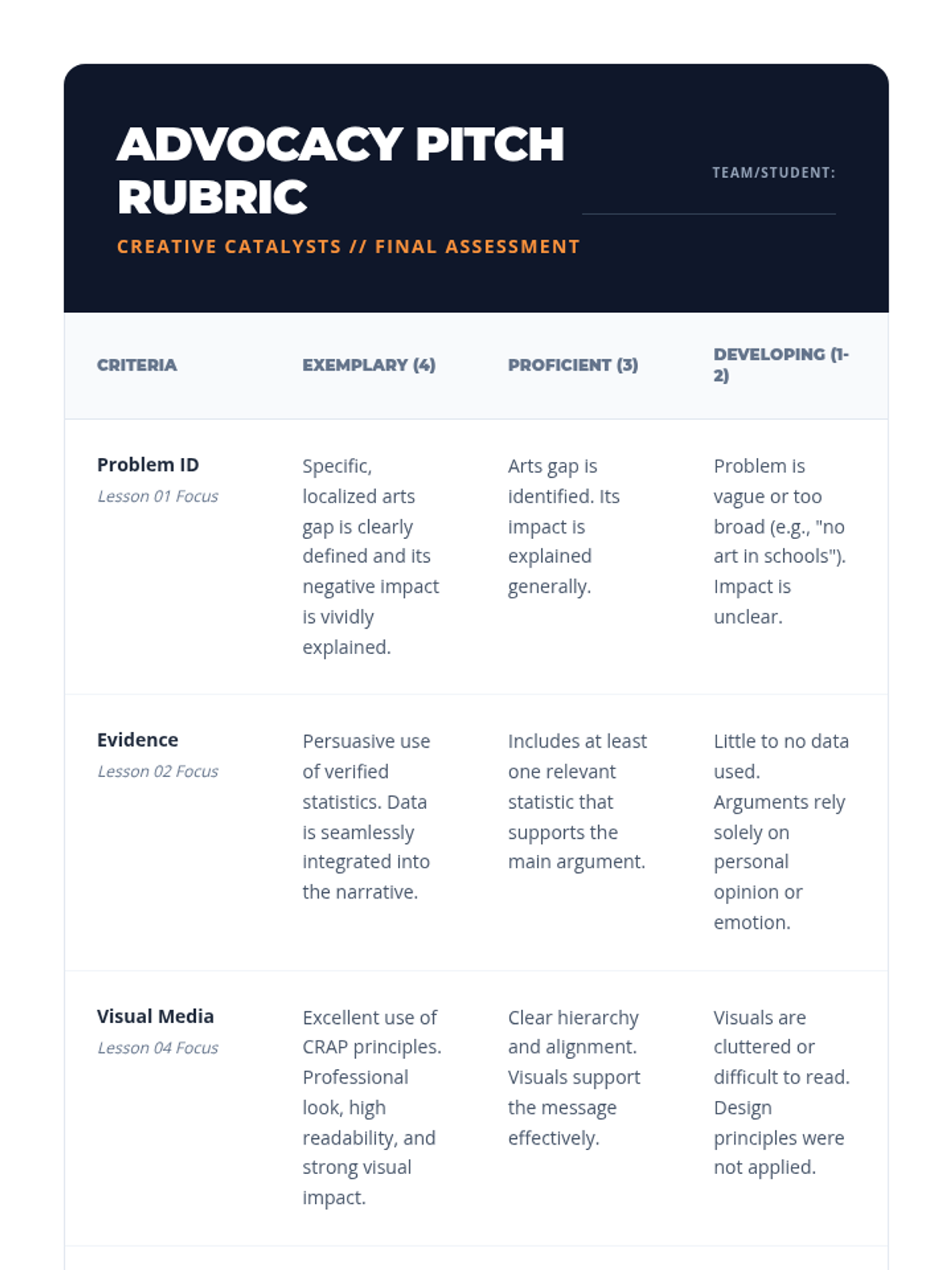
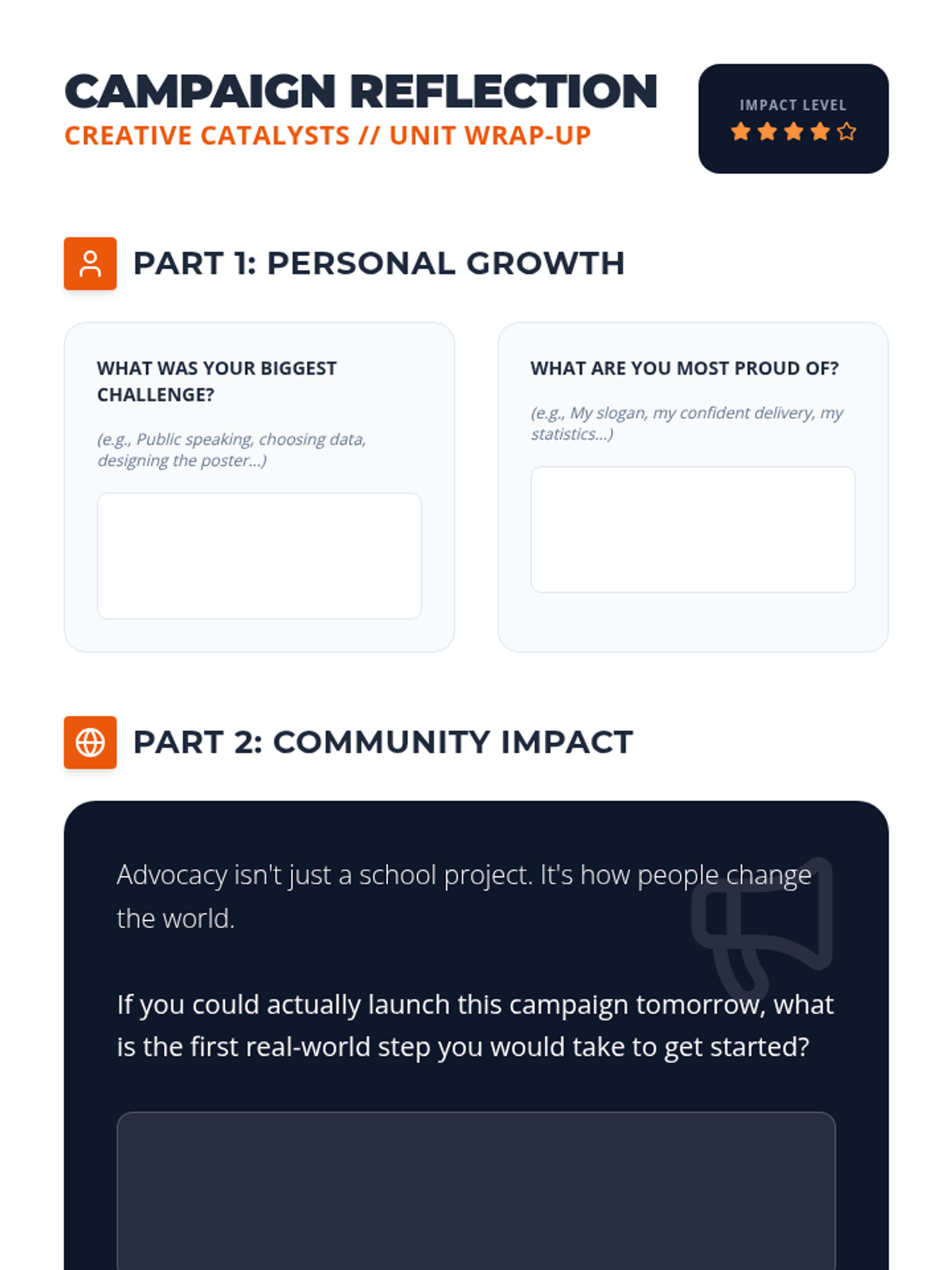
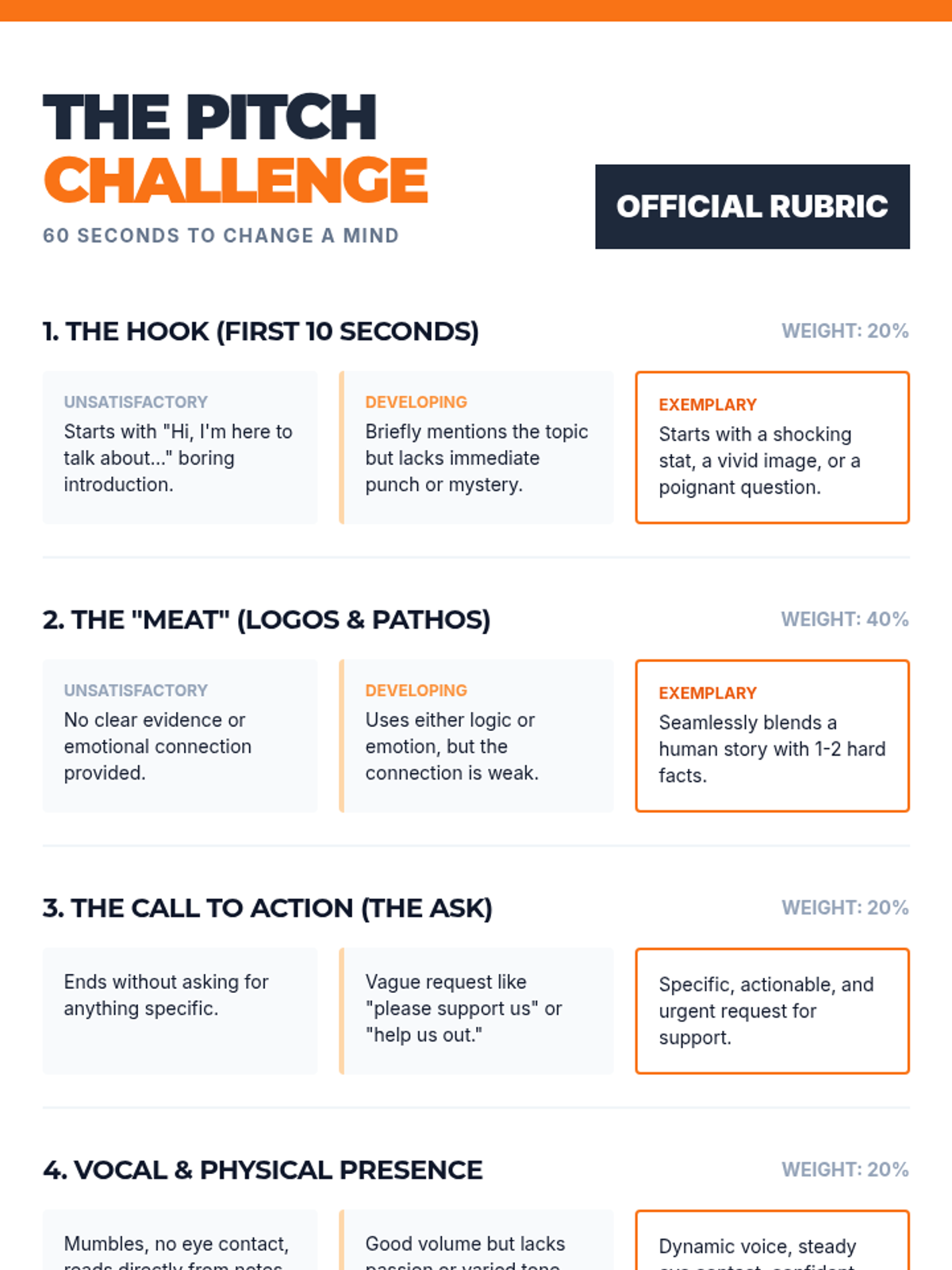
Students present their completed campaigns to a panel representing school administrators or local council members. They deliver a verbal pitch accompanied by their visual materials and answer questions regarding feasibility and impact.
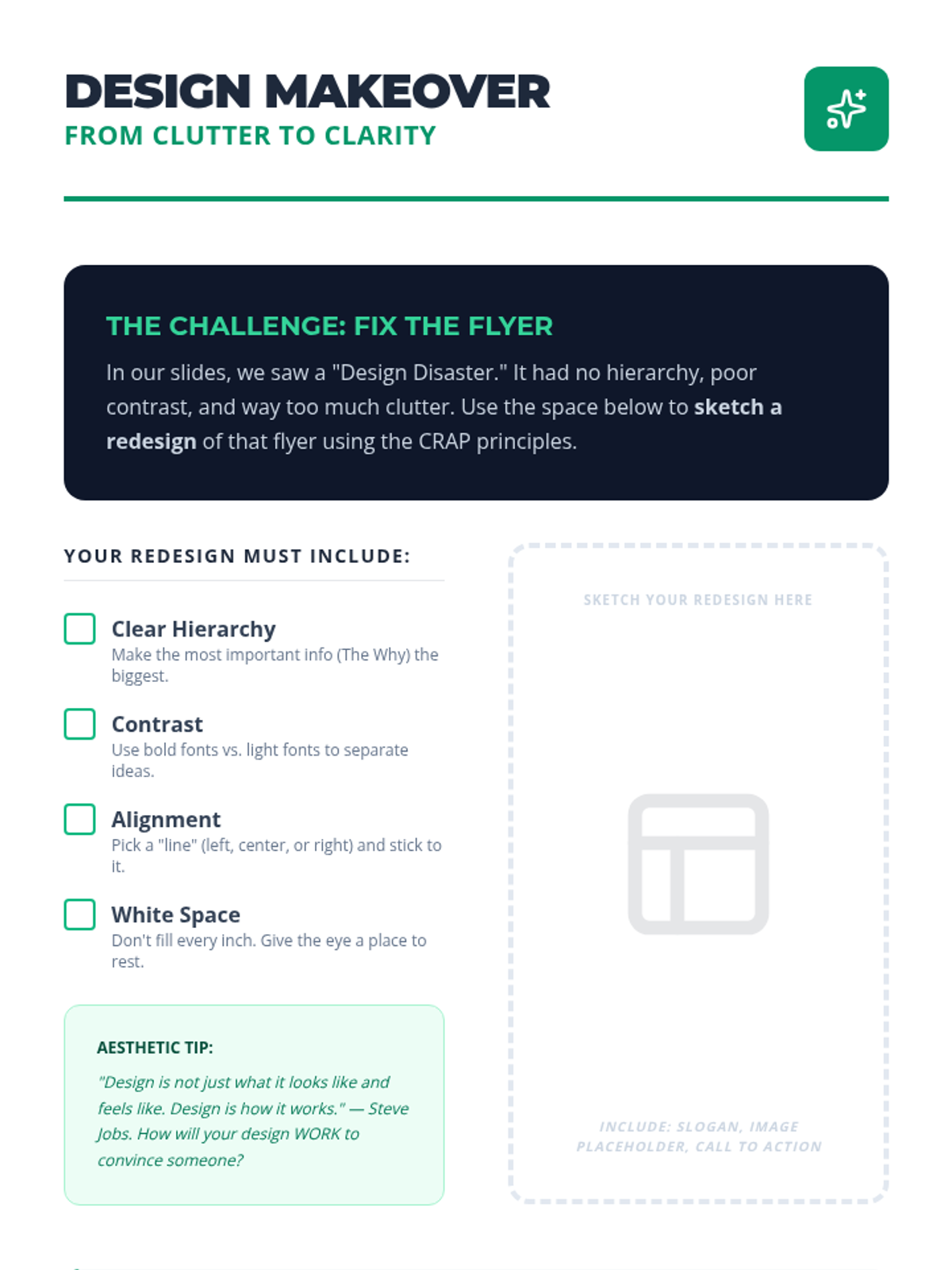
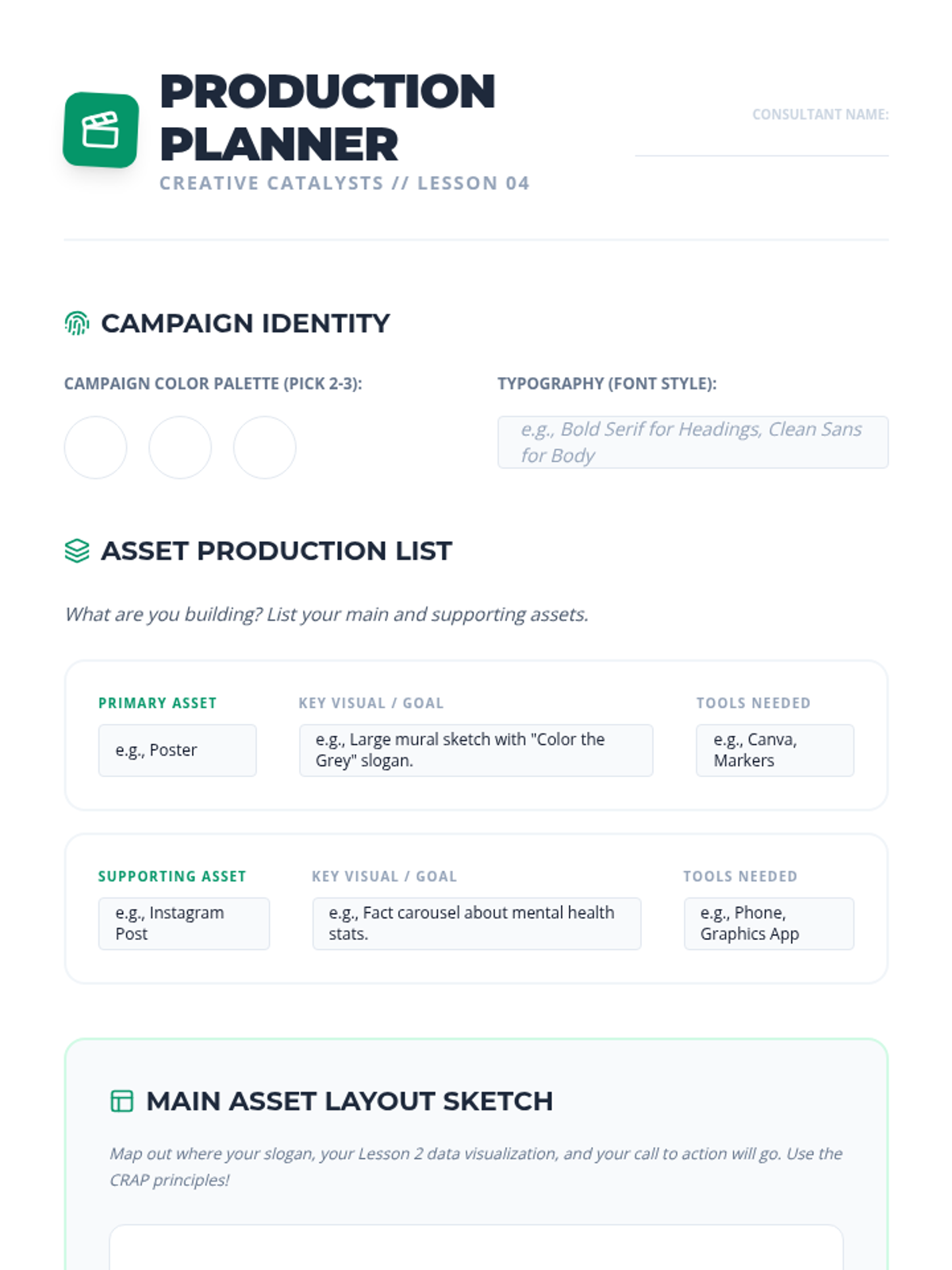
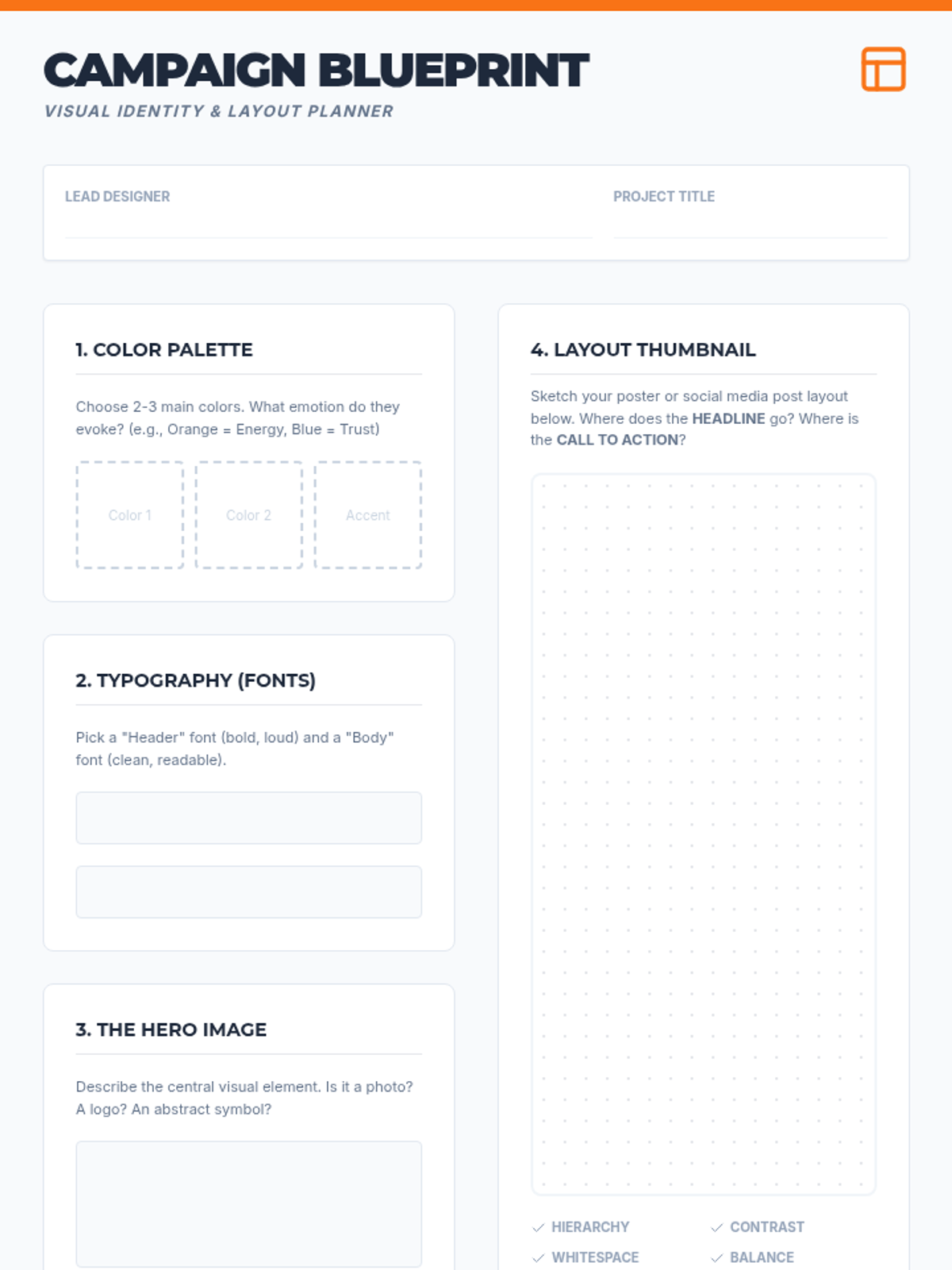
Students enter a production phase to create the physical or digital assets for their campaign. They apply principles of design hierarchy to ensure their message is visually accessible. The lesson emphasizes the intersection of aesthetics and communication.
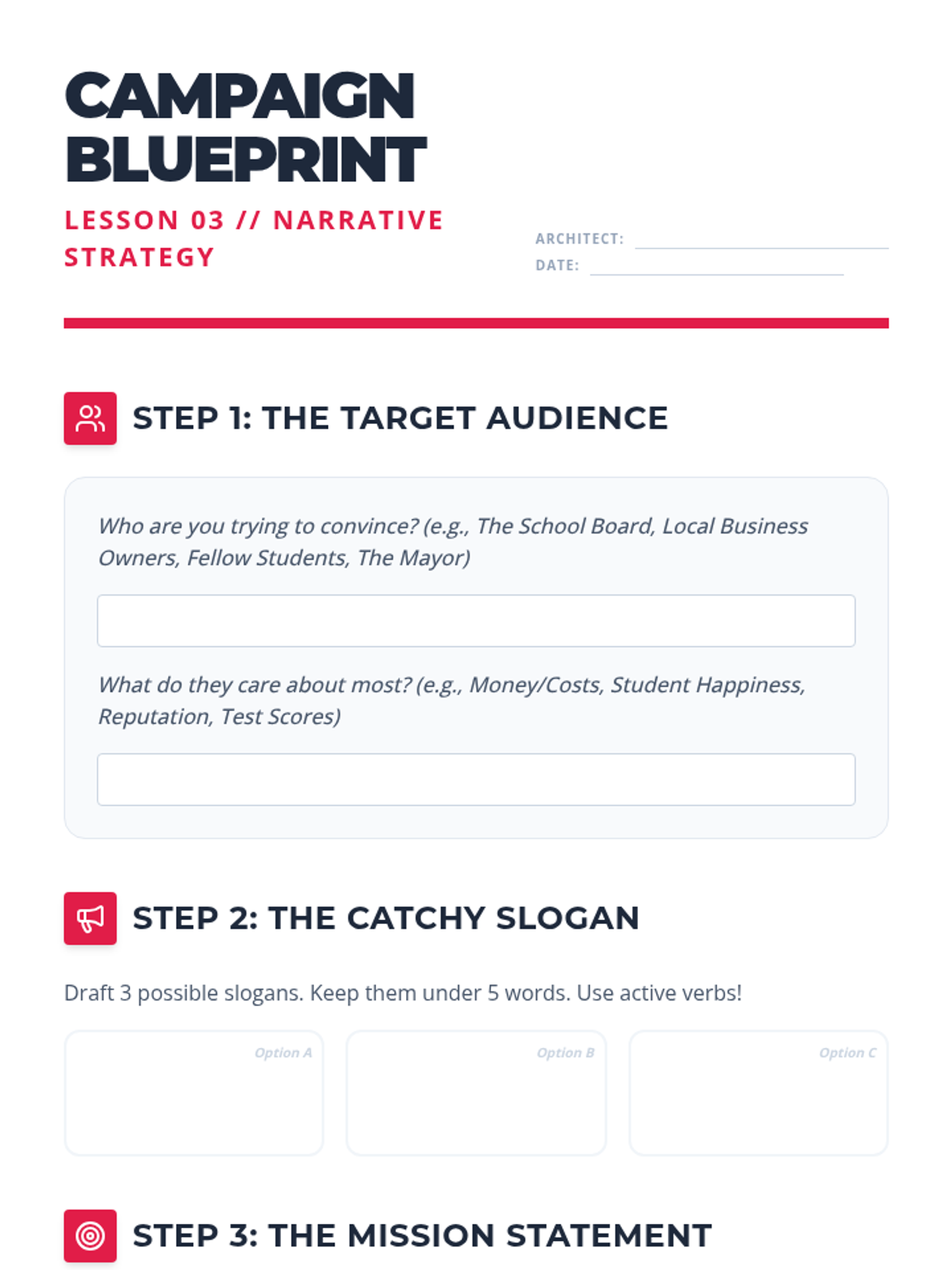
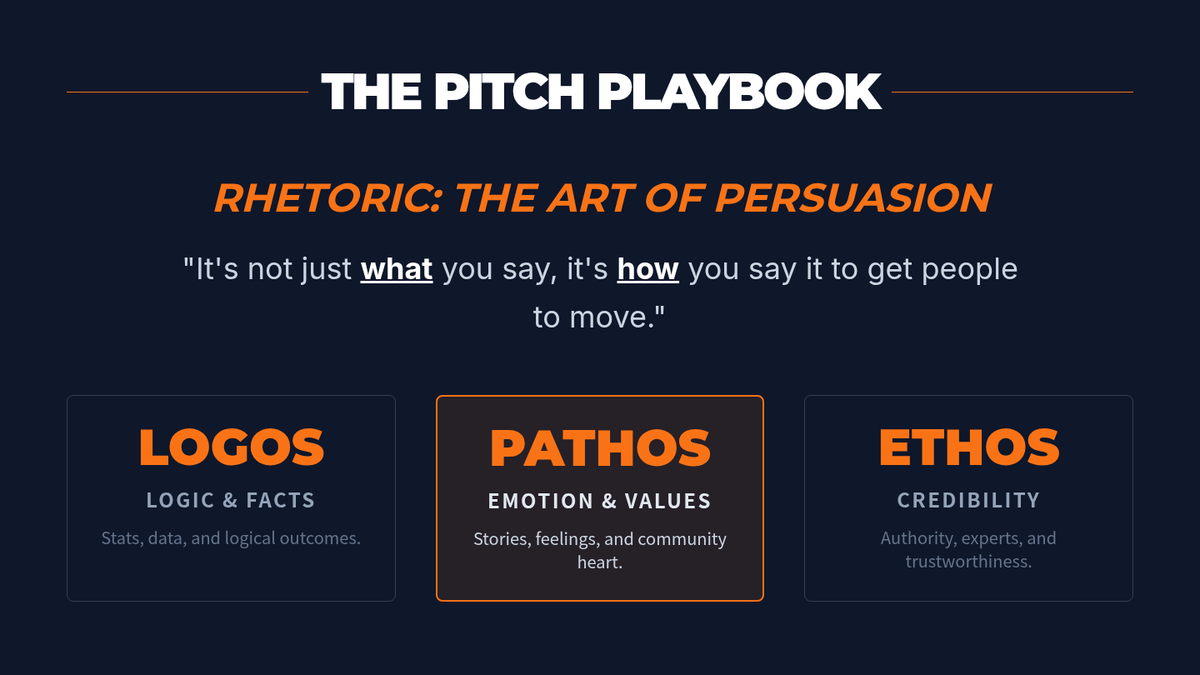
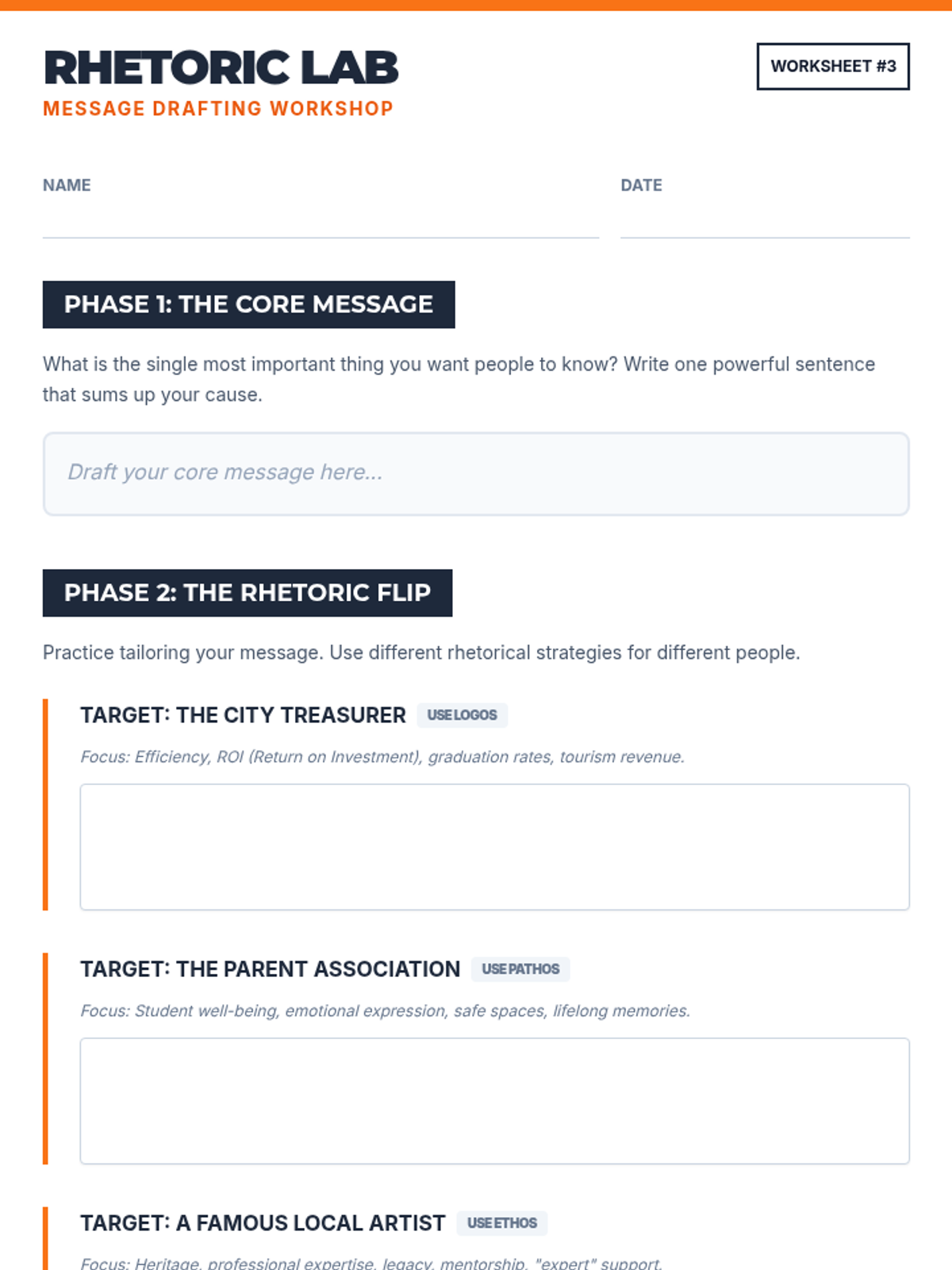
Focusing on rhetoric, students draft the core messaging for their campaign, including a slogan, a mission statement, and an 'elevator pitch.' They analyze successful advertising techniques to understand tone and audience targeting.
Students present their comprehensive campaigns to a mock panel and practice high-stakes elevator pitches.
Students design visual advocacy materials, focusing on branding and media literacy to capture public attention.
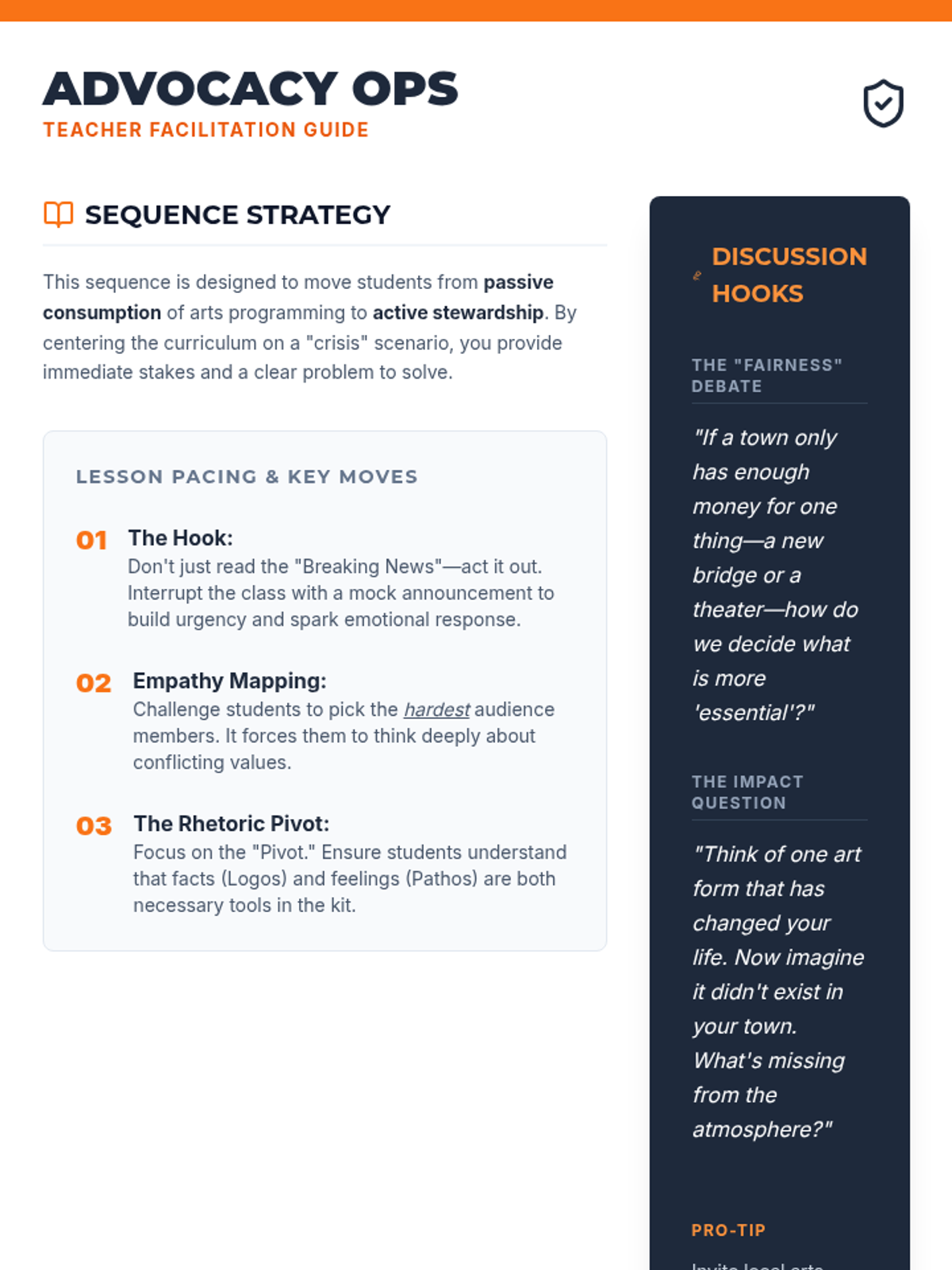
Students learn to blend emotional appeals and factual evidence to craft a compelling persuasive narrative for their arts cause.
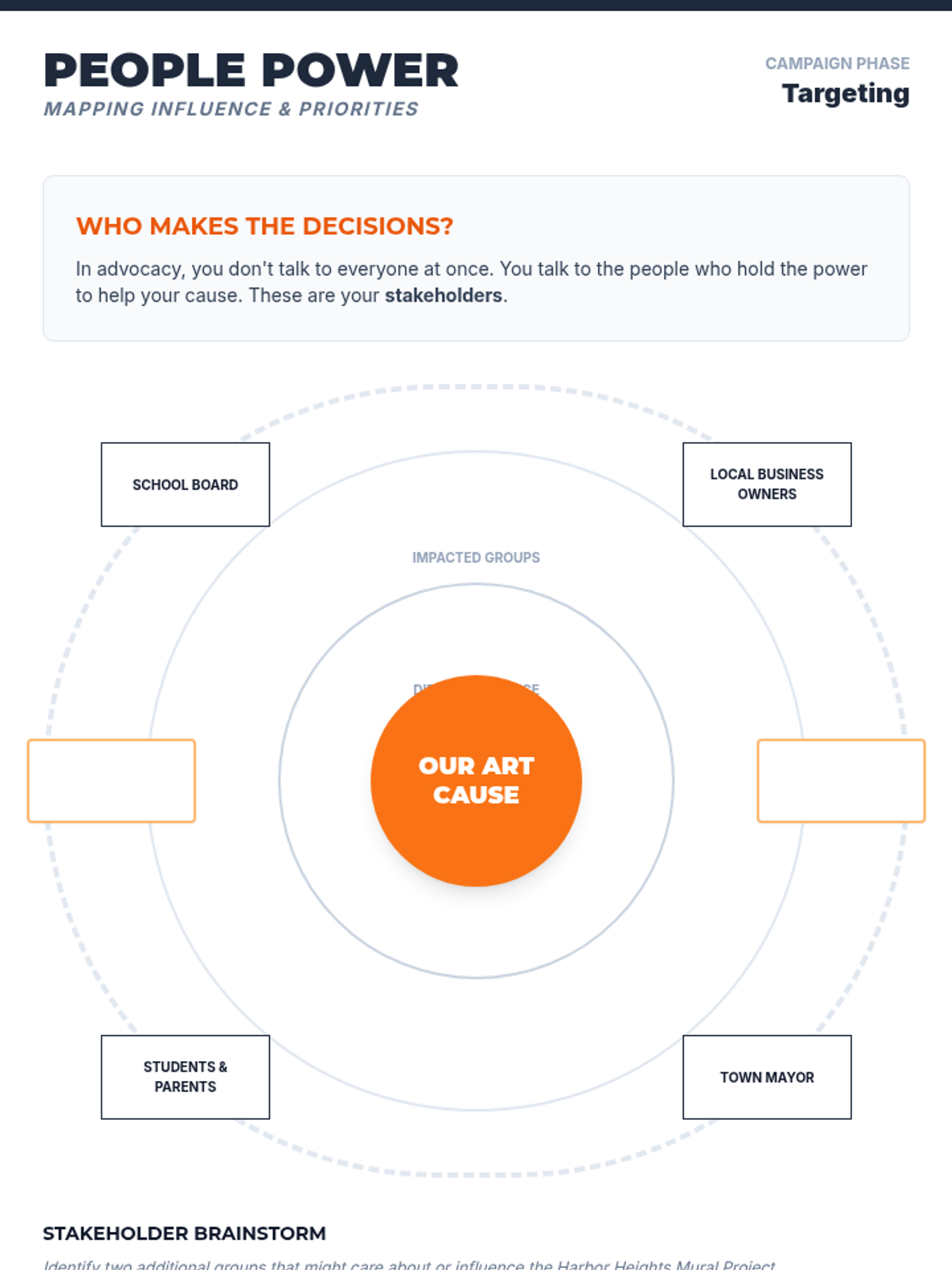
Learners map out stakeholders and use empathy mapping to understand the values and priorities of different audience groups.
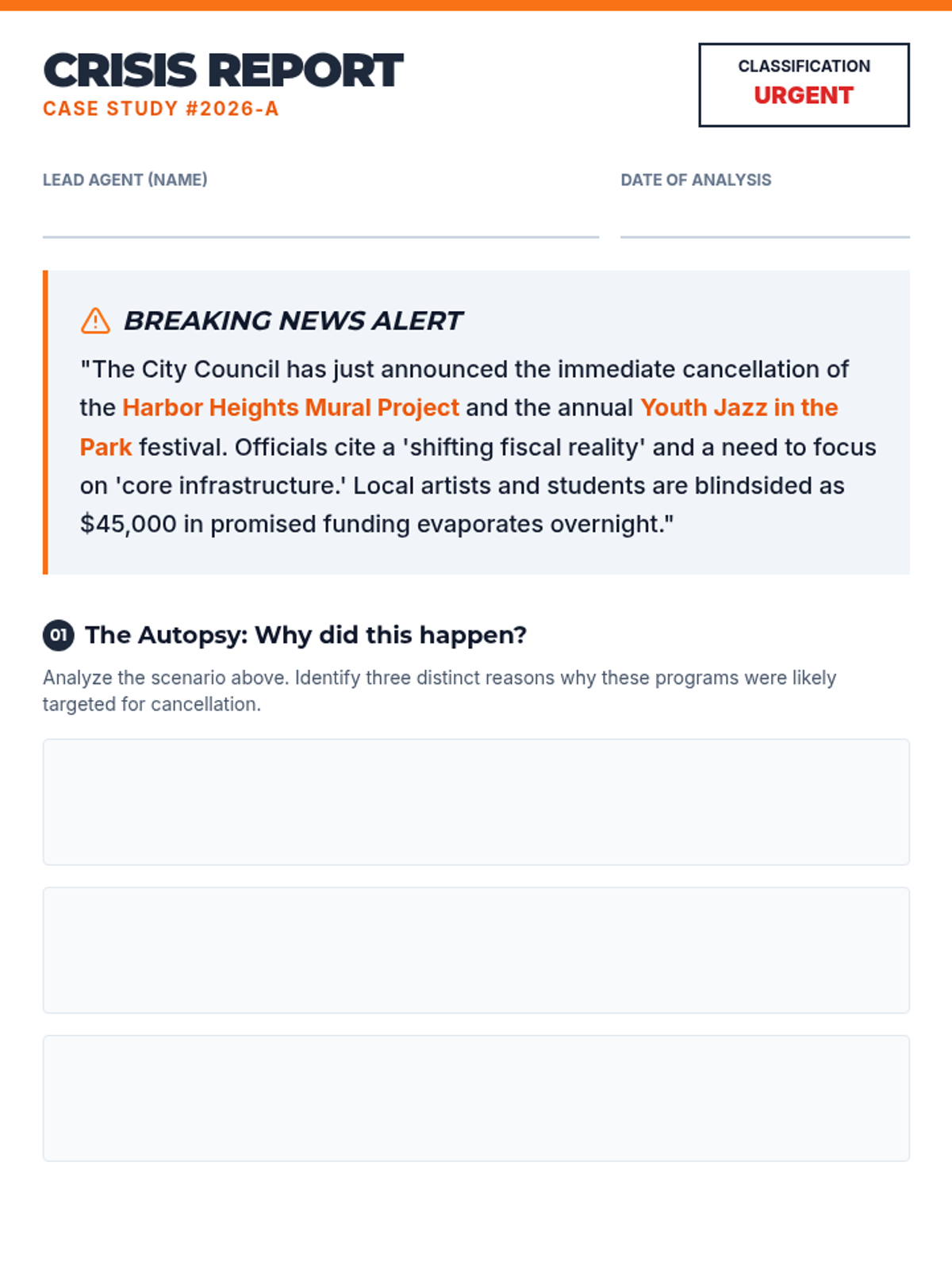
Students analyze hypothetical scenarios where arts programs face budget cuts or closure to identify root causes and specific advocacy needs.
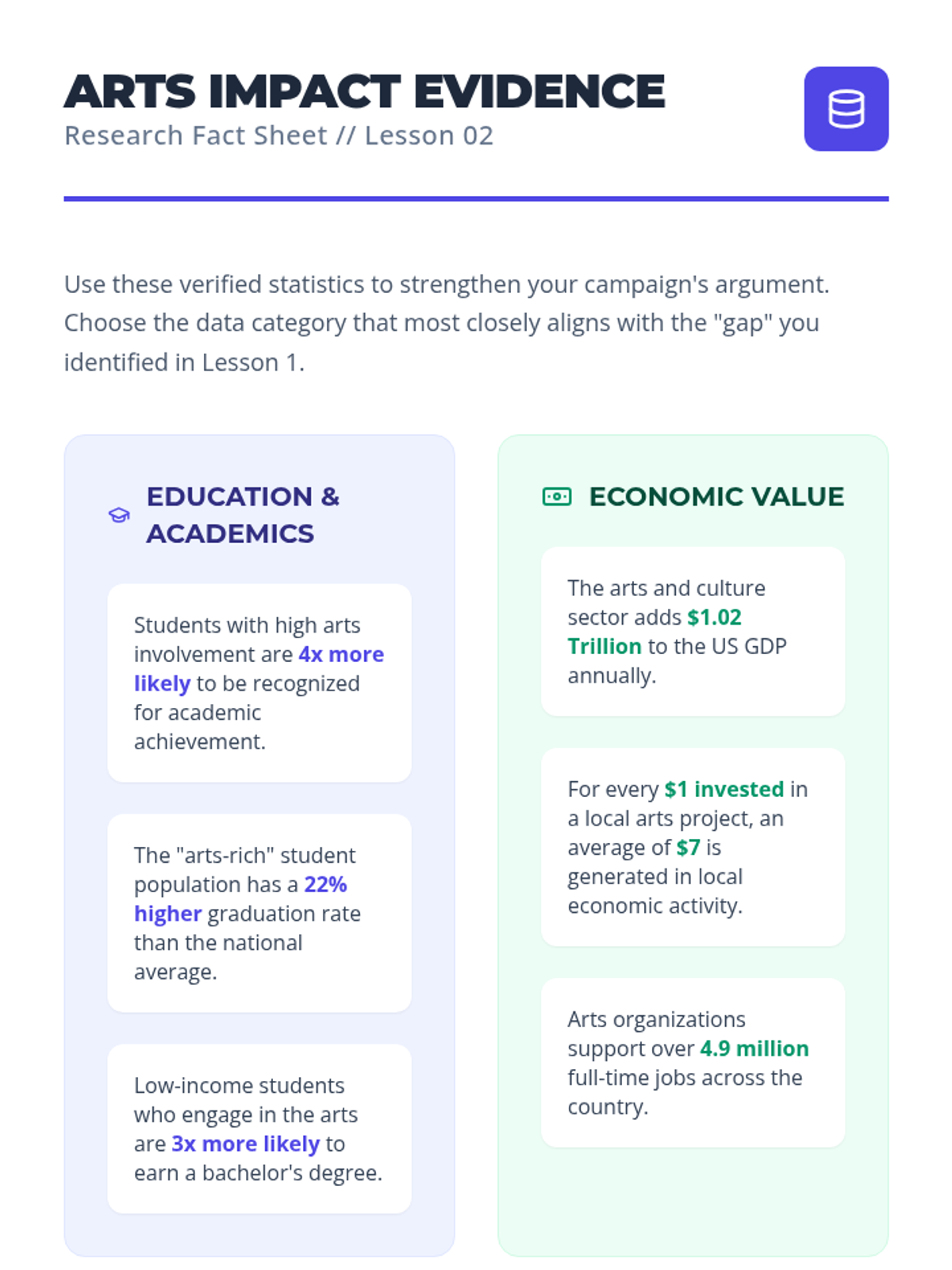
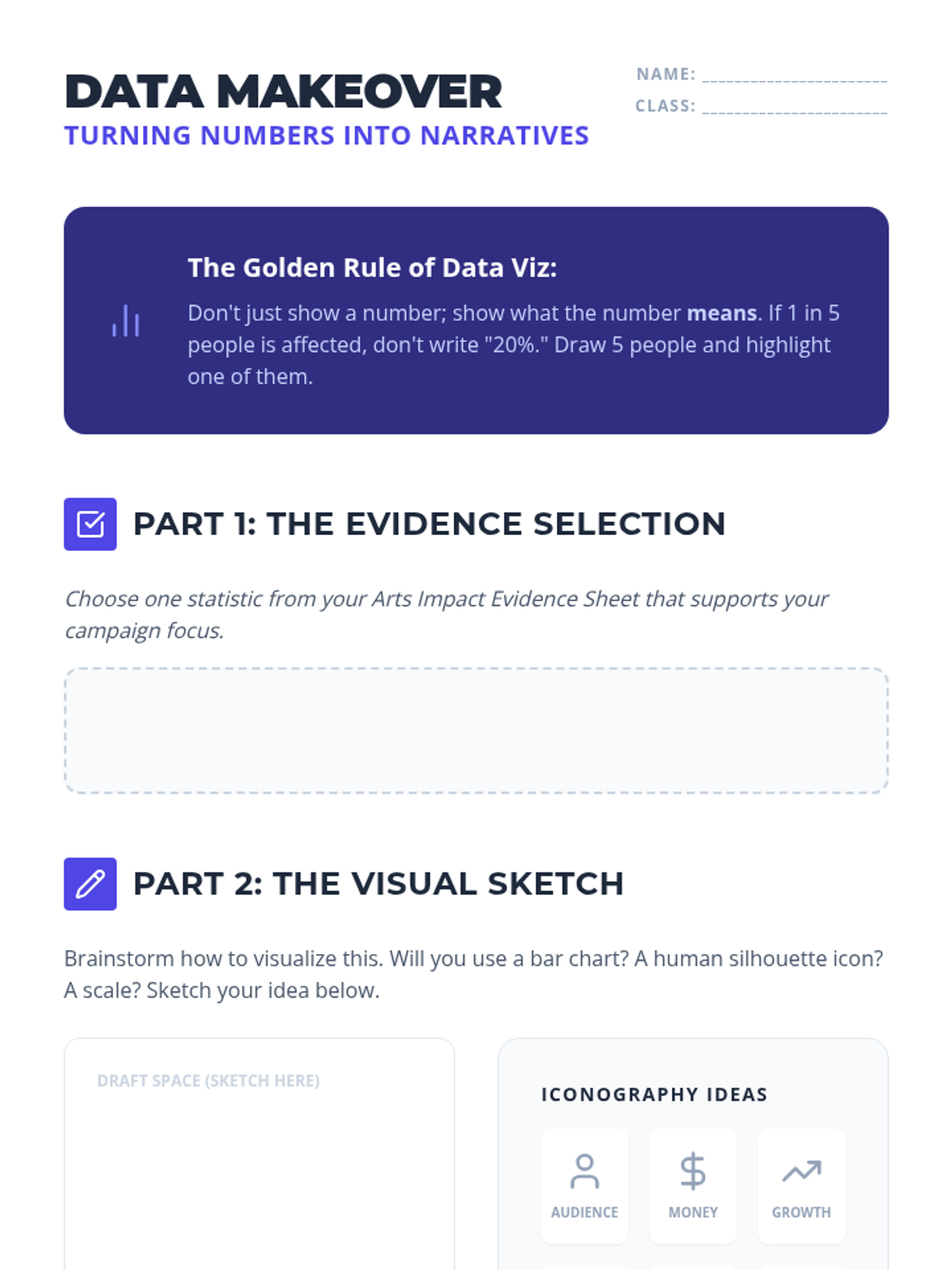
Students explore real-world advocacy case studies to understand how data supports arts funding. They select relevant statistics to bolster their specific campaign and practice translating dry data into compelling infographics.
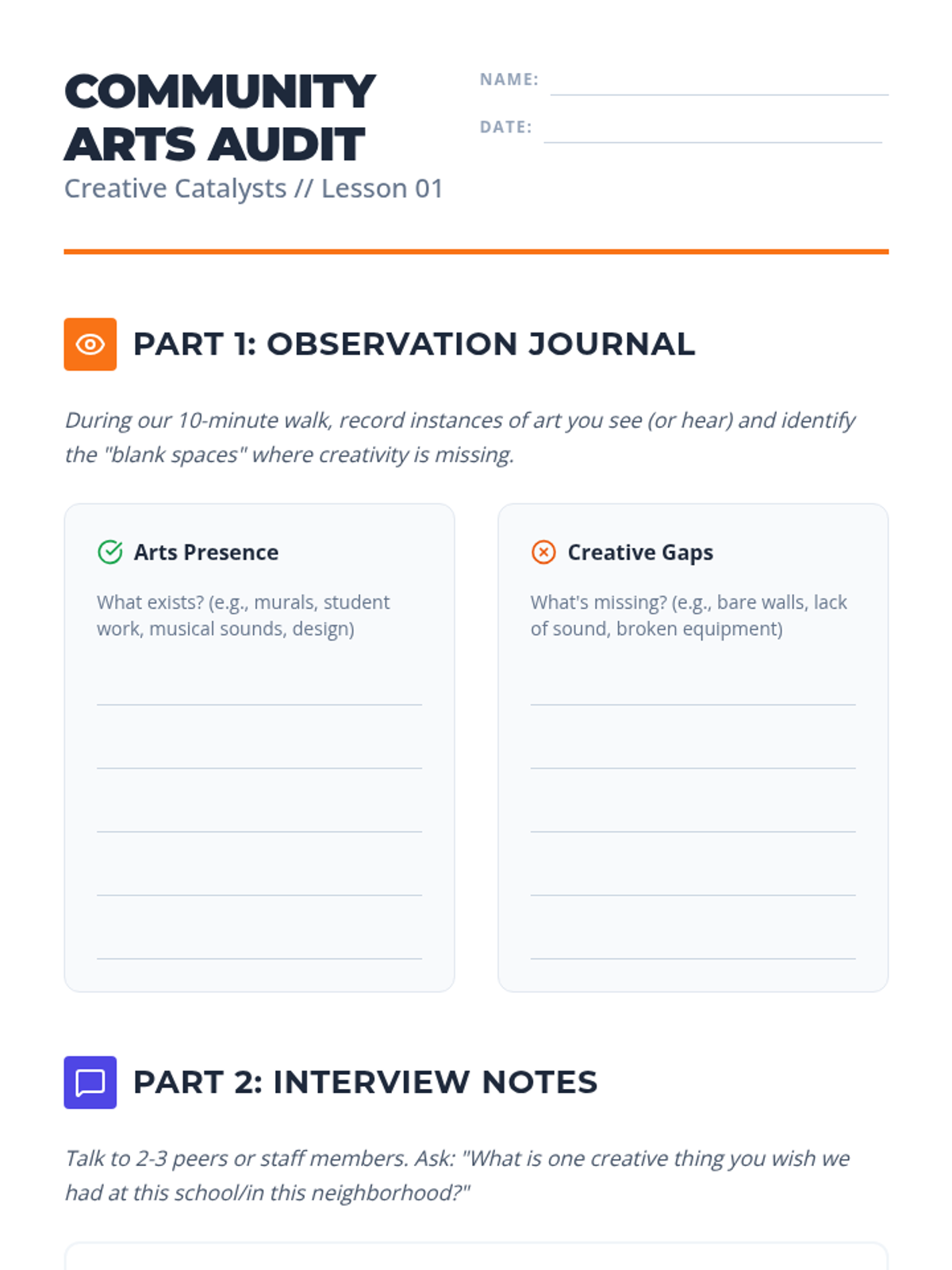
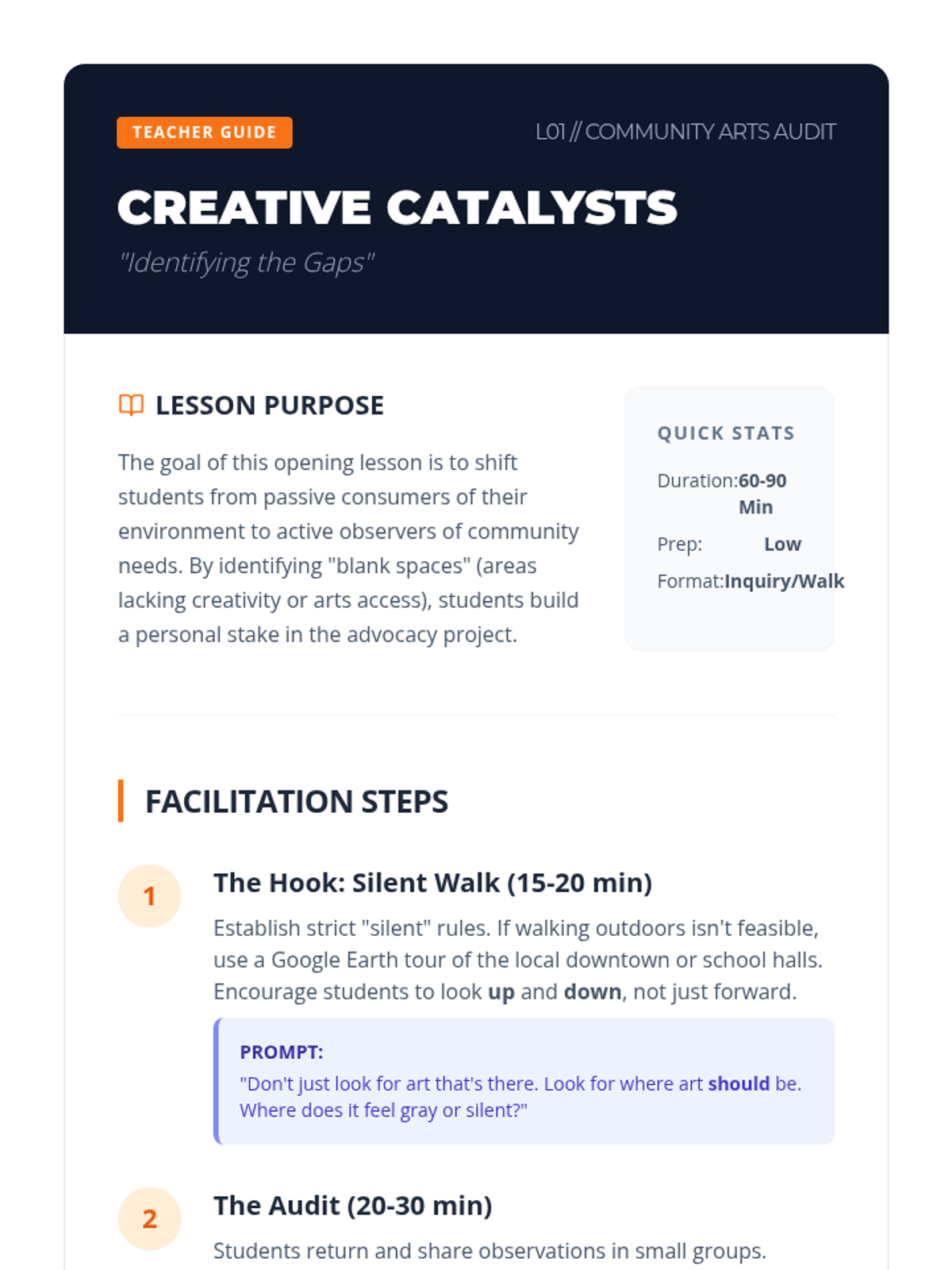
Students conduct an audit of their current school or neighborhood arts landscape to identify gaps in access or funding, eventually selecting one specific issue to advocate for.