Fundamental techniques for drawing, painting, sculpture, and photography alongside modern digital design principles. Analyzes historical artistic movements while building skills in printmaking and graphic media.
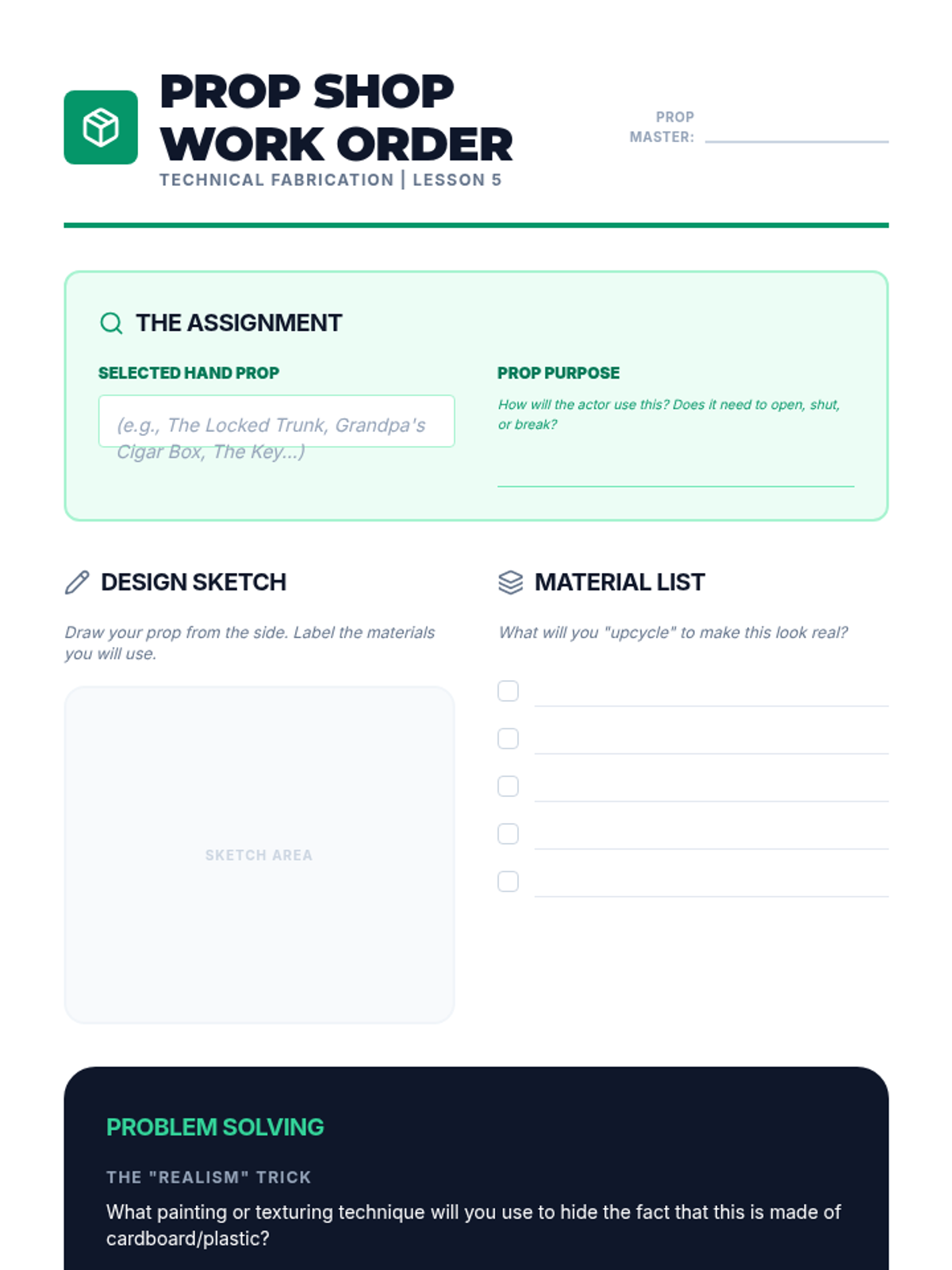
Students identify and fabricate a key hand prop from their script, solving problems of durability and appearance.
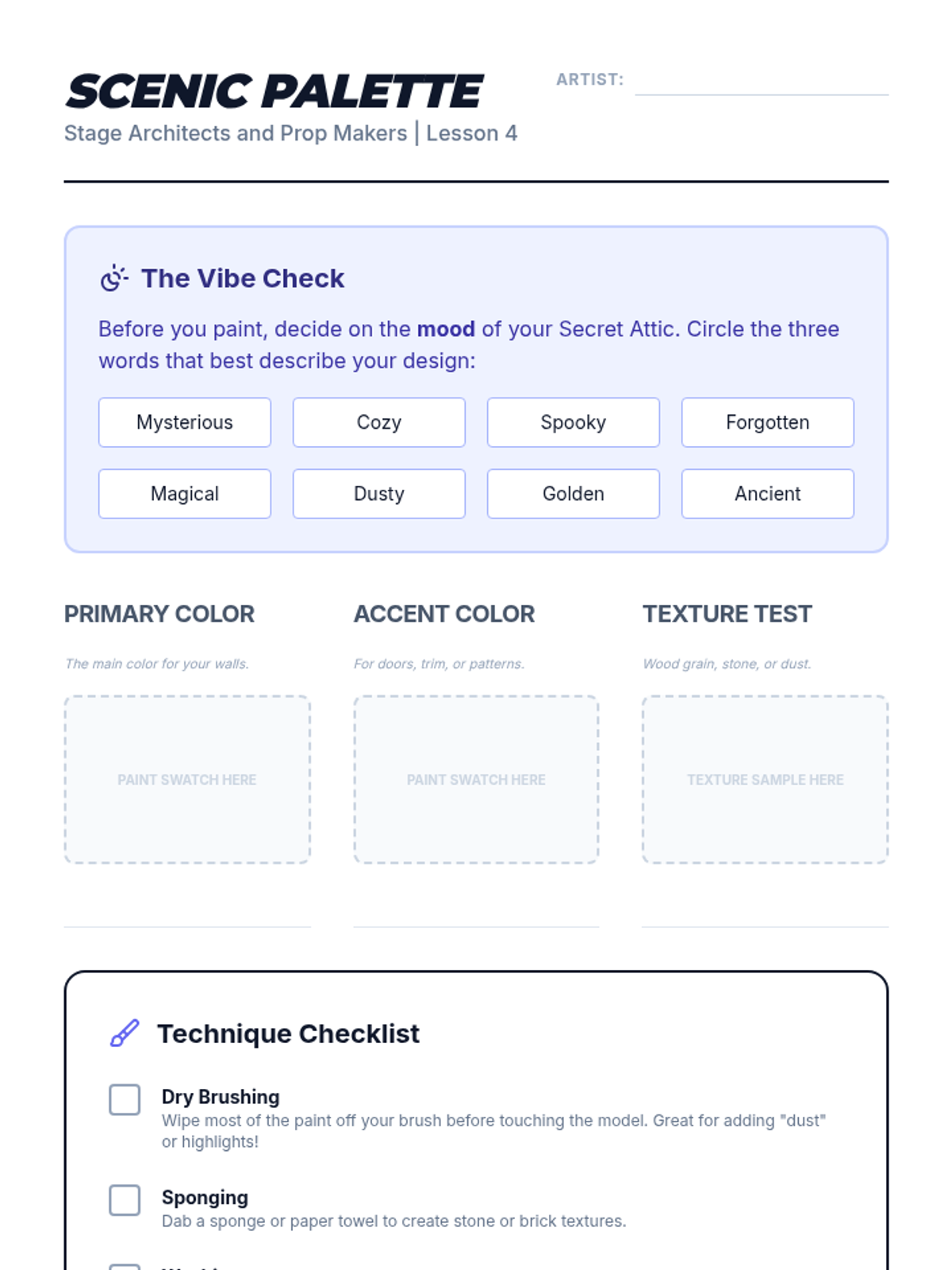
Students apply color and texture to their models using scenic painting techniques to convey mood and reality.
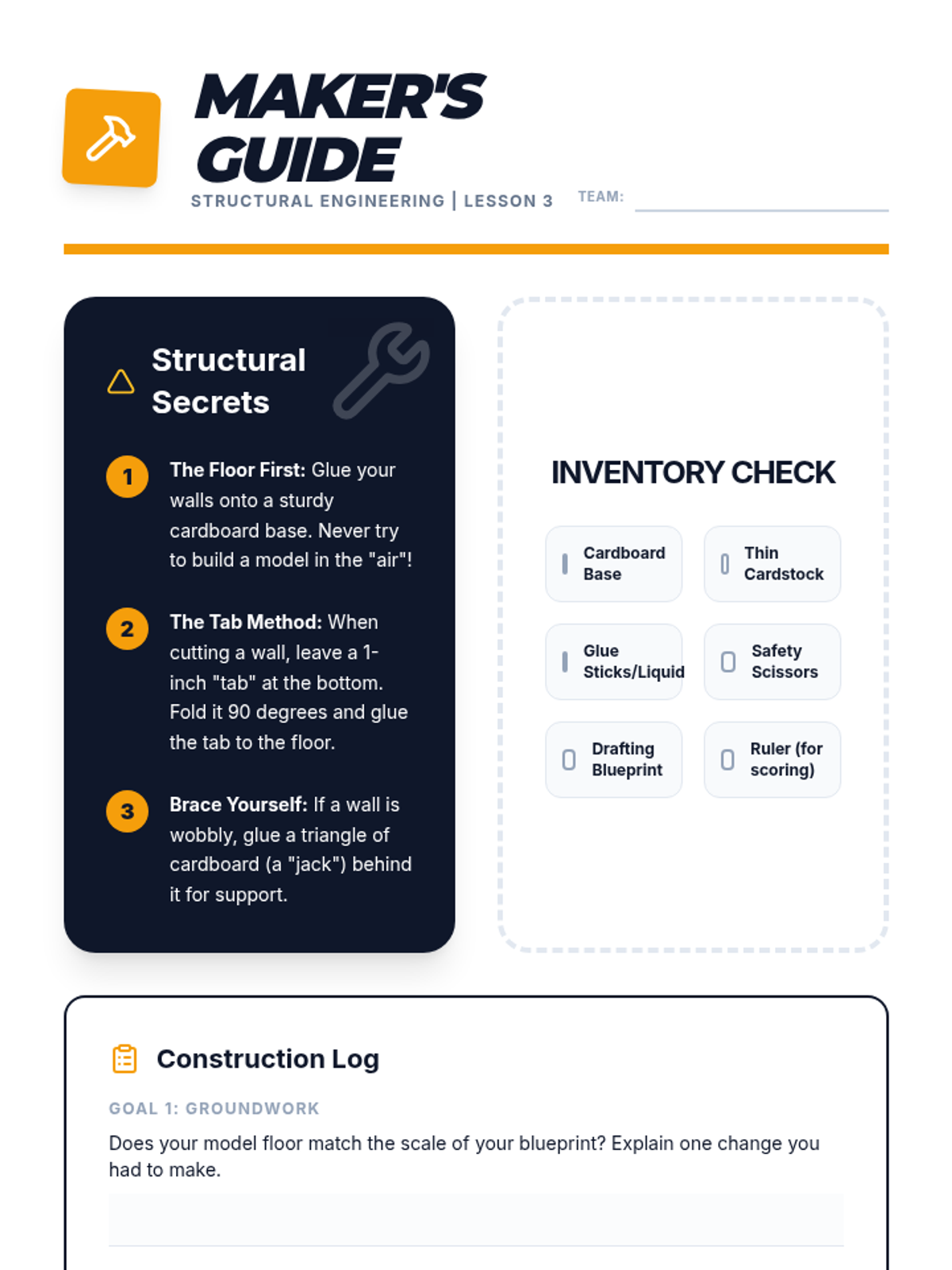
Using their floor plans, students construct 3D dioramas (maquettes) of their sets using cardboard and craft materials.
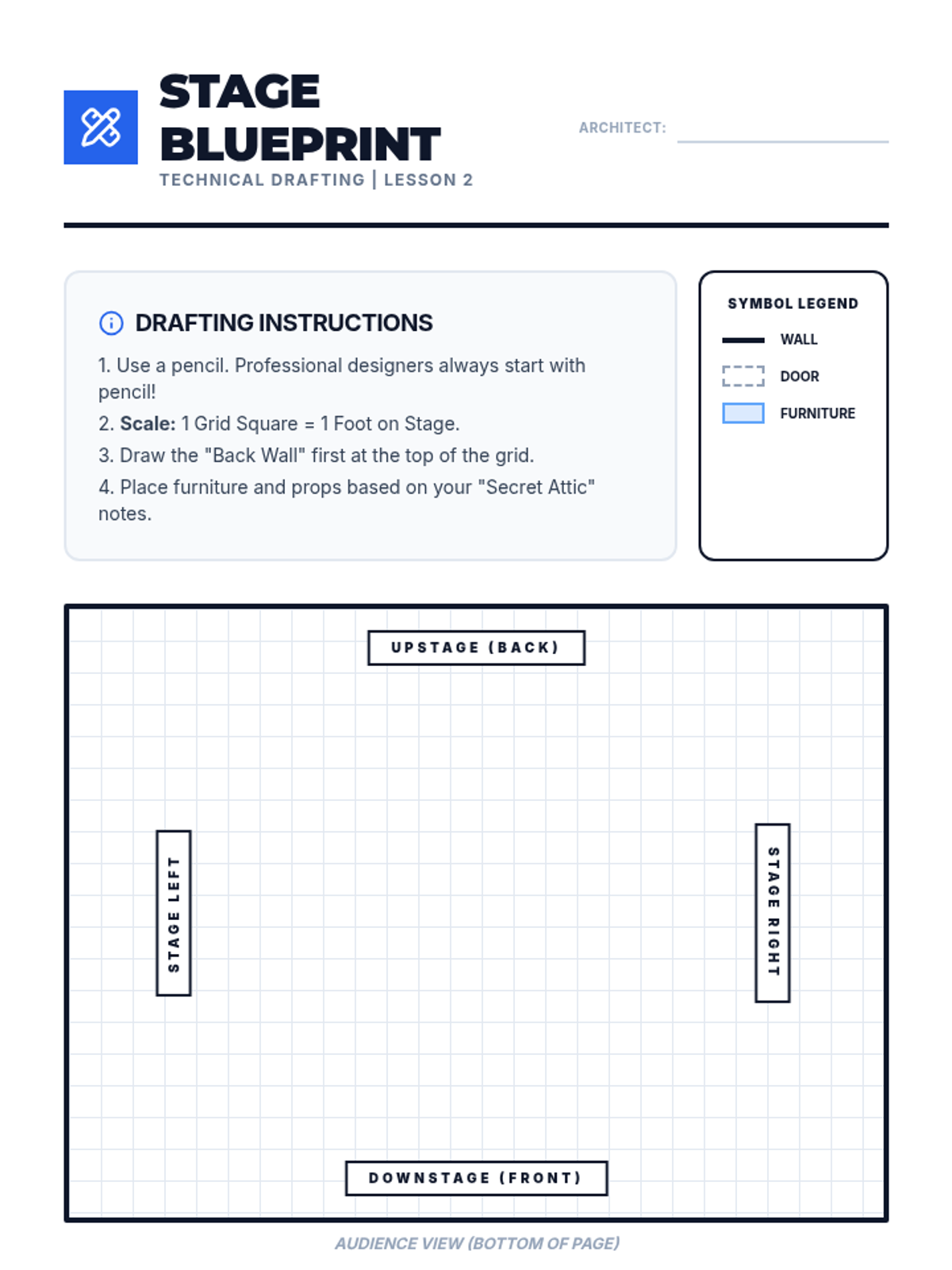
Students learn to draw 'bird's eye view' stage plans, placing furniture and walls while considering audience sightlines.
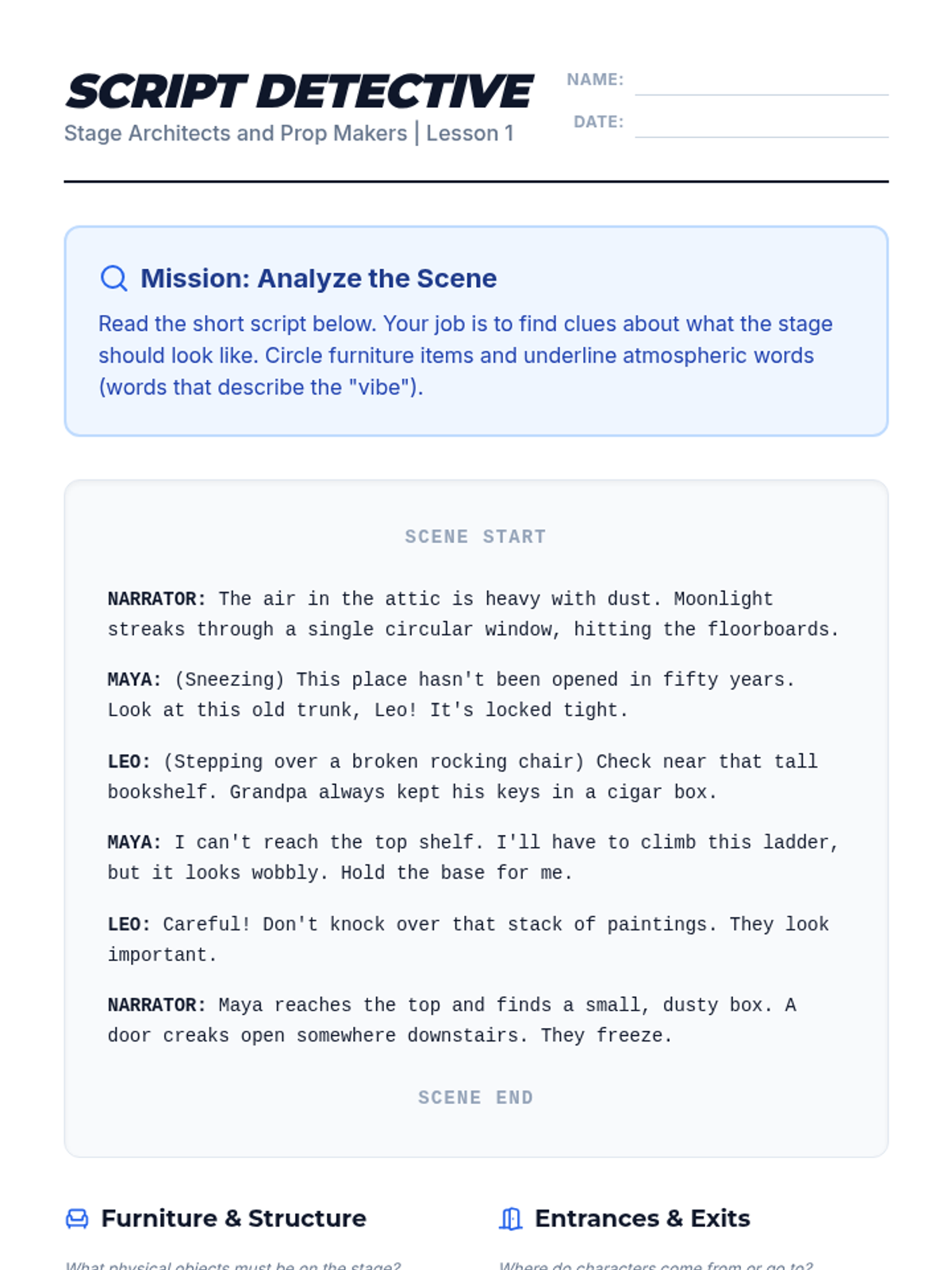
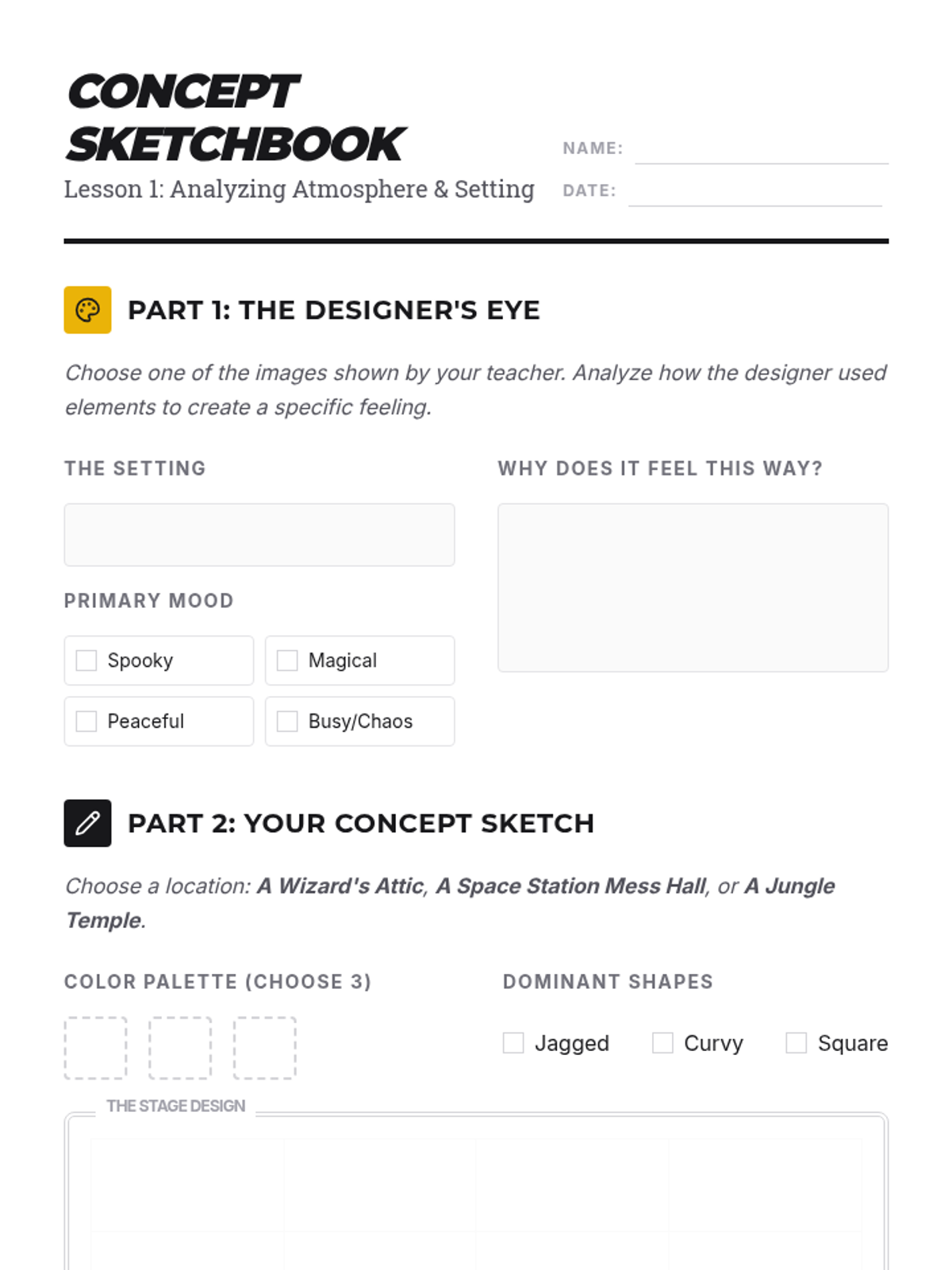
Students analyze a short scene to identify clues about the physical setting, bridging reading comprehension with visual conceptualization.
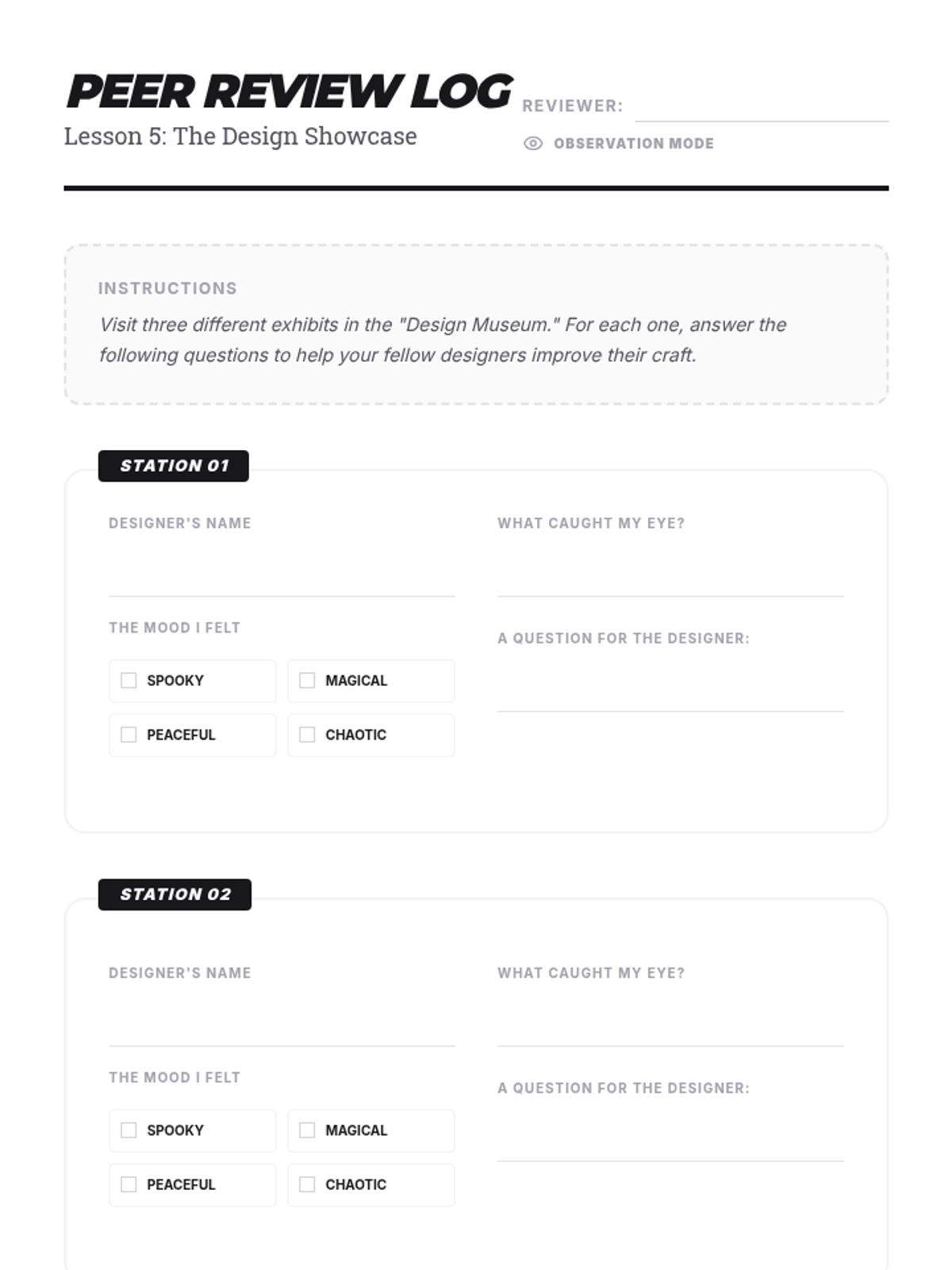
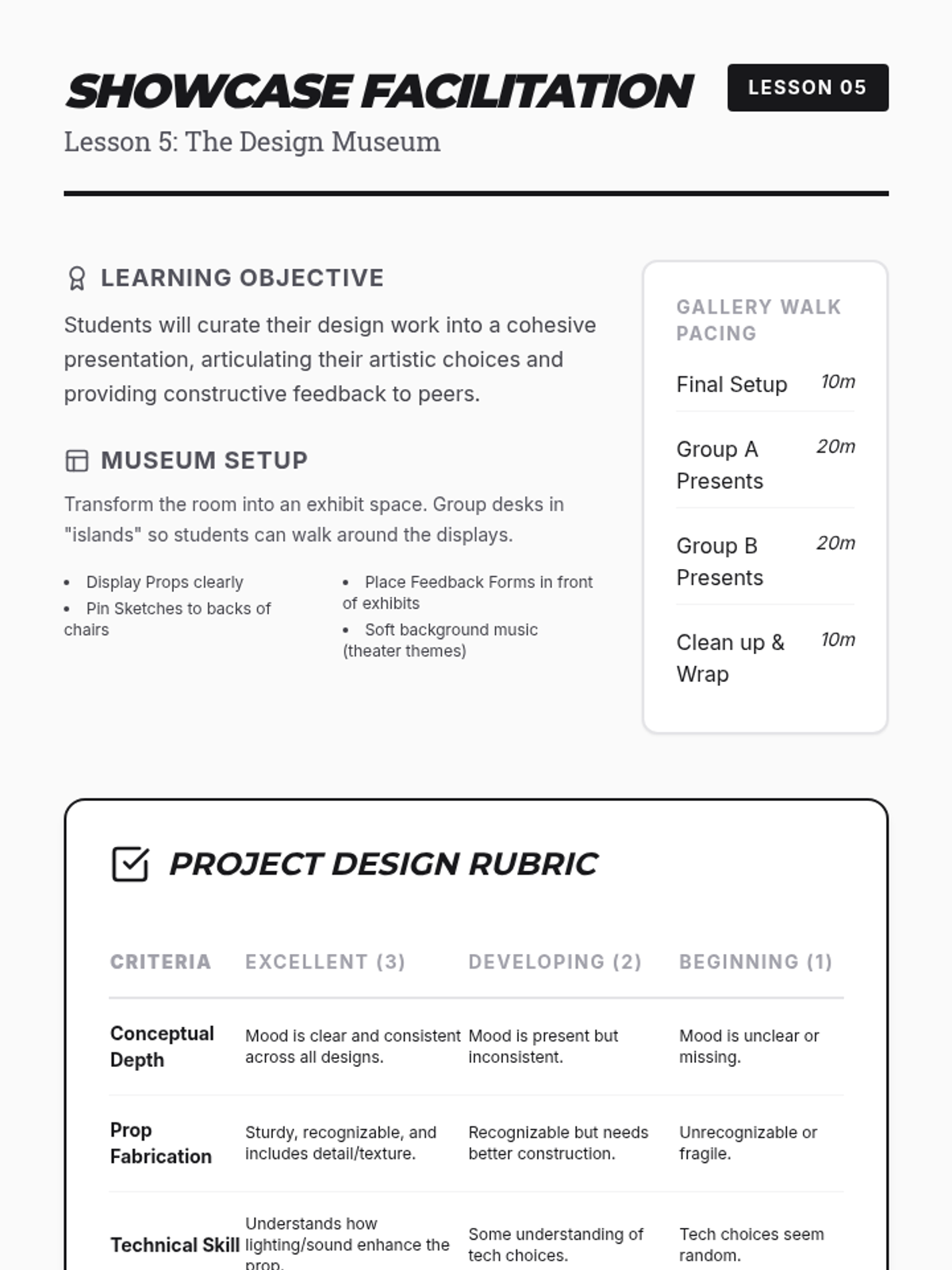
The final stage where students present their design packages, explain their artistic choices, and provide feedback to peers.
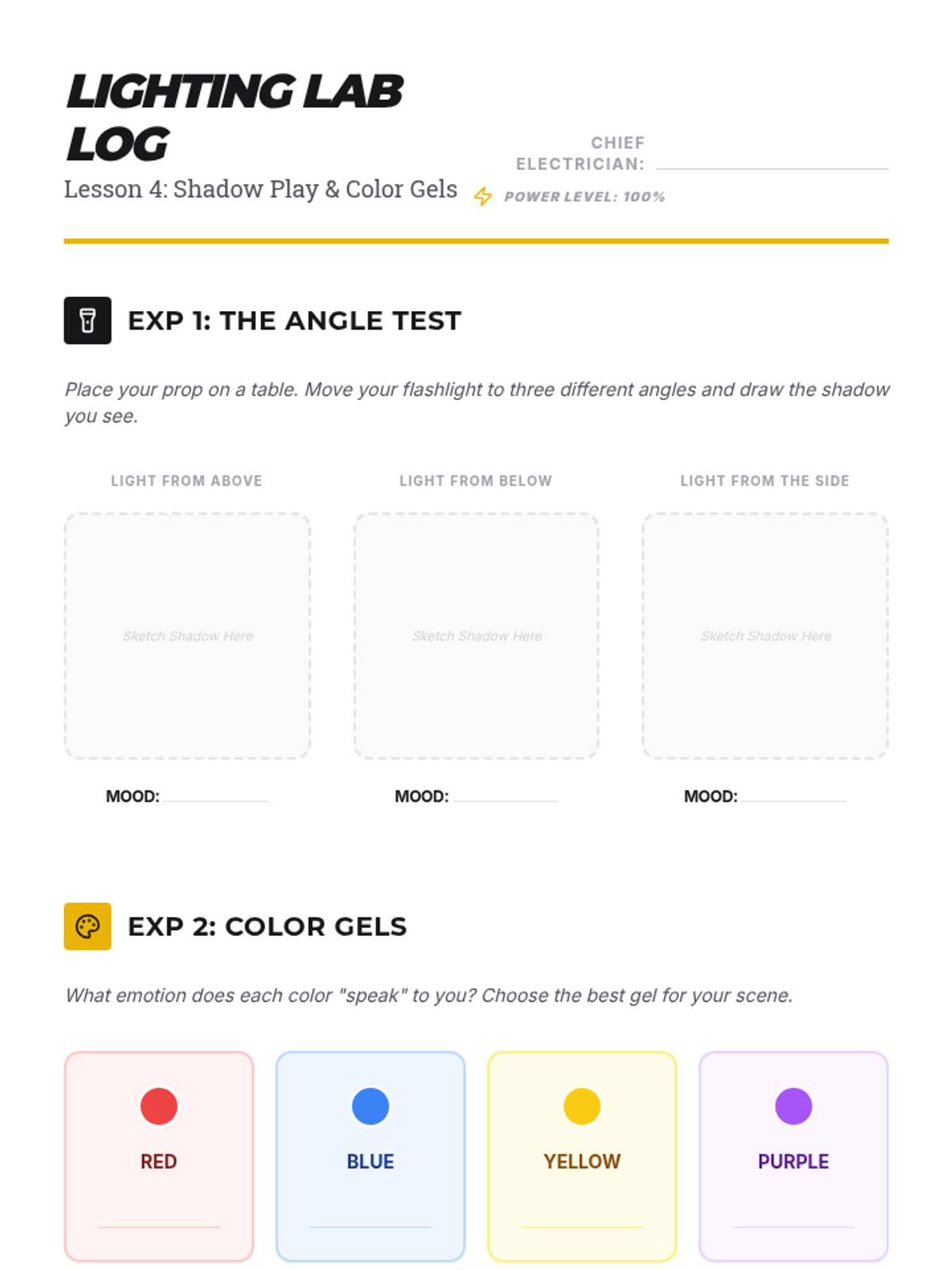
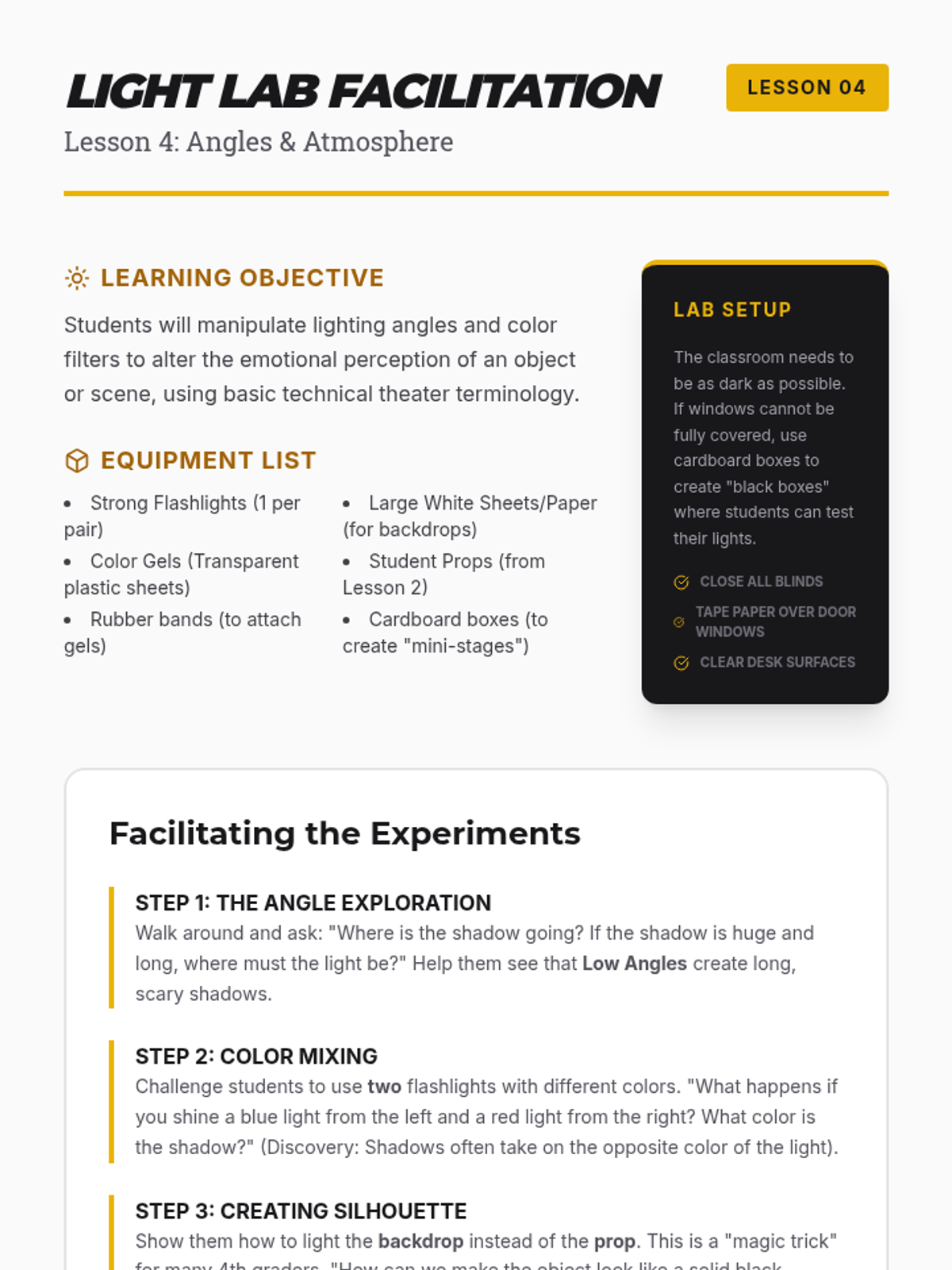
Students experiment with lighting angles and colors to change the emotional impact of a scene, learning basic lighting terminology.
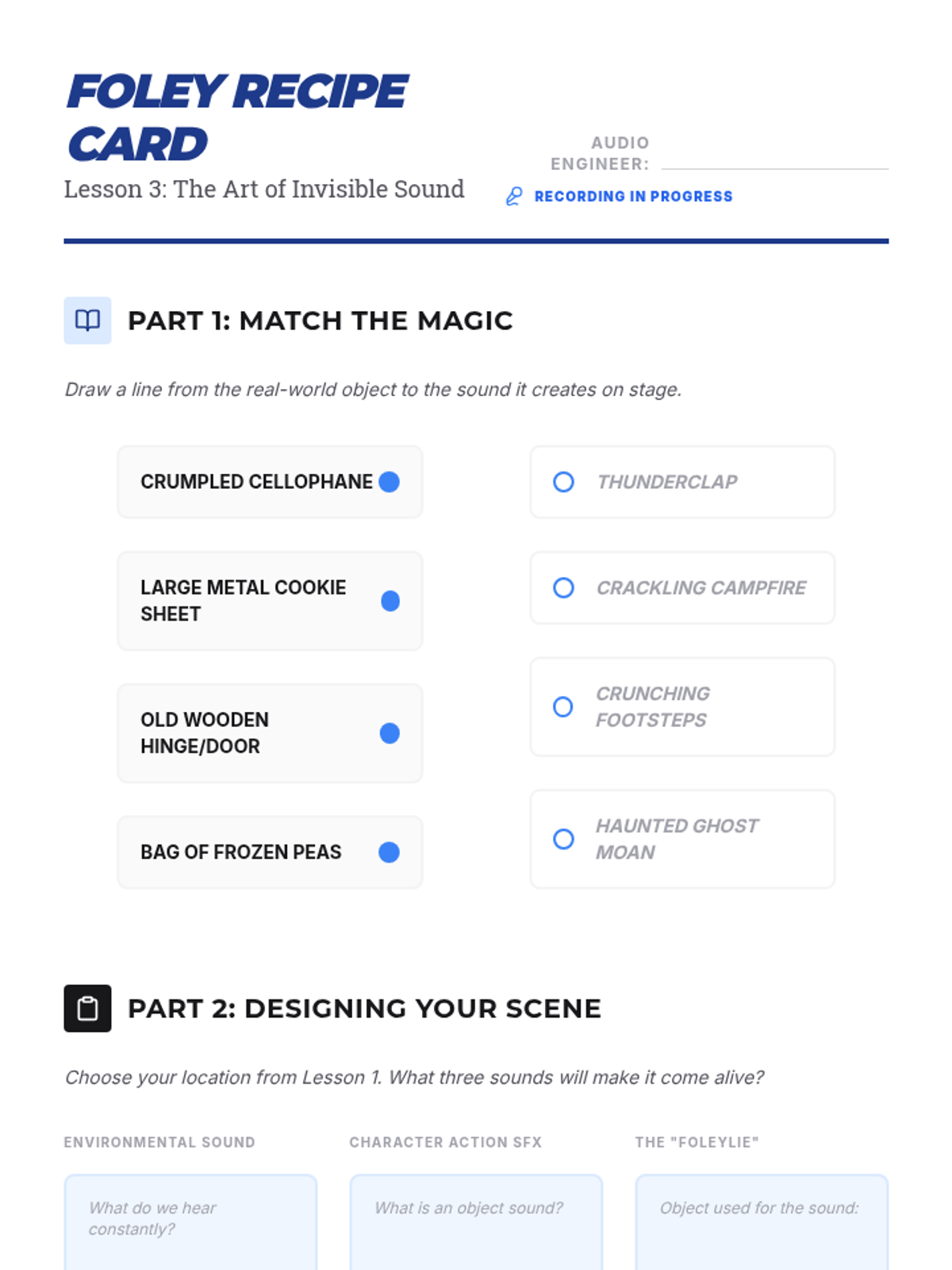
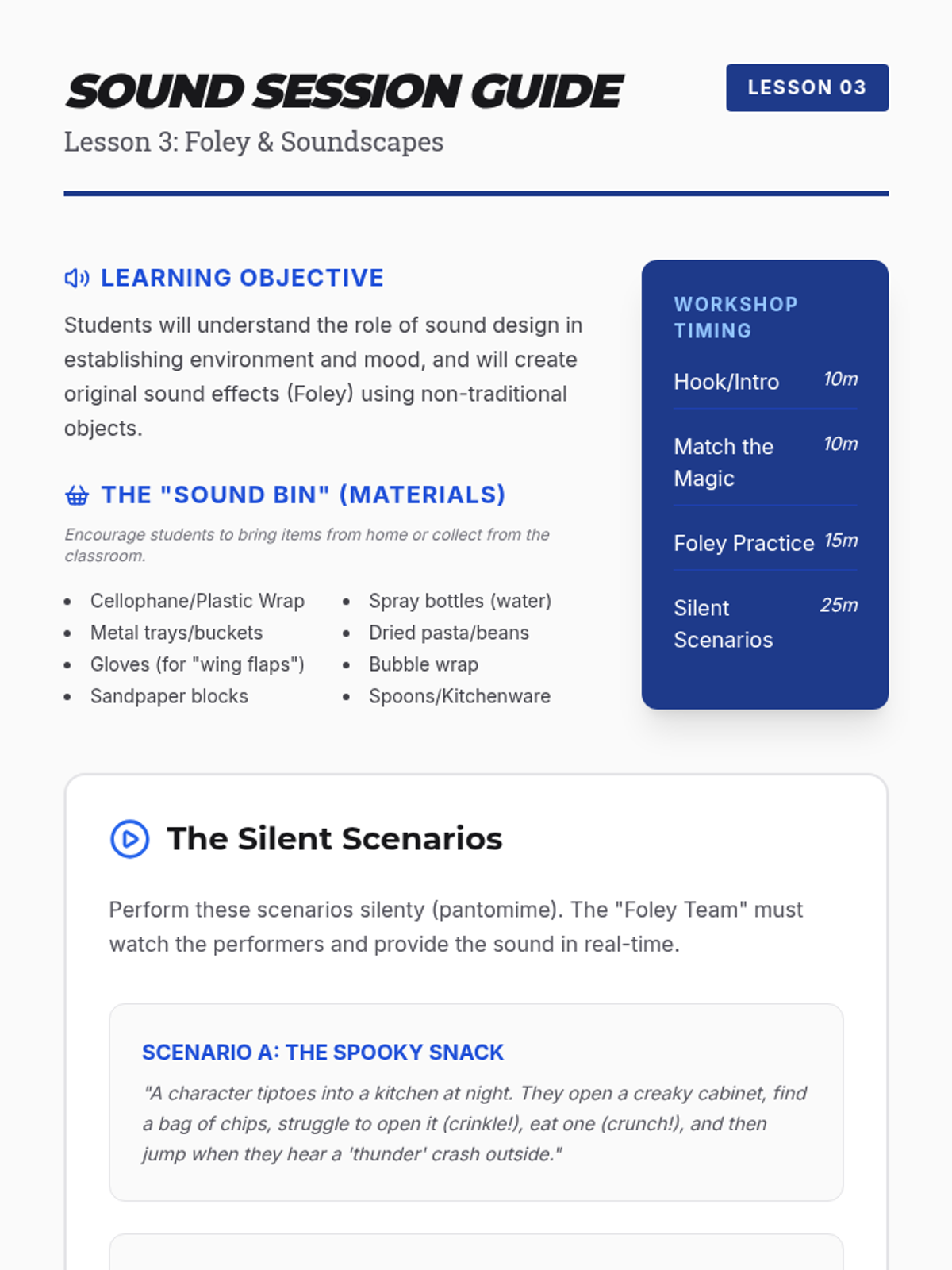
An introduction to Foley and sound design, where students use everyday objects to create soundscapes that enhance a narrative.
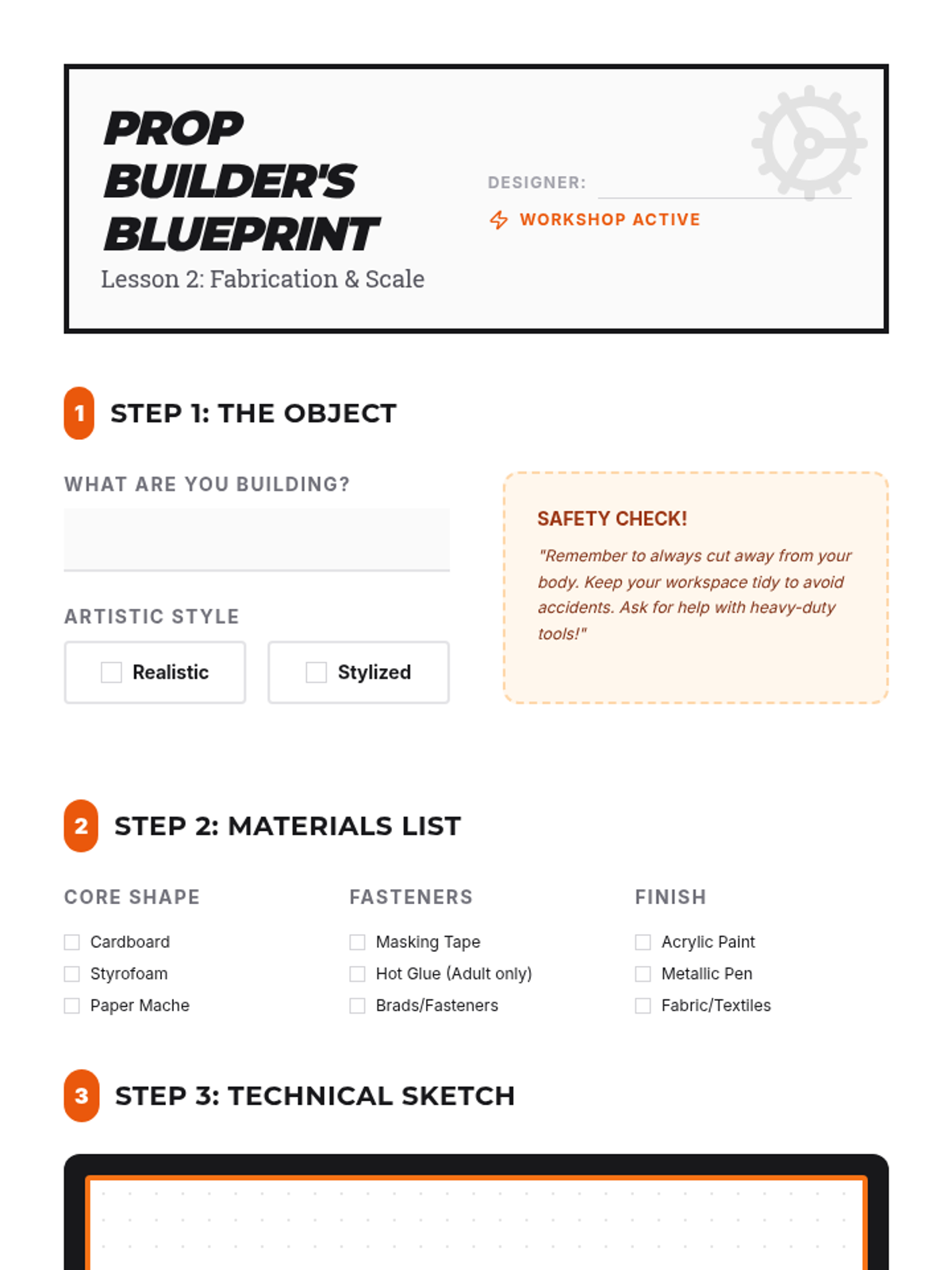
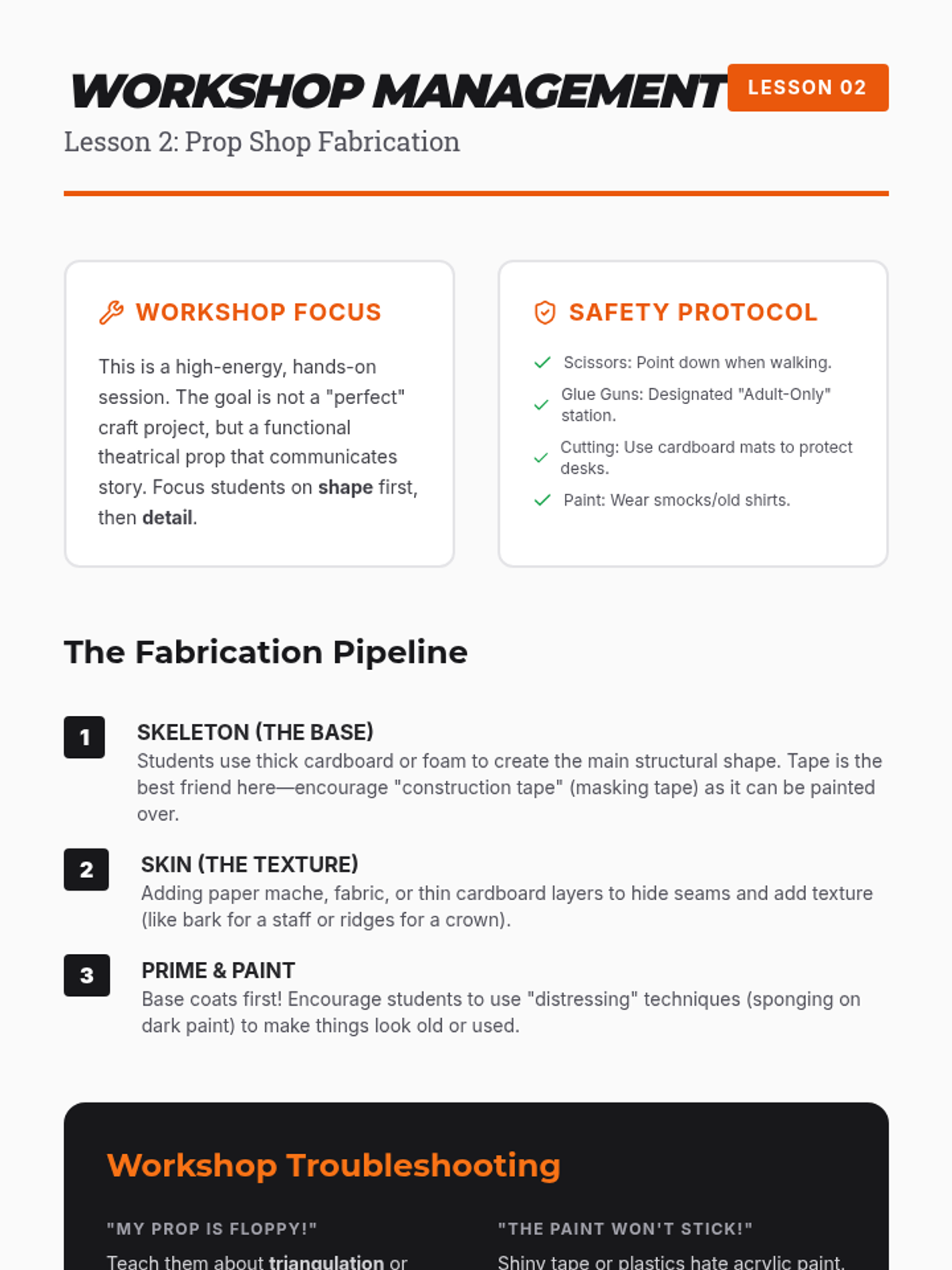
Focuses on the creation of theatrical props, teaching students about scale, material choice, and the difference between realism and stylization.
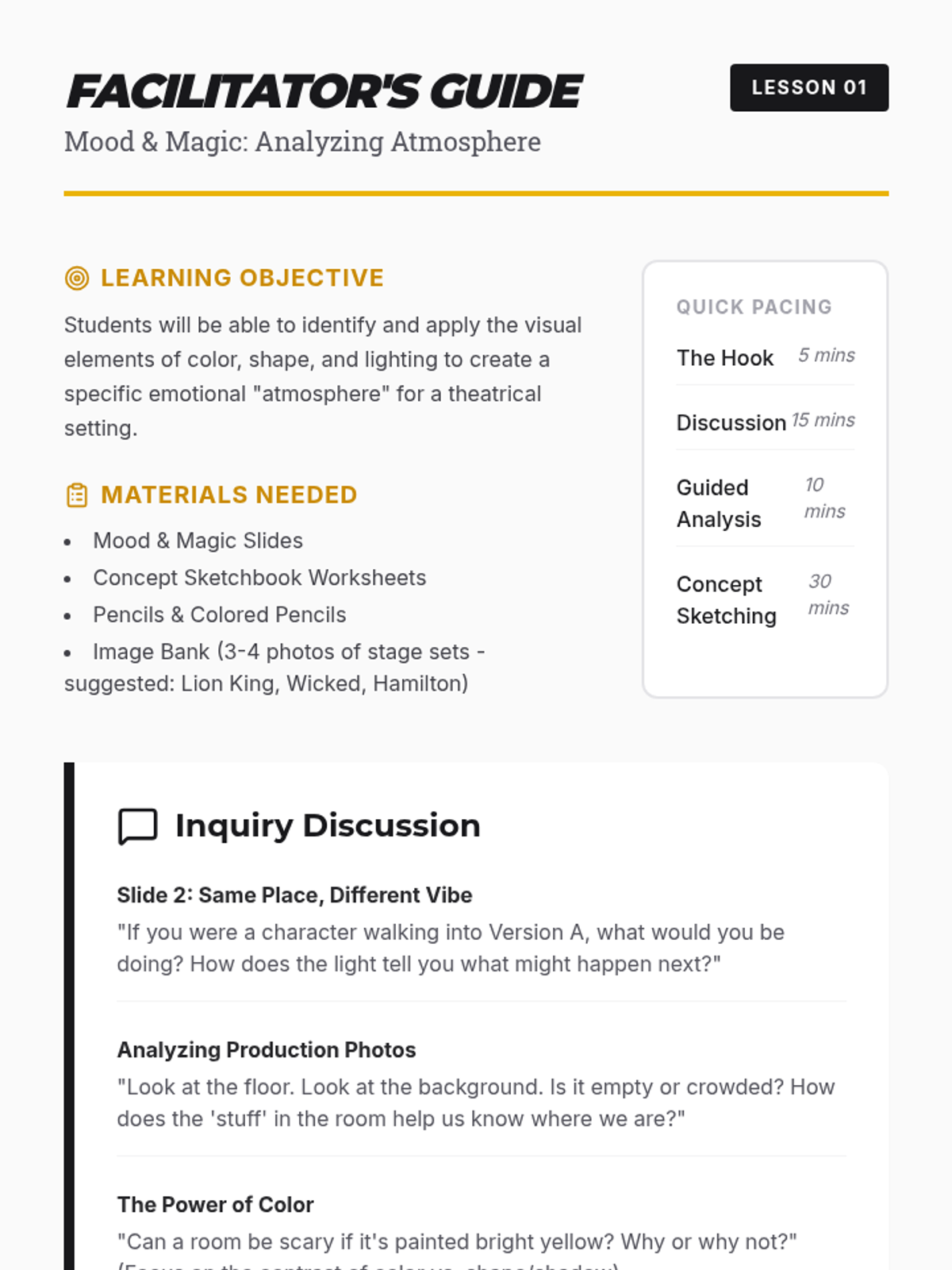
Students explore how color, light, and set design create mood and atmosphere in theater, beginning their journey as visual storytellers.
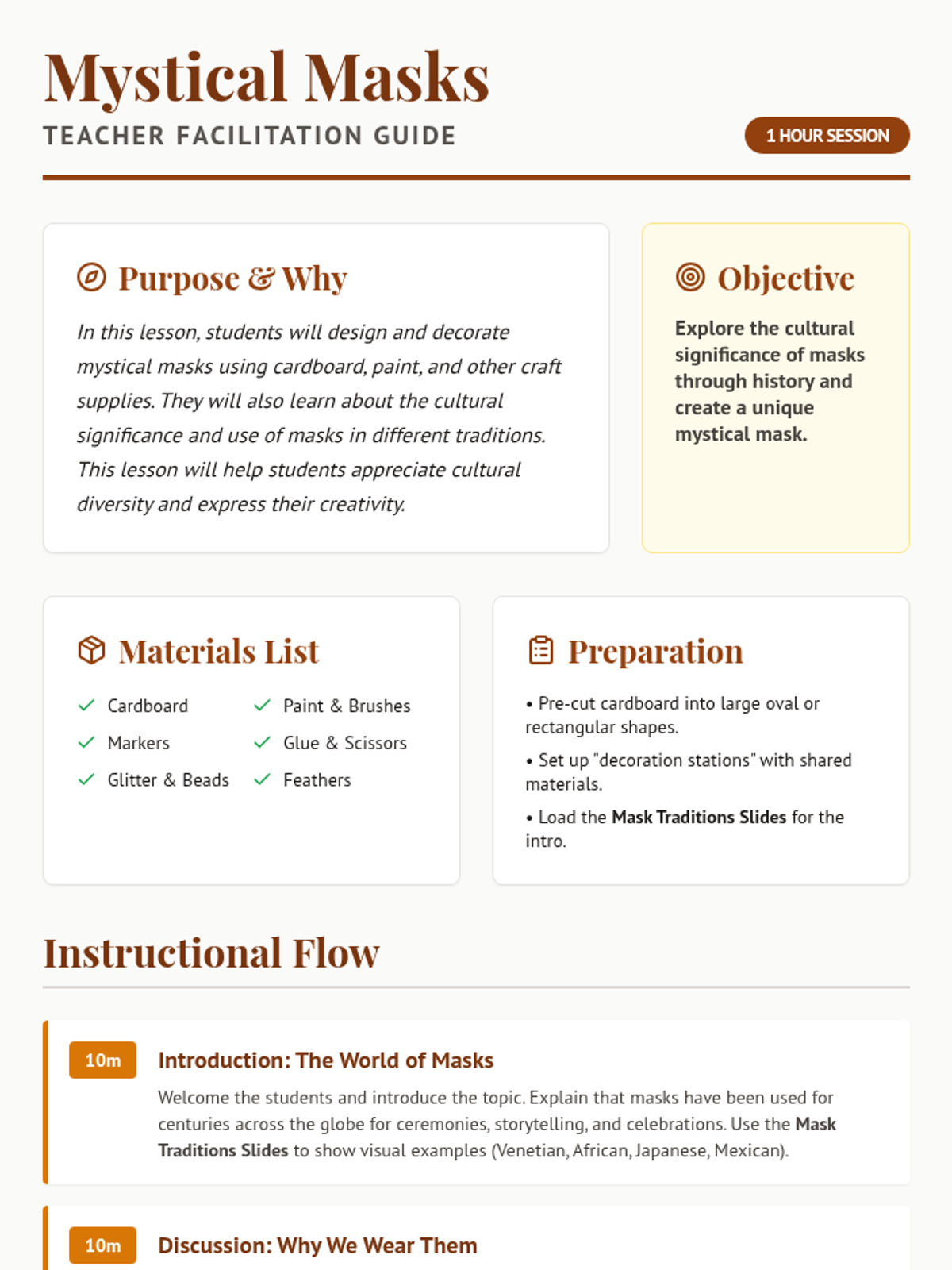
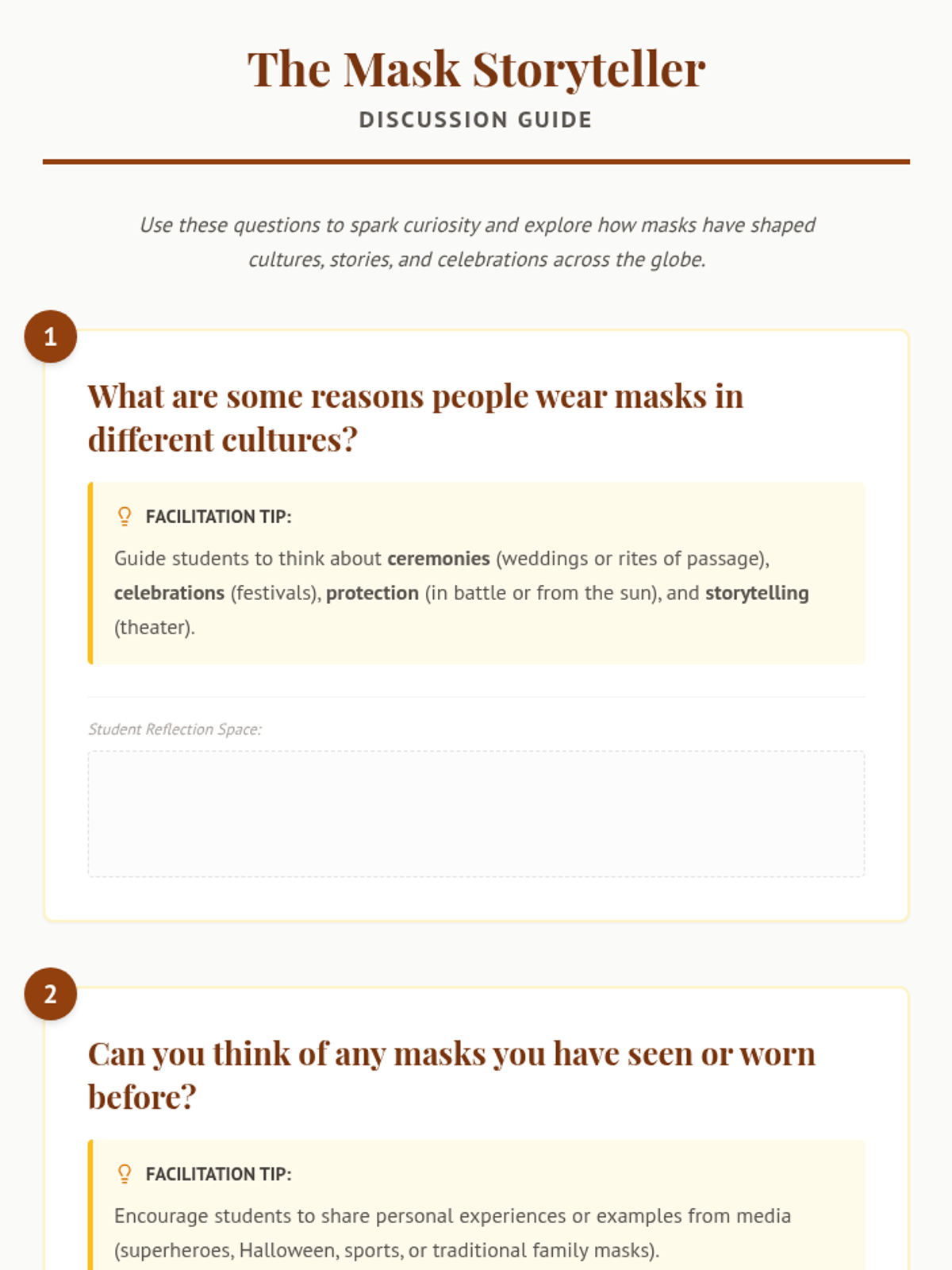
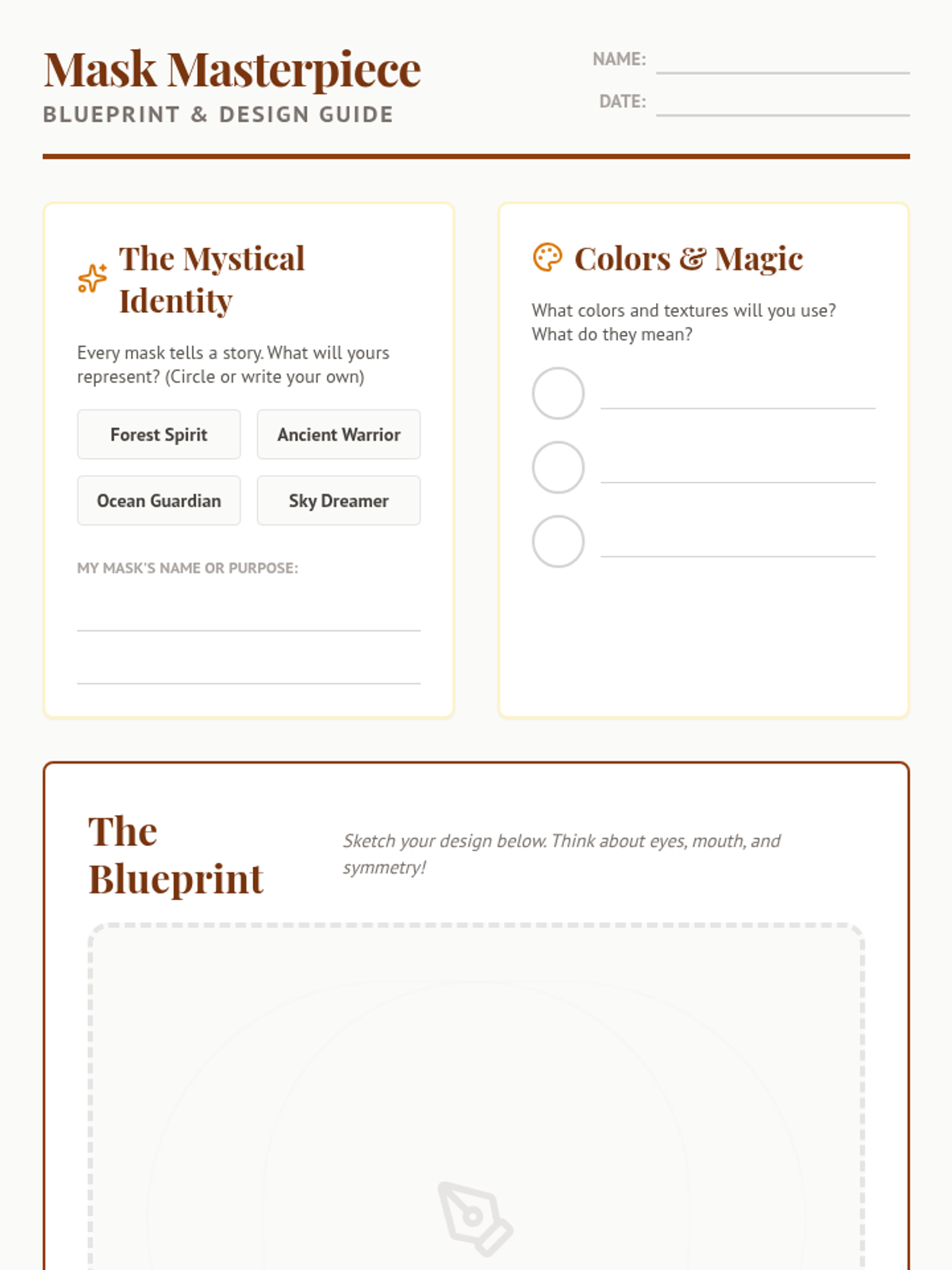
Students explore the cultural significance of masks from around the world and design their own mystical masks using cardboard and craft supplies.
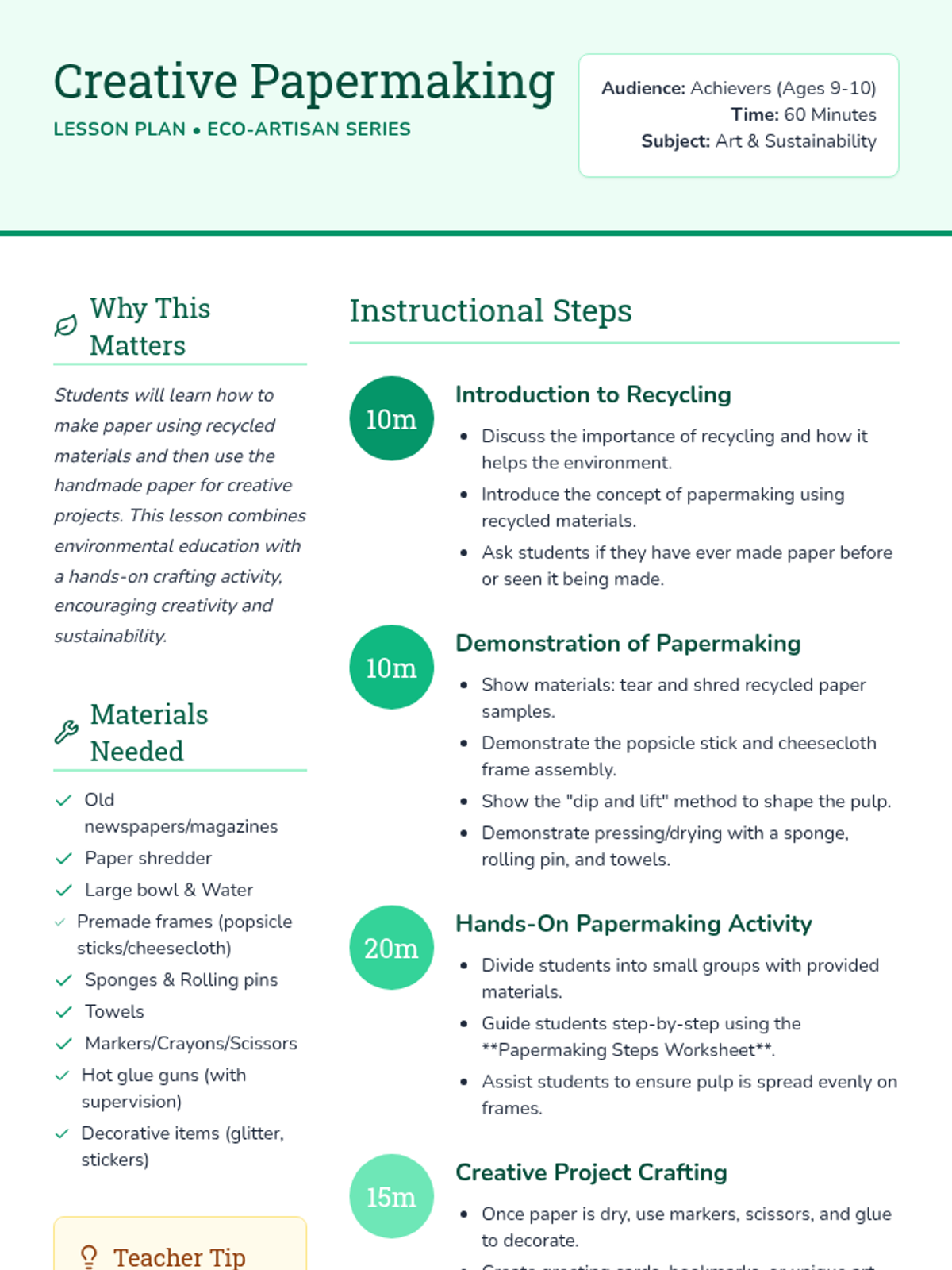
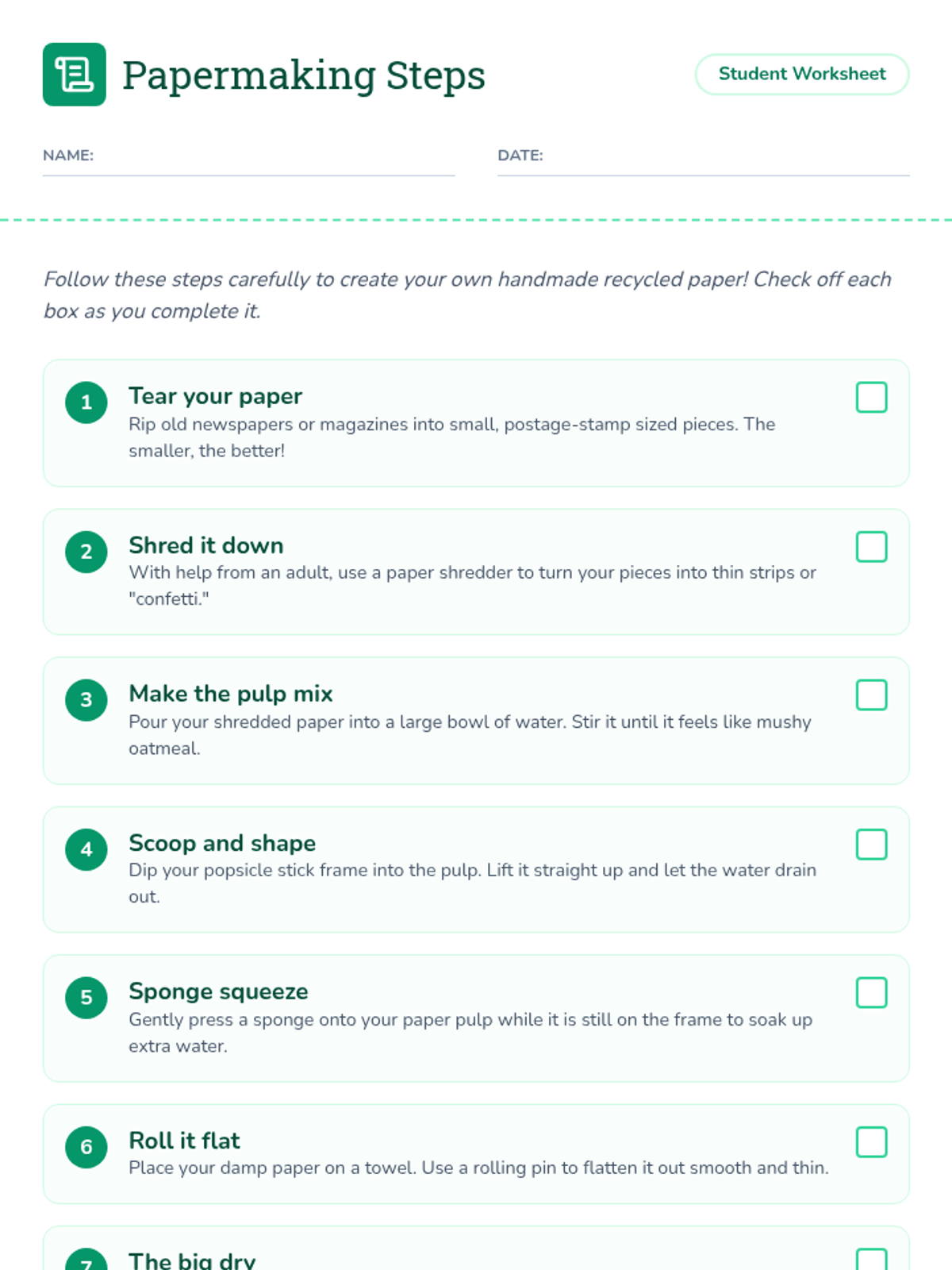
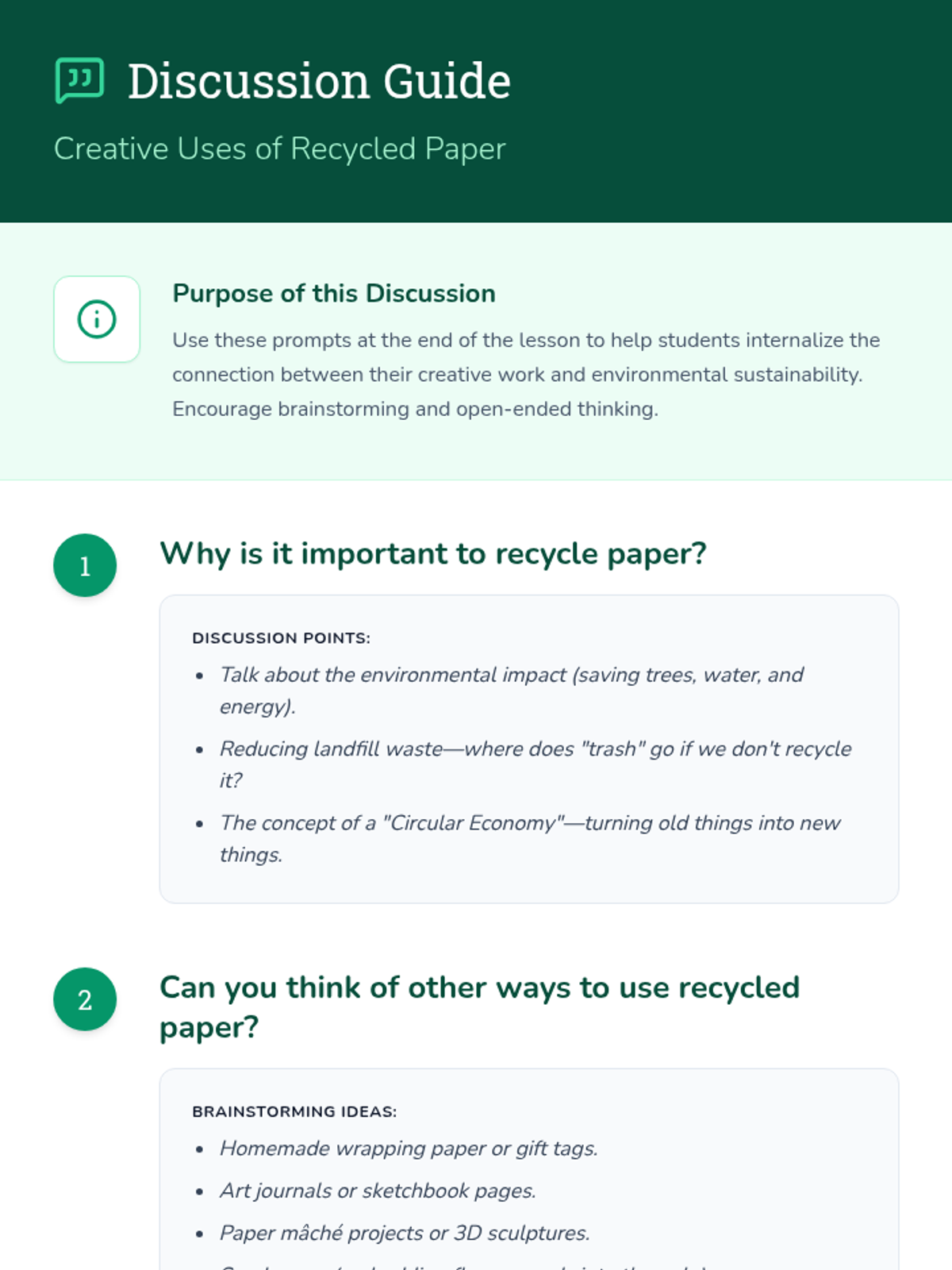
A hands-on lesson where students learn the art of papermaking using recycled materials, combining environmental science with creative crafting.
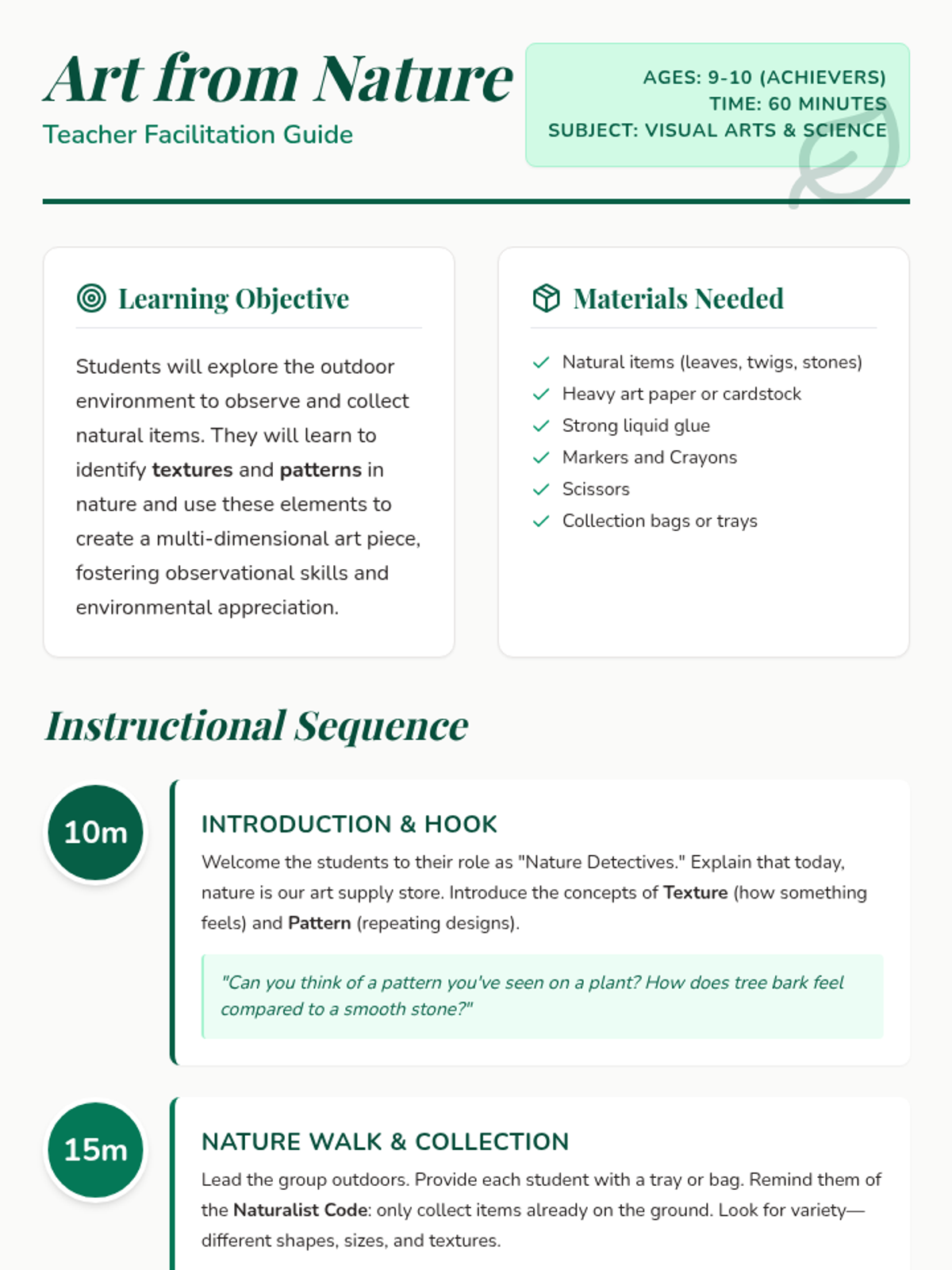
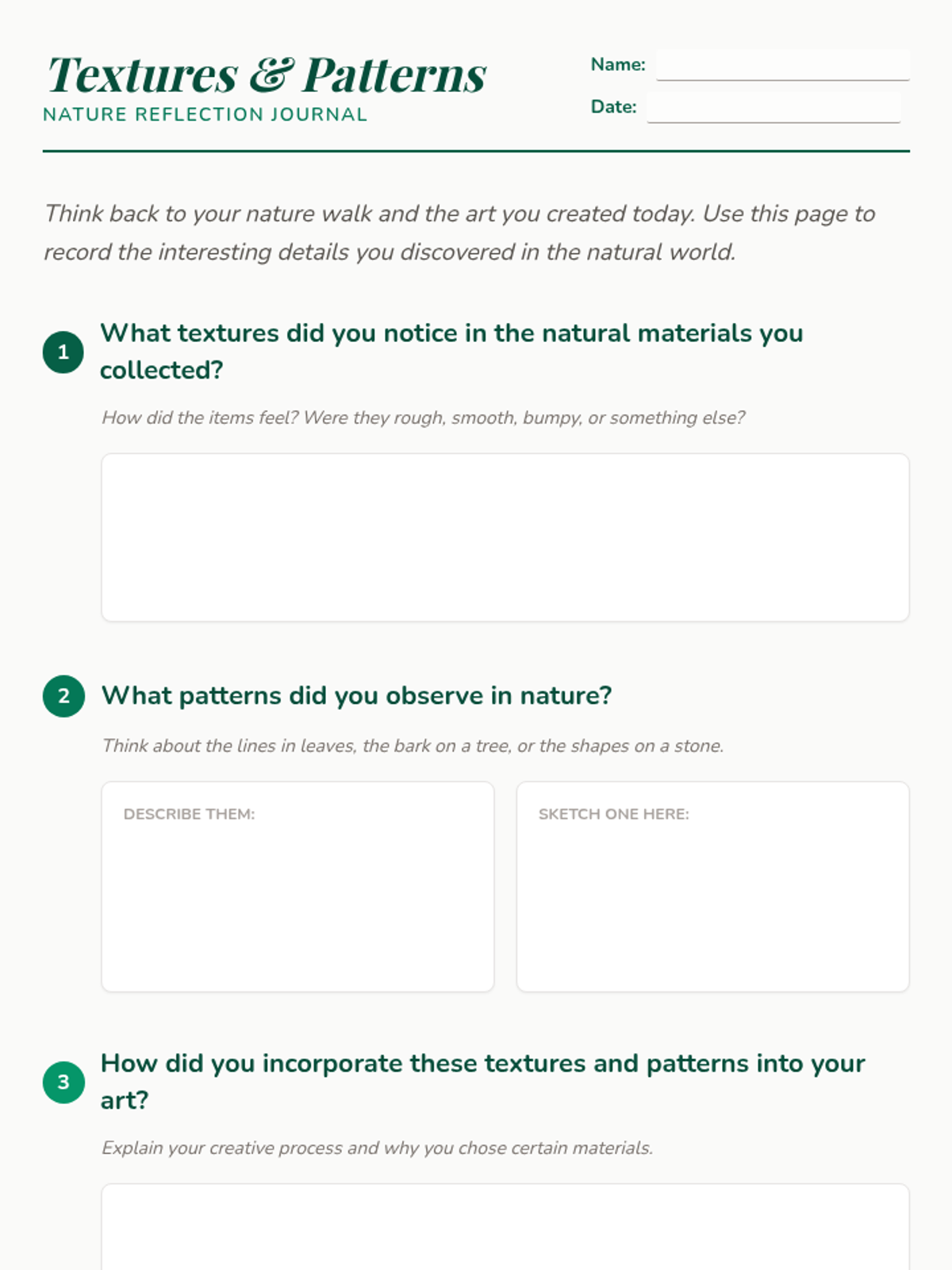
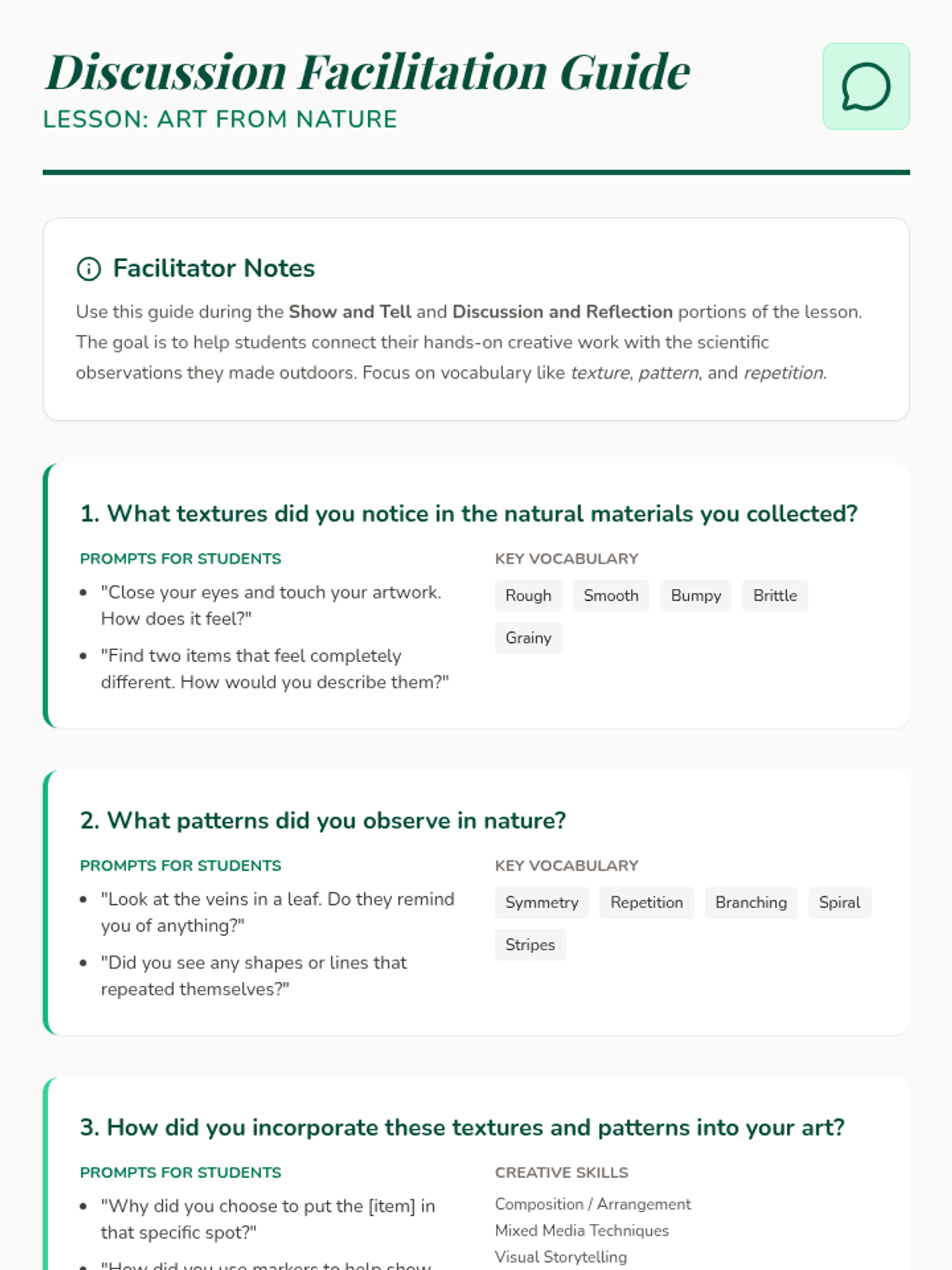
Students will use natural materials to create unique art pieces, learning about textures and patterns found in nature. This lesson helps students appreciate the beauty of nature and develop their creativity and observational skills.
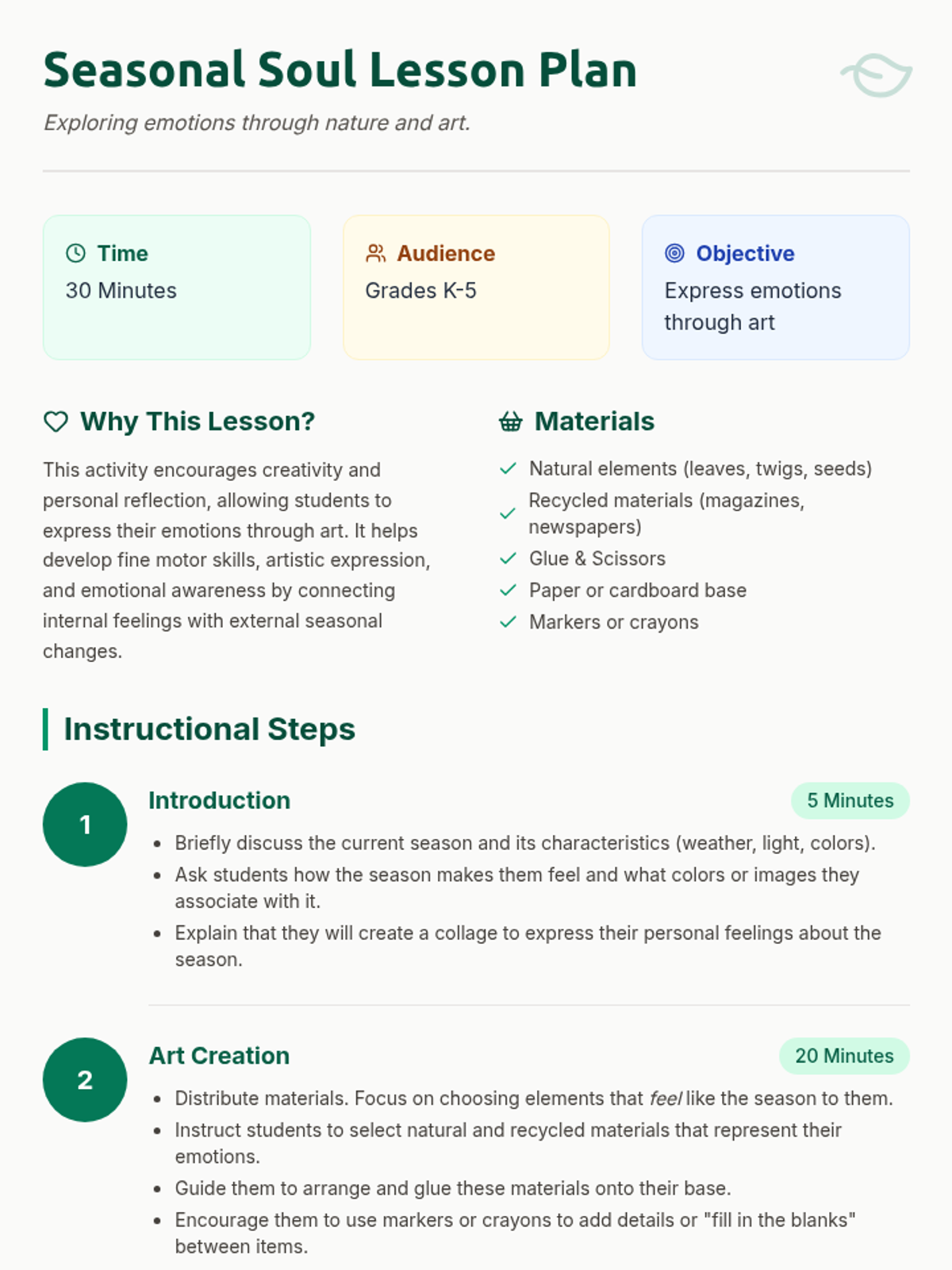
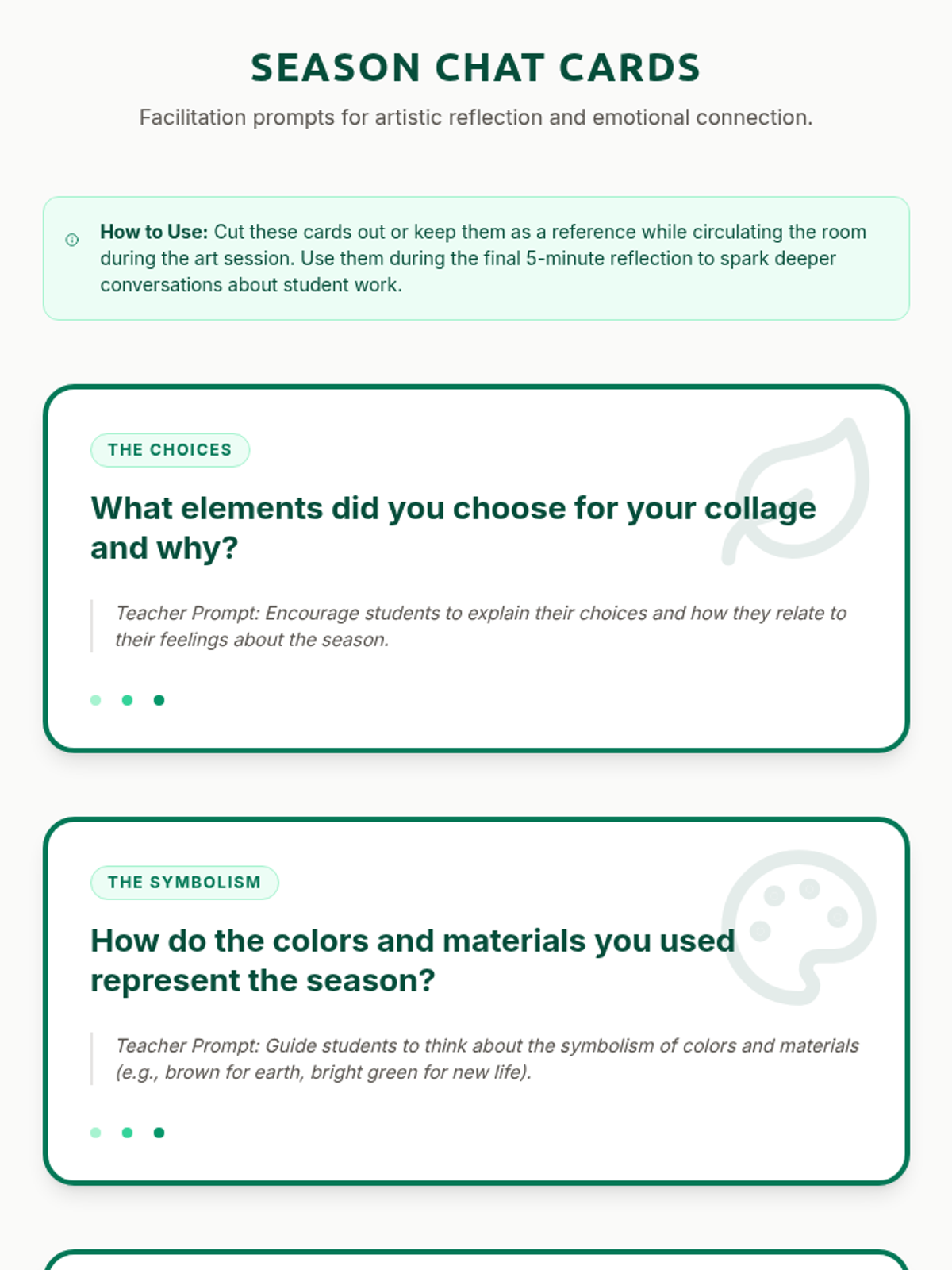
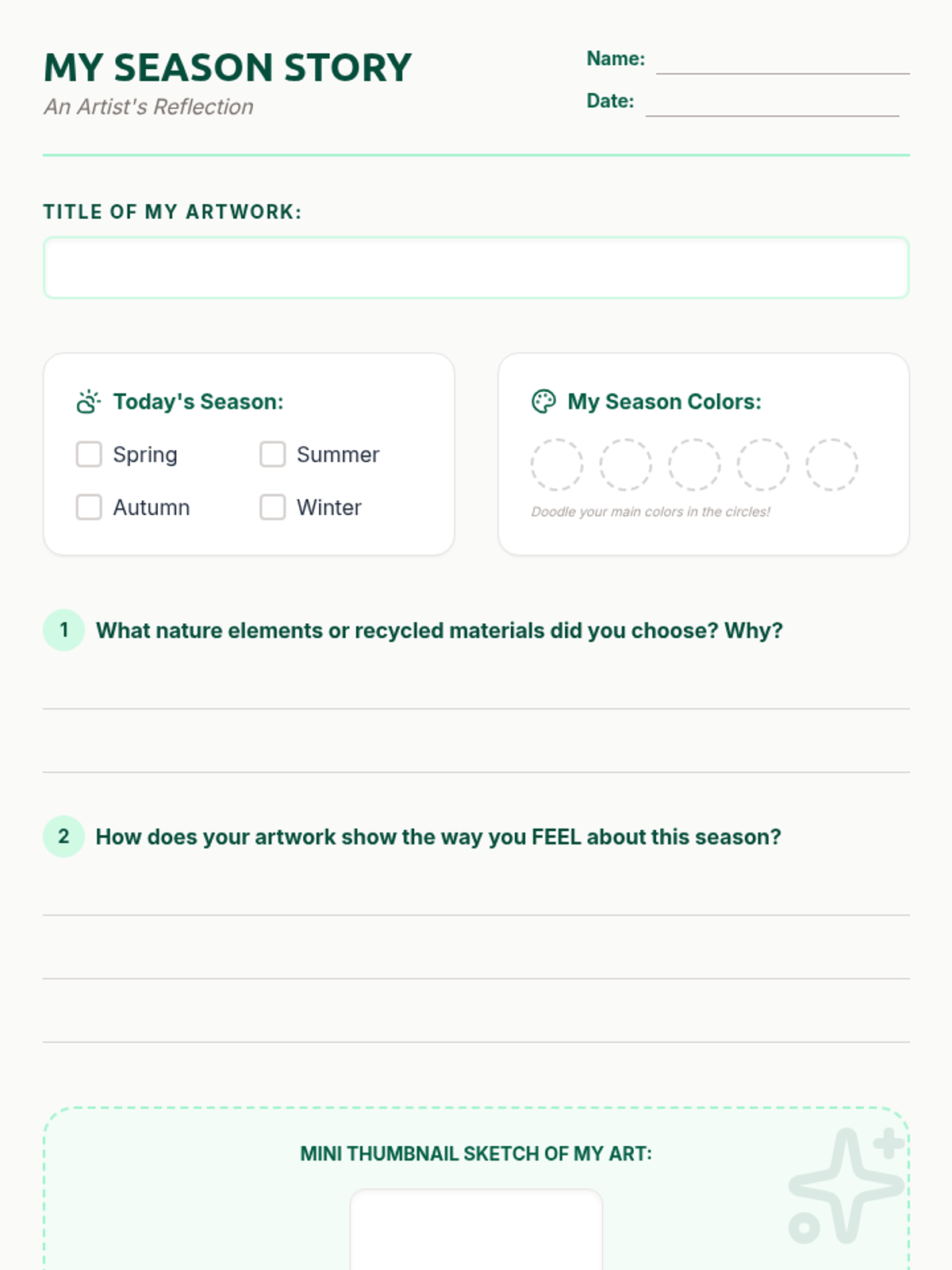
In this lesson, students will create collage artworks that represent their feelings about the current season using elements from nature and recycled materials. This activity encourages creativity and personal reflection, allowing students to express their emotions through art. It helps develop fine motor skills, artistic expression, and emotional awareness.
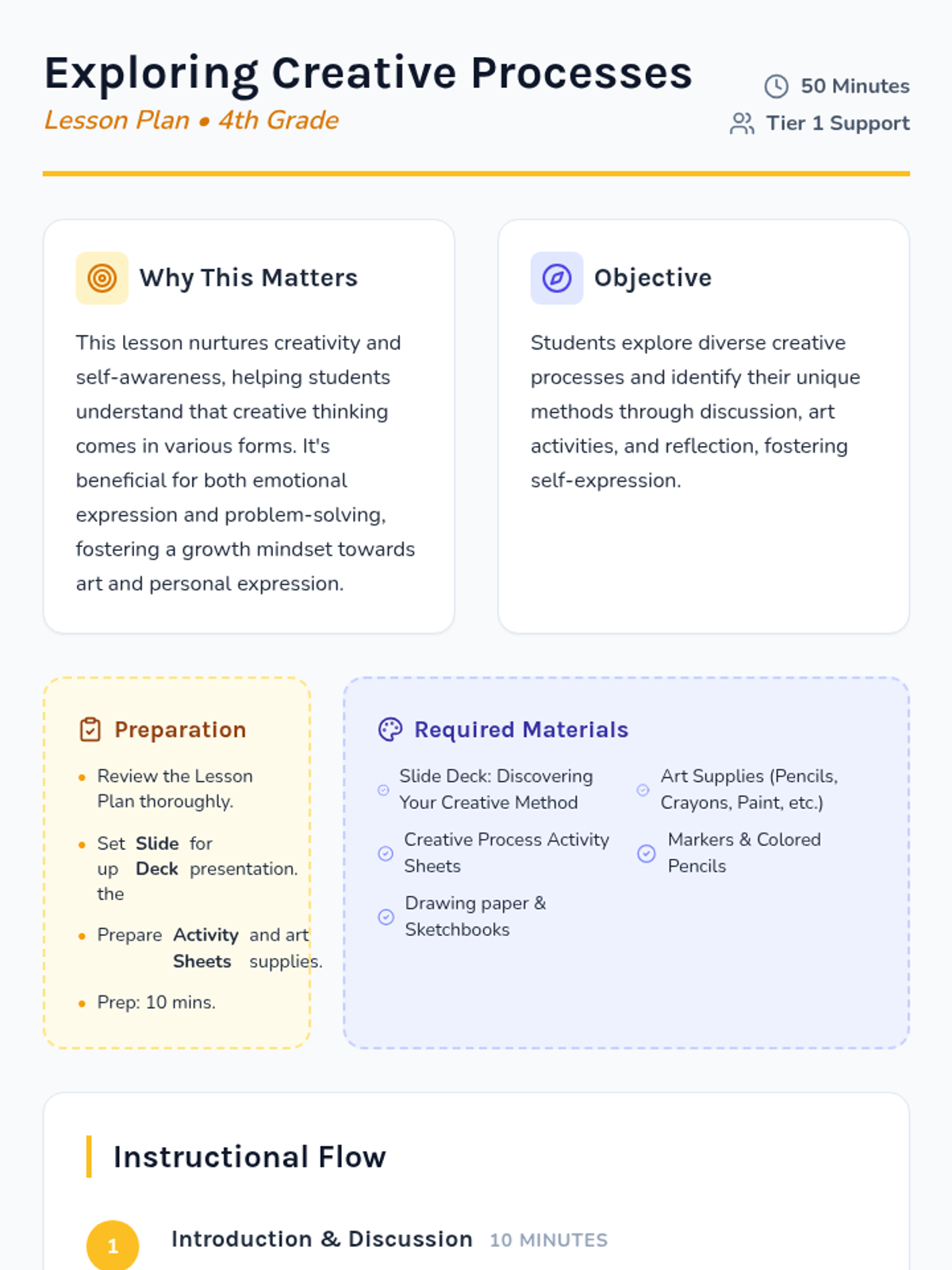
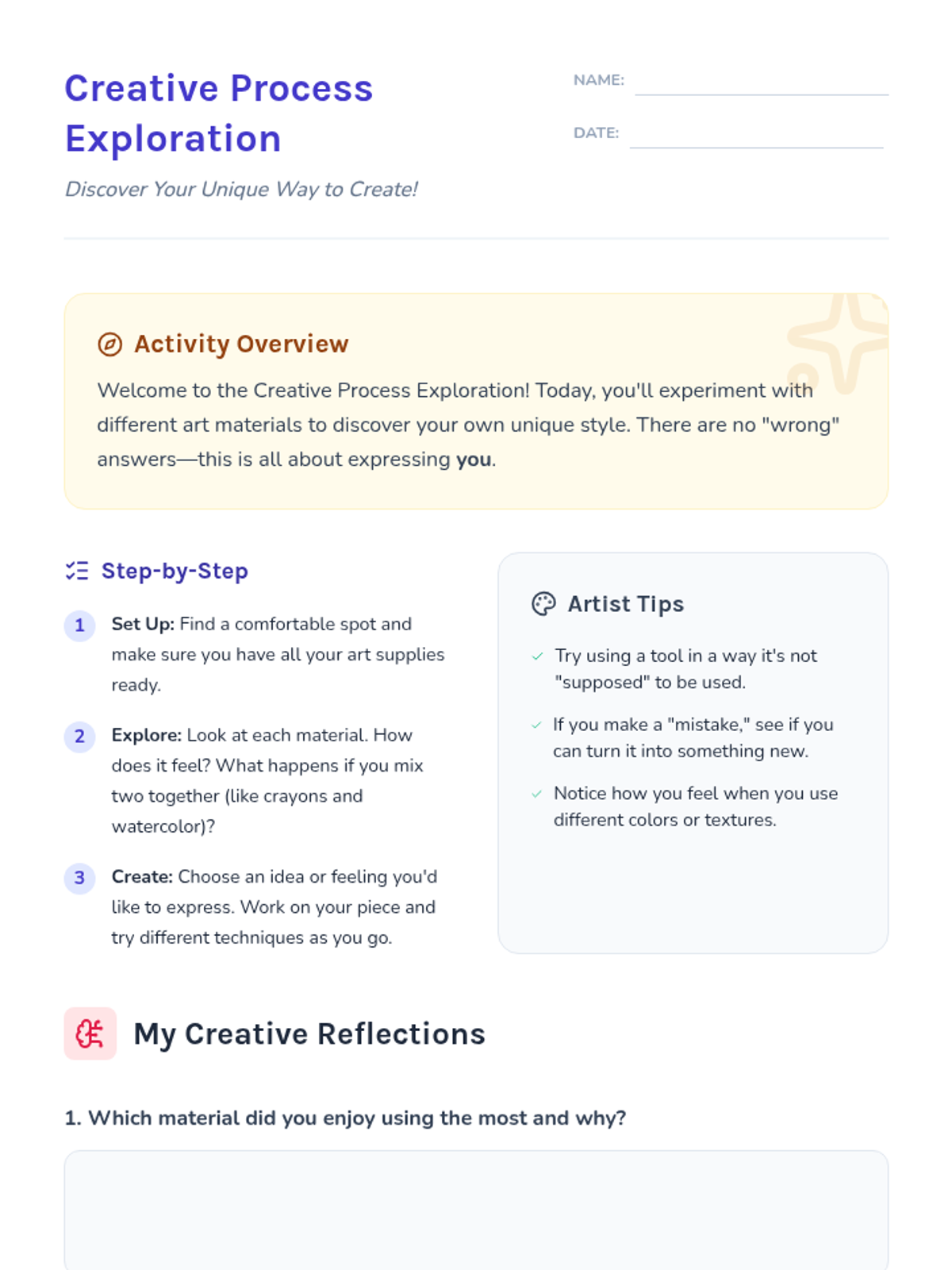
A lesson designed for 4th graders to explore different creative processes and discover their unique artistic methods through hands-on activities and reflection.
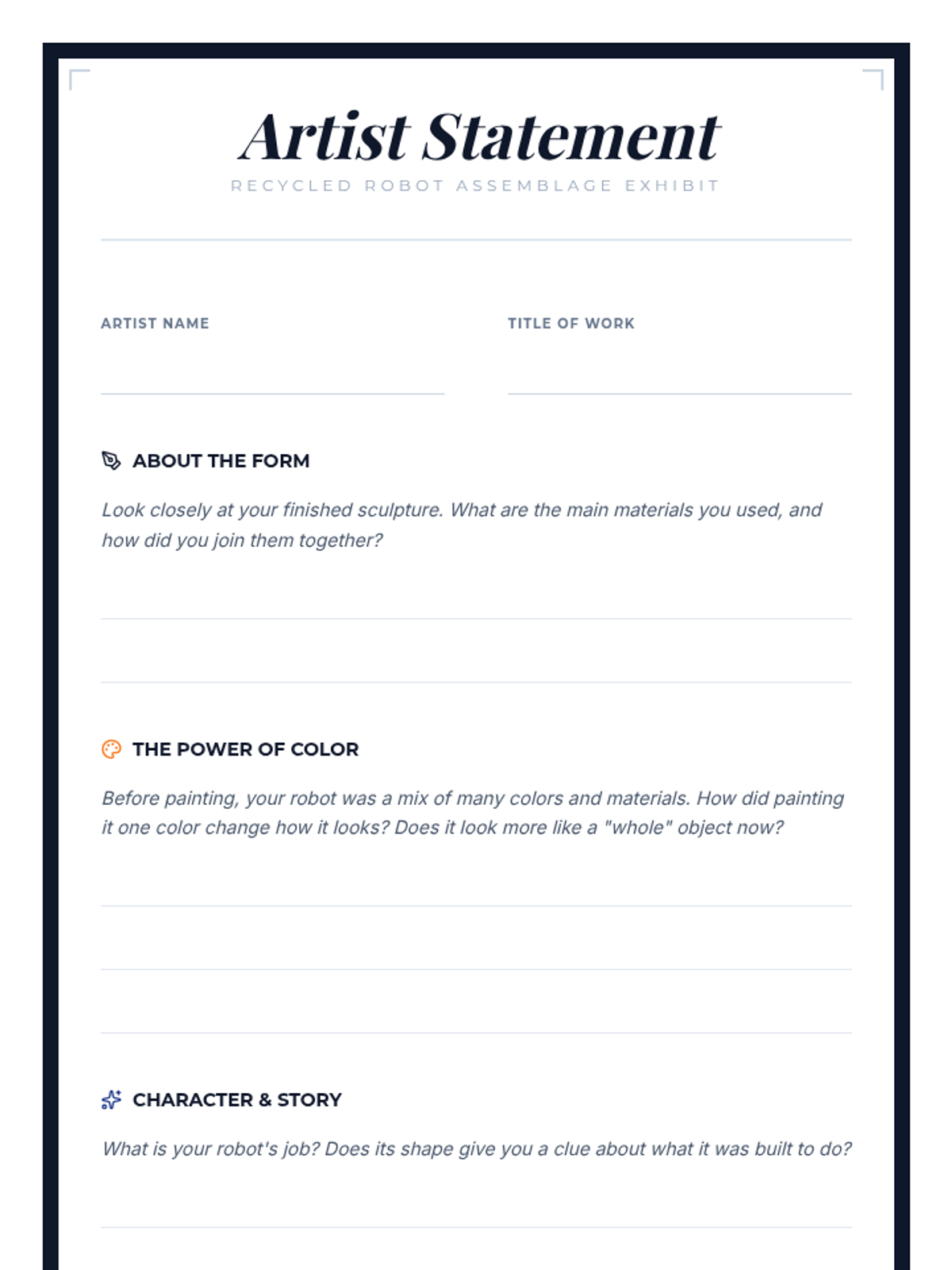
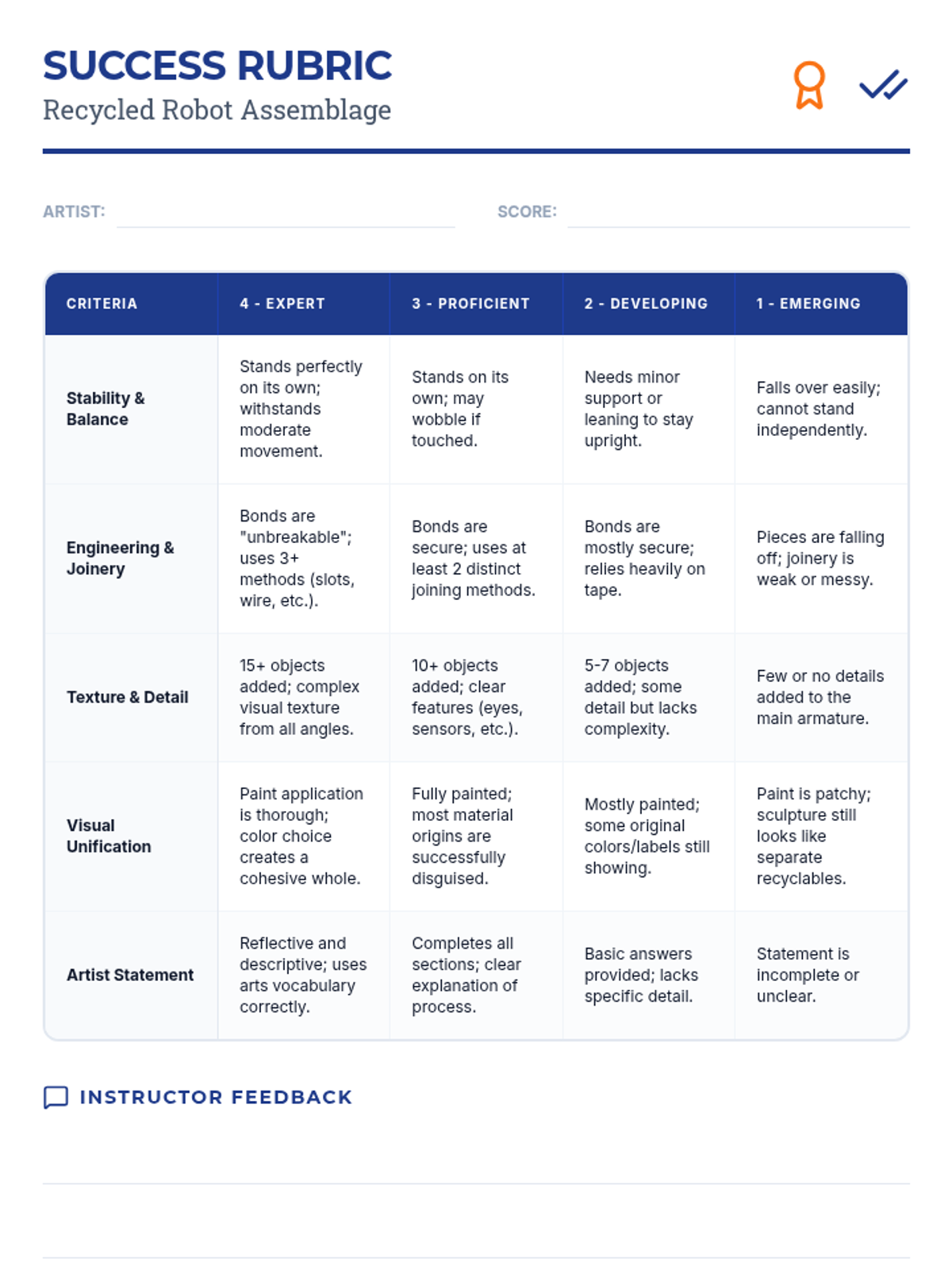
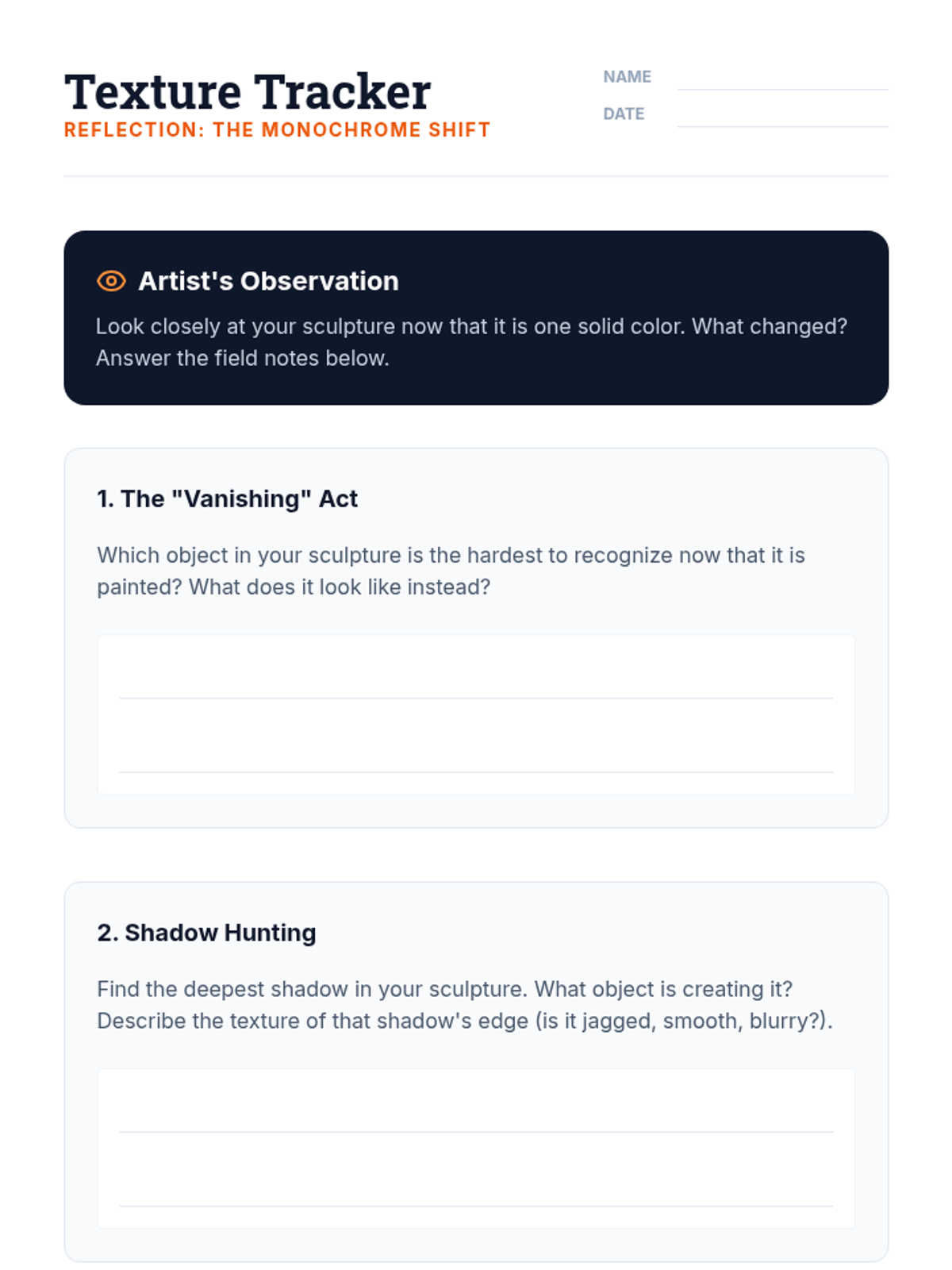
Students use primer or a single color of paint to unify their diverse materials, transforming the assemblage into a cohesive visual form. They reflect on how color changes the perception of the materials.
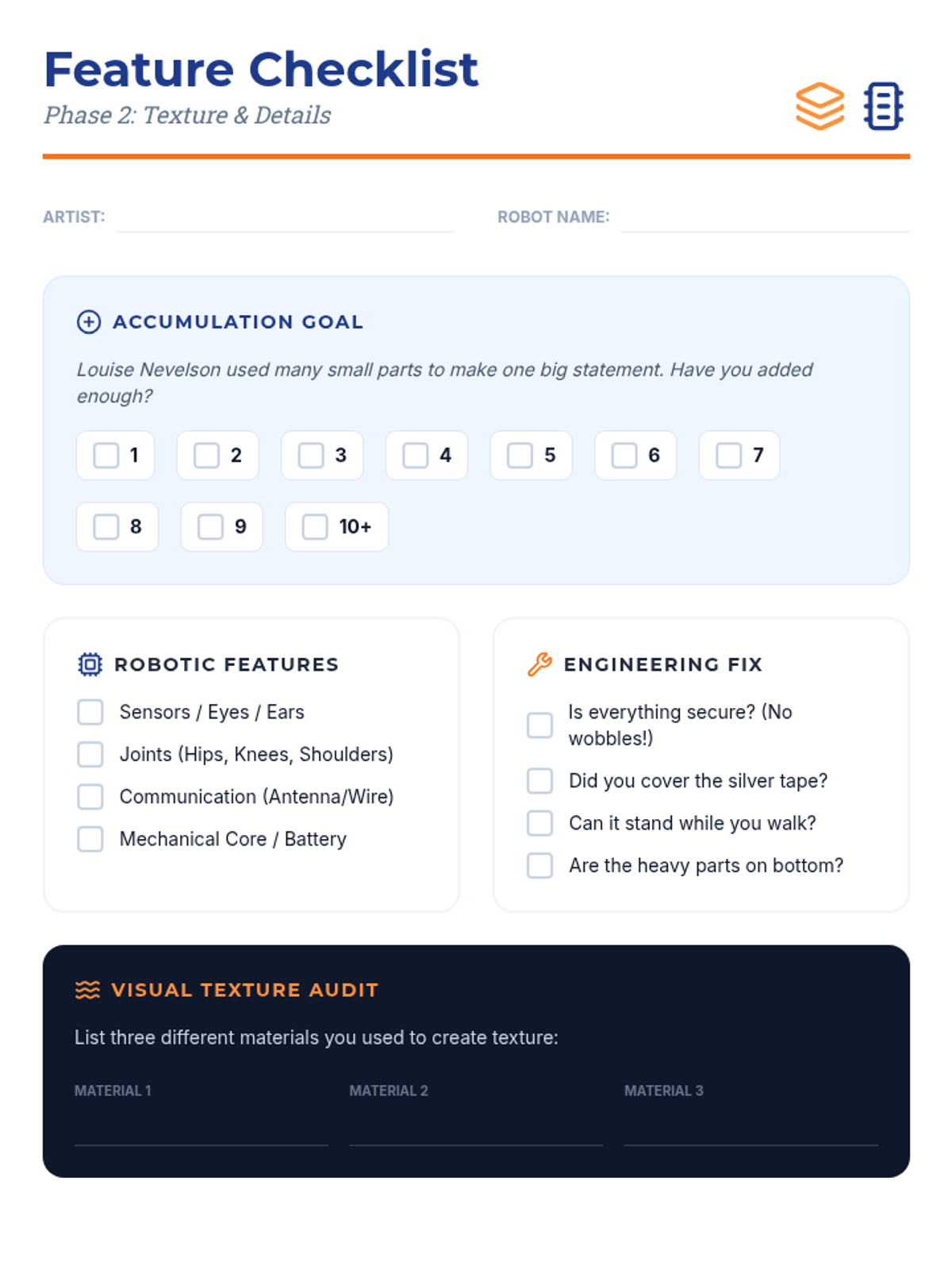
Students layer smaller objects onto their base forms to add features, mechanical details, or texture. They practice additive sculpture techniques using non-traditional media.
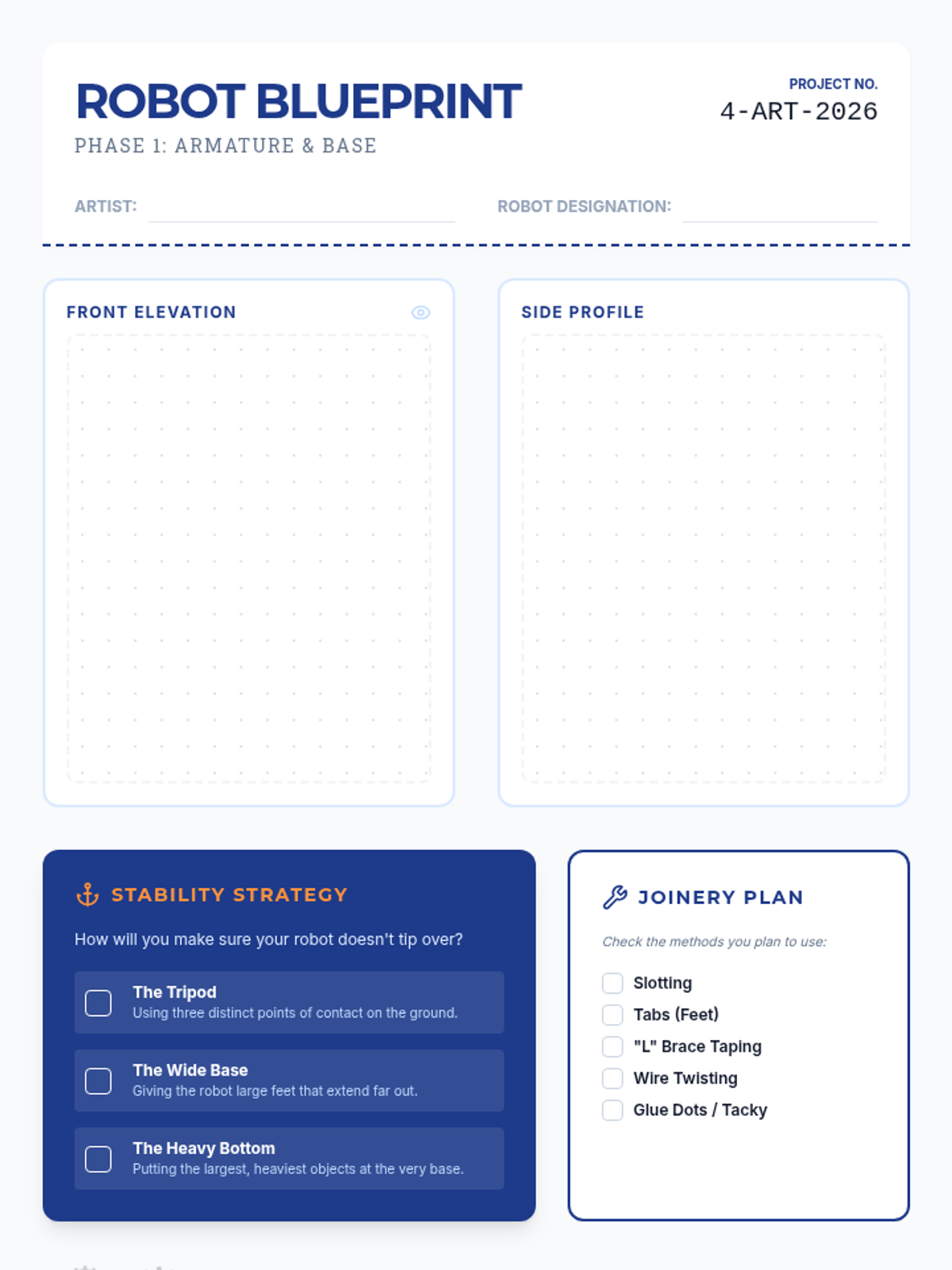
Students select their primary structural components to build the 'skeleton' or body of their sculpture. The focus is on physical balance and ensuring the sculpture can stand on its own.
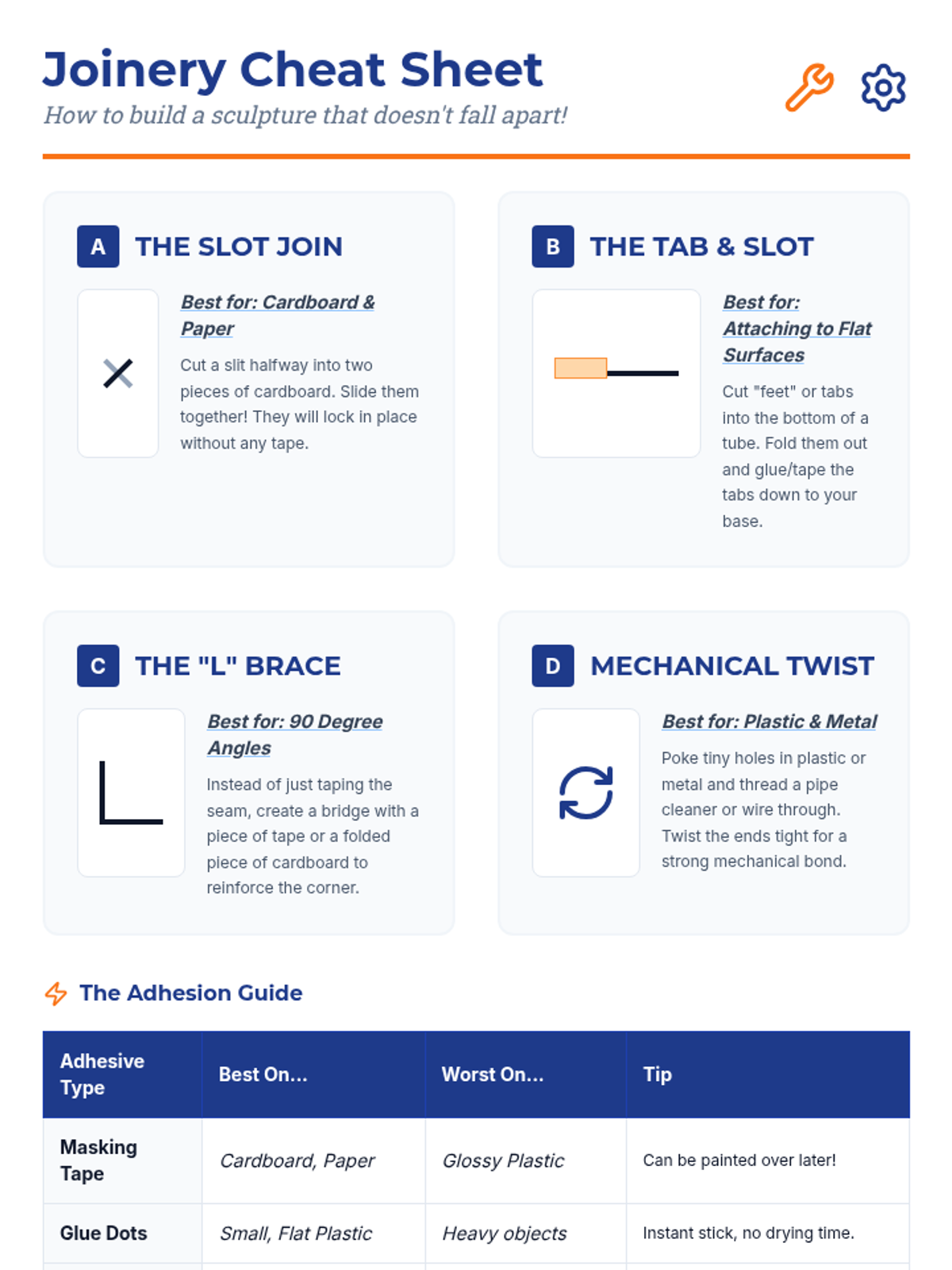
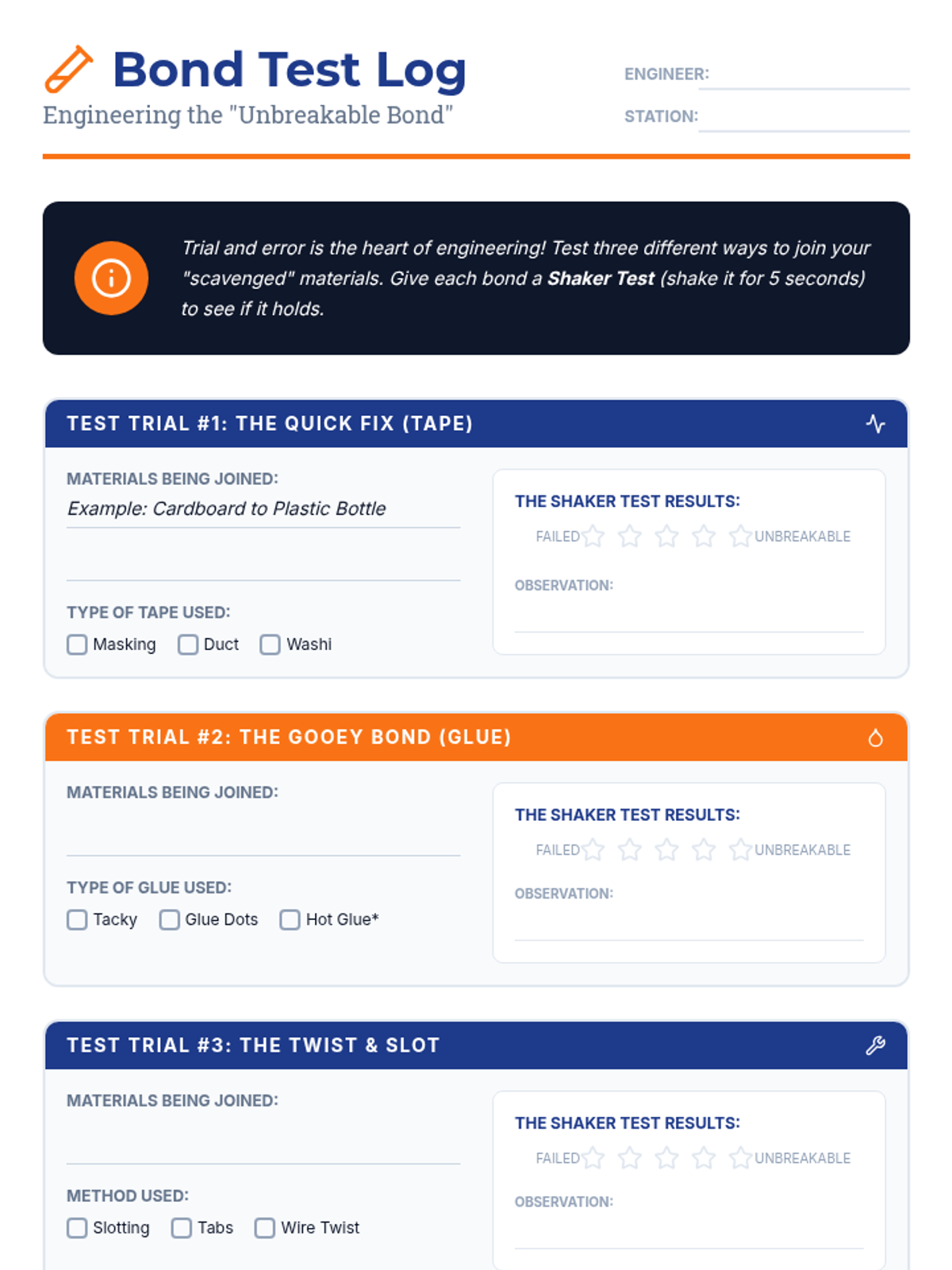
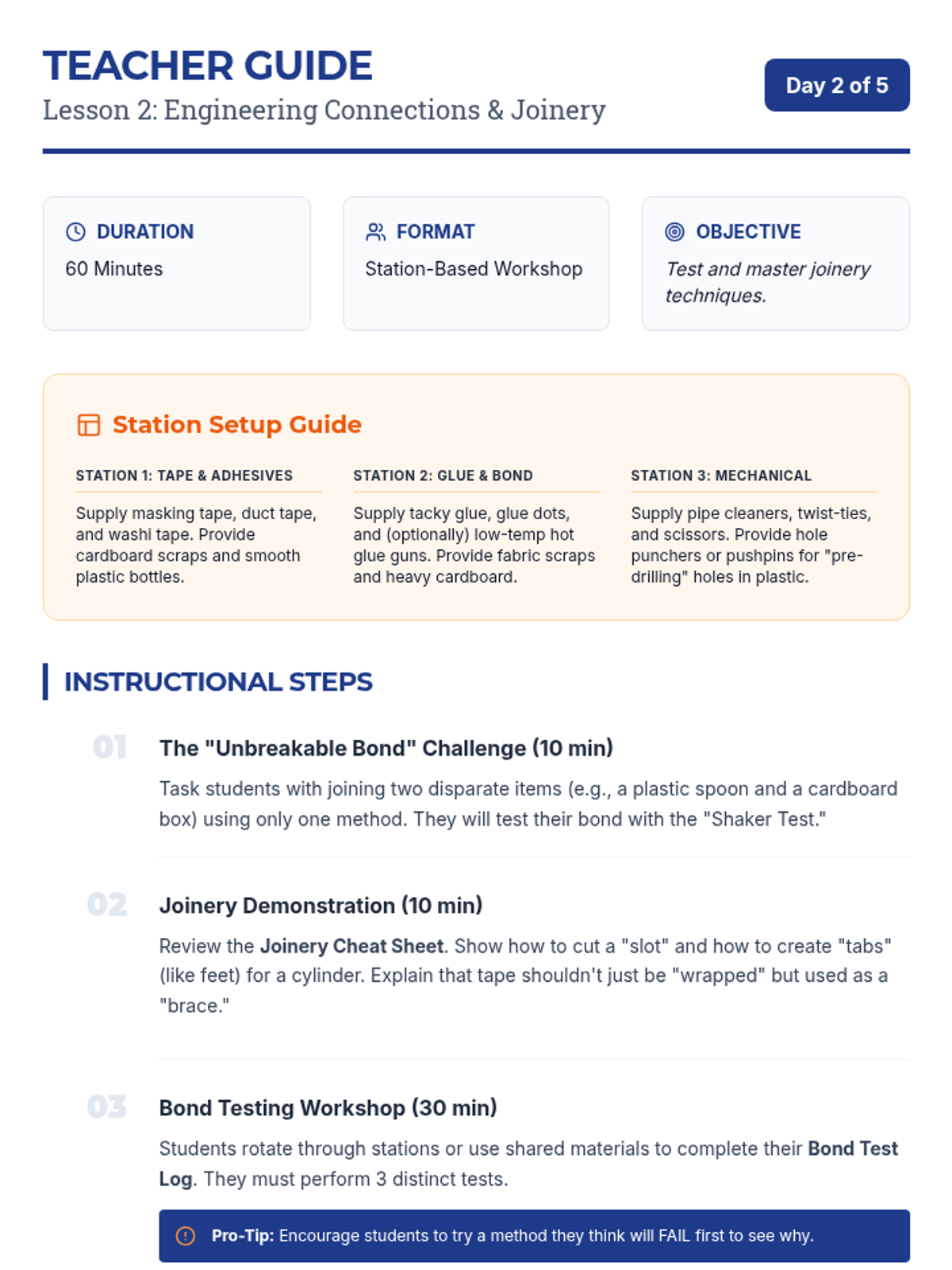
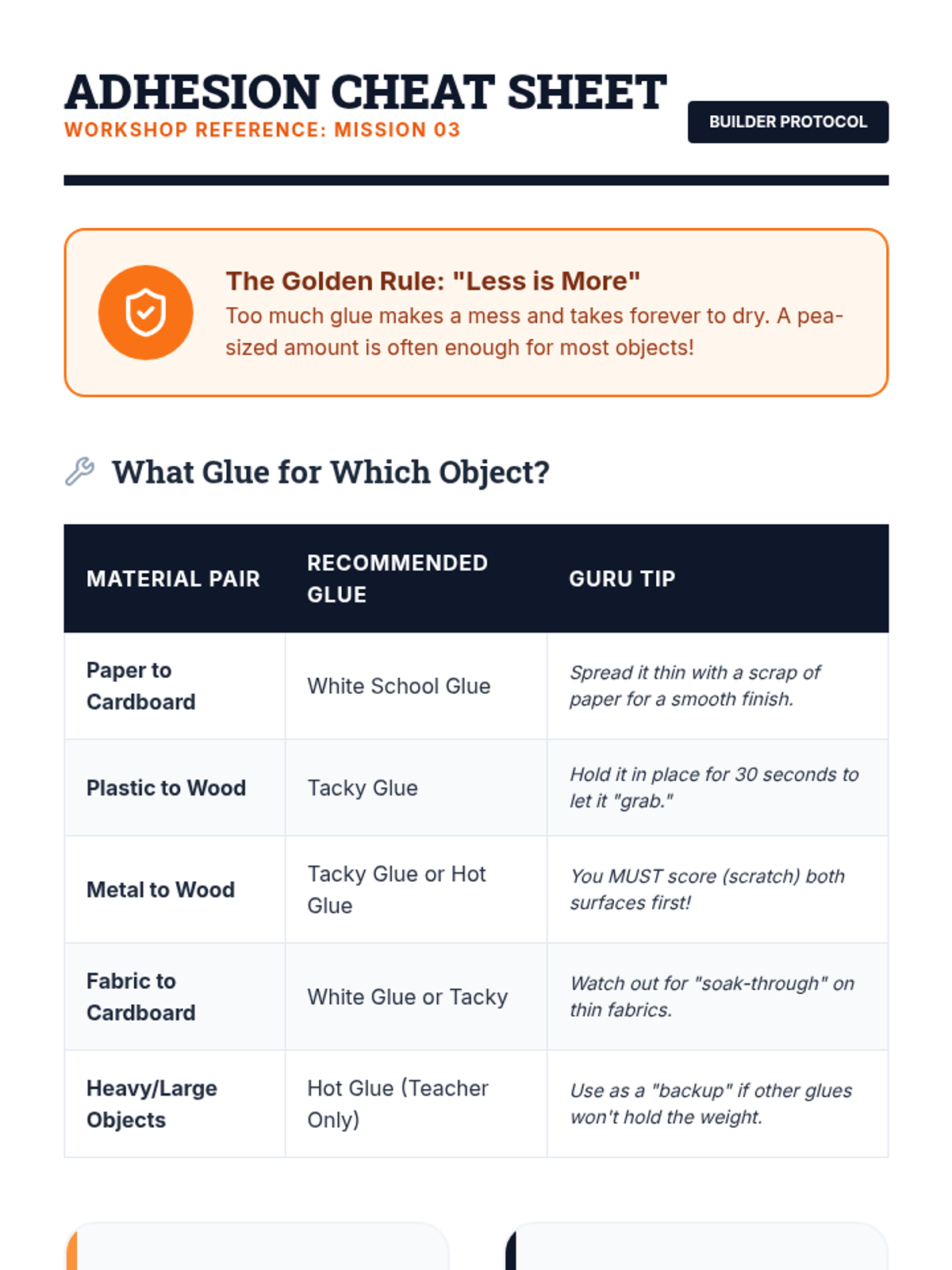
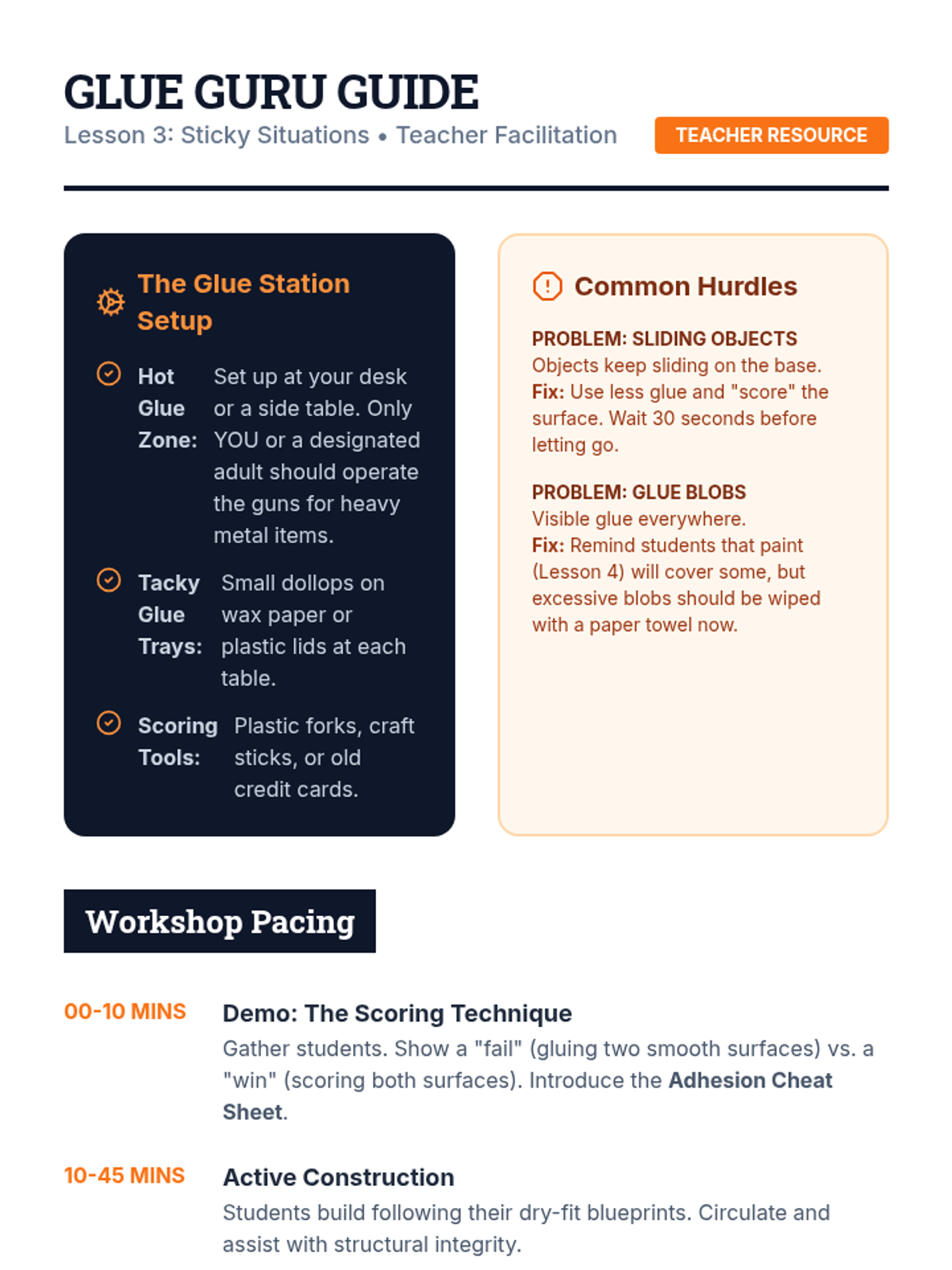
This lesson is a technical workshop on how to attach cardboard, plastic, and metal using tape, glue, wire, and slotting techniques. Students test which adhesives work best for different surfaces.
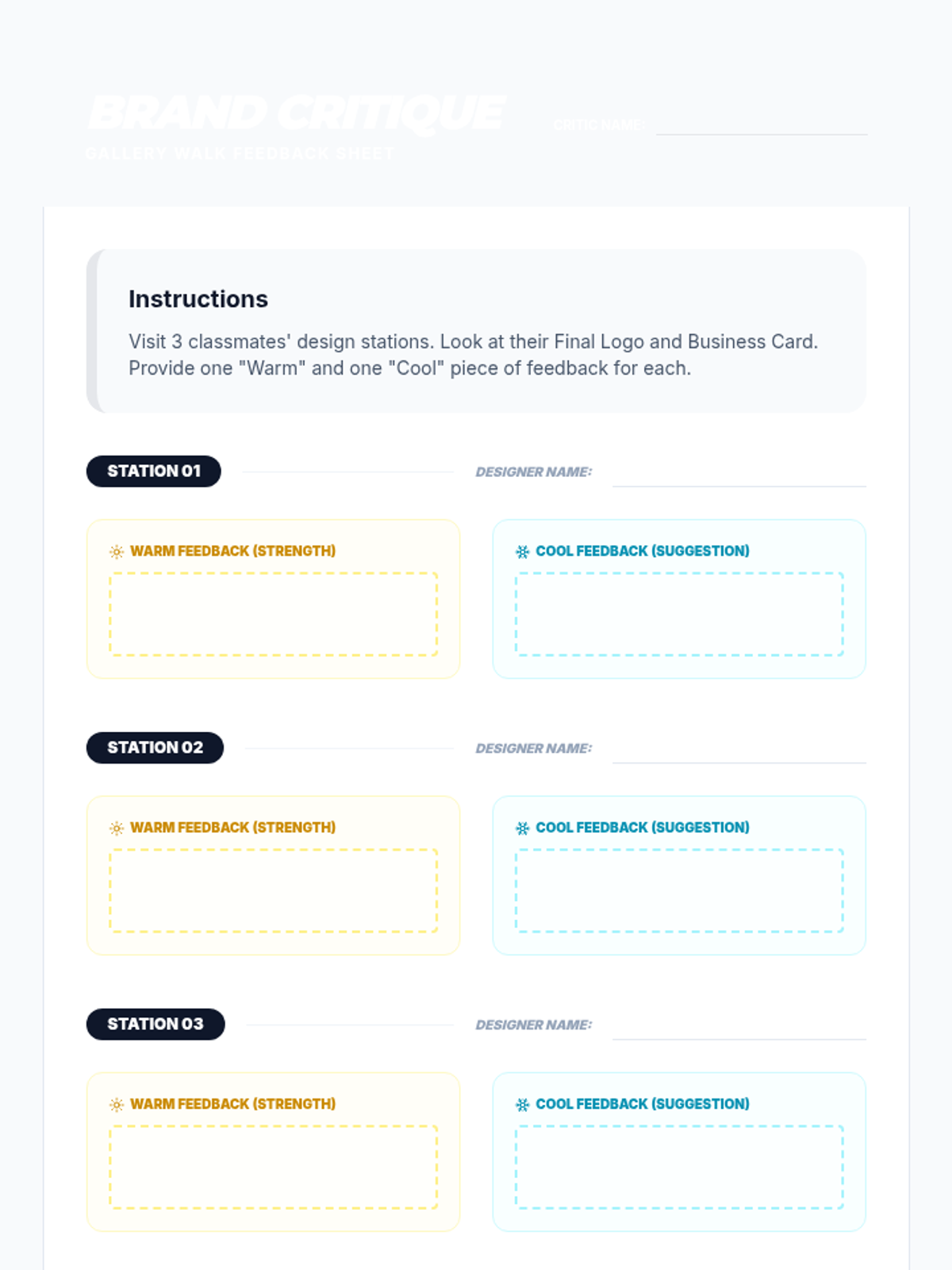
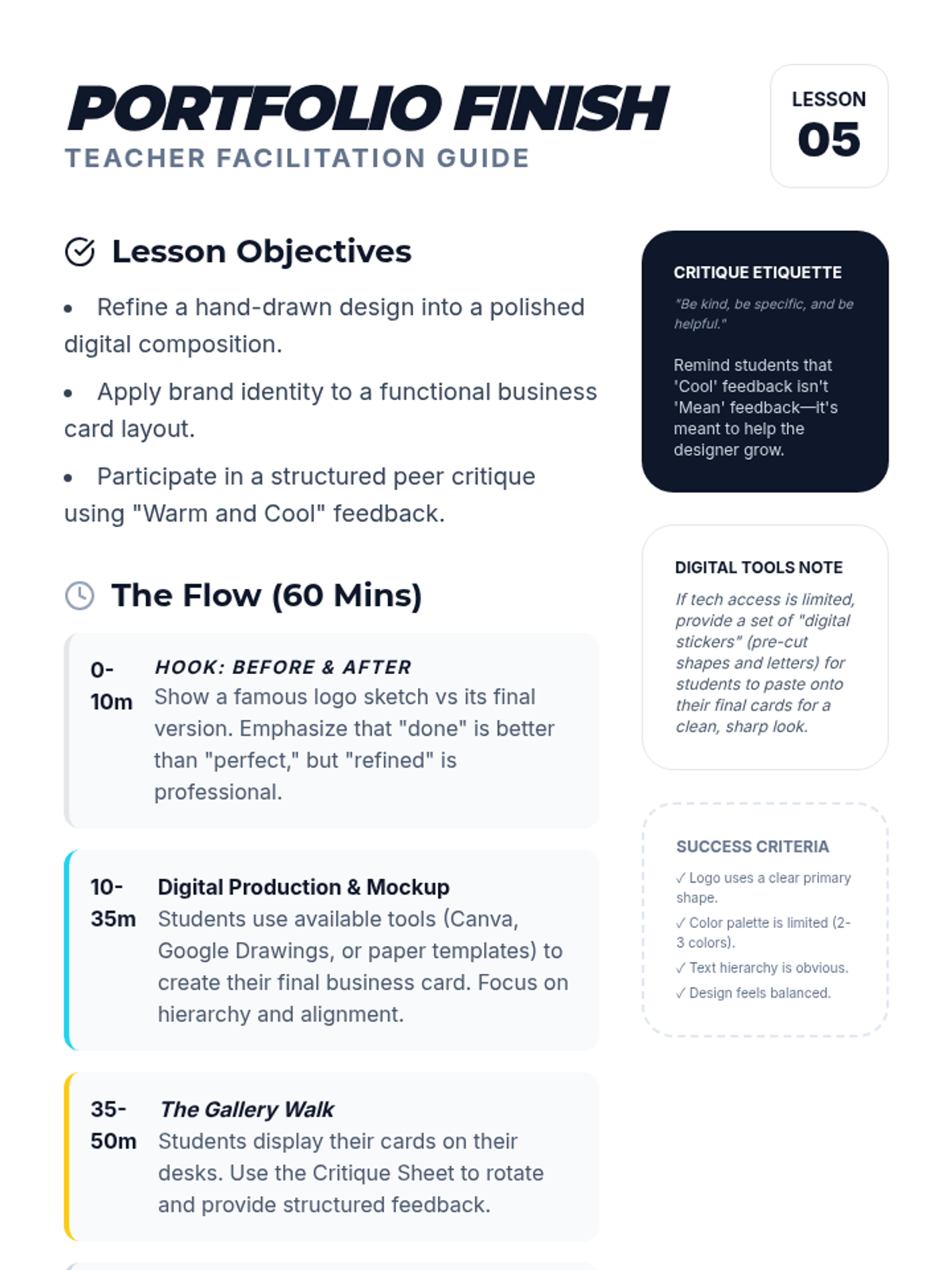
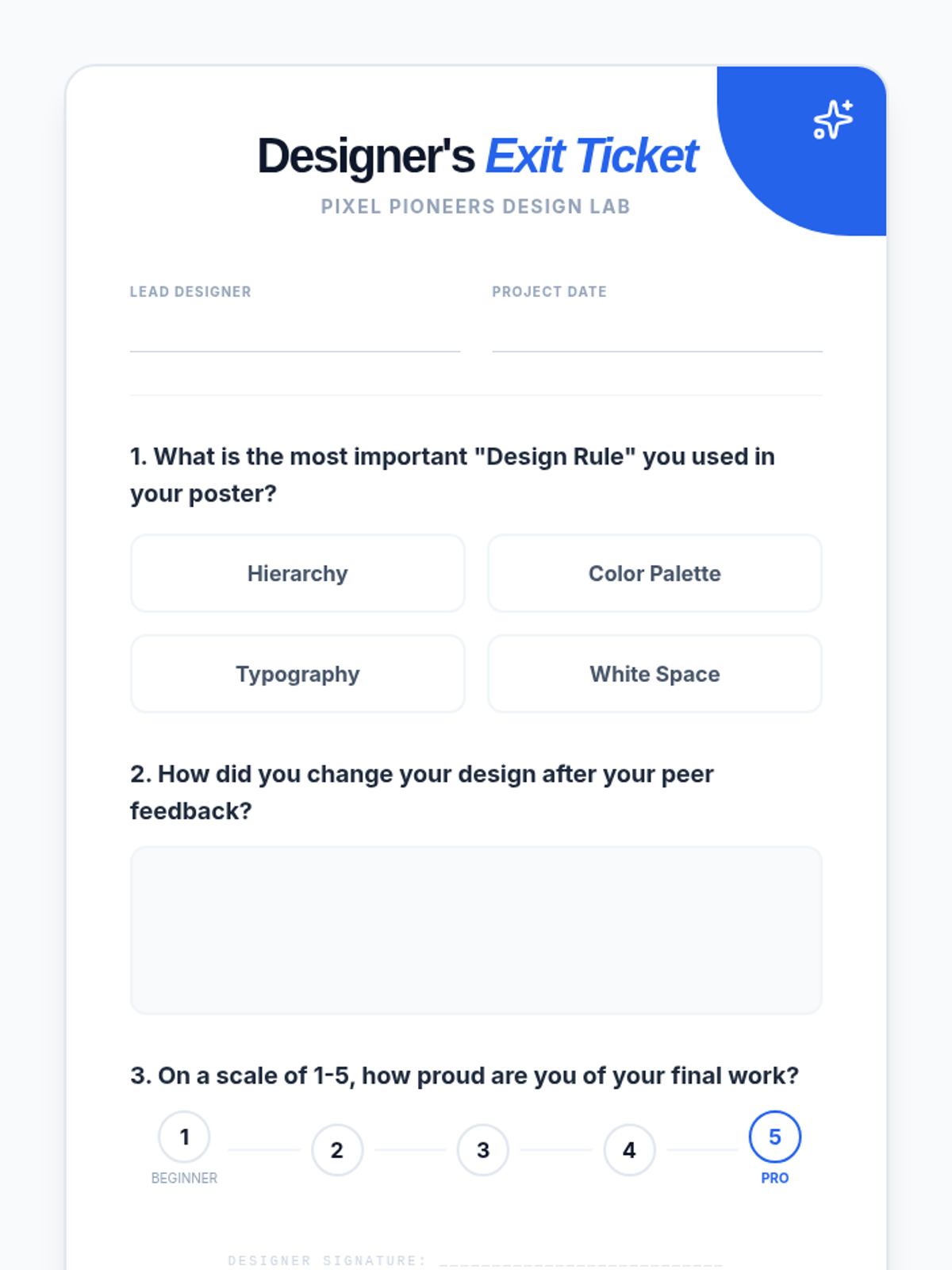
Students finalize their designs by creating a polished digital version and a business card, followed by a gallery walk for constructive peer critique.
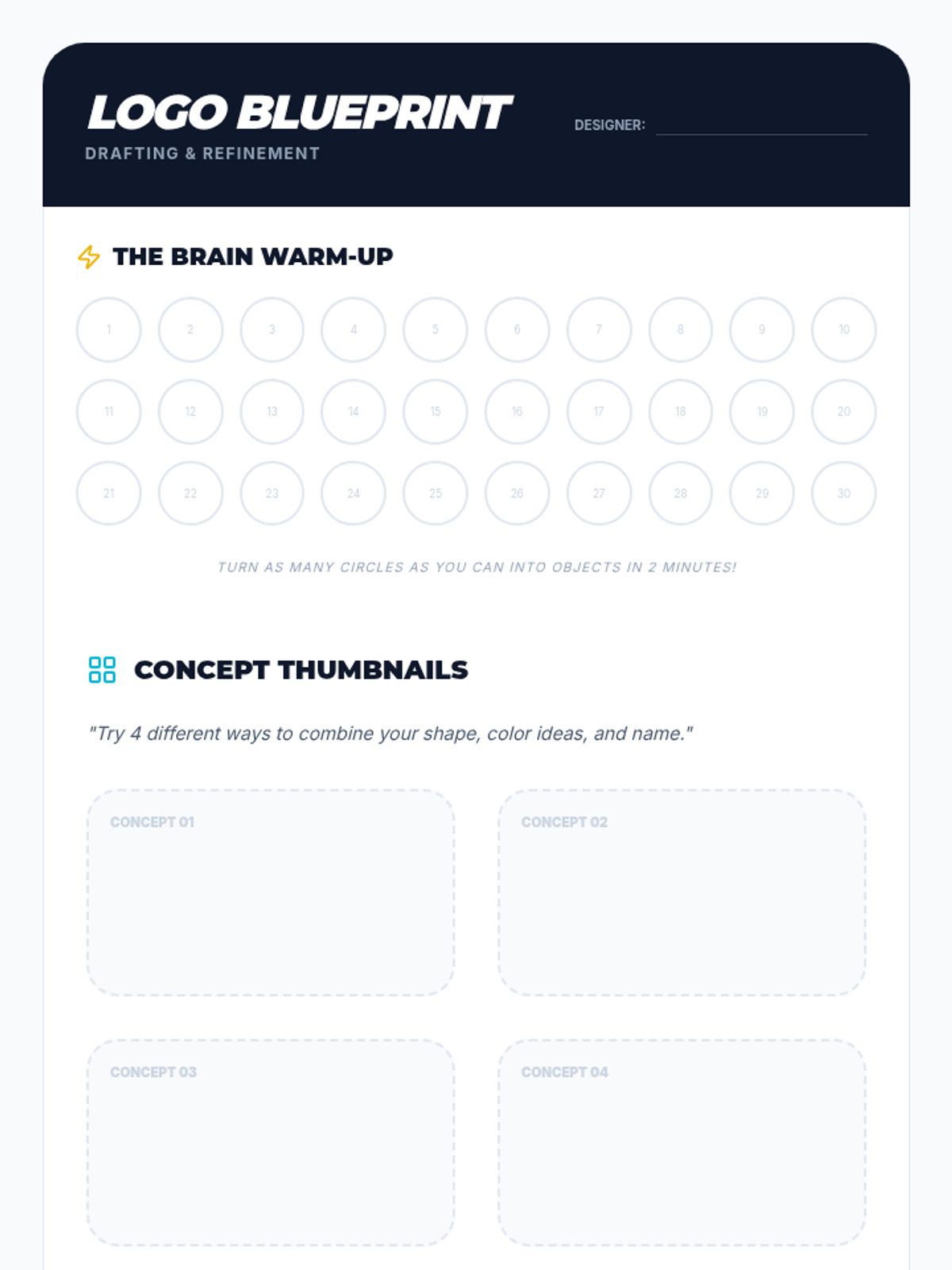
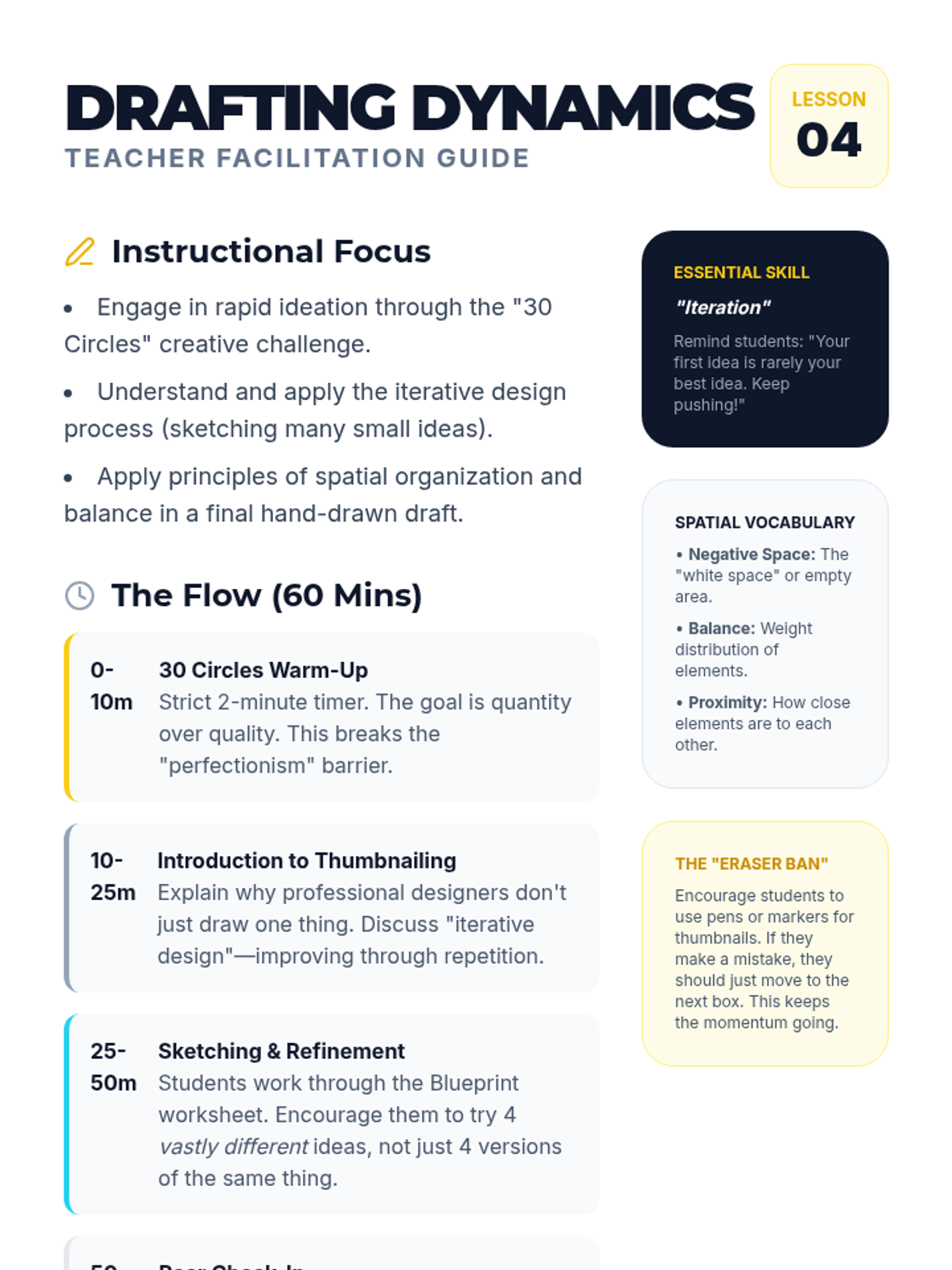
Students synthesize their work on shapes, color, and text to draft logo concepts through rapid prototyping and iterative sketching.
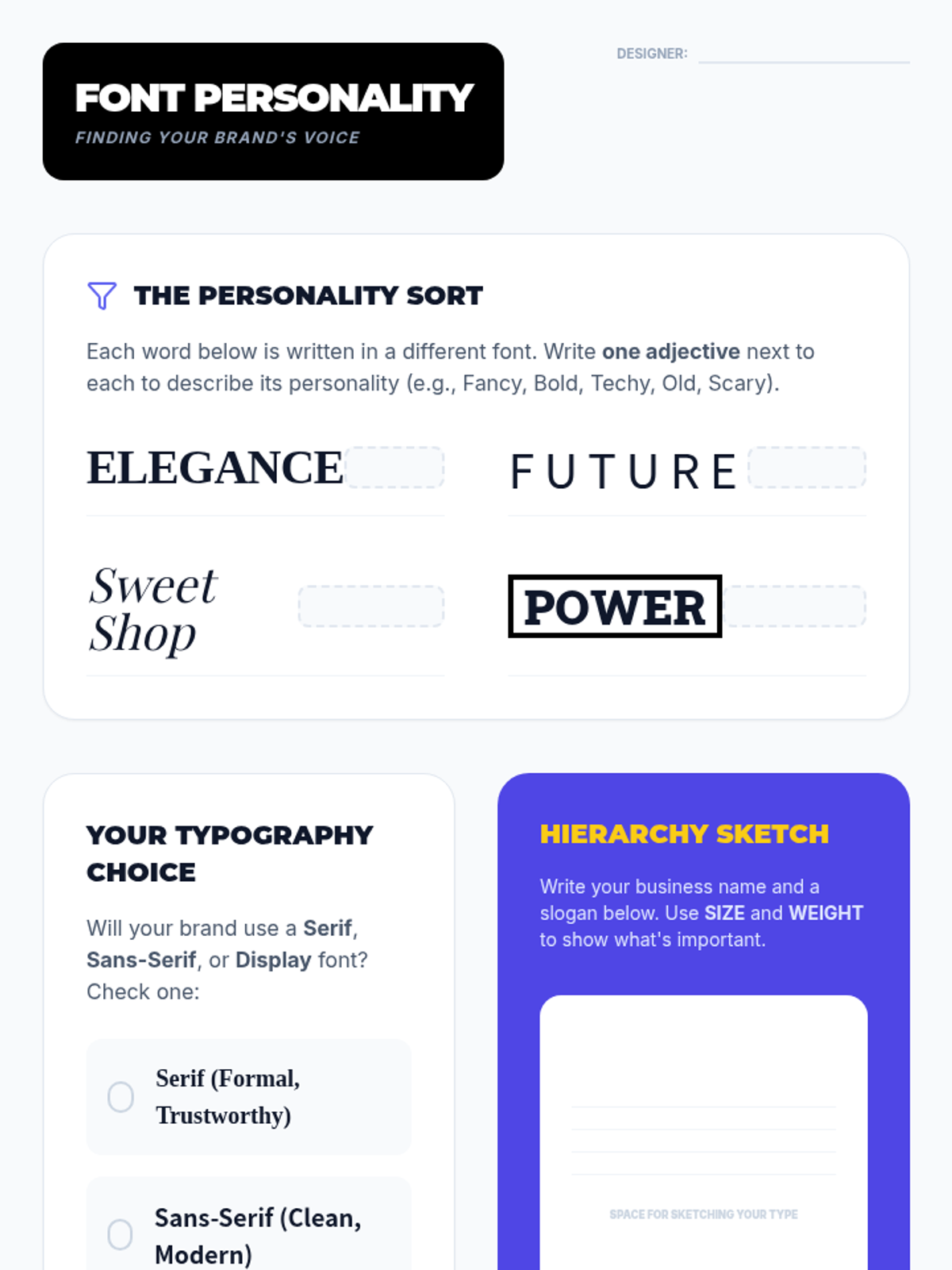
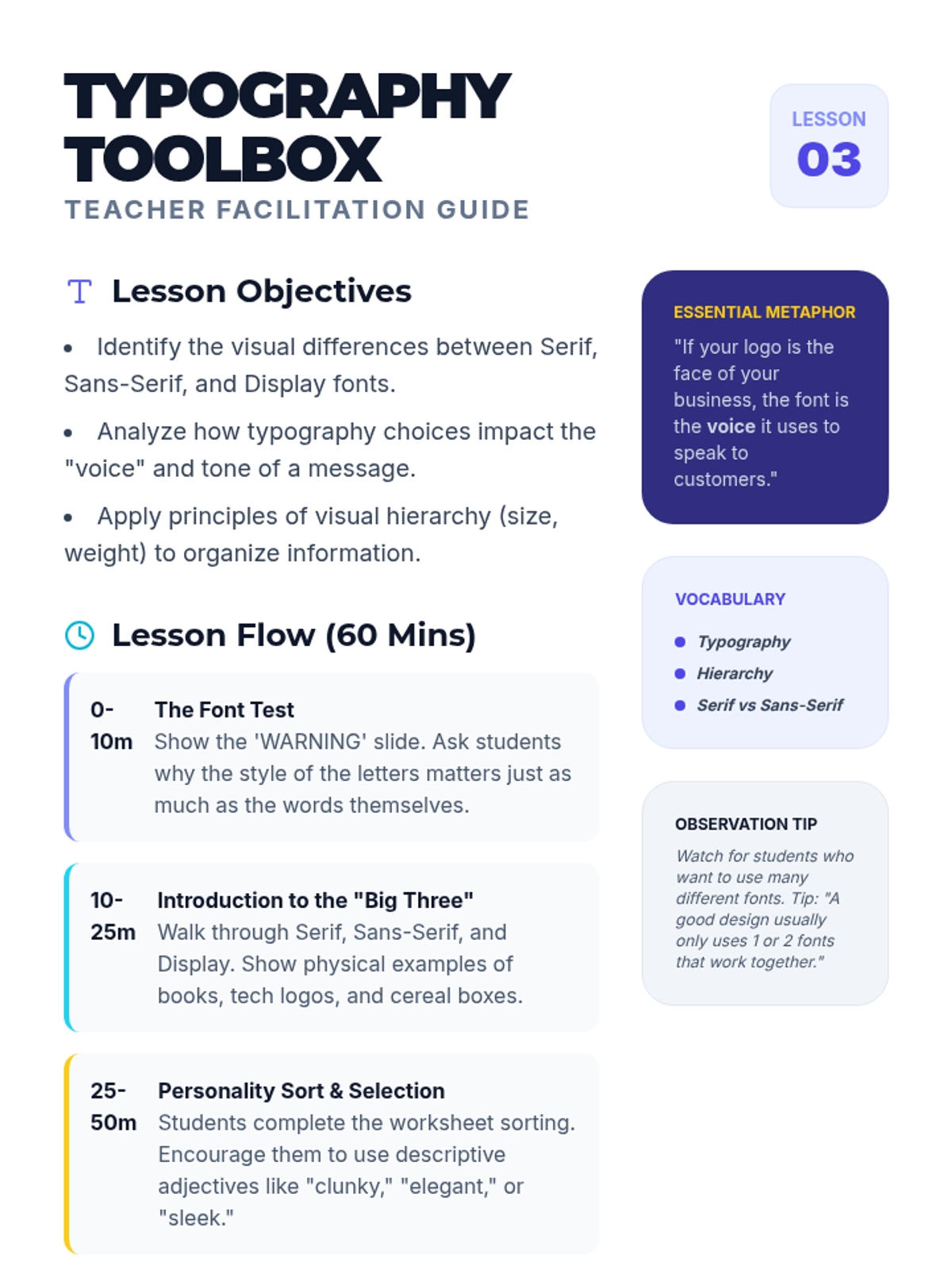
Students learn about typography and how different fonts act as a "voice" for their brand, selecting a font style and arranging text hierarchy for their project.
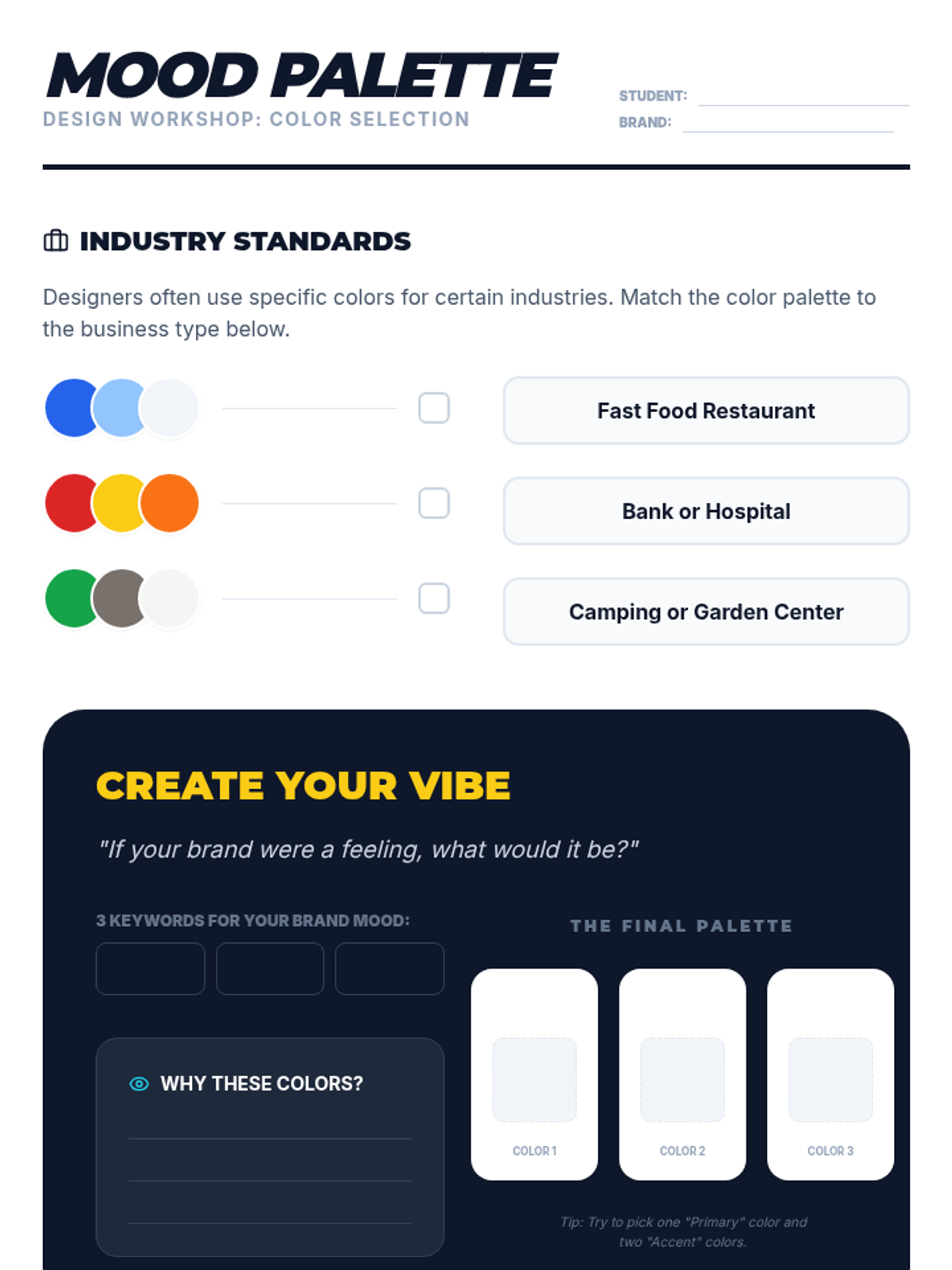
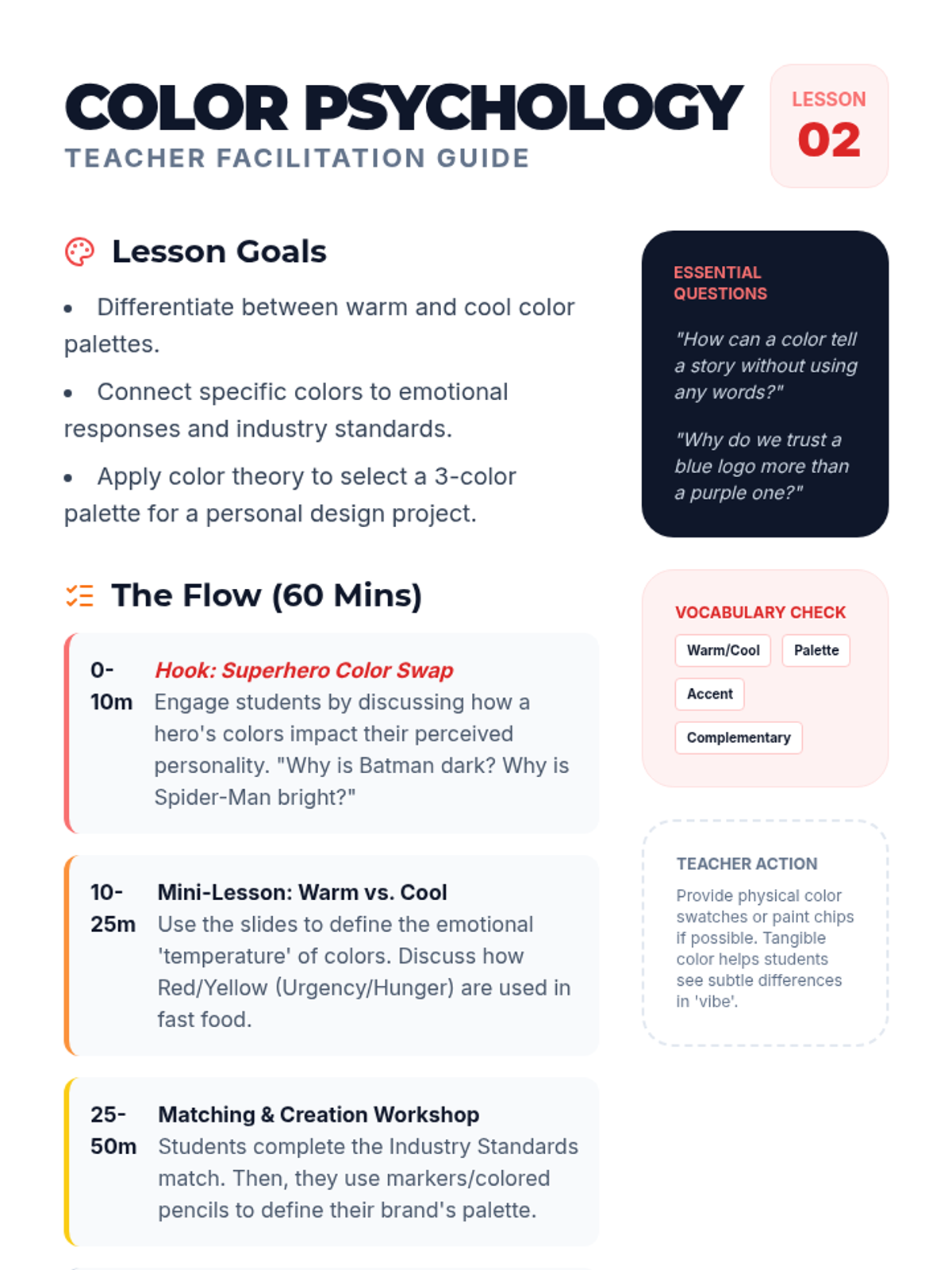
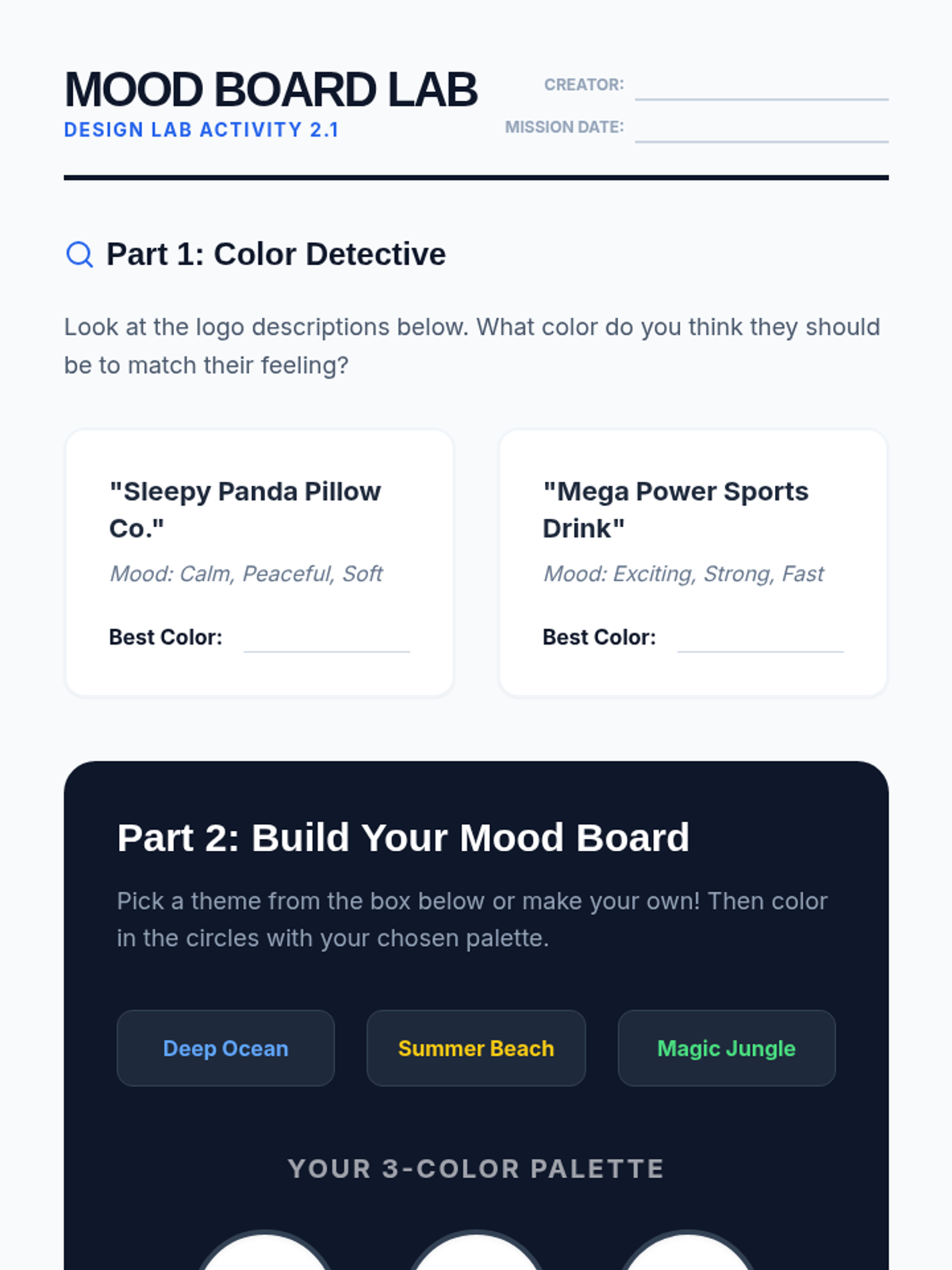
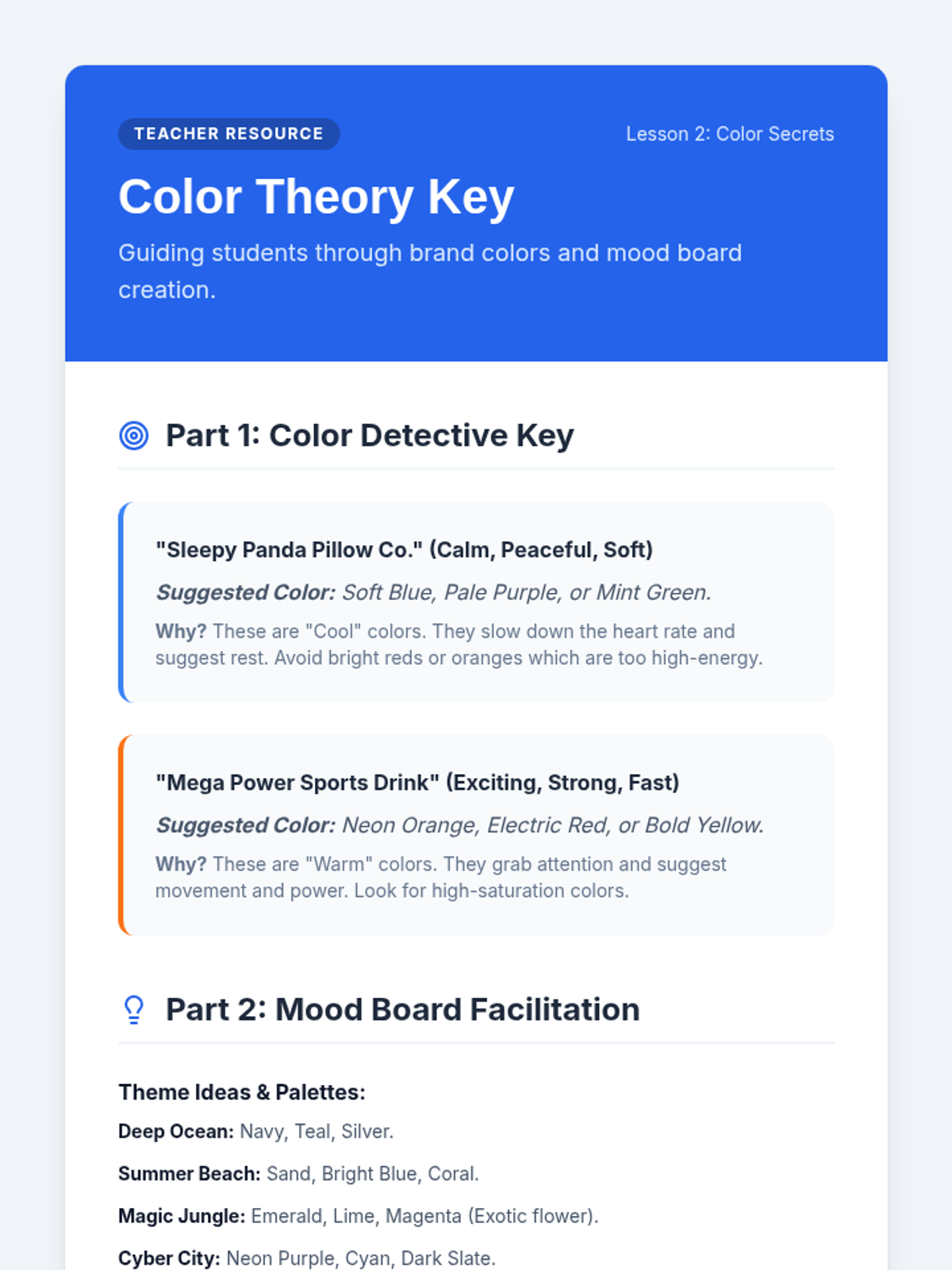
Students explore color psychology and the emotional impact of different palettes, creating a specific color scheme for their fictional business.
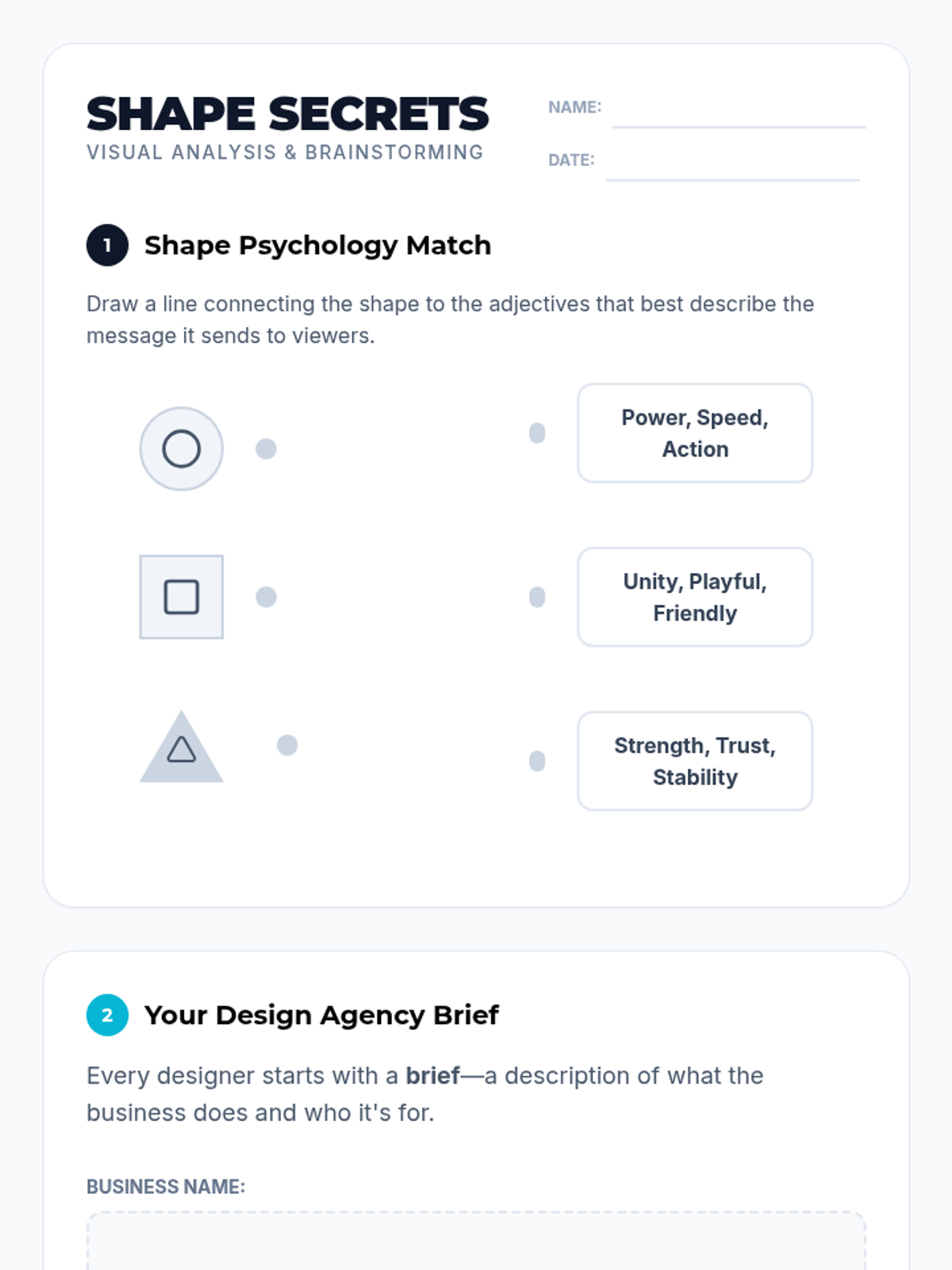
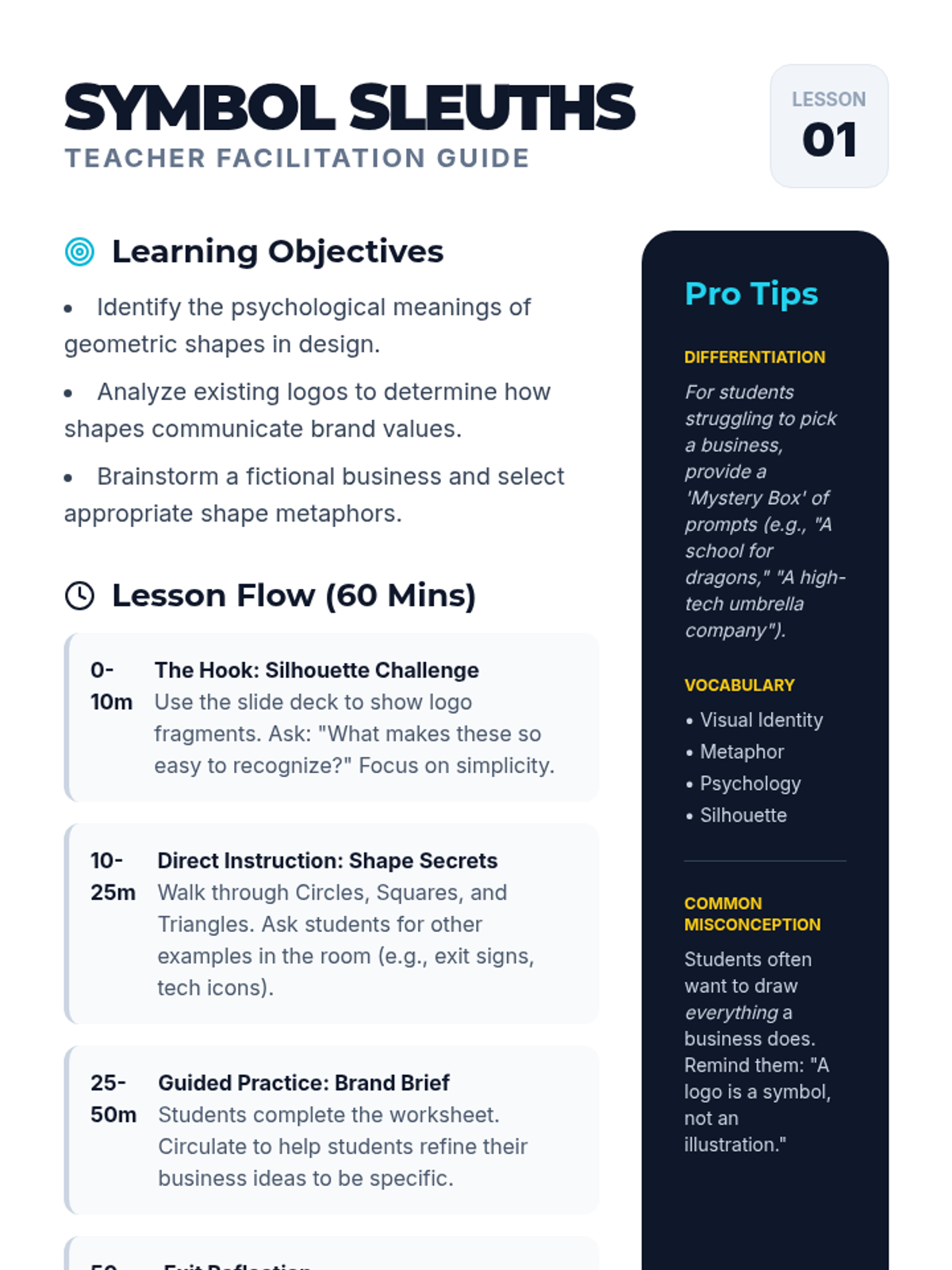
Students investigate how simple geometric shapes convey meaning and emotion in design, culminating in brainstorming shape metaphors for their own fictional business.
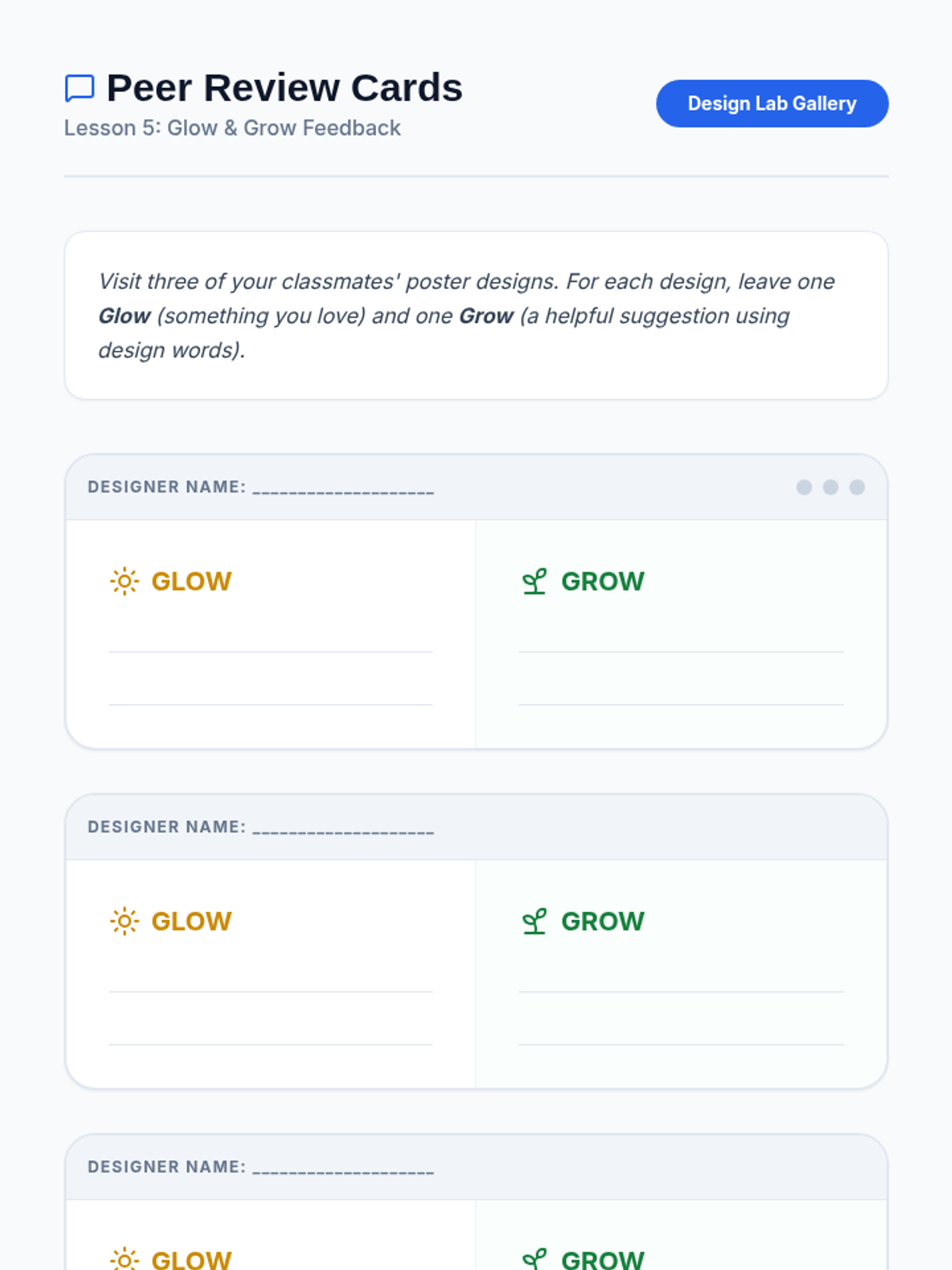
Give and receive constructive feedback using the 'Glow and Grow' method to refine and finalize digital designs.
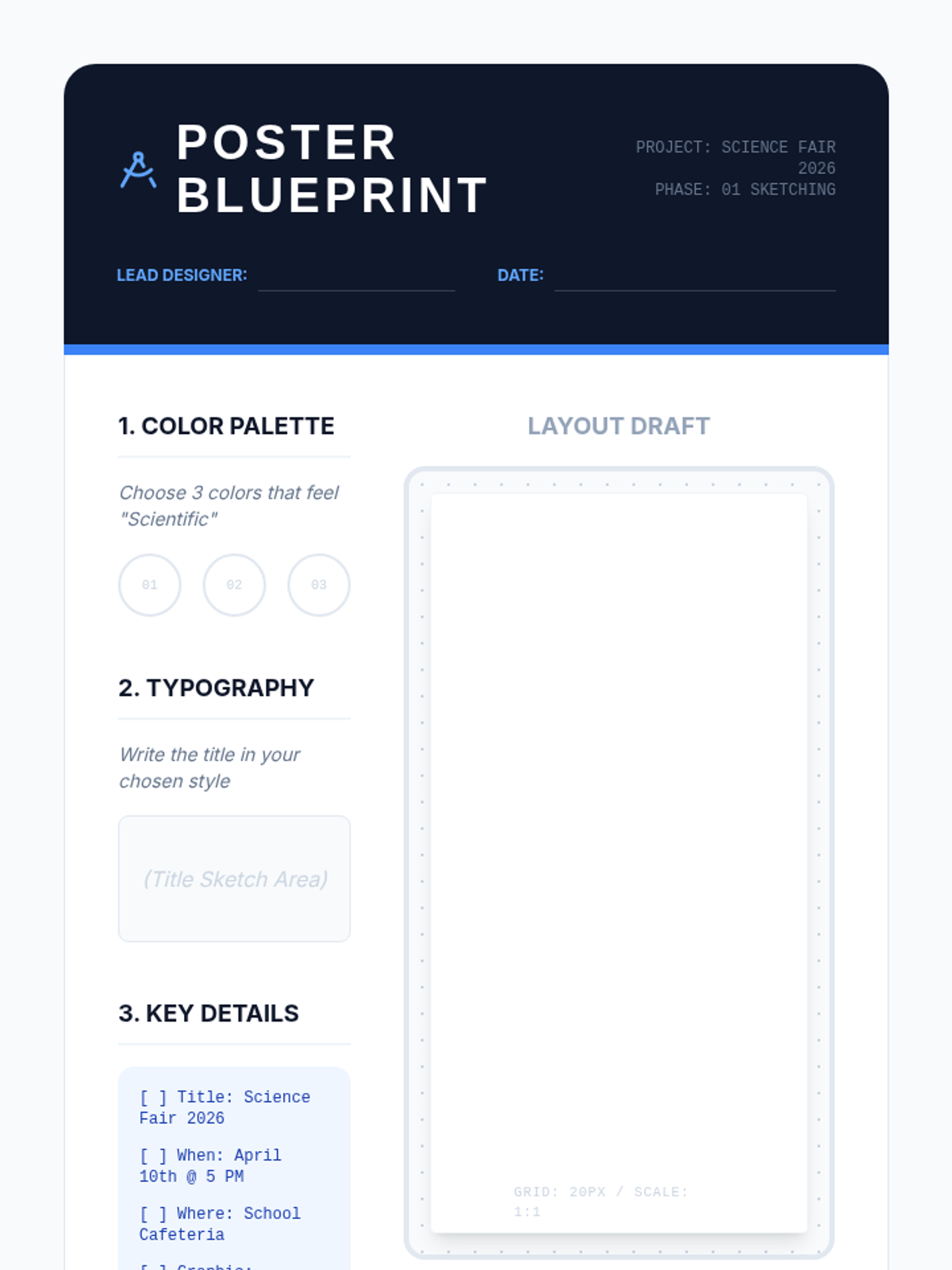
Apply design principles to create a digital poster for a school event, focusing on layers and composition.
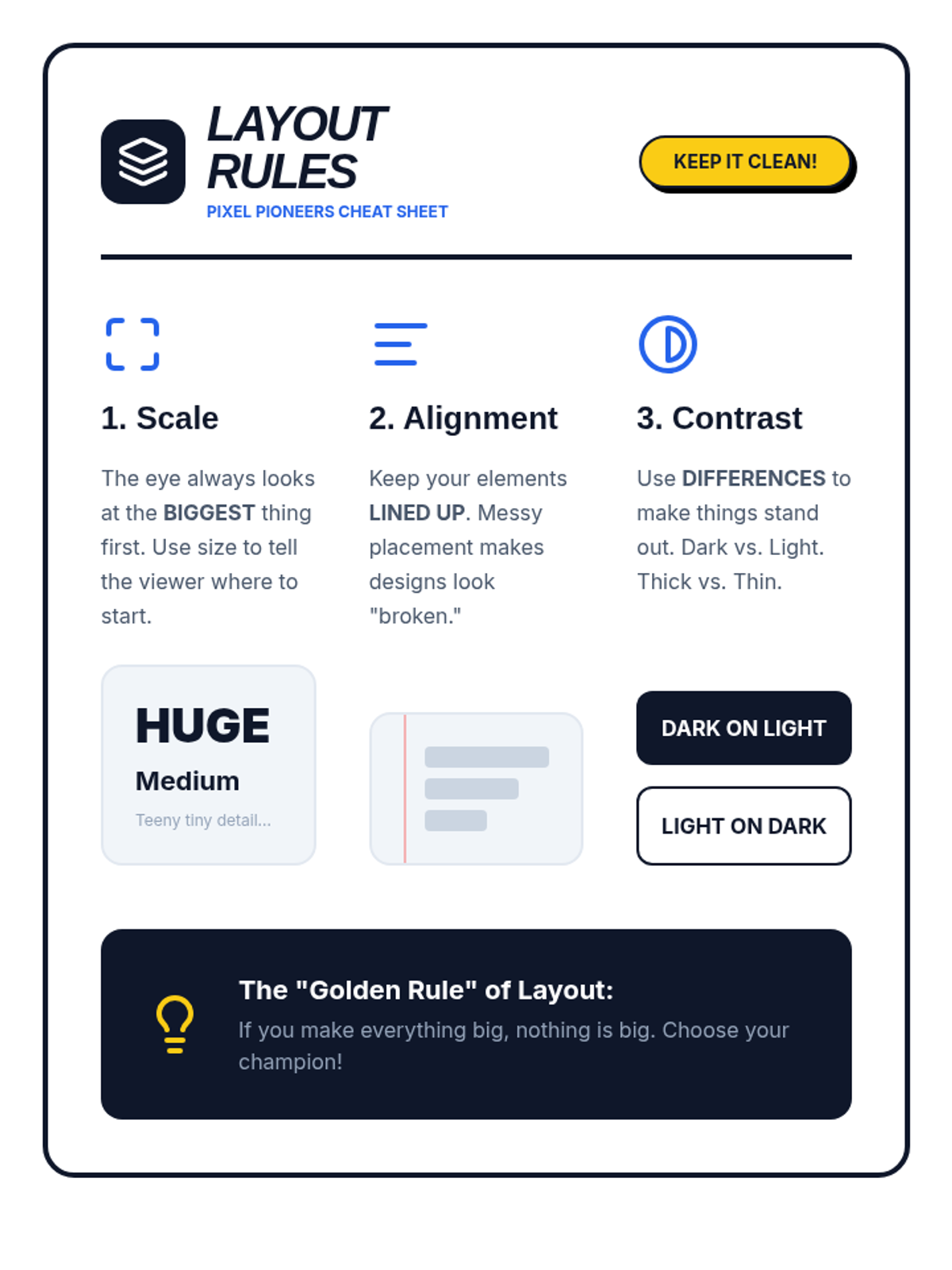
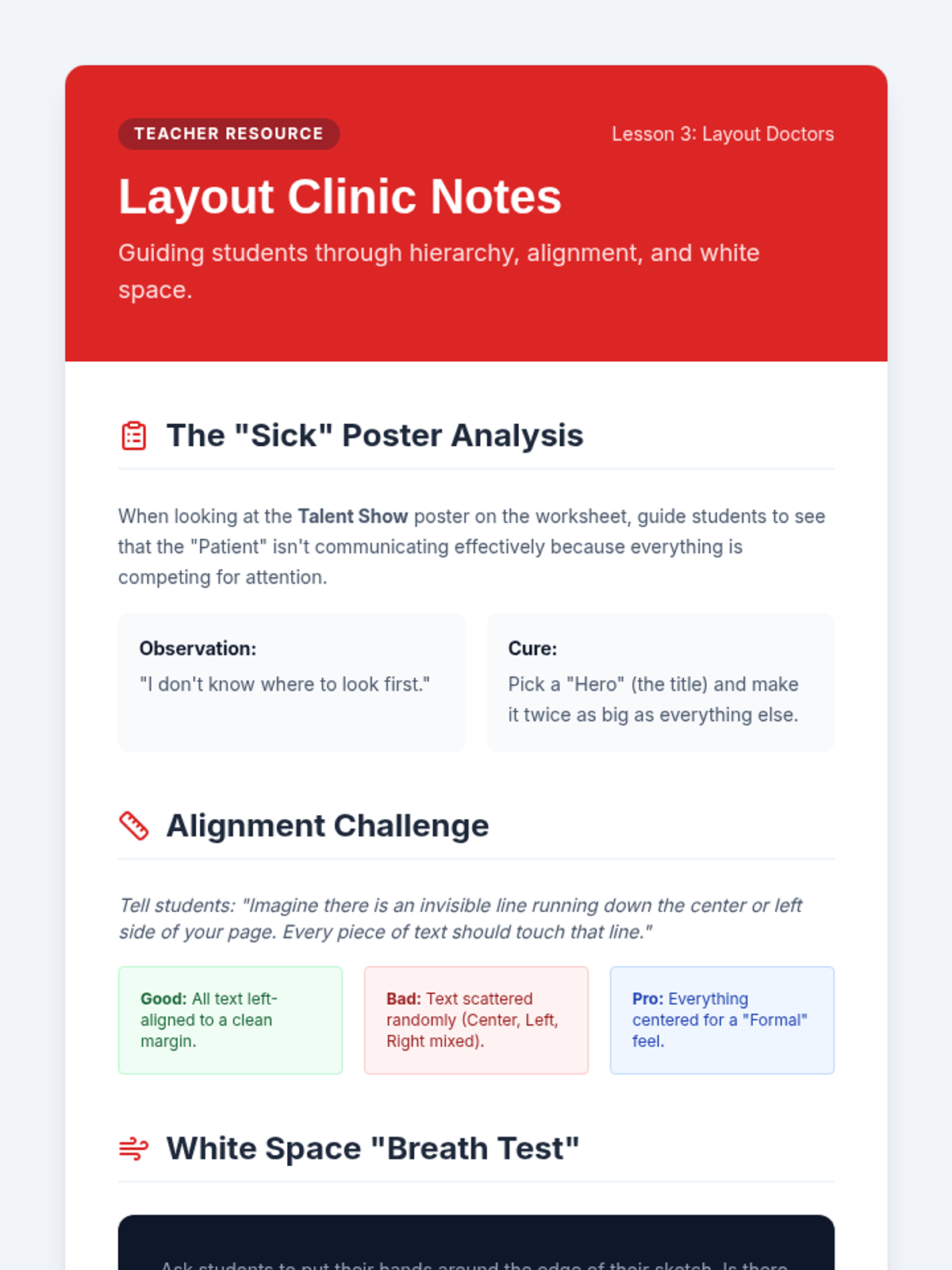
Learn the principles of visual hierarchy and white space to guide a viewer's eye through a composition.
Understand the emotional impact of color and how to use the color wheel to create effective digital palettes.
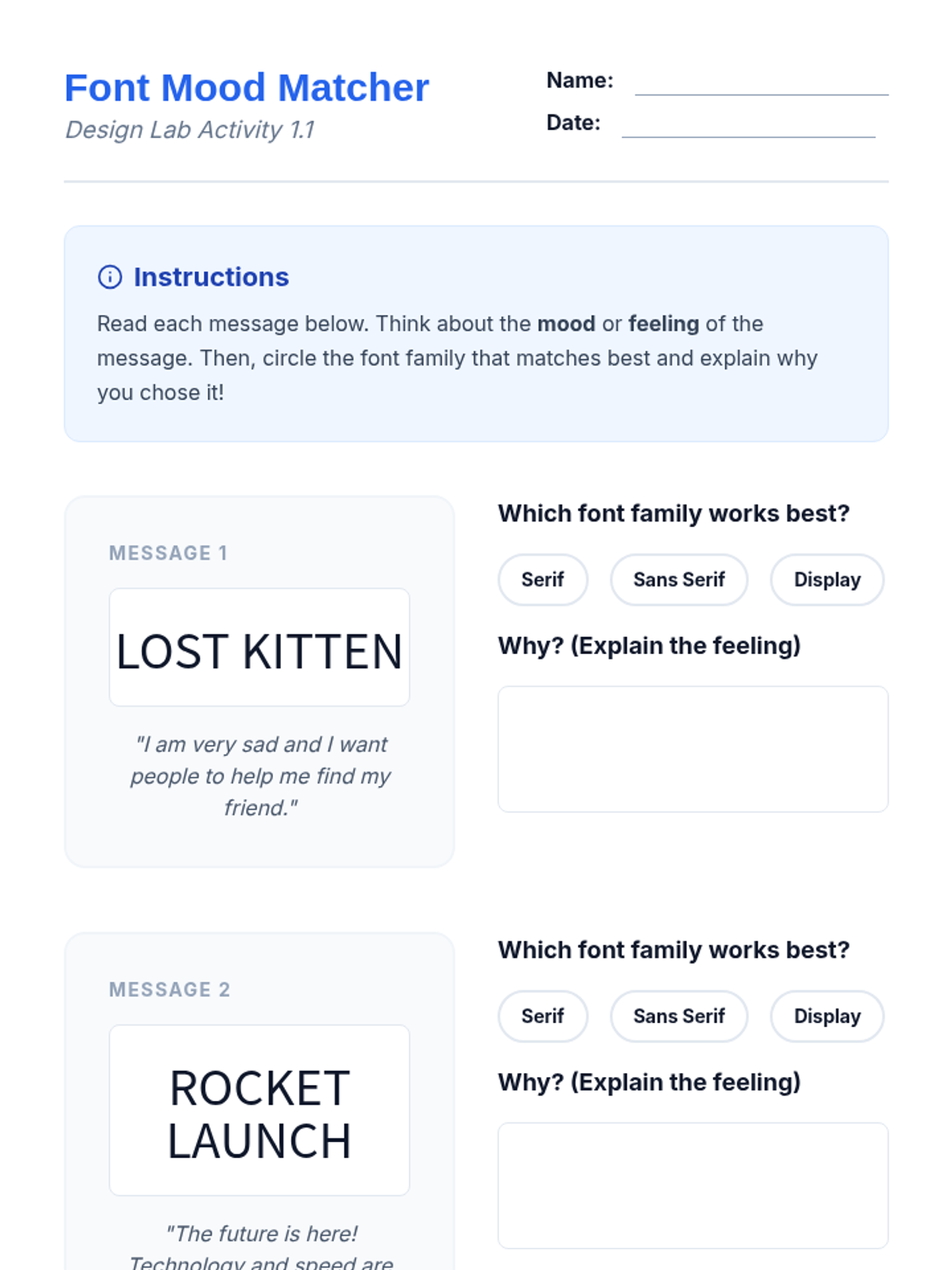
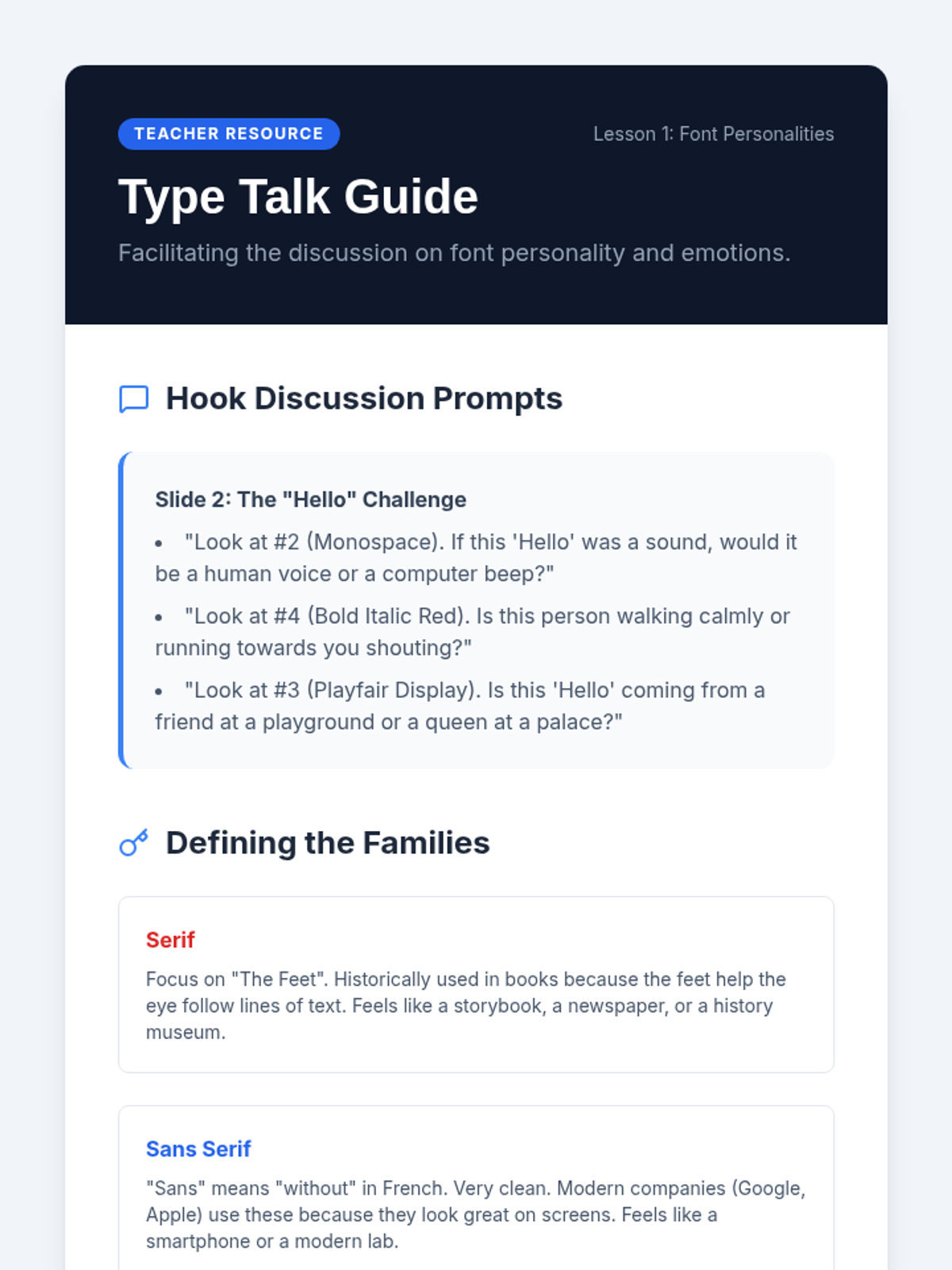
Explore how different fonts communicate different emotions and styles, focusing on serif, sans-serif, and display types.
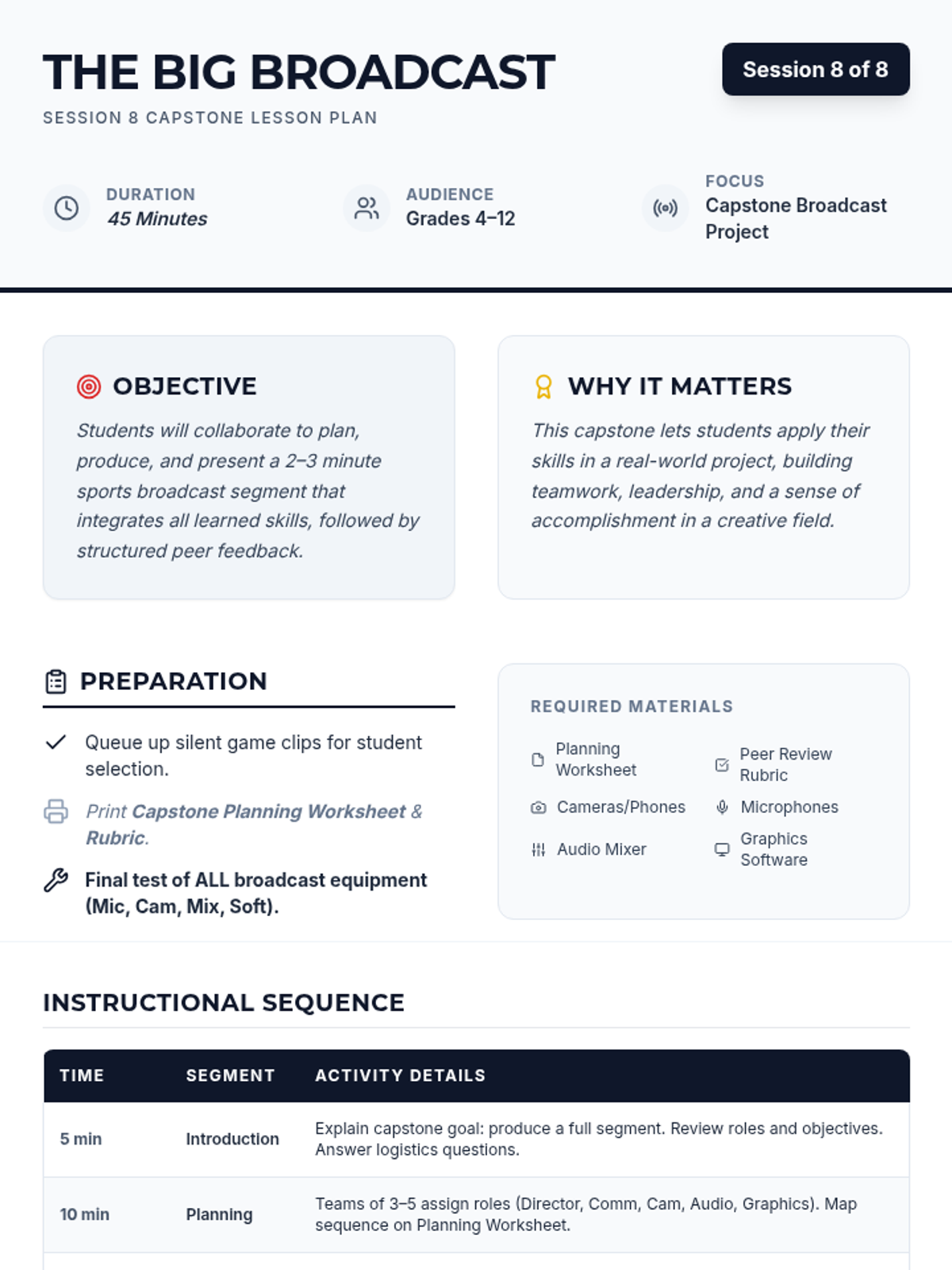
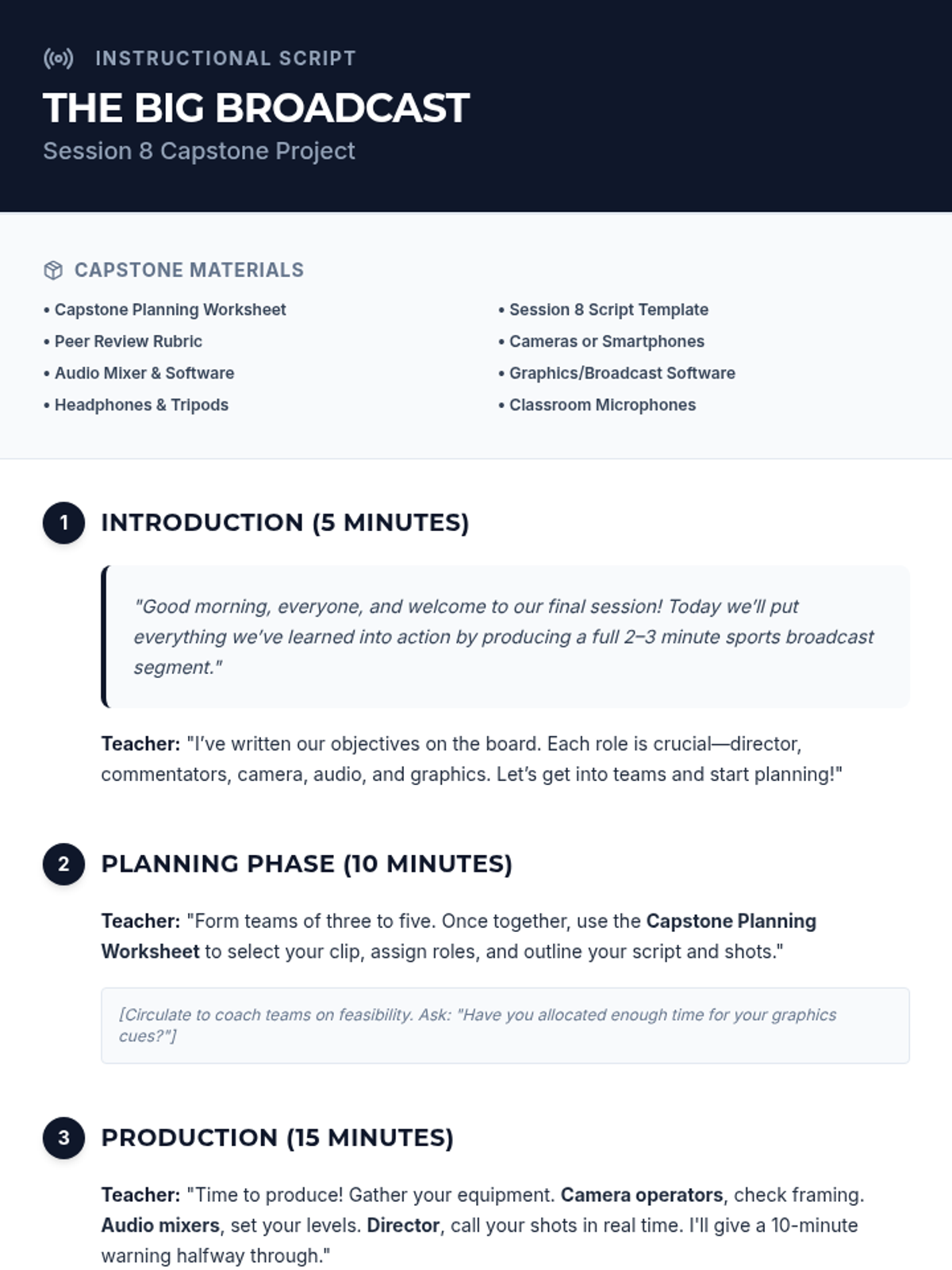
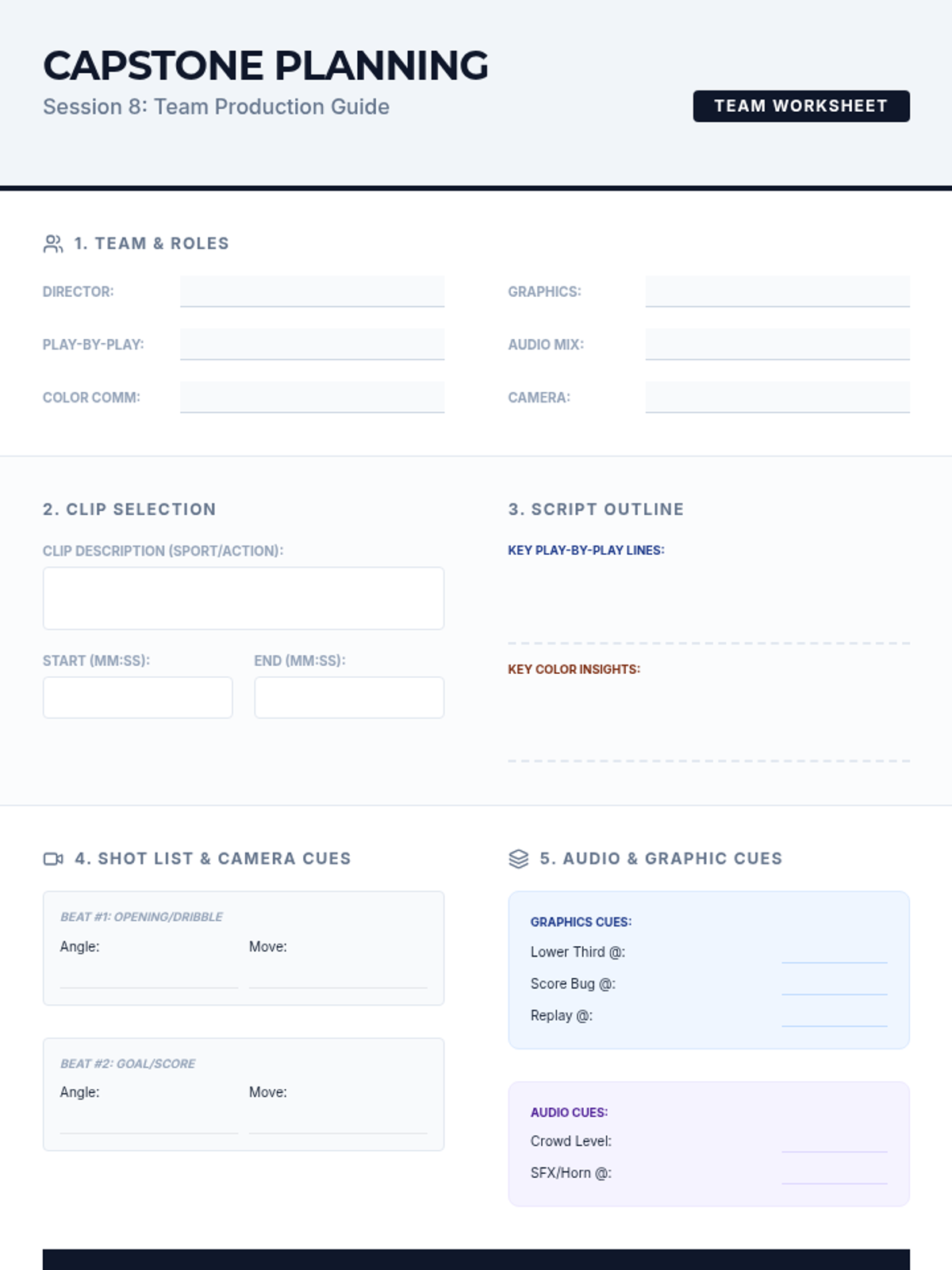
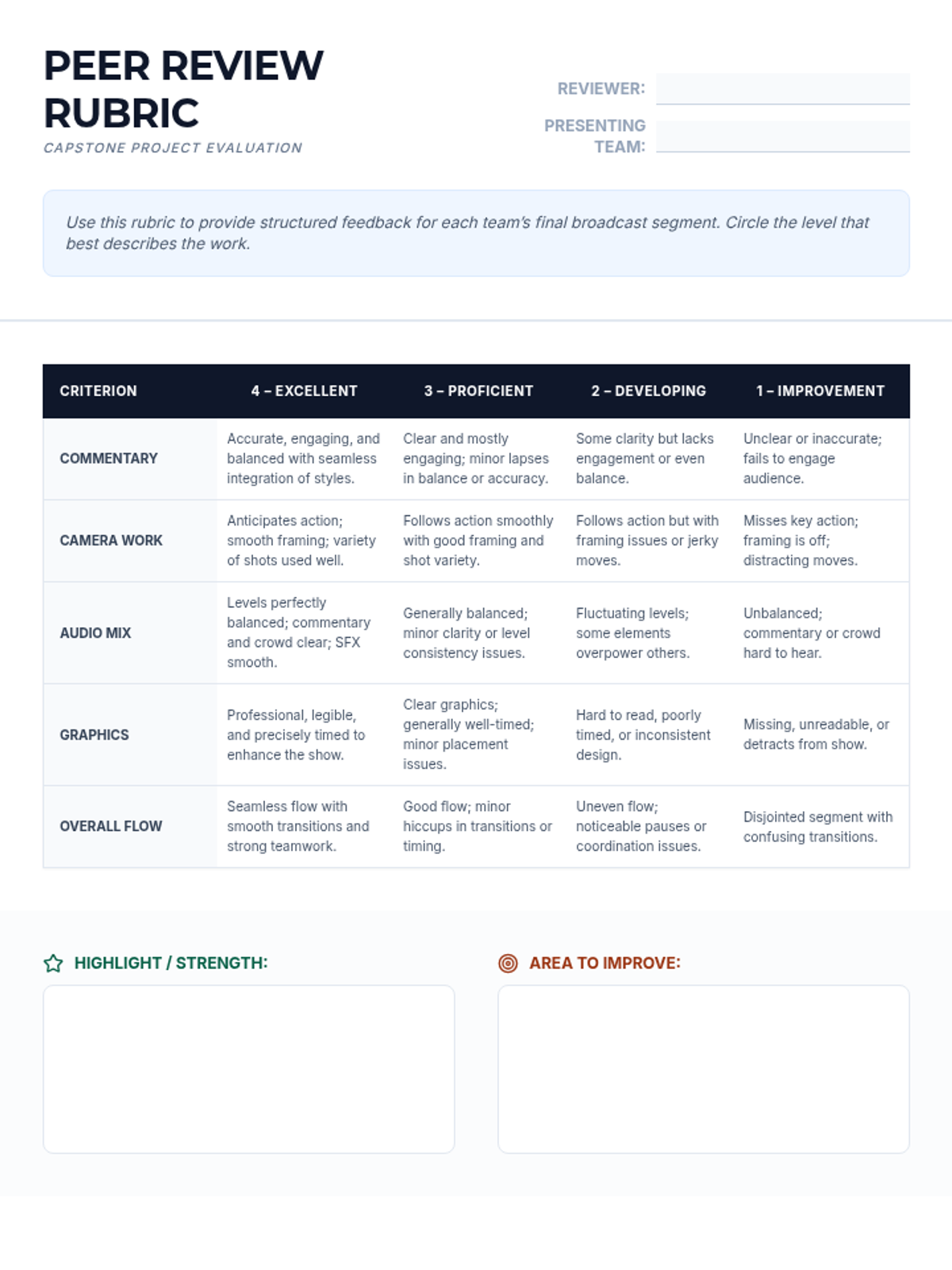
A capstone project where teams collaborate to produce a full 2–3 minute sports broadcast segment incorporating all learned skills.
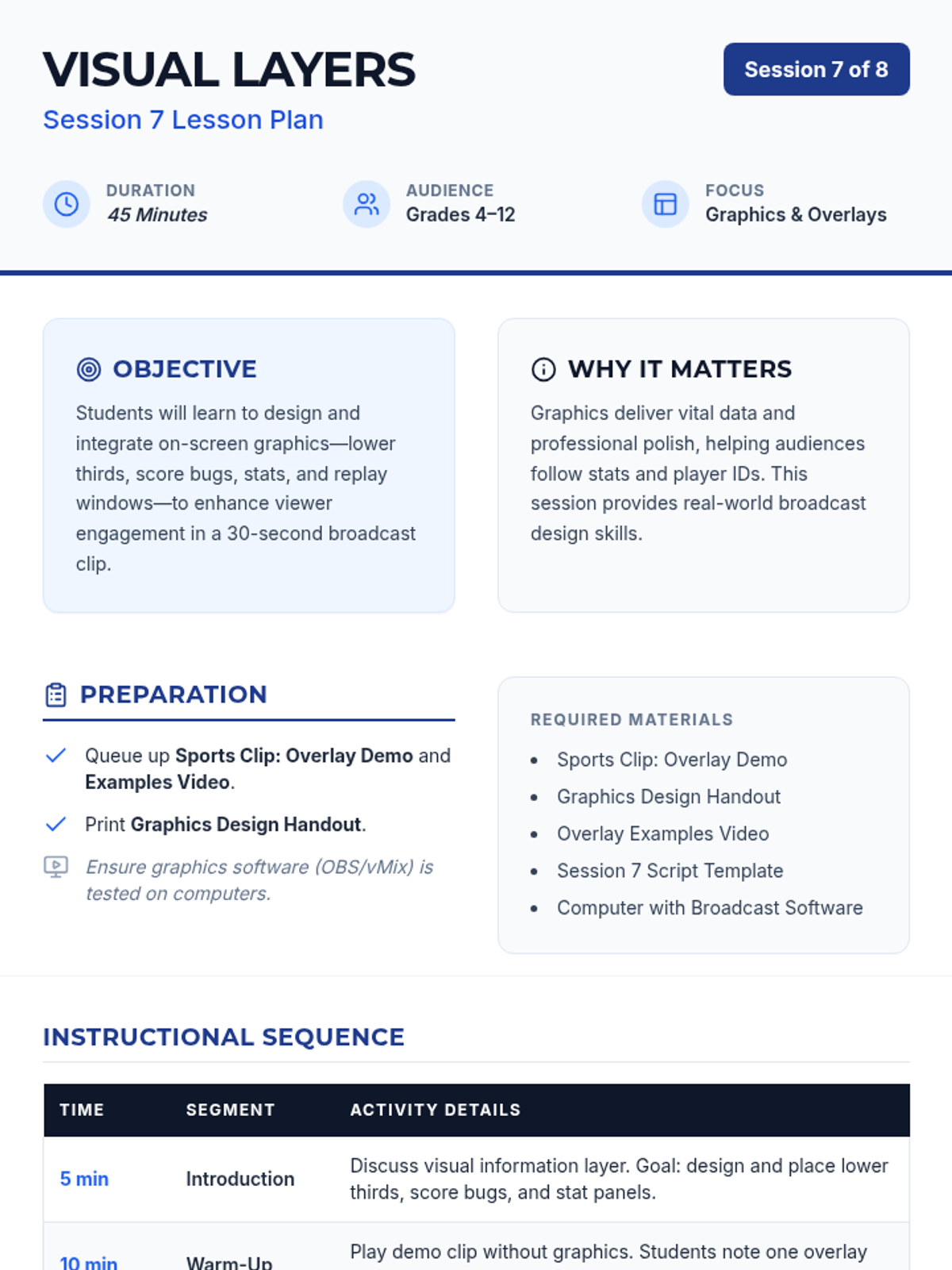
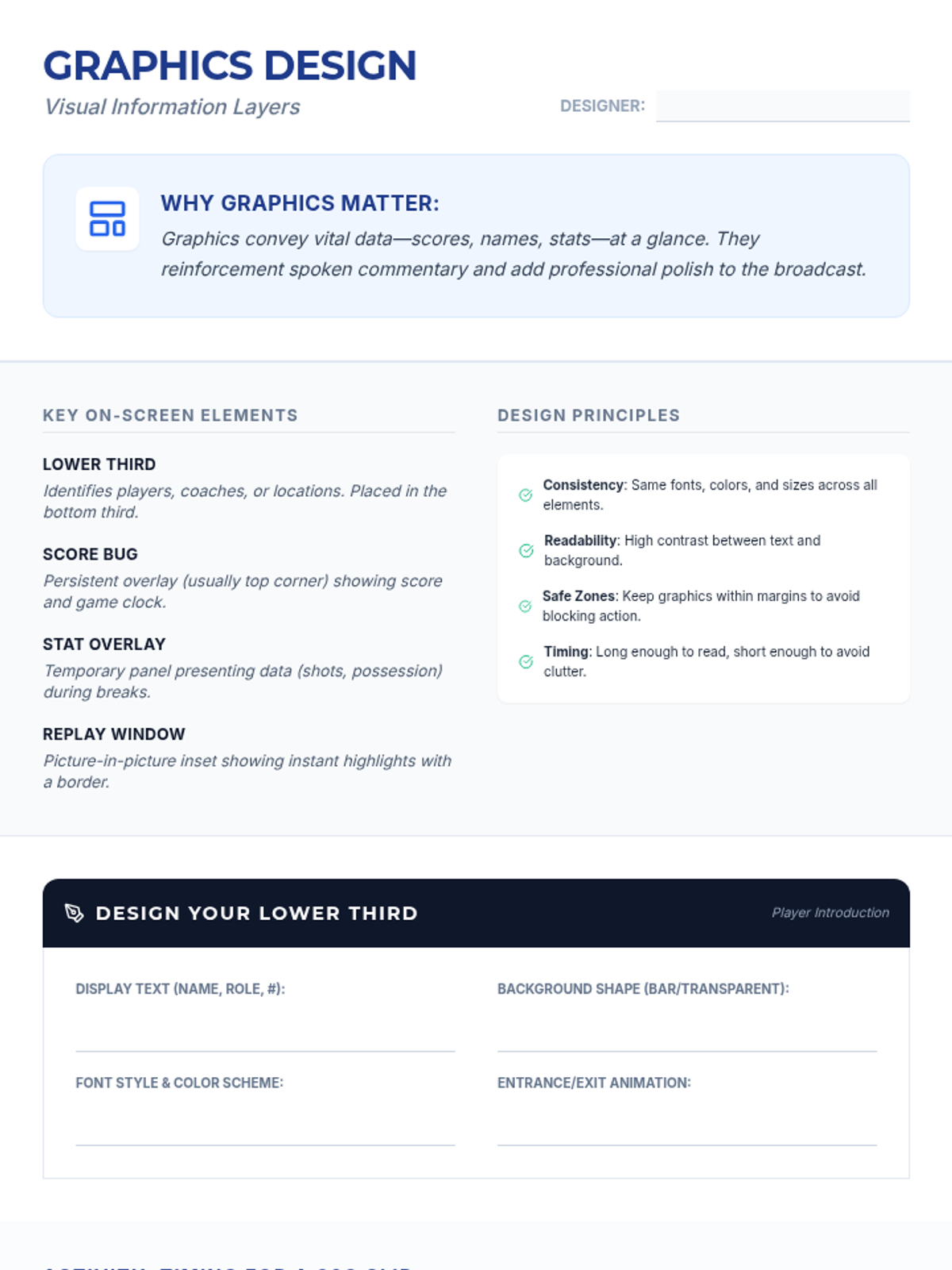
Focuses on the visual information layer, including score bugs, lower thirds, and stat overlays that keep the audience informed.
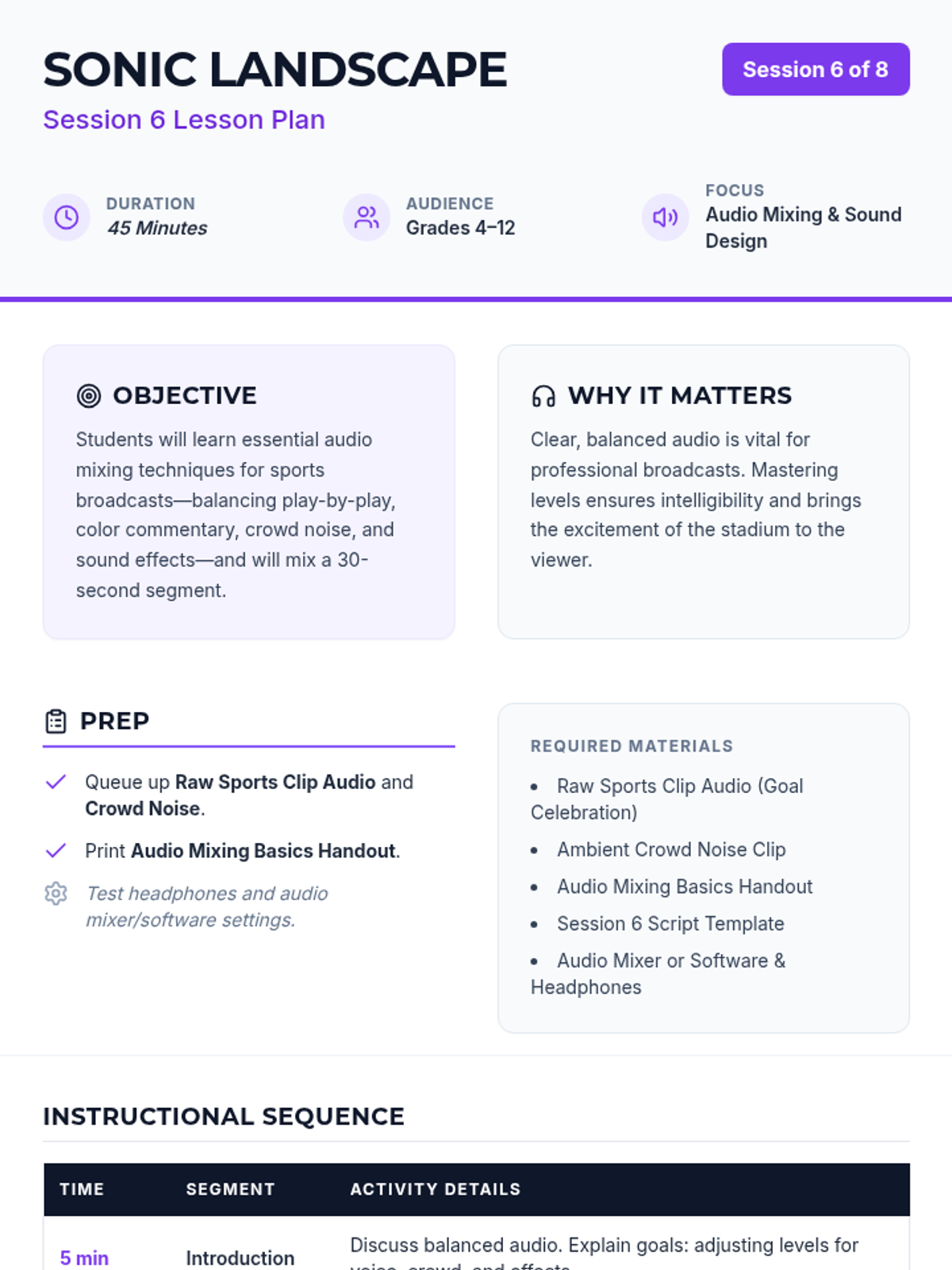
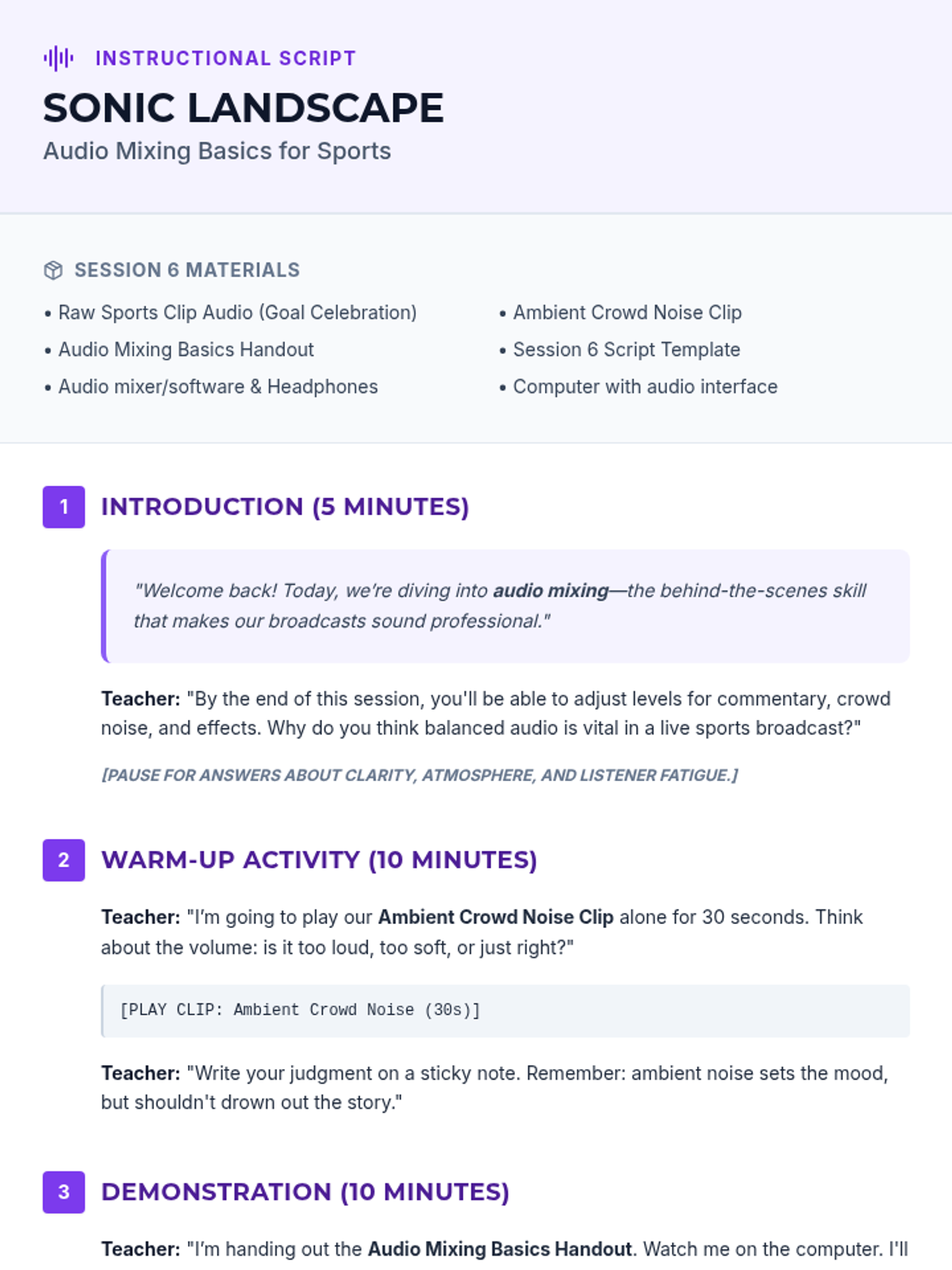
Explores the sonic dimension of broadcasting, teaching students how to balance commentary with ambient crowd noise and sound effects.
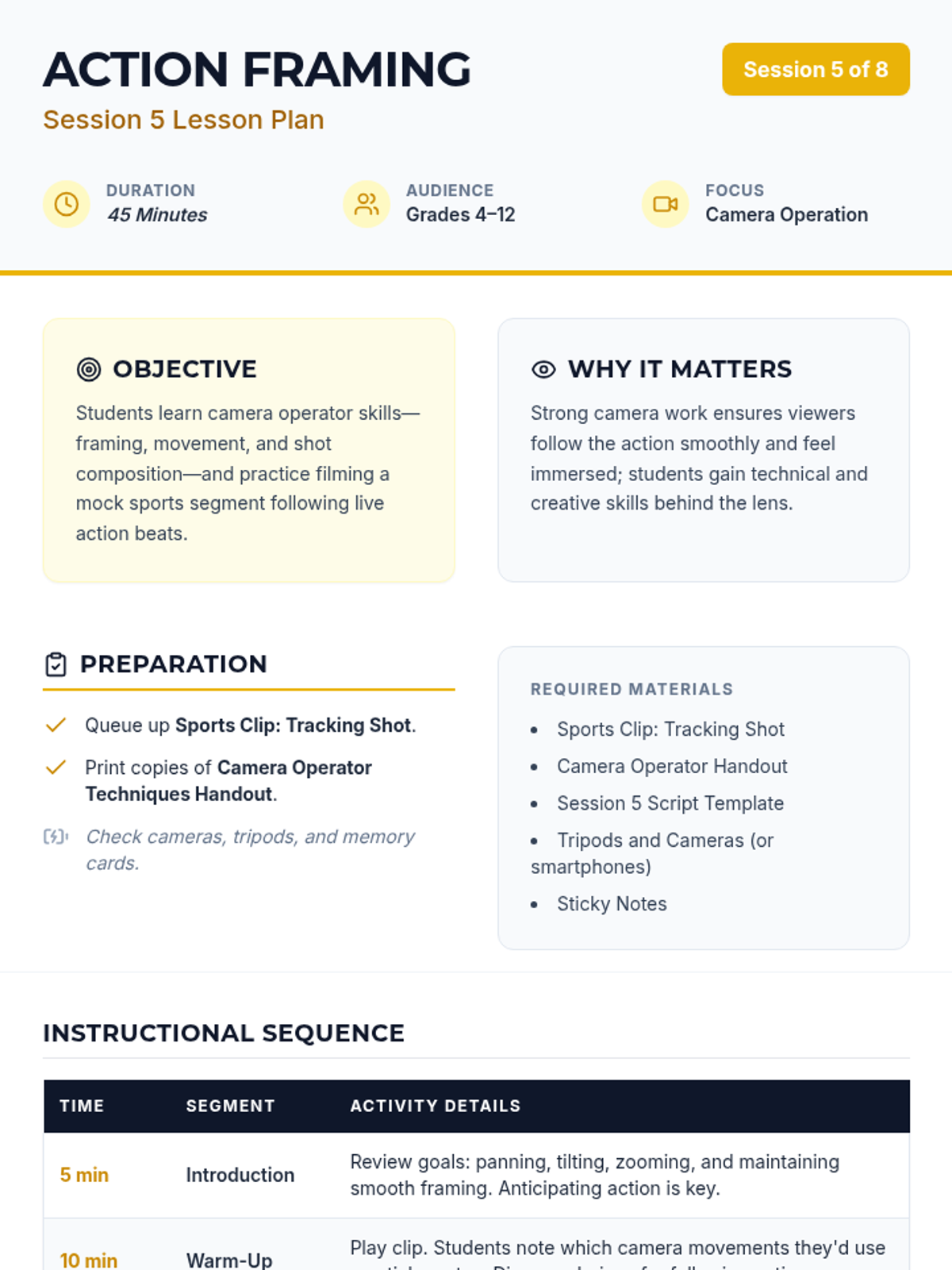
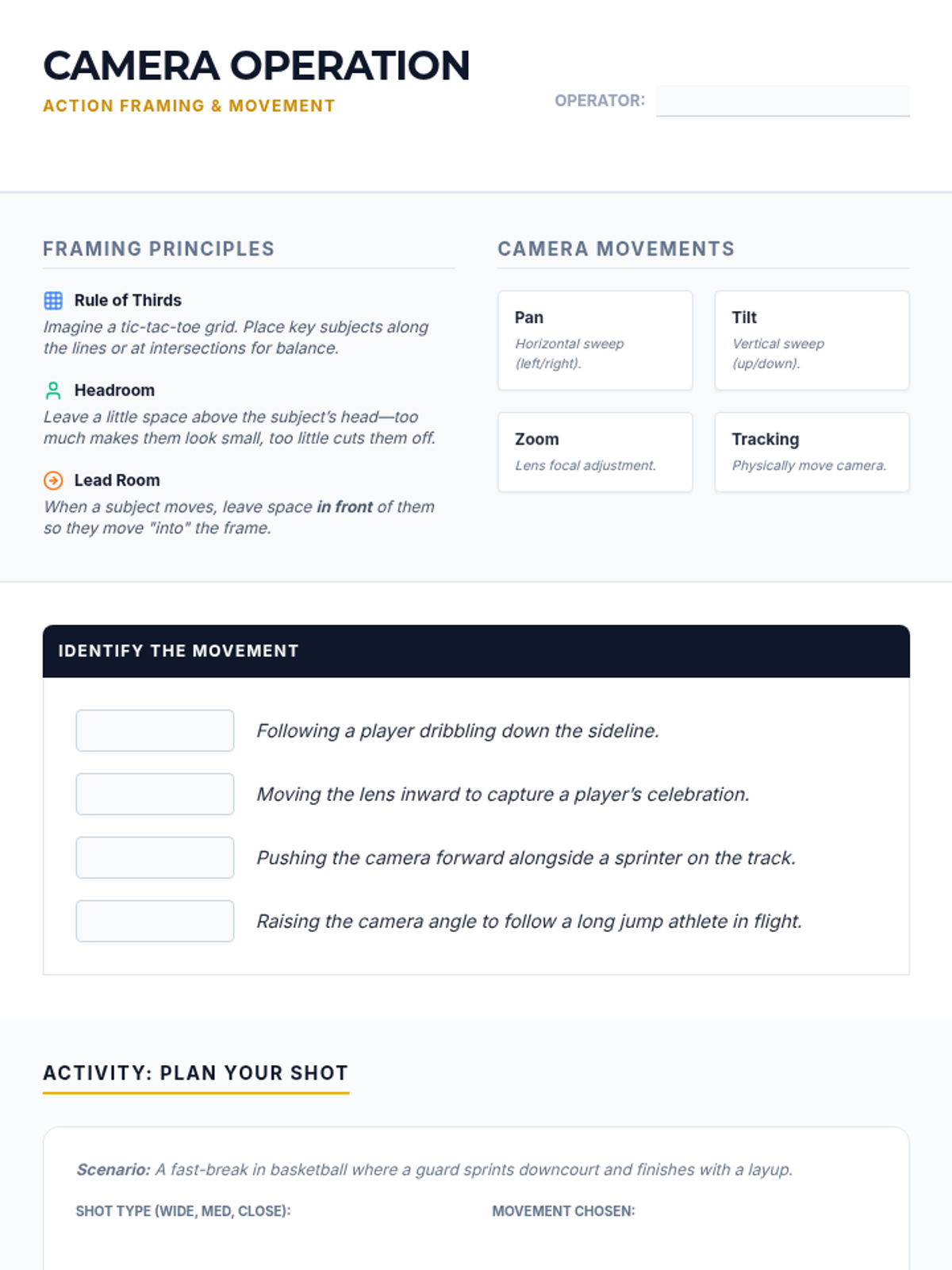
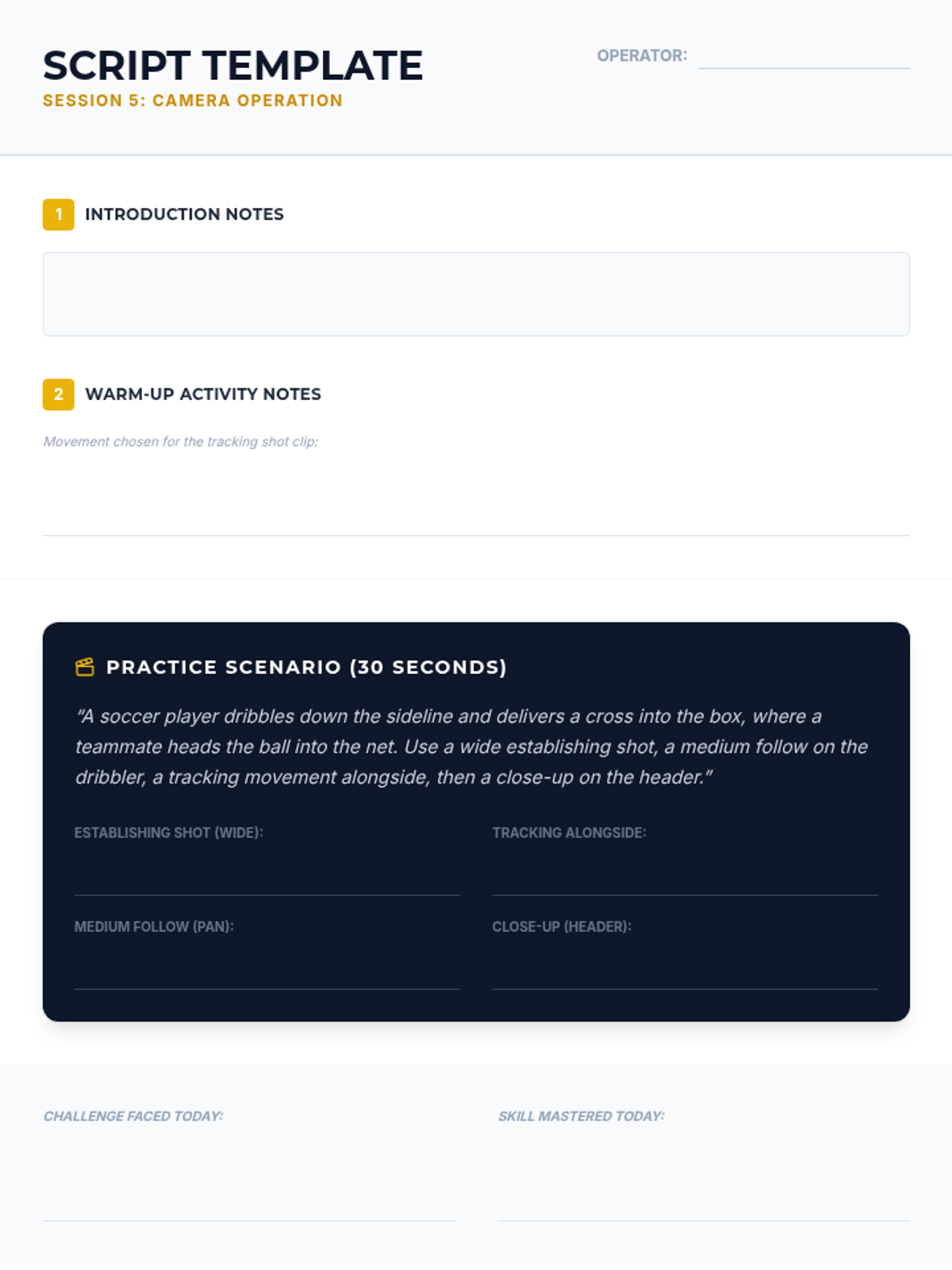
Covers the technical and creative aspects of camera operation, including framing, movement, and anticipating the flow of play.
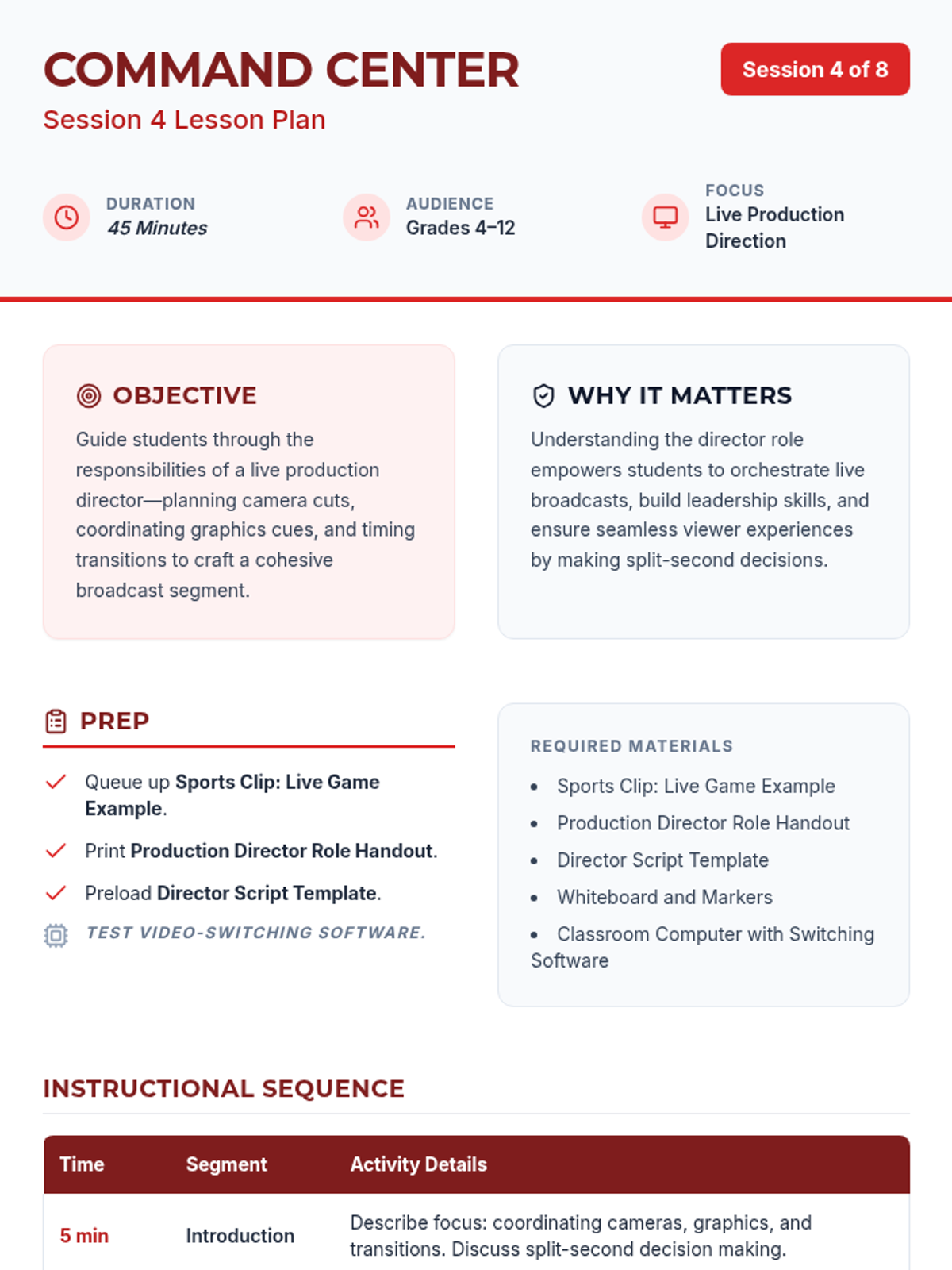
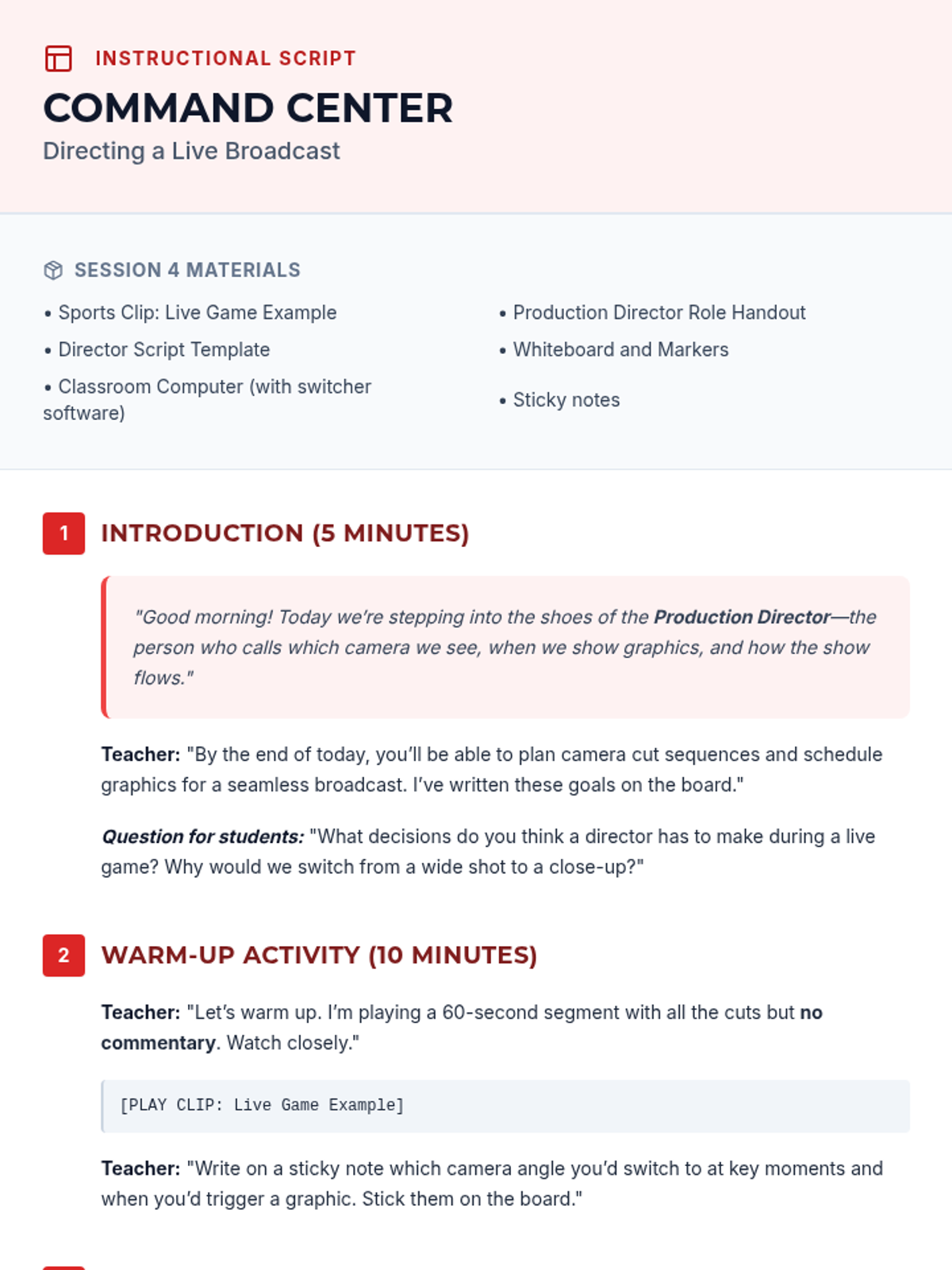
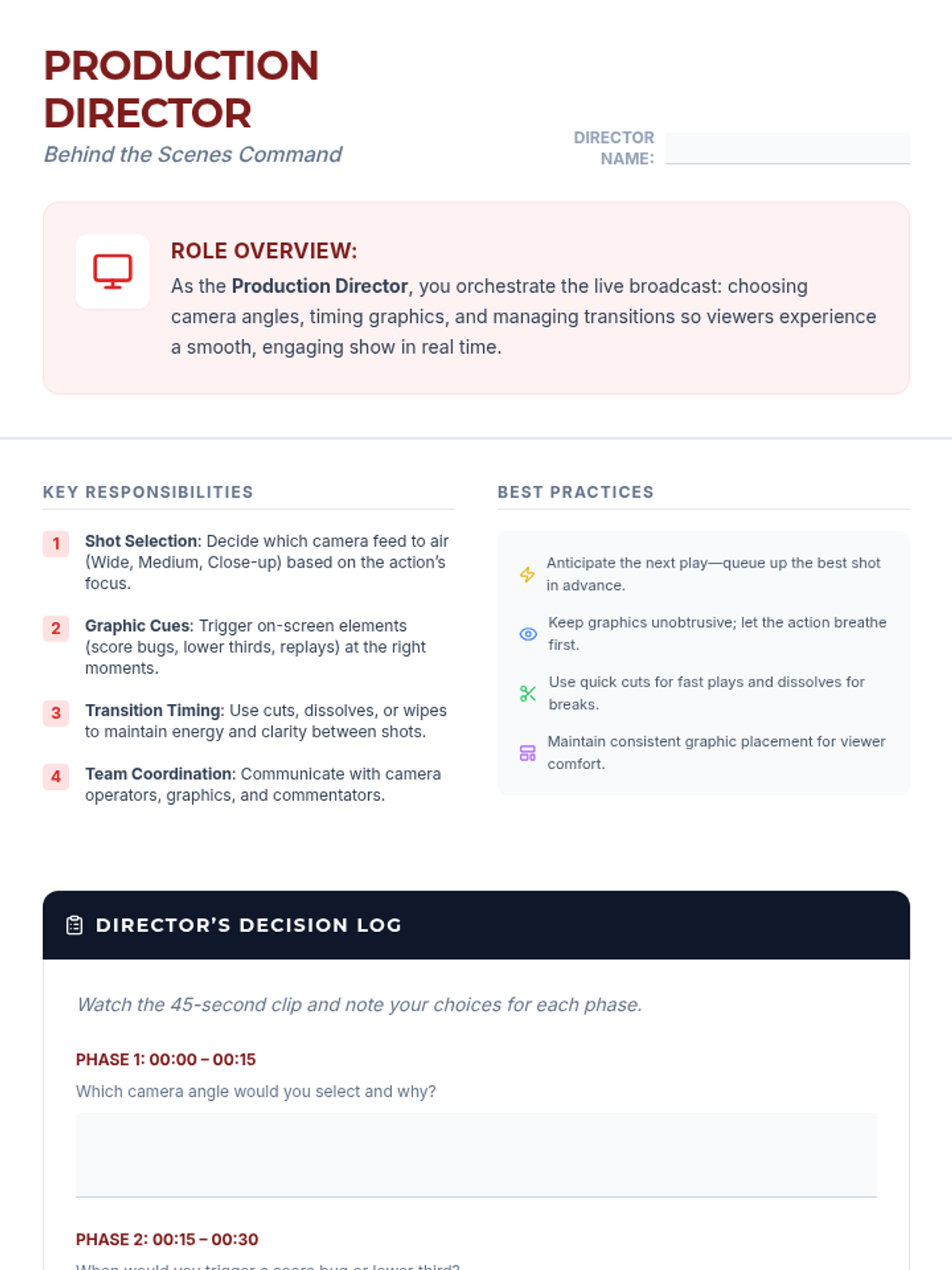
Students step into the director's chair to learn about shot selection, transition timing, and coordinating a live production crew.
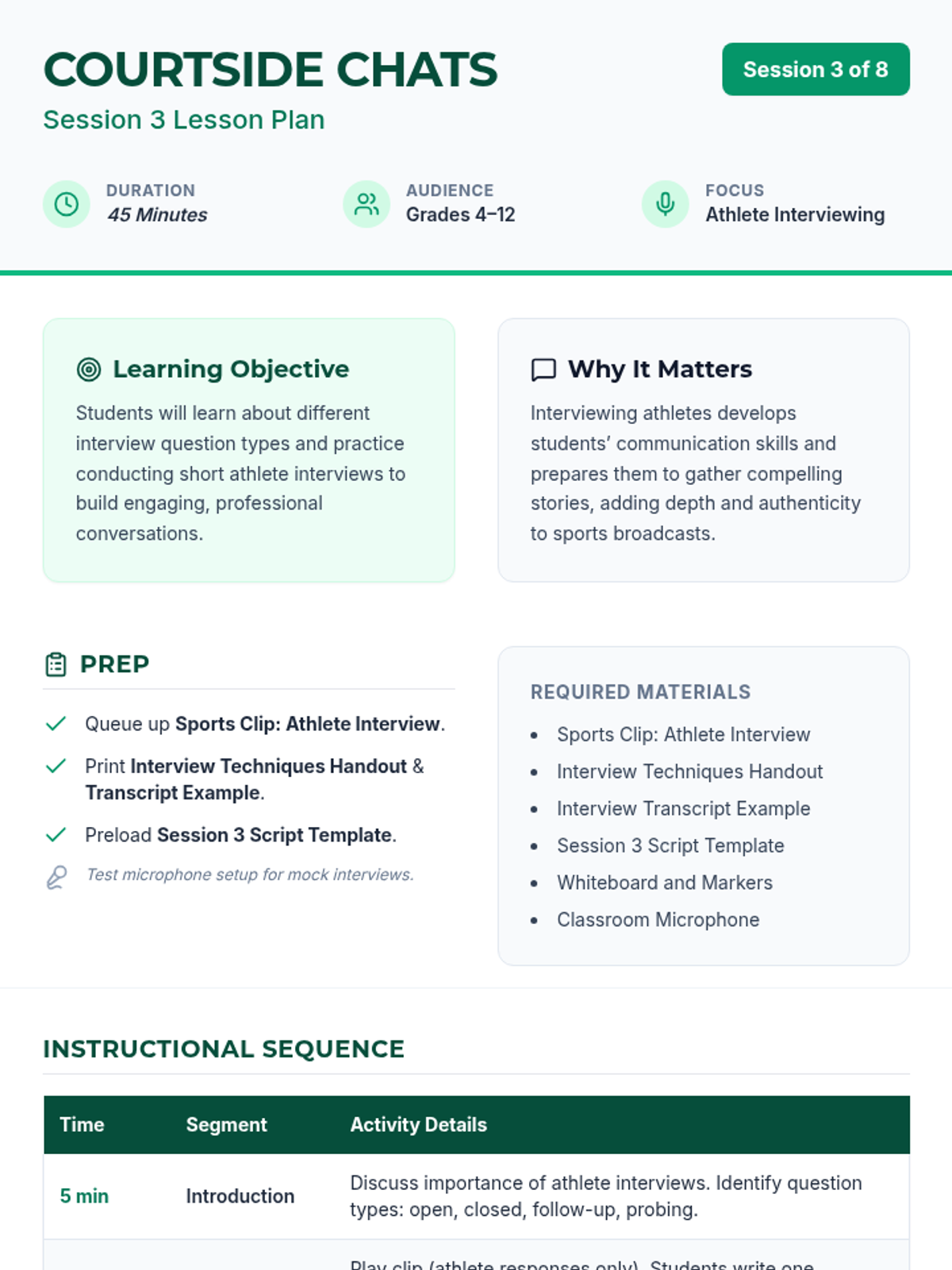
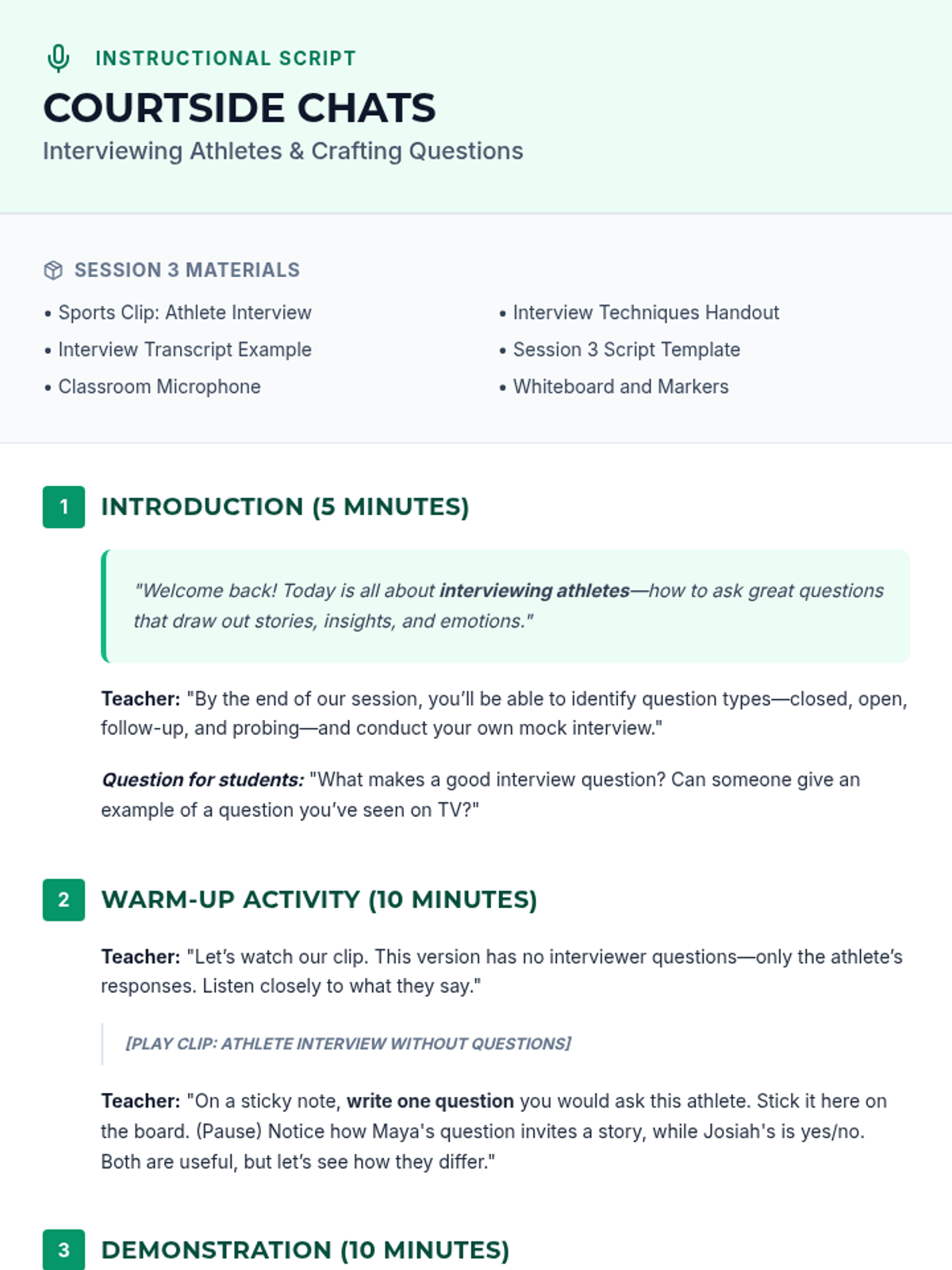
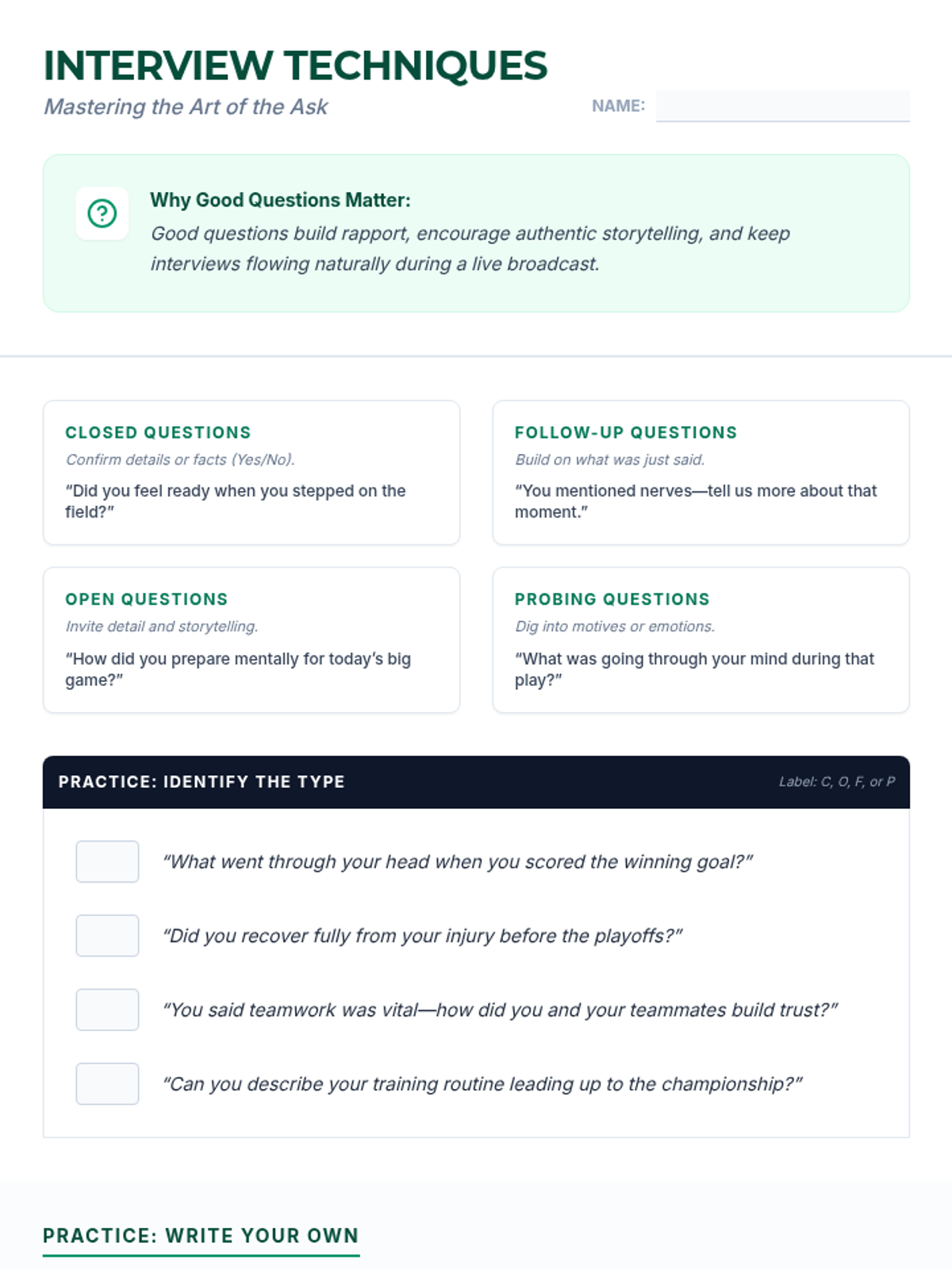
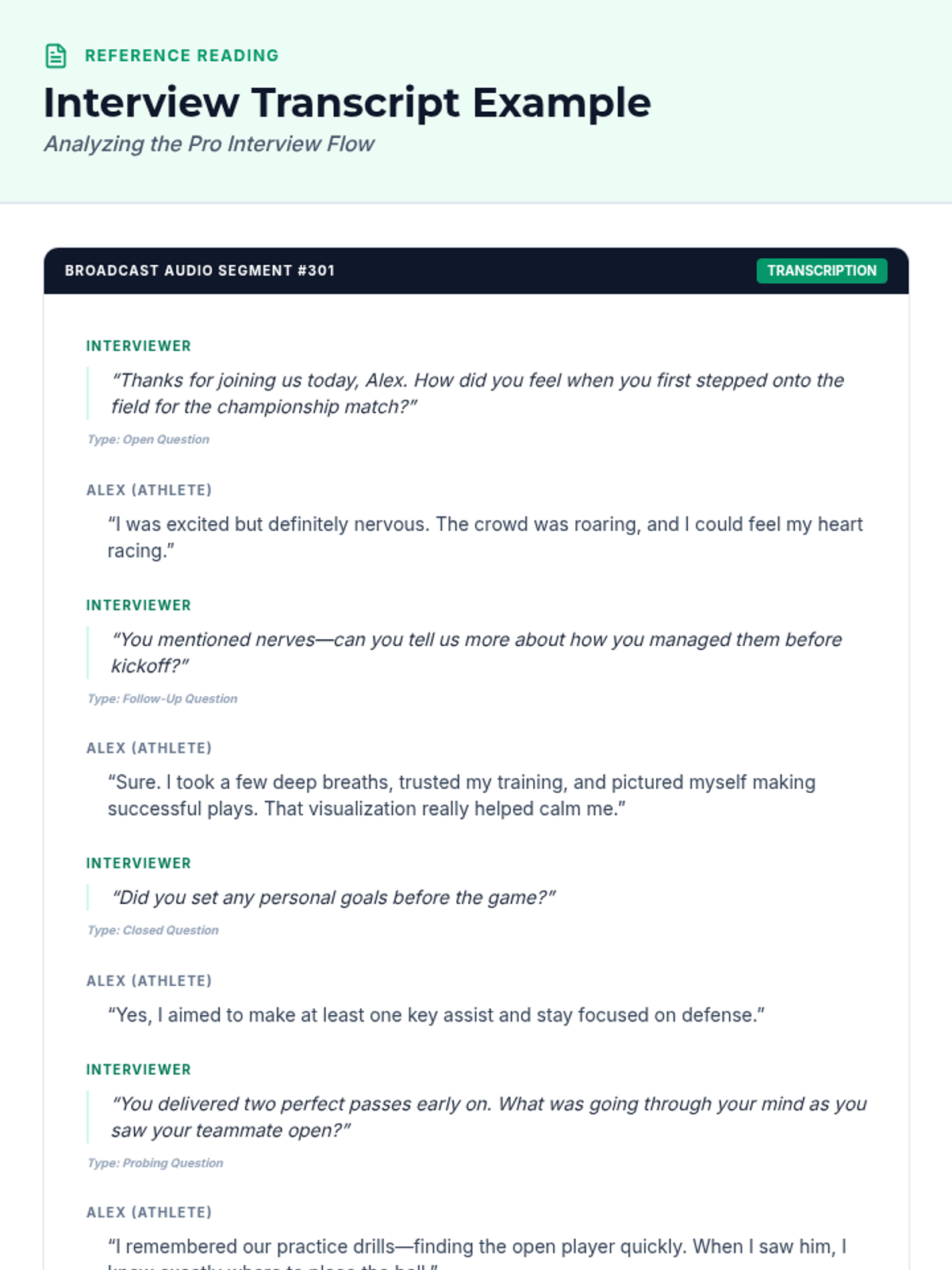
Introduces students to the skills required for athlete interviews, focusing on open-ended questions and active listening to draw out compelling stories.
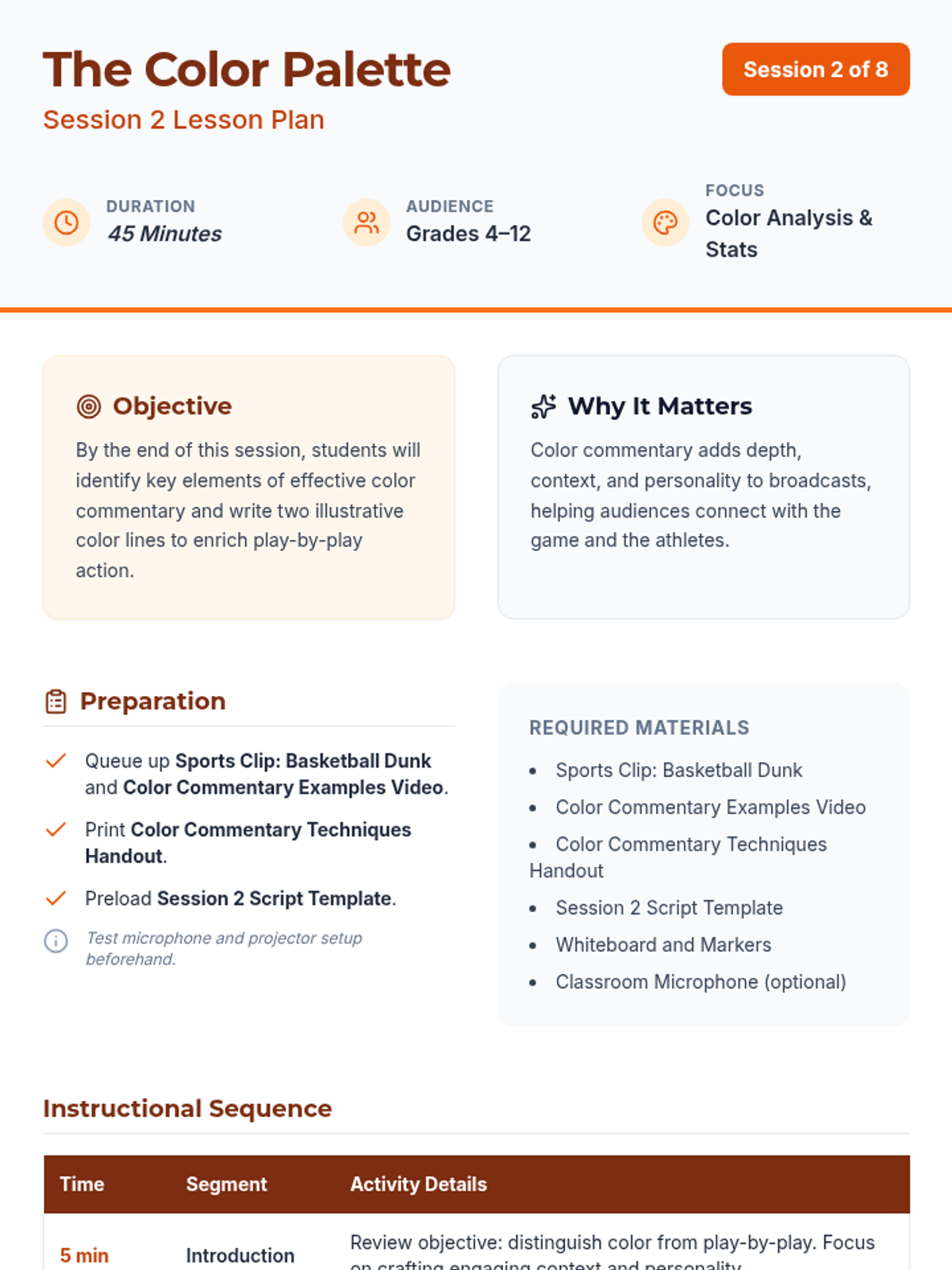
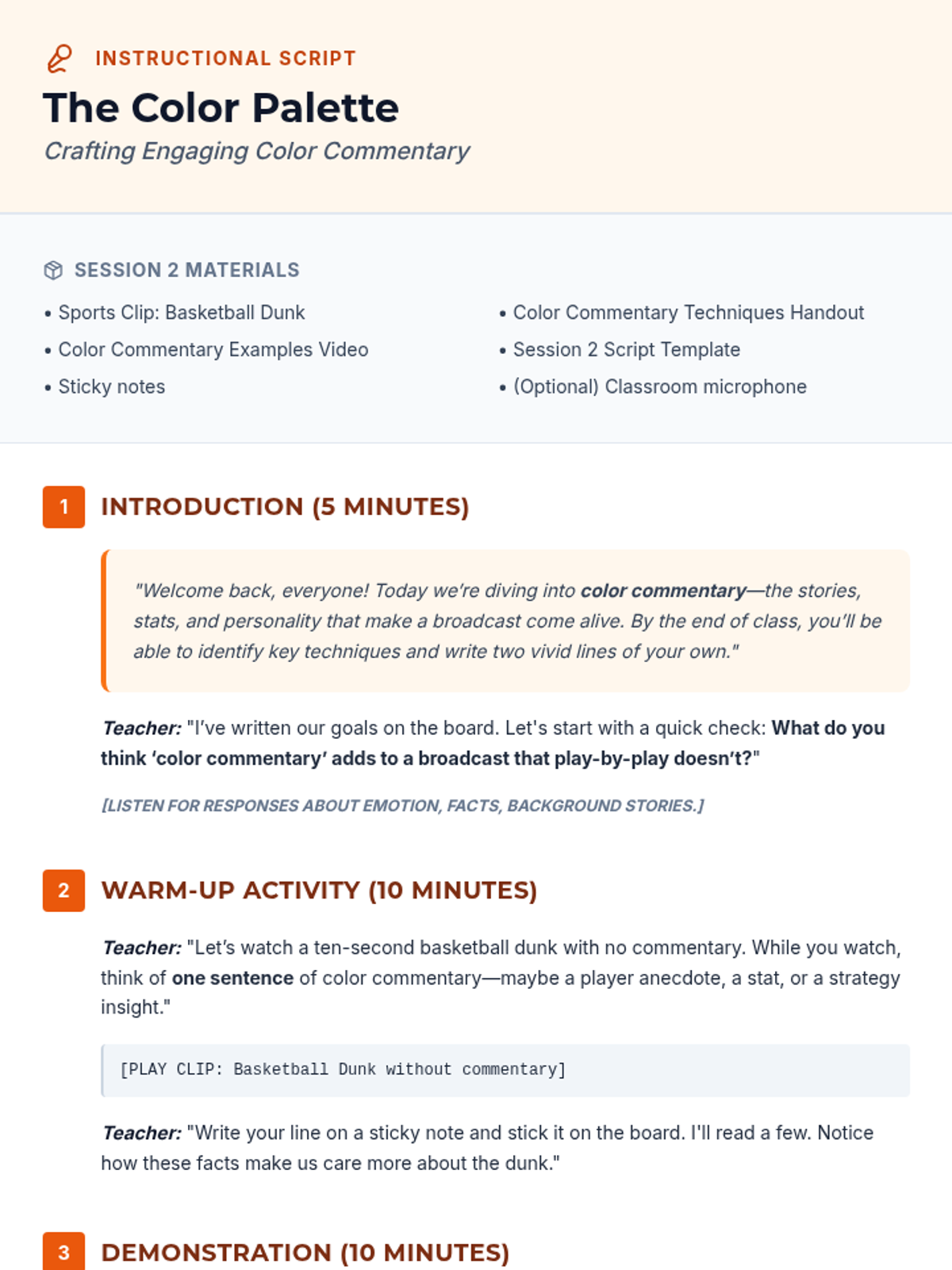
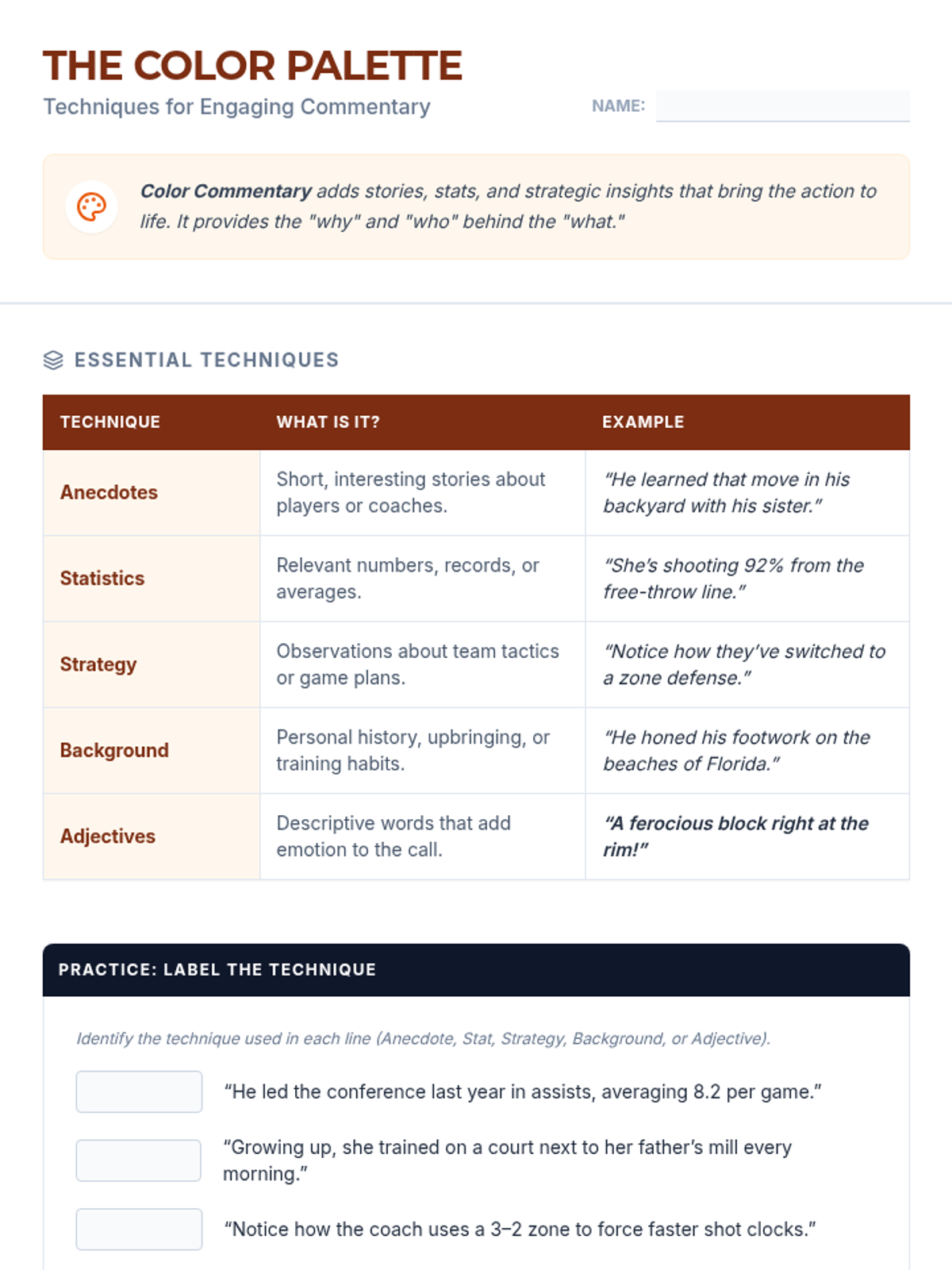
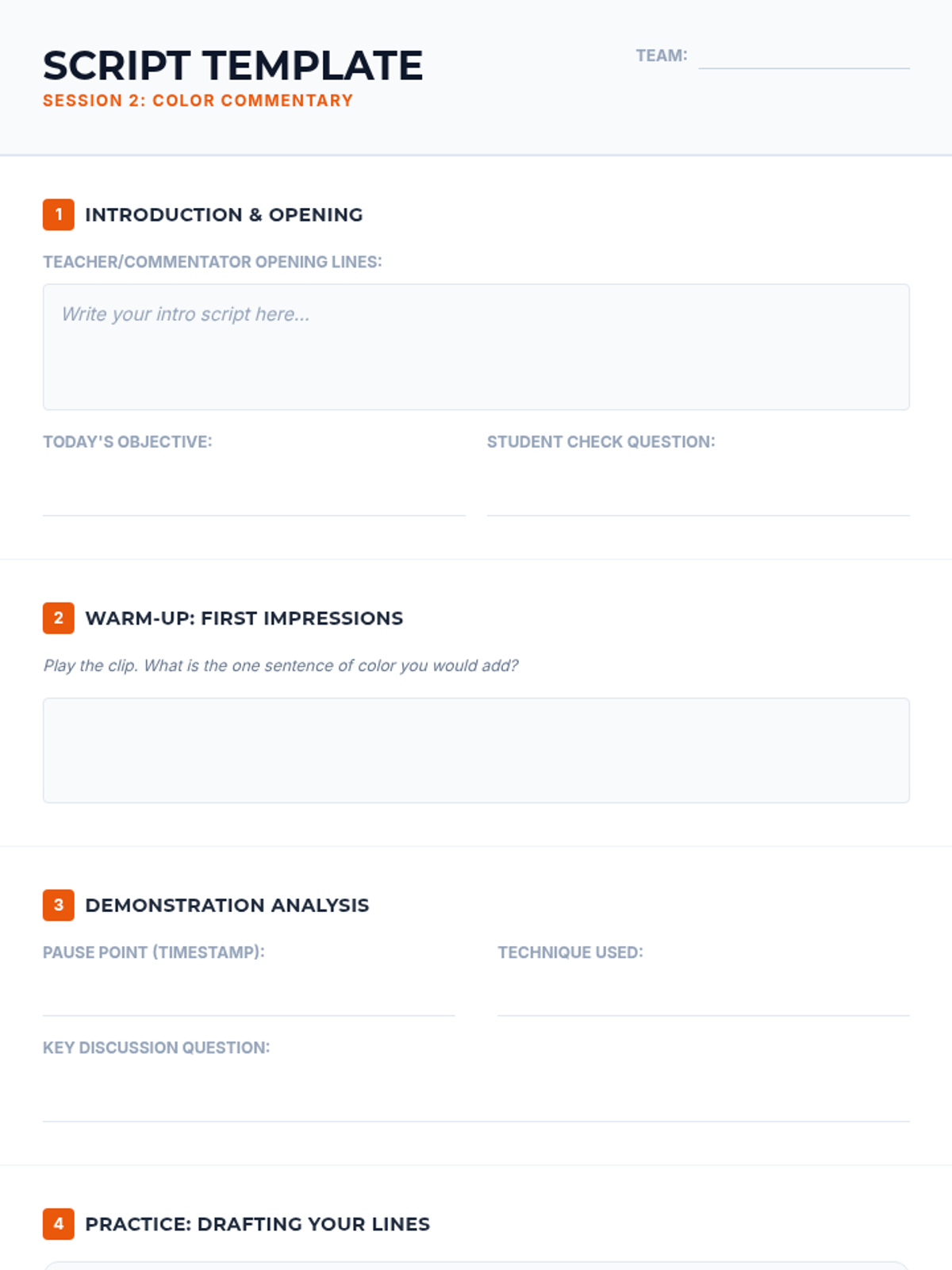
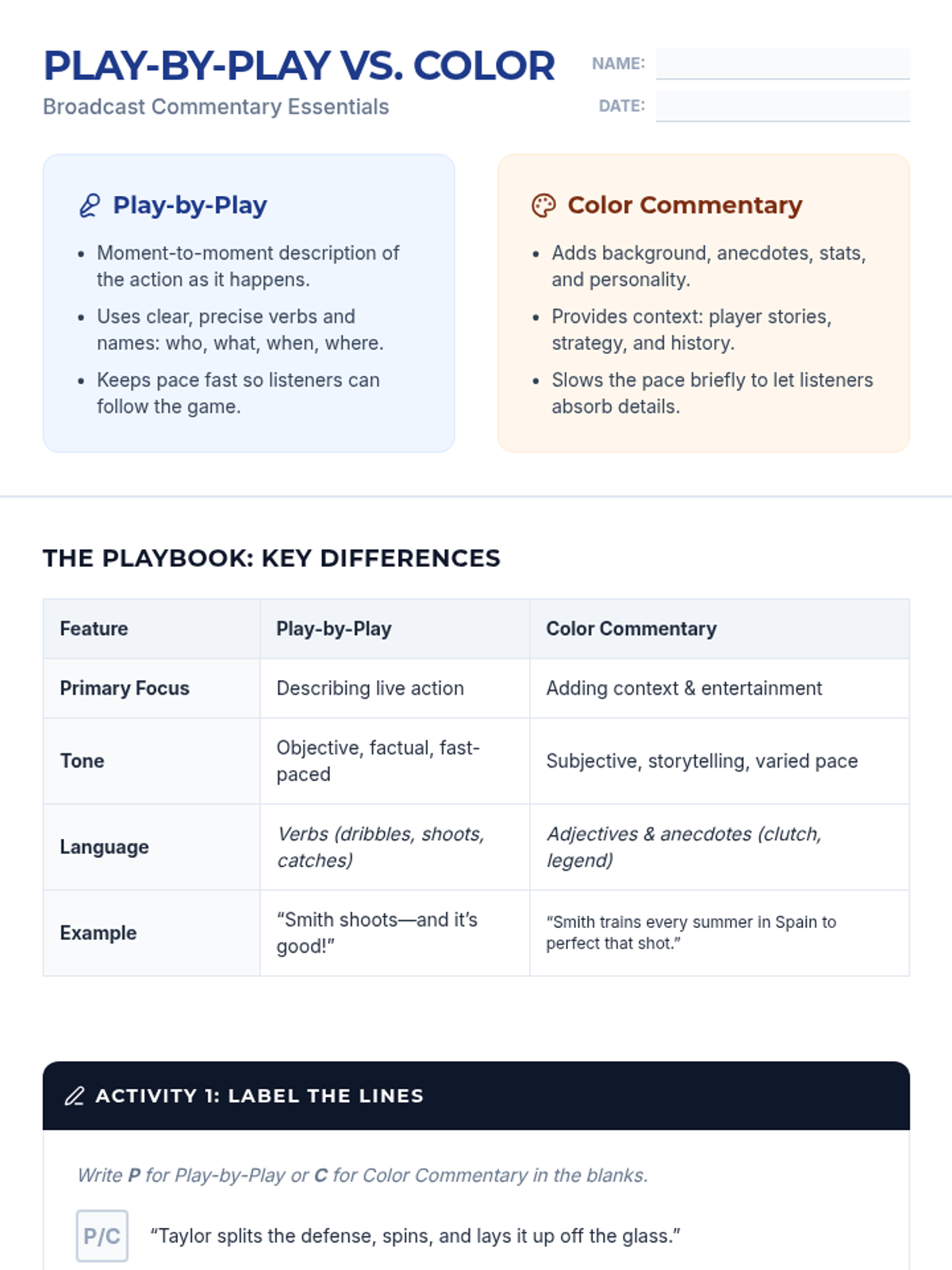
Focuses on the art of color commentary, teaching students how to weave statistics, anecdotes, and strategy into the live action.
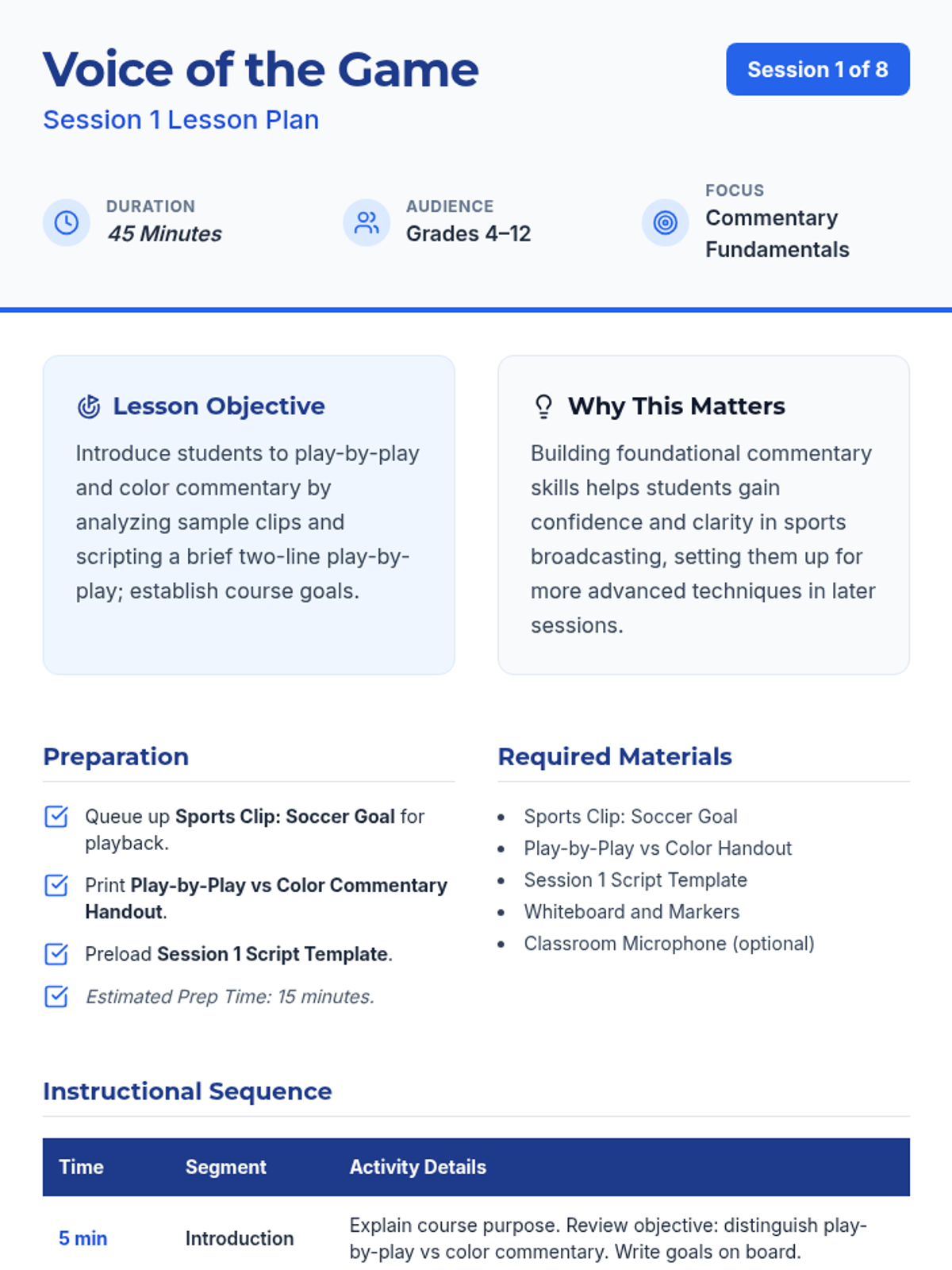
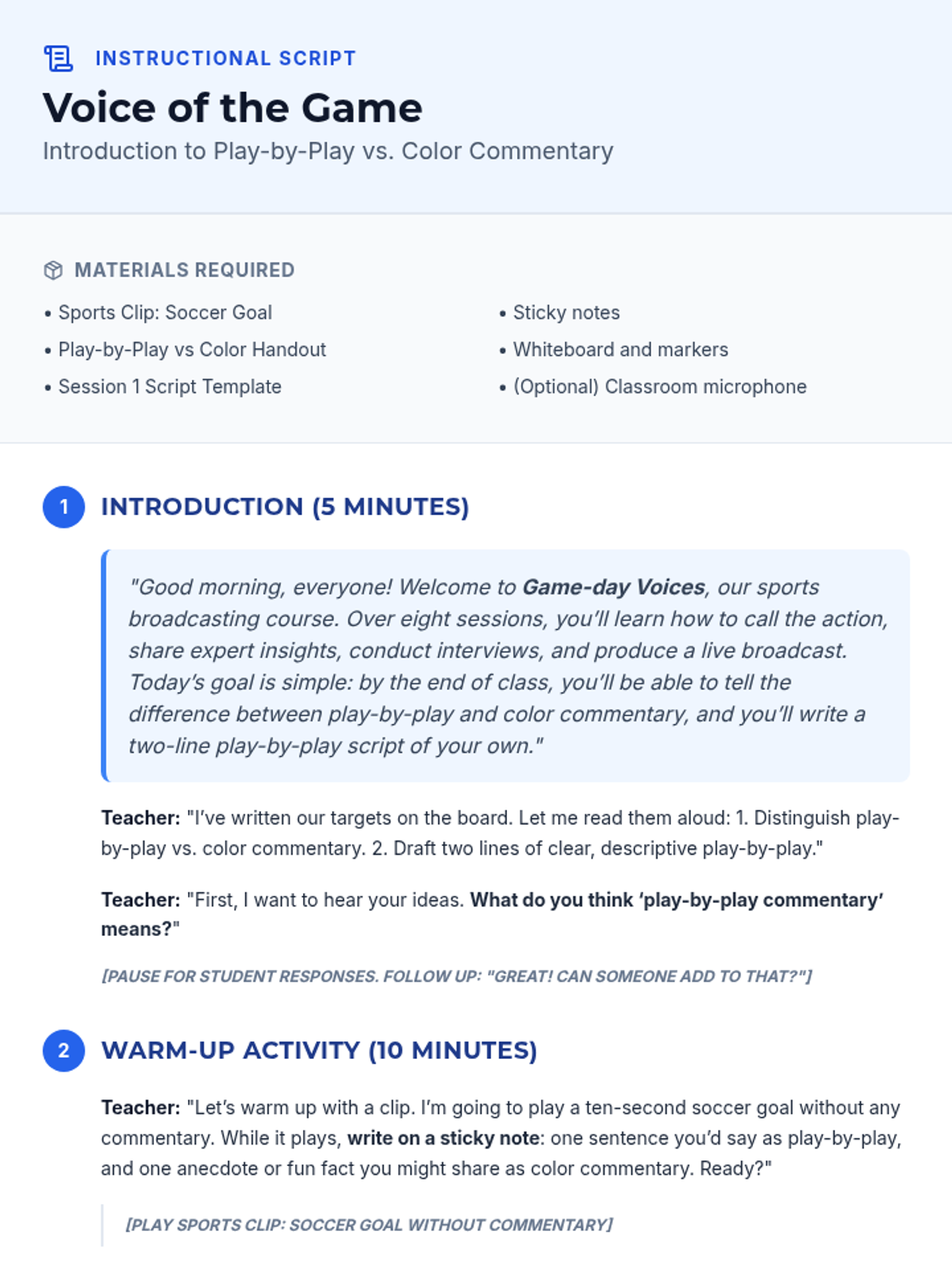
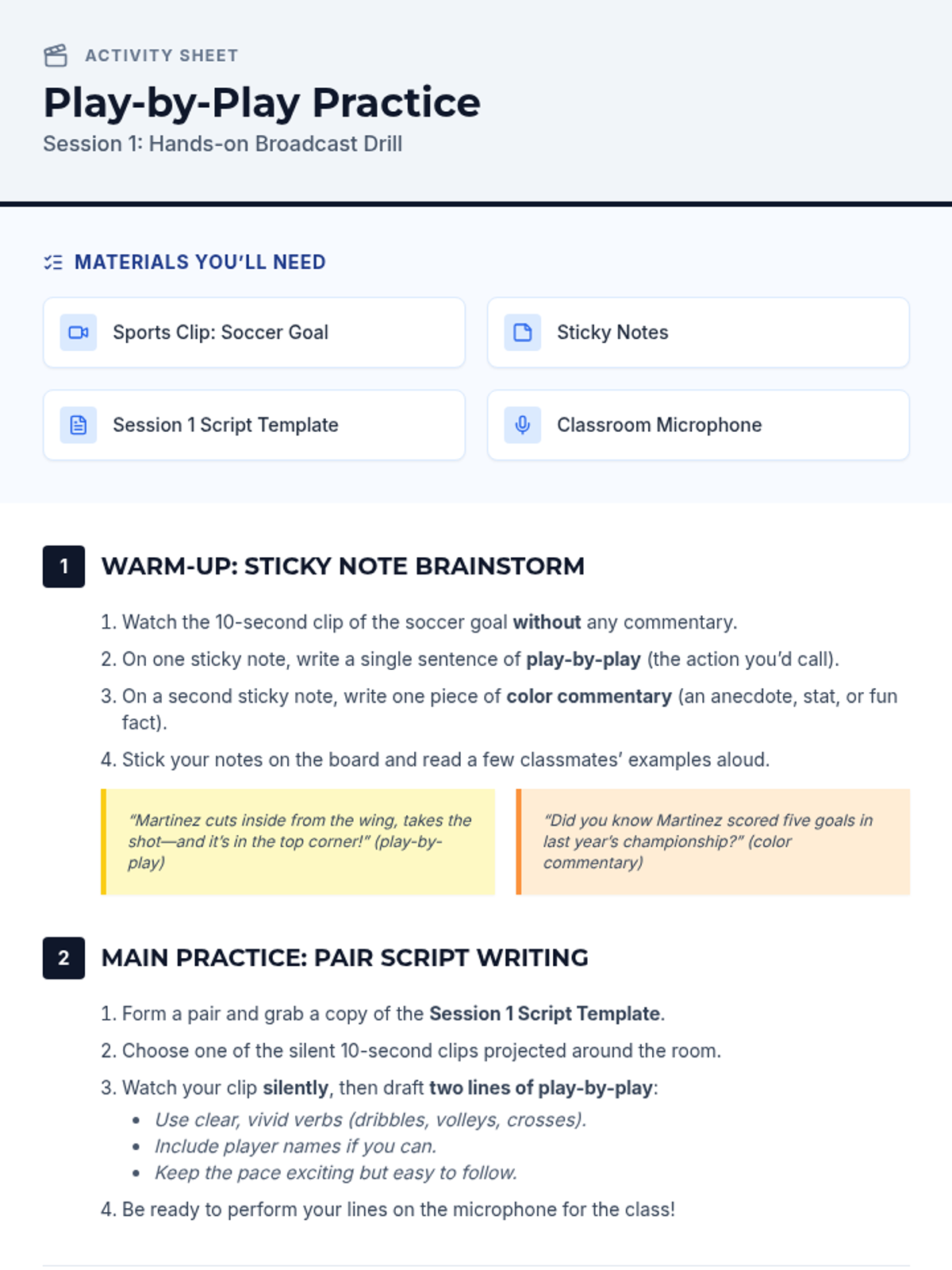
Students distinguish between play-by-play and color commentary, analyze professional examples, and draft their first action-based broadcast lines.
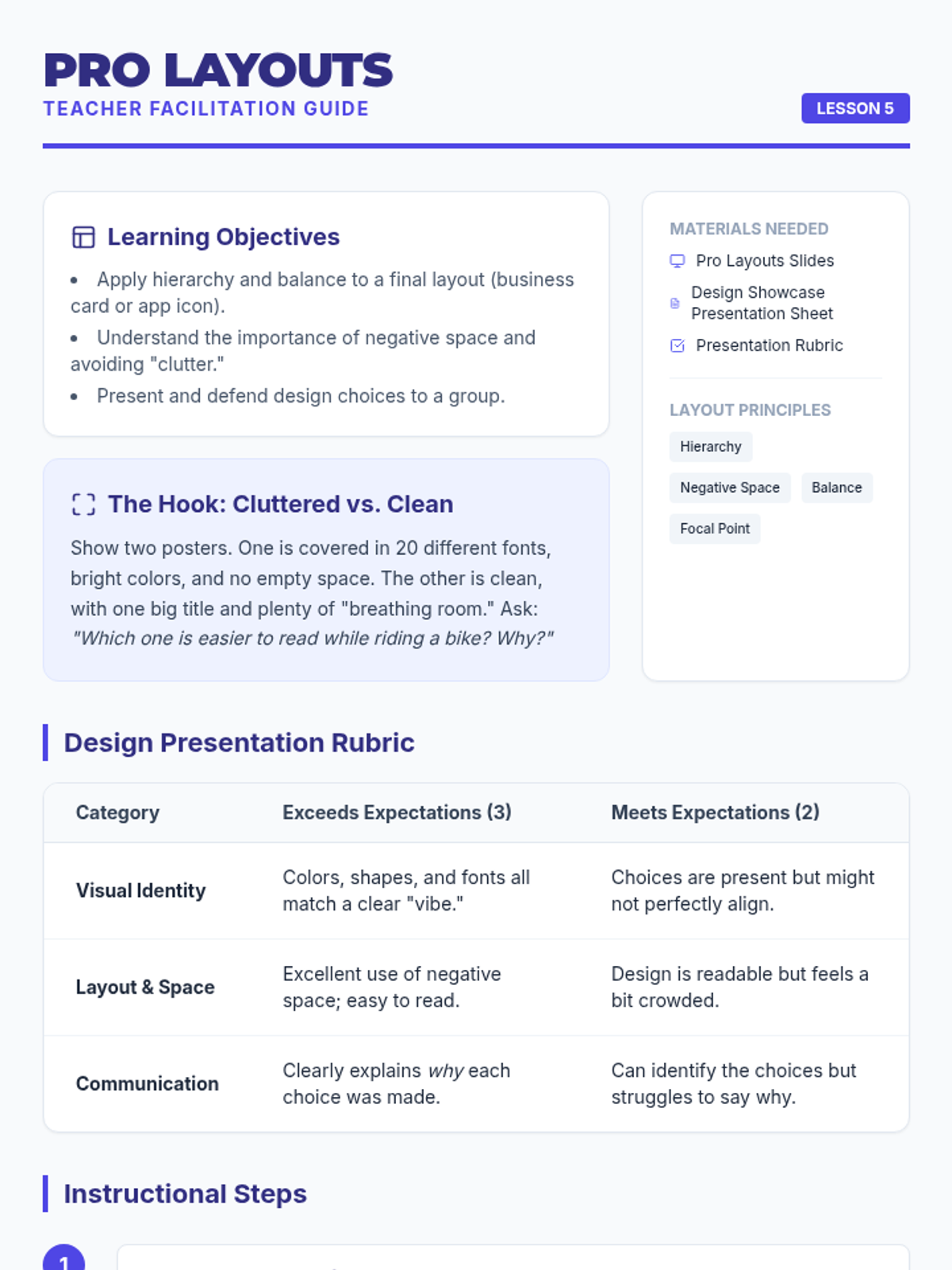
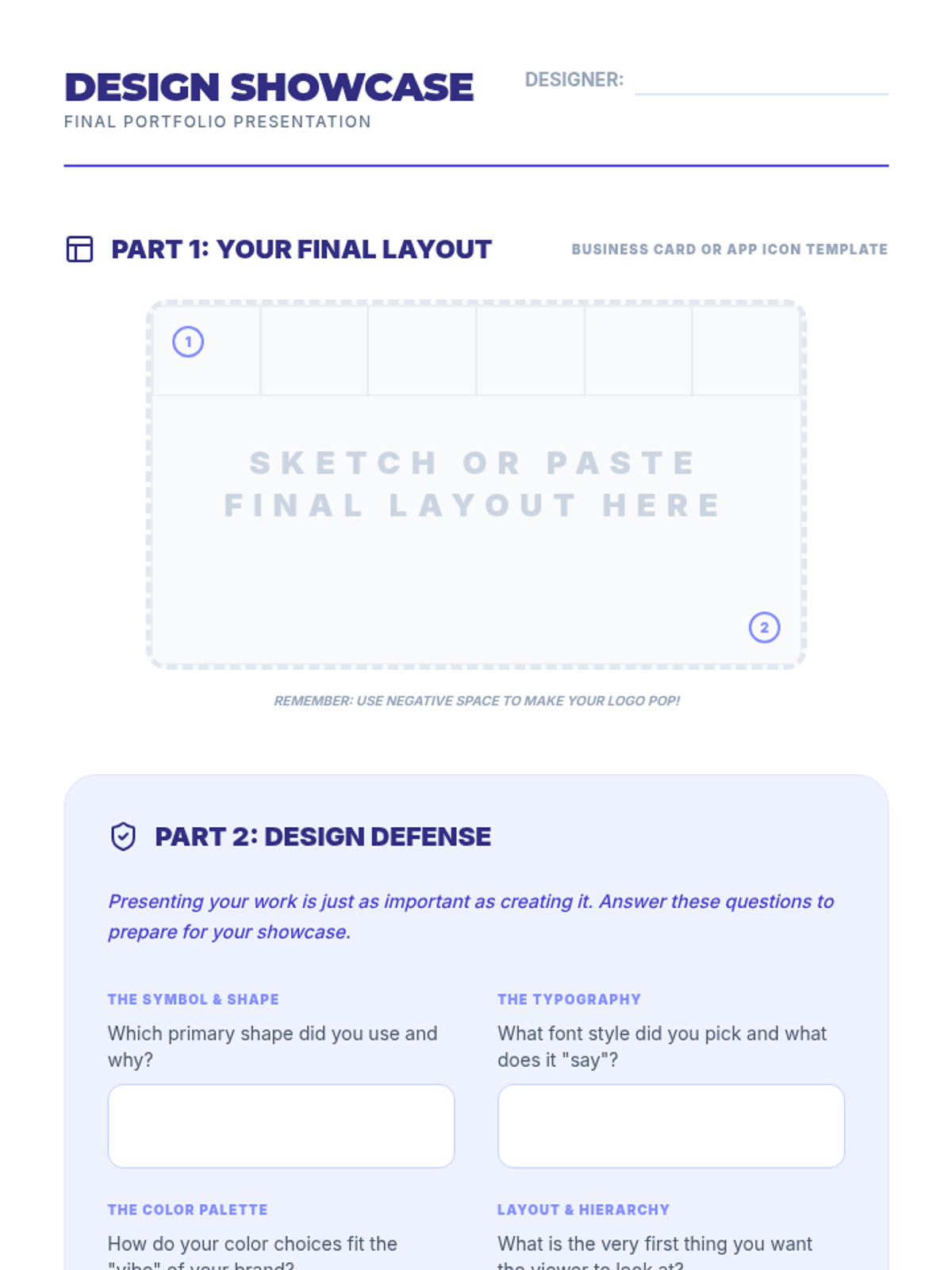
Covers layout principles like balance, negative space, and hierarchy. Students apply their personal logos to a final product and present their design choices to the class.
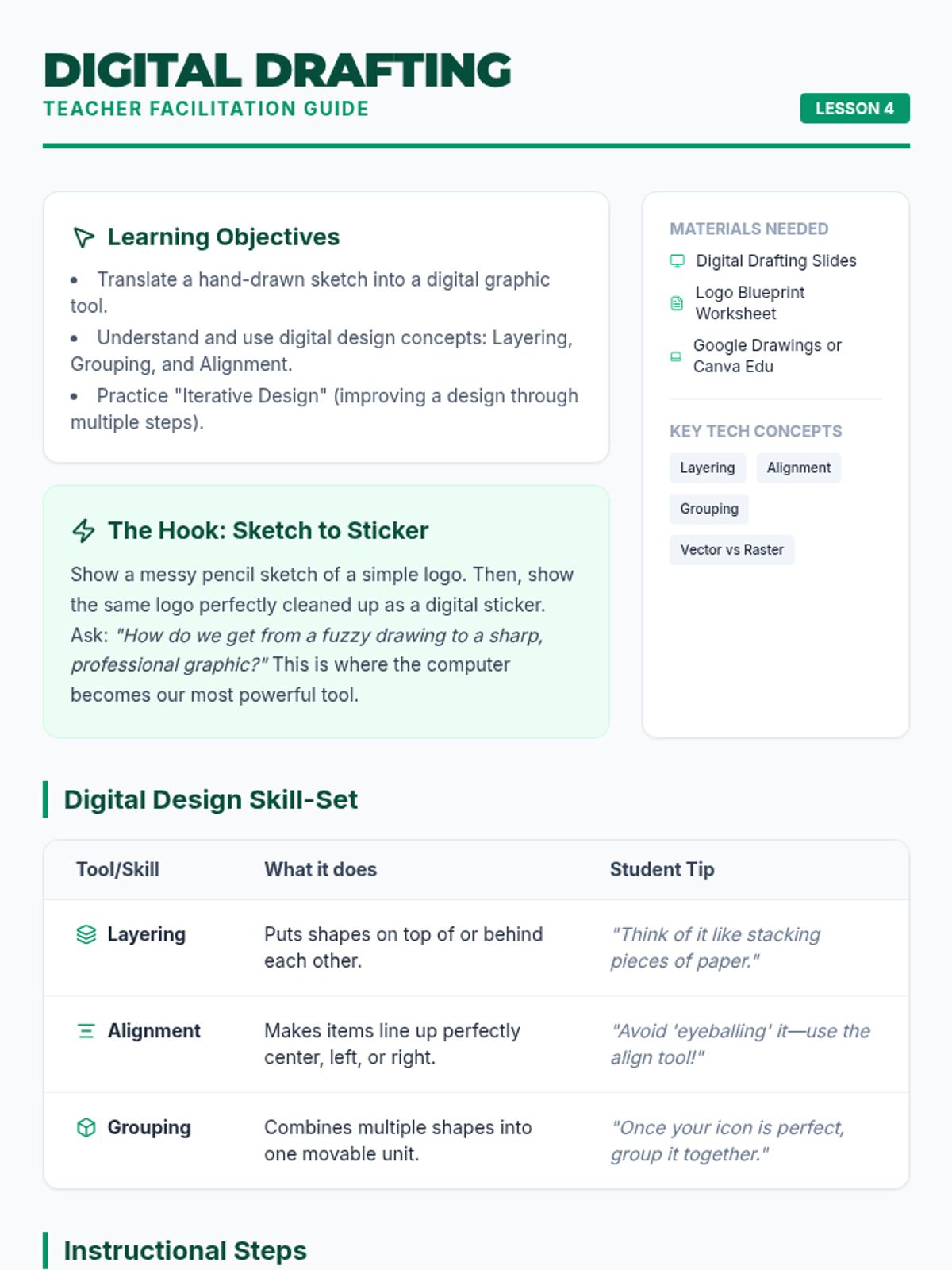
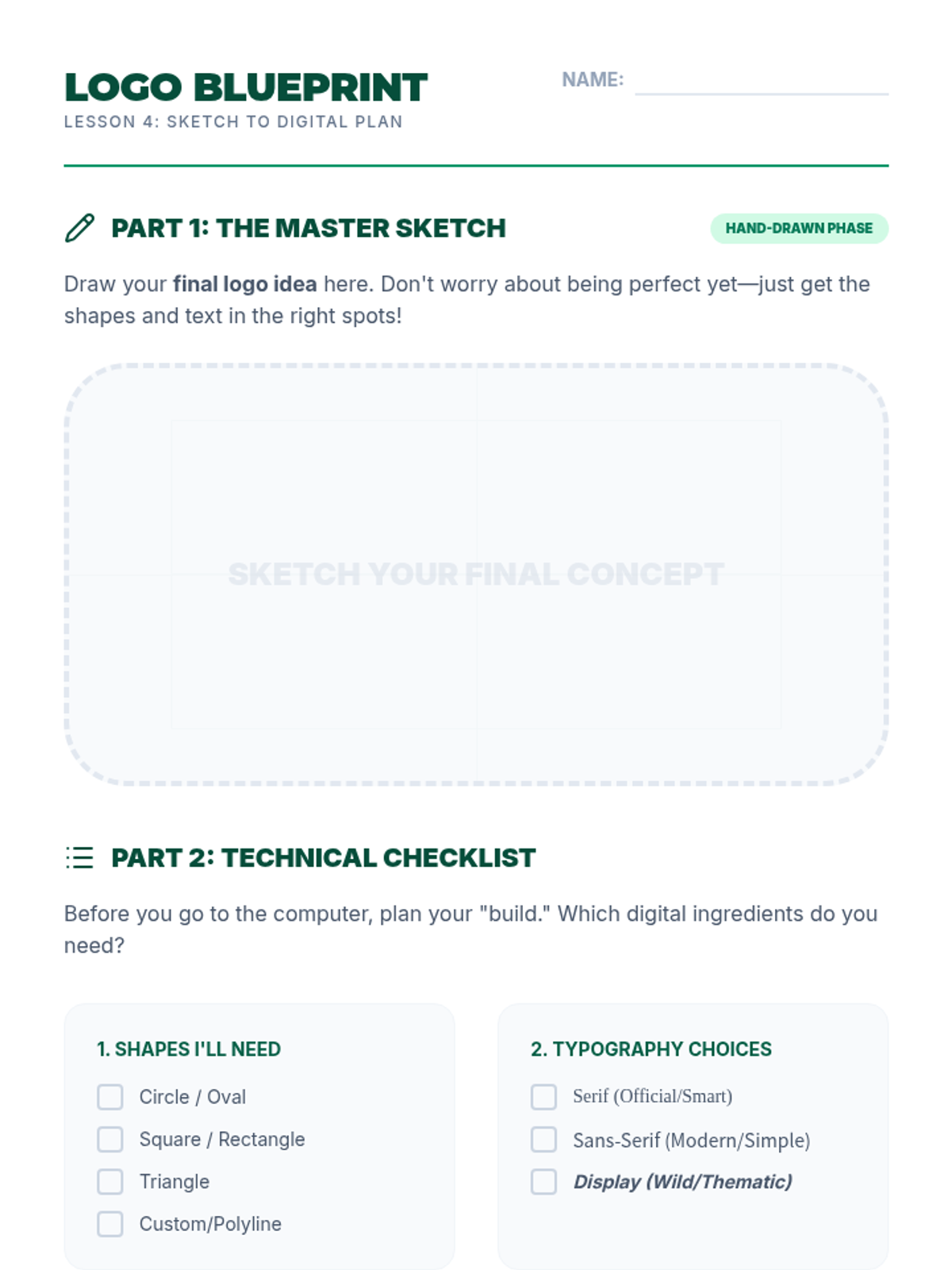
Students transition from hand-drawn sketches to digital tools, learning about layering, alignment, and the basics of digital logo composition.
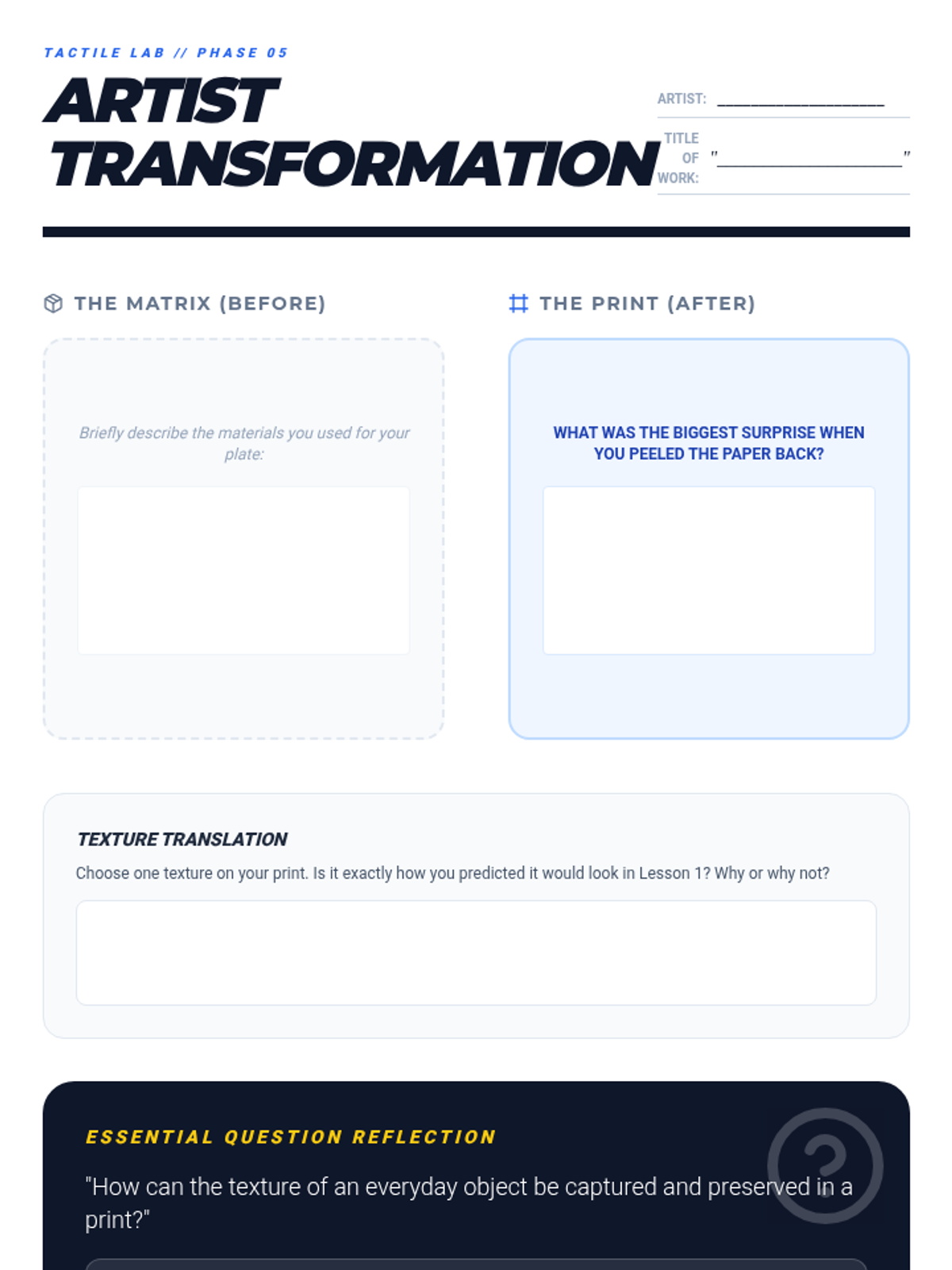
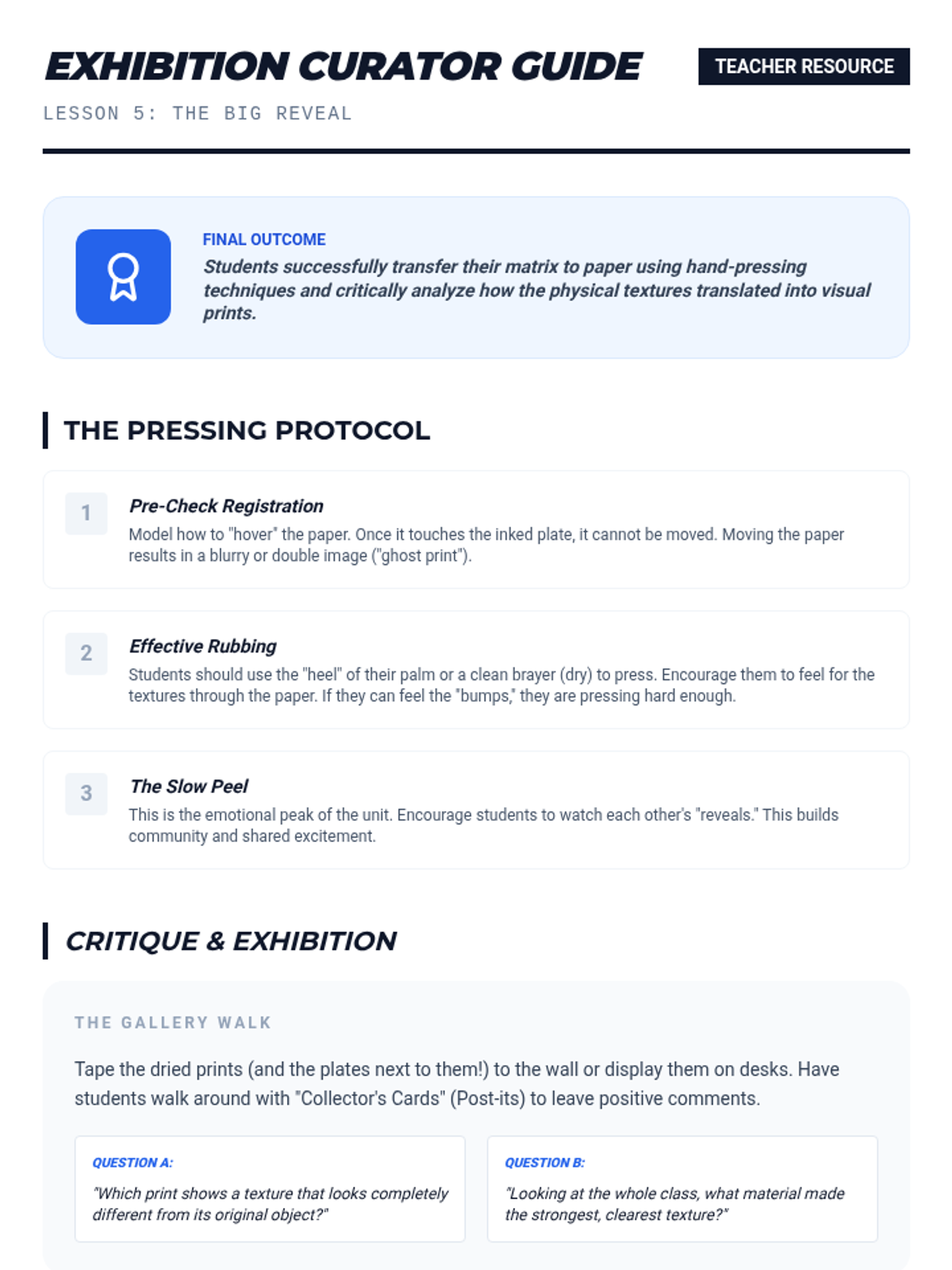
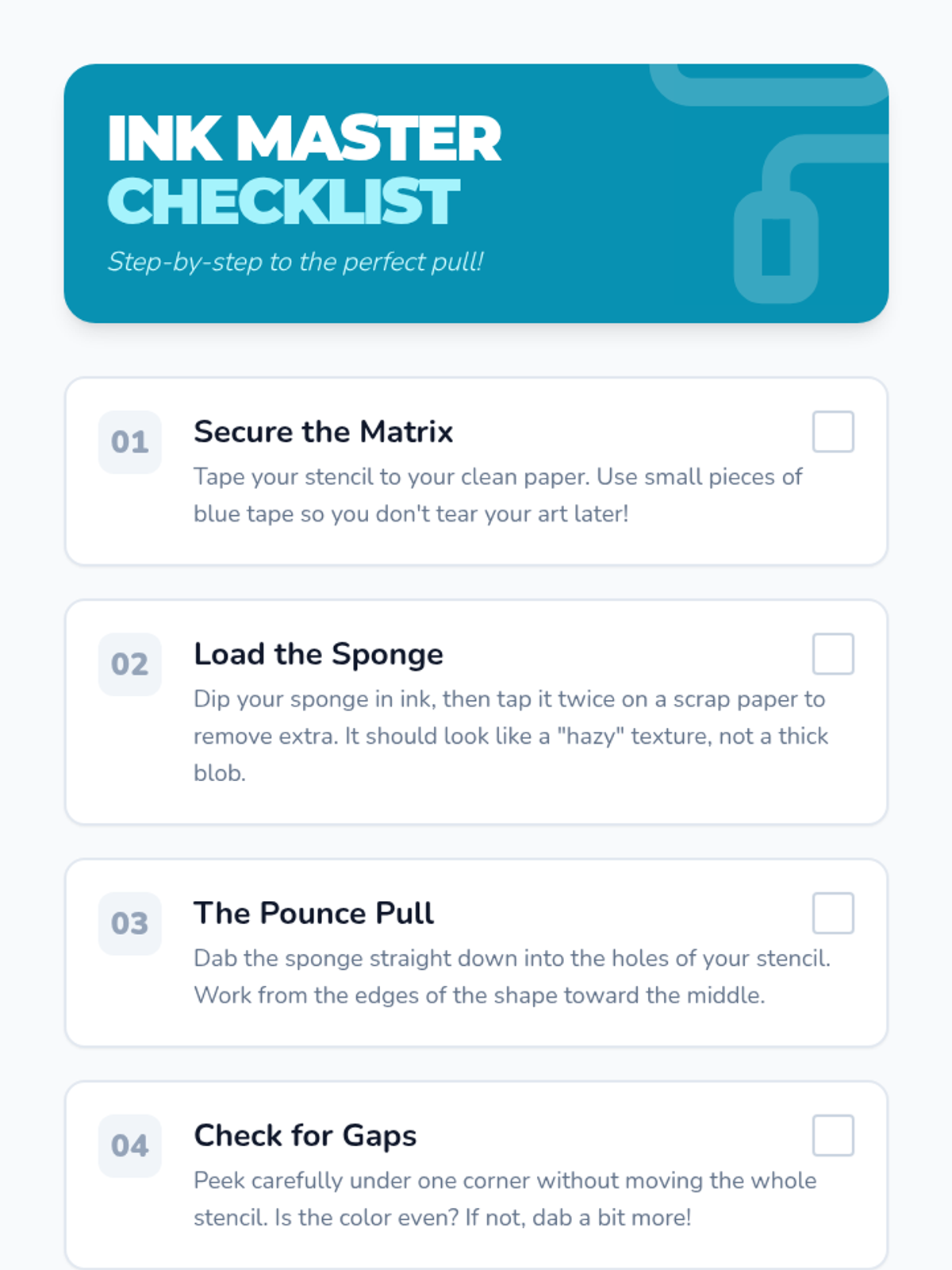
Students use hand pressure or a press to transfer their image to paper. They analyze the results, often surprised by how the texture translates, and reflect on the transformation from junk material to art.
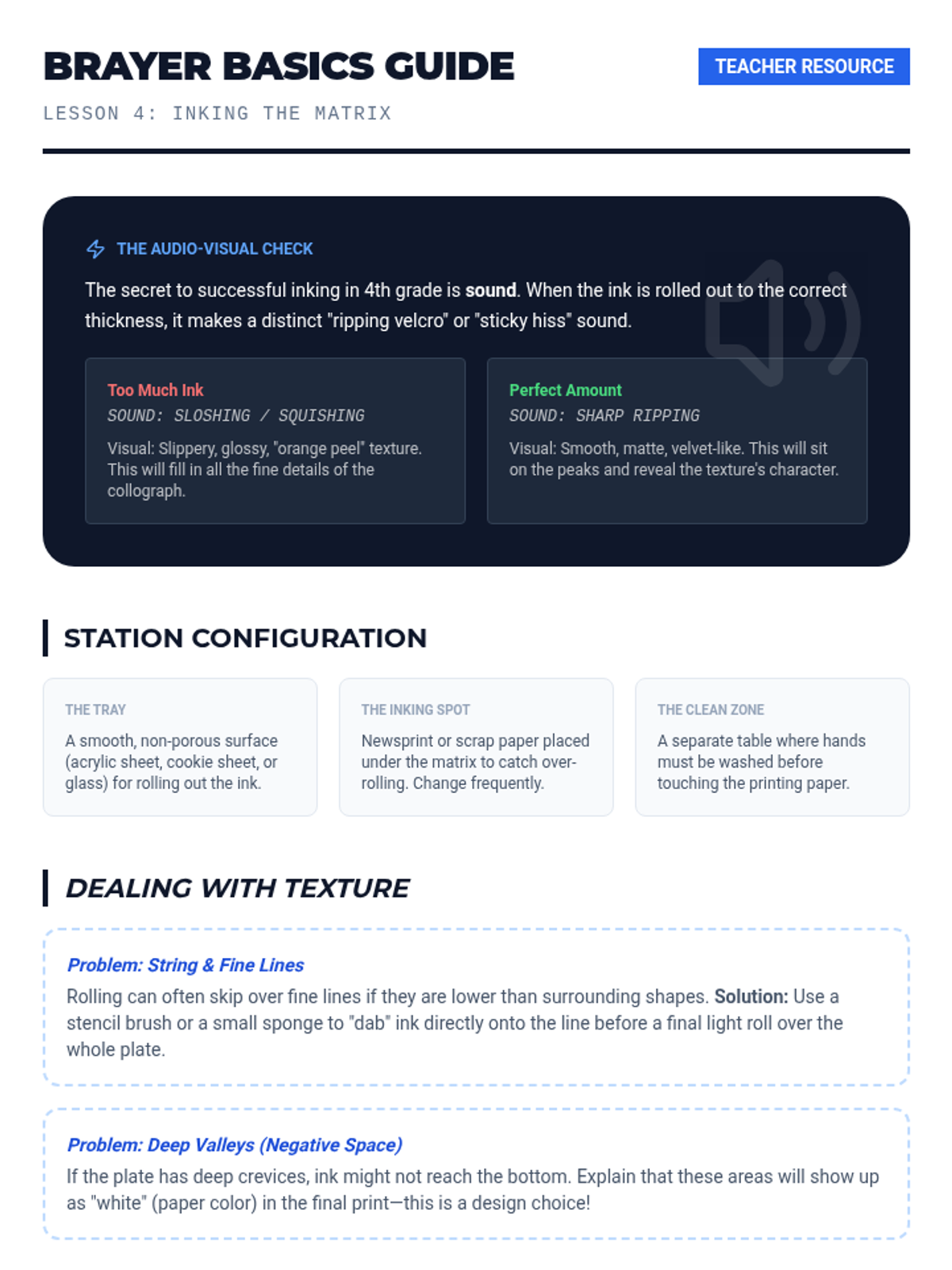
Students learn distinct inking methods for collographs, often combining rolling (for high points) and dabbing (for low textures). They explore how different application methods reveal different parts of the texture.
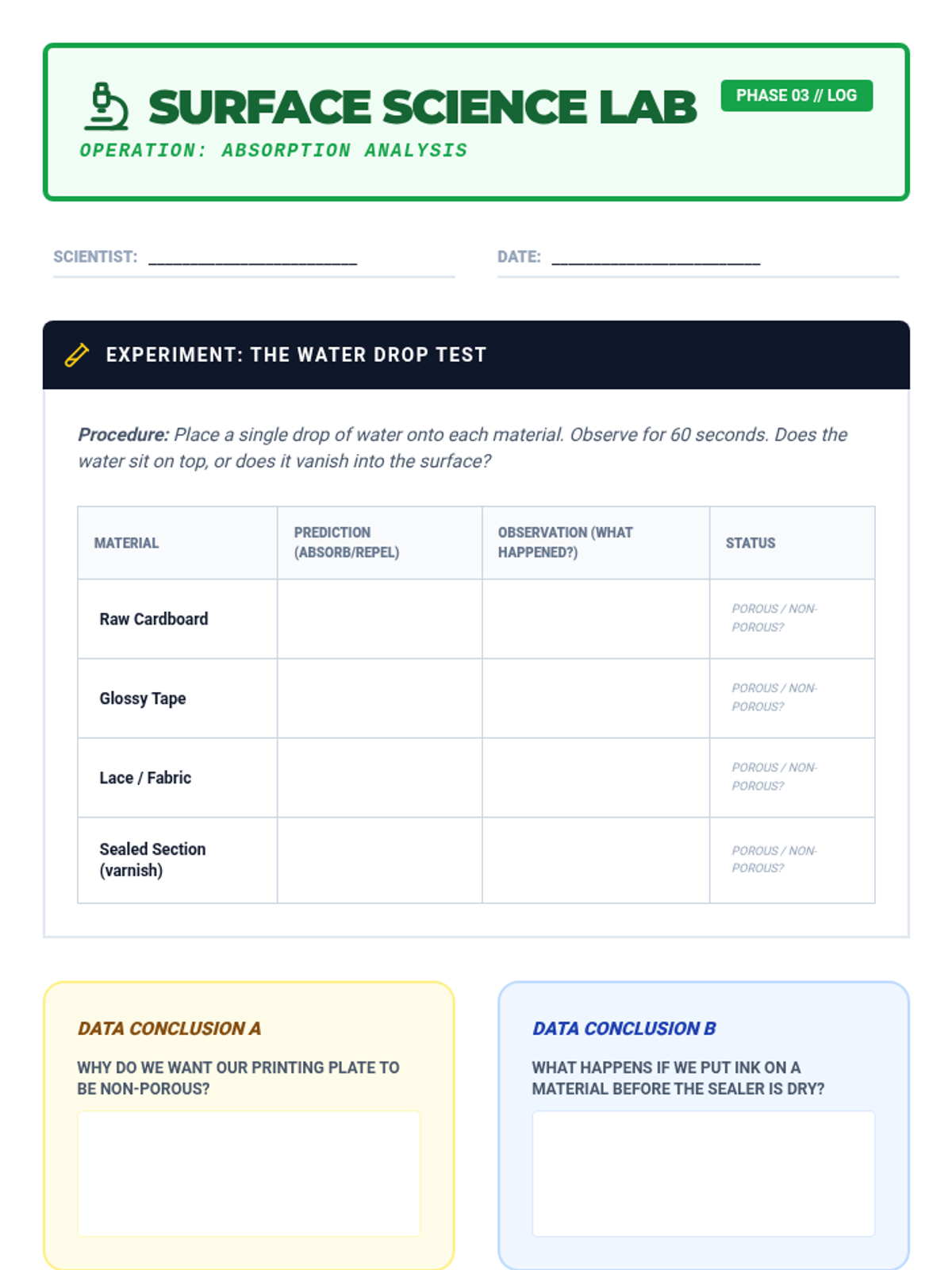
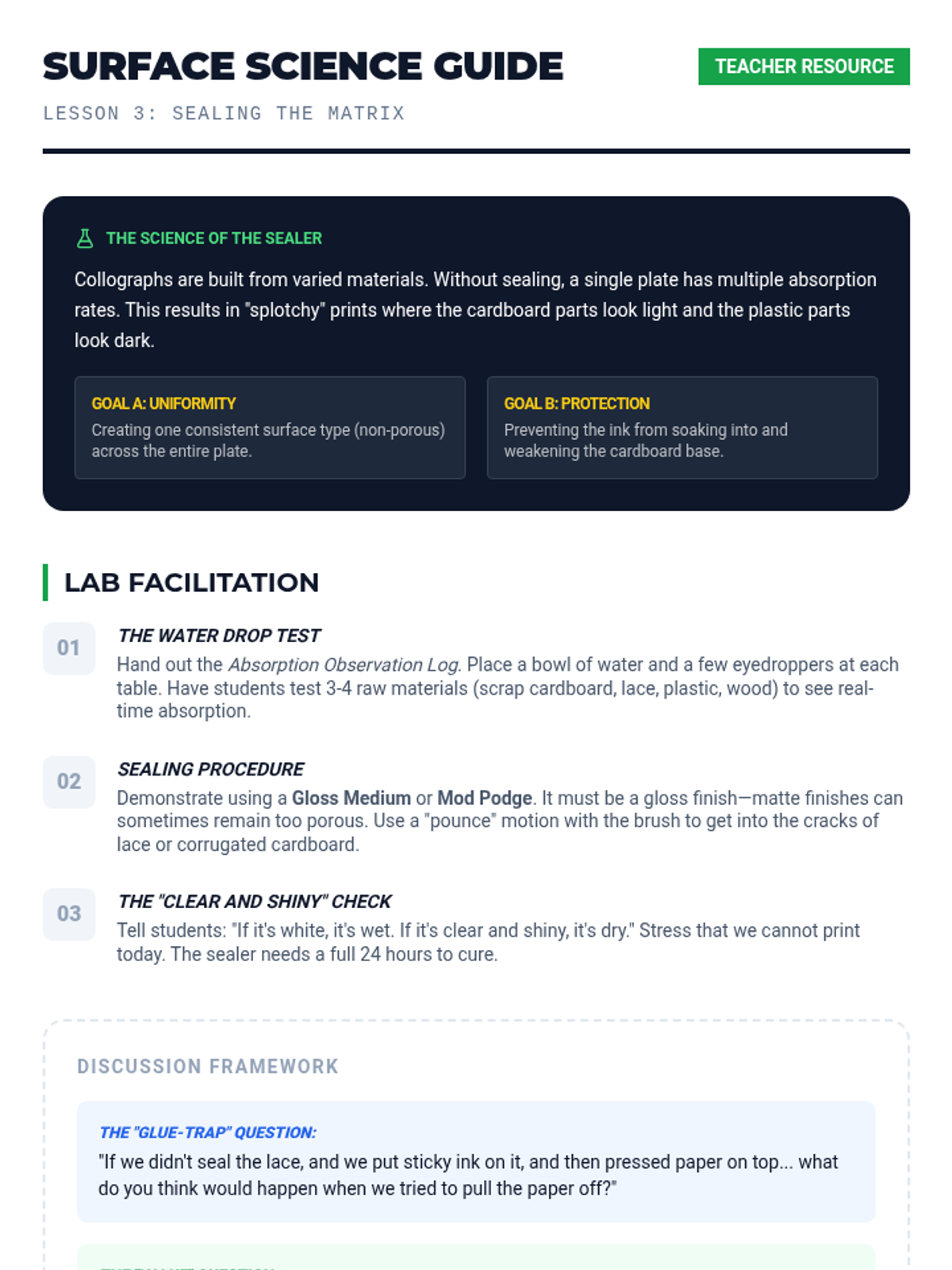
Students seal their textured plates with a gloss medium or varnish to ensure they don't absorb all the ink and stick to the paper. While drying, they discuss the difference between absorbent and non-absorbent surfaces.
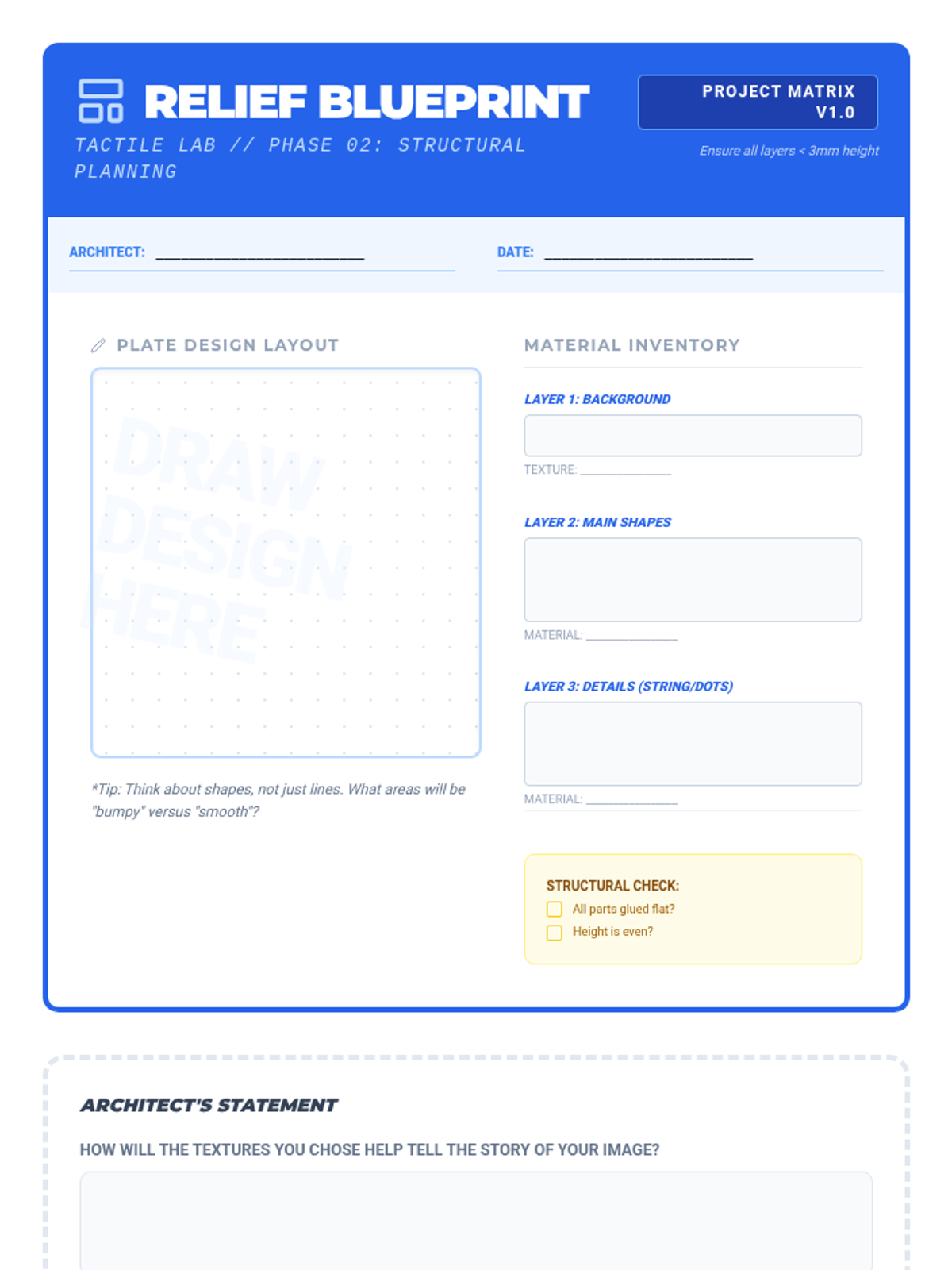
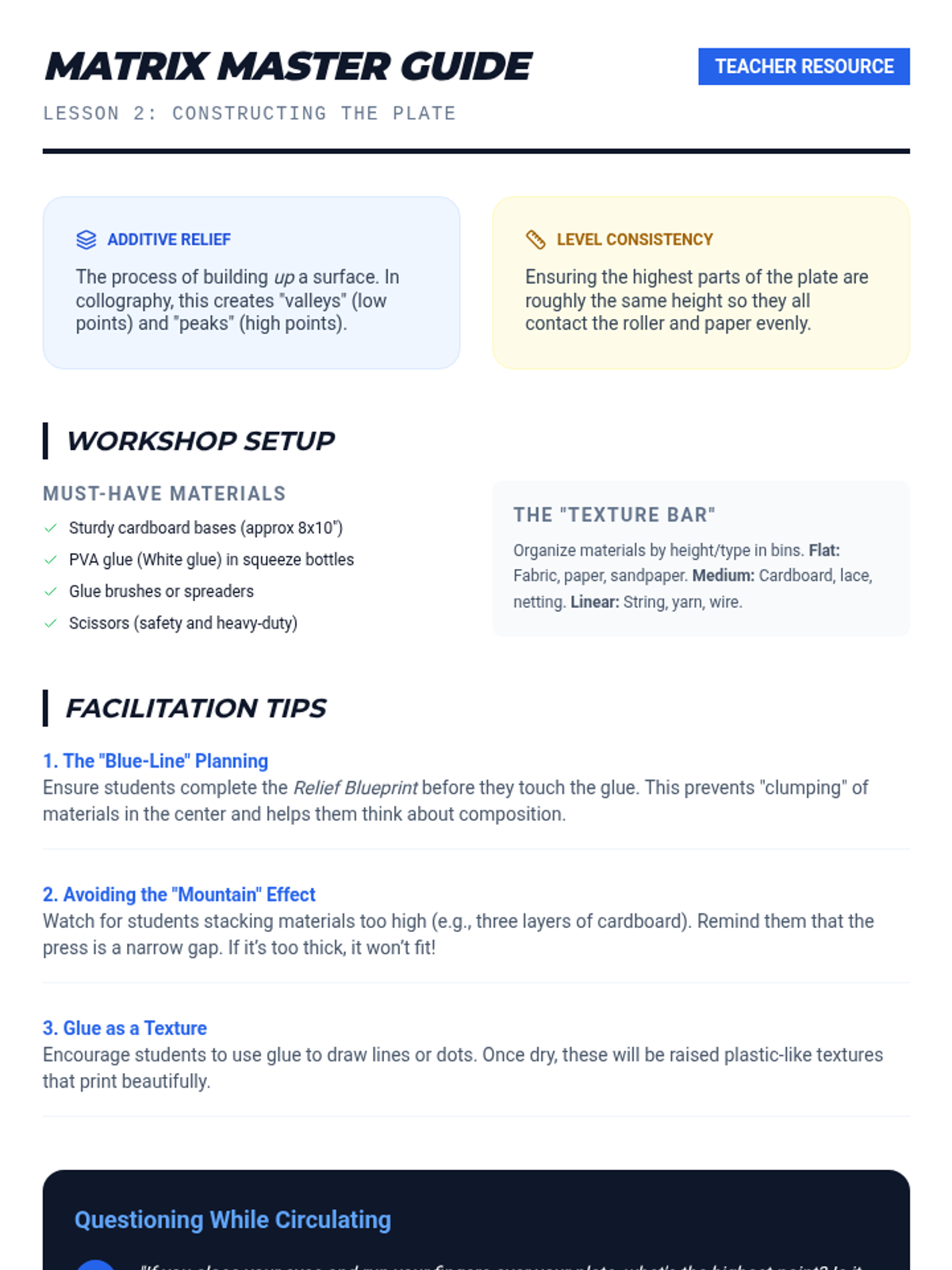
Students build their printing matrix by cutting and gluing their found materials onto a sturdy cardboard base. They learn that the height of the materials must be relatively even to print successfully.
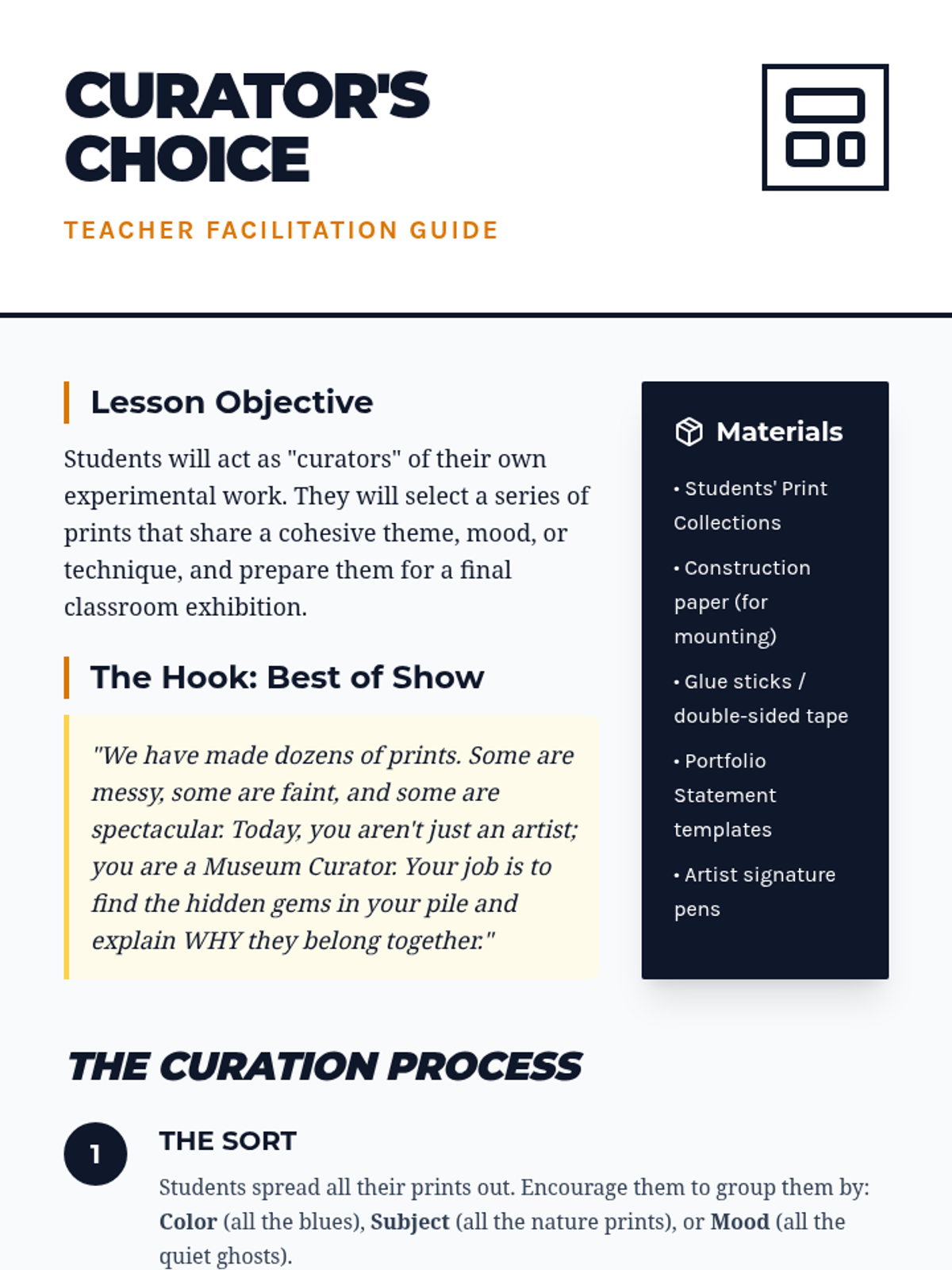
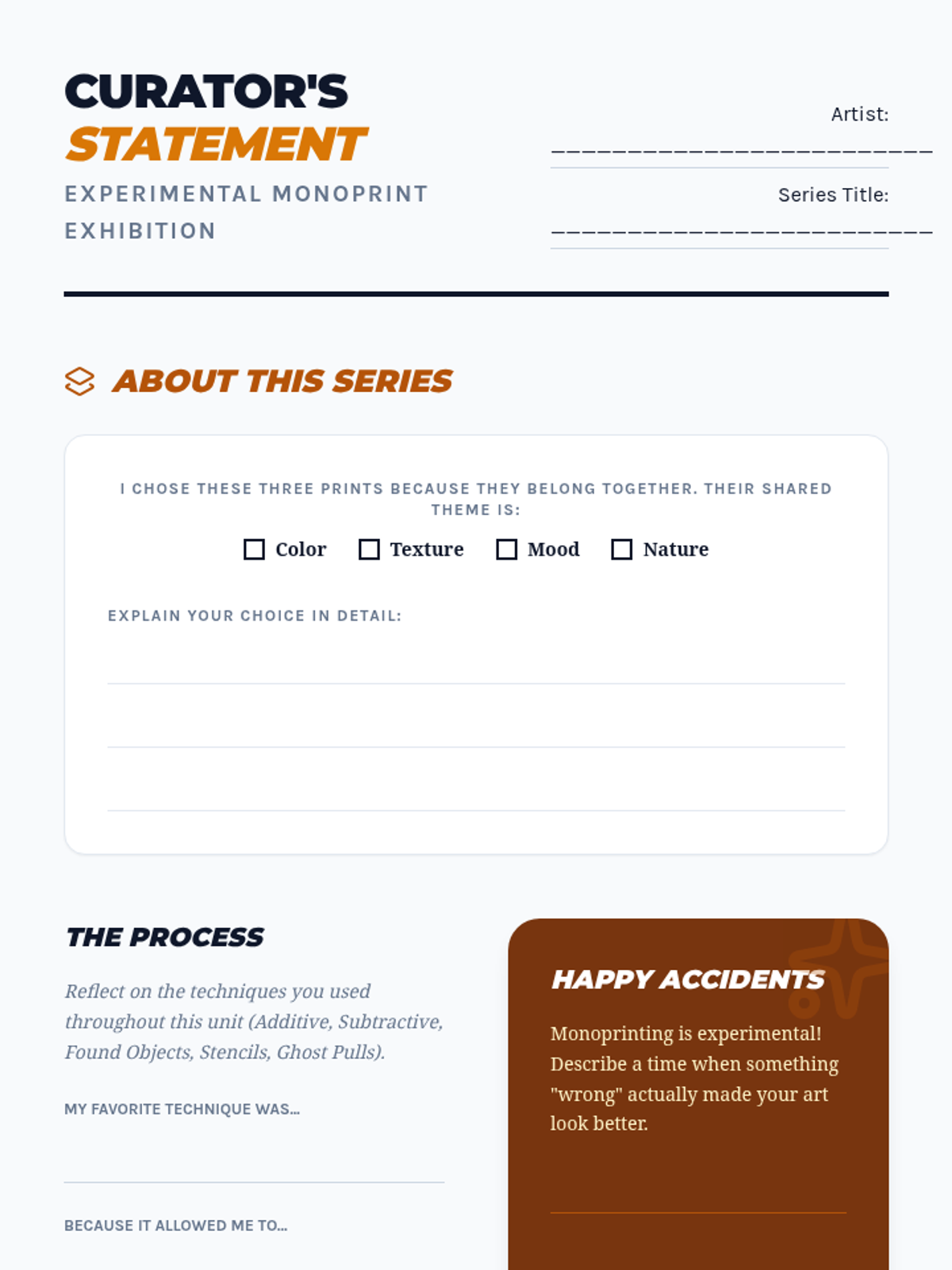
Students curate their experimental prints and select a cohesive series. They add finishing touches with drawing materials and write a brief curator's statement about their process.
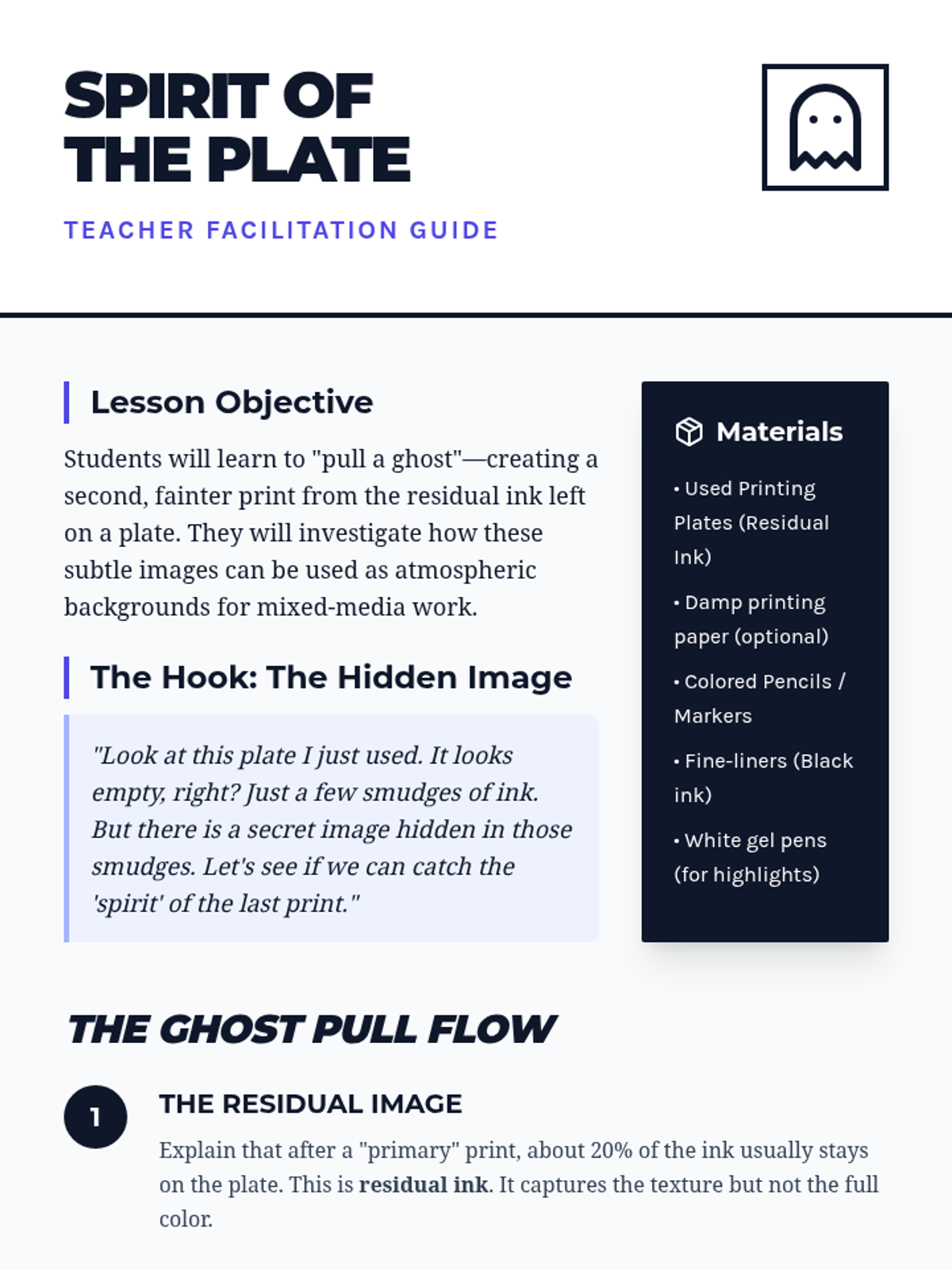
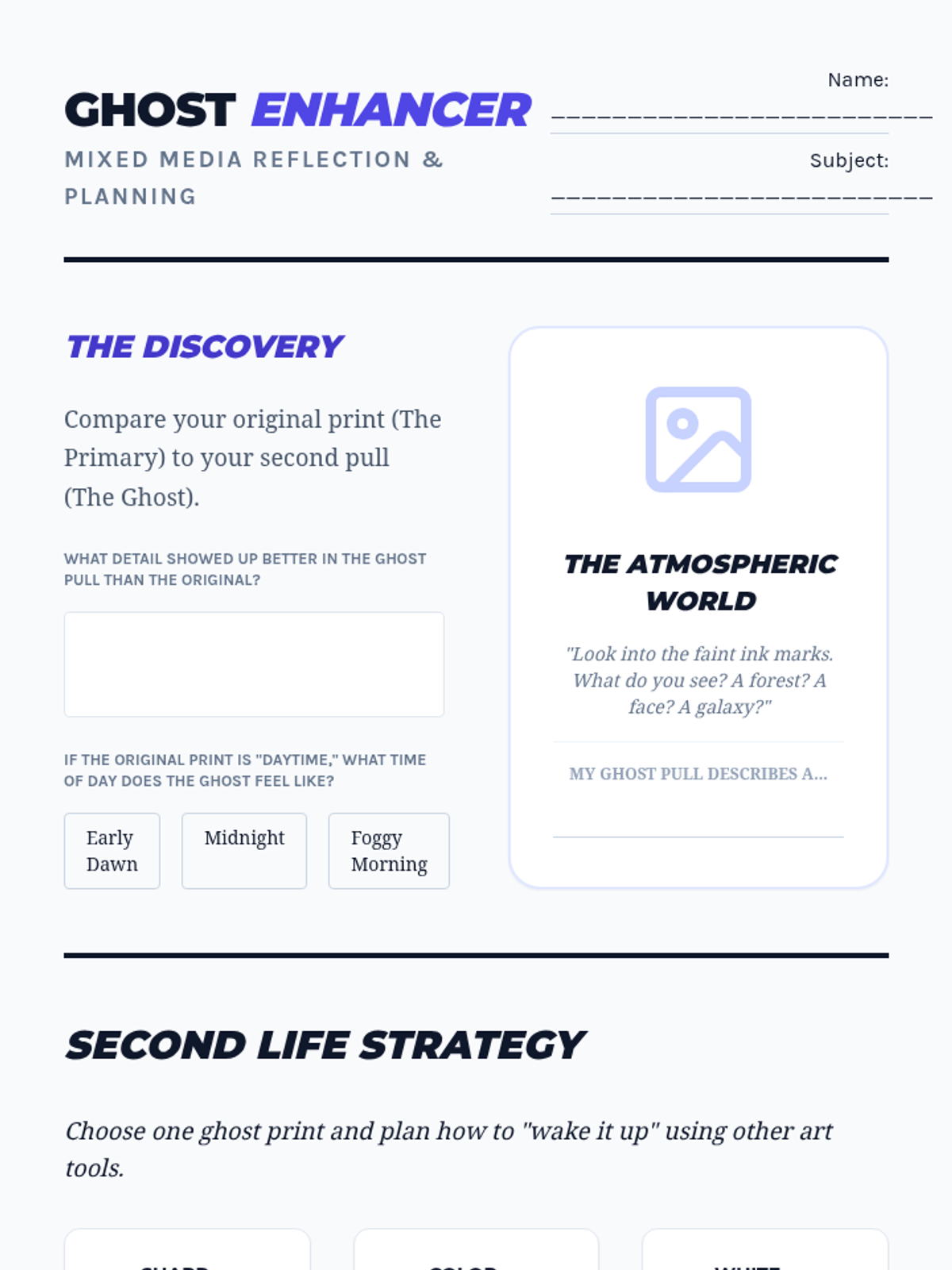
Students explore the concept of residual ink by pulling 'ghost prints'. They investigate how faint images can serve as backgrounds for further artistic development.
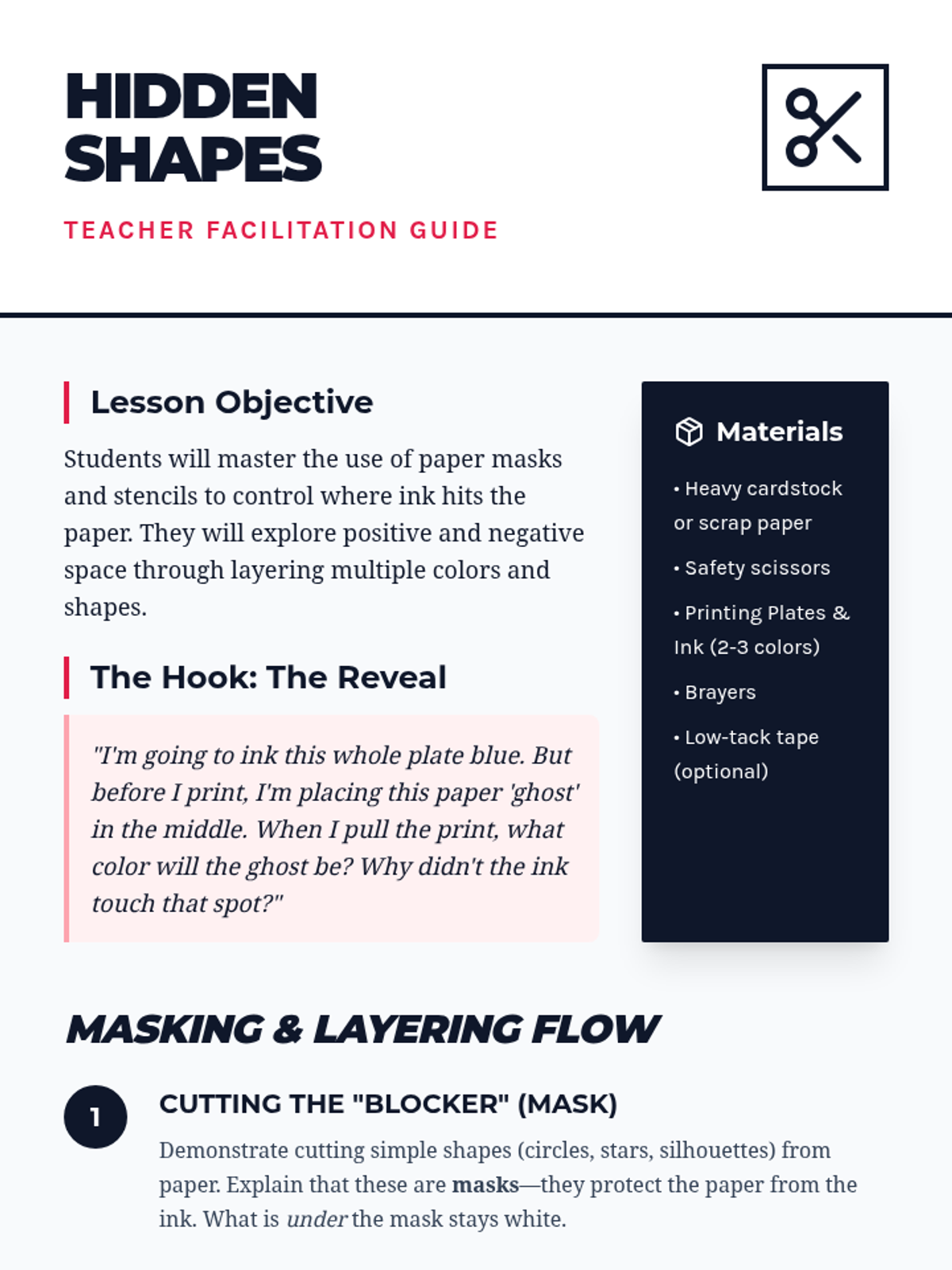
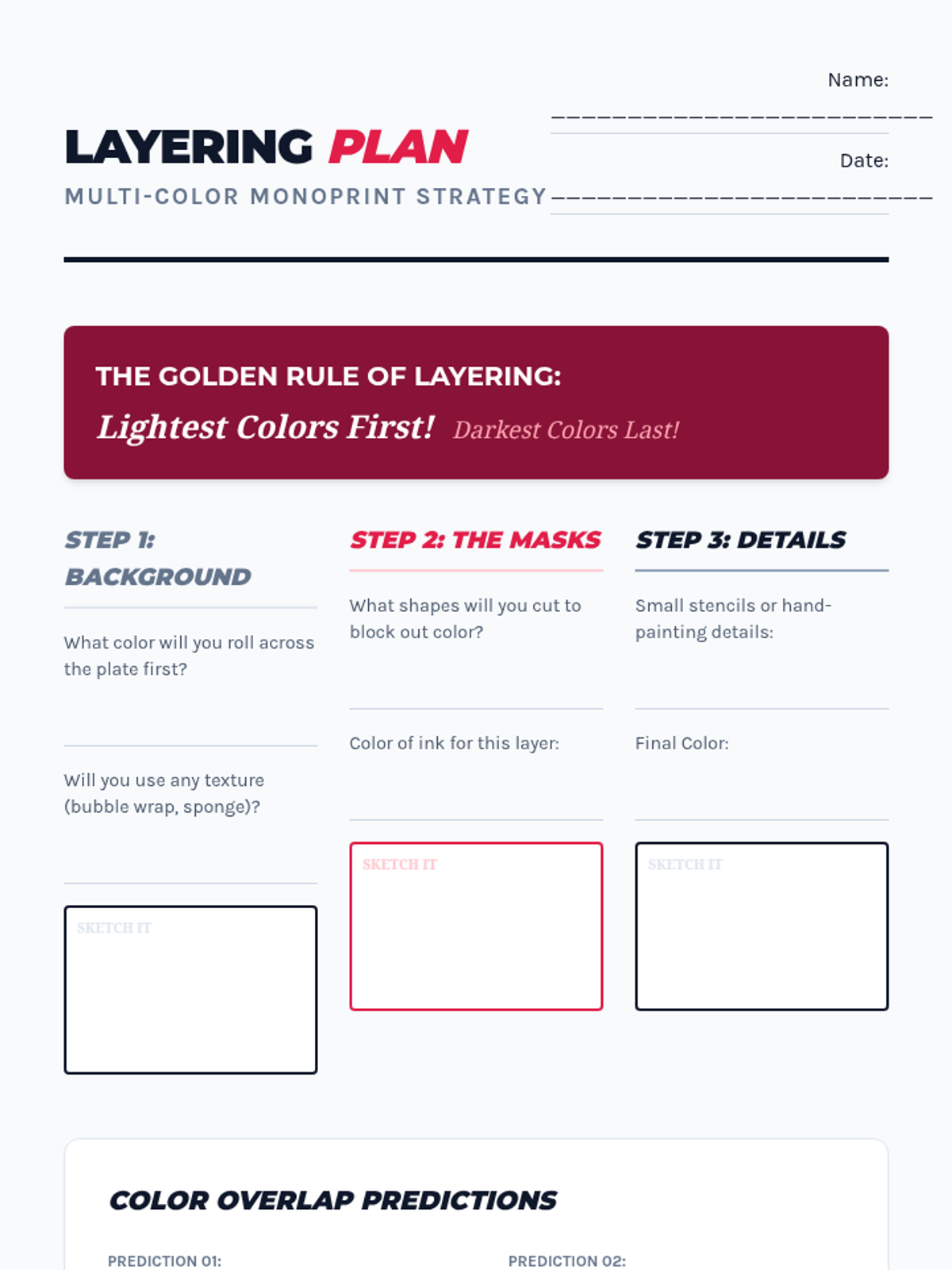
Students create paper masks to block areas of the plate, exploring positive and negative space. They learn to layer colors and preserve white space in their compositions.
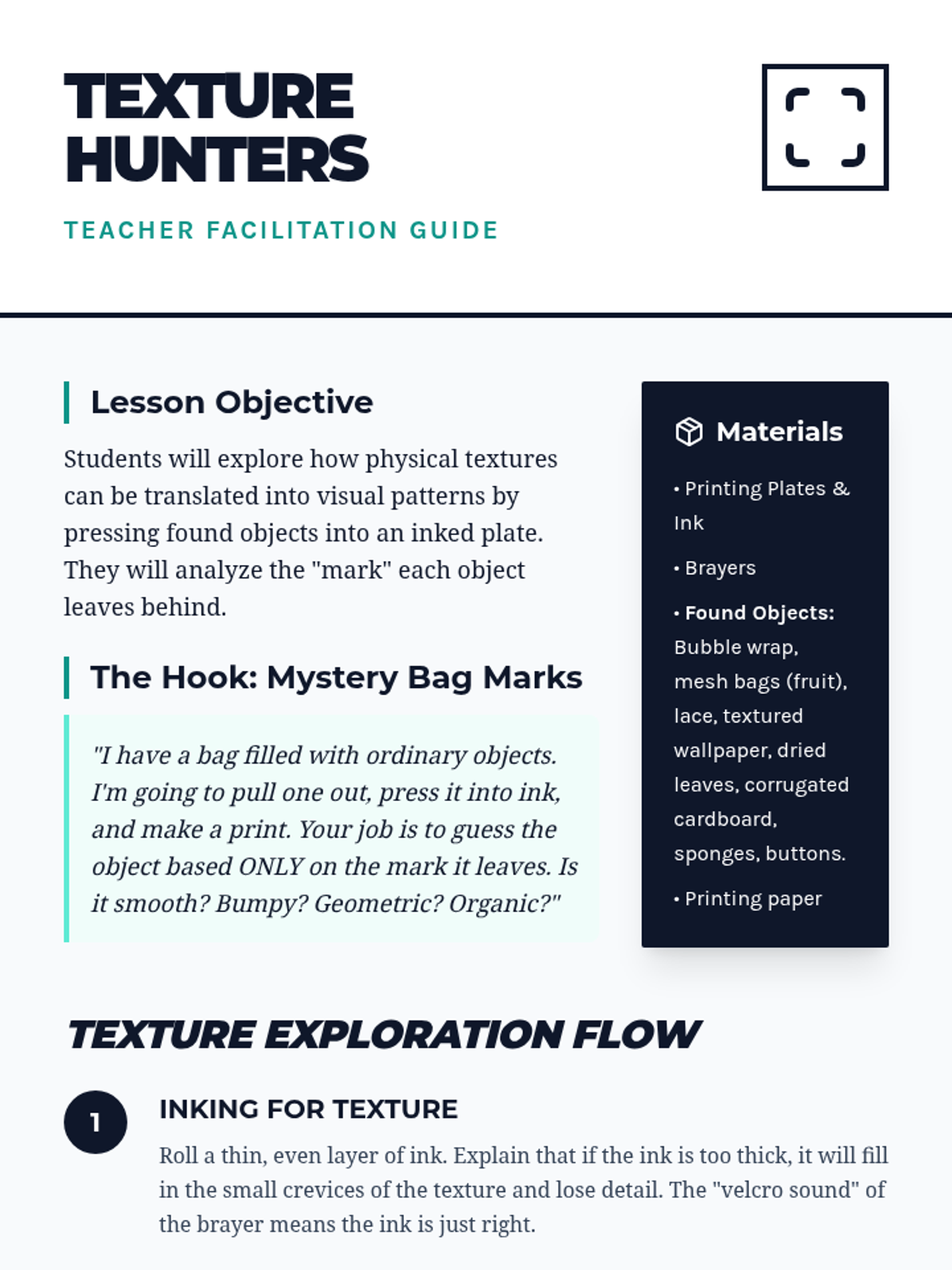
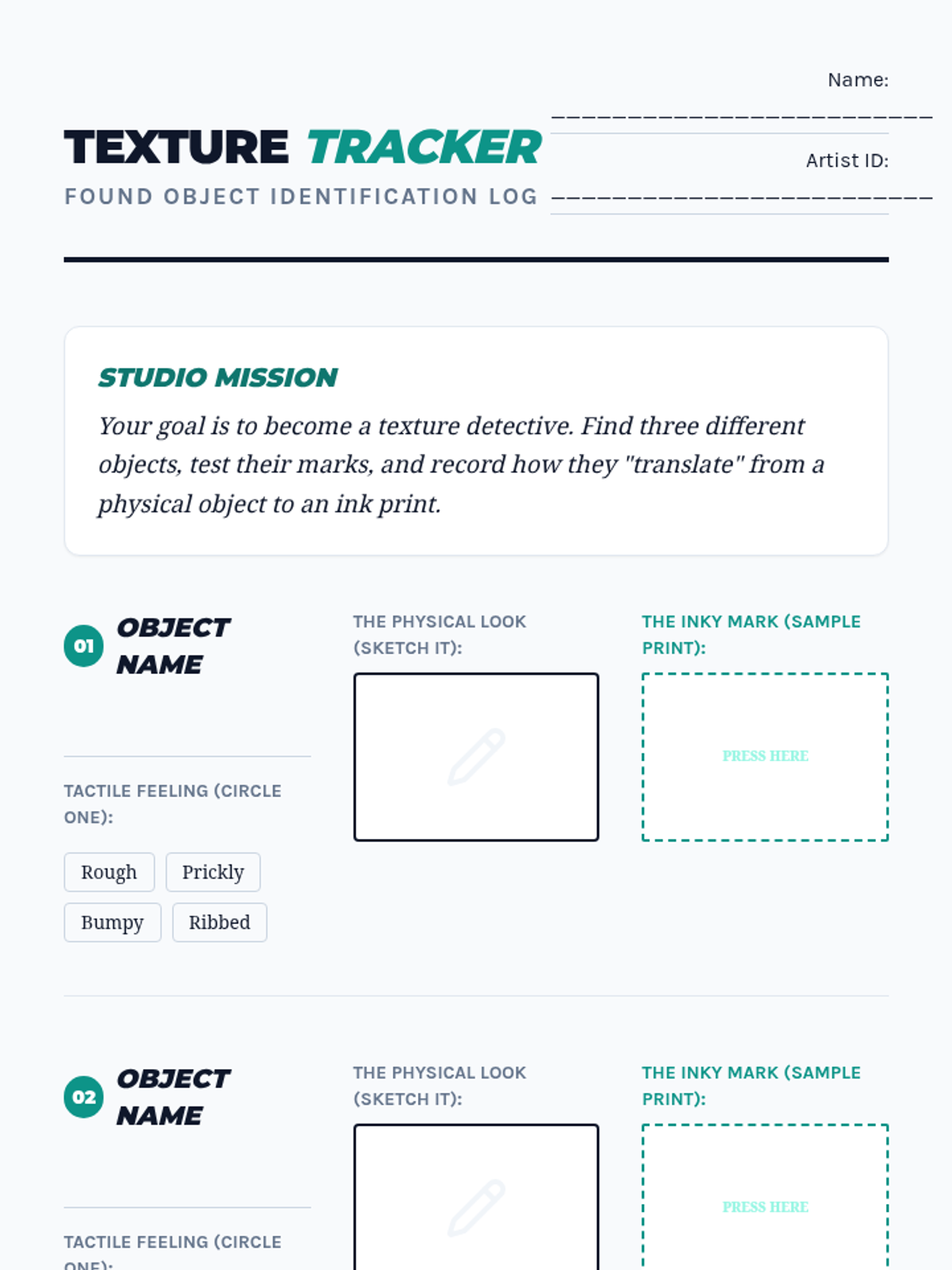
Students use textured materials like bubble wrap and lace to transfer patterns. They analyze how different materials leave distinct visual imprints on the printing plate.
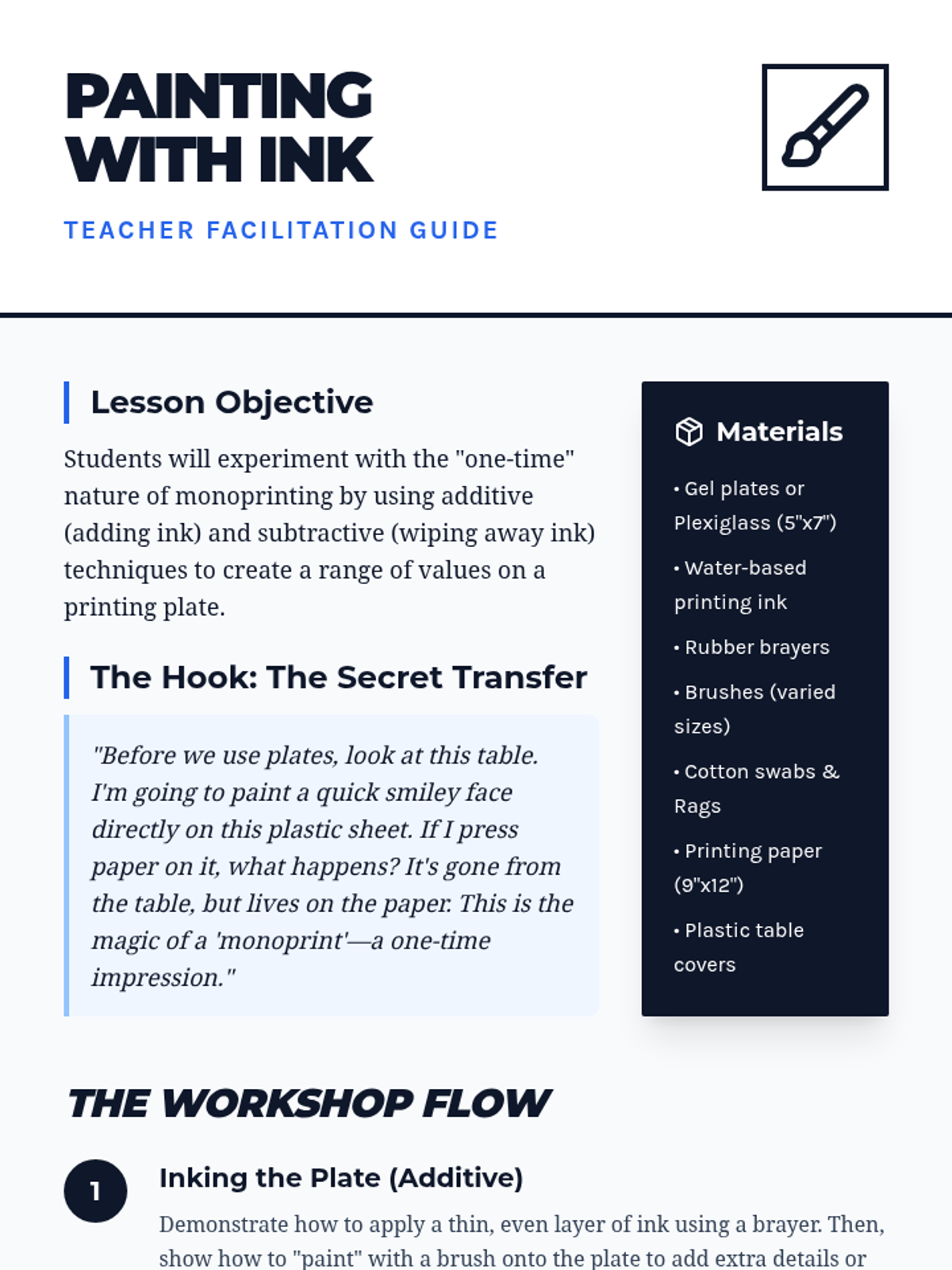
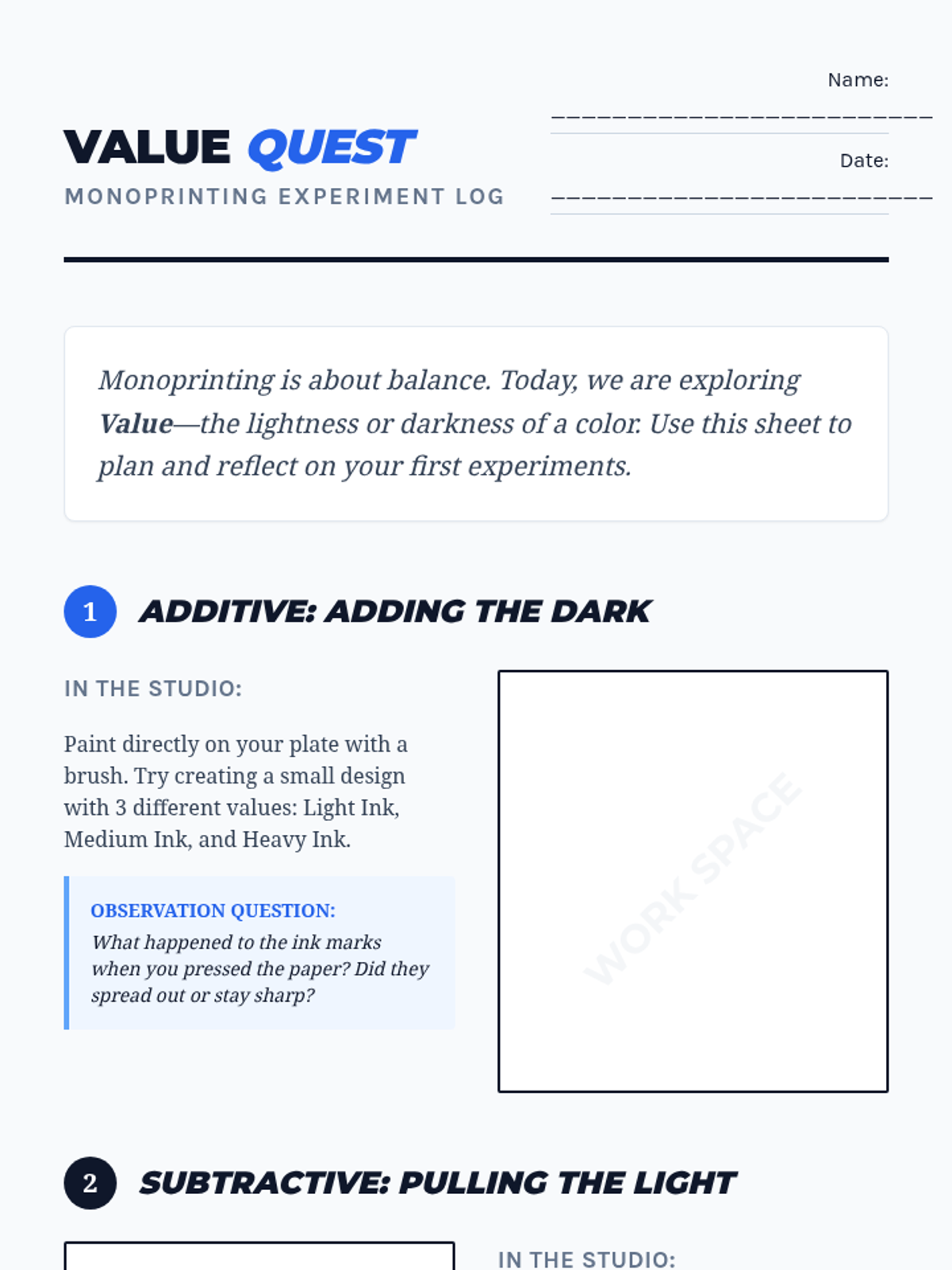
Students explore the printing plate as a surface for painting and wiping away ink. They learn additive and subtractive techniques to create light and dark values in a 'one-time' print.
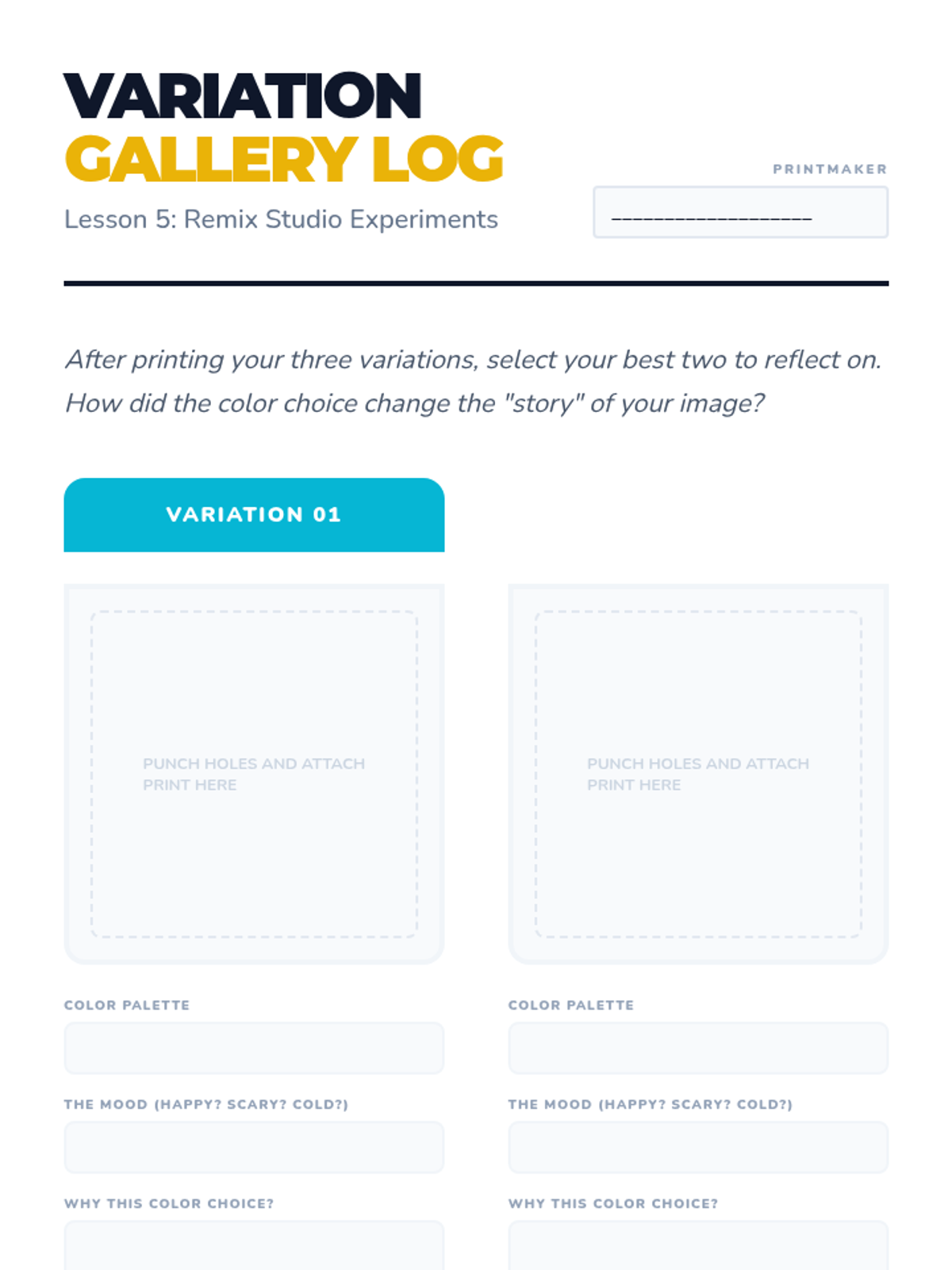
Students experiment with color variations using their existing stencils, exploring how different palettes affect the mood and message of their artwork.
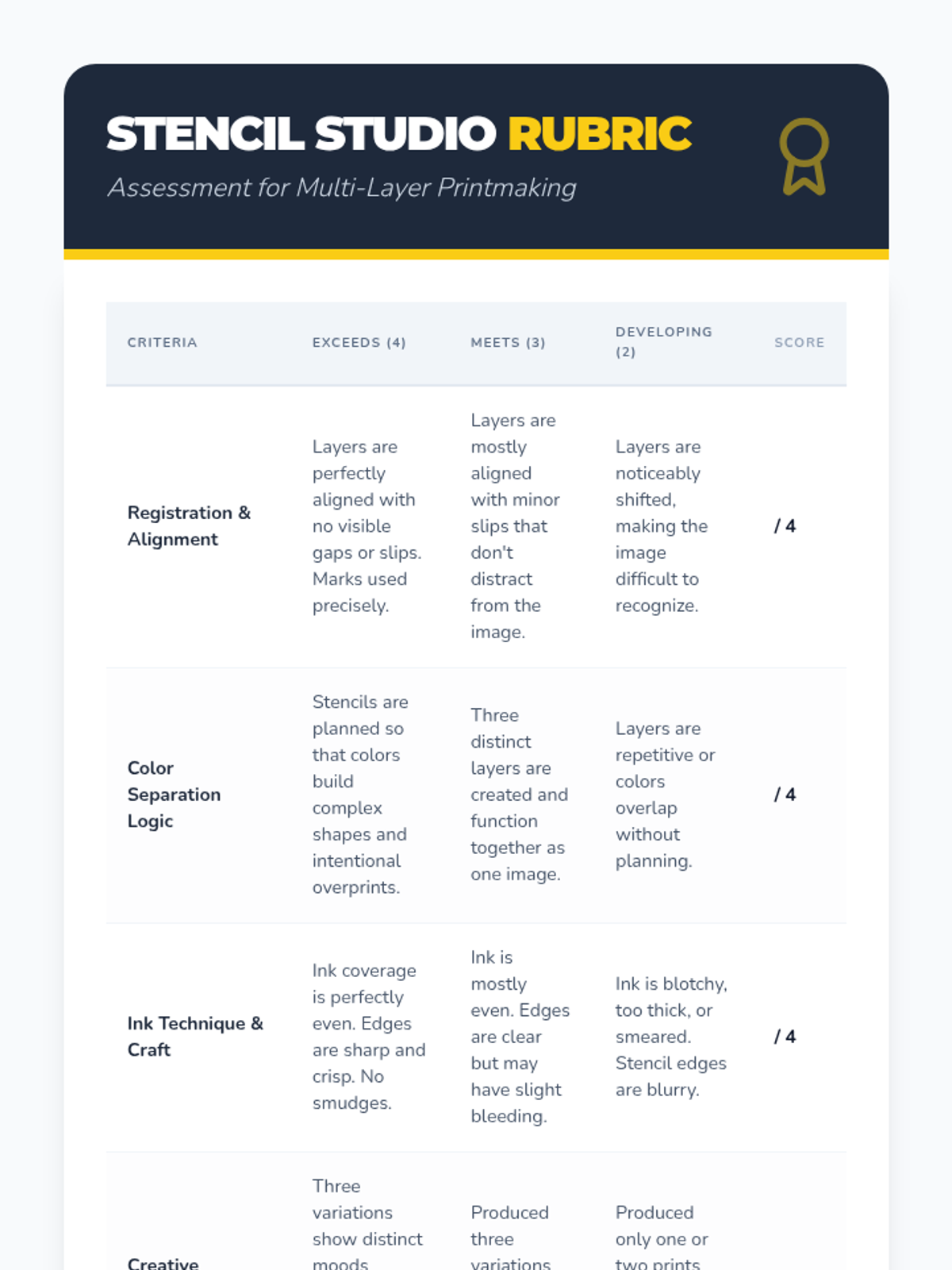
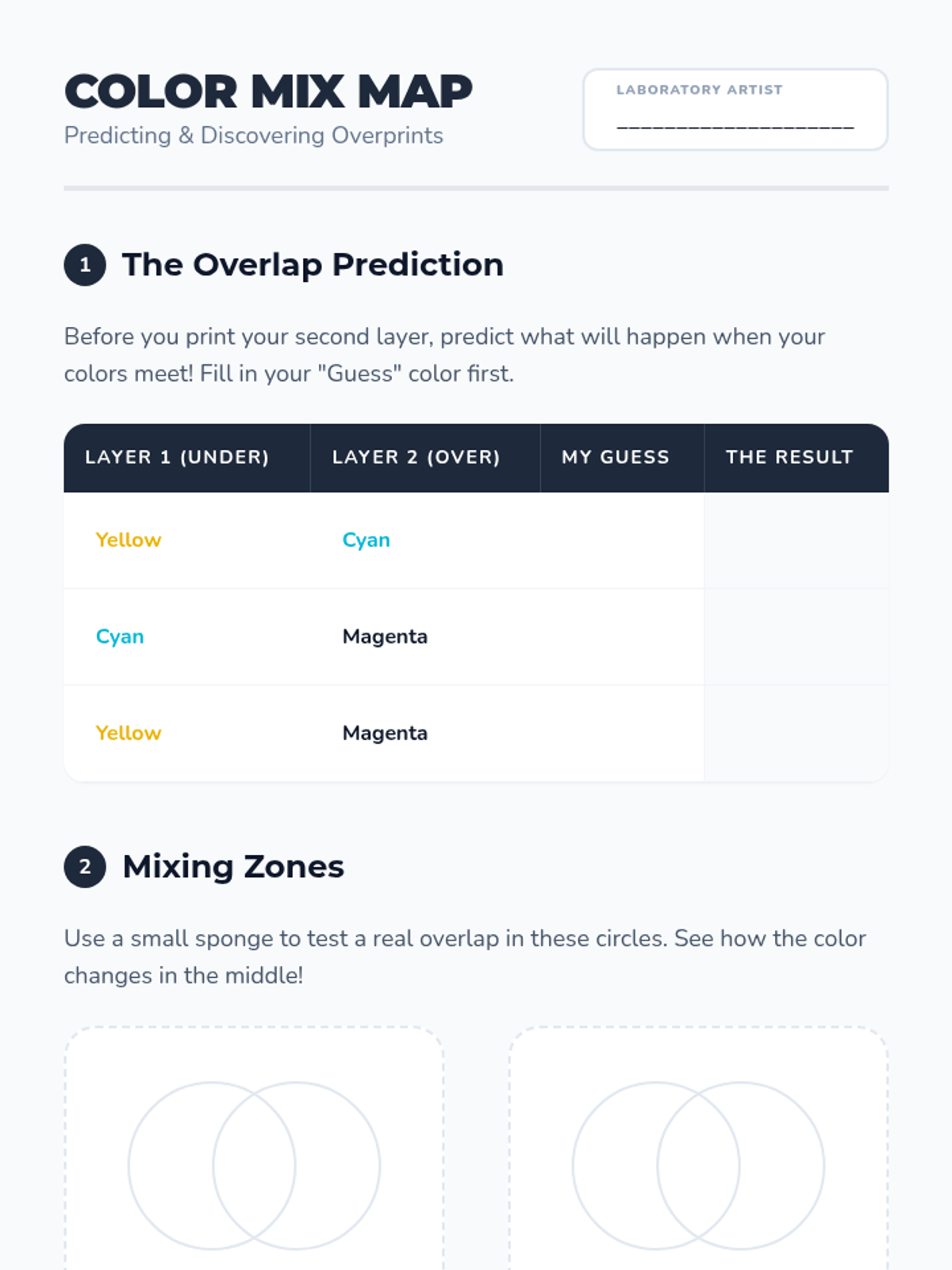
The core challenge of registration: students align their second and third layers while investigating how overlapping translucent colors create new hues.
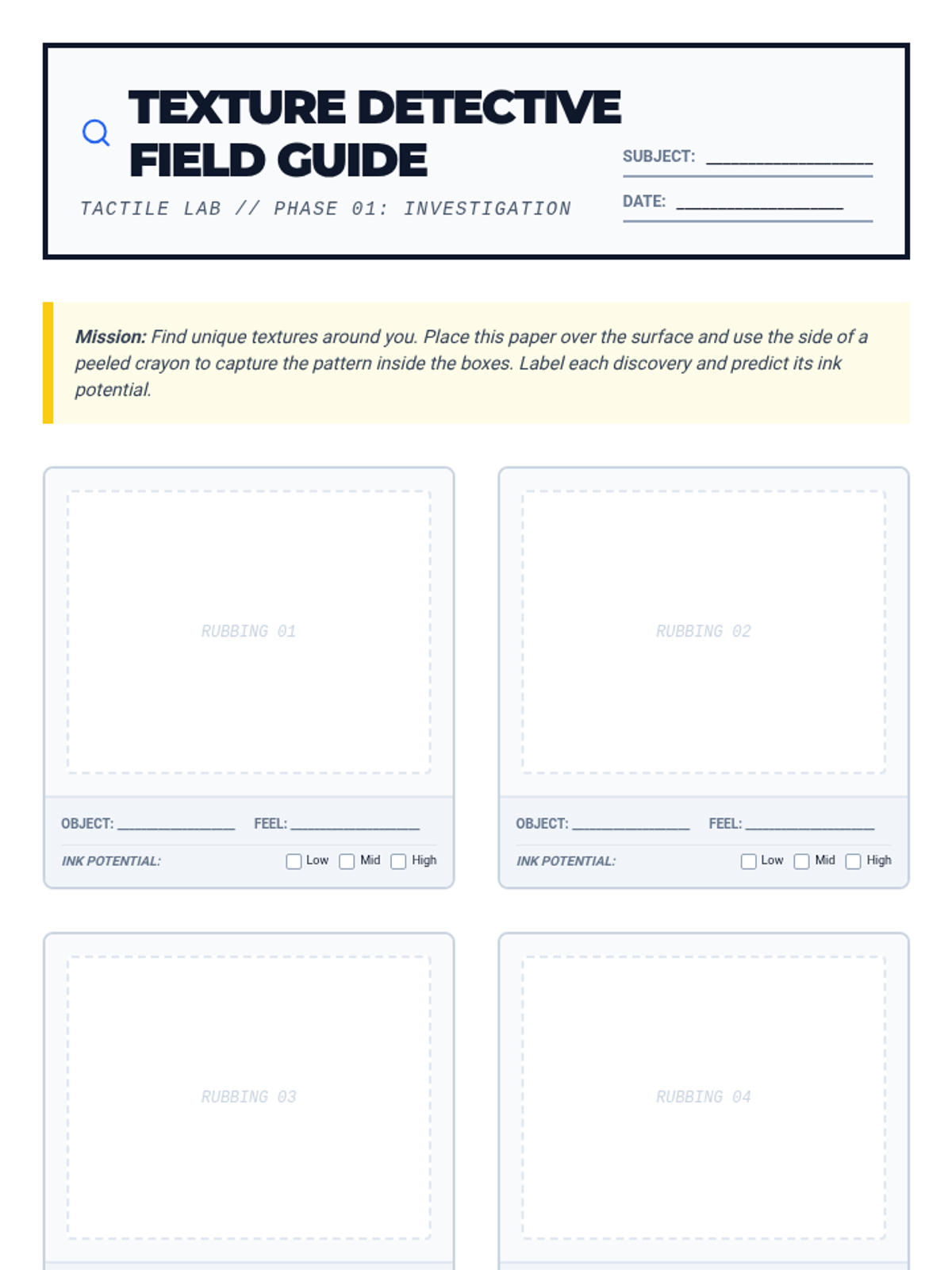
Students become detectives to find and classify textures in their environment using rubbings. They predict how these textures will behave when inked and printed.
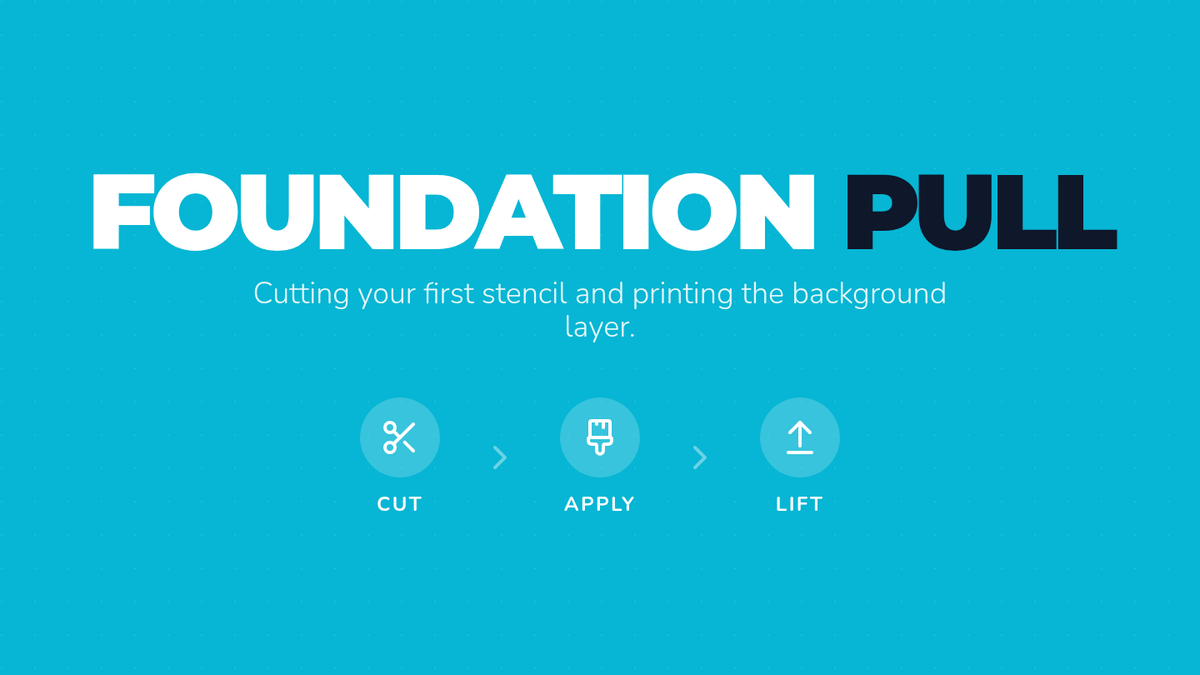
Students cut their first stencil and focus on the background layer, mastering basic ink application techniques and establishing the foundation for their multi-layer print.
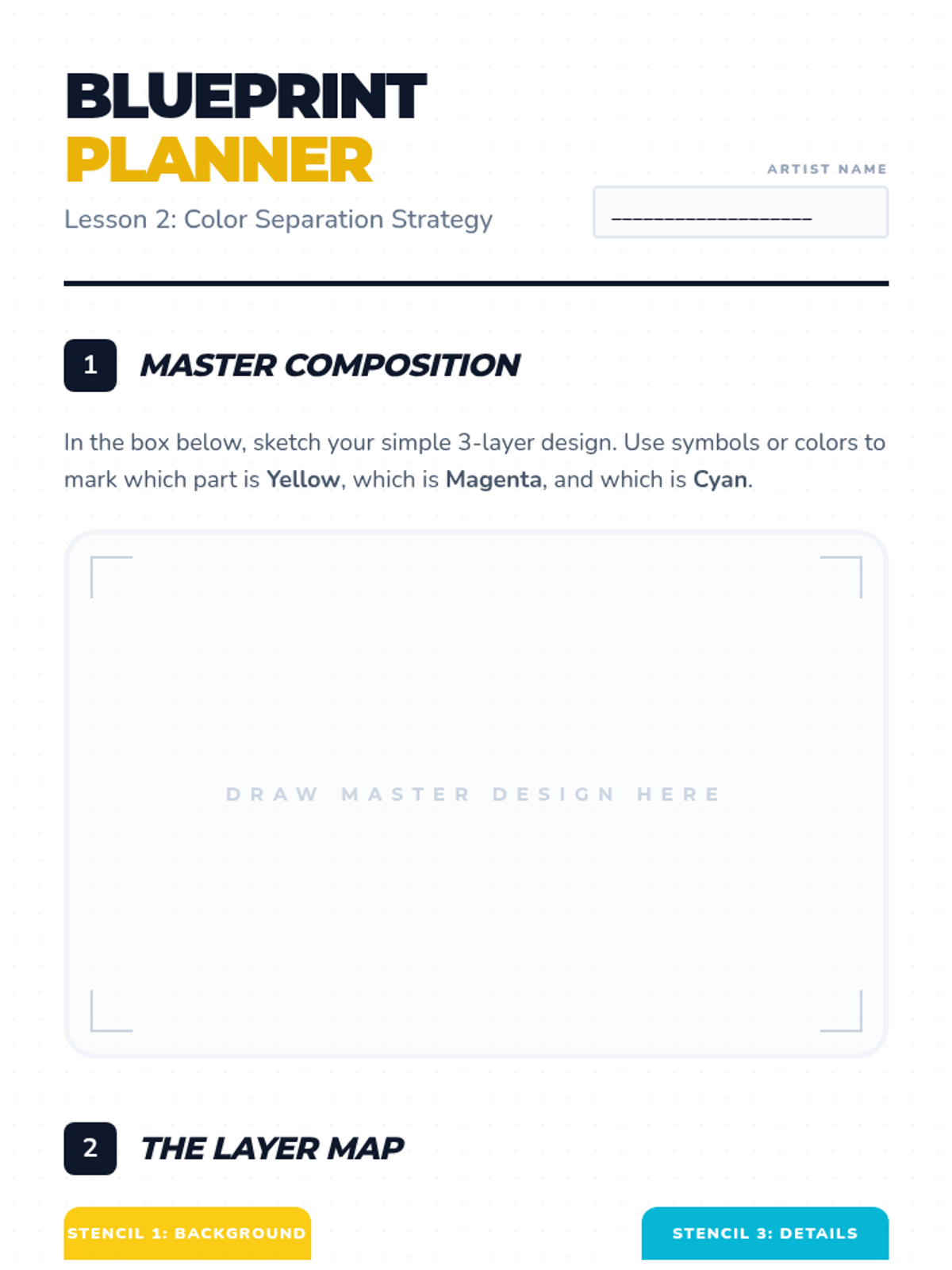
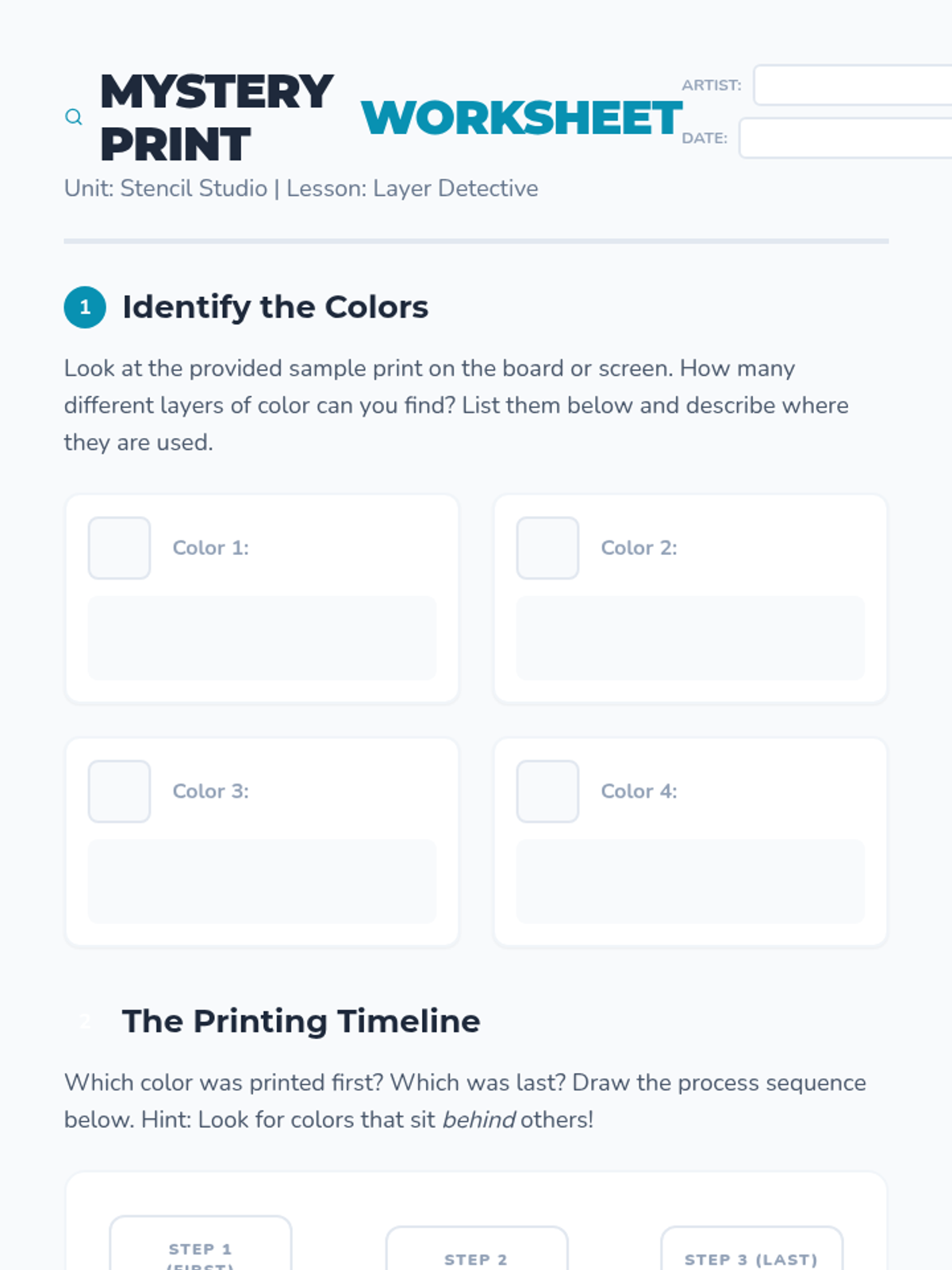
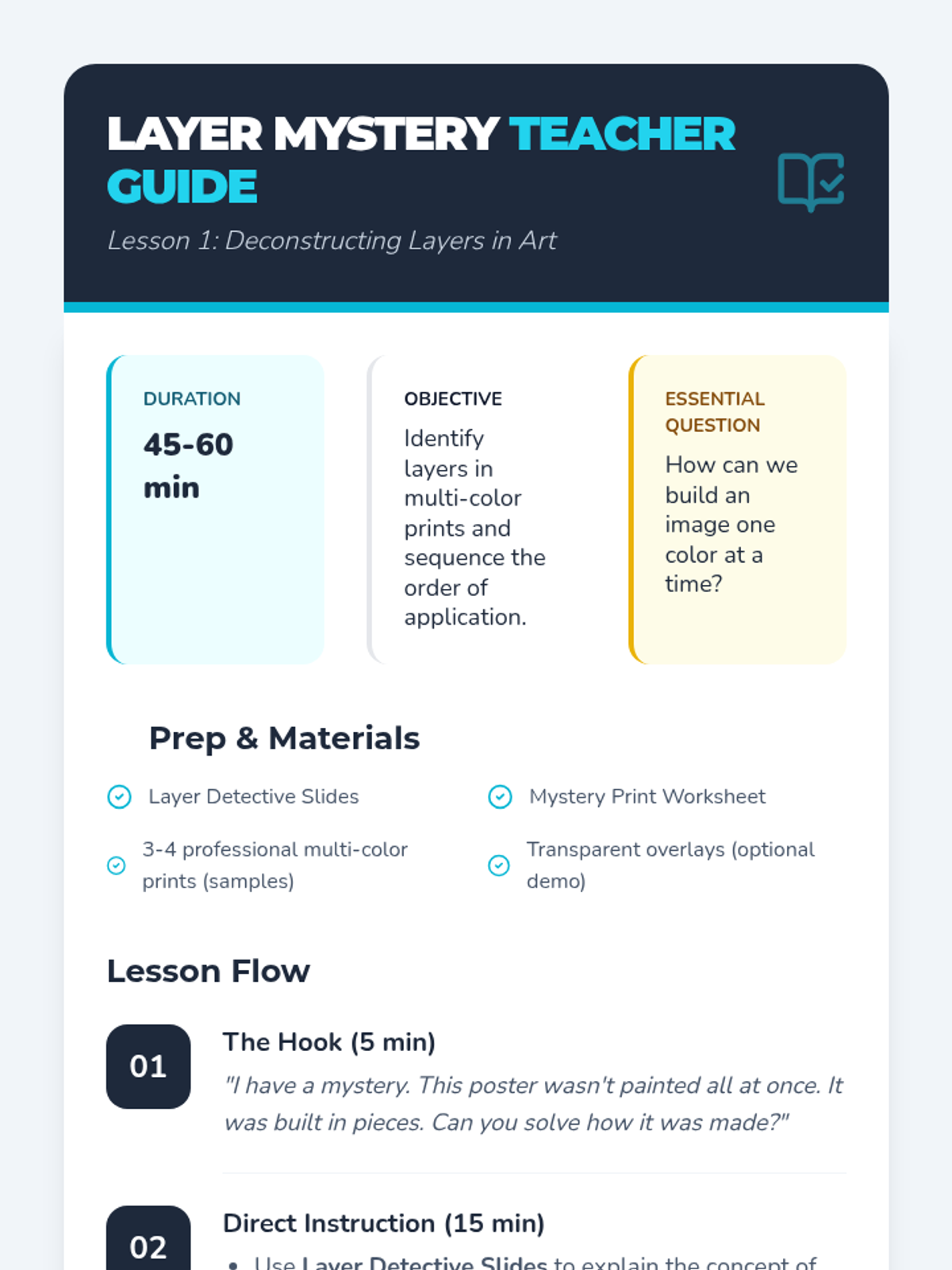
Students learn the logic of color separation by deconstructing a single drawing into distinct color-coded layers, preparing them for the physical stencil-making process.
Students analyze professional prints to understand how images are built through successive layers of color, acting as 'art detectives' to reverse-engineer the printing process.
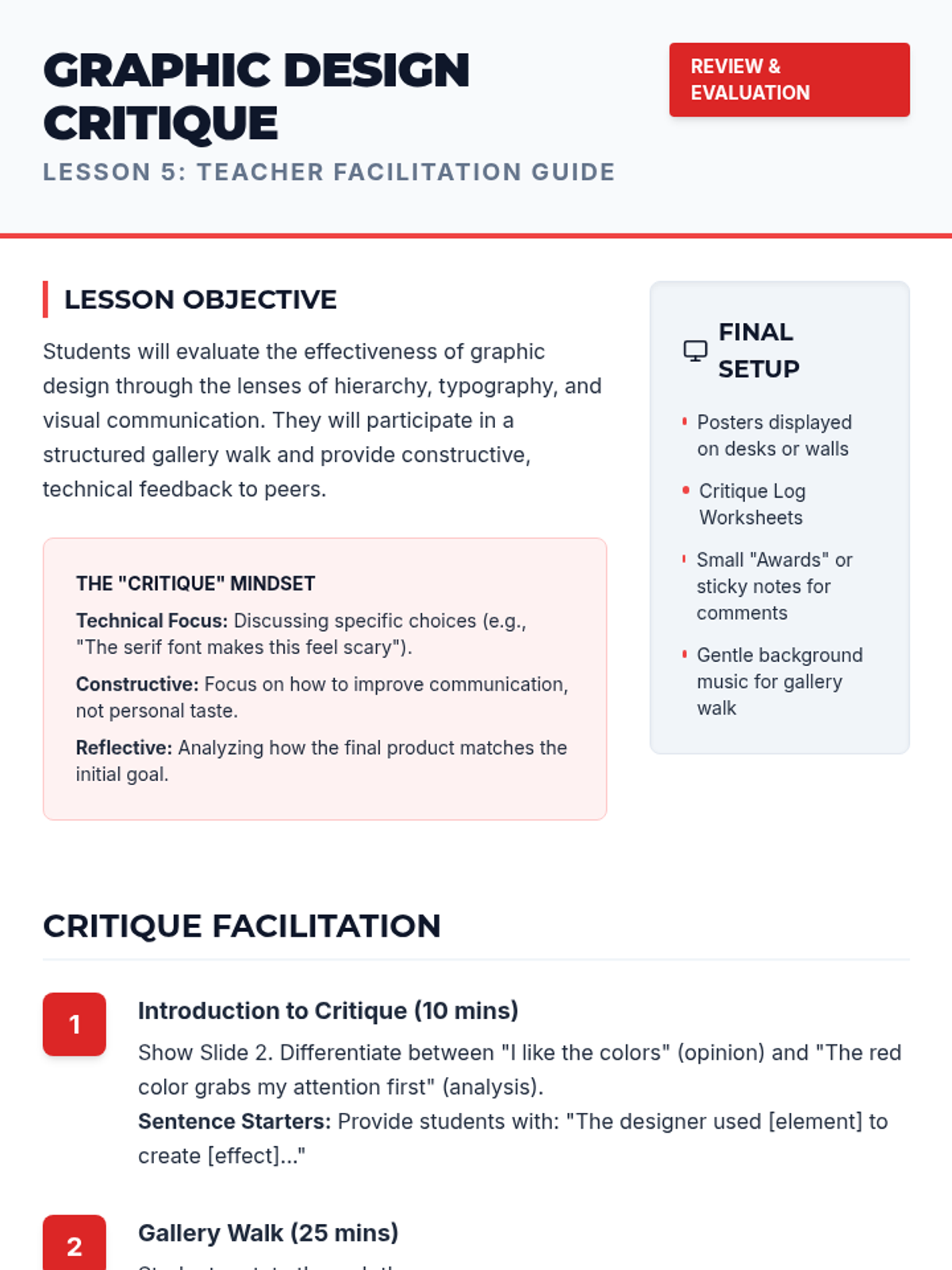
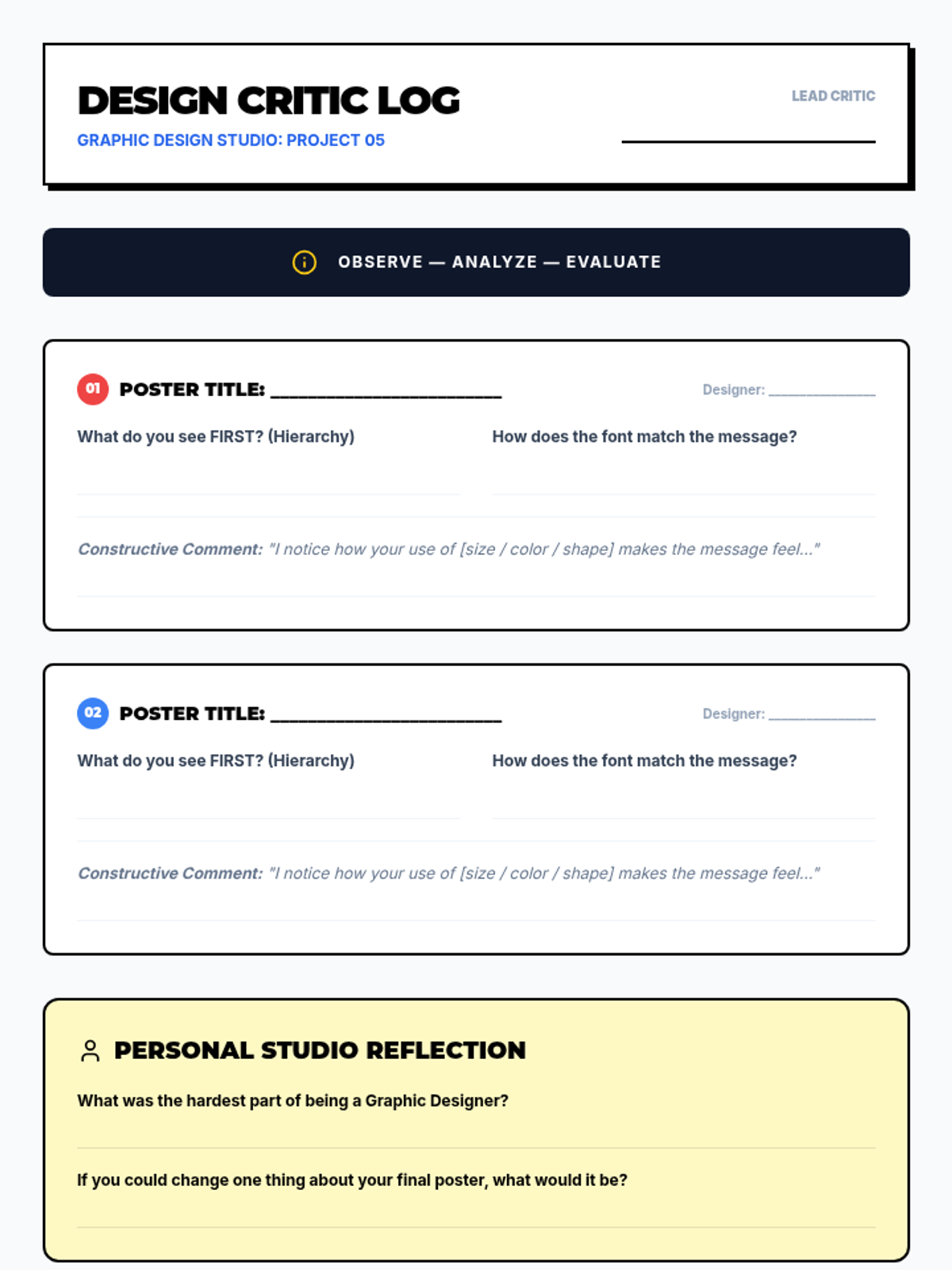
Students analyze their finished posters as public advertisements, discussing visual impact, communication effectiveness, and design choices through a formal critique process.
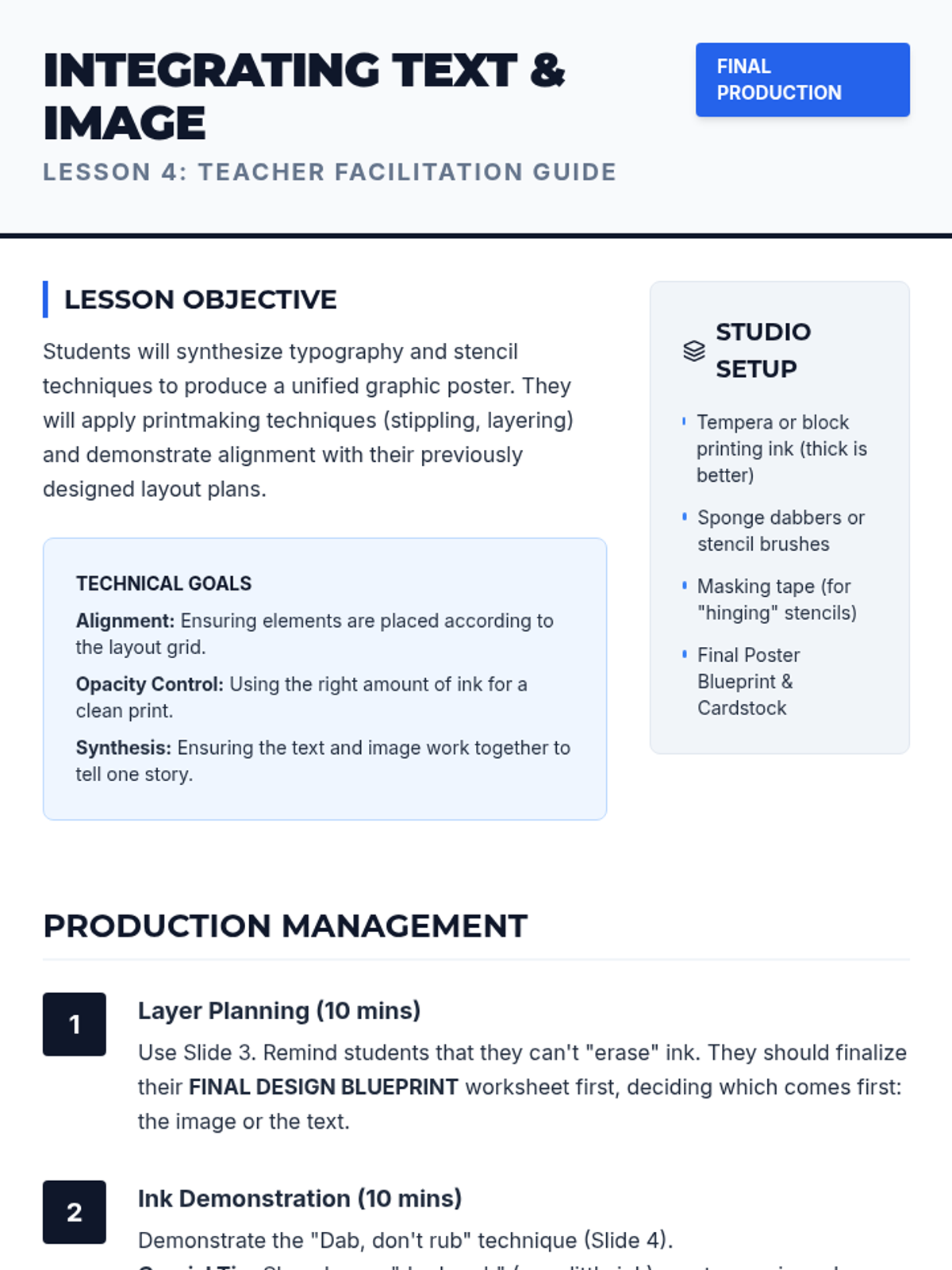
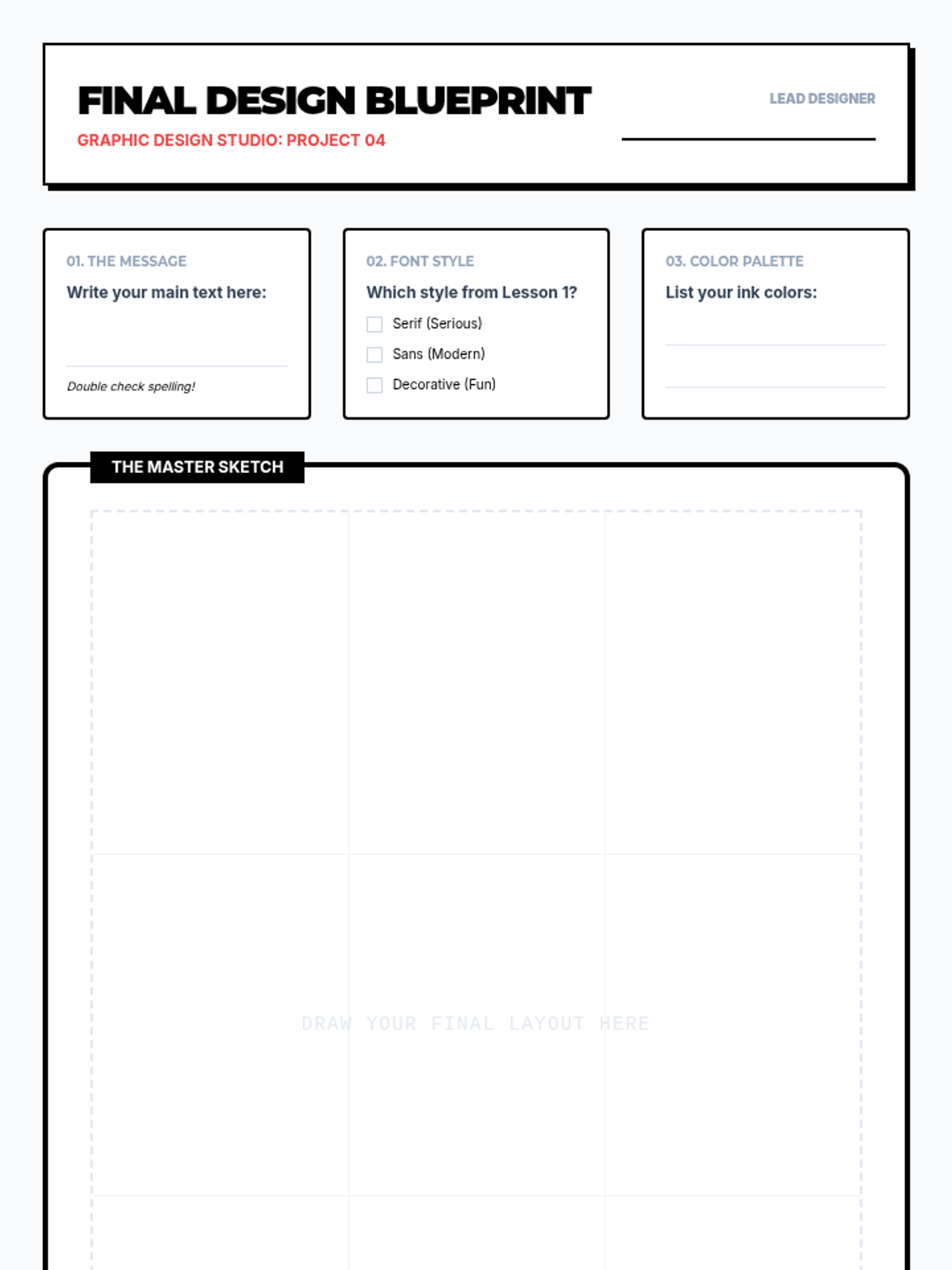
Students combine their stencils and typography to produce a final graphic poster, applying ink and layering elements to create a unified, communicative design.
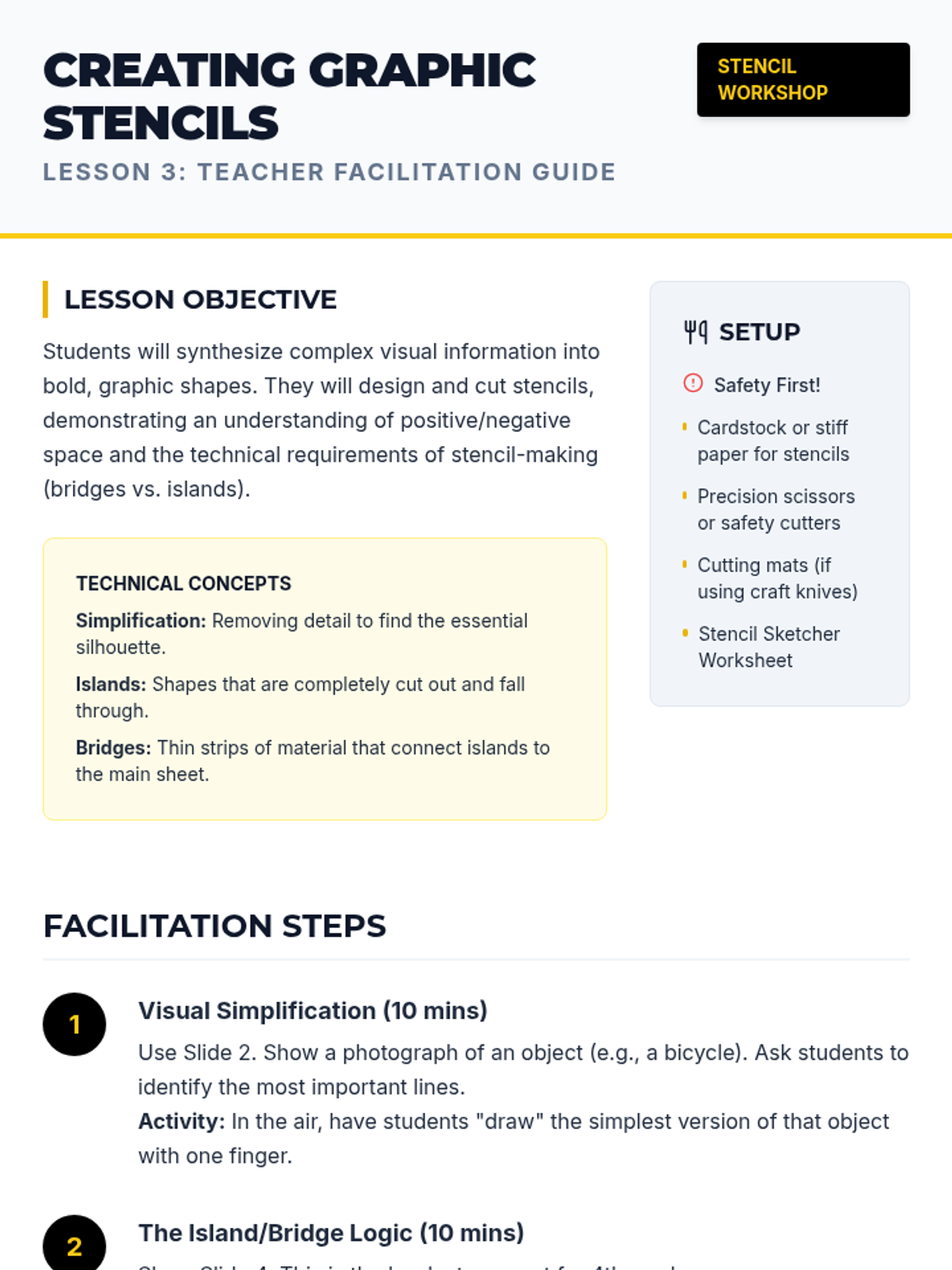
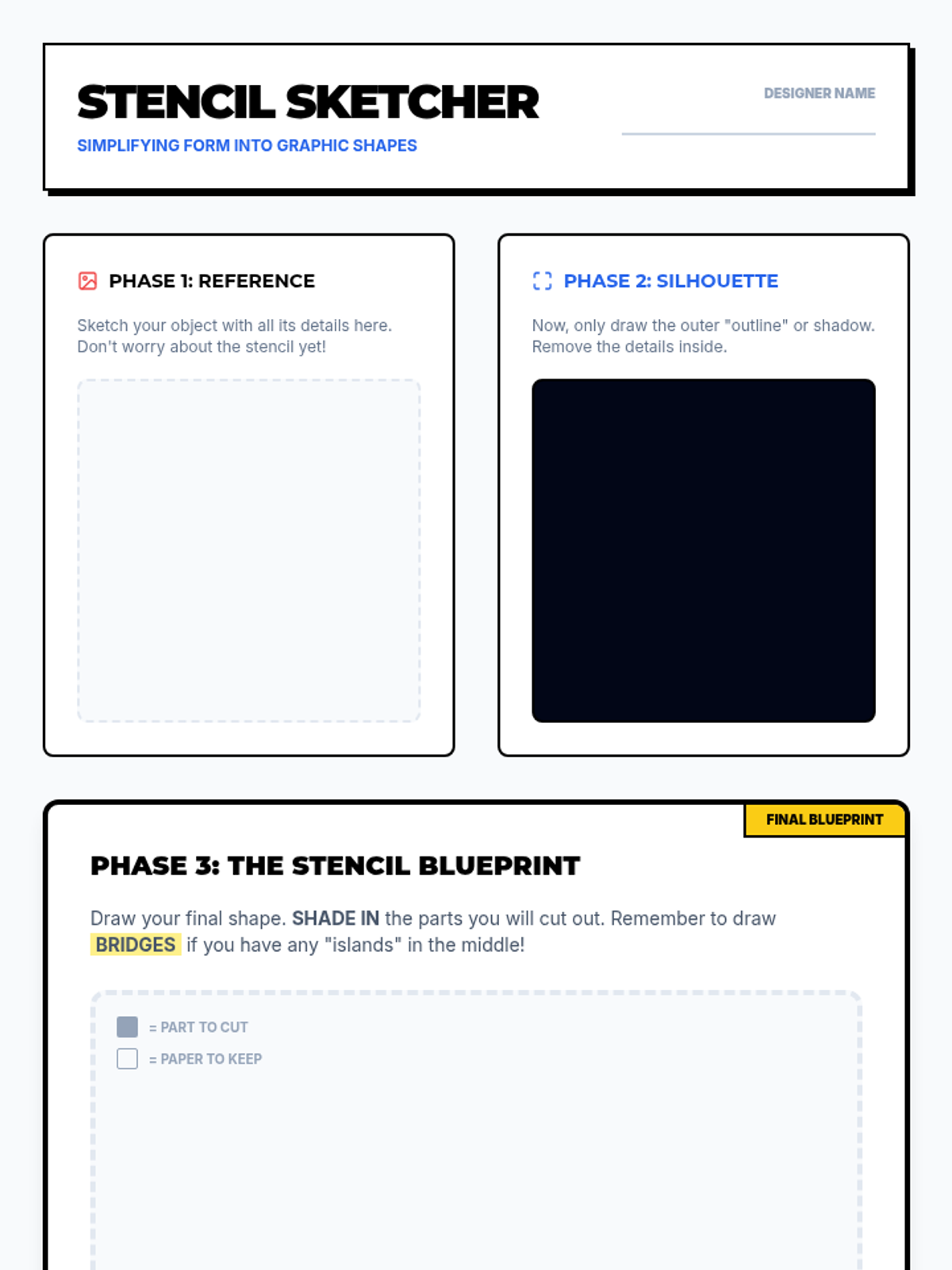
Students design and cut stencils by simplifying complex objects into bold, graphic shapes, focusing on positive and negative space for effective mass communication.
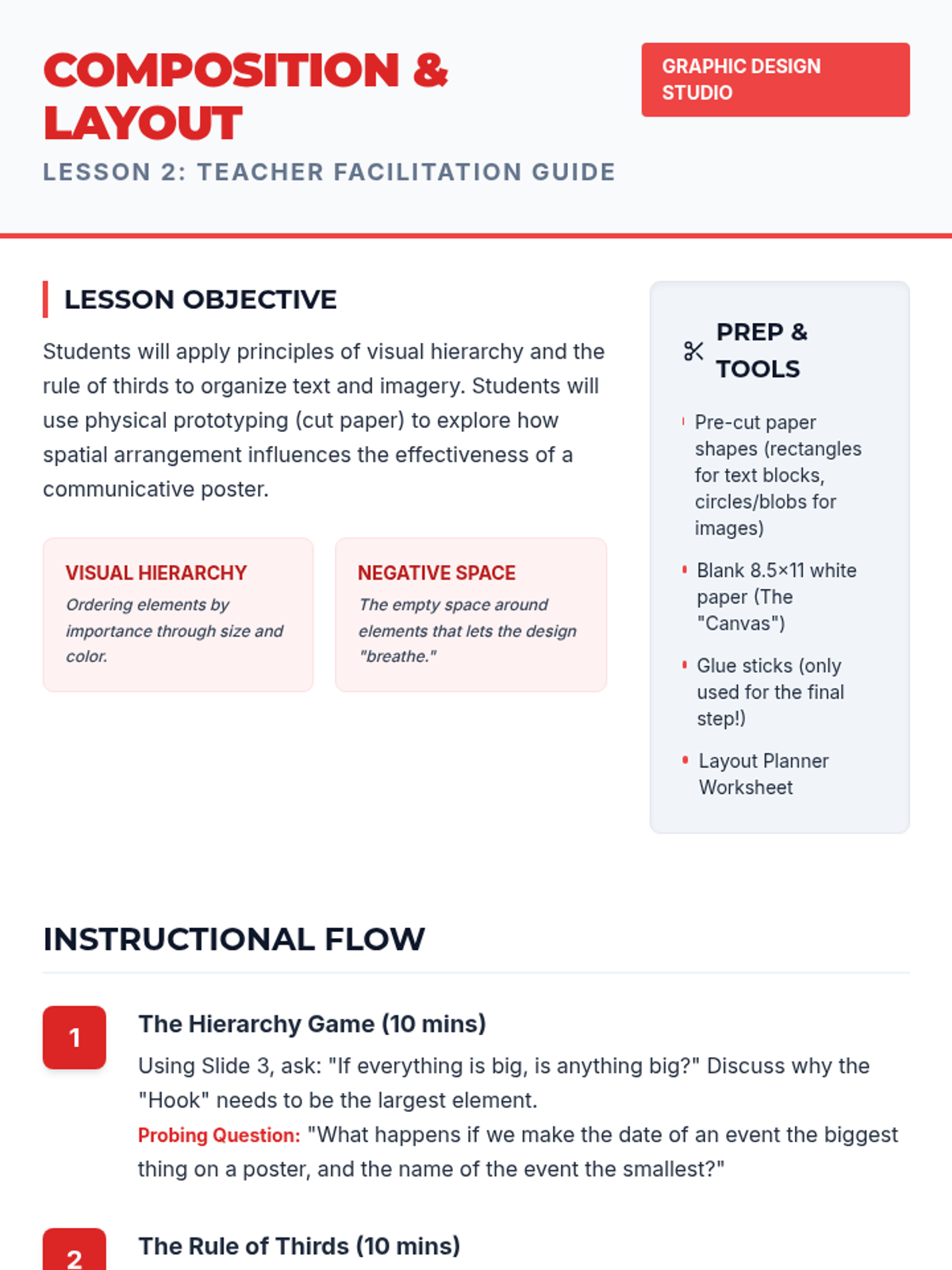
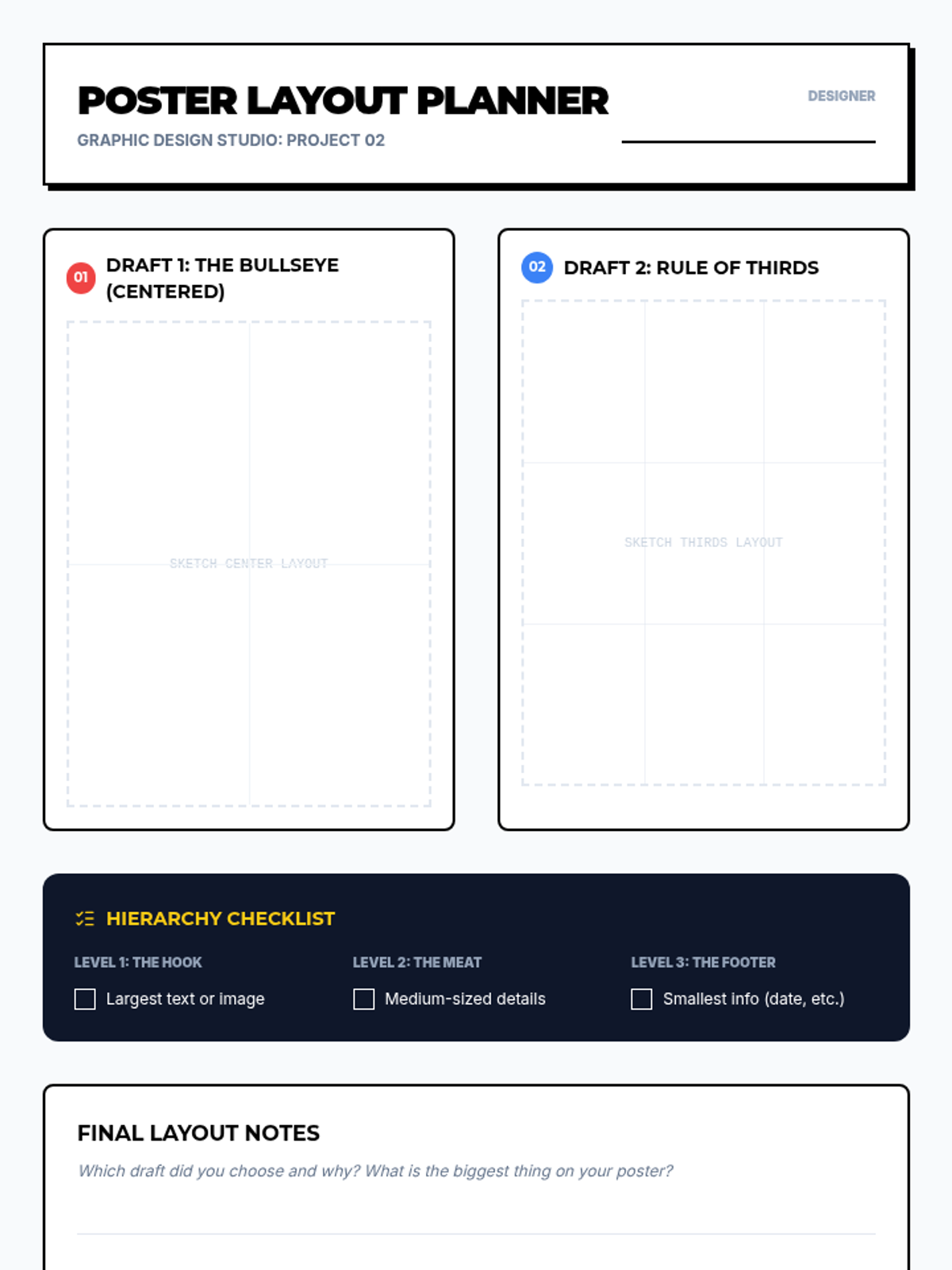
Students learn about layout principles like the rule of thirds, hierarchy, and balance by arranging cut-paper shapes to create effective poster designs.
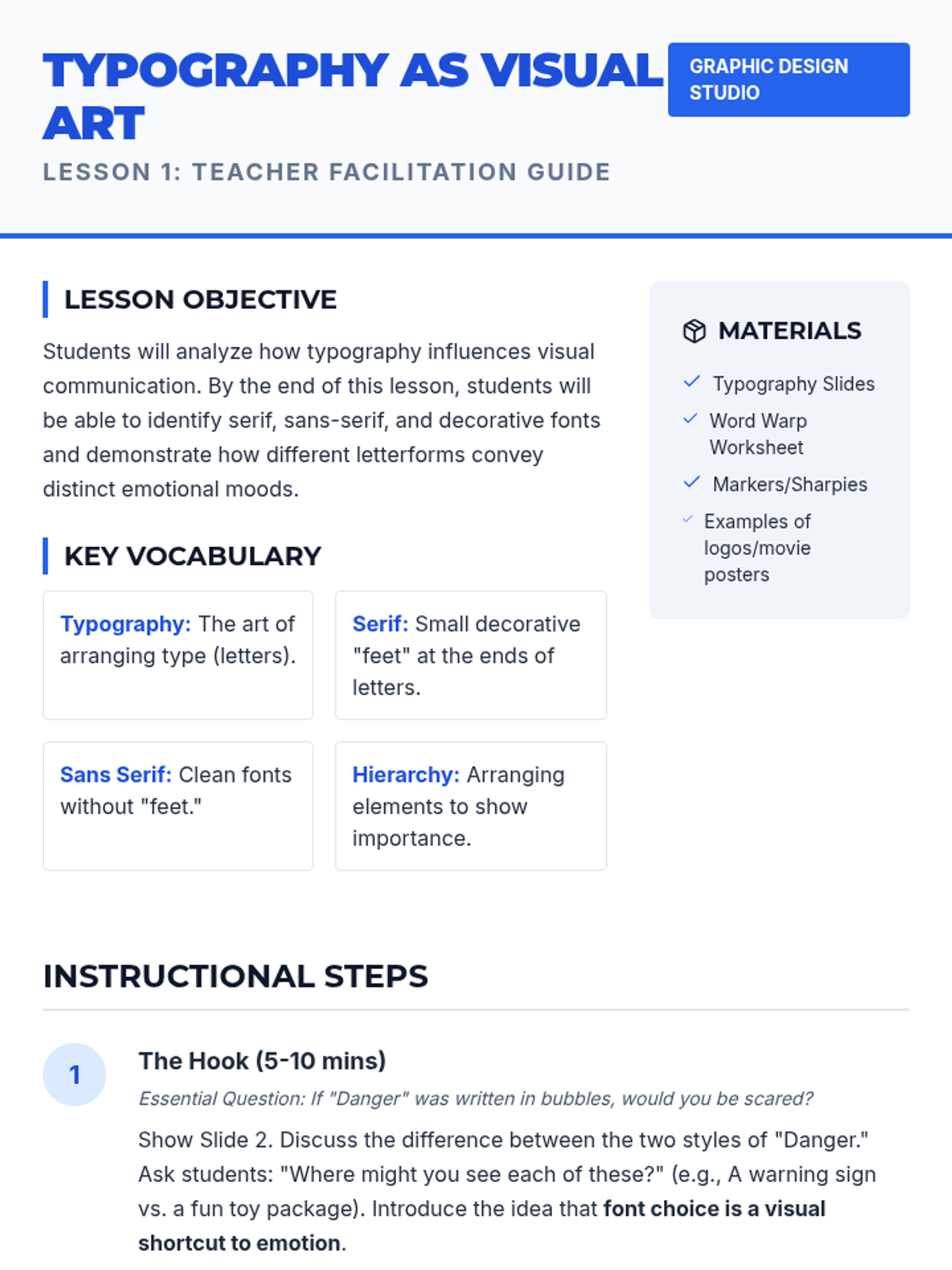
Students explore font styles and how the visual shape of letters conveys emotion and urgency, experimenting with drawing words in different styles to alter their meaning.
Students reflect on their compositions and performances, comparing their work to professional Foley artists.
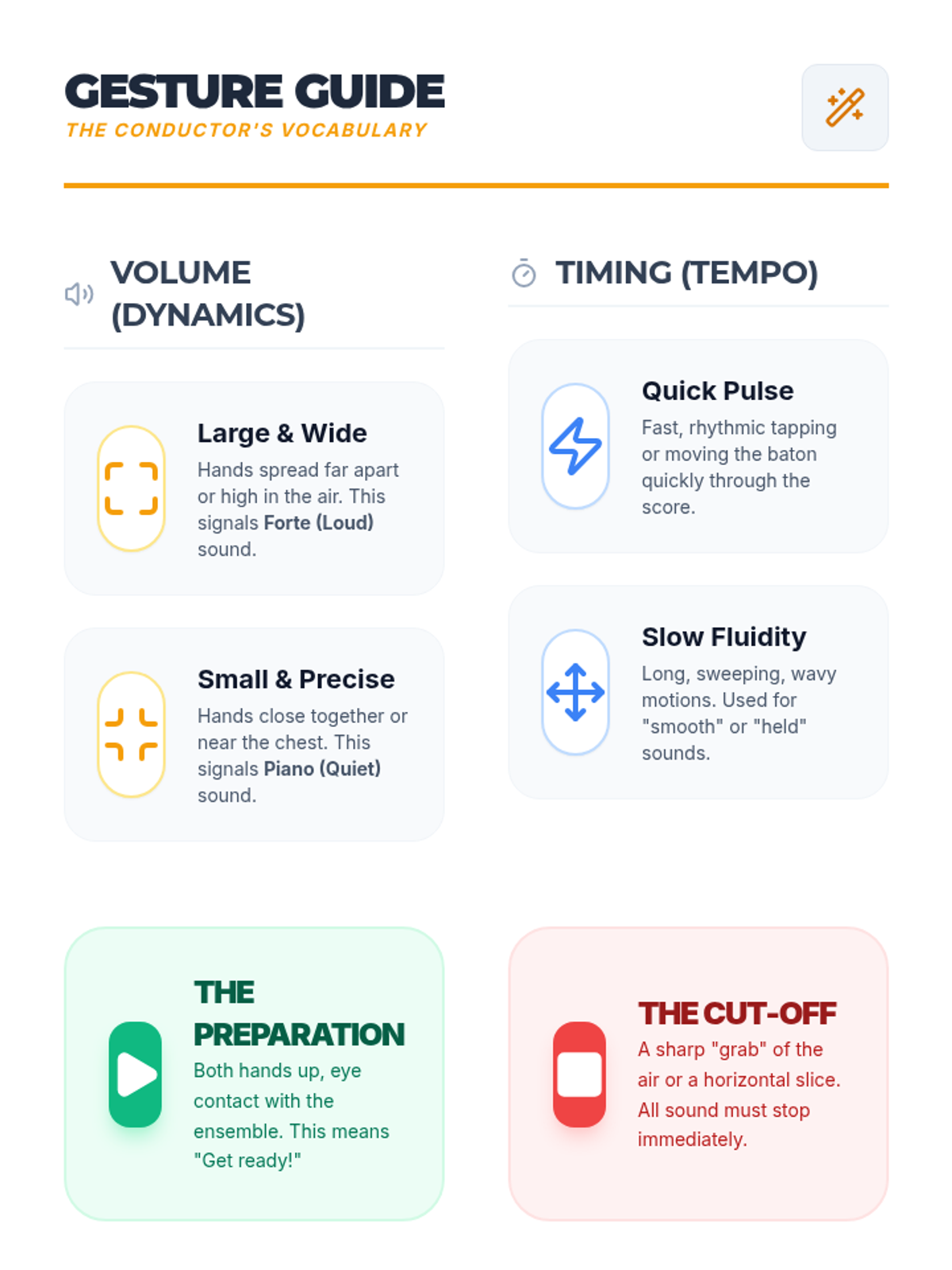
Young composers practice conducting their scores, using gestures to lead their peers through the visual music.
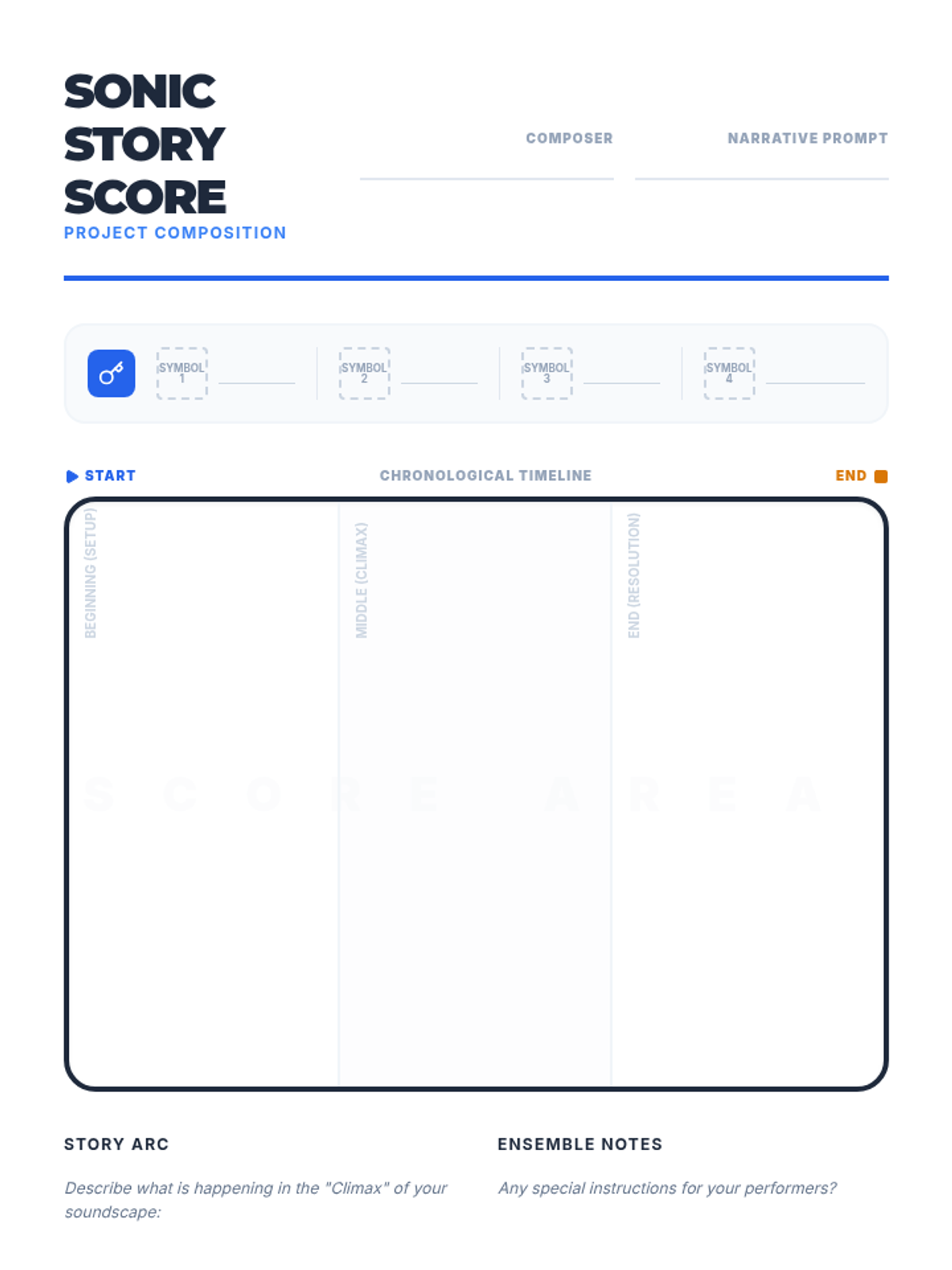
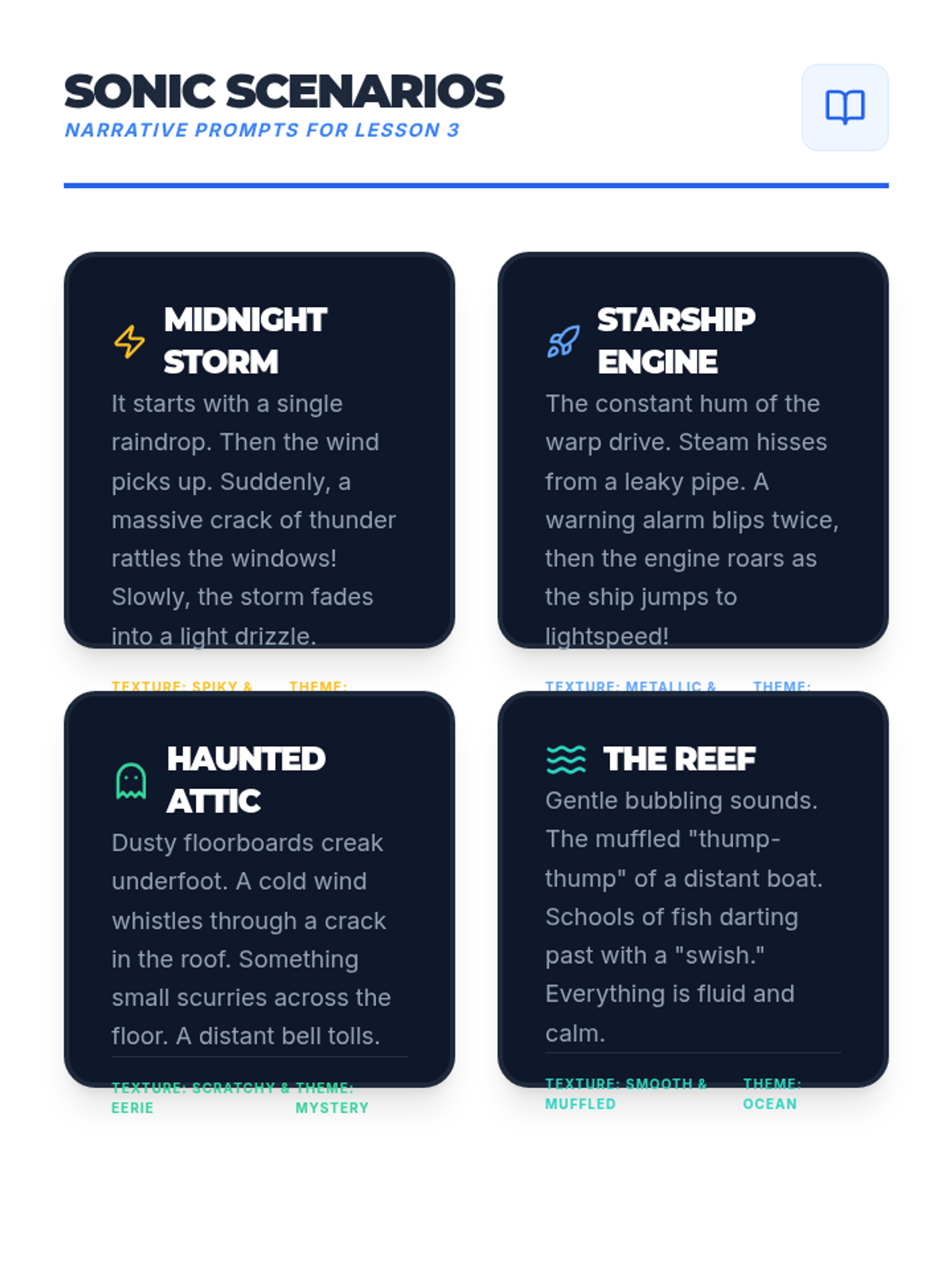
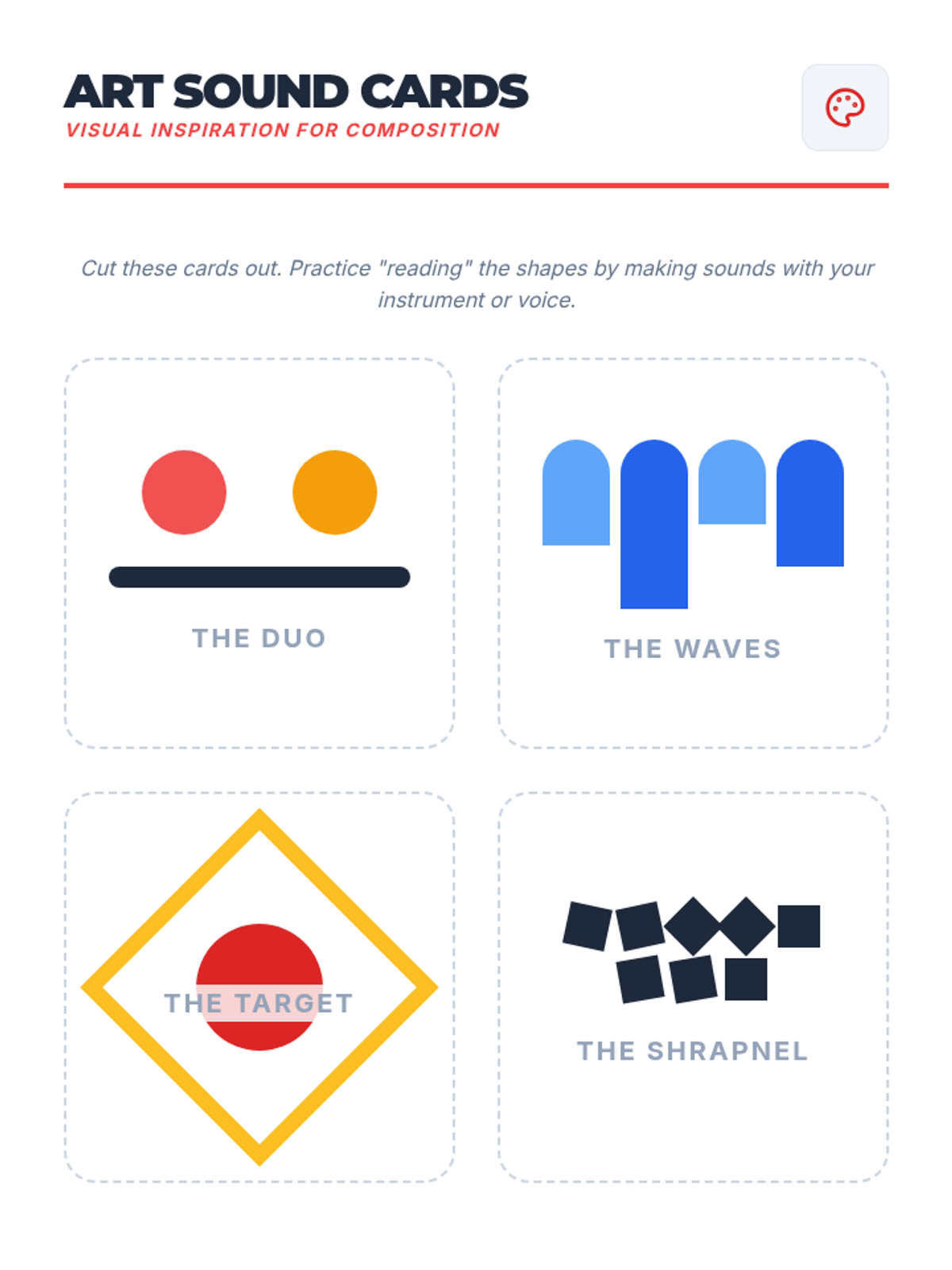
Students compose a narrative-driven graphic score that uses their symbols to tell a sonic story.
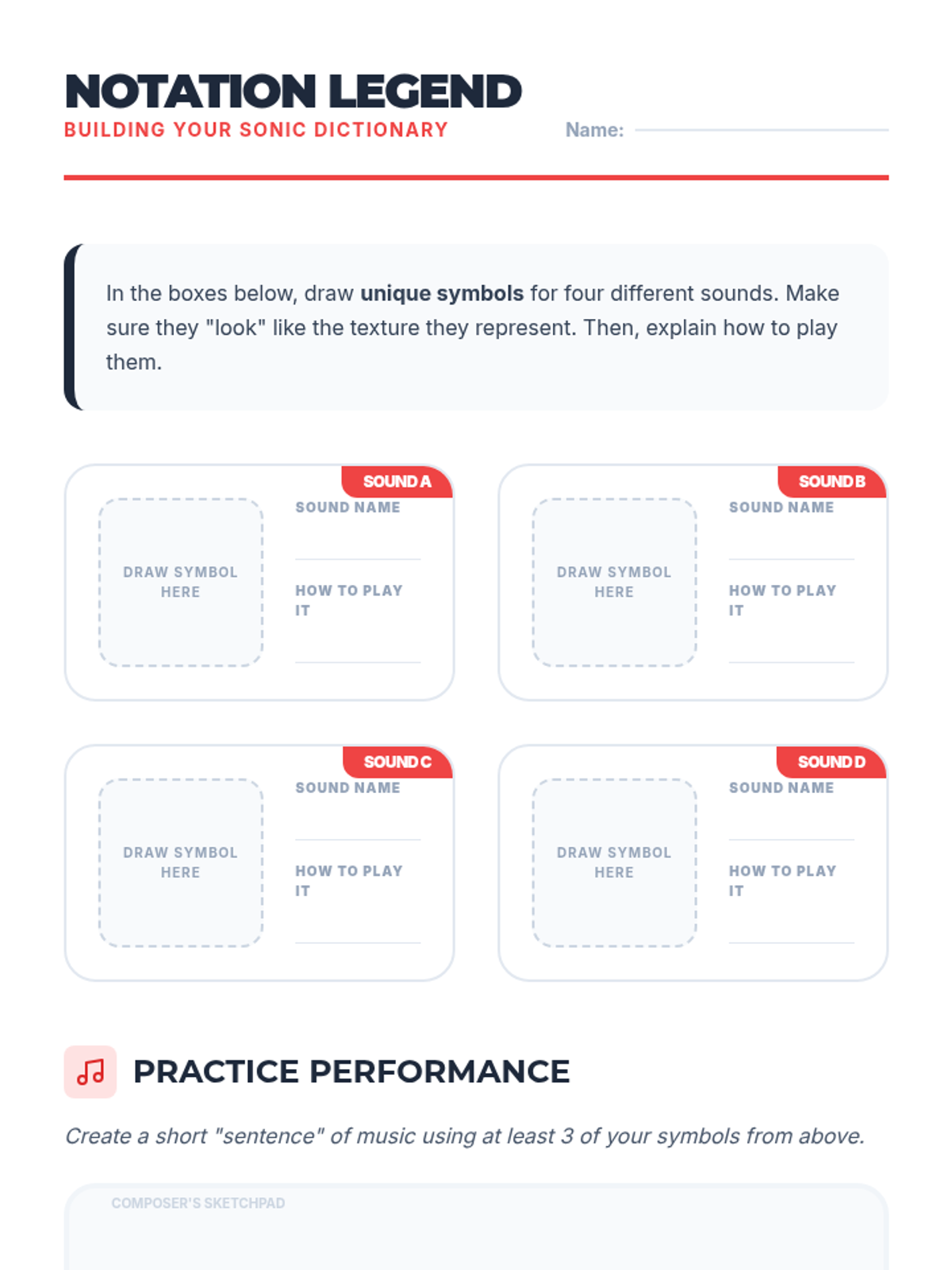
Learners translate sounds into visual symbols, creating a legend that maps shapes and colors to specific audio qualities.
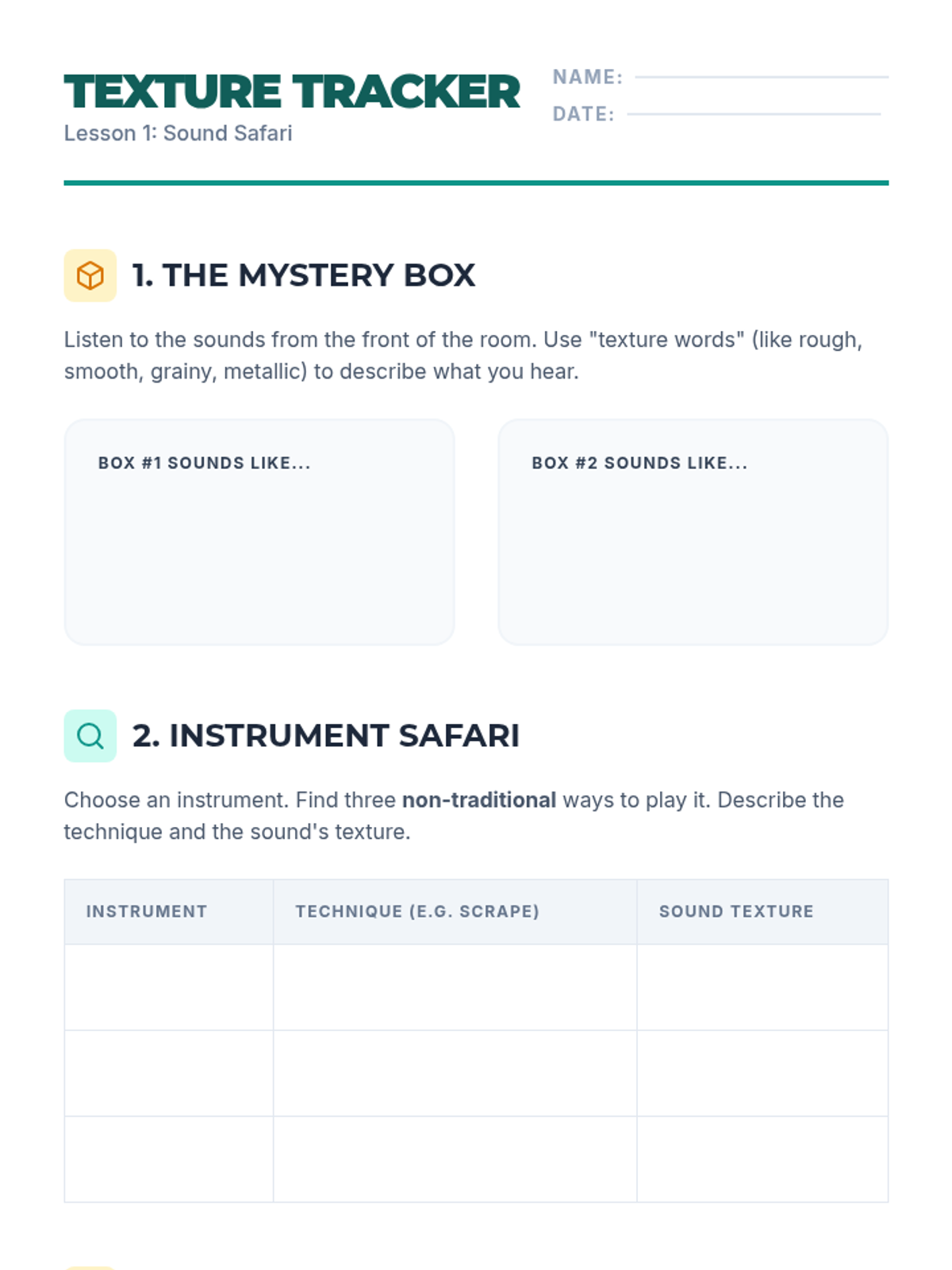
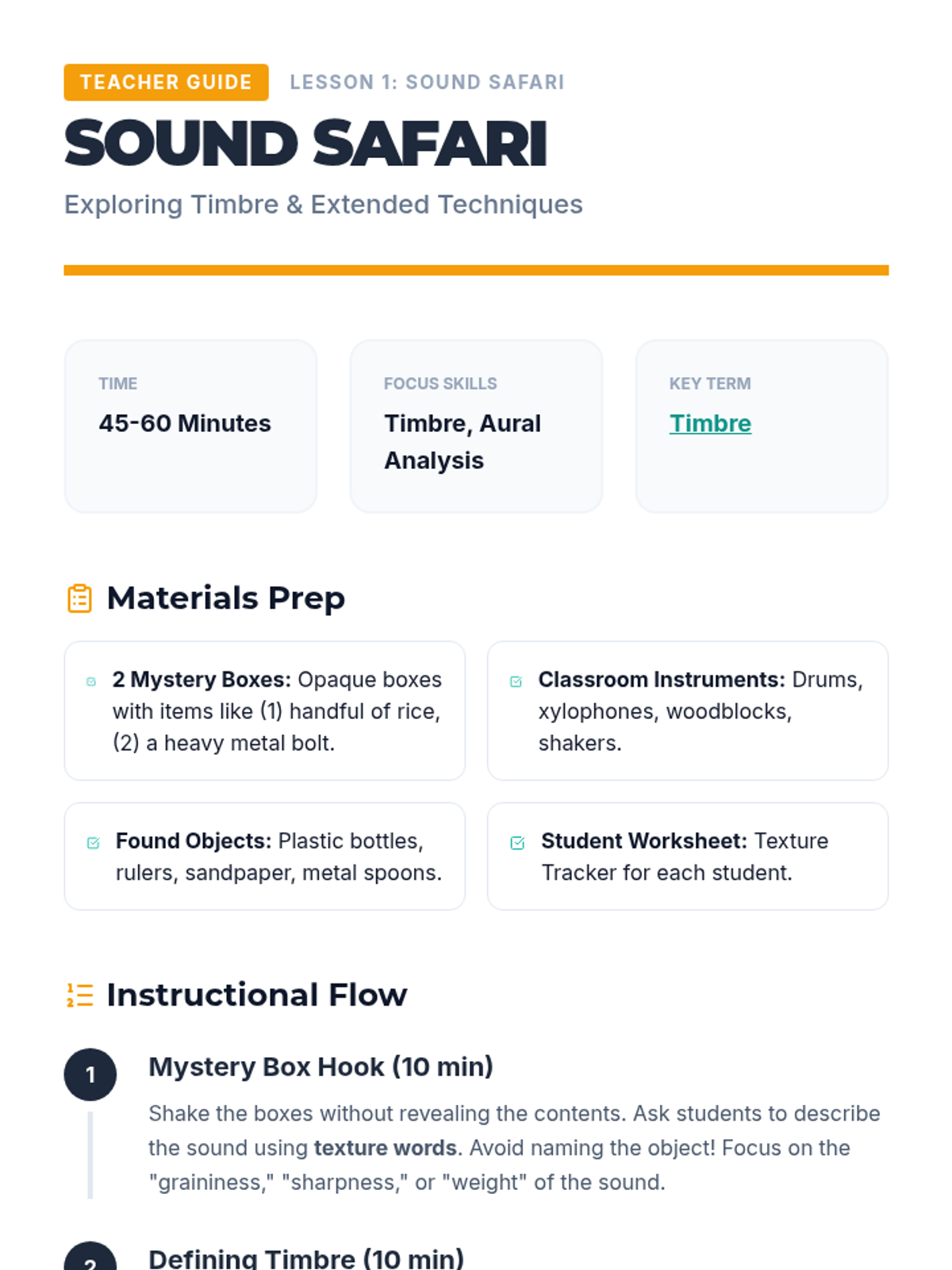
Students explore non-traditional sounds using classroom instruments and found objects, categorizing them by texture.
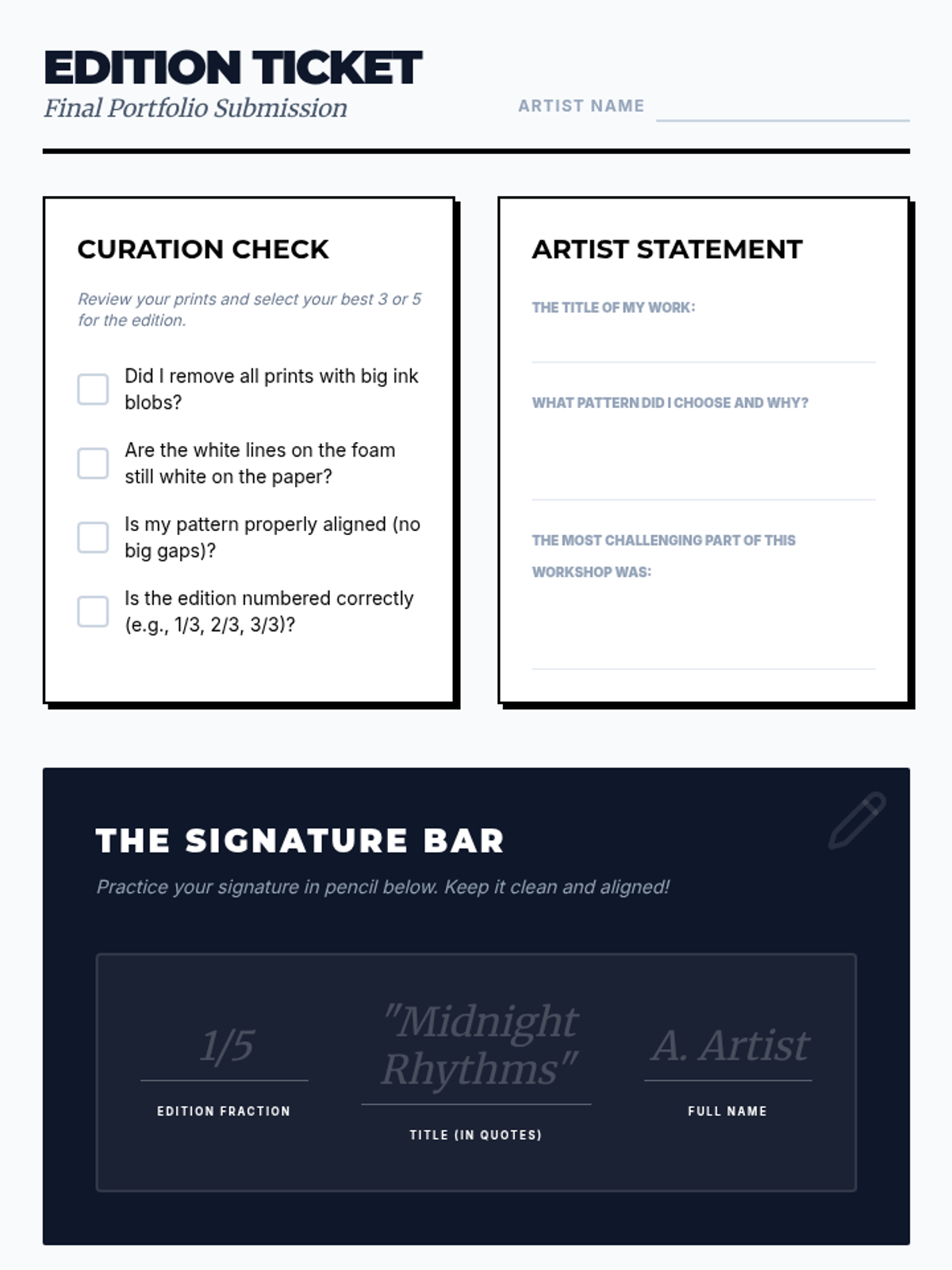
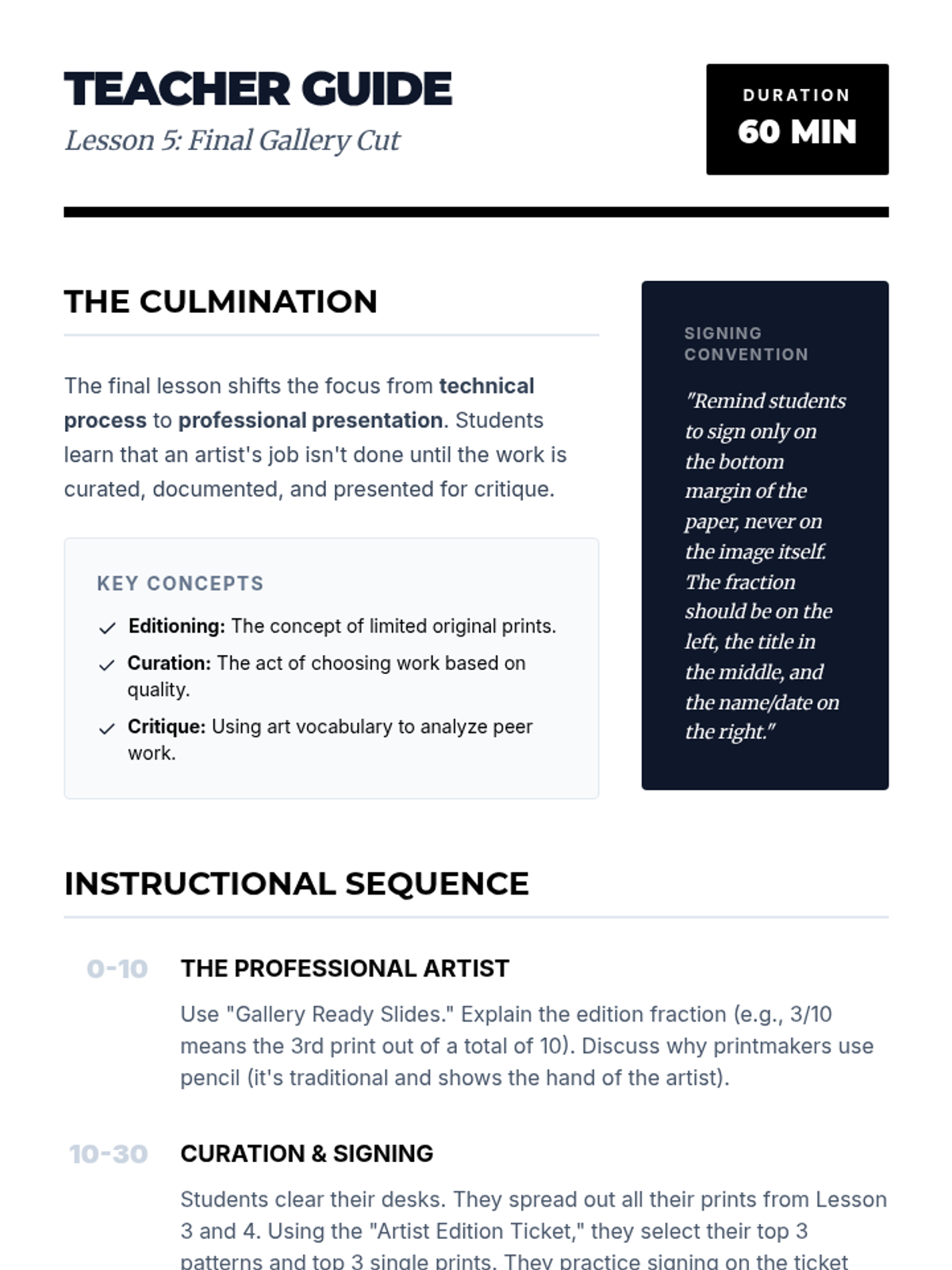
Students sign, number, and curate their final print editions followed by a peer gallery walk.
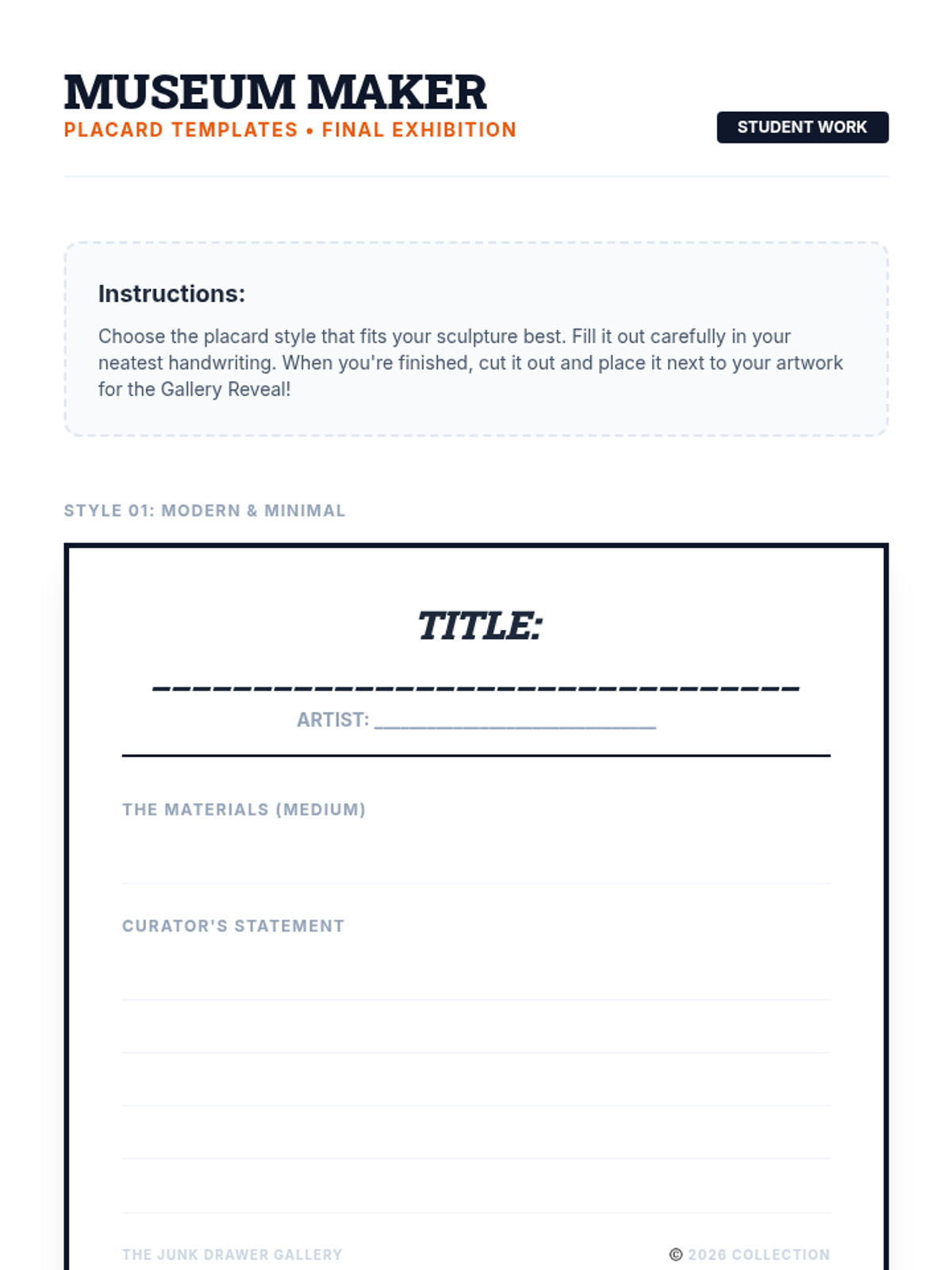
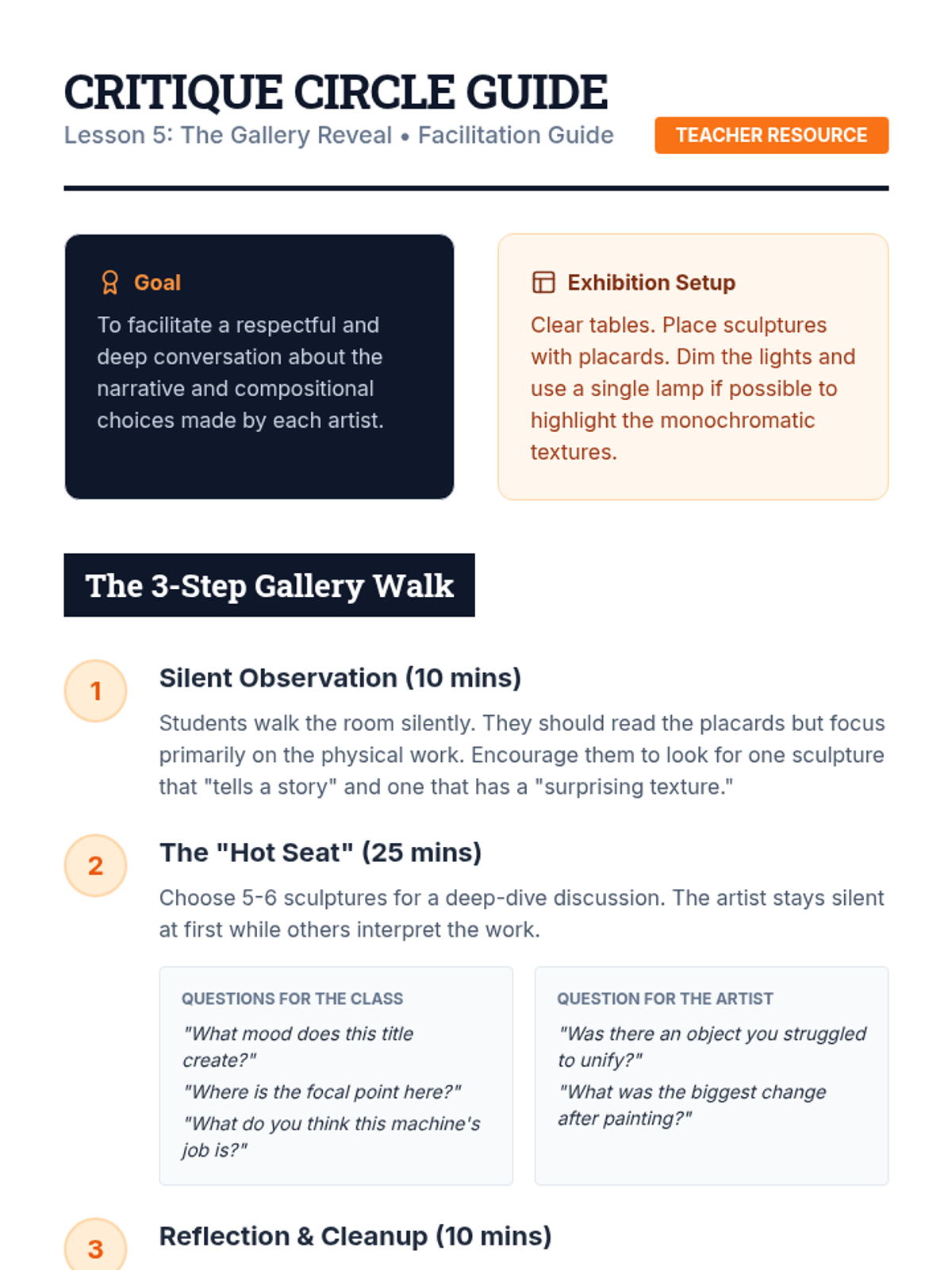
Students write a museum placard for their work and participate in a class critique to interpret the hidden stories in each other's work.
Students learn the concept of unity by applying a single color to their multi-colored assemblage. This transforms the collection of trash into a cohesive sculptural relief.
A focused workshop on how to glue different materials together effectively. Students construct their assemblage, considering layers and depth to create a relief map of objects.
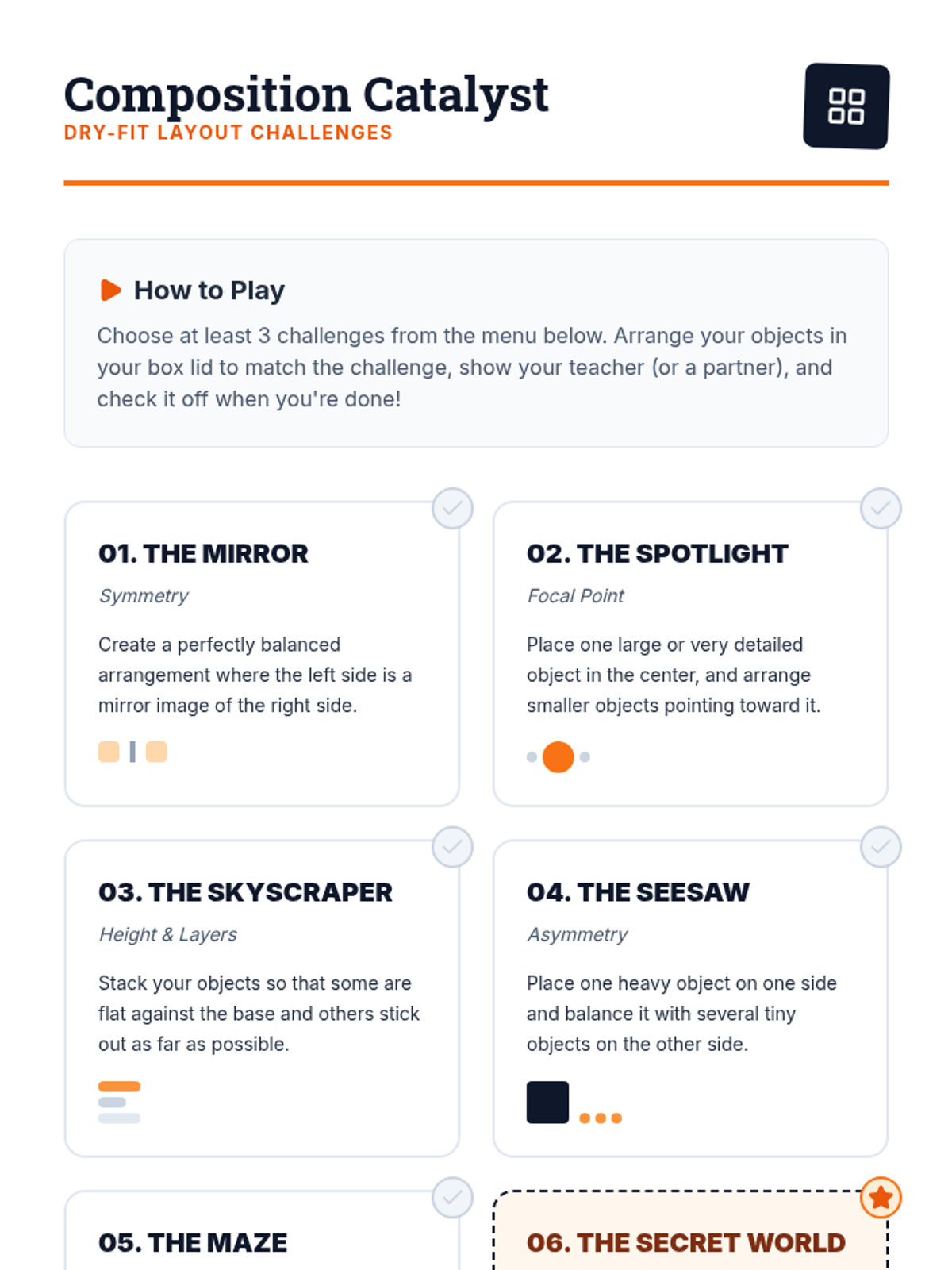
Students sort their collected materials by size, shape, and texture. They begin laying out potential compositions in a box lid or on a board, experimenting with symmetry, asymmetry, and focal points without gluing anything yet.
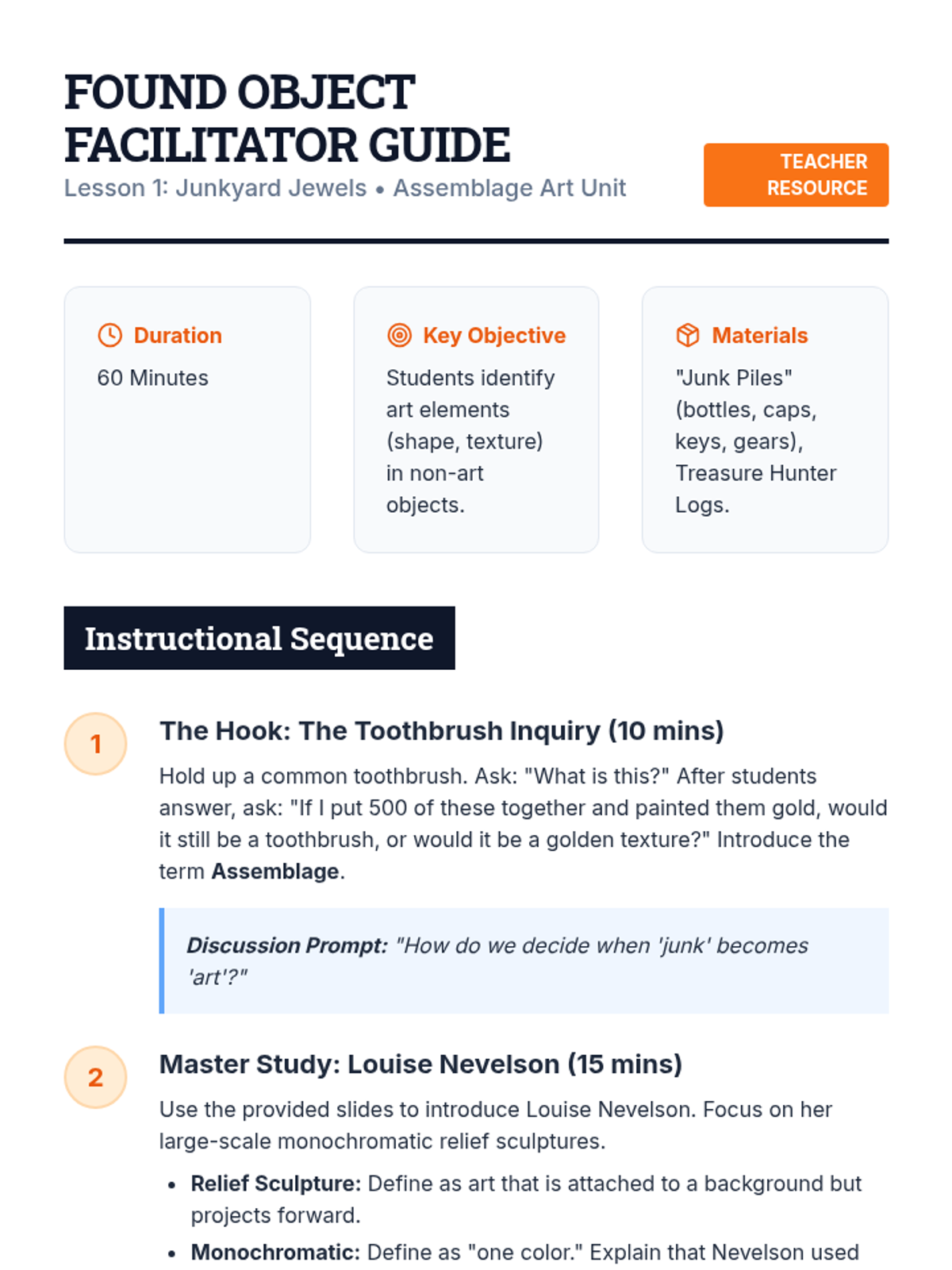
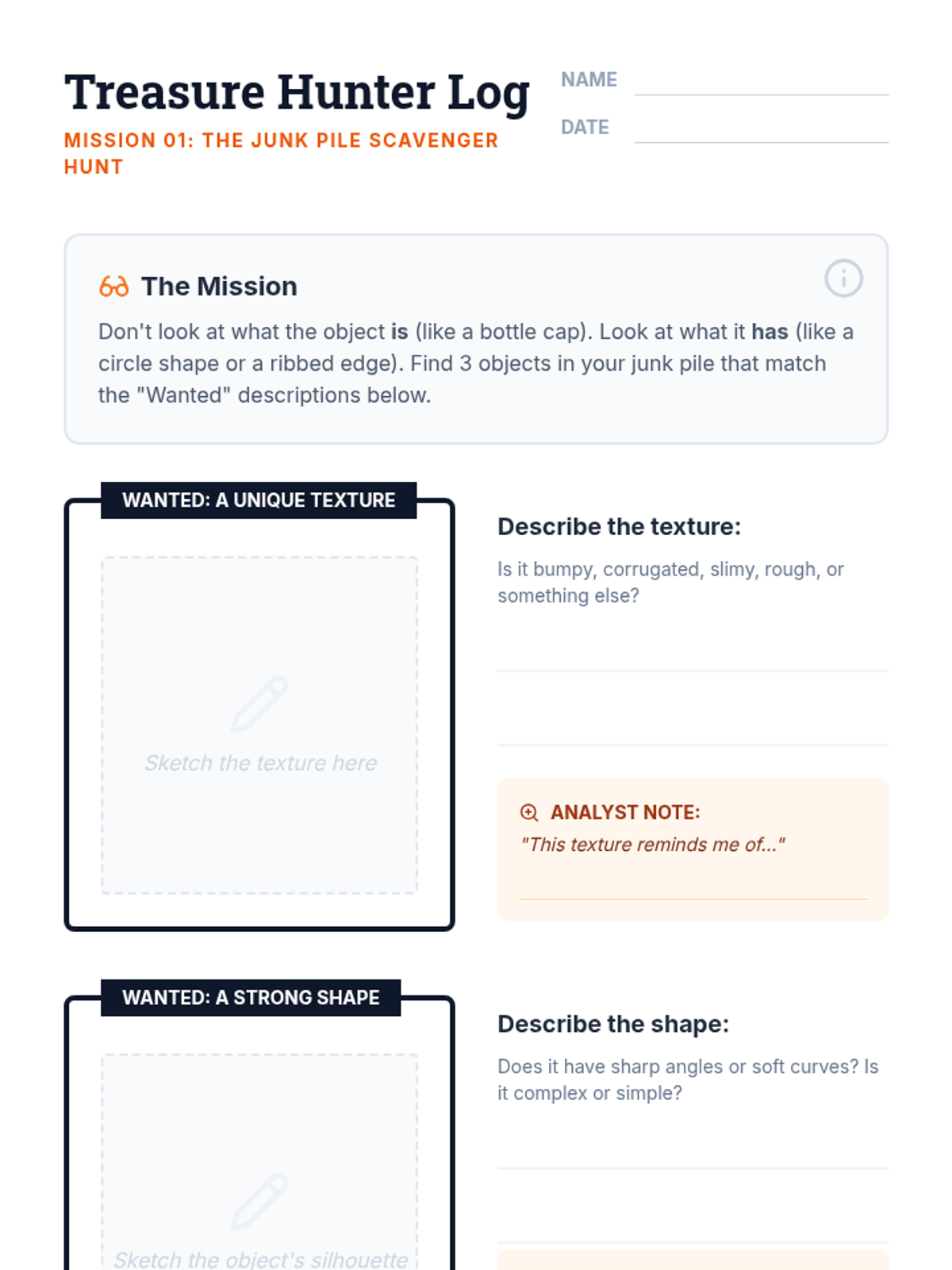
Students examine the work of assemblage artists to identify how everyday objects are used as art materials. They participate in a 'scavenger hunt' analysis to find shapes and textures within a pile of random items.
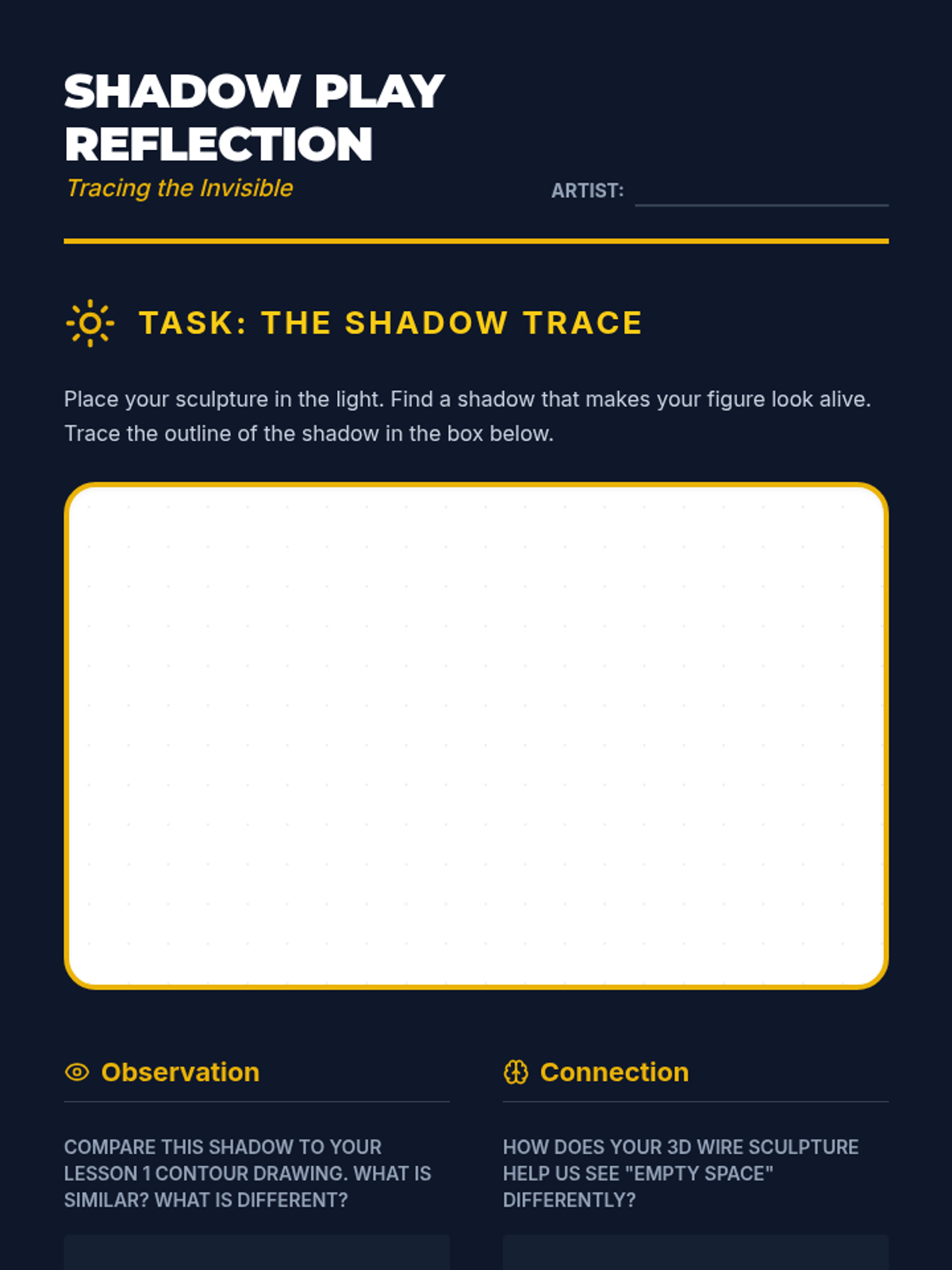
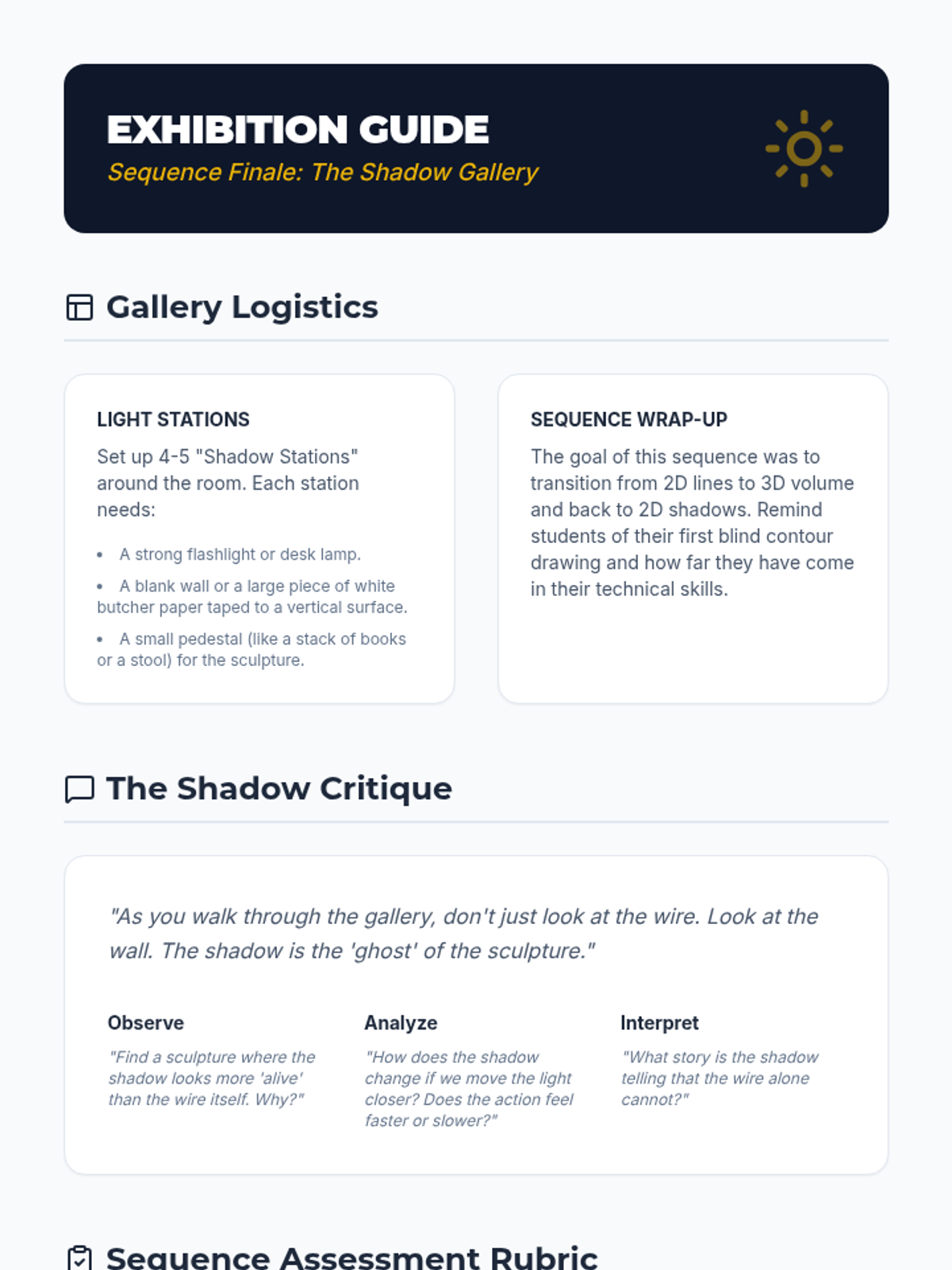
Students mount their sculptures and explore how light creates a 2D 'shadow drawing' from their 3D work.
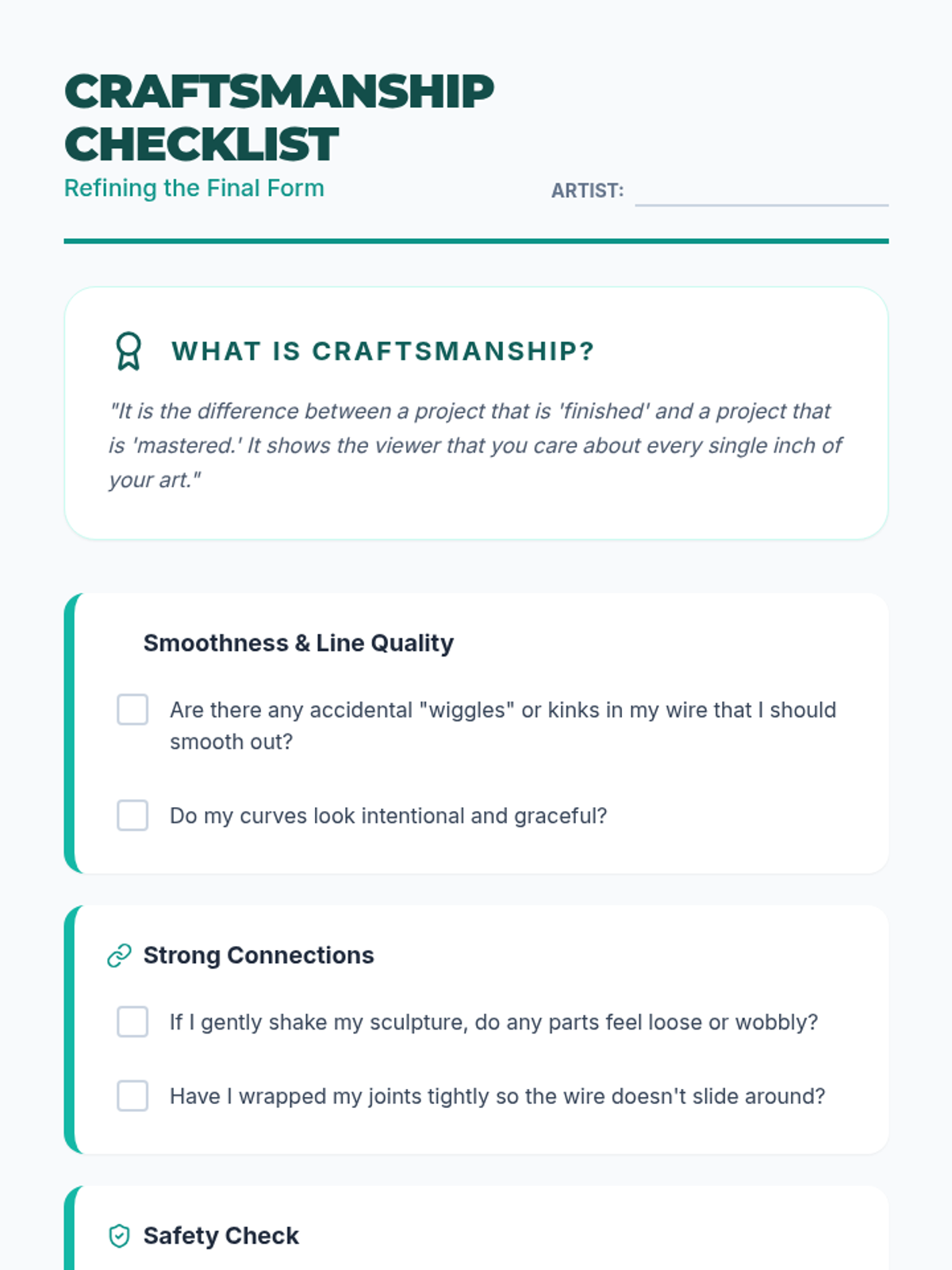
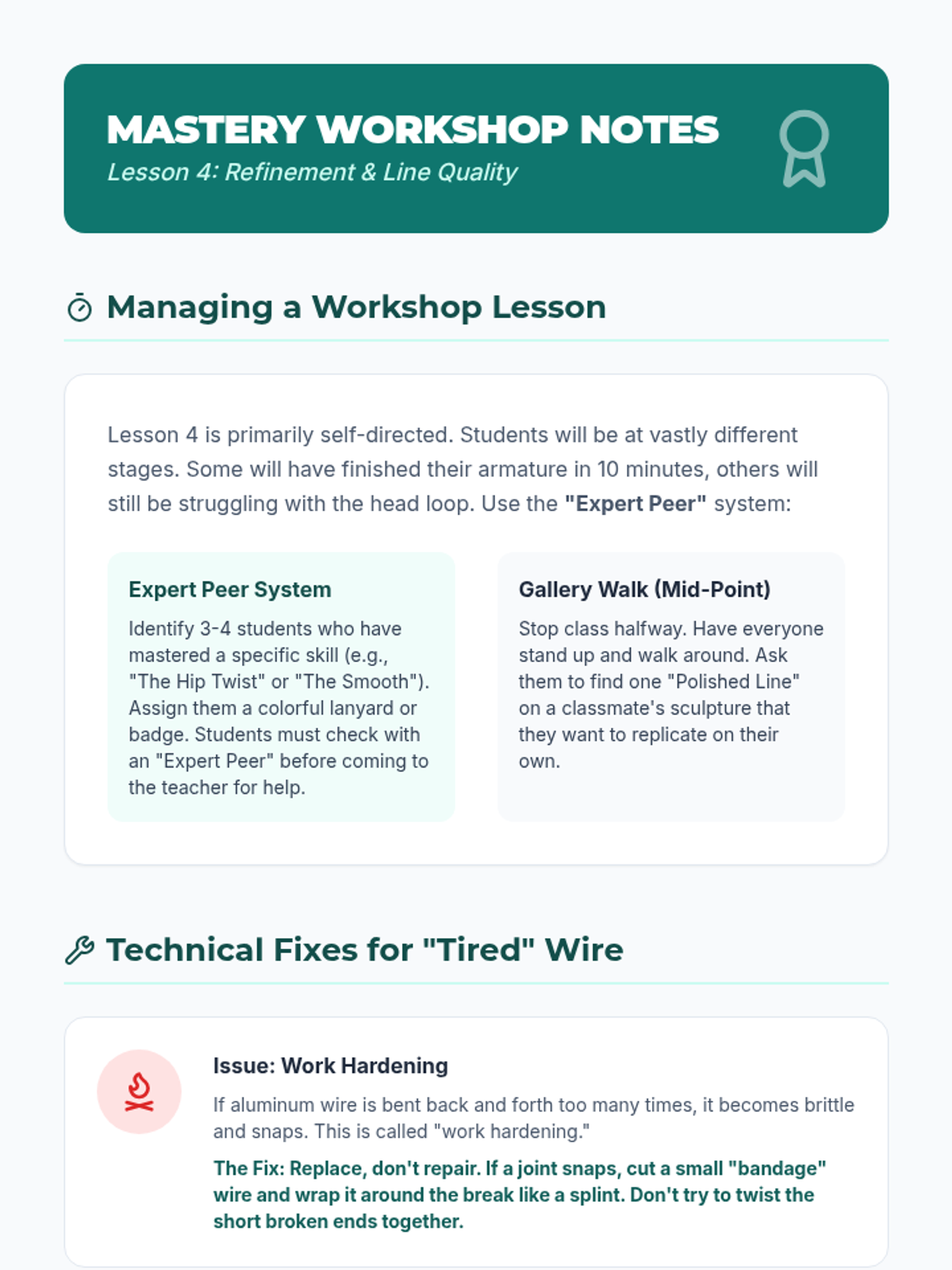
Students refine their wire sculptures by adding detail and smoothing line quality to improve craftsmanship.
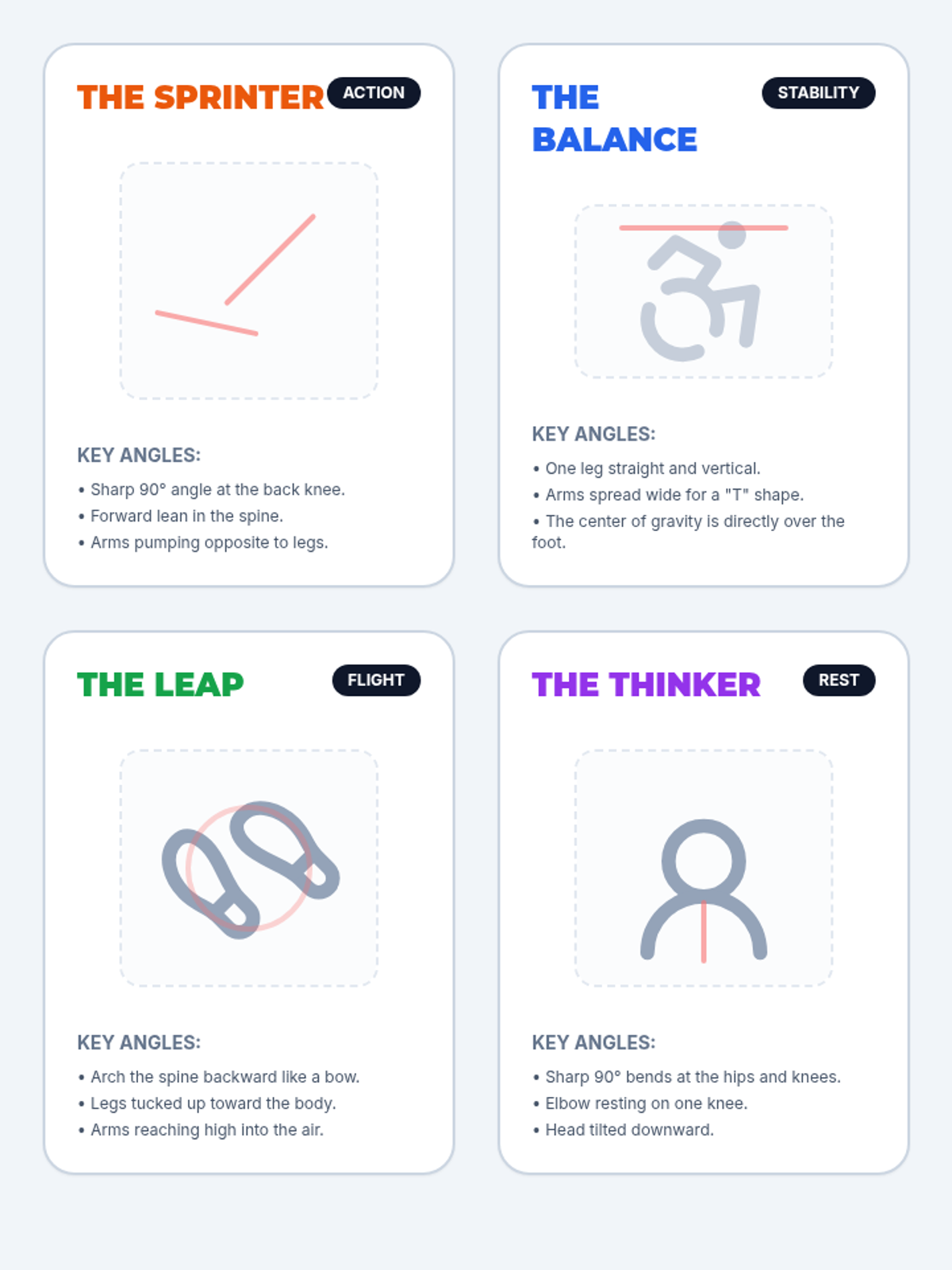
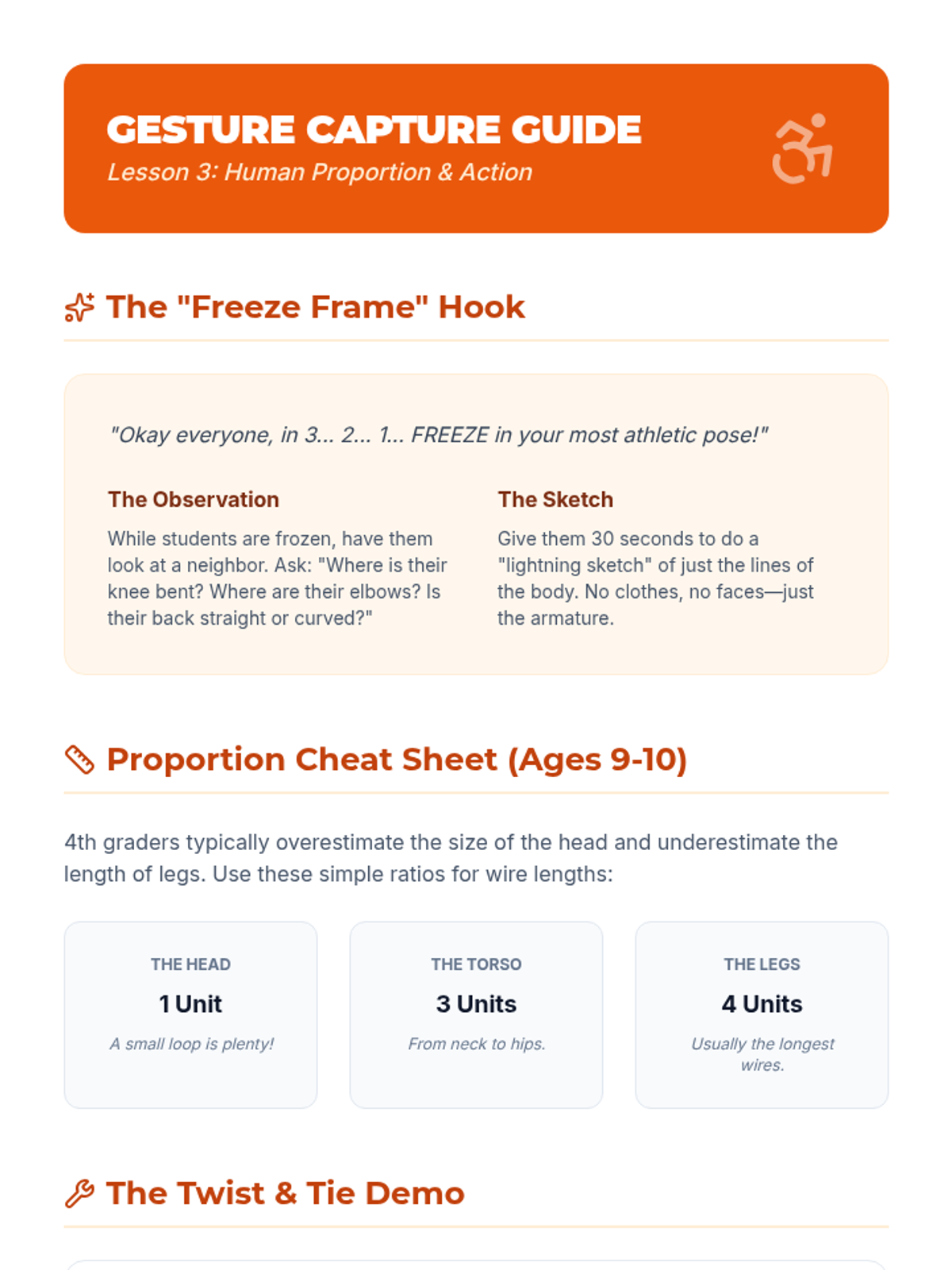
Students create wire armatures that capture human action and proportion, focusing on the 'skeleton' of a pose.
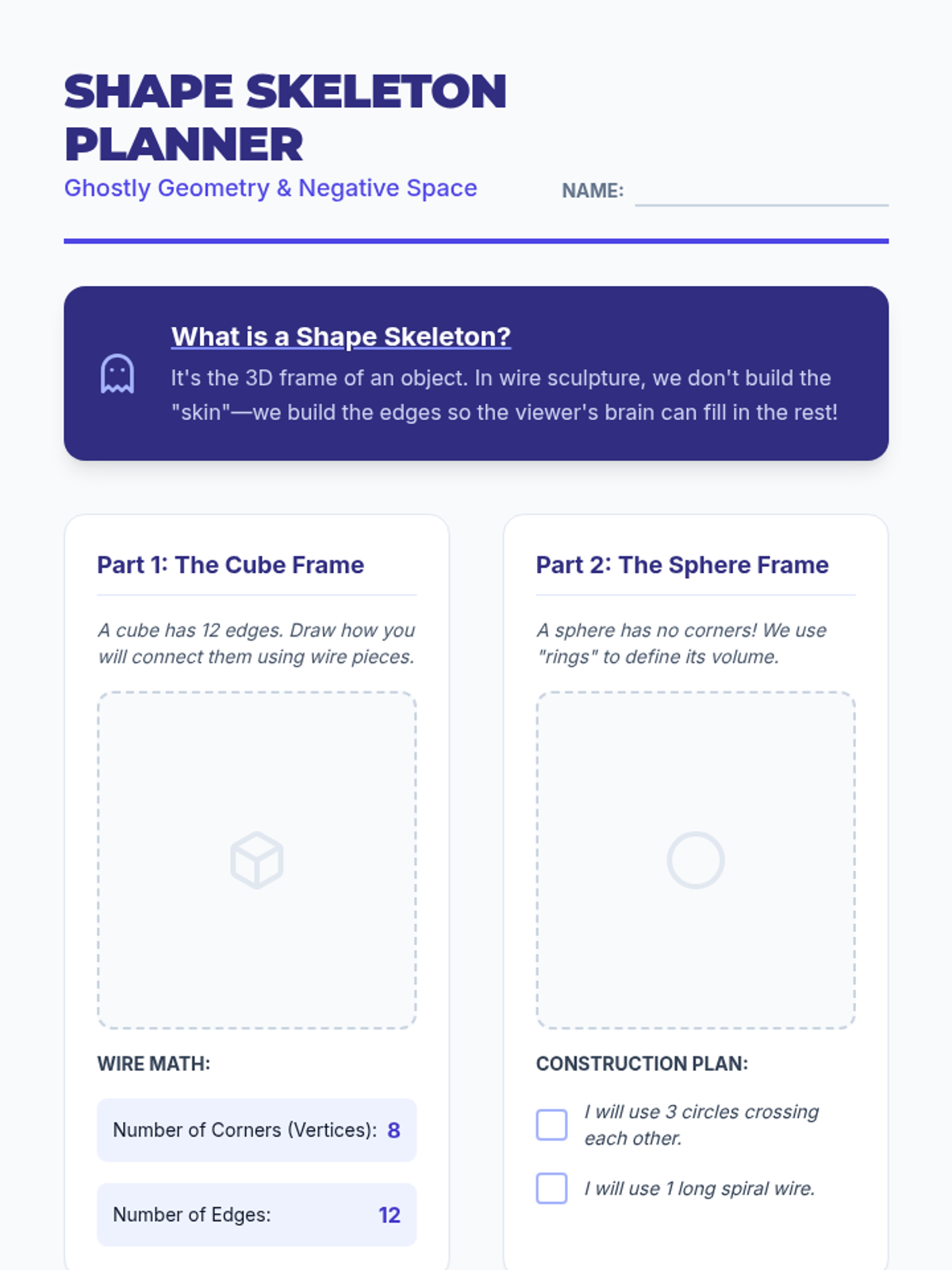
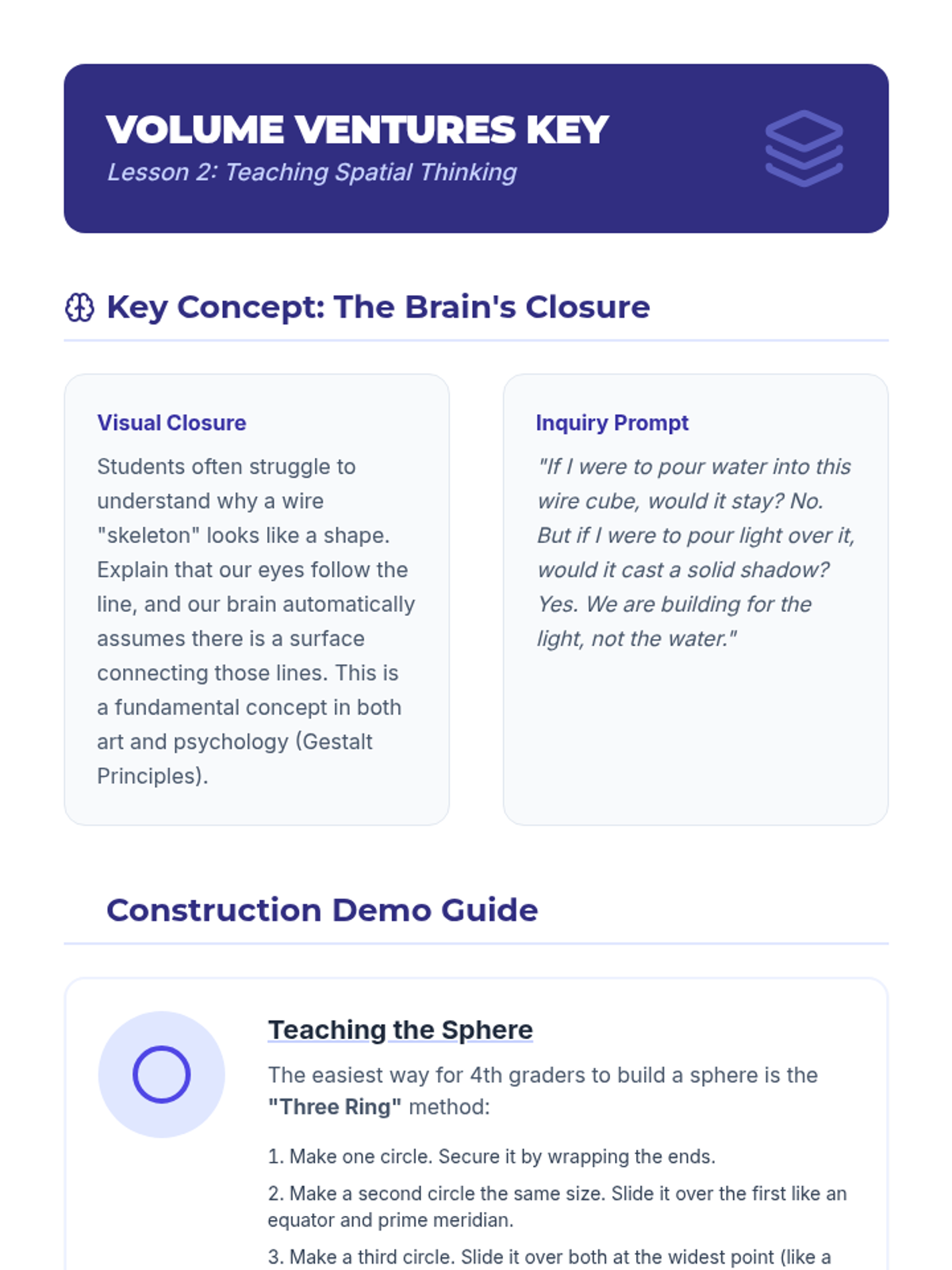
Students explore how wire frames define 3D shapes like cubes and spheres, focusing on the concept of negative space.
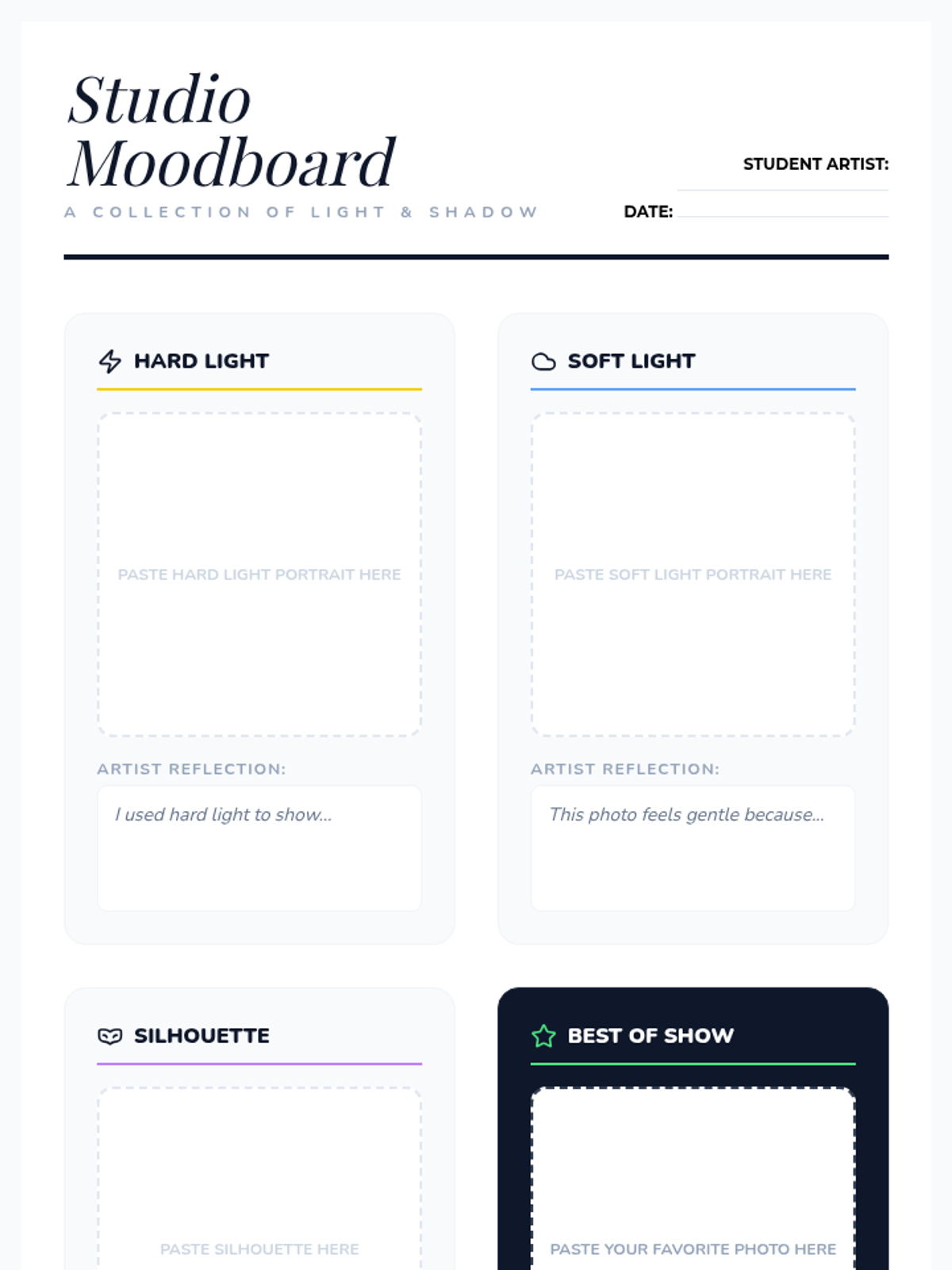
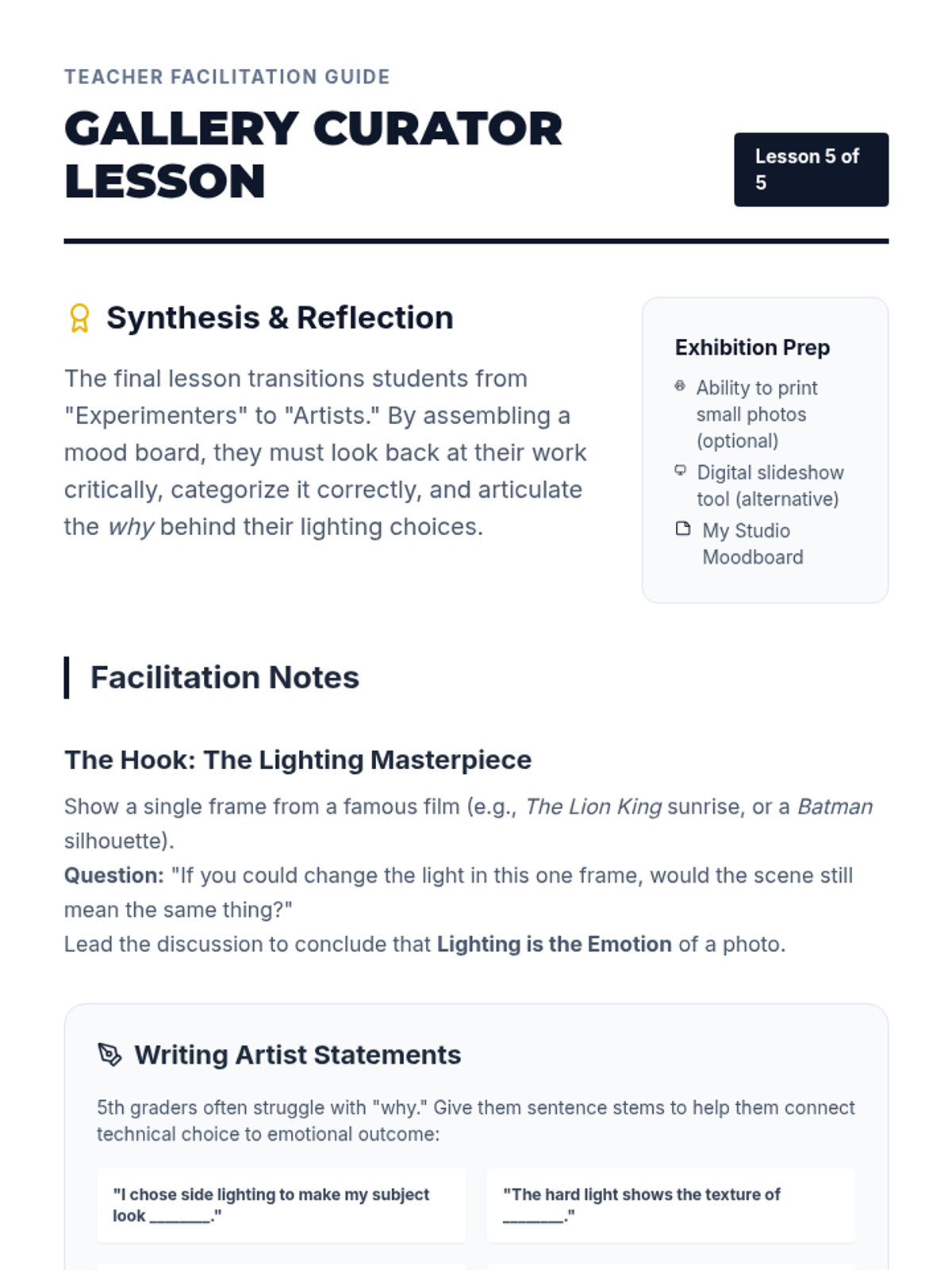
Students compile their experiments into a mood board that categorizes images by the feeling the light evokes and write reflections on their lighting choices.
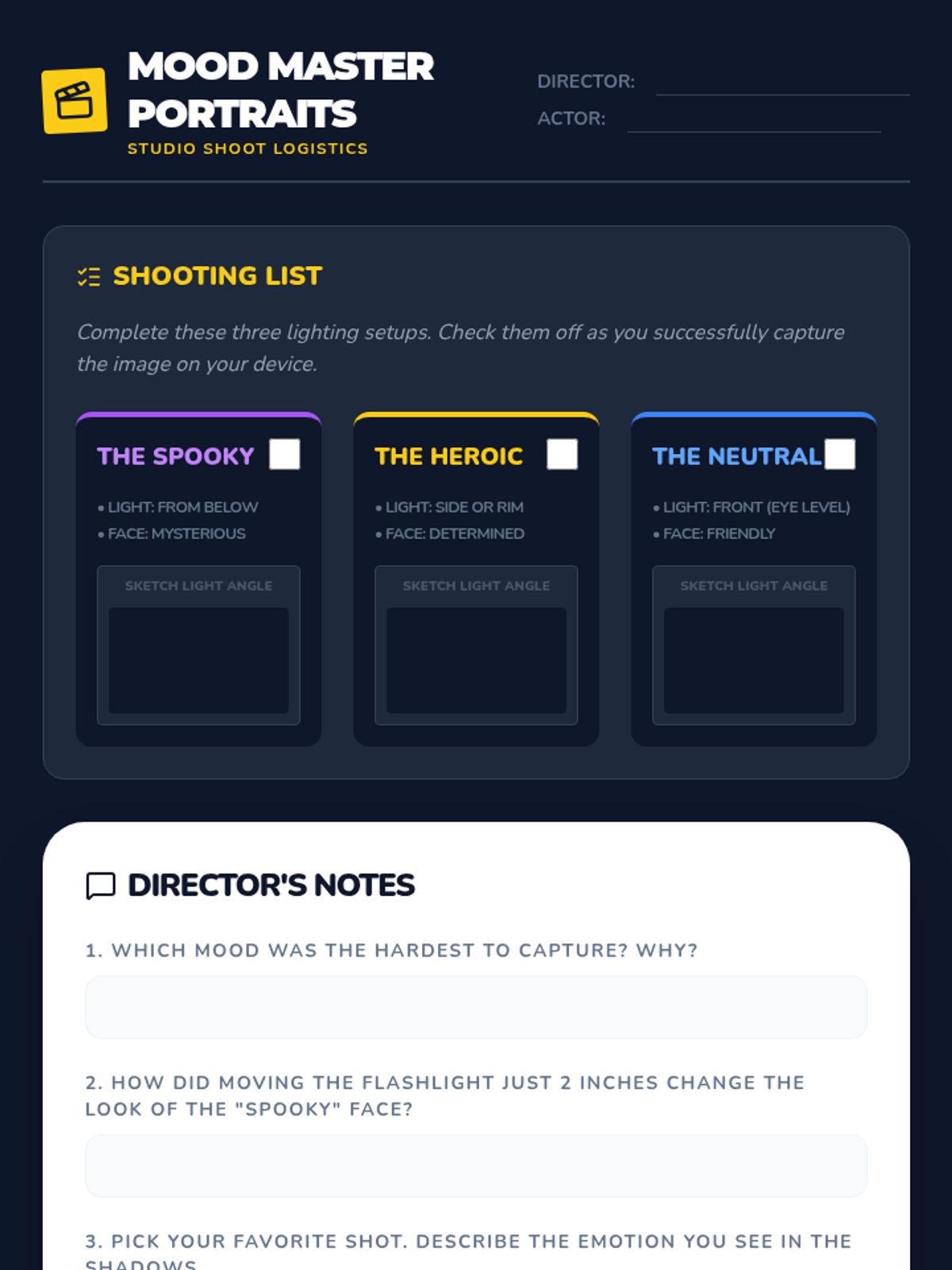
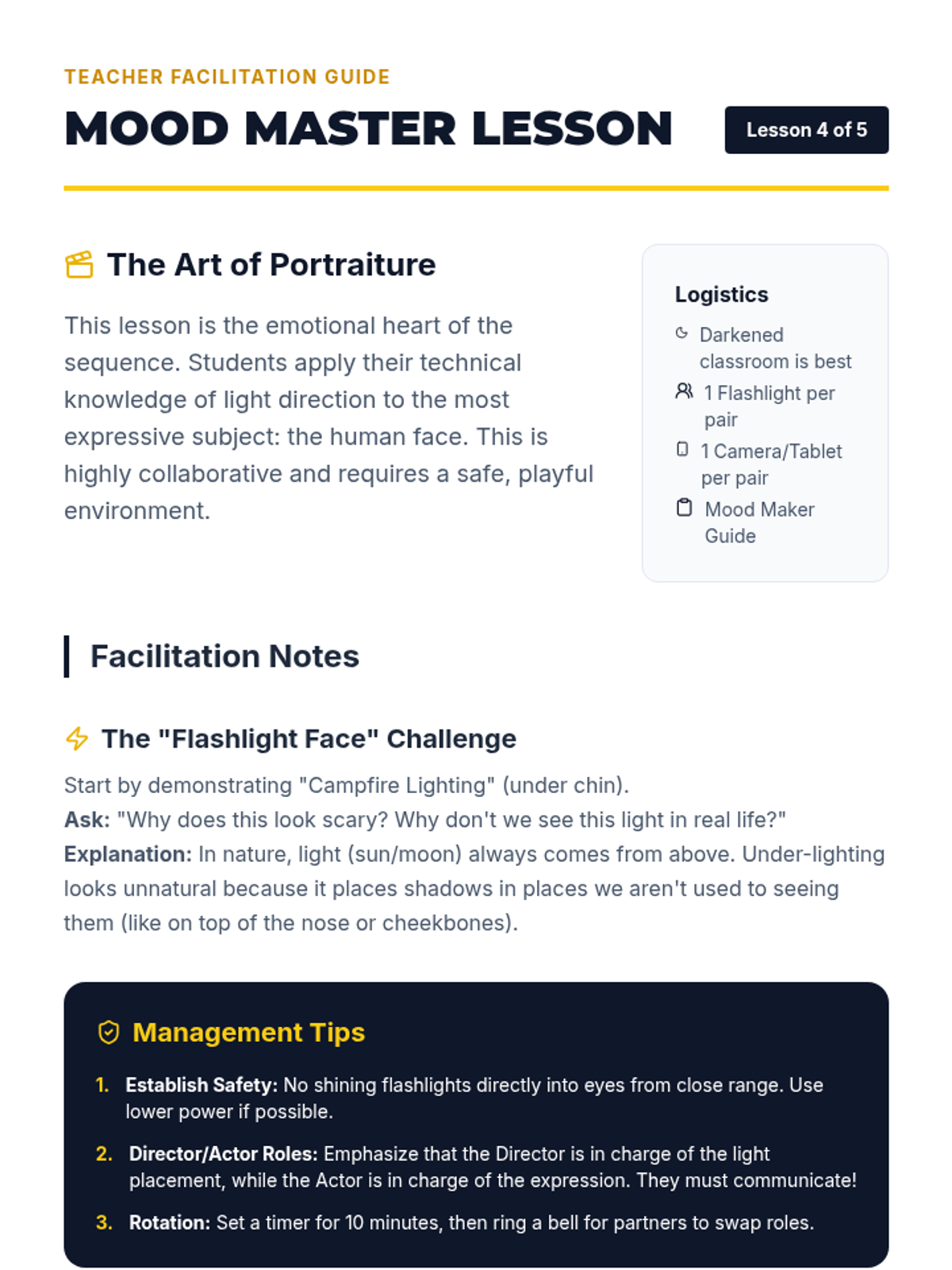
Working in partners, students use portable lights to create 'spooky', 'heroic', and 'neutral' portraits, documenting the setup used for each mood.
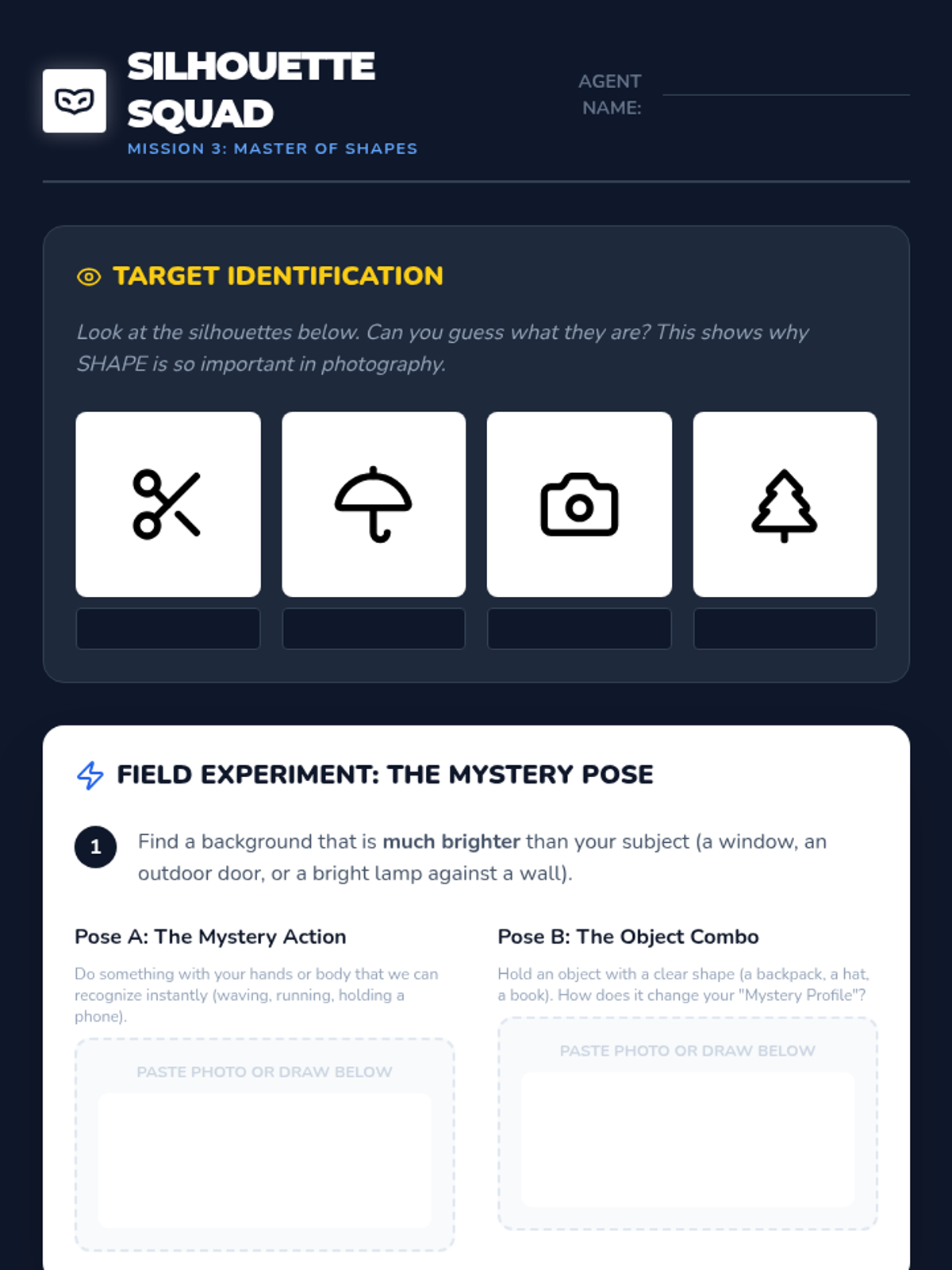
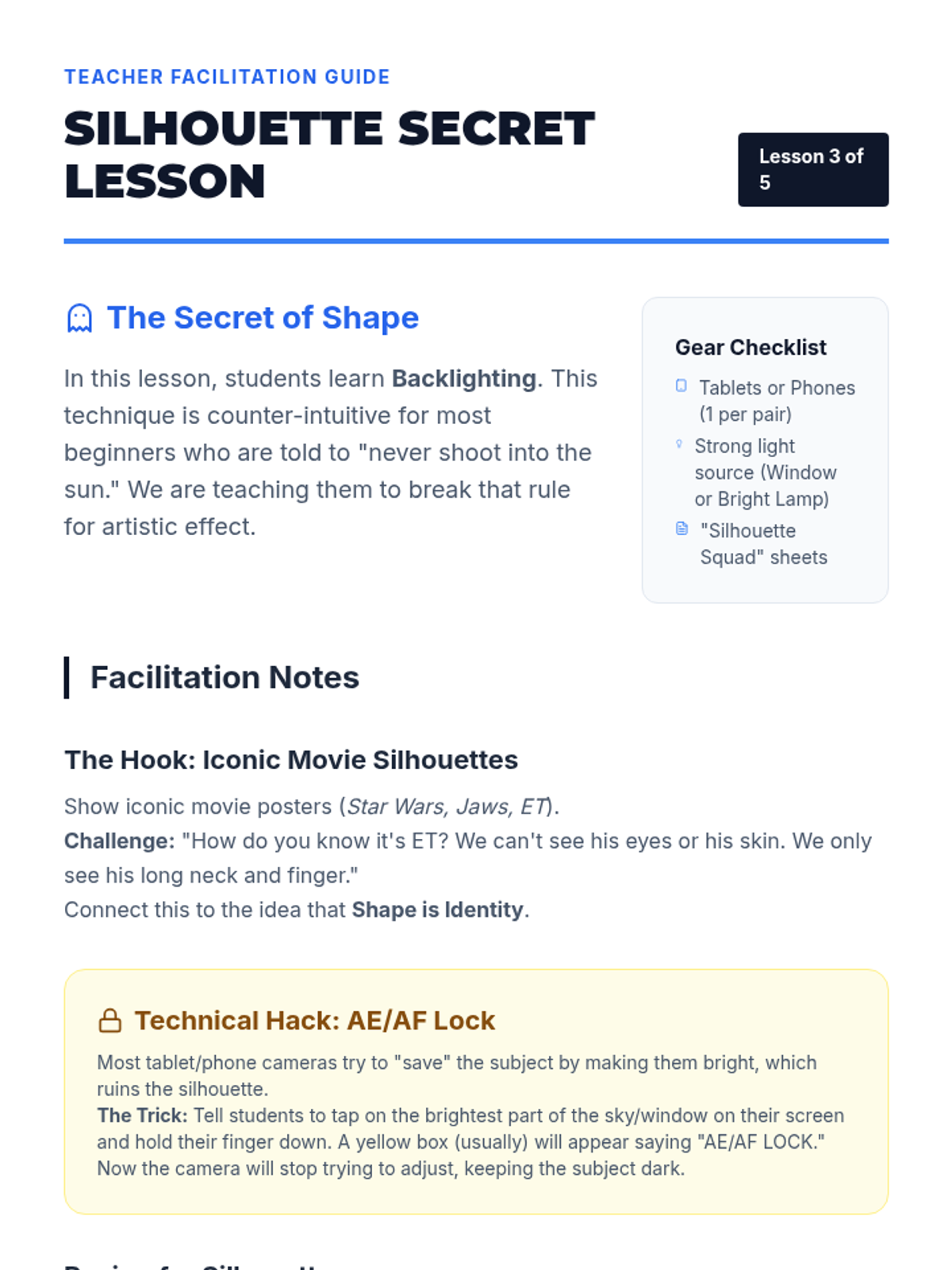
Students learn the technique of placing a subject directly in front of a light source to create a silhouette, connecting lighting technicalities with mystery.
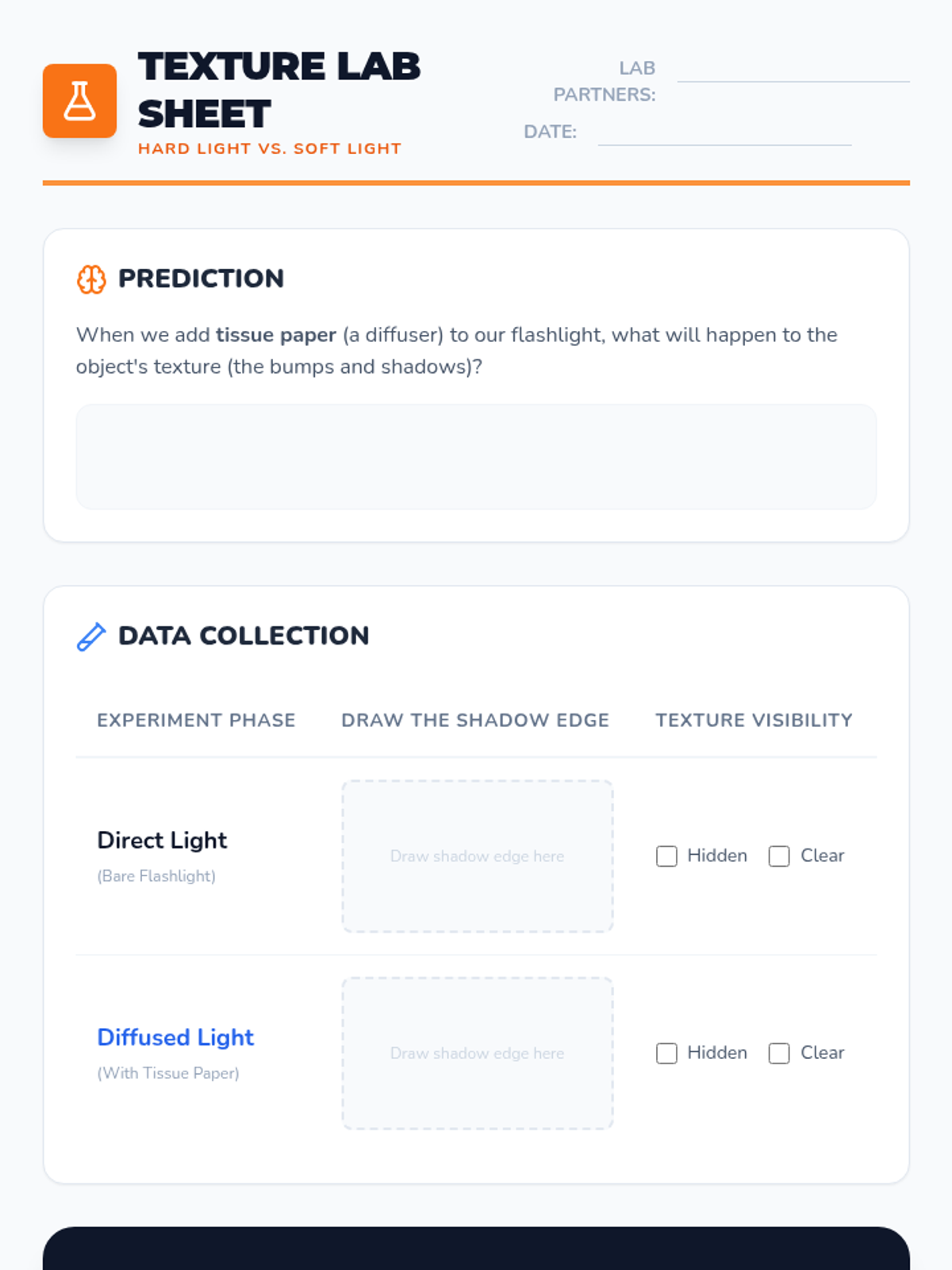
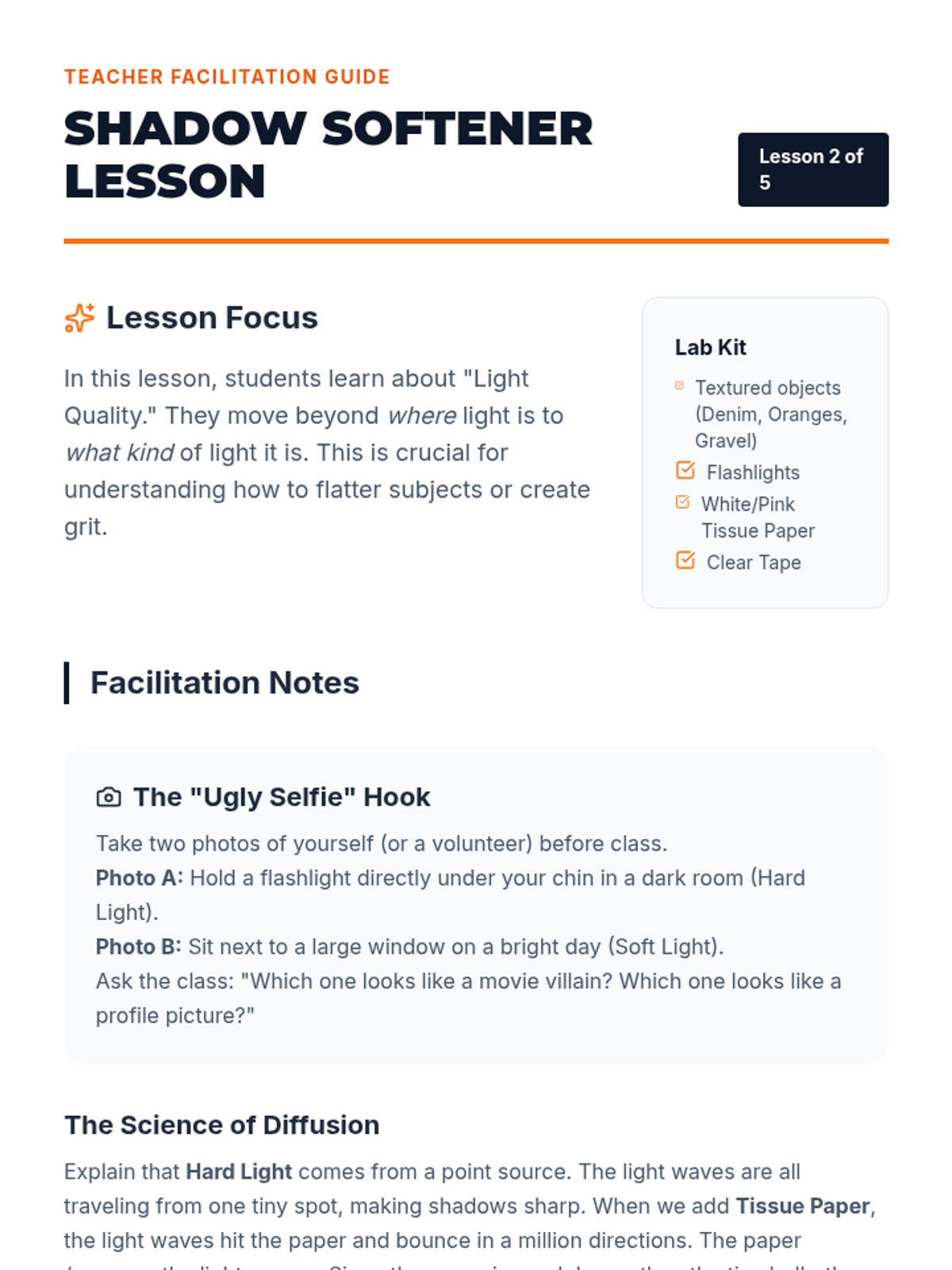
Learners experiment with direct sunlight (hard) and diffused light (soft) to see how textures are revealed or hidden using diffusers like tissue paper.
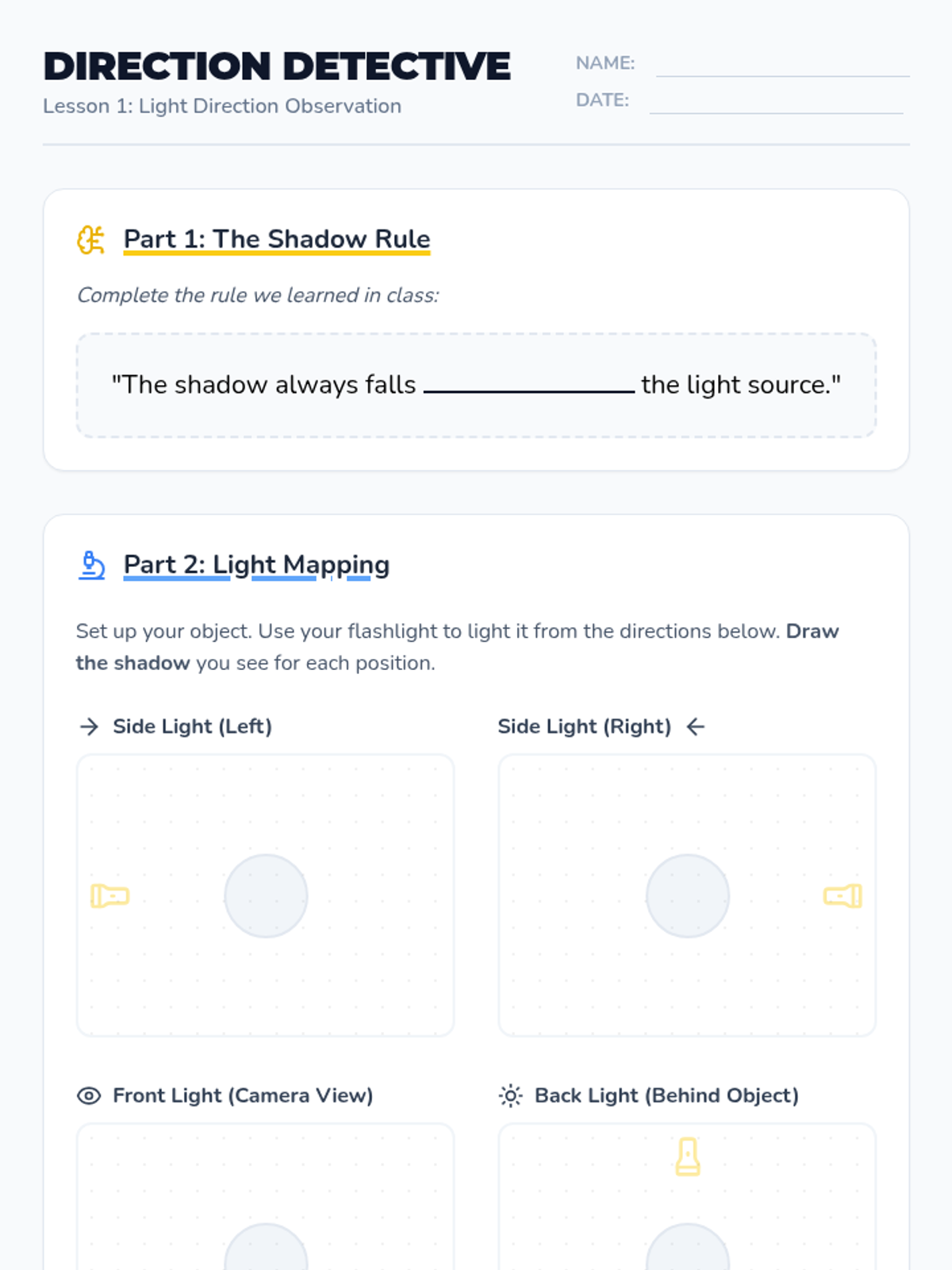
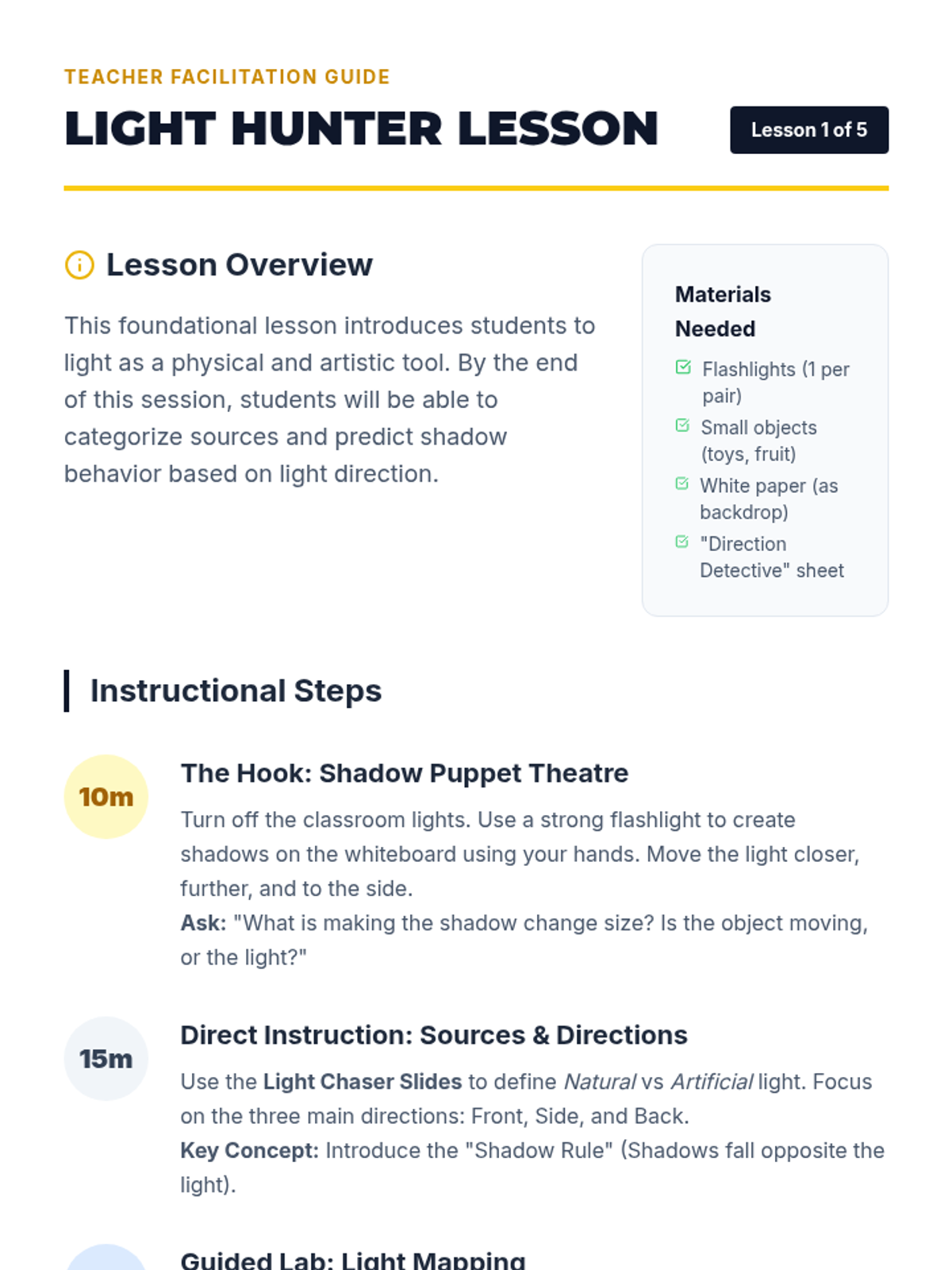
Students observe and categorize different light sources and the direction they come from (front, side, back) using a simple object to document how moving the light changes the look.
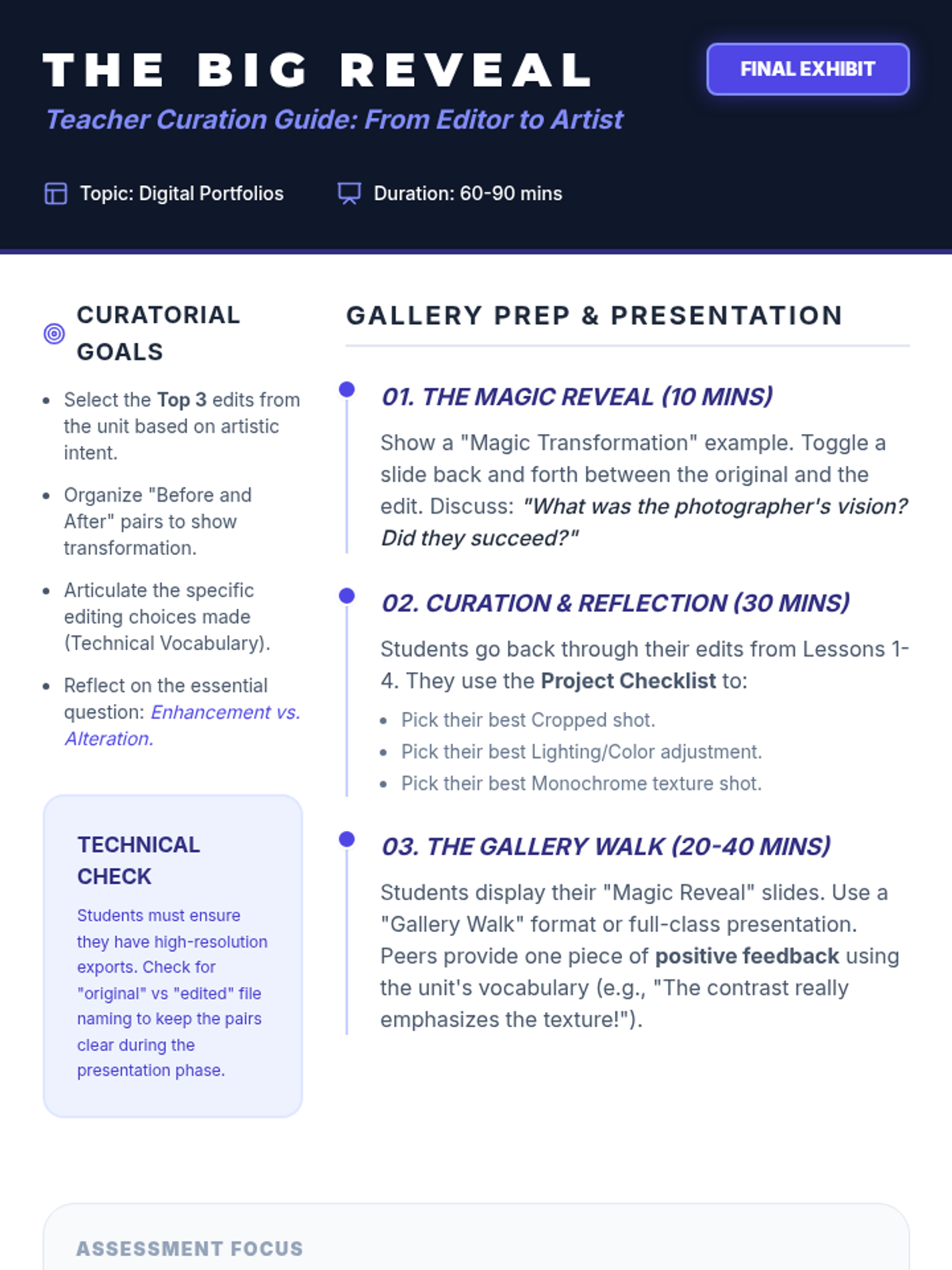
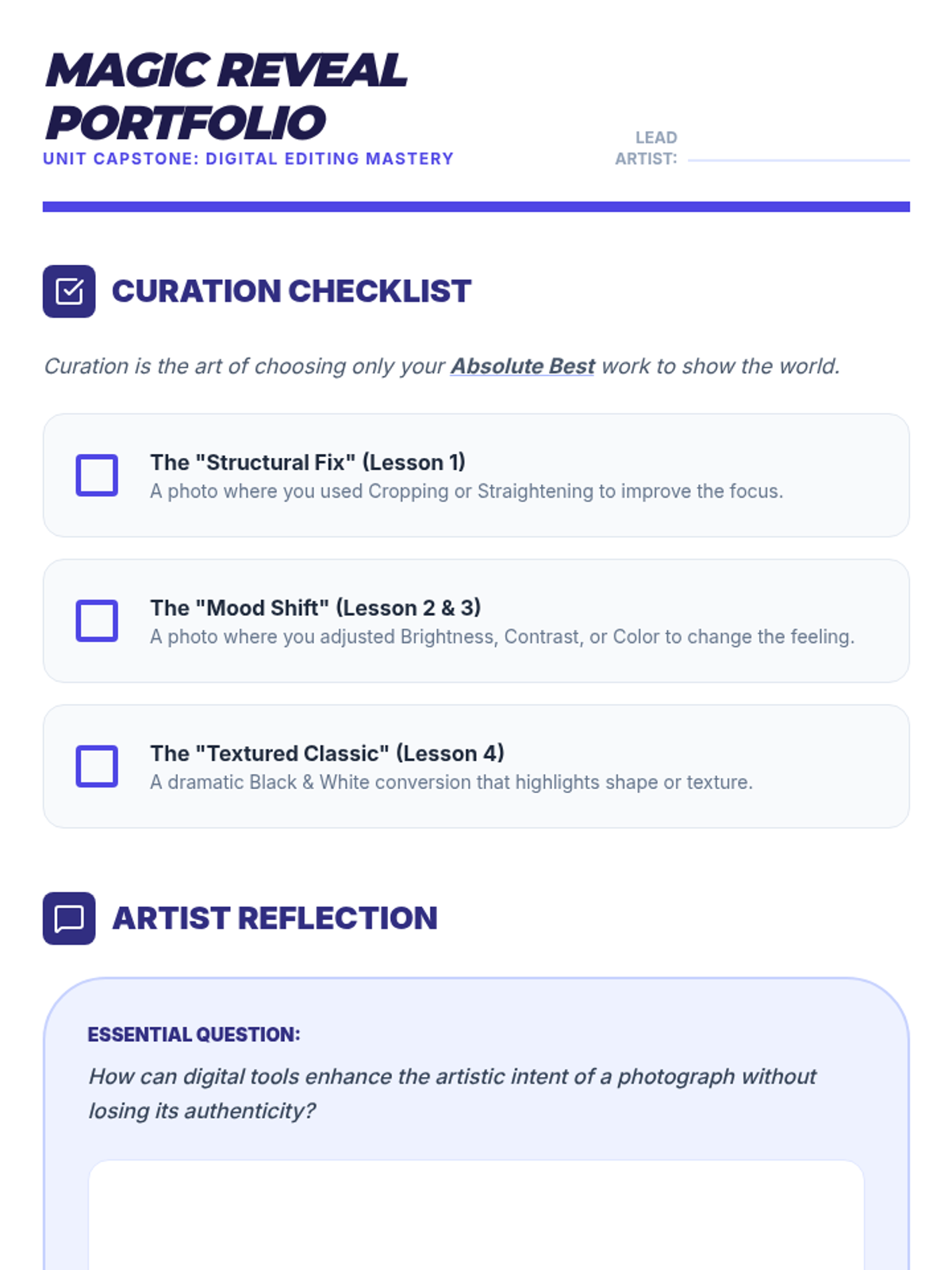
Students curate a digital portfolio of their best edits, reflecting on their transformations and presenting their final 'Magic Reveal.'
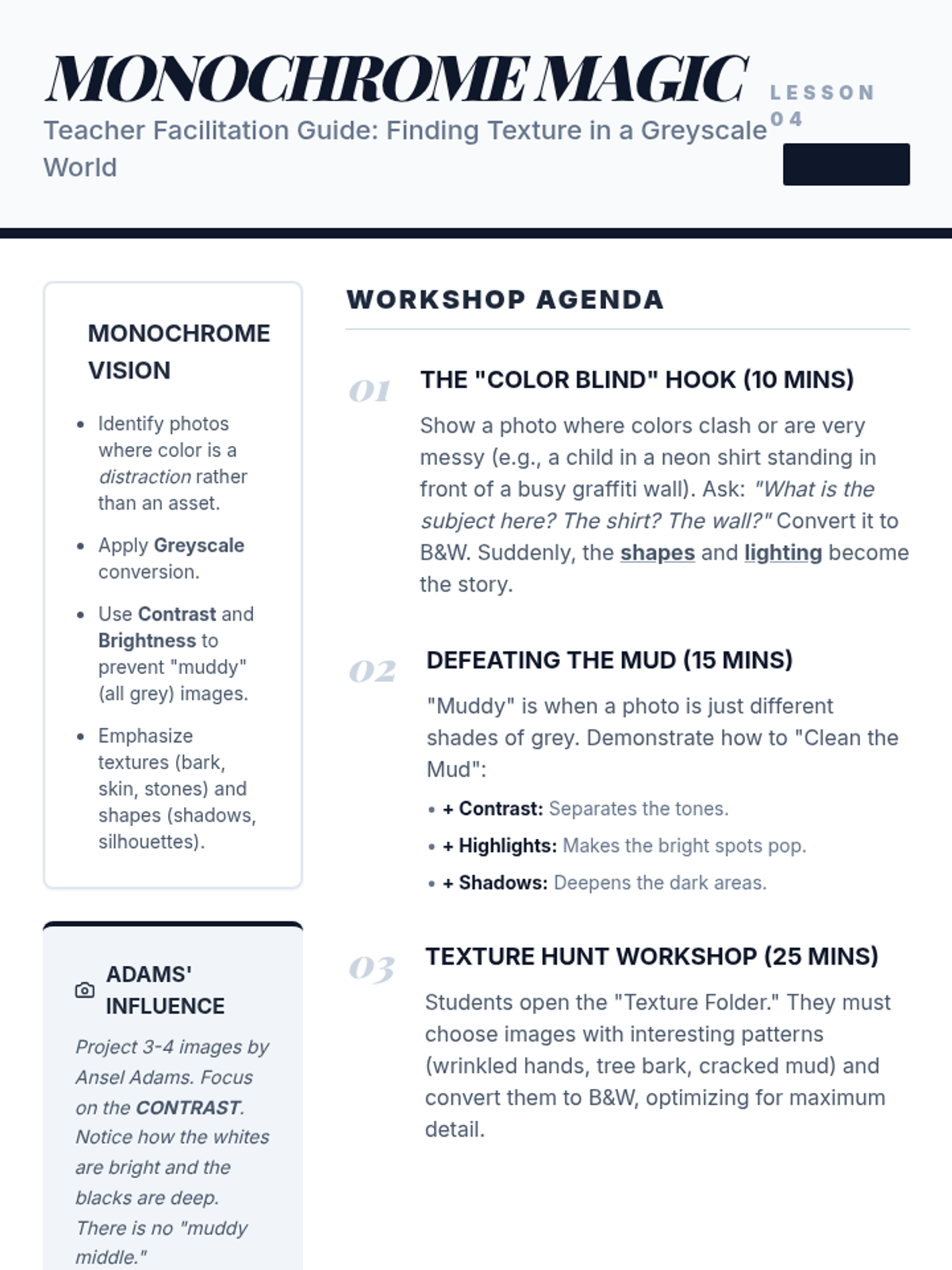
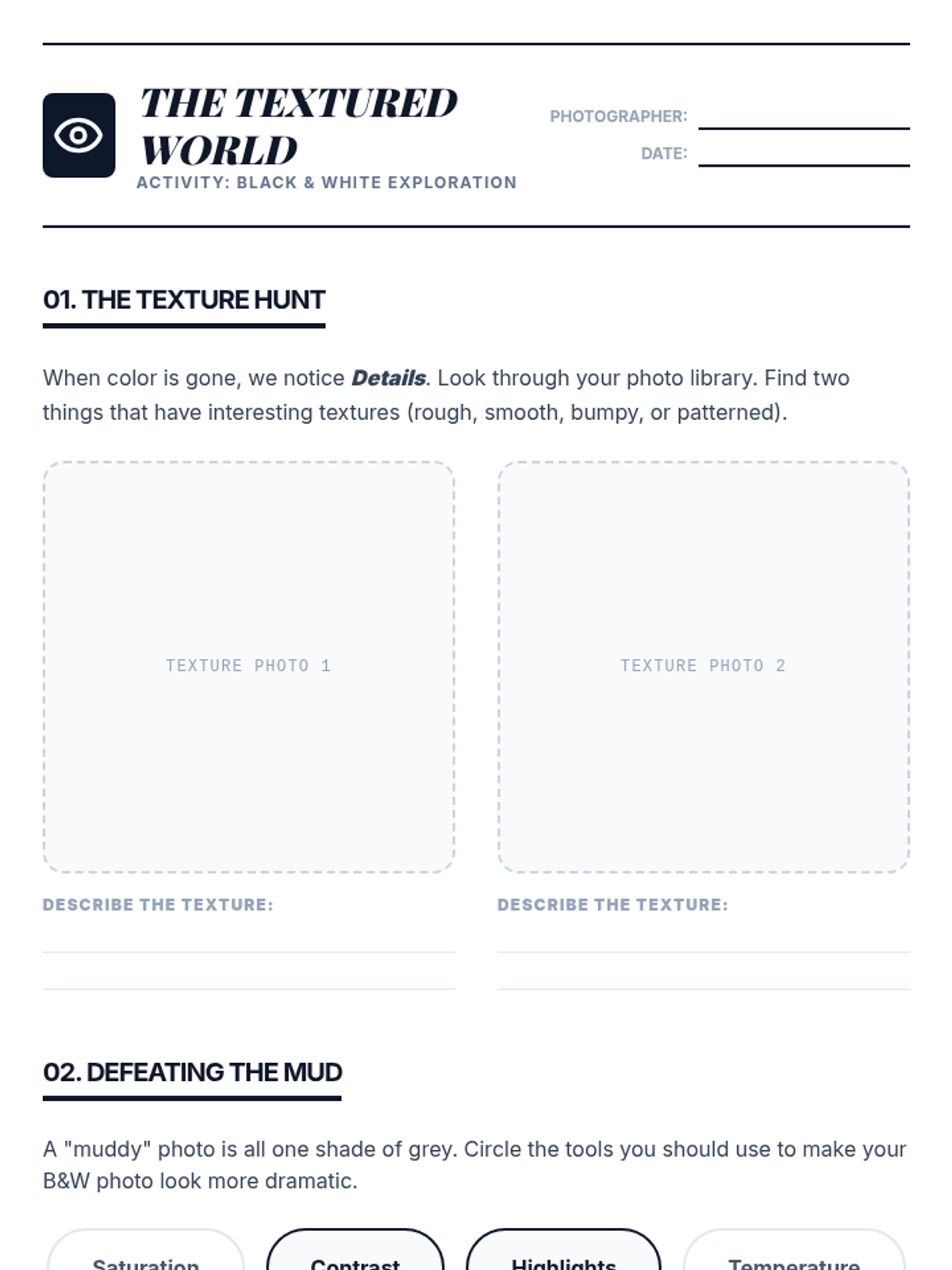
Students learn to use black and white conversion to emphasize texture and shape, inspired by the dramatic landscapes of Ansel Adams.
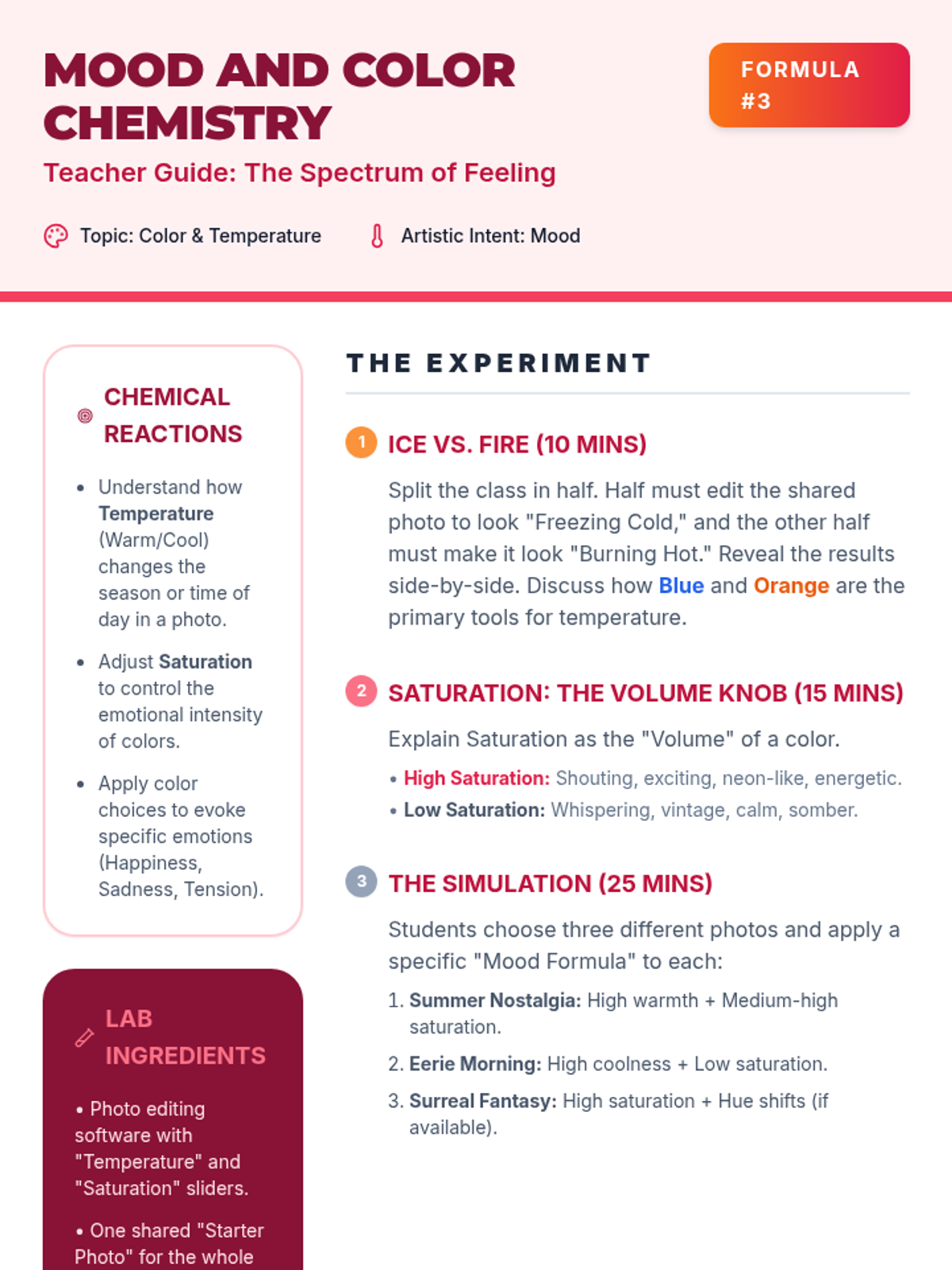
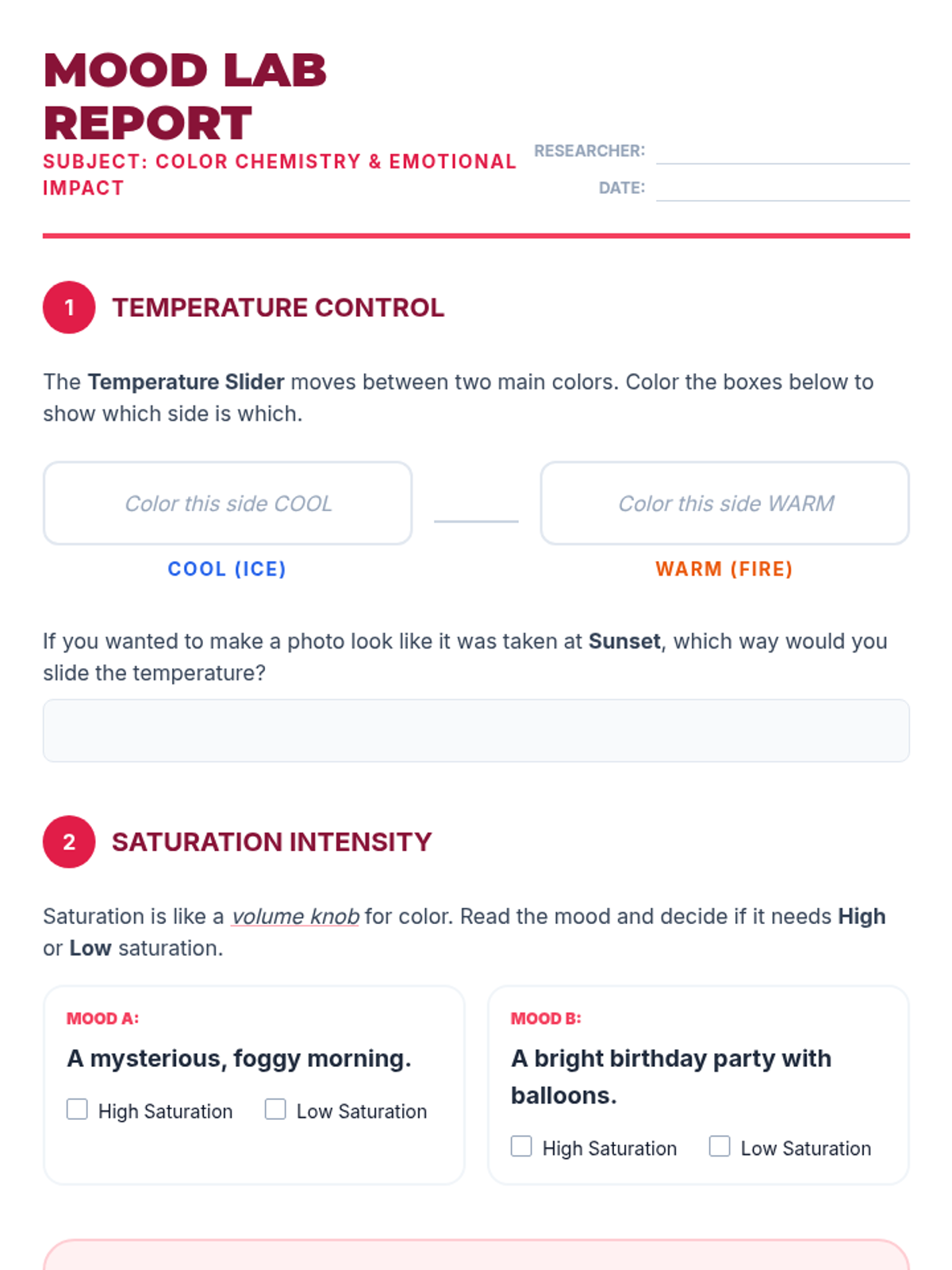
Students experiment with saturation and temperature settings to influence the mood and emotional impact of their photographs.
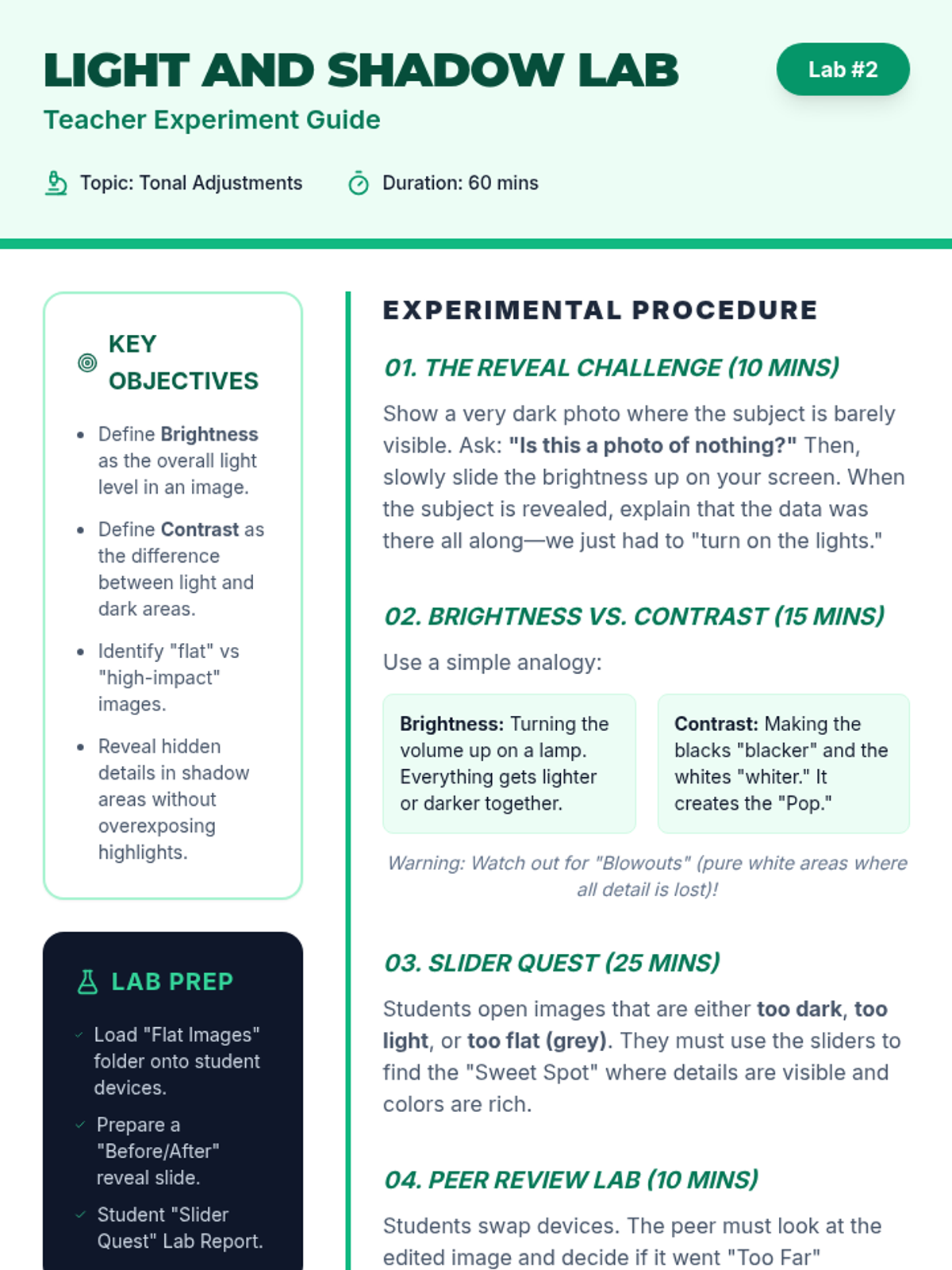
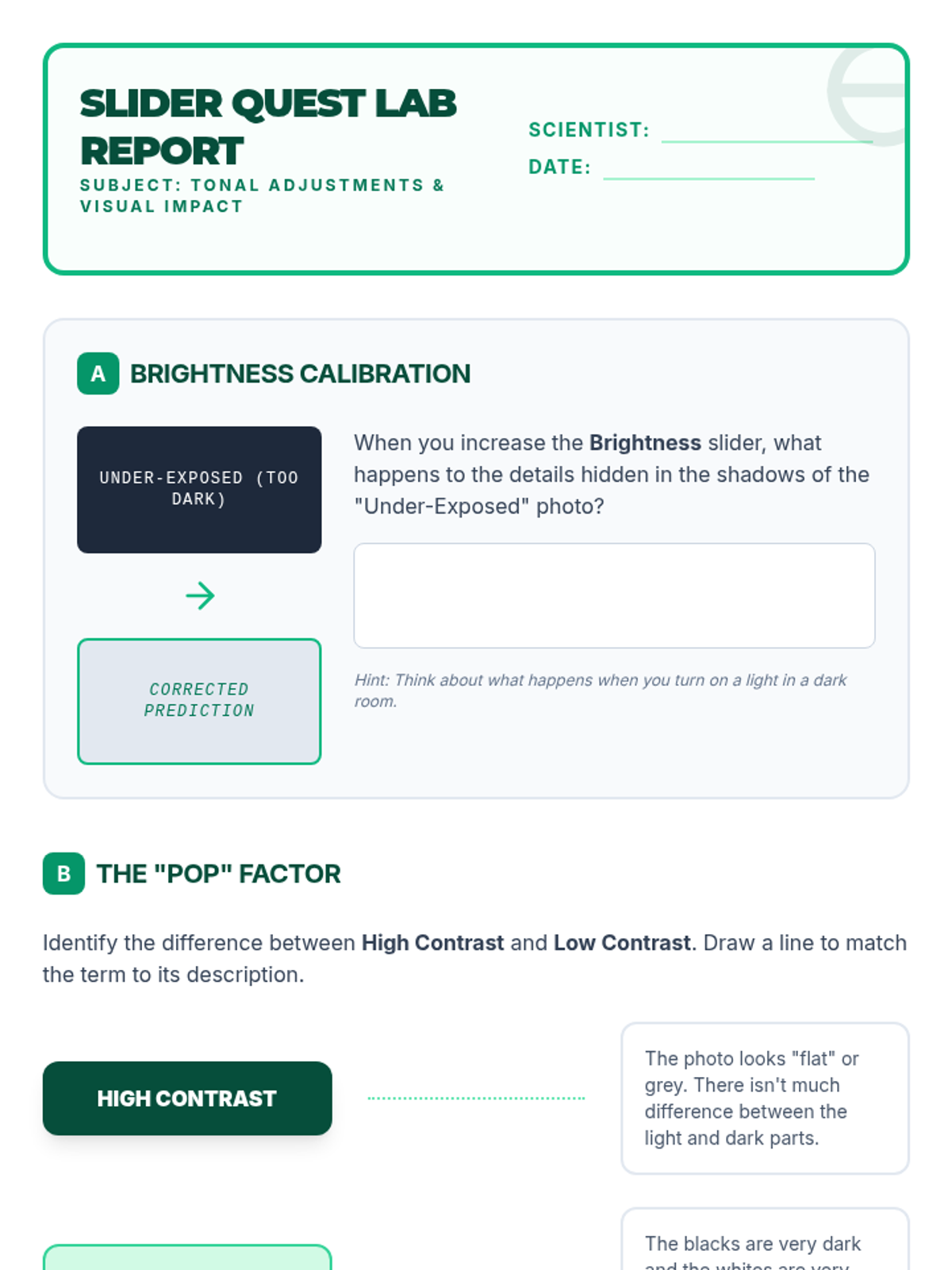
Learners explore brightness and contrast sliders to make flat images 'pop' and reveal hidden details in shadows and highlights.
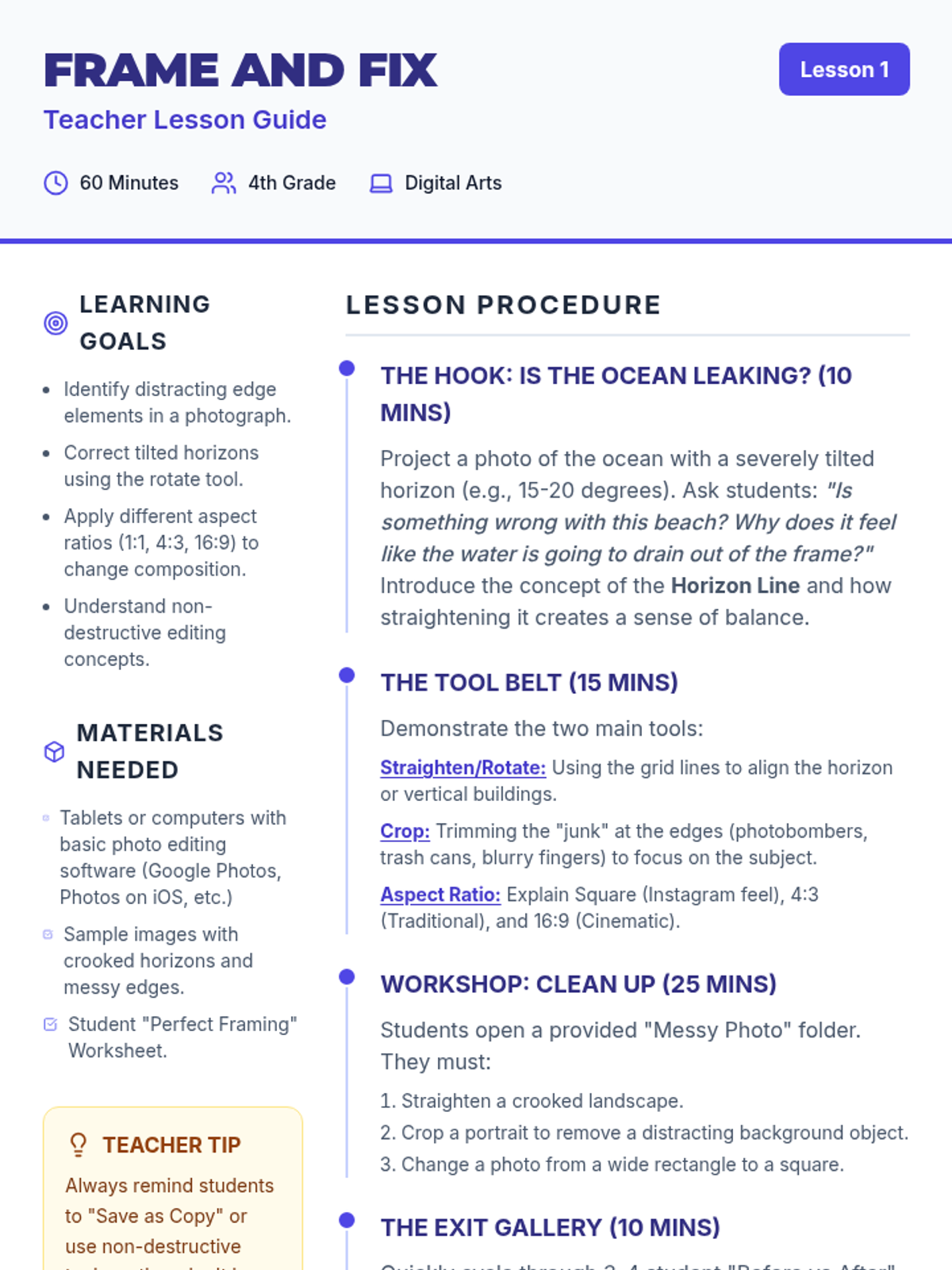
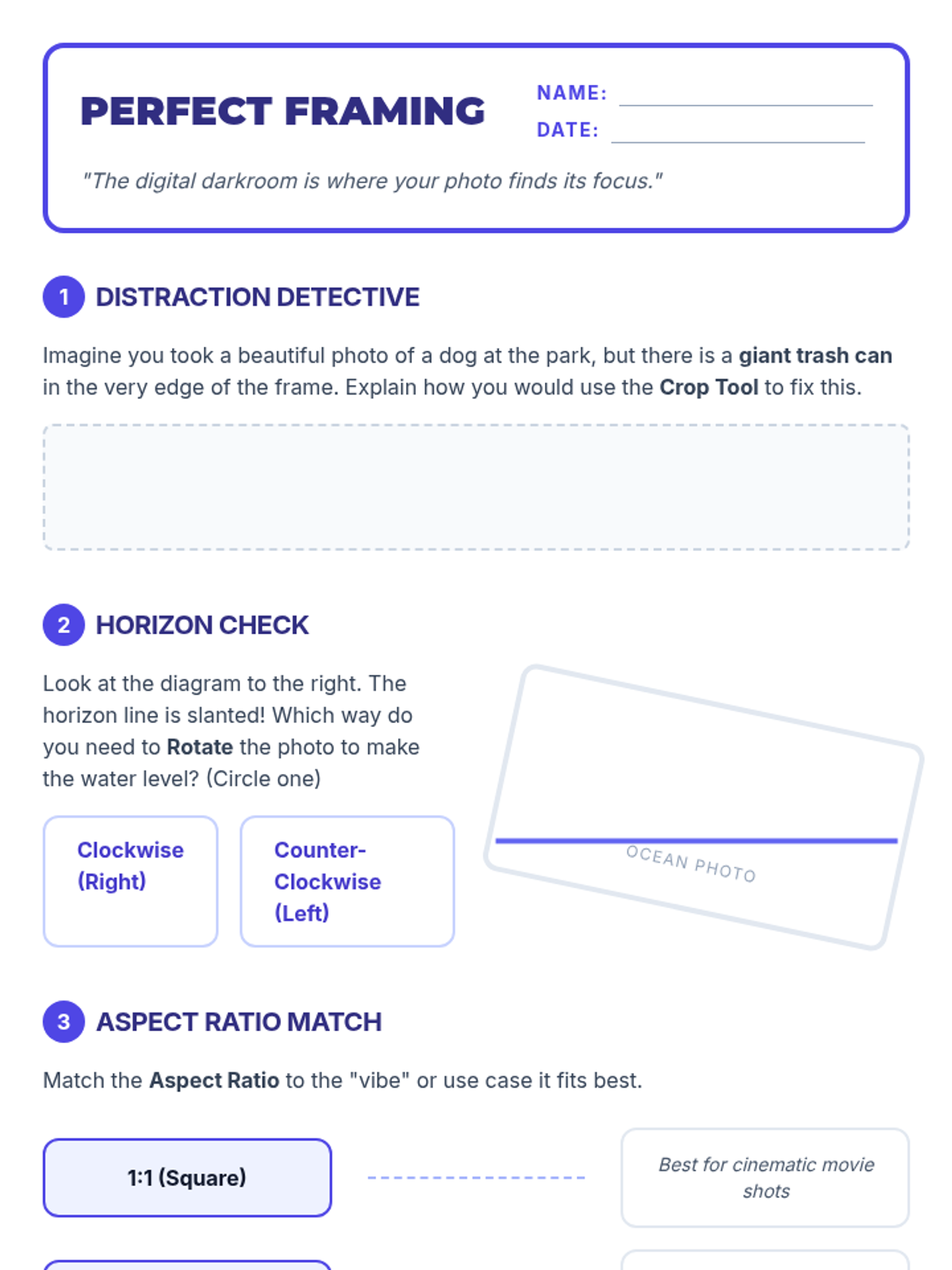
Students learn to fix crooked horizons and remove unwanted edge distractions using crop tools, exploring how aspect ratios change the feel of an image.
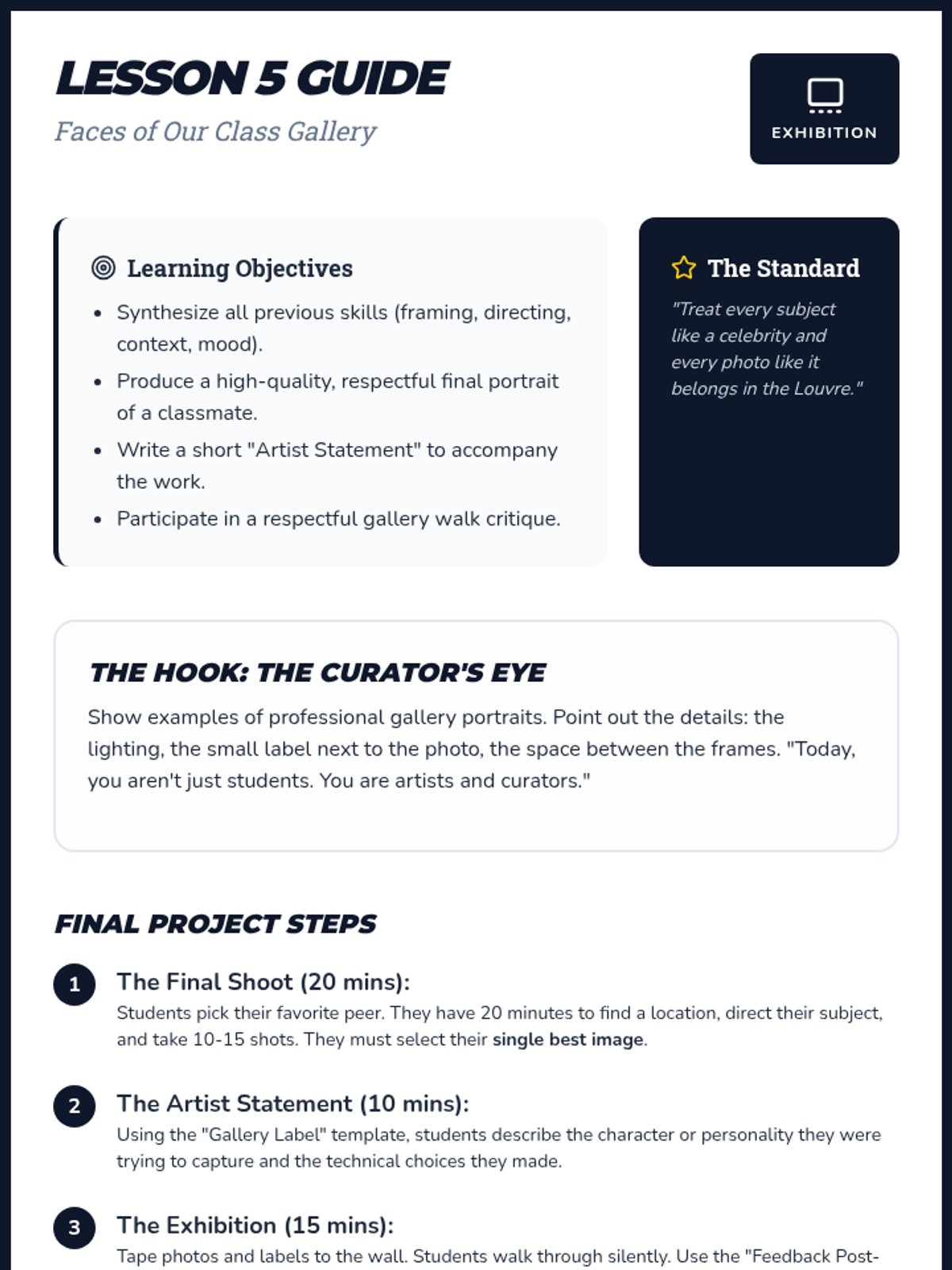
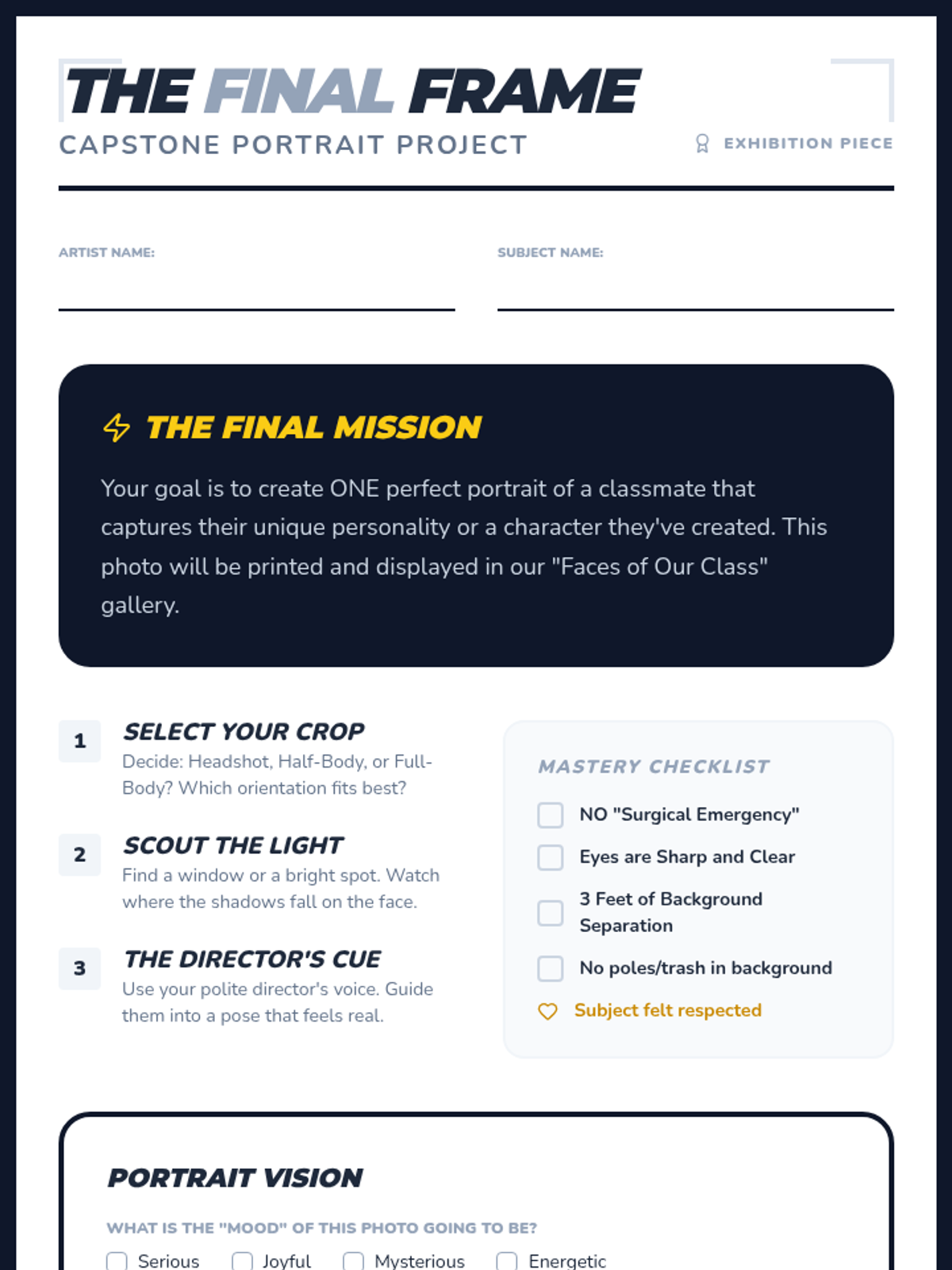
The capstone lesson where students apply all previous skills to create a final, respectful portrait of a classmate for a formal classroom gallery exhibition.
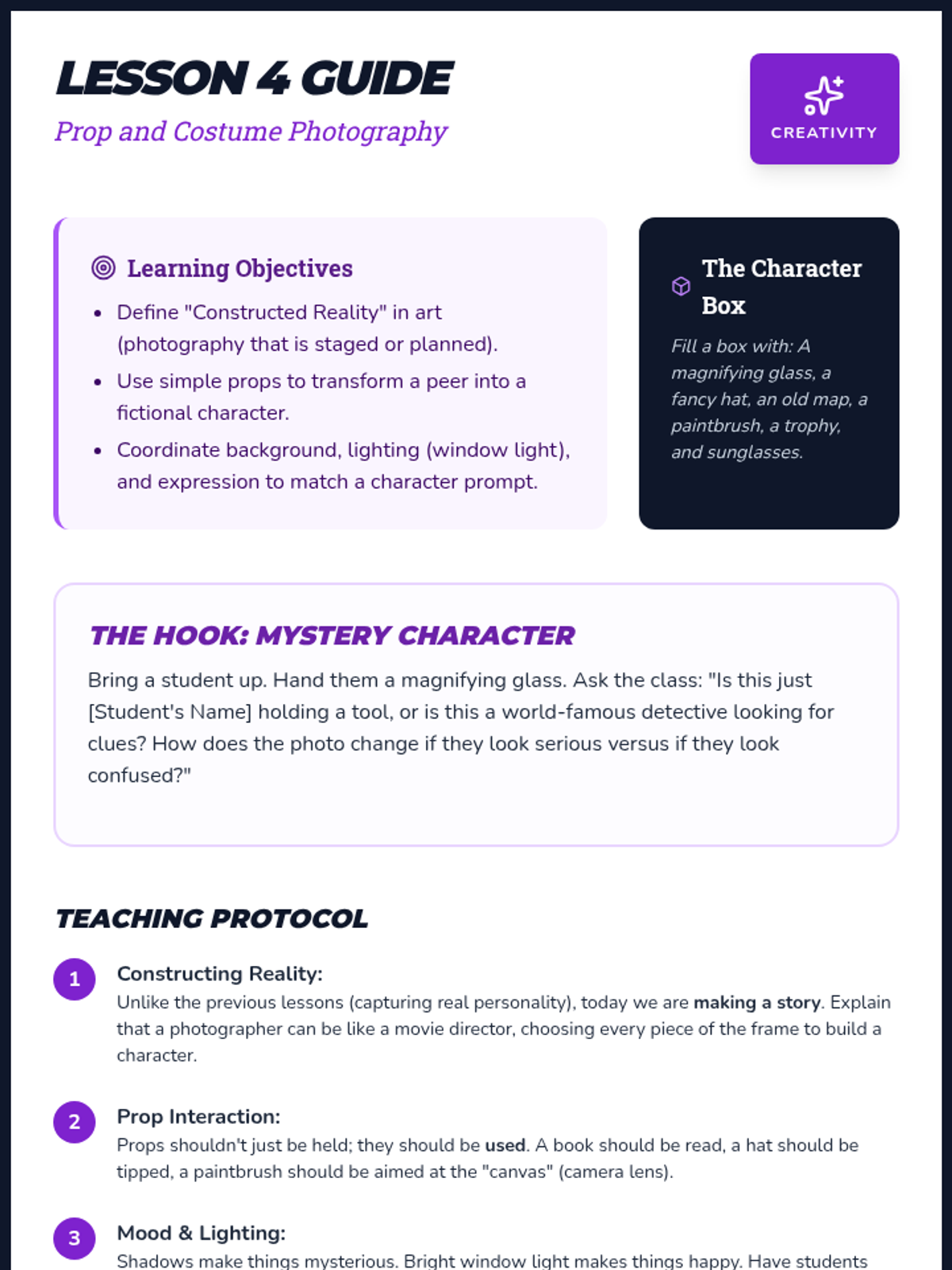
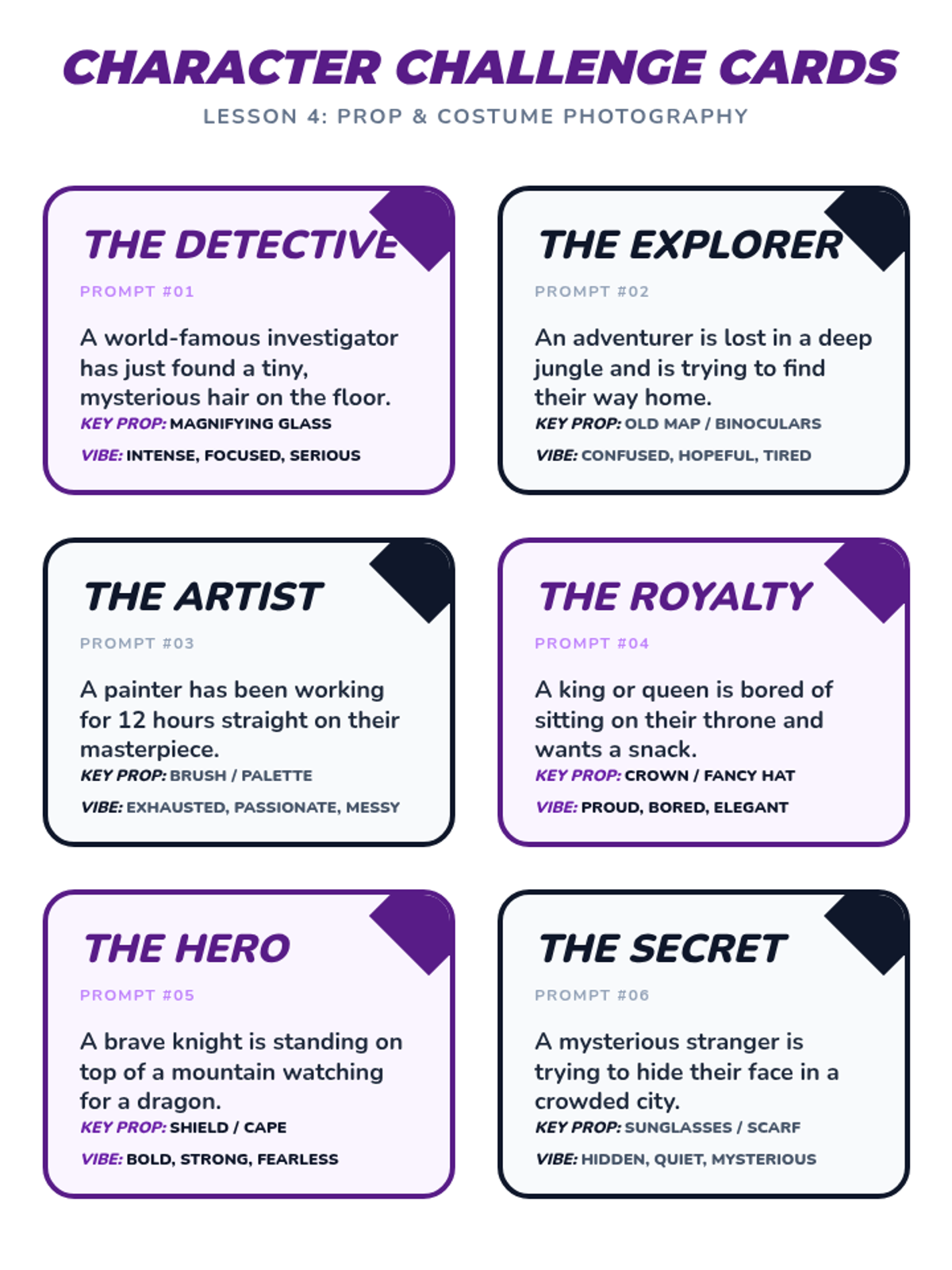
Using props and costumes, students create fictional character portraits, learning about constructed reality and creative storytelling in photography.
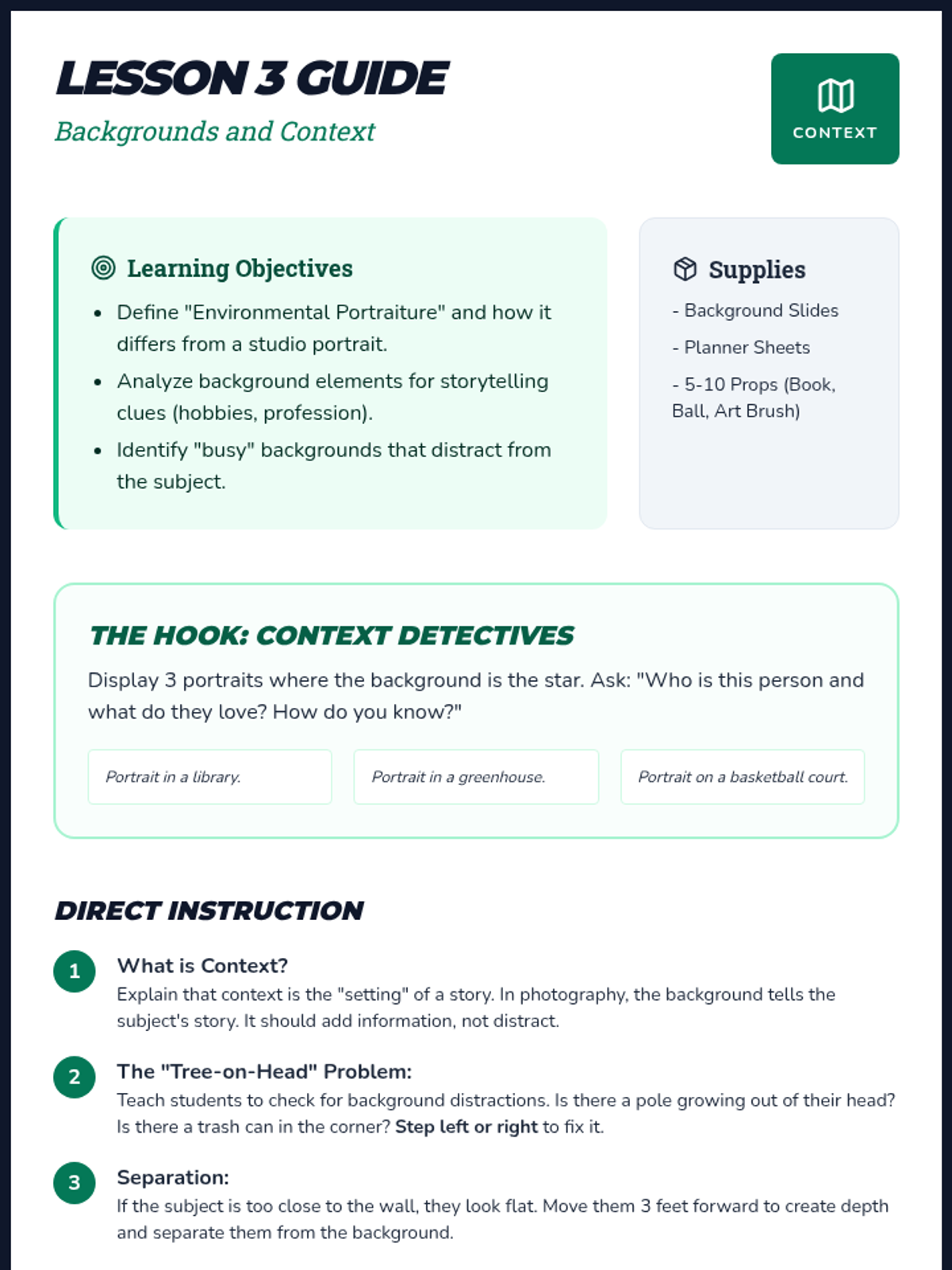
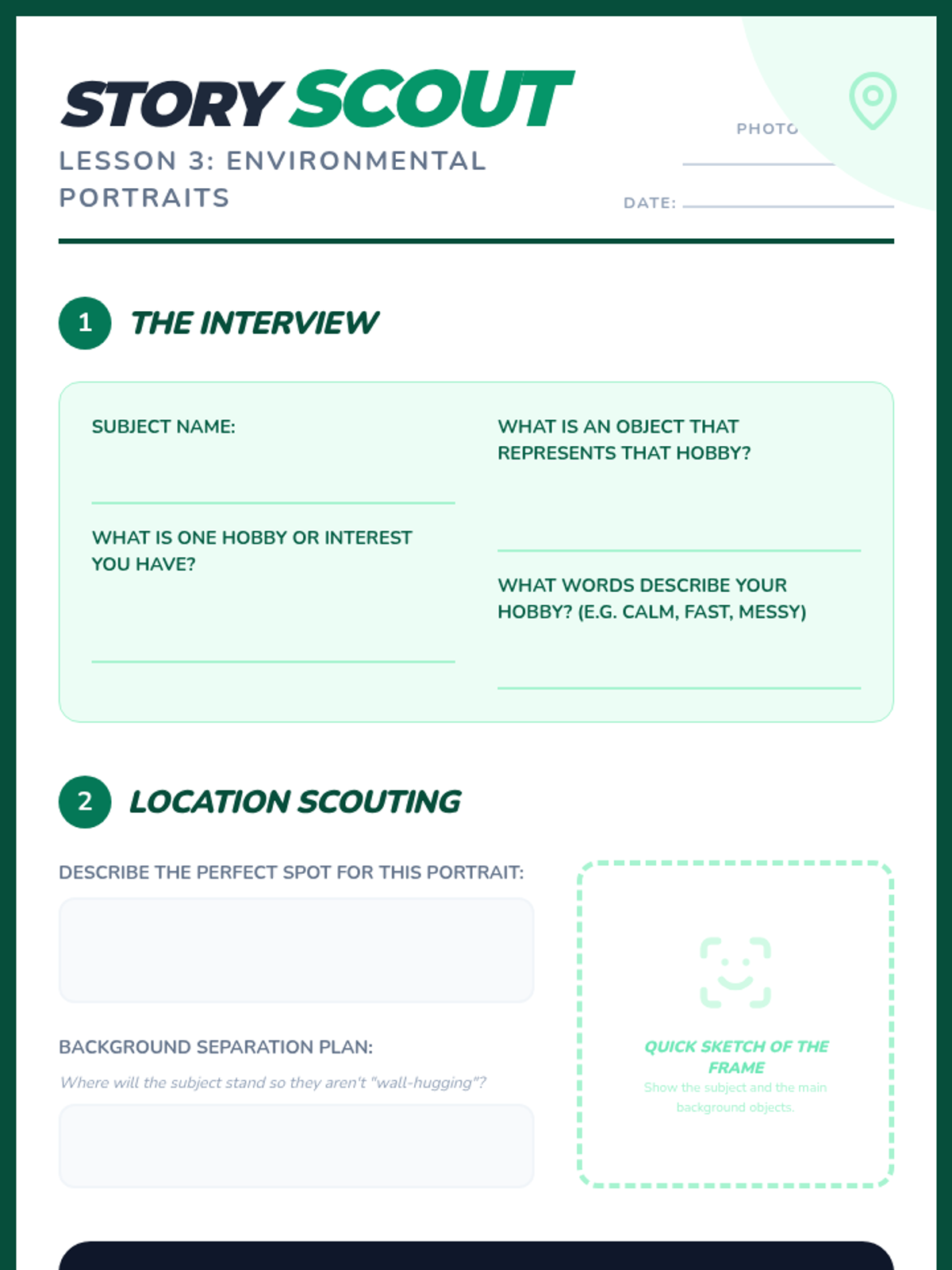
Students experiment with environmental portraits, exploring how backgrounds provide context and tell stories about the subject's hobbies or interests.
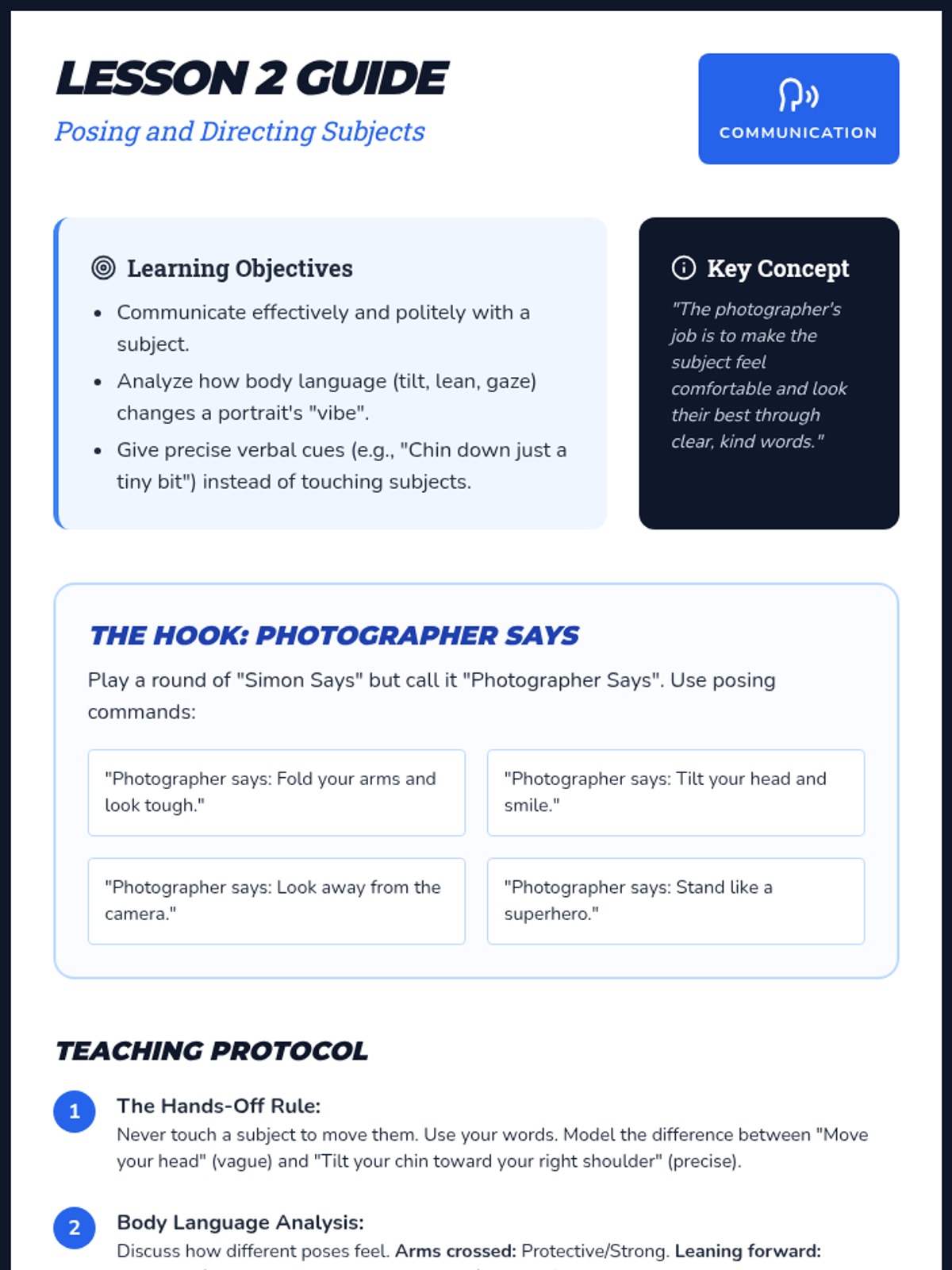
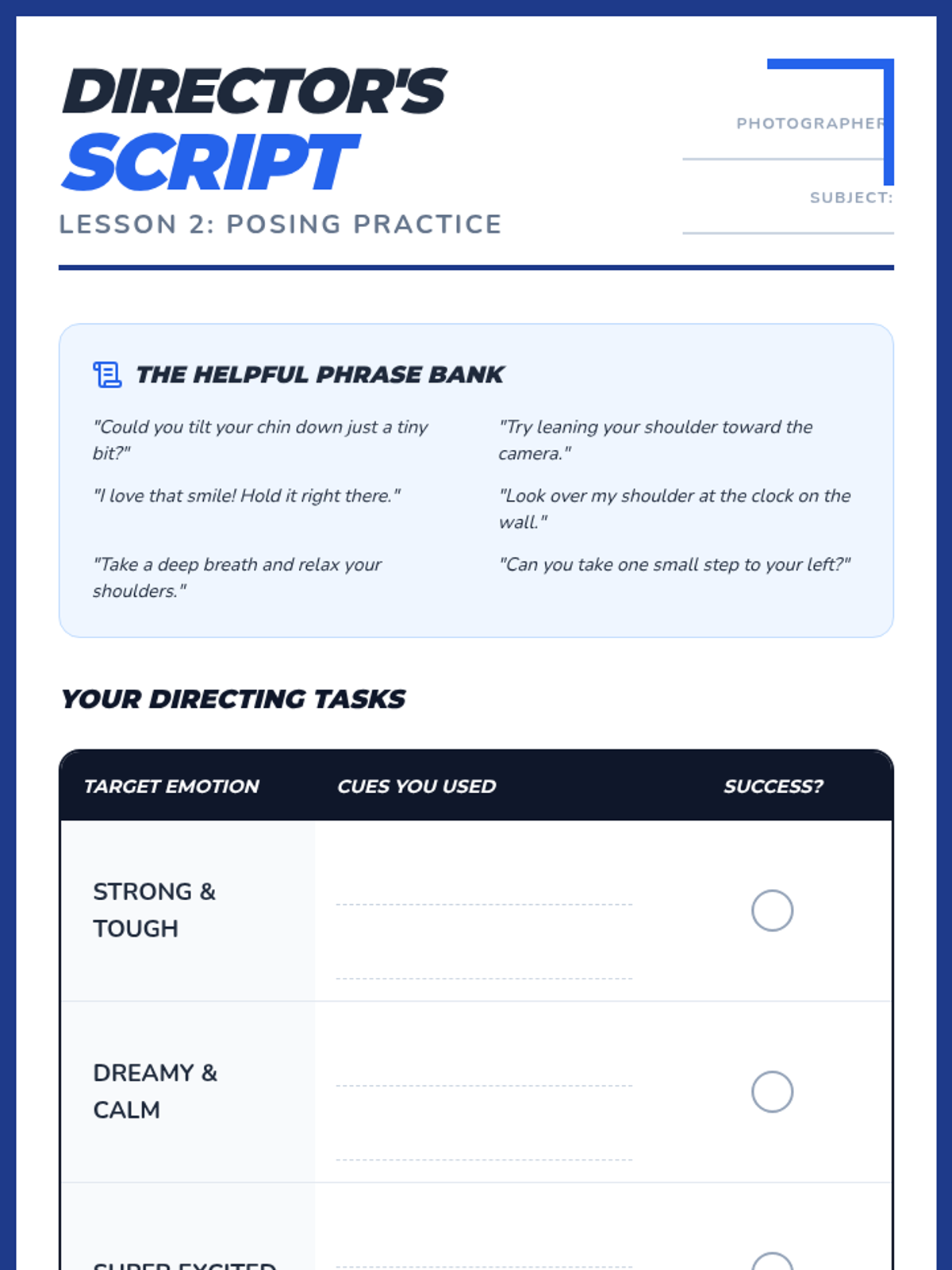
Learners practice giving clear, polite verbal directions to subjects and analyze how body language communicates personality. Includes the 'Photographer Says' game to practice directing.
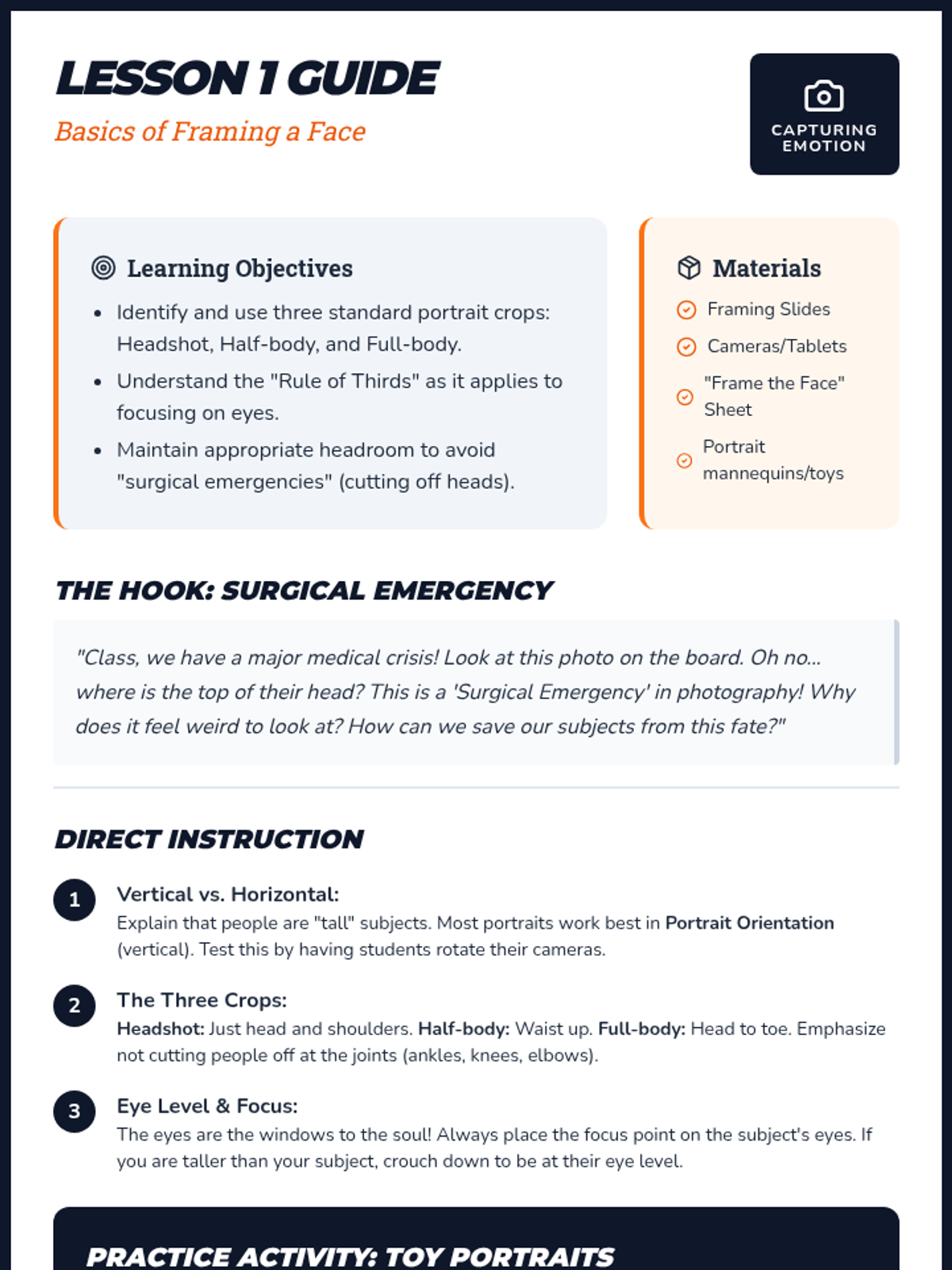
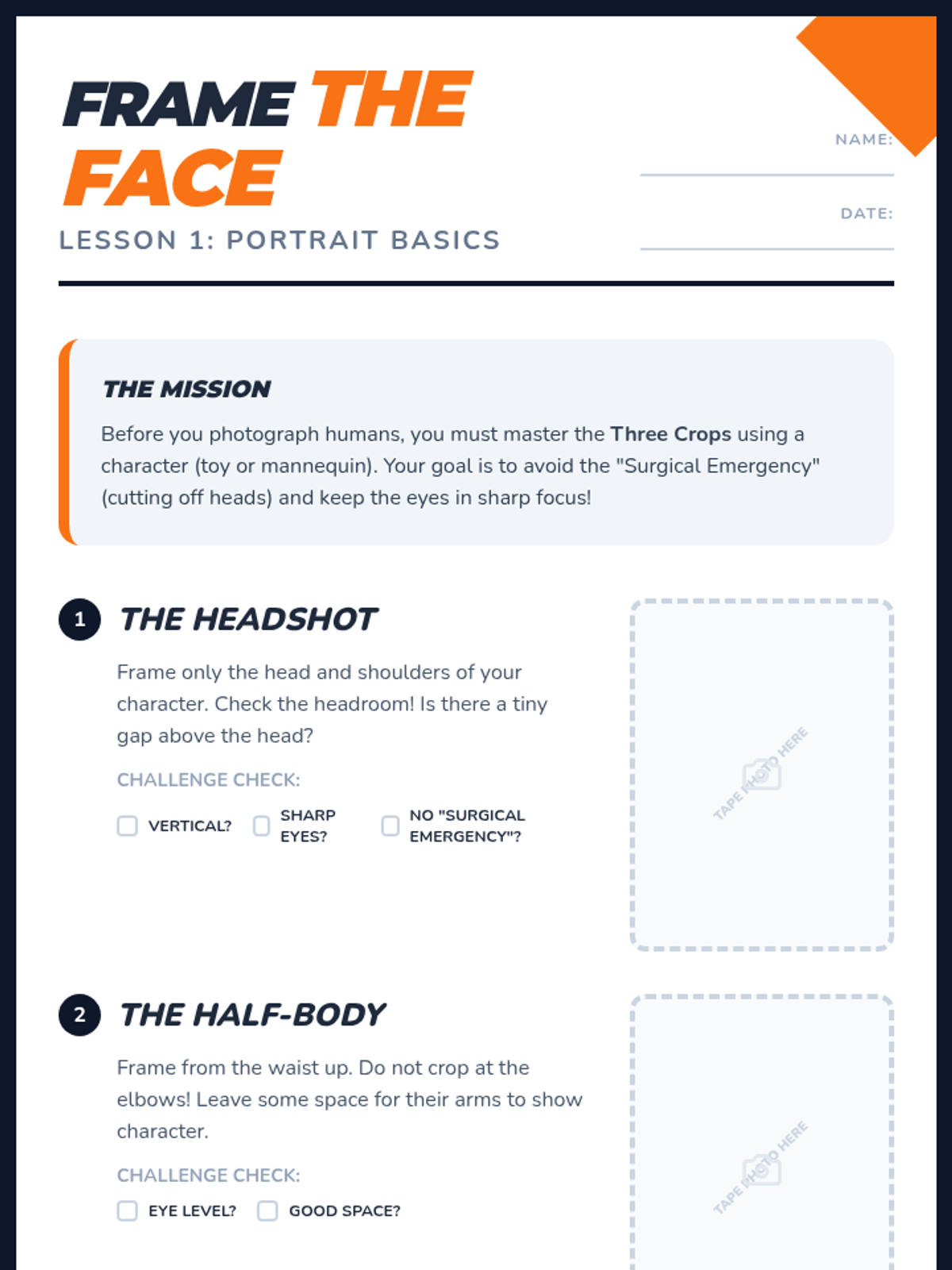
Students learn standard portrait crops (headshot, half-body, full-body) and the importance of headroom and eye focus. They explore vertical vs. horizontal orientation to best capture human subjects.
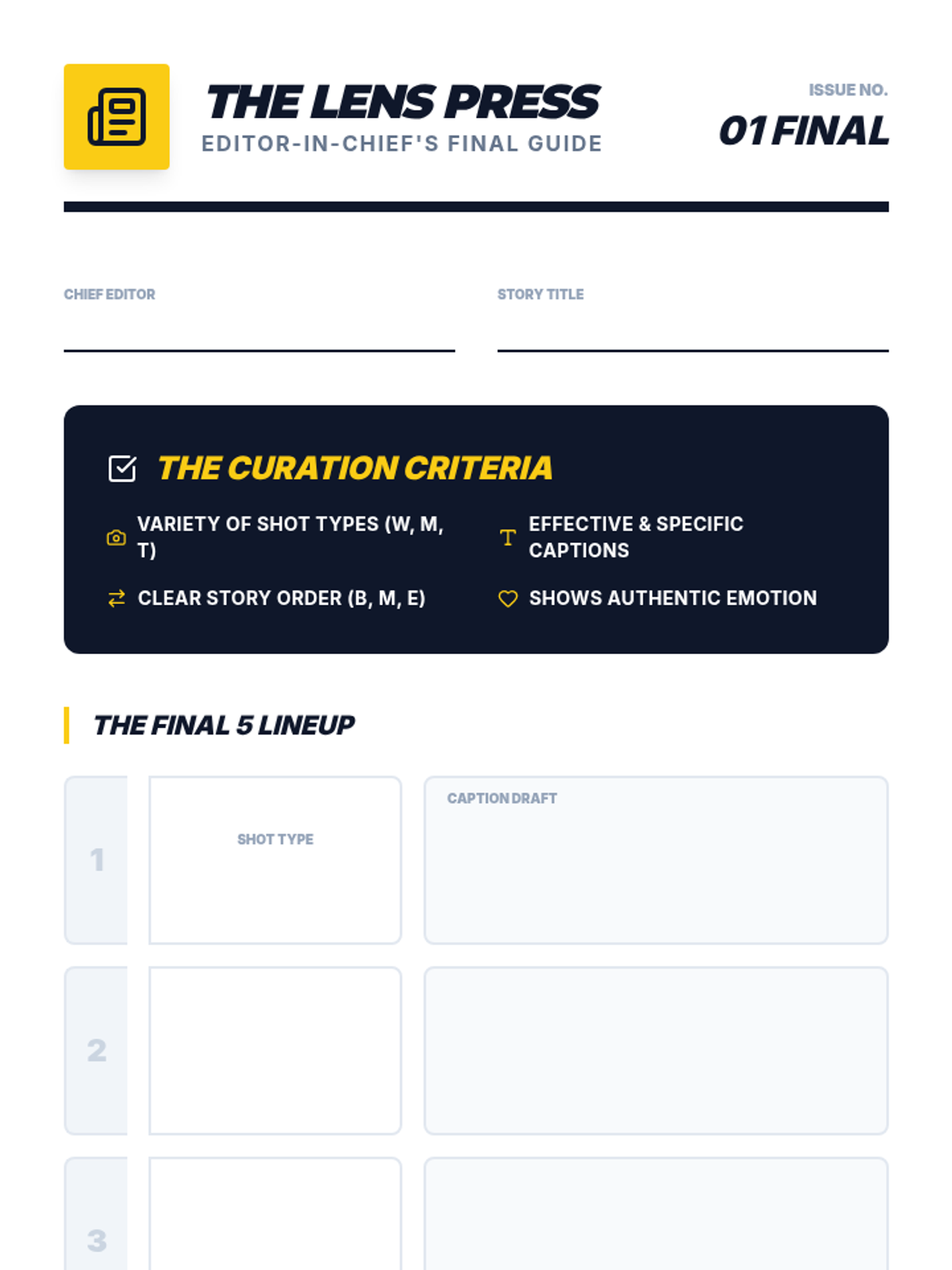
The culmination of the unit where students curate their best work into a final photo essay with captions and a clear narrative flow.
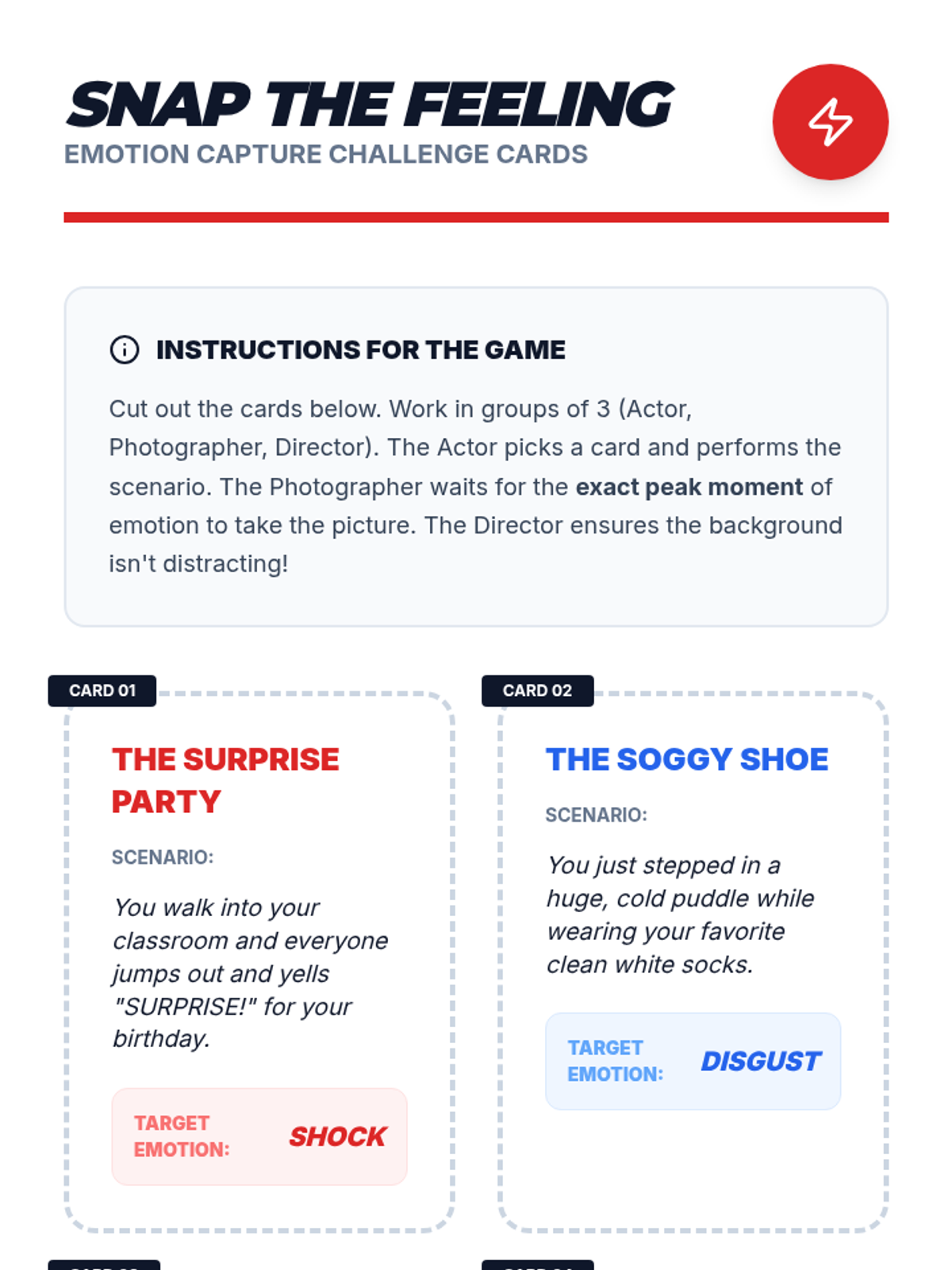
Focuses on capturing authentic human emotion and reactions by anticipating moments rather than posing subjects.
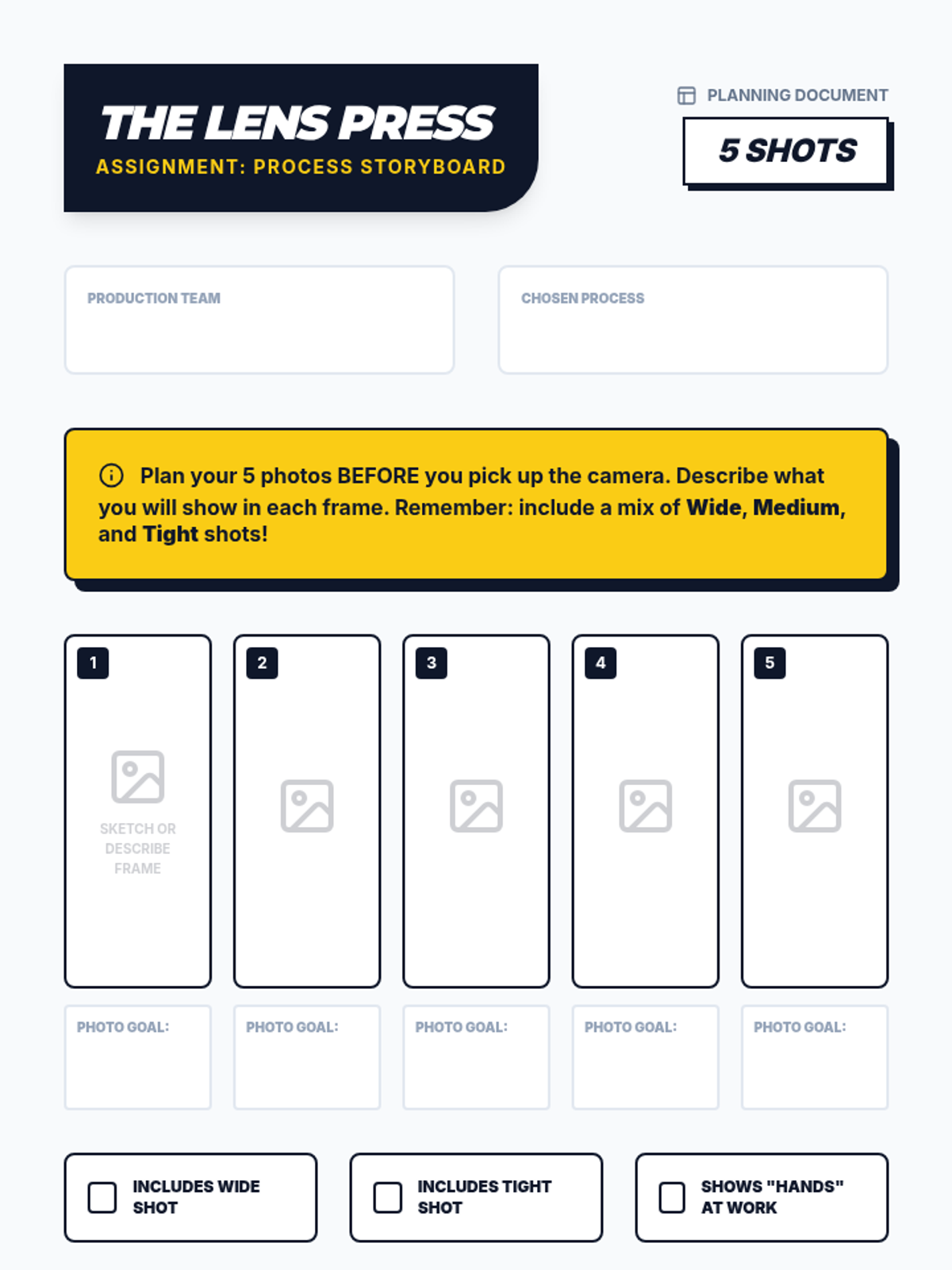
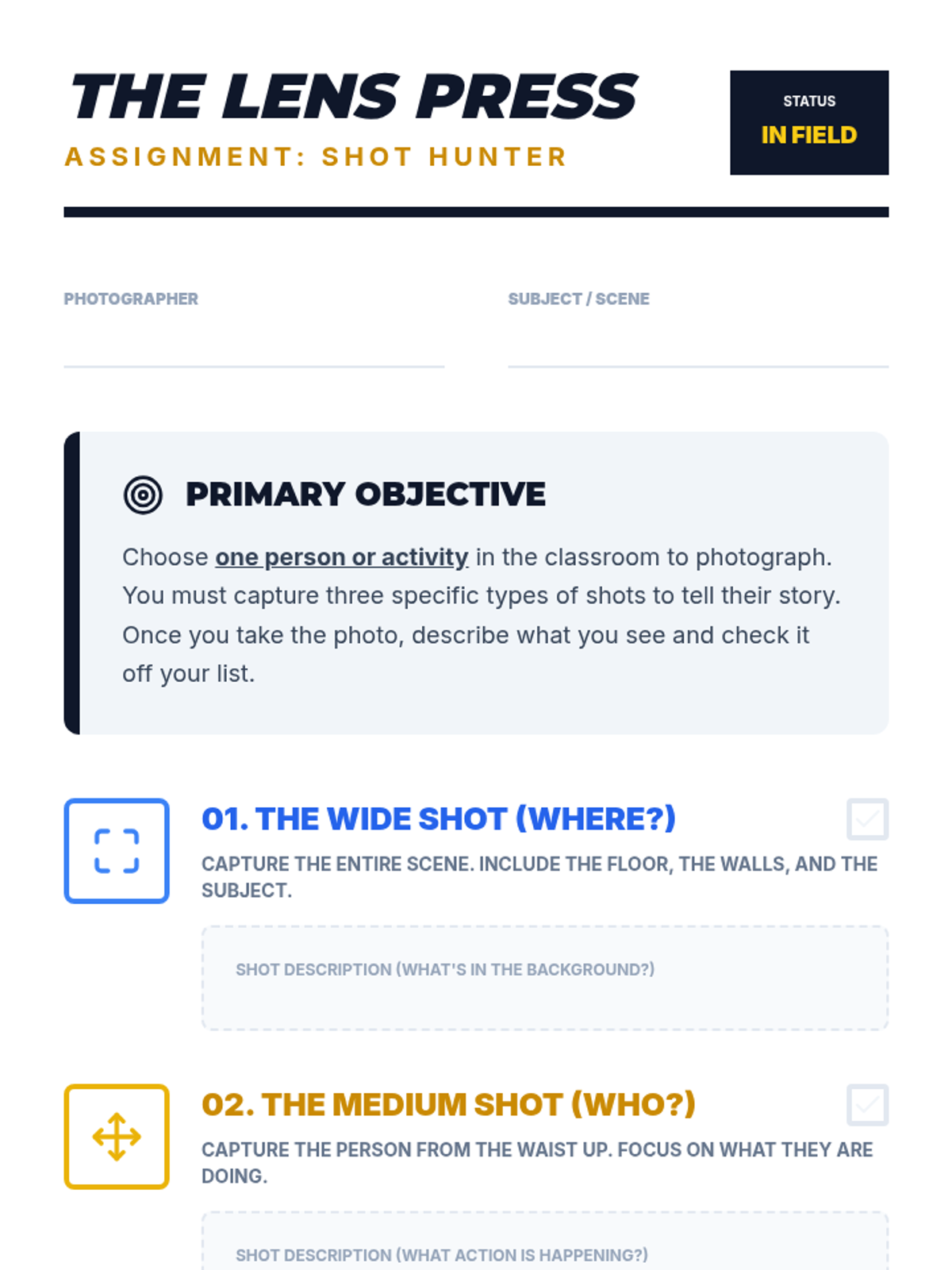
Students practice sequencing by documenting a simple classroom task through a series of 3-5 purposeful photographs.
Introduces the 'Wide, Medium, Tight' formula to provide visual variety and depth in storytelling.
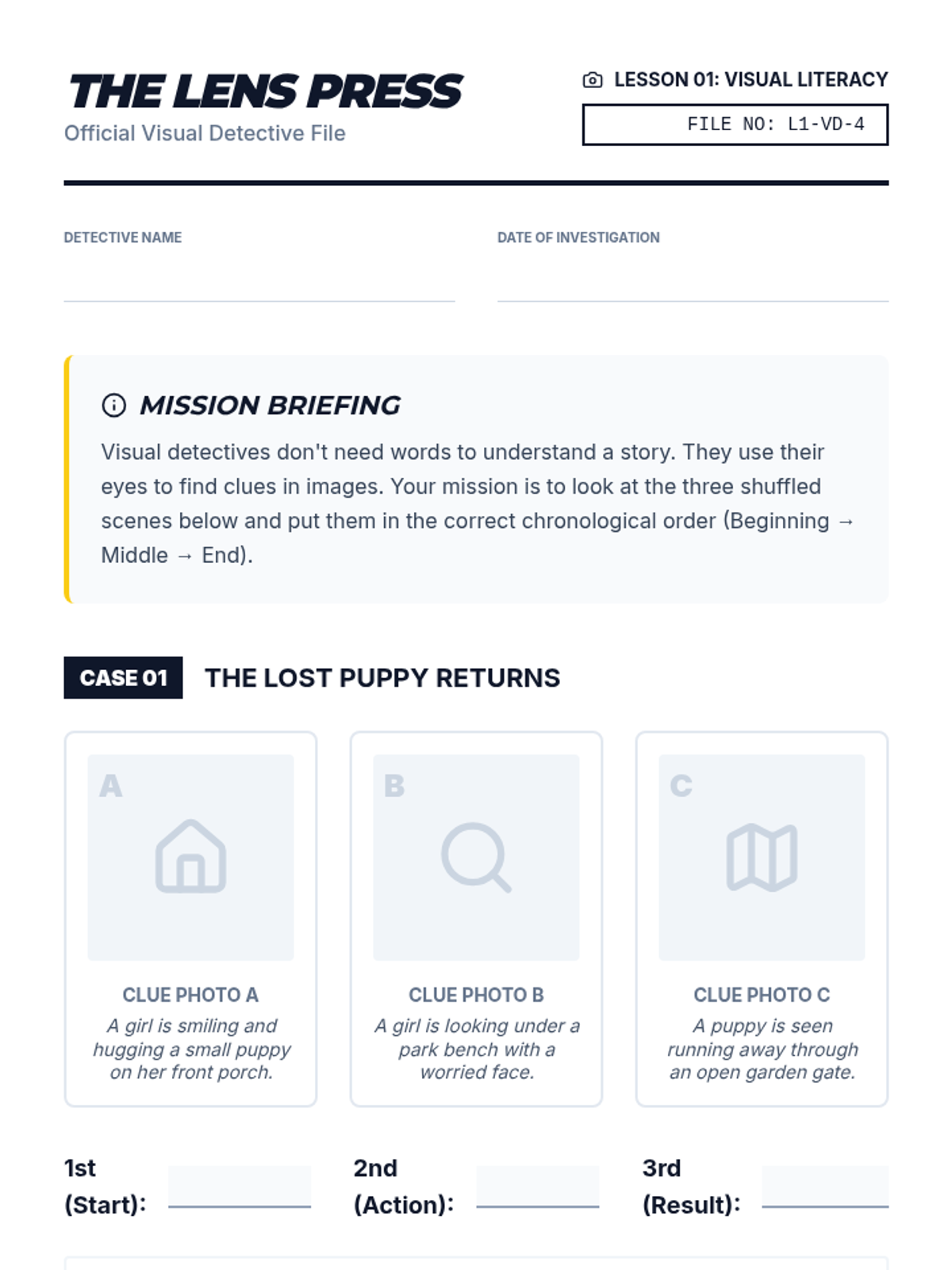
Students explore visual literacy by analyzing wordless narratives and photo essays to understand how images alone can convey a beginning, middle, and end.