Cultural identity, community development, and public policy through the lens of creative practice. Addresses arts advocacy strategies and integrates interdisciplinary connections across social and professional sectors.
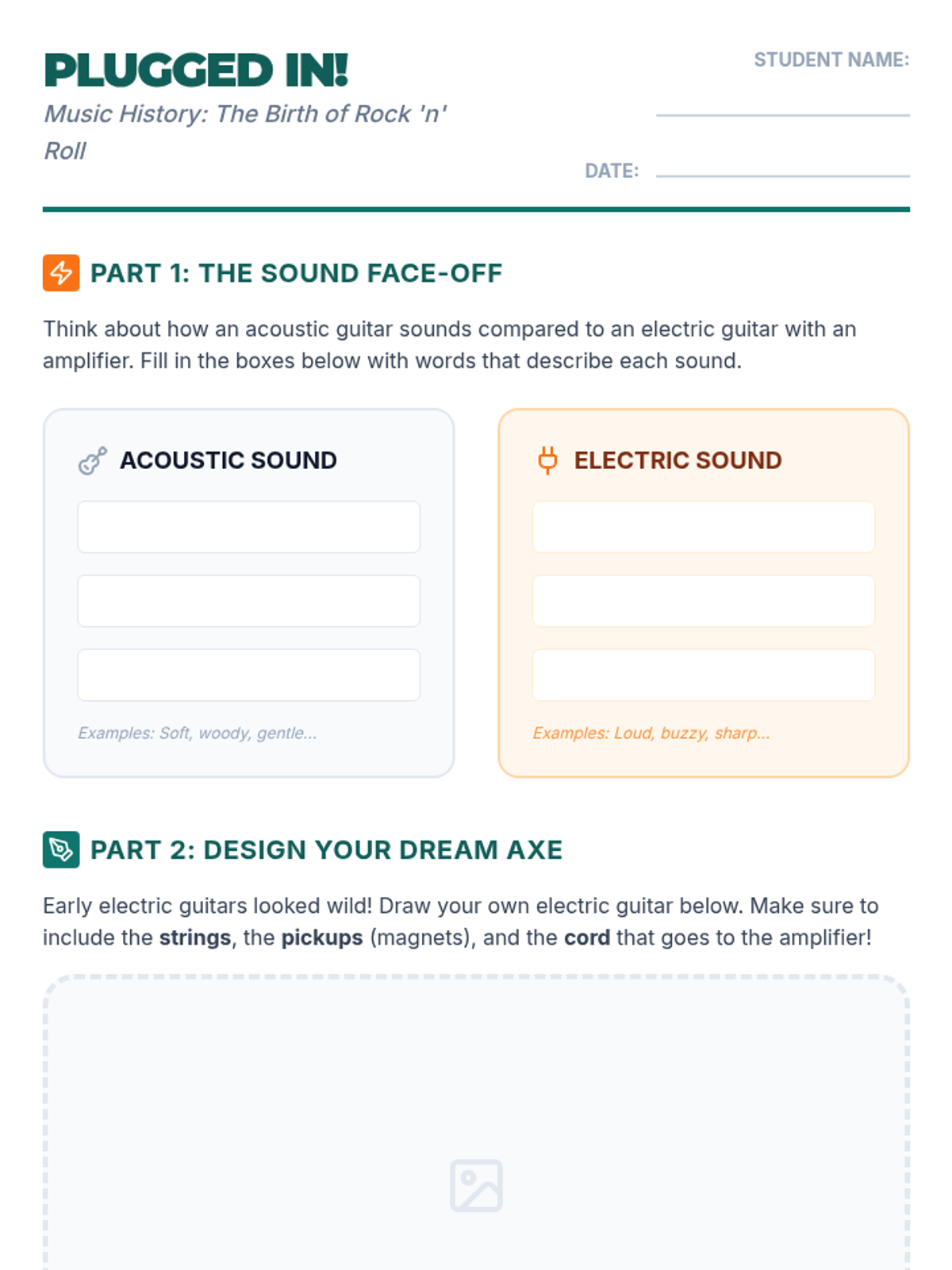
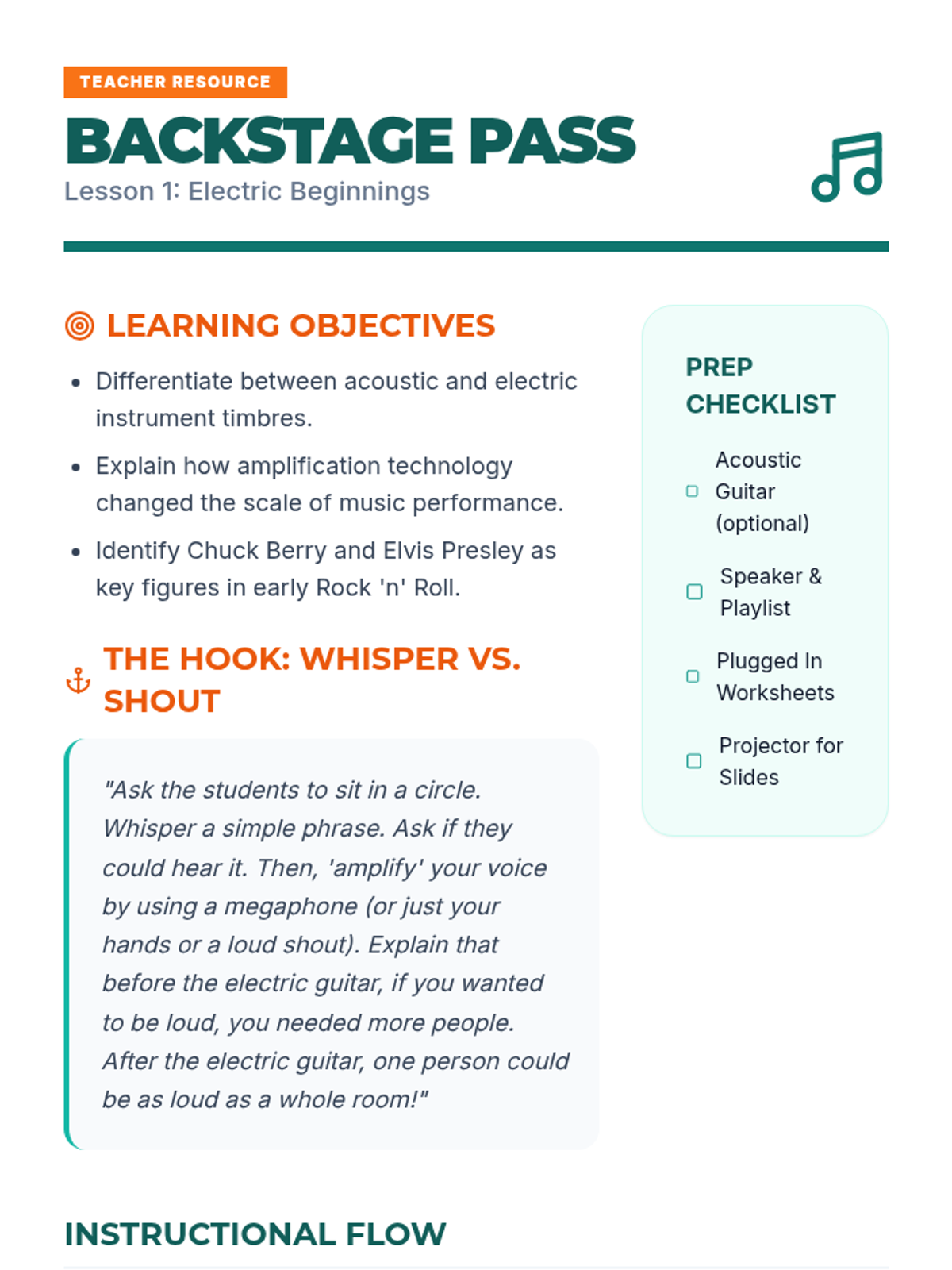
Students compare acoustic and electric sounds, exploring how amplification birthed Rock 'n' Roll through pioneers like Chuck Berry and Elvis Presley.
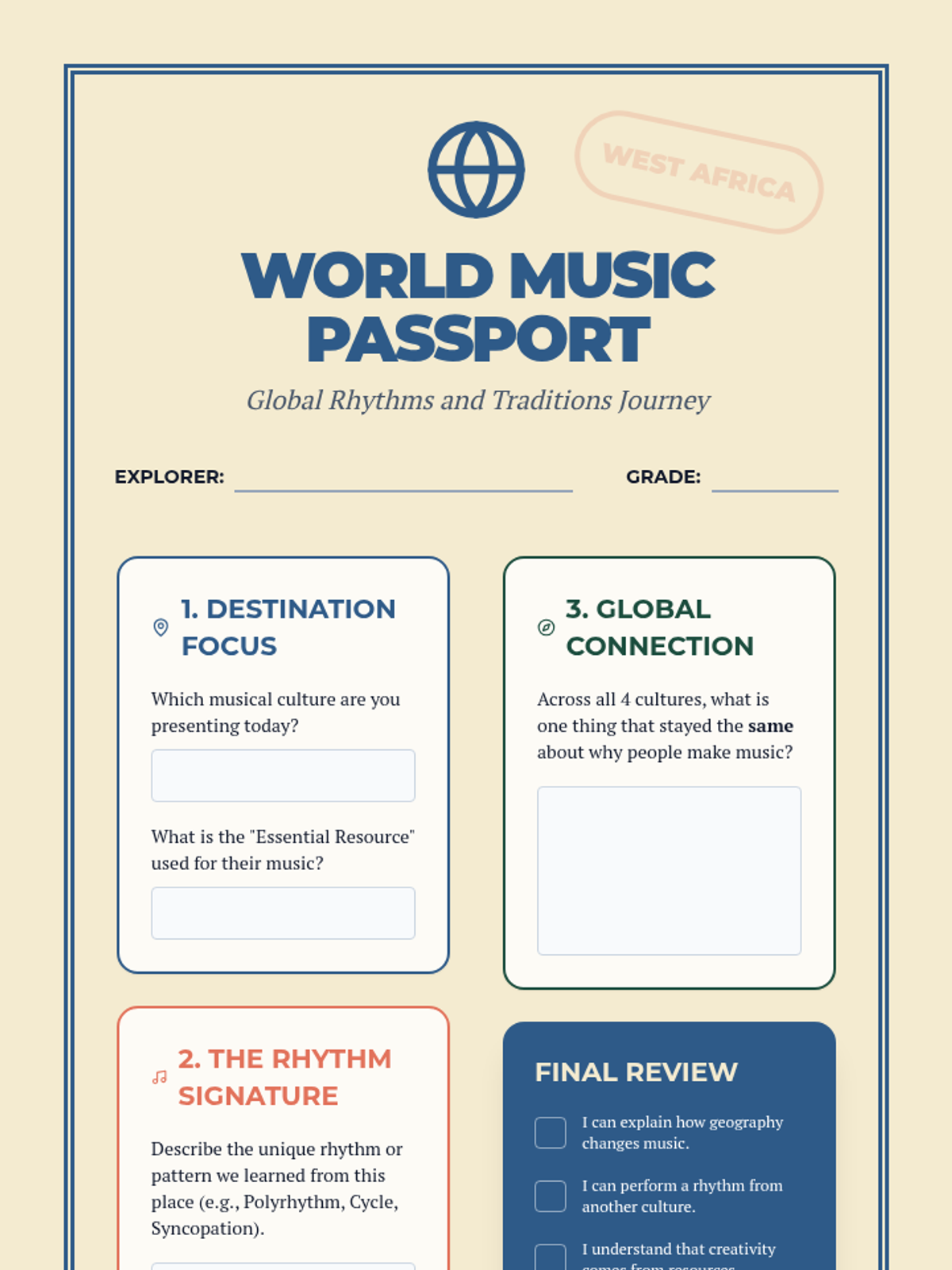
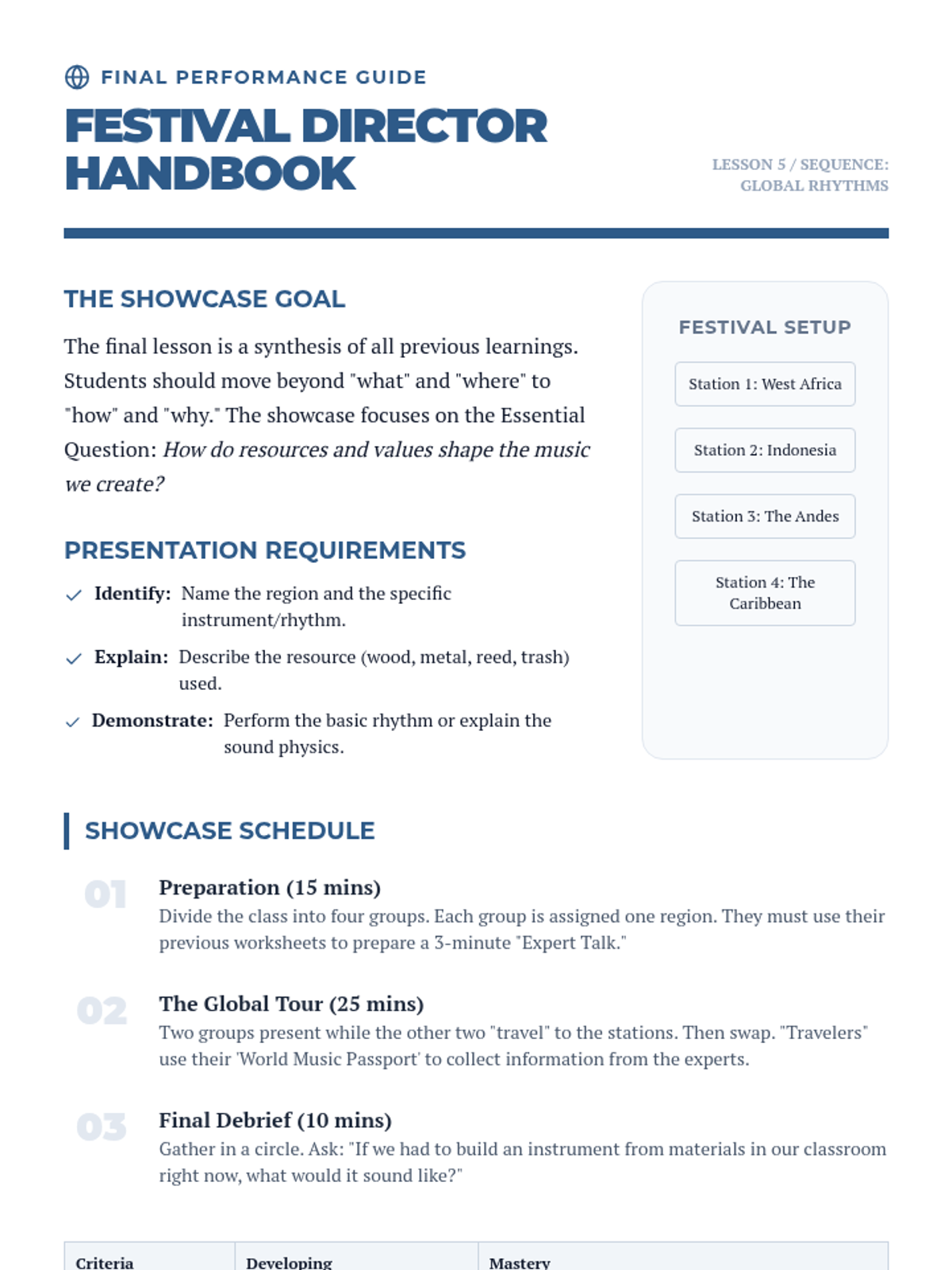
In this final lesson, small groups present on one of the regions studied, demonstrating a characteristic rhythm or explaining an instrument. The class synthesizes their learning by finding commonalities between the different cultures.
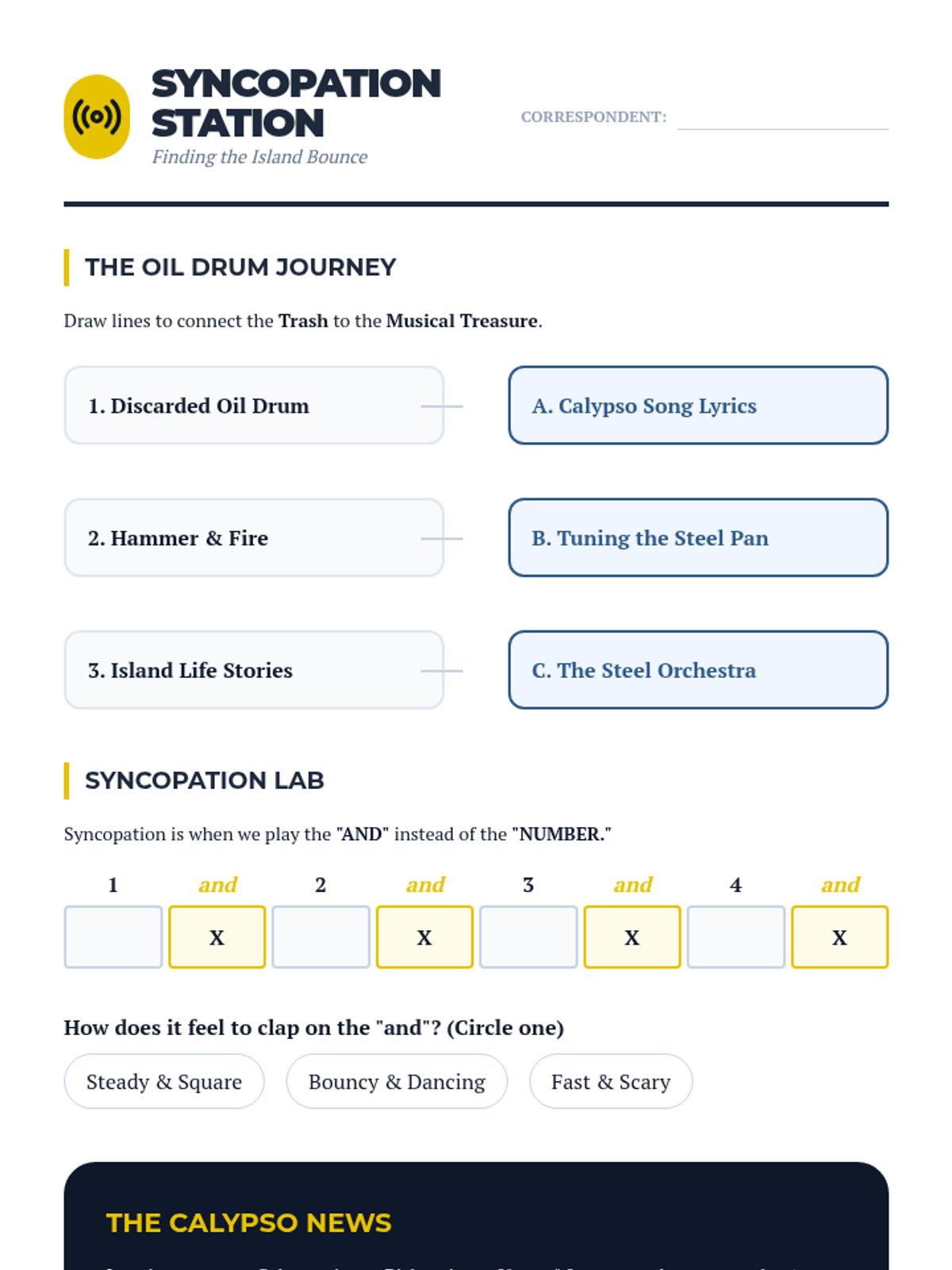
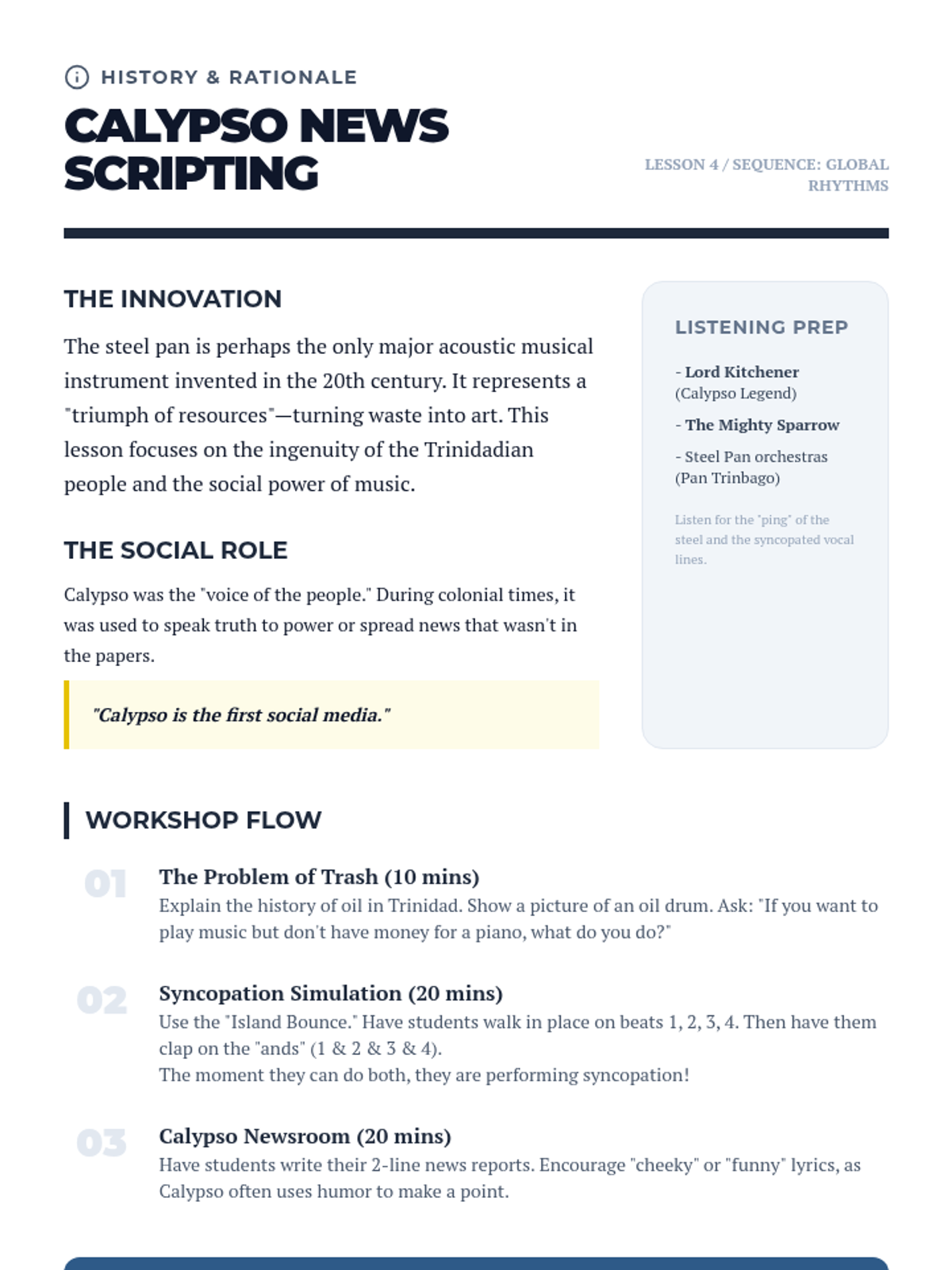
Students examine how discarded oil drums were transformed into the Steel Pan in Trinidad and Tobago, focusing on Calypso rhythms and resourcefulness.
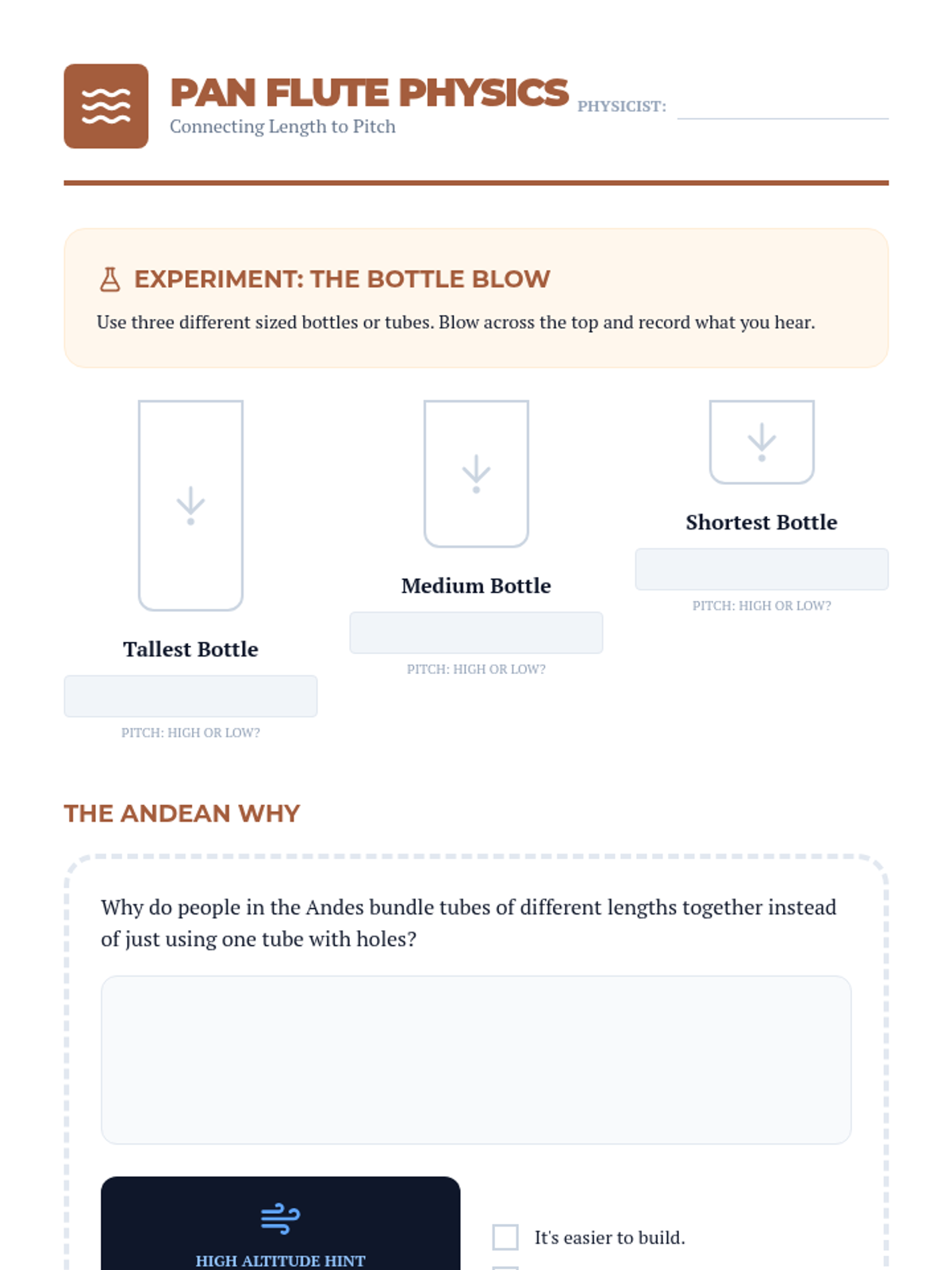
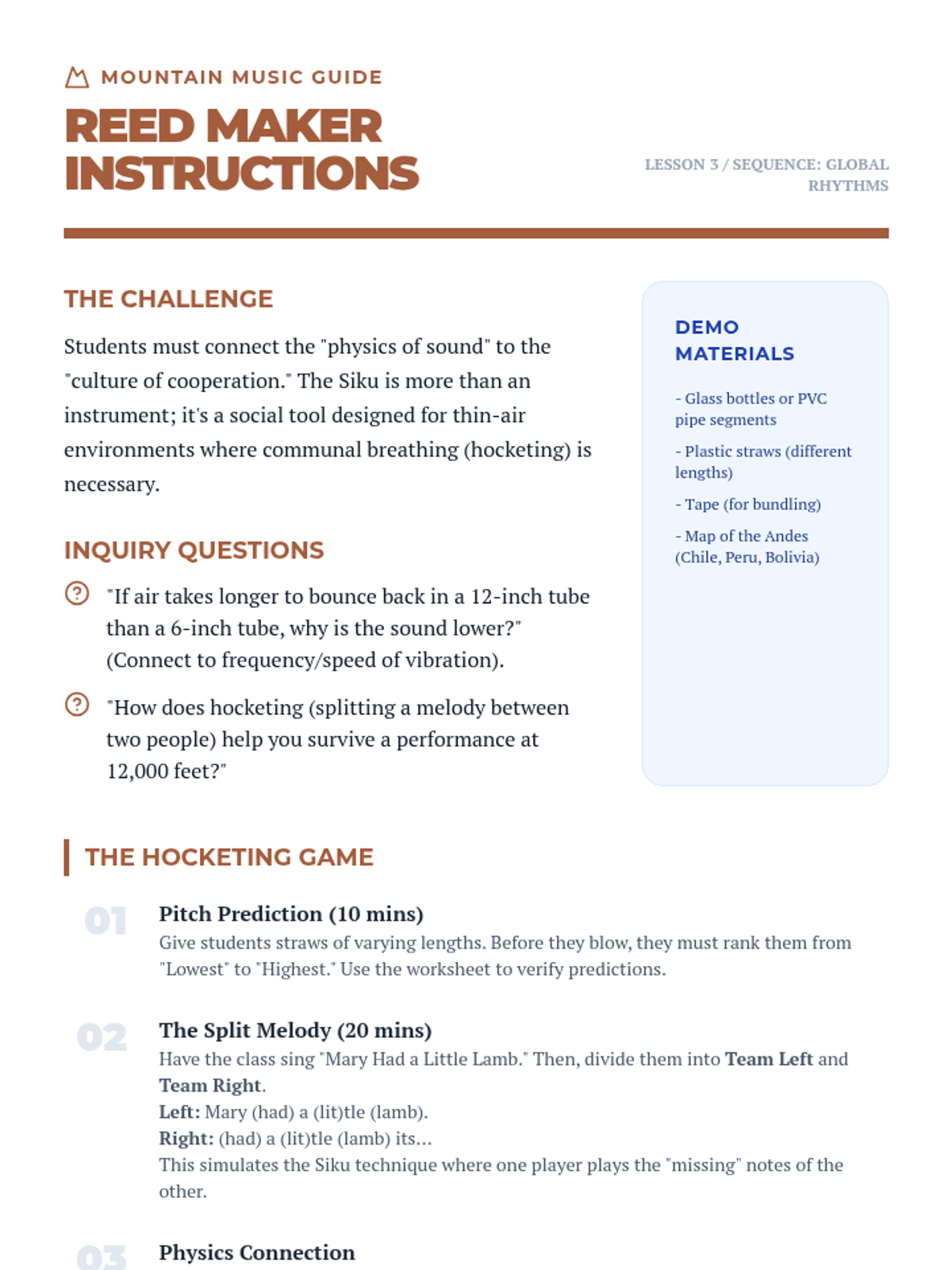
Students investigate Andean wind instruments (pan flutes), connecting the geography of high mountains to instrument materials and the physics of pitch.
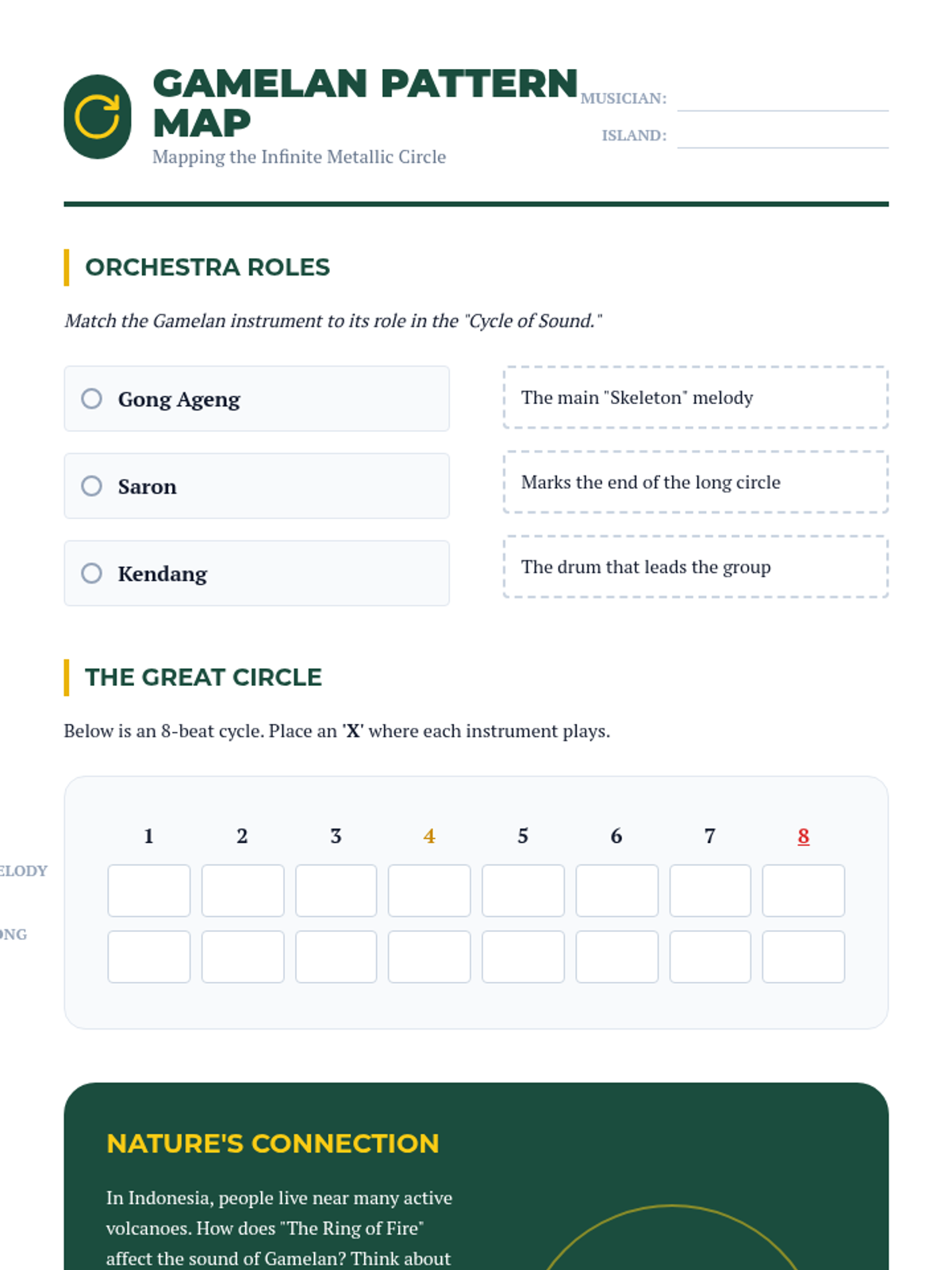
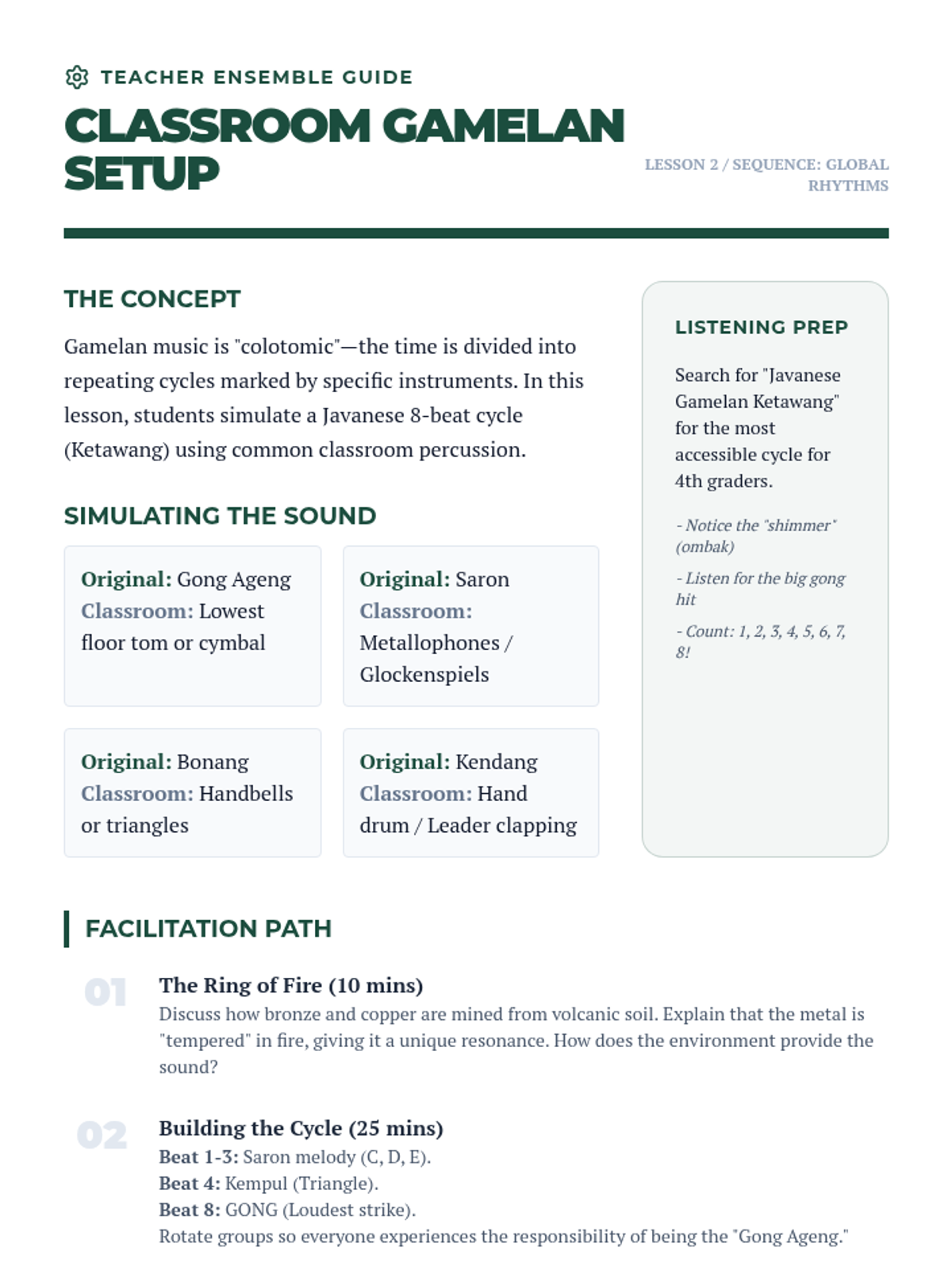
Students are introduced to the metallic percussion orchestras of Indonesia, focusing on cyclic time and simulated structures using classroom instruments.
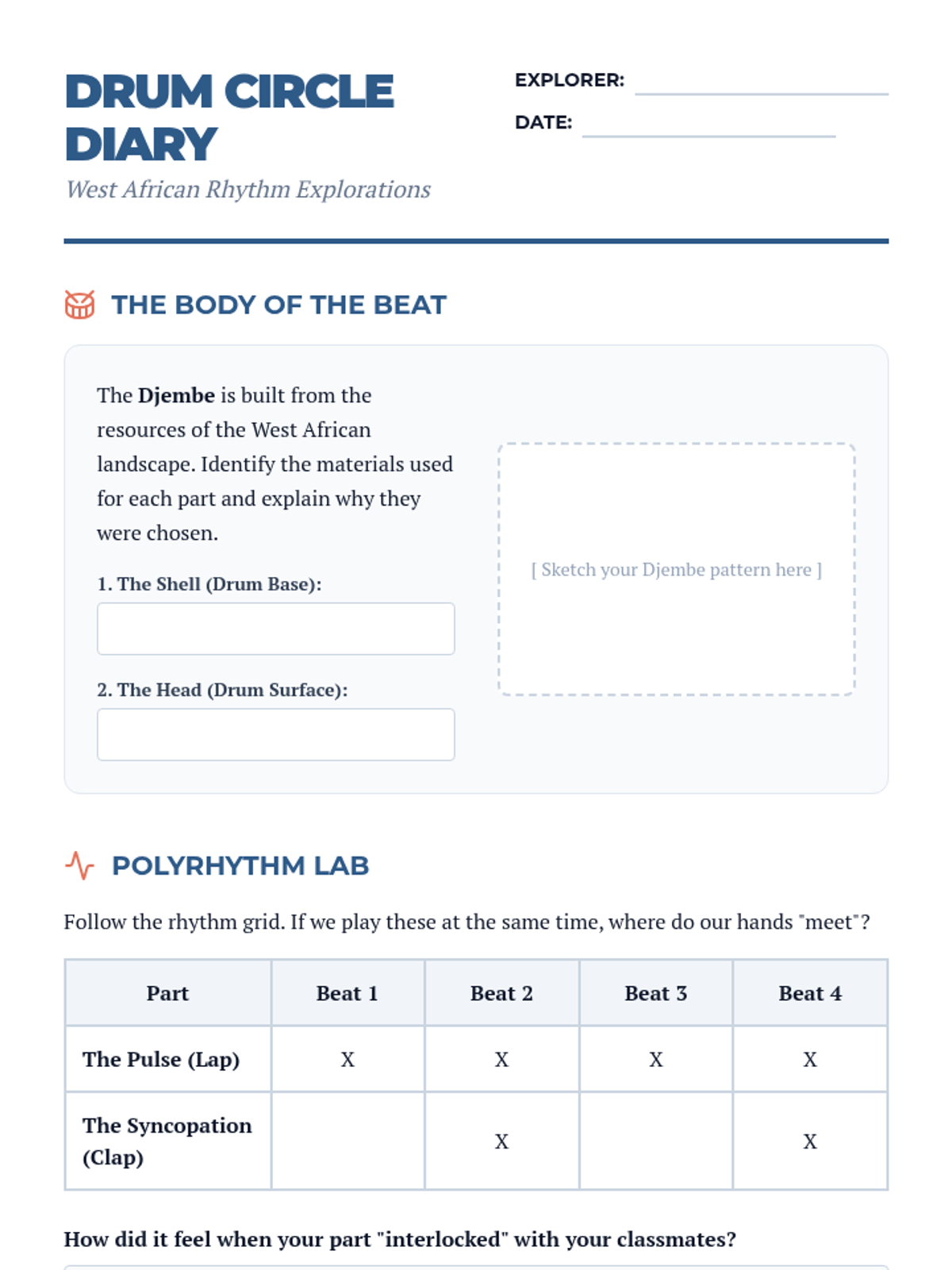
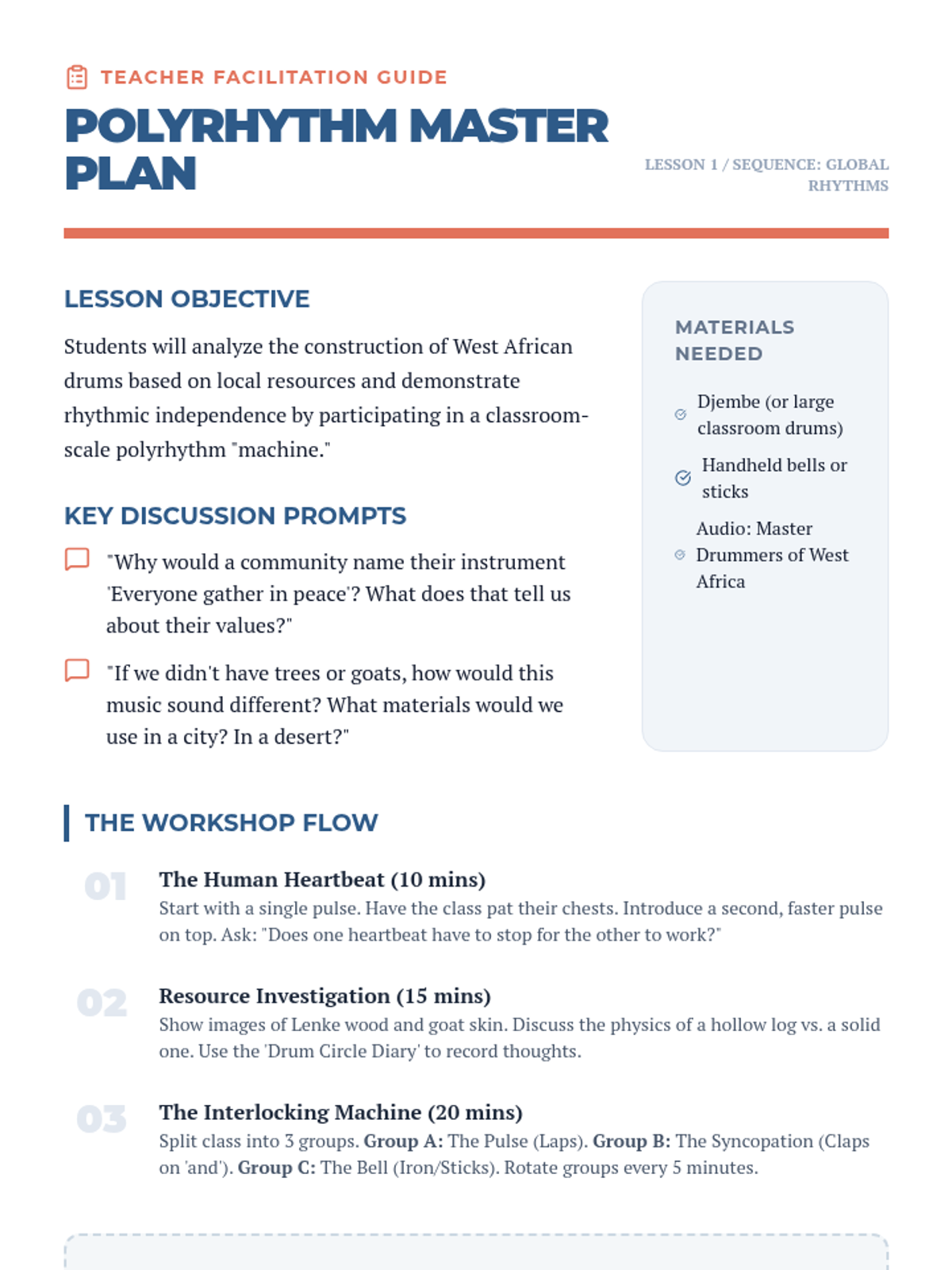
Students explore the concept of polyrhythm through West African drumming traditions, emphasizing communal music-making and interlocking patterns.
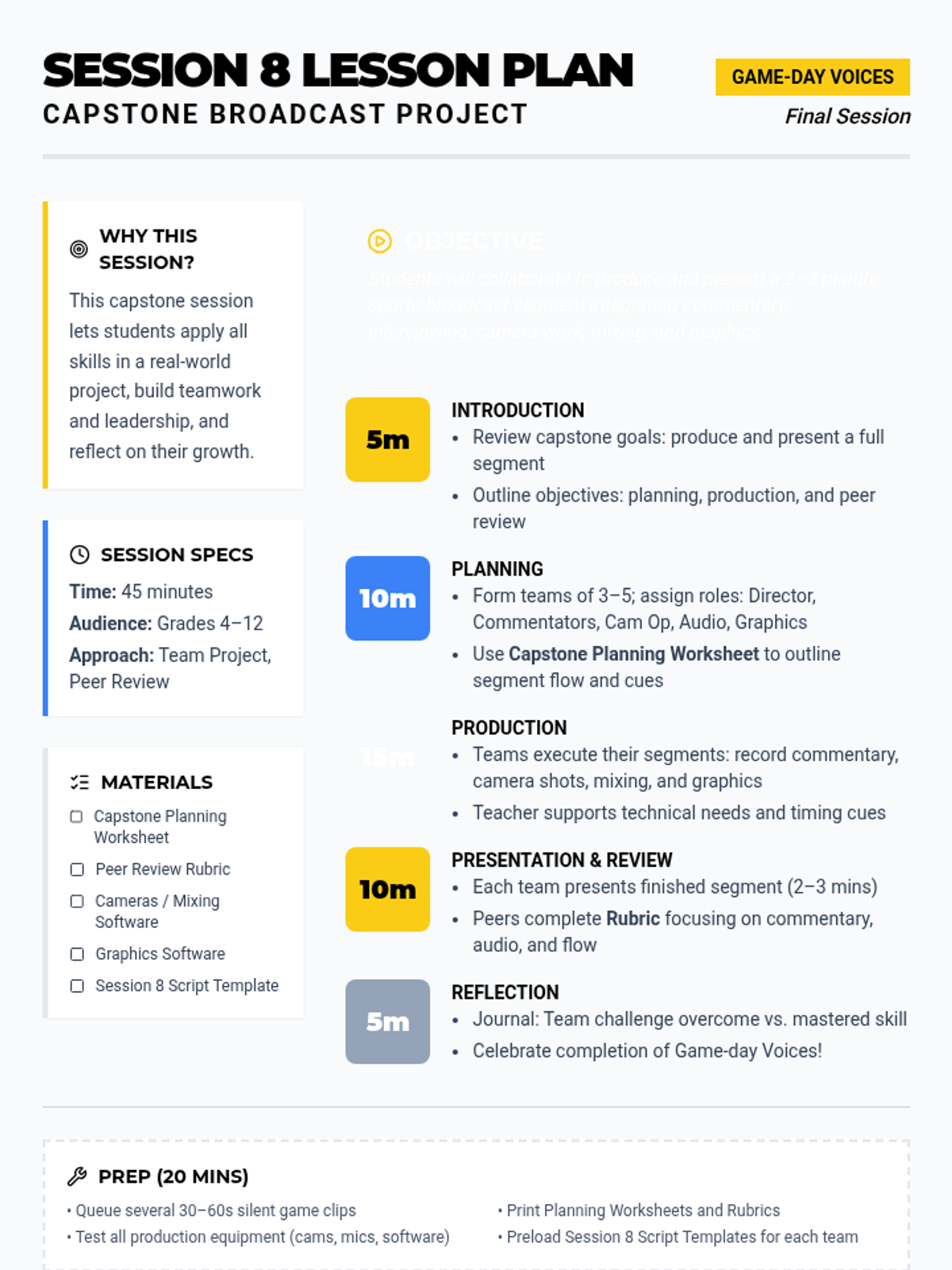
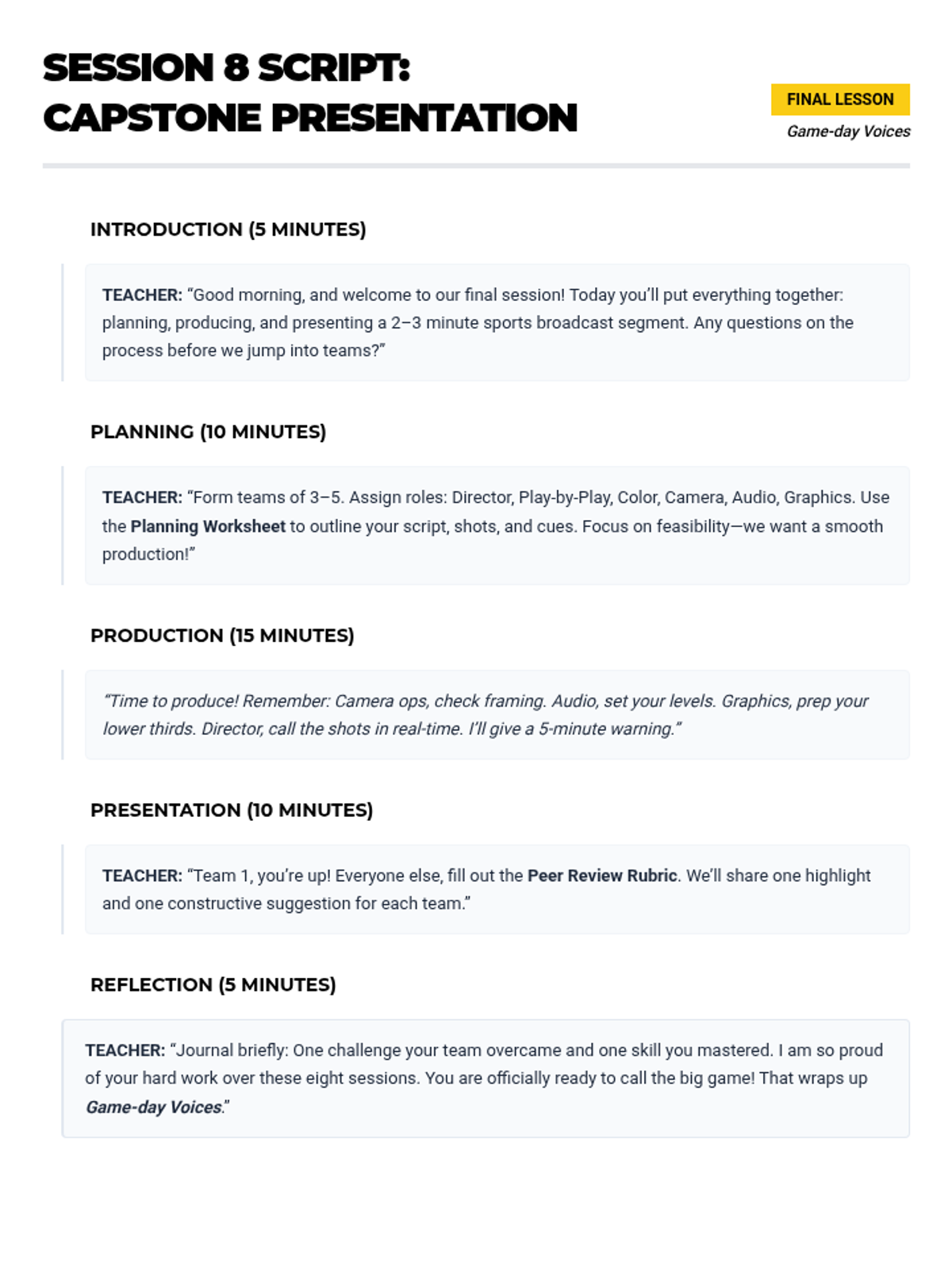
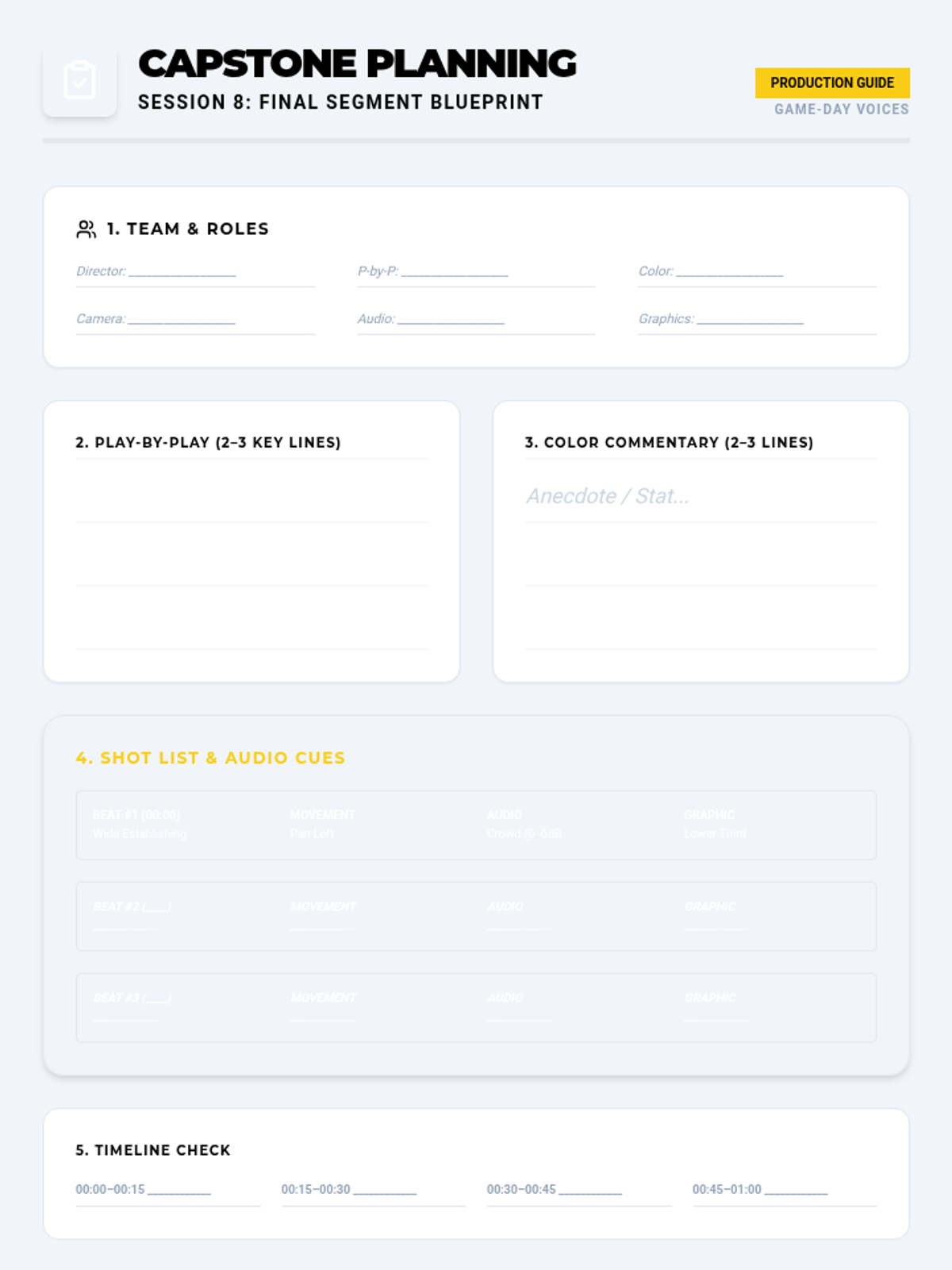
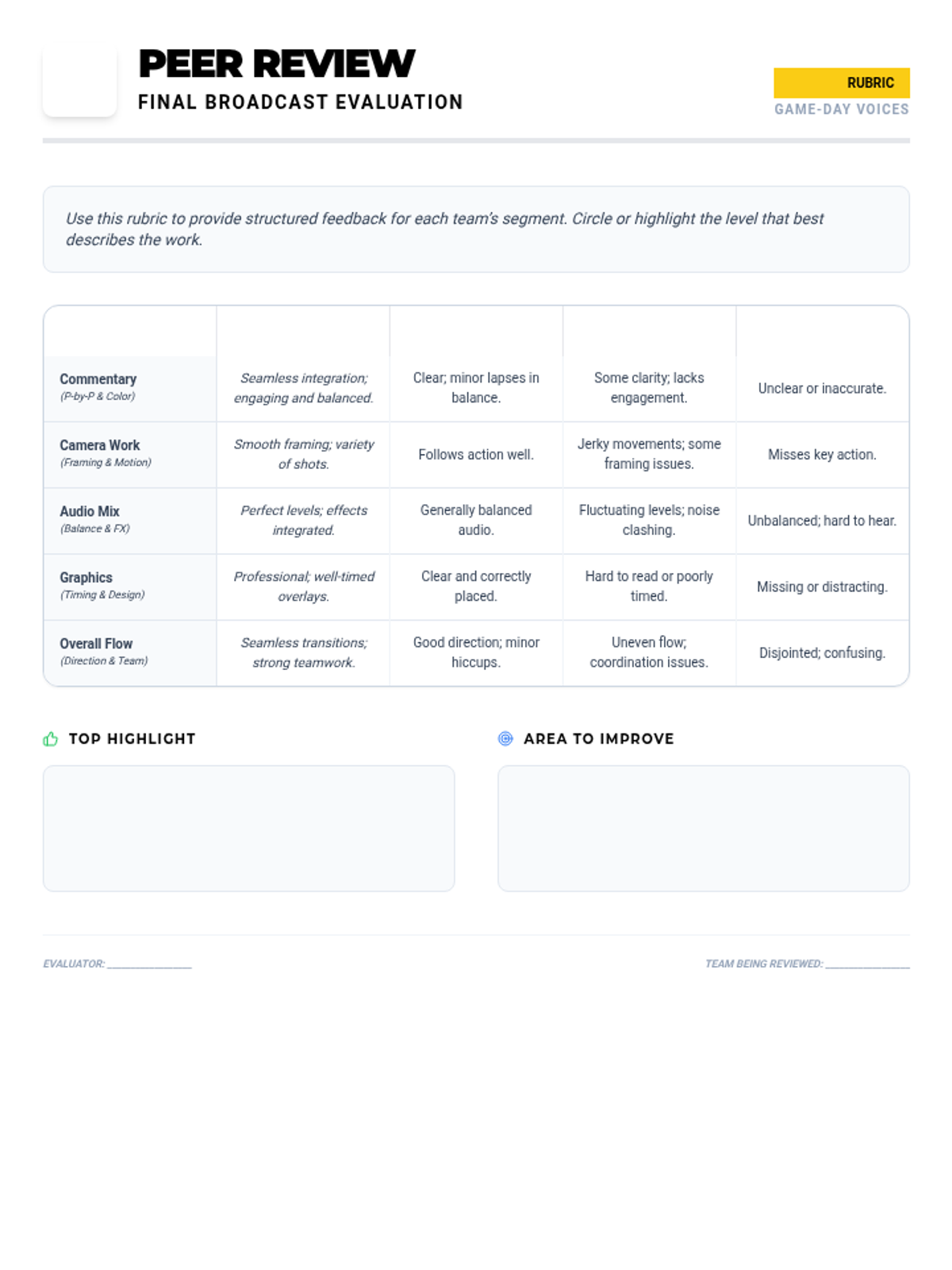
Students collaborate to produce a full 2–3 minute sports broadcast segment, integrating all skills learned throughout the course for a final capstone presentation.
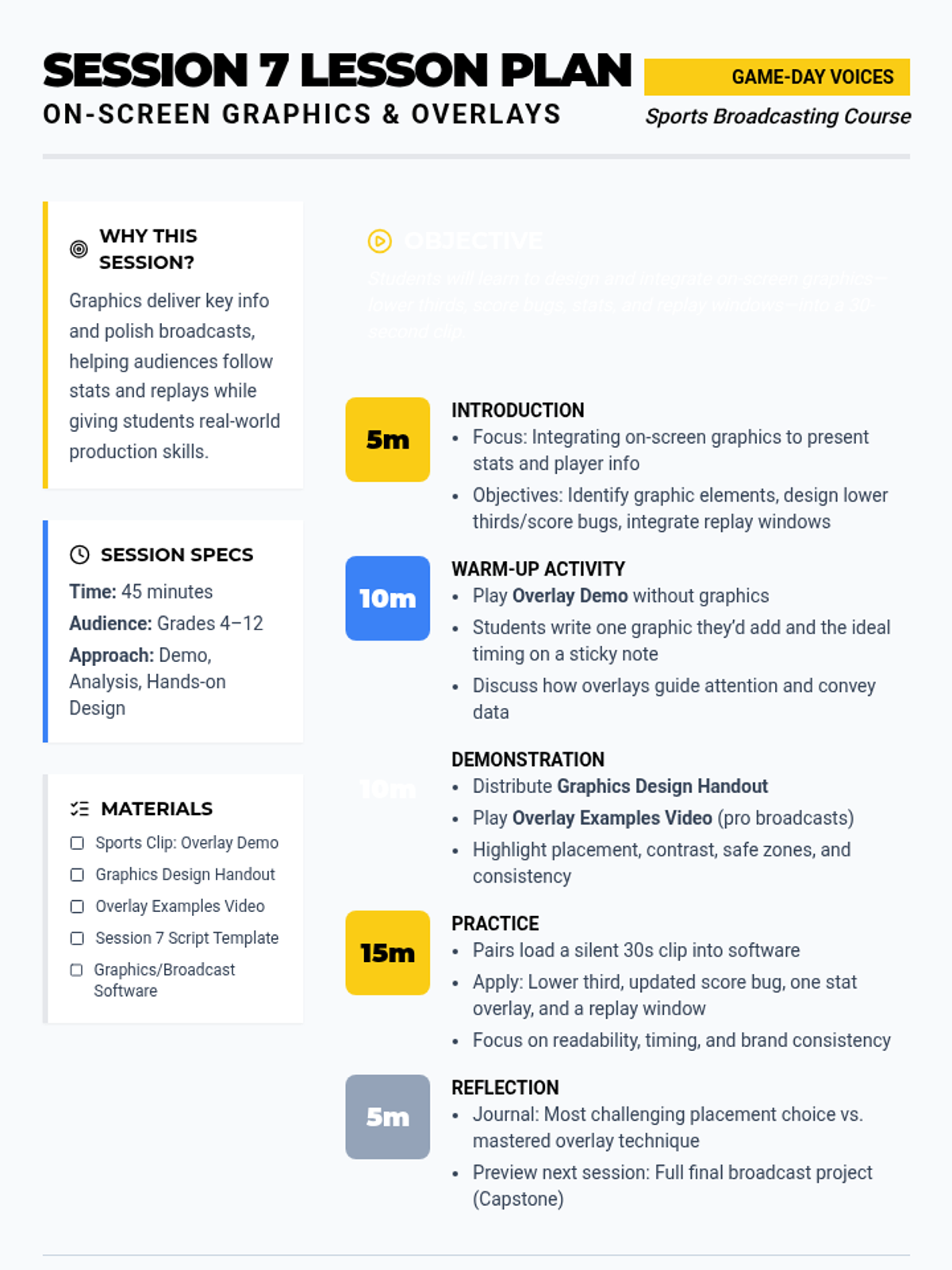
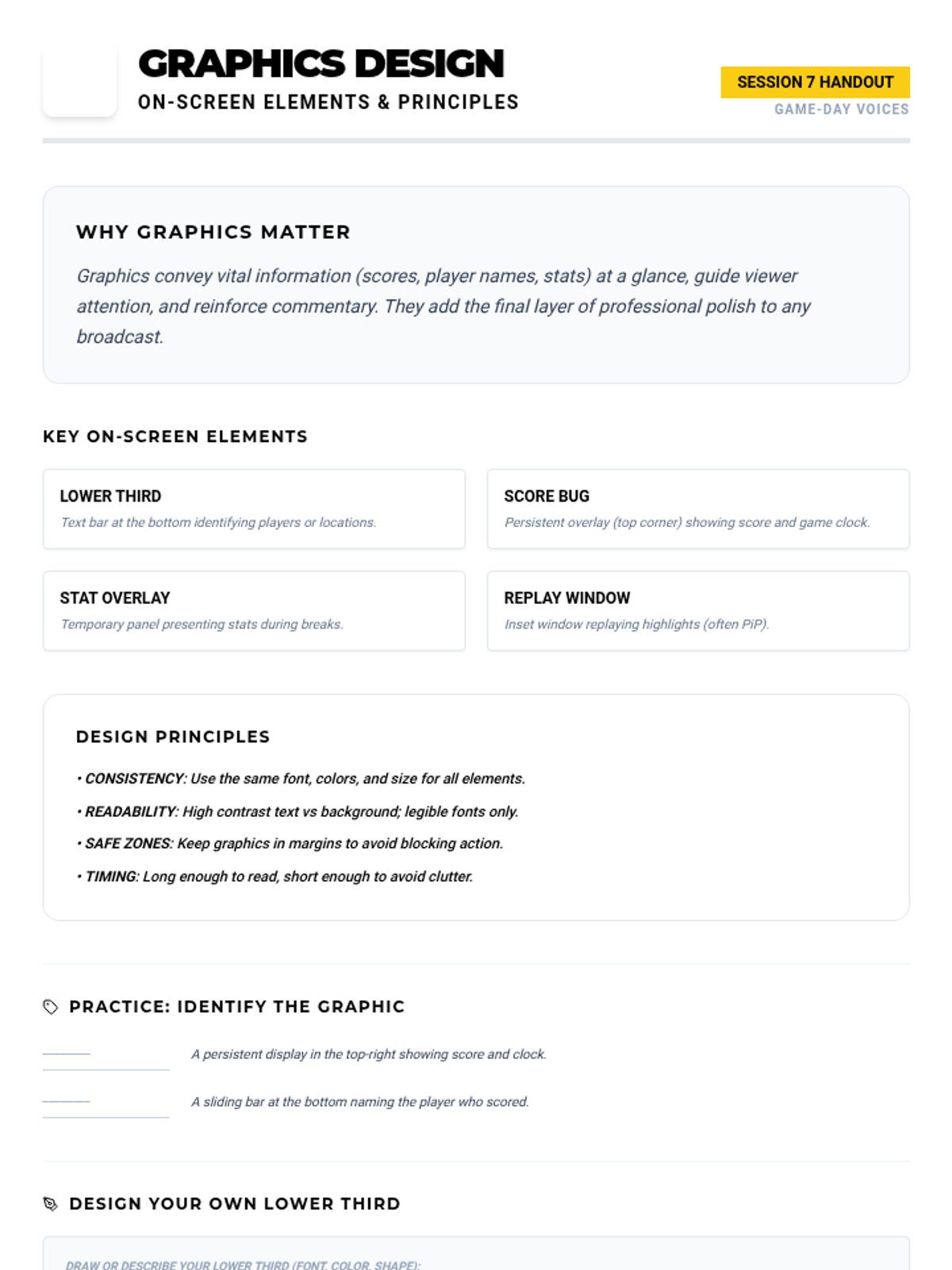
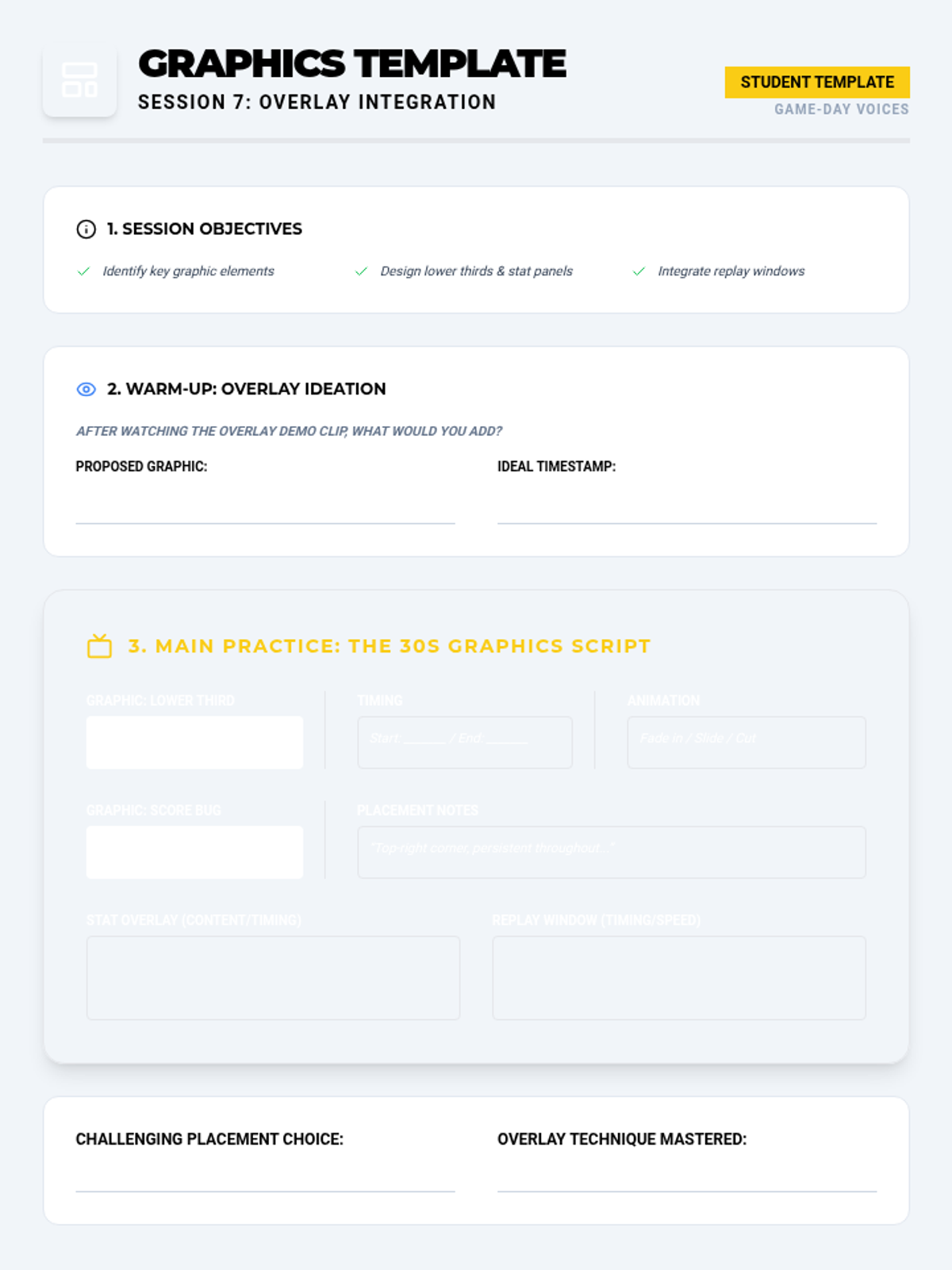
Students learn to design and integrate on-screen graphics, such as score bugs, lower thirds, and replay windows, to enhance viewer engagement and information delivery.
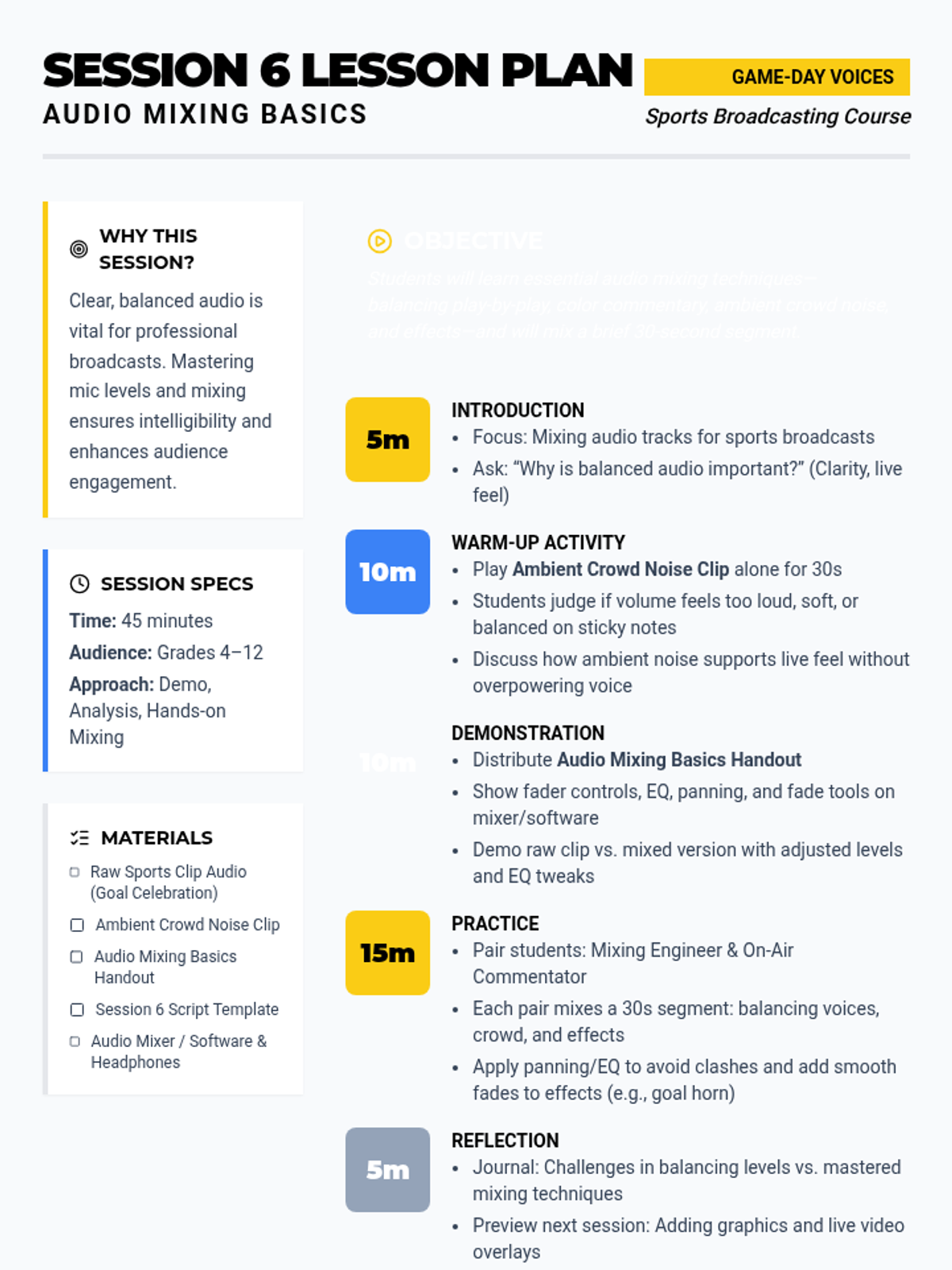
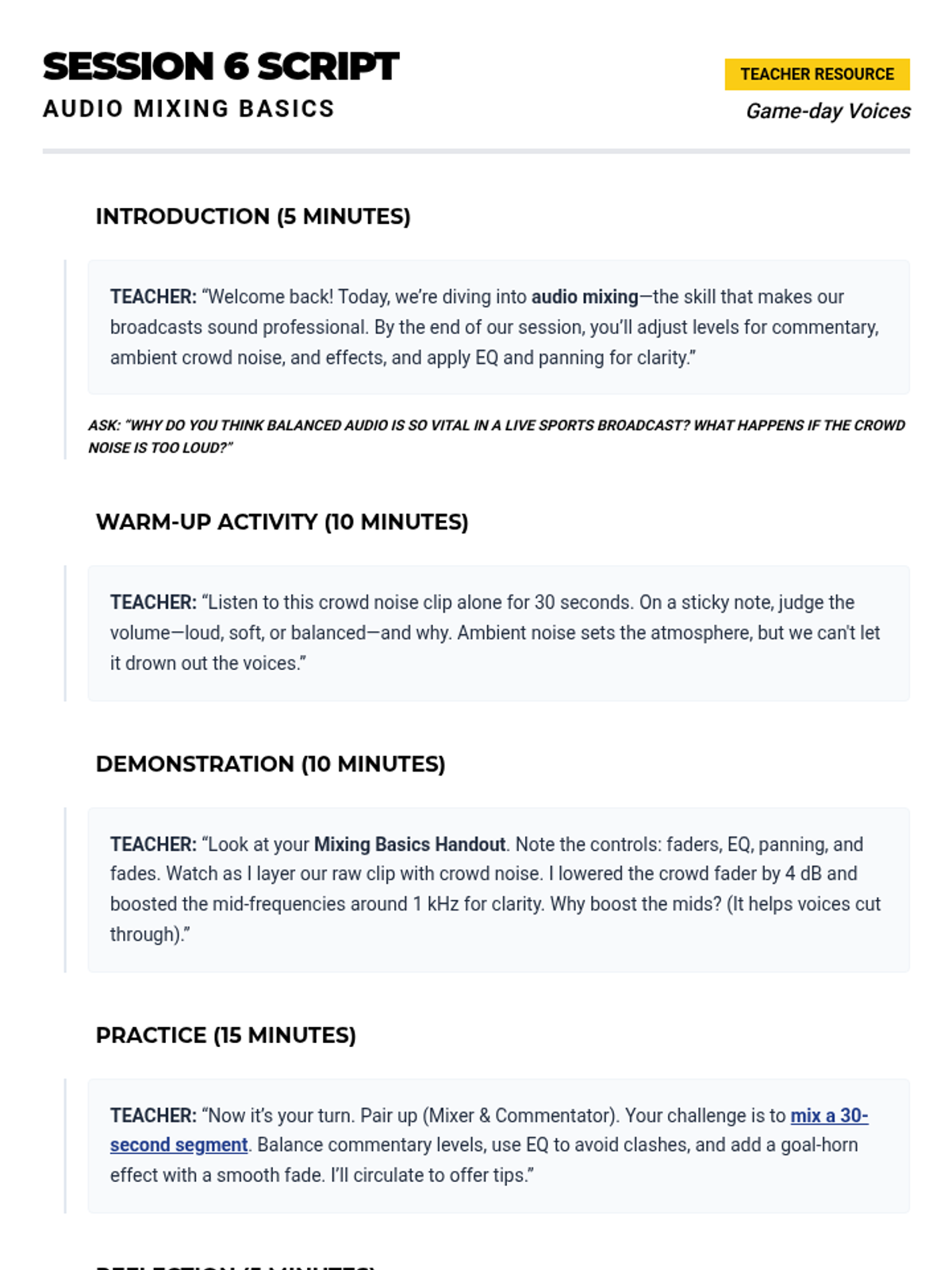
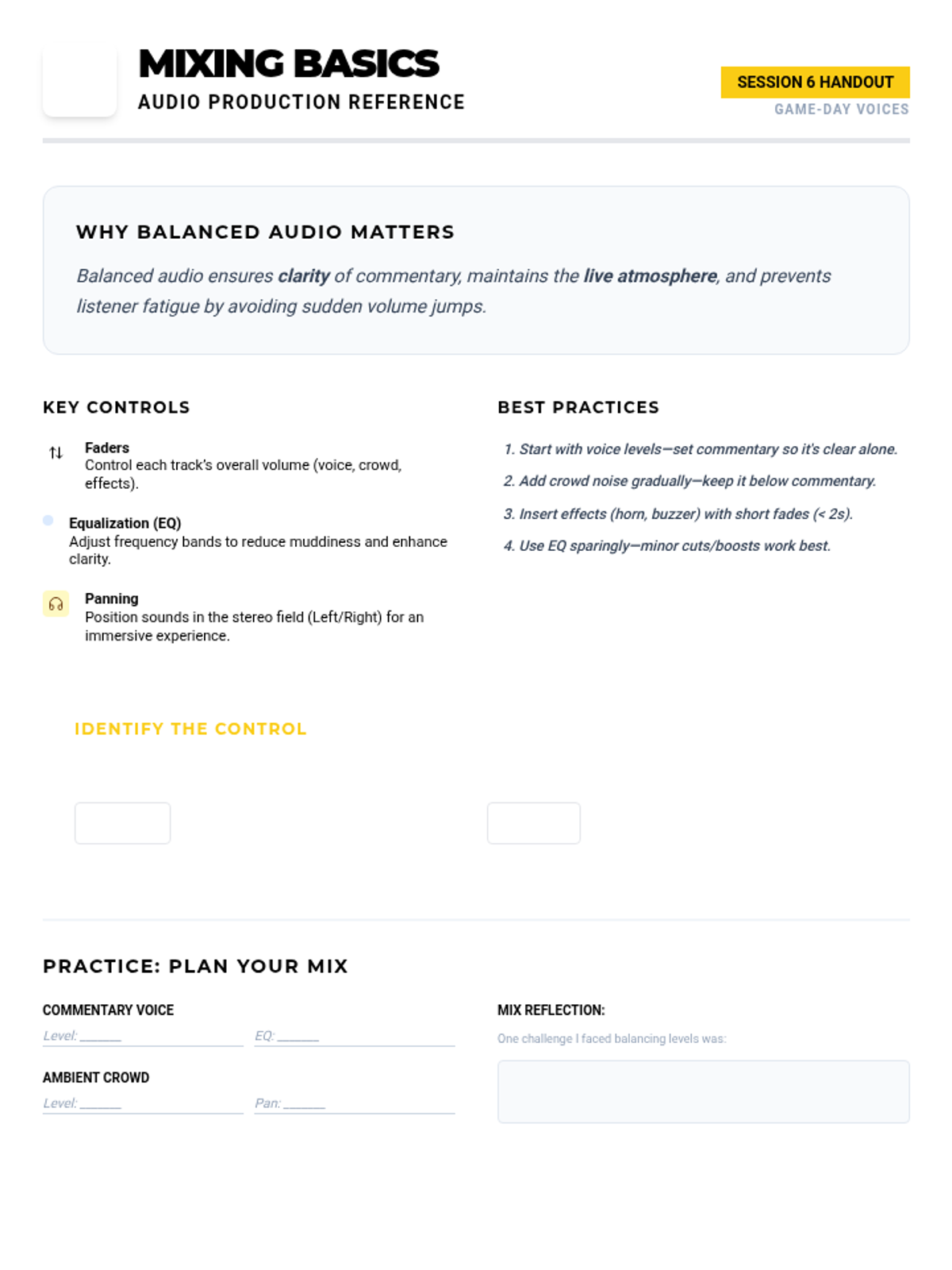
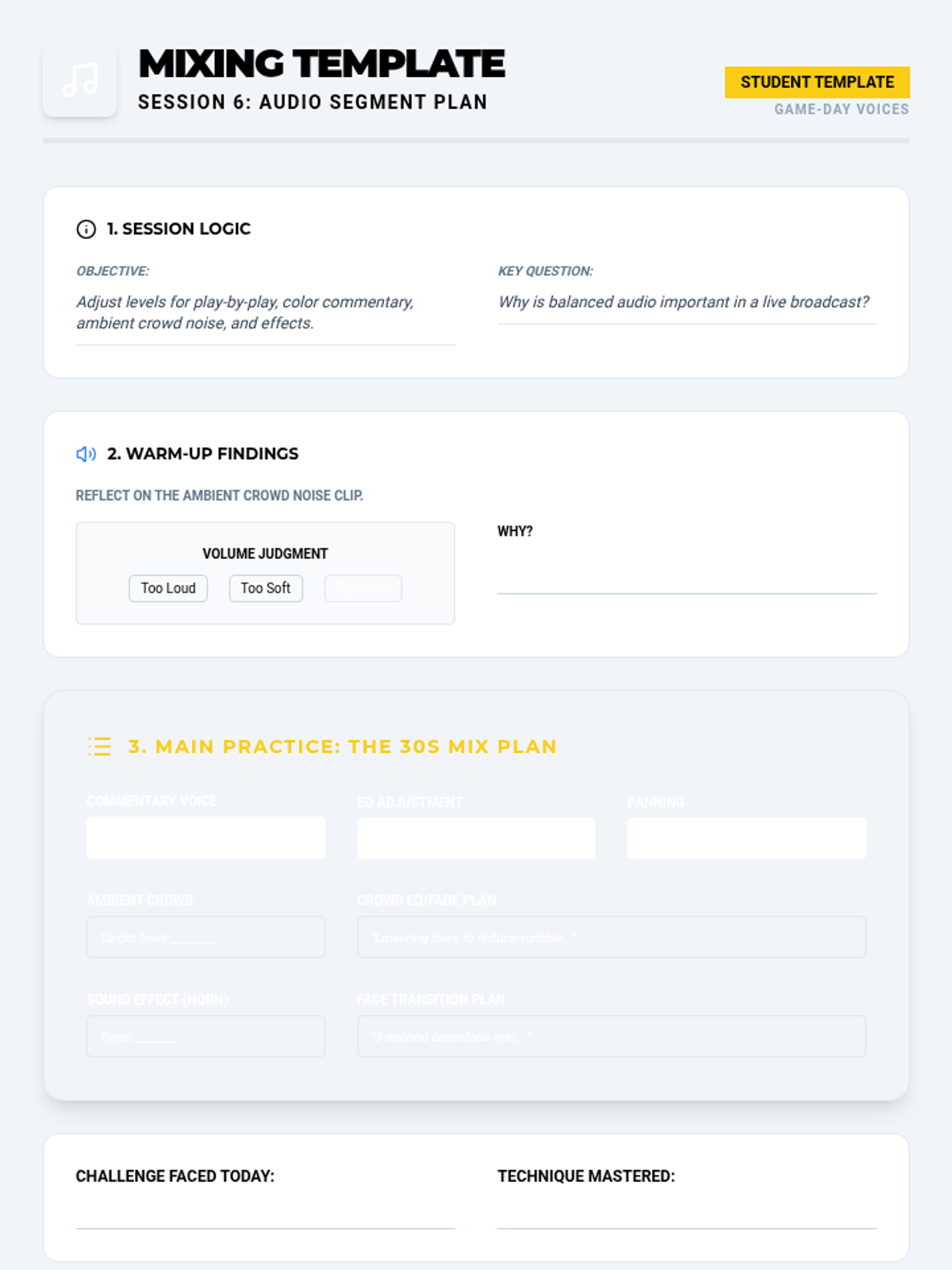
Students learn essential audio mixing techniques for sports broadcasts, balancing commentary, ambient noise, and sound effects to create a professional soundscape.
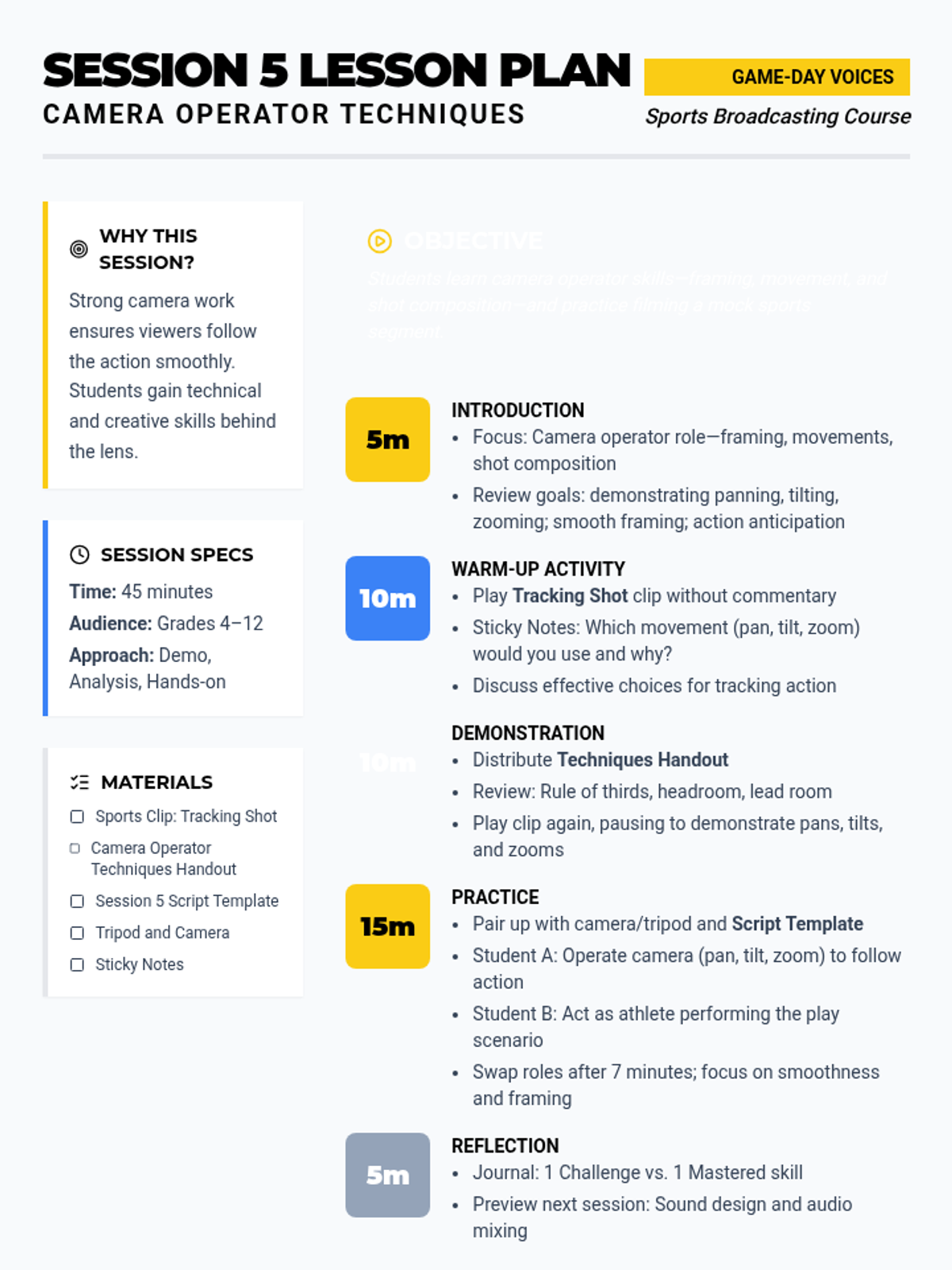
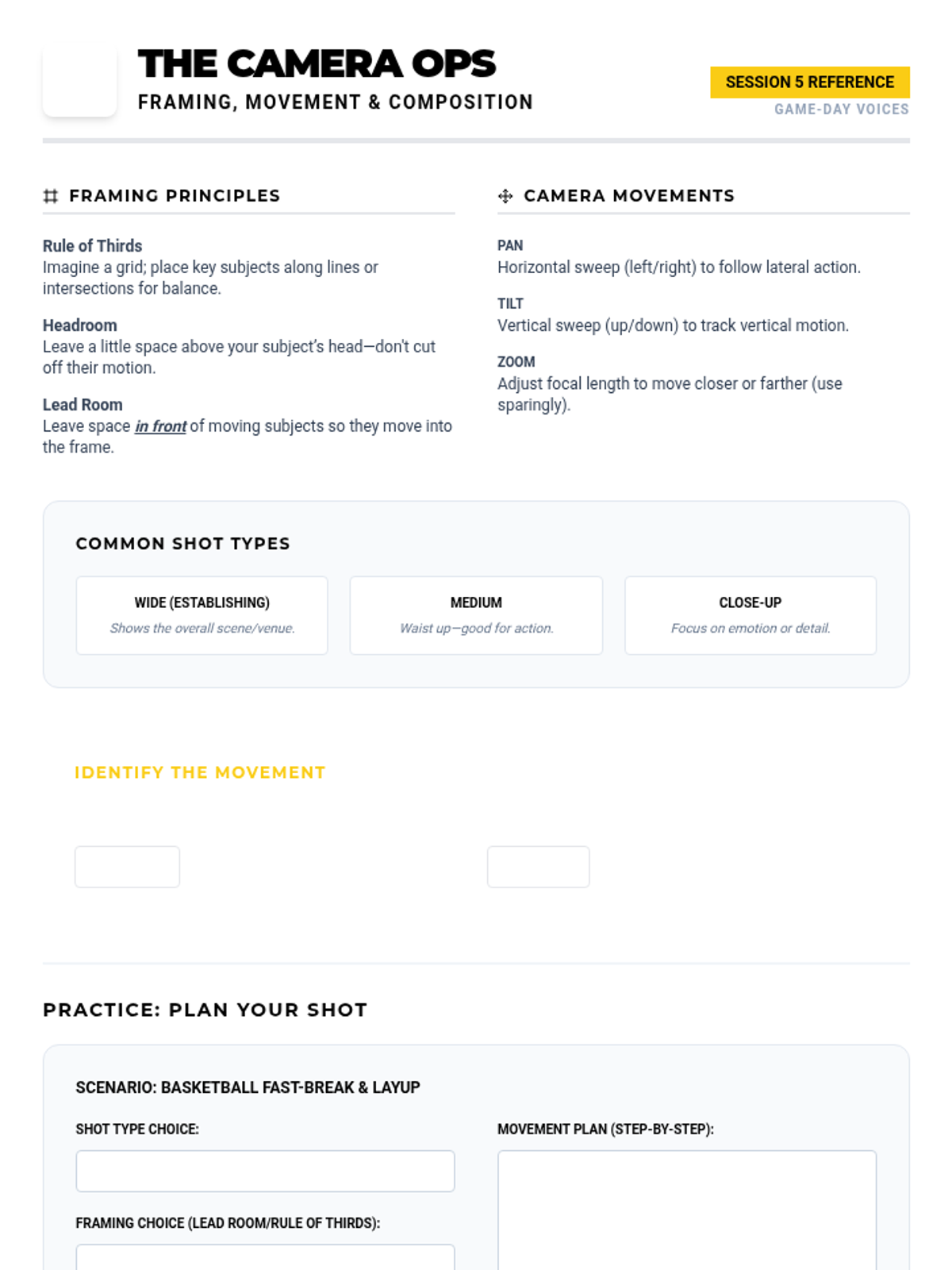
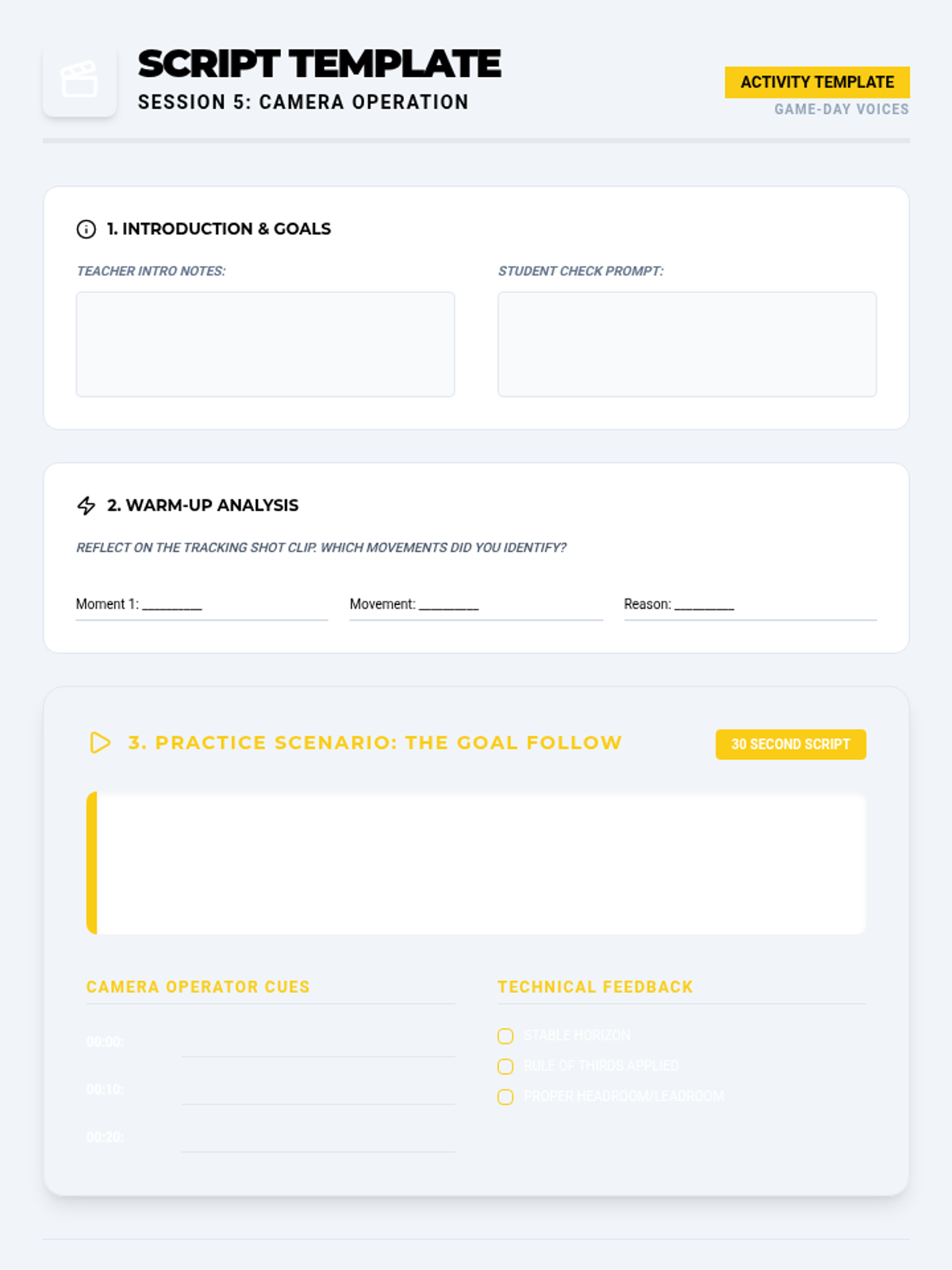
Students learn the fundamentals of camera operation for sports, including framing, movement, and shot composition to capture dynamic action.
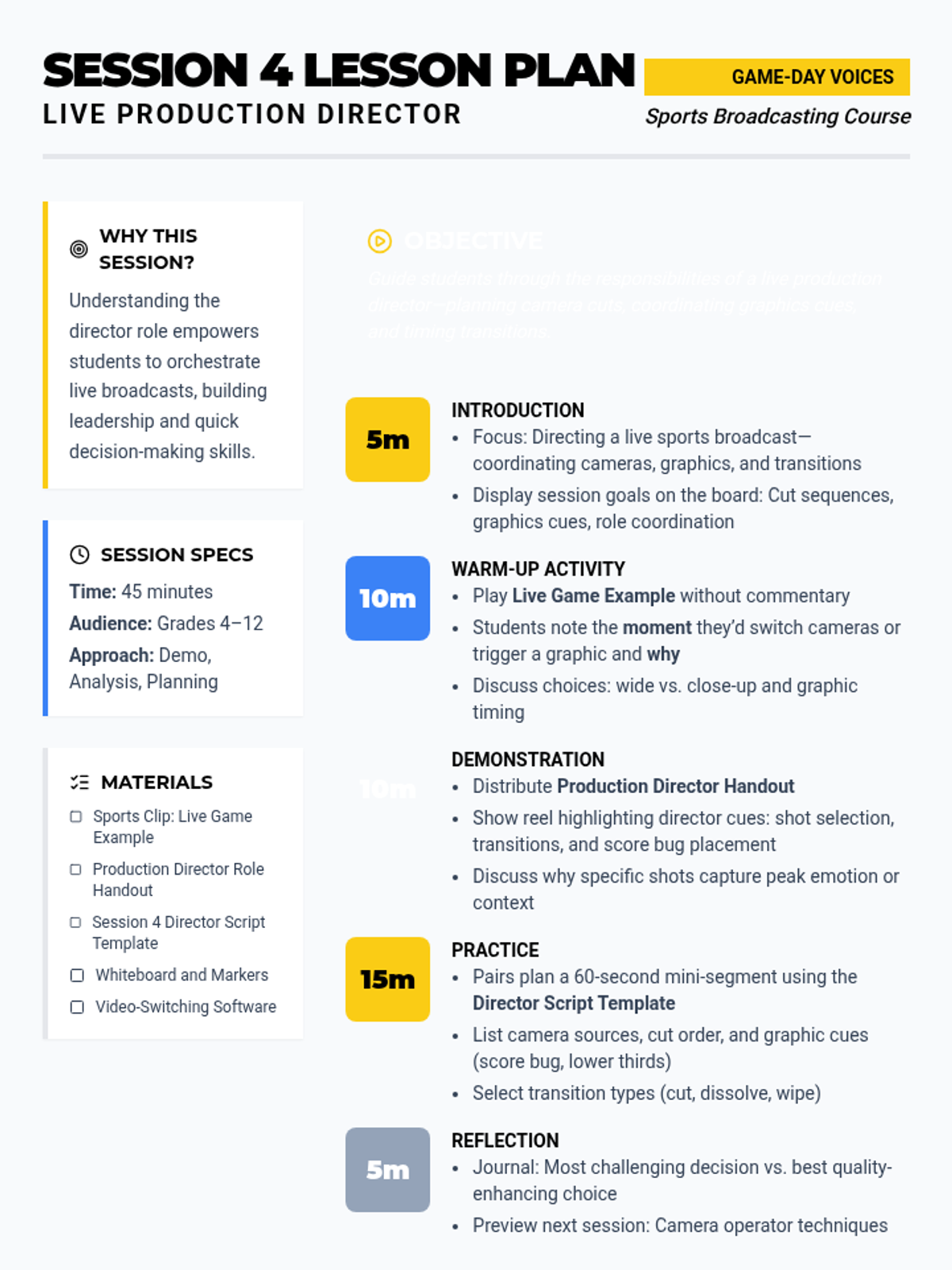
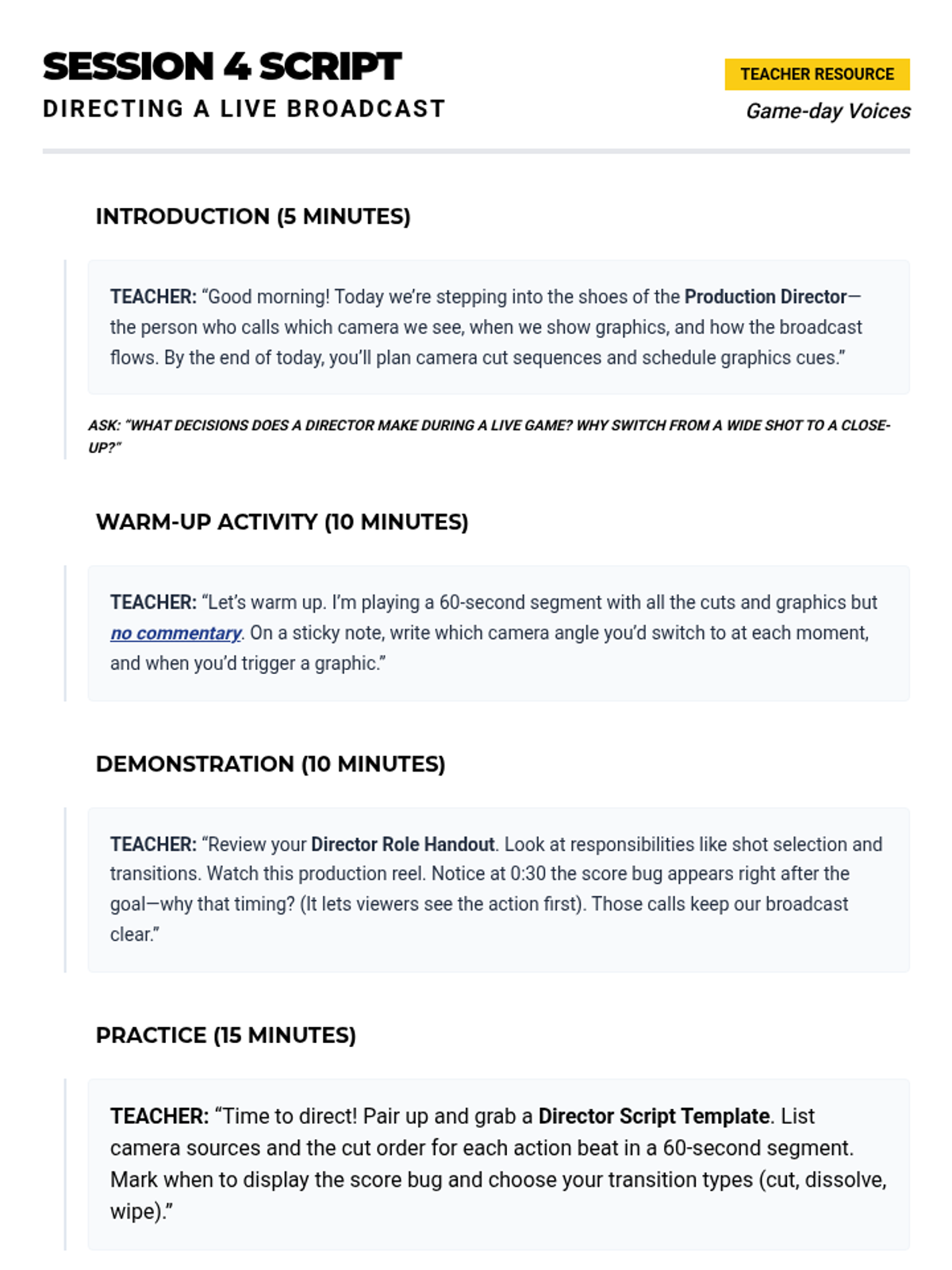
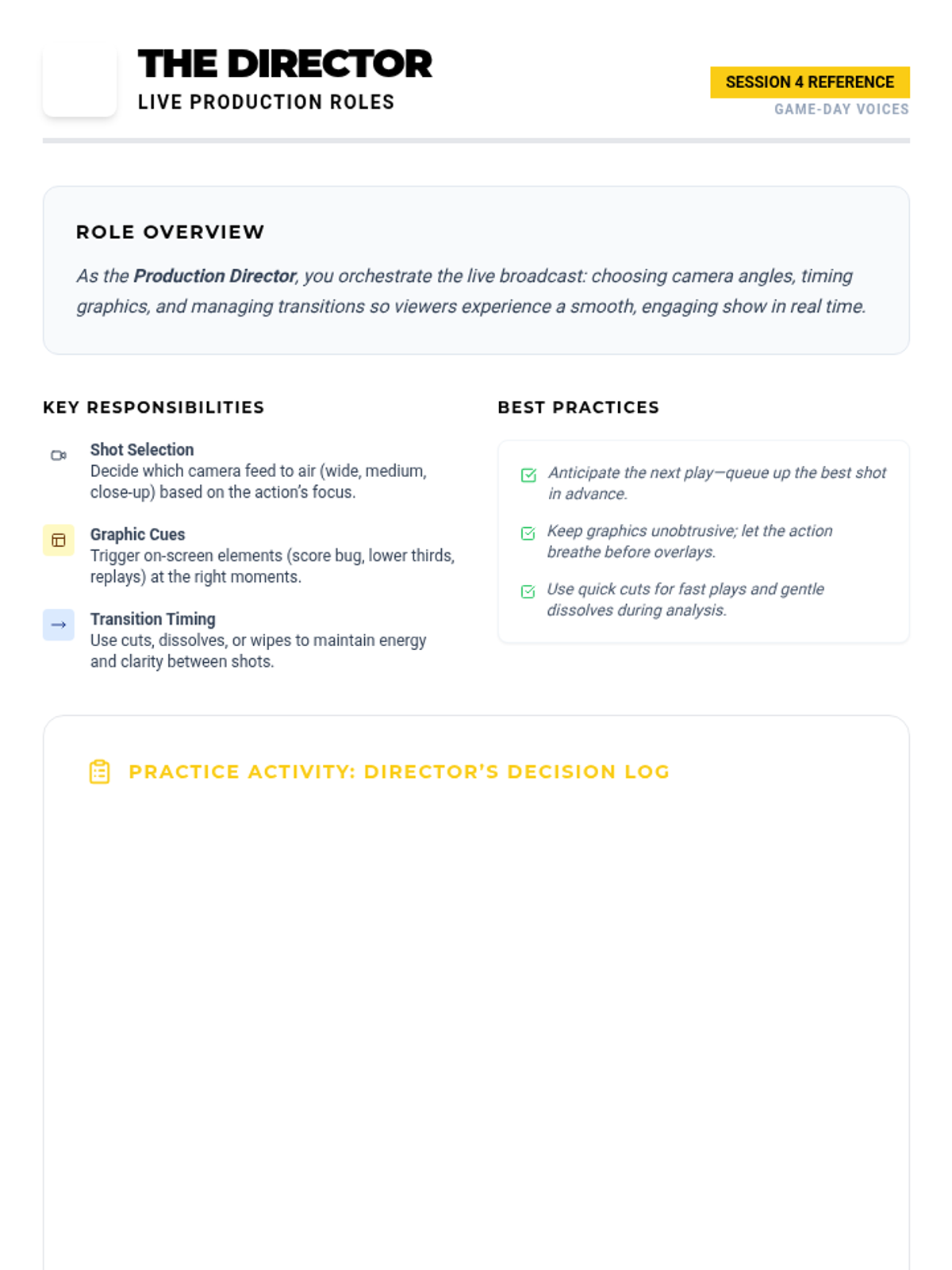
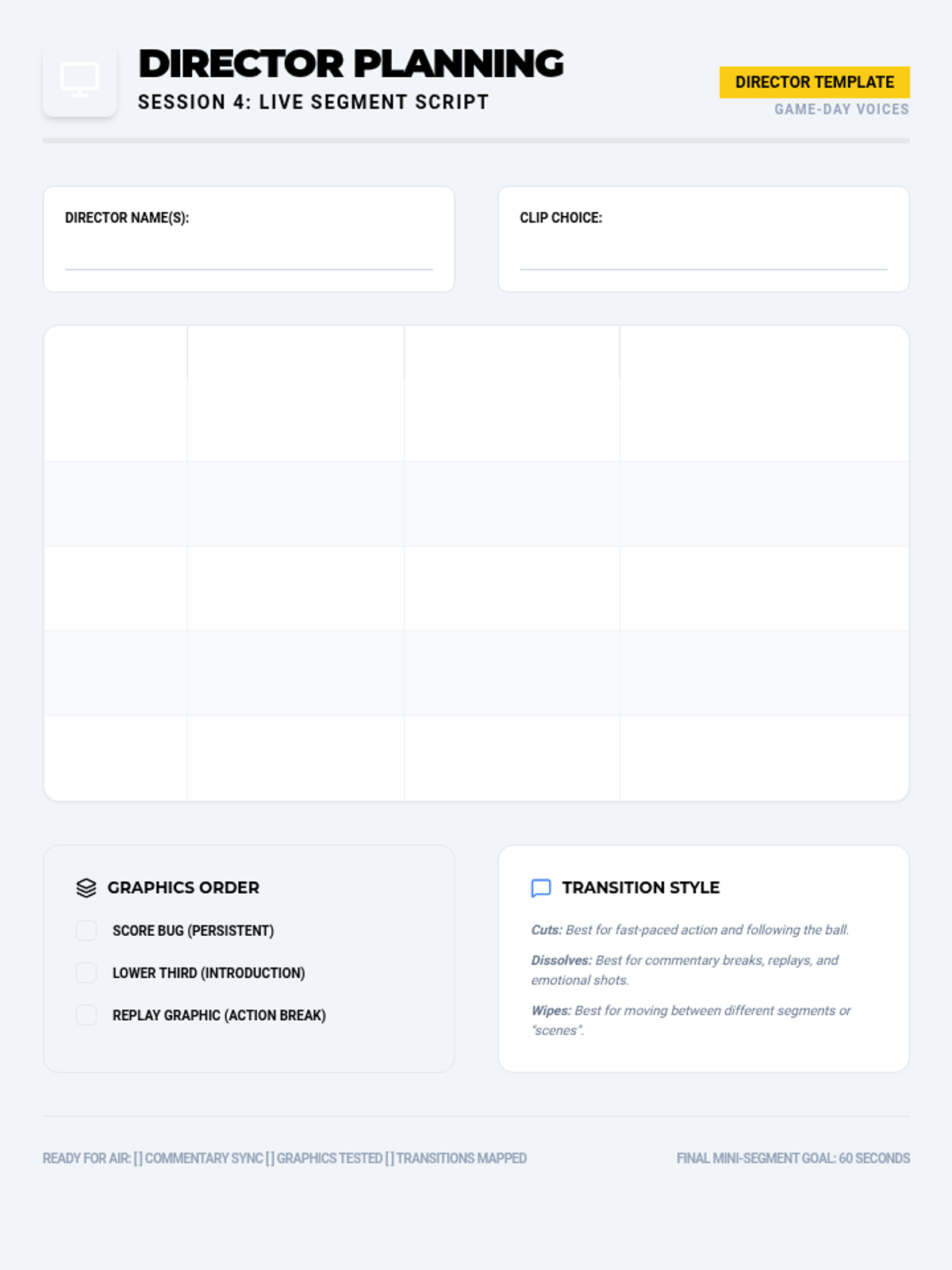
Students learn the role of the production director, coordinating camera cuts, graphics cues, and timing to create a professional live sports broadcast.
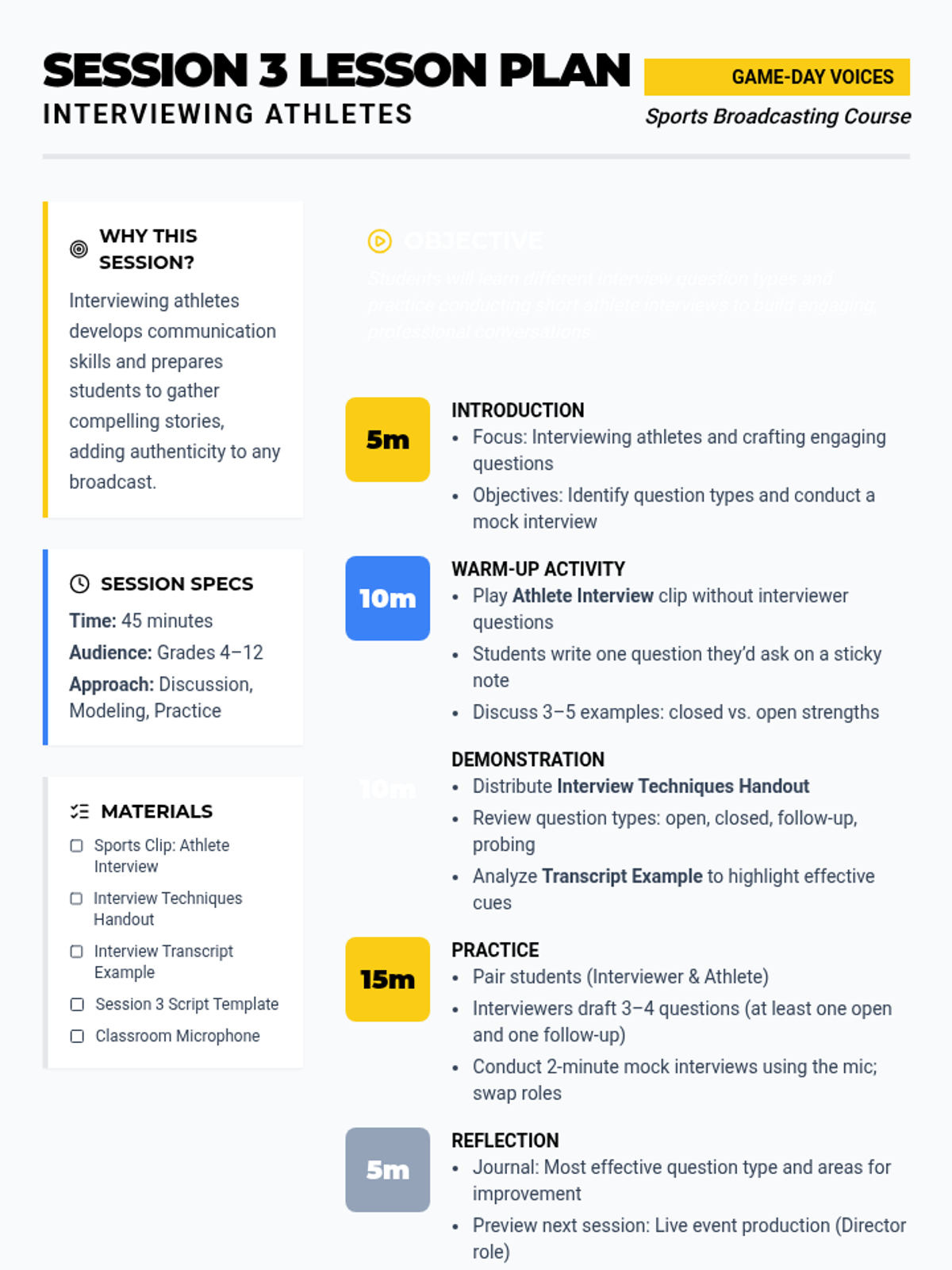
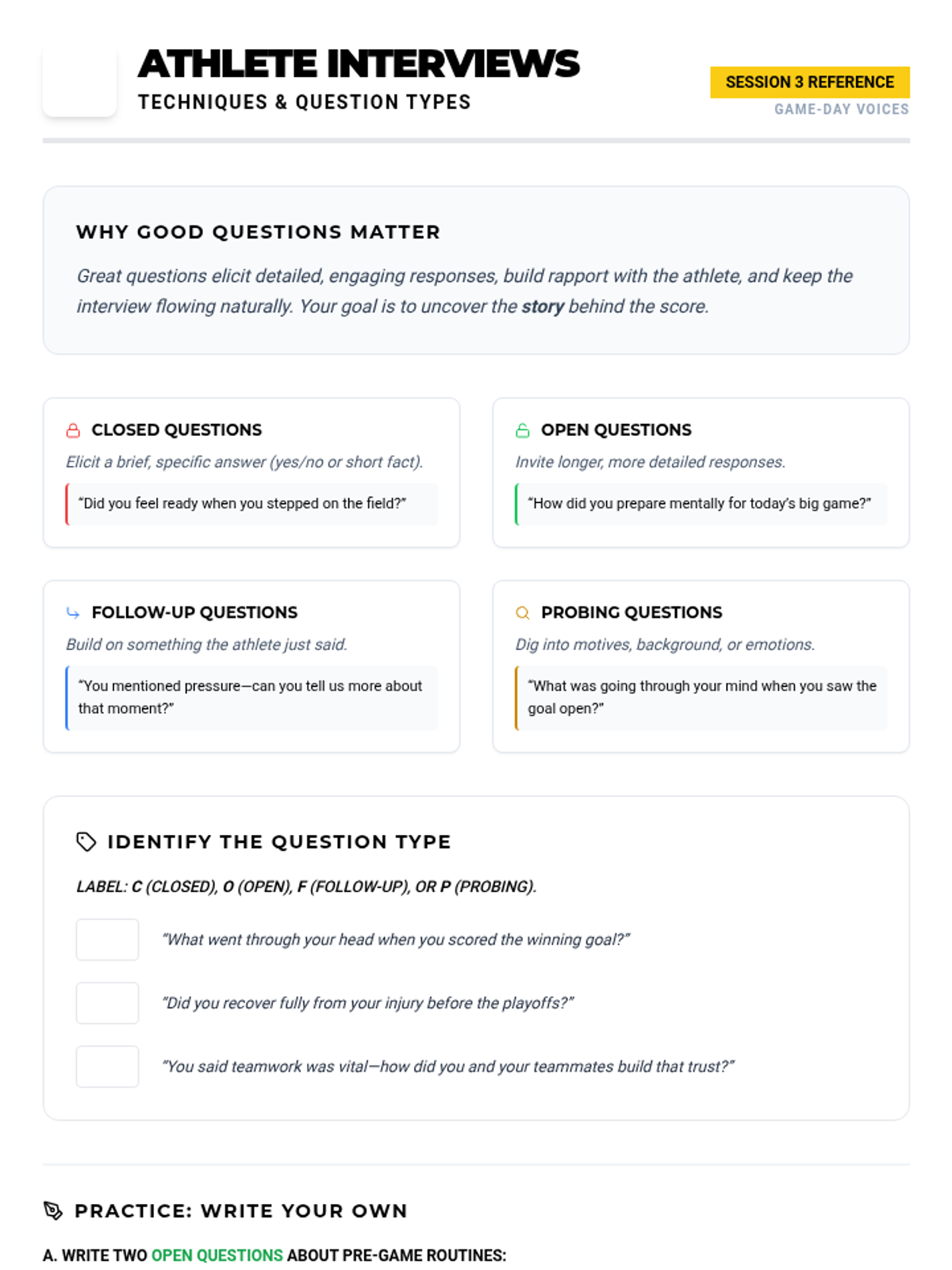
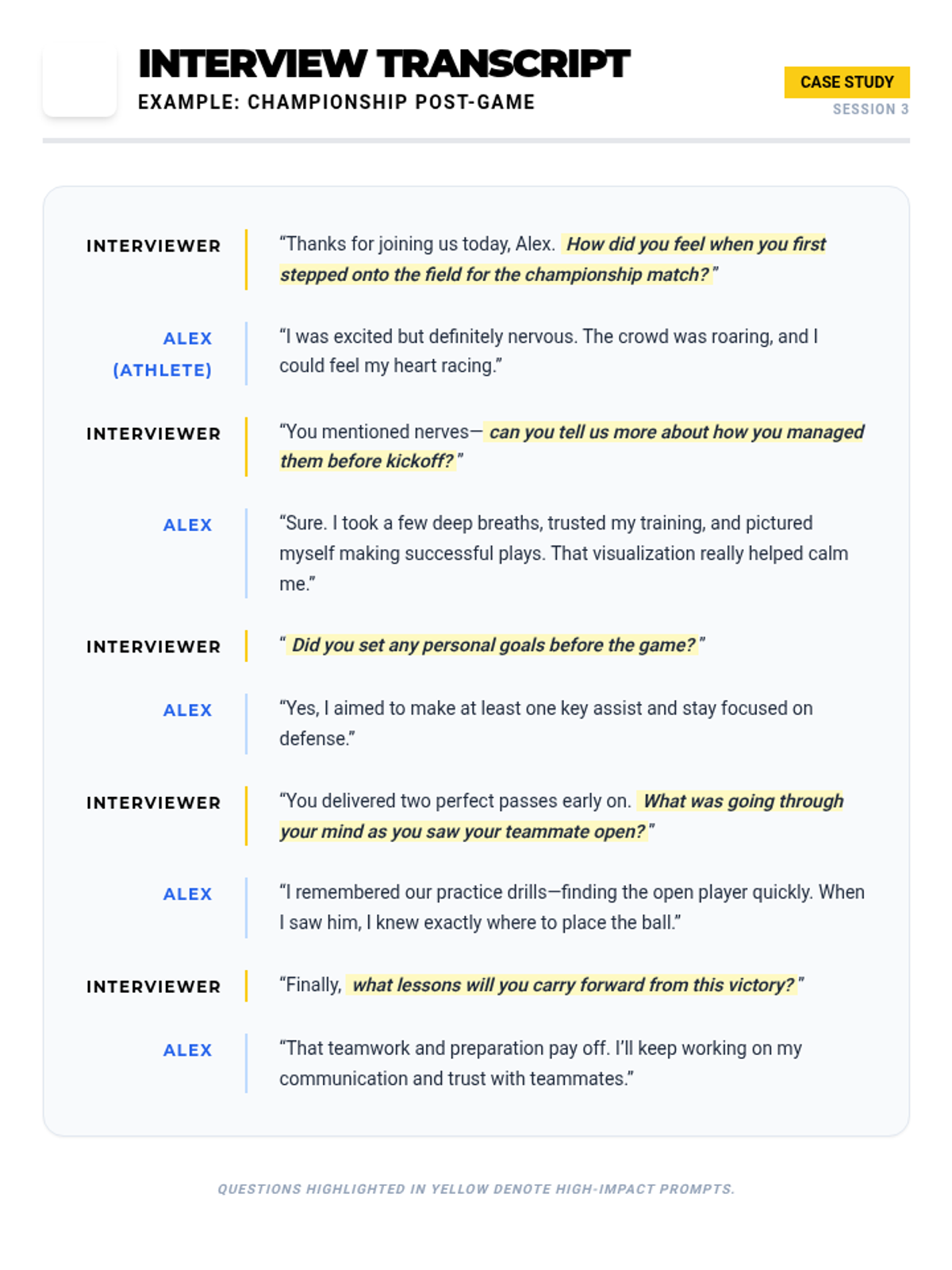
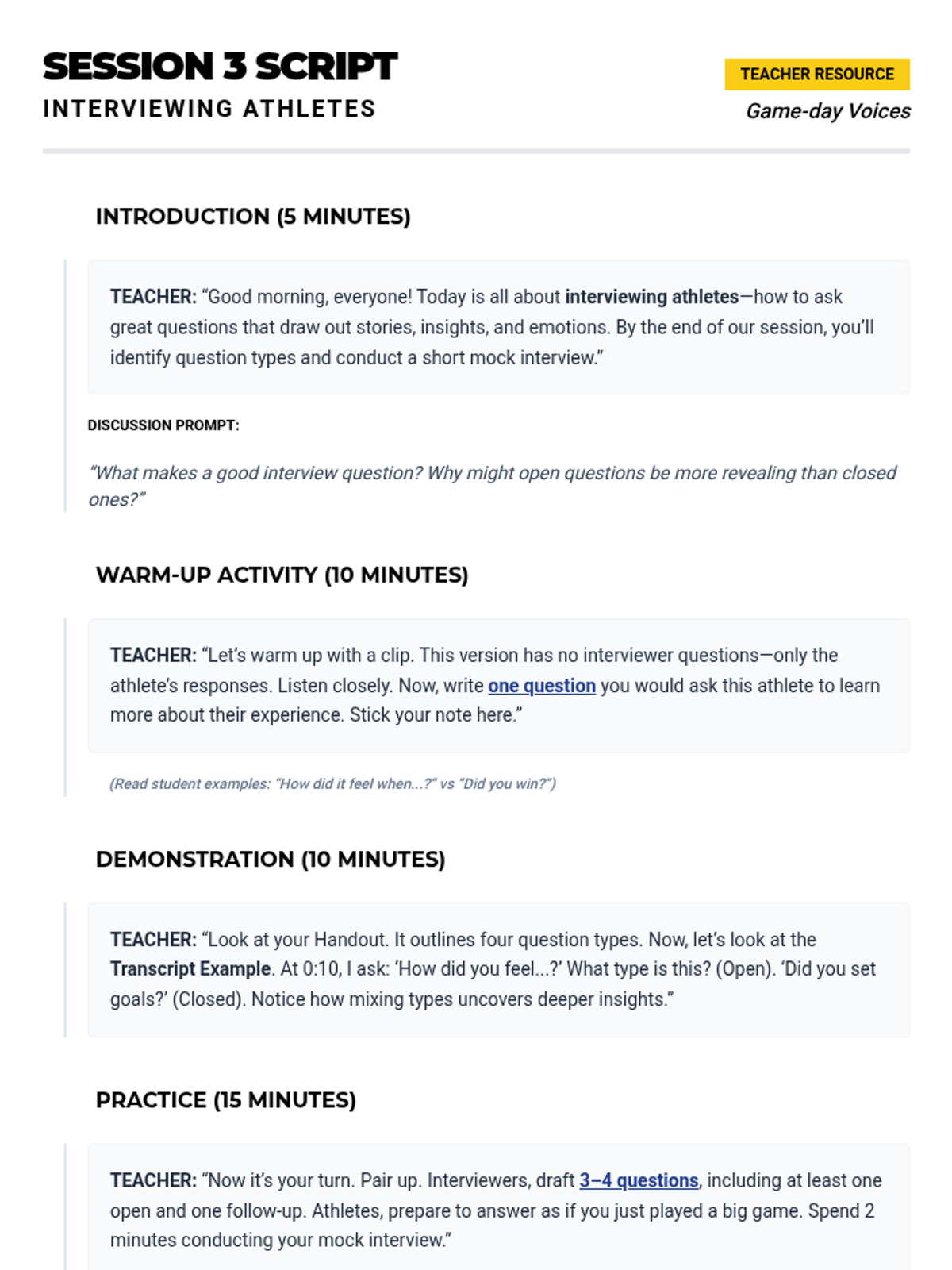
Students learn techniques for interviewing athletes, focusing on open-ended questions and active listening to draw out compelling stories.
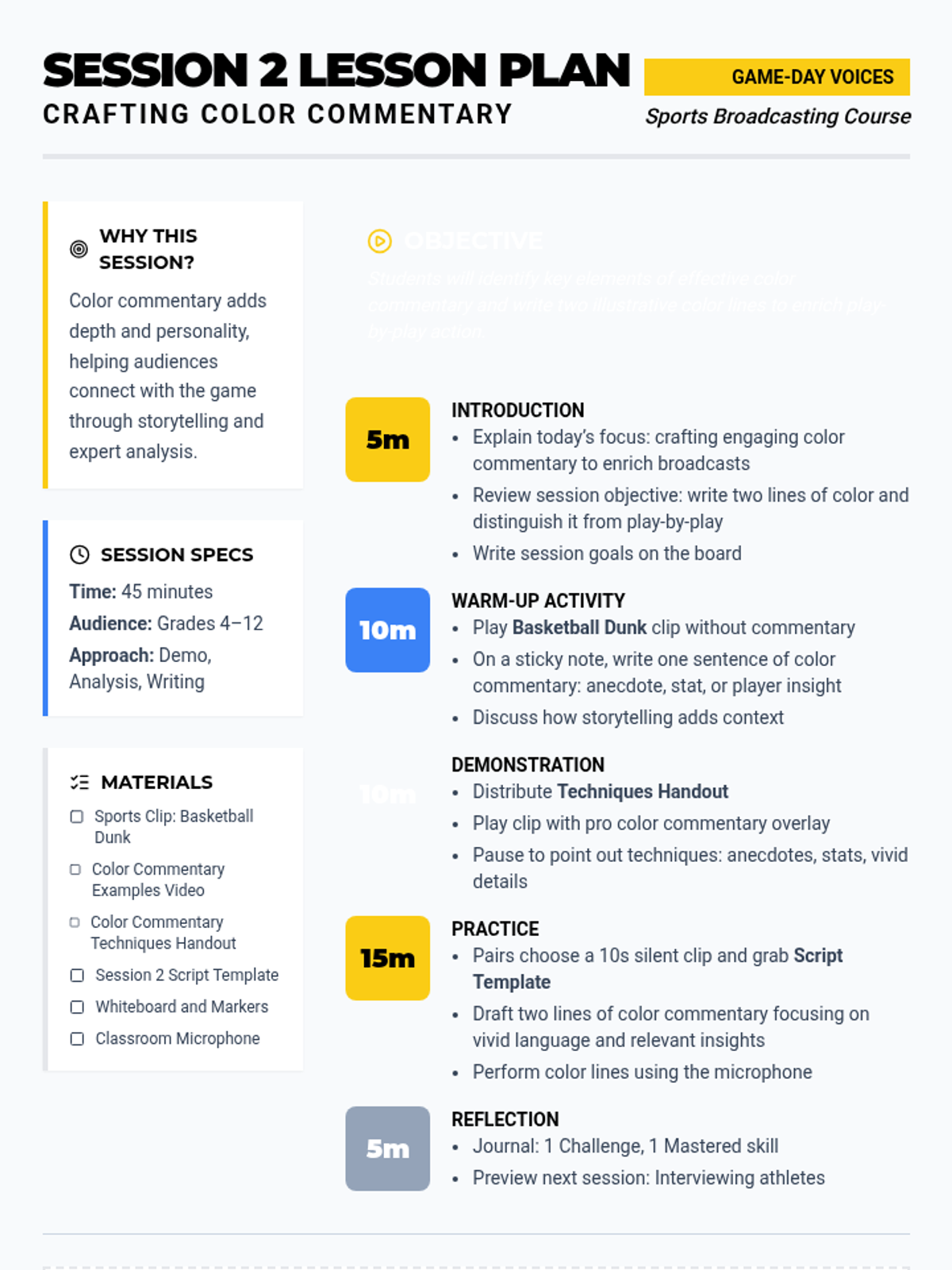
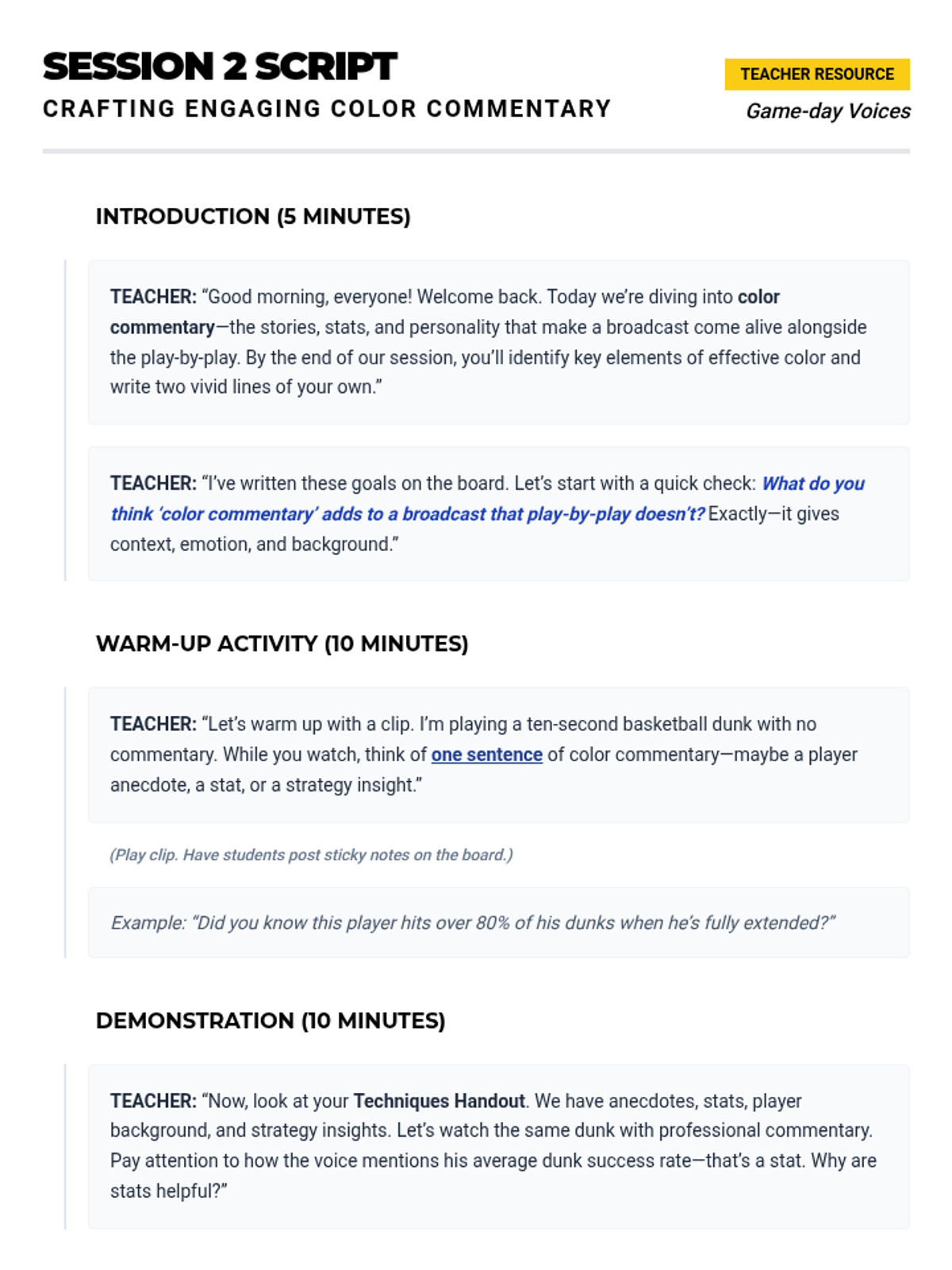
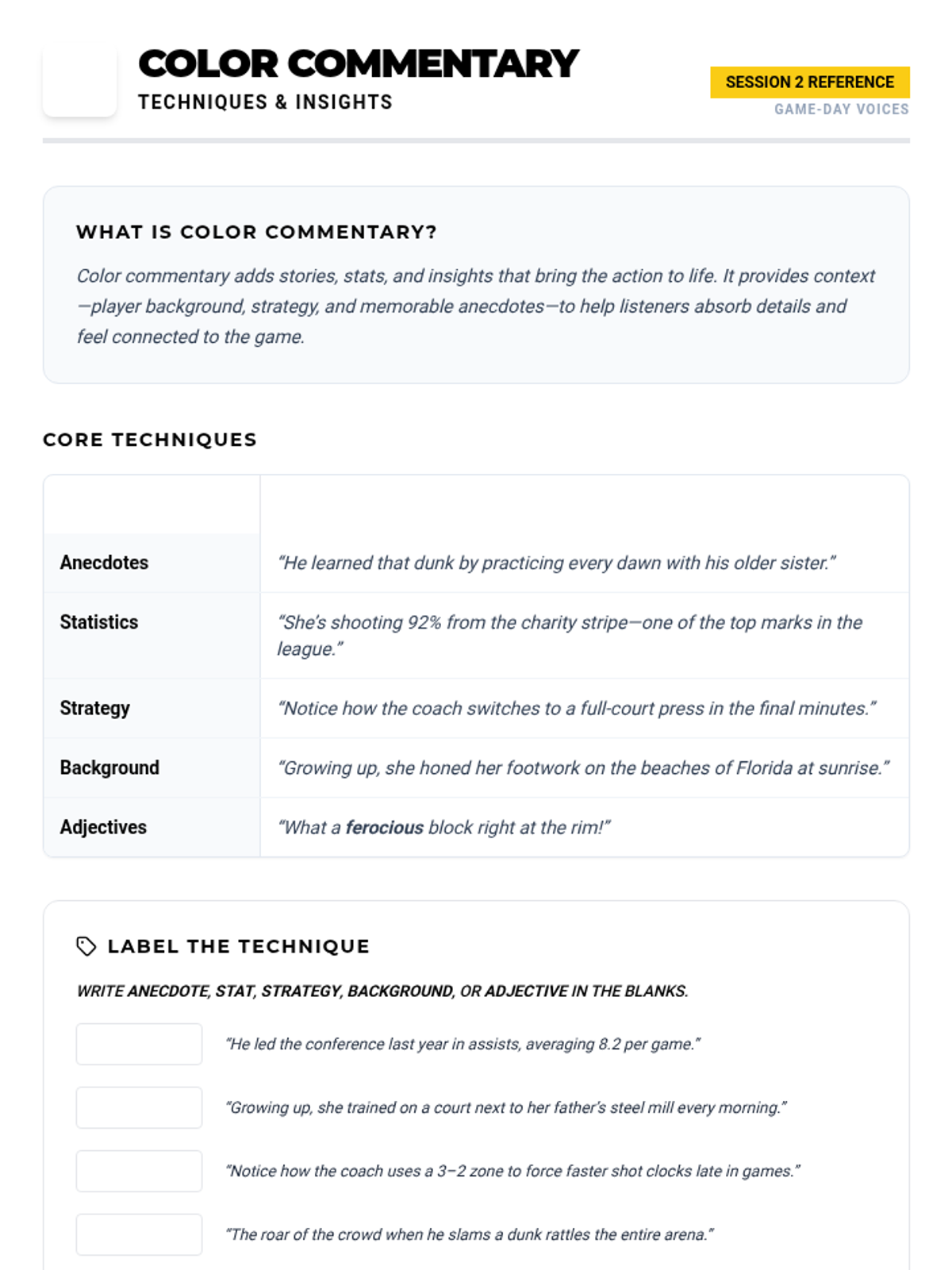
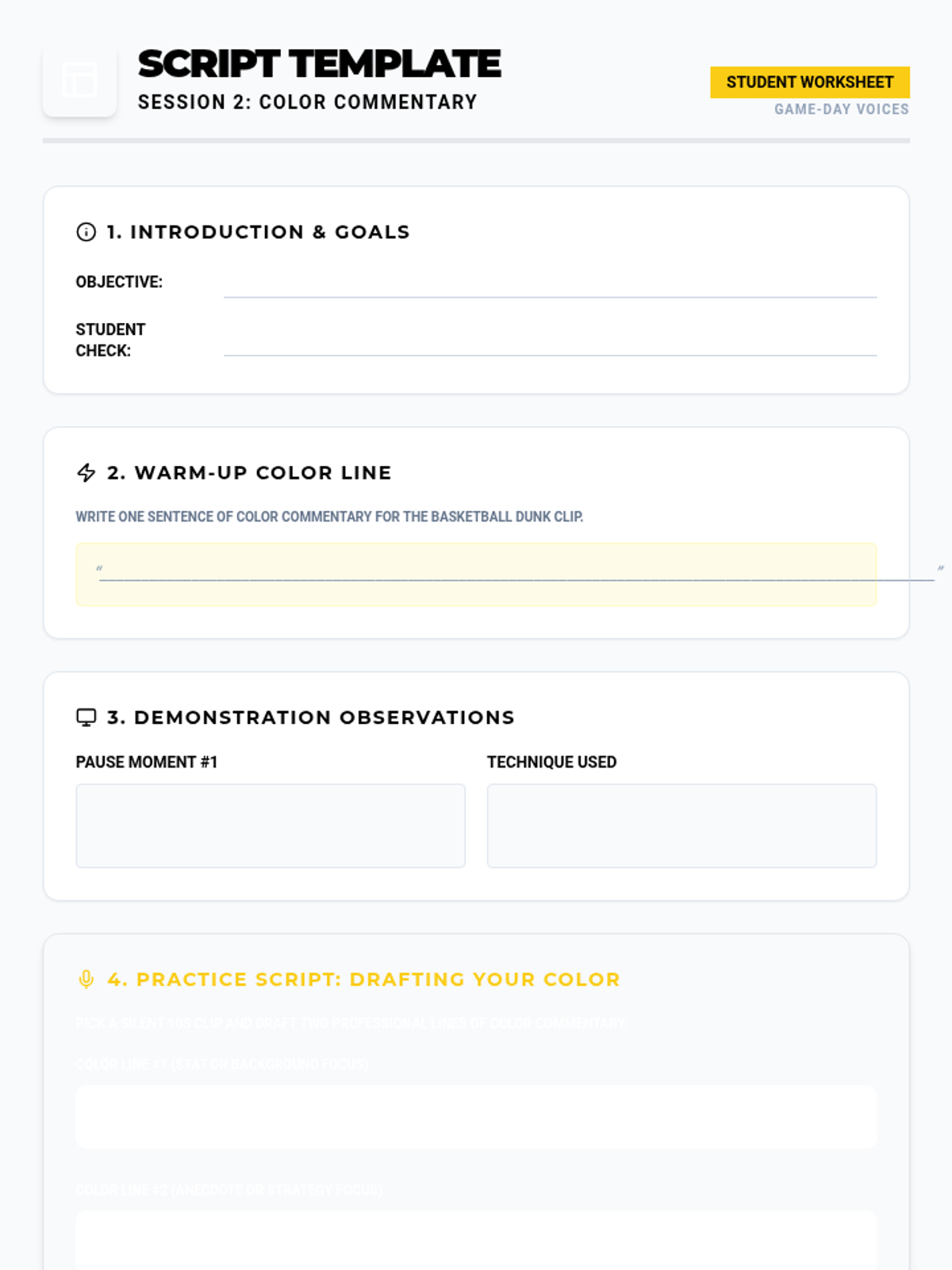
Students dive deeper into color commentary, learning techniques for storytelling, statistical analysis, and strategic insights to enrich their broadcasts.
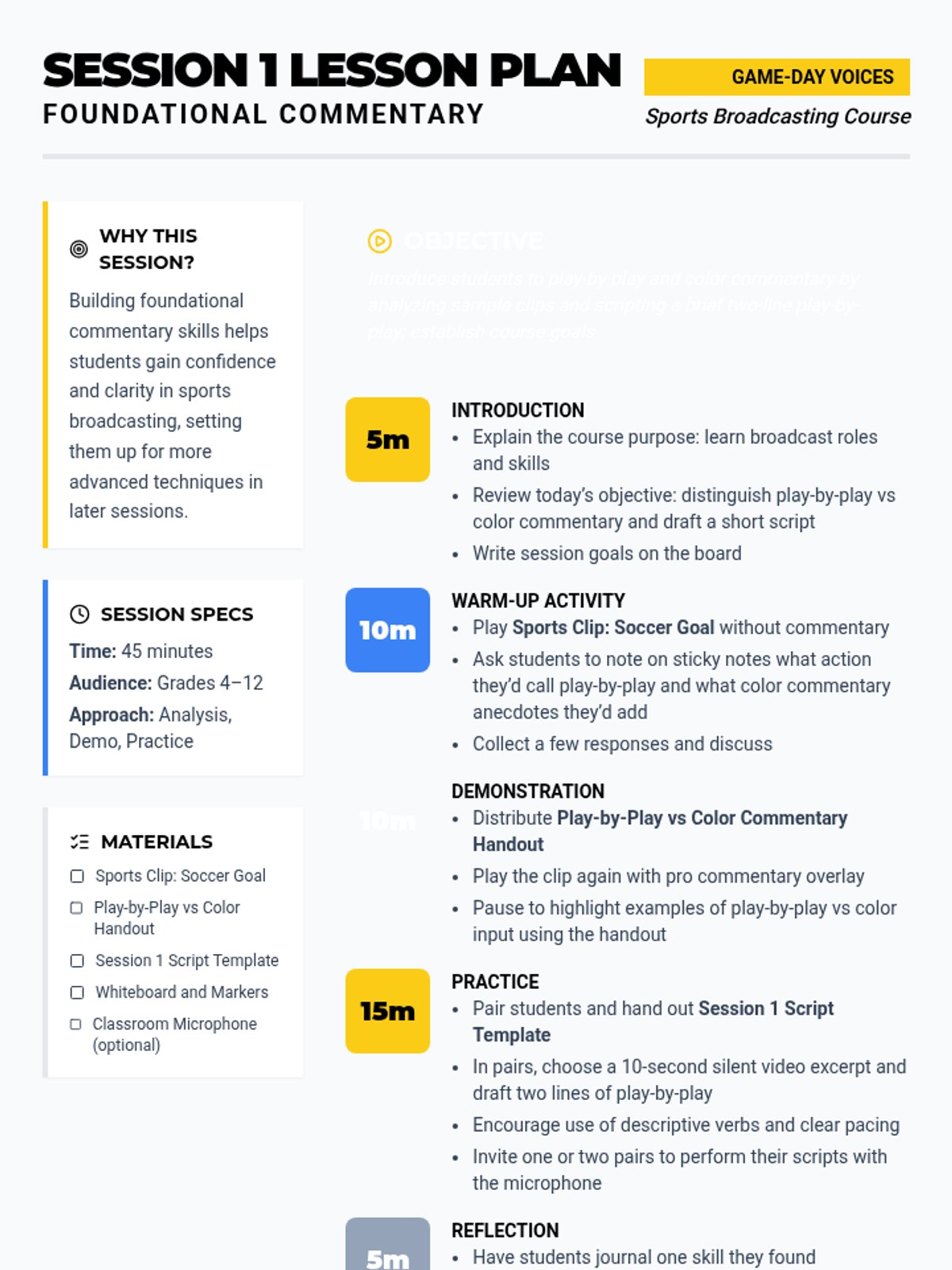
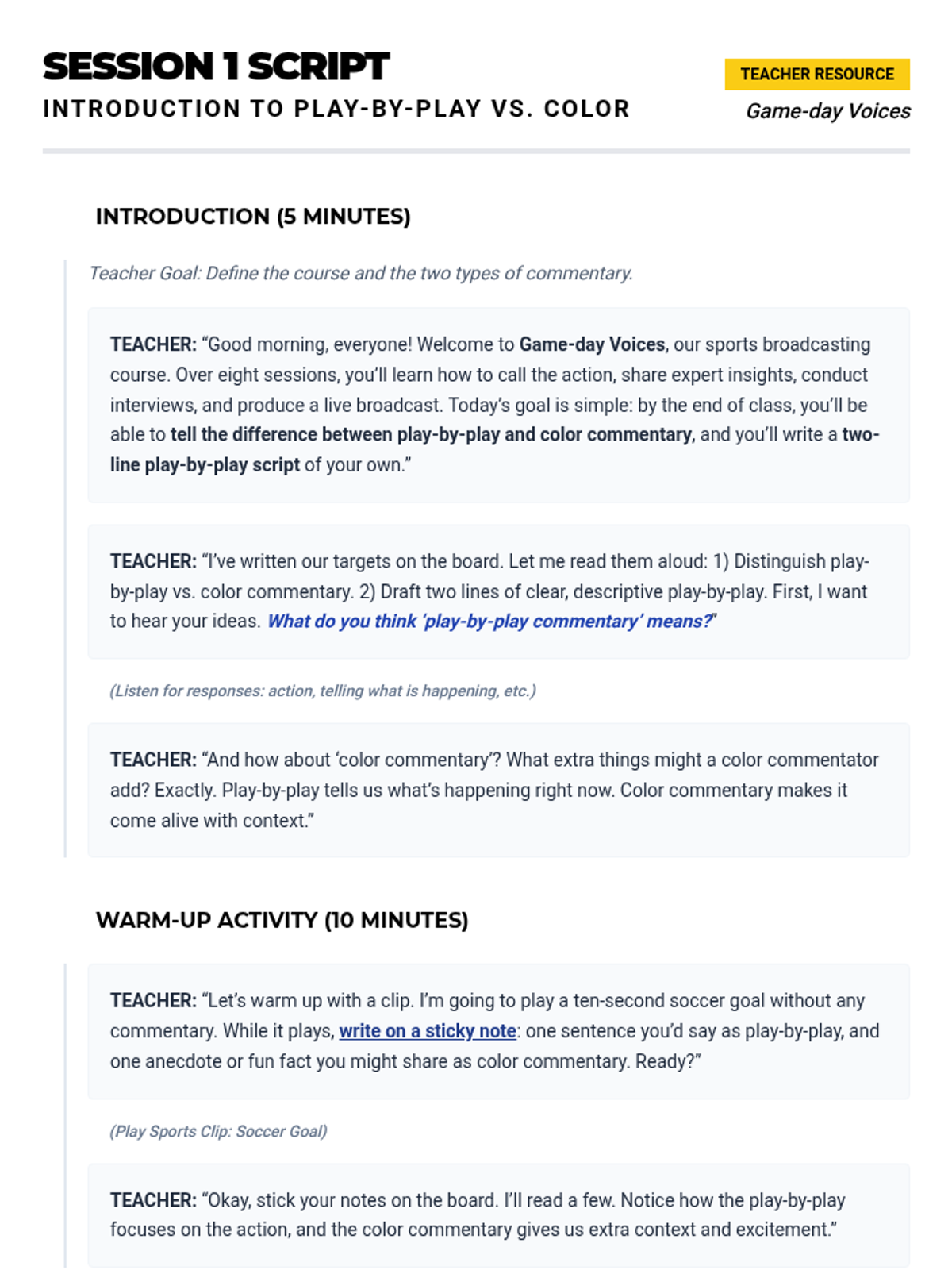
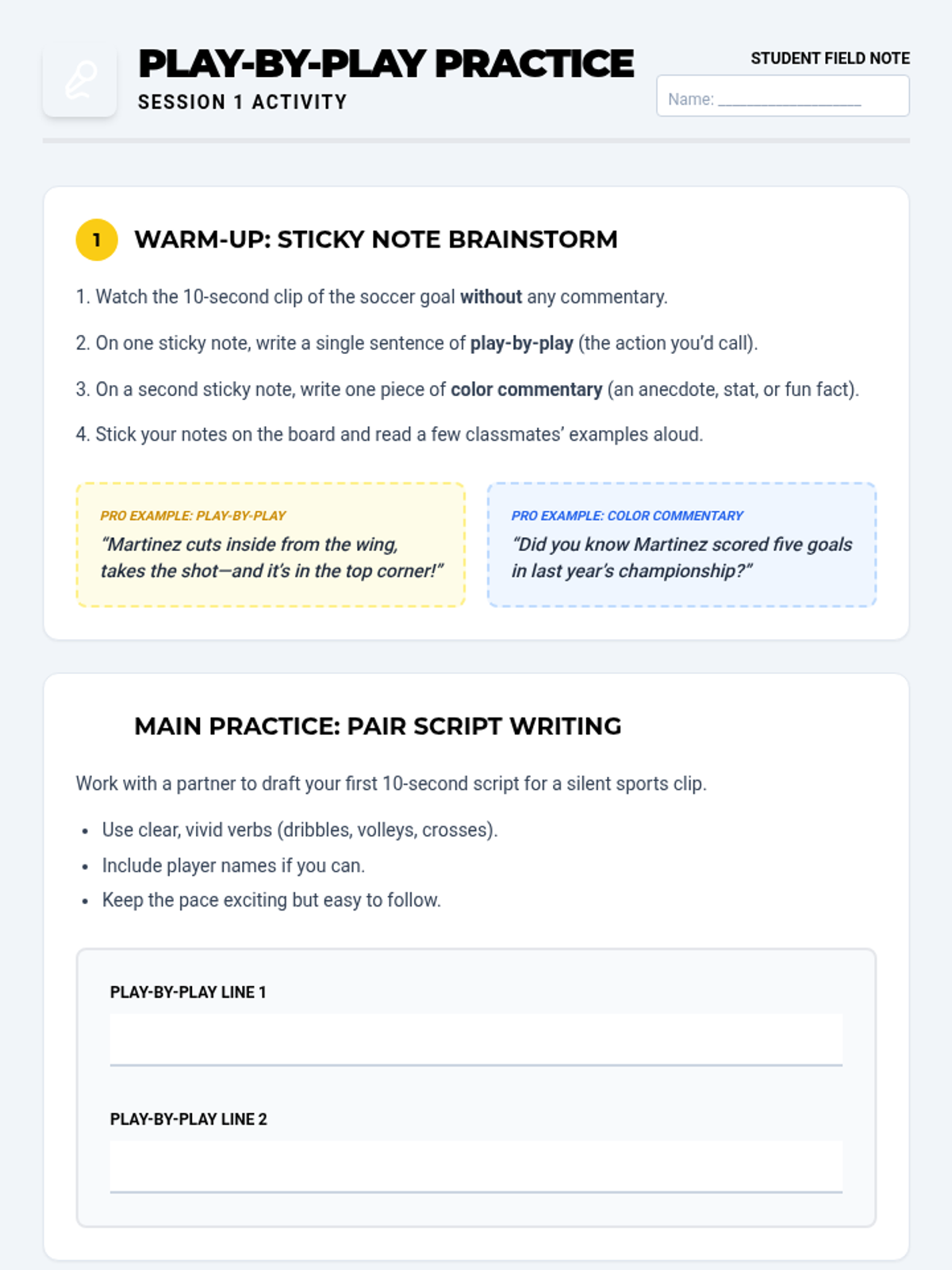
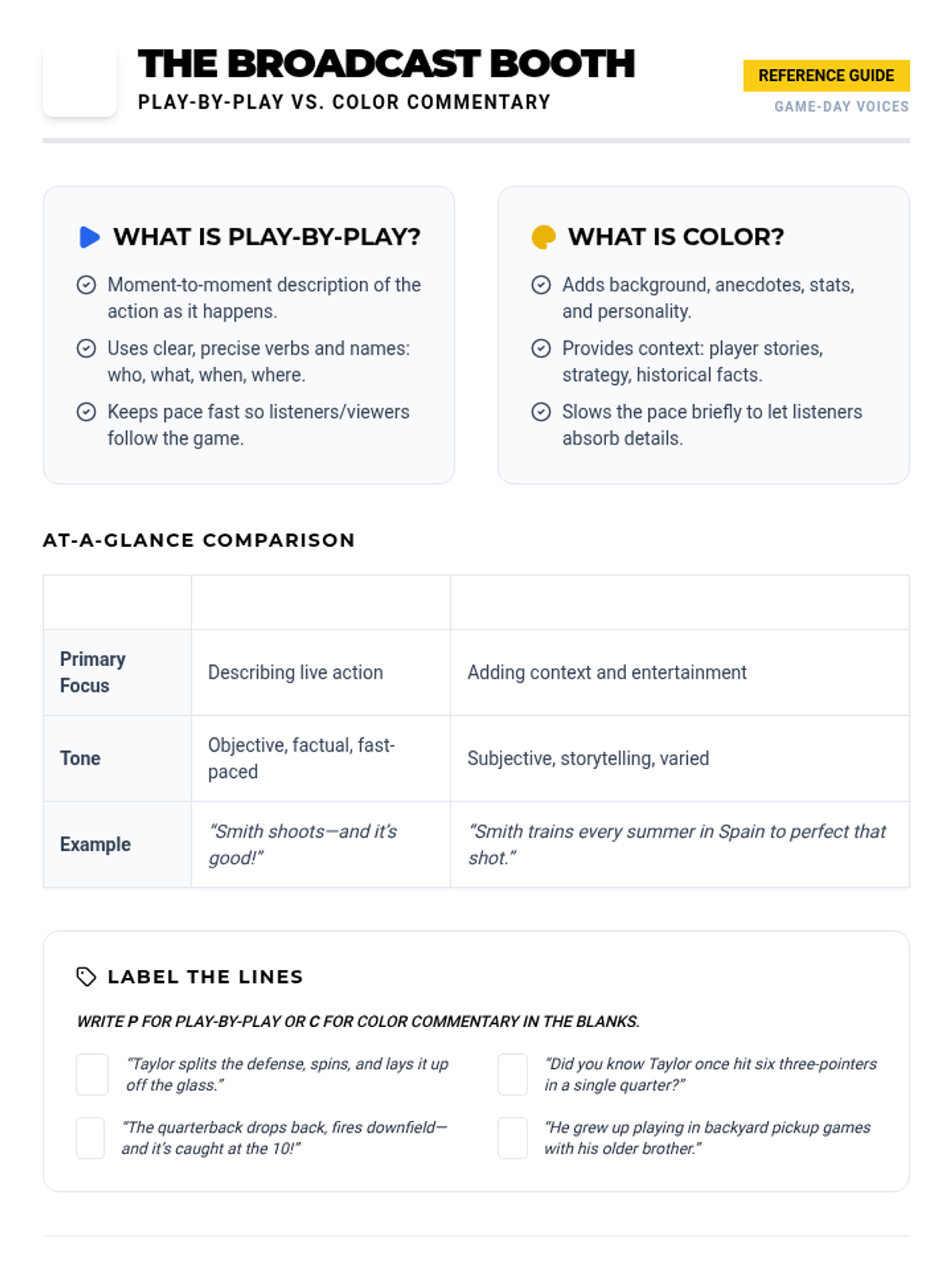
Students distinguish between play-by-play and color commentary by analyzing sports clips and drafting their first broadcast script.
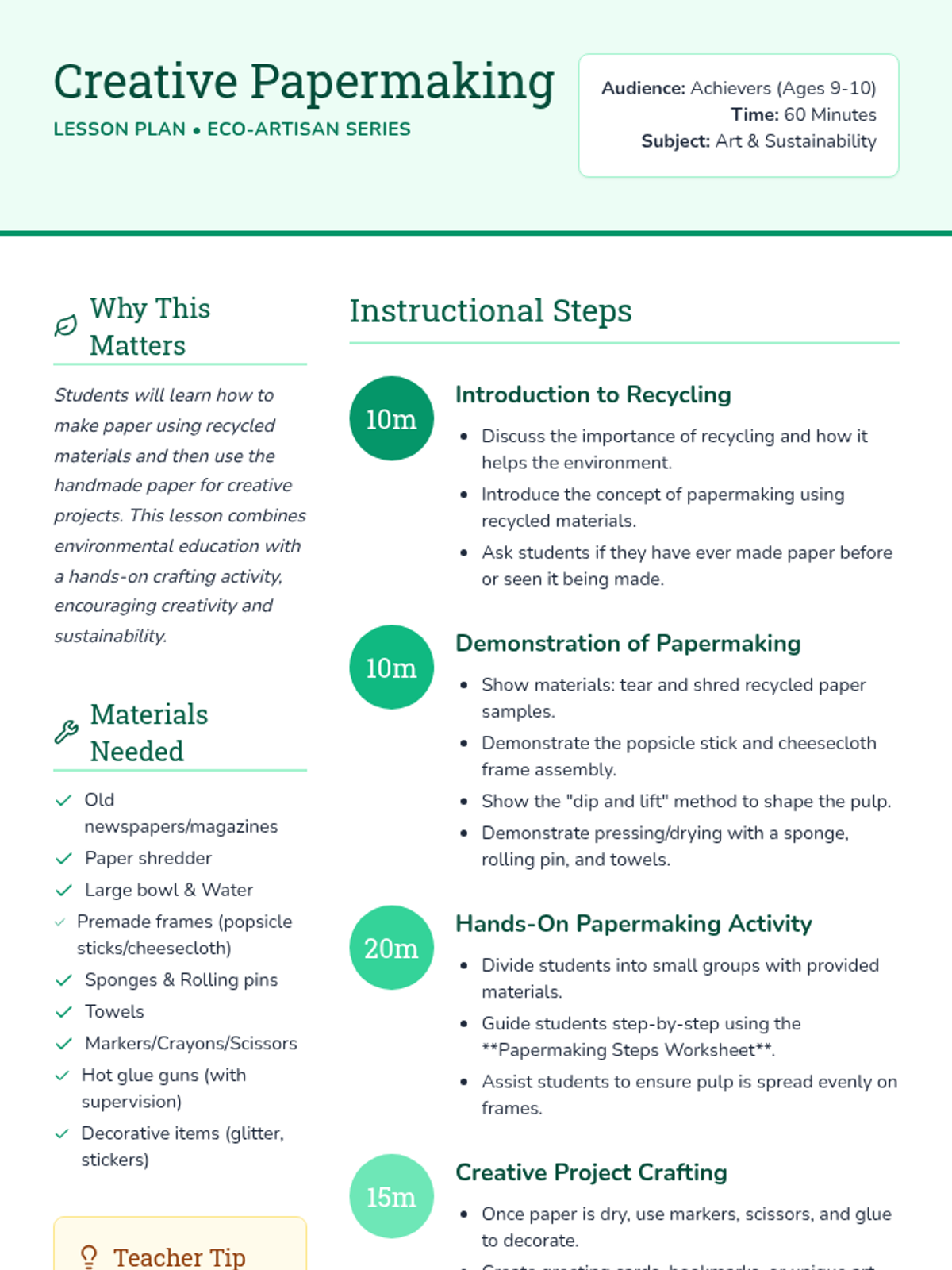
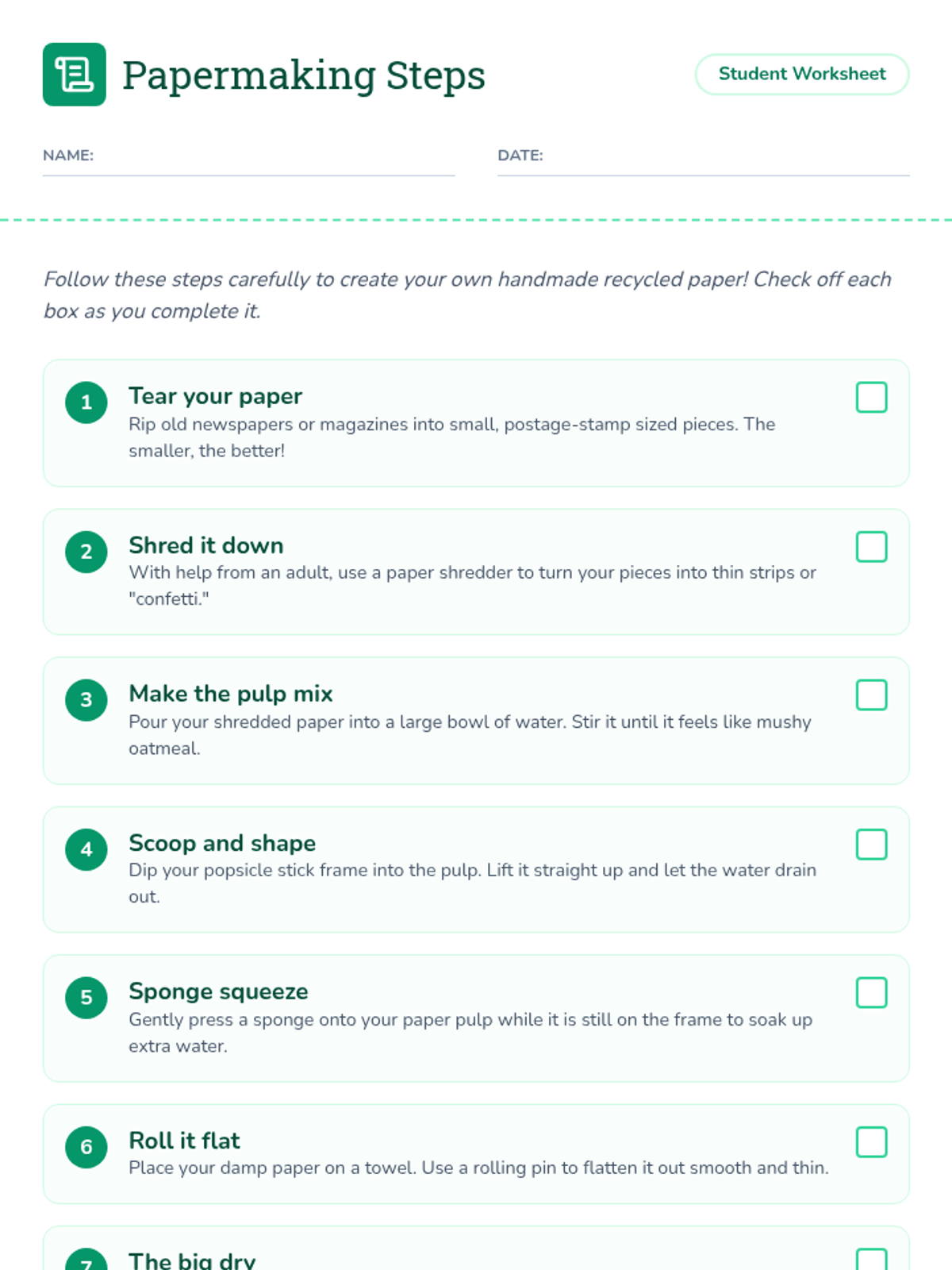
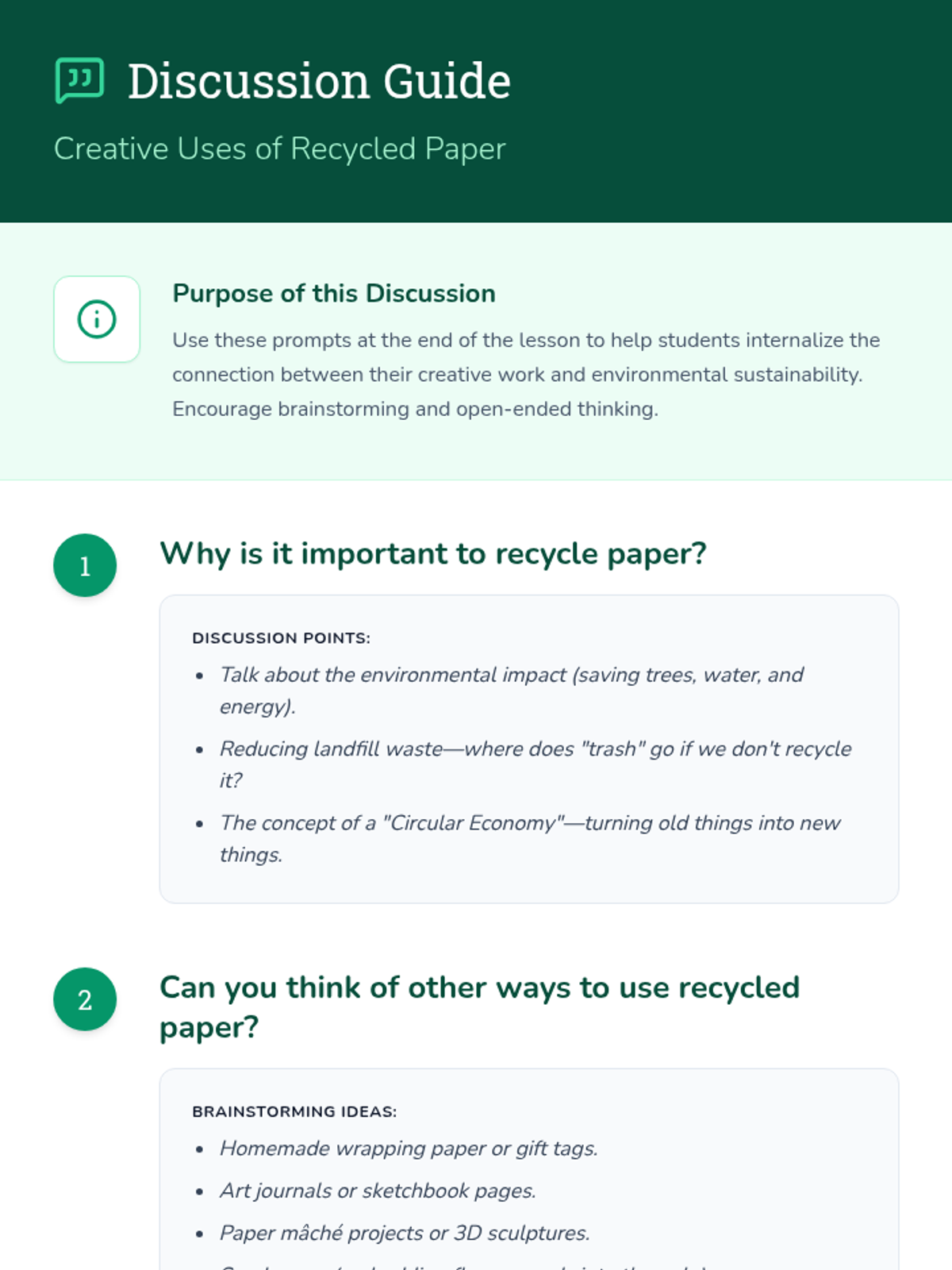
A hands-on lesson where students learn the art of papermaking using recycled materials, combining environmental science with creative crafting.
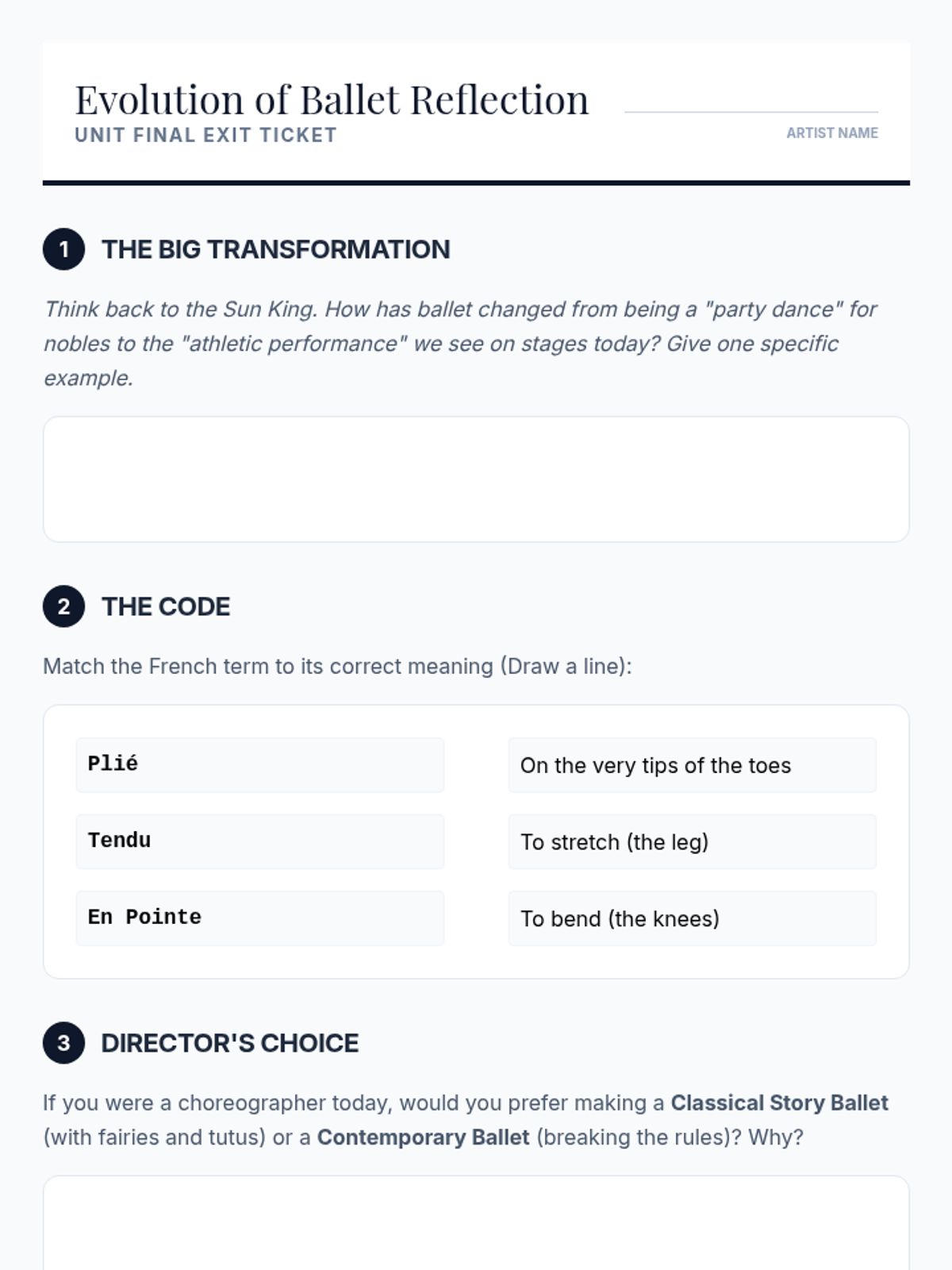
Students conclude the sequence by analyzing the transition to contemporary ballet, comparing traditional rules with modern innovations in costume, movement, and music.
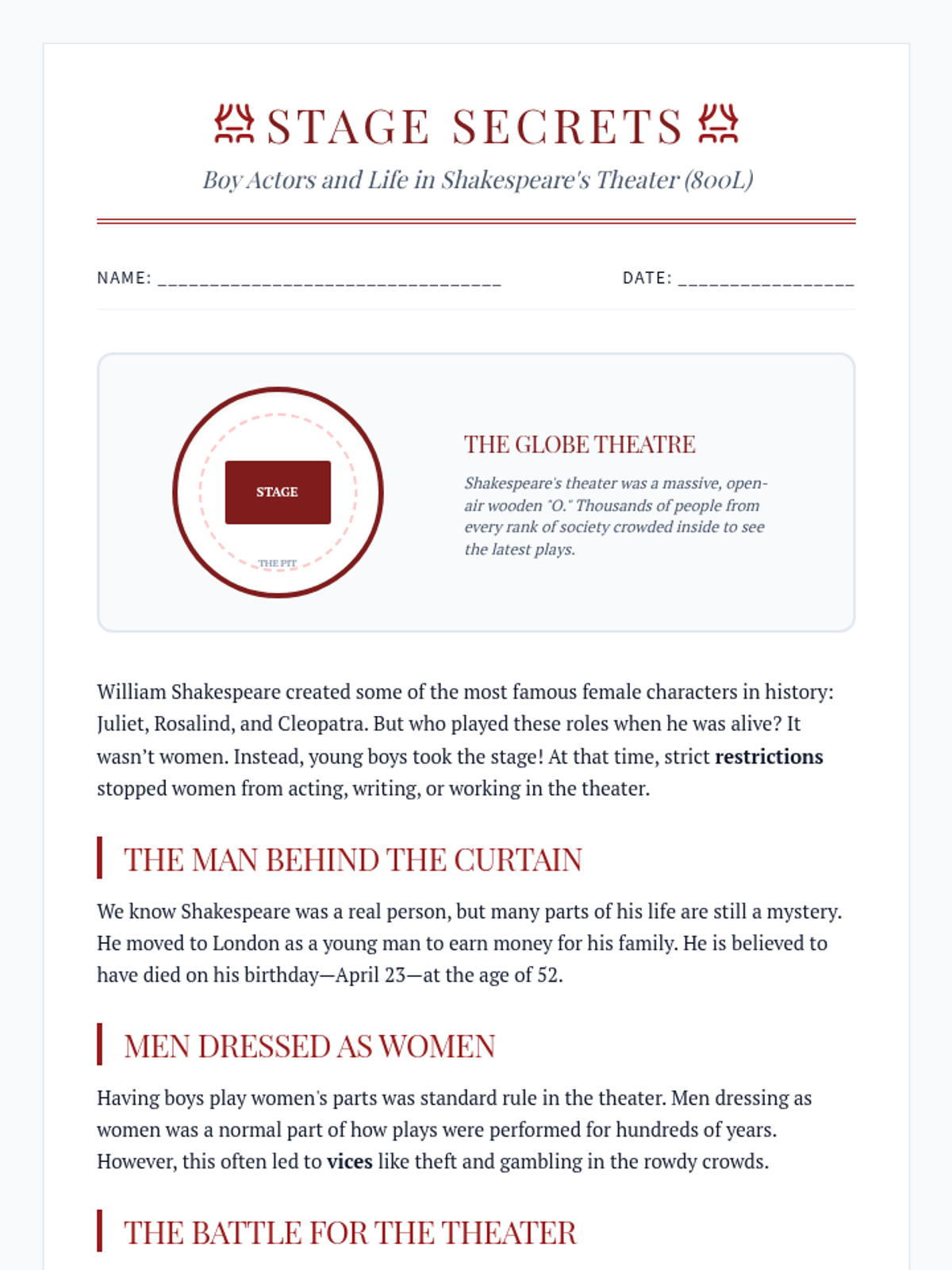
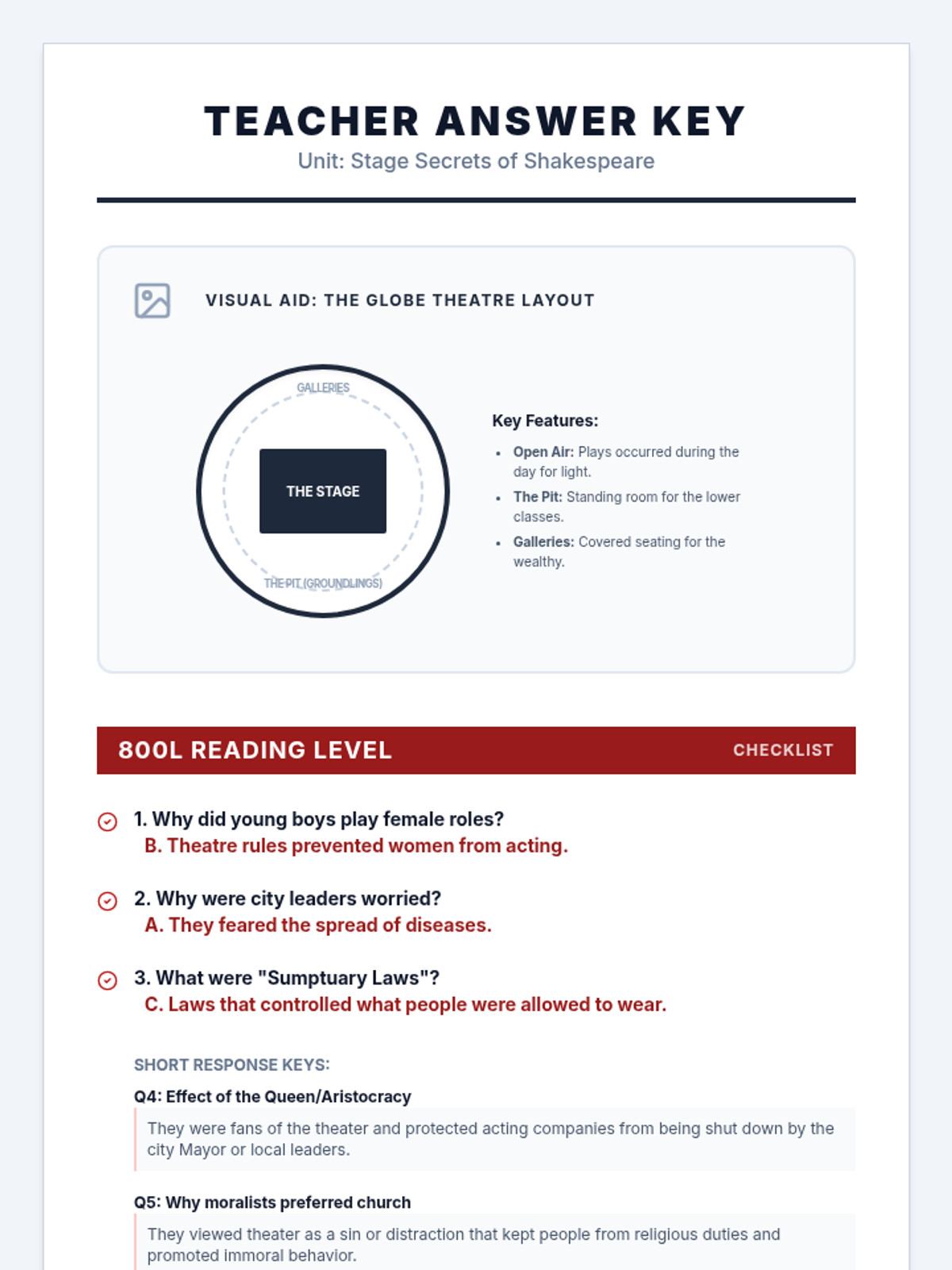
A comparison of Shakespearean theater practices, focusing on the historical context of boy actors and social reactions to the stage across different reading levels.
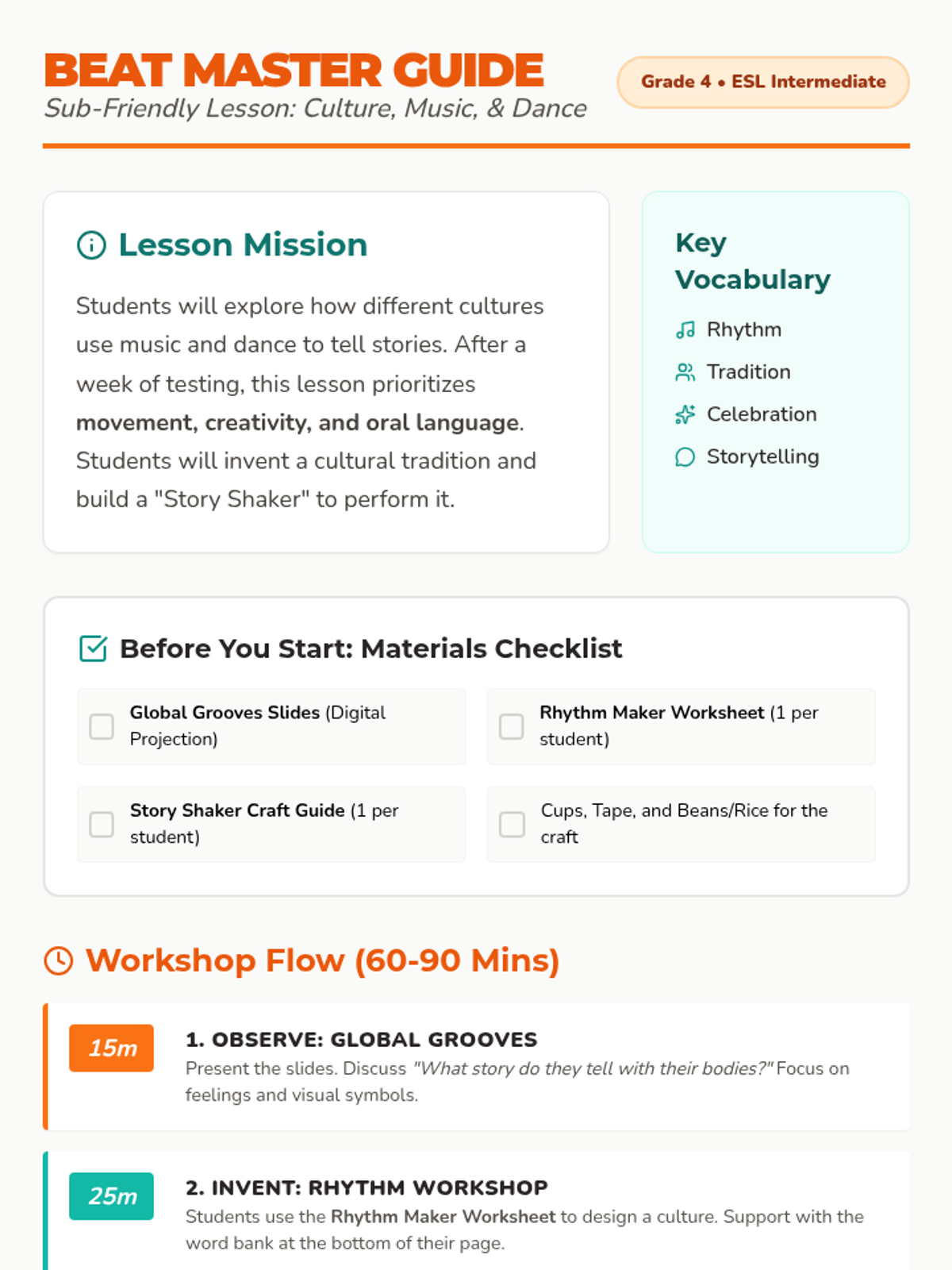
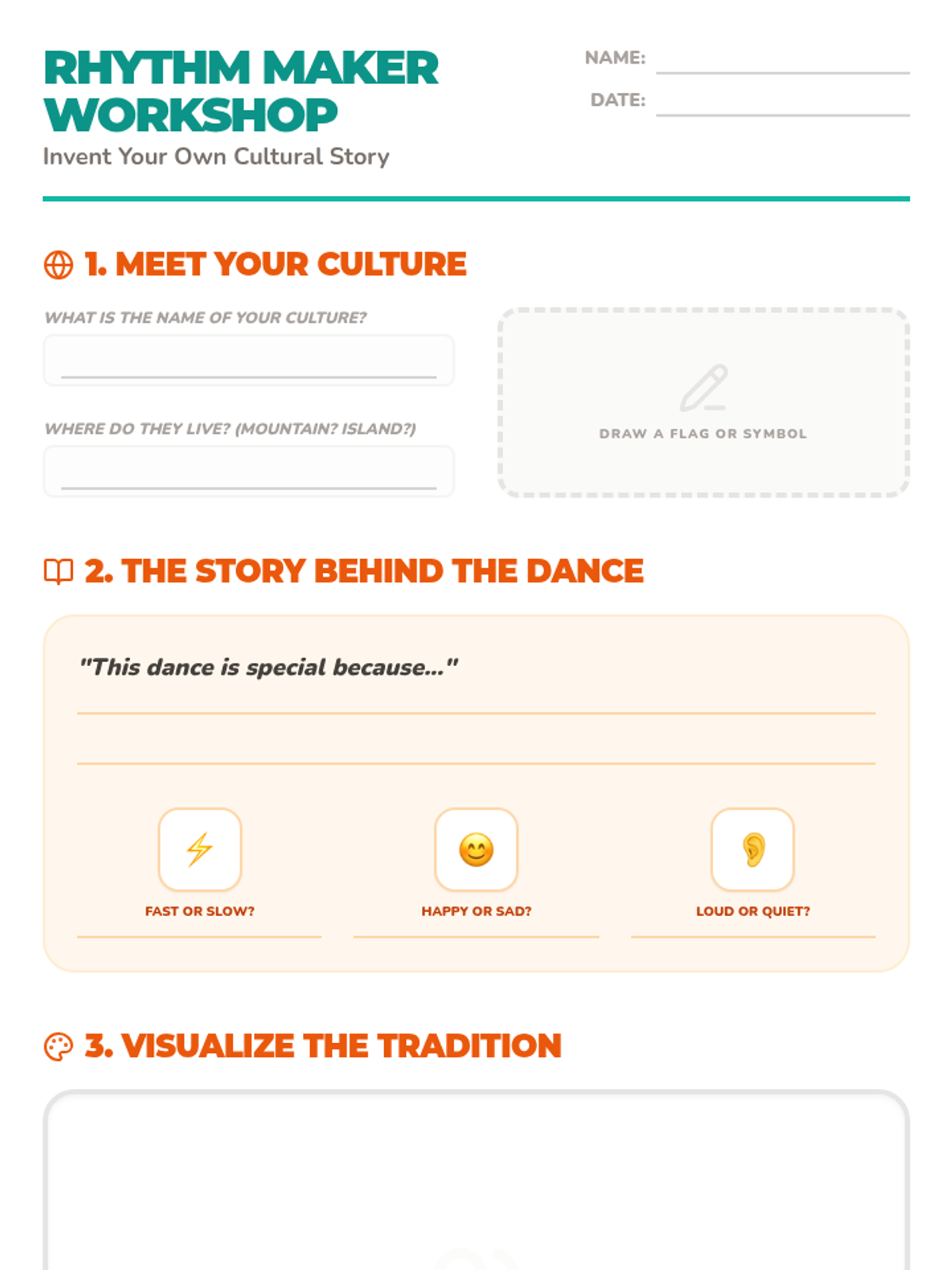
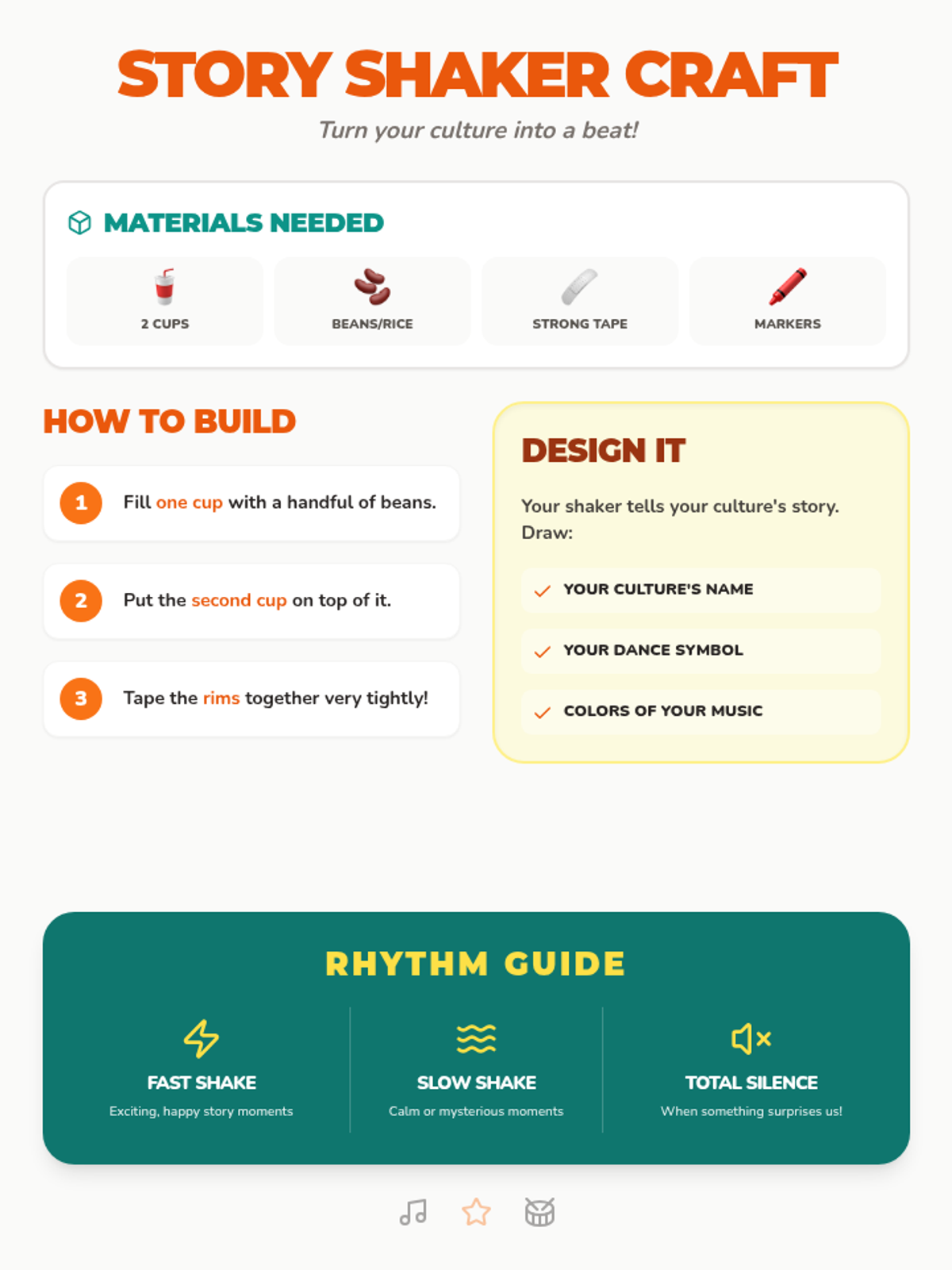
A high-energy, creative workshop for 4th-grade ESL students to explore cultural music and dance through storytelling and instrument making. Designed to be fun and engaging after state testing, focusing on oral language and creative expression.
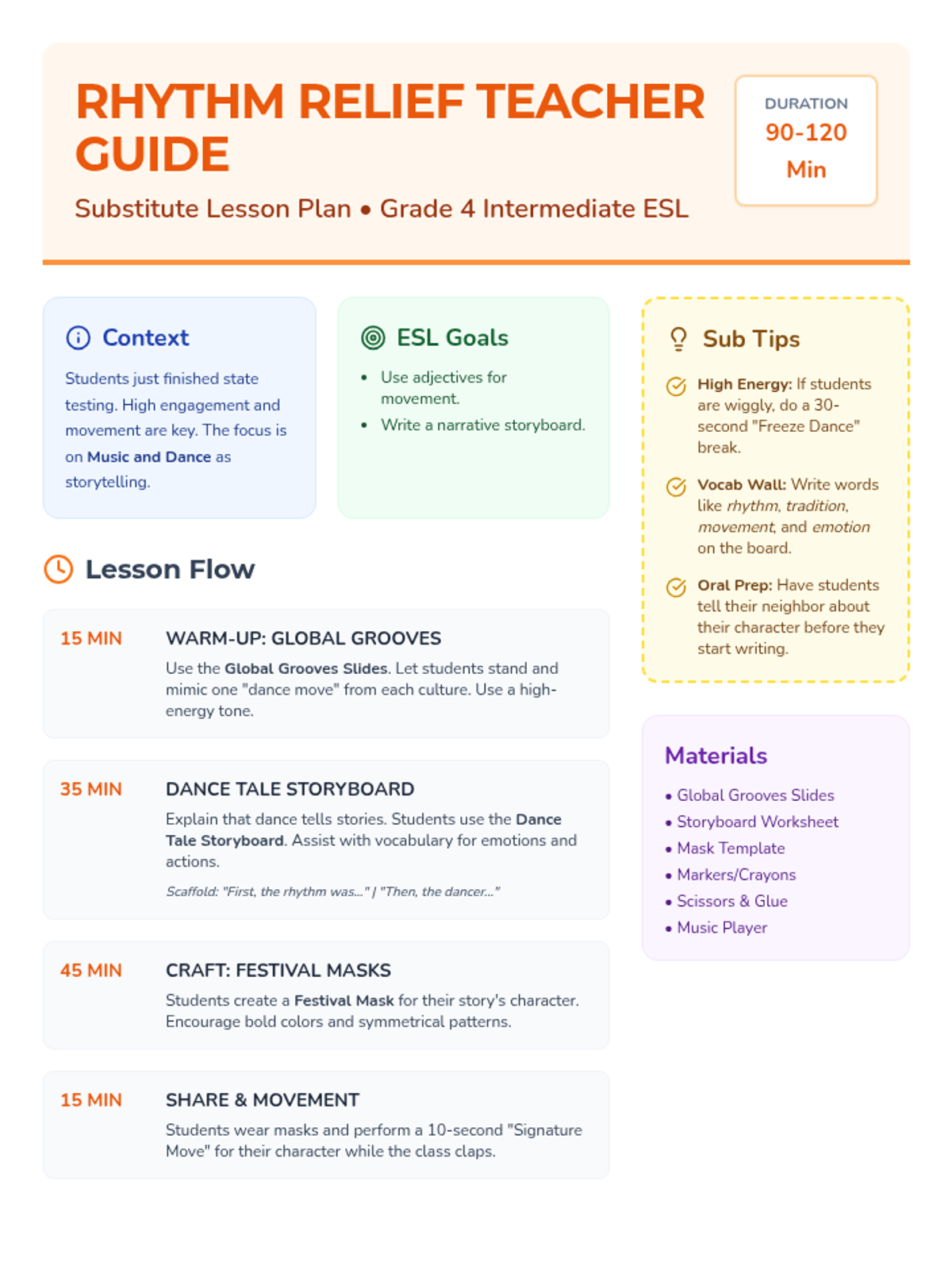
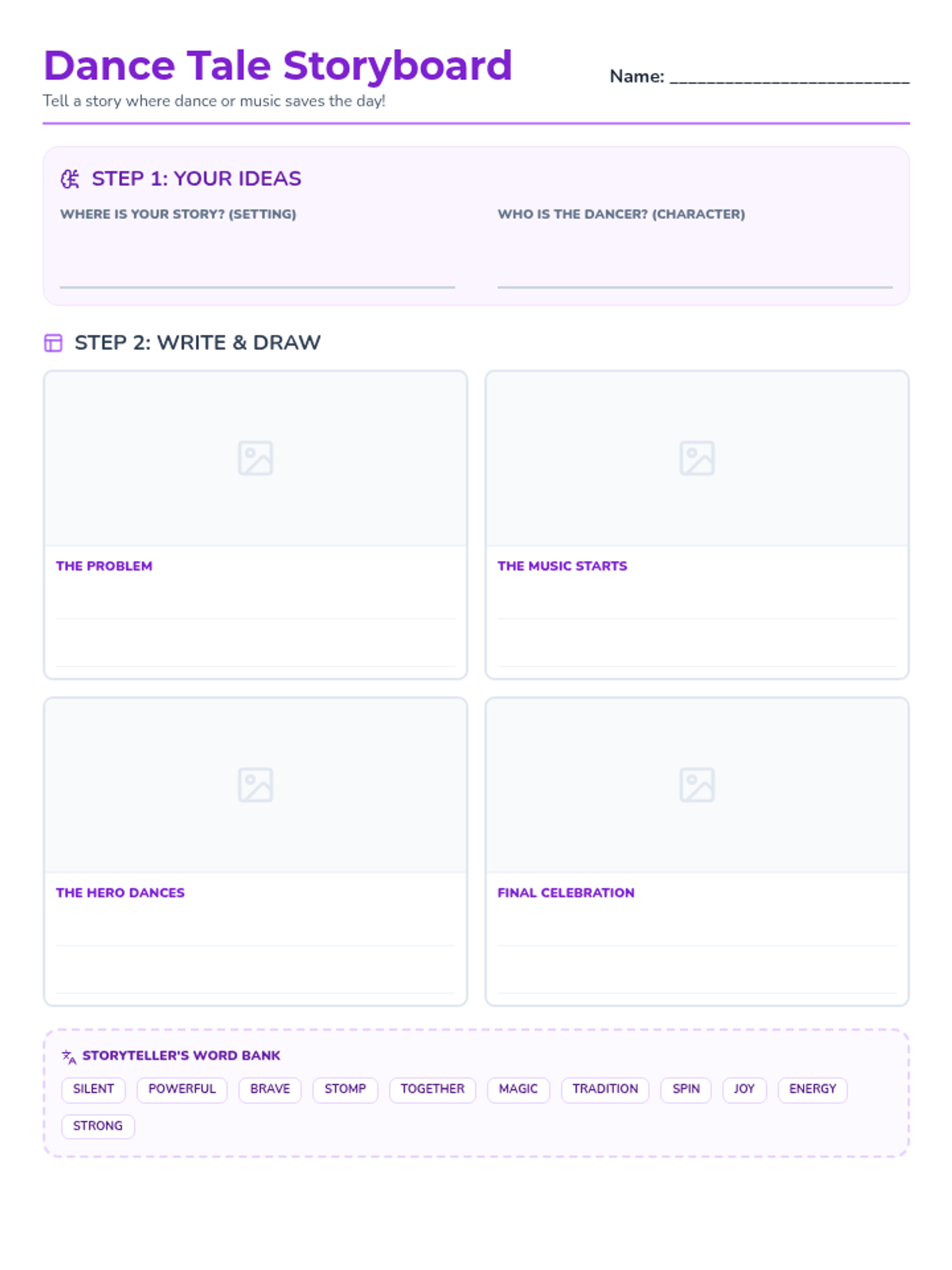
A fun, creative lesson for 4th-grade ESL students focusing on the intersection of music, dance, and storytelling. Designed for a substitute teacher to implement after state testing, it includes a presentation, a storyboard activity, and a hands-on mask-making craft.
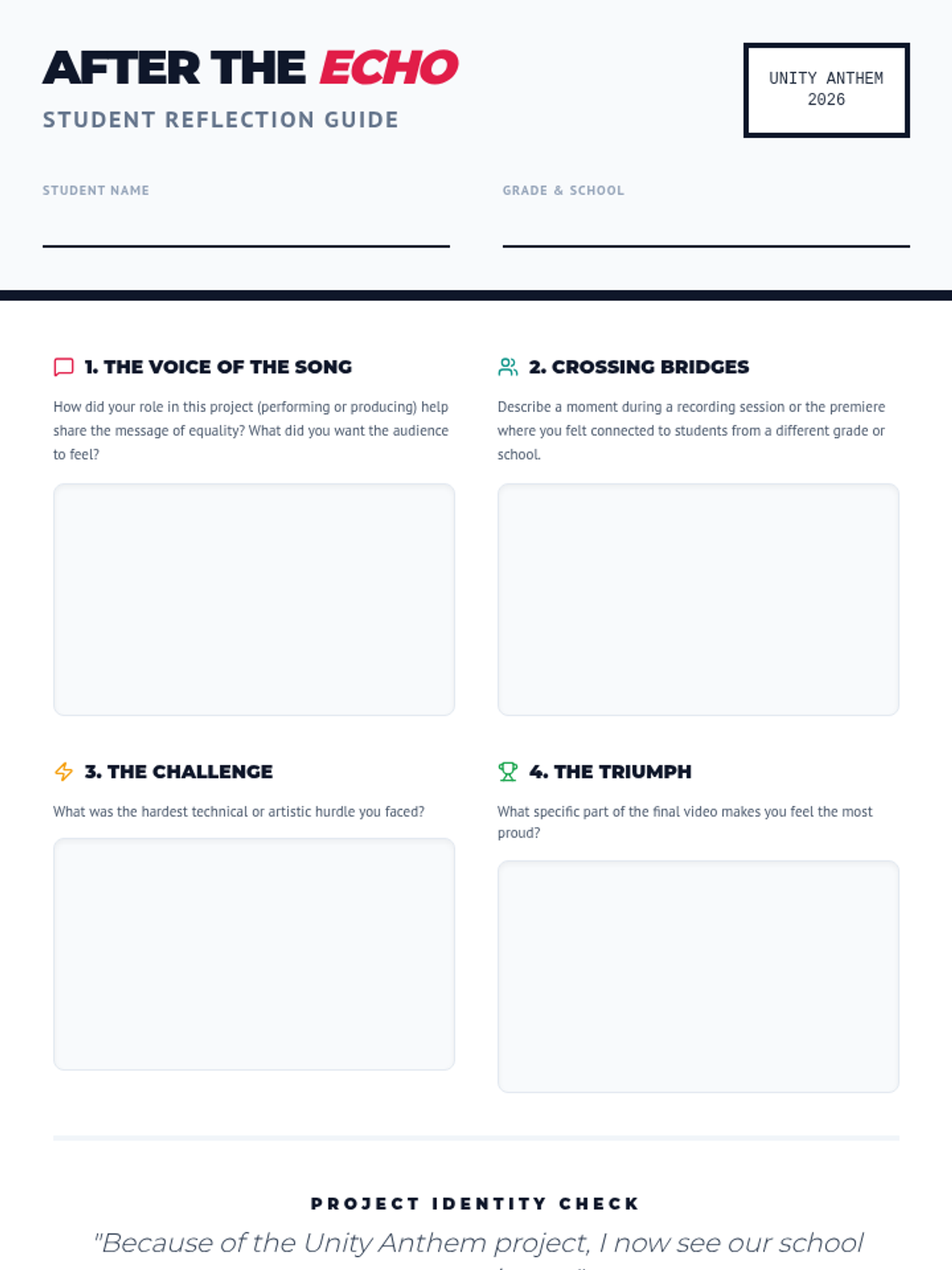
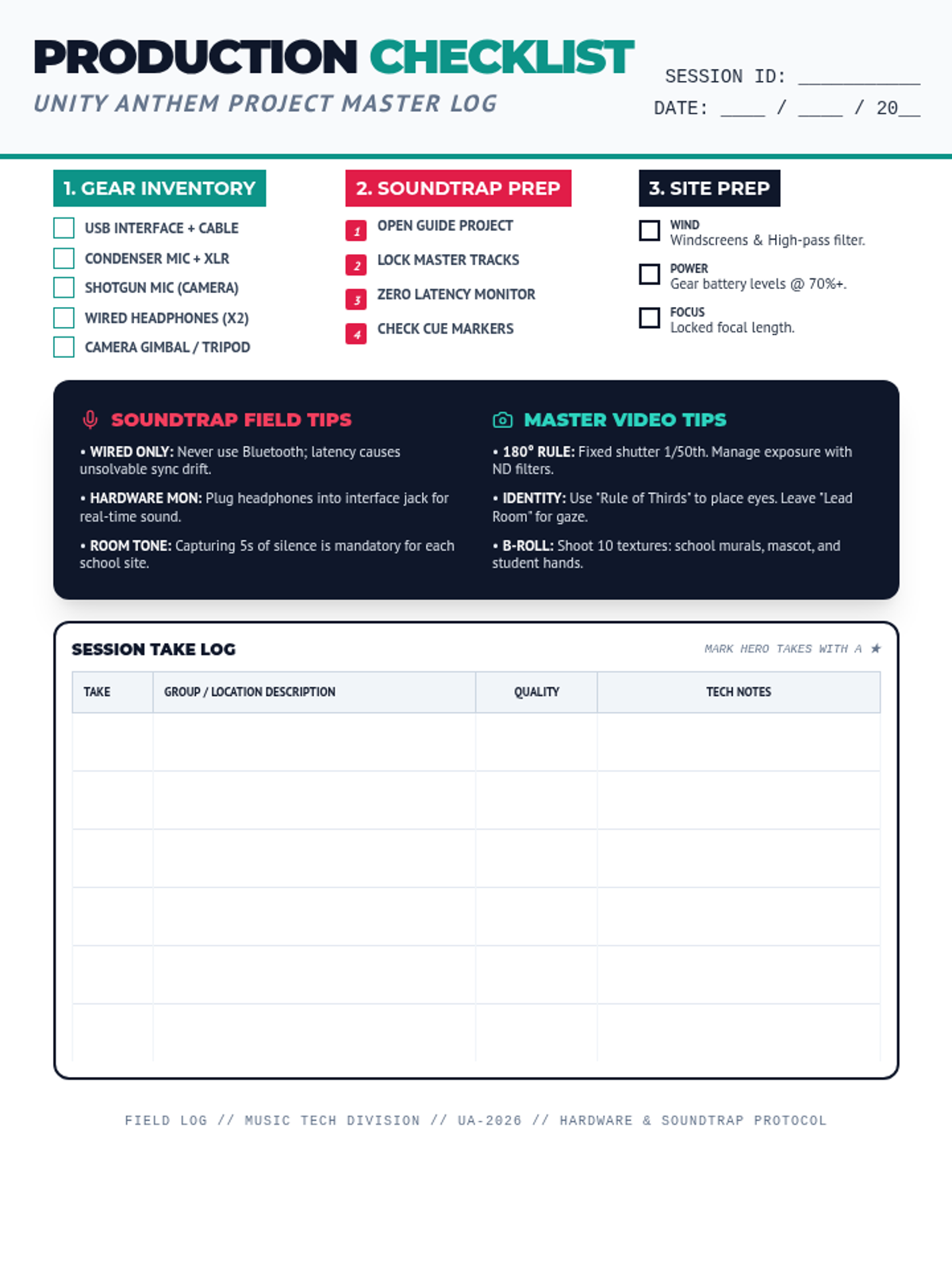
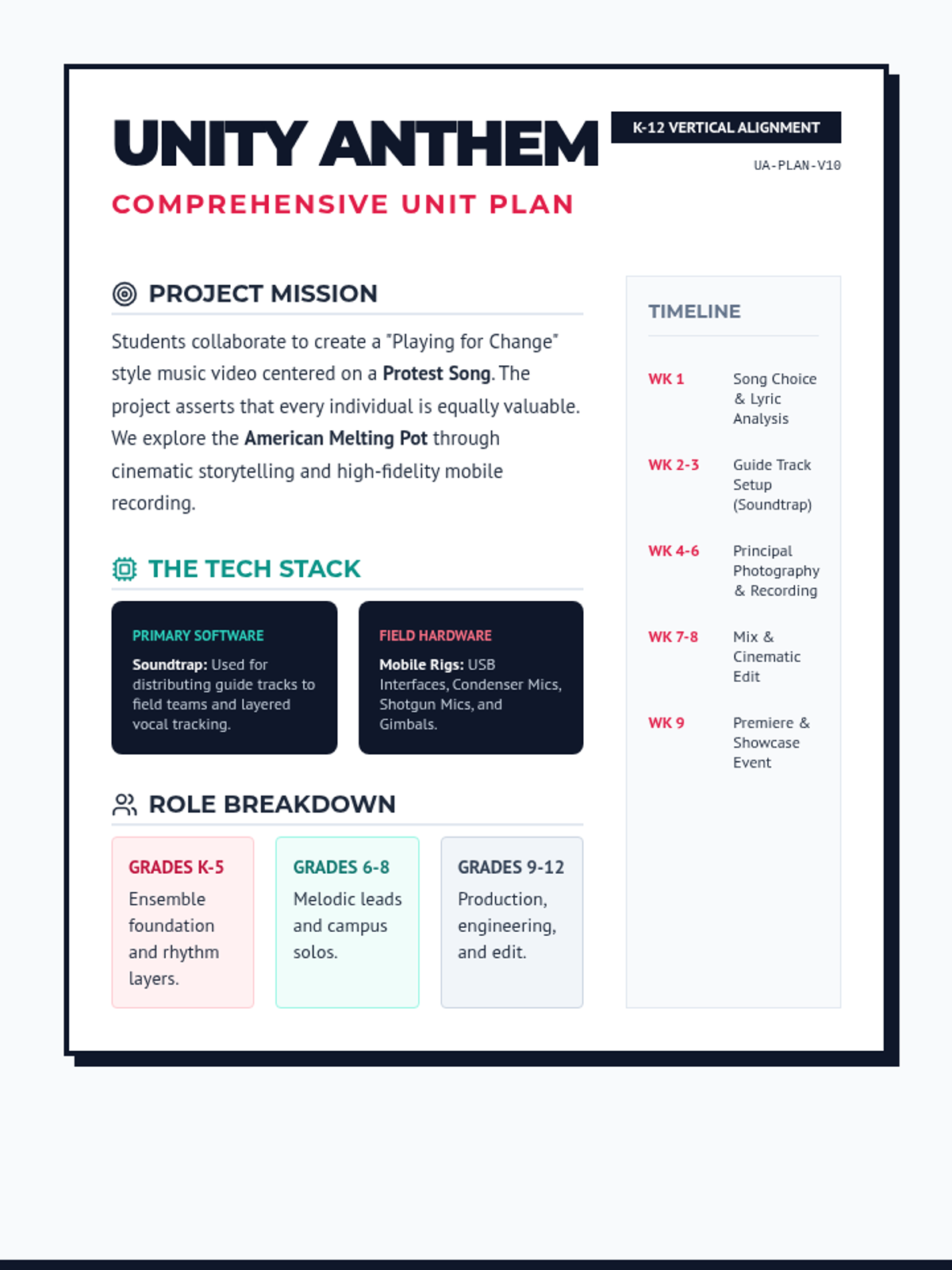
The final premiere of the music video at the All-town Music Tech Showcase, followed by a live performance and student reflection on the collaborative process.
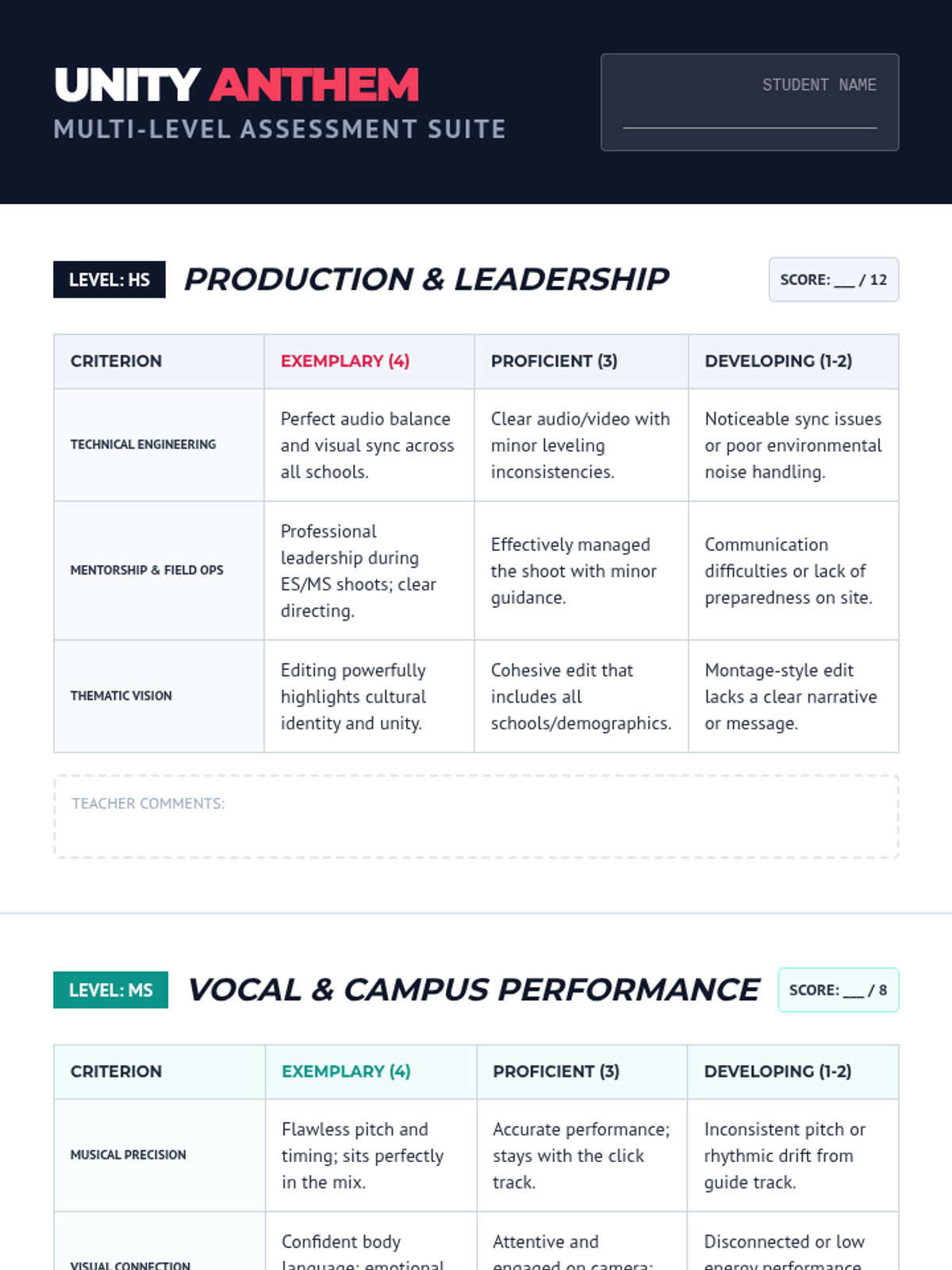
The technical phase involving on-location recordings at elementary and middle schools, followed by high school student-led mixing and video production.
Introduction to the 'Playing for Change' concept, exploring the themes of the chosen protest song, and laying the groundwork for the K-12 collaboration.
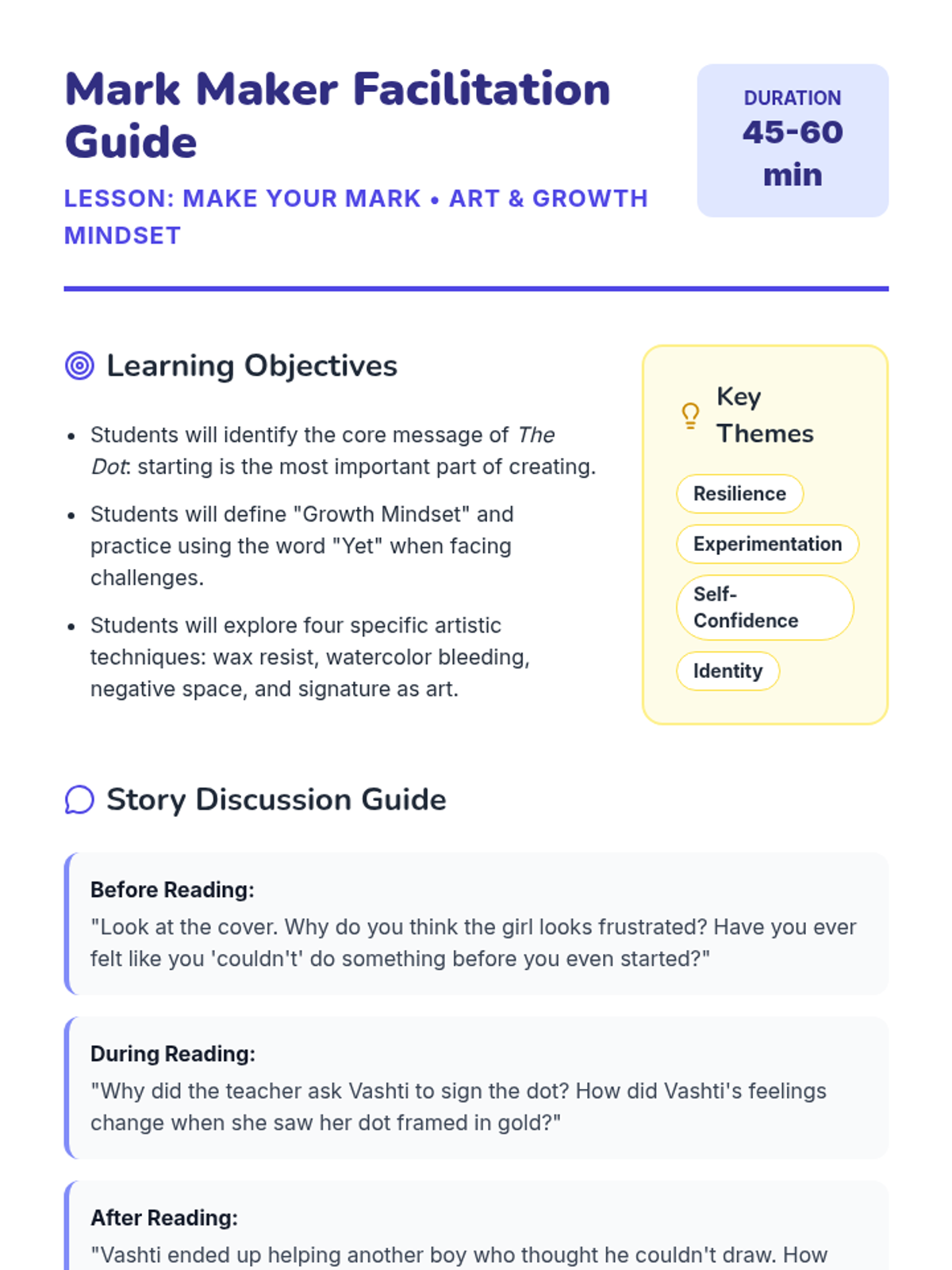
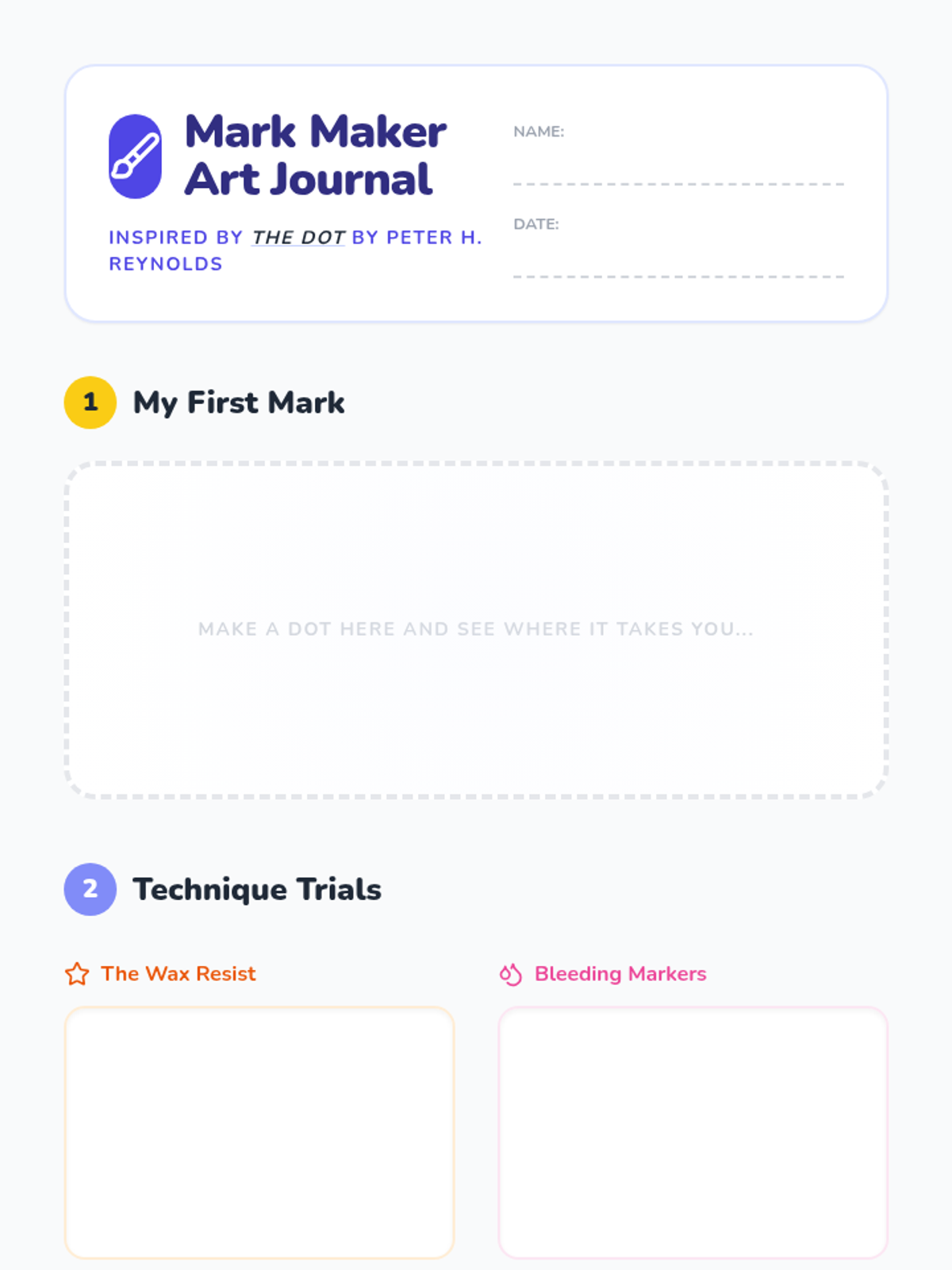
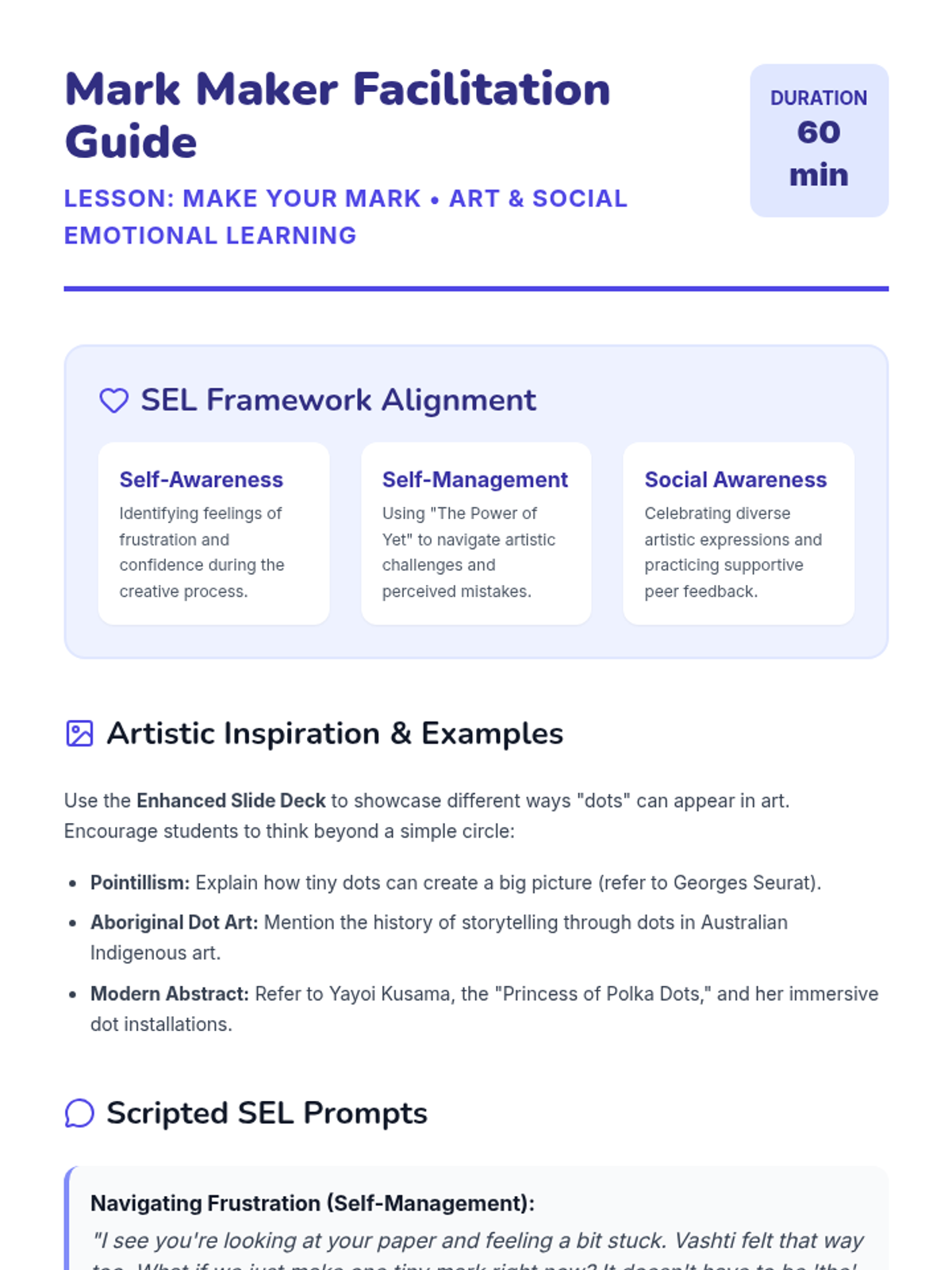
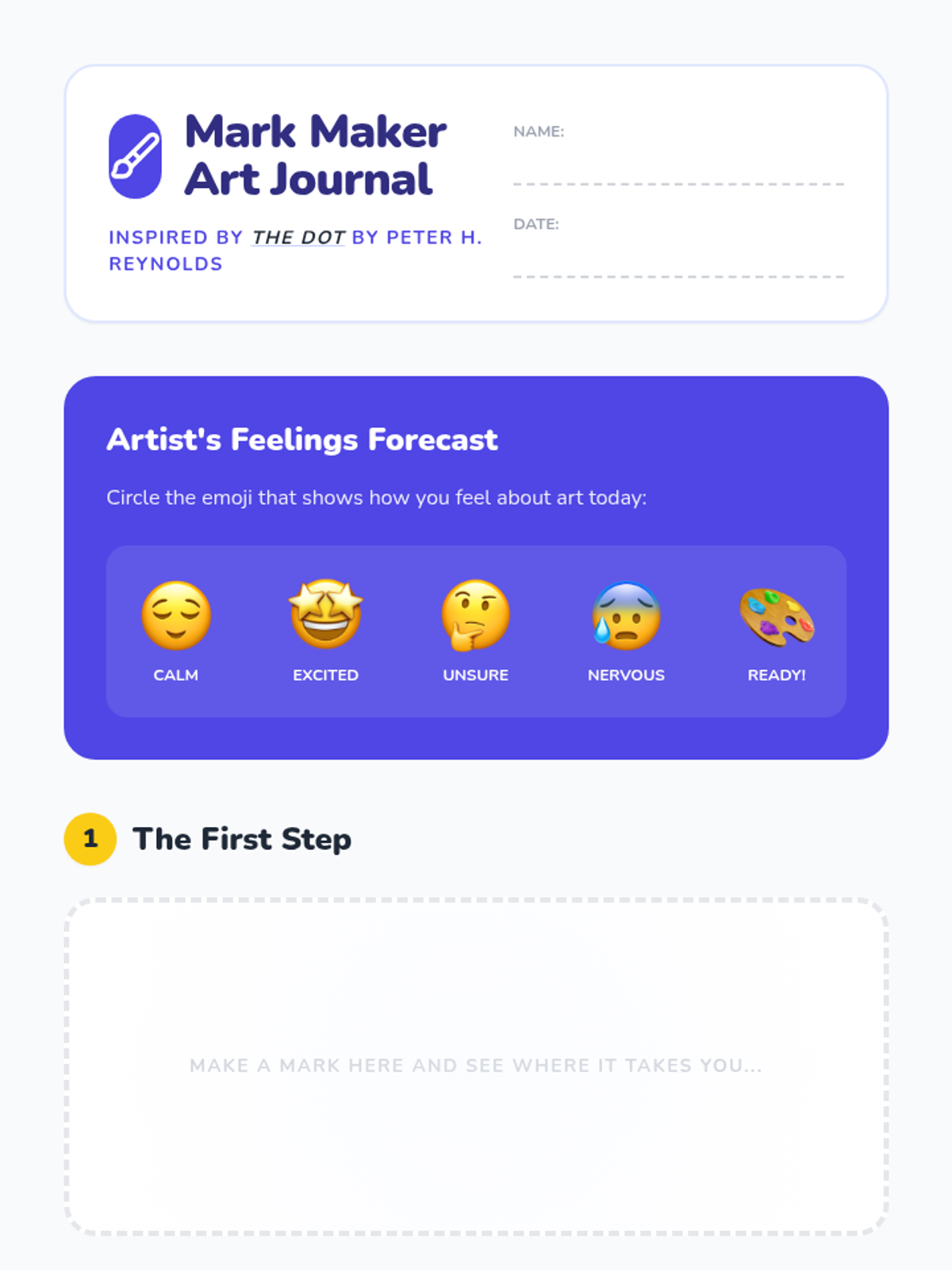
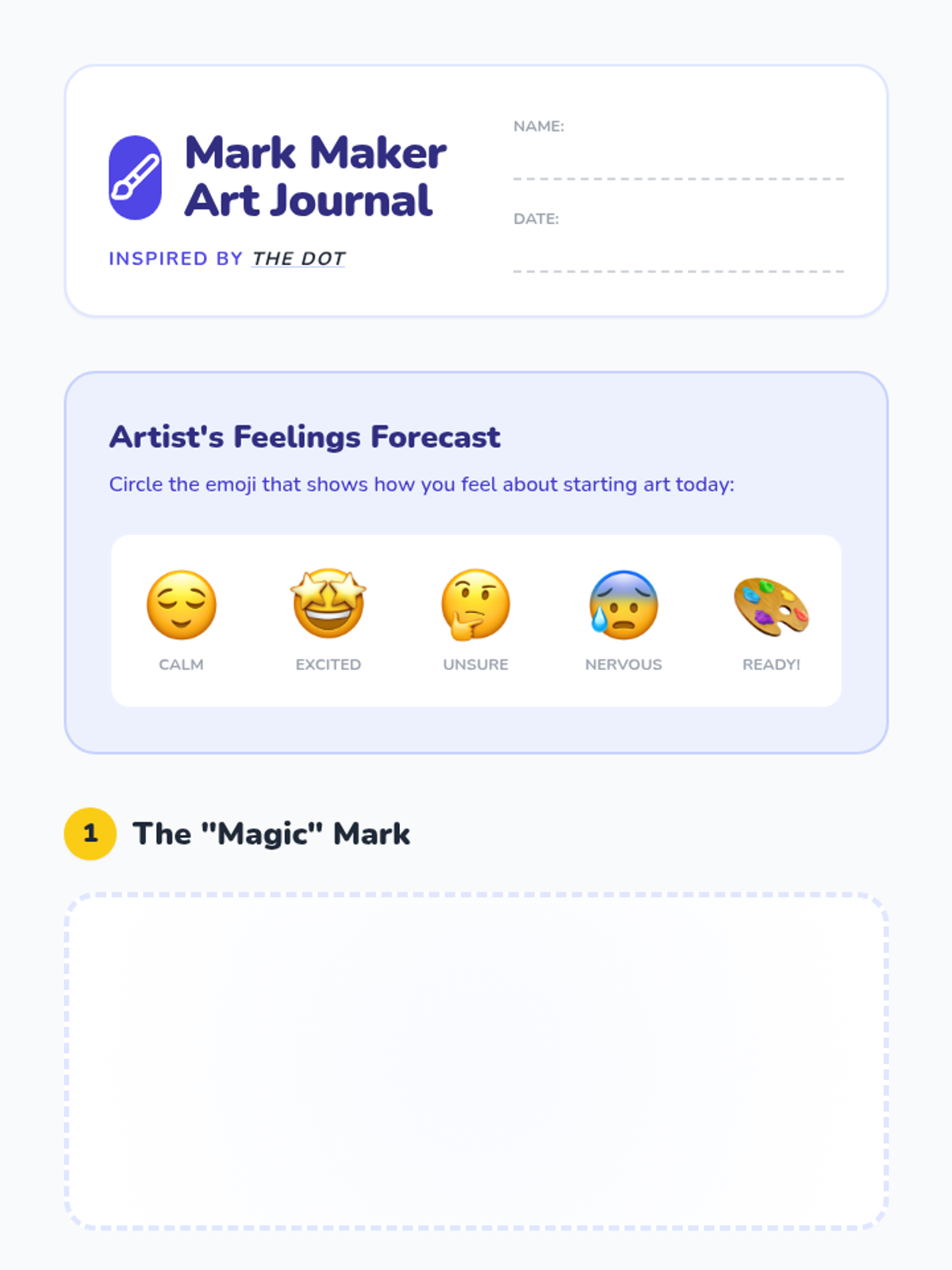
A creative art lesson inspired by 'The Dot' by Peter H. Reynolds, focusing on growth mindset and artistic experimentation. Students will learn that 'making your mark' starts with just one small step.
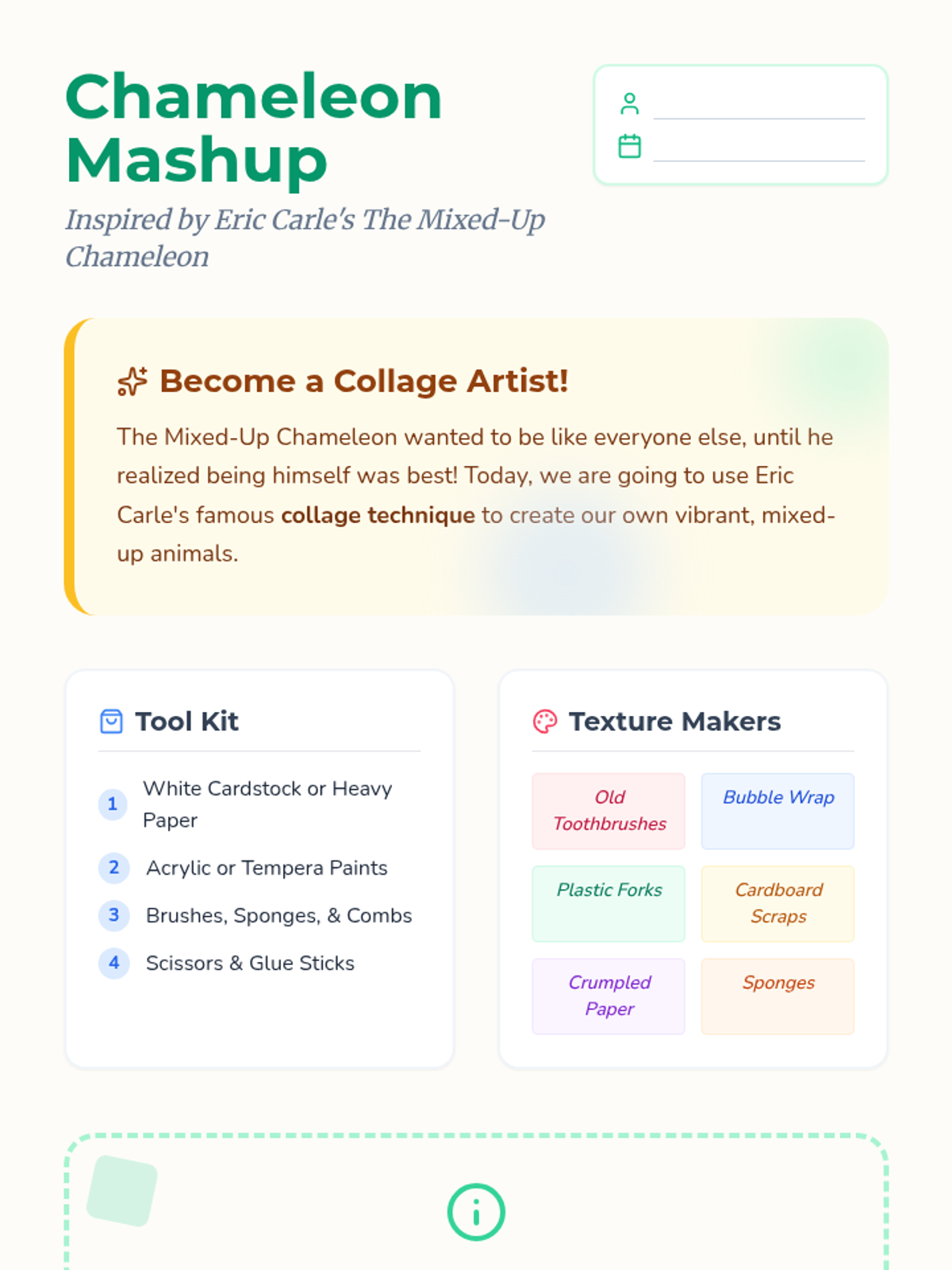
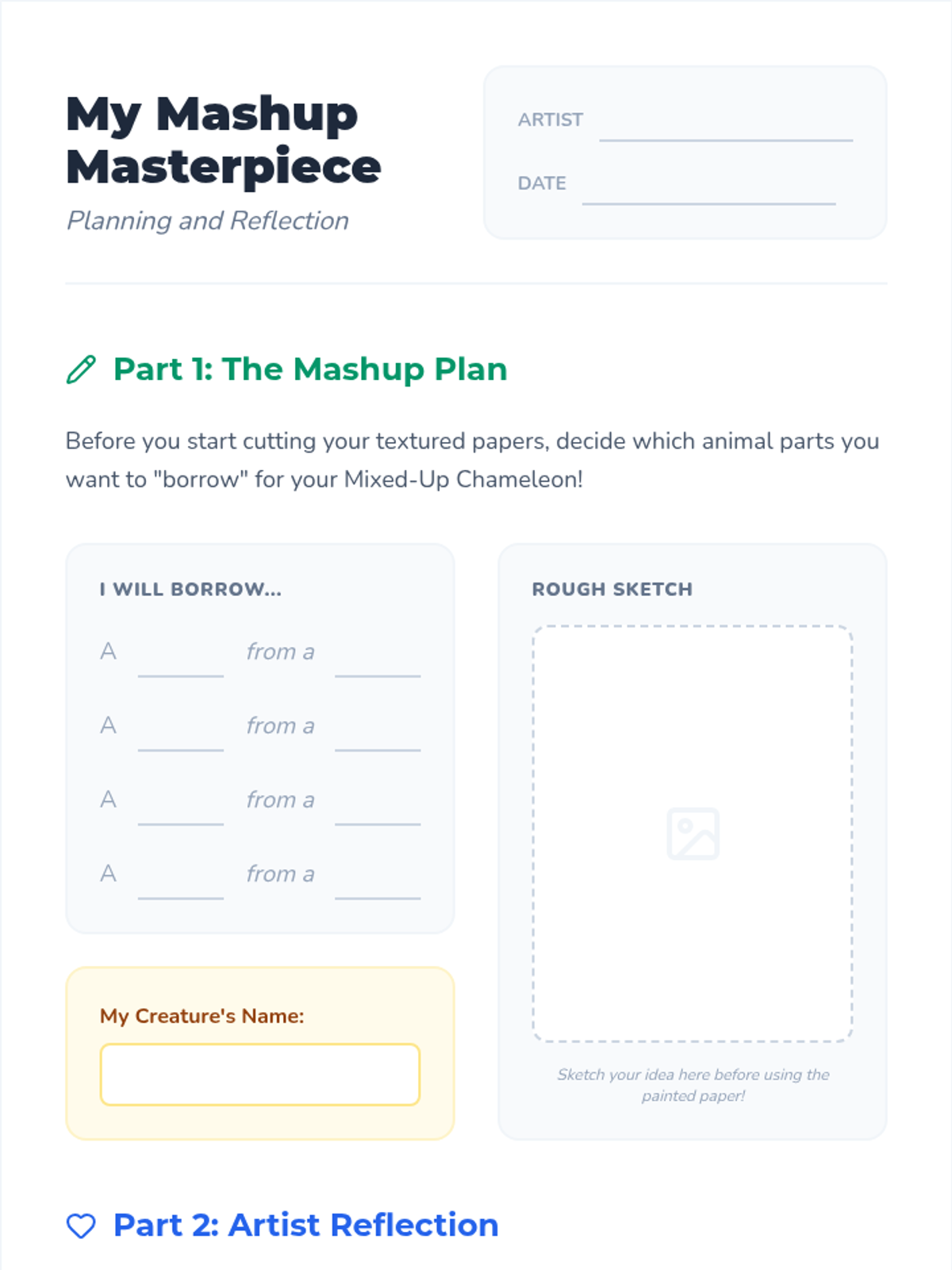
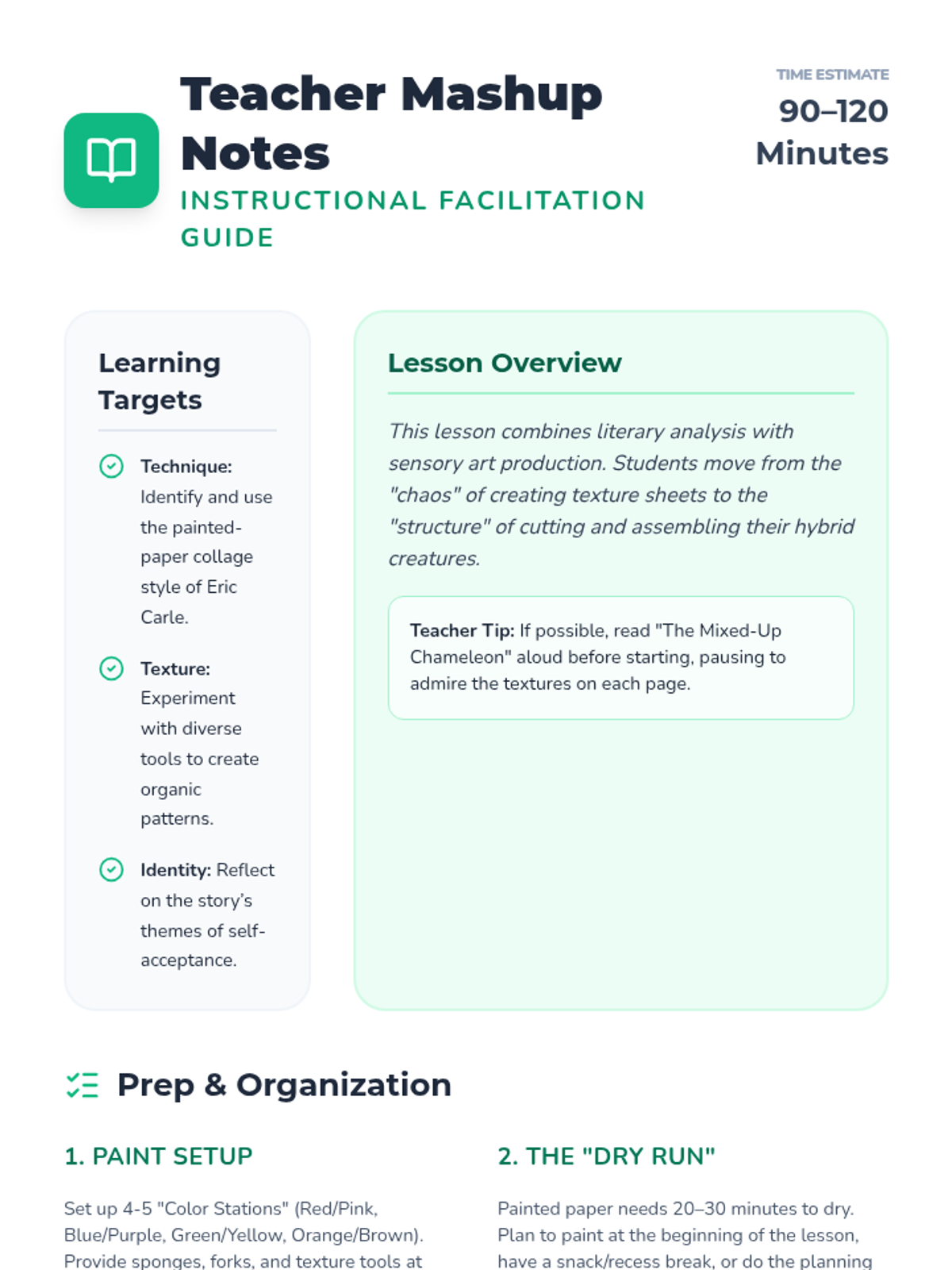
A creative art lesson where students explore identity and diversity by creating their own mixed-up animals inspired by Eric Carle's colorful collage style. Students will learn the 'painted paper' technique to create vibrant textures.
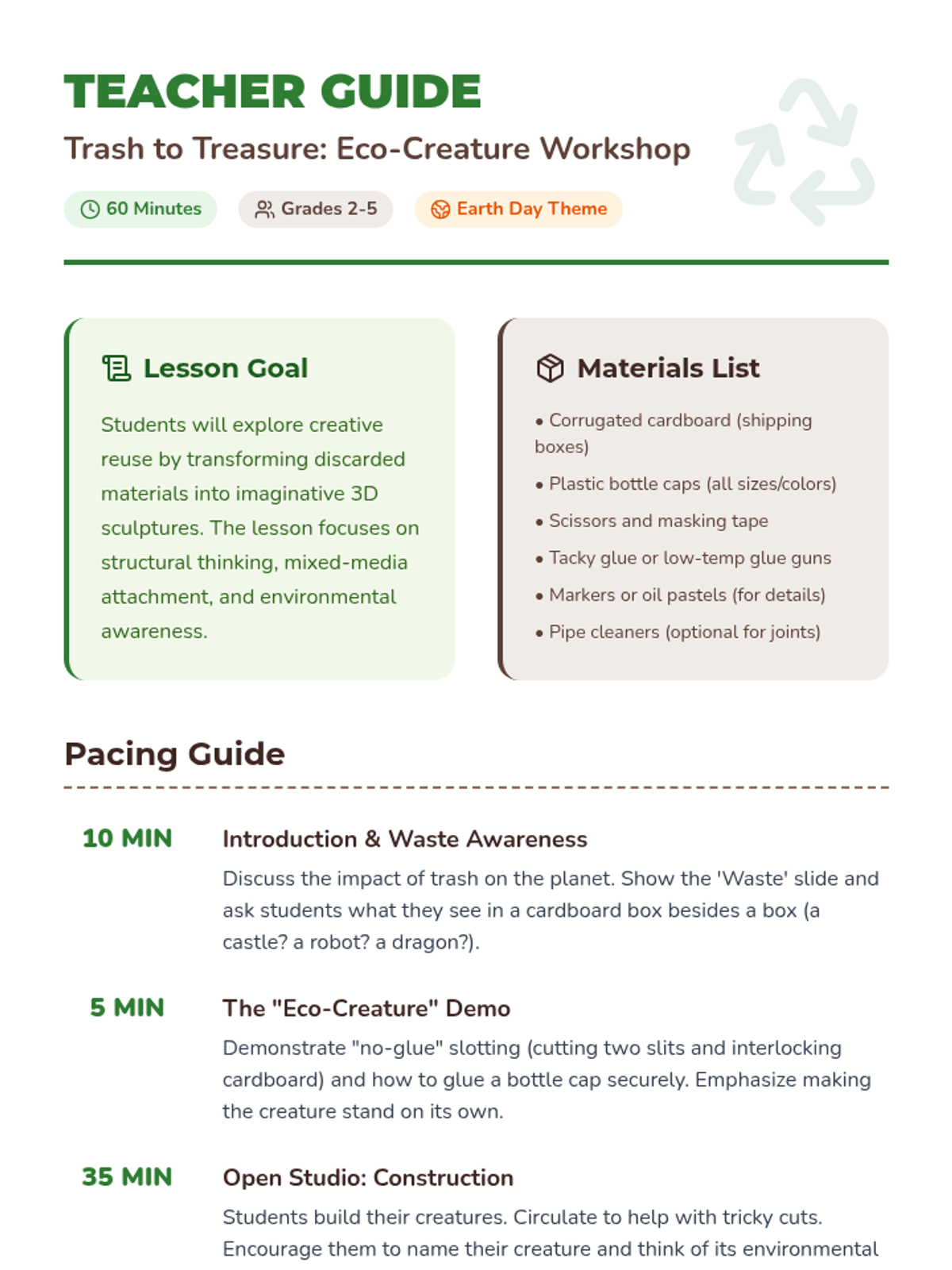
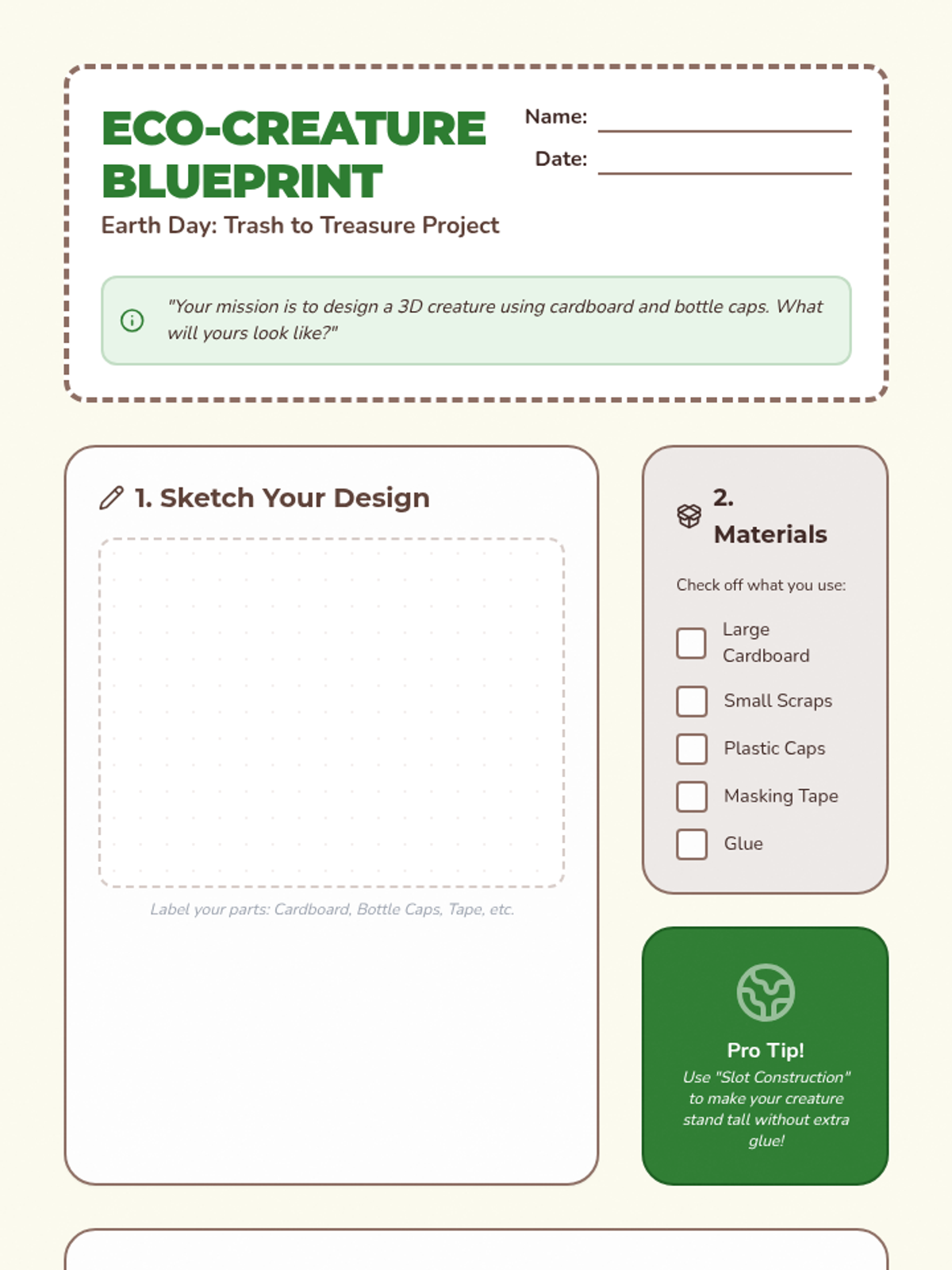
In this 60-minute art lesson, students transform everyday waste—cardboard and bottle caps—into imaginative 'Eco-Creatures,' learning about the importance of recycling and creative reuse for Earth Day.
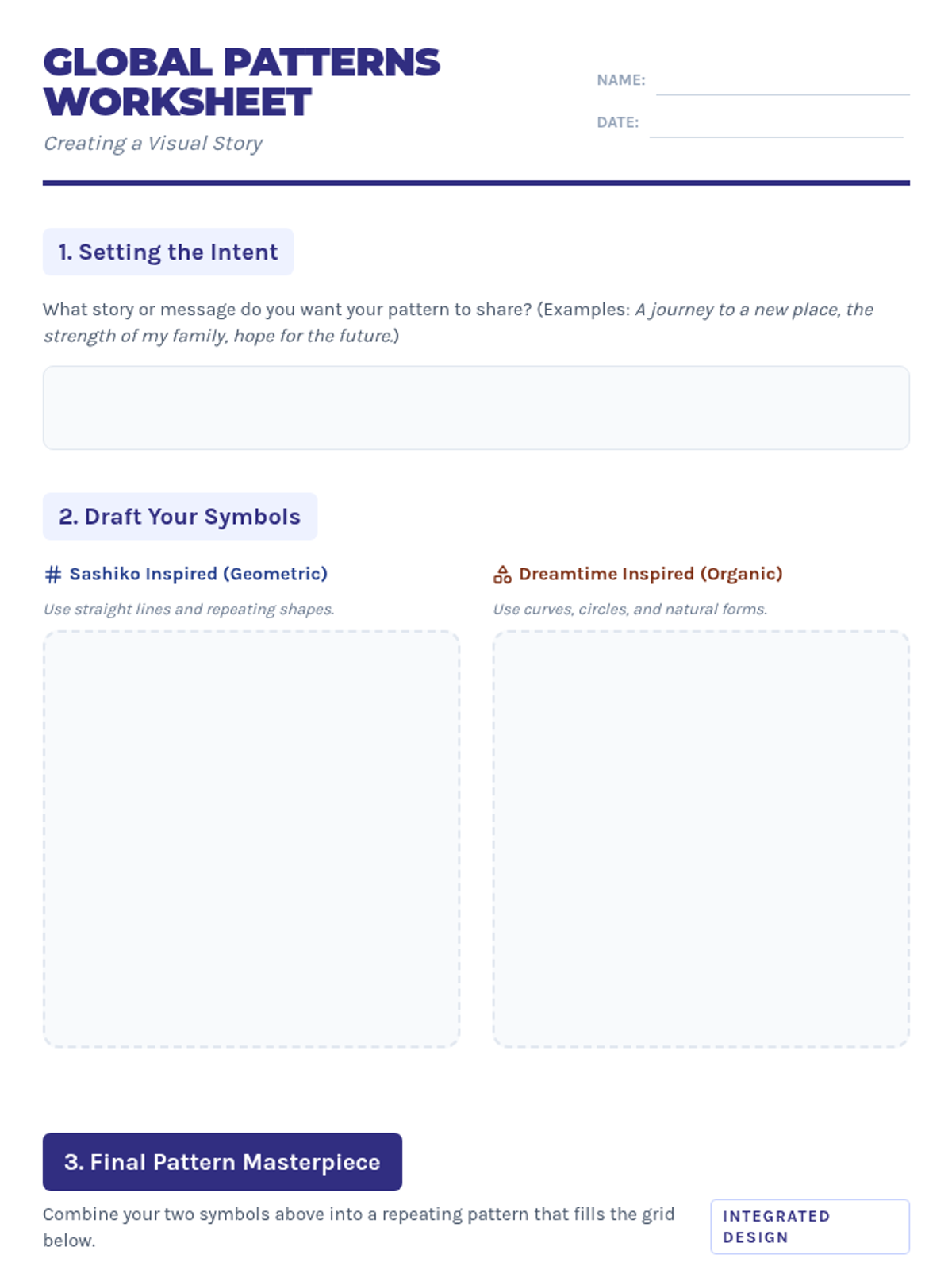
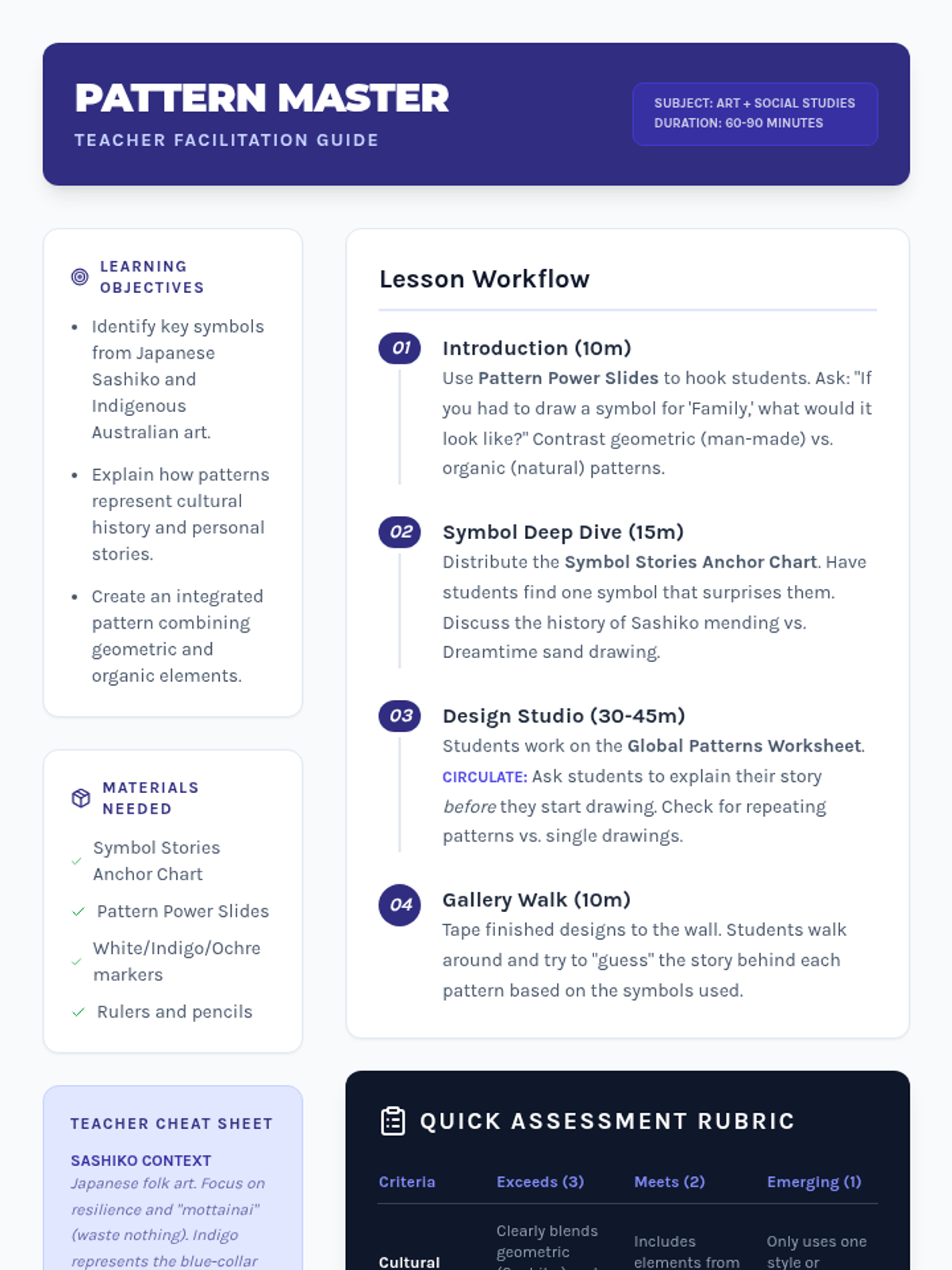
A cross-curricular art and social studies lesson where students explore the history and symbolism of Japanese Sashiko and Indigenous Australian Dreamtime art to create their own meaningful patterns.
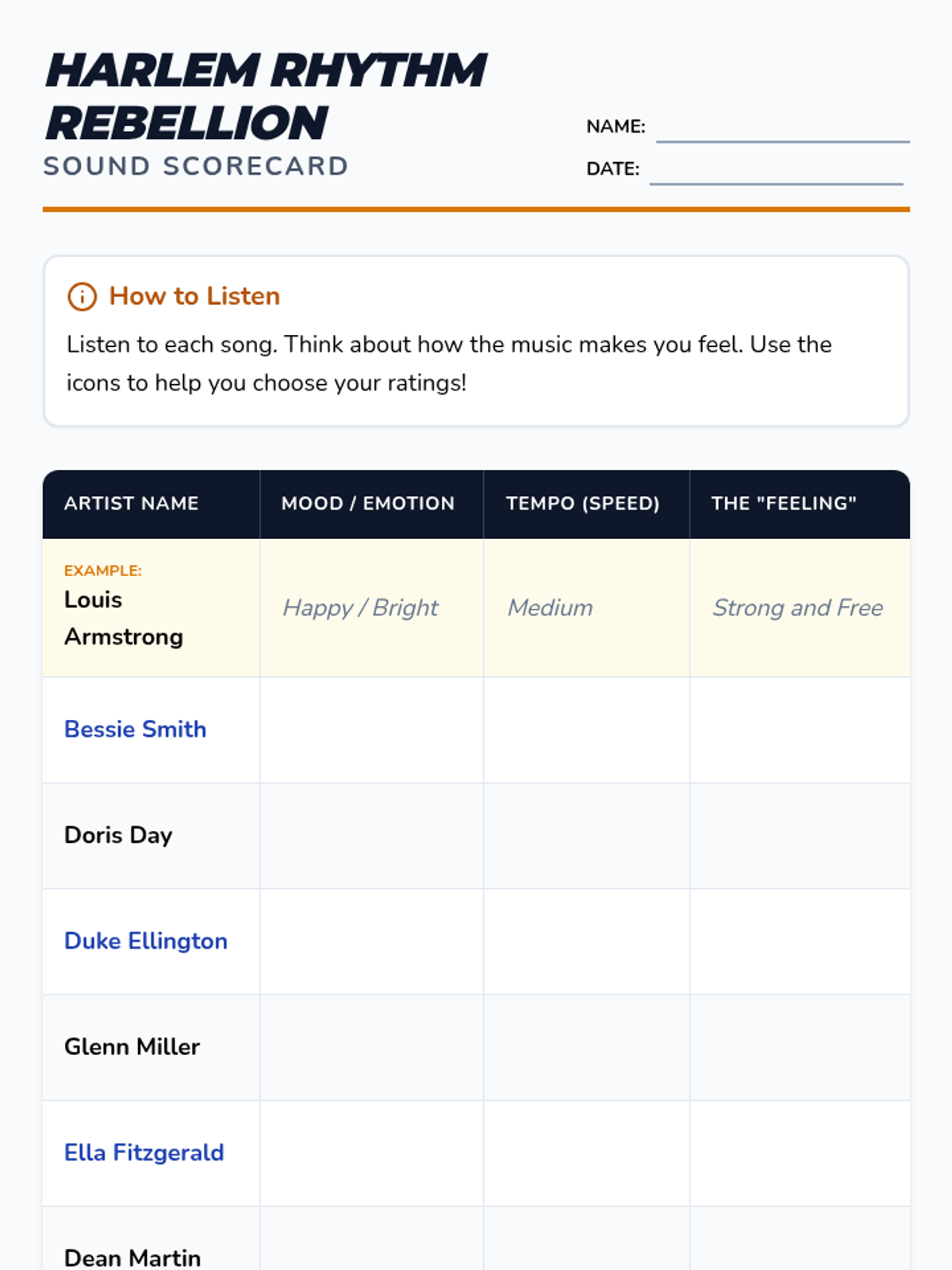
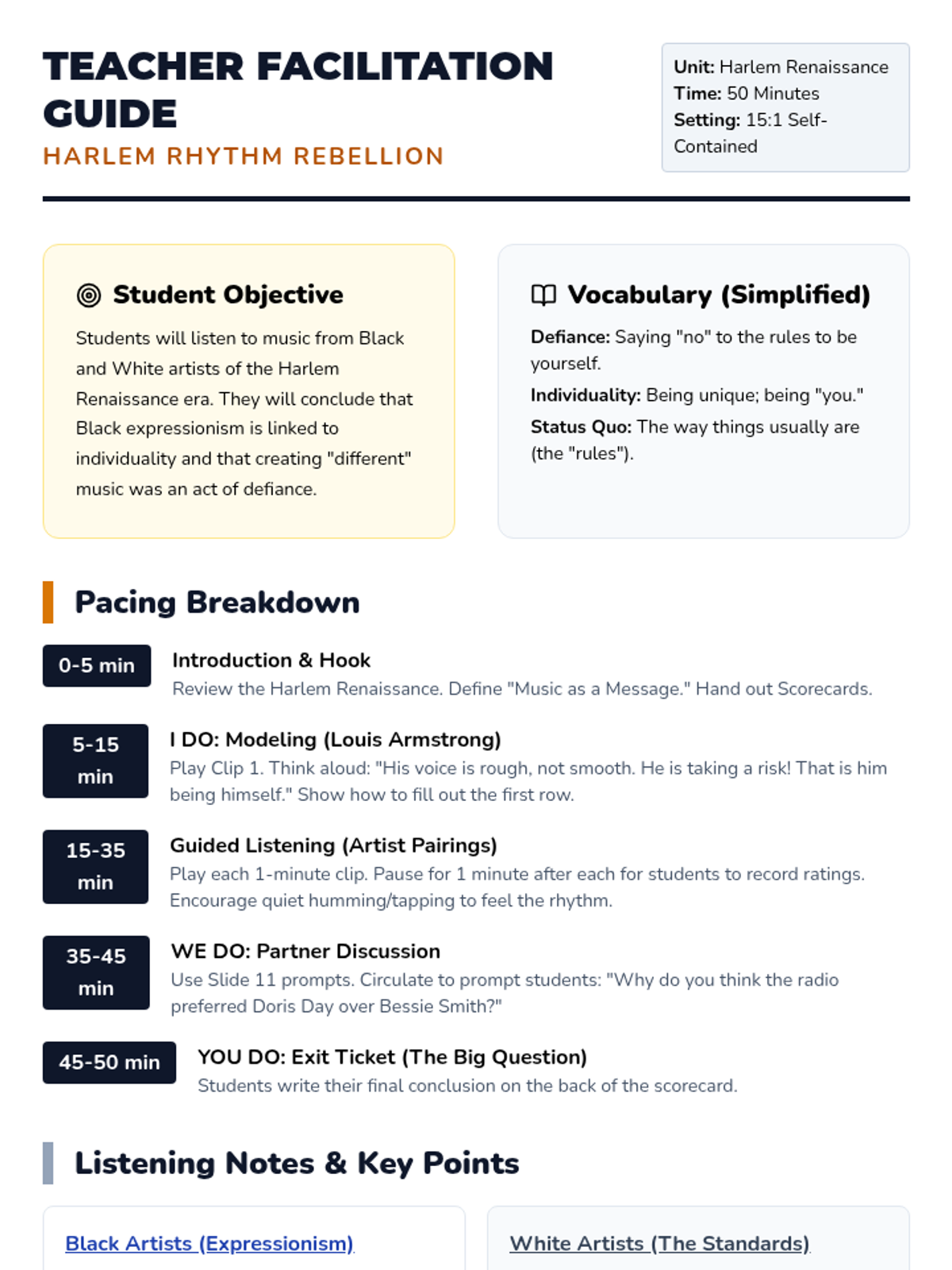
A 50-minute lesson exploring the connection between Jazz music, Black expressionism, and the Harlem Renaissance through music comparison and artist biopics. Students will analyze the differences between Black and White artists of the era to understand music as an act of defiance and cultural identity.
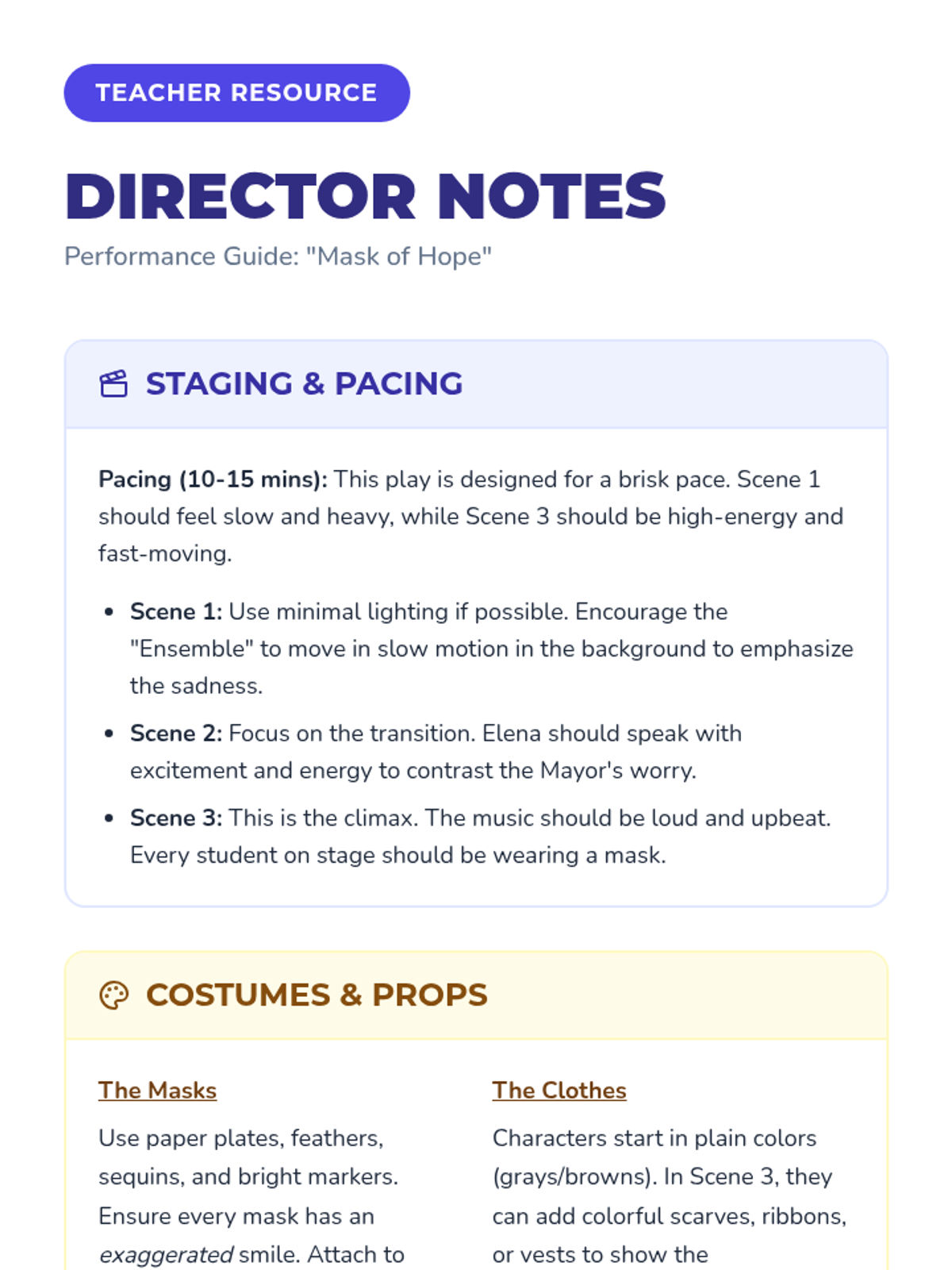
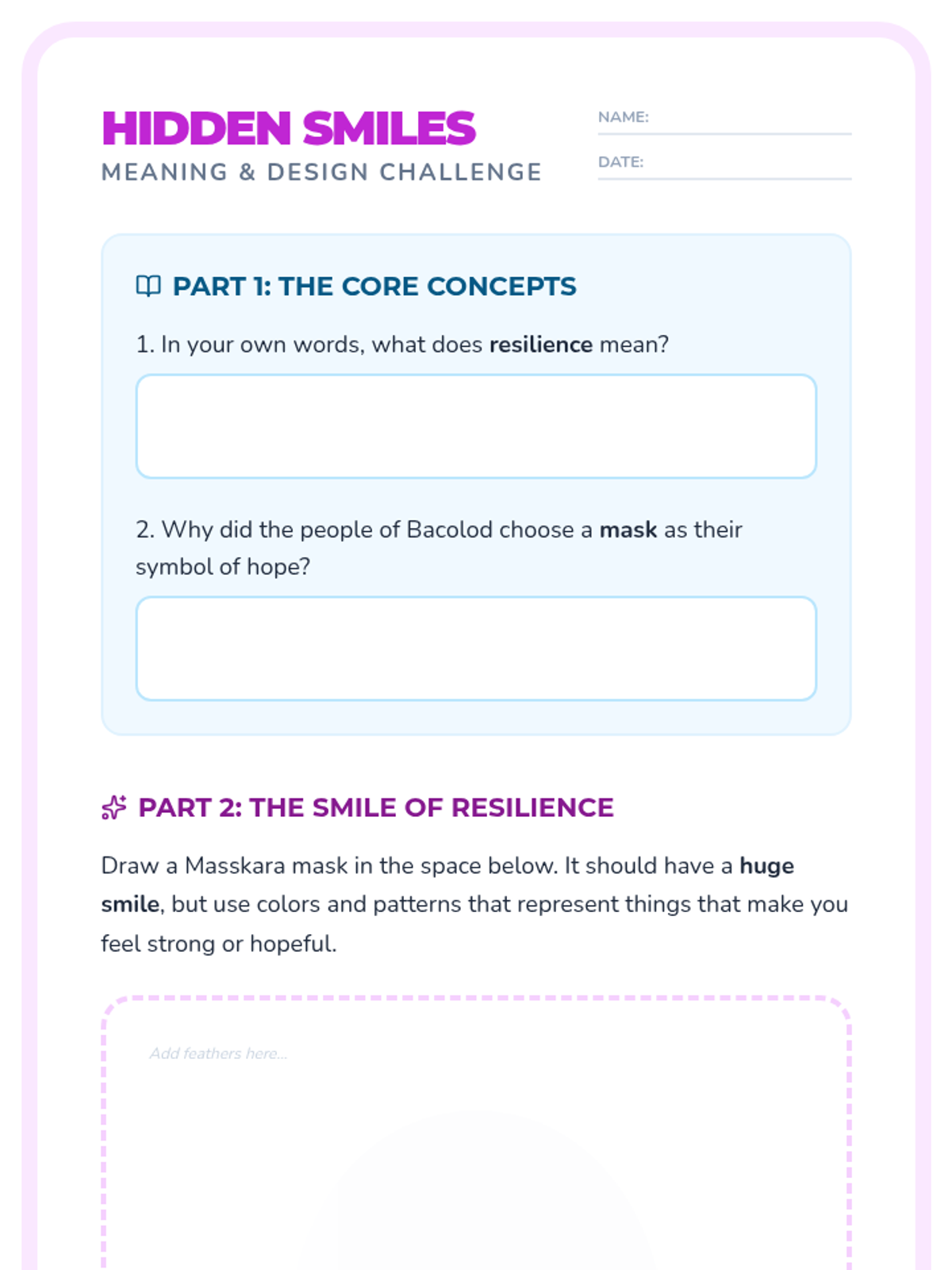
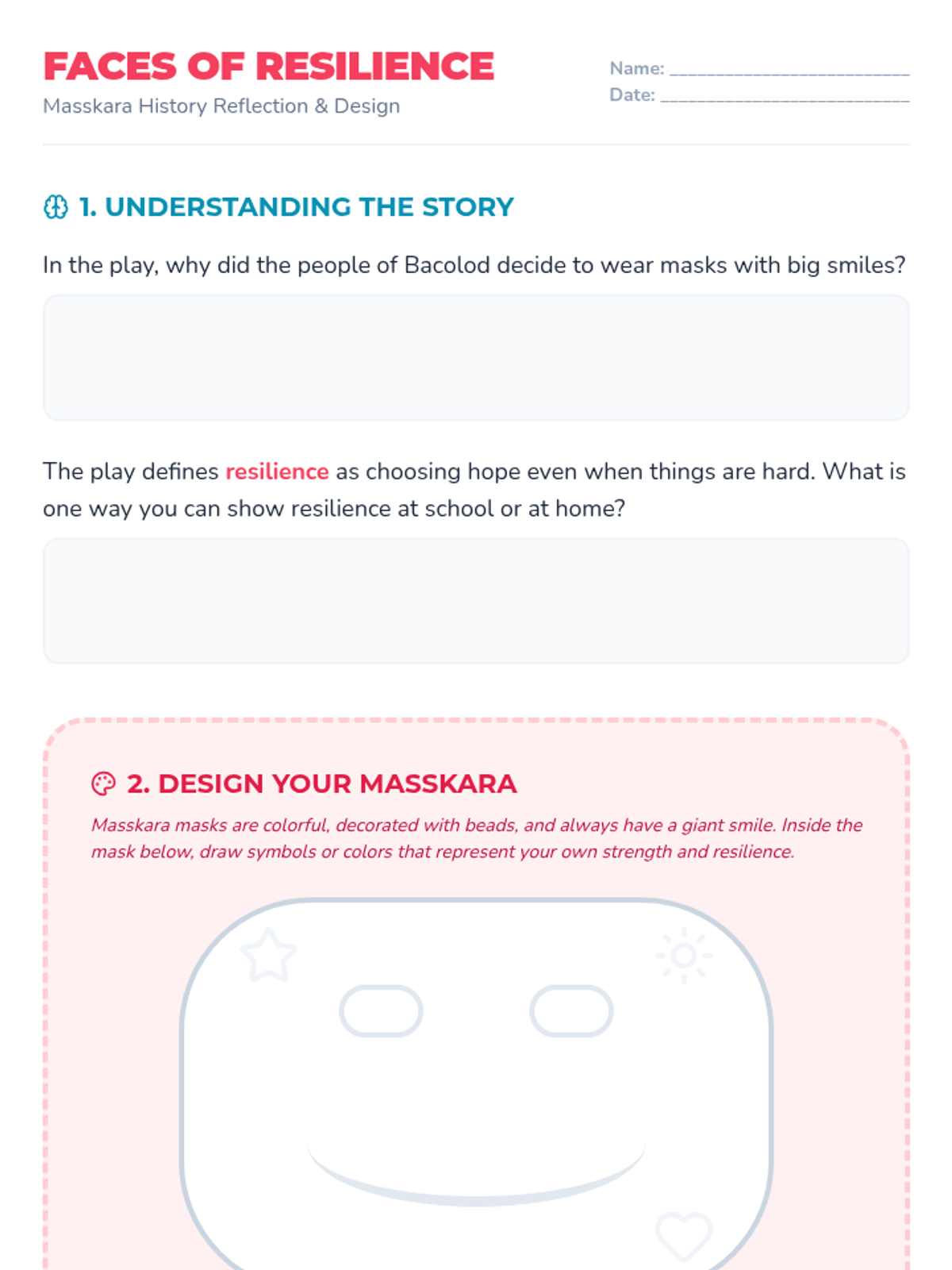
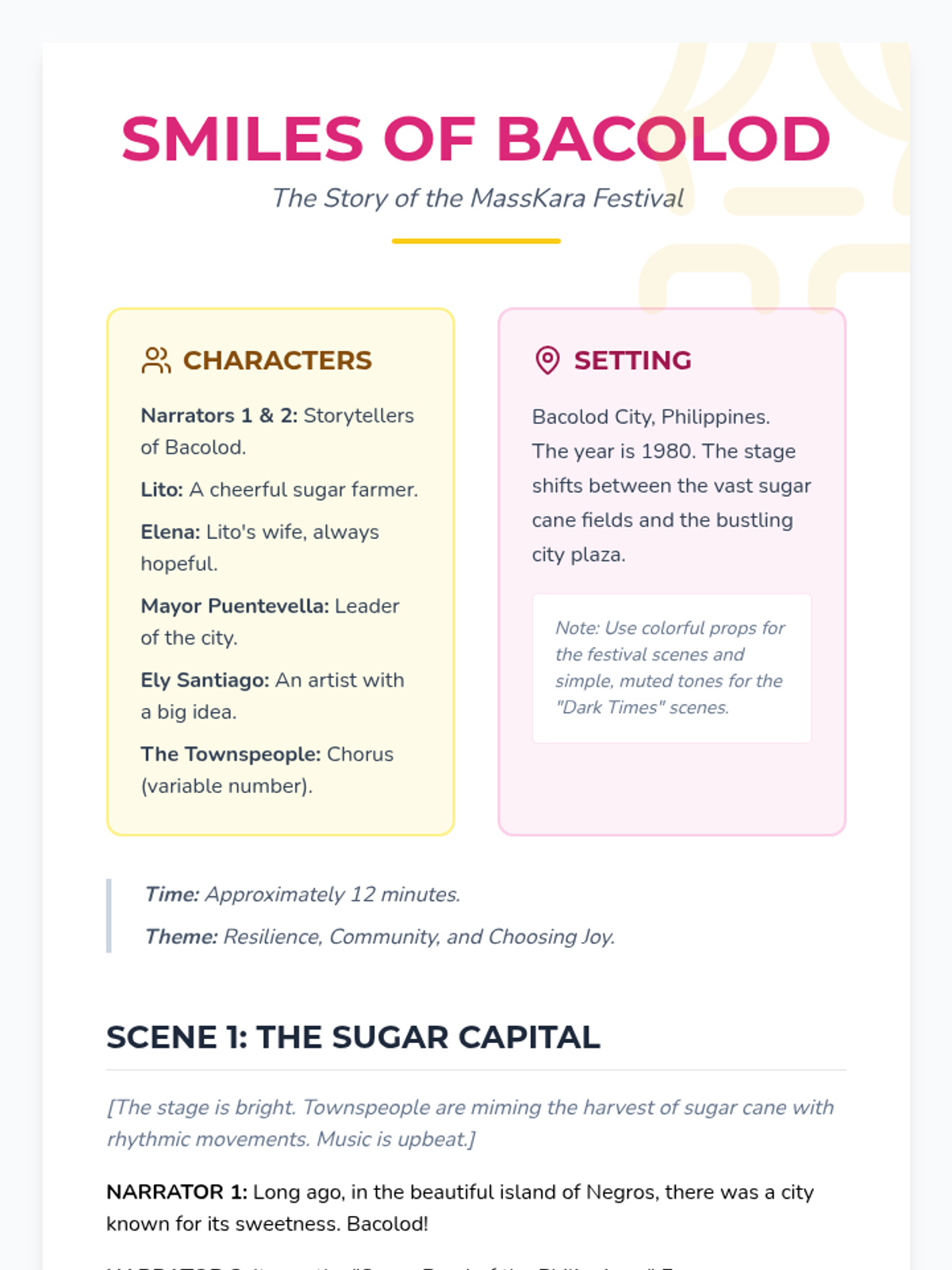
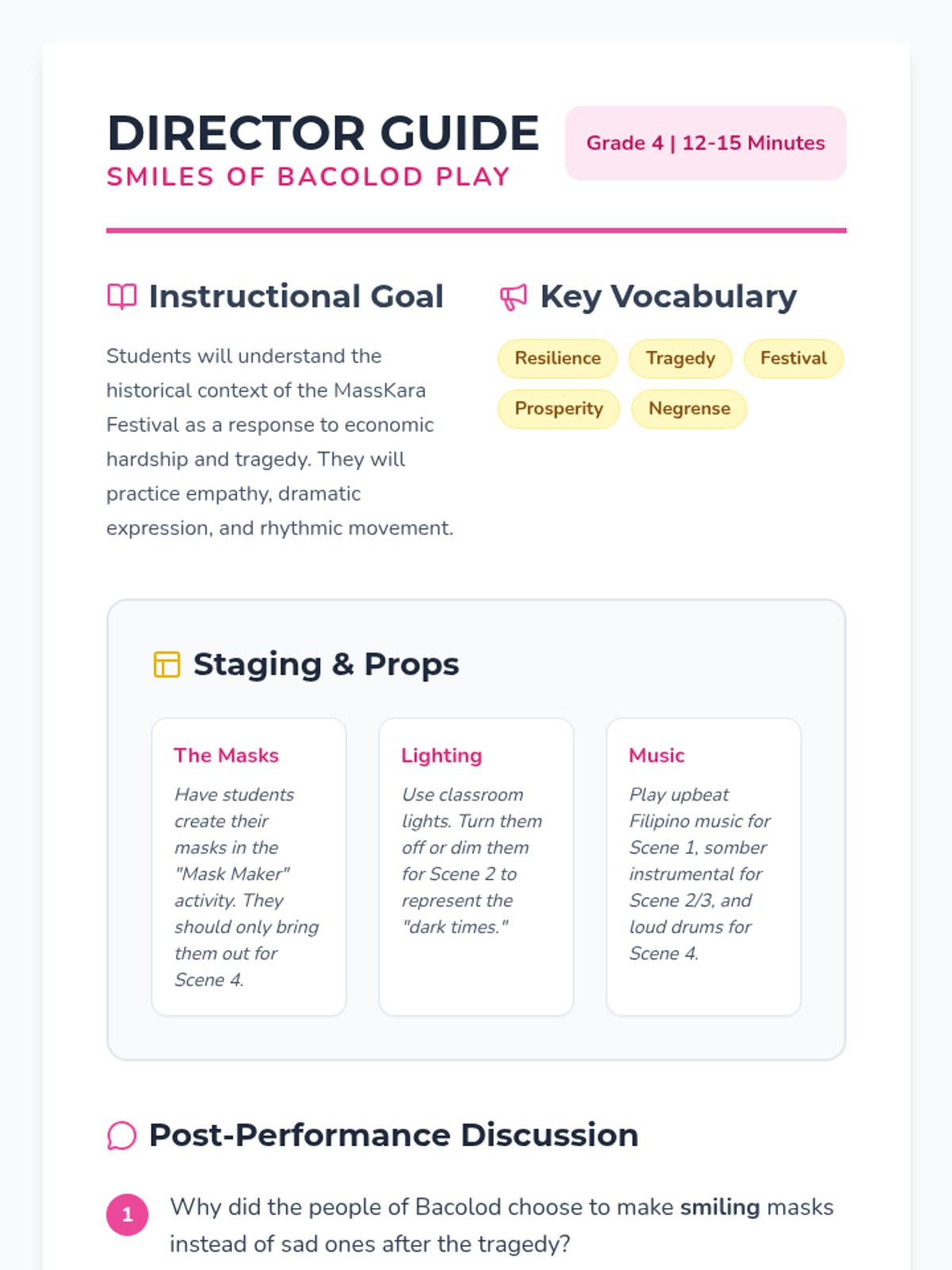
This lesson introduces students to the Masskara Festival of Bacolod City, focusing on its origins as a festival of resilience and hope. Students will perform a 10-15 minute play that dramatizes the historical context and the 'City of Smiles' spirit.
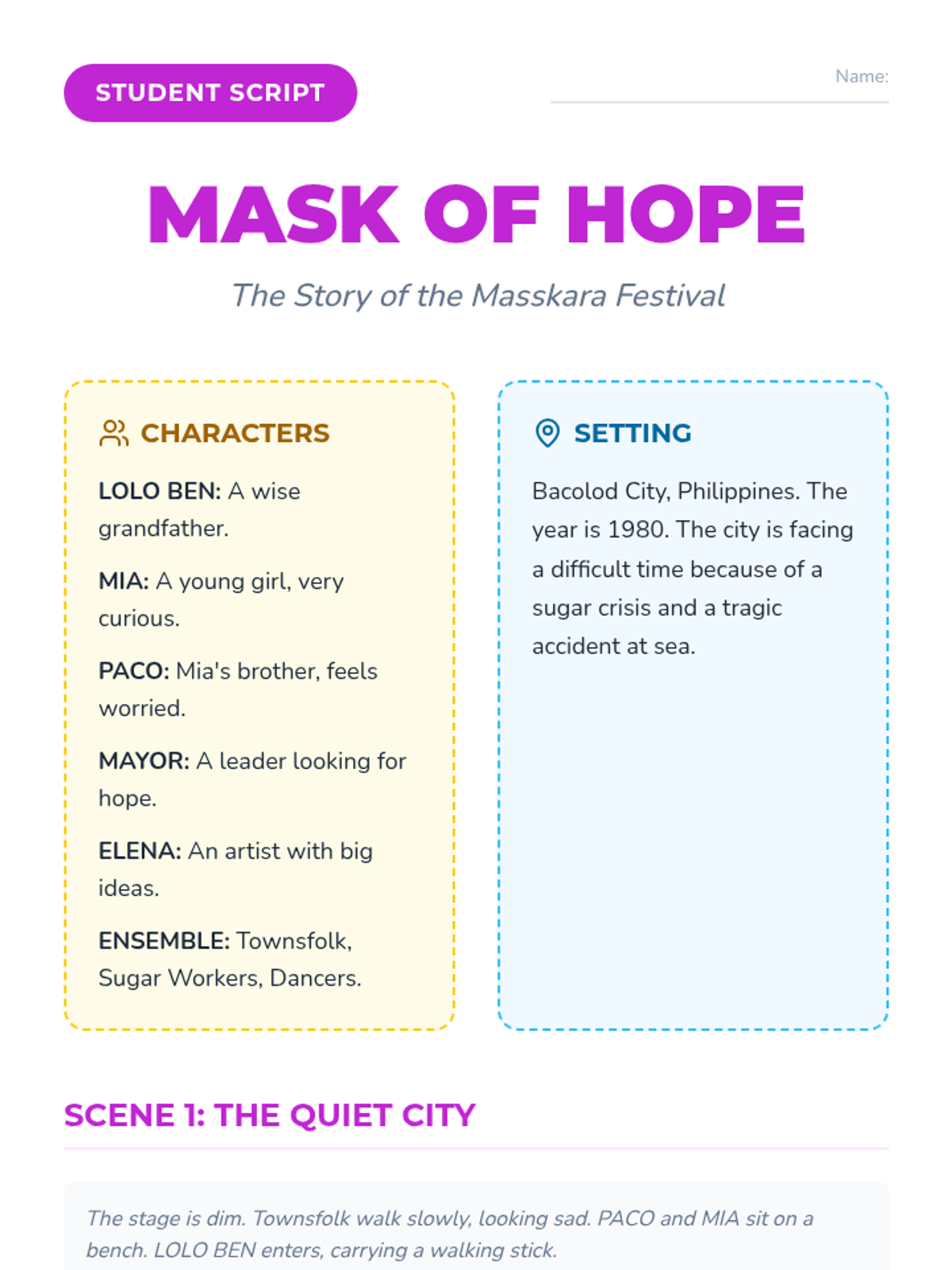
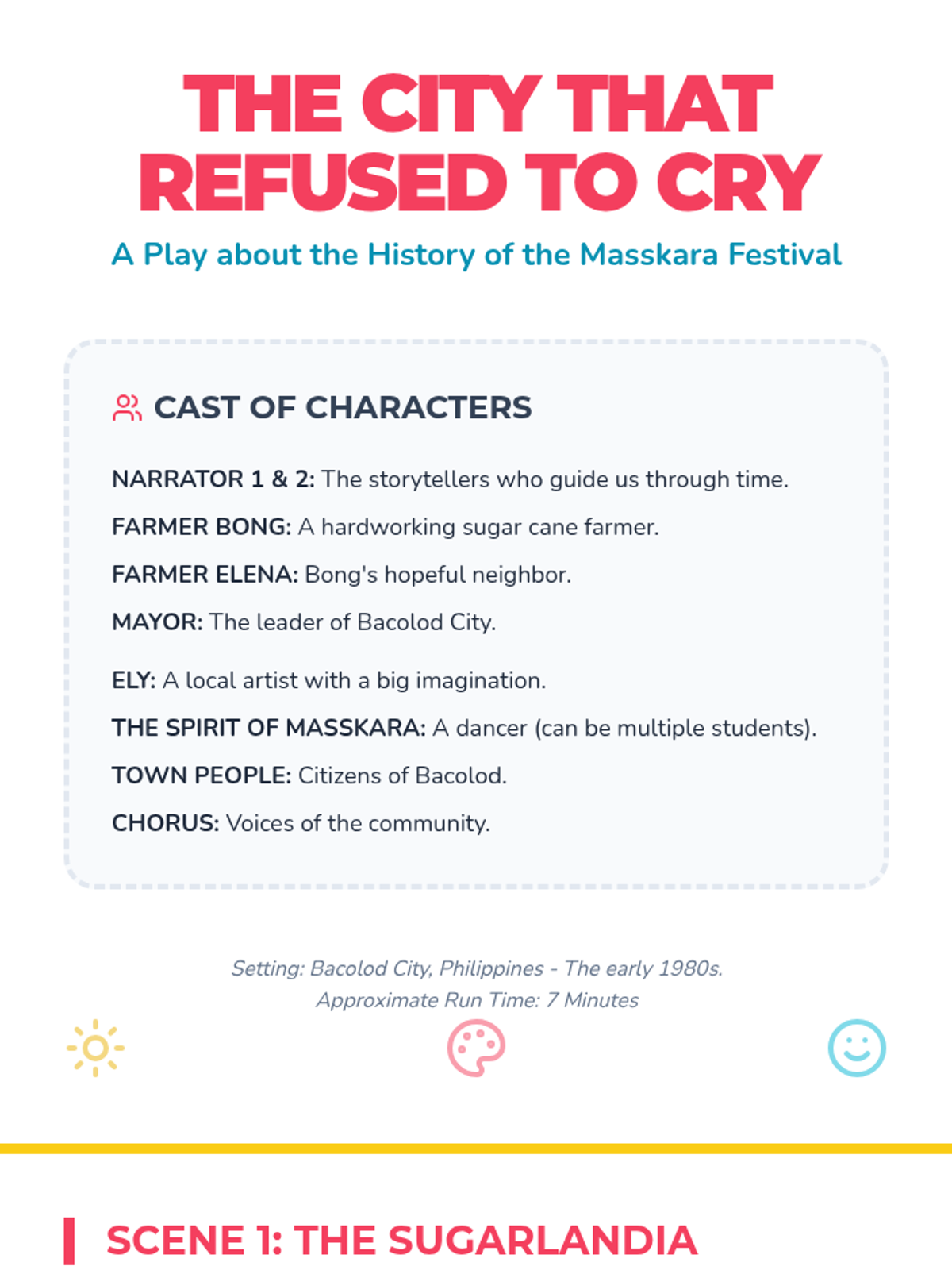
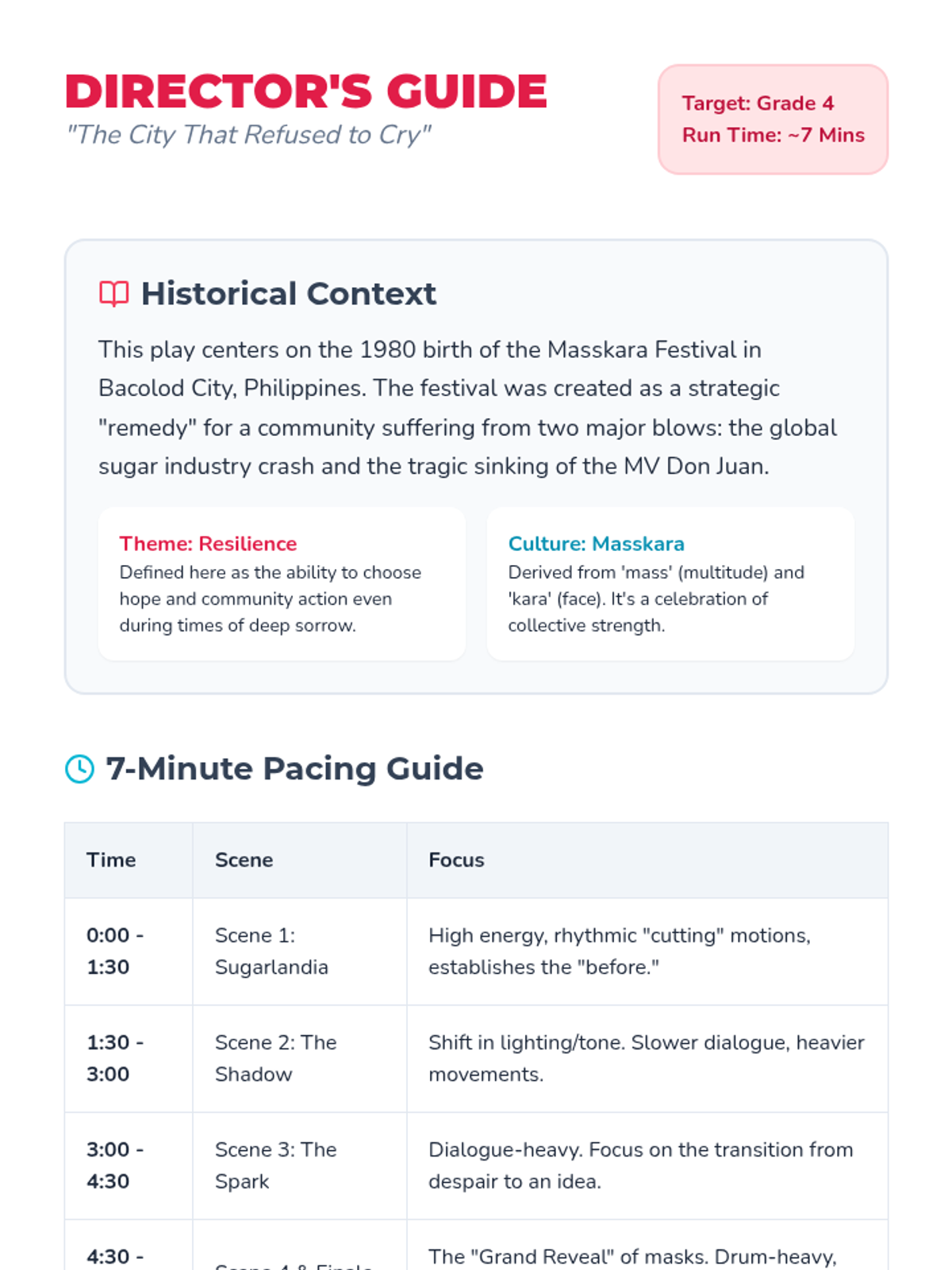
A 7-minute historical play and supporting materials that explore the origins of the Masskara Festival in Bacolod City, Philippines, focusing on themes of resilience and community spirit during the 1980s.
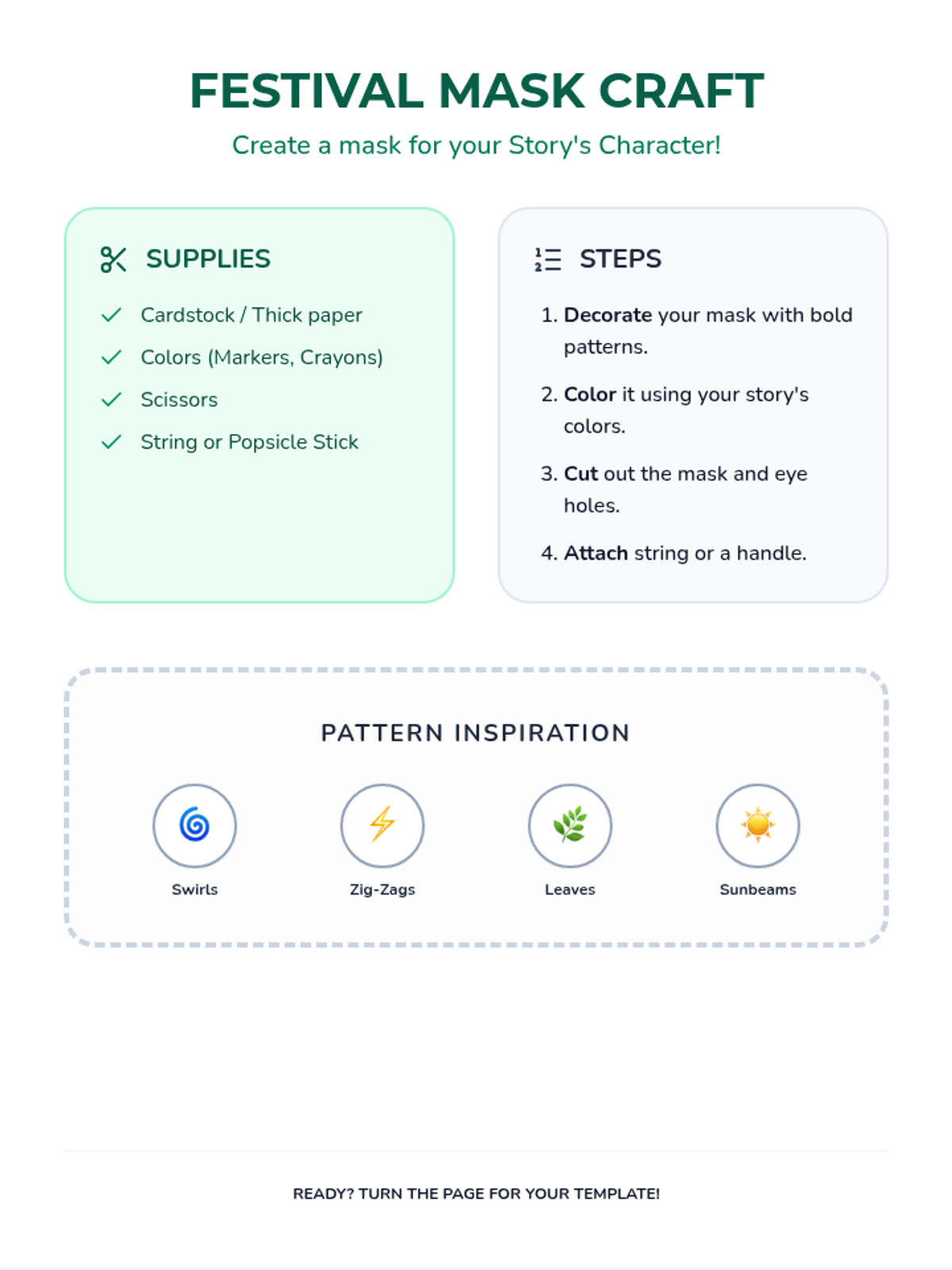
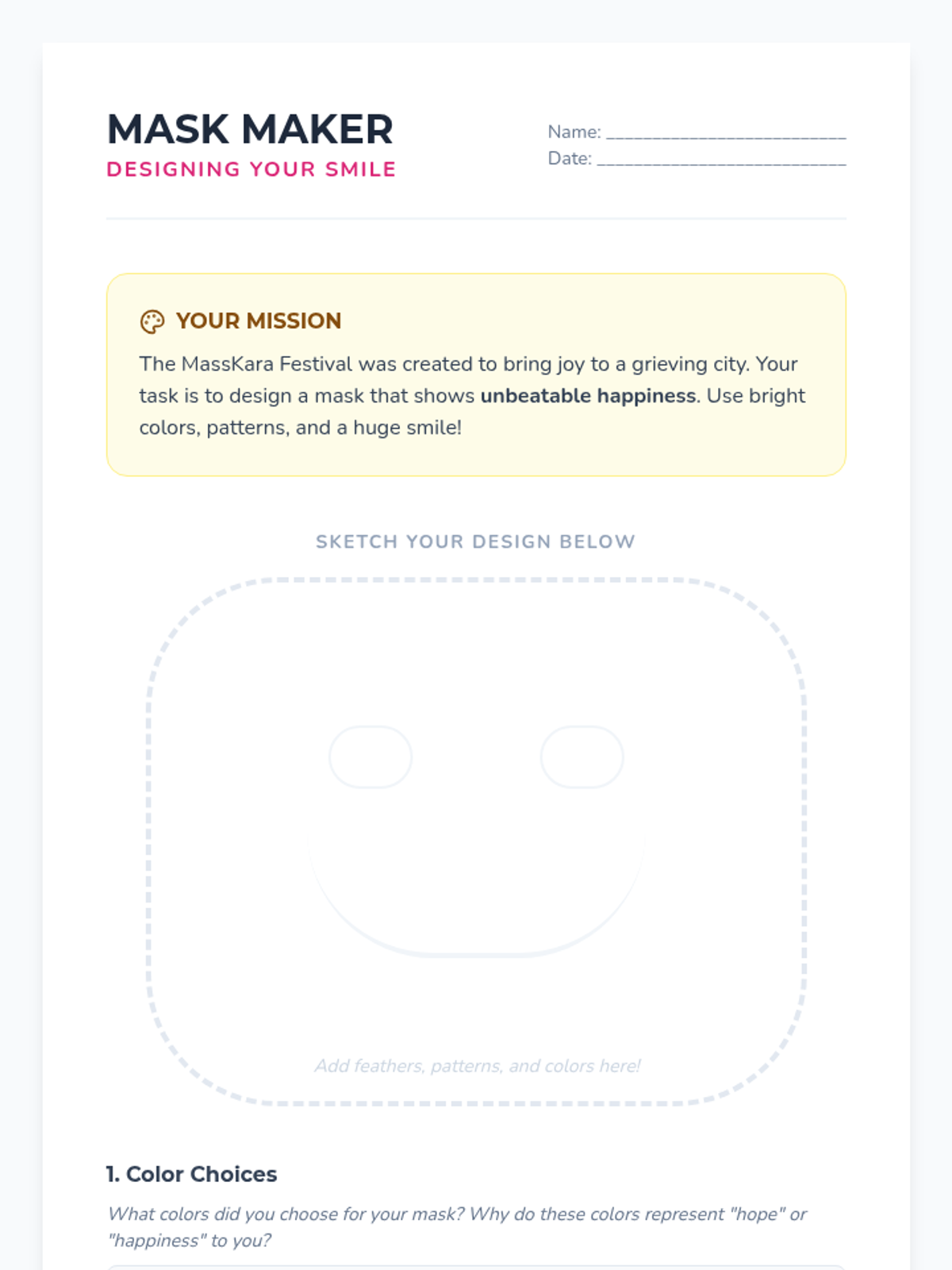
Students will explore the history of the MassKara Festival, understanding how the people of Bacolod chose to smile through tragedy and hardship. The lesson culminates in a short play performance and a creative mask-making activity.
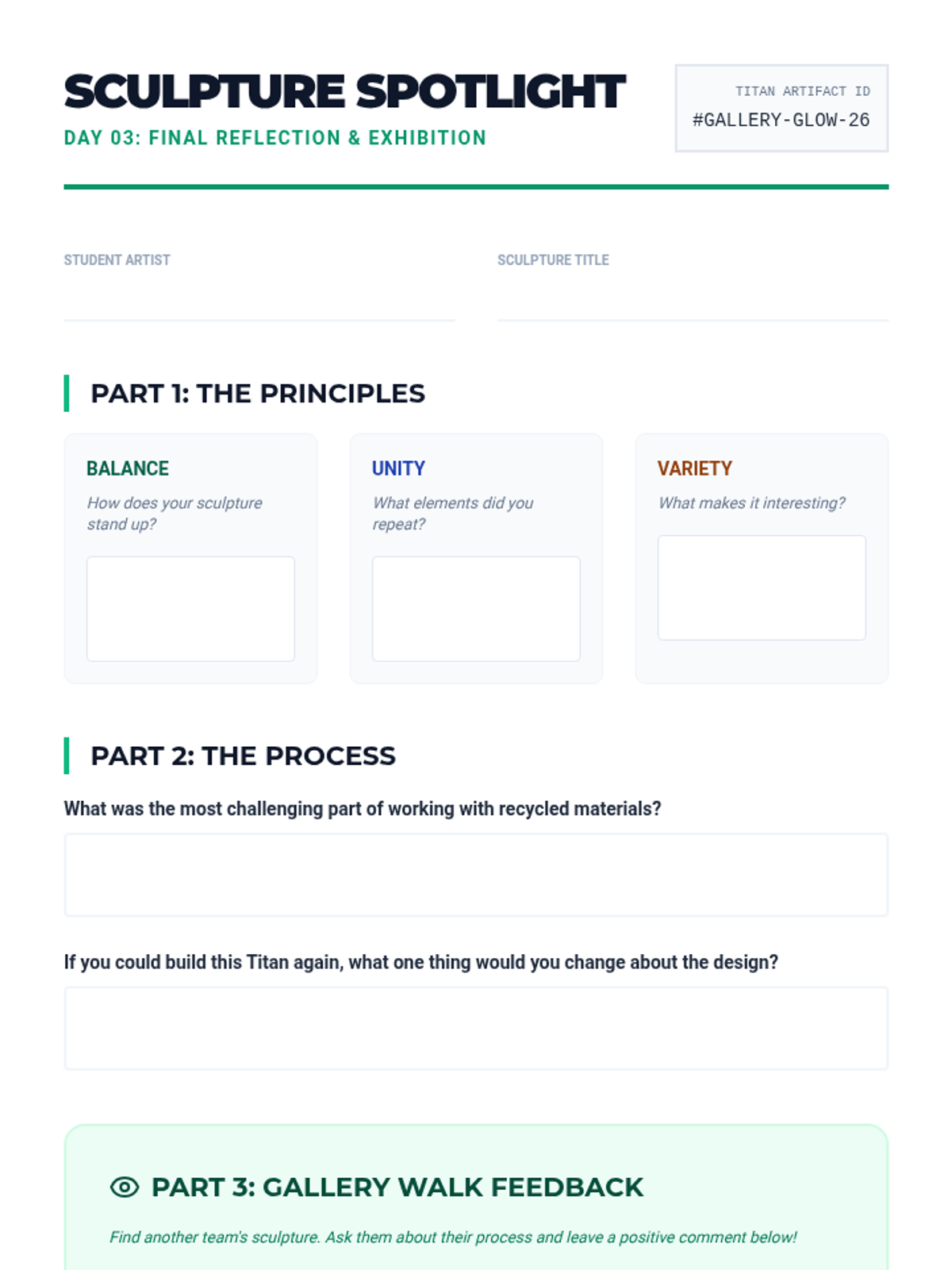
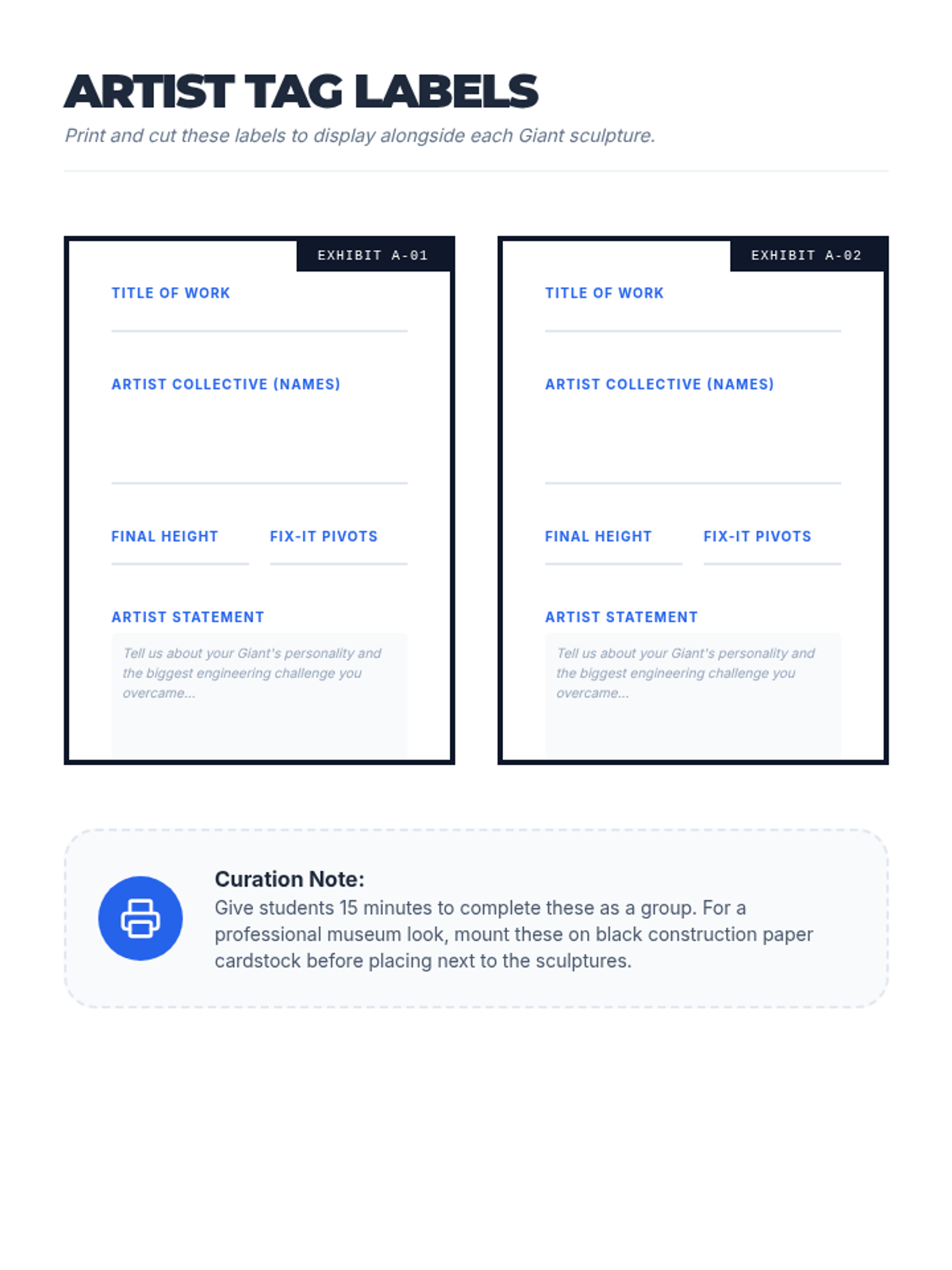
Finalizing sculptures with a focus on unity and variety, followed by a gallery walk and self-reflection.
The construction phase where teams focus on structural balance and collaborative assembly of their recycled sculptures.
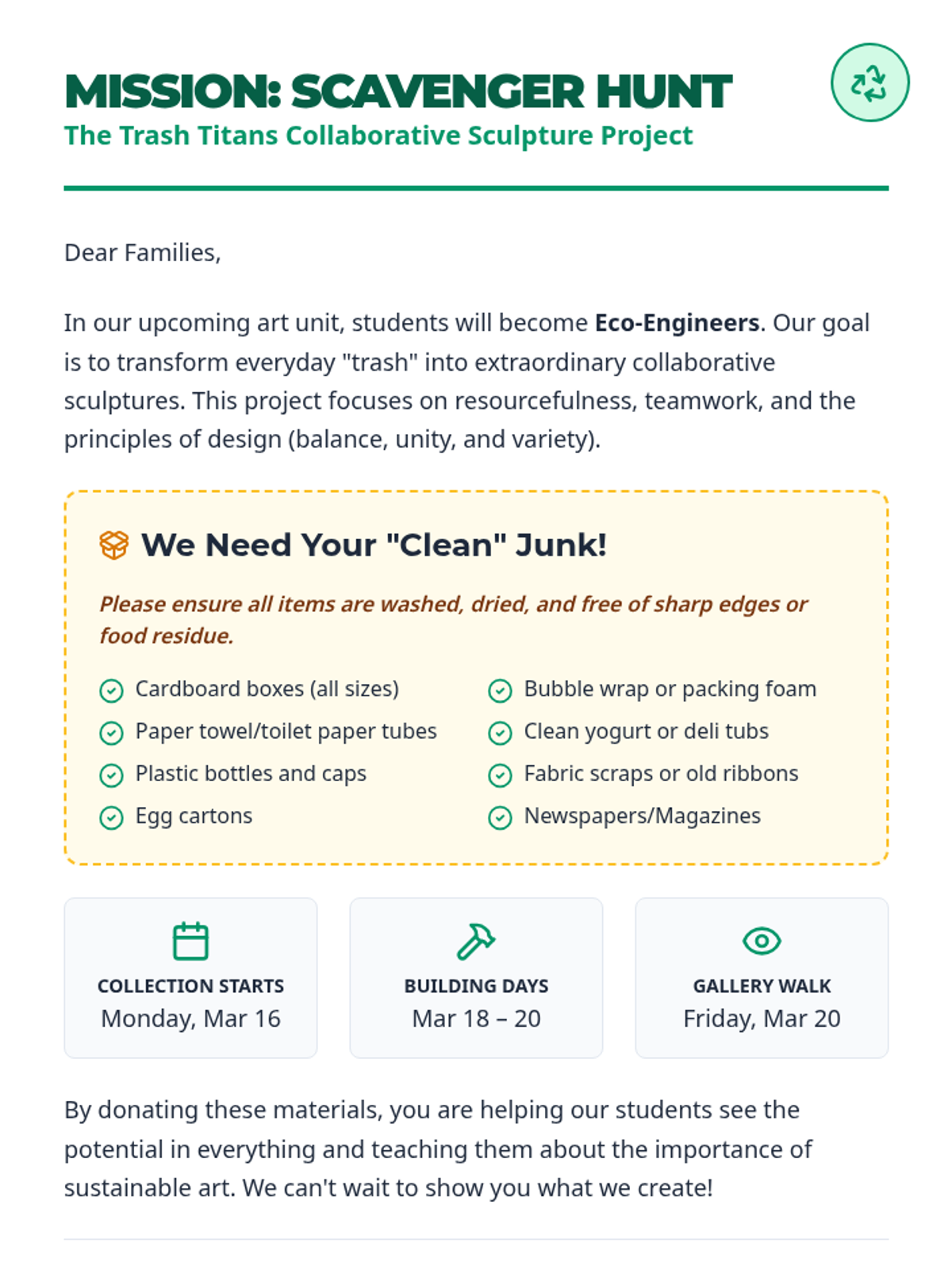
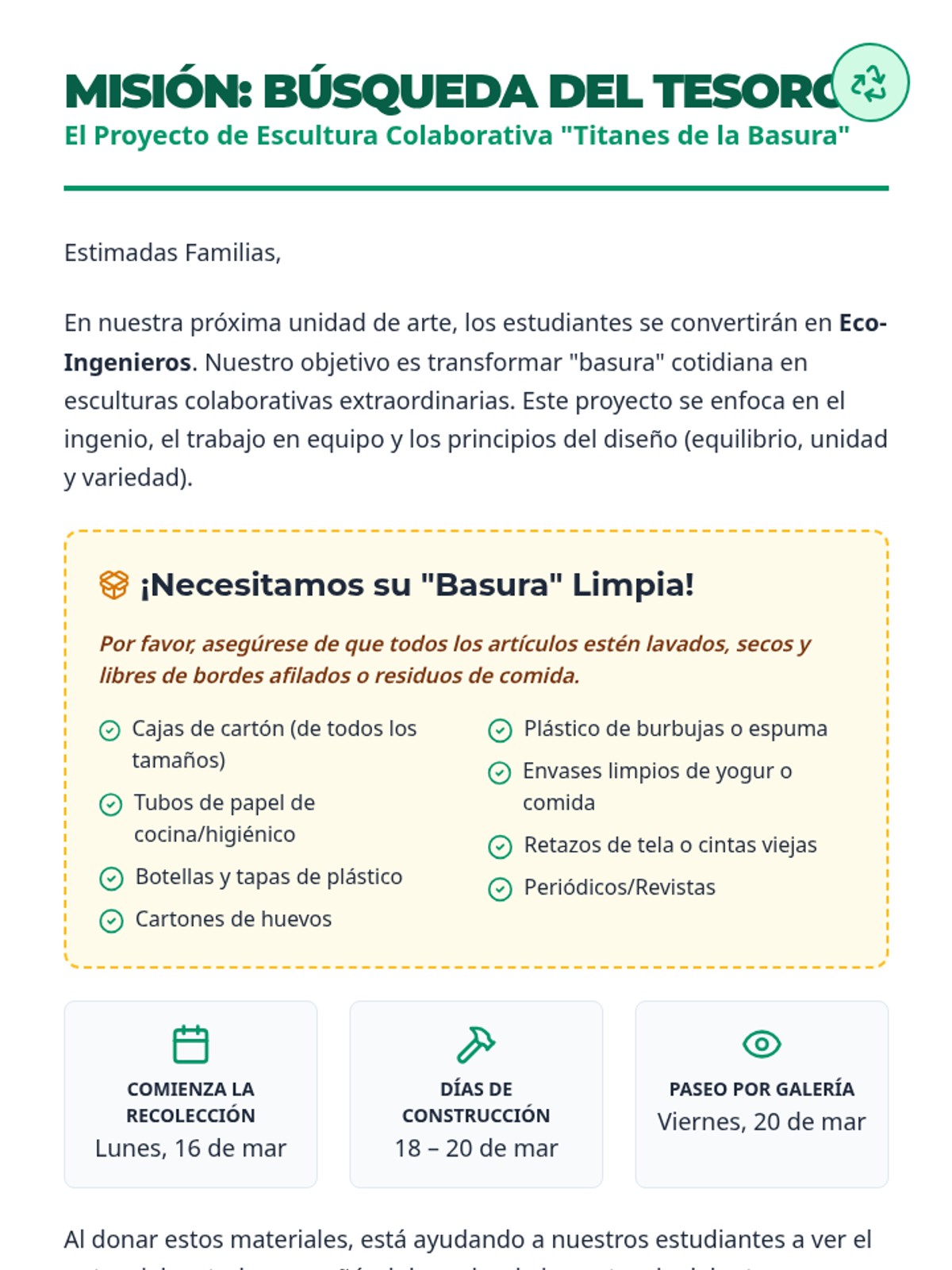
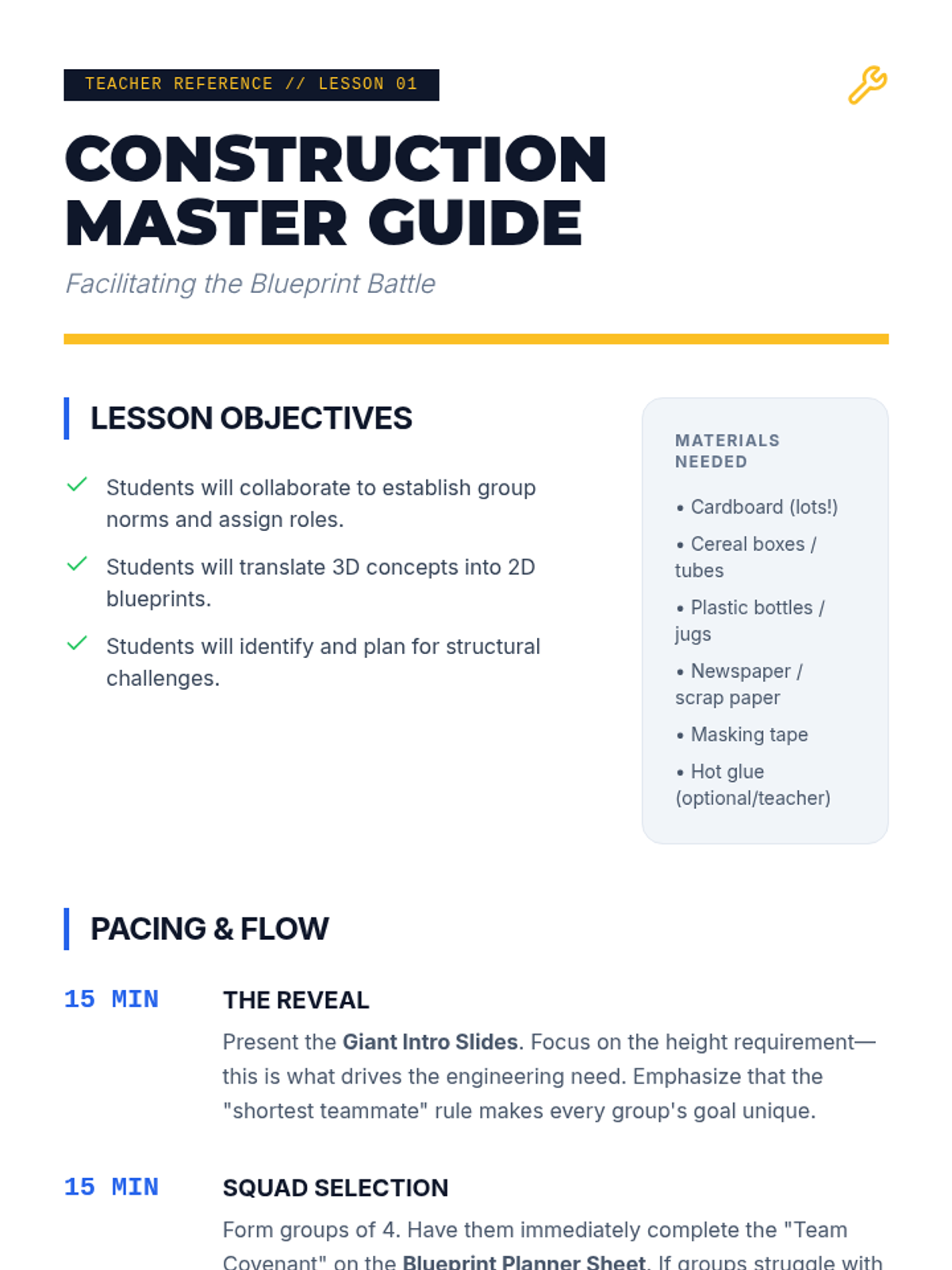
Introduction to the project, material collection via the letter home, and initial collaborative brainstorming and blueprinting.
Final touches, naming, and a gallery walk to reflect on the creative process and problem-solving journey.
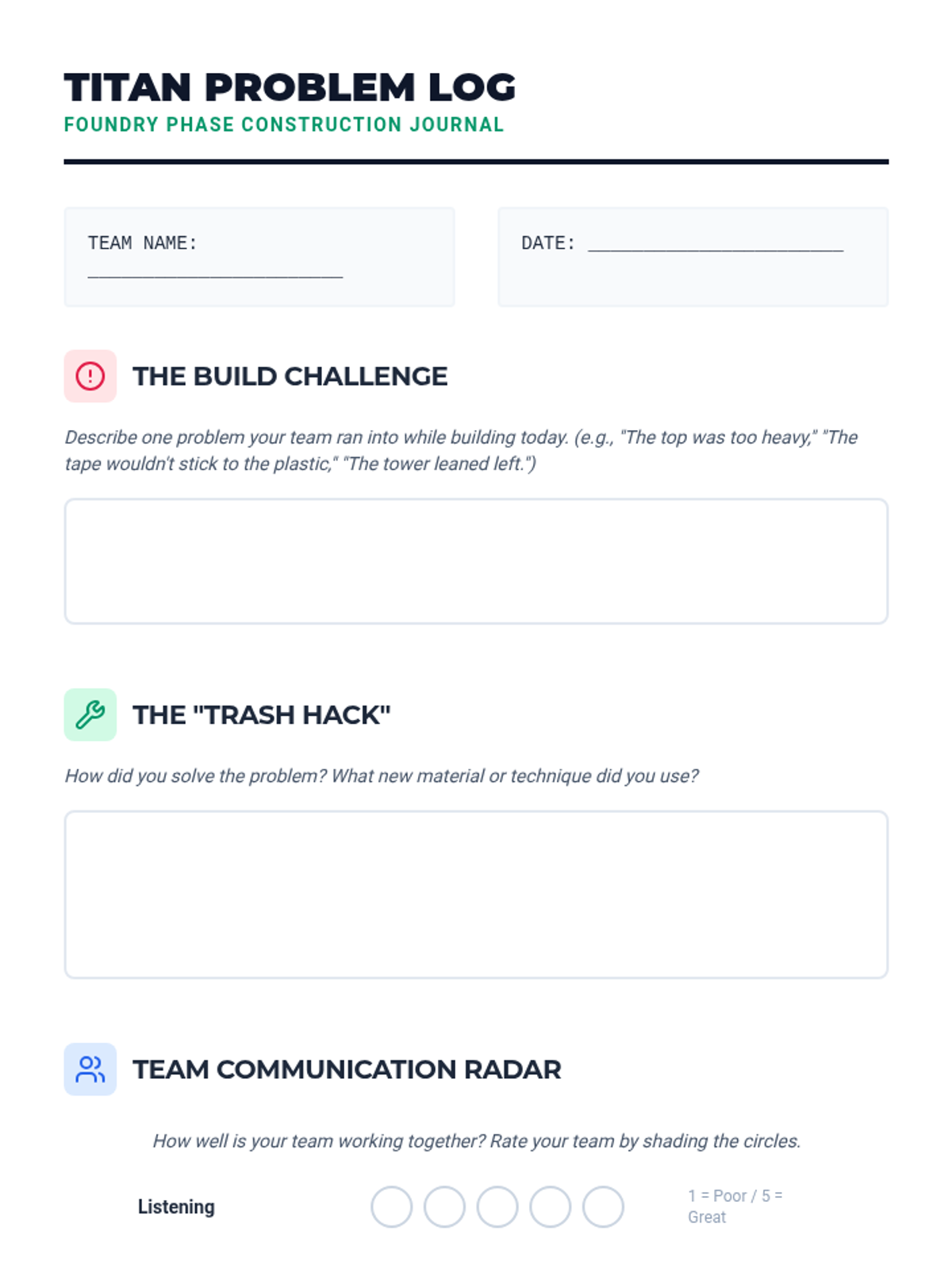
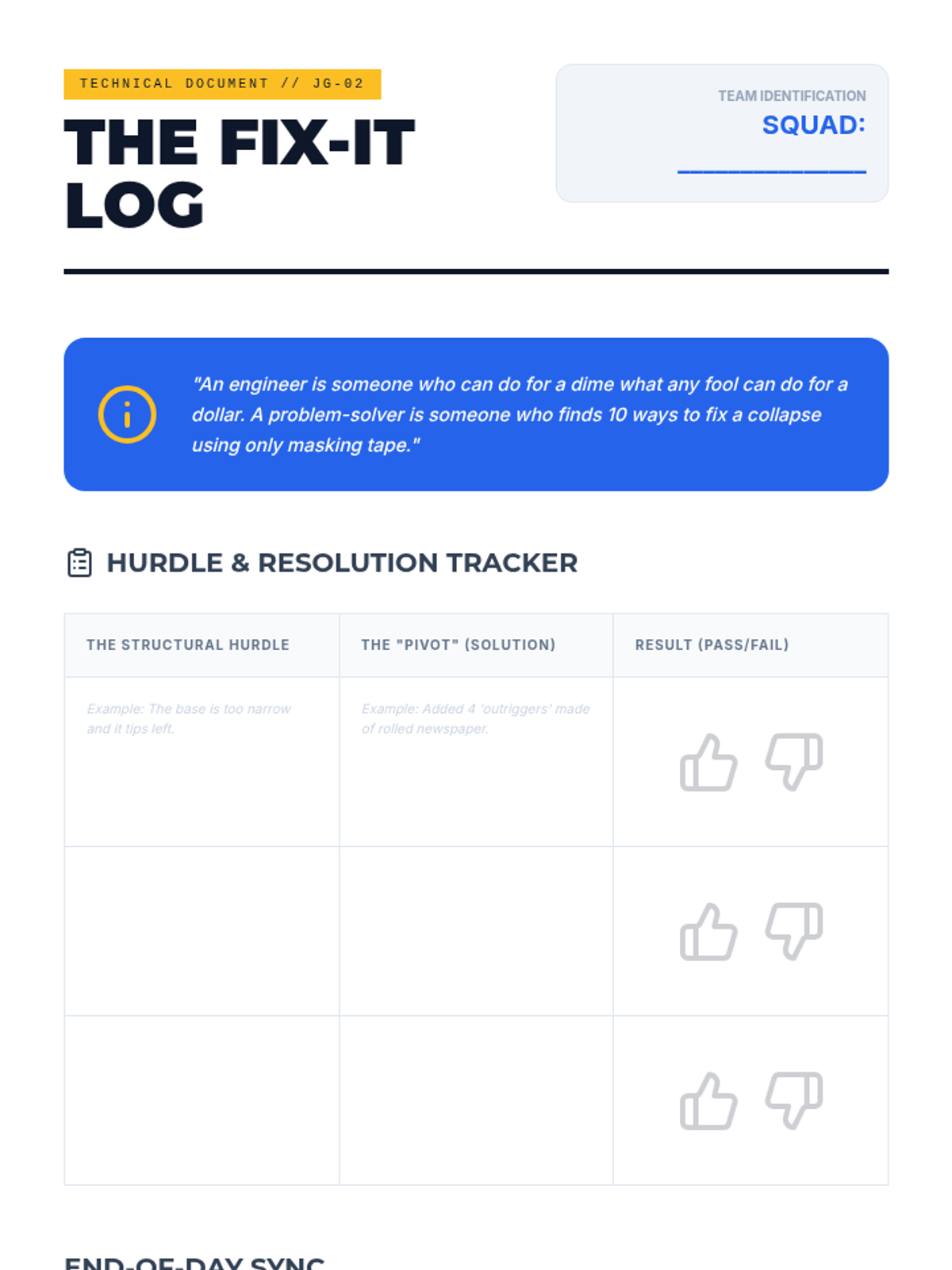
The core construction phase where students face structural failures and collaborate on creative solutions.
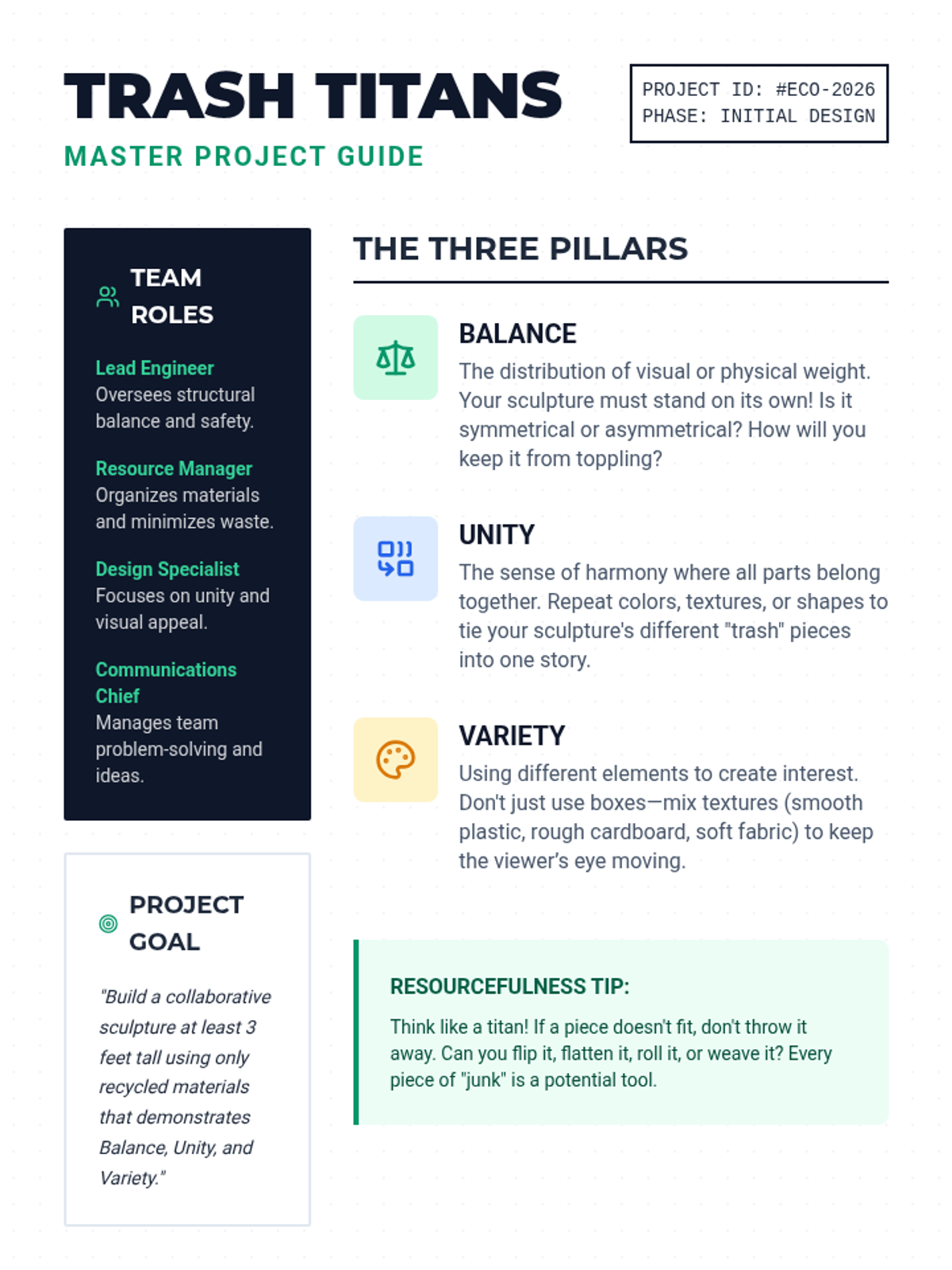
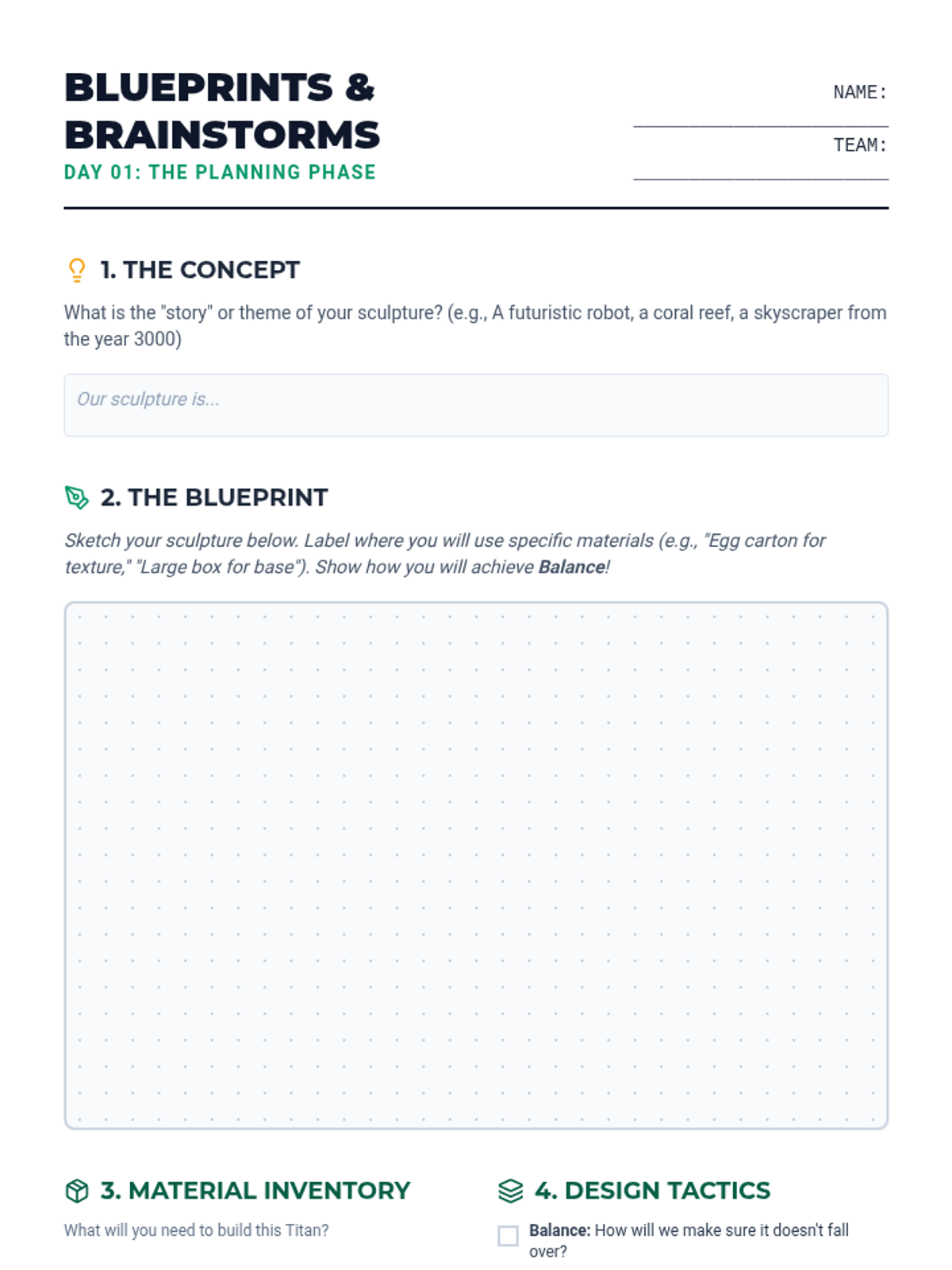
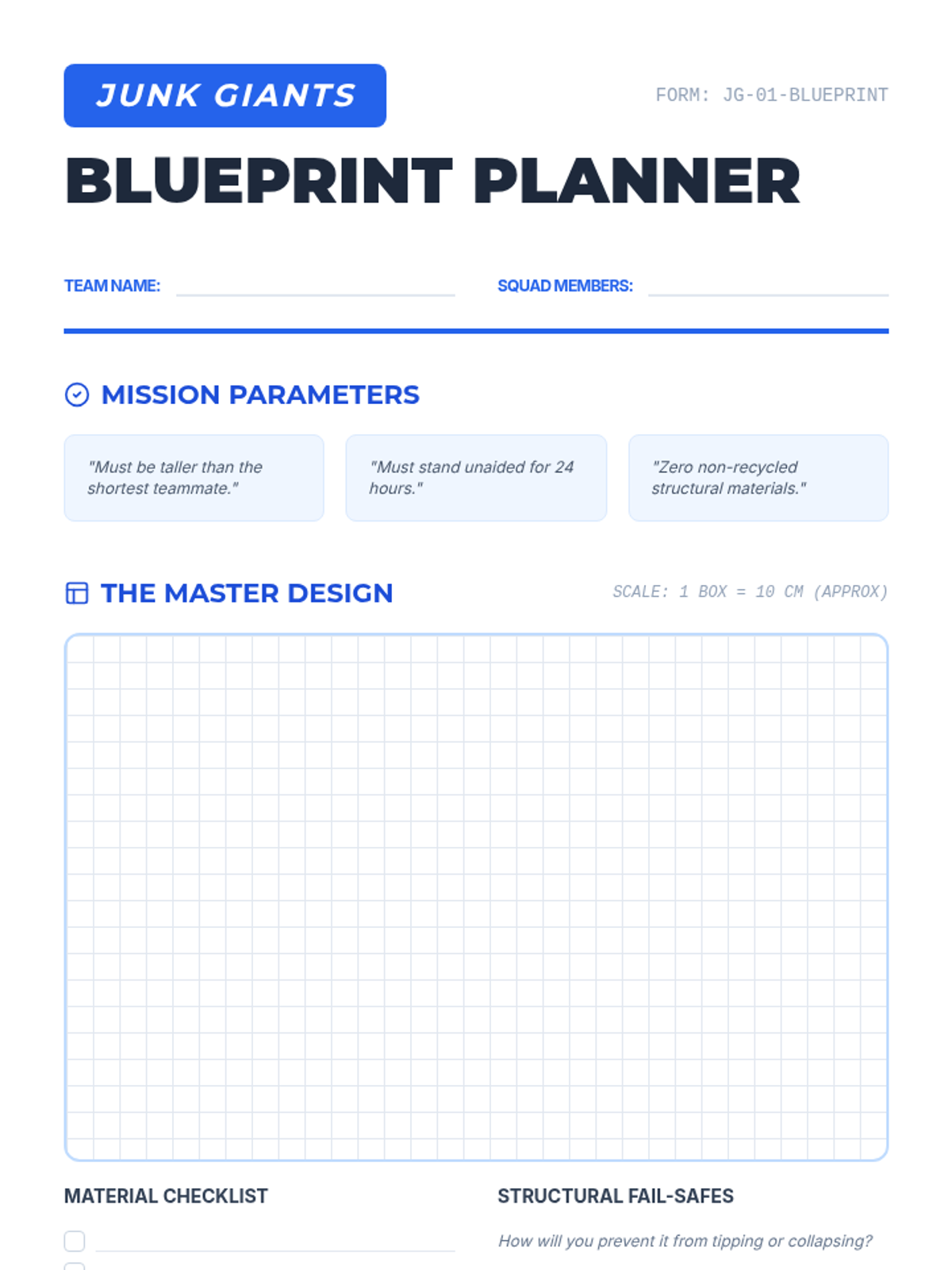
Teams form, explore materials, and create structural blueprints for their recycled sculptures.