Historical evolution of performance, technical stagecraft, and core acting techniques. Develops playwriting skills and fosters imaginative expression through script development and production management.
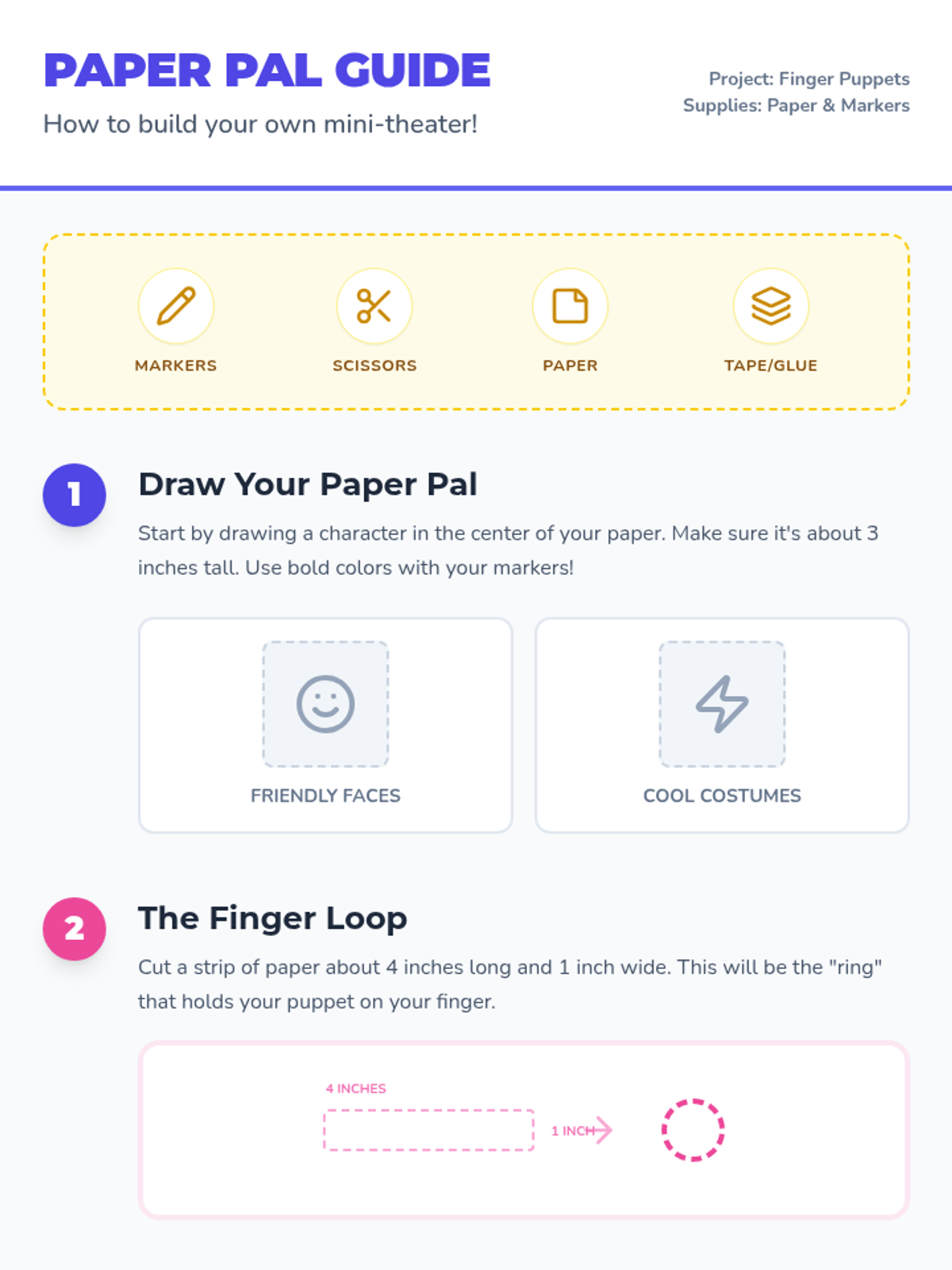
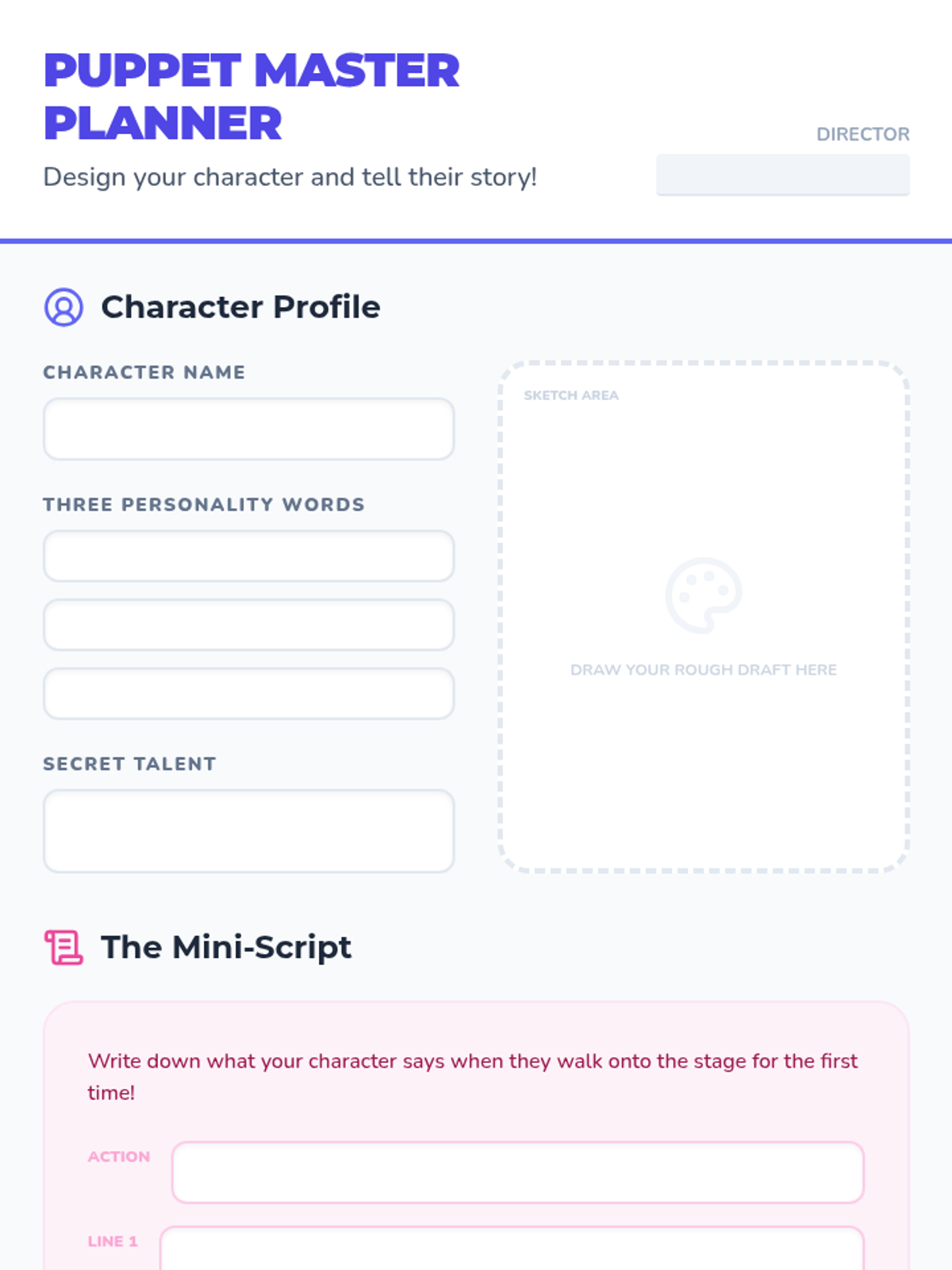
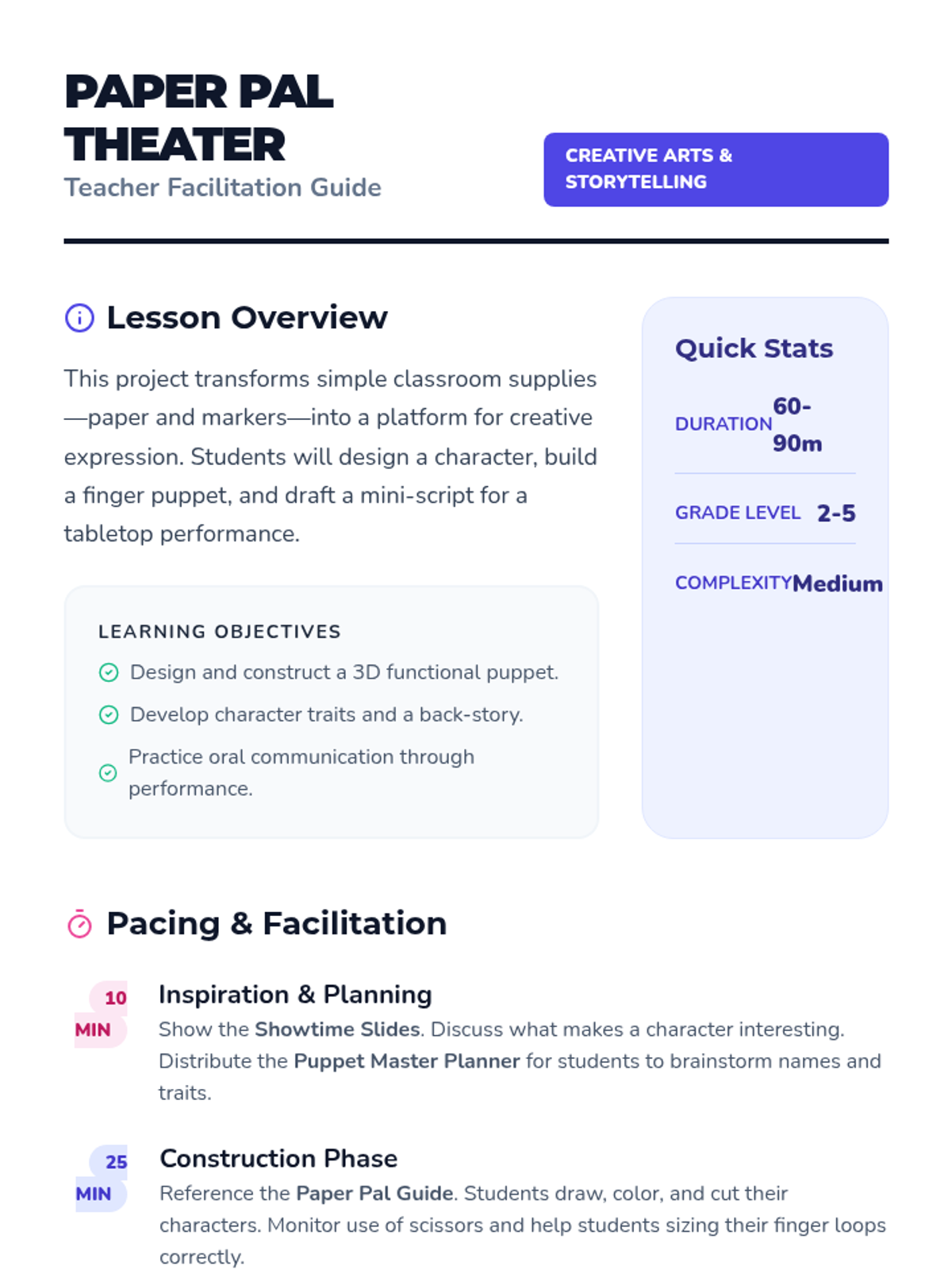
Students design and build their own paper finger puppets and a tabletop stage using markers and paper. This project combines visual arts with storytelling and performance.
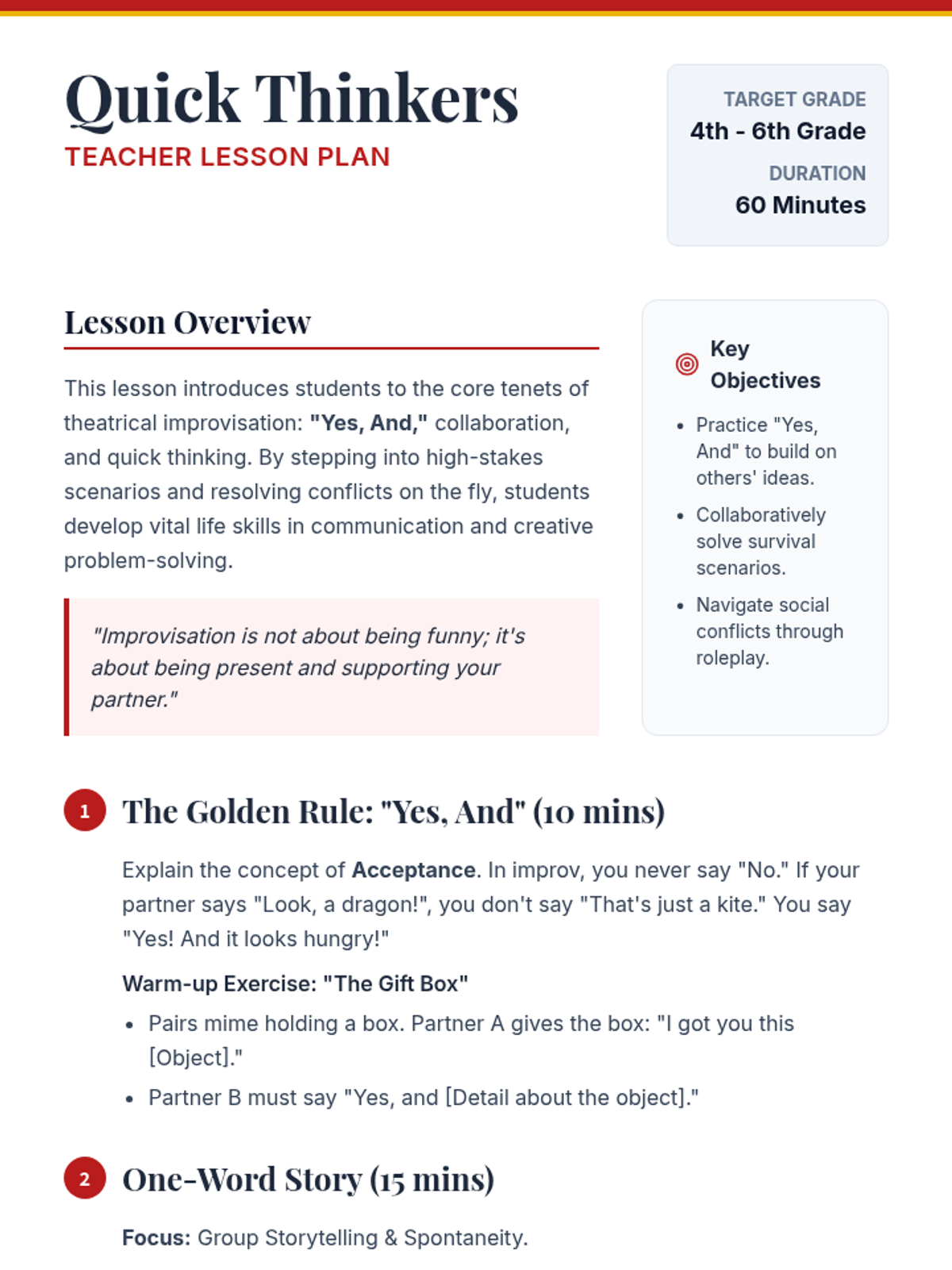
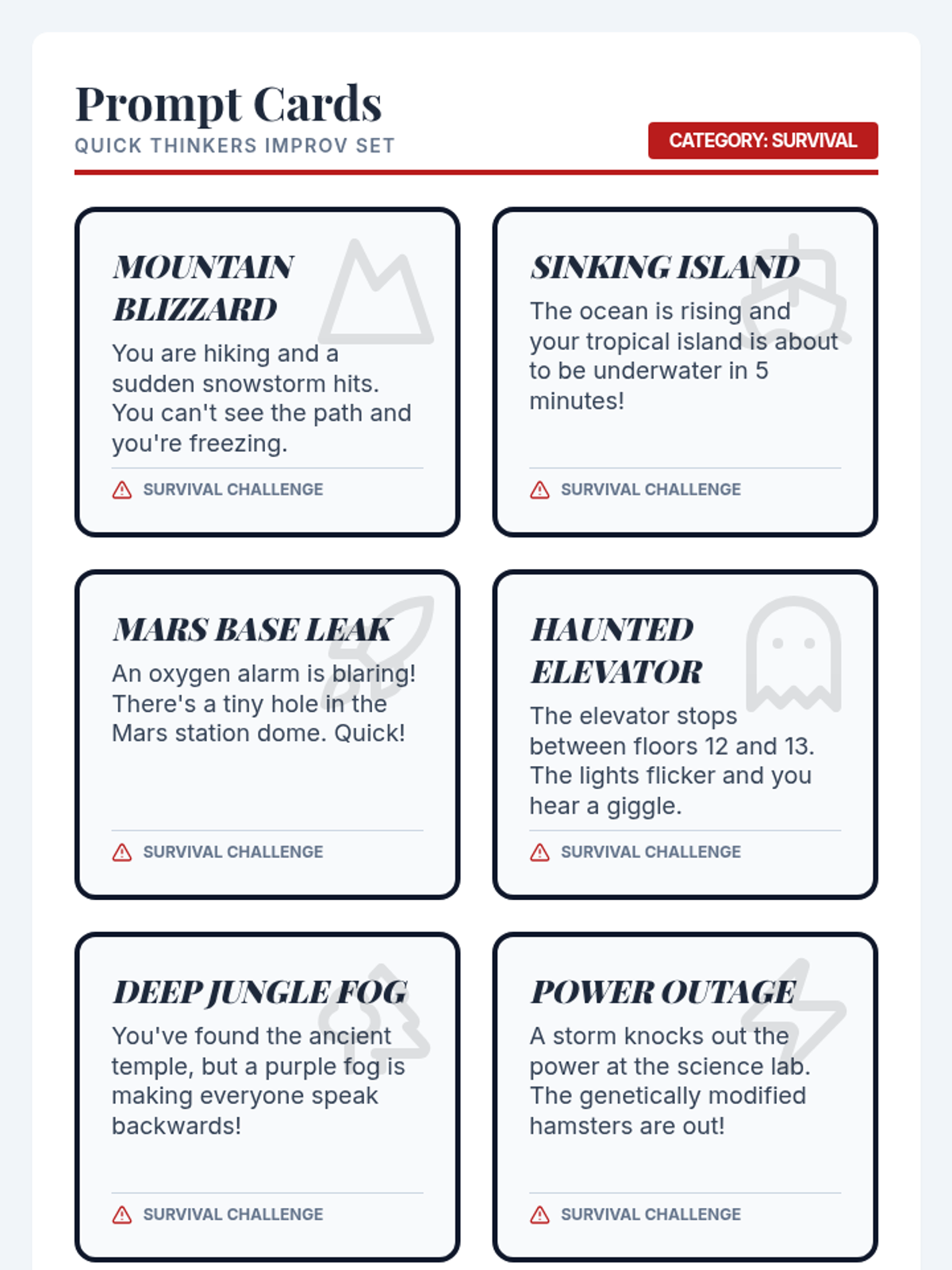
A high-energy theatre lesson for grades 4-6 that uses improvisation games to build spontaneity, teamwork, and creative problem-solving skills through storytelling and survival scenarios.
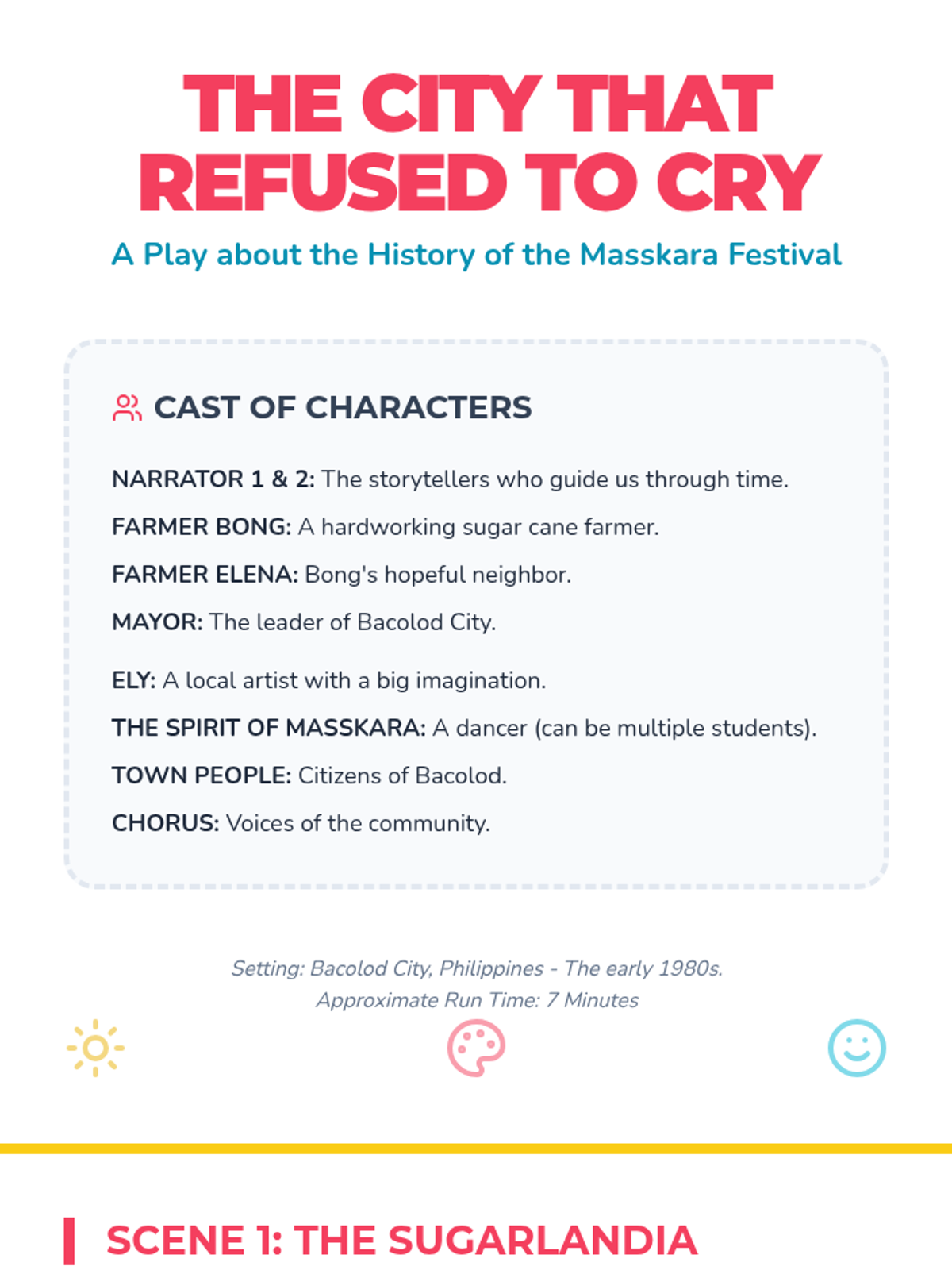
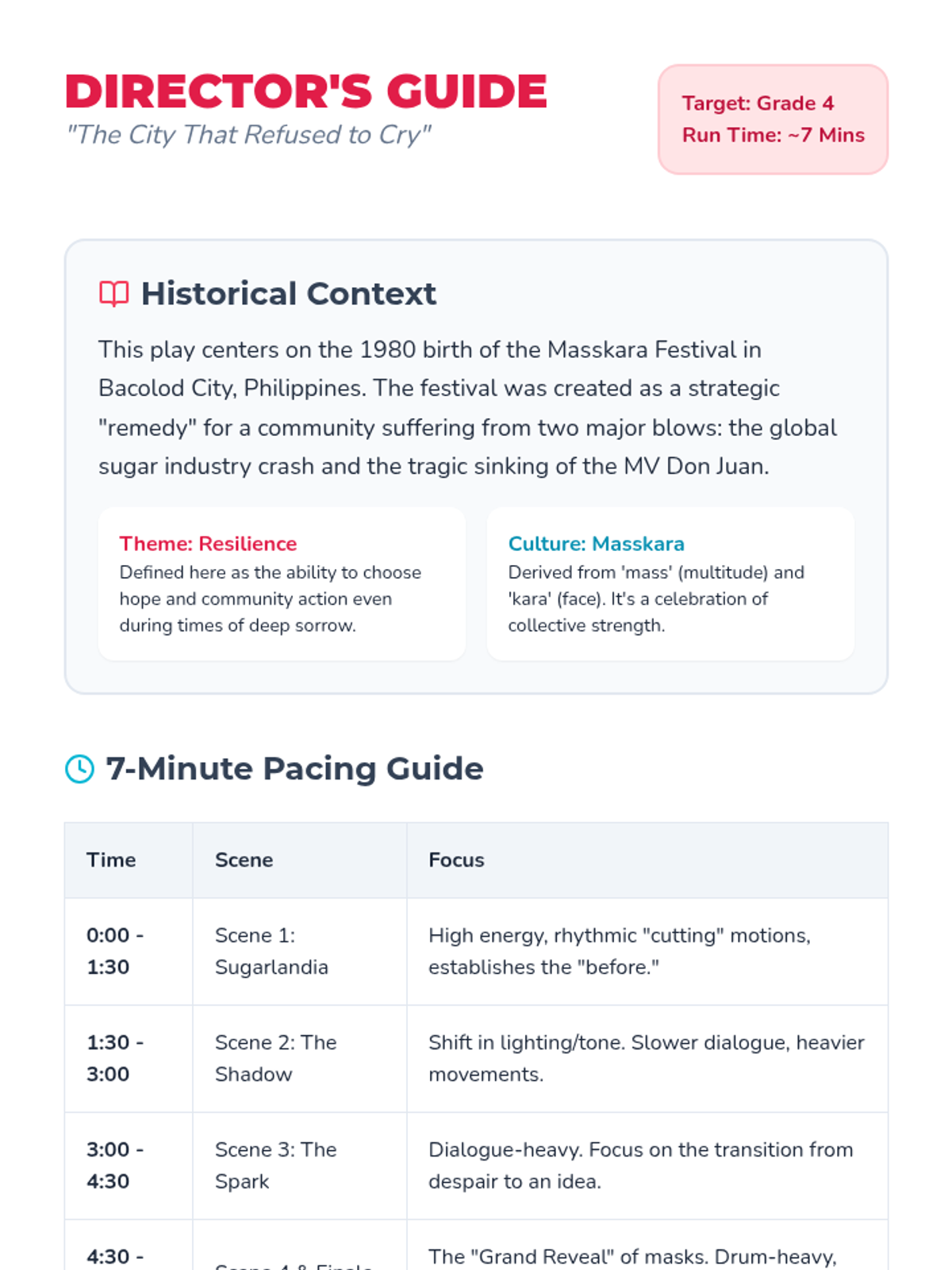
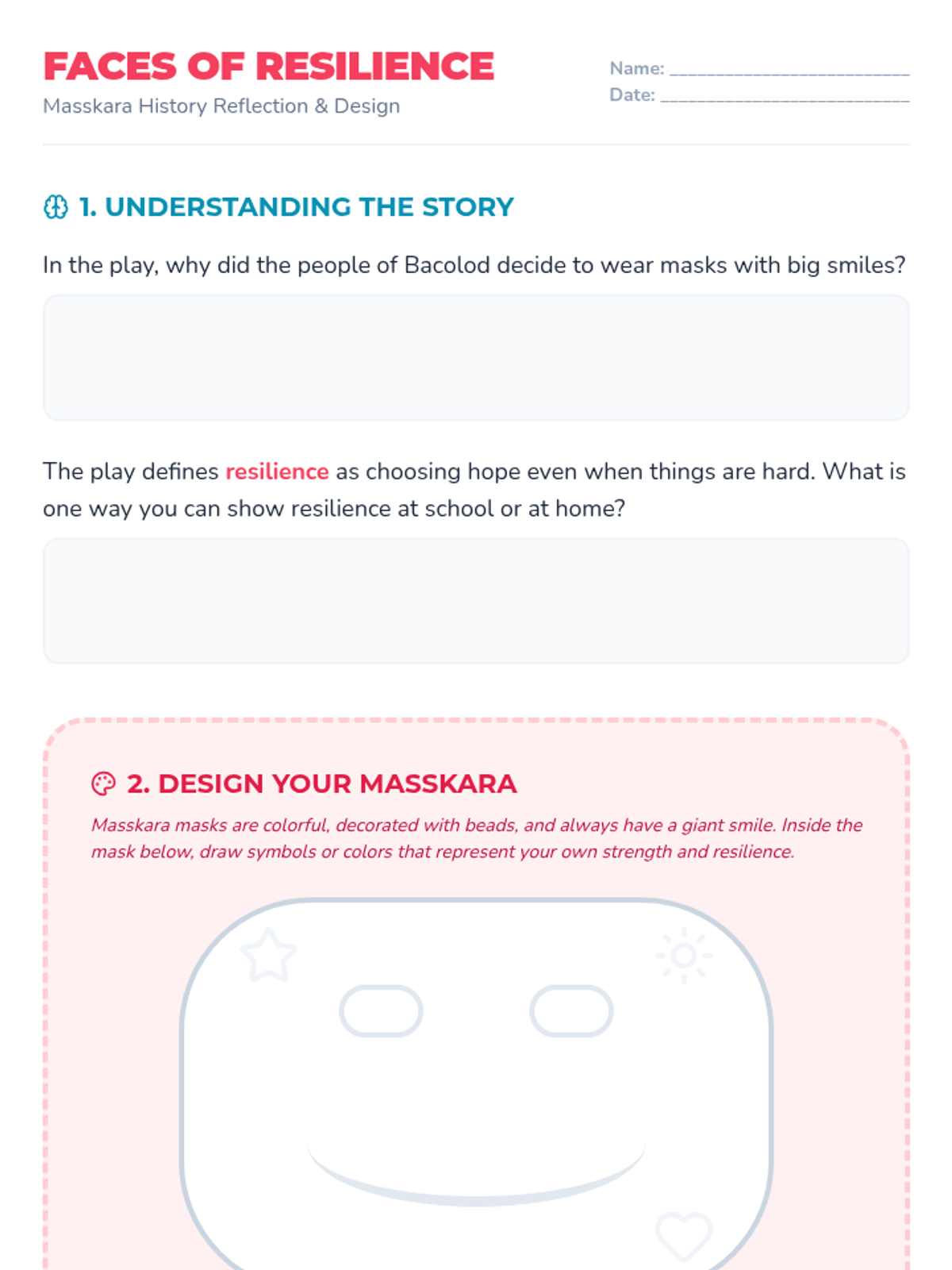
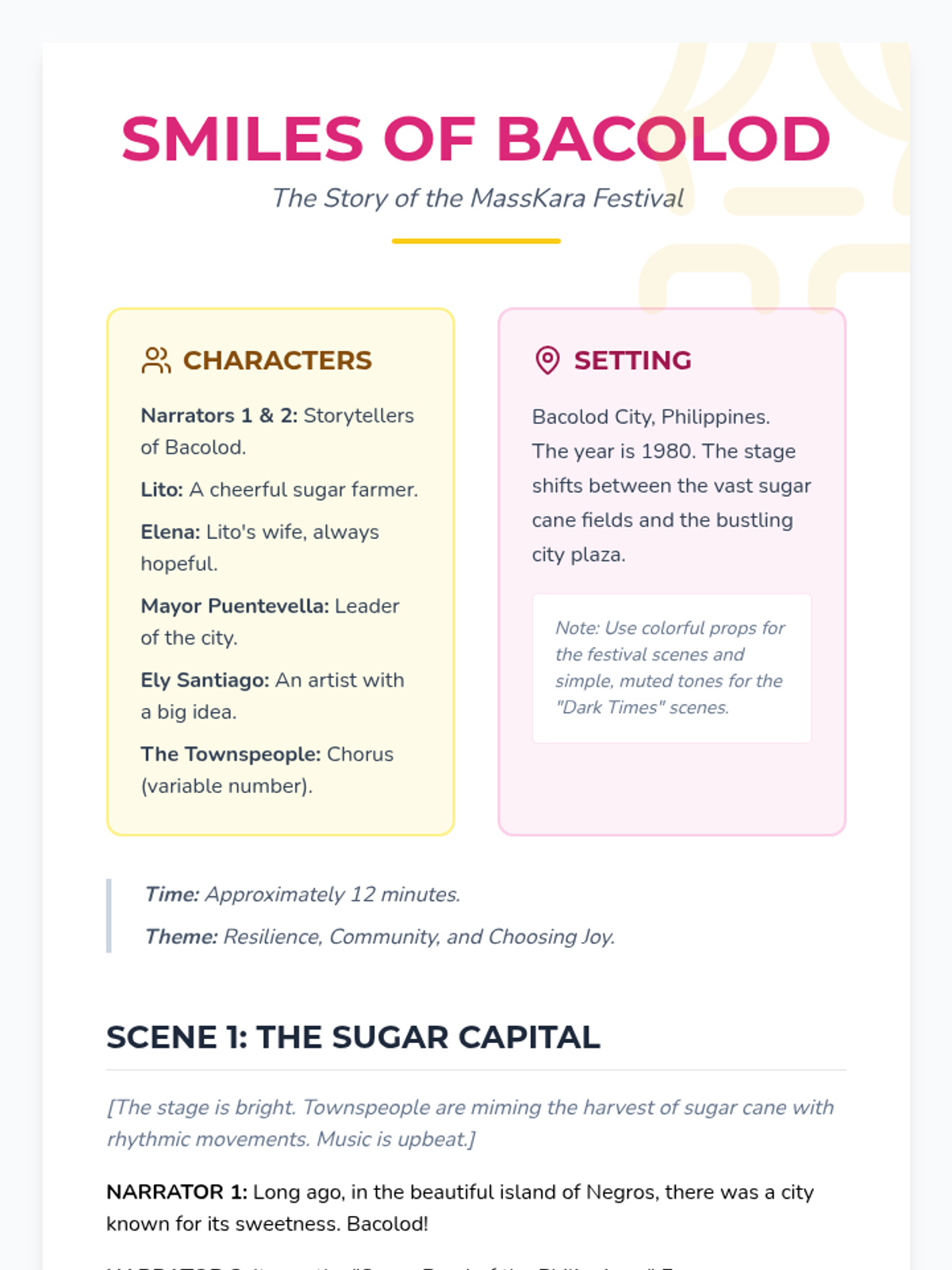
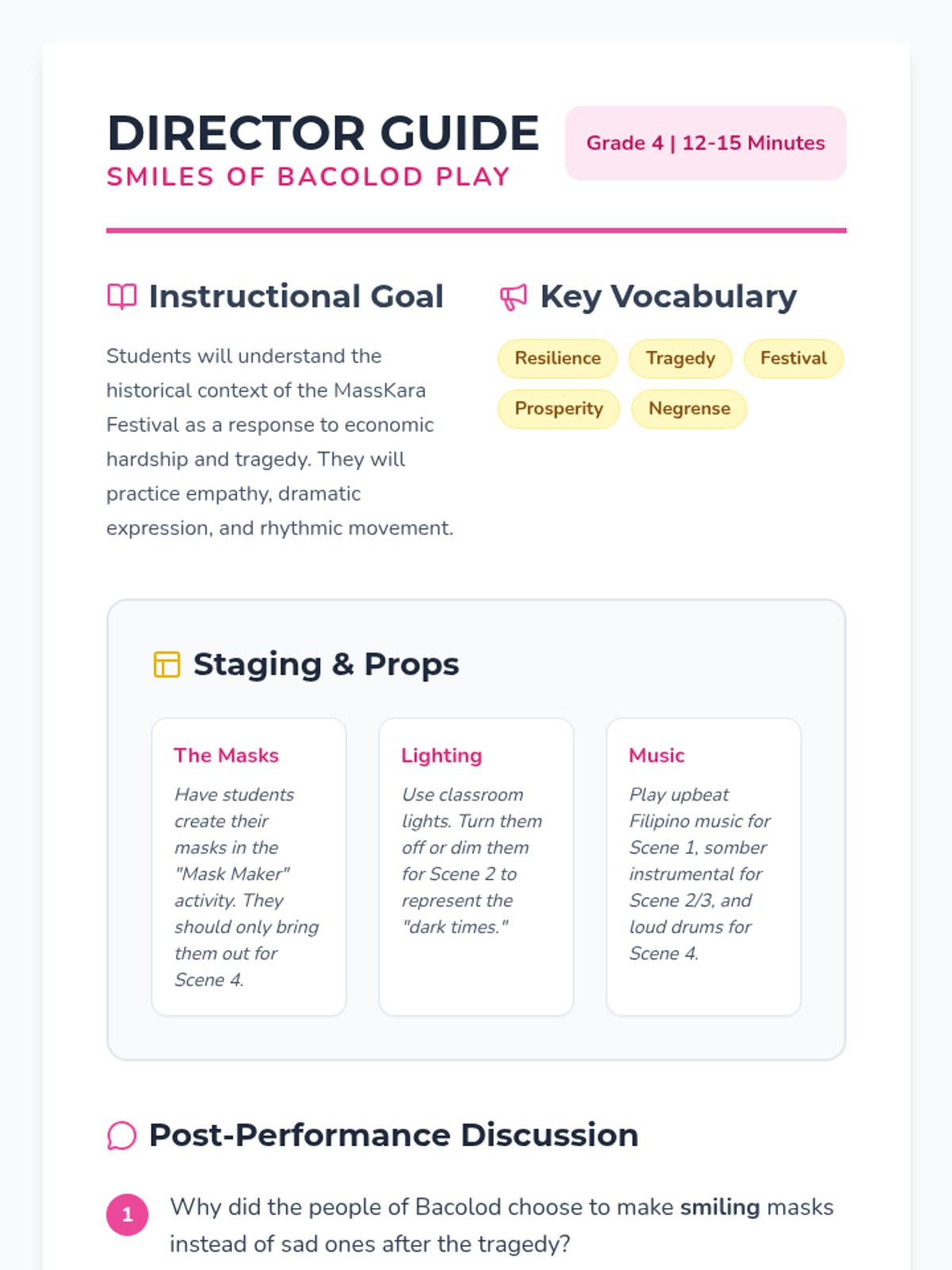
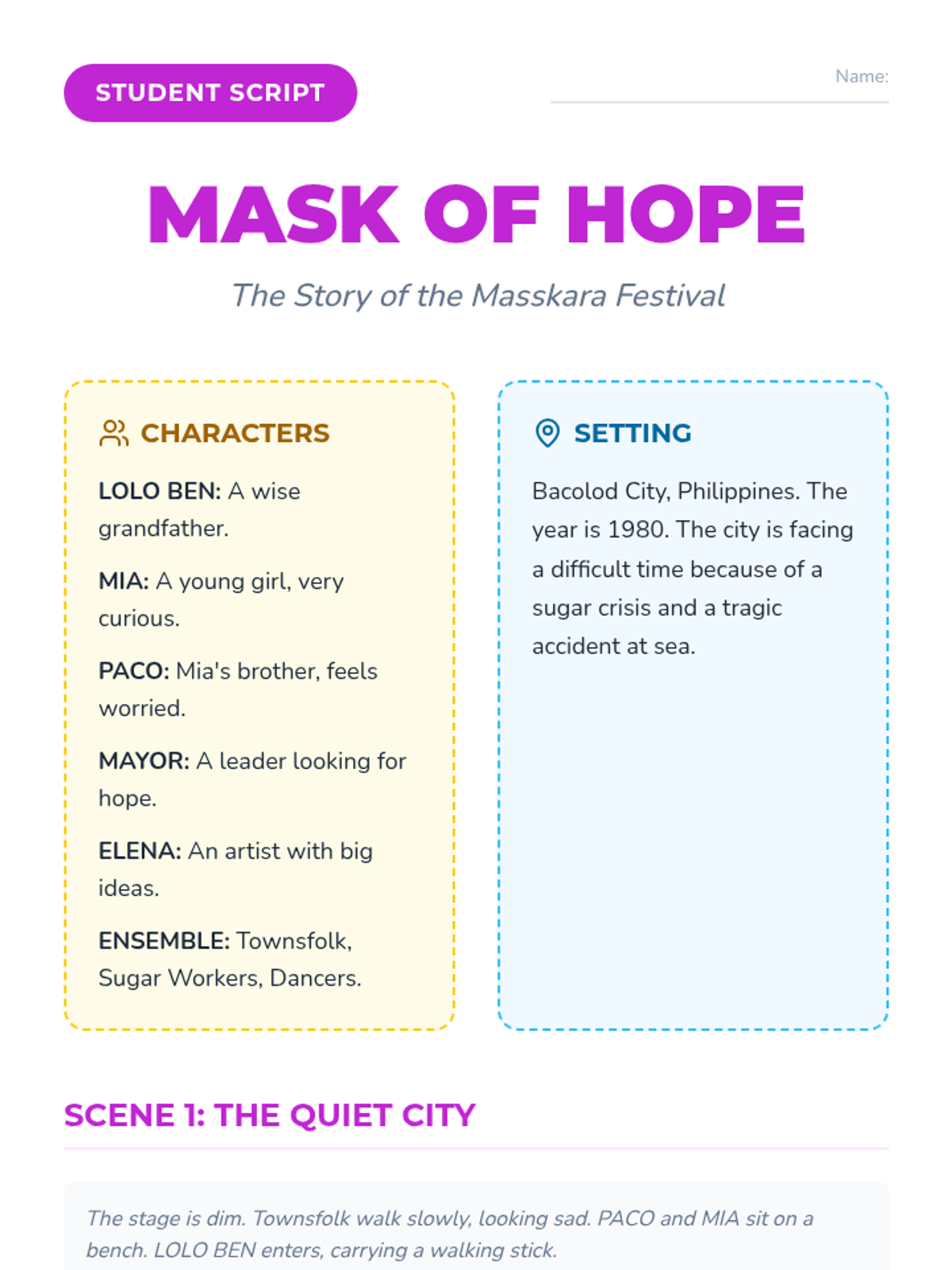
A 7-minute historical play and supporting materials that explore the origins of the Masskara Festival in Bacolod City, Philippines, focusing on themes of resilience and community spirit during the 1980s.
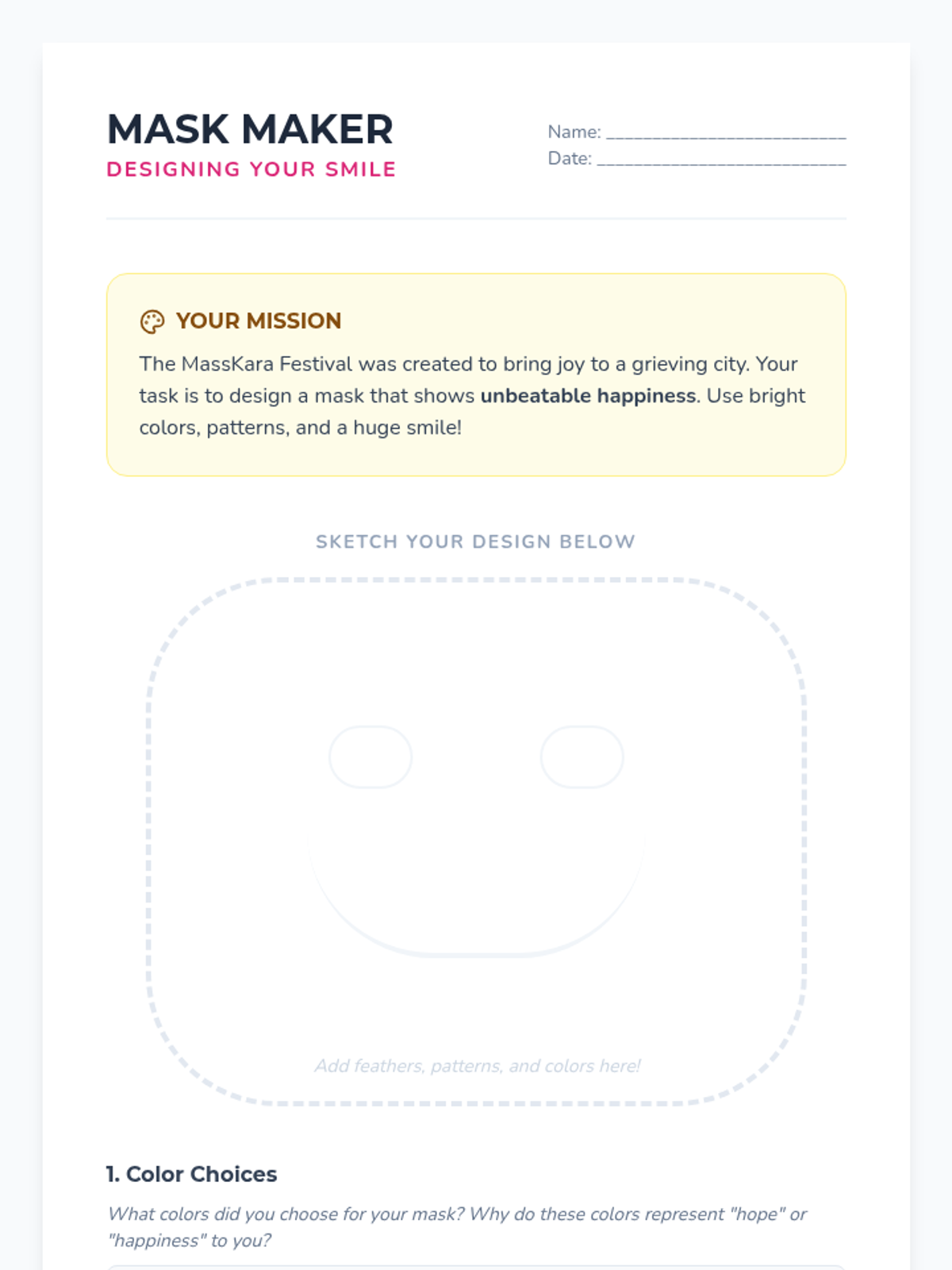
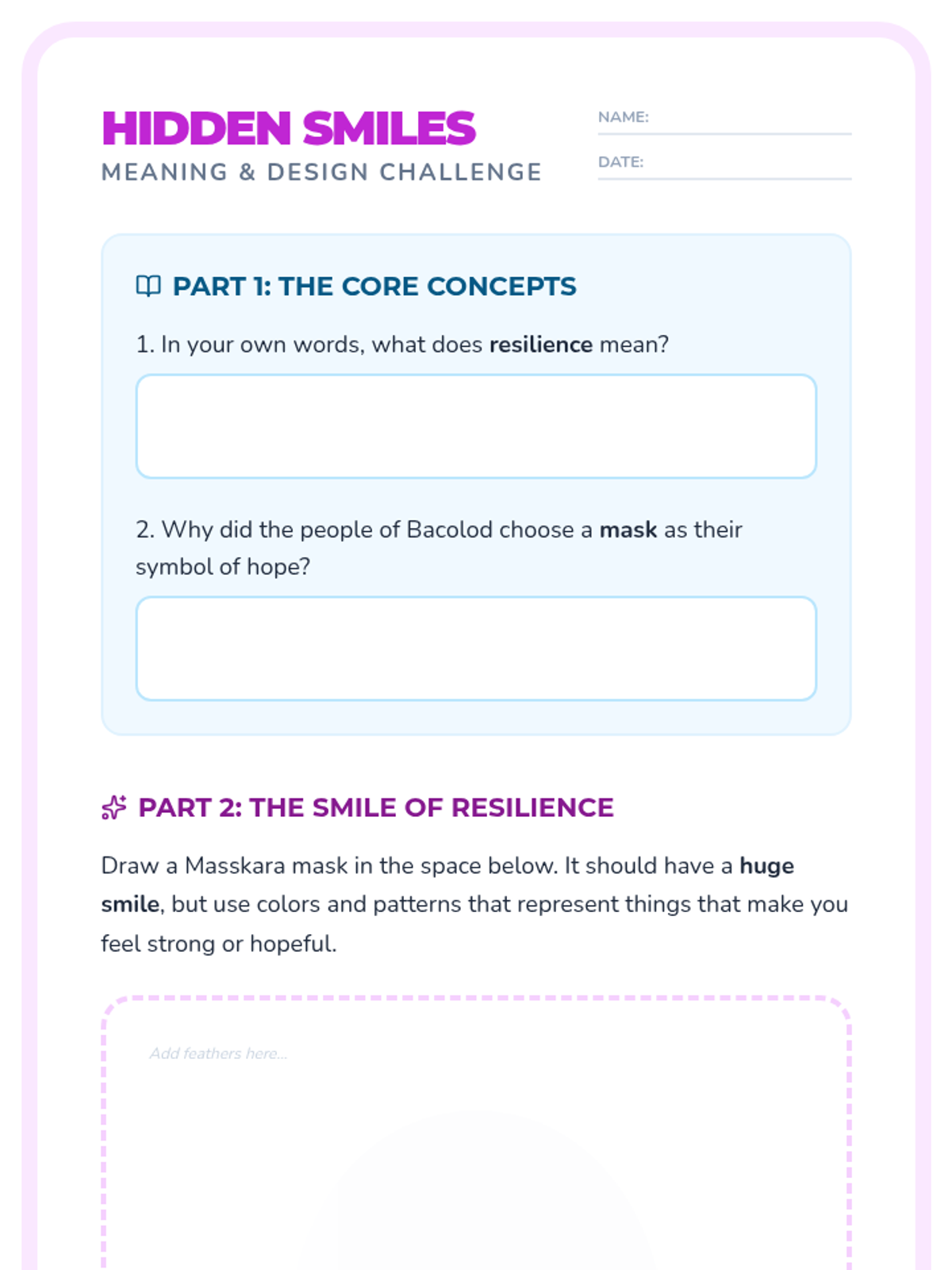
Students will explore the history of the MassKara Festival, understanding how the people of Bacolod chose to smile through tragedy and hardship. The lesson culminates in a short play performance and a creative mask-making activity.
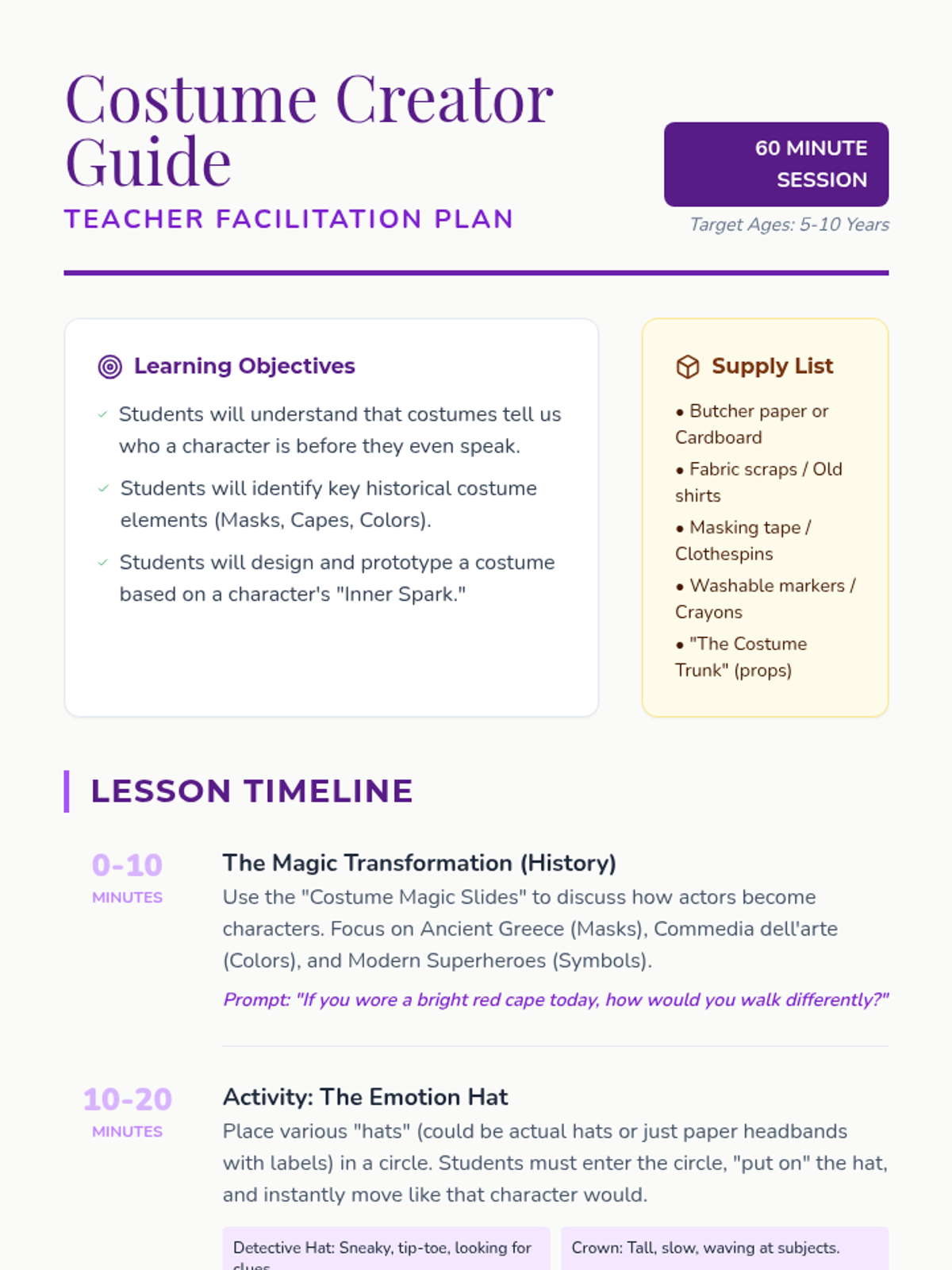
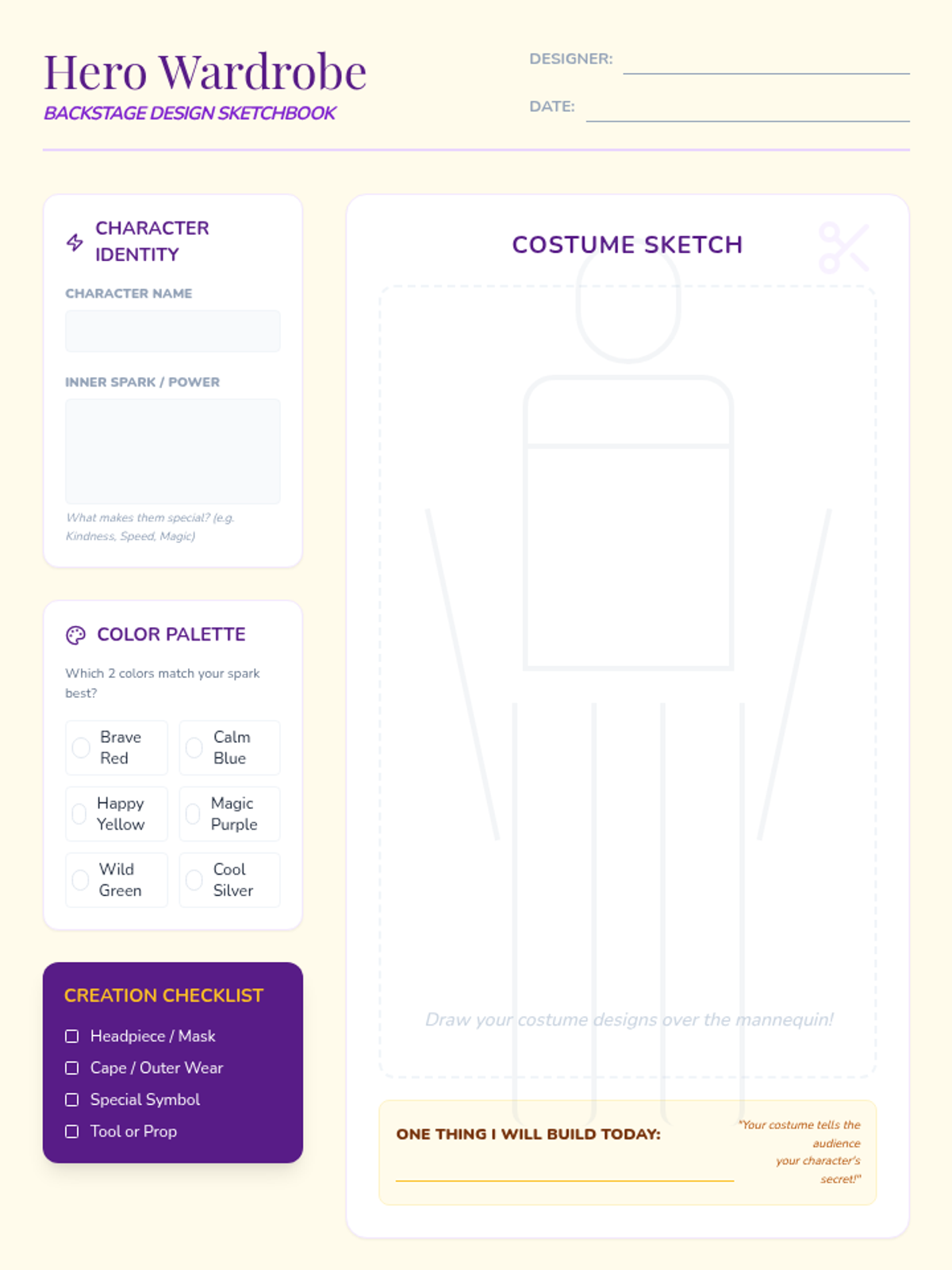
A 60-minute exploration into the world of theatrical costume design, featuring a simplified history of stage attire, interactive character-building games, and a hands-on design workshop for young creators.
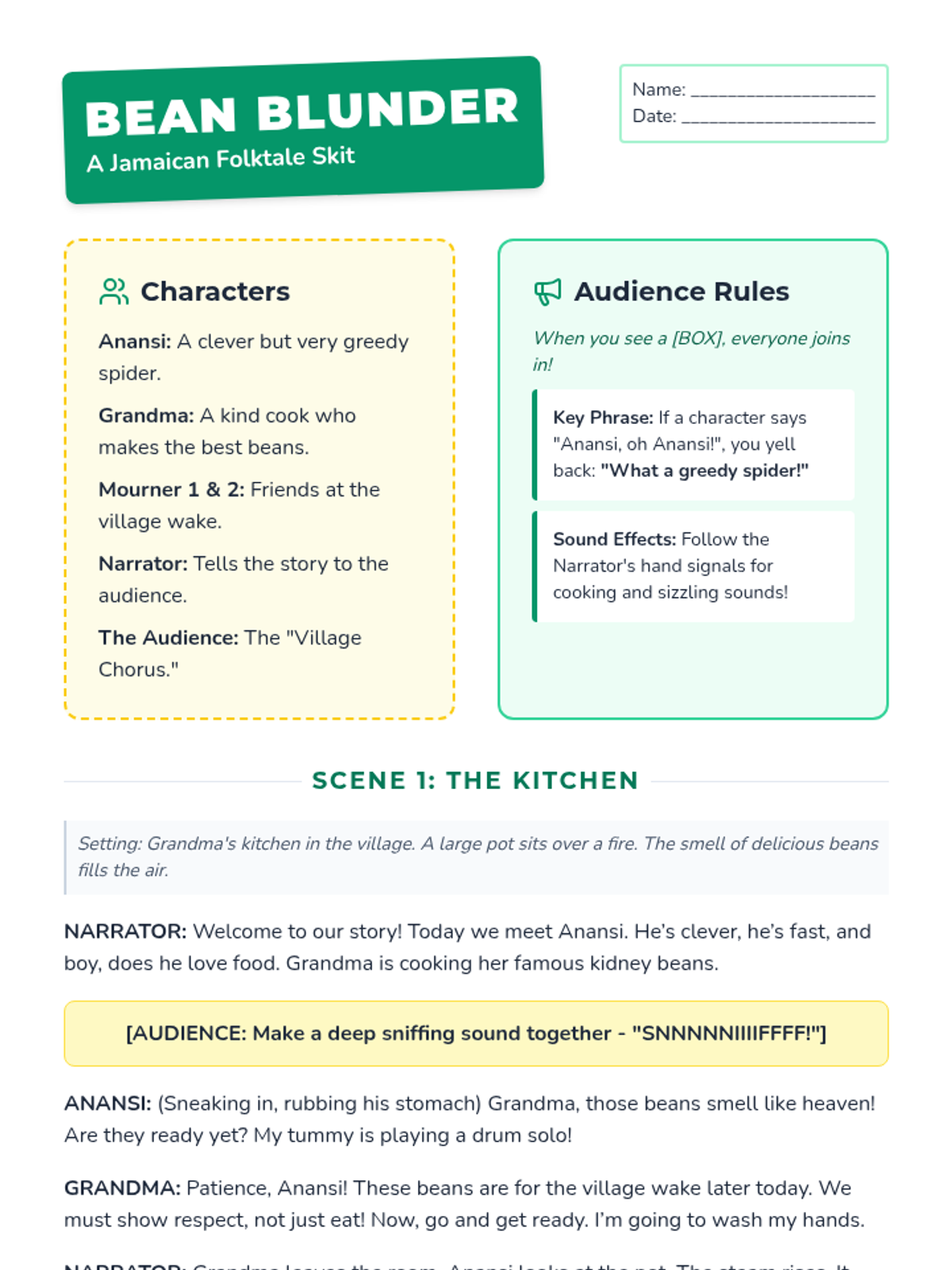
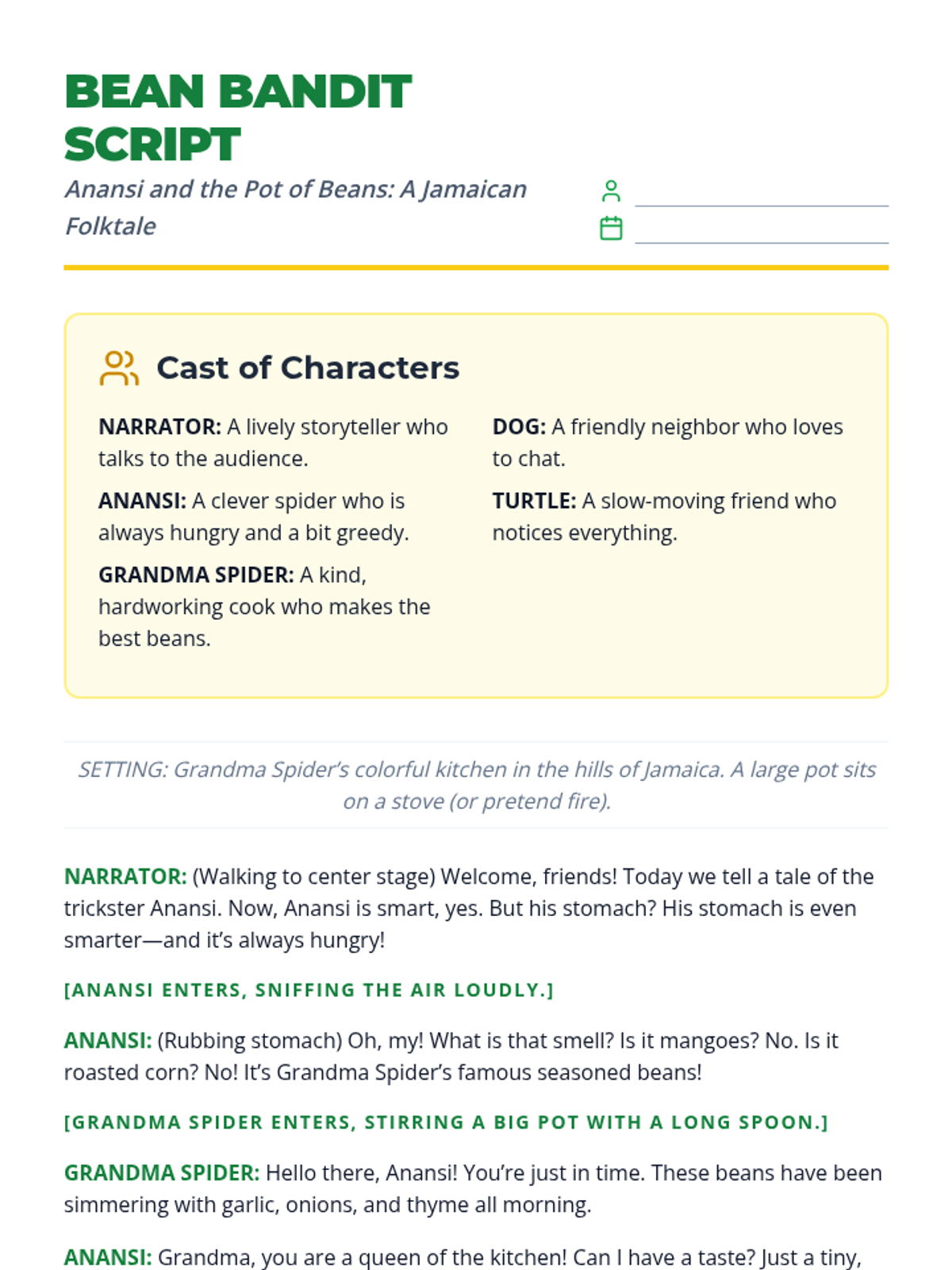
A dramatic adaptation of the classic Jamaican folktale 'Anansi and the Pot of Beans,' designed for 4th-grade performance with active audience participation and rhythmic responses.
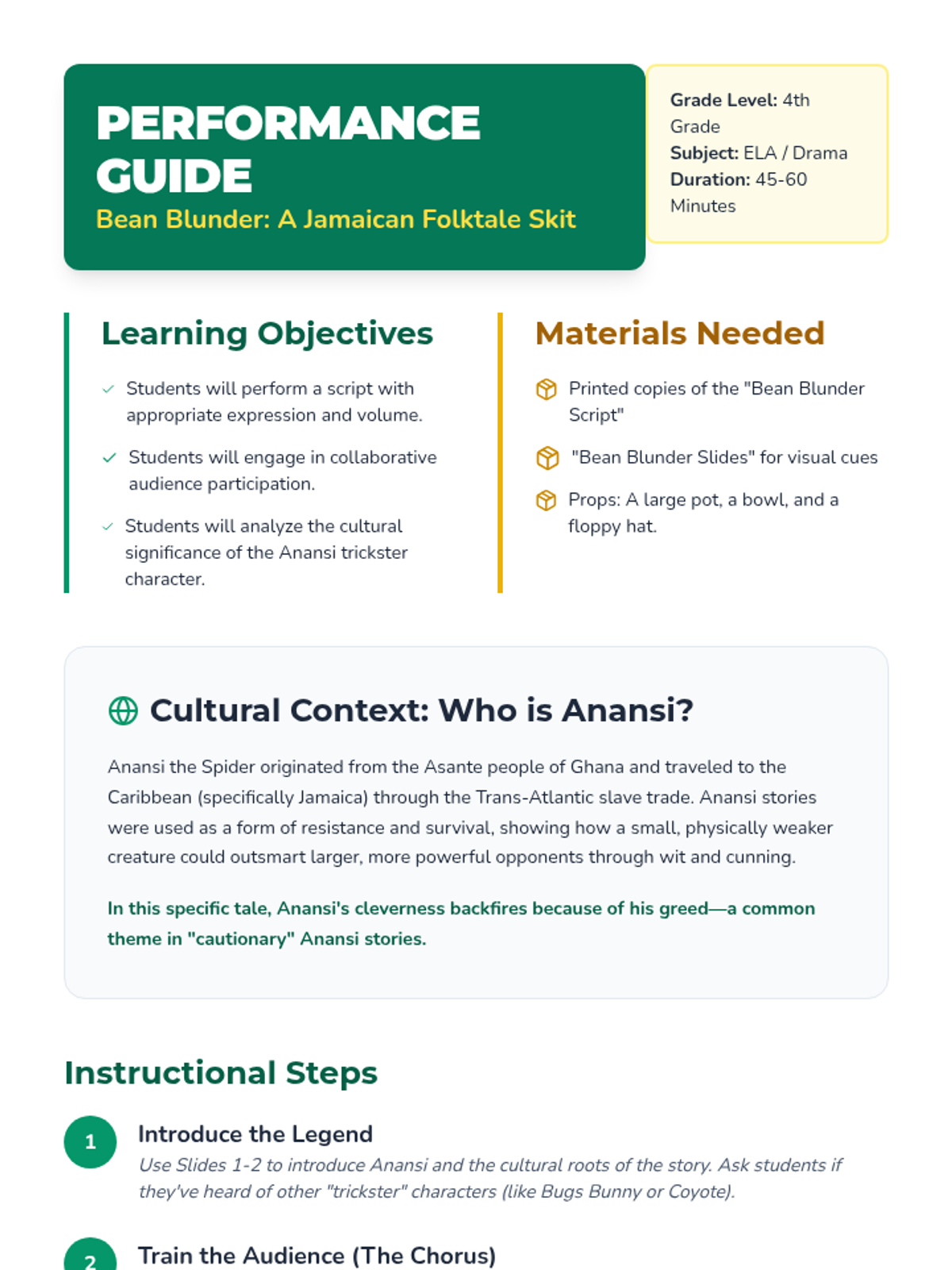
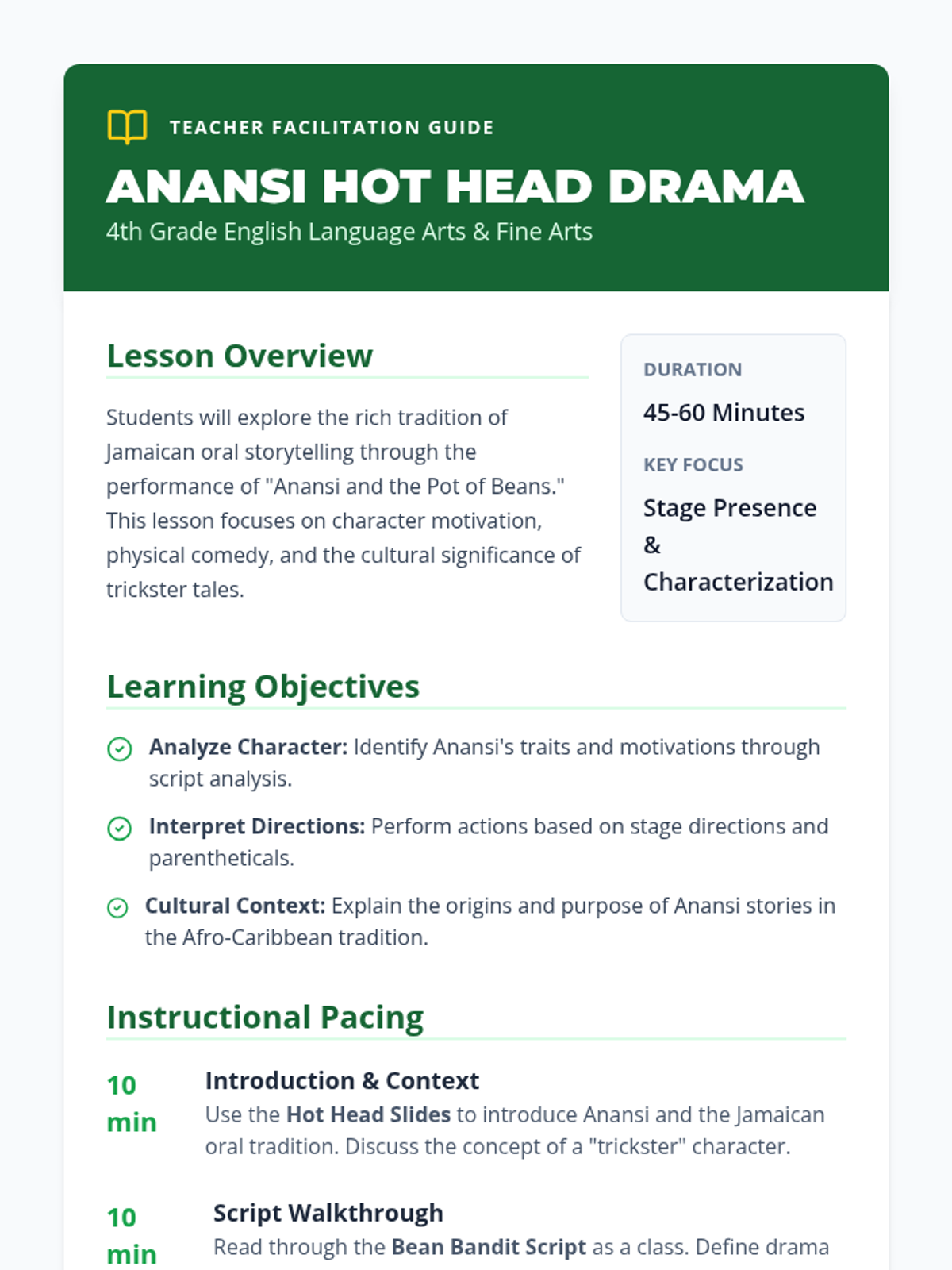
A 4th-grade drama lesson centered on the Jamaican folktale 'Anansi and the Pot of Beans,' focusing on characterization, oral storytelling traditions, and stage presence.
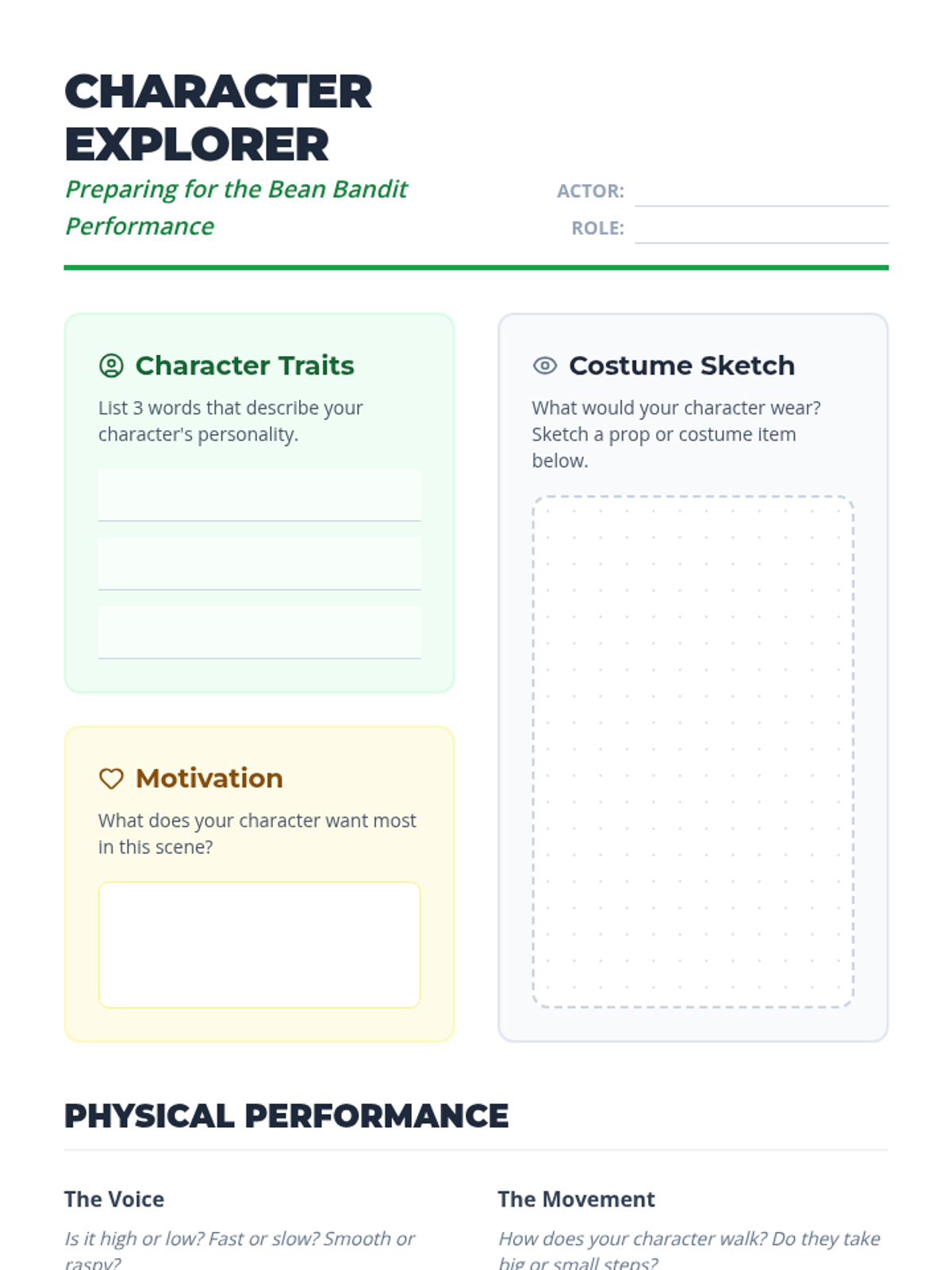
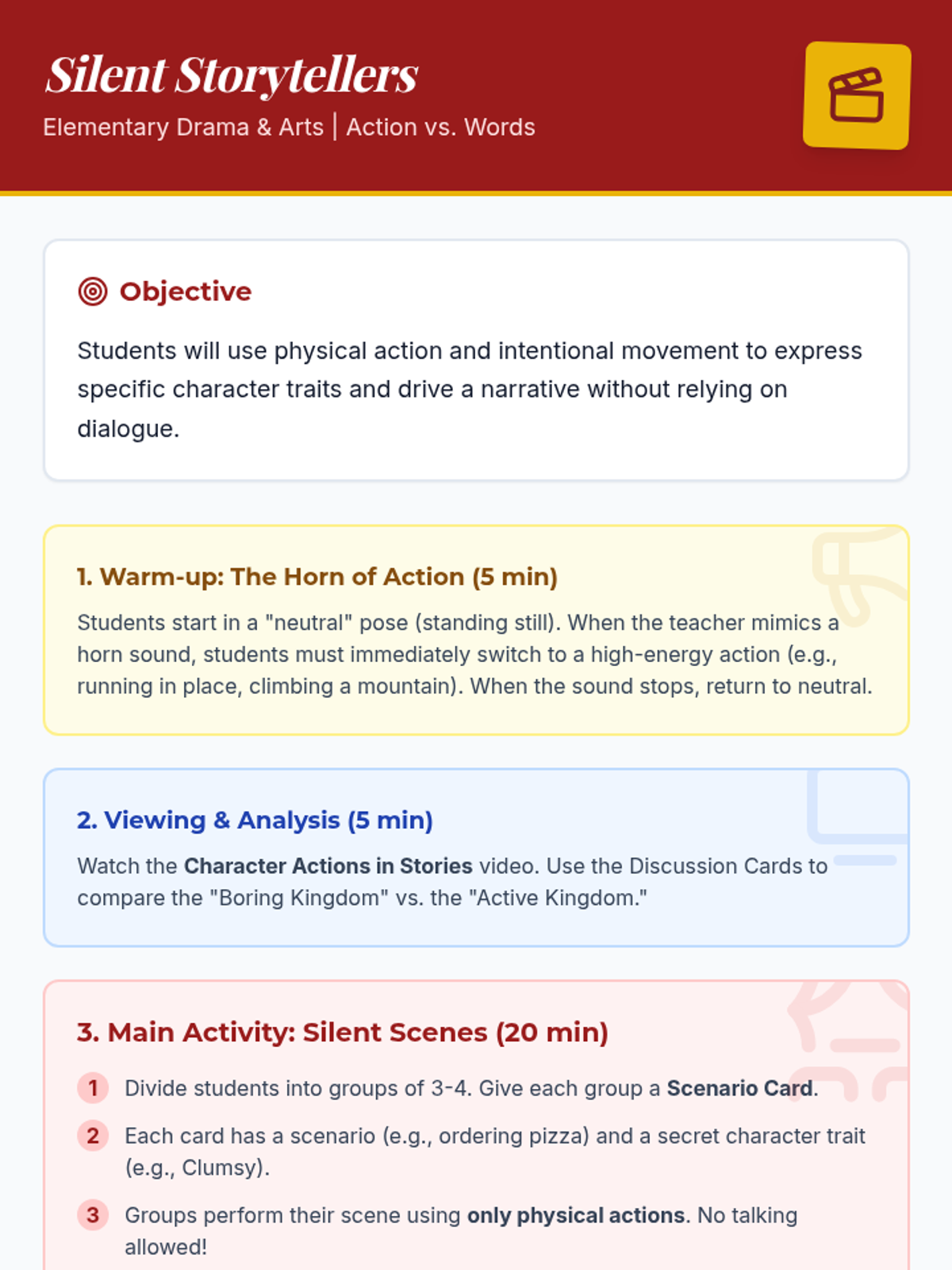
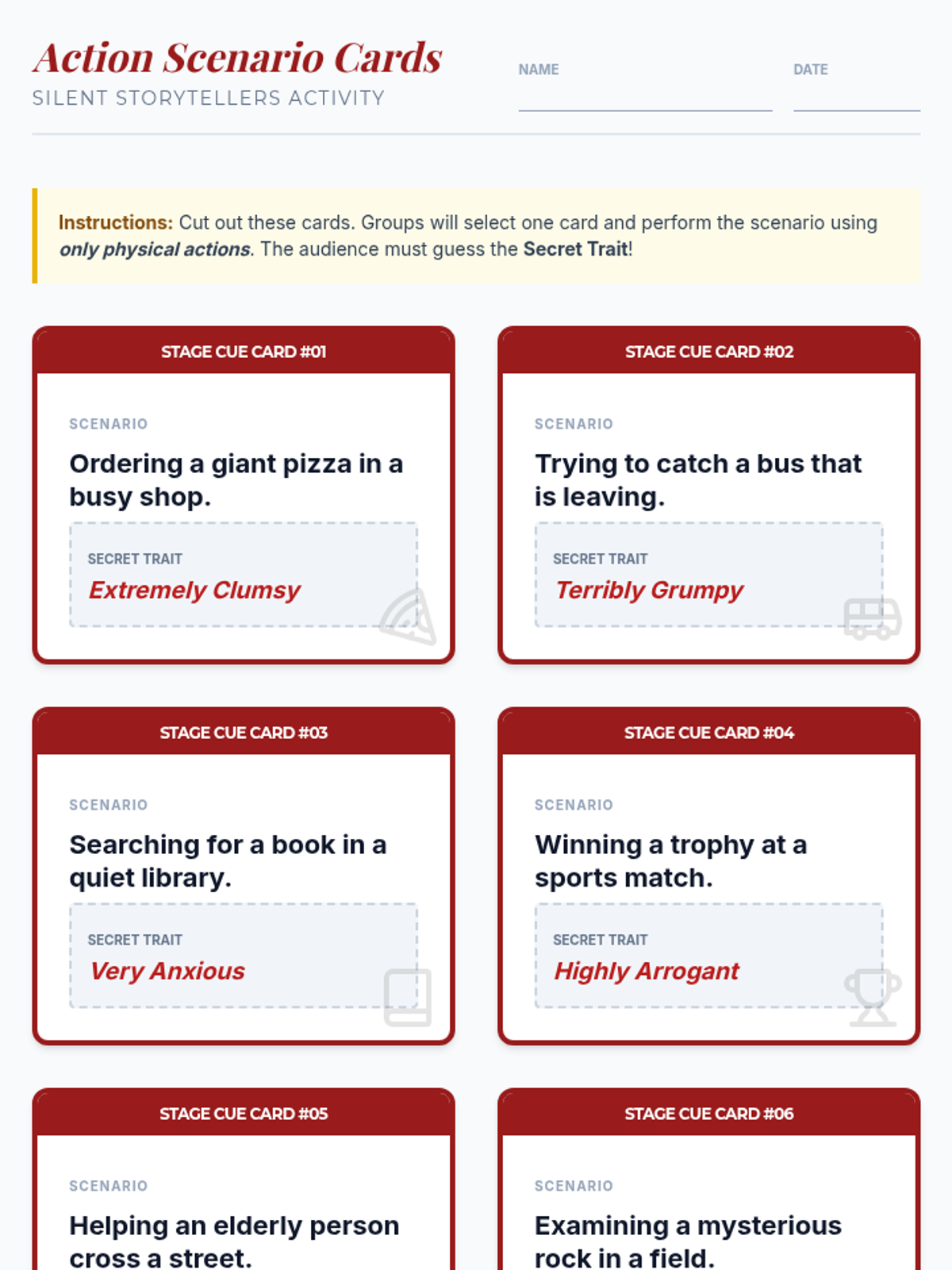
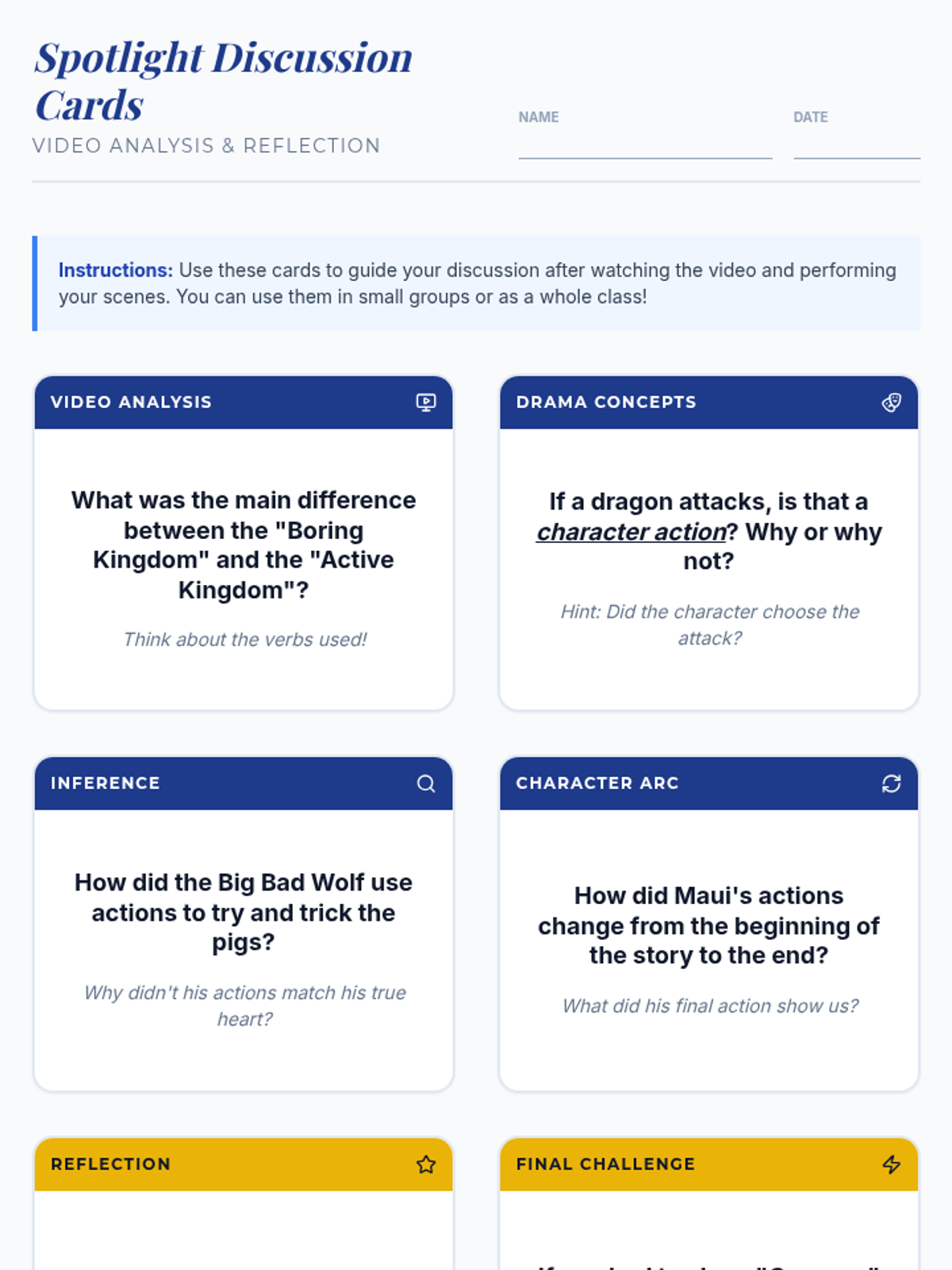
Students explore how physical action and decisions drive story and reveal character traits without using words, featuring a 'Silent Scenes' activity and a video analysis.
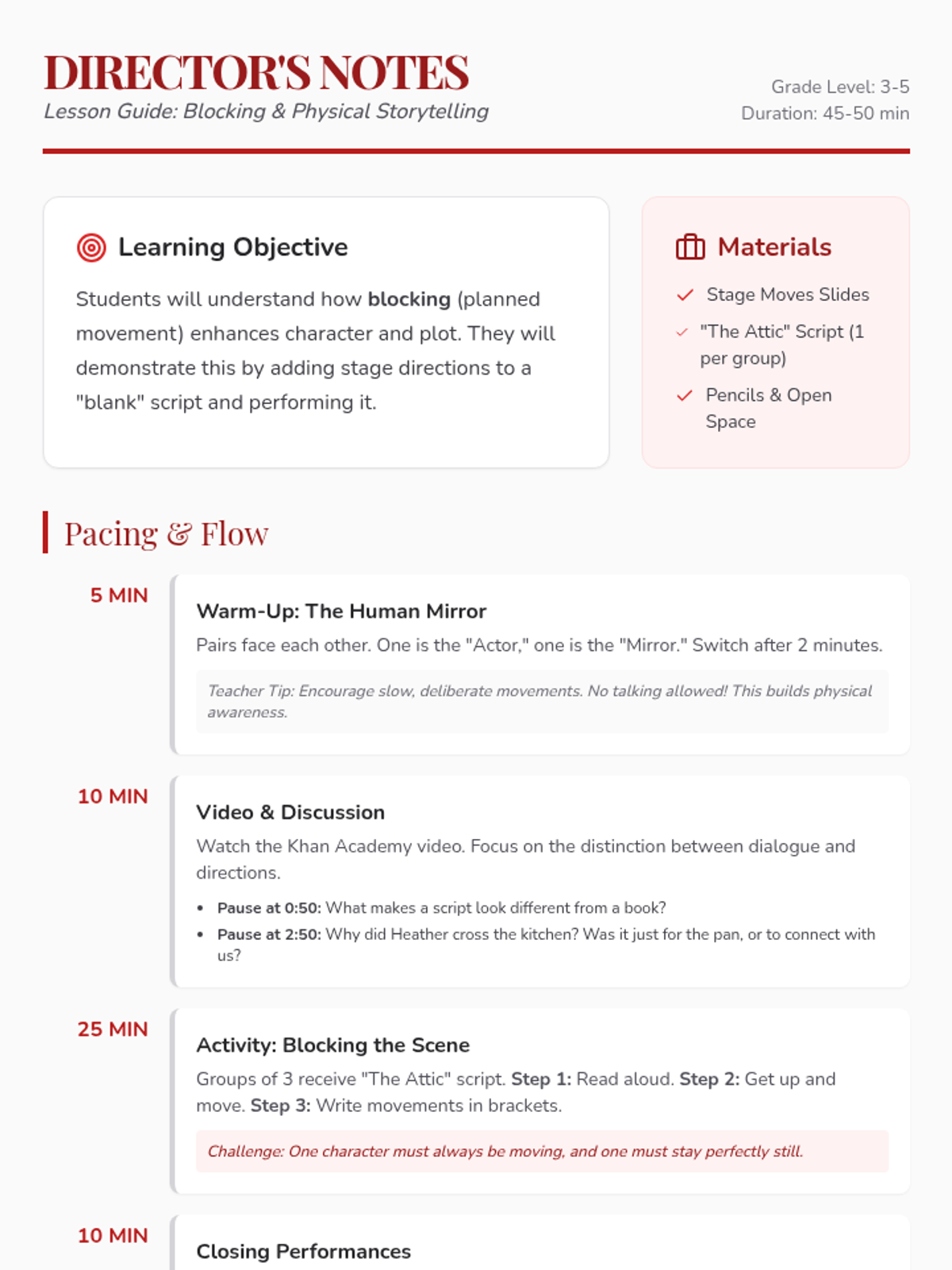
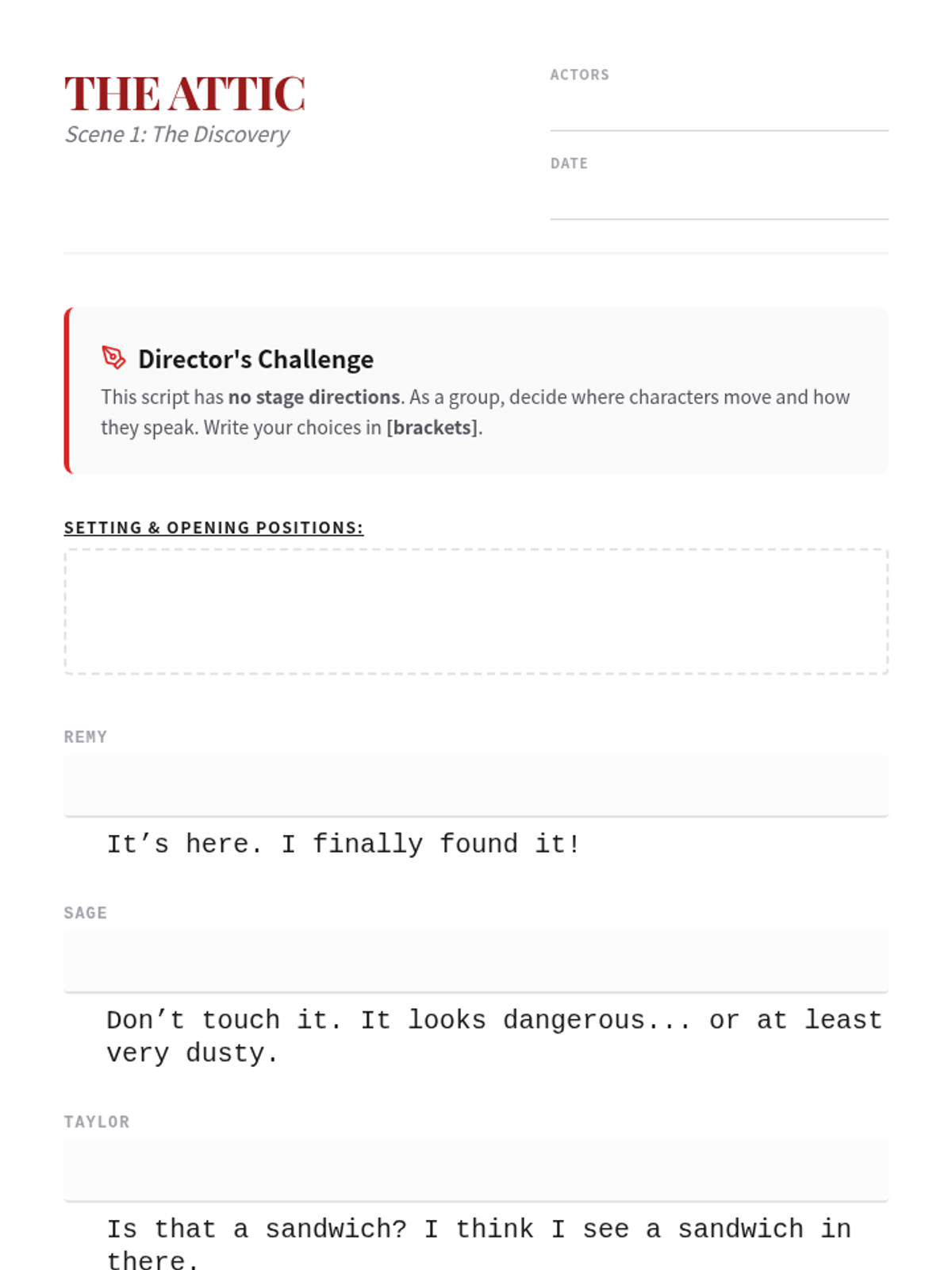
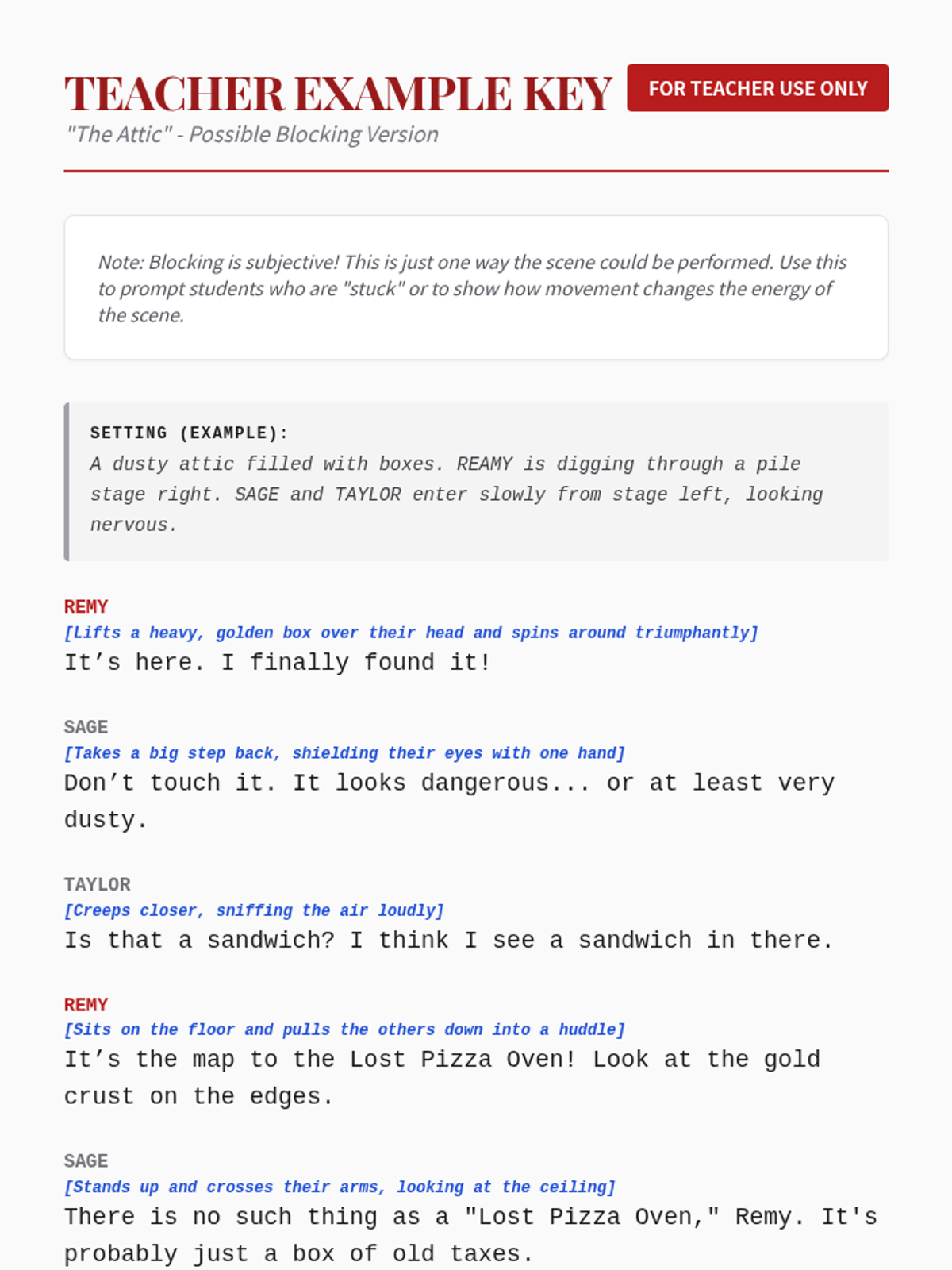
A drama lesson for upper elementary students focused on blocking and physical storytelling, featuring a Khan Academy video and a collaborative script-writing activity.
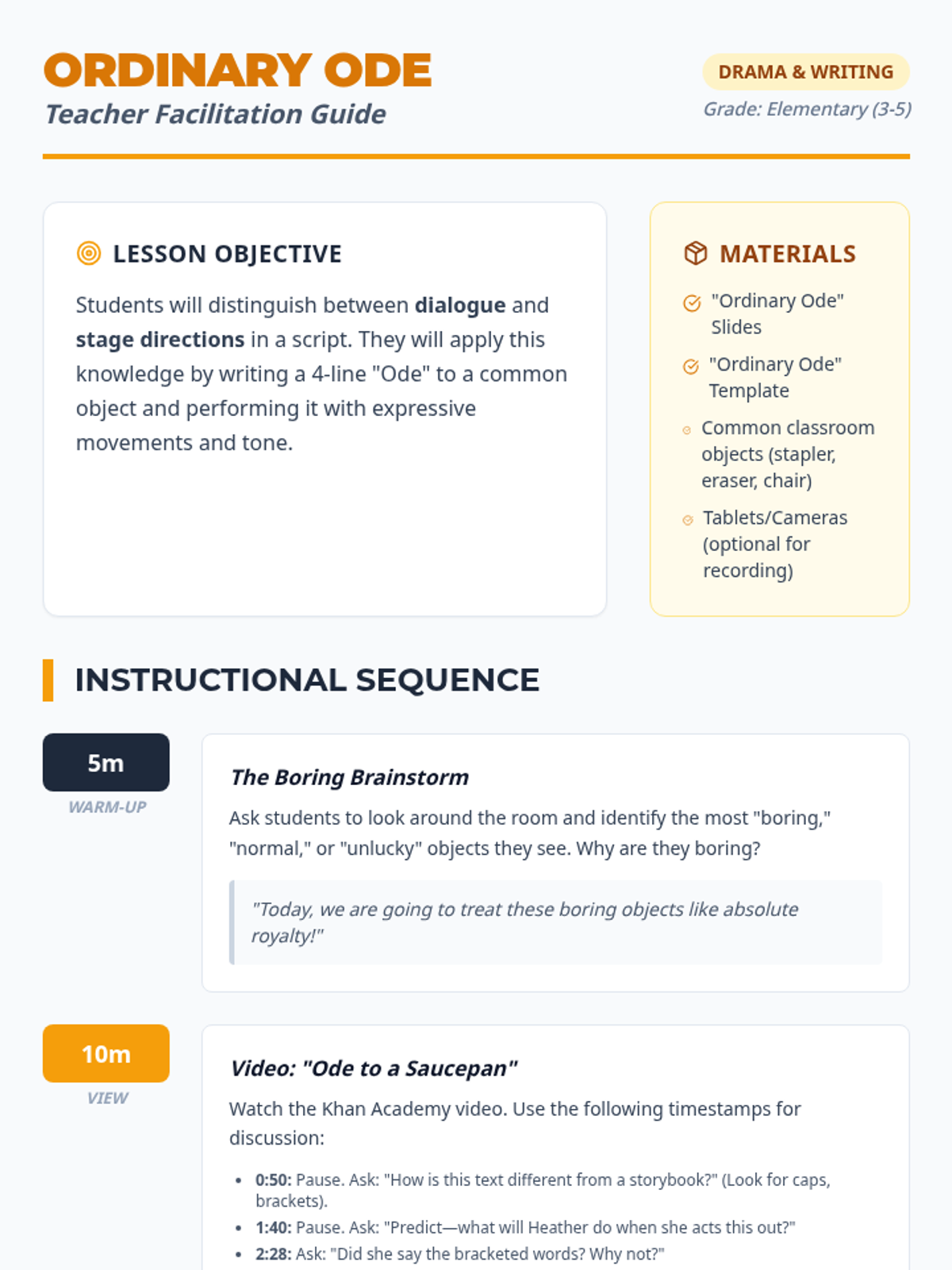
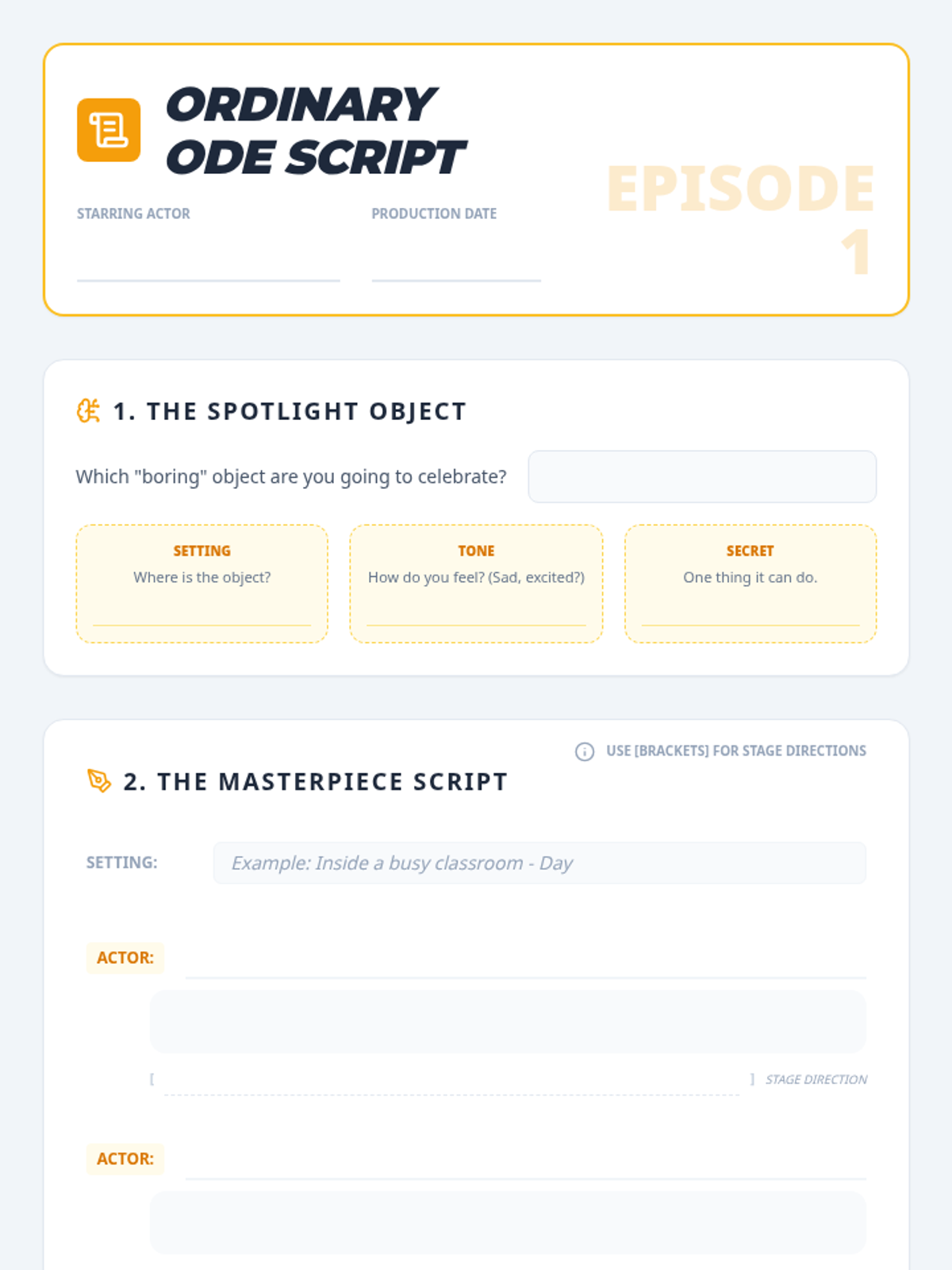
Students will learn to distinguish between dialogue and stage directions by watching a humorous 'Ode to a Saucepan' and then writing and performing their own multimedia 'Ode' to a common classroom object.
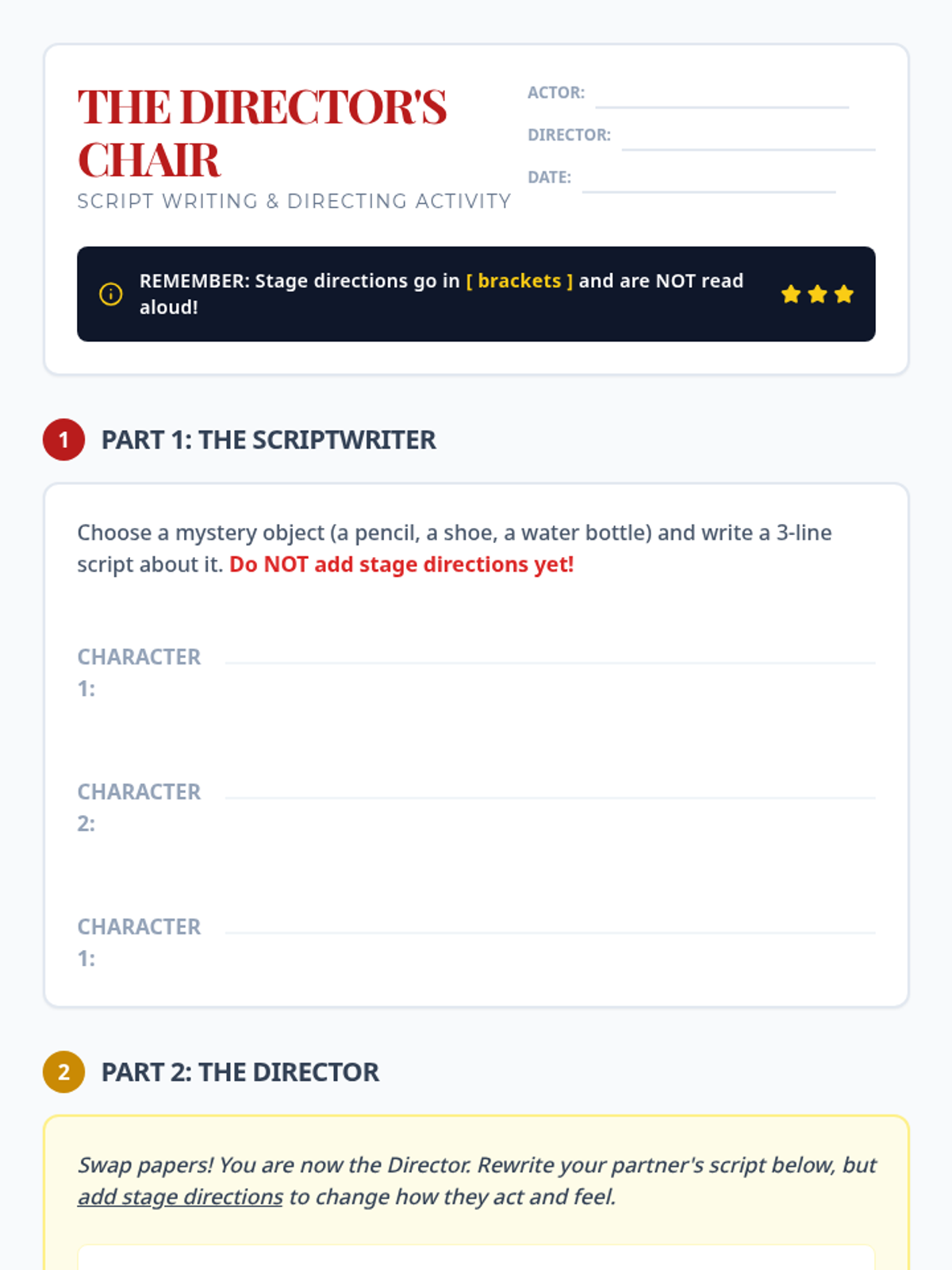
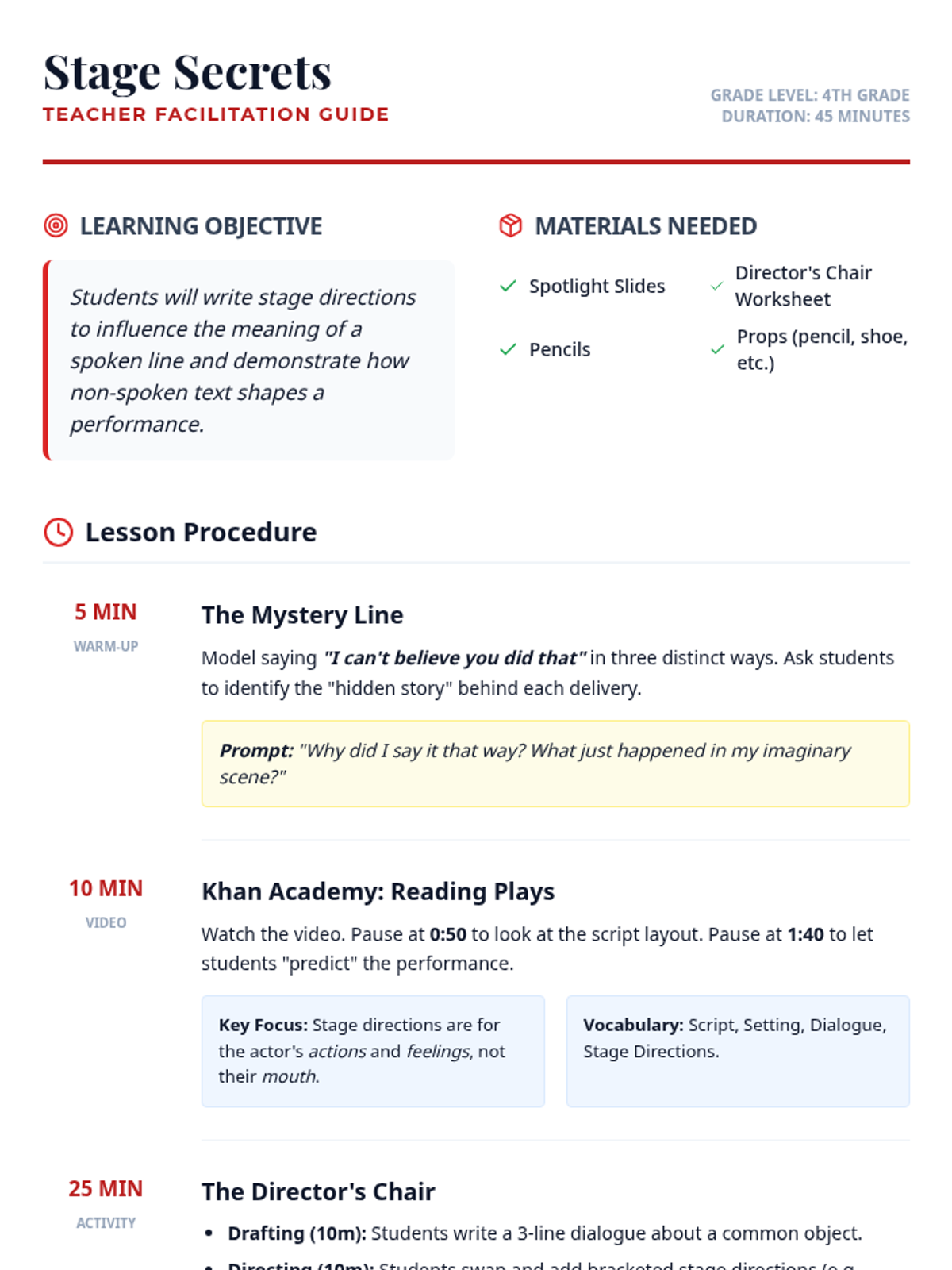
Students explore how stage directions change the meaning of dialogue through the 'The Director's Chair' activity, using a Khan Academy video to understand the relationship between script text and performance.
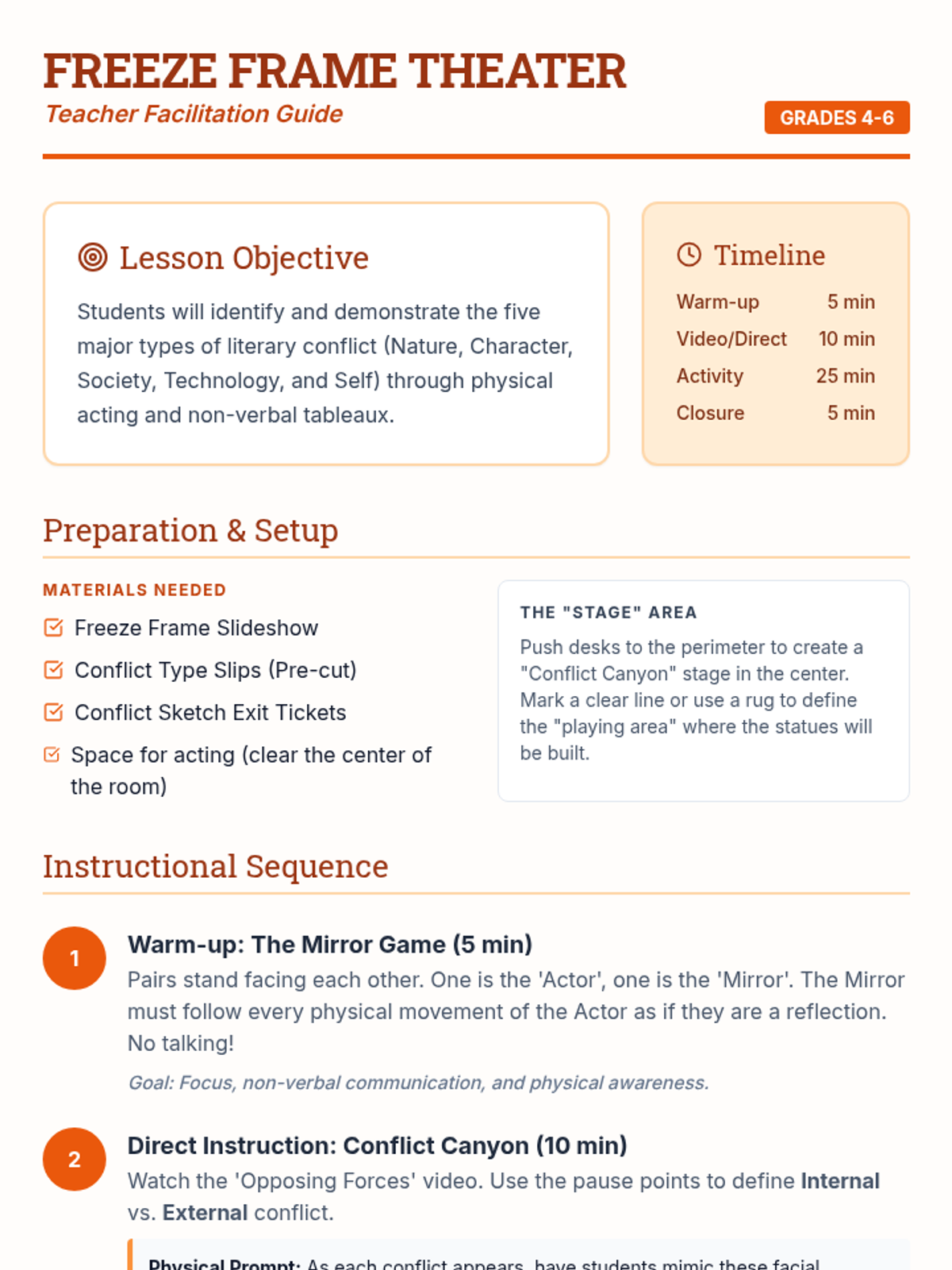
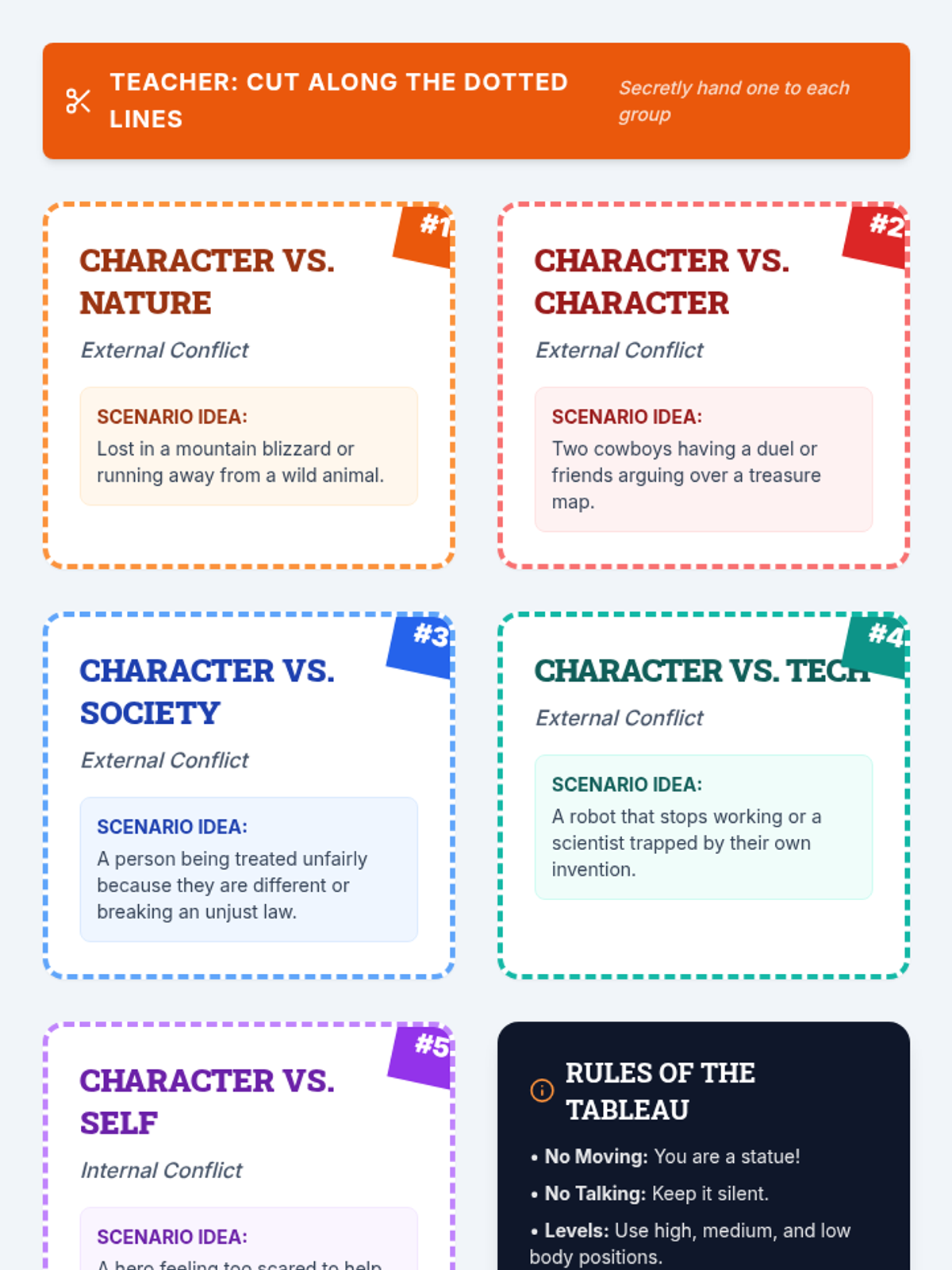
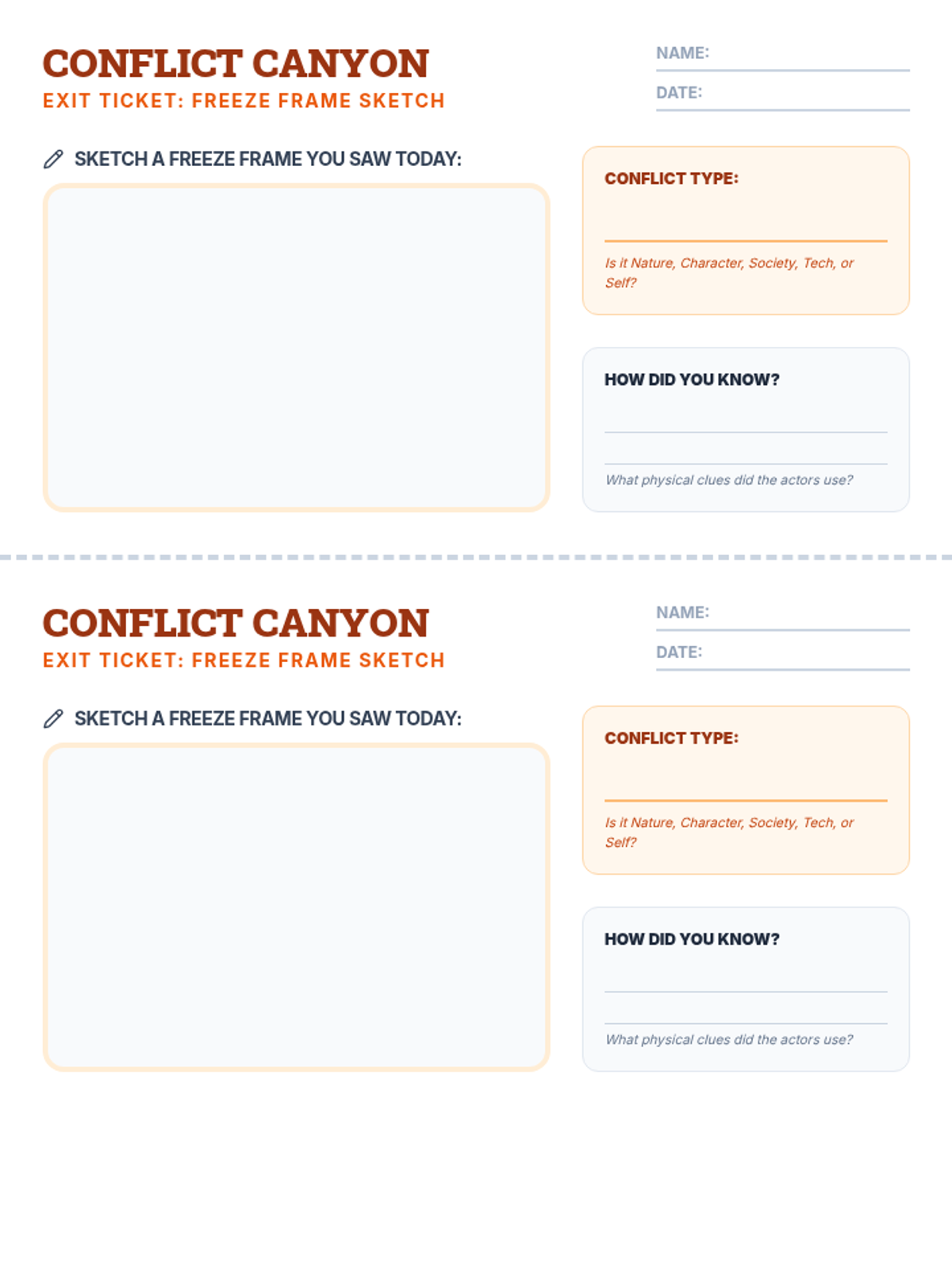
Students explore the five types of literary conflict through physical acting and 'Freeze Frame' tableaux, using a Western-themed video guide to identify Character vs. Nature, Character, Society, Technology, and Self.
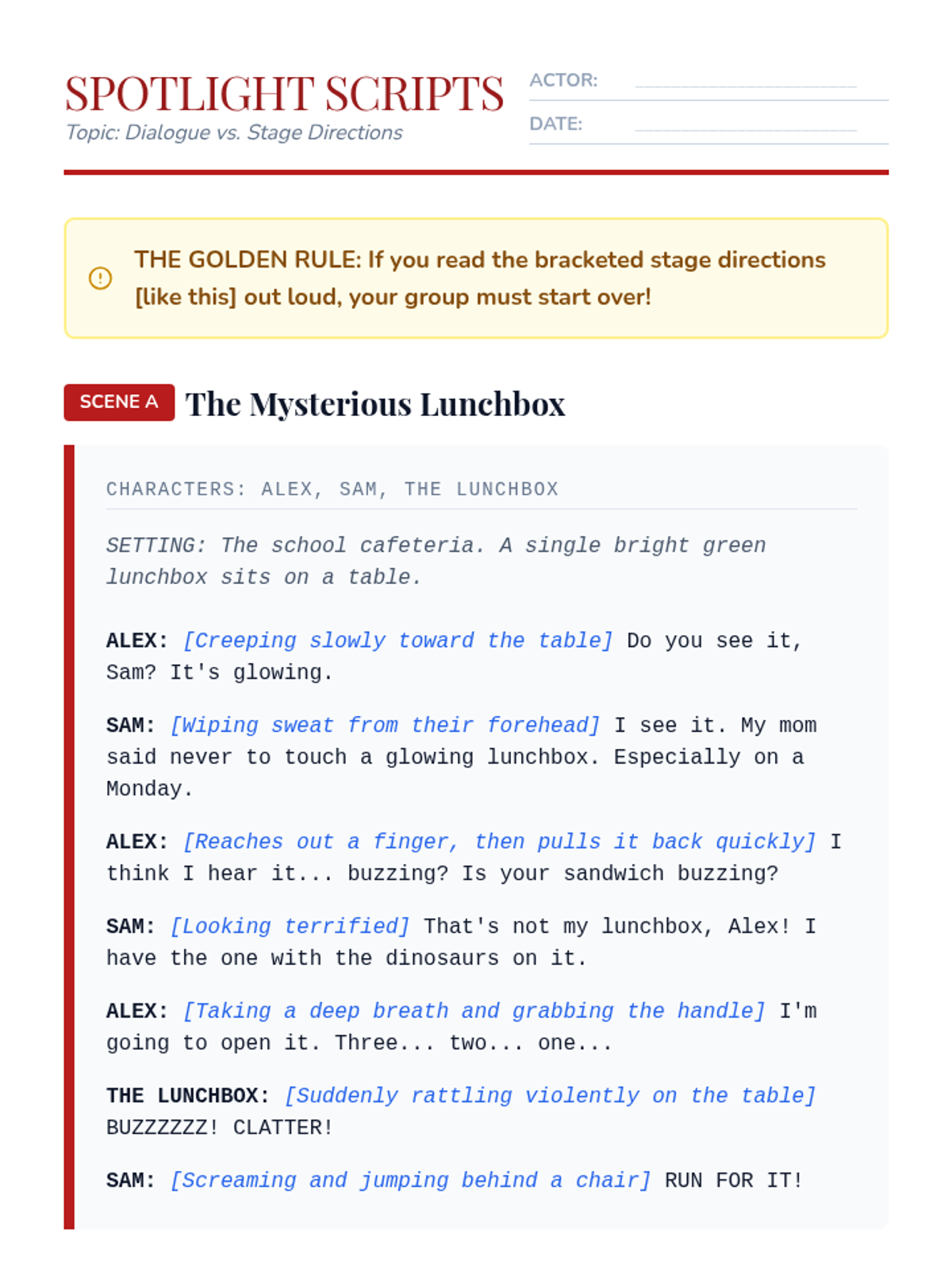
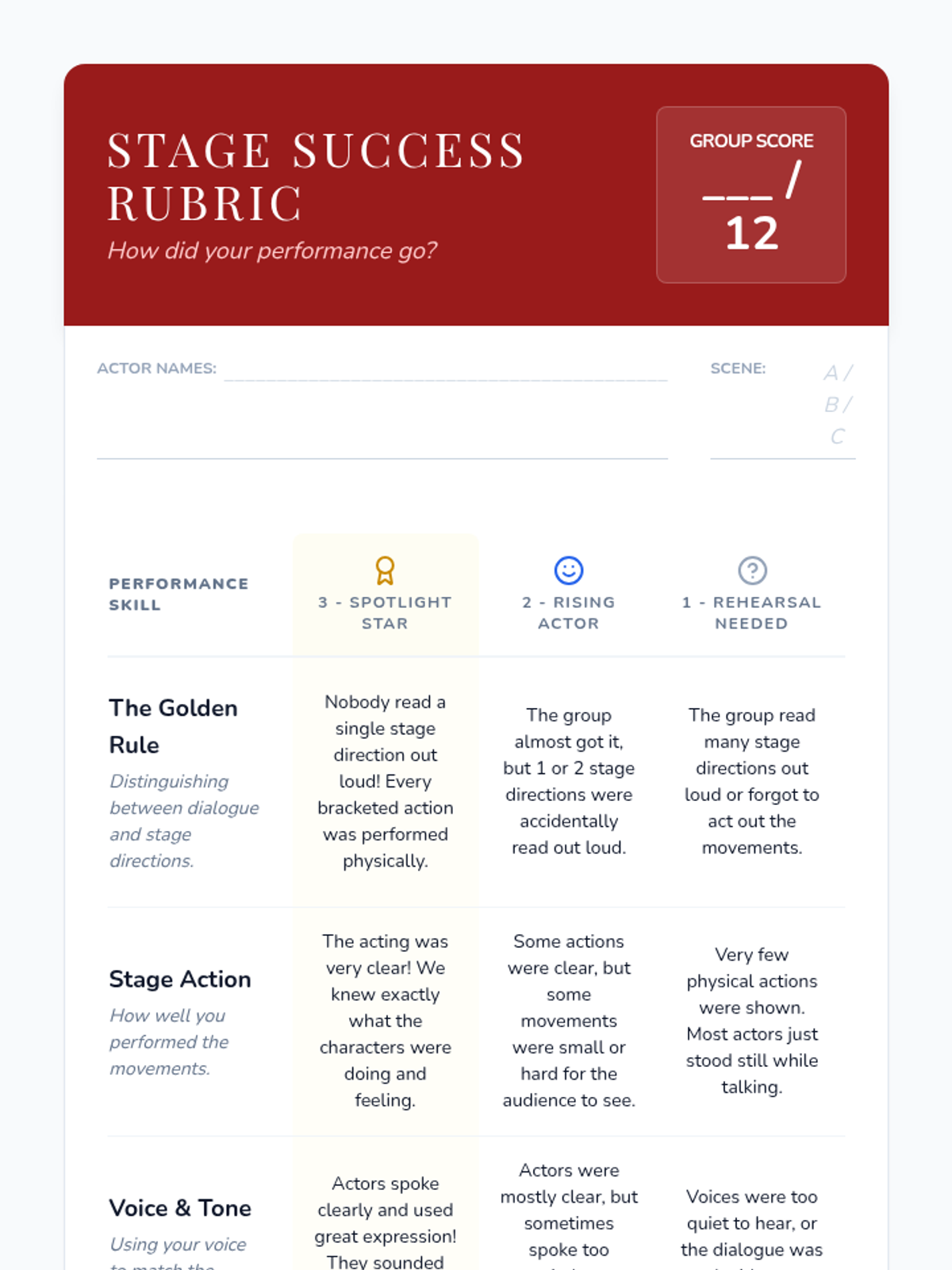
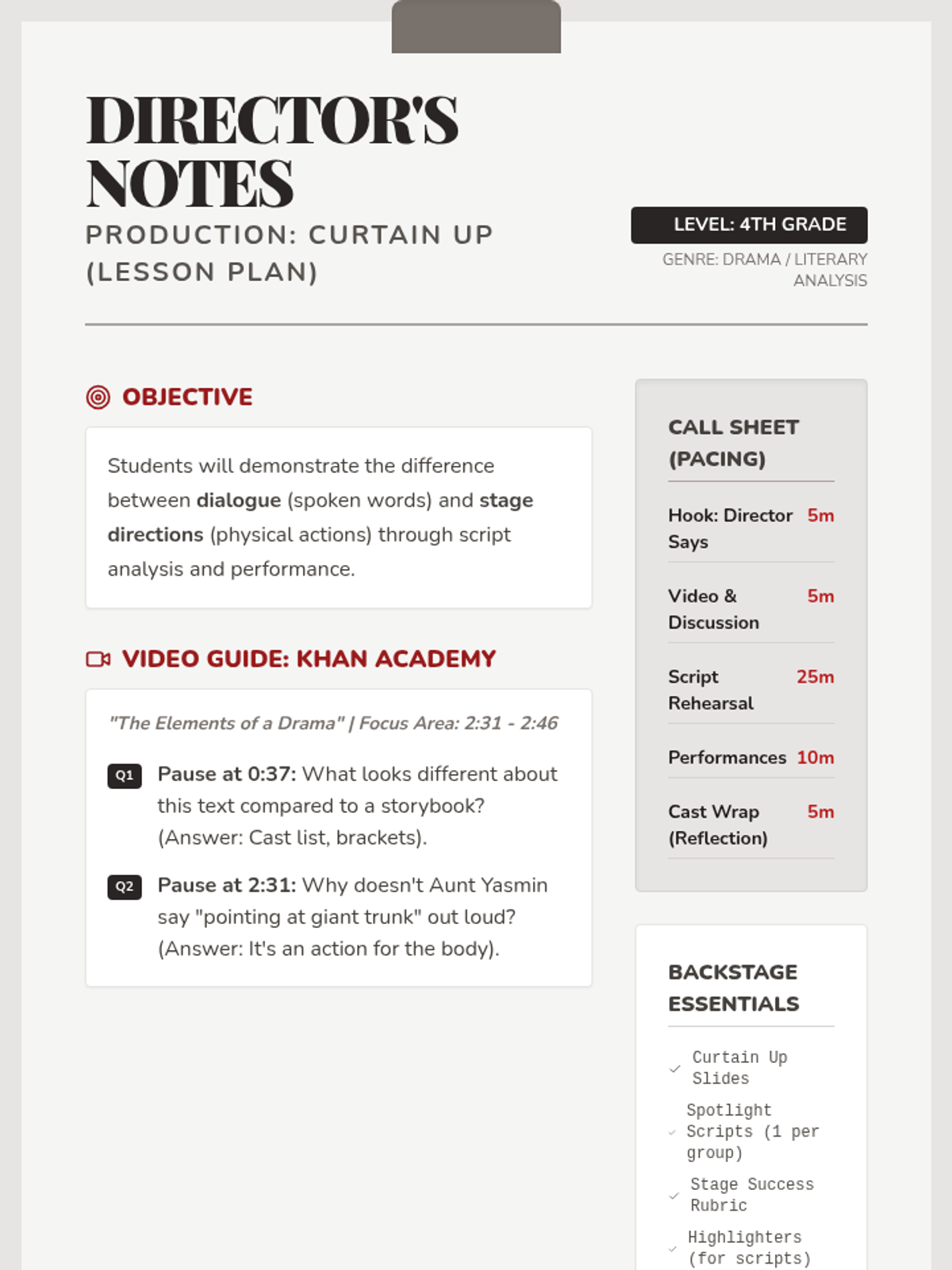
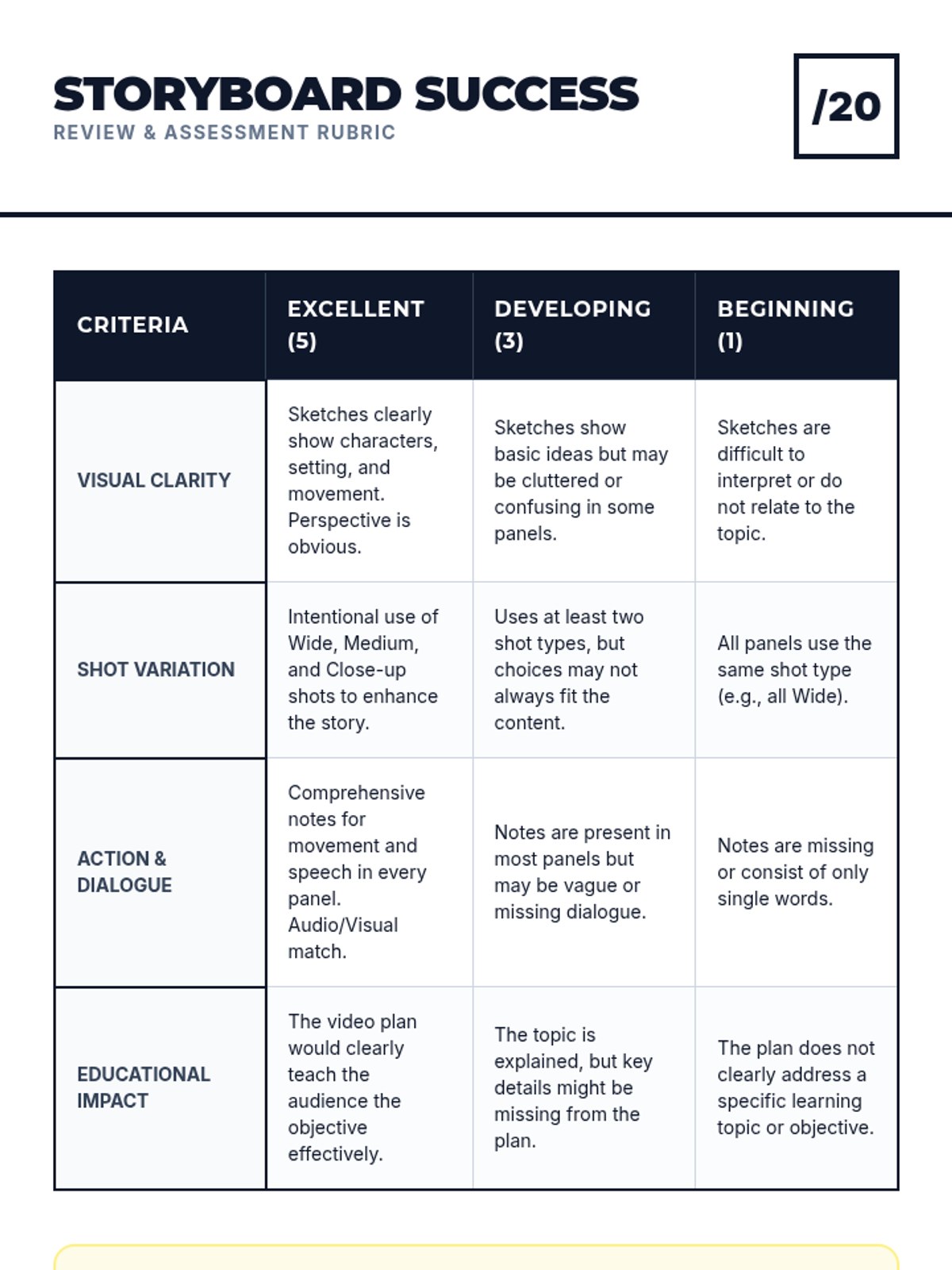
A high-energy 4th-grade lesson where students learn to distinguish between dialogue and stage directions through physical performance and script analysis. Includes a theatrical-themed slide deck, performance scripts, and a kid-friendly assessment rubric.
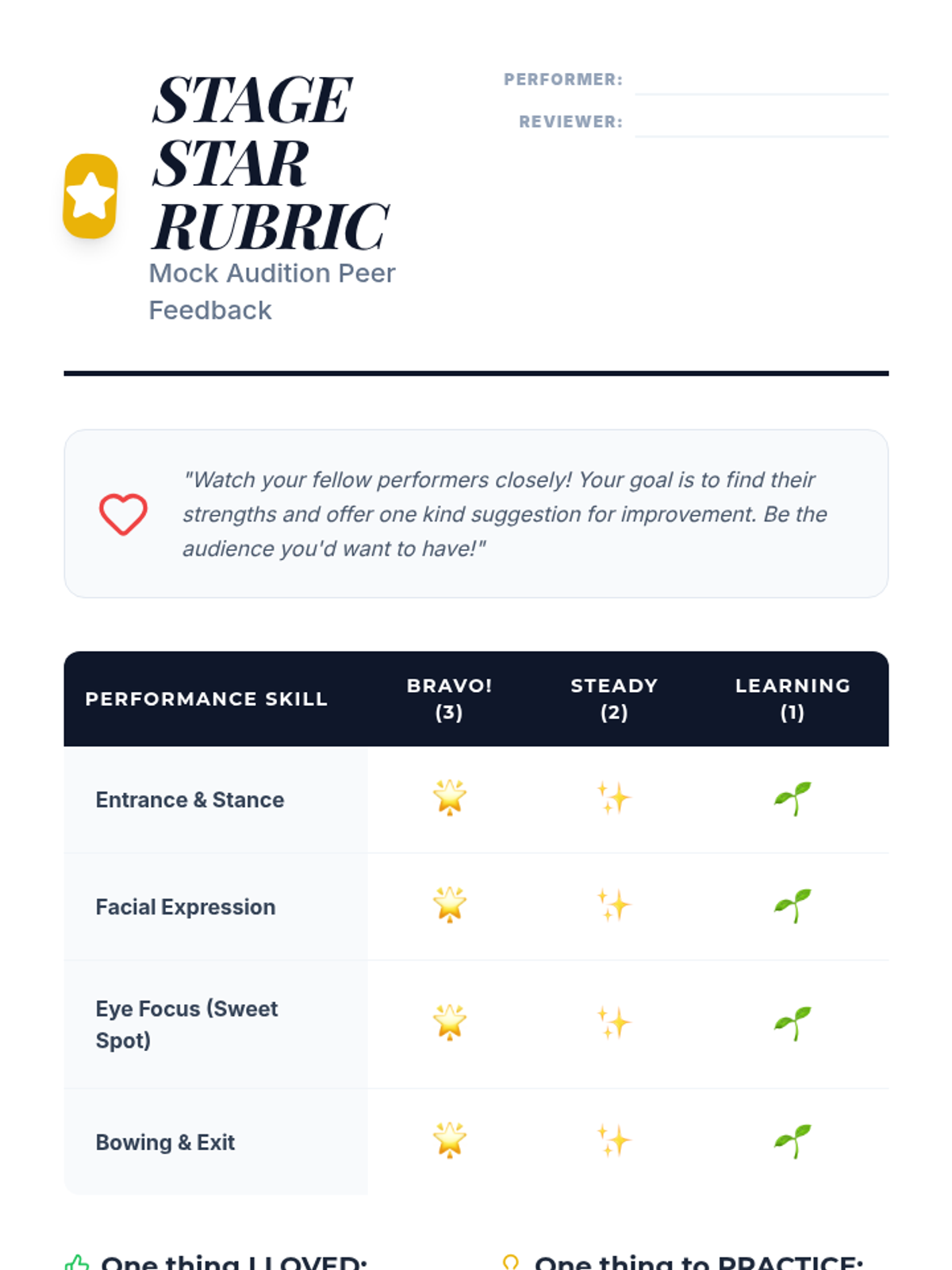
Students synthesize all skills in a simulated audition. They introduce themselves, perform, and exit professionally while receiving peer feedback.
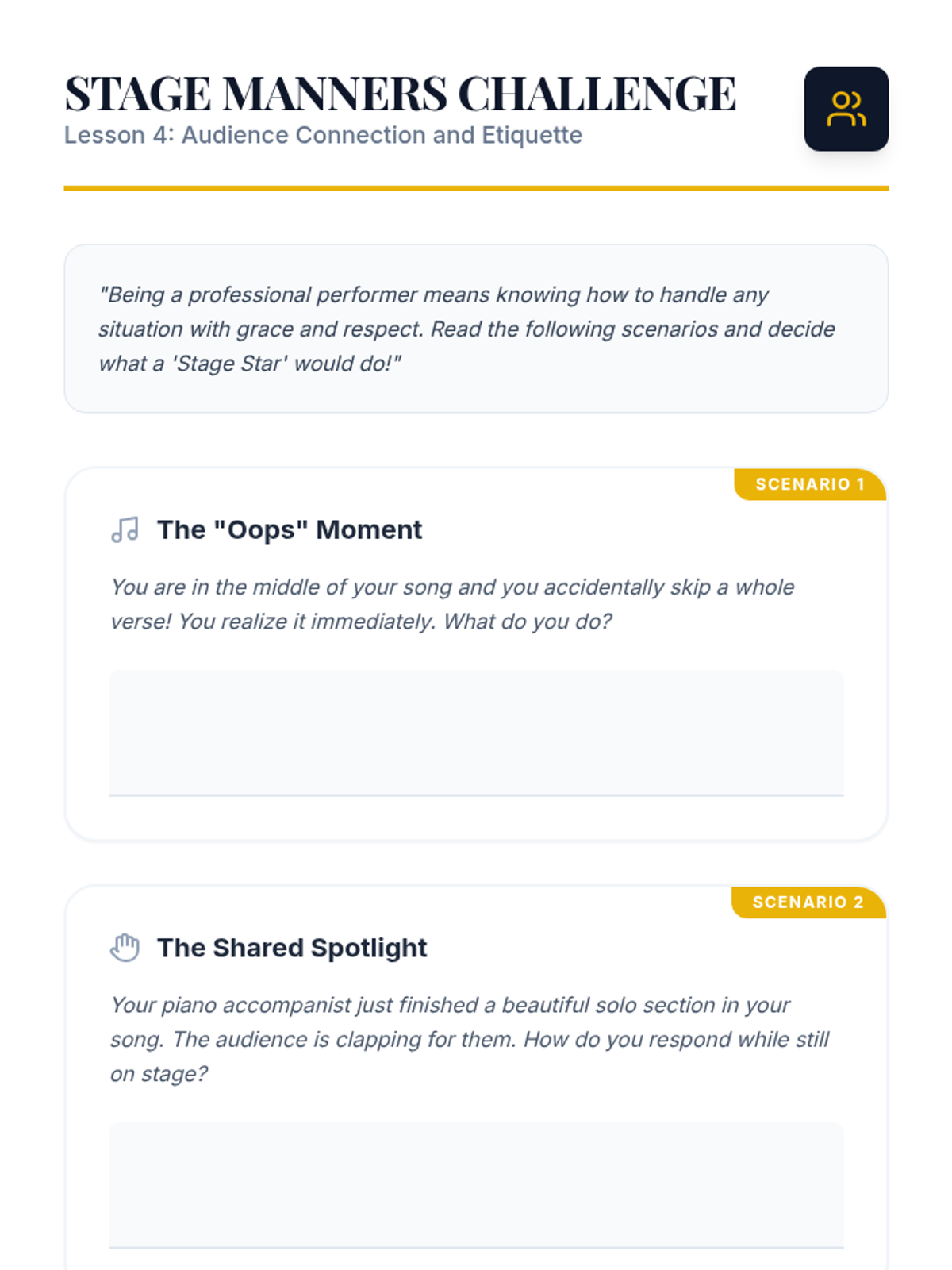
Students learn the reciprocal energy between performer and audience, covering concert etiquette, bowing, and professional interaction.
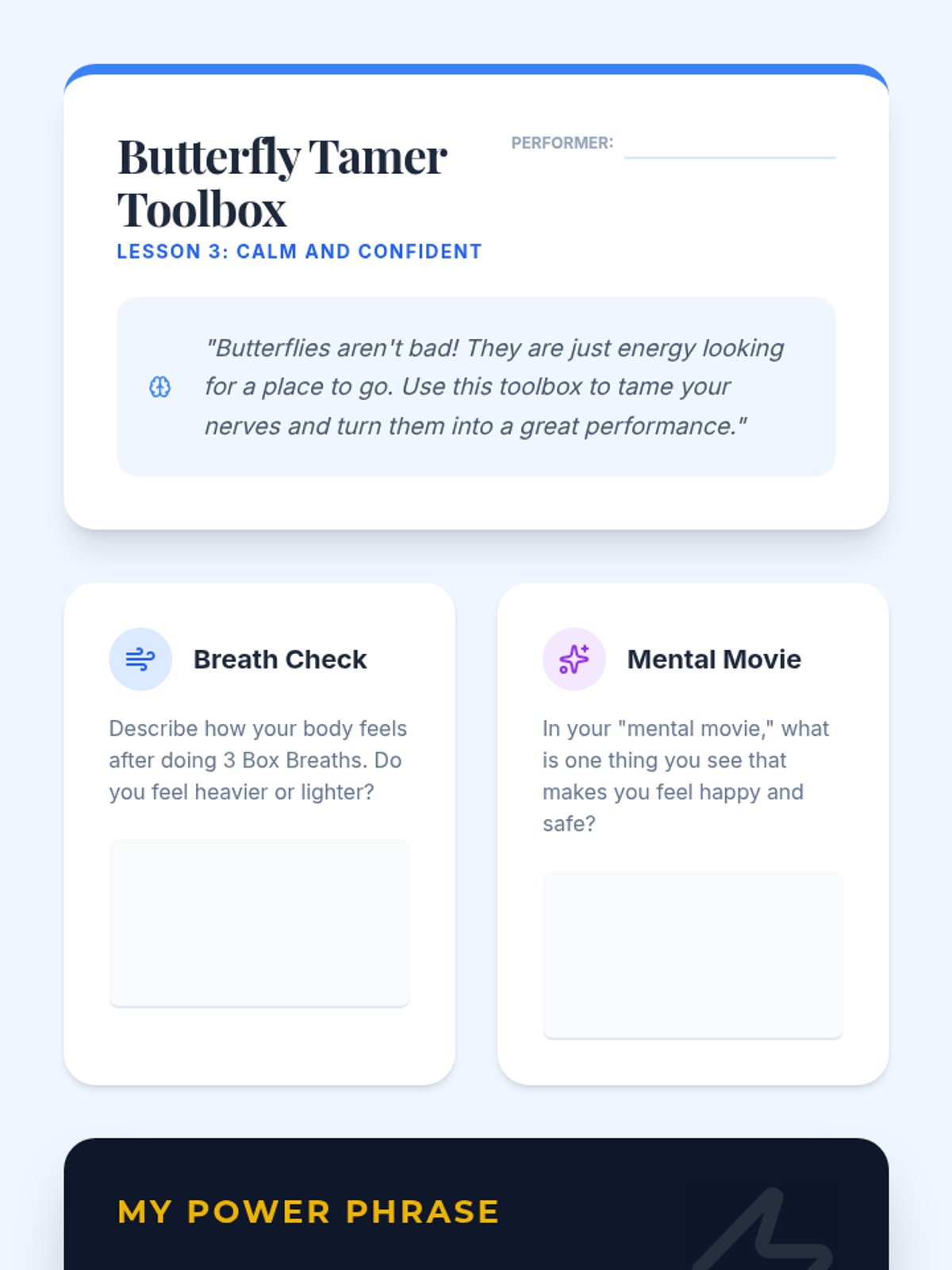
Addressing the psychology of performance, students learn coping strategies for 'butterflies' like deep breathing and positive visualization.
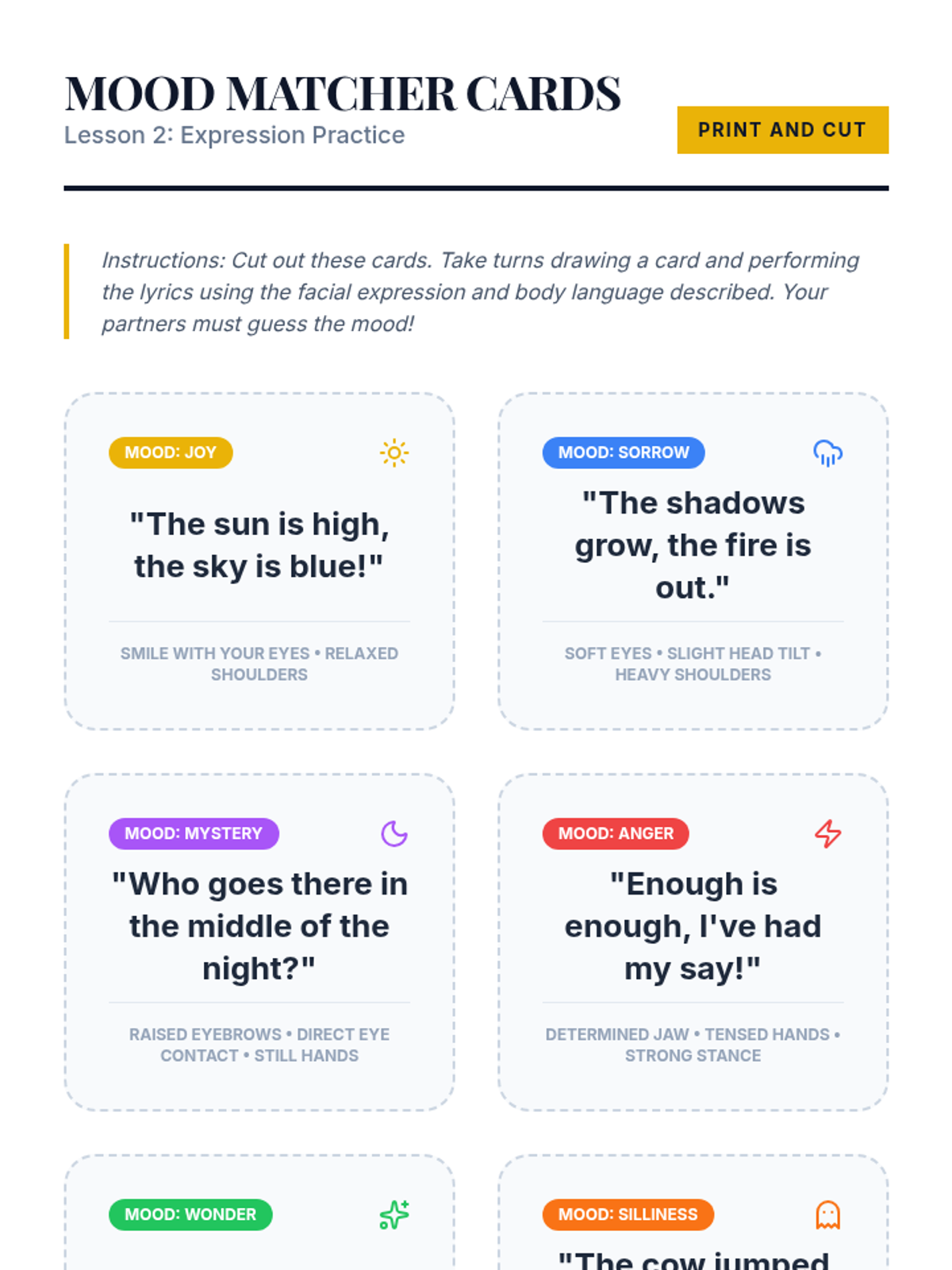
Students explore how facial expressions and gestures enhance the music. They practice aligning their expressions with the song's mood through mirror work and games.
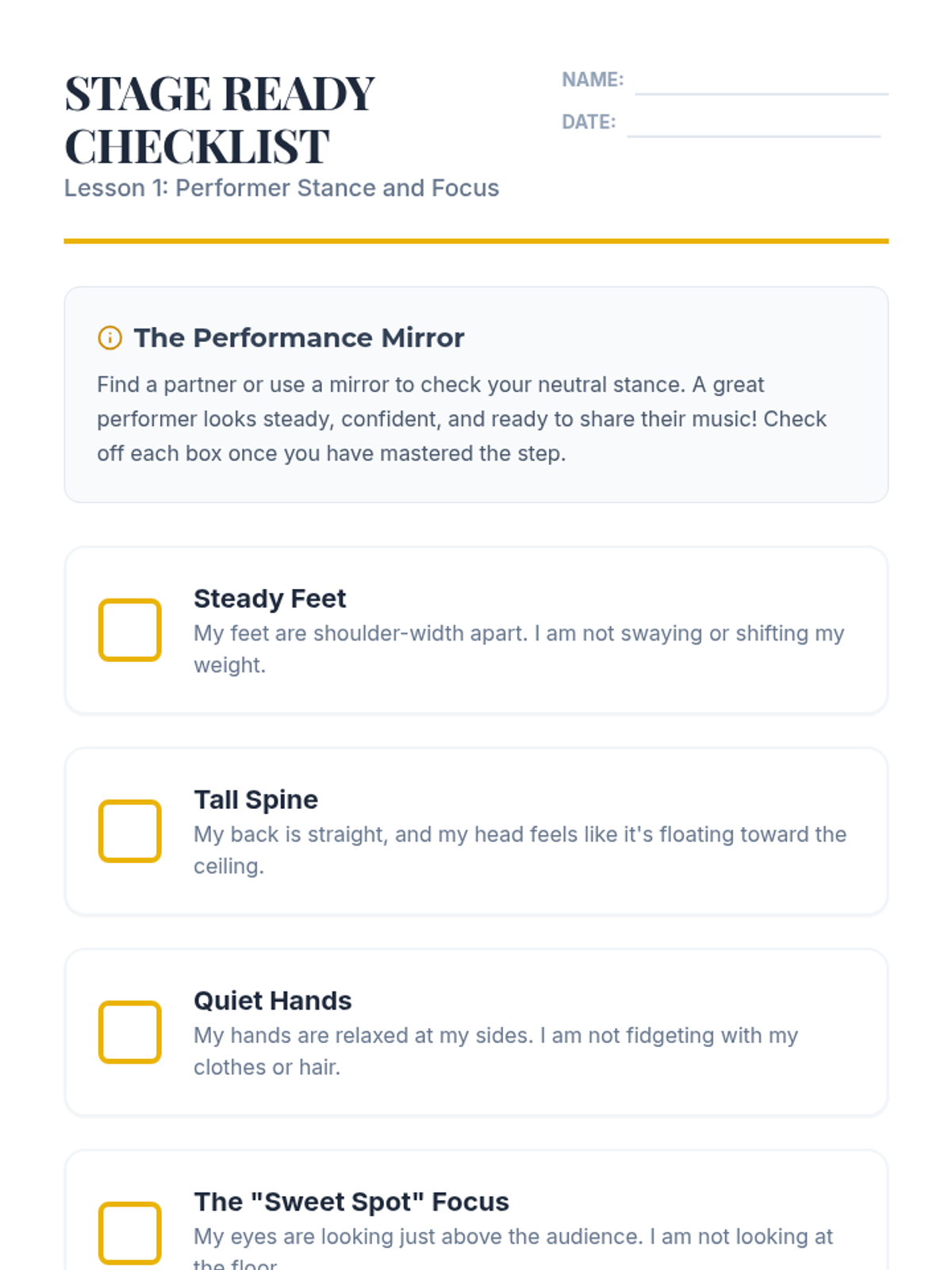
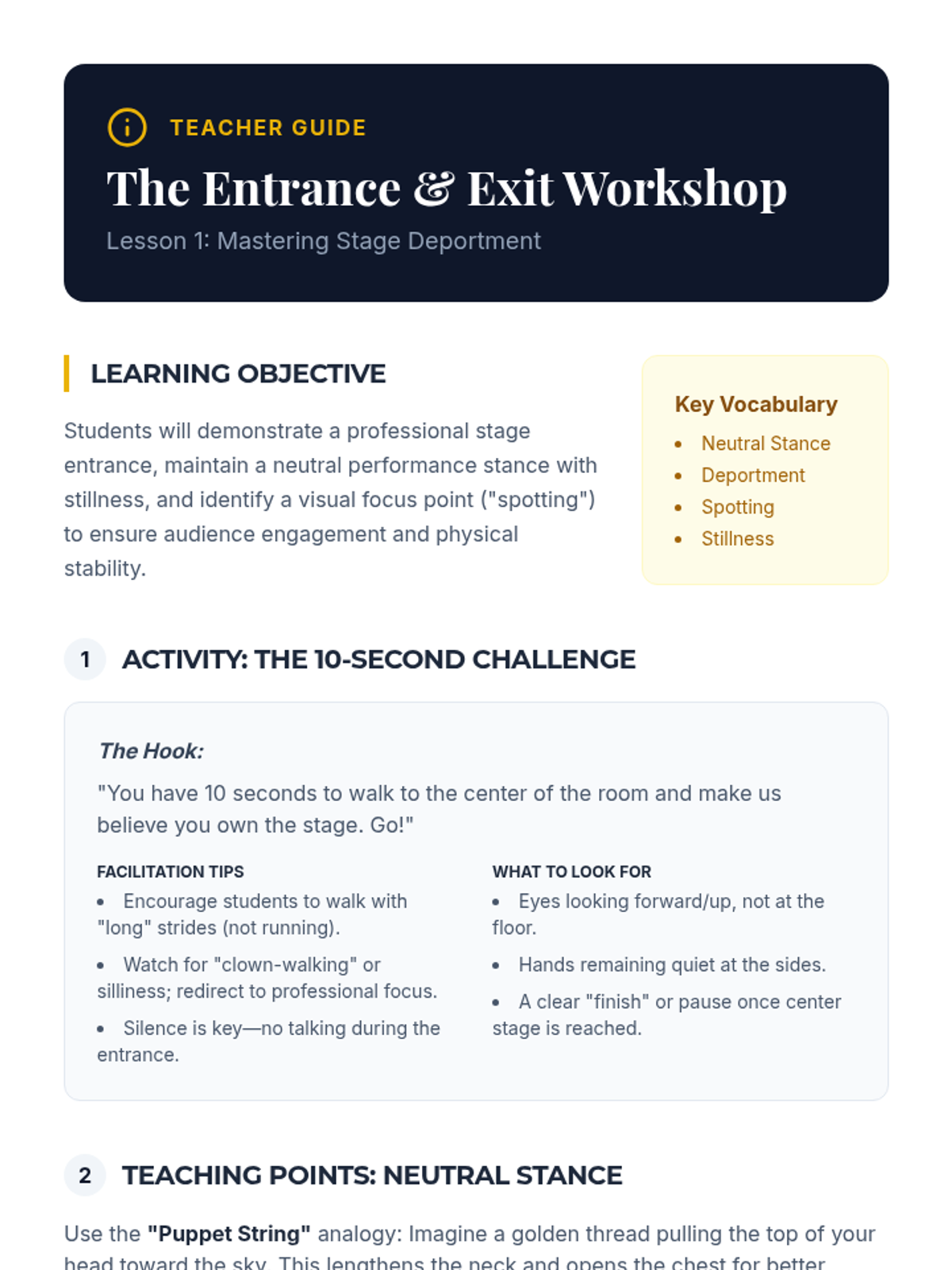
Students learn the 'neutral' performance stance and how to enter and exit the stage with purpose. The lesson emphasizes physical stillness and maintaining focus above the audience.
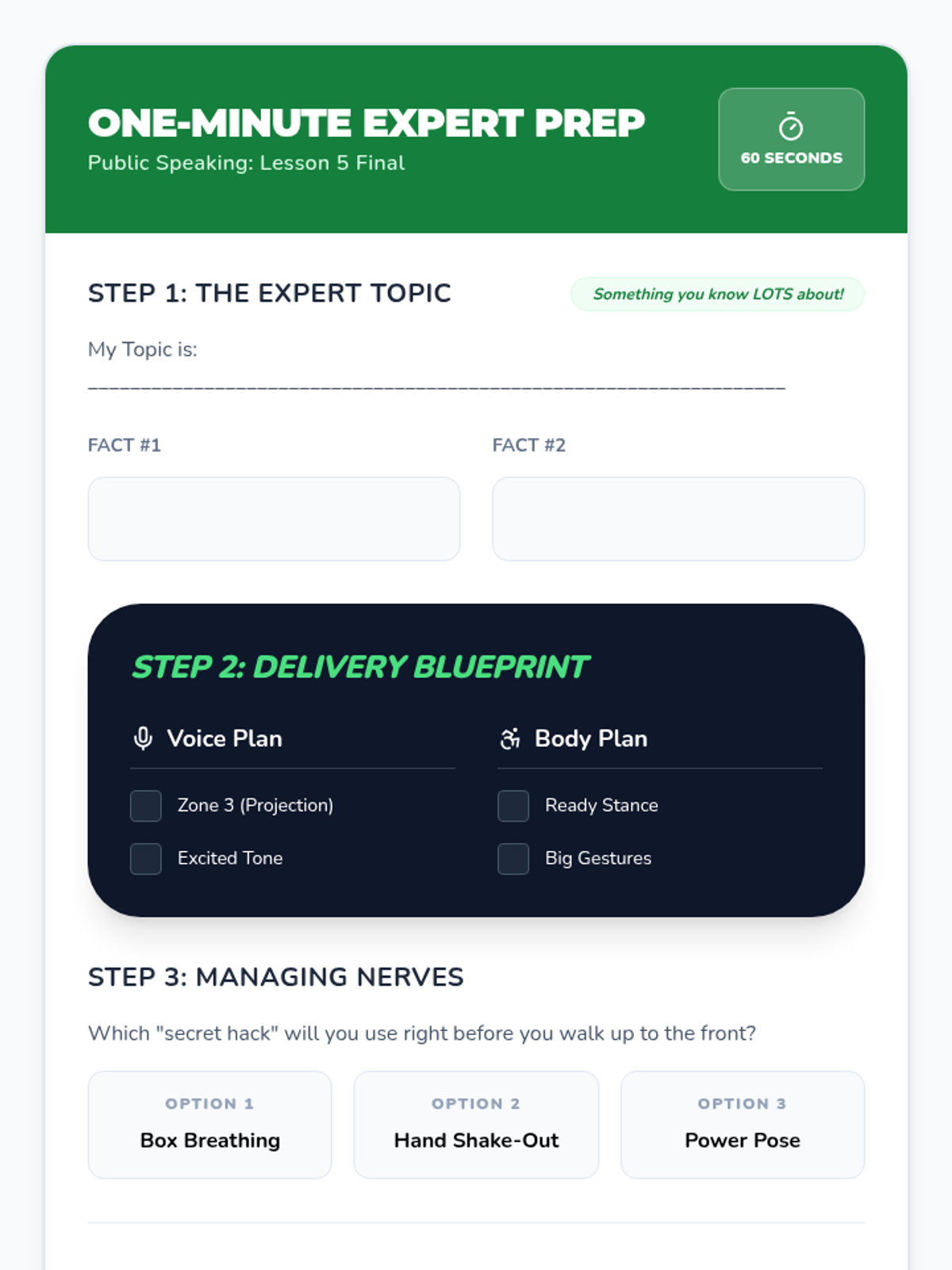
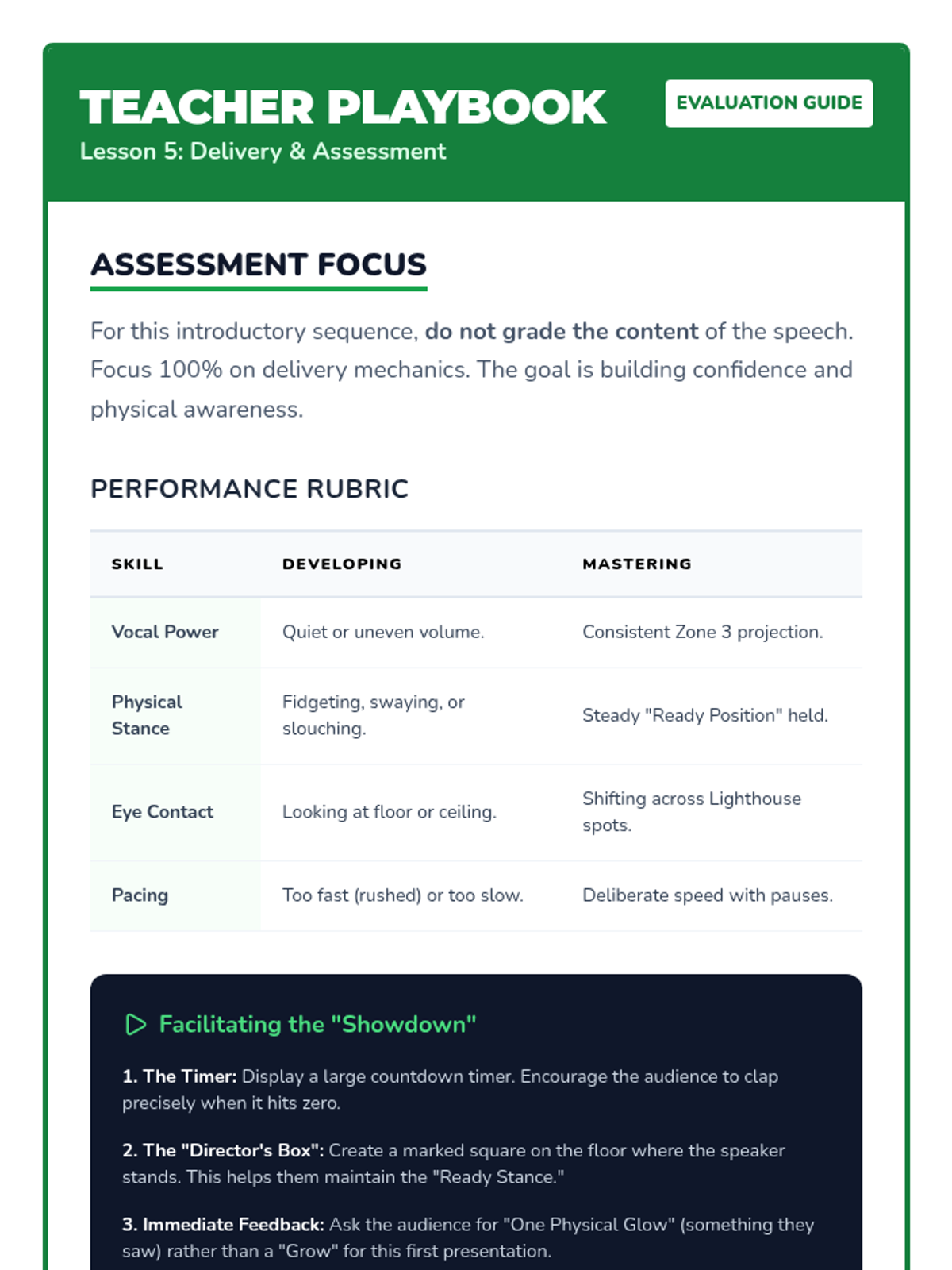
Students learn strategies for managing nerves and combine all learned skills into a final 60-second 'One-Minute Expert' presentation.
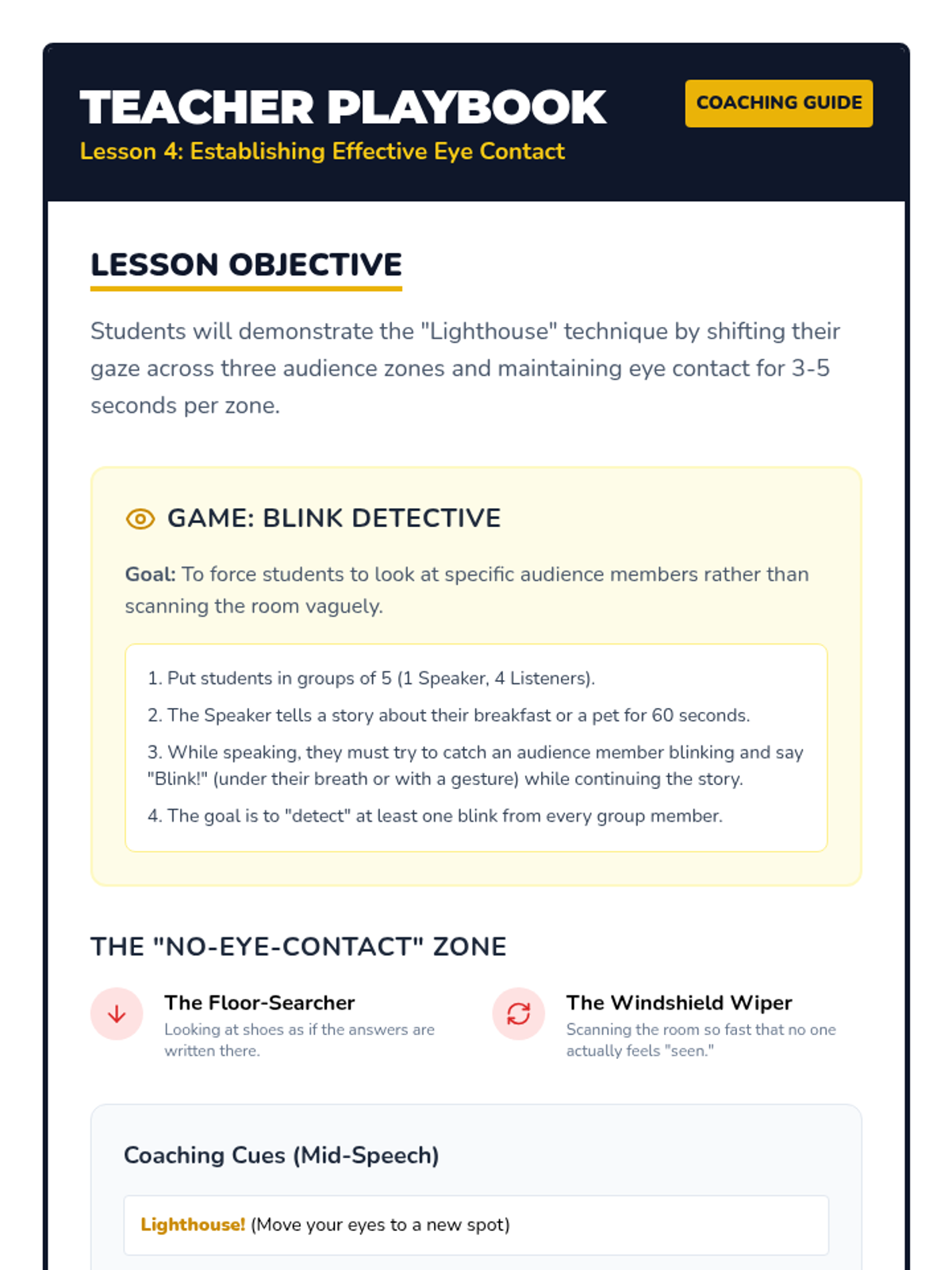
Students learn the 'lighthouse' technique for scanning the room and practice making consistent eye contact with their audience.
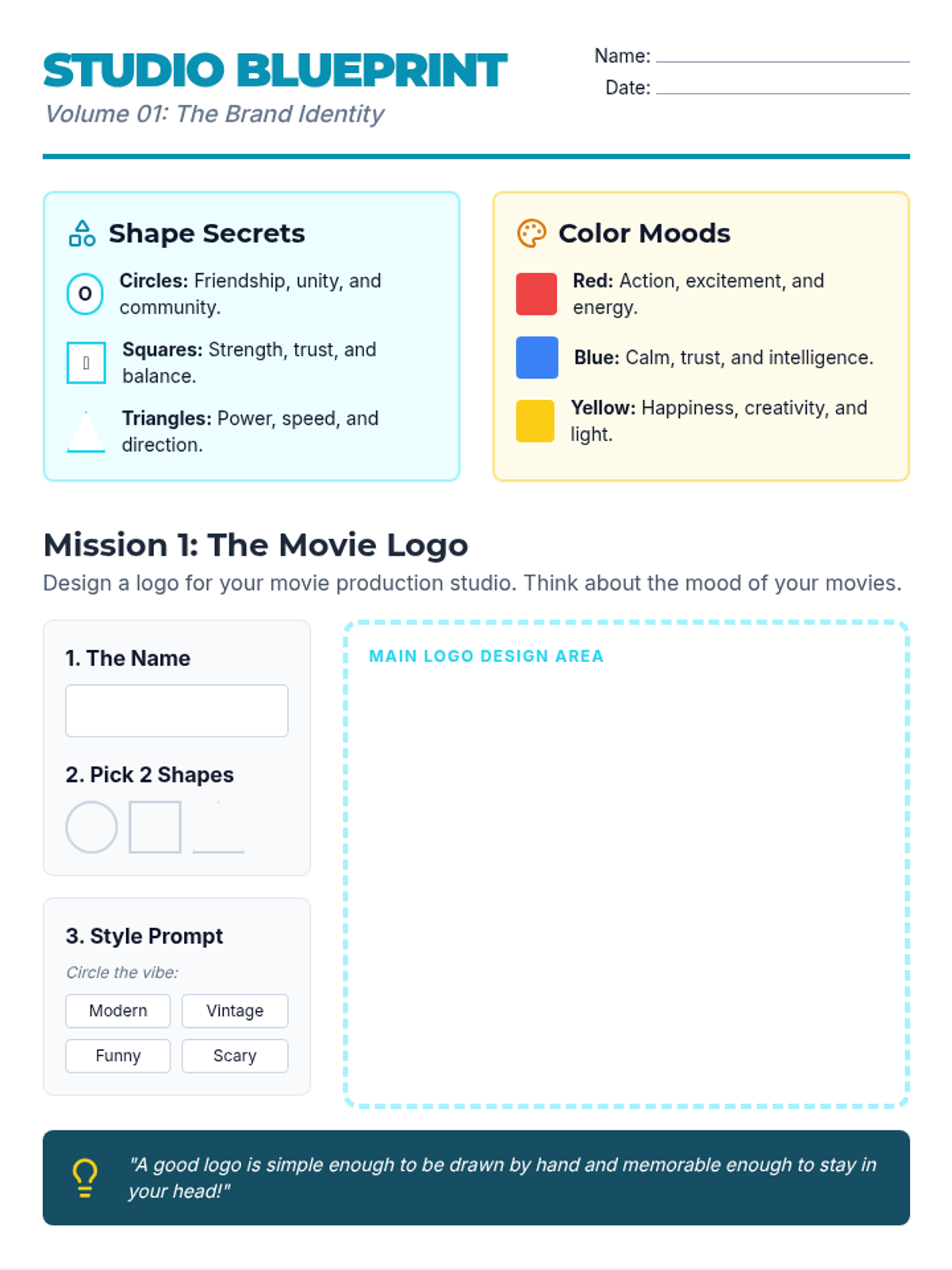
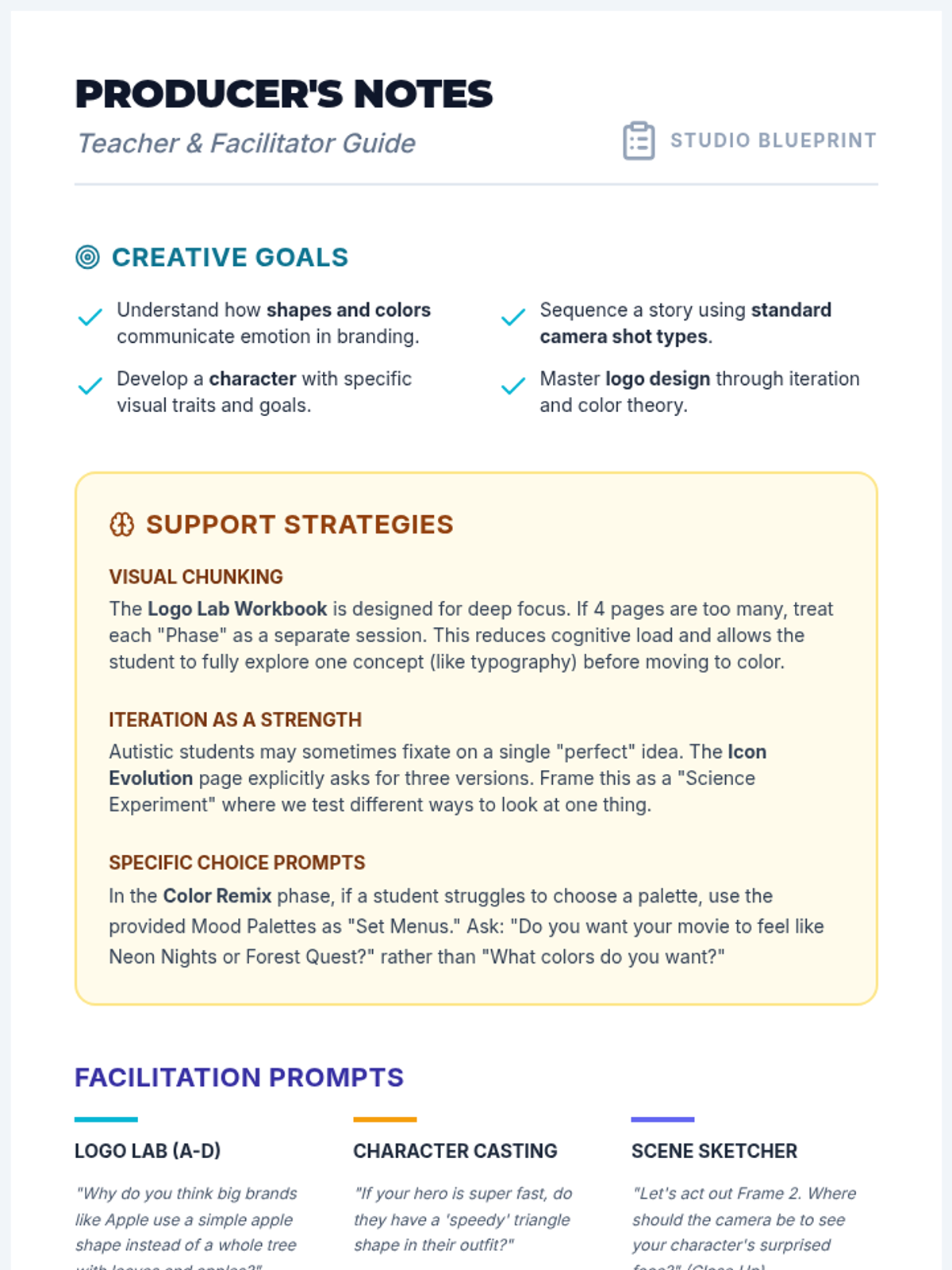
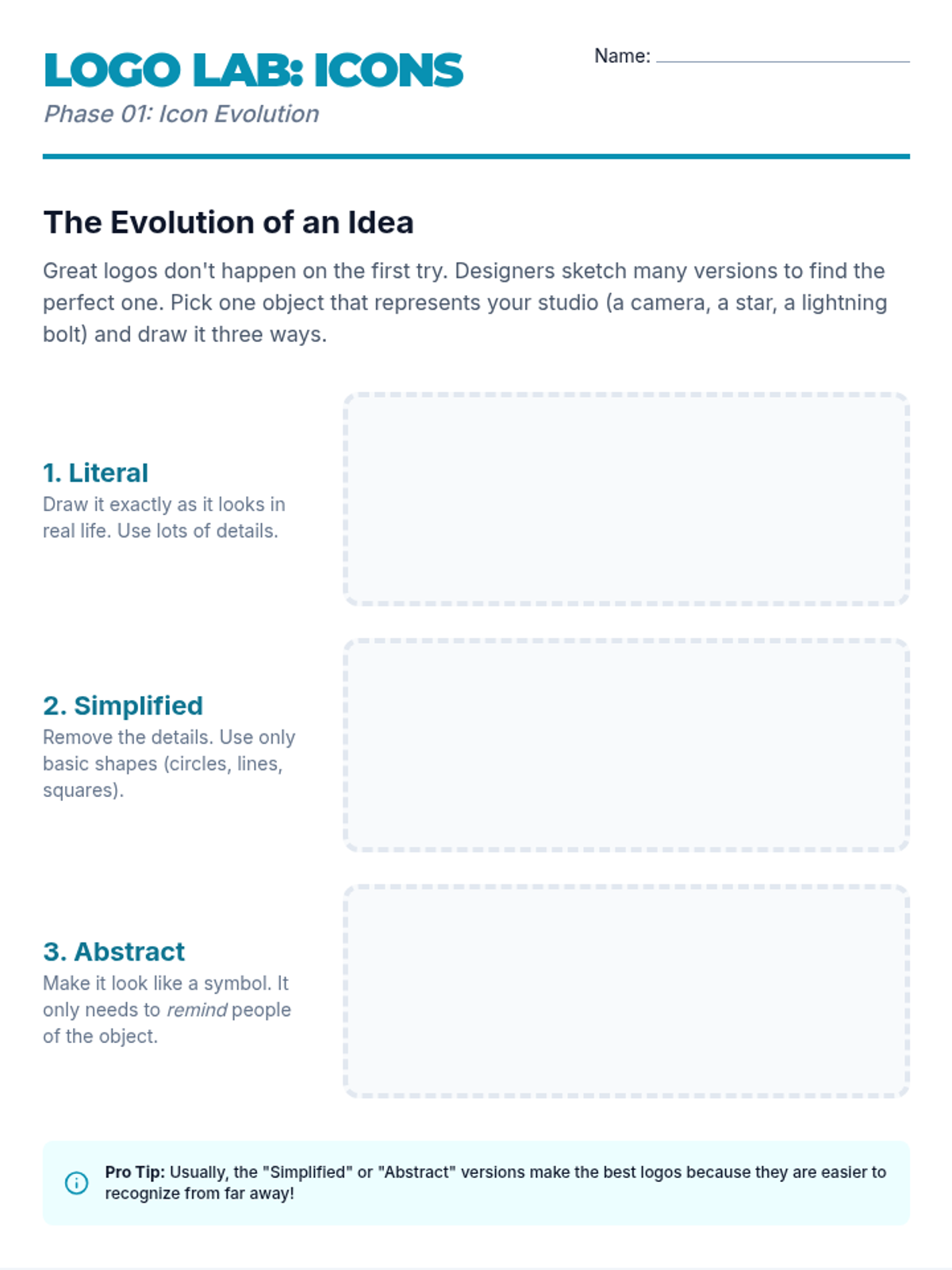
A creative, structured guide for students to explore the intersection of graphic design and filmmaking, focusing on branding, character design, and visual storytelling.
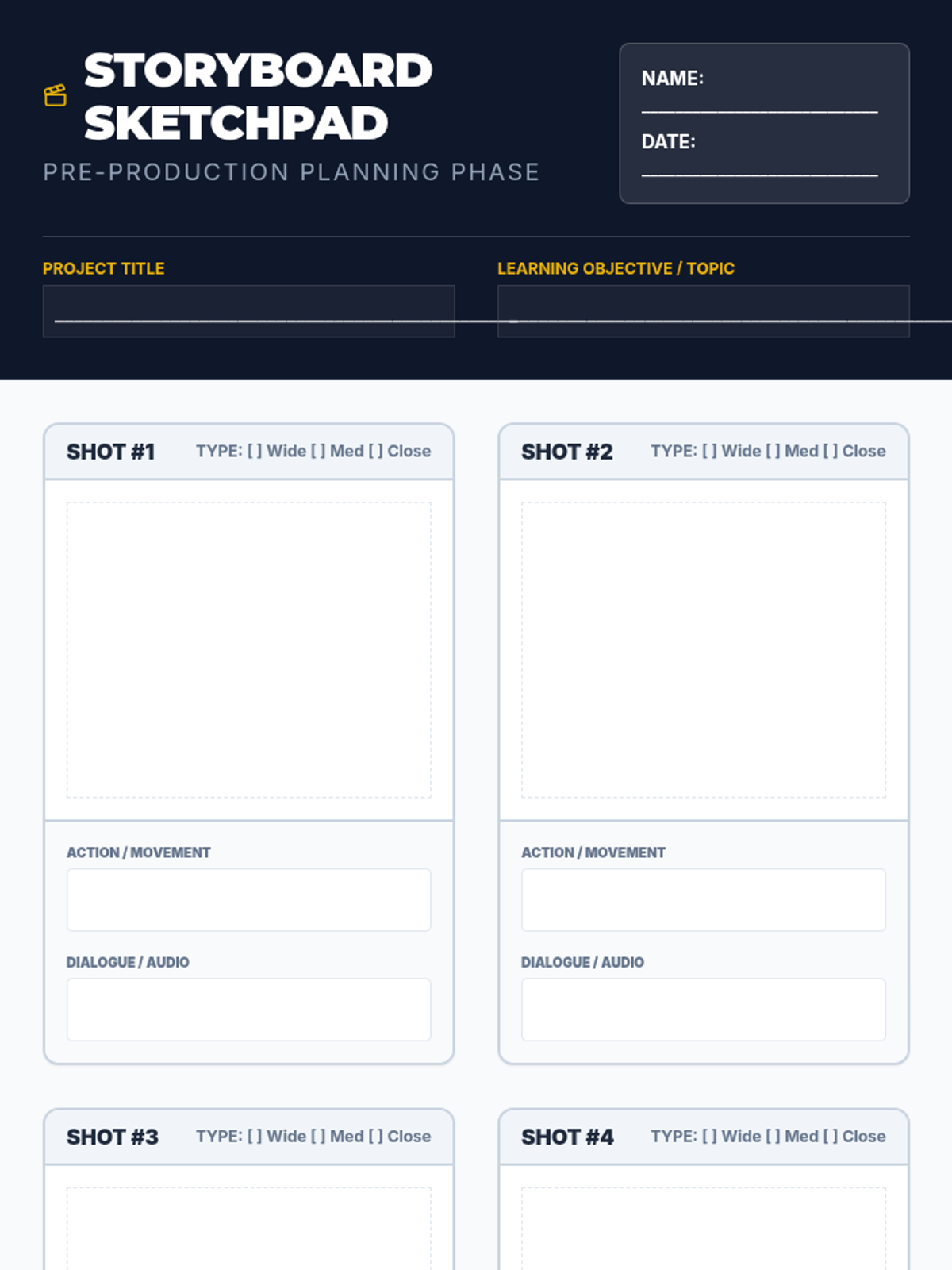
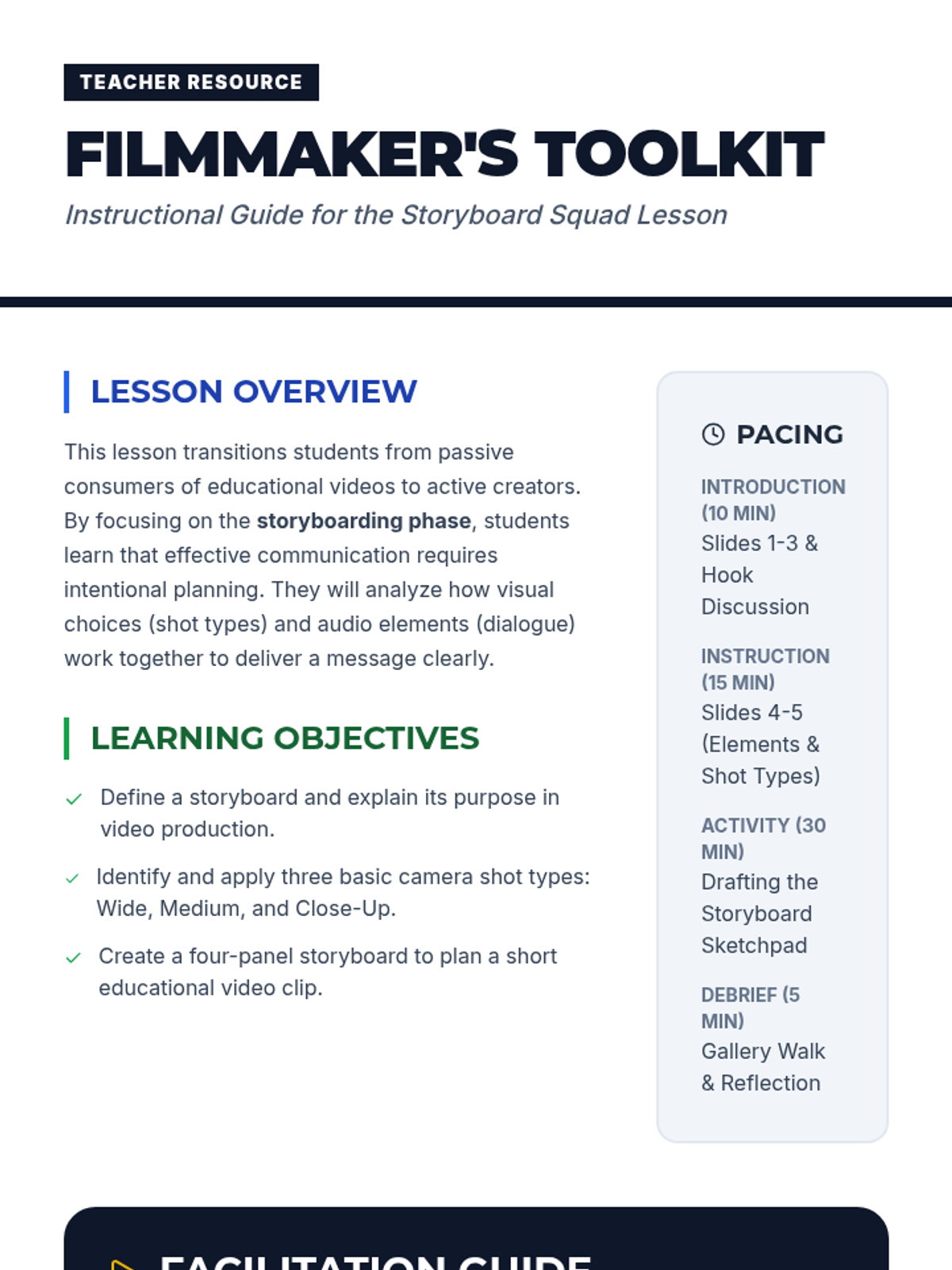
A comprehensive lesson on the art of storyboarding for short videos, teaching students how to translate their creative visions into structured visual plans. Students will learn the key elements of a storyboard and practice planning their own video production.
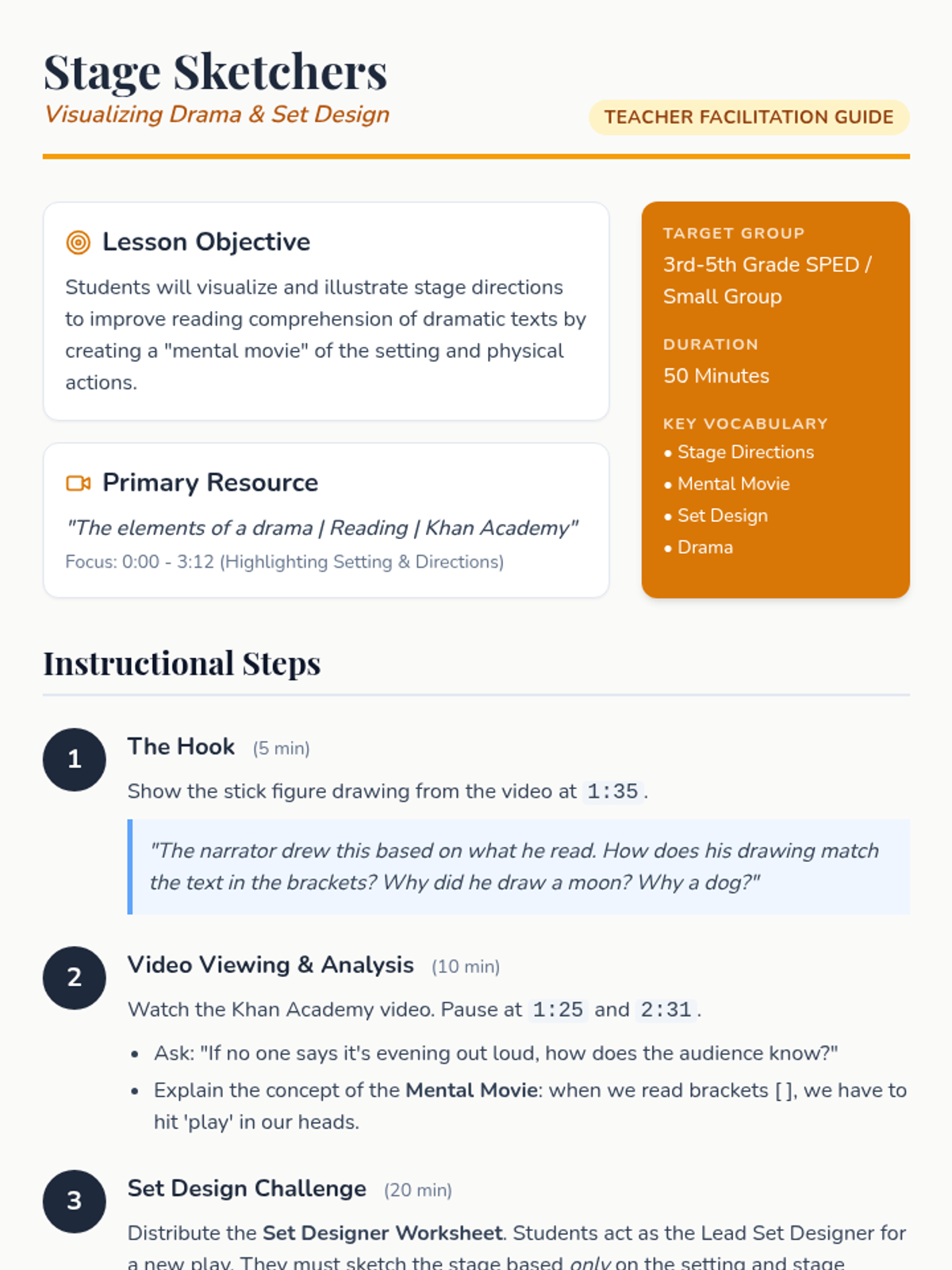
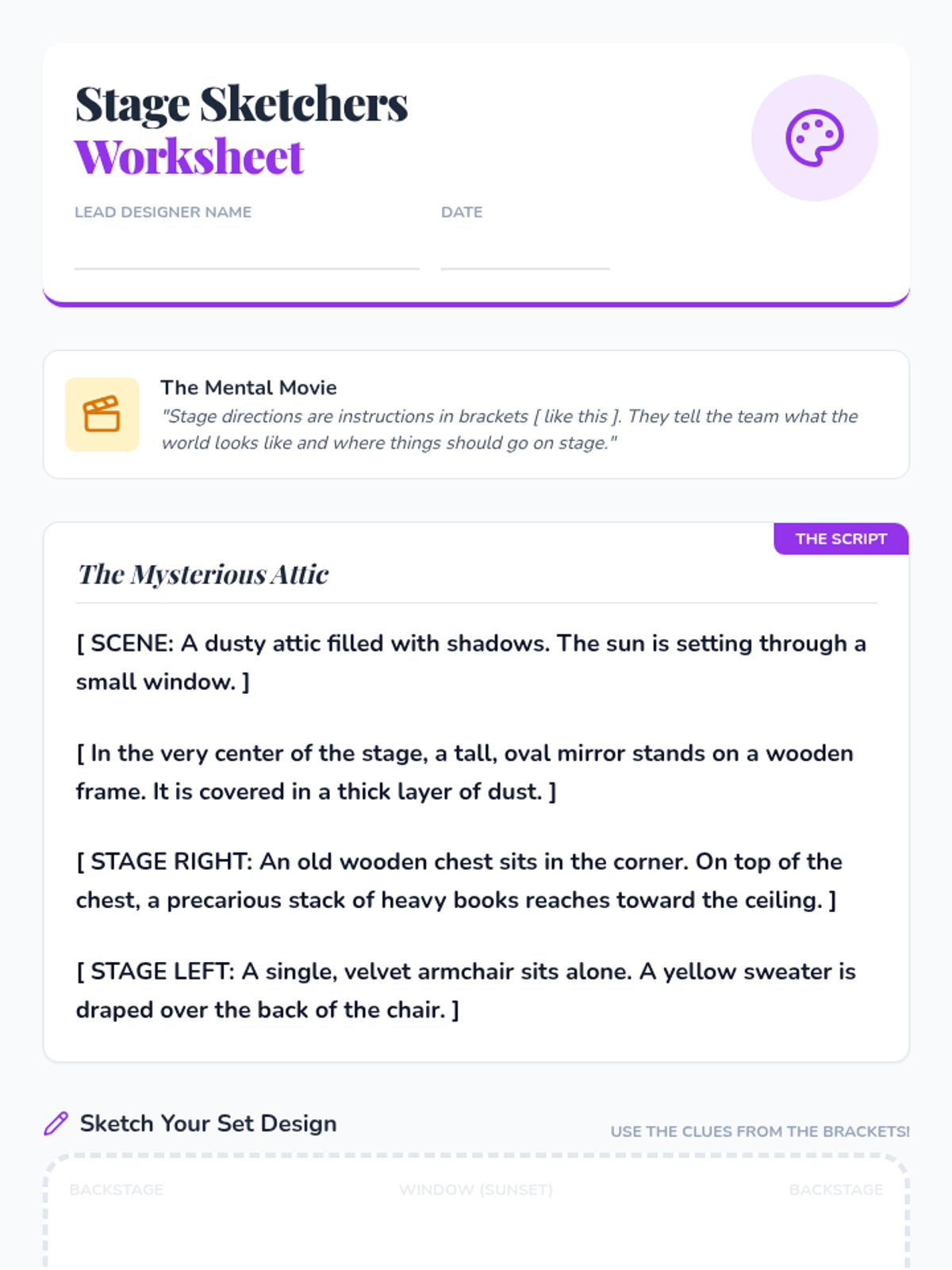
A lesson designed for small group instruction focused on helping students visualize stage directions to build a 'mental movie' of the setting and action. Includes a video-based hook and a hands-on set design activity.
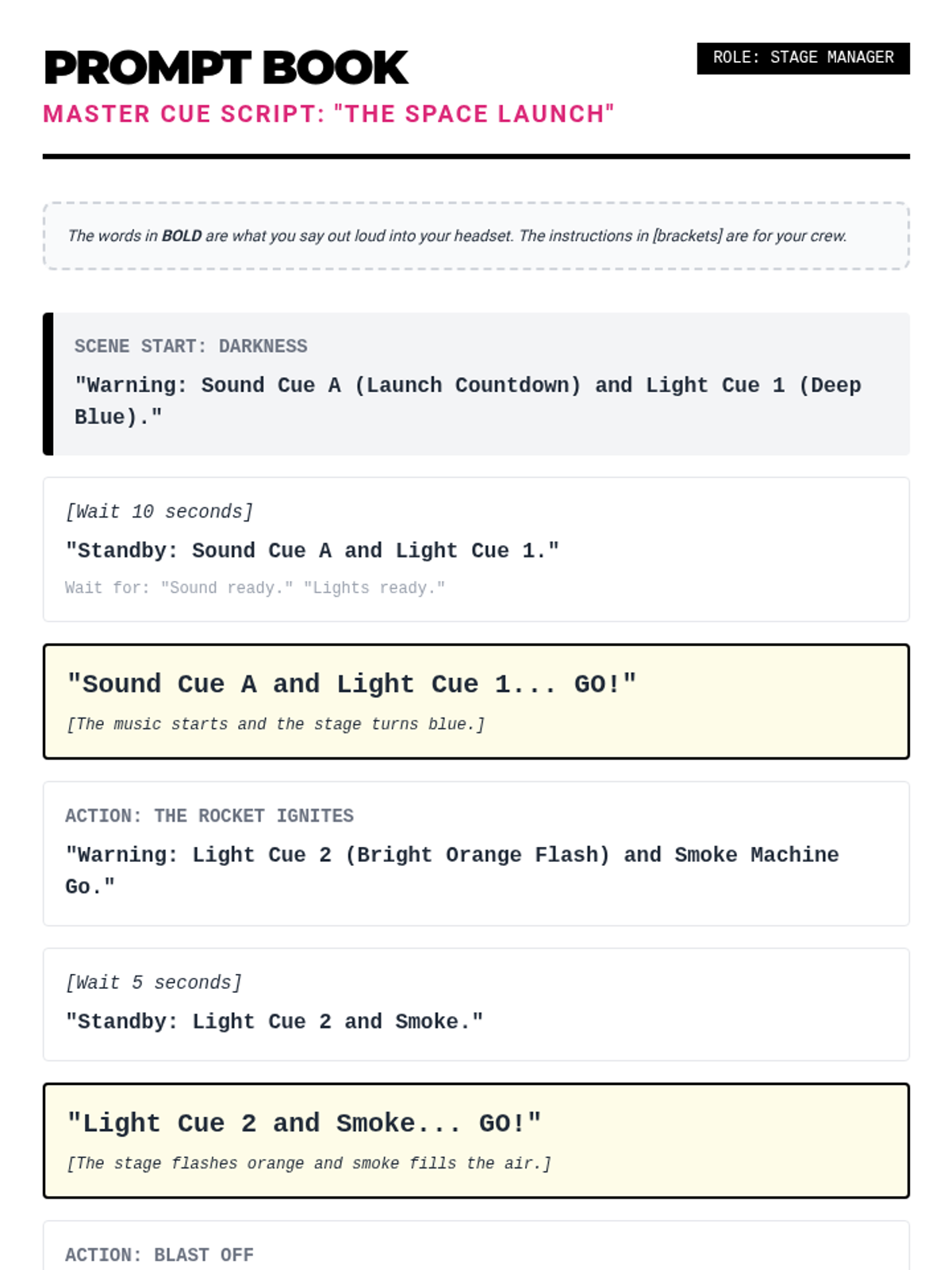
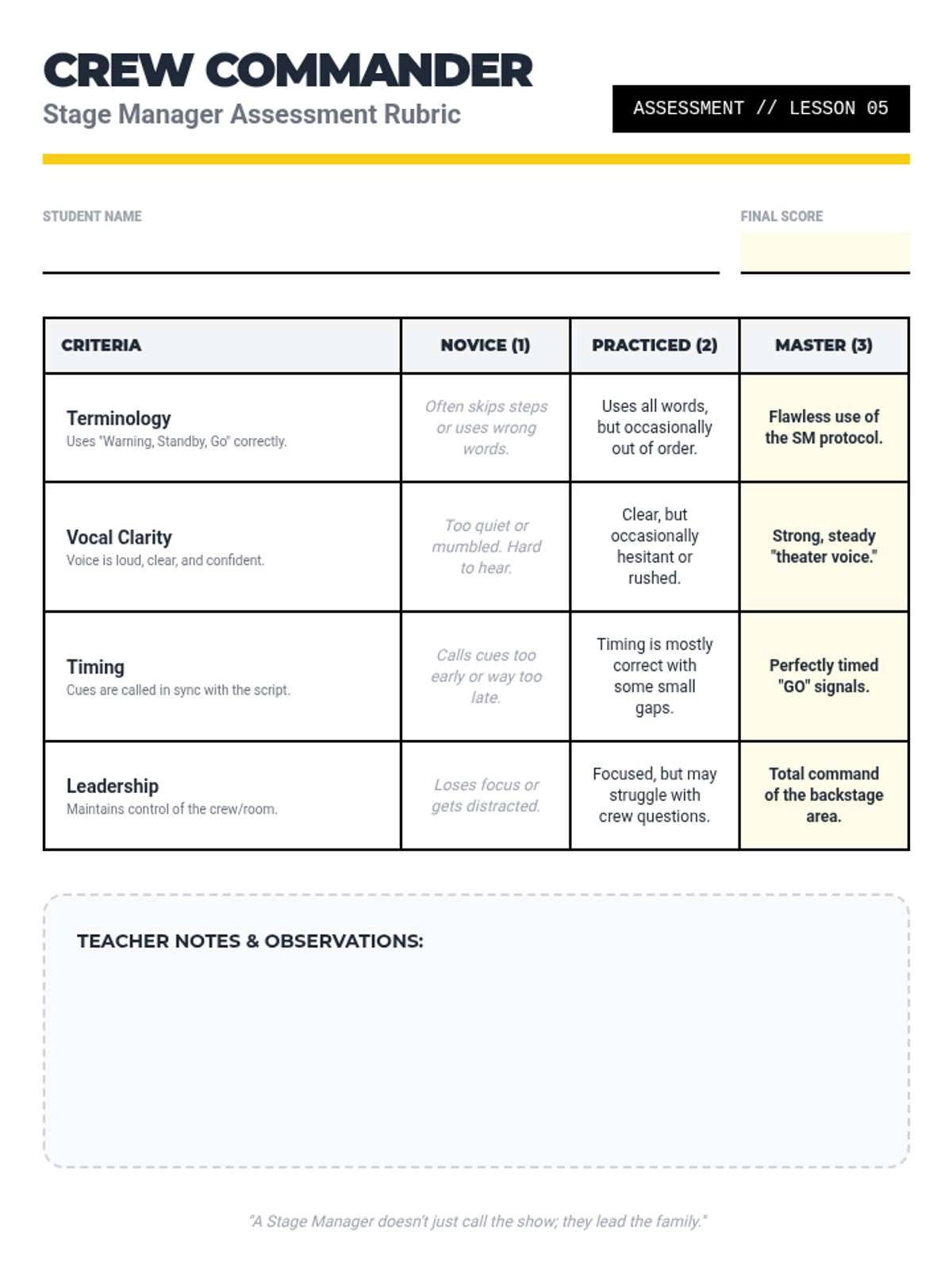
Students learn the specific communication style of a Stage Manager (Warning, Standby, Go). They practice 'calling a show' by following a script and issuing verbal commands to the crew.
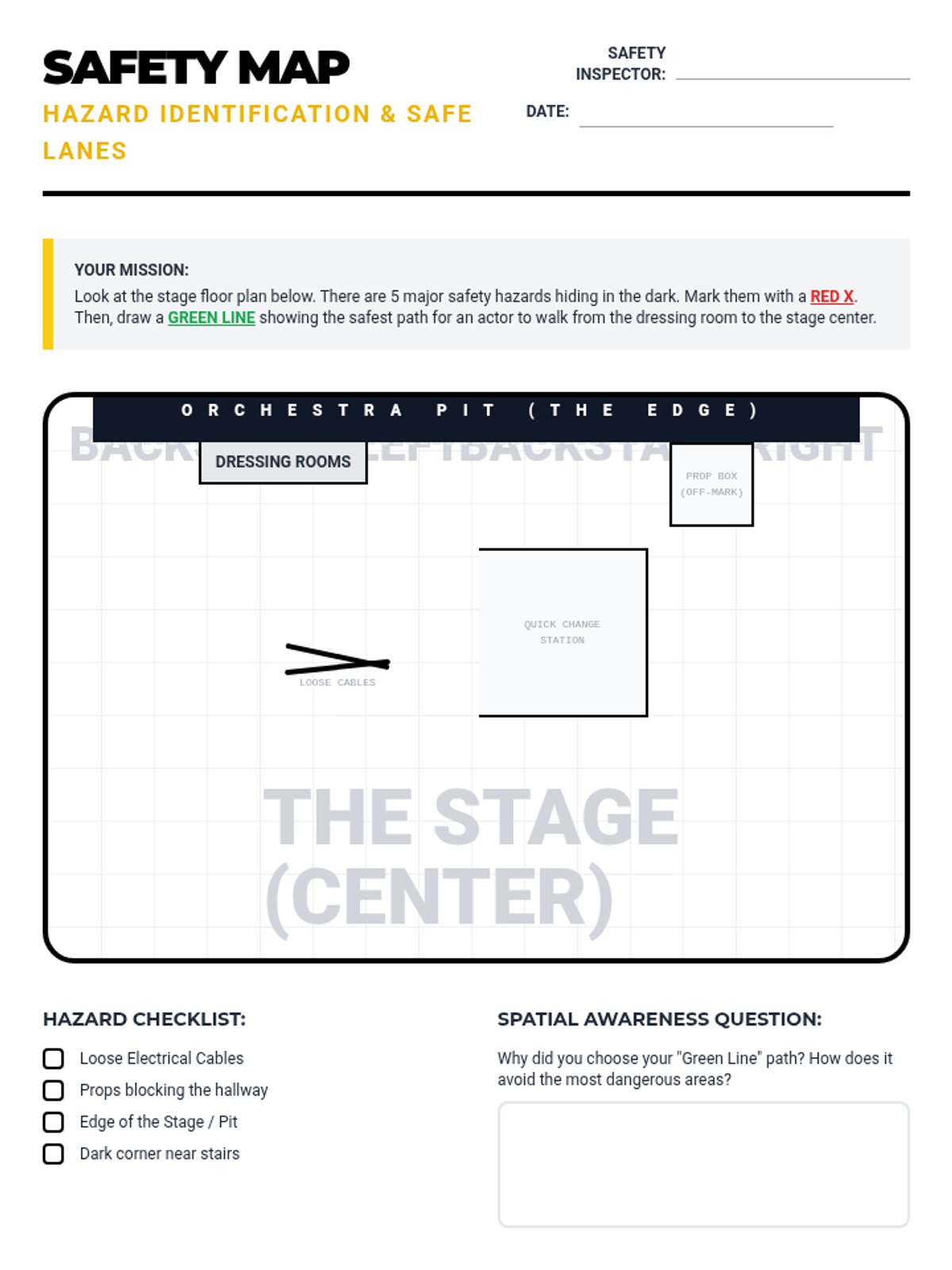
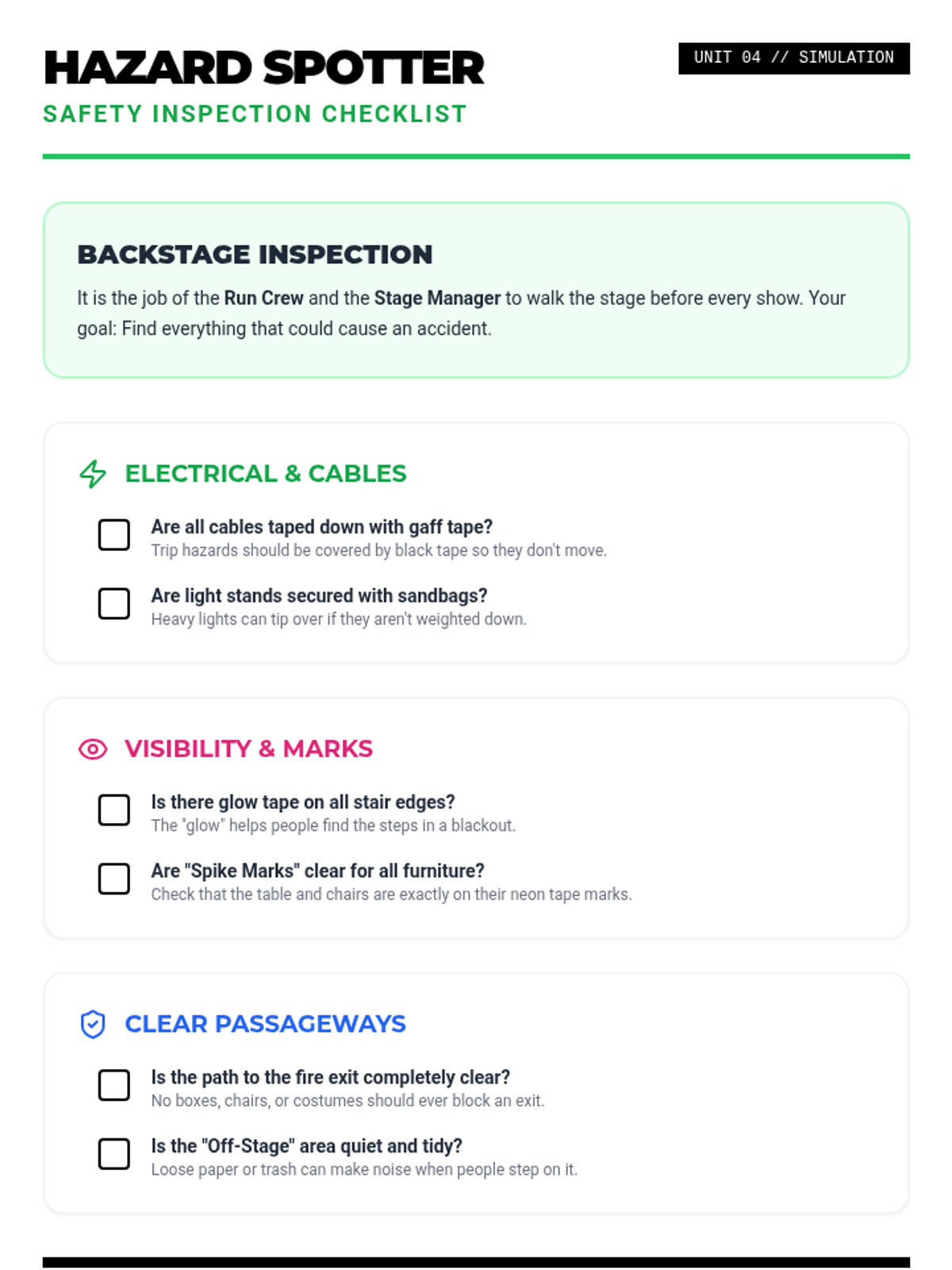
Students learn about 'spike tape,' 'glow tape,' and backstage traffic rules. They create a safety map for a stage, marking trip hazards and designated walkways to emphasize personal responsibility and spatial awareness.
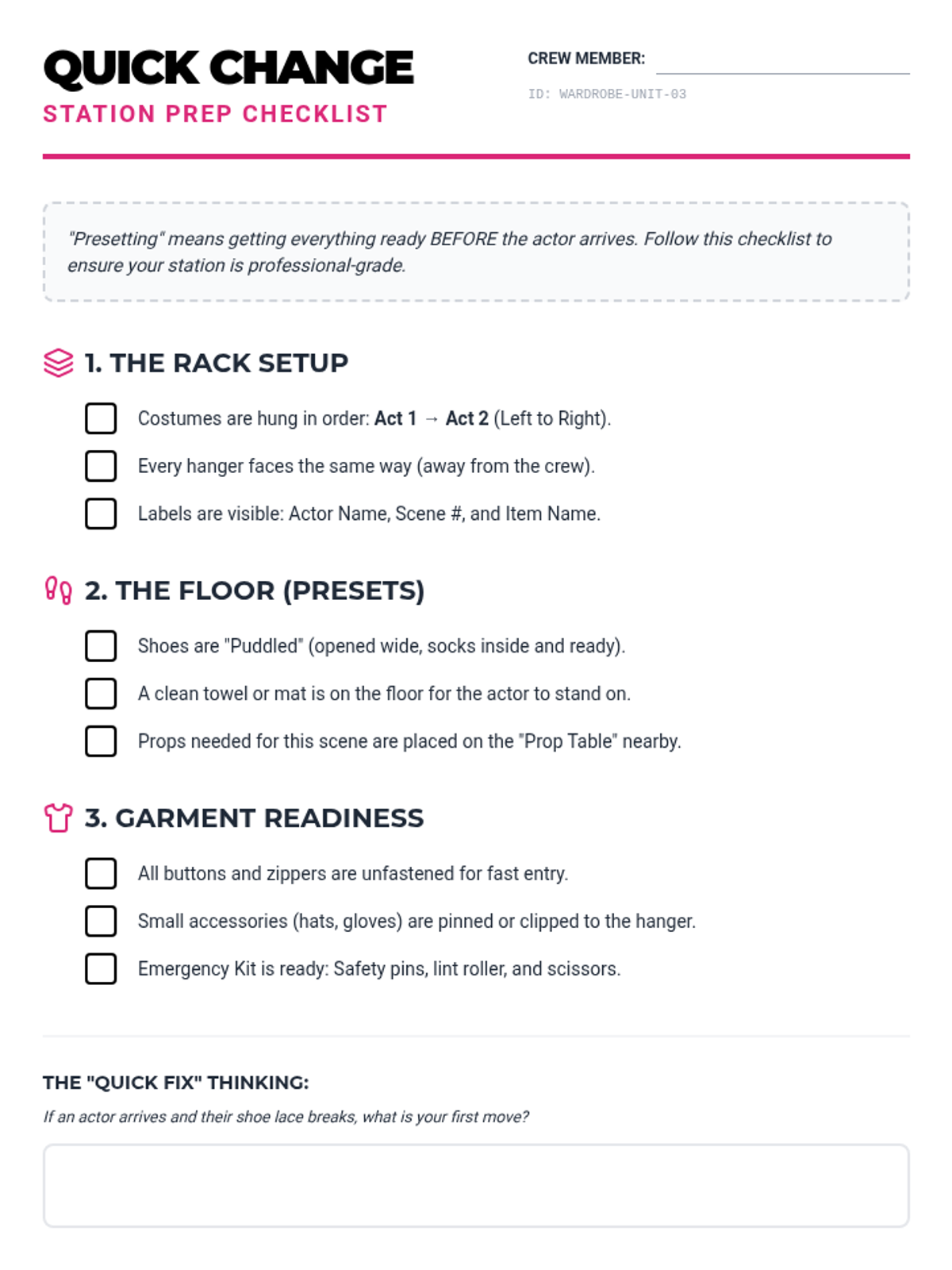
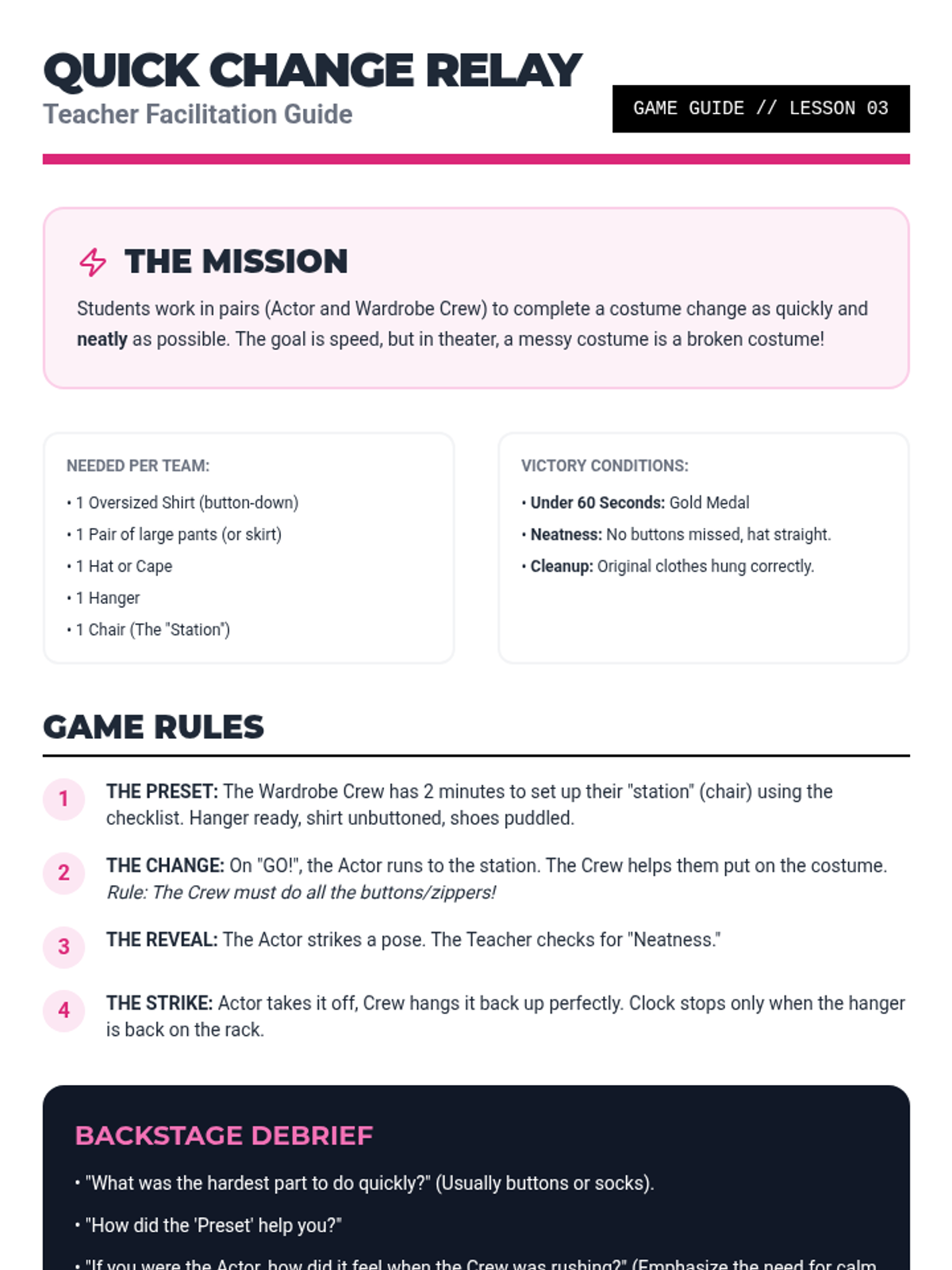
Students learn how to organize a costume rack and prepare a 'quick change' station. They practice folding, hanging, and presetting costumes for easy access, turning organization into a timed challenge.
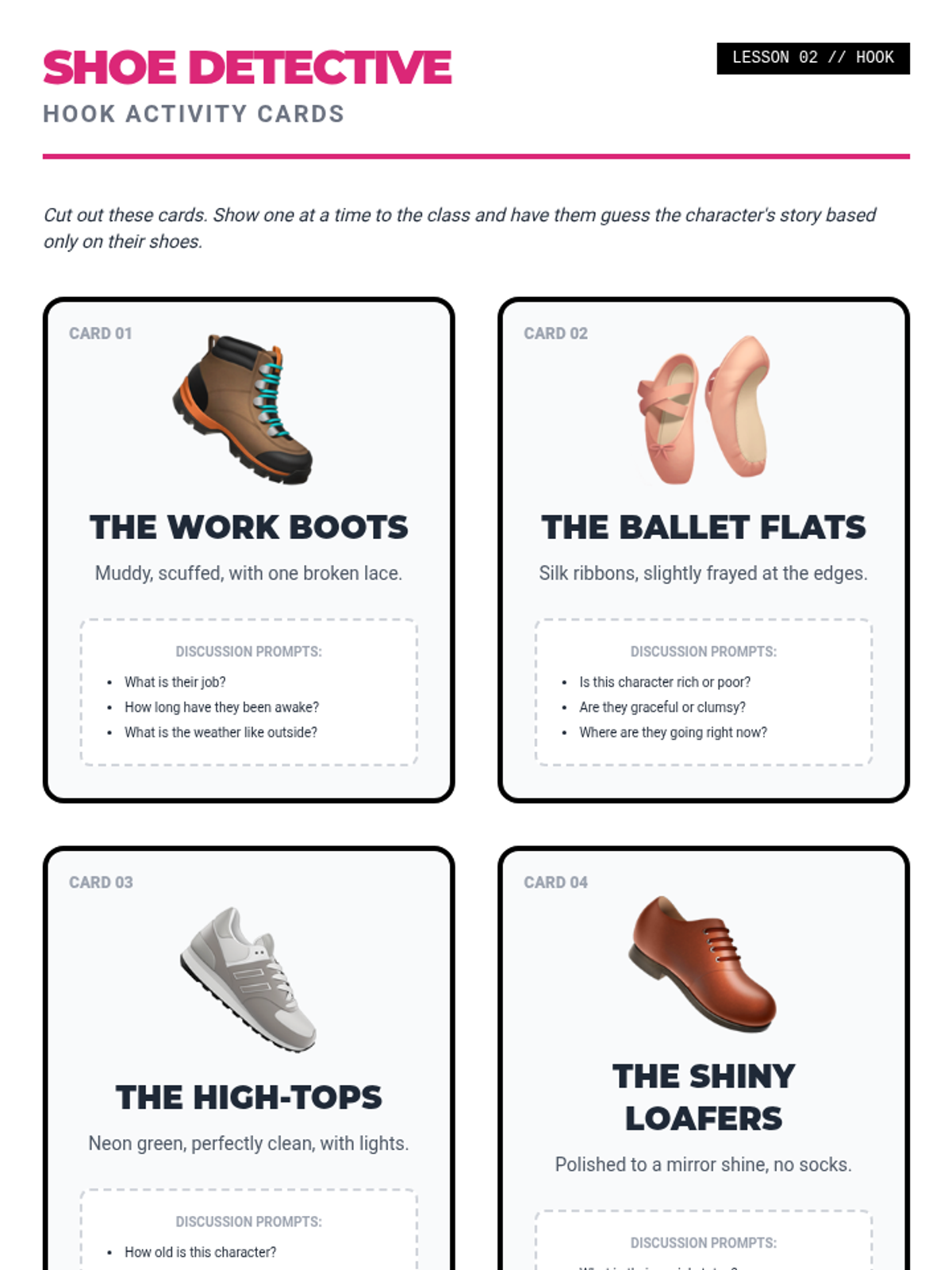
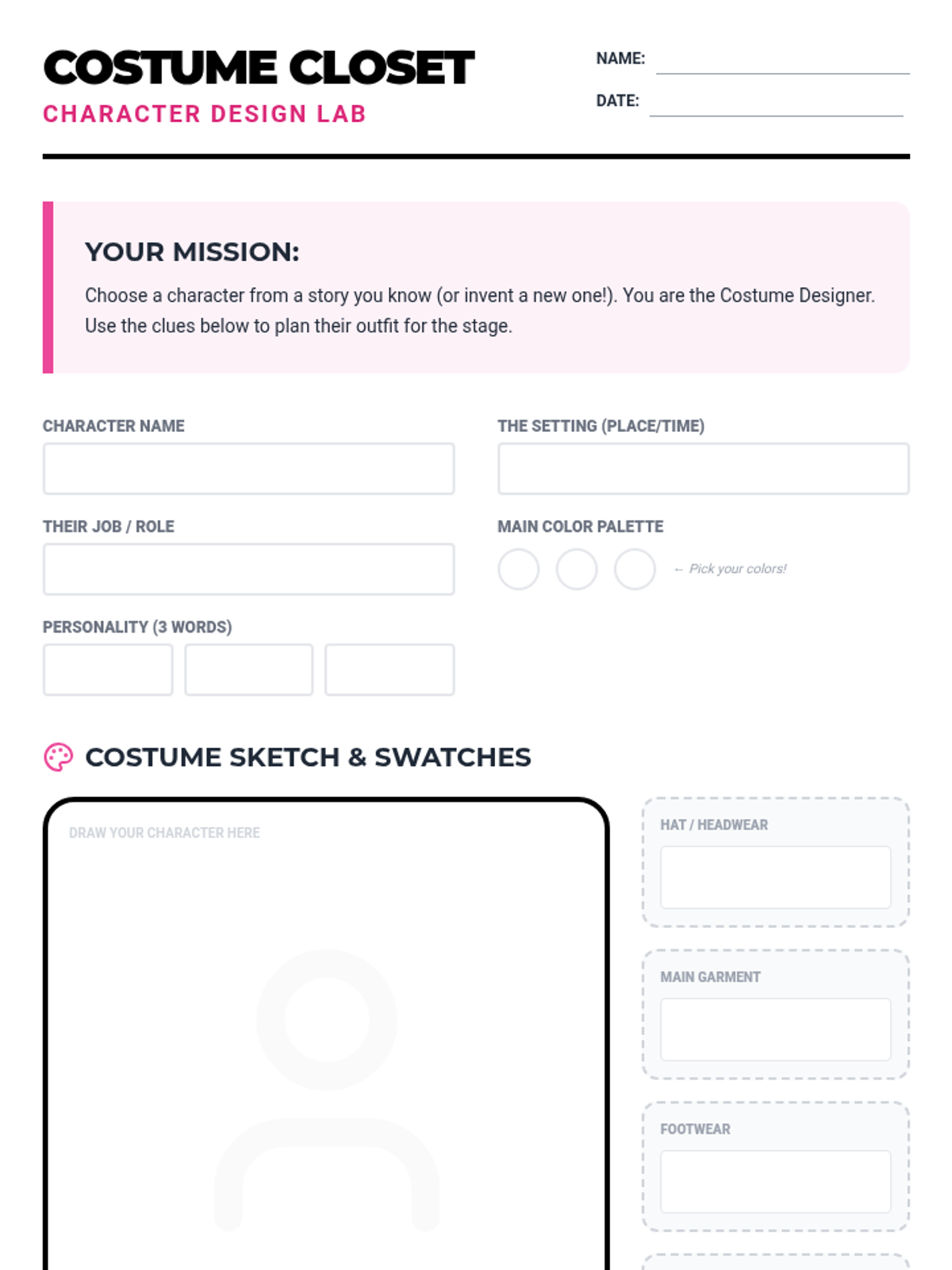
Students analyze characters to determine their clothing needs based on personality, job, and social status. The lesson focuses on how clothing communicates information to the audience and building character profiles through costume choice.
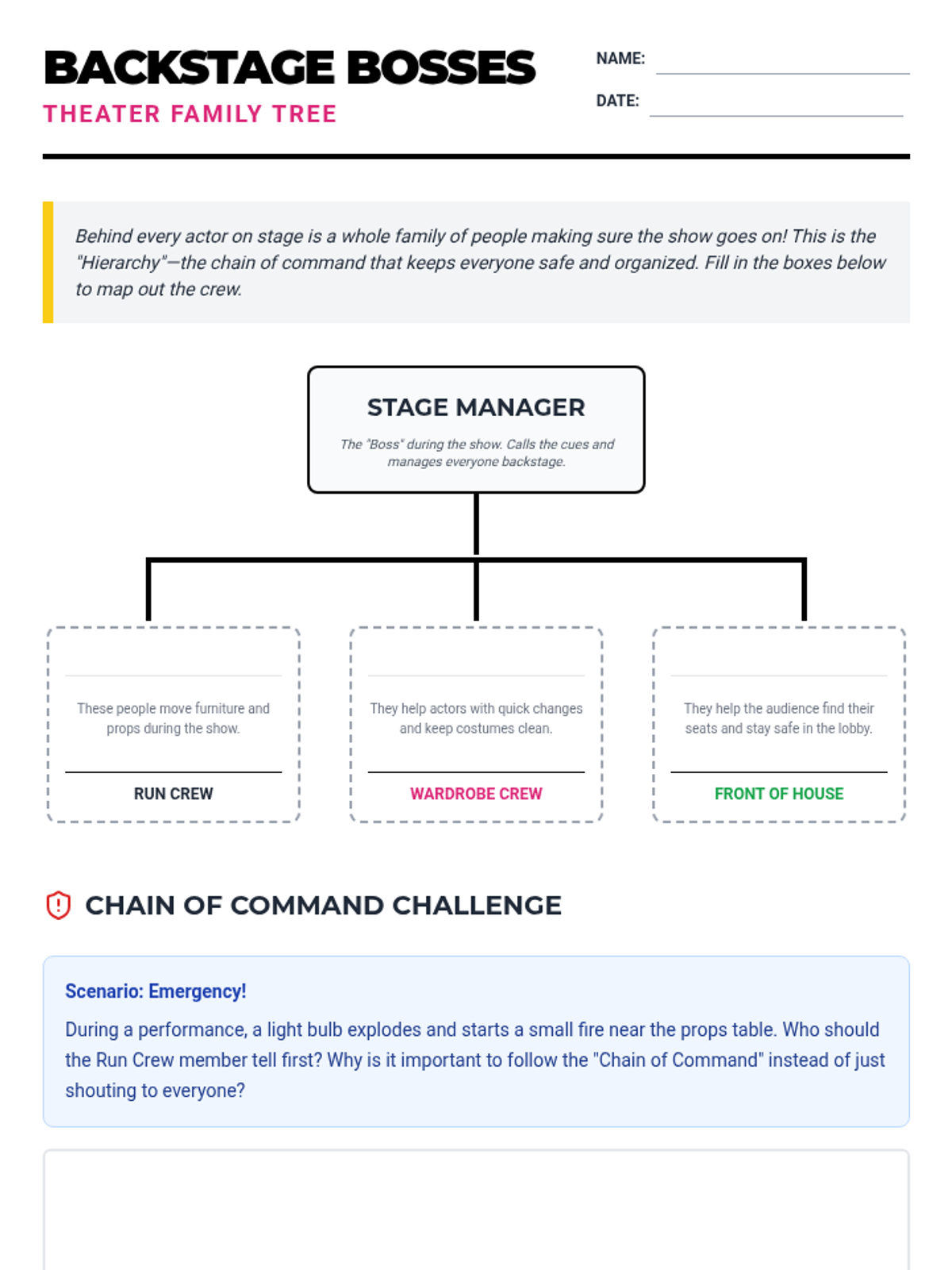
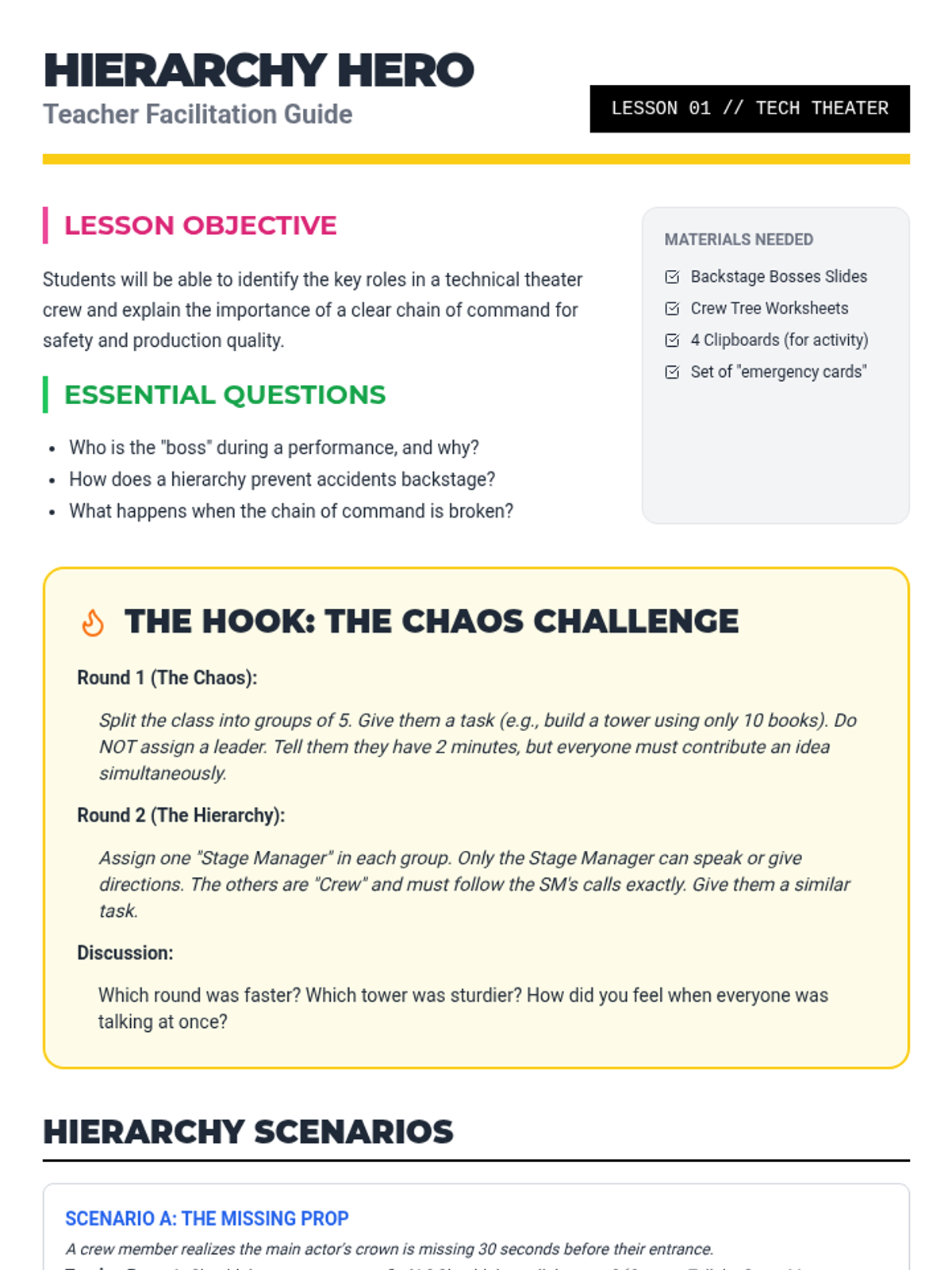
Students map out the 'theater family tree,' learning the responsibilities of the Stage Manager, Running Crew, Wardrobe, and Ushers. They discuss the importance of the chain of command during an emergency and the professional expectations of technical theater.
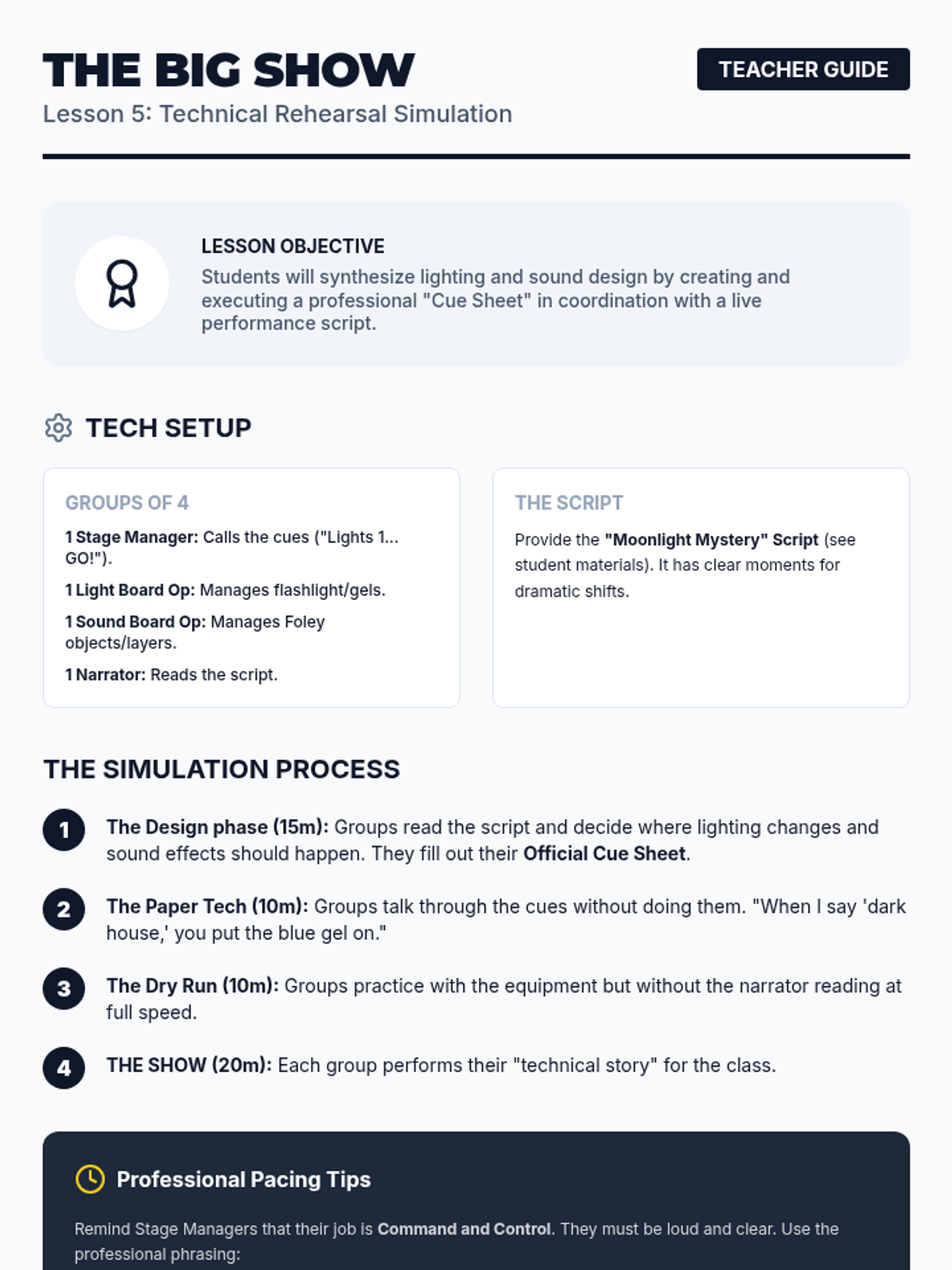
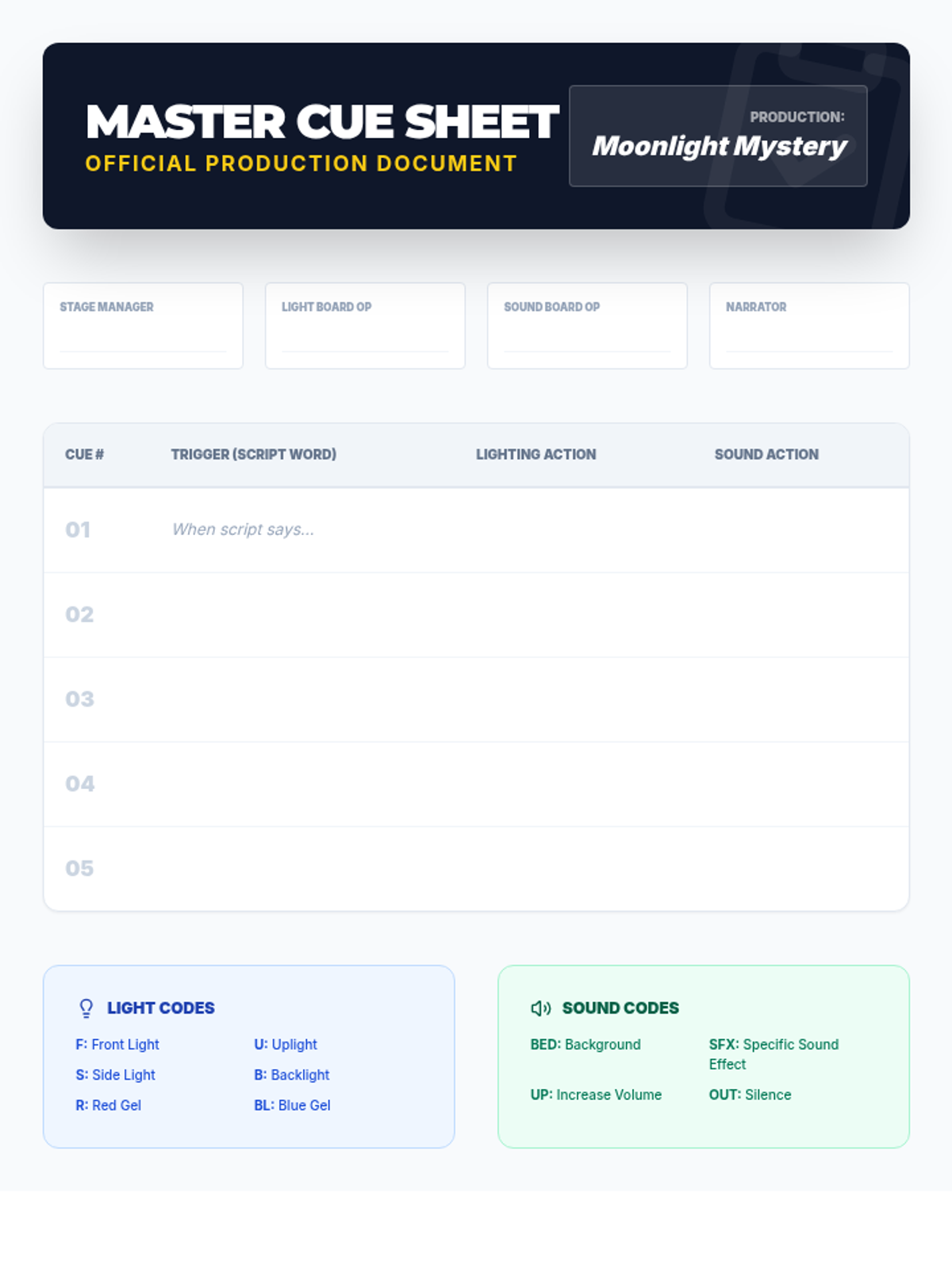
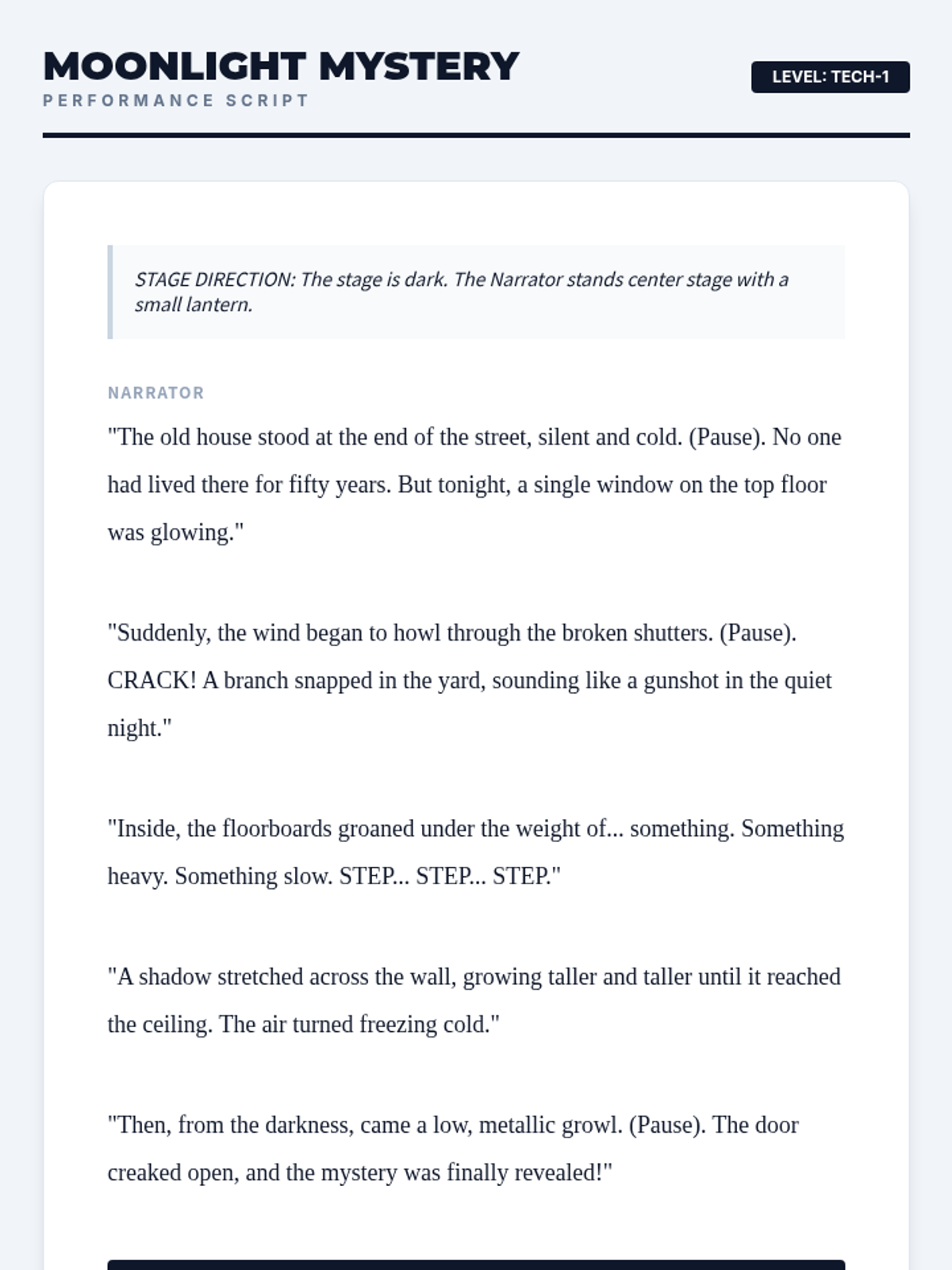
The capstone experience where students design and execute a technical cue sheet for a live narration.
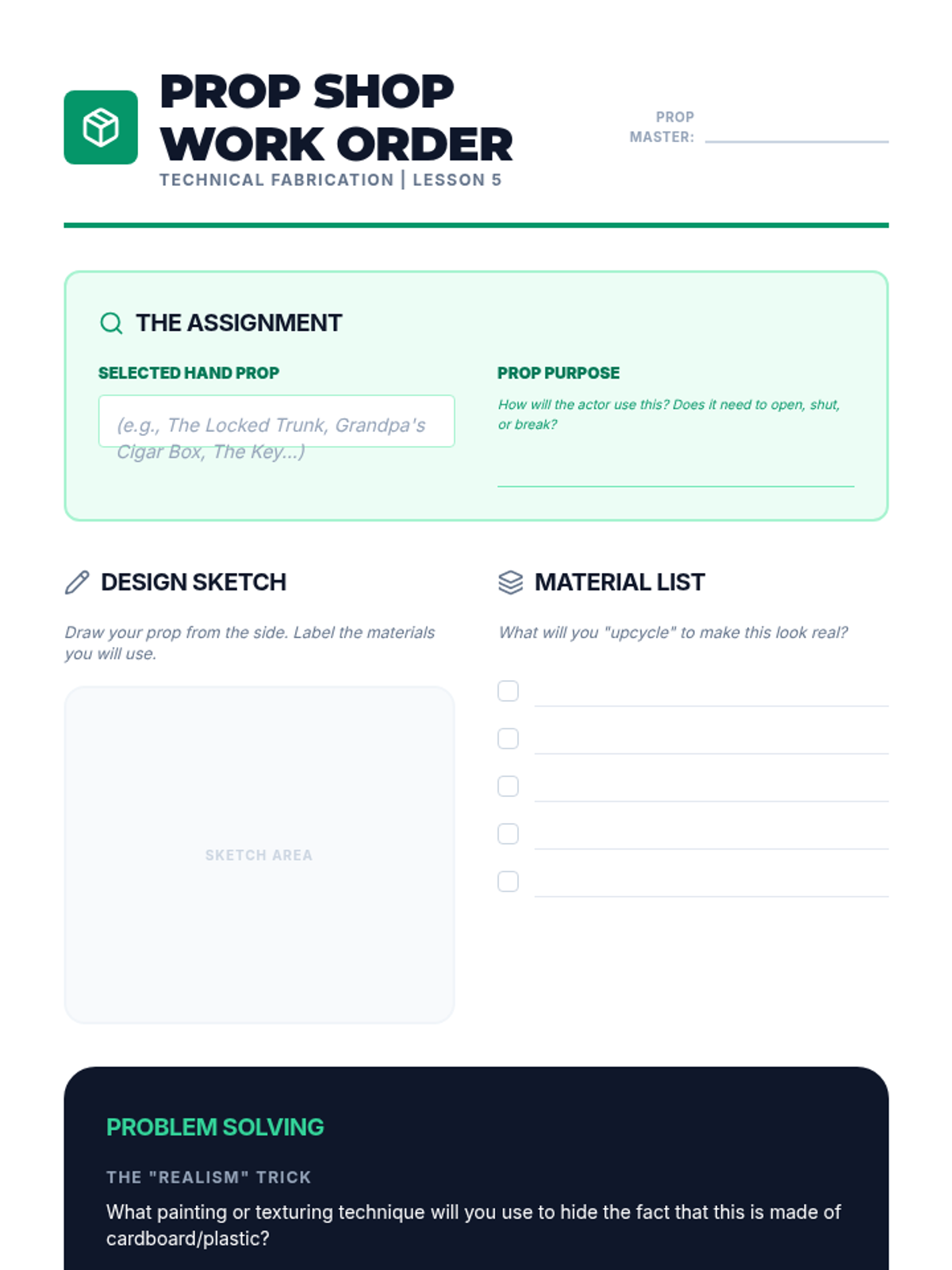
Students identify and fabricate a key hand prop from their script, solving problems of durability and appearance.
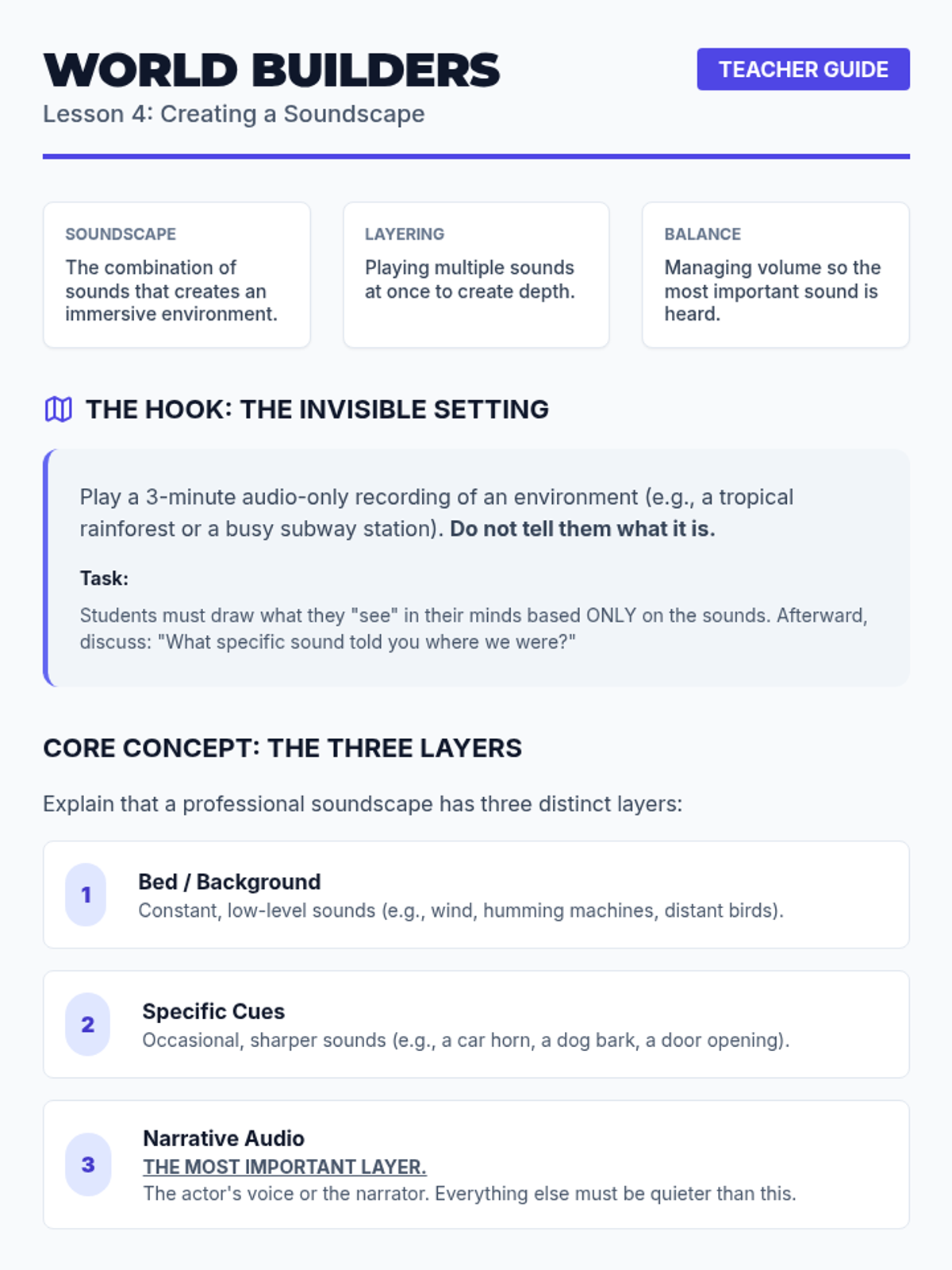
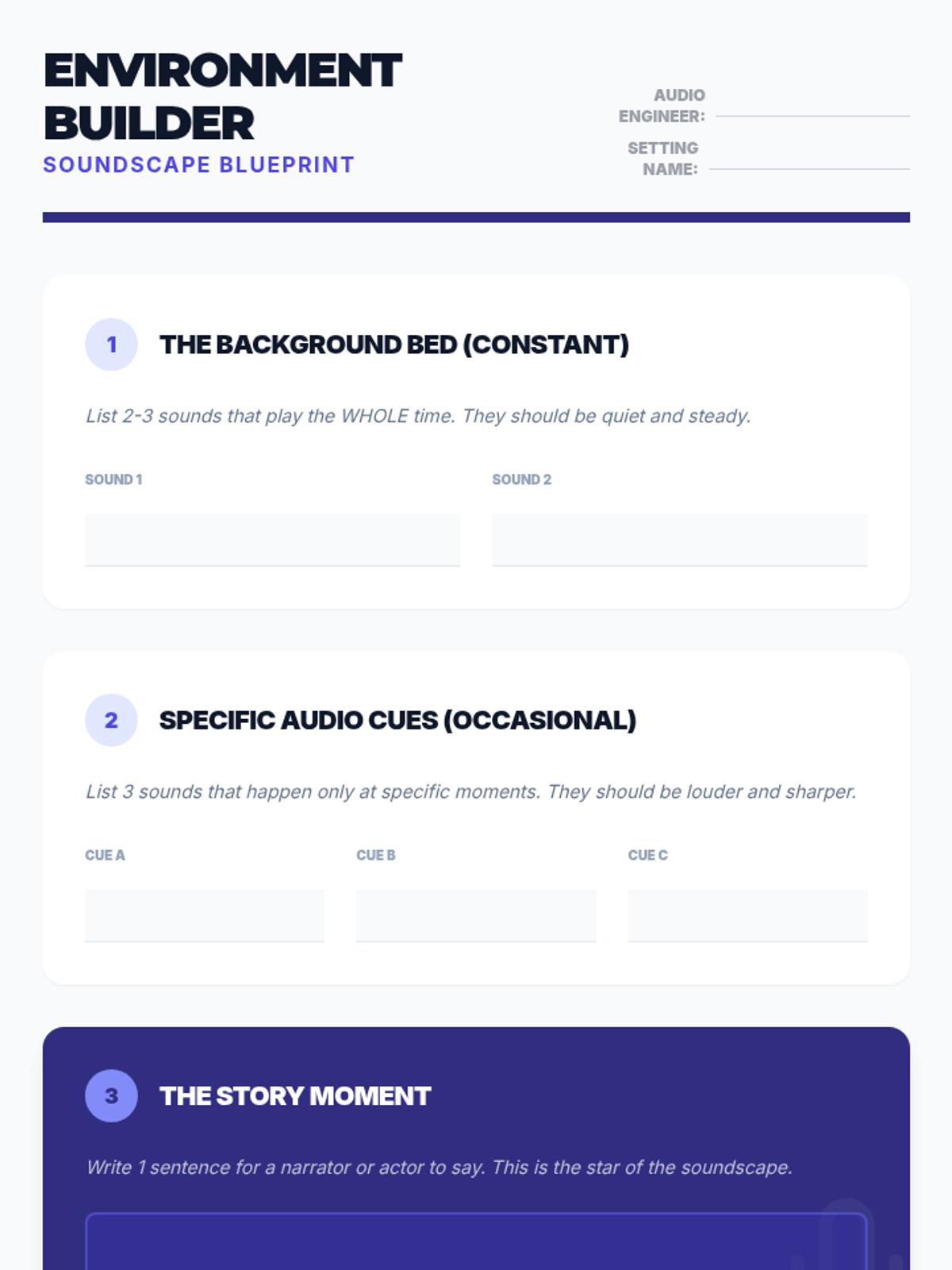
Students learn to layer sounds to create immersive environments and understand the importance of audio balance.
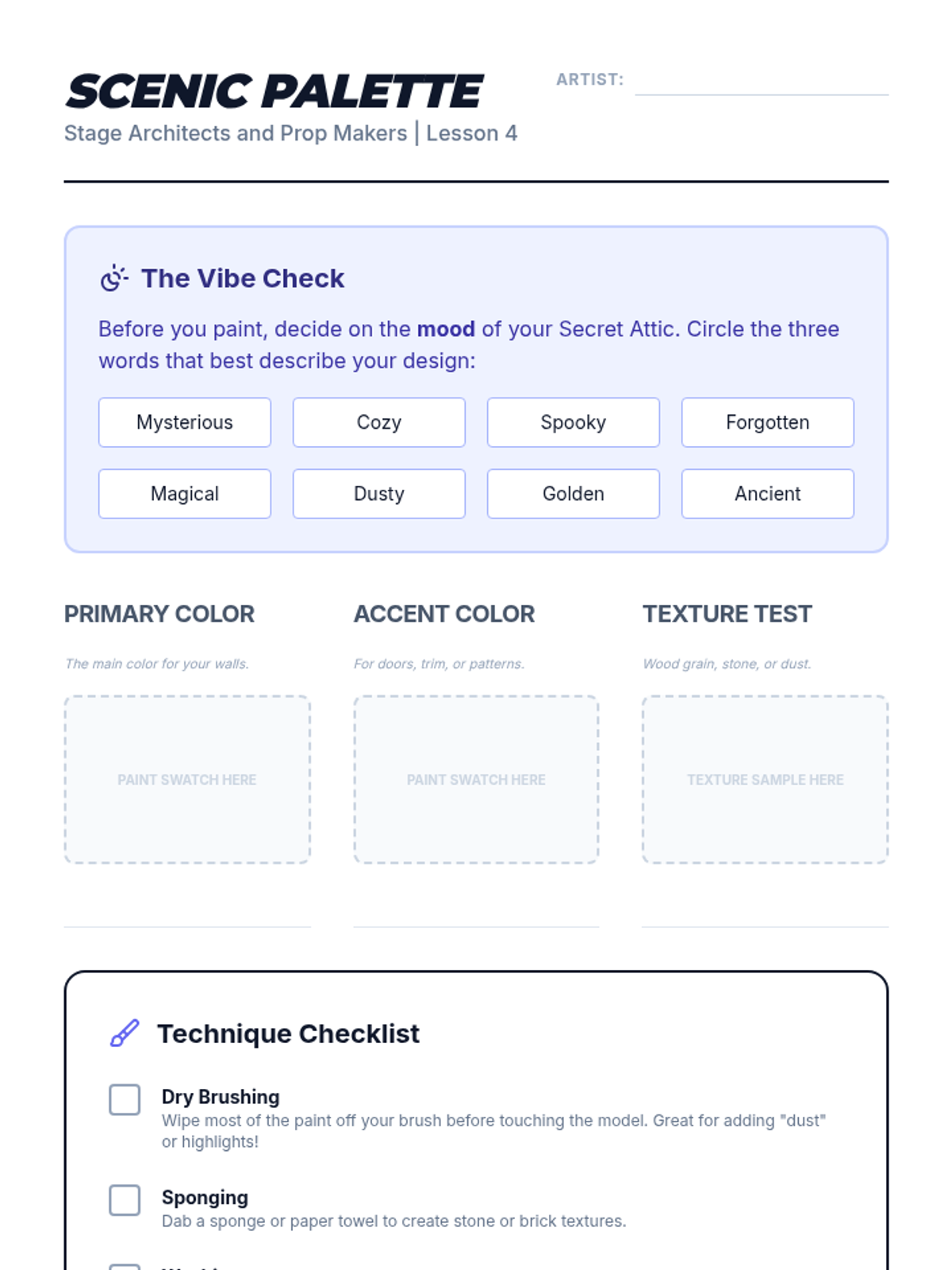
Students apply color and texture to their models using scenic painting techniques to convey mood and reality.
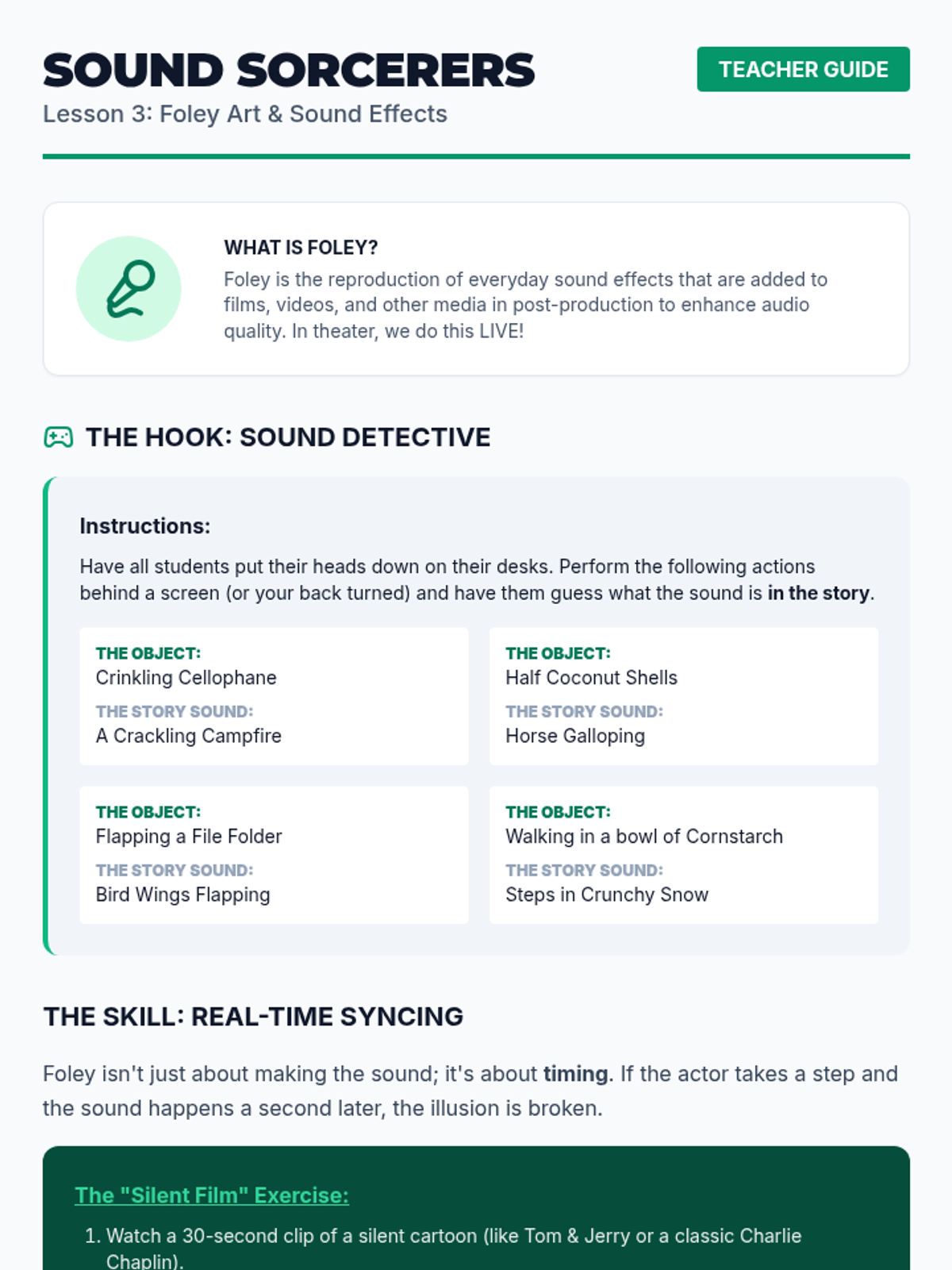
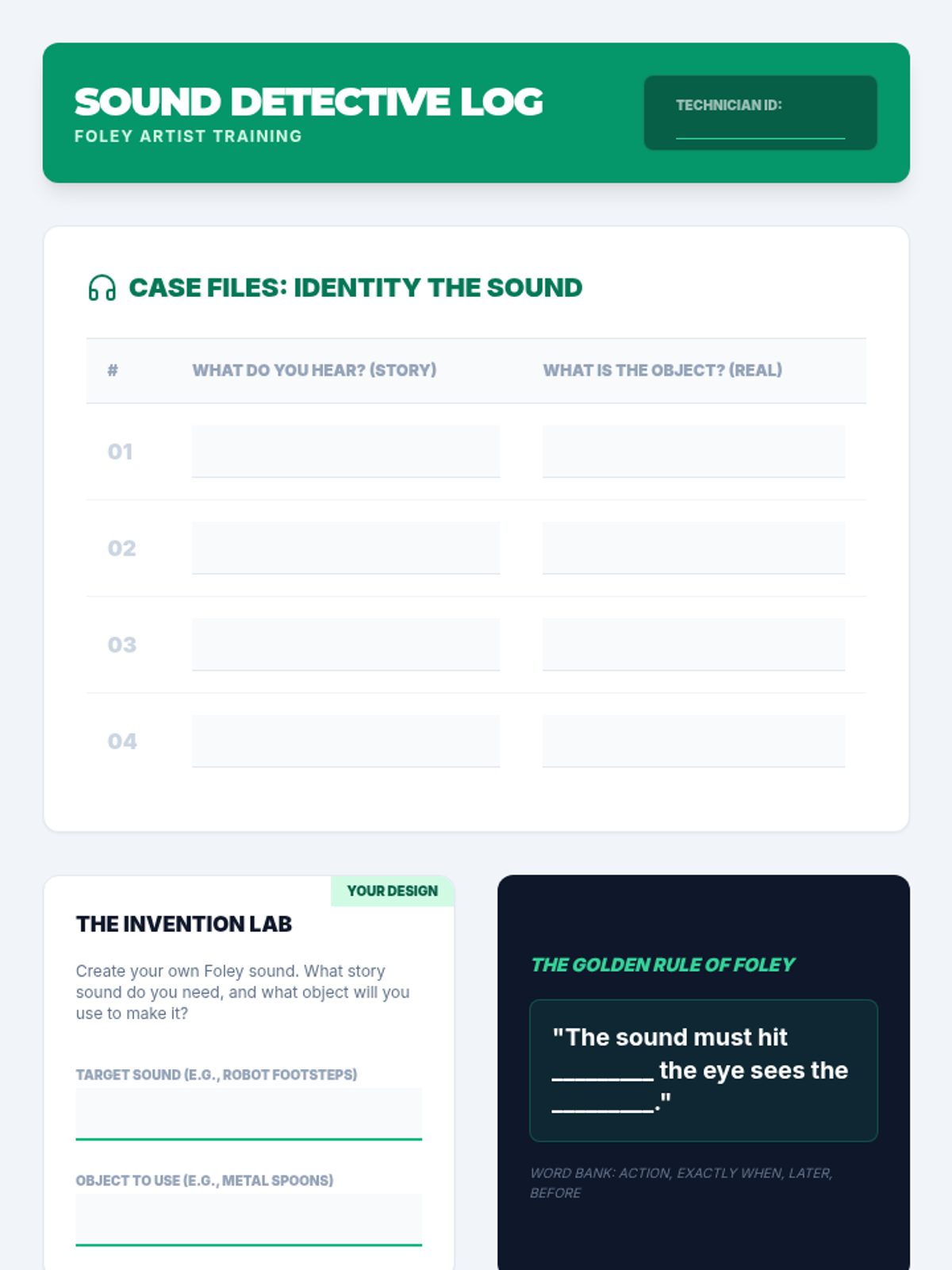
An introduction to Foley art, where students use everyday objects to create realistic sound effects for performance.
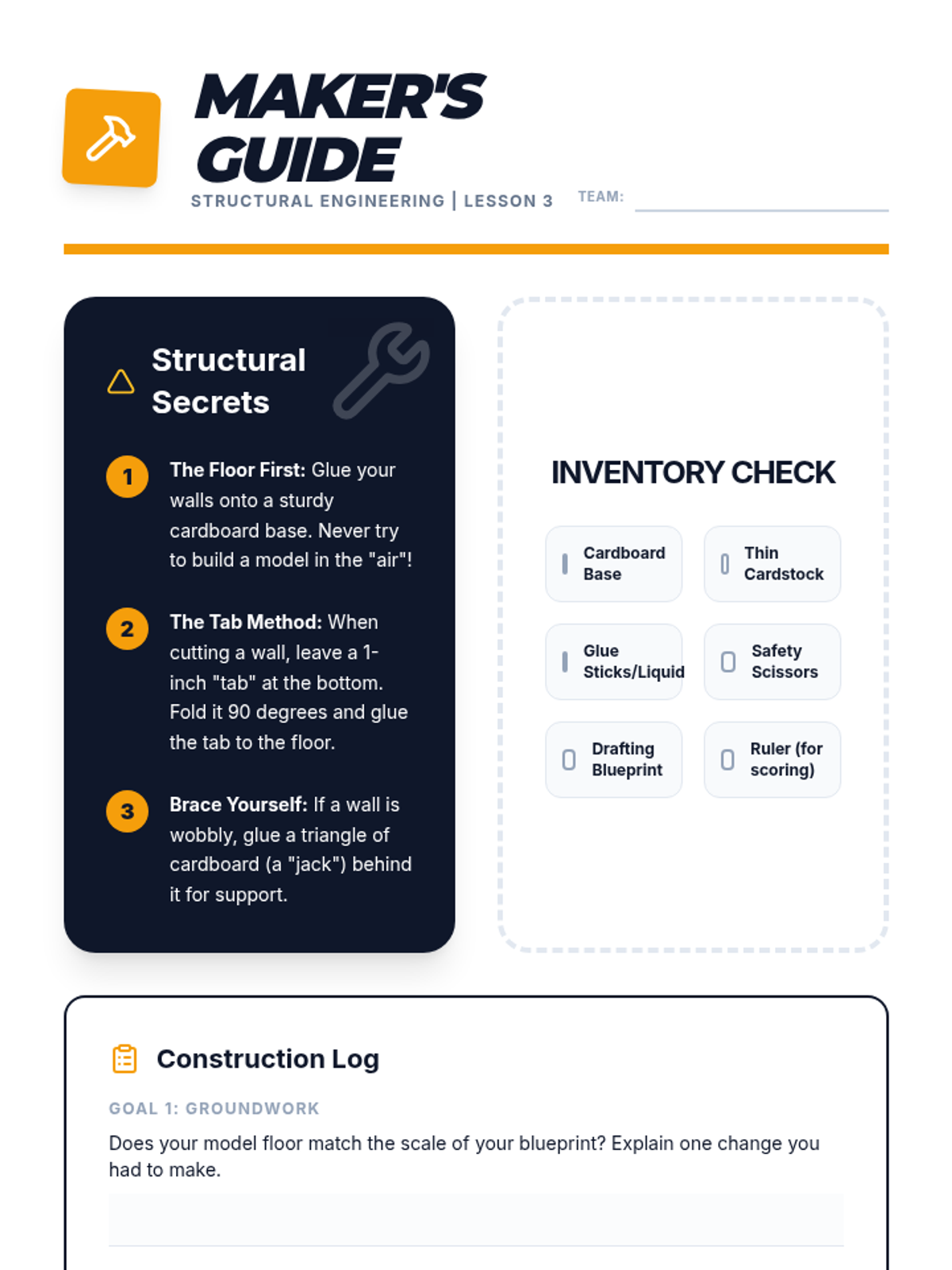
Using their floor plans, students construct 3D dioramas (maquettes) of their sets using cardboard and craft materials.
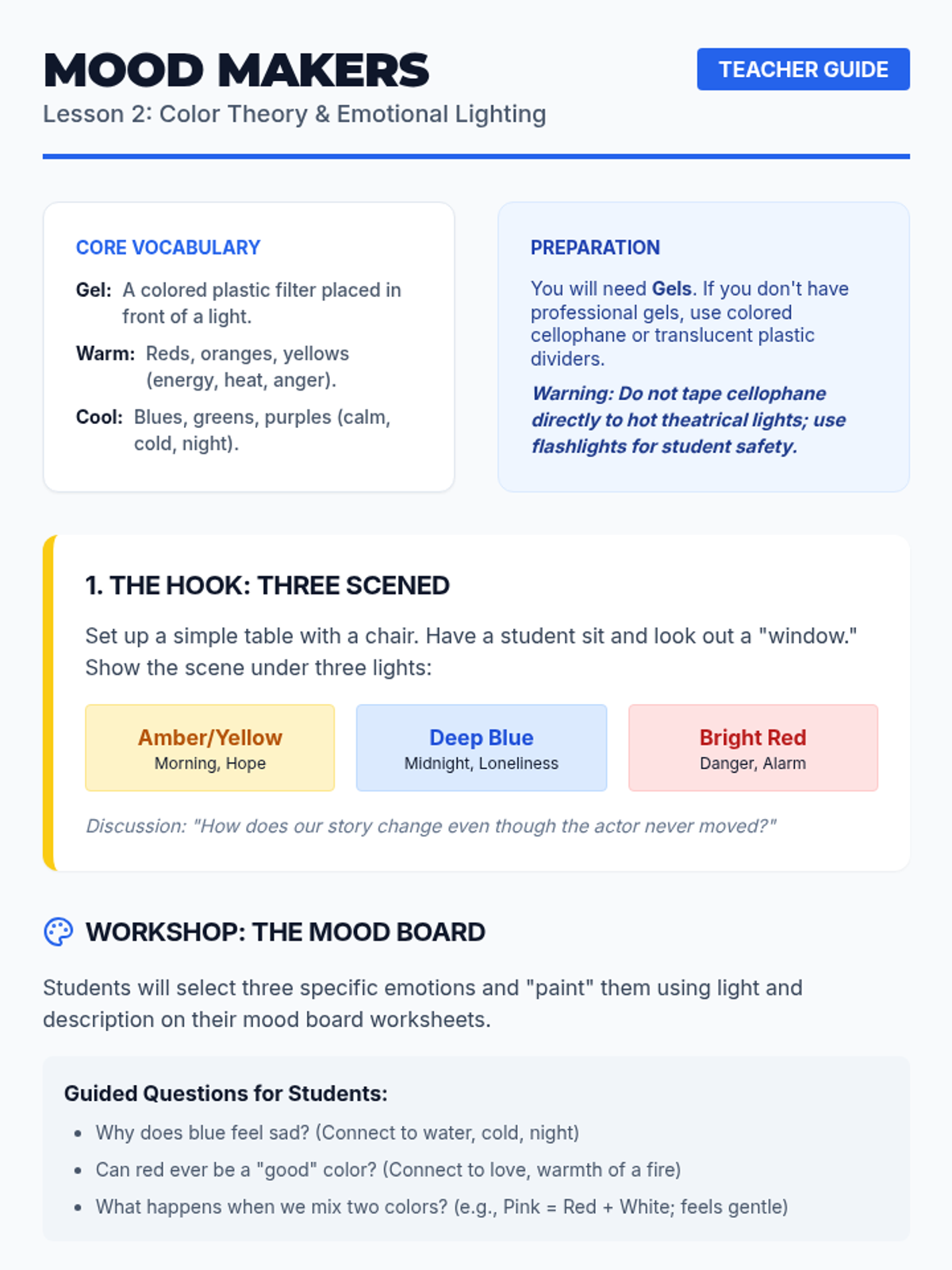
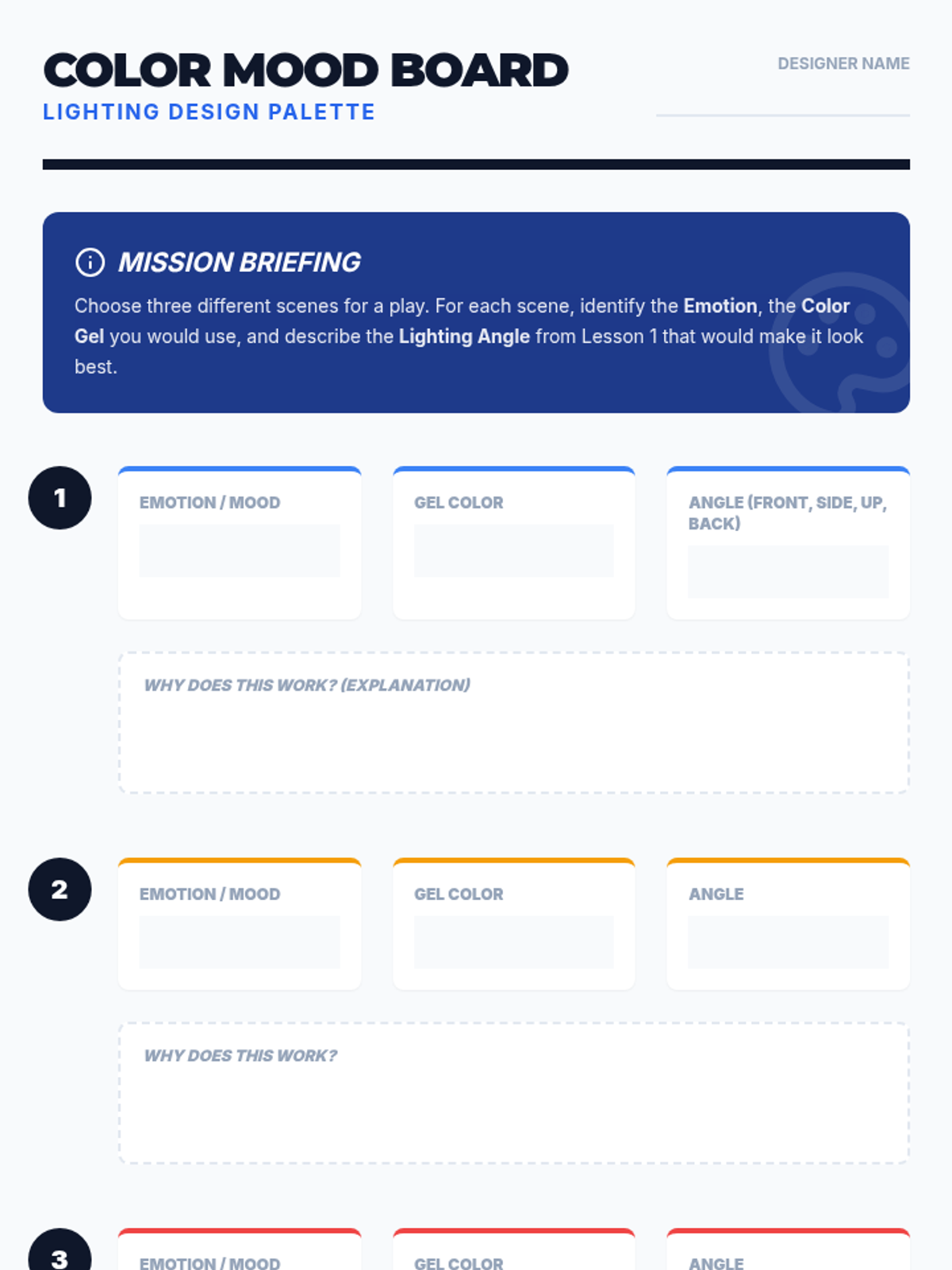
Students investigate the emotional impact of color in lighting, using gels to create specific atmospheres.
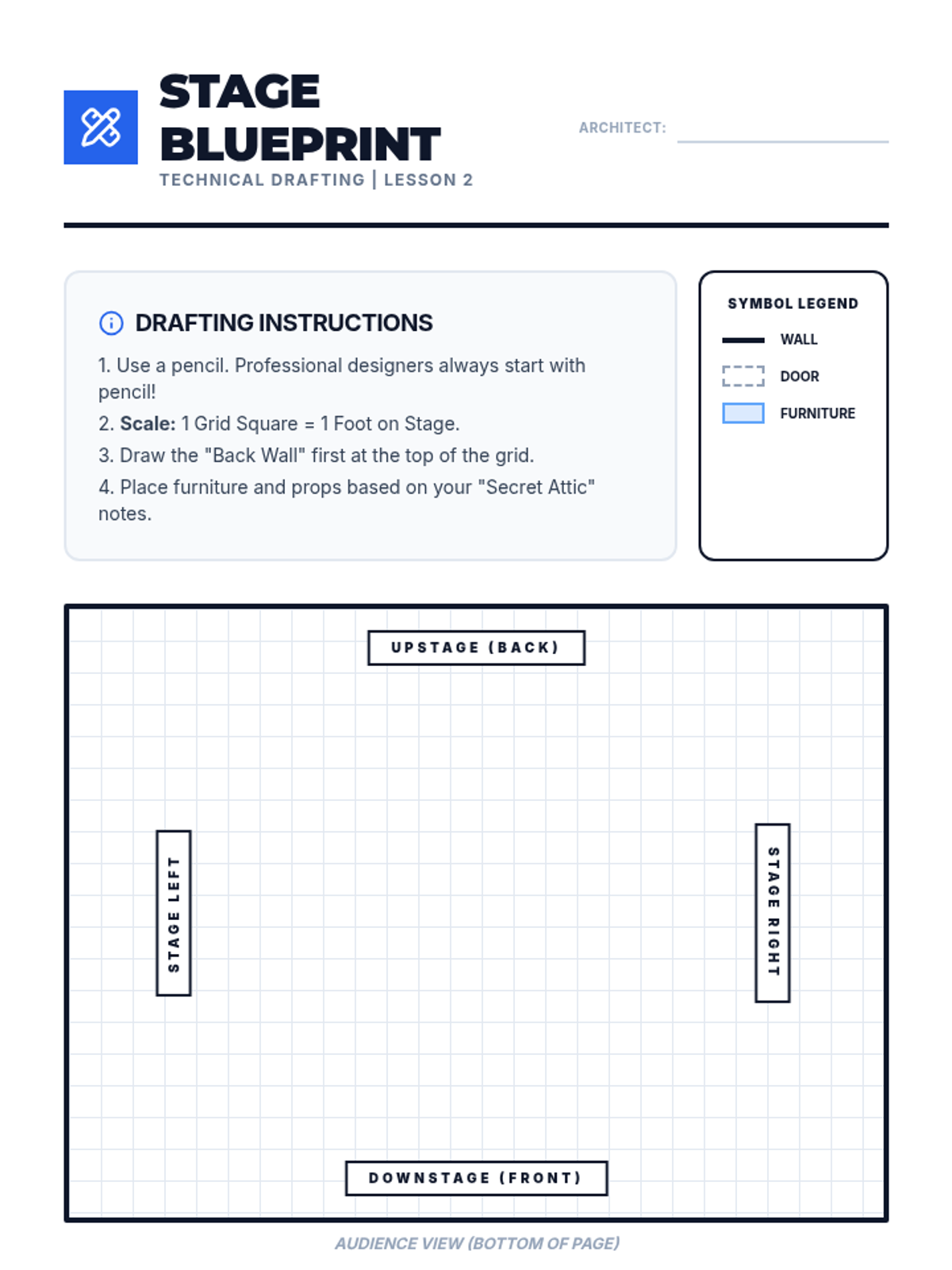
Students learn to draw 'bird's eye view' stage plans, placing furniture and walls while considering audience sightlines.
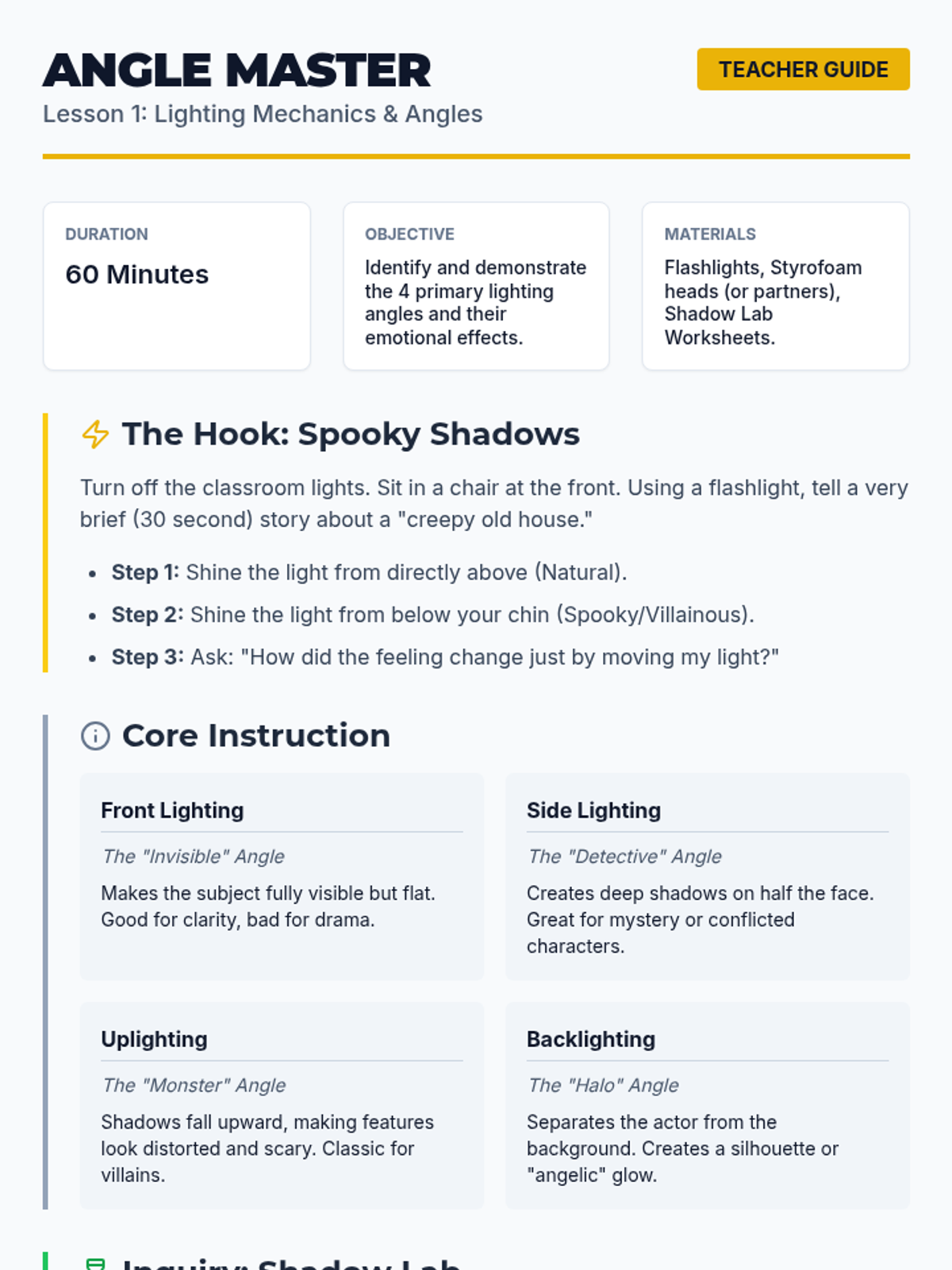
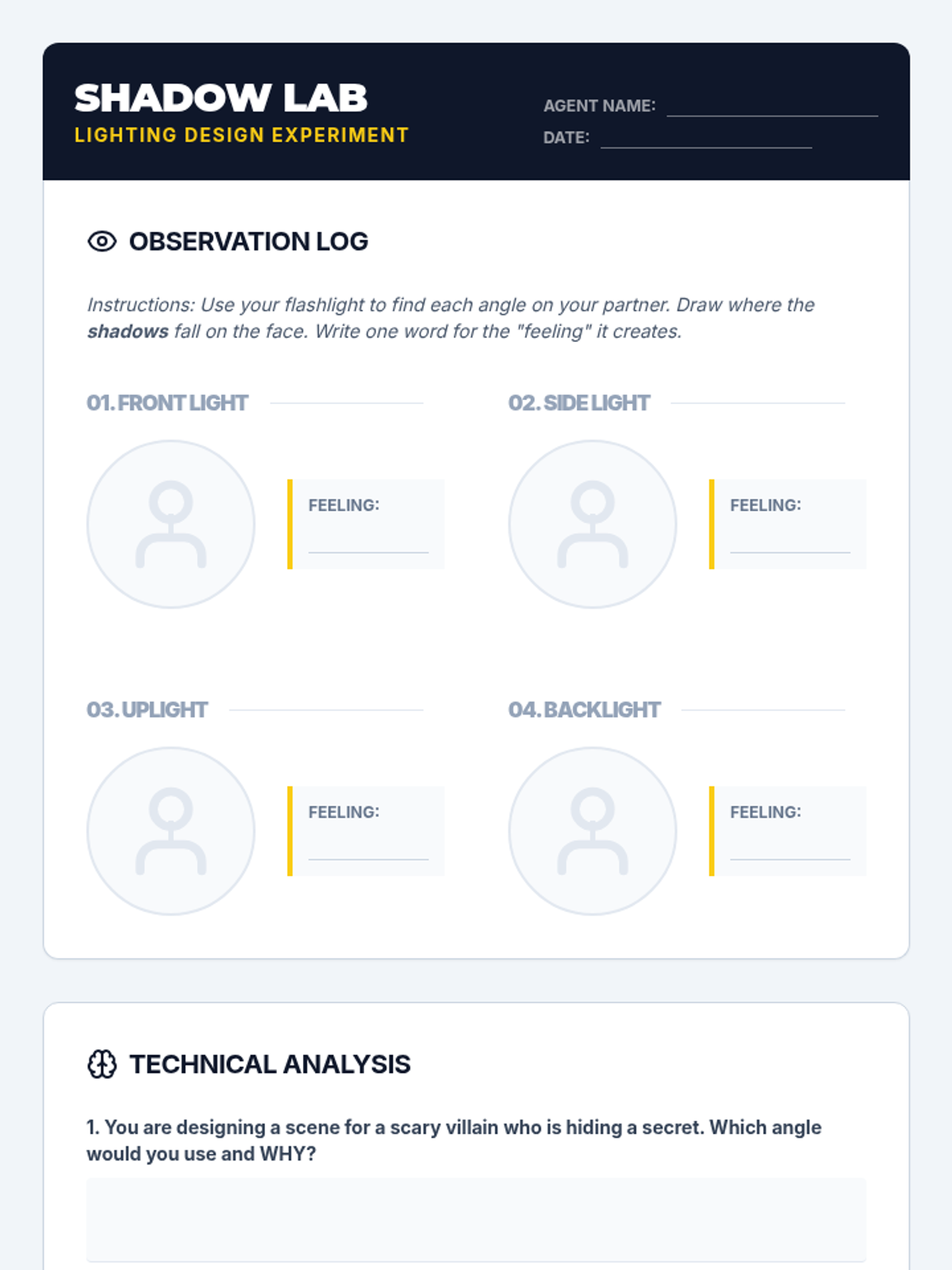
Students explore how the position and angle of light sources create different shadow effects and dramatic moods on stage.
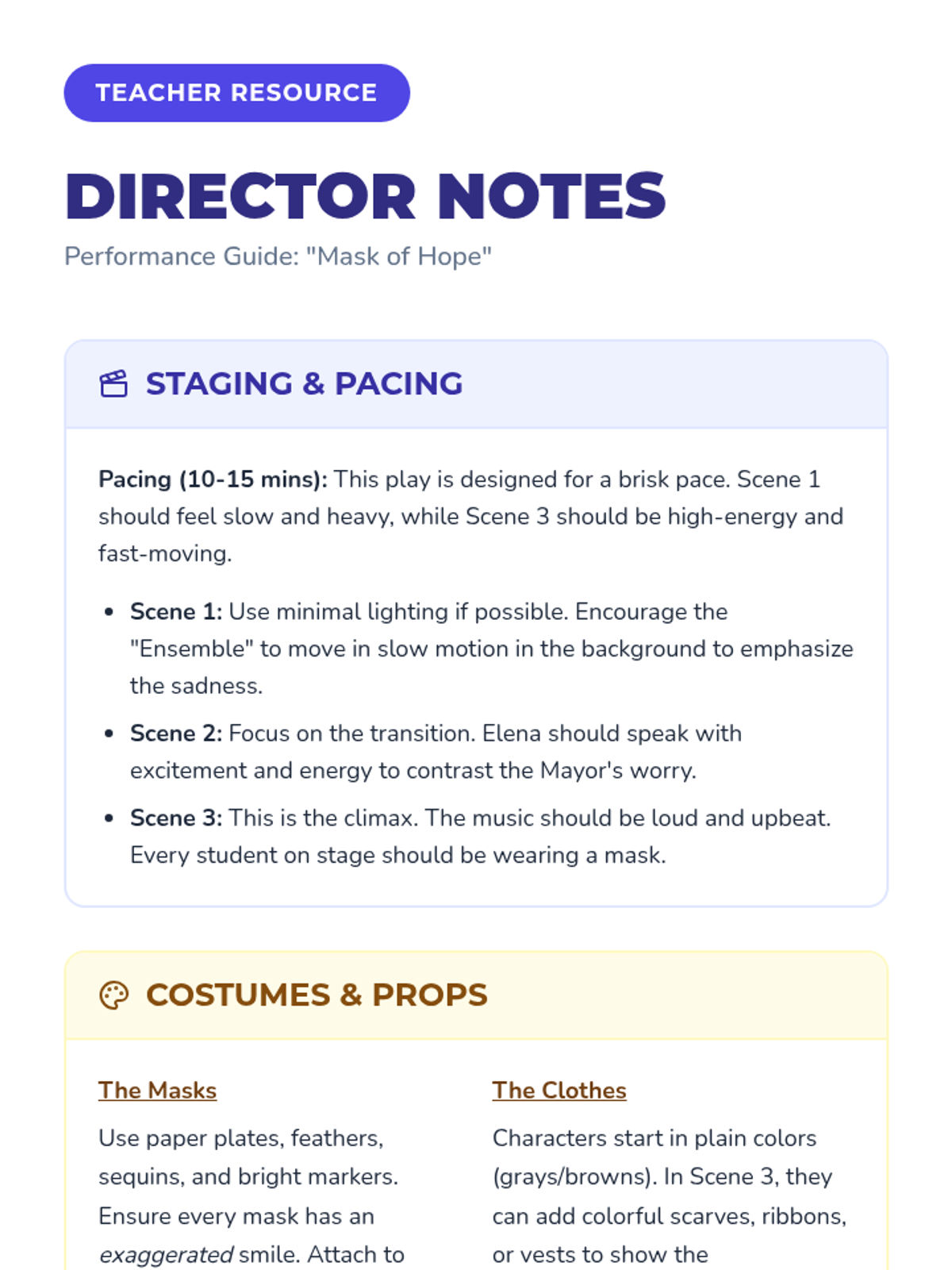
This lesson introduces students to the Masskara Festival of Bacolod City, focusing on its origins as a festival of resilience and hope. Students will perform a 10-15 minute play that dramatizes the historical context and the 'City of Smiles' spirit.
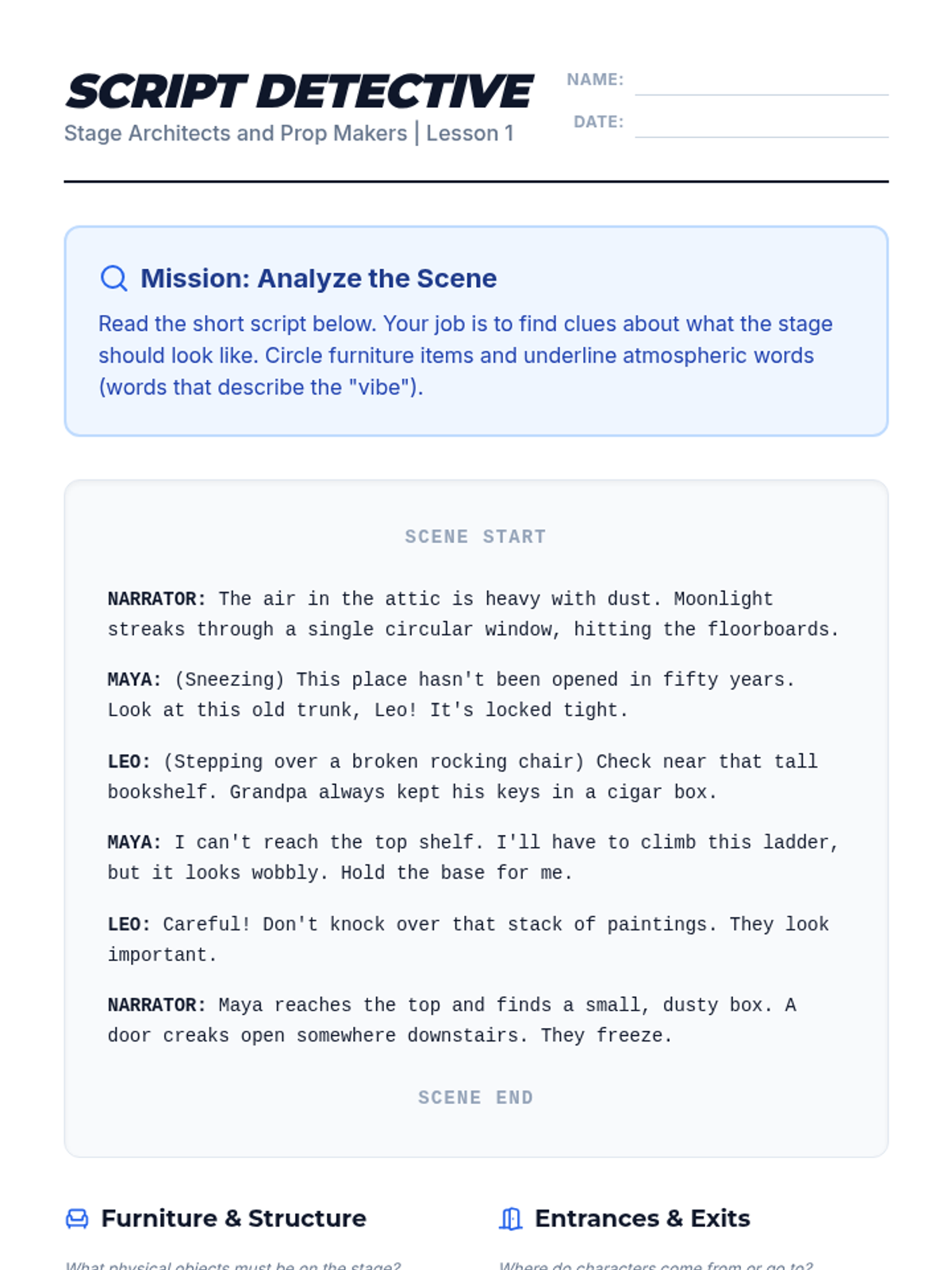
Students analyze a short scene to identify clues about the physical setting, bridging reading comprehension with visual conceptualization.
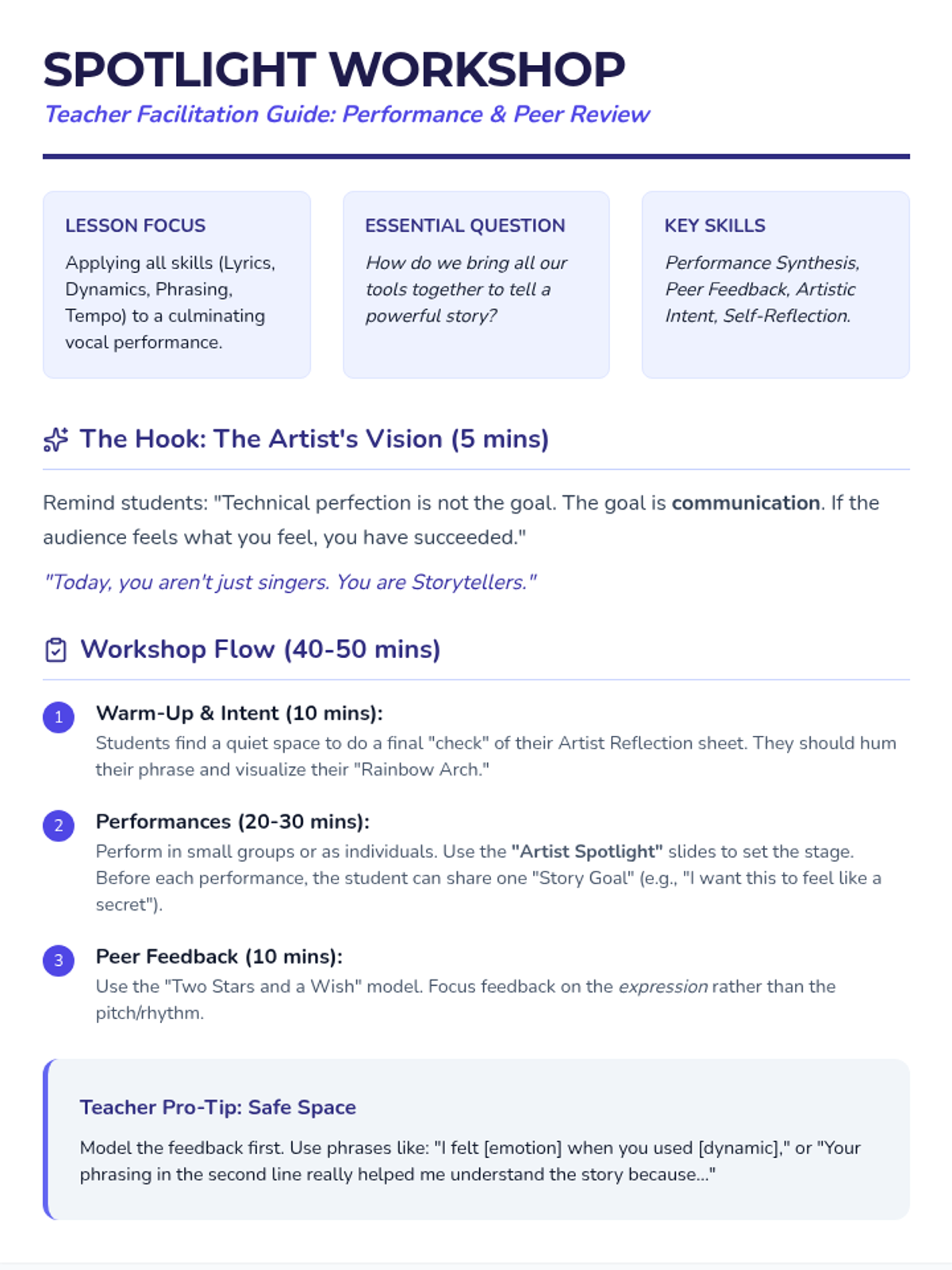
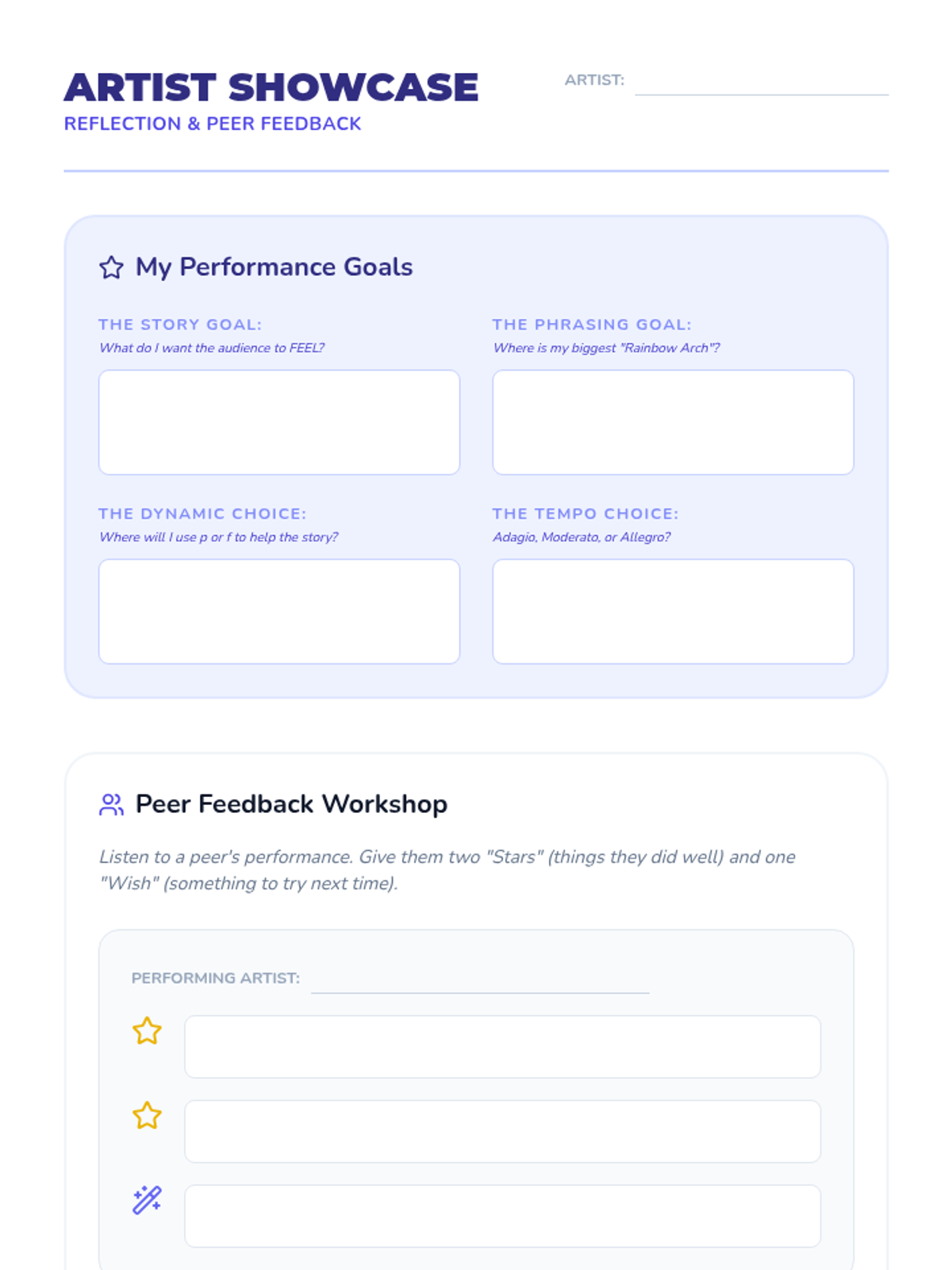
A culminating workshop where students apply all skills to a performance and engage in peer review.
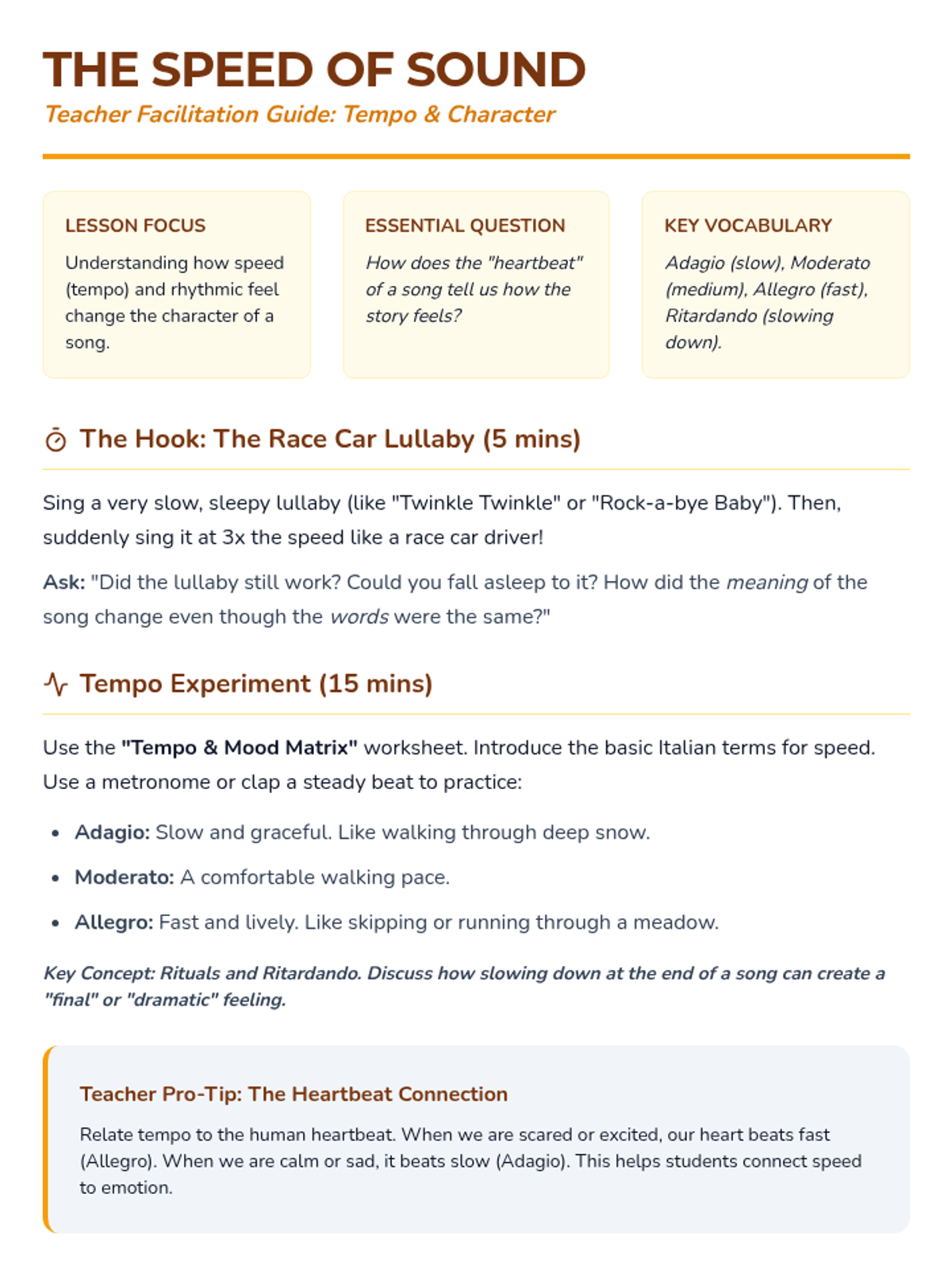
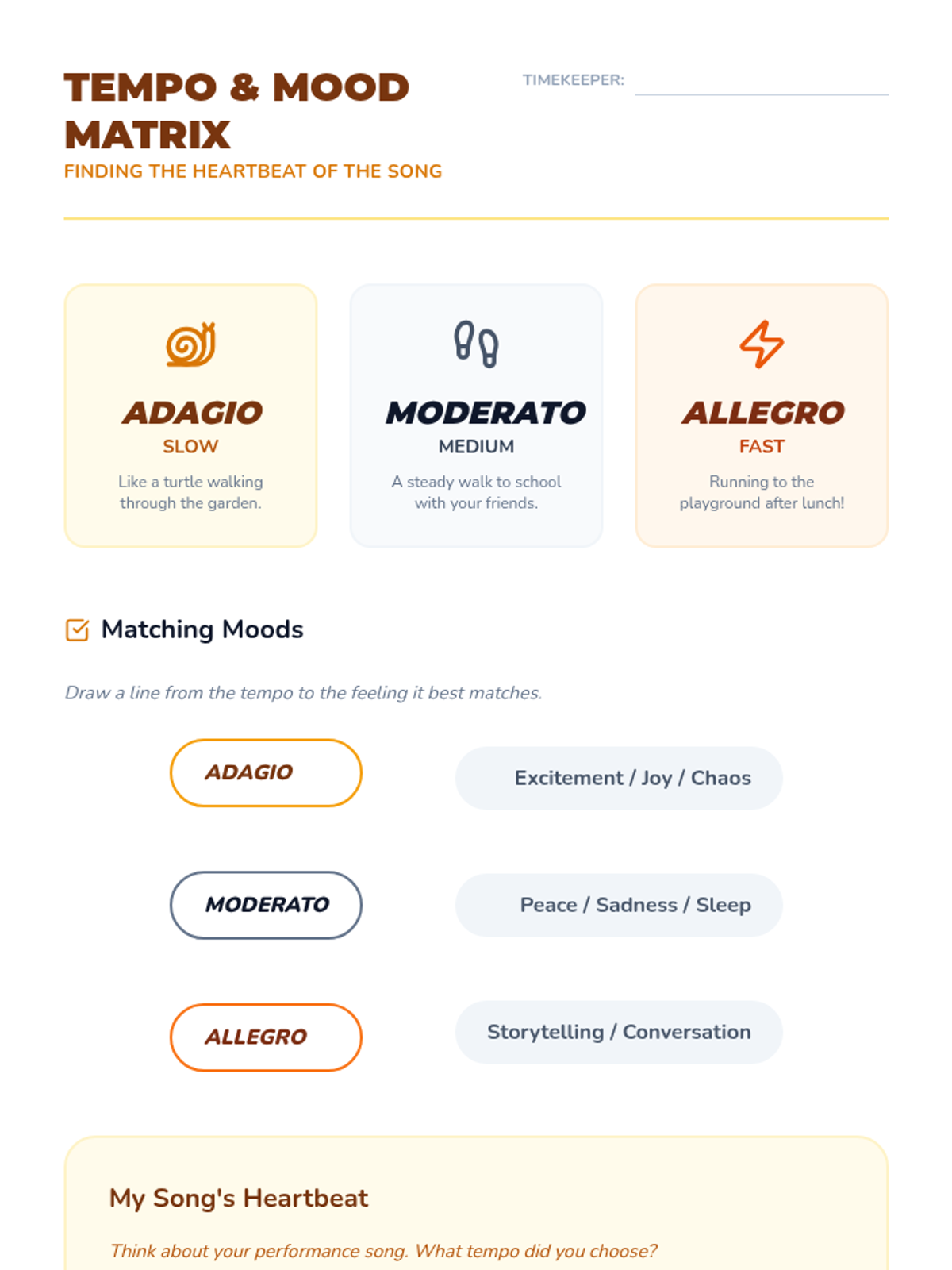
Investigating how tempo and rhythmic character contribute to a song's mood and storytelling.