Develops technical proficiency and creative movement skills across various styles. Examines choreographic principles alongside the historical and cultural origins of diverse global dance forms.
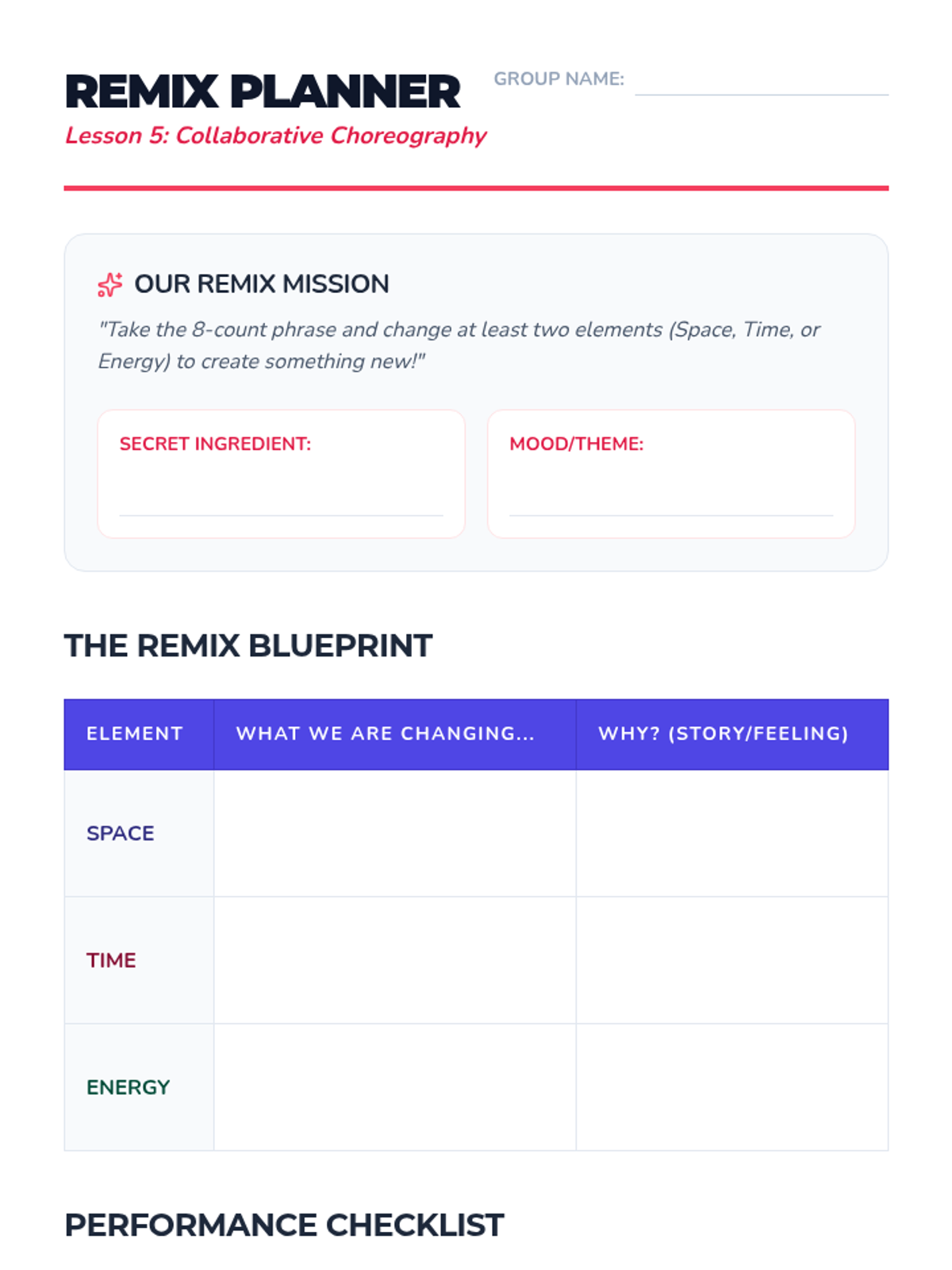
Small groups apply their understanding to modify the learned 8-count phrase. They alter levels, tempo, or energy to create a variation and present their work for peer feedback.
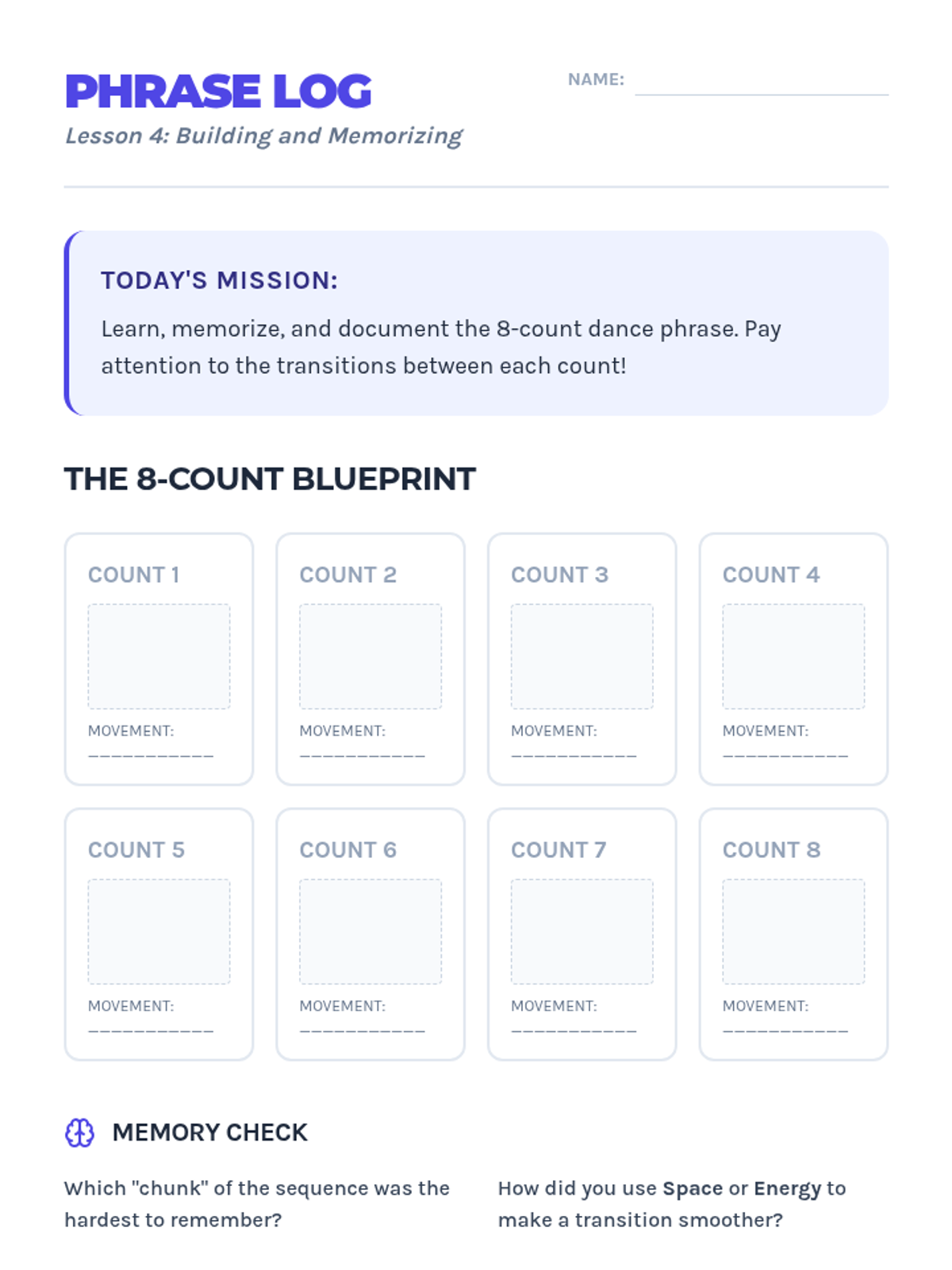
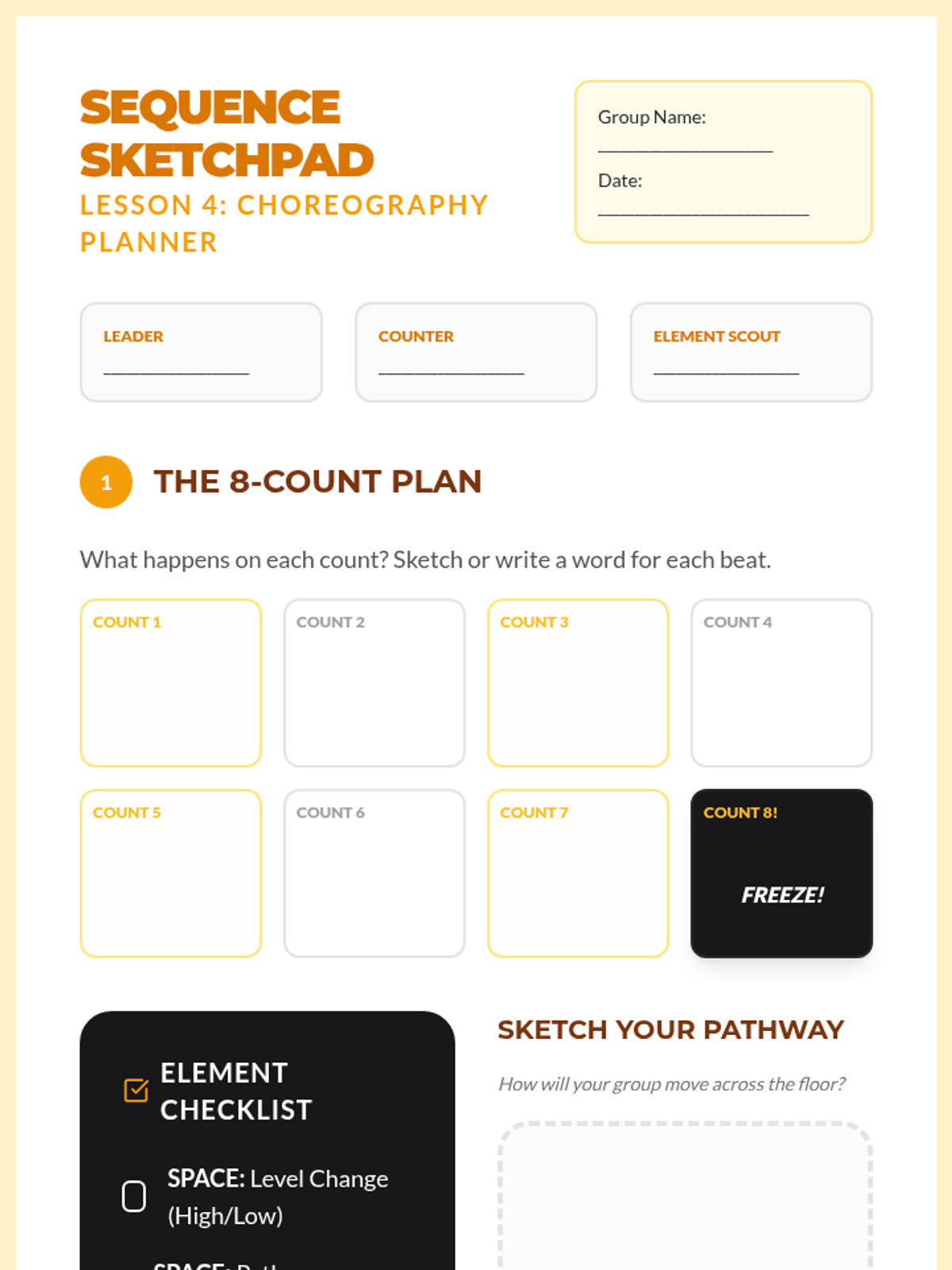
Students combine space, time, and energy to learn a structured 8-count dance phrase. The lesson focuses on movement memory and transitioning smoothly between shapes.
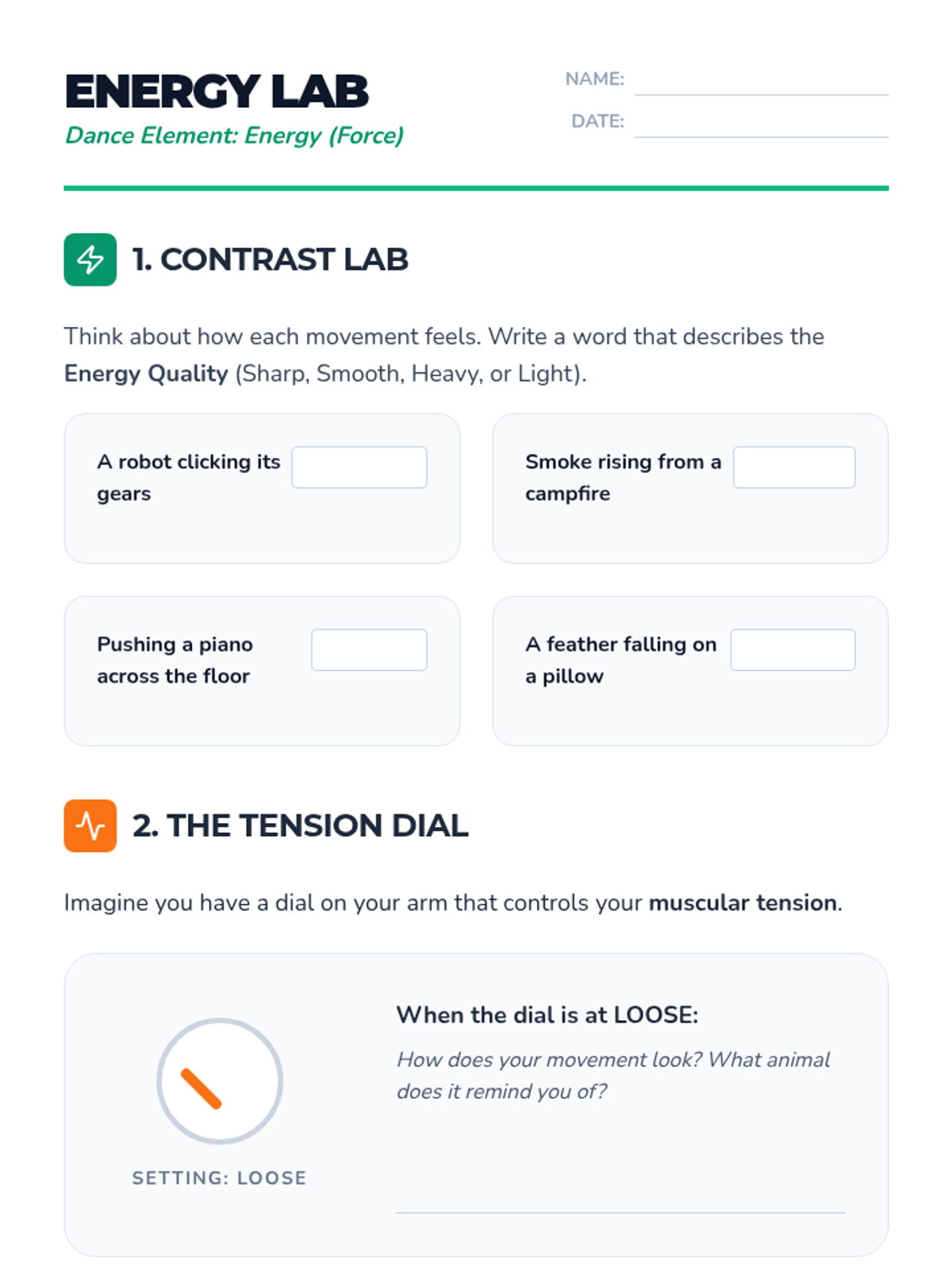
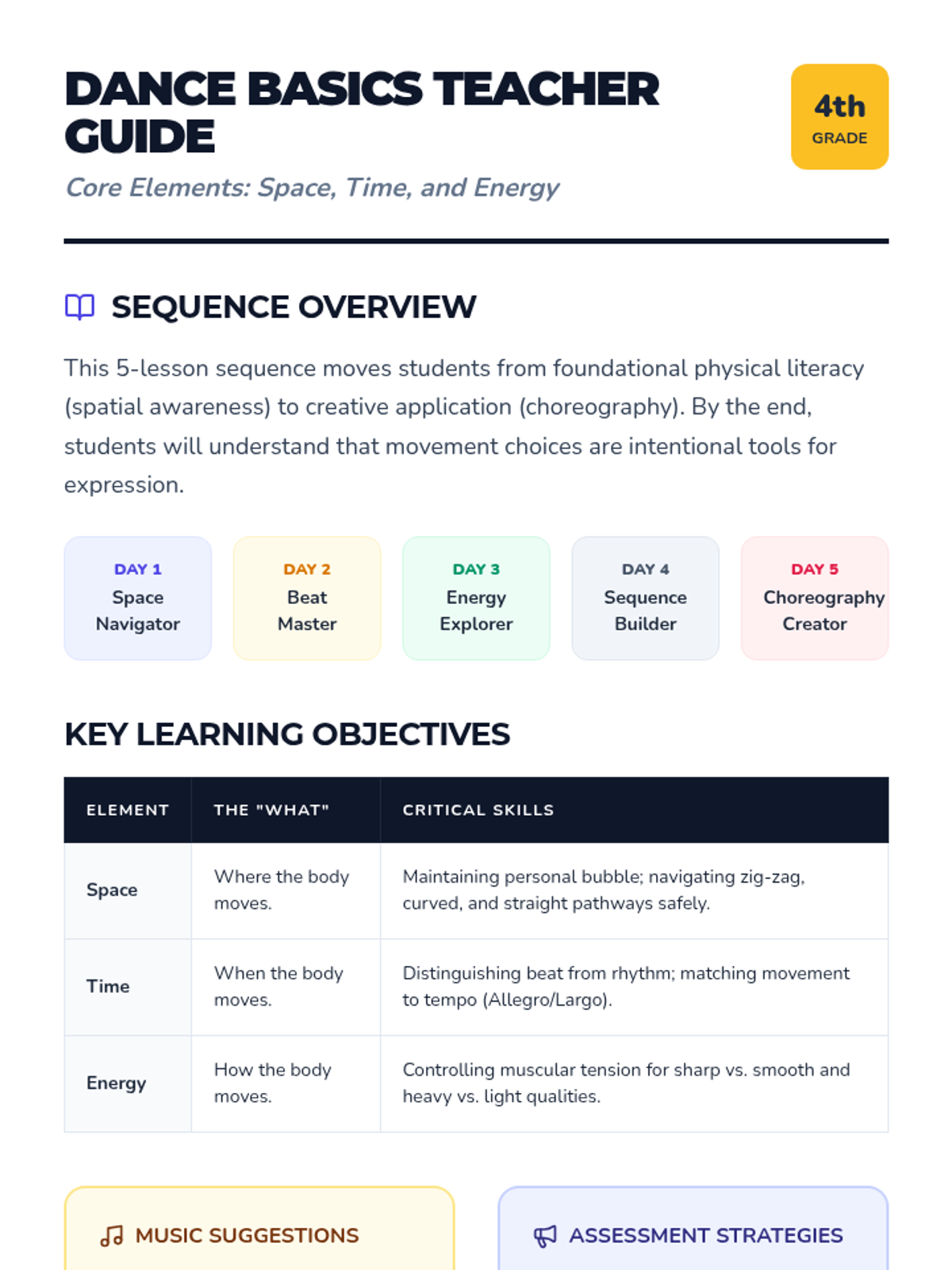
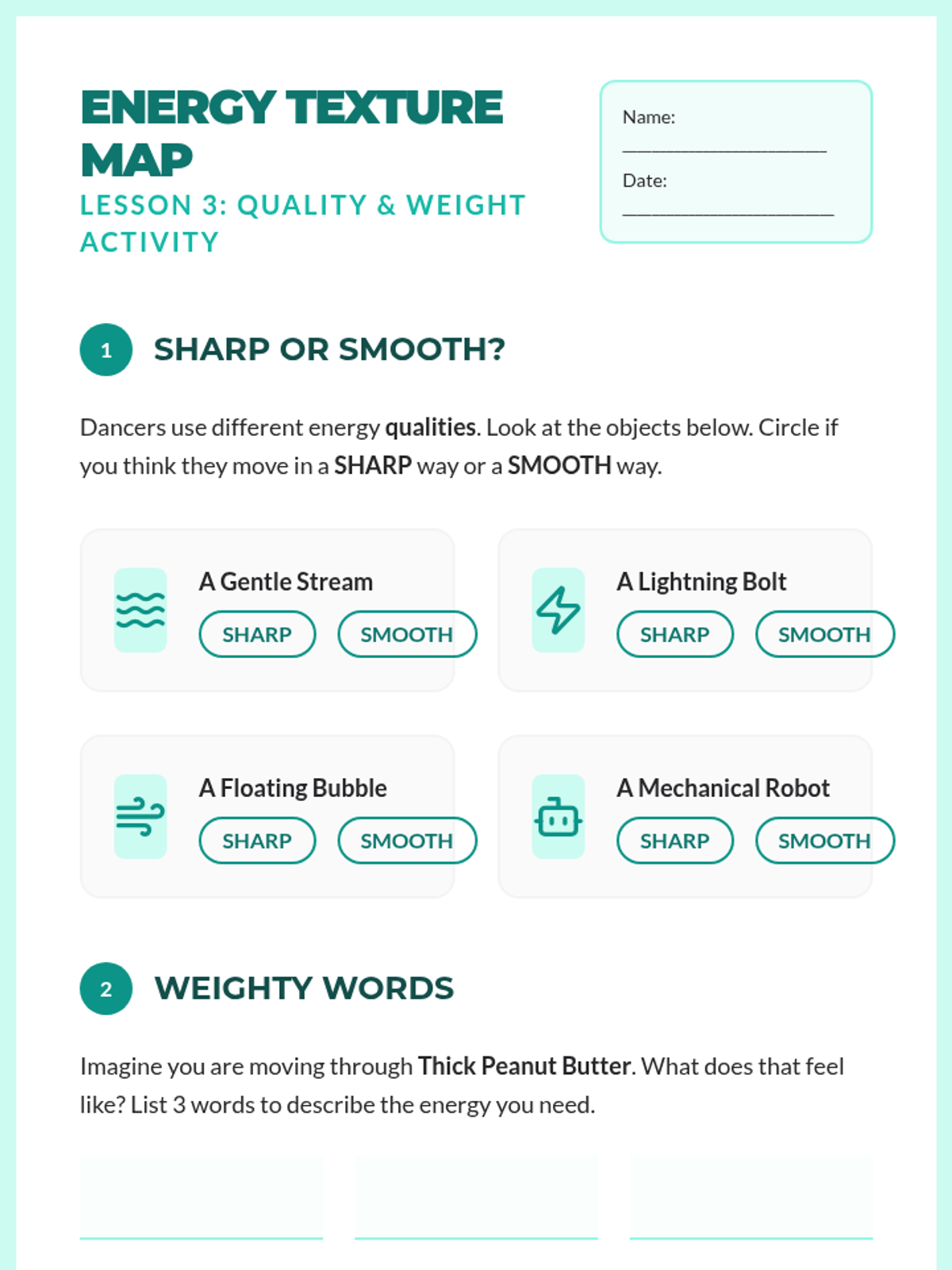
Students investigate the element of Energy (Force) by experimenting with contrasting movement qualities such as sharp vs. smooth and heavy vs. light. They analyze how muscular tension changes movement expression.
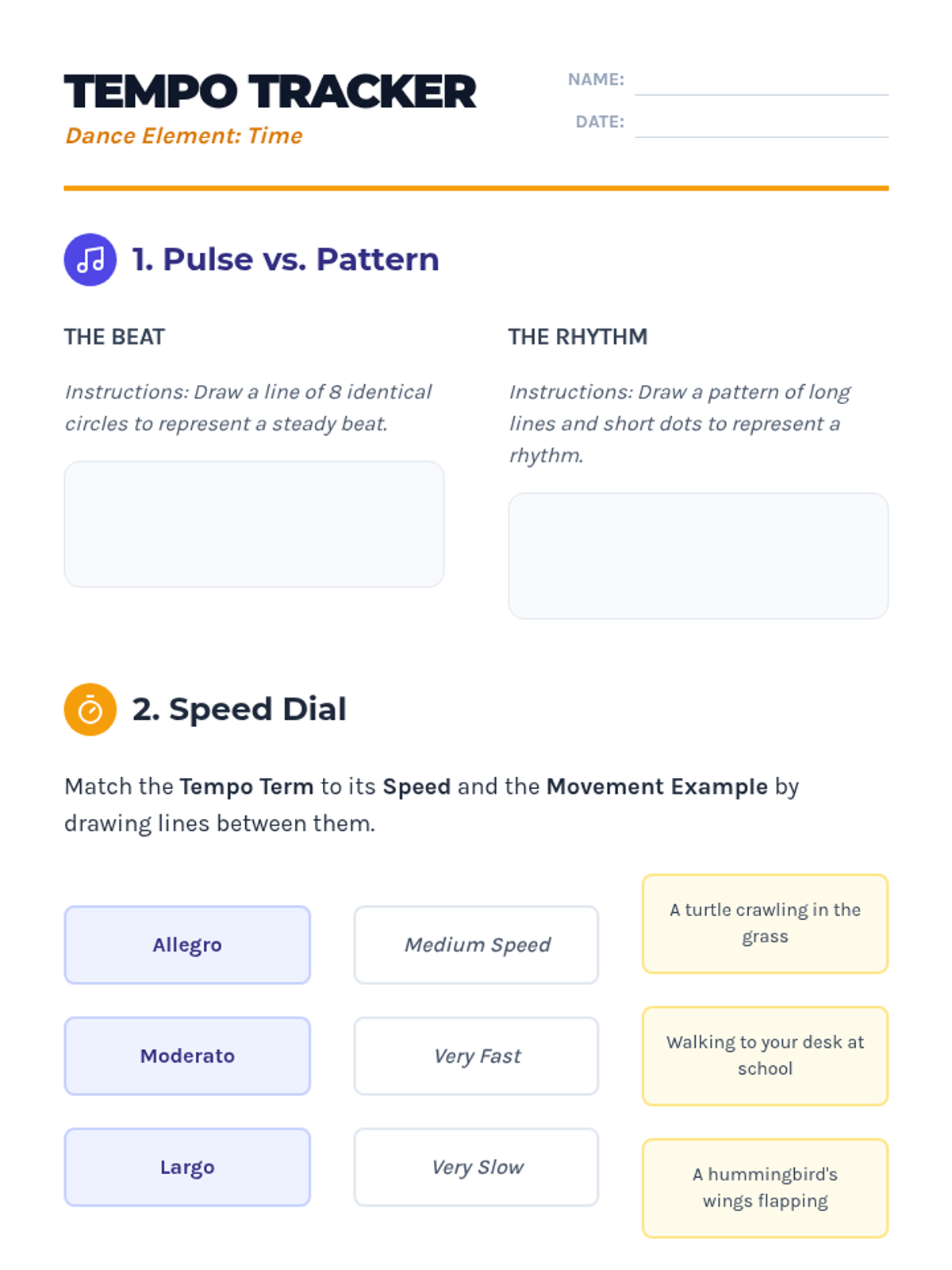
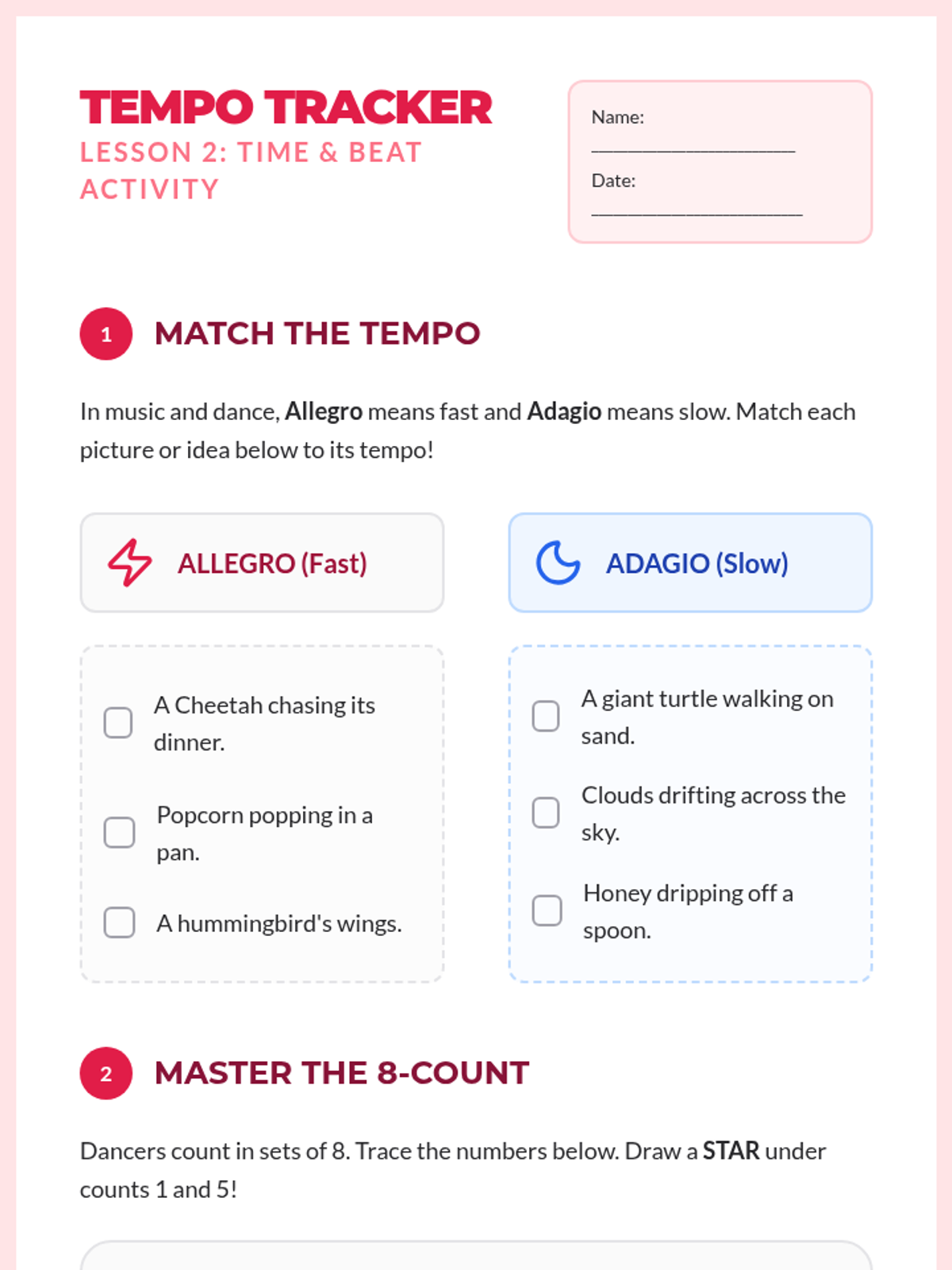
Focusing on the element of Time, students practice distinguishing between the beat of the music and the rhythm of the movement. They perform sequences at varying tempos, learning to freeze on specific counts.
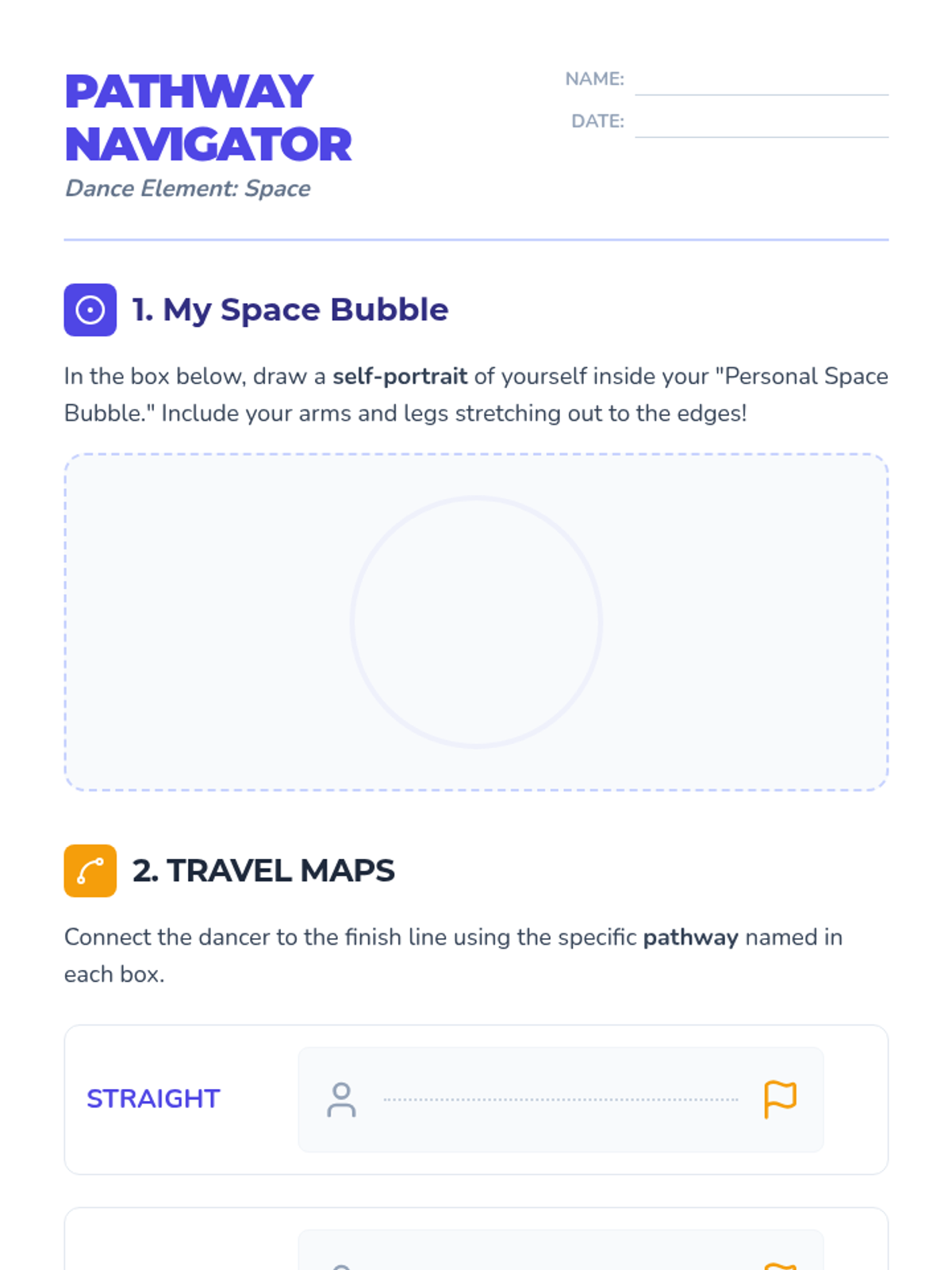
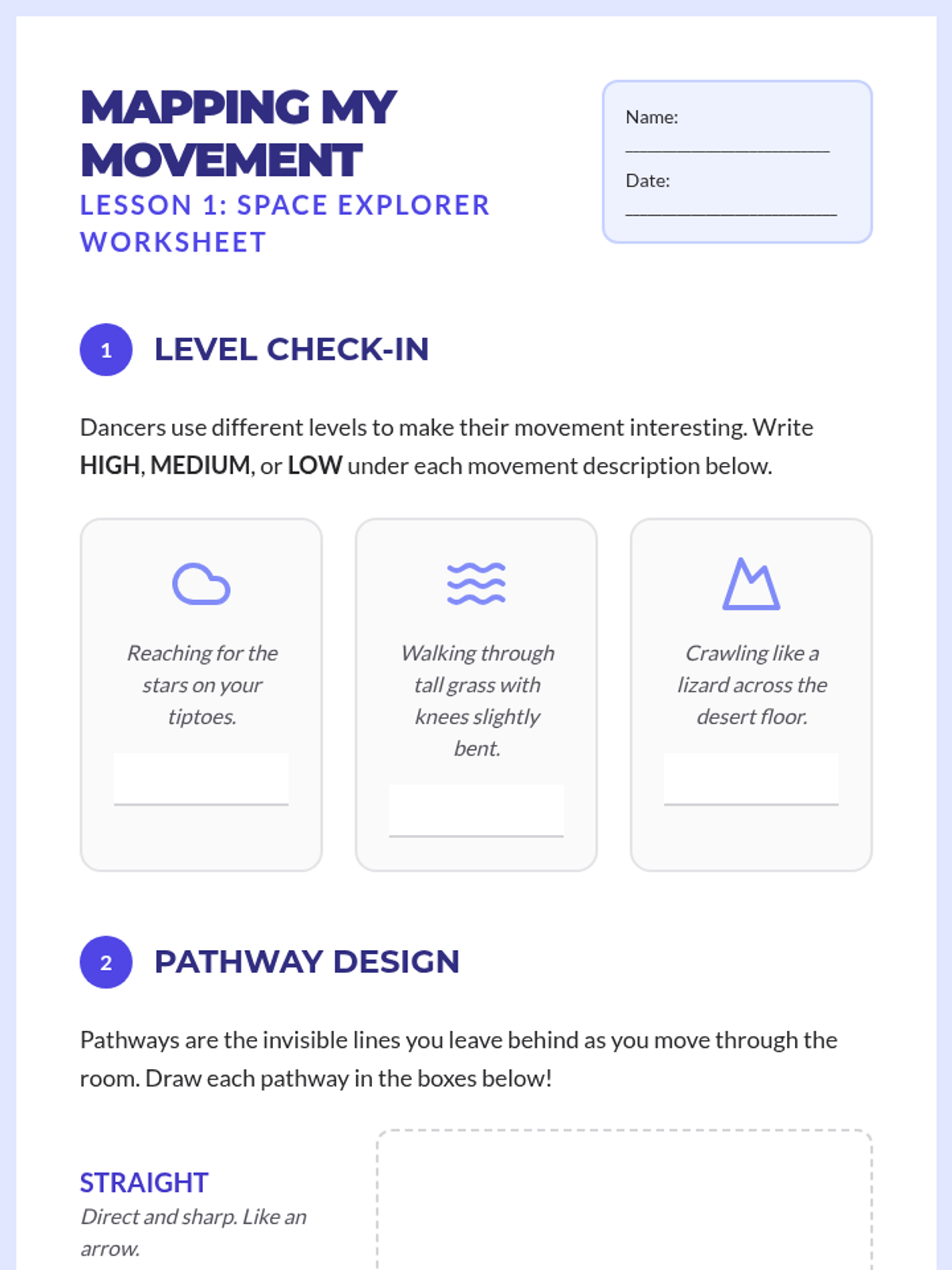
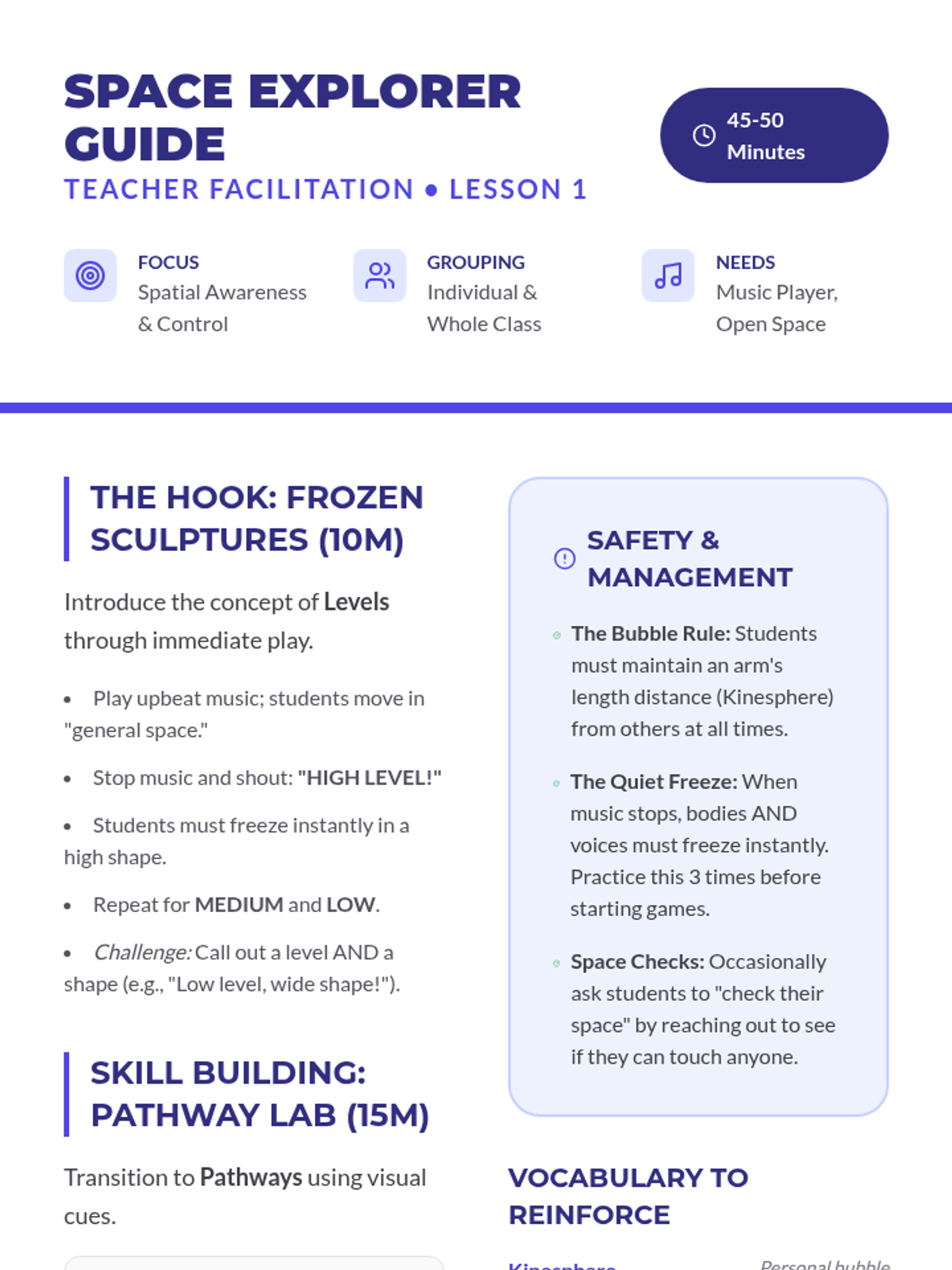
Students identify and demonstrate personal versus general space while navigating different pathways (zigzag, curved, straight) and levels (high, medium, low). Through guided locomotion activities, they practice moving safely without collision.
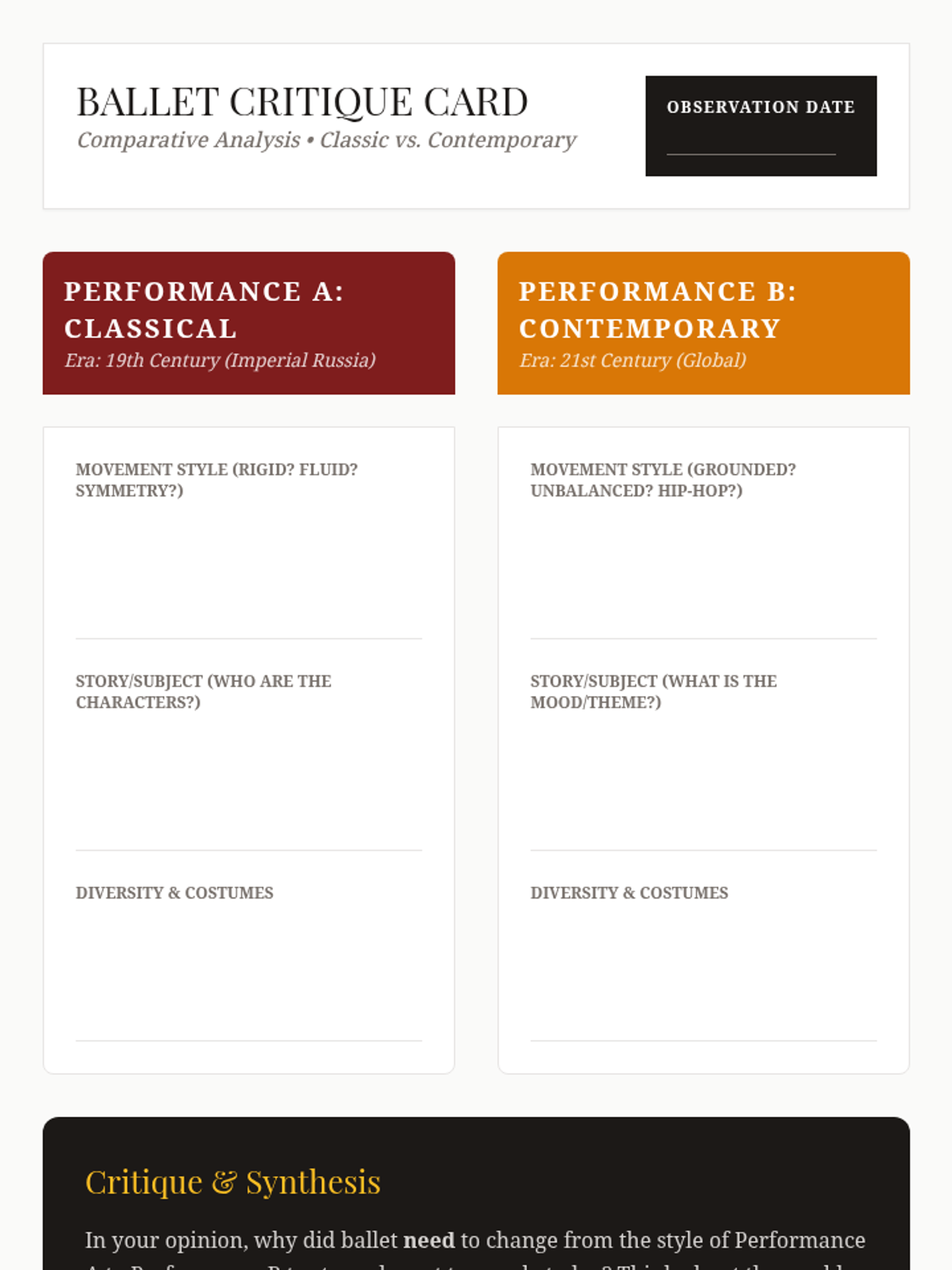
Students conclude the sequence by analyzing the transition to contemporary ballet, comparing traditional rules with modern innovations in costume, movement, and music.
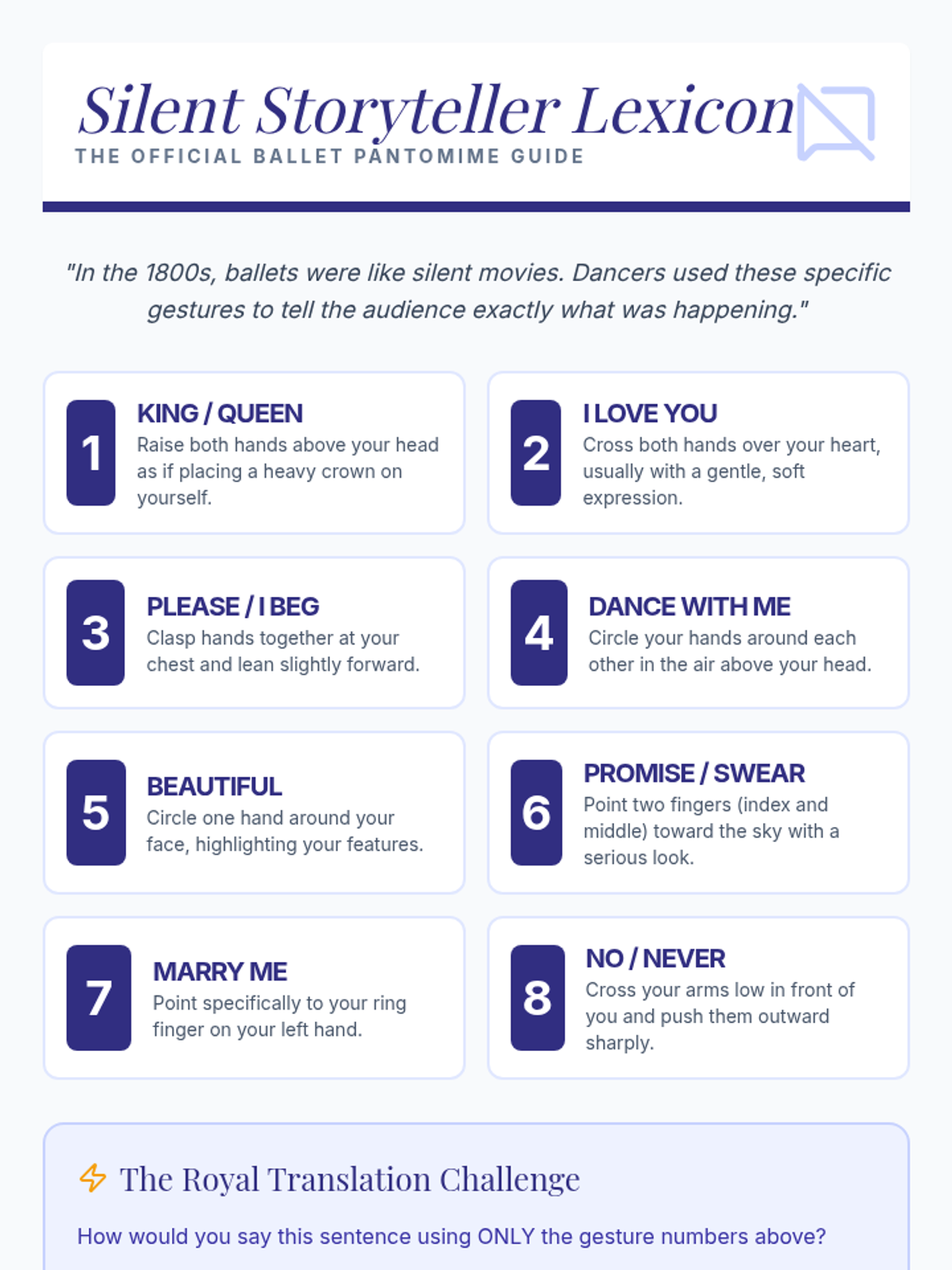
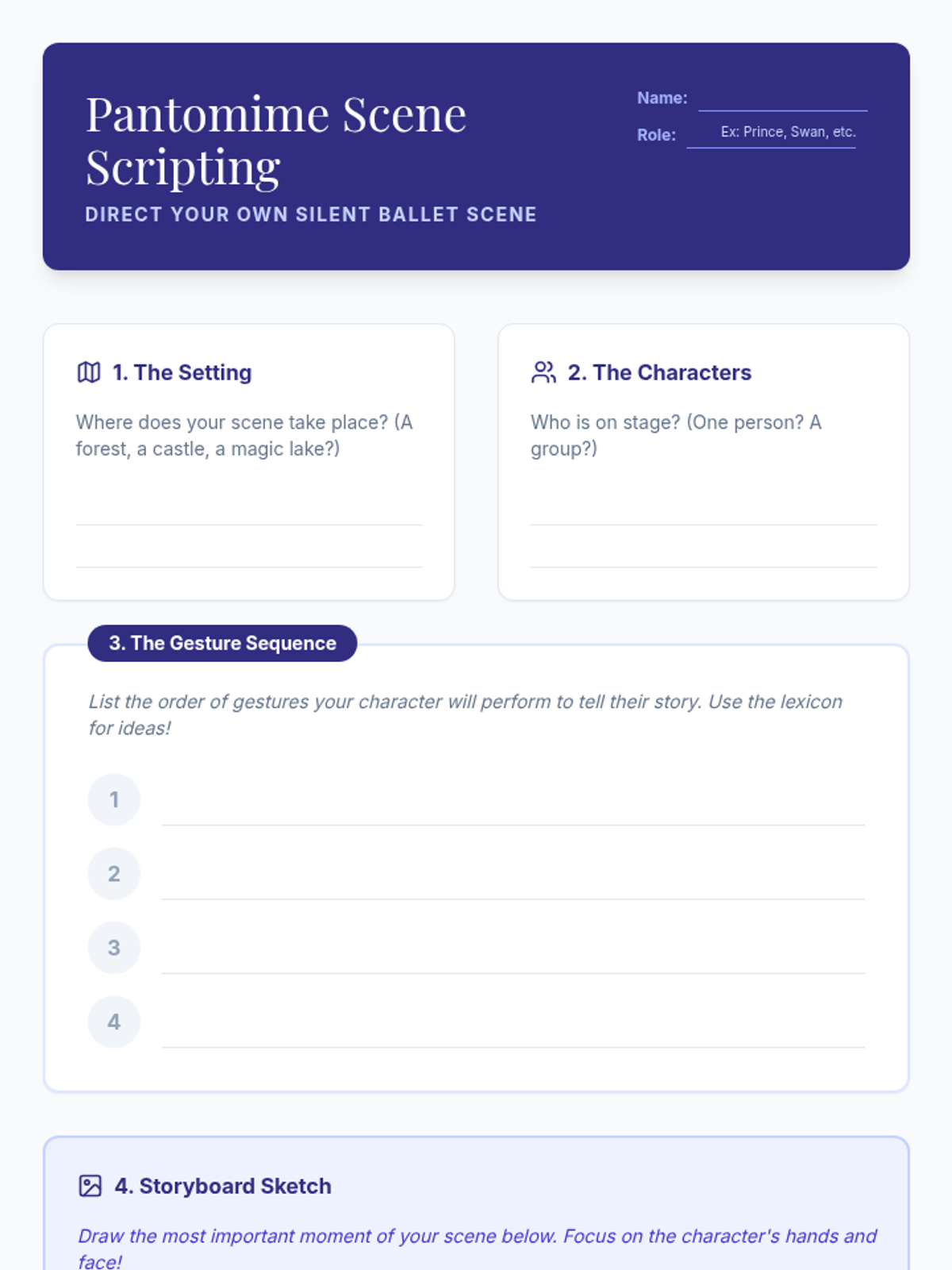
Students learn the specialized language of ballet pantomime, exploring how dancers communicate plot and emotion without words through specific, codified gestures.
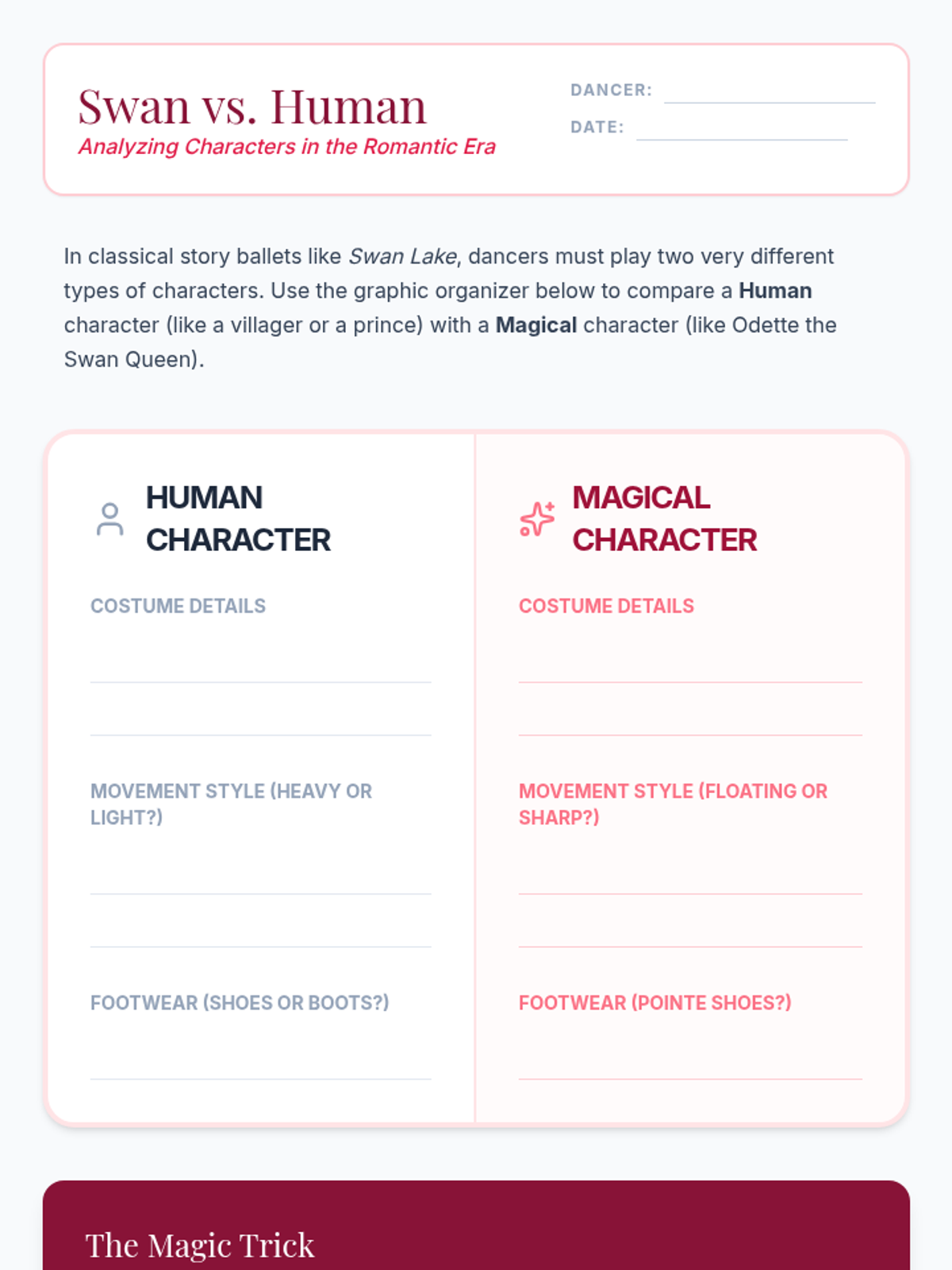
Students explore the era of story ballets, learning about the transition to theatrical narratives, the invention of pointe shoes and tutus, and the distinction between 'real' and 'magical' characters.
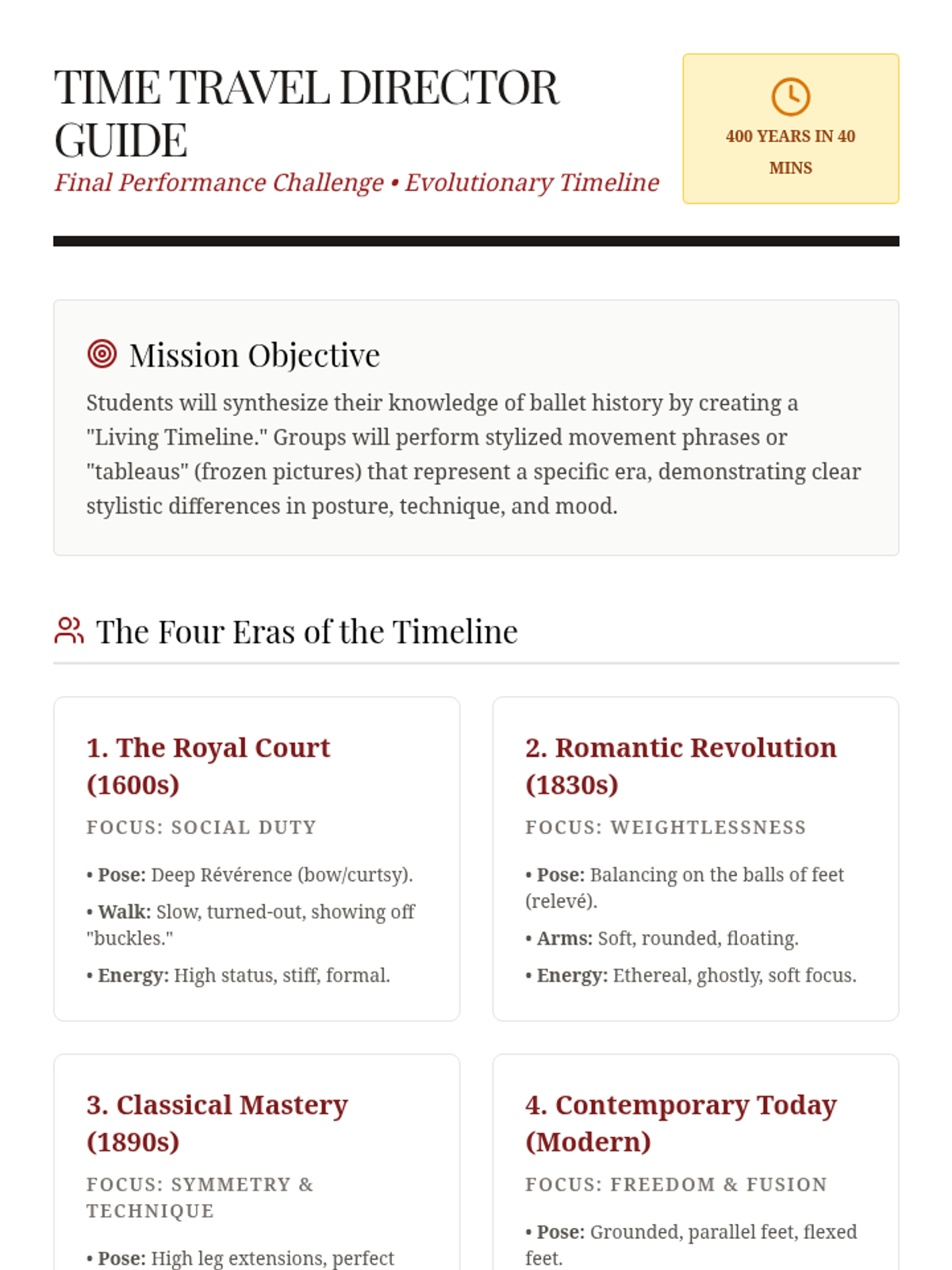
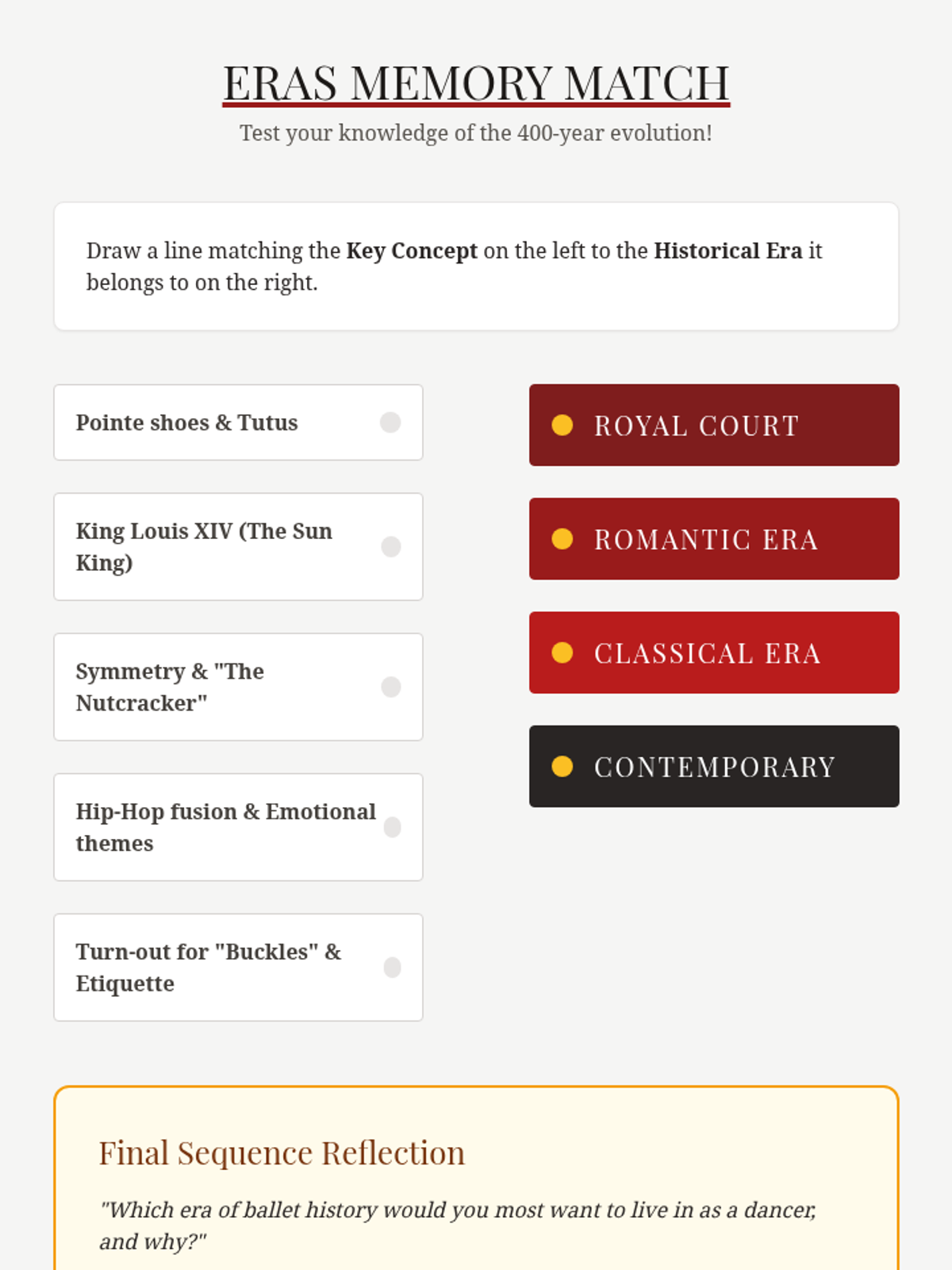
Groups are assigned different eras of ballet history (Court, Romantic, Classical, Modern) and create a 'living timeline' tableau or short phrase demonstrating the style of that period. This reinforces the chronological evolution learned throughout the sequence.
Students watch and critique clips of 'The Nutcracker' versus modern contemporary ballet works to identify differences in rigidity, subject matter, and diversity. They discuss how the art form has expanded beyond its European aristocratic roots.
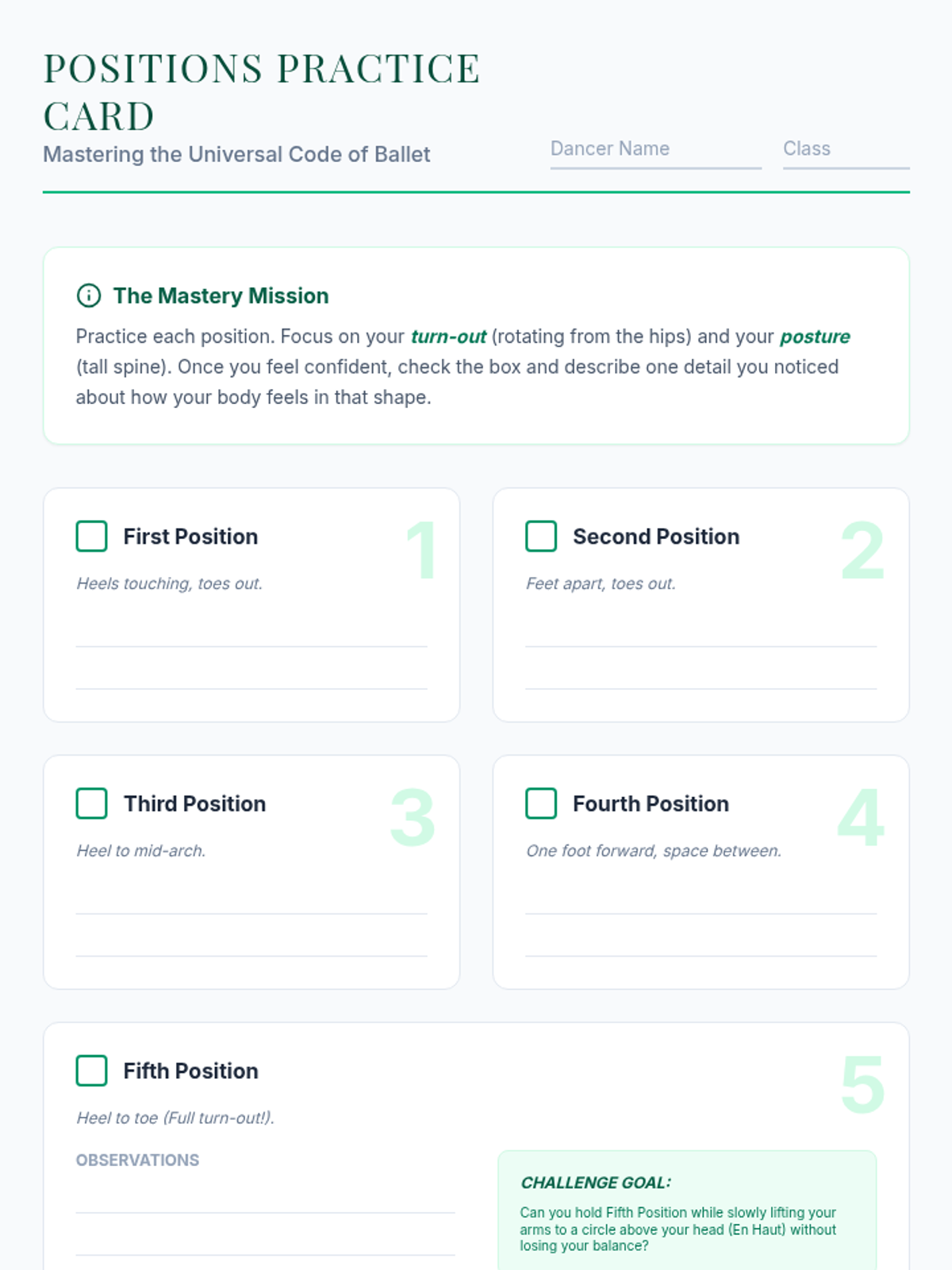
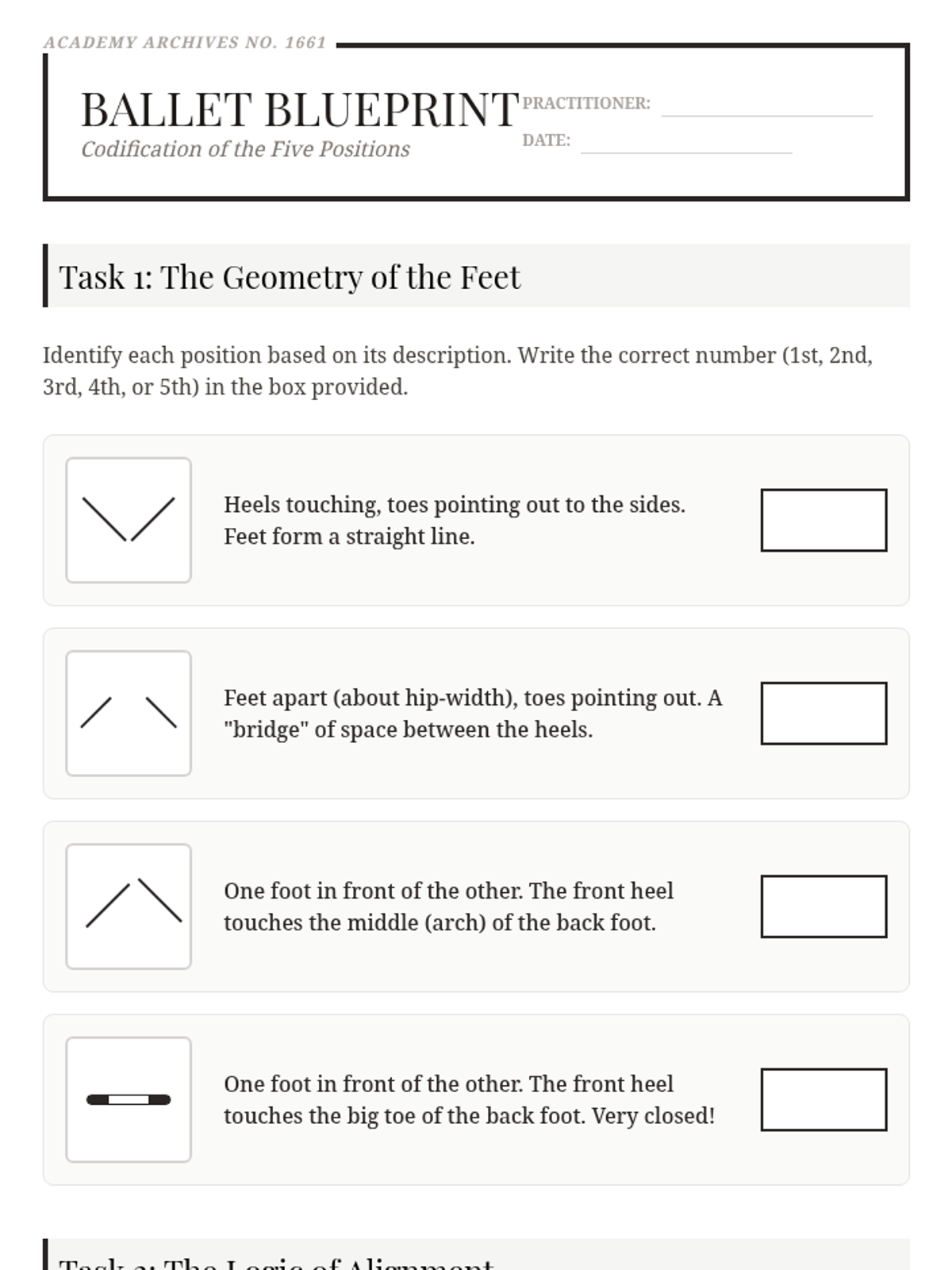
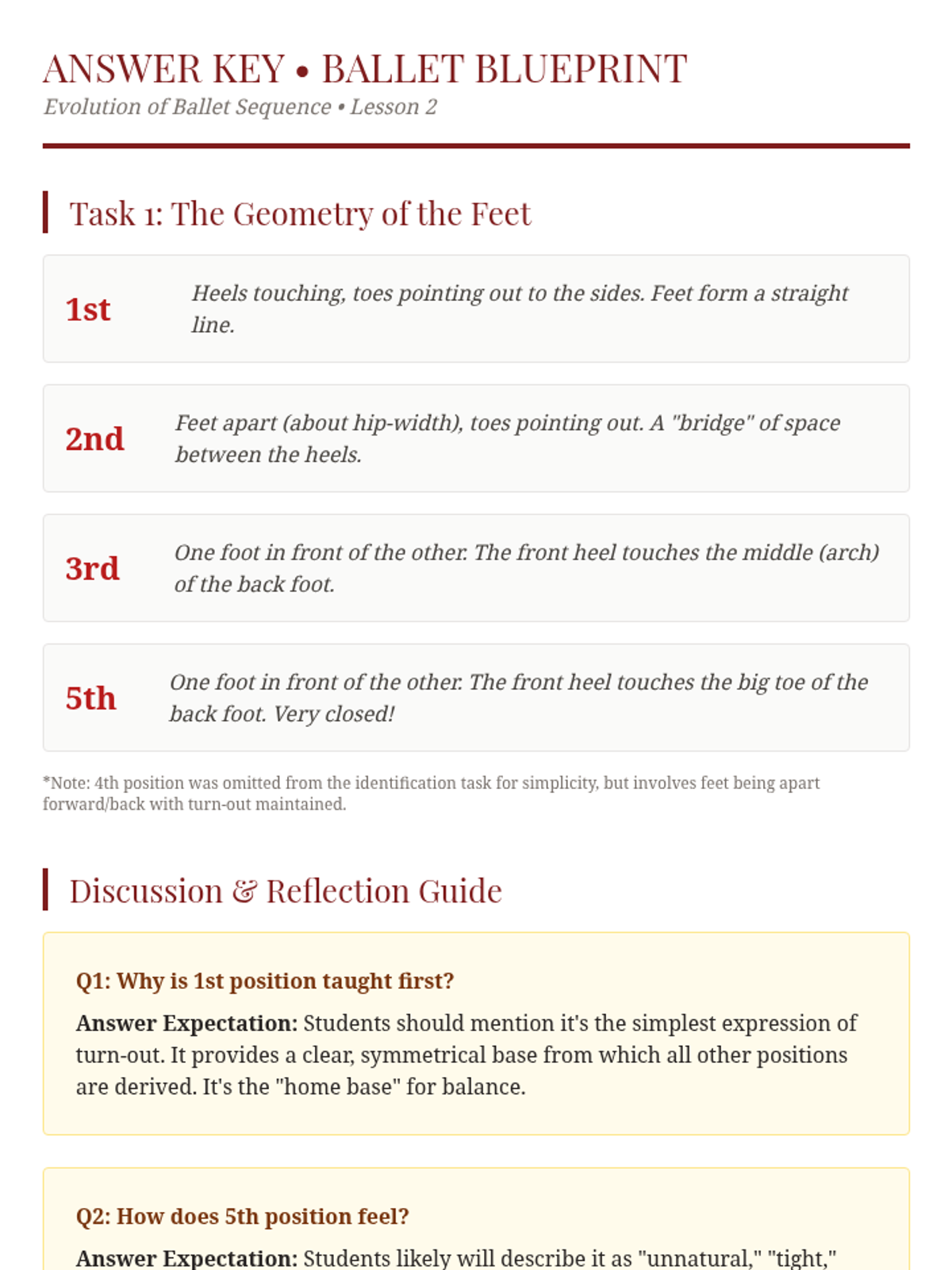
Students learn the five foundational positions of ballet and the concept of 'turn-out,' exploring how these technical codes were established to create a professional standard for dance.
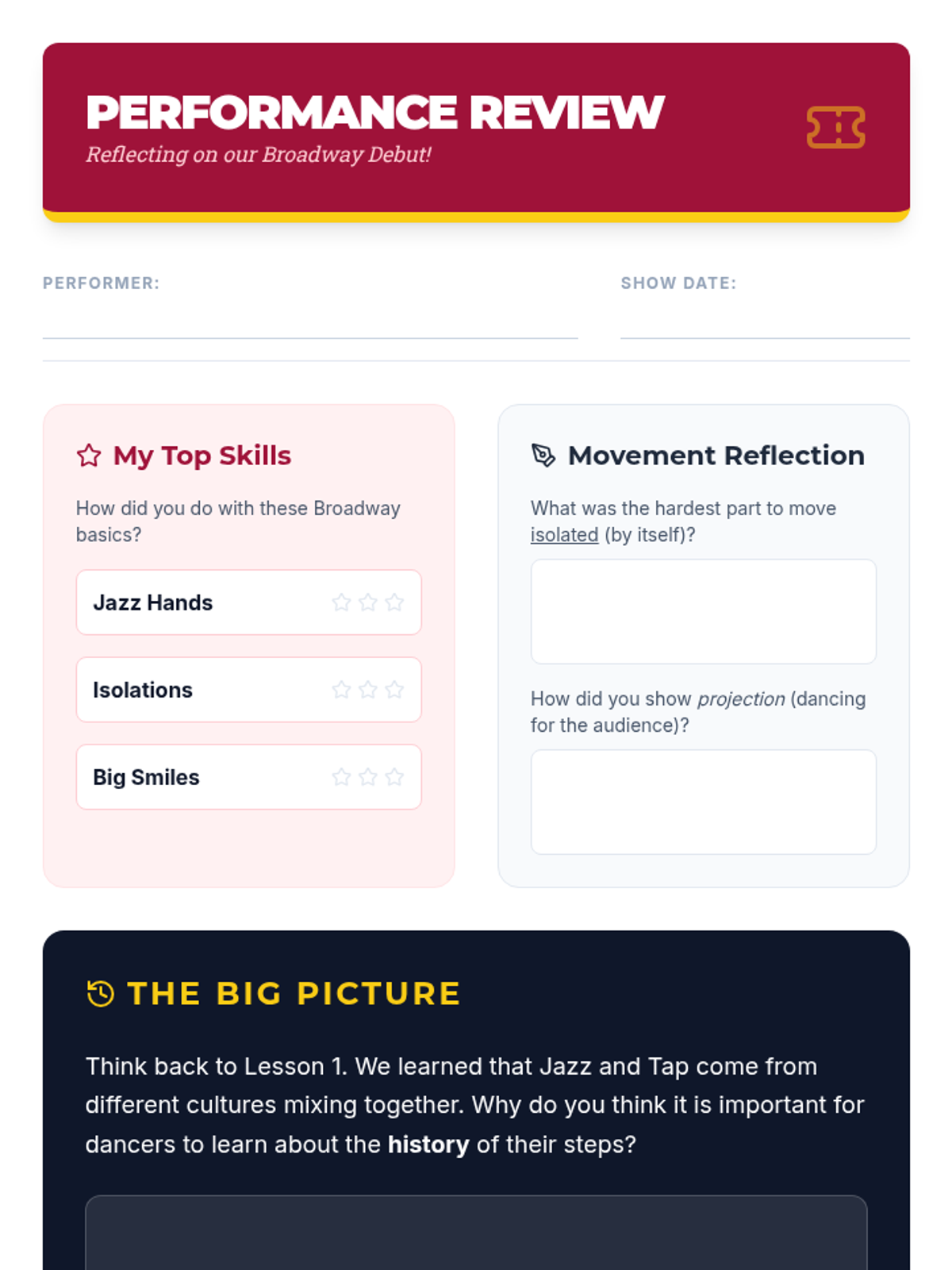
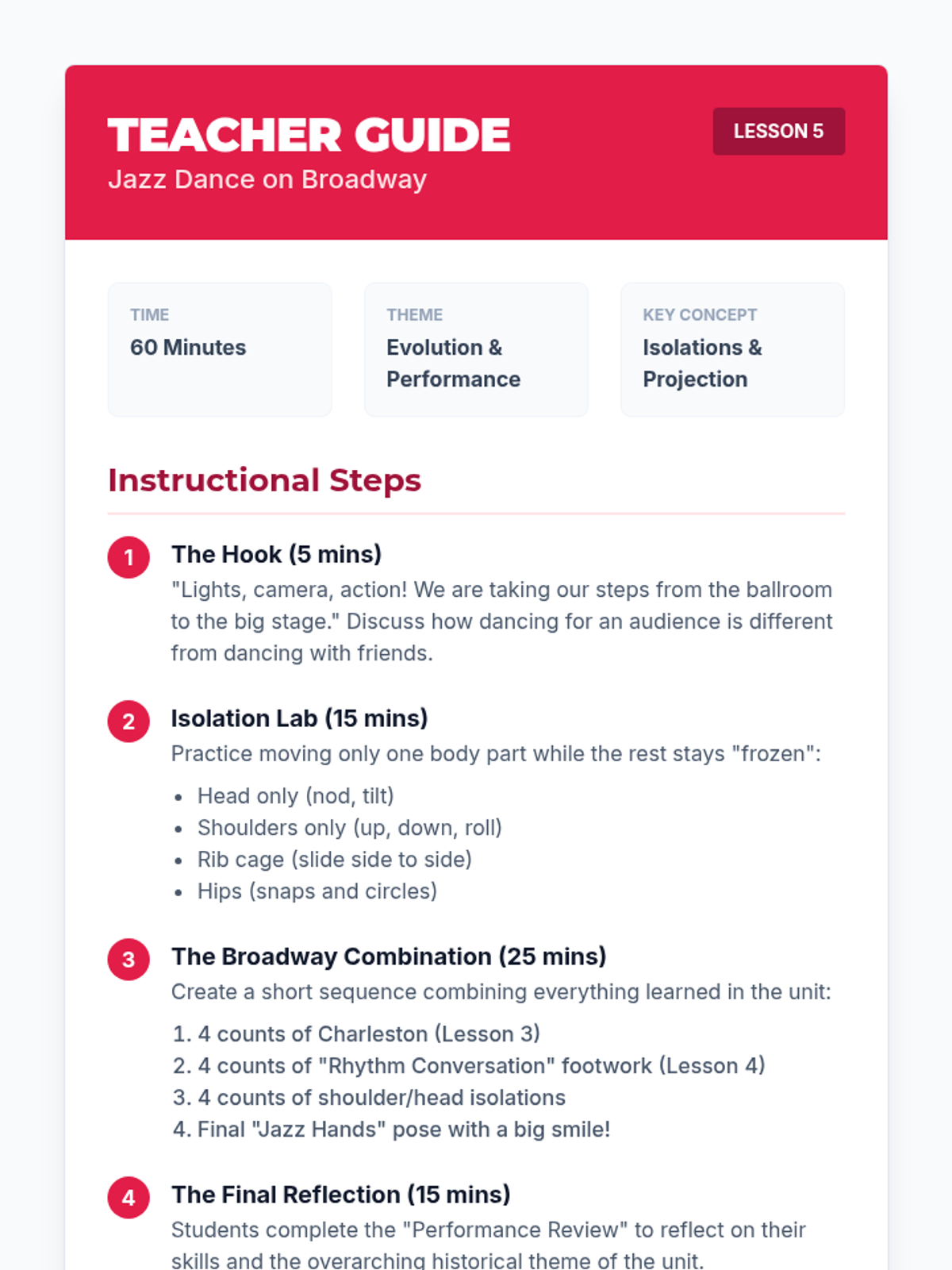
Connecting social dance to the stage by learning theatrical jazz techniques and the concept of 'jazz hands' and isolations.
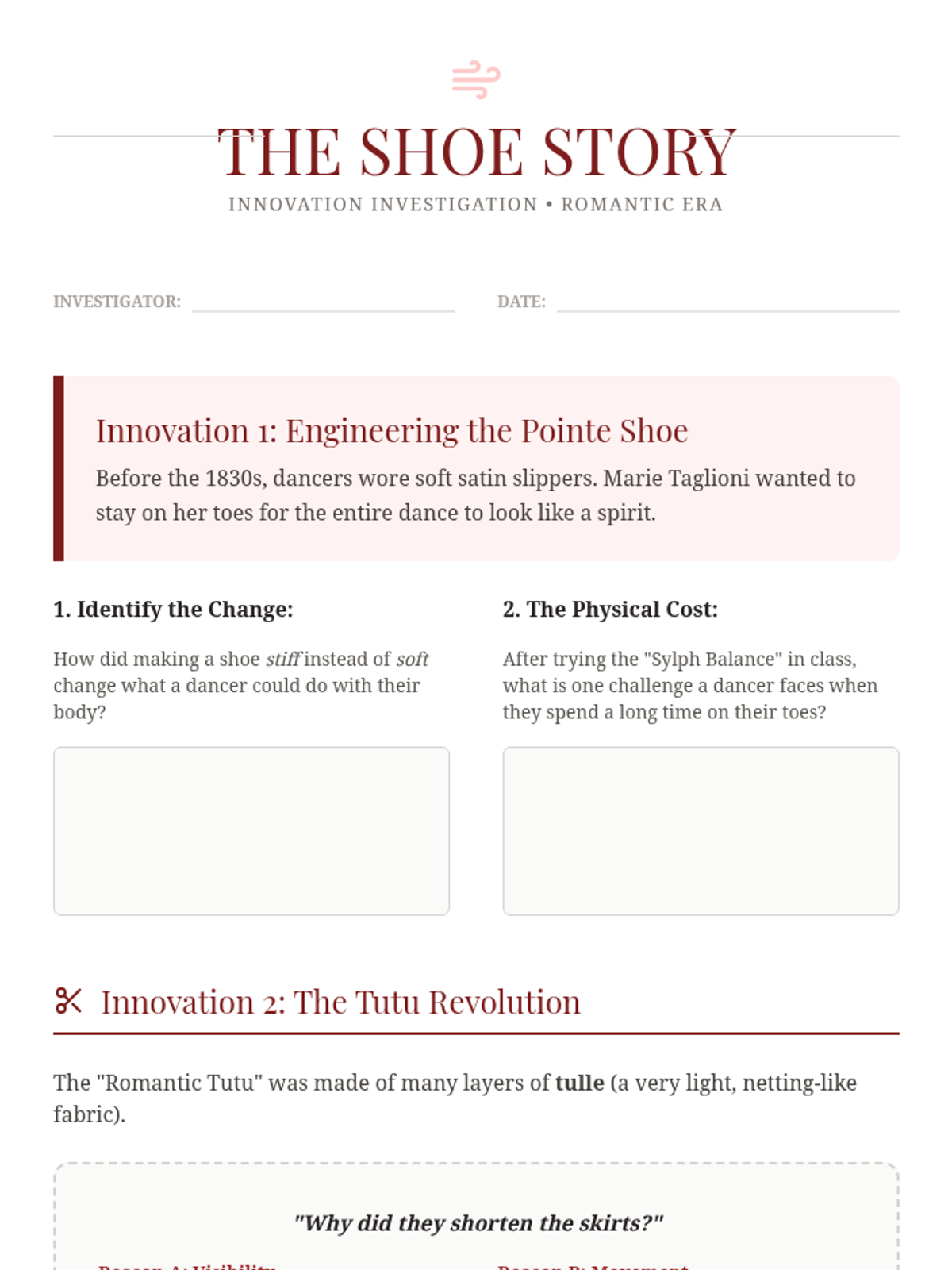
This lesson covers the introduction of the pointe shoe and the tutu, analyzing how these inventions changed choreography to make dancers look weightless and supernatural. Students try balancing exercises to appreciate the difficulty of the technique, connecting technological innovation to artistic shifts.
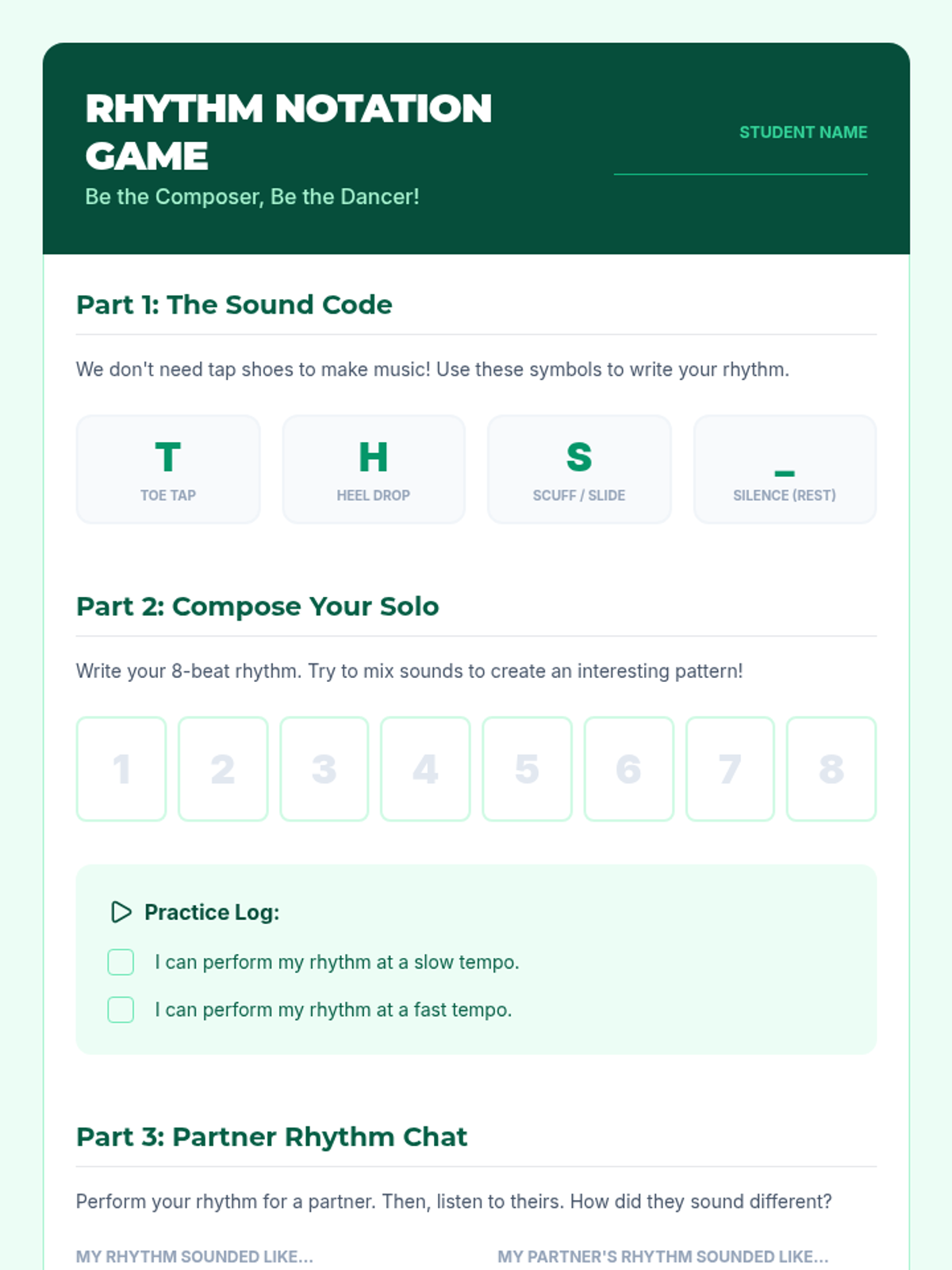
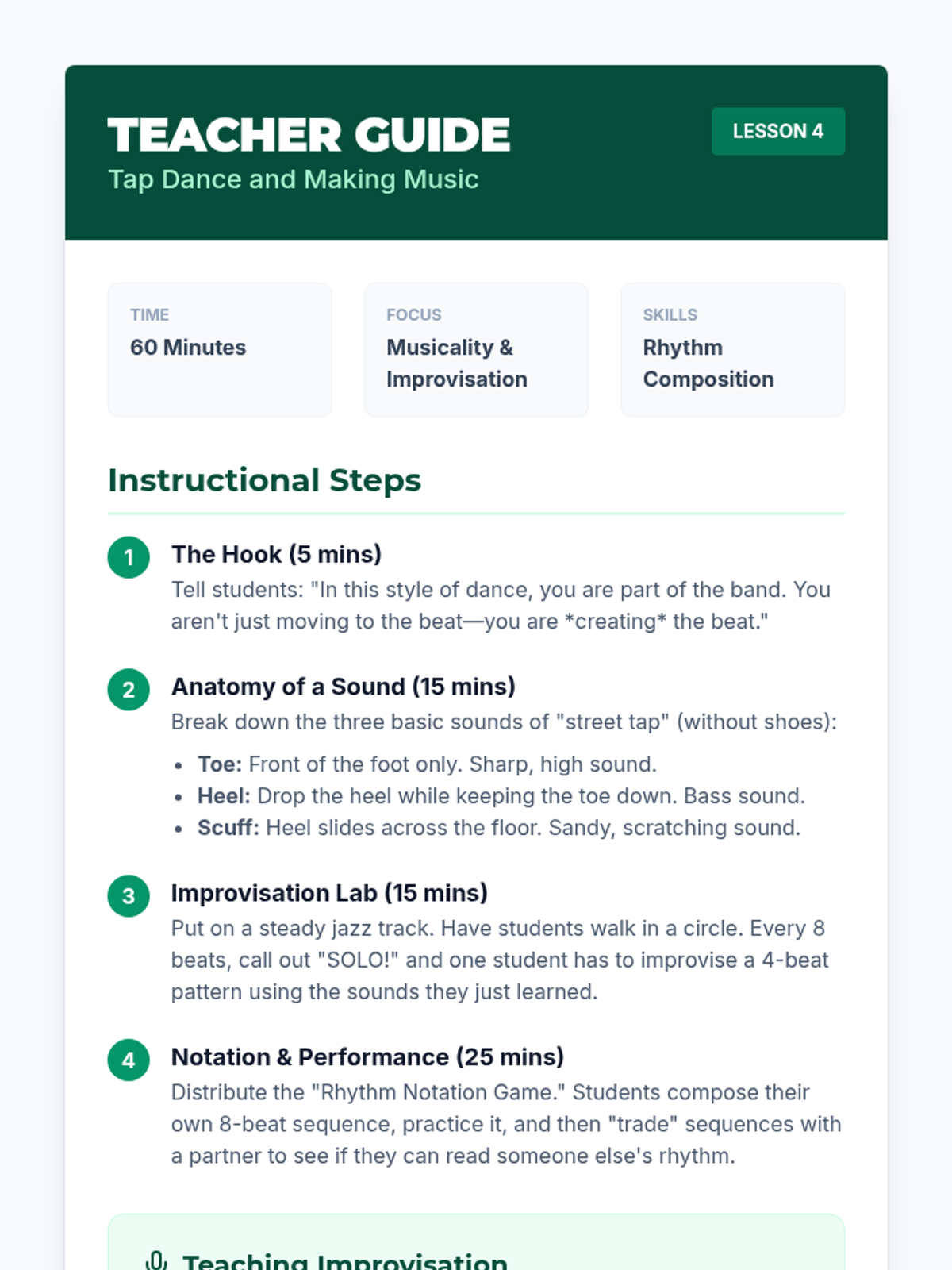
Transforming the body into a musical instrument by exploring percussive sounds and improvisational call-and-response.
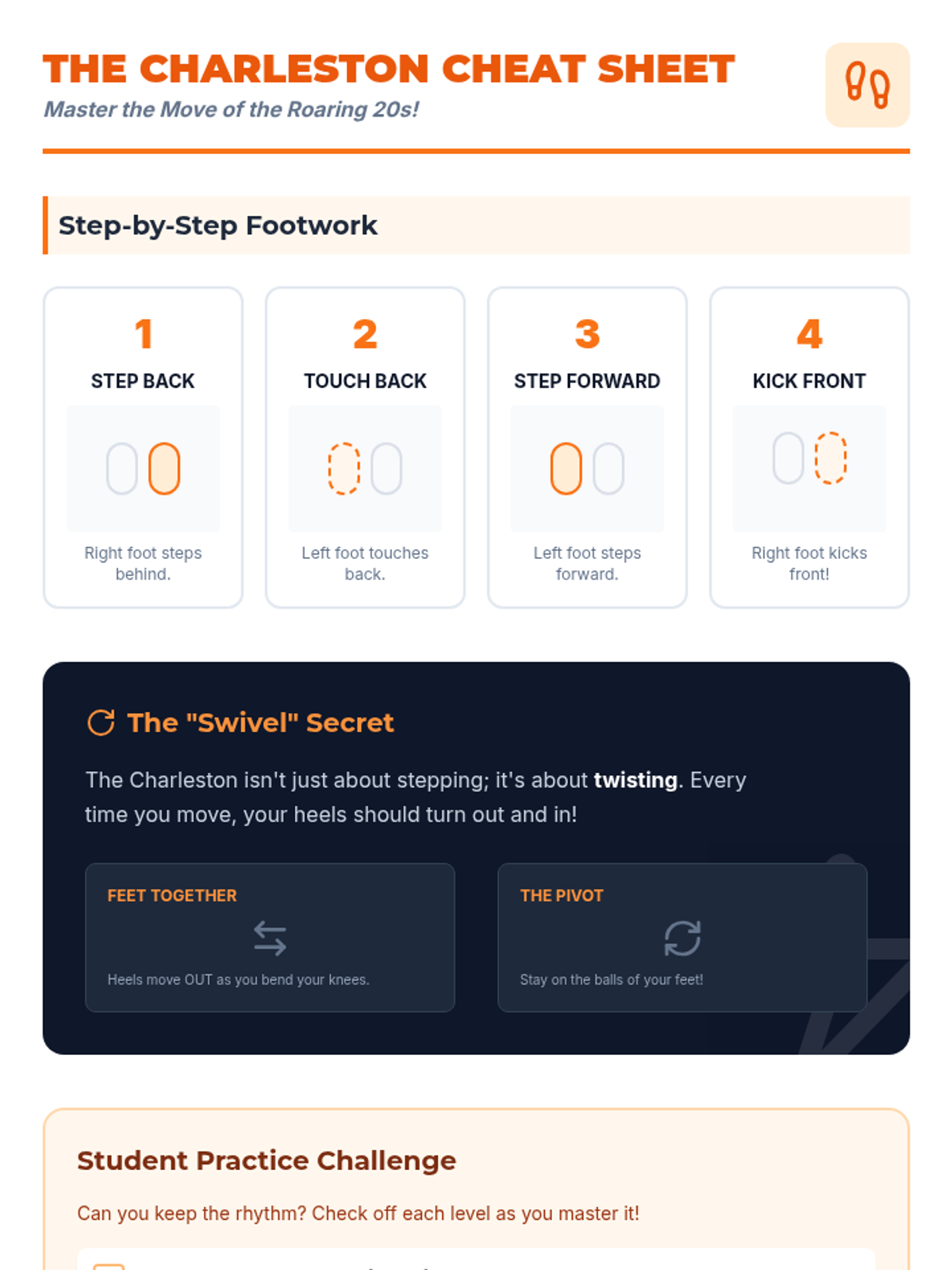
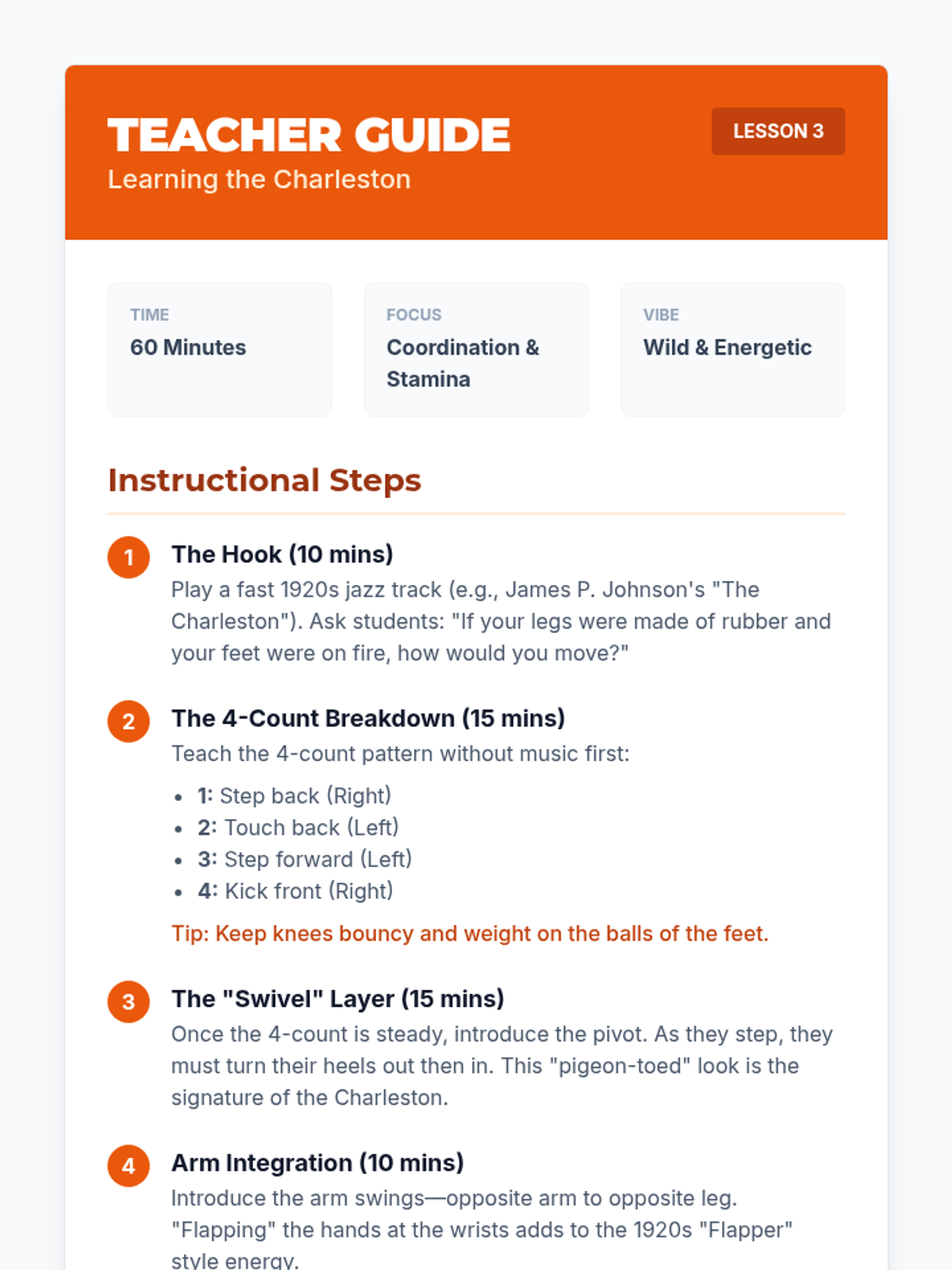
A technical dive into the iconic 1920s dance move, the Charleston, exploring its energy and the social freedom it represented.
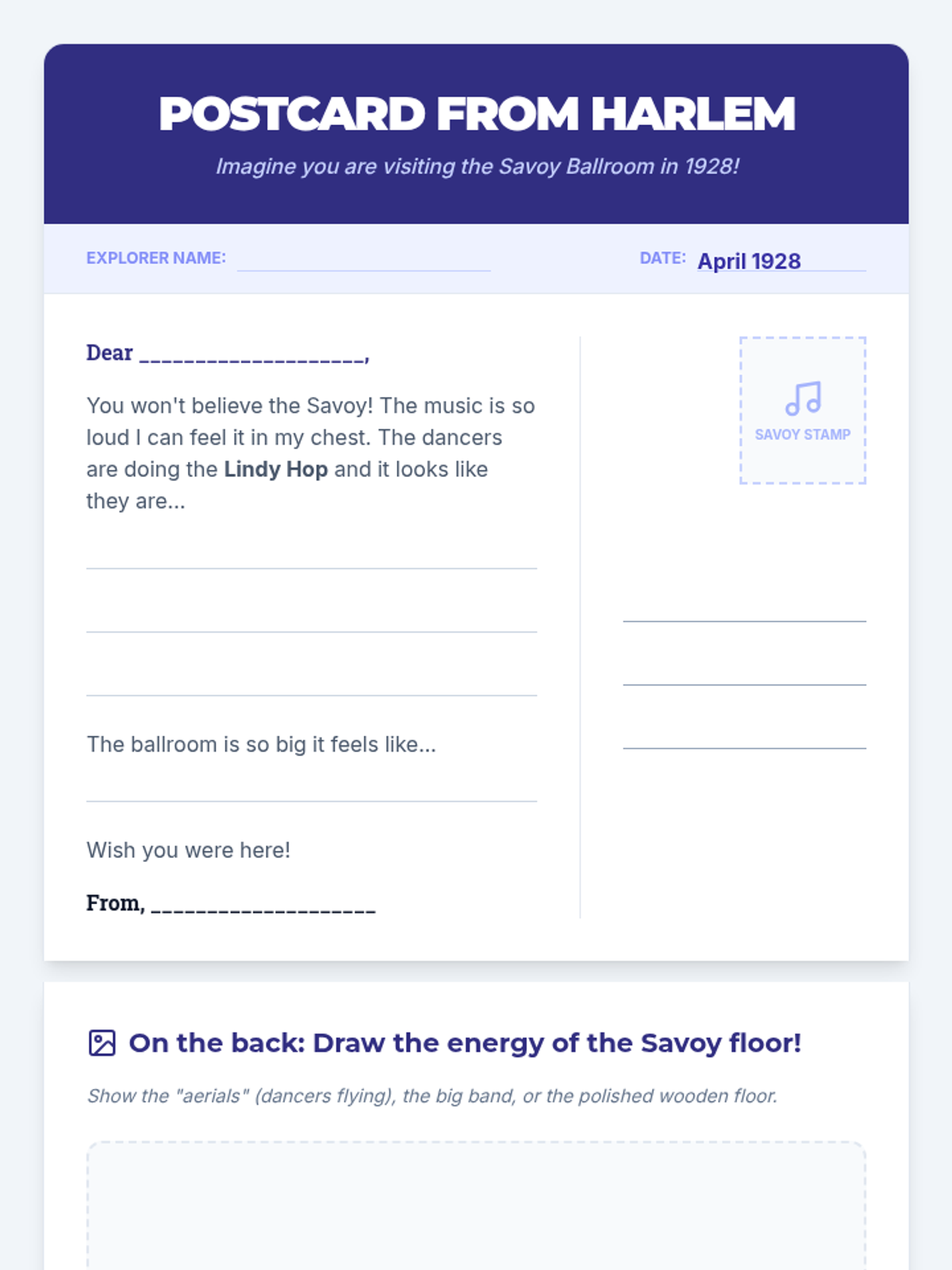
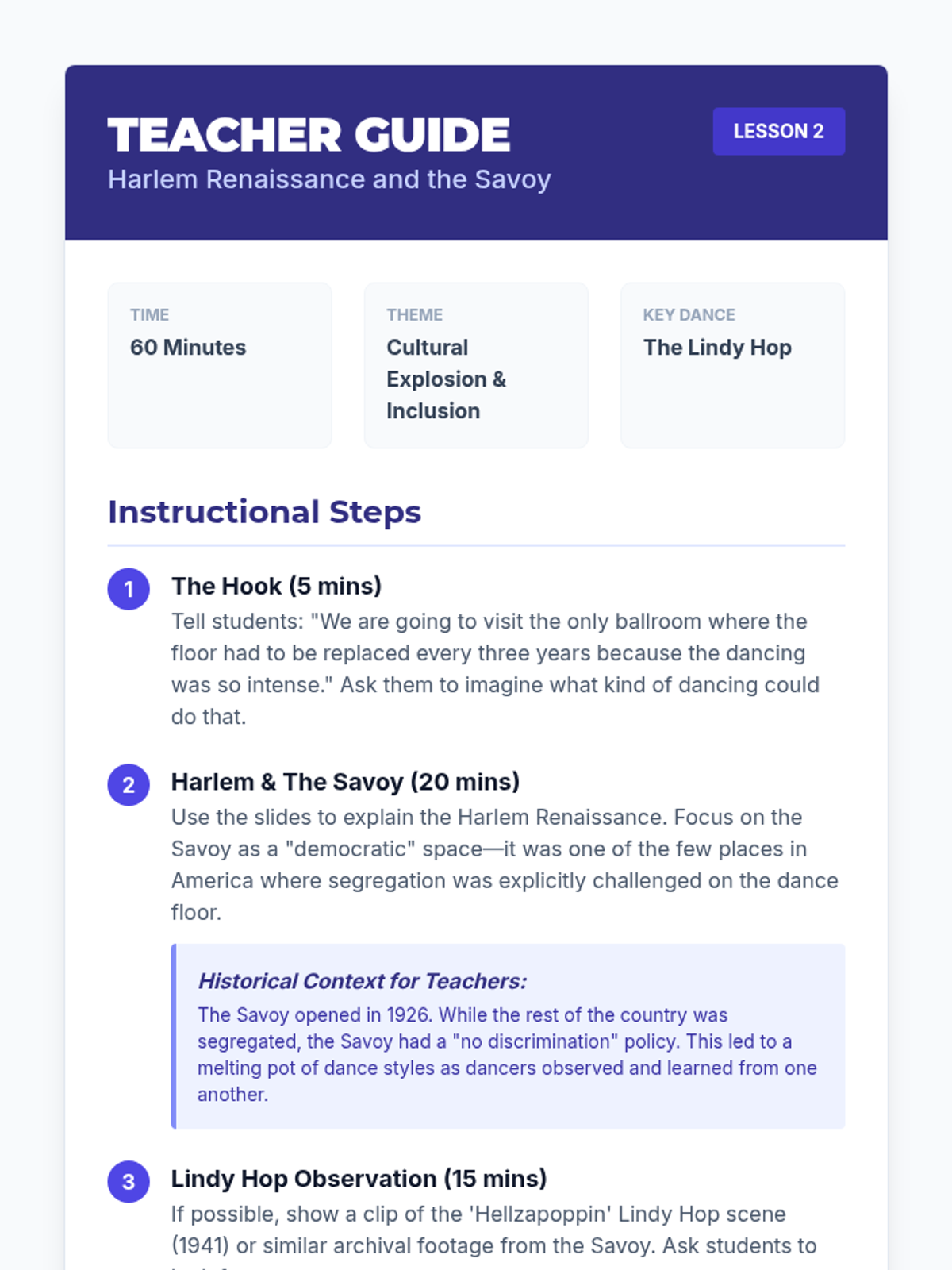
An exploration of 1920s Harlem and the Savoy Ballroom, focusing on the social significance of the Lindy Hop and cultural exchange.
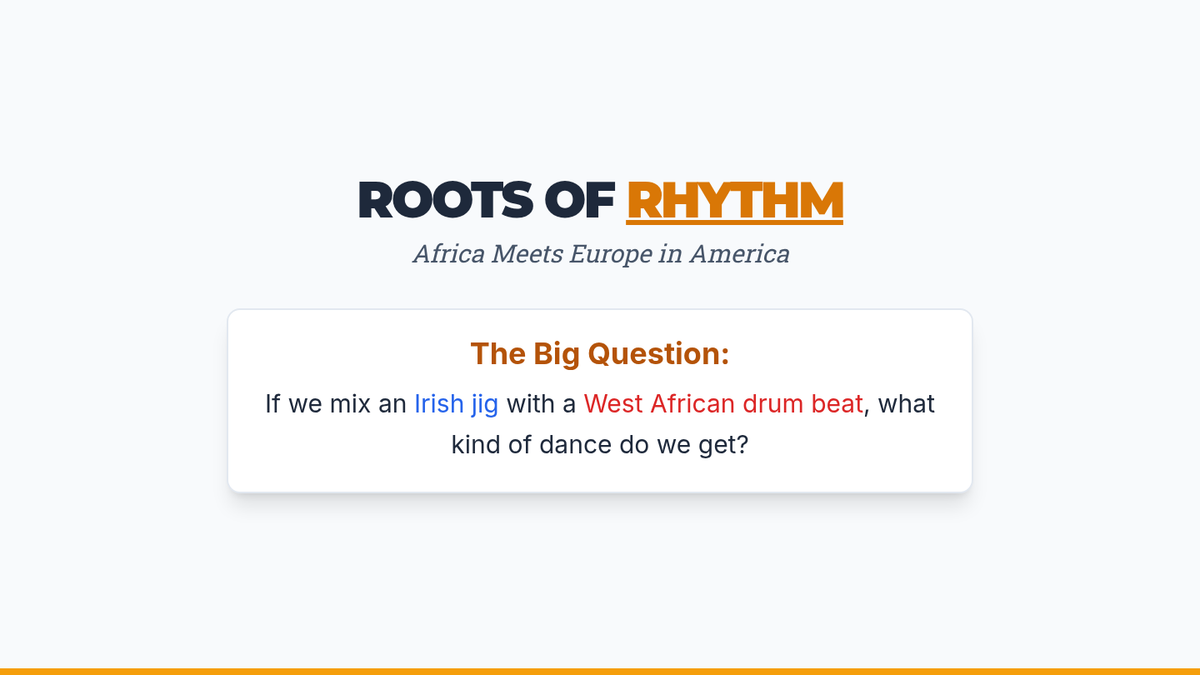
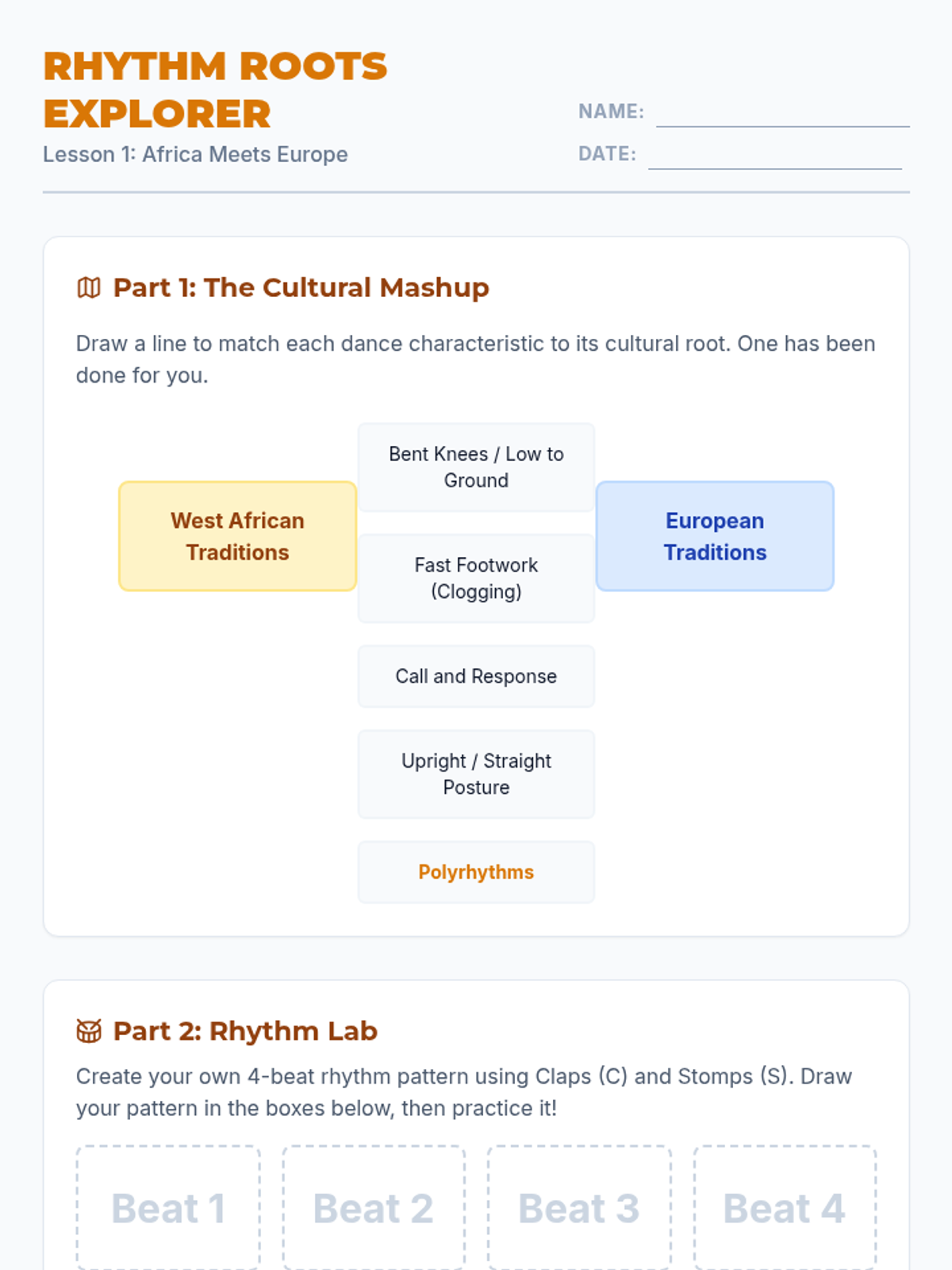
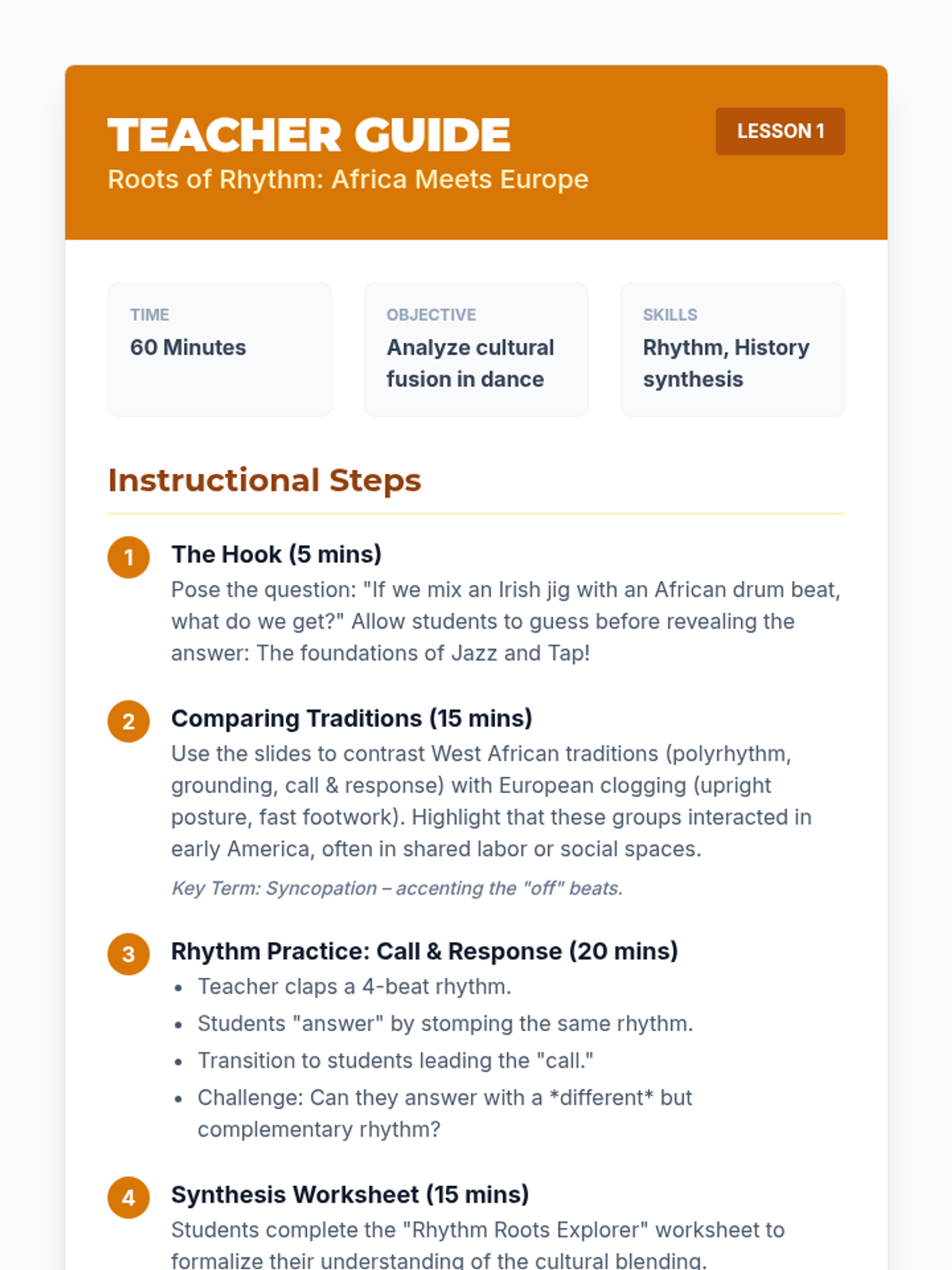
Students discover how West African rhythmic traditions and European clogging combined in America to create the foundation for Jazz and Tap.
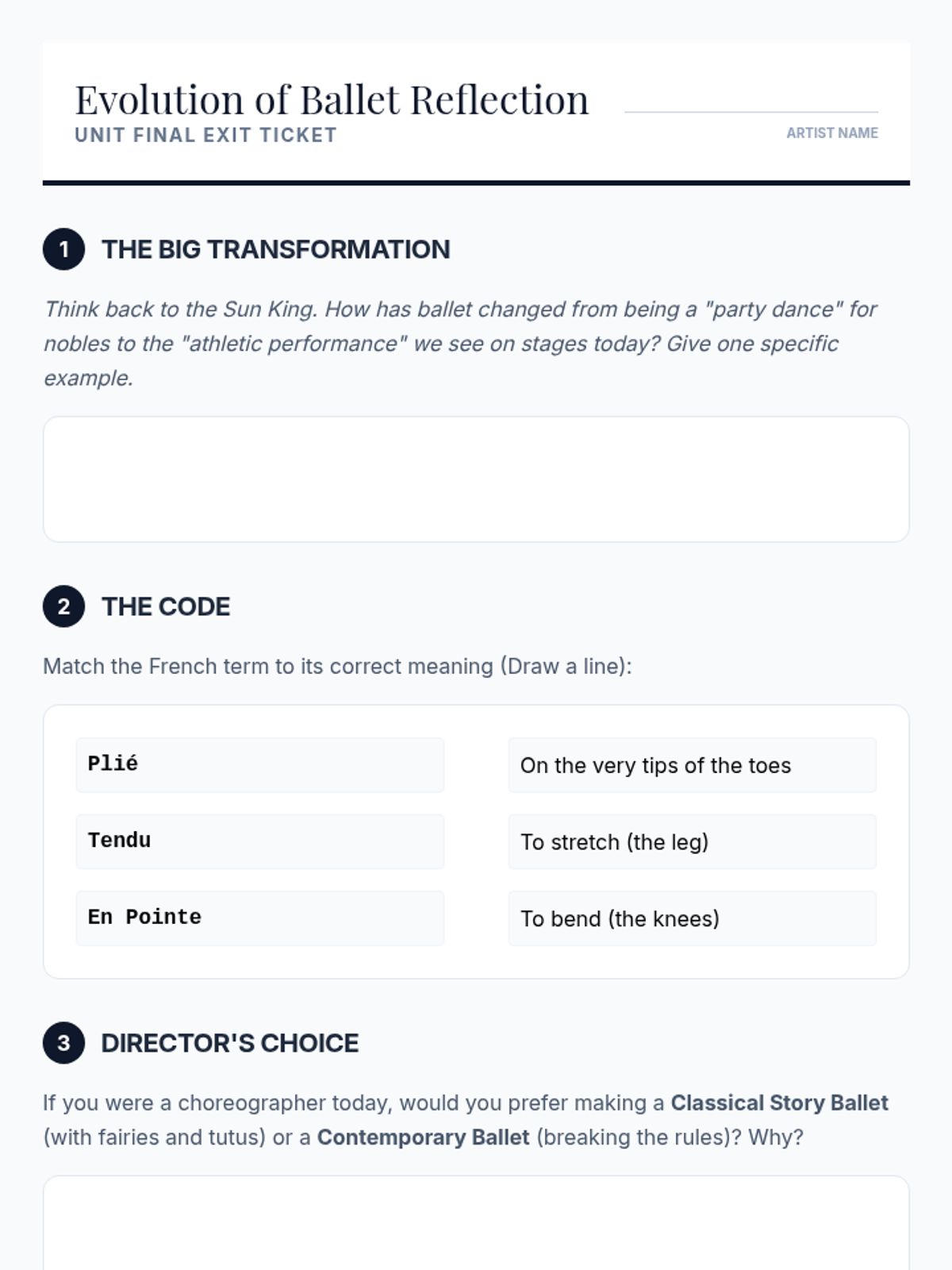
Students explore the origins of ballet in the court of King Louis XIV, focusing on dance as a tool for social status and etiquette.
Learners explore the systematic codification of ballet technique, practicing the five basic positions of the feet and arms. They compare diagrams from the 17th century to modern photos to see continuity and change, focusing on the discipline and geometry of the art form.
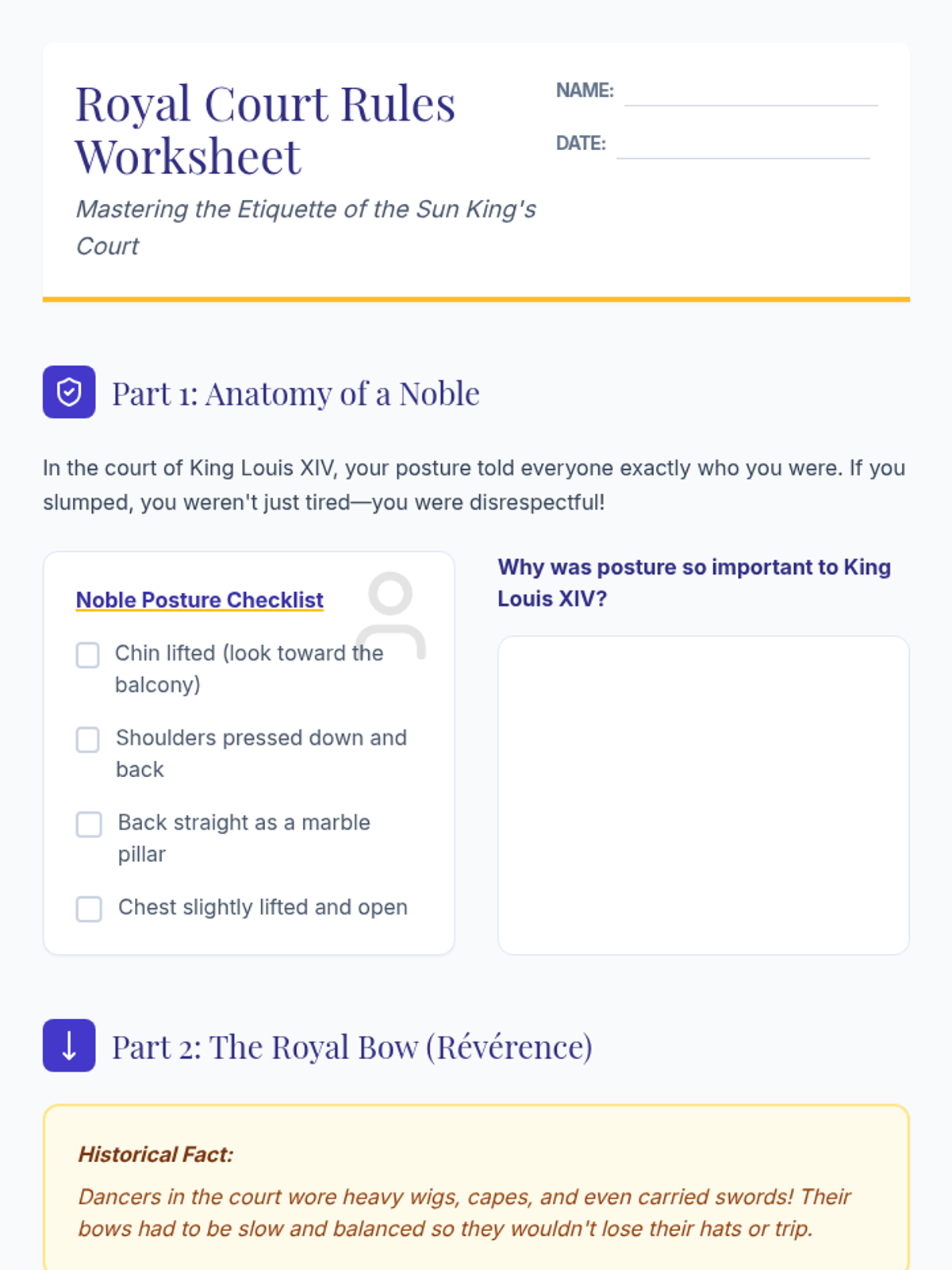
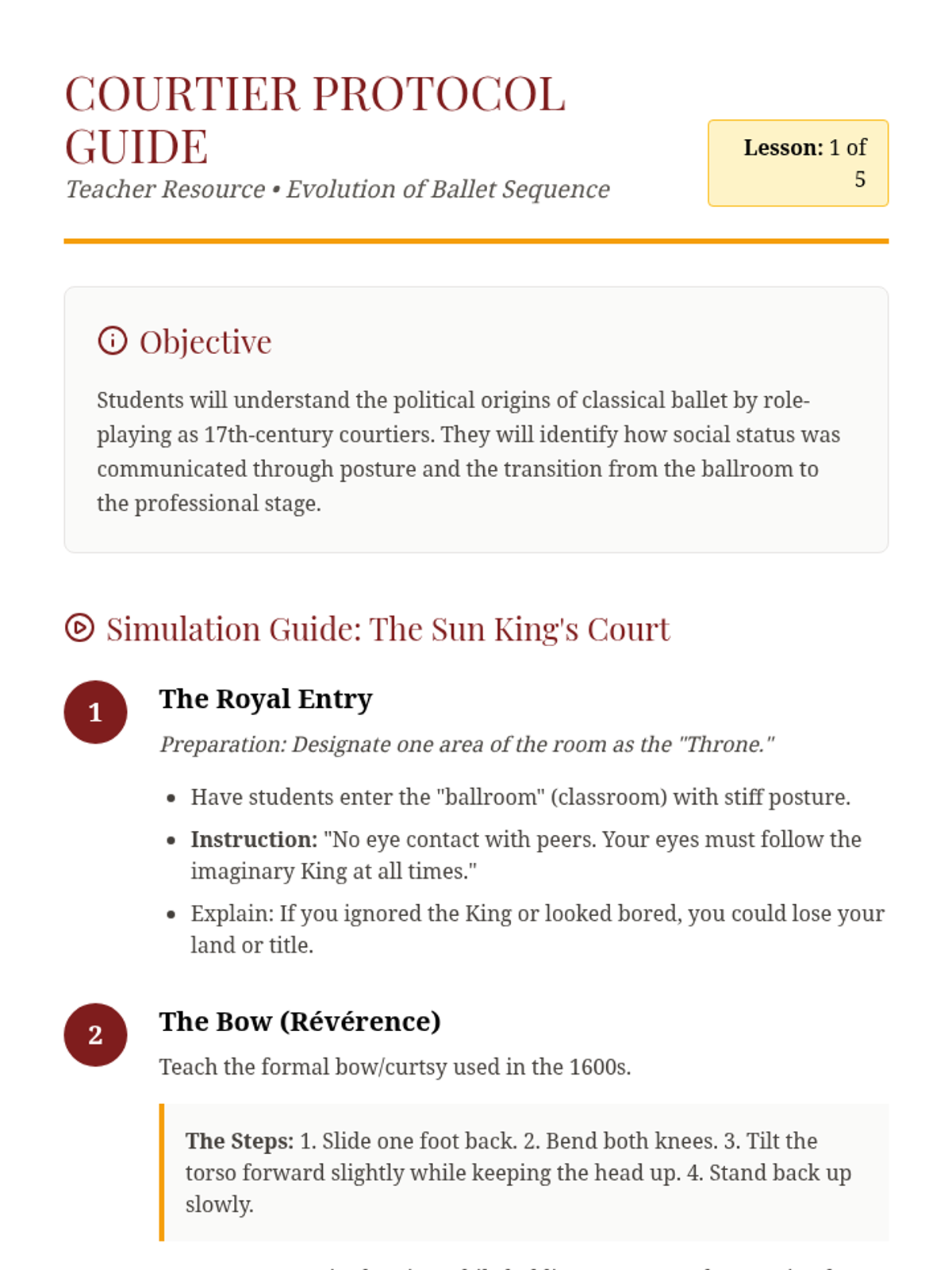
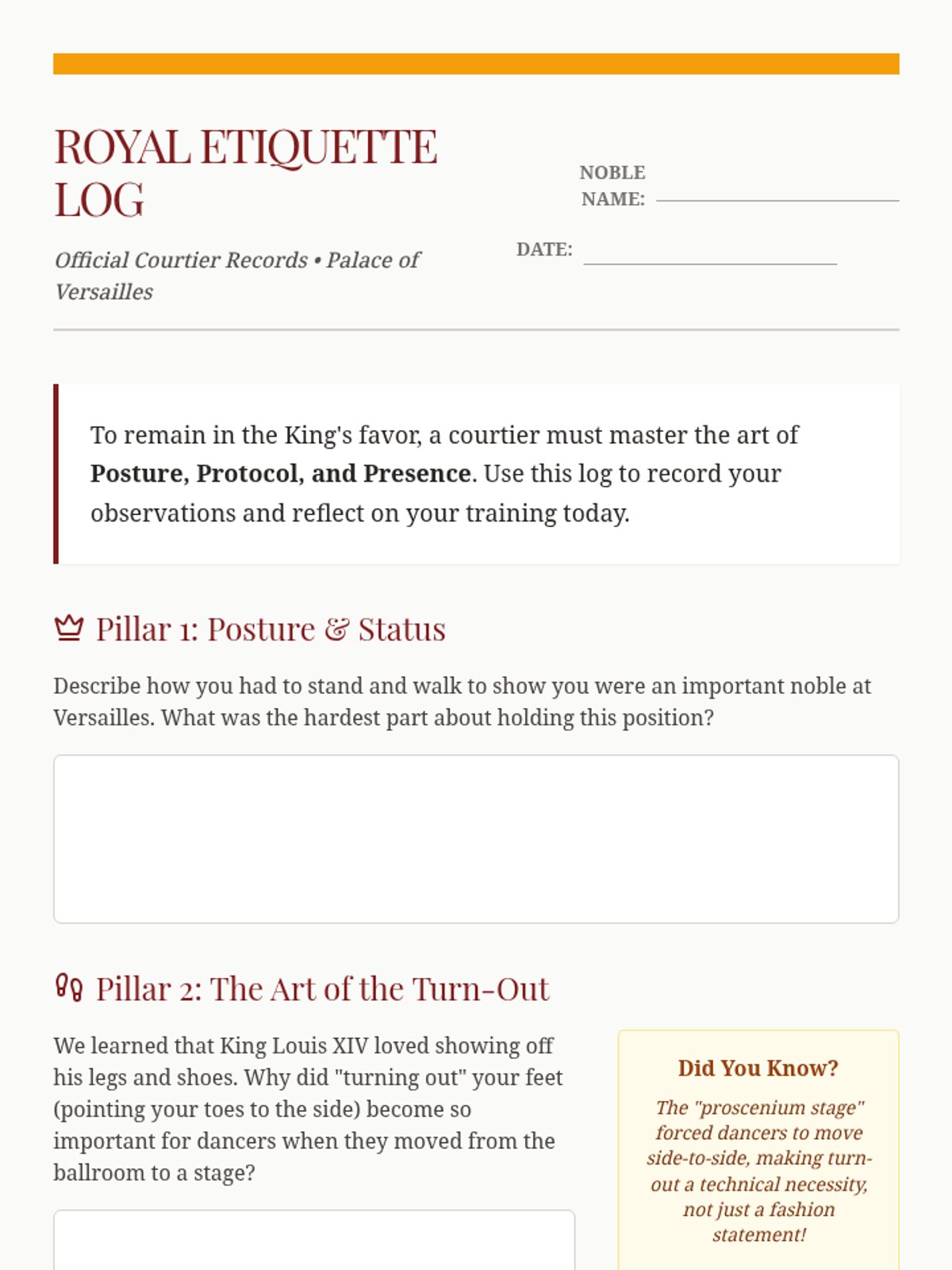
Students role-play as courtiers in the Sun King's court, learning the strict etiquette of bowing, standing, and walking that formed the basis of ballet. They explore how posture displayed social status and the political roots of classical dance.
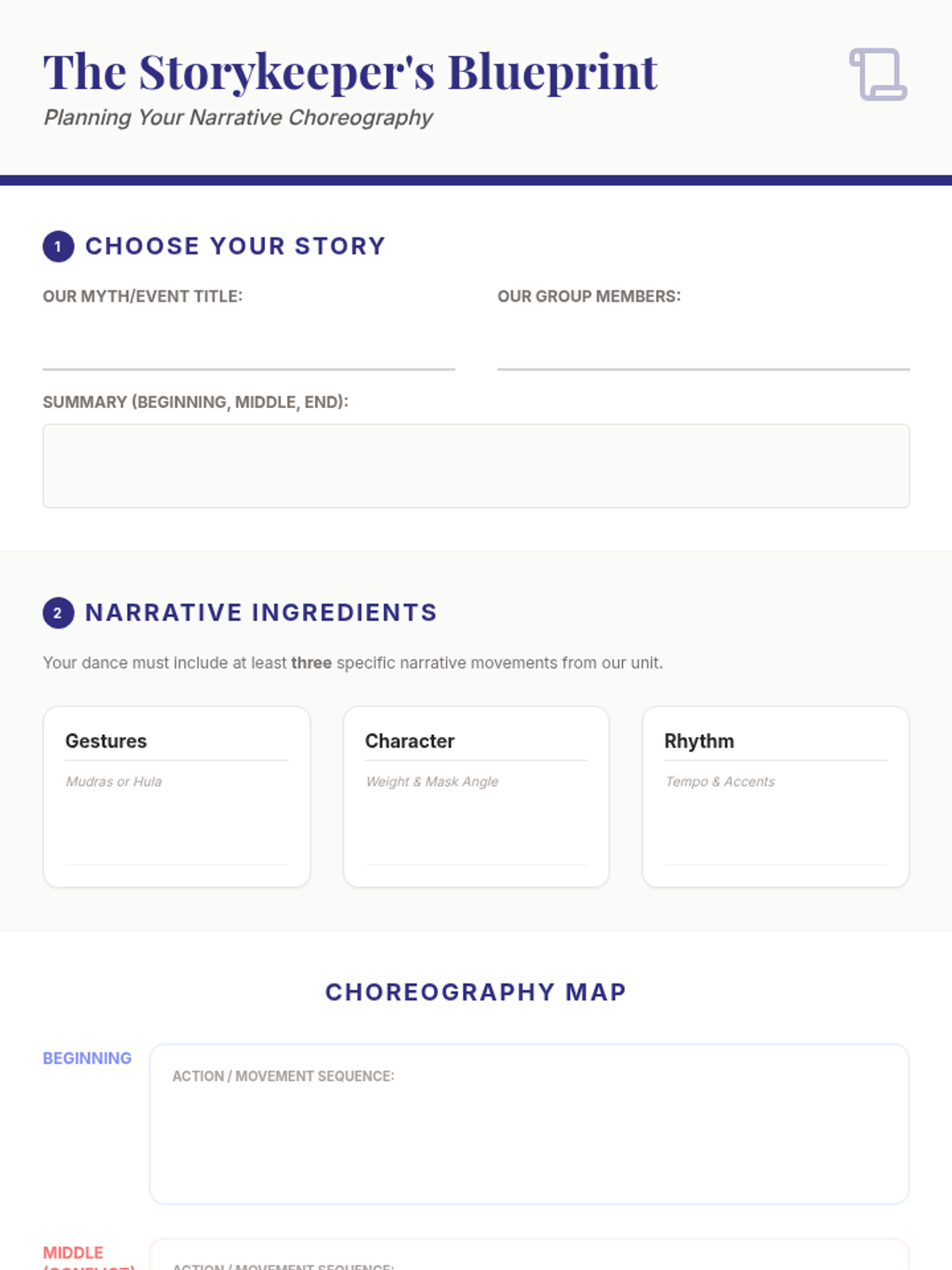
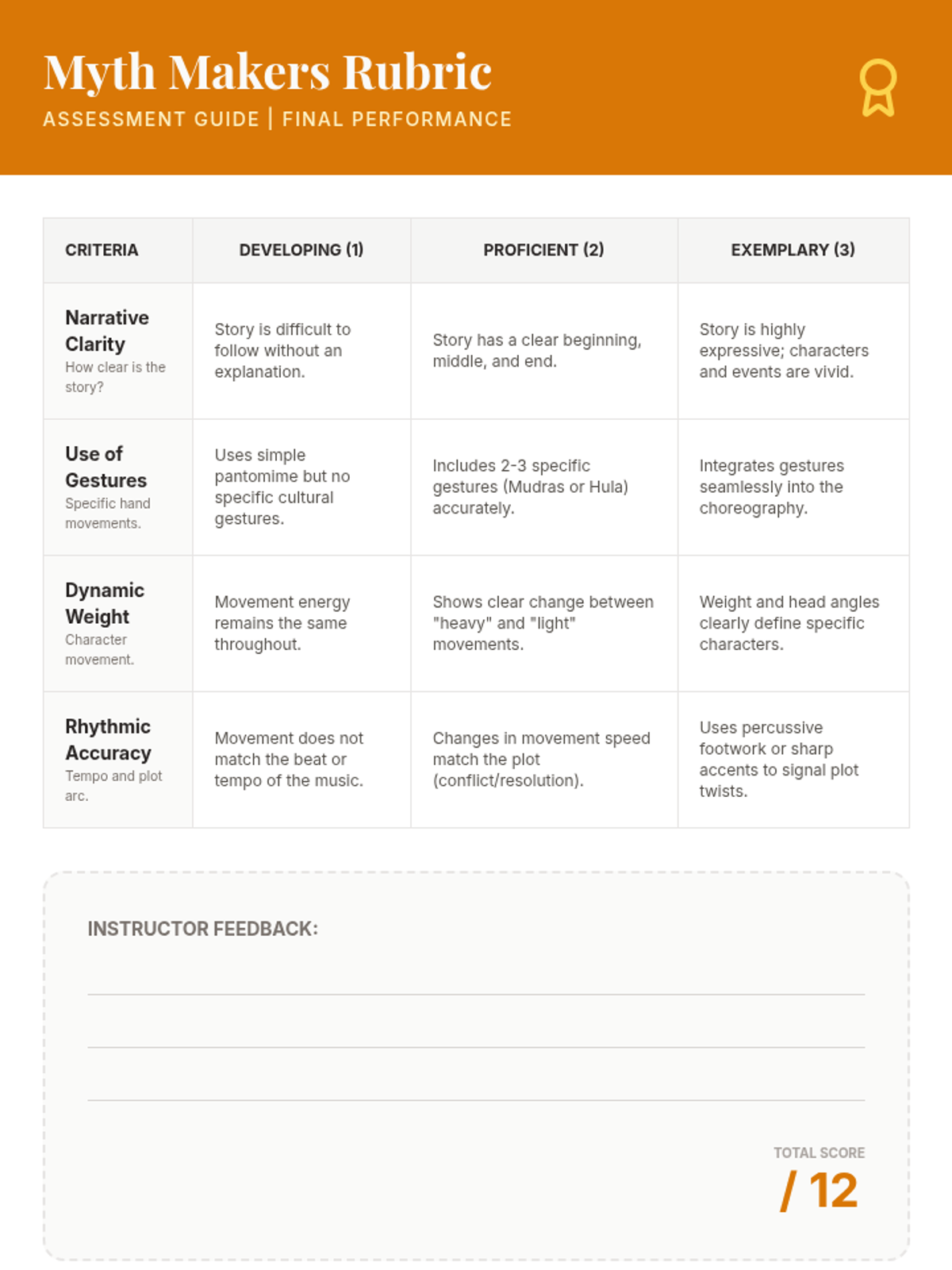
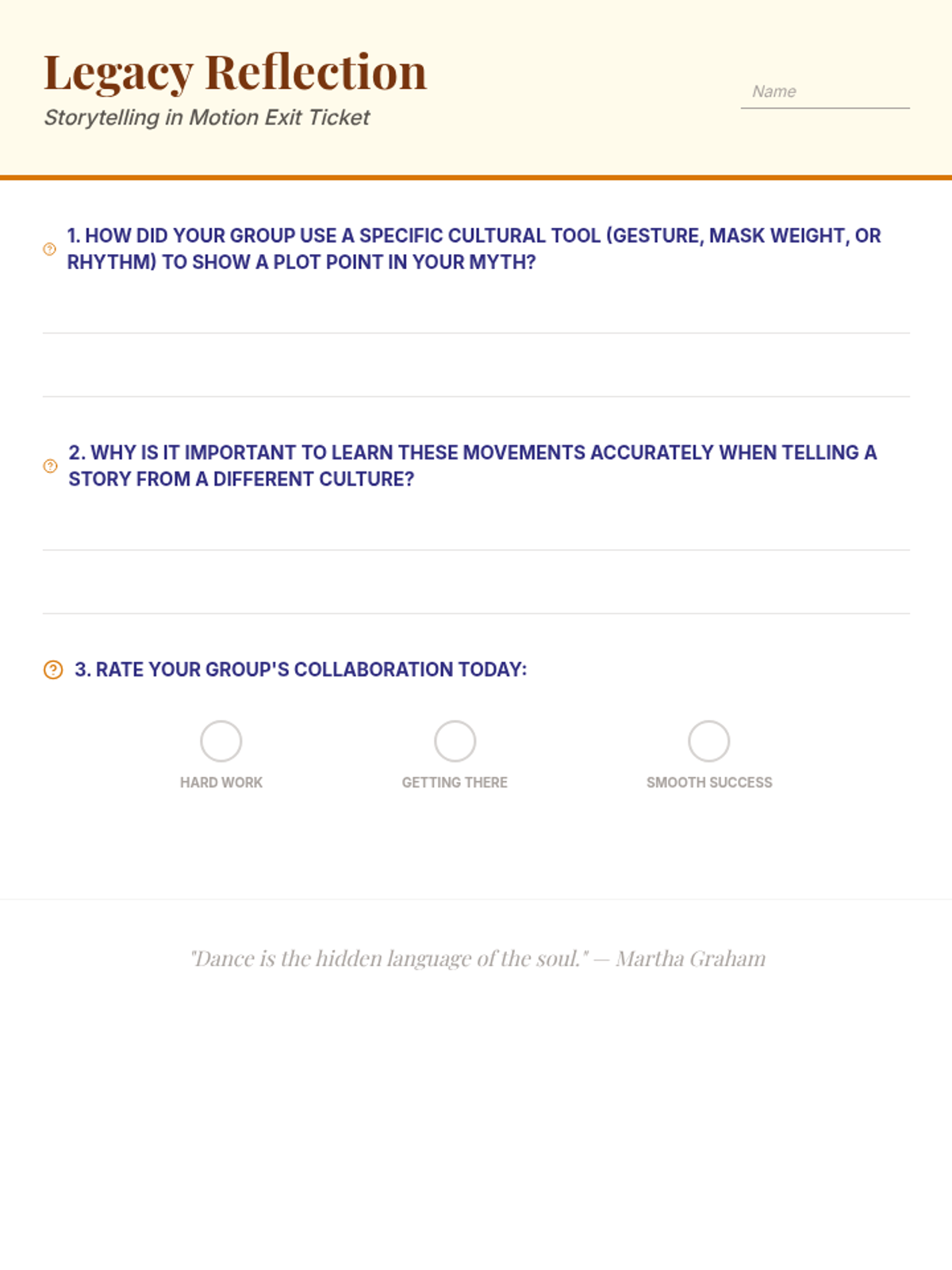
Working in small groups, students choreograph a short dance piece based on a myth or historical event using the gestures and rhythmic tools learned throughout the unit.
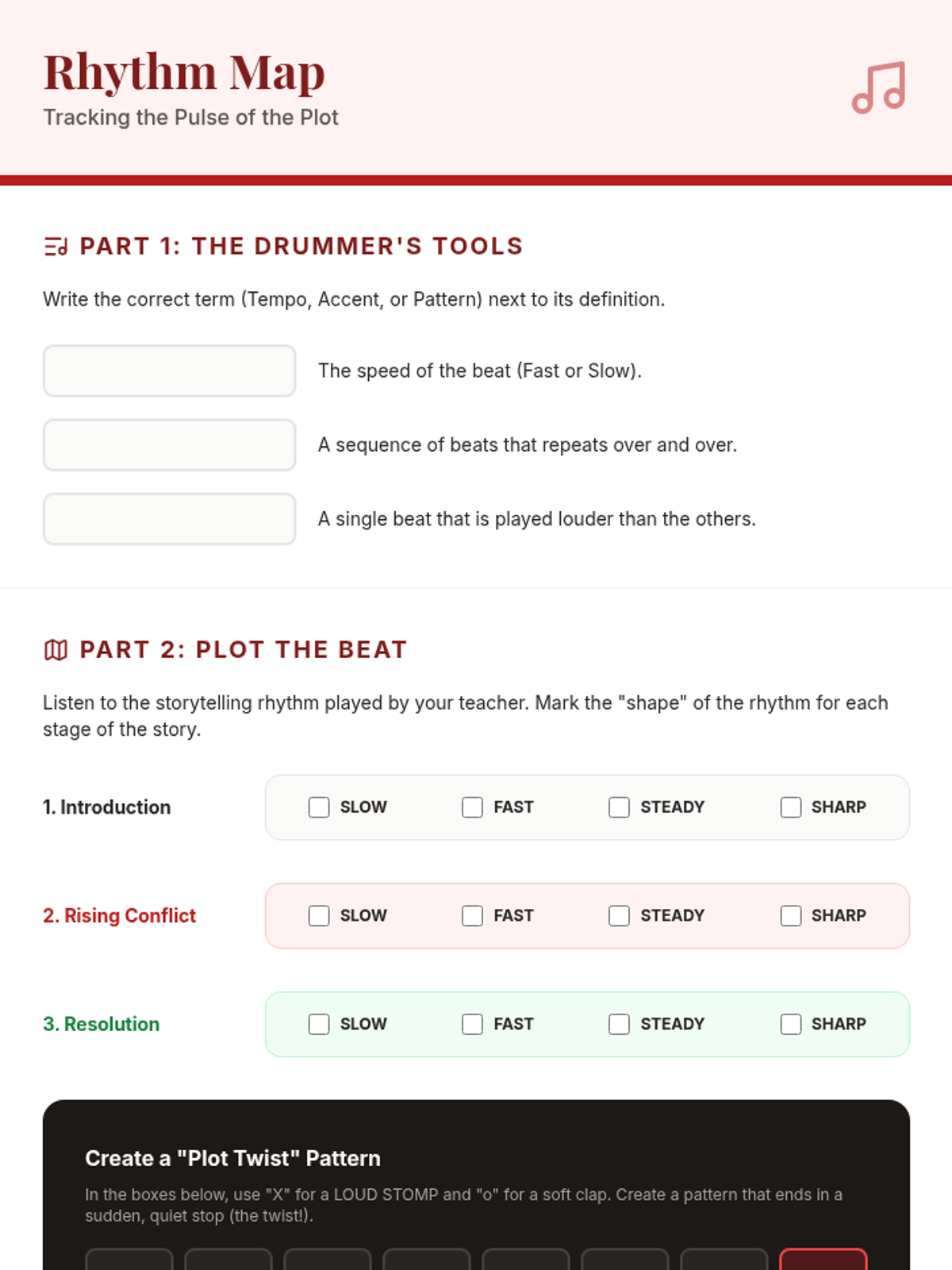
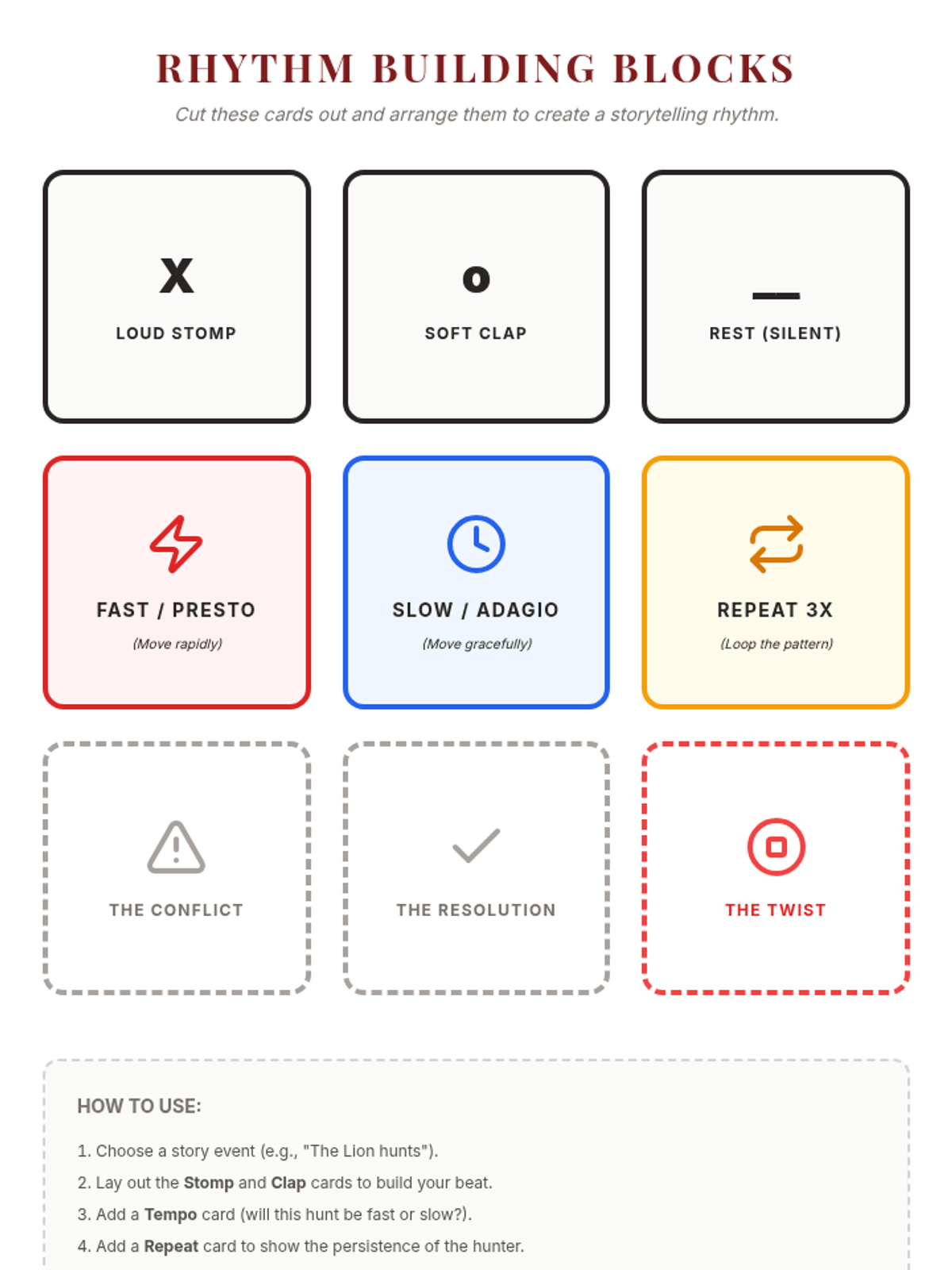
Students explore the relationship between rhythmic patterns, tempo, and dramatic arcs, mapping how drum beats signal conflict and resolution in dance.
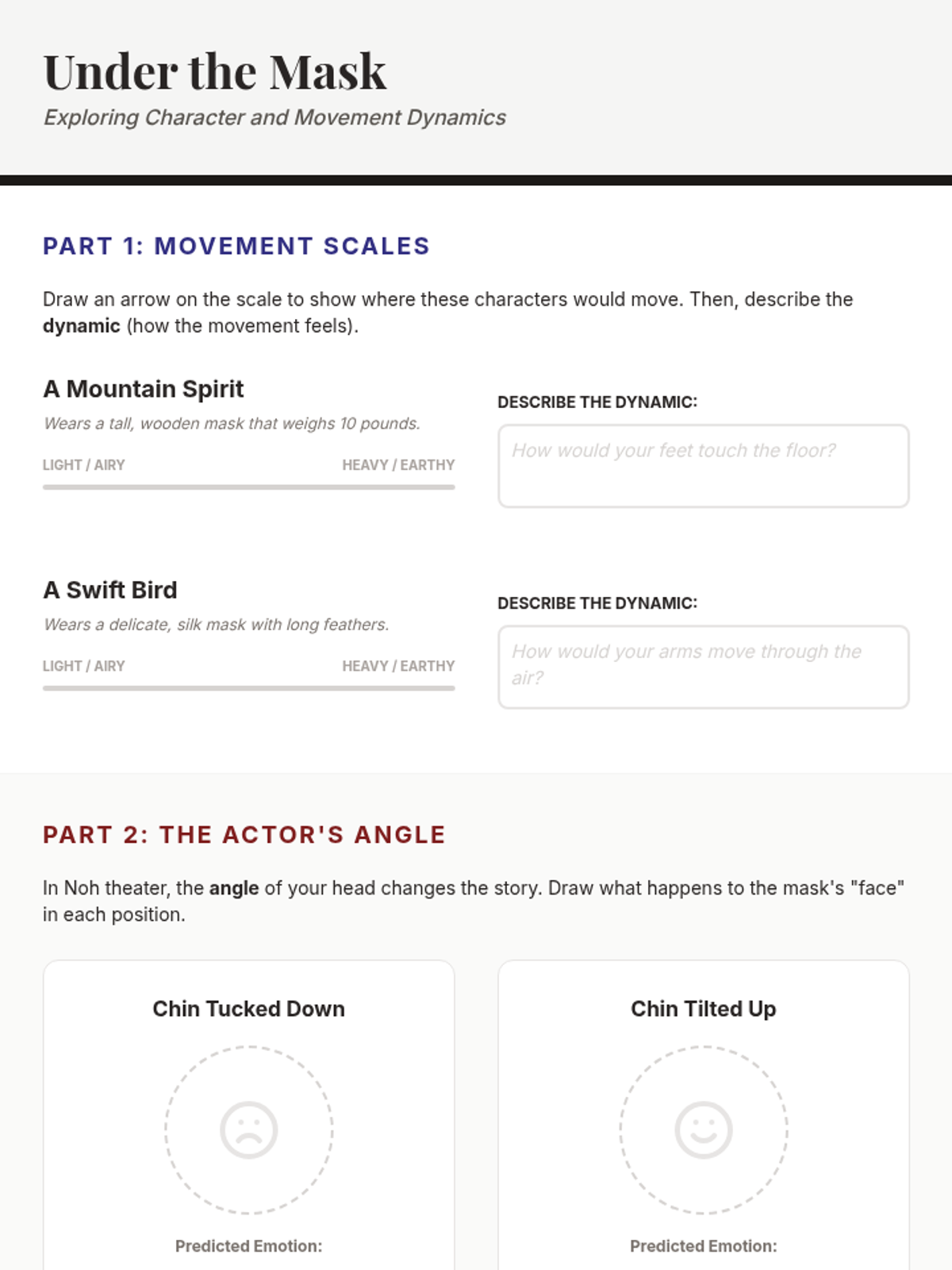
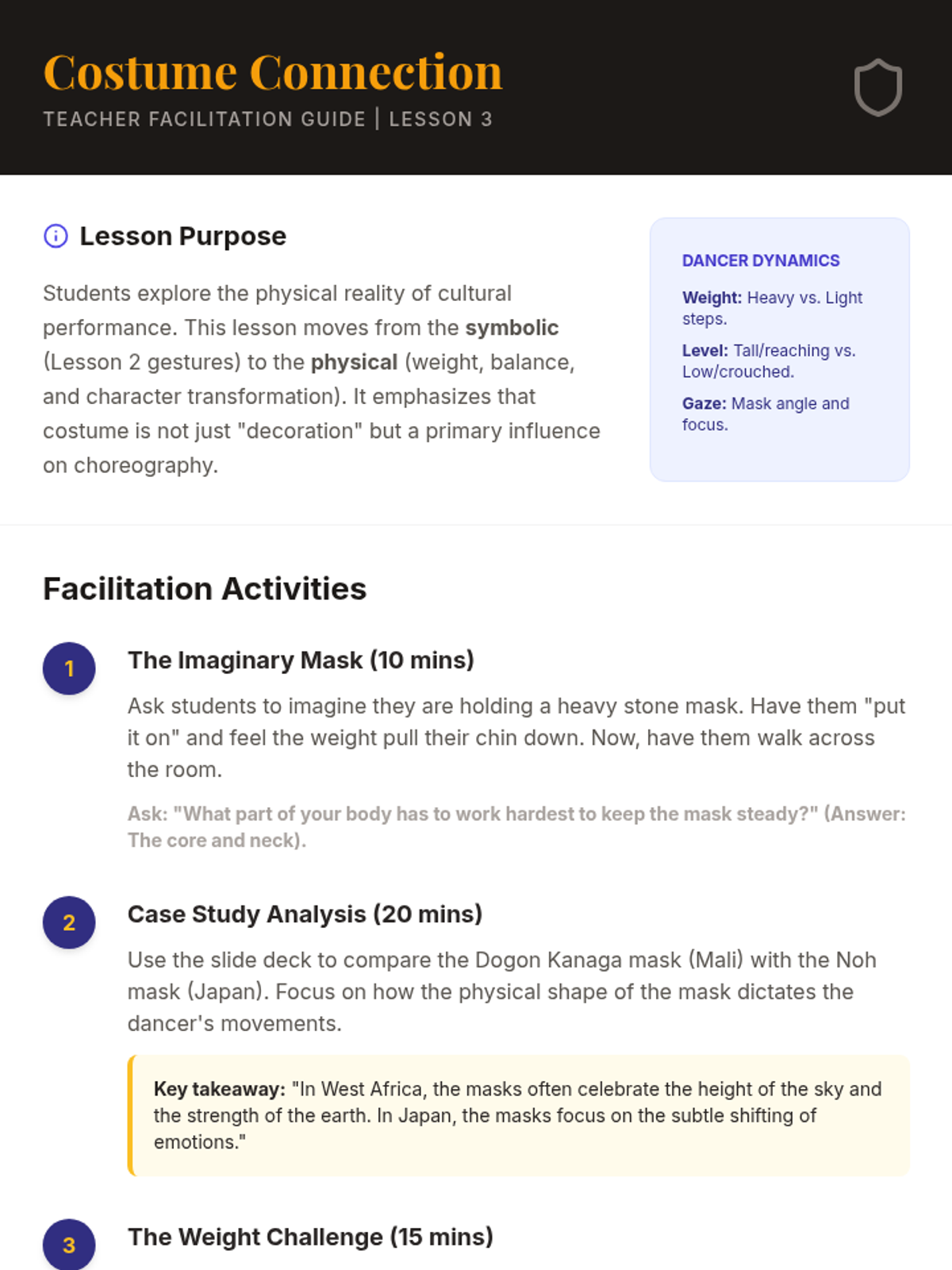
Students analyze how masks and heavy costumes in West African and Asian traditions influence character portrayal and movement dynamics.
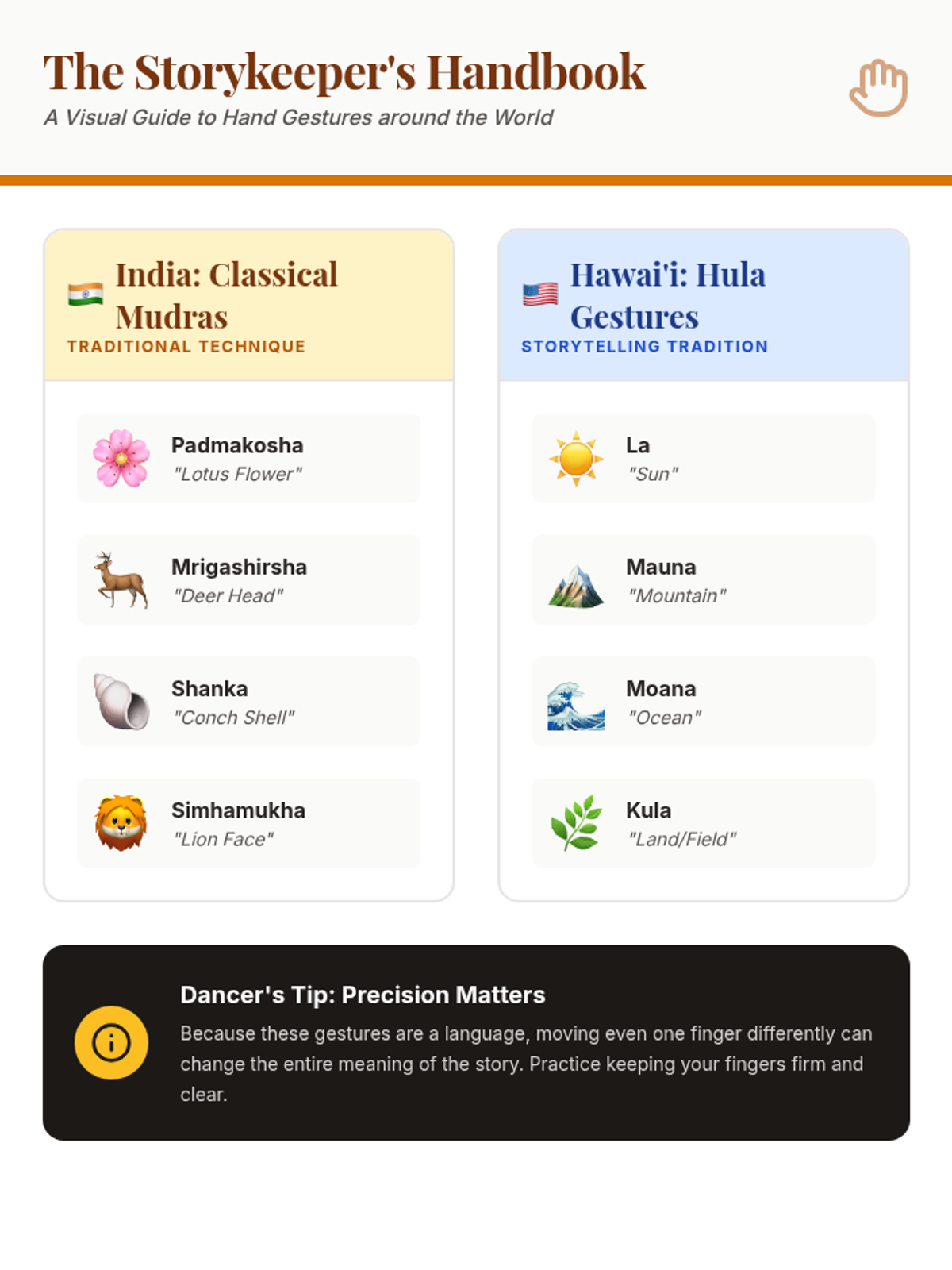
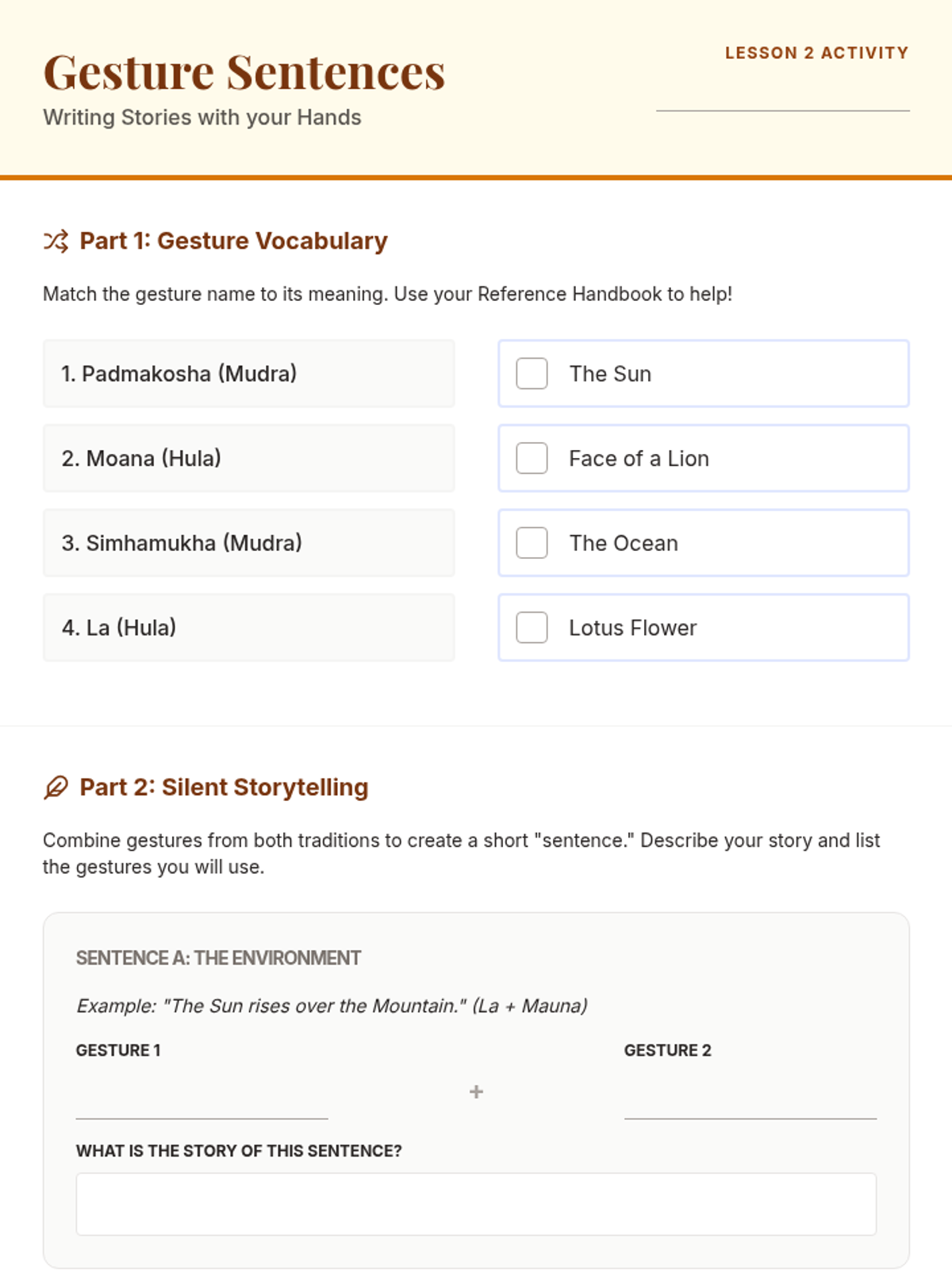
Students learn specific hand gestures from traditions like Classical Indian Mudras and Hawaiian Hula, exploring how these 'secret languages' preserve cultural narratives.
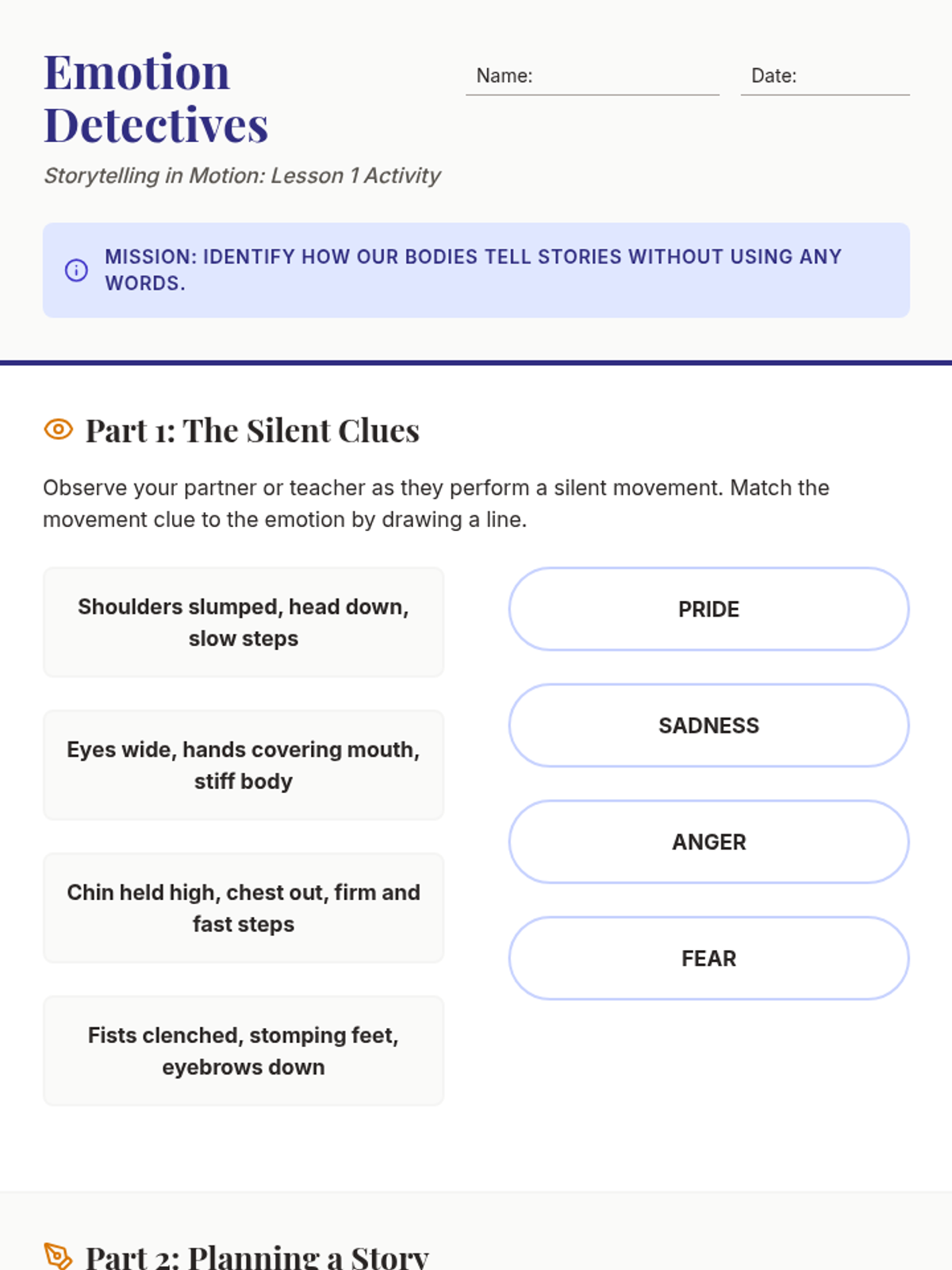
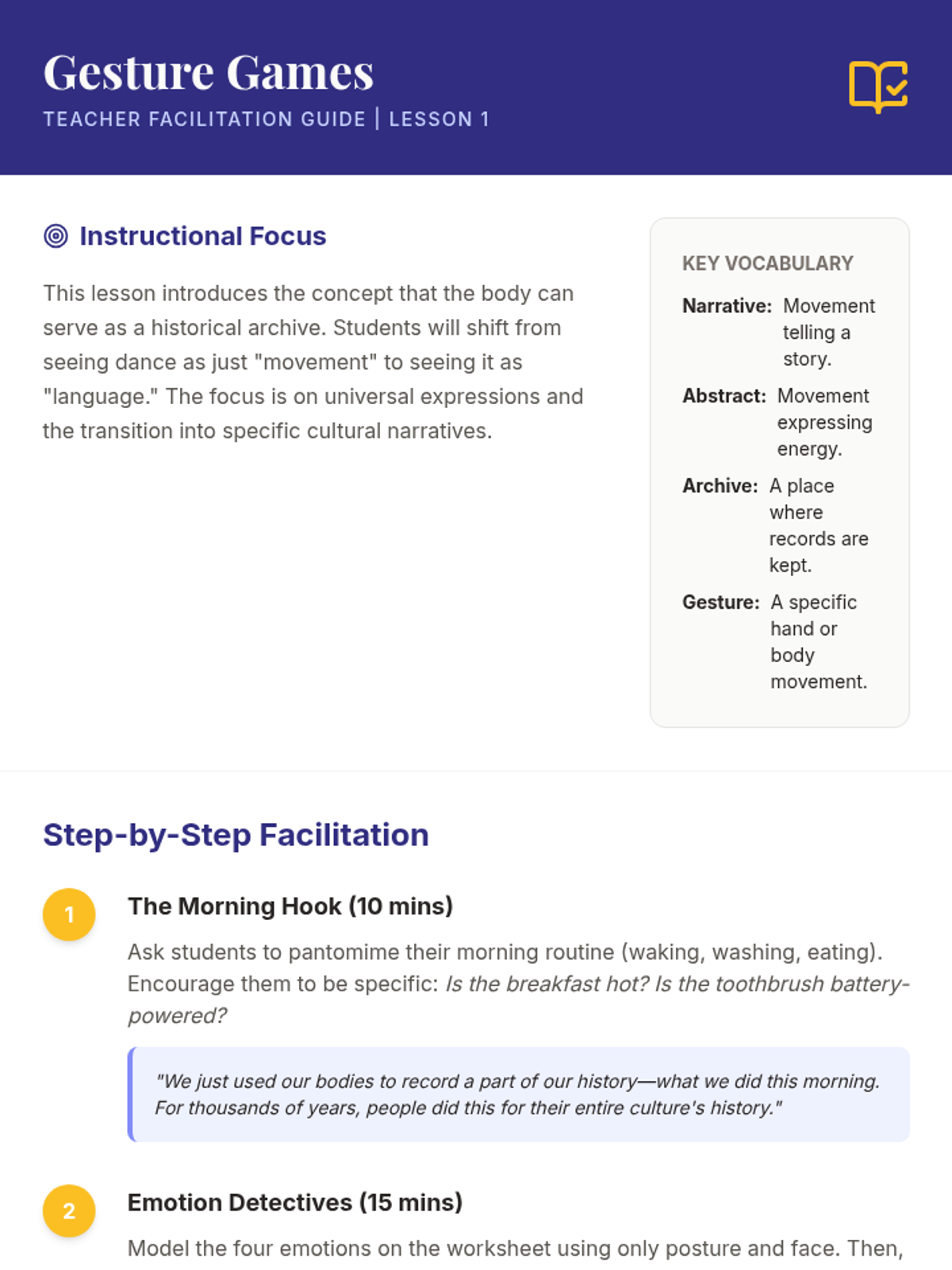
Students investigate the concept of pantomime and gestural language used in ancient cultures, identifying how universal emotions are communicated through posture and facial expression.
Groups perform their rhythmic sequences for the class and engage in a structured critique session using specific dance vocabulary.
Working in small groups, students synthesize the concepts of Space, Time, and Energy to build a short 8-count dance phrase.
Students explore the element of Energy by manipulating the force and quality of their movements, contrasting sharp versus smooth and heavy versus light dynamics.
This lesson focuses on the element of Time, challenging students to synchronize their movements with an external beat through varying tempos and rhythmic patterns.
Students investigate personal and general space, levels (high, medium, low), and pathways (zigzag, curved, straight) through guided movement and games.
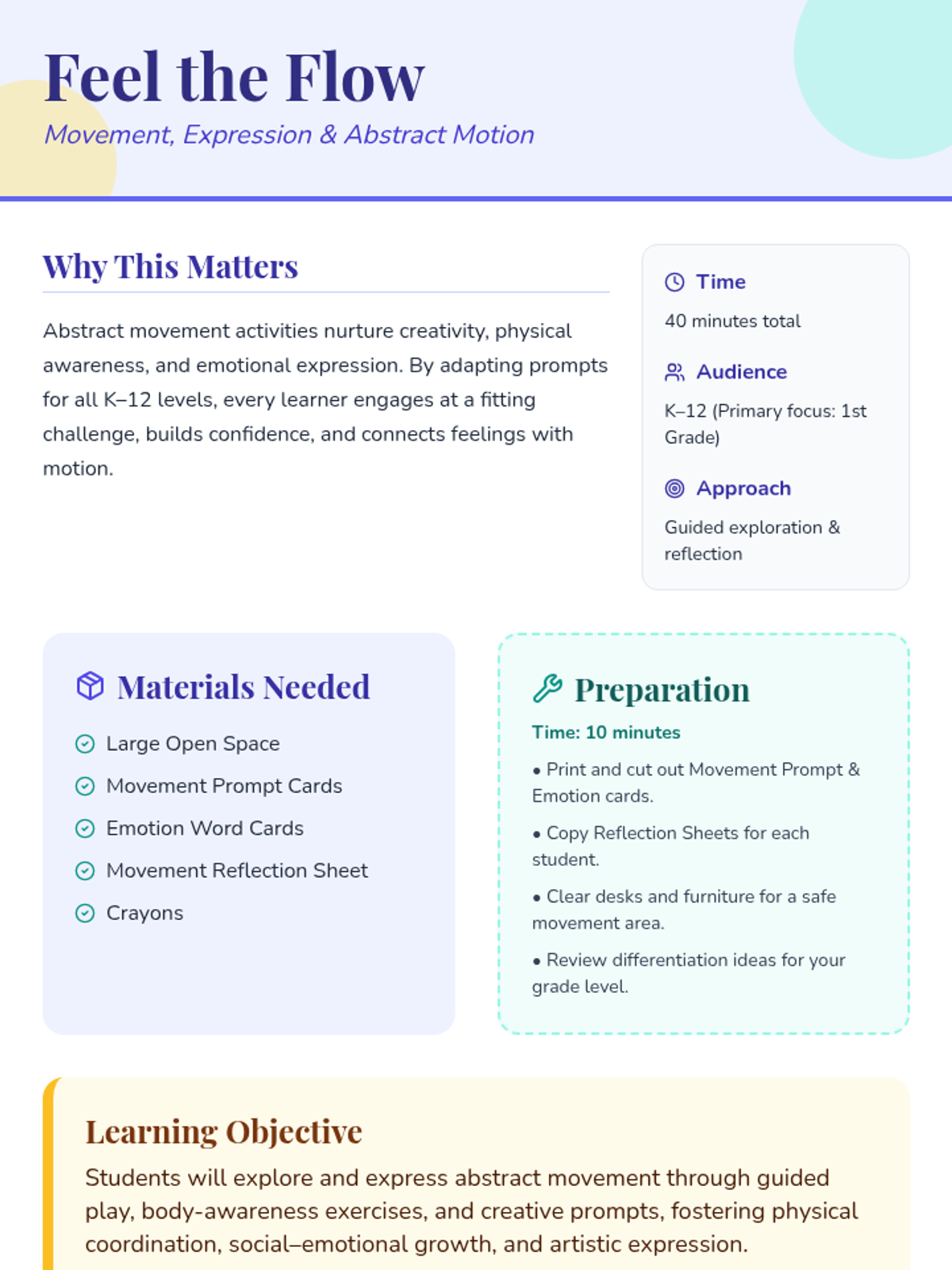
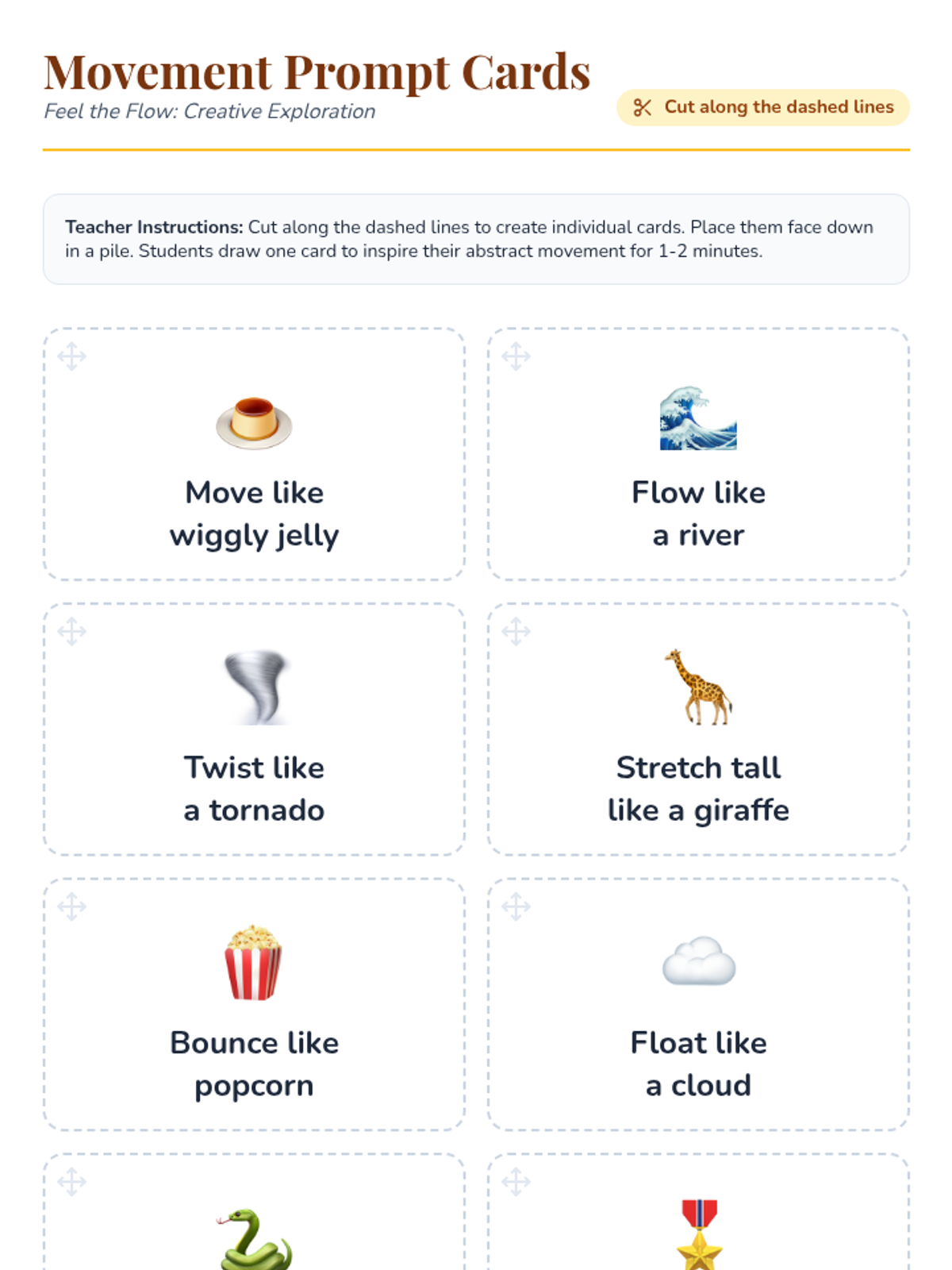
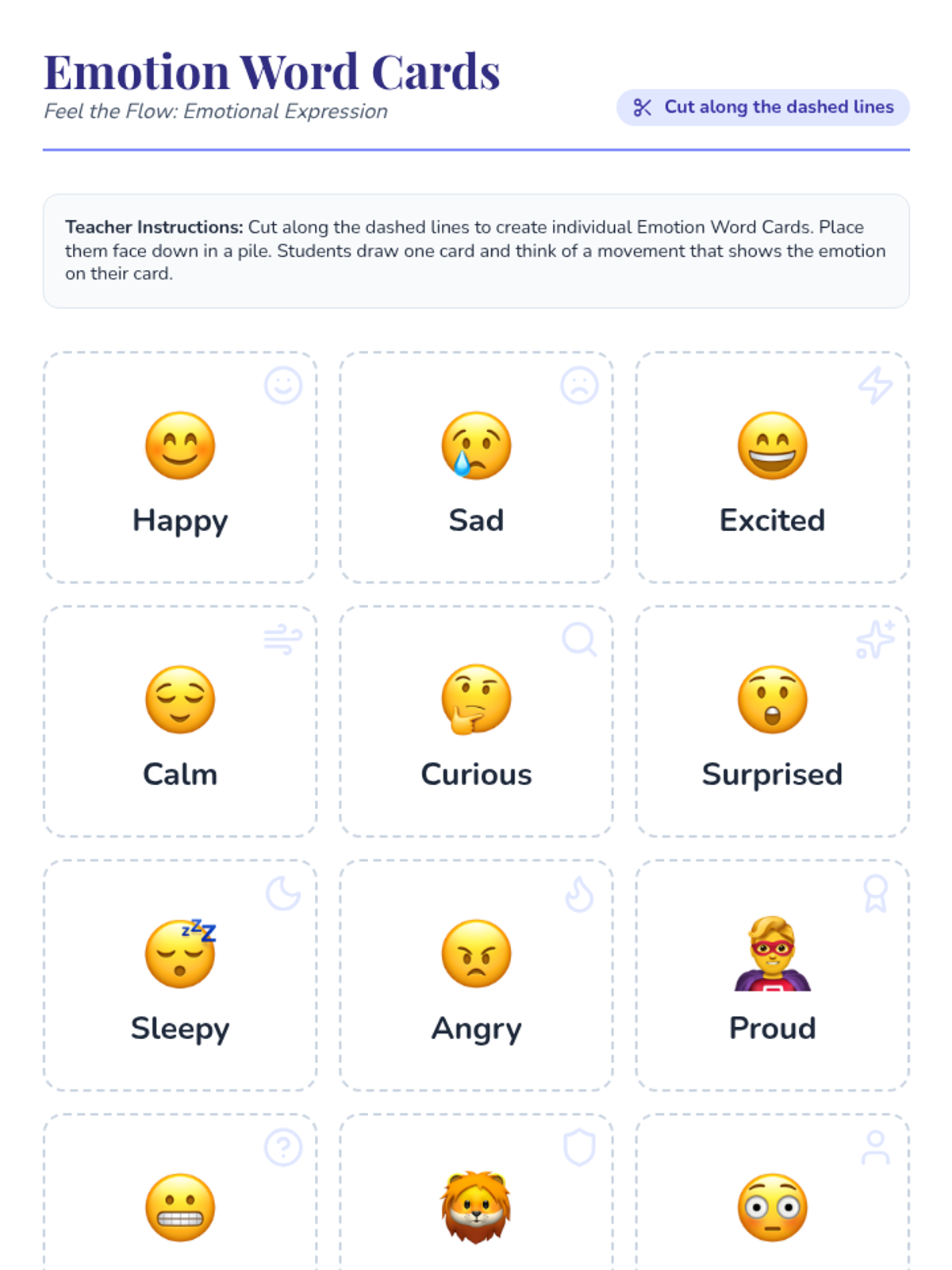
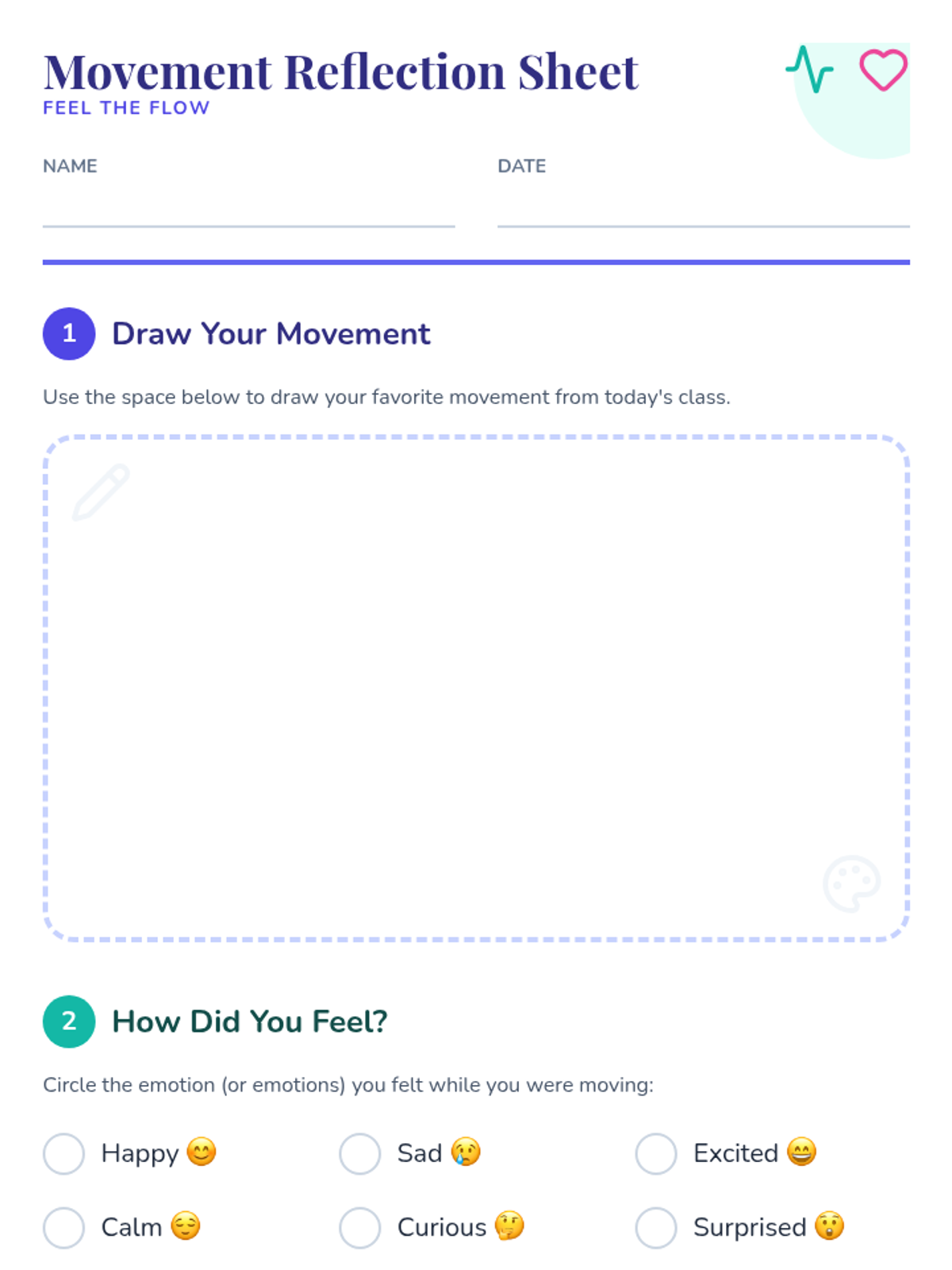
A 30-minute creative movement lesson for 1st graders (adaptable for K-12) that explores abstract motion, body awareness, and emotional expression. Students use prompts and emotion cards to express themselves through movement and reflect on their experience.
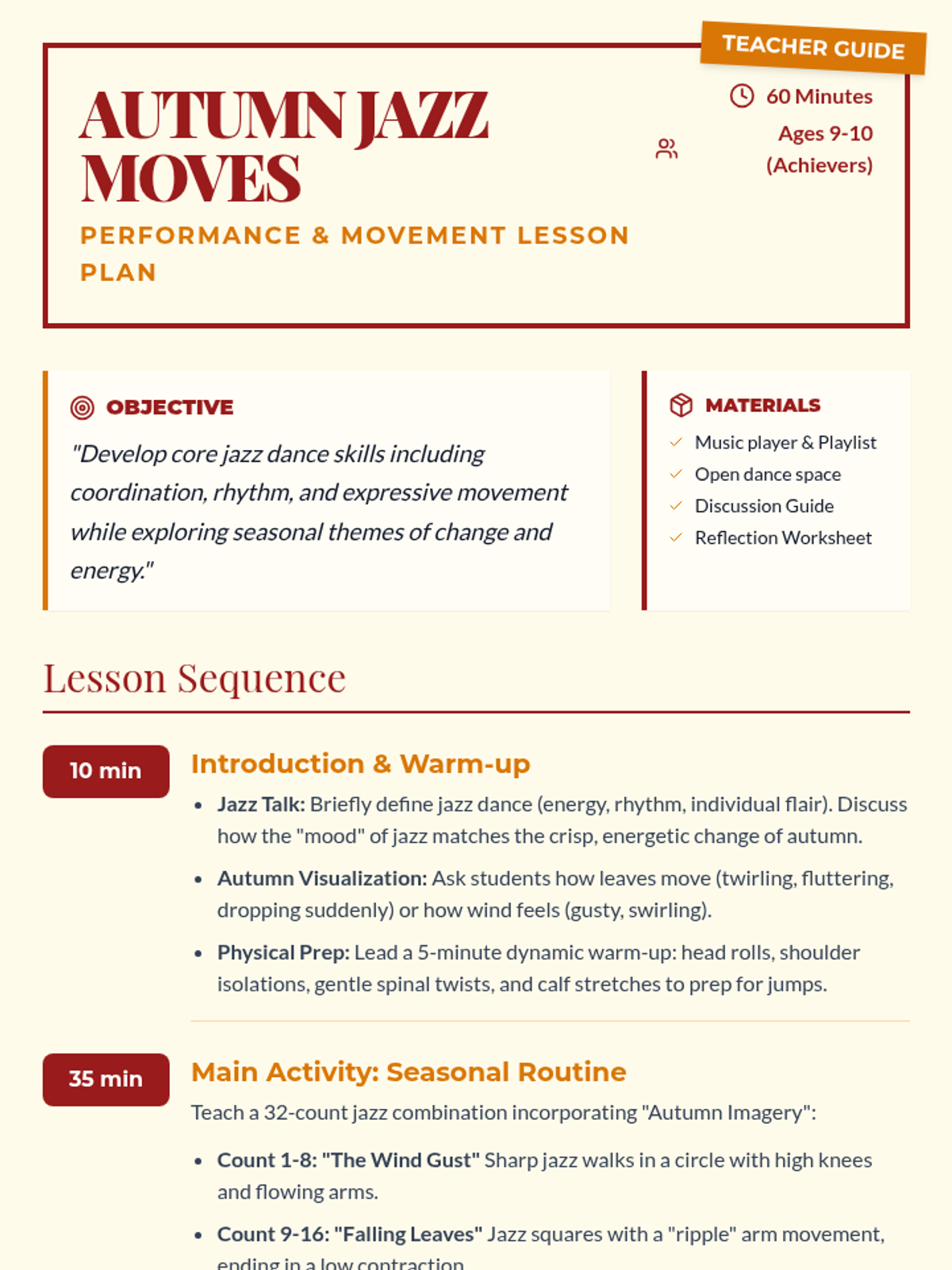
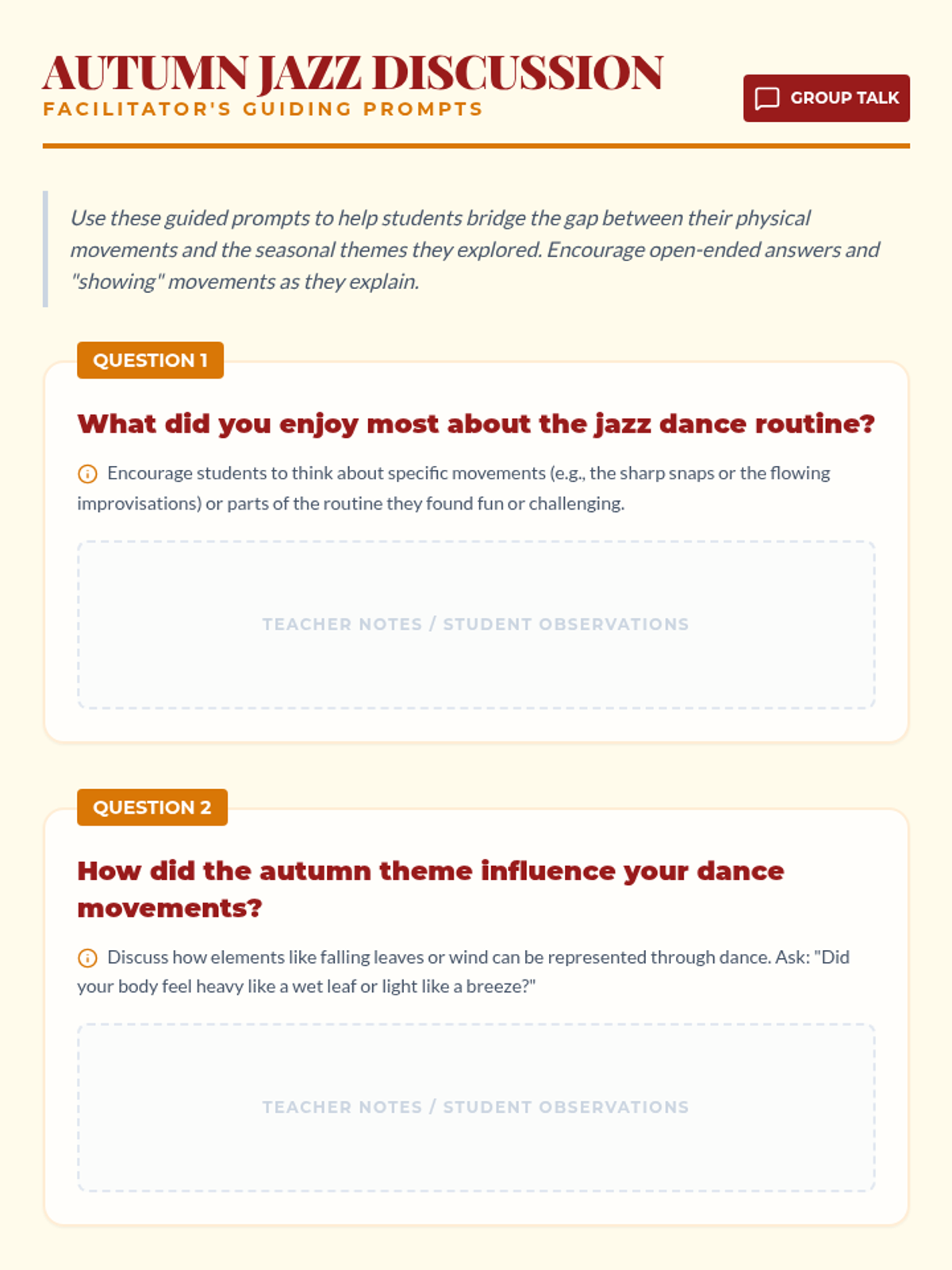
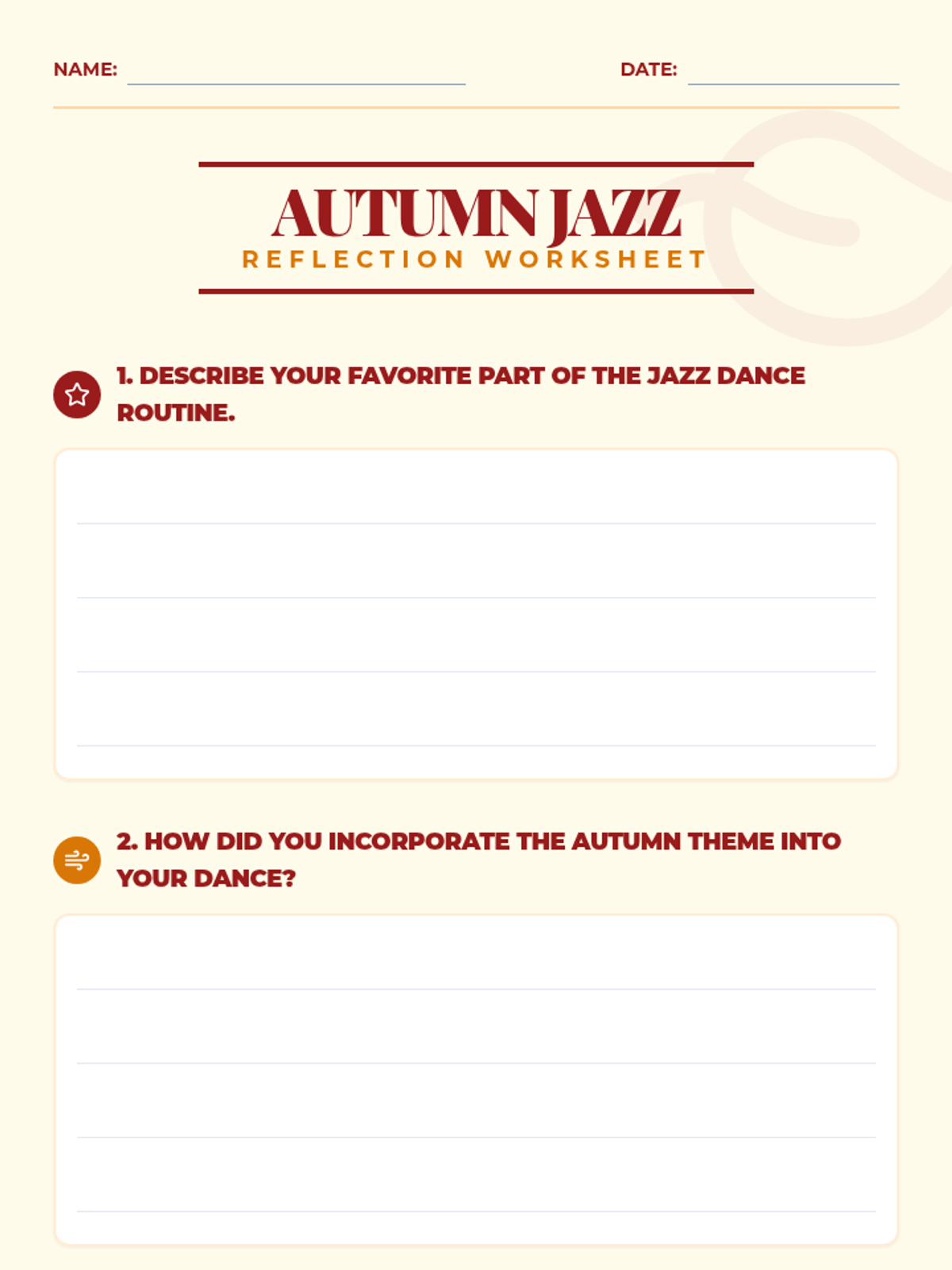
Students will explore jazz dance techniques with a seasonal twist, focusing on the energy and vibrancy of autumn through movement, coordination, and creative expression.
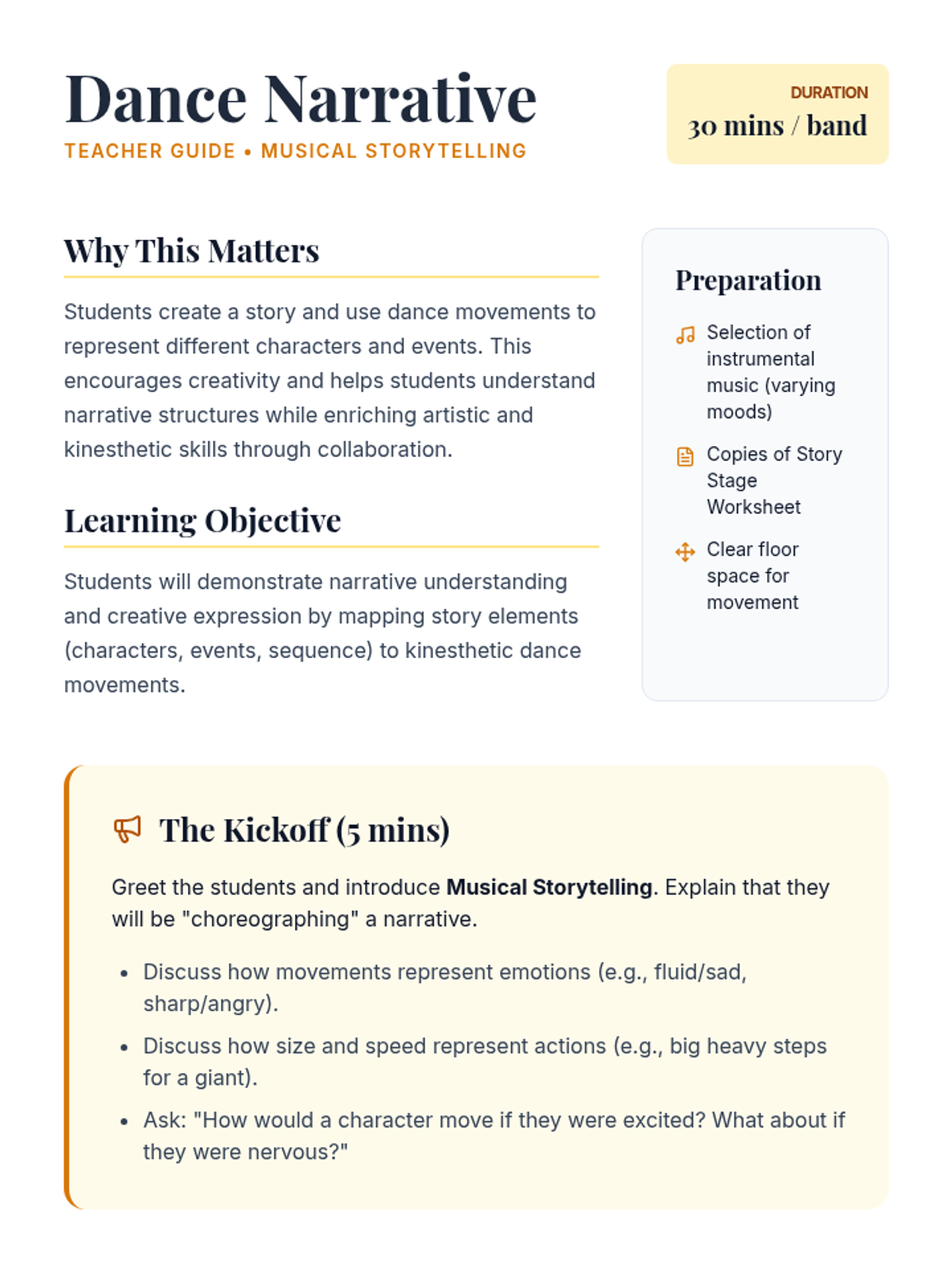
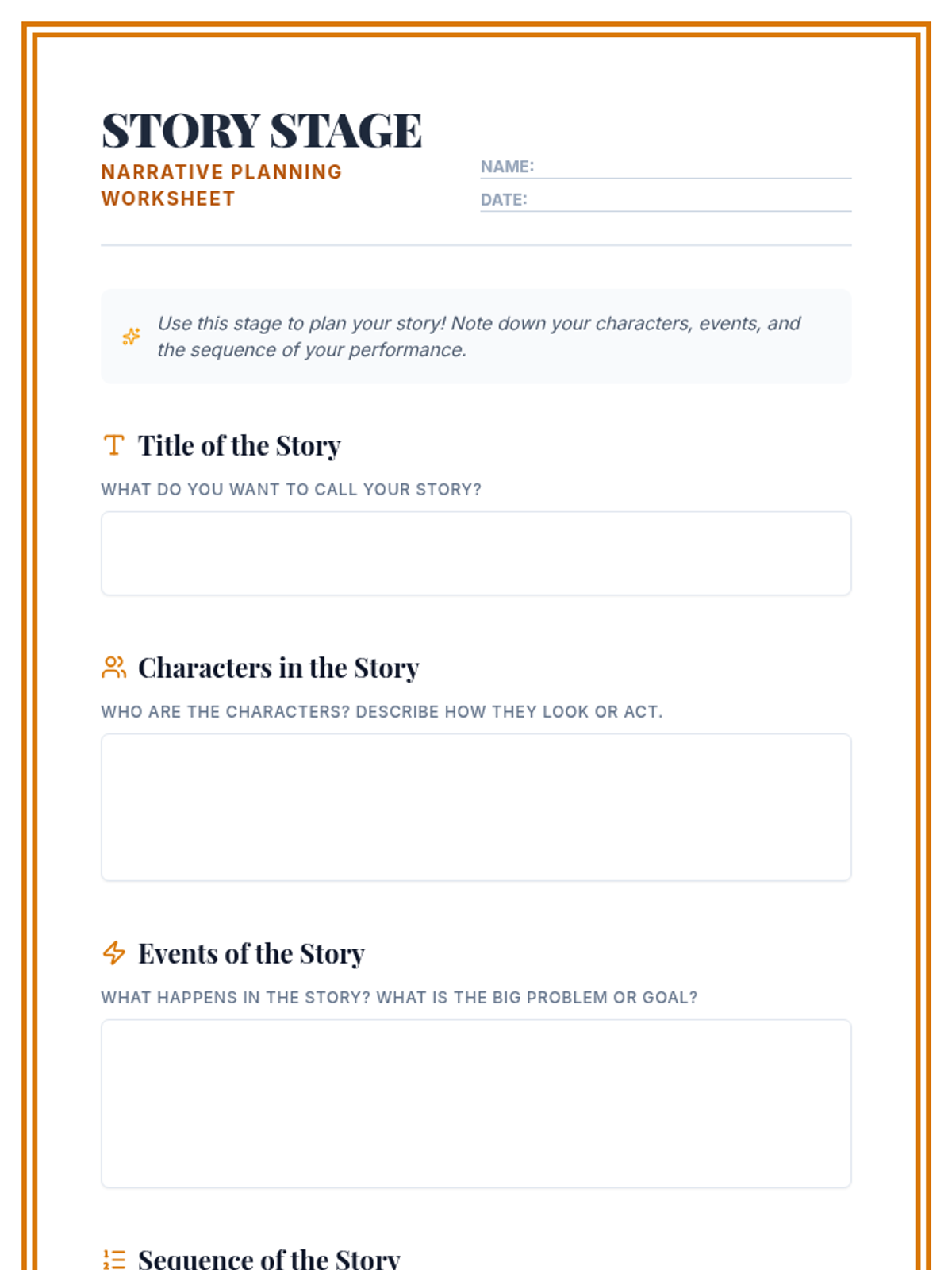
Students will create a story and use dance movements to represent characters and events, enhancing their understanding of narrative structure and kinesthetic expression across K-12 grade levels.
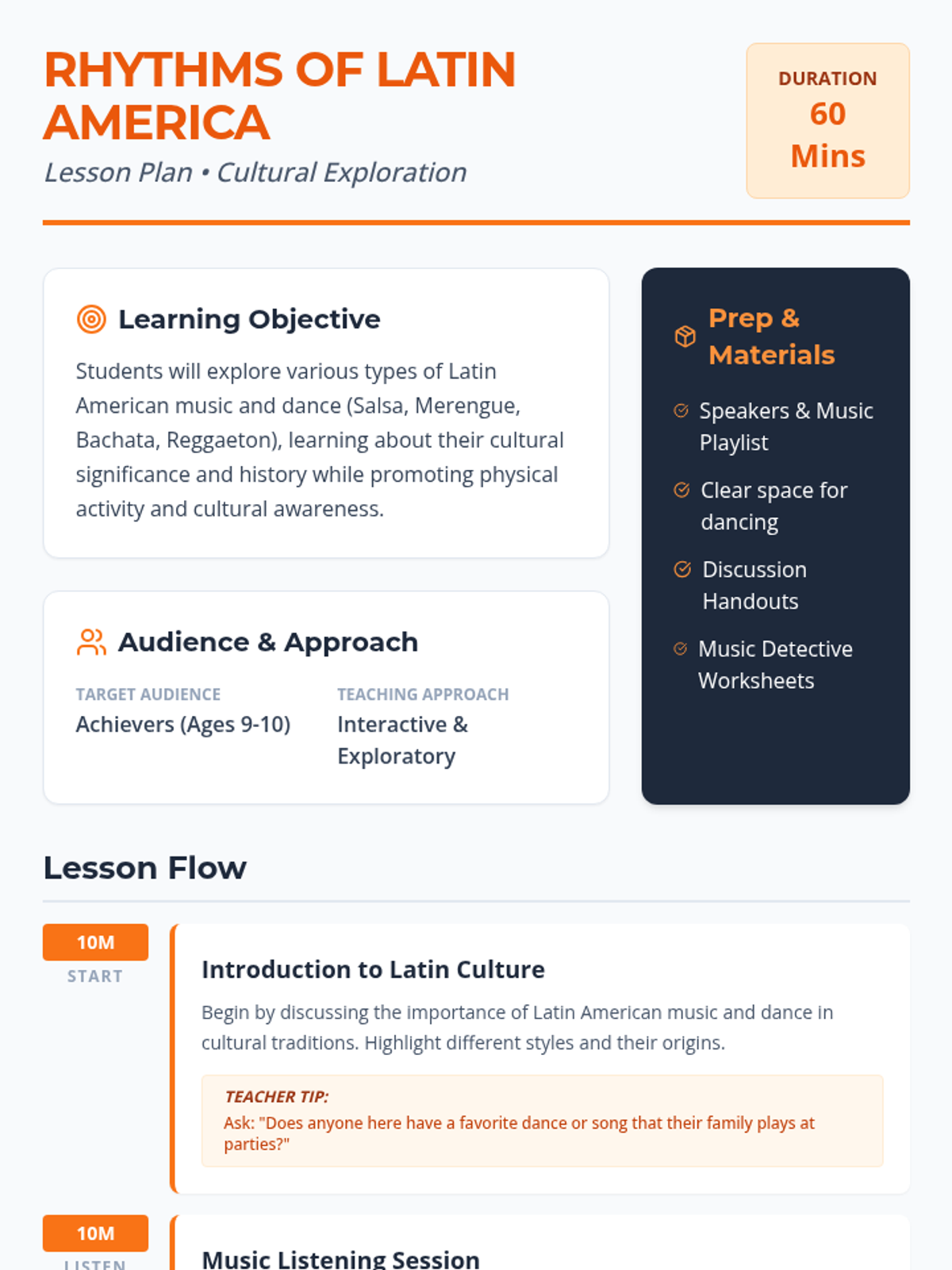
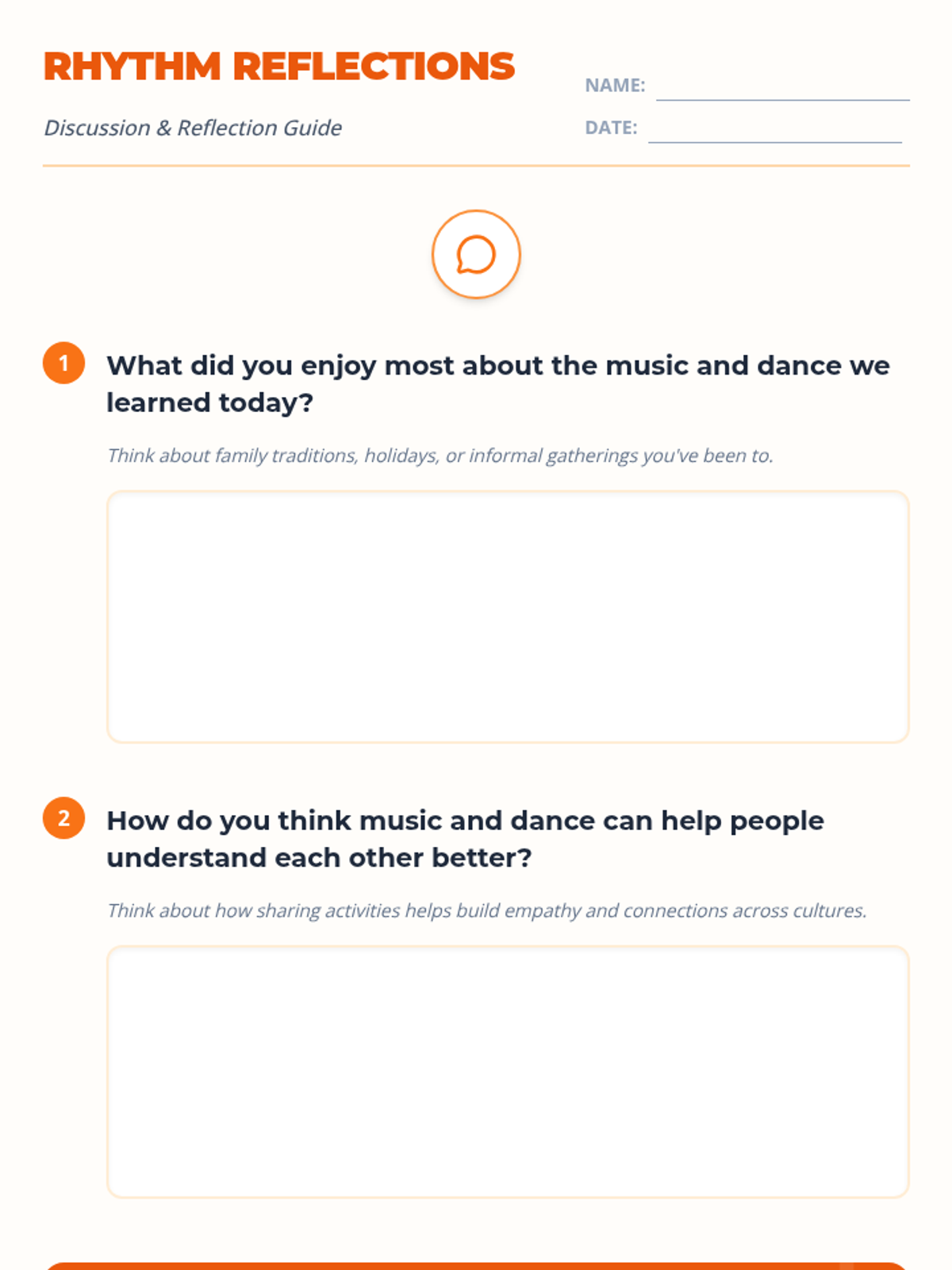
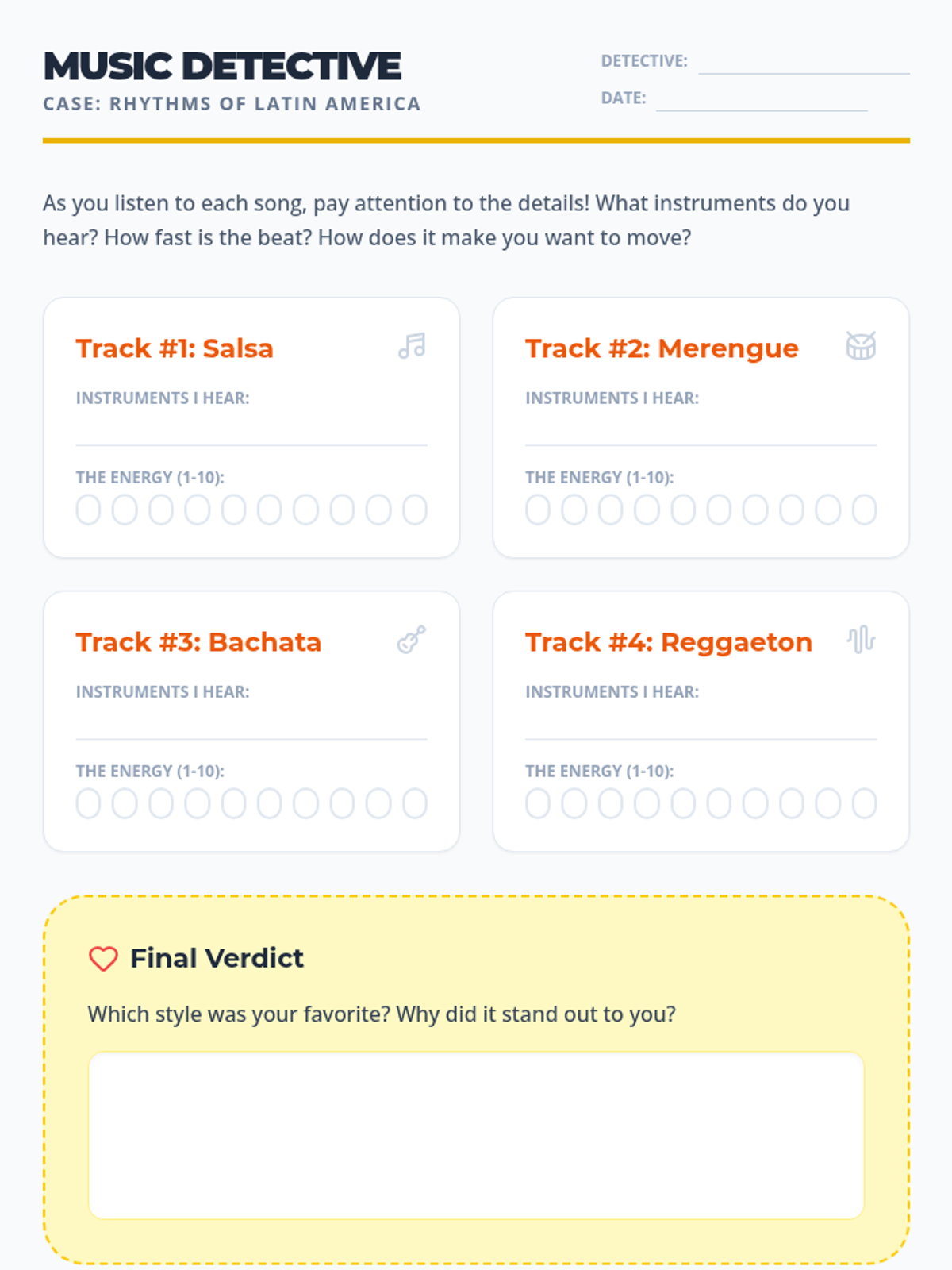
A 1-hour cultural exploration of Latin American music and dance, focusing on genres like Salsa, Merengue, and Bachata. Students learn basic dance steps and discuss the role of music in expressing cultural identity.