Develops technical proficiency and creative movement skills across various styles. Examines choreographic principles alongside the historical and cultural origins of diverse global dance forms.
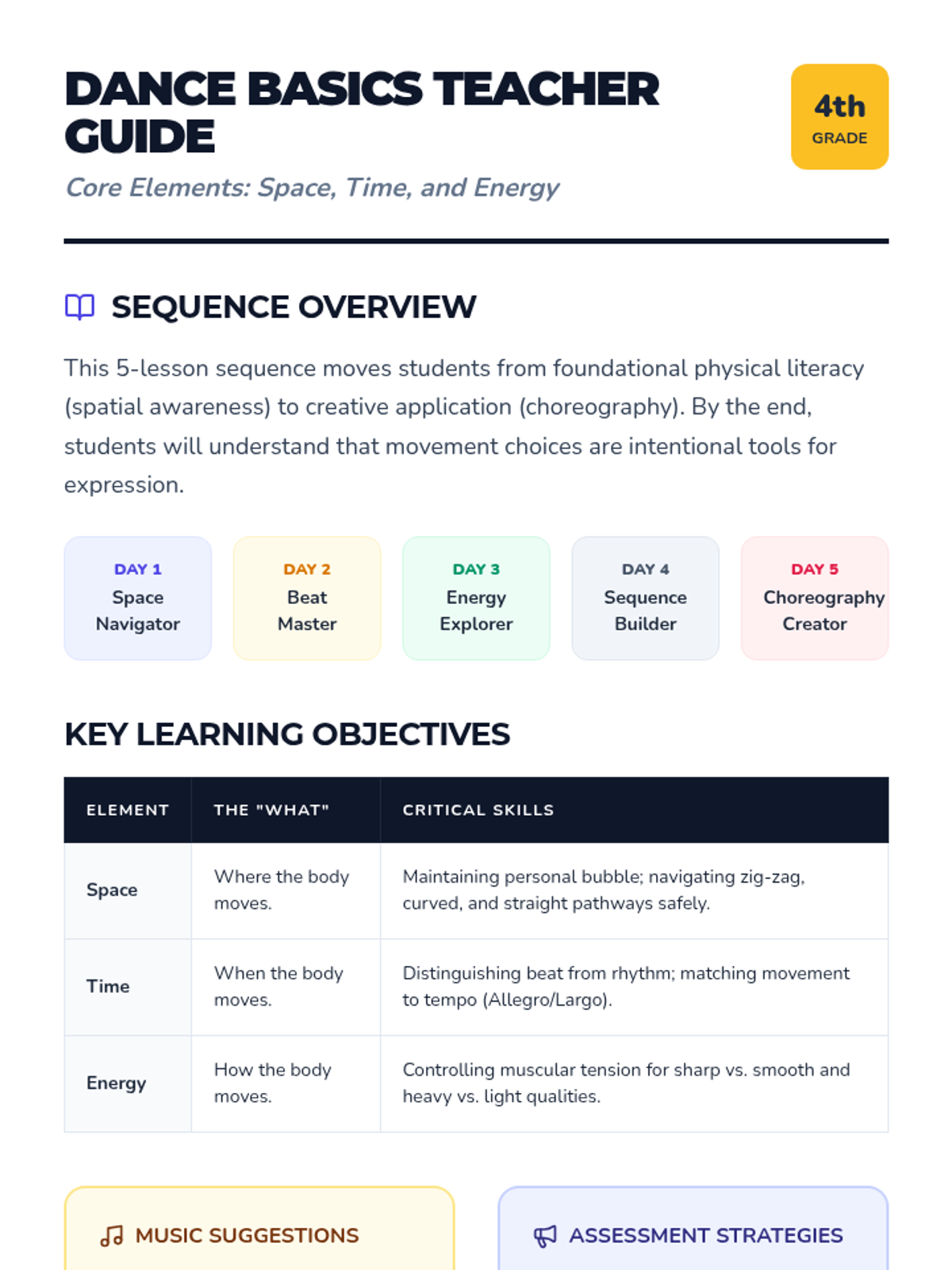
A comprehensive teacher guide for the 5-lesson Dance Basics sequence, providing a scope and sequence, learning objectives, music suggestions, and differentiation strategies.
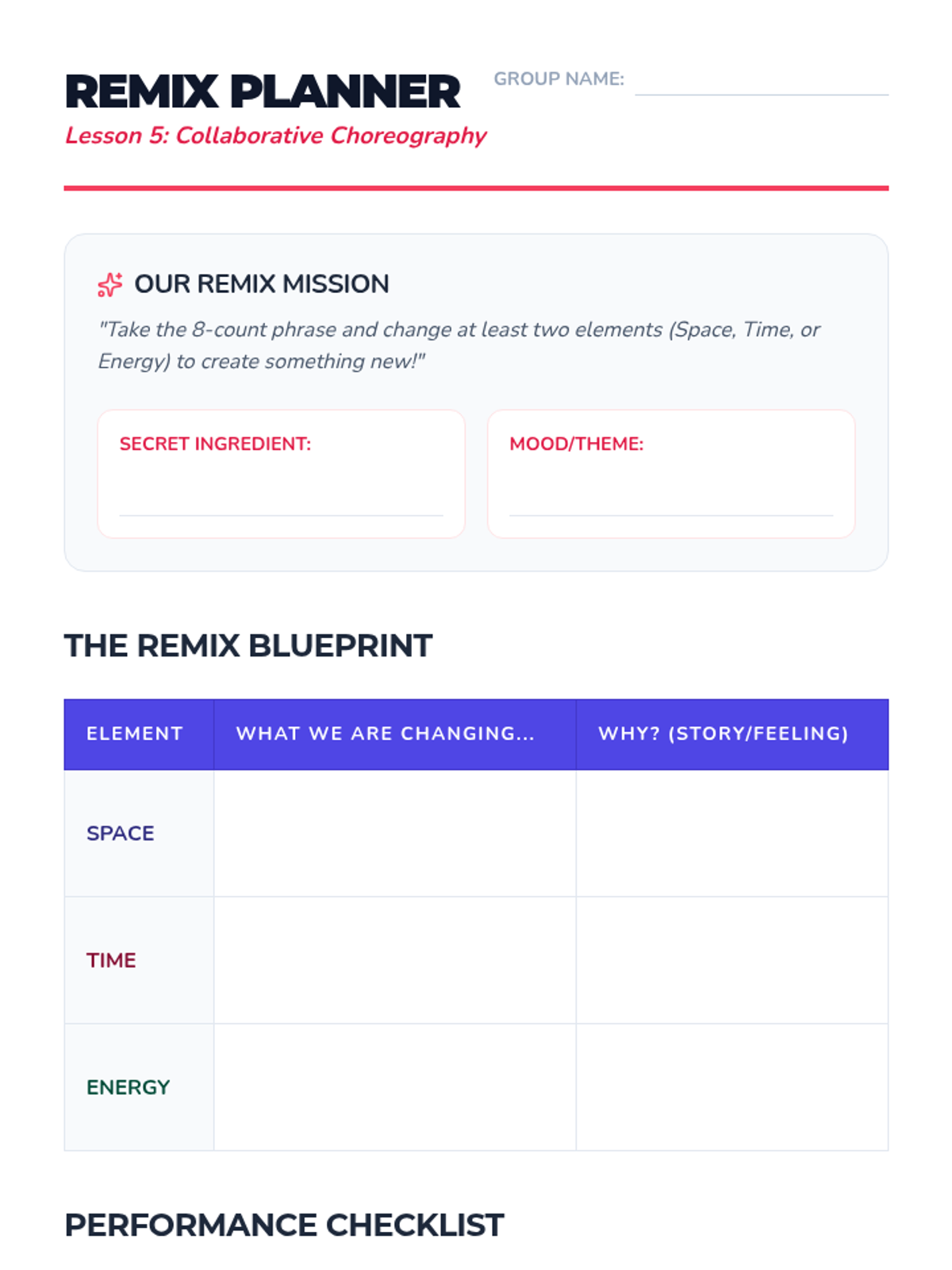
A student group planning guide for Lesson 5. Includes a remix blueprint table for Space, Time, and Energy changes, a performance checklist, and a peer feedback log for evaluating other groups' work.
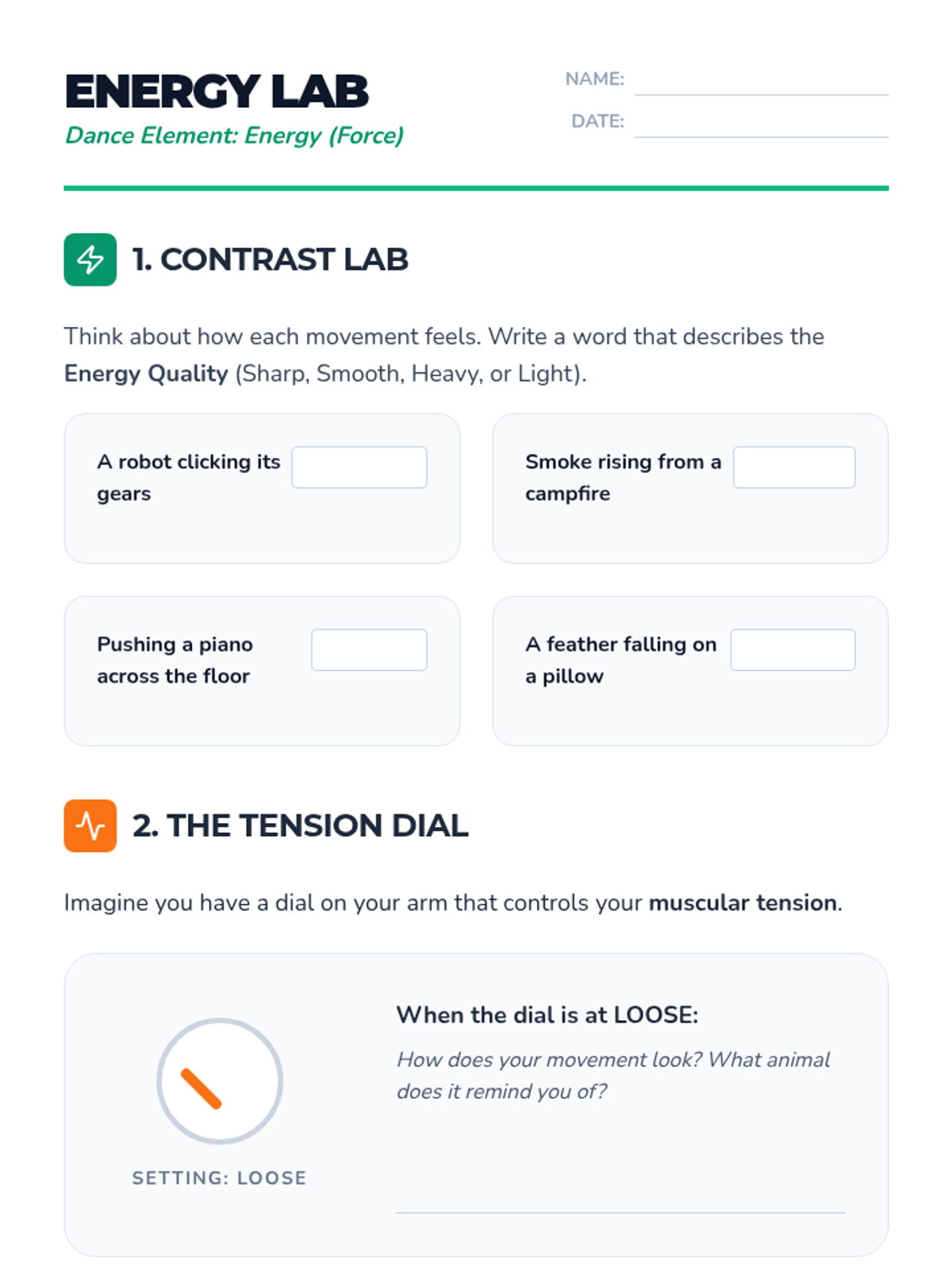
A student worksheet for Lesson 3 focusing on the element of Energy. Students identify movement qualities, explore the concept of muscular tension, and analyze how energy choices change the meaning of a simple gesture.
Visual presentation for Lesson 5, focusing on how to modify the 8-count phrase using Space, Time, and Energy, and providing guidelines for collaborative work and peer feedback.
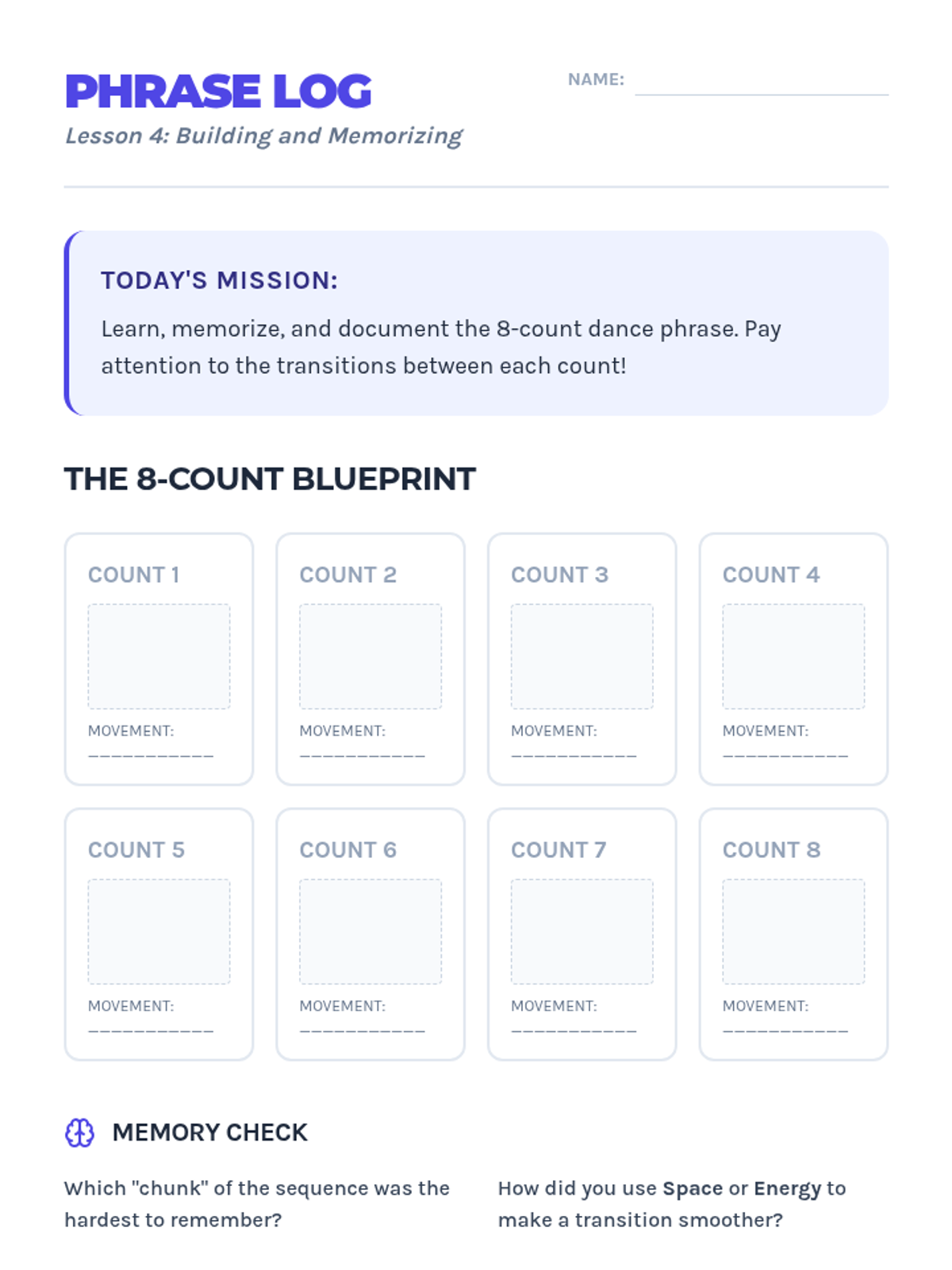
A student worksheet for Lesson 4 to help learners document and memorize the 8-count dance phrase. Includes space to describe movements for each count and reflect on transitions and memory strategies.
Visual presentation for Lesson 4, focusing on the cognitive skill of movement memory, the "chunking" technique, and the importance of smooth transitions between dance shapes.
Visual presentation for Lesson 3, covering the element of Energy in dance. Slides introduce Sharp vs. Smooth movement qualities, Heavy vs. Light weight, and the concept of muscular tension.
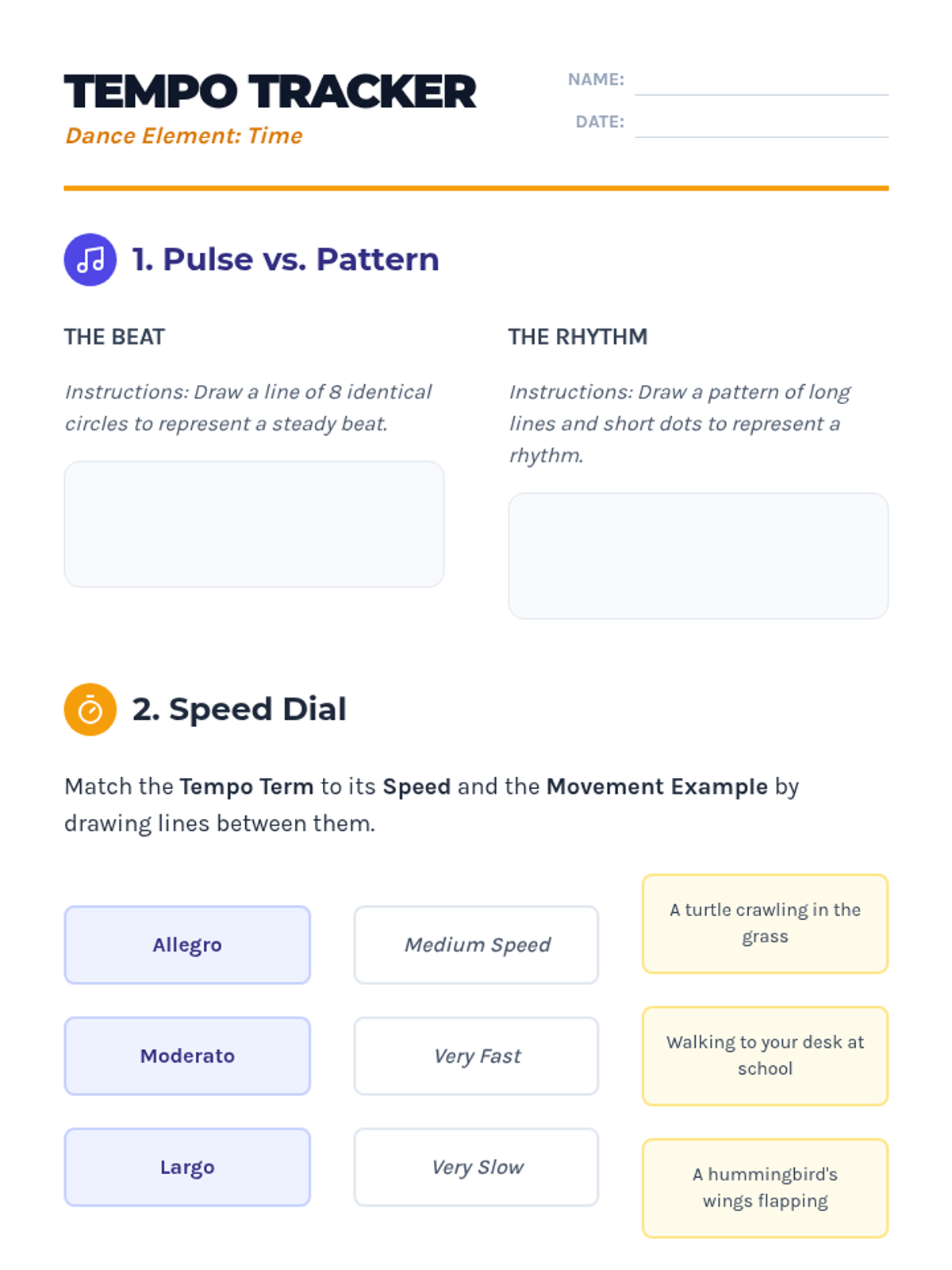
A student worksheet for Lesson 2 focusing on the element of Time. Includes activities to distinguish beat from rhythm, matching tempo terms to speeds/examples, and planning an 8-count movement phrase with freezes.
Visual presentation for Lesson 2, covering the element of Time in dance. Slides define Beat, Rhythm, and Tempo (Largo, Moderato, Allegro) and introduce the concept of "Freeze" and stillness.
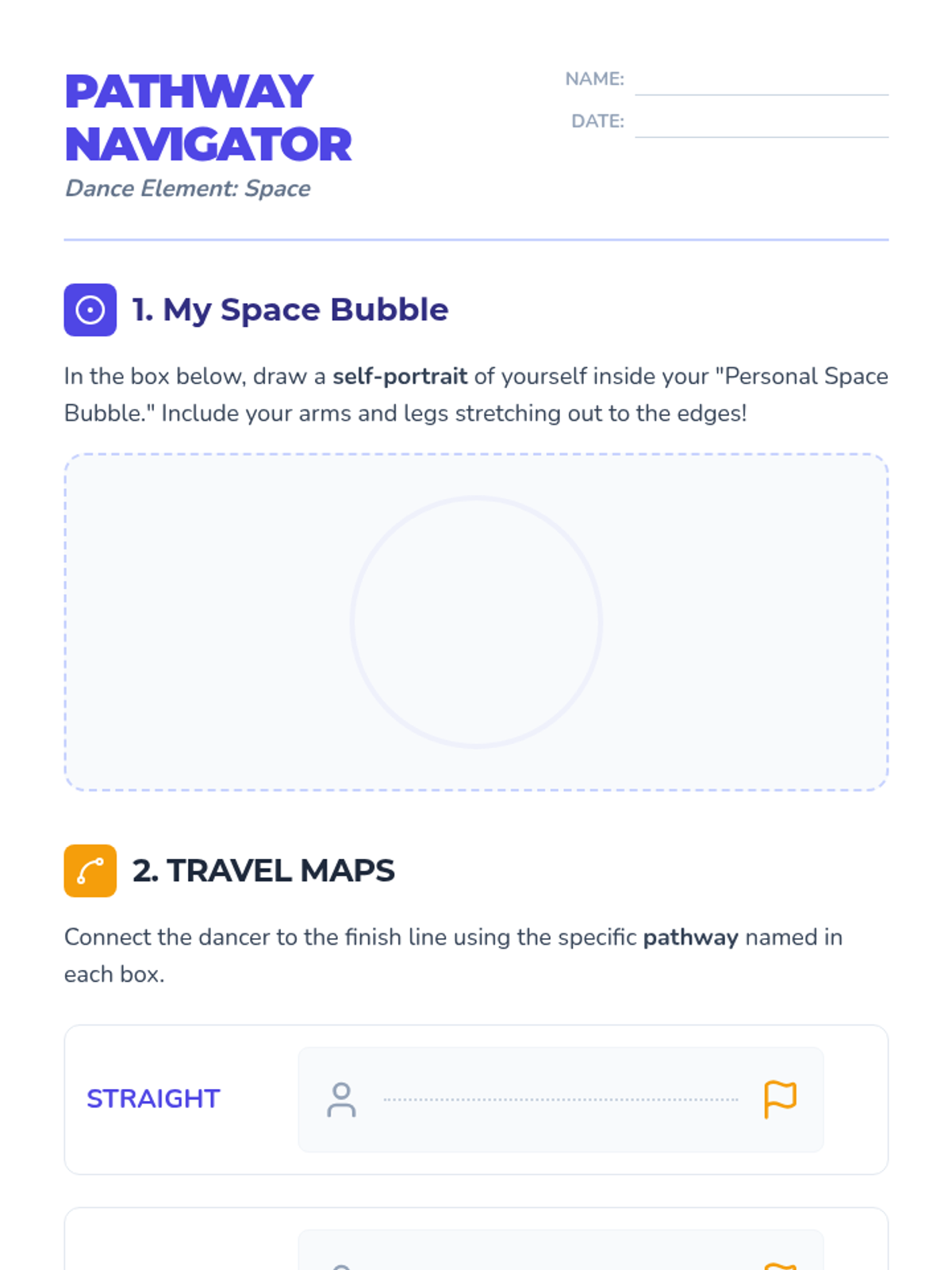
A student worksheet for Lesson 1 where learners draw their personal space bubble, practice sketching different travel pathways (straight, curved, zigzag), and identify movement levels.
Visual presentation for Lesson 1, covering the foundational element of Space in dance. Slides include definitions and visuals for Personal vs. General Space, Levels (High, Medium, Low), and Pathways (Straight, Curved, Zigzag).
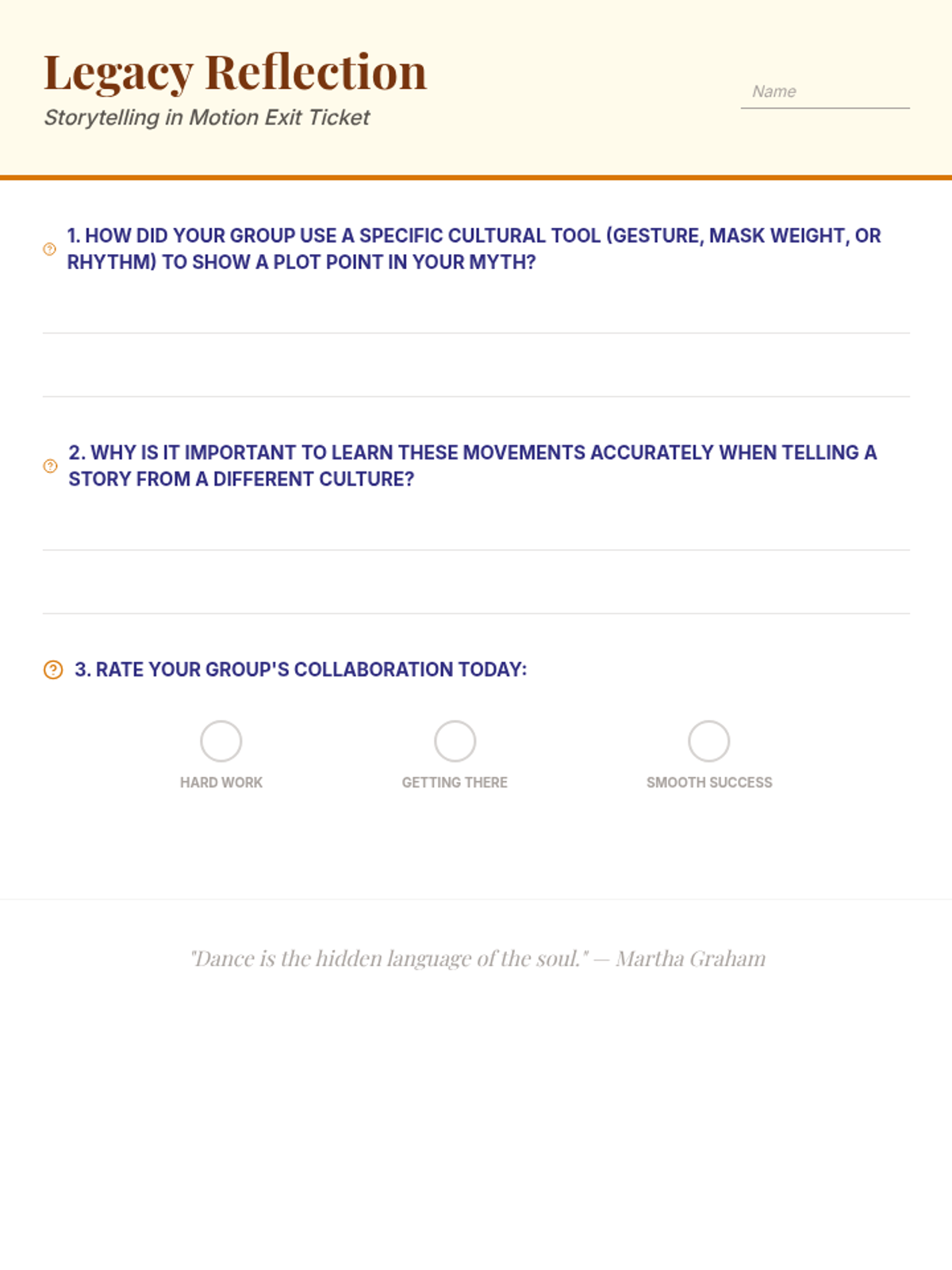
A short reflection exit ticket for the final lesson, asking students to connect their choreographic choices to the cultural tools learned in the unit.
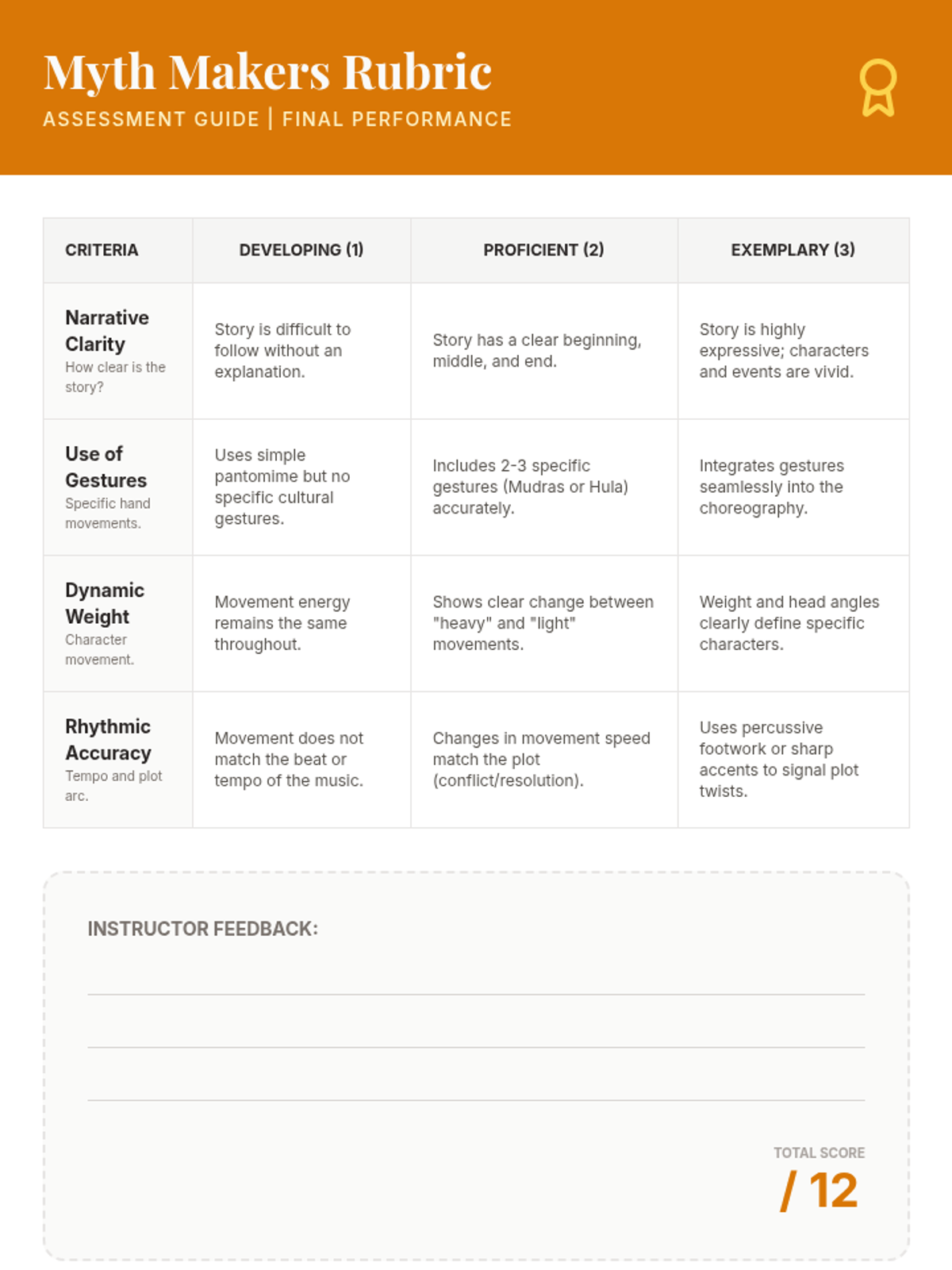
A grading rubric for the final narrative dance project, assessing narrative clarity, gesture usage, movement dynamics, and rhythm.
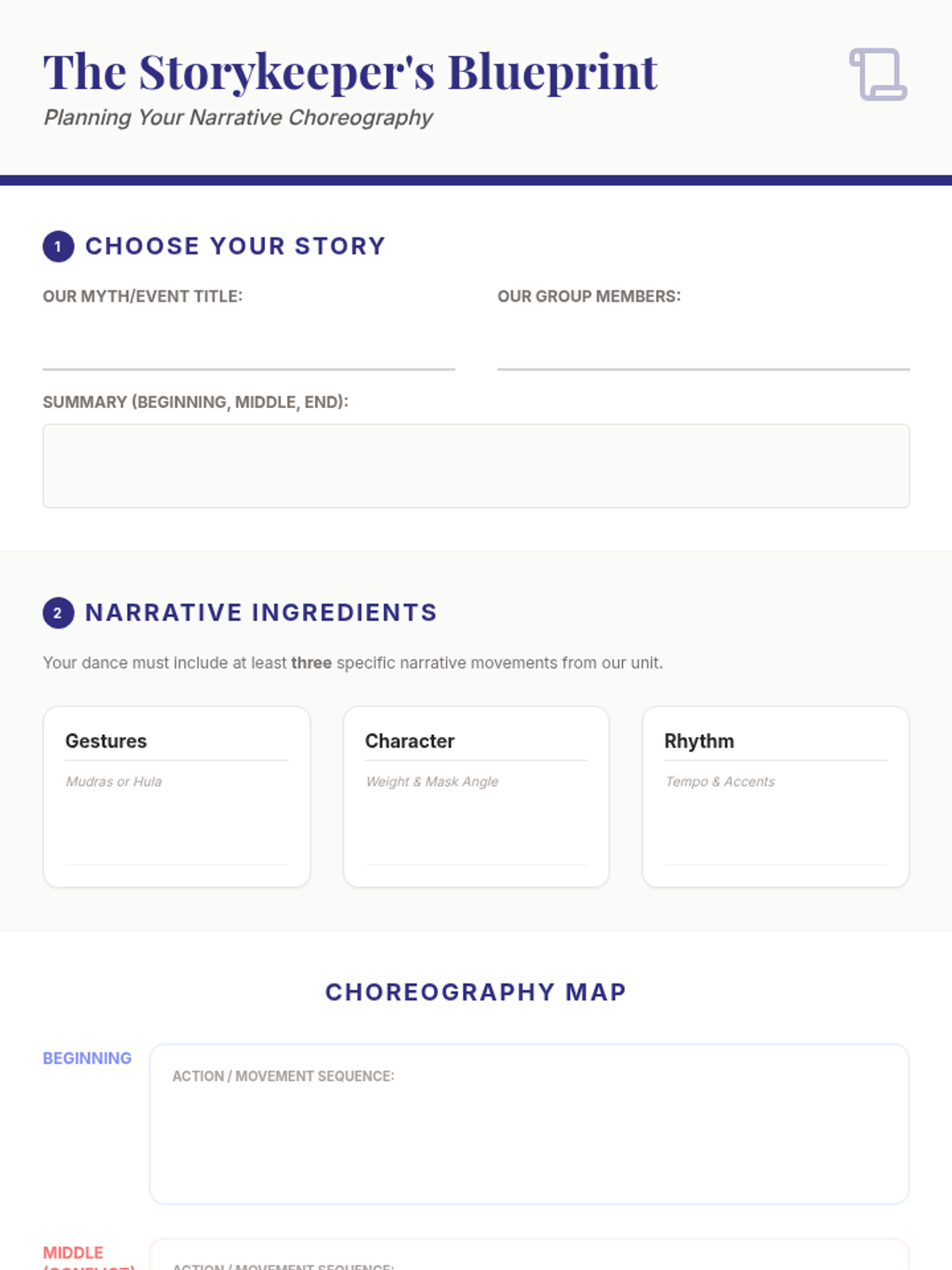
A planning worksheet for students to organize their group's narrative dance project, including story summary and movement choices.
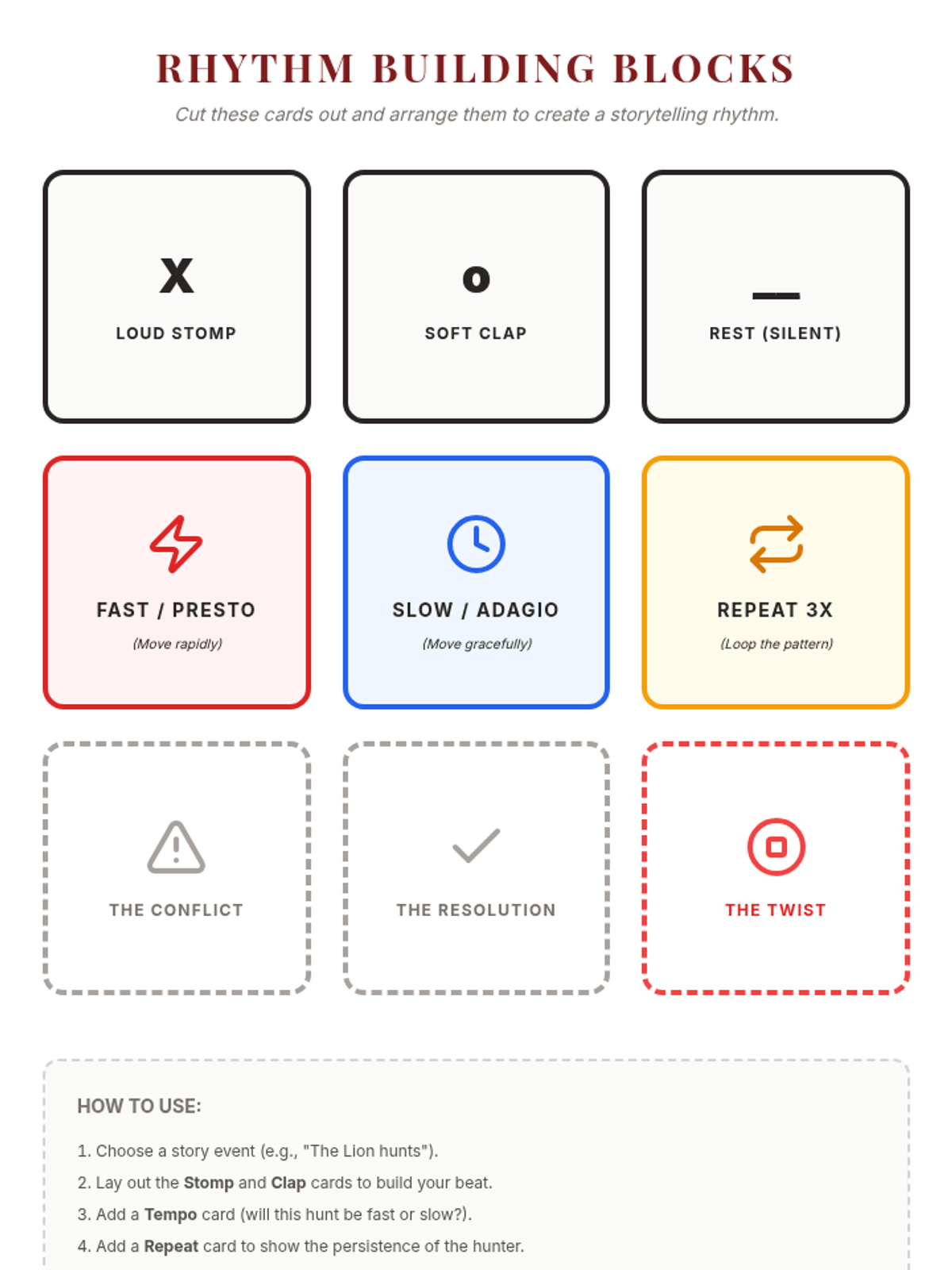
Rhythm pattern cards for student use in sequencing their own rhythmic story arcs.
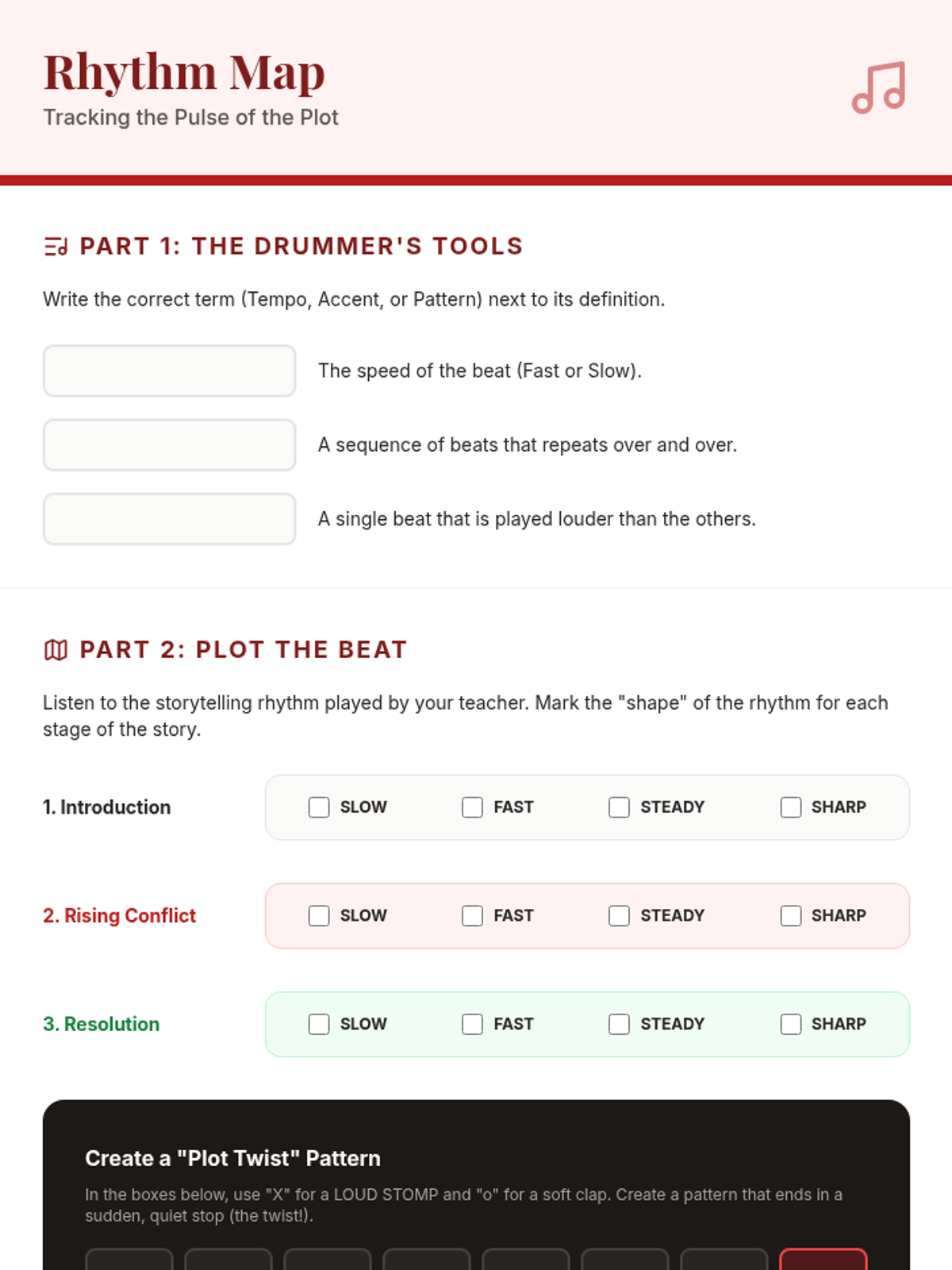
A worksheet for Lesson 4 where students map rhythmic changes to the dramatic structure of a story (Introduction, Conflict, Resolution).
Slide deck for Lesson 4, connecting drum beats and footwork to the dramatic arc of a story.
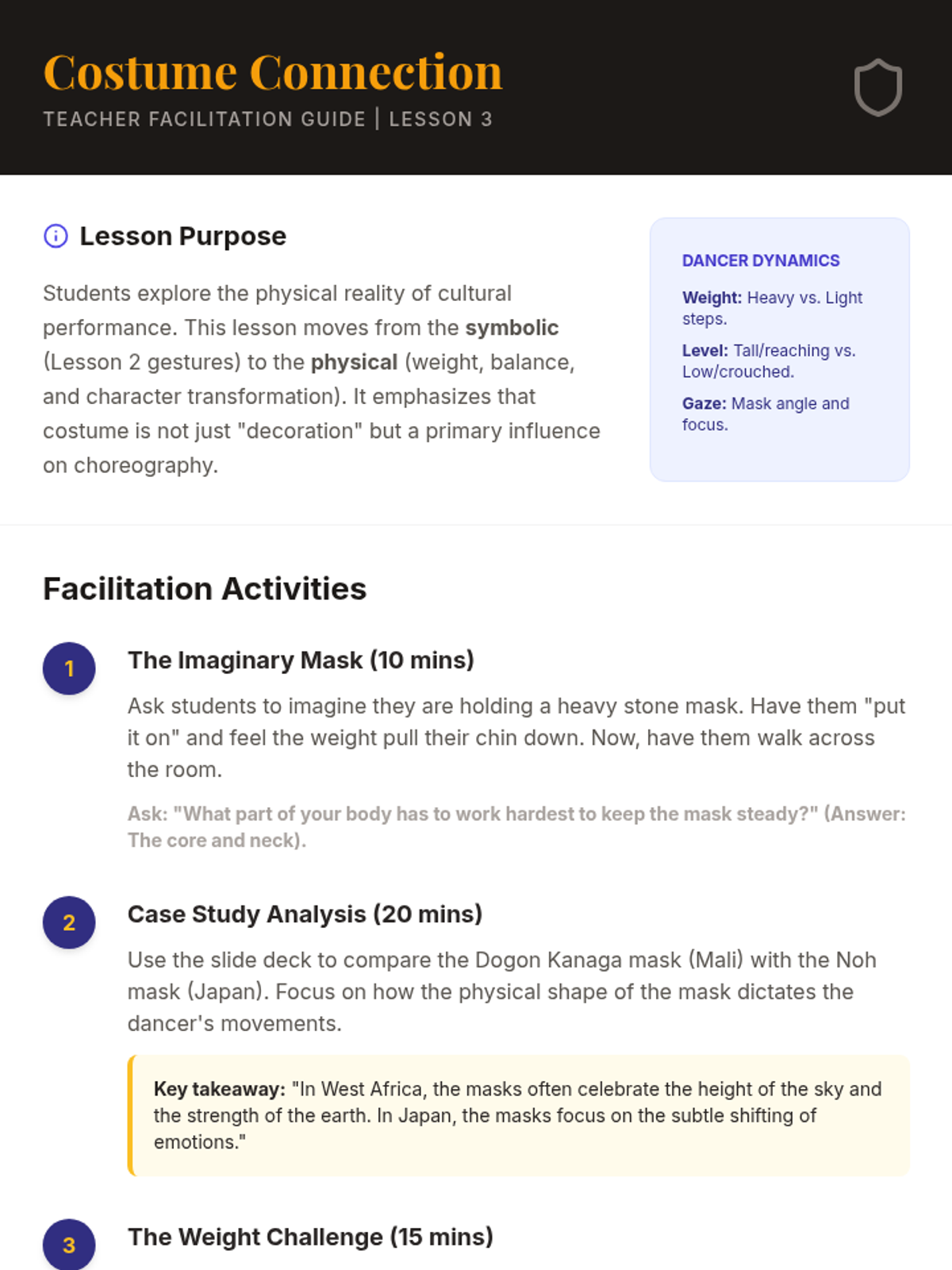
Teacher facilitation guide for Lesson 3, including activity instructions, discussion prompts, and cultural sensitivity notes.
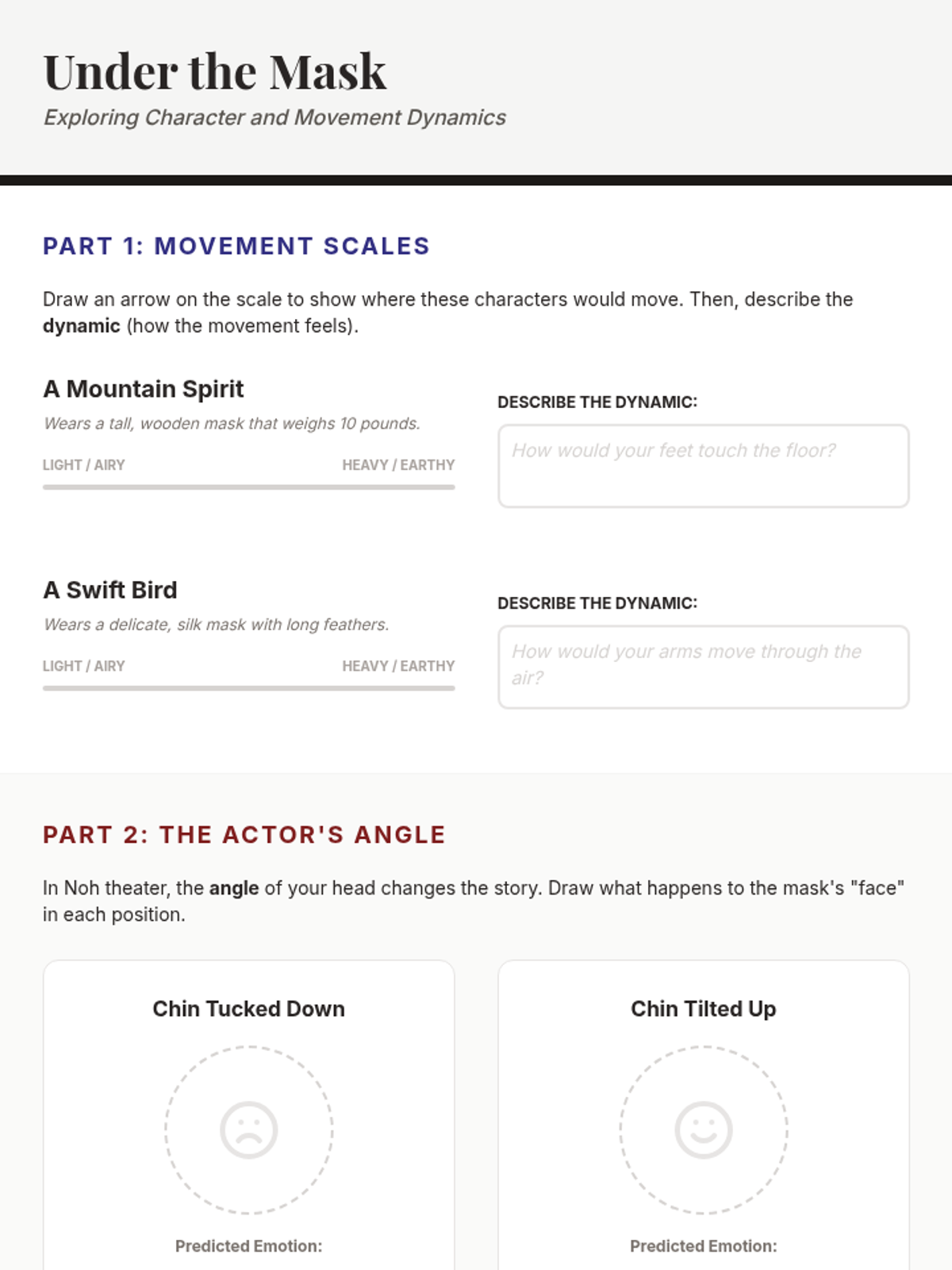
A worksheet for Lesson 3 where students explore the influence of mask weight and head angles on movement dynamics and emotion.
Slide deck for Lesson 3, exploring how masks and costumes influence character and movement in West African and Asian traditions.
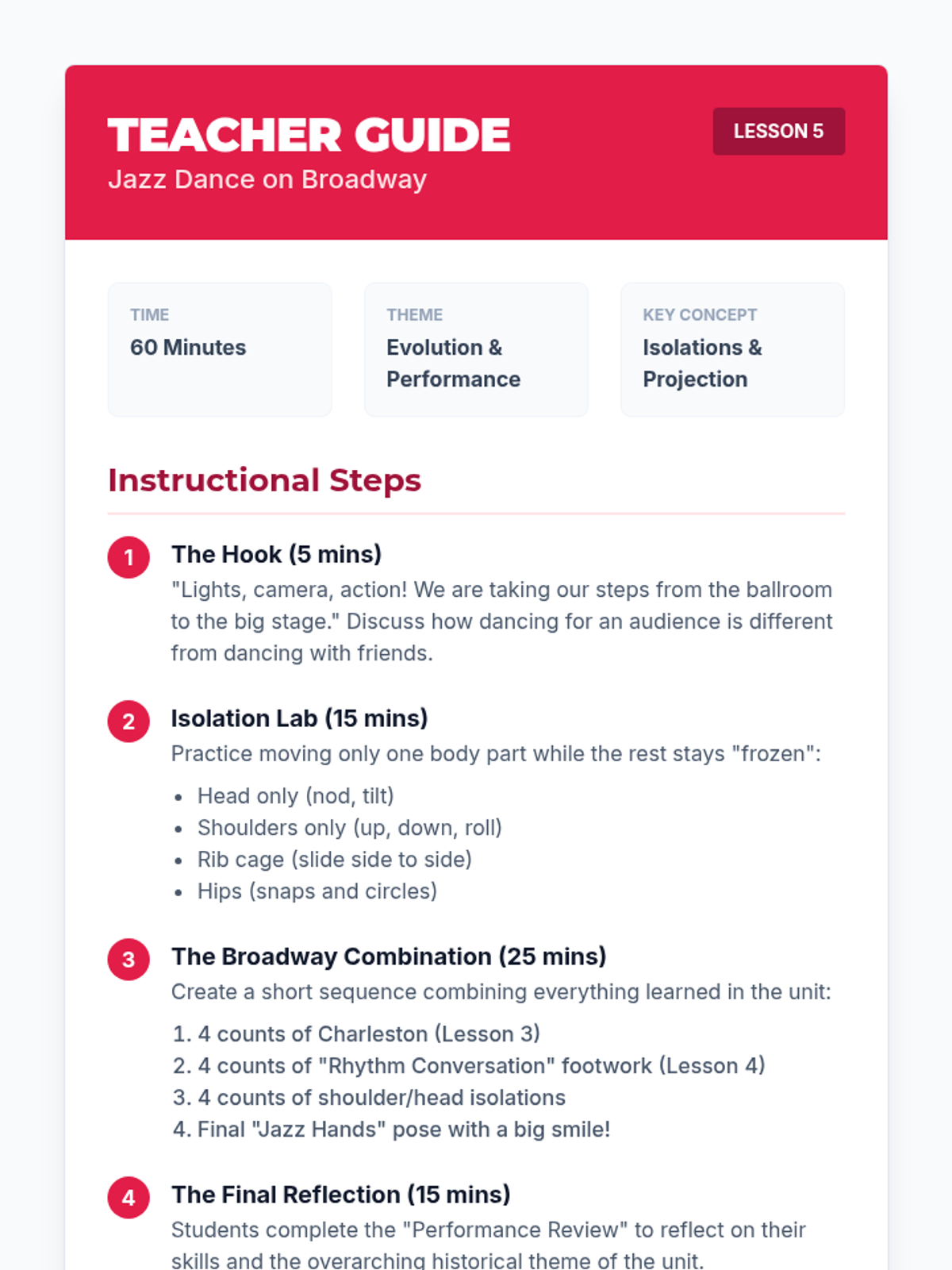
Final teacher guide for Lesson 5, focusing on choreography integration, theatrical performance techniques, and unit synthesis.
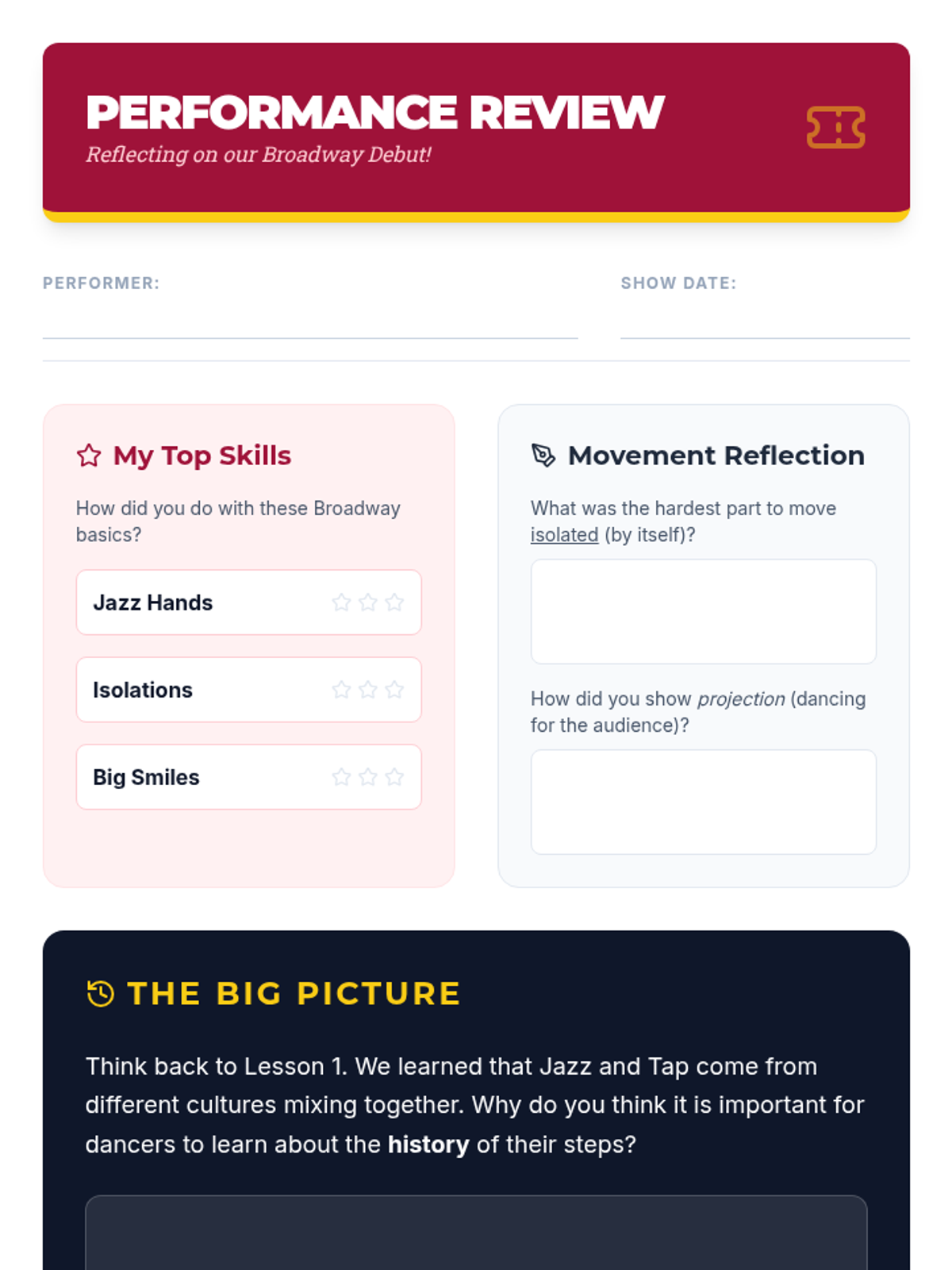
Final reflection worksheet for students to assess their performance skills and synthesize their learning about dance history and culture.
Final presentation on Broadway Jazz, teaching theatrical projection, movement isolation, and the evolution from social to performance dance.
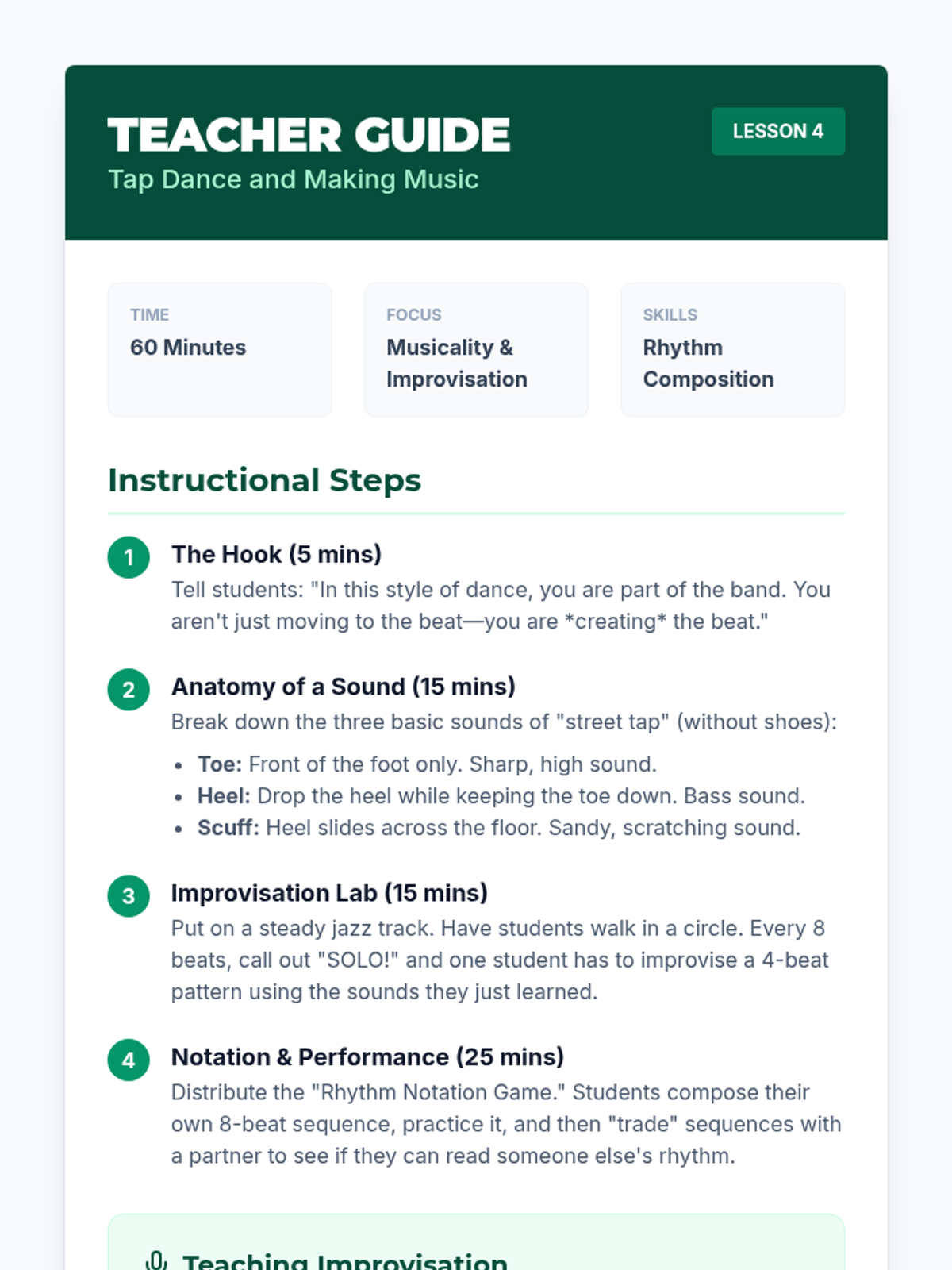
Teacher guide for Lesson 4, focusing on percussive tap mechanics, teaching improvisation, and managing rhythmic composition activities.
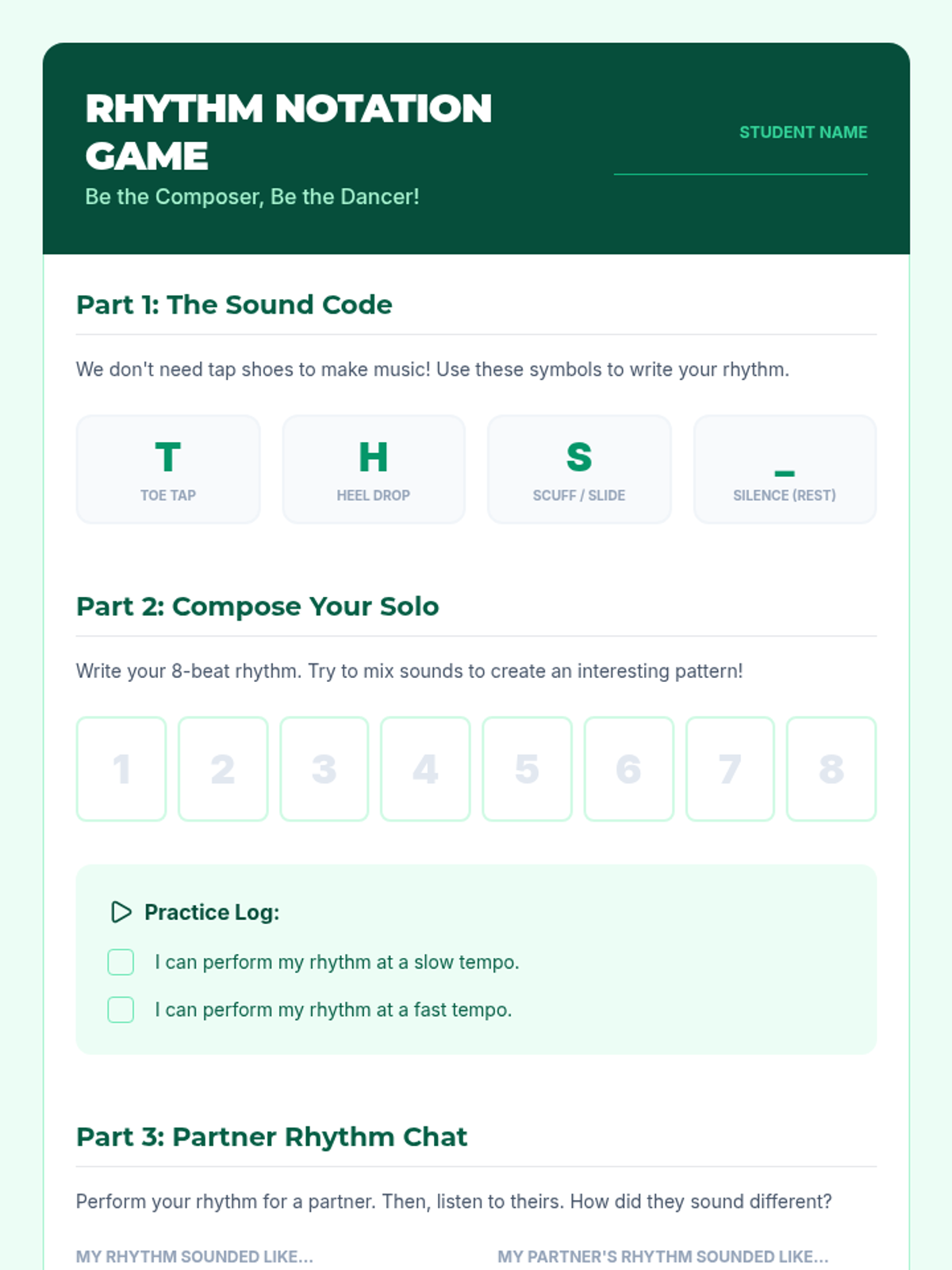
Rhythm notation activity for tap dance where students compose and perform their own percussive sequences.
Slides introducing tap dance as a form of percussive music, covering basic sounds, improvisation, and historical figures like Bill Robinson.
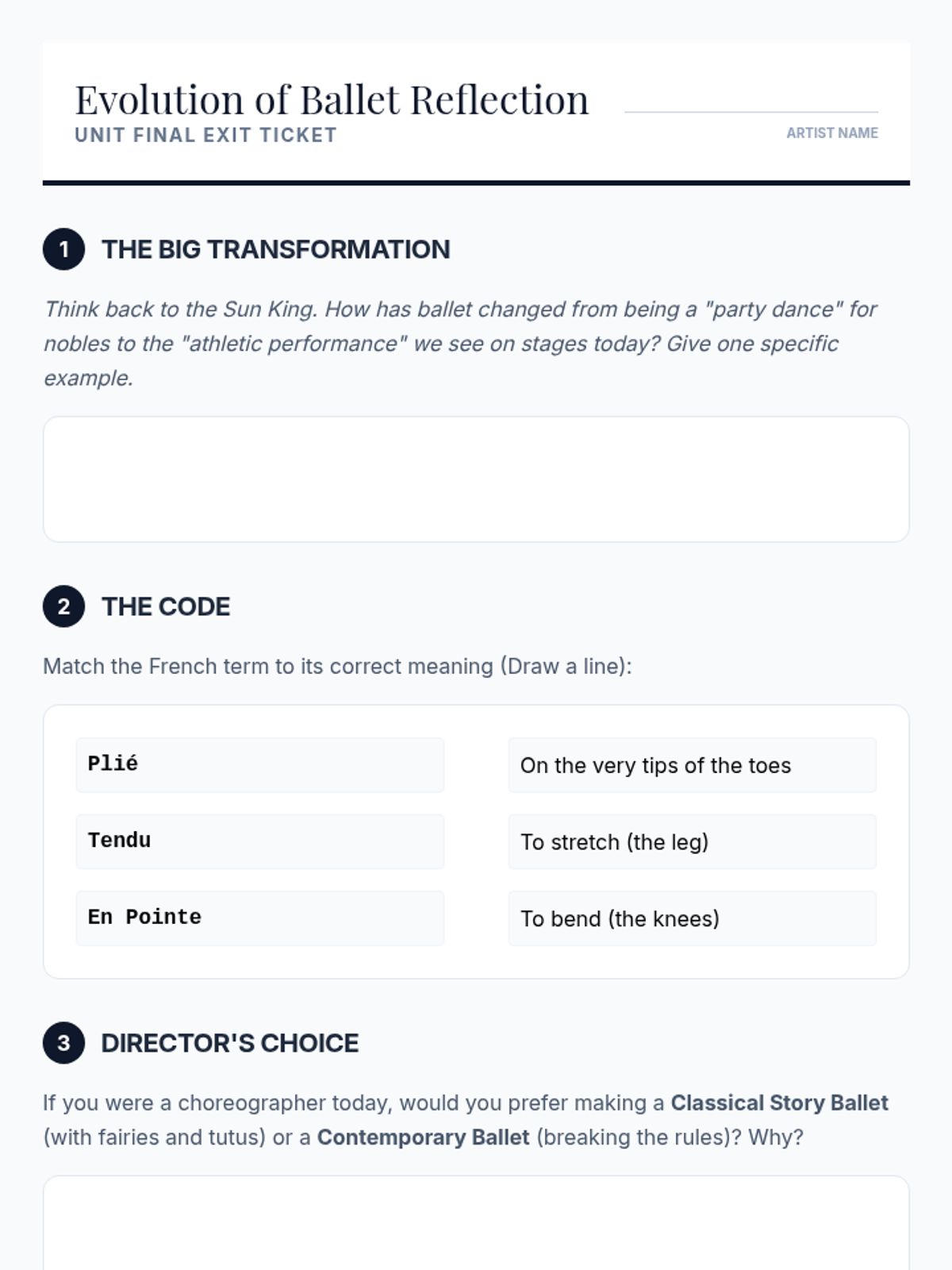
A comprehensive exit ticket for the end of the ballet history sequence, requiring students to reflect on the evolution of dance and apply their knowledge of terminology and styles.
A slide deck comparing classical and contemporary ballet, highlighting how 20th-century choreographers broke traditional rules of movement, costume, and theme.
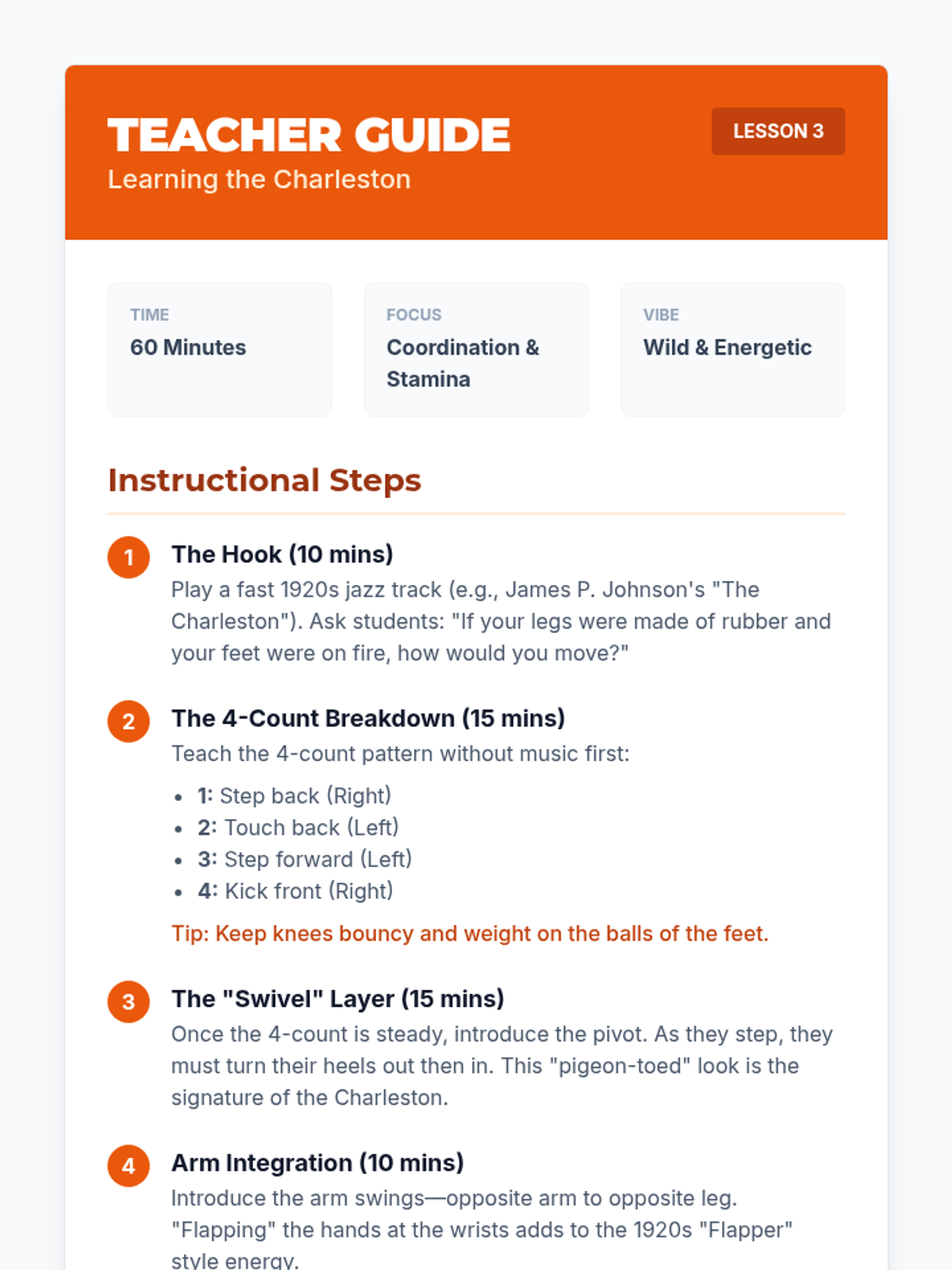
Teacher guide for Lesson 3, providing pedagogical strategies for teaching the Charleston, including breakdowns, common corrections, and reflection prompts.
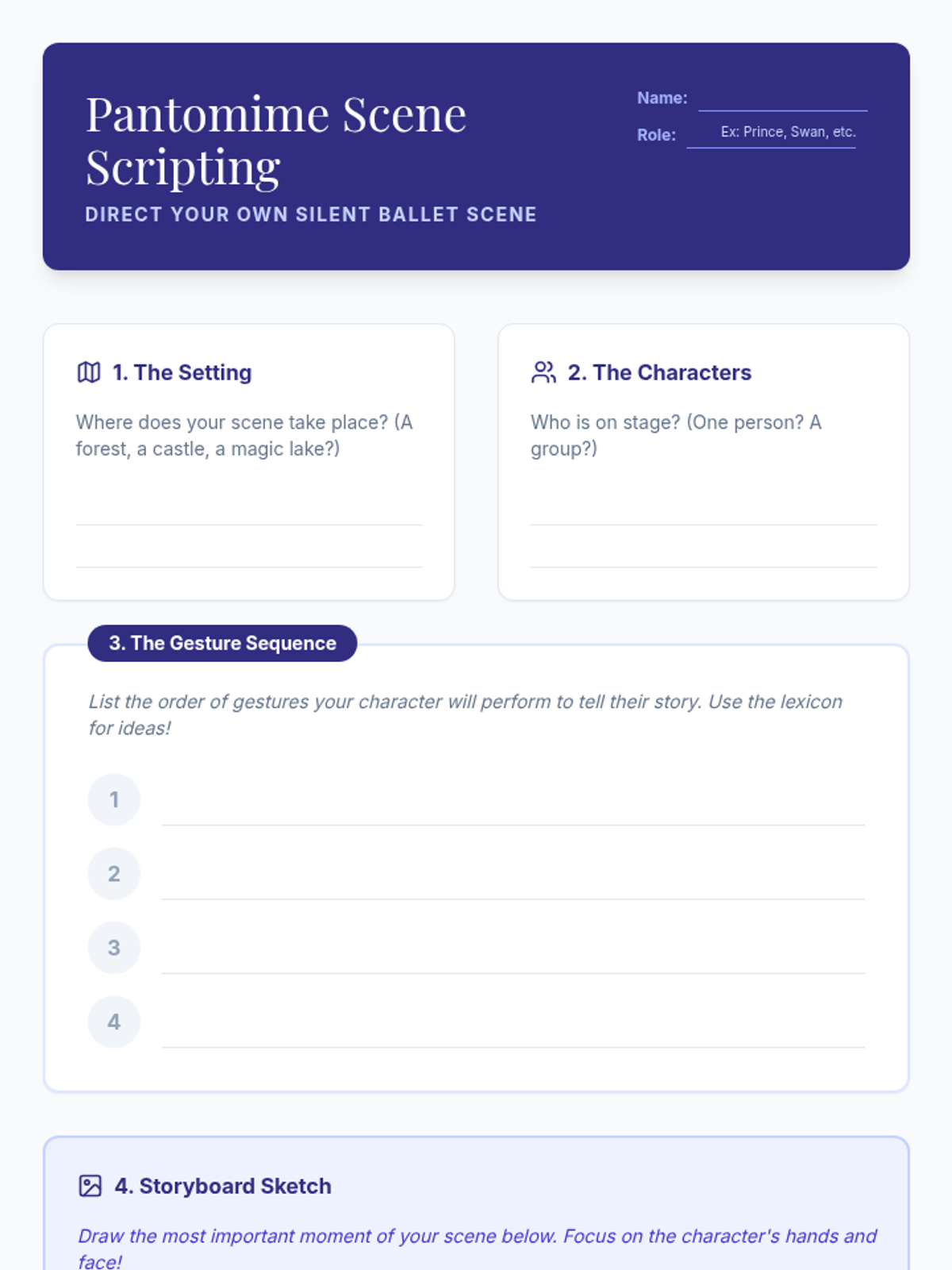
An activity sheet for students to plan and storyboard their own silent ballet pantomime scene, integrating character, setting, and specific gestures.
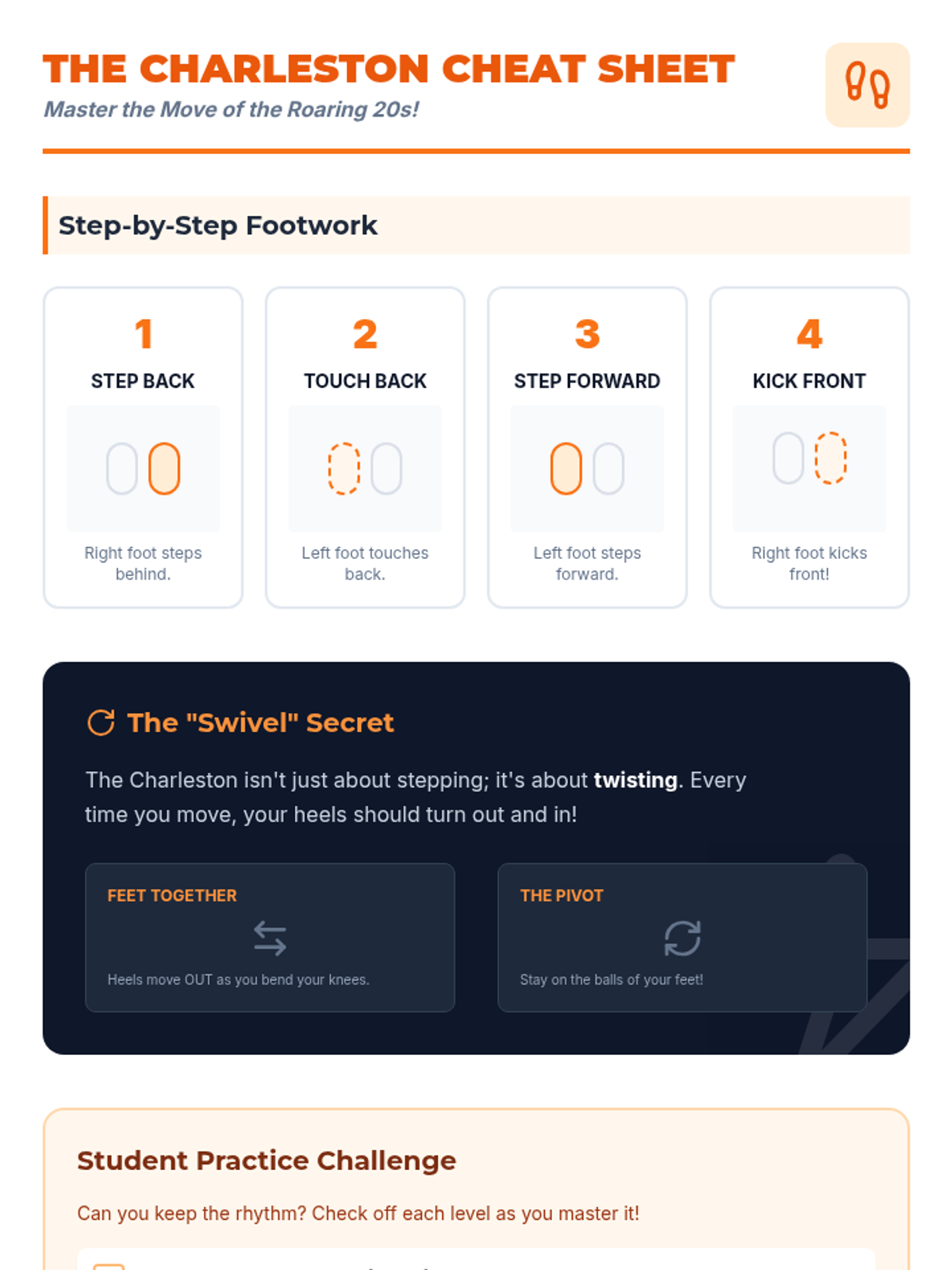
Reference sheet for students with step-by-step footwork diagrams for the Charleston and a practice checklist.