Fundamental techniques for drawing, painting, sculpture, and photography alongside modern digital design principles. Analyzes historical artistic movements while building skills in printmaking and graphic media.
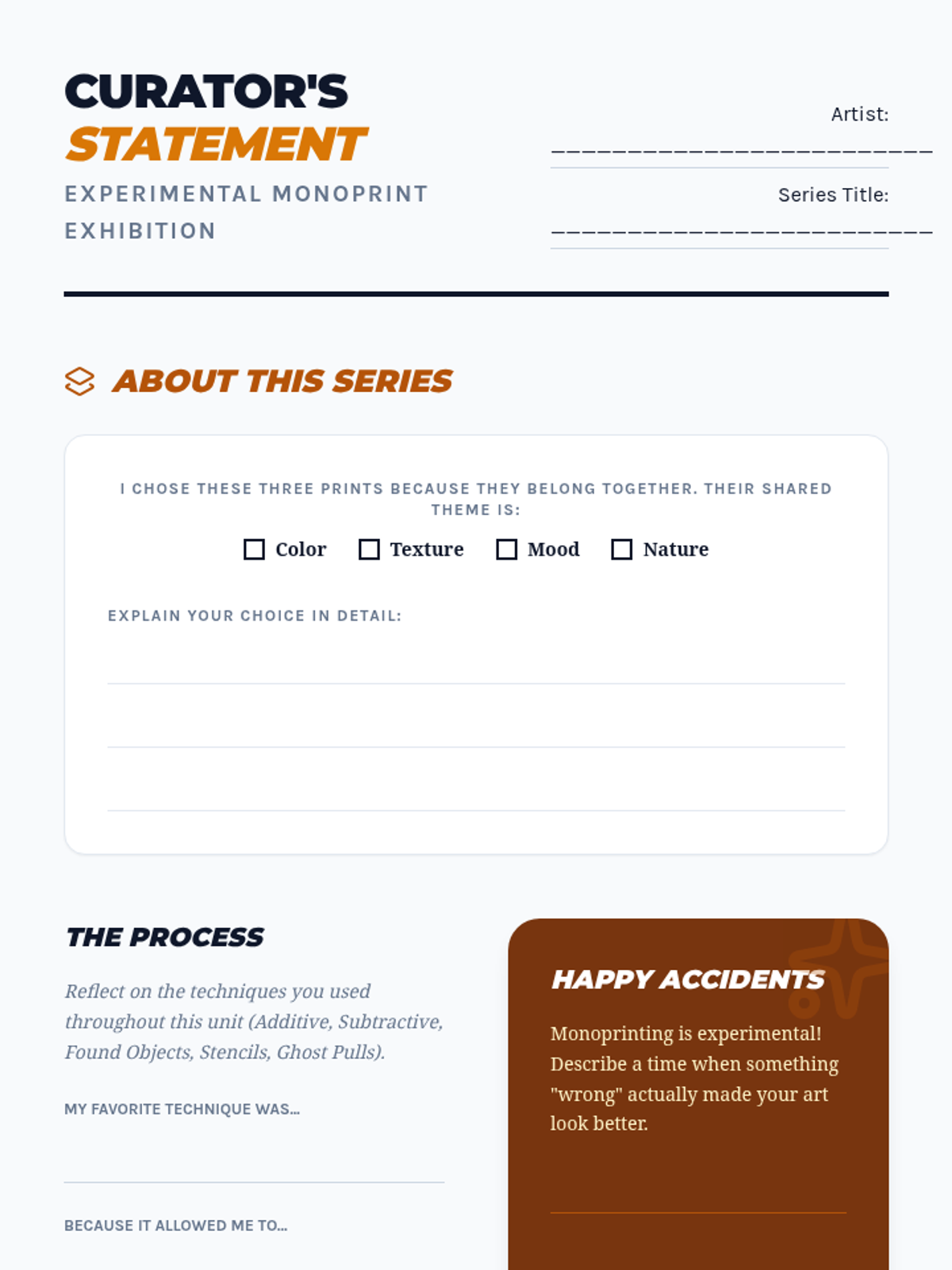
A student activity sheet for the final lesson. Guides students through selecting their best work, writing a curator's statement, and reflecting on their experimental process and 'happy accidents'.
Visual presentation for students on the final stage of the sequence: curation and exhibition. Explains how to group work by theme, add finishing touches like trimming and mounting, and write an artist statement.
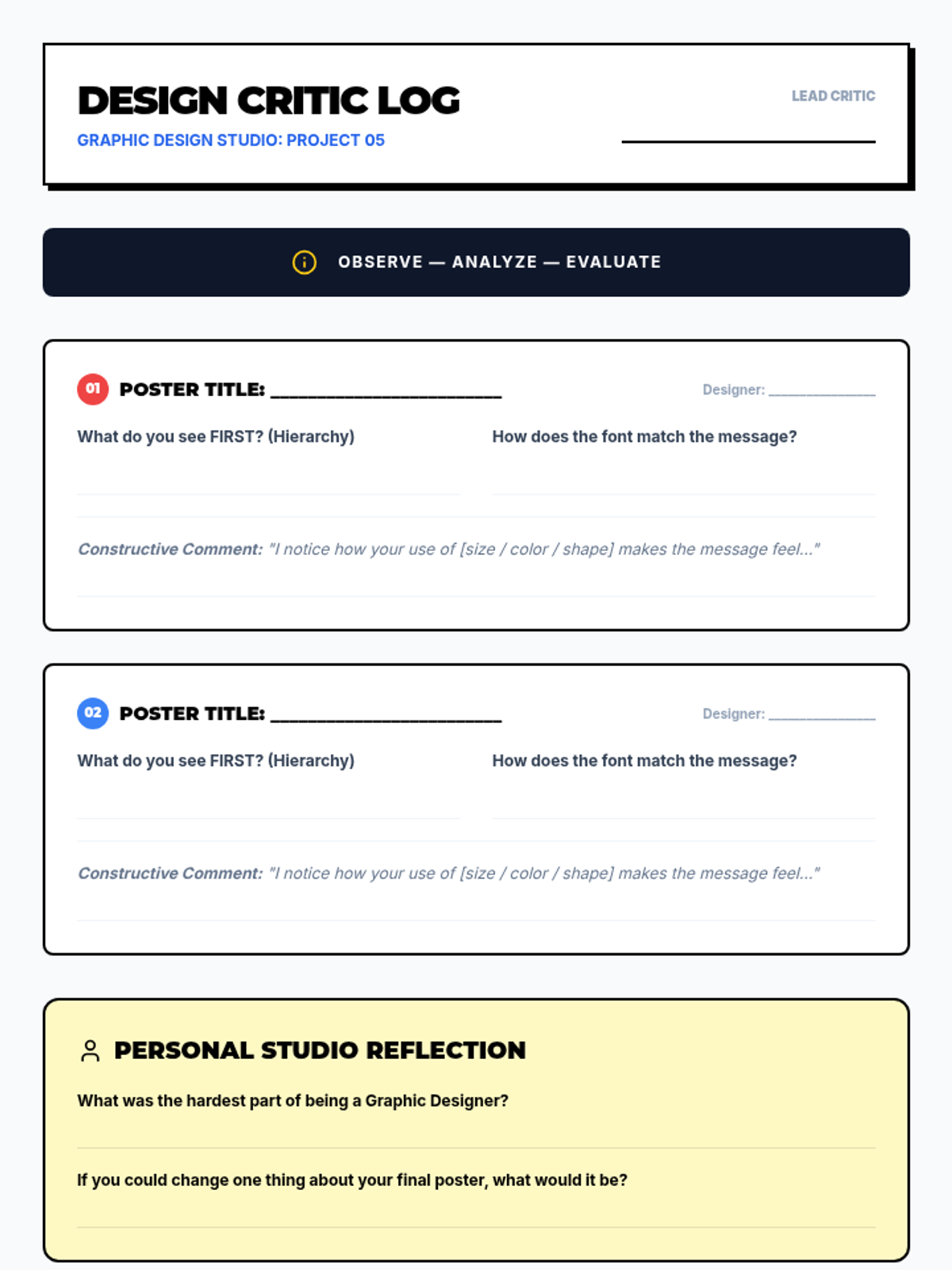
A student critique log for the final gallery walk, guiding students to analyze peer work based on hierarchy and font choice, plus a final personal reflection.
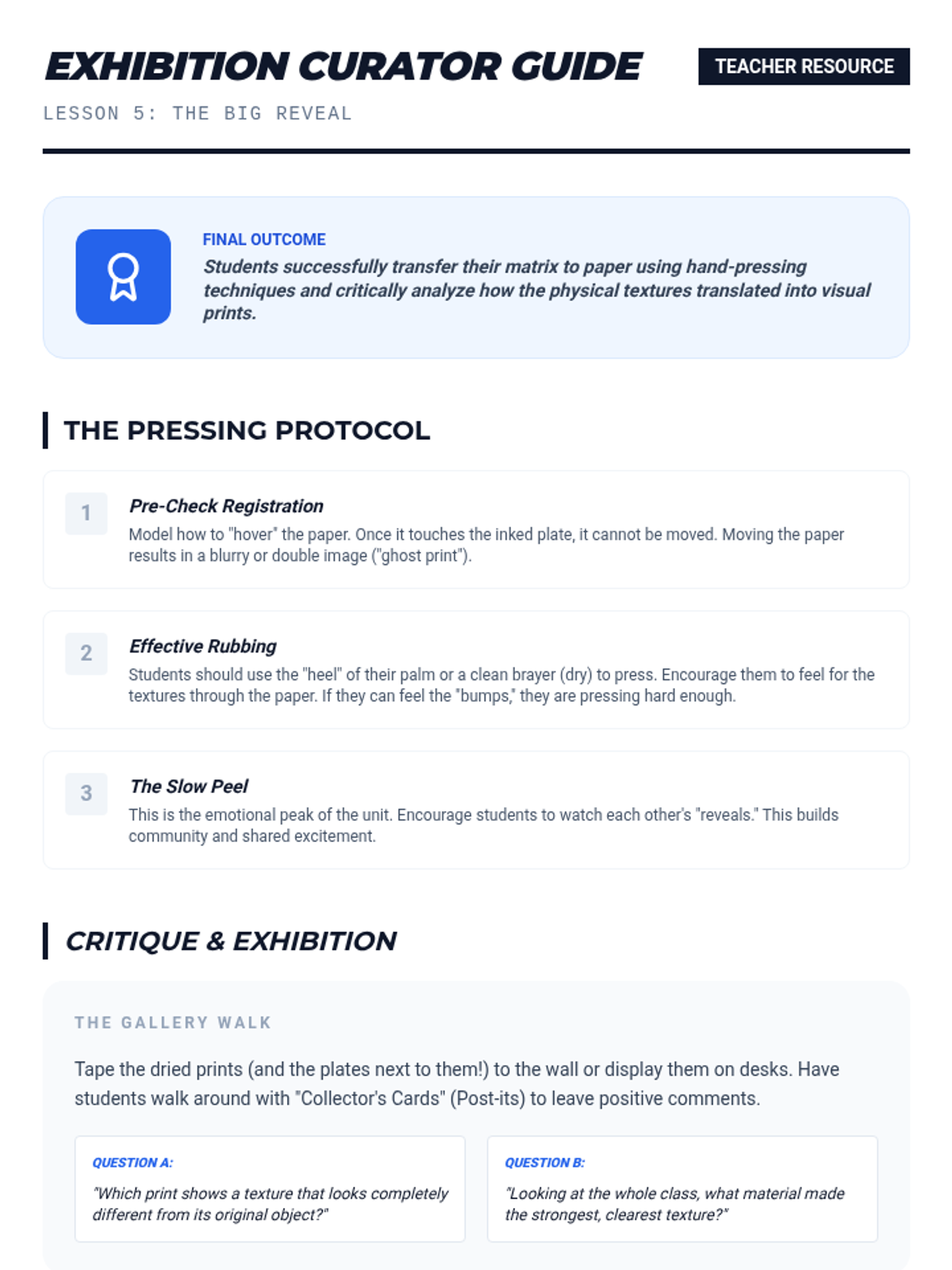
A teacher guide for managing the pressing process of collograph plates, including technique troubleshooting and exhibition facilitation.
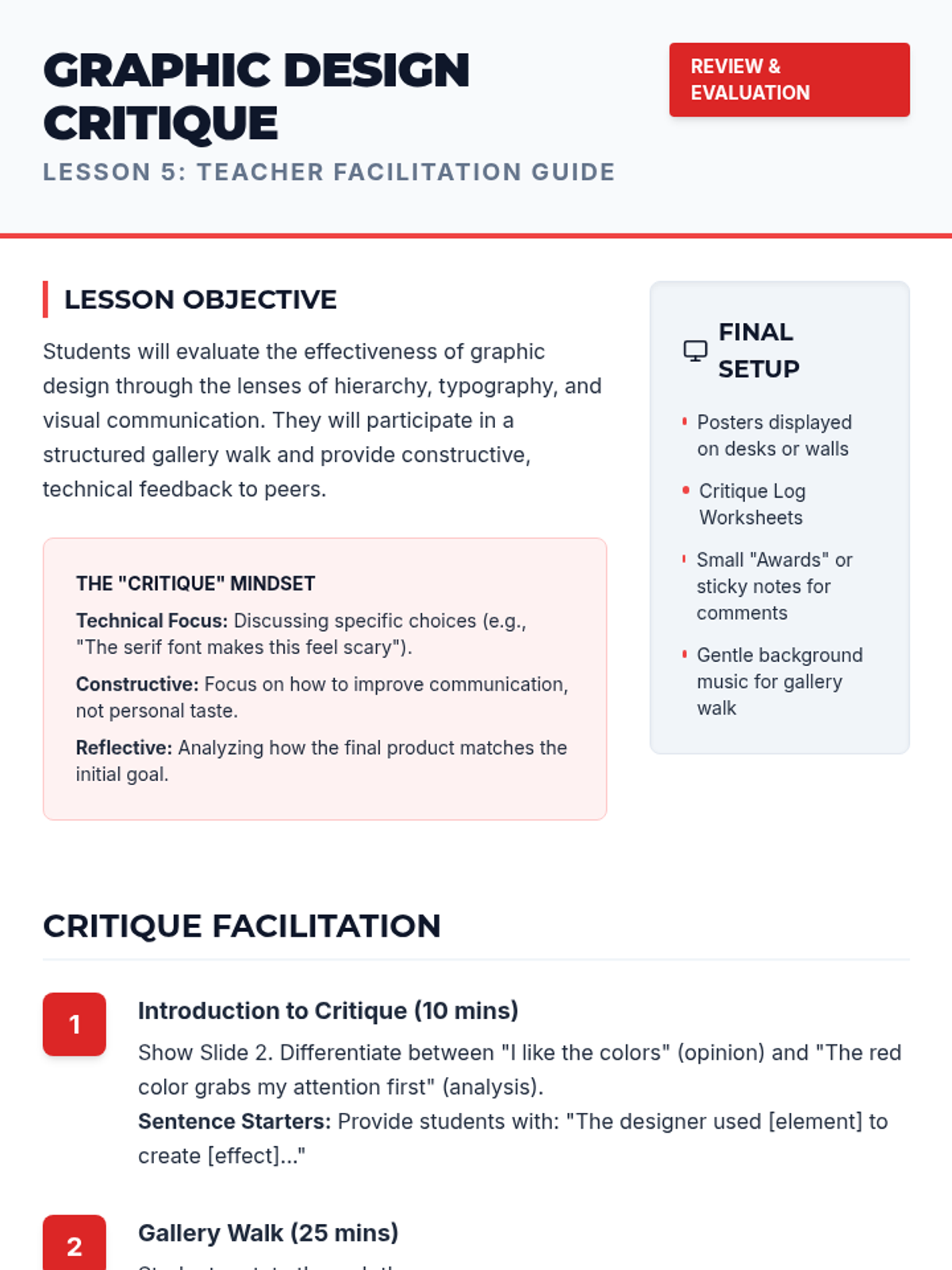
A facilitation guide for the final critique lesson, including rubric points, gallery walk protocols, and debriefing questions.
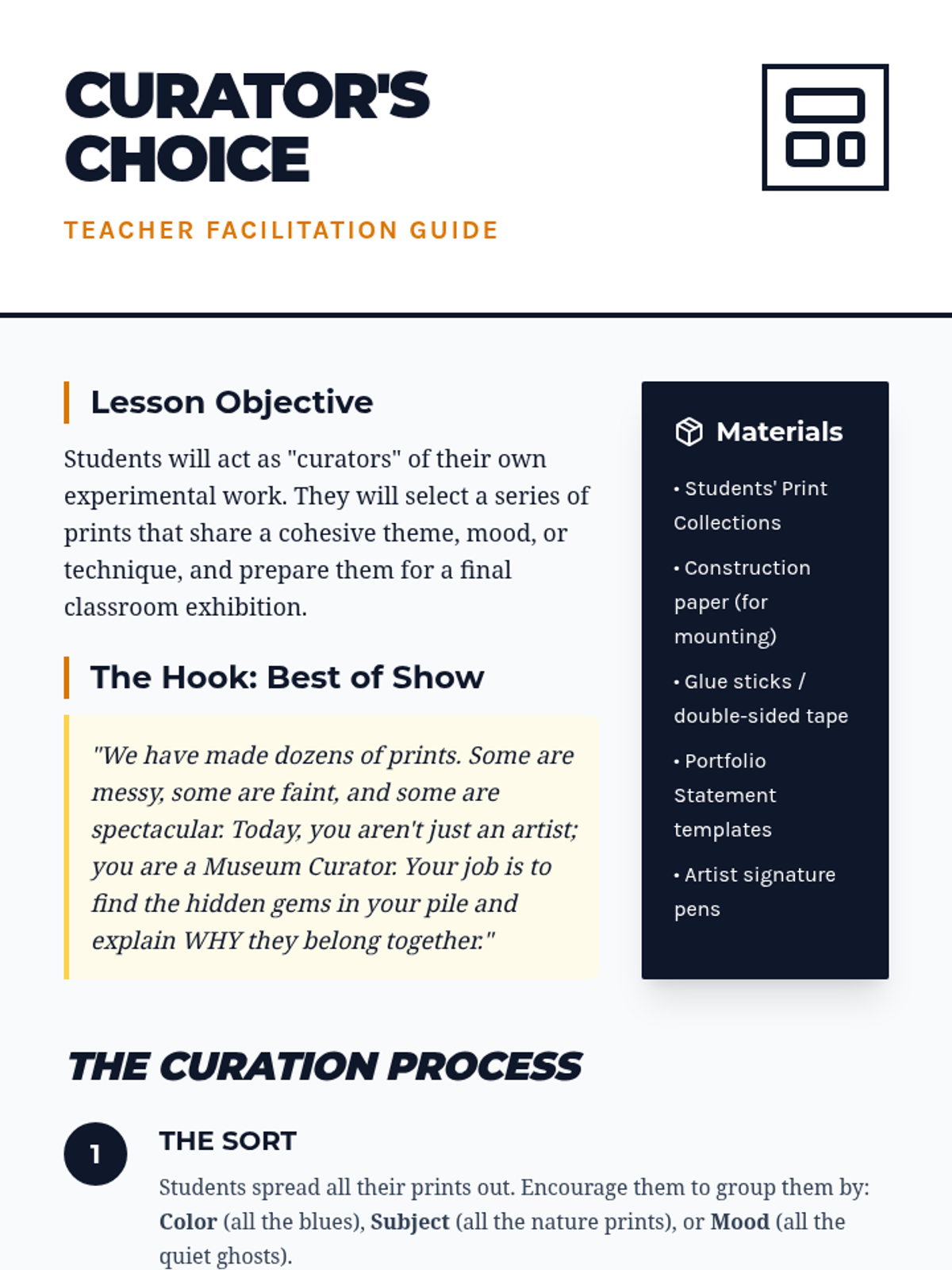
Teacher guide for the final lesson on composition and portfolio selection. Focuses on the curation process, writing artist statements, and facilitating a classroom gallery walk.
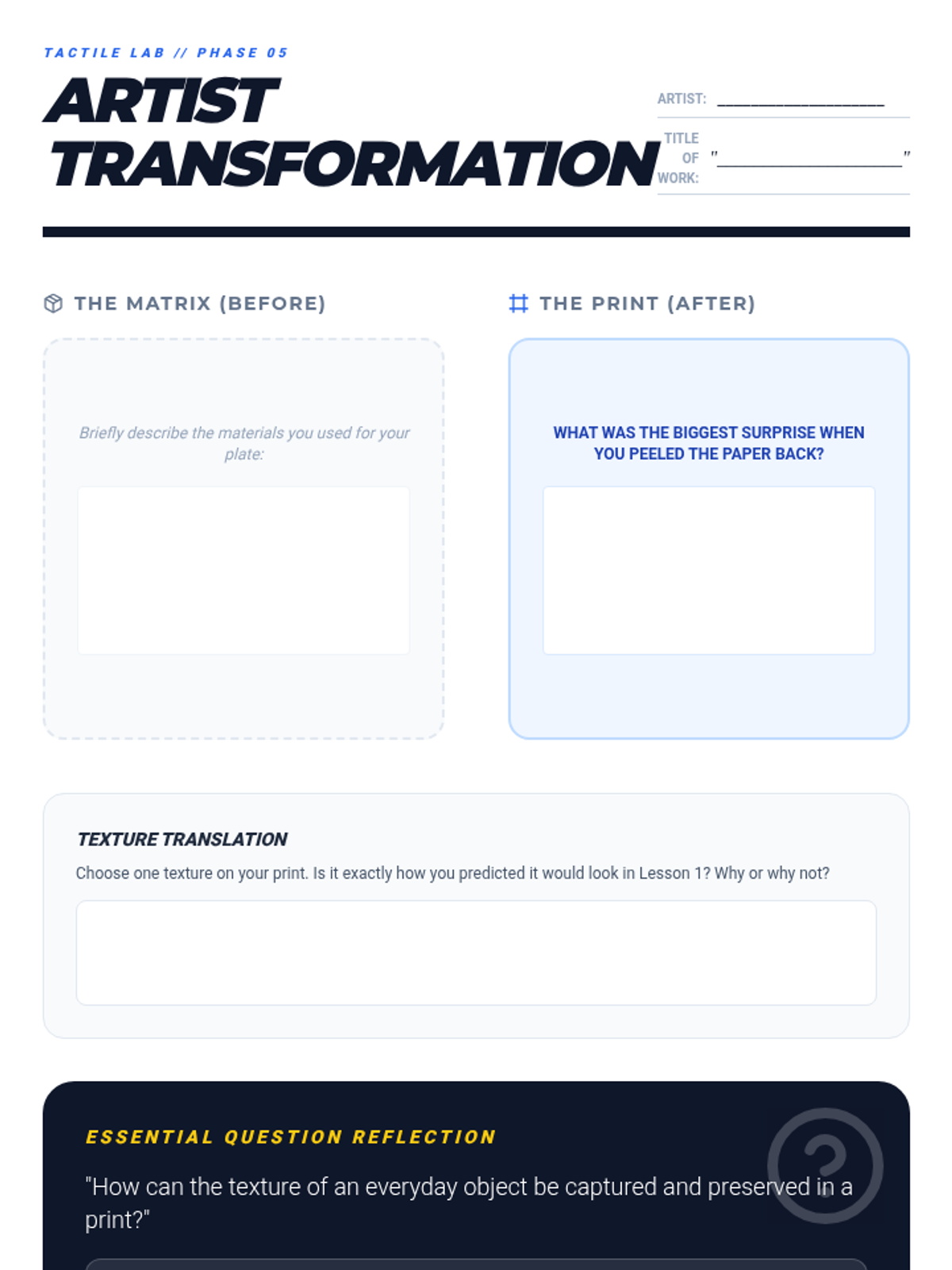
A reflection sheet where students analyze the transformation of their collograph plate into a finished print, reflecting on texture translation and the essential question.
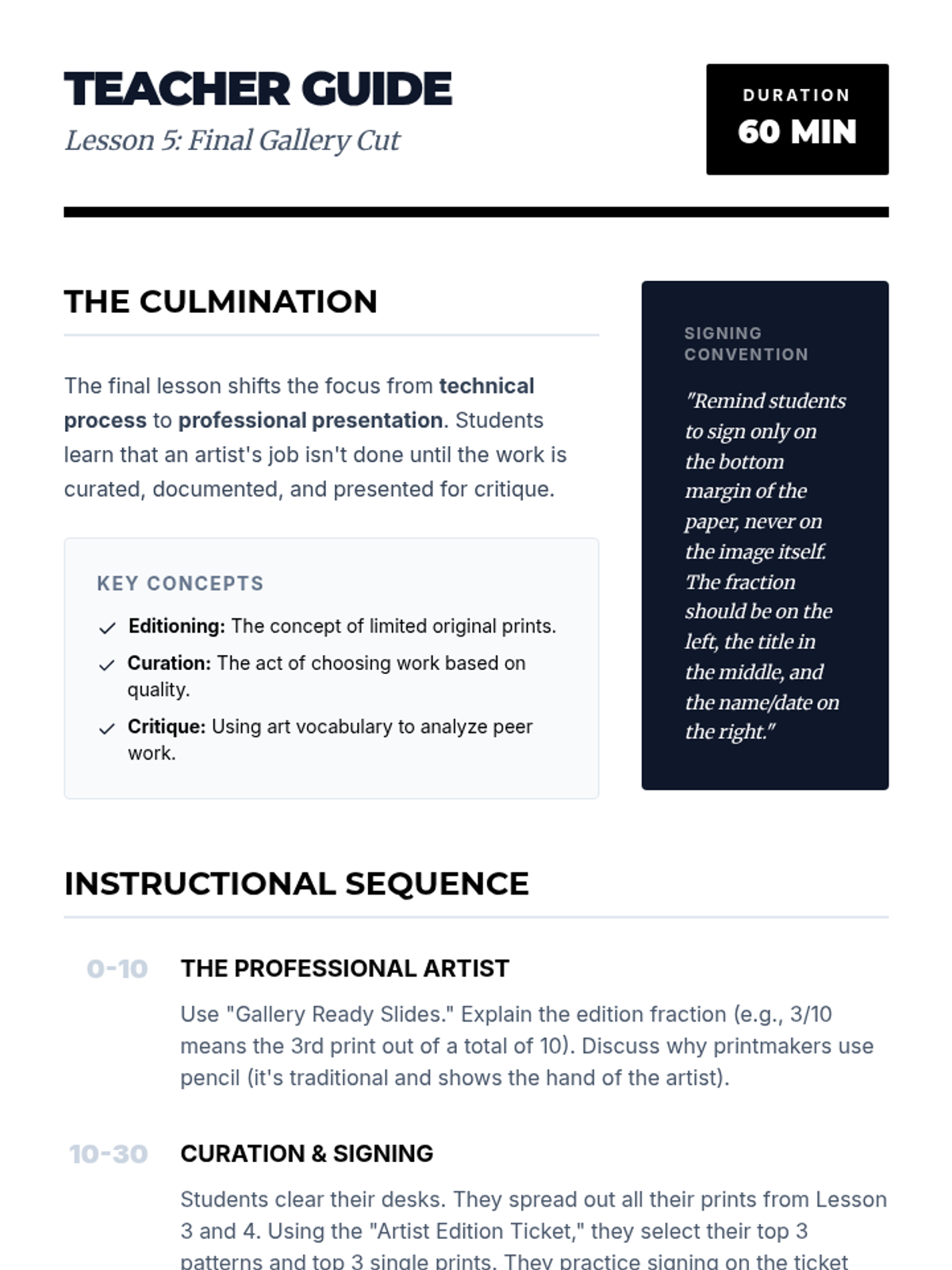
Teacher guide for Lesson 5, providing instructions for the curation process, print signing conventions, and facilitating a peer gallery walk.
Slide deck for the final pressing of collograph plates, covering registration, hand-pressing techniques, and the transformation of materials.
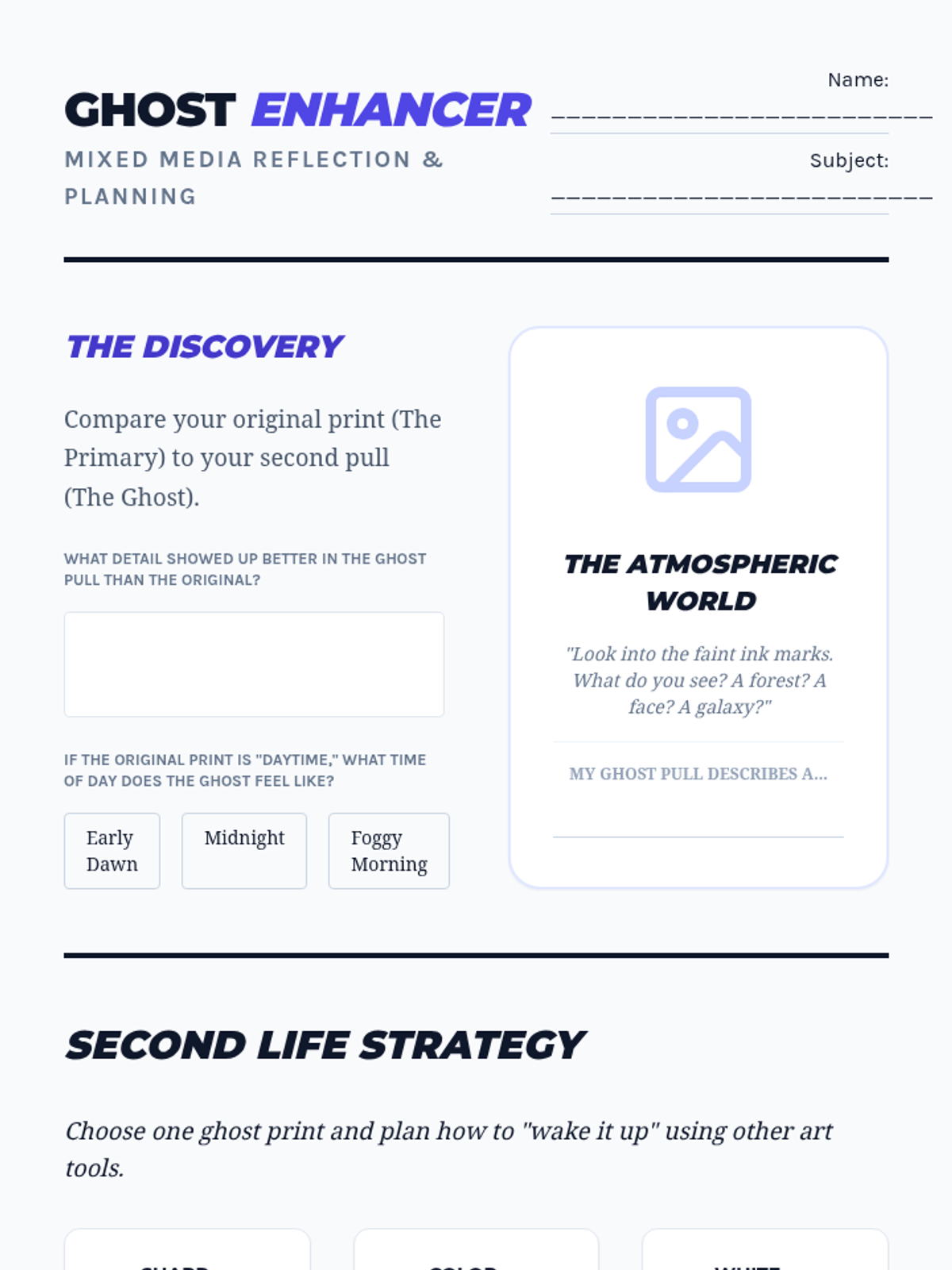
A student reflection and planning sheet for Lesson 4. Helps students analyze ghost prints and strategize mixed-media additions to enhance atmospheric images.
Critique and reflection slides for Lesson 5, introducing the concepts of visual analysis, constructive feedback, and gallery walk protocols.
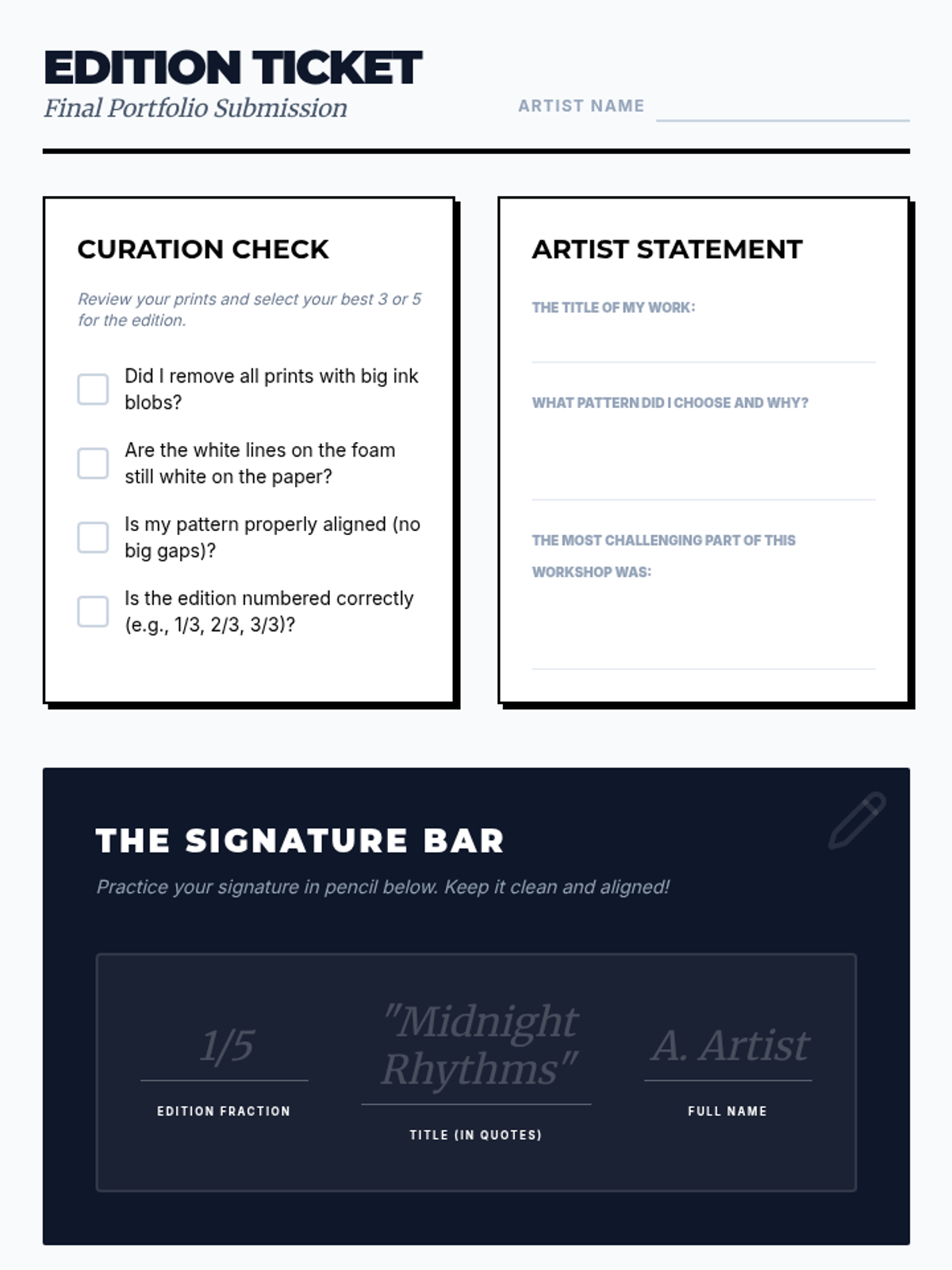
A student reflection and signing guide for the final lesson. Includes a curation checklist, artist statement prompts, and practice signing area.
Visual presentation for students on ghost printing. Explains the concept of residual ink, pressure techniques for second pulls, and how to use faint images as mixed-media backgrounds.
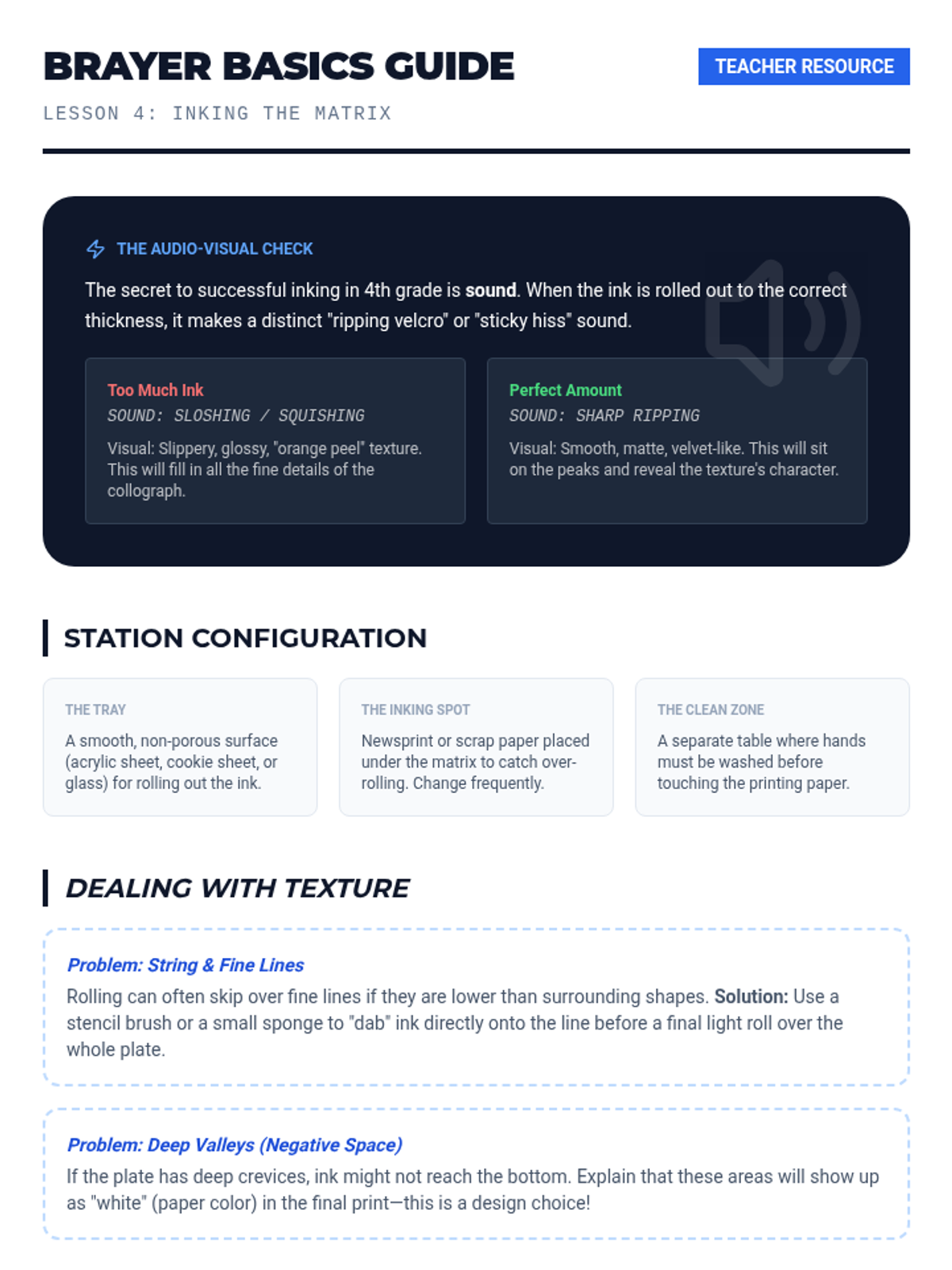
A teacher guide for managing the inking process of collograph plates, including ink viscosity checks, station setup, and technique troubleshooting.
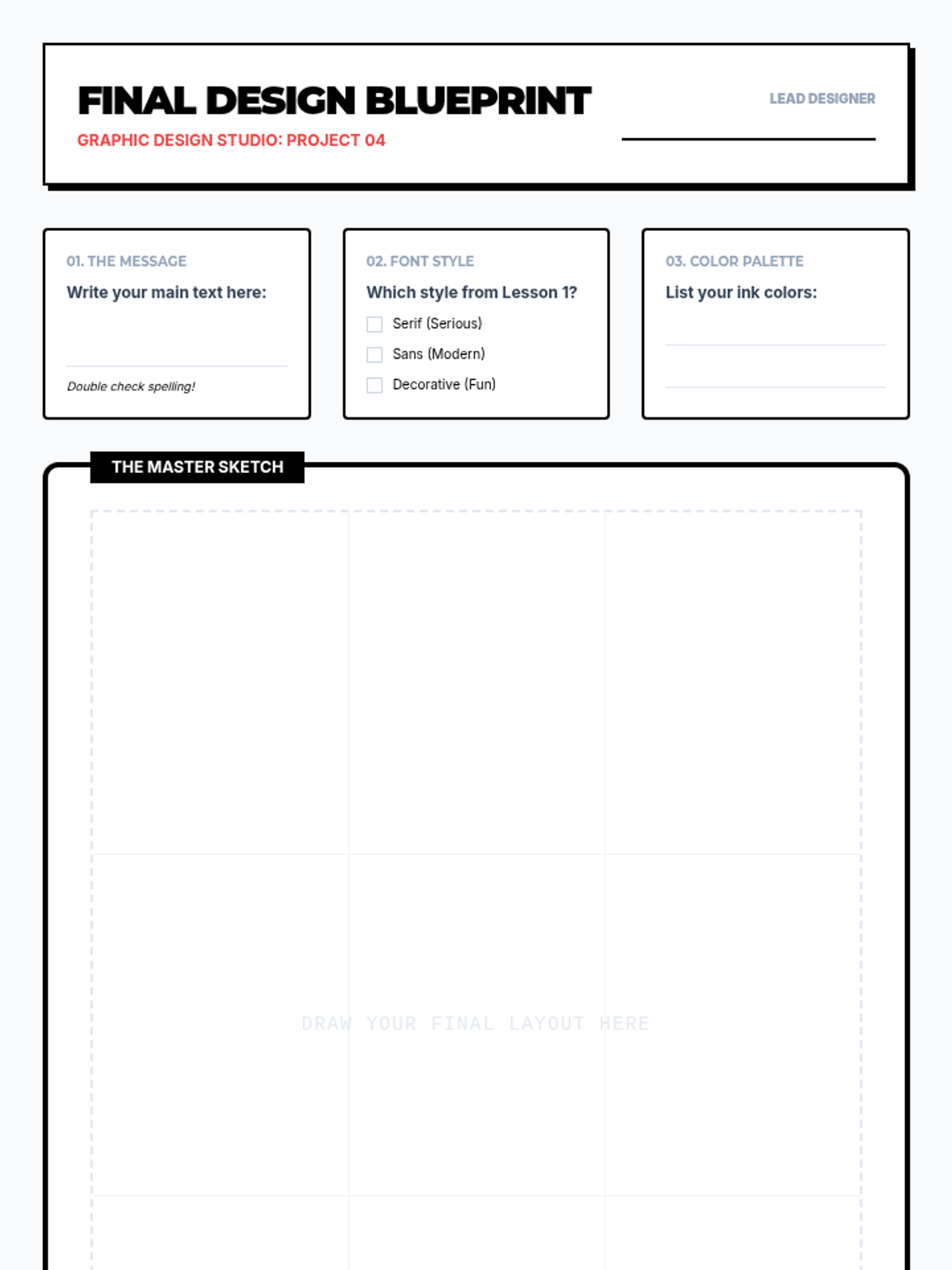
A final project planning worksheet where students map out their message, font choices, colors, and layering strategy before printing.
Slides for Lesson 5 covering signing prints, numbering editions, and conducting a peer critique.
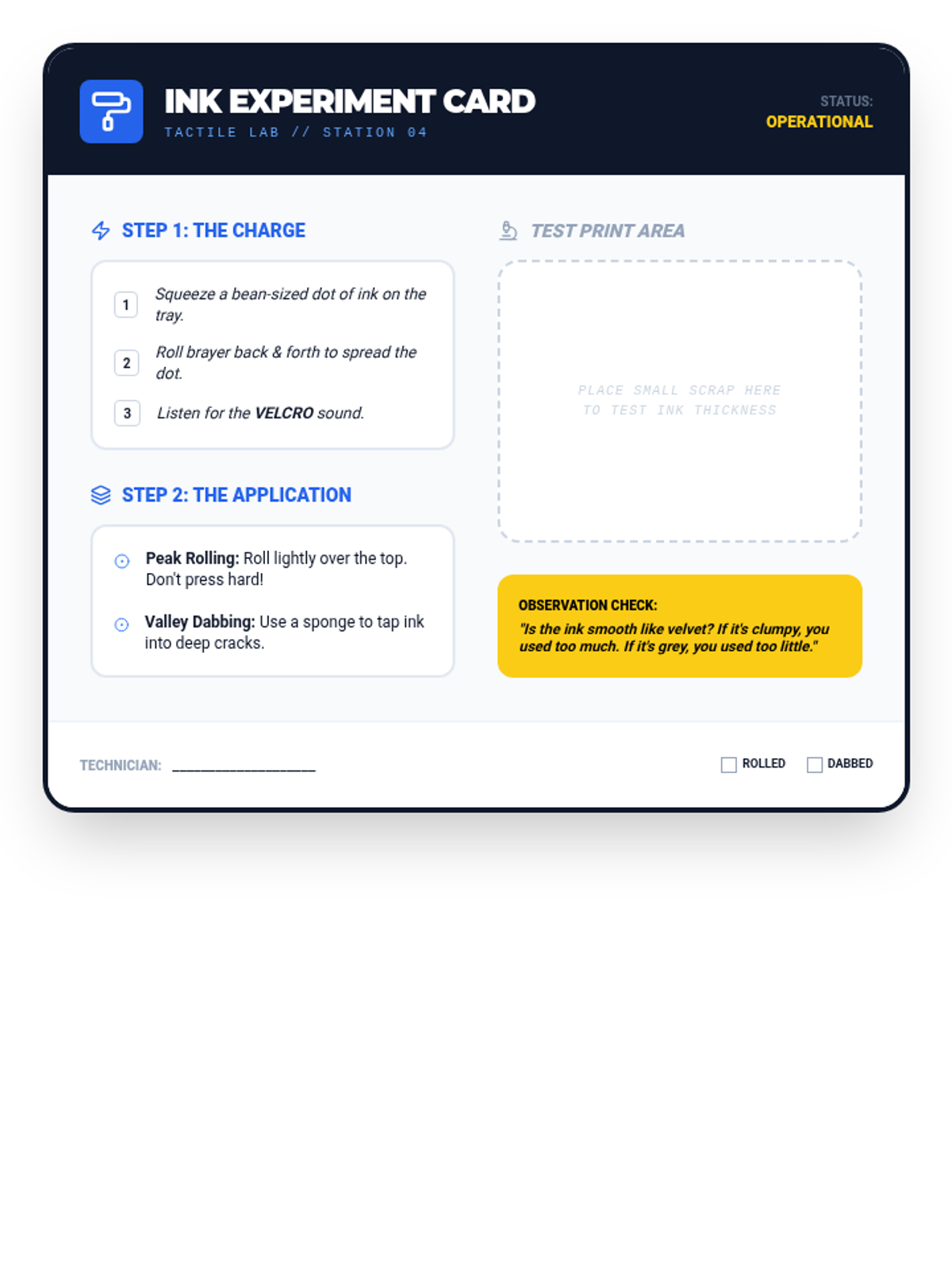
A practical reference card for students to use at inking stations, providing step-by-step instructions for "charging" a brayer and applying ink to textures.
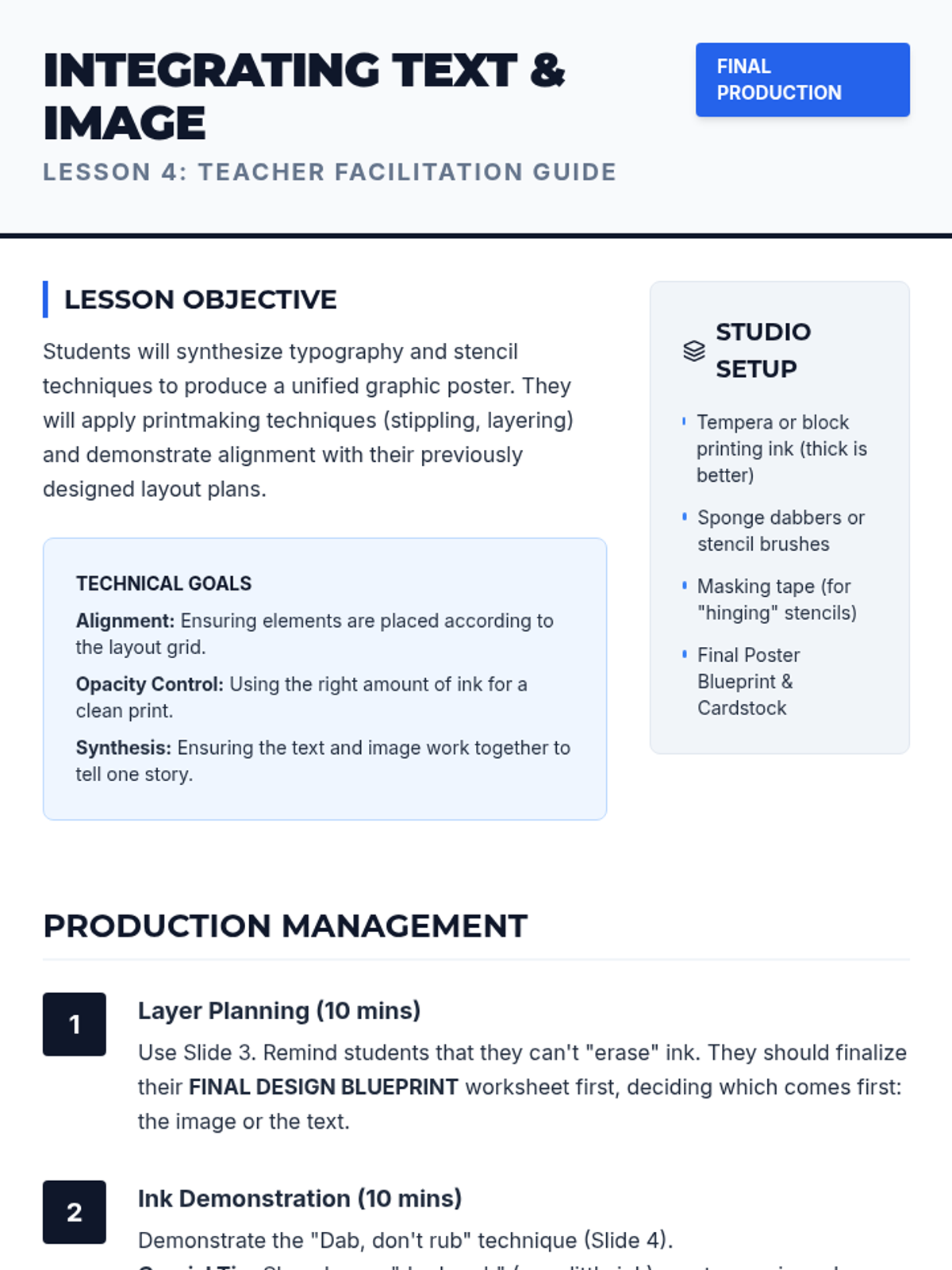
A facilitation guide for the final production phase of the poster project, including layering strategies, printing techniques, and station management.
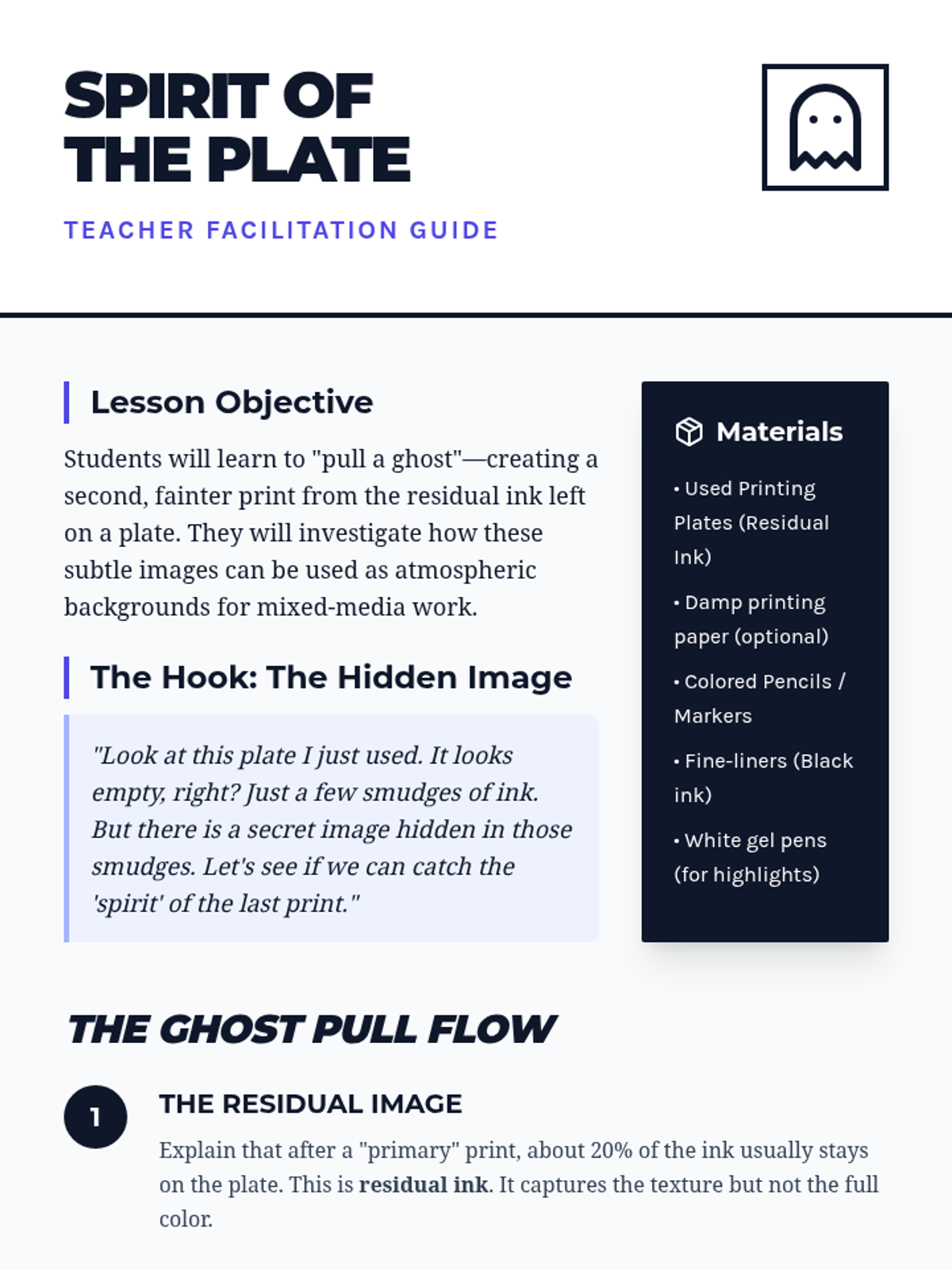
Teacher guide for Lesson 4 on ghost prints and residual ink. Includes techniques for pulling second prints and strategies for mixed-media enhancement of faint images.
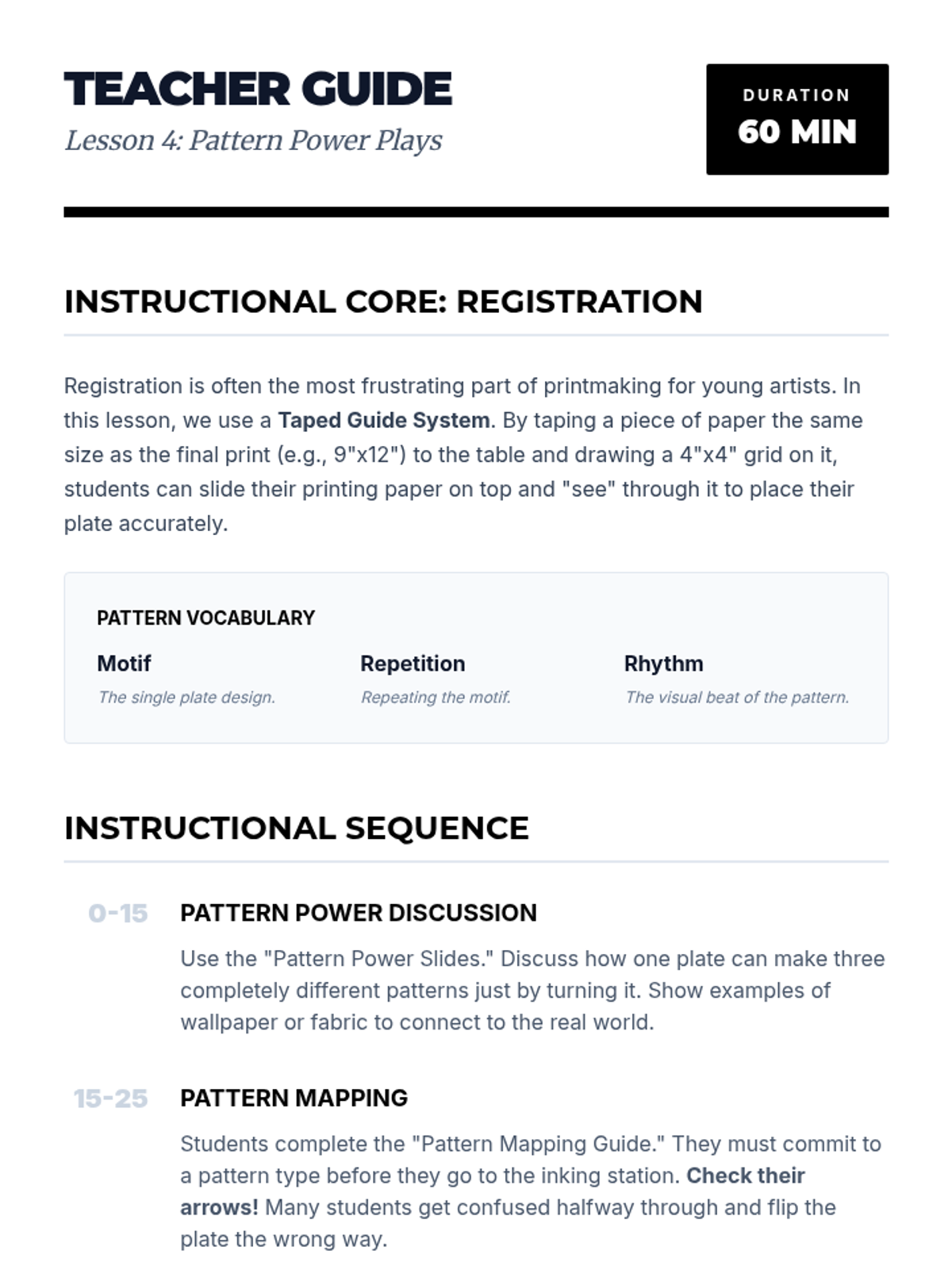
Teacher guide for Lesson 4, providing registration techniques, pattern vocabulary, and instructional pacing.
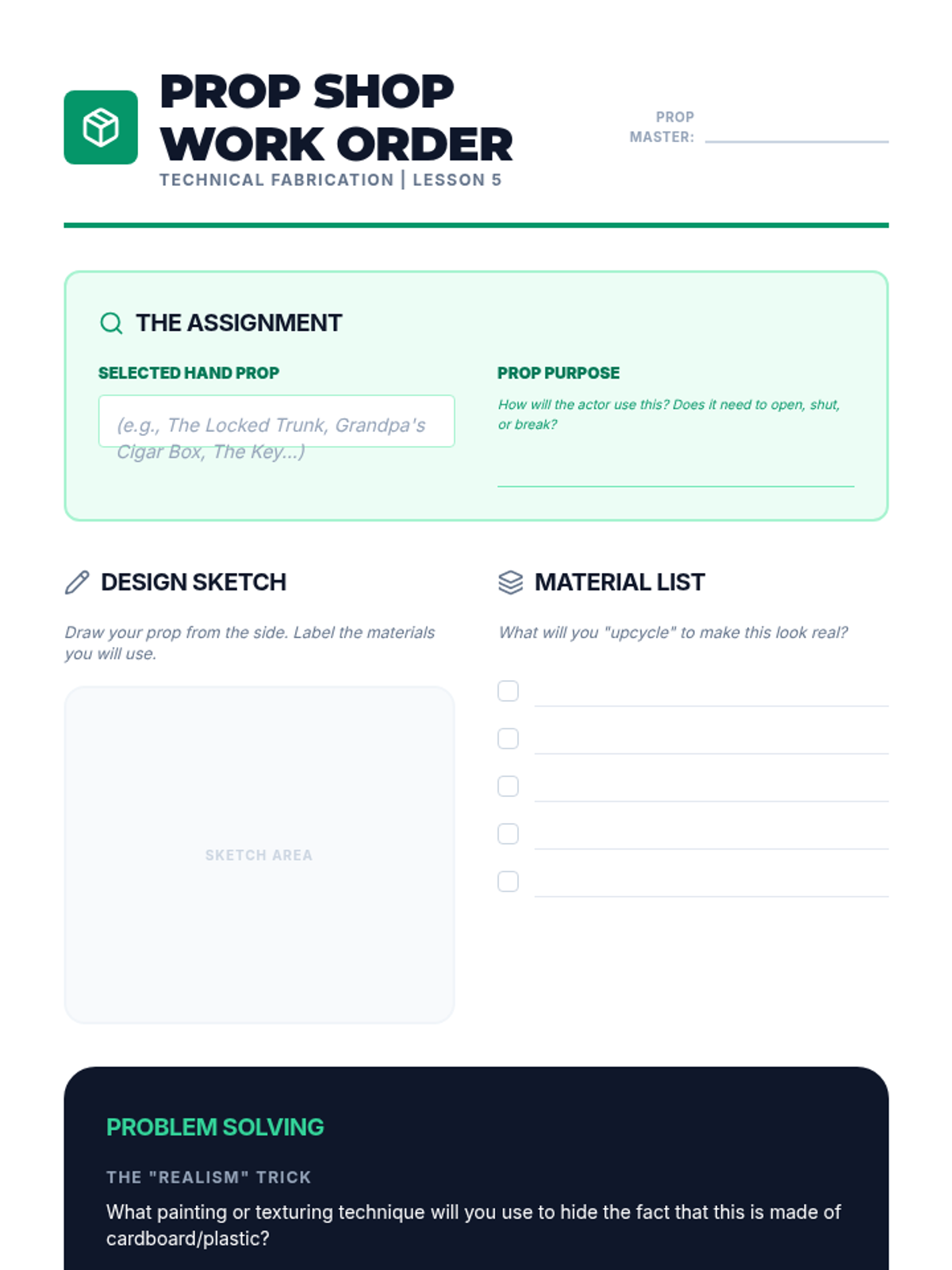
A design planning sheet for students to prototype and build a hand prop, including sections for sketching, material listing, and peer feedback.
Introductory slides for the Prop Shop Prototypes lesson, covering the definition of props, the prop master's checklist, and the gallery walk finale.
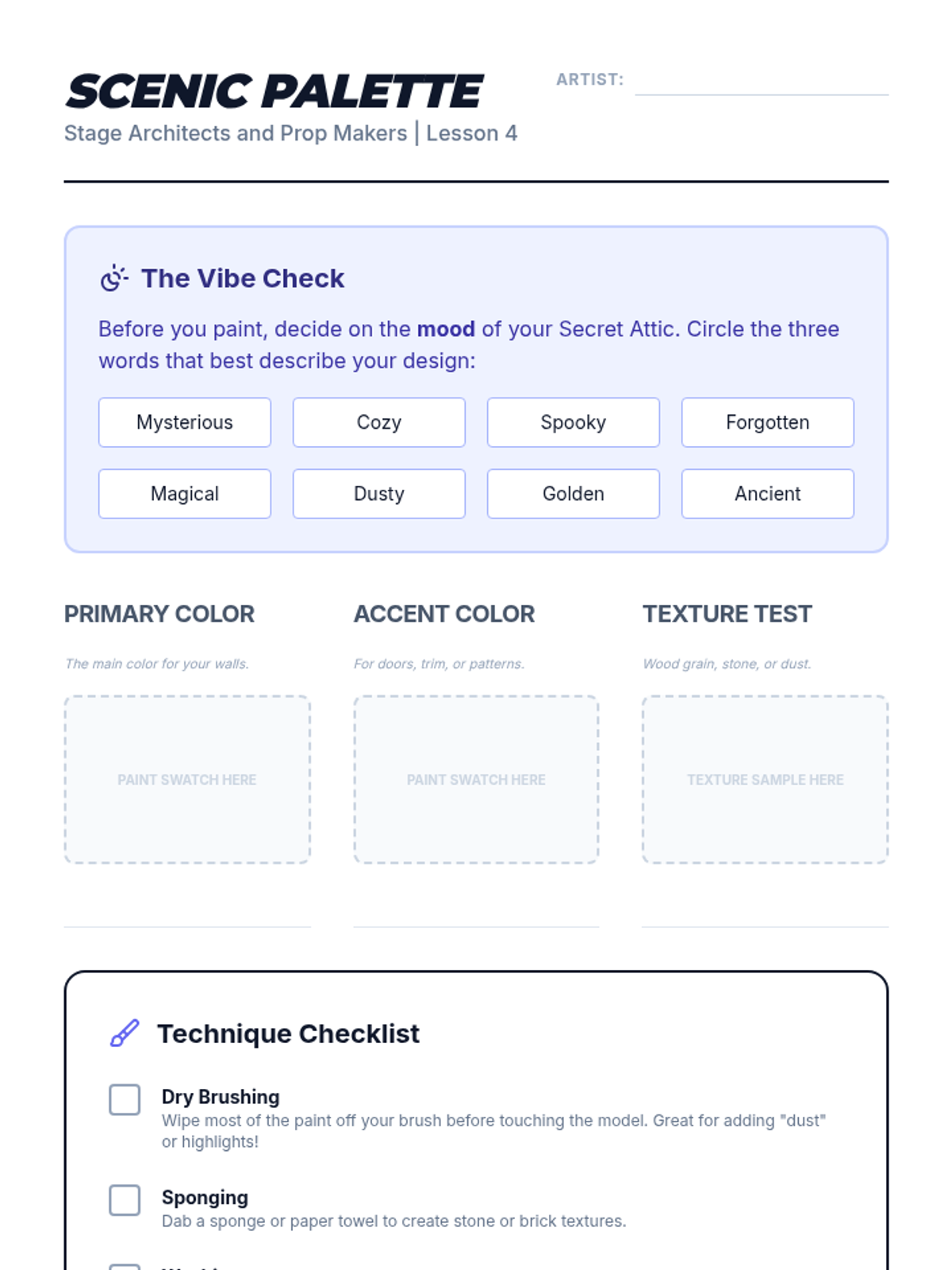
A student worksheet for planning the color scheme and textures of their scenic model, including space for paint swatches and technique descriptions.
Introductory slides for the Scenic Art Academy lesson, covering color mood, textures, and highlight/shadow techniques.
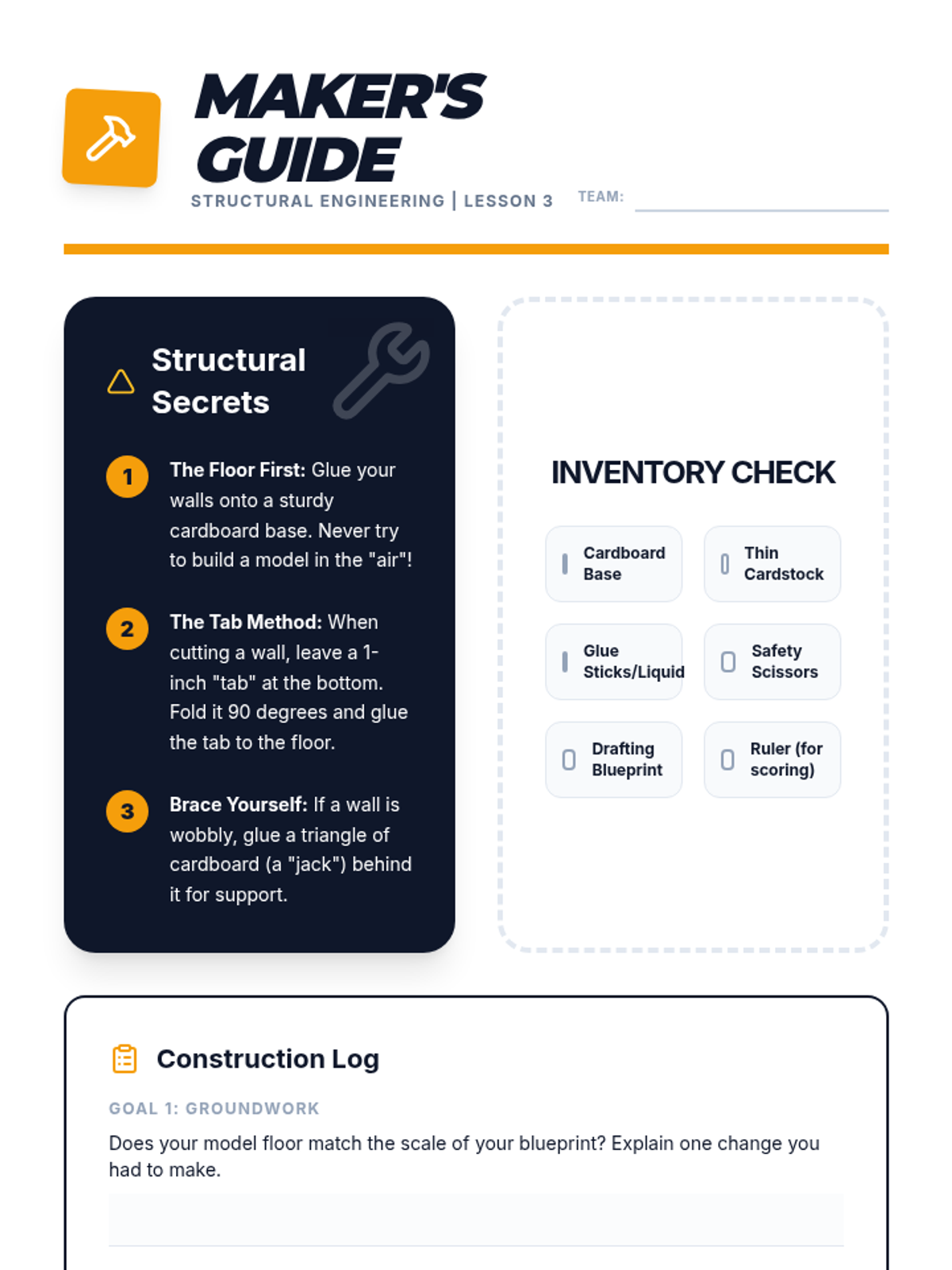
A construction guide and checklist for students to use while building their 3D set models, focusing on structural stability and scale.
Introductory slides for the Maquette Makers Lab lesson, covering the purpose of models, structural engineering for cardboard, and safety rules.
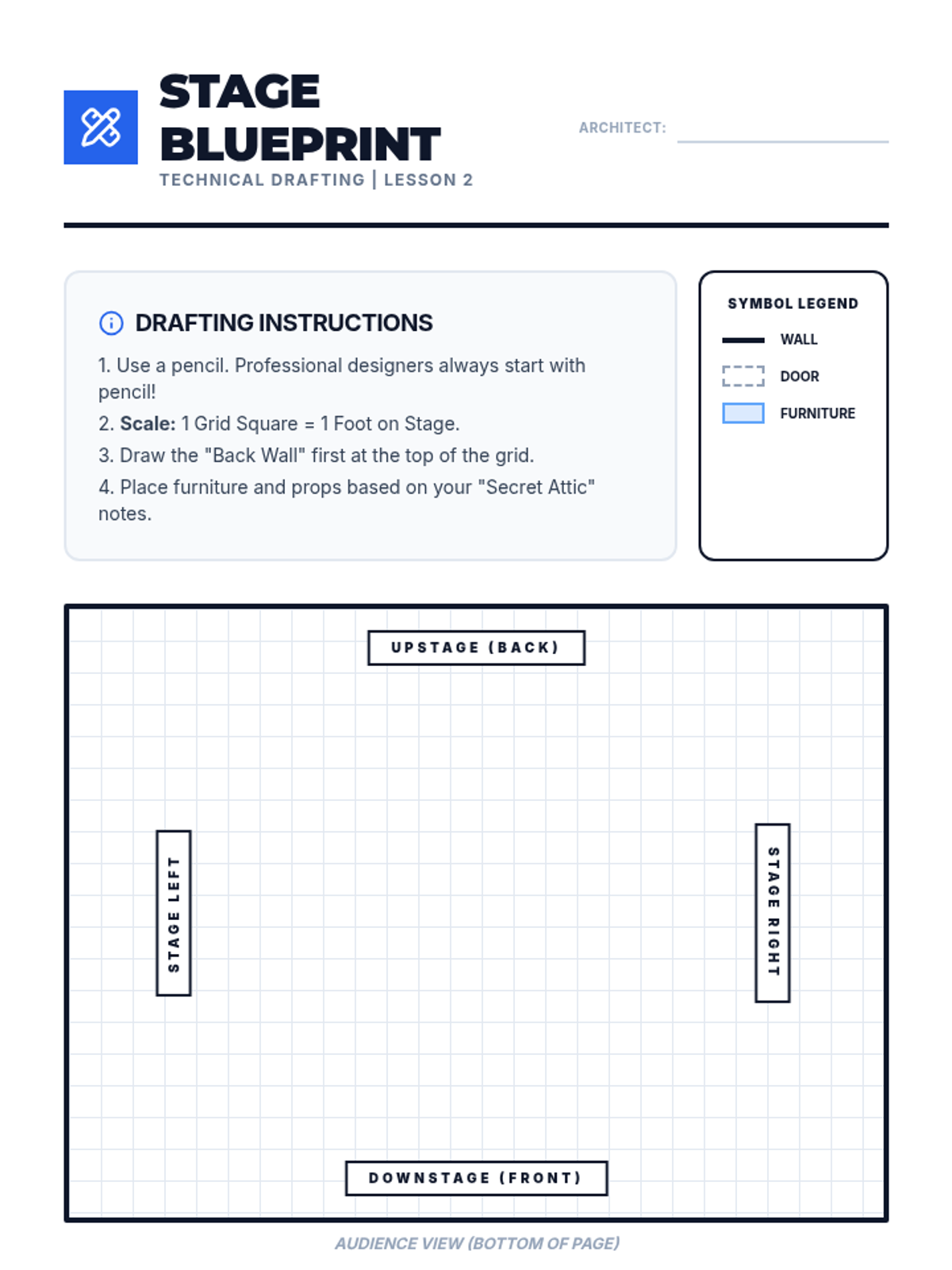
A drafting grid for students to create a bird's eye view floor plan of their stage design, including a legend for technical symbols.
Introductory slides for the Blueprint Basics and Sightlines lesson, covering bird's eye view, drafting symbols, and sightlines.
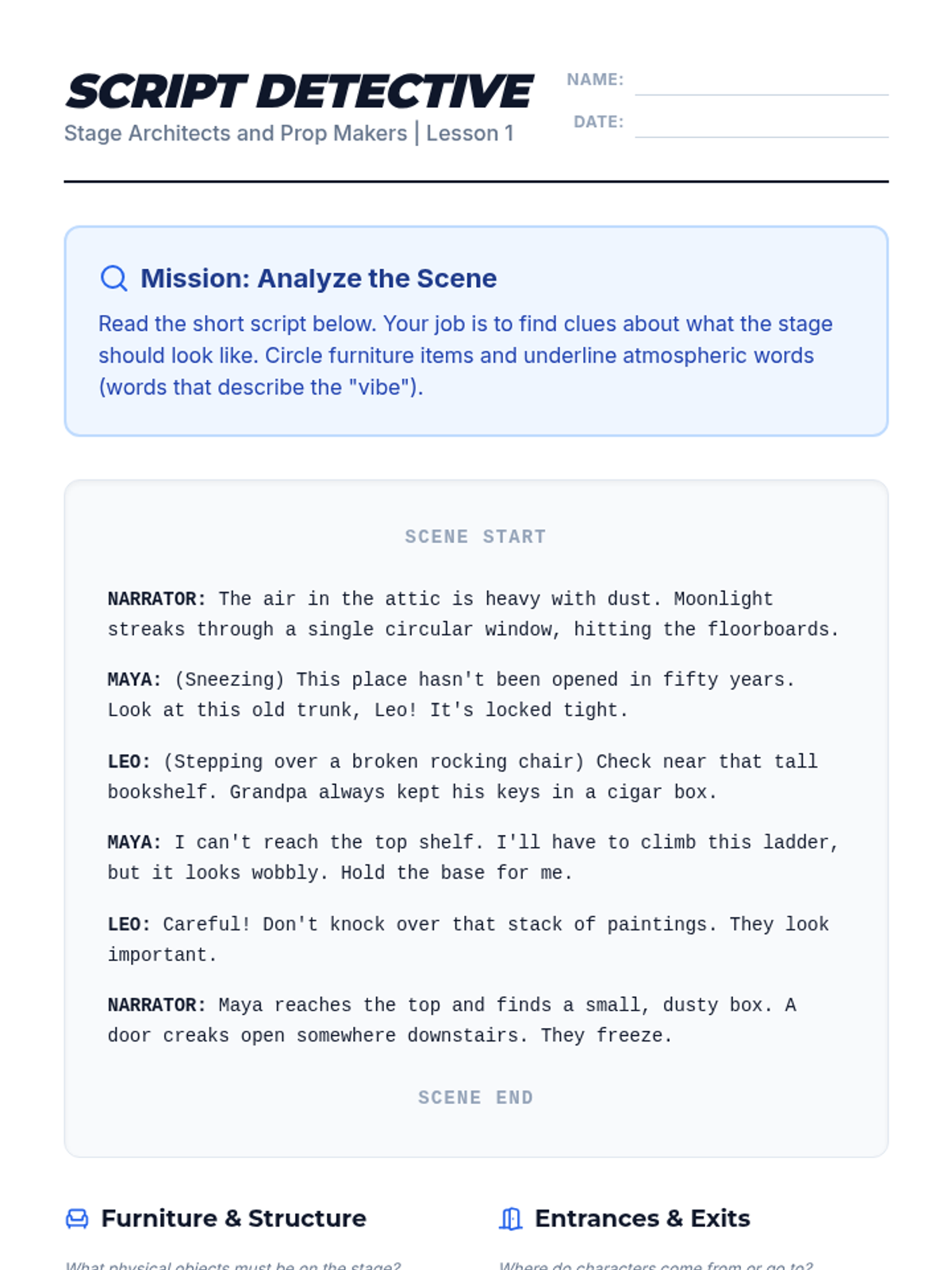
A student worksheet featuring a short script "The Secret Attic" for students to analyze and identify setting requirements.
Introductory slides for the Script Detective Studio lesson, covering technical theater roles and how to analyze scripts for setting clues.
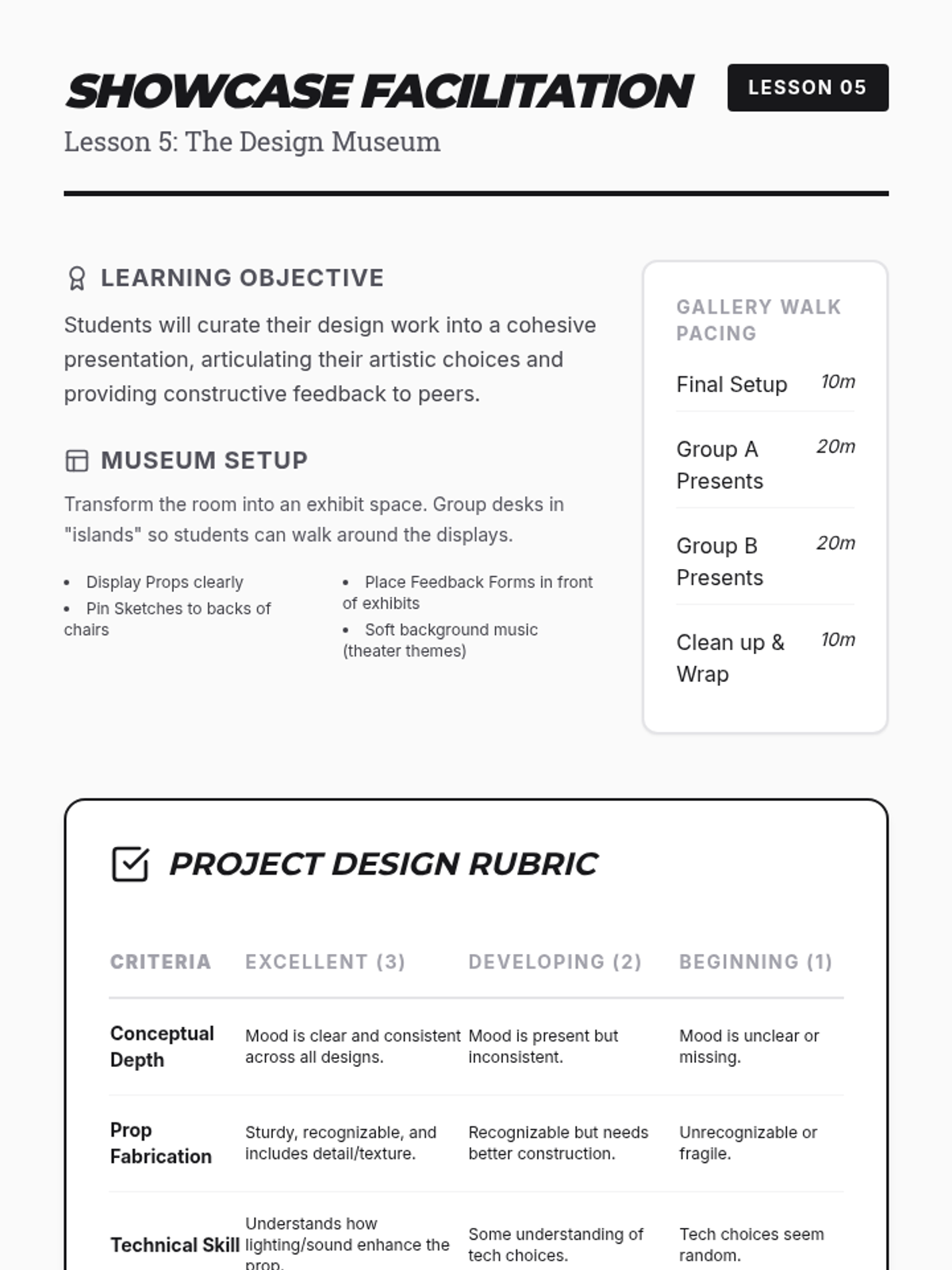
A teacher guide for the final showcase, including organization tips, presentation pacing, and a project design rubric for assessment.
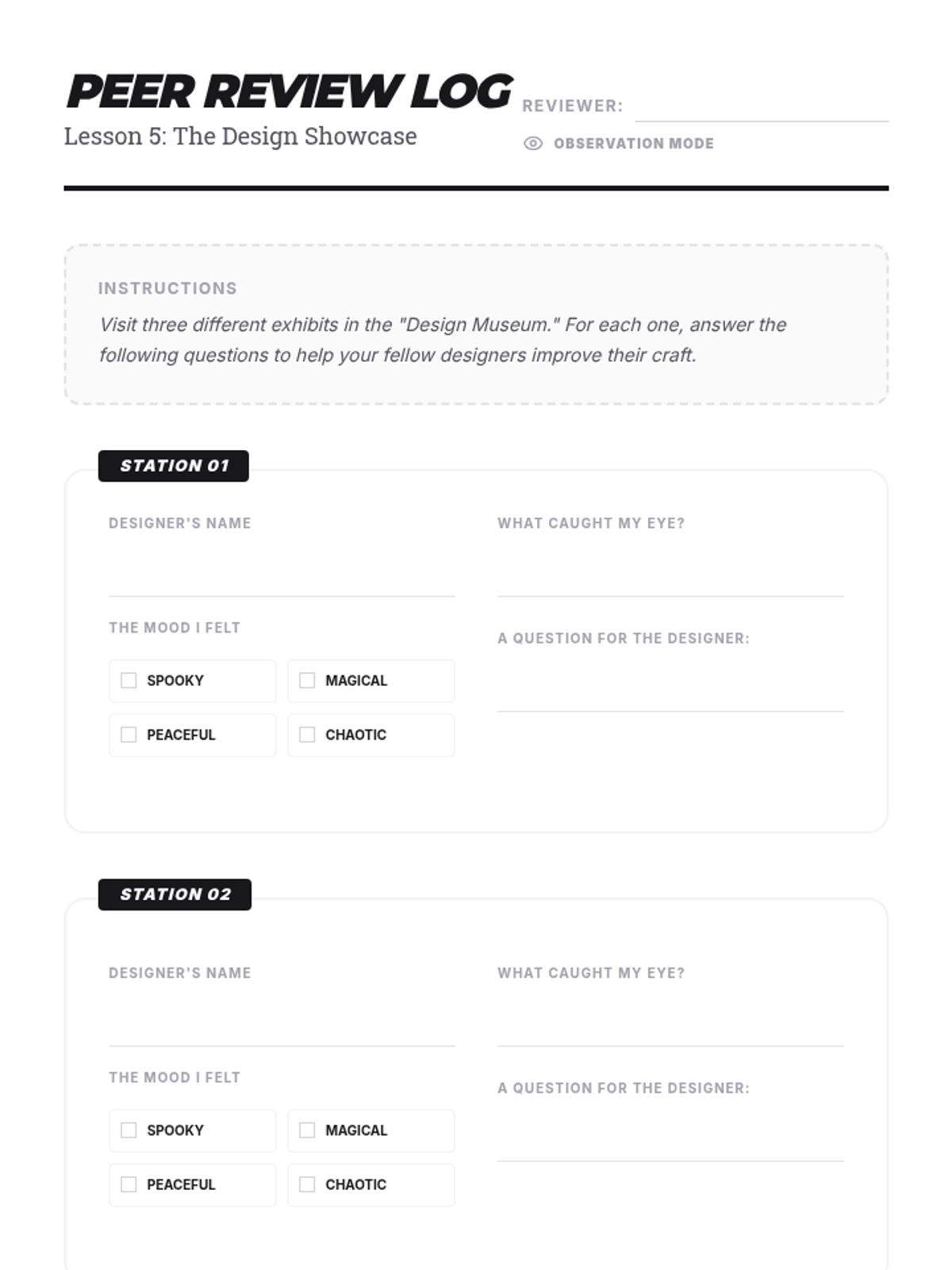
A student feedback form for the final showcase where they provide peer review and reflect on their own design process.
A visual presentation for the final lesson on presenting design work, giving peer feedback, and organizing a "Design Museum" showcase.
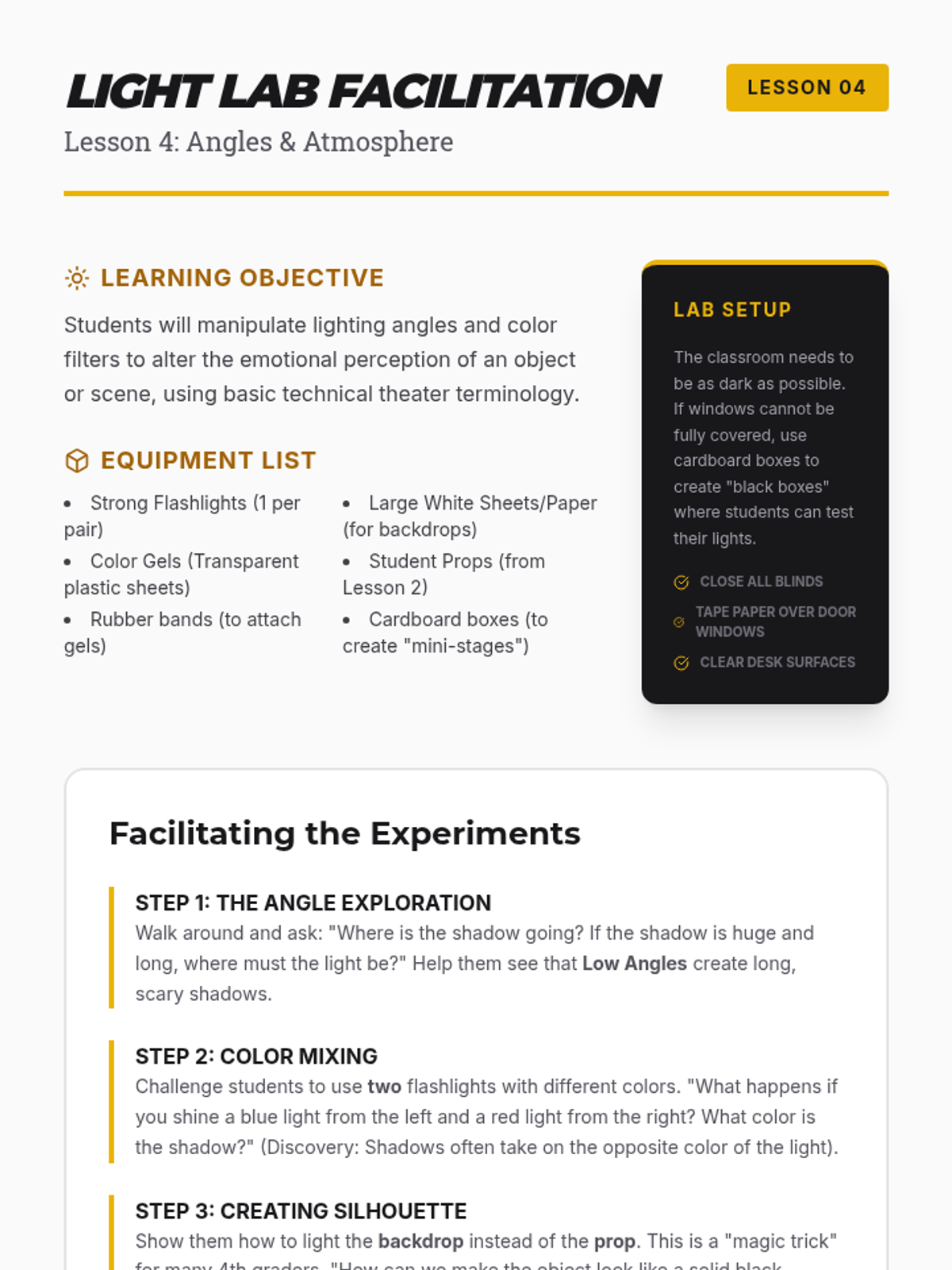
A teacher guide for the lighting lesson, including setup instructions for the "lighting labs" and managing the flashlights/gels.
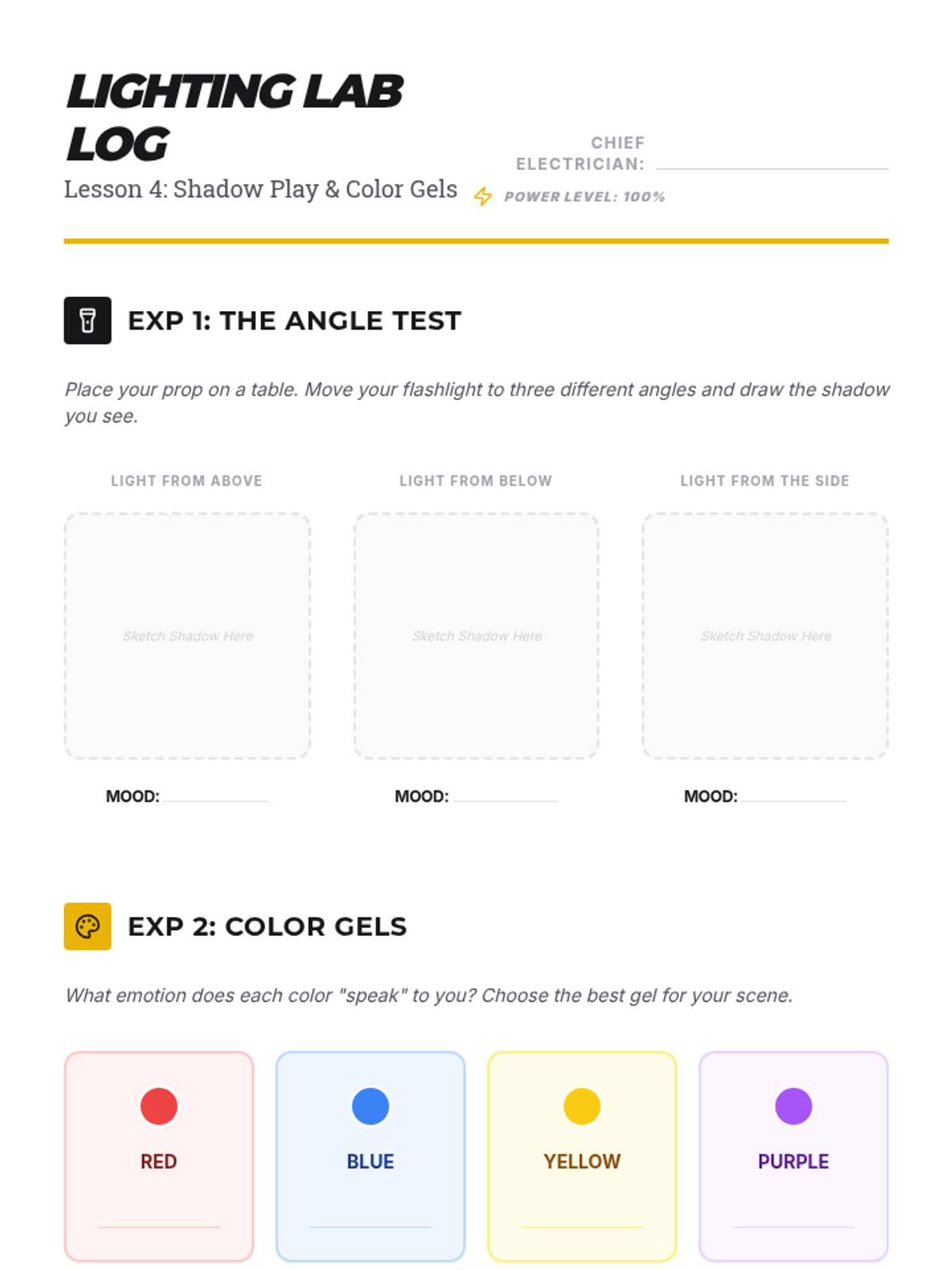
A student worksheet for the fourth lesson where students experiment with lighting angles and colors using flashlights and gels.
A visual presentation for the fourth lesson on lighting concepts, angles, and color theory in theater.
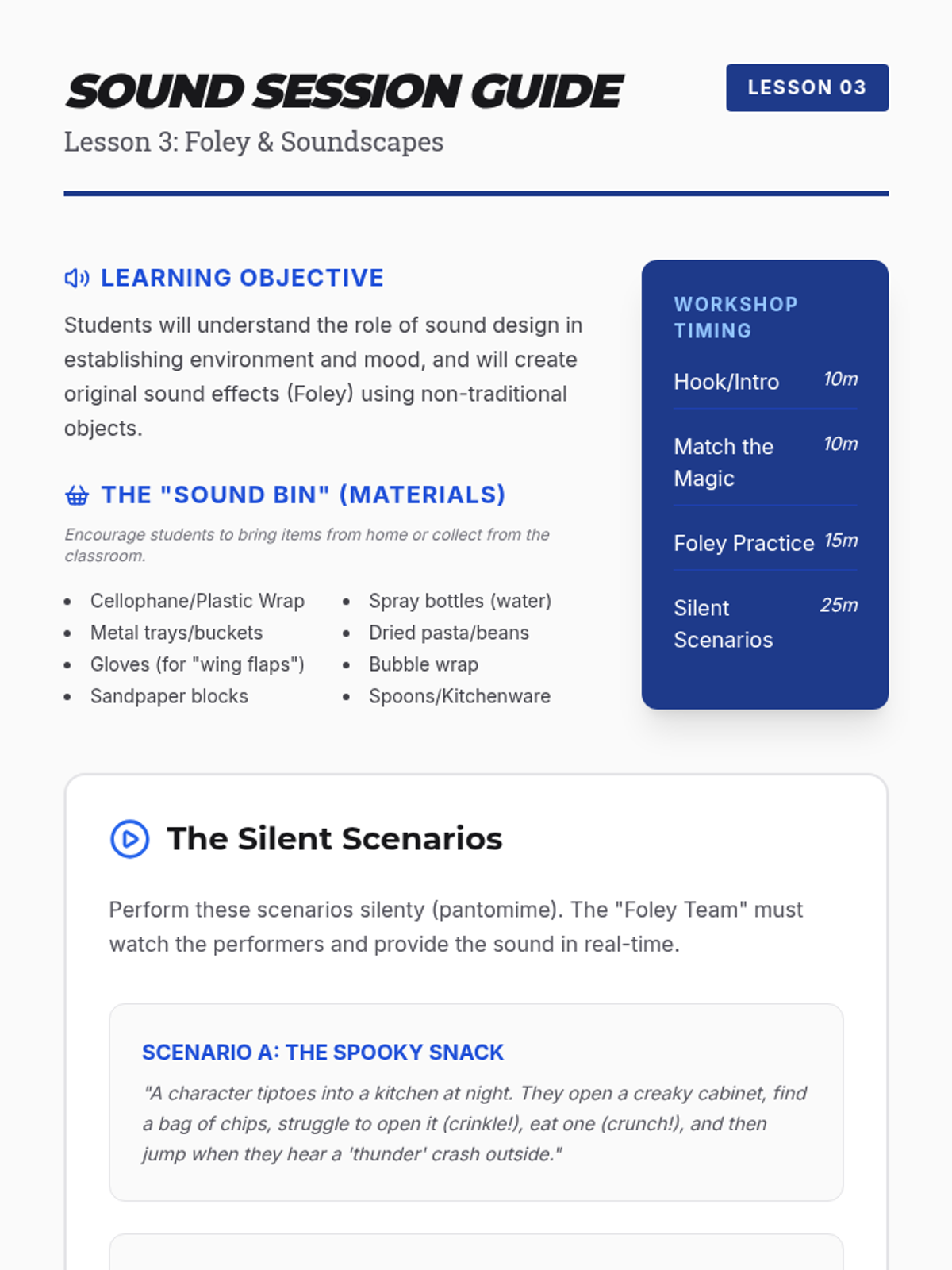
A teacher guide for the sound design lesson, including "Silent Movie" scenarios for Foley practice and a list of creative sound objects.
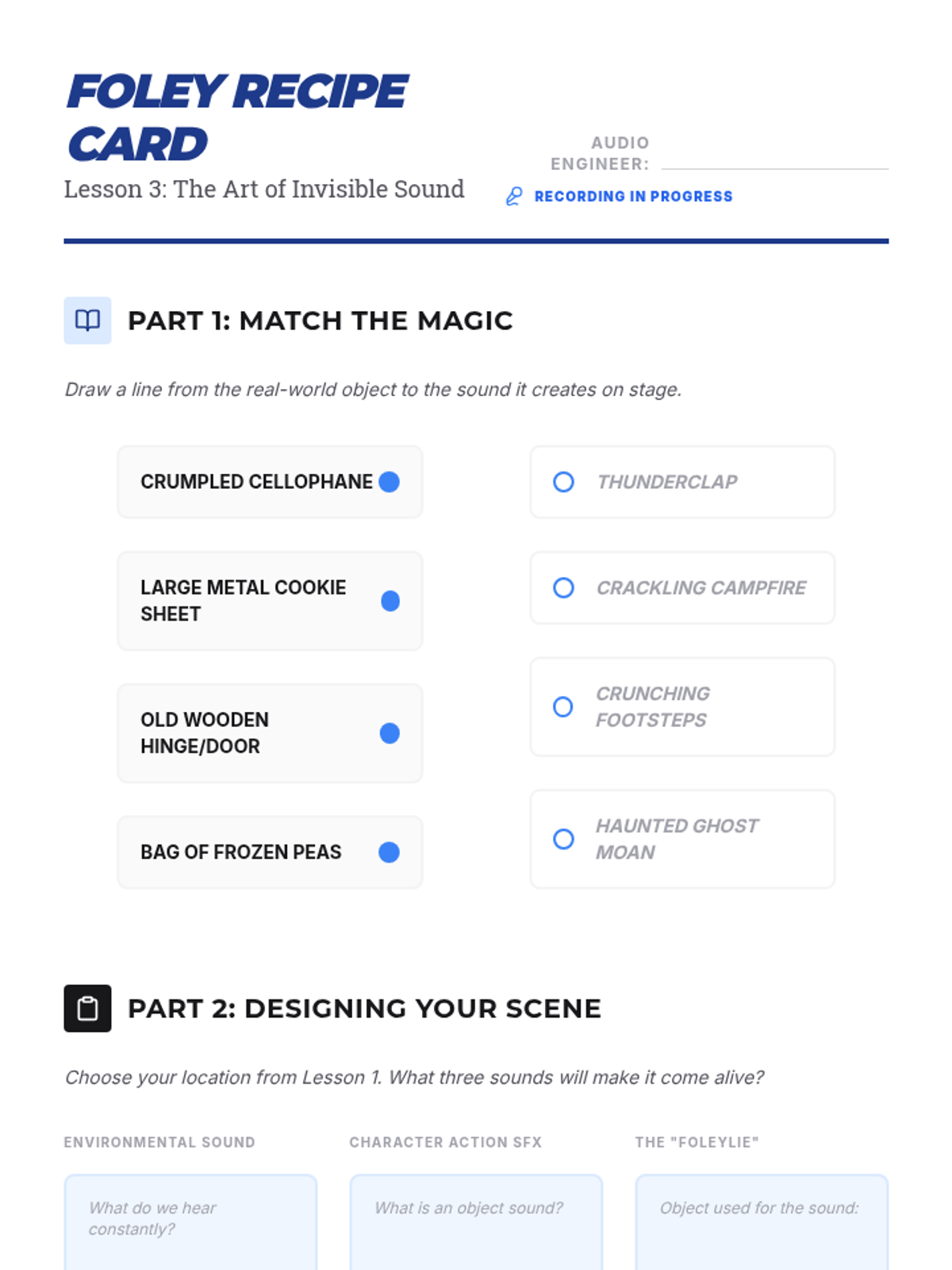
A student activity sheet for the third lesson where students identify objects used for Foley effects and plan their own soundscapes.
A visual presentation for the third lesson on sound design and Foley effects, introducing students to the role of sound in theater.
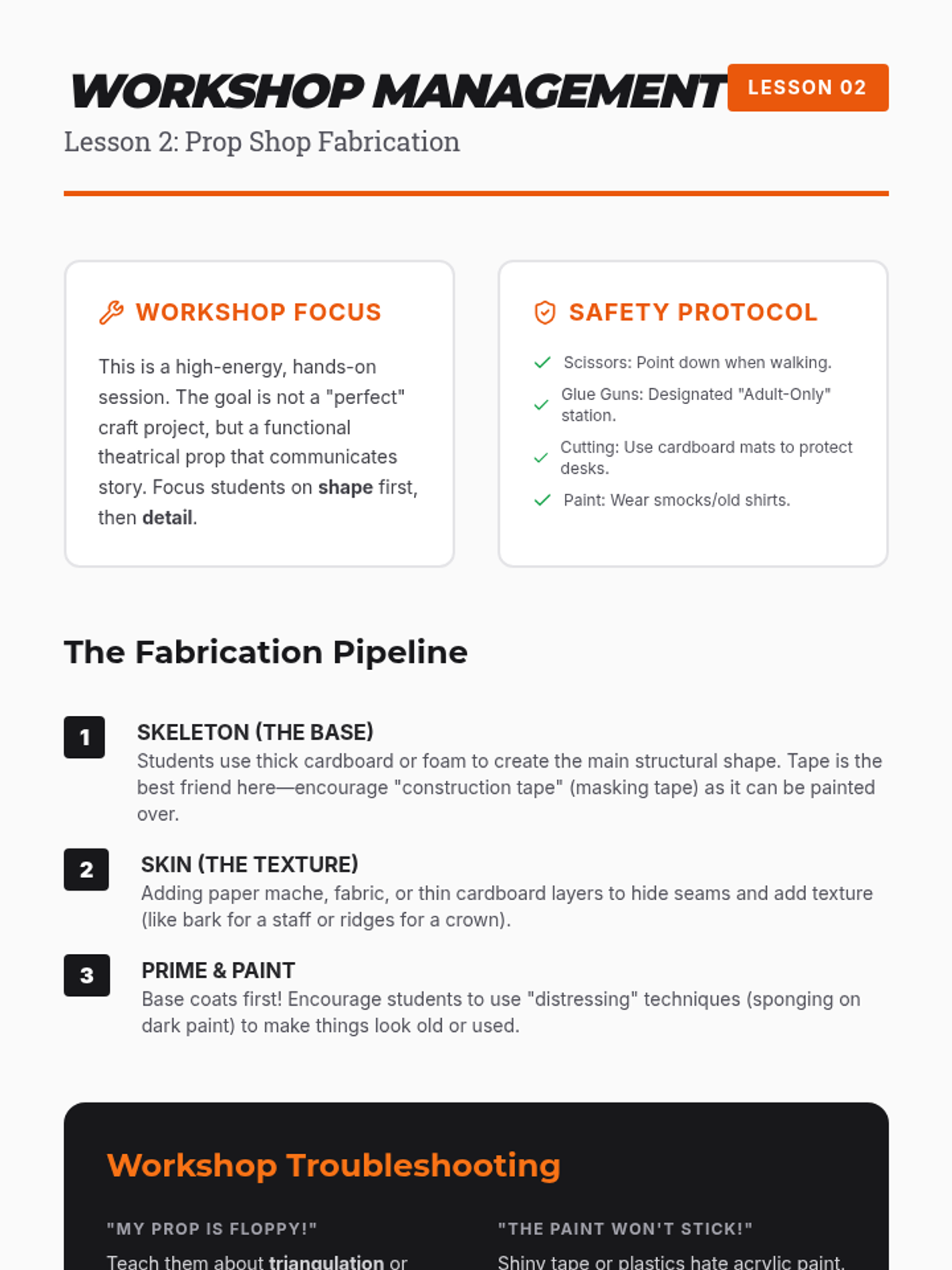
A teacher resource for the second lesson providing workshop management tips, safety protocols, and fabrication troubleshooting.
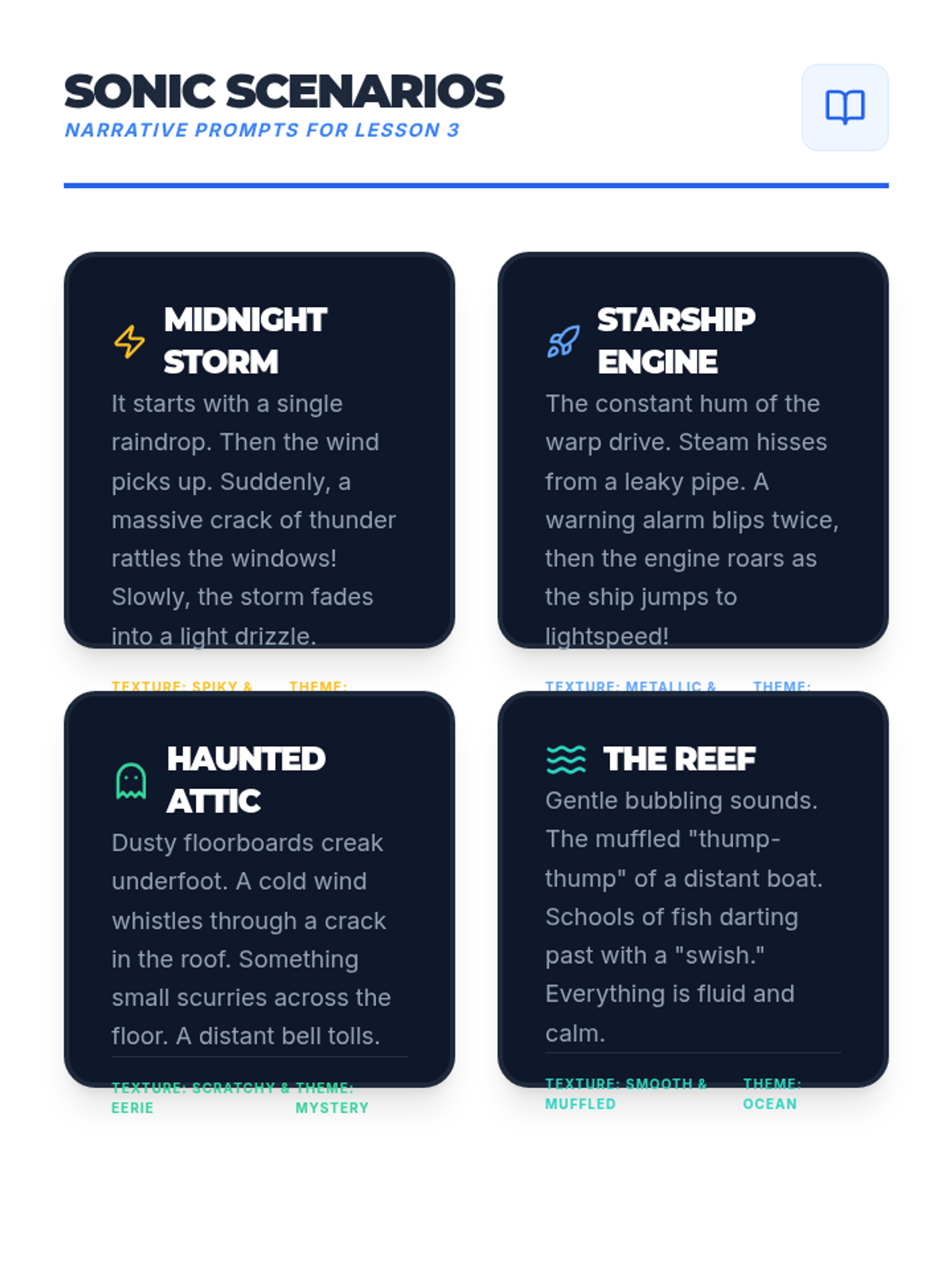
Narrative scenario cards for Lesson 3. Students choose one of these environmental prompts to inspire their graphic score composition.
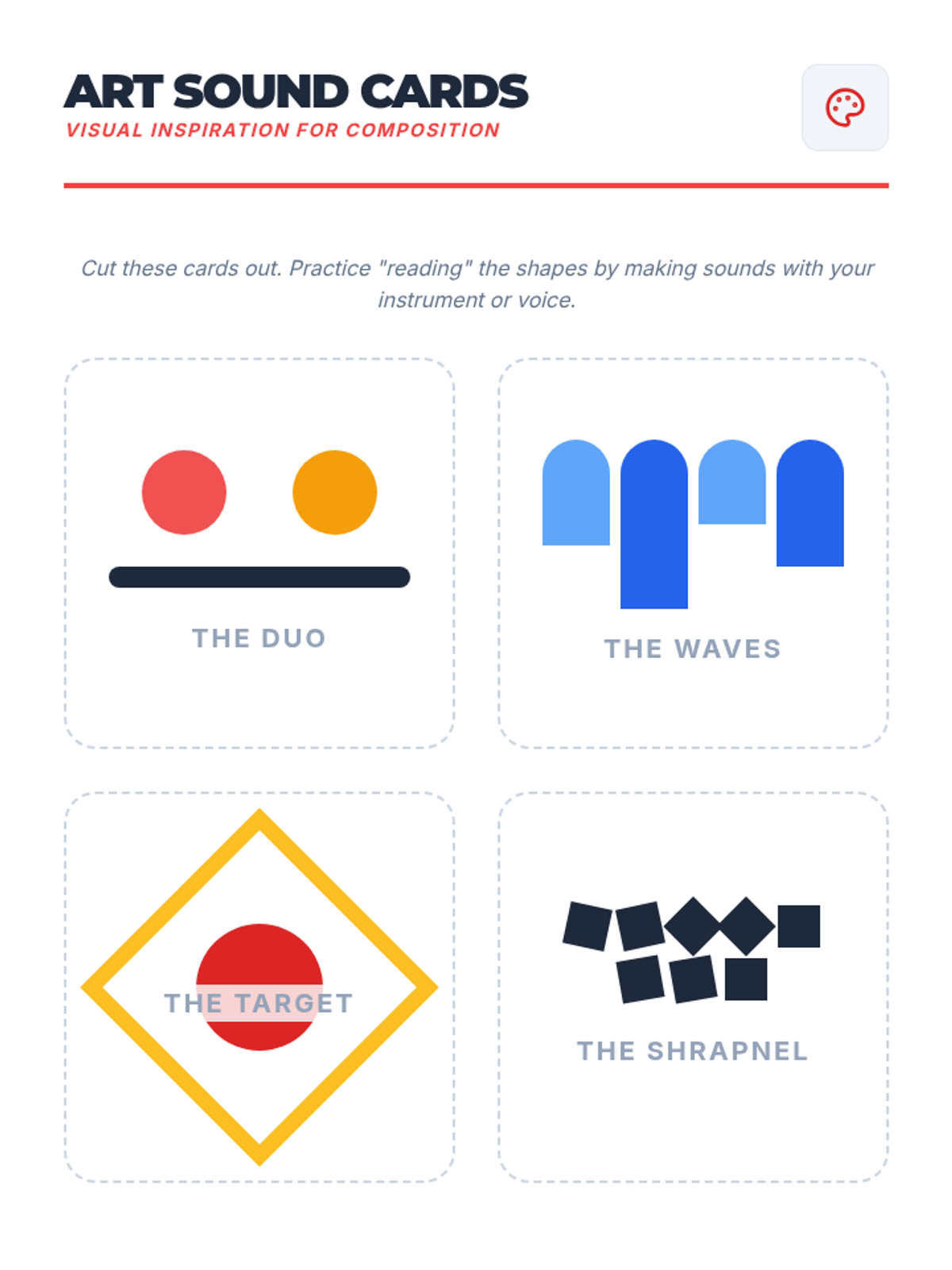
Set of visual inspiration cards for Lesson 2. Students use these to practice translating abstract shapes and patterns into sound before creating their own legend.
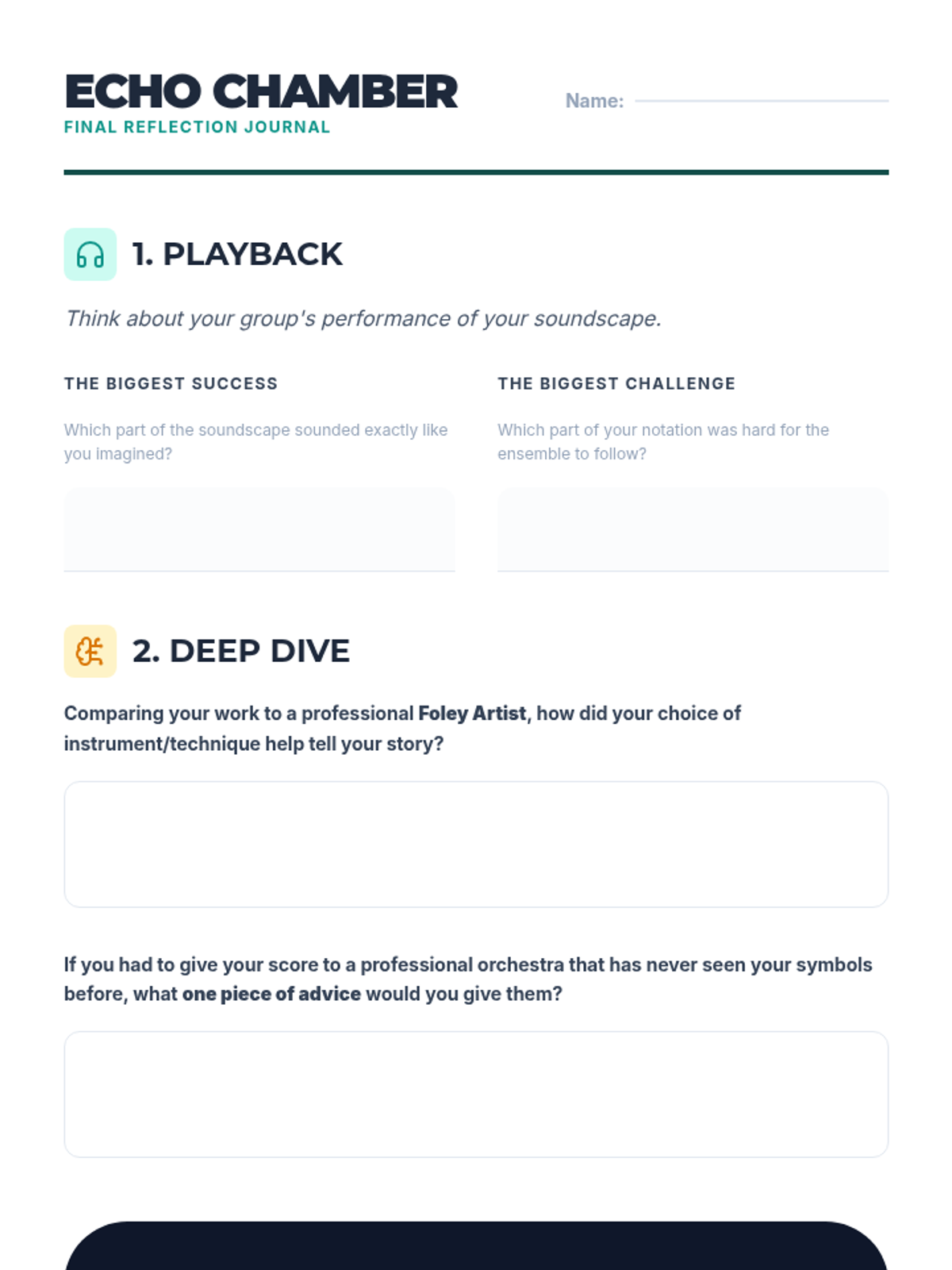
Final reflection worksheet for Lesson 5. Students analyze their performance, compare their work to professional Foley artistry, and answer the sequence's essential question.
Slide deck for Lesson 5: Echo Chamber. Covers the final reflection on graphic notation, comparison to professional Foley artistry, and a debrief on the advantages/limitations of this notation style.
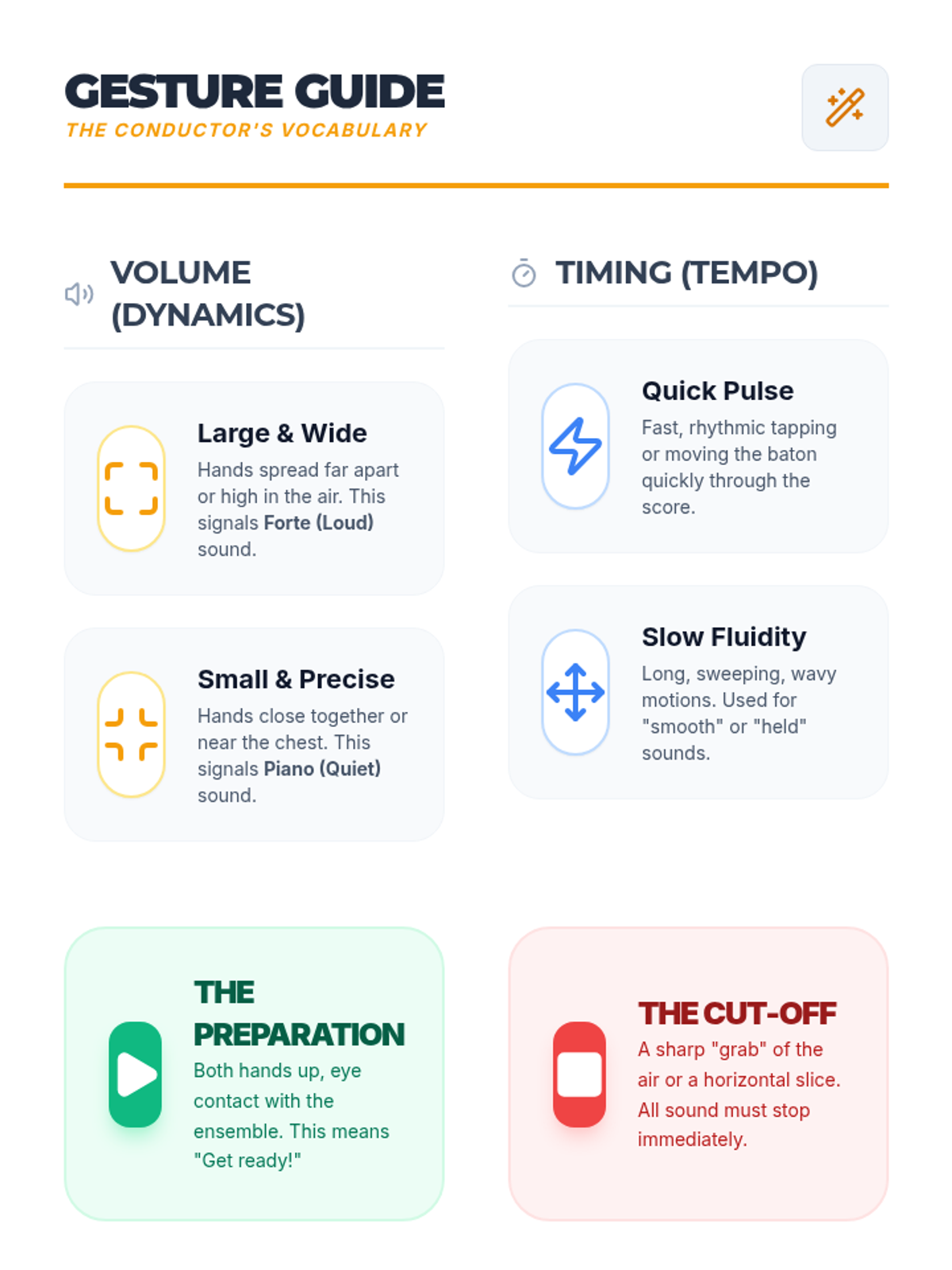
Visual reference guide for students illustrating essential conducting gestures for volume, tempo, and cues. Great for use during Lesson 4 rehearsals.
Slide deck for Lesson 4: Baton Masters. Covers conducting gestures, the conductor's role in graphic notation, and rehearsal protocols.
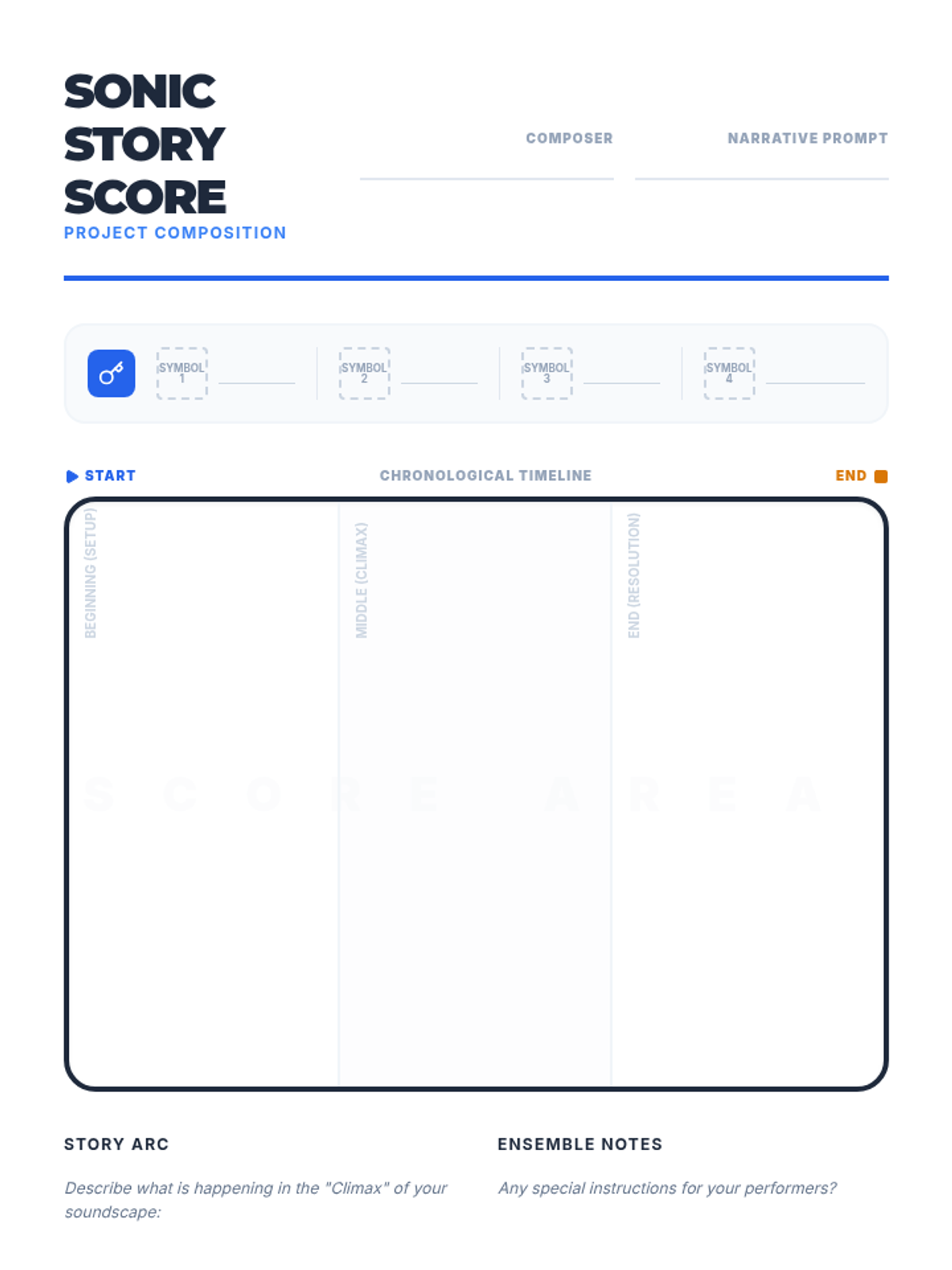
Main composition worksheet for Lesson 3. Provides a large, structured timeline for students to compose their narrative soundscape using graphic symbols.
Slide deck for Lesson 3: Sonic Stories. Covers narrative composition, reading a score as a timeline, and introduces various environmental prompts for student soundscapes.
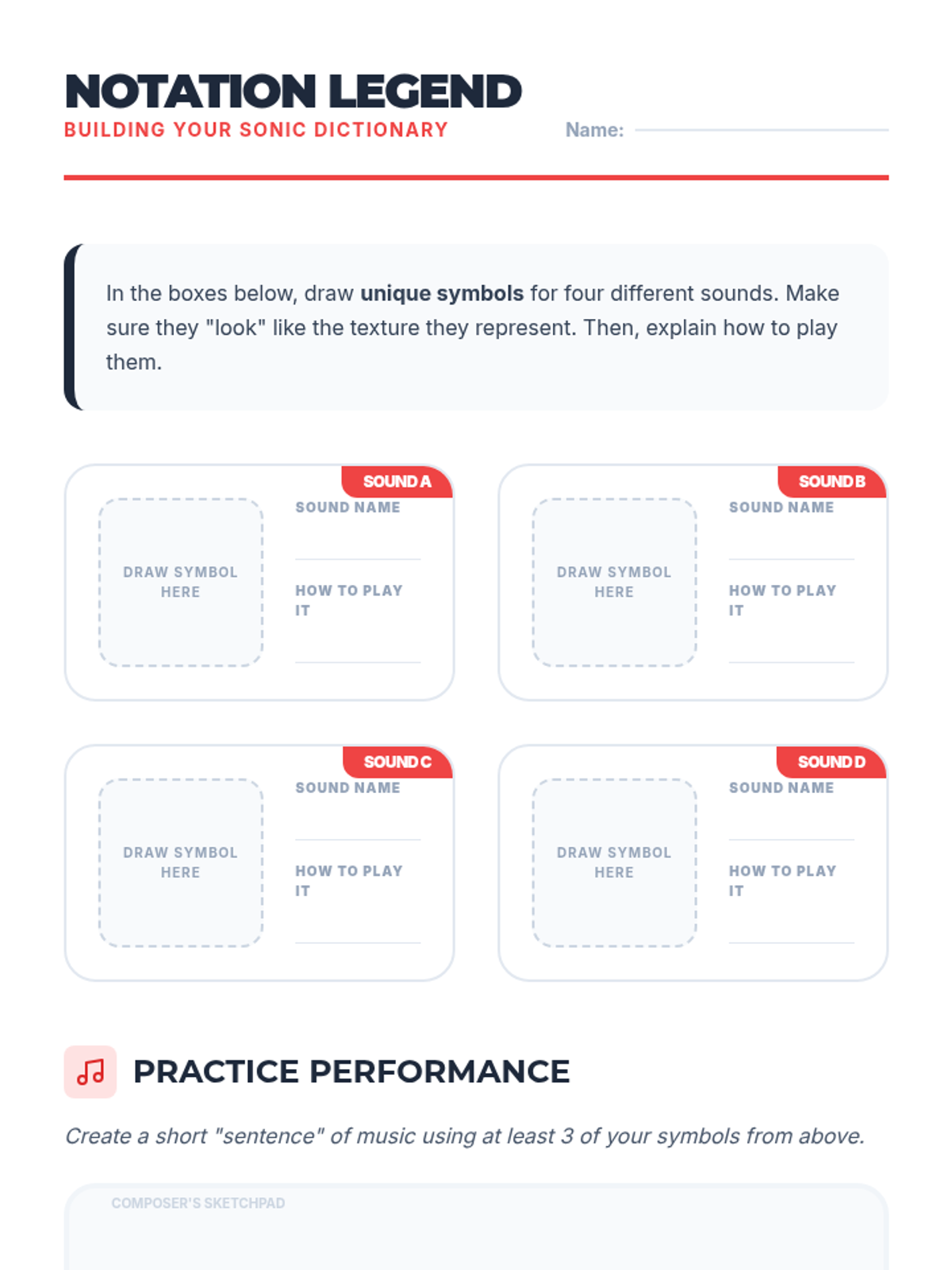
Worksheet for students to define their own graphic notation legend. Includes spaces for symbols, sound descriptions, and a practice score area.
Slide deck for Lesson 2: Symbol Sketchers. Introduces graphic notation through abstract art (Kandinsky hook) and explains how visual elements like line weight and texture relate to audio qualities.
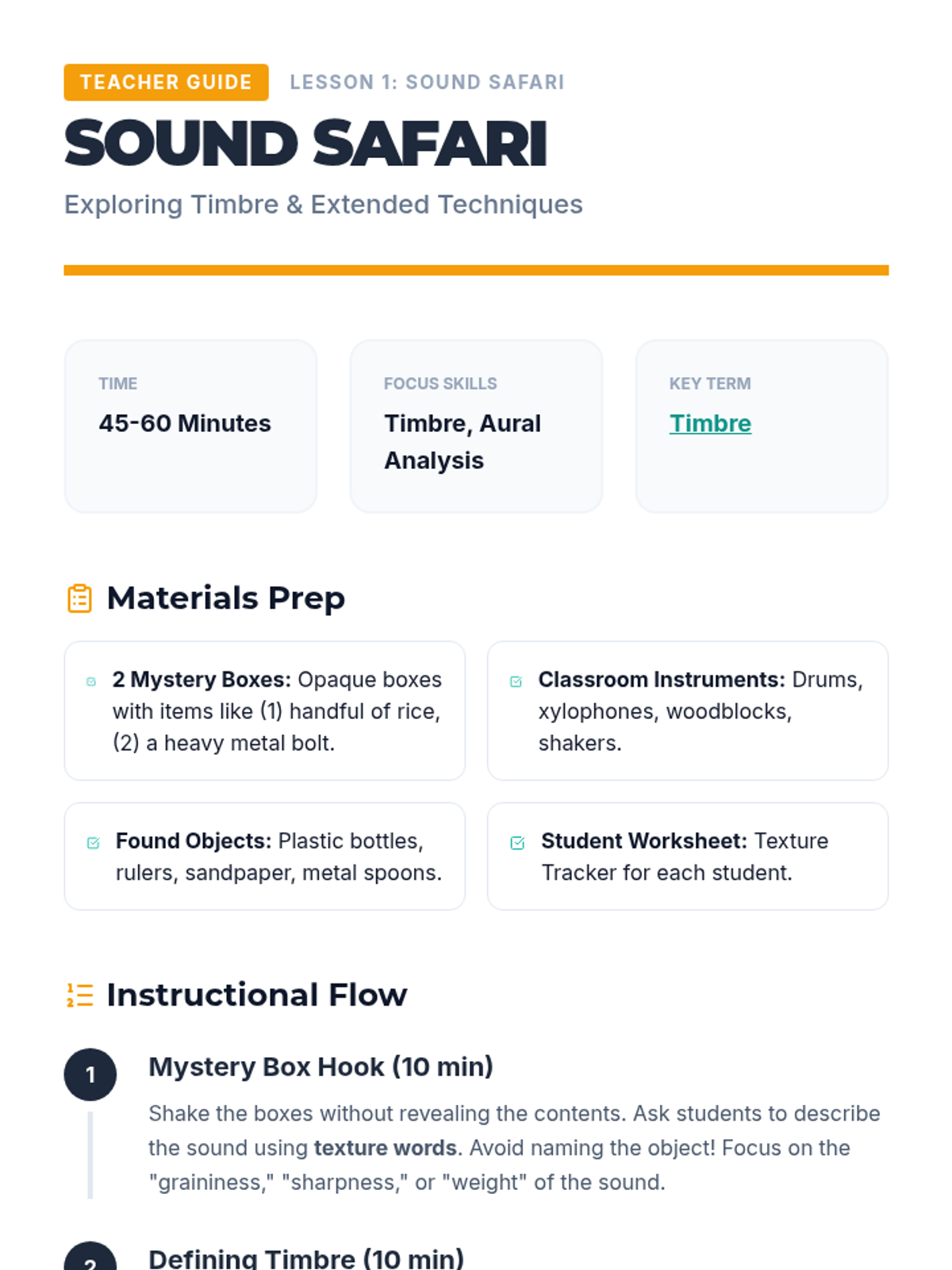
Teacher facilitation guide for Lesson 1: Sound Safari. Includes setup instructions for mystery boxes, lesson flow, and tips for managing instrument exploration.
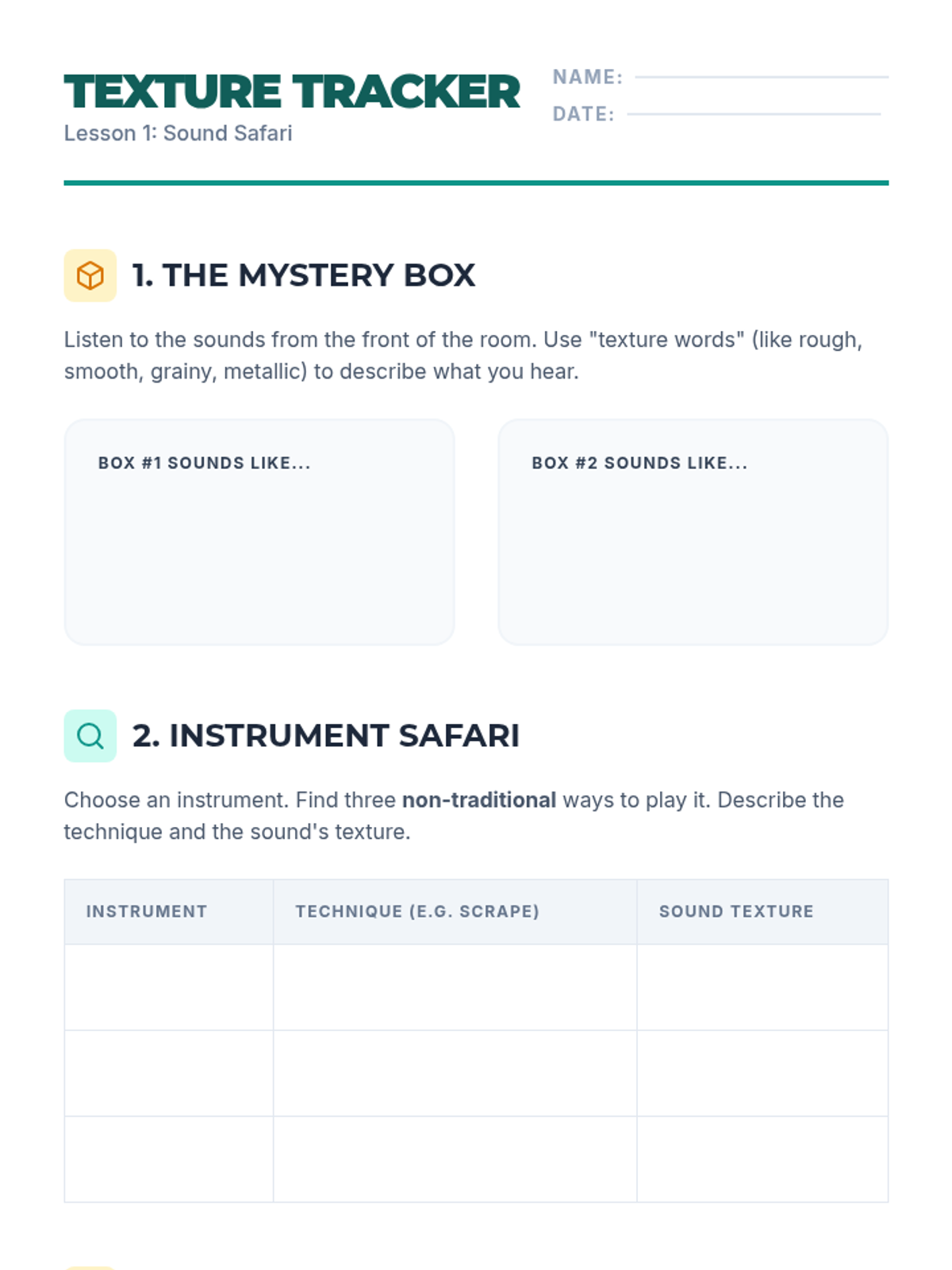
Student worksheet for Lesson 1 to record observations of mystery sounds and experiment with extended instrument techniques. Includes a space for initial visual mapping of sound textures.
Introductory slide deck for exploring sound textures and timbre. Covers the mystery box hook, defining timbre, and introducing extended techniques for classroom instruments.
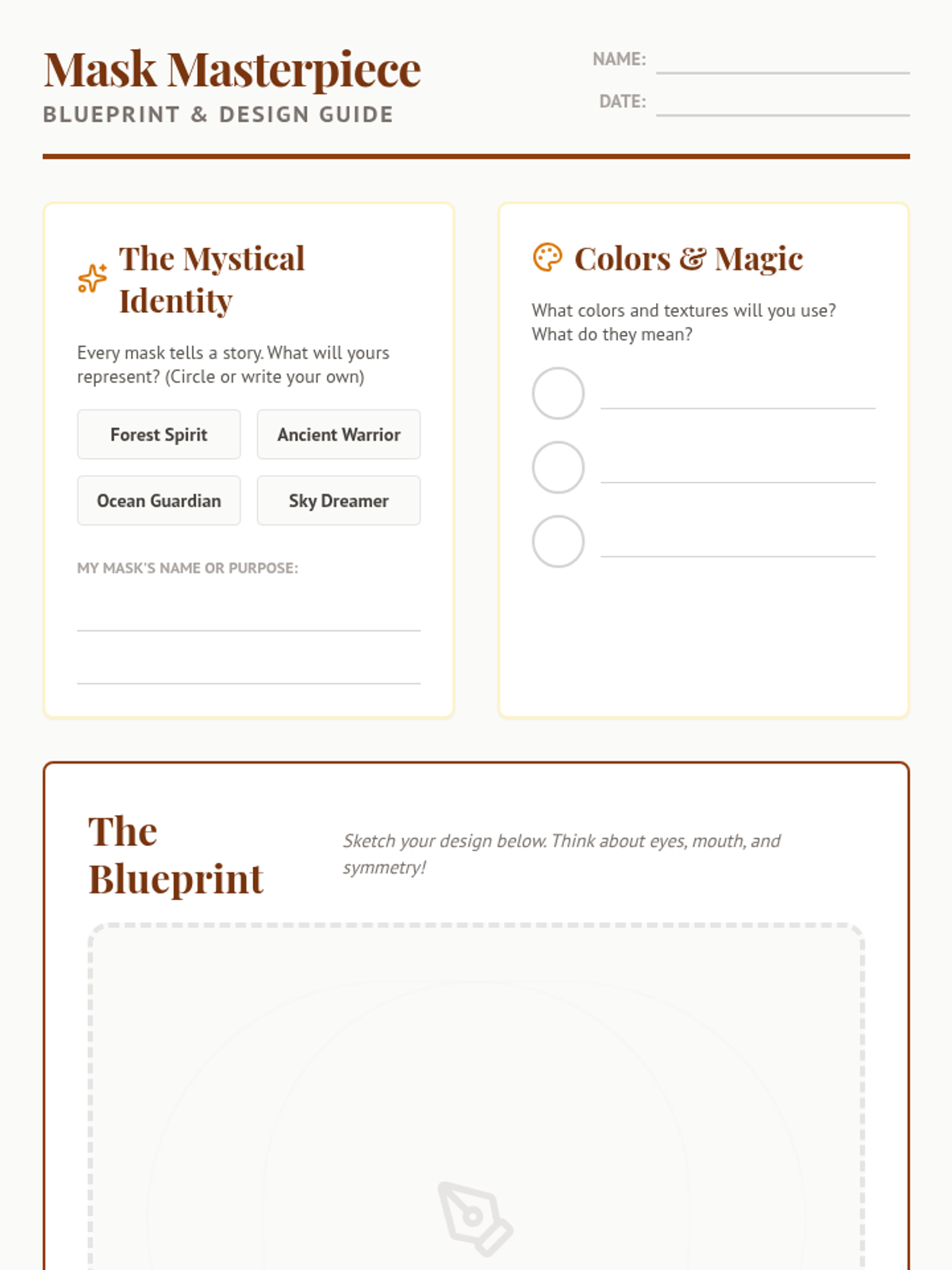
A design worksheet for students to plan their mystical mask identity, colors, and visual blueprint.
A visual presentation exploring mask traditions from Africa, Italy, Japan, and Mexico to inspire student creativity.
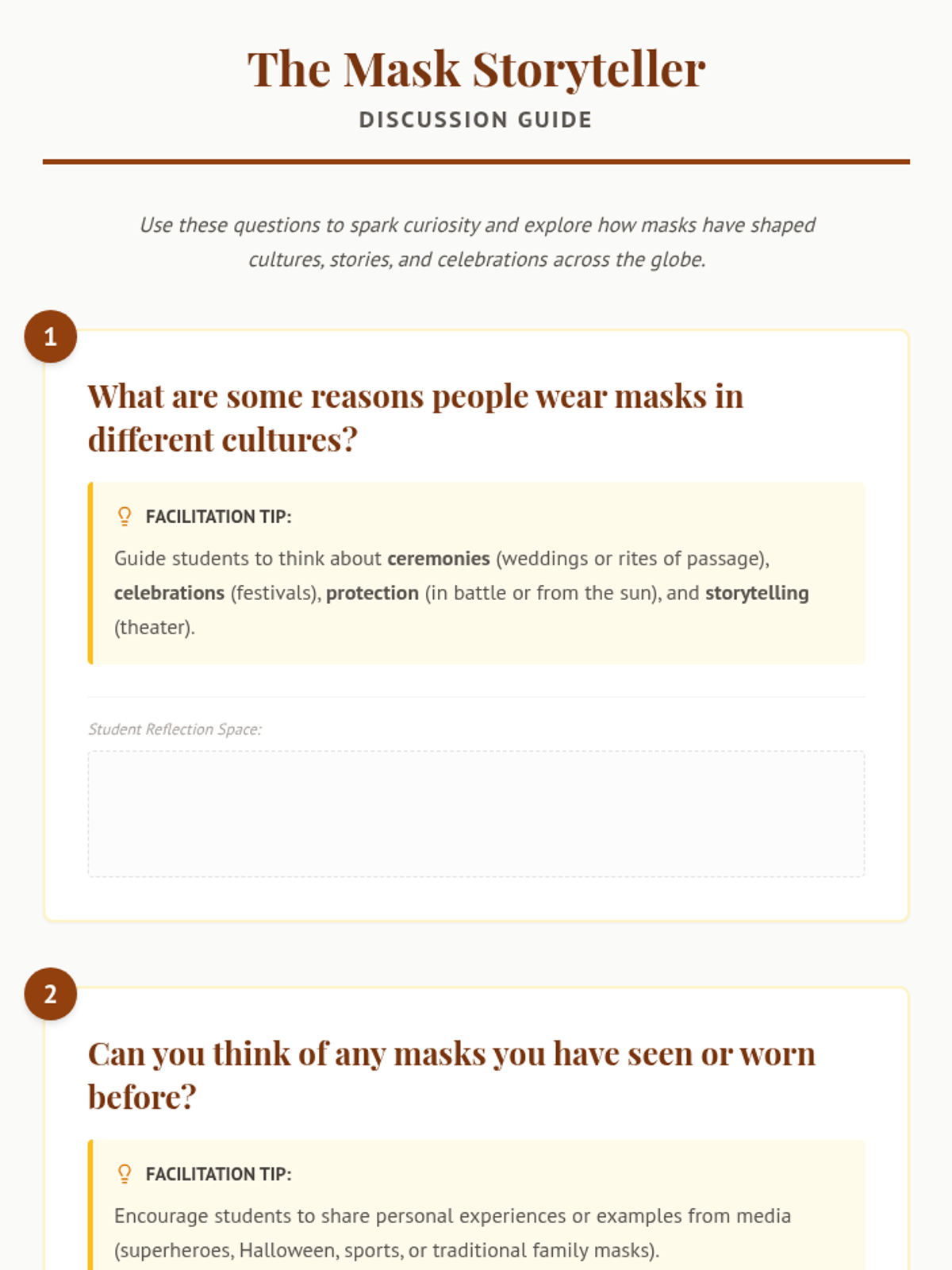
A set of structured discussion questions to help students explore the cultural and storytelling significance of masks.
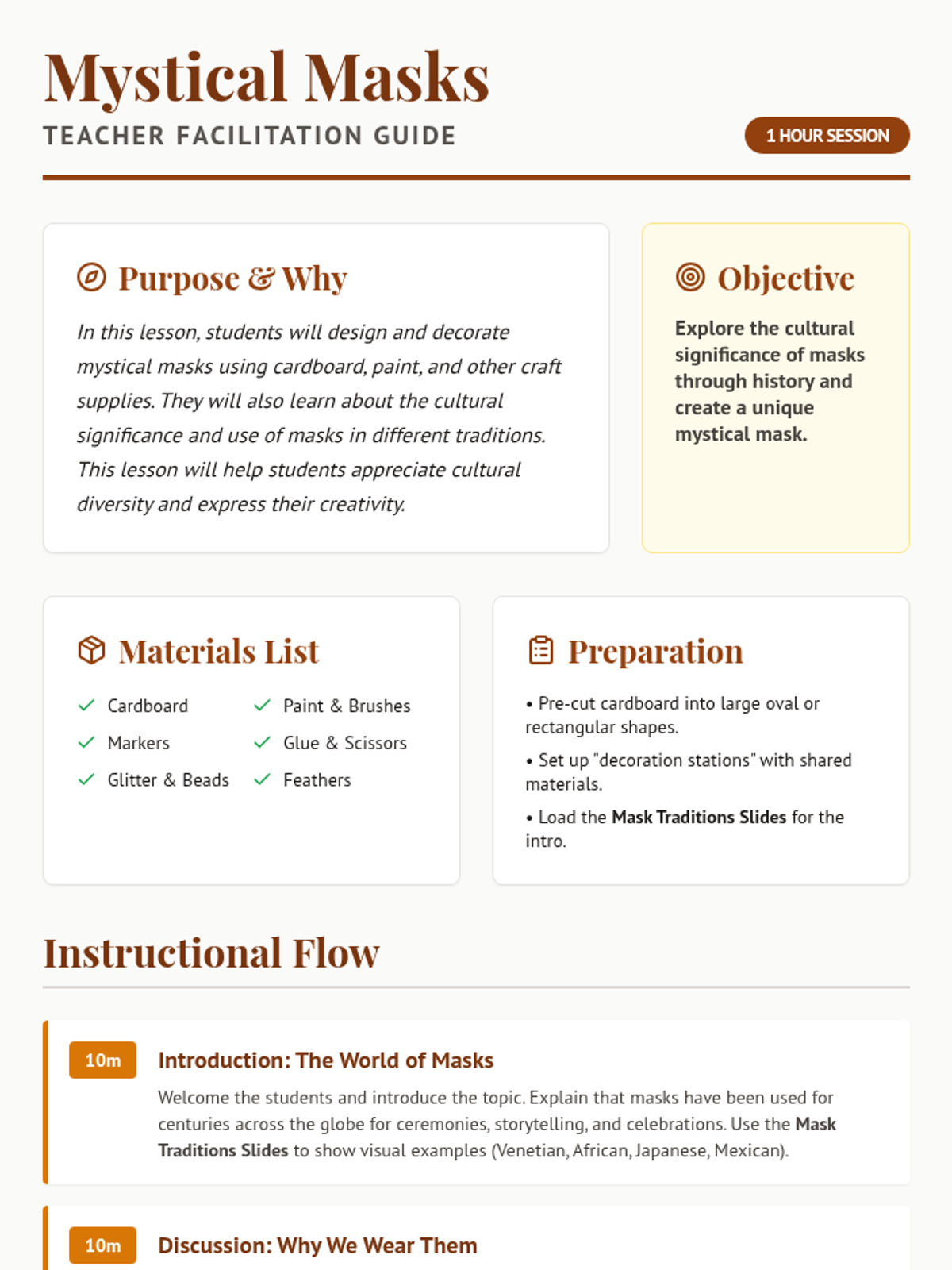
A comprehensive teacher guide for the Mystical Masks lesson, including a timeline, materials list, and instructional steps.
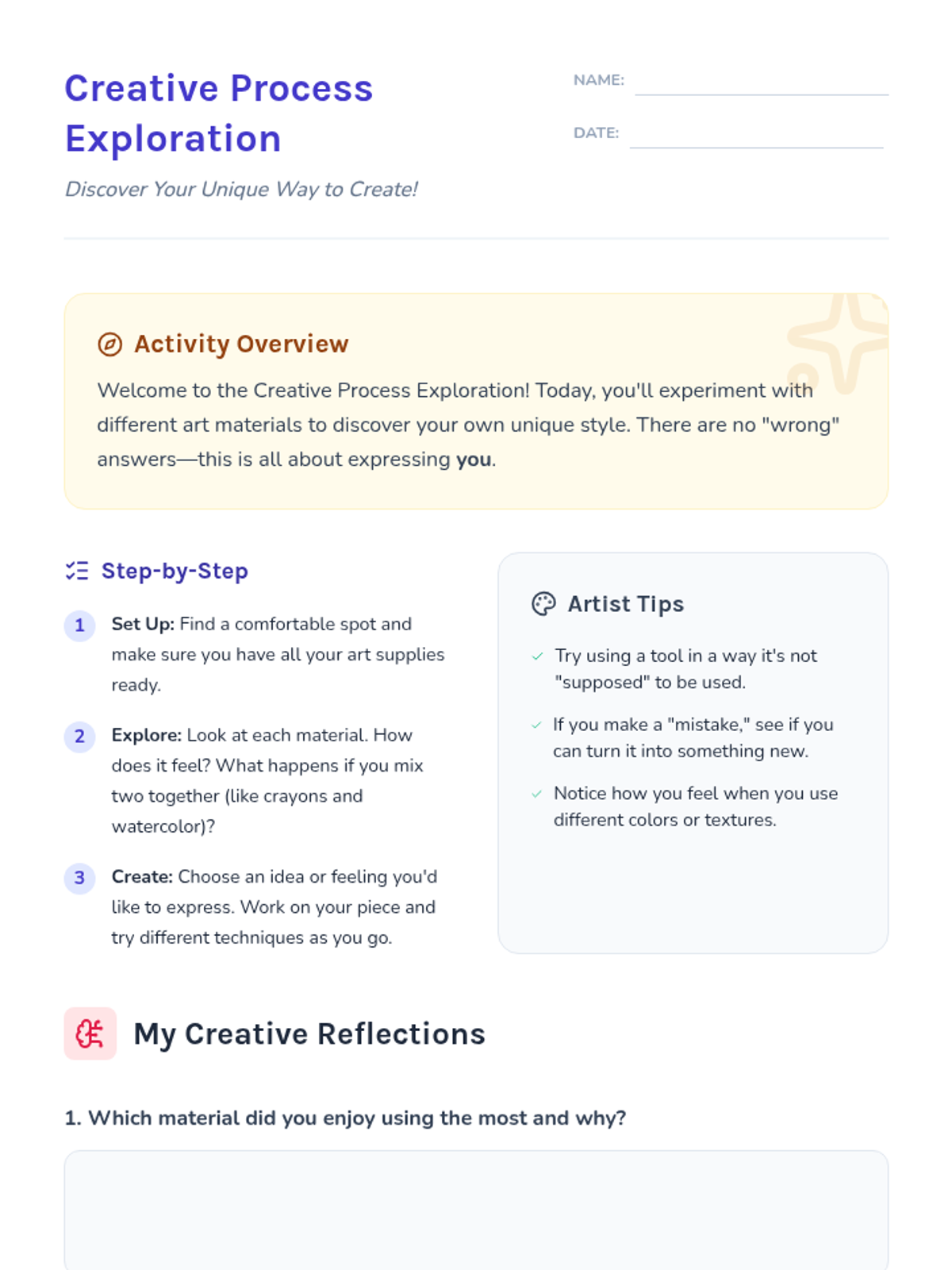
A hands-on activity worksheet for students to document their experimentation with art materials and reflect on their personal creative process.
A vibrant and engaging slide deck to guide students through a discussion on diverse creative processes and personal self-expression.
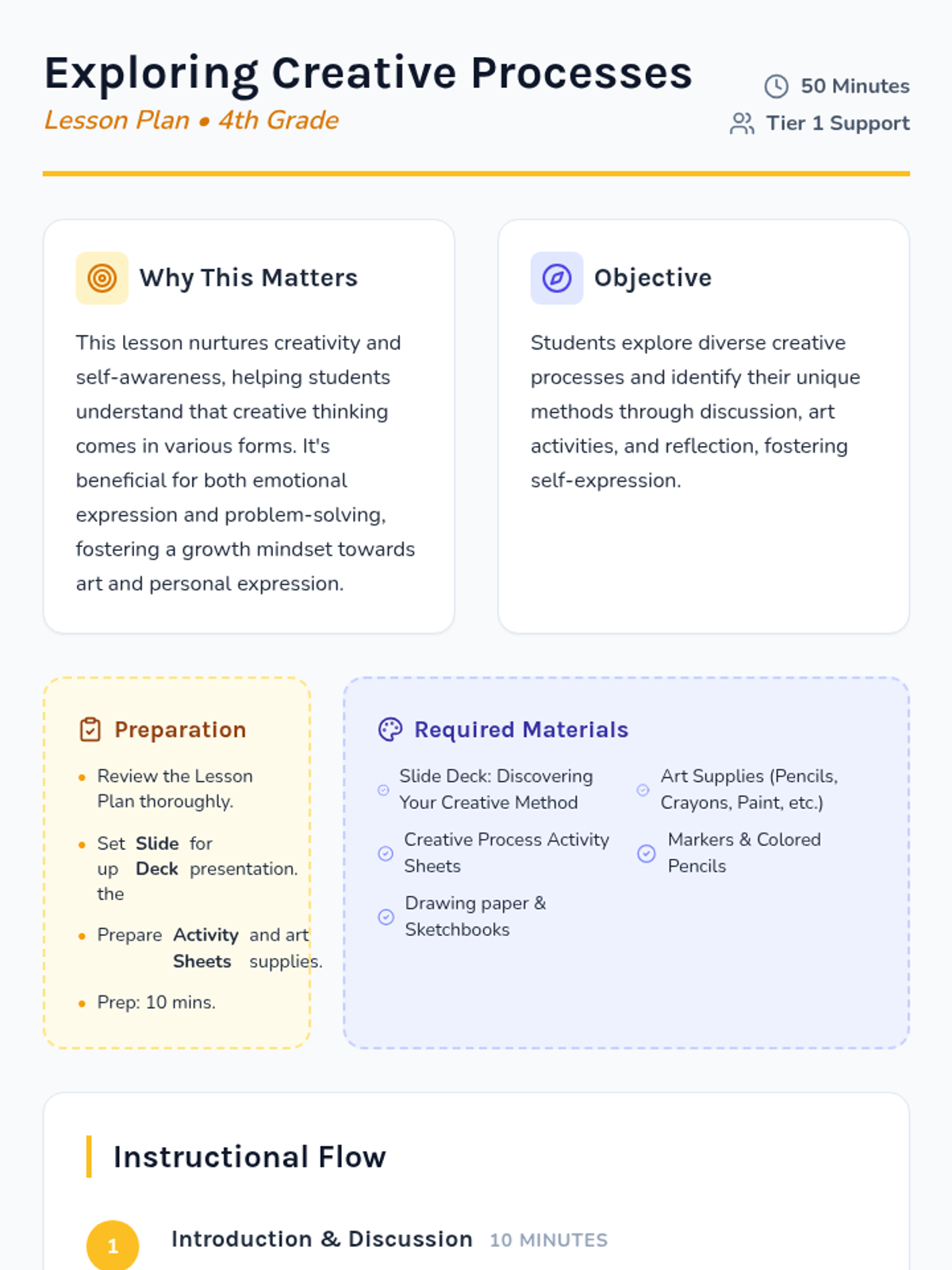
A comprehensive lesson plan for 4th-grade educators to guide students through exploring diverse creative processes and identifying their unique artistic methods.
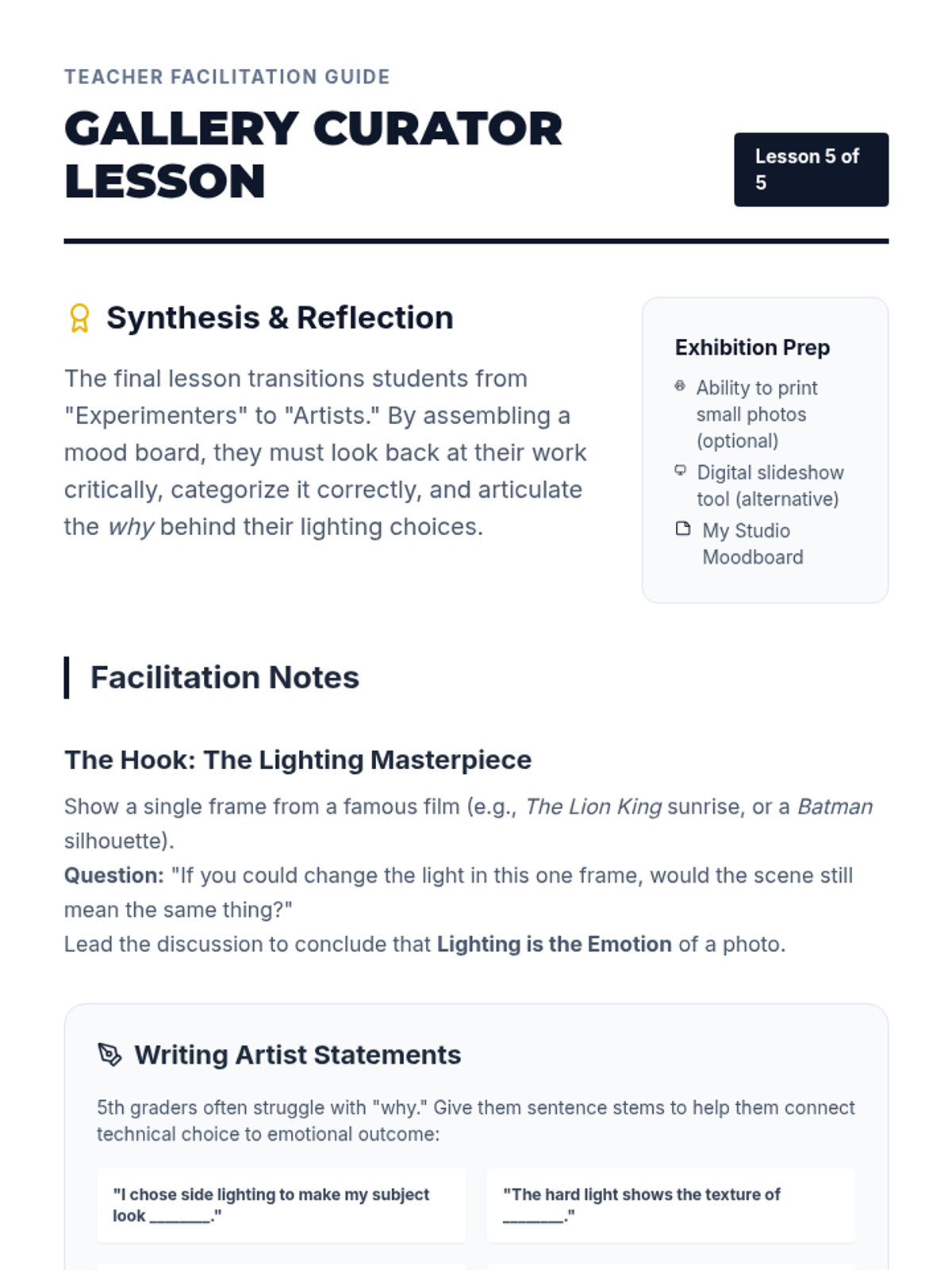
Teacher facilitation guide for Lesson 5, focusing on assessing student mood boards, guiding artist statement writing, and organizing a gallery walk.
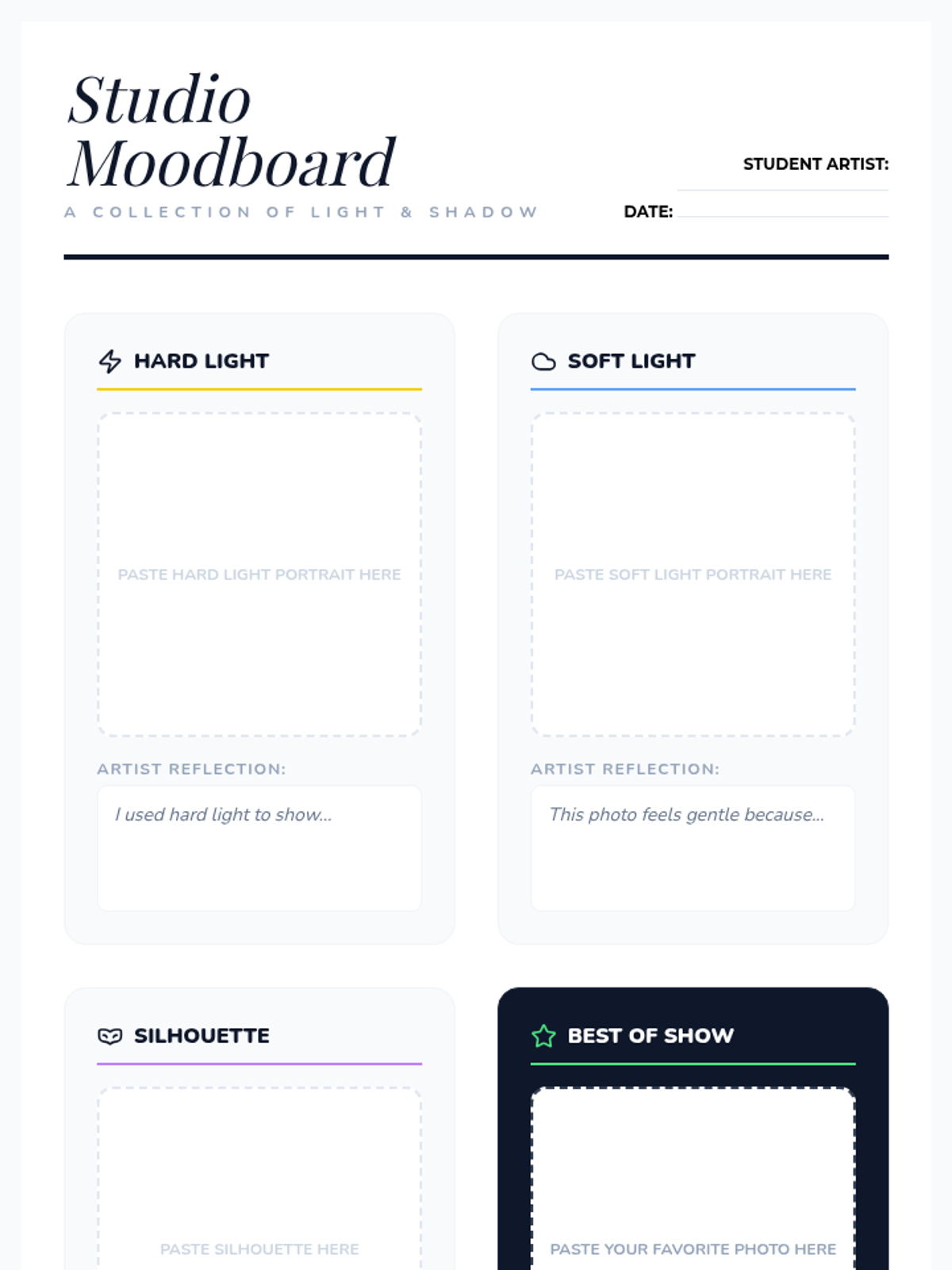
Synthesis activity sheet for Lesson 5 where students curate their best work into a mood board, categorizing images by light type and writing artist statements.
Introductory slide deck for Lesson 5, focusing on curating images and writing artist reflections to synthesize the sequence's learning.
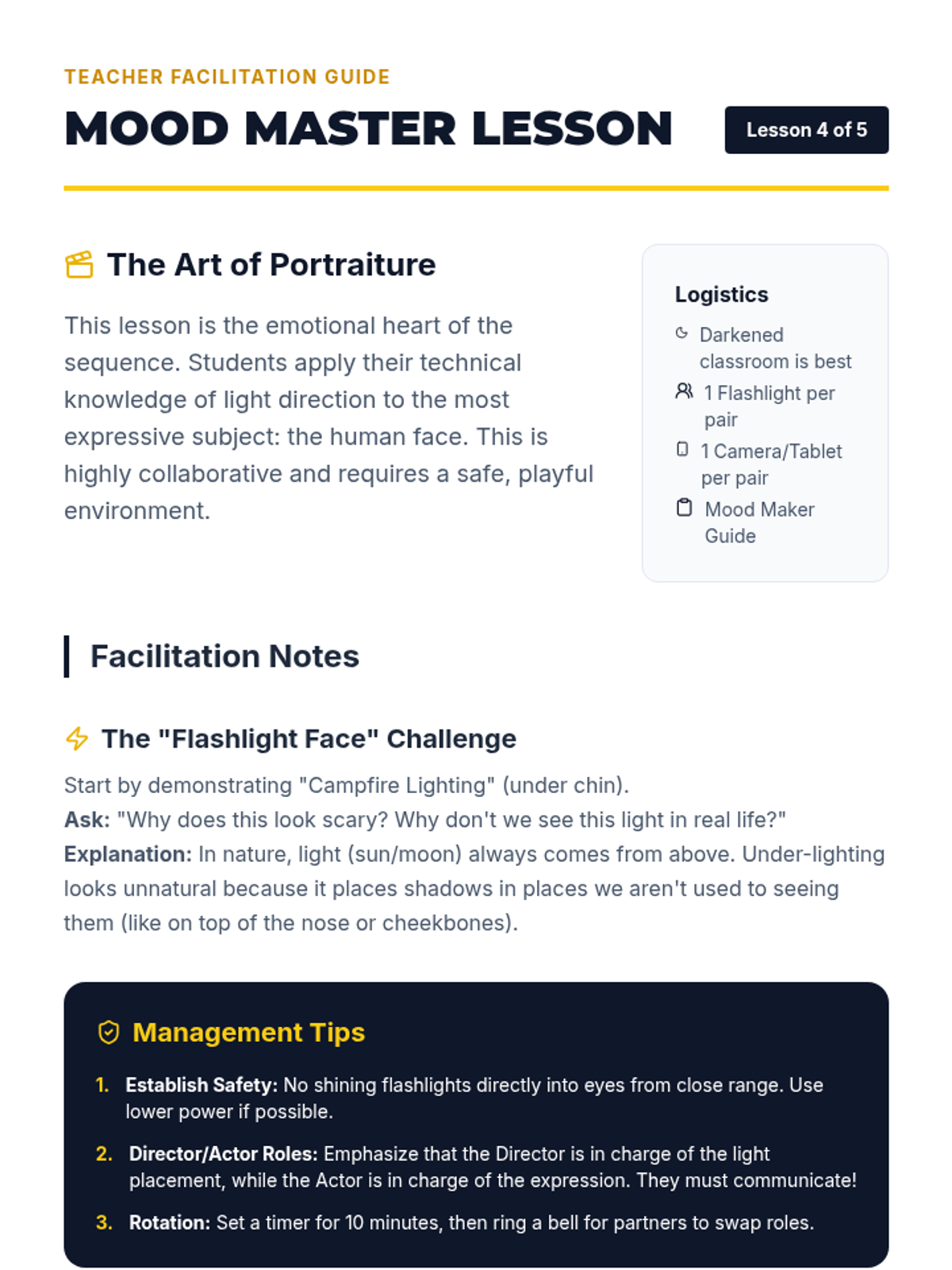
Teacher facilitation guide for Lesson 4, focusing on managing a dark-room studio environment, guiding student collaboration, and the psychology of light direction in portraits.
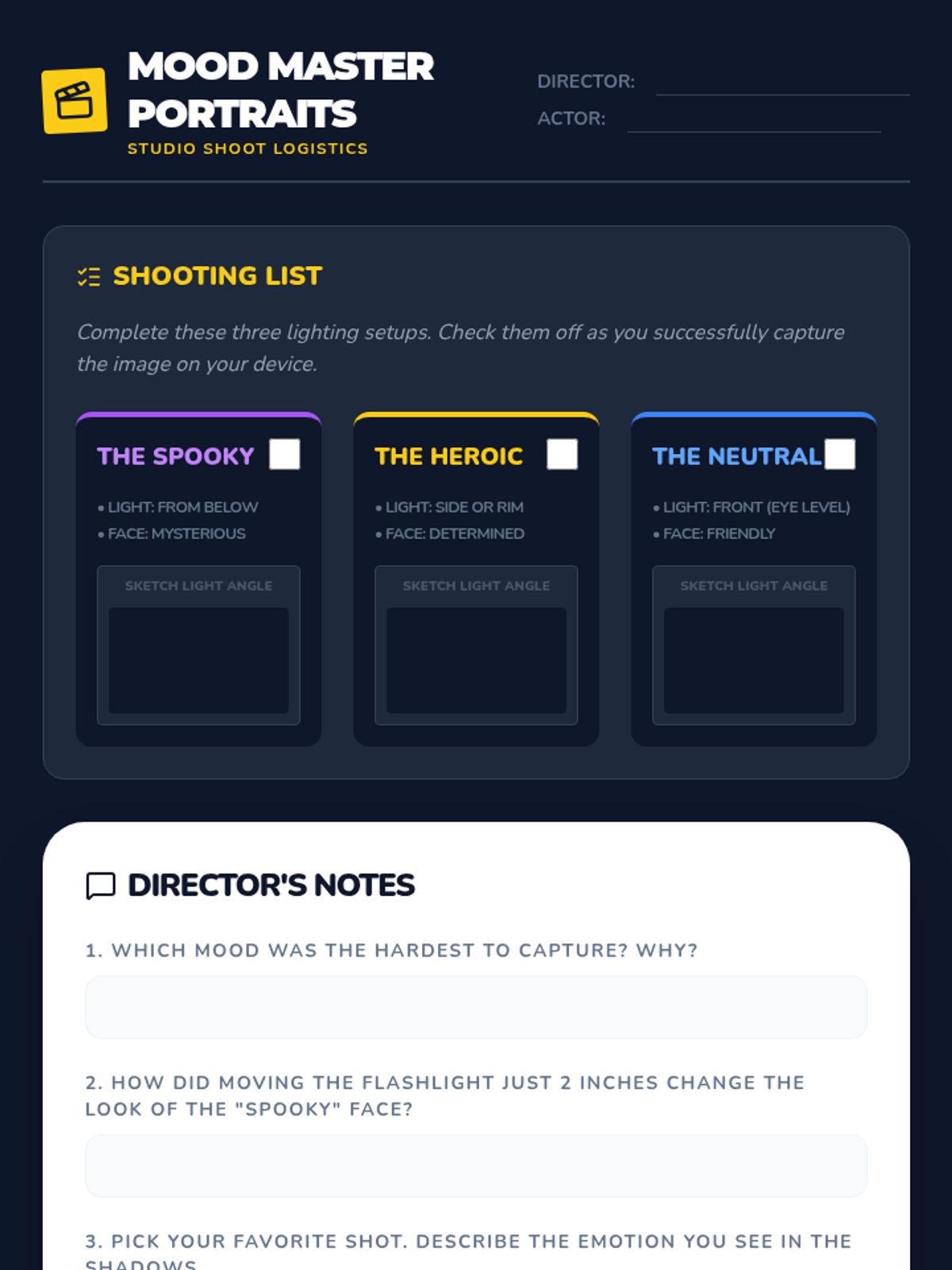
Portraiture activity sheet for Lesson 4 where students work in pairs to capture Spooky, Heroic, and Neutral lighting setups, documenting their results and reflections.
Introductory slide deck for Lesson 4, exploring how different light angles (Under-lighting, Side/Rim, and Front) create specific emotional moods in portrait photography.
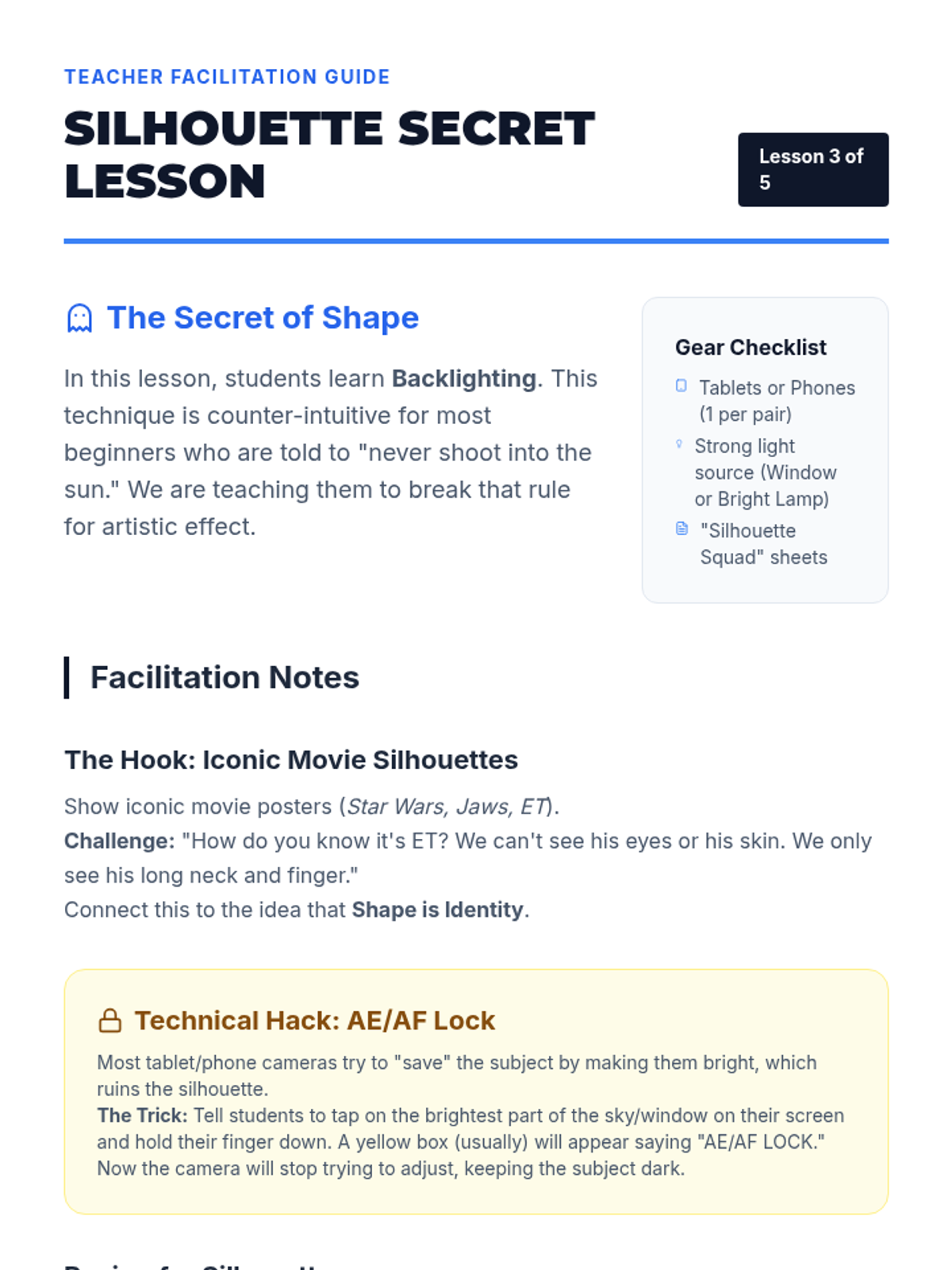
Teacher facilitation guide for Lesson 3, focusing on backlighting technique and the "Exposure Lock" technical skill.
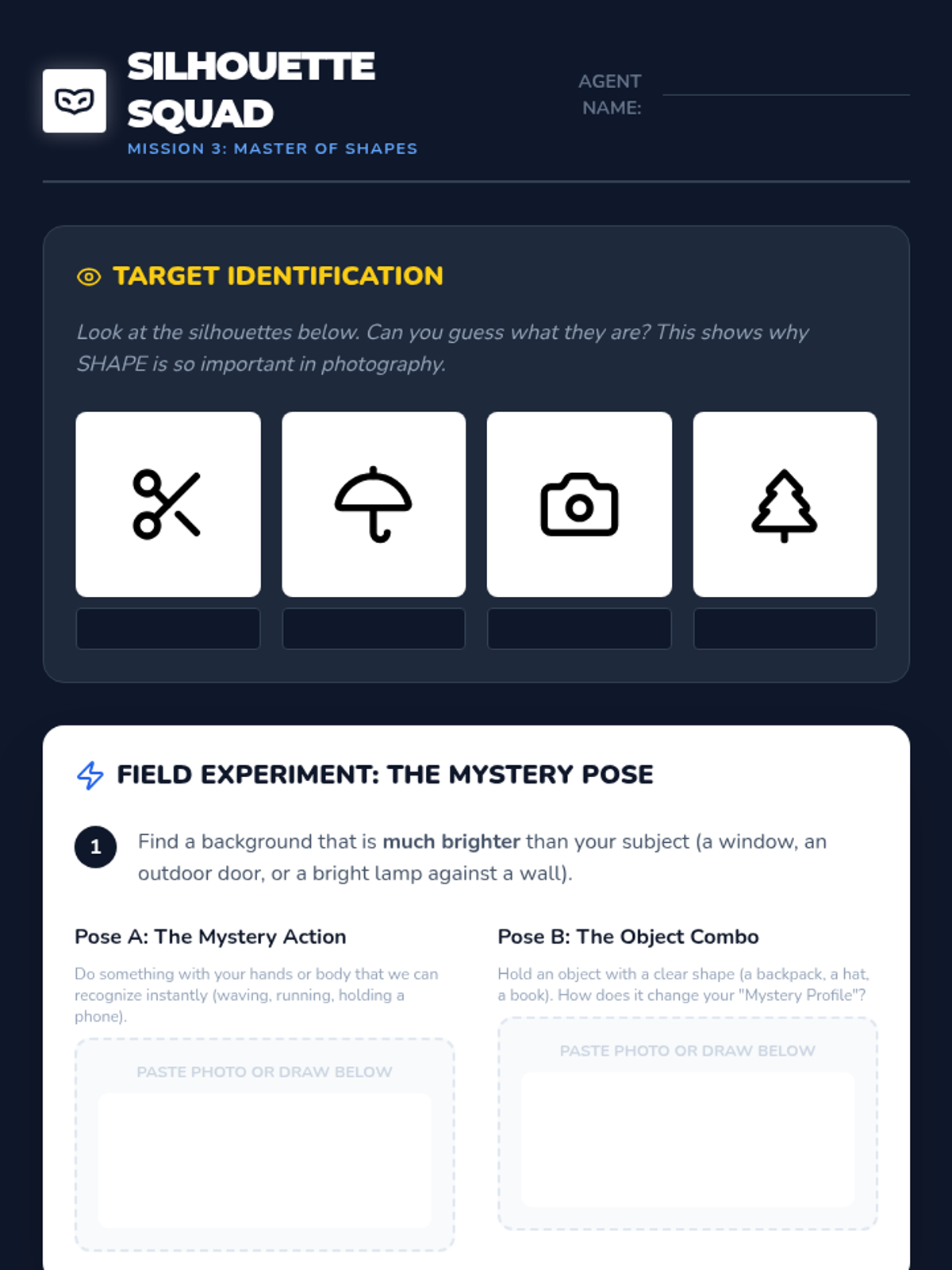
Field activity sheet for Lesson 3 where students identify silhouettes and then perform their own "Mystery Pose" experiment using backlighting.
Introductory slide deck for Lesson 3, focusing on Backlighting and Silhouettes. It covers the technical "lighting recipe" and the artistic power of shape.
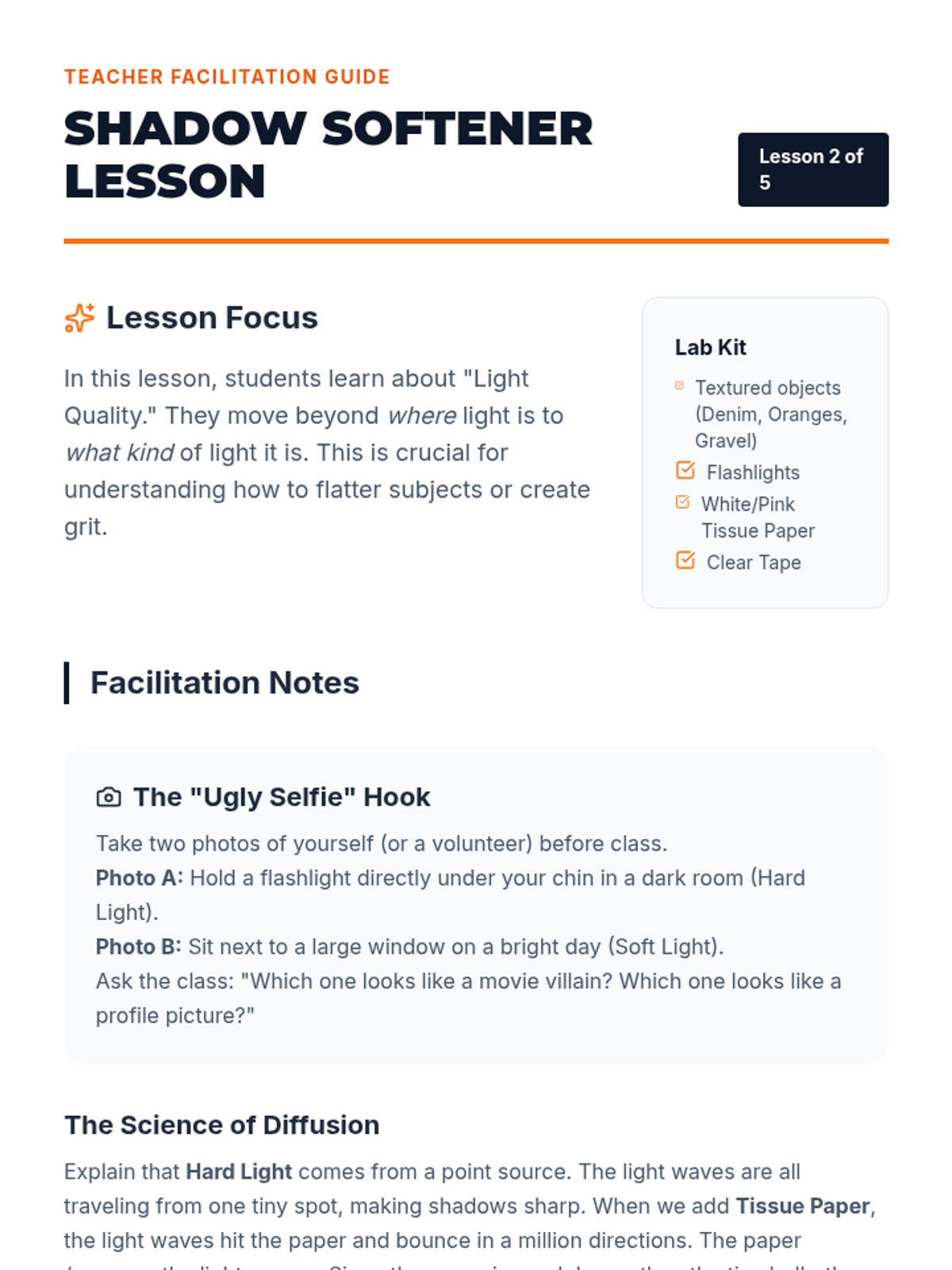
Teacher facilitation guide for Lesson 2, covering light quality (hard vs soft), the science of diffusion, and practical lab tips.
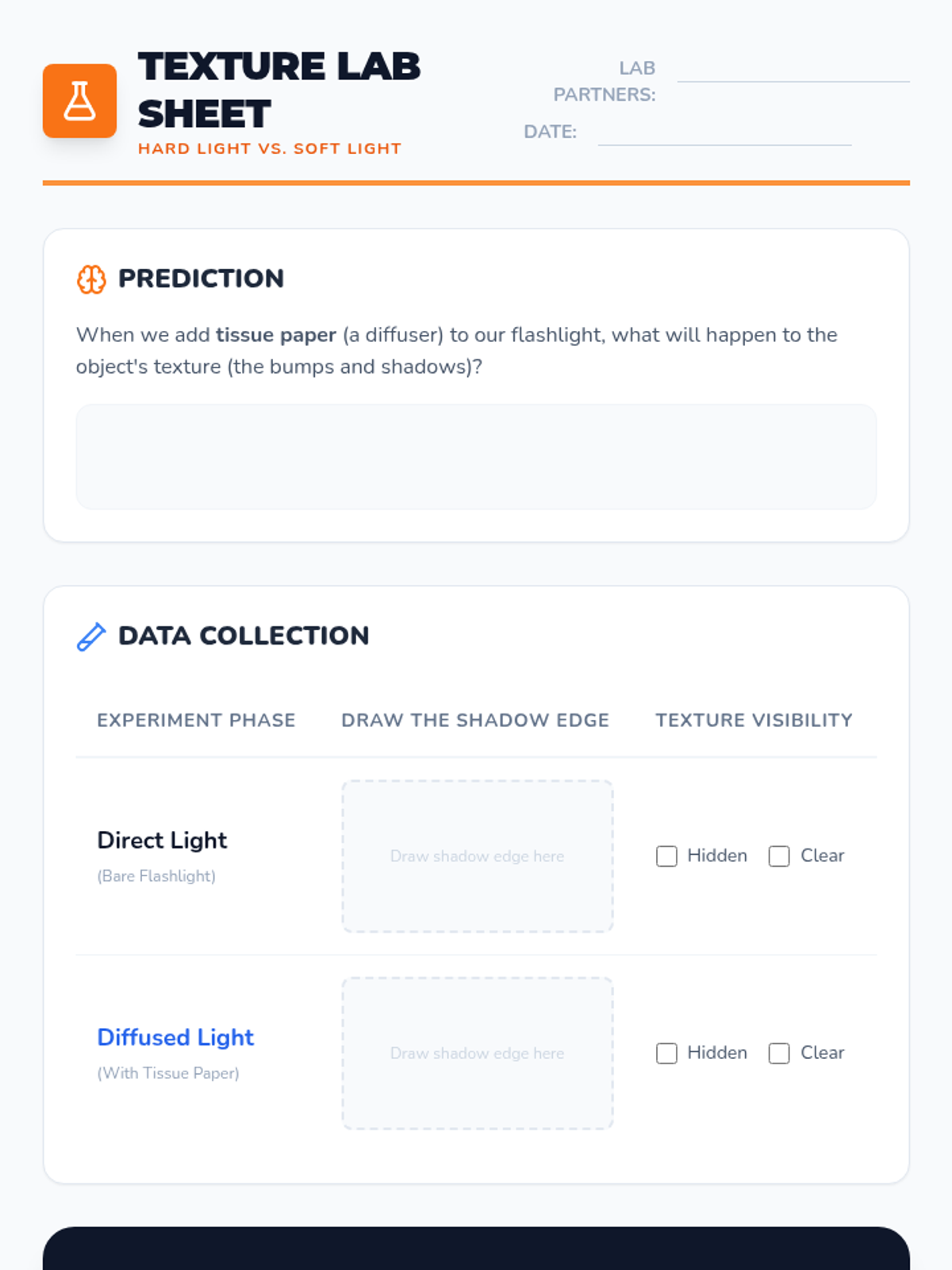
Experiment log for Lesson 2 where students compare direct (hard) and diffused (soft) light by drawing shadow edges and observing object texture.
Introductory slide deck for Lesson 2, exploring the differences between Hard and Soft light, focusing on shadow edges and texture, and introducing diffusion.
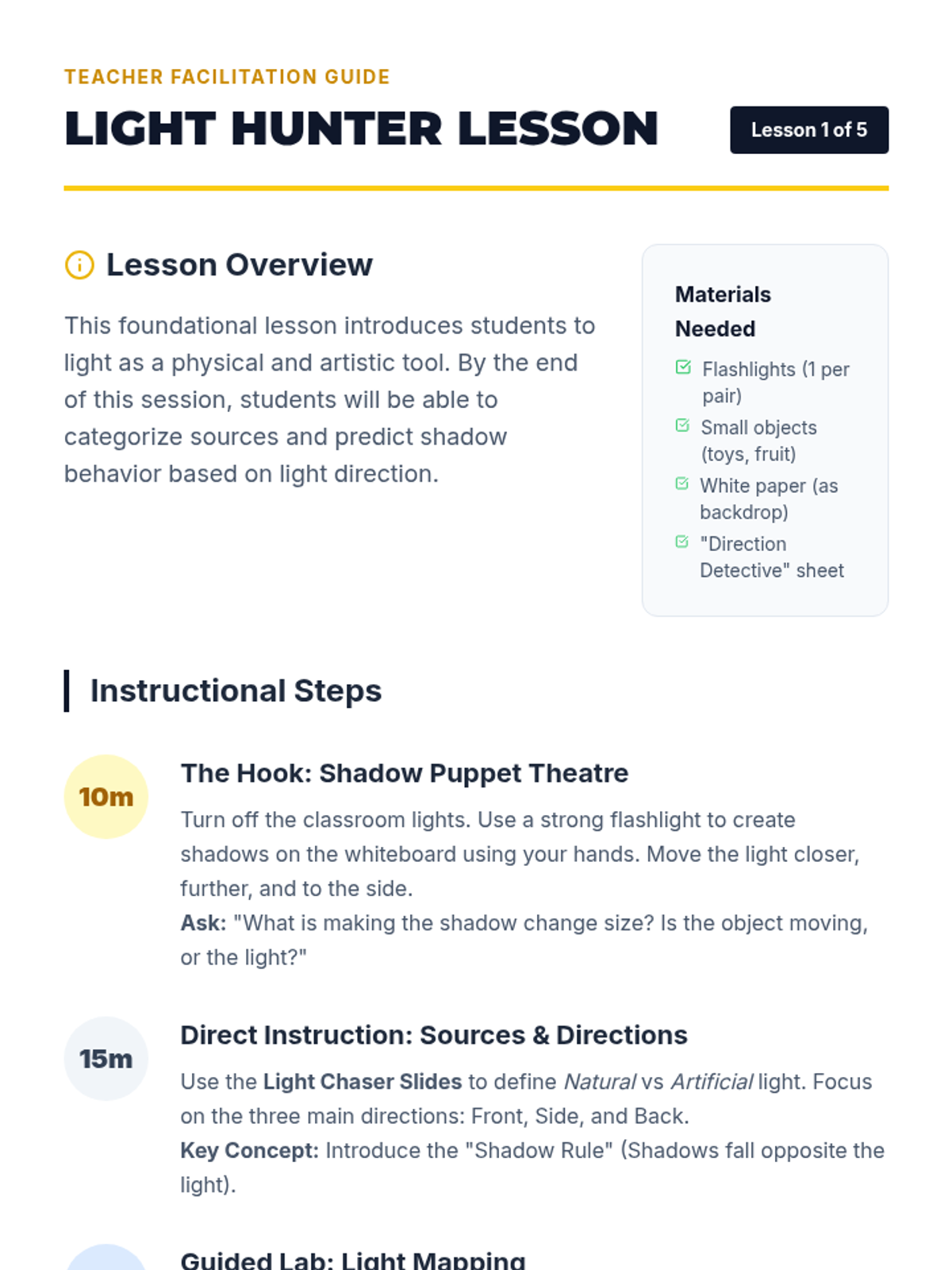
Teacher facilitation guide for Lesson 1, including hook instructions, pacing, materials list, and an answer key for the worksheet.
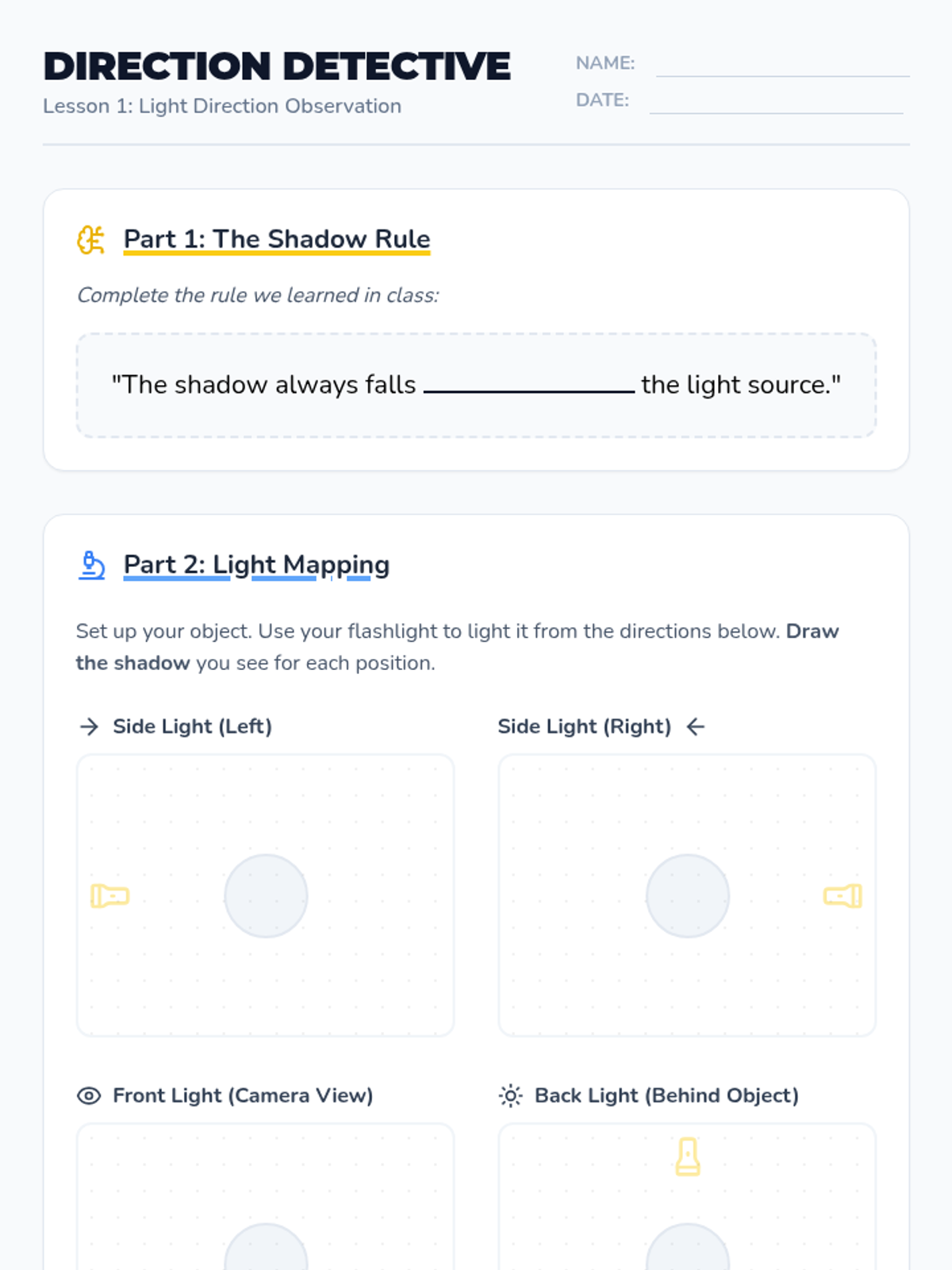
Worksheet for Lesson 1 where students predict the shadow rule and then draw shadows based on light placement (Side, Front, Back) during a hands-on experiment.
Introductory slide deck for Lesson 1, covering light sources (natural vs artificial) and light directions (front, side, back) with visual diagrams and a shadow rule.
Visual presentation for Lesson 5, guiding students through the process of curating their best work and preparing their final 'Magic Reveal' presentation.
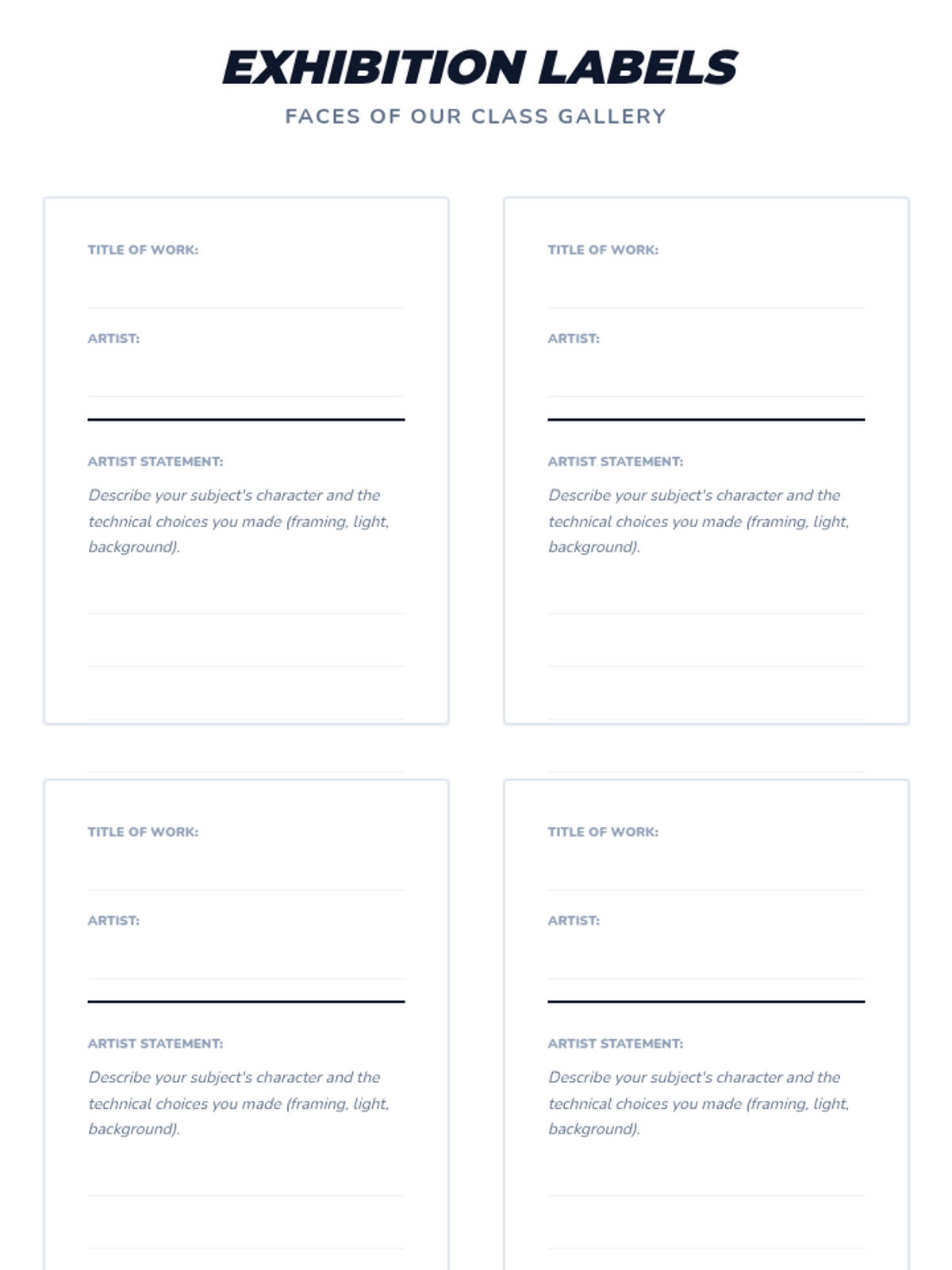
Printable museum-style labels for students to fill out with their portrait title and artist statement for the gallery exhibition.
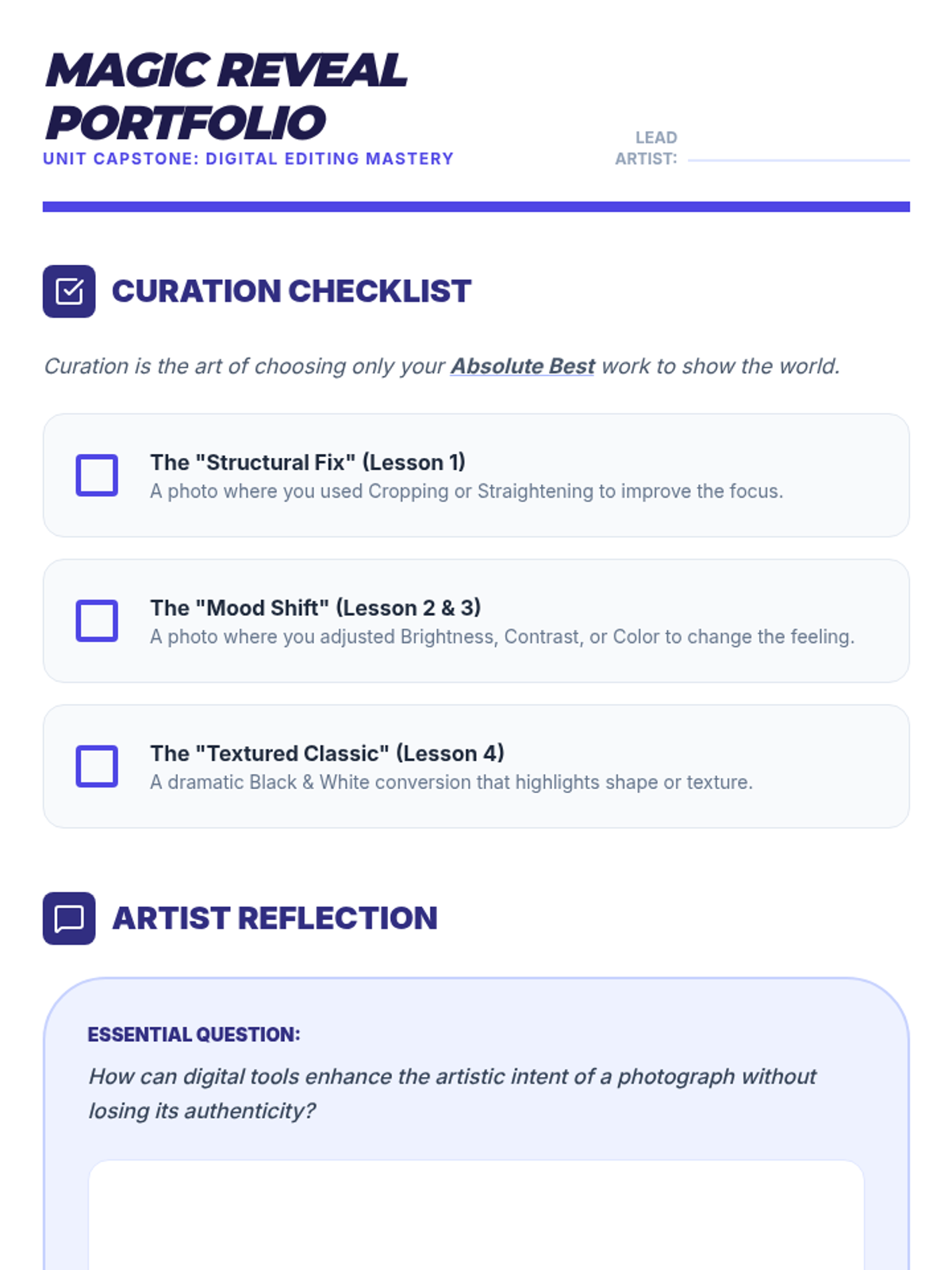
A student portfolio guide and checklist for Lesson 5, including selection criteria for their top edits and a final reflection on digital authenticity.
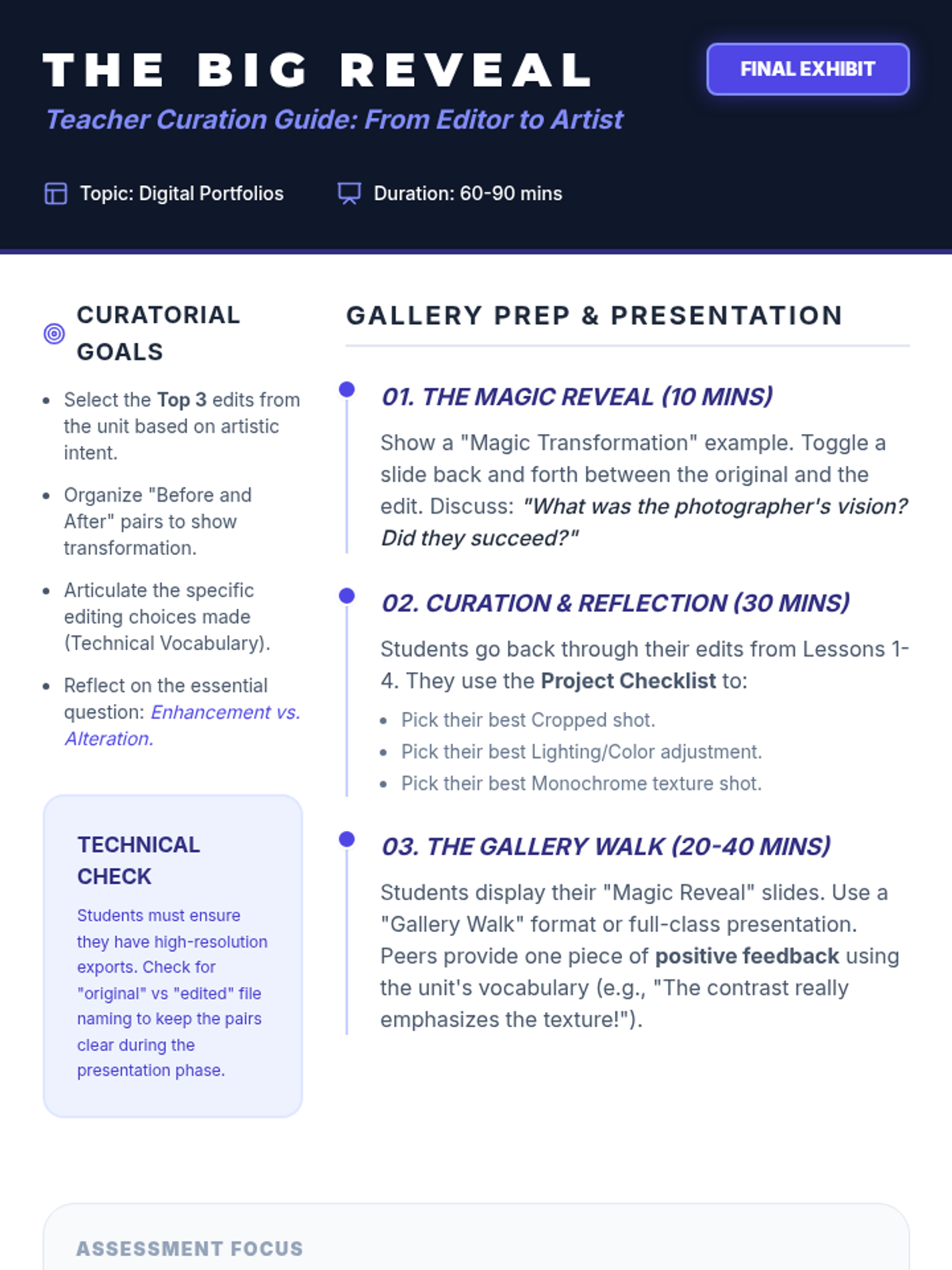
A teacher guide for Lesson 5 focusing on portfolio curation, student reflection, and the final 'Magic Reveal' gallery presentation.
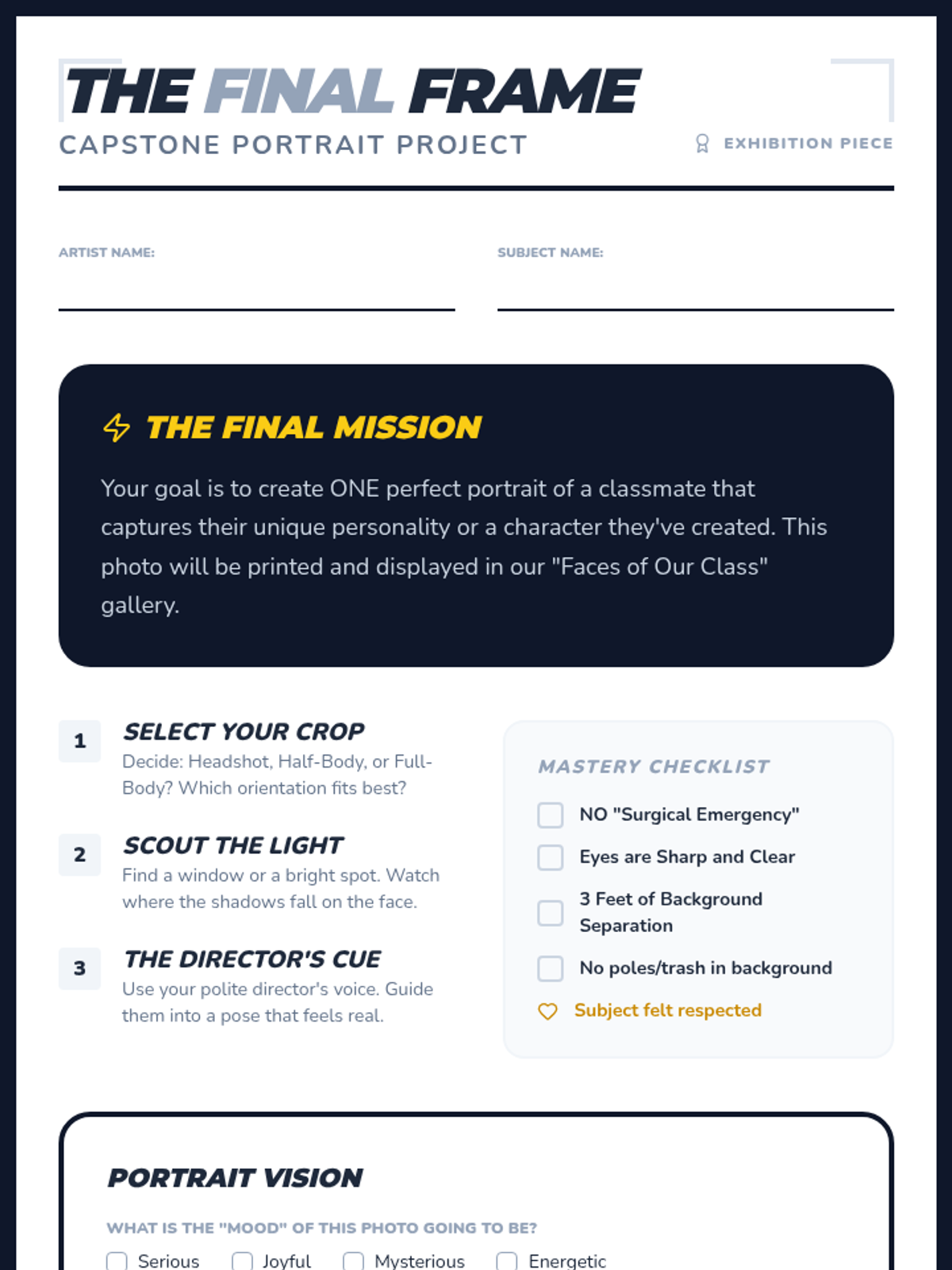
Final project guide for the capstone portrait, including a technical mastery checklist and creative vision prompts.
Final production slides for Lesson 4, guiding students through the integration of typography and stencil imagery, layering techniques, and printing best practices.
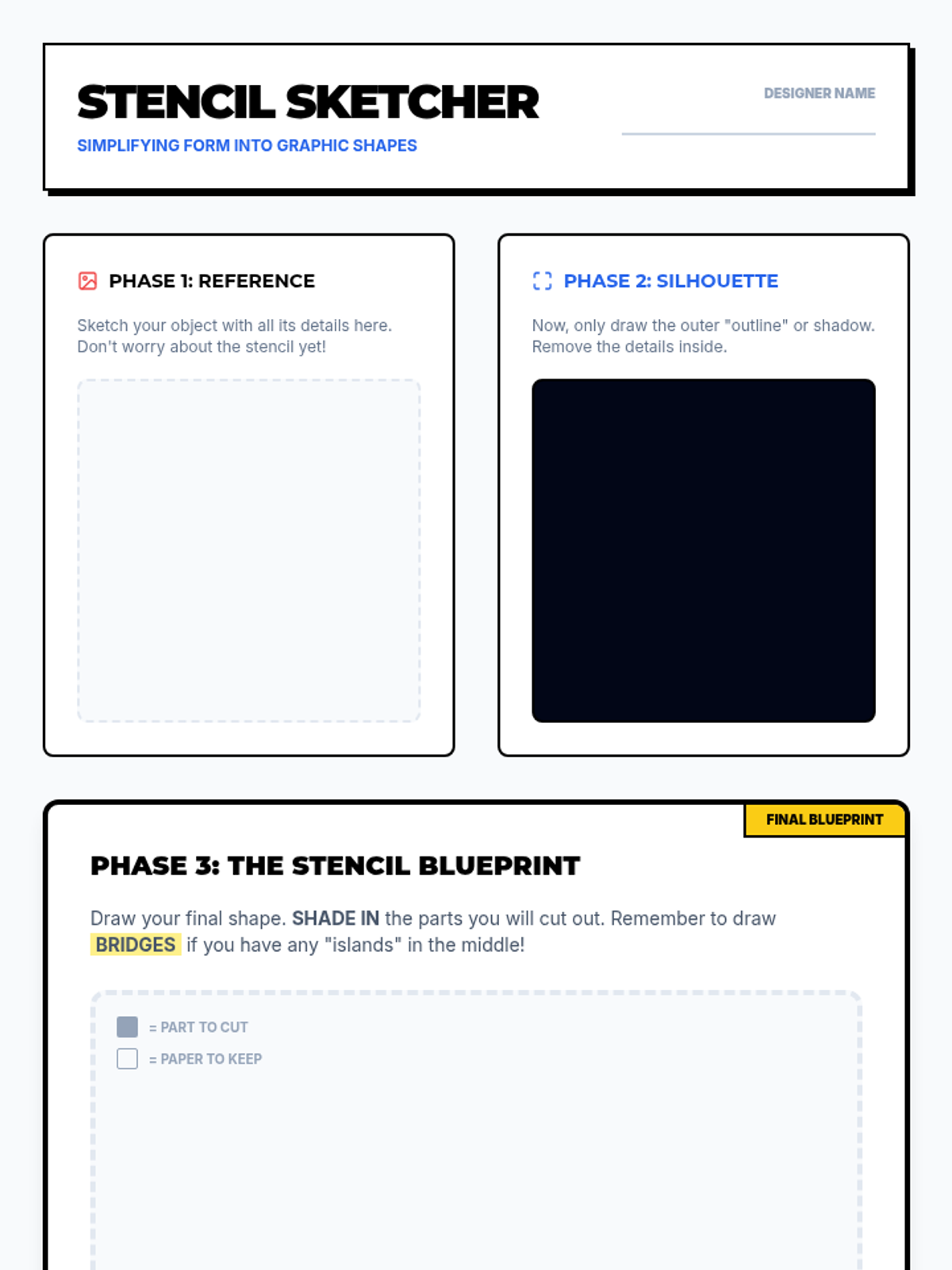
A student design sheet for stencils, guiding students through reference sketching, silhouette creation, and final blueprinting with a focus on bridges and islands.
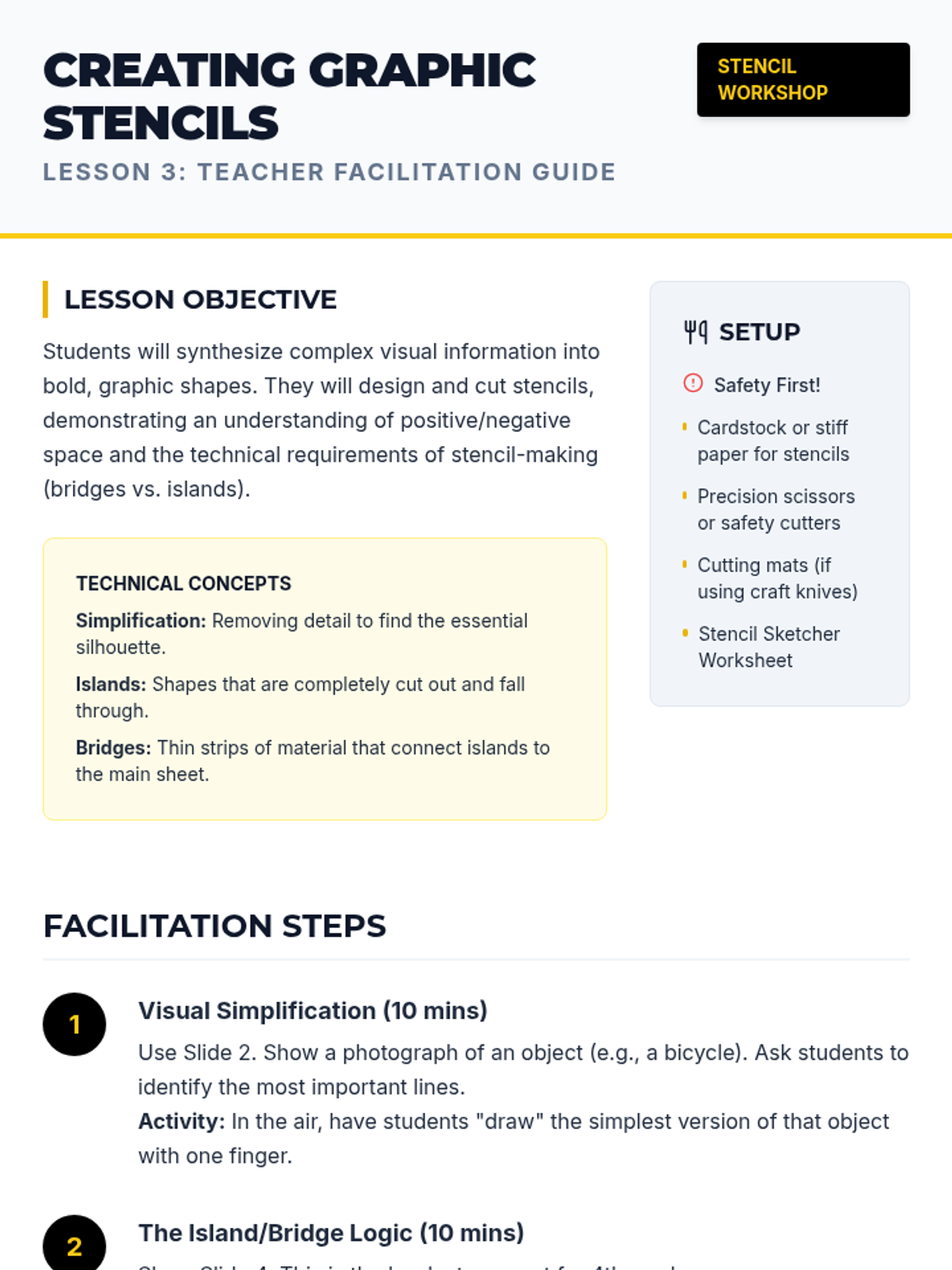
A facilitation guide for the stencil-making workshop, focusing on technical concepts like simplification, islands/bridges, and safety protocols.
Slides for Lesson 3 on stencil design: simplification of forms, positive/negative space, the "island" problem, and studio safety.
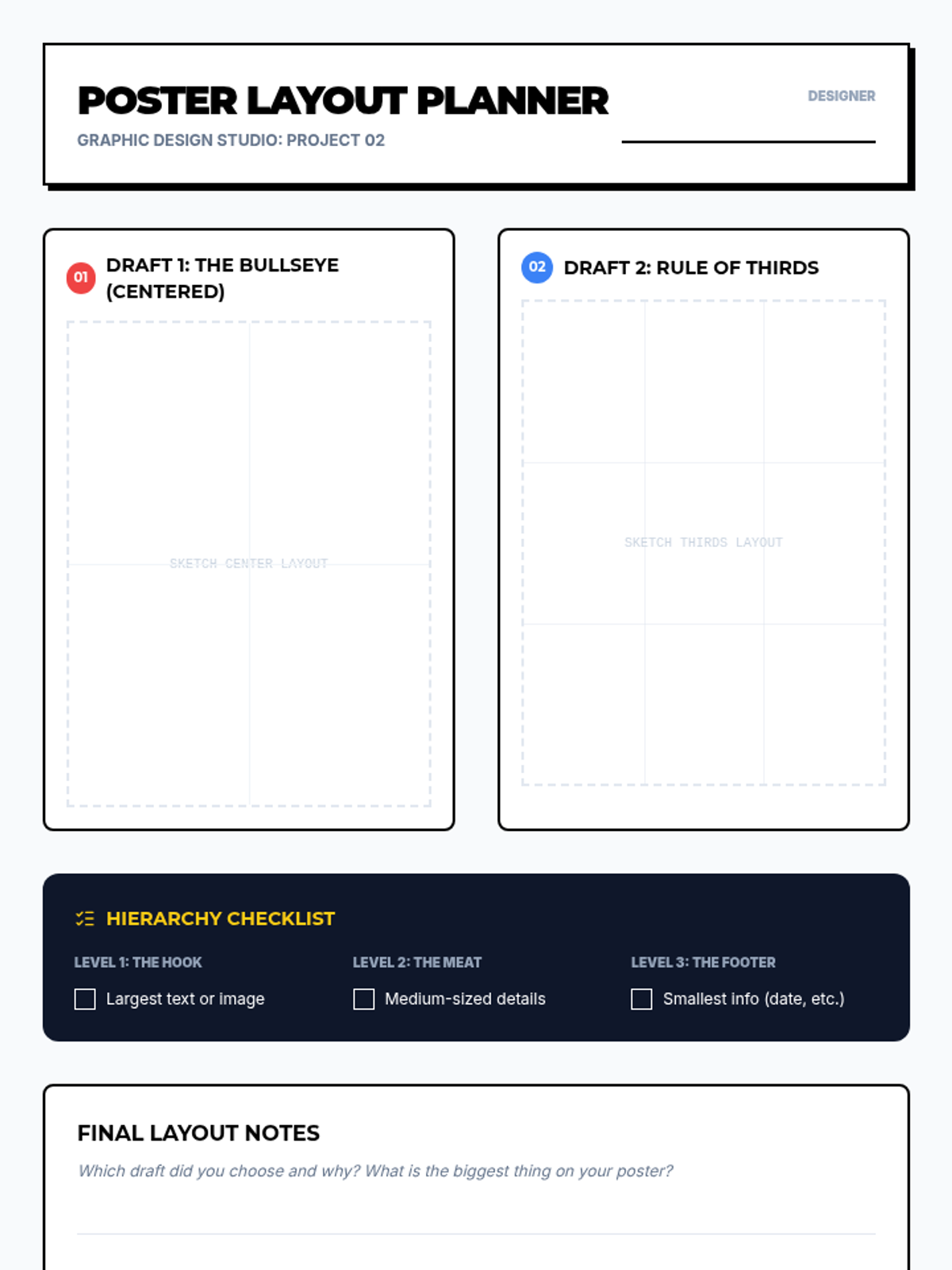
A student layout planner worksheet featuring sketch boxes for centered and rule-of-thirds compositions, along with a hierarchy checklist.
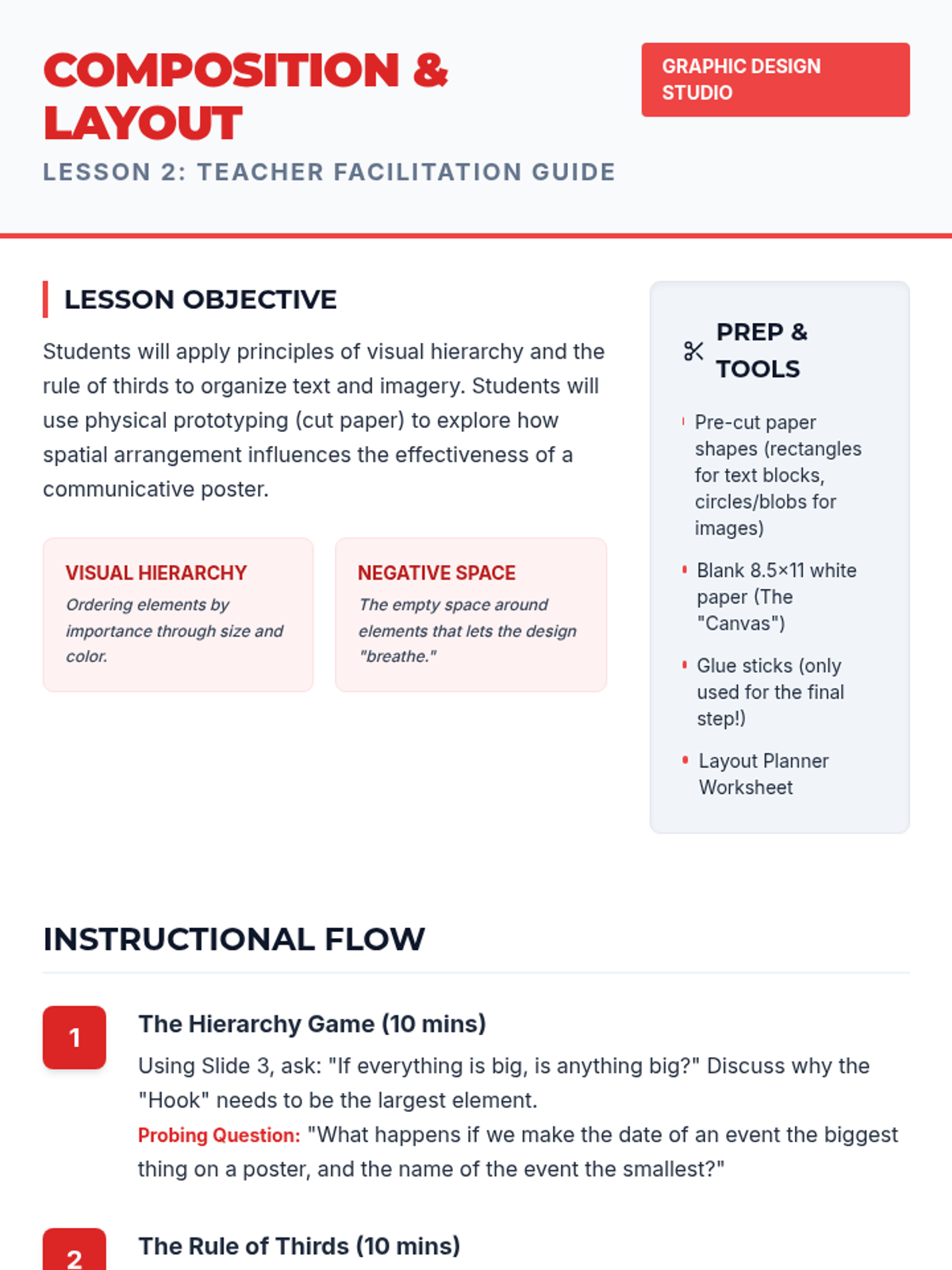
A teacher facilitation guide for Lesson 2 focusing on composition, visual hierarchy, and the rule of thirds. Includes prep notes and common designer pitfalls.
Slides for Lesson 2 covering composition basics: visual hierarchy, the rule of thirds, and balance. Encourages students to experiment with layout using paper shapes.
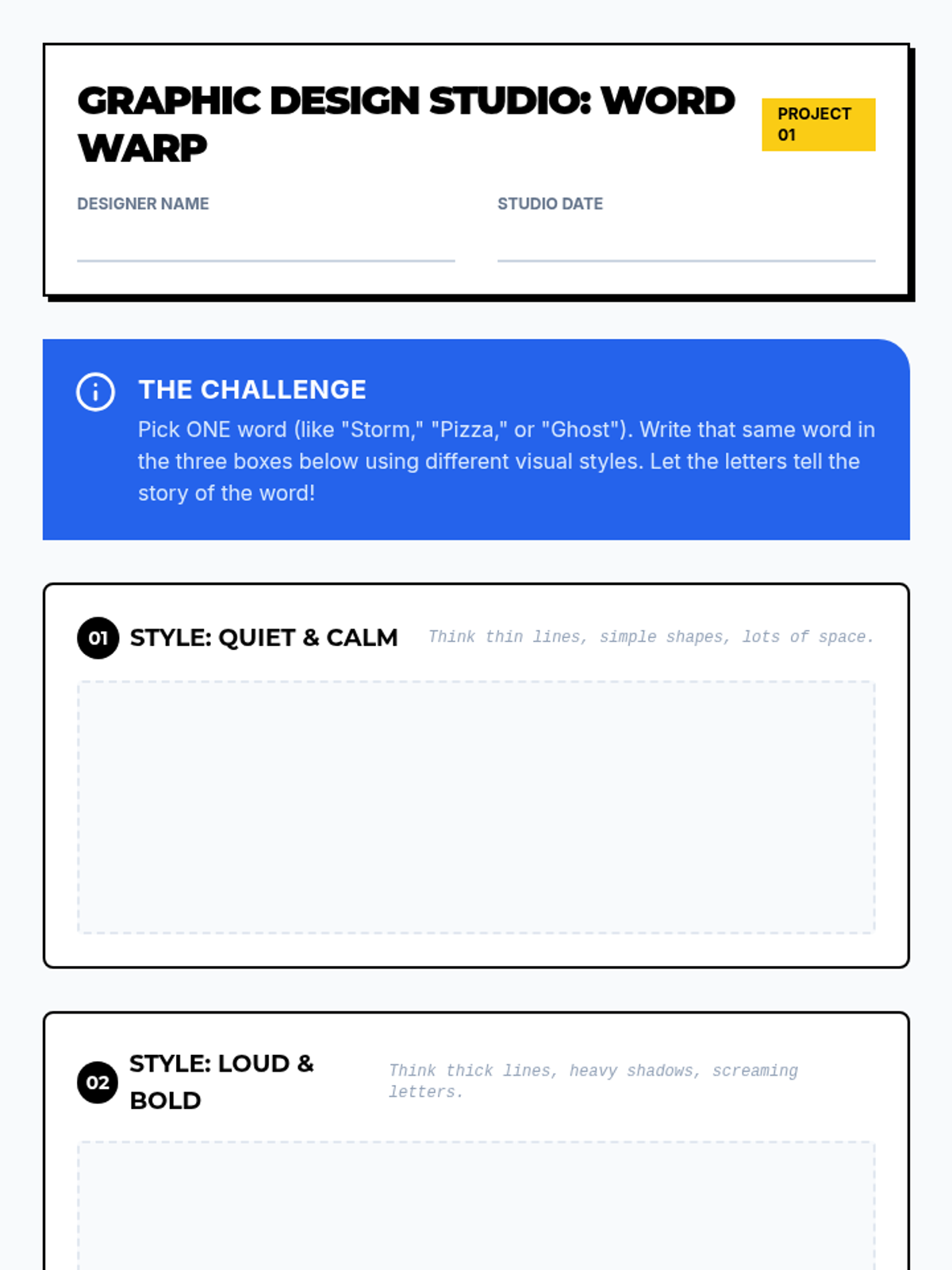
A student worksheet for the "Word Warp" activity where students practice writing one word in three distinct emotional styles (Quiet, Loud, Wild).
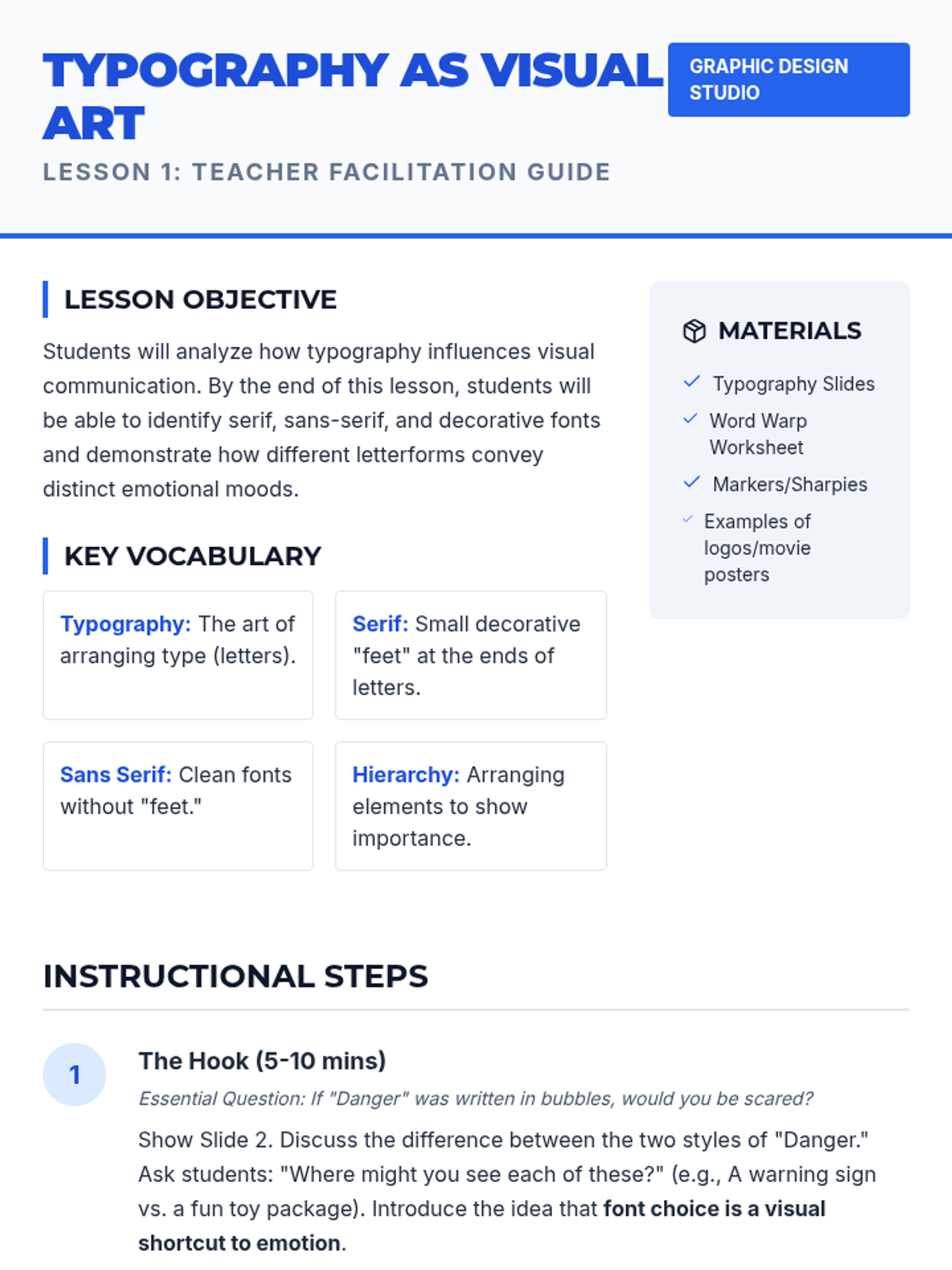
A comprehensive teacher facilitation guide for Lesson 1, including instructional steps, key vocabulary, brand analysis tips, and discussion prompts.
An introductory slide deck on typography, font families (serif, sans-serif, decorative), and how font styles communicate emotion and urgency.
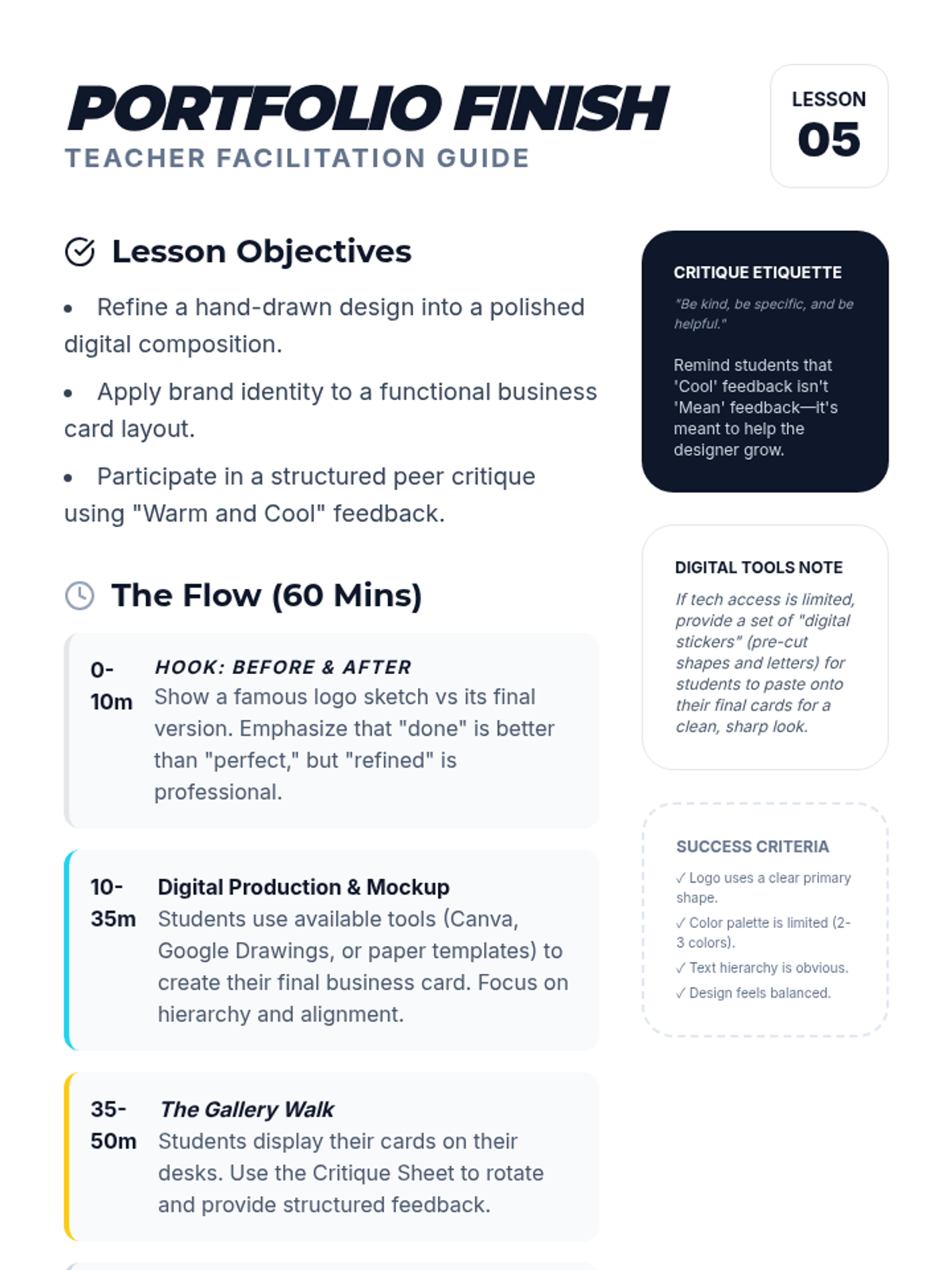
Teacher facilitation guide for Lesson 5, focusing on final digital production, structured peer critique through gallery walks, and assessment criteria for visual identity.
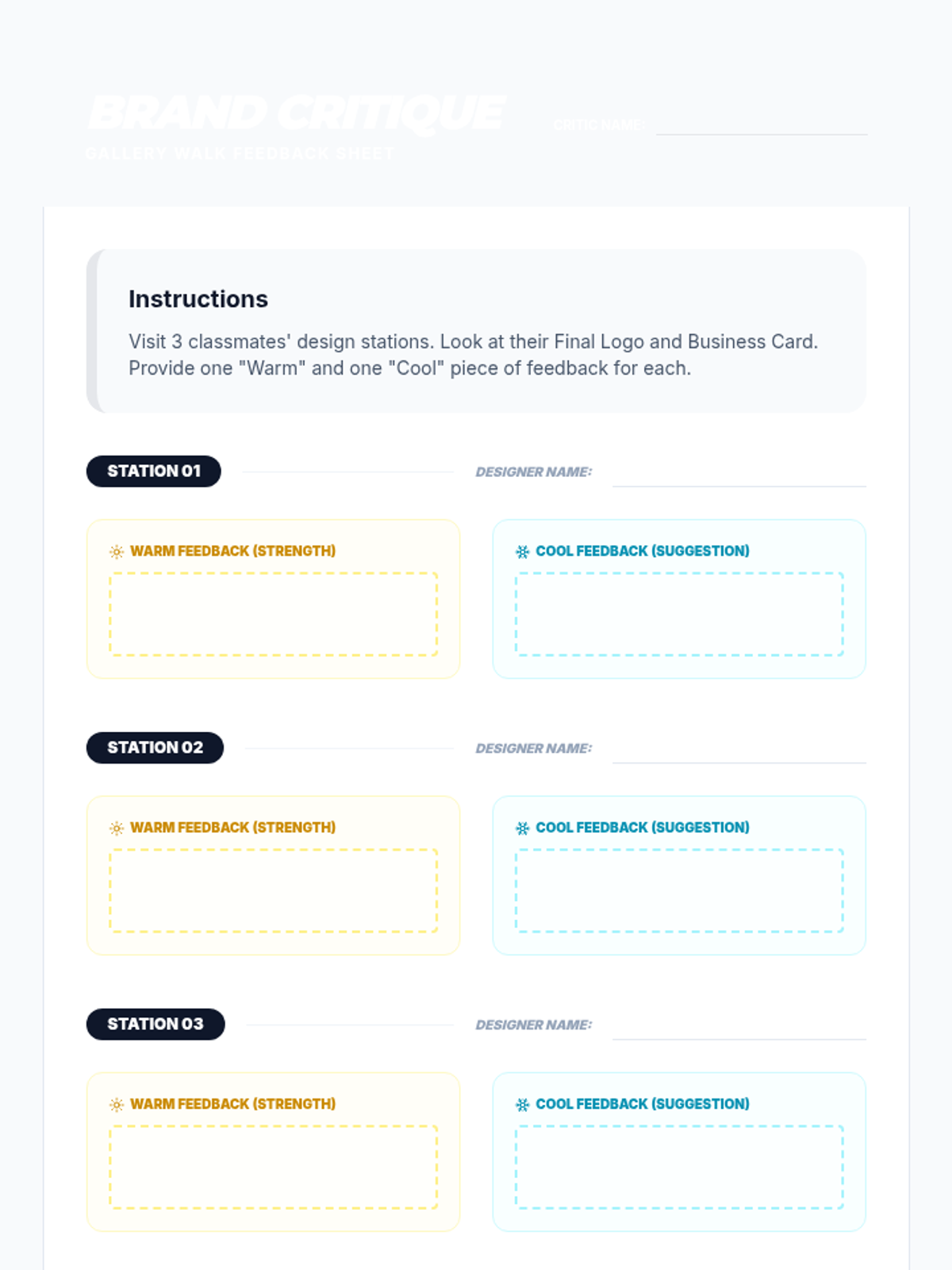
Student worksheet for Lesson 5, featuring a structured feedback form for a gallery walk and a final reflective designer's statement.
Slide deck for Lesson 5, focusing on digital refinement, the practical application of logos on business cards, and the structured peer feedback process (Warm and Cool feedback).
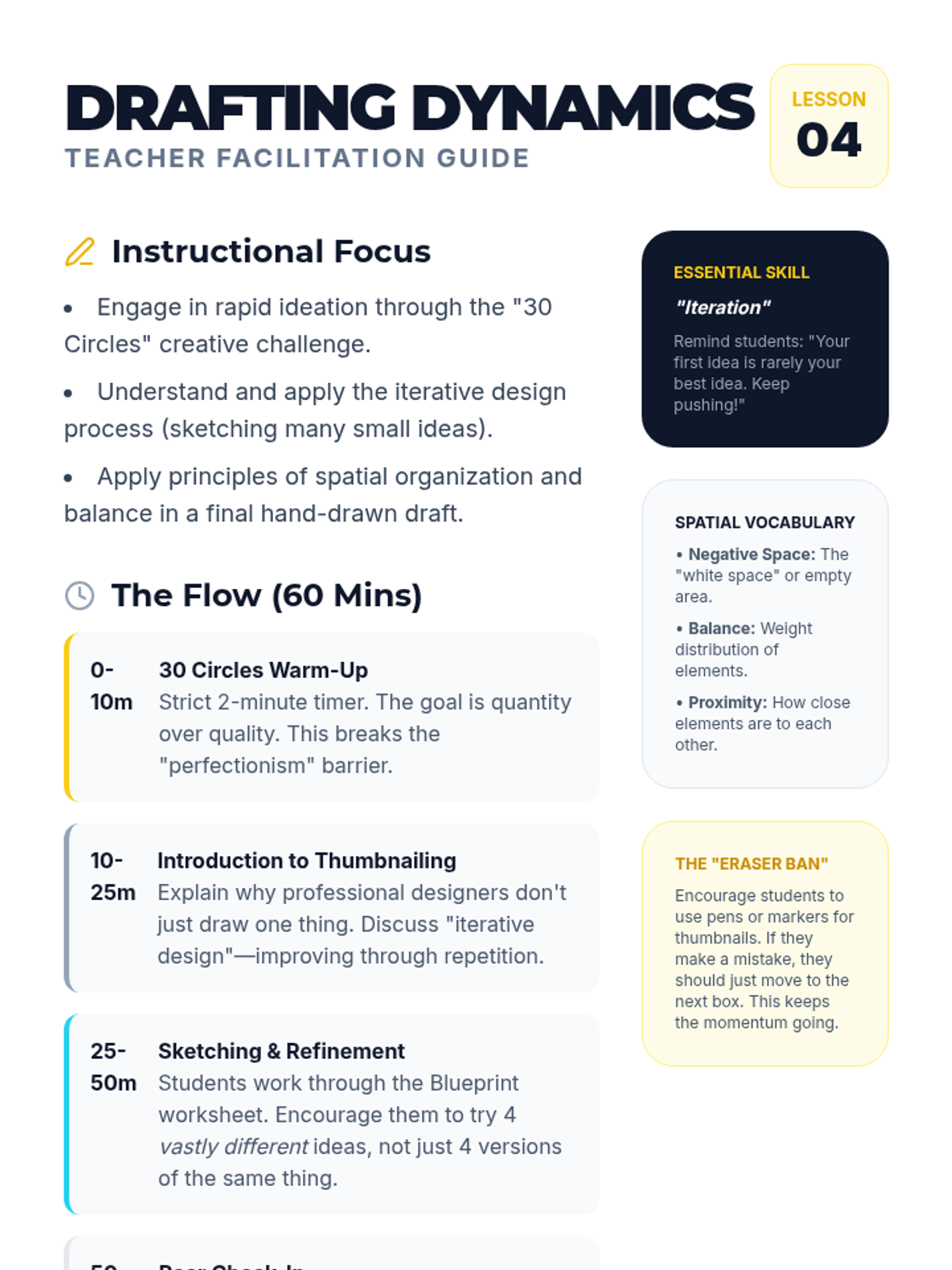
Teacher facilitation guide for Lesson 4, highlighting the importance of the iterative process, rapid ideation, and spatial organization in logo design.
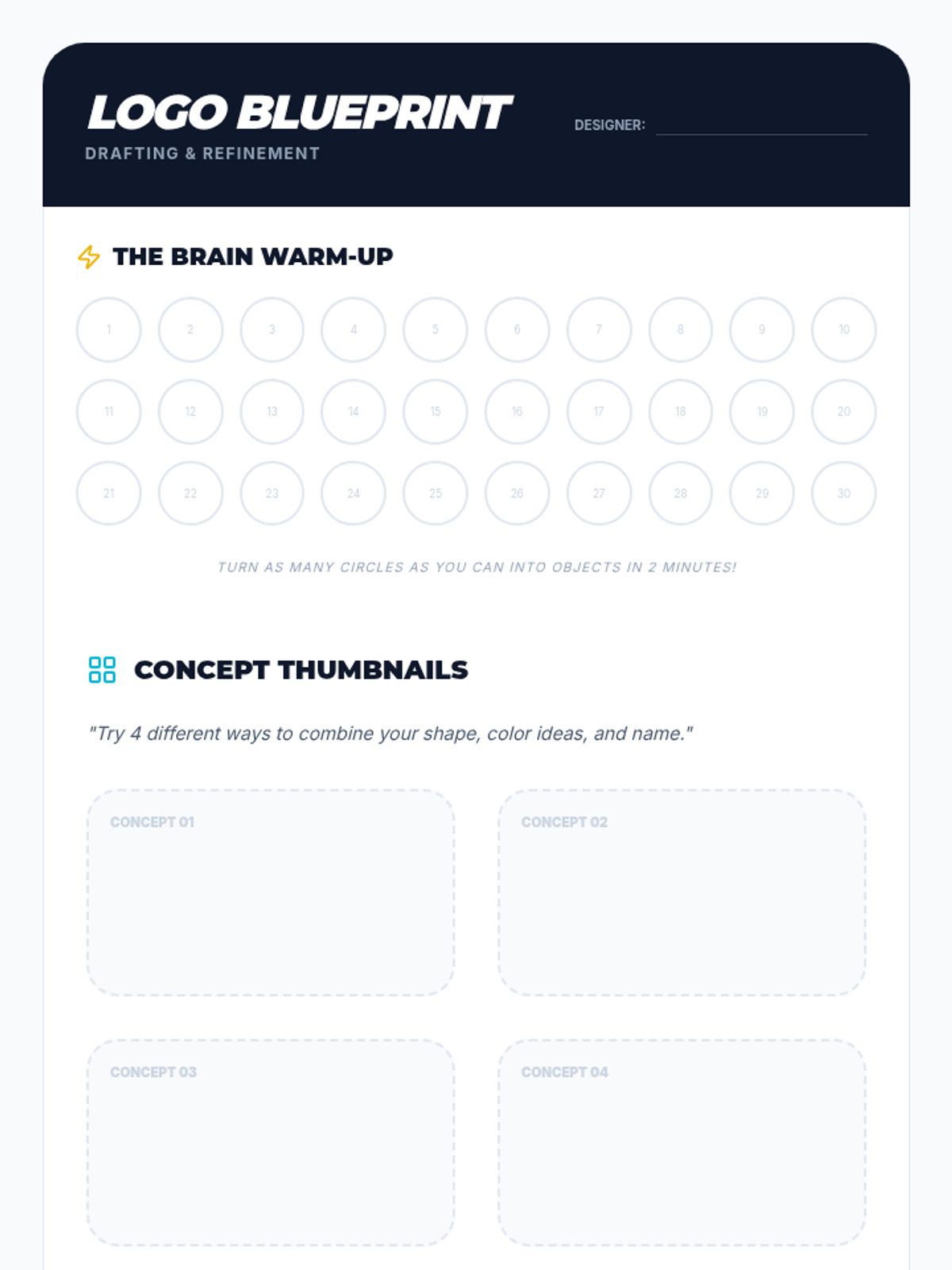
Student worksheet for Lesson 4, containing the "30 Circles" challenge, a thumbnail sketching area for multiple concepts, and a large-format space for a refined final logo draft.
Slide deck for Lesson 4, introducing rapid prototyping through the "30 Circles" challenge, thumbnail sketching, and the principles of negative space and balance.
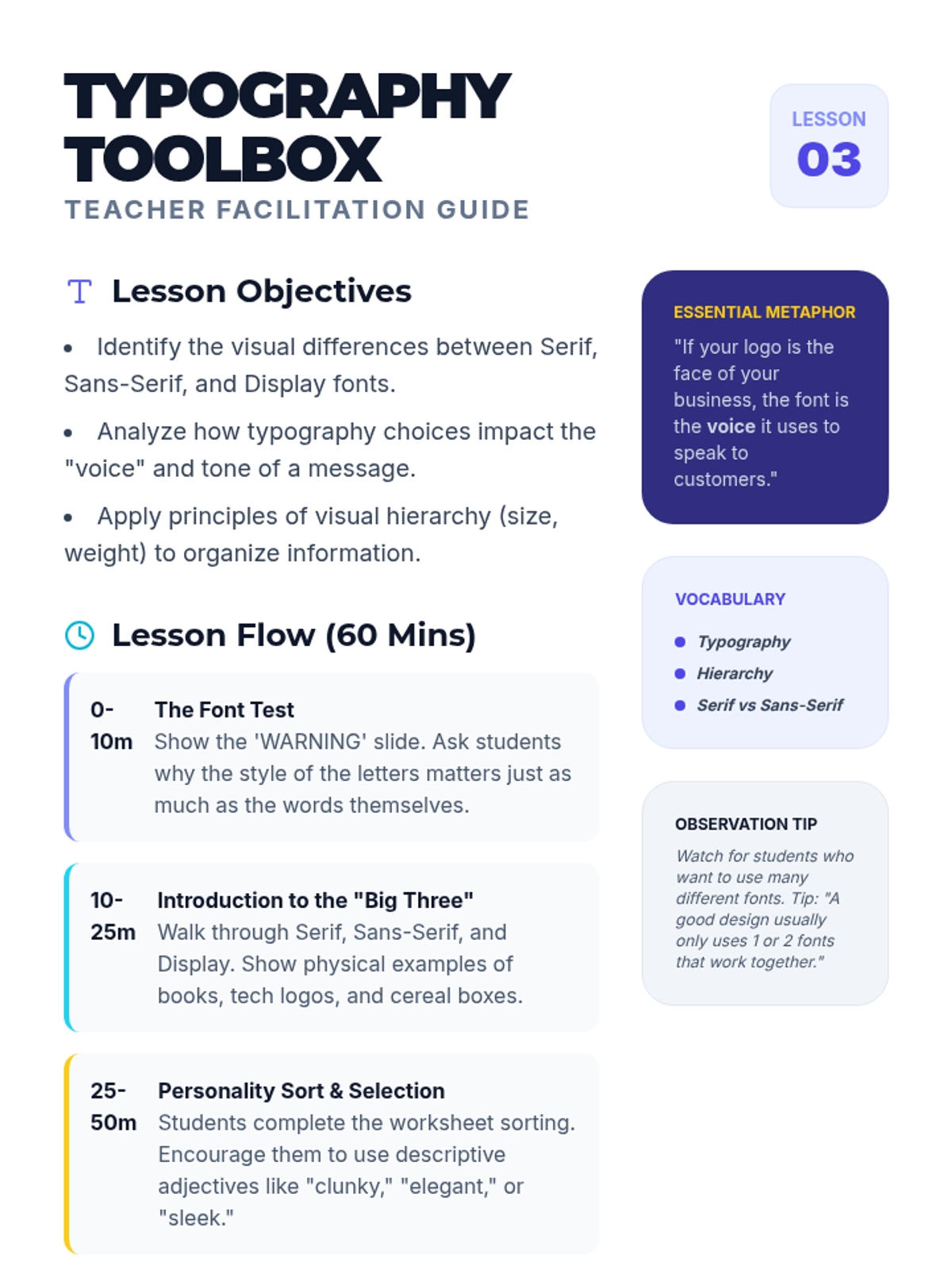
Teacher facilitation guide for Lesson 3, providing pedagogical background on typography, visual hierarchy, and practical sorting activities.
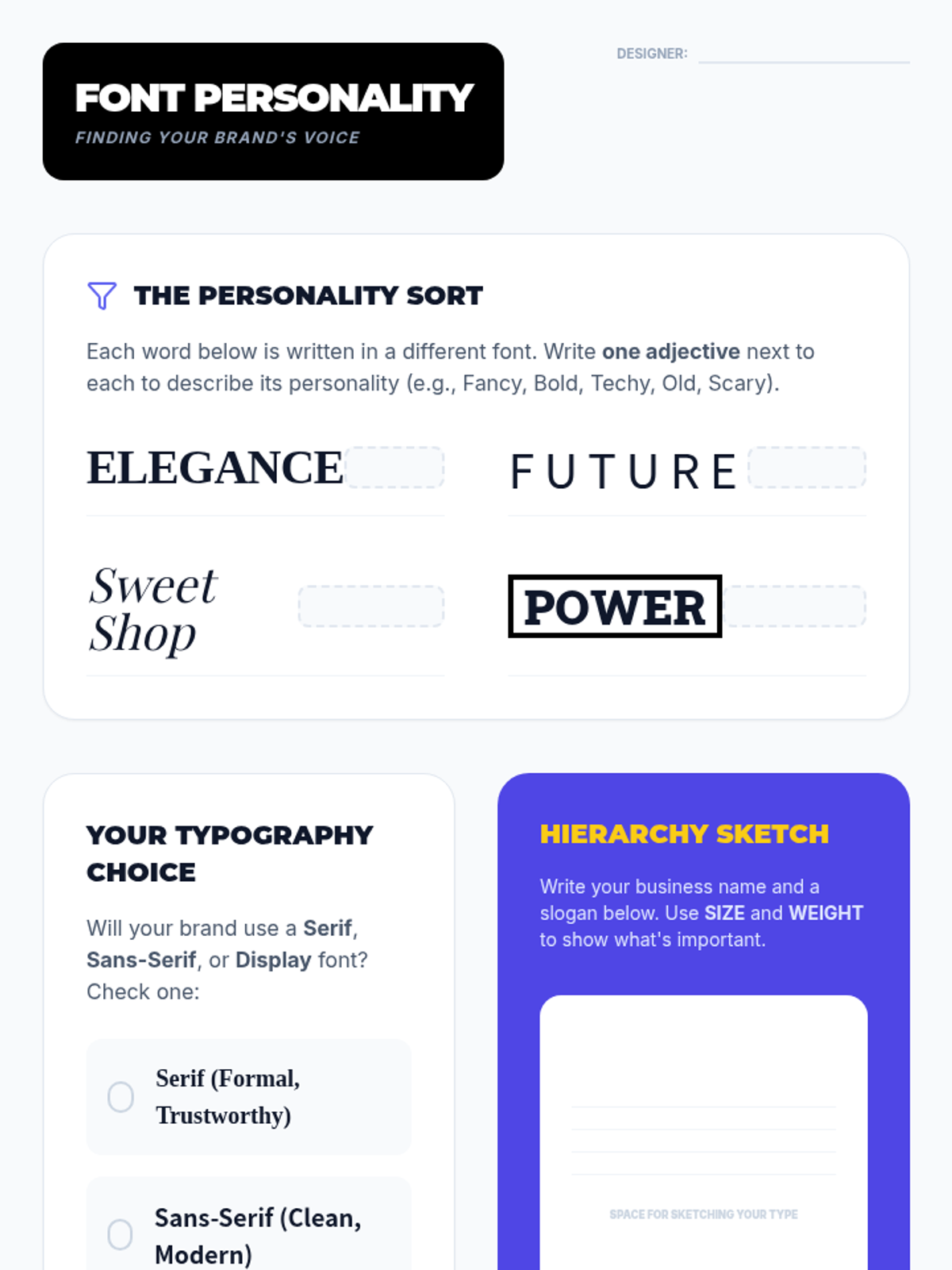
Student worksheet for Lesson 3, featuring a font personality sorting activity and a section for students to select and sketch their brand's typographic hierarchy.
Slide deck for Lesson 3, introducing typography basics (serif, sans-serif, display fonts), font personality, and the concept of visual hierarchy.
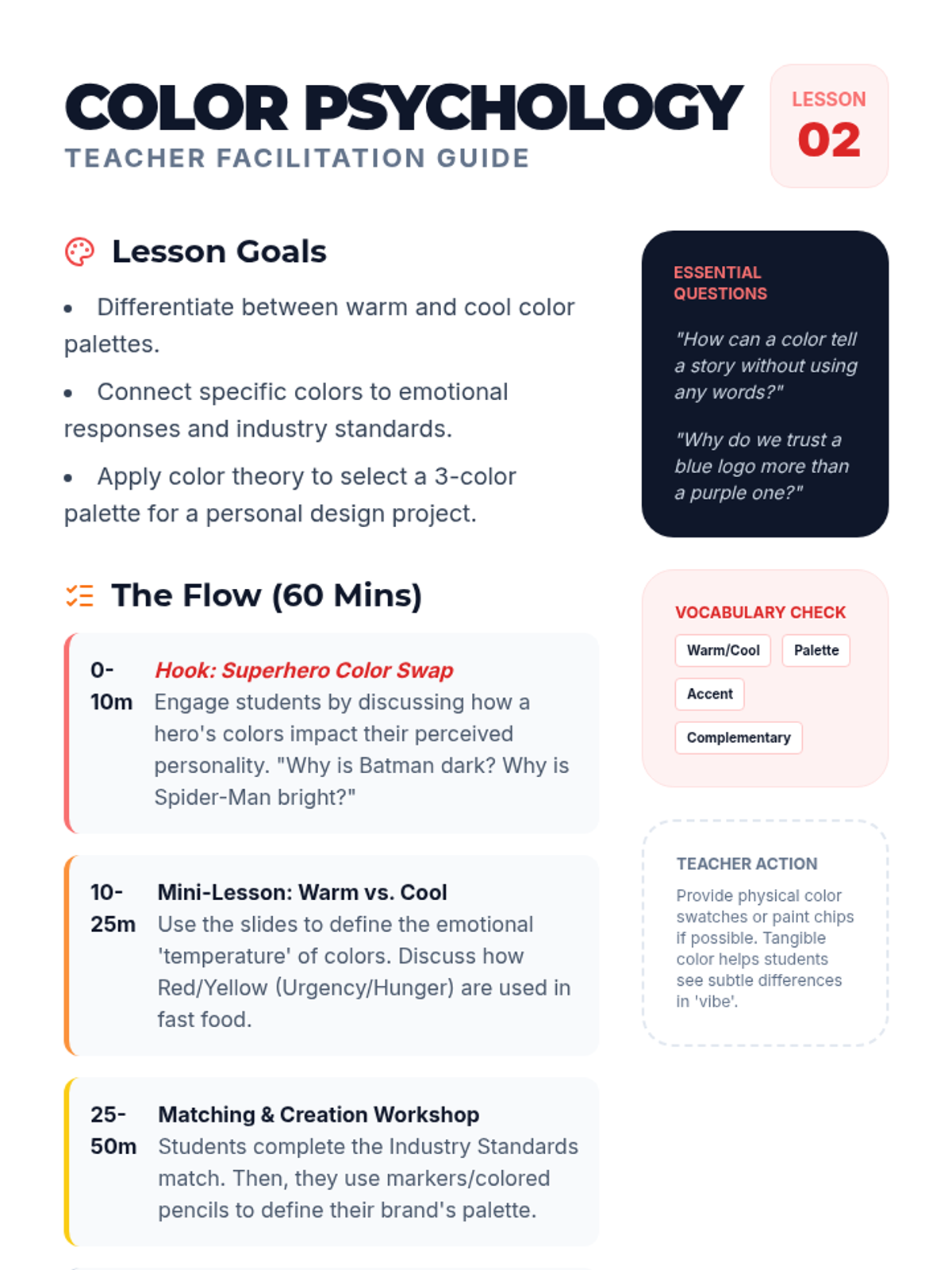
Teacher facilitation guide for Lesson 2, covering learning goals, lesson flow, and discussion prompts for teaching color psychology.
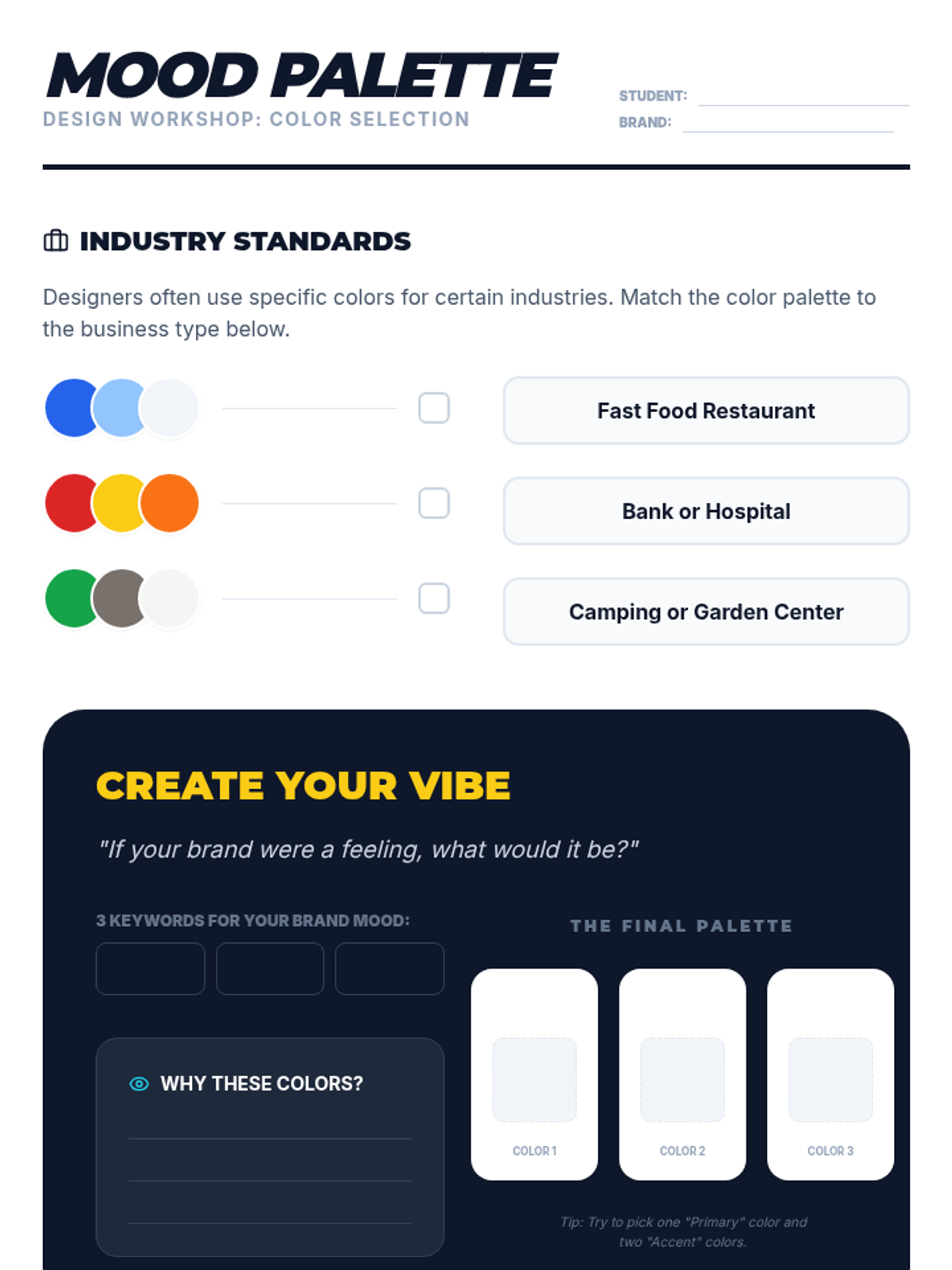
Student worksheet for Lesson 2, including a matching activity for industry color standards and a creation area for students to define their own brand's color palette.
Slide deck for Lesson 2, focusing on color psychology, the distinction between warm and cool colors, and the emotional associations of specific hues.
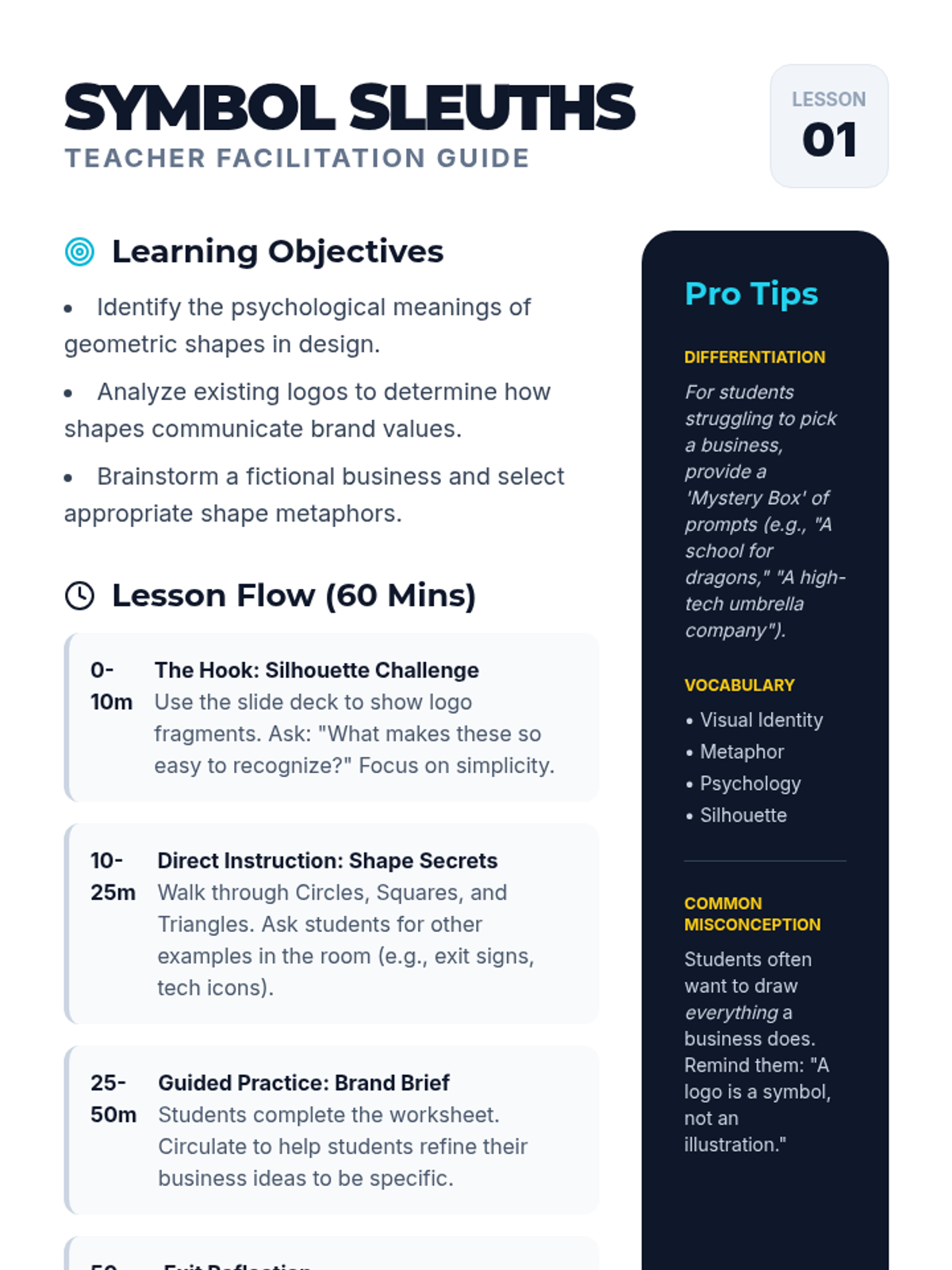
Teacher facilitation guide for Lesson 1, including learning objectives, a detailed lesson flow, differentiation tips, and key vocabulary.
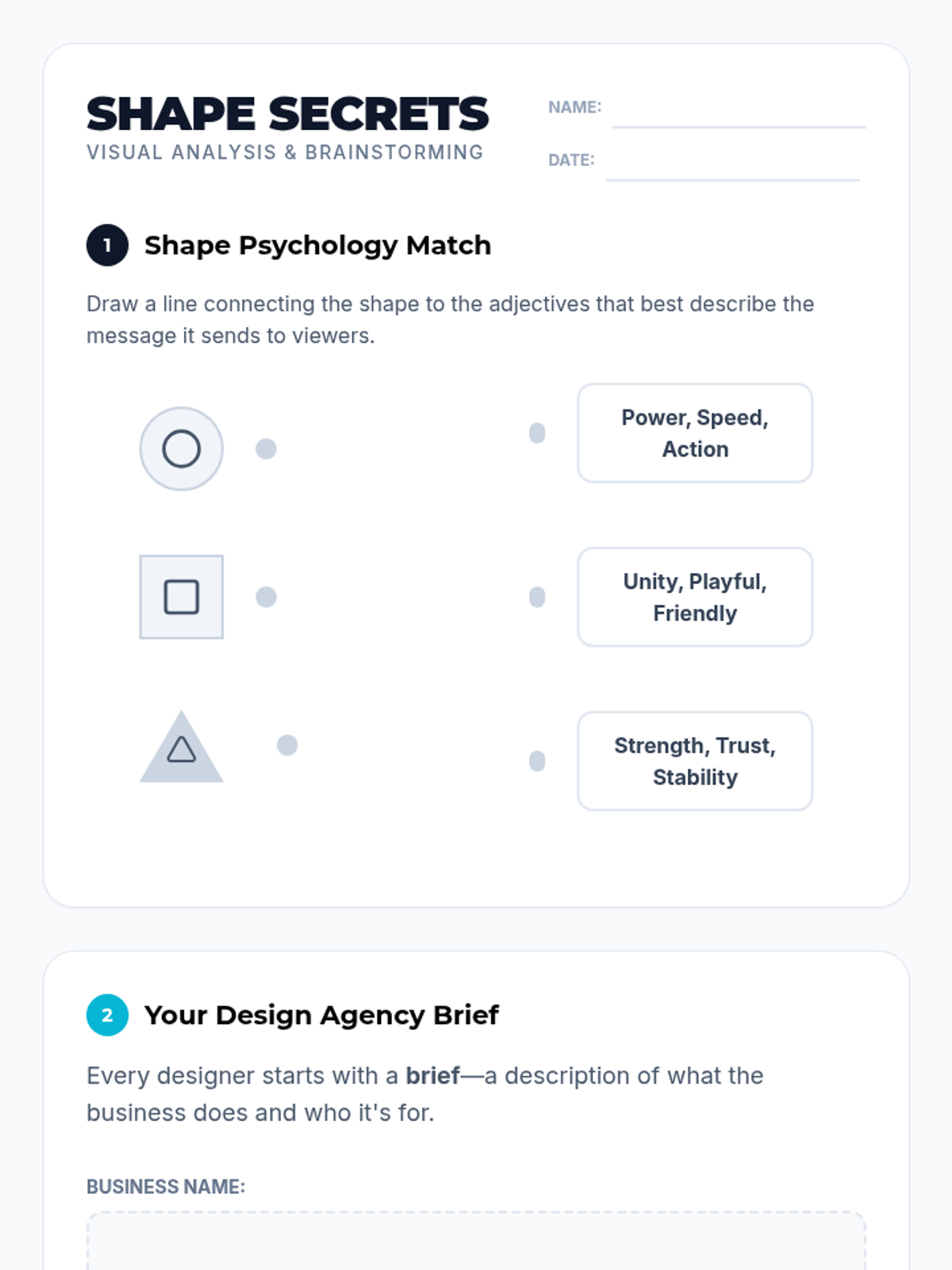
Student worksheet for Lesson 1, including a shape psychology matching activity and a brainstorming section for their fictional business's identity.
Introductory slide deck for Lesson 1, exploring the psychological and symbolic meanings of circles, squares, and triangles in graphic design.
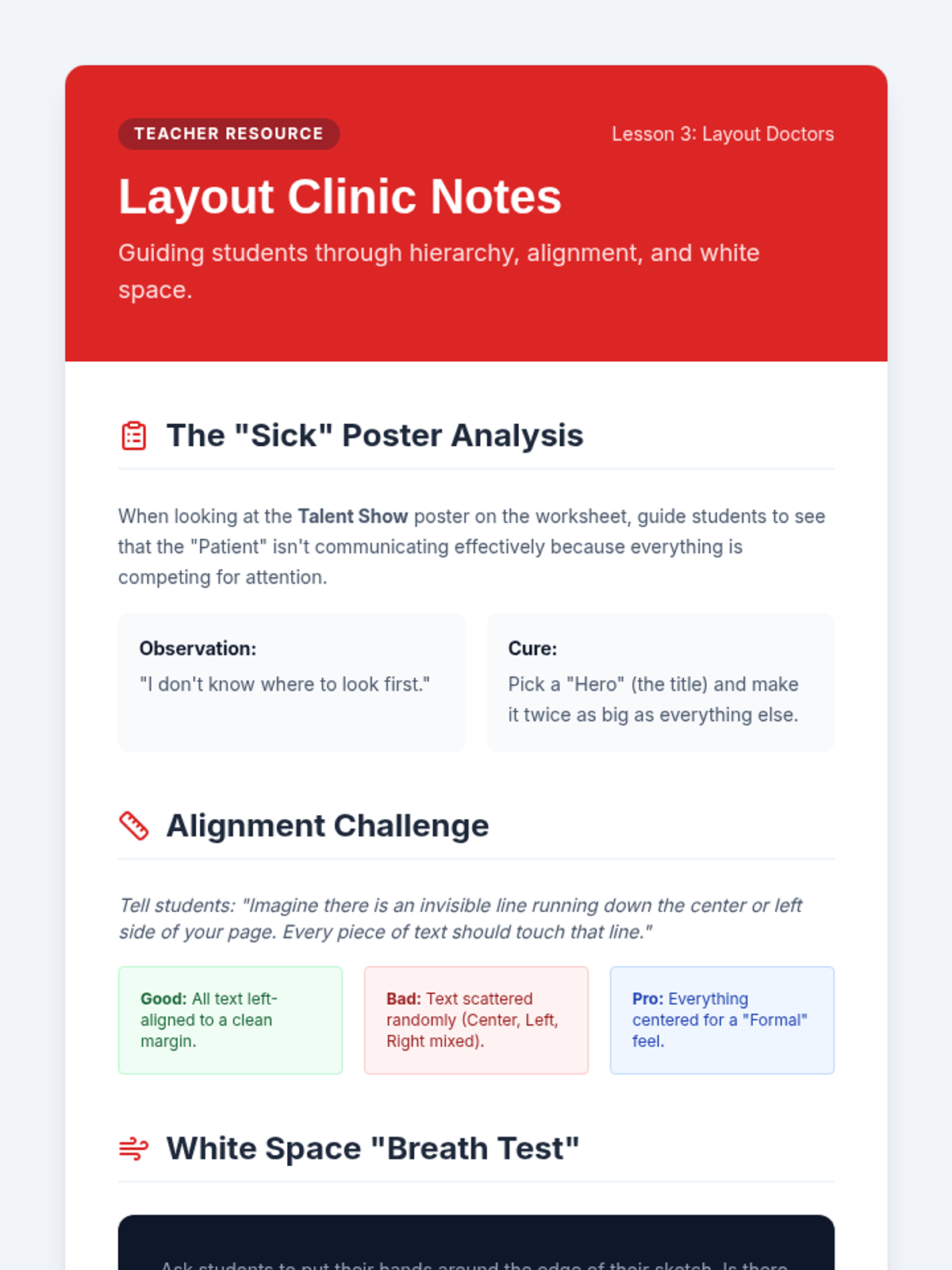
Teacher instructional notes for Lesson 3, providing specific guidance on facilitating the Design Doctor clinic and teaching alignment principles.
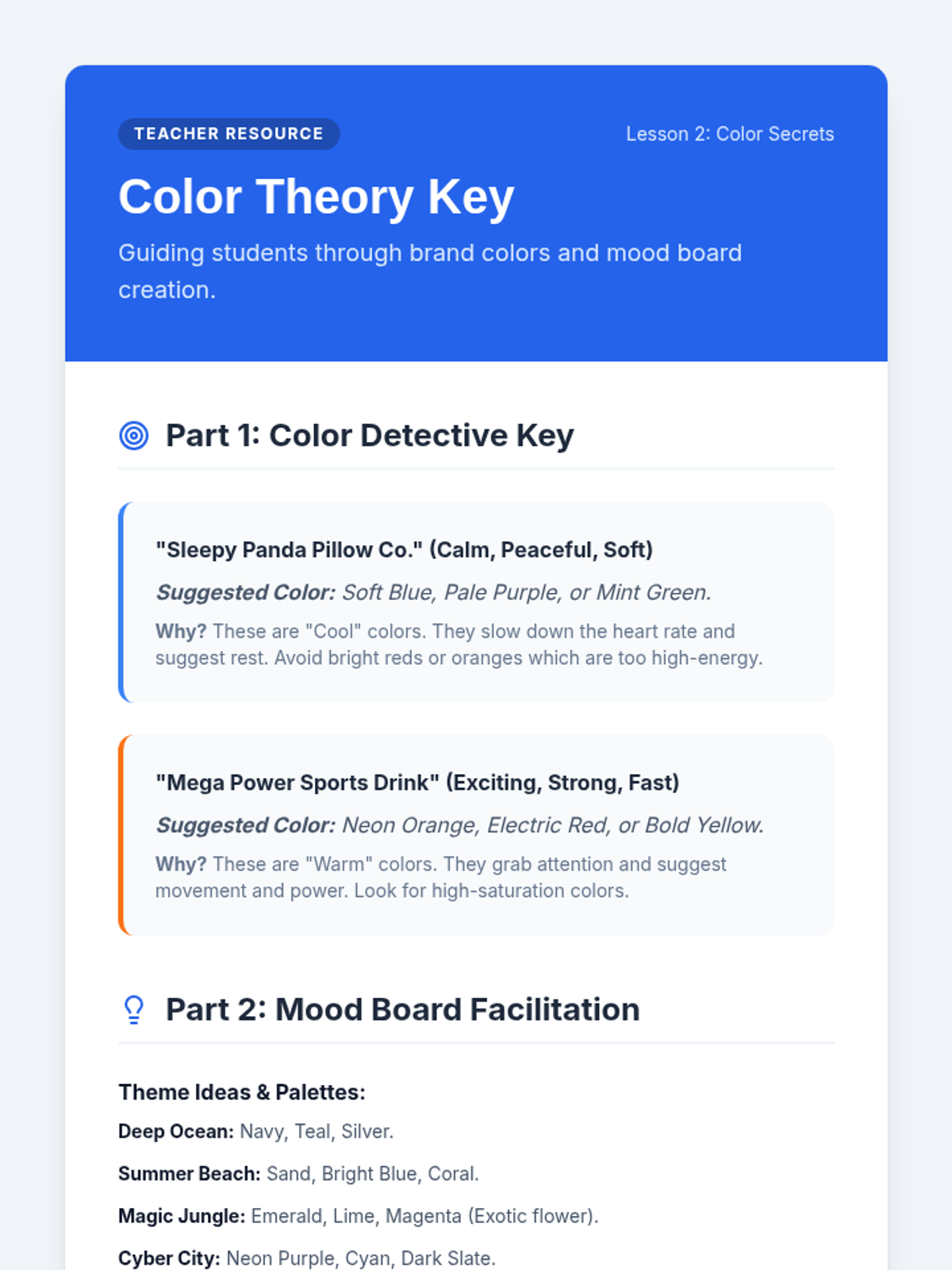
Teacher guide for Lesson 2, providing suggested answers for the Color Detective activity and facilitation tips for the Mood Board mission.
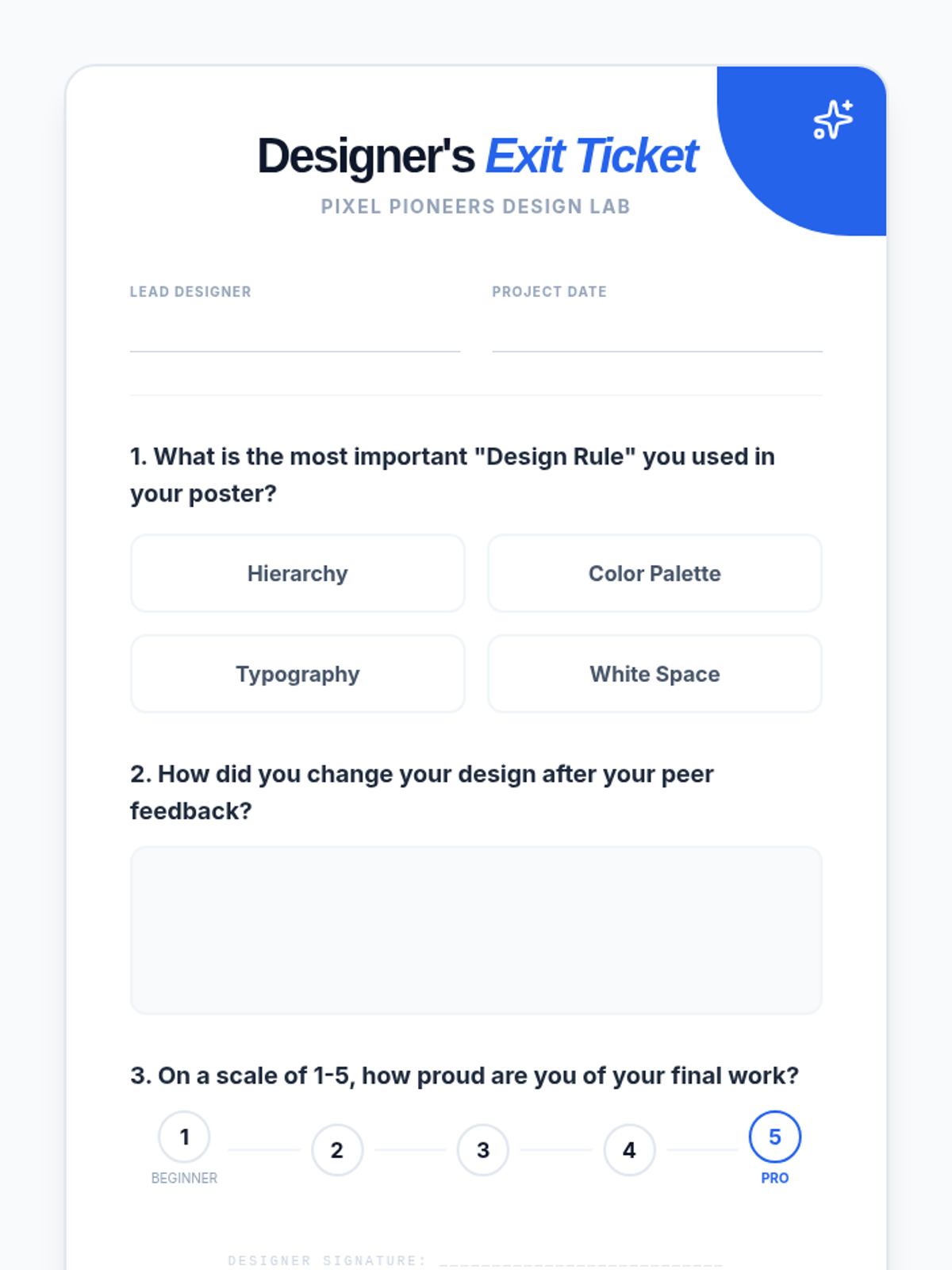
Updated exit ticket reflection. Redesigned for printing with a light background and more comprehensive questions about design choice and self-reflection.
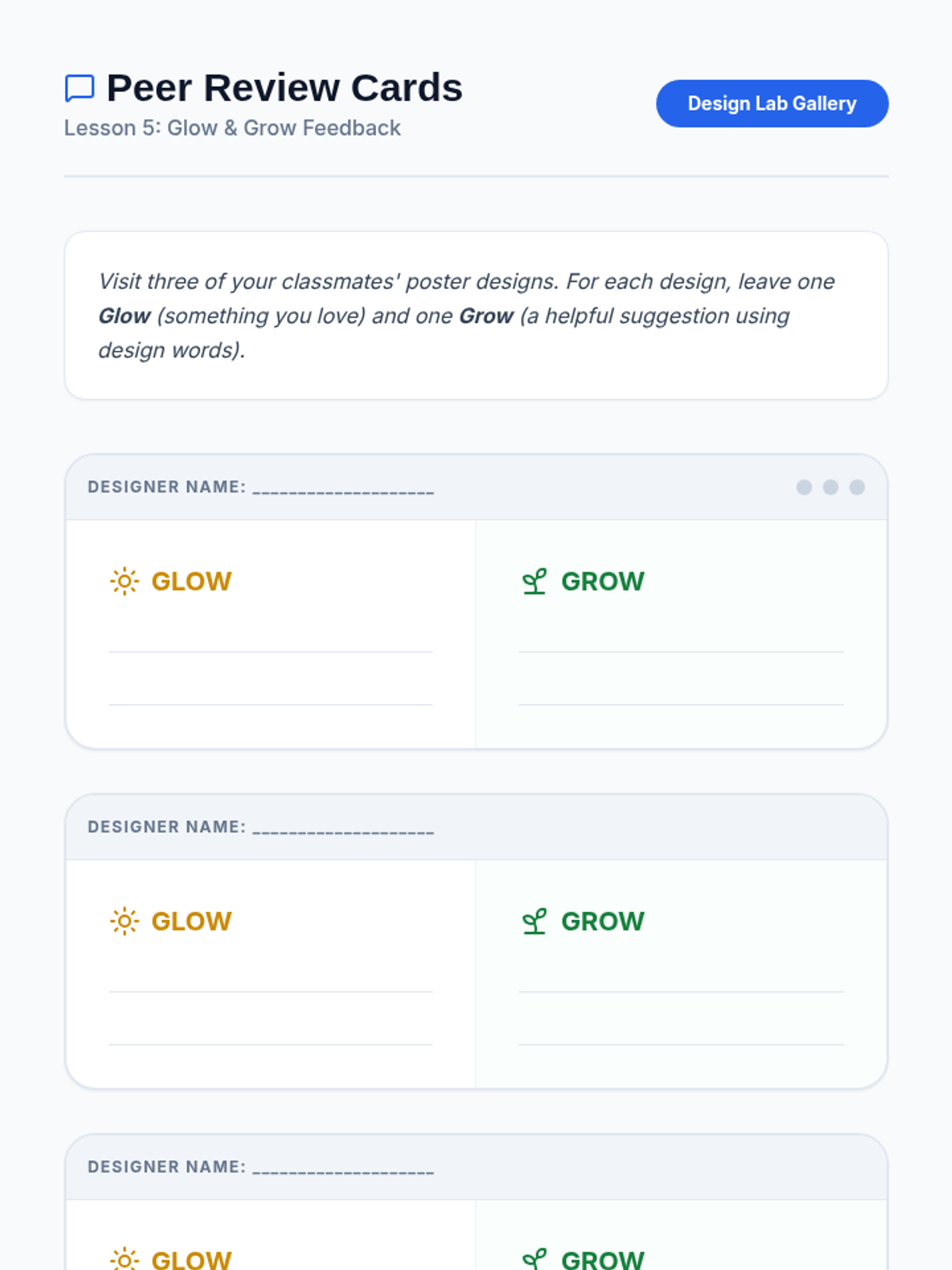
Feedback cards for the final gallery walk. Students use 'Glow and Grow' prompts and a design word bank to provide constructive criticism to their peers.
Slide deck for Lesson 5: Design Gallery. Teaches the 'Glow and Grow' feedback method and the importance of design iteration.