Historical evolution of performance, technical stagecraft, and core acting techniques. Develops playwriting skills and fosters imaginative expression through script development and production management.
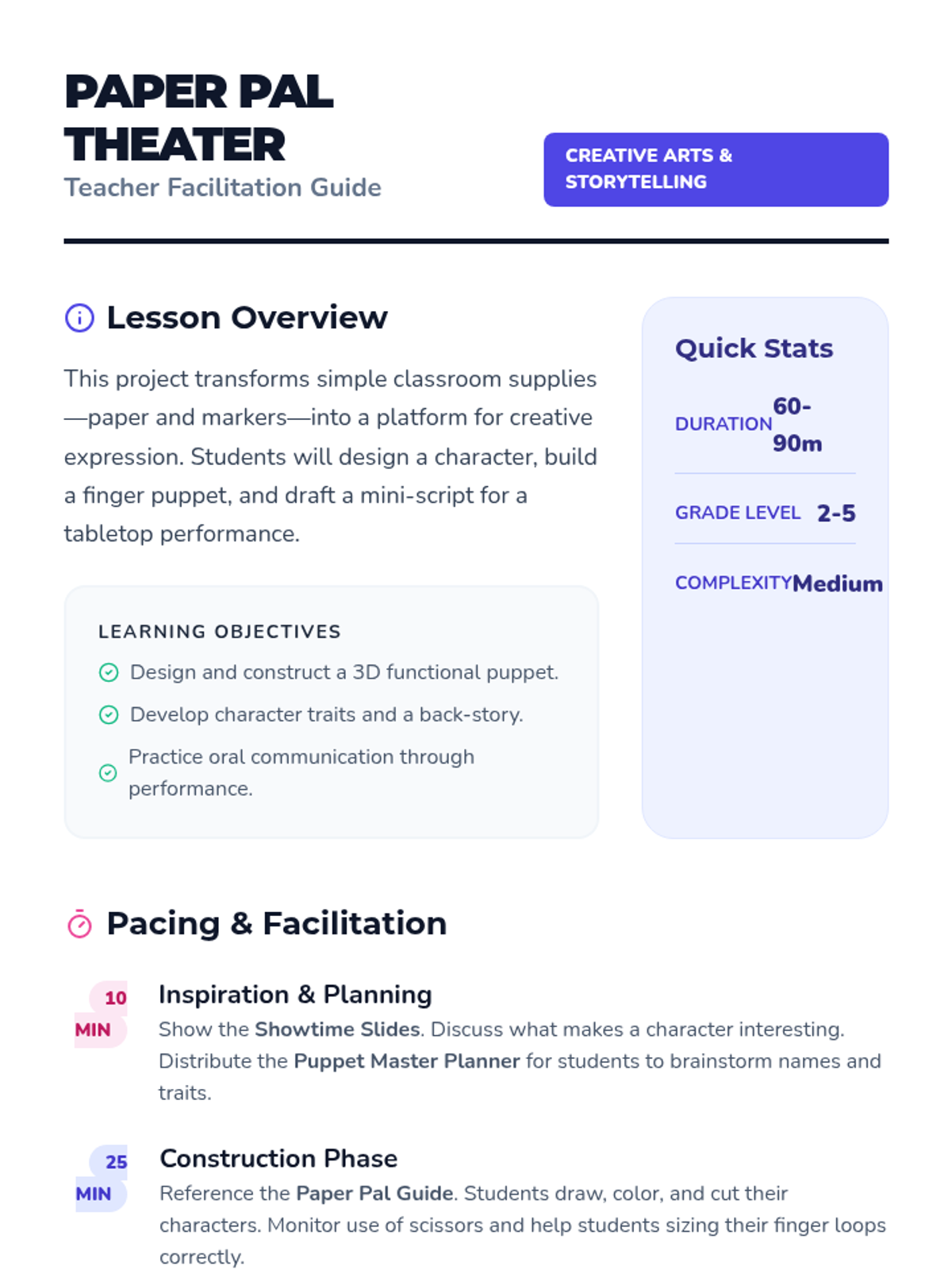
A teacher guide providing lesson objectives, a detailed 60-minute pacing guide, differentiation strategies, and tips for troubleshooting common student issues during the craft project.
A slide deck for visual instruction, featuring the project toolkit, character design tips, creative inspiration, and performance guidance for the Paper Pal Theater project.
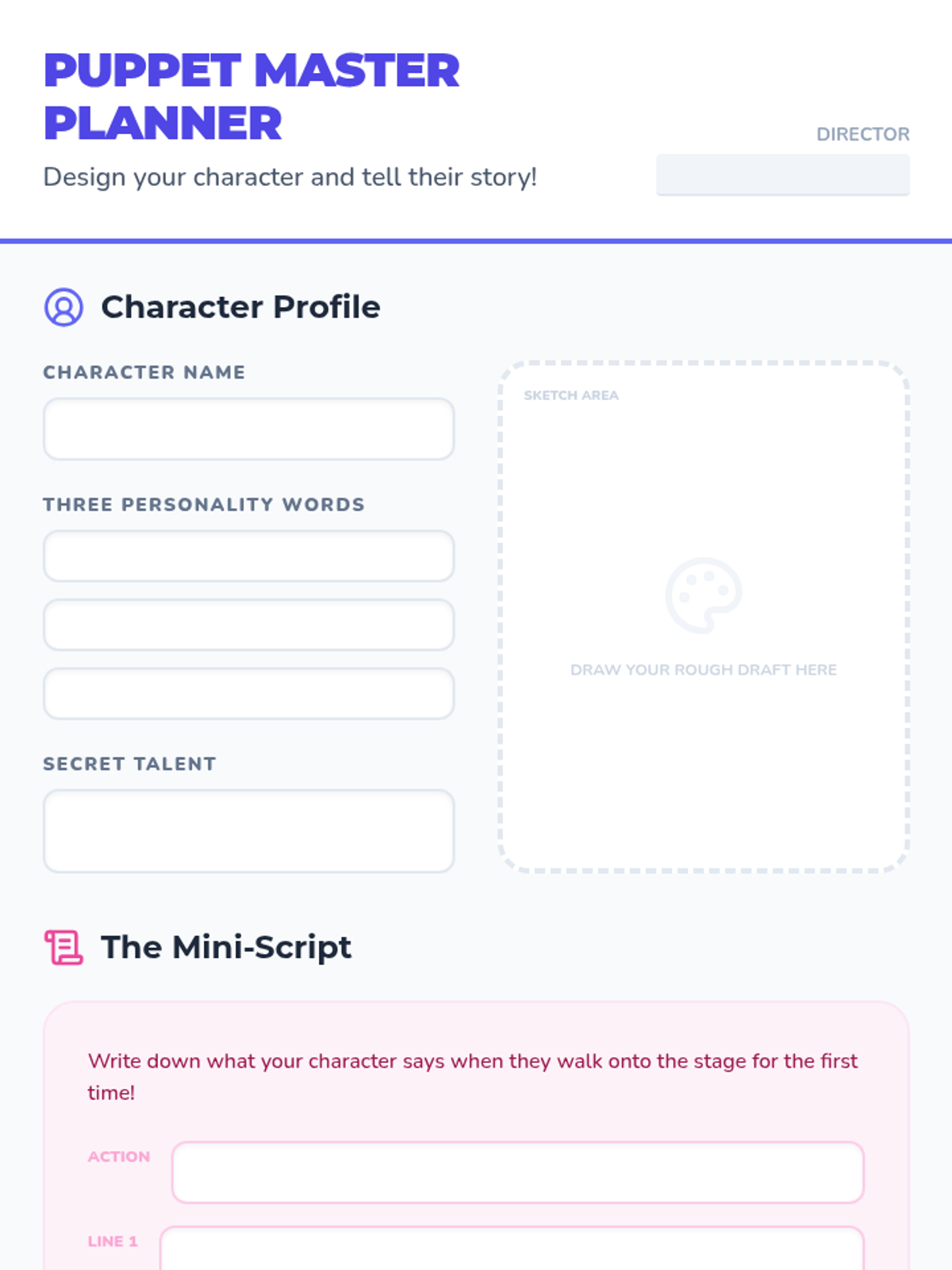
A planning worksheet for students to develop their paper puppet's personality, secret talent, and a short script. Includes dedicated areas for sketching and stage design notes.
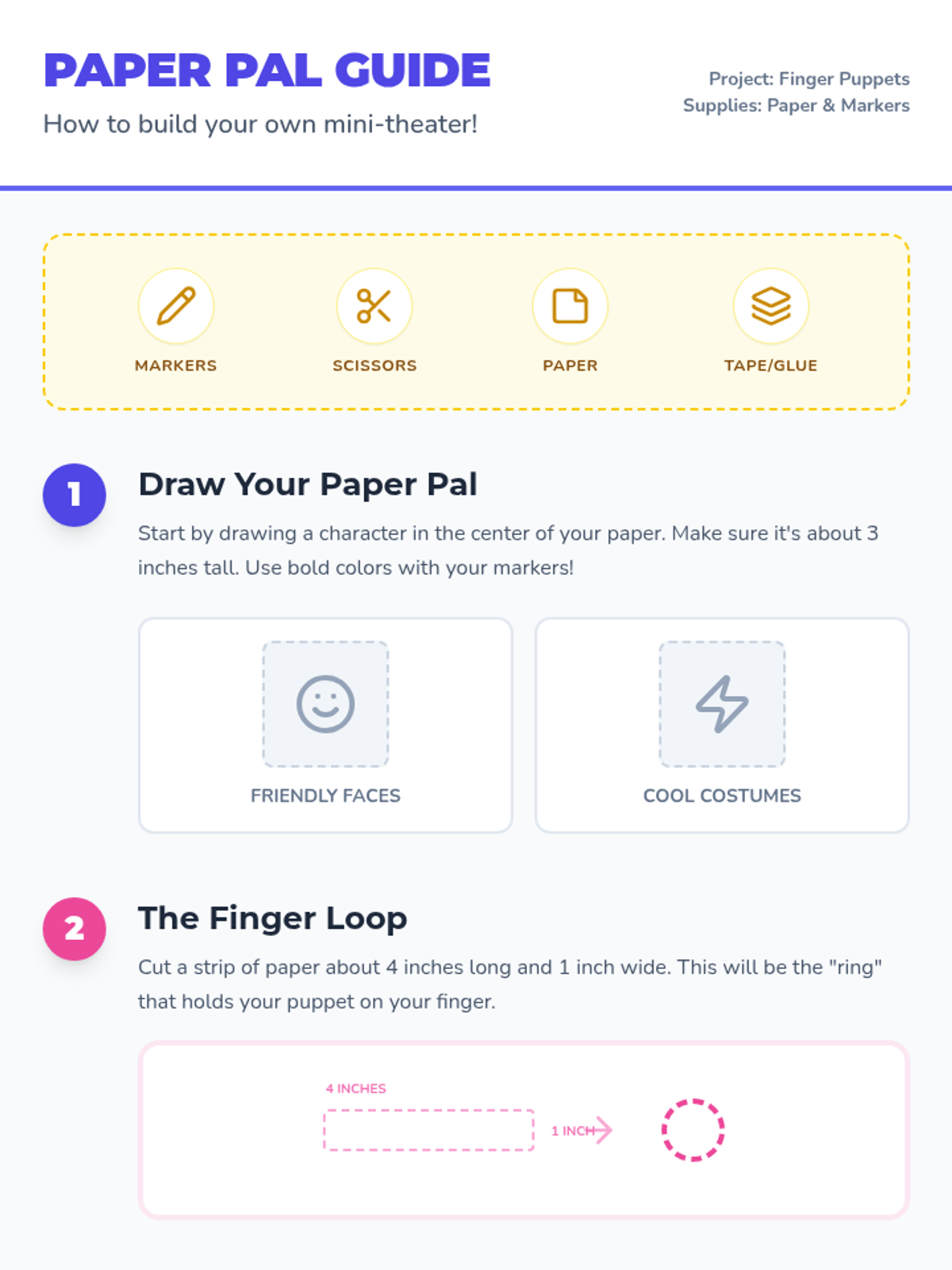
A visual step-by-step project guide for creating finger puppets and a mini stage using paper and markers. Includes clear illustrations, tool lists, and assembly instructions.
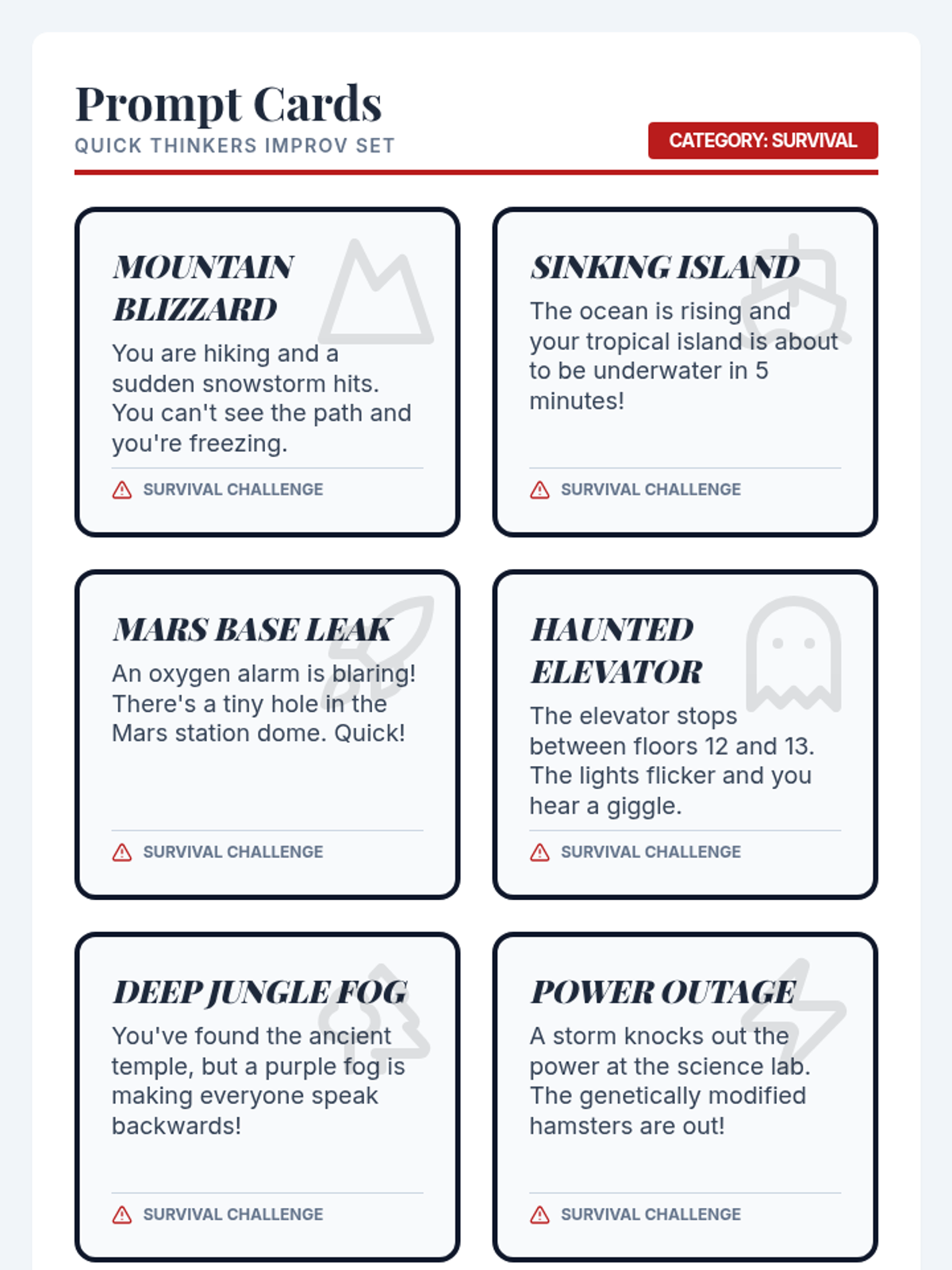
A set of 16 printable improvisation prompt cards divided into three categories: Survival Challenges, Social Conflicts, and Whimsical Story Starters, designed for quick-thinking theater games.
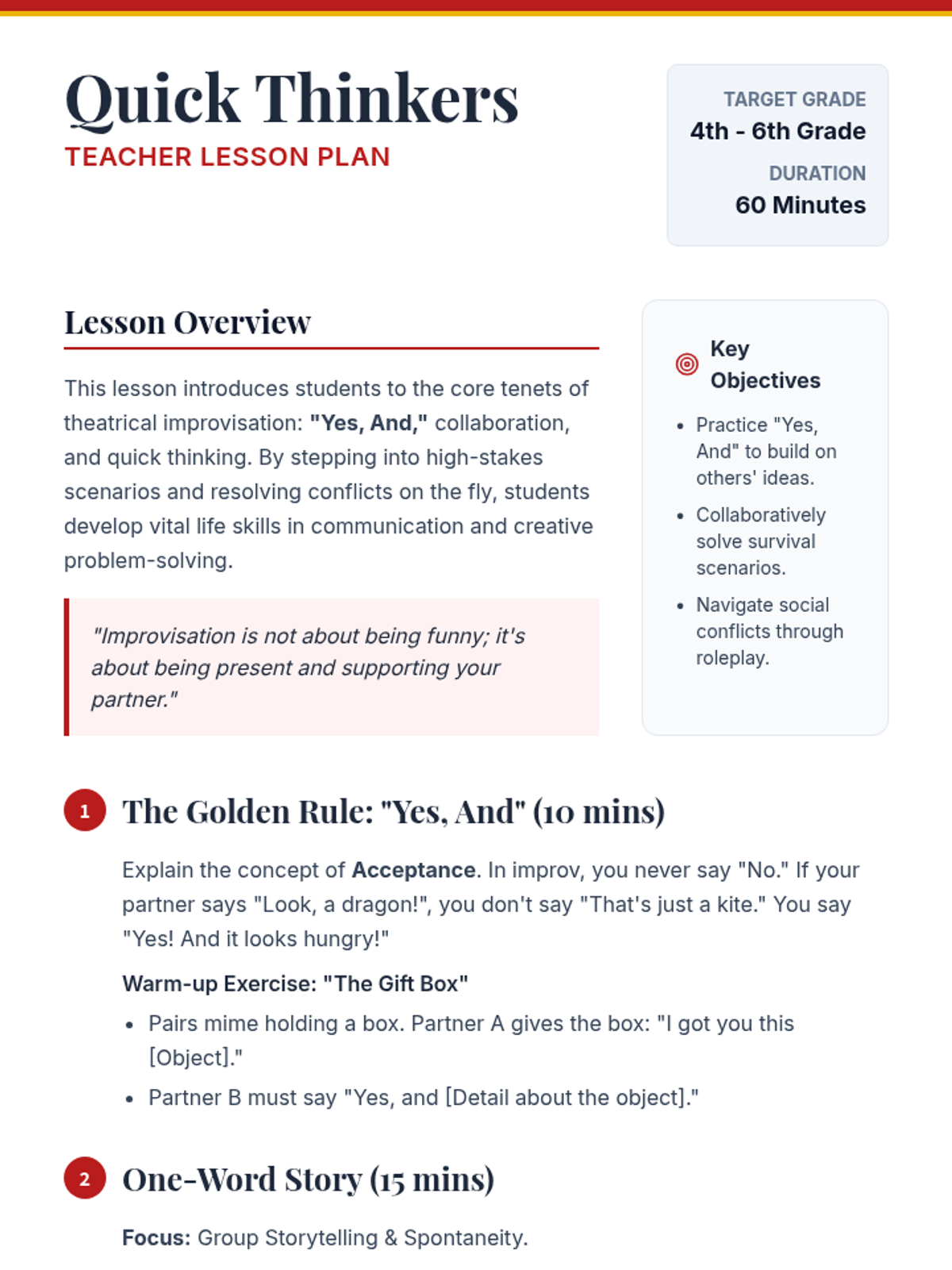
A detailed teacher's guide for a 60-minute improvisation lesson, featuring step-by-step game rules for group storytelling, survival challenges, and conflict resolution activities designed for grades 4-6.
A vibrant 6-slide presentation that introduces 4th-grade students to the history, geography, and cultural themes of the Masskara Festival before they perform the play.
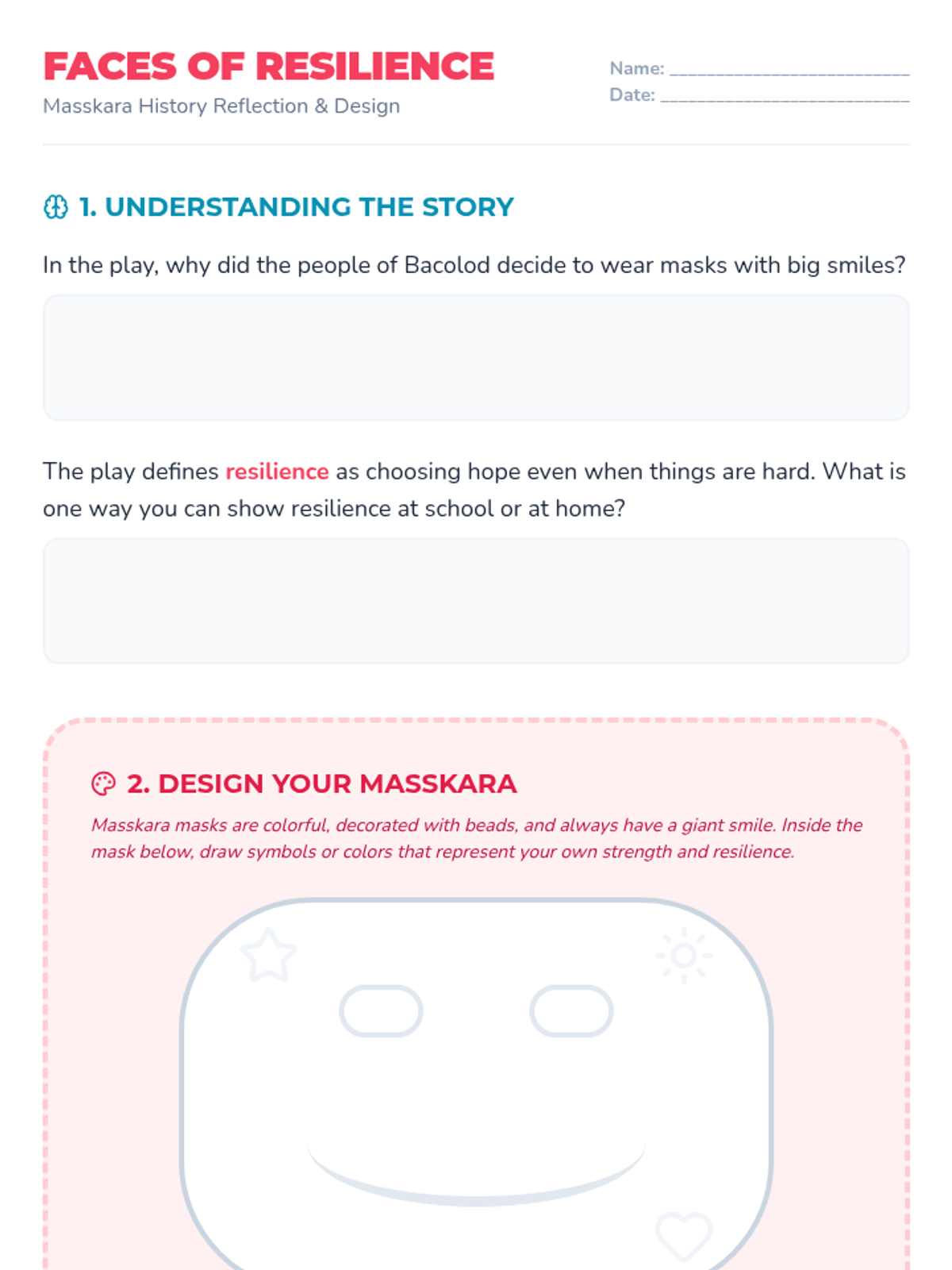
A student reflection and design worksheet that accompanies the Masskara play, focusing on the theme of resilience and allowing students to design their own mask.
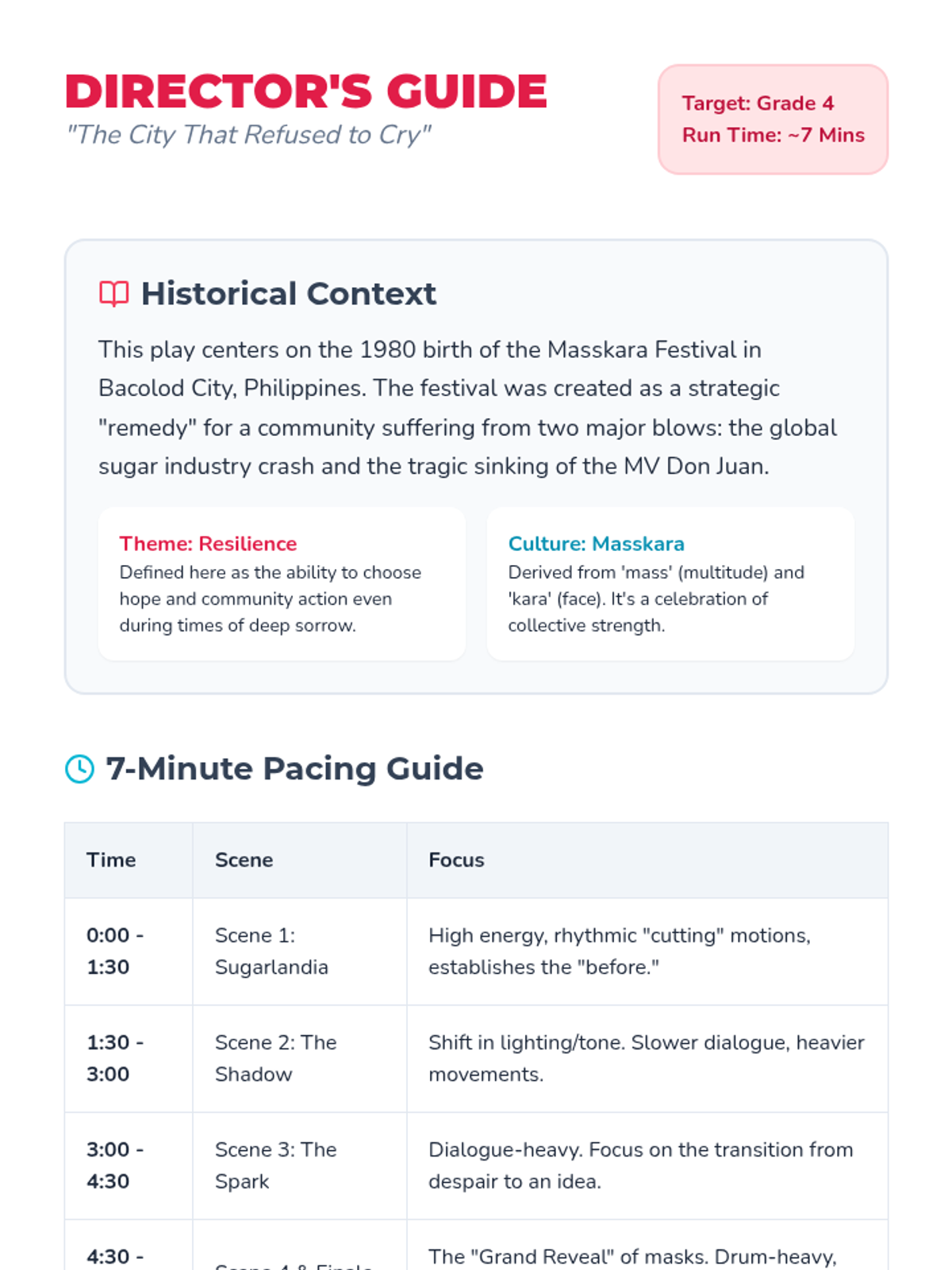
A comprehensive teacher facilitation guide for the Masskara history play, including historical context, 7-minute pacing, discussion prompts, and staging tips.
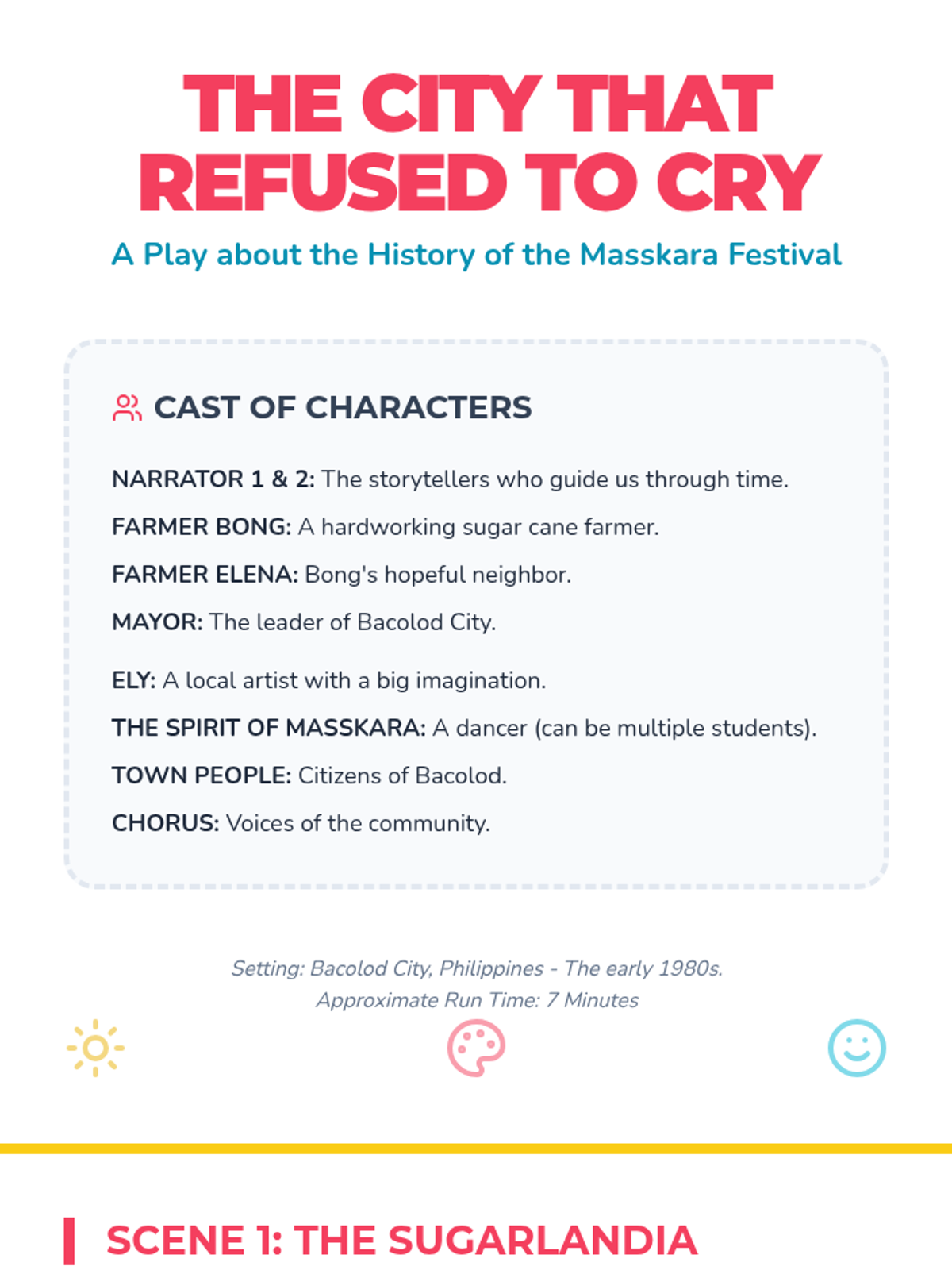
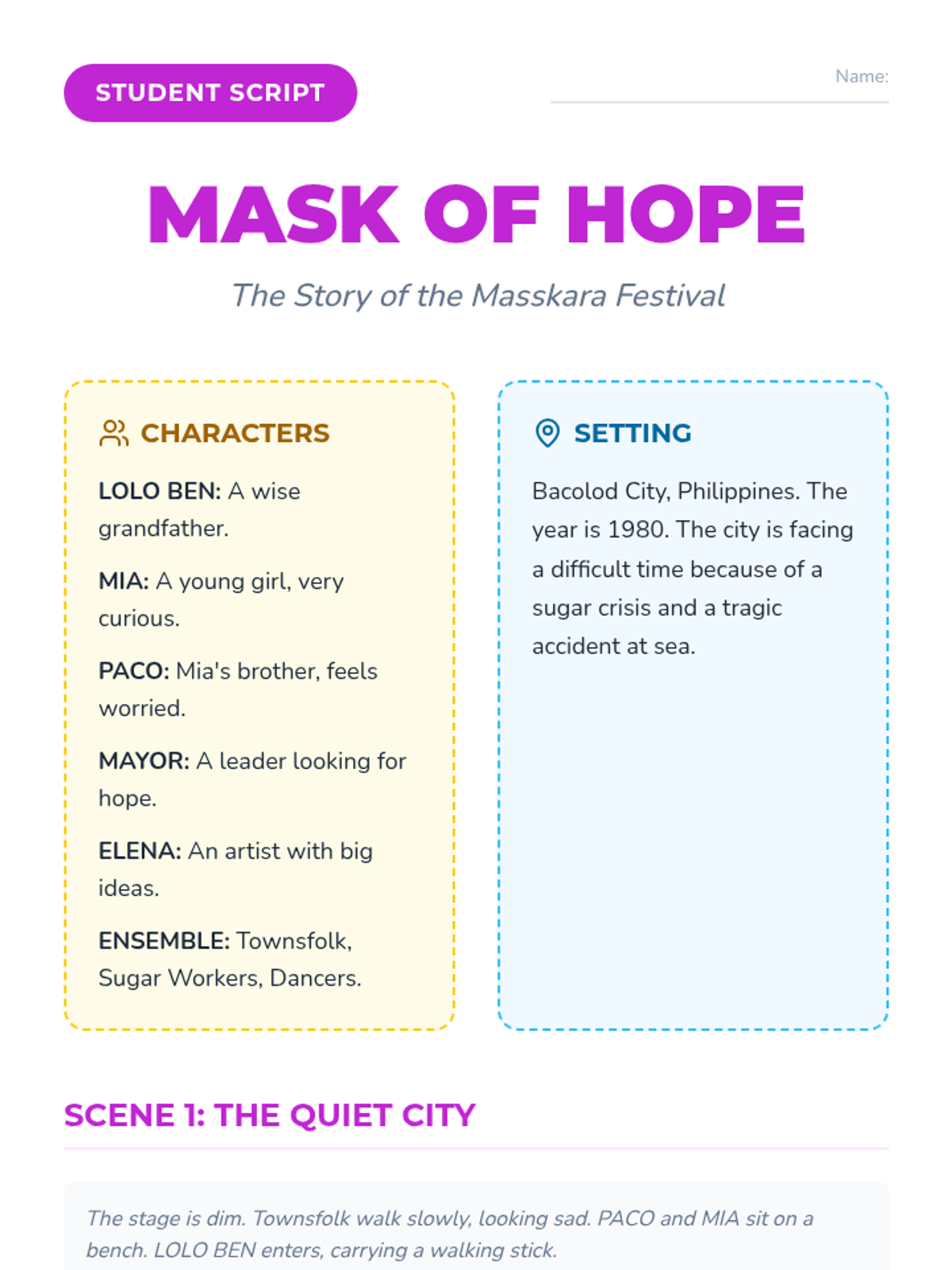
A 4th-grade level play script titled 'The City That Refused to Cry', telling the historical origin story of the Masskara Festival with parts for multiple students and themes of community resilience.
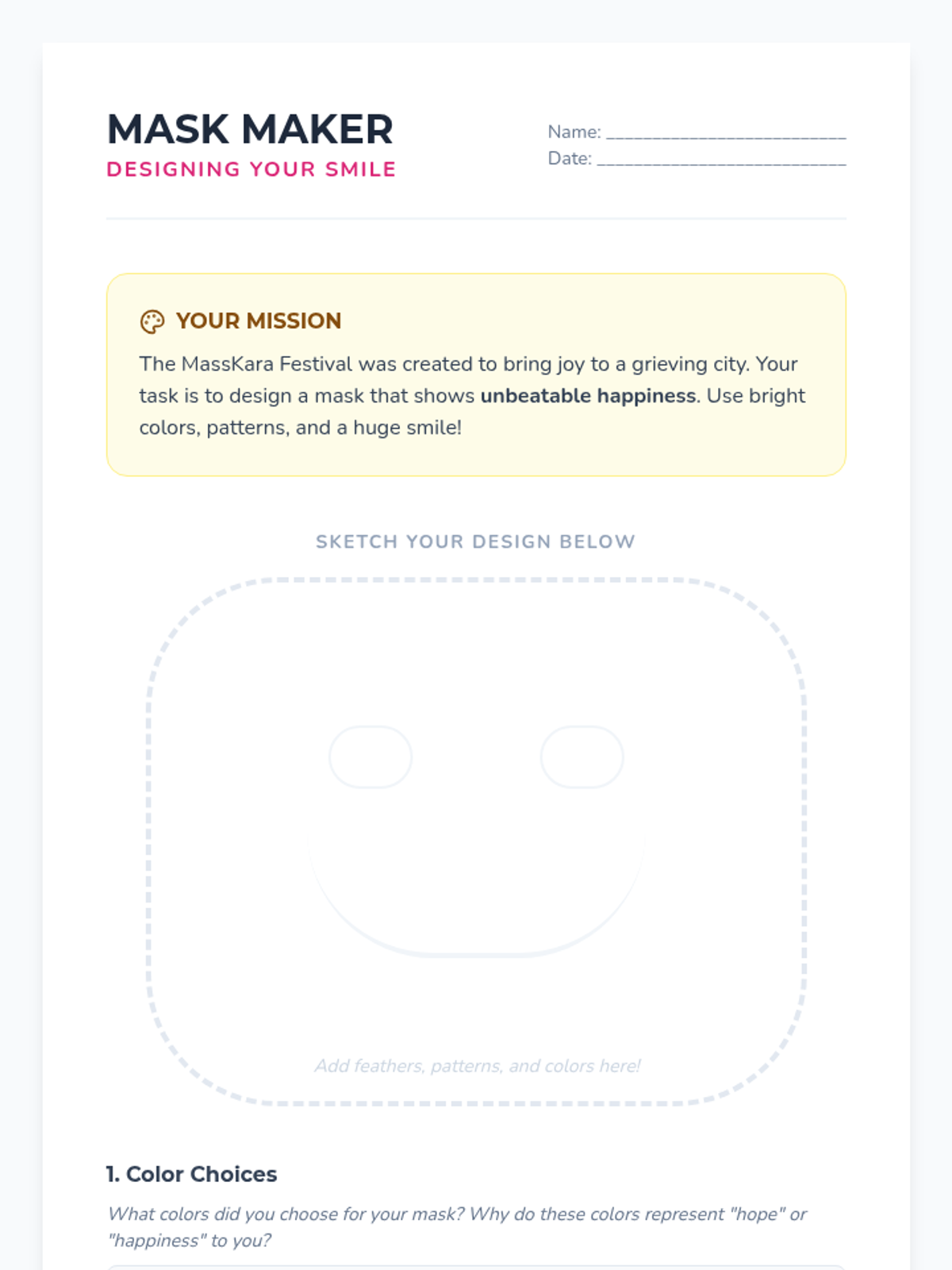
A creative activity sheet for 4th graders to design their own MassKara mask and reflect on the themes of the play. It includes a mask-sketching area and short-response questions about color symbolism and resilience.
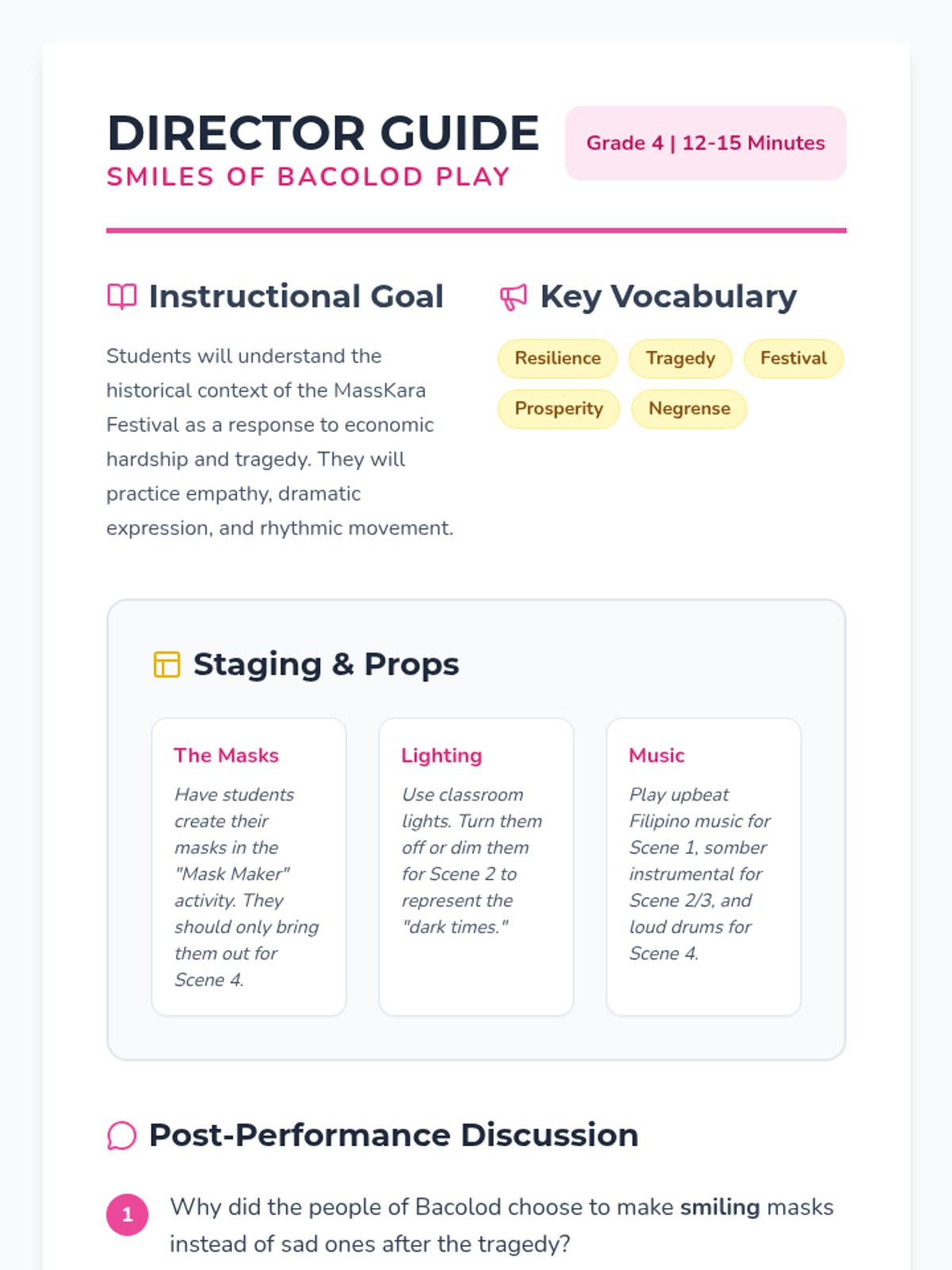
A teacher's resource guide for directing the "Smiles of Bacolod" play. It includes staging tips, vocabulary, and discussion prompts to deepen student understanding of the festival's historical significance.
A vibrant slide deck for 4th graders exploring the history of the MassKara Festival. It covers the Golden Age of sugar, the 1980 crisis and tragedy, and the eventual creation of the festival as a symbol of resilience.
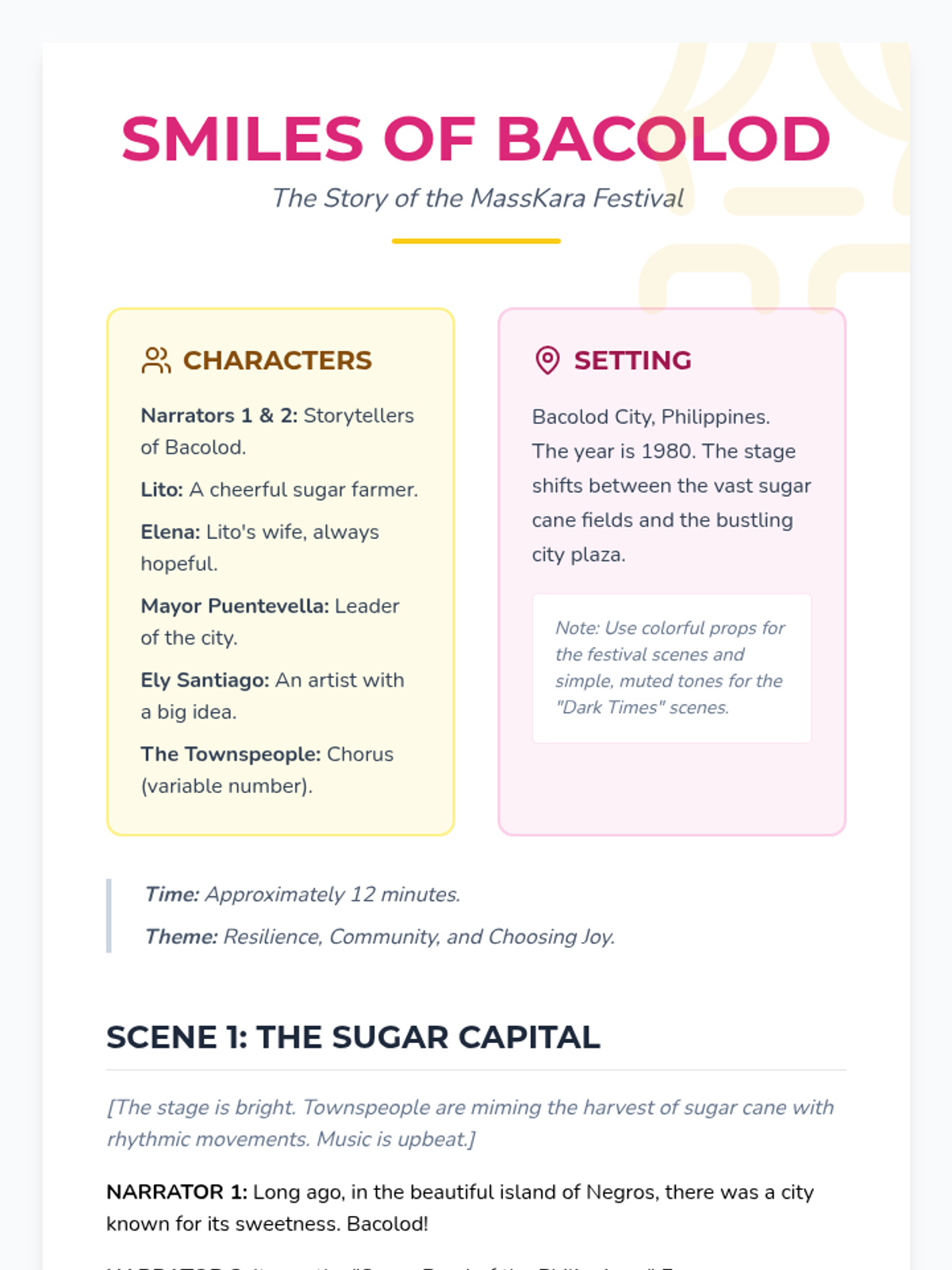
A 10-15 minute educational play for 4th graders detailing the history of the MassKara Festival, from the 1980 sugar crisis to the birth of the "City of Smiles." It emphasizes themes of resilience and community.
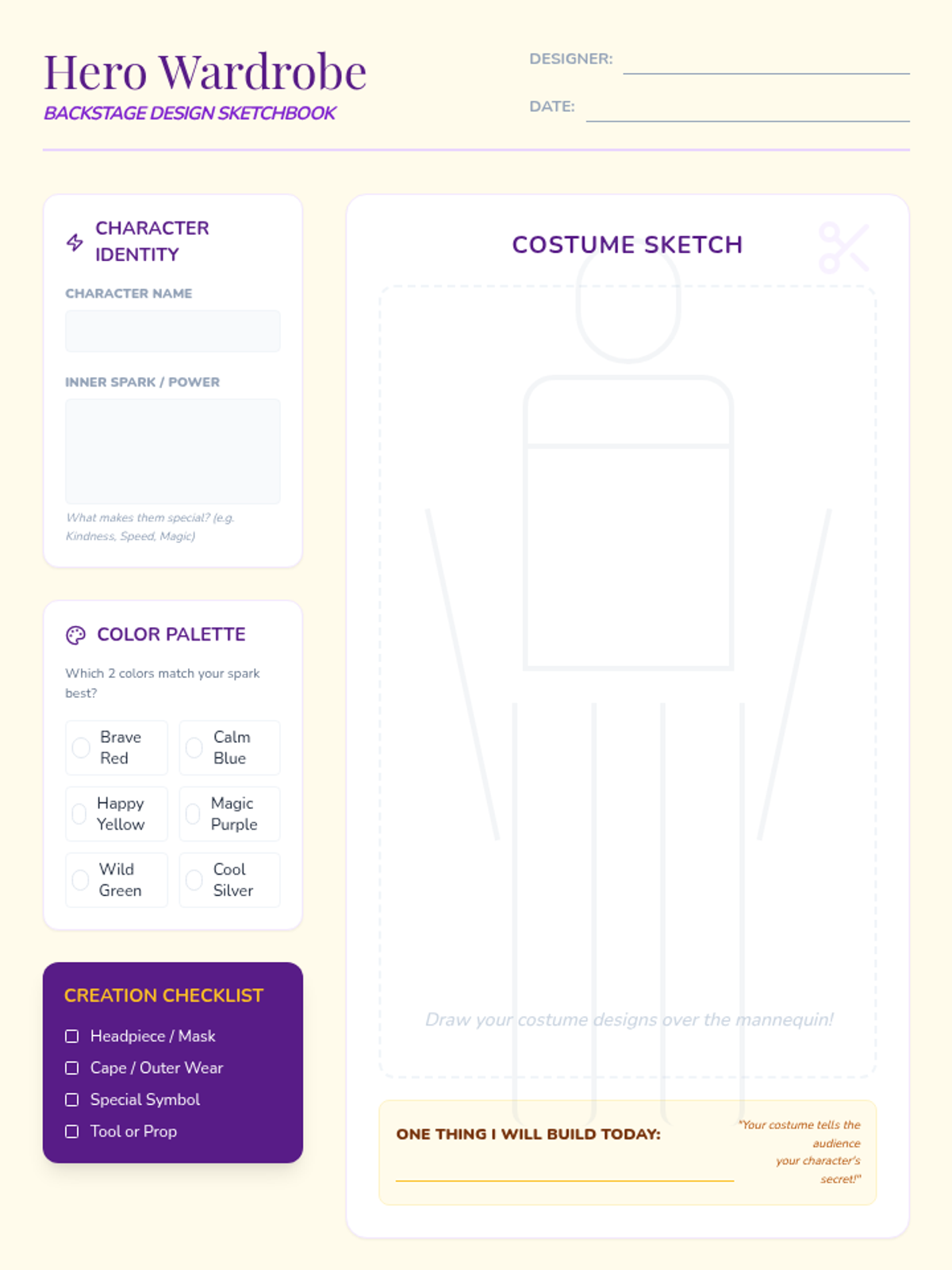
A creative design worksheet for students to conceptualize their character, choose a color palette, and sketch a costume design over a mannequin template.
A vibrant and engaging visual presentation for kids aged 5-10, covering costume definition, ancient history, the psychology of color, and activity instructions.
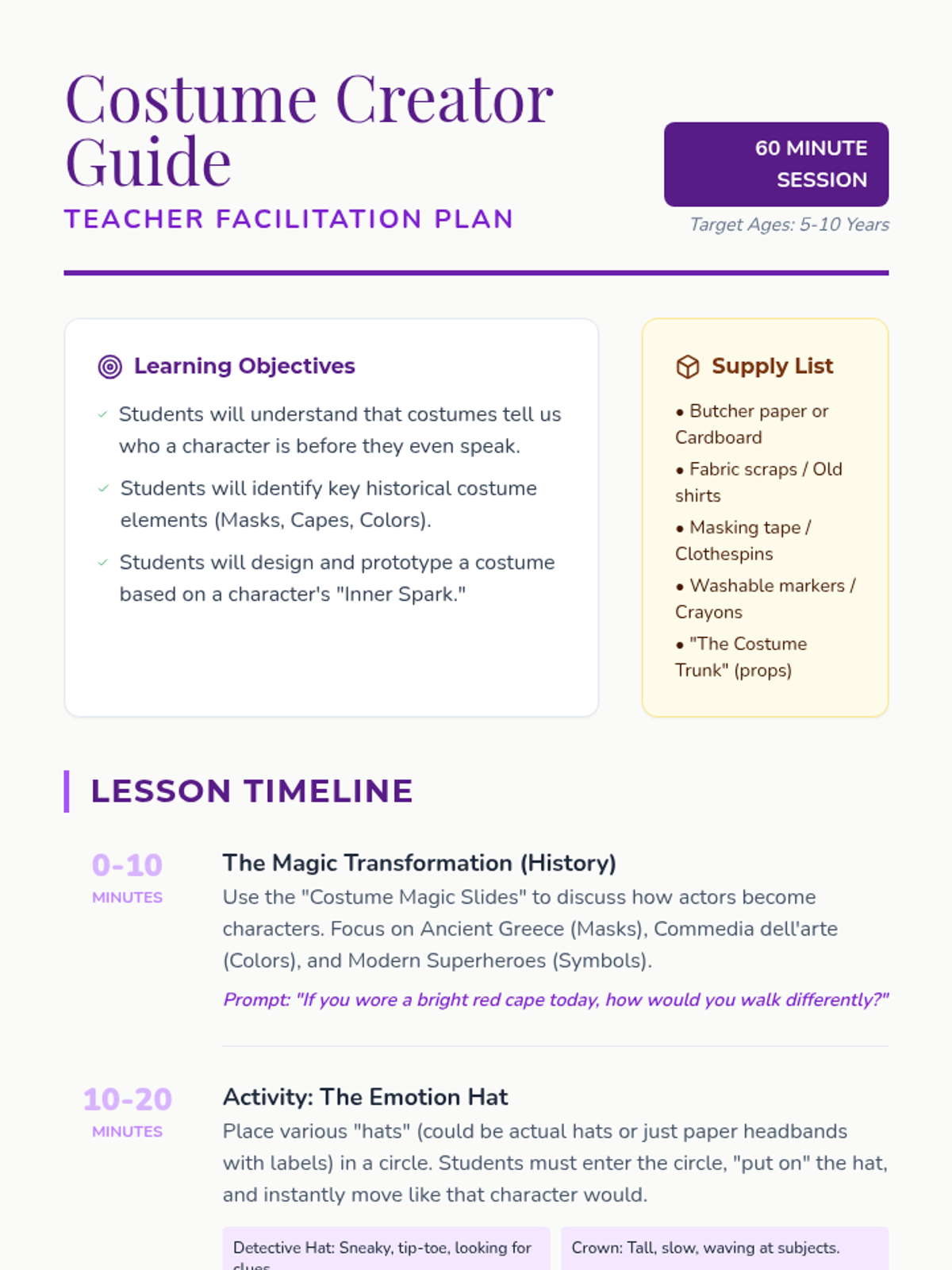
A comprehensive teacher's facilitation guide for a 60-minute costume workshop, including a timed lesson plan, activity instructions, and pedagogical tips for different age groups.
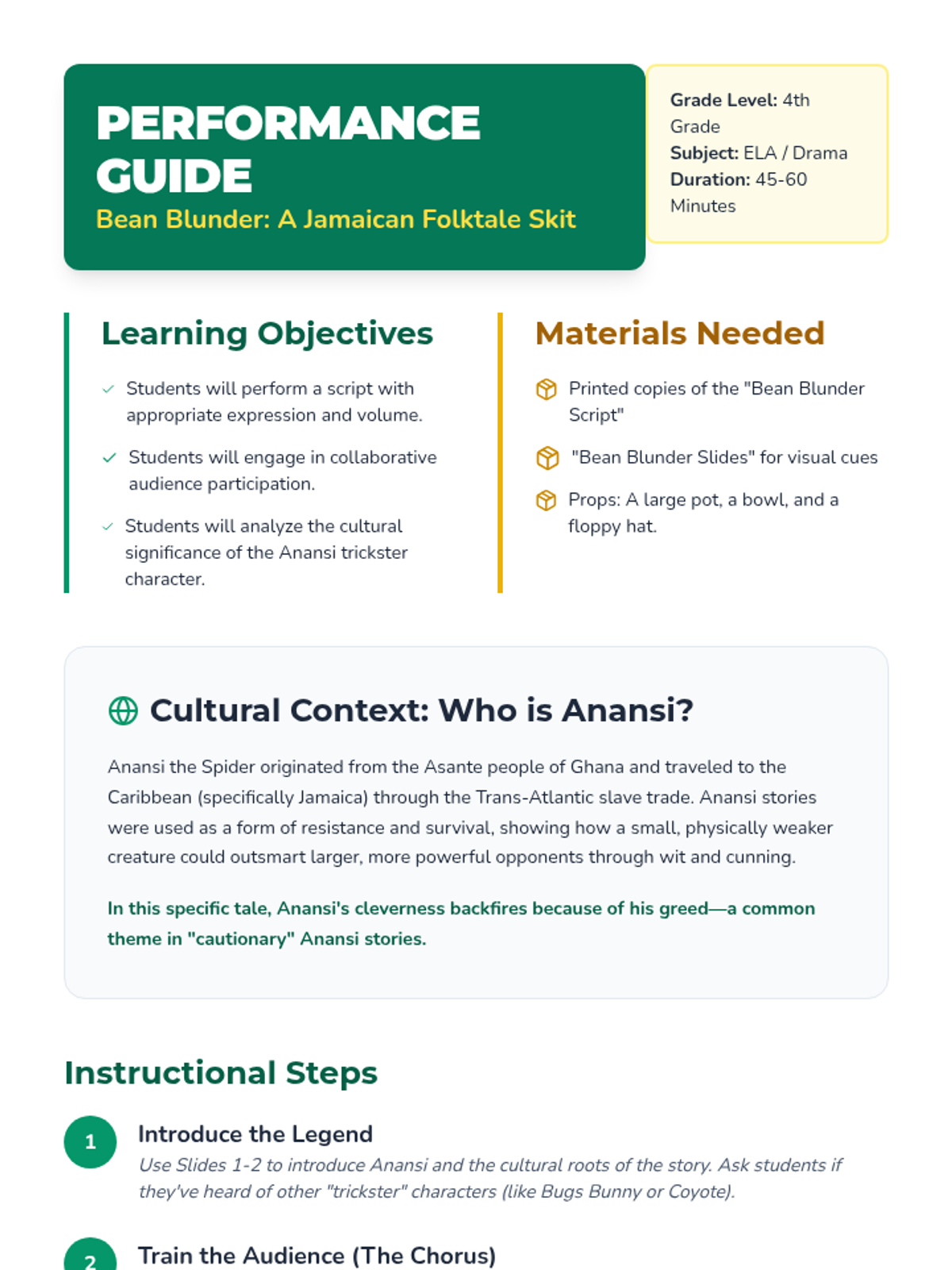
A teacher facilitation guide for the 'Bean Blunder' performance, featuring cultural background on Anansi, instructional steps for rehearsal, and a performance rubric.
A visual presentation to introduce the characters, cultural context, and audience participation rules for the 'Bean Blunder' skit.
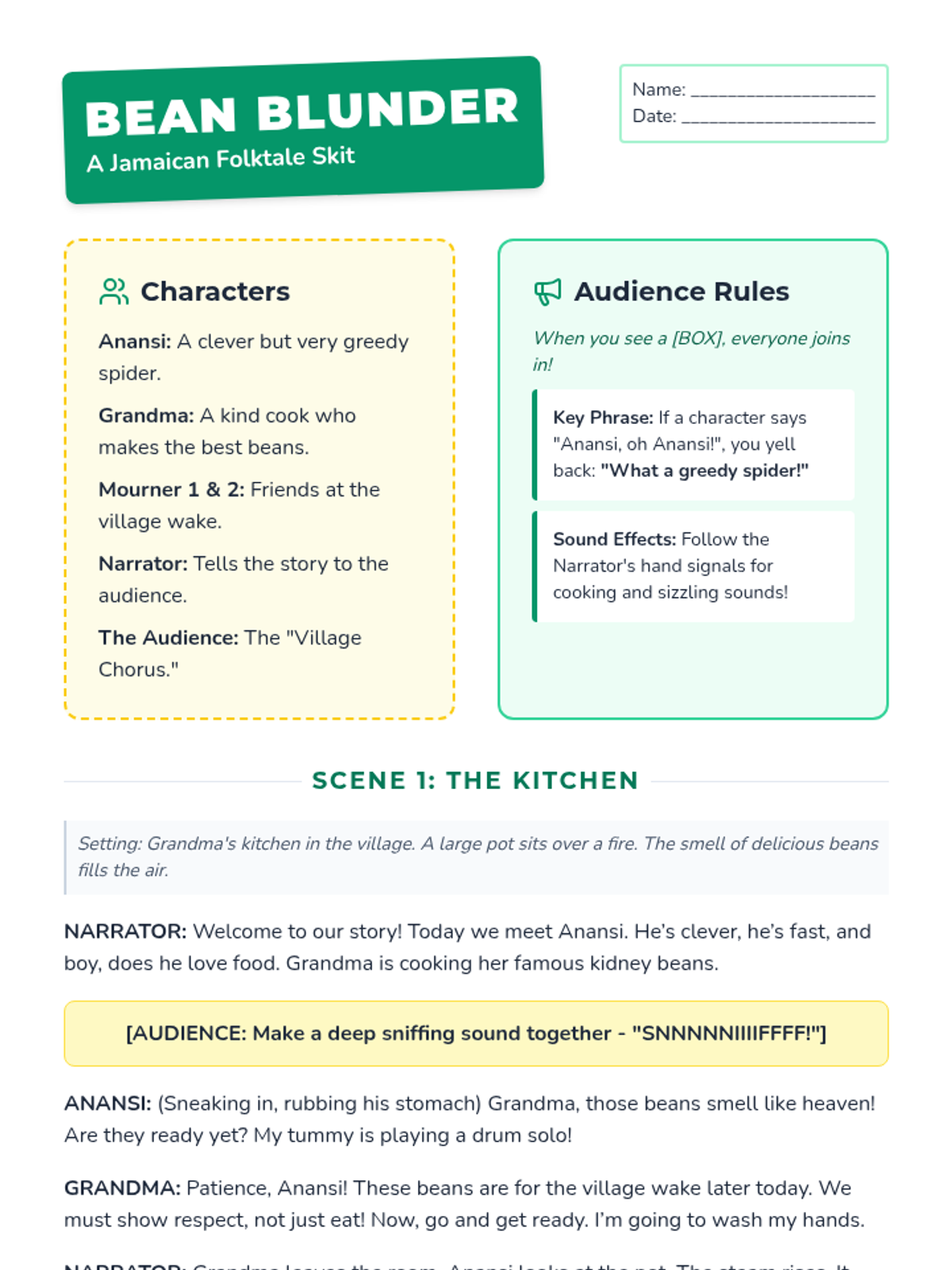
A 3-page script for a 4th-grade performance of 'Anansi and the Pot of Beans,' featuring bold character roles, clear audience participation cues, and a vibrant Caribbean-inspired design.
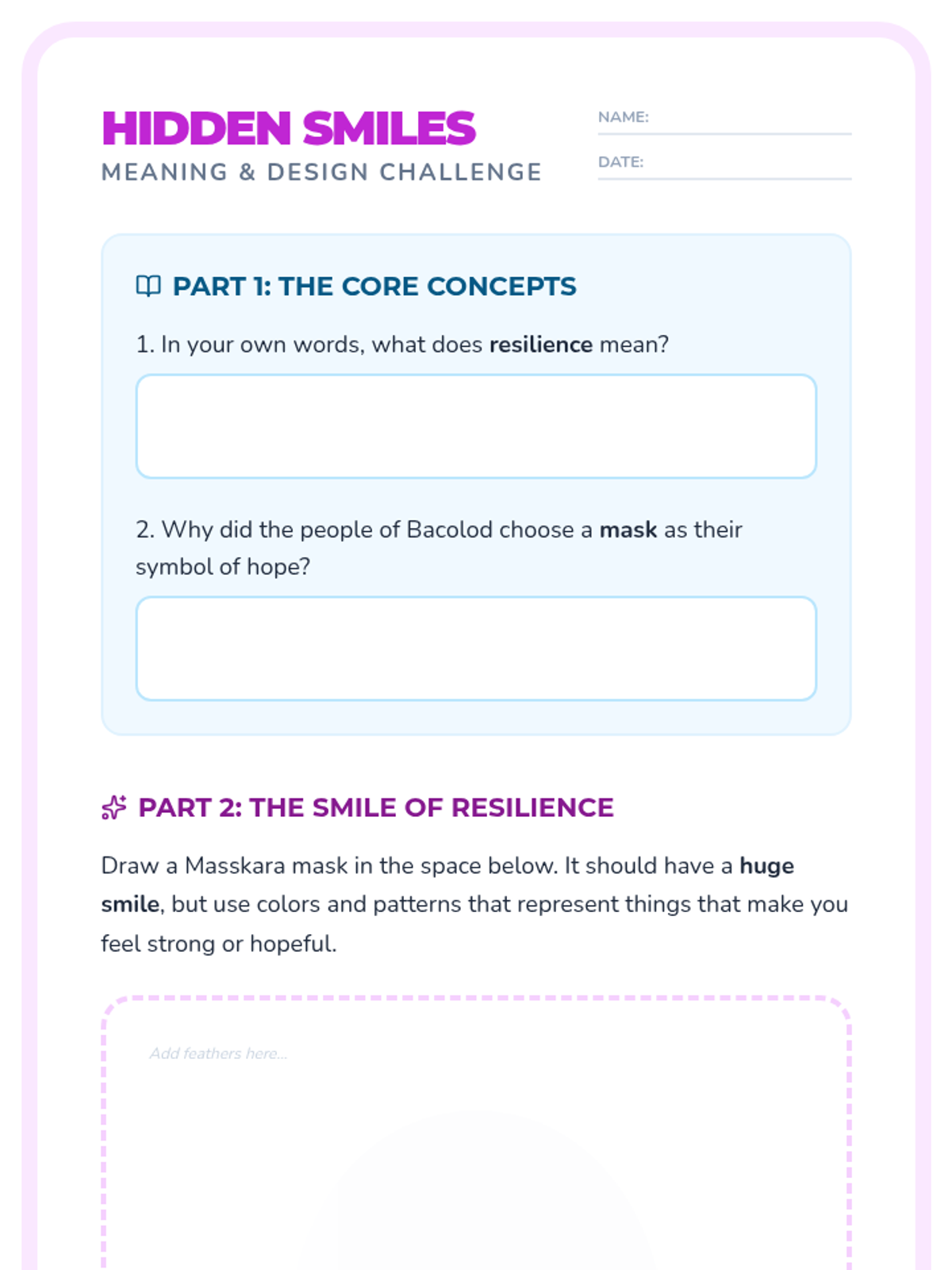
A student activity sheet that reinforces the concepts of resilience and the historical meaning of the Masskara Festival. It includes a vocabulary section, a mask design challenge, and a personal reflection prompt.
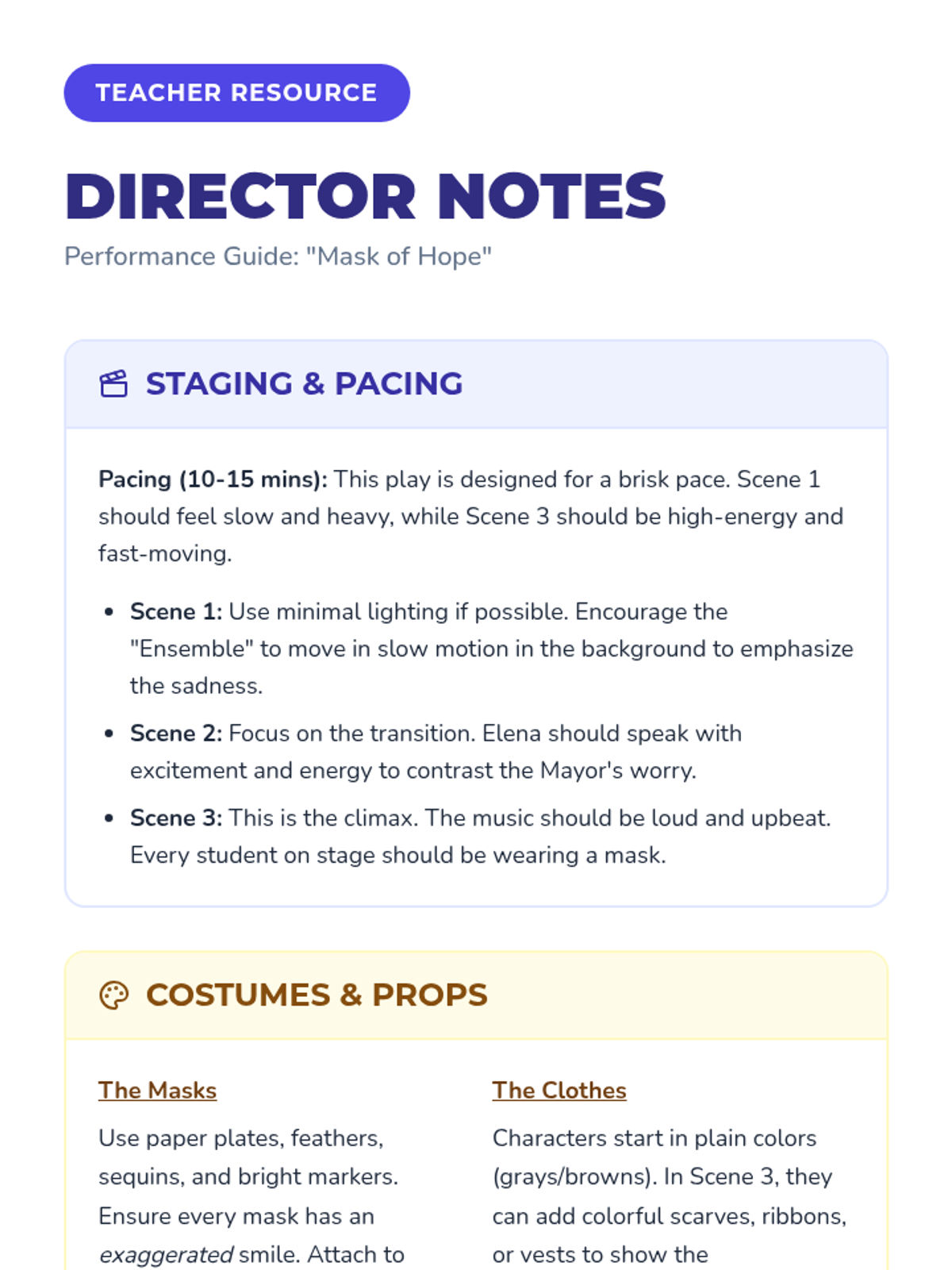
A comprehensive teacher's guide for directing the 'Mask of Hope' play. It includes staging tips, pacing advice, low-budget costume and prop ideas, and post-performance discussion questions to deepen student understanding of resilience.
A visual presentation for students that introduces the history, geography, and meaning of the Masskara Festival. It explains the 'City of Smiles' nickname and the concept of resilience using the 'Mass' and 'Kara' word origins.
A 10-15 minute play script designed for 4th-grade students, dramatizing the origin and meaning of the Masskara Festival. The script focuses on the theme of resilience and the 'City of Smiles' spirit during the 1980 crisis in Bacolod.
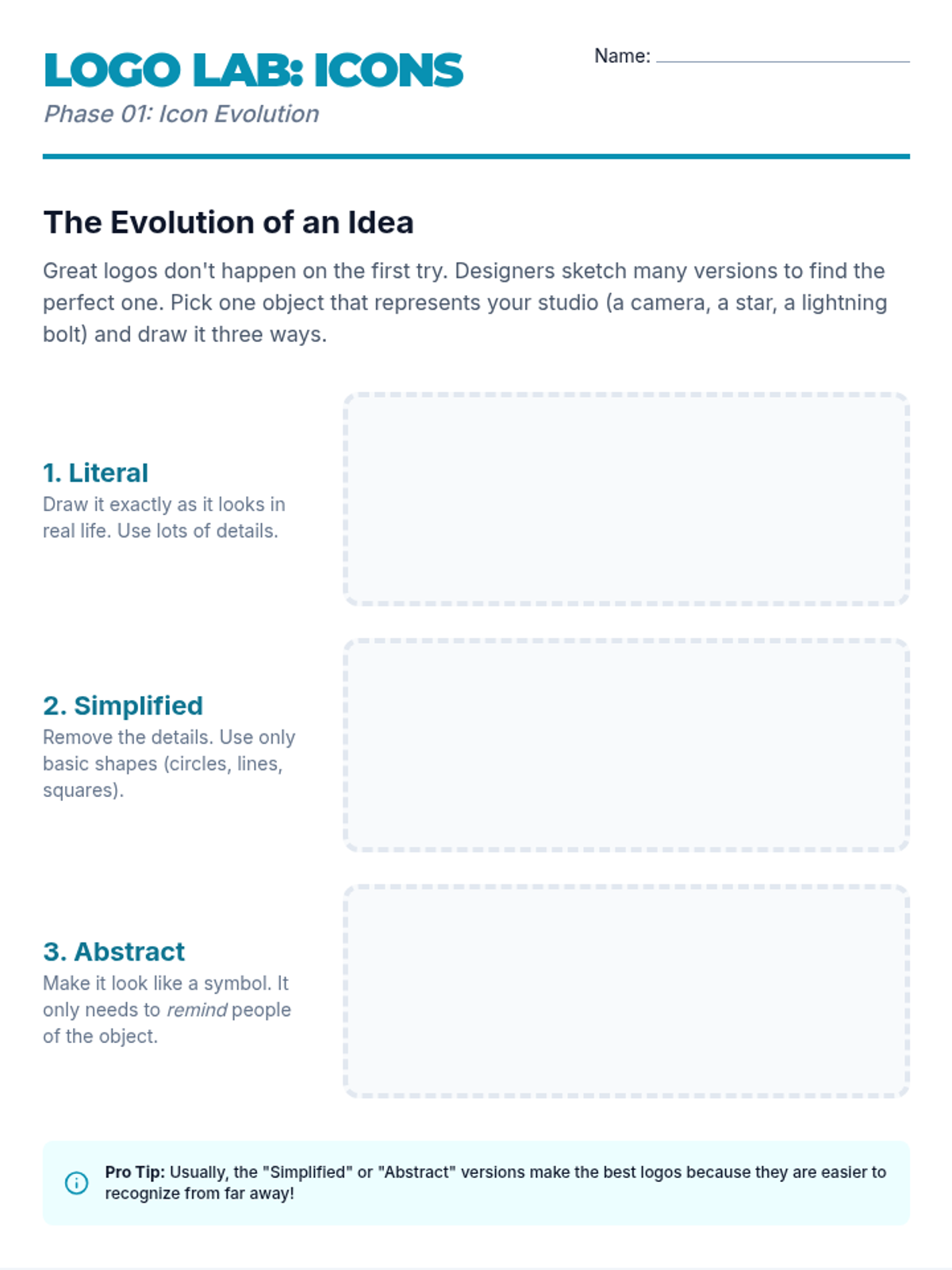
A specialized 4-page logo design workbook titled 'Logo Lab' that guides students through icon evolution, typography styles, color palette remixing, and a final master logo design.
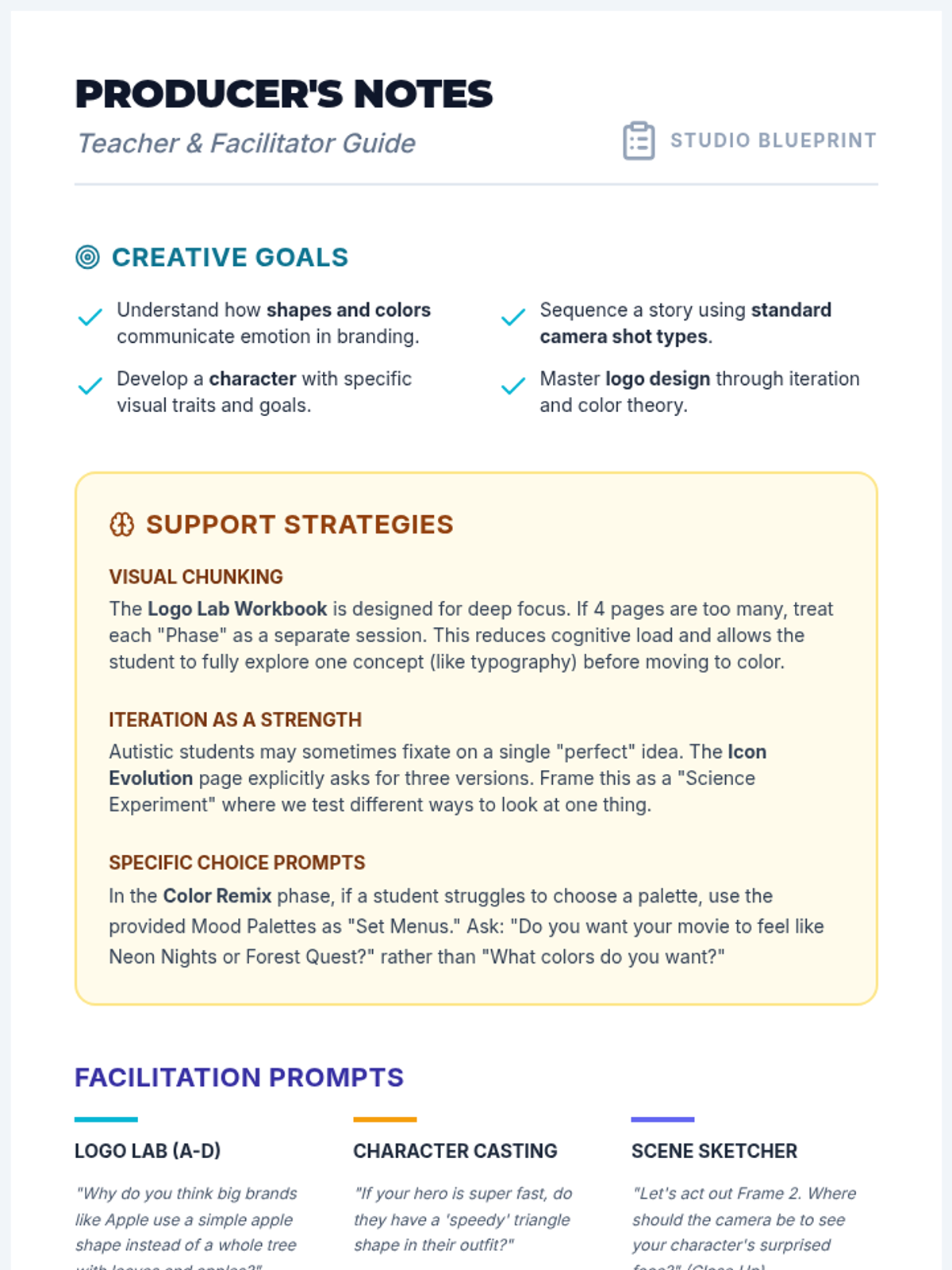
A teacher-facing facilitation guide titled 'Producer's Notes' containing objectives, neurodiverse support strategies, and discussion prompts for the Studio Blueprint lesson.
A visual presentation called 'Studio Blueprint Slides' that introduces students to the principles of logo design, color psychology, and filmmaking camera shots.
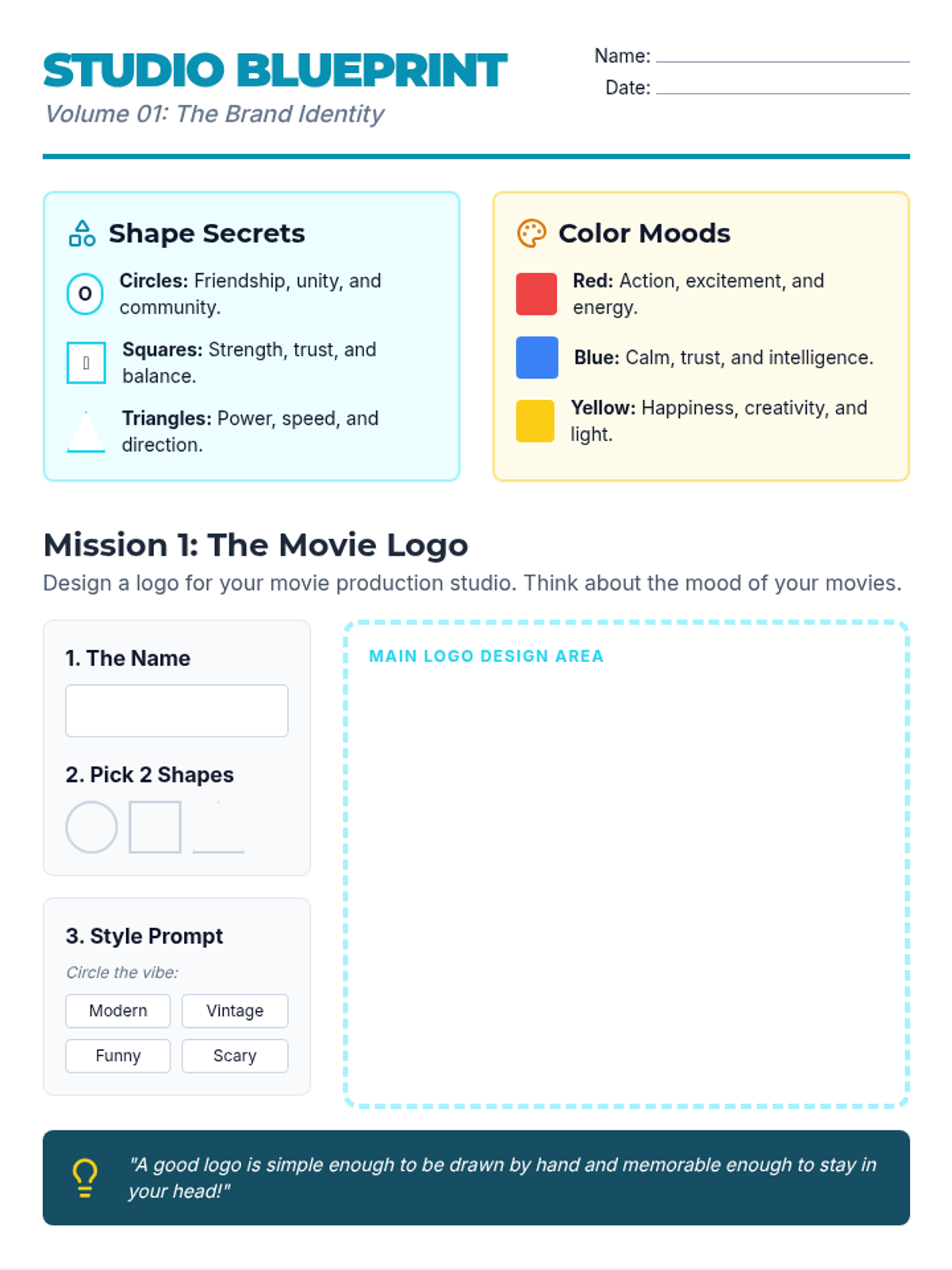
A multi-page creative workbook titled 'Studio Blueprint' designed for students to explore logo design, character development, and filmmaking through structured prompts and visual organizers.
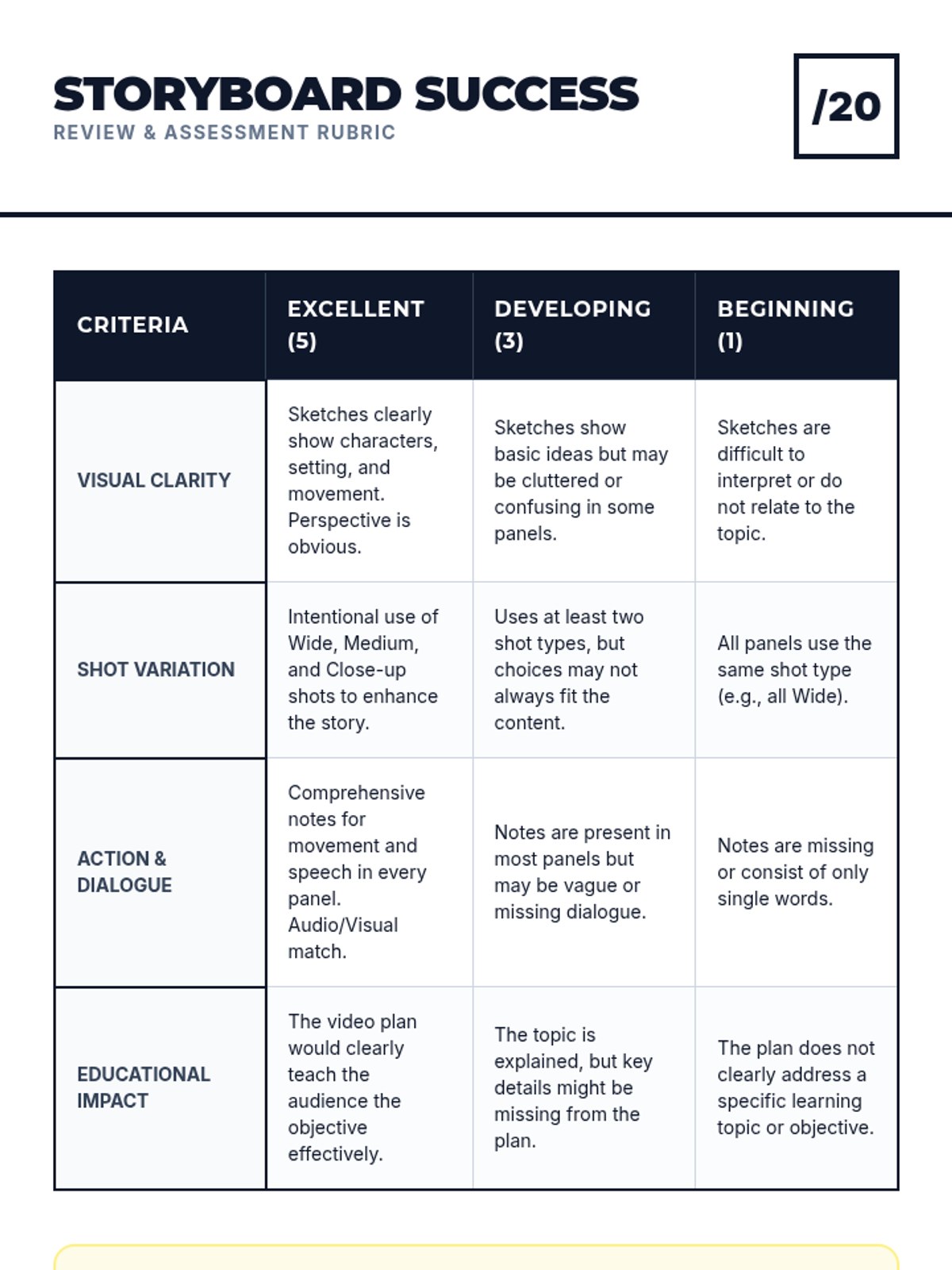
A rubric and checklist for assessing student storyboards. Includes specific criteria for visual clarity, shot variation, action/dialogue, and educational impact, as well as a self-check section for students.
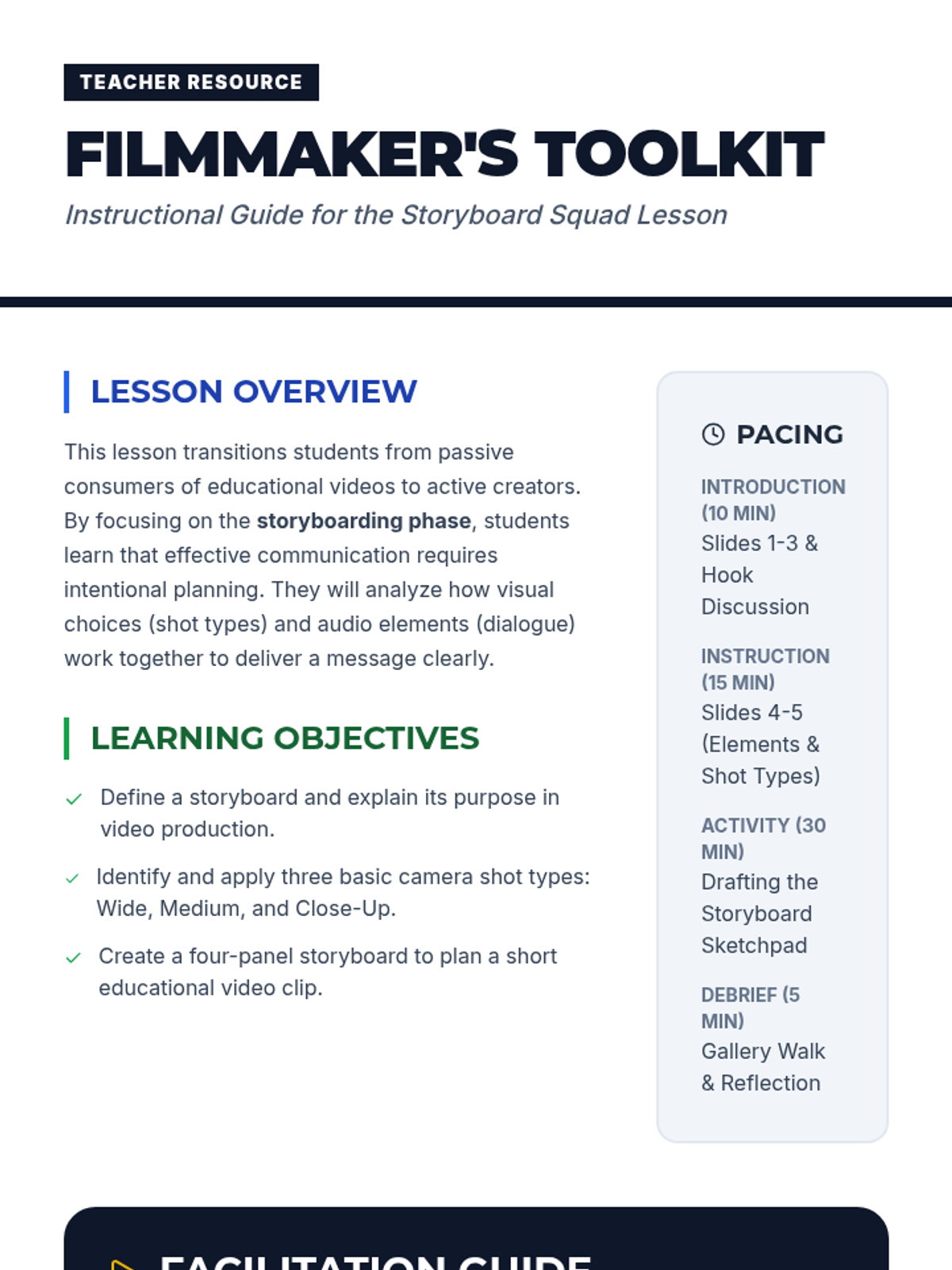
A teacher guide providing instructional context, pacing, facilitation tips, and differentiation strategies for the storyboarding lesson. Includes guidance on how to model the activity and common student misconceptions.
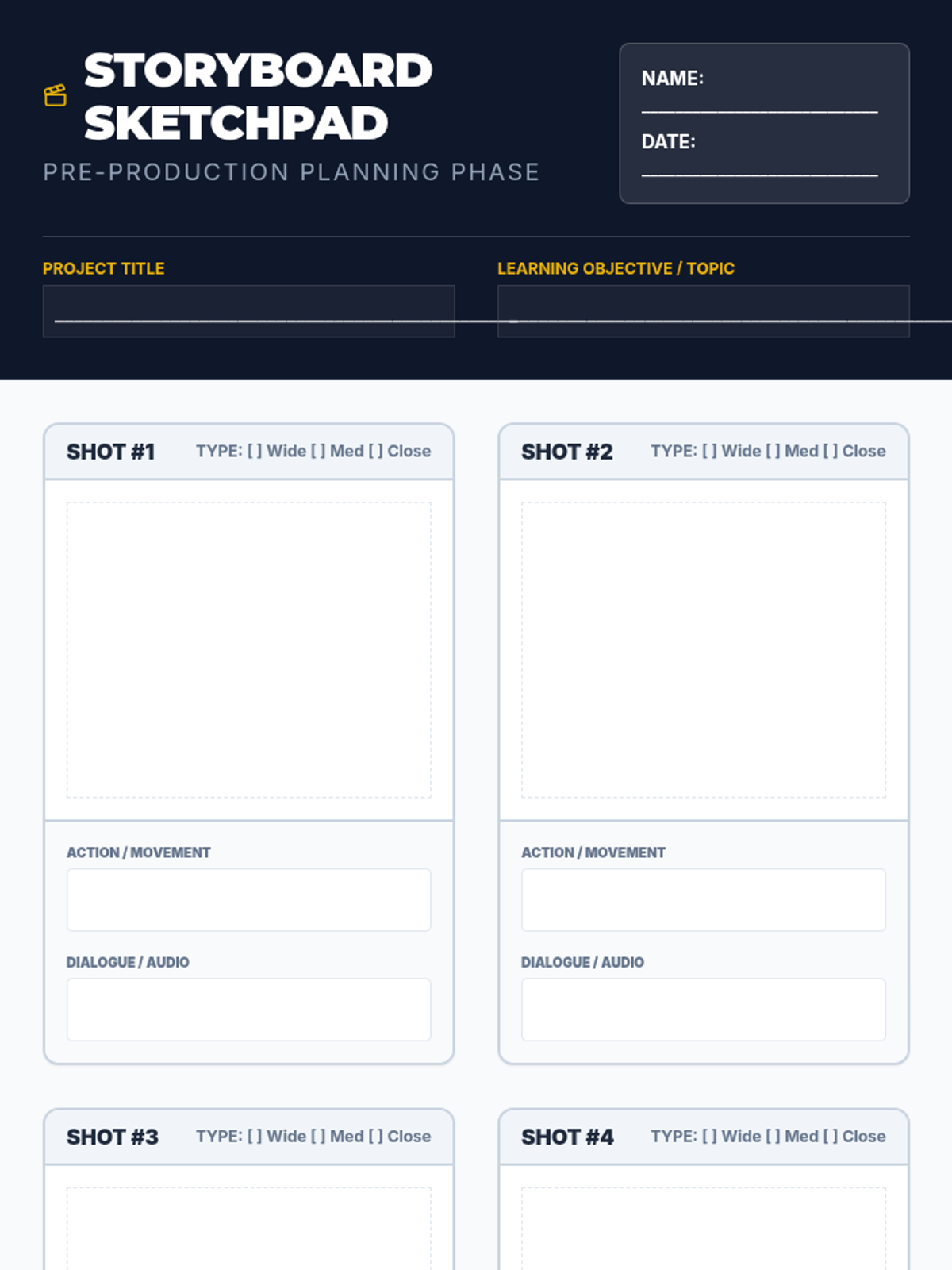
A structured worksheet for students to plan four key shots of their video. Includes space for sketching, noting action, writing dialogue, and selecting shot types, along with a reflection section.
A visual presentation introducing the concepts of storyboarding, including its importance, key elements of a panel, and different camera shot types. Includes an action prompt for students to begin their own projects.
A visual presentation deck supporting the 'Stage Sketchers' lesson. It includes the Khan Academy video embed, vocabulary definitions, visual cues for analyzing the narrator's drawing, and prompts for the set design activity.
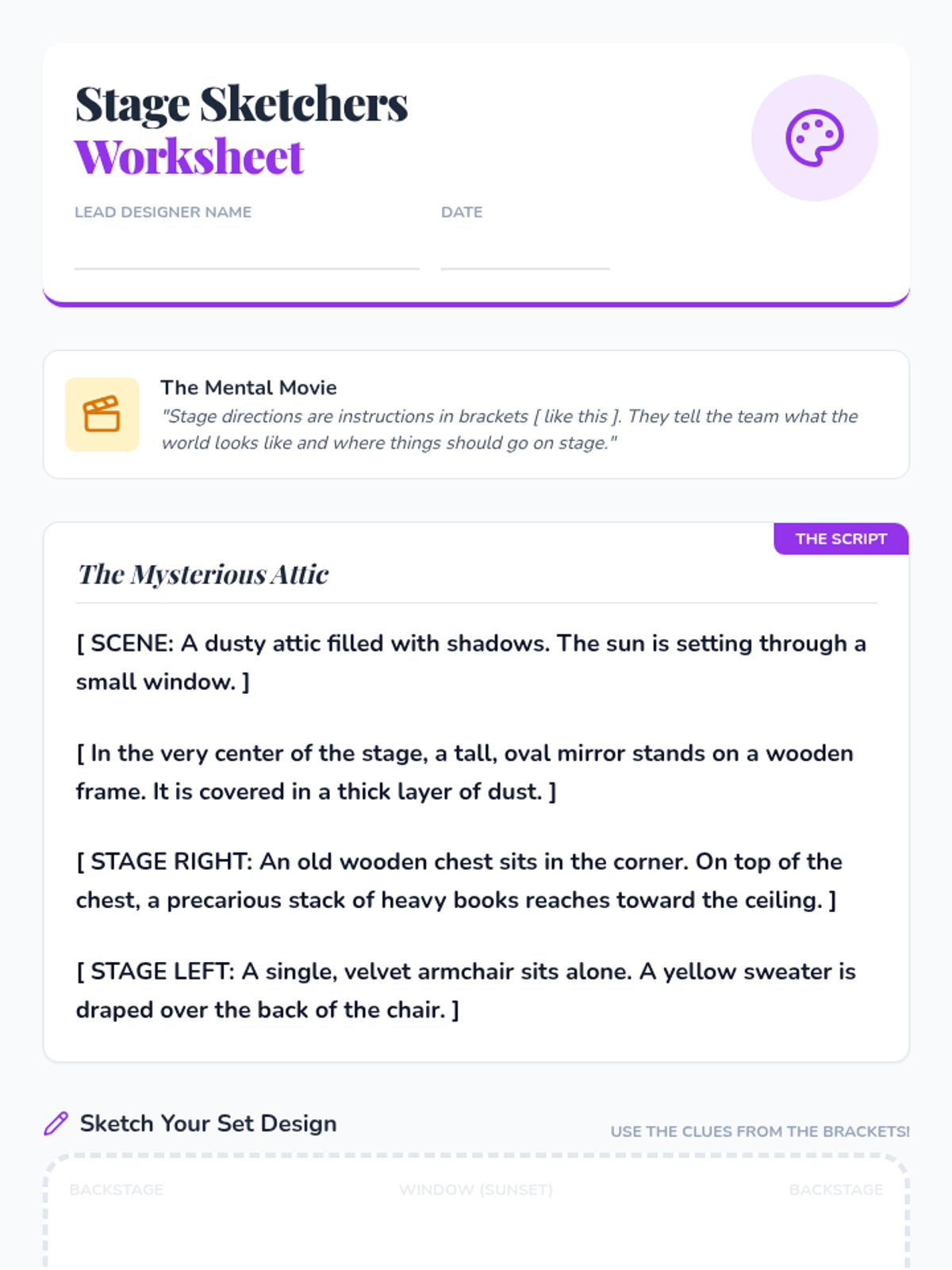
A student-facing activity worksheet where students act as set designers. They must read a scene description with specific stage directions and sketch the set, using text evidence to guide their visual choices.
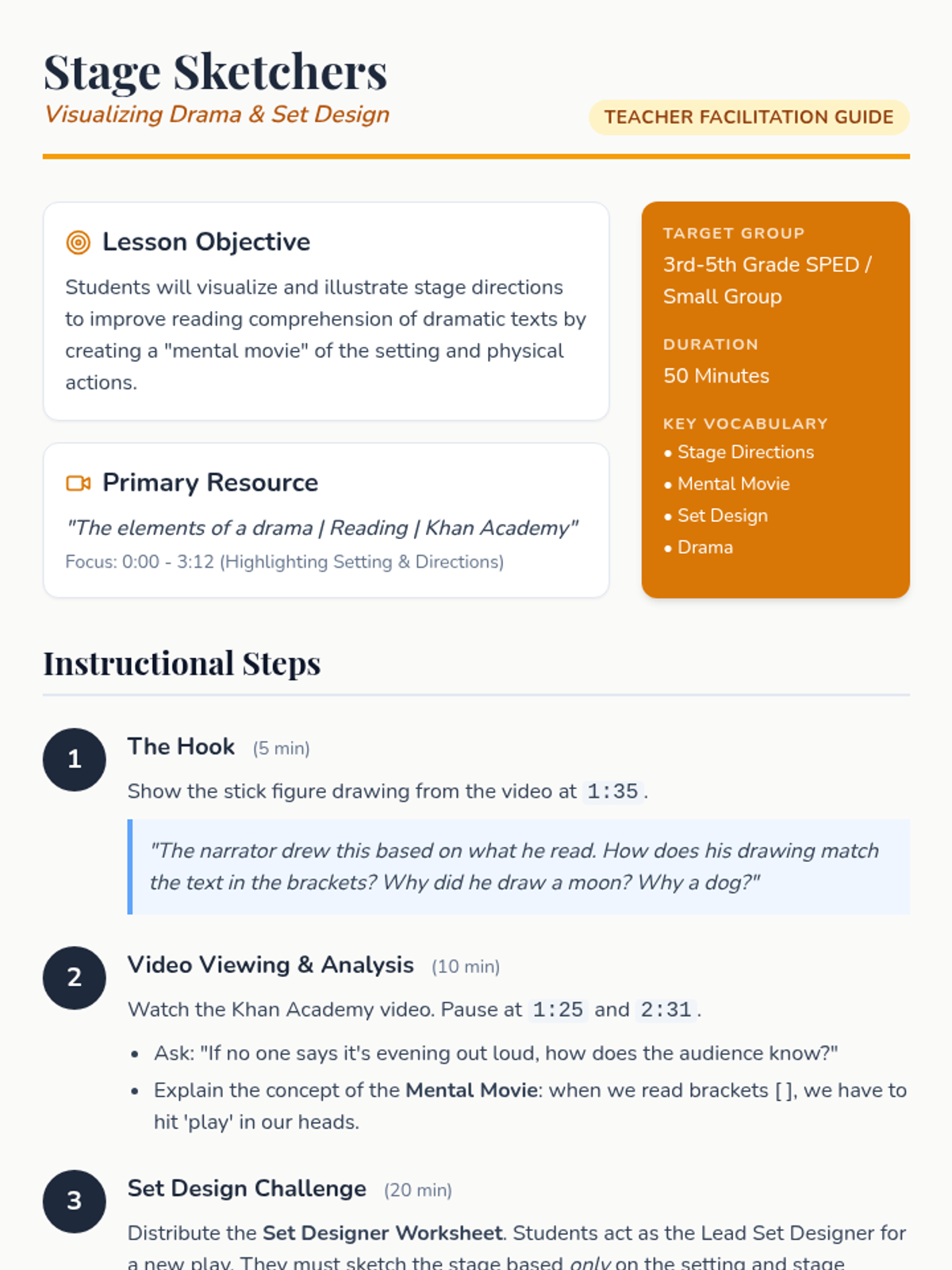
A comprehensive teacher facilitation guide for a lesson on visualizing stage directions. It includes an instructional sequence, differentiation strategies for small groups, and specific timing for video pauses and activities.
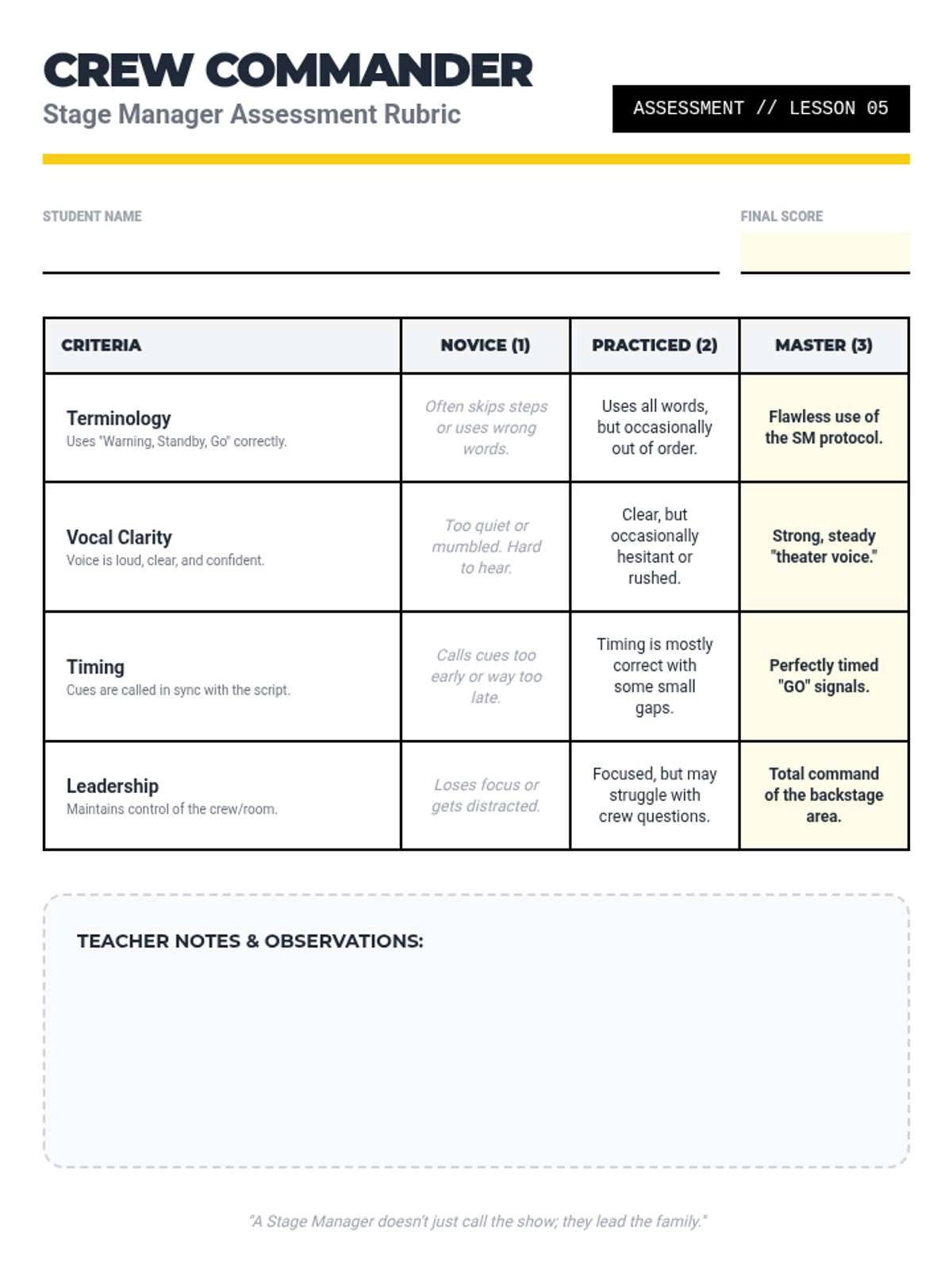
A teacher rubric to assess the "Stage Manager" simulation, evaluating terminology, vocal clarity, timing, and leadership.