Fundamental notation, instrumental proficiency, and vocal techniques across various genres. Connects historical analysis with original composition and creative performance skills.
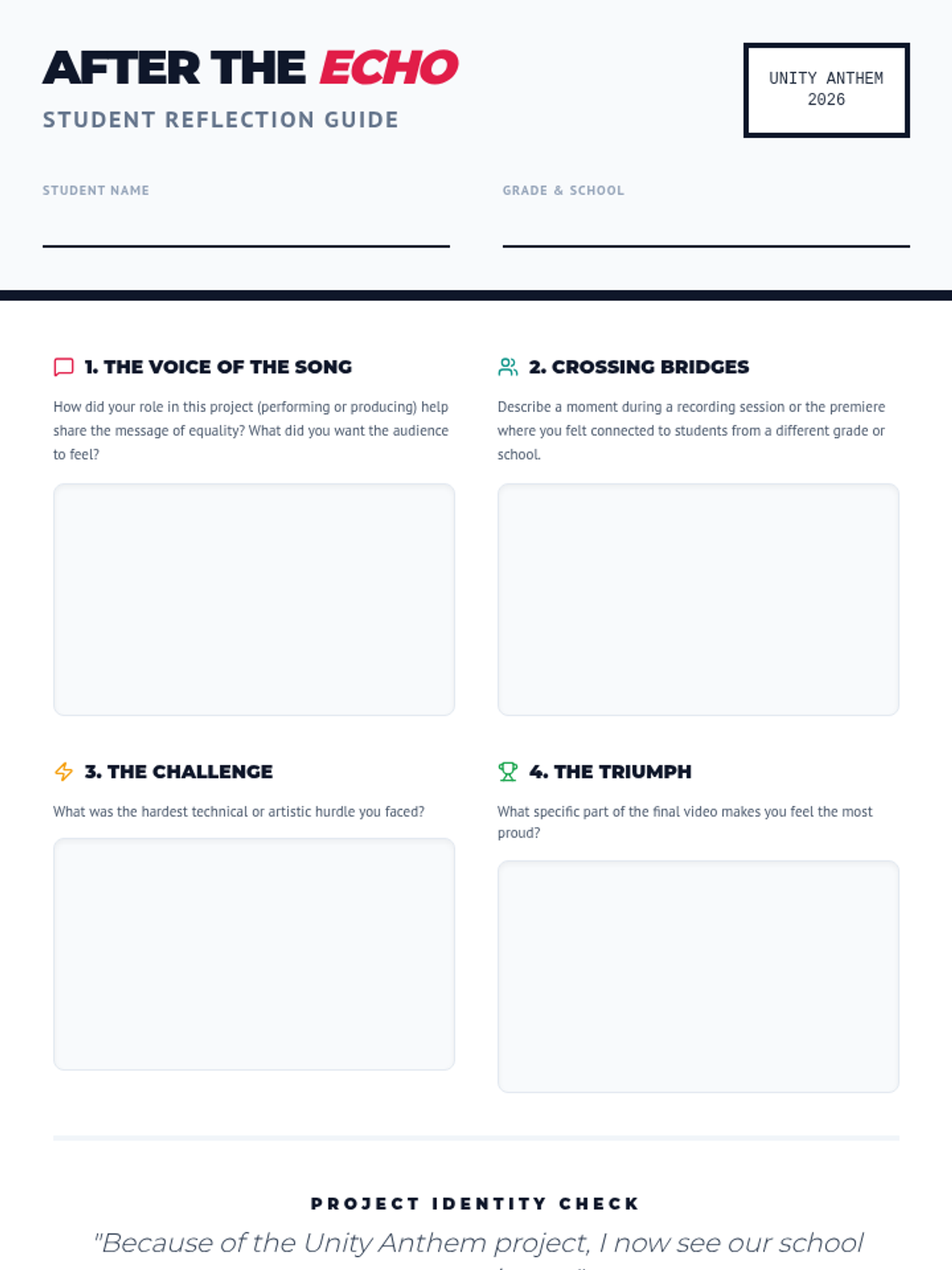
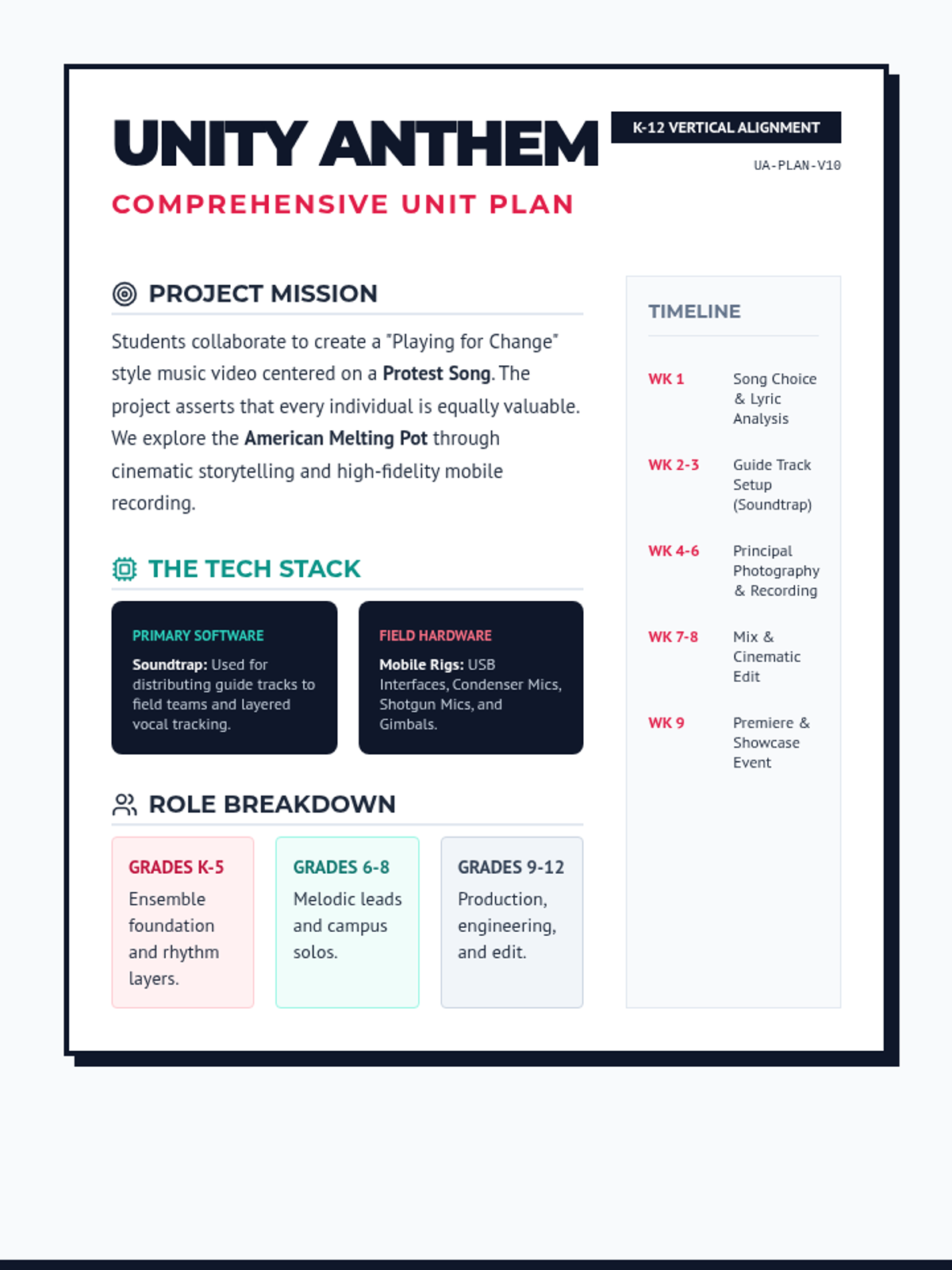
The final premiere of the music video at the All-town Music Tech Showcase, followed by a live performance and student reflection on the collaborative process.
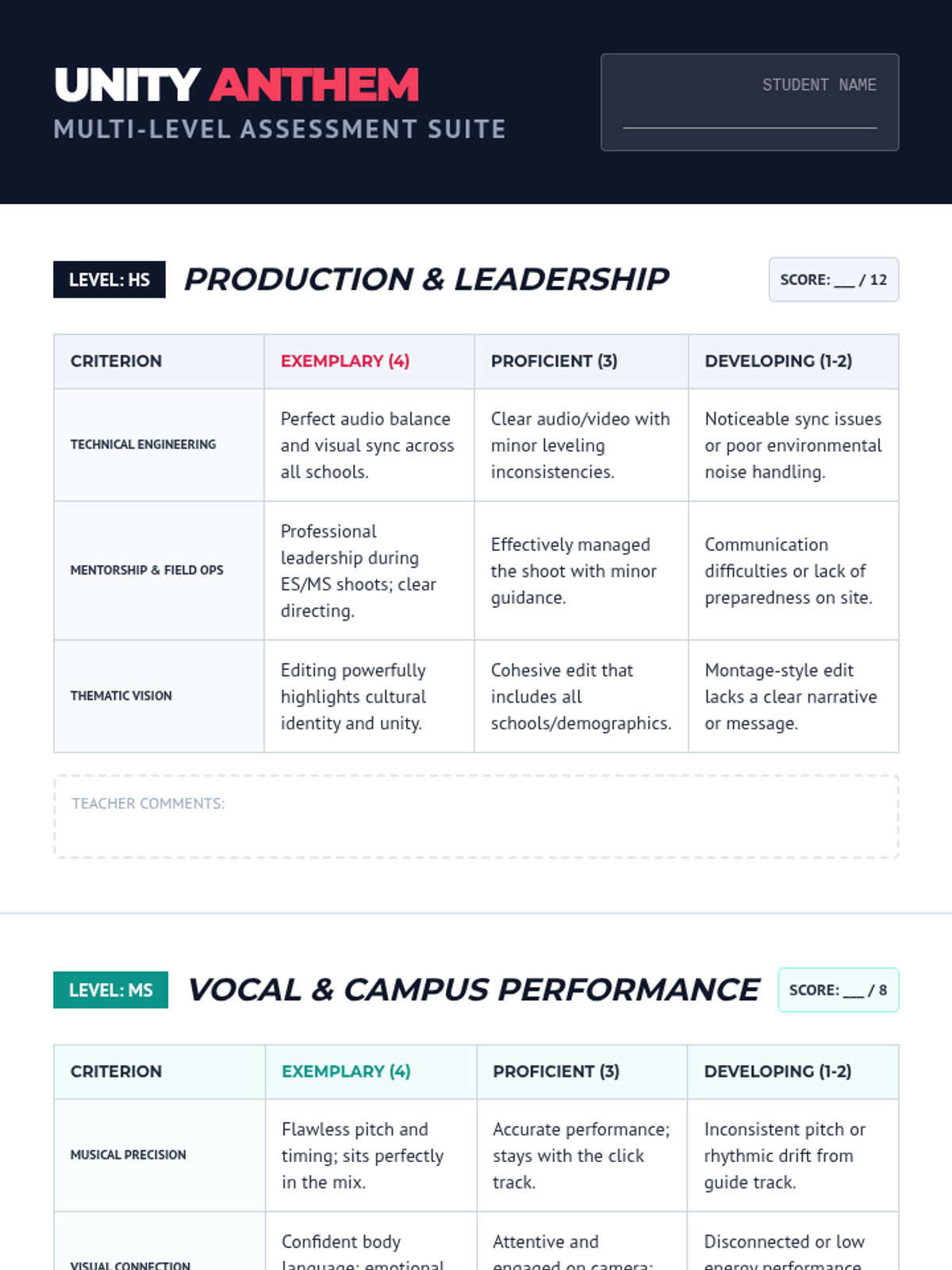
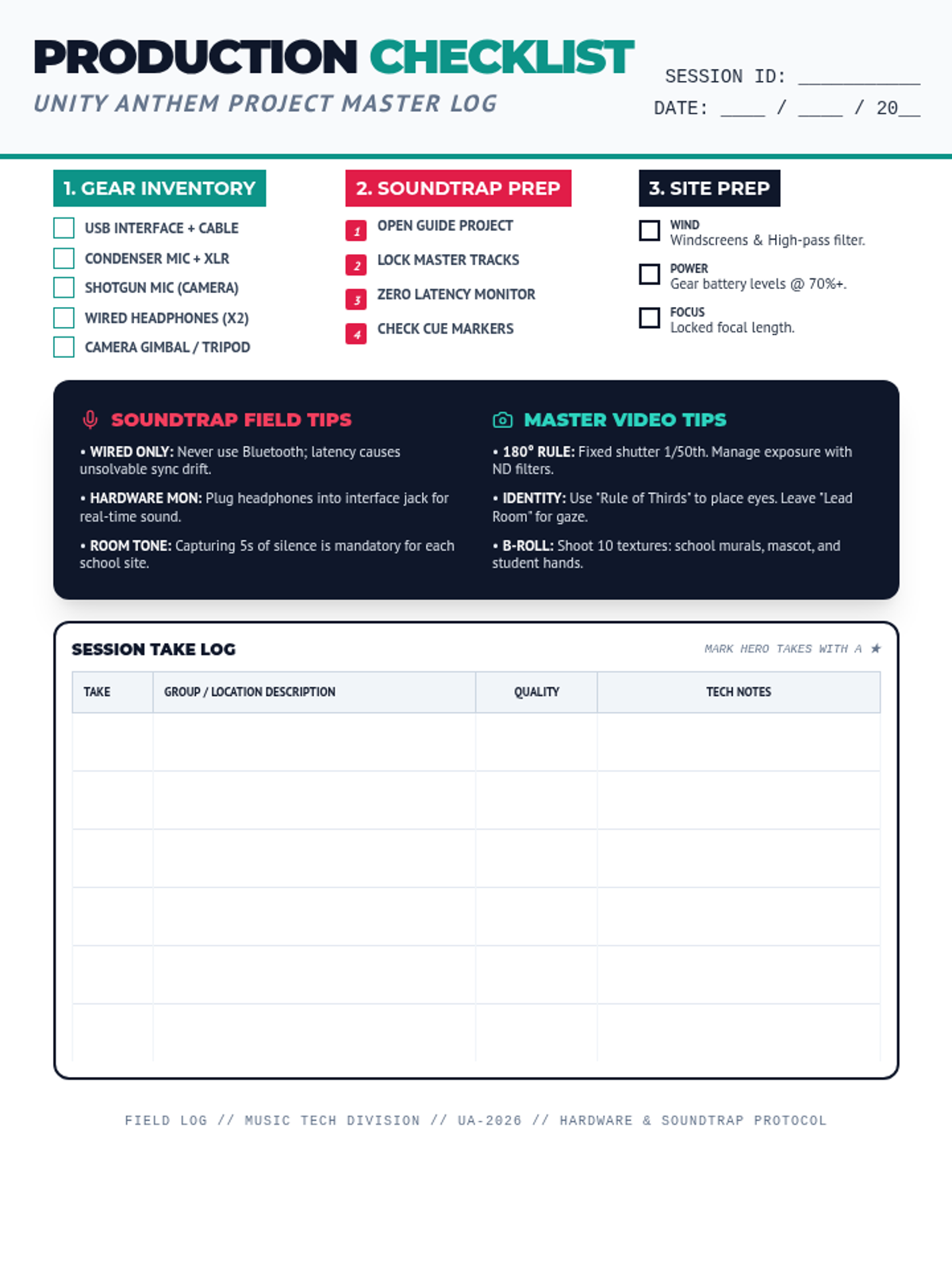
The technical phase involving on-location recordings at elementary and middle schools, followed by high school student-led mixing and video production.
Introduction to the 'Playing for Change' concept, exploring the themes of the chosen protest song, and laying the groundwork for the K-12 collaboration.
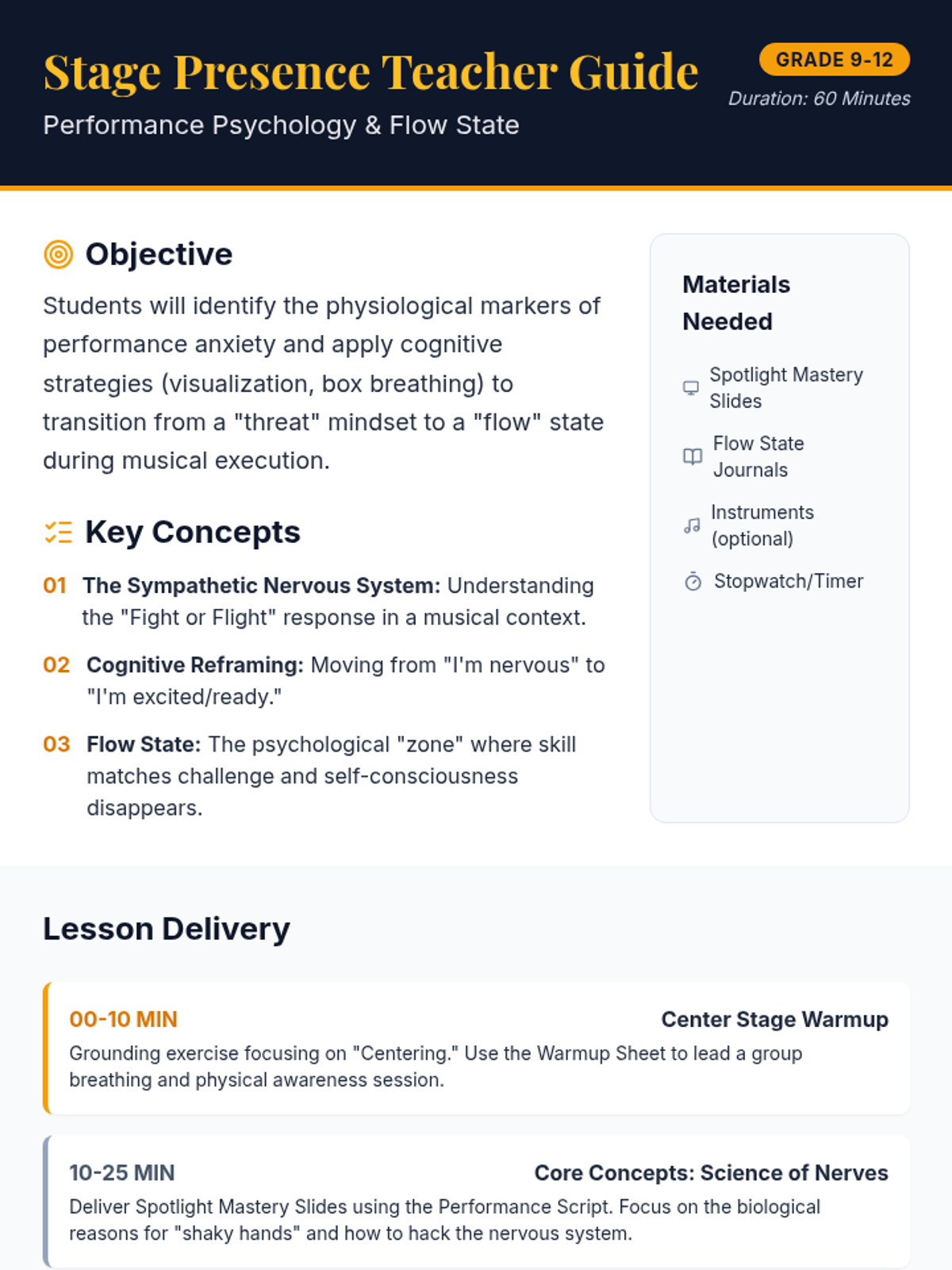
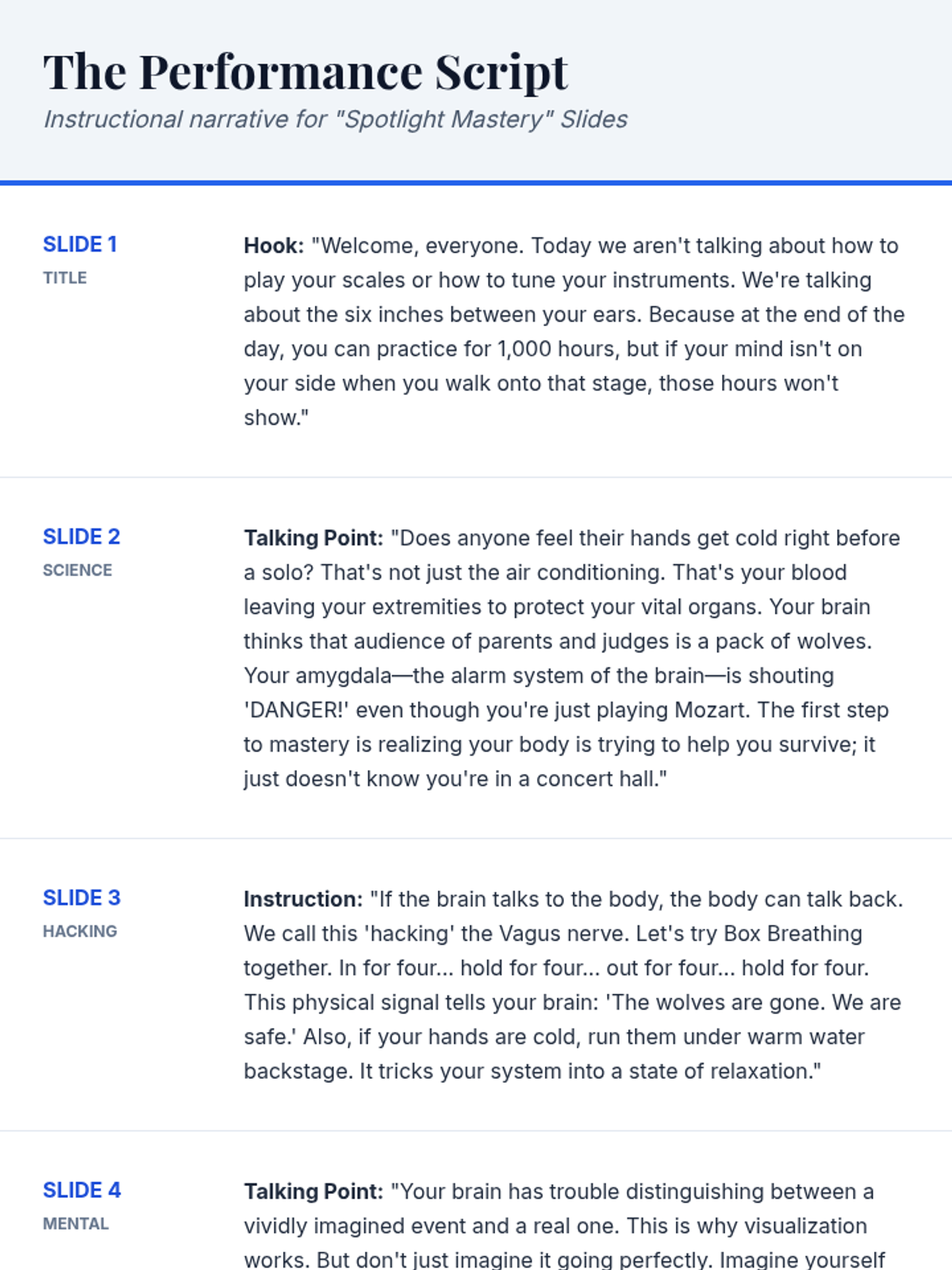
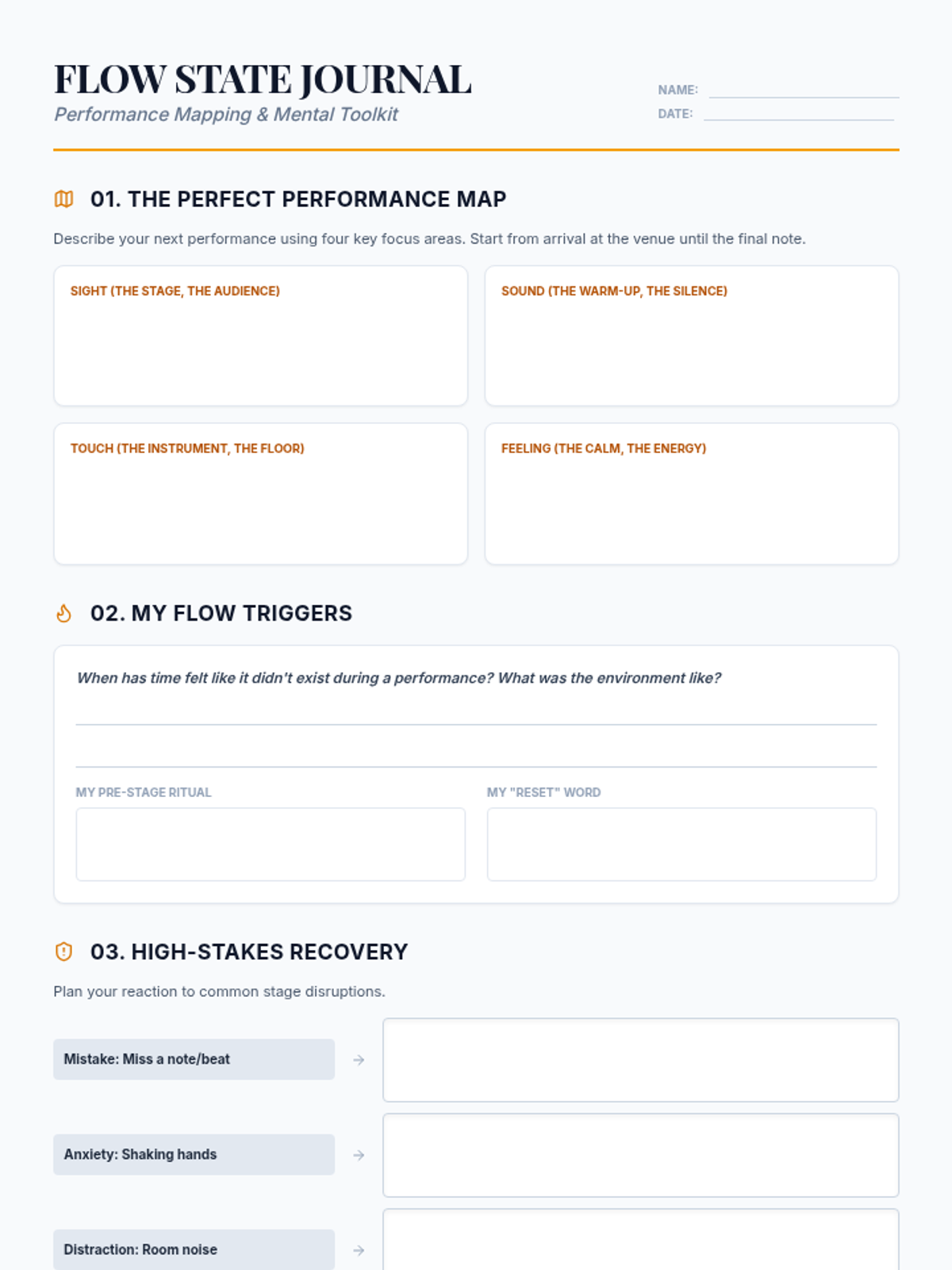
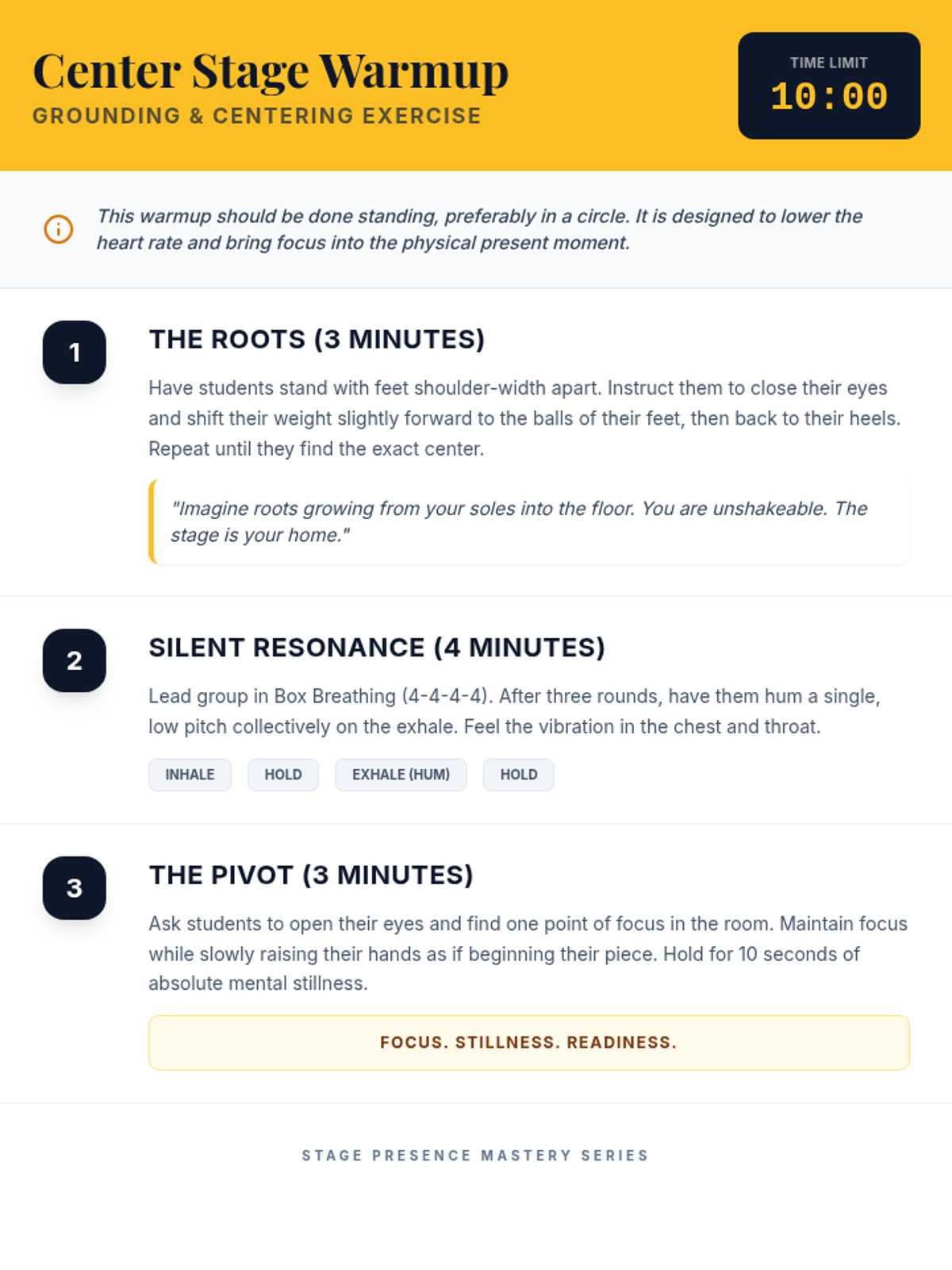
A comprehensive lesson for high school musicians on managing performance anxiety through mindfulness, cognitive strategies, and achieving flow state. Students develop a personal mental toolkit for high-stakes performances.
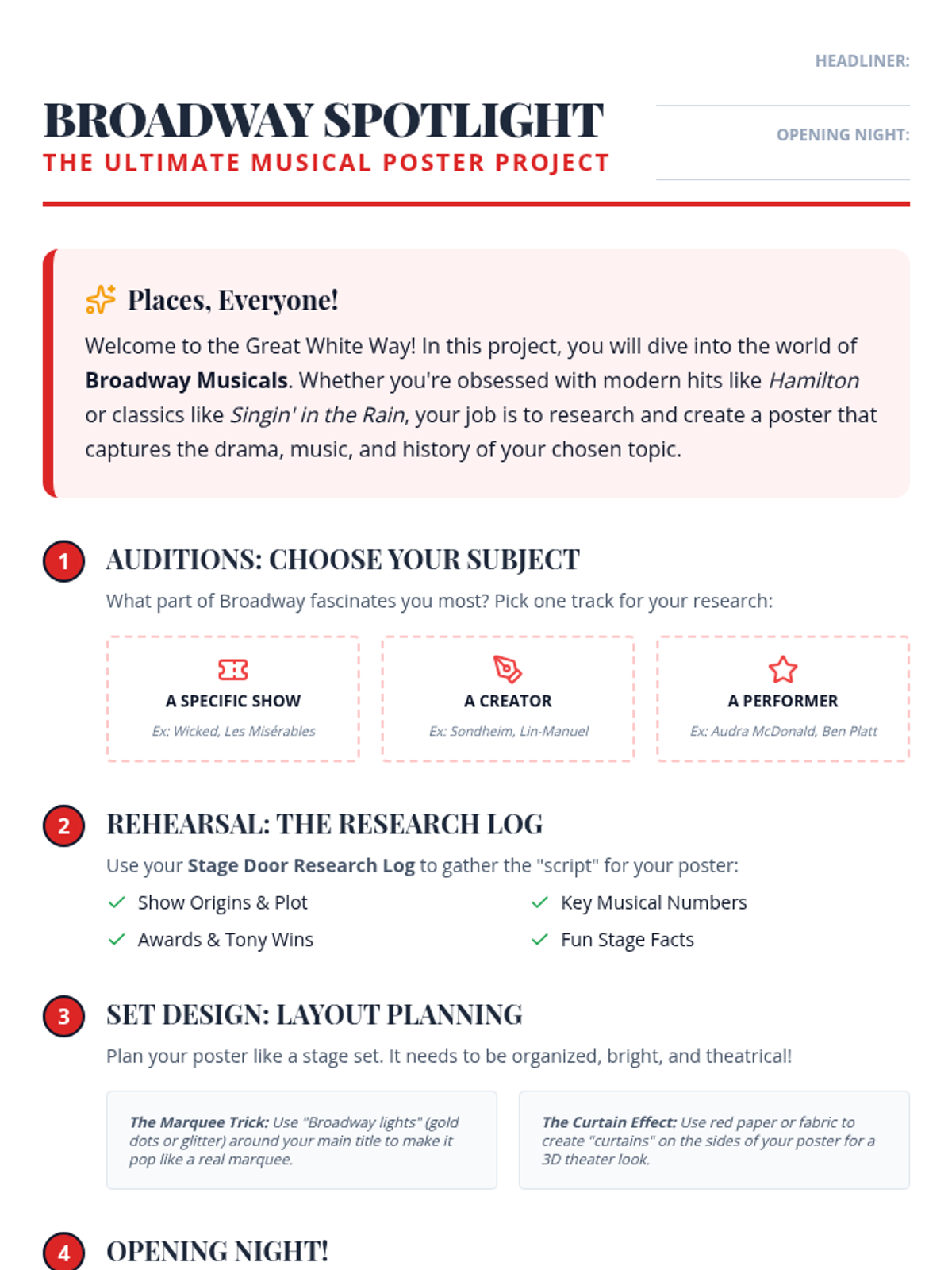
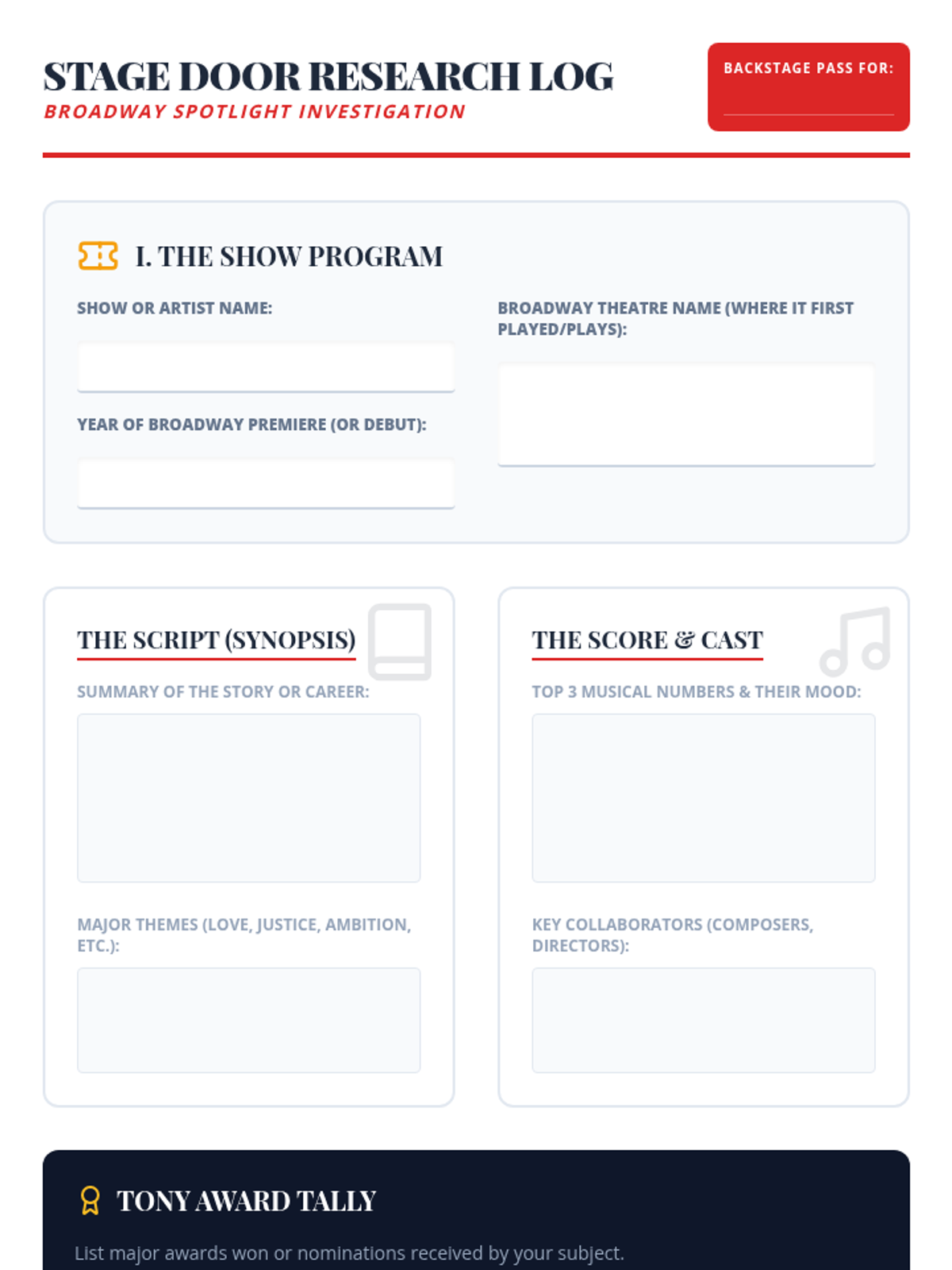
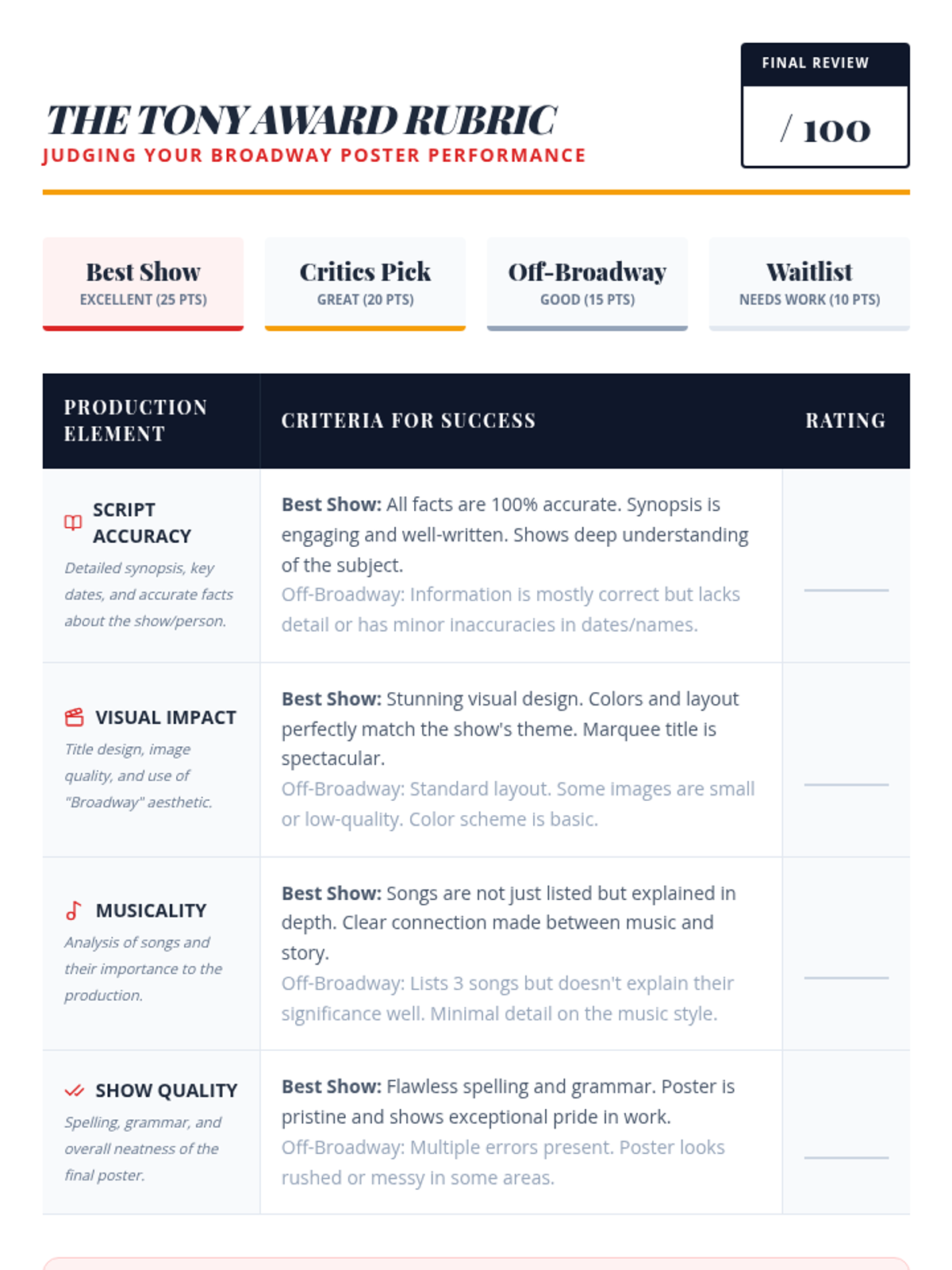
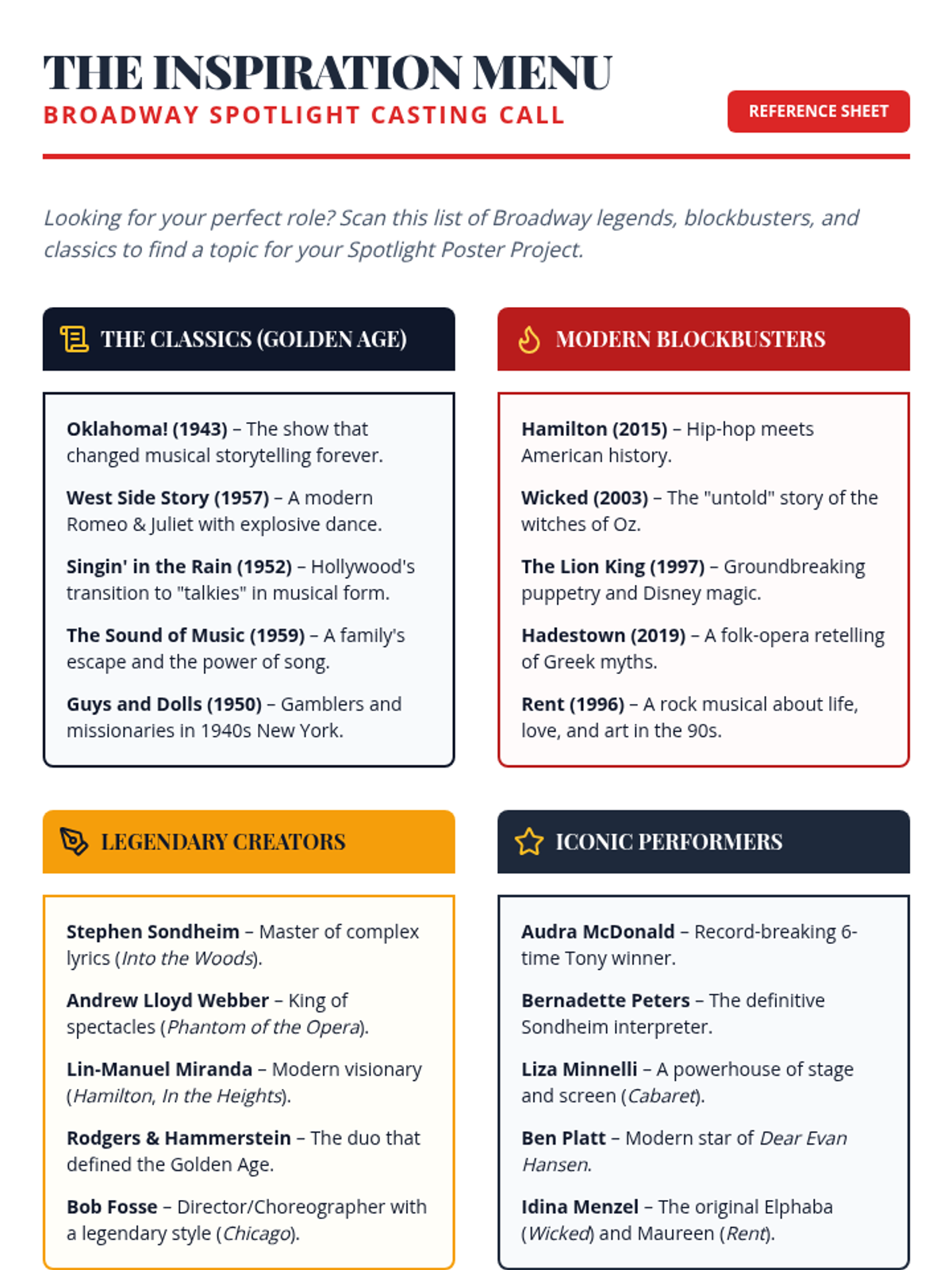
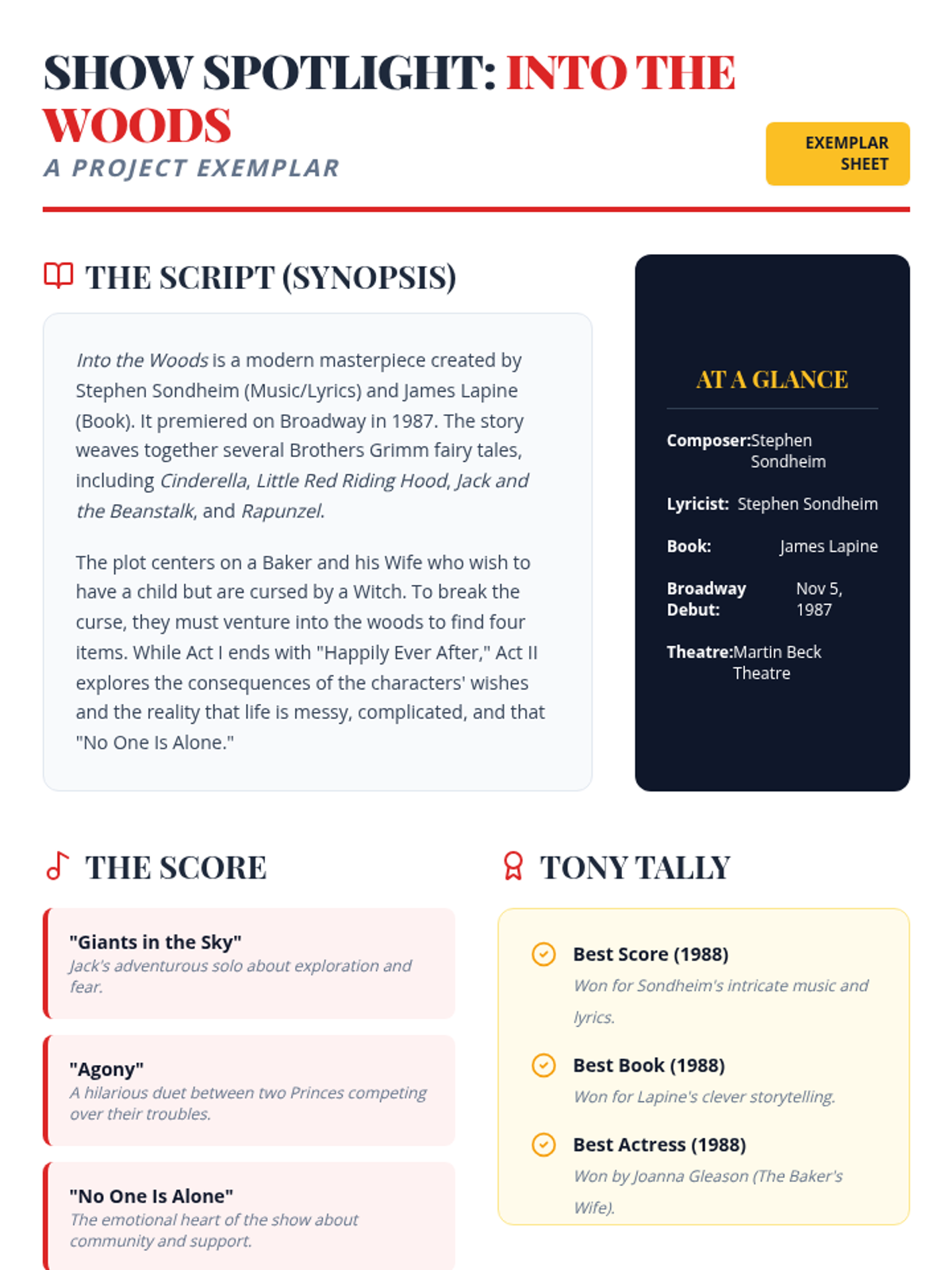
A creative project where students research and present the magic of Broadway. Students can choose a specific musical, a legendary composer, or a famous performer to showcase on an informational poster.
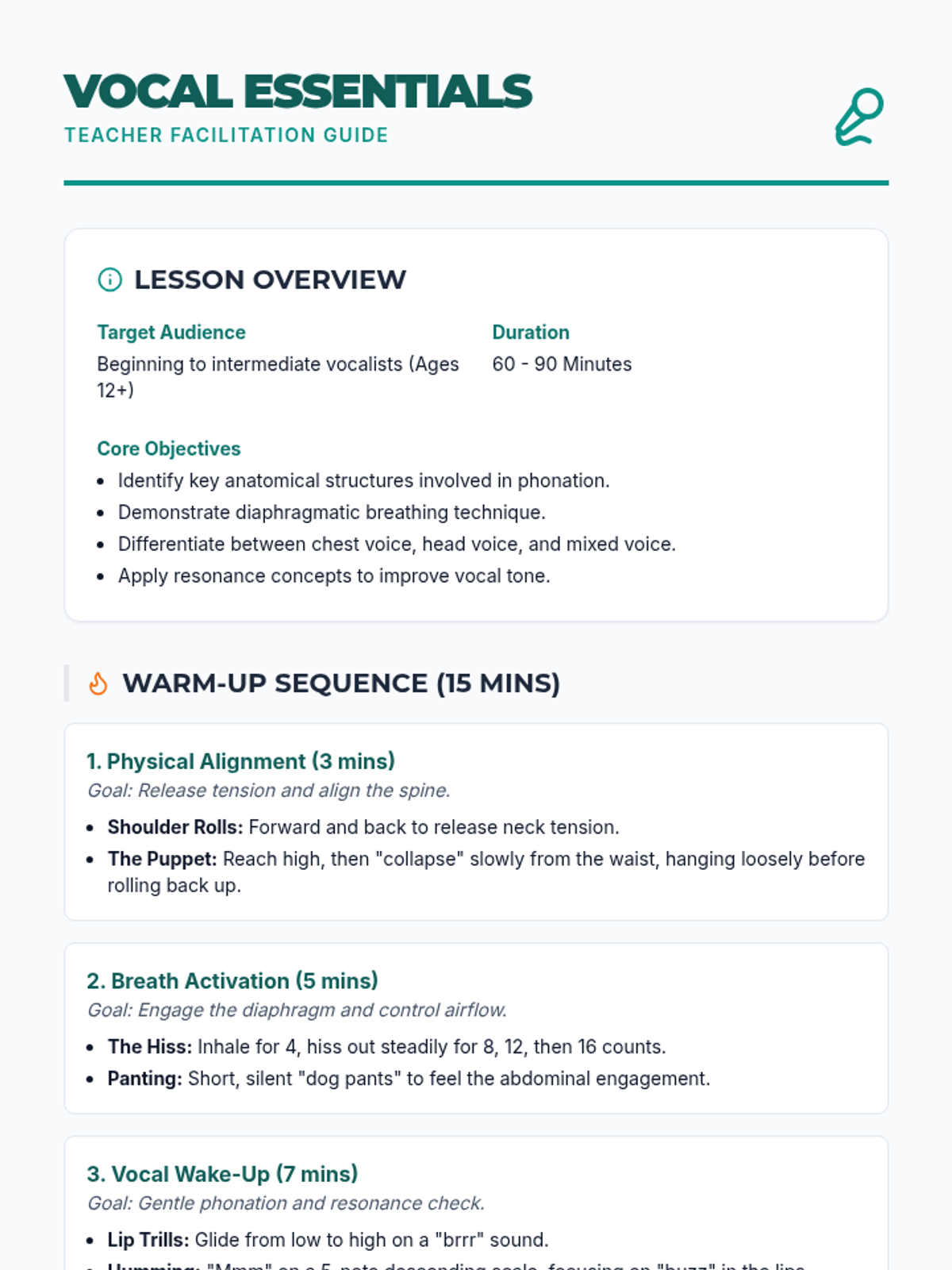
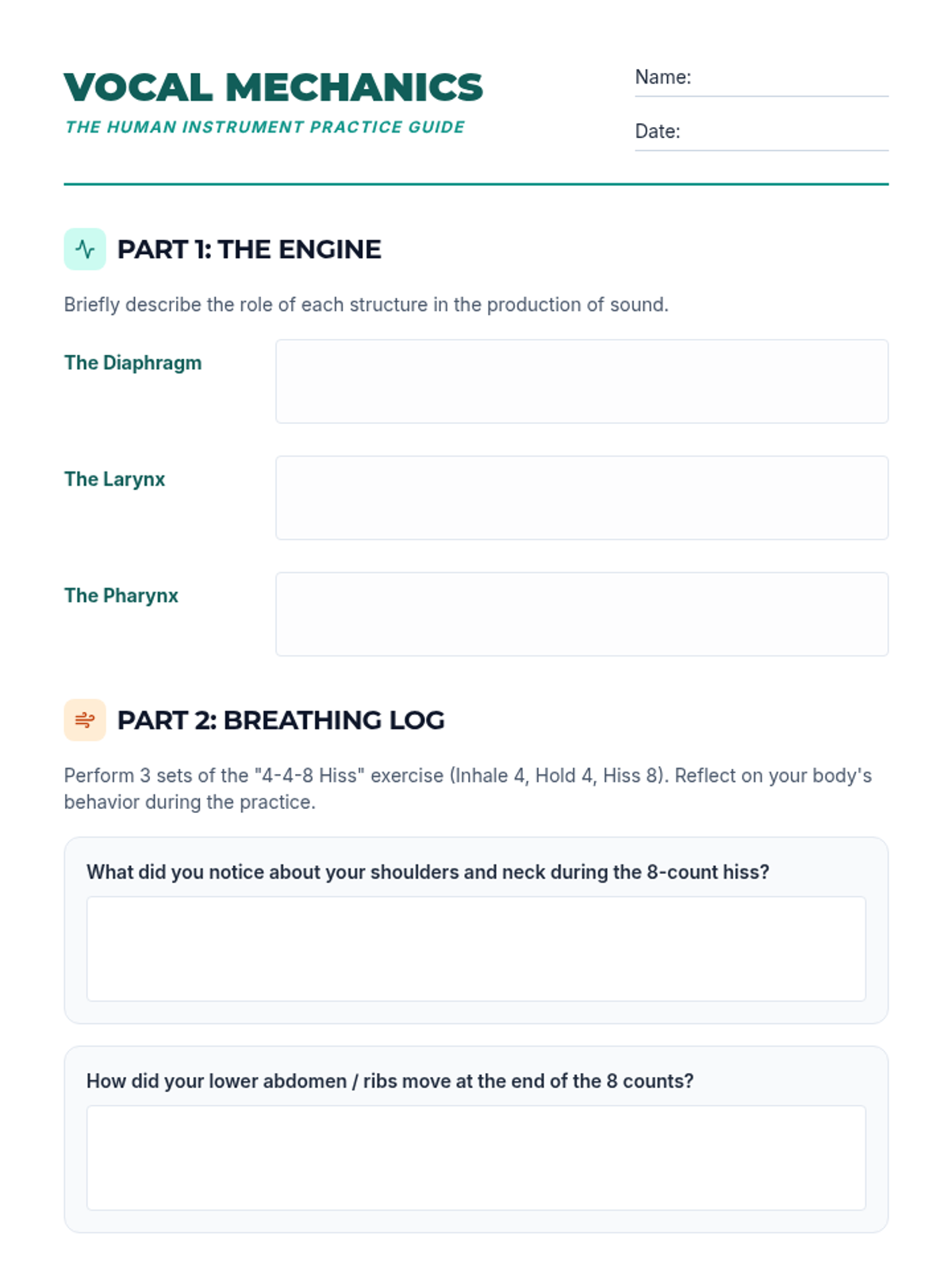
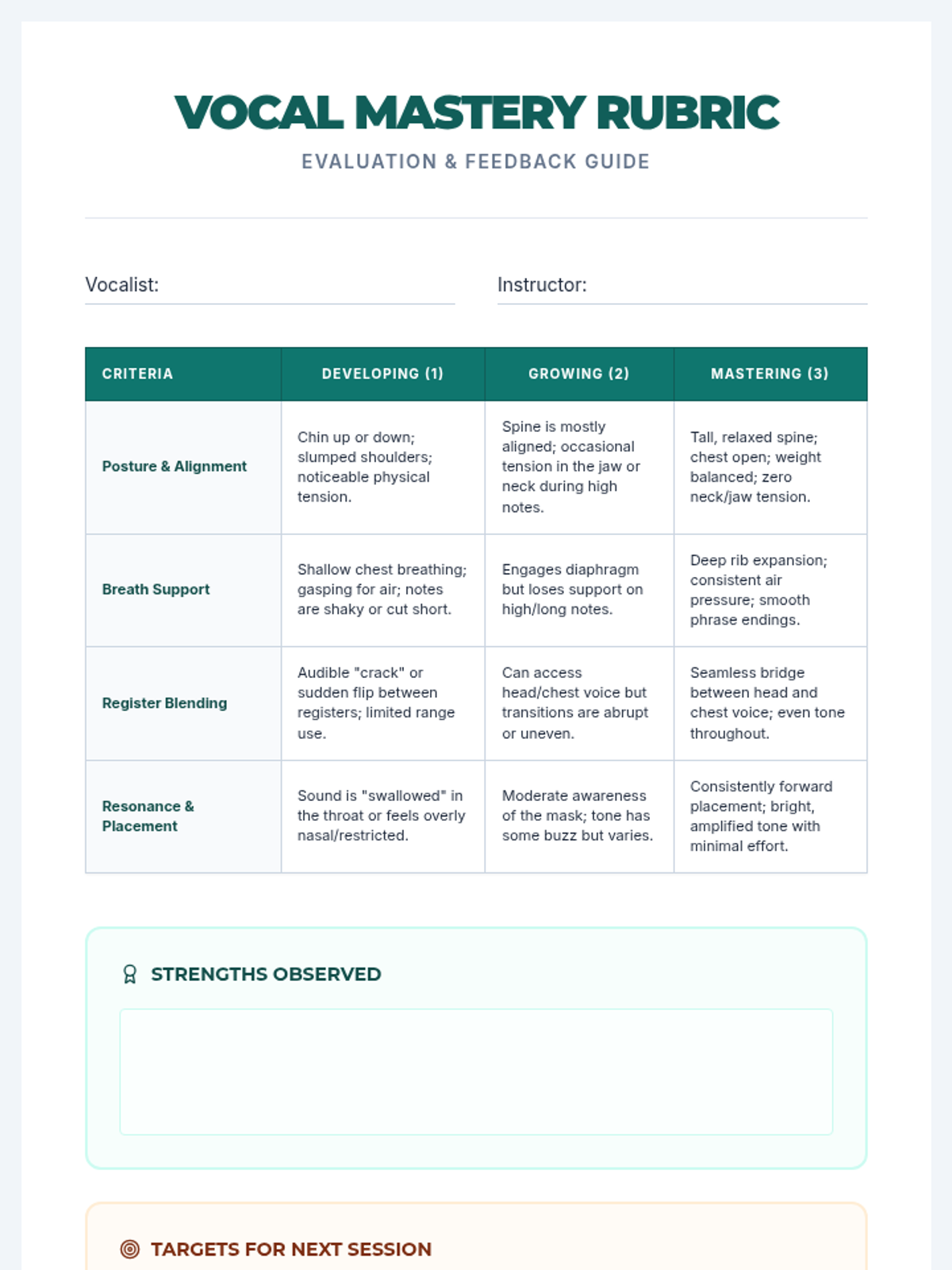
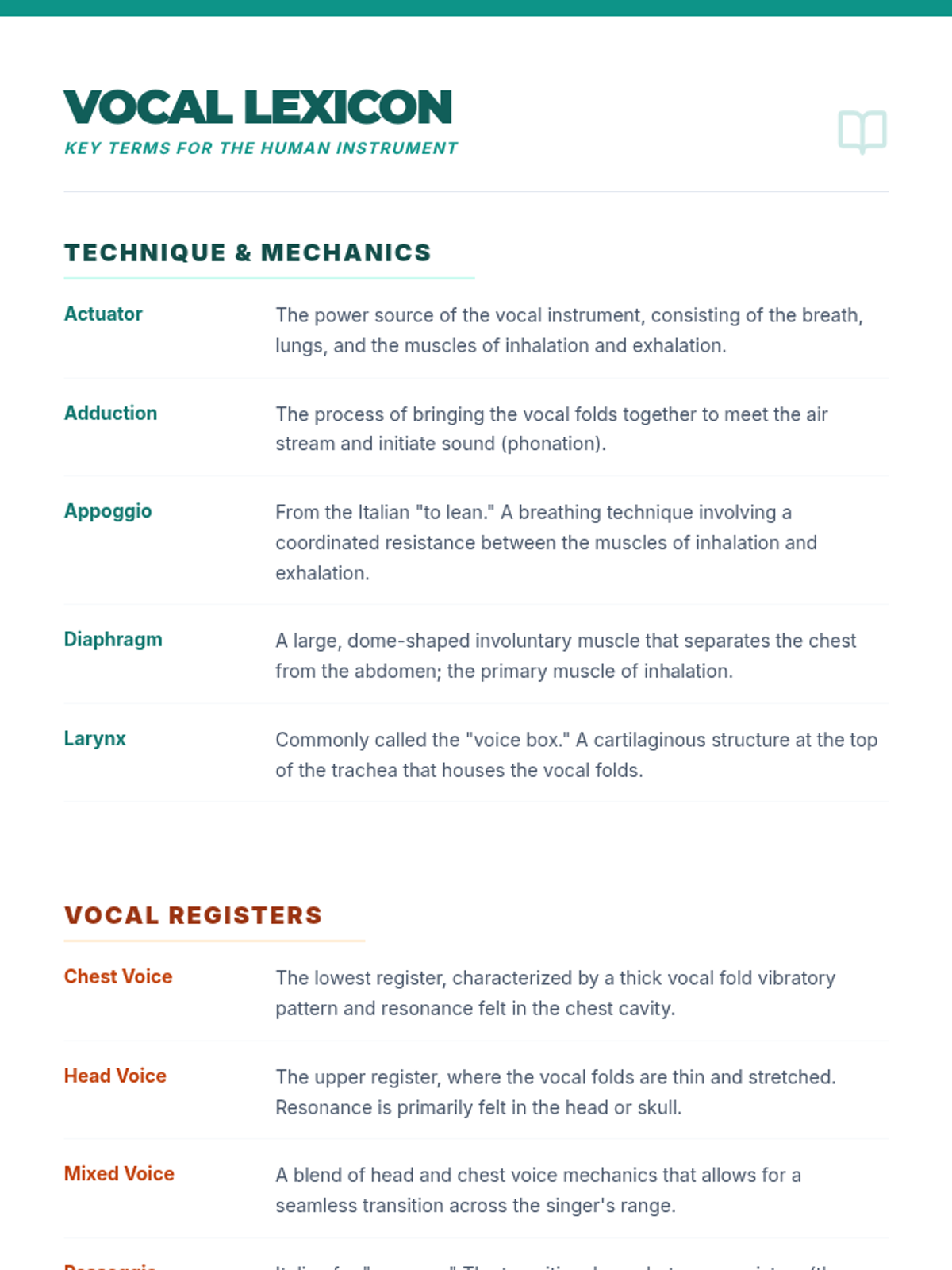
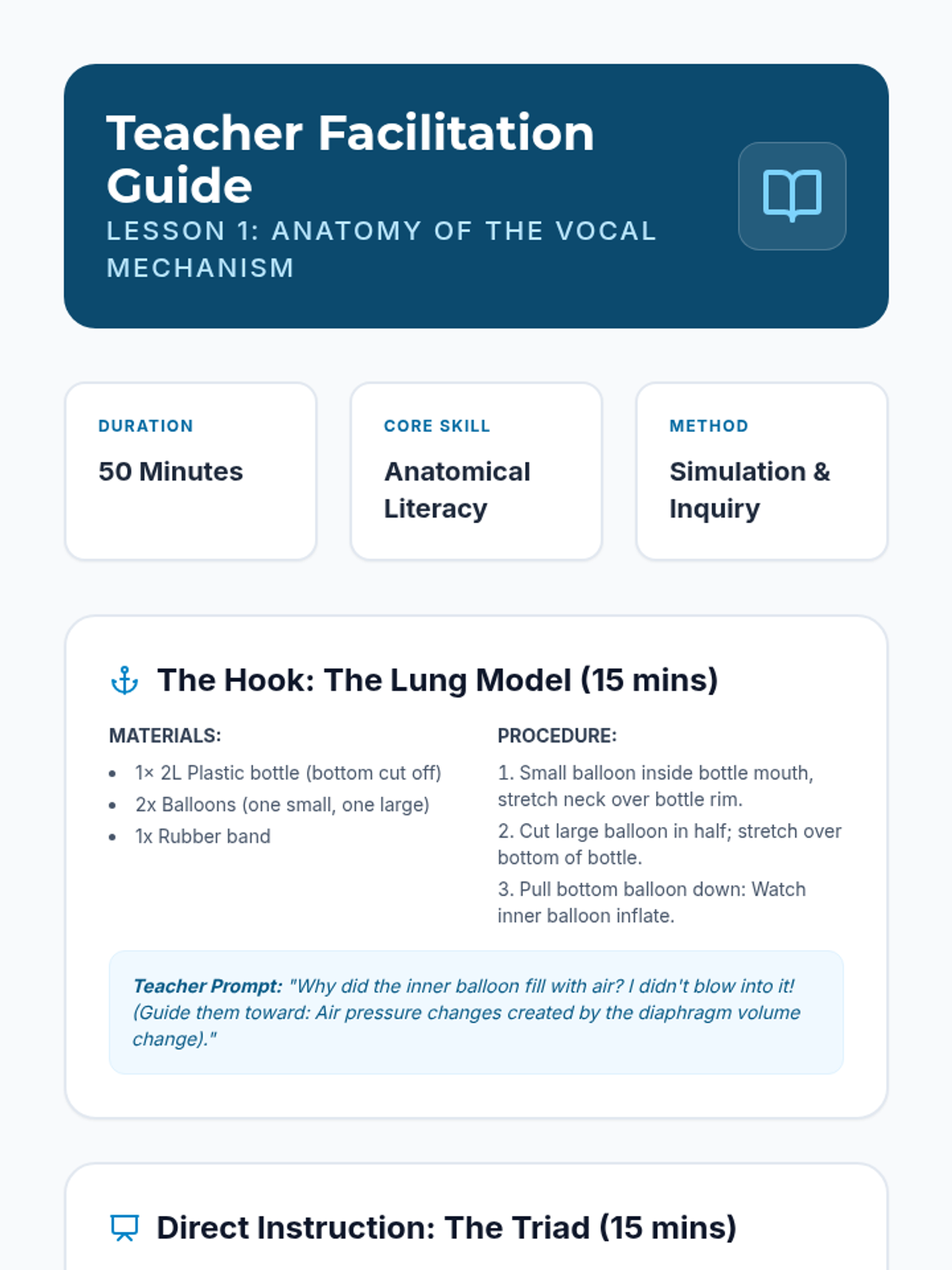
A comprehensive introduction to the physiological and technical aspects of singing, covering vocal anatomy, breath support, vocal registers, and resonance.
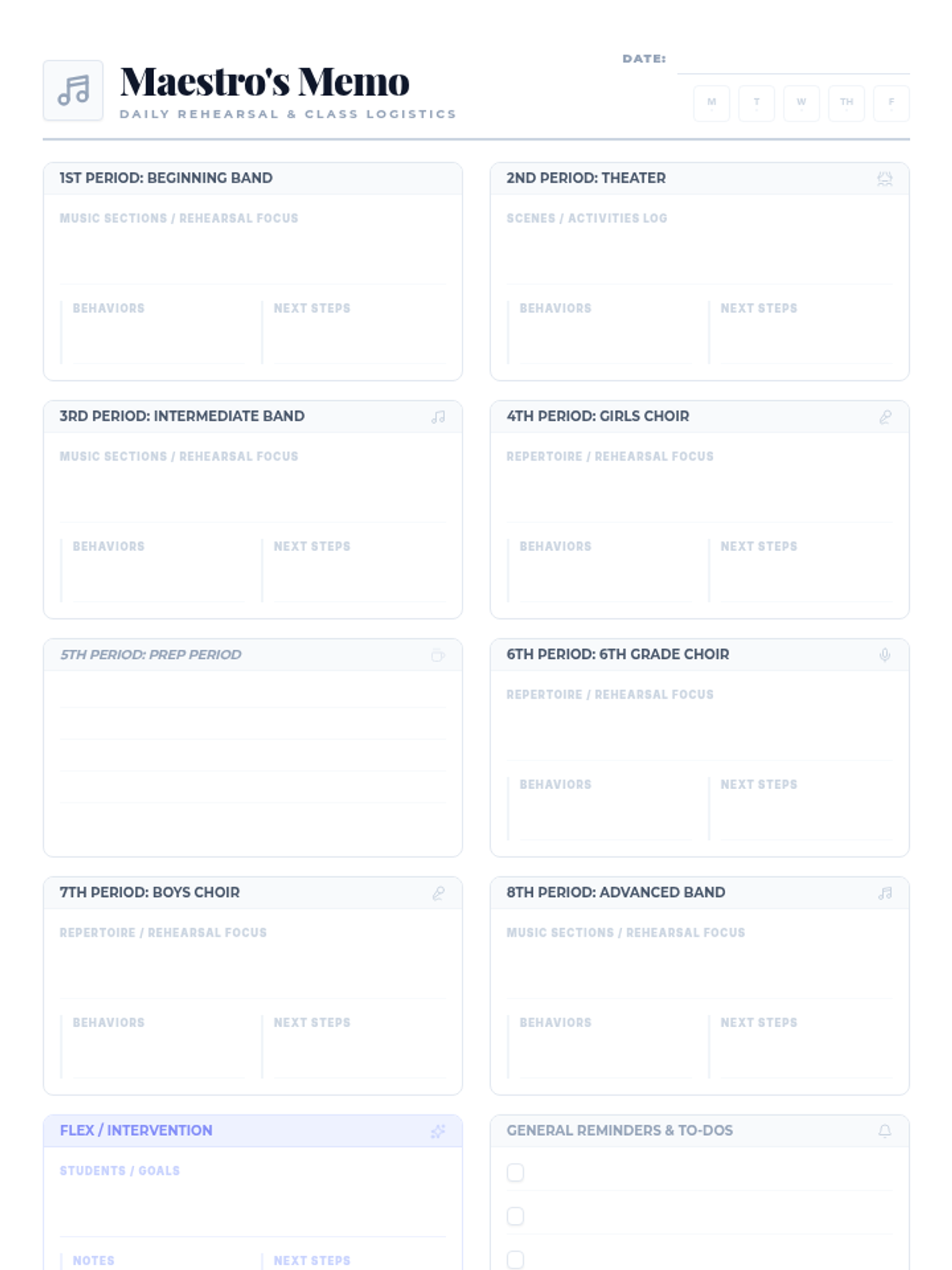
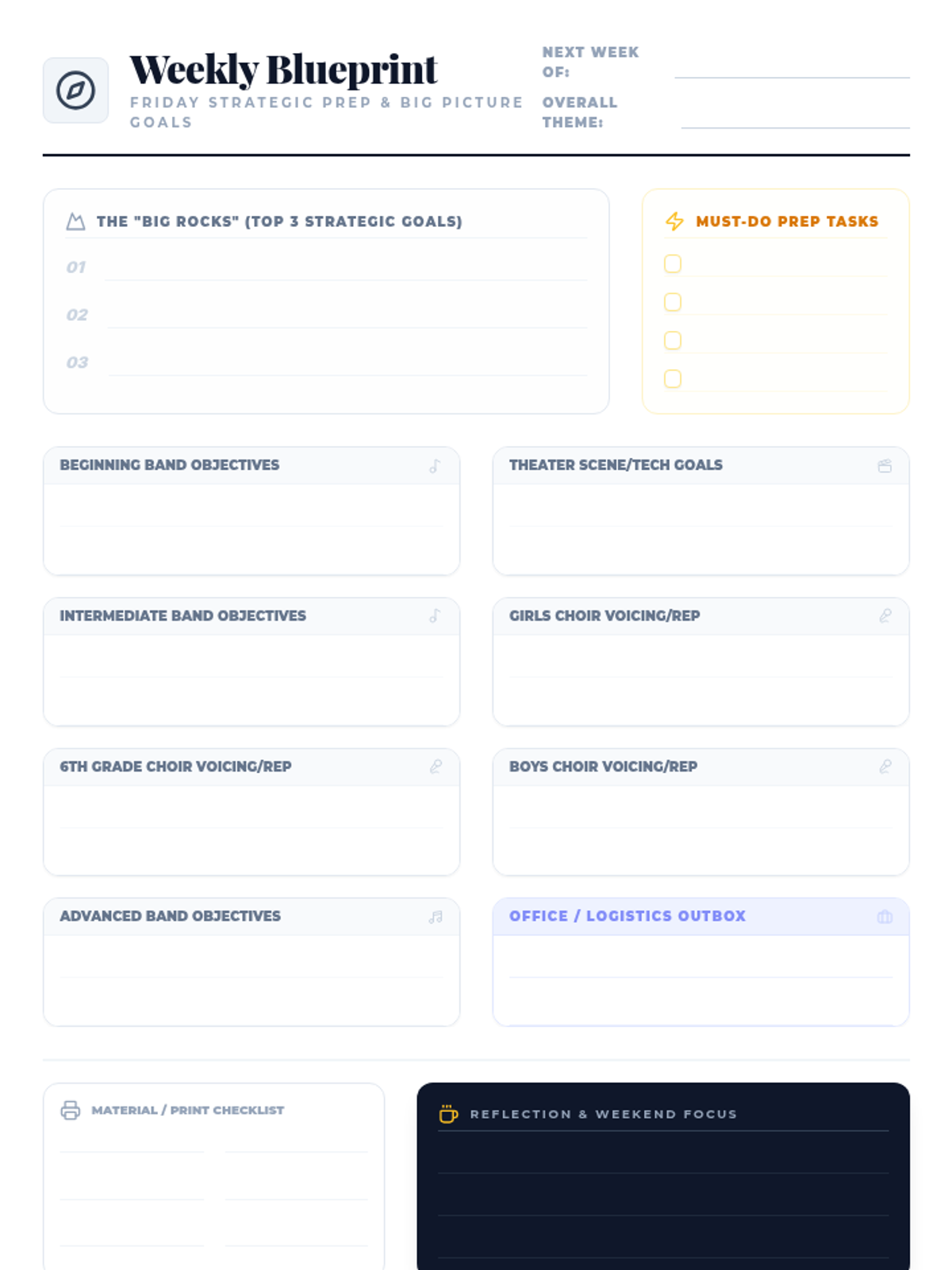
A collection of specialized organization and planning resources designed for a band, choir, and theater teacher managing multiple ensembles and a high-volume performance schedule.
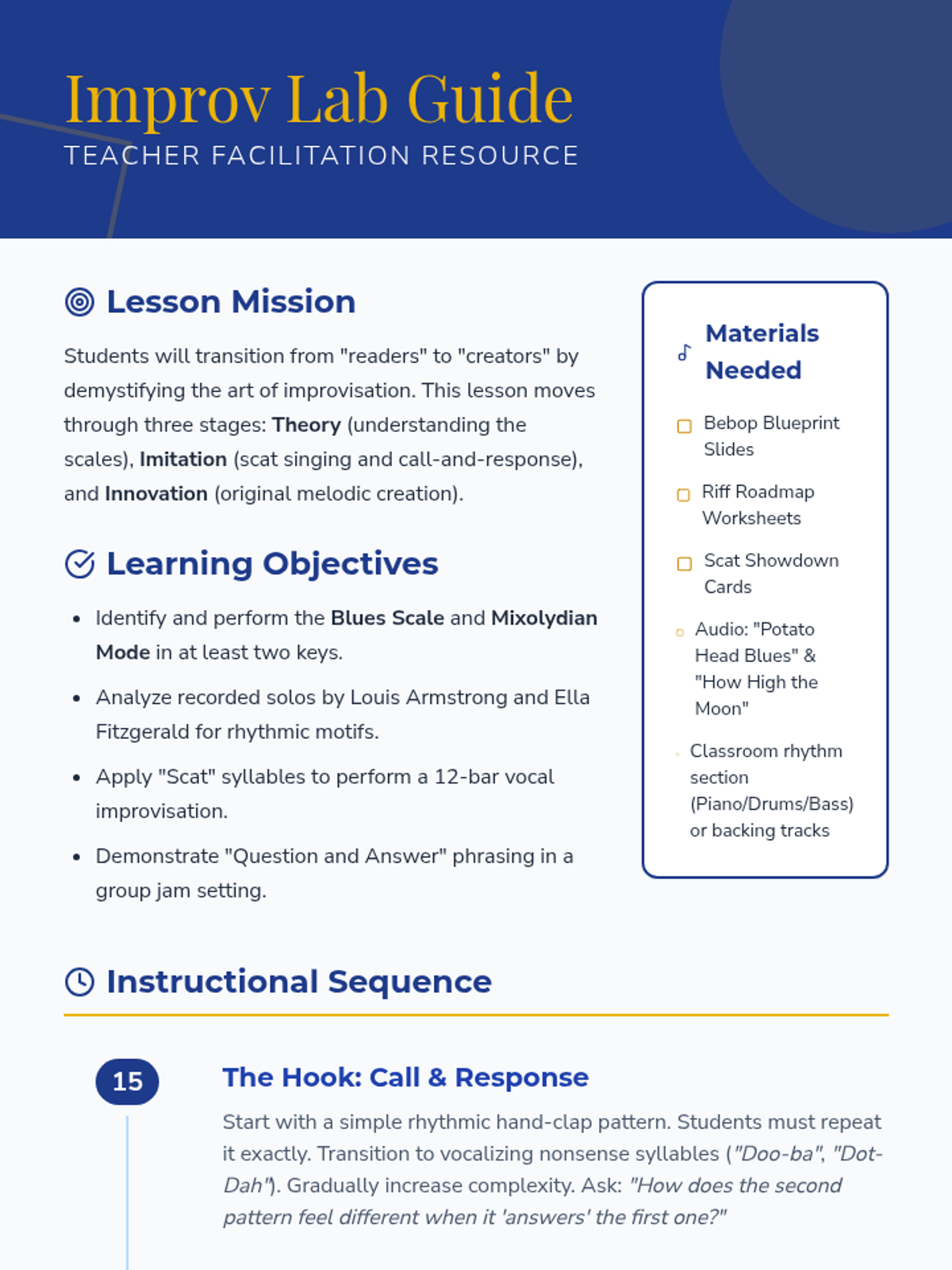
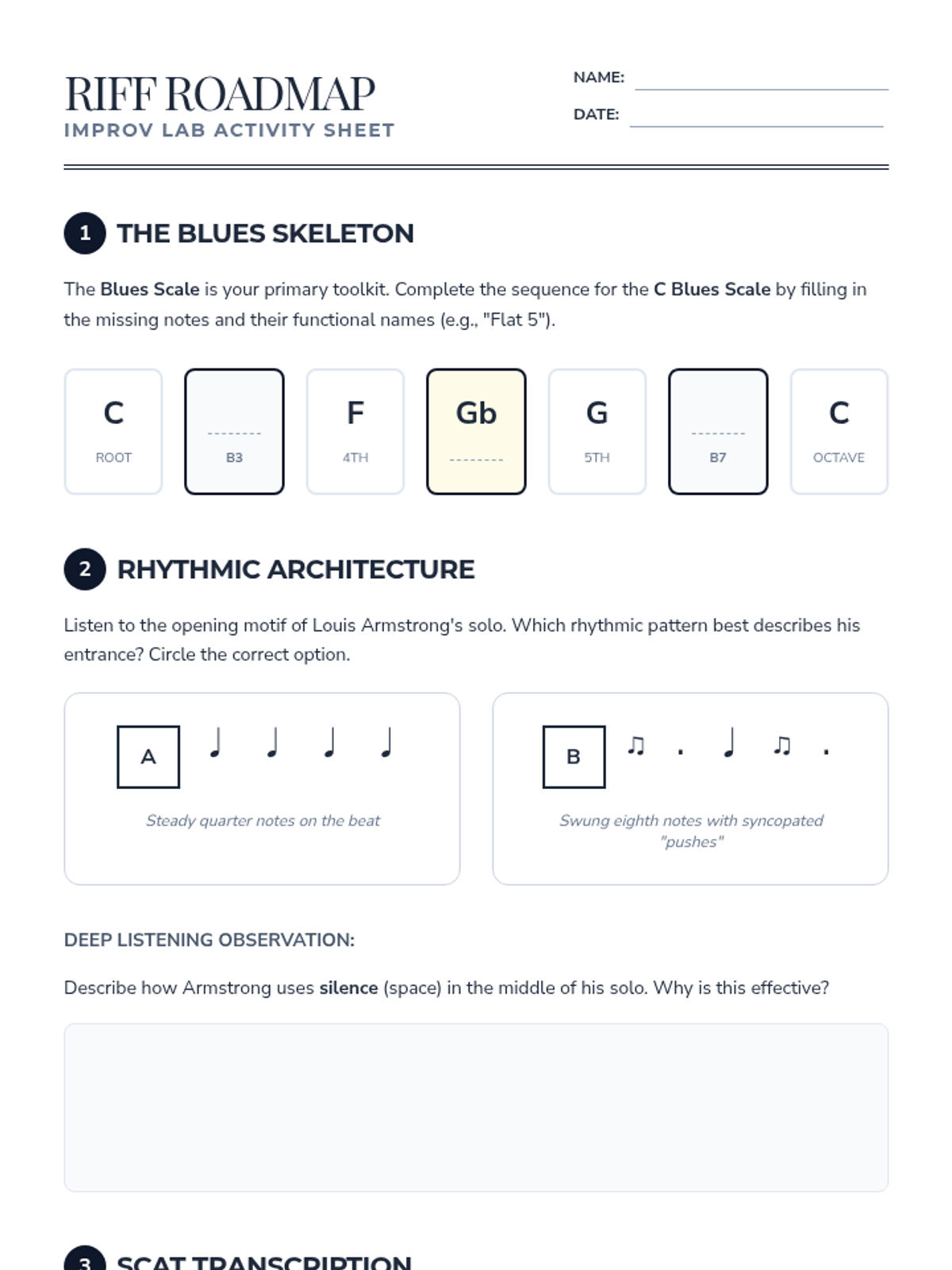
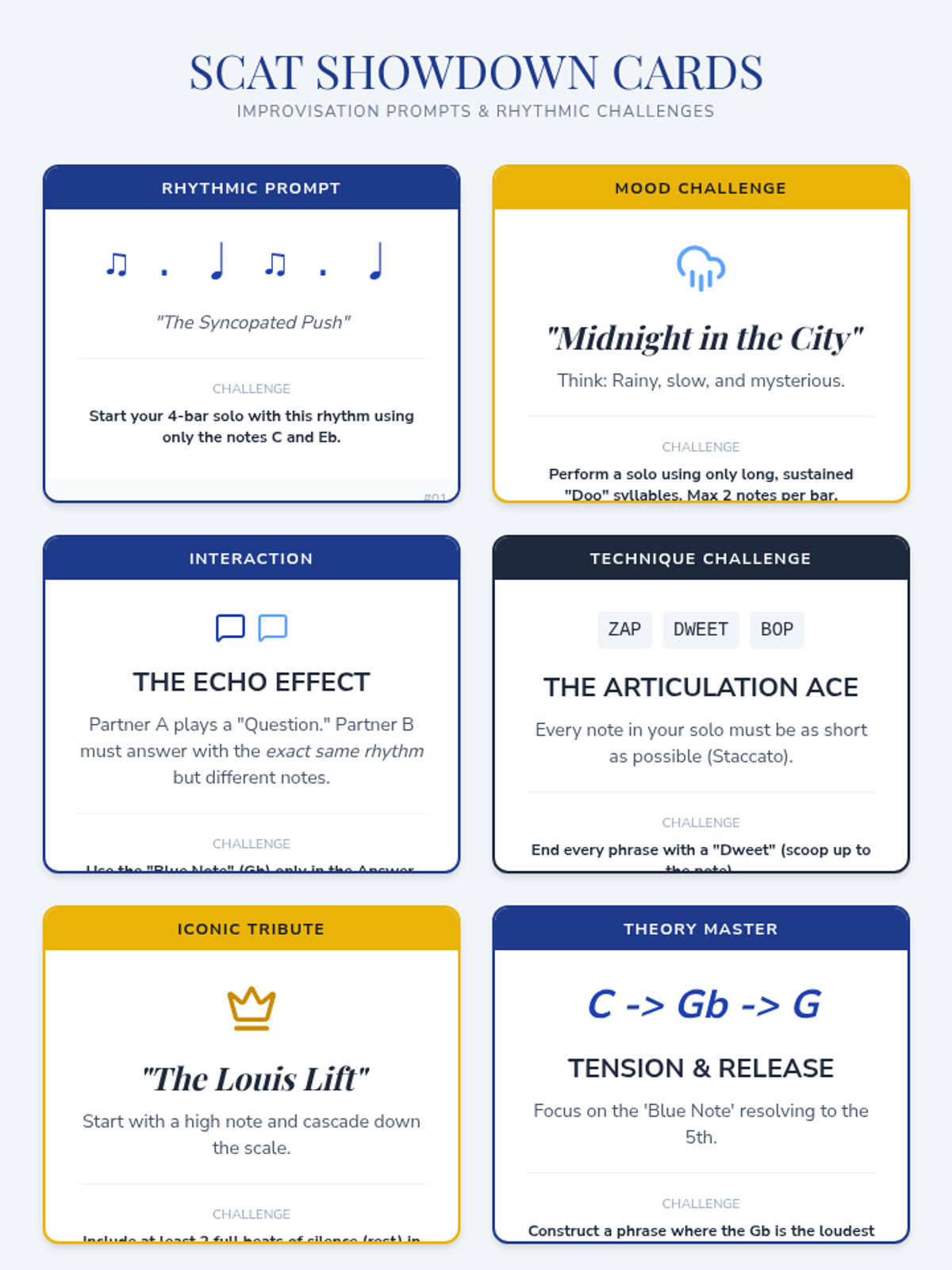
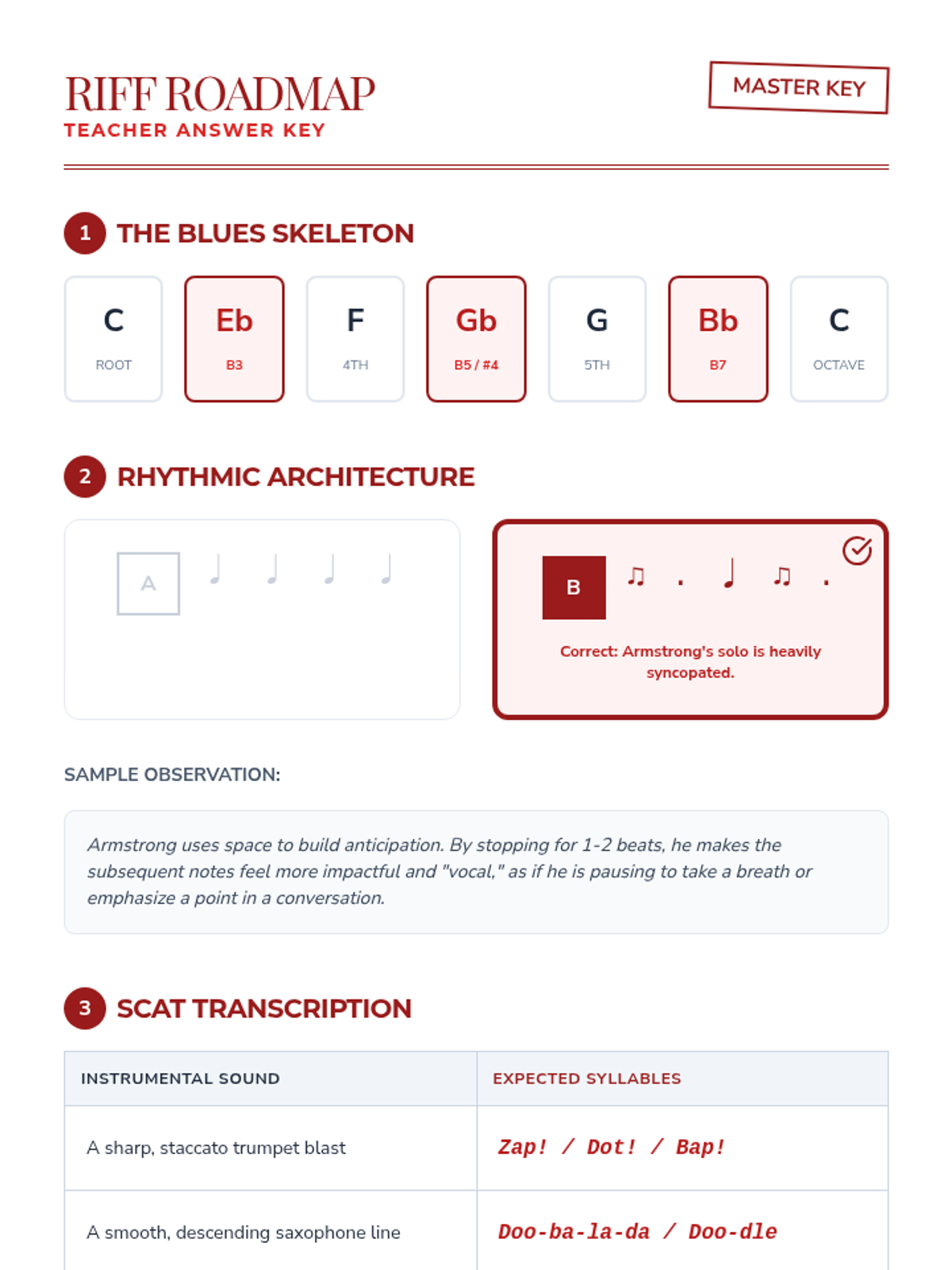
A comprehensive lesson for high school students to master the basics of jazz improvisation through theory, vocal exercises, and analysis of iconic solos.
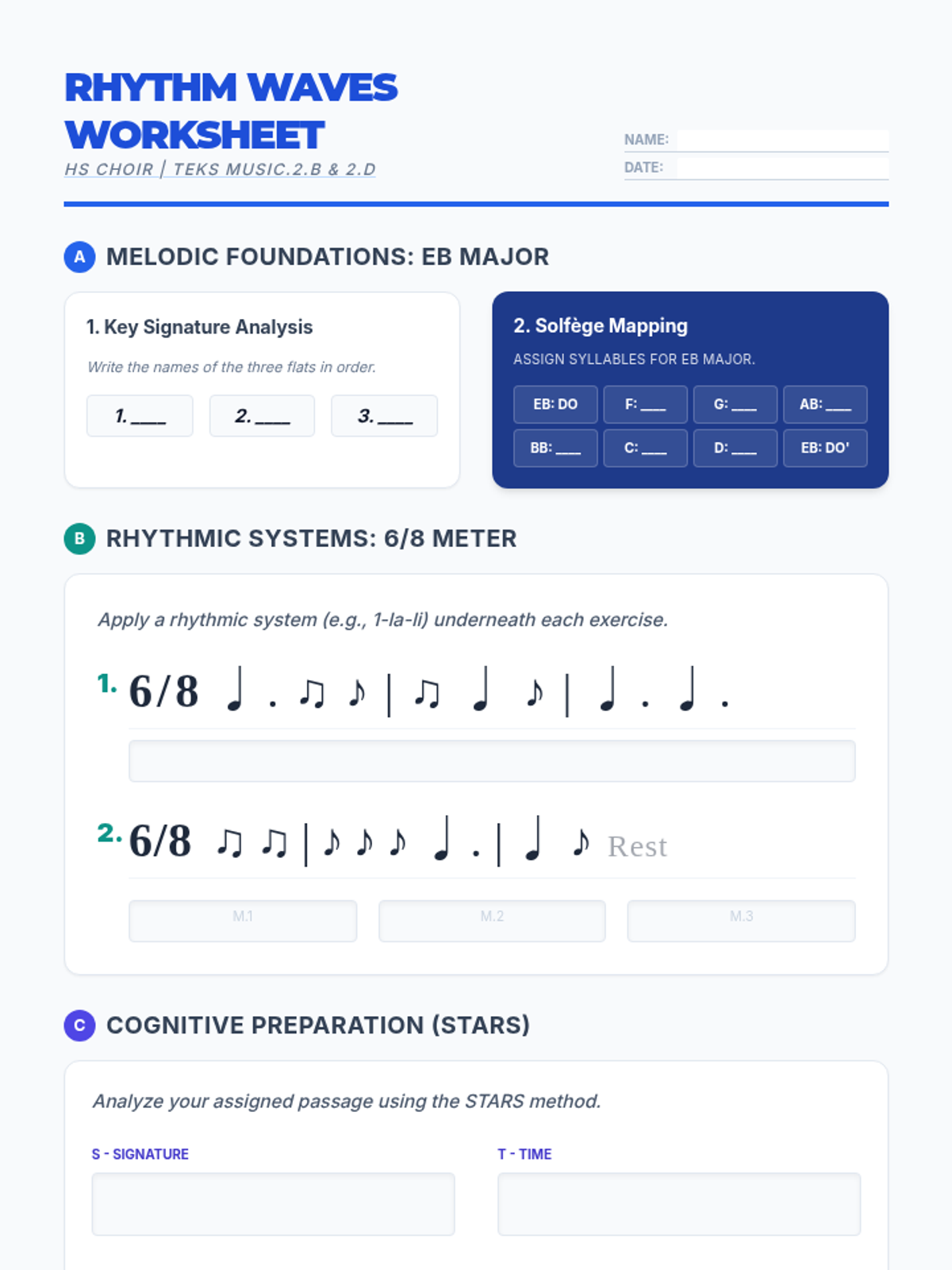
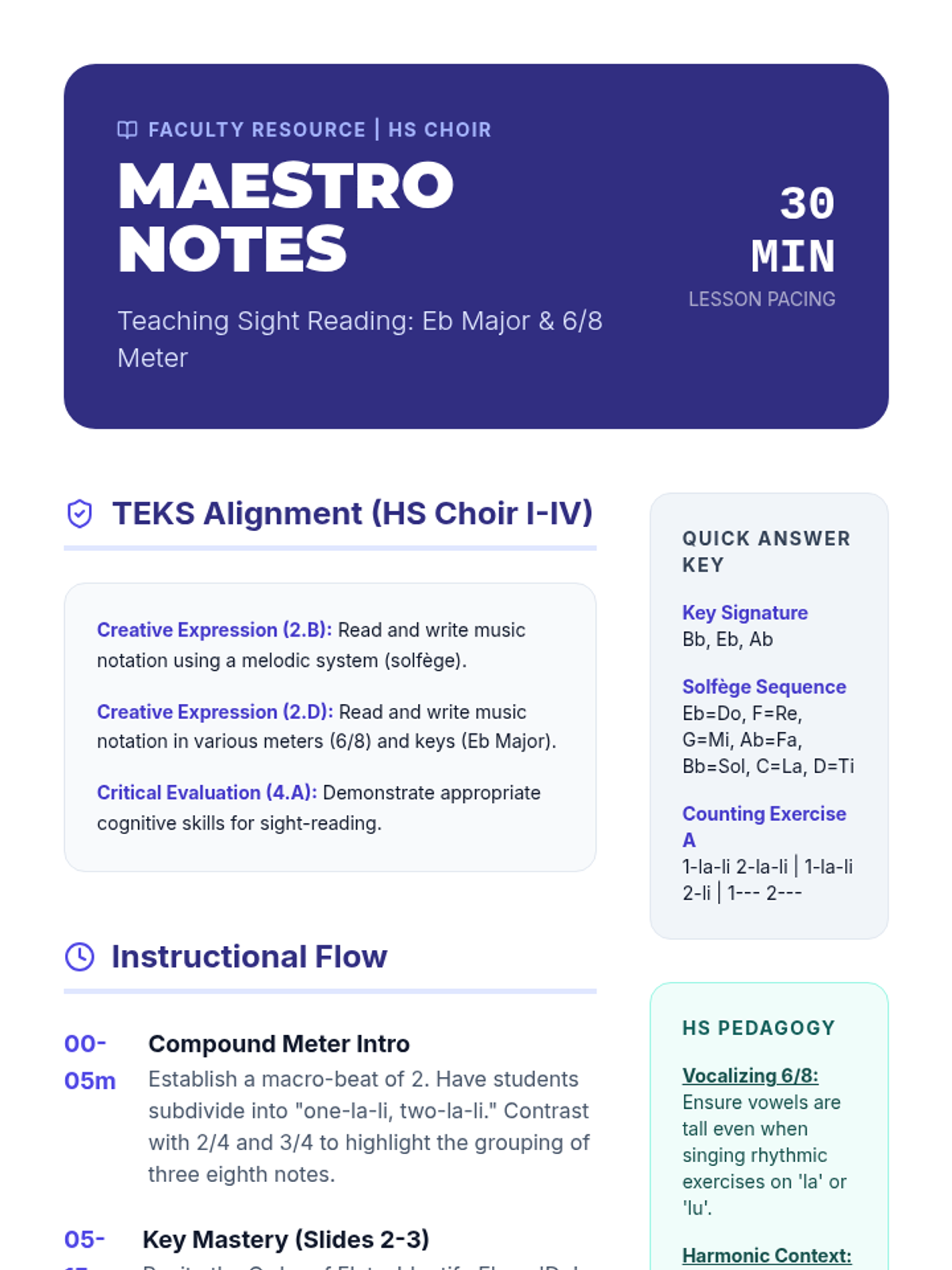
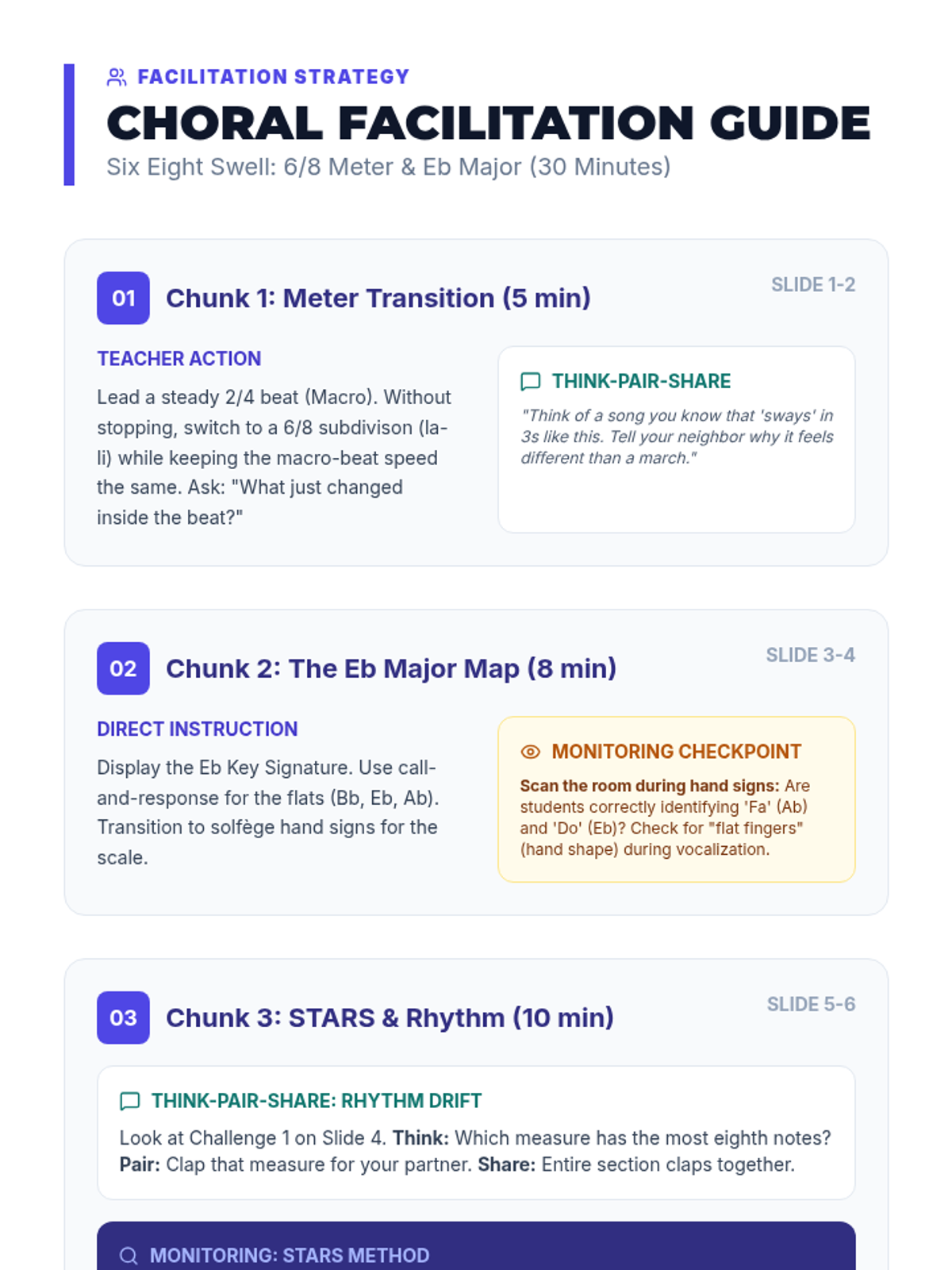
A 30-minute introduction to sight reading in 6/8 time and the key of E-flat major, focusing on the feeling of compound meter and navigating three flats.
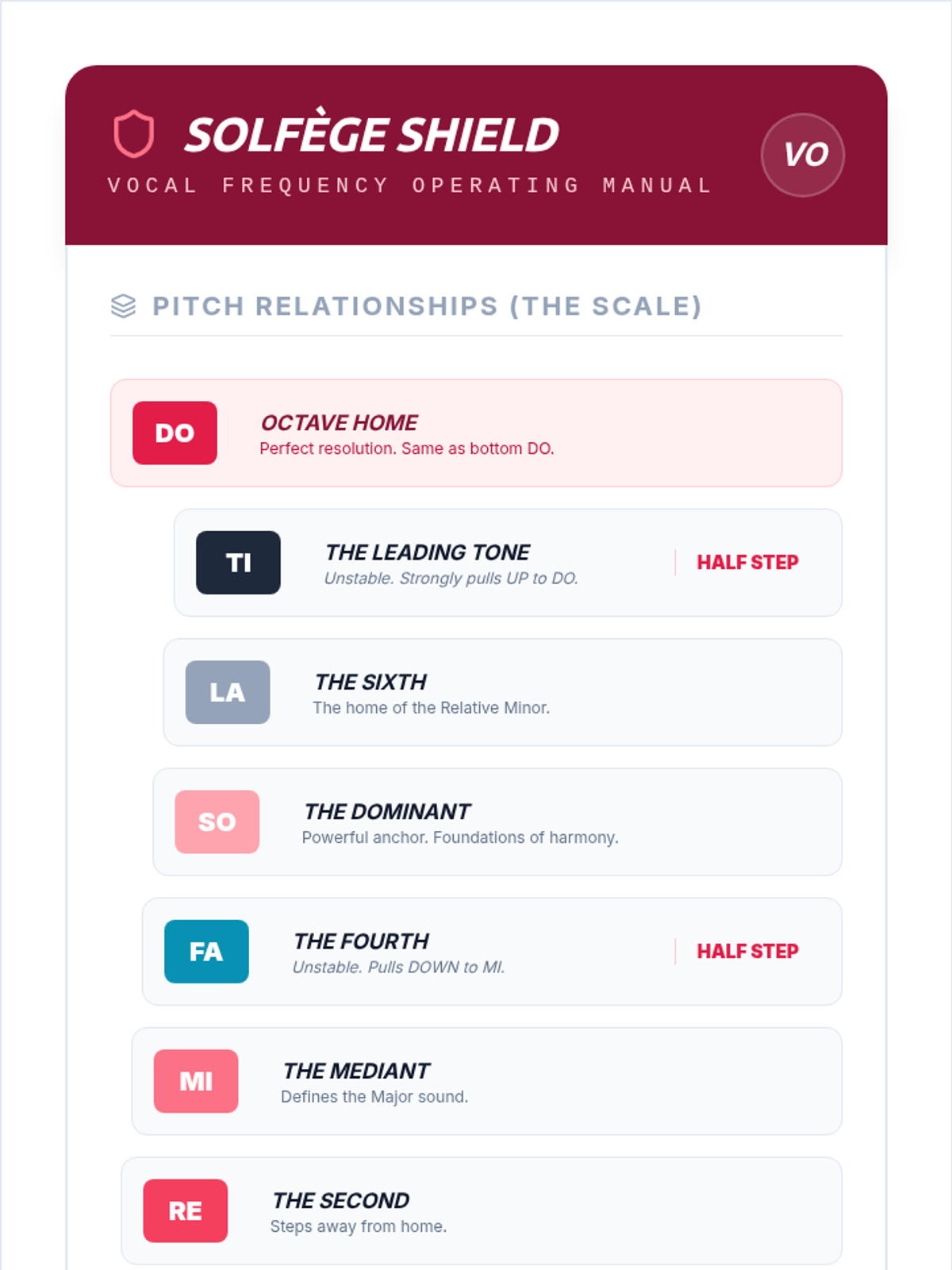
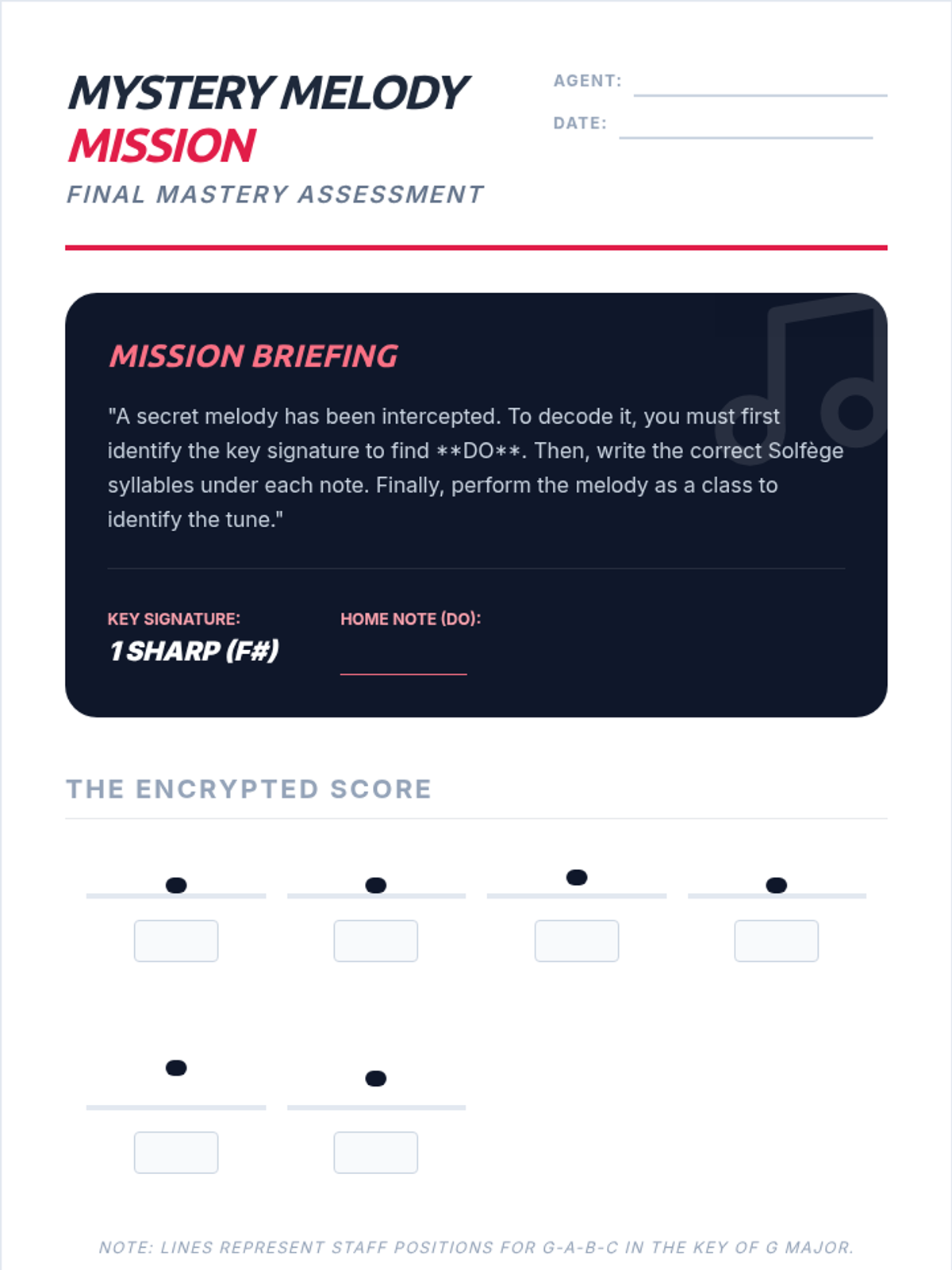
Applying theory to performance by using Solfège to sight-read melodies in various keys, culminating in a mystery melody challenge.
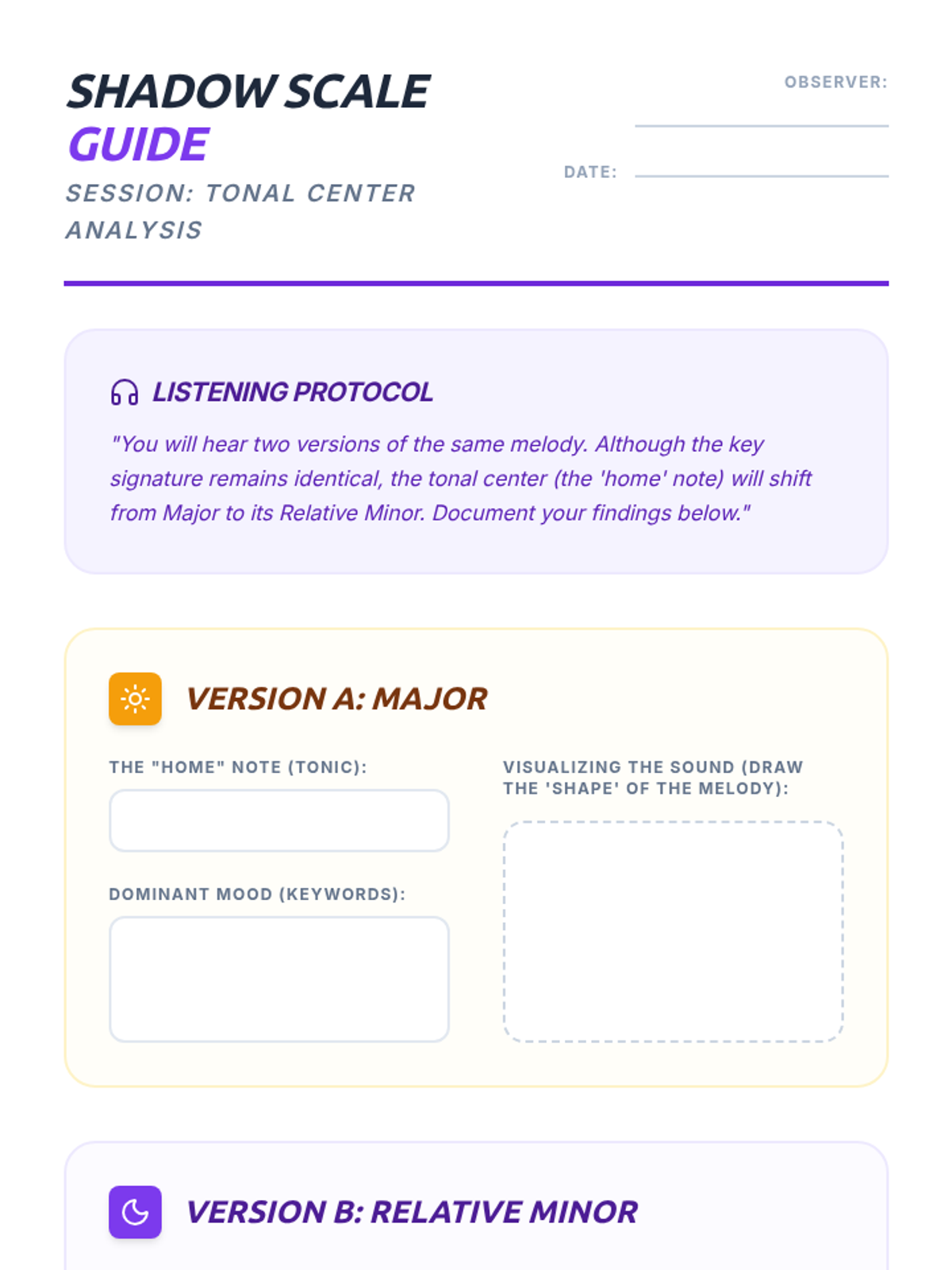
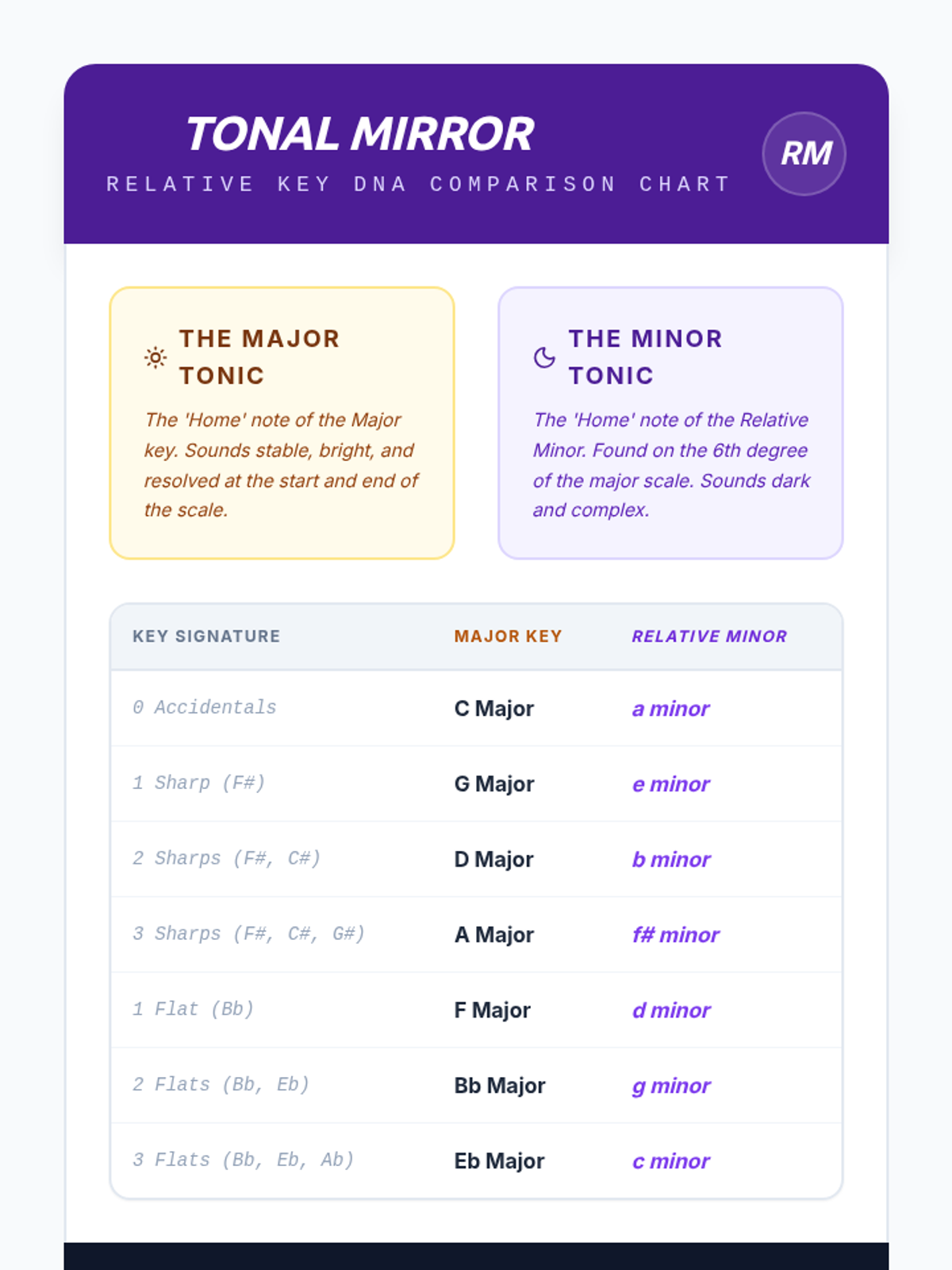
Exploring the emotional and structural link between major keys and their relative minors through listening and scale analysis.
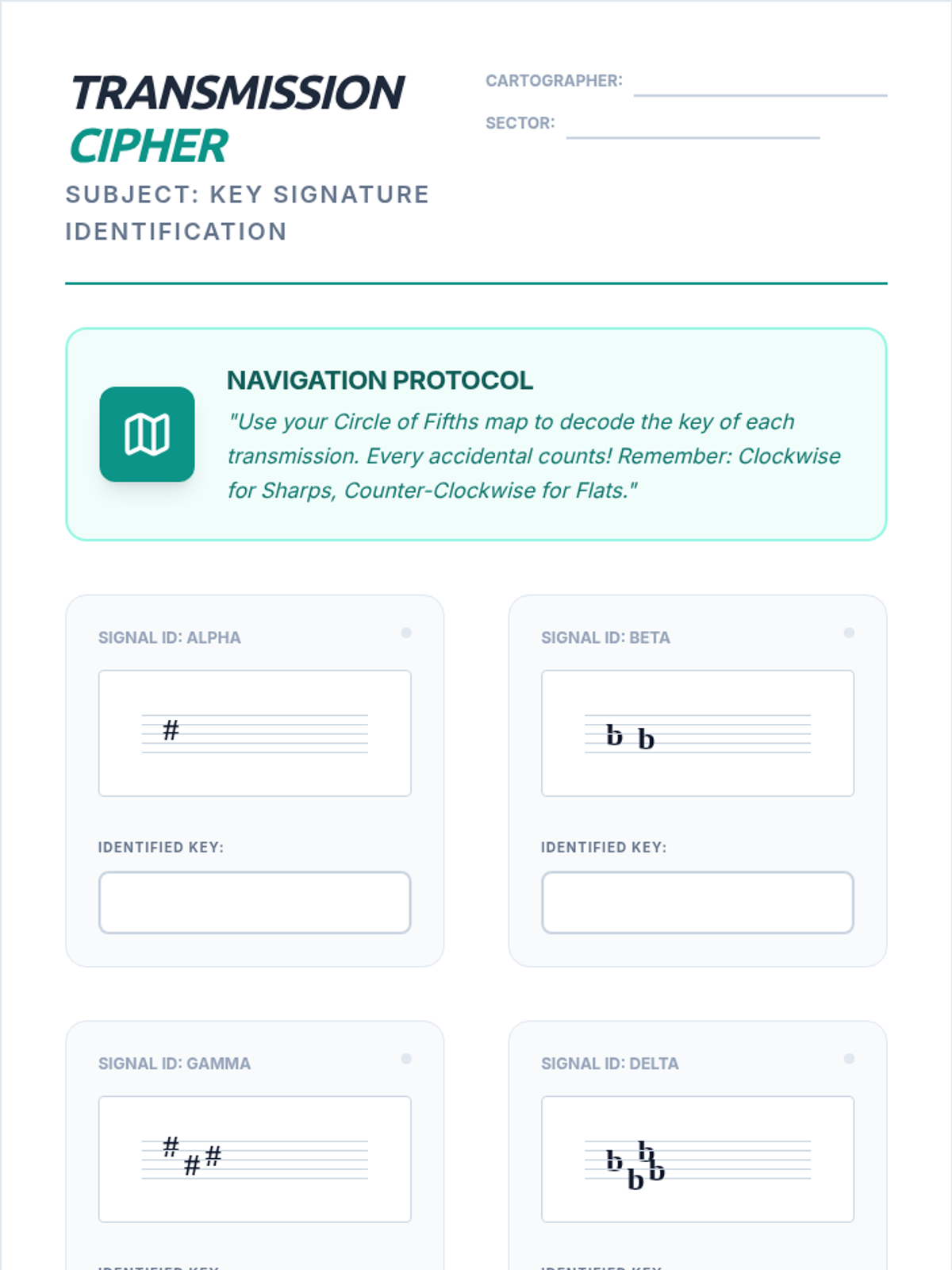
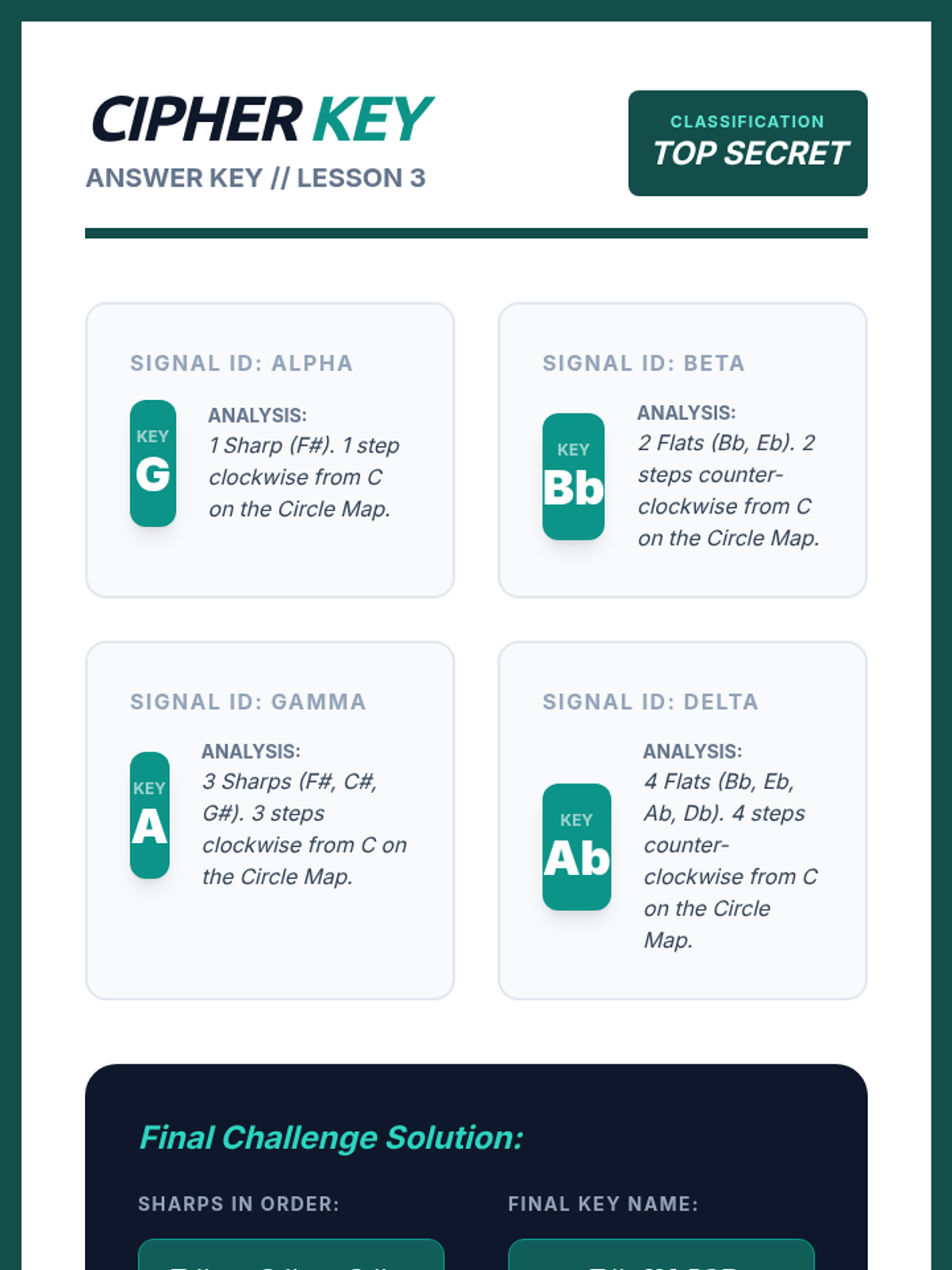
Visualizing the relationship between keys using the Circle of Fifths as a tool for rapid key signature identification.
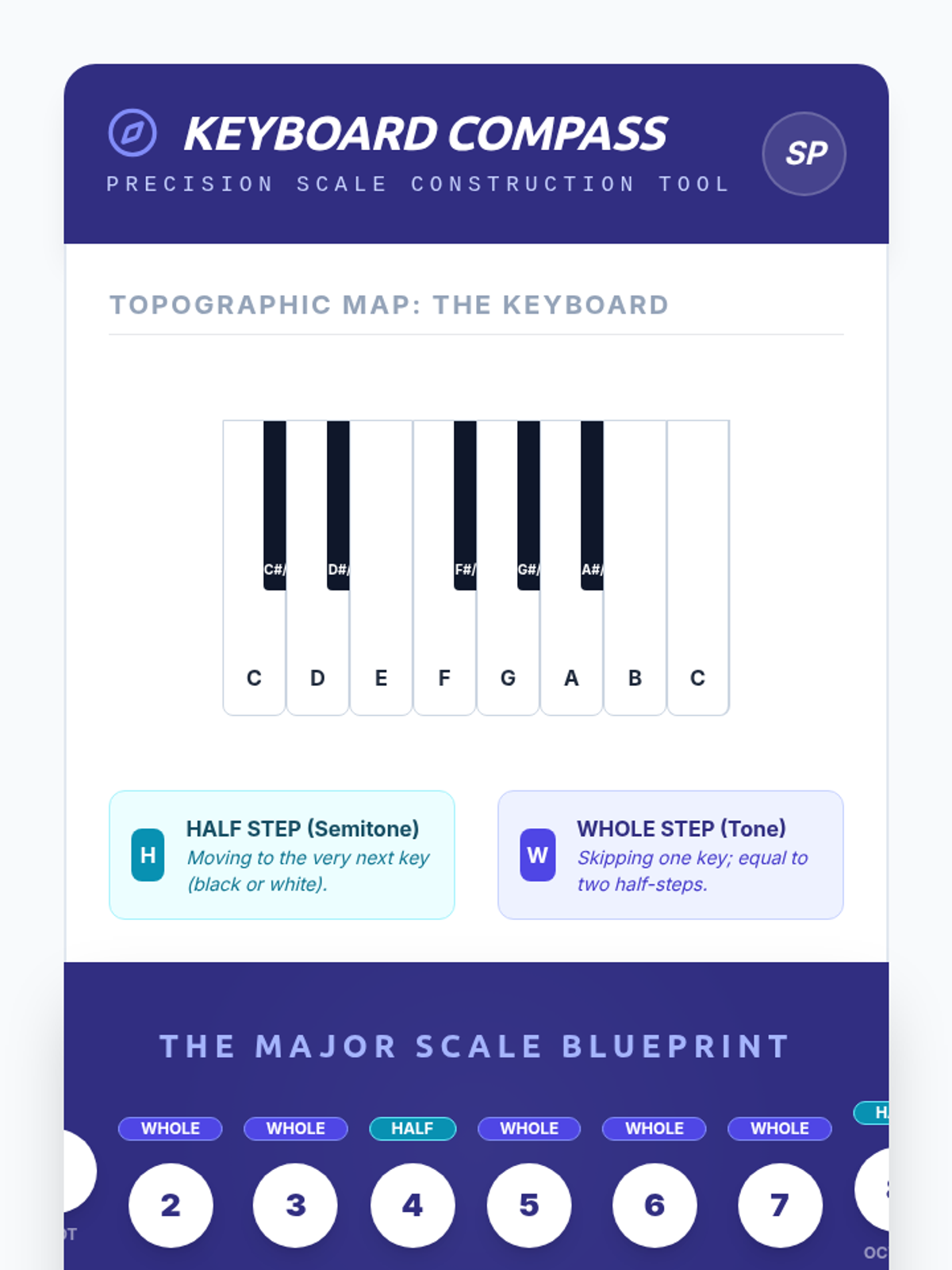
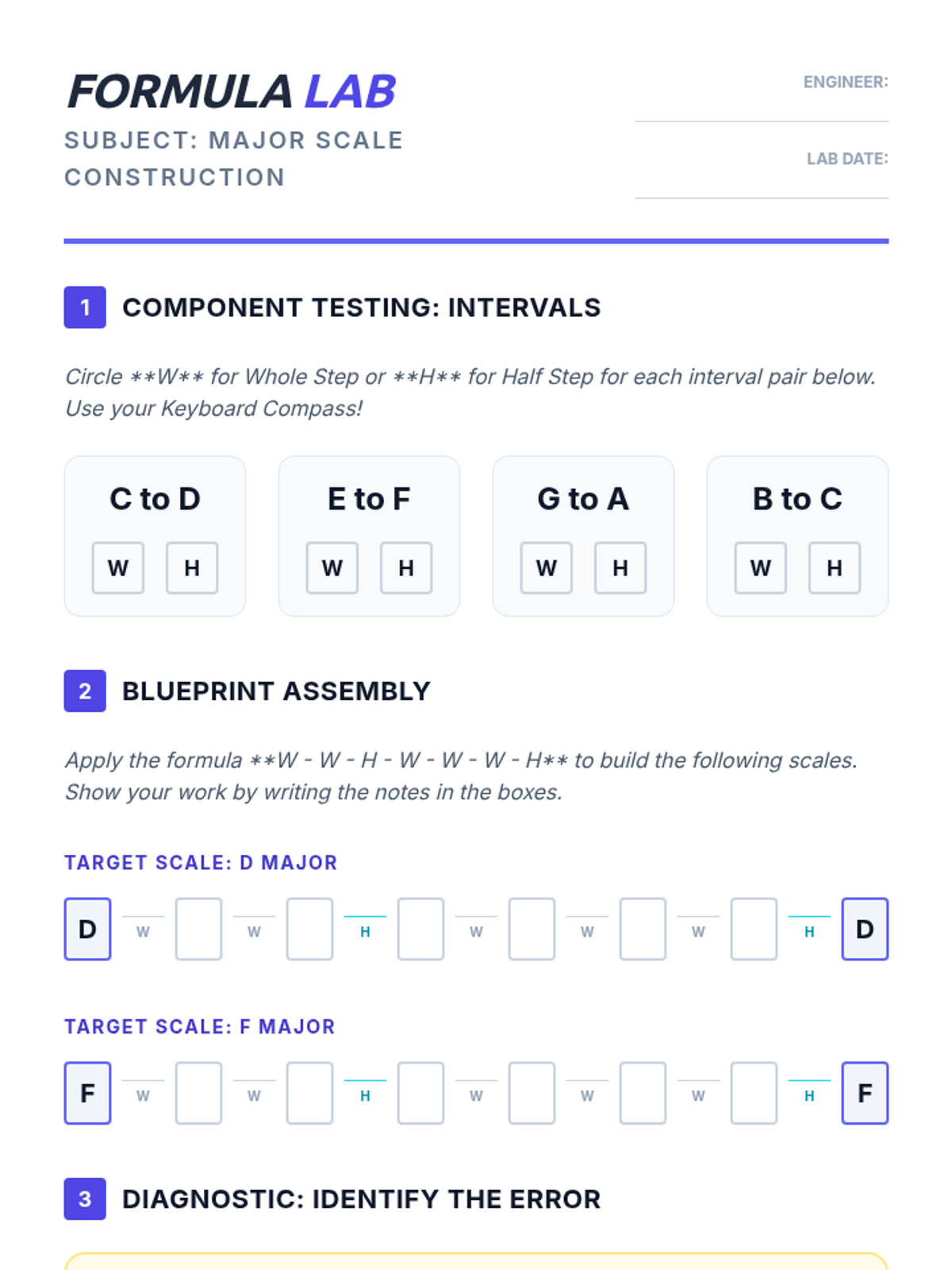
An inquiry into the Whole-Half step formula that builds major scales, explaining the 'why' behind sharps and flats.
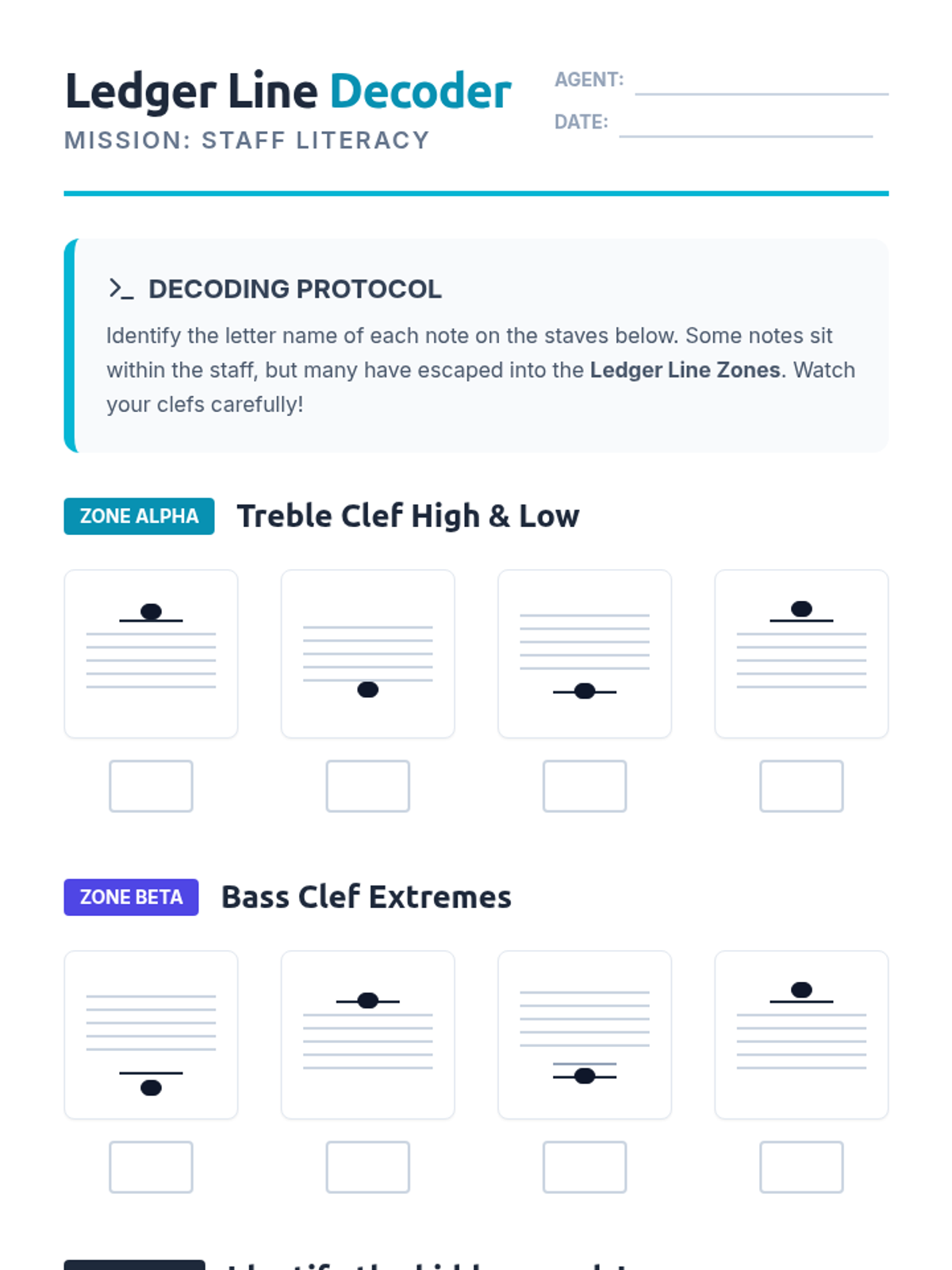
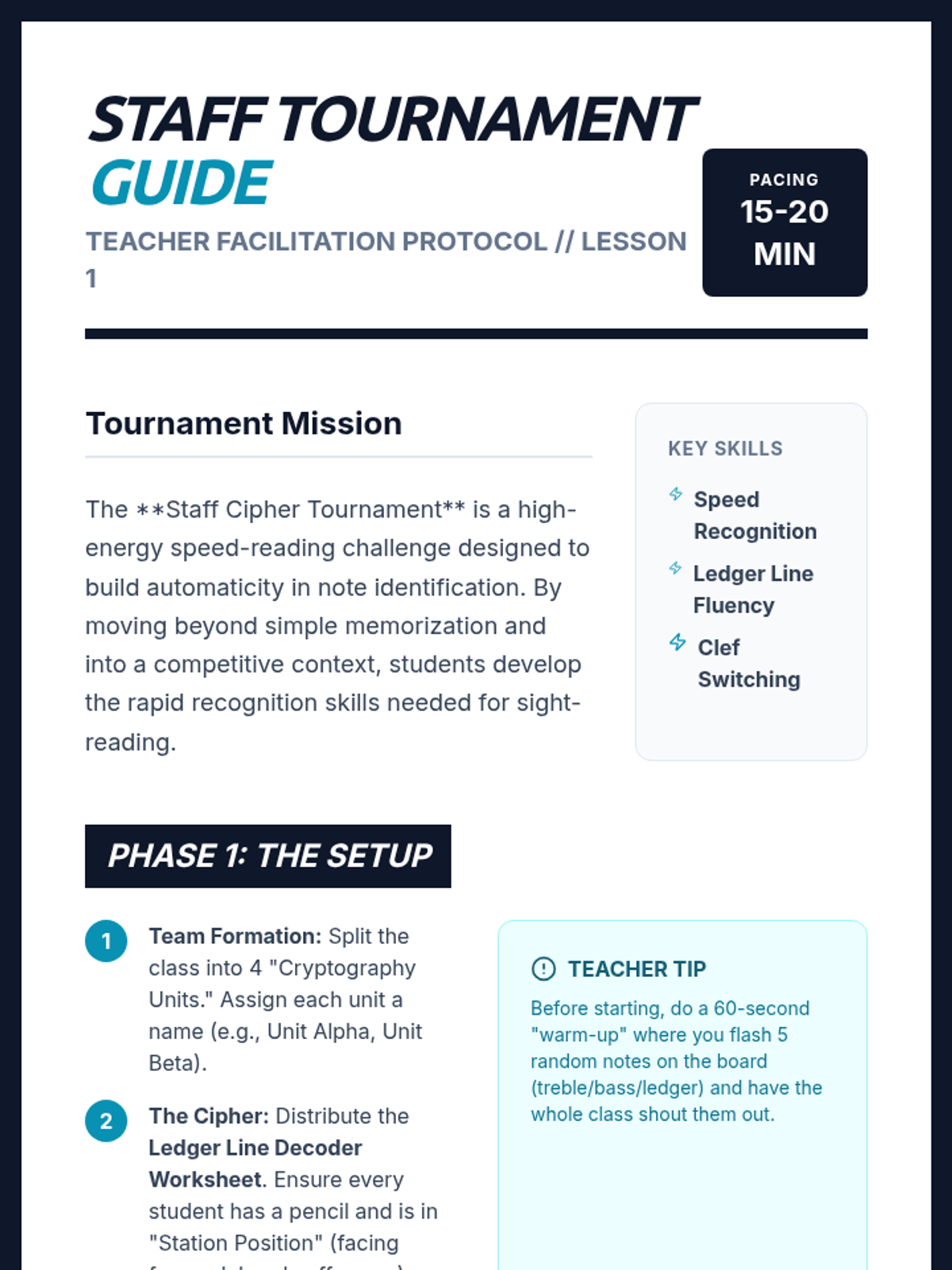
Students master the Grand Staff, ledger lines, and octave designations through a series of speed-reading challenges and 'cipher' decoding activities.
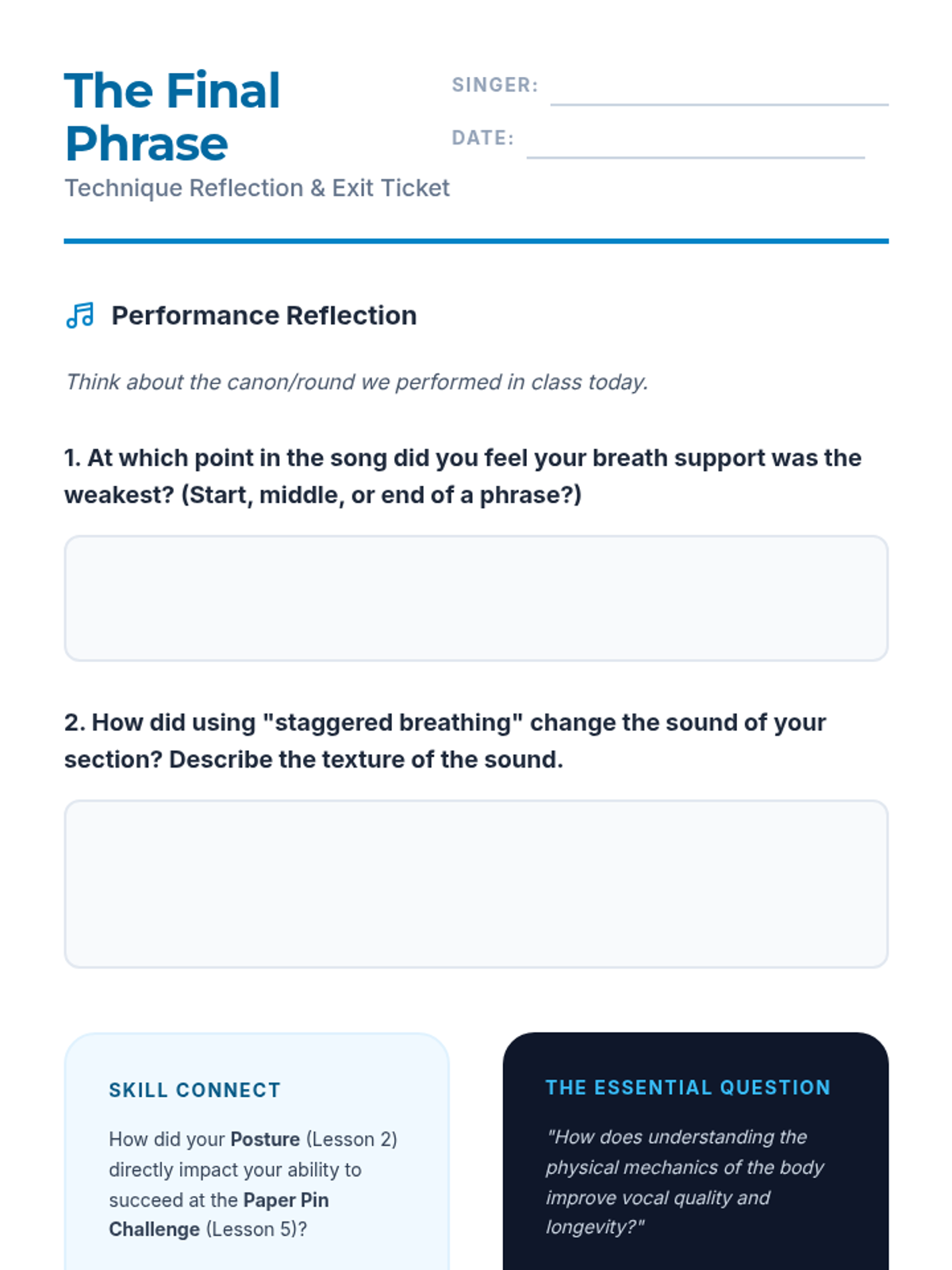
Students synthesize knowledge of posture and breathing to sustain long phrases and practice staggered breathing in an ensemble context.
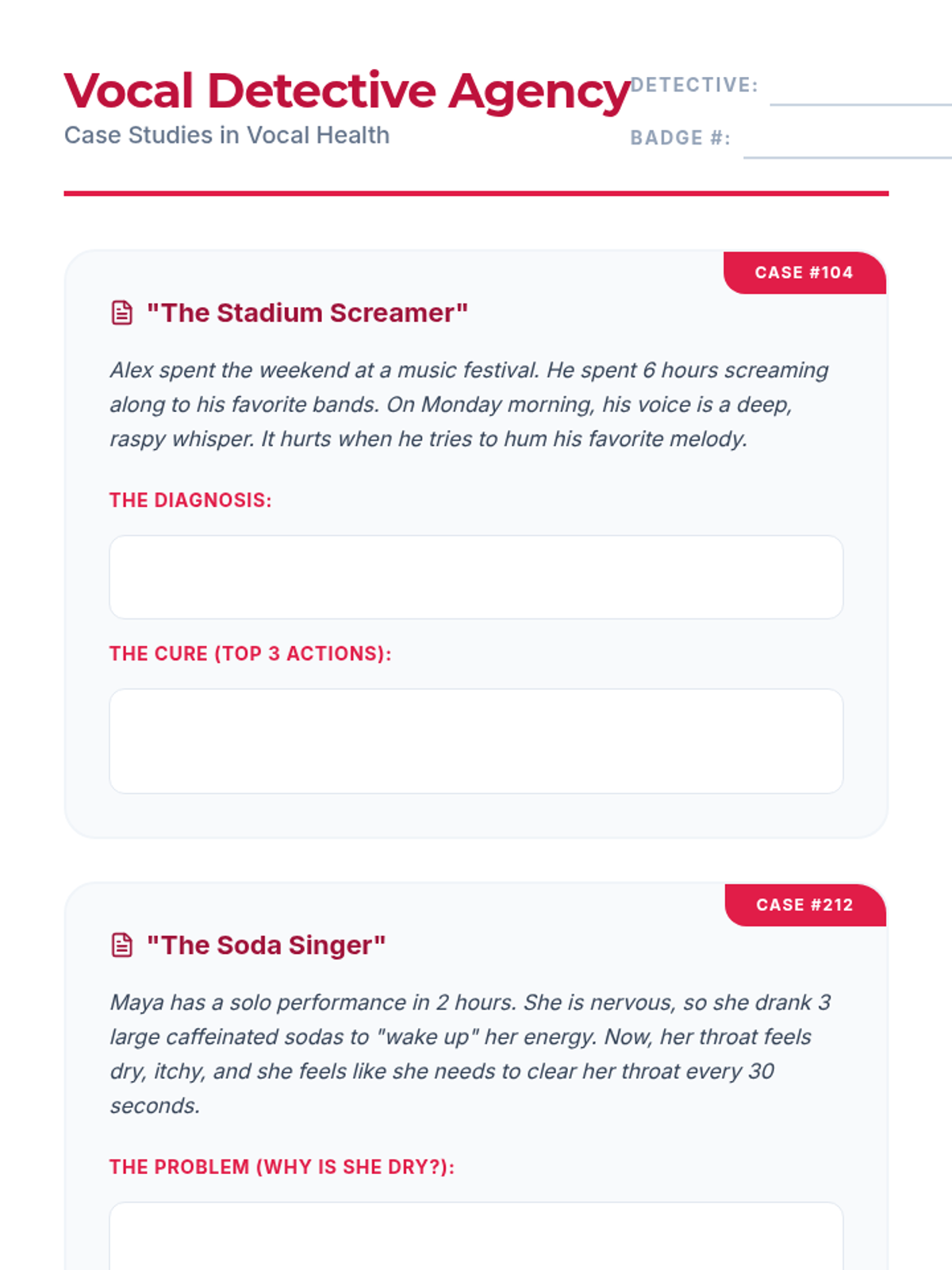
This lesson addresses the care of the 'invisible instrument,' targeting the needs of the changing voice and identifying healthy vs. harmful habits.
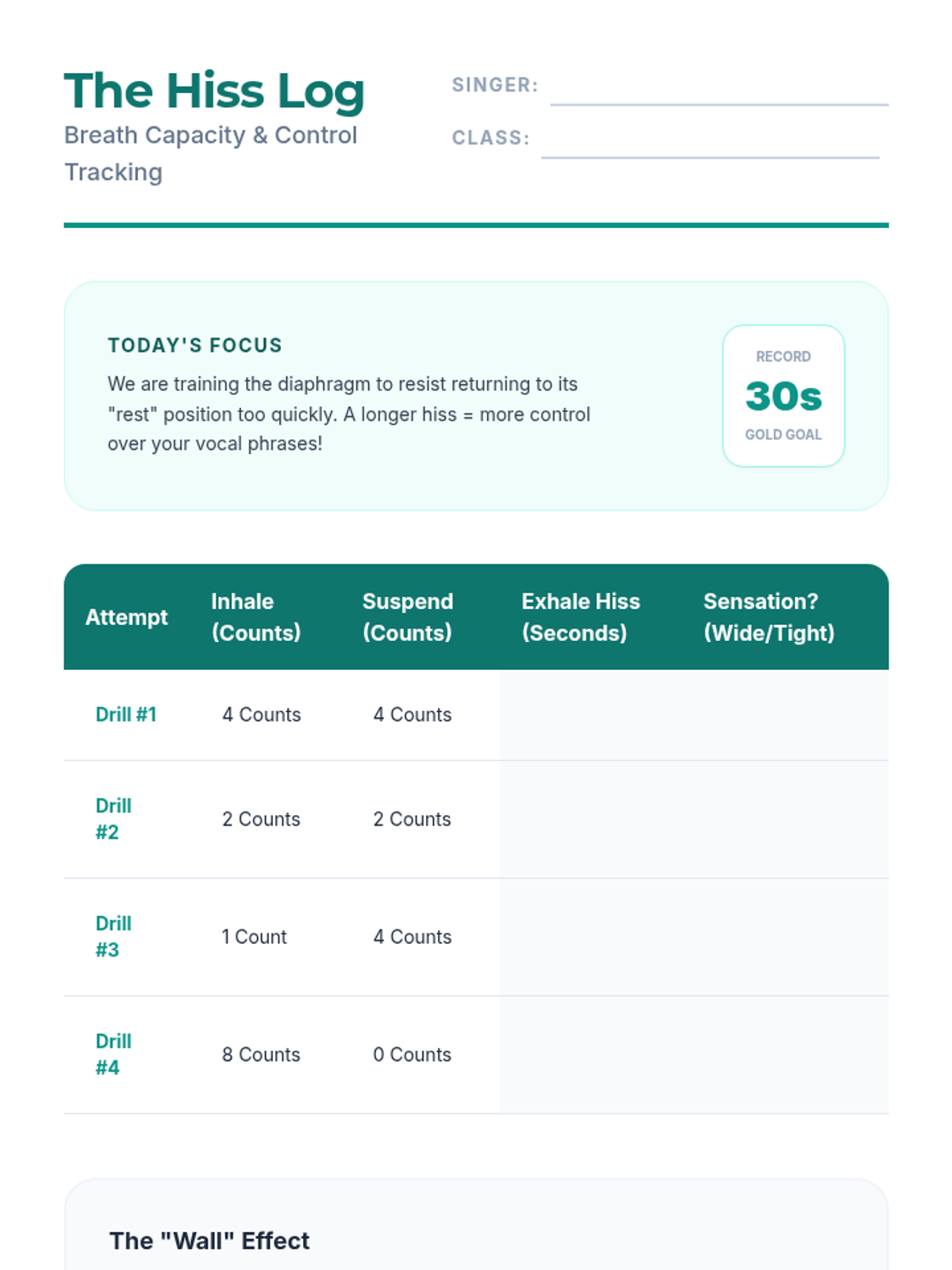
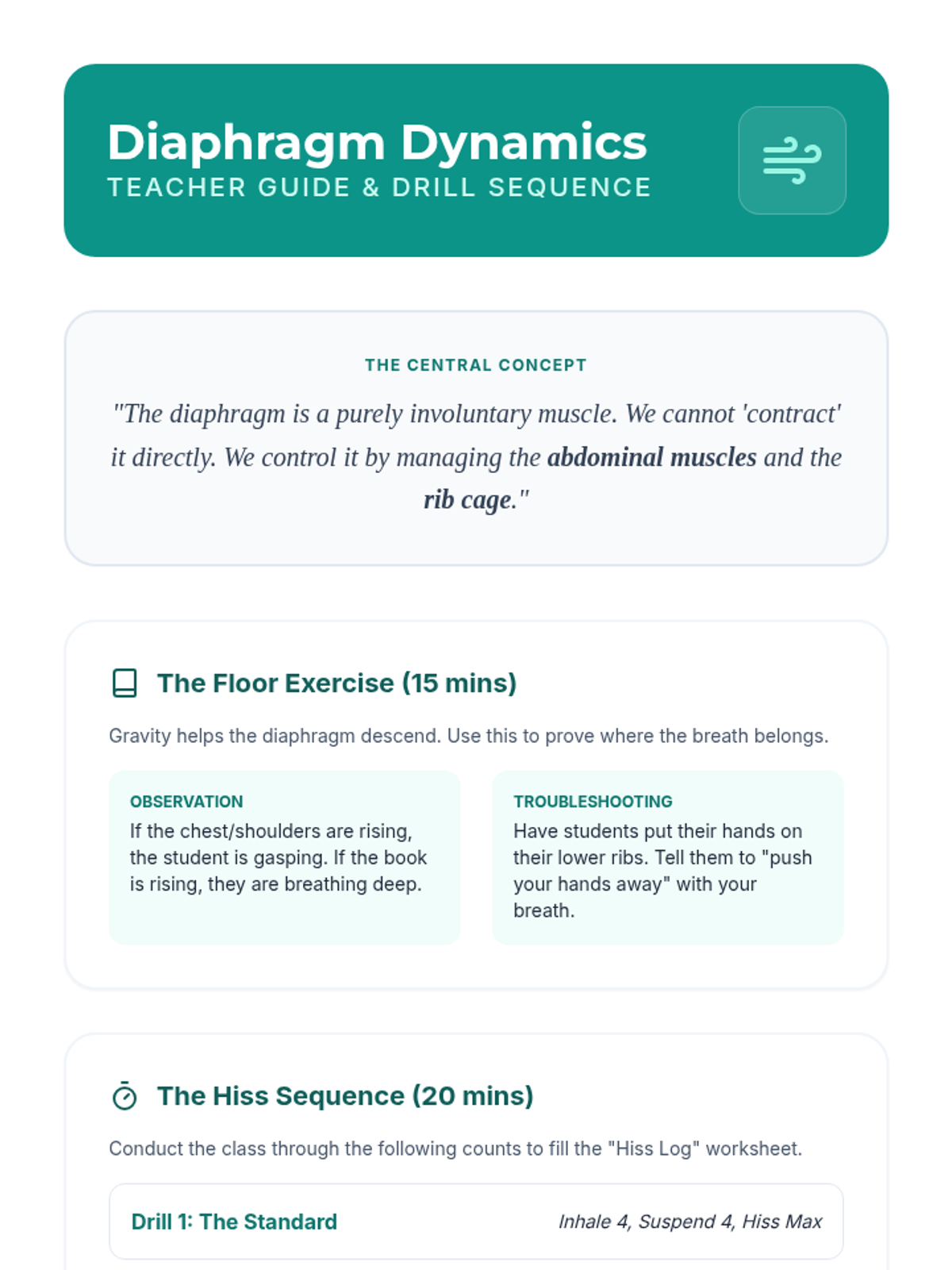
Students distinguish between clavicular and diaphragmatic breathing through hands-on exercises and timed drills to increase capacity and control.
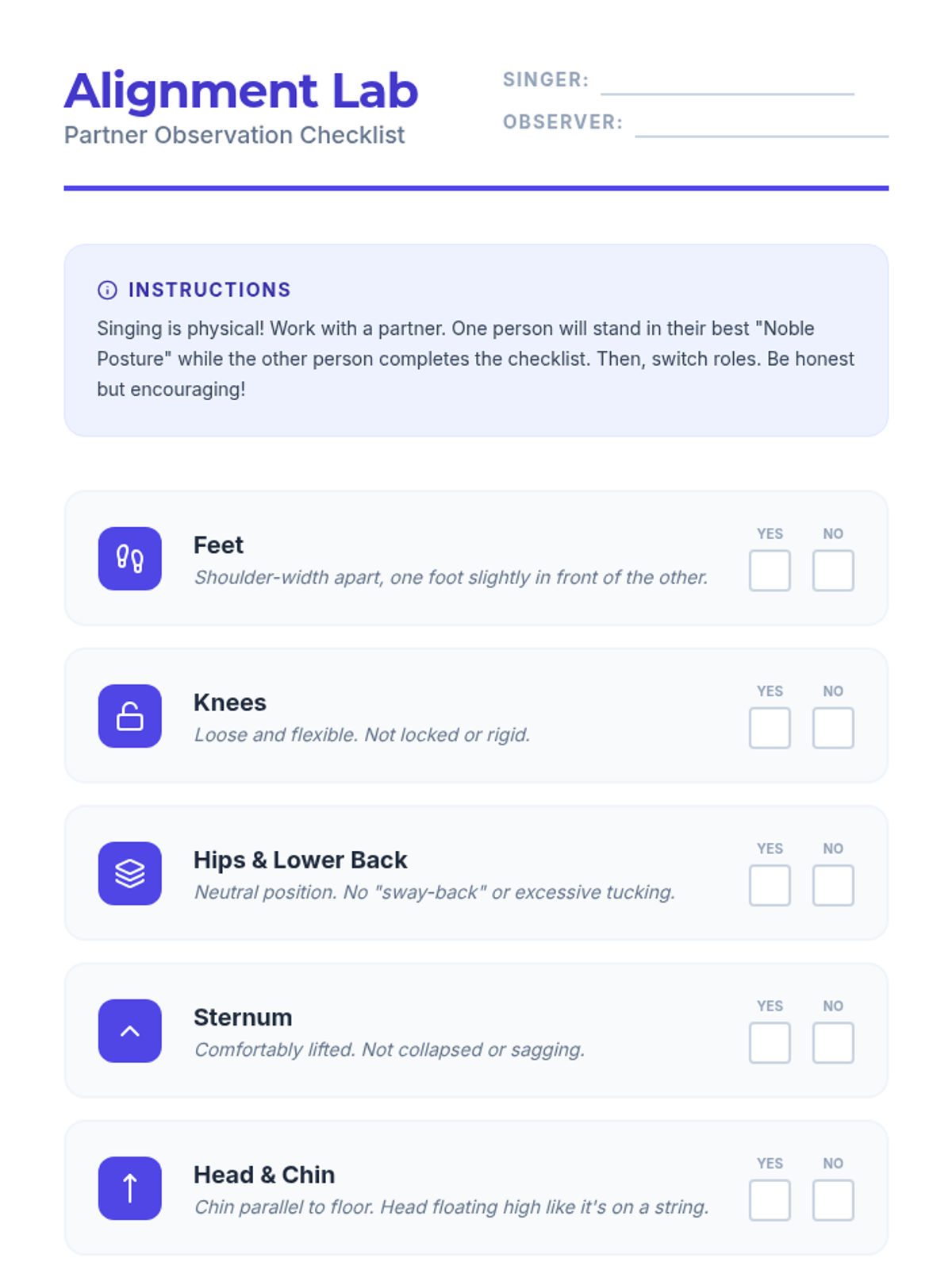
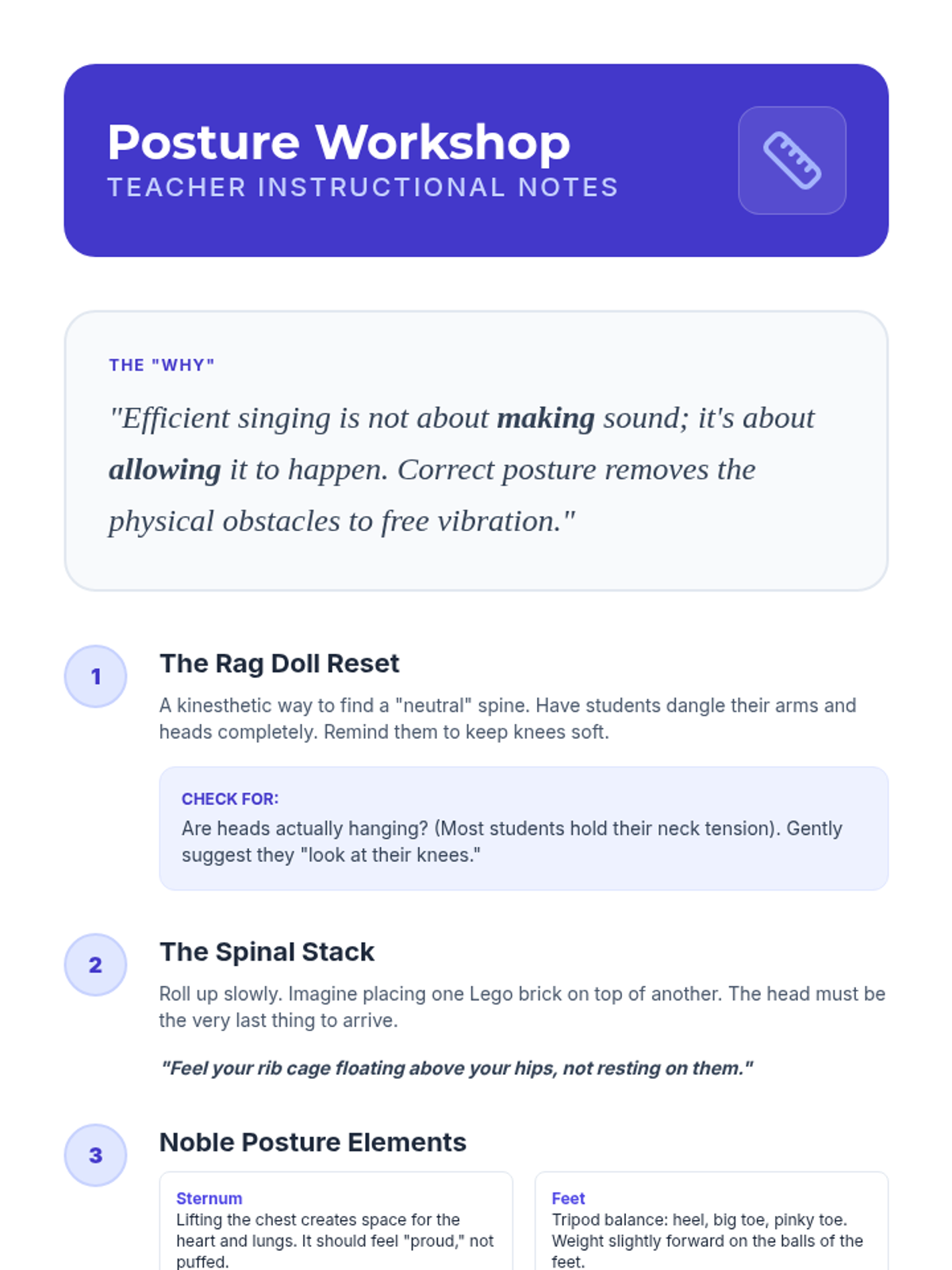
This lesson focuses on the relationship between skeletal alignment and breath capacity through 'noble posture' exploration and partner observations.
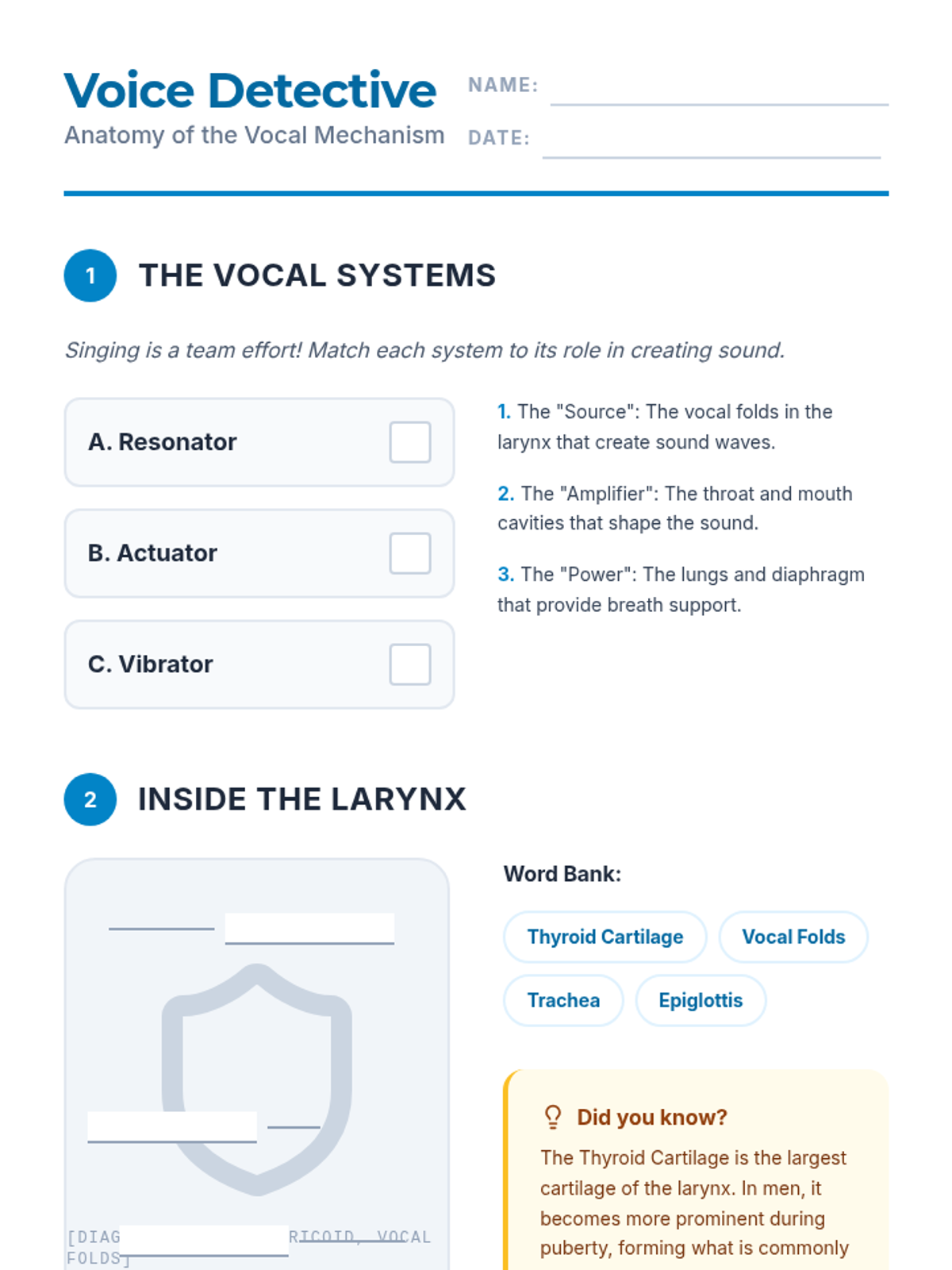
Students examine the biological components of the voice, including the larynx, vocal folds, and resonance chambers. They will label diagrams and participate in guided palpation exercises to locate these structures.
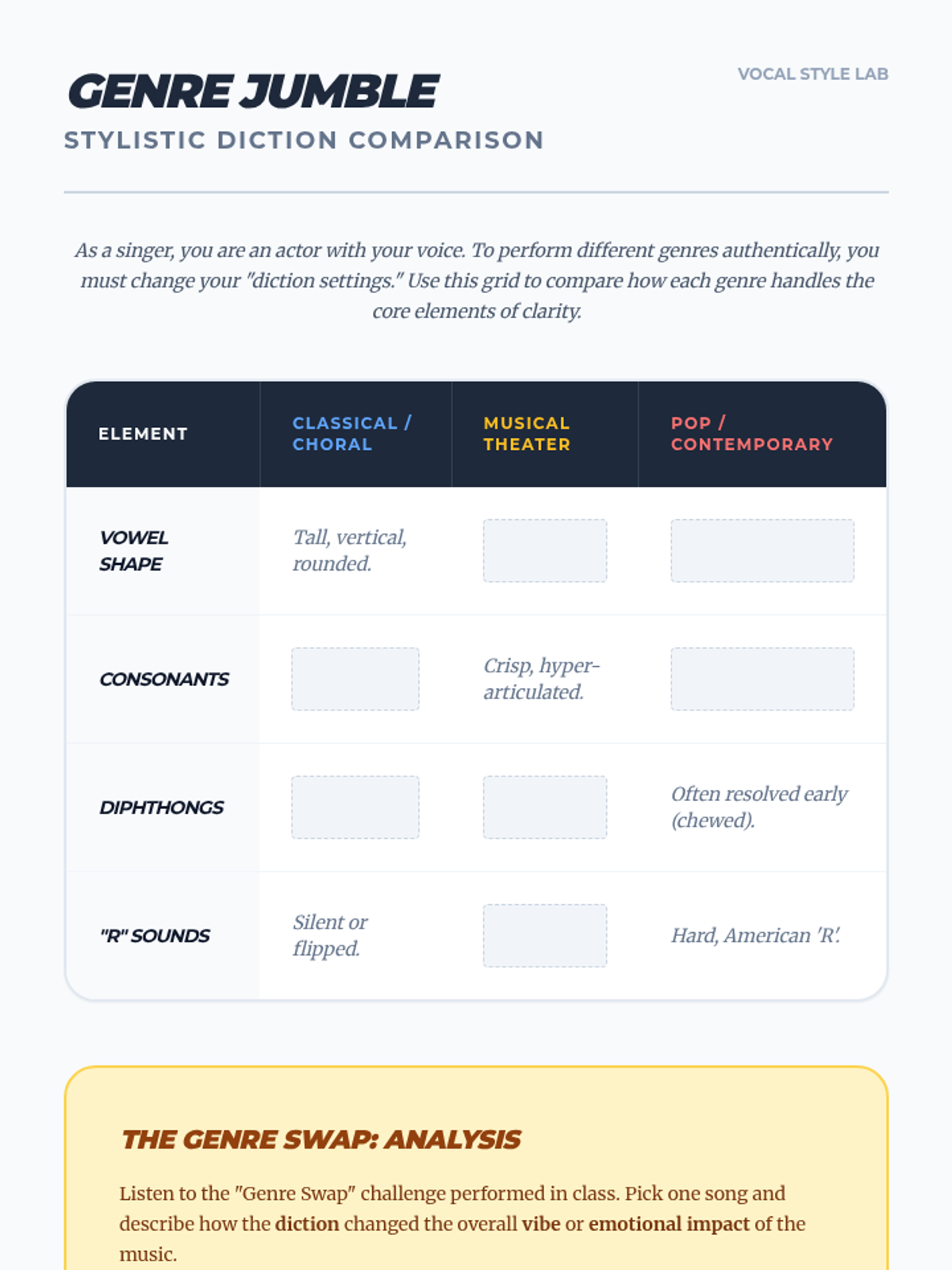
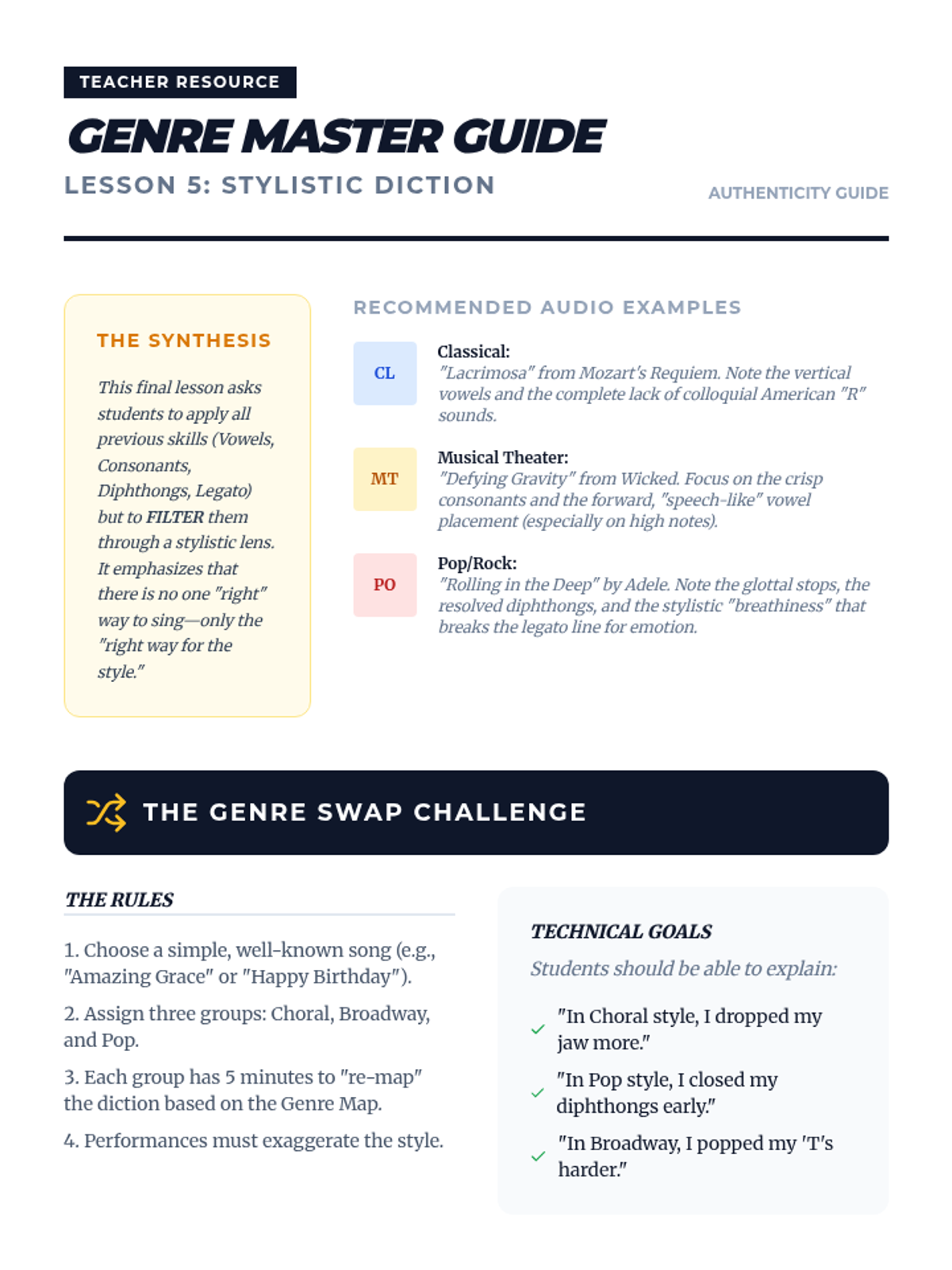
Compares diction rules across classical, musical theater, and pop genres, emphasizing how articulation contributes to stylistic authenticity.
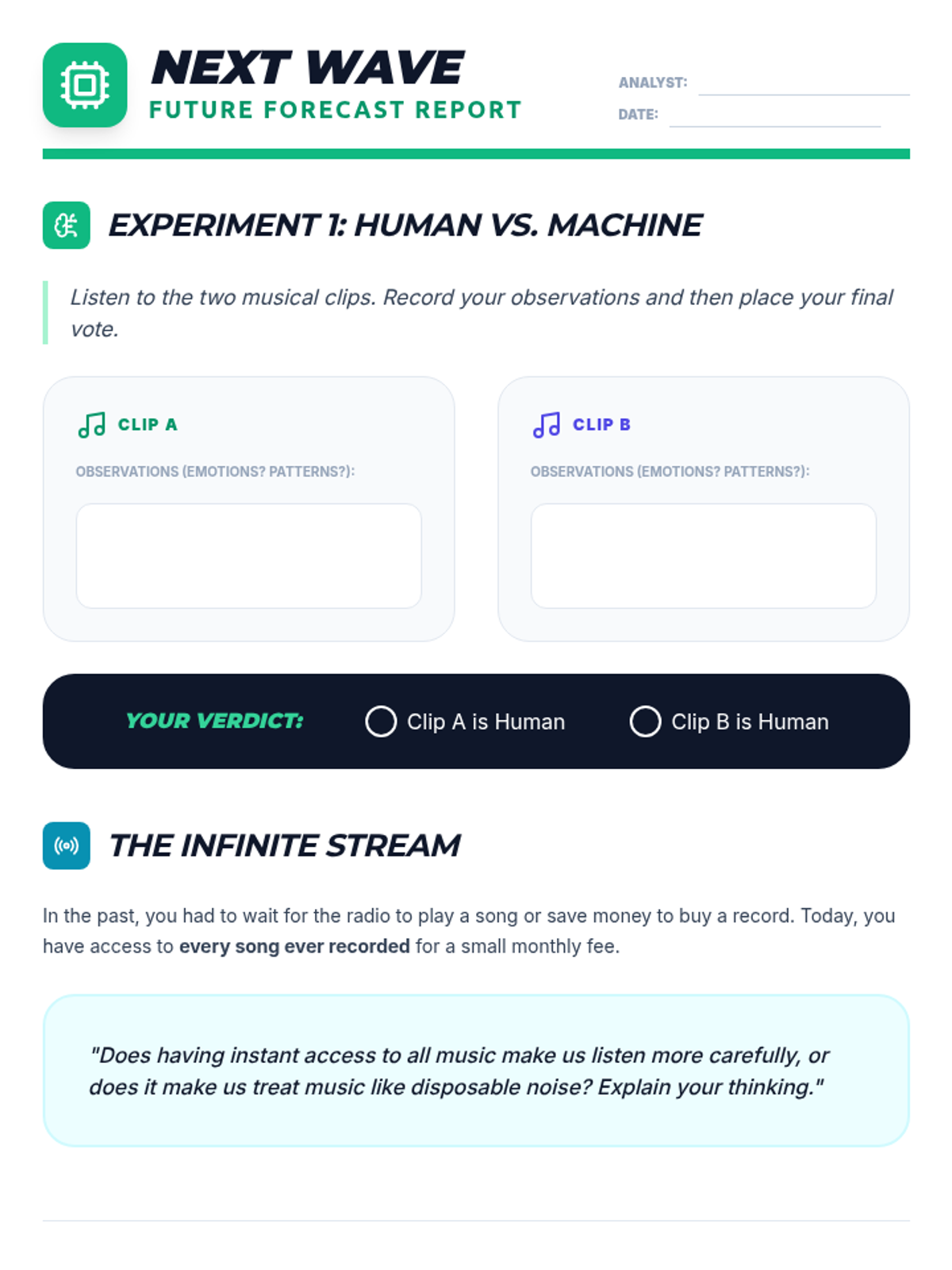
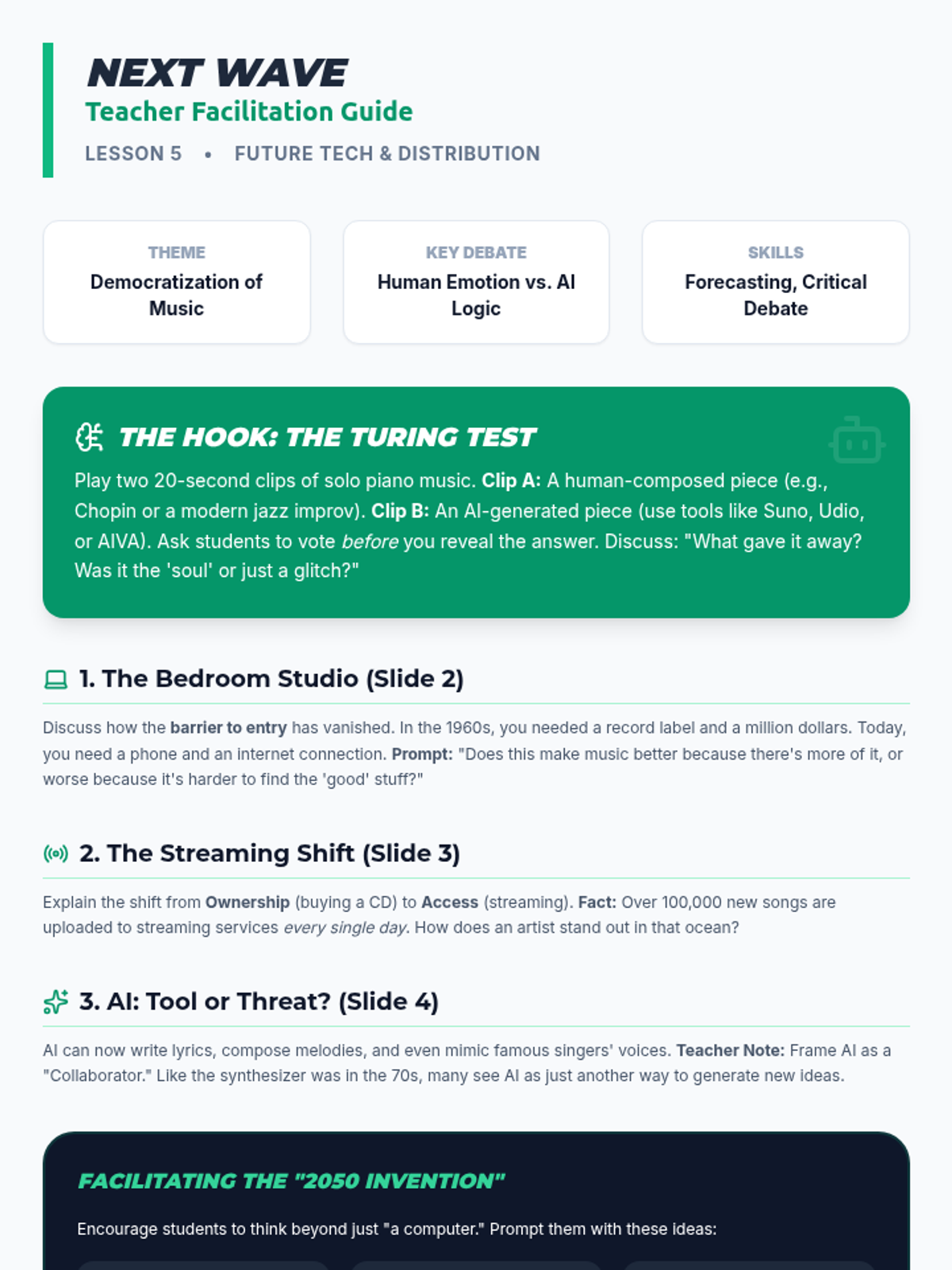
Students debate the future of music history, looking at streaming, AI composition, and bedroom production, analyzing how digital tools change the creation and distribution of music.
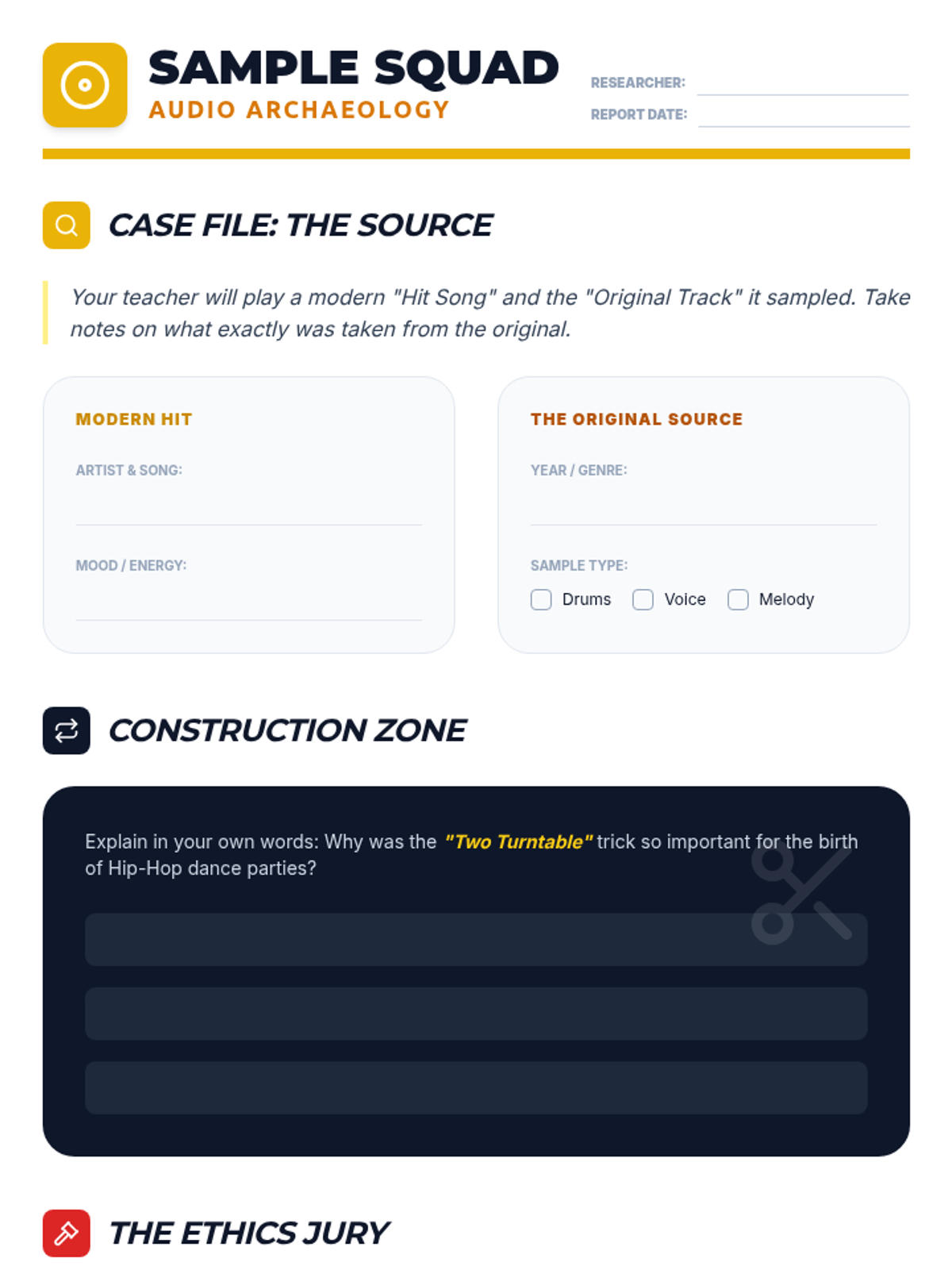
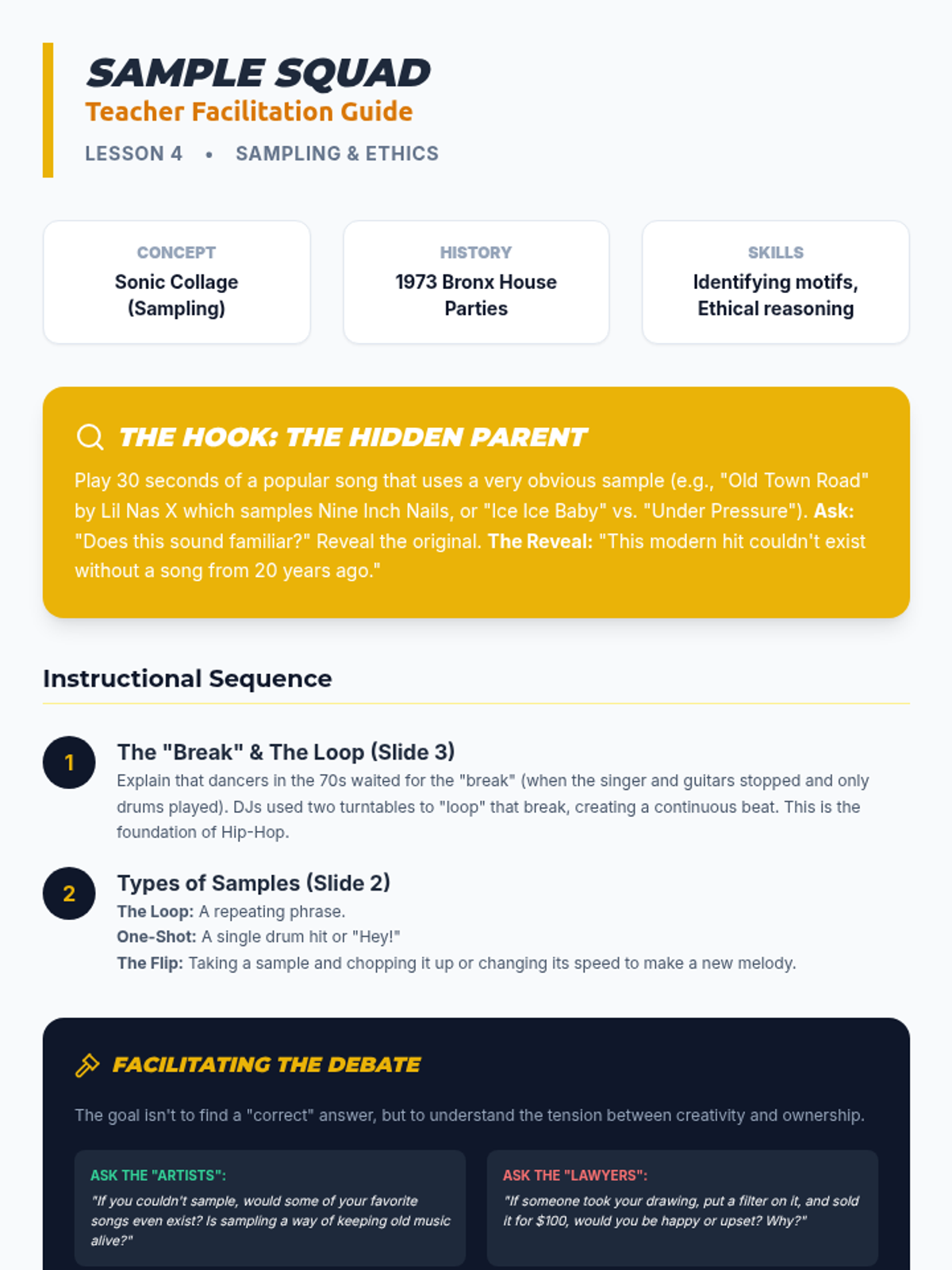
Students investigate the origins of Hip-Hop and the revolutionary technique of sampling, discussing the artistic and legal implications of repurposing existing audio to create new music.
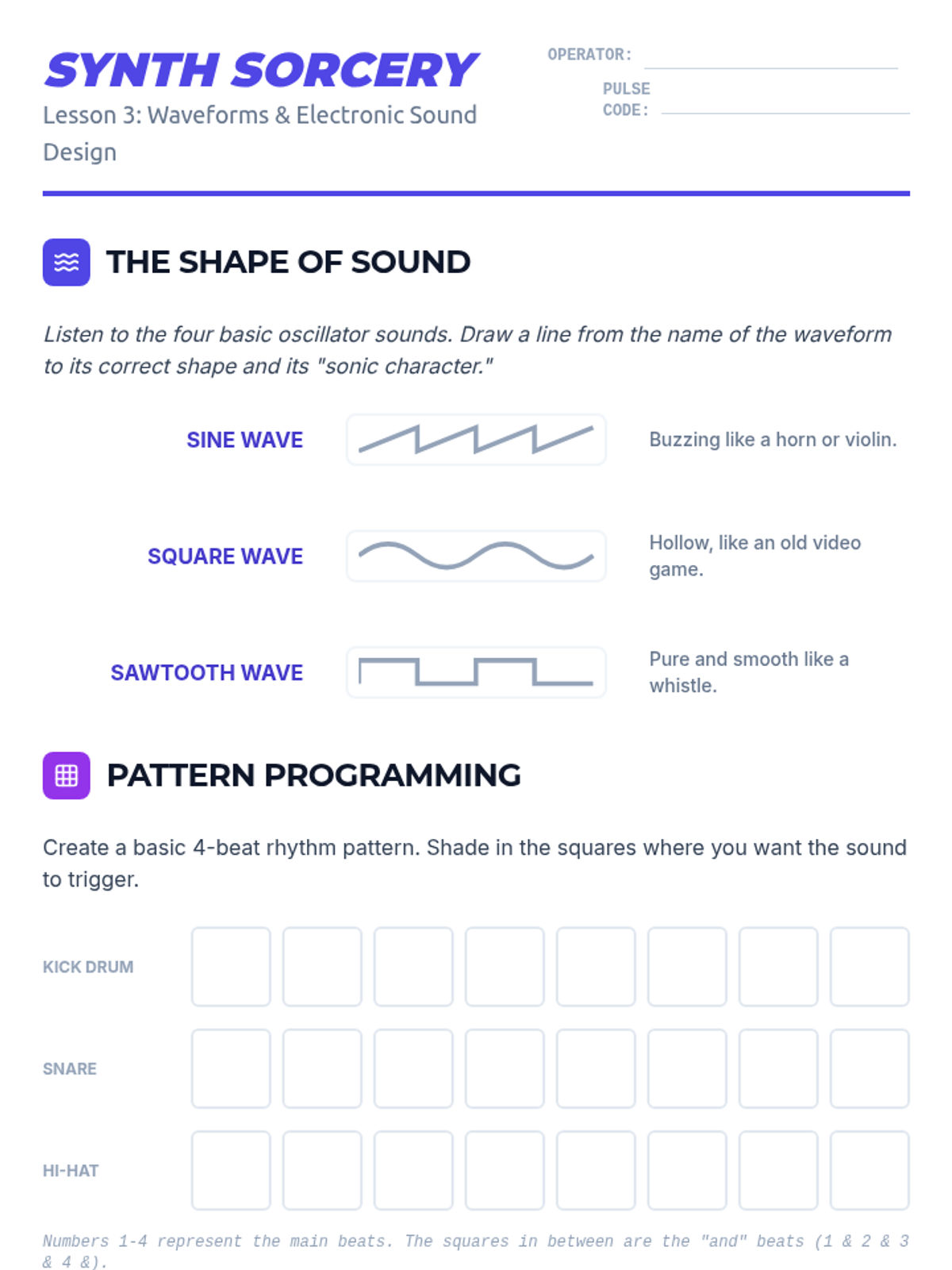
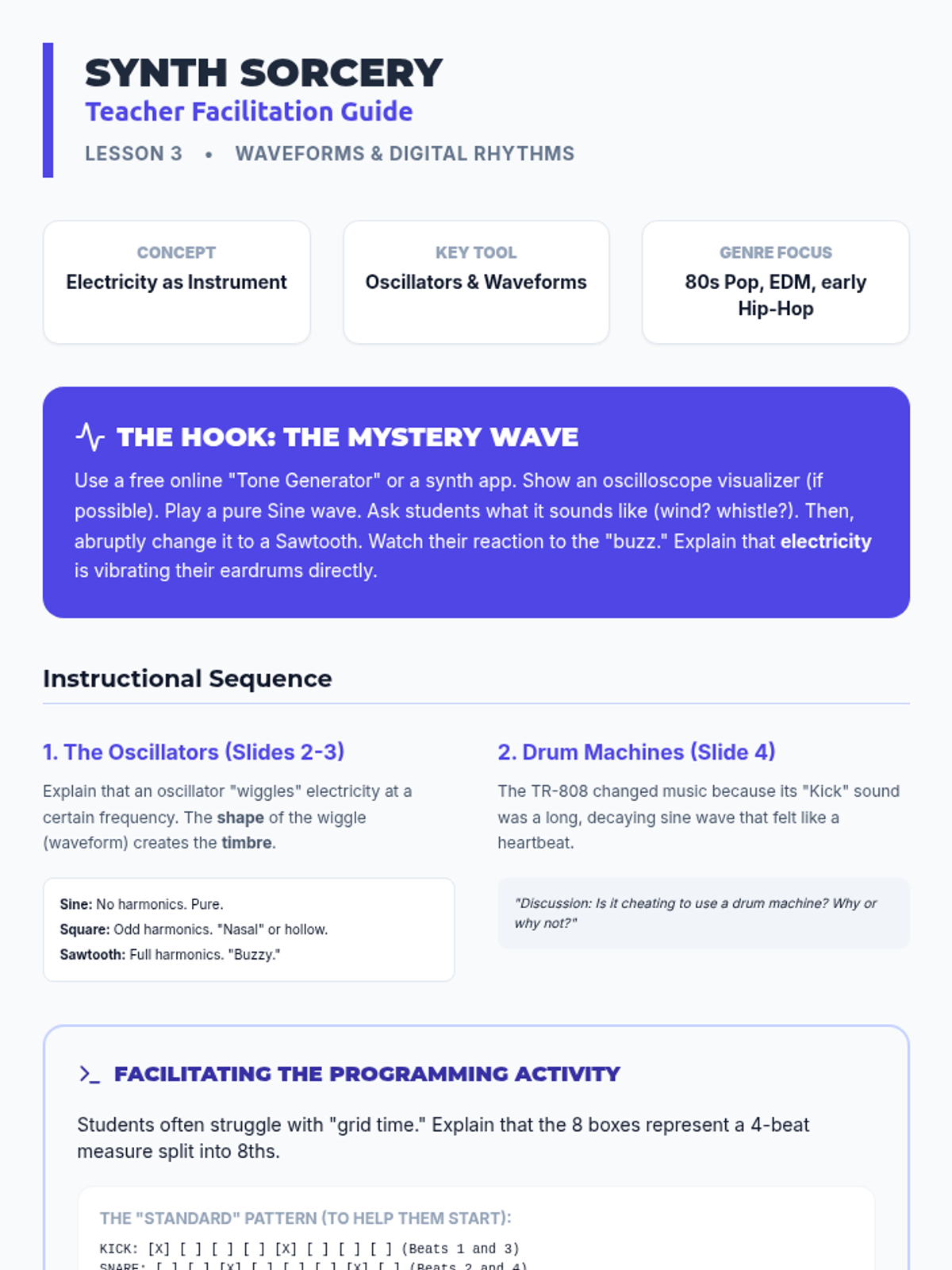
Students explore the introduction of synthesizers and drum machines in the 70s and 80s, learning about waveforms and how electricity can be used to design completely new sounds.
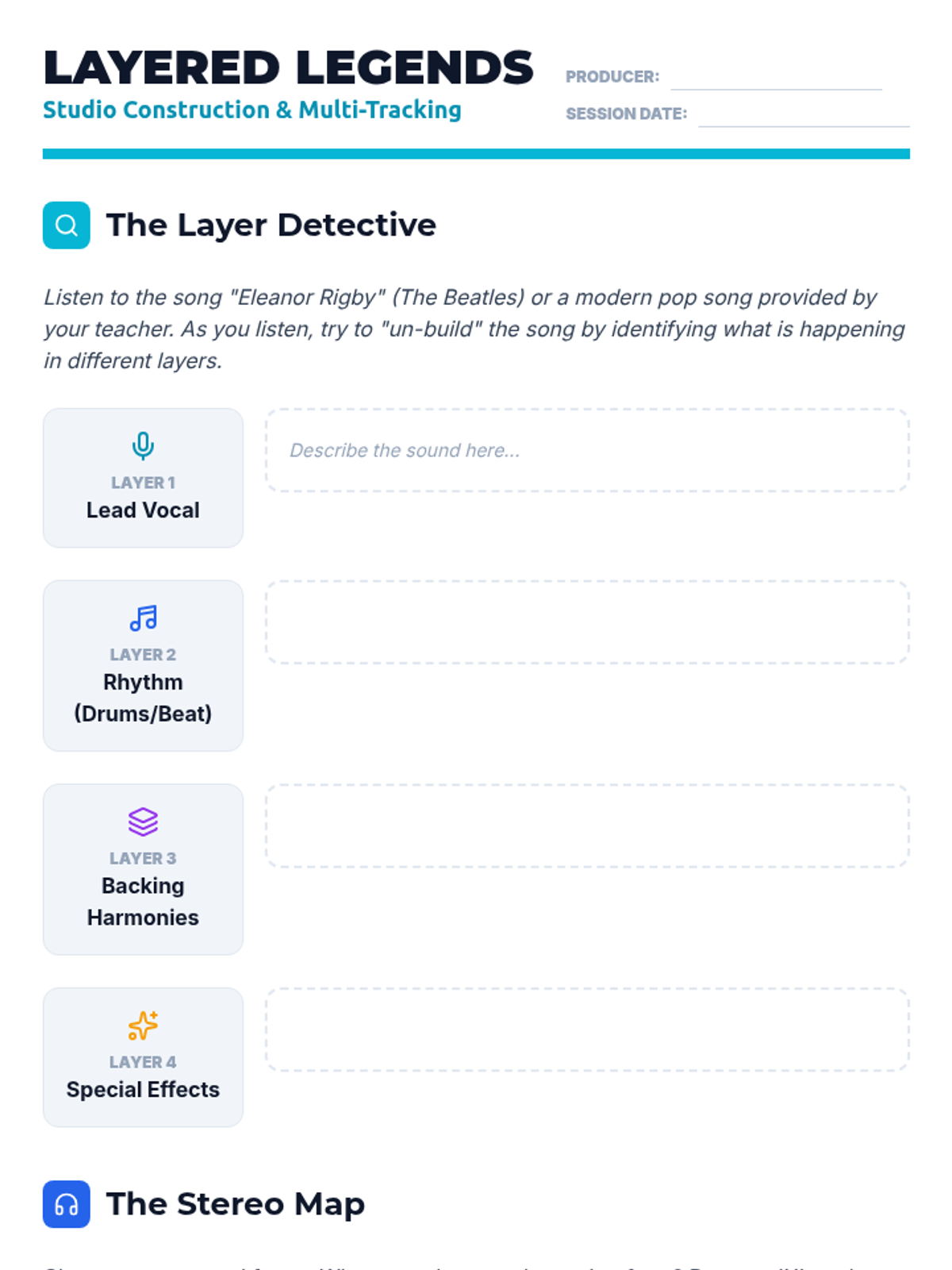
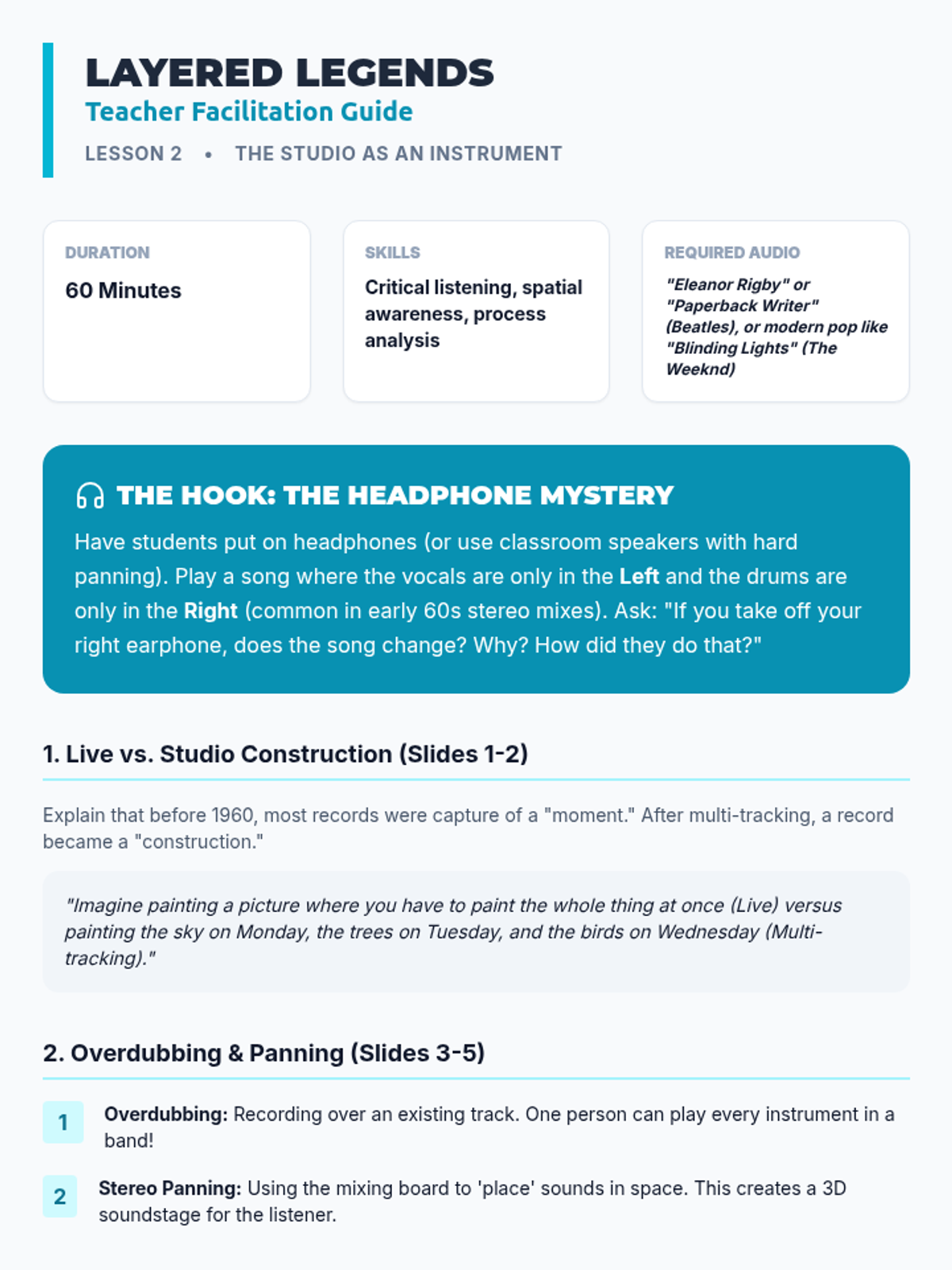
Students explore the 1960s shift from live recording to studio construction, learning about multi-tracking, tape loops, and how The Beatles used the recording studio as a creative instrument.
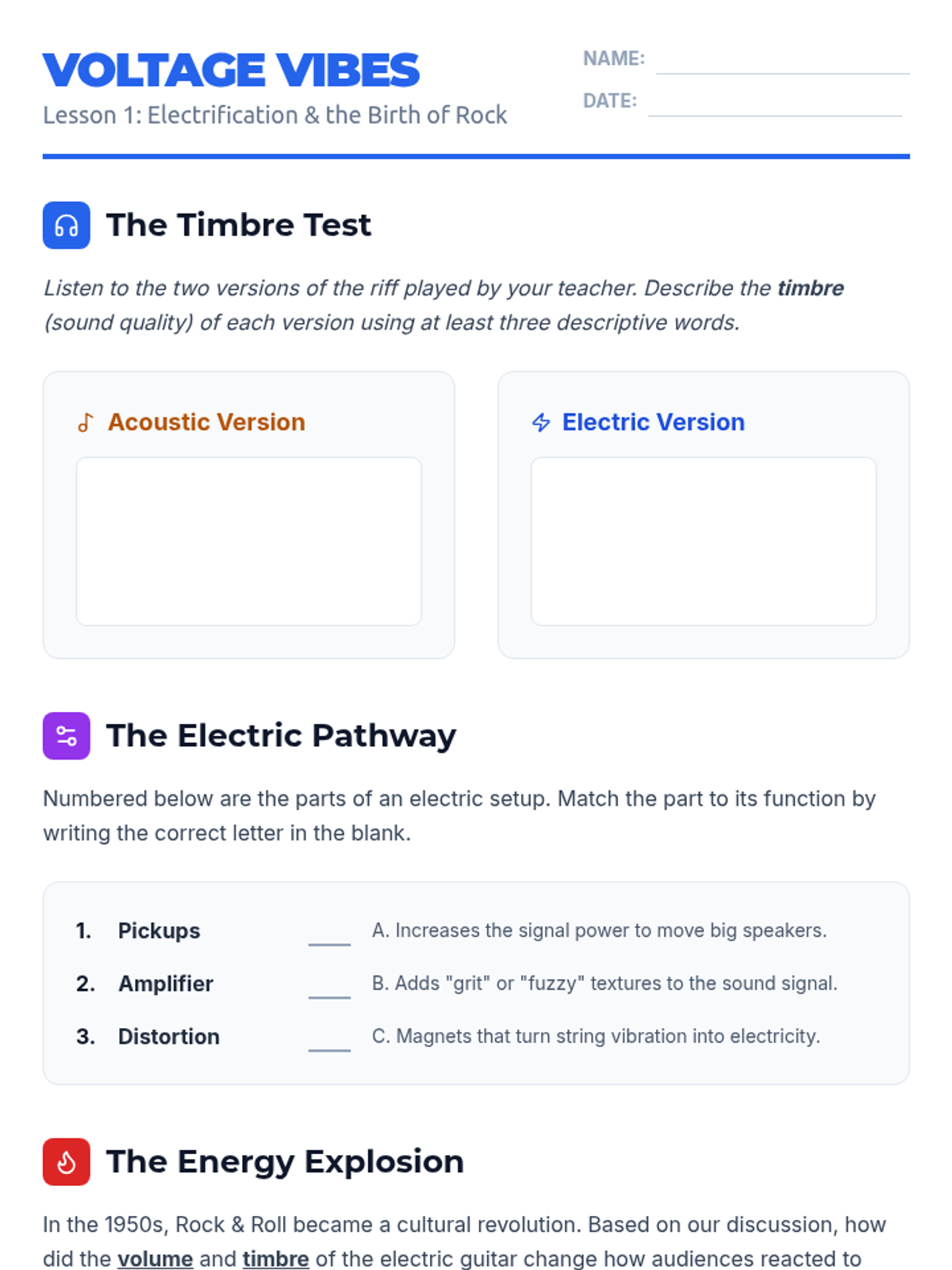
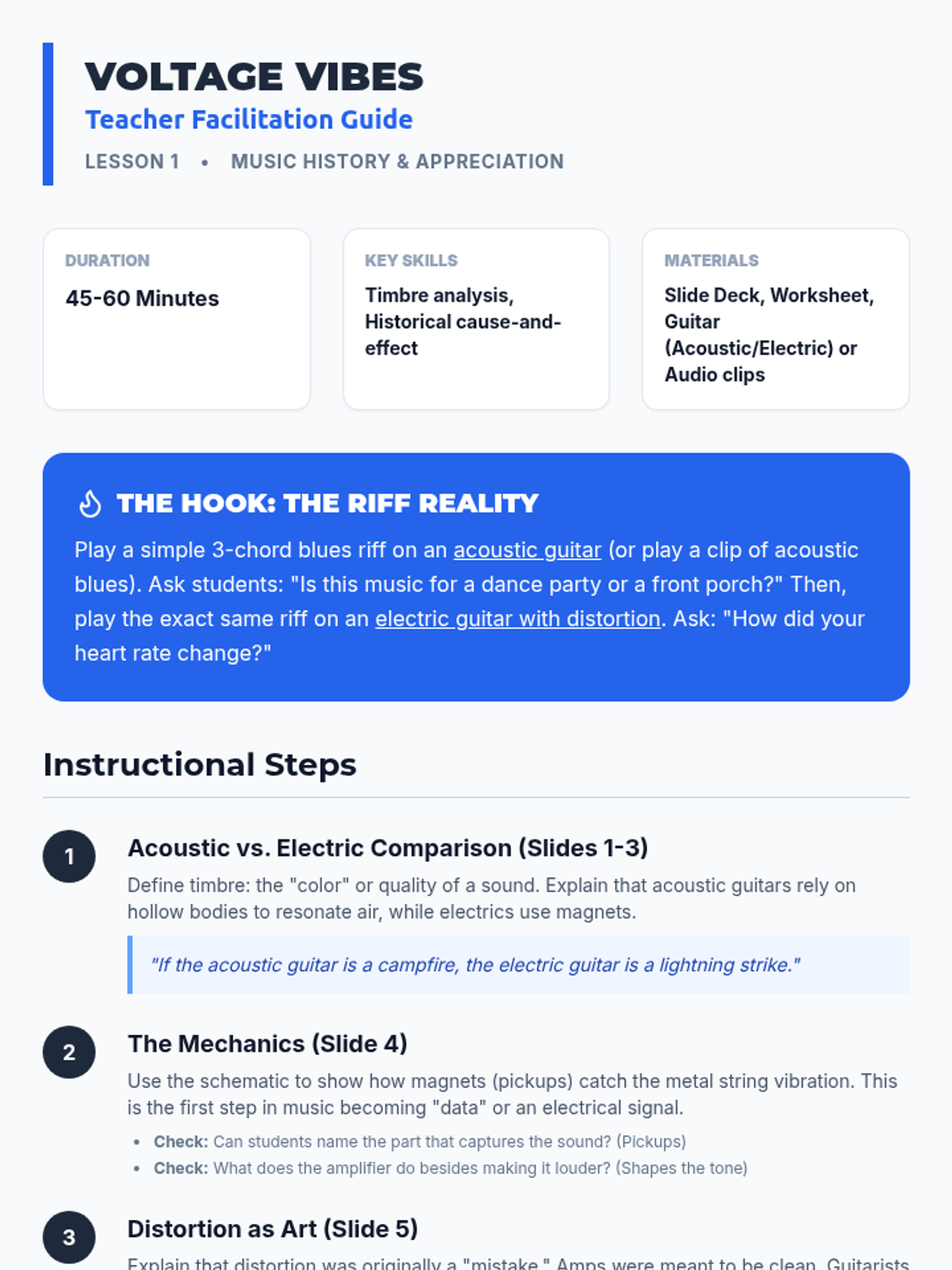
Students analyze the transition from acoustic to electric instruments in the 1950s, exploring how amplification and the electric guitar changed the sound and energy of music.
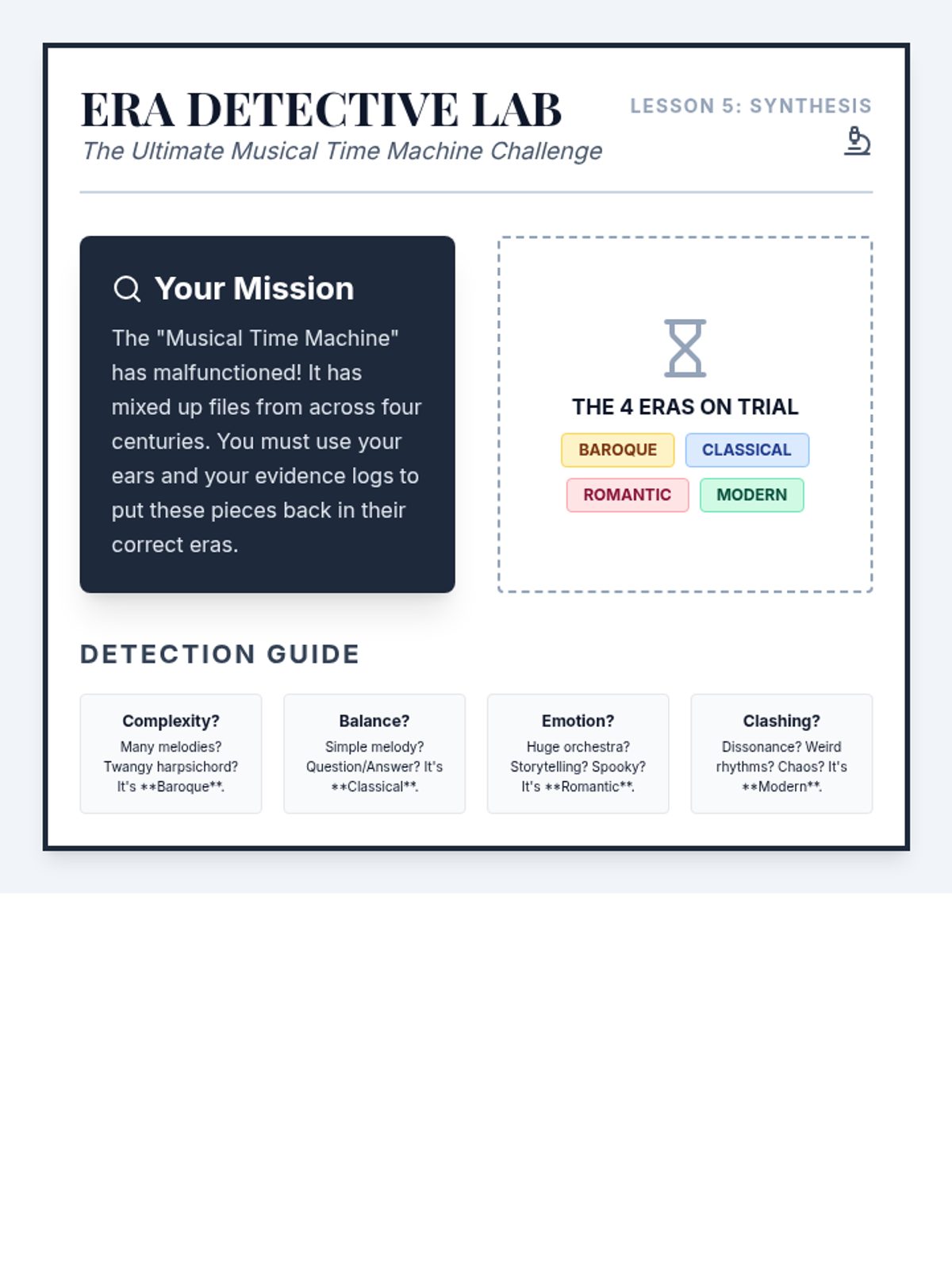
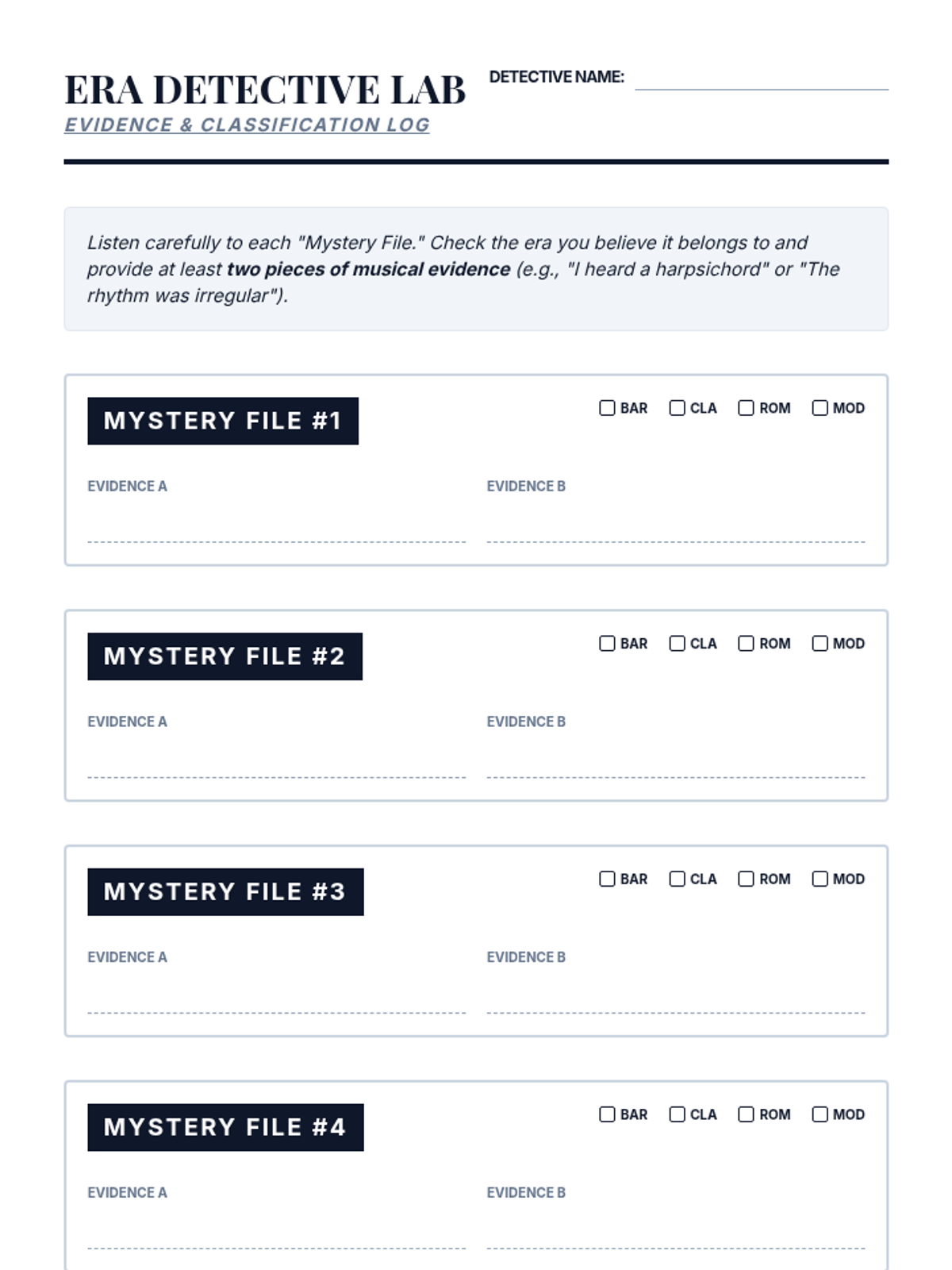
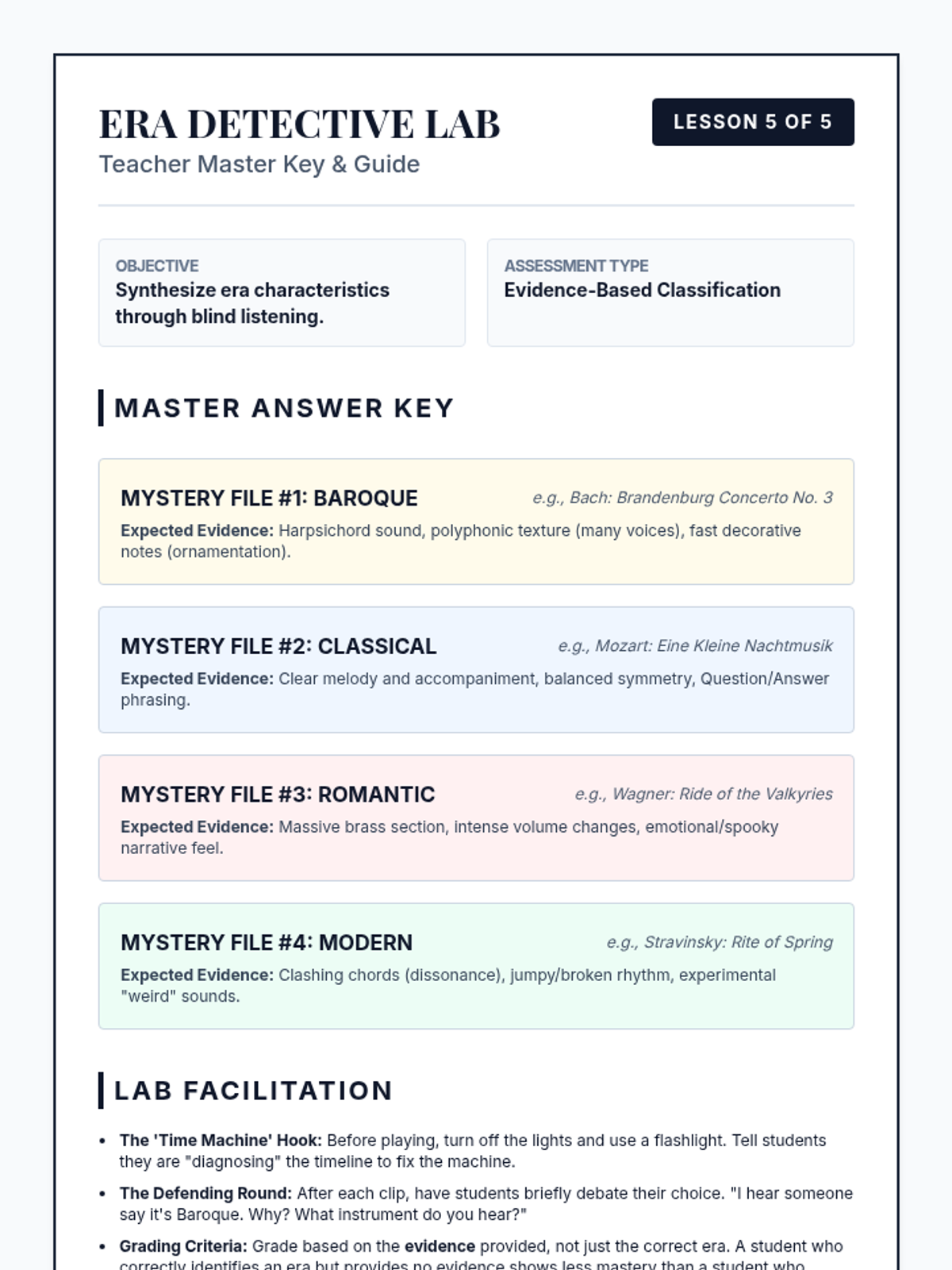
A synthesis lesson where students participate in a blind listening challenge to categorize excerpts into correct eras.
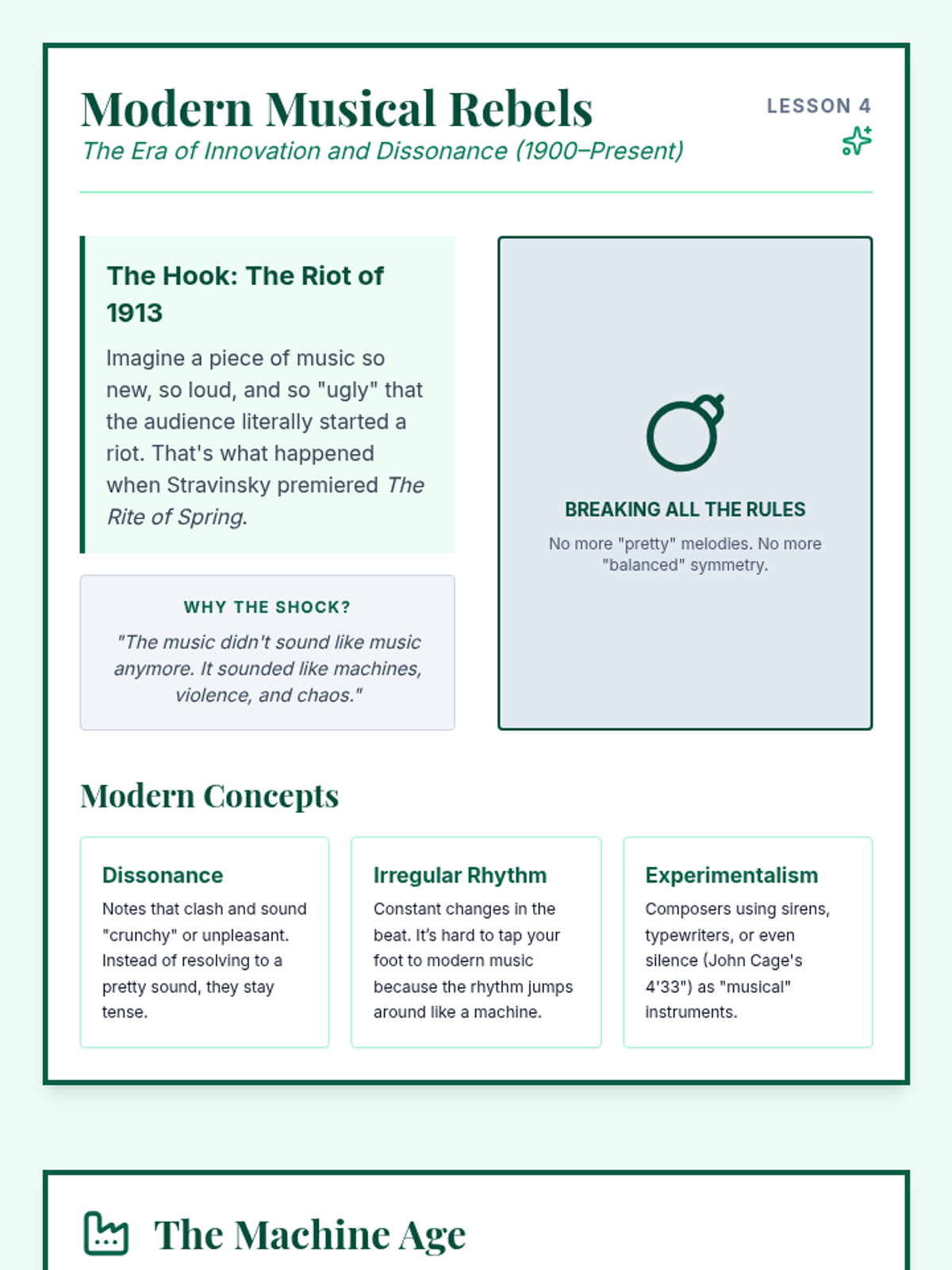
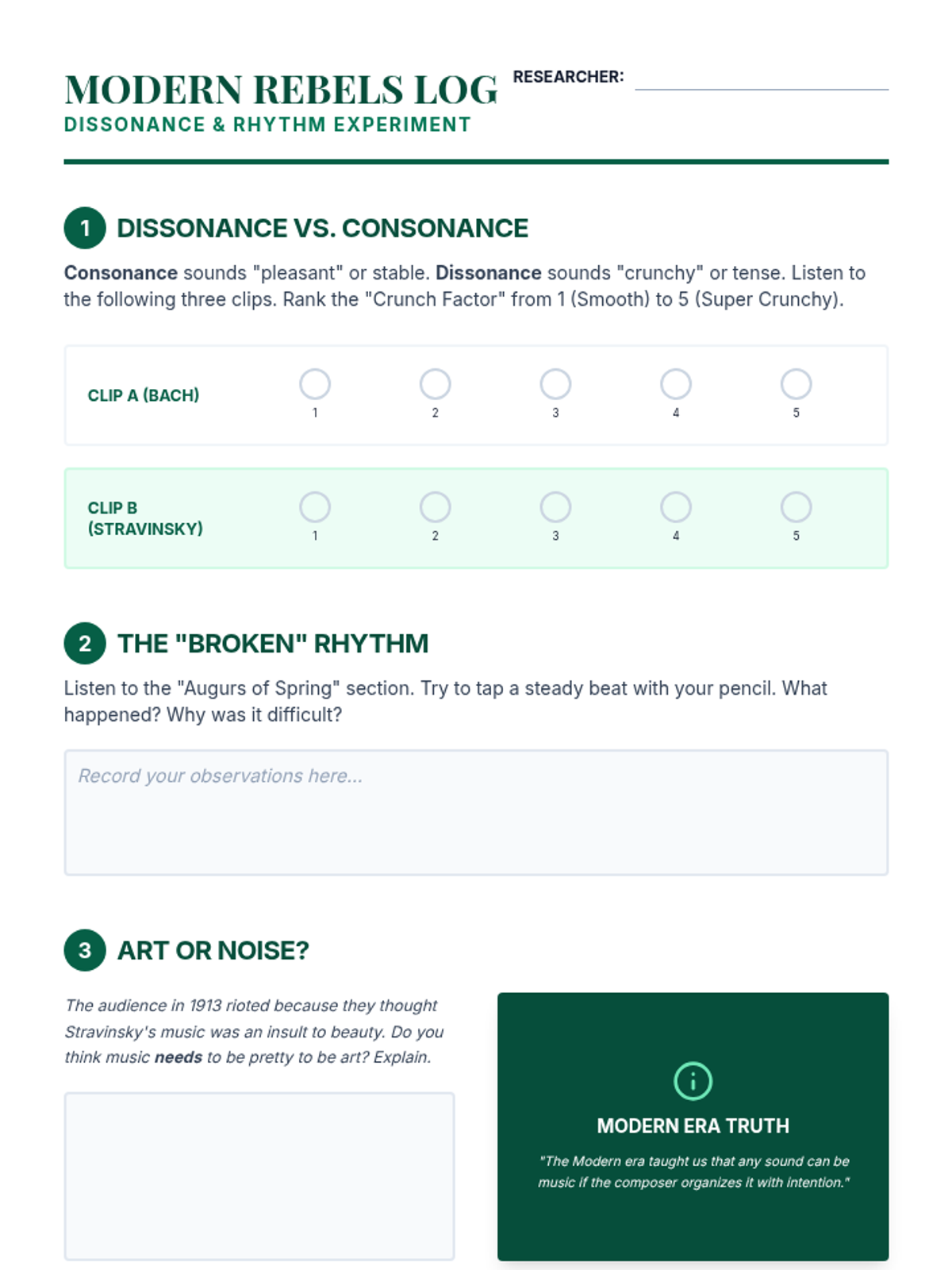
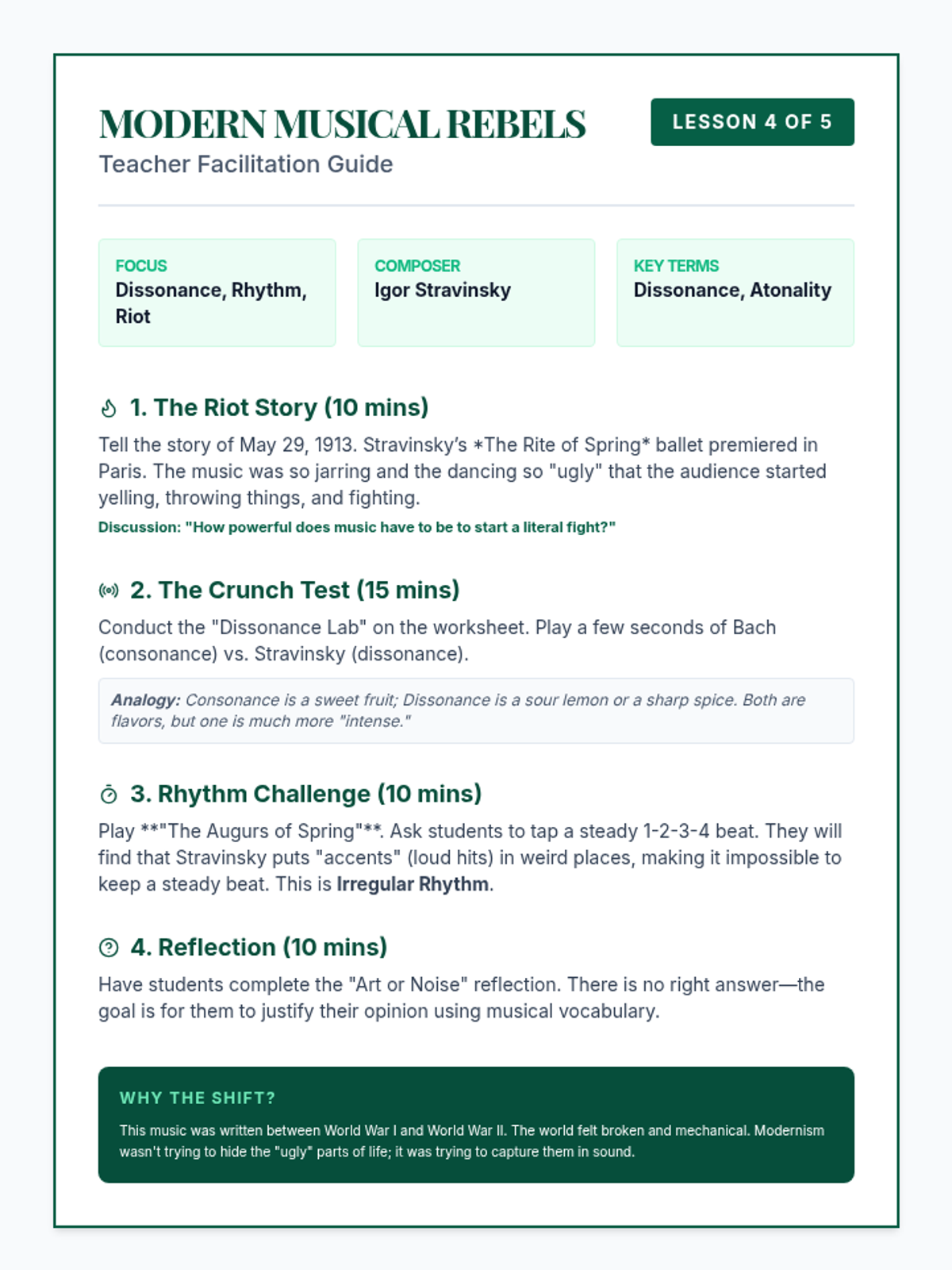
Cover the radical shift in the 1900s where composers broke traditional rules of harmony and rhythm.
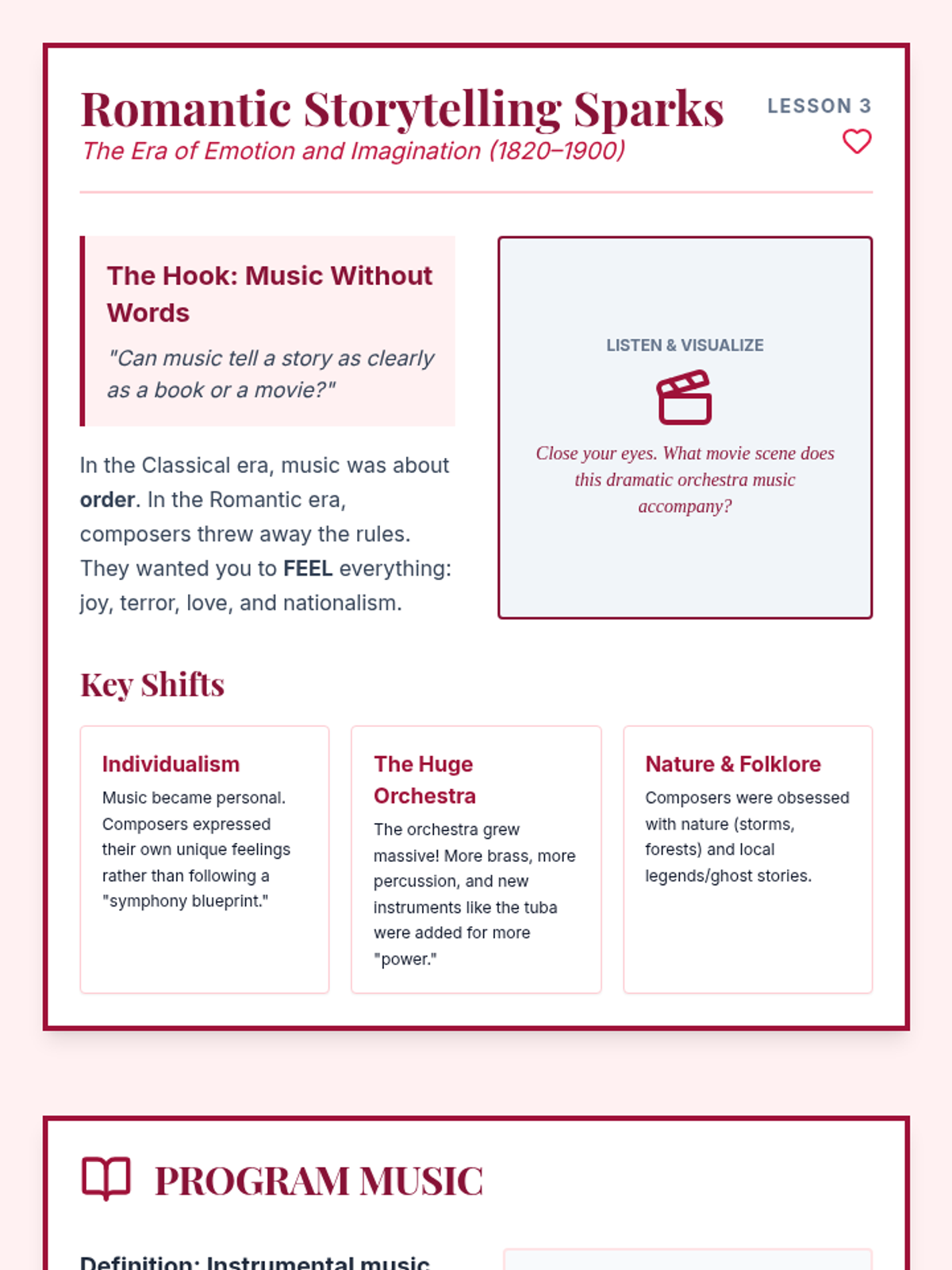
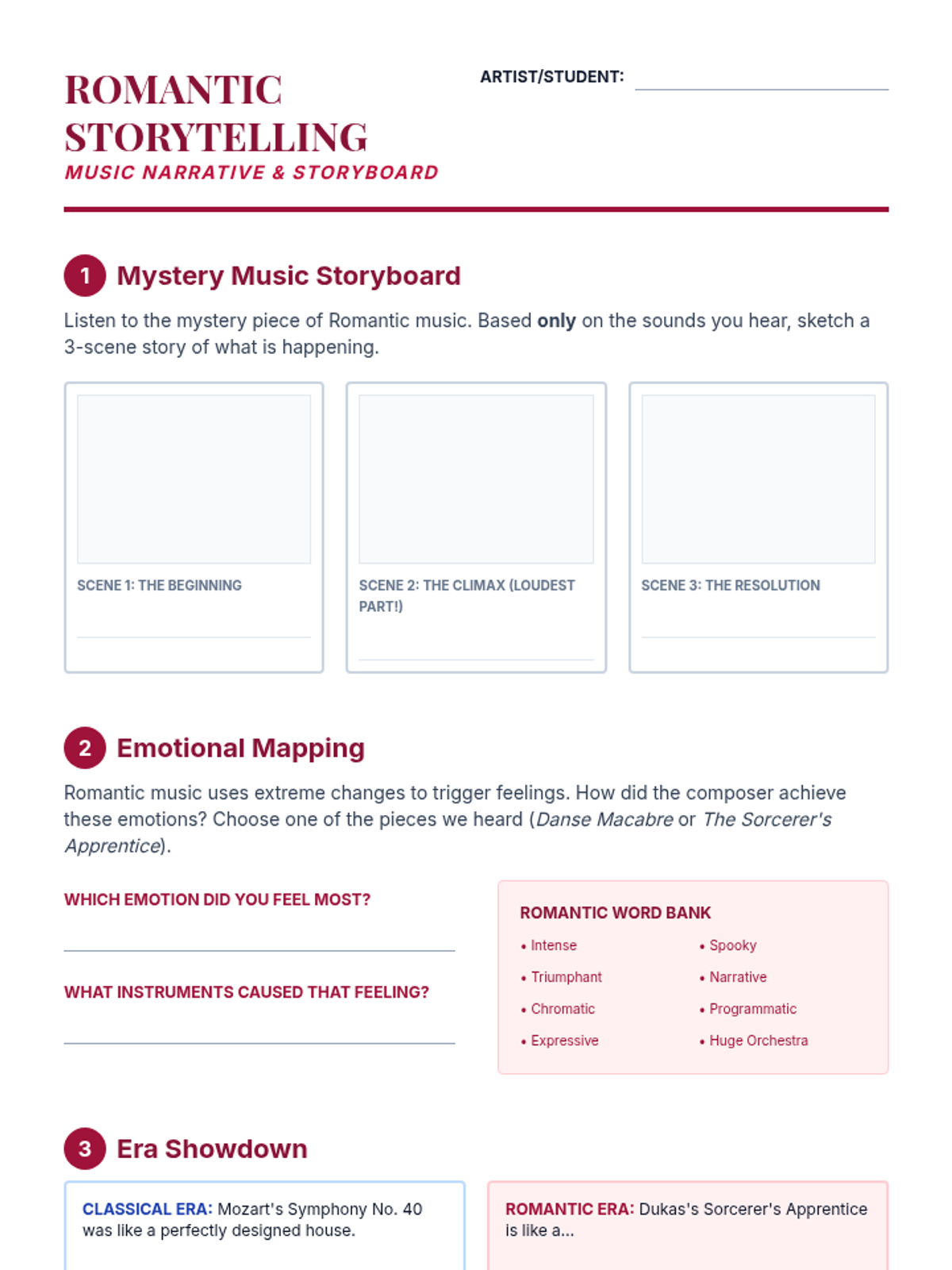
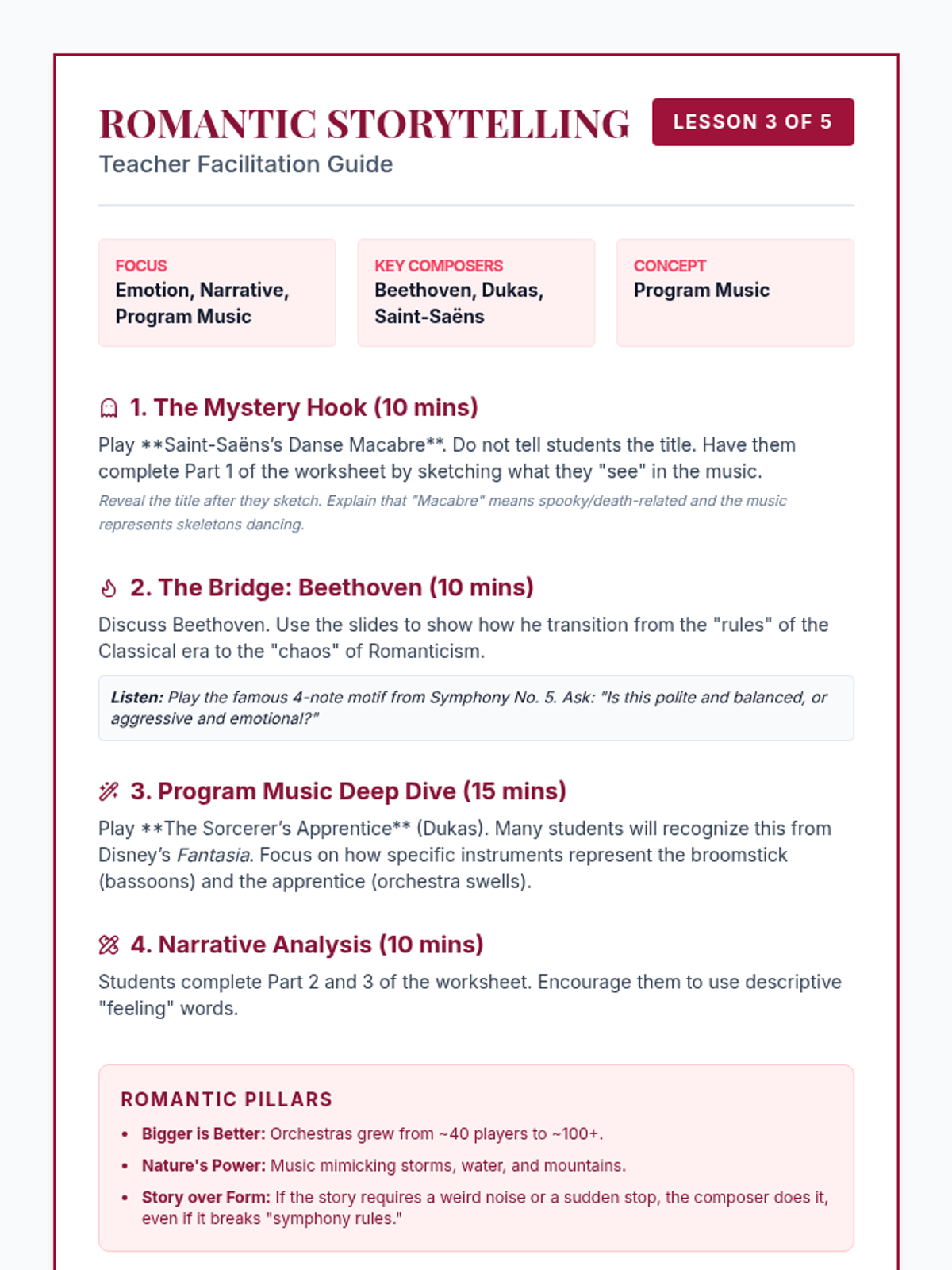
Investigate how music shifted towards intense emotion and storytelling (Program Music) during the Romantic era.
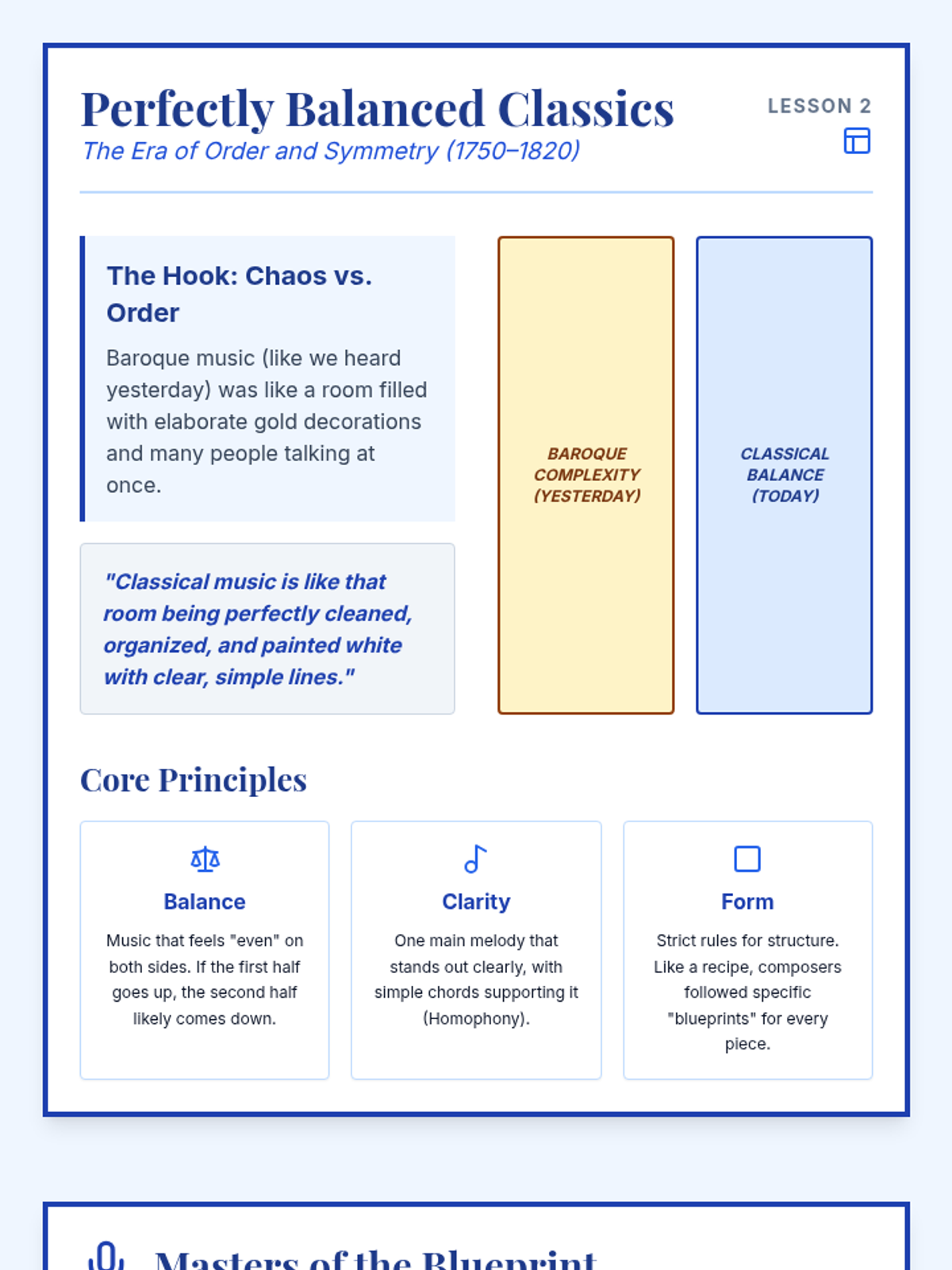
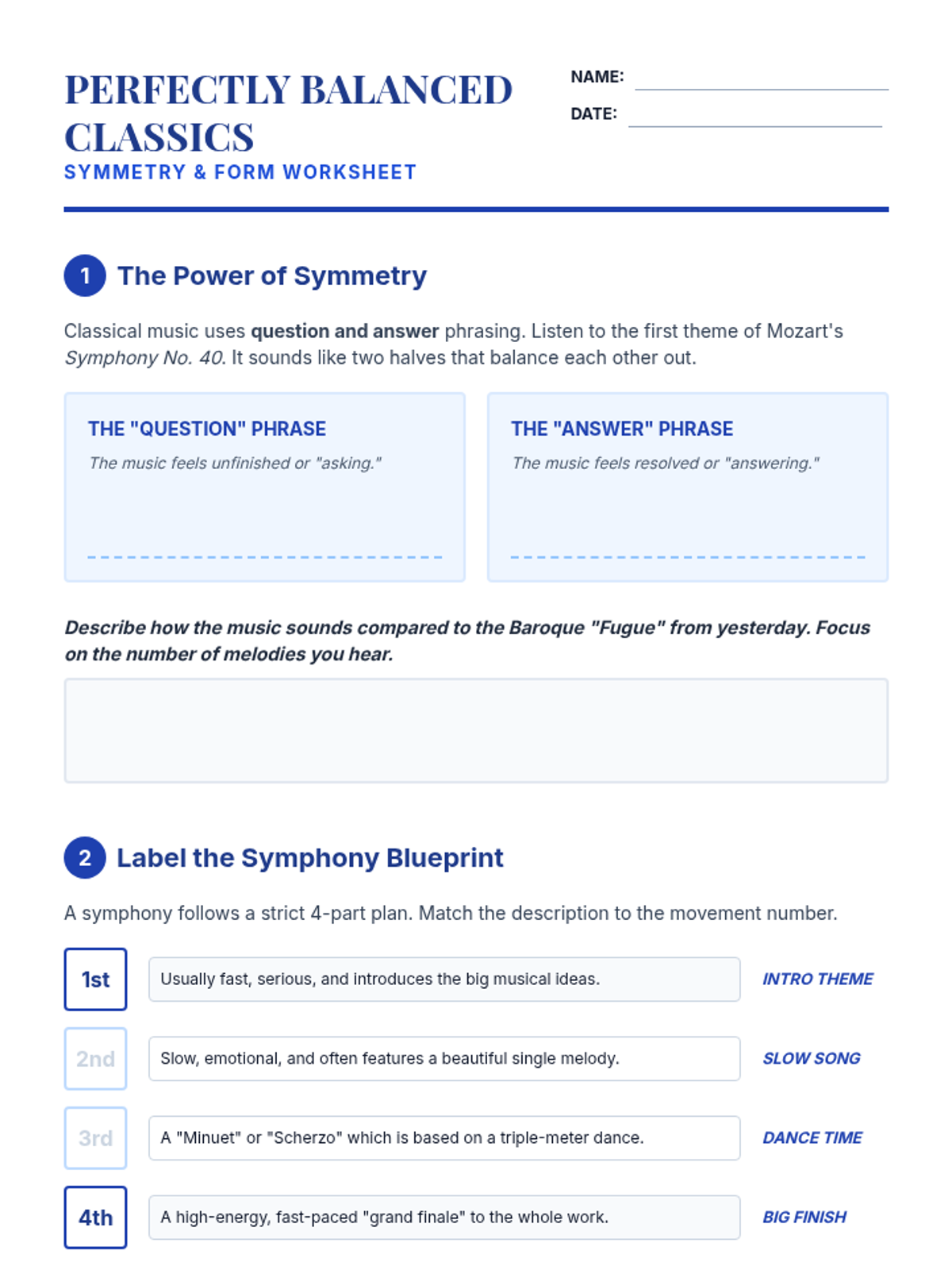
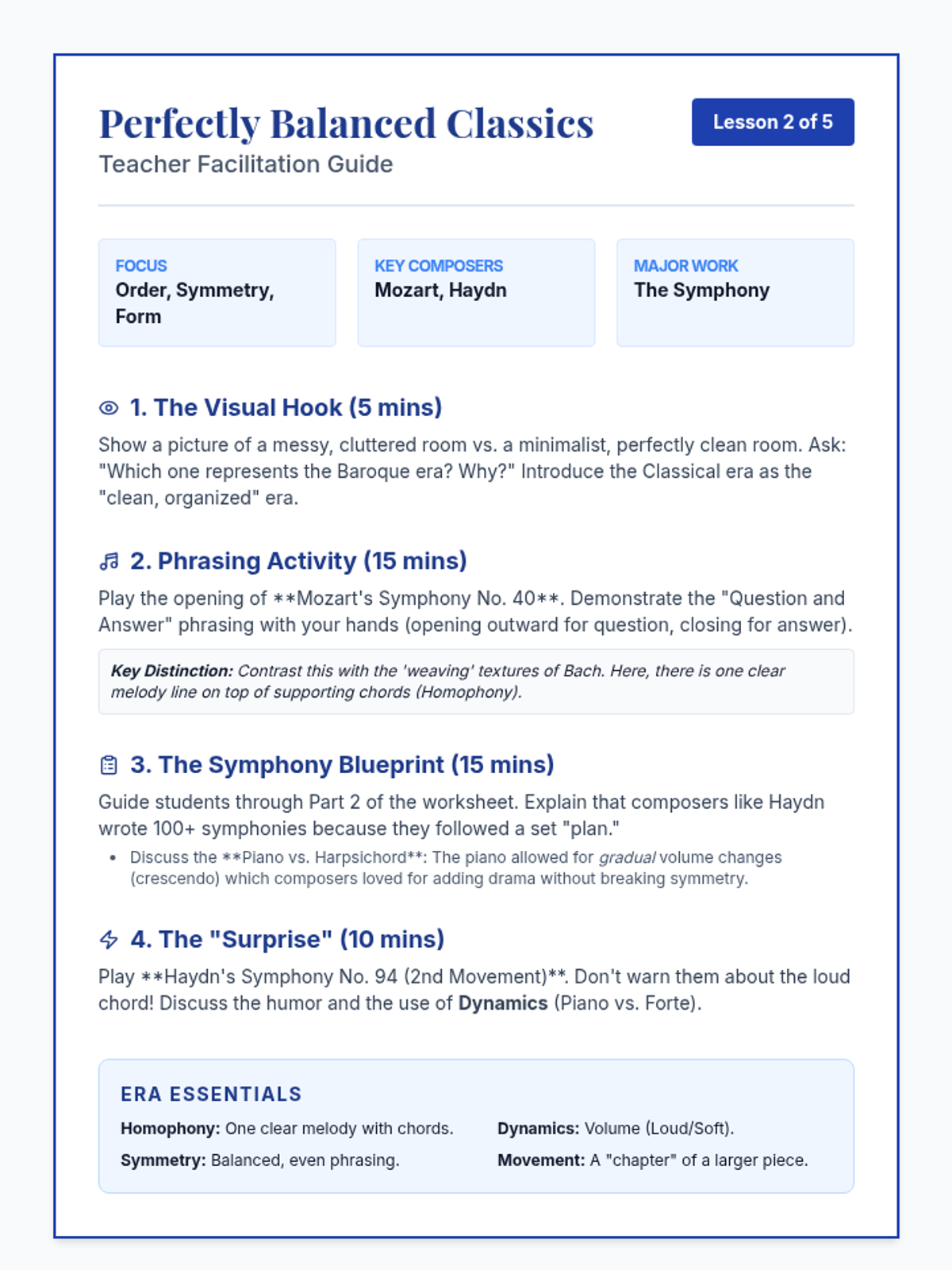
Introduce the Classical era's obsession with order, symmetry, and clear melody through Mozart and Haydn.
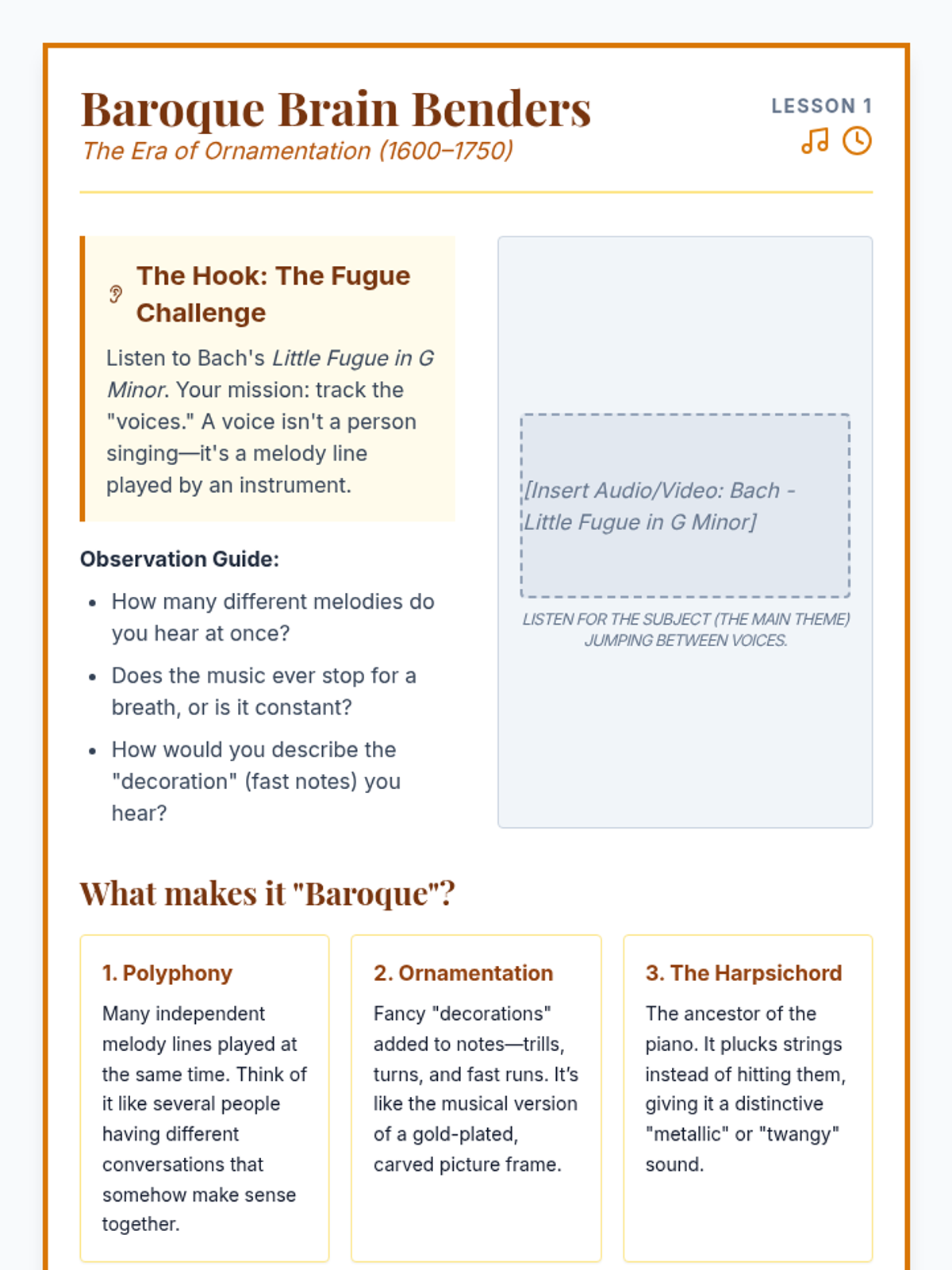
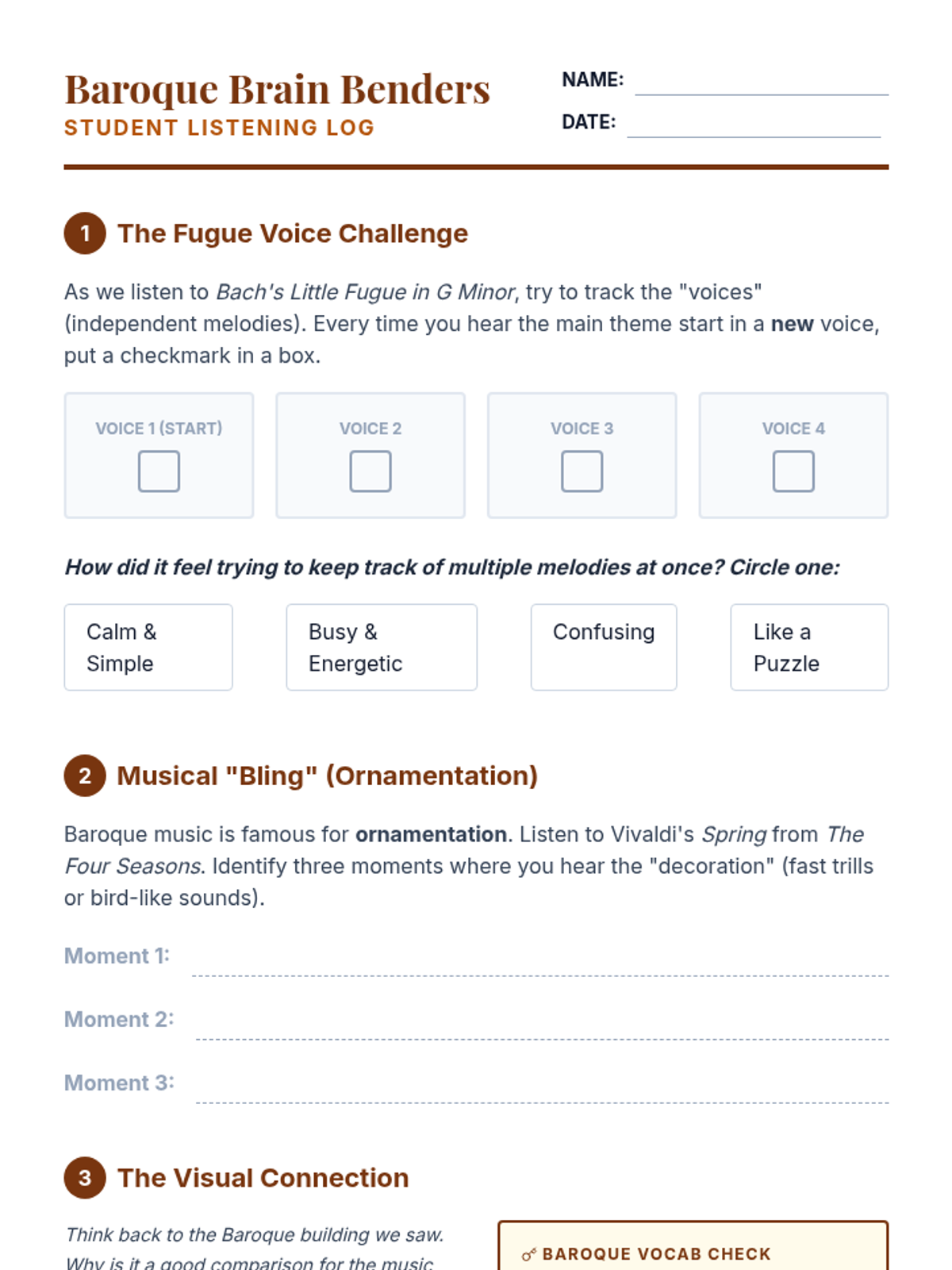
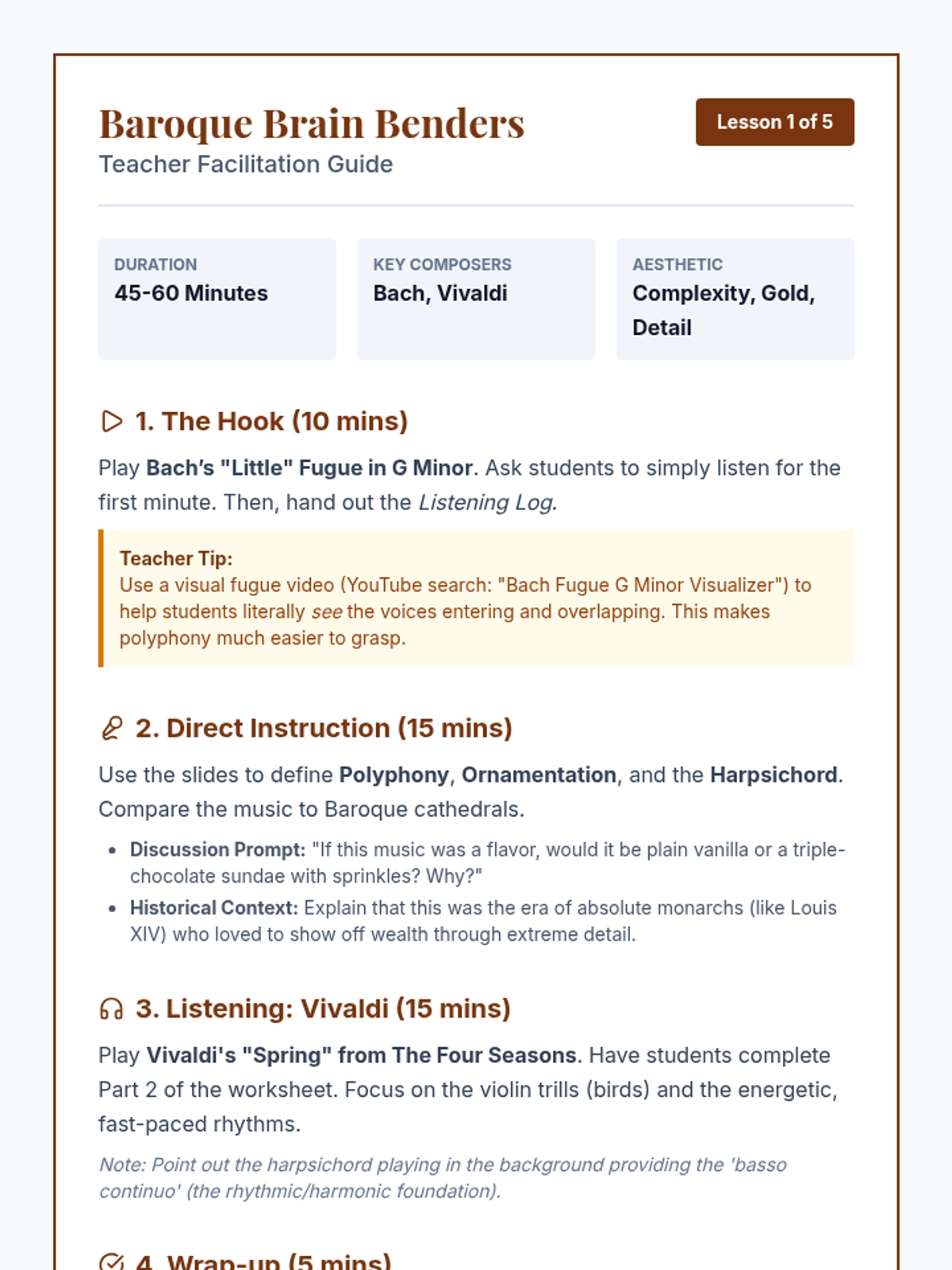
Explore the ornate style of the Baroque period through the works of Bach and Vivaldi, focusing on polyphony and harpsichord.
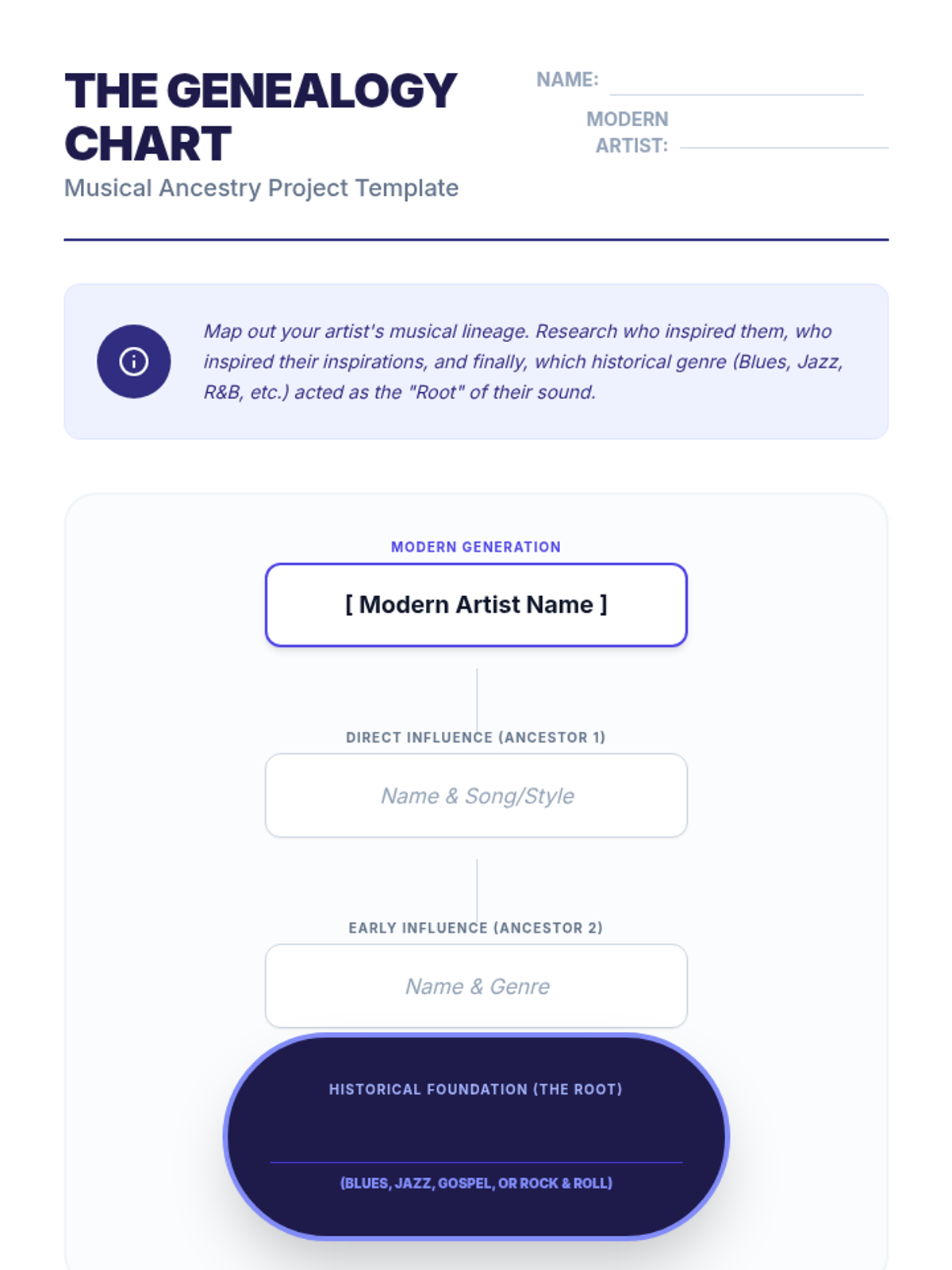
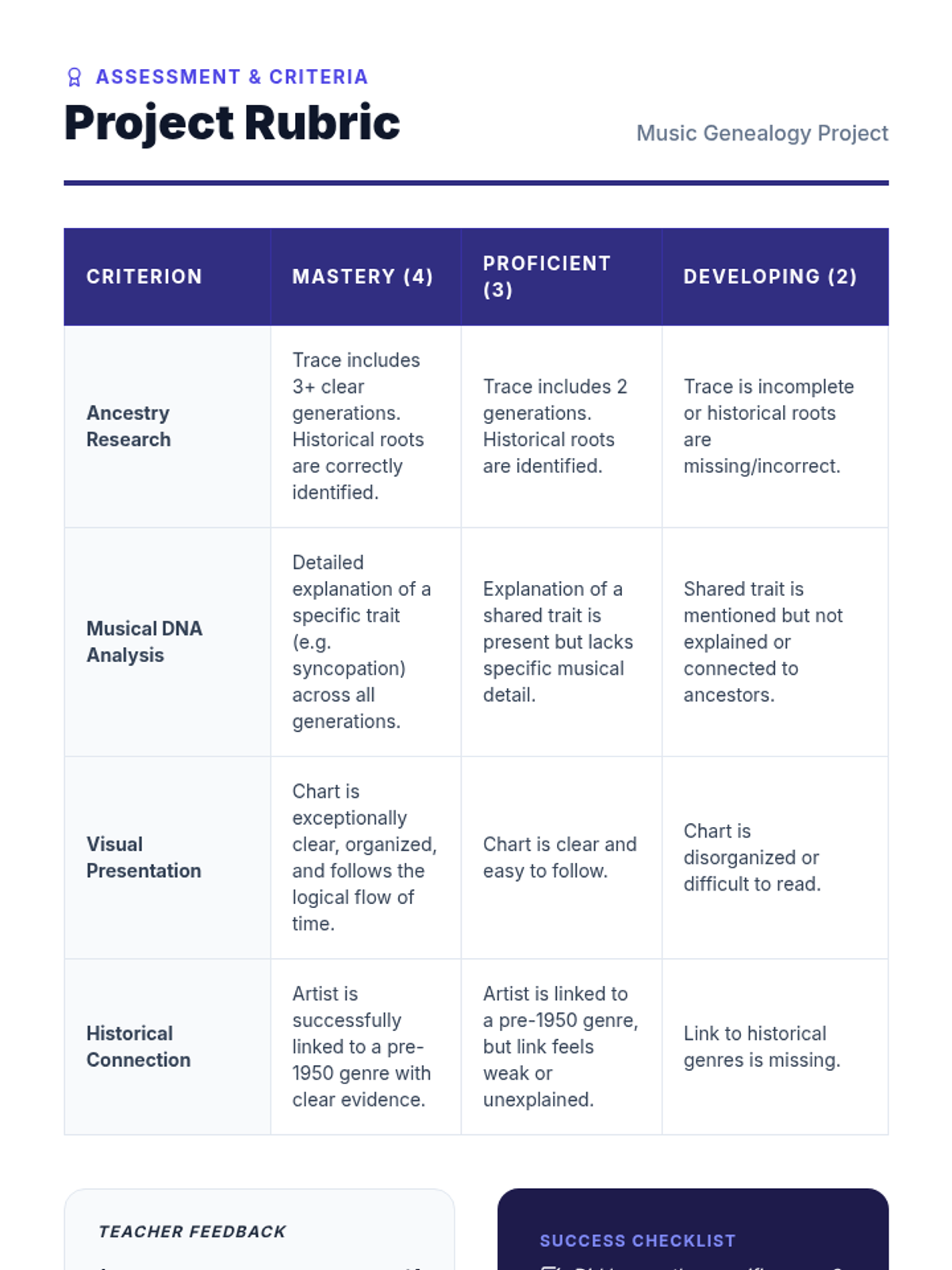
Synthesize learning by tracing the musical ancestry of a modern artist back through historical genres in a visual genealogy project.
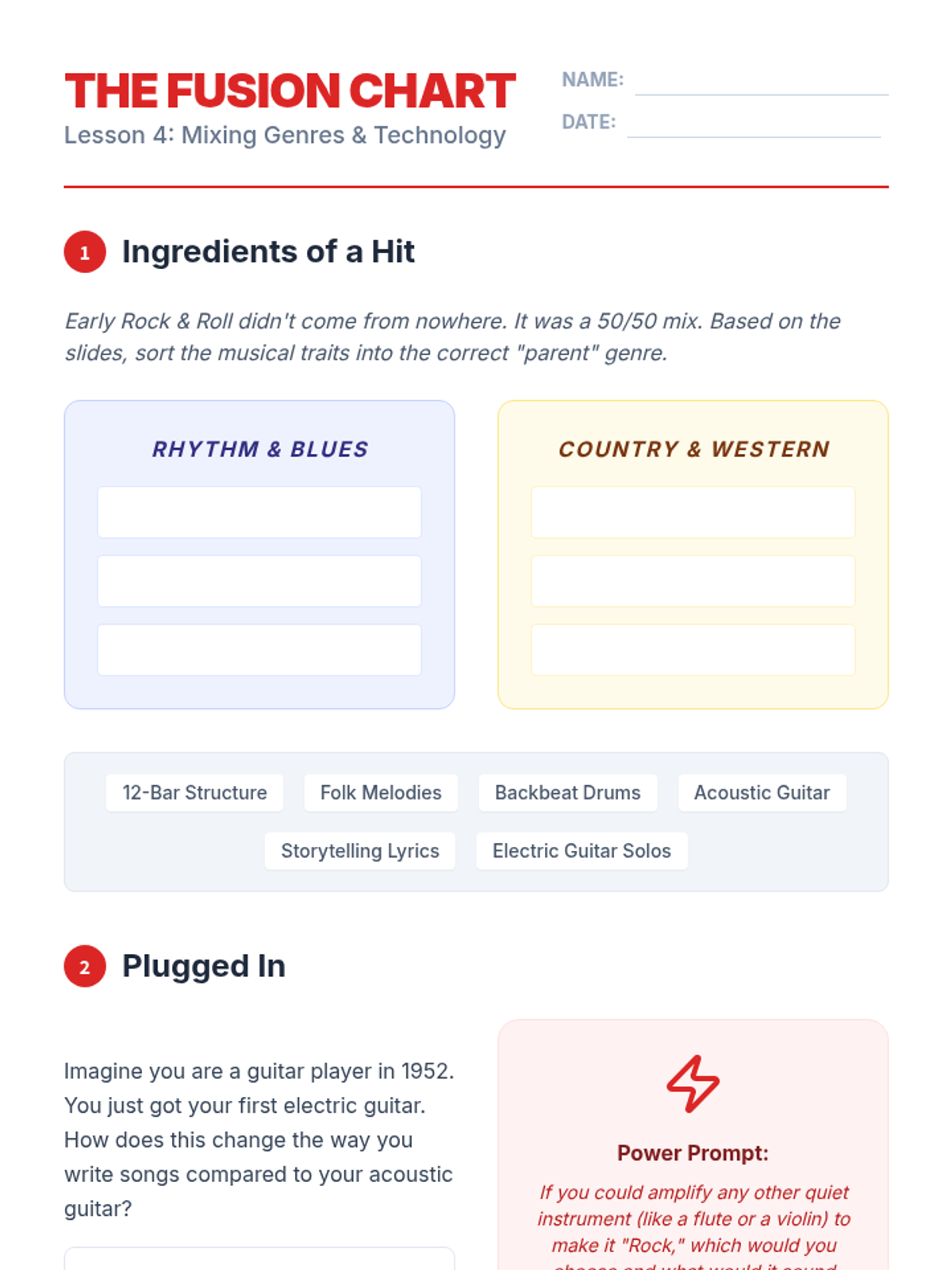
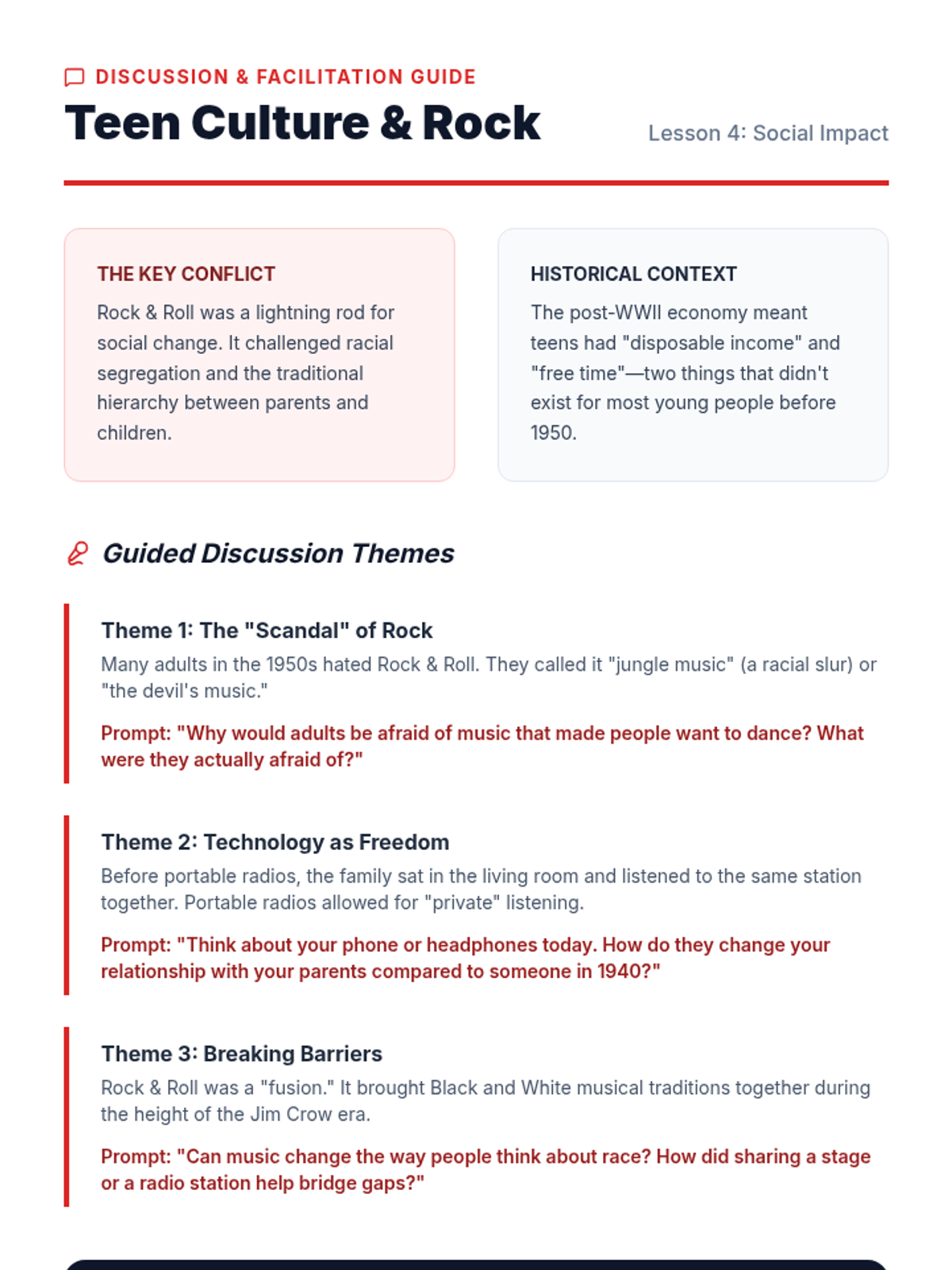
Examine the fusion of Country/Western and Rhythm & Blues that birthed Rock & Roll, along with the impact of technology.
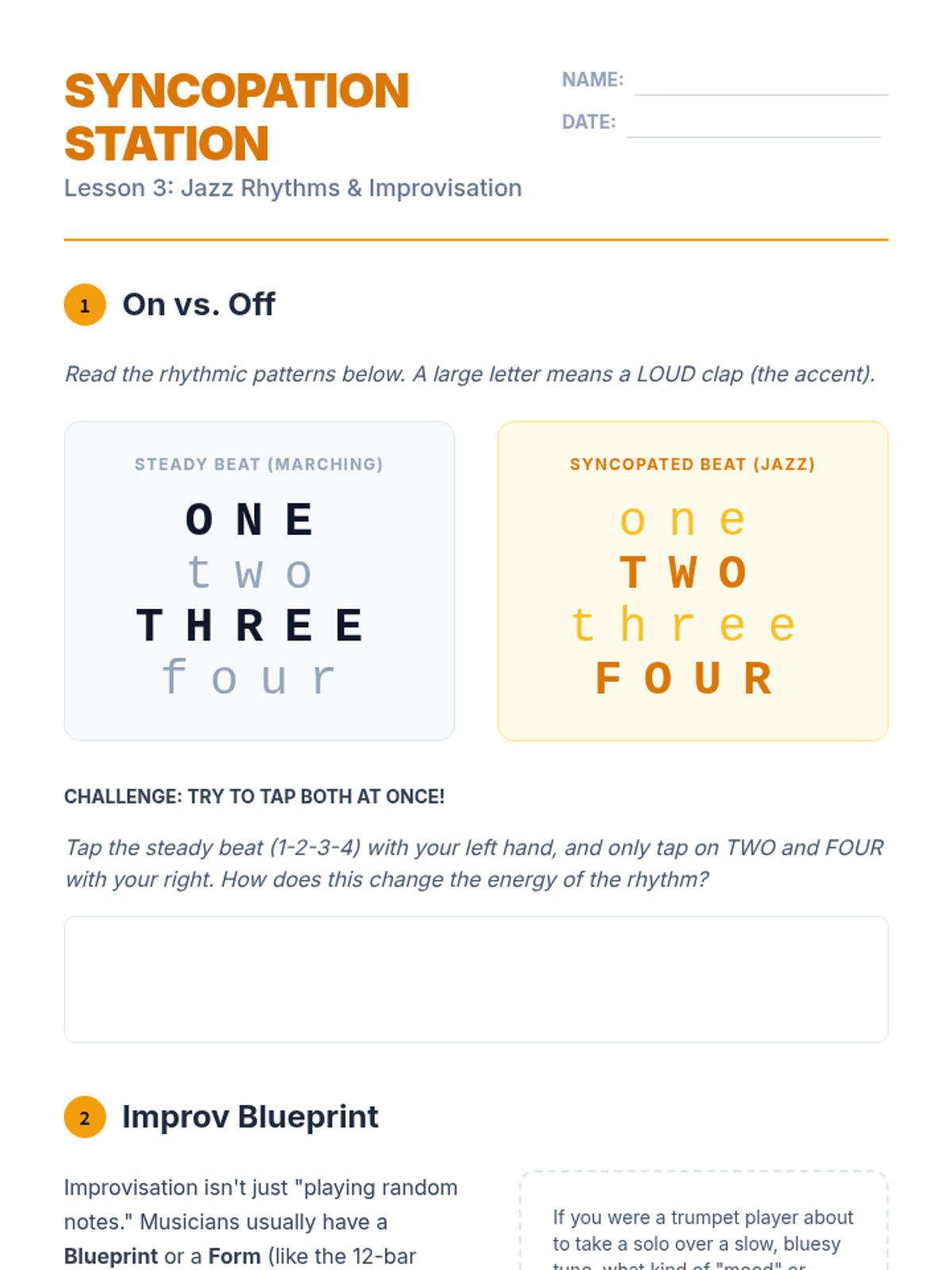
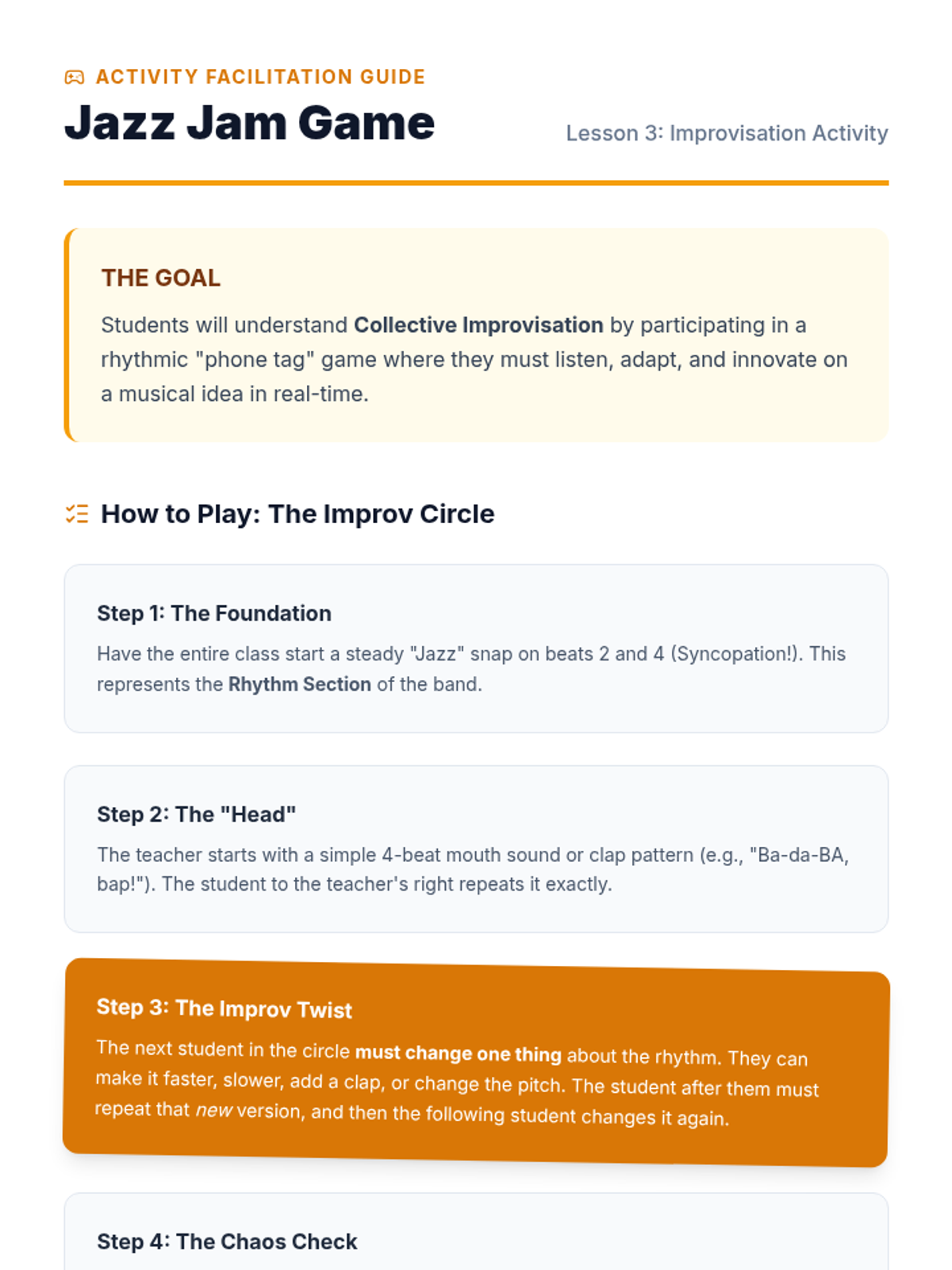
Investigate the birth of Jazz in New Orleans, focusing on collective improvisation and the rhythmic complexity of syncopation.
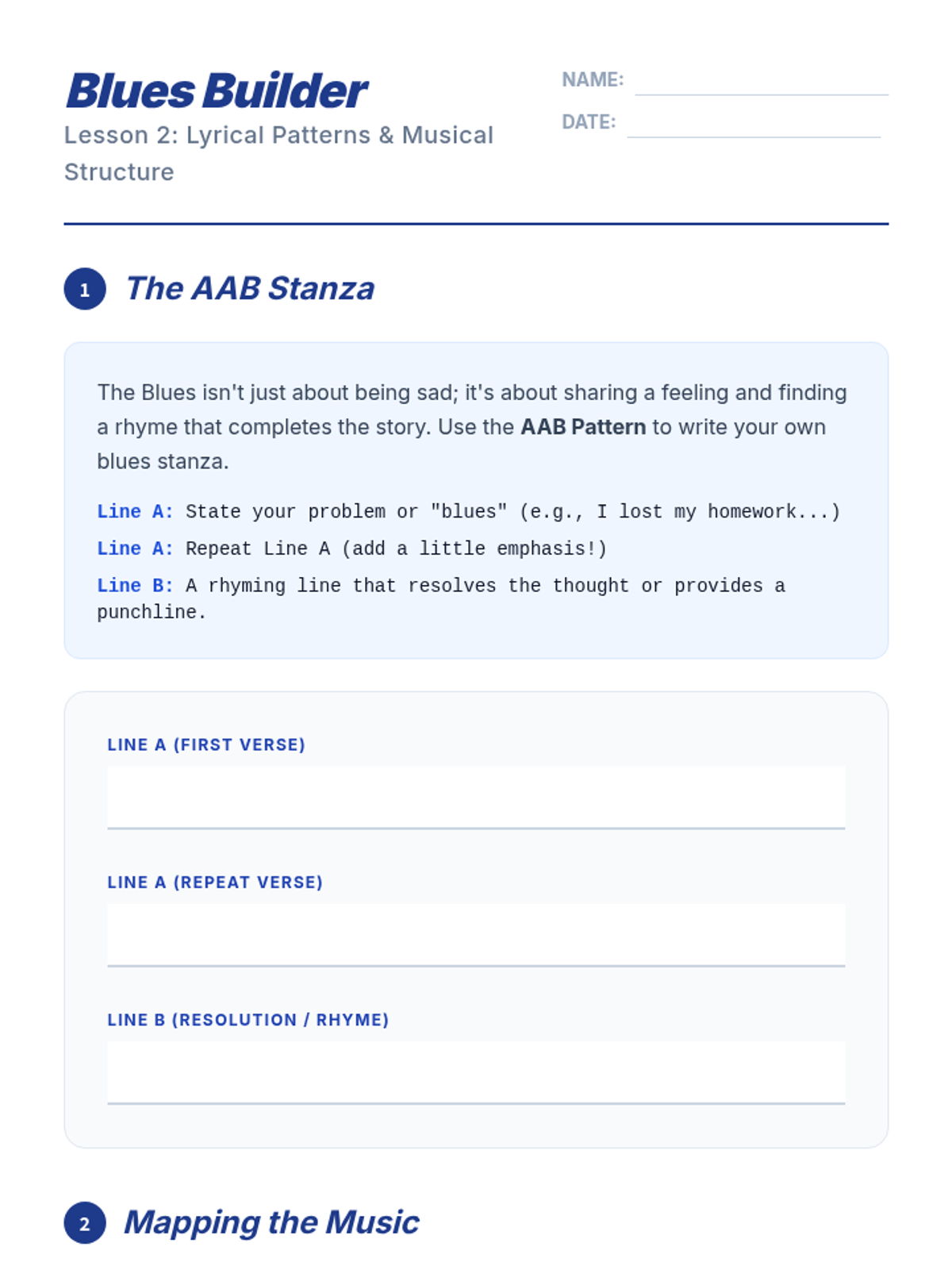
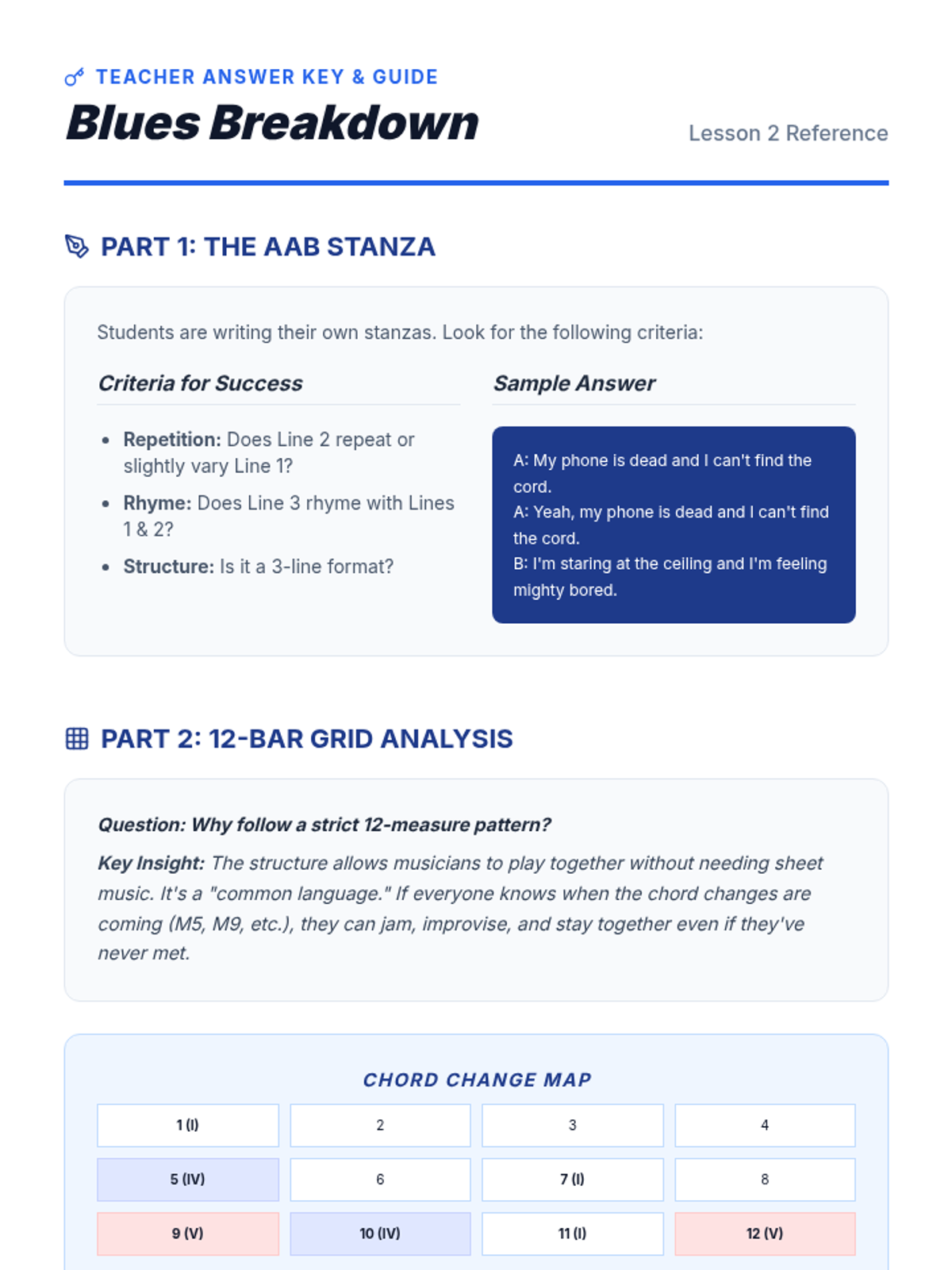
Analyze the 12-bar blues structure and the AAB lyrical pattern to understand the foundational DNA of modern popular music.
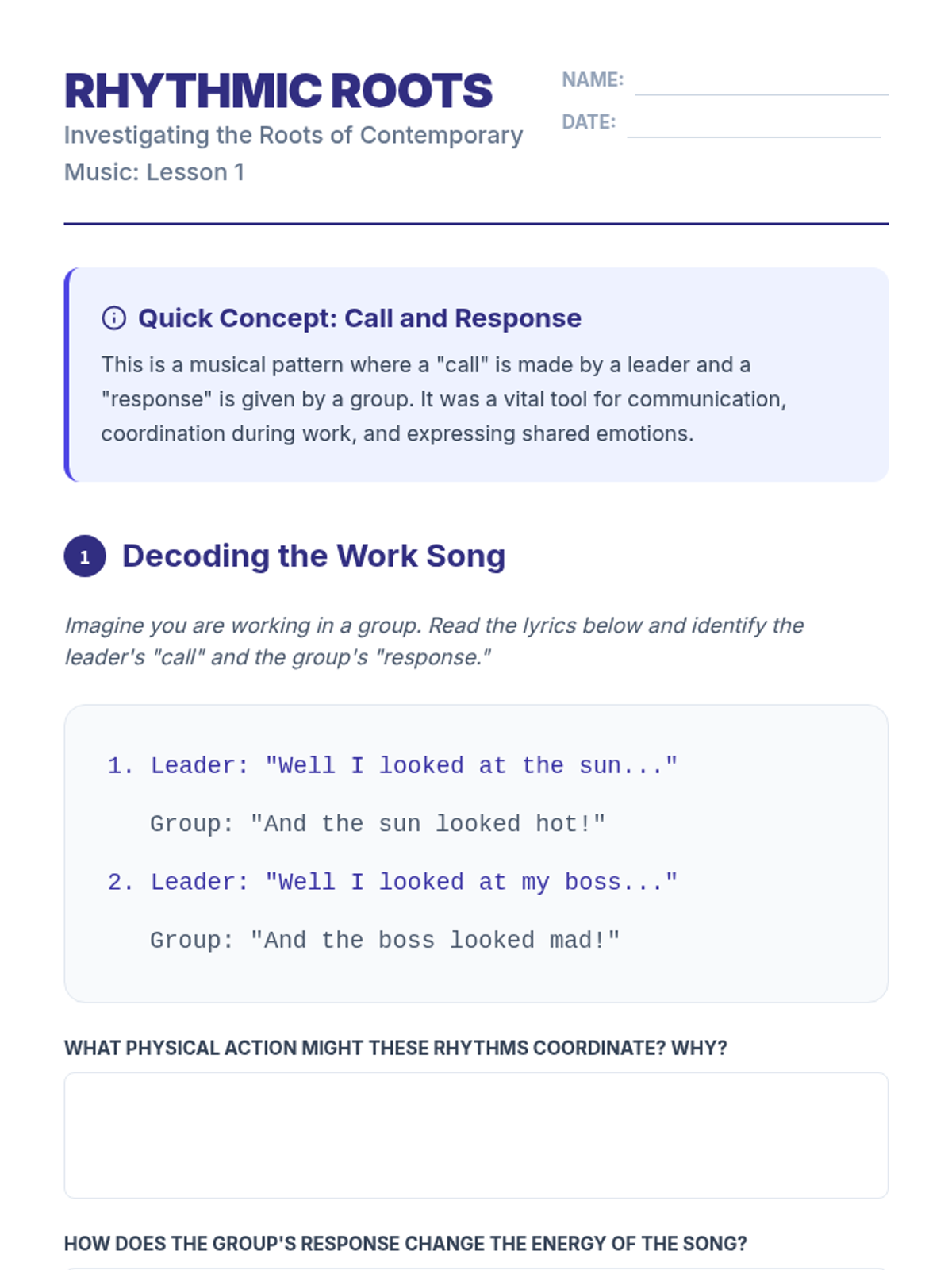
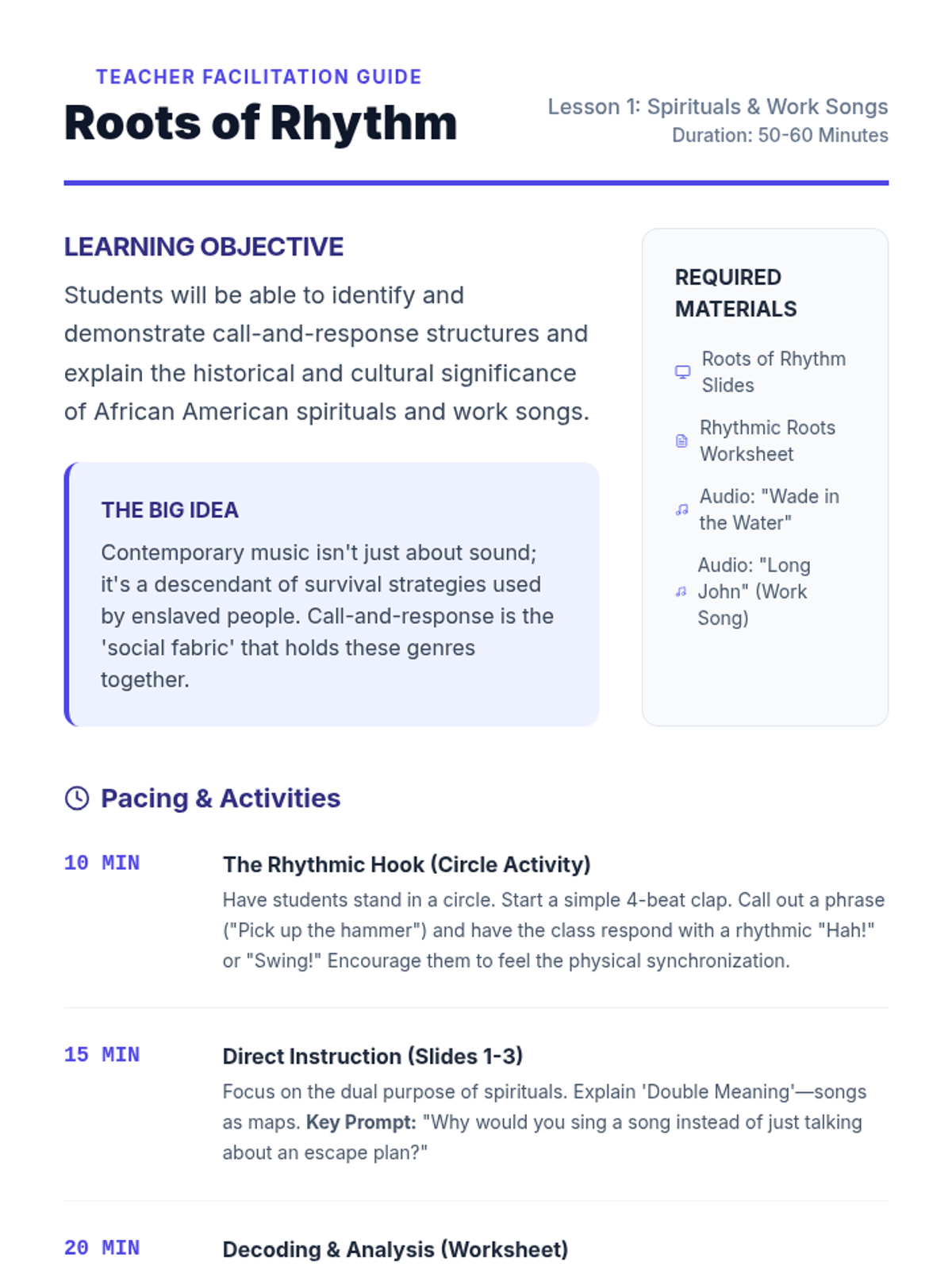
Explore the origins of American music through Spirituals and work songs, focusing on call-and-response and rhythmic communication.
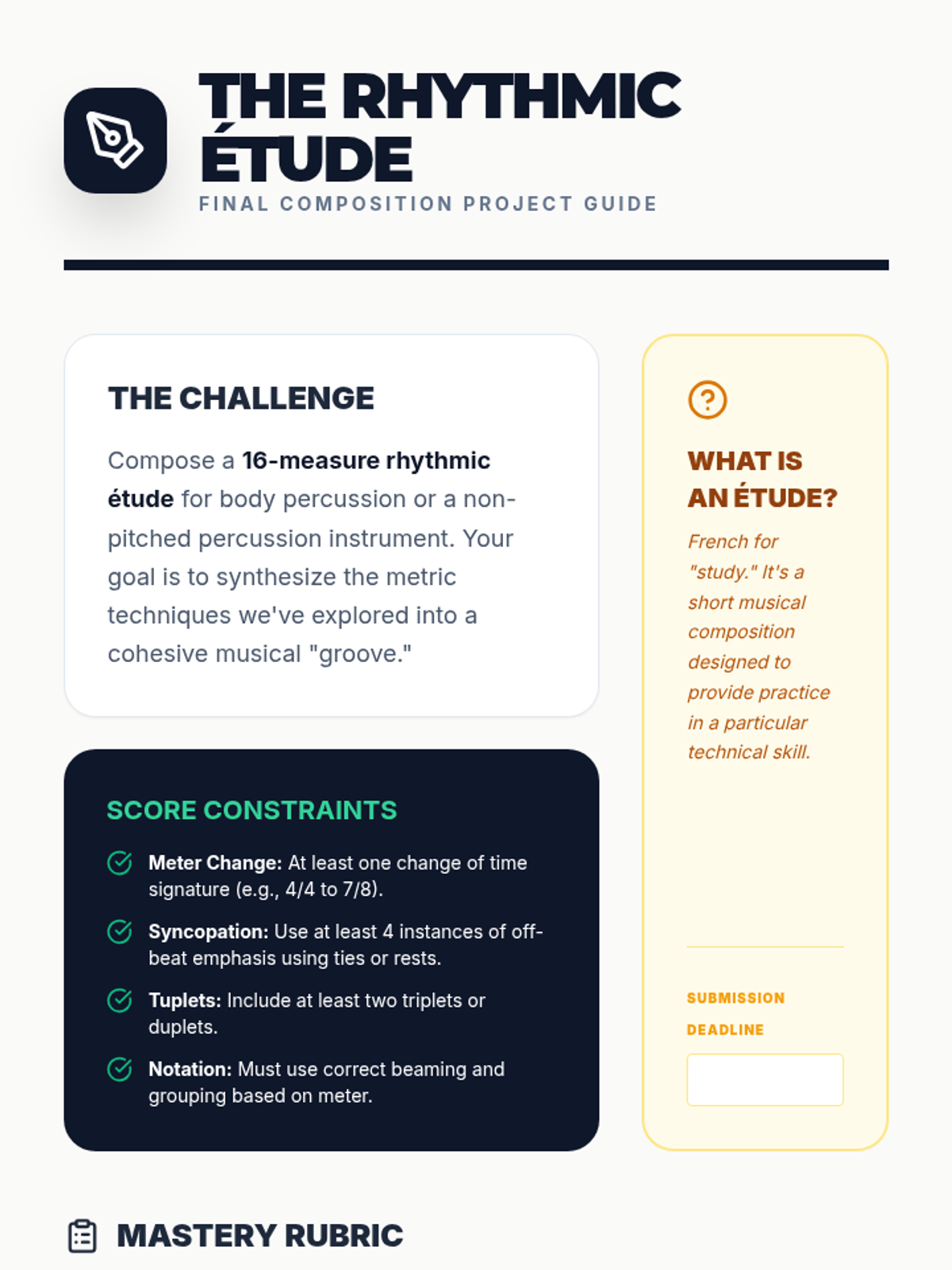
The culminating project where students compose and perform an original 16-measure rhythmic étude incorporating sequence concepts.
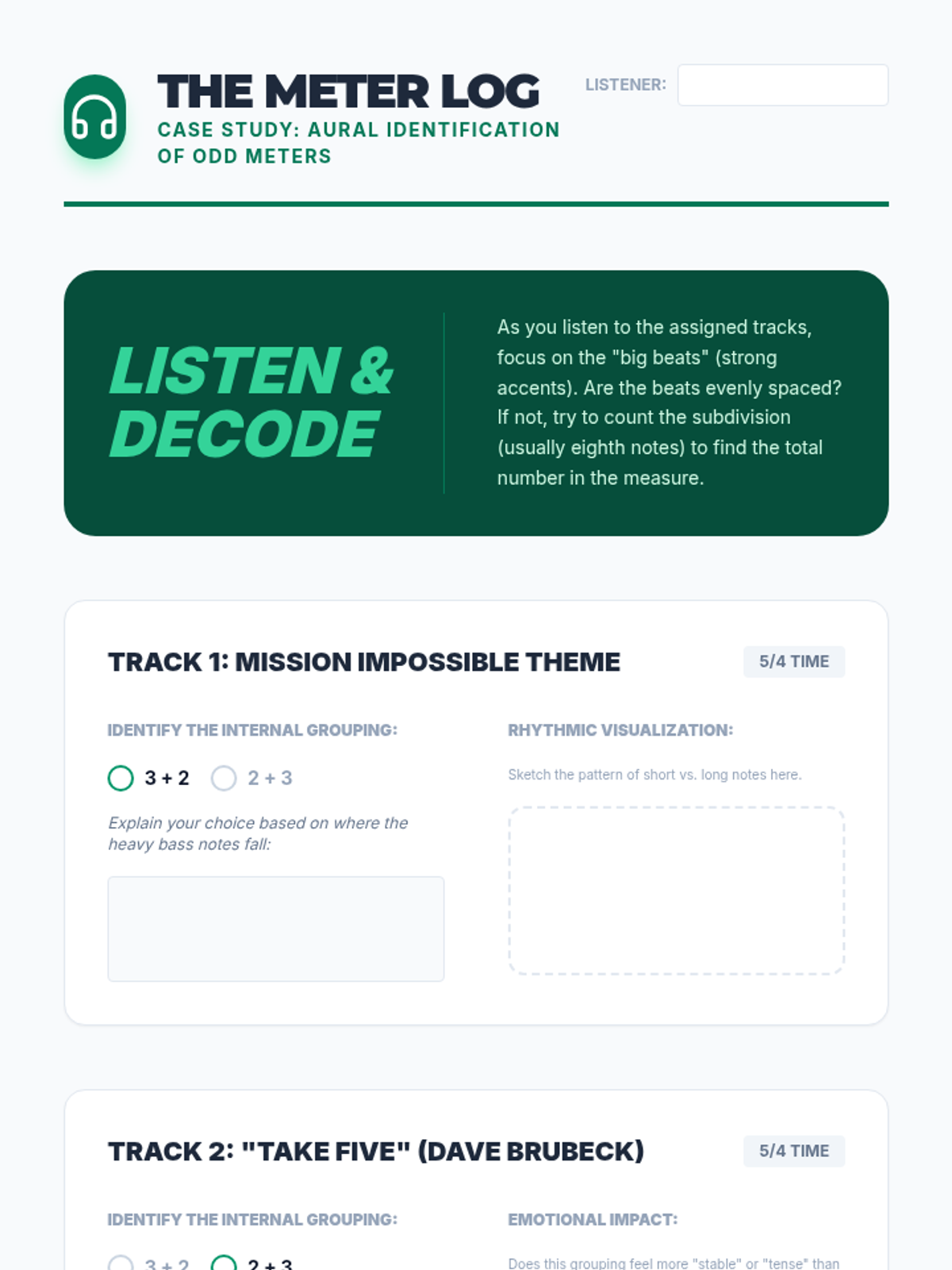
Examines asymmetrical time signatures (5/4, 7/8) and mixed meter through progressive rock and modern classical analysis.
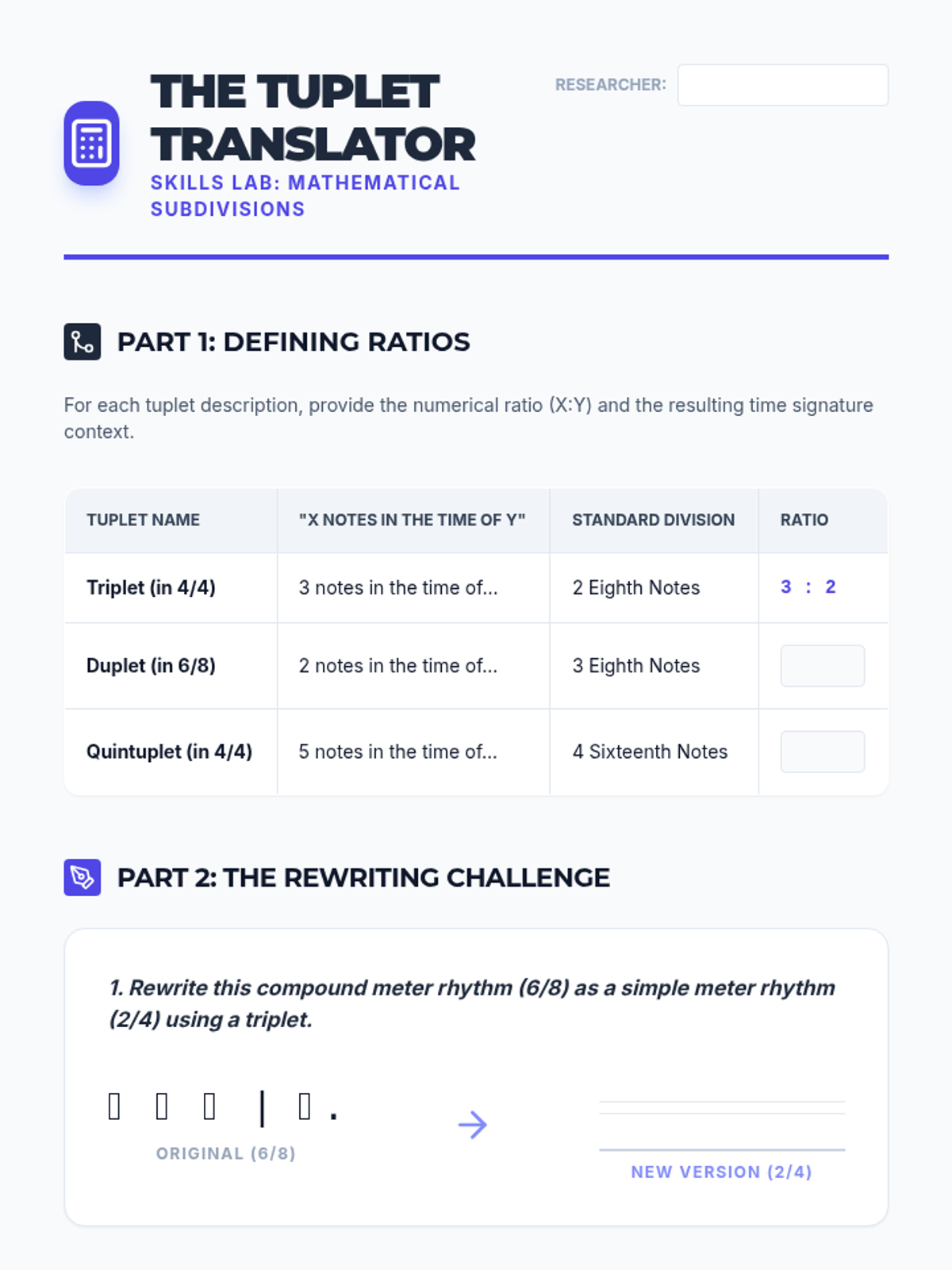
Explores artificial divisions of the beat, including triplets and duplets, and the mathematical logic of irregular subdivisions.
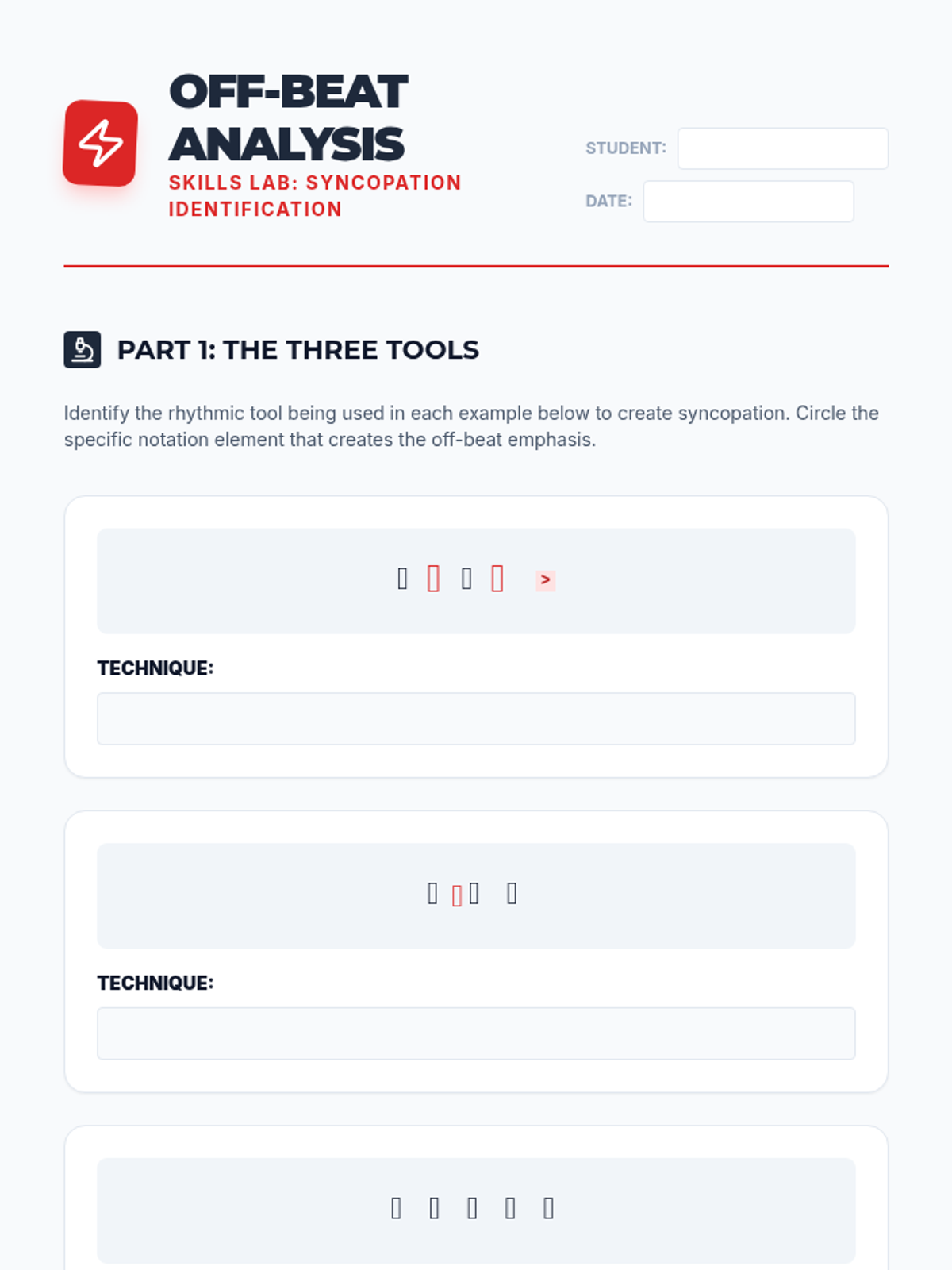
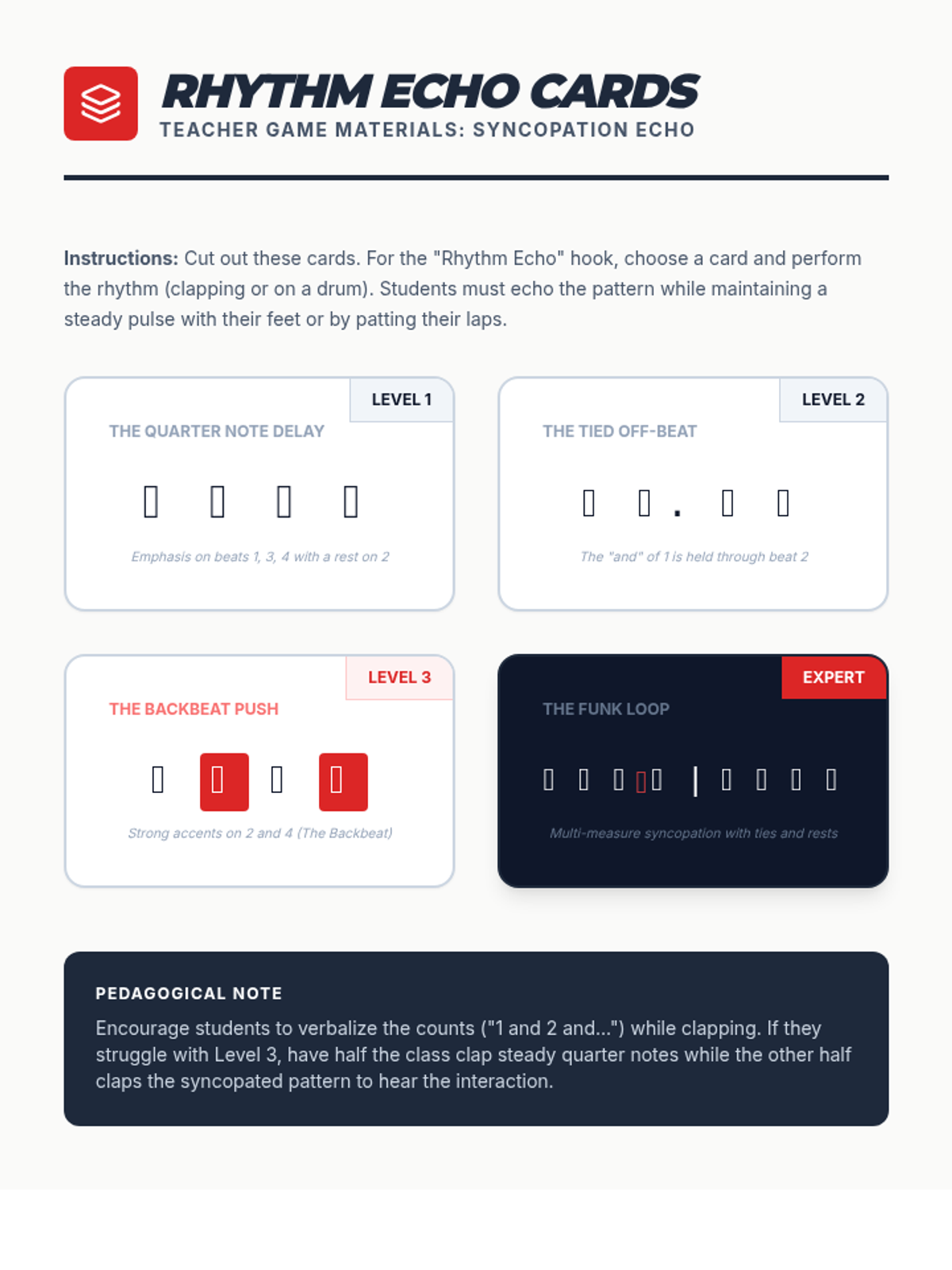
Focuses on shifting accents to weak beats to create rhythmic drive, featuring jazz and funk analysis and a rhythmic echo game.
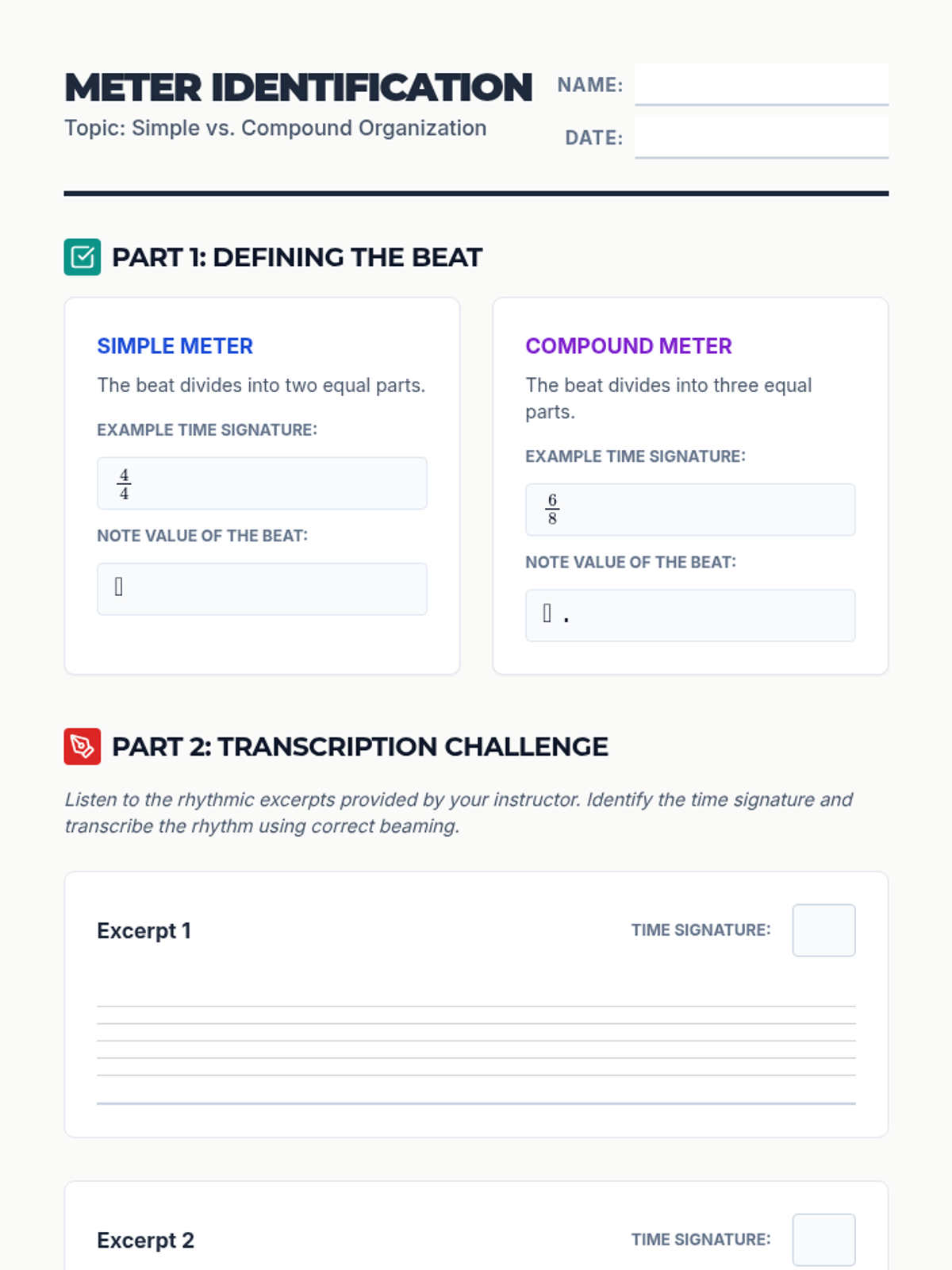
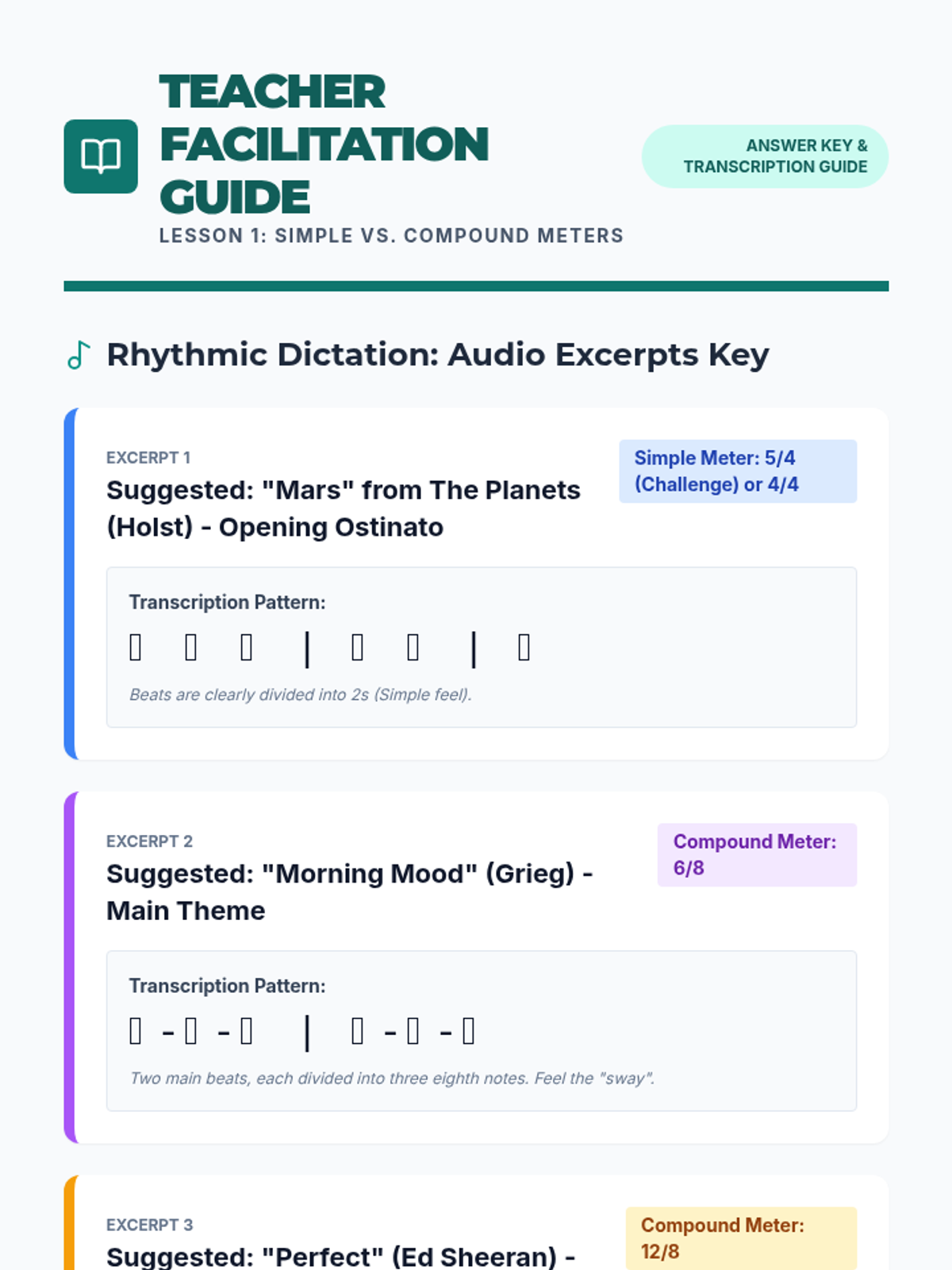
Students investigate the fundamental differences between simple and compound meters through conducting, listening, and rhythmic transcription.
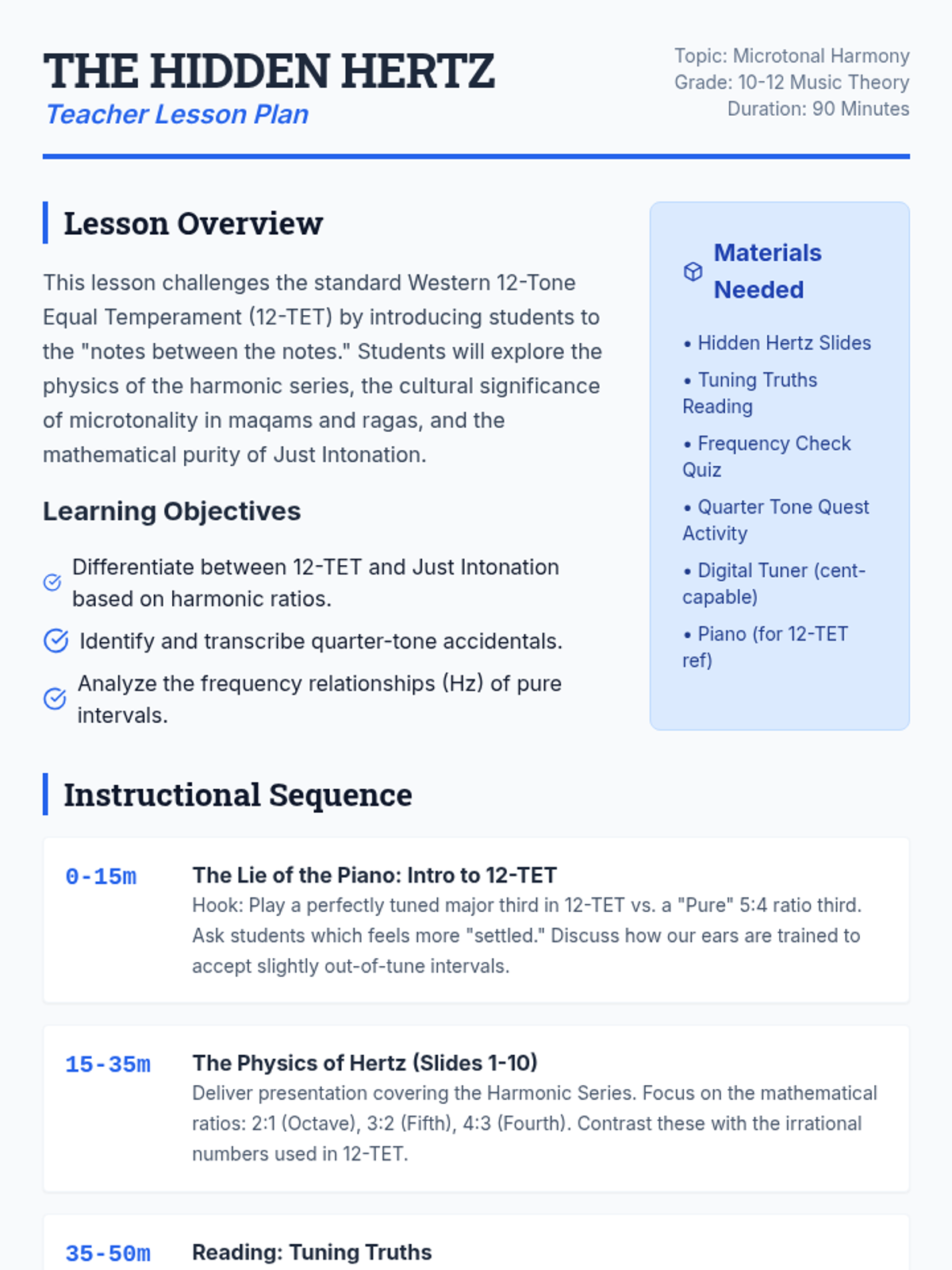
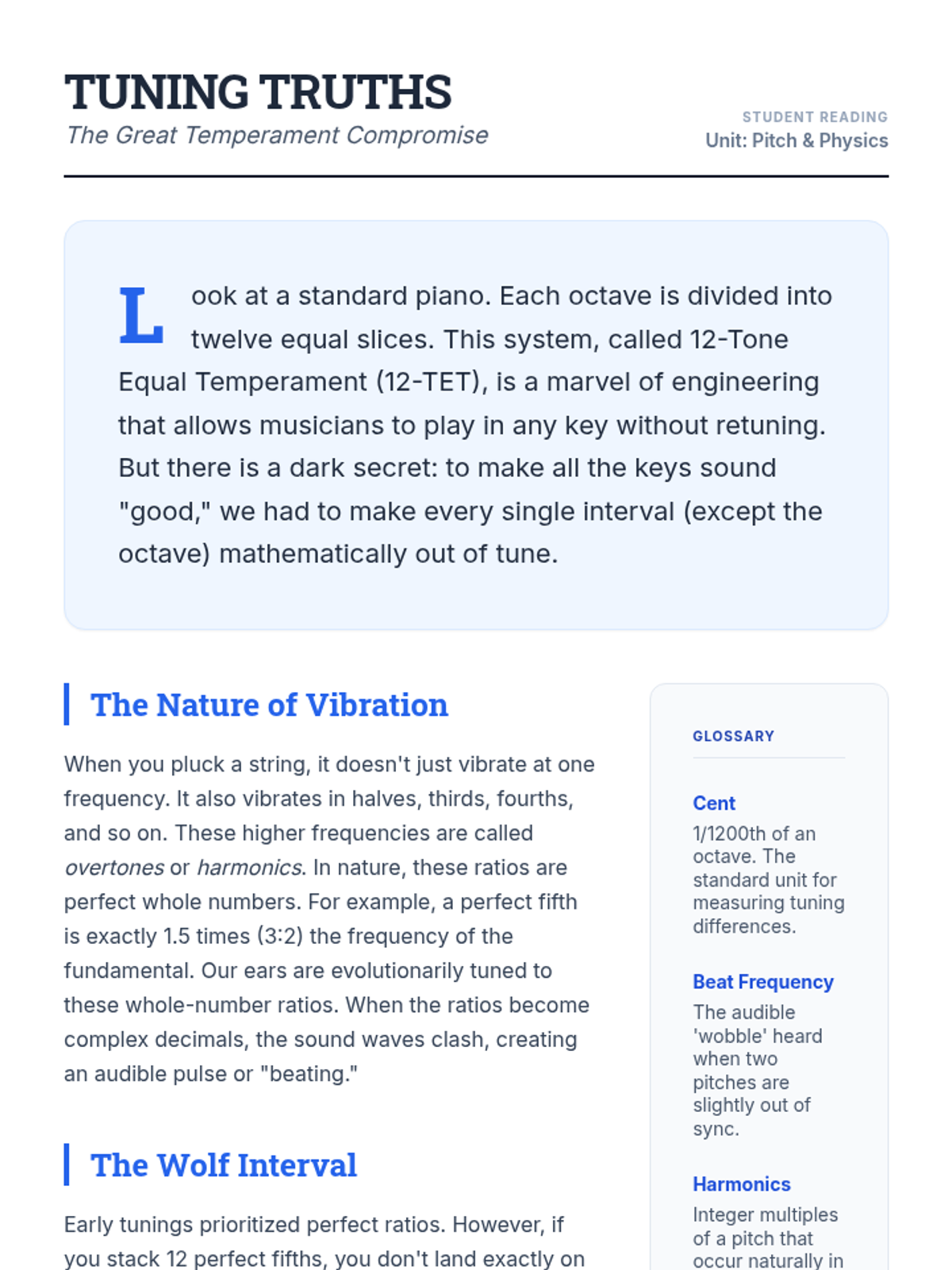
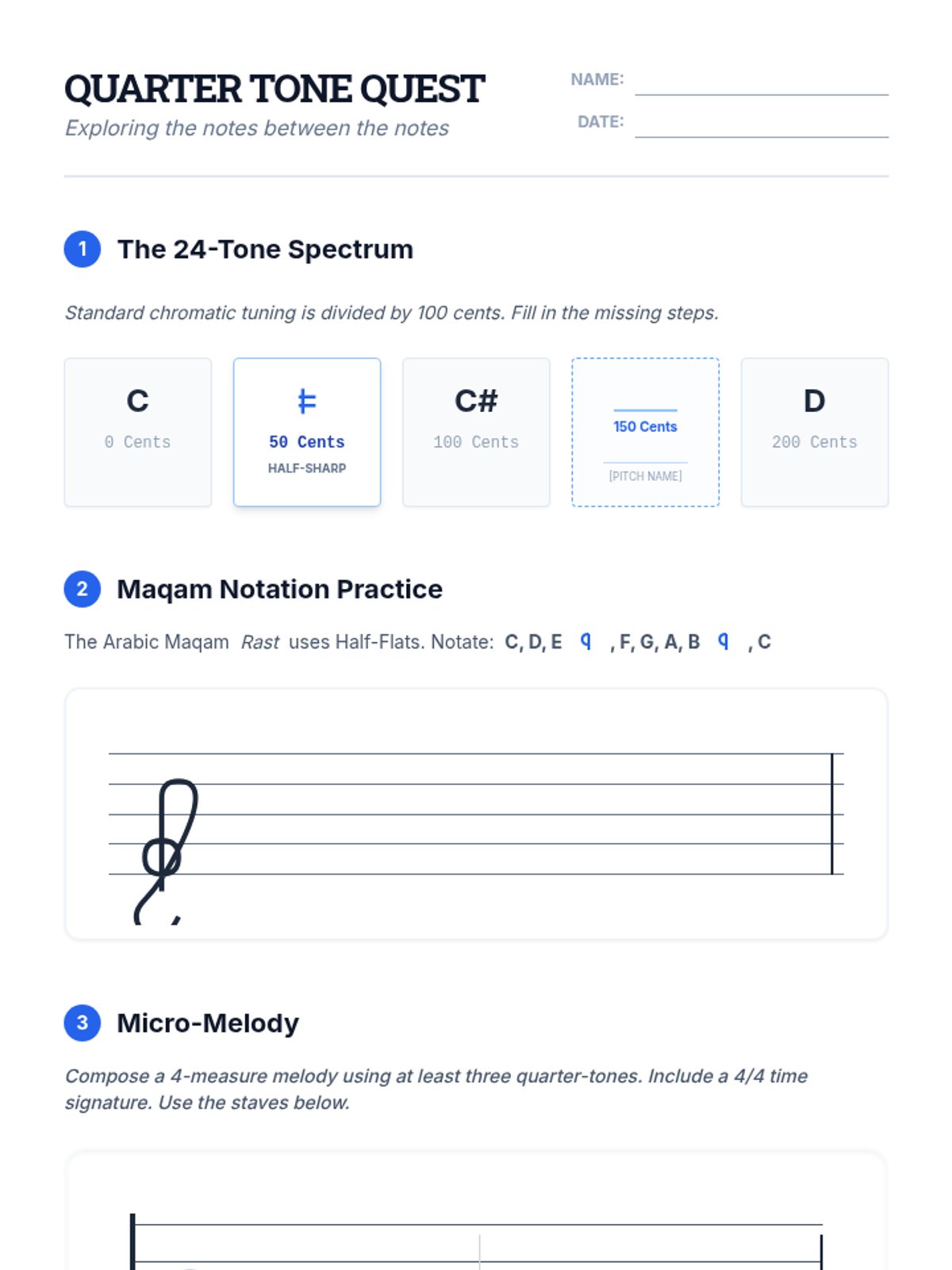
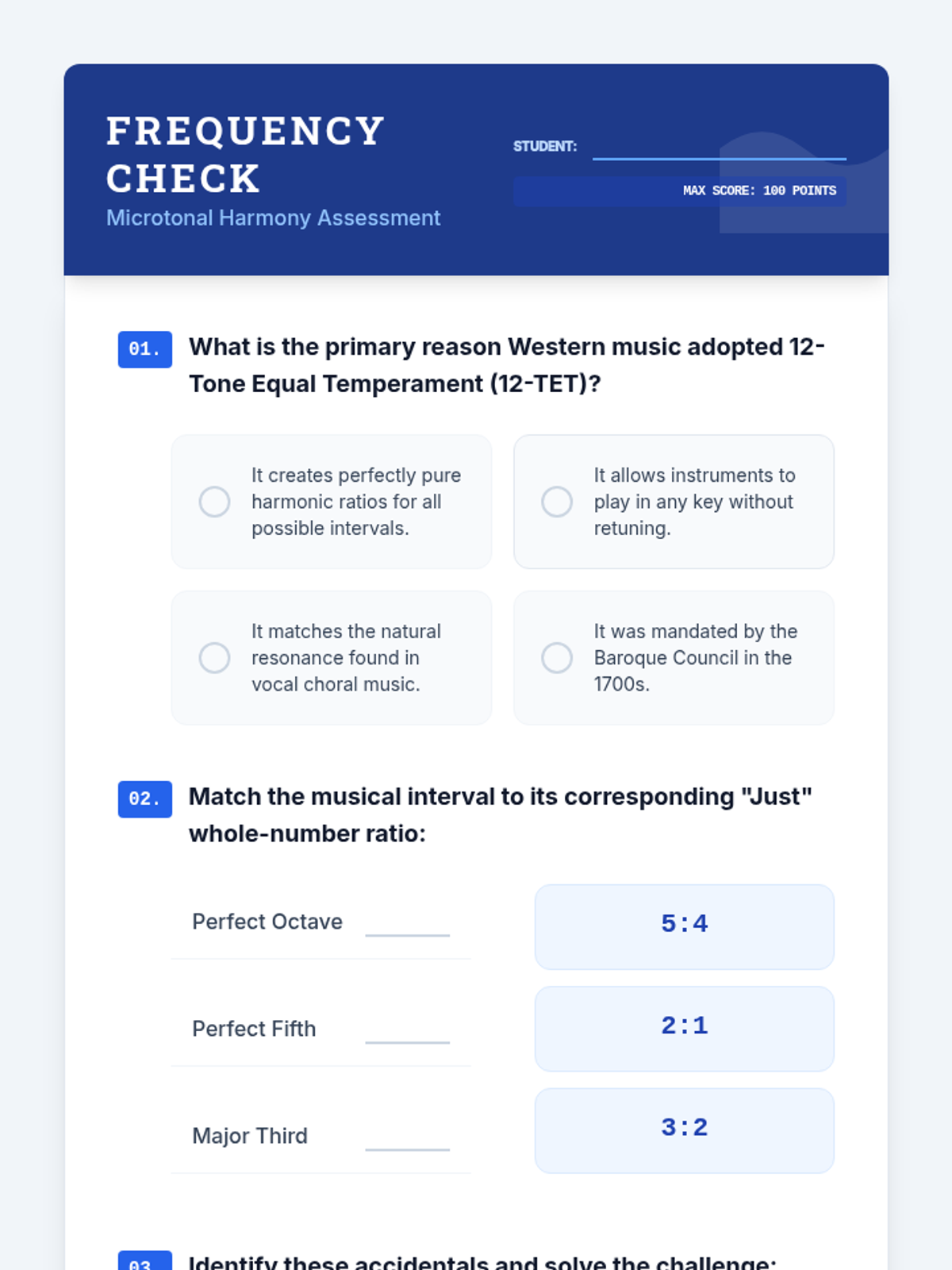
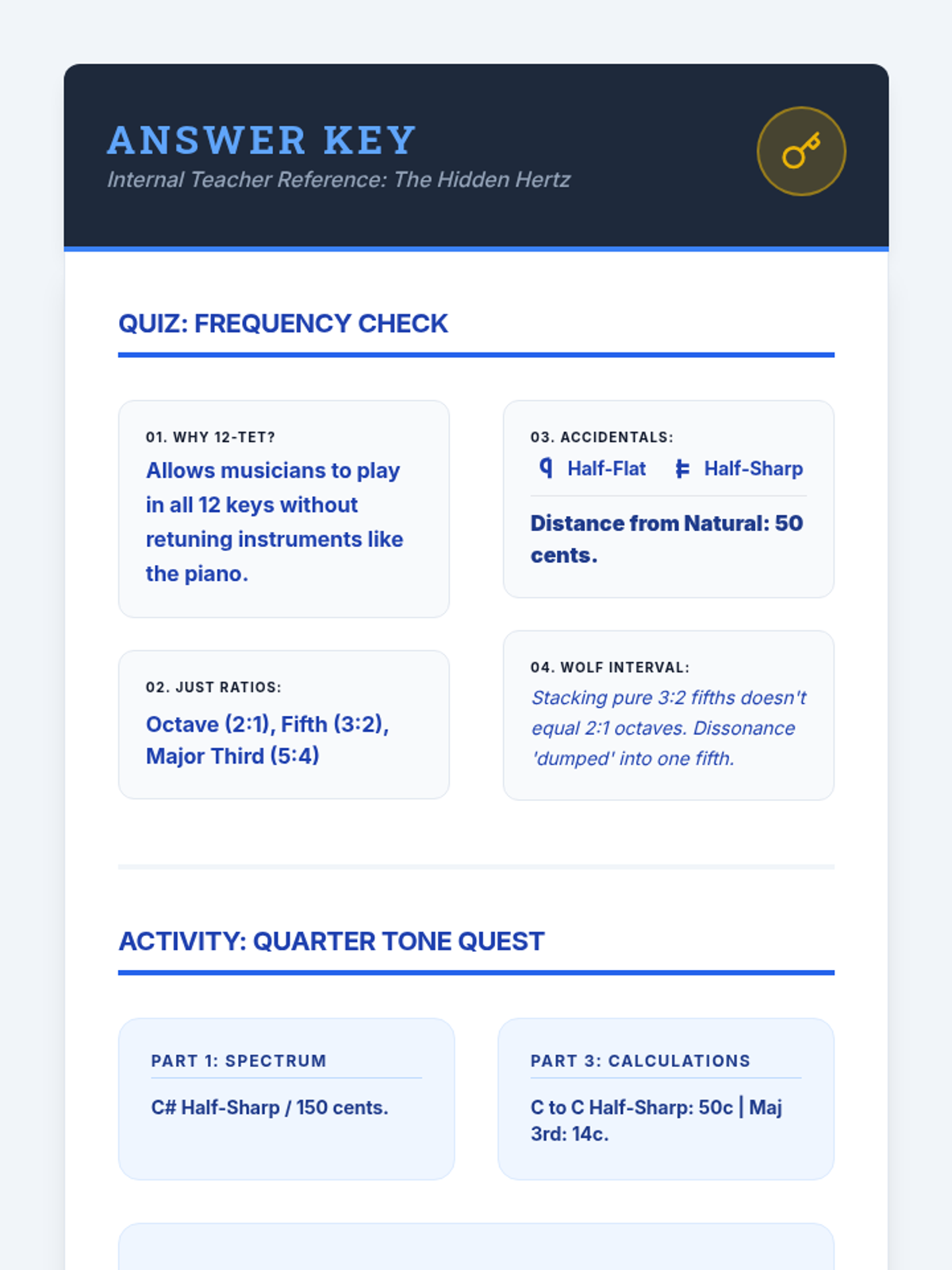
An advanced exploration of microtonal music, covering the physics of pitch, tuning systems beyond 12-TET, and practical experimentation with quarter-tones and just intonation.
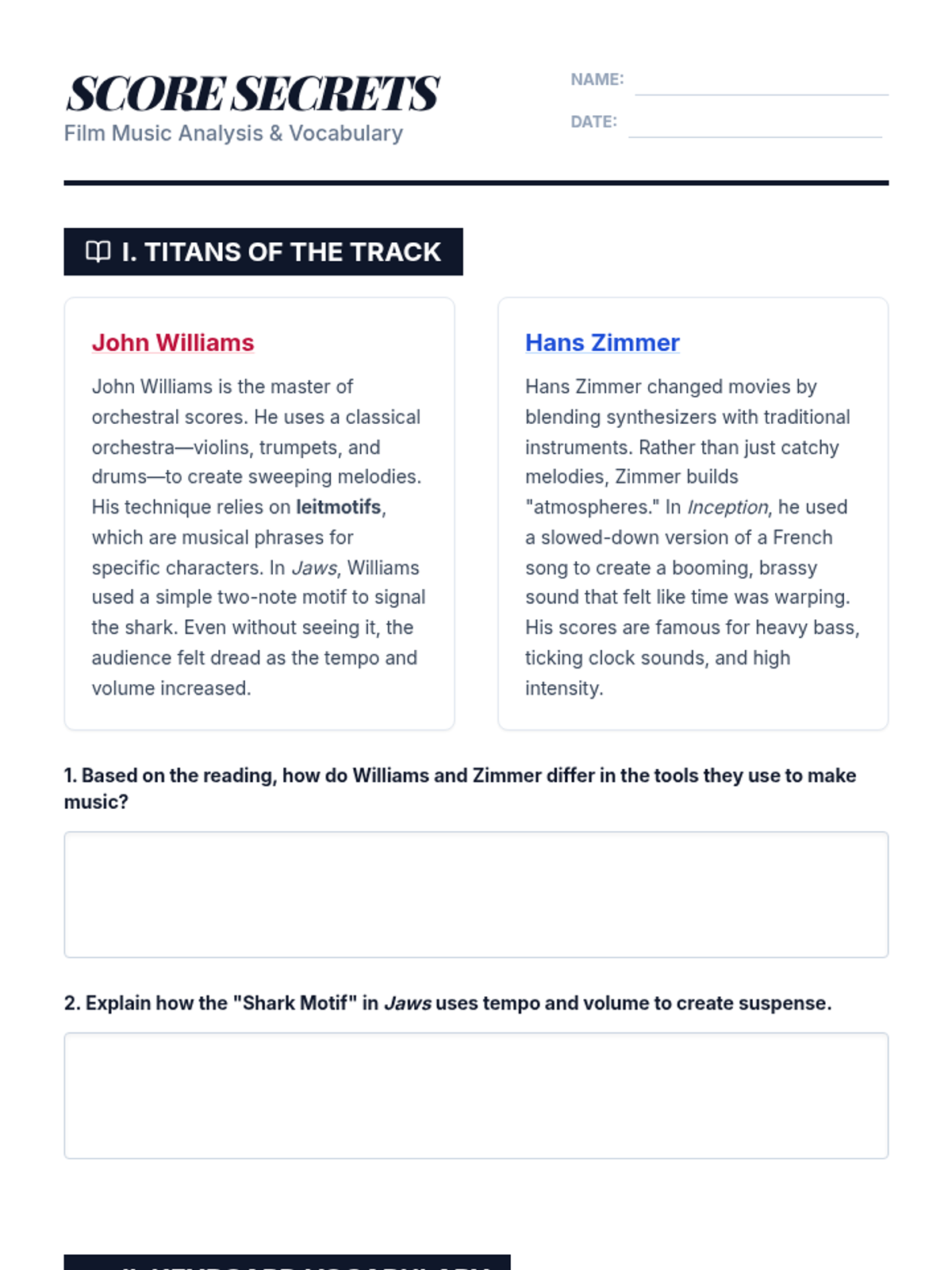
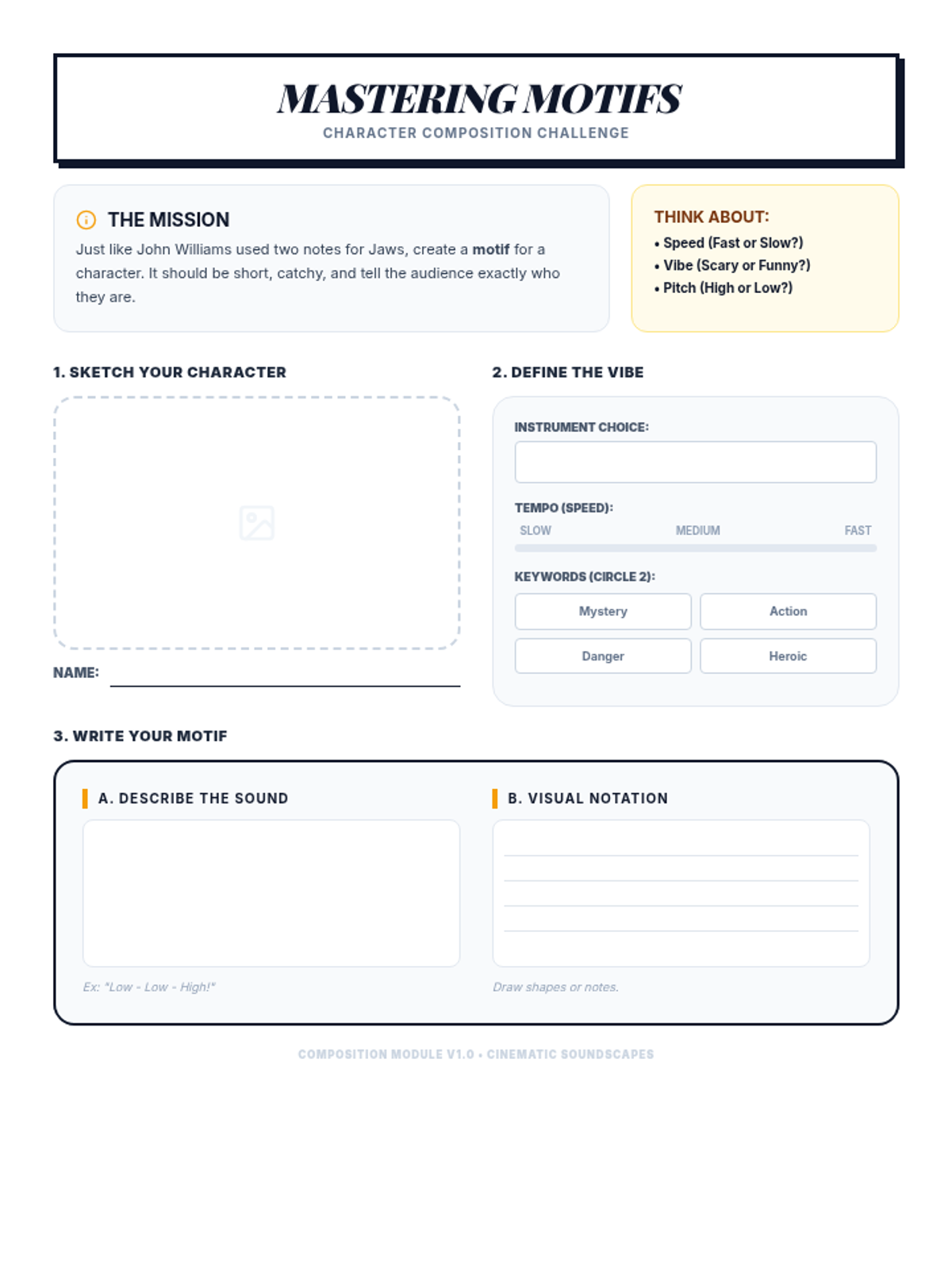
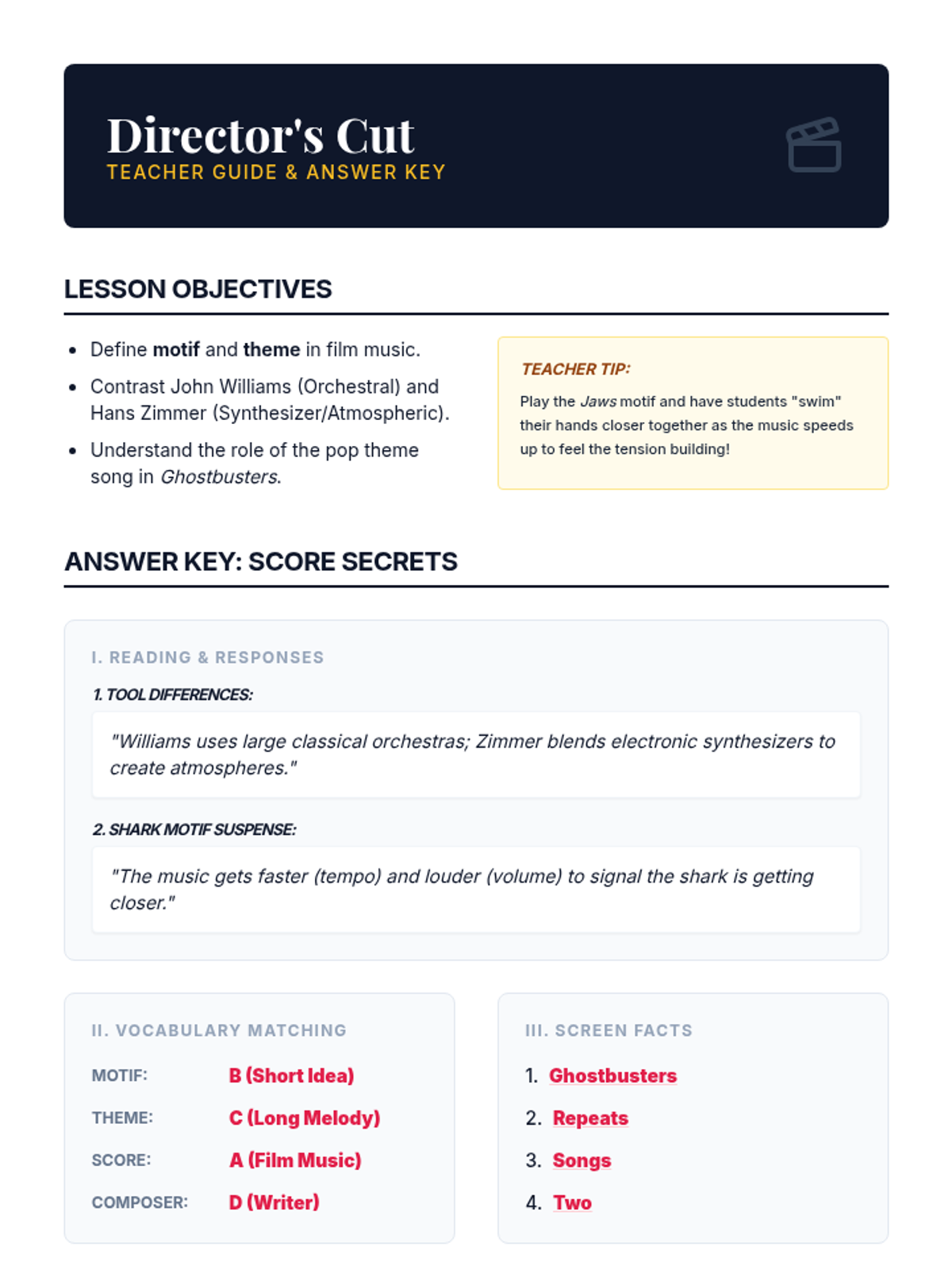
A comprehensive lesson on film music focusing on iconic composers, the difference between motifs and themes, and the impact of scores in movies like Jaws and Ghostbusters.
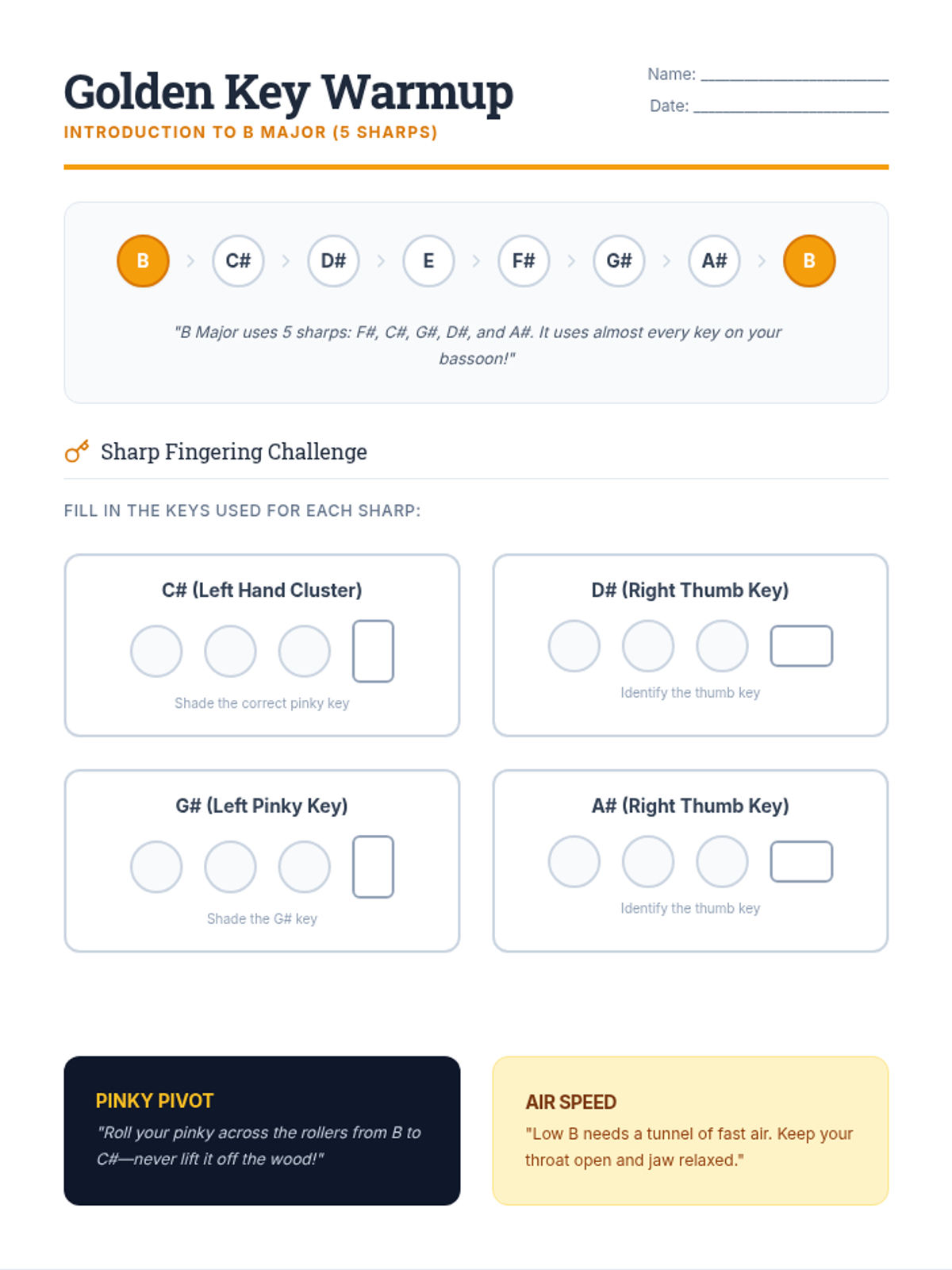
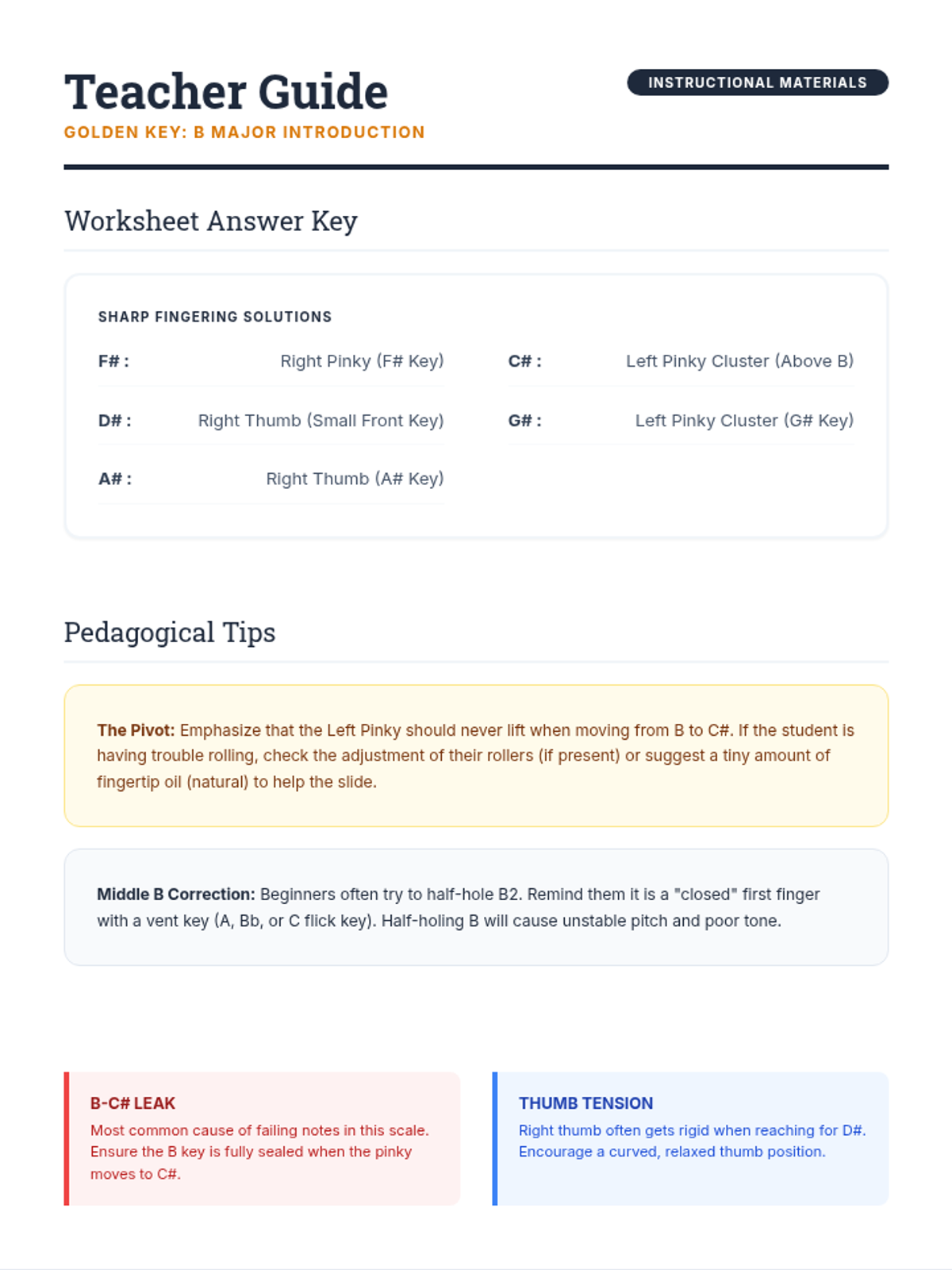
A focused introduction to the B Major scale for beginner bassoonists. This lesson covers the complex fingerings required for five sharps and provides a daily routine for developing technical fluency and tone.
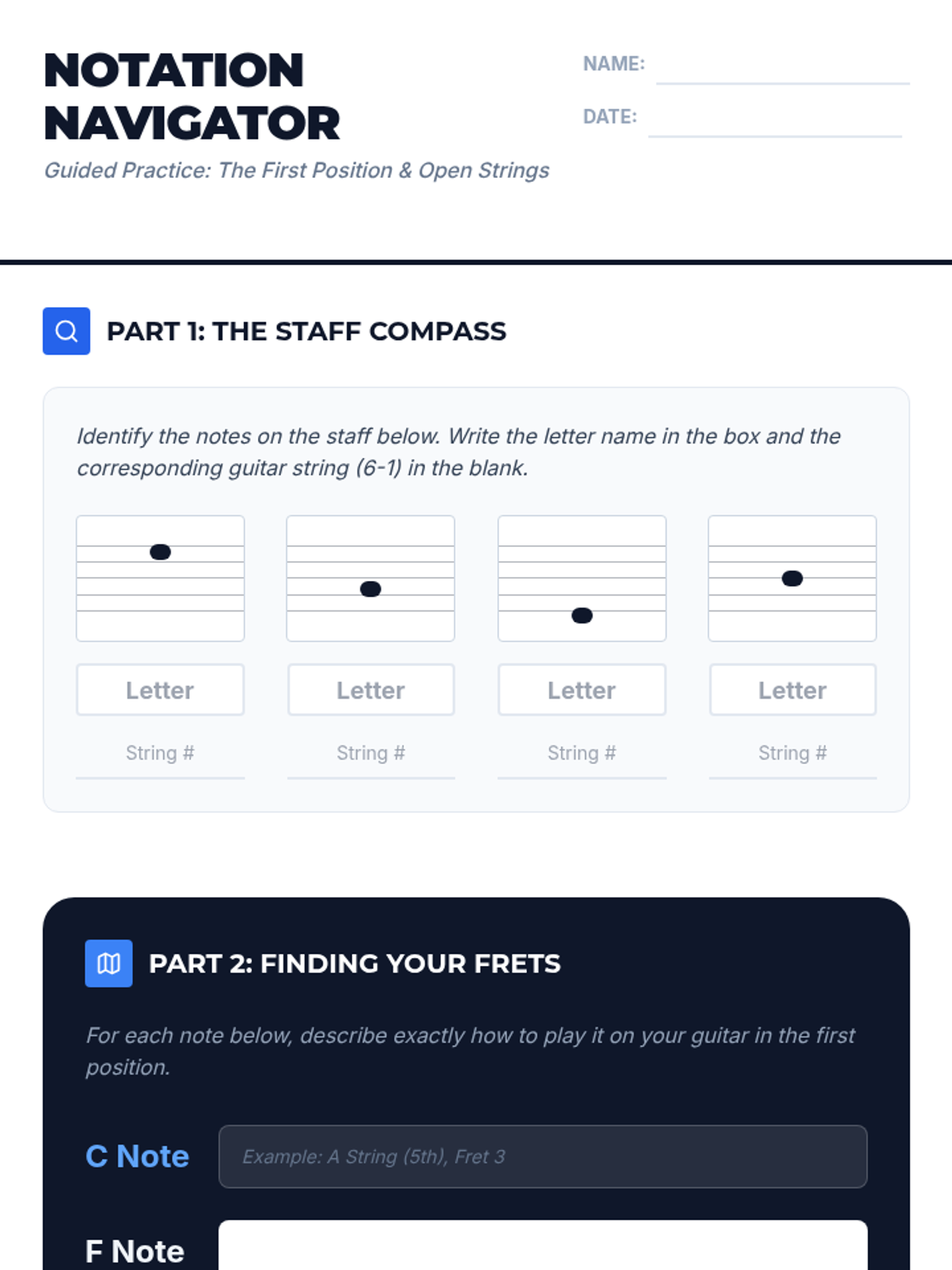
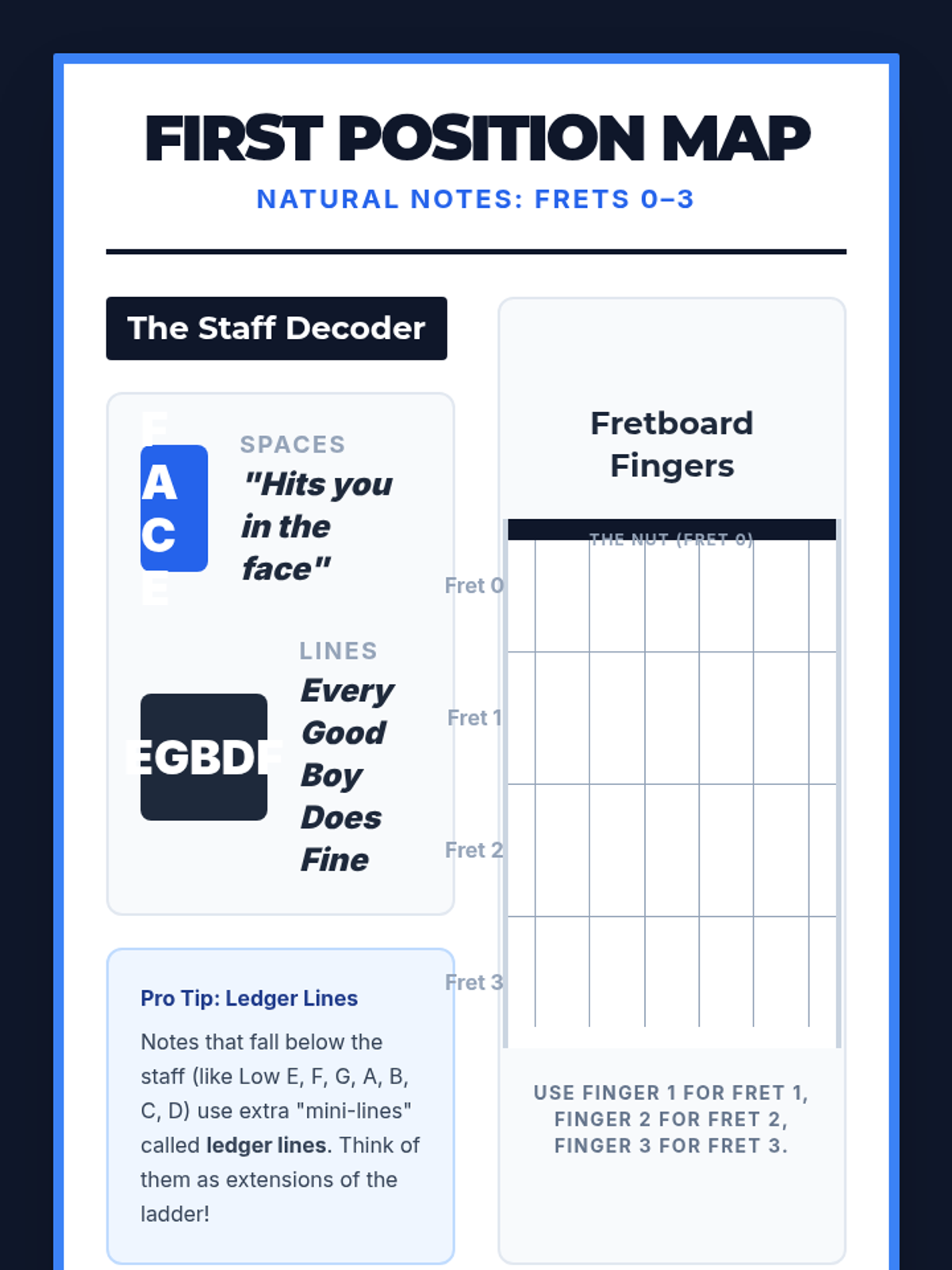
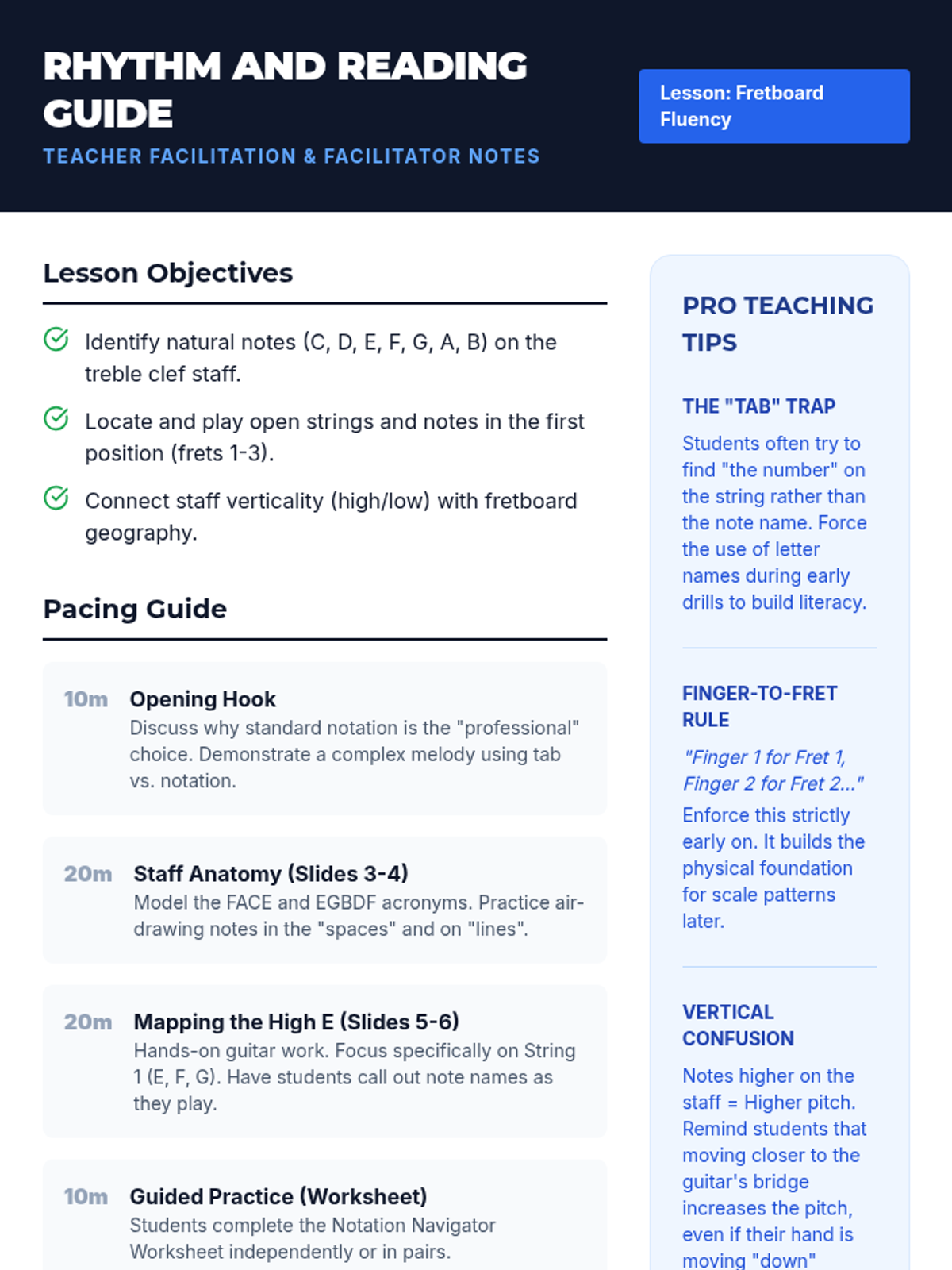
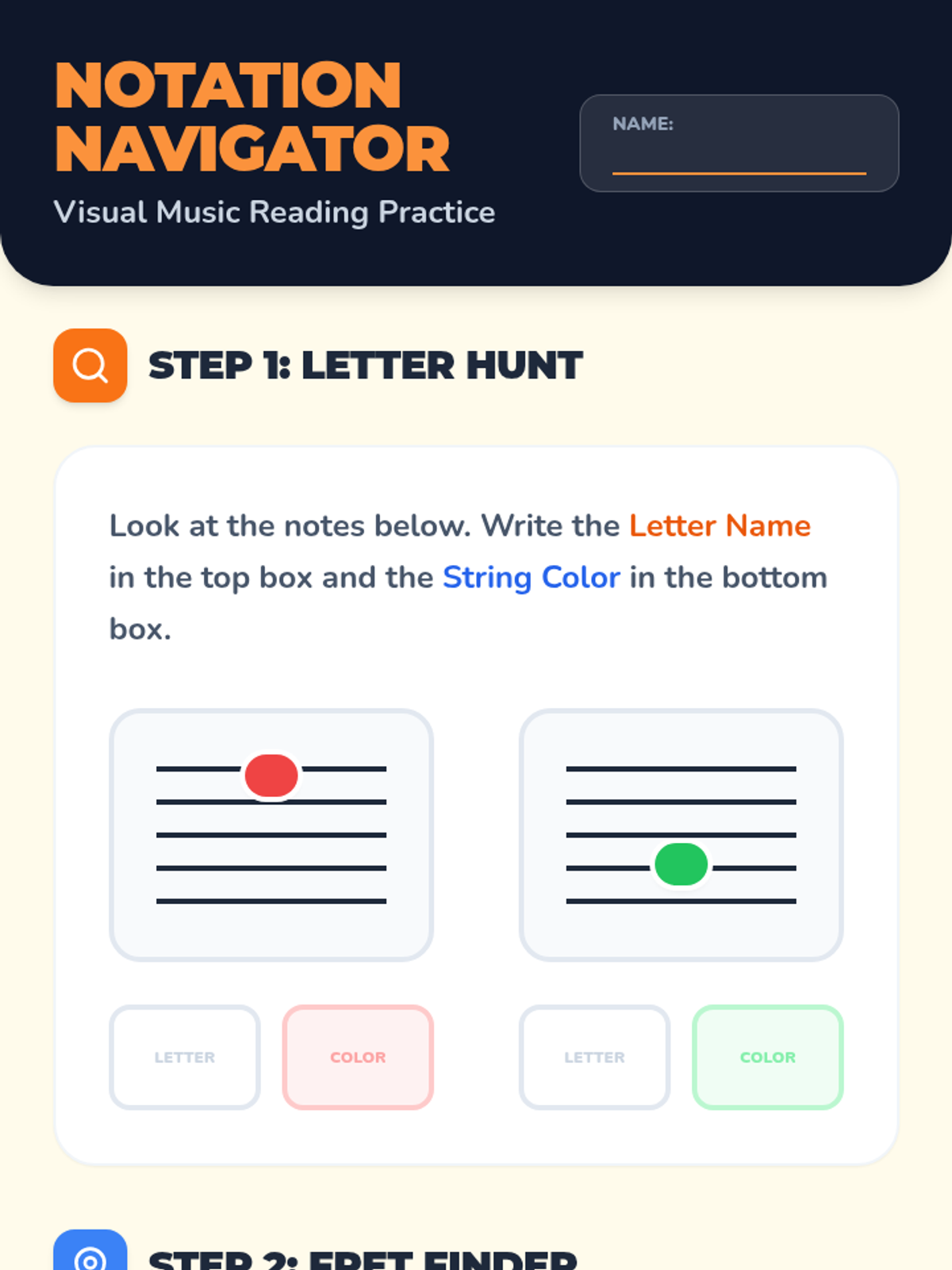
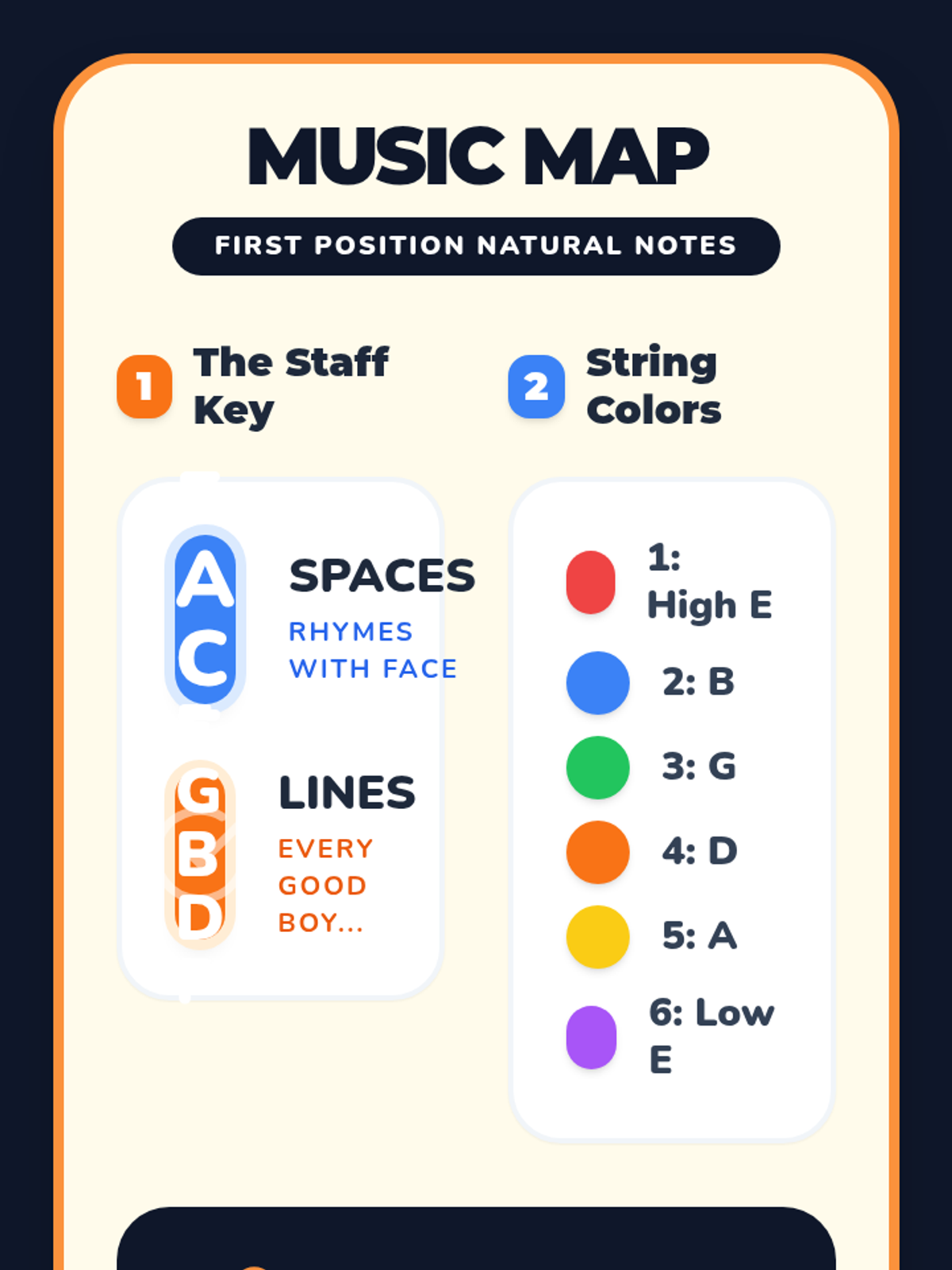
A comprehensive introduction to reading standard musical notation on the guitar, specifically targeting open strings and the first position notes for high school beginners.
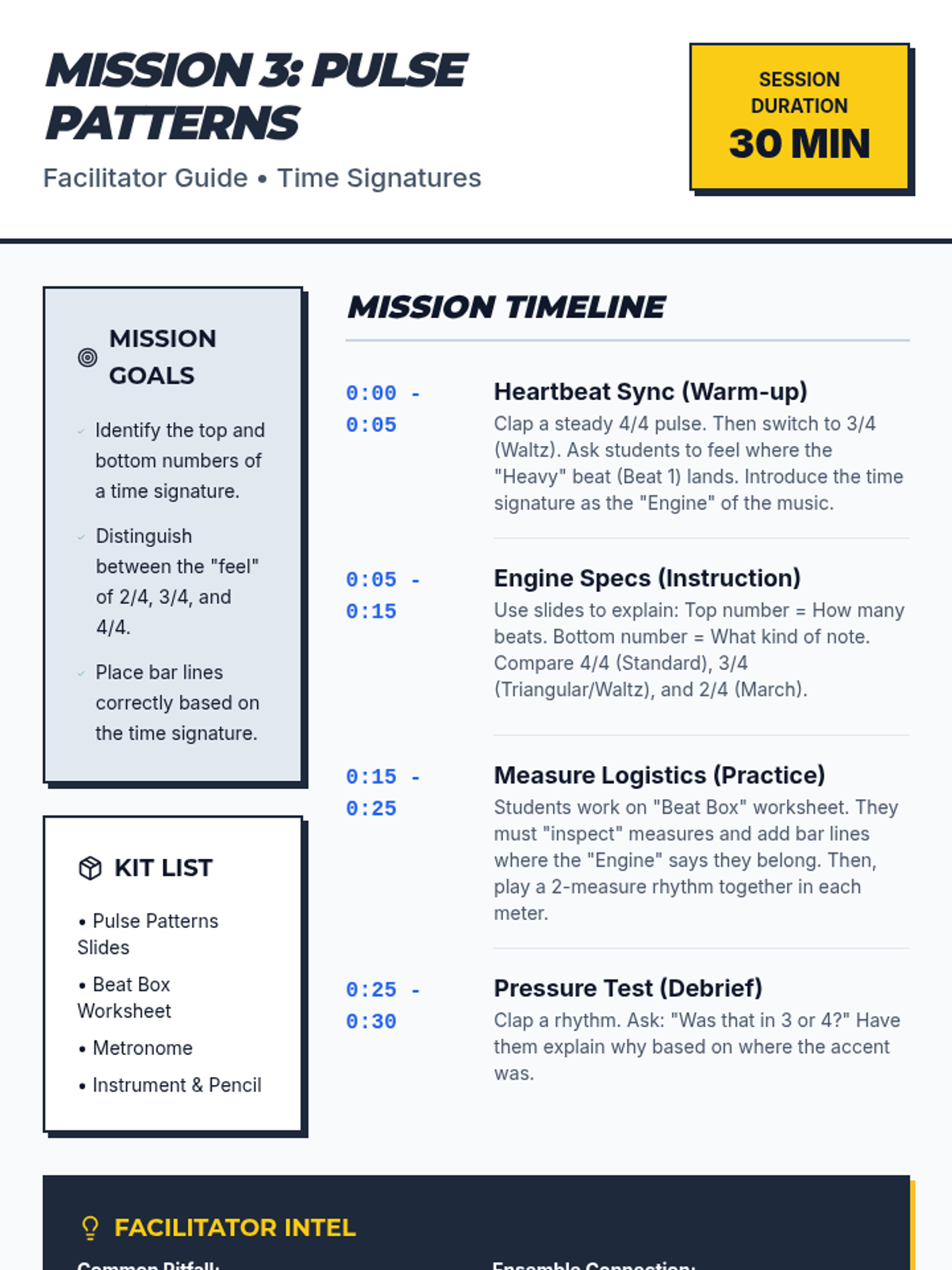
Exploring the difference between 4/4, 3/4, and 2/4 time signatures. Students will practice feeling the strong beats and identifying how measures are divided in different meters.
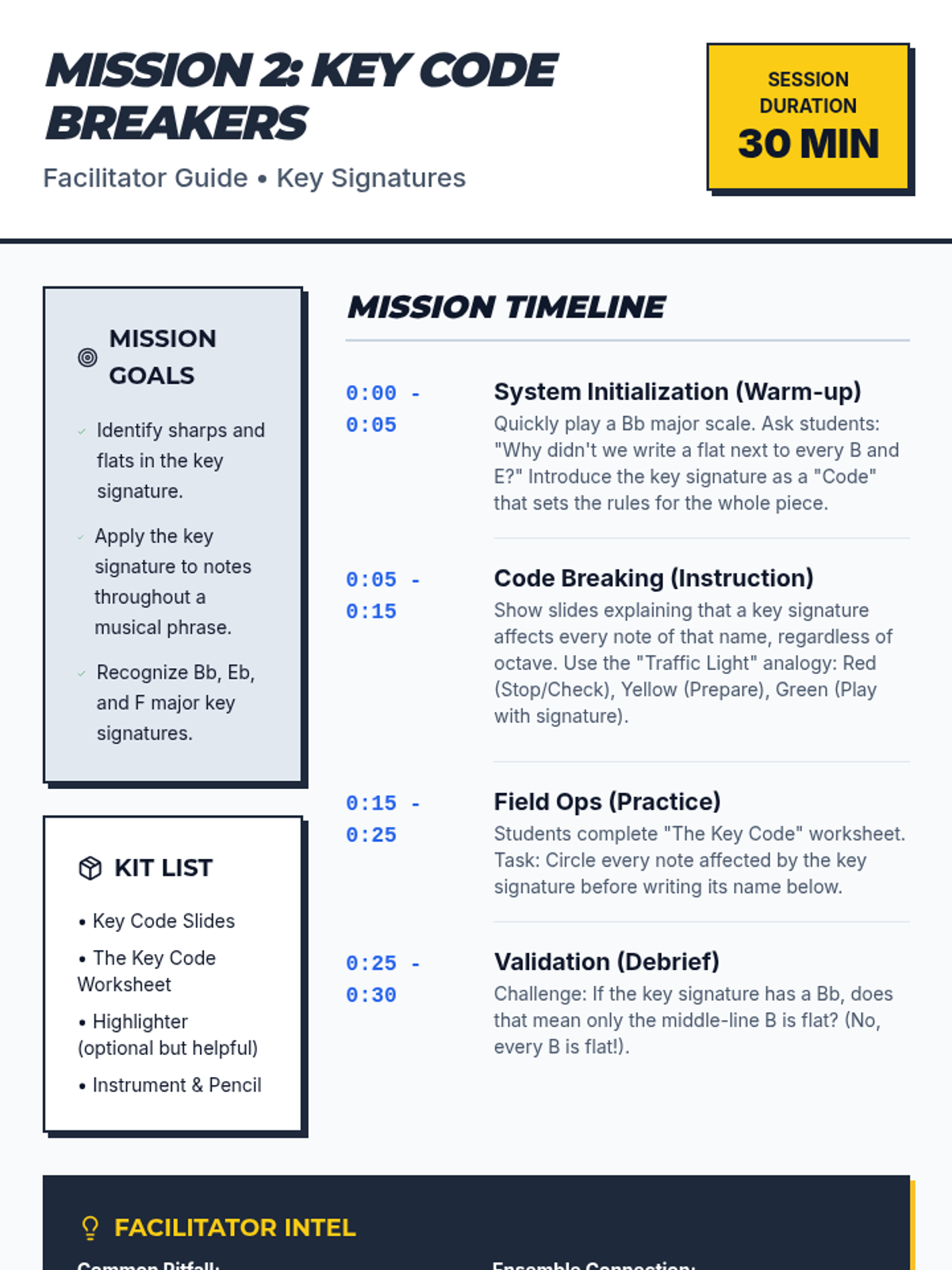
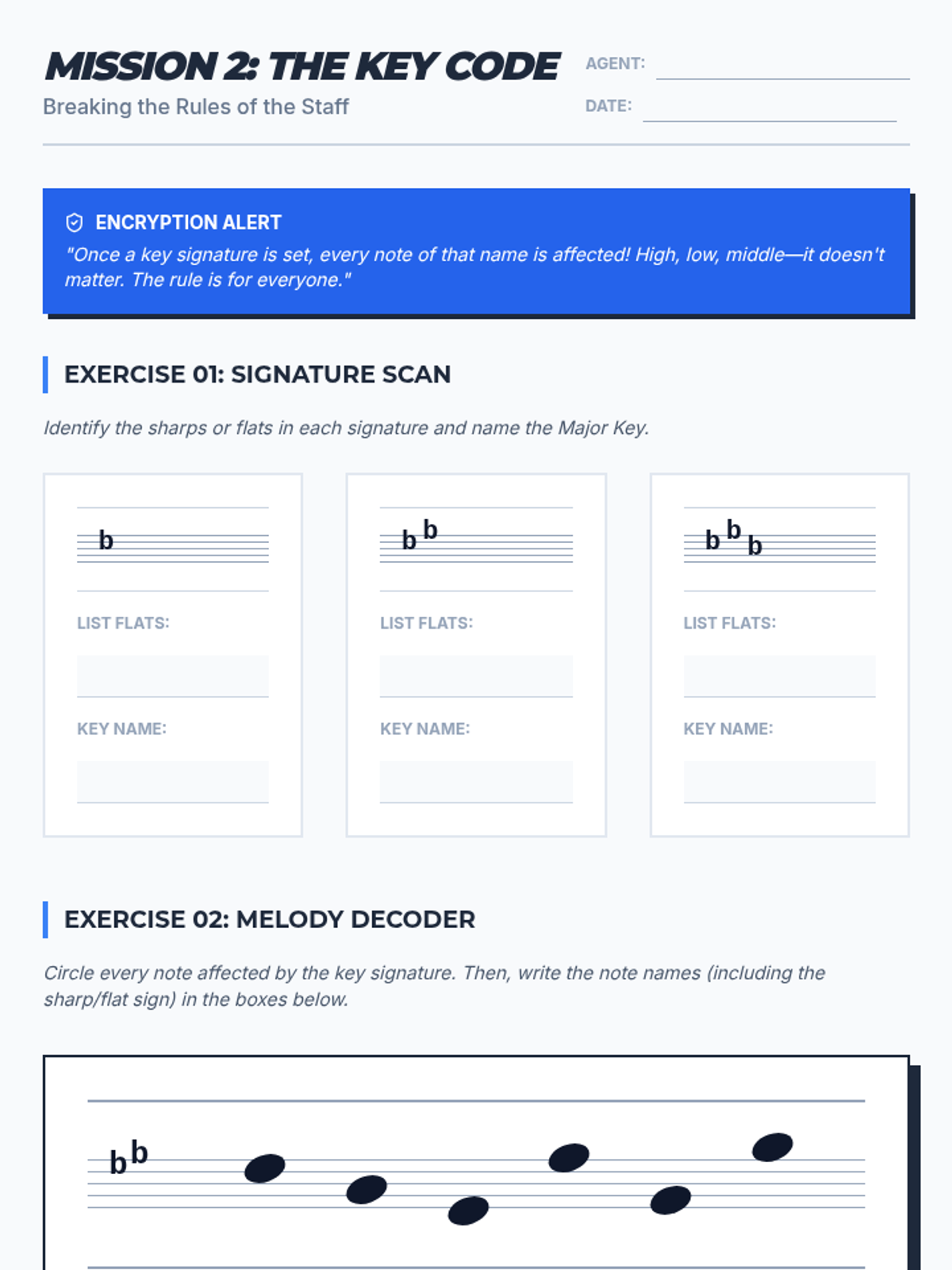
Mastering the "code" of sharps and flats at the beginning of the staff. Students learn to apply key signatures to every note in a phrase and recognize common band keys like Bb and Eb.
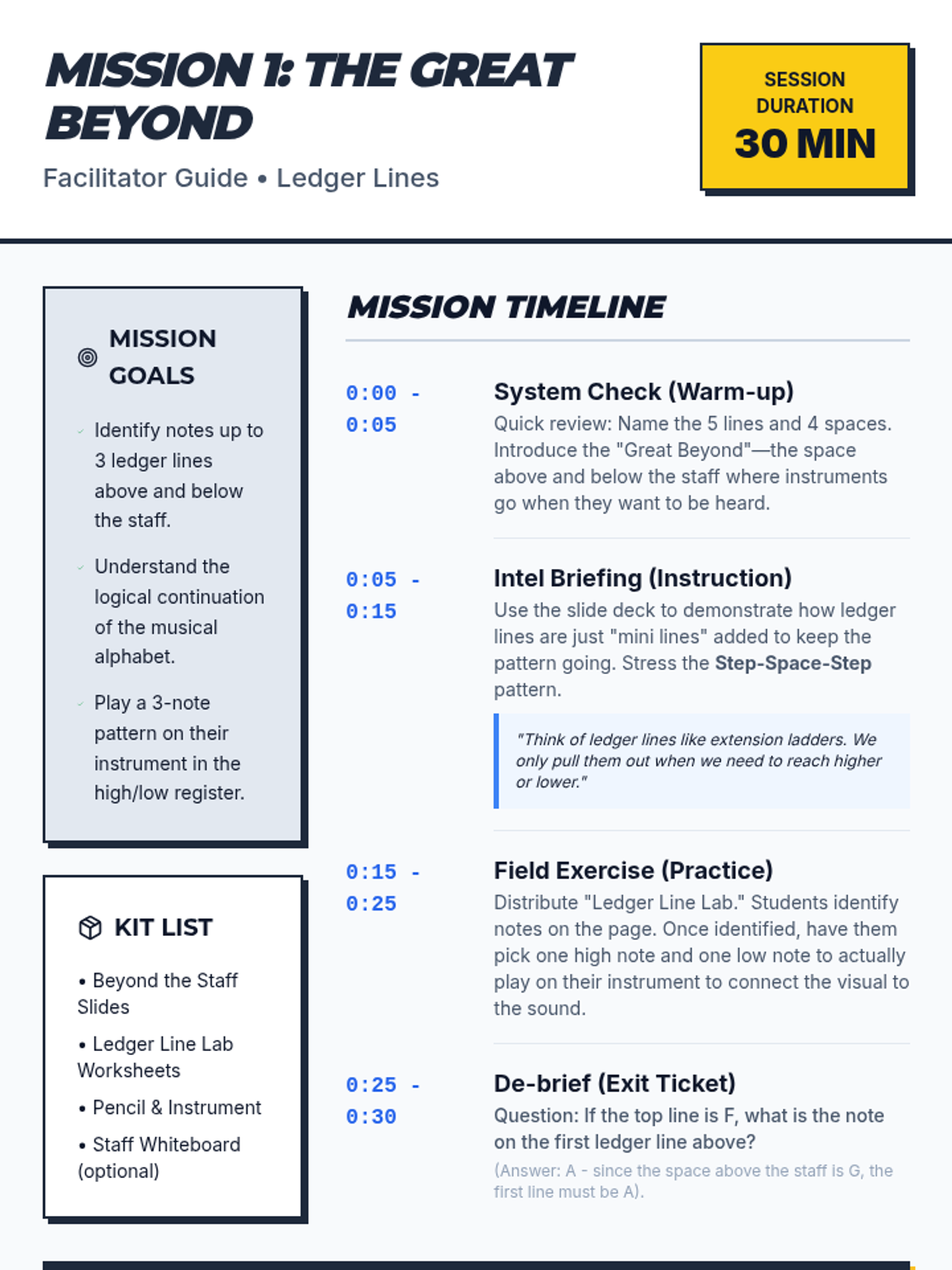
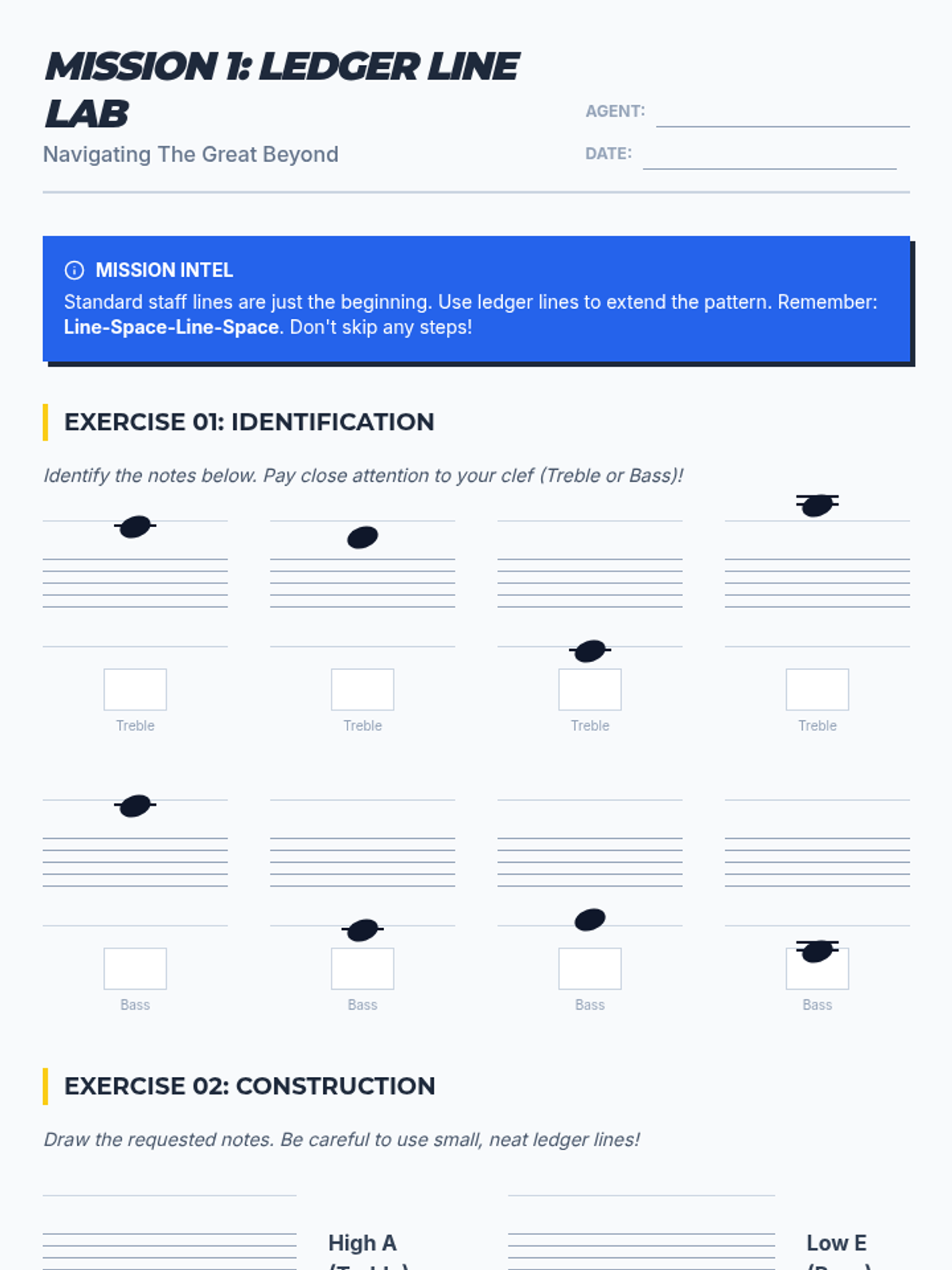
Students will learn to identify and play notes that extend above and below the standard five-line staff using ledger lines. The session focuses on the logical extension of the musical alphabet into "The Great Beyond."
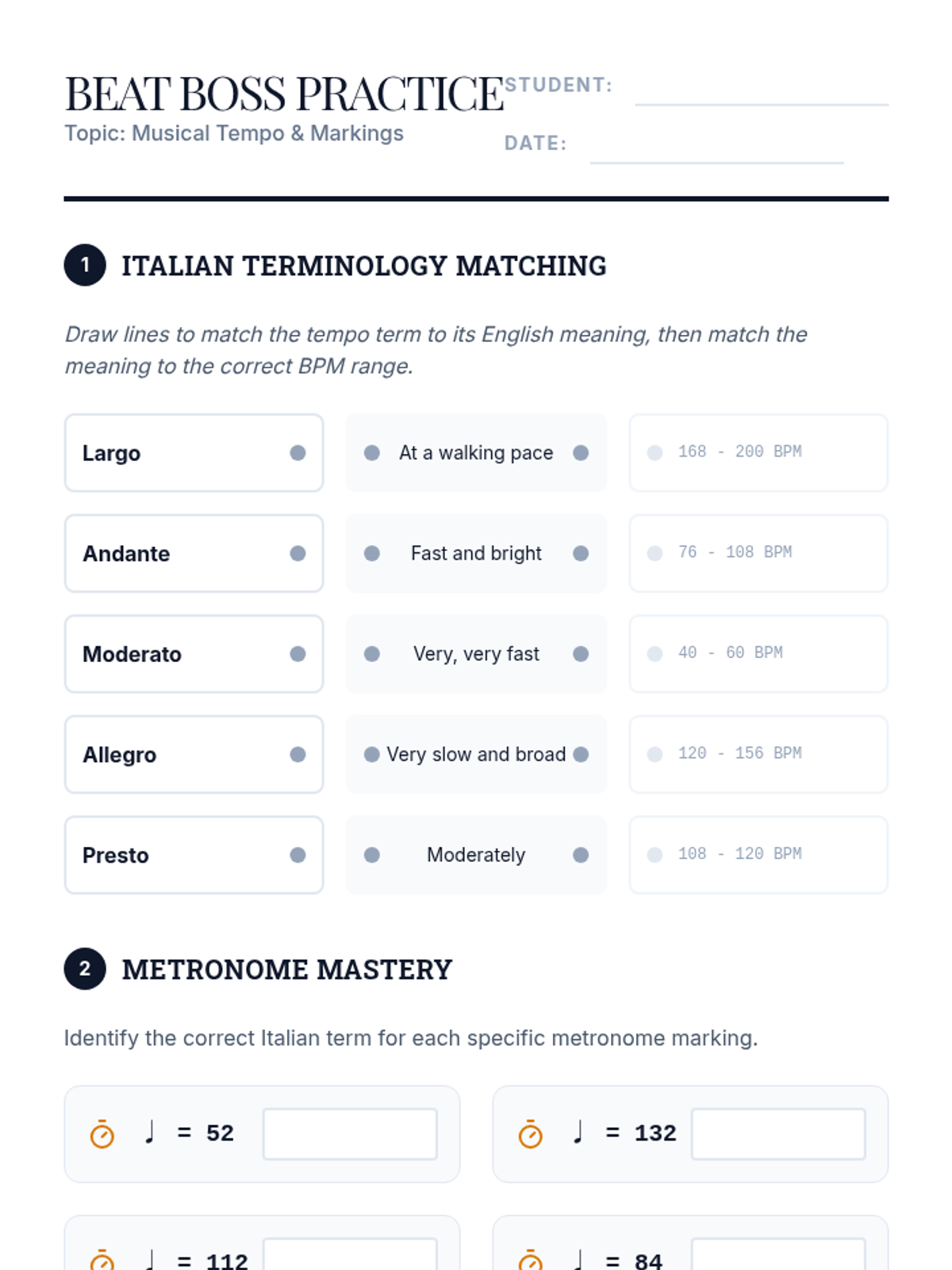
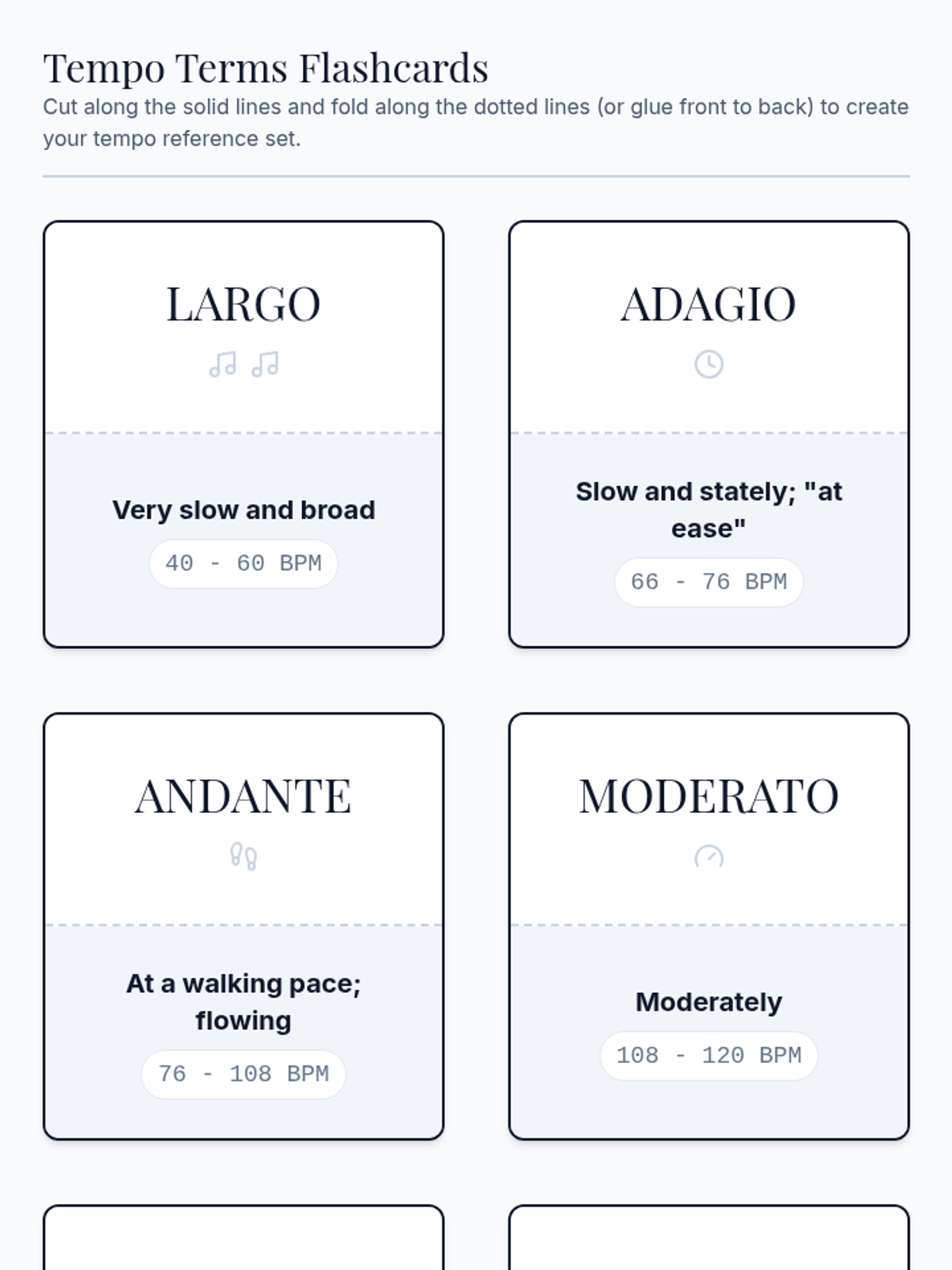
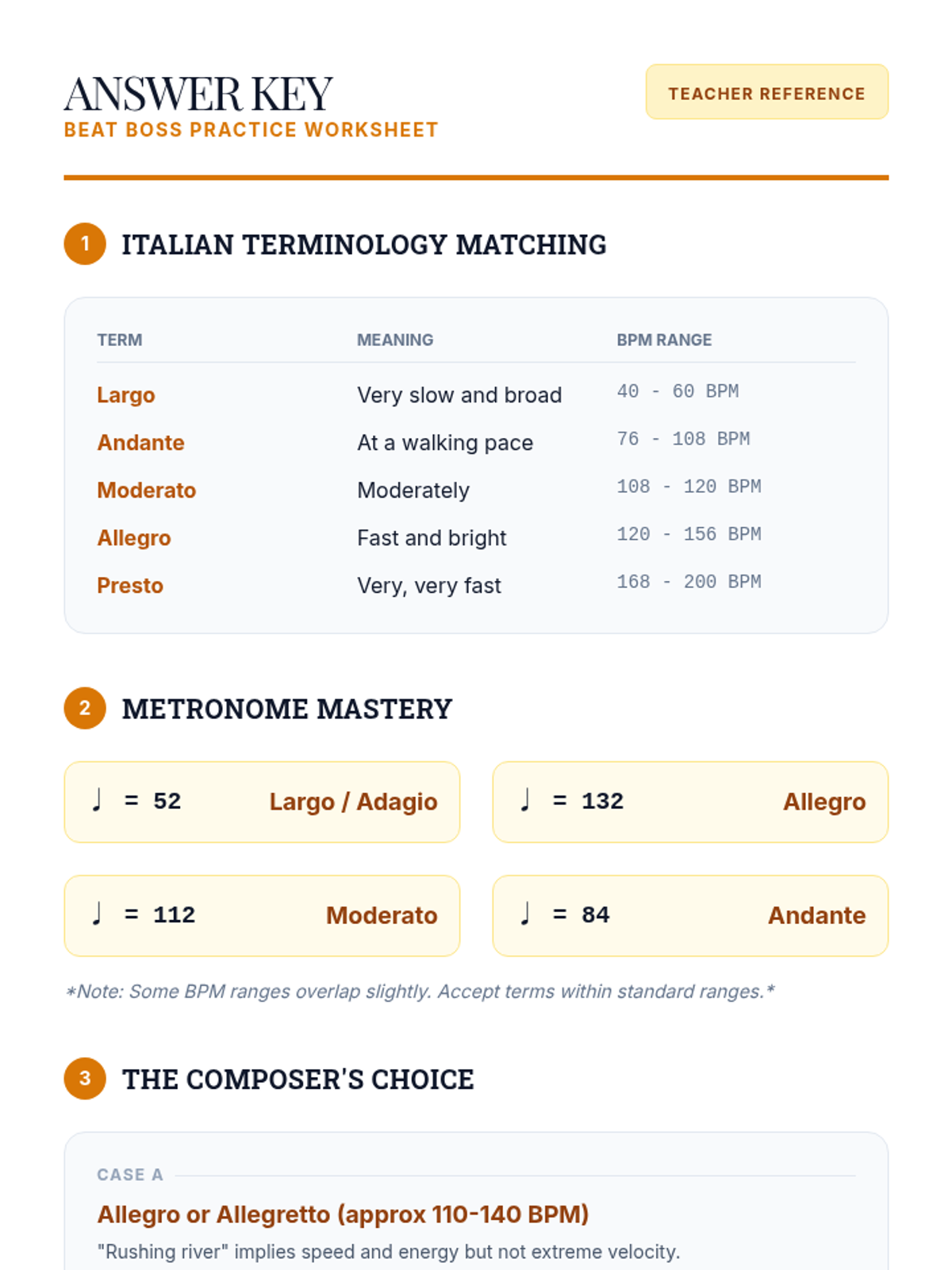
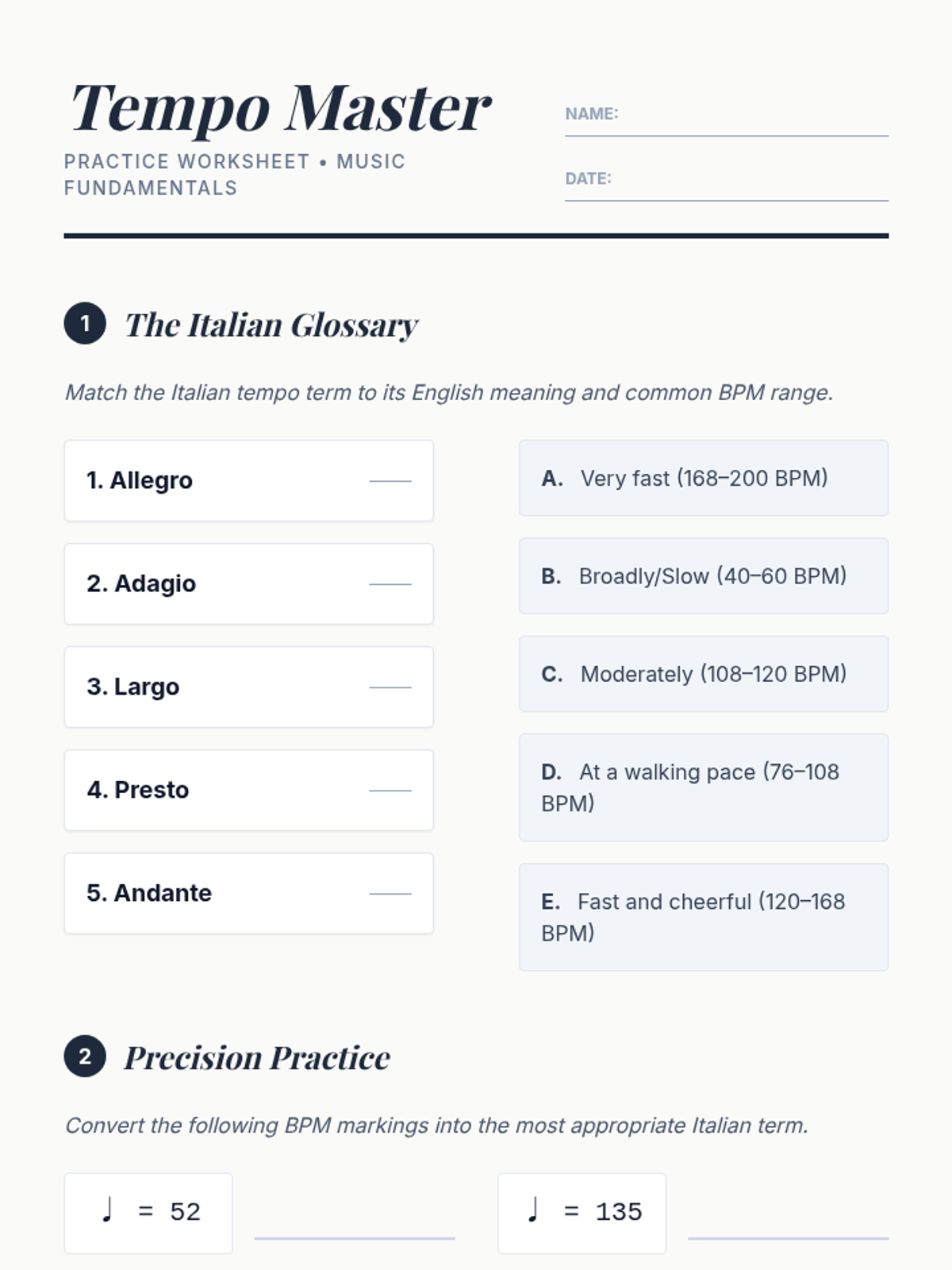
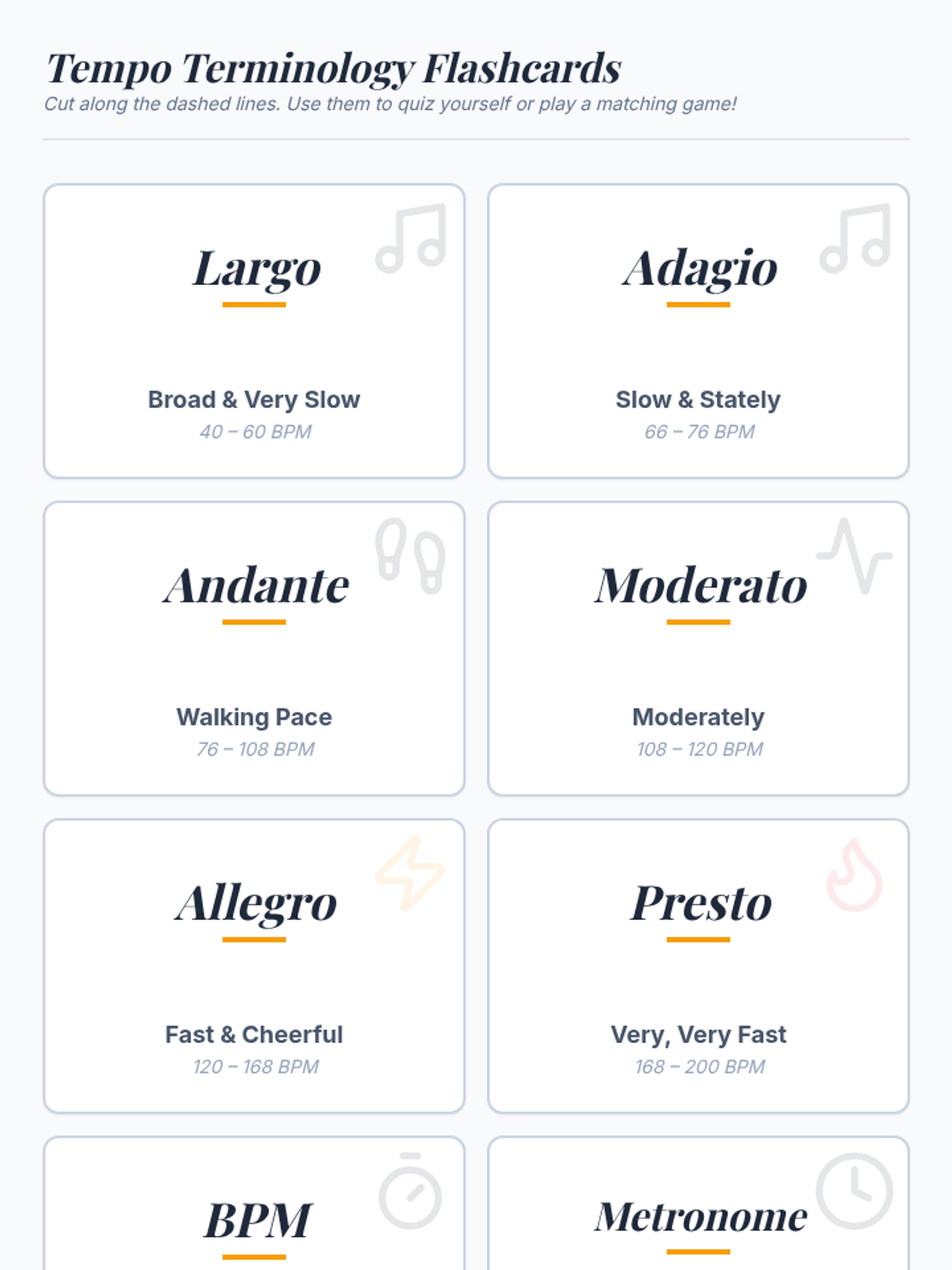
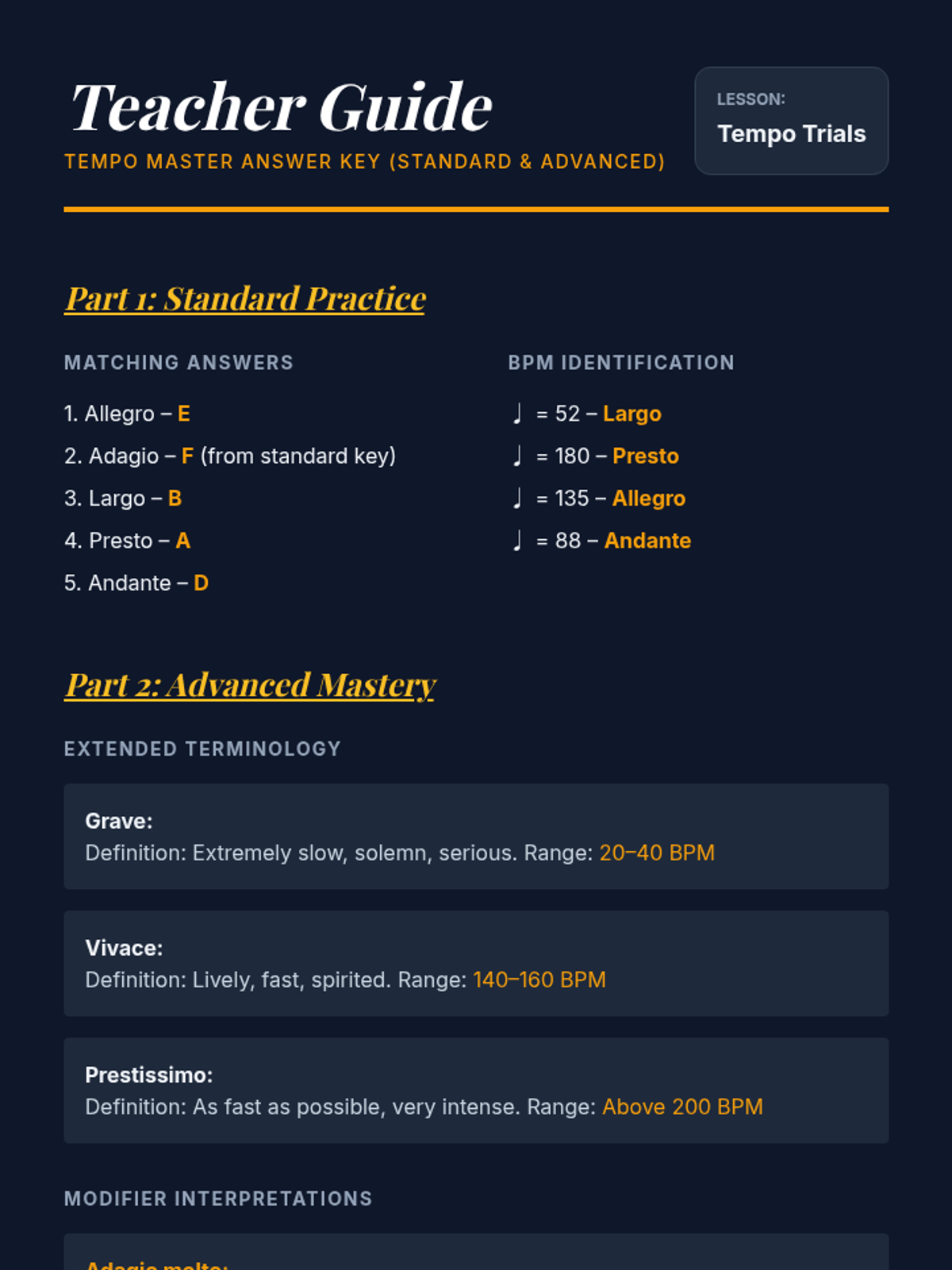
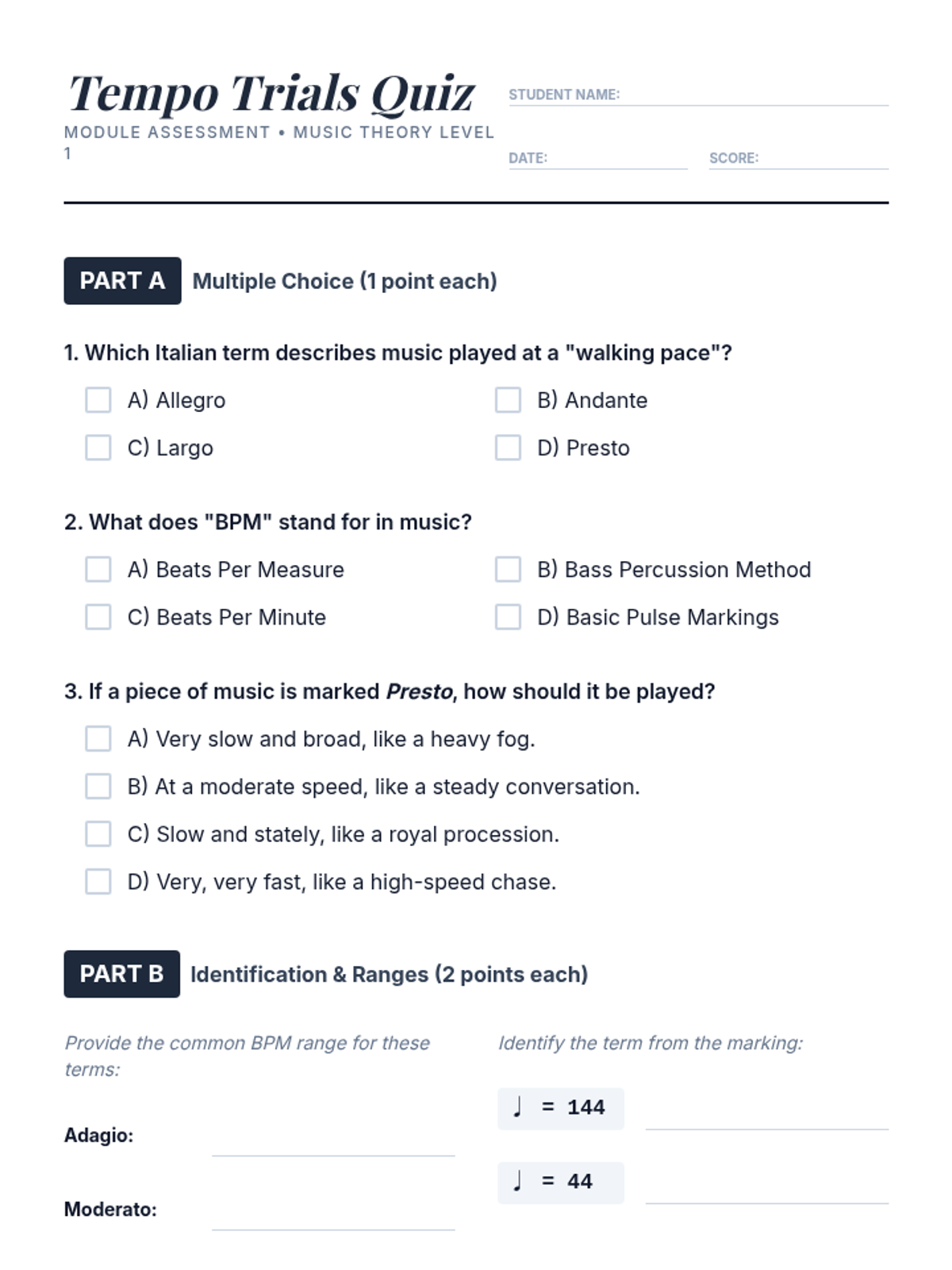
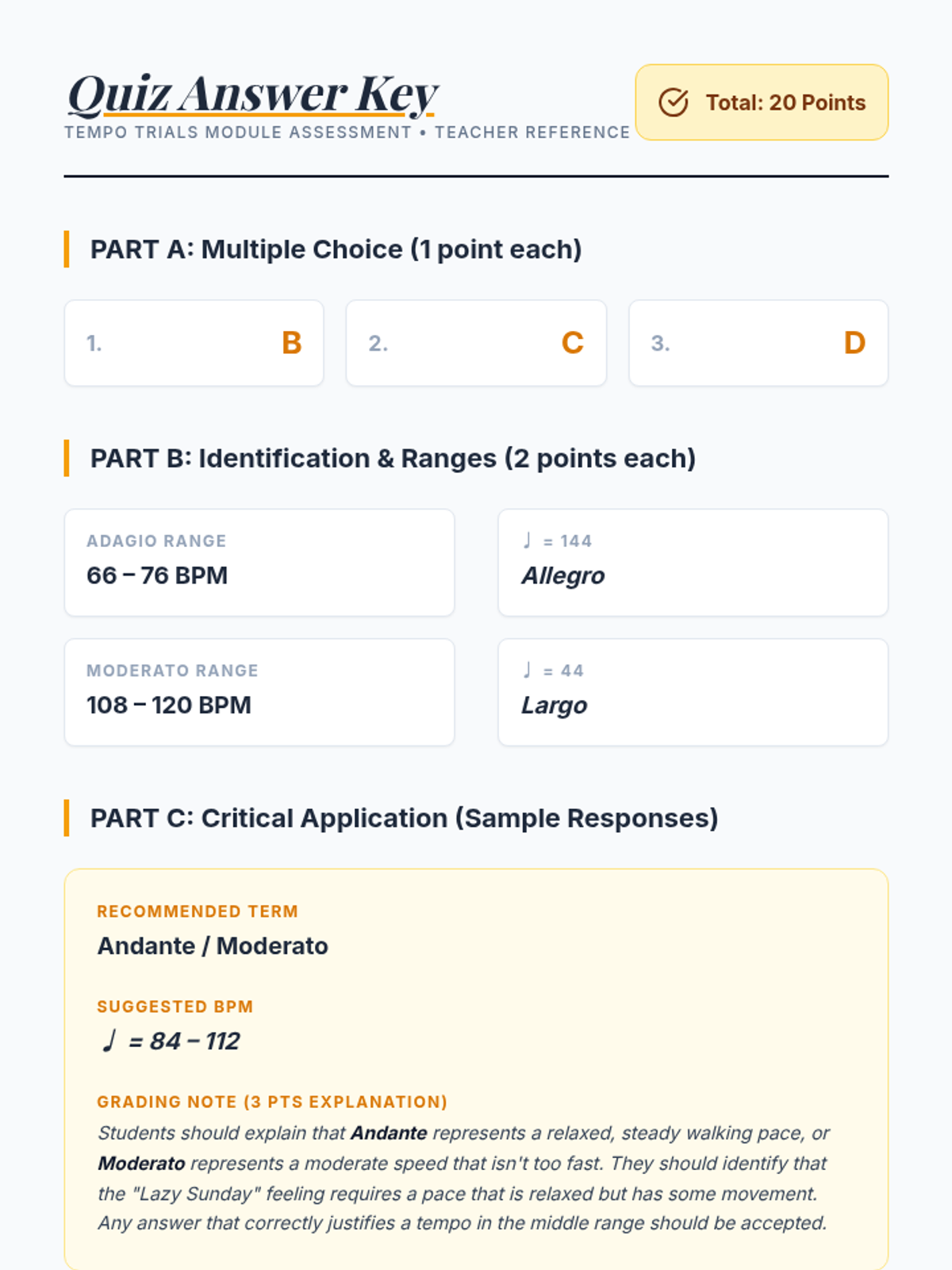
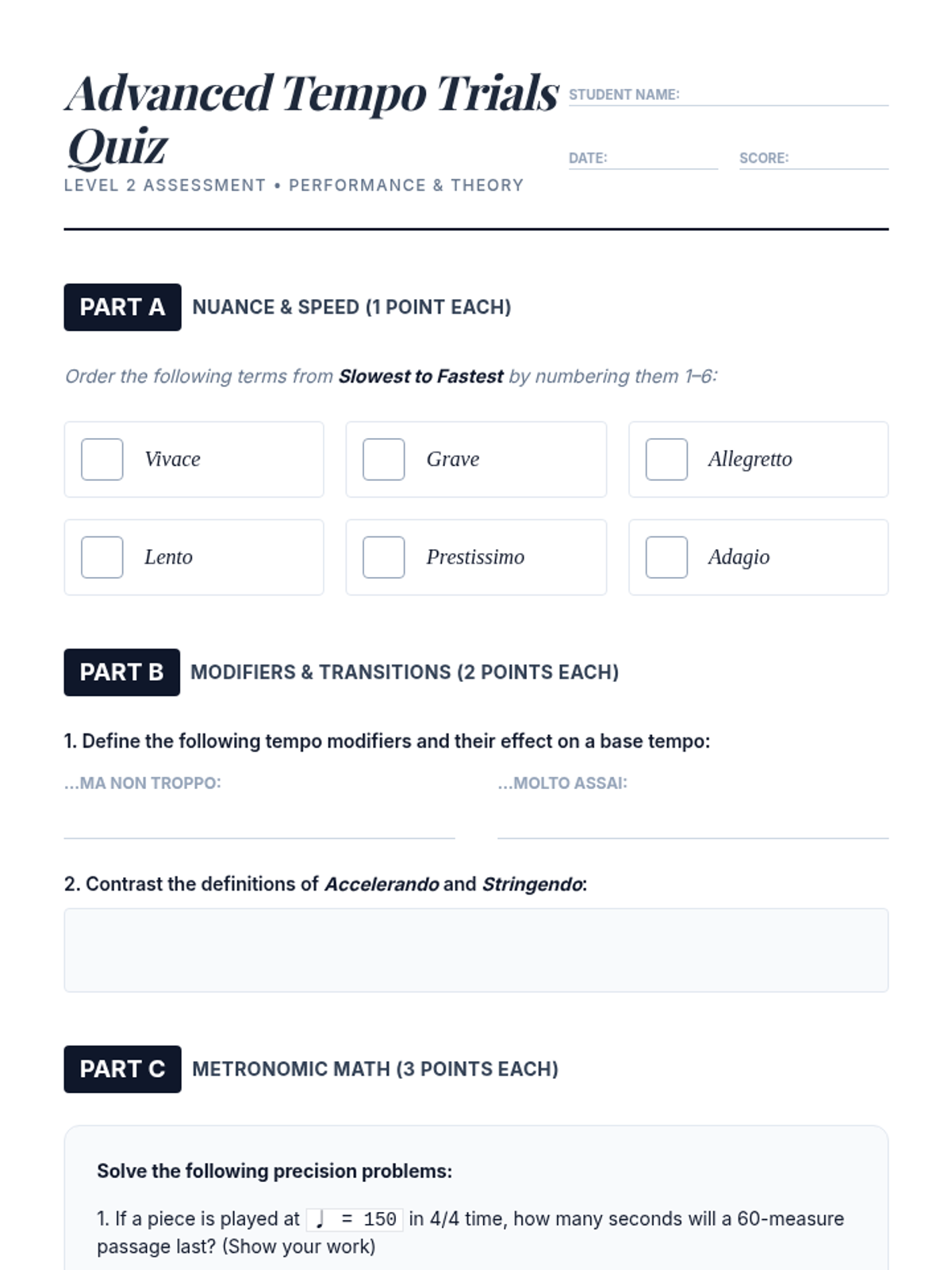
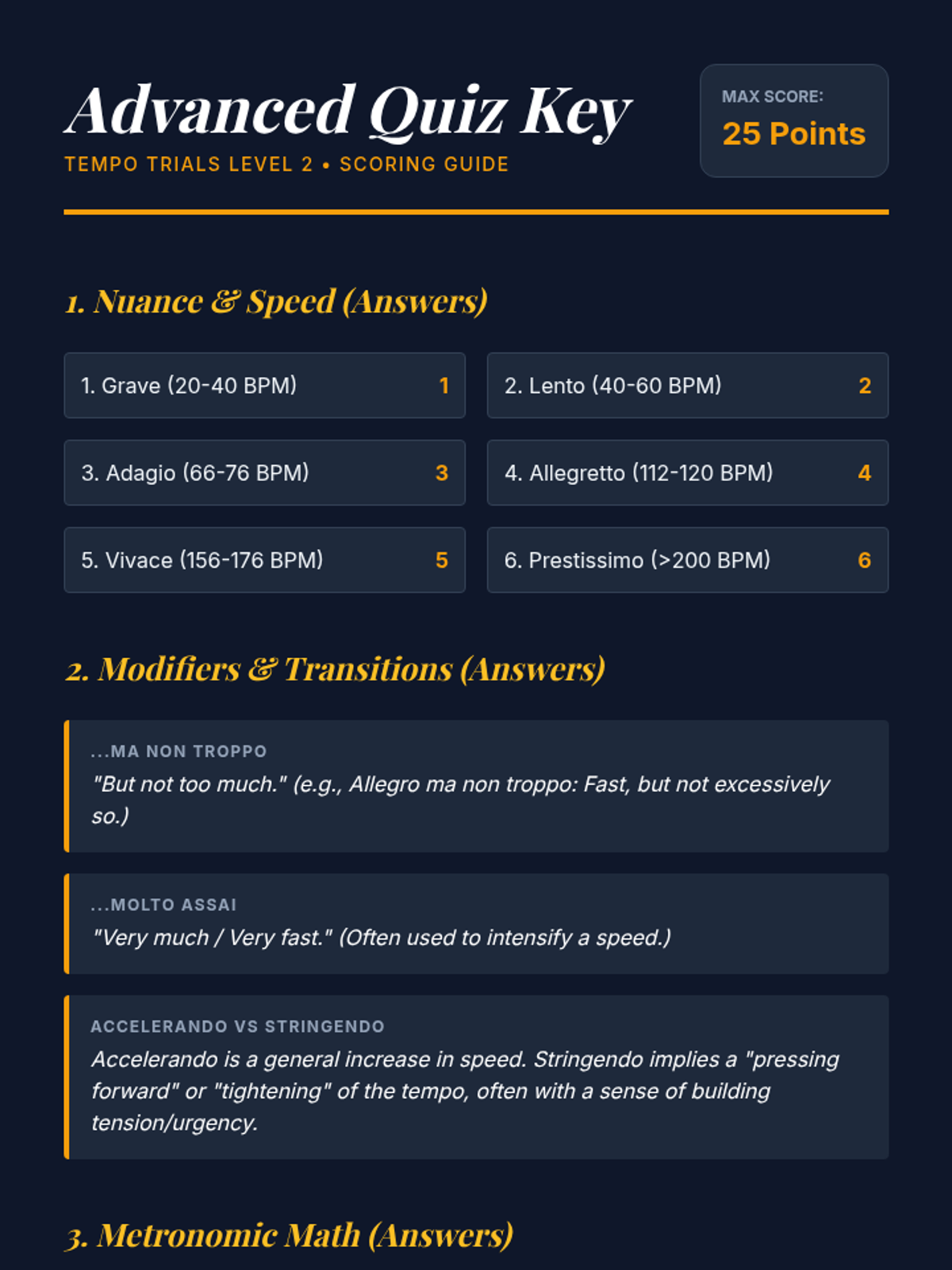
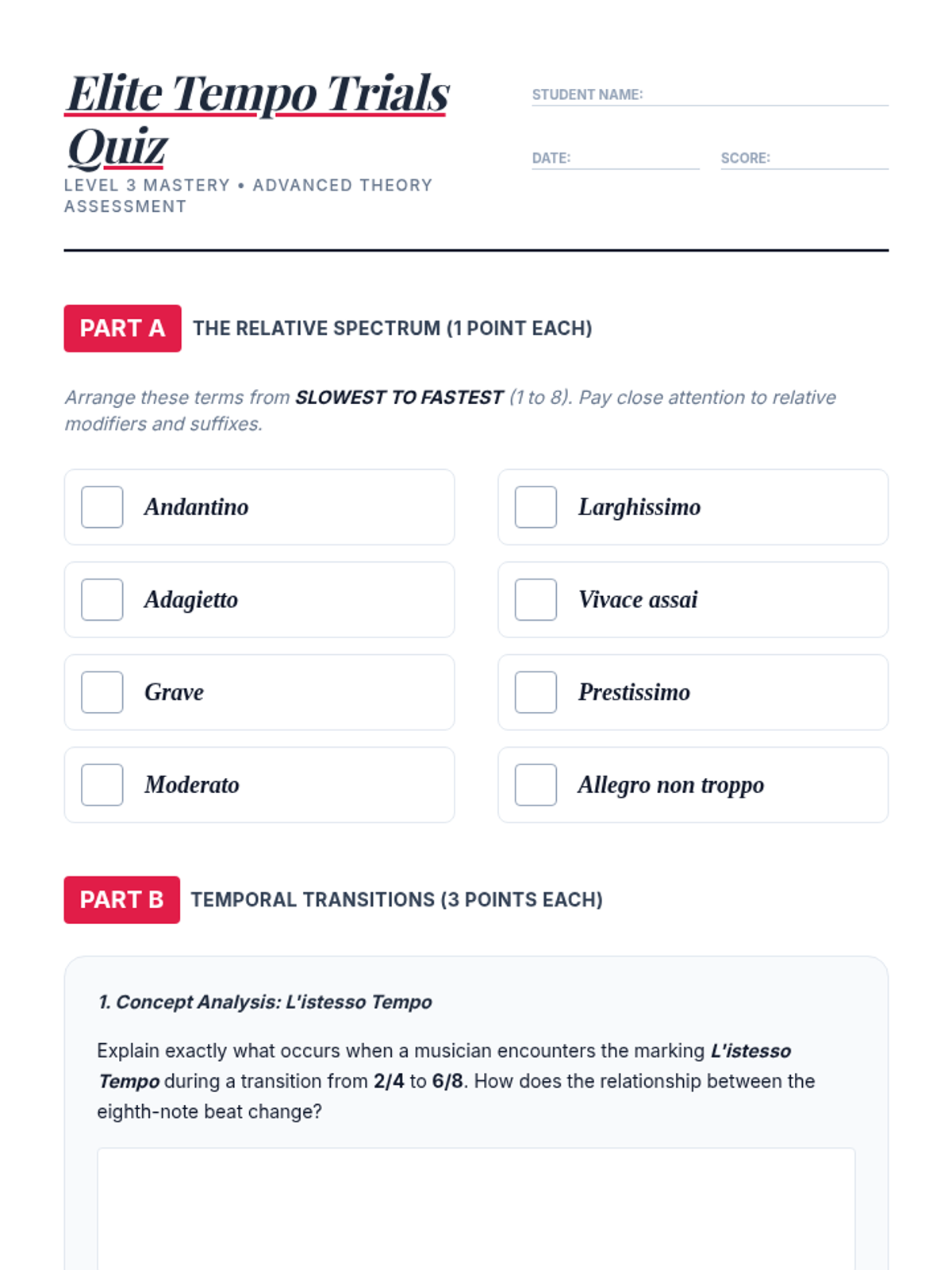
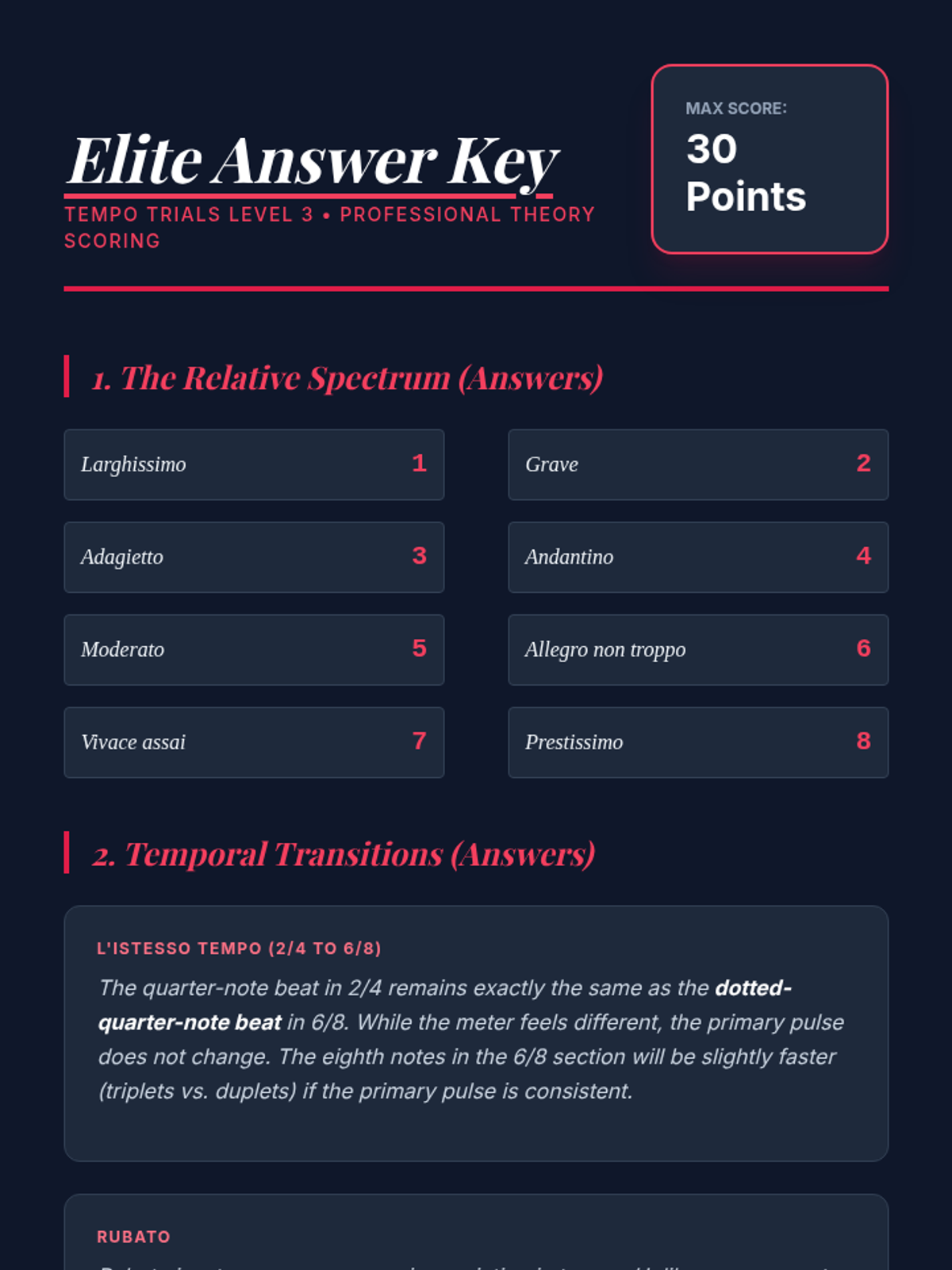
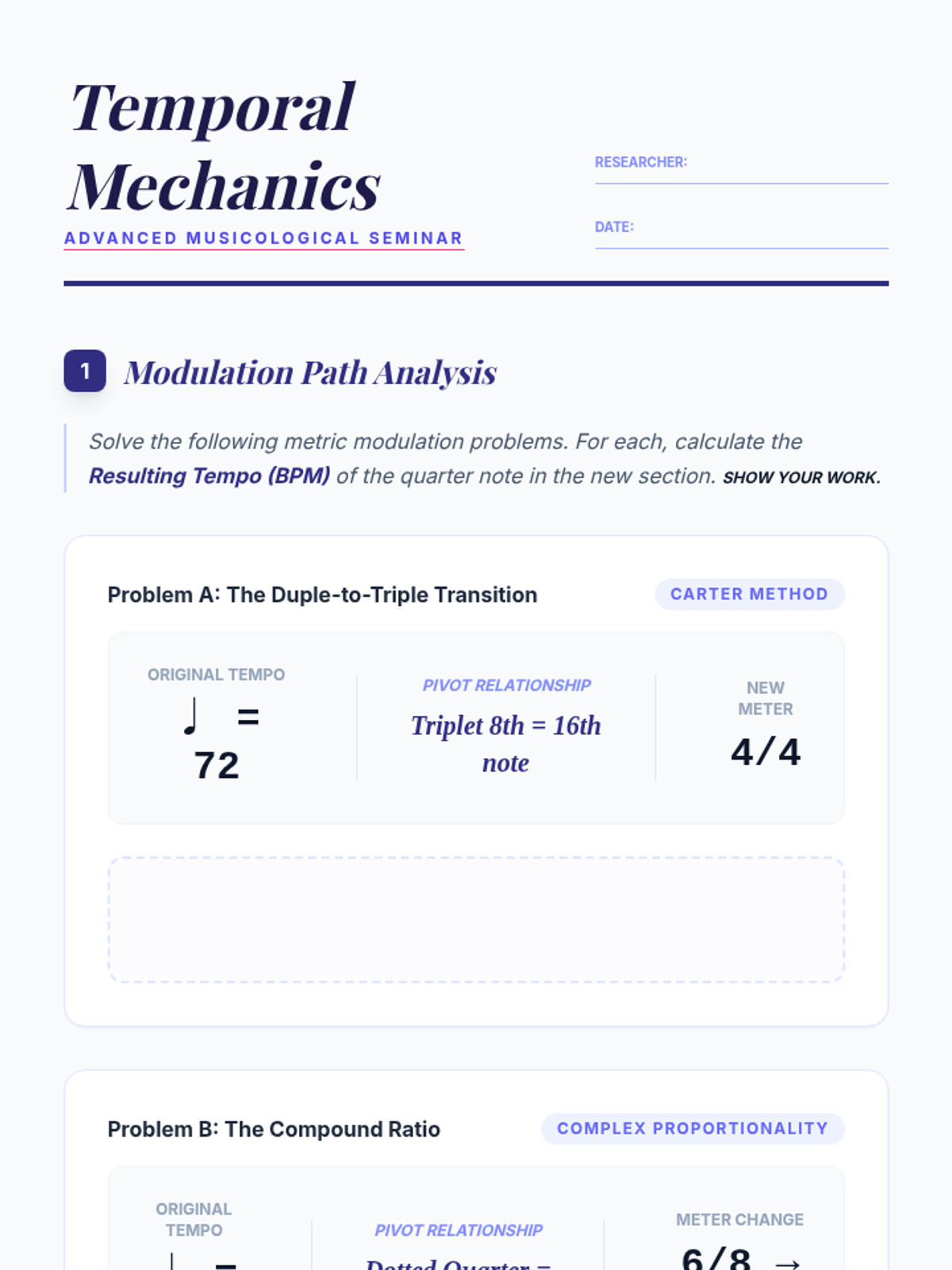
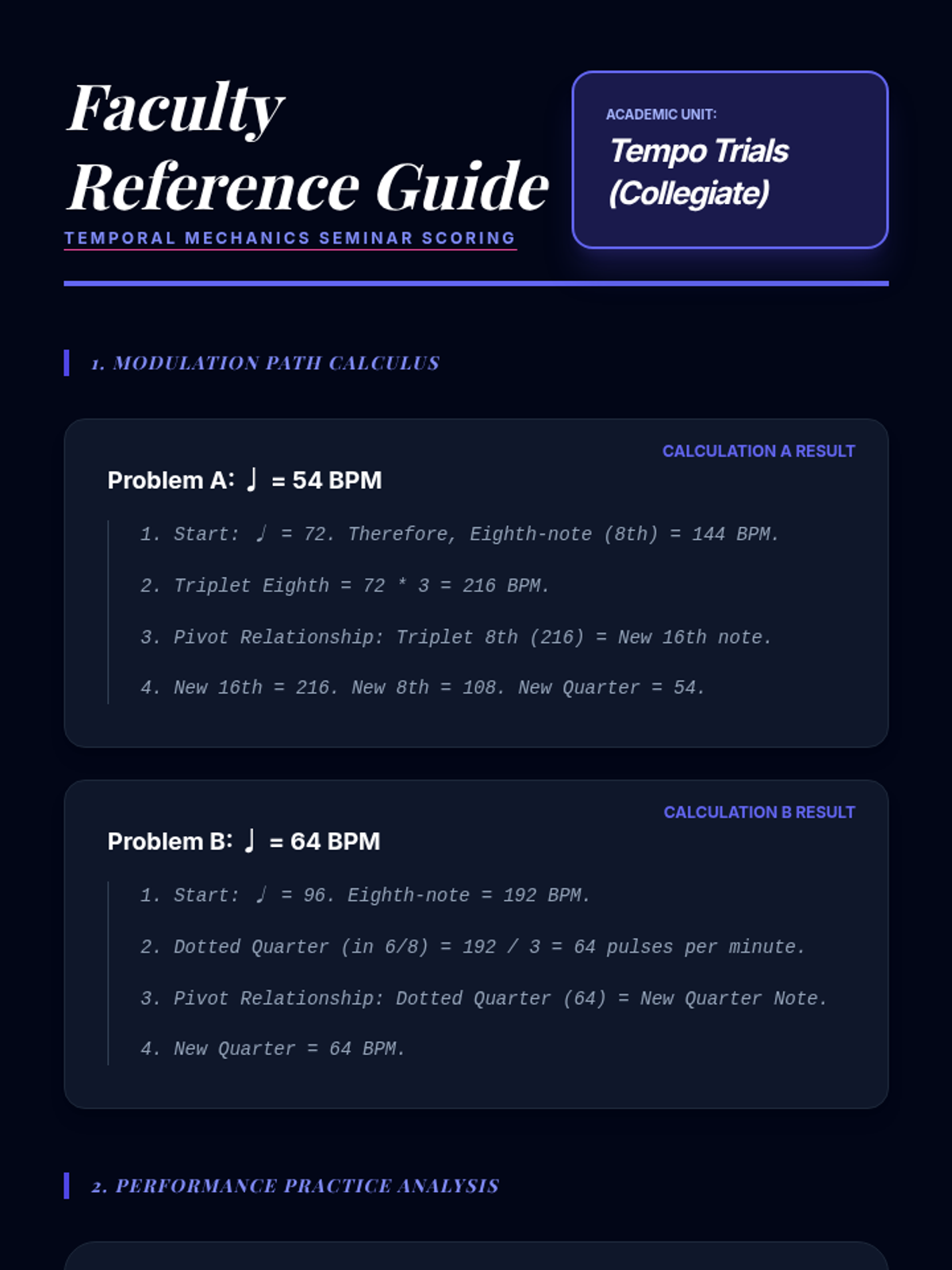
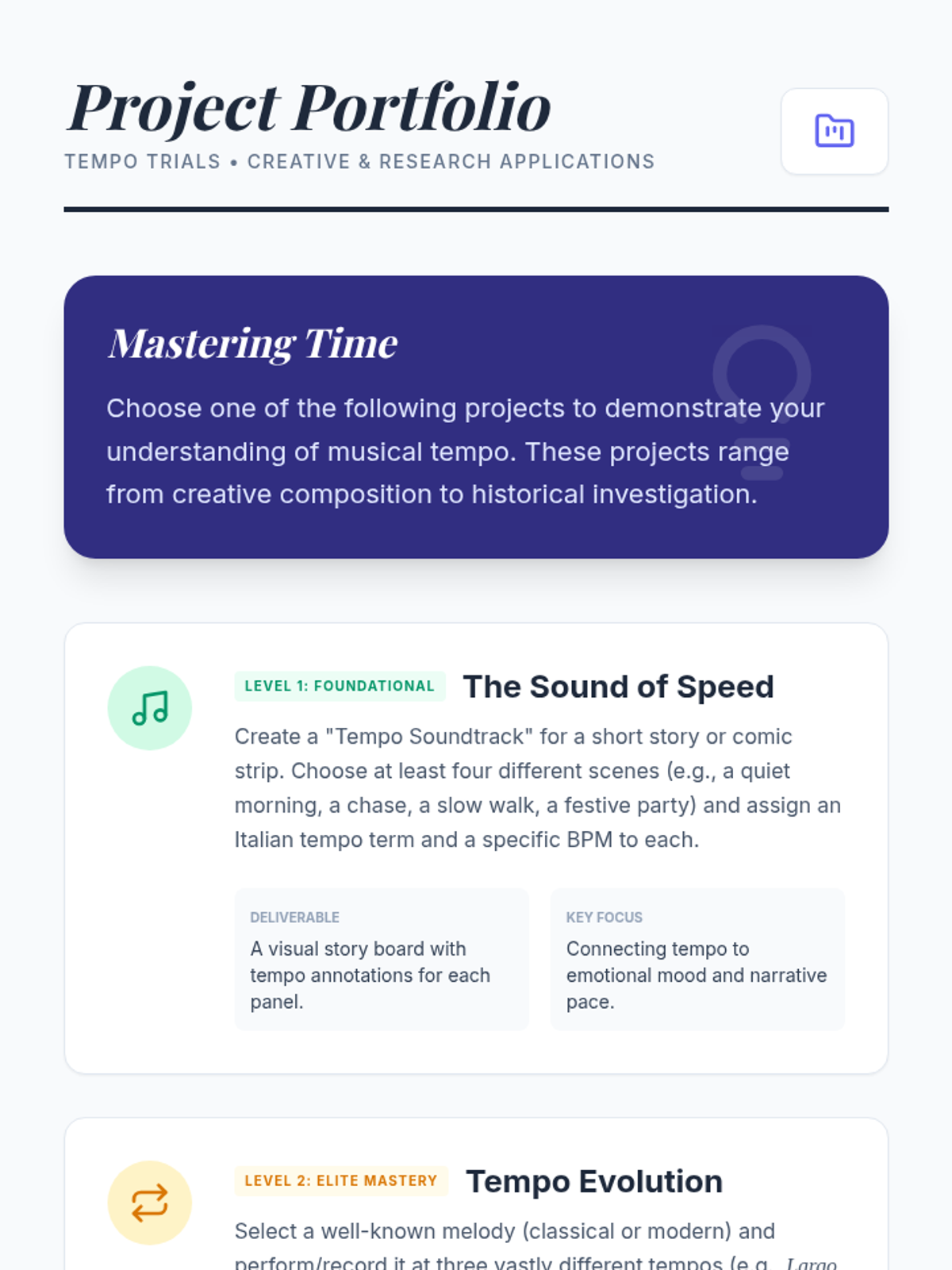
A comprehensive lesson on music tempo covering Italian terminology, metronome markings, and practical application to musical scores. Students will learn to identify and apply various speeds to music.
A comprehensive guide to understanding and applying musical tempo, covering Italian terminology, BPM, and metronome markings.
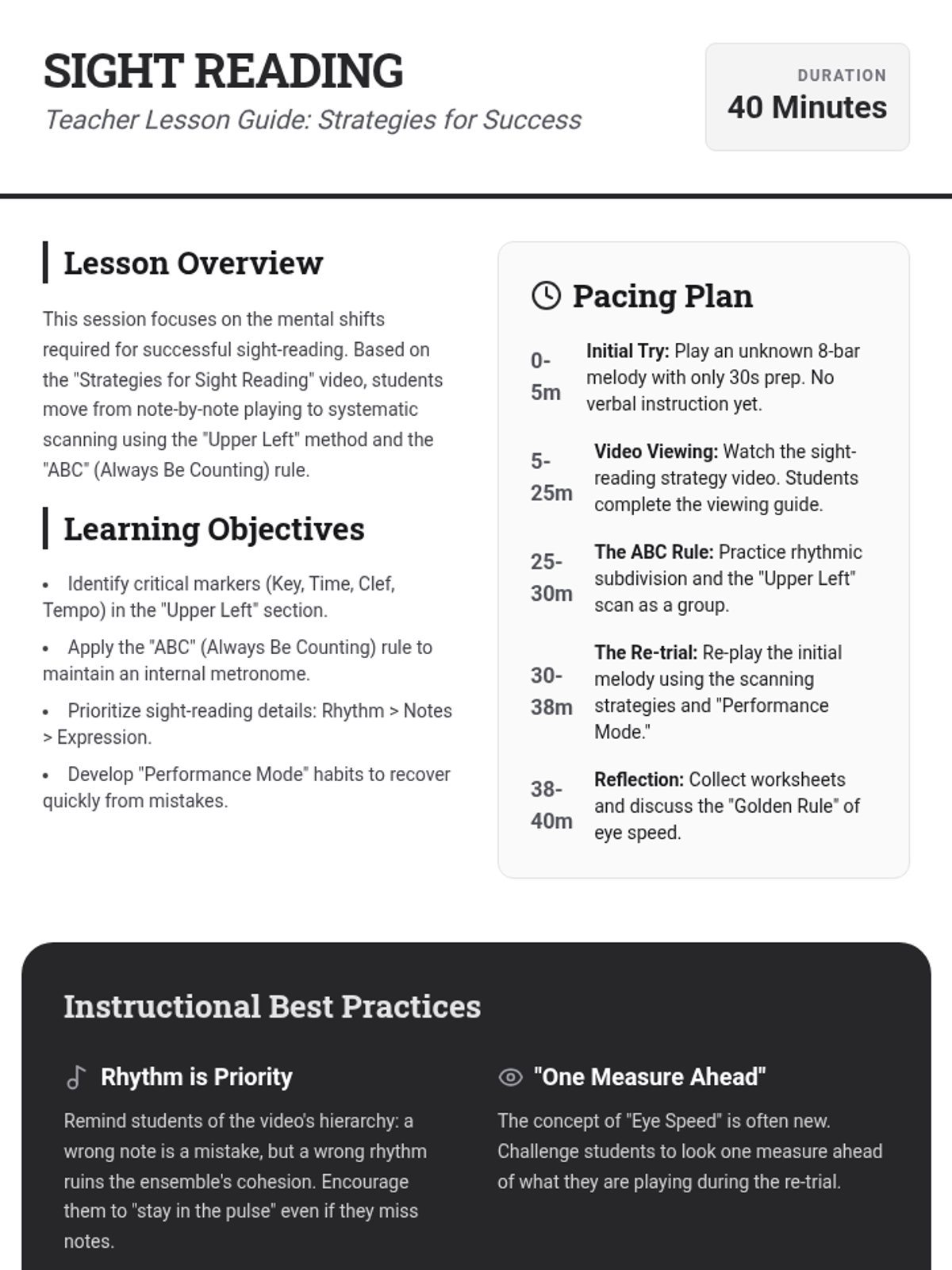
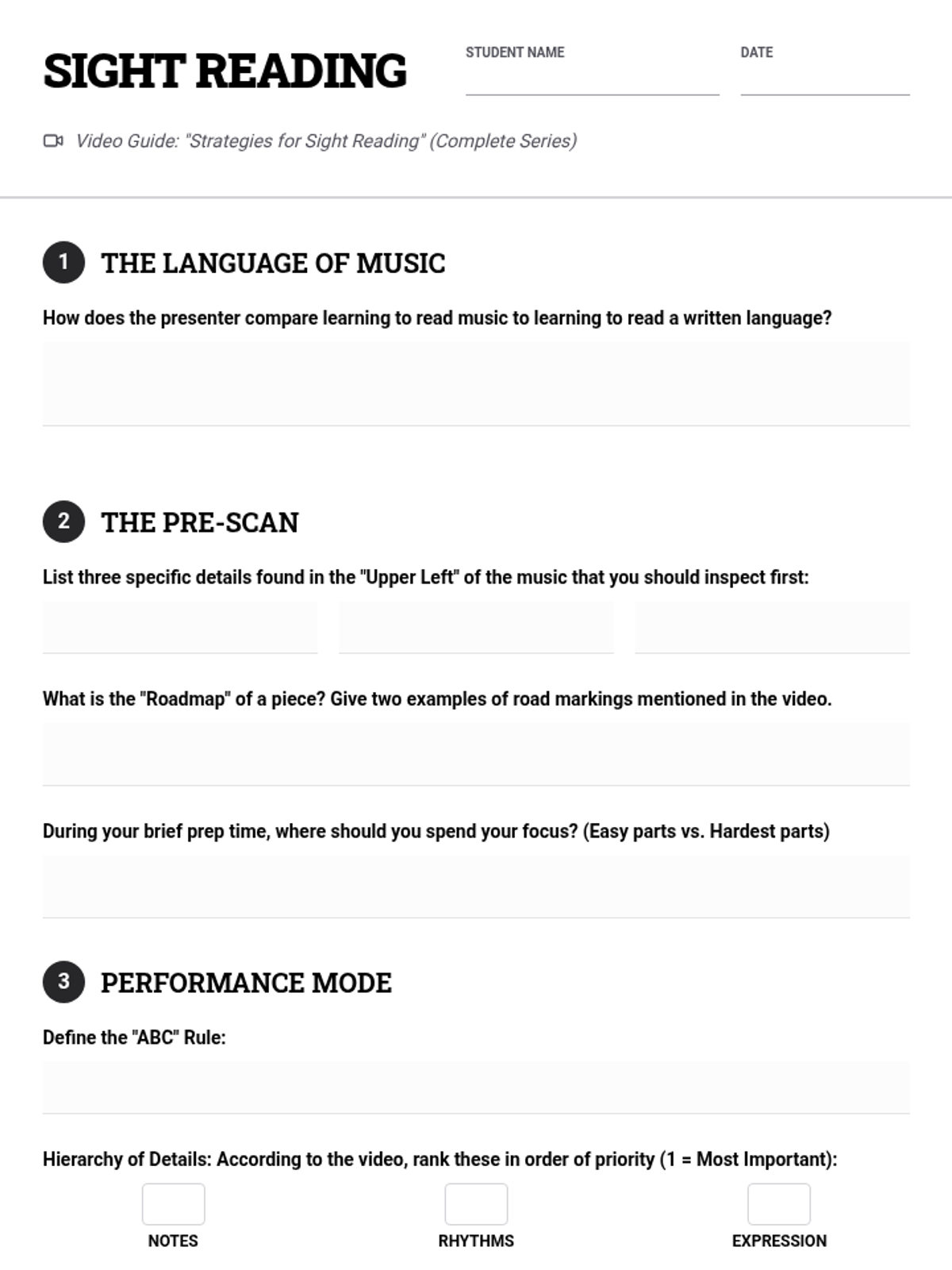
A 40-minute intensive session for high school band students focusing on efficient sight-reading strategies, featuring a video viewing guide and structured reflection to improve first-read performance.
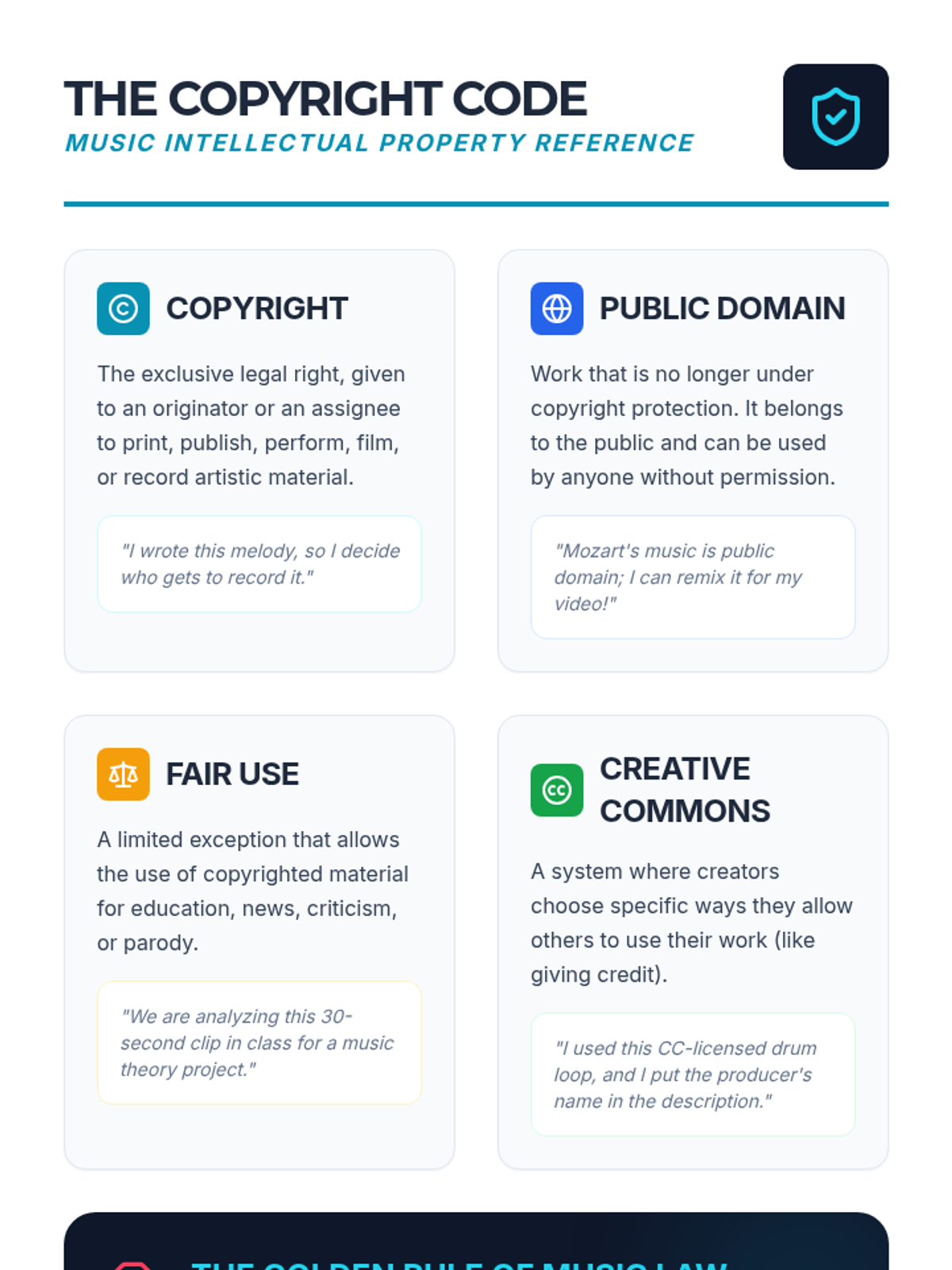
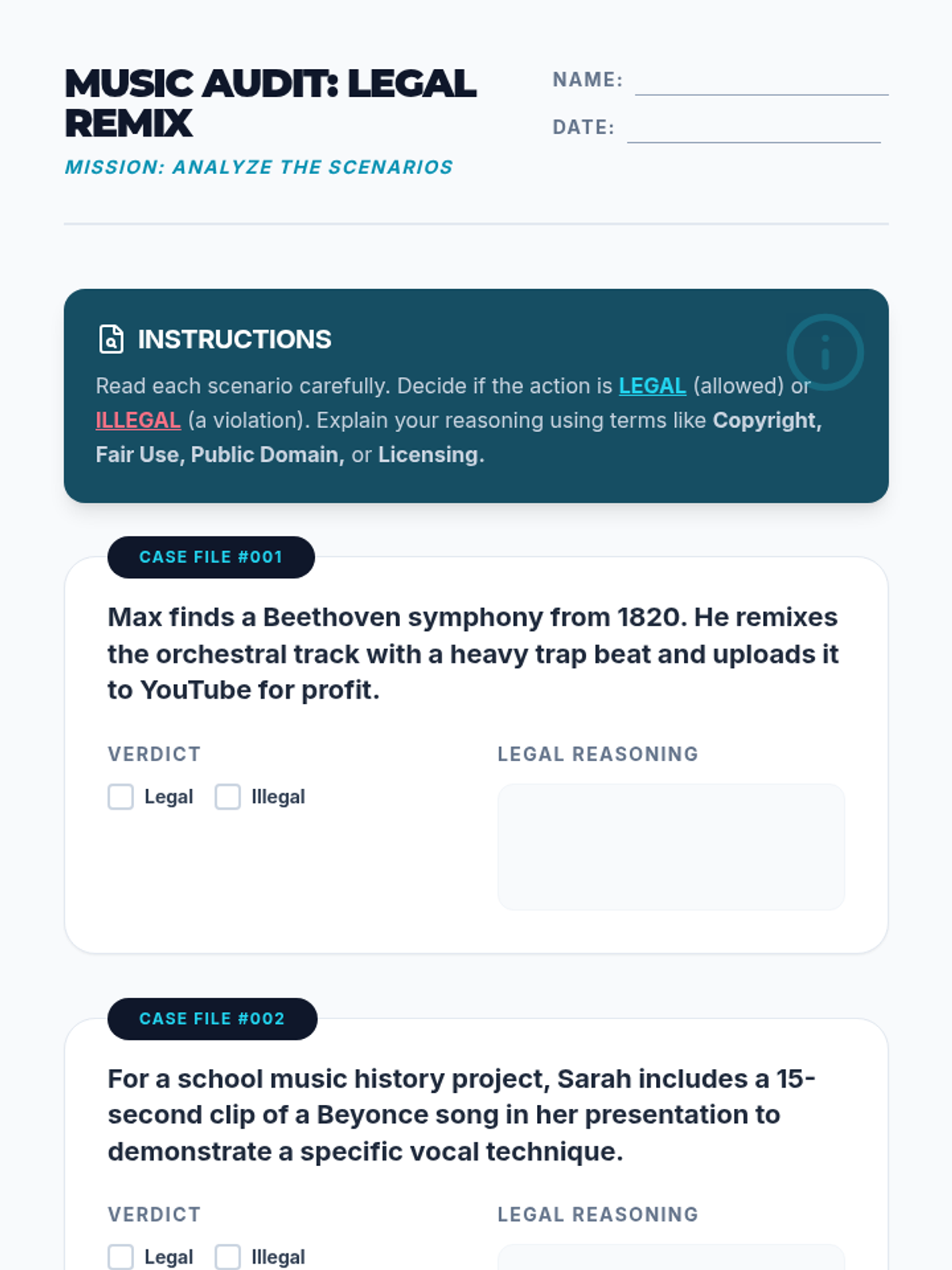
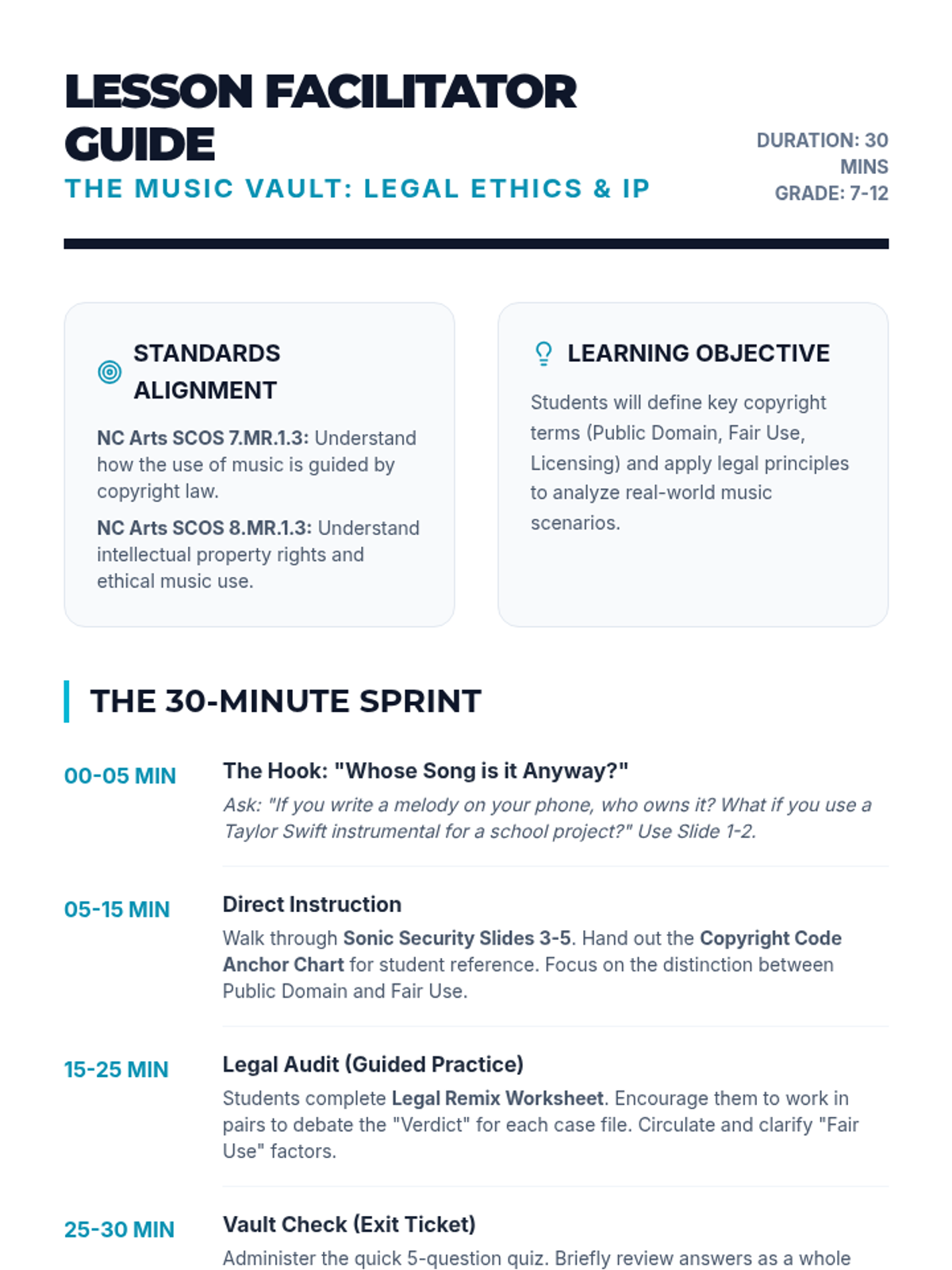
An introductory lesson on music copyright laws, fair use, and legal practices for using and creating music, aligned with NC Arts SCOS.
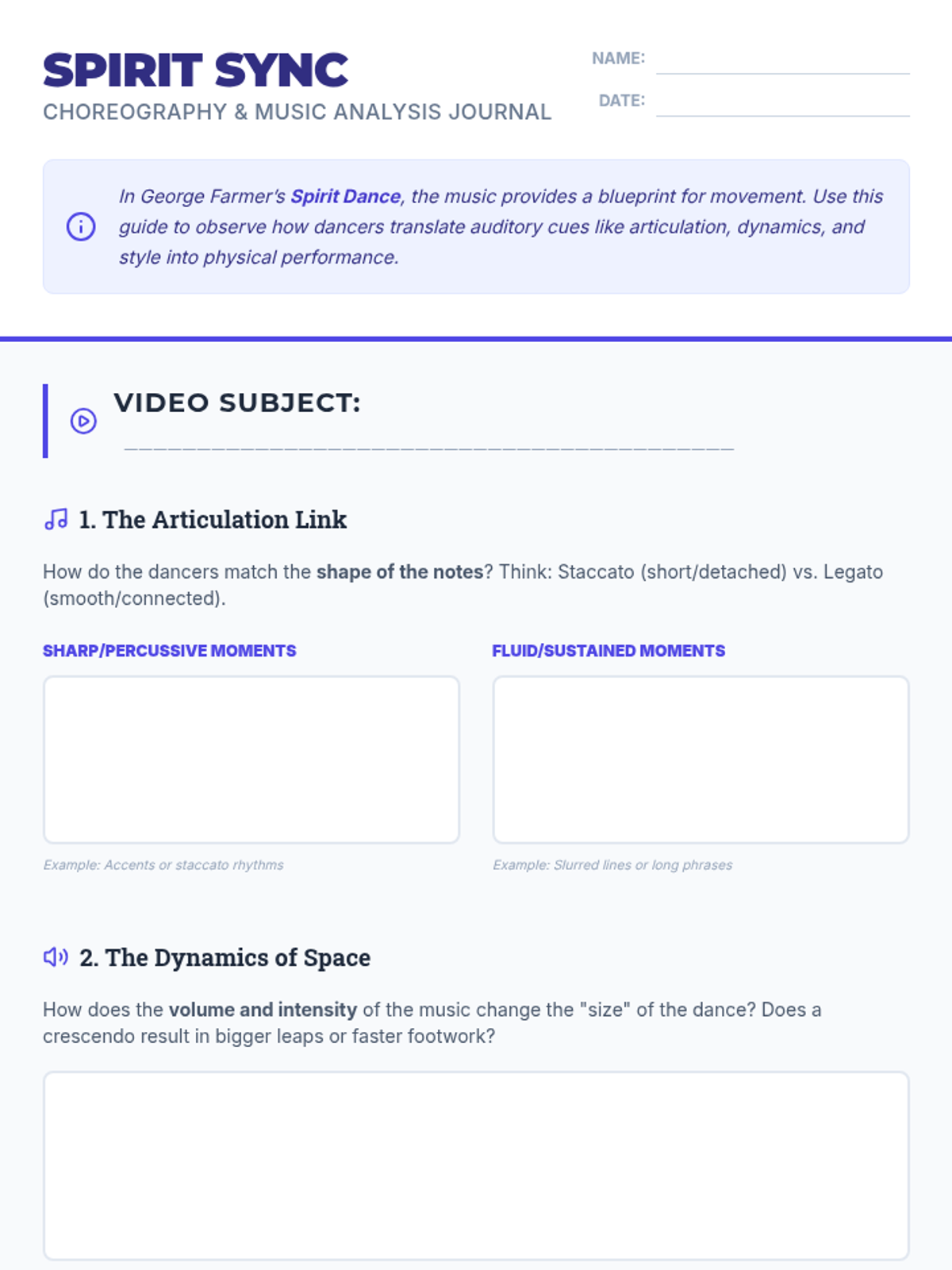
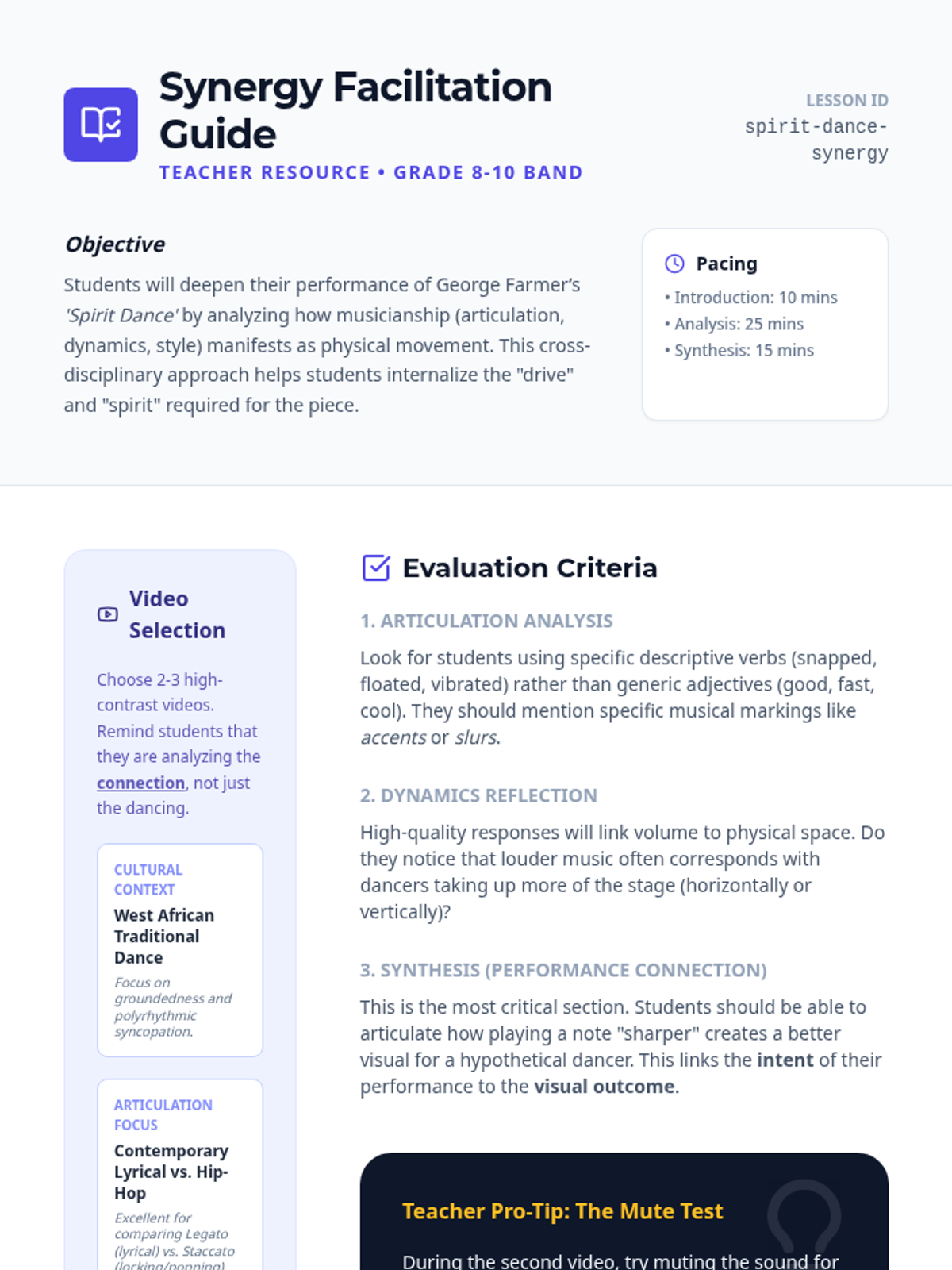
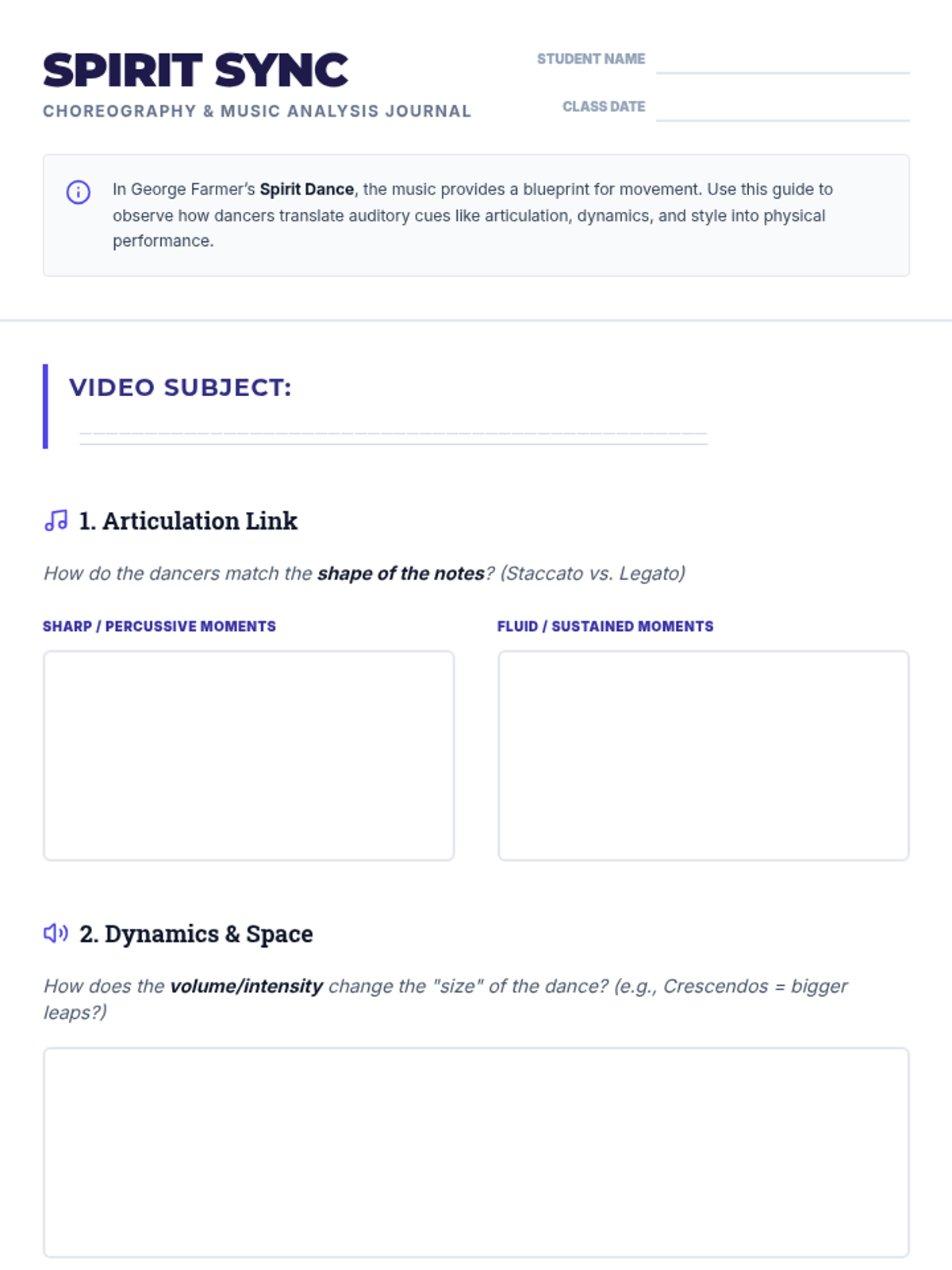
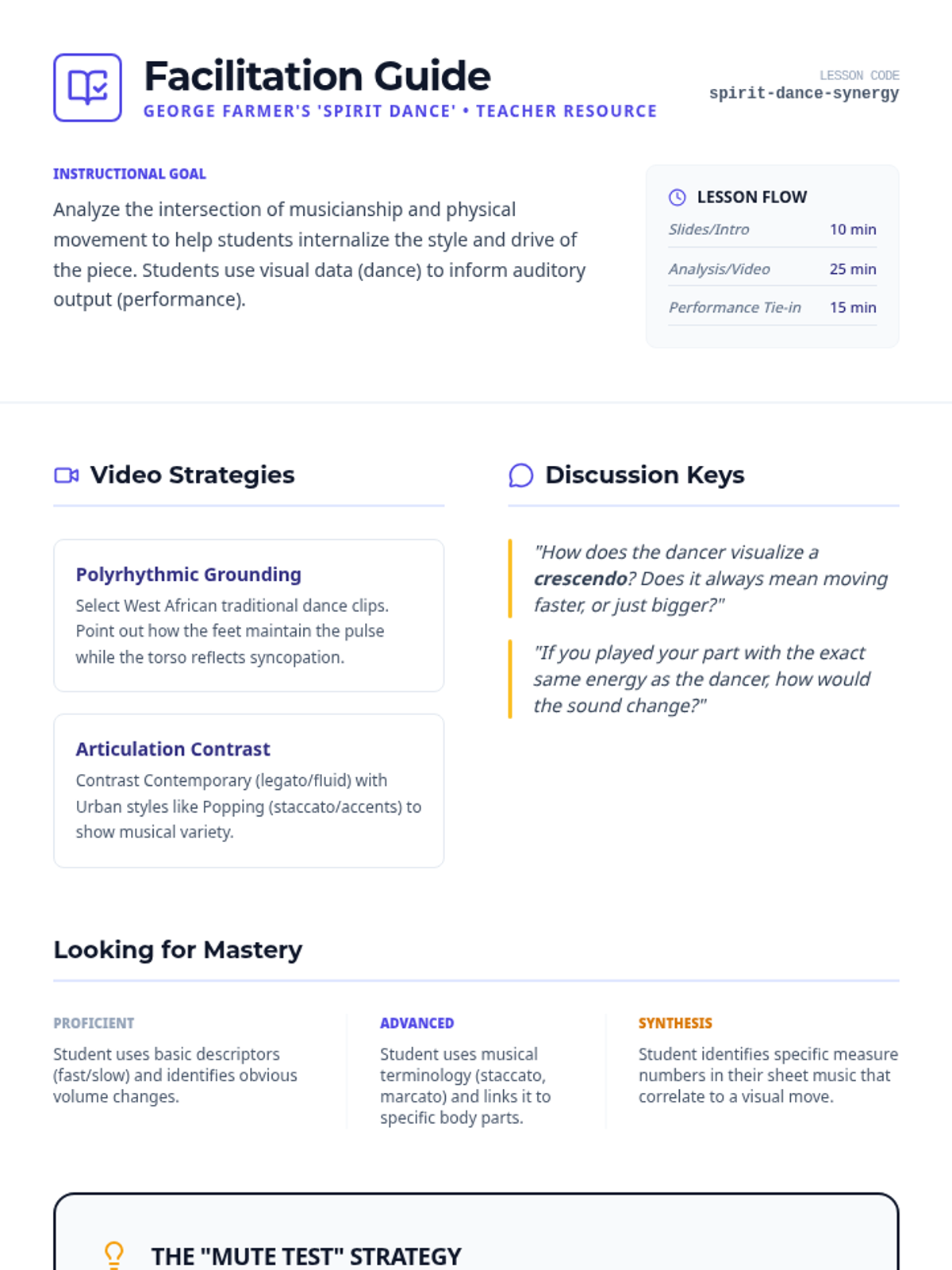
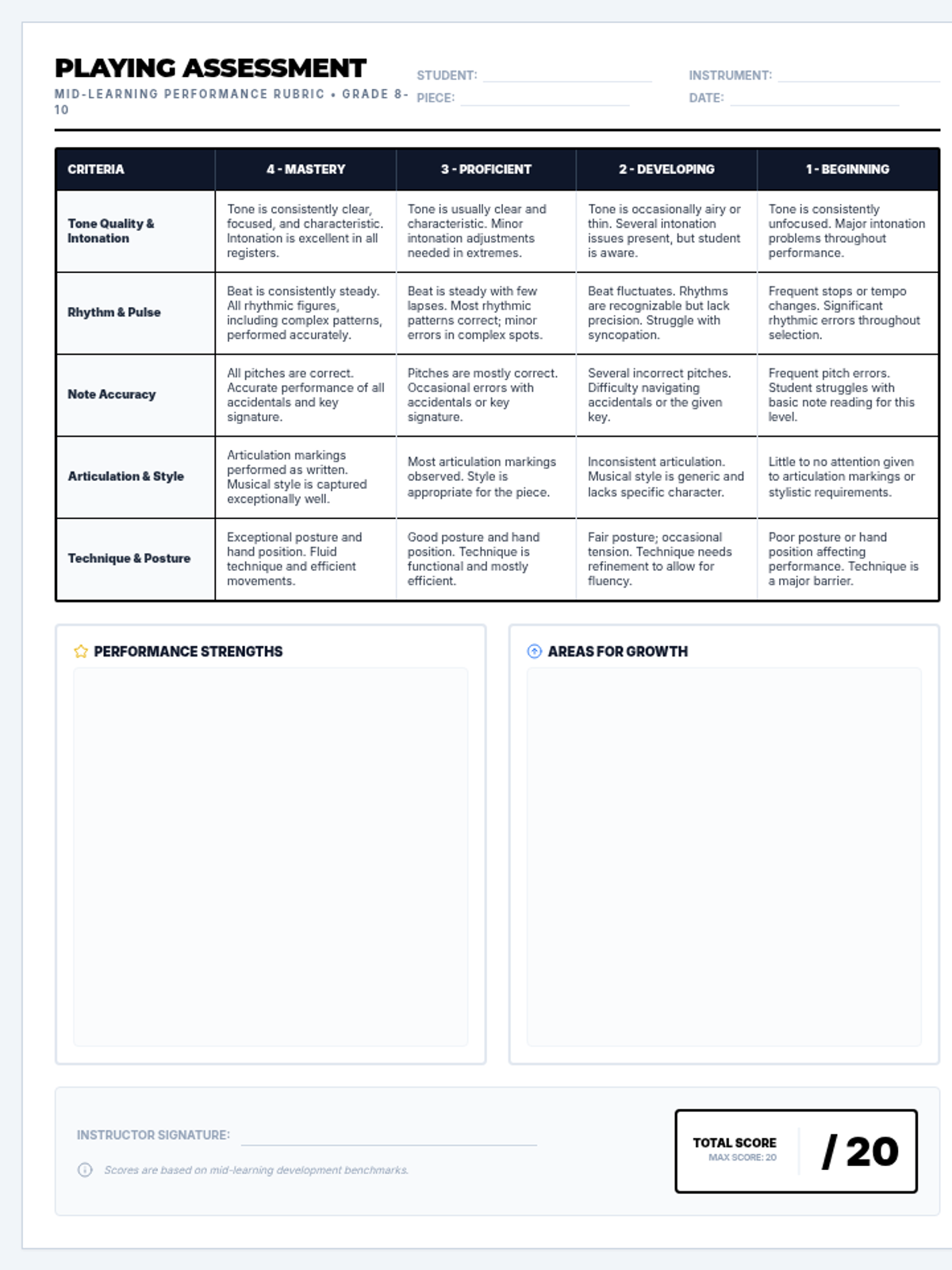
A grade 8-10 band lesson exploring the intersection of music and dance through George Farmer's 'Spirit Dance', focusing on how articulation, dynamics, and style translate into physical movement.
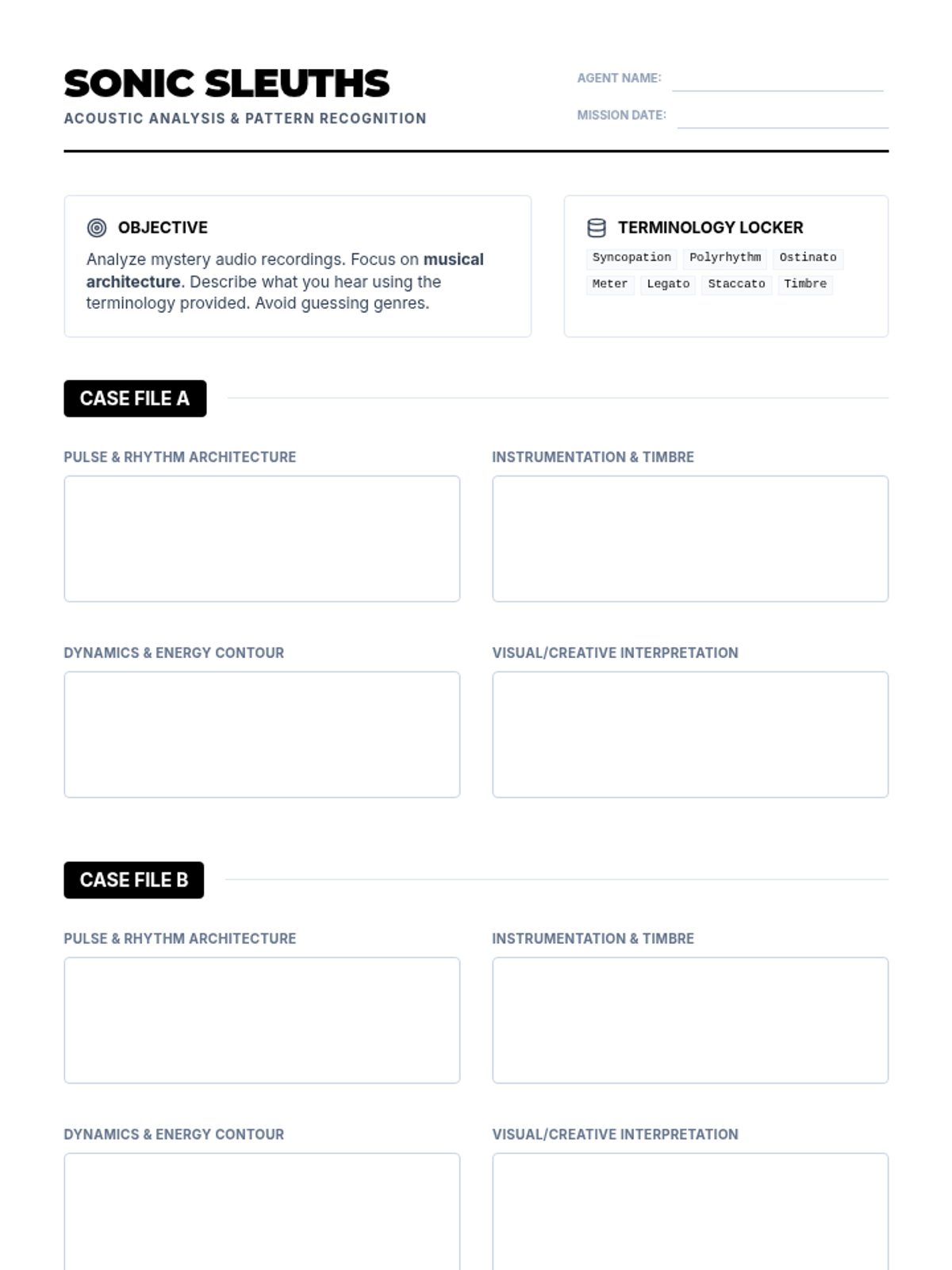
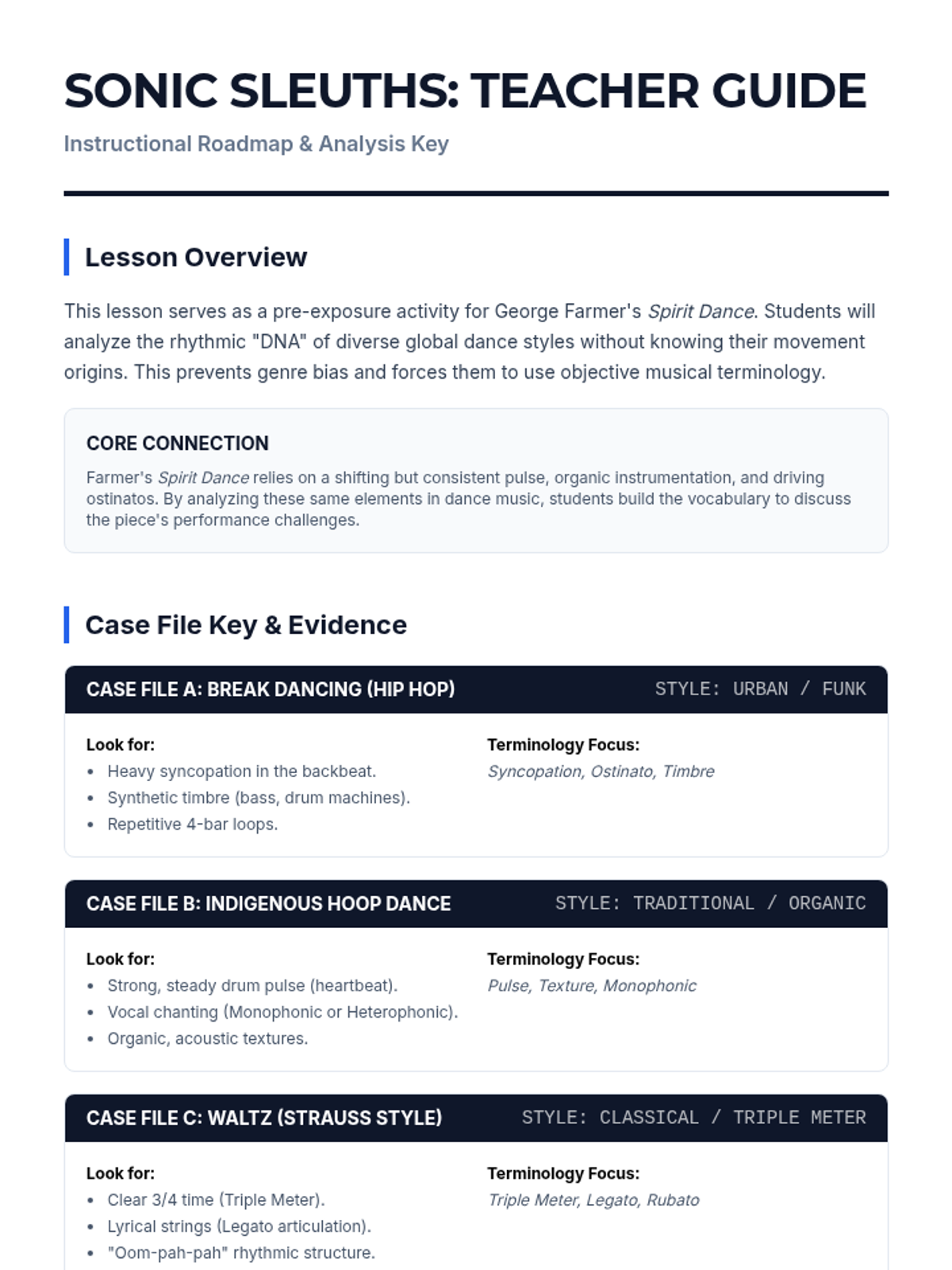
A listening-focused lesson where students analyze the musical characteristics of various dance styles without knowing their movement-based origins, building terminology skills before connecting to George Farmer's 'Spirit Dance'.
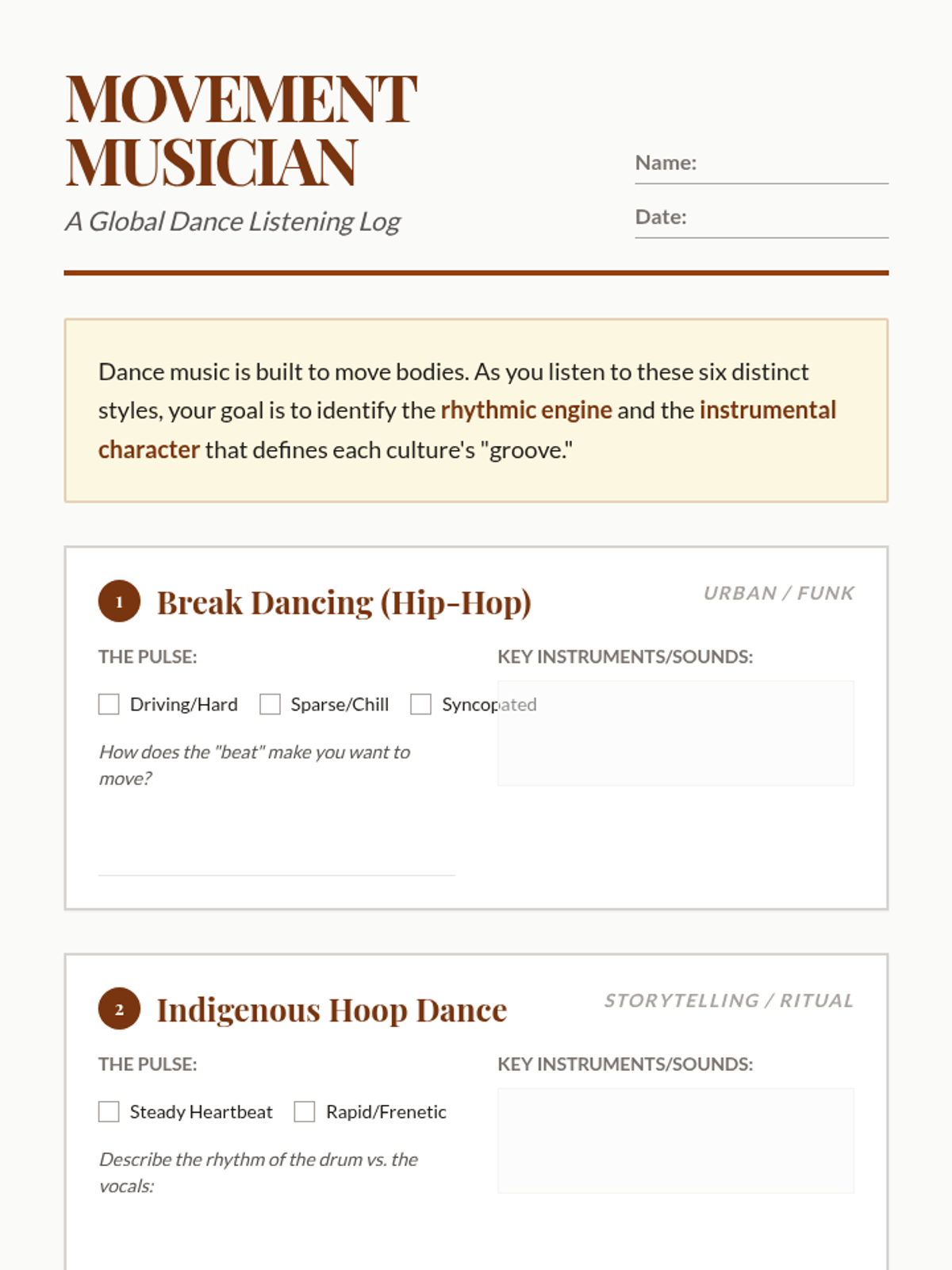
A survey of diverse dance styles from around the world, focusing on the unique musical characteristics, instrumentation, and rhythmic structures of music for break dancing, hoop dancing, ballet, and more.
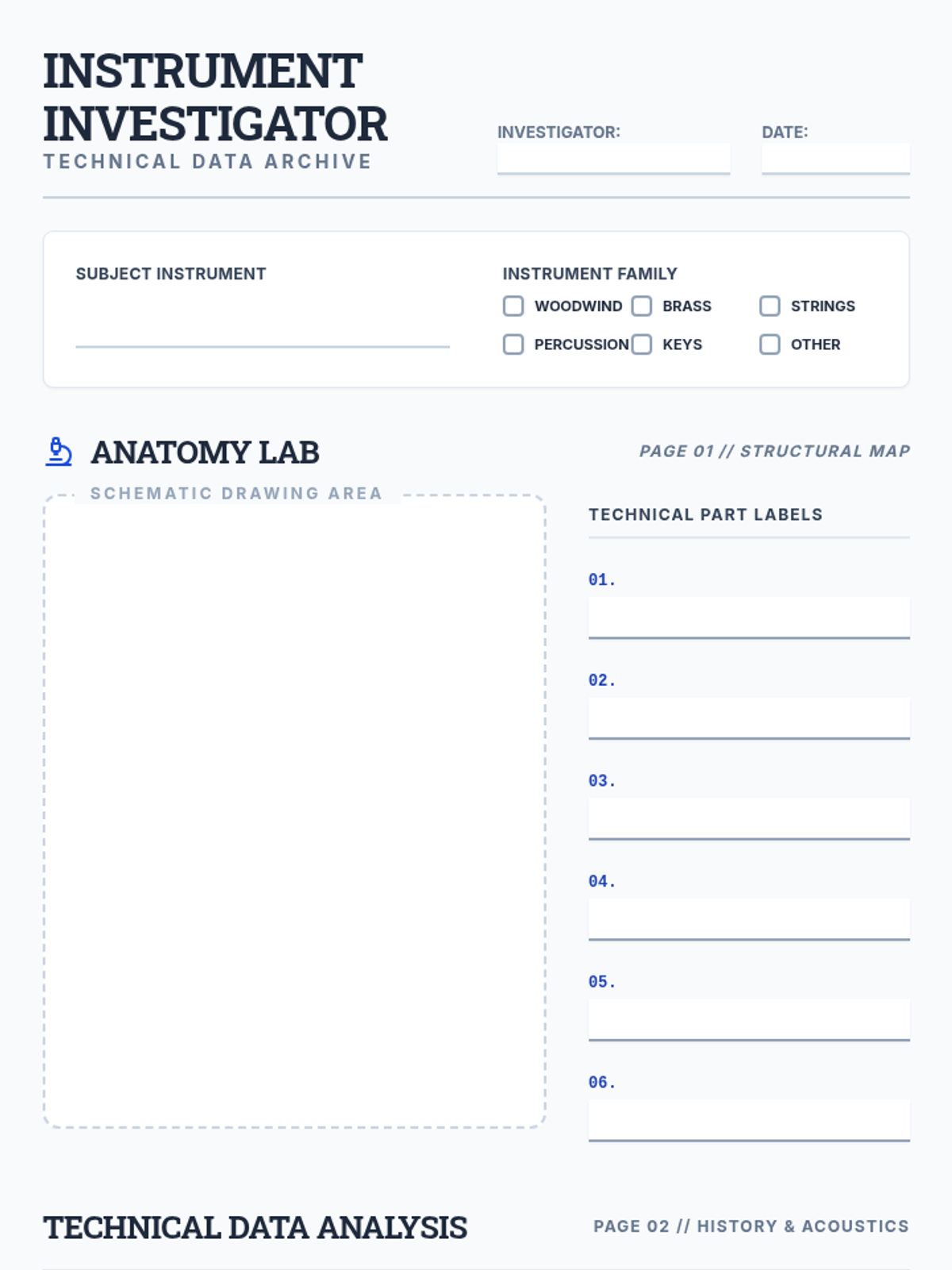
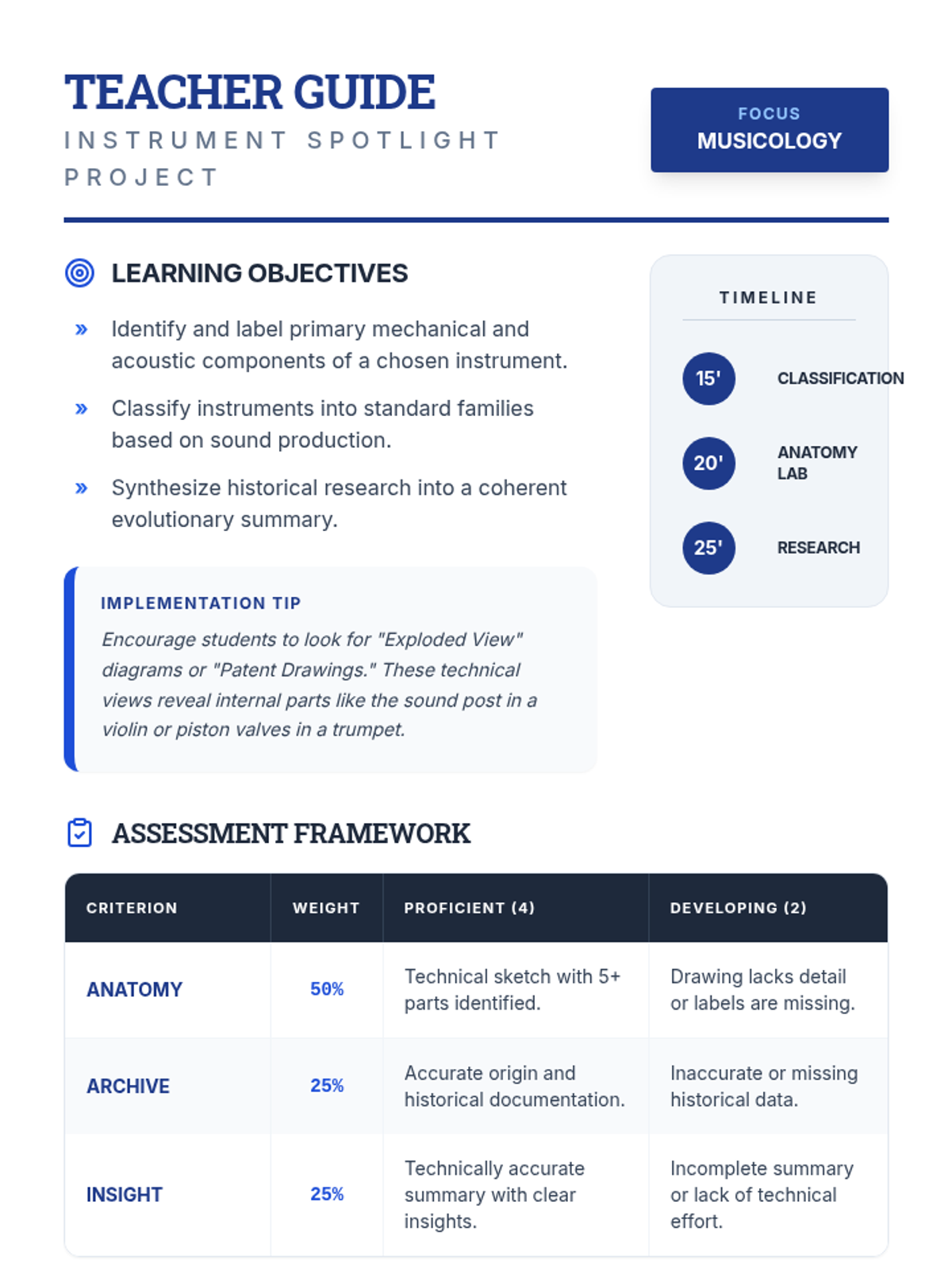
A guided research project where students explore the anatomy, history, and classification of a musical instrument of their choice.
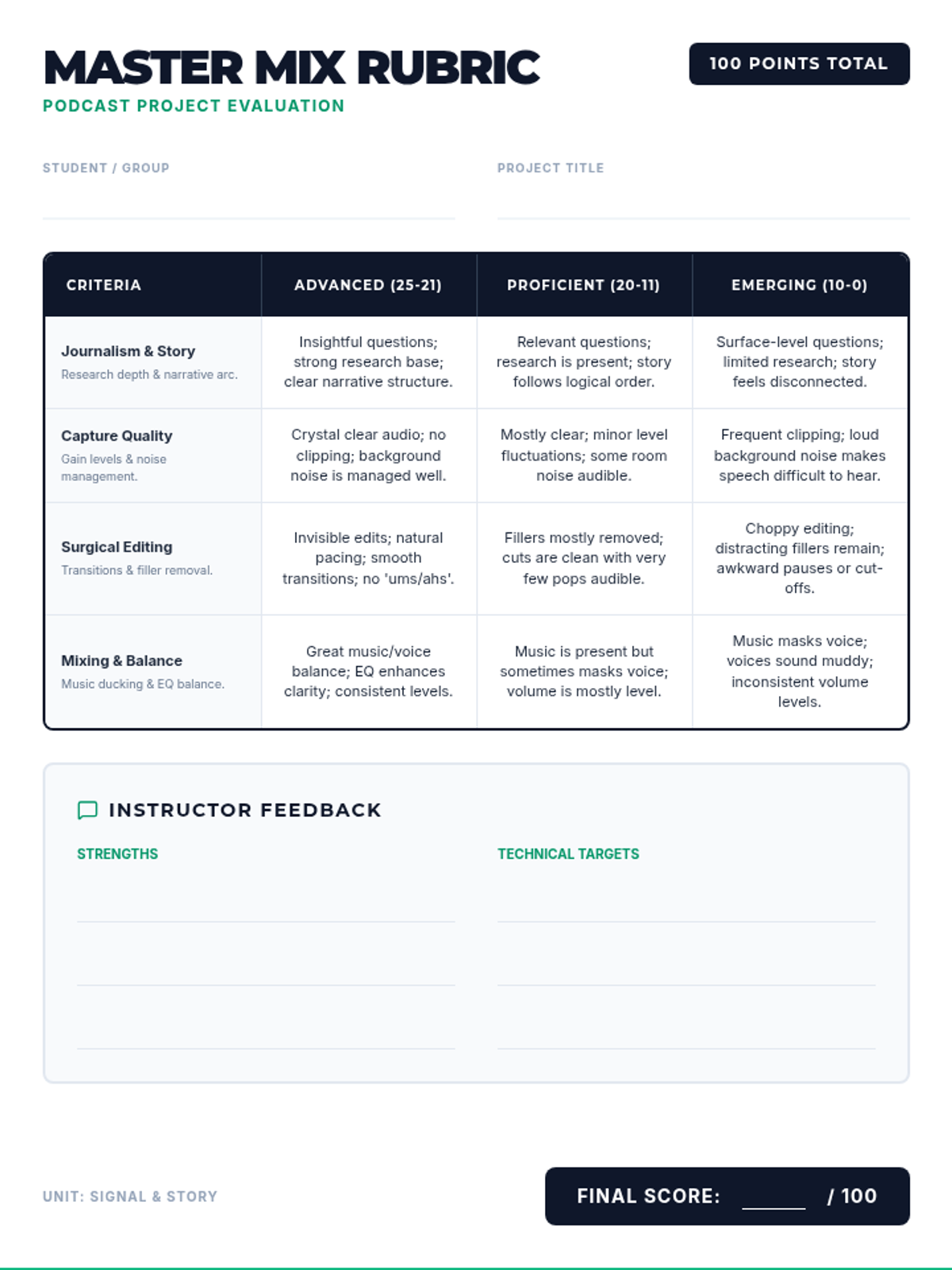
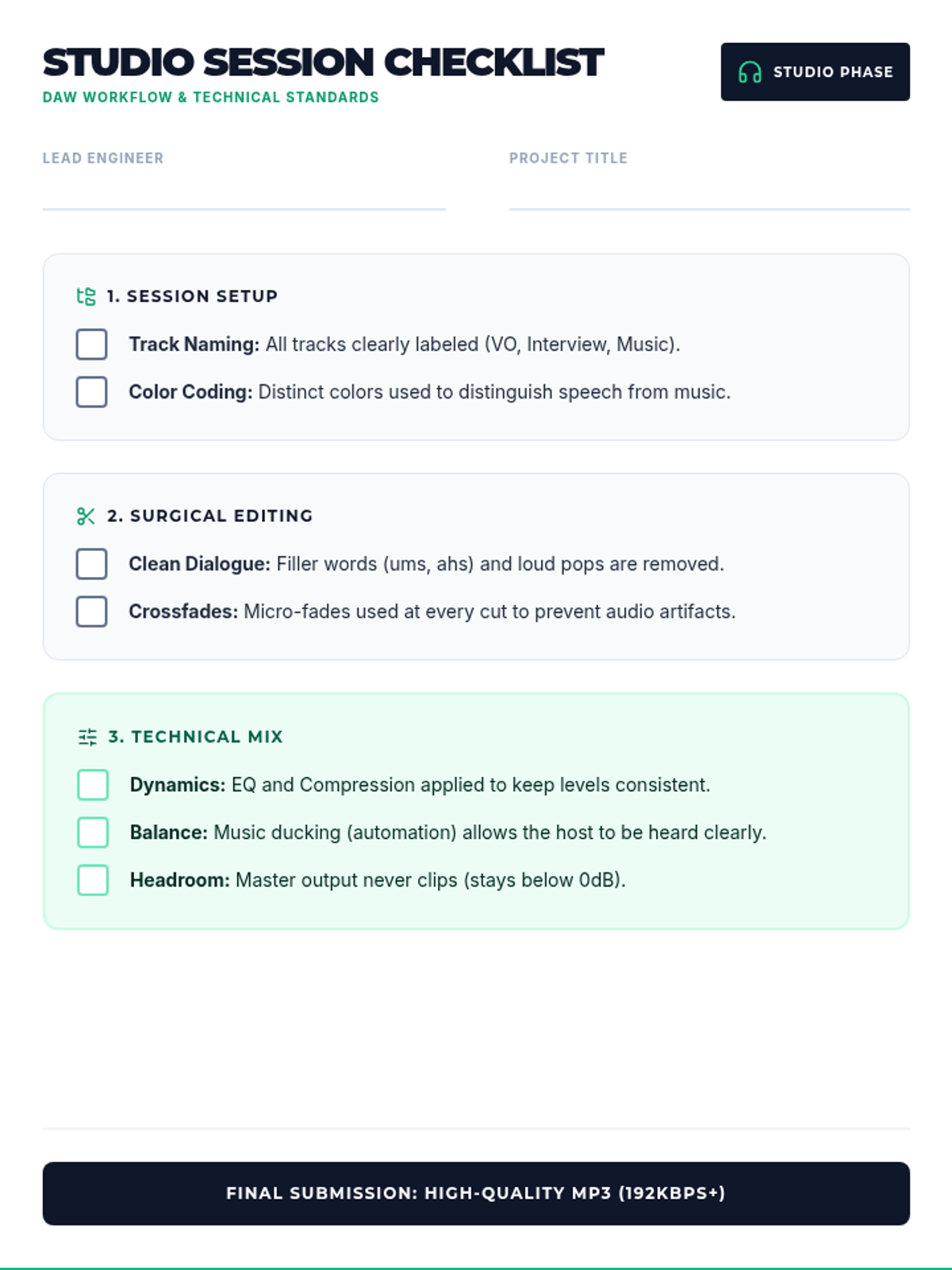
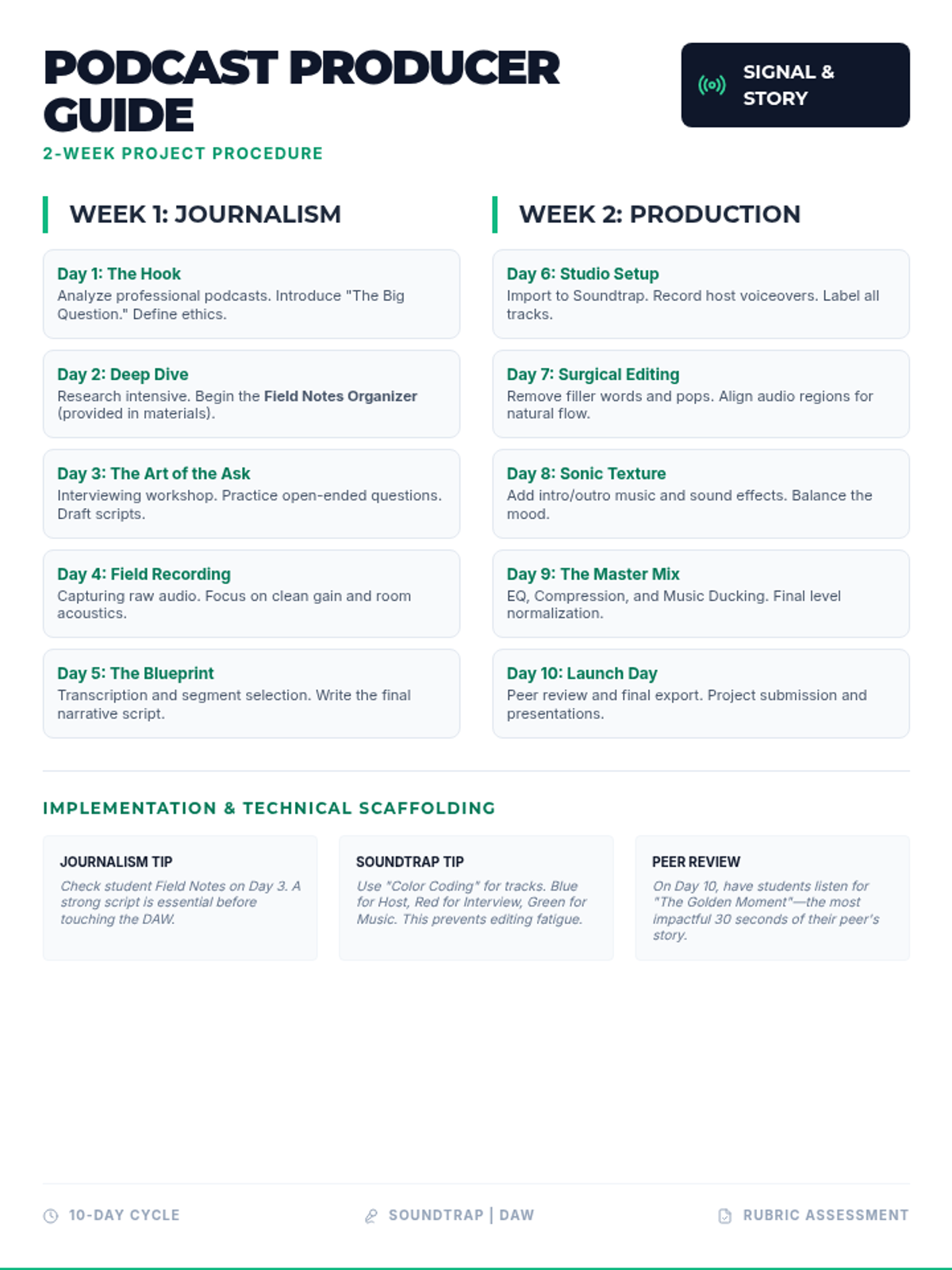
Students transition from raw audio to a polished production. This week focuses on Soundtrap technical skills, including multi-track editing, adding bumpers/music, and applying professional mixing and mastering techniques.
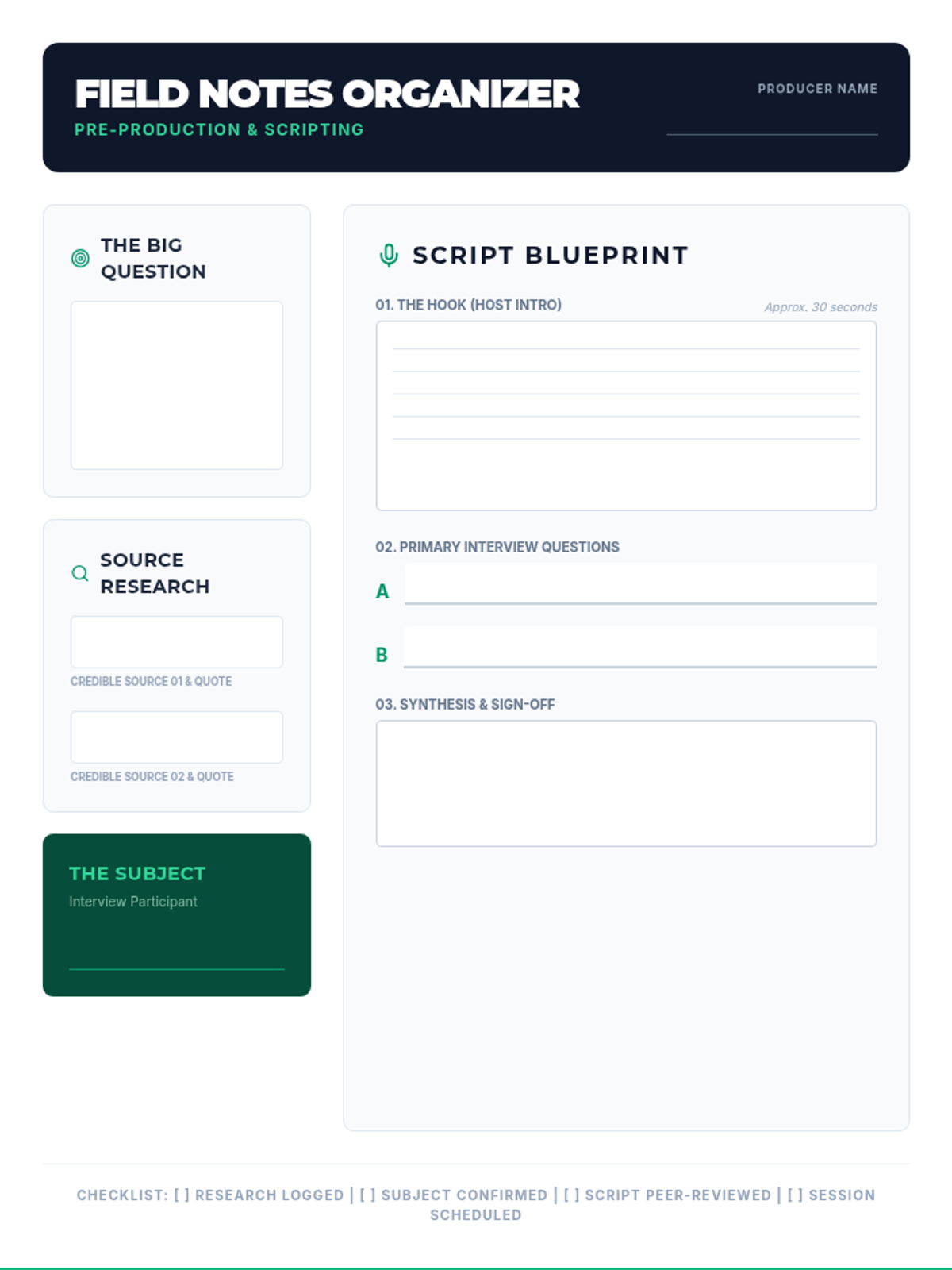
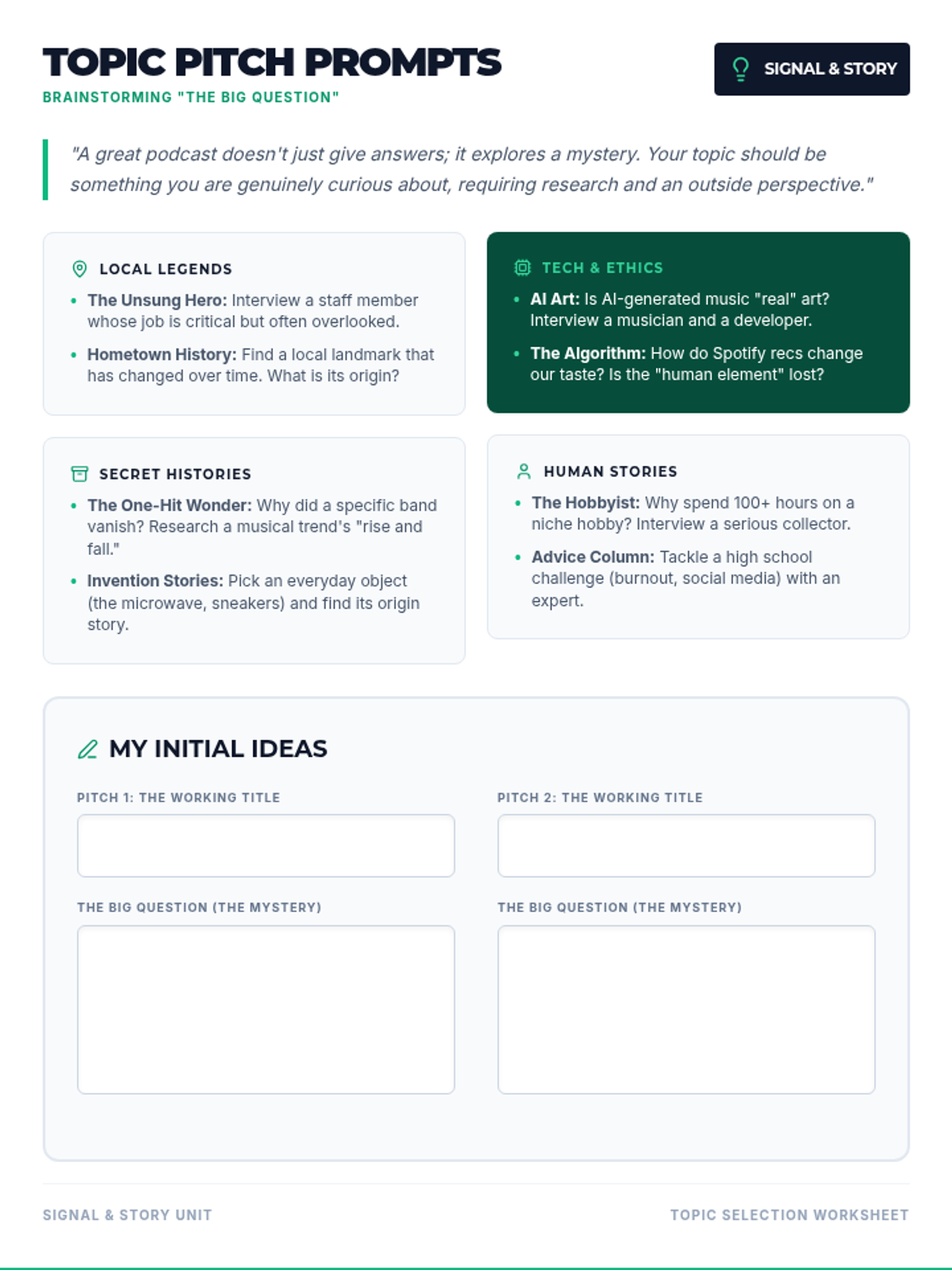
Students focus on the journalistic foundations of podcasting: selecting a topic, conducting deep research, and developing professional interviewing techniques. This week culminates in the recording of raw interview footage.
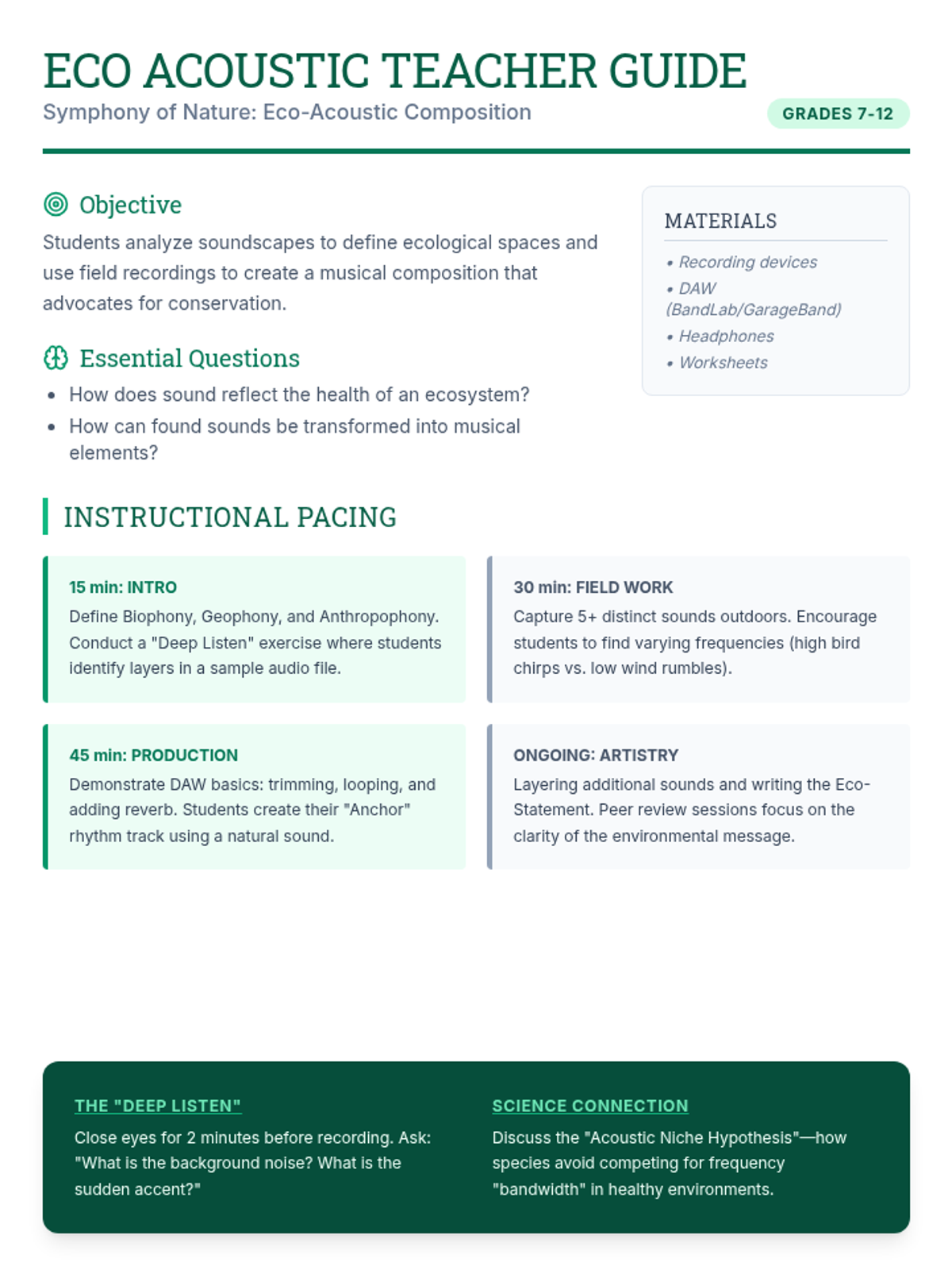
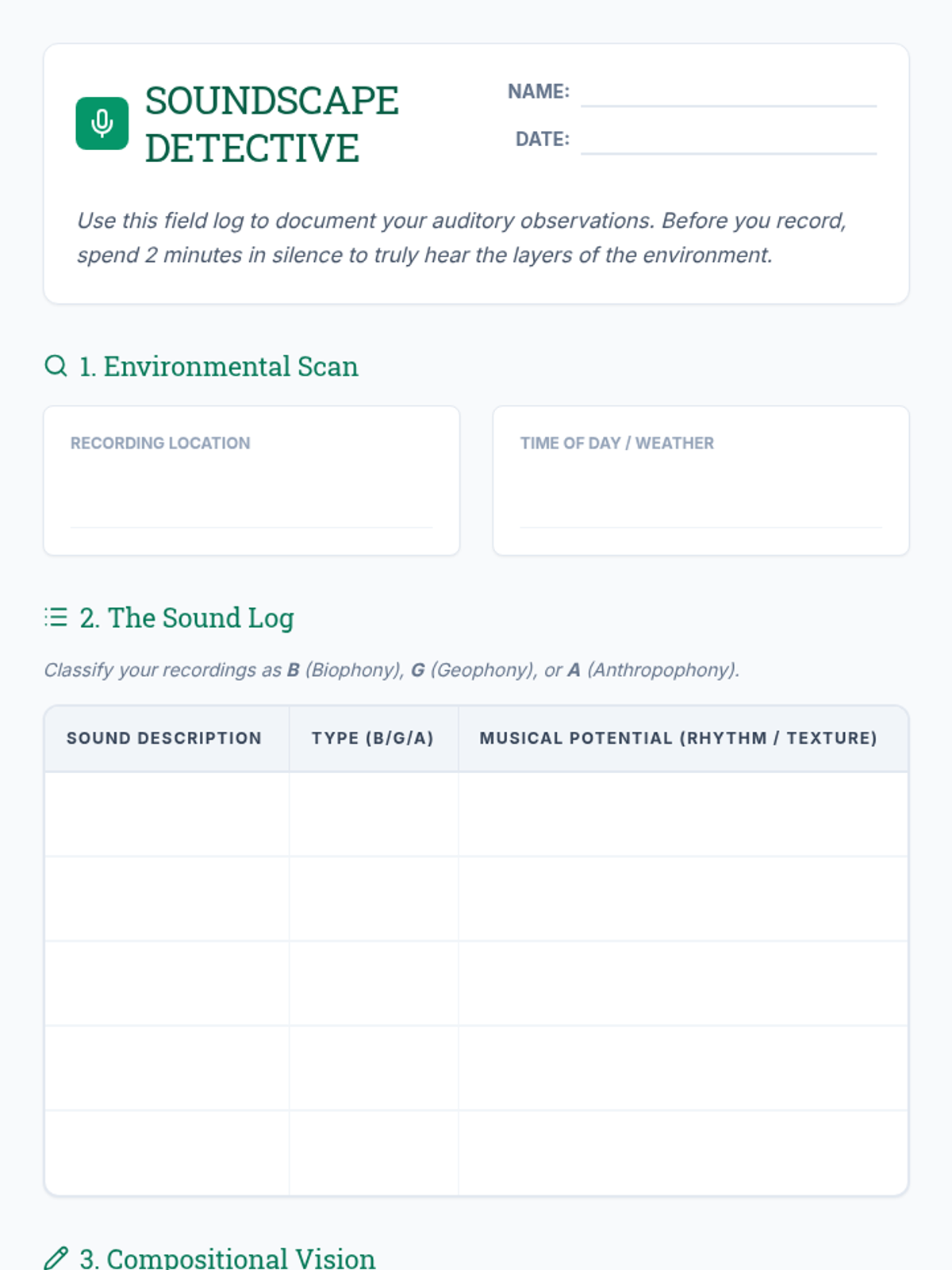
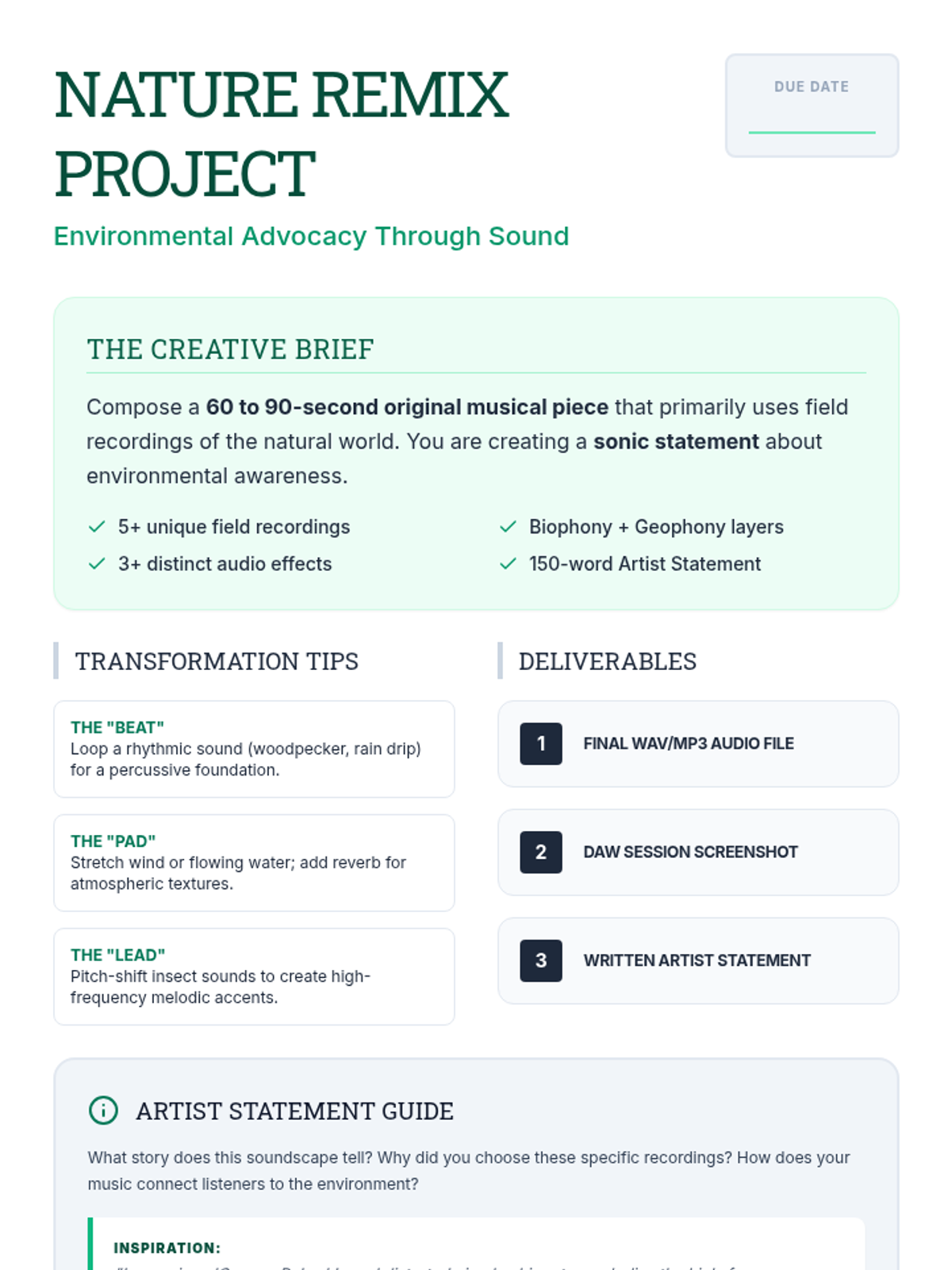
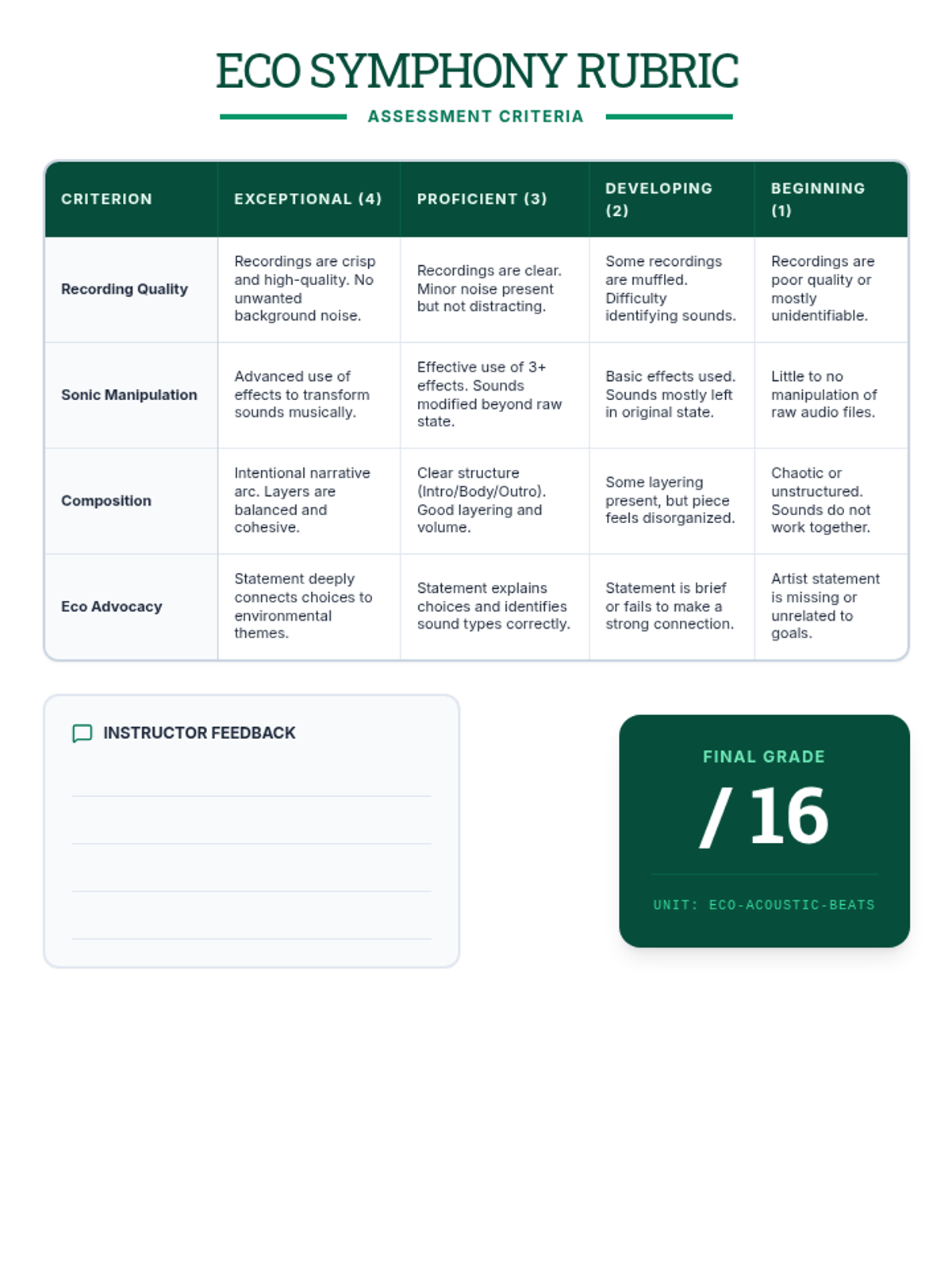
A multi-disciplinary lesson where students blend environmental science and music production. They will analyze natural soundscapes and create original compositions using field recordings to promote ecological awareness.
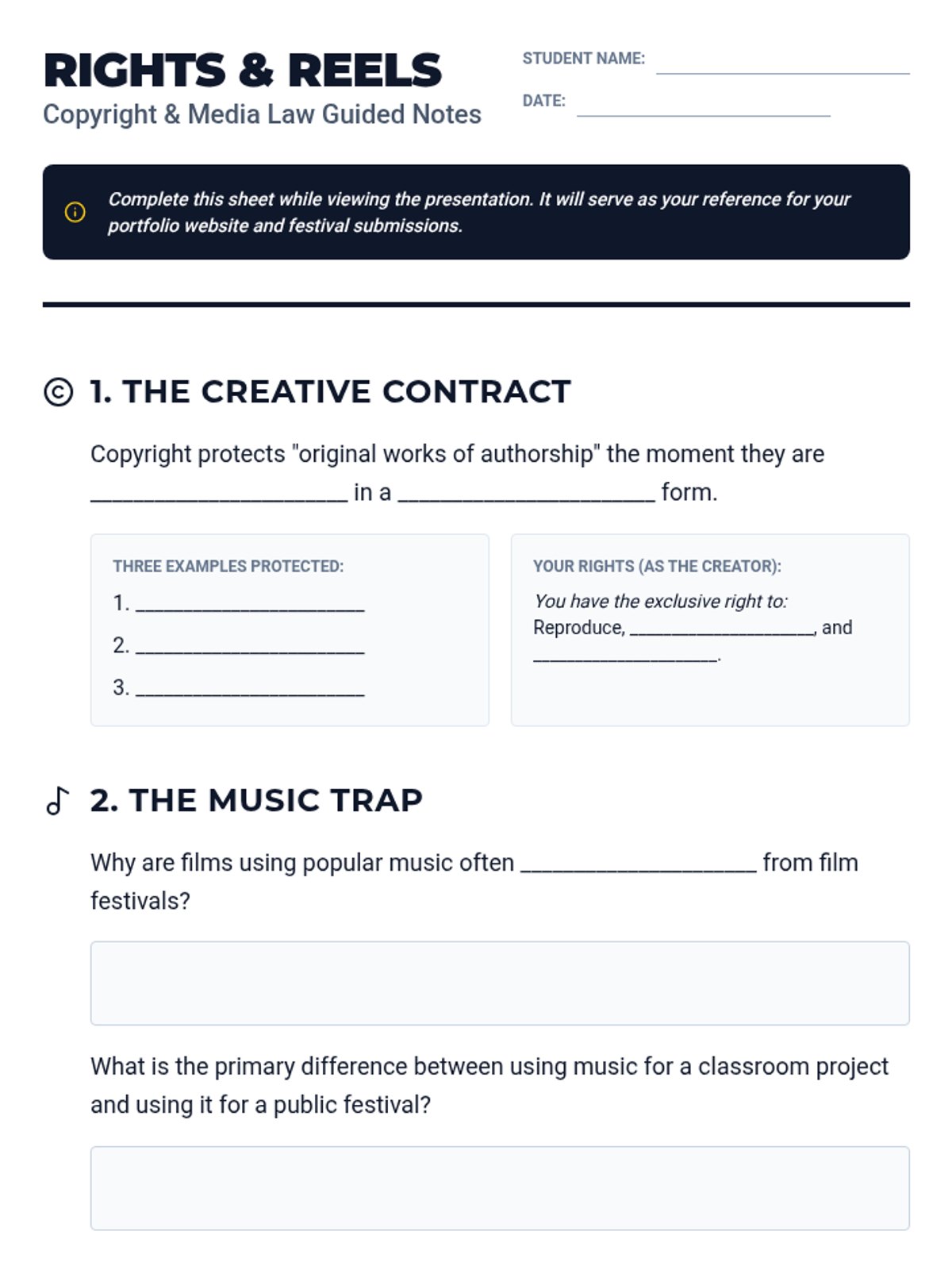
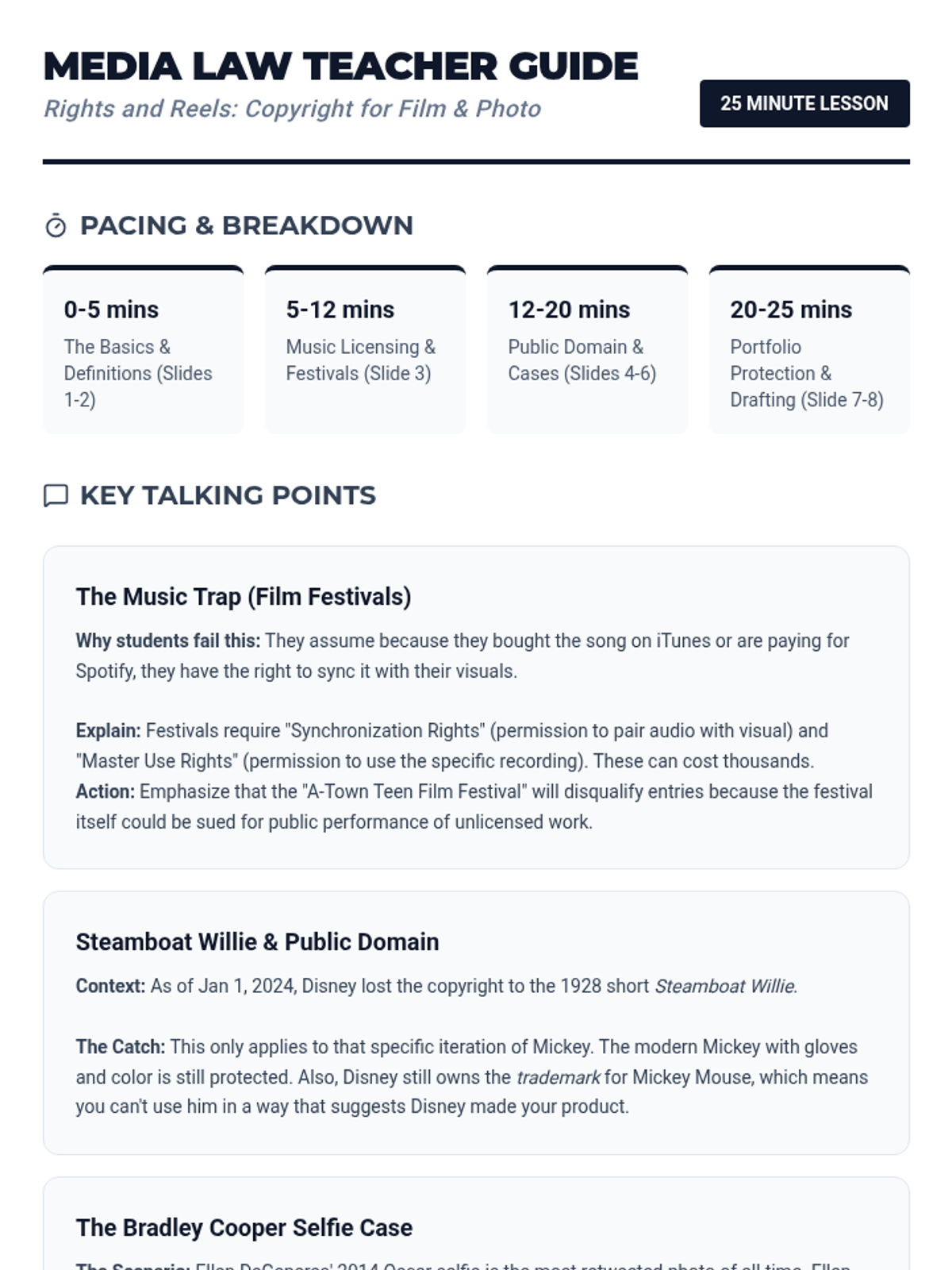
A 25-minute intensive lesson for film and photo students covering copyright law, music licensing for festivals, public domain via Steamboat Willie, and personal portfolio protection.
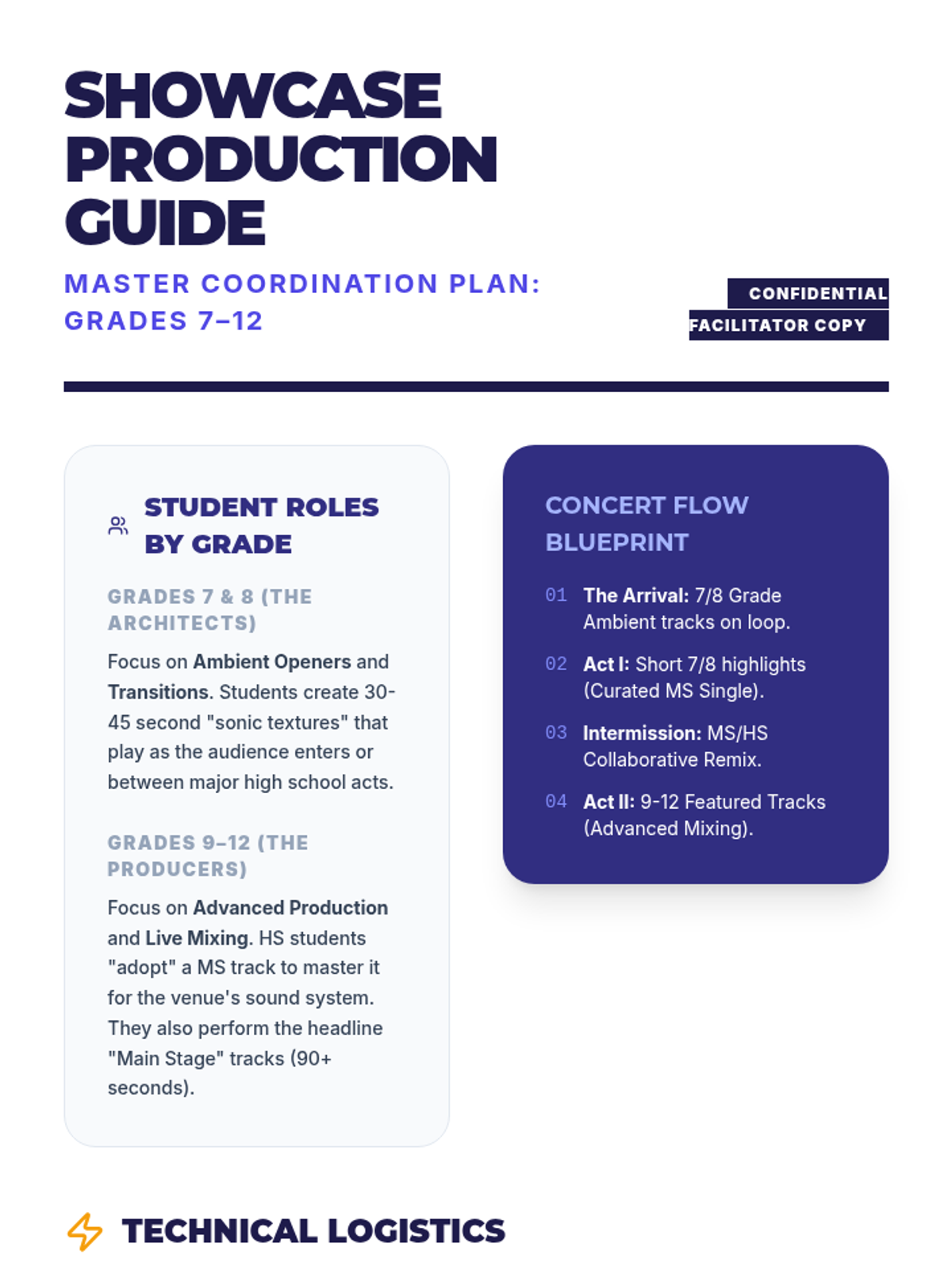
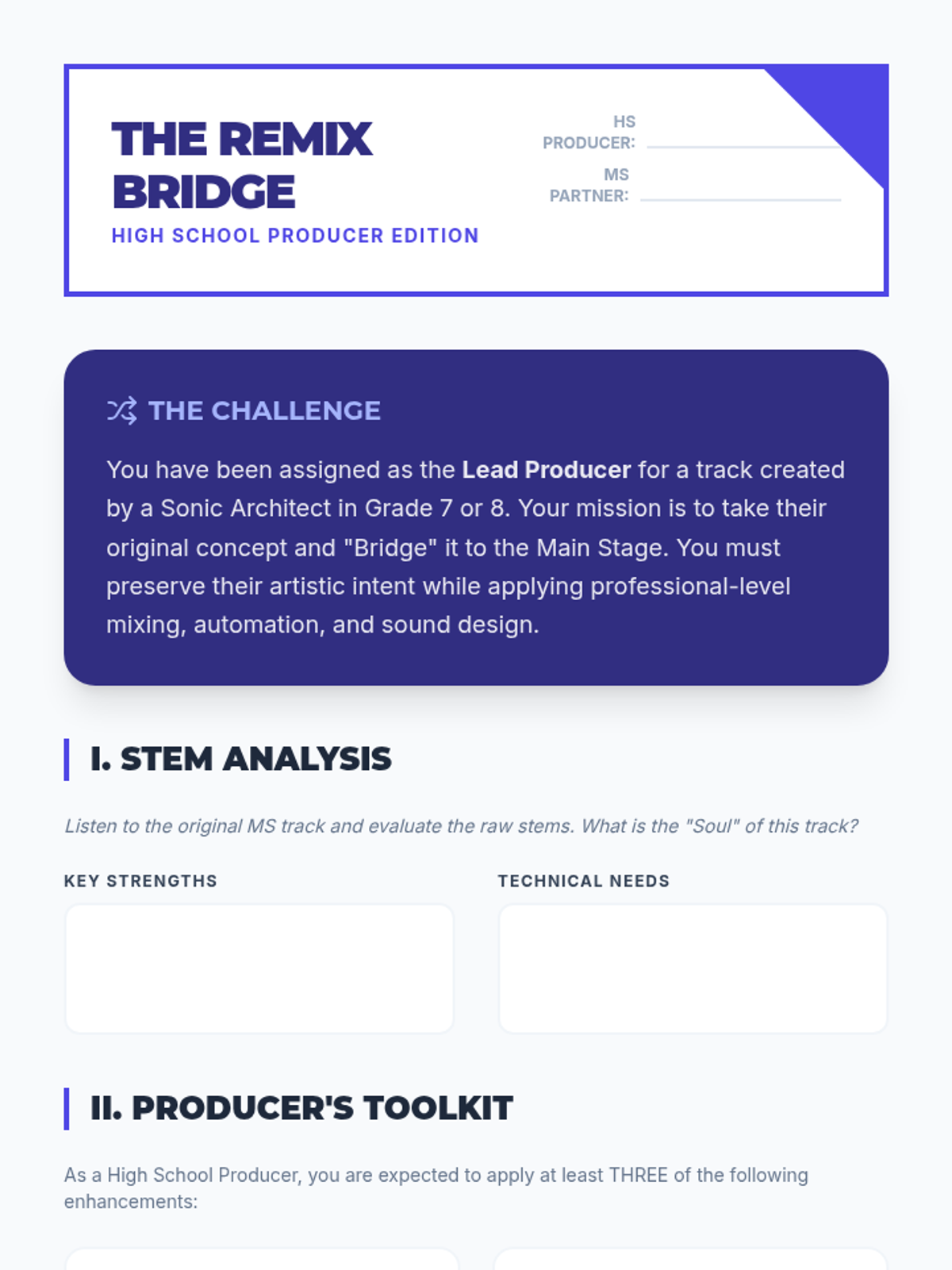
Students from grades 7-12 collaborate to organize and execute a professional-level digital music showcase. Middle school students contribute opening tracks and atmospheric transitions, while high school students manage advanced mixing, live visual accompaniment, and stage production.
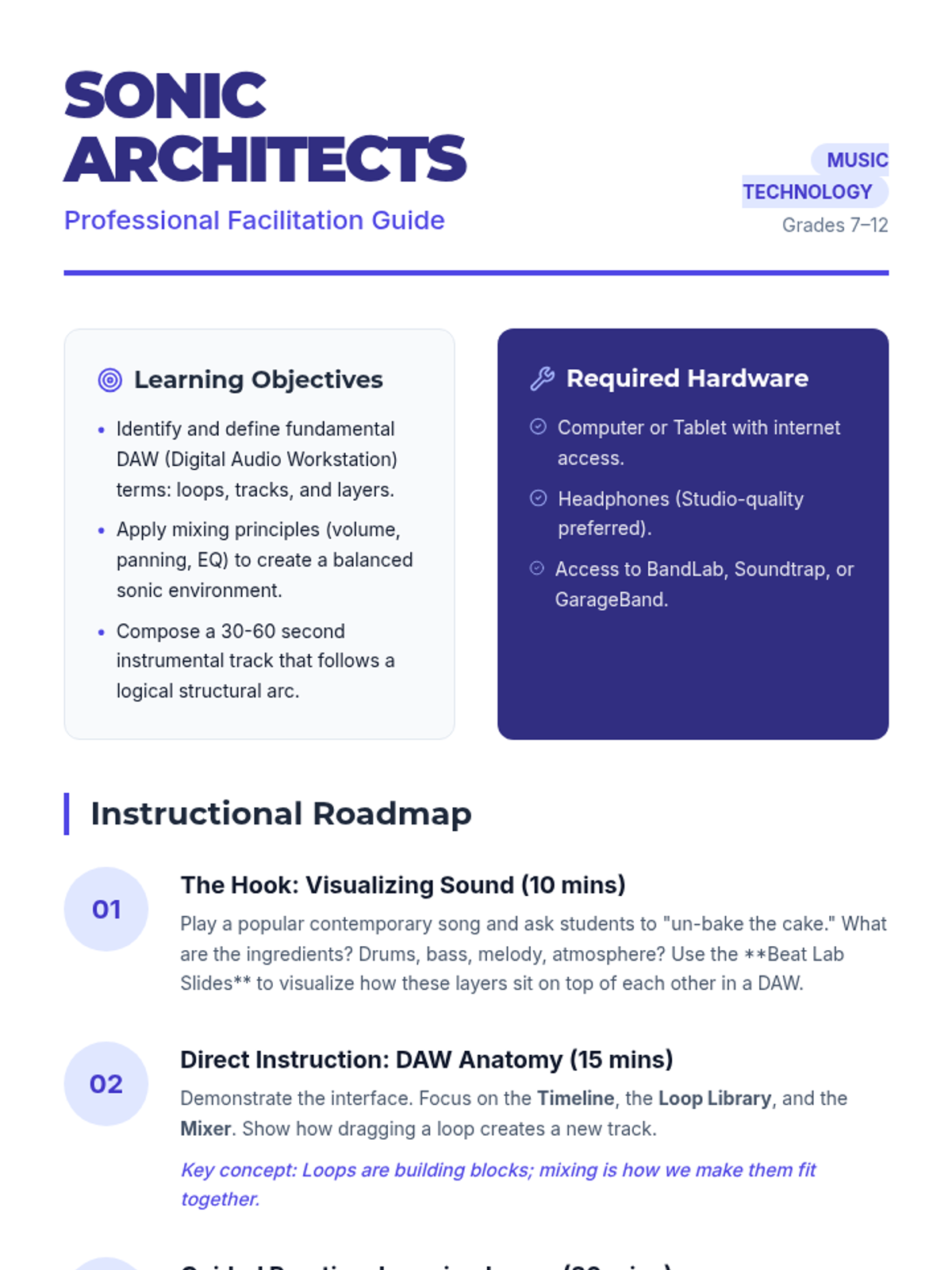
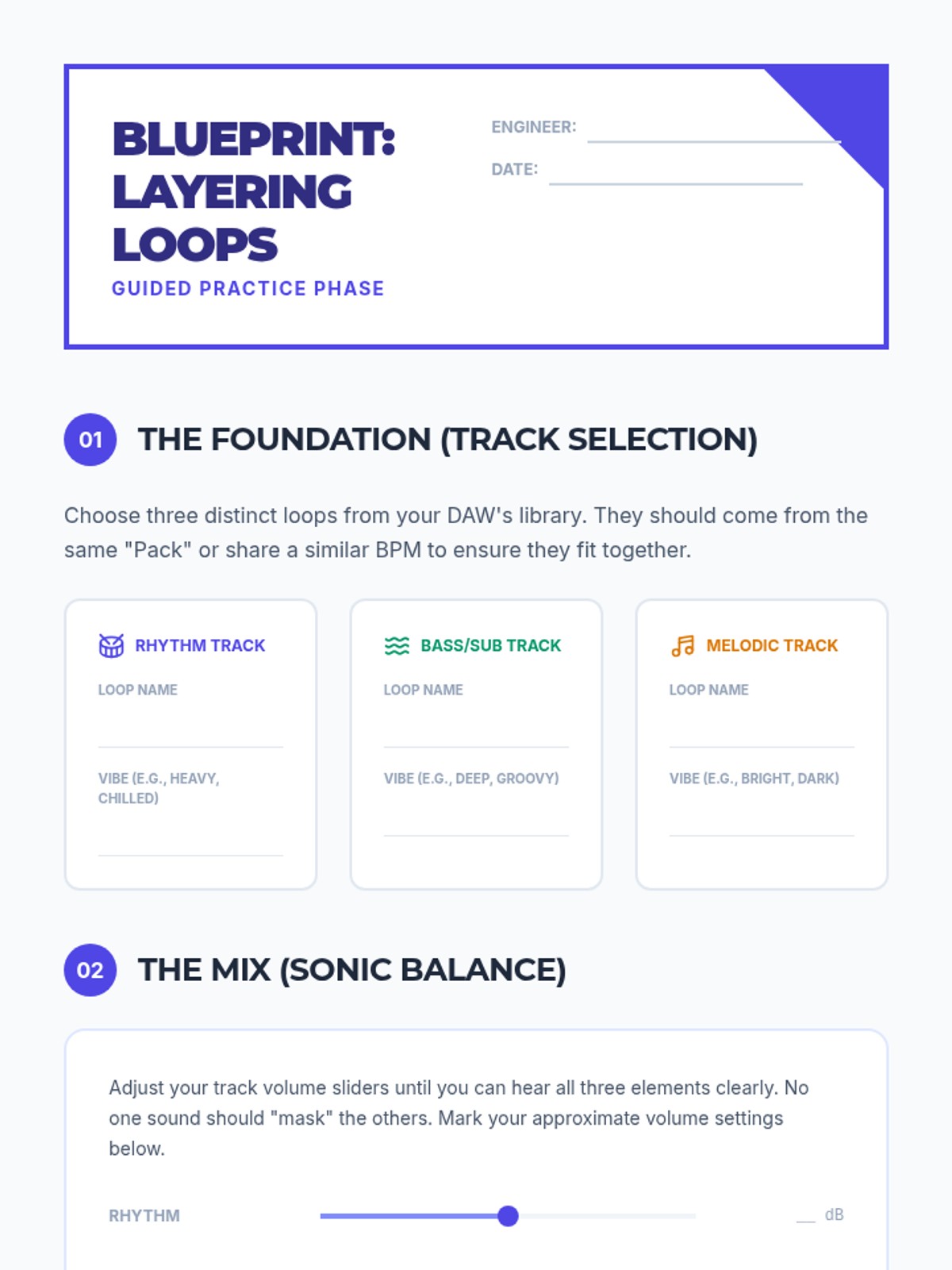
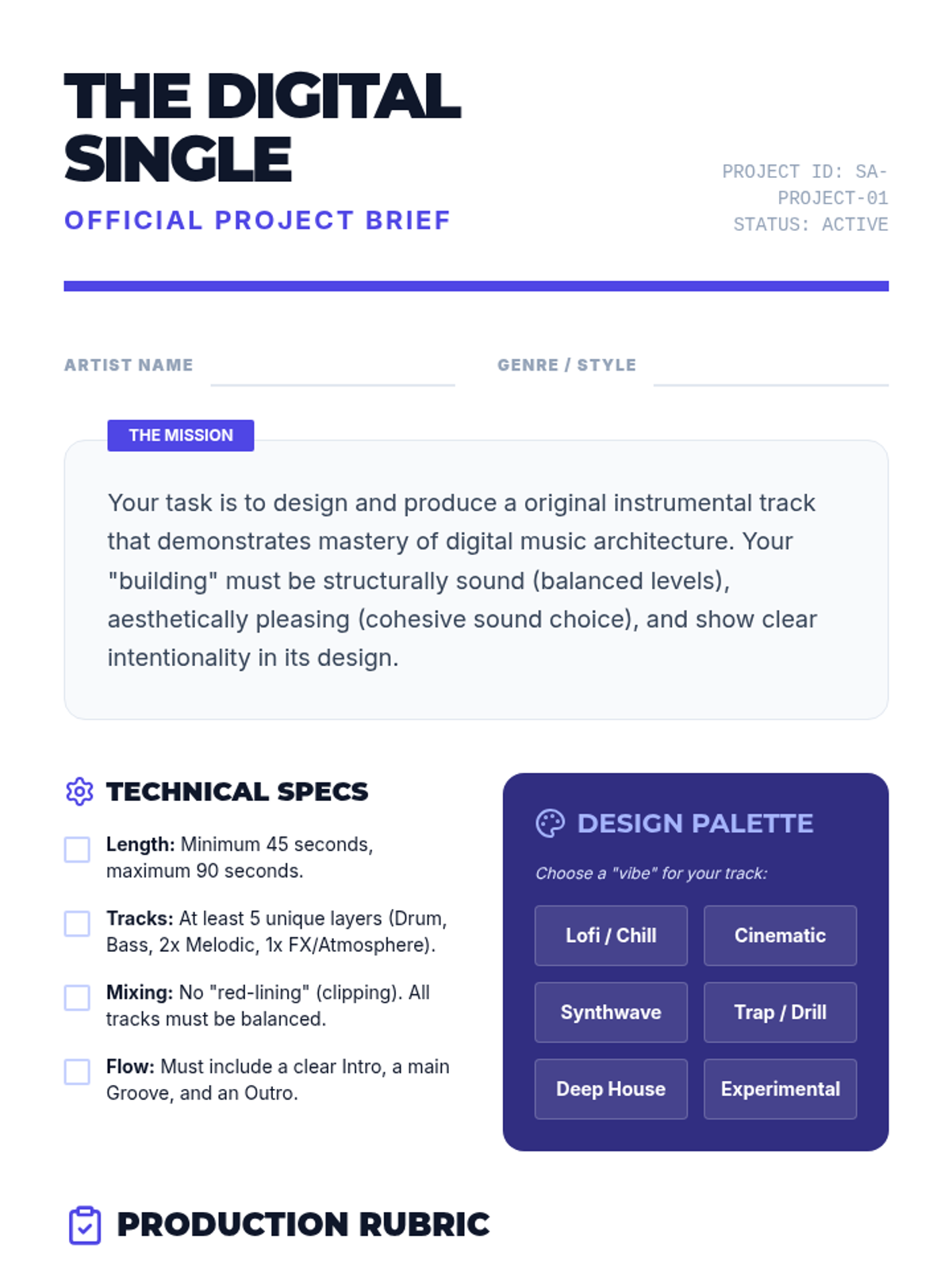
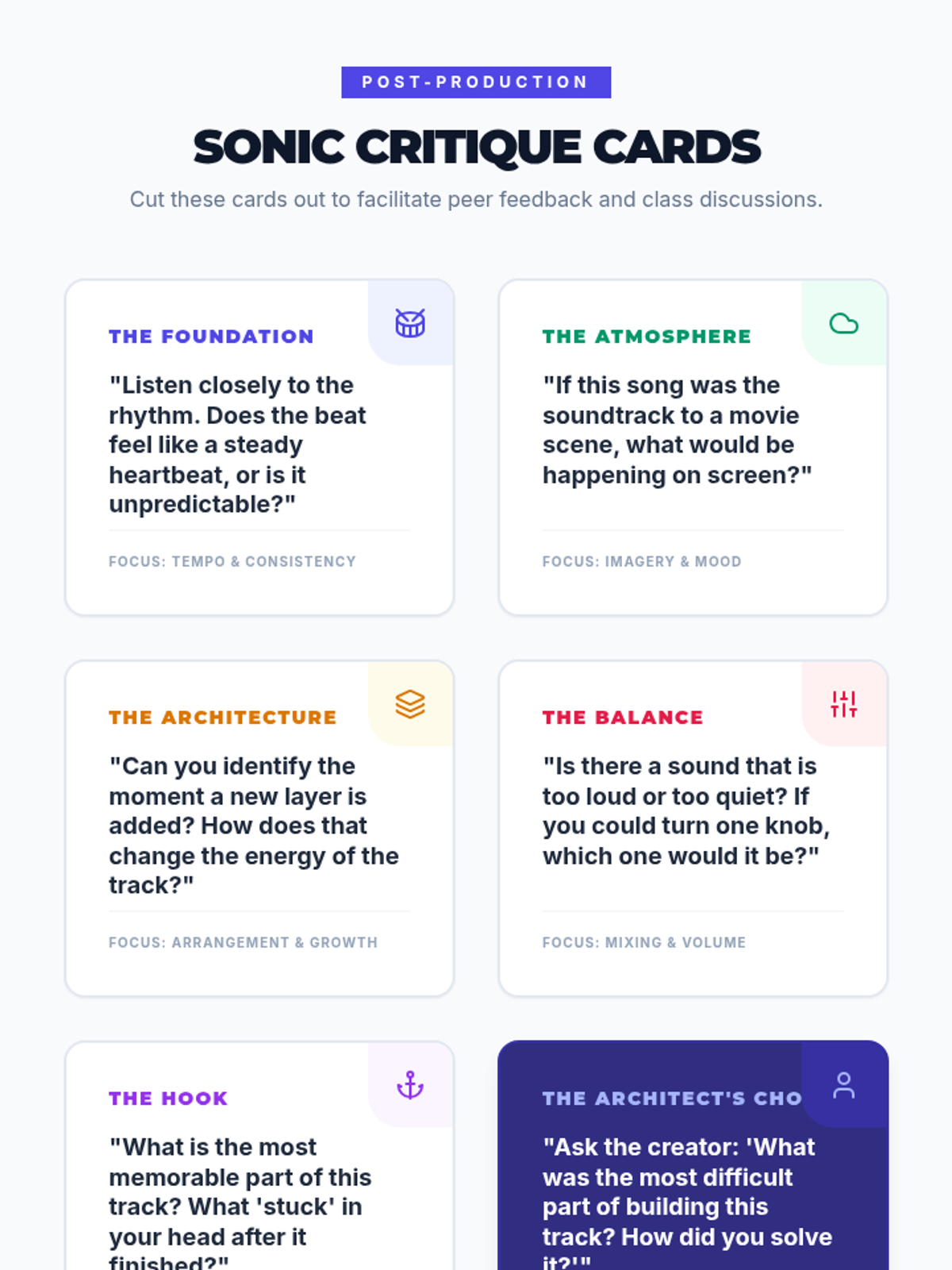
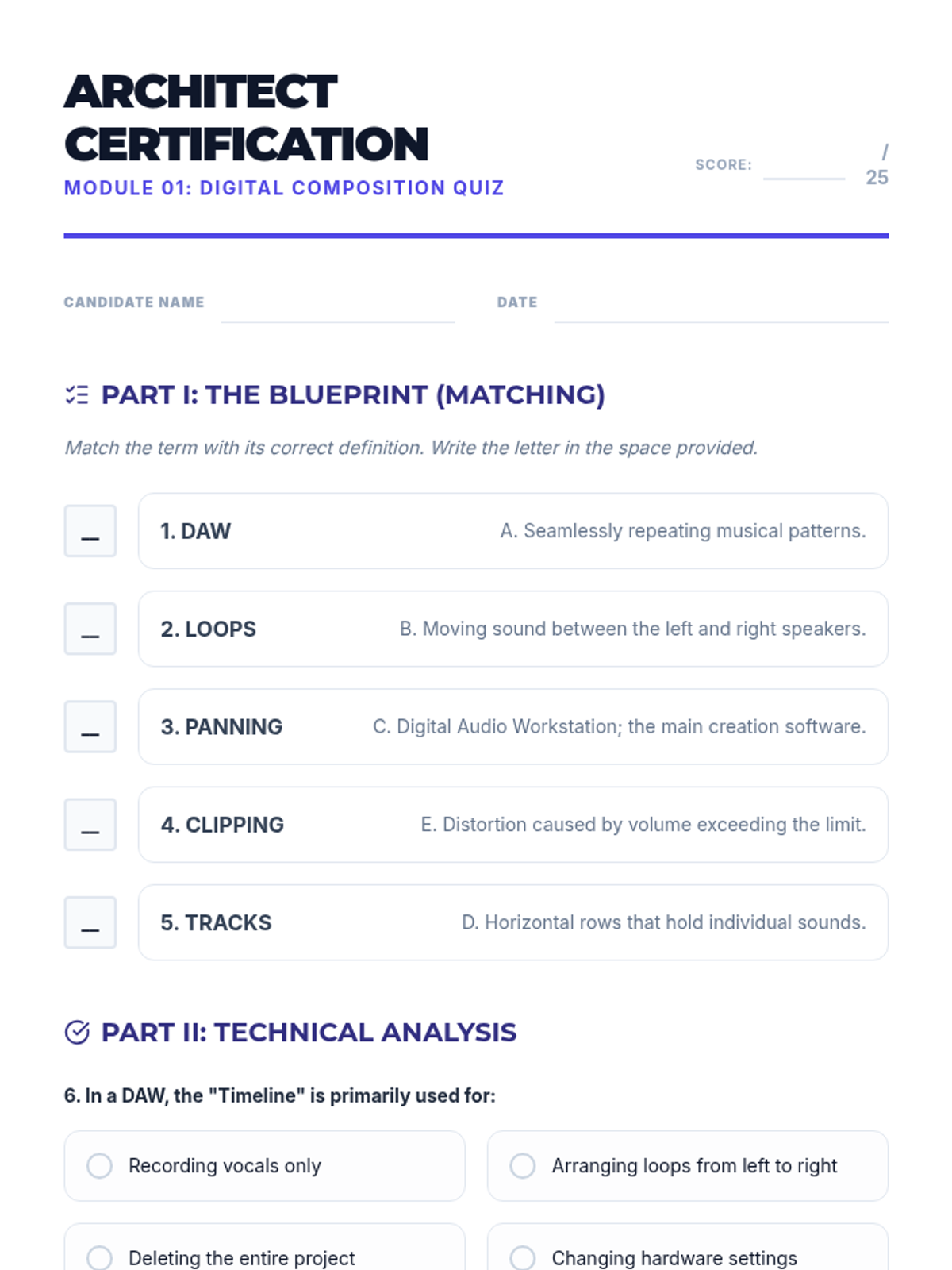
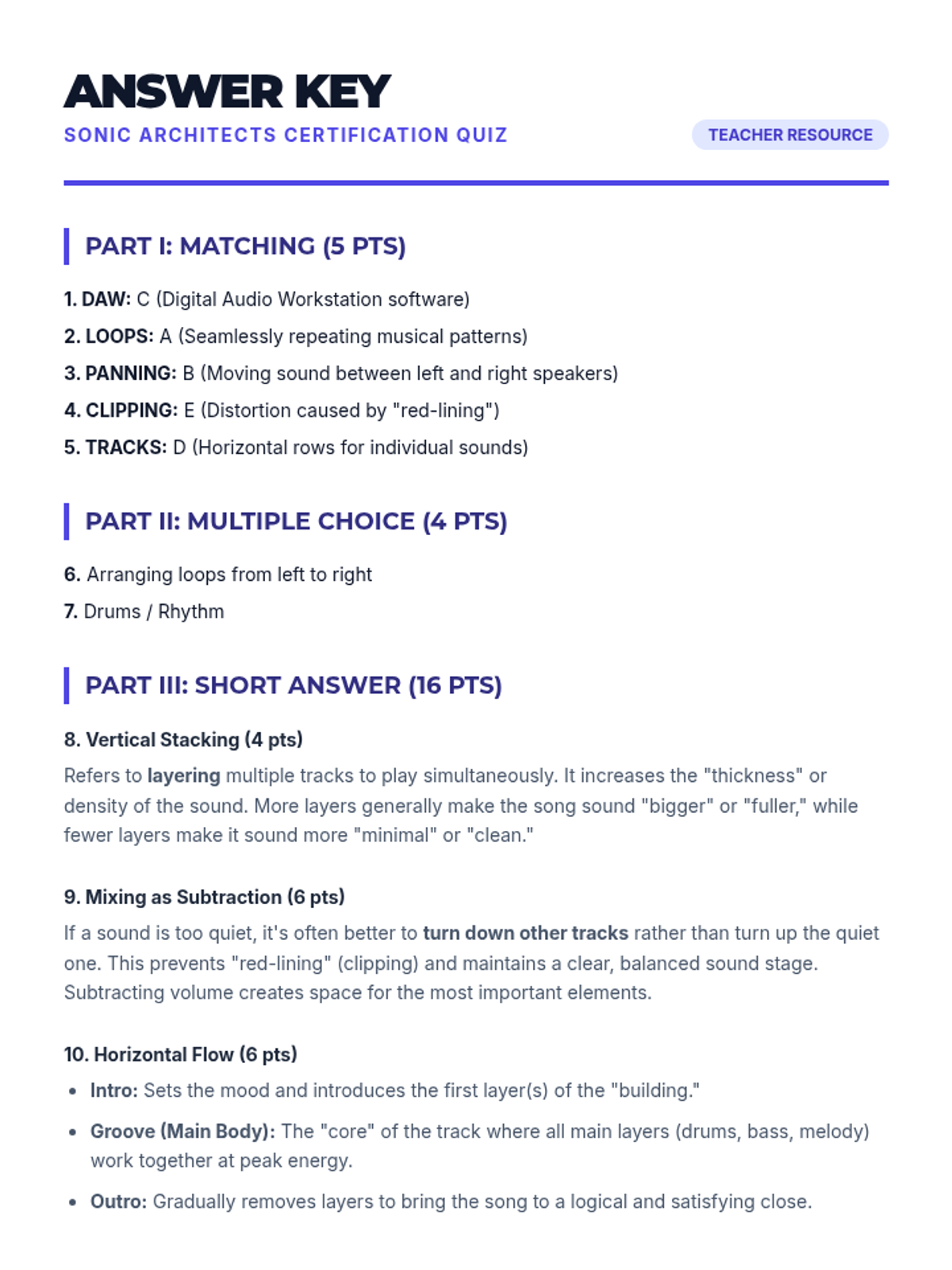
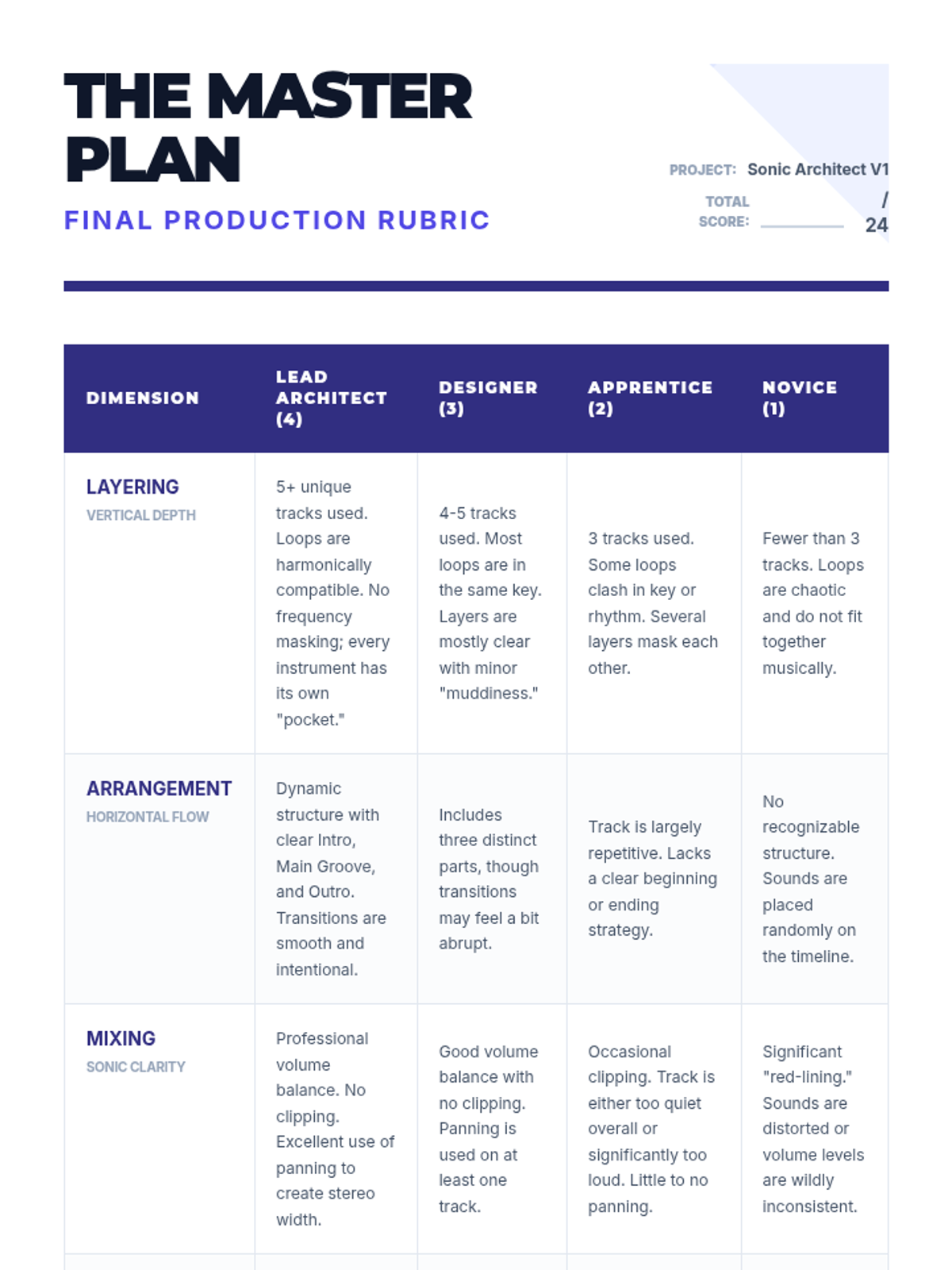
Students dive into the world of digital music production, learning to use loops, layers, and mixing techniques to create their own original instrumental tracks. This hands-on lesson bridges technology and creativity, empowering students to become modern sonic architects.
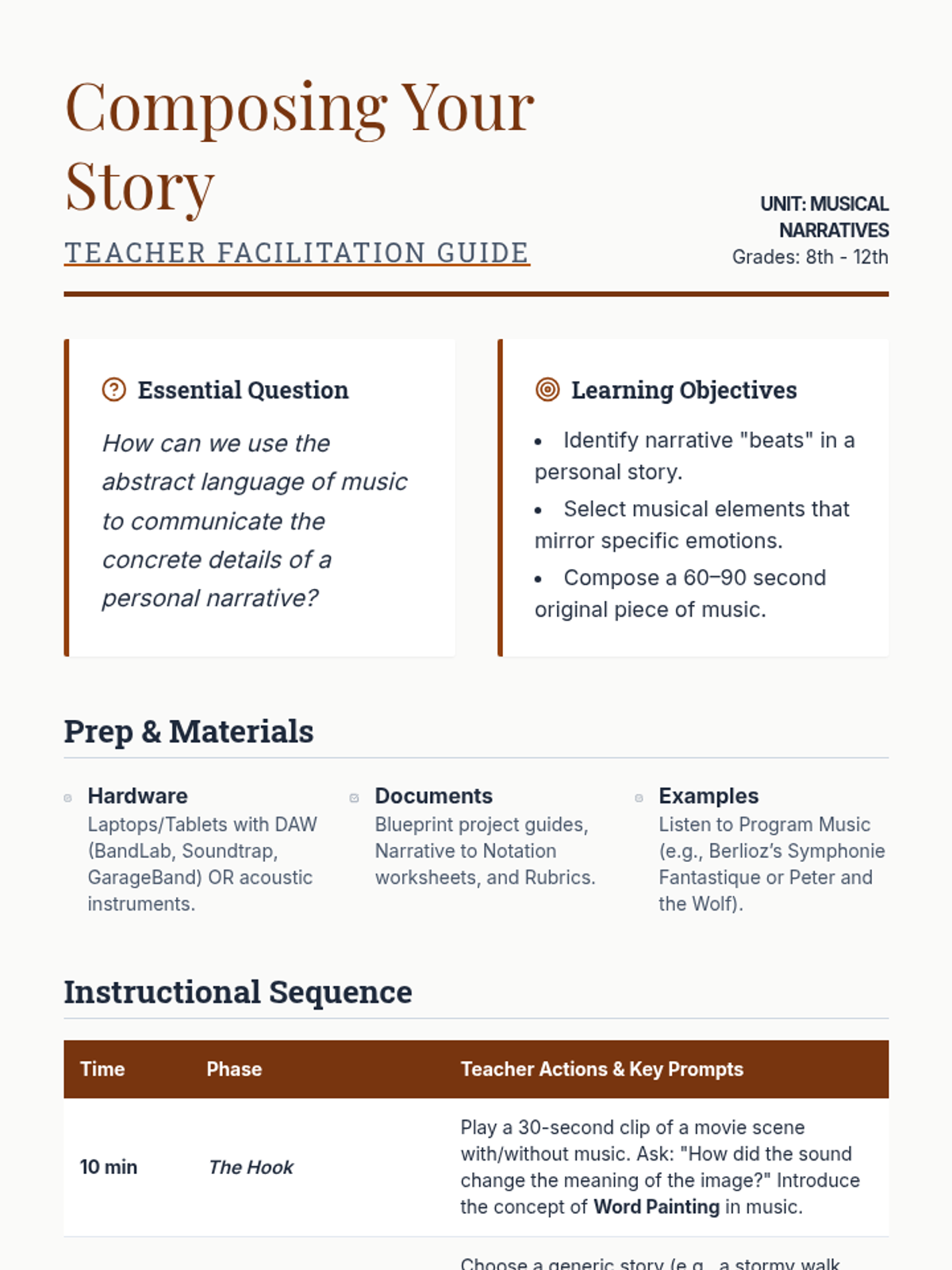
A comprehensive lesson for high school students to translate personal narratives into musical compositions. Students explore how musical elements like melody, rhythm, and harmony can represent emotions and story beats.