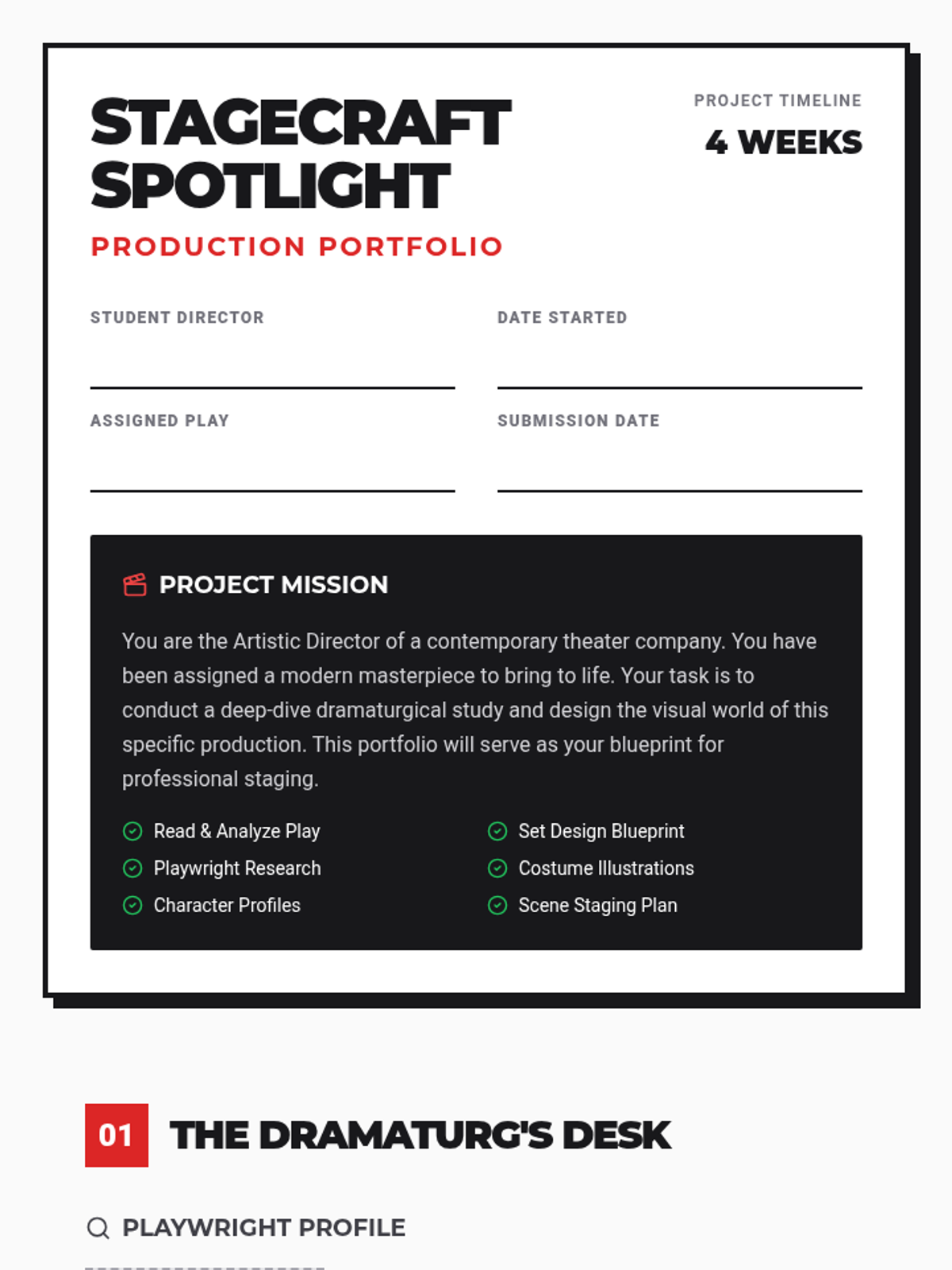
Historical evolution of performance, technical stagecraft, and core acting techniques. Develops playwriting skills and fosters imaginative expression through script development and production management.
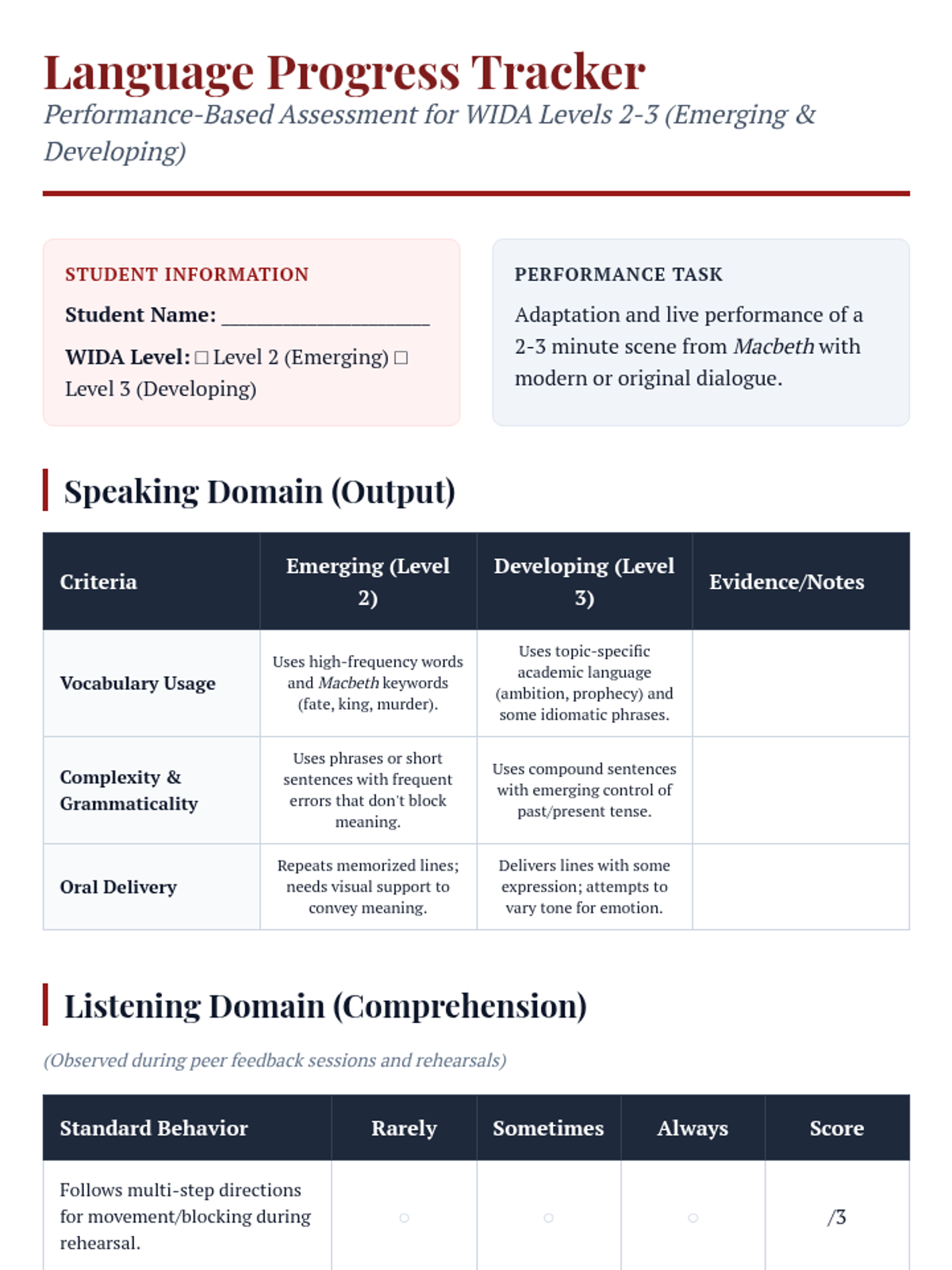
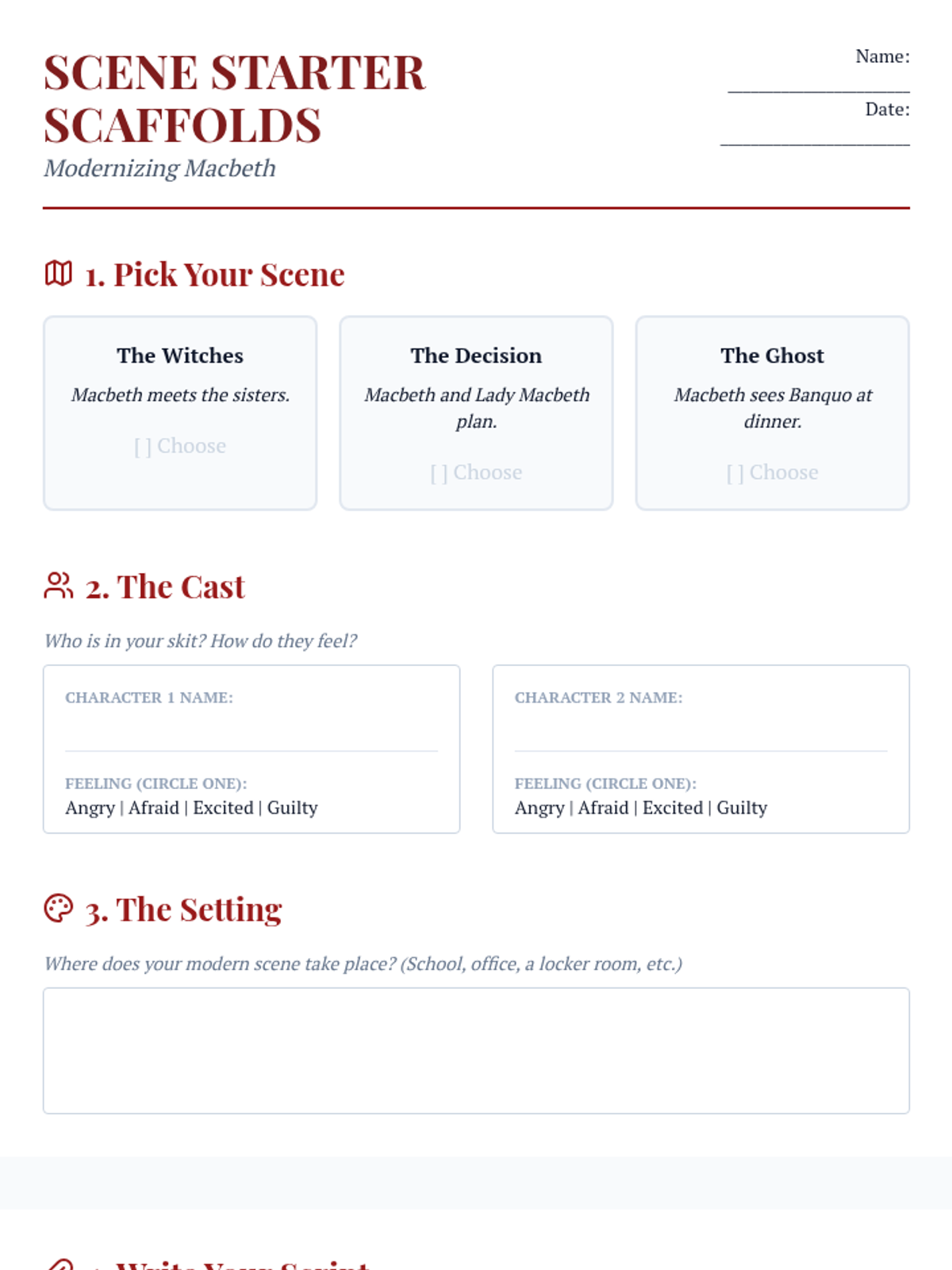
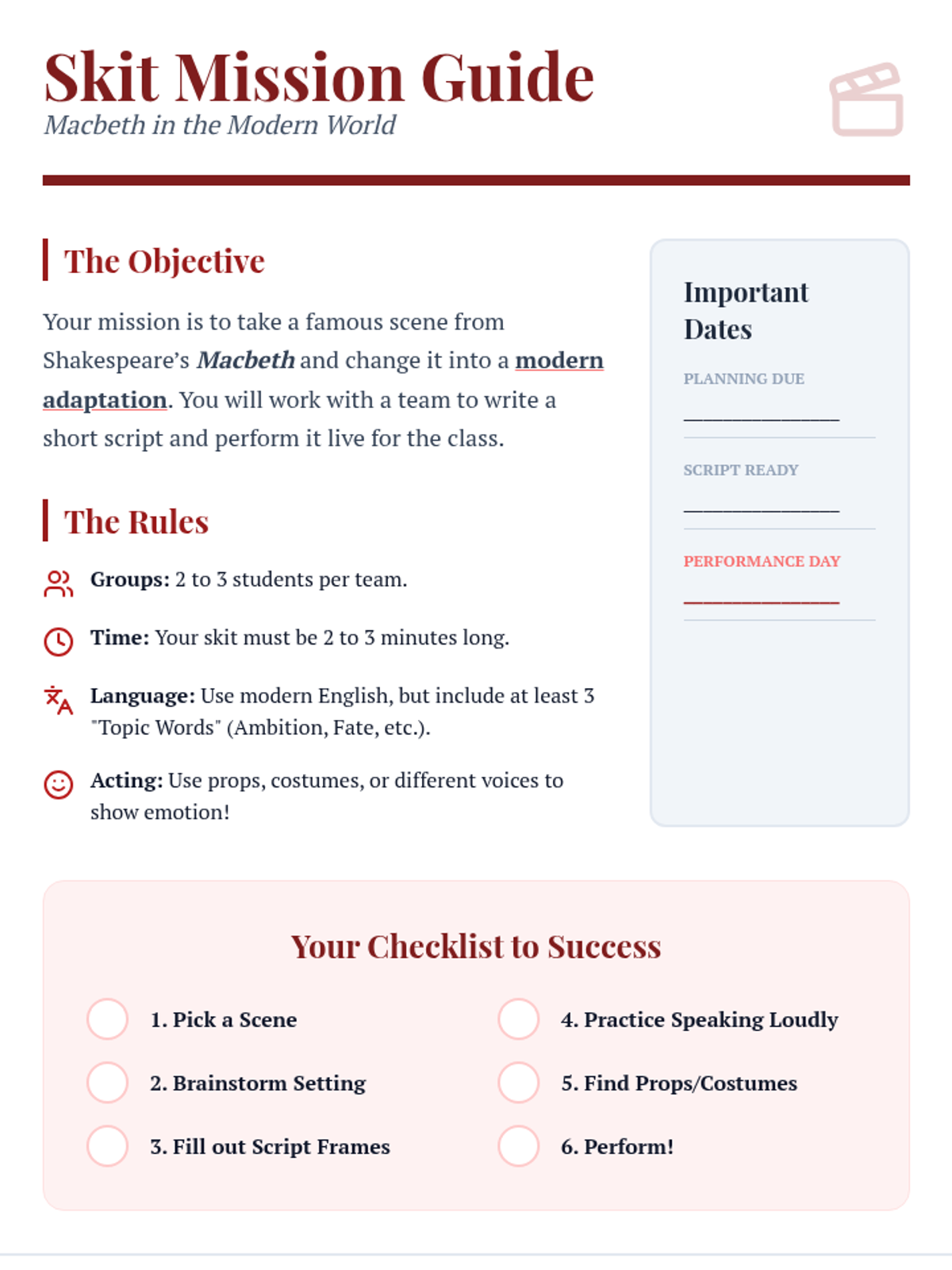
A performance-based task where students adapt and perform scenes from Macbeth. It includes specific scaffolds and assessment tools designed for WIDA Level 2-3 ELLs to demonstrate growth in speaking and listening.
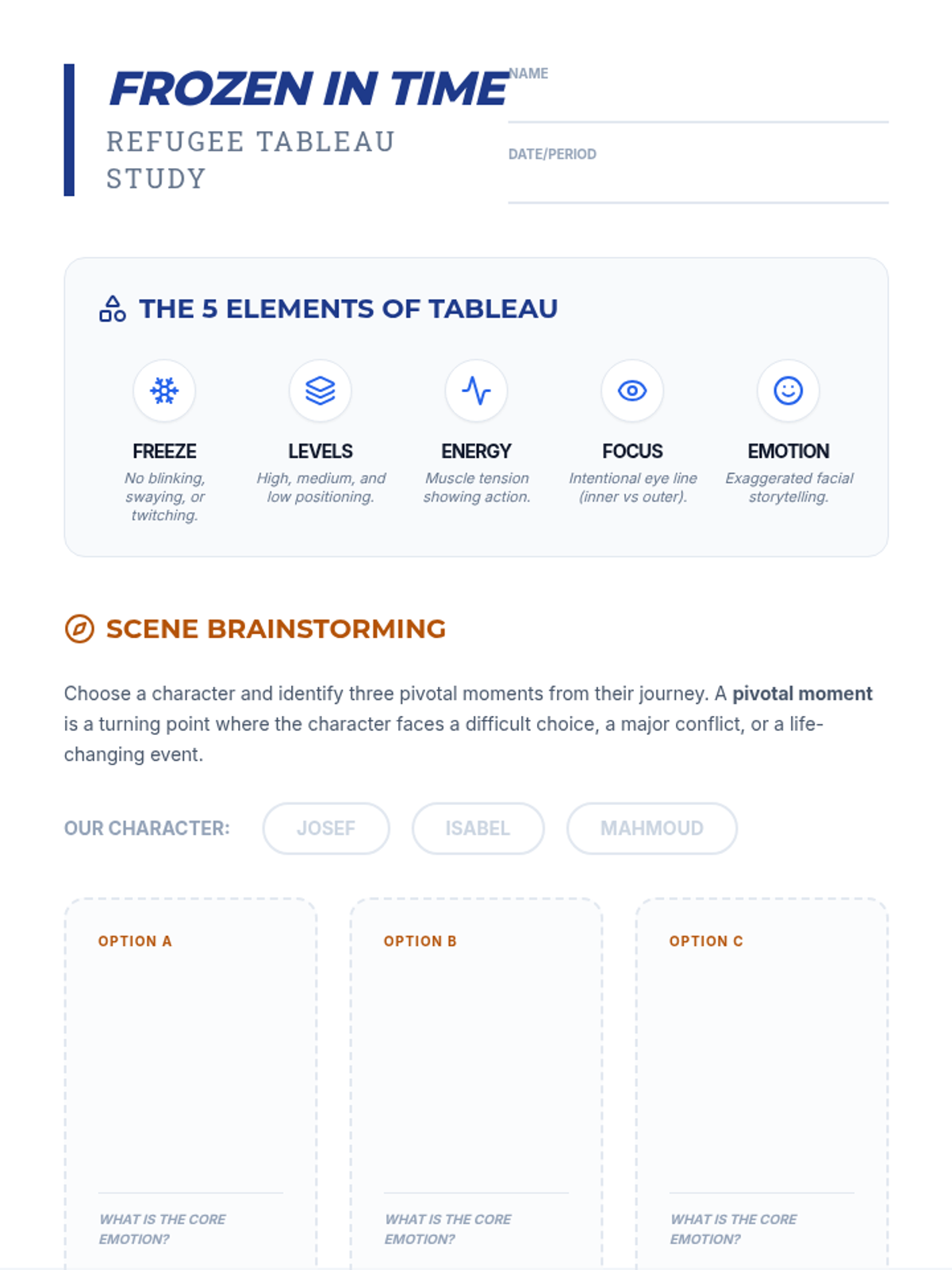
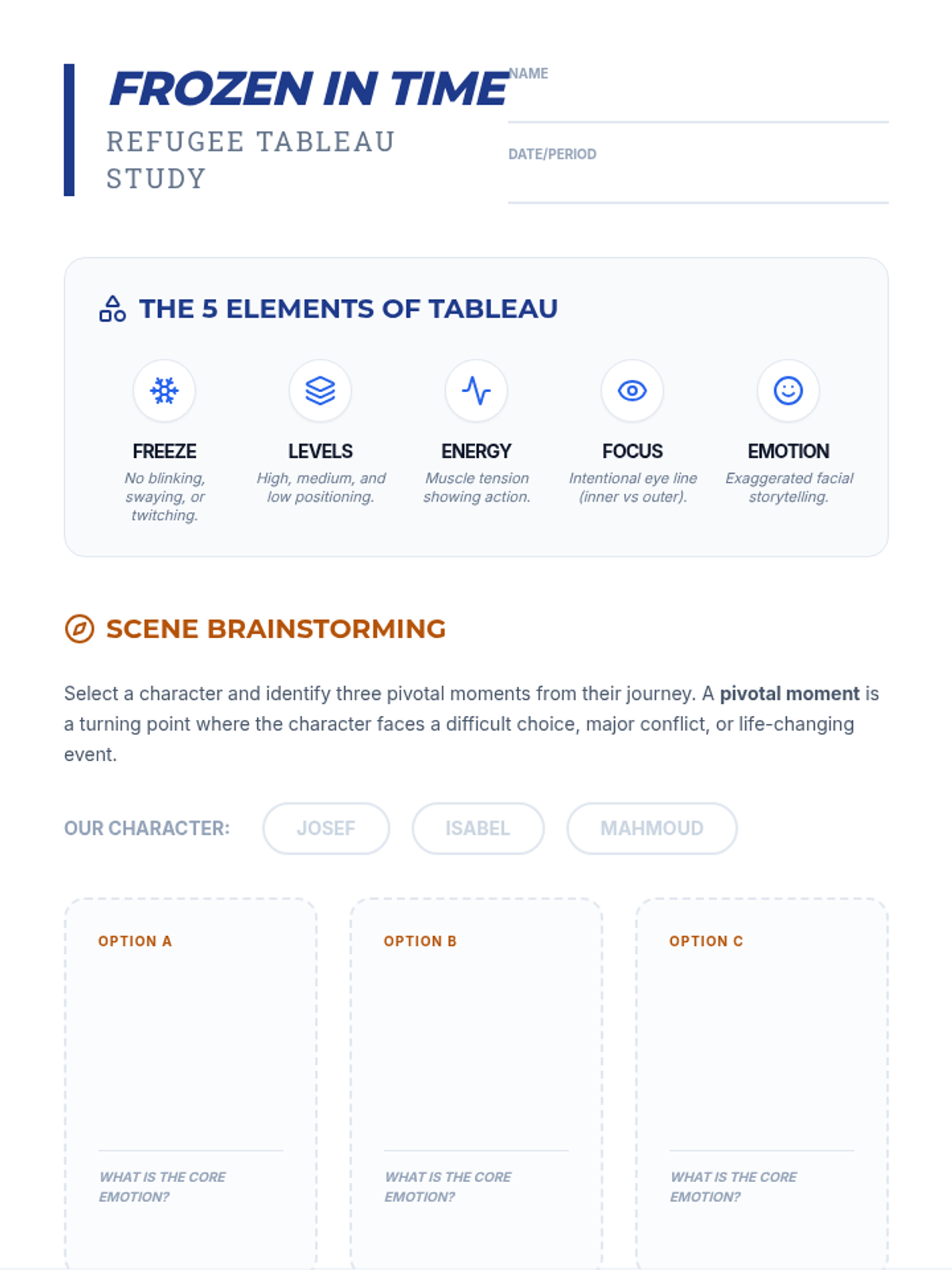
A lesson focused on using the dramatic technique of tableau to explore pivotal moments and emotional themes in Alan Gratz's 'Refugee'. Students will learn the five elements of tableau and work in groups to create living pictures of the three main characters' journeys.
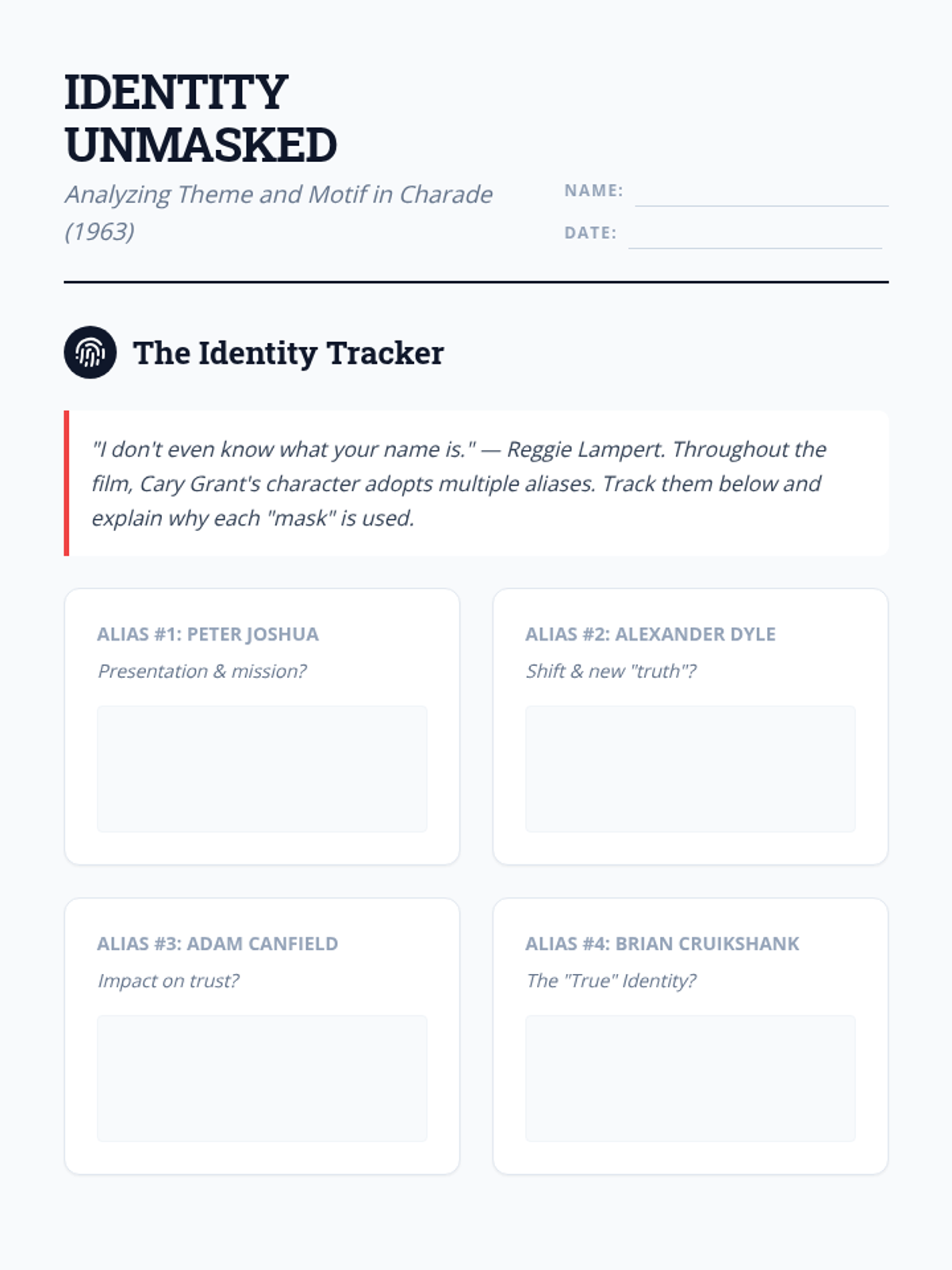
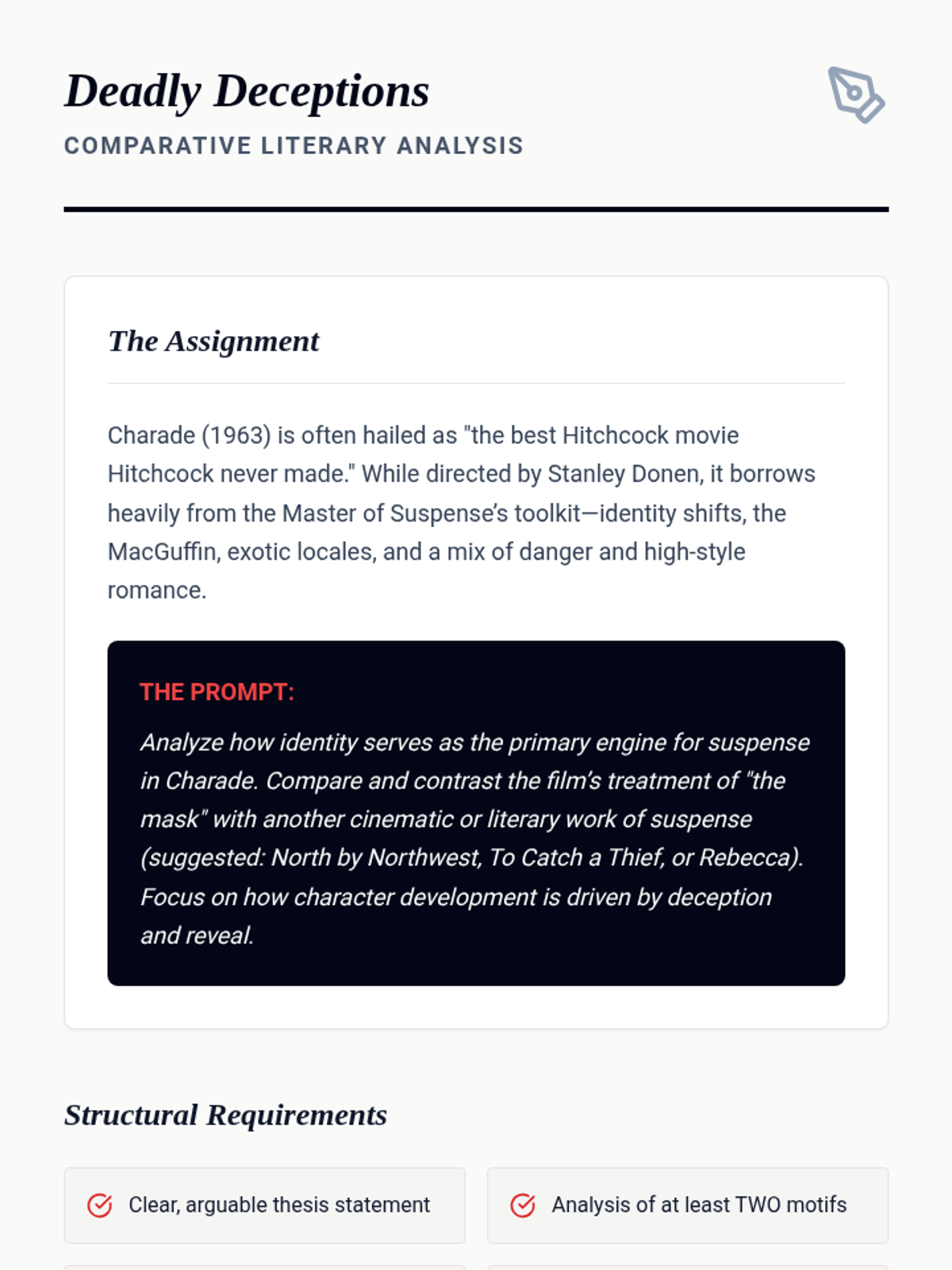
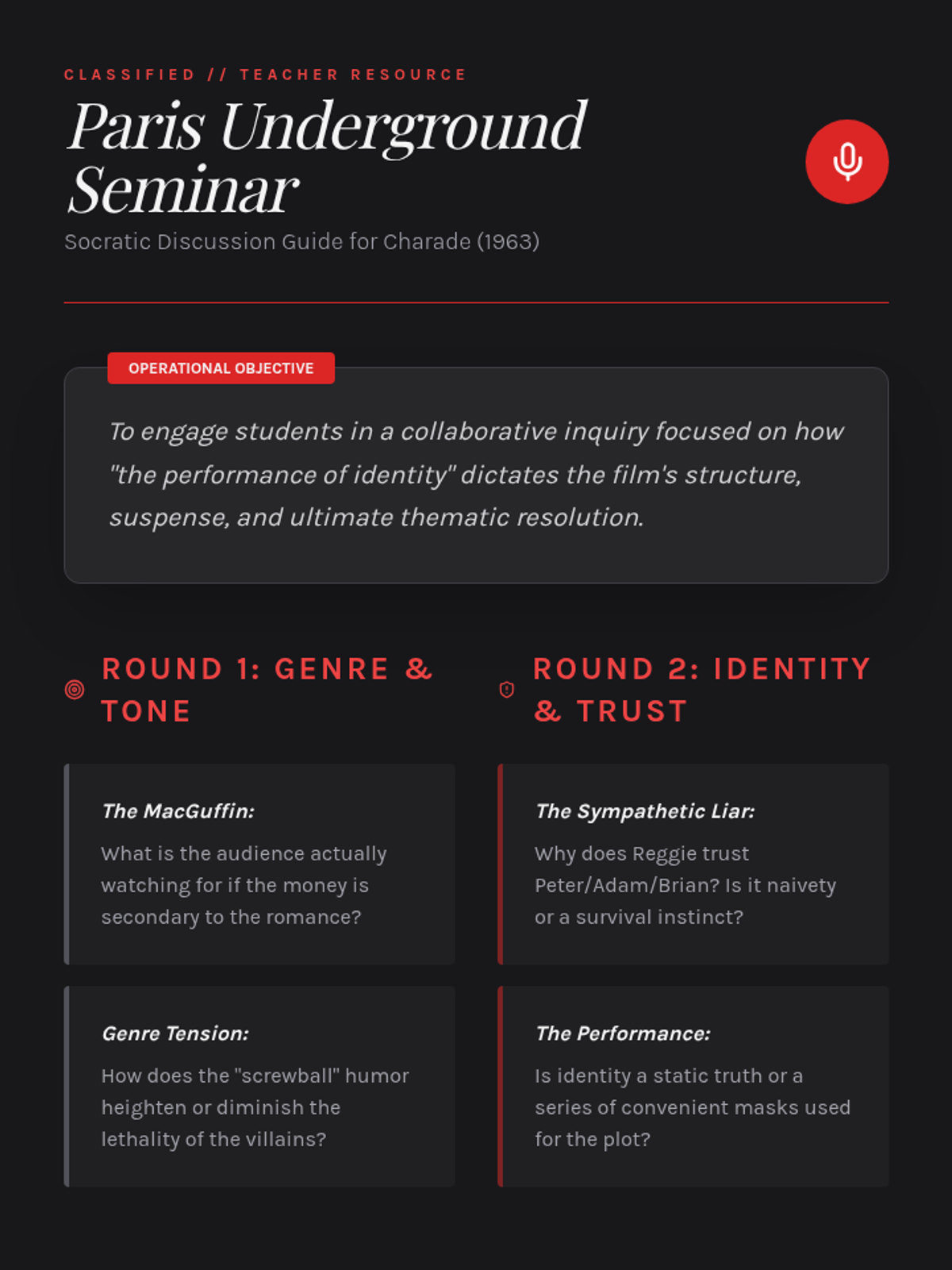
A deep dive into the 1963 film Charade, exploring its unique blend of romantic comedy and suspense, the fluidity of identity, and the use of visual metaphors. Students analyze genre conventions, irony, and symbolism through a cinematic lens.
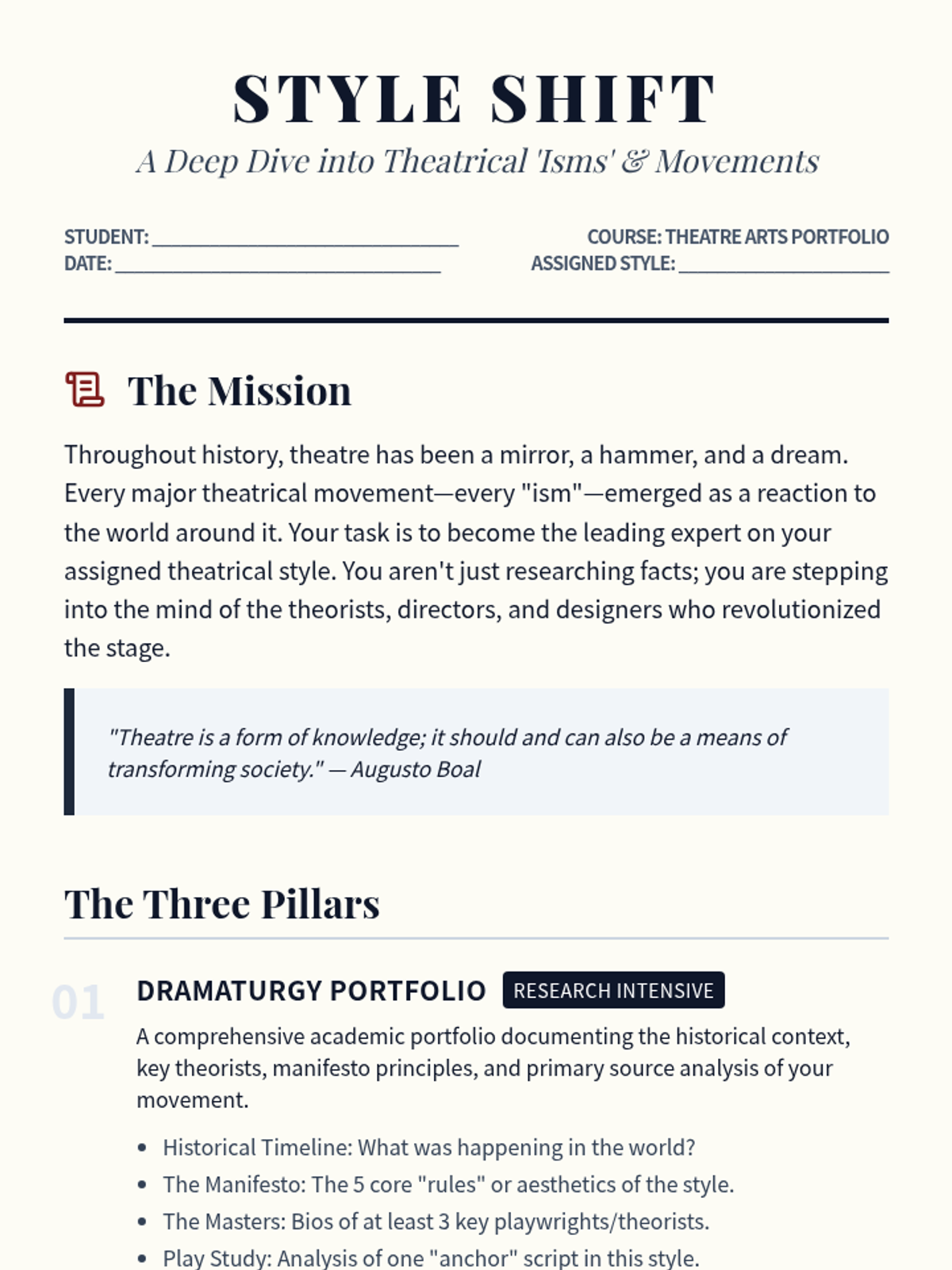
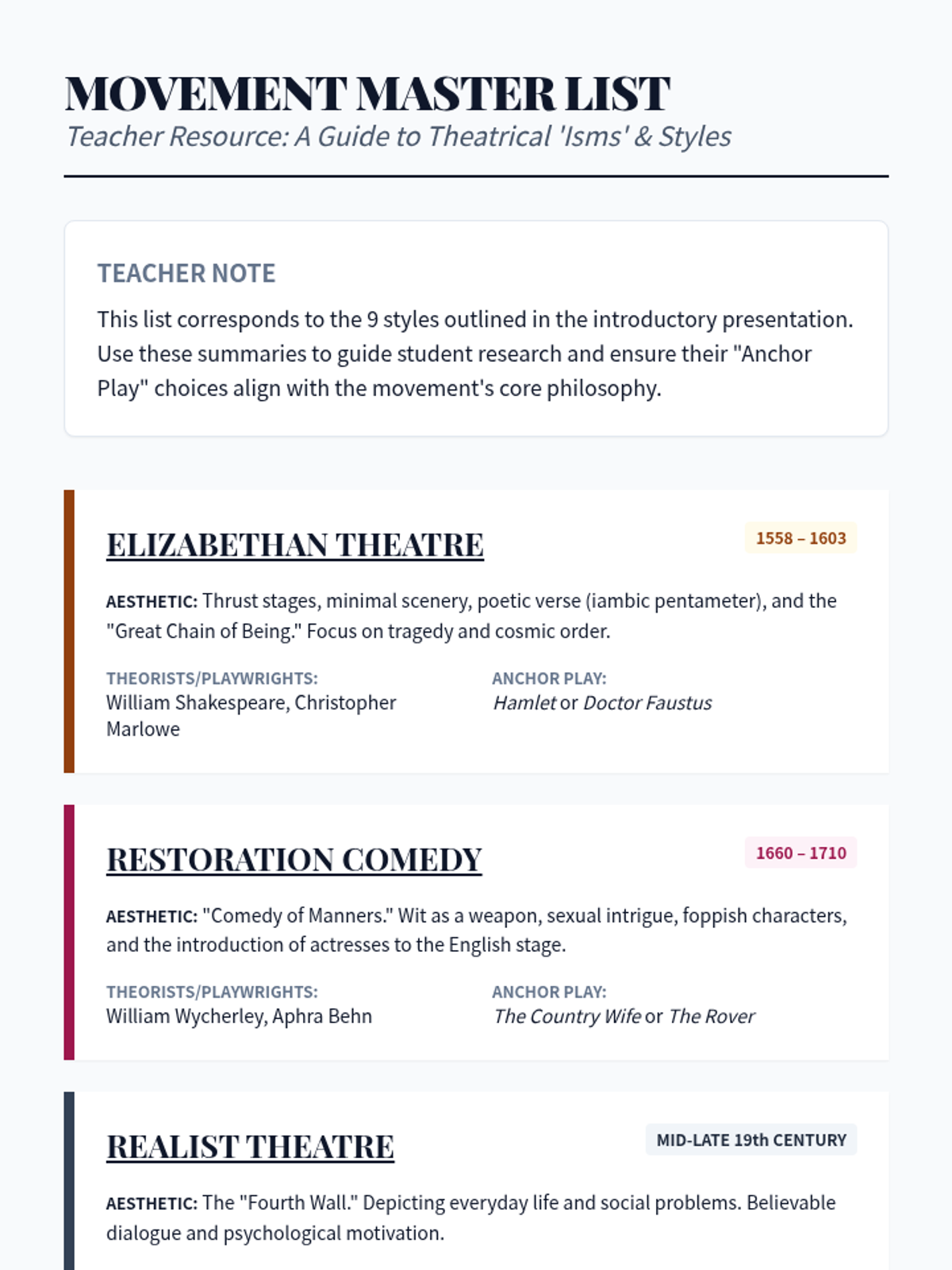
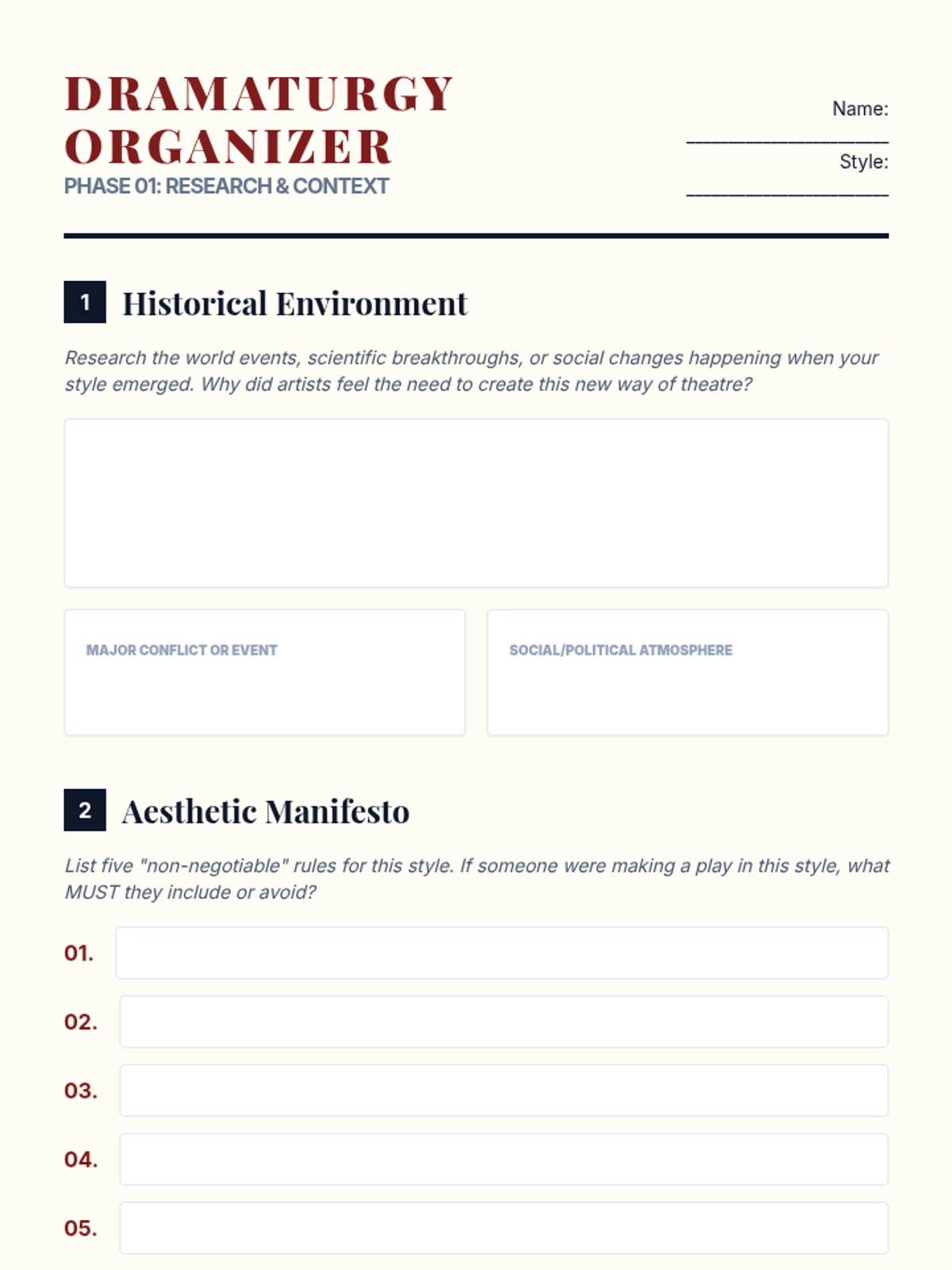
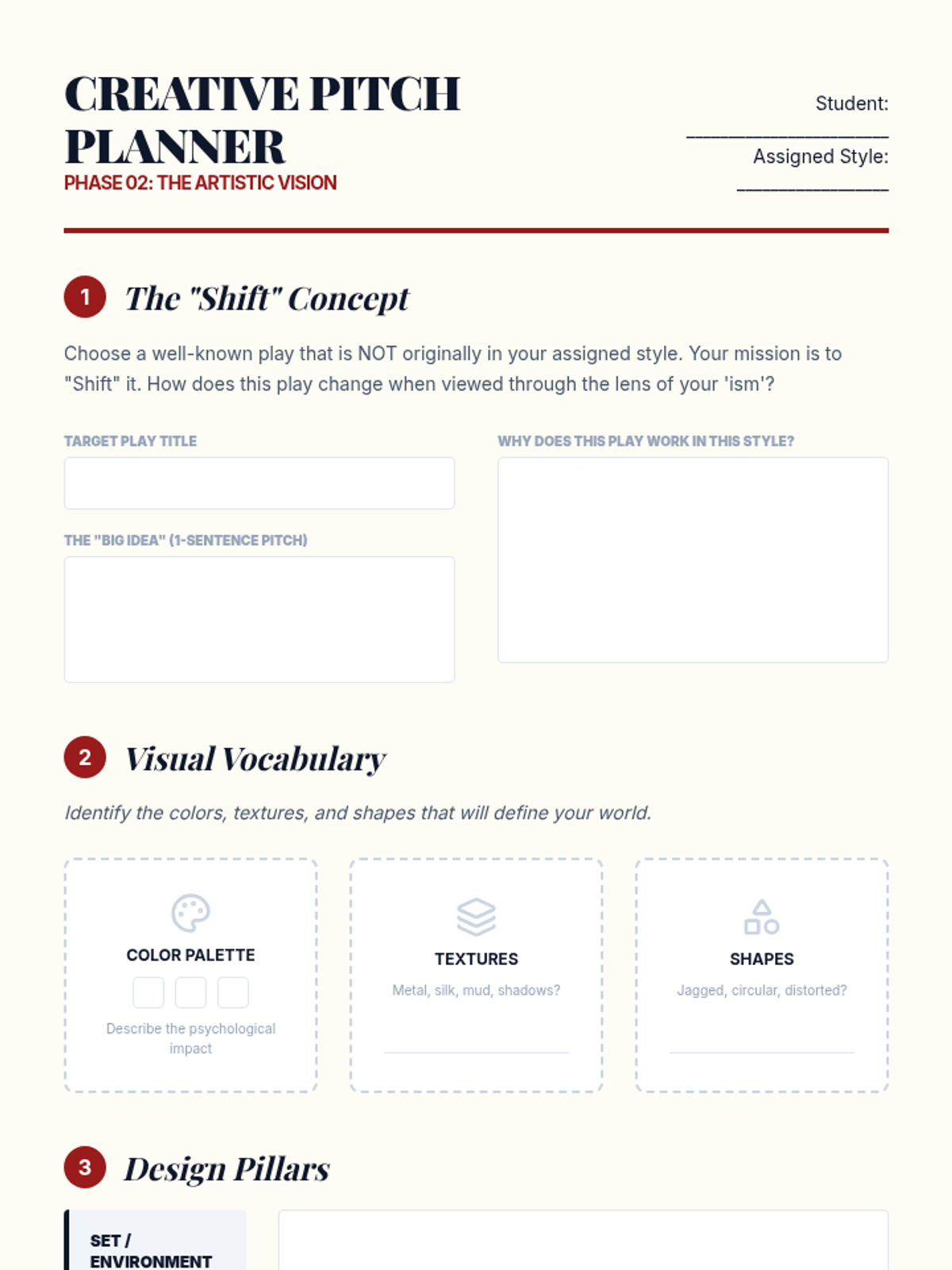
A comprehensive culminating research project where students explore a specific theatre style or 'ism'. Students produce a research-heavy Dramaturgy Portfolio, a Creative Design Pitch Deck, and a final Presentation with a visual aid.
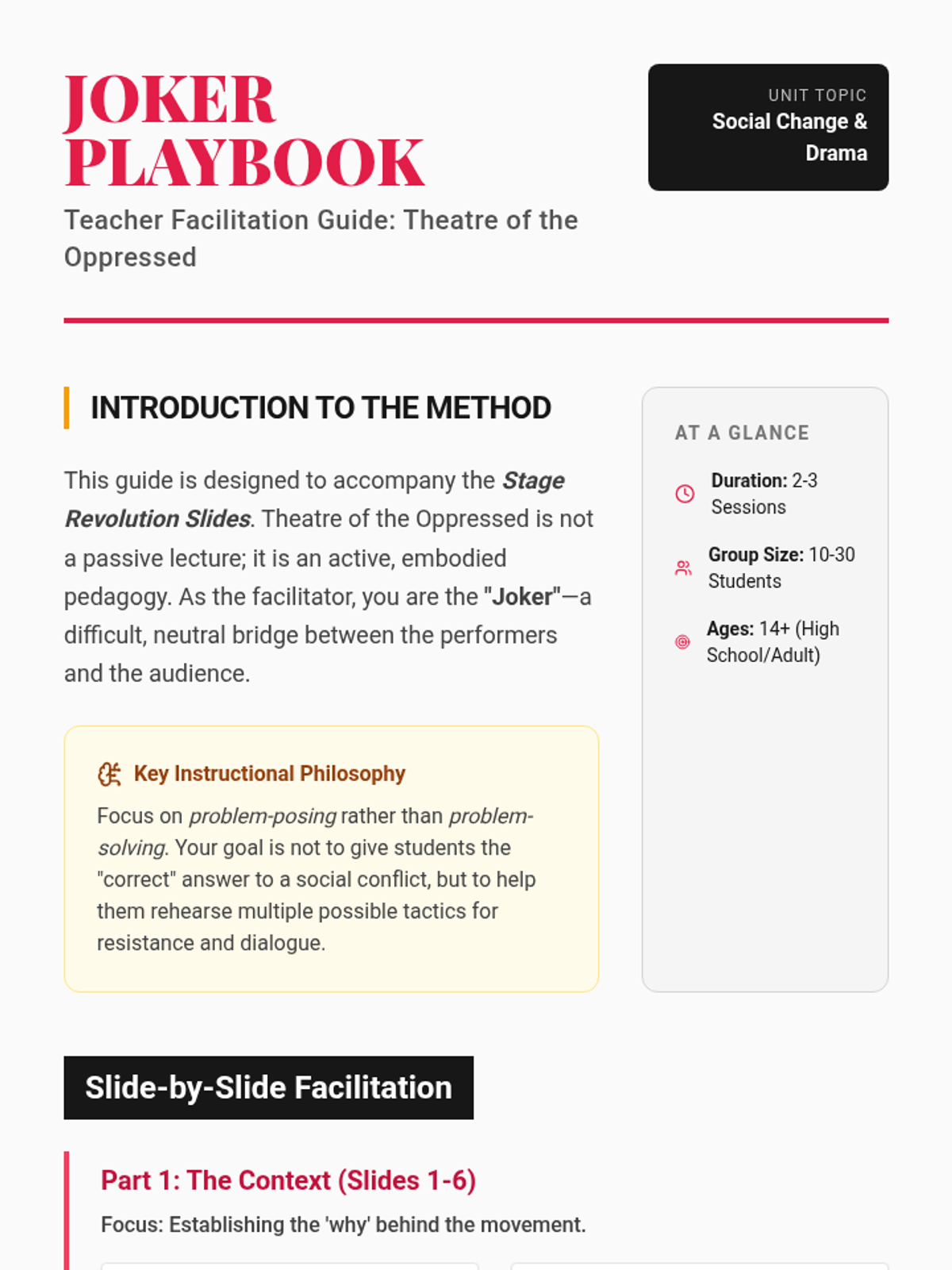
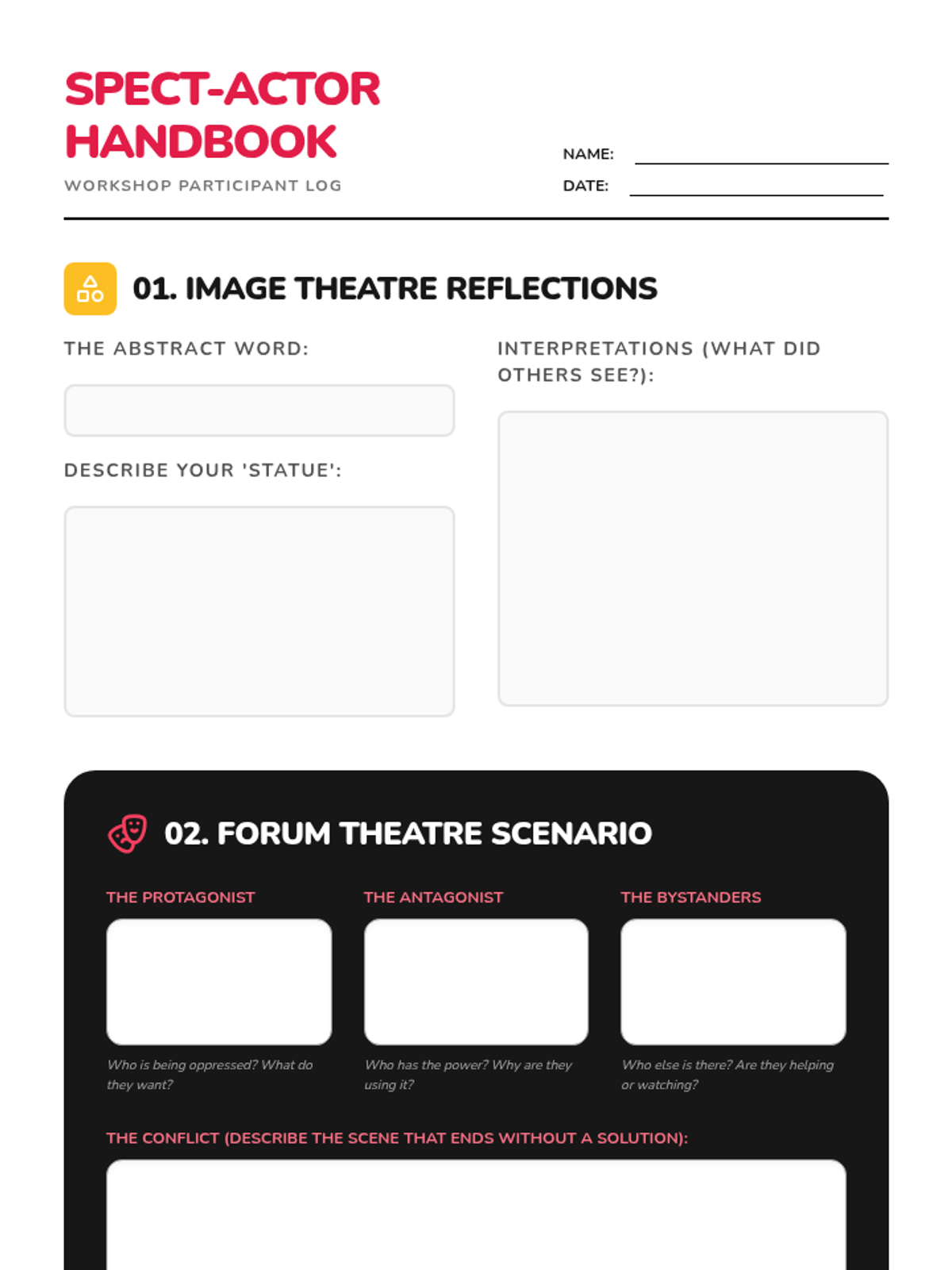
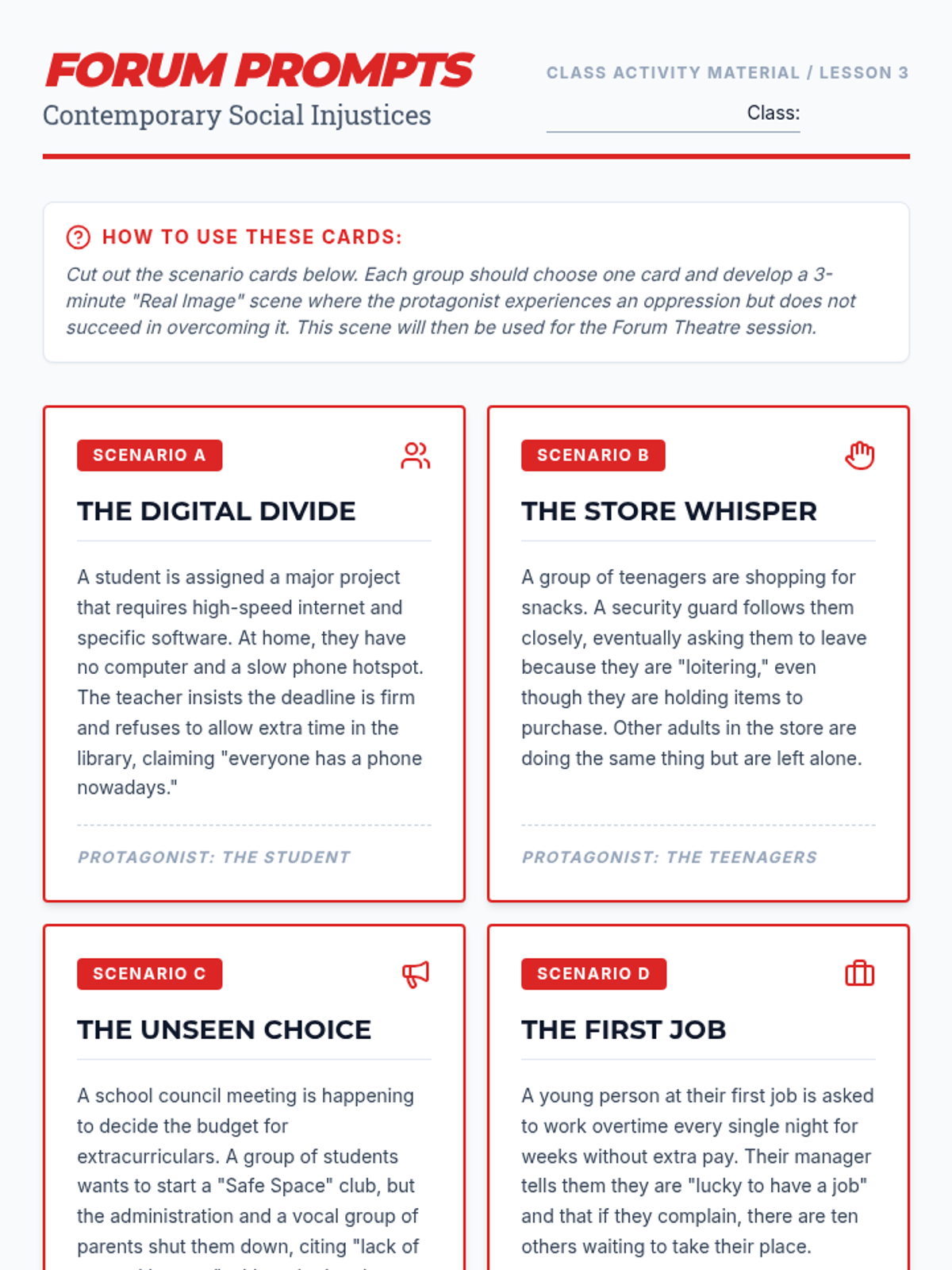
An exploration of Augusto Boal's Theatre of the Oppressed, covering its historical roots in Brazil, key techniques like Forum and Image Theatre, and its ongoing role in global social justice movements.
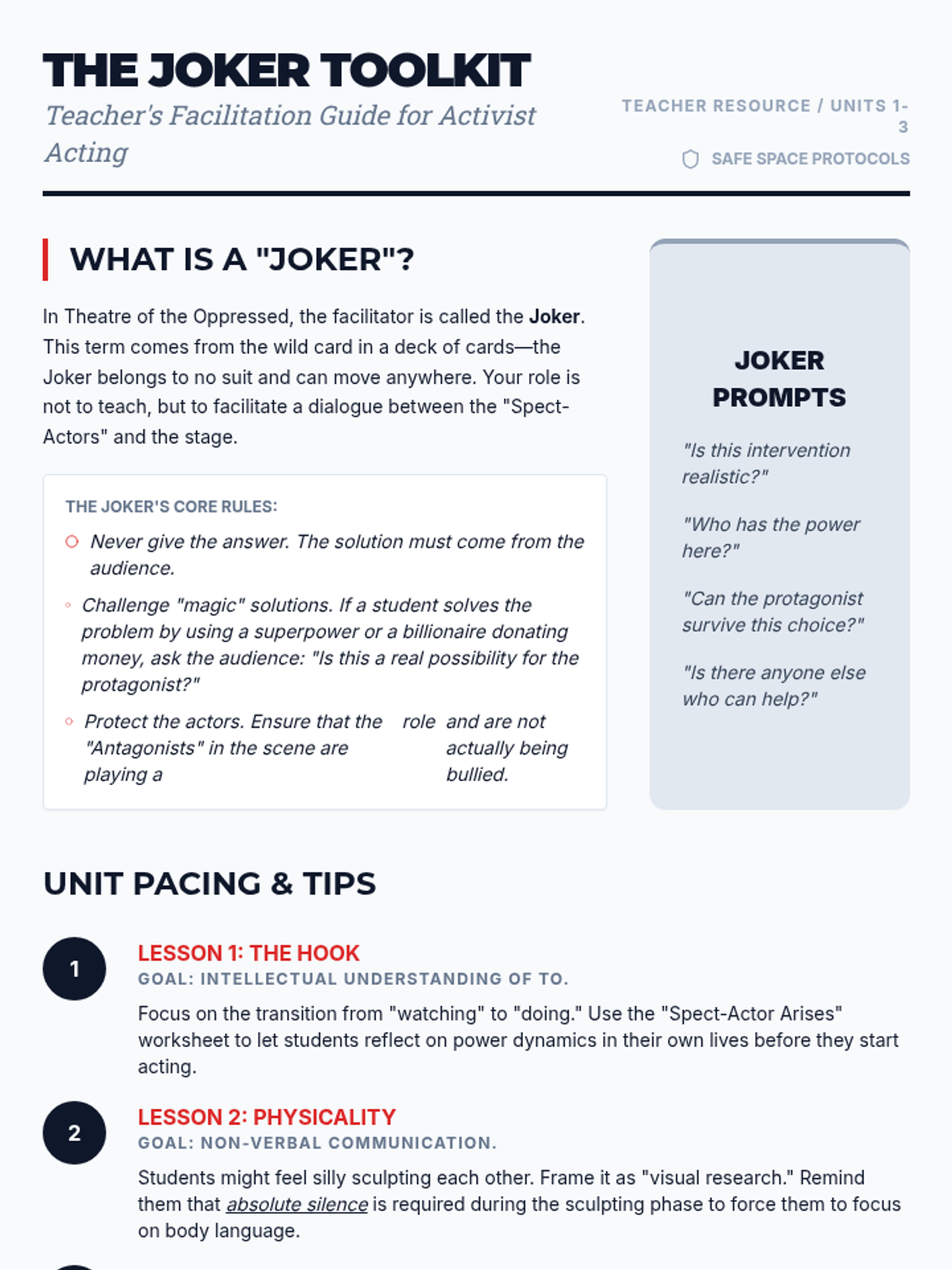
Mastering Forum Theatre, the role of the Joker, and applying these techniques to solve real-world social problems.
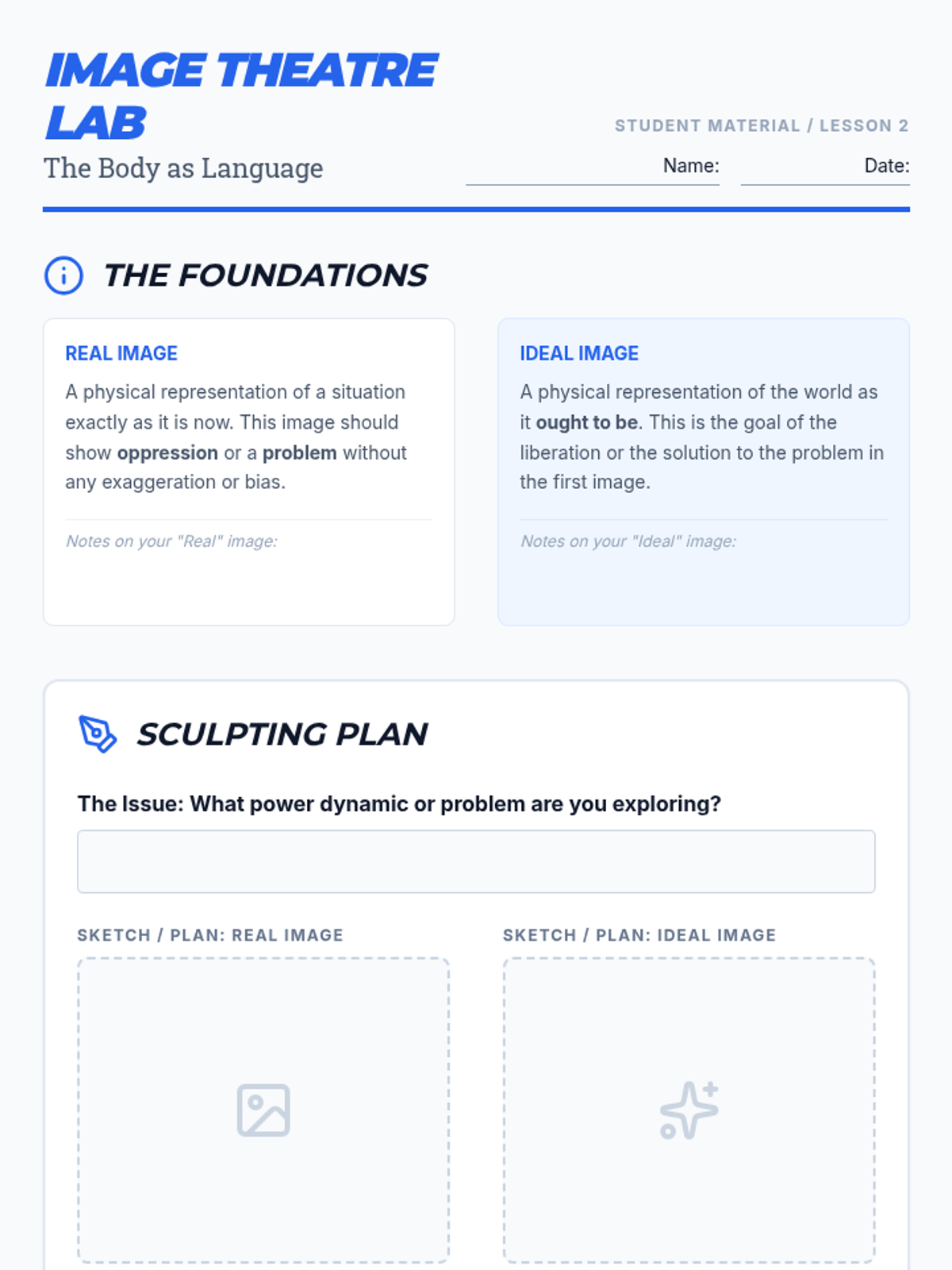
Deep dive into Image Theatre techniques, using the body as a language to explore internal and external oppressions.
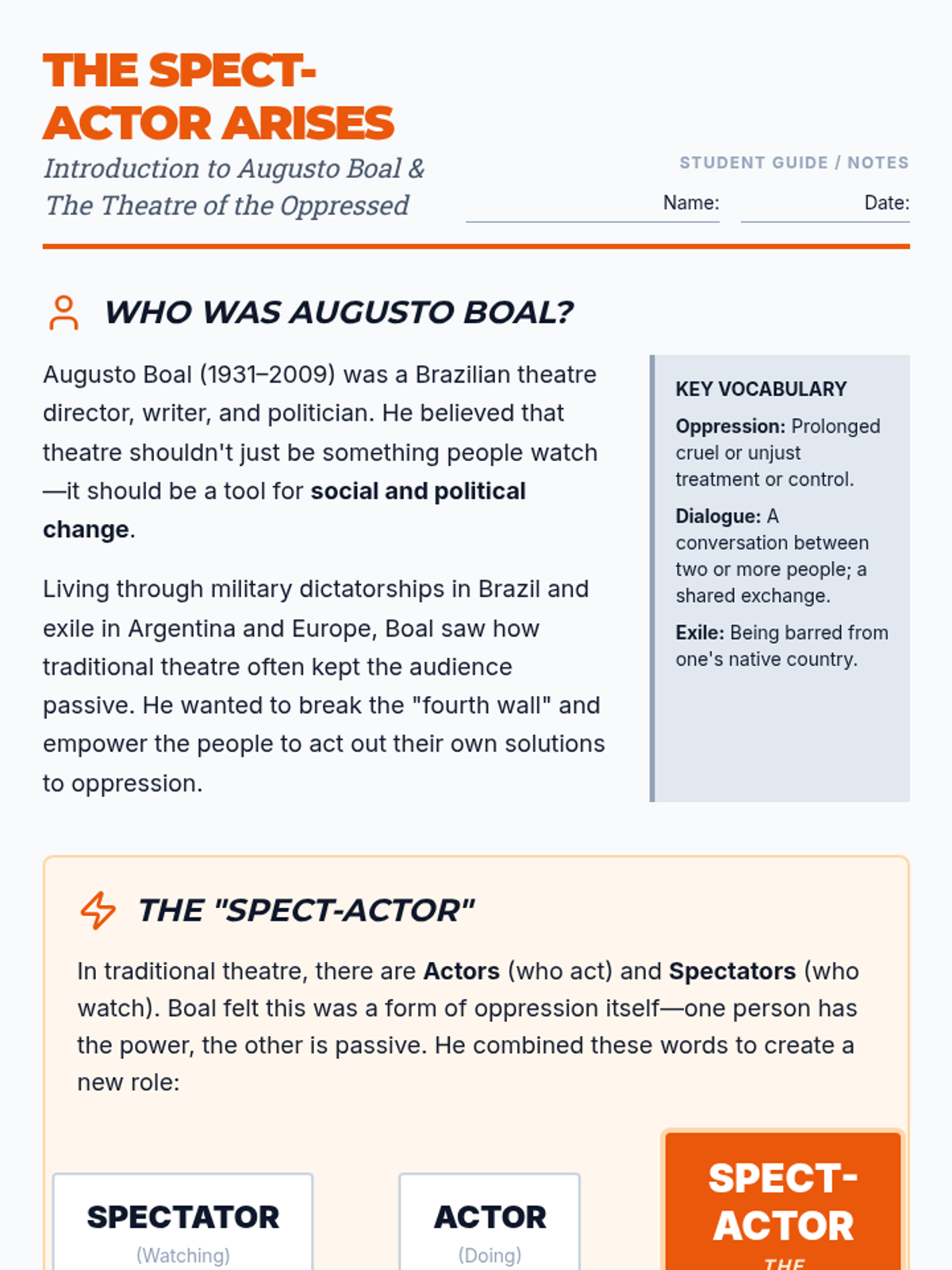
An introduction to Augusto Boal, the origins of Theatre of the Oppressed, and the transformative concept of the 'spect-actor'.
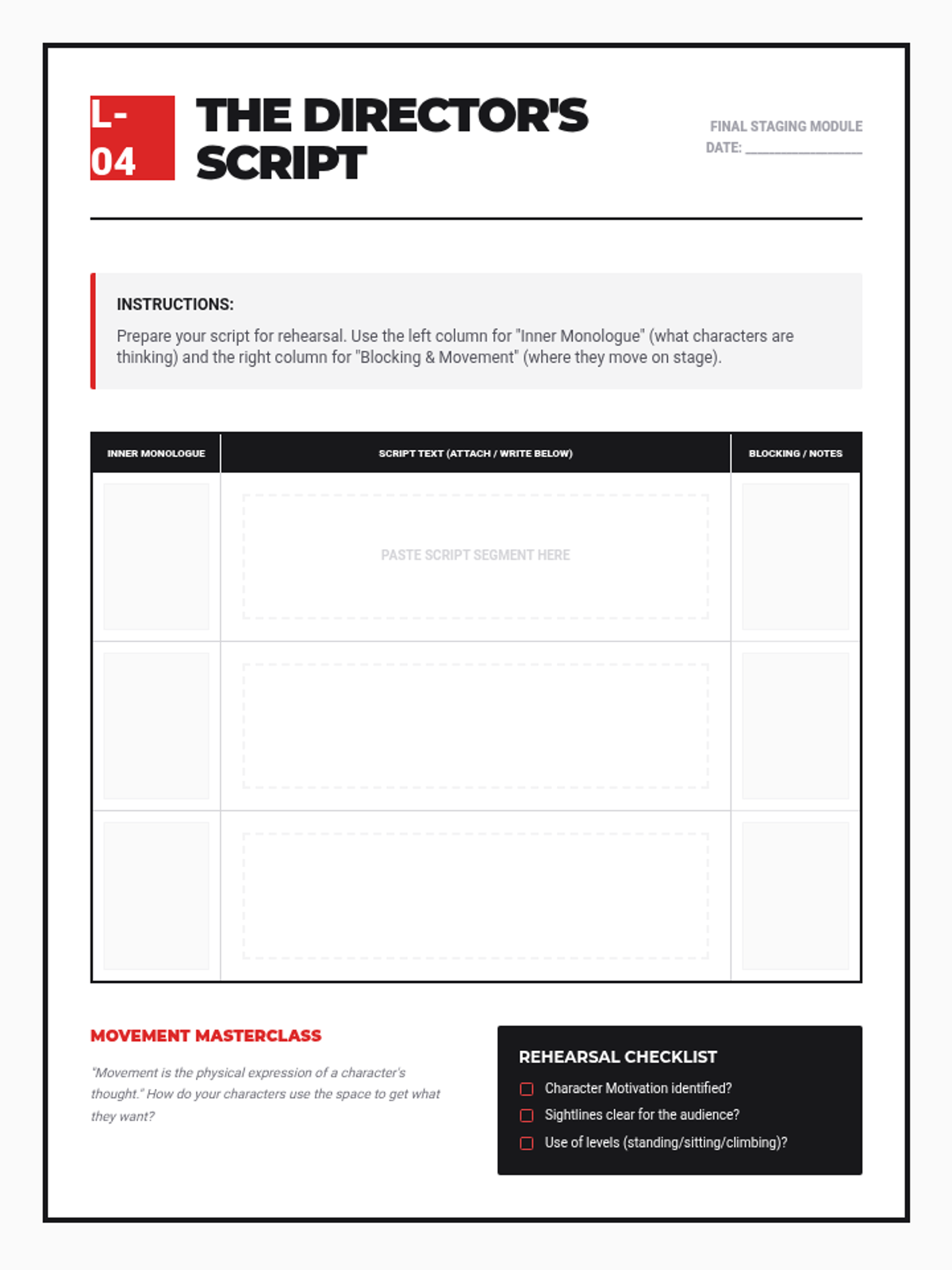
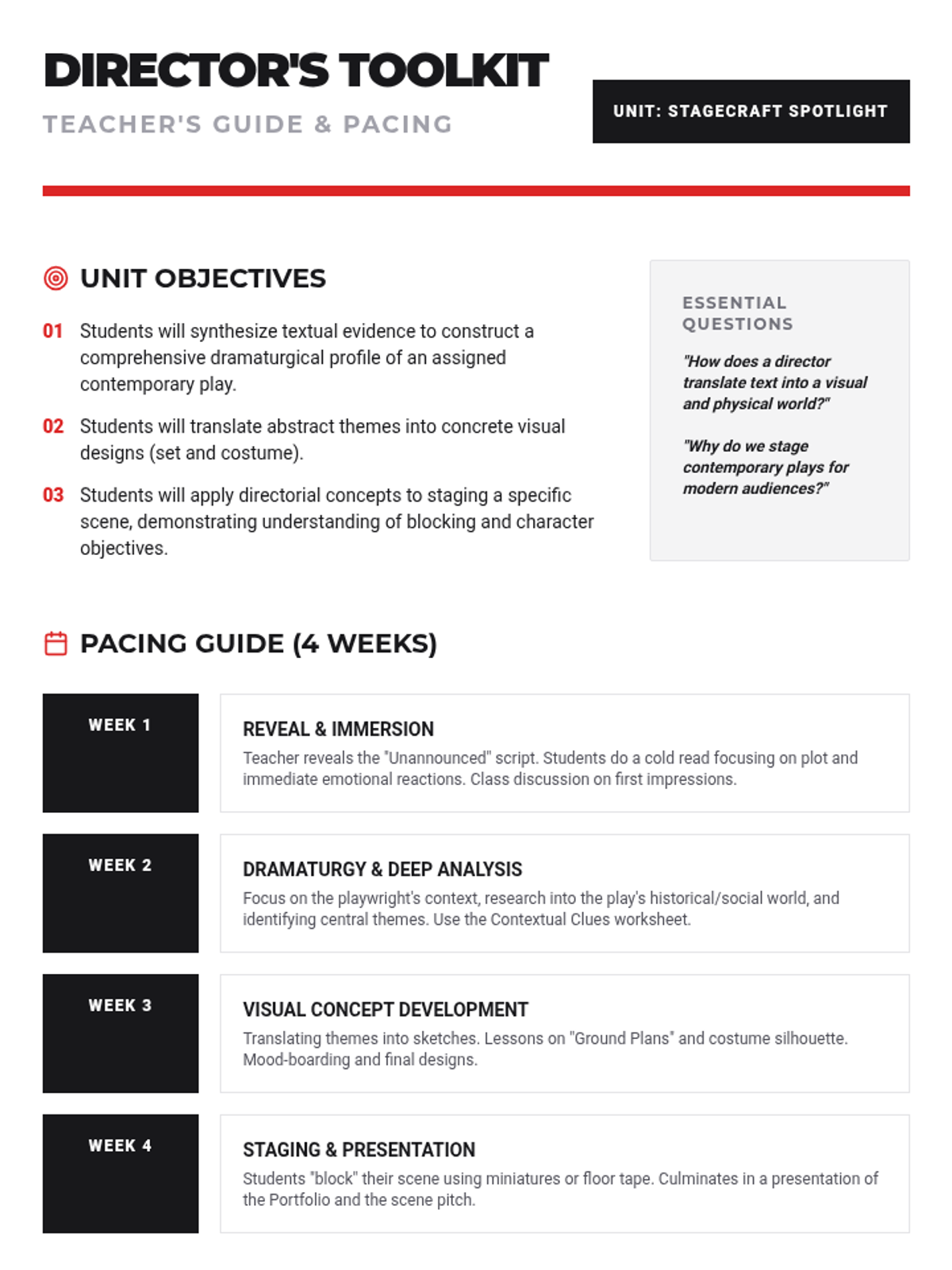
The culminating phase where students stage a scene and compile their final production portfolio.
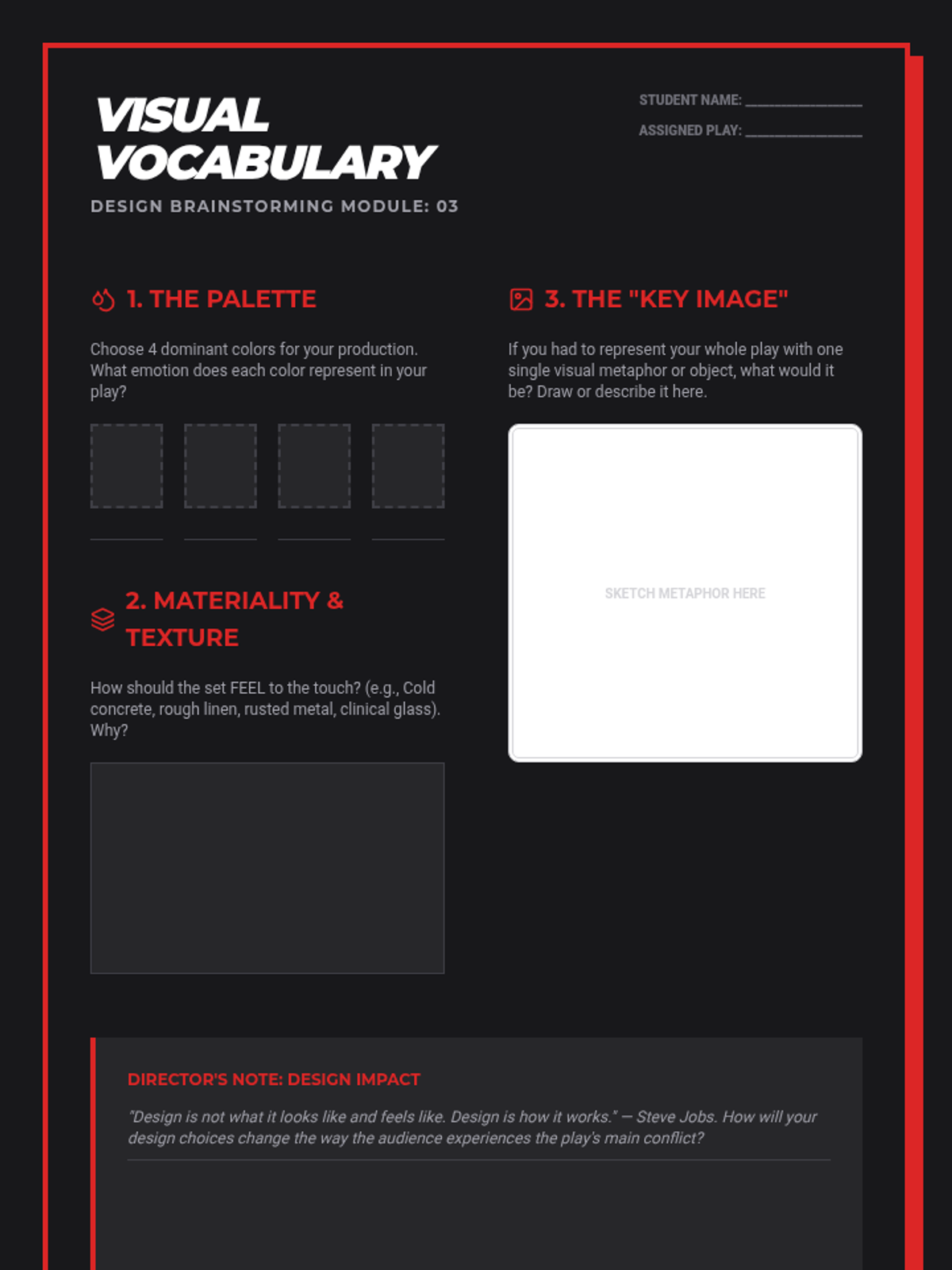
Students transition from analysis to design, creating set blueprints and costume concepts.
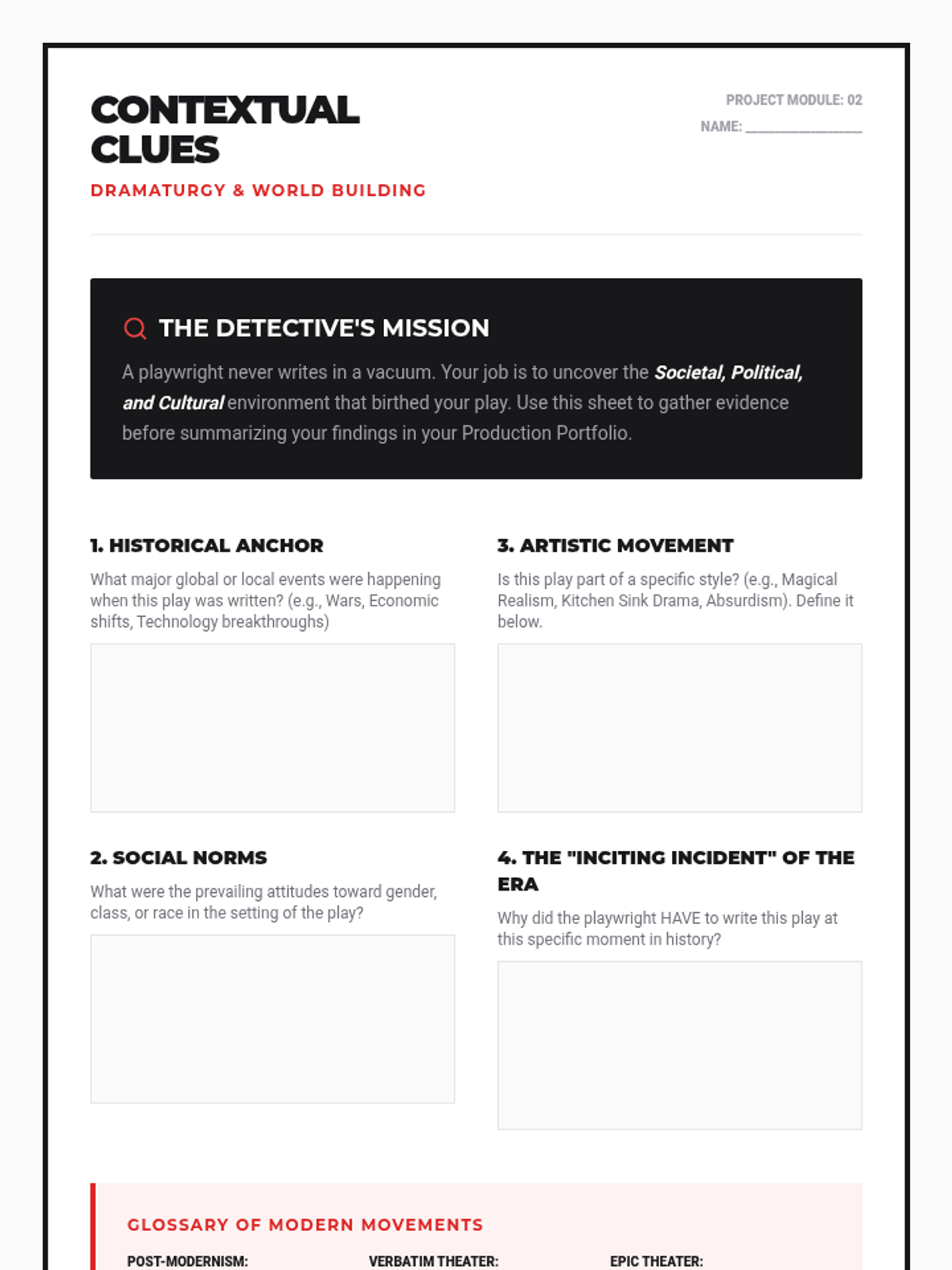
Focuses on the playwright's context and the deeper thematic structures of the chosen contemporary drama.
Students select a contemporary play and begin their analytical journey through character and theme exploration.
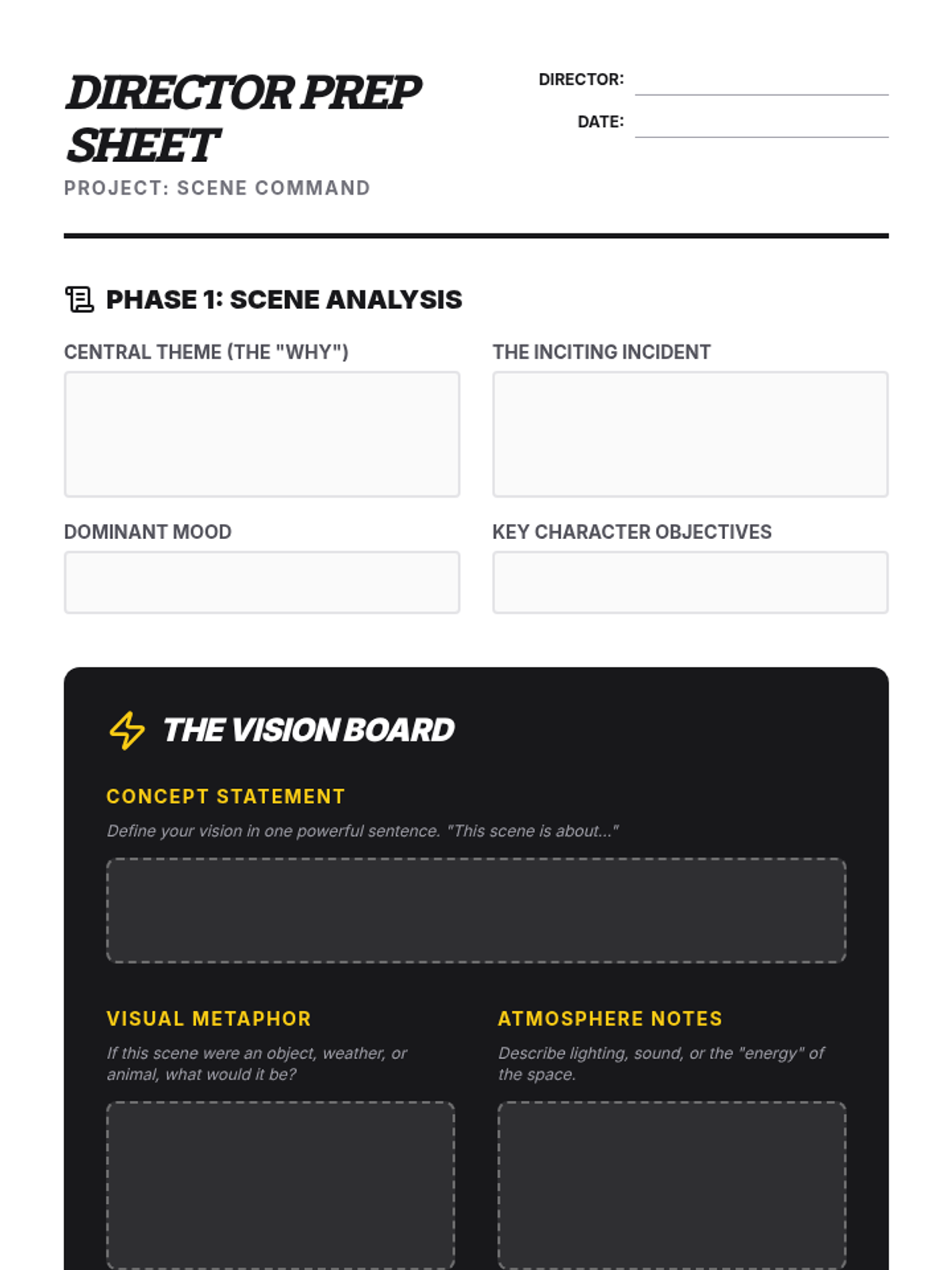
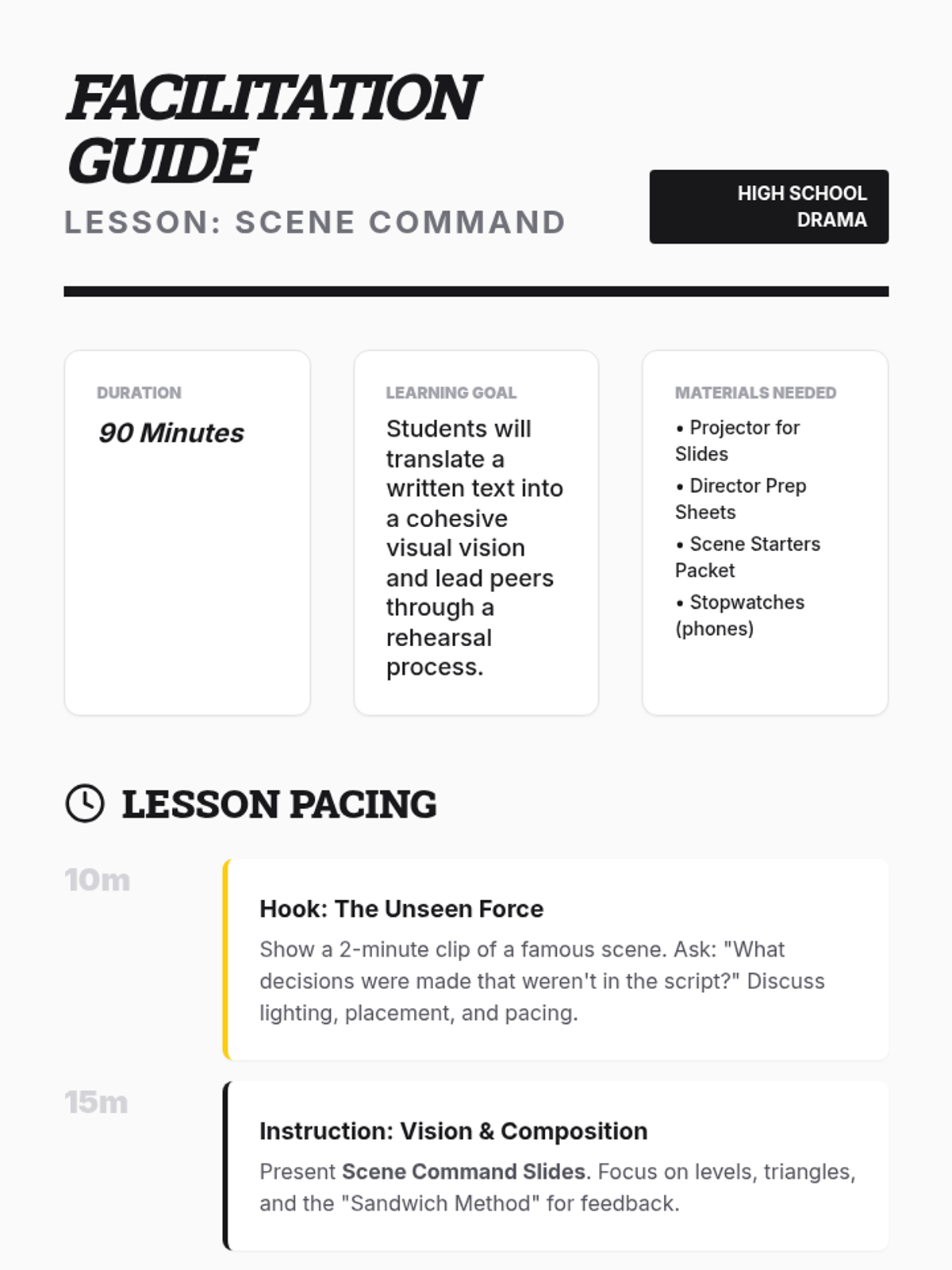
A high school lesson focused on the art of stage direction, specifically teaching students how to develop a creative vision and effectively direct their peers in short scenes.
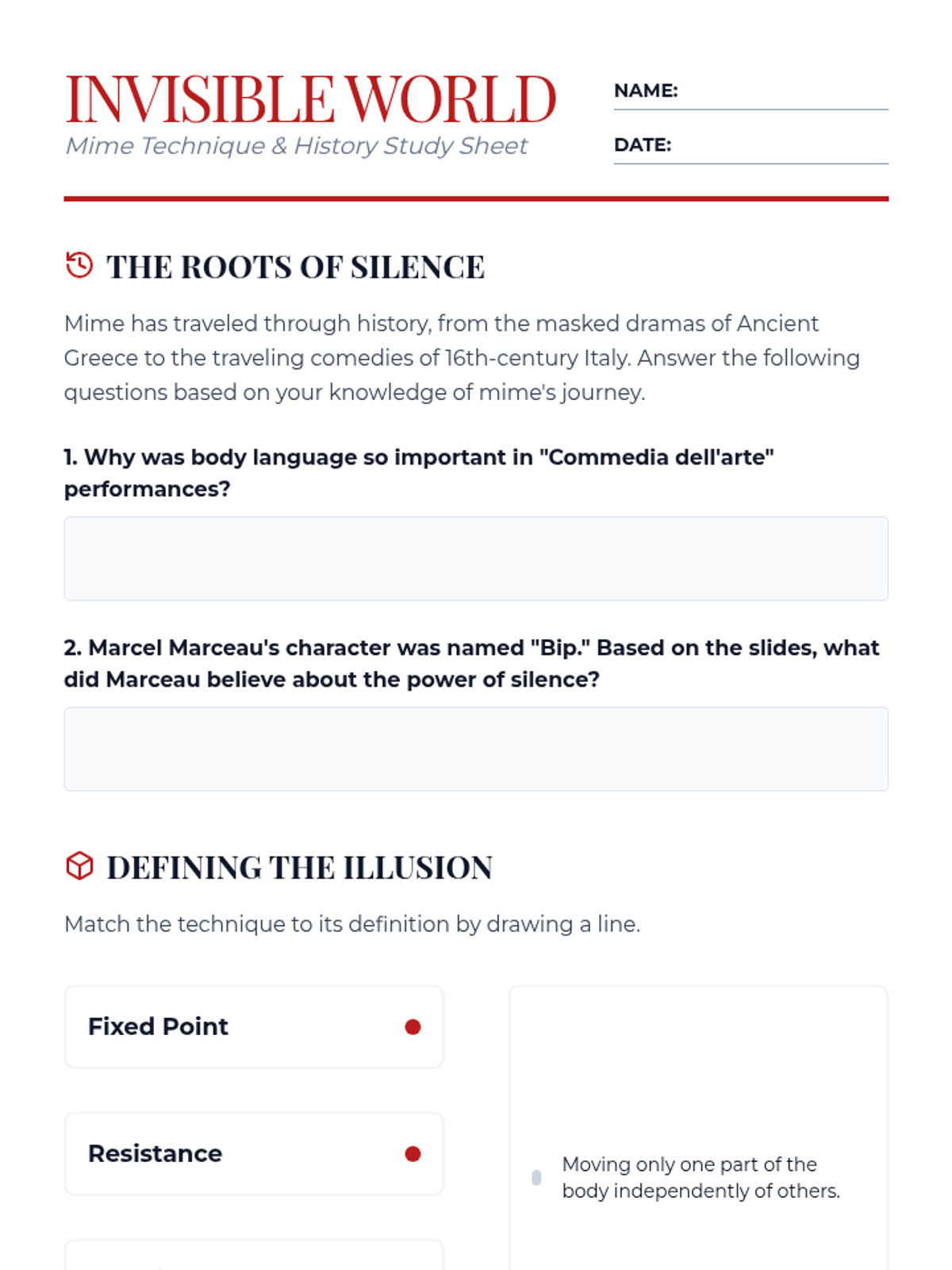
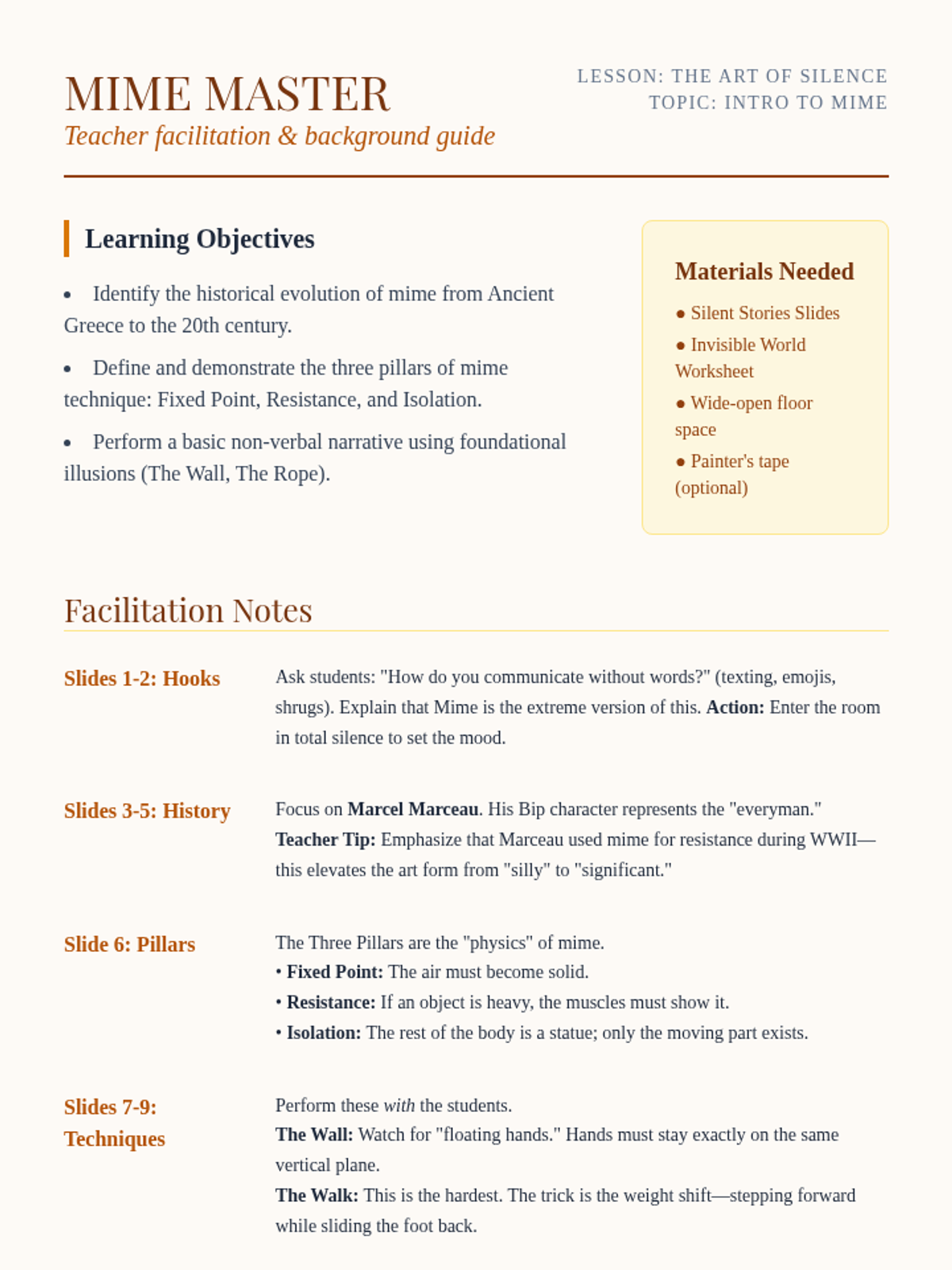
An introductory lesson on the art of mime, exploring its historical roots, cultural impact, and the foundational techniques of non-verbal storytelling.
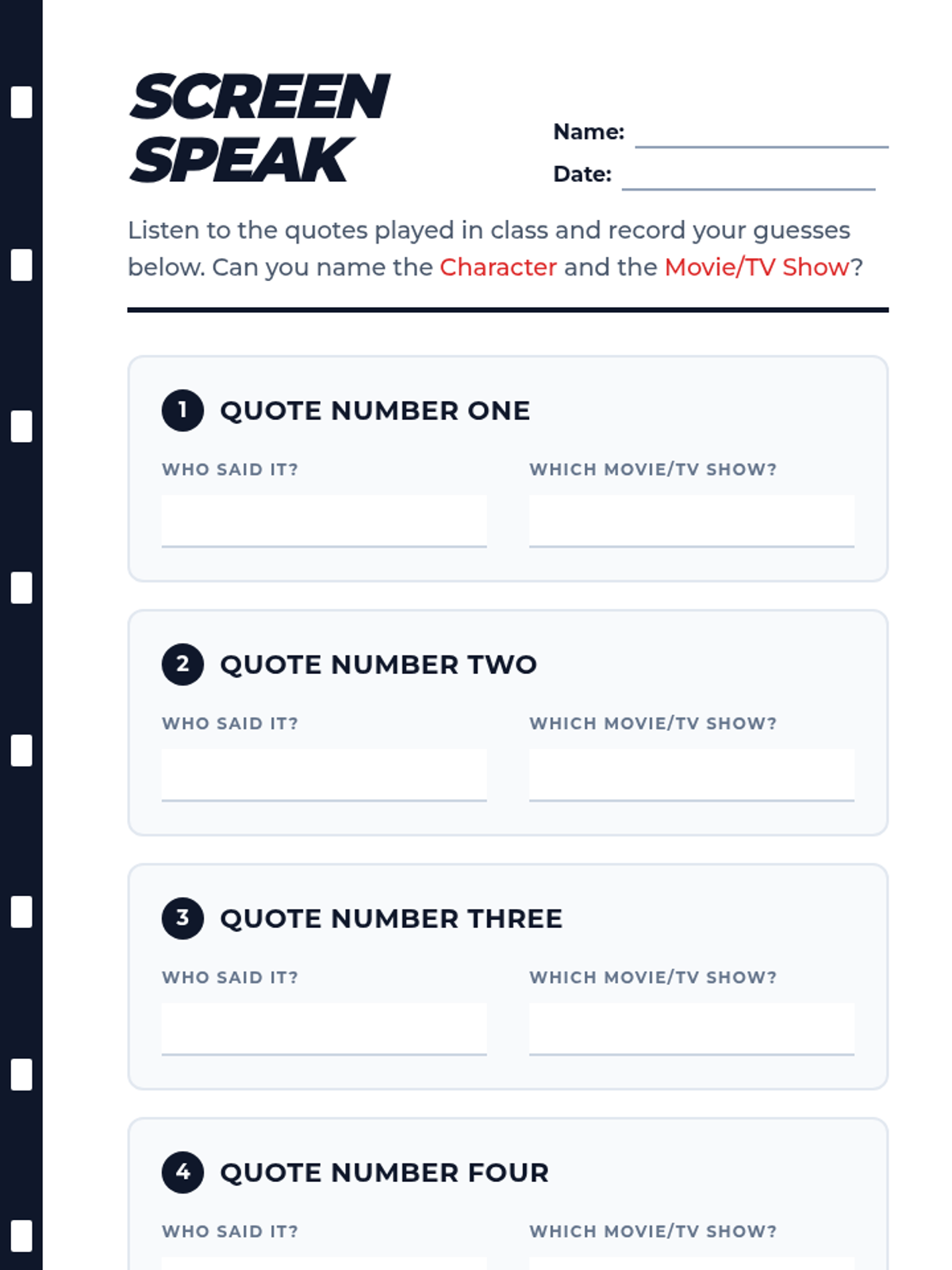
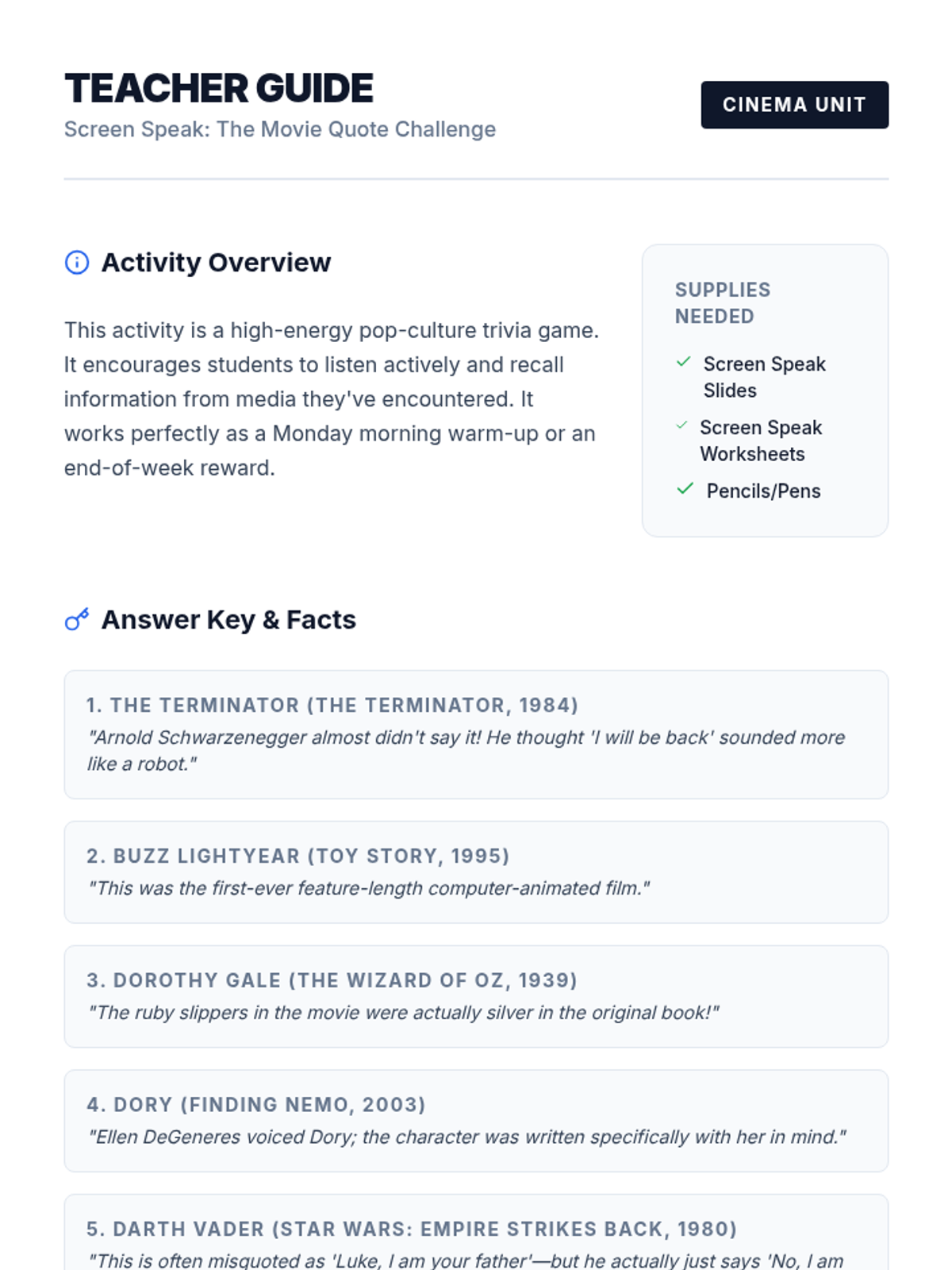
A high-energy guessing game focused on iconic quotes from movies and television, designed to test pop culture knowledge and spark discussion.
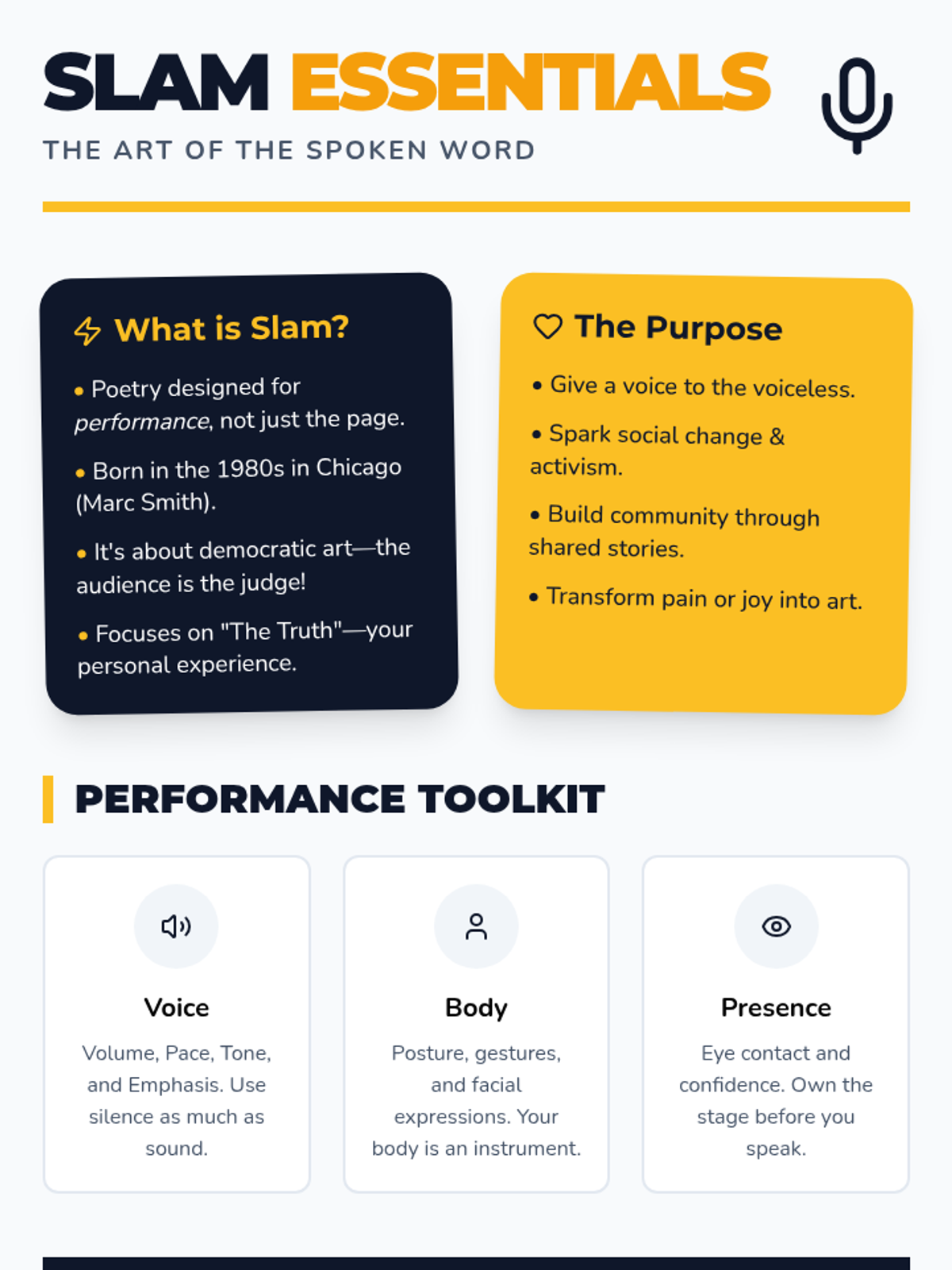
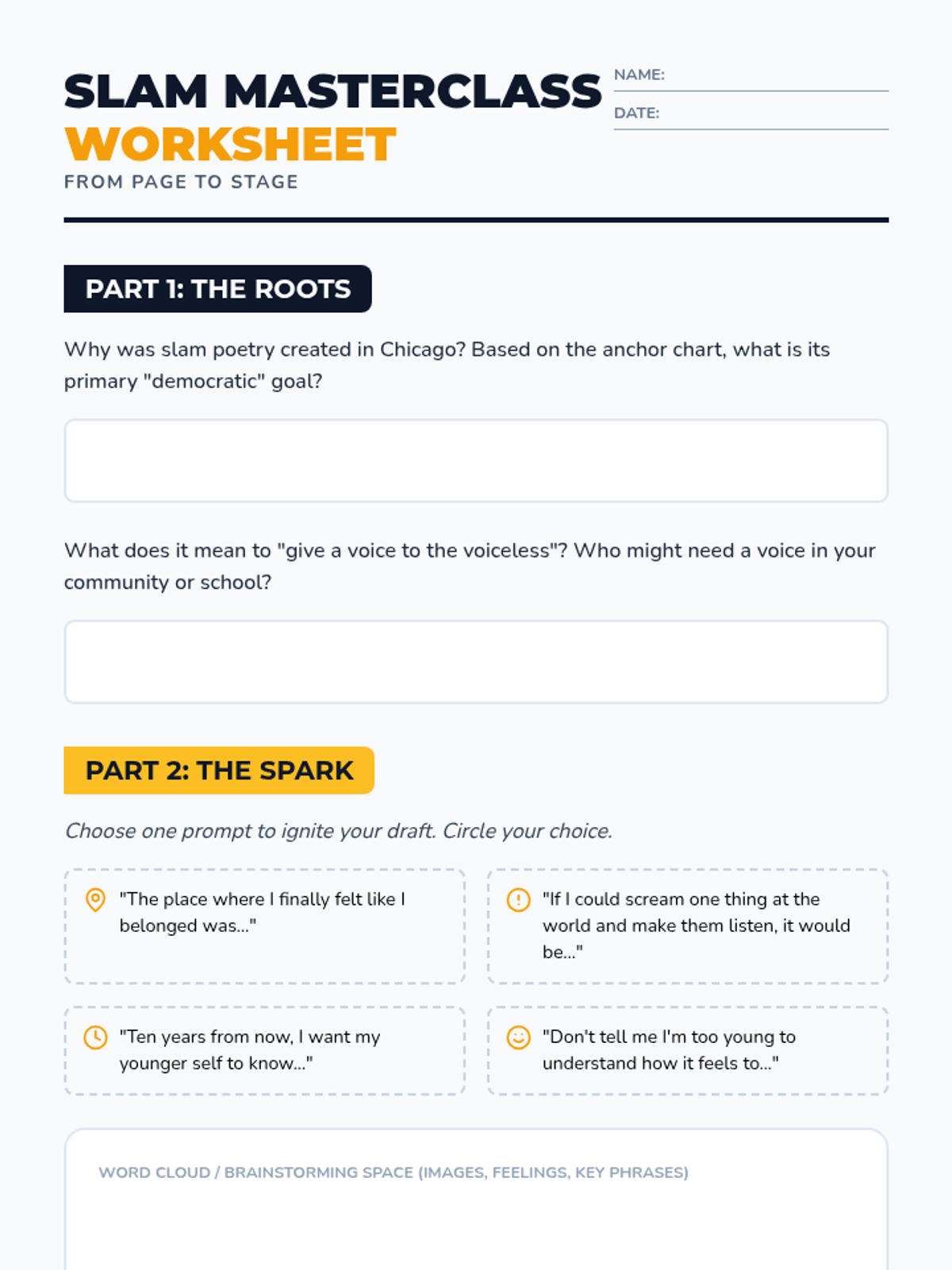
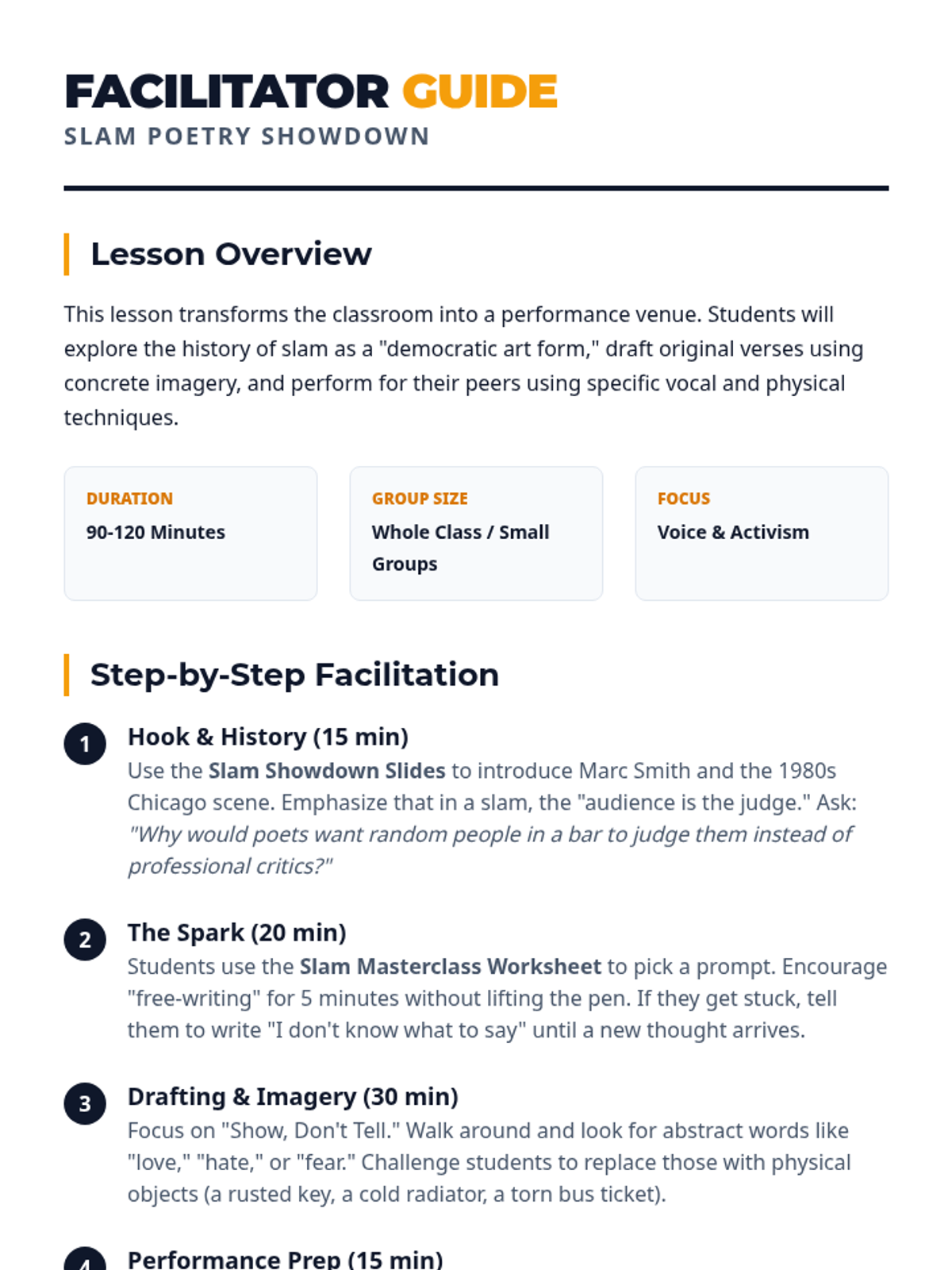
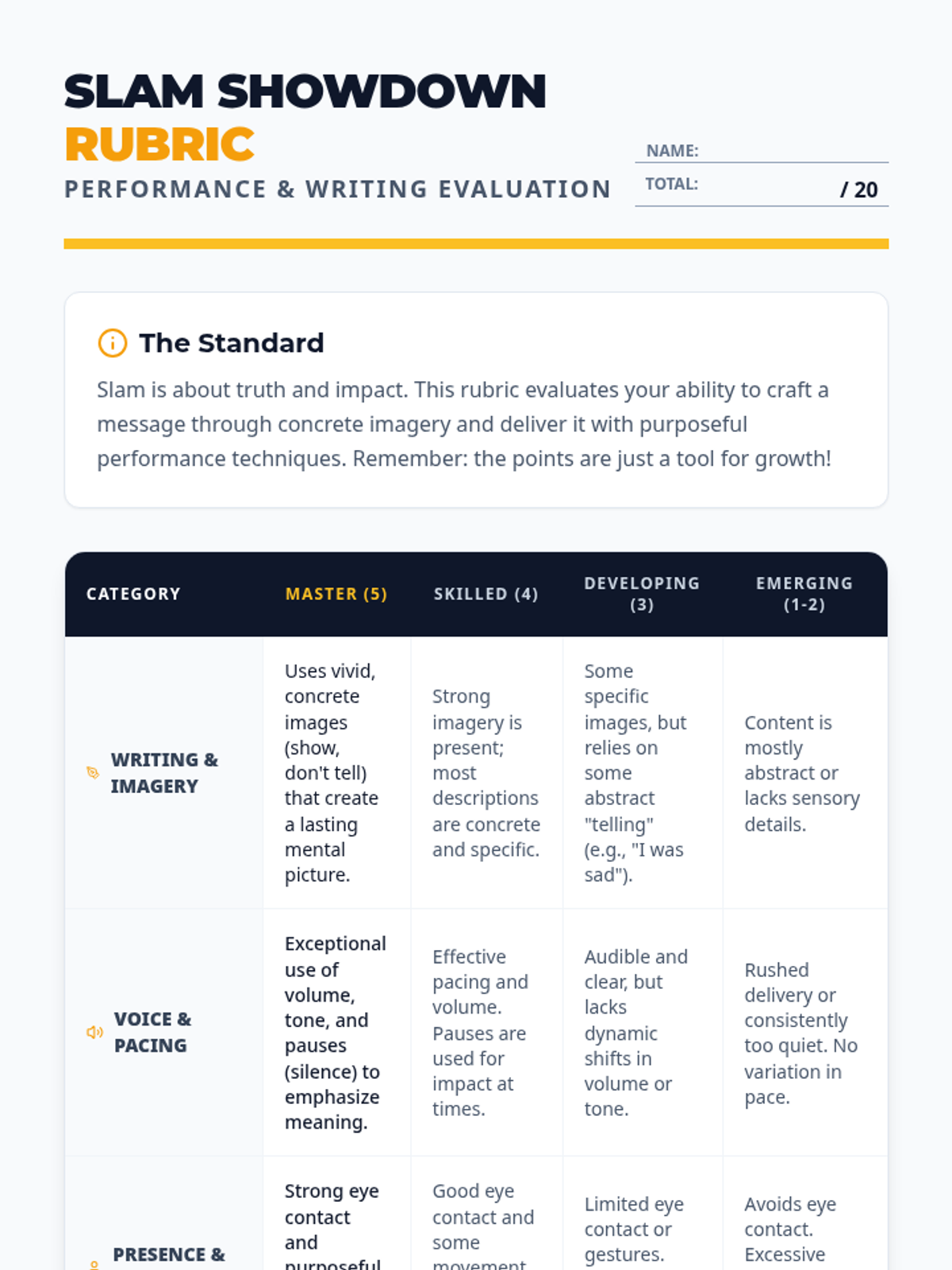
A comprehensive lesson guiding students from the history and purpose of slam poetry through writing original verses to performing with impact and giving constructive peer feedback.
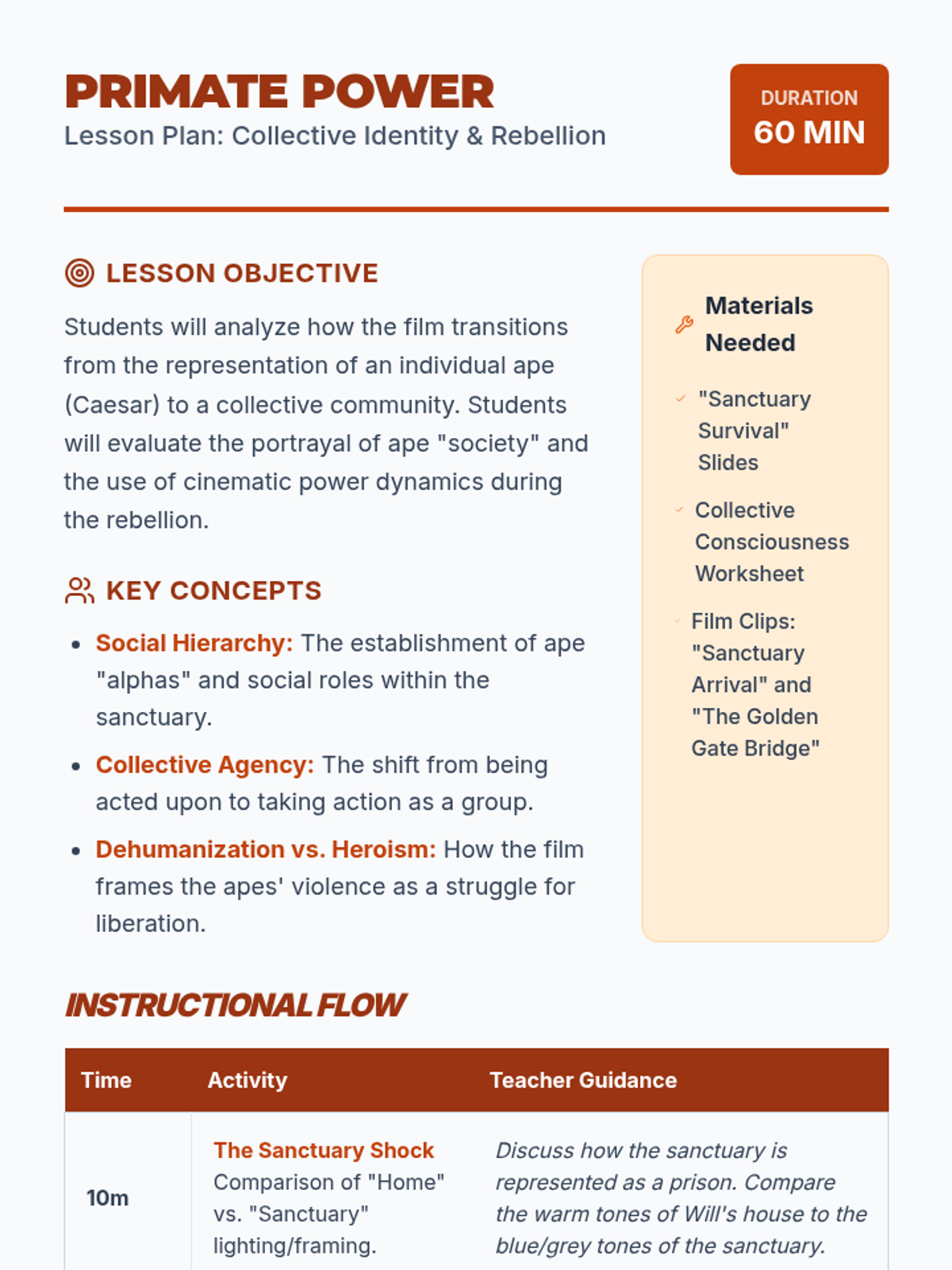
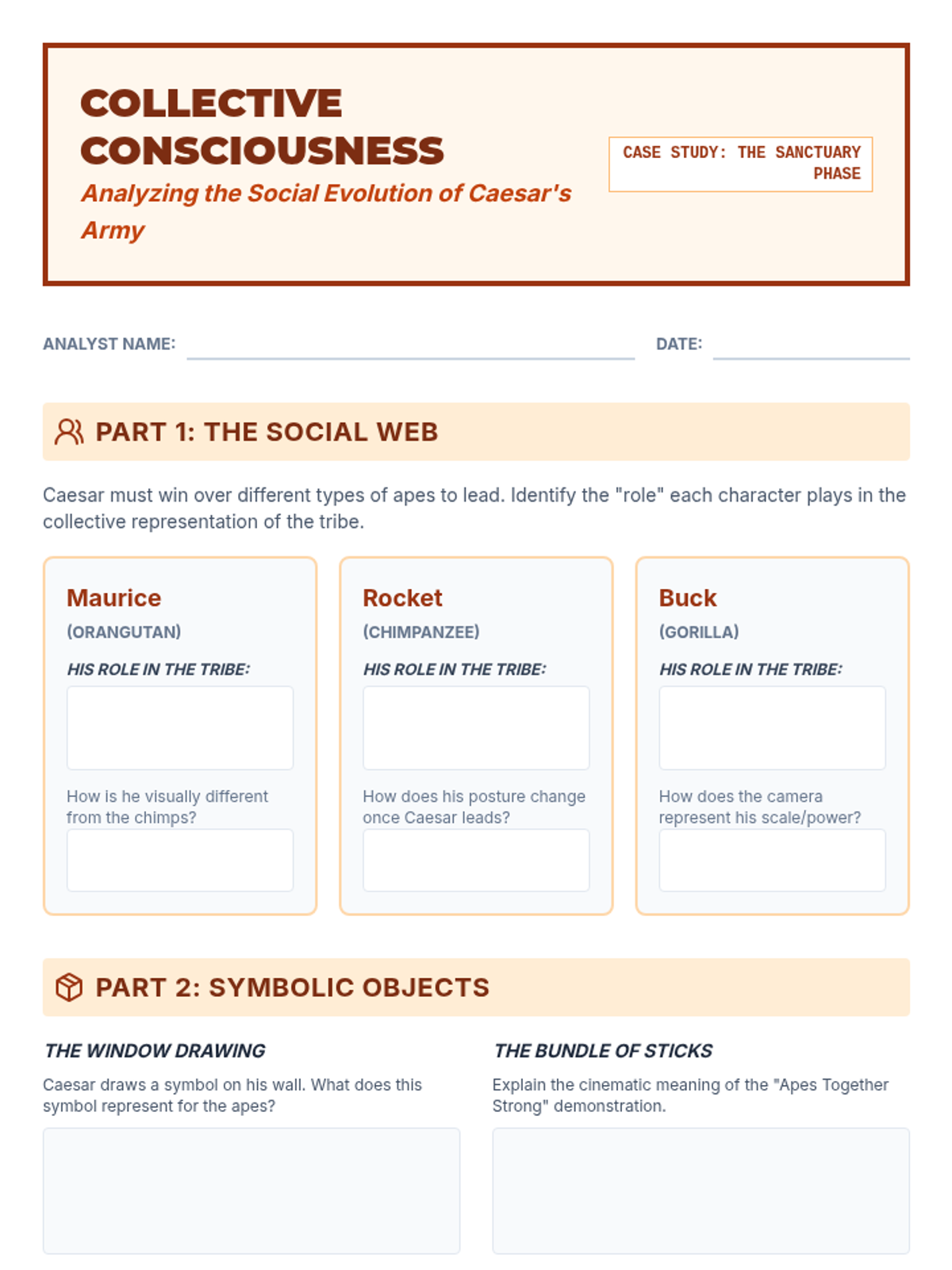
This lesson shifts focus to the collective representation of apes as they form a community in the sanctuary and eventually rebel. Students analyze the portrayal of ape communication, social hierarchy, and the final shift toward agency.
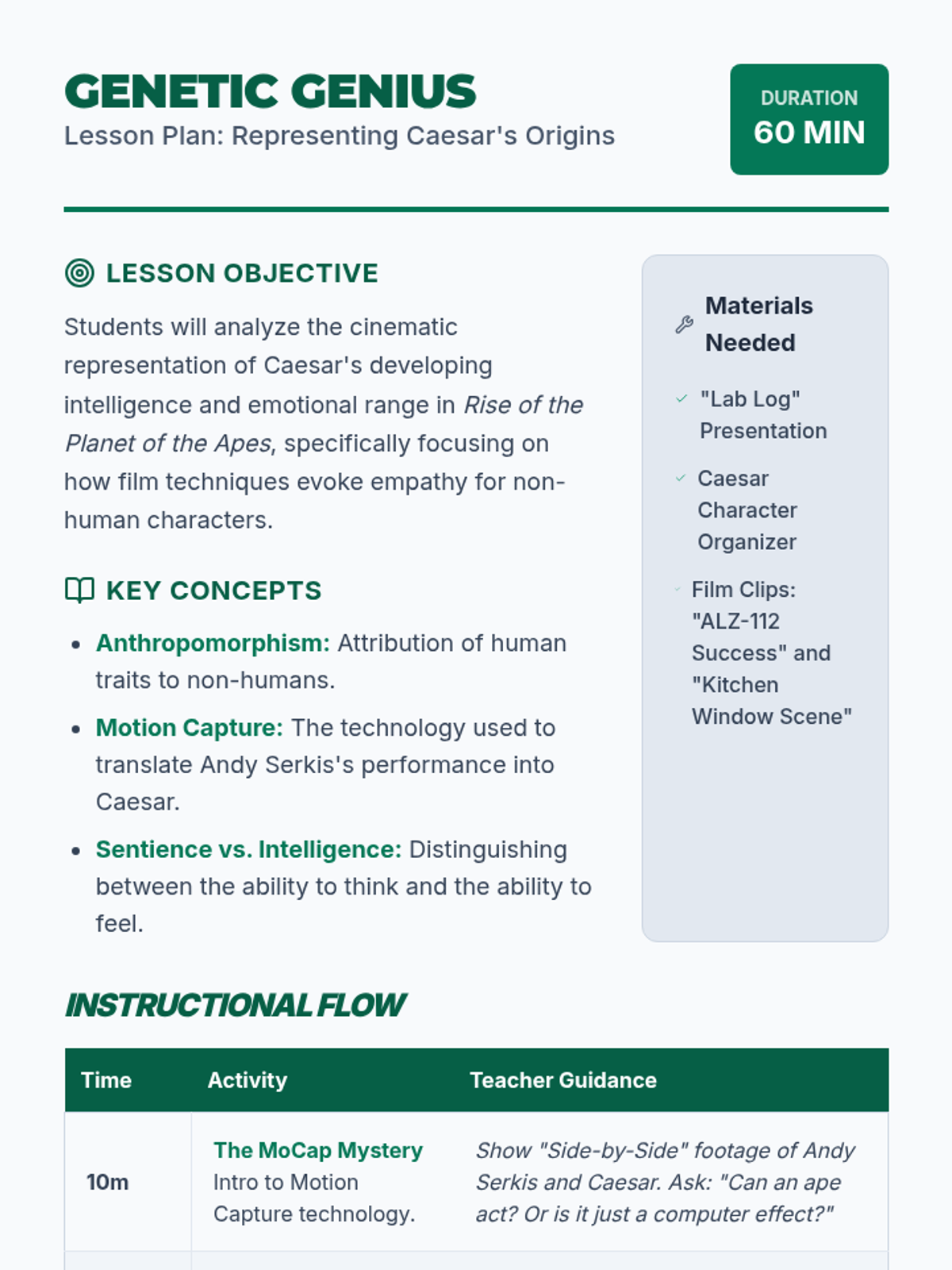
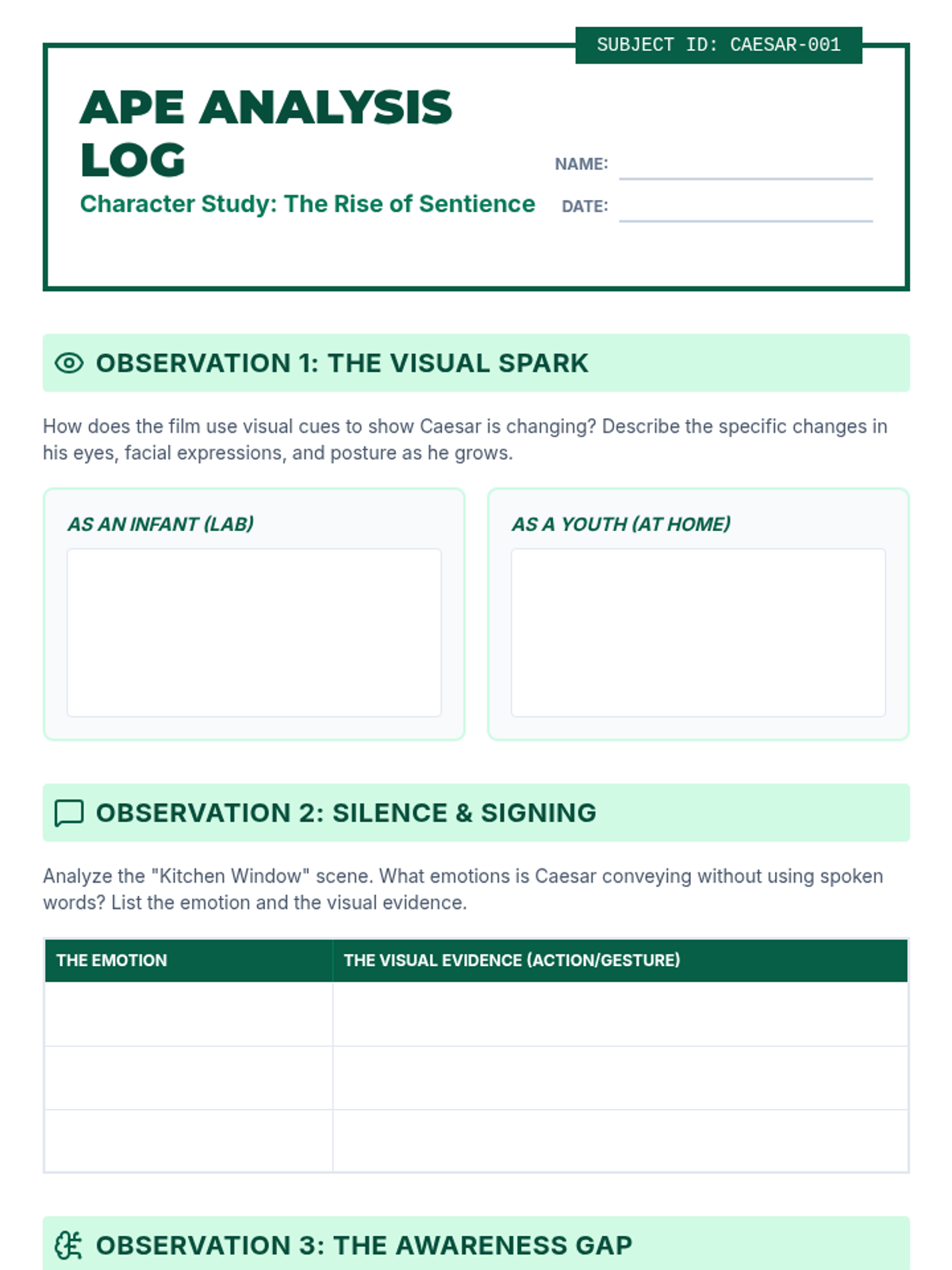
Students explore Caesar's origin story, analyzing how the film represents growing ape intelligence and emotional complexity within a laboratory setting. The lesson focuses on the intersection of science and ethics through the lens of primate representation.
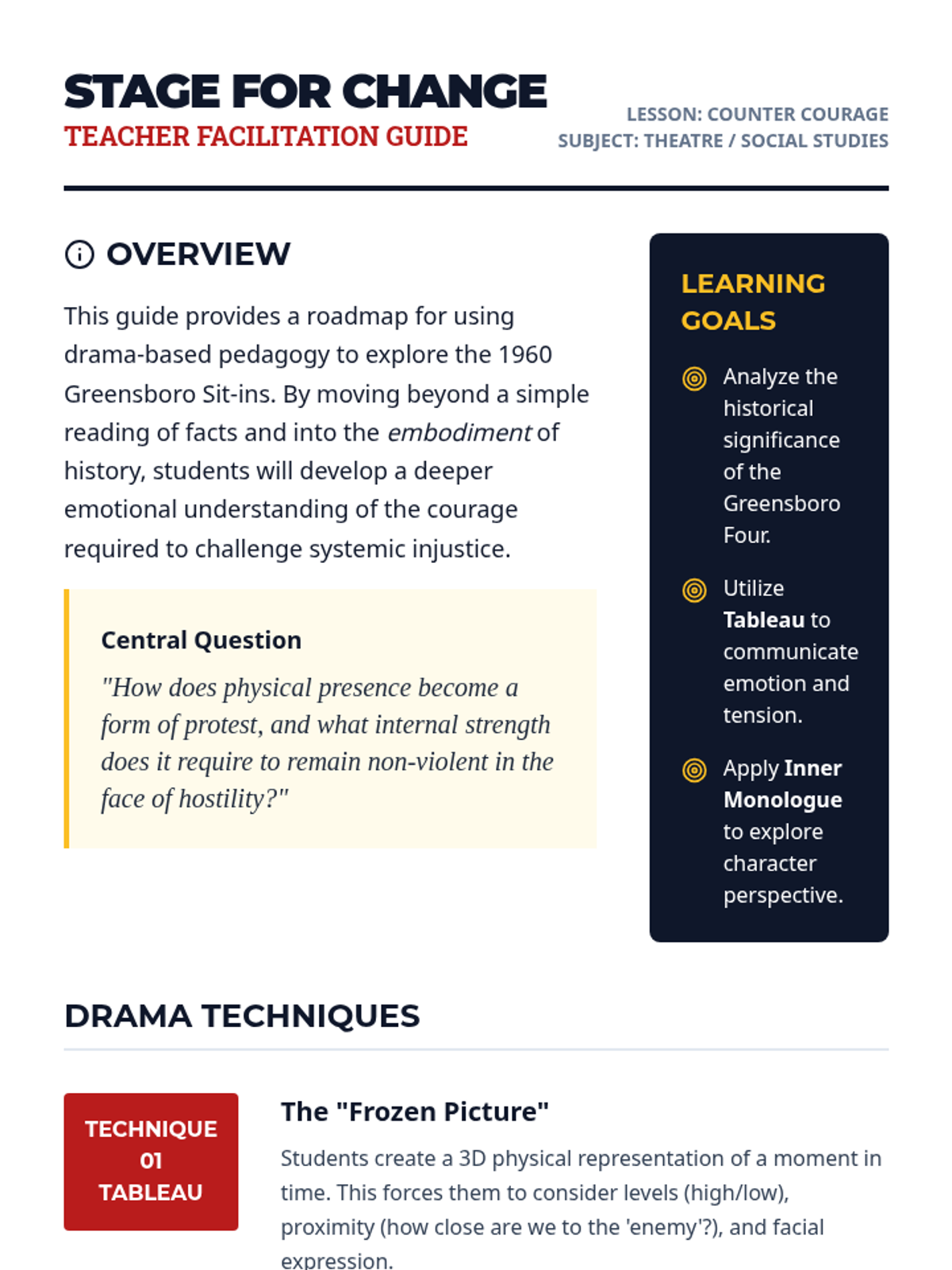
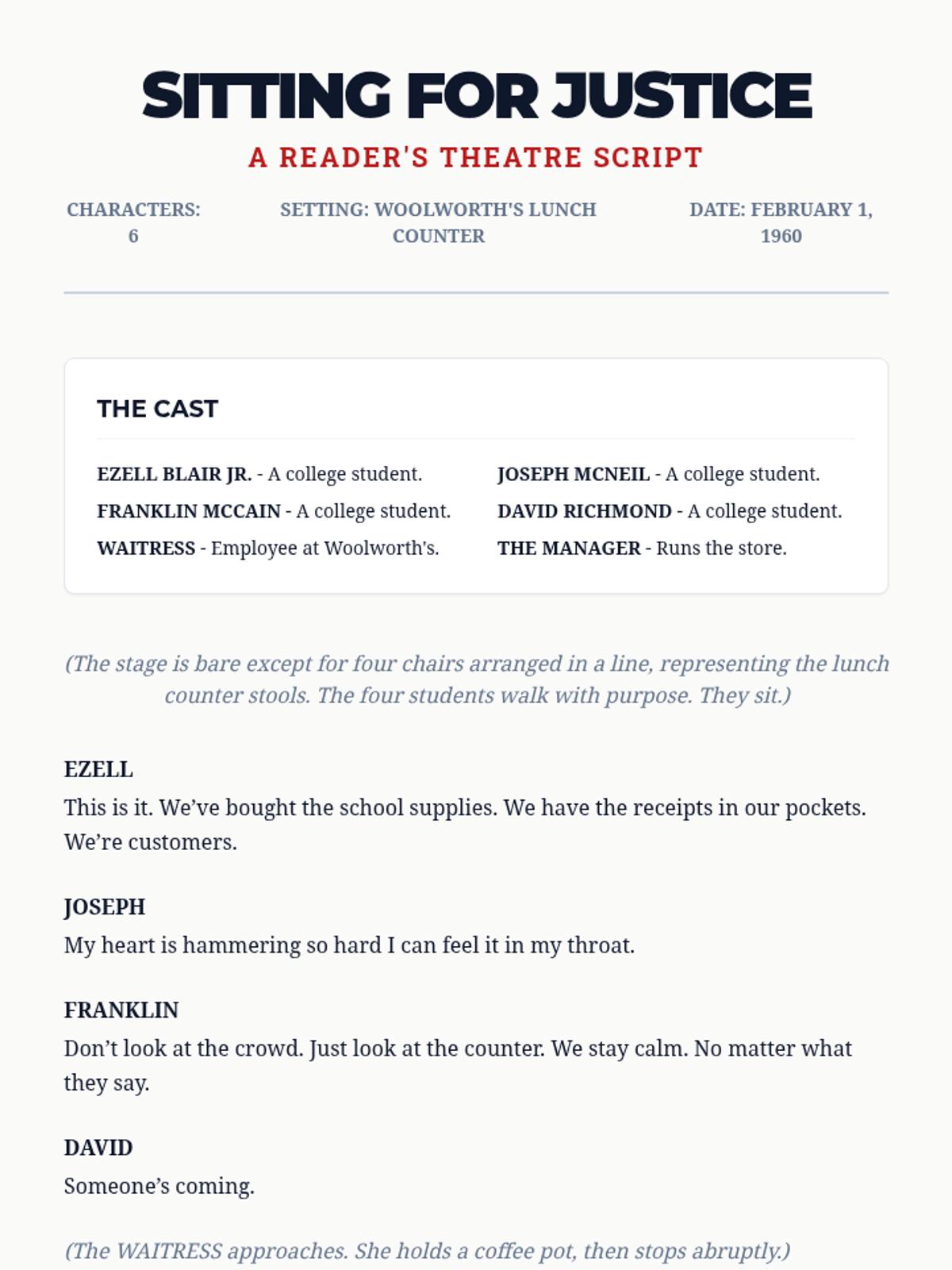
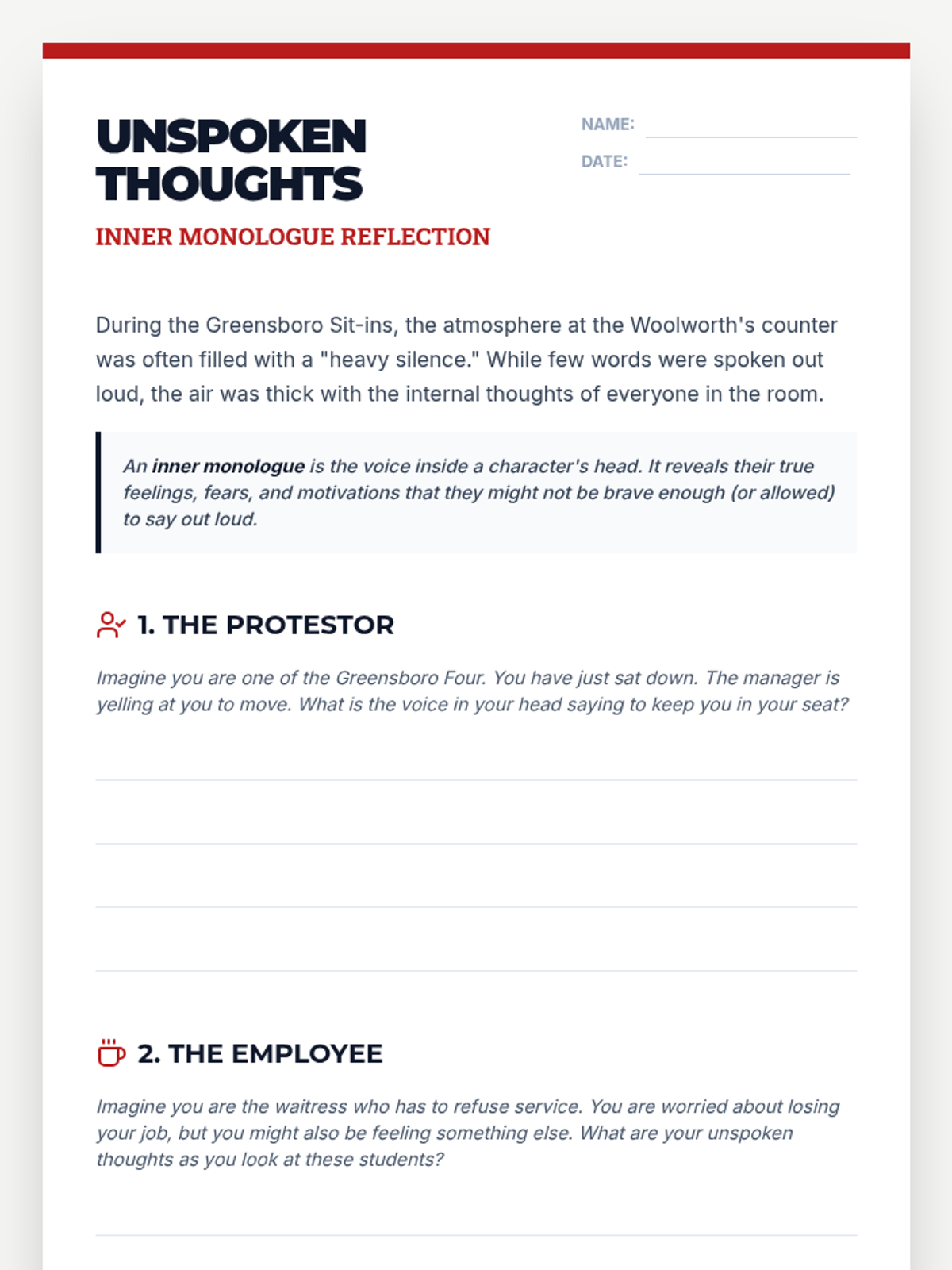
Students explore the historical significance and emotional weight of the Greensboro Sit-ins through drama-based activities and historical analysis, focusing on the theme of courage.
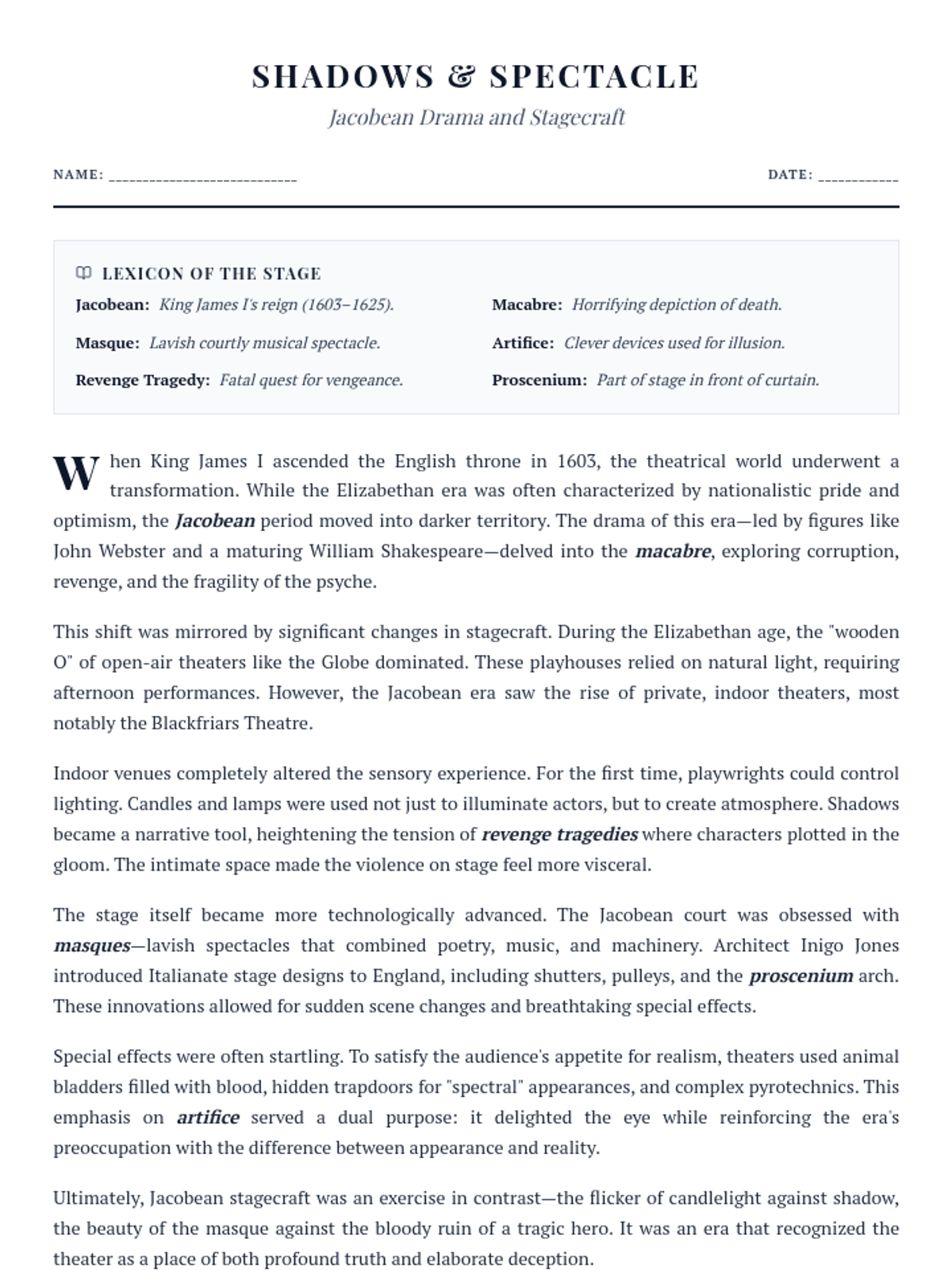
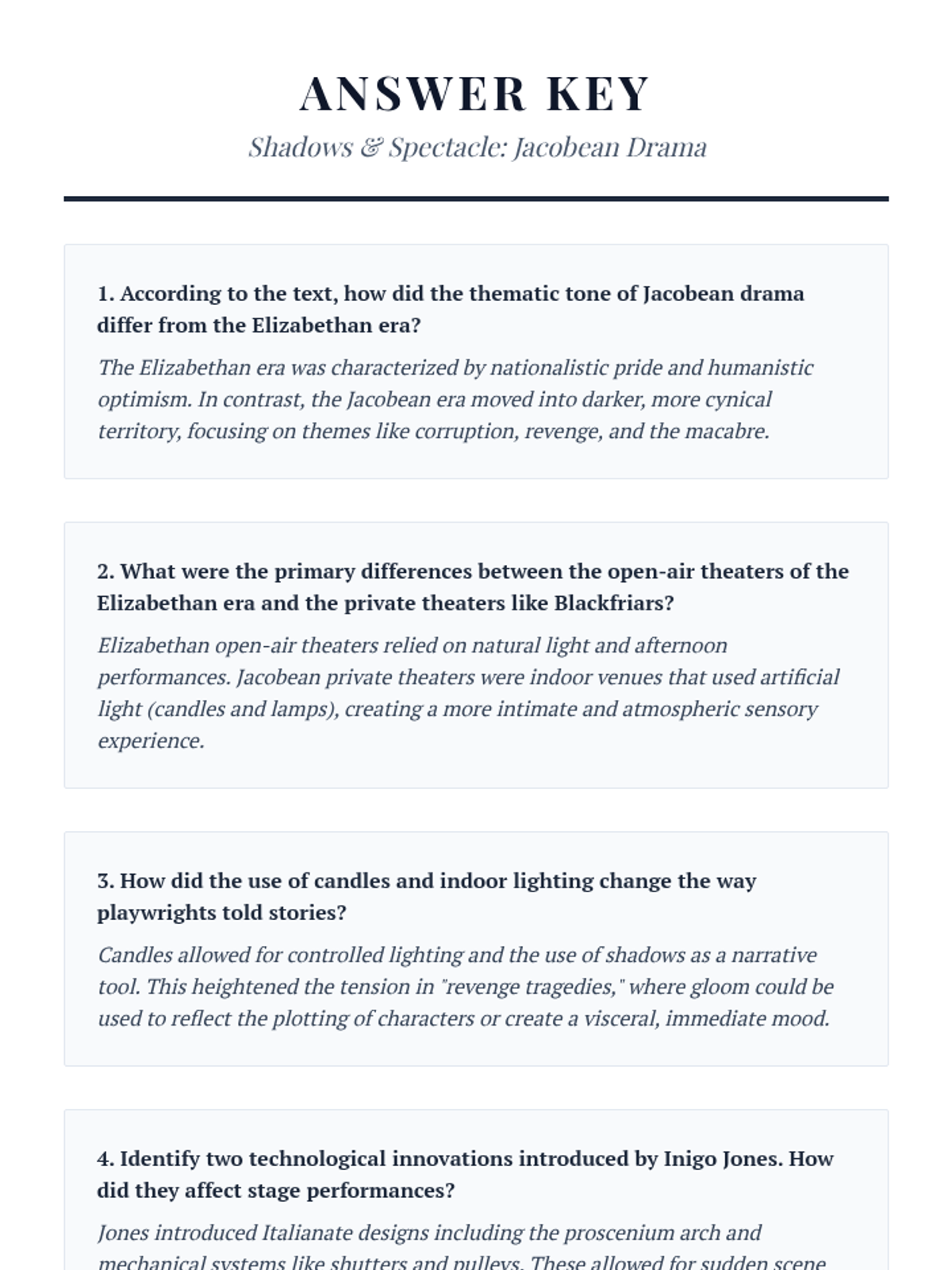
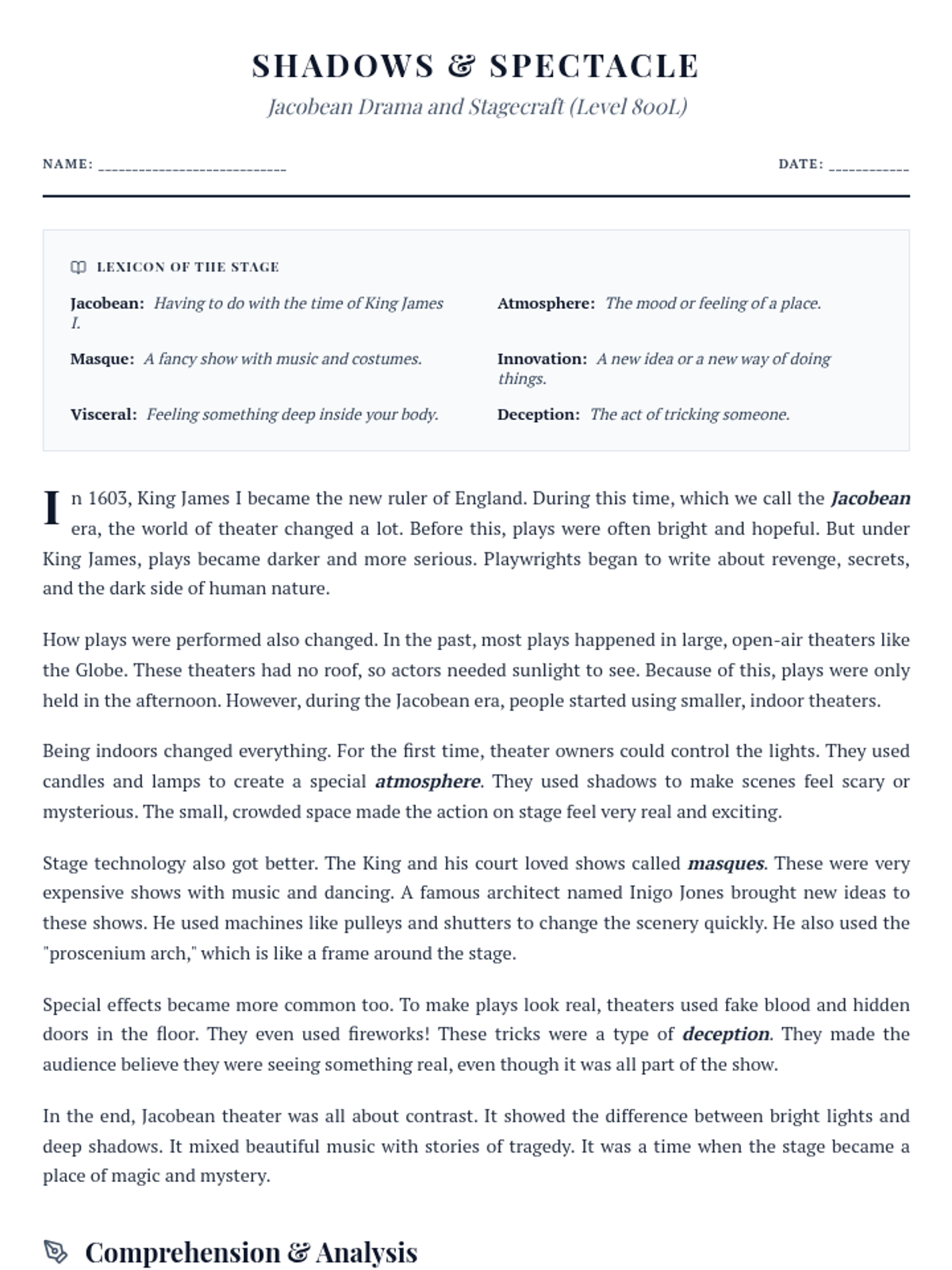
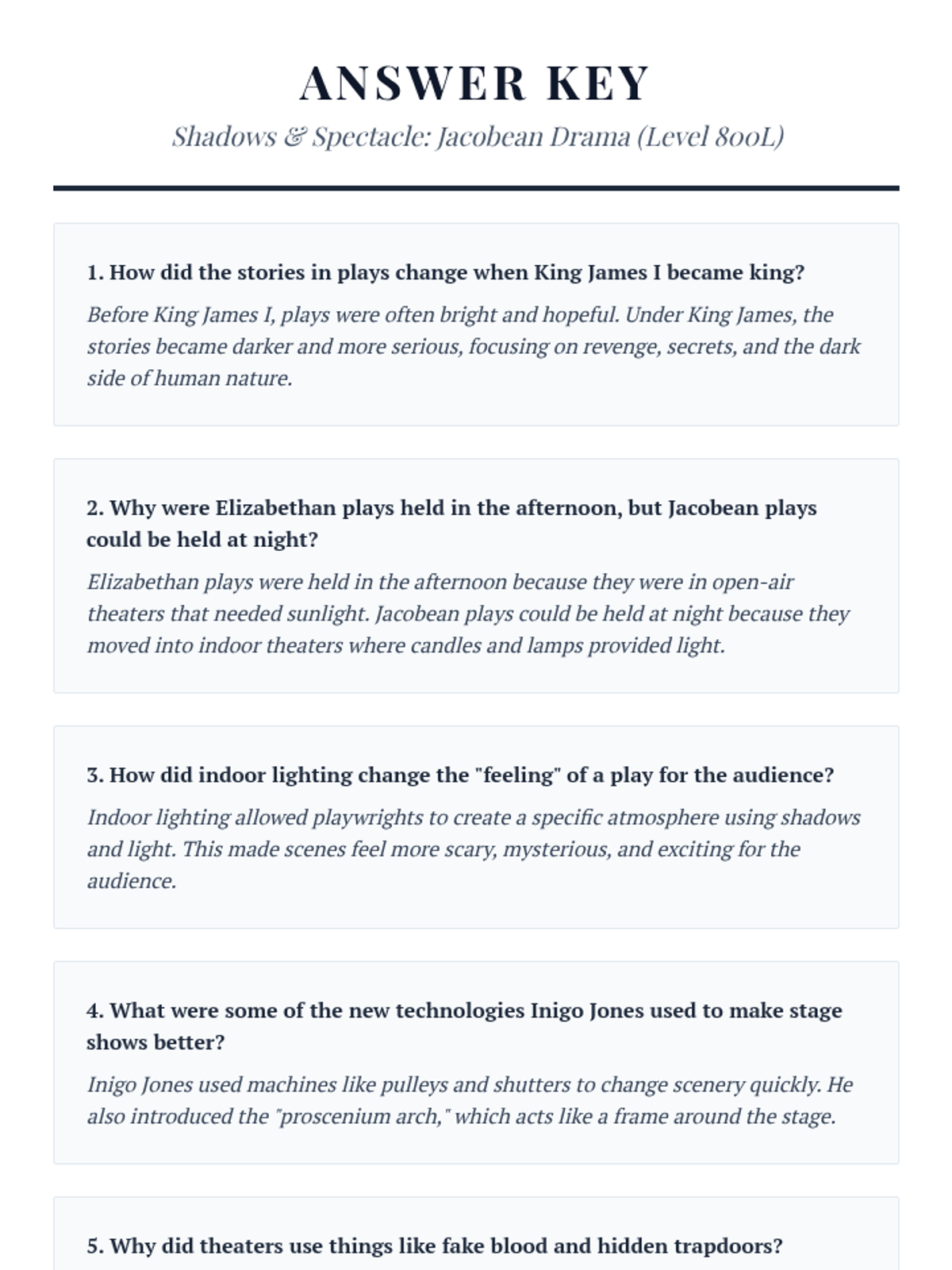
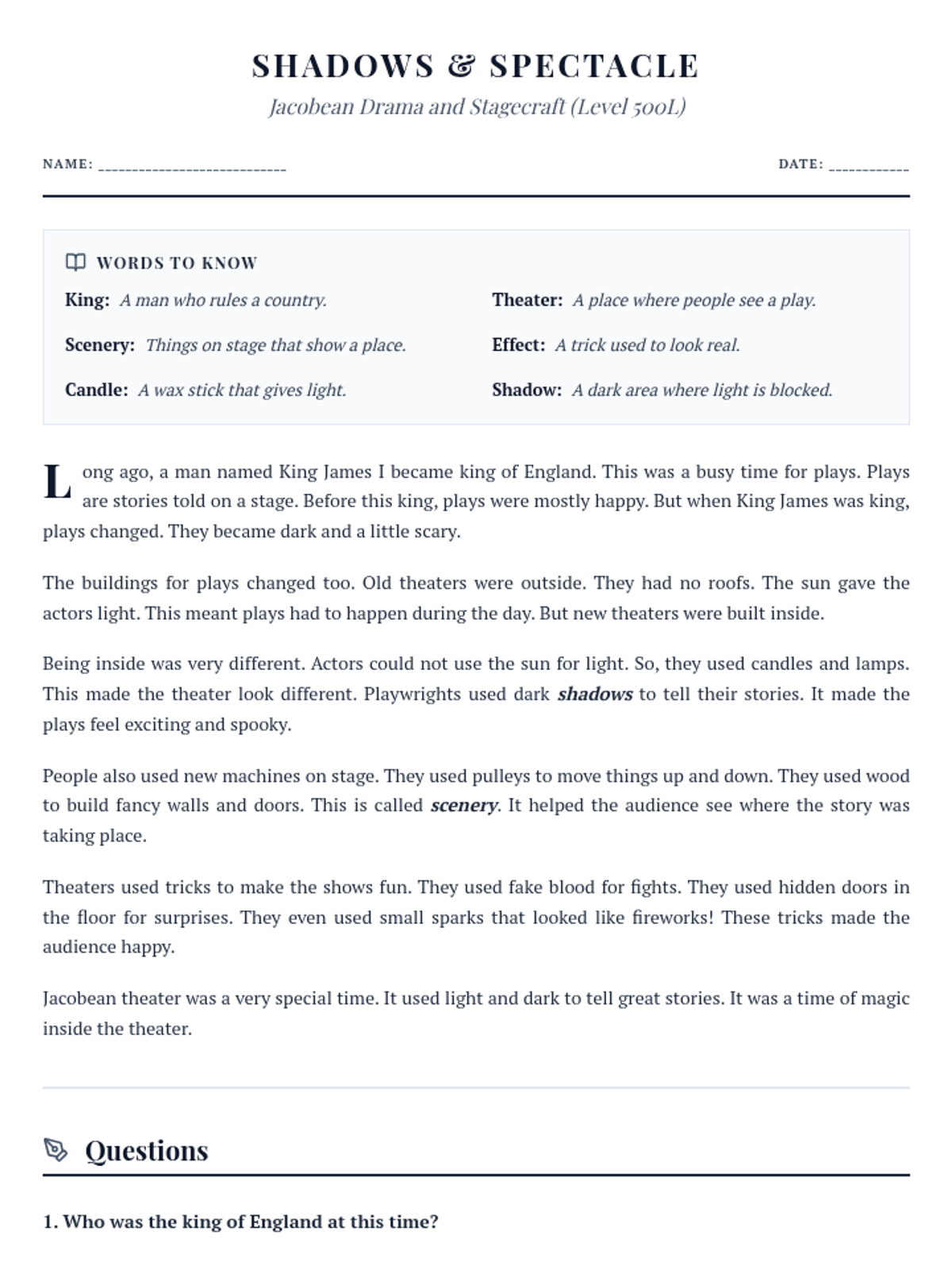
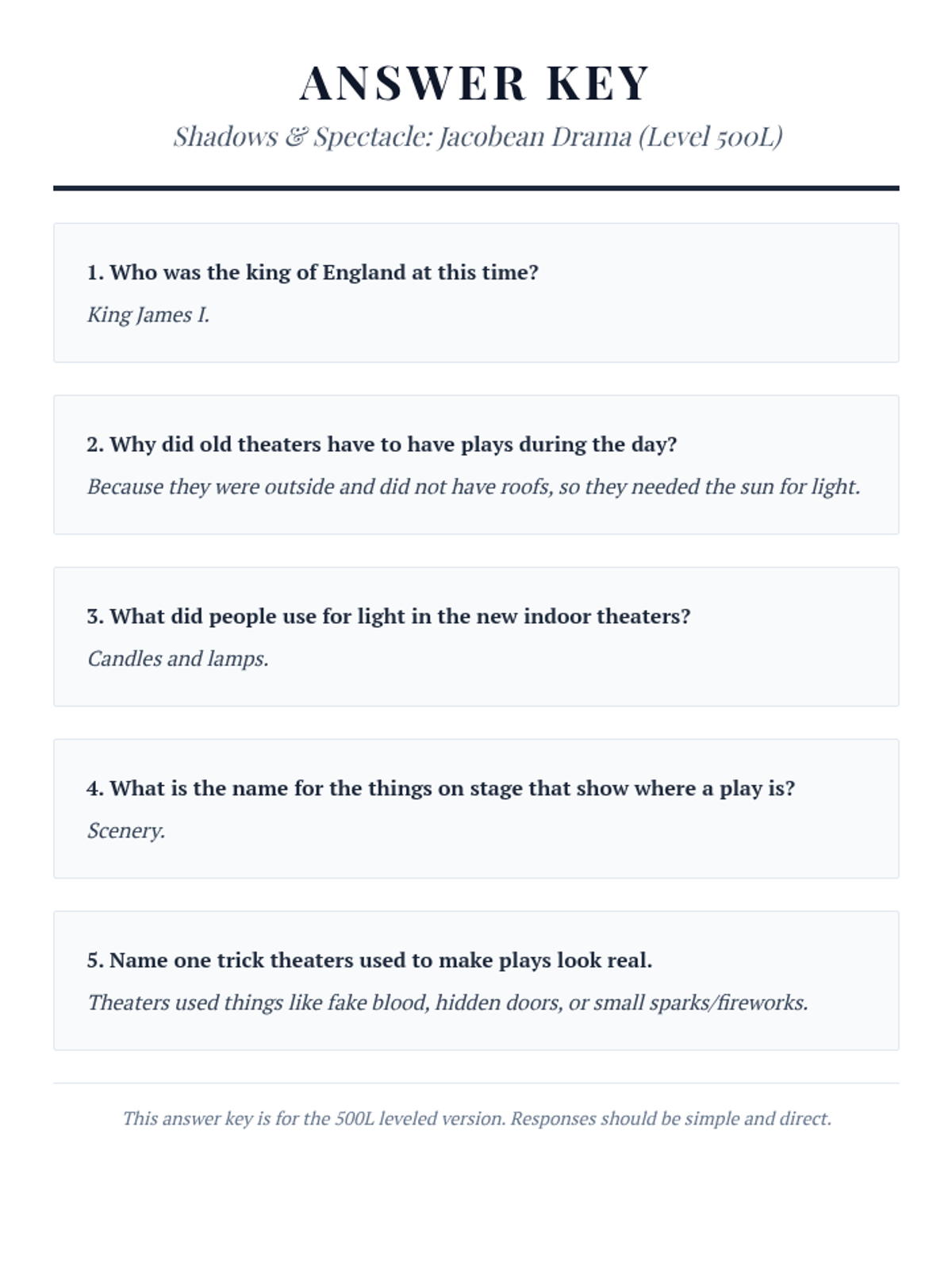
A lesson exploring the evolution of English theater during the reign of King James I, focusing on stagecraft, darker themes, and the transition to indoor performance spaces.
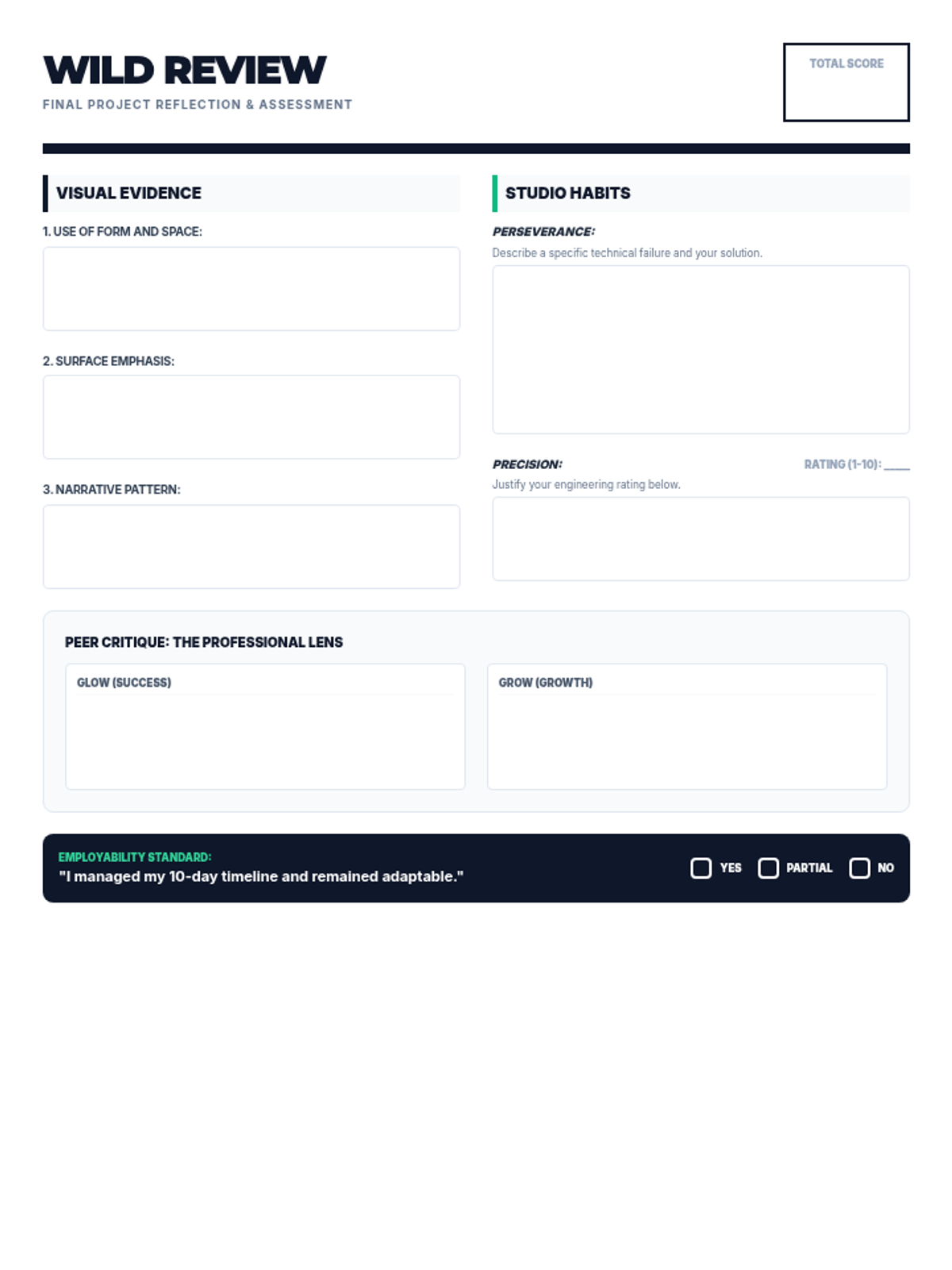
Applying color, texture, and detail using acrylics and paint markers, followed by a final project reflection.
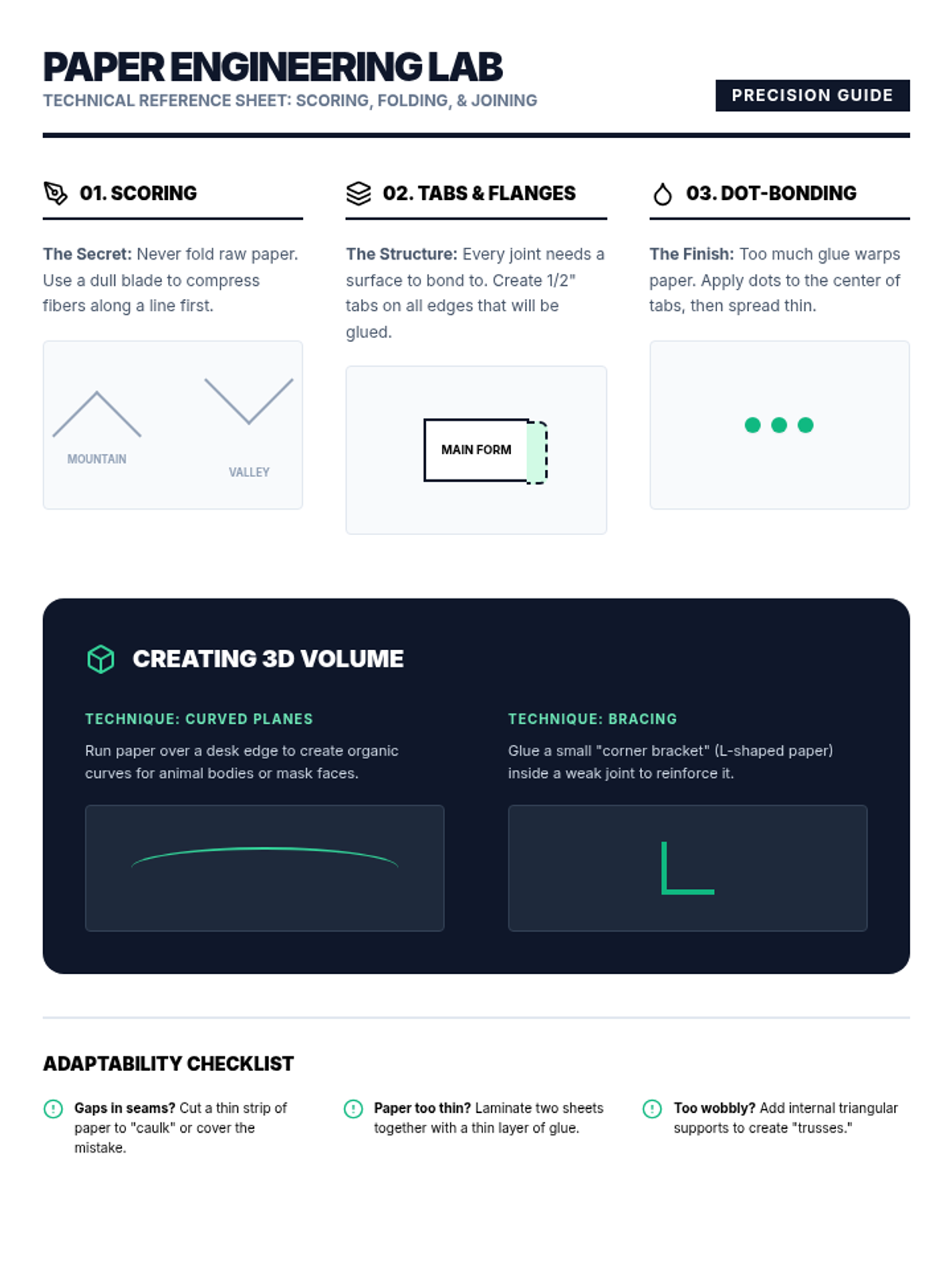
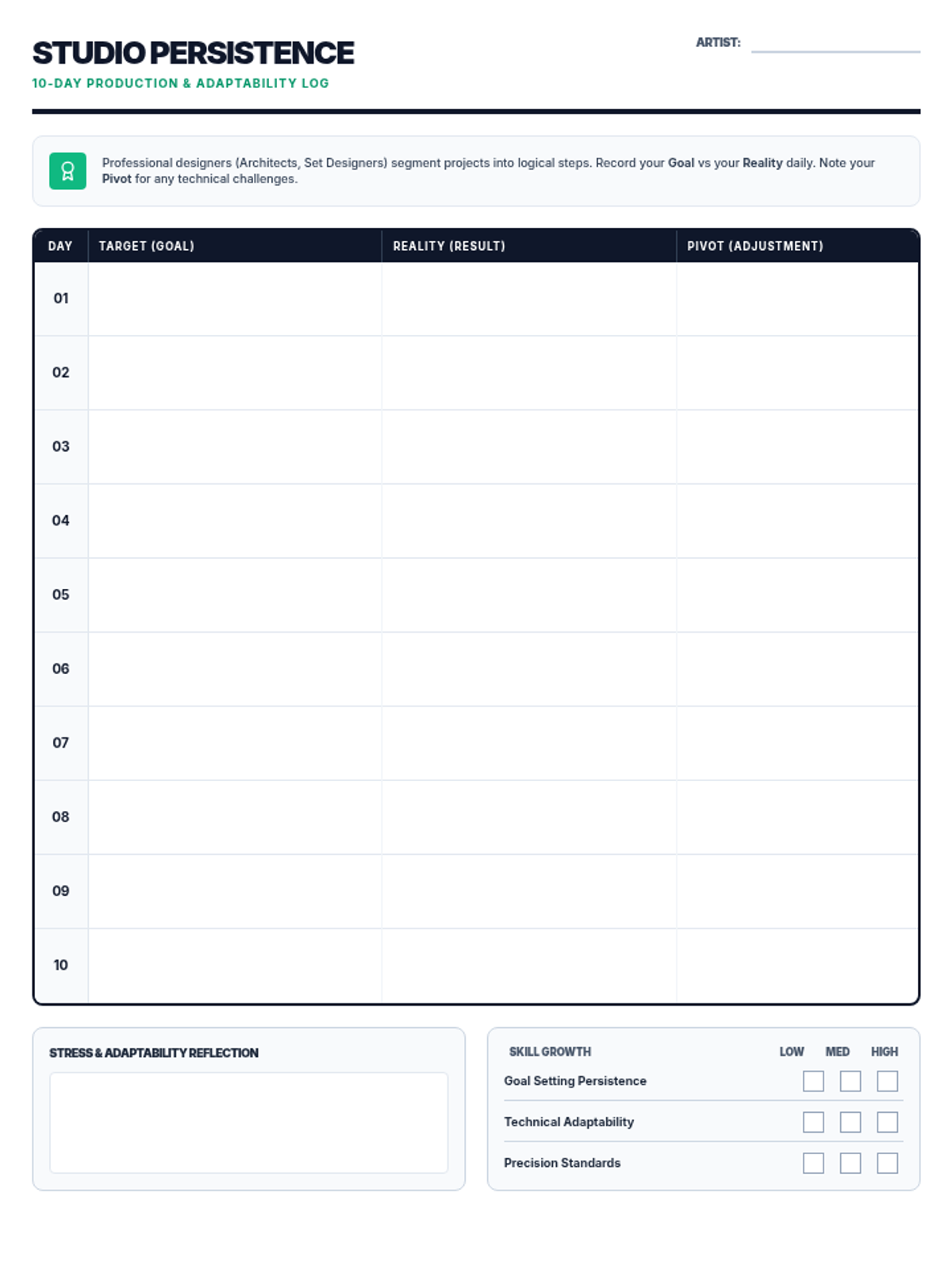
Building the 3D form using advanced folding, scoring, and attachment techniques while practicing studio habits and perseverance.
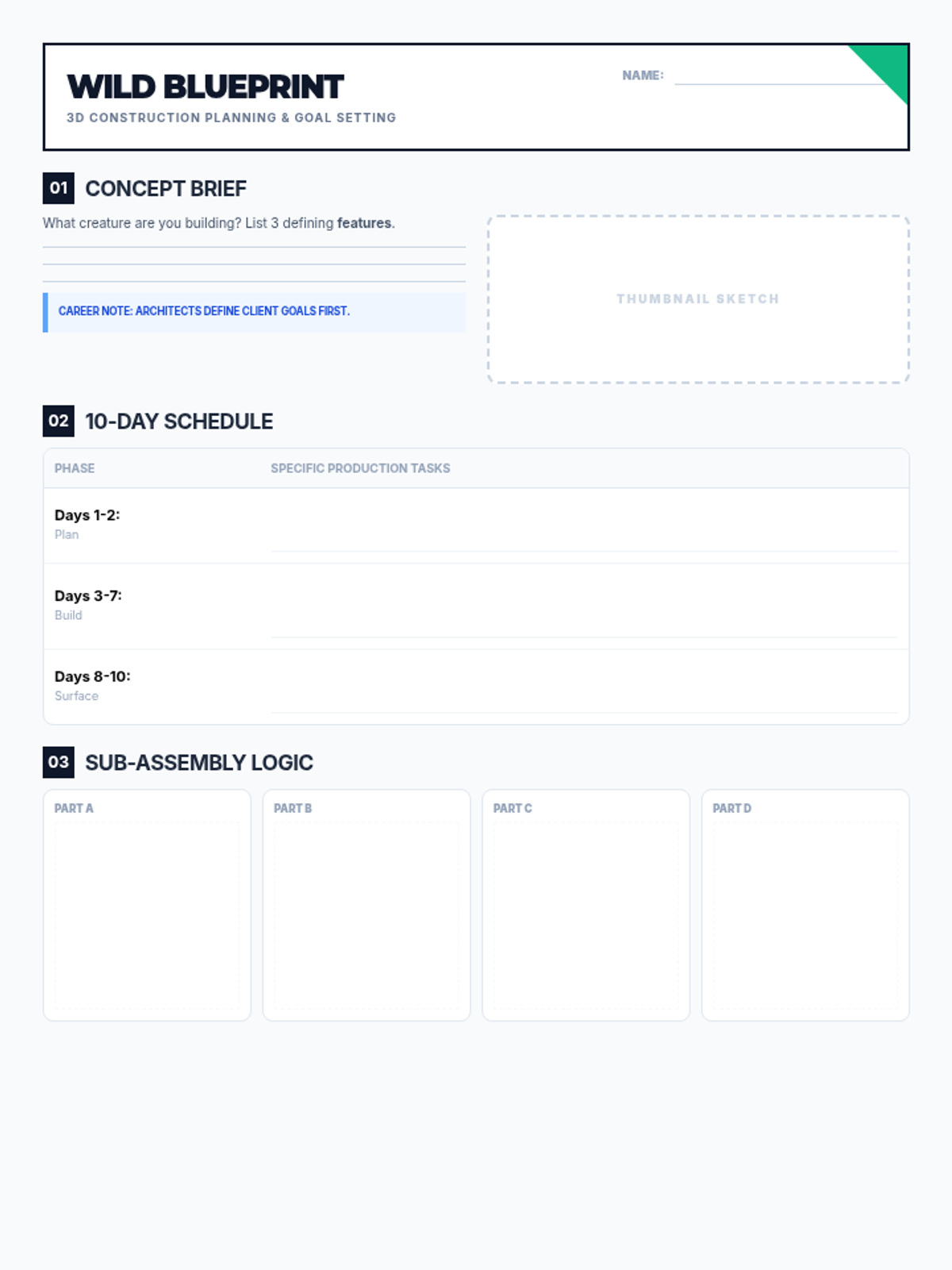
Introduction to paper engineering techniques, career applications, and project planning for 3D paper animal or mask construction.
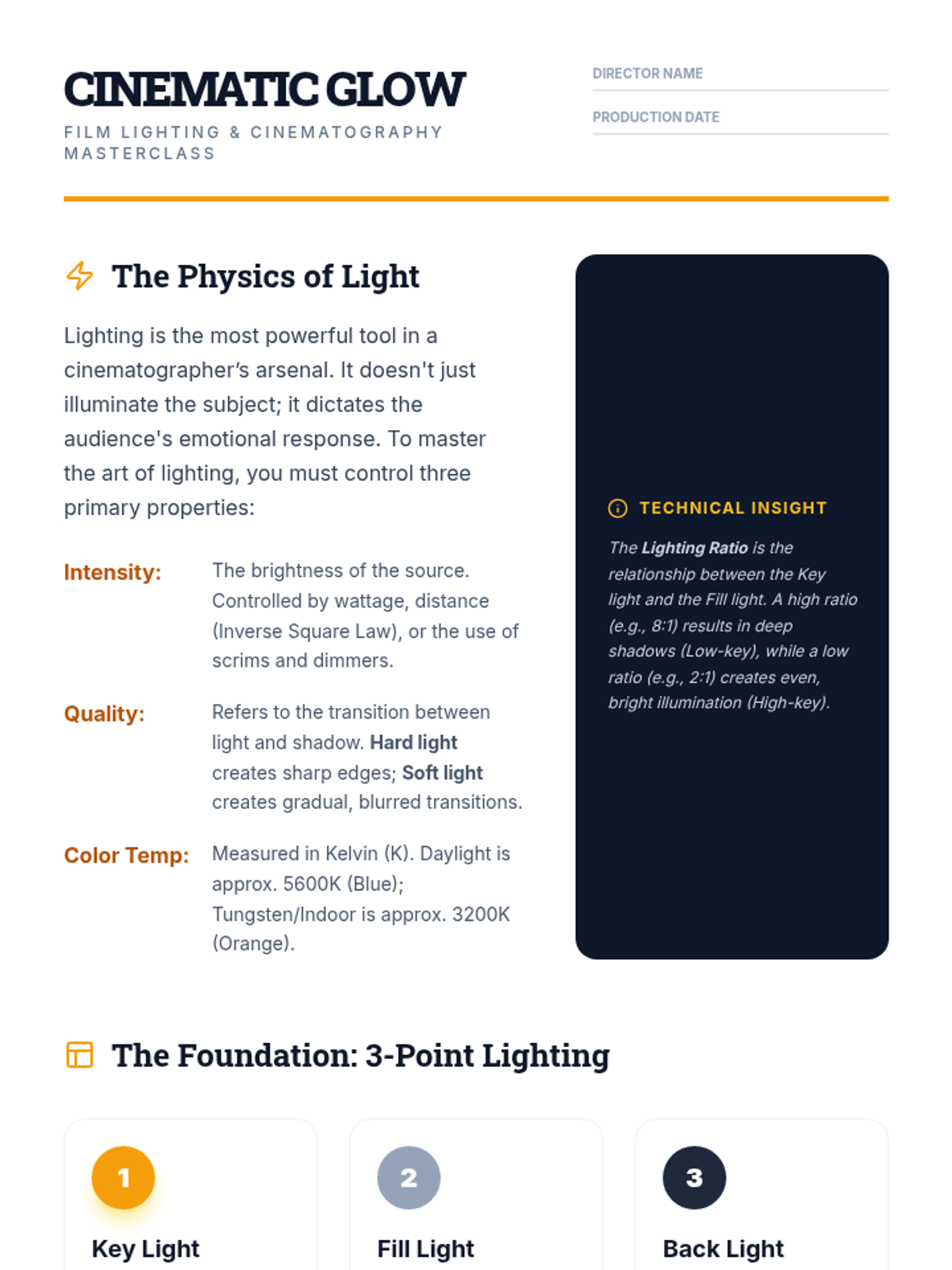
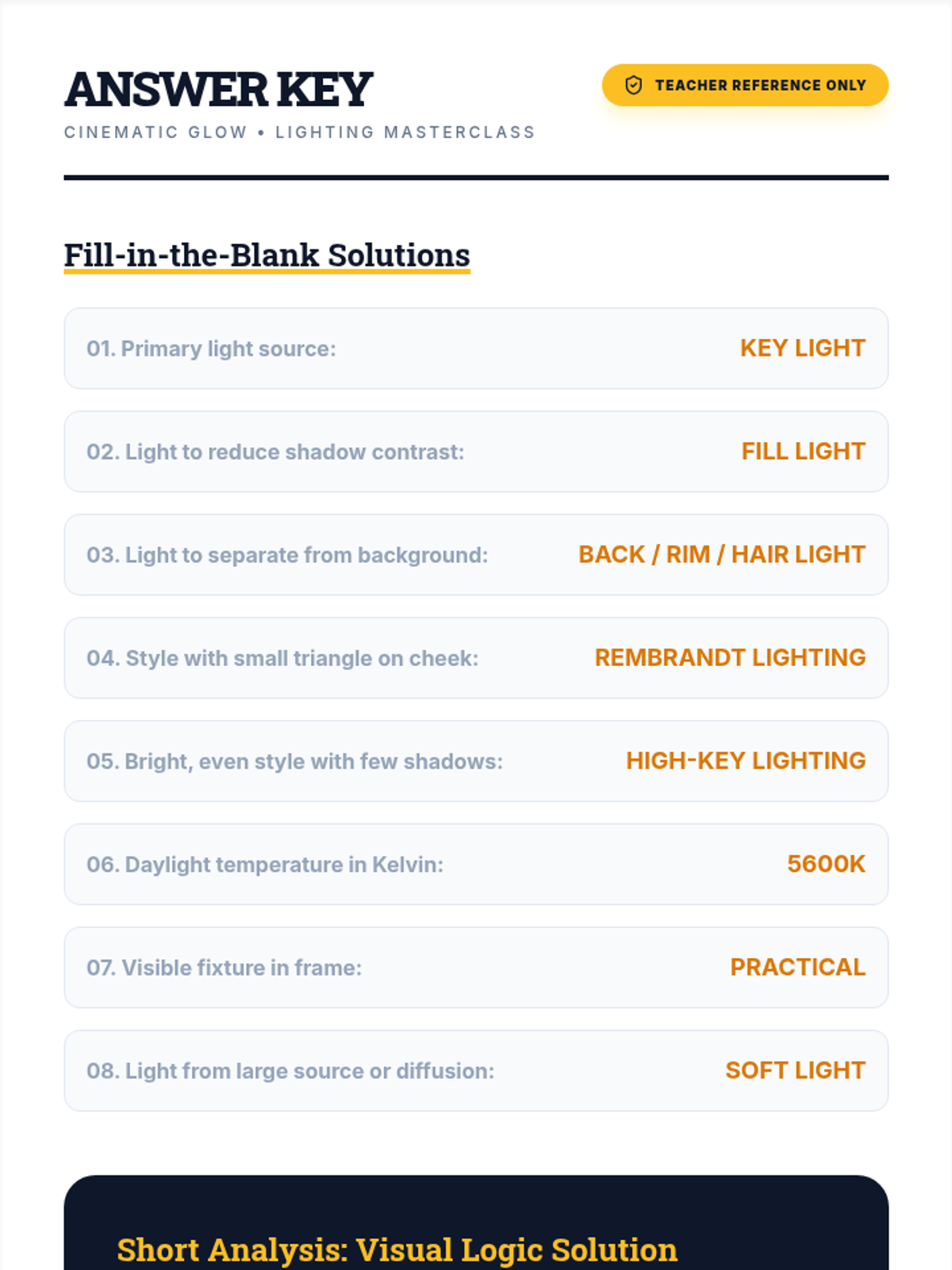
A deep dive into cinematic lighting, from the physics of light and 3-point setups to professional styles like Rembrandt and Butterfly lighting, including a hands-on assessment.
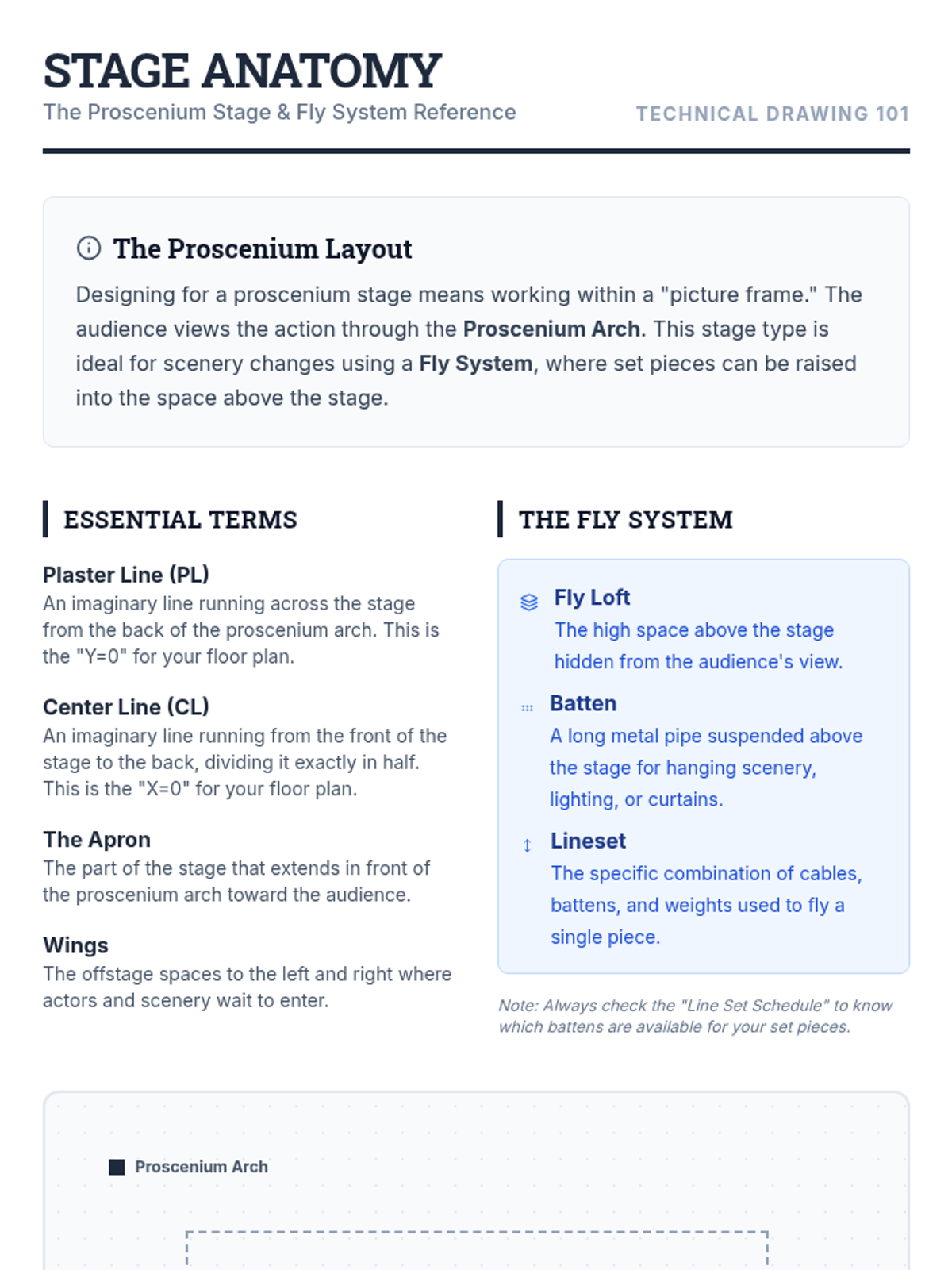
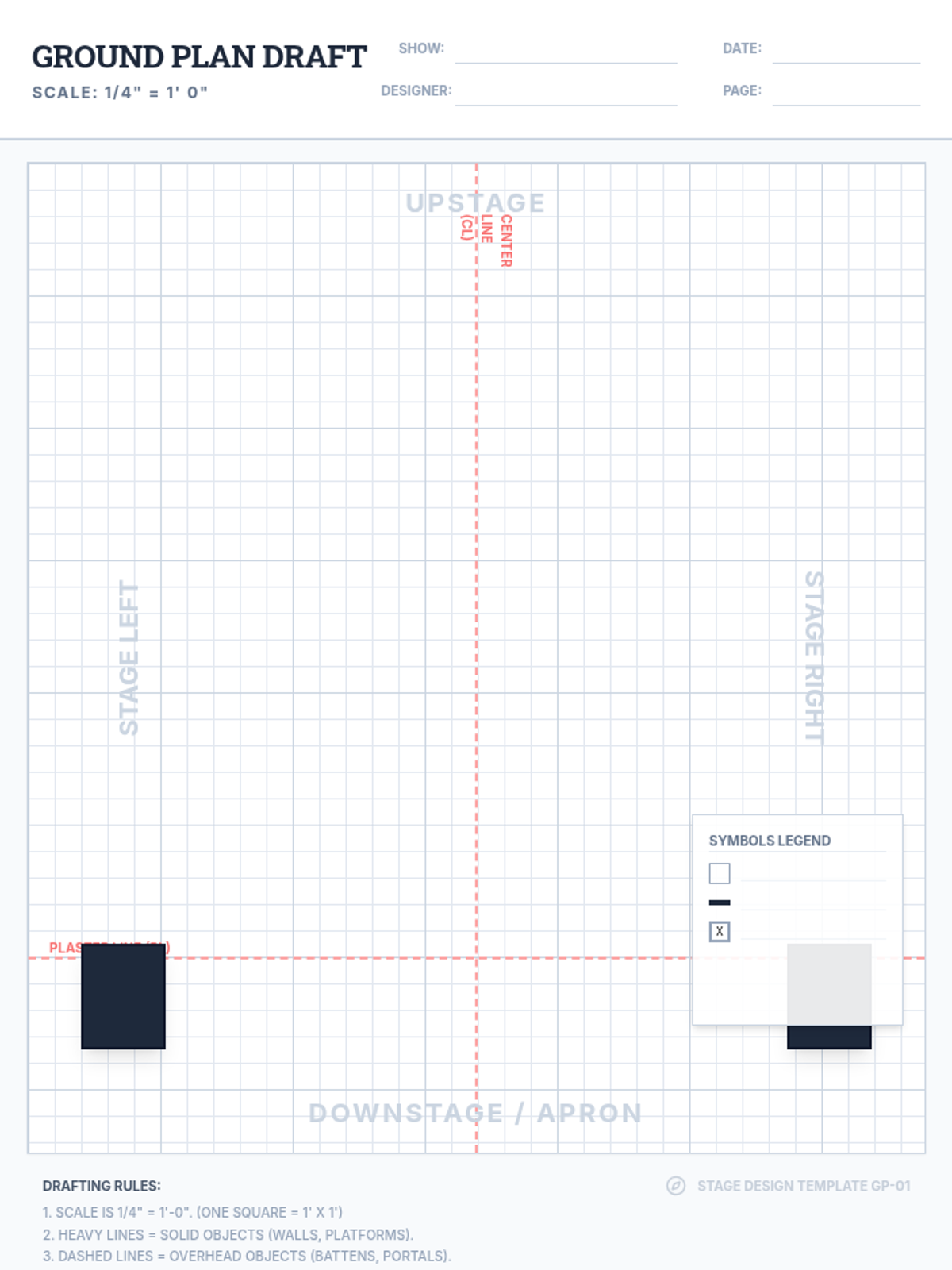
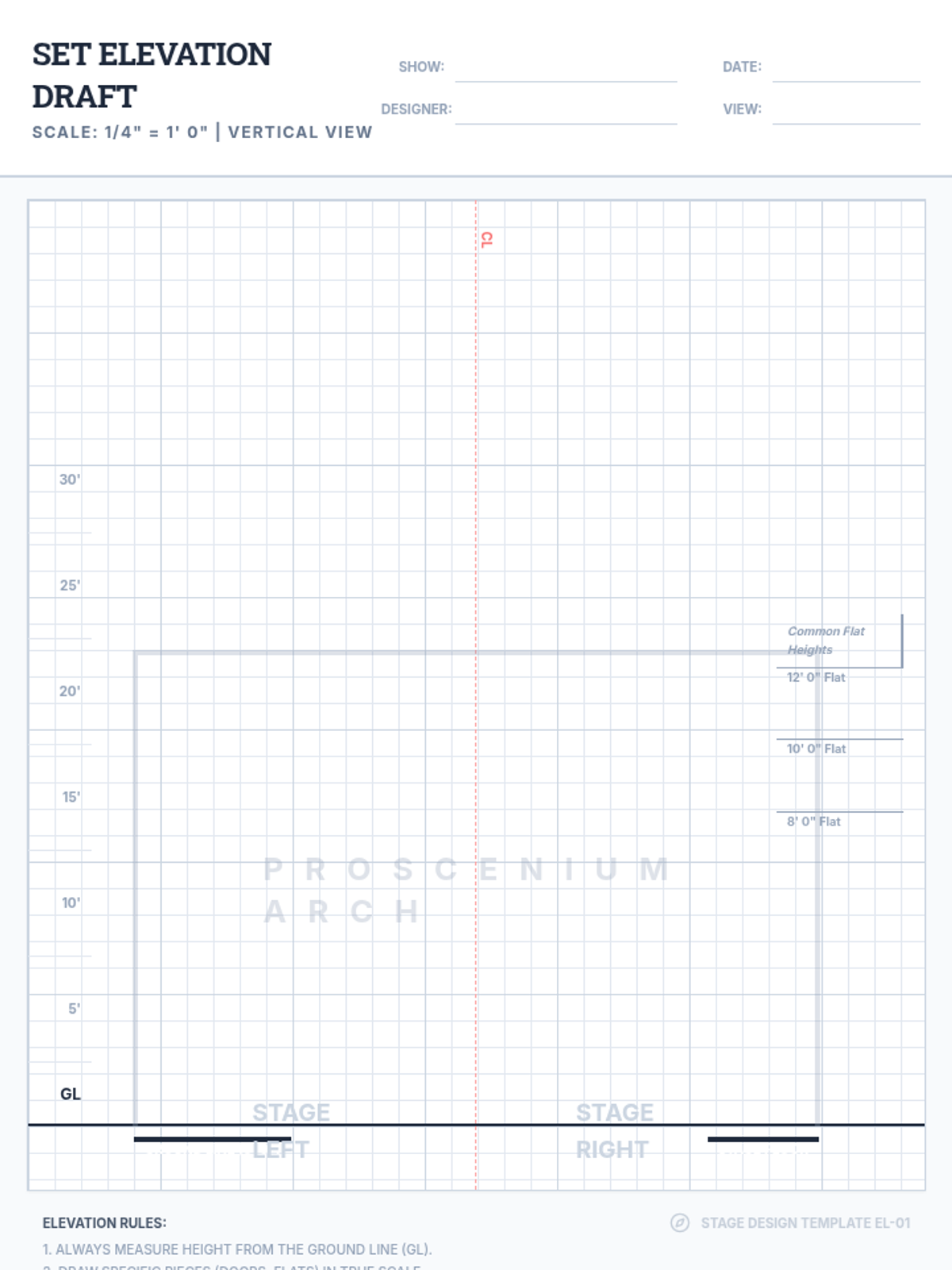
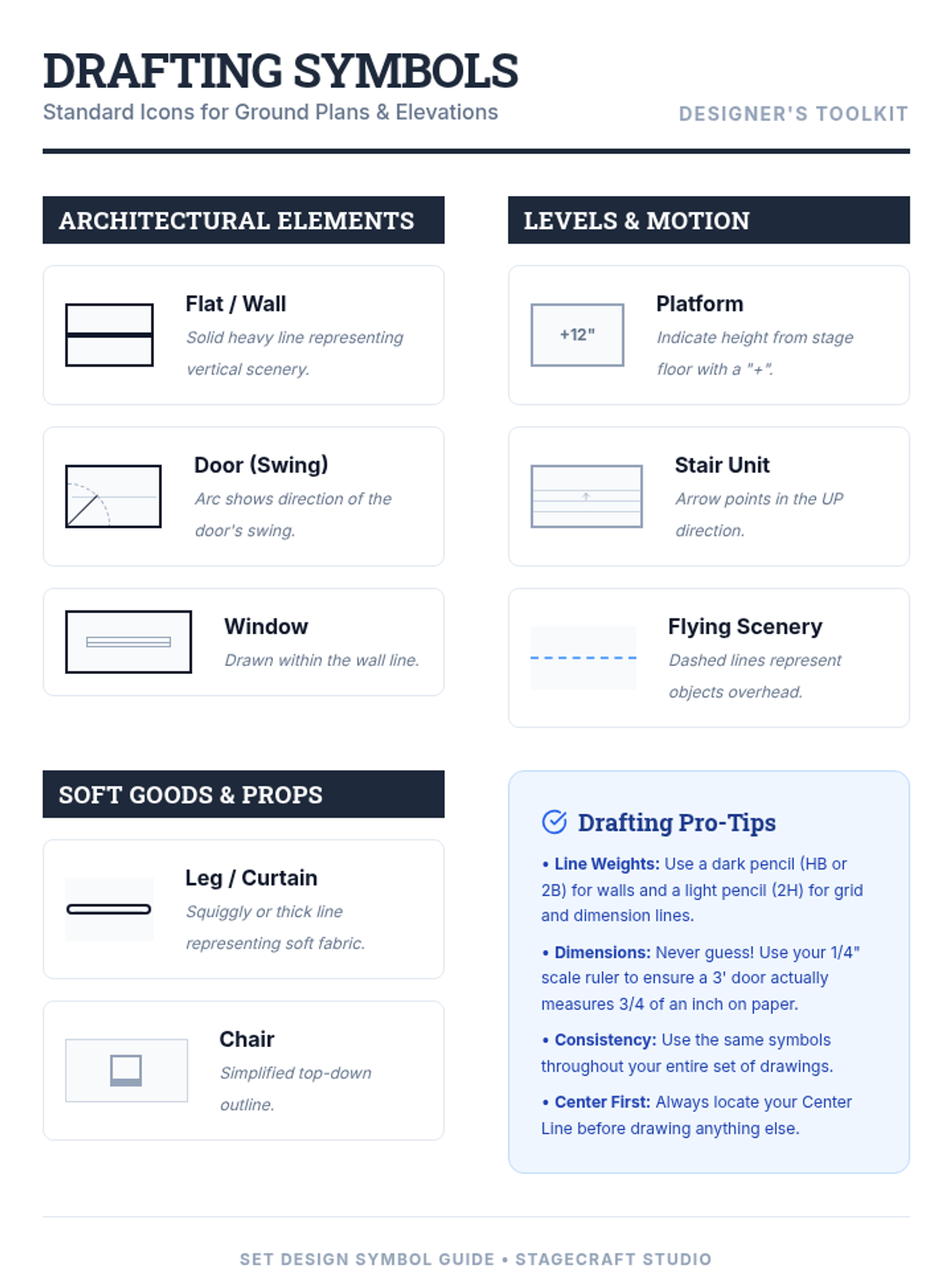
A comprehensive set of technical drawing templates and reference guides for theatrical set design. This lesson focuses on the proscenium stage and fly system, providing students with the professional tools needed to create ground plans and elevations.
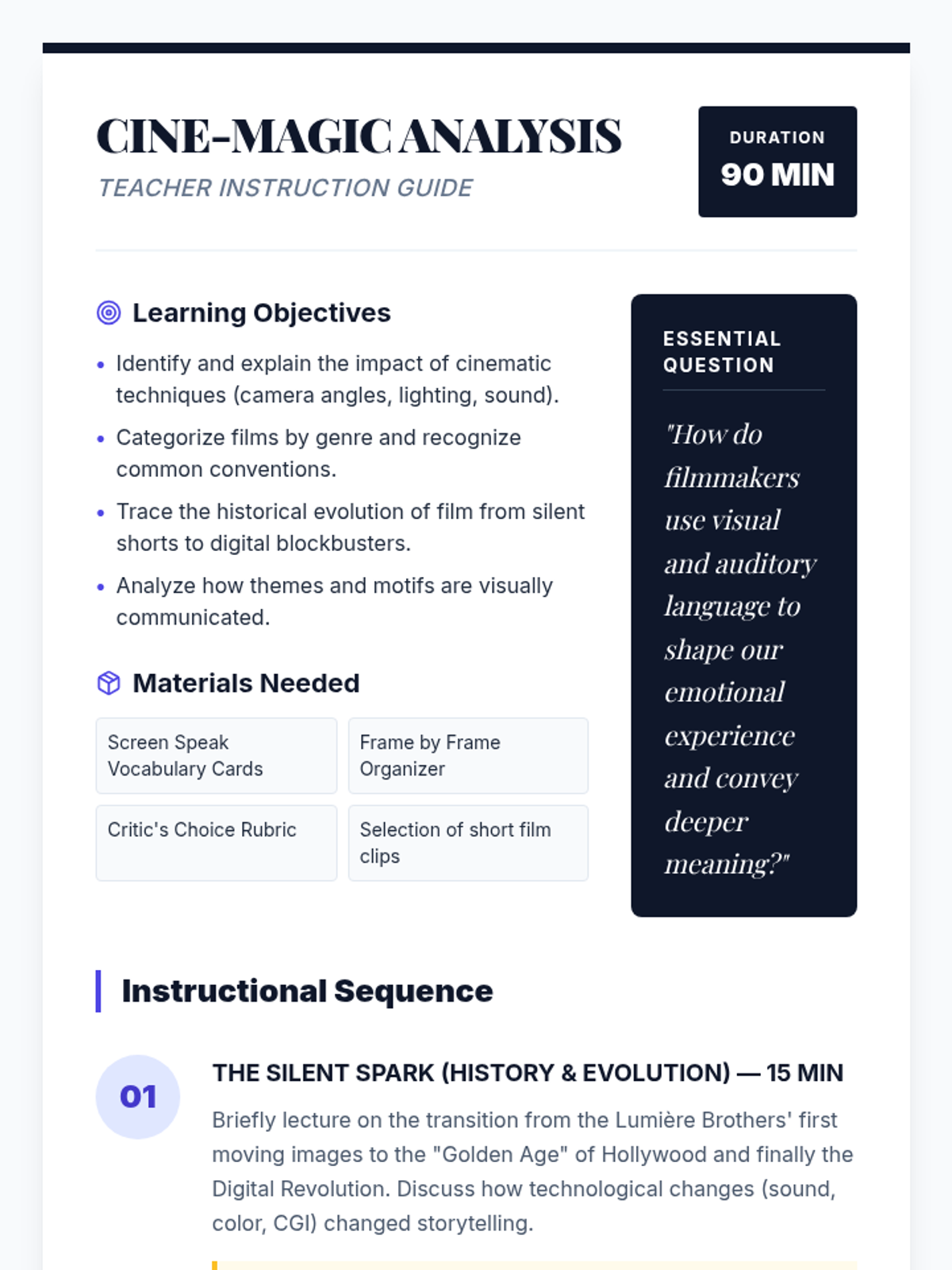
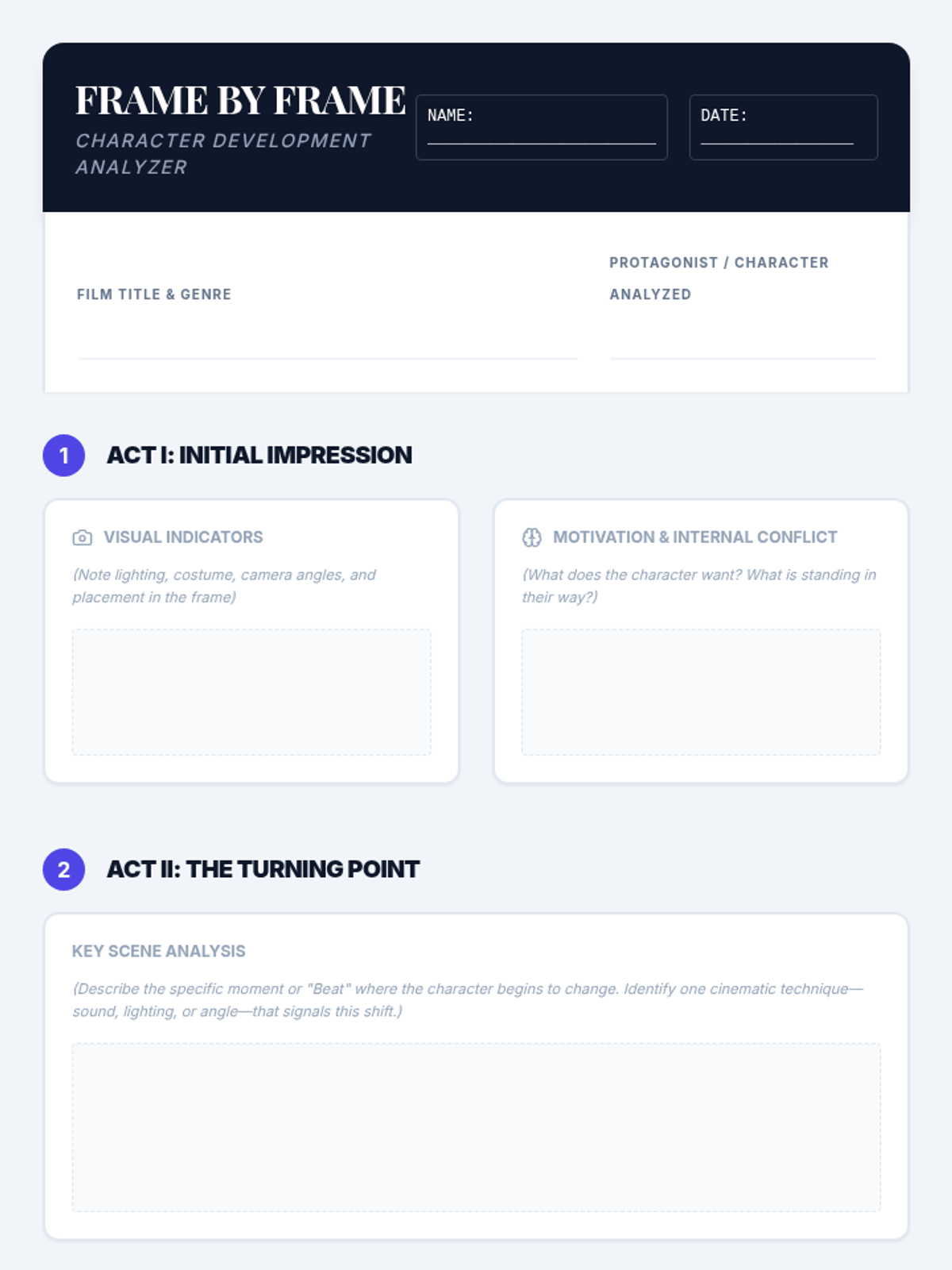
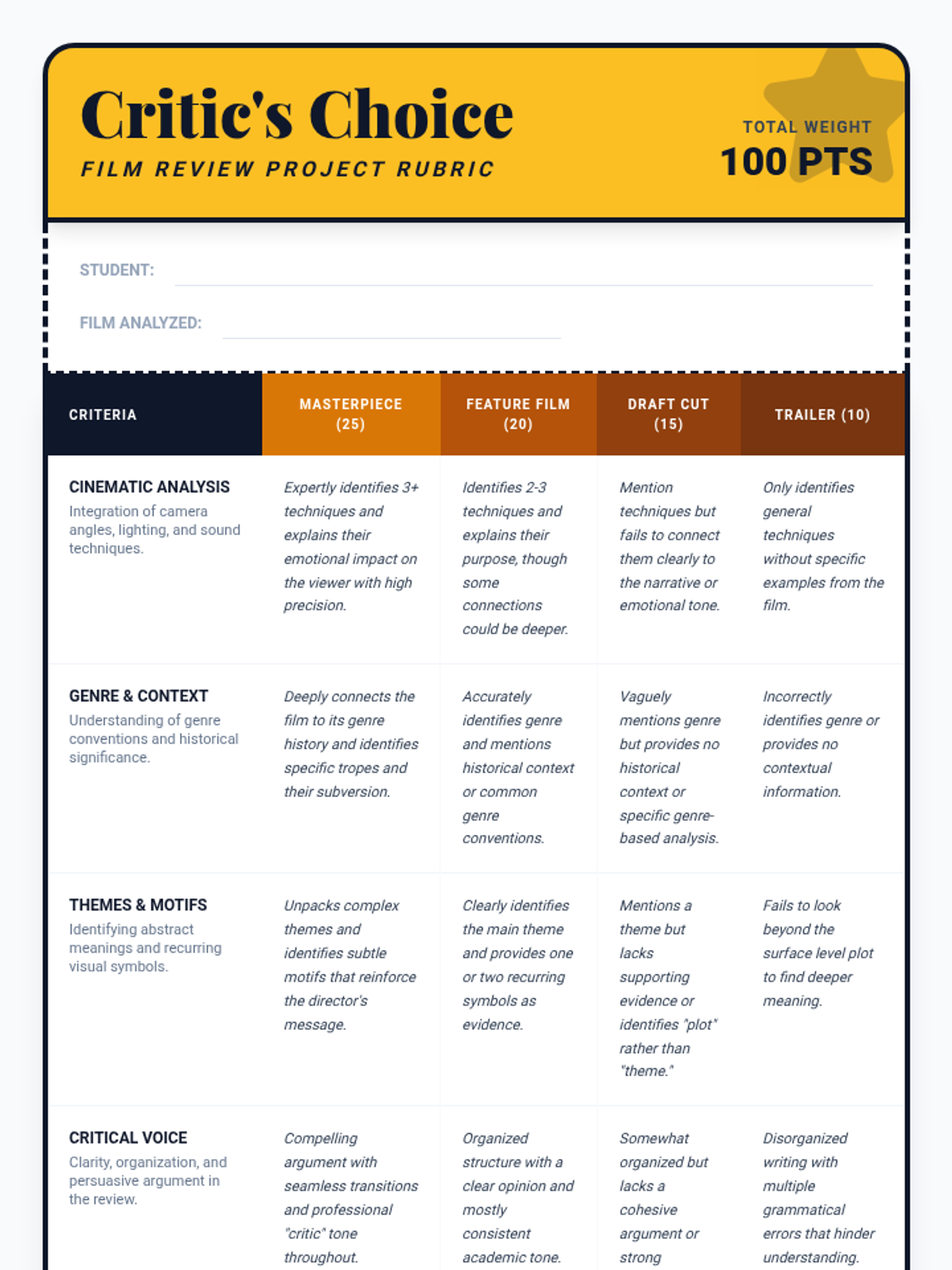
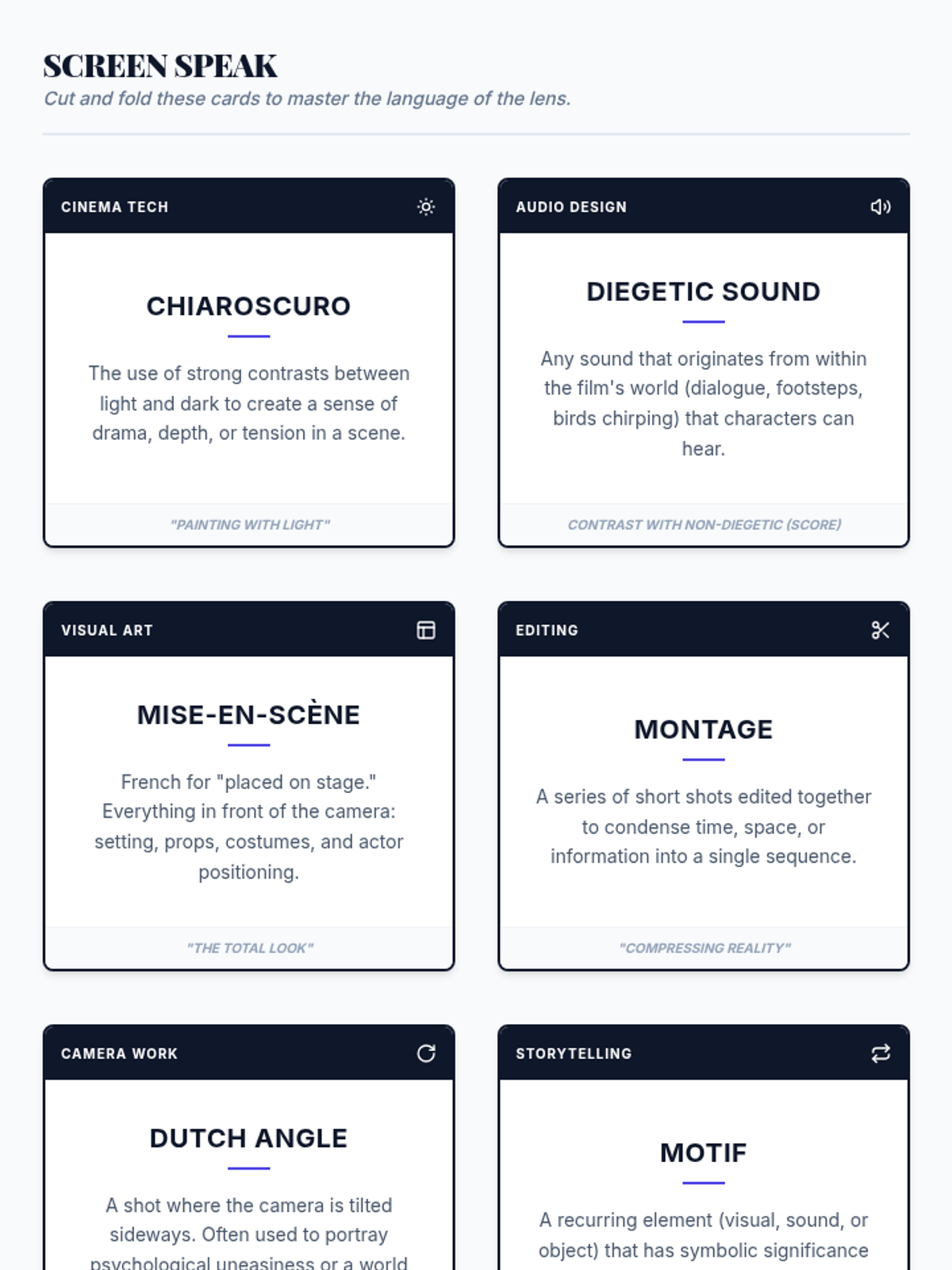
A comprehensive introduction to film analysis, covering cinematic techniques, genre studies, and historical evolution to help students decode the language of cinema.
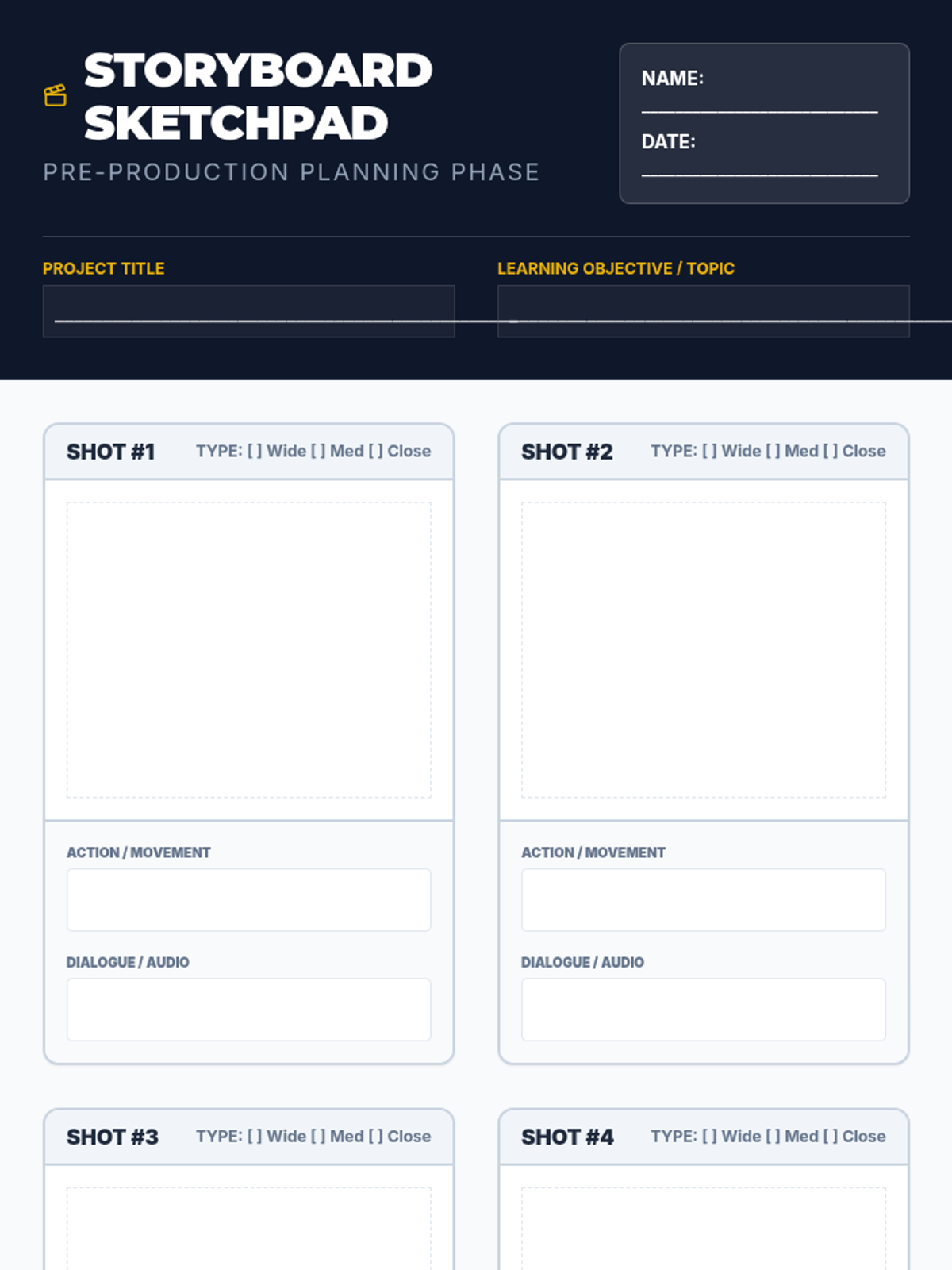
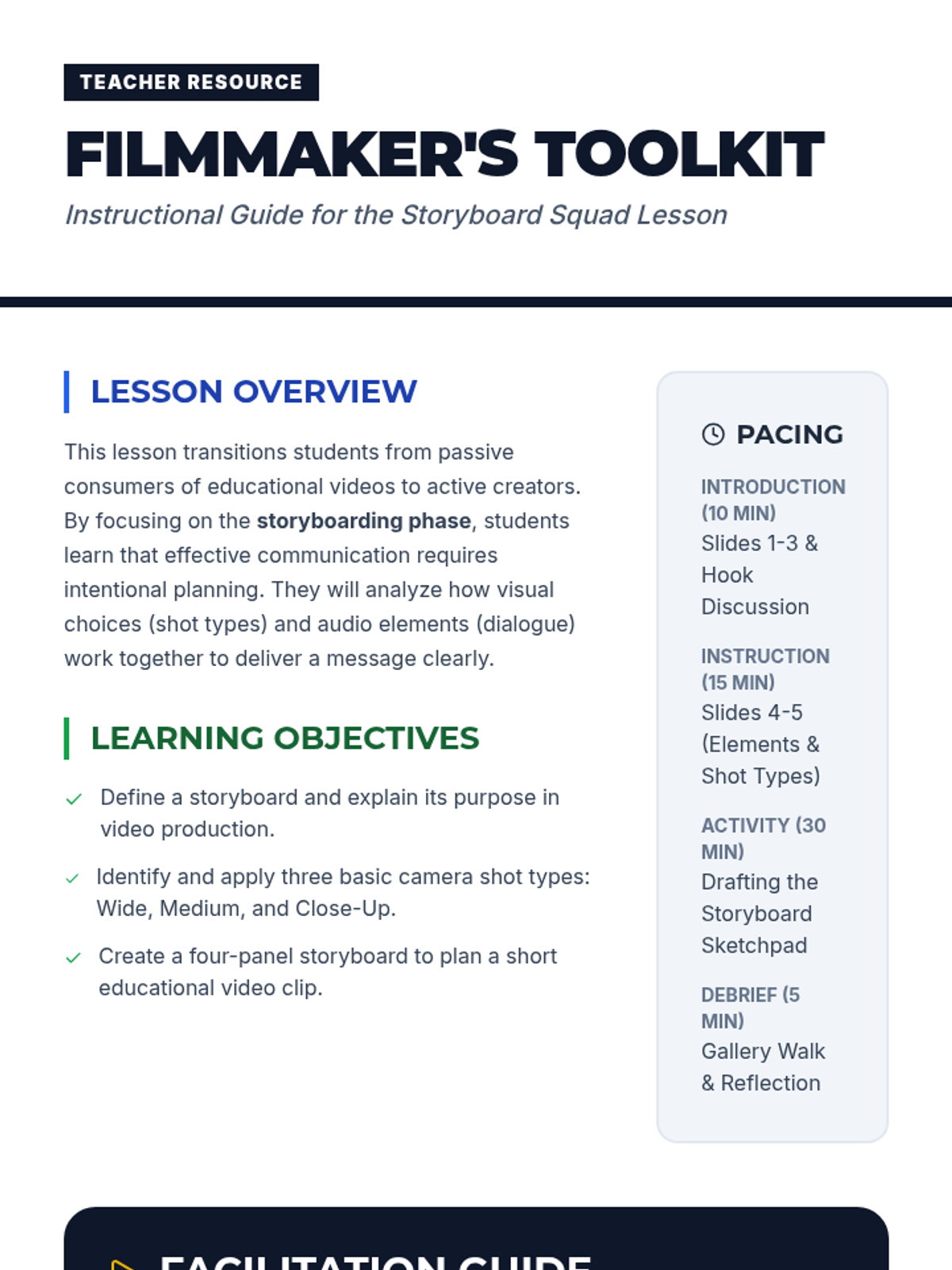
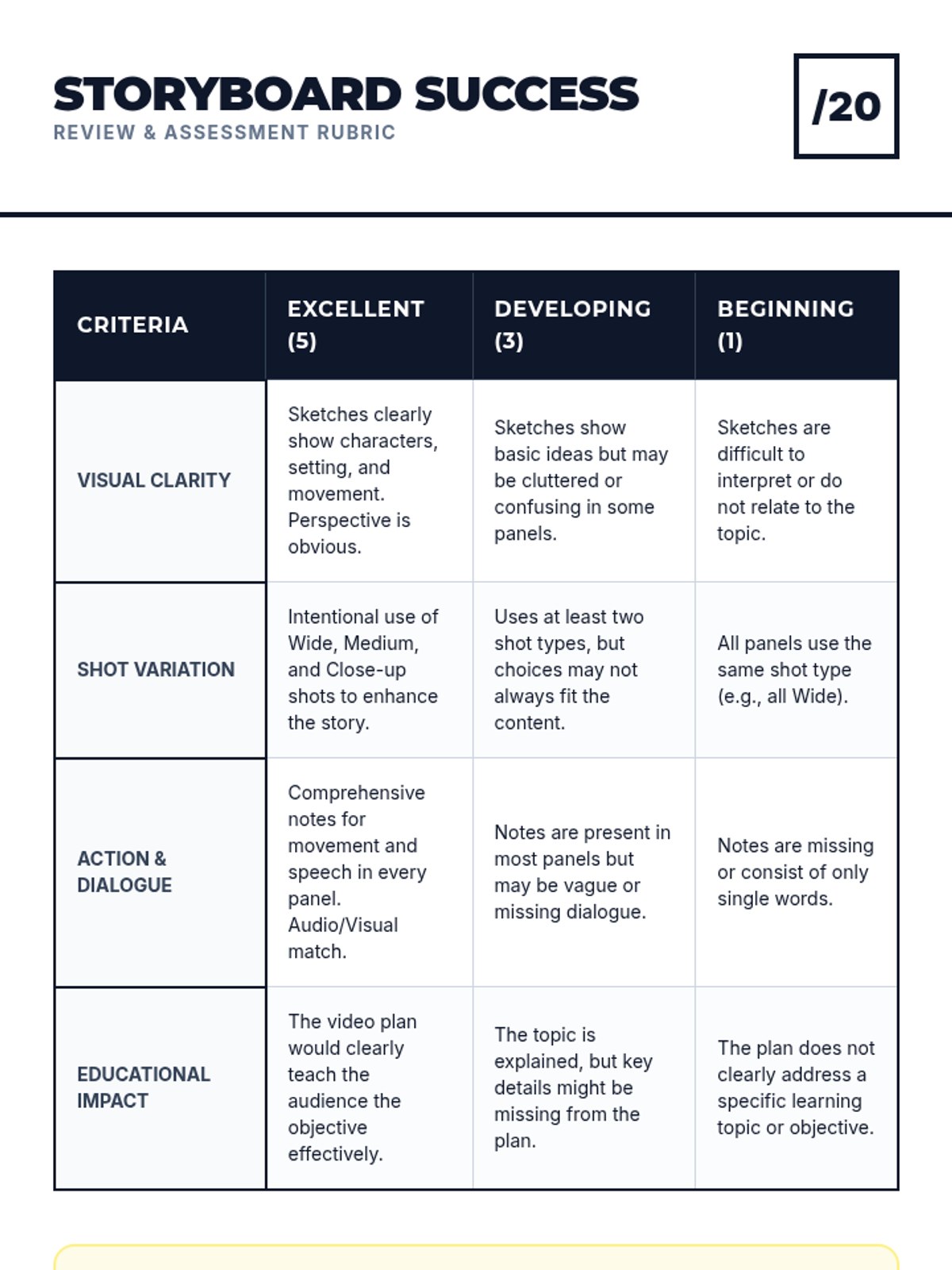
A comprehensive lesson on the art of storyboarding for short videos, teaching students how to translate their creative visions into structured visual plans. Students will learn the key elements of a storyboard and practice planning their own video production.
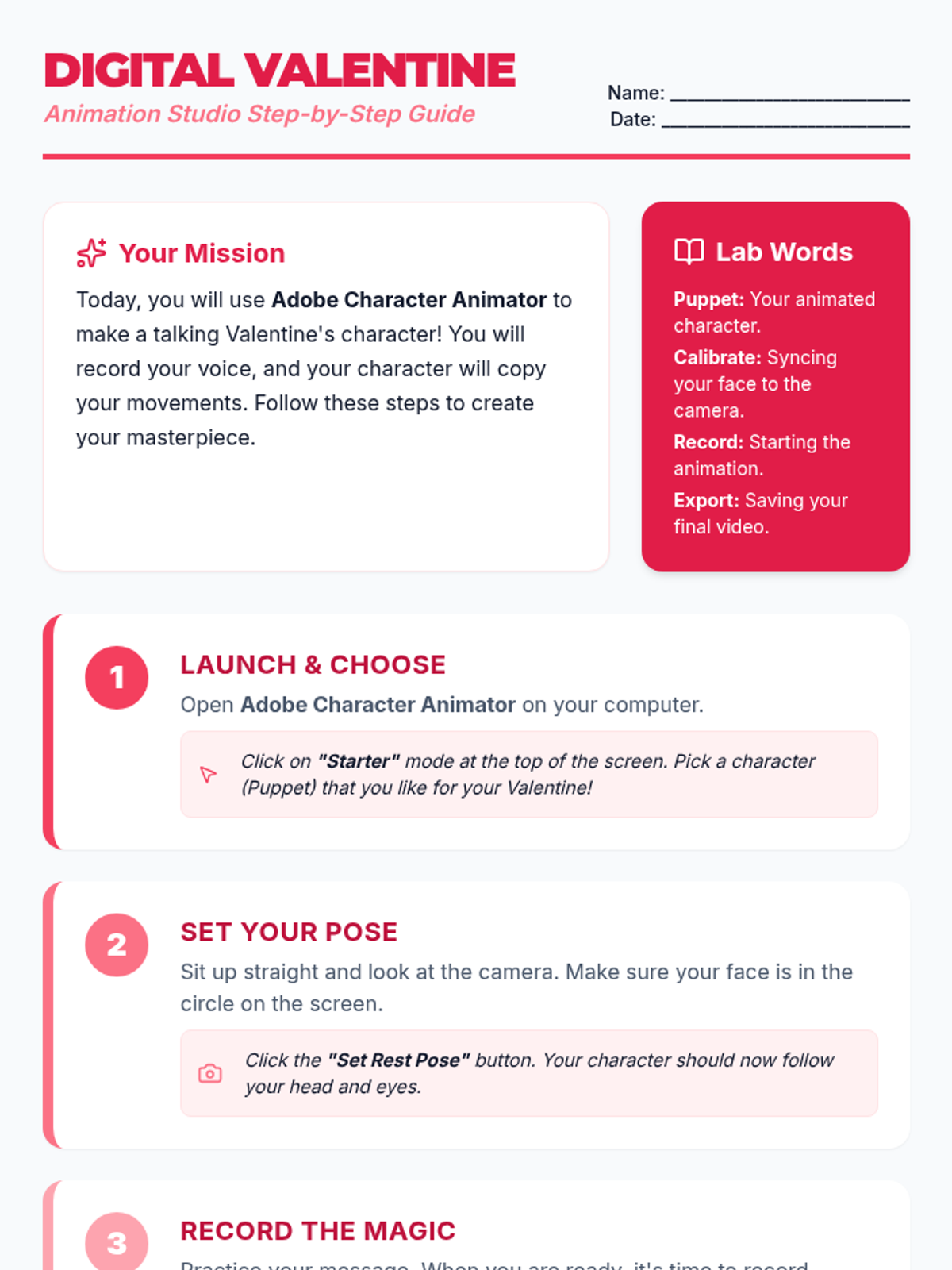
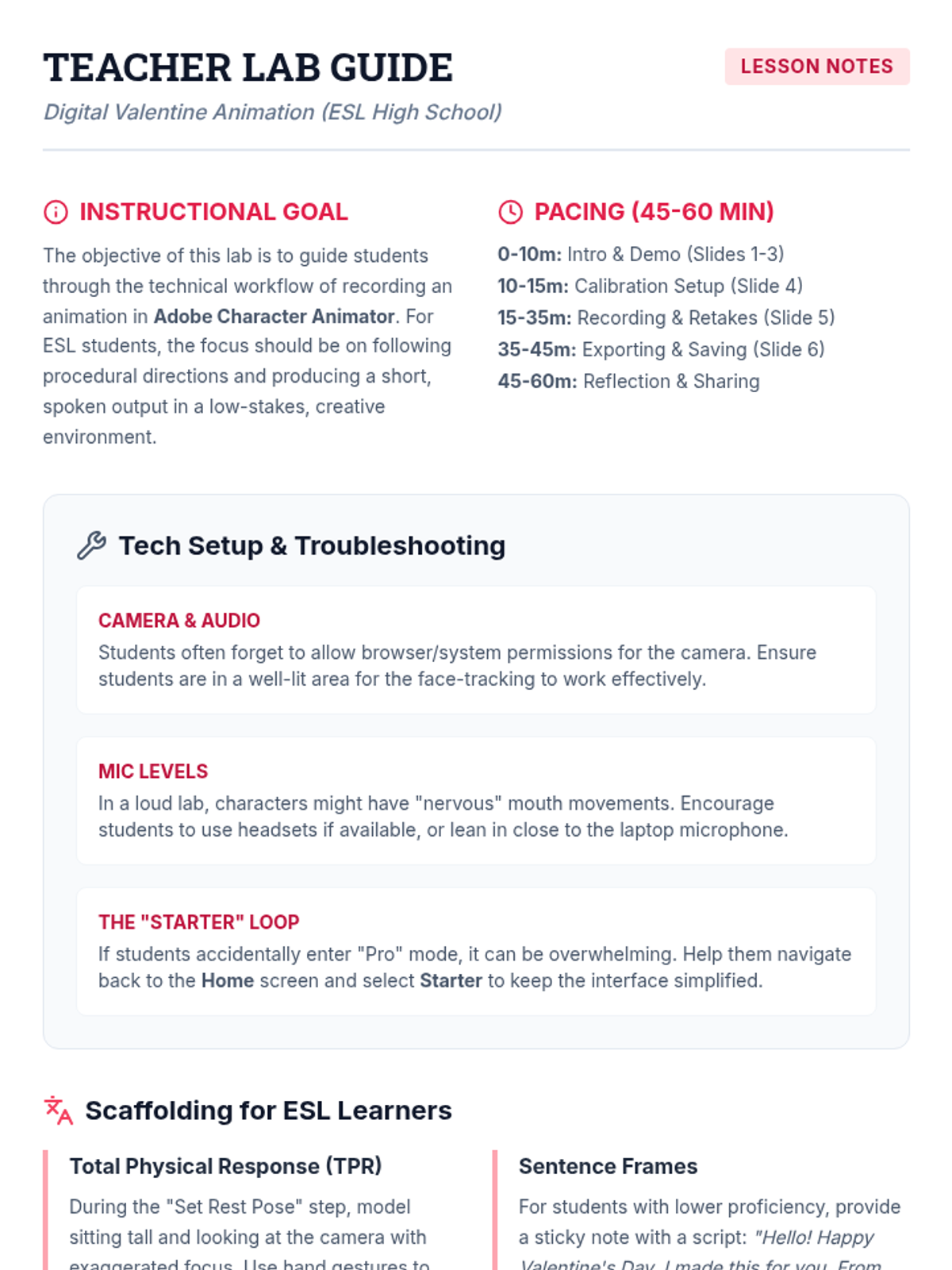
A step-by-step guide for high school ESL students to record an animated Valentine's greeting using Adobe Character Animator. The lesson focuses on technical proficiency and creative expression through digital storytelling.
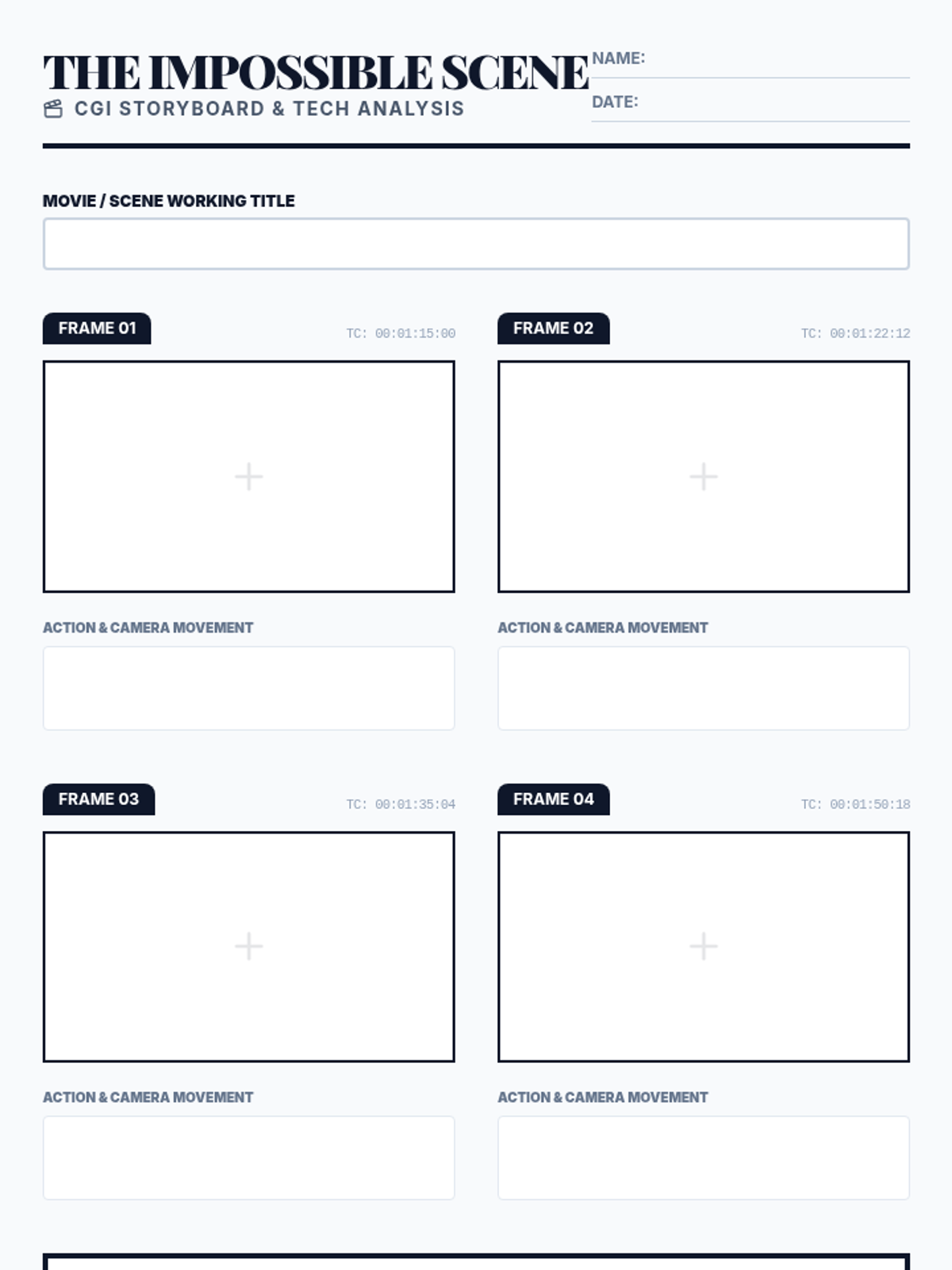
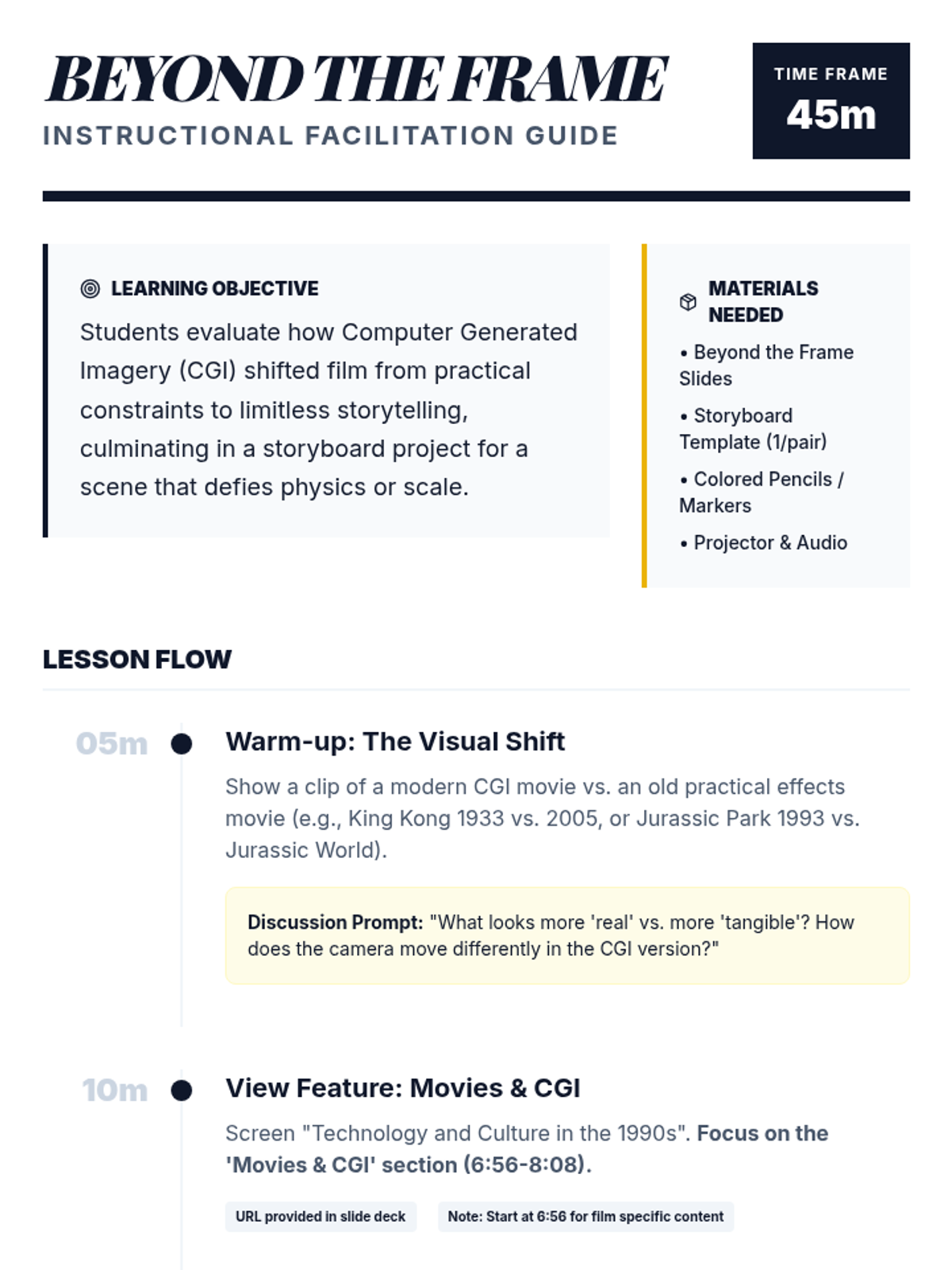
Students evaluate how Computer Generated Imagery (CGI) shifted film from practical constraints to limitless storytelling, culminating in a storyboard project for a scene that defies physics or scale.
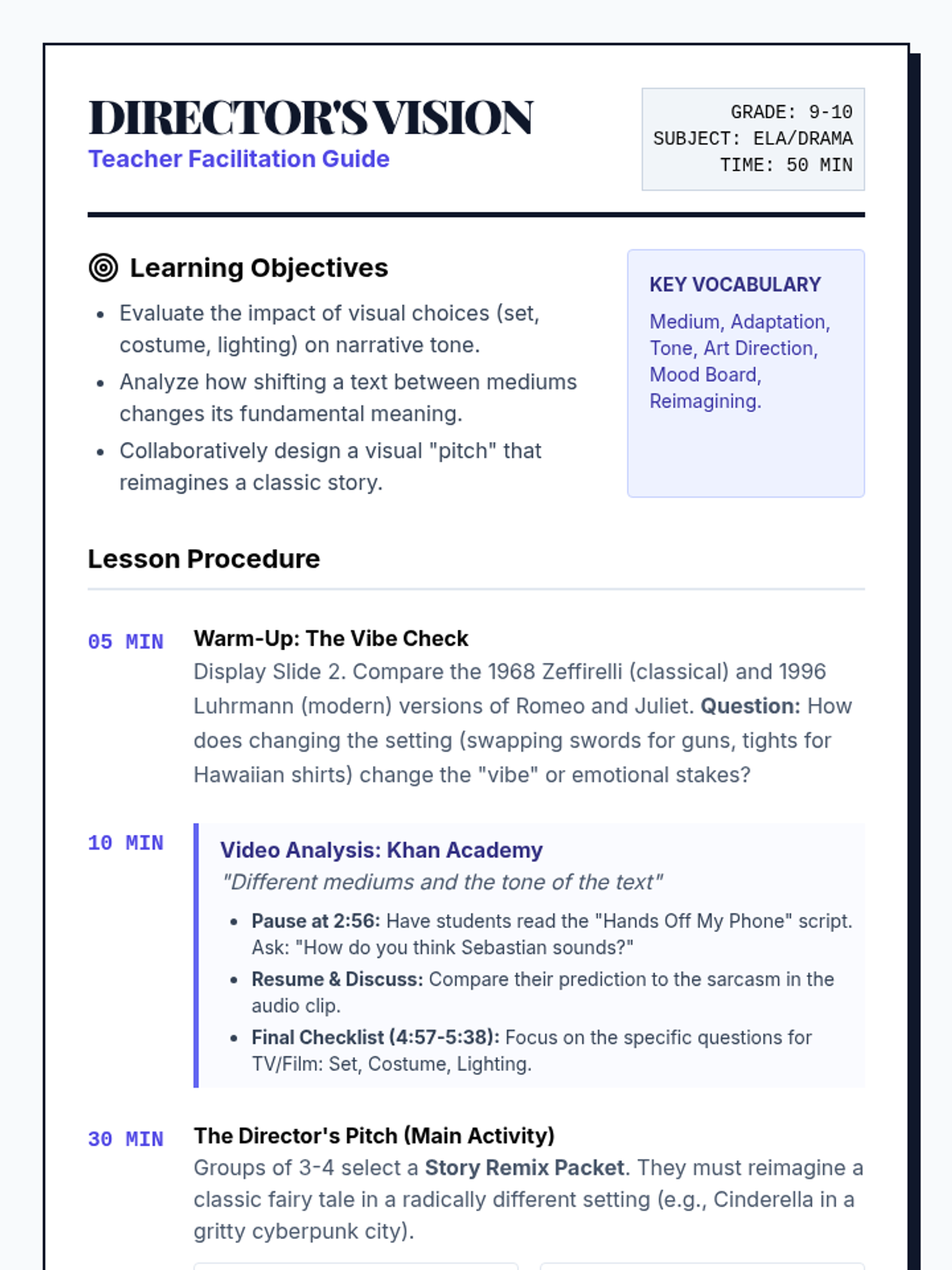
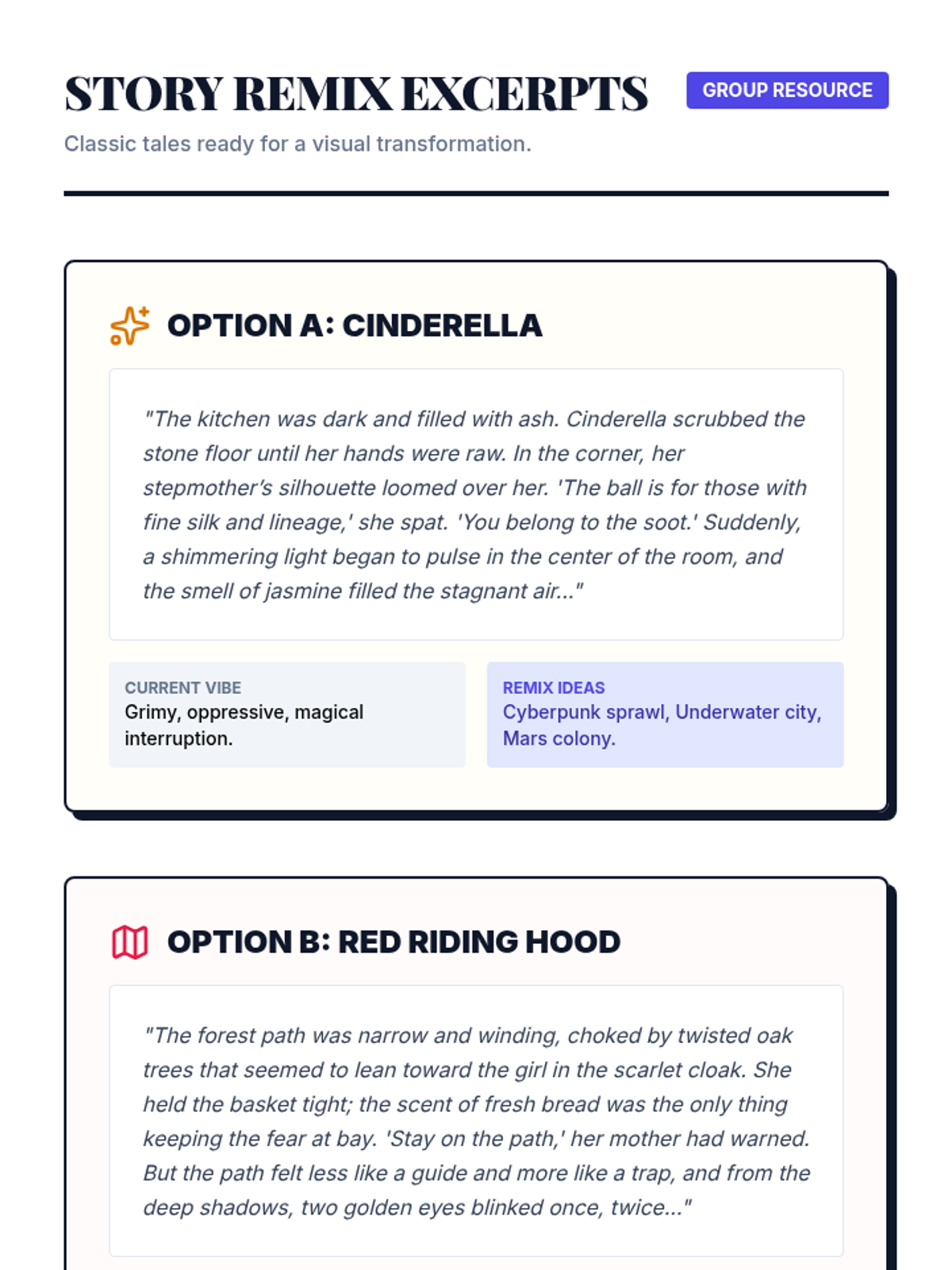
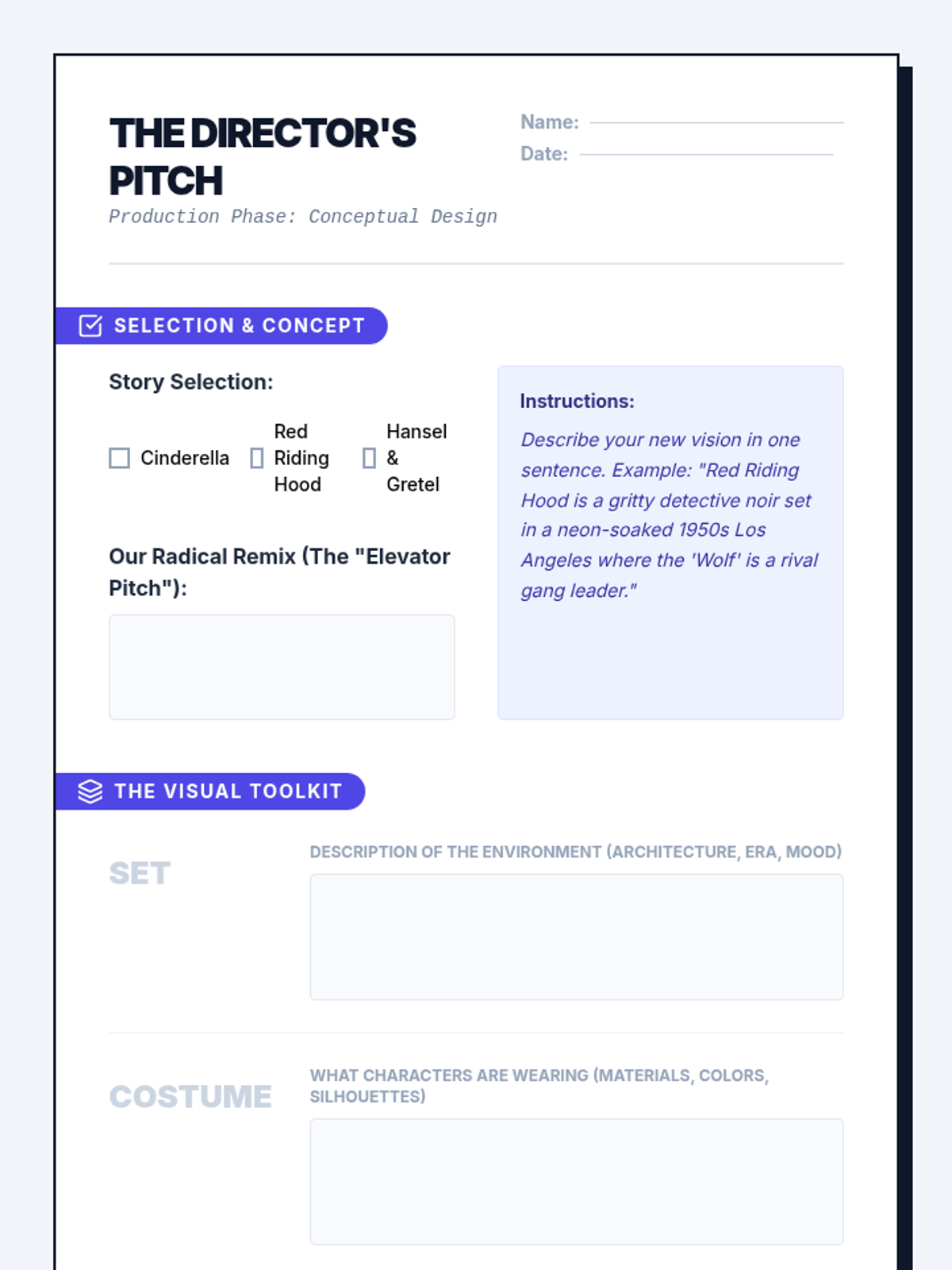
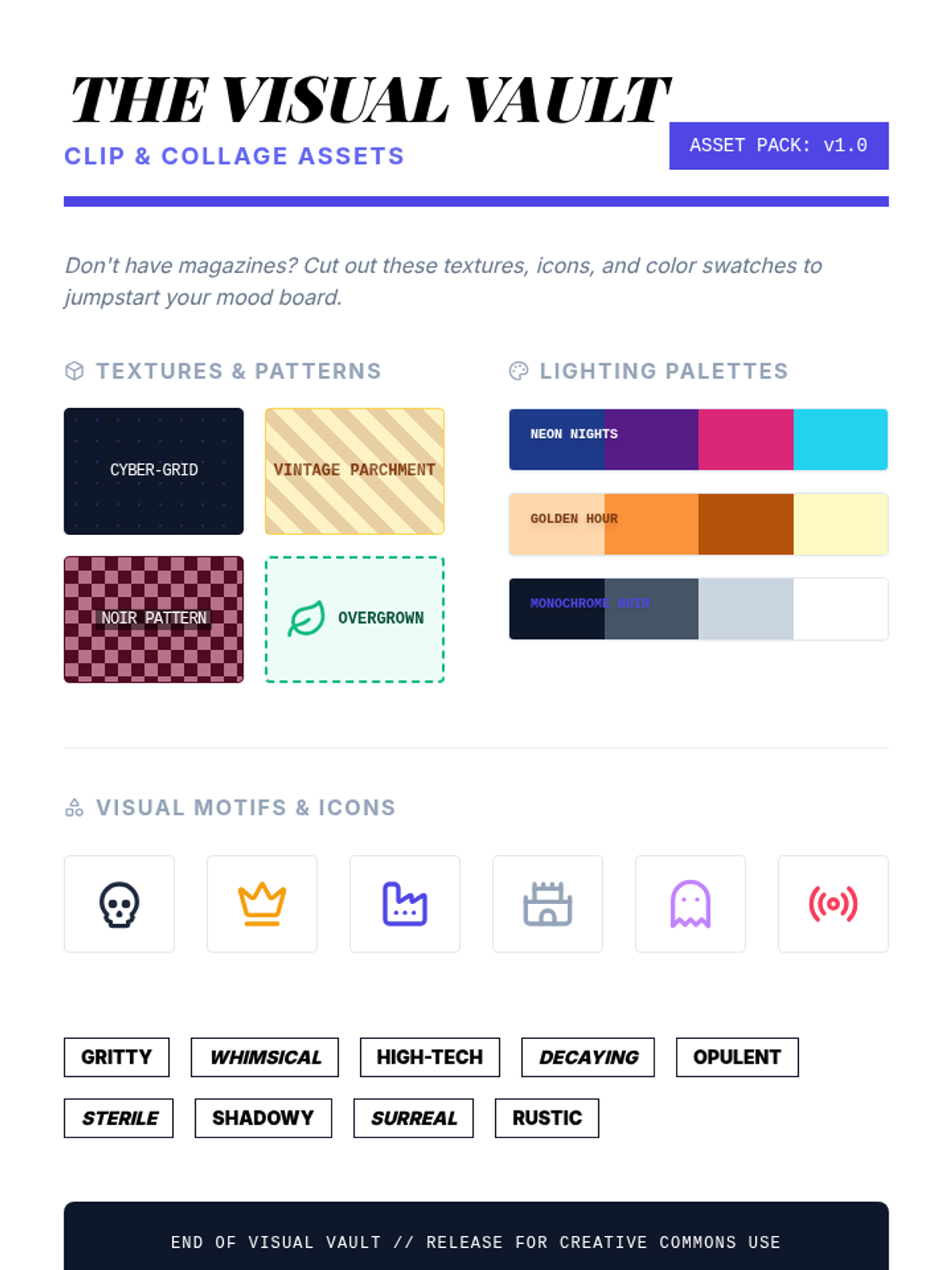
A high-school media literacy and drama lesson where students explore how sets, costumes, and lighting transform a written script into a visual medium. Students will analyze a Khan Academy video and then design a 'remixed' vision for a classic fairy tale.
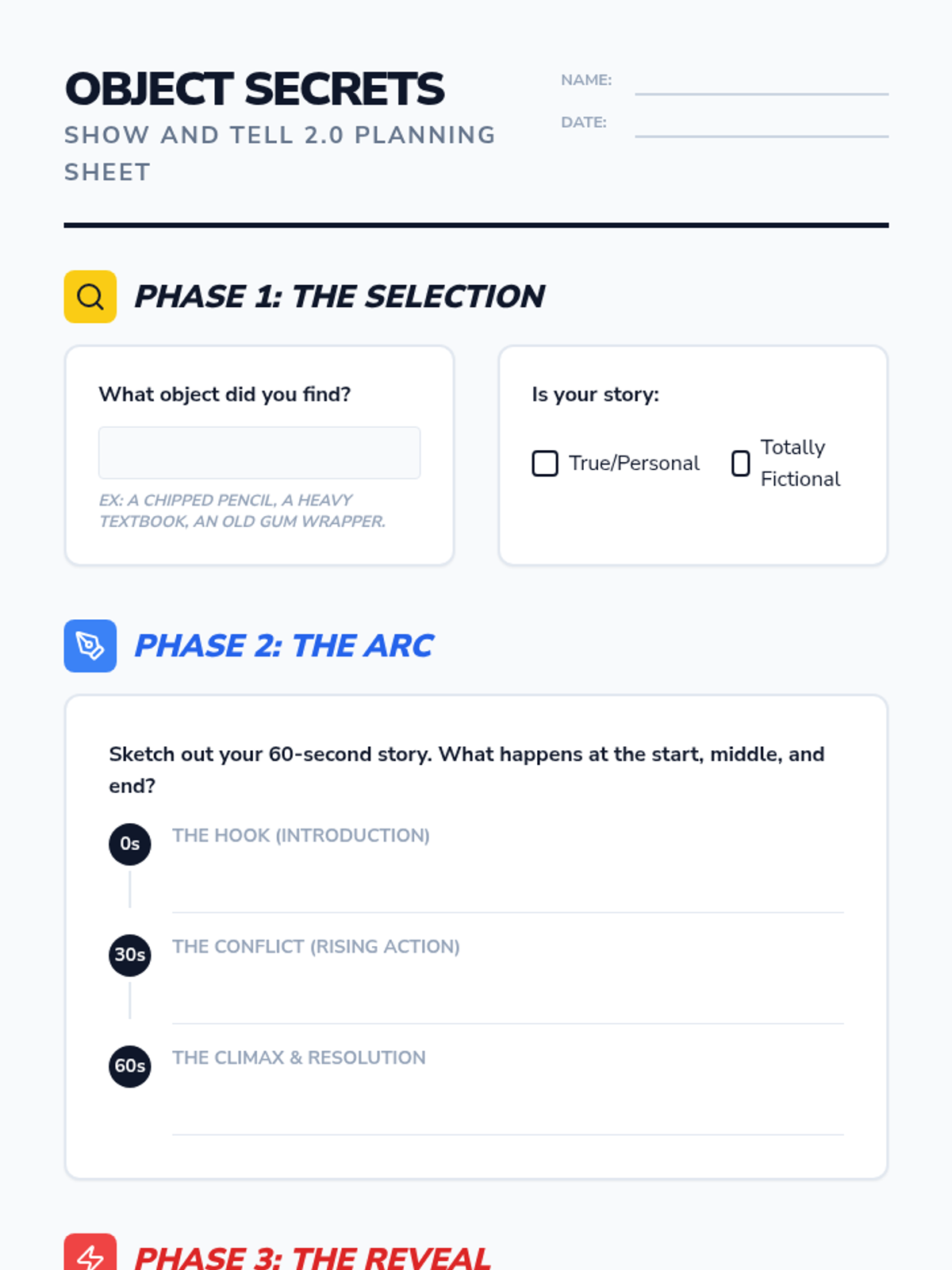
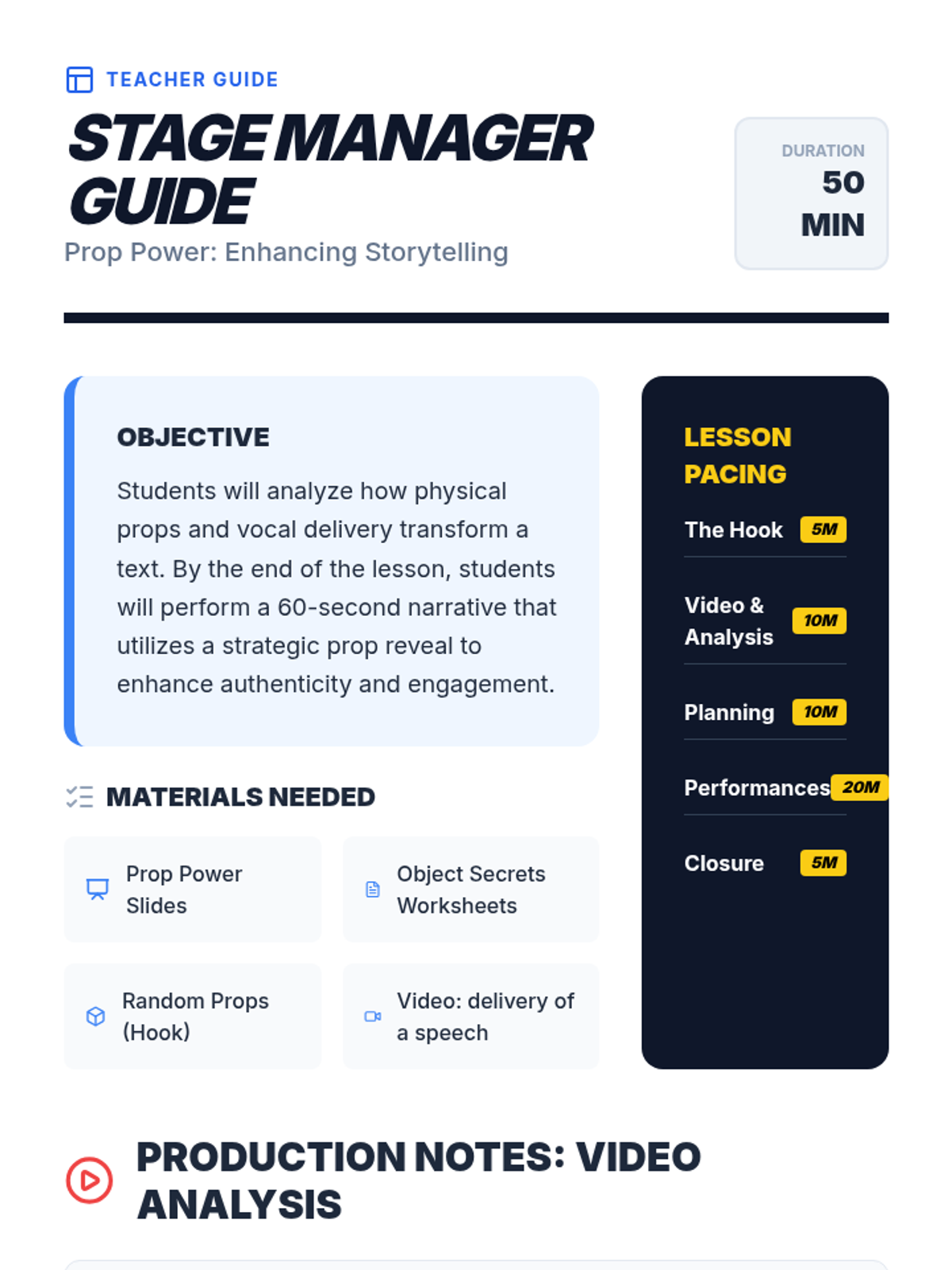
A lesson exploring how physical objects (props) can transform a speech from a simple reading into an authentic, engaging story. Students analyze a famous political speech and perform their own 60-second 'Prop Reveal' stories.
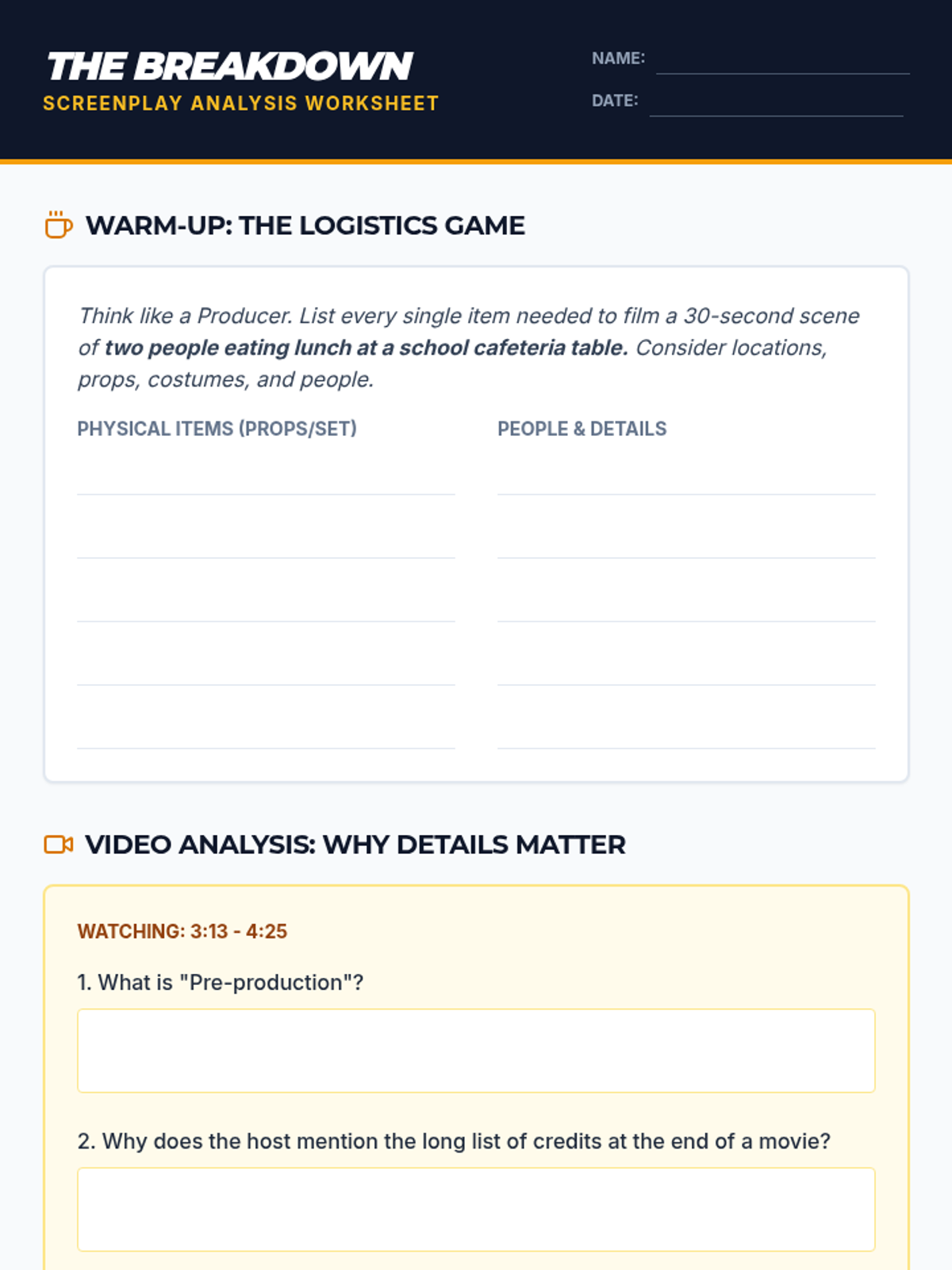
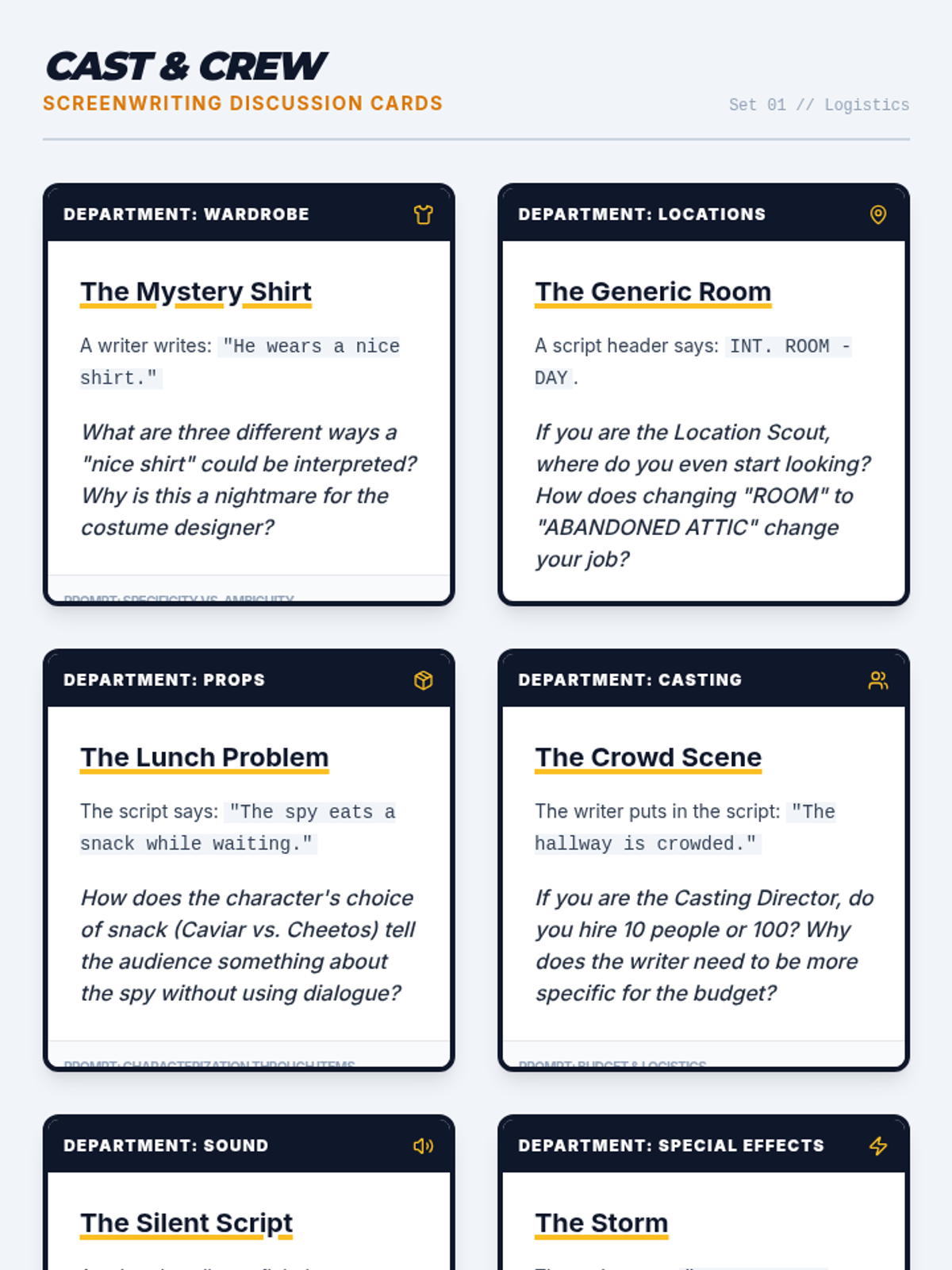
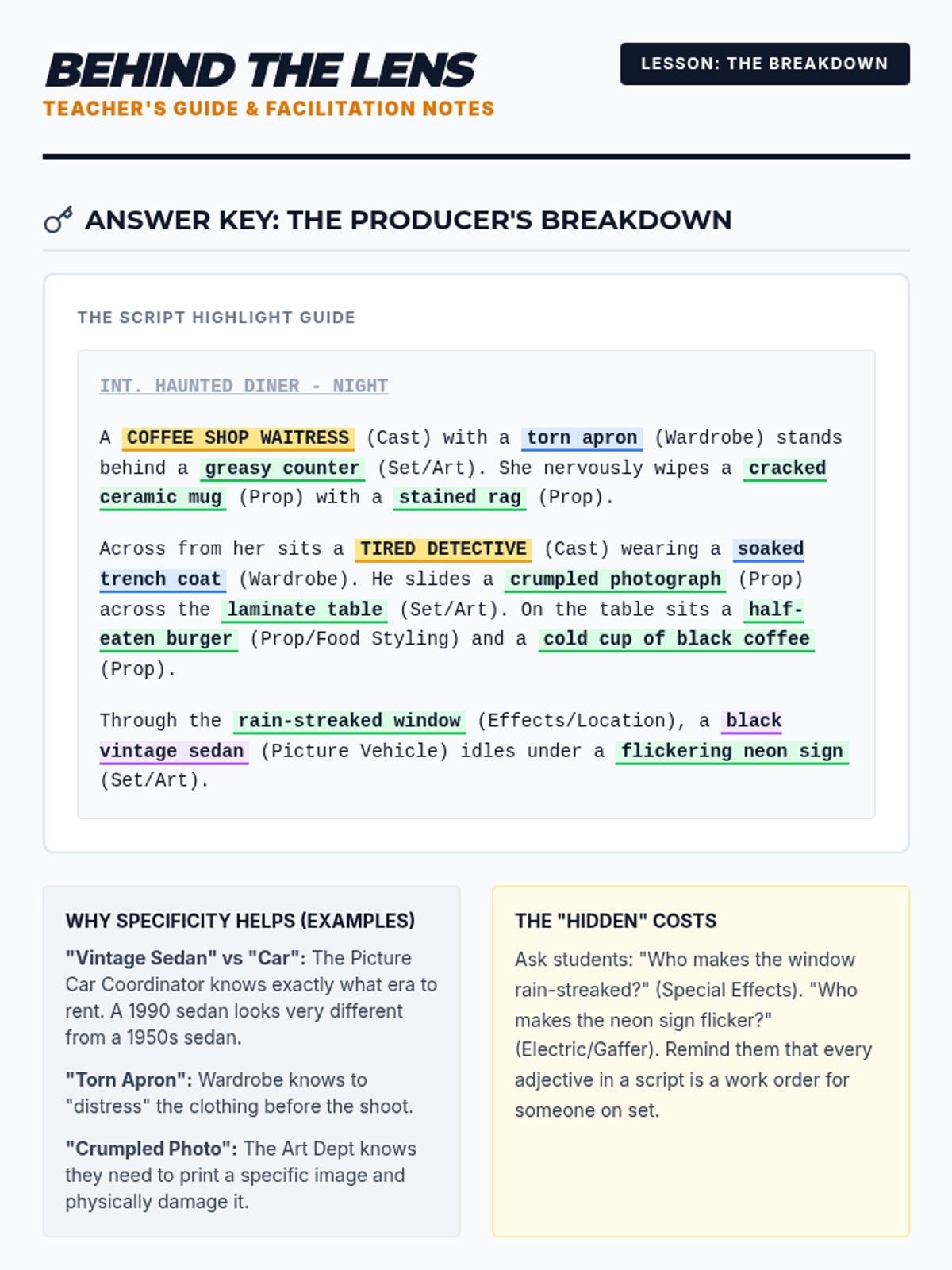
This lesson explores how pre-production logistics influence screenwriting, teaching students that specific writing is a tool for professional collaboration and production planning.
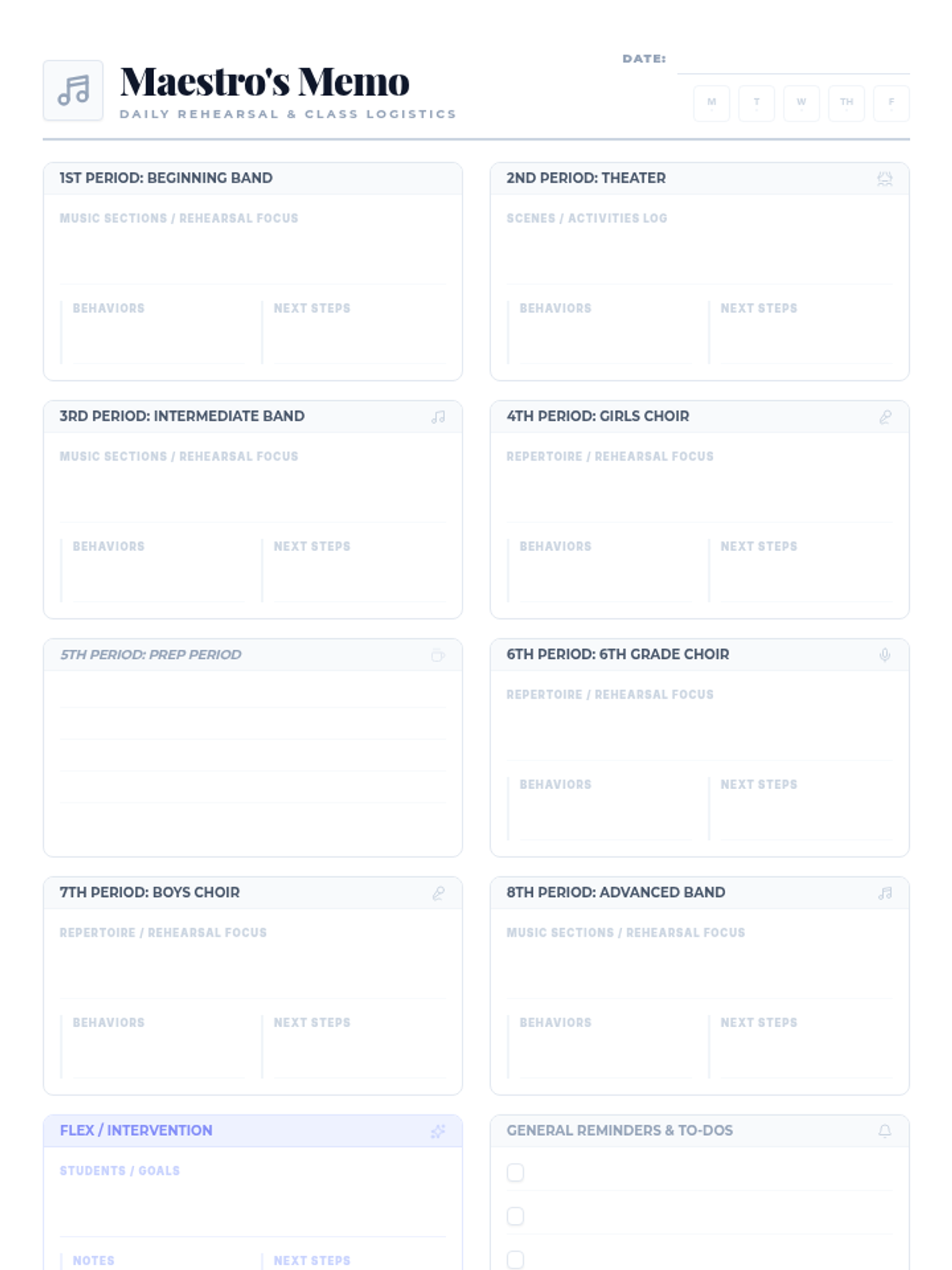
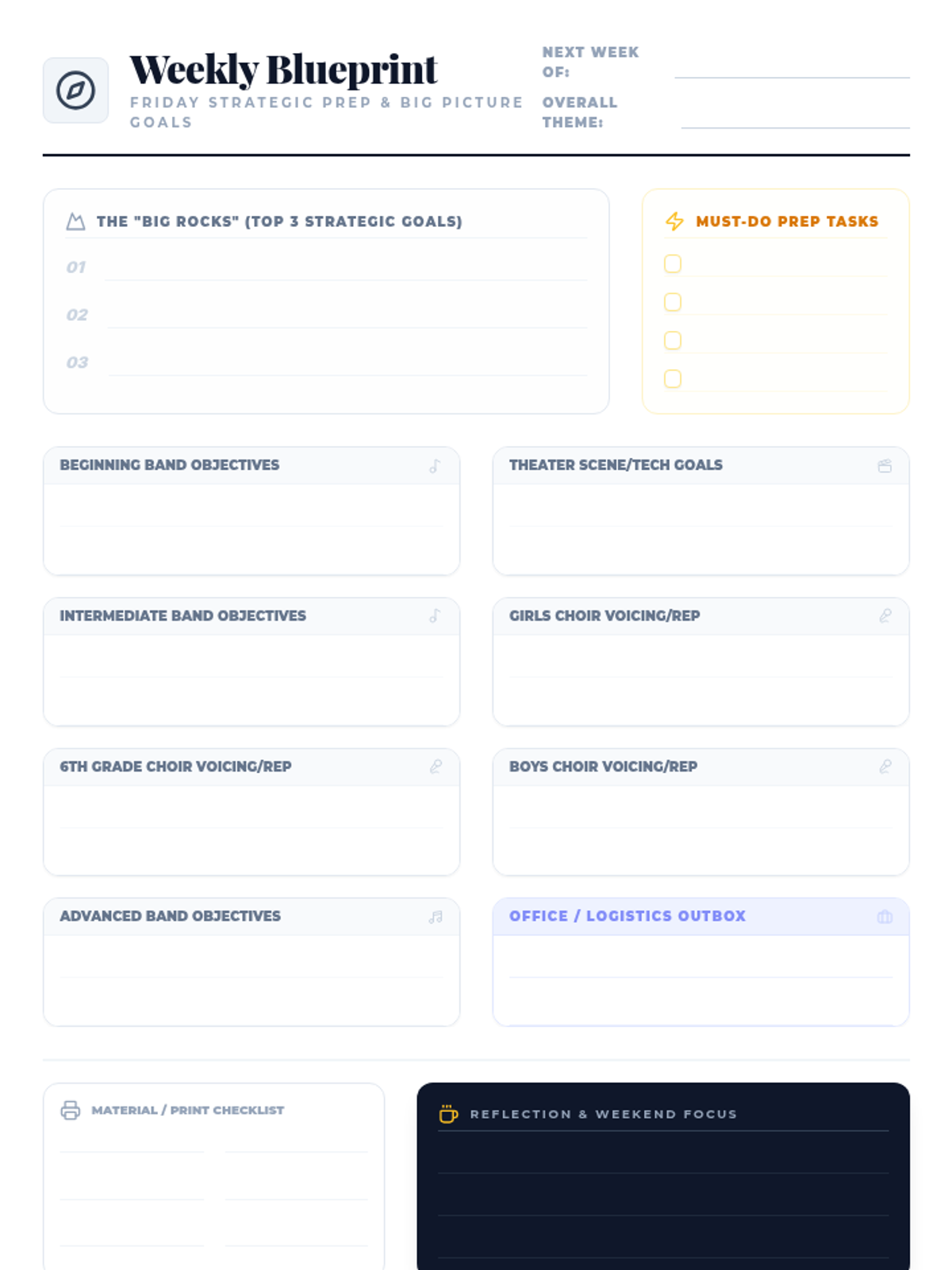
A collection of specialized organization and planning resources designed for a band, choir, and theater teacher managing multiple ensembles and a high-volume performance schedule.
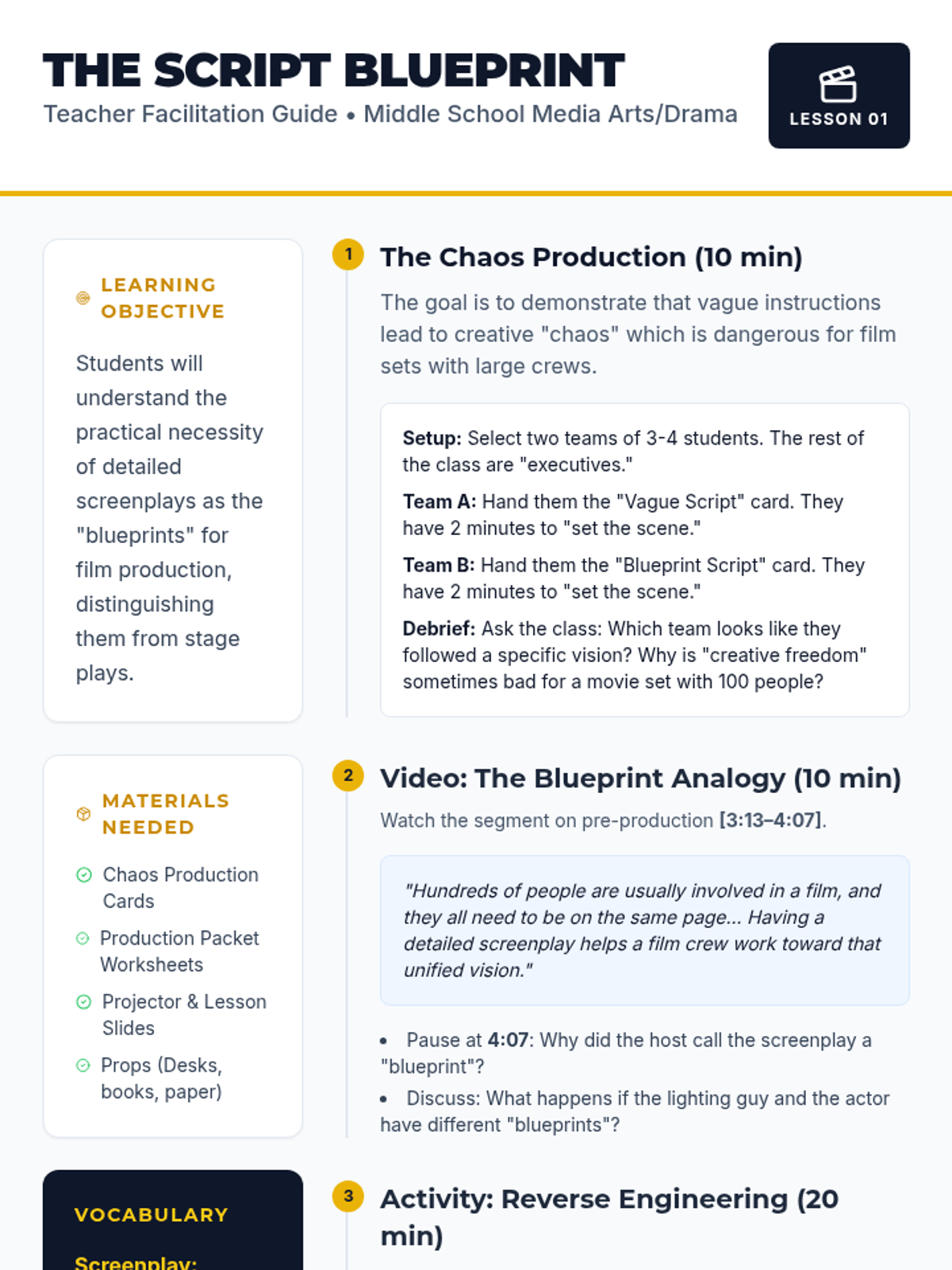
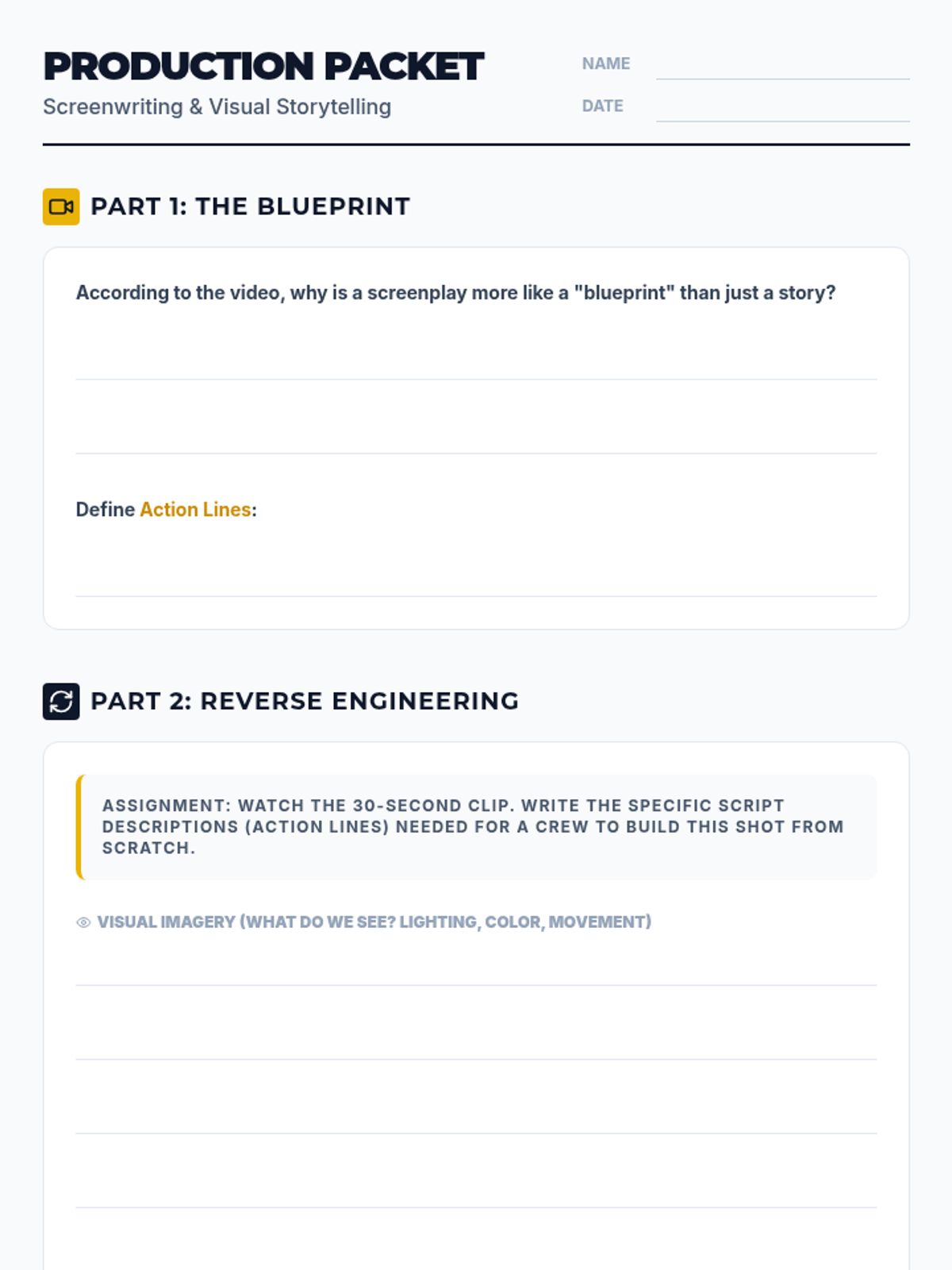
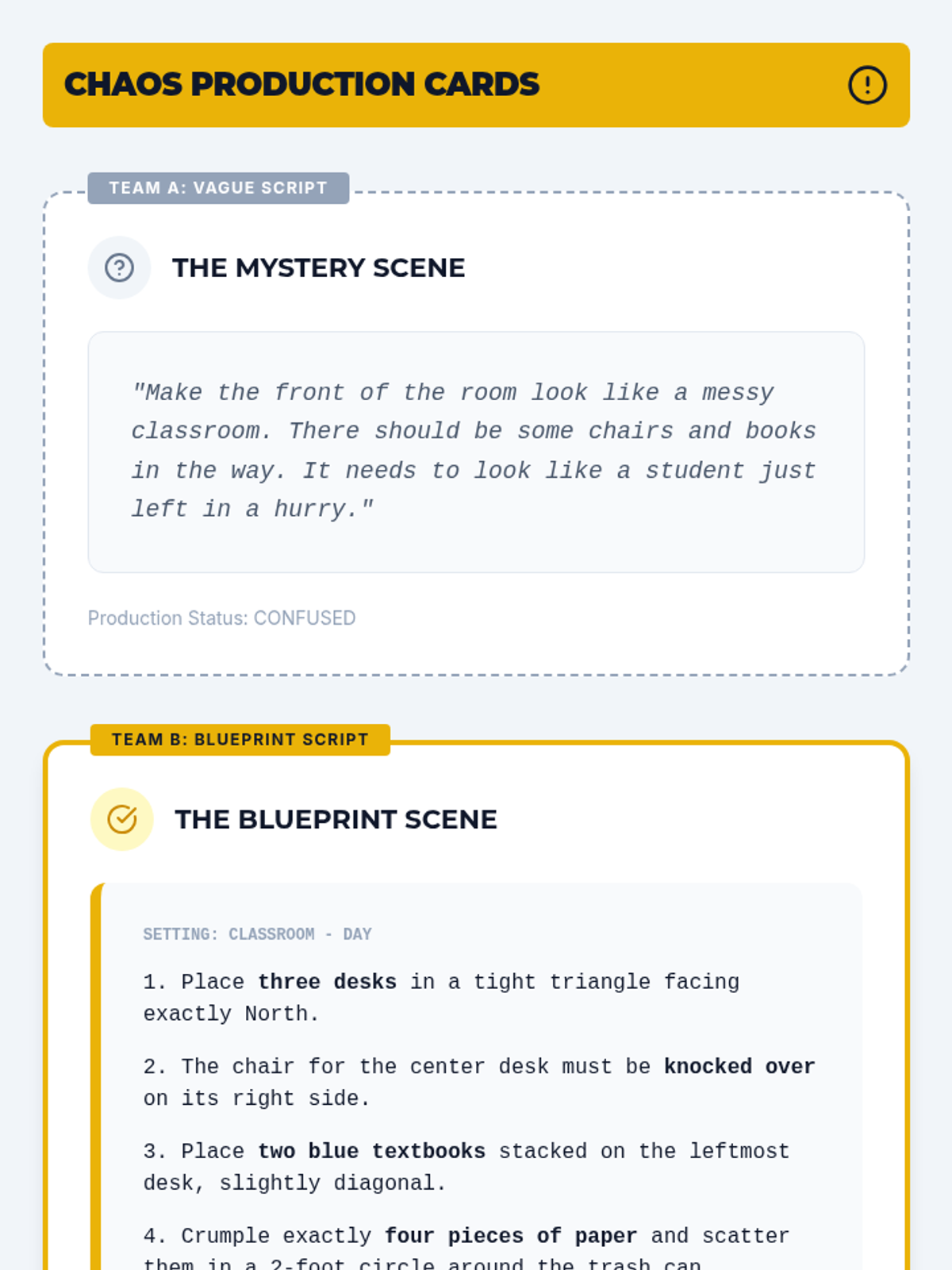
A lesson exploring why screenplays are the essential 'blueprints' of filmmaking, featuring a hands-on production challenge and a reverse-engineering script activity.
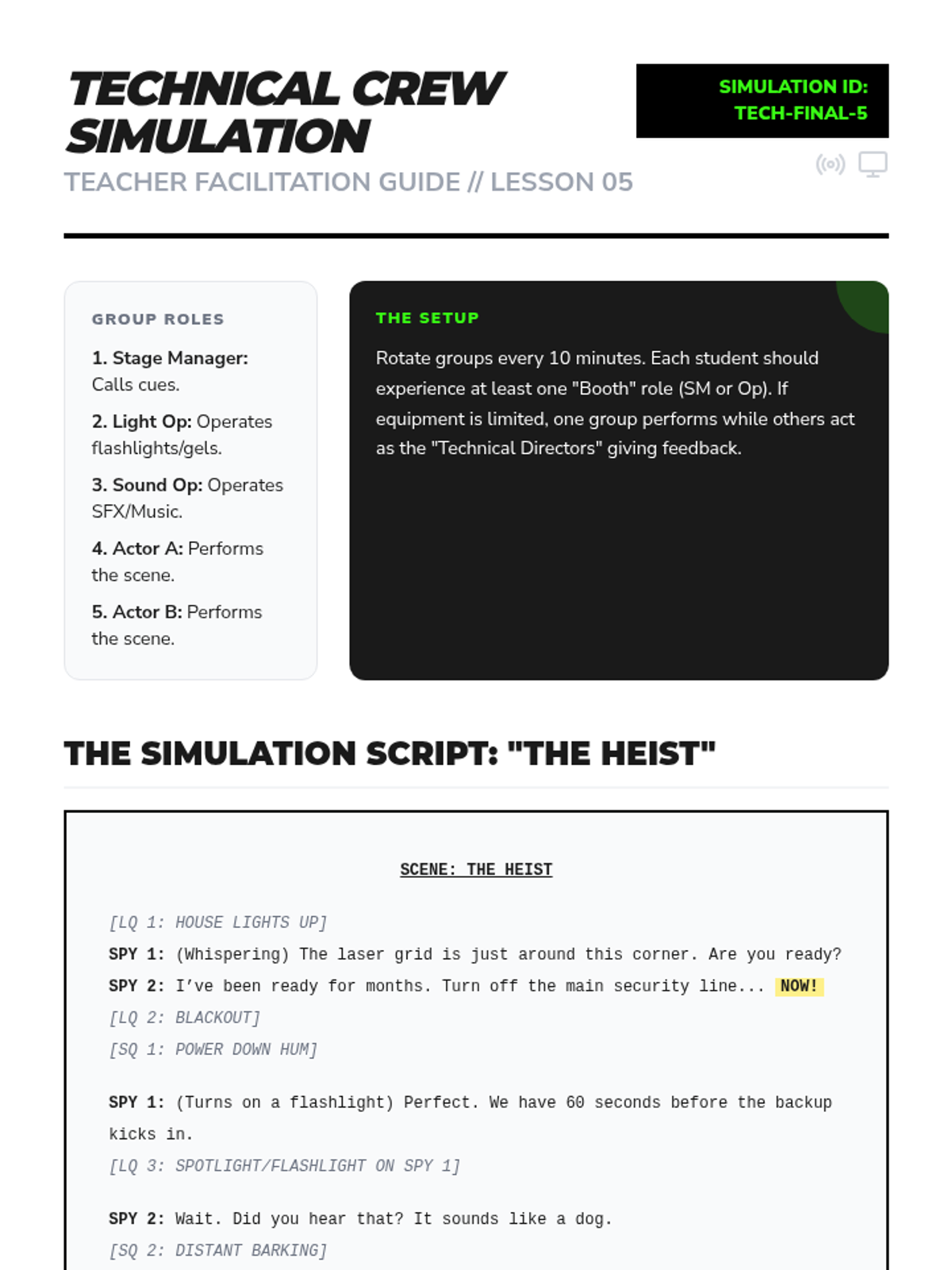
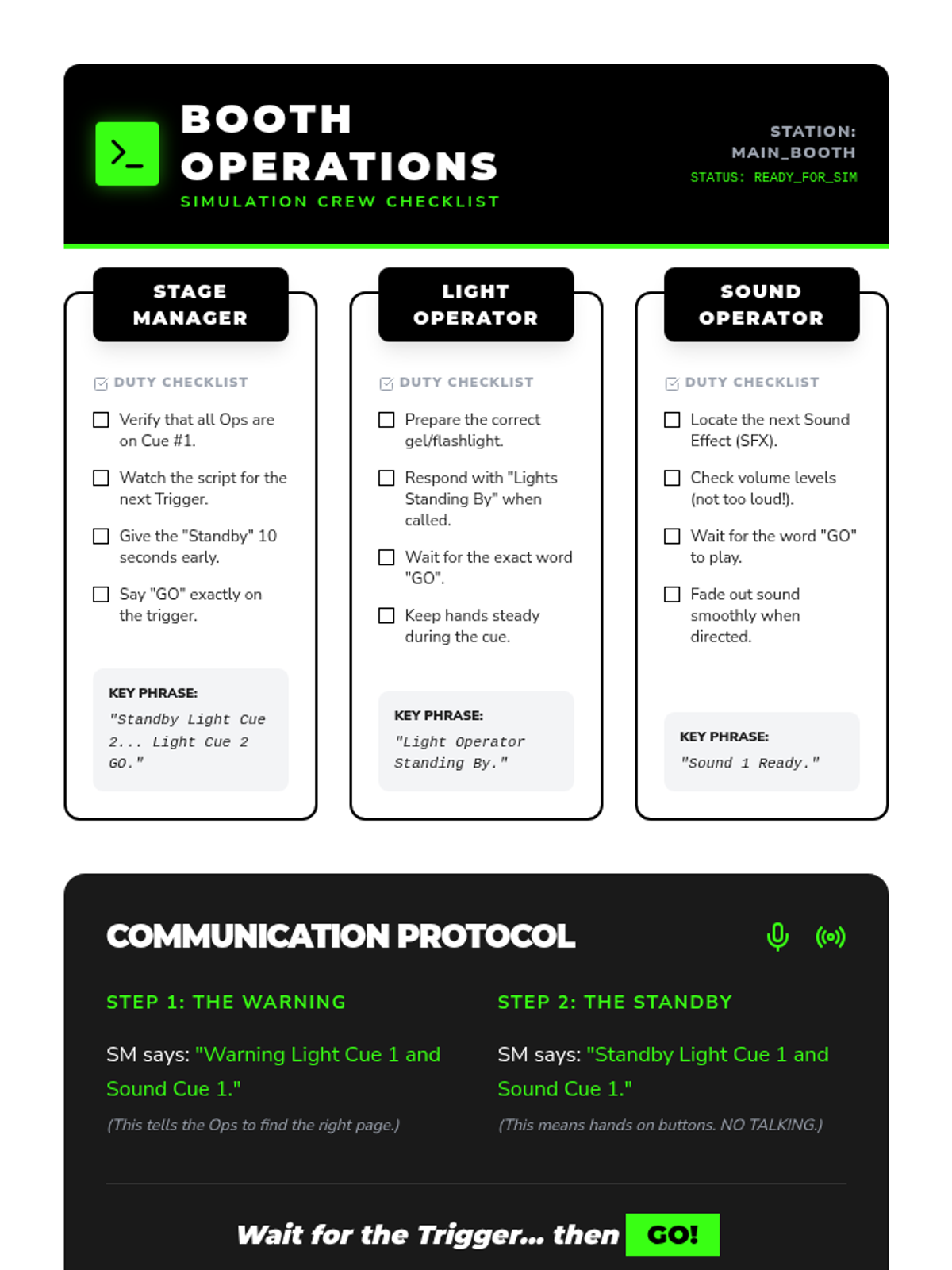
In this culminating simulation, students rotate through technical crew roles (Stage Manager, Light Op, Sound Op) to execute lighting and sound cues in real-time for a live scene, experiencing the pressure and coordination of the booth.
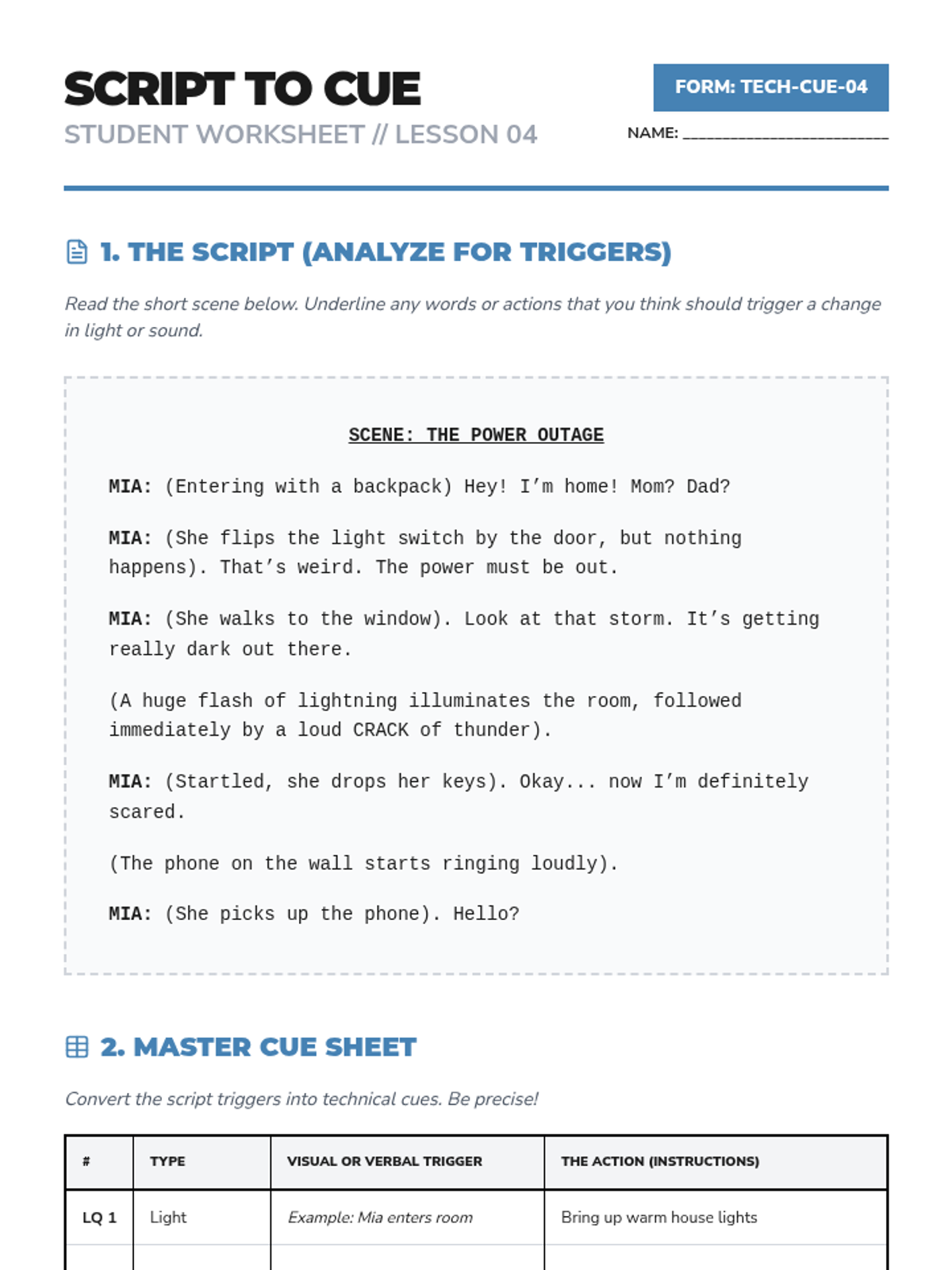
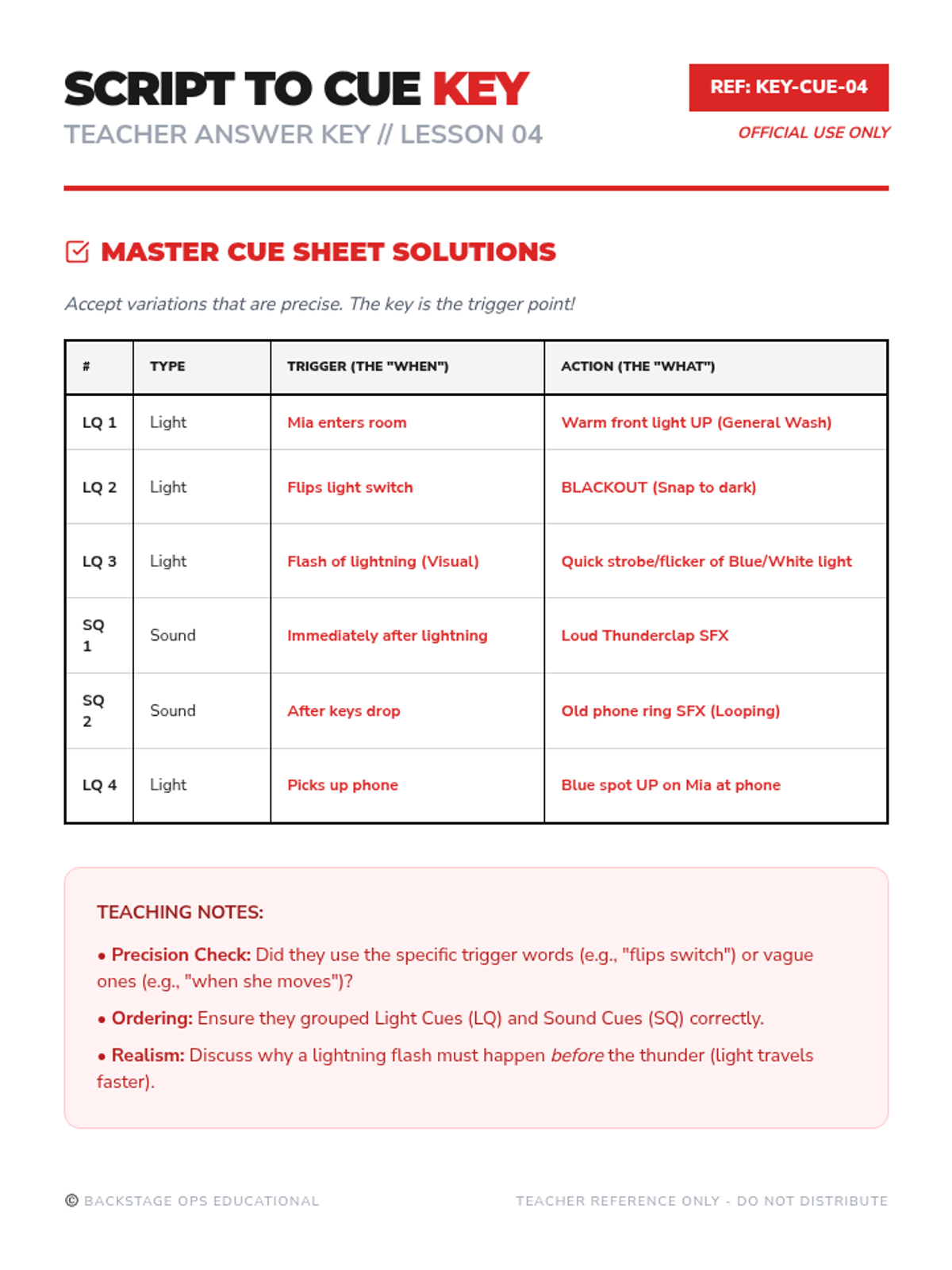
Students learn how to integrate script, lighting, and sound into a master Cue Sheet. They identify specific triggers for technical changes and practice writing clear, precise cues that any technician could execute.
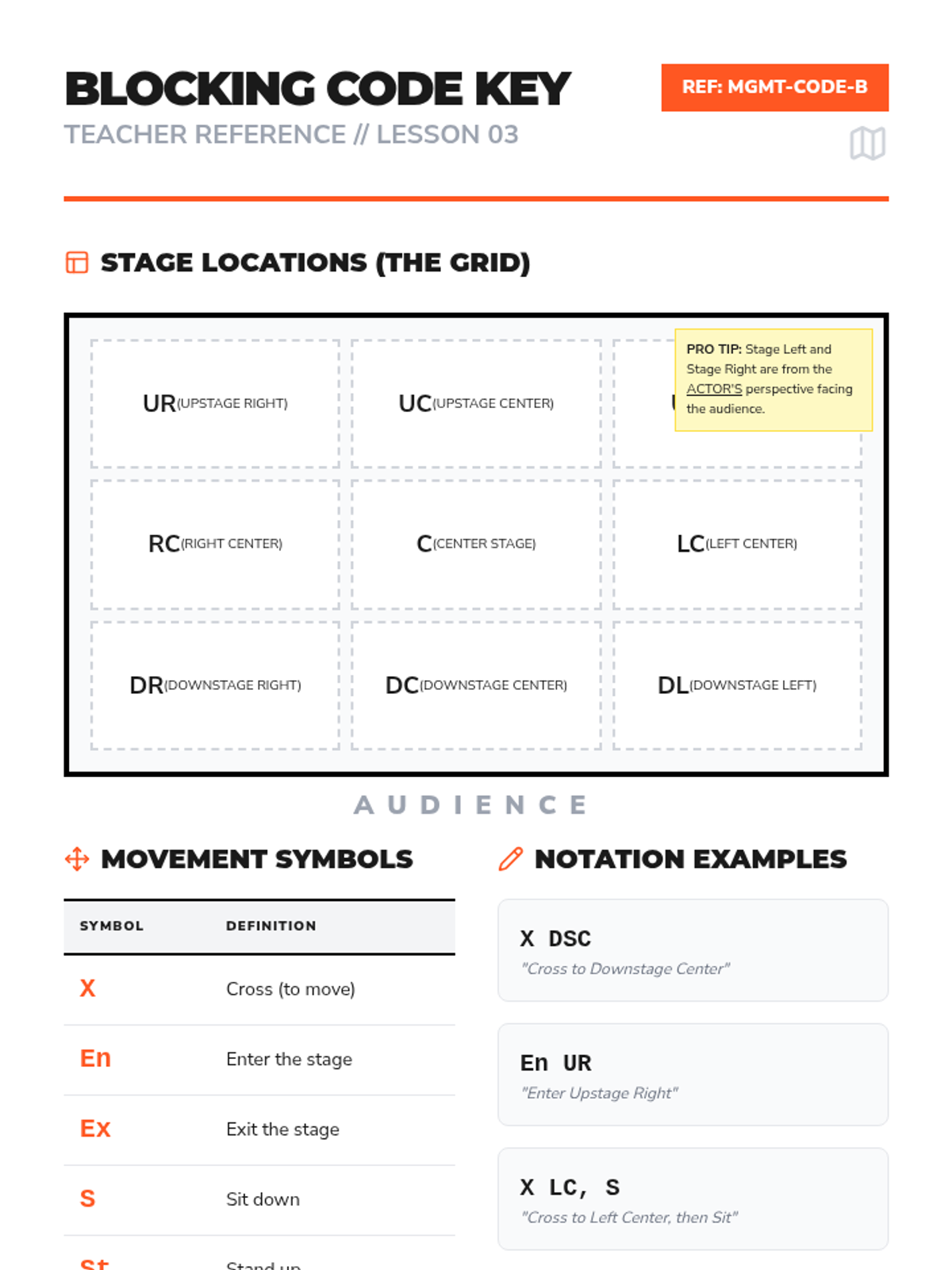
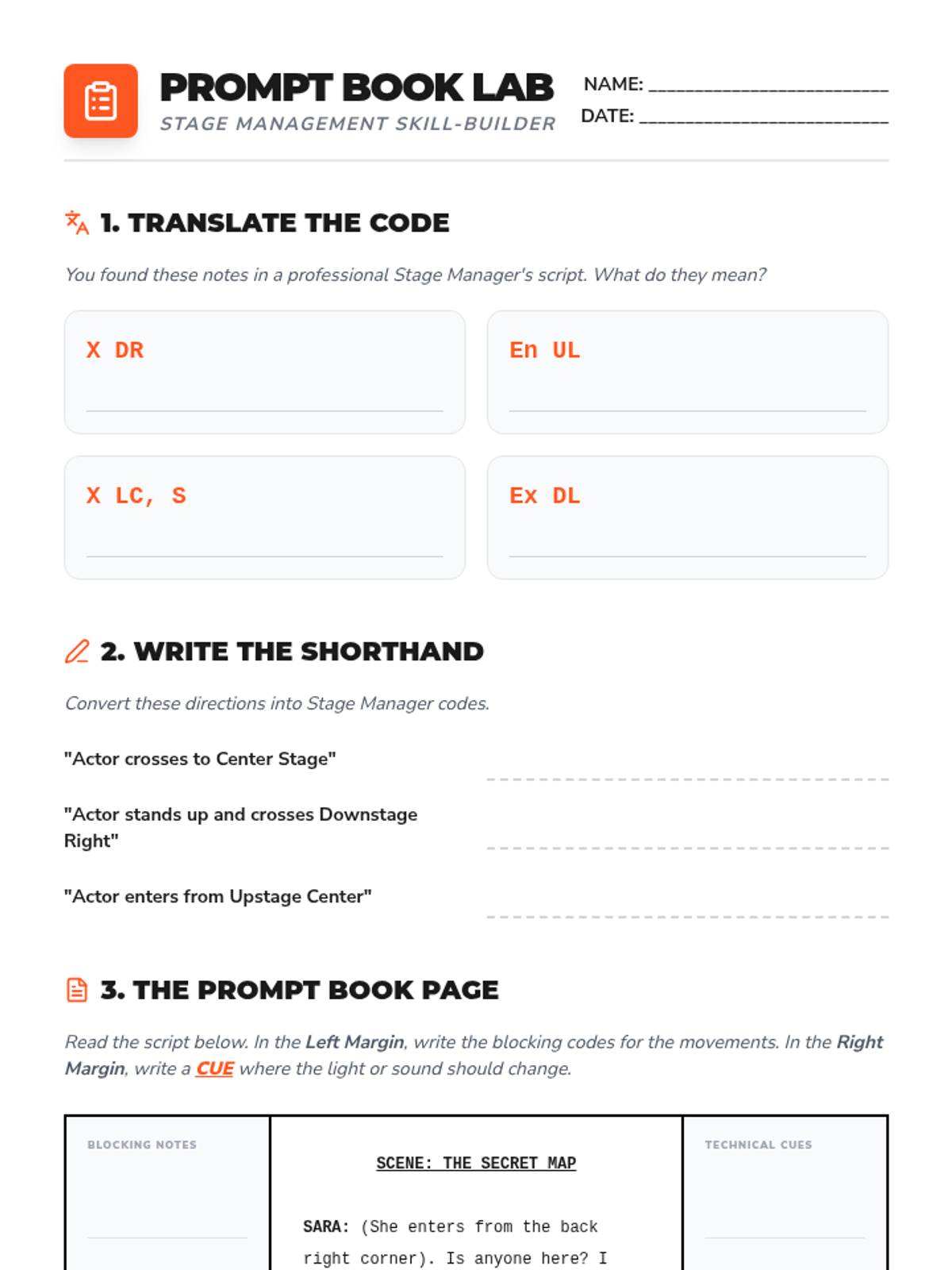
Students learn about the stage manager's job as the 'brain' of the production. They practice notating blocking codes and organizing a prompt book, emphasizing leadership, clear communication, and safety.
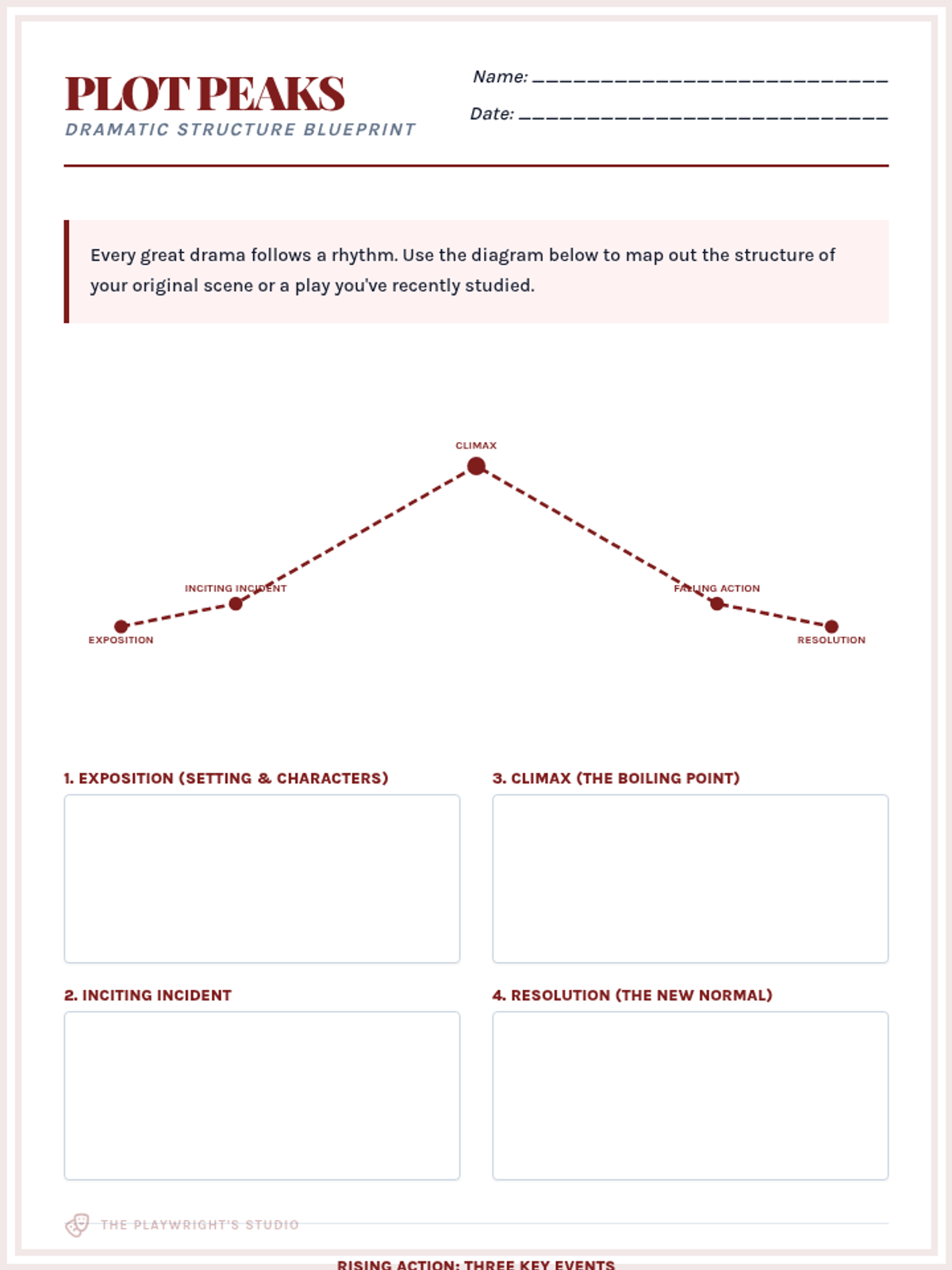
A comprehensive introduction to dramatic structure and scriptwriting, guiding students from the arc of a story to the technical layout of a stage play.
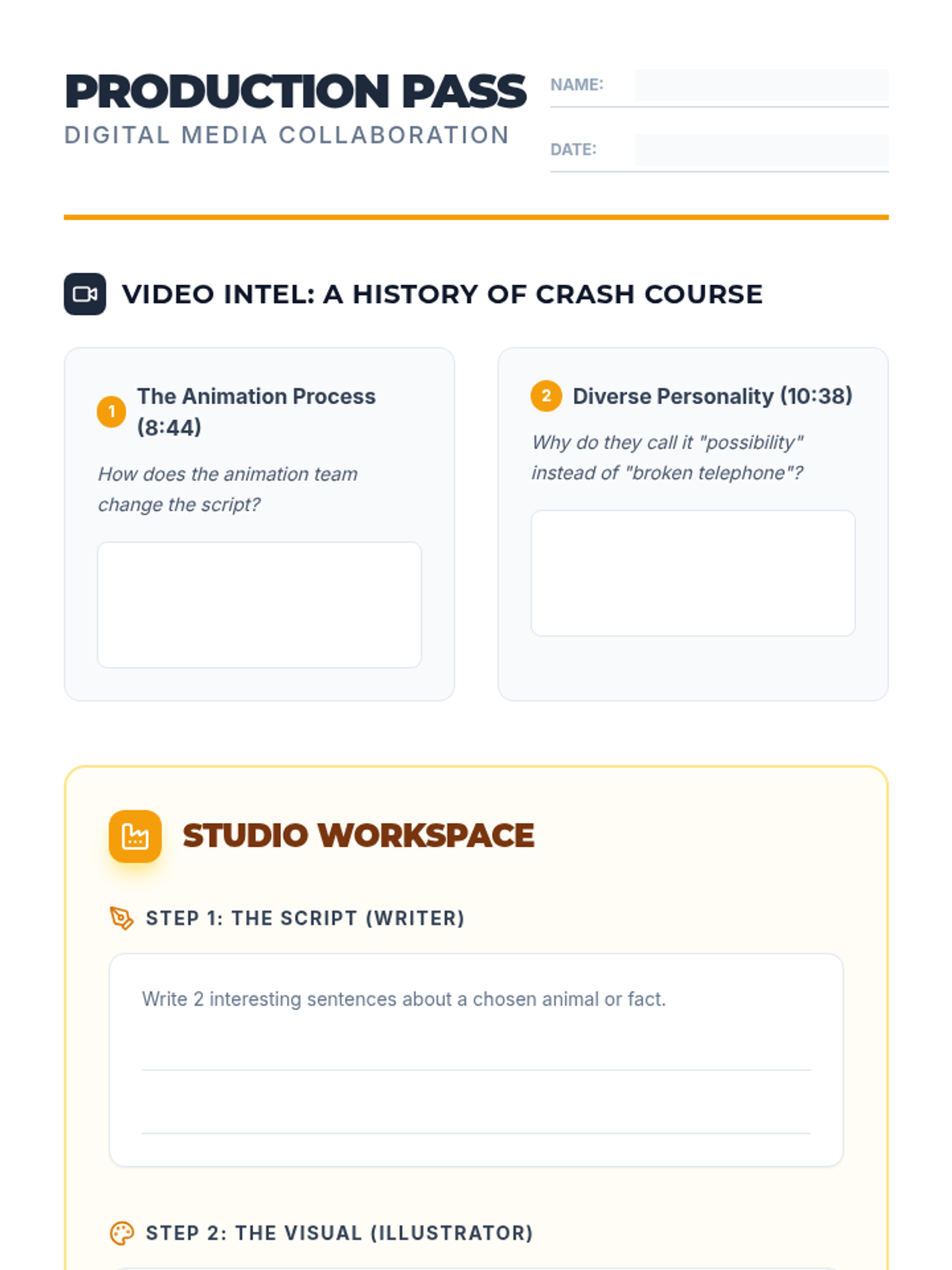
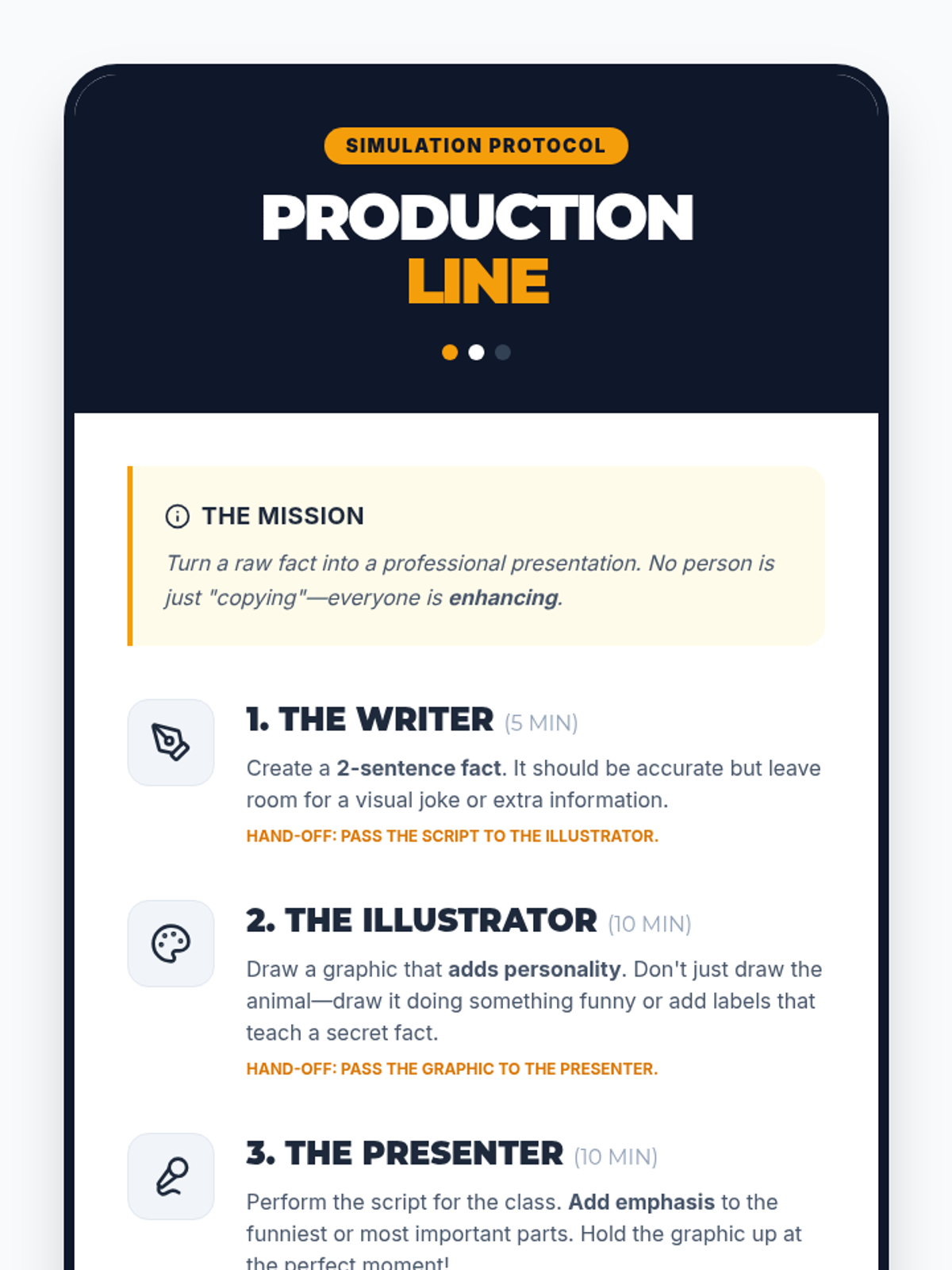
A lesson exploring the collaborative nature of digital media production, focusing on how different talents (writing, art, performance) combine to create complex projects like Crash Course. Students simulate a production line to experience how a script evolves through various creative lenses.
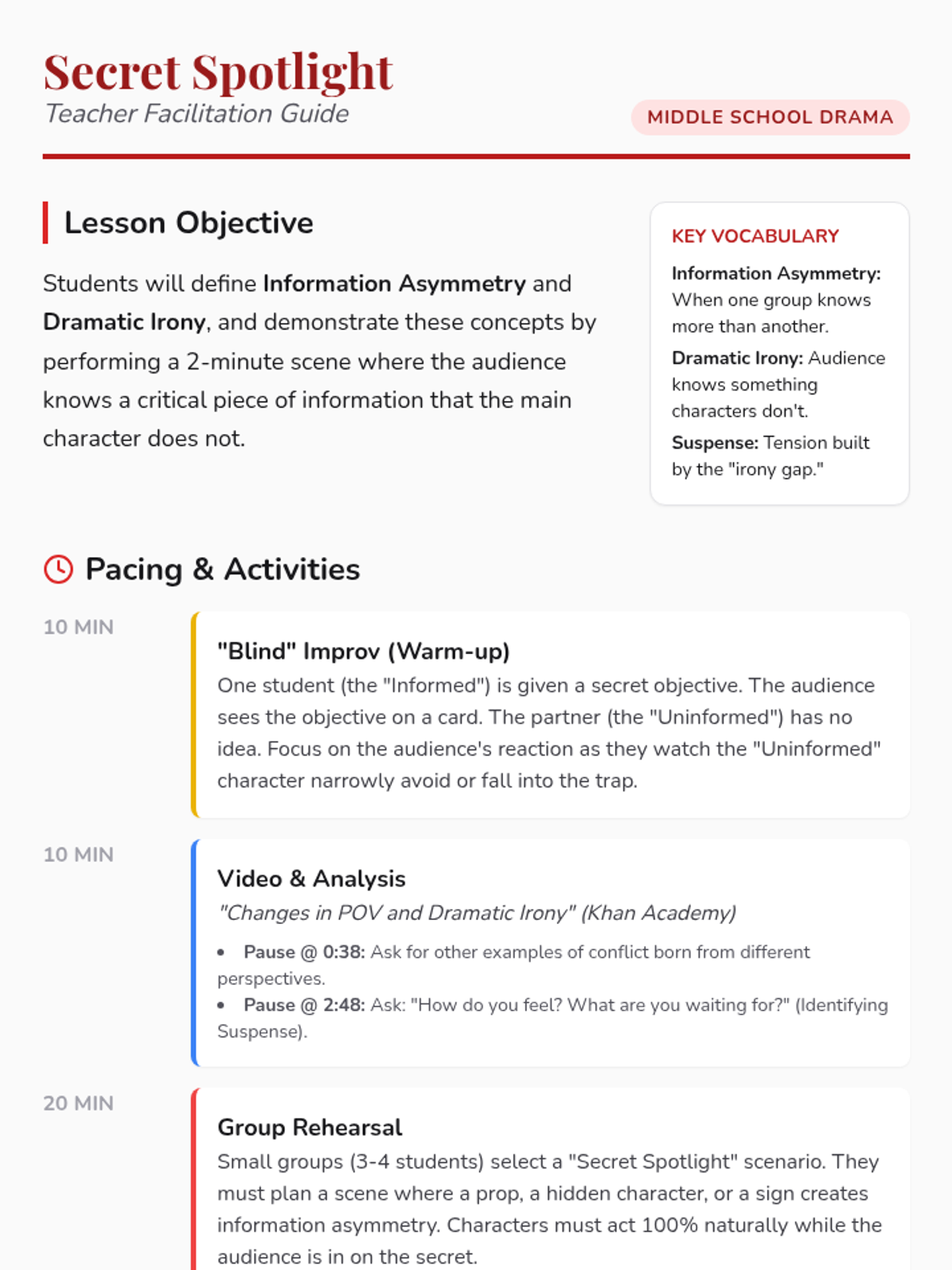
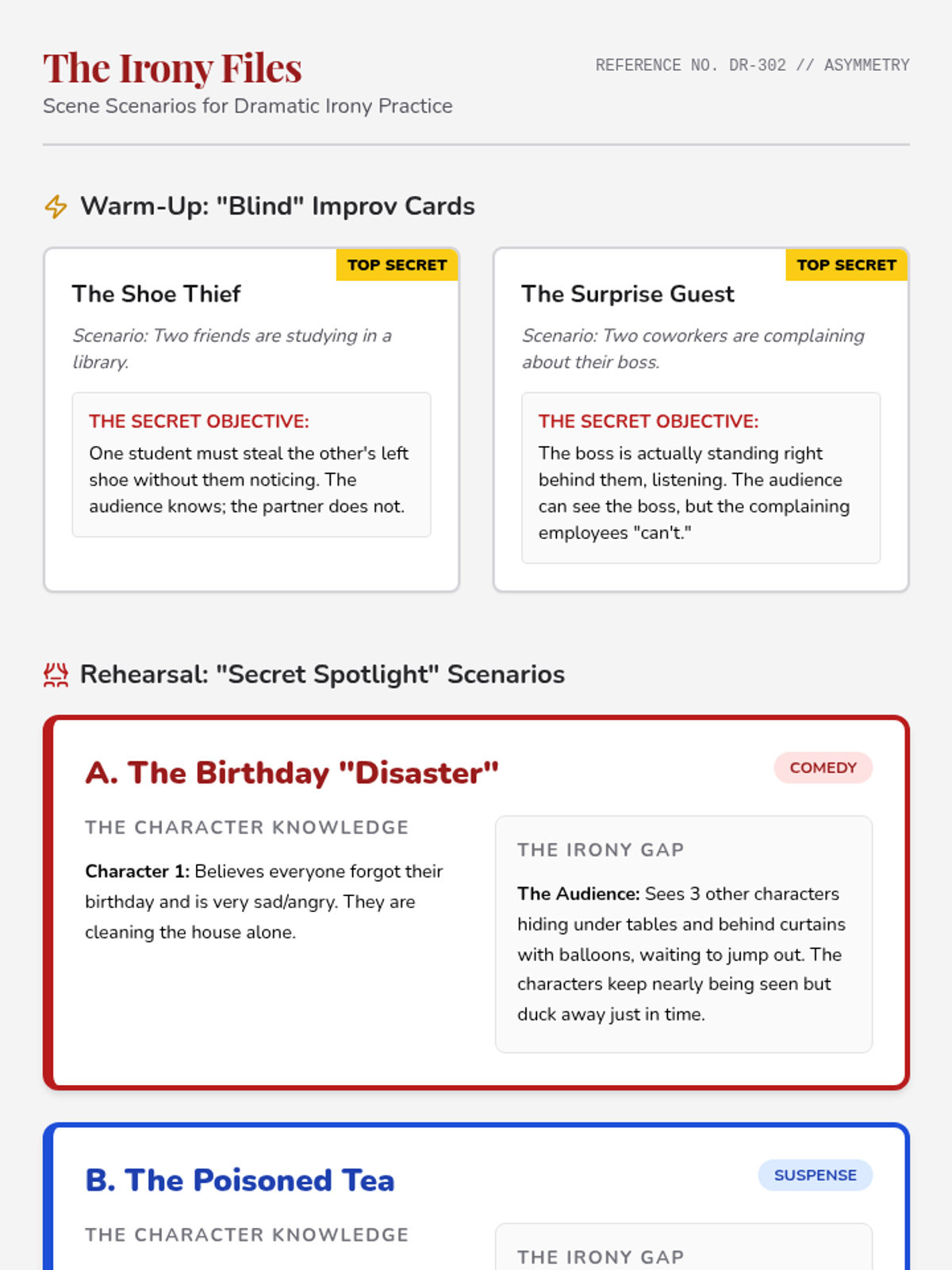
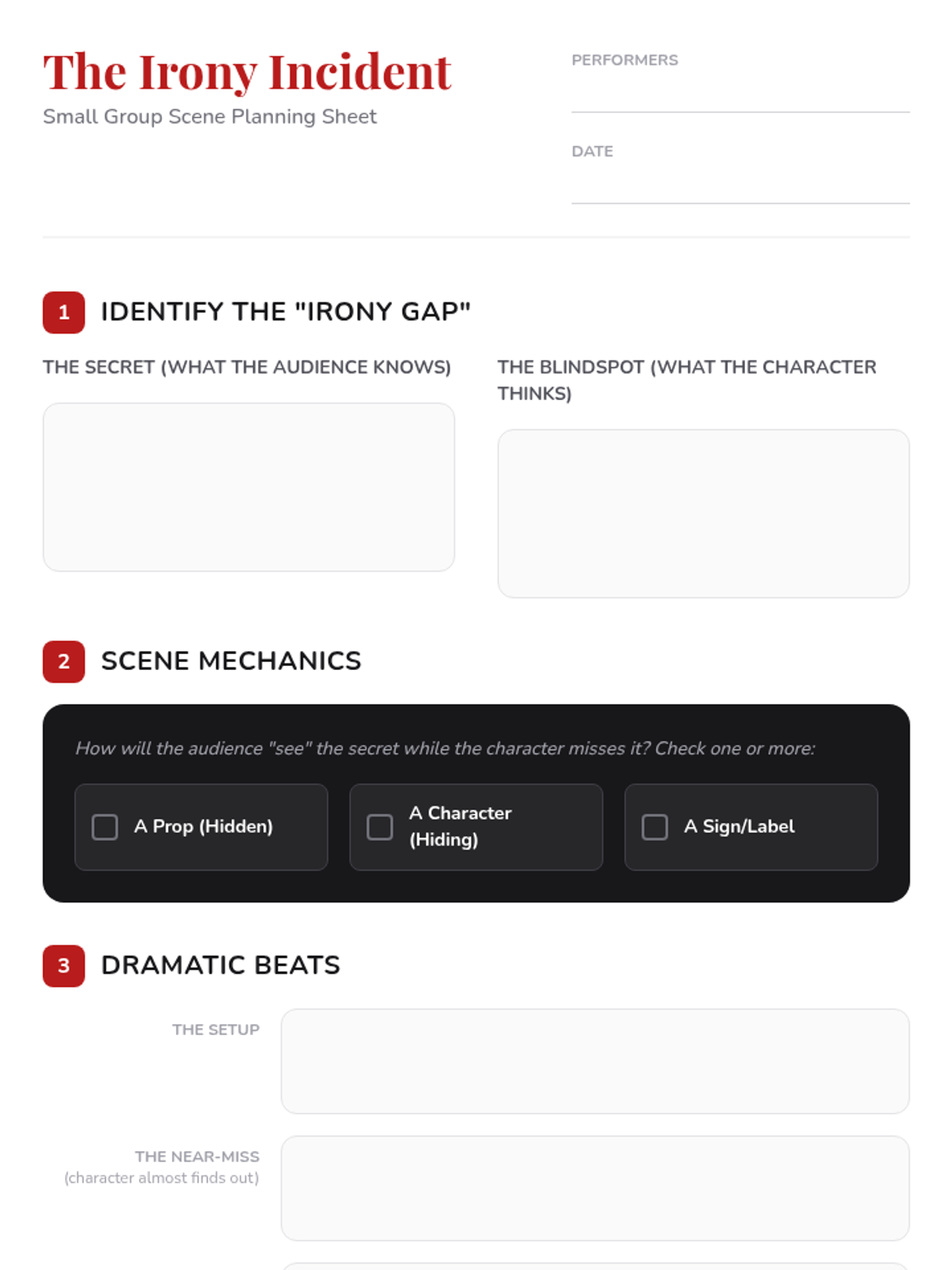
A high-energy drama lesson exploring dramatic irony and information asymmetry through improv, video analysis, and small-group performances. Students learn how to create suspense by giving the audience information that characters lack.
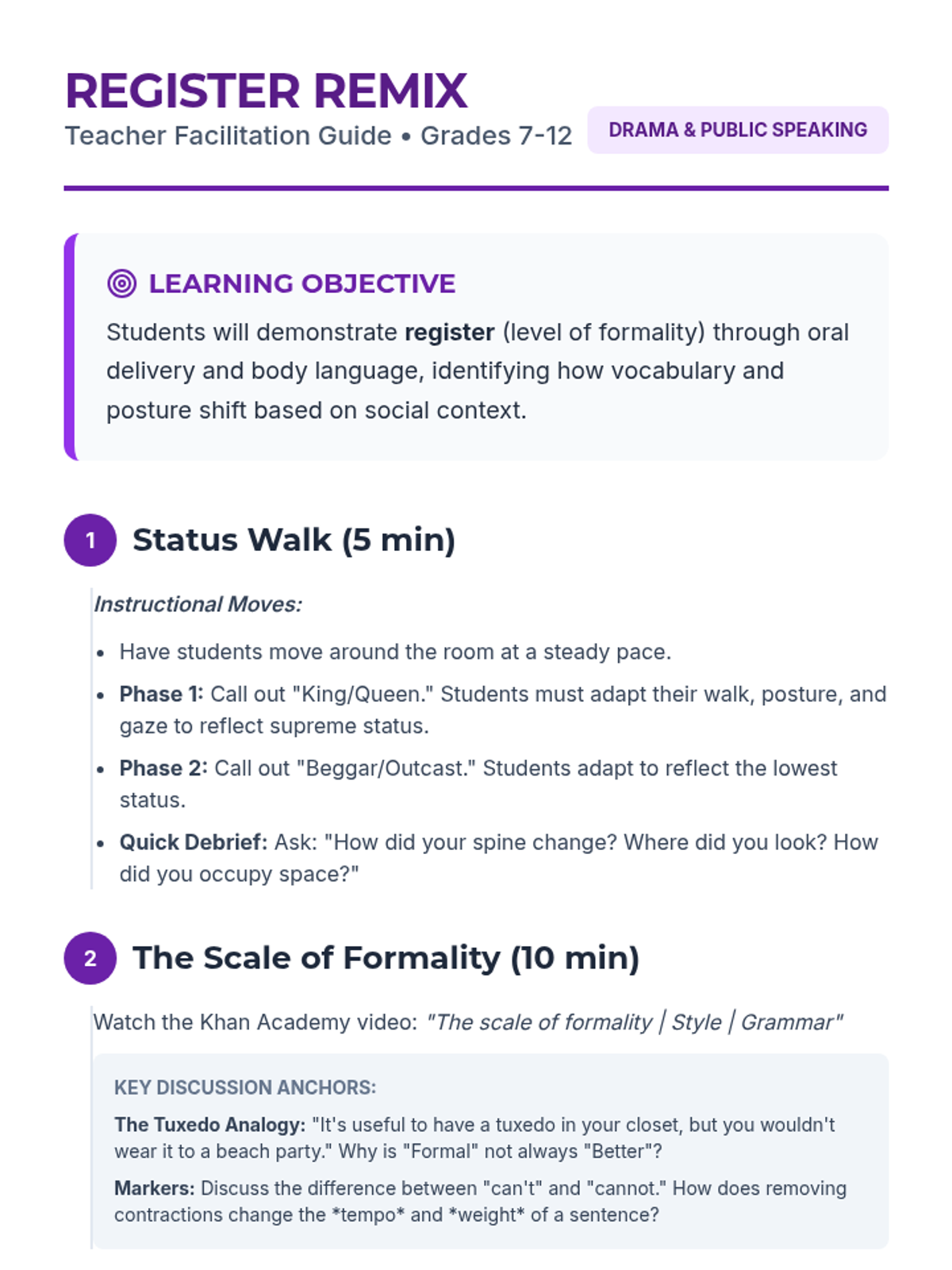
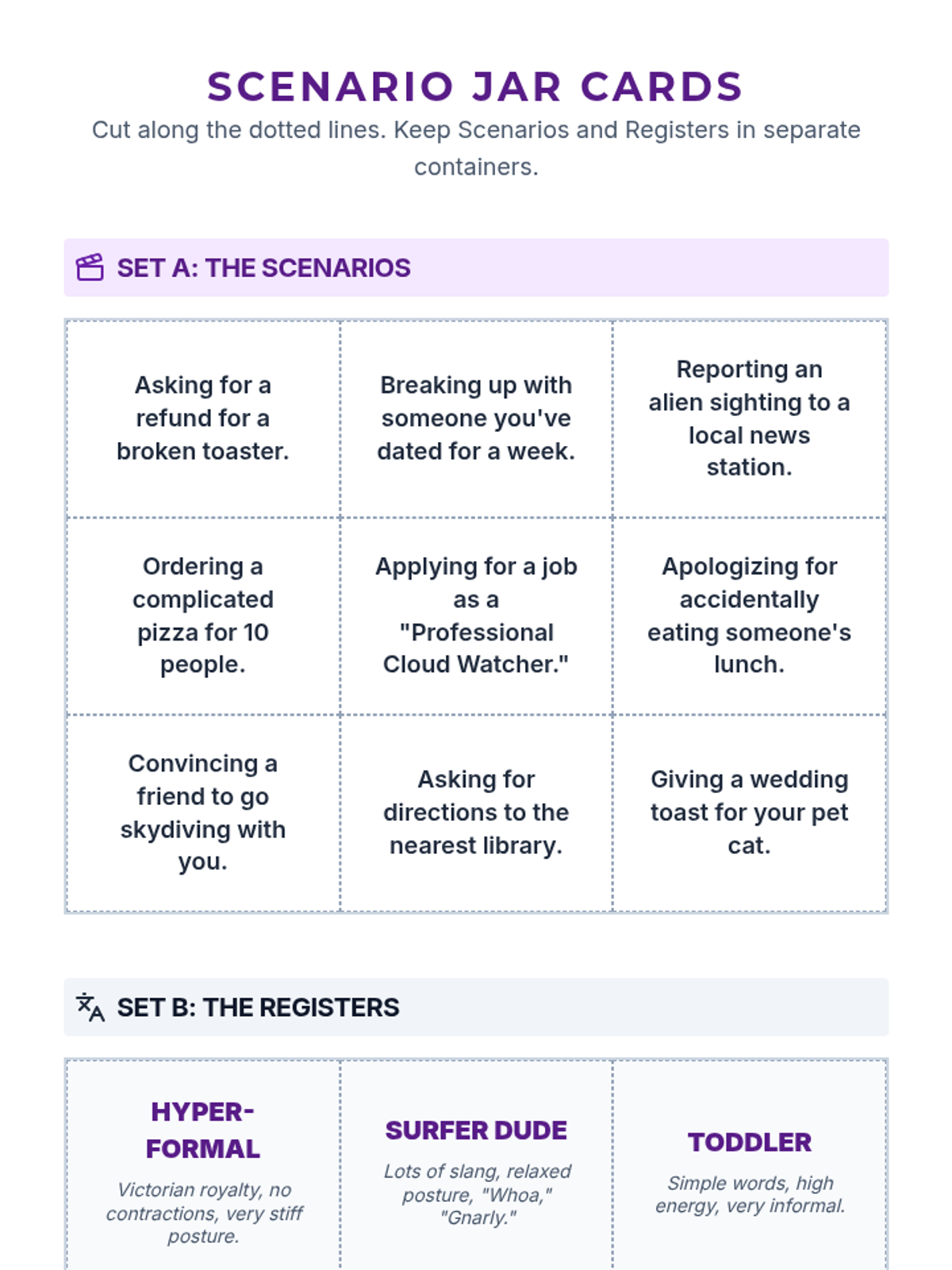
Students explore the concept of 'Register'—the level of formality in speech and body language—through a mix of analysis and improvisation. They will use the 'Tuxedo vs. Beach' analogy to understand context and practice shifting between informal and formal delivery.
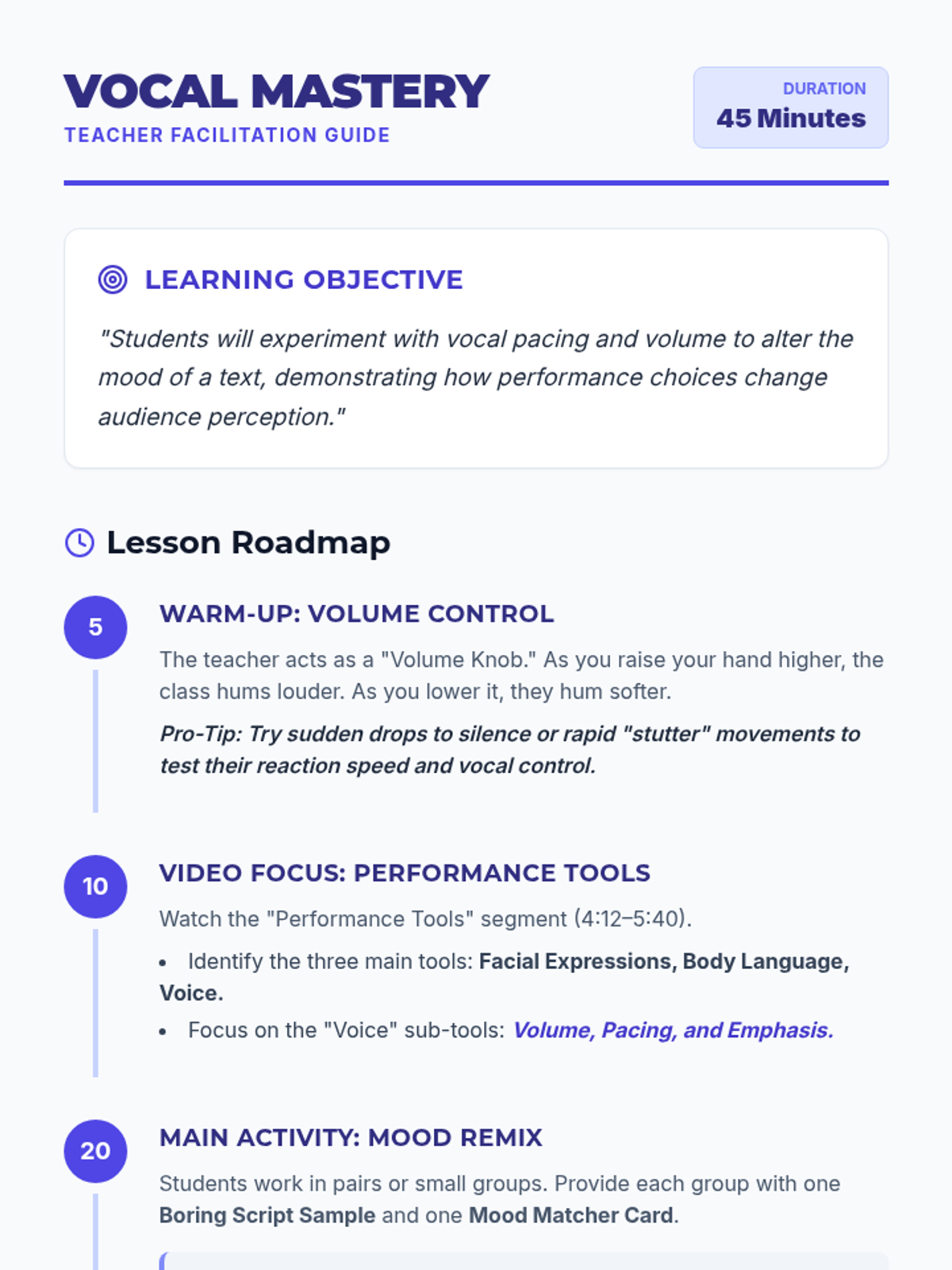
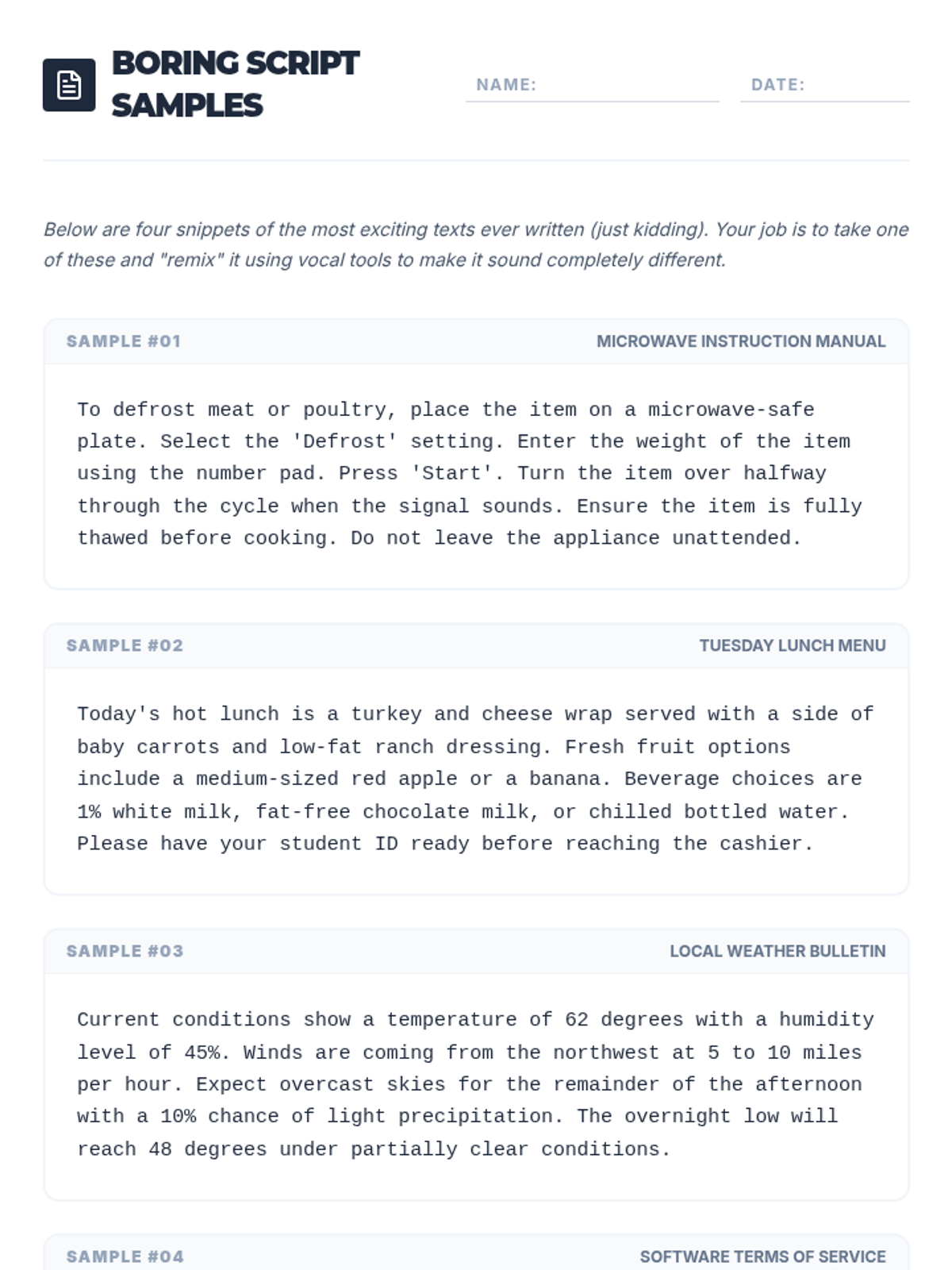
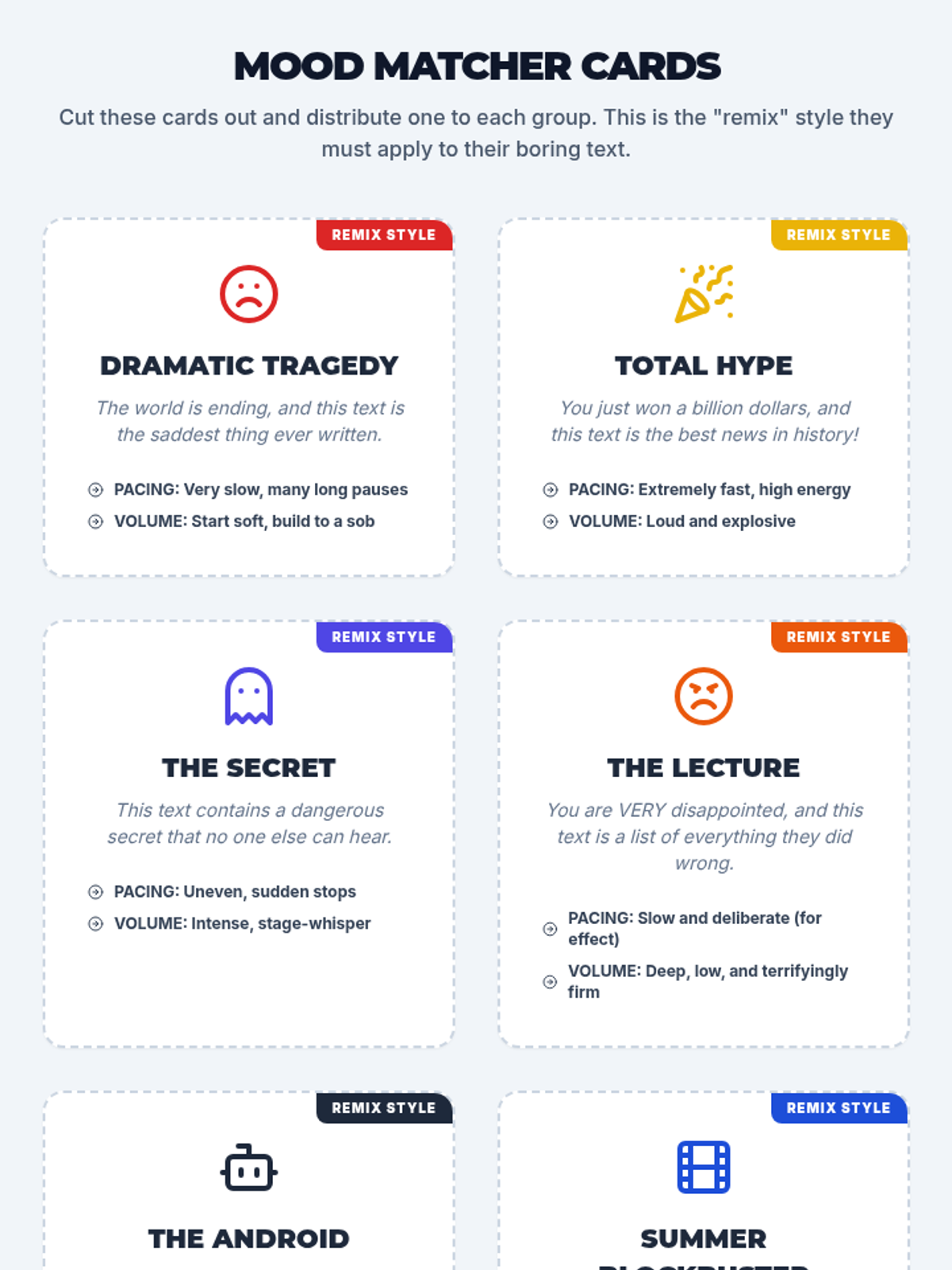
A high-energy lesson where students transform mundane texts into compelling performances using vocal pacing, volume, and emphasis. Includes a video analysis of spoken word techniques and a hands-on 'Mood Remix' activity.
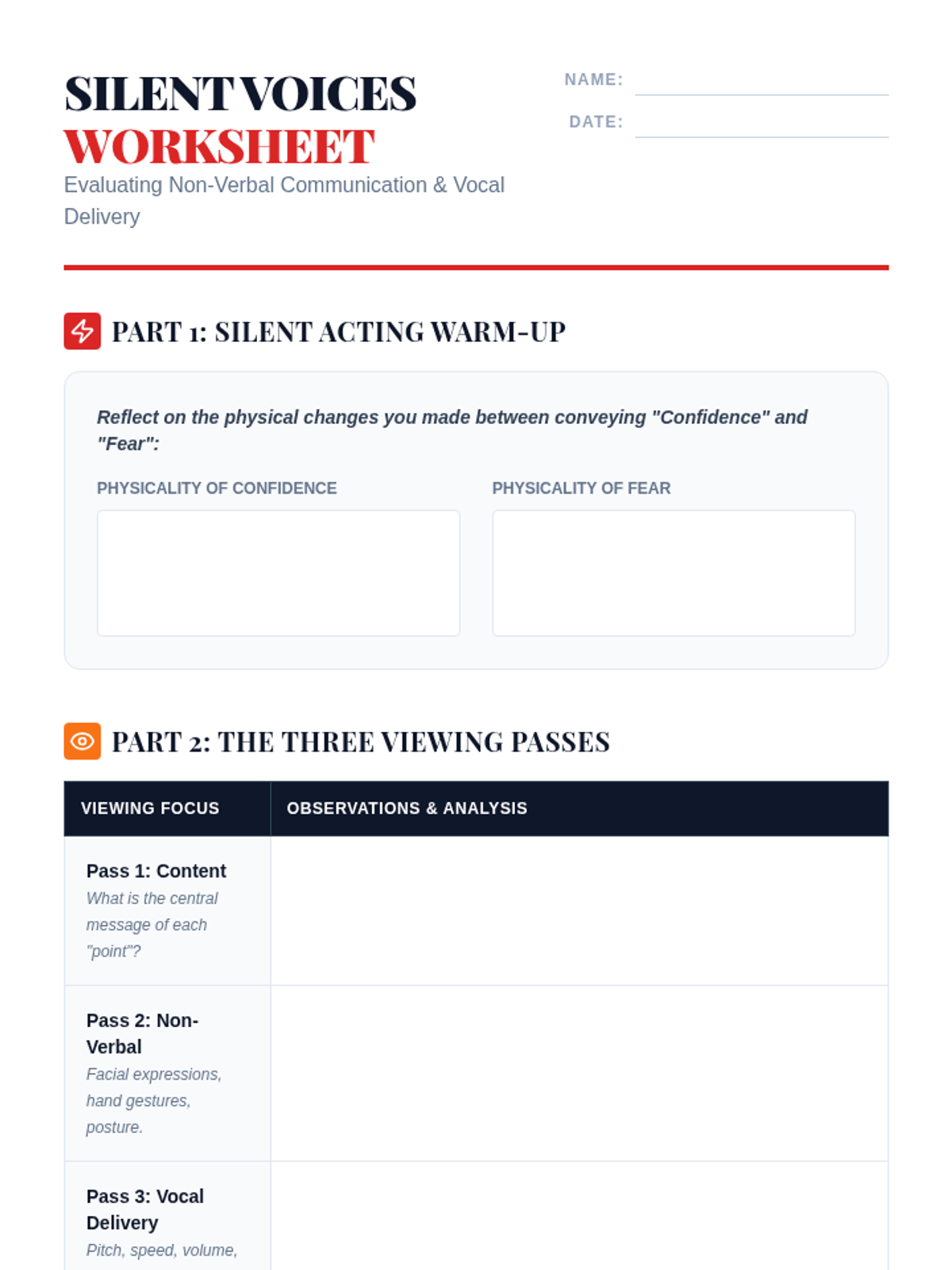
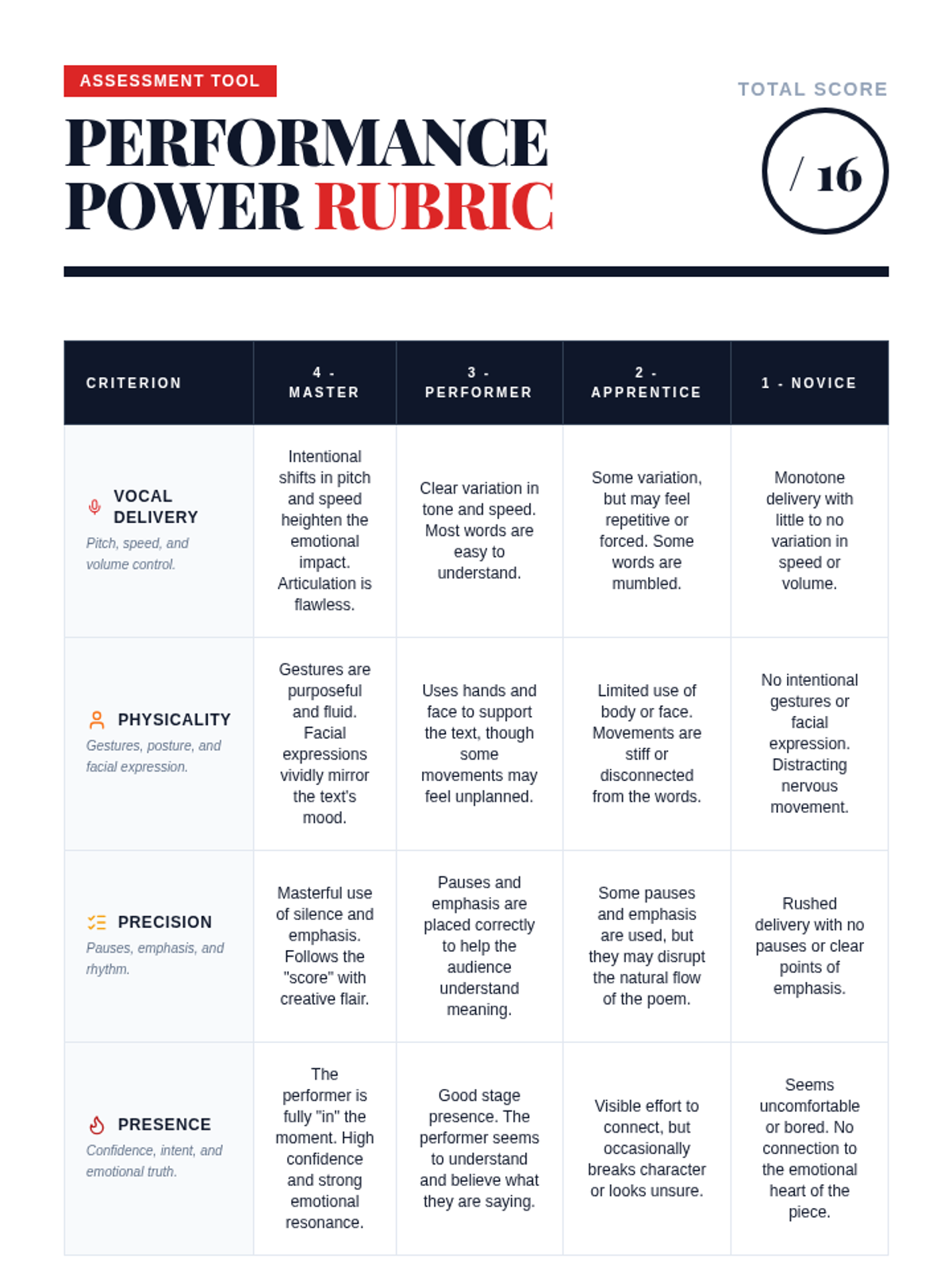
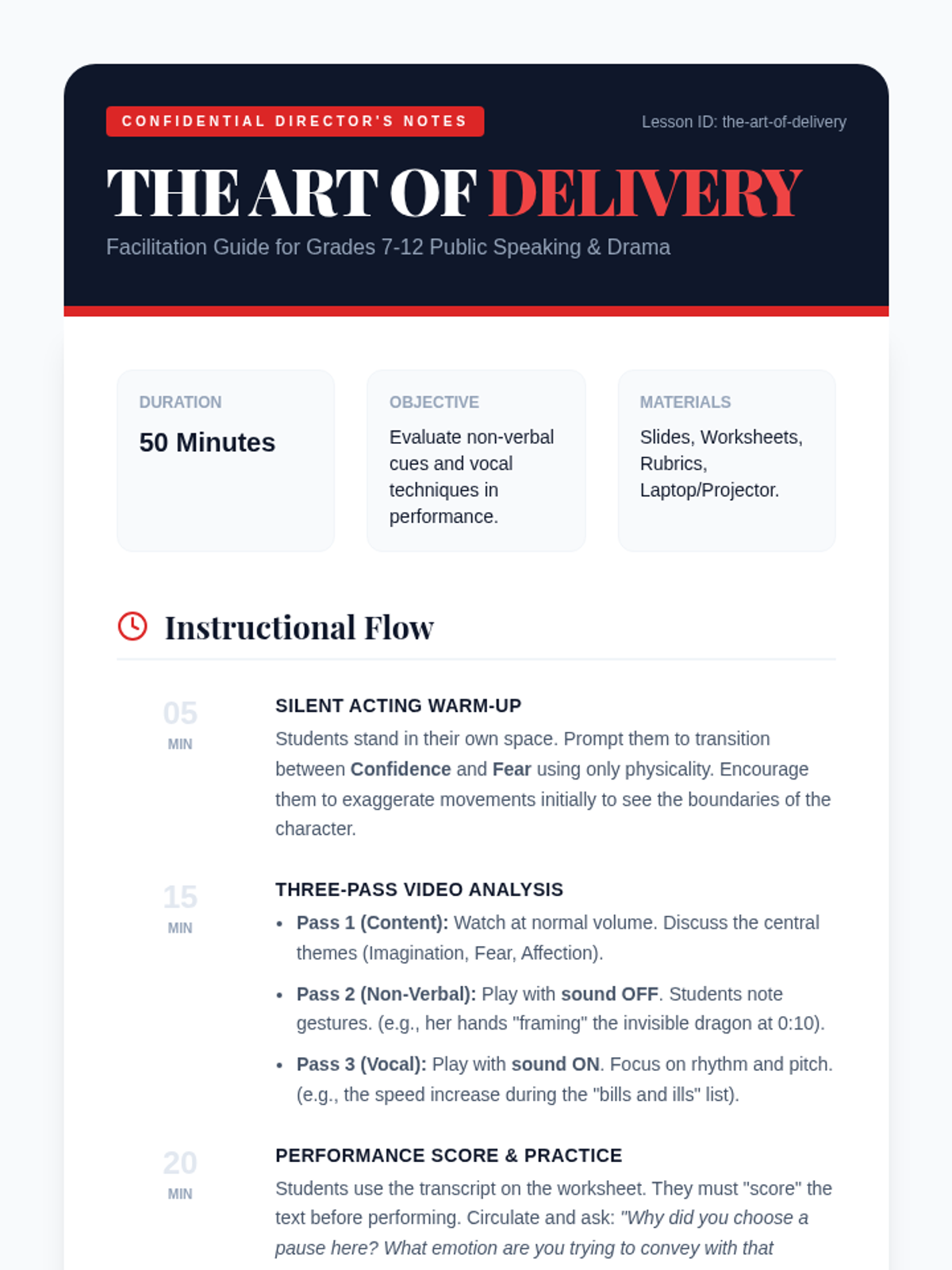
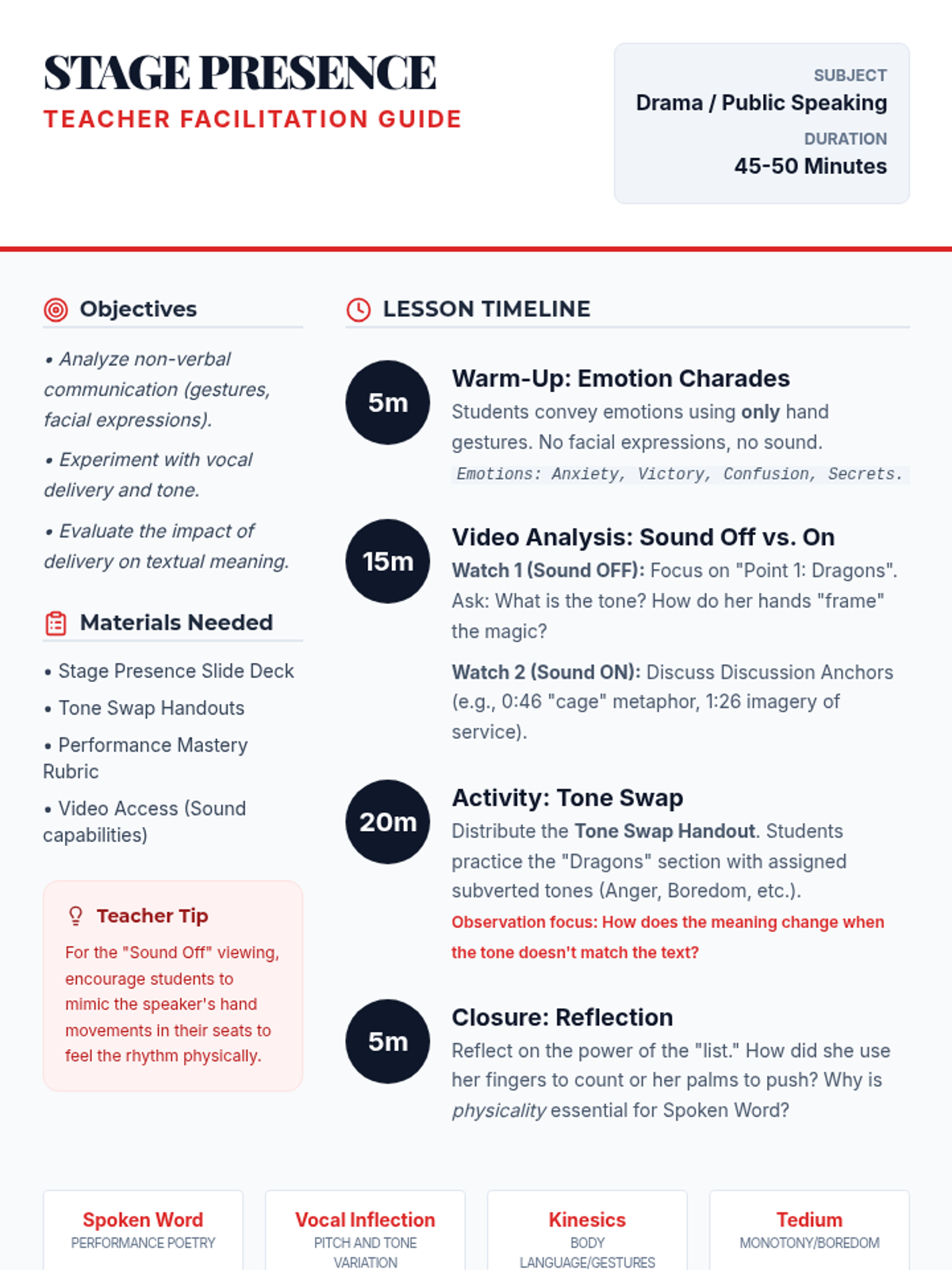
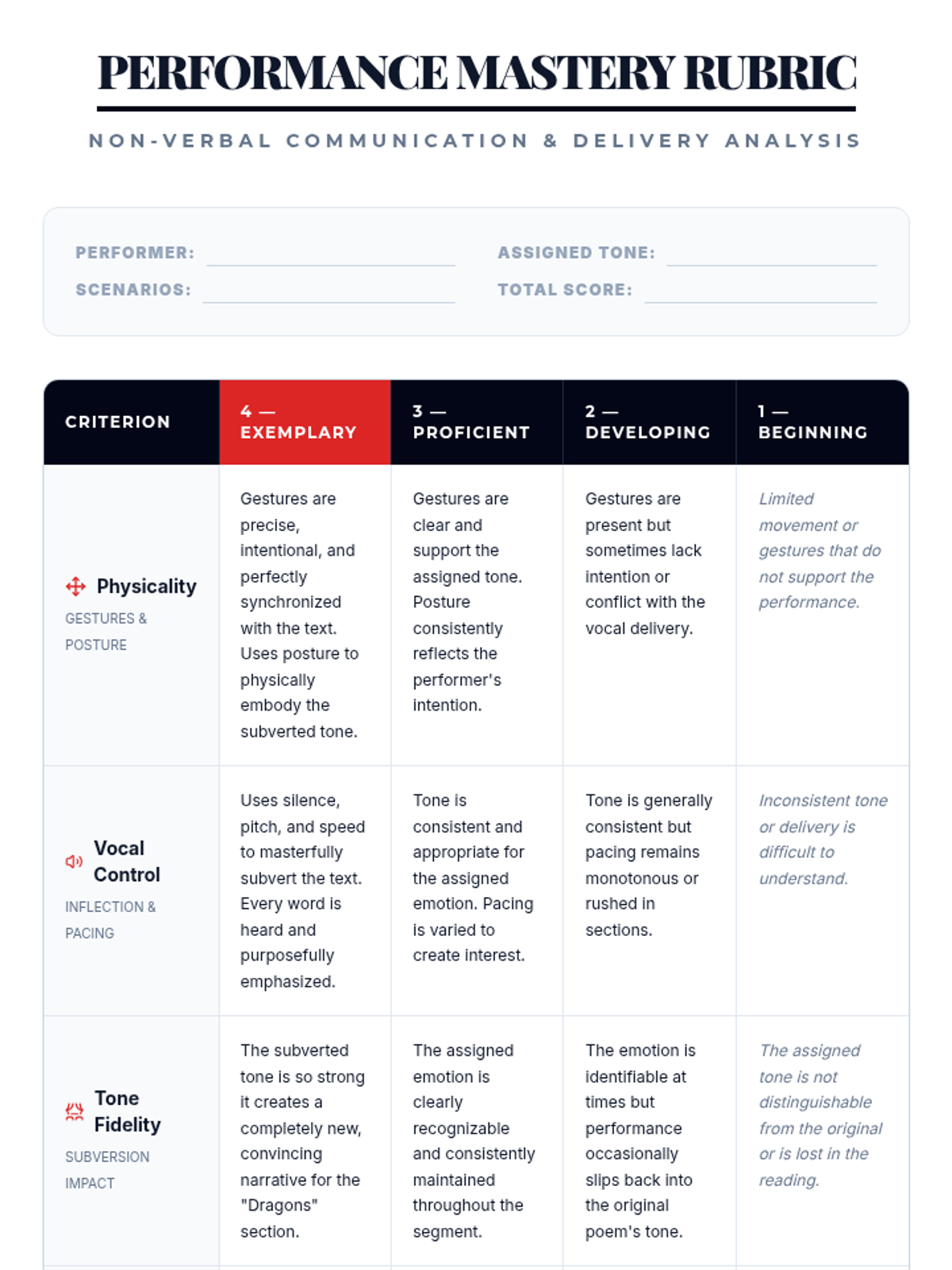
Students will analyze a spoken word performance to evaluate how non-verbal cues and vocal delivery choices impact the meaning and emotional resonance of a text, culminating in a performance of their own.
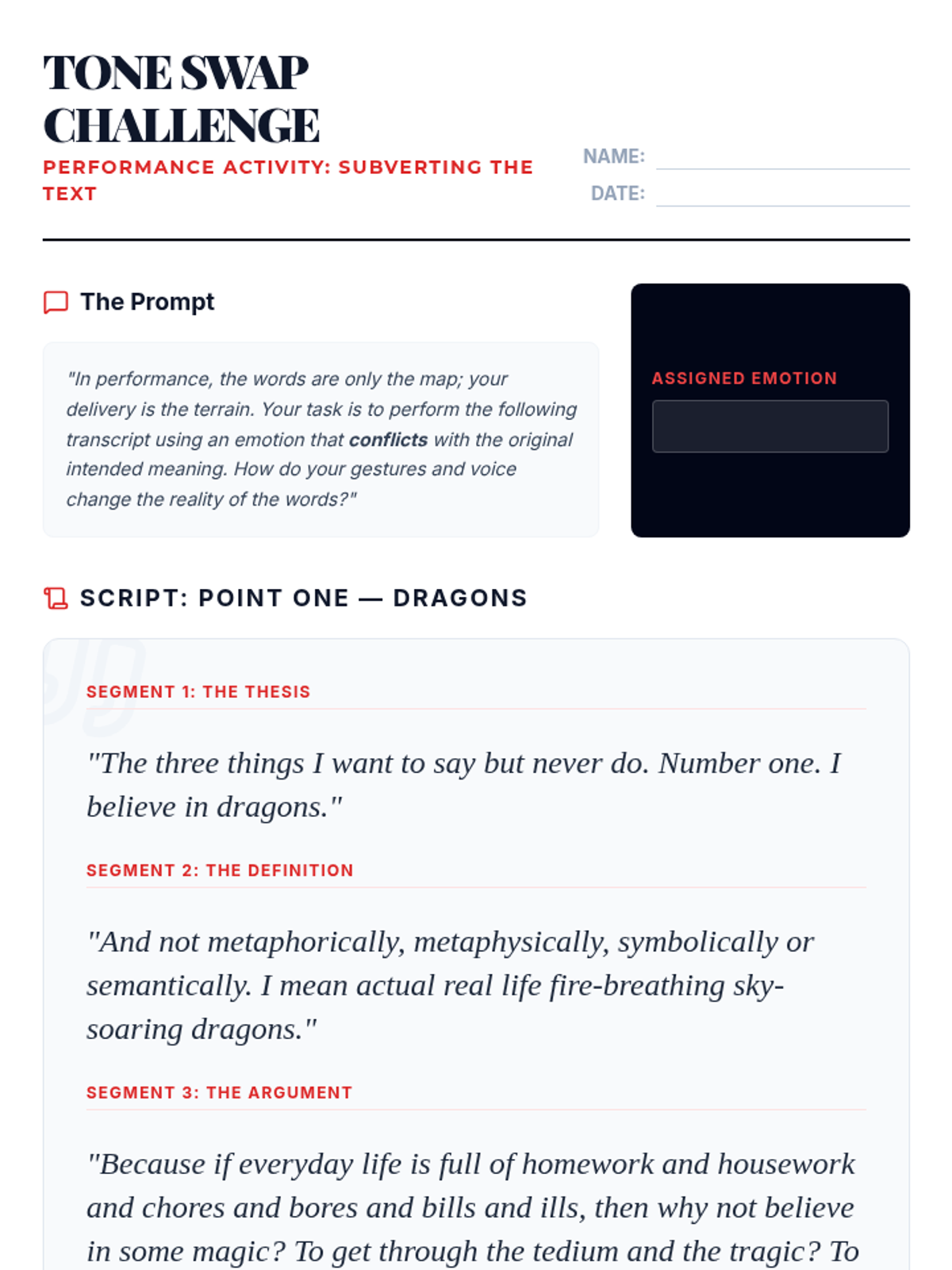
A drama and public speaking lesson focusing on non-verbal communication, tone, and performance techniques through the analysis of a spoken word poem. Students explore how gestures and vocal inflection transform meaning.
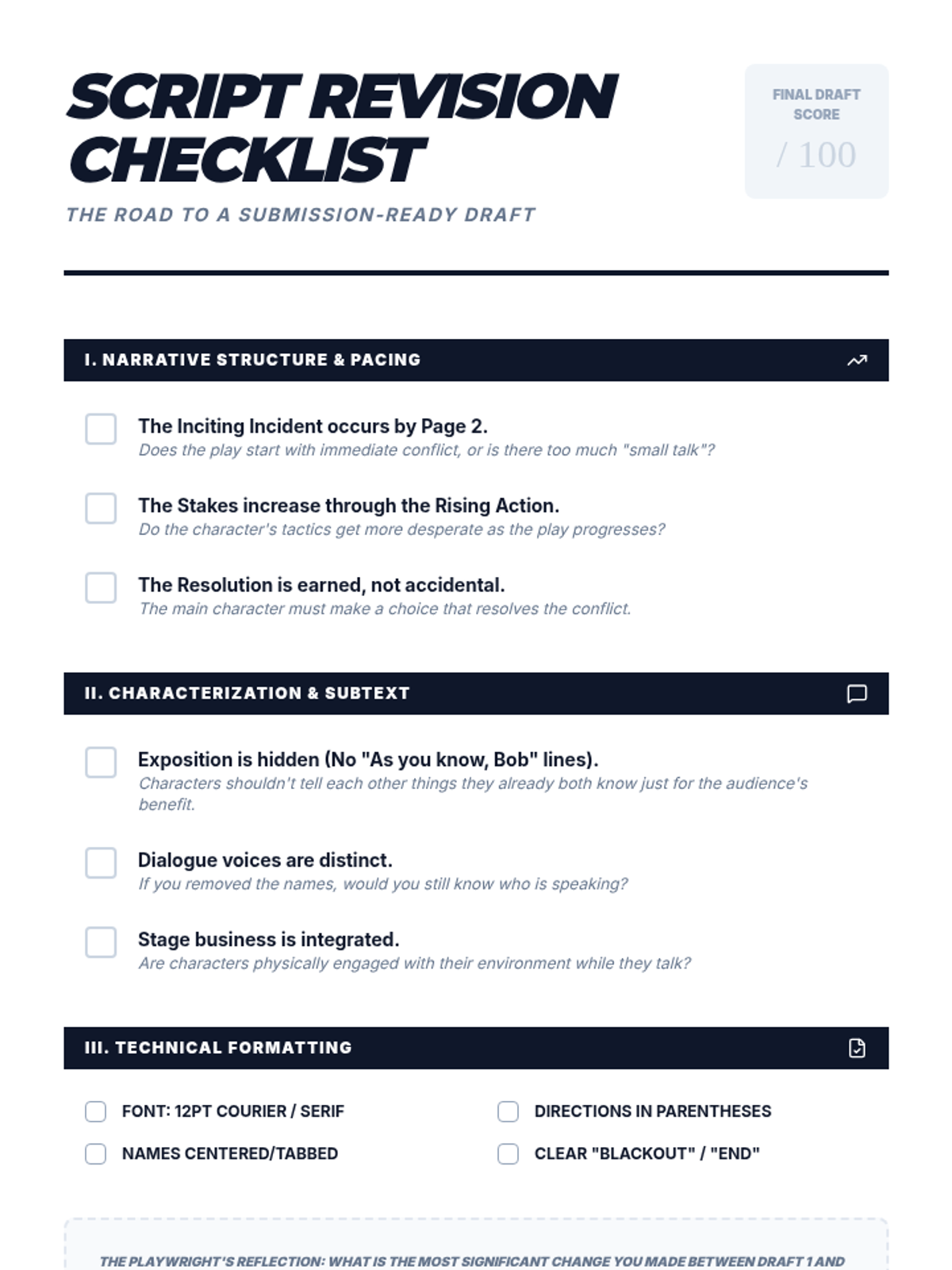
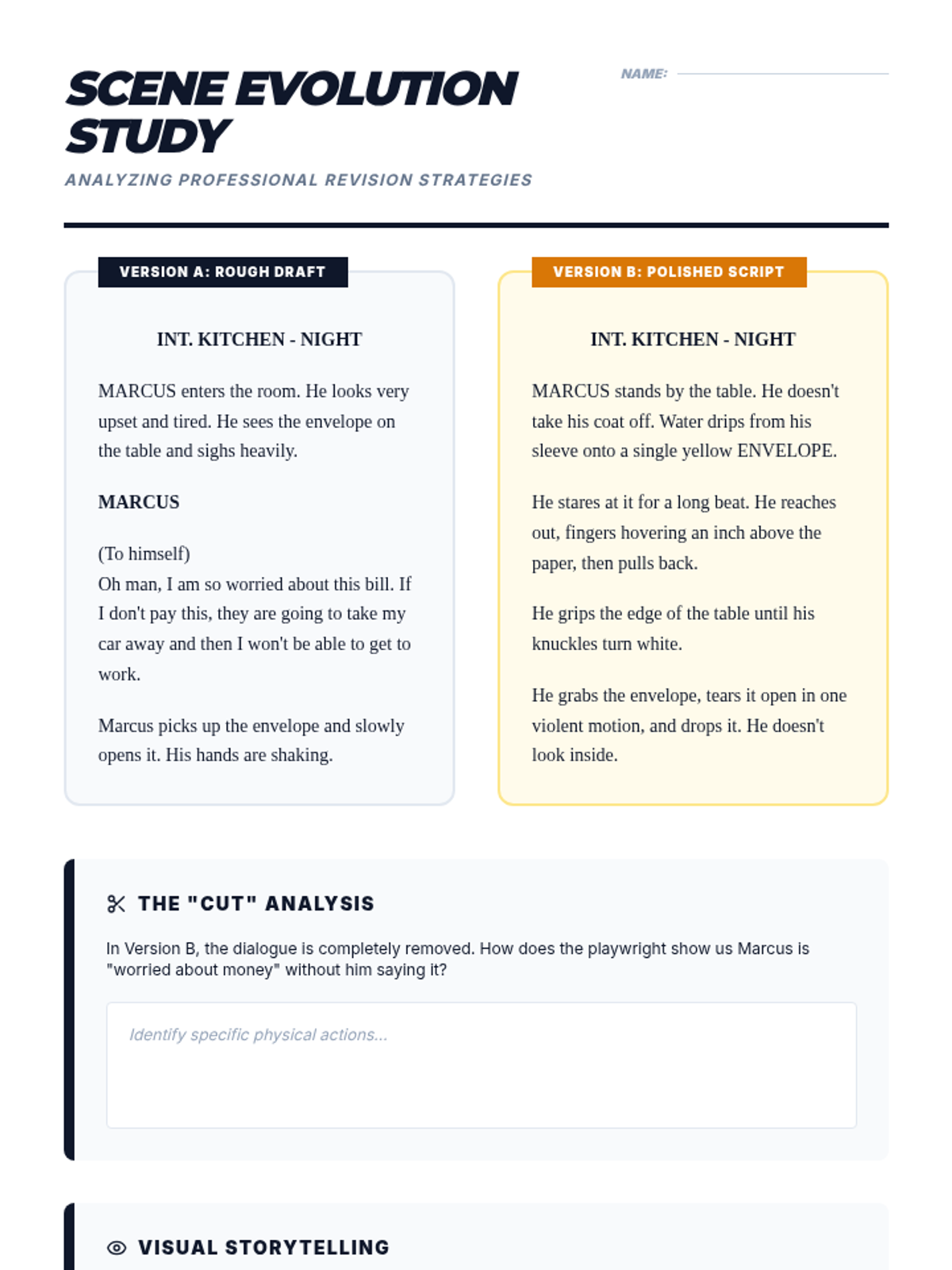
Students refine their drafts into submission-ready scripts, applying lessons learned from the table read and examining professional revisions.
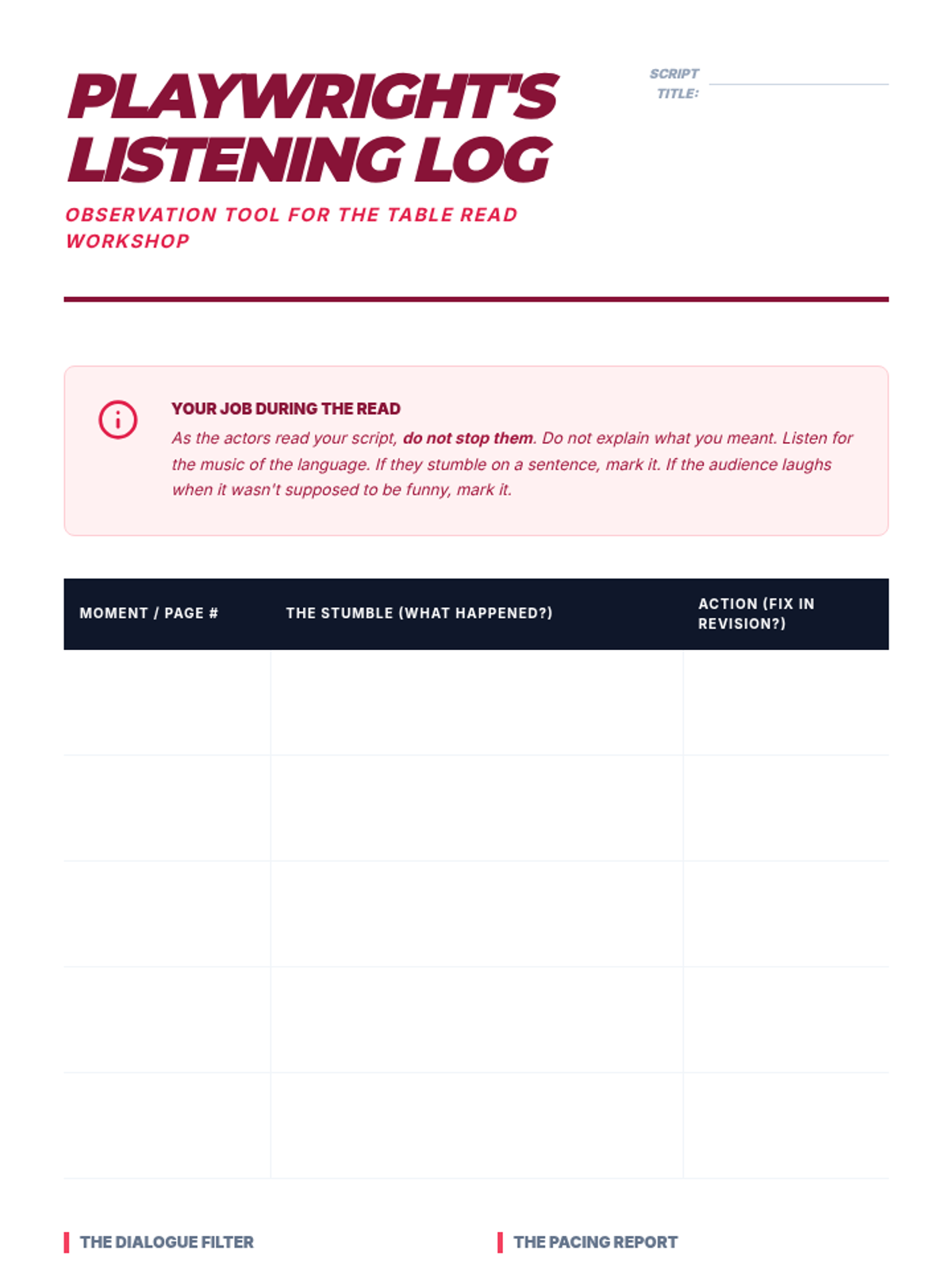
The core of the revision process, where students hear their work performed by peers and collect critical data on pacing and dialogue.
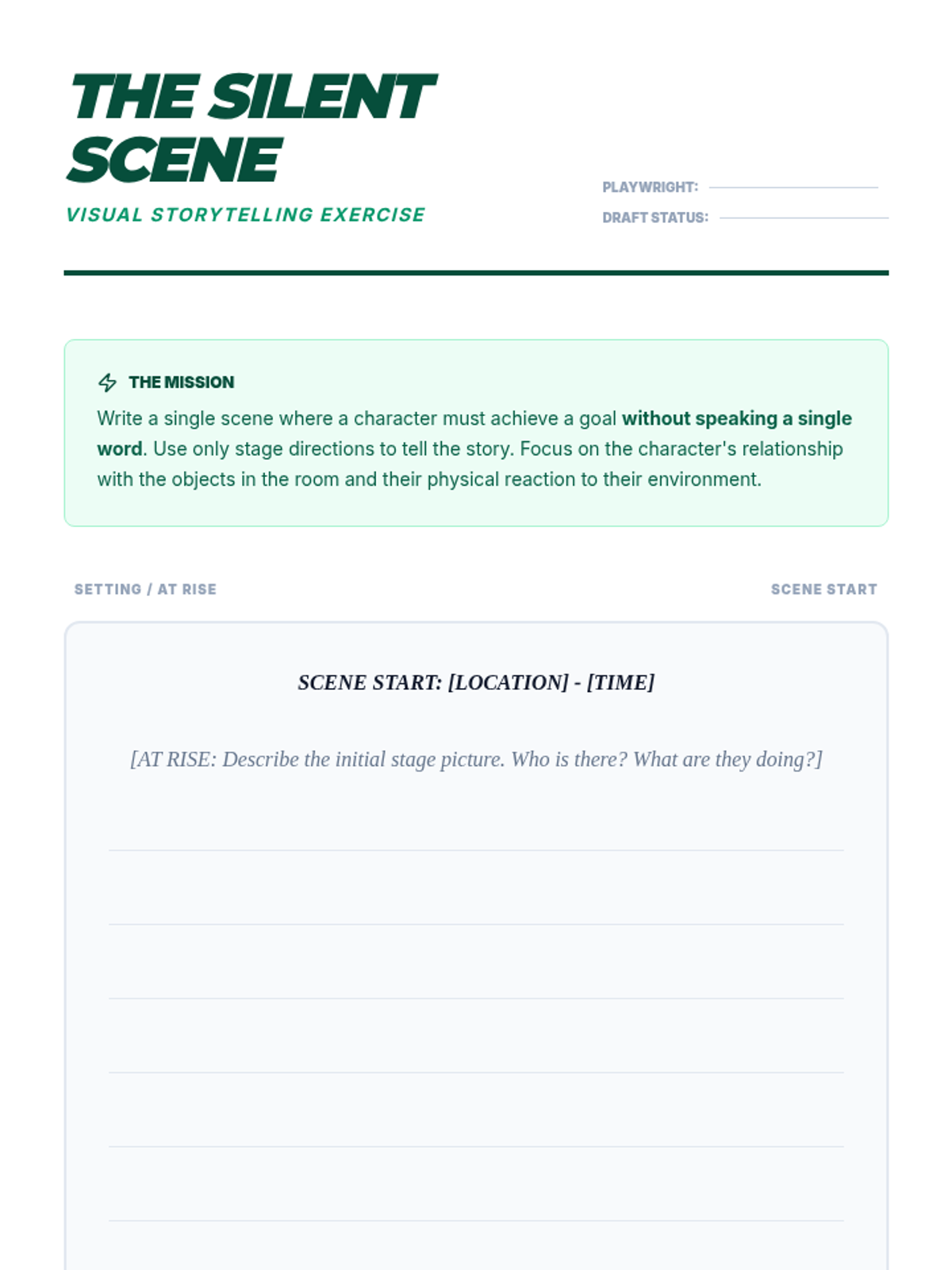
Students focus on visual storytelling and 'stage business,' learning to show character emotion through action rather than dialogue alone.
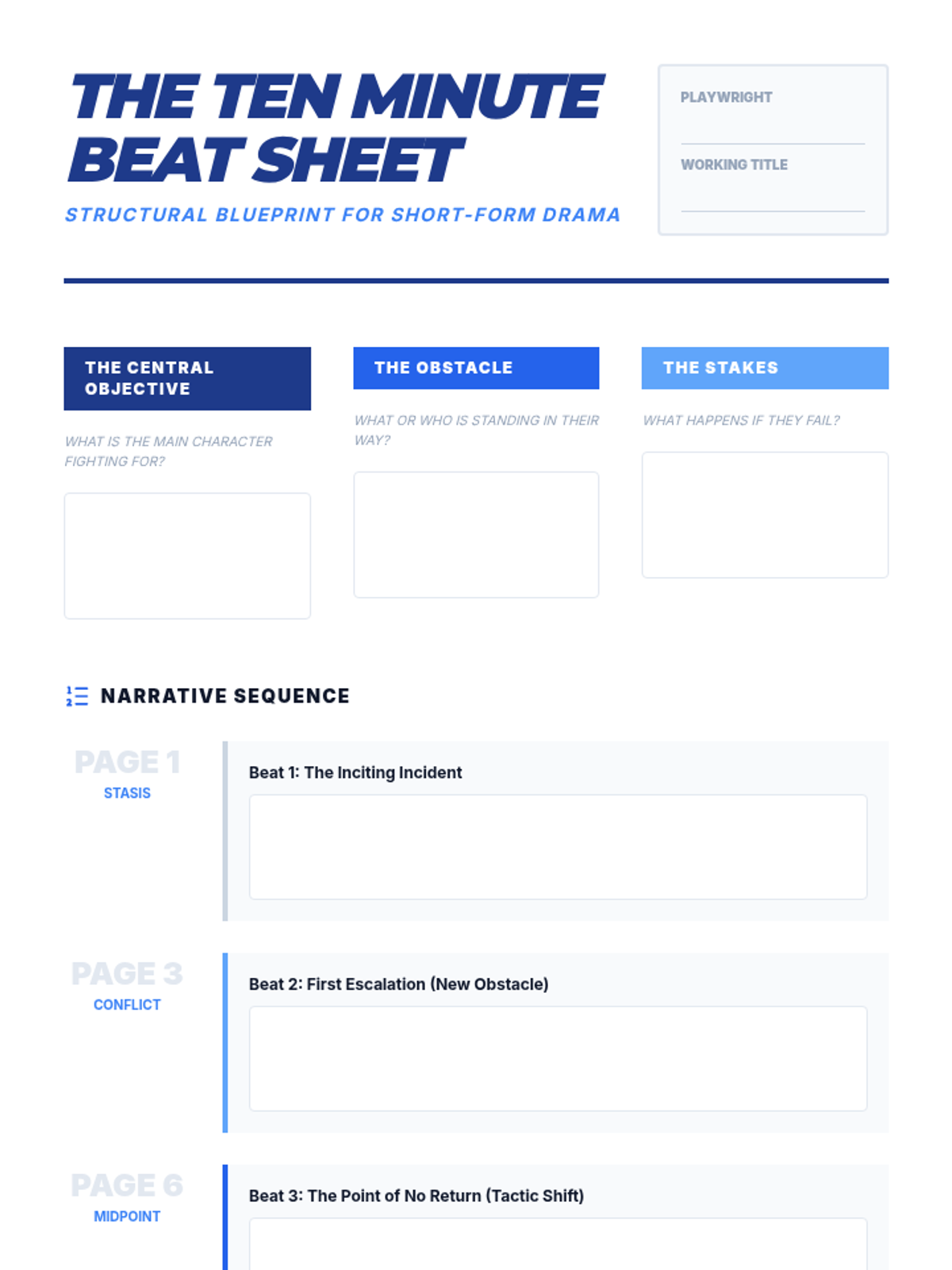
Focusing on the 10-minute play format, students map out their narrative arcs using structural beat sheets.
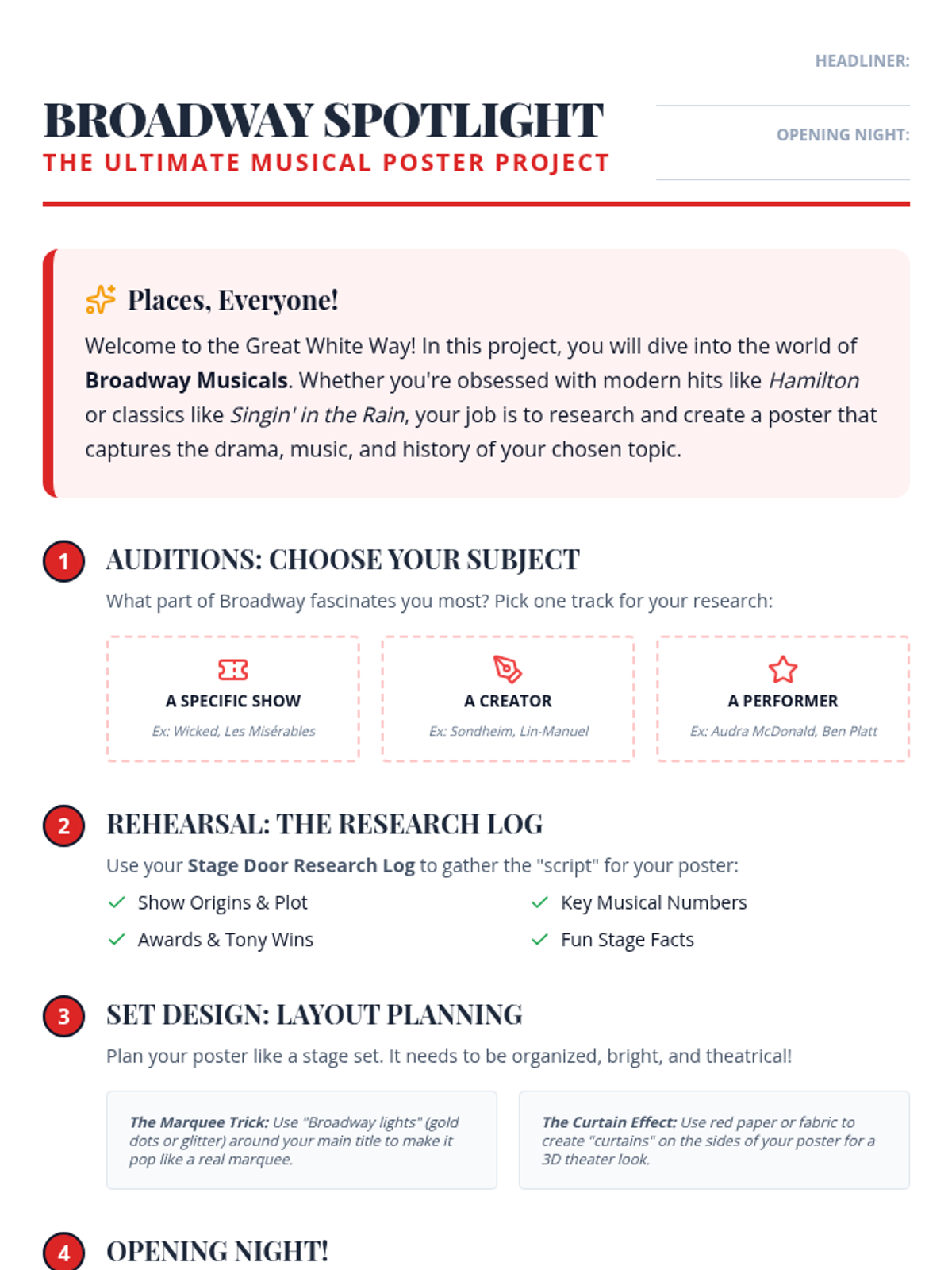
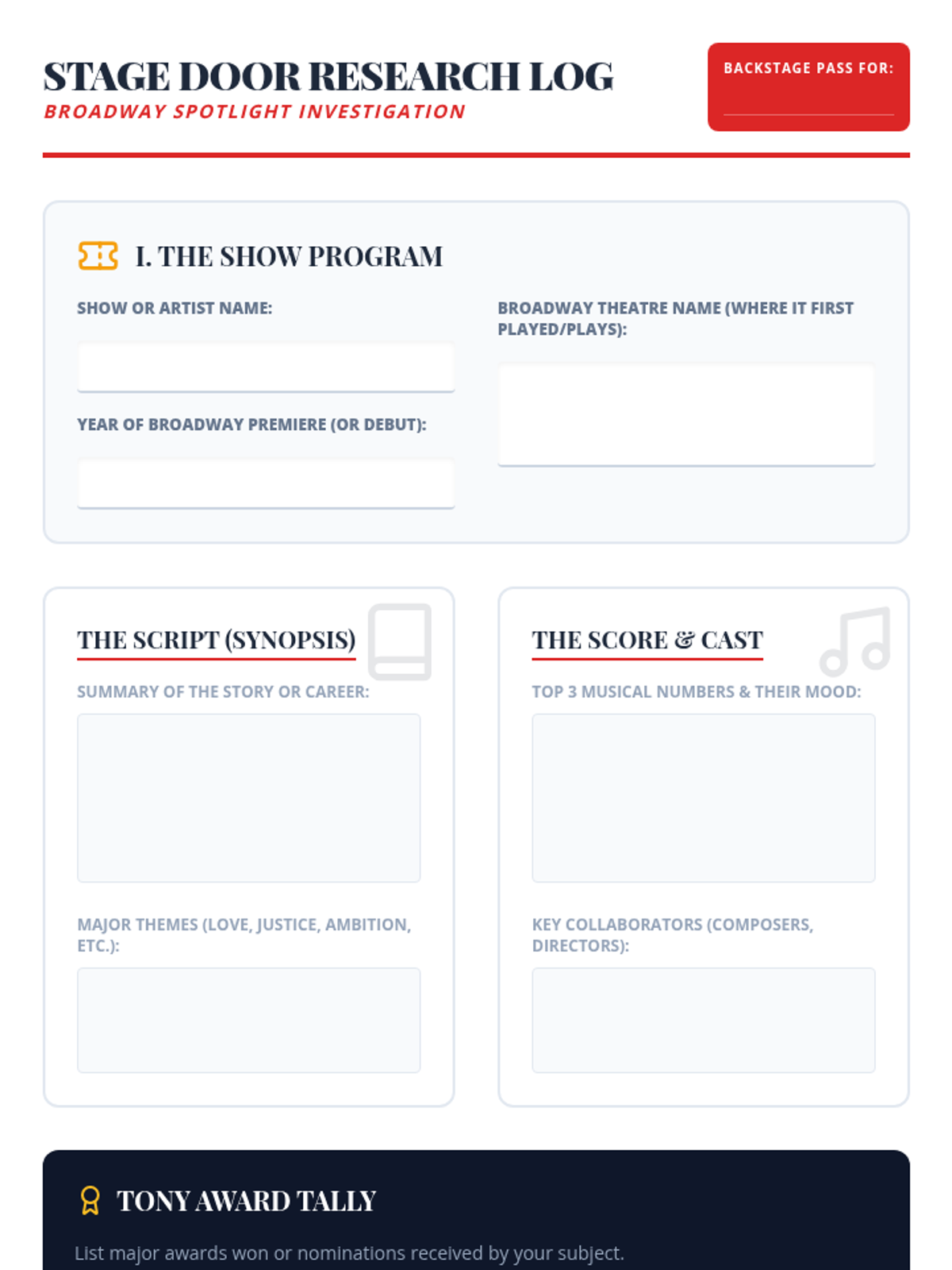
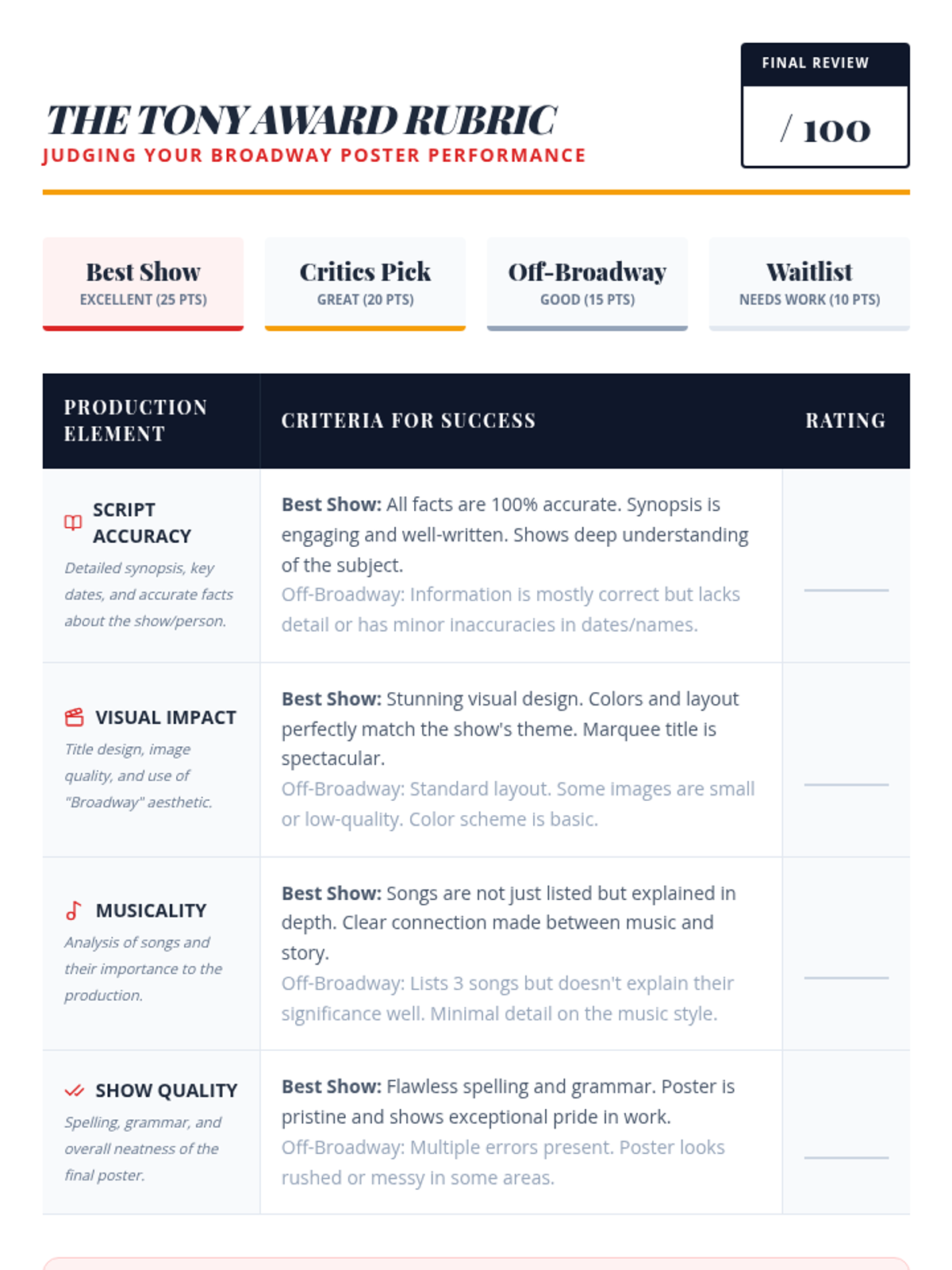
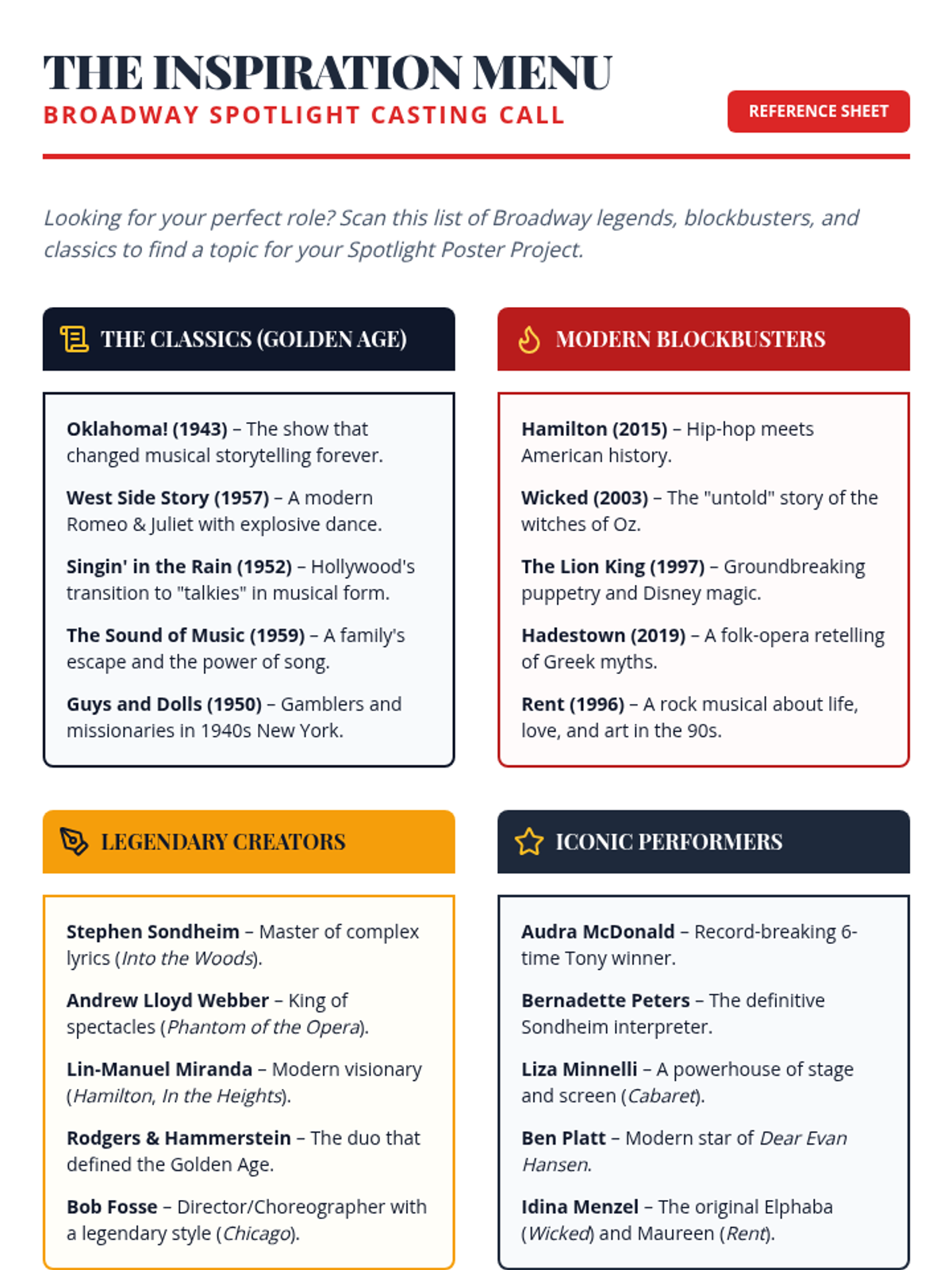
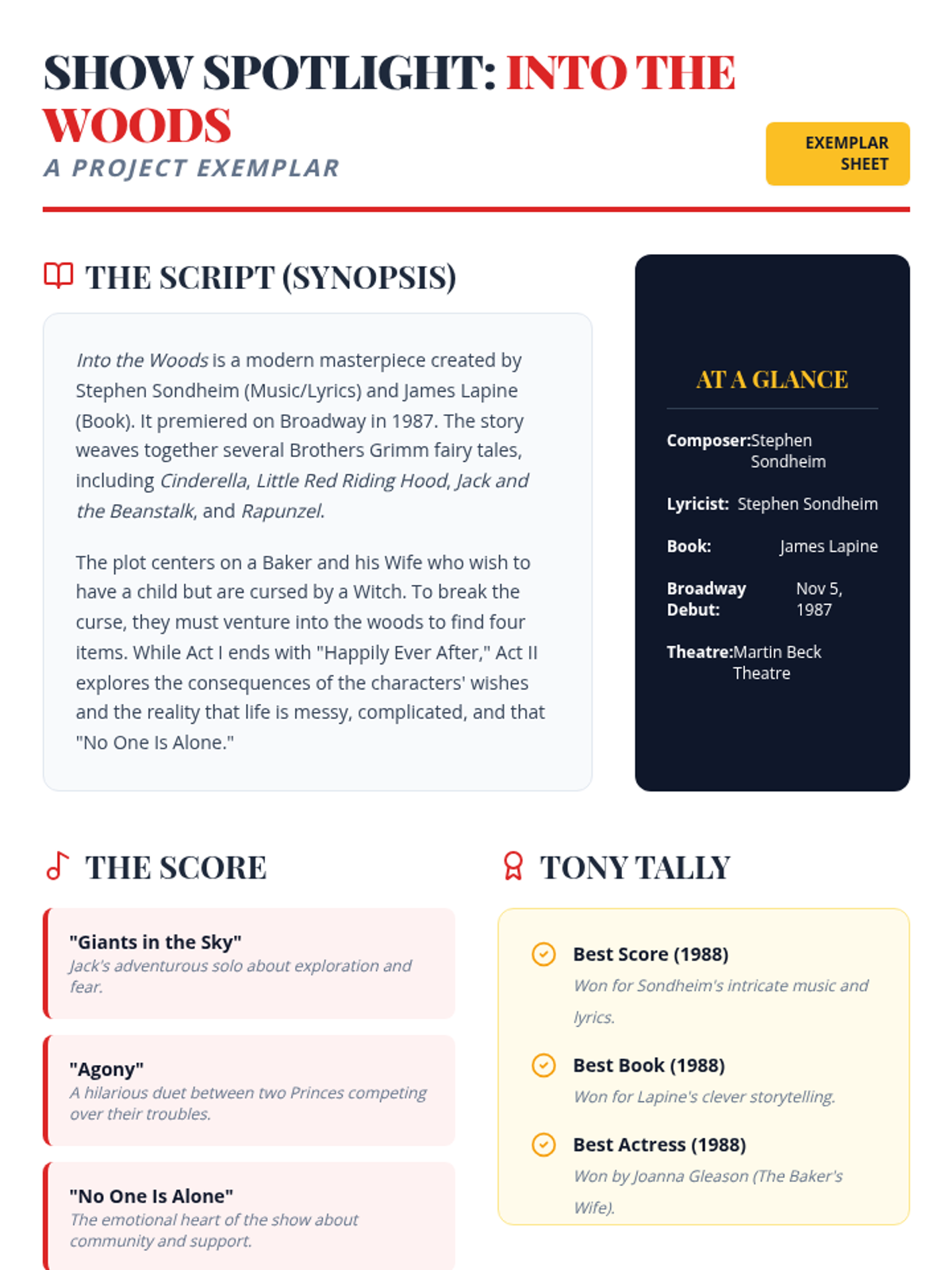
A creative project where students research and present the magic of Broadway. Students can choose a specific musical, a legendary composer, or a famous performer to showcase on an informational poster.
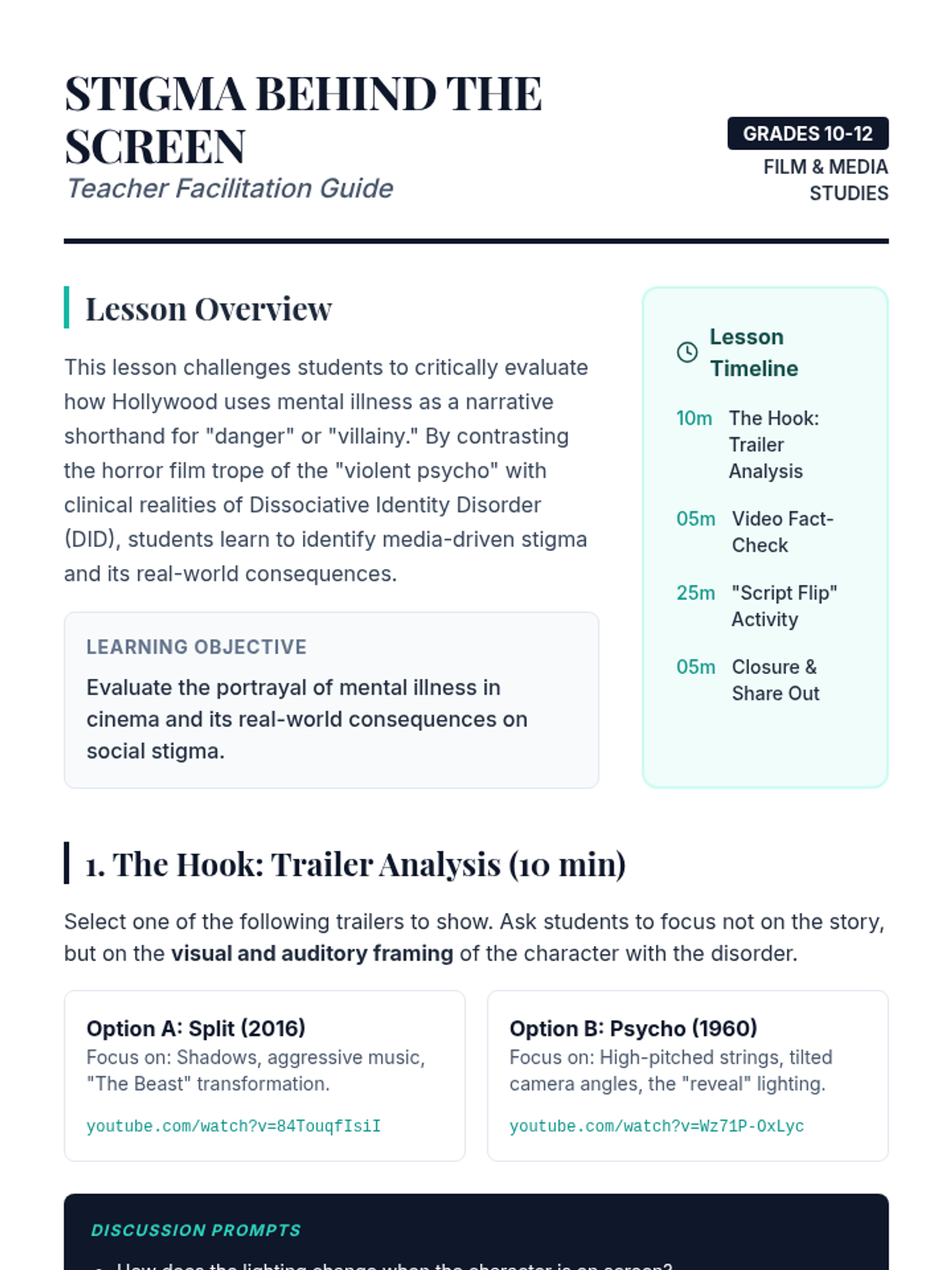
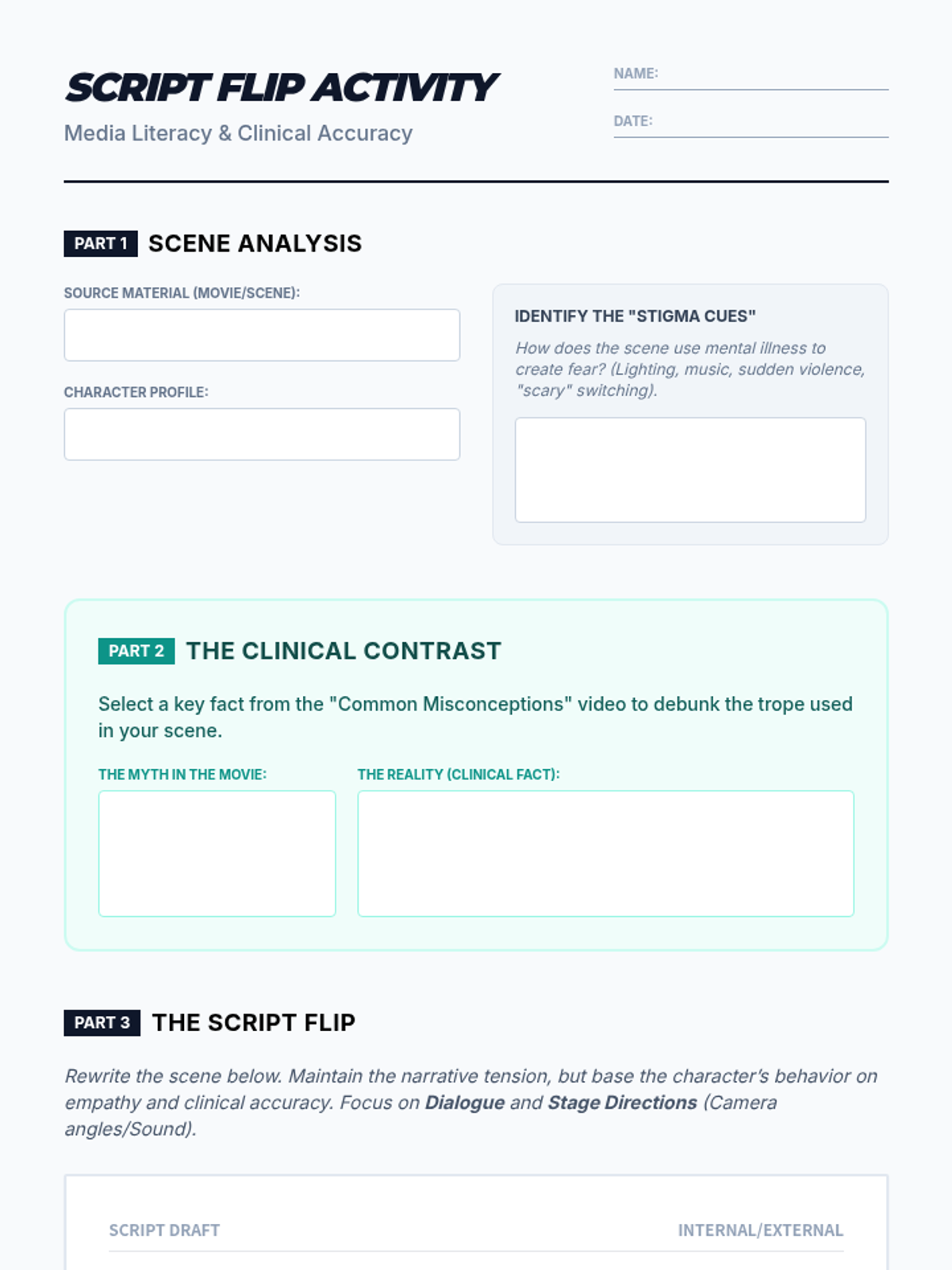
A high school Media Studies lesson exploring how cinema portrays mental illness, specifically dissociative disorders, and the real-world impact of these portrayals on social stigma. Students analyze horror tropes and rewrite scenes for clinical accuracy.
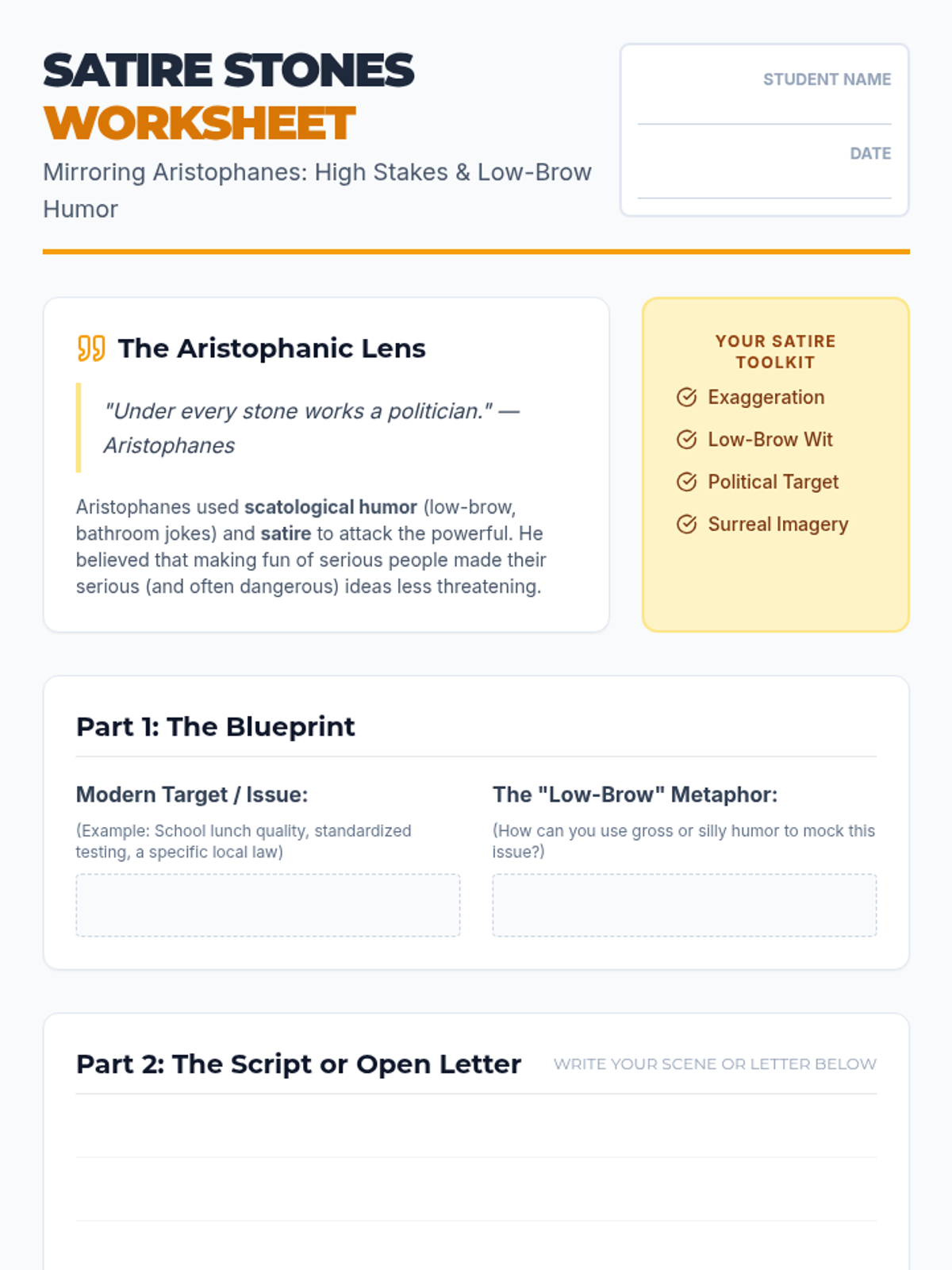
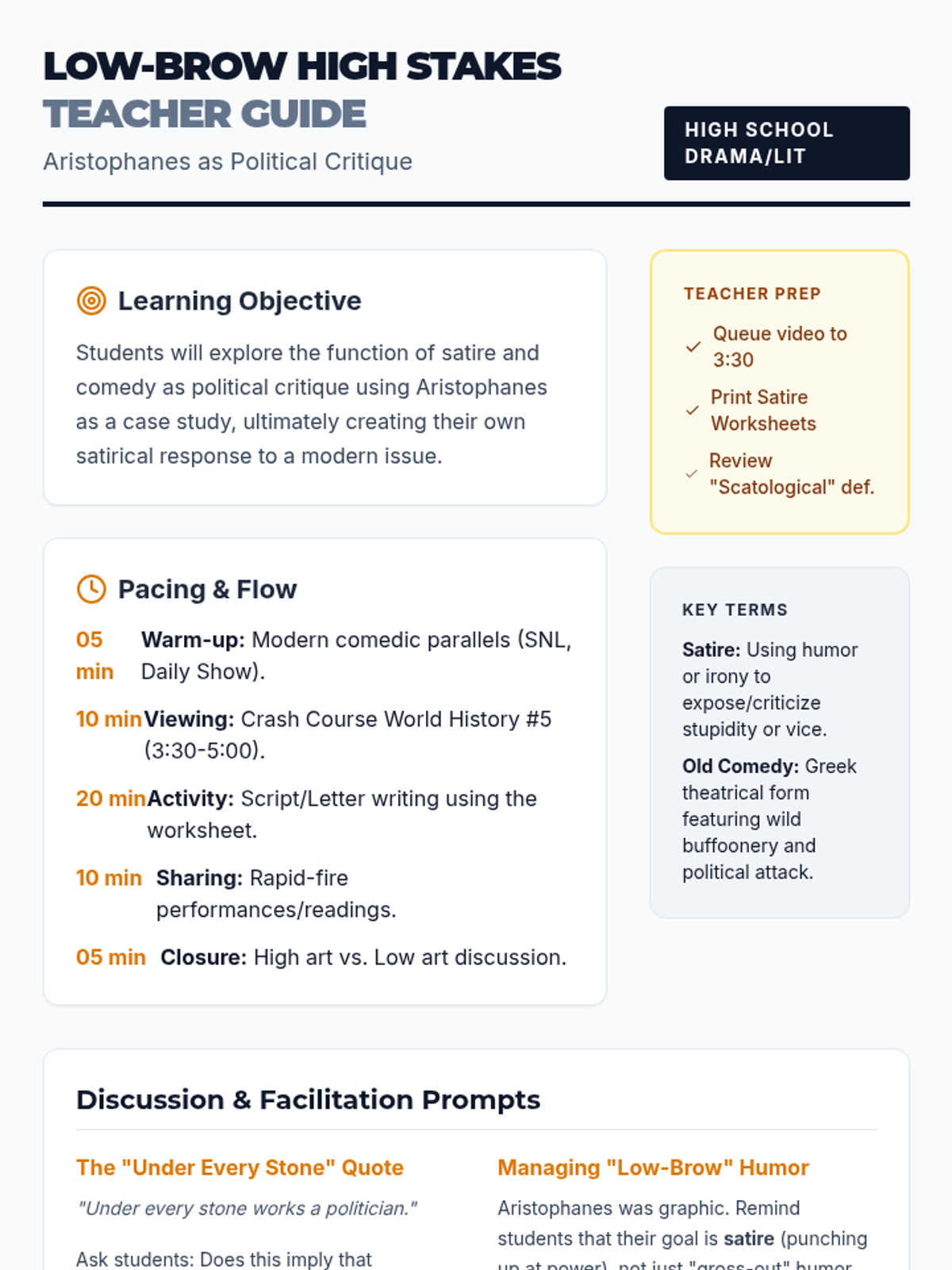
A lesson exploring the power of satire and political comedy through the lens of Ancient Greek playwright Aristophanes, featuring modern connections and a creative script-writing activity.
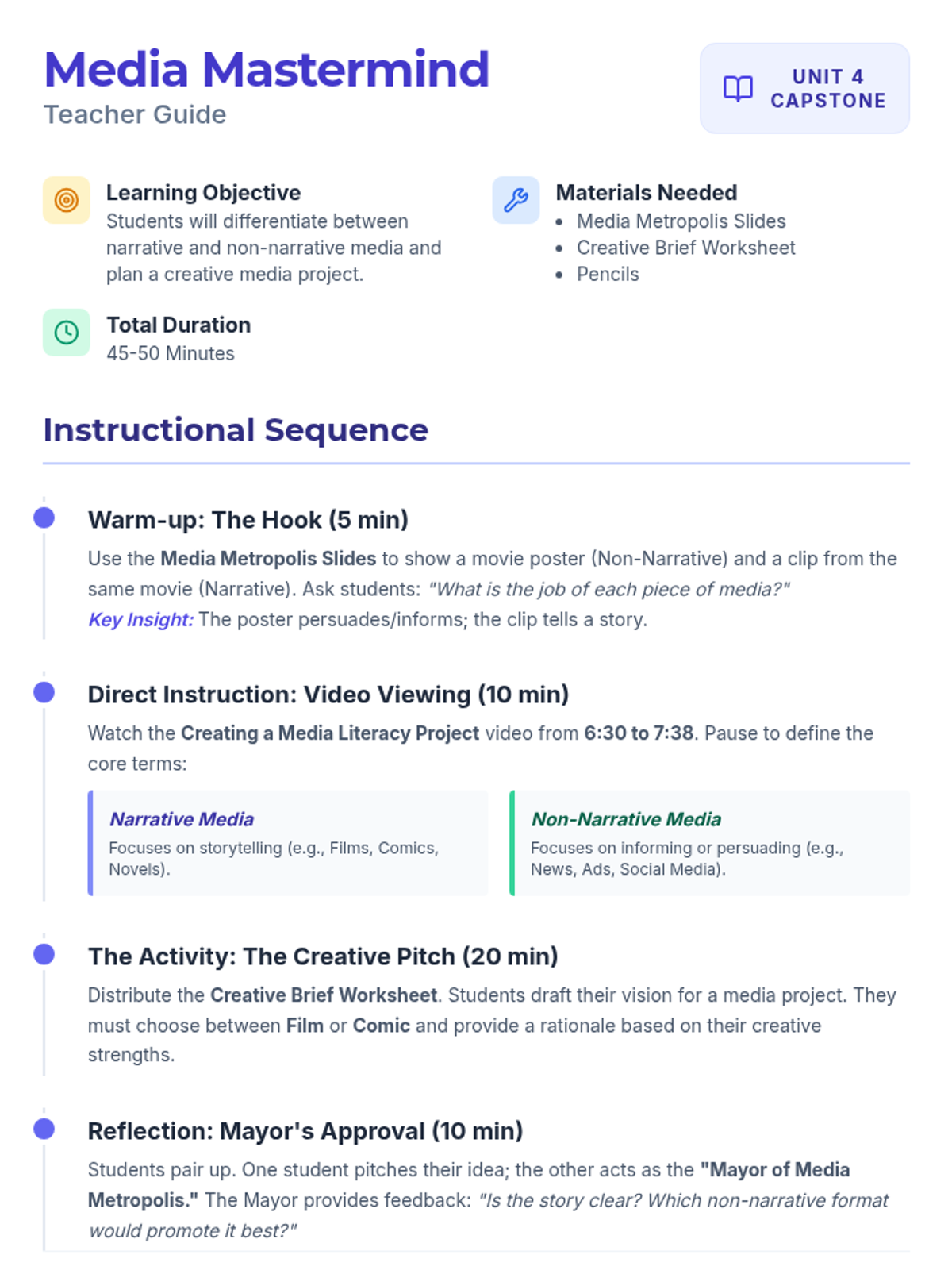
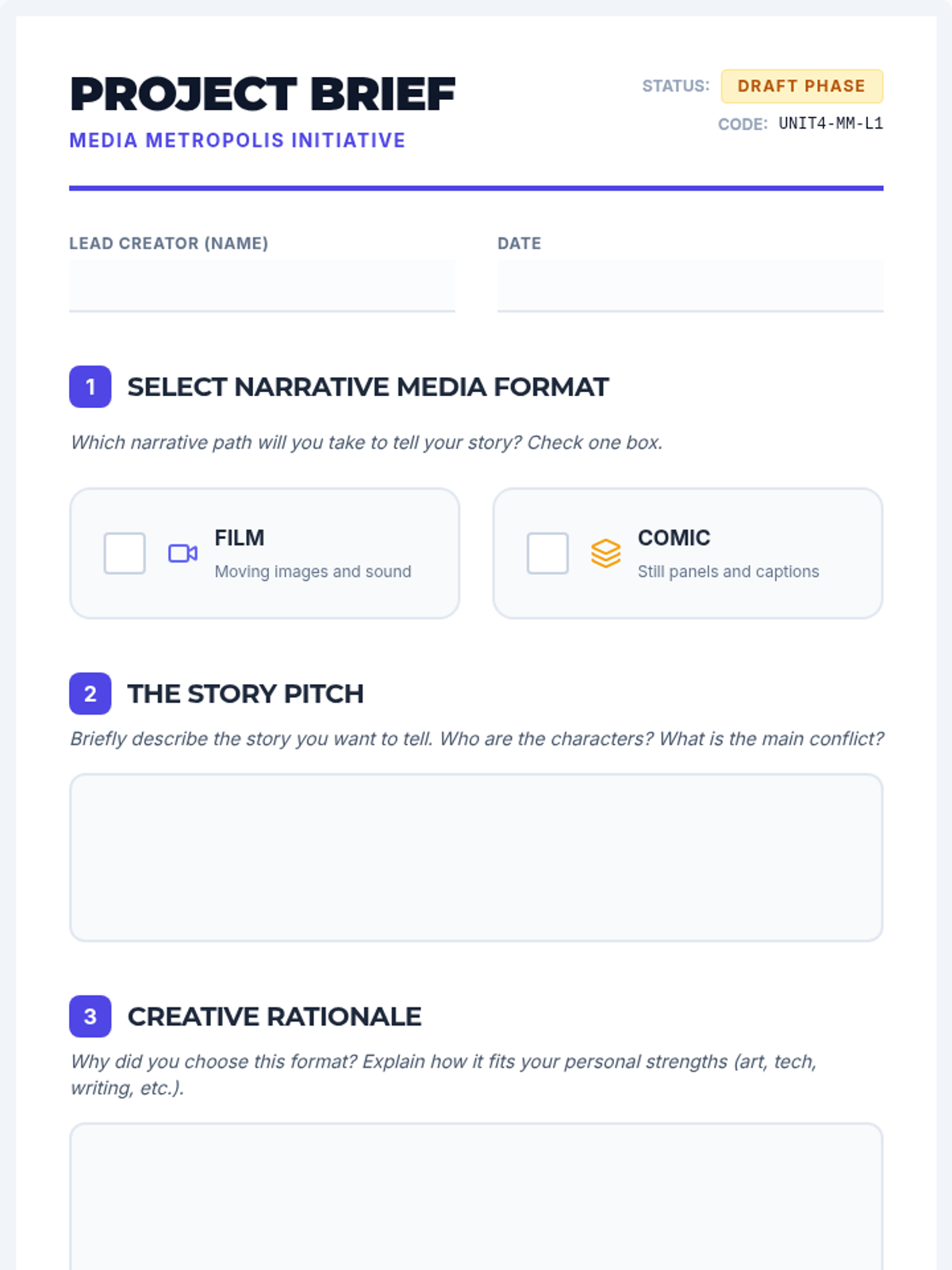
Students will learn to distinguish between narrative and non-narrative media before planning their own creative project (film or comic) and justifying their choices based on their personal strengths.
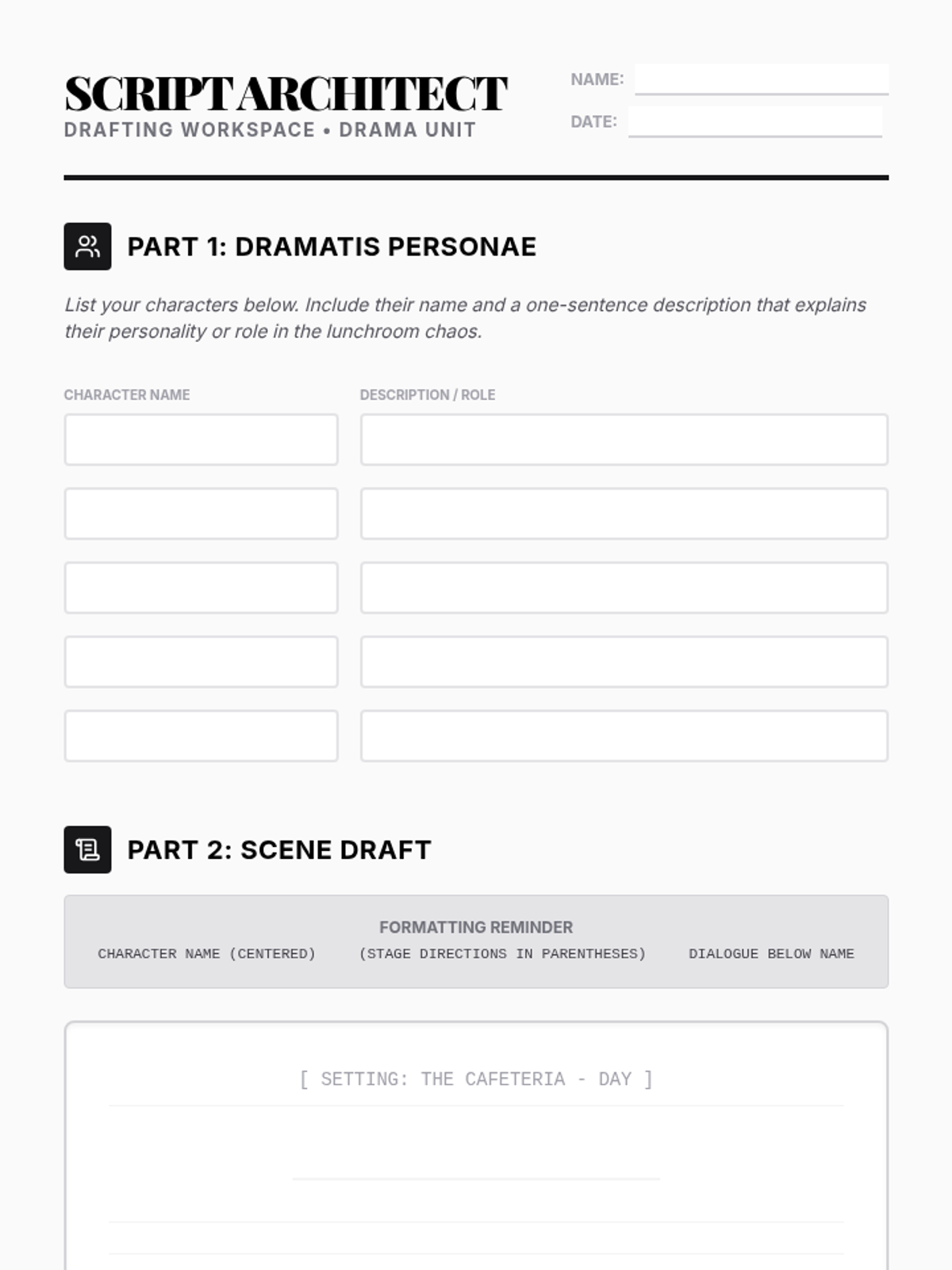
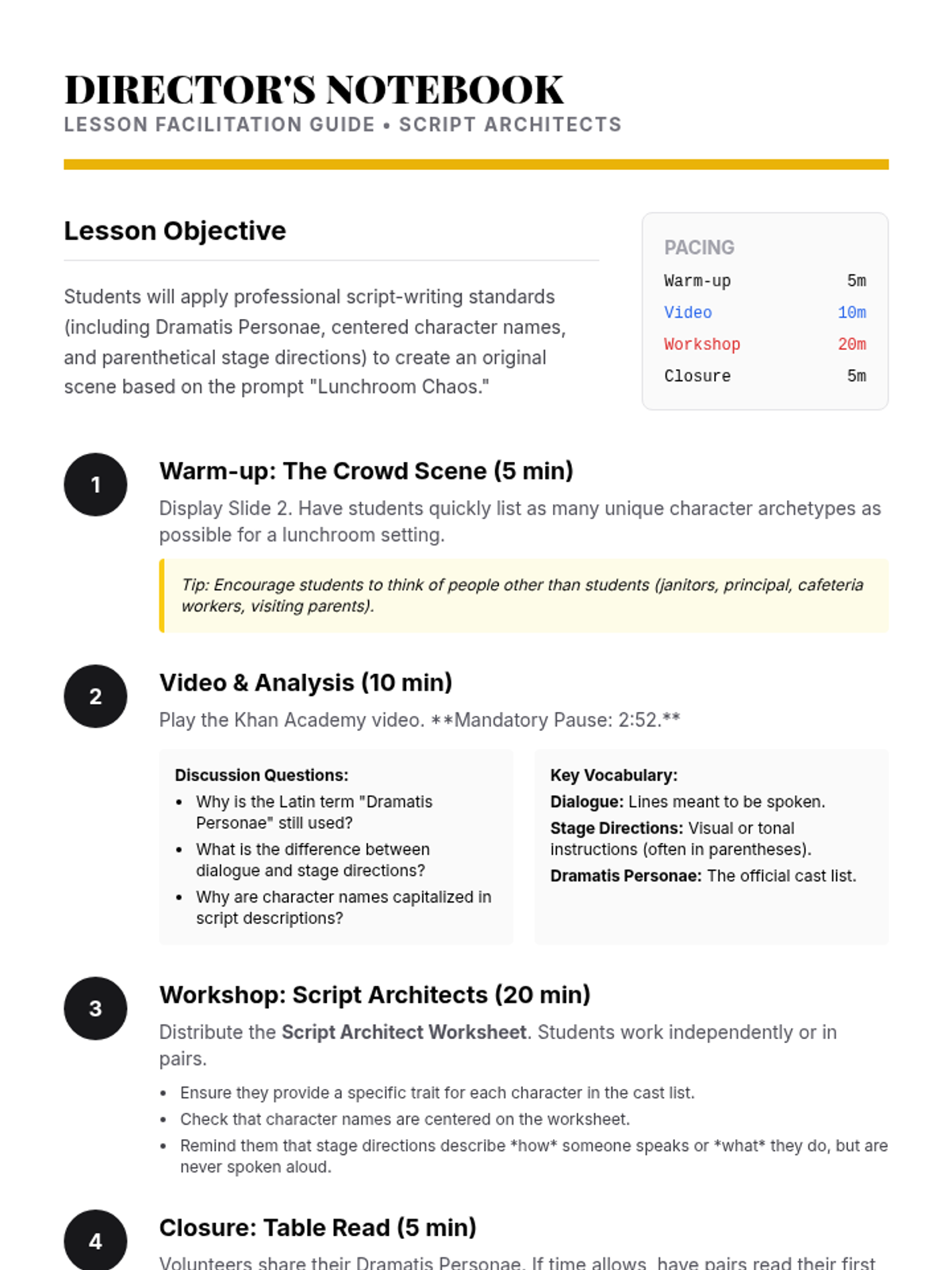
A hands-on introduction to script formatting and character development. Students brainstorm a chaotic lunchroom scene, learn theatrical terminology from a Khan Academy video, and draft their own 'Dramatis Personae' and initial script lines.
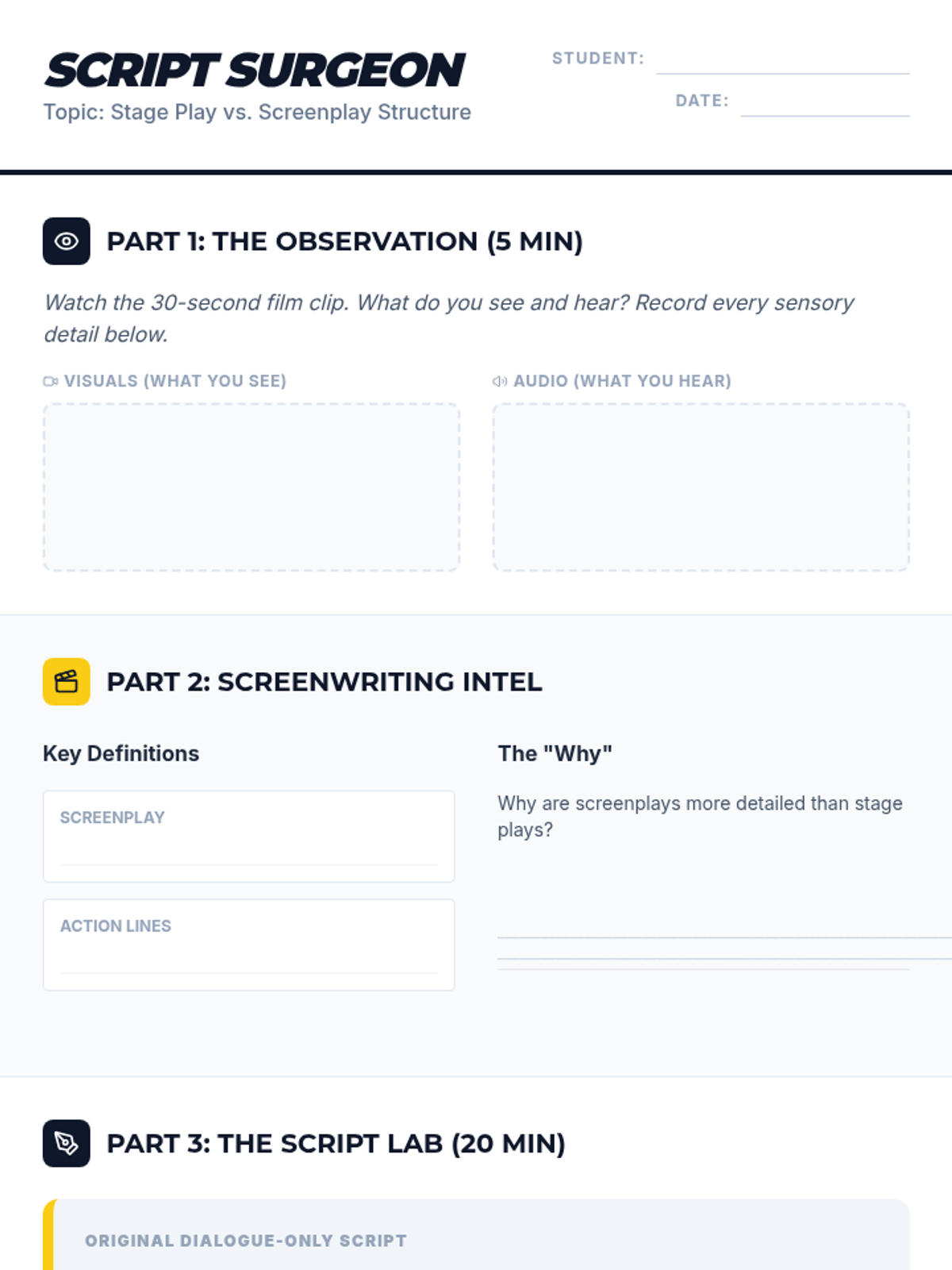
A lesson comparing and contrasting the structural elements of stage plays and screenplays, featuring a comparison of Romeo and Juliet adaptations and hands-on formatting practice.
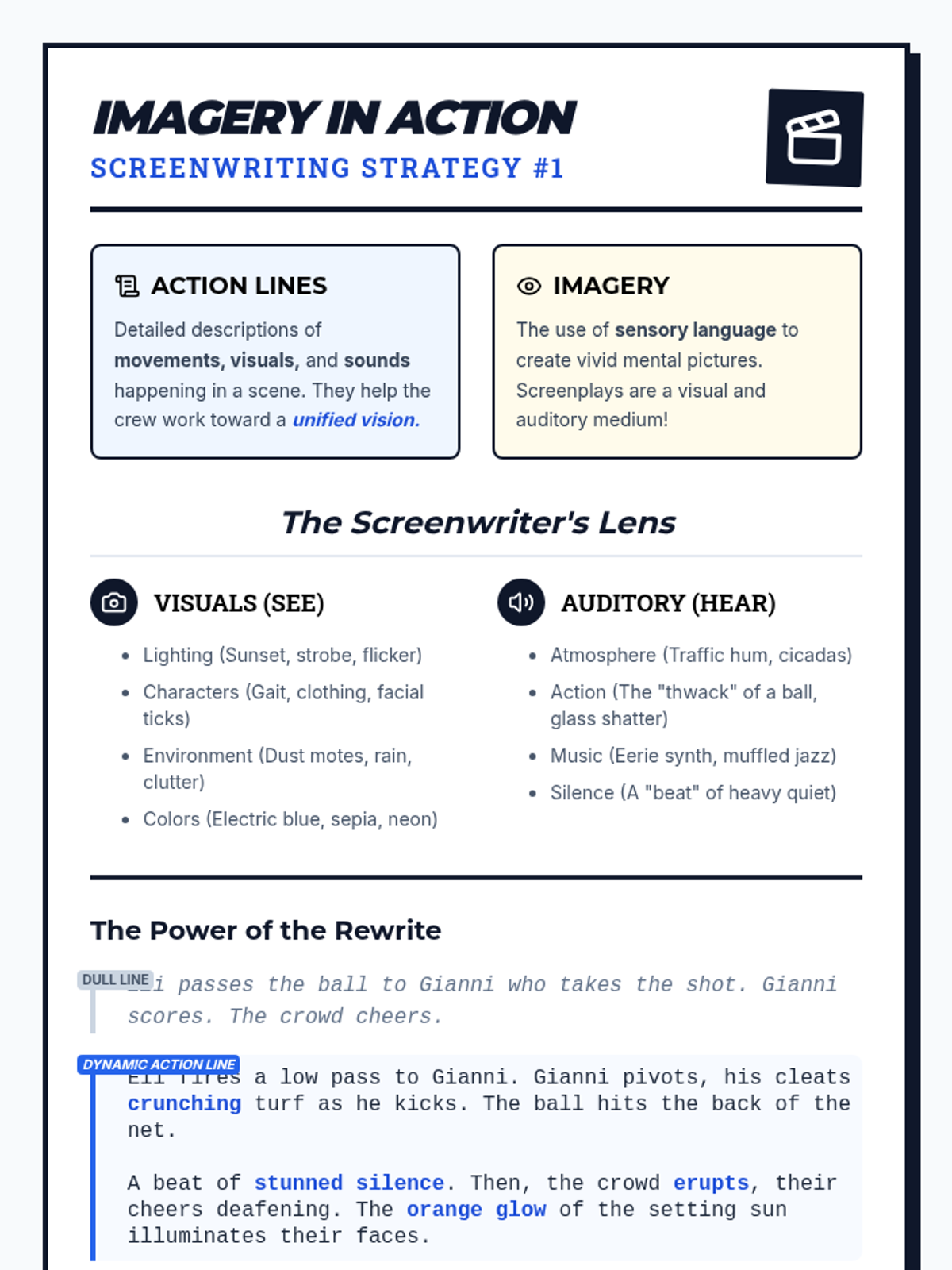
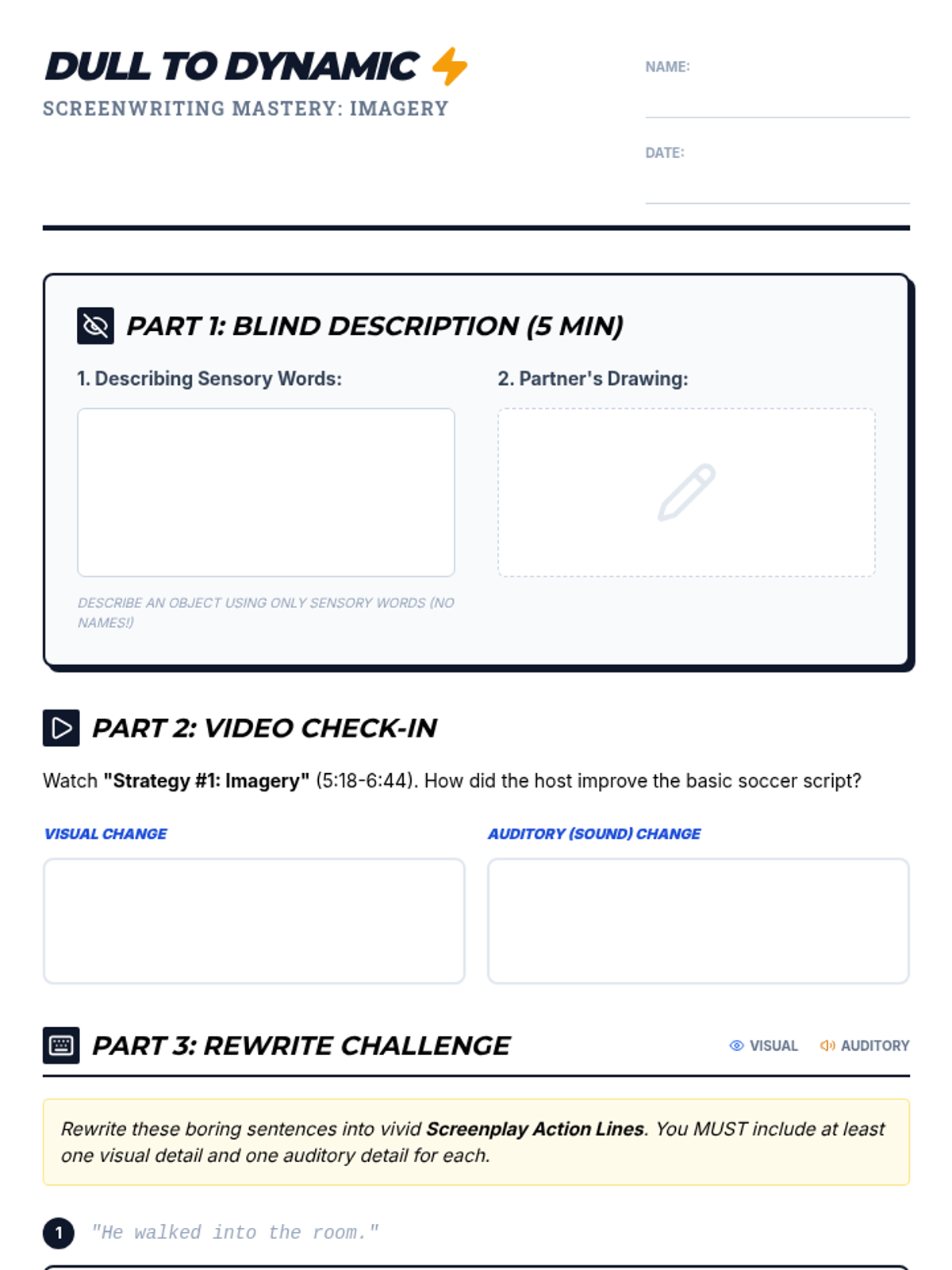
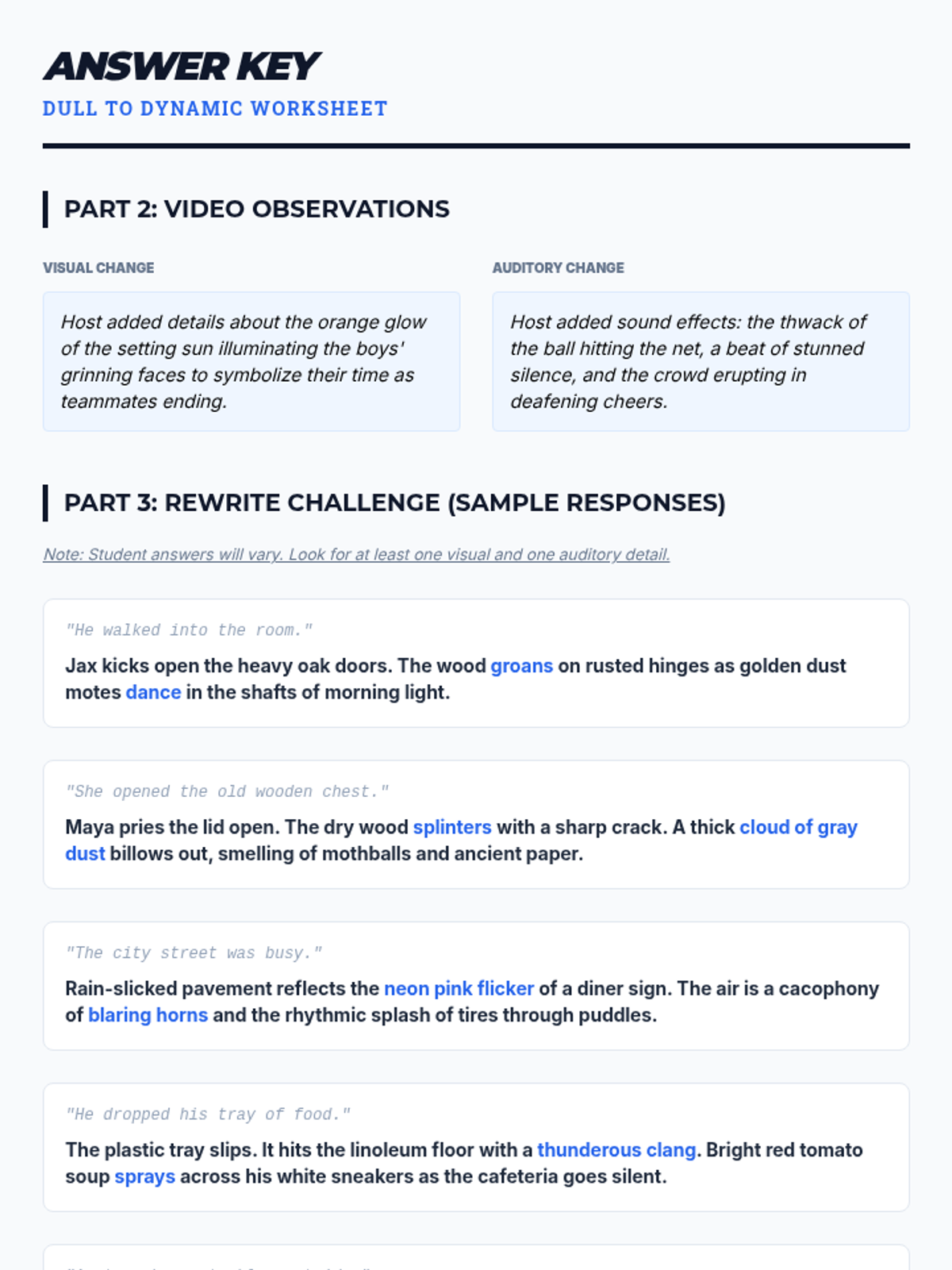
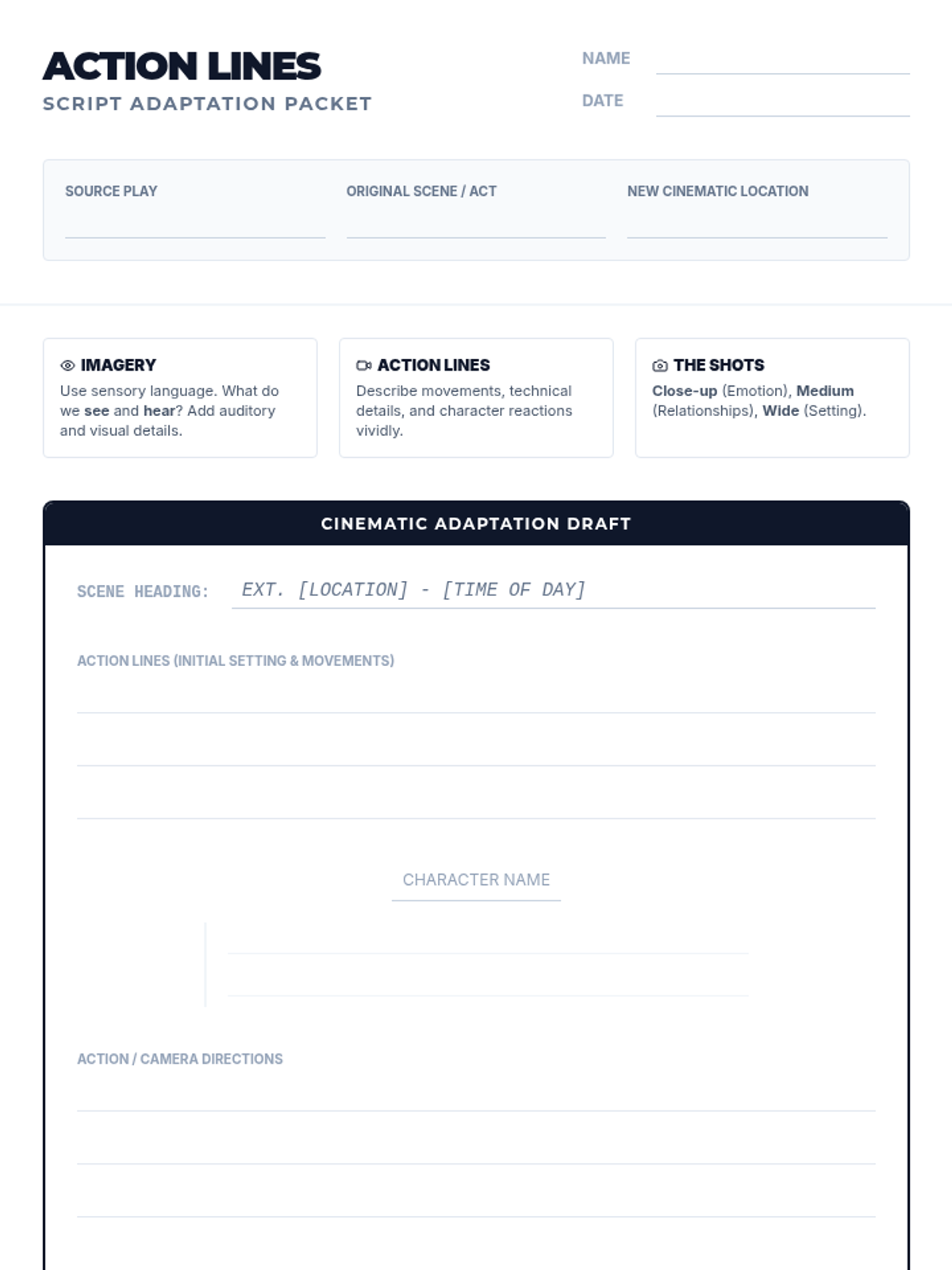
Students will learn to transform mundane sentences into vivid screenplay action lines using sensory imagery (visual and auditory), focused on the 'Strategy #1: Imagery' segment of the 'From Scene to Screen' video.
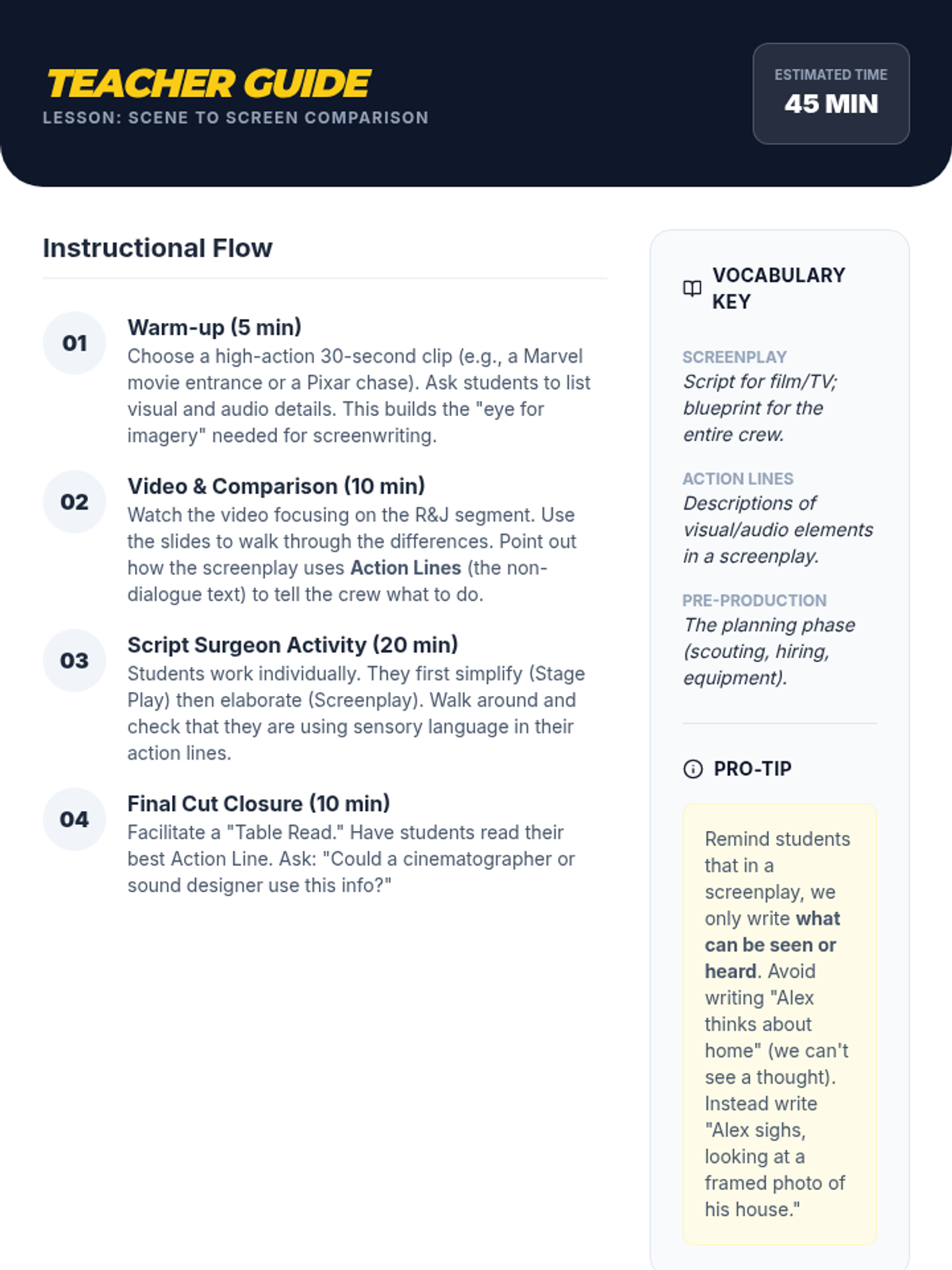
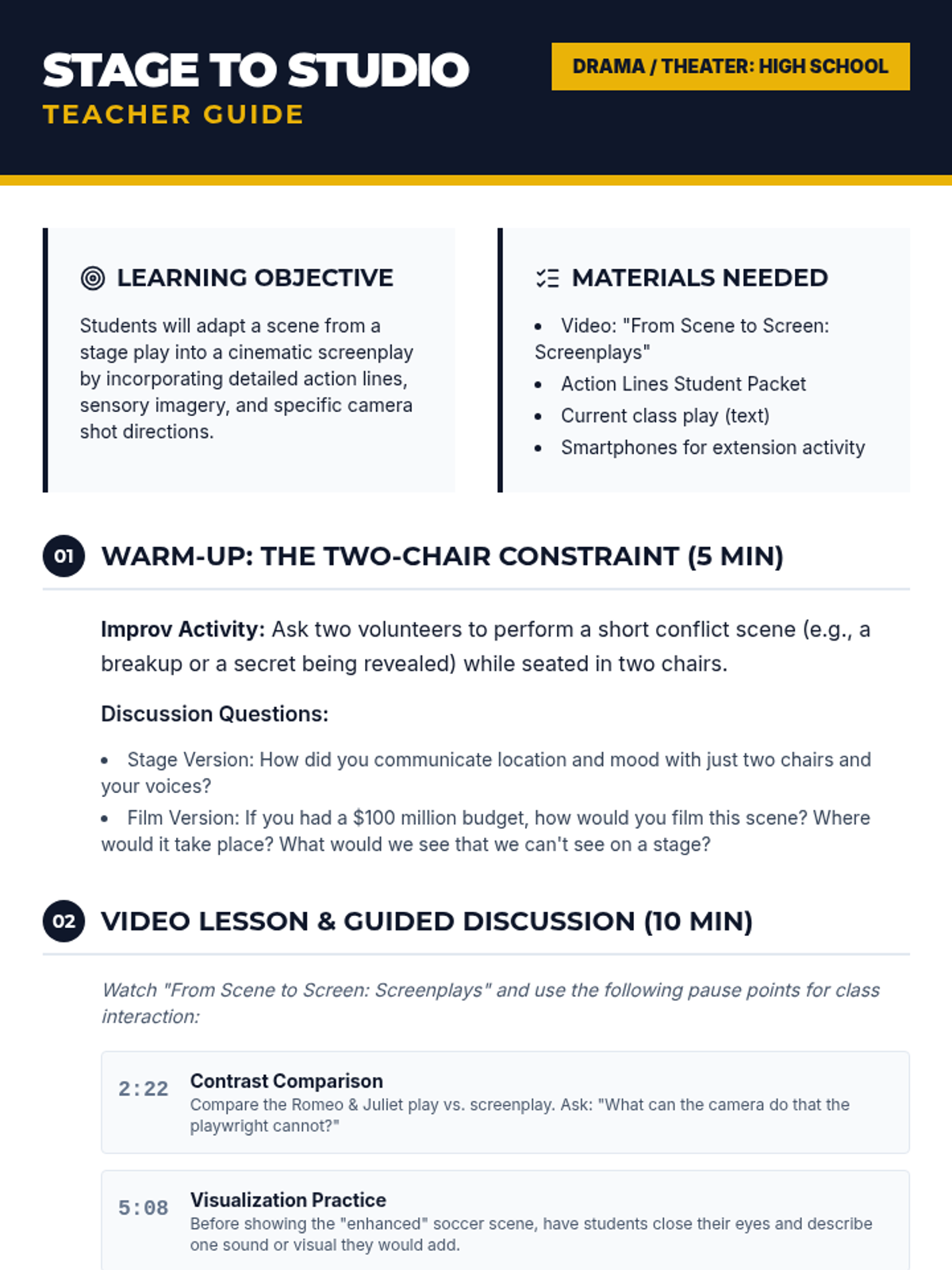
A high school drama lesson where students learn to adapt stage plays into cinematic screenplays. The lesson focuses on the transition from theatrical constraints to filmic possibilities, emphasizing action lines, imagery, and camera shots.
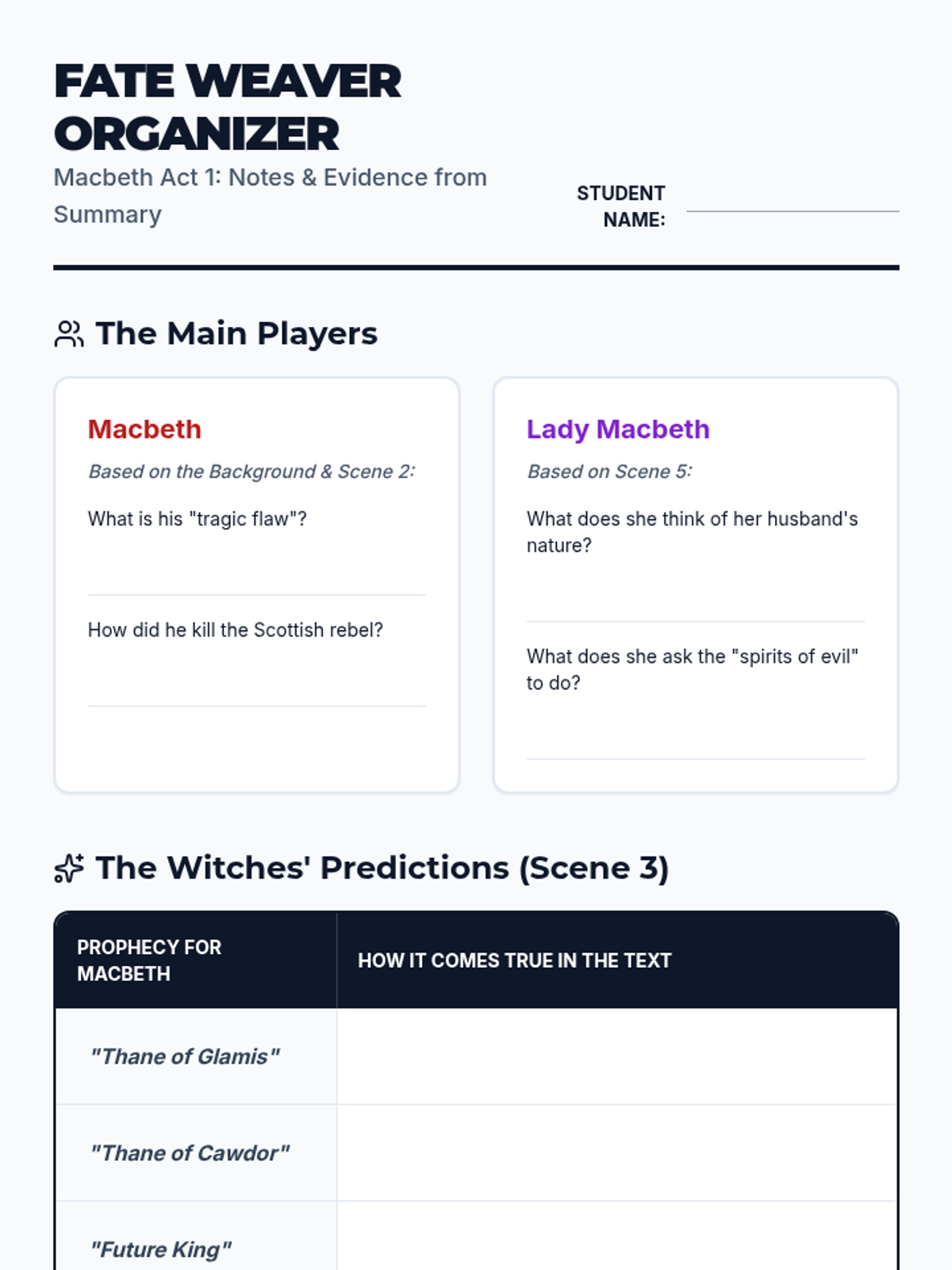
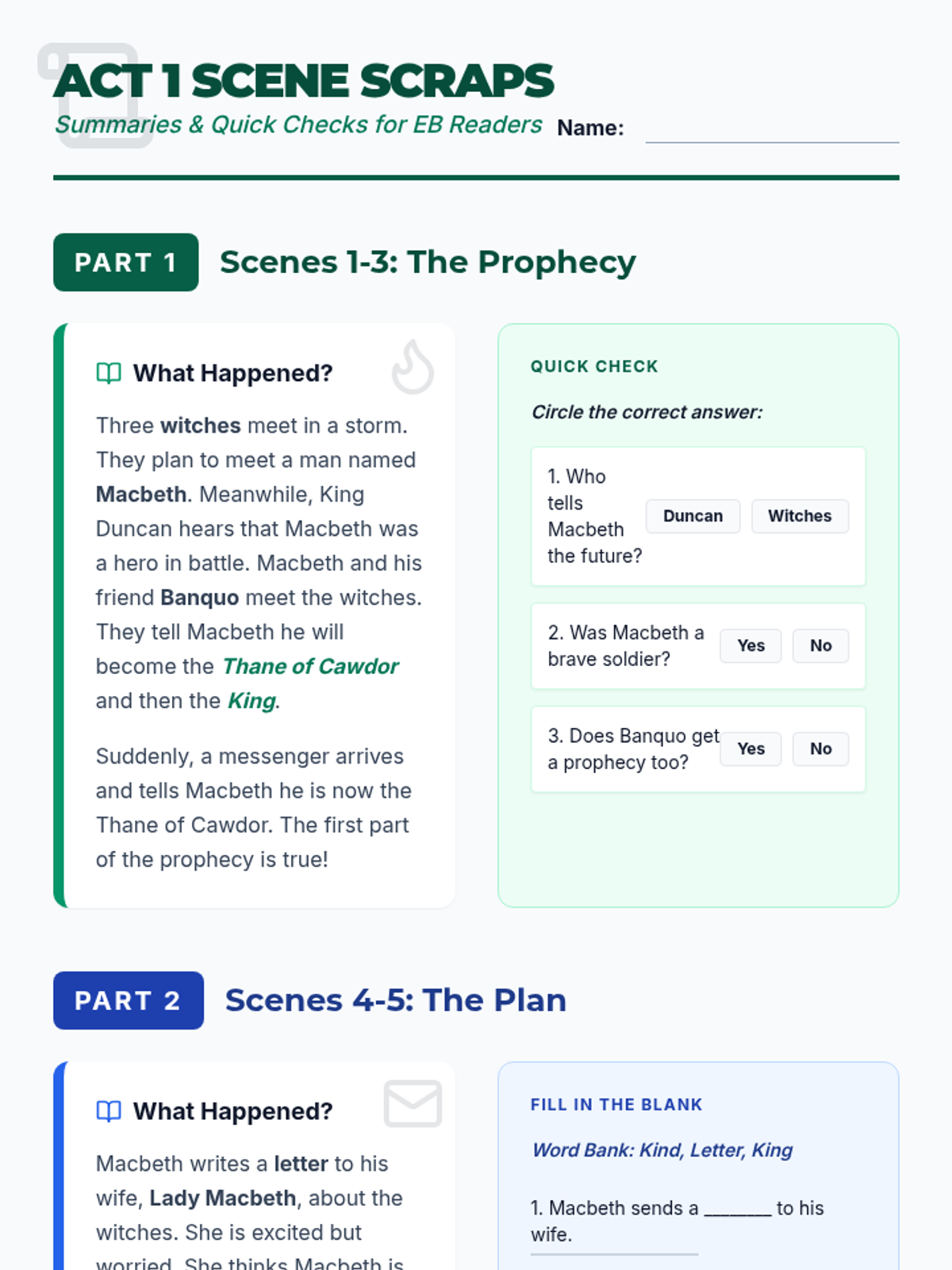
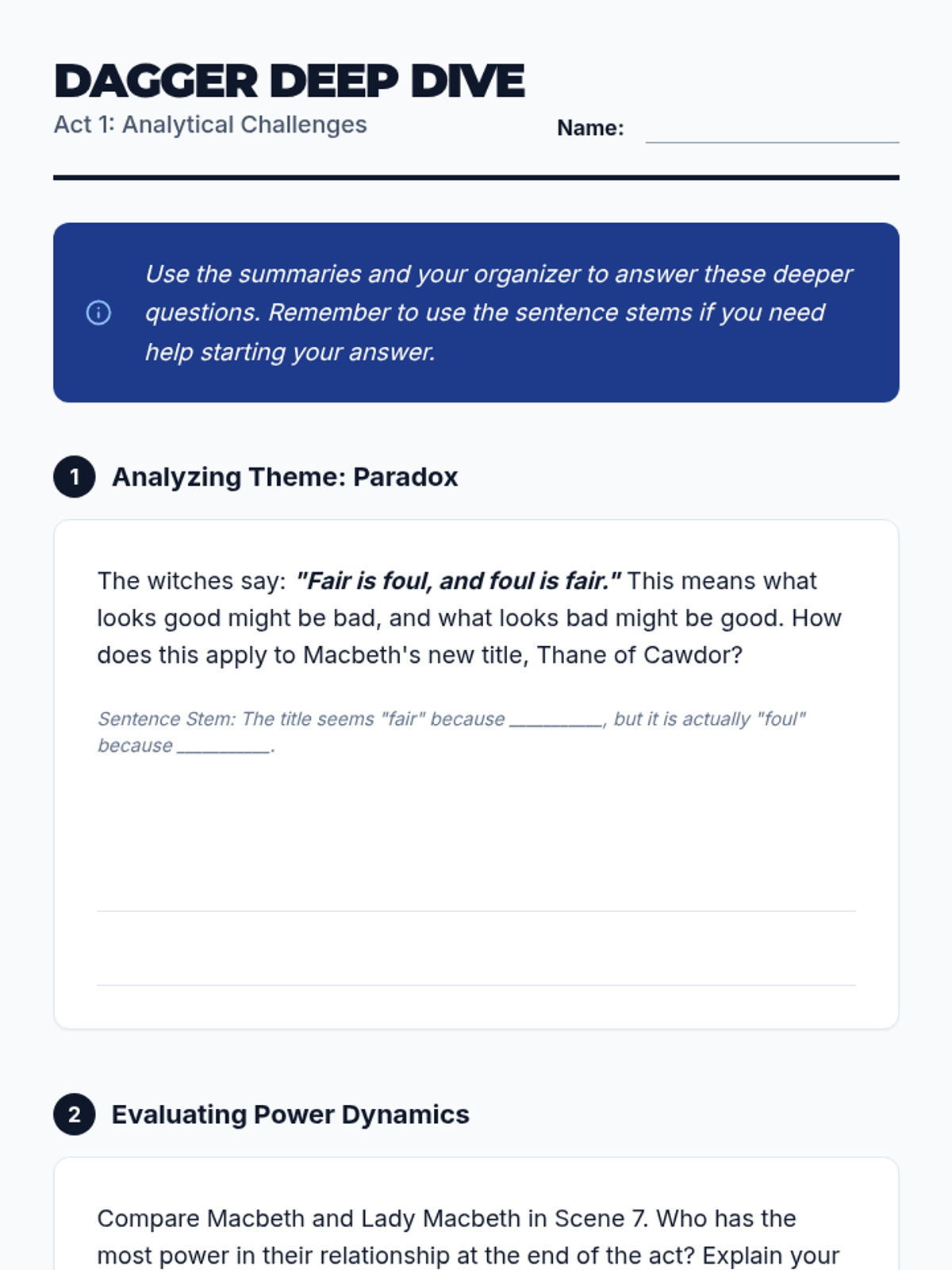
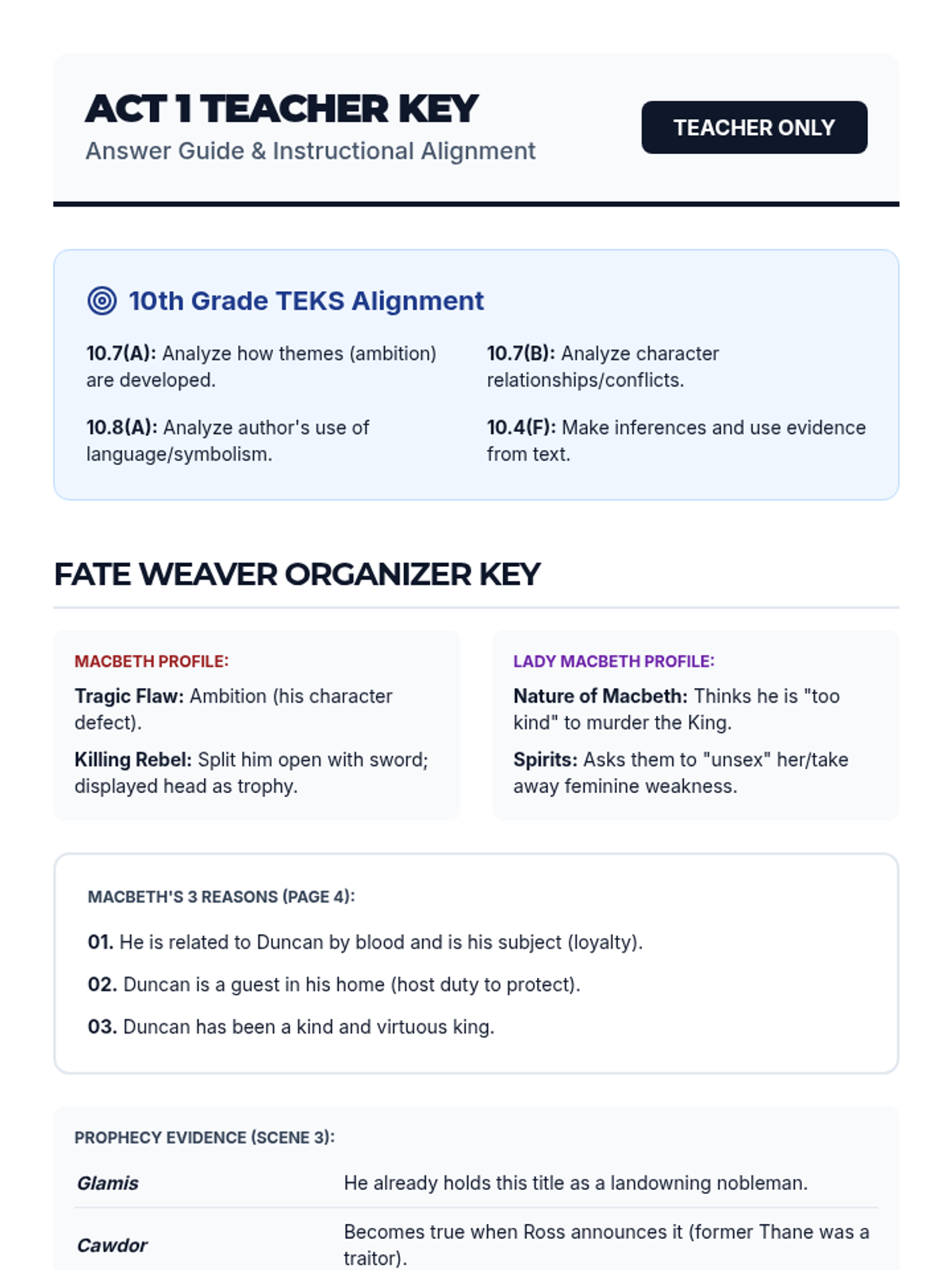
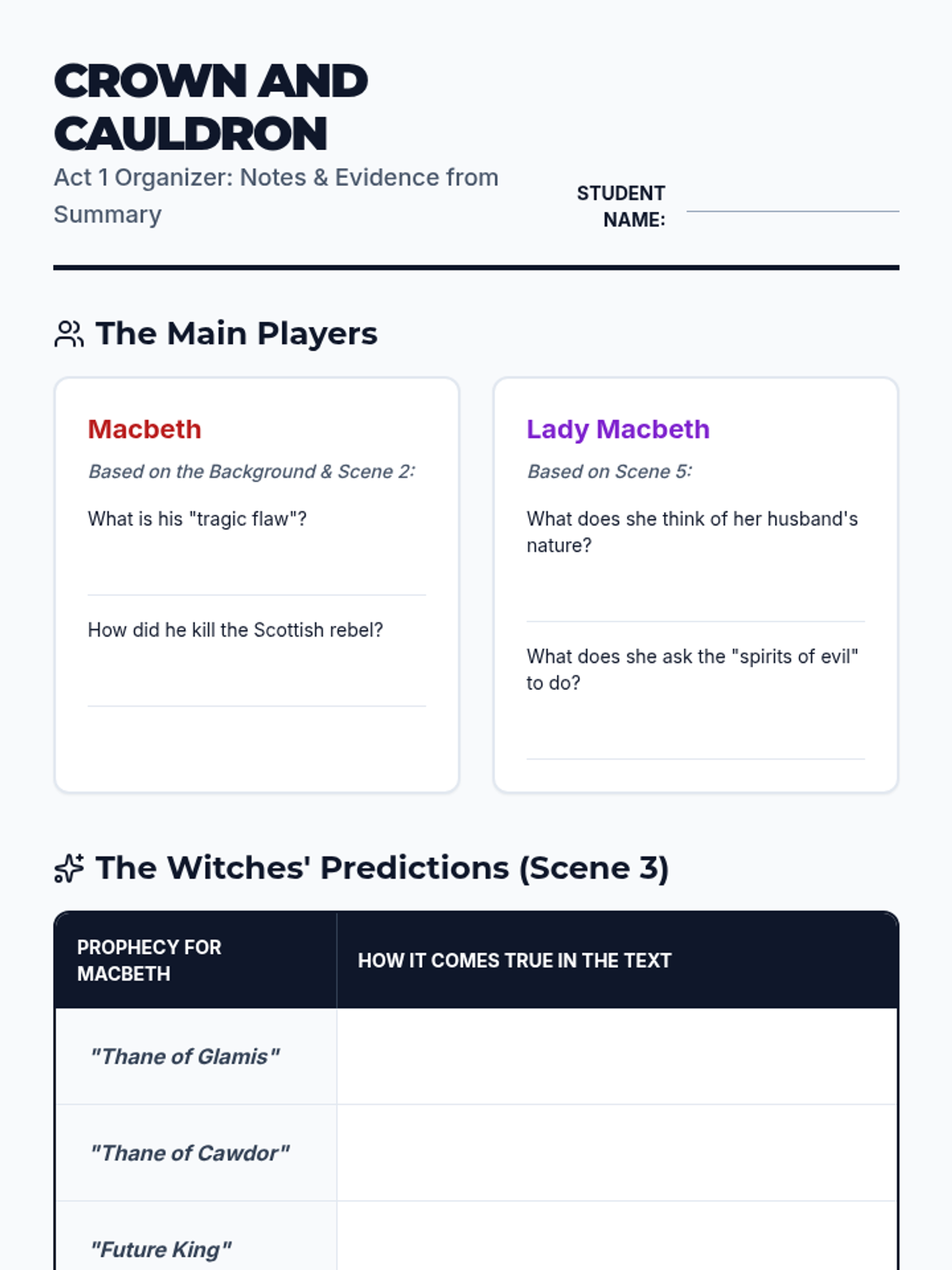
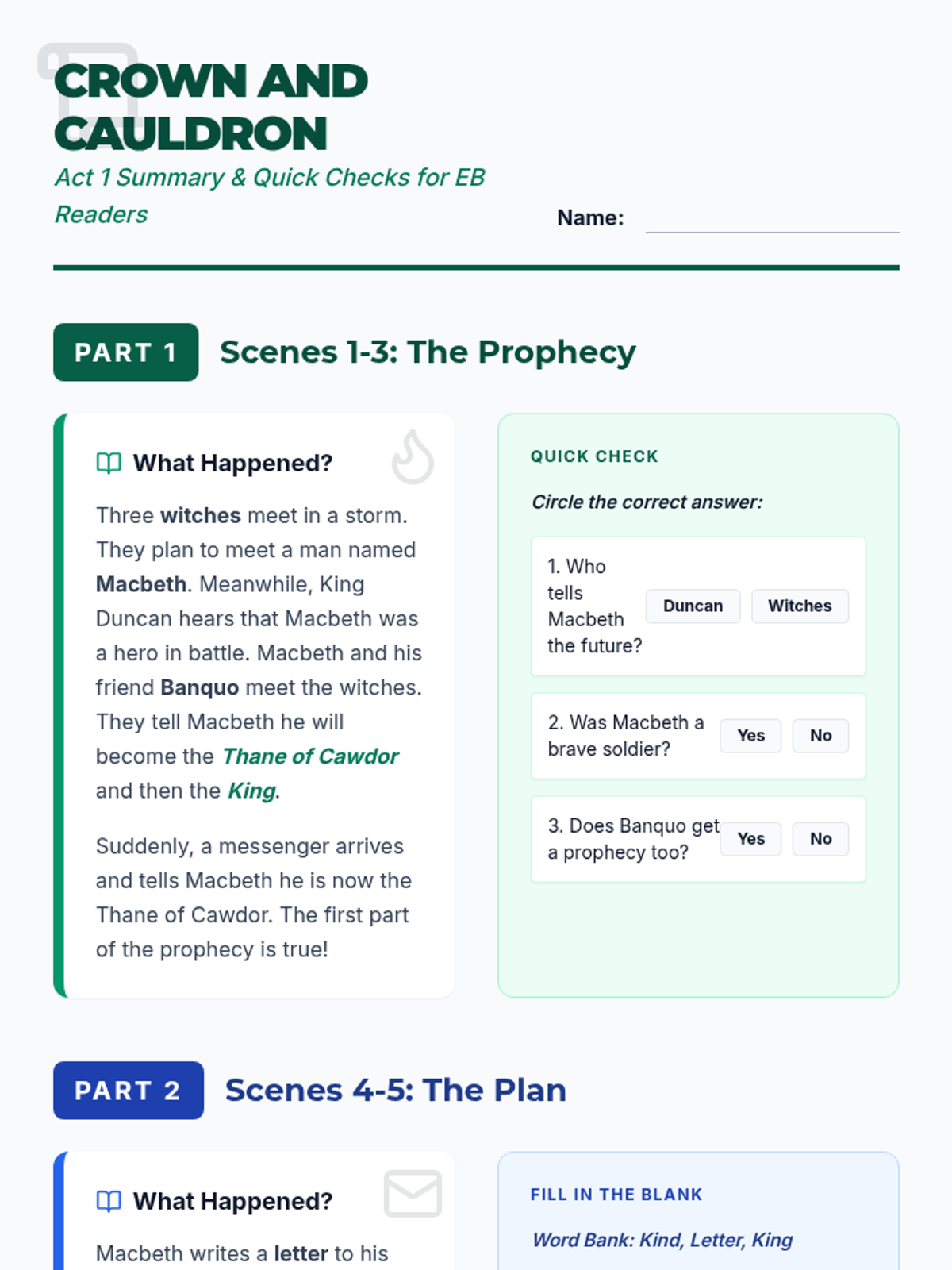
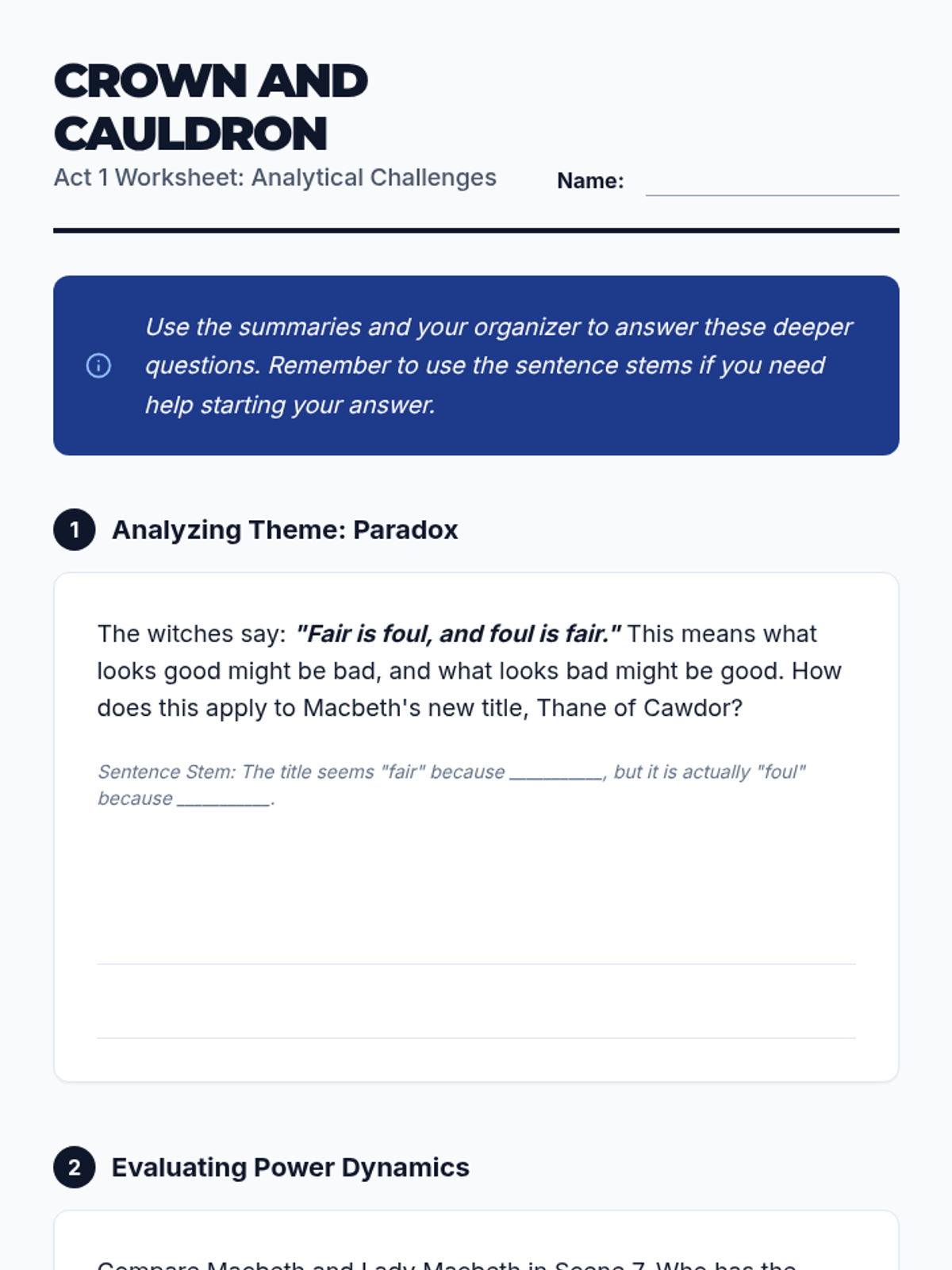
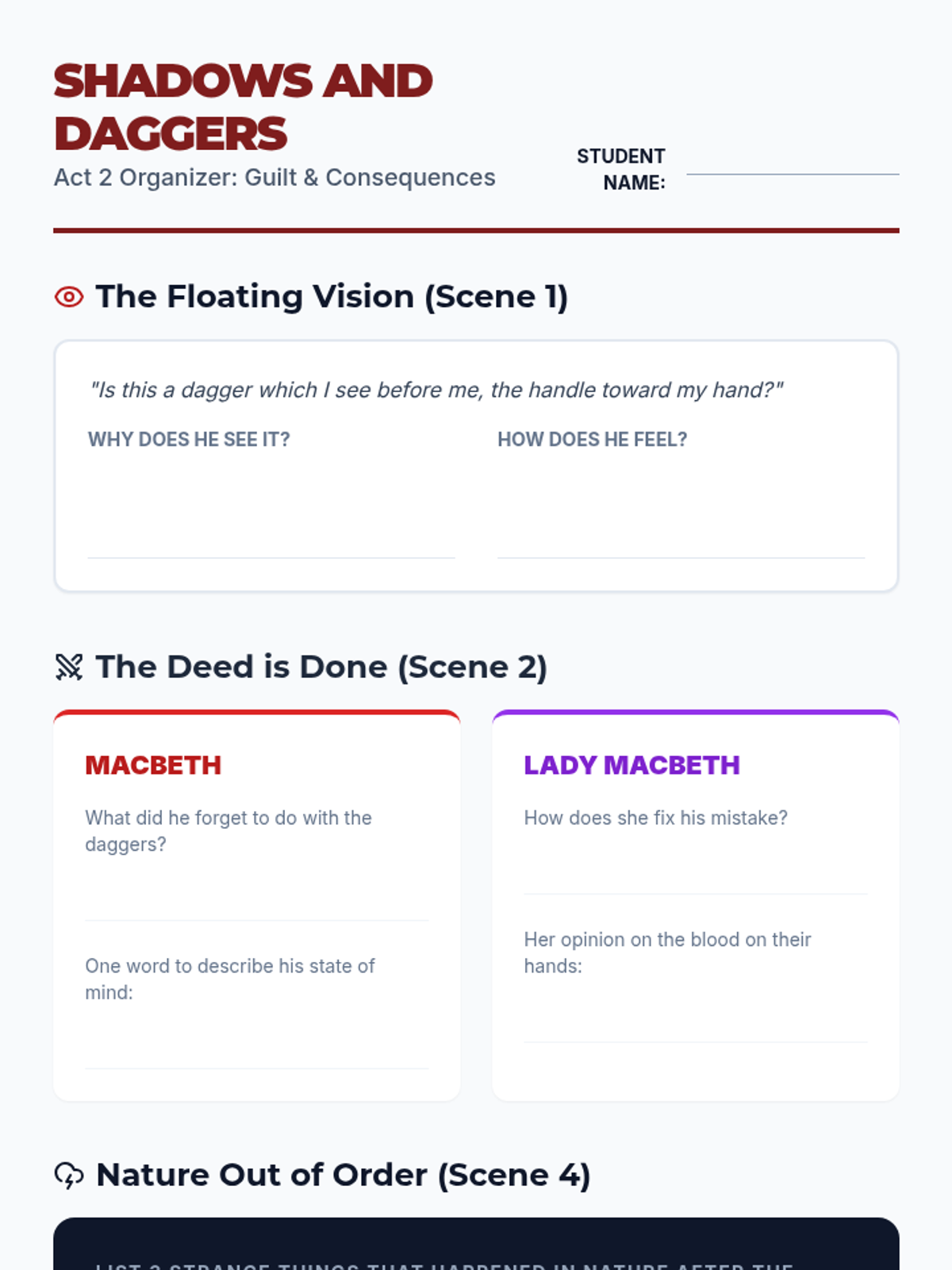
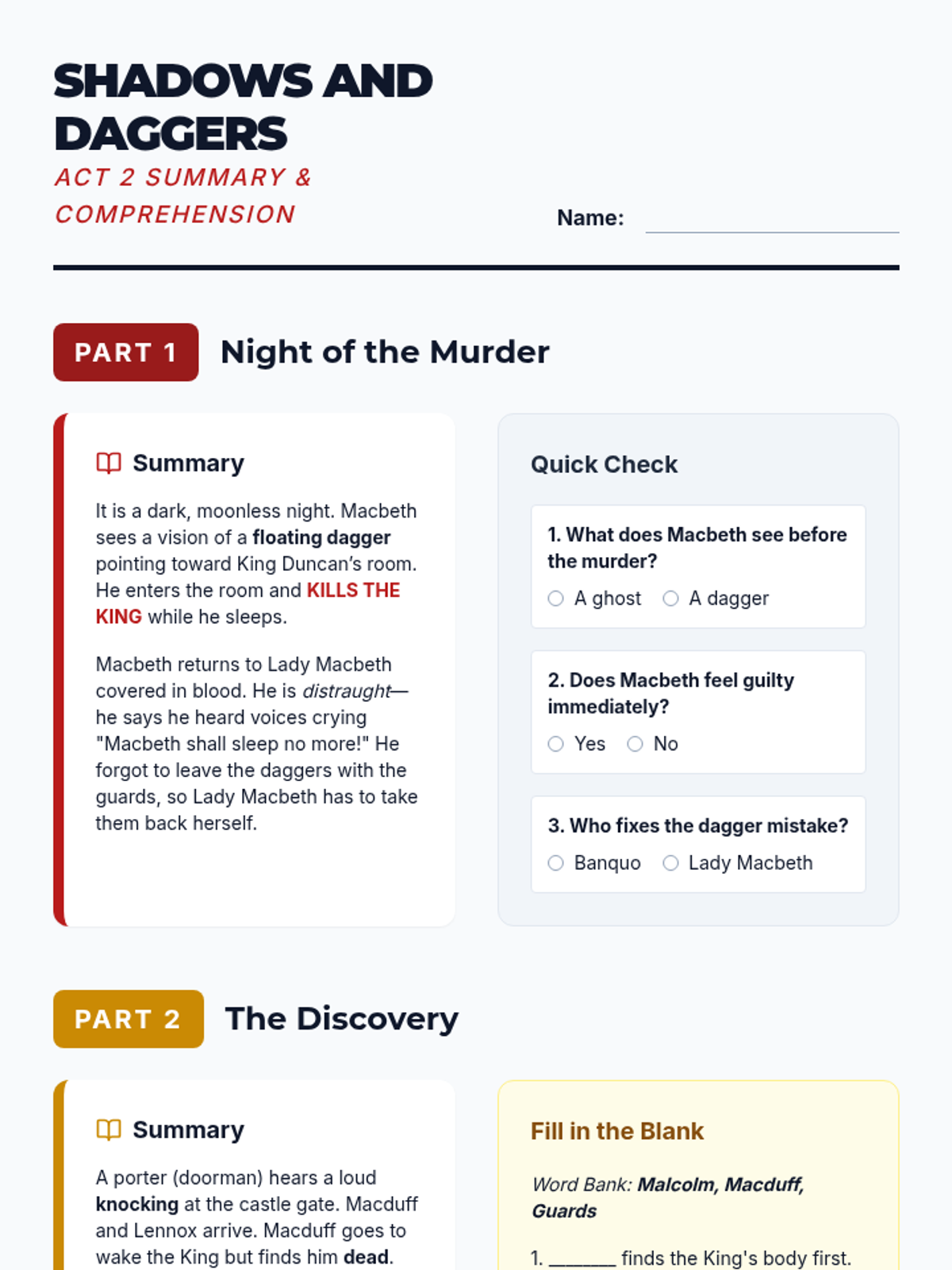
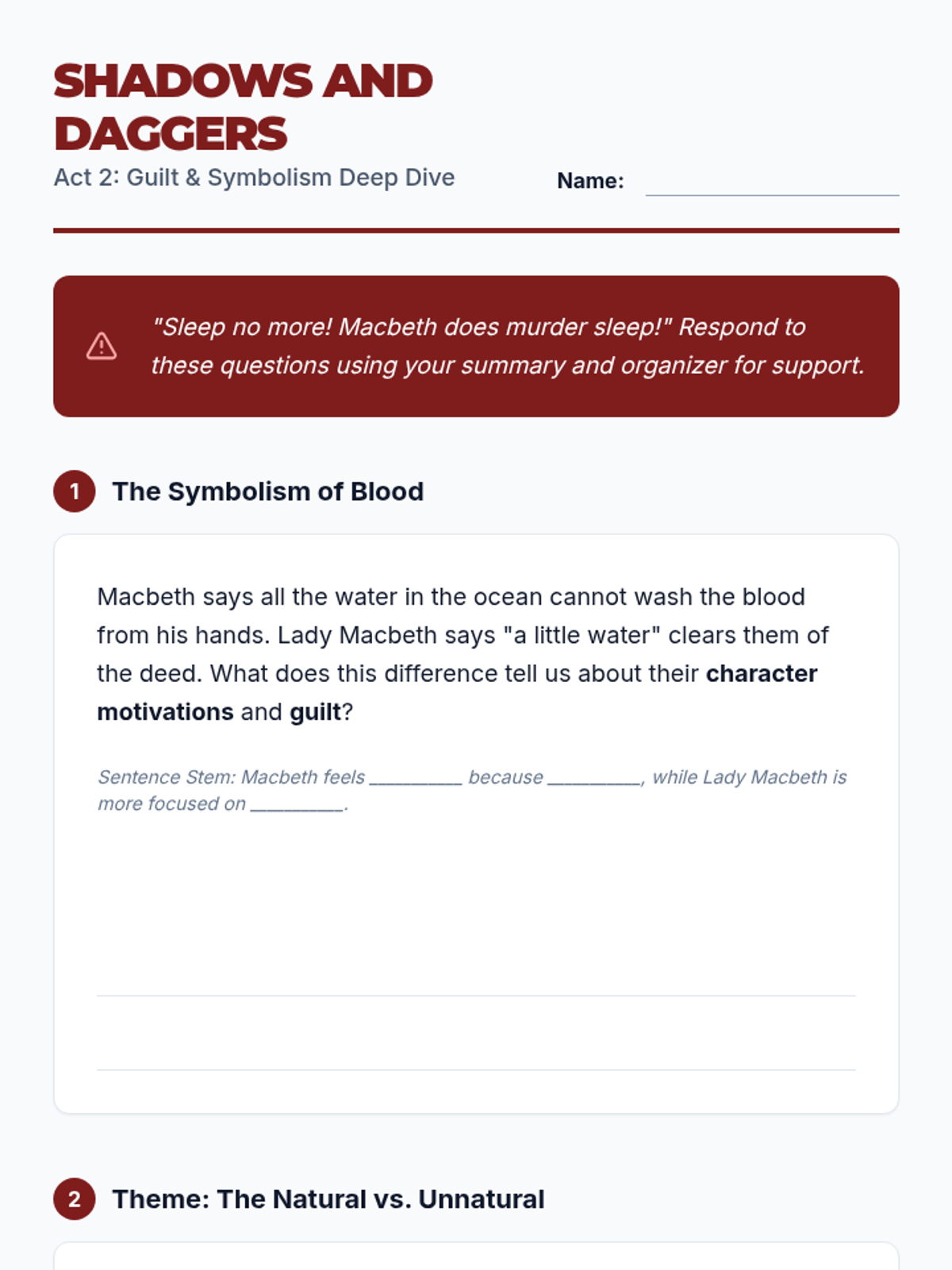
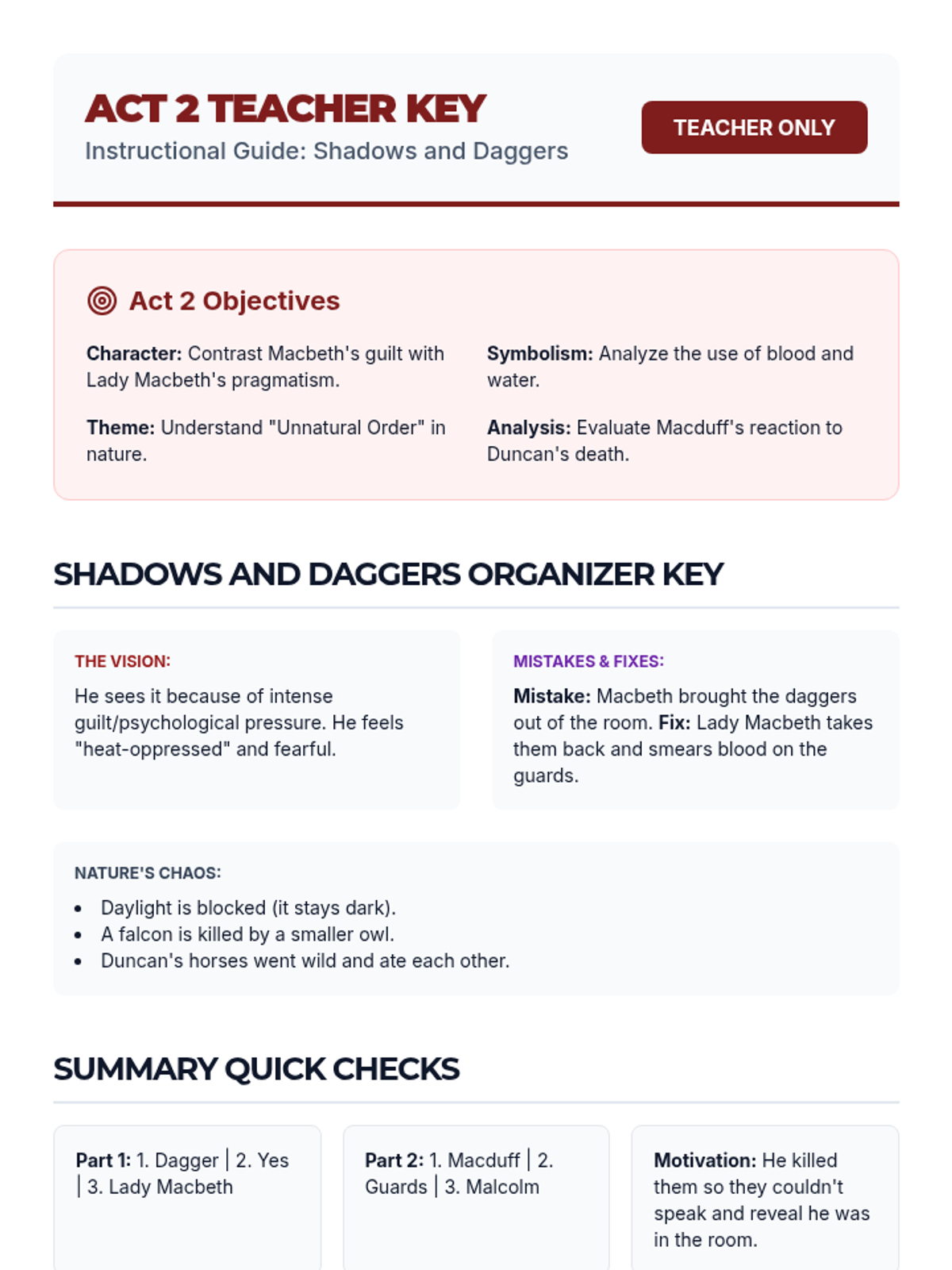
This lesson introduces students to the world of Macbeth through Act 1, focusing on the witches' prophecies and the initial characterization of the "brave" Macbeth. It includes slides for instruction, a graphic organizer for active listening, scene-by-scene summaries for reading support, and high-DOK guided questions.