Fundamental techniques for drawing, painting, sculpture, and photography alongside modern digital design principles. Analyzes historical artistic movements while building skills in printmaking and graphic media.
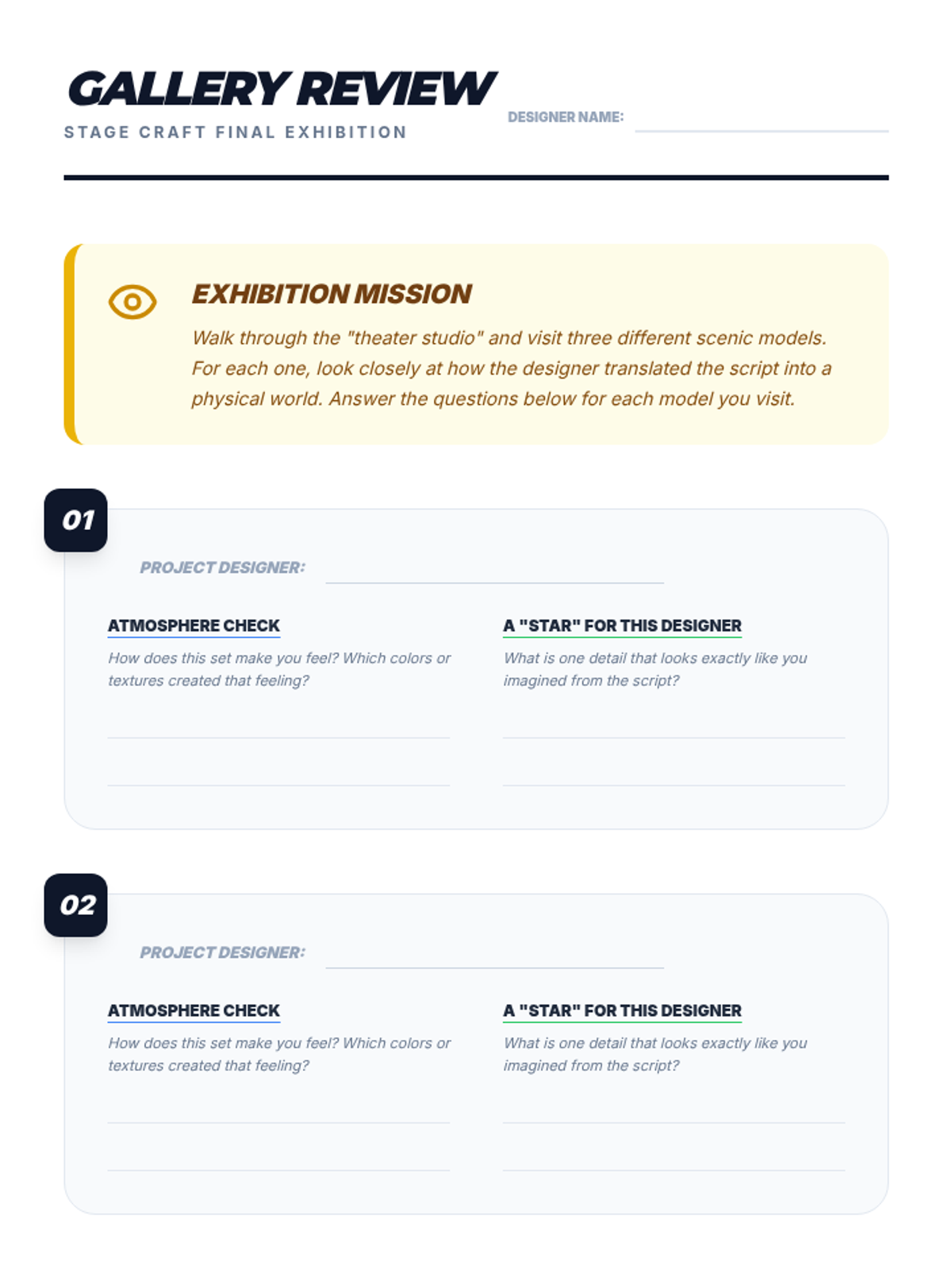
Students complete their models by adding furniture pieces, architectural details, and applying color or texture. The sequence concludes with a gallery walk where students critique how well the designs serve the script.
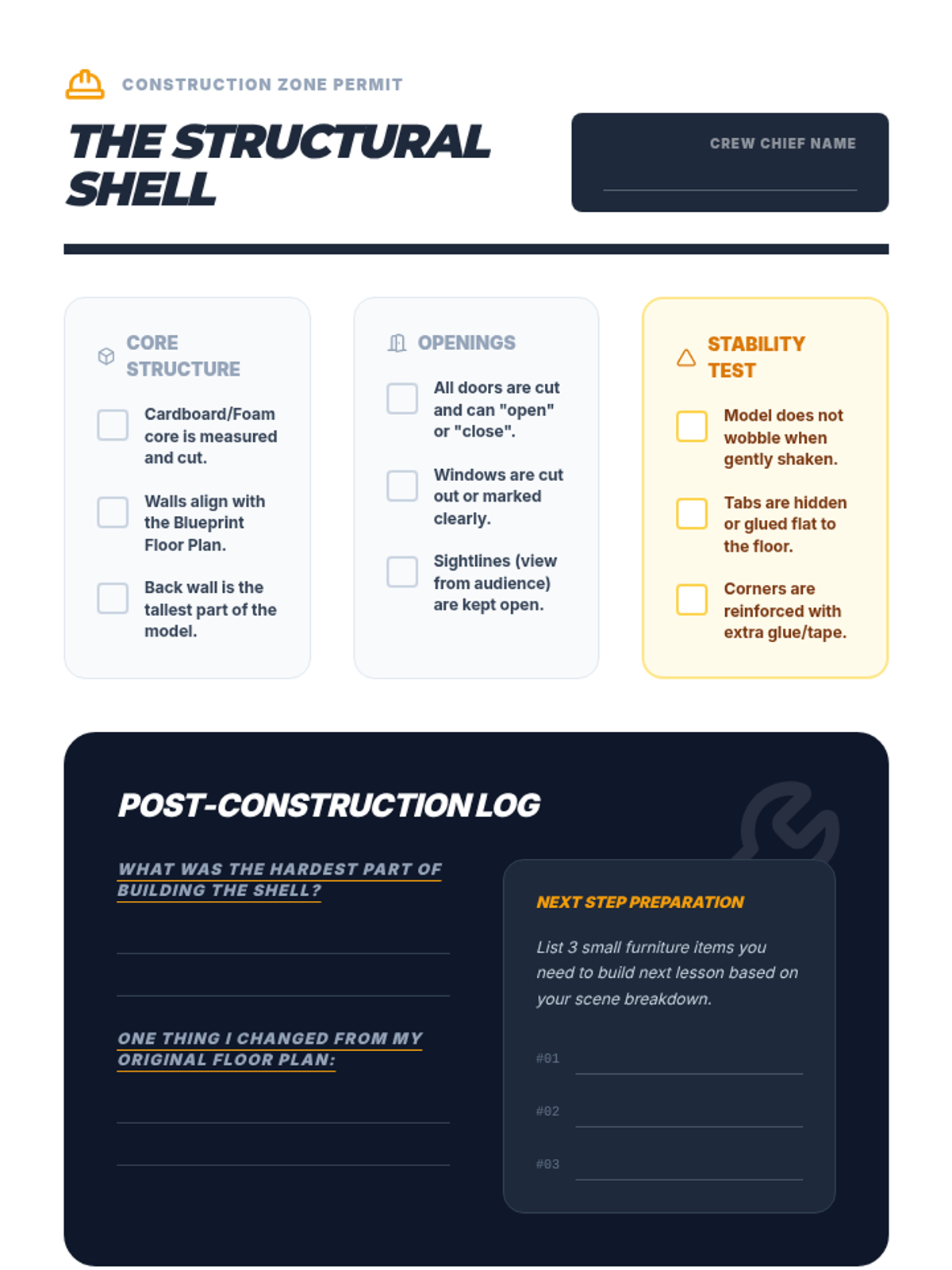
Students begin the hands-on construction of their scale model using cardstock, foam core, or shoeboxes. They build the perimeter walls and floor based on their earlier floor plans.
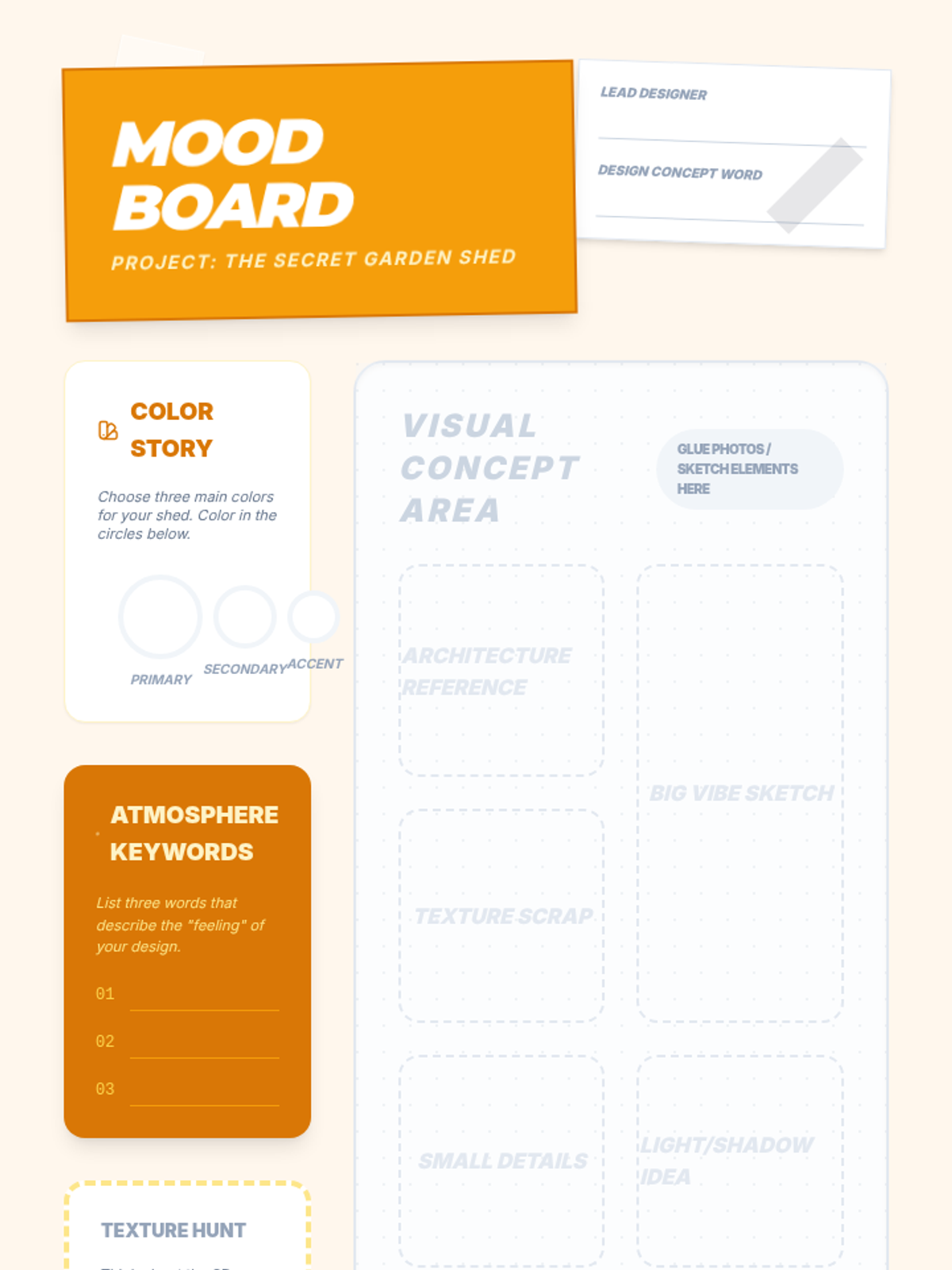
Focusing on the artistic atmosphere, students select color palettes, textures, and reference images that evoke the emotion of the scene. They compile these into a mood board that serves as the aesthetic guide for their final model.
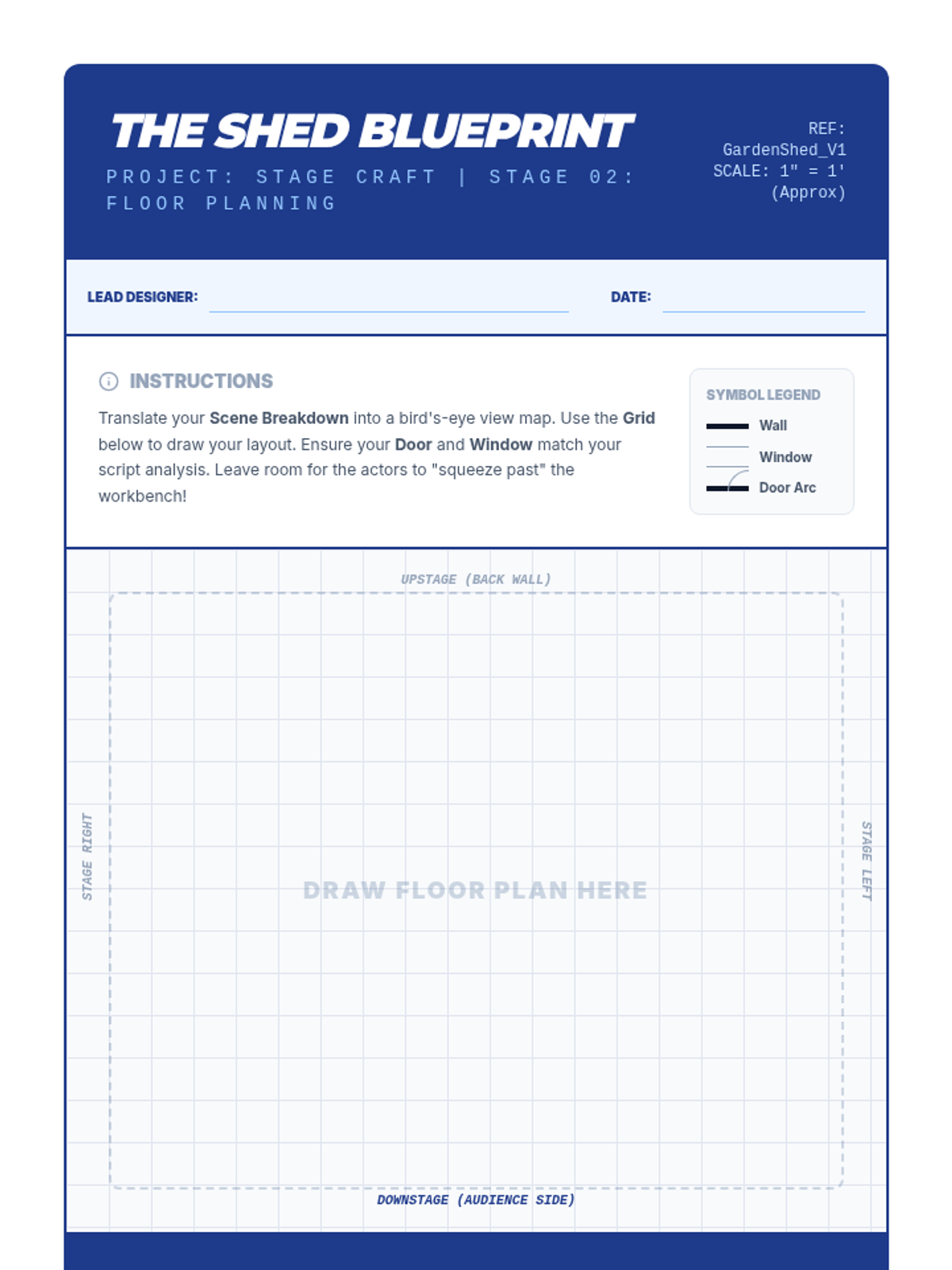
Students learn to translate their scene breakdown into a bird's-eye view floor plan, focusing on placement of furniture and walls to ensure actors have room to move and sightlines remain clear.
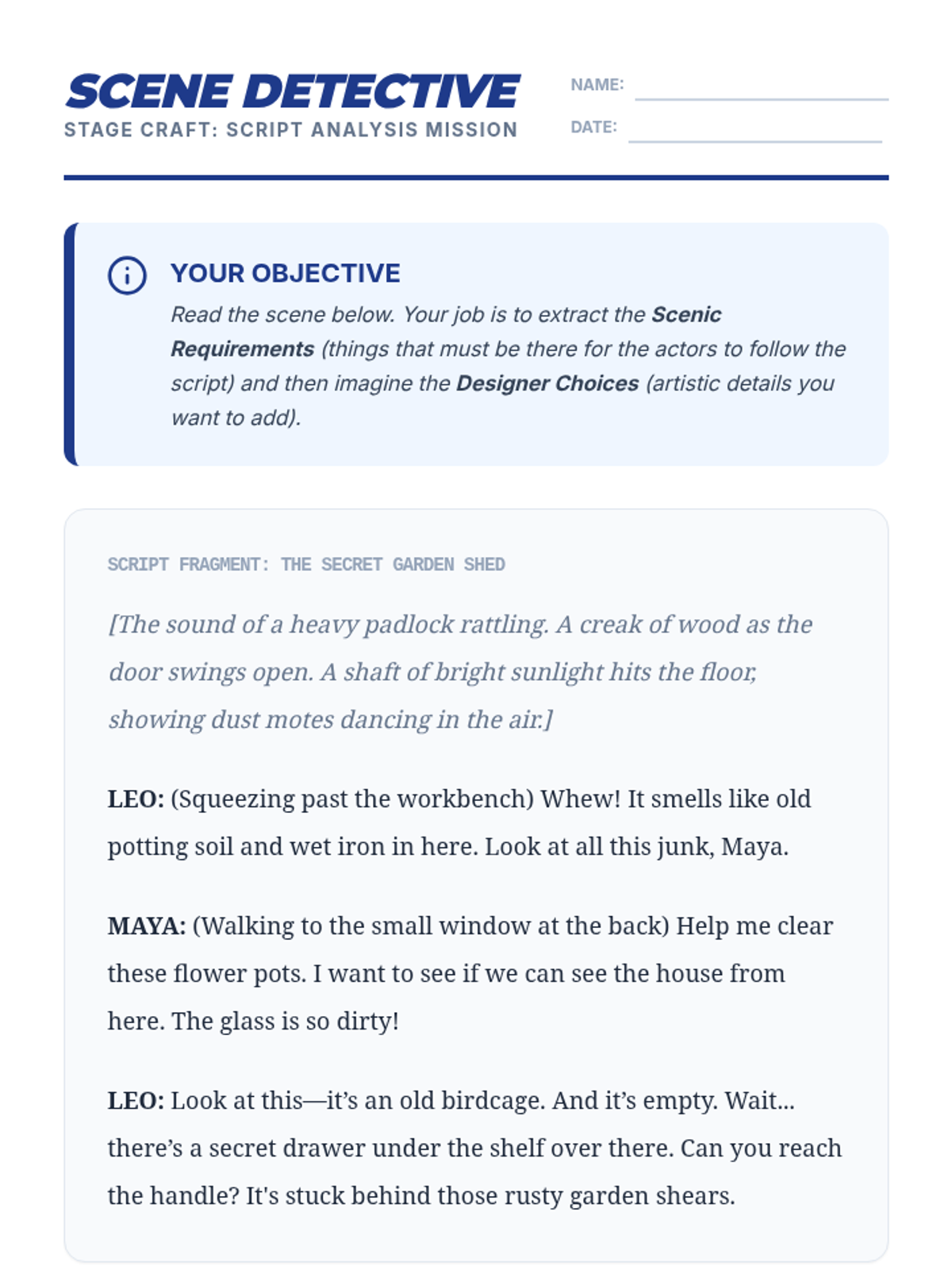
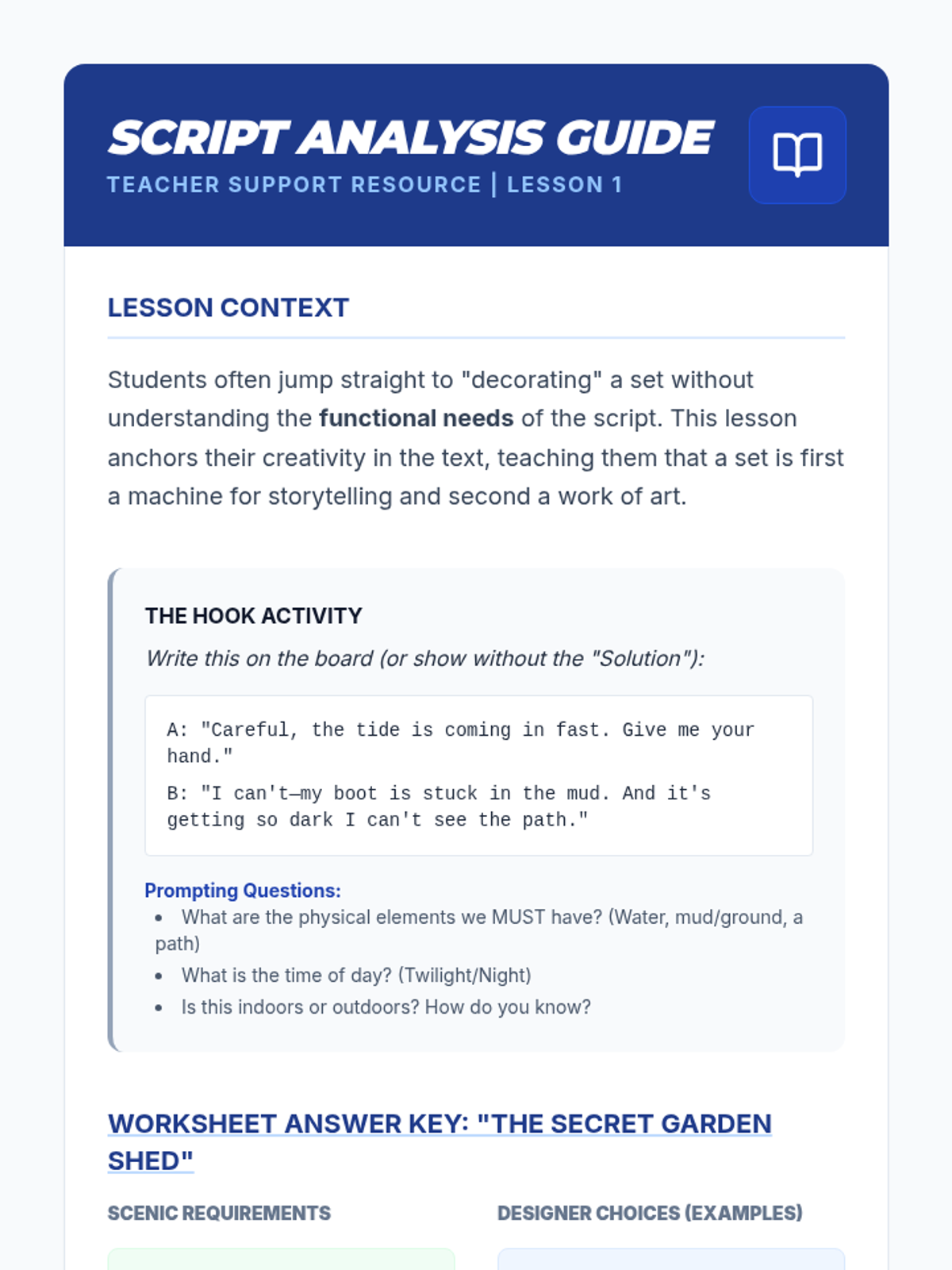
Students read a short scene to identify specific scenic needs, such as entrances, exits, furniture, and time period clues. They create a 'scene breakdown' list that categorizes these necessary elements versus artistic possibilities.
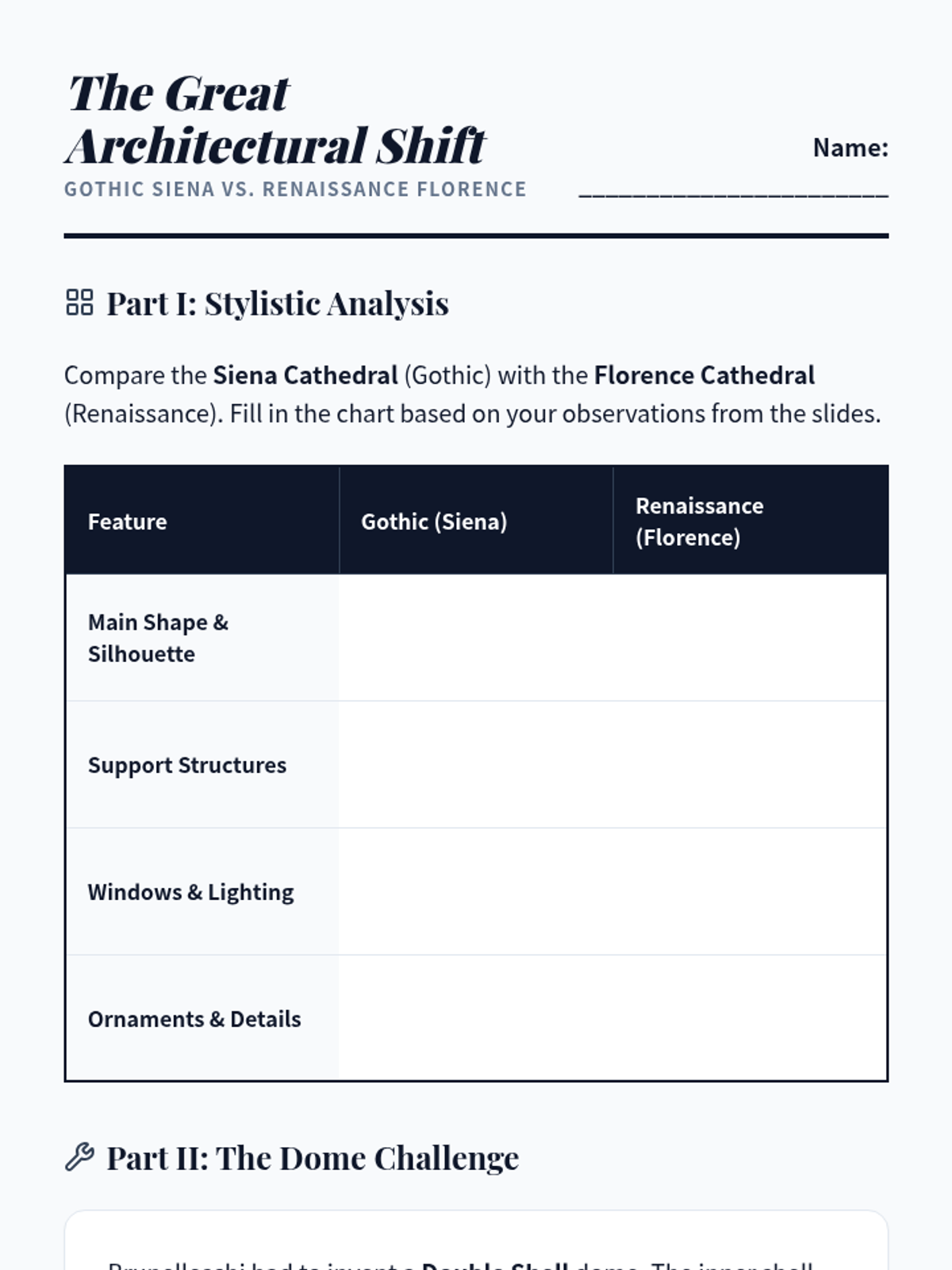
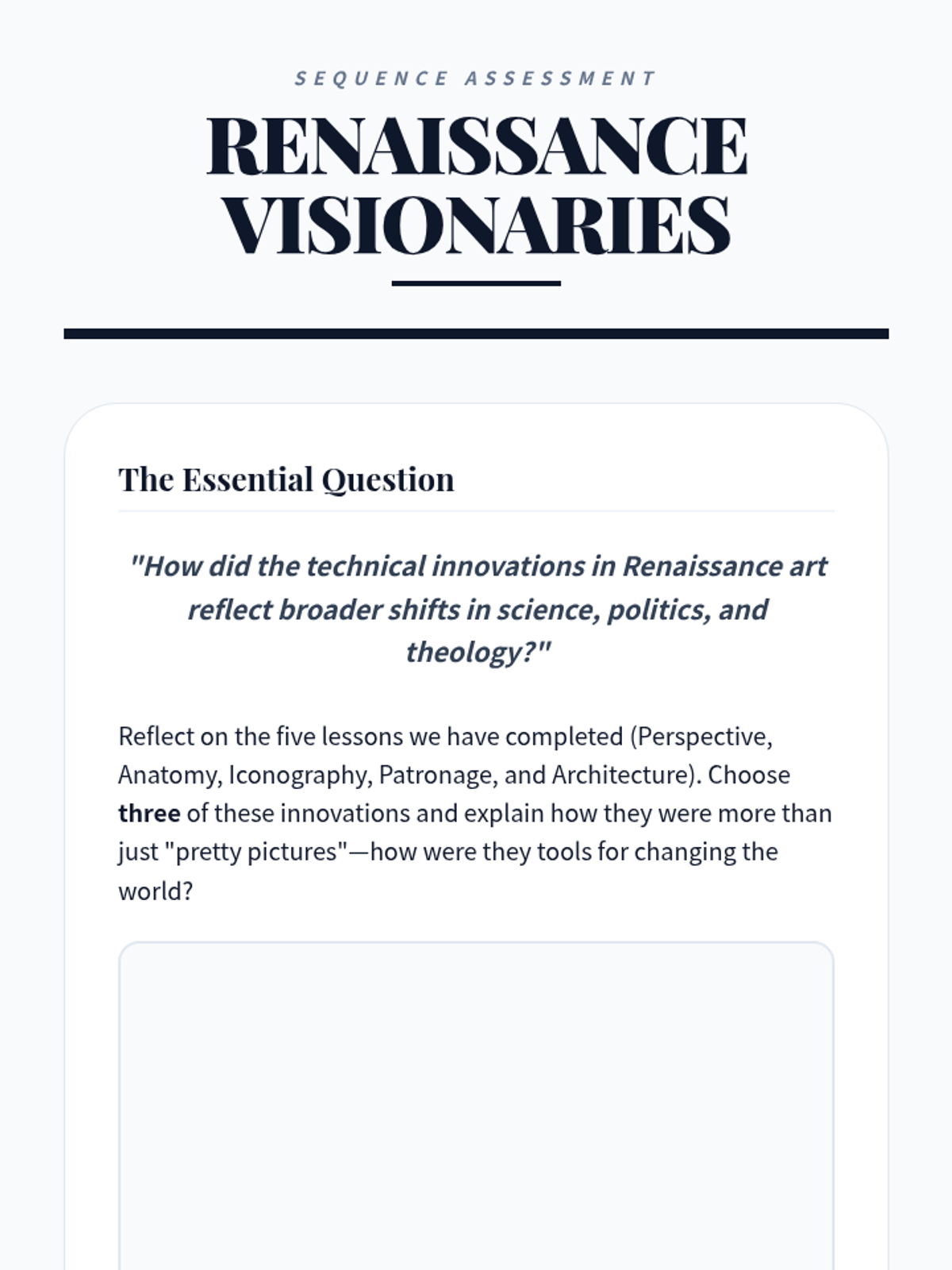
Focusing on the construction of the Florence Cathedral dome, students explore the engineering challenges and civic pride associated with Renaissance architecture. The lesson concludes with a comparative look at Gothic vs. Renaissance structures.
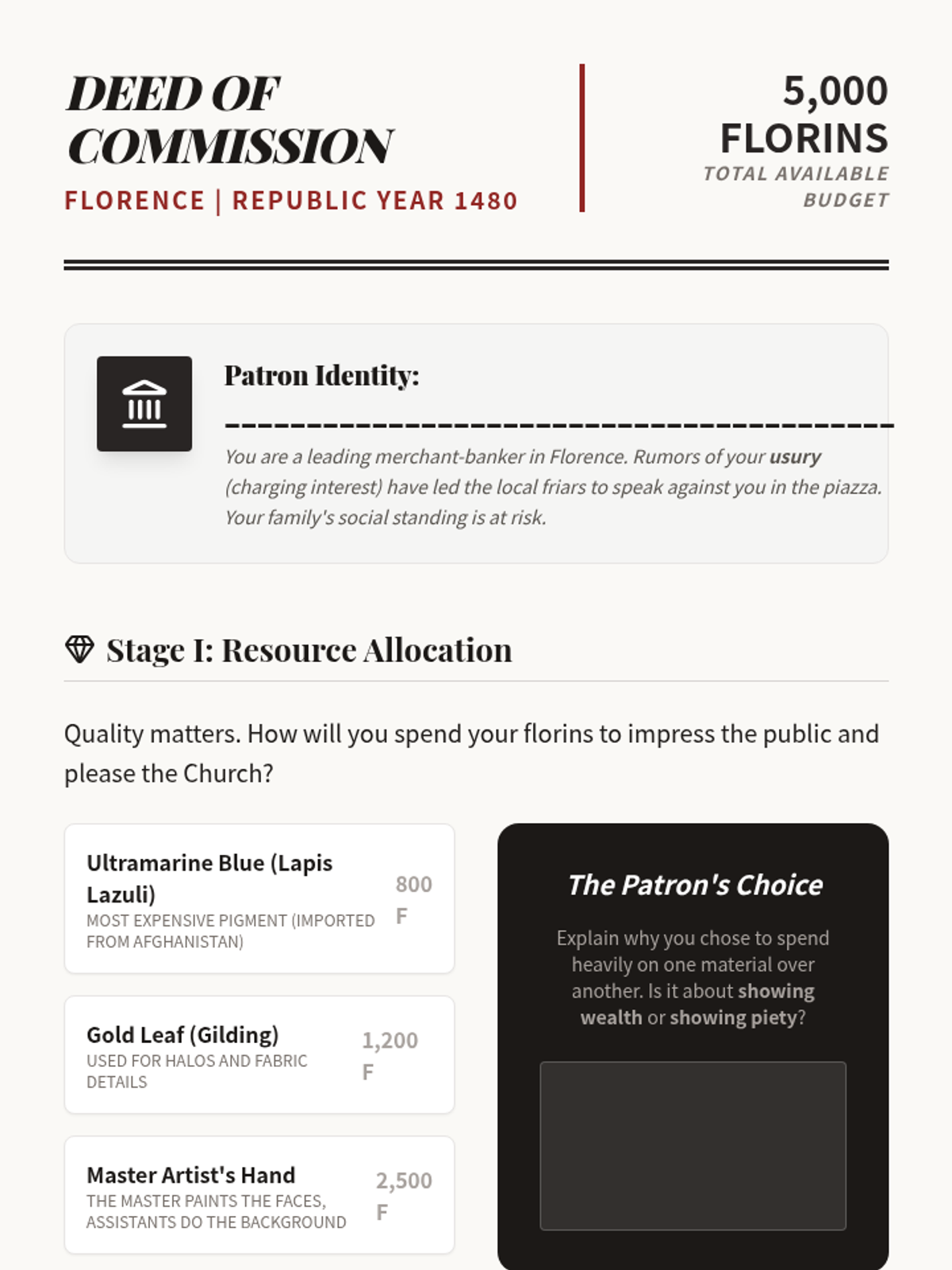
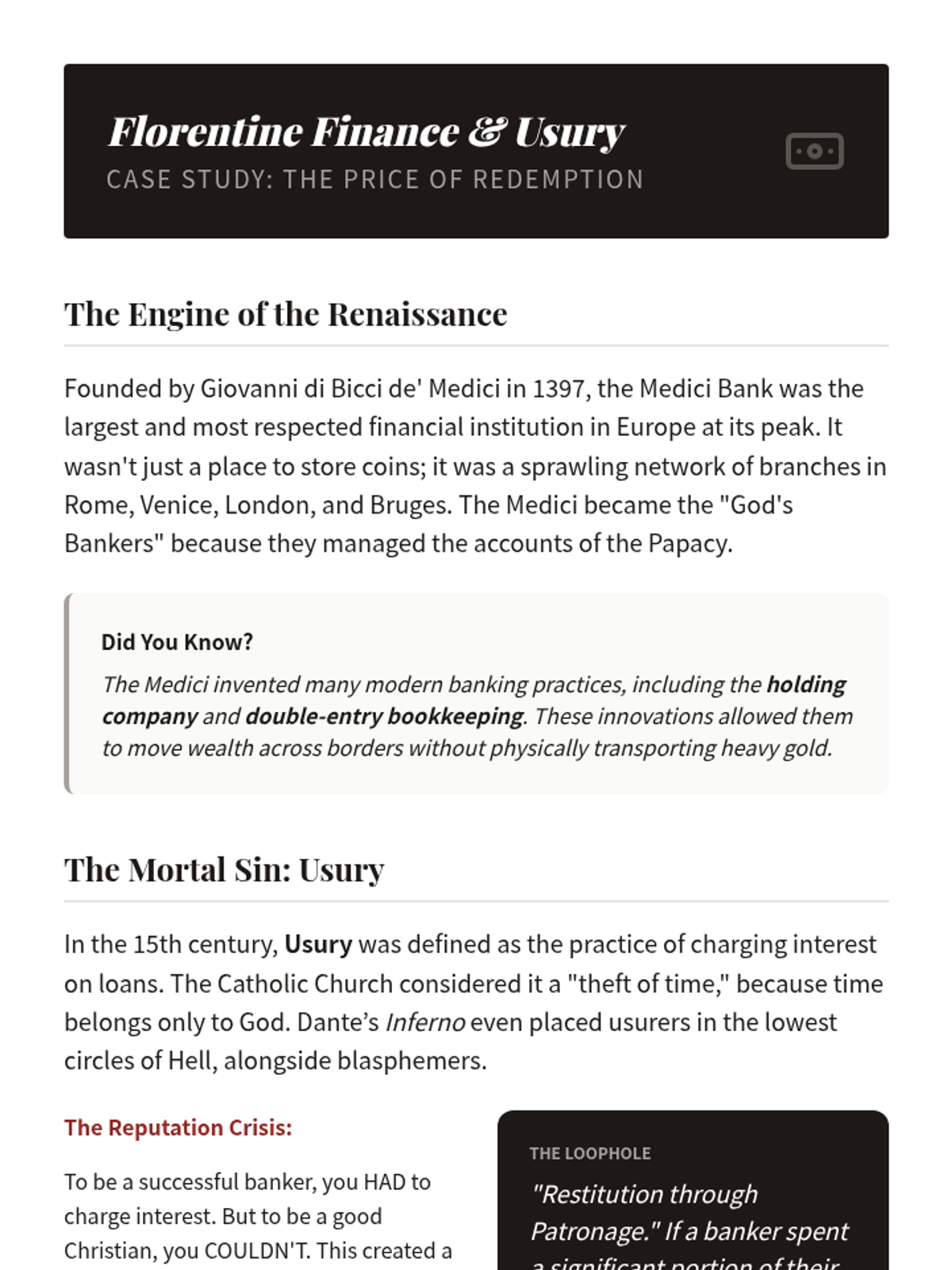
Students analyze the Medici family's financial records and commissions to understand art as political propaganda. They evaluate how patronage legitimized wealth and power in Republican Florence.
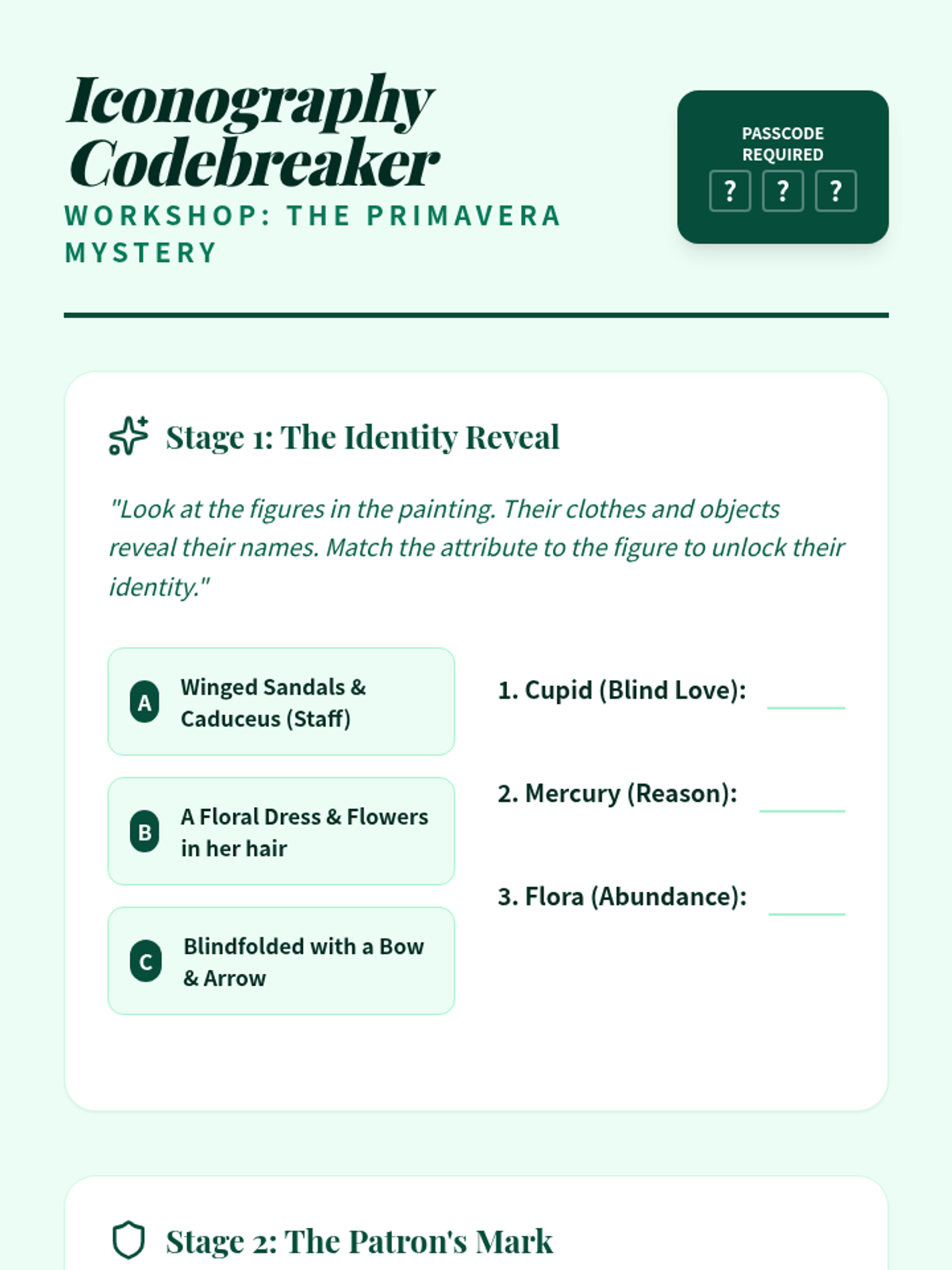
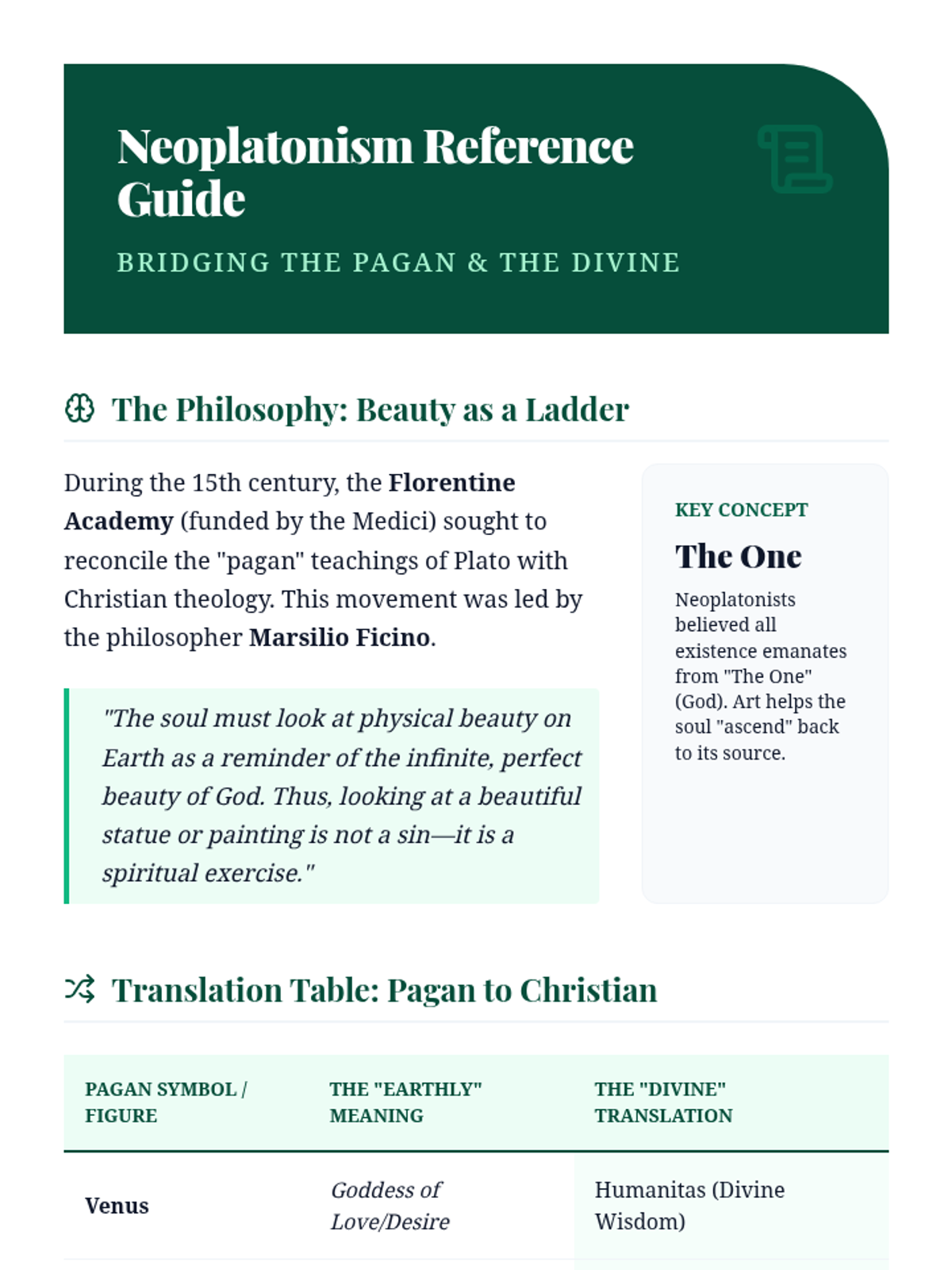
Students engage in an iconography workshop, decoding the pagan symbols in Botticelli’s 'Primavera' and 'Birth of Venus'. They interpret how Neoplatonism allowed Christian patrons to embrace pagan mythology without heresy.
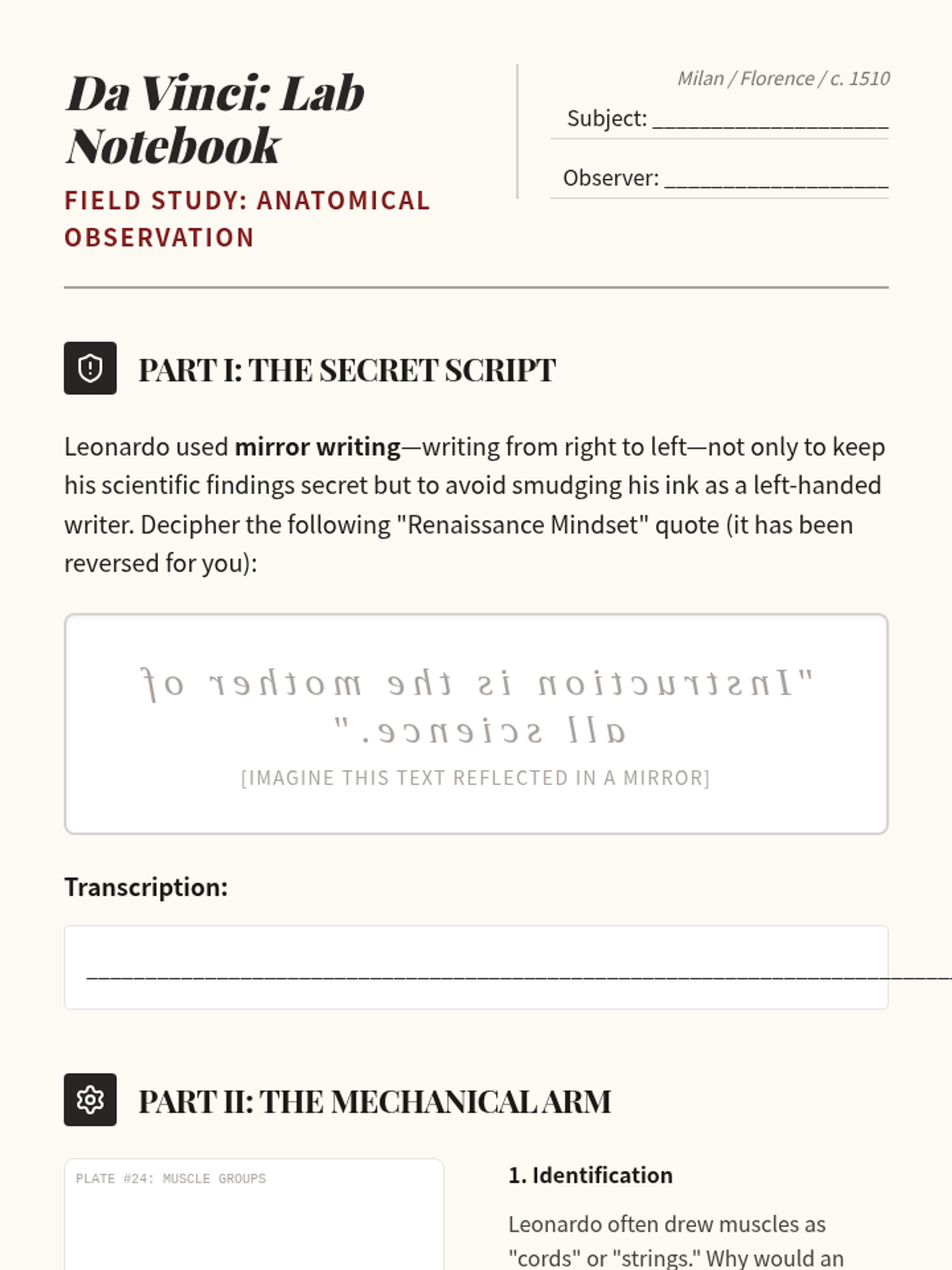
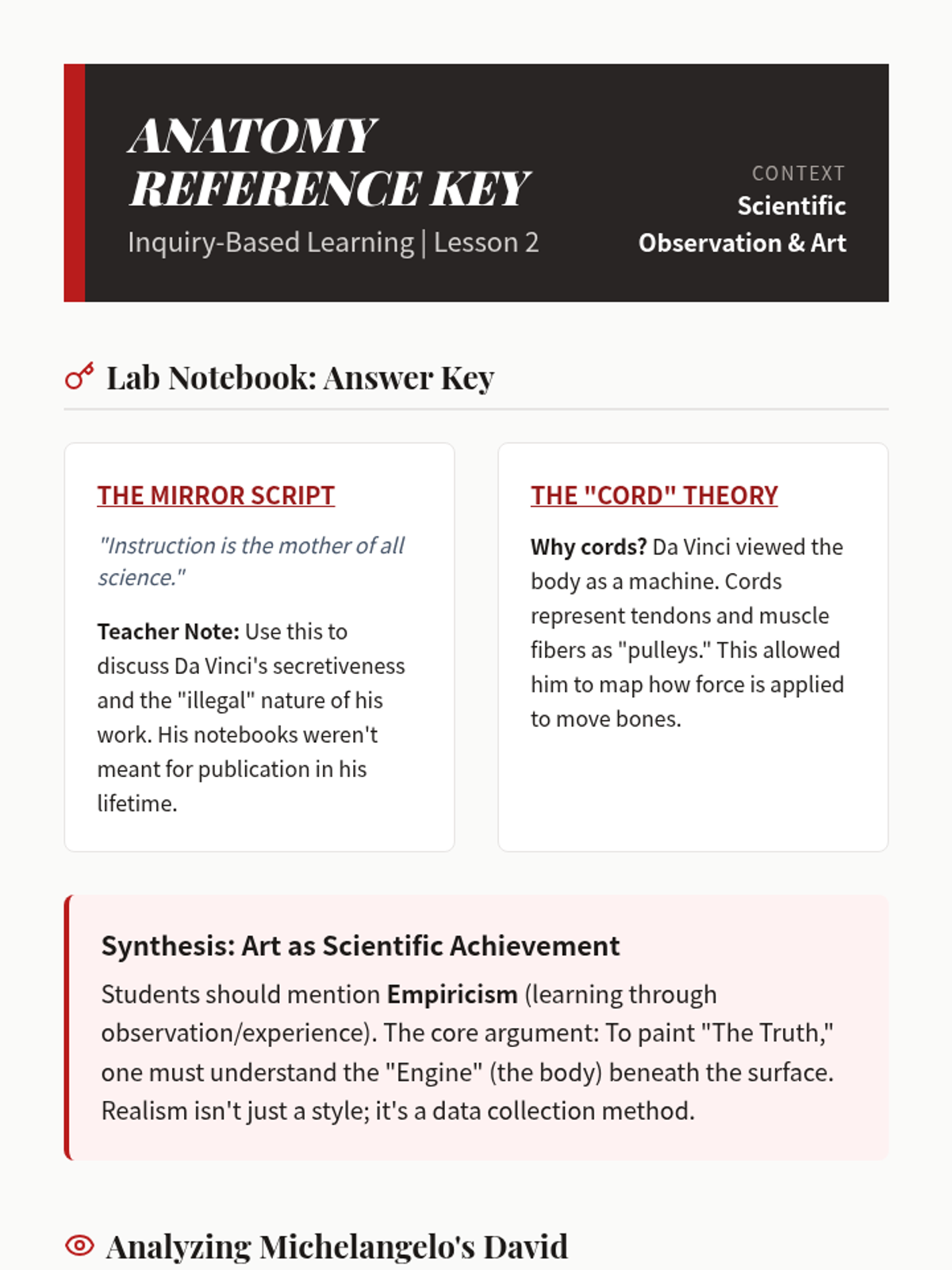
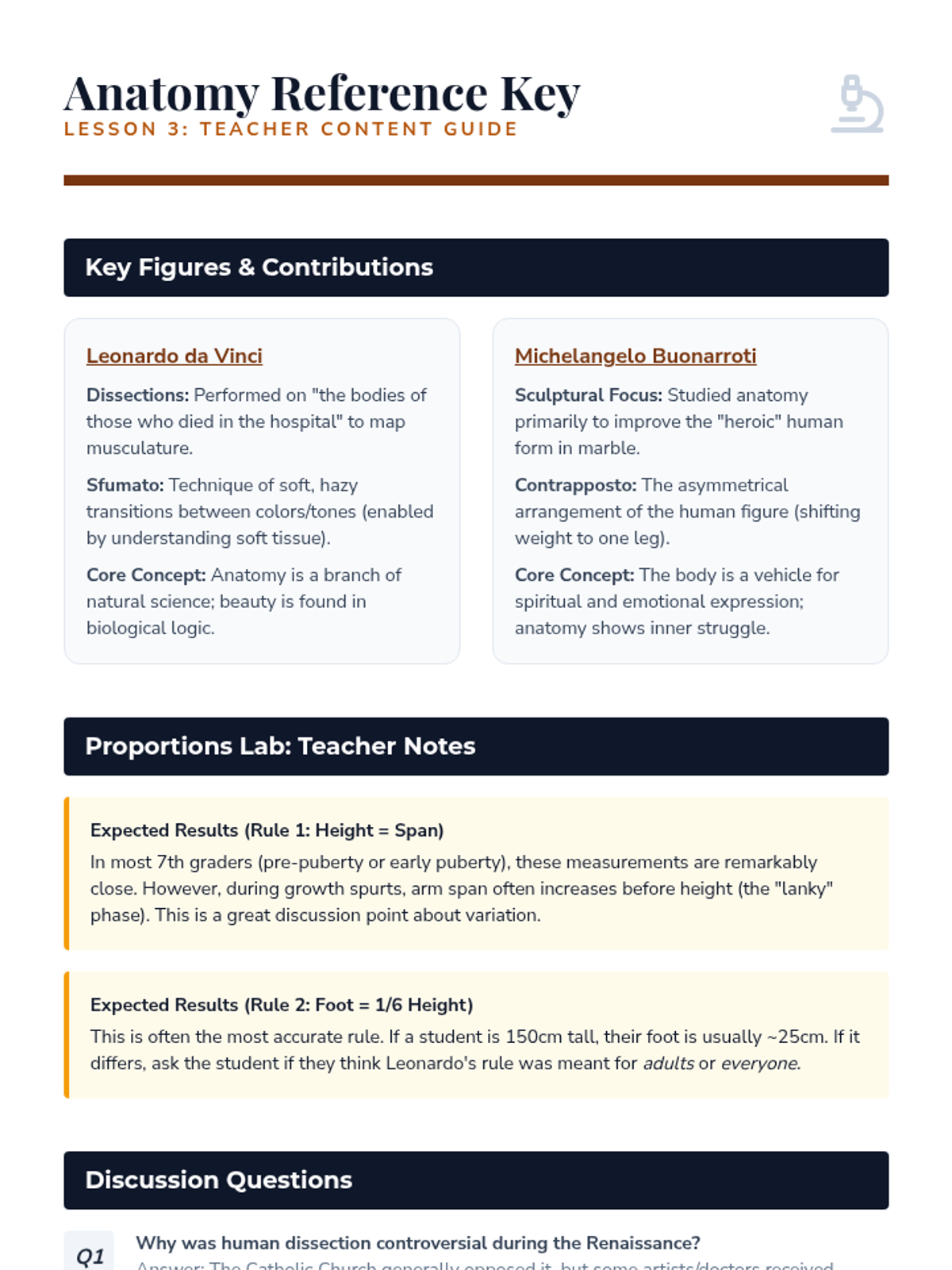
Examining the notebooks of Da Vinci and the sculptures of Michelangelo, students explore the intersection of dissection, observation, and art. They analyze how the accurate depiction of the human body celebrated the physical world.
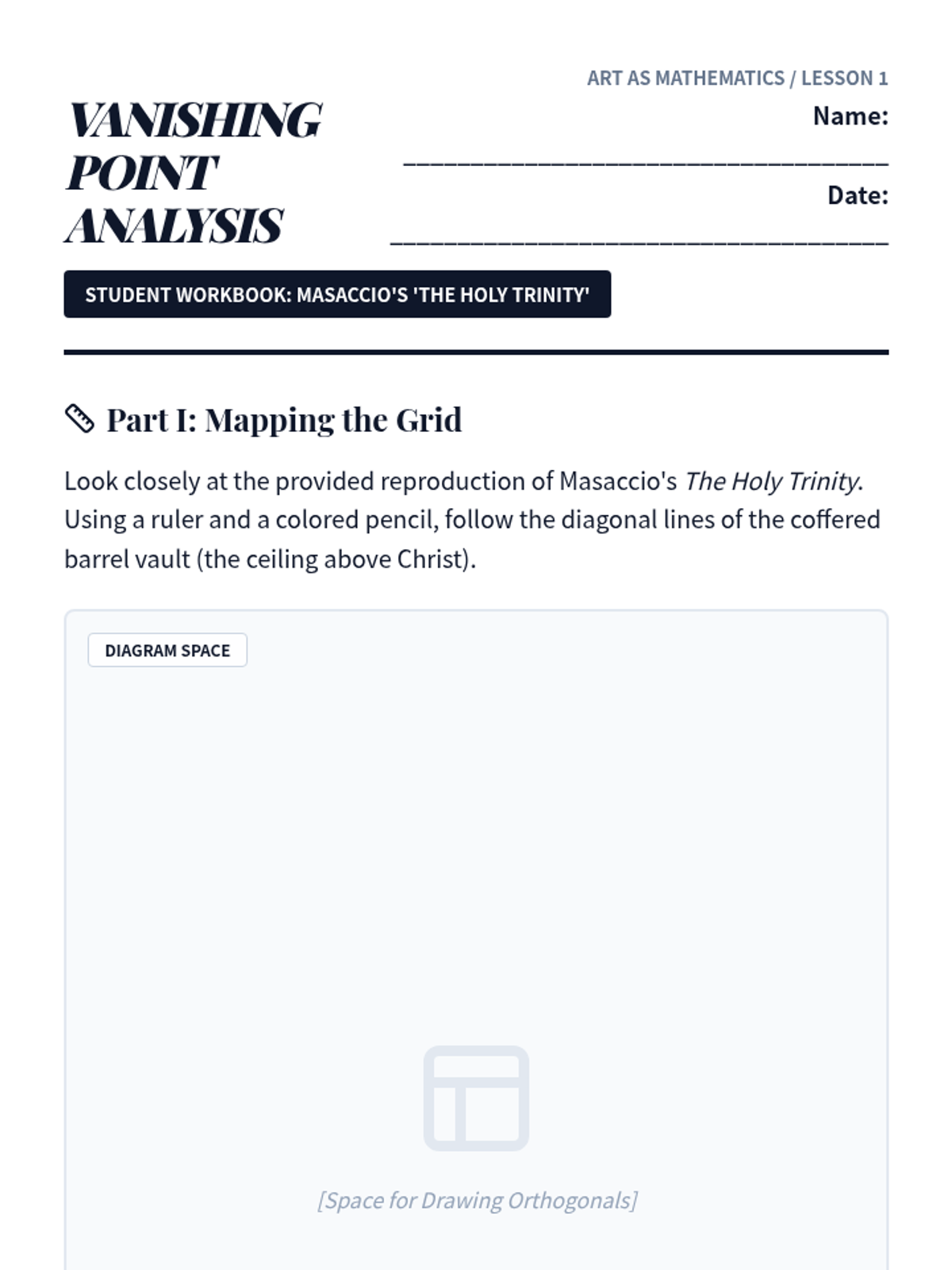
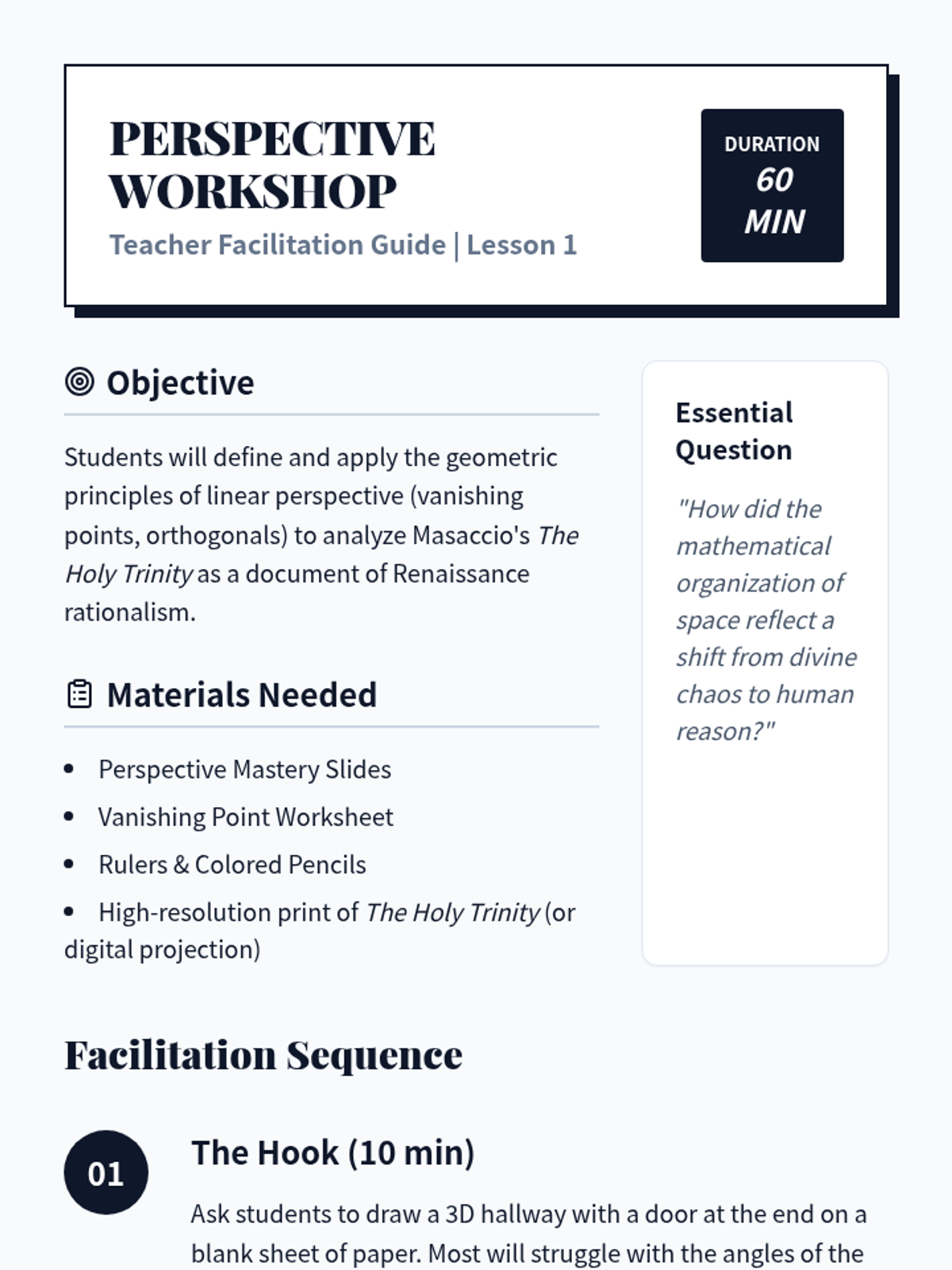
Students learn the geometric principles of linear perspective rediscovered by Brunelleschi and codified by Alberti. They apply these concepts by deconstructing the vanishing points in Masaccio’s 'The Holy Trinity' to understand how art rationalized space.
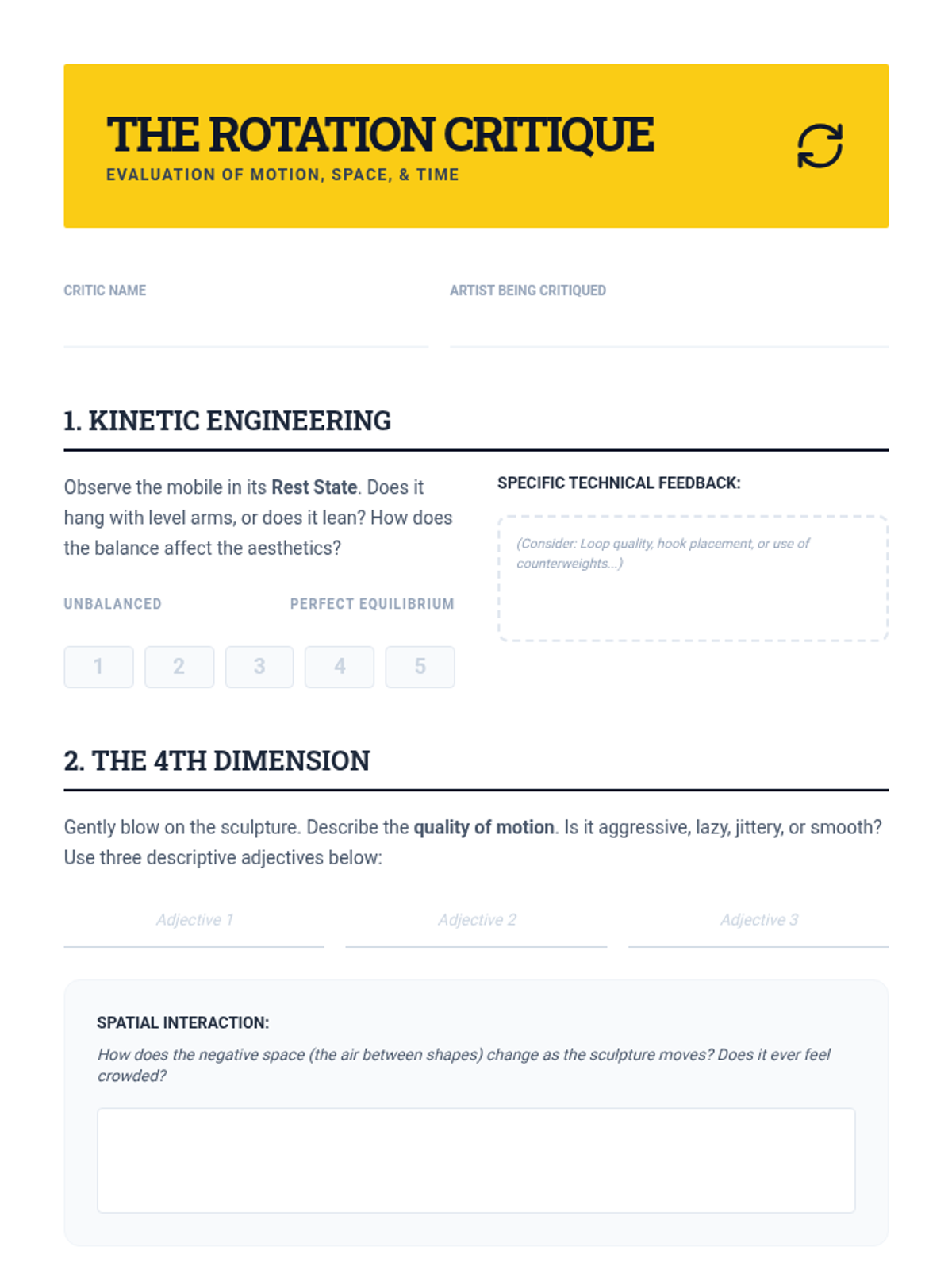
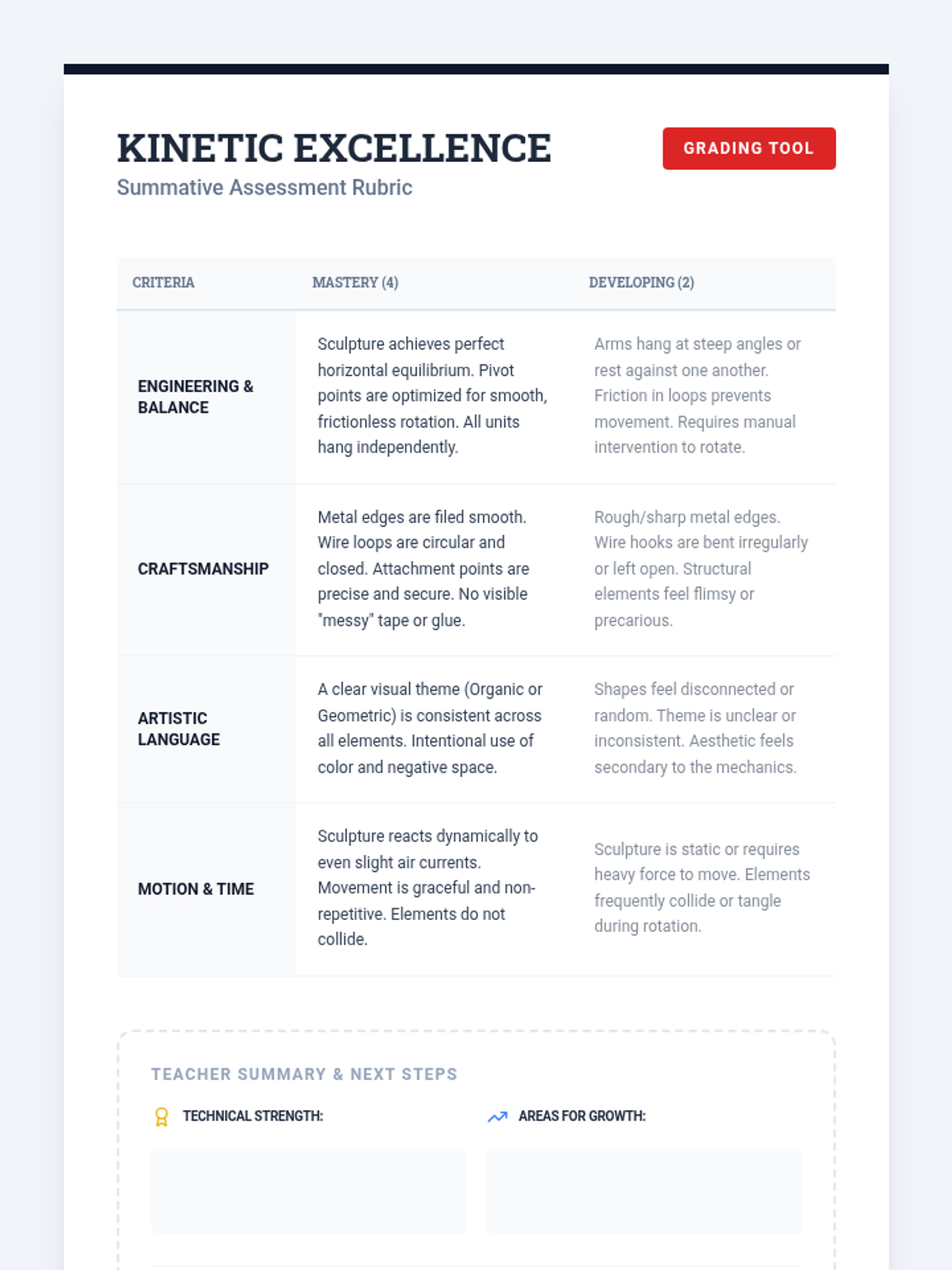
Students install their mobiles and observe interactions with ambient airflow. The final critique evaluates both static composition and quality of movement.
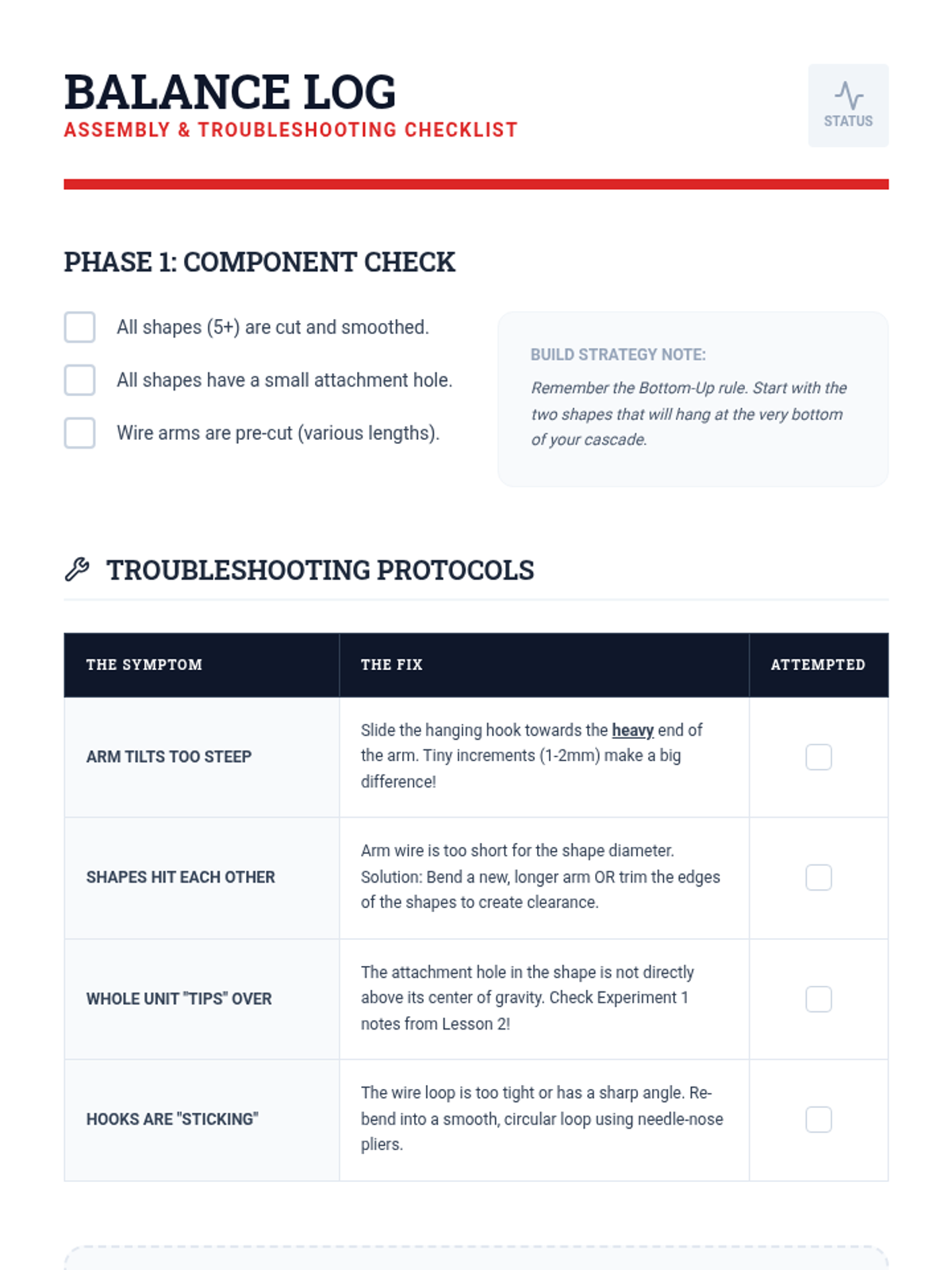
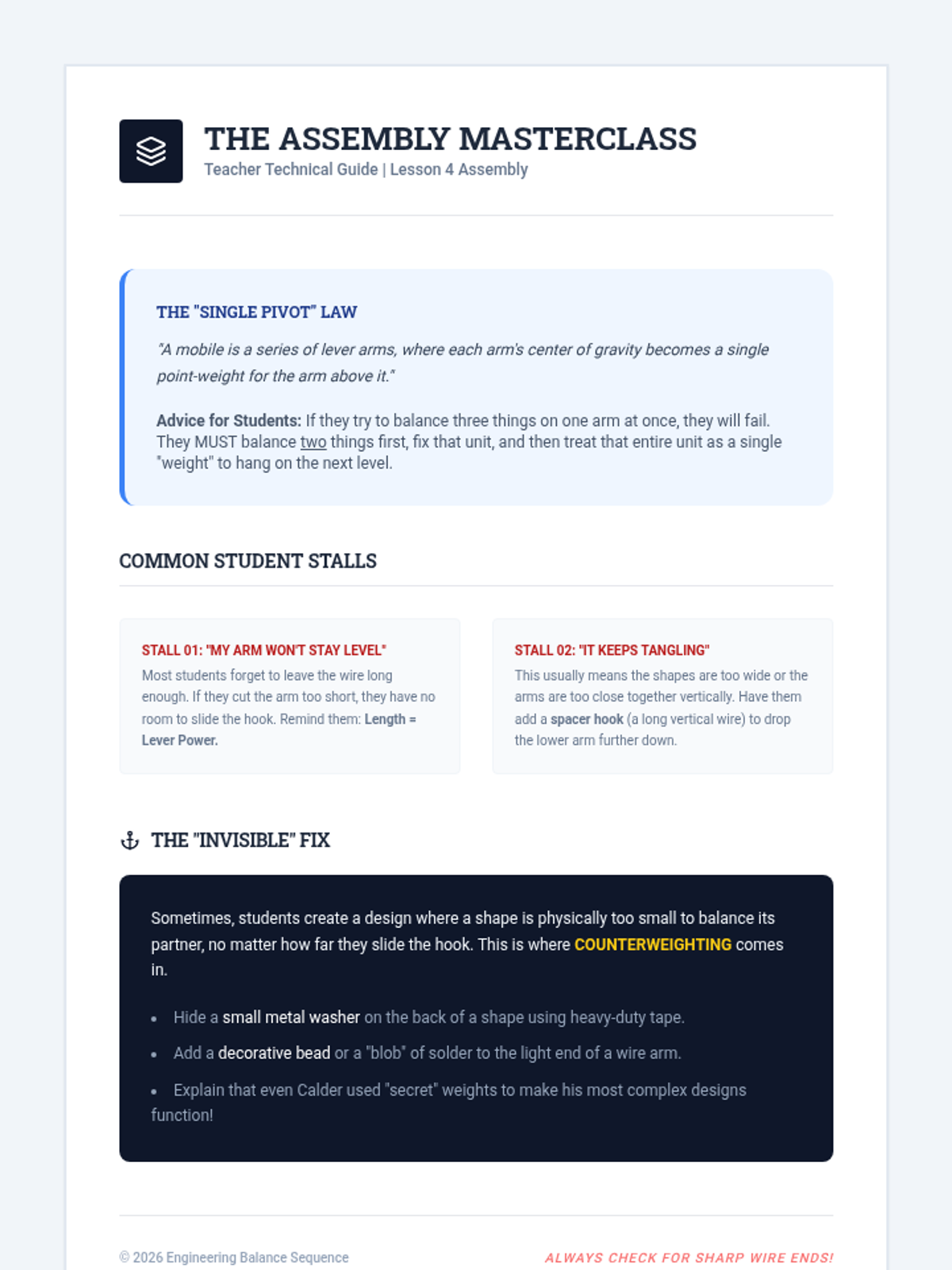
The technical phase where students assemble the mobile from the bottom up. They bend wire arms and attach shapes, troubleshooting by adjusting fulcrums or adding counterweights.
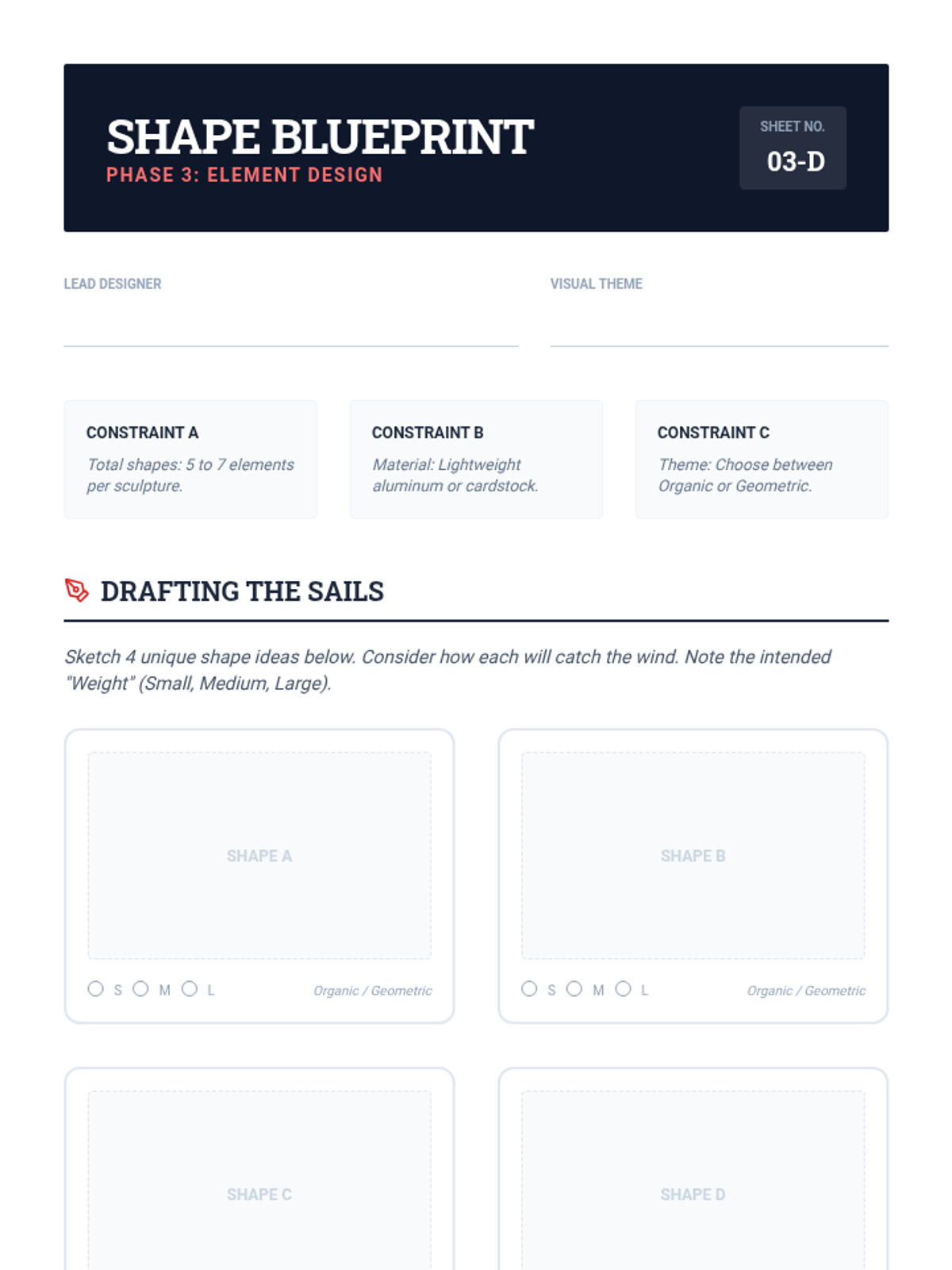
Students design and cut lightweight shapes for their mobile, considering how surface area catches air currents. The focus is on aesthetics and weight management.
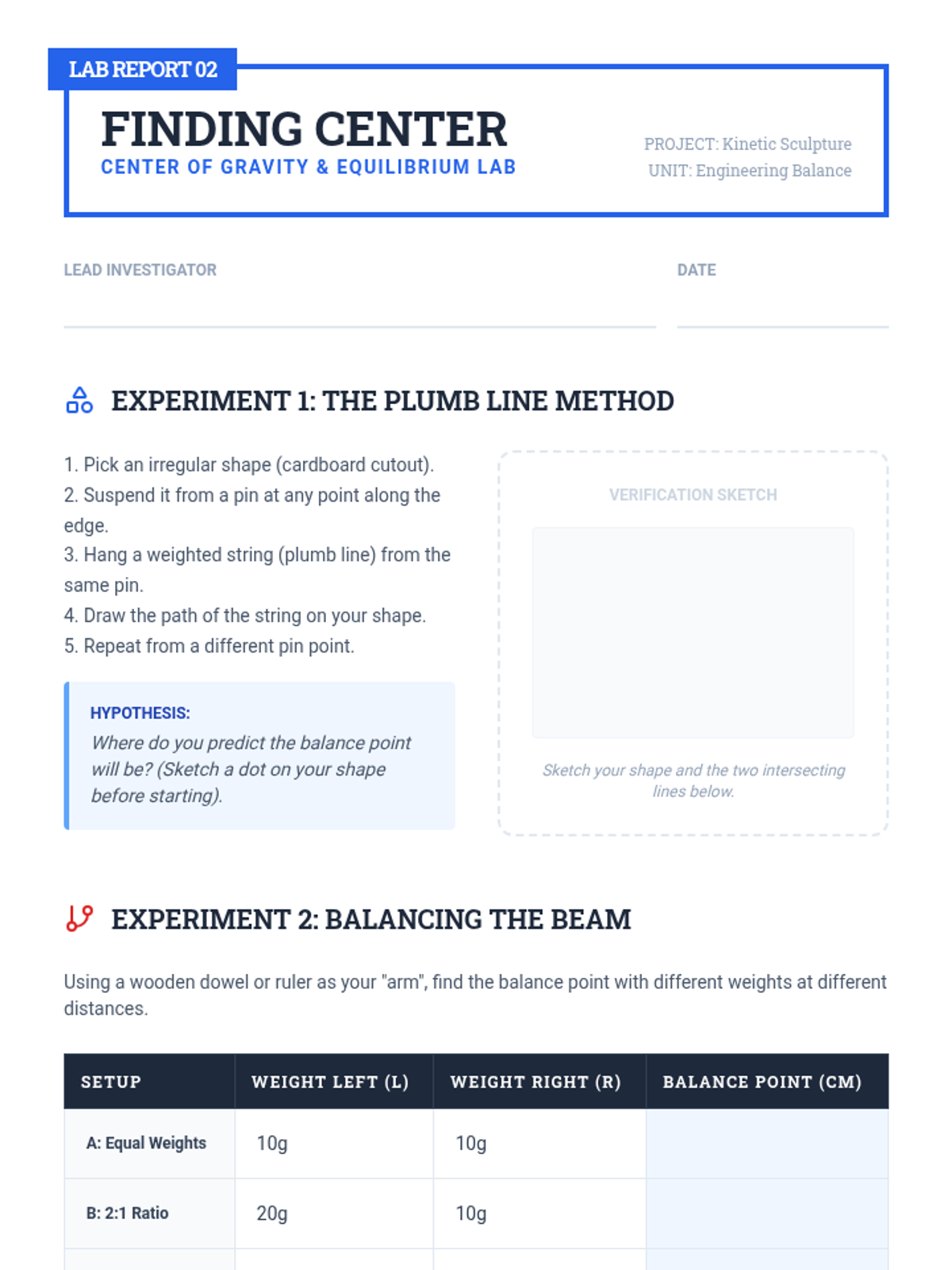
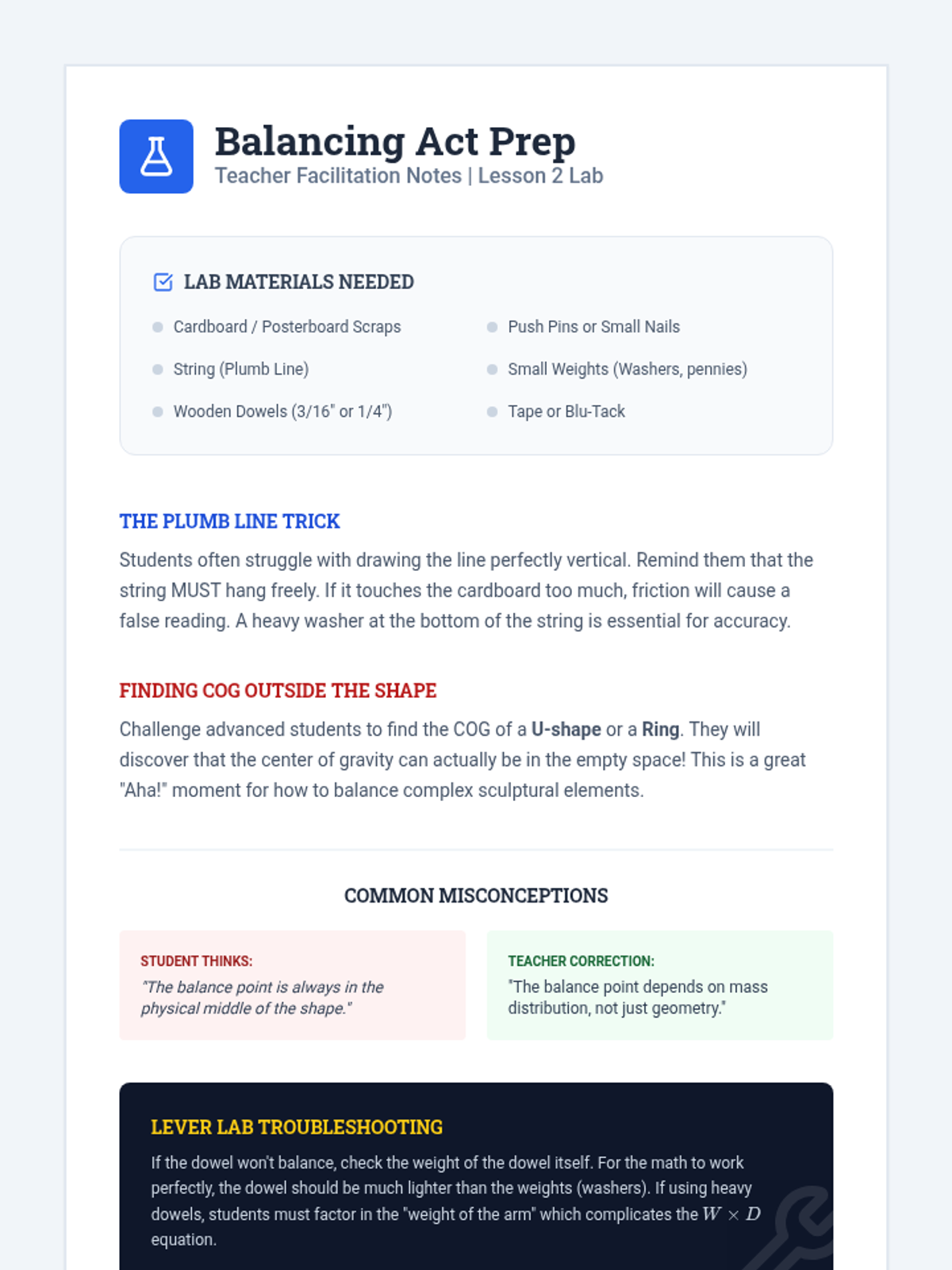
A hands-on lab where students experiment with finding the balance point of irregular shapes. They learn about fulcrums, levers, and center of gravity to understand the physics needed for their sculpture.
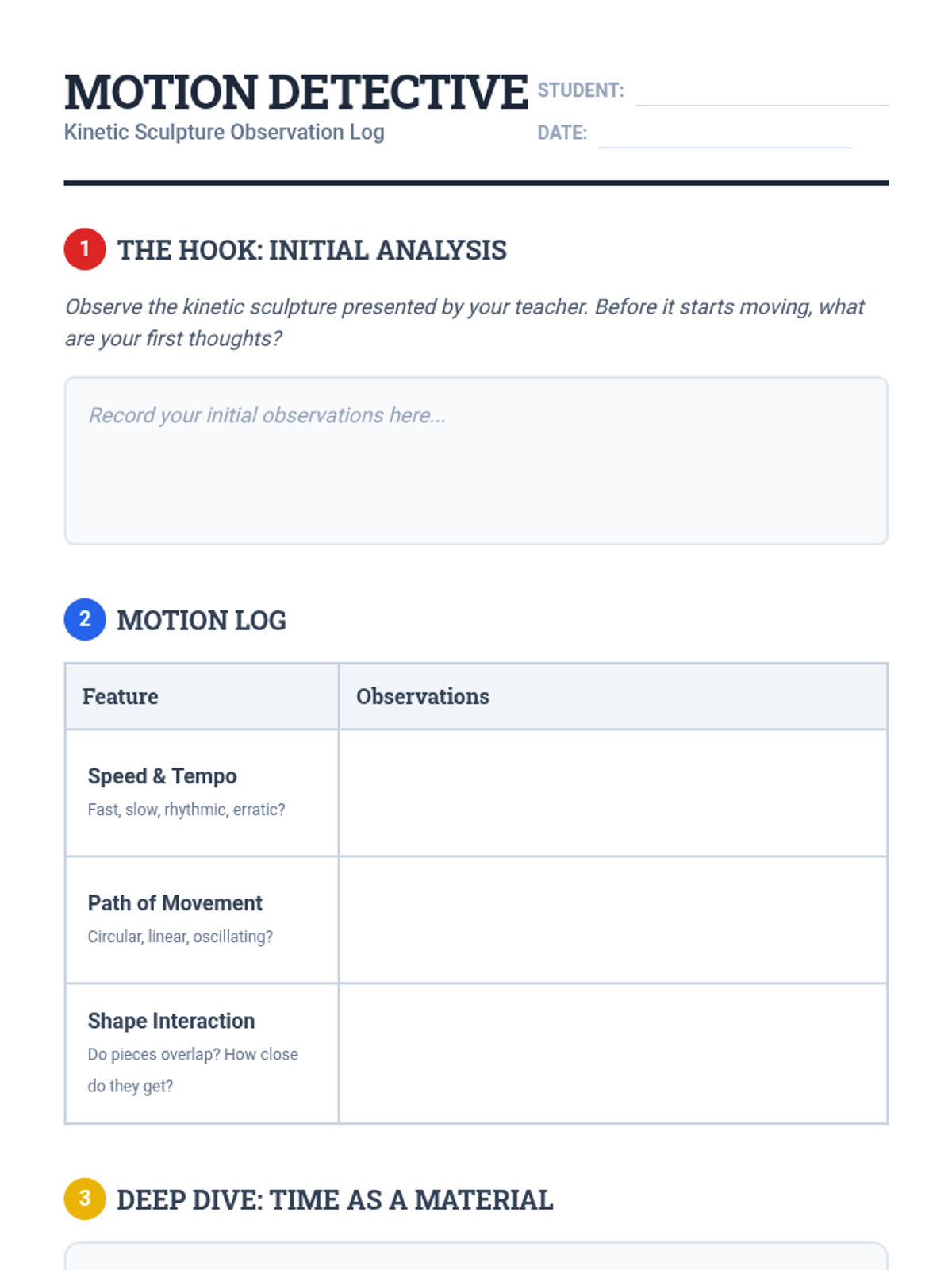
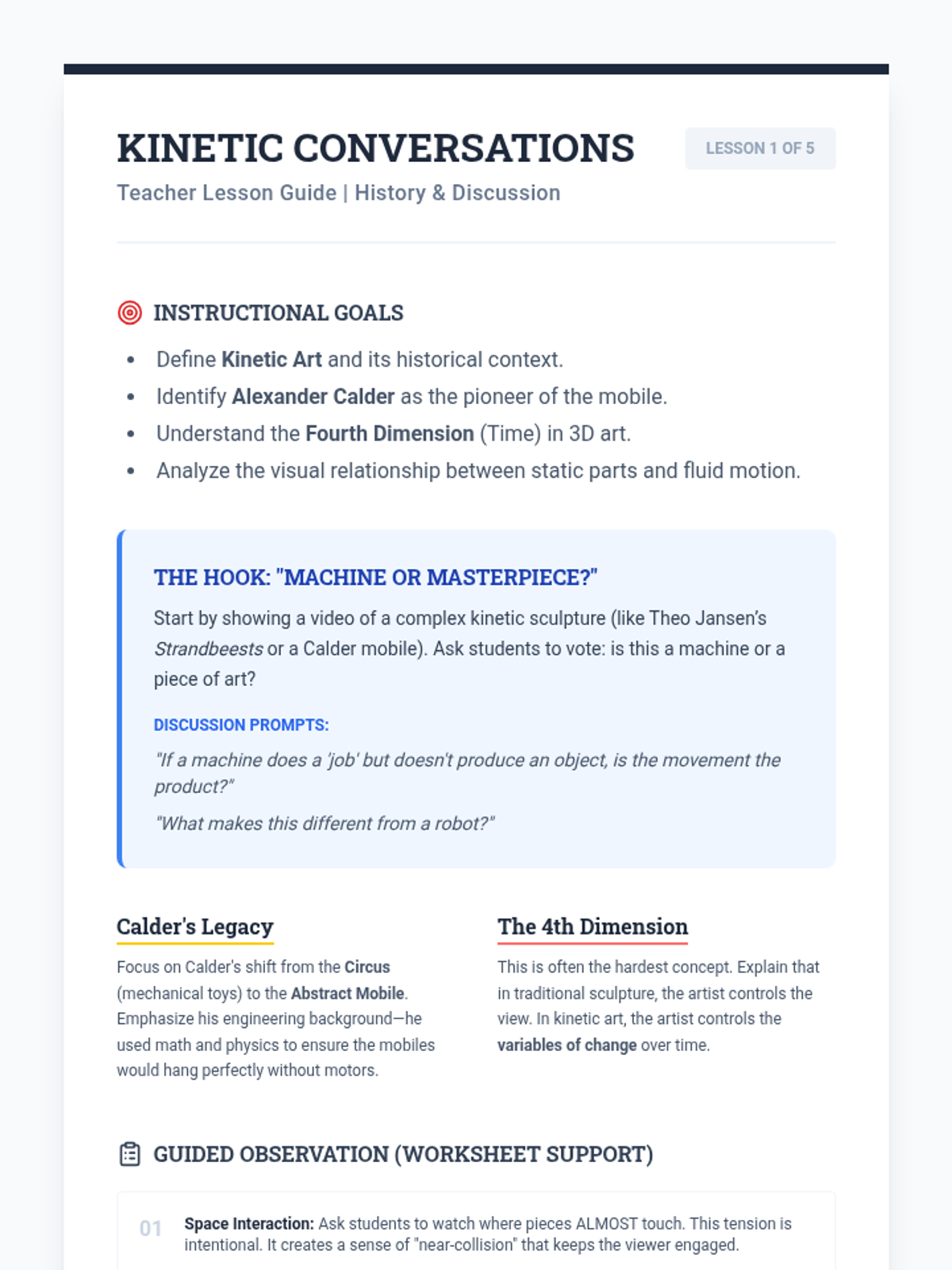
Students study the history of kinetic art, focusing on Alexander Calder and the shift from static sculpture to moving forms. They analyze how components interact and discuss the 'fourth dimension' (time) in art.
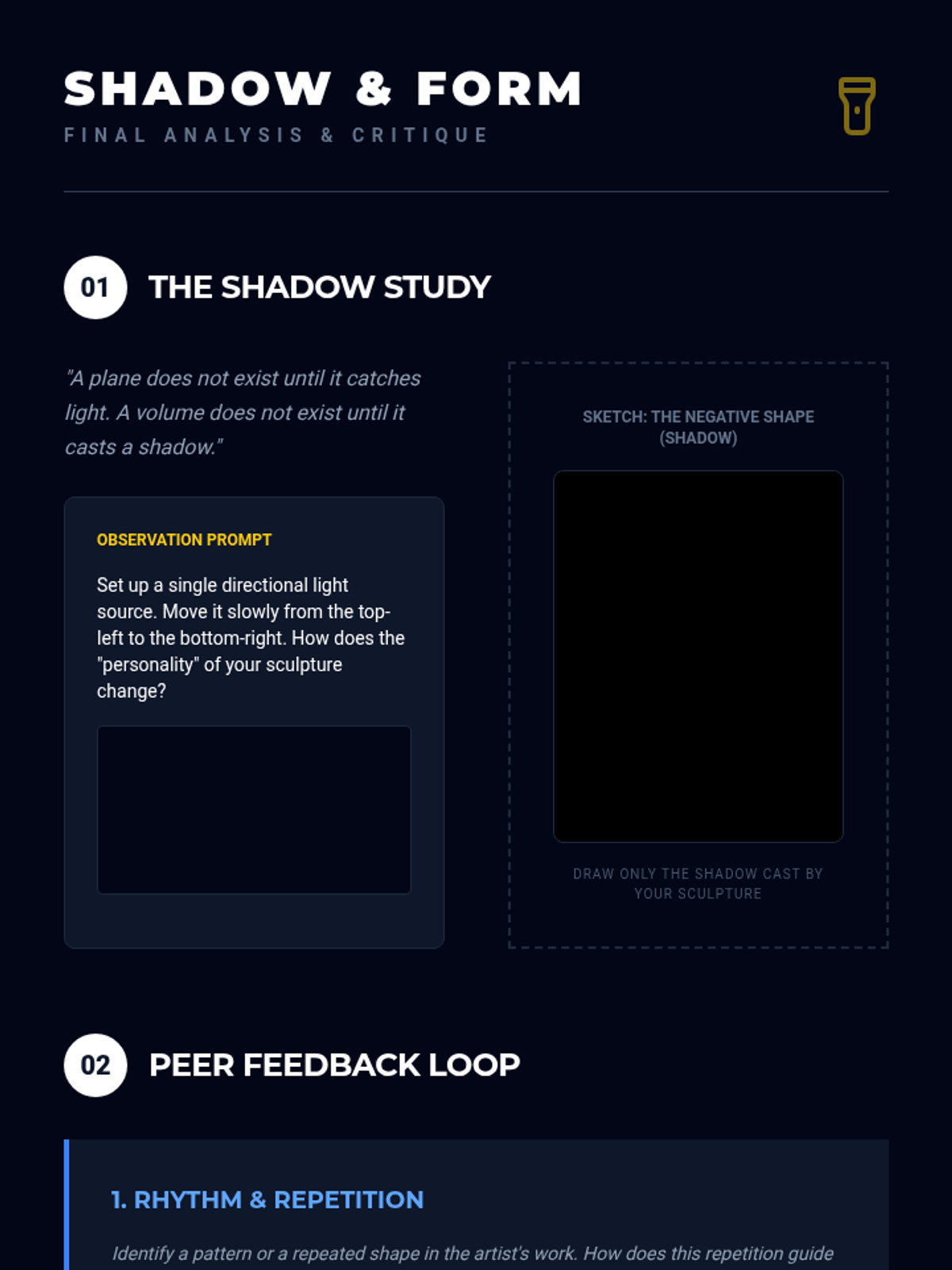
Final analysis of the interaction between light, shadow, and planes. Students prepare their work for display and participate in a formal critique of aesthetic balance.
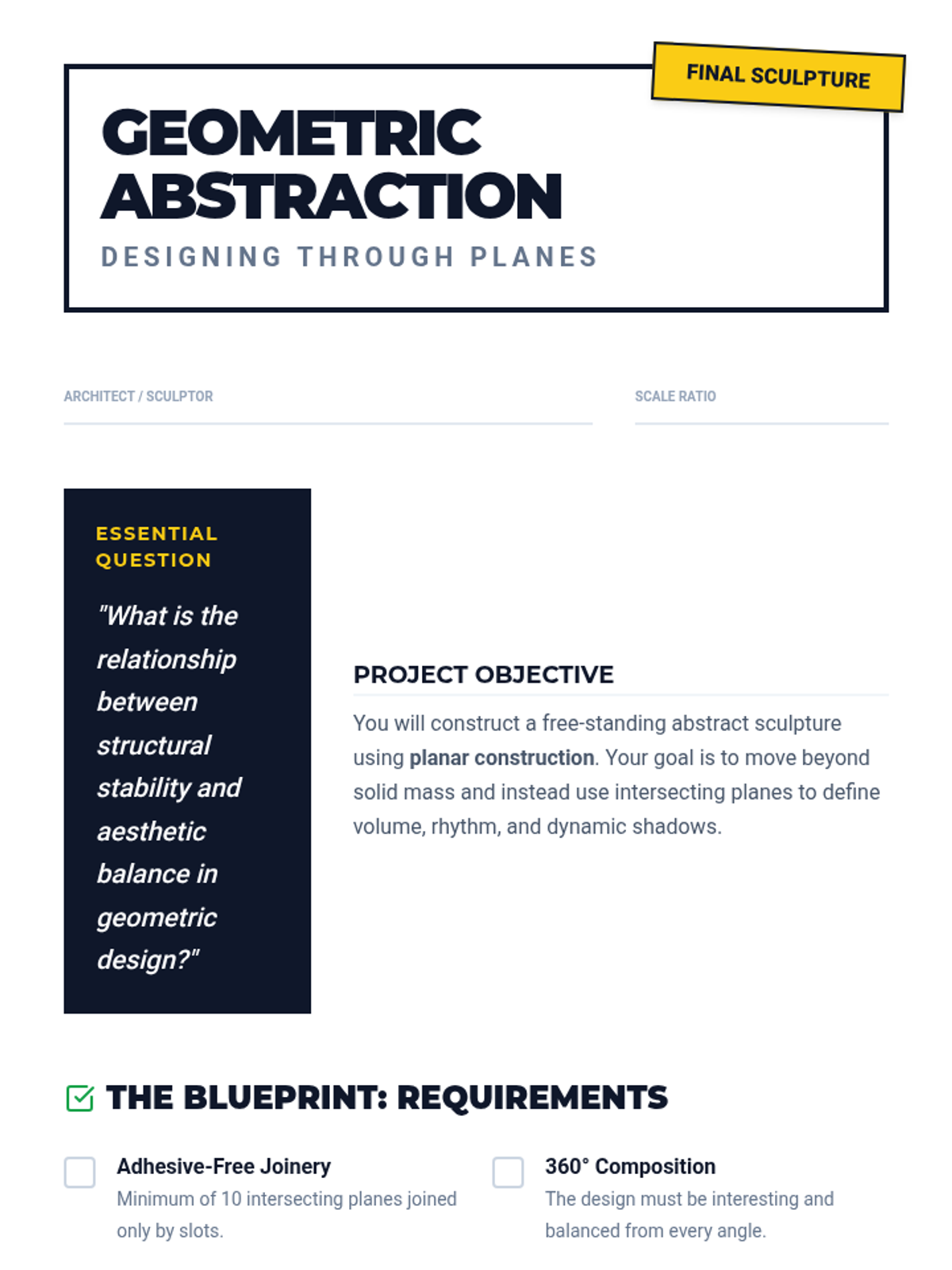
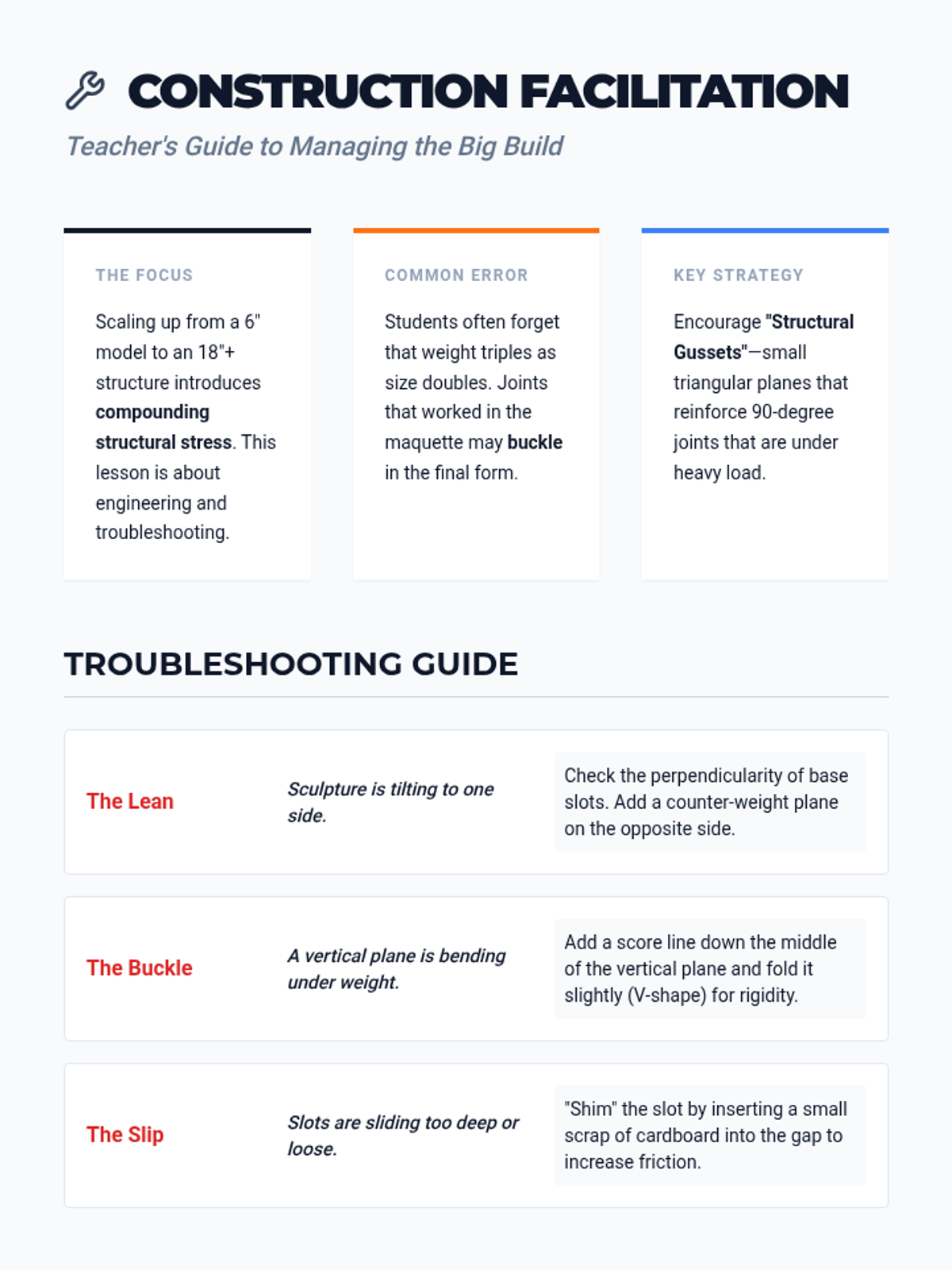
Students scale up their designs to create a final cardboard sculpture. The focus is on maintaining structural integrity and troubleshooting engineering challenges in larger forms.
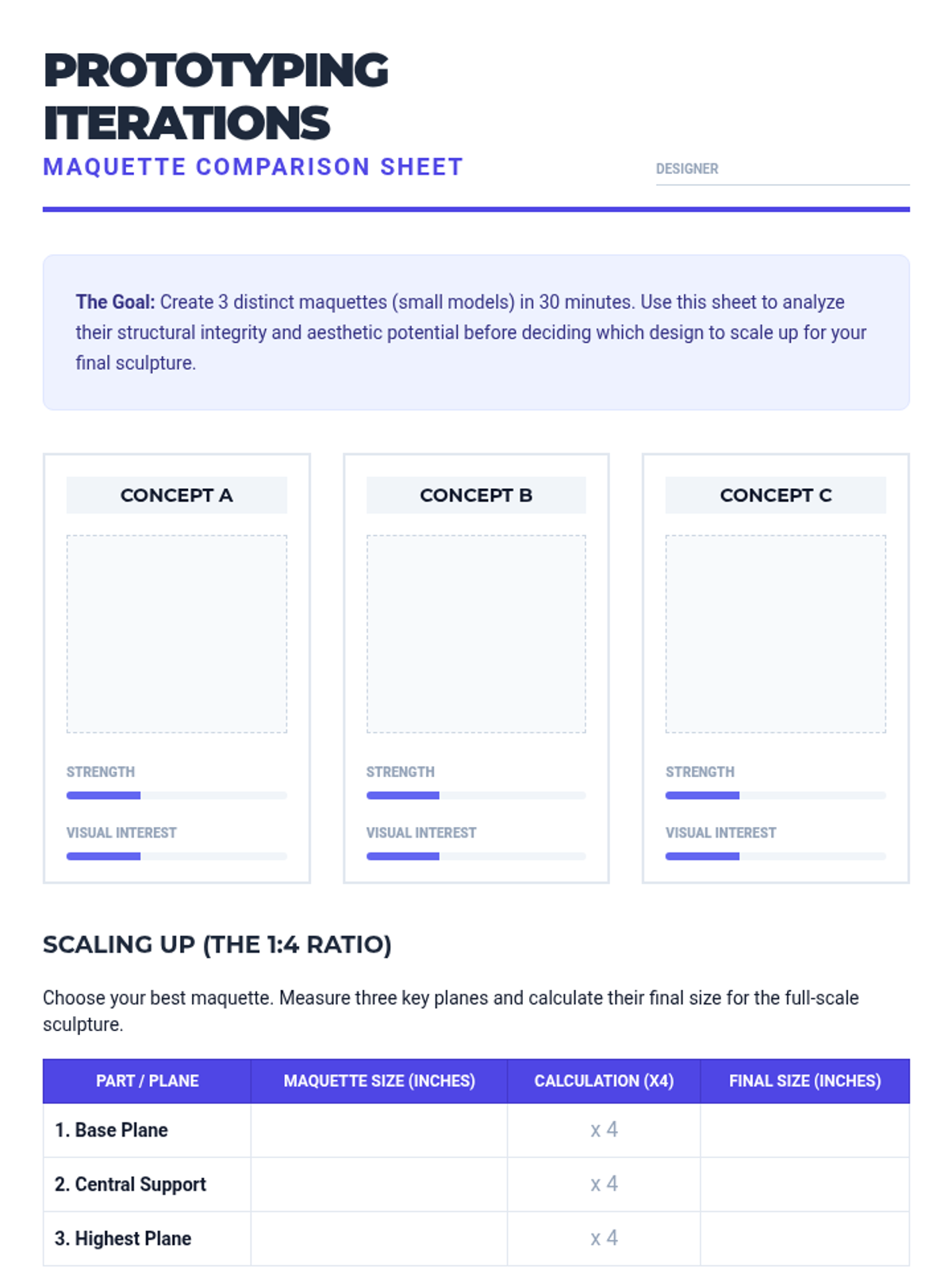
Introduction to prototyping and scale. Students build small-scale maquettes to test their designs and analyze spatial relationships before committing to a larger final piece.
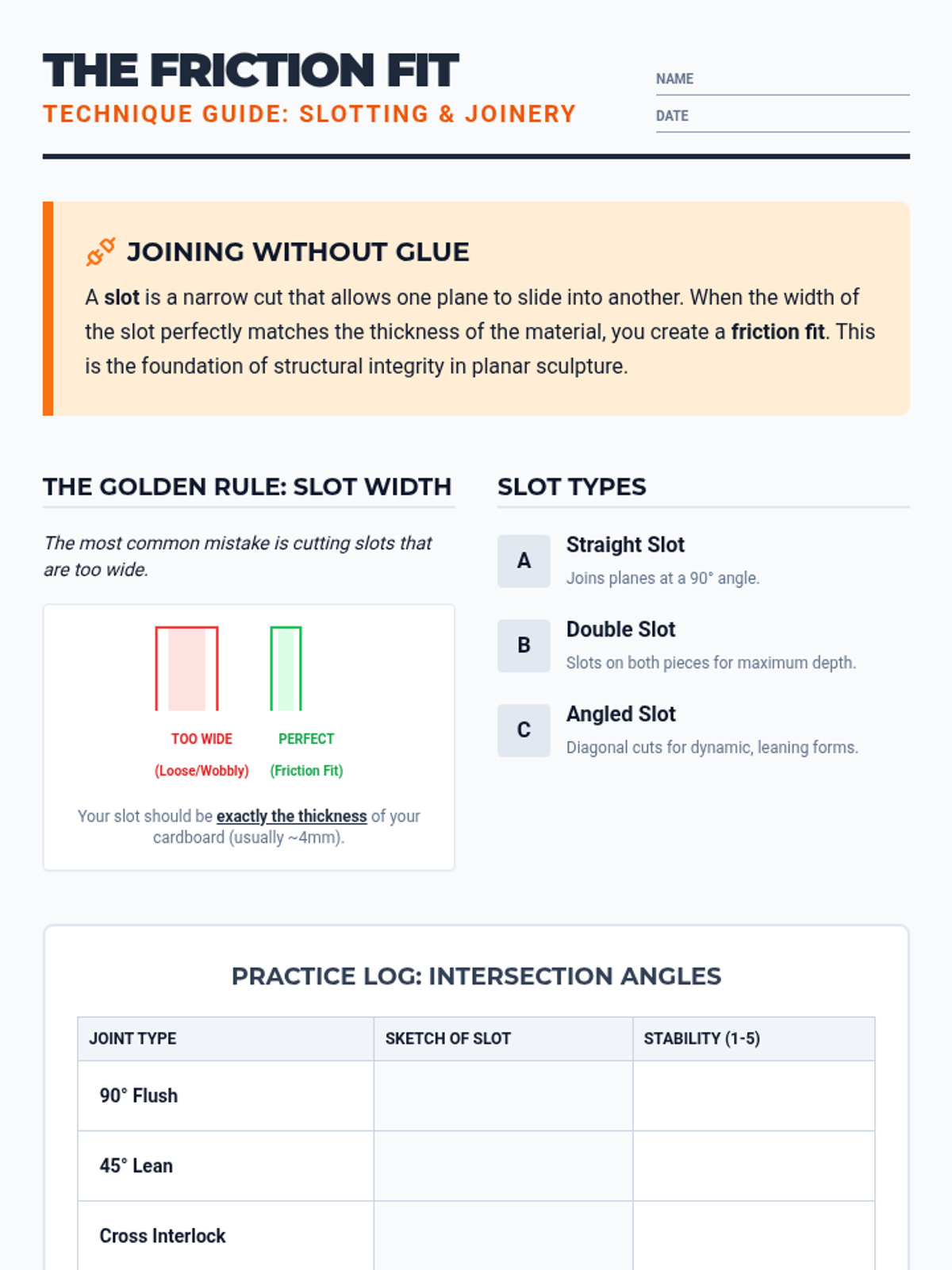
Focuses on adhesive-free joinery through slotting and interlocking. Students participate in a 'house of cards' style competition to understand friction fits and structural dependency.
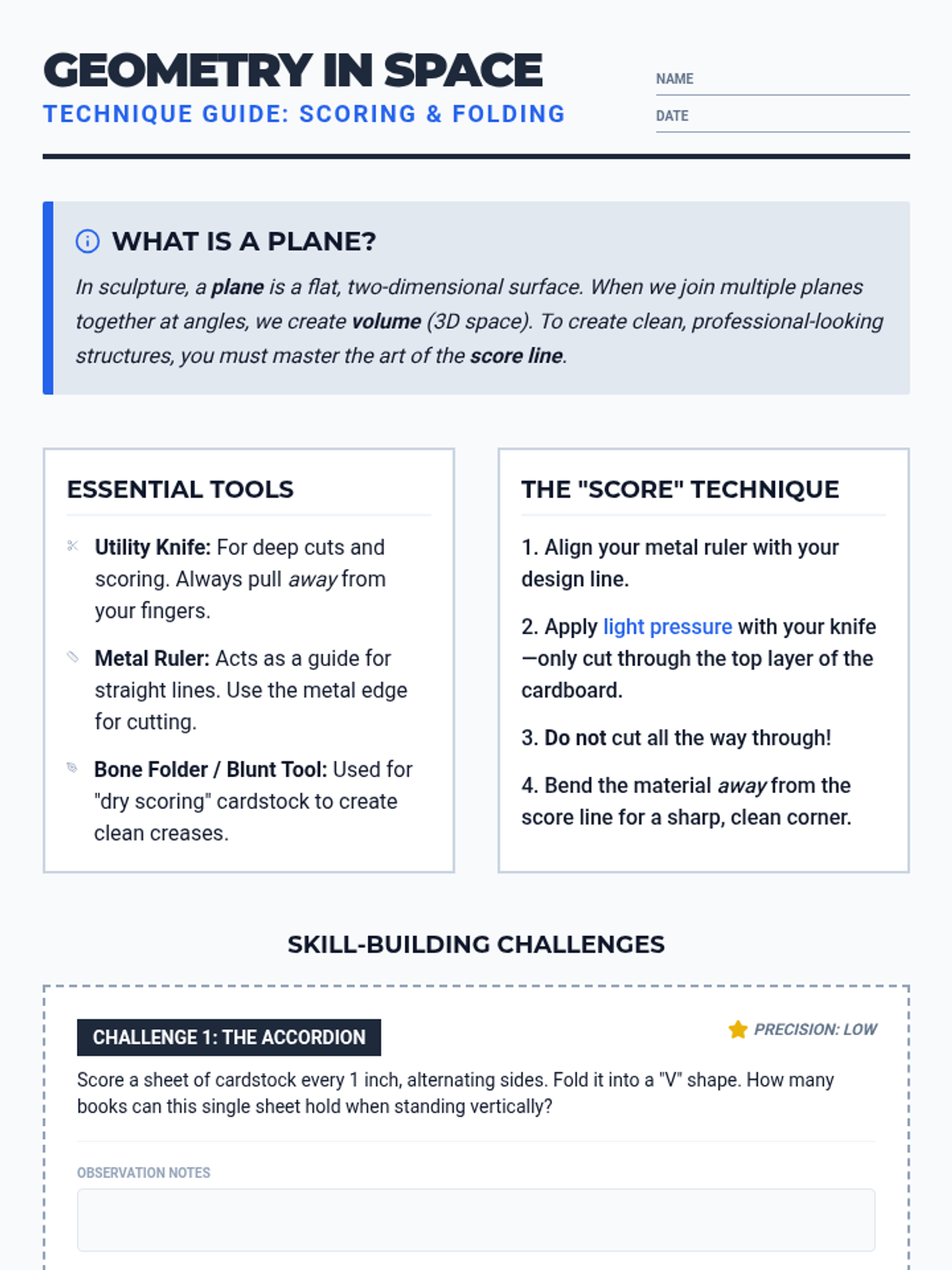
Students transition from 2D shapes to 3D planes by learning precision cutting, scoring, and folding techniques. They explore the structural potential of a folded plane through a paper strength challenge.
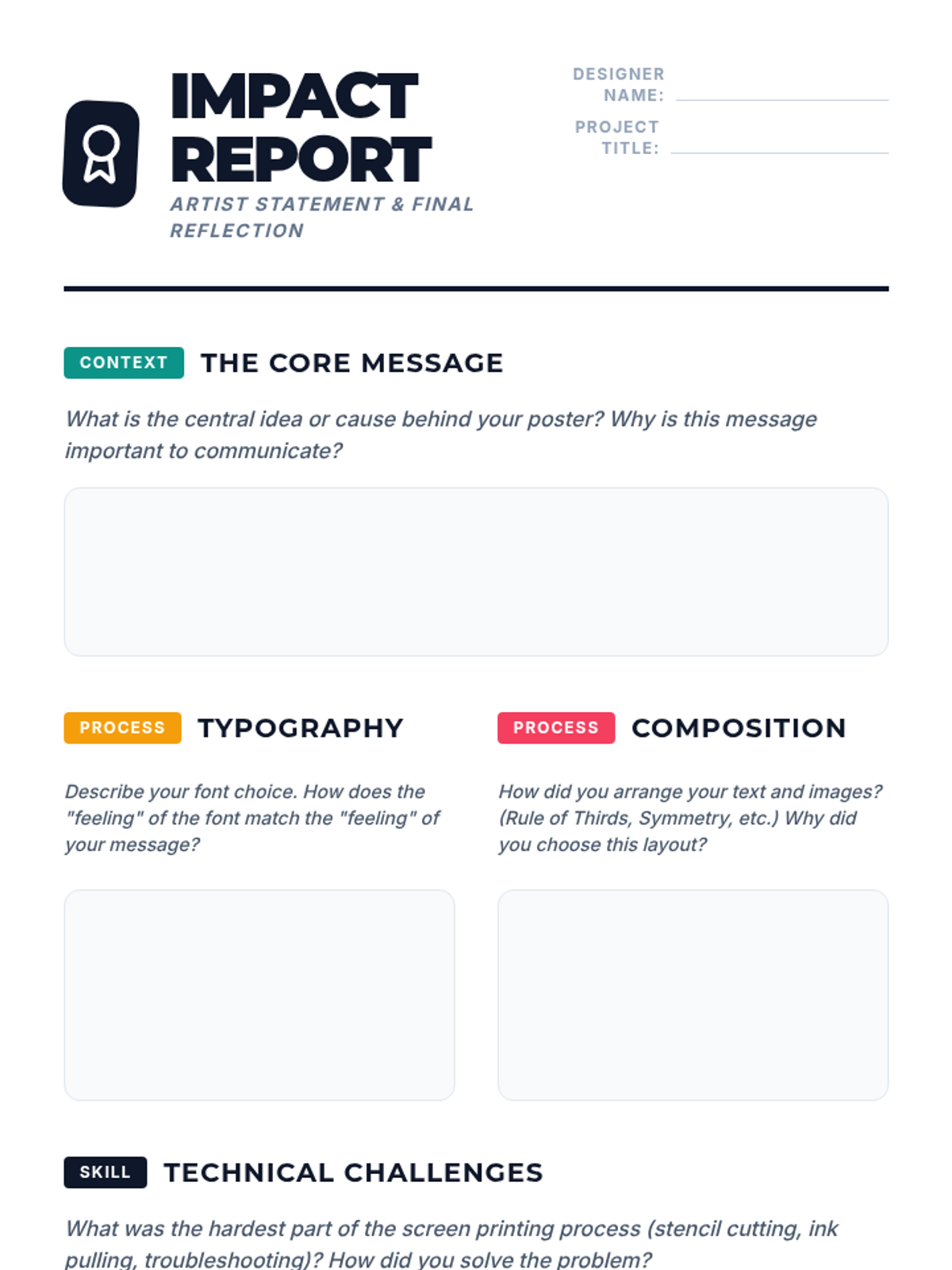
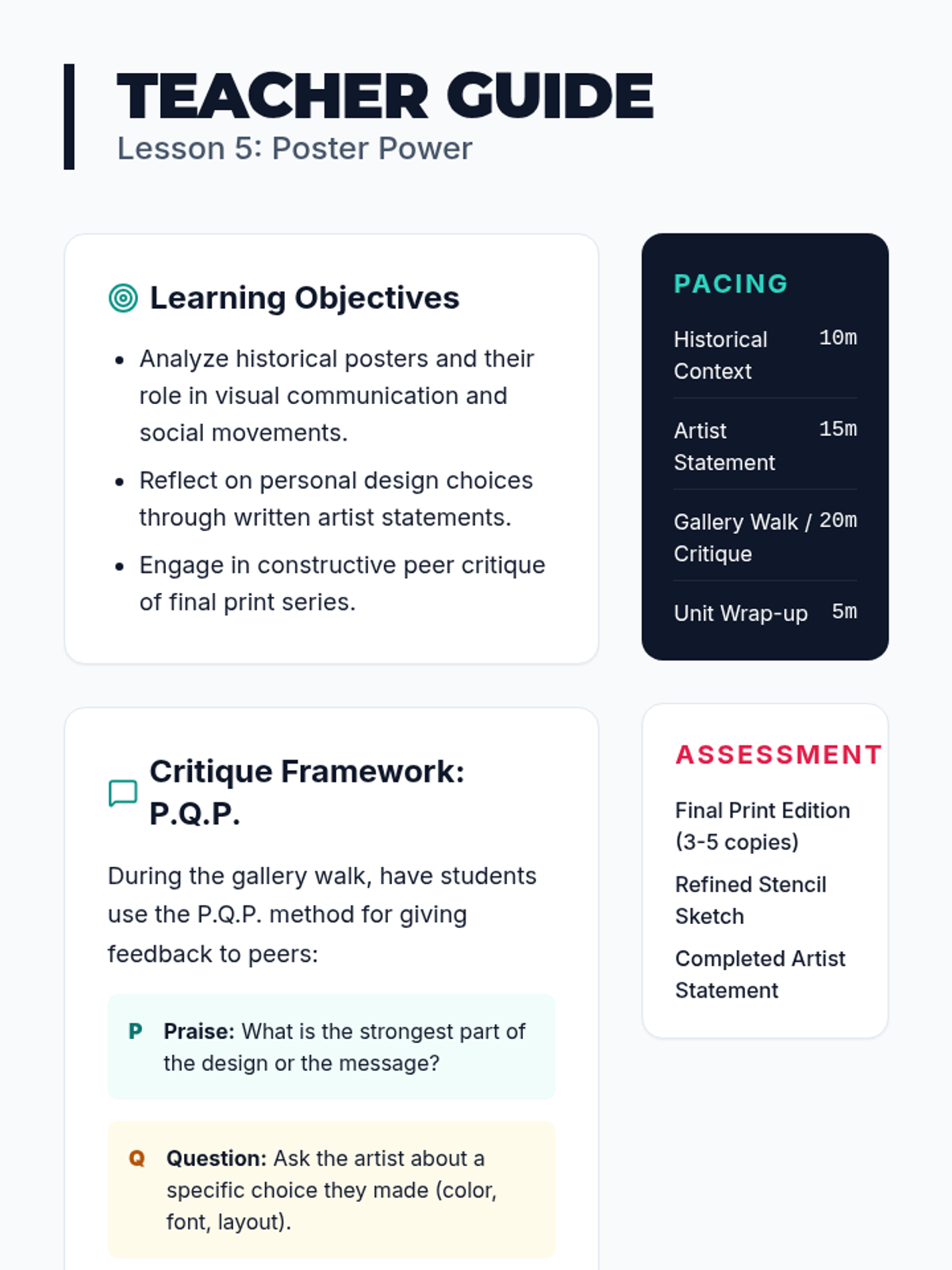
Students review their final prints and explore the historical role of posters in social movements. They conclude the sequence by writing an artist statement reflecting on their design choices.
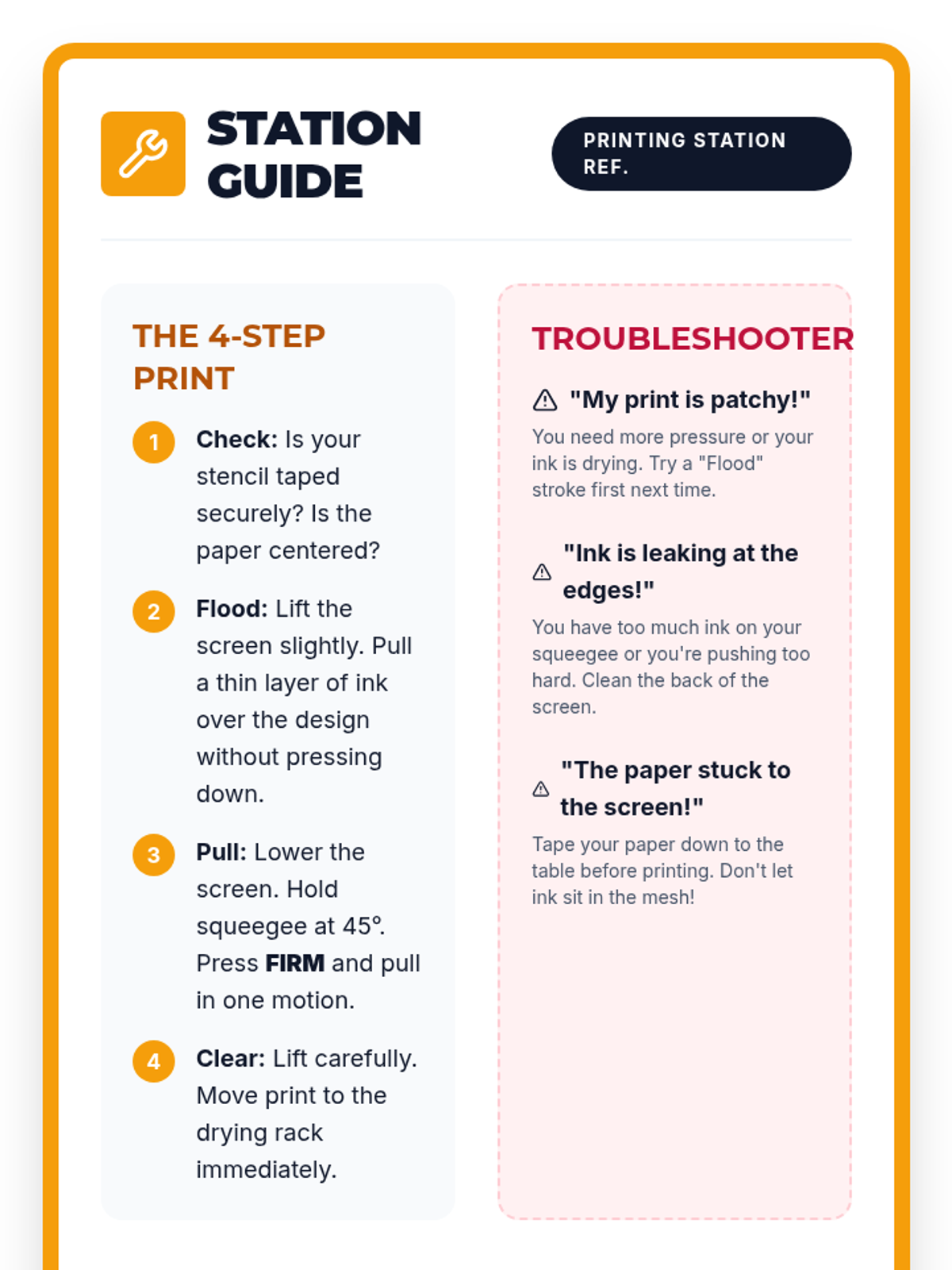
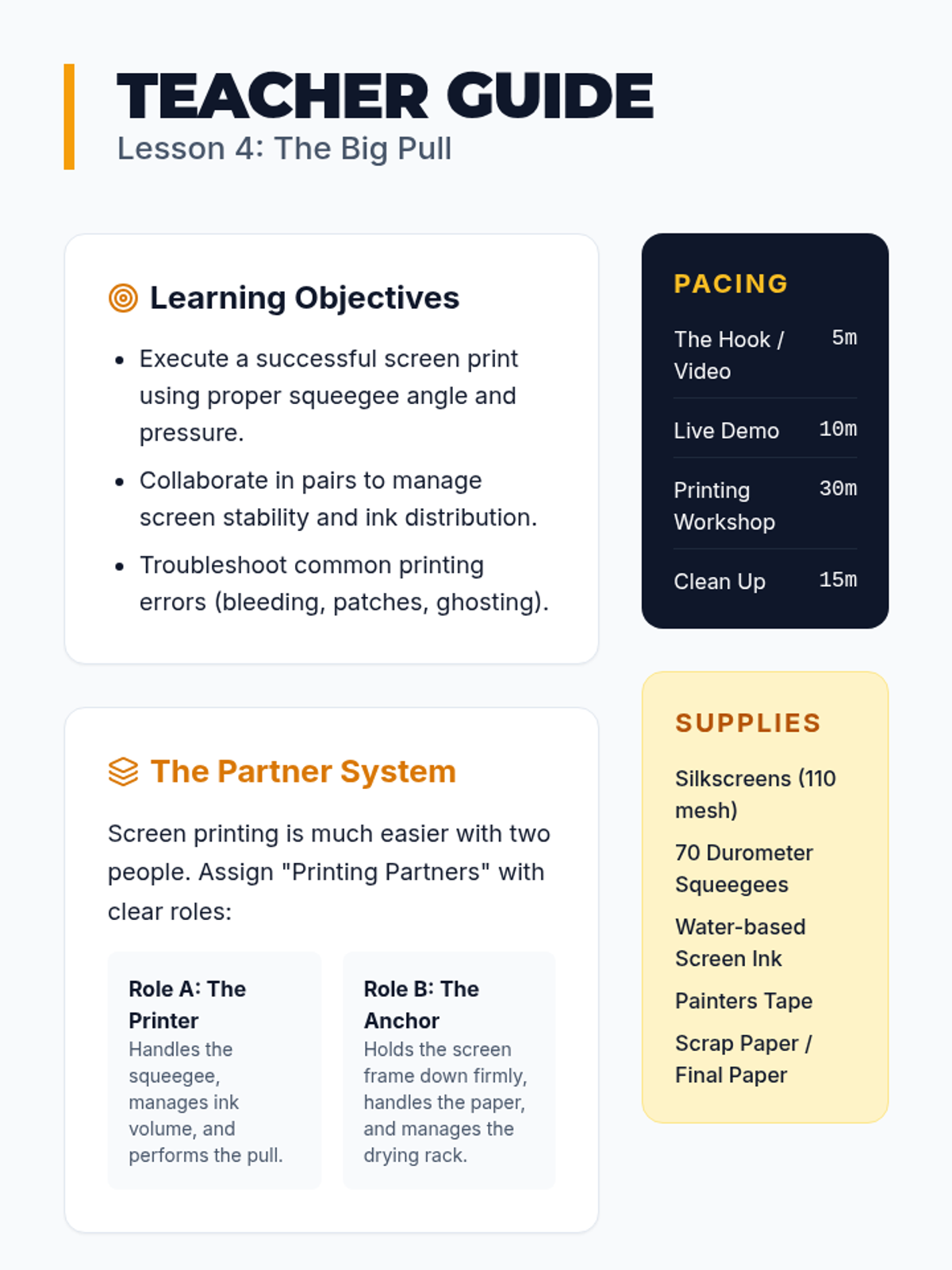
Working in pairs, students learn the physical mechanics of screen printing, including the squeegee pull, ink management, and troubleshooting common printing issues.
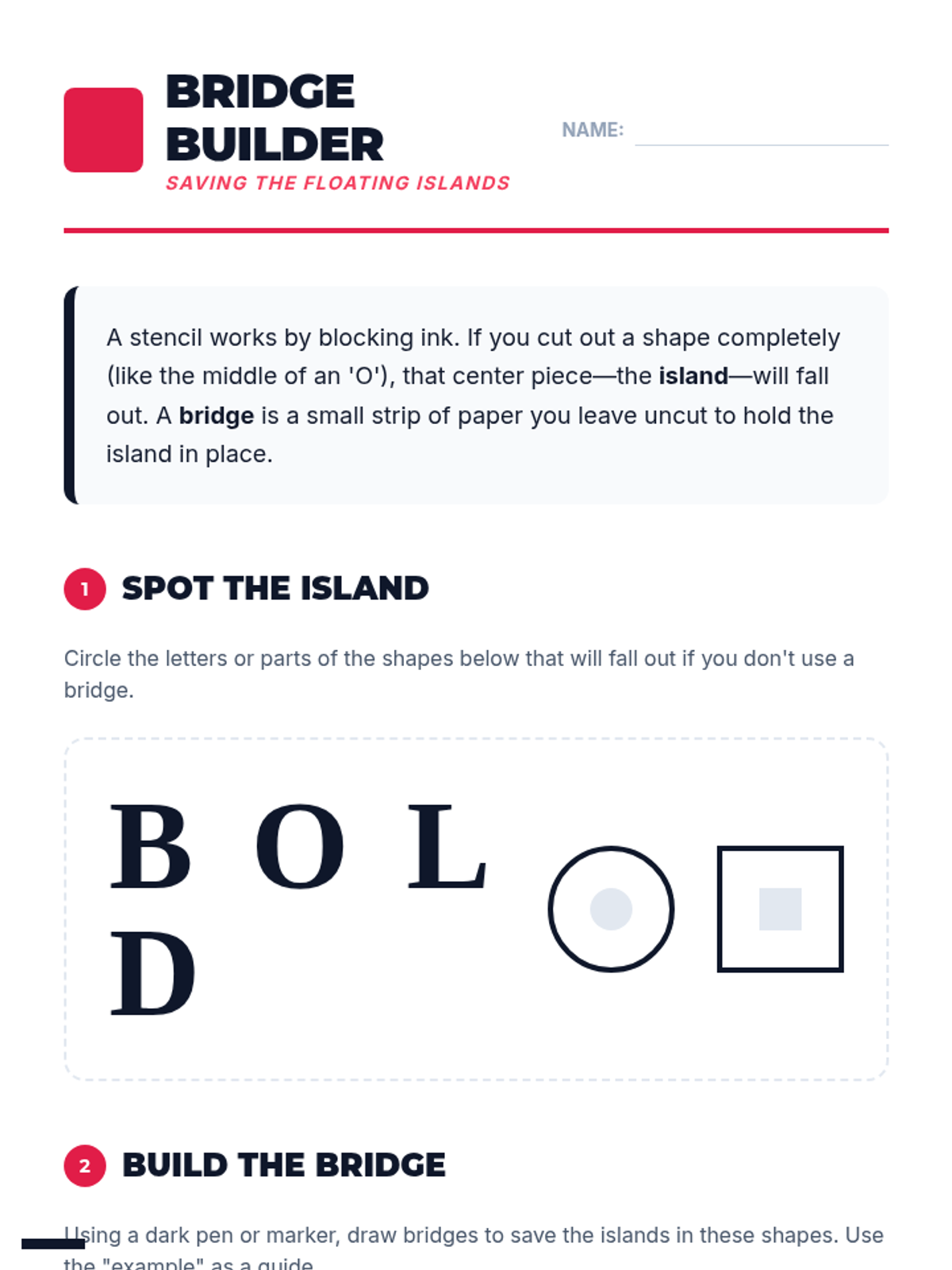
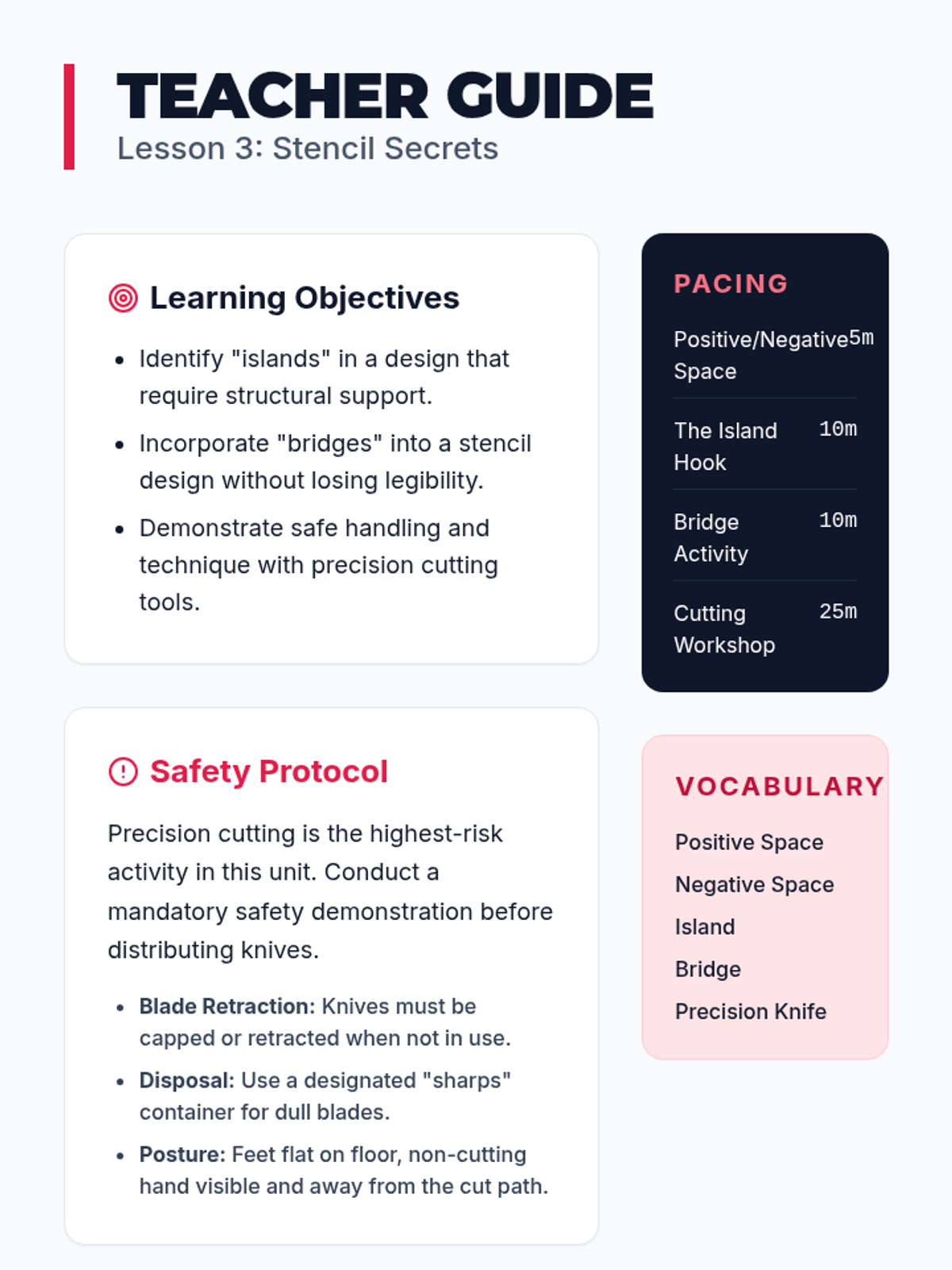
Students transfer their designs to stencil paper and learn the technical requirements of stenciling, specifically focusing on the 'island' problem and precision cutting techniques.
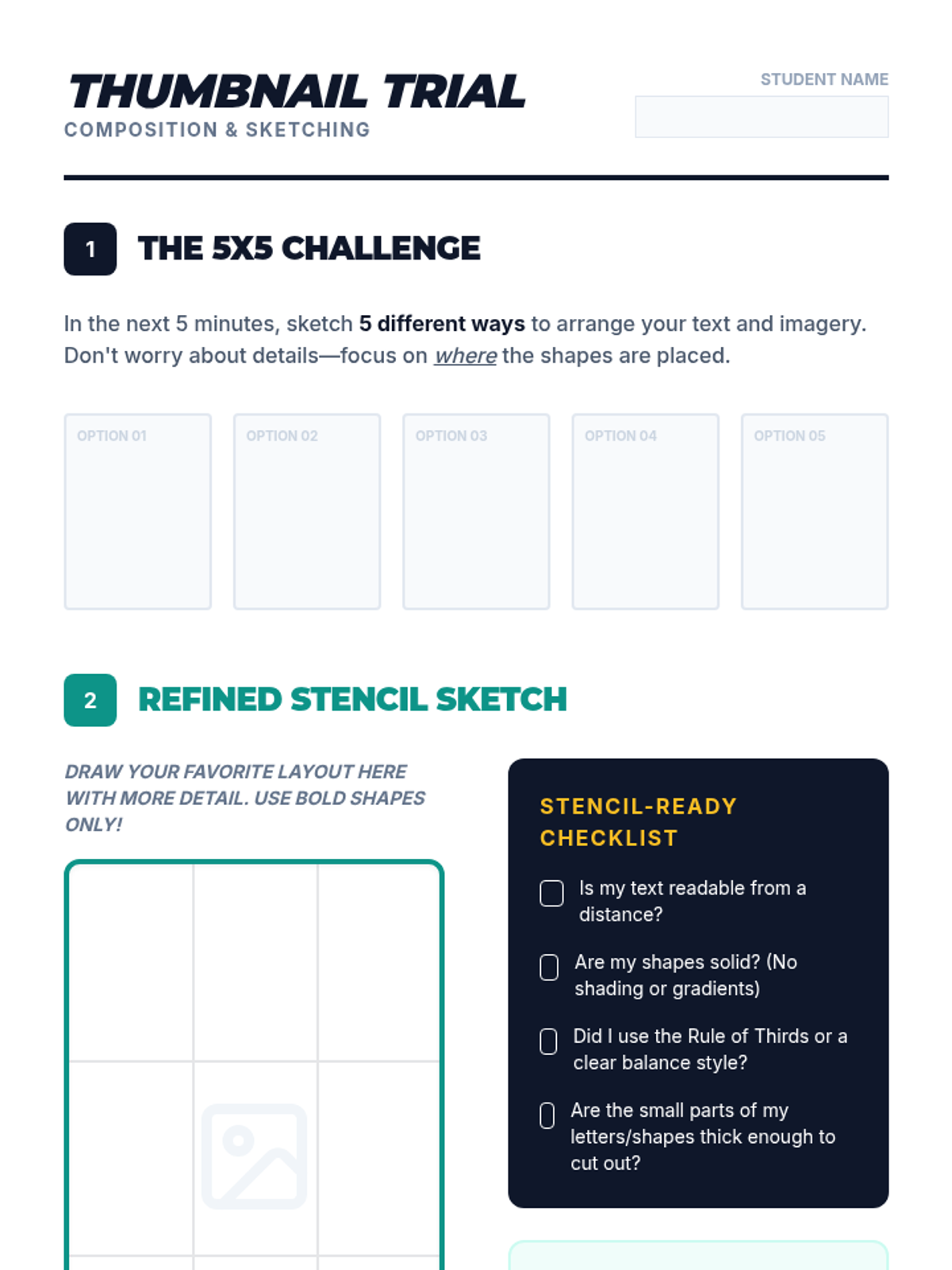
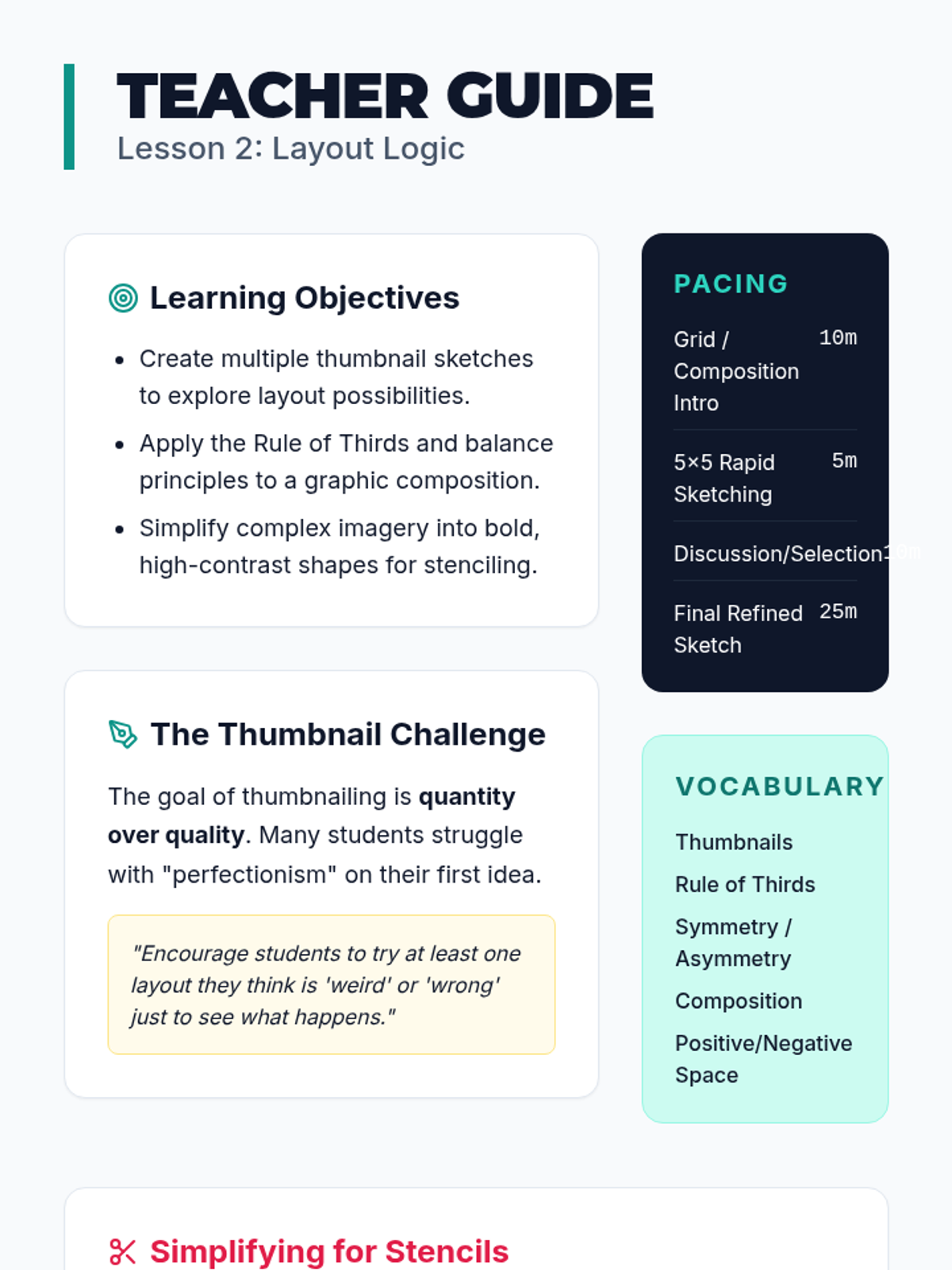
Students focus on composition by sketching multiple thumbnail layouts that integrate text and imagery. They refine their designs by simplifying them into shapes suitable for the stenciling process.
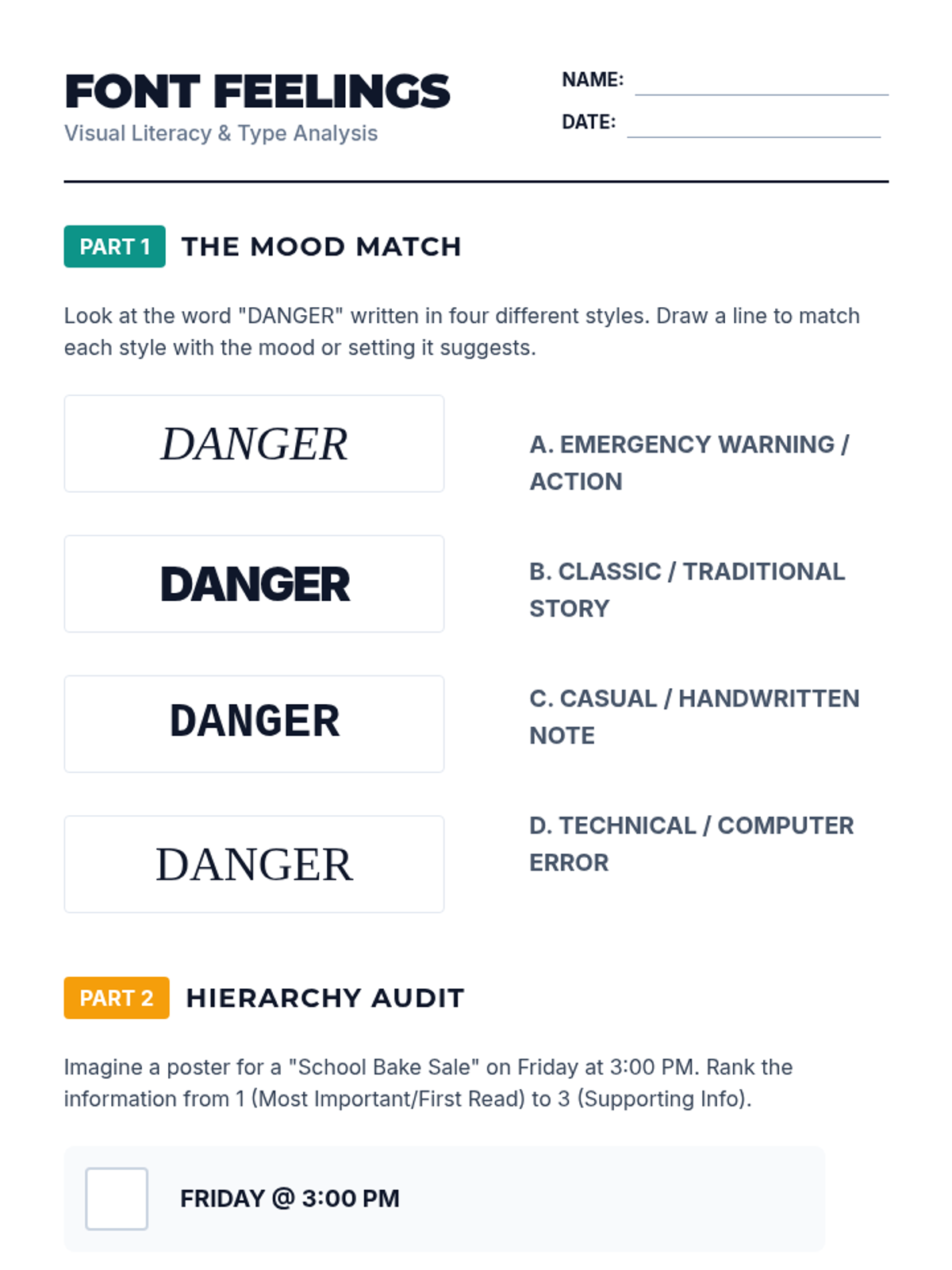
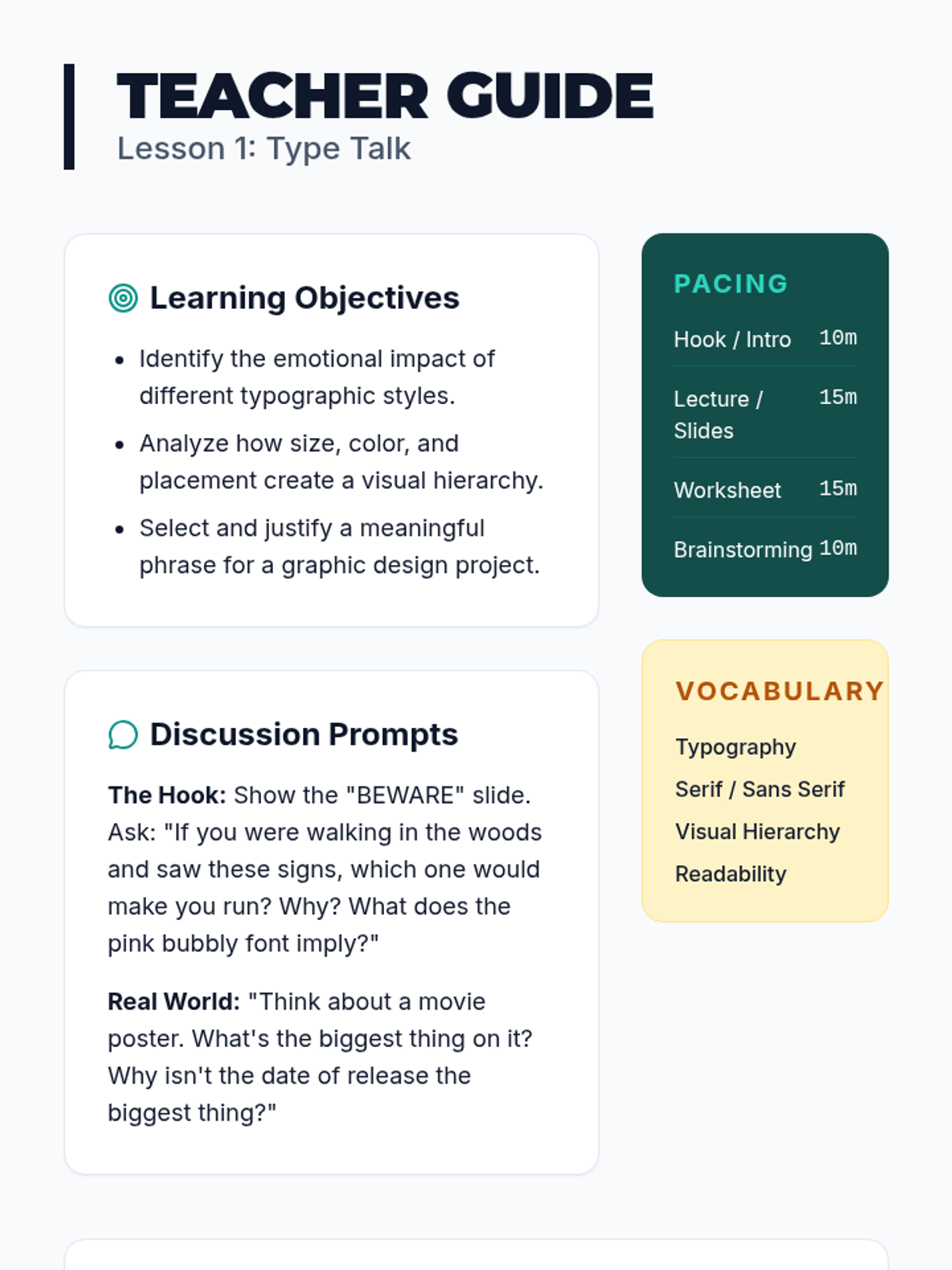
Students investigate how font choice and placement impact the meaning of a message by analyzing movie posters and advertisements. They learn to identify hierarchy of information and select a short phrase for their own project.
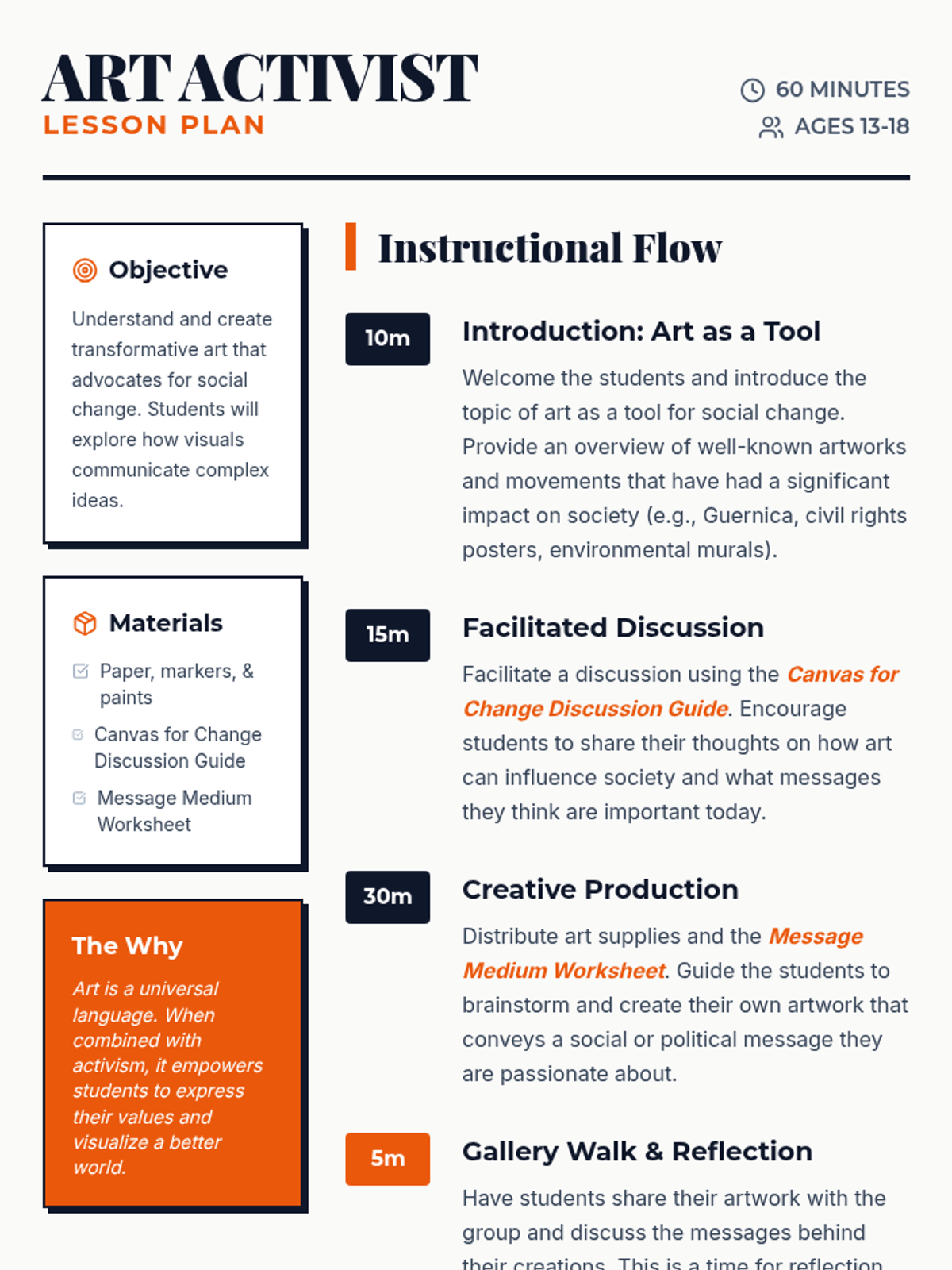
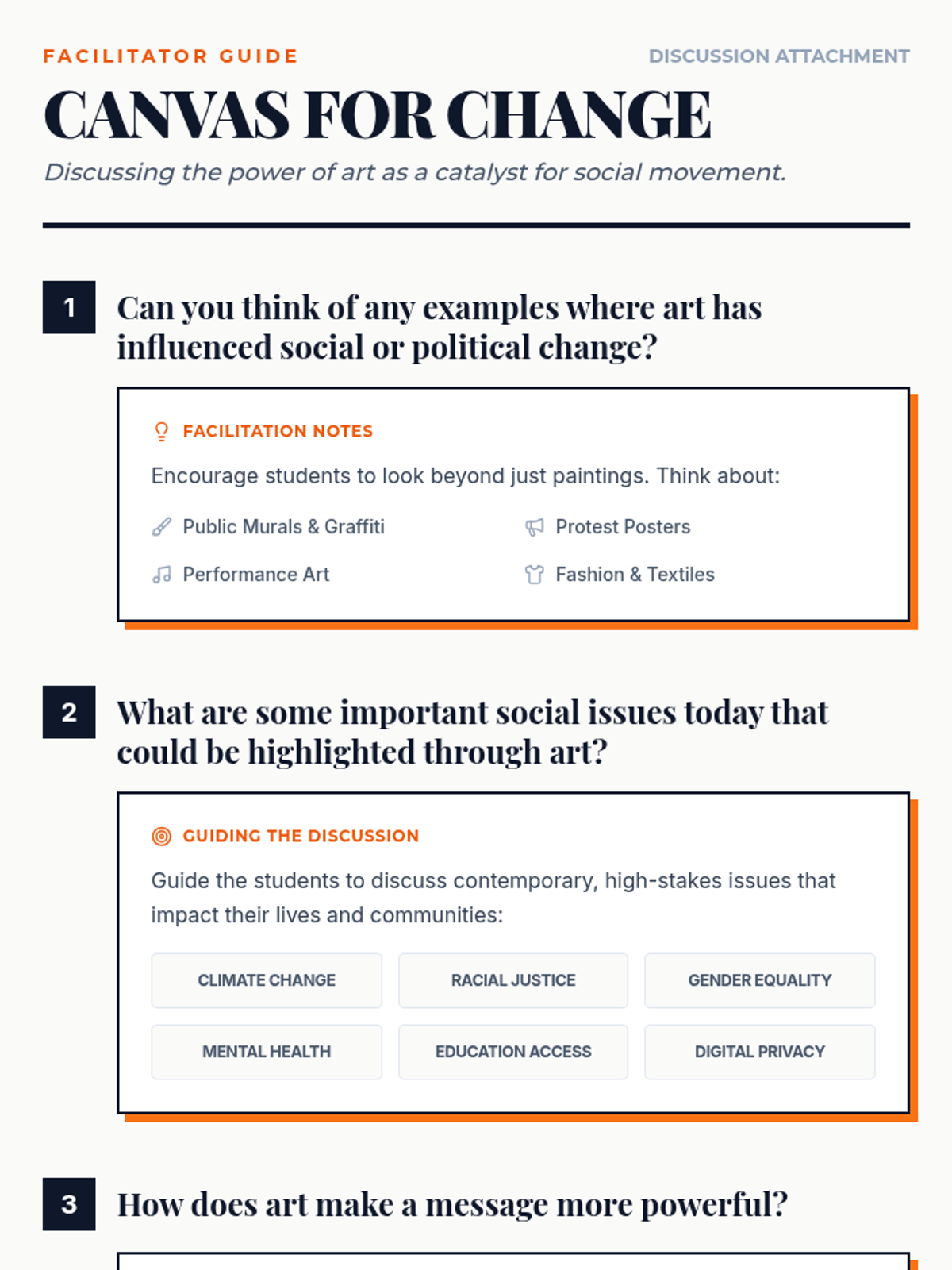
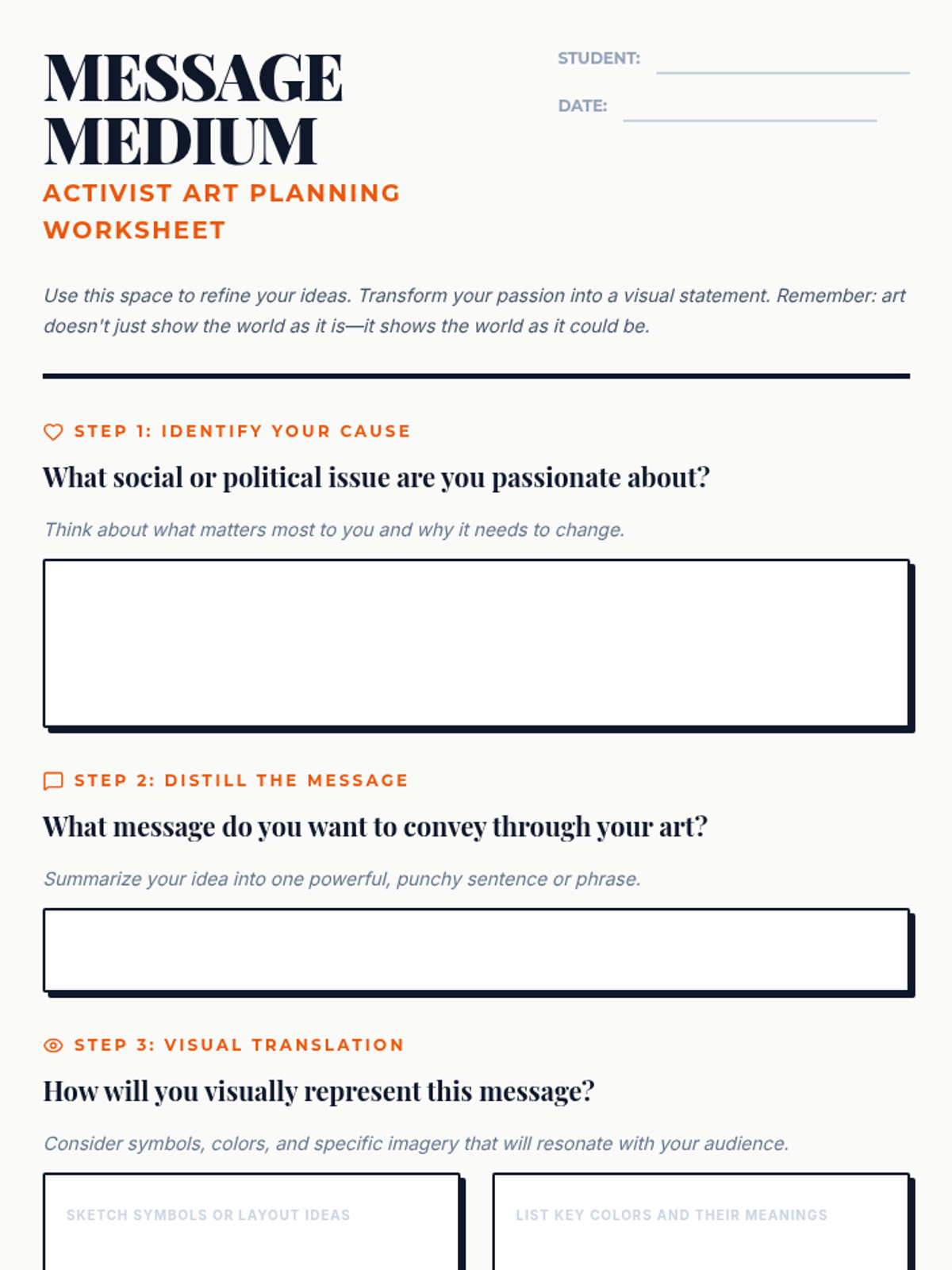
Students explore the history and impact of art in social movements, then brainstorm and plan their own activist artwork focused on contemporary issues.
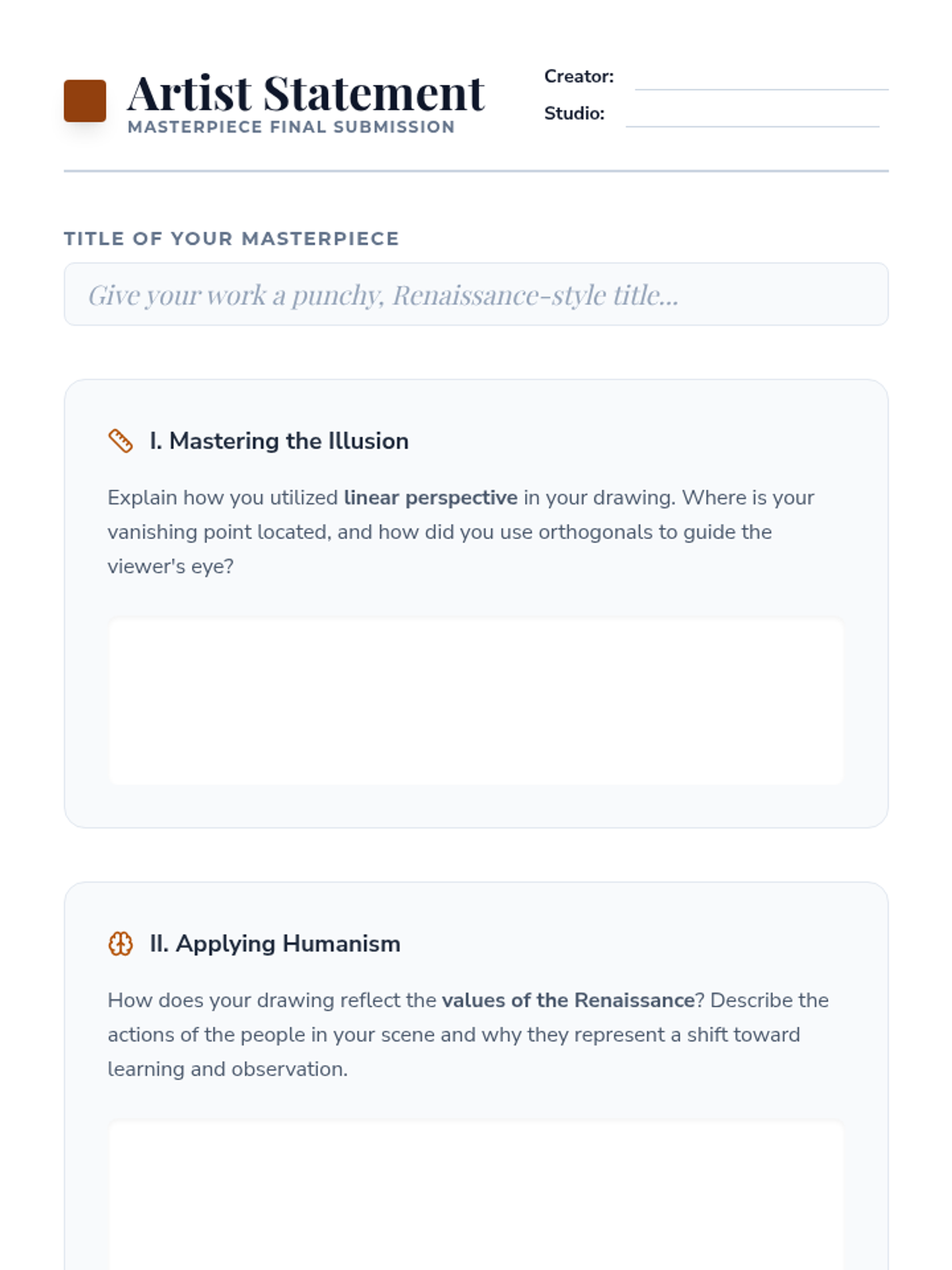
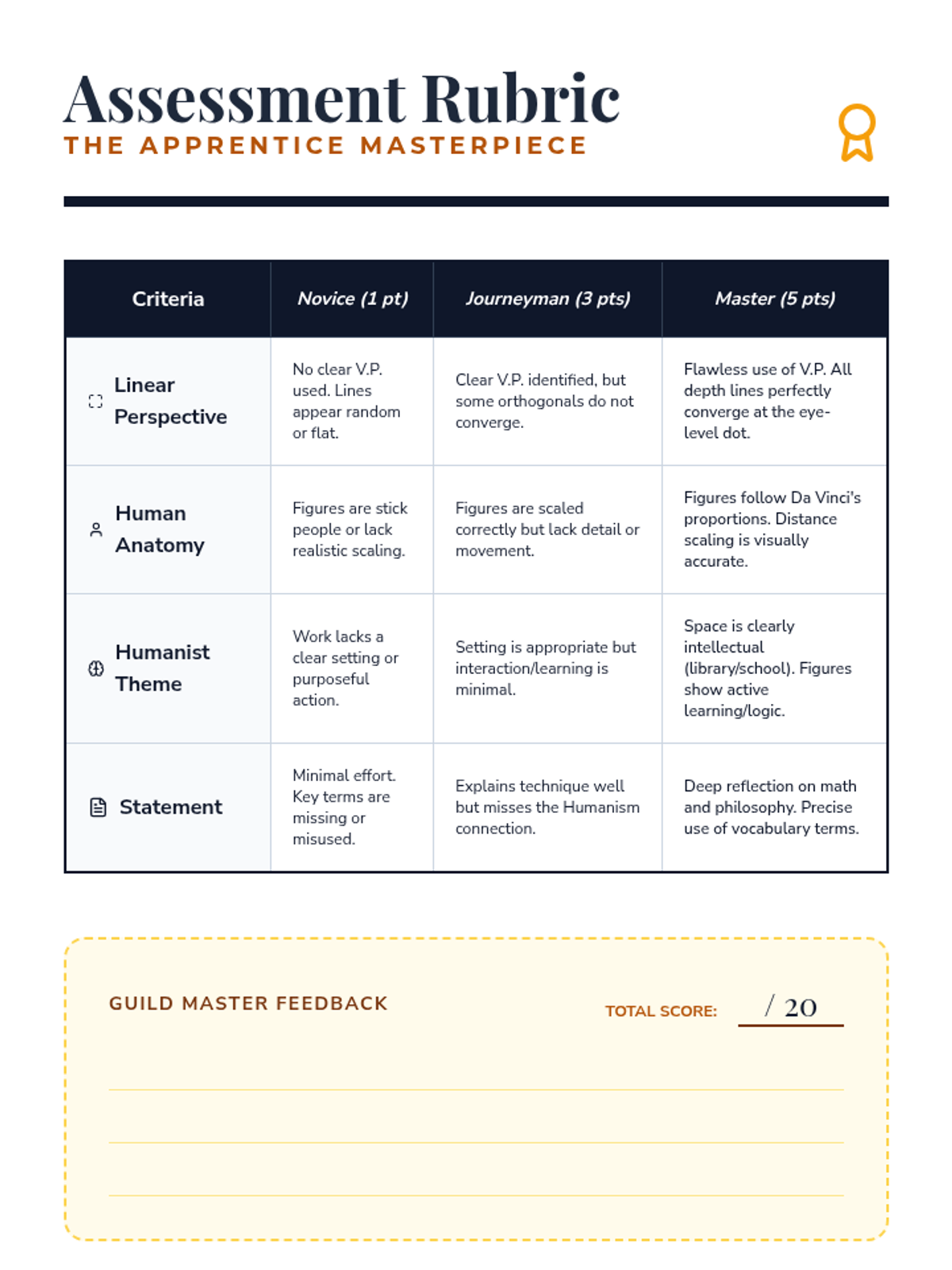
Students act as Renaissance apprentices to create a final perspective drawing that incorporates humanistic elements. They complete the project by writing an artist statement that reflects on their use of Renaissance techniques.
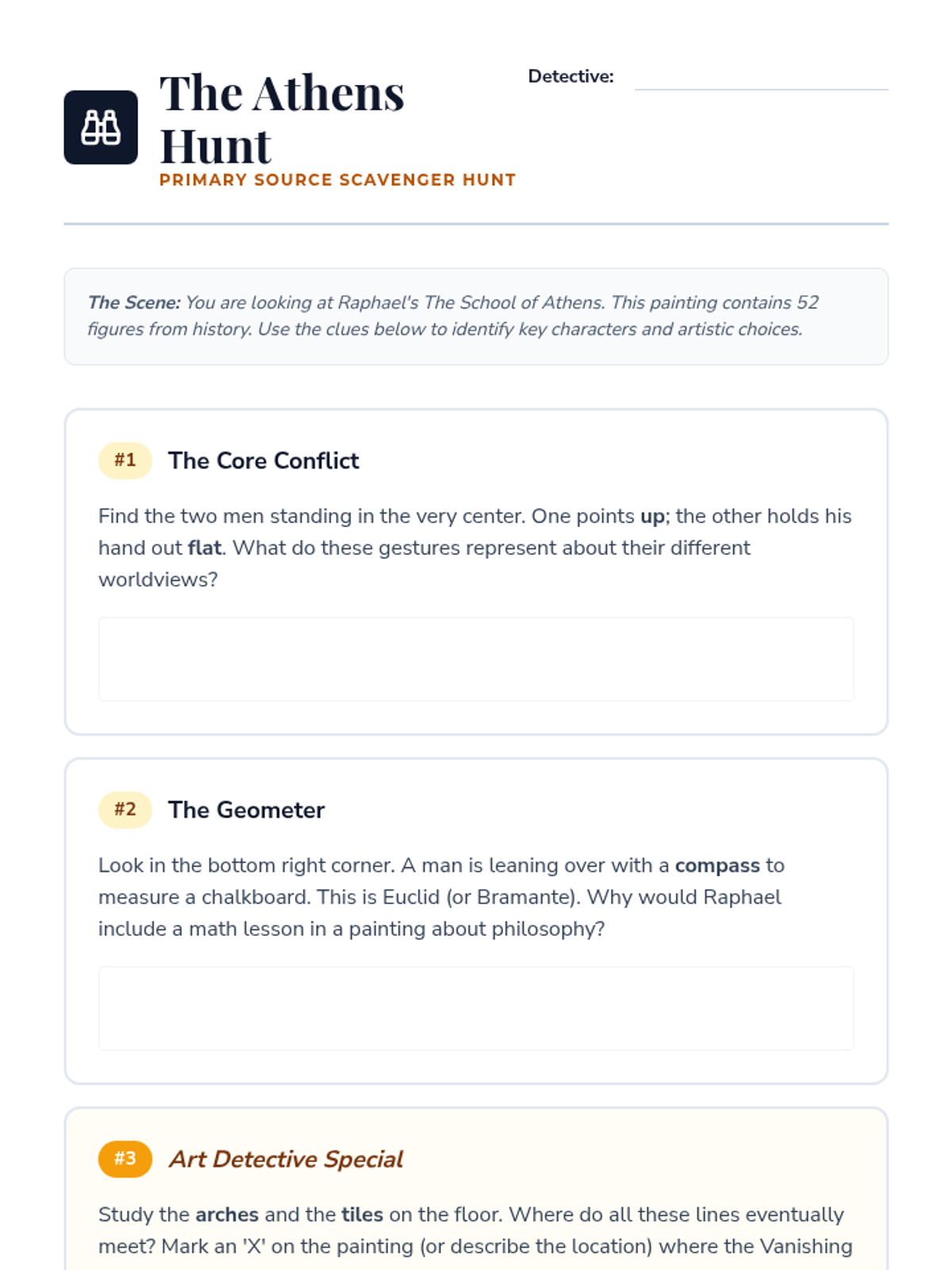
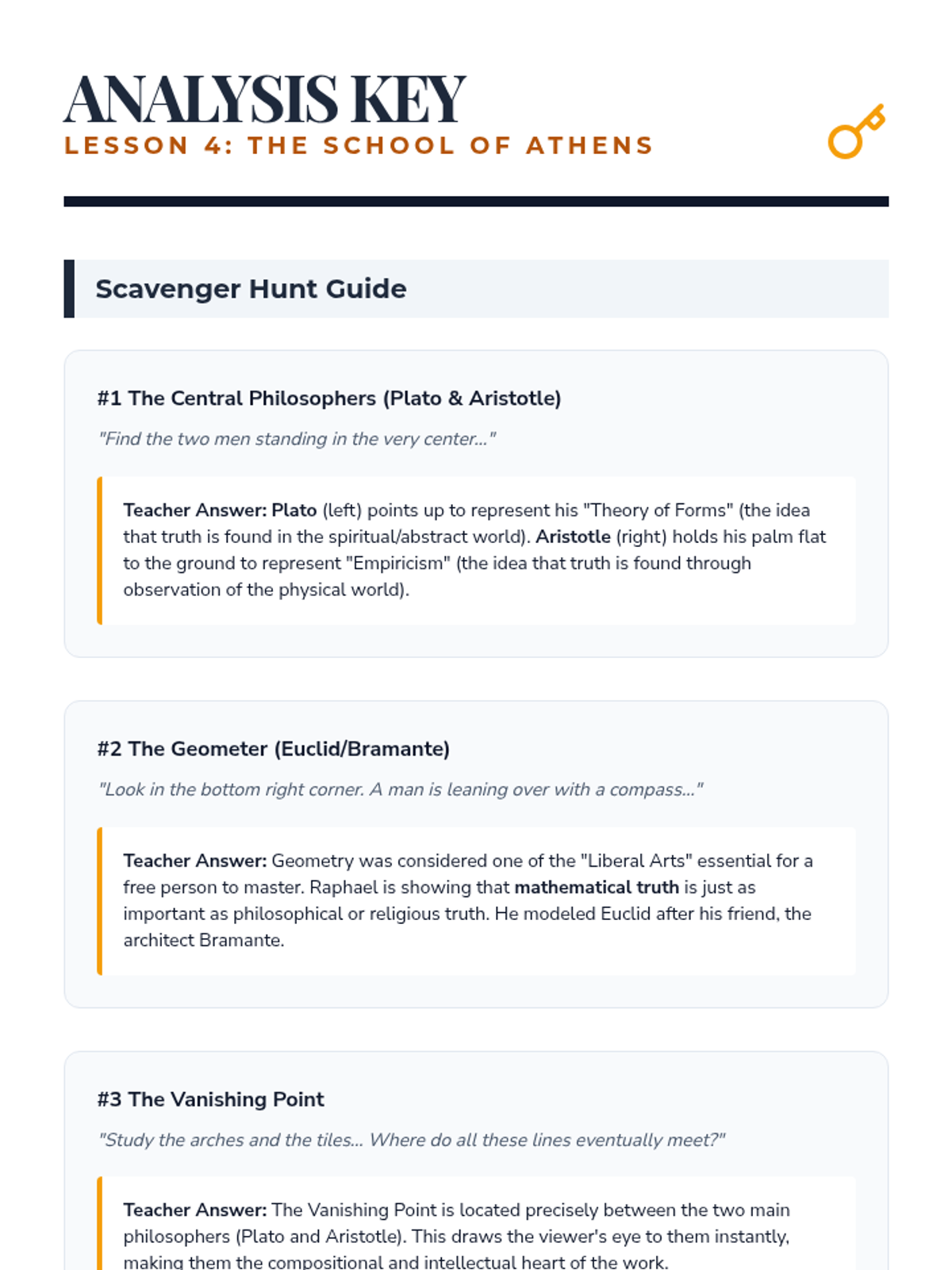
A deep-dive analysis of Raphael's 'The School of Athens'. Students identify key Greek philosophers, observe the application of perspective, and decode the symbolic revival of classical antiquity.
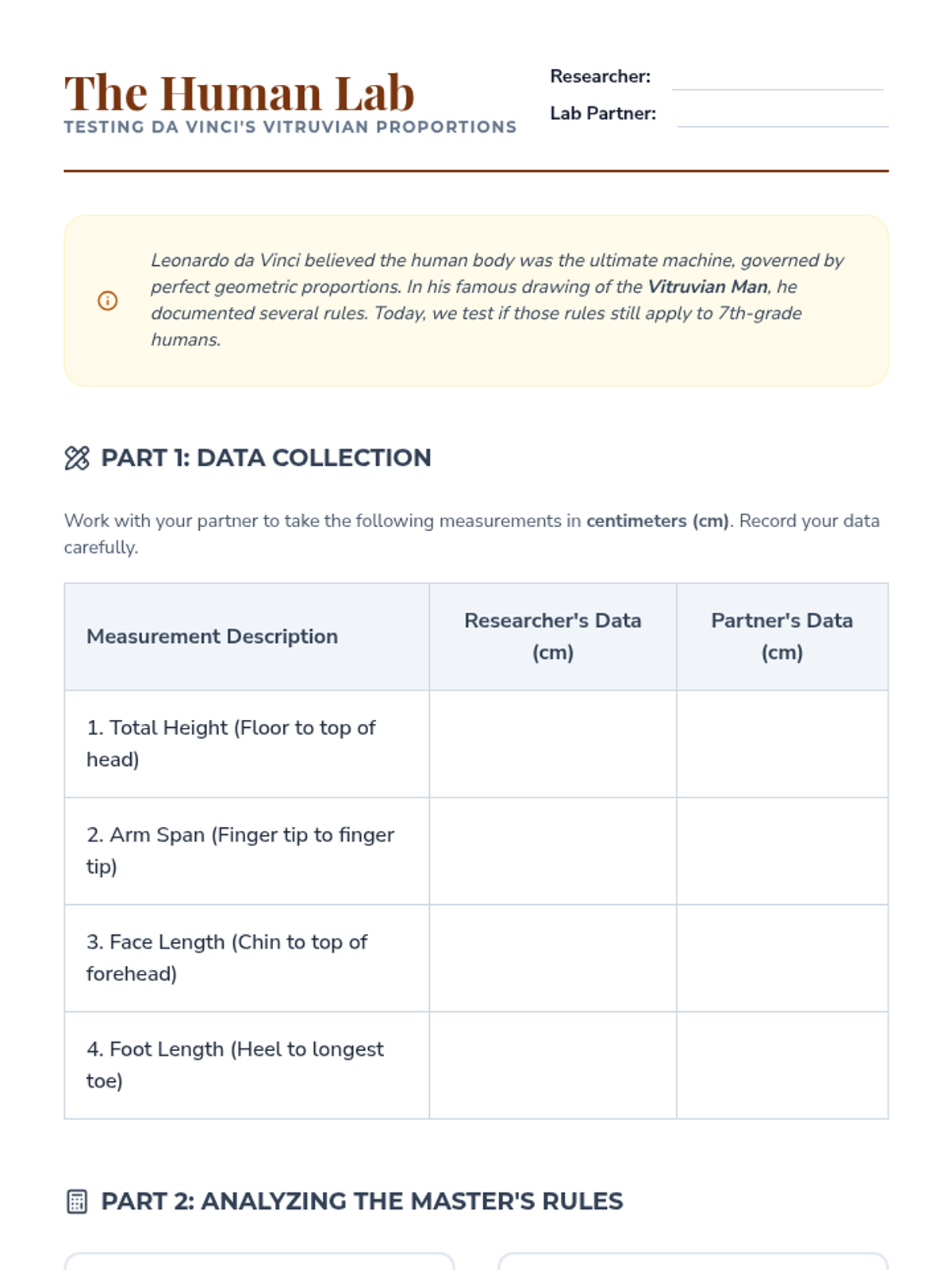
Students explore how the study of human anatomy influenced artistic realism, focusing on the work of Michelangelo and Da Vinci. They conduct a measurement lab to test the proportions defined in the Vitruvian Man.
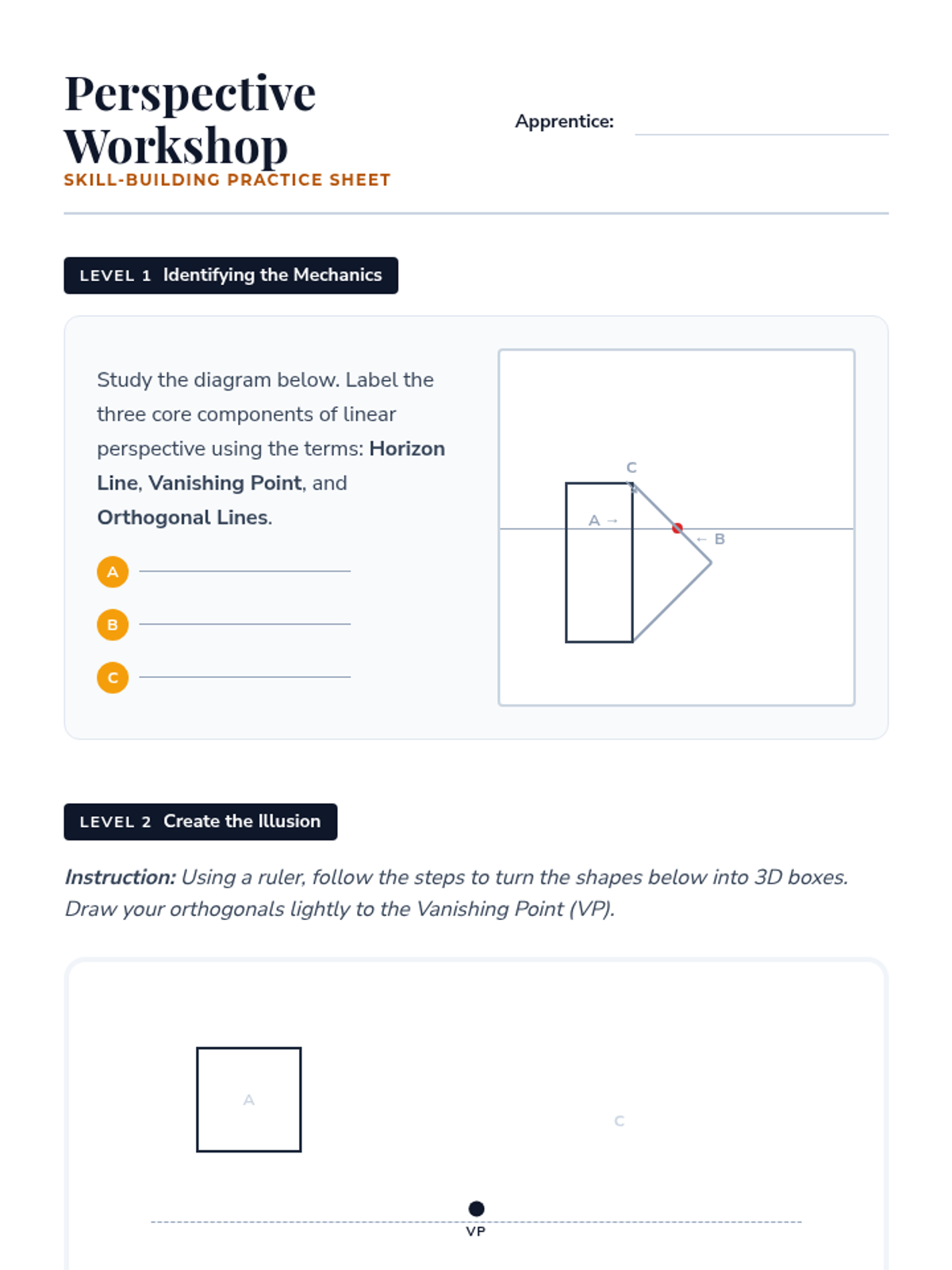
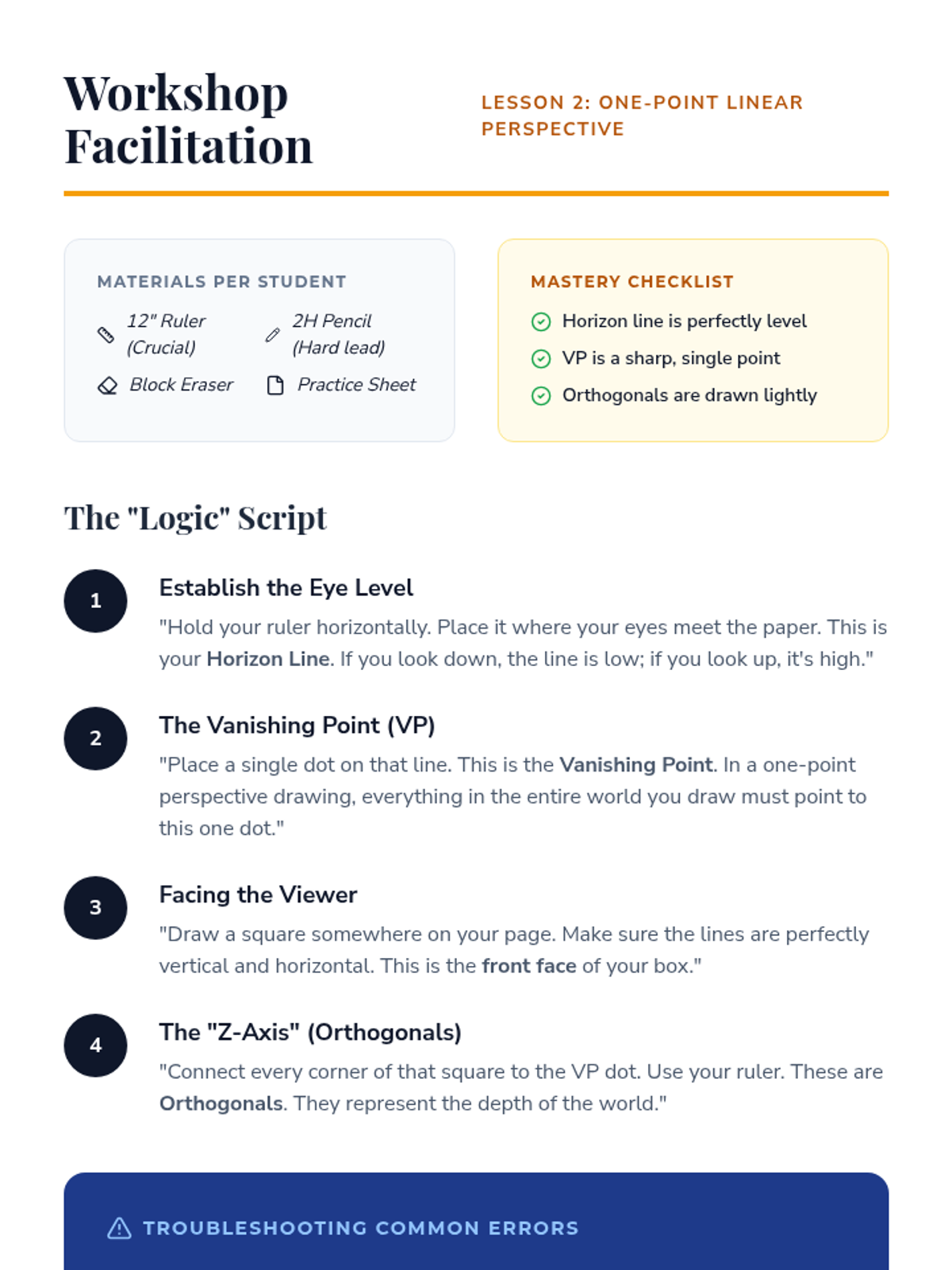
A technical workshop where students learn the geometric rules of one-point linear perspective rediscovered by Brunelleschi. Students practice using vanishing points and orthogonal lines to create the illusion of 3D space.
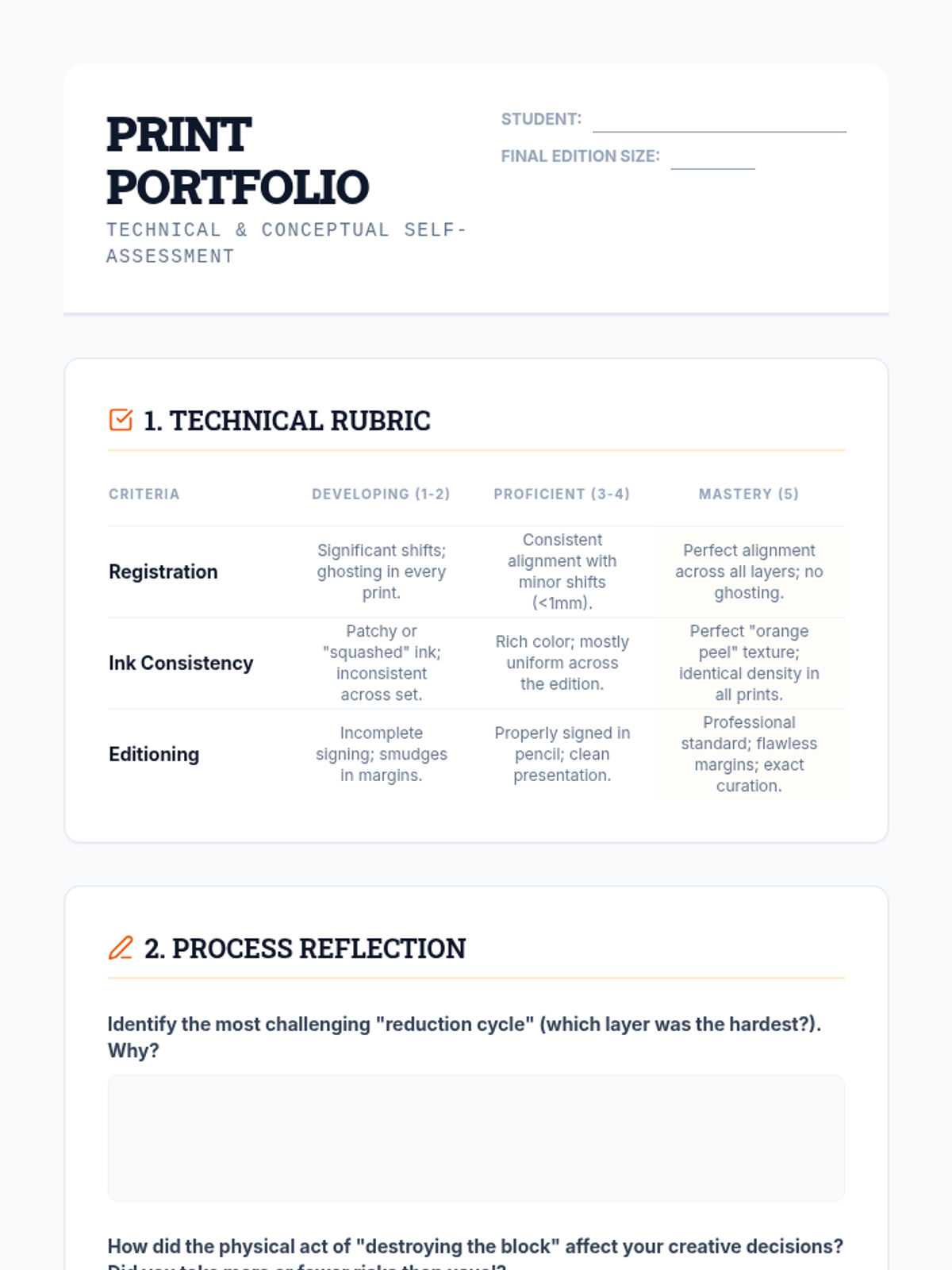
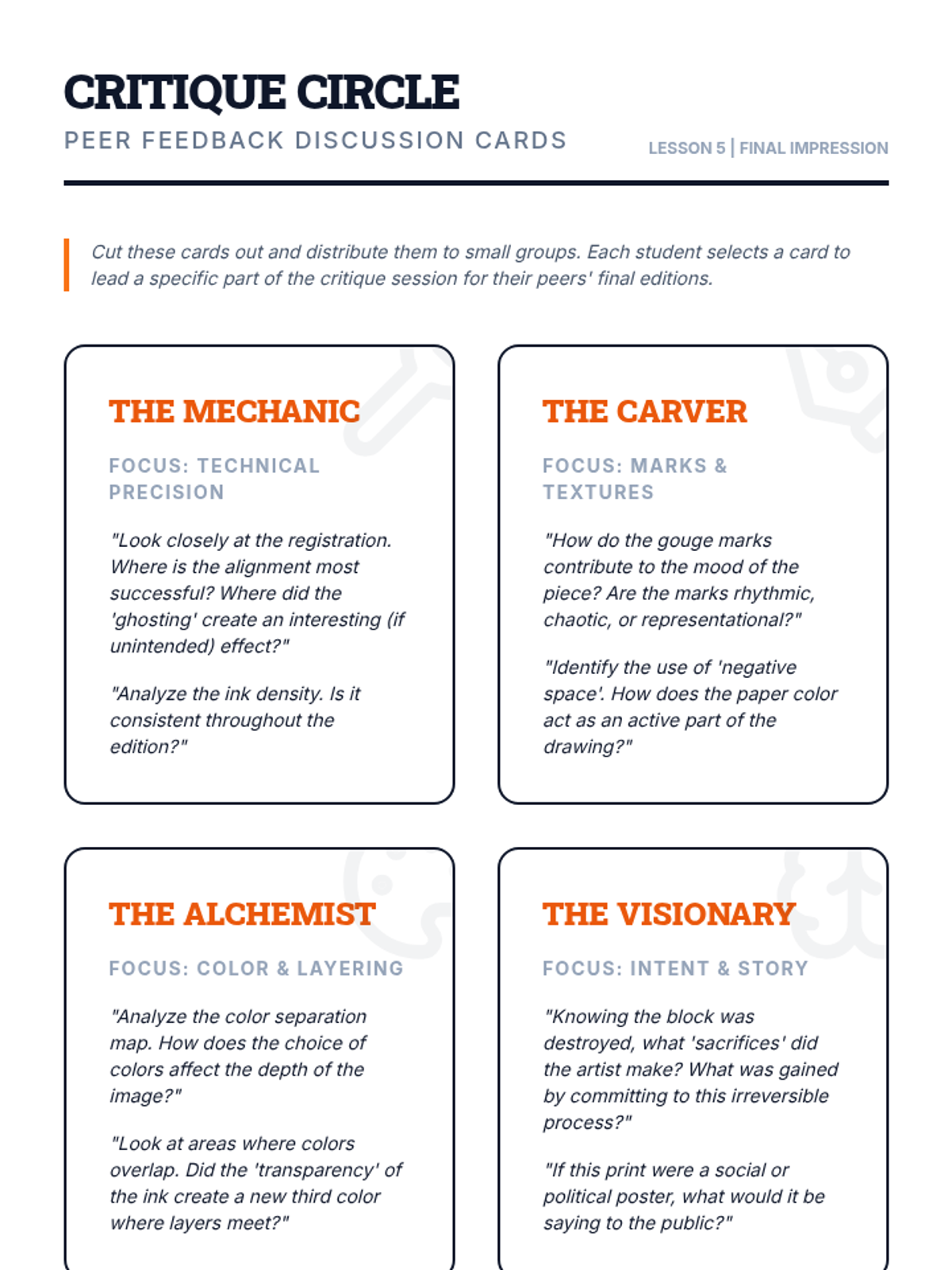
Students repeat the carve-ink-print cycle for subsequent darker colors, effectively destroying the previous image states. The lesson culminates in curating a consistent edition, signing prints according to convention, and a critique of the technical execution.
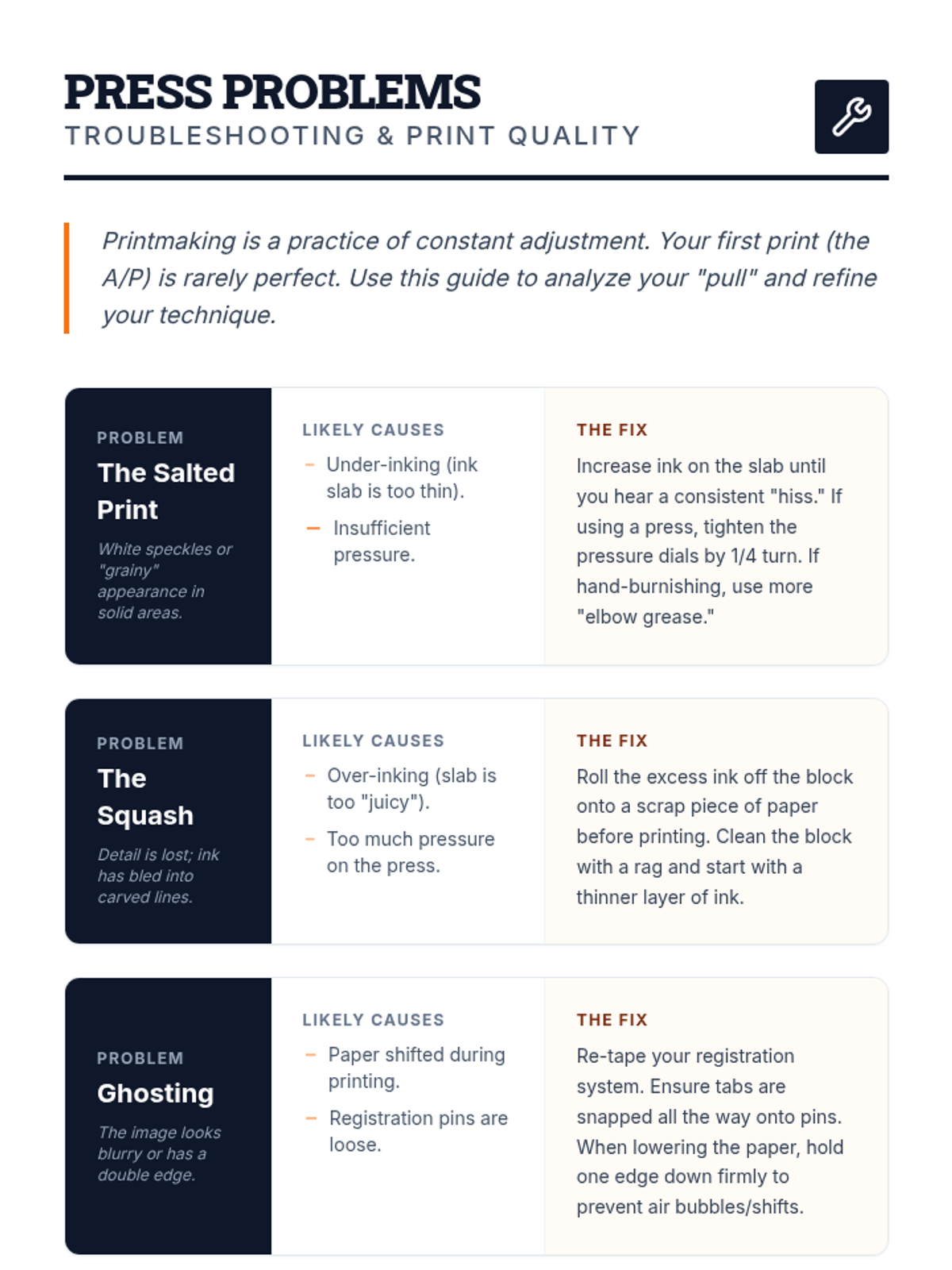
Students print their first light color layer, focusing on consistent ink slab preparation (the 'hiss' sound) and using registration pins or jigs. They troubleshoot common issues like over-inking or paper shifting.
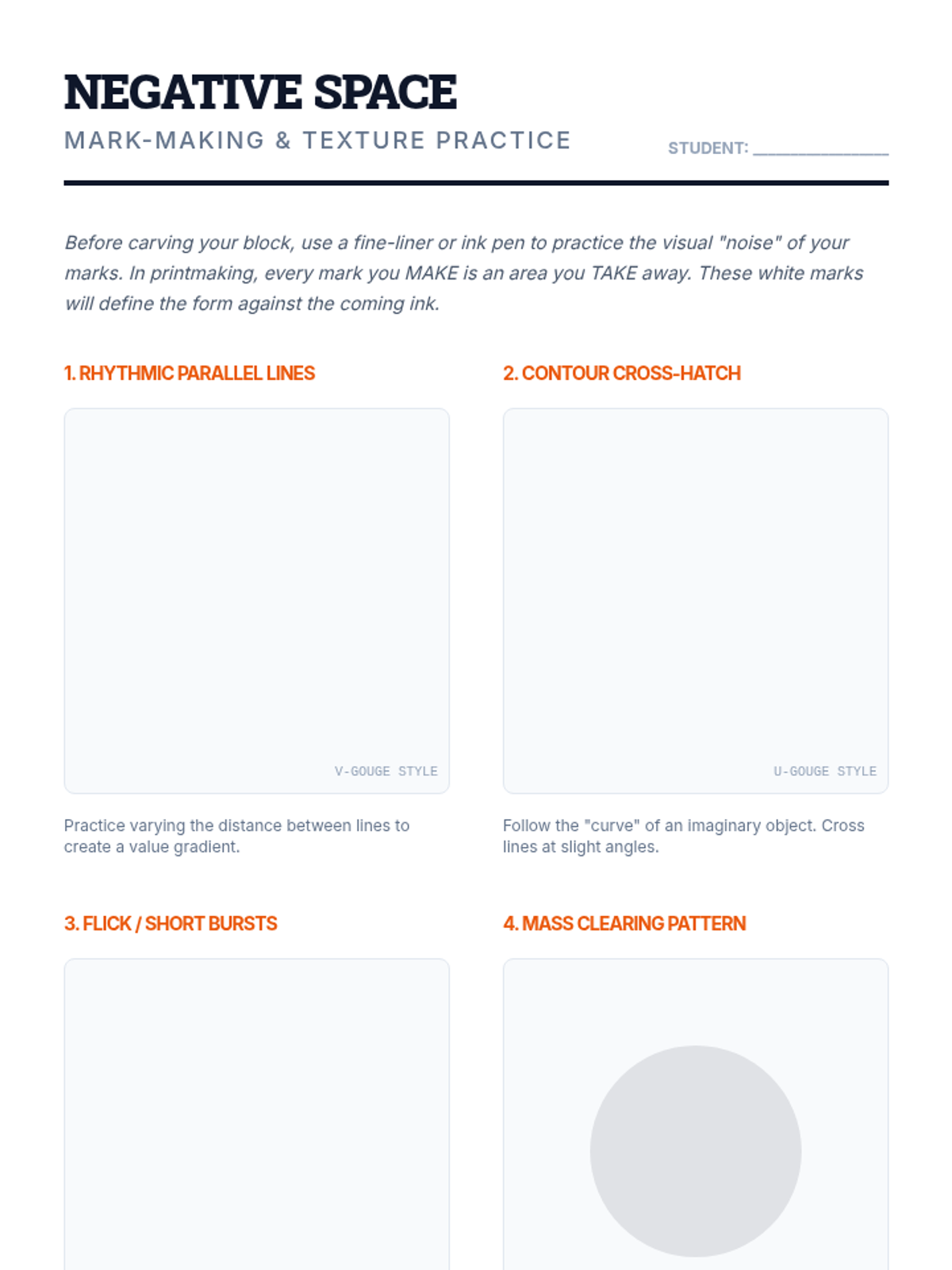
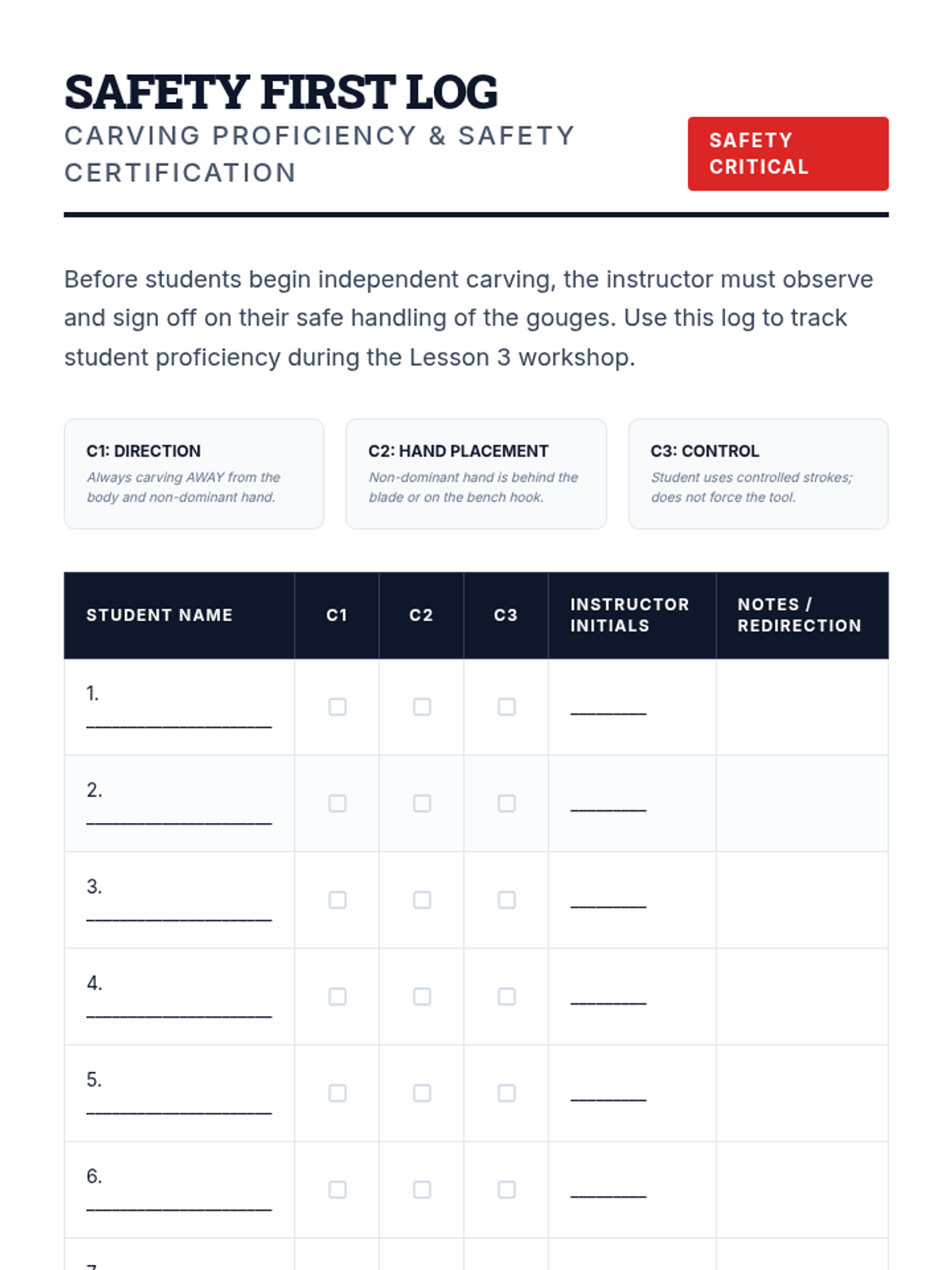
Students begin the irreversible carving process, removing areas intended to remain the color of the paper. Instruction focuses on tool handling safety, varying line weights, and textural mark-making to create dynamic negative space.
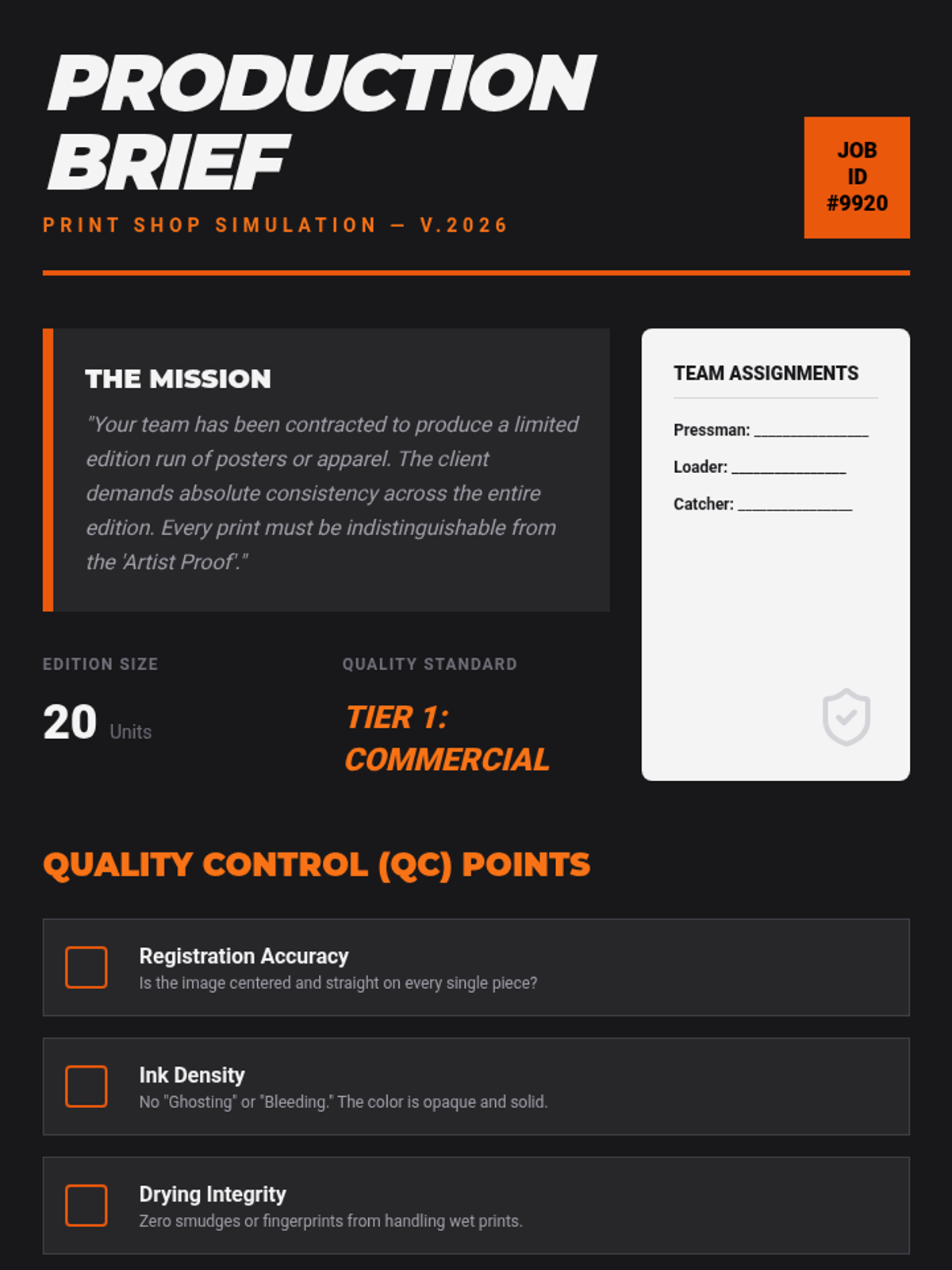
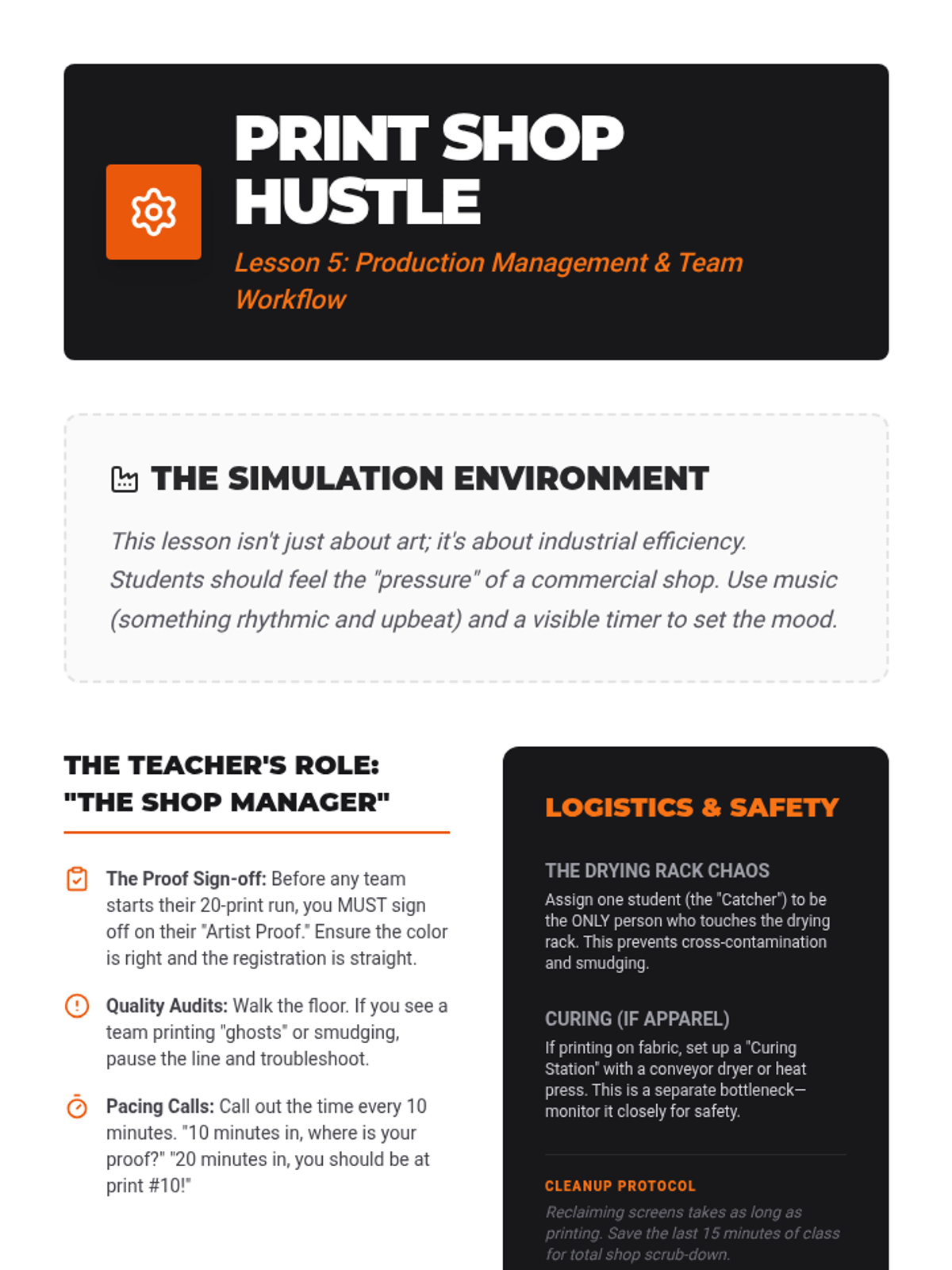
In a simulated print shop environment, students work in teams to print a run of posters or t-shirts. They manage the drying rack workflow and clean up, emphasizing the industrial nature of the medium.
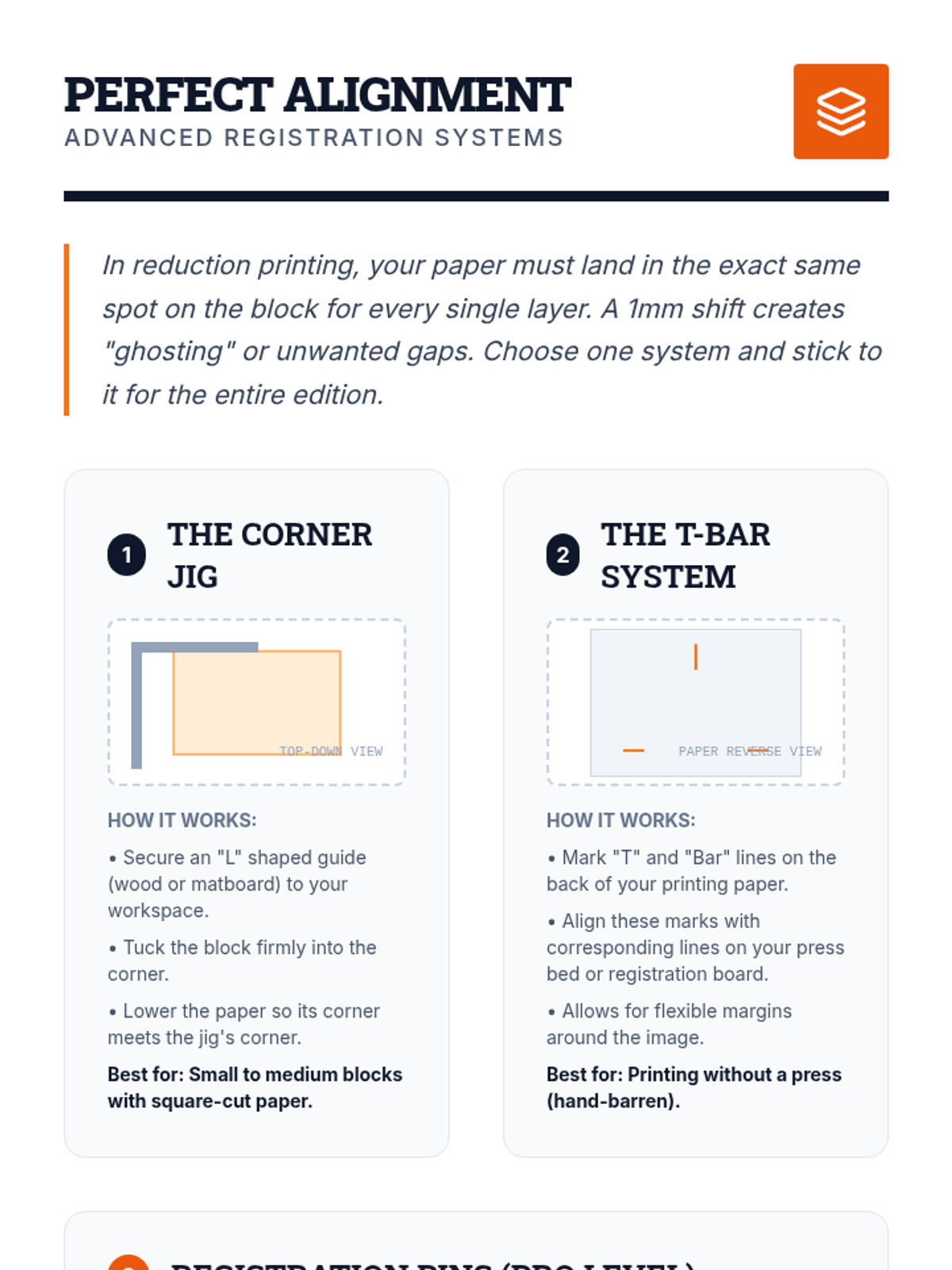
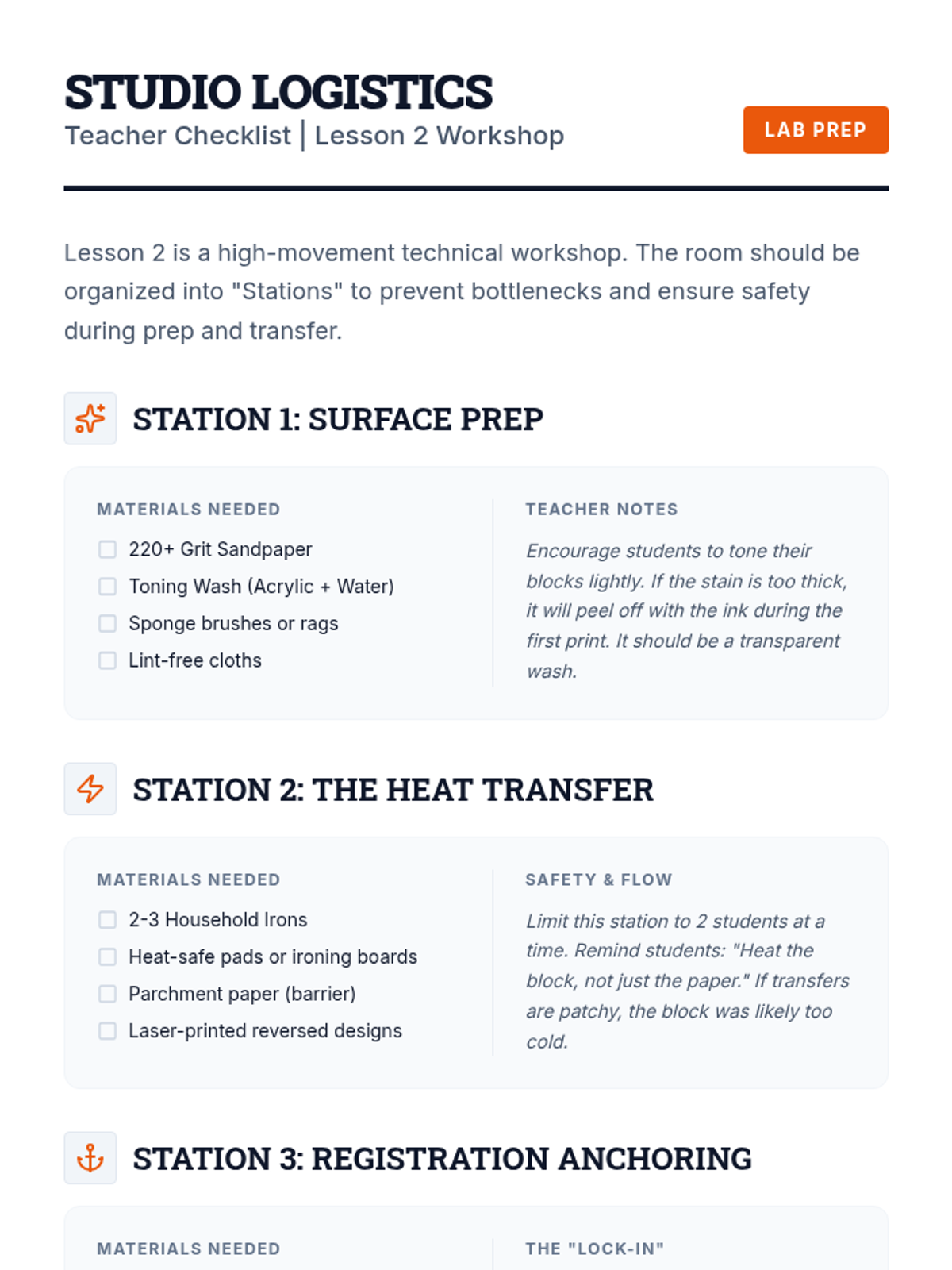
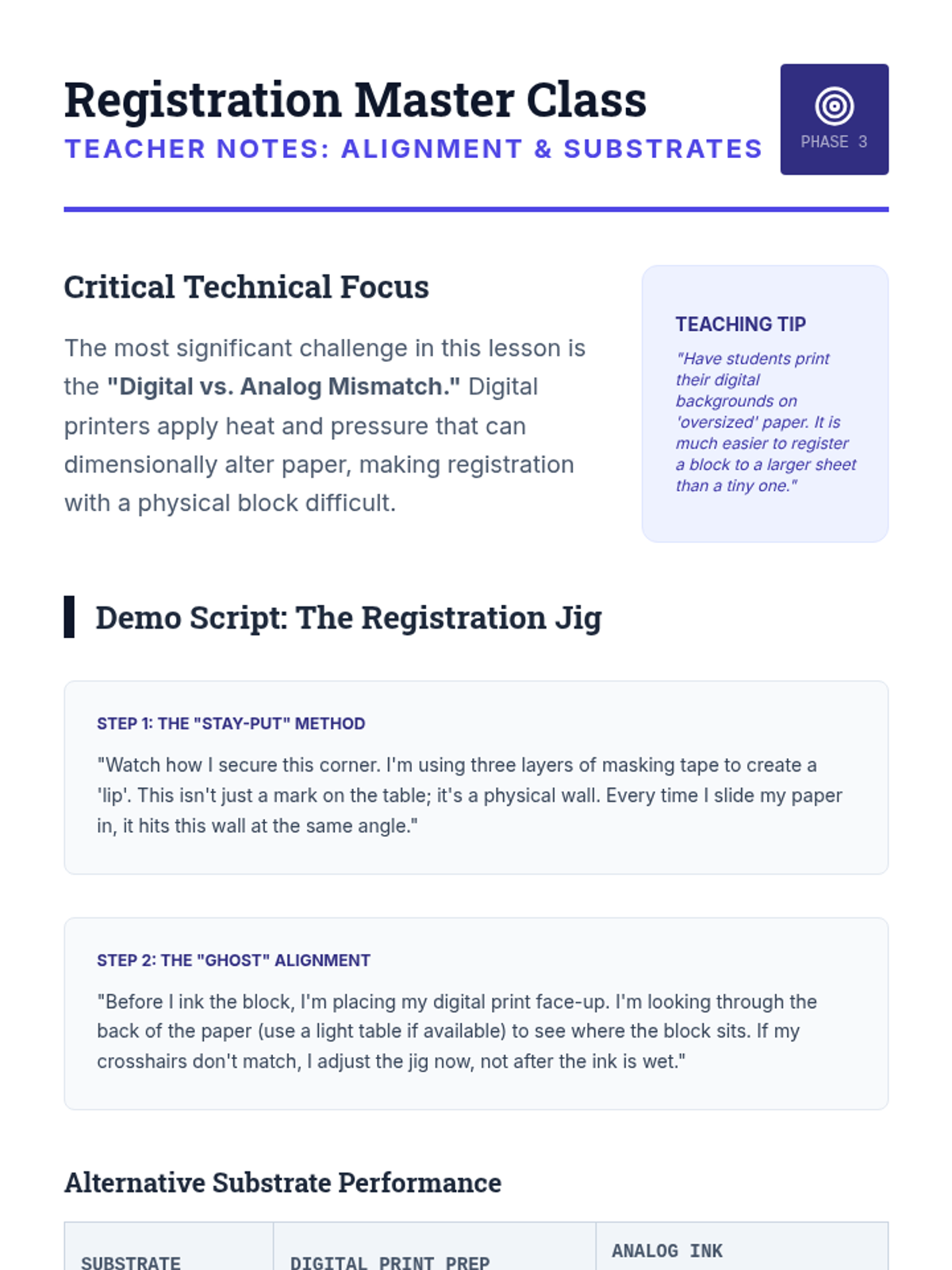
This technical workshop guides students through prepping linoleum blocks, including sanding and toning, before transferring their reversed designs. Students learn to secure their registration systems to ensure alignment for multiple print layers.
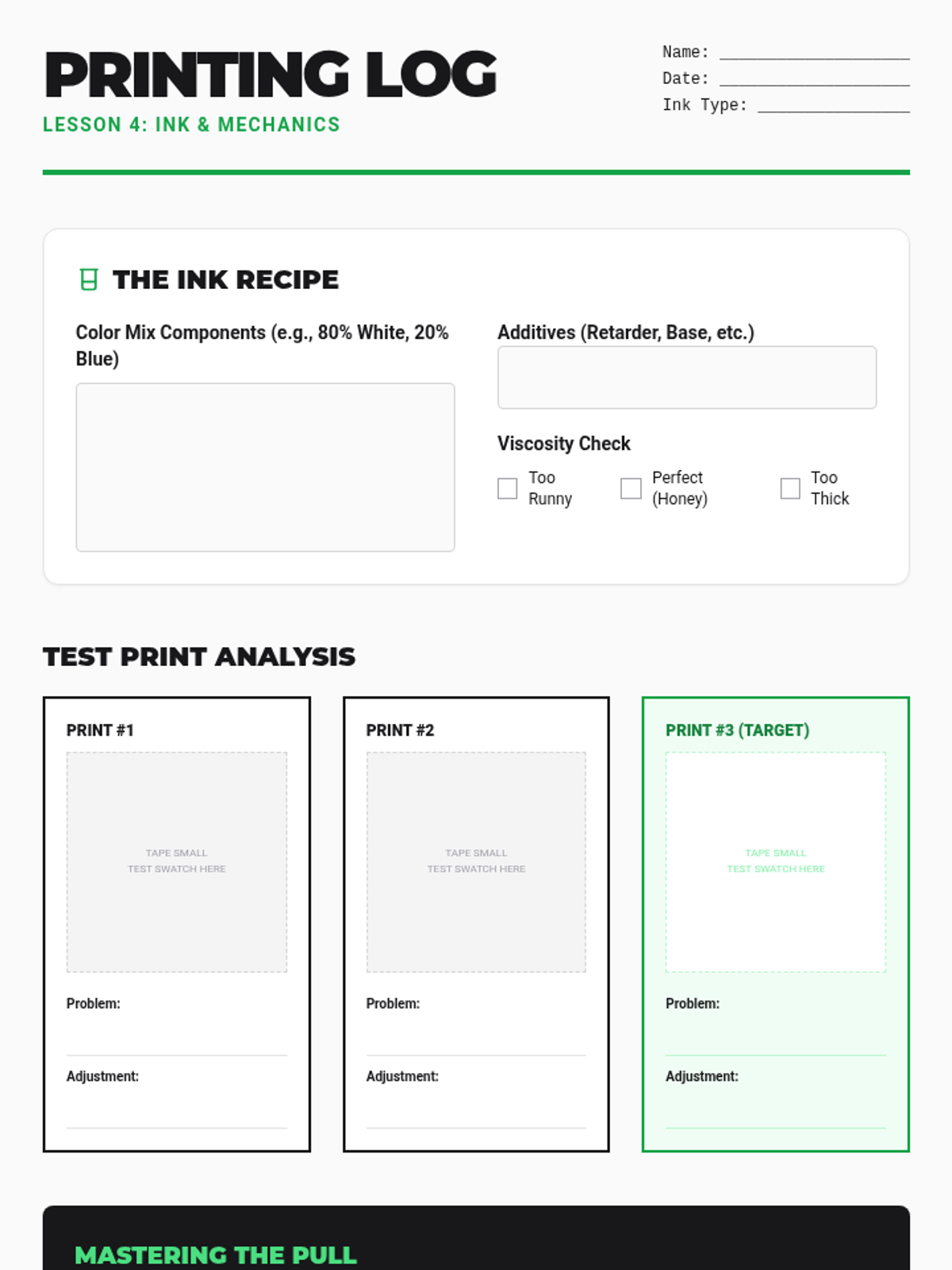
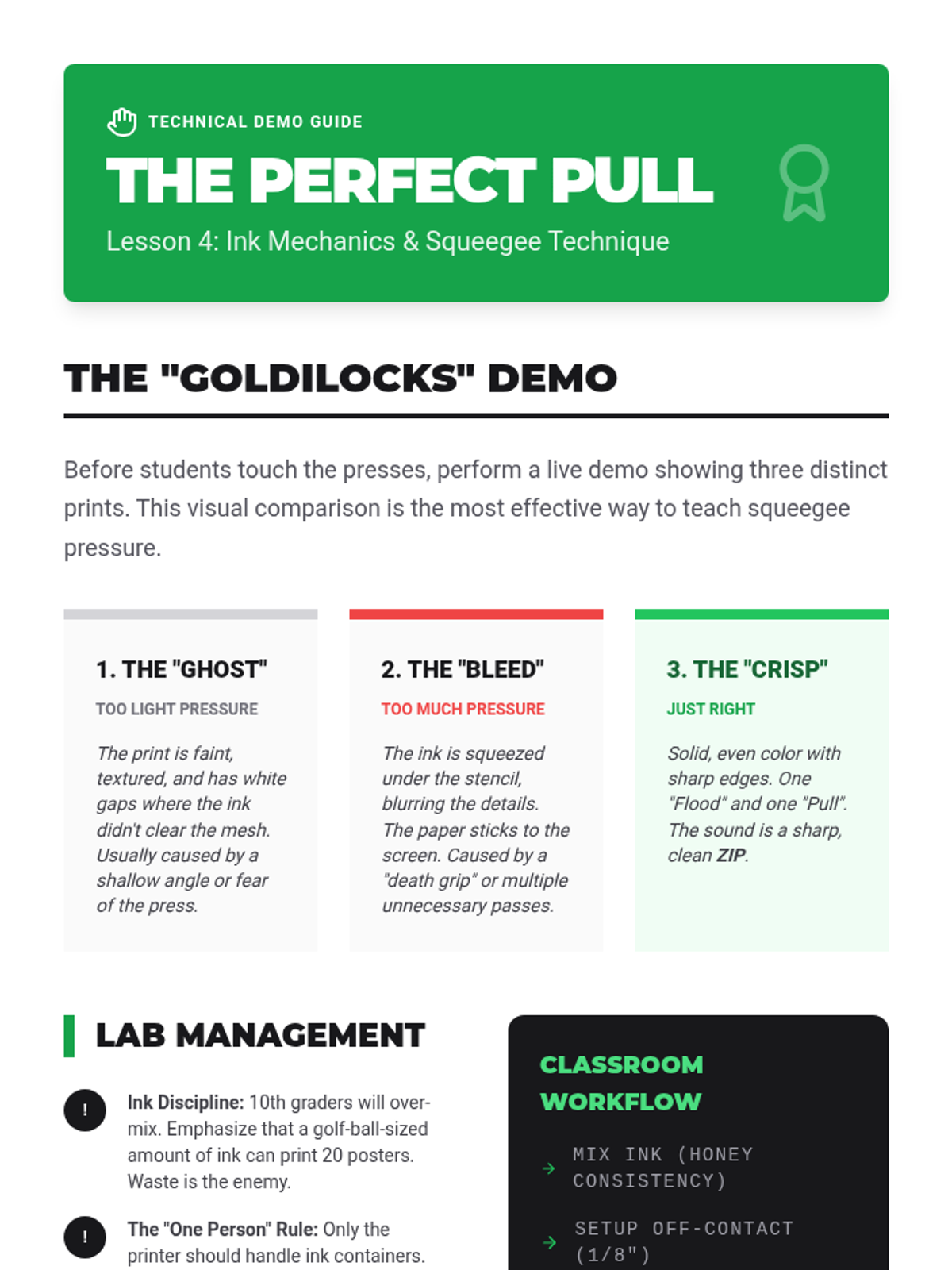
Students mix acrylic screen inks and practice the physical technique of the 'flood' and the 'pull.' They focus on angle, pressure, and speed to produce crisp prints without bleeding.
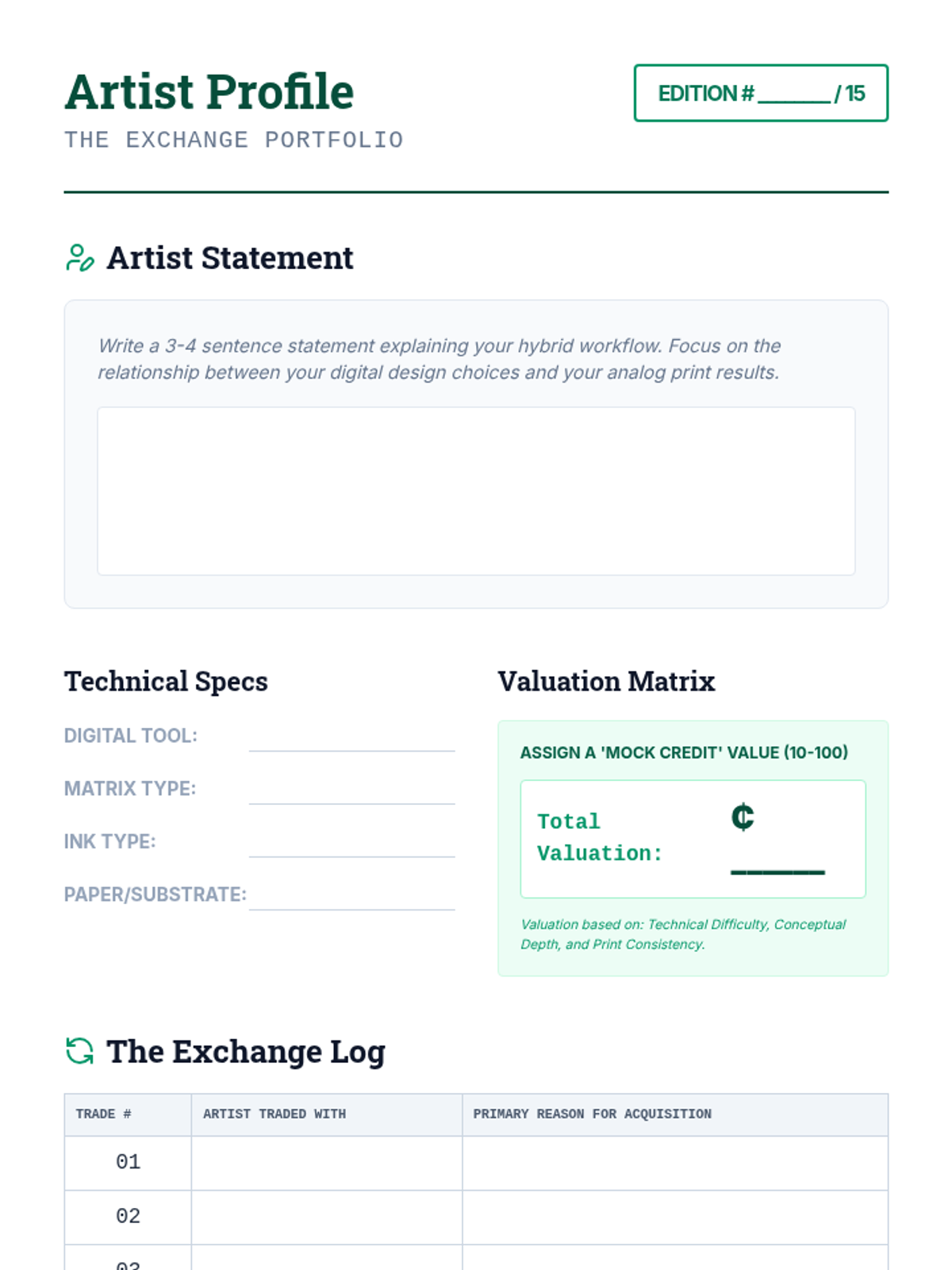
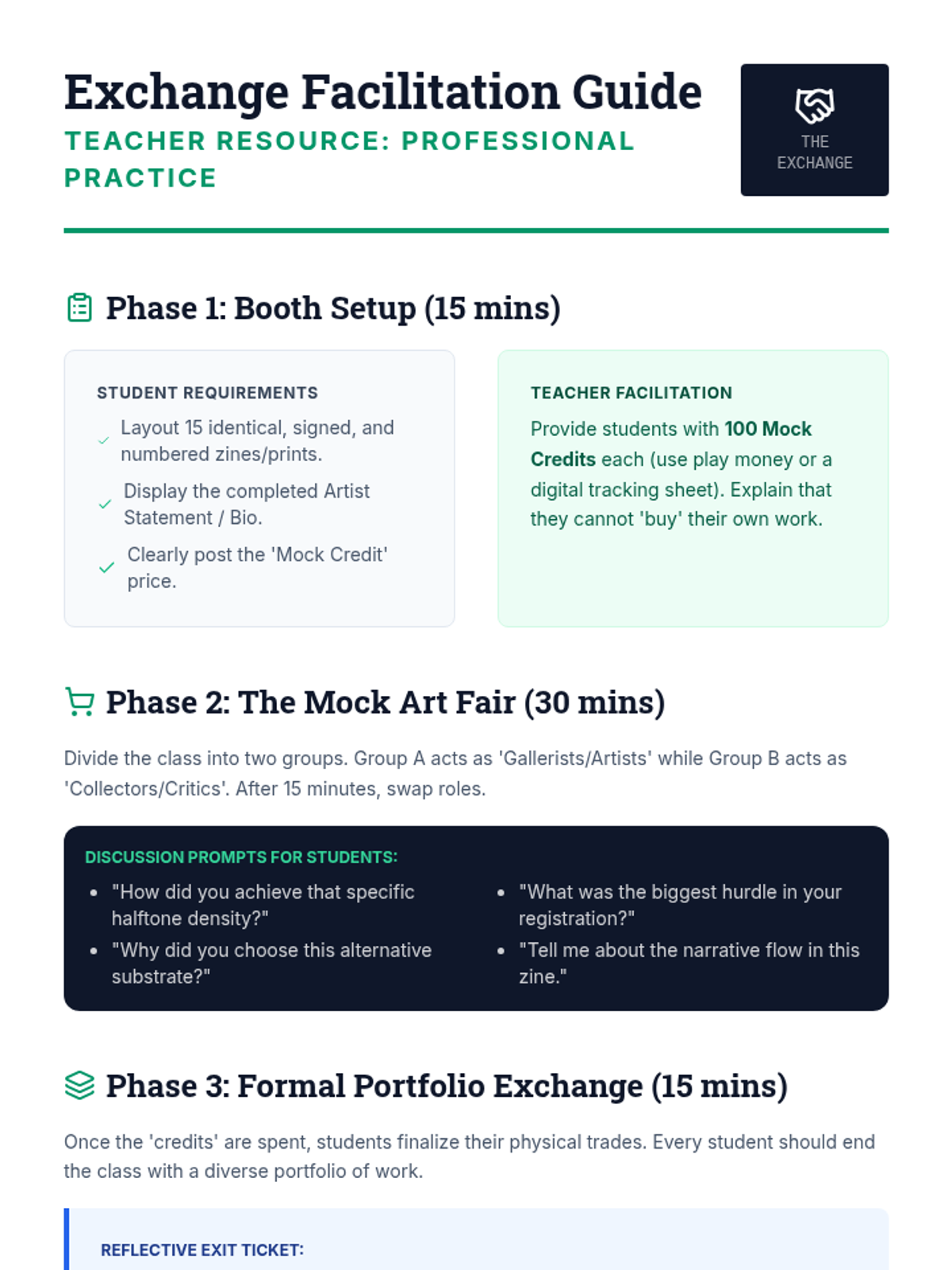
Students participate in a print exchange, write artist bios, and explore the valuation of their work.
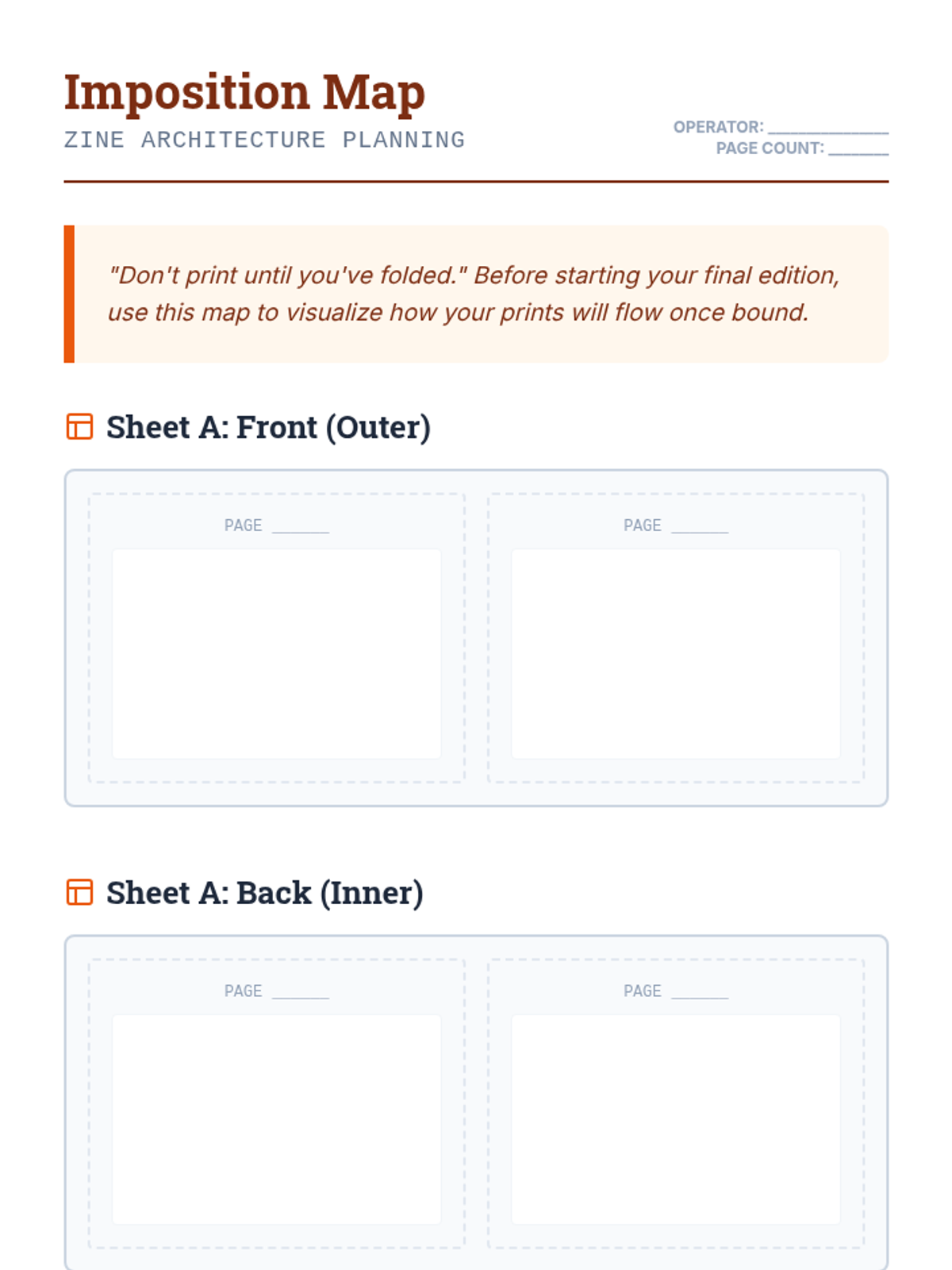
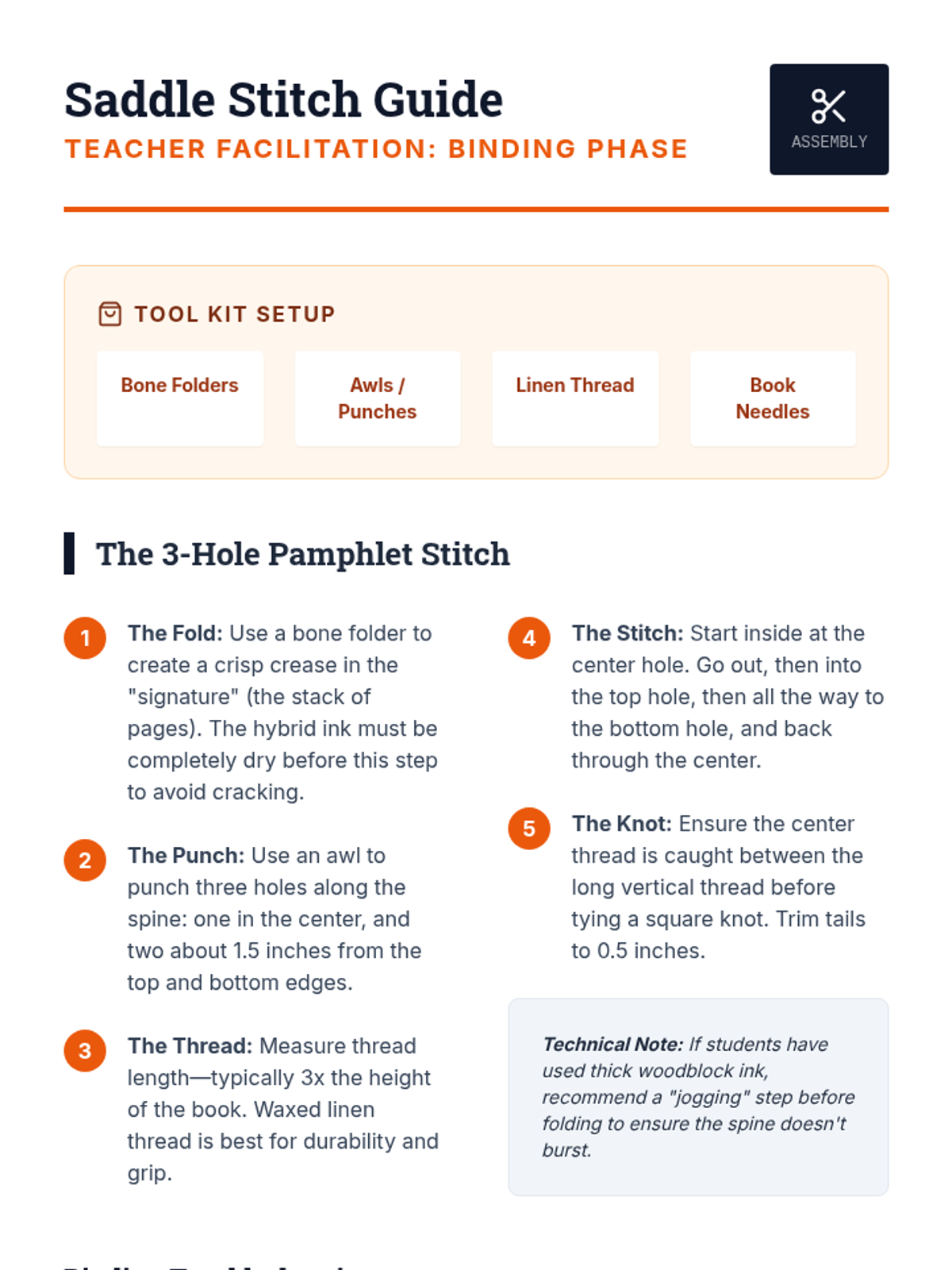
Students compile their hybrid prints into a Zine format, focusing on pagination and basic bookbinding.
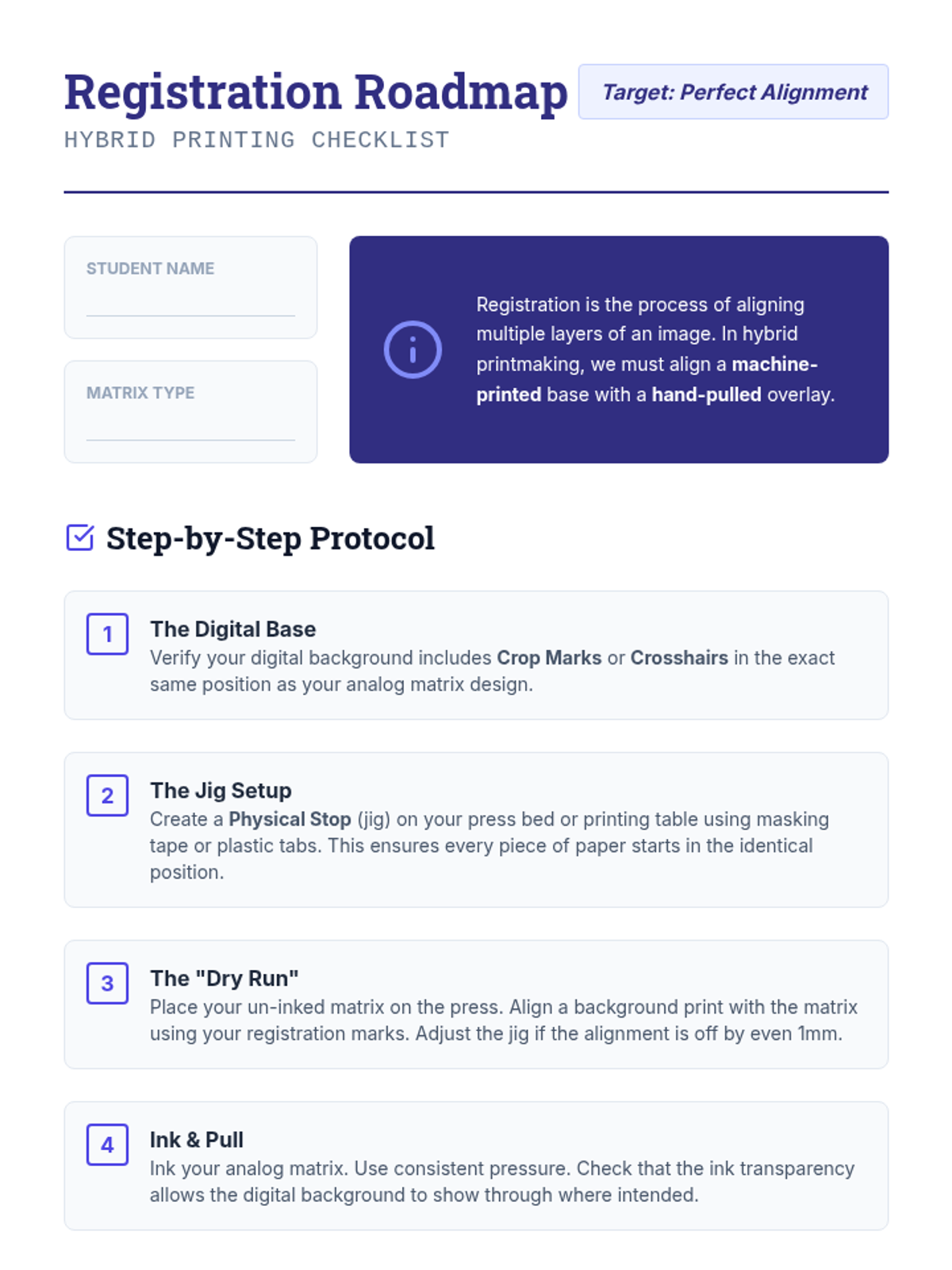
Students experiment with printing analog elements onto digitally prepared backgrounds and managing registration.
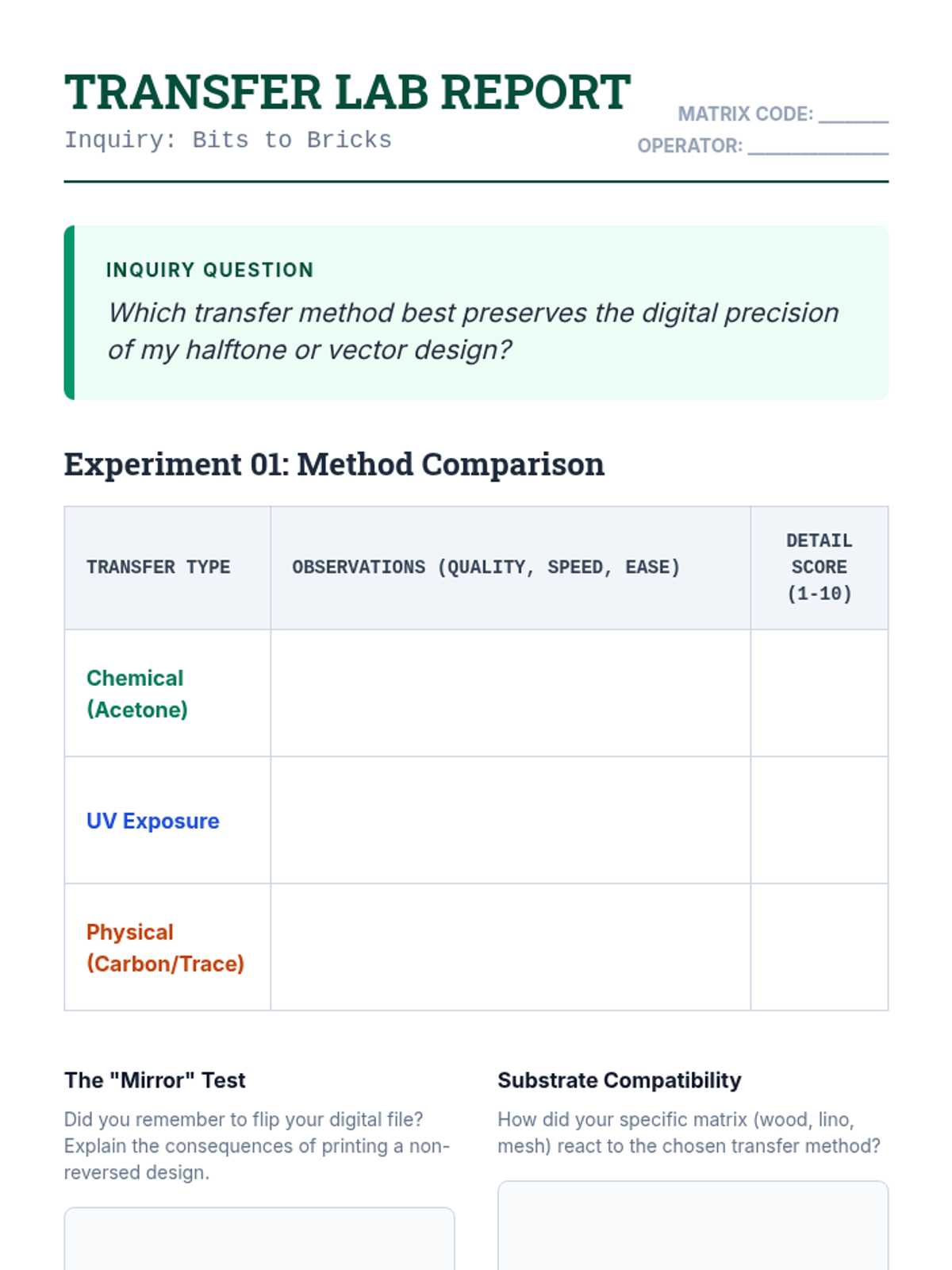
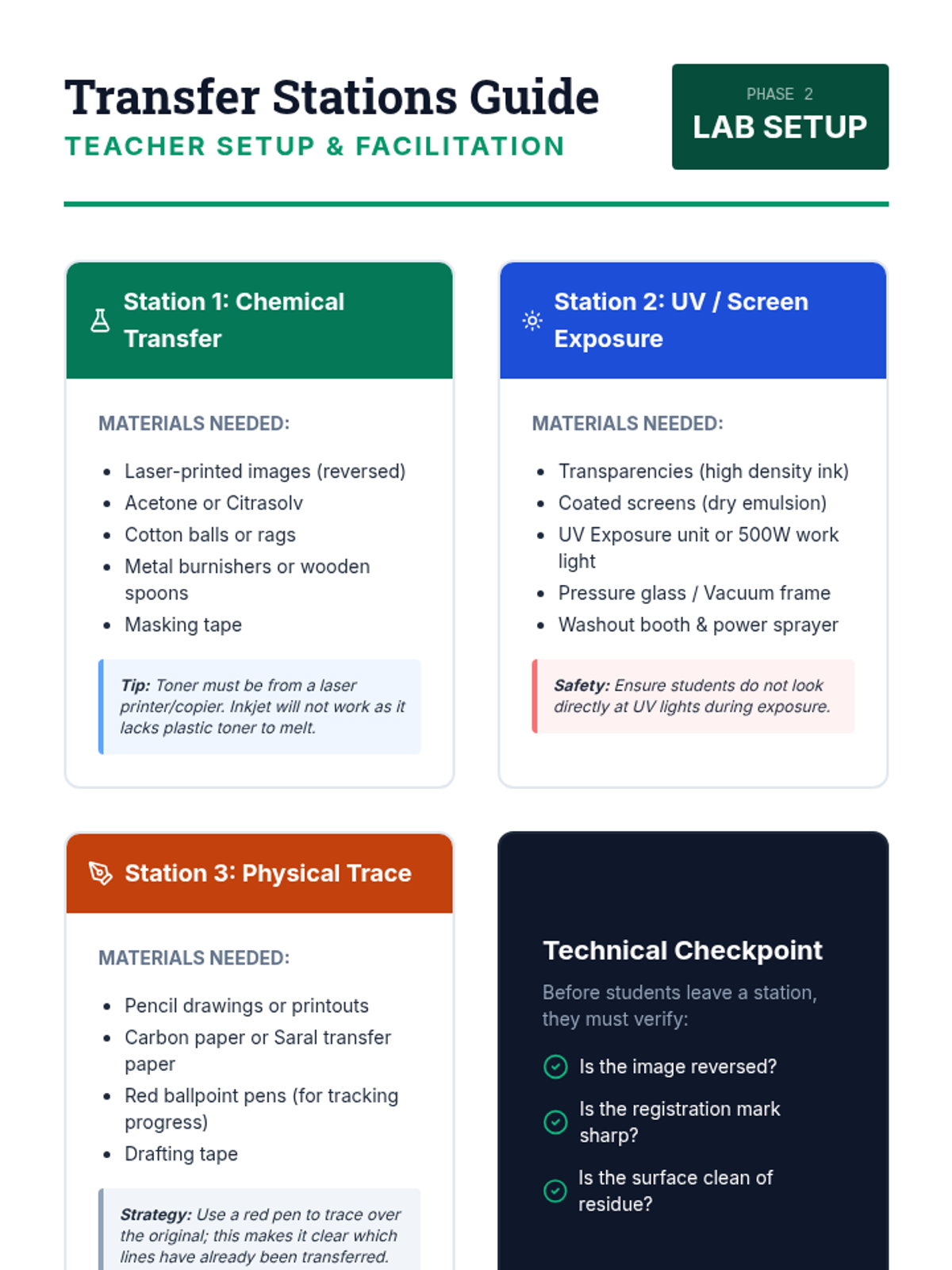
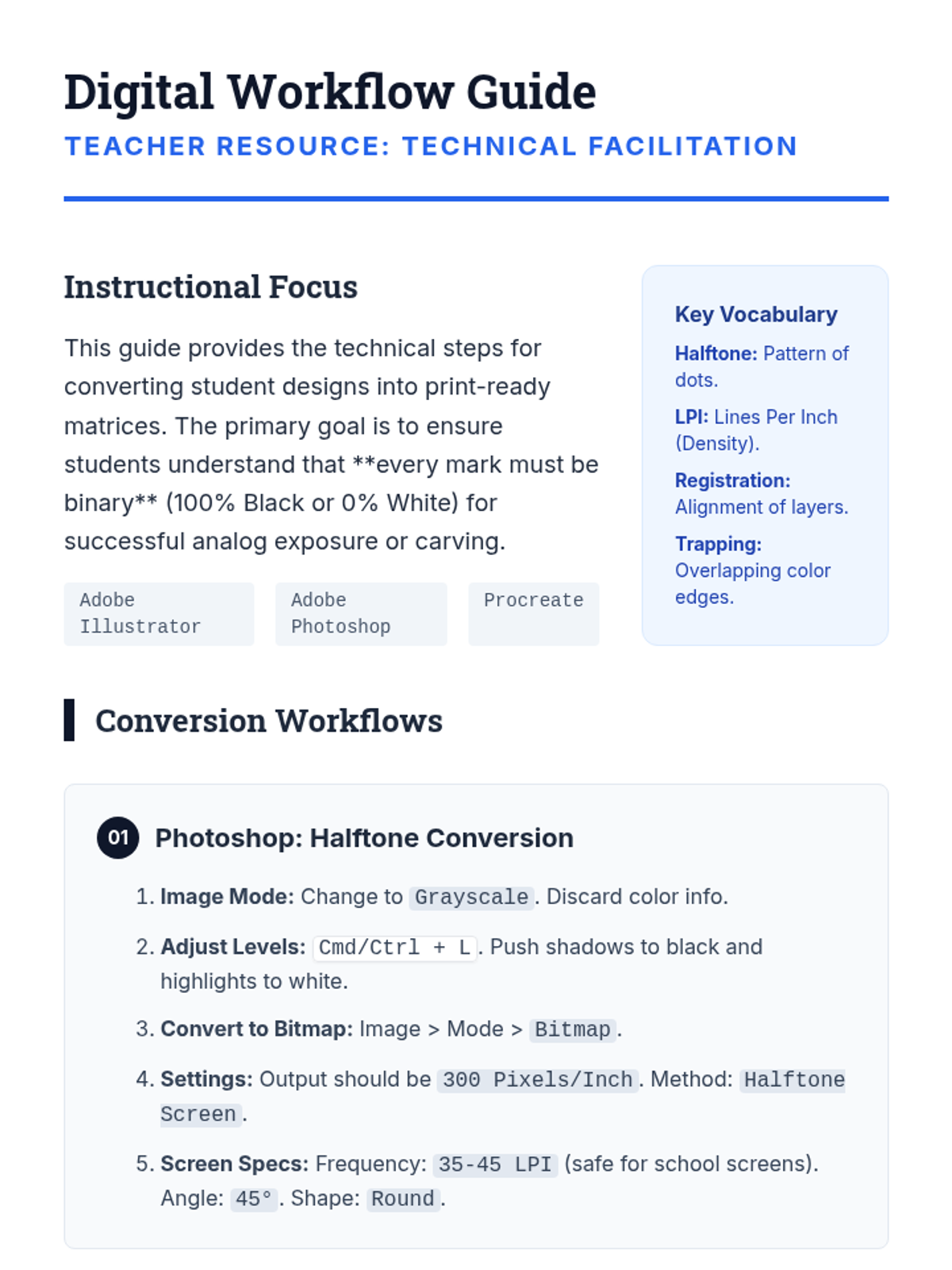
Students explore methods to transfer digital designs onto physical surfaces like woodblocks or screen stencils.
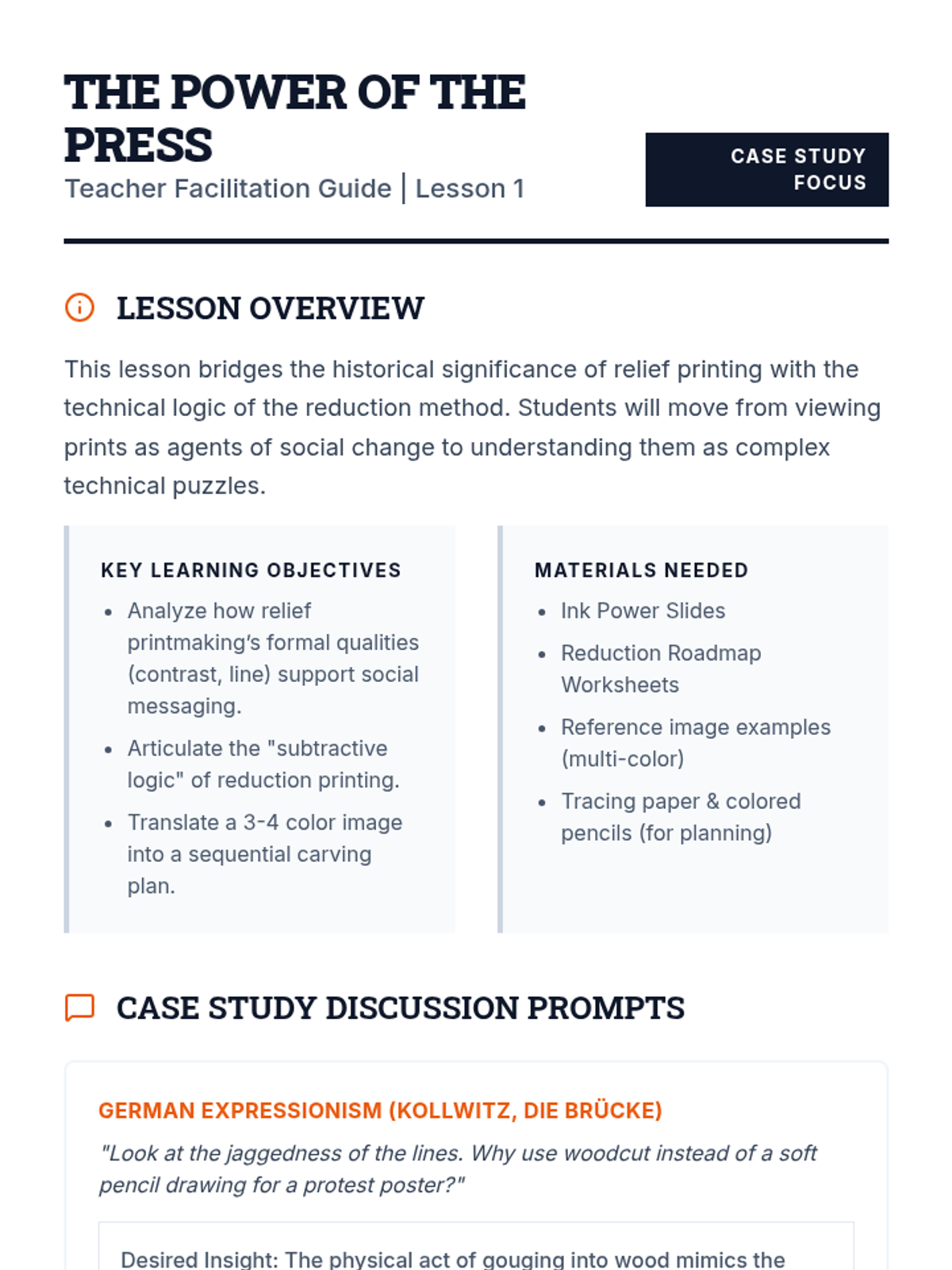
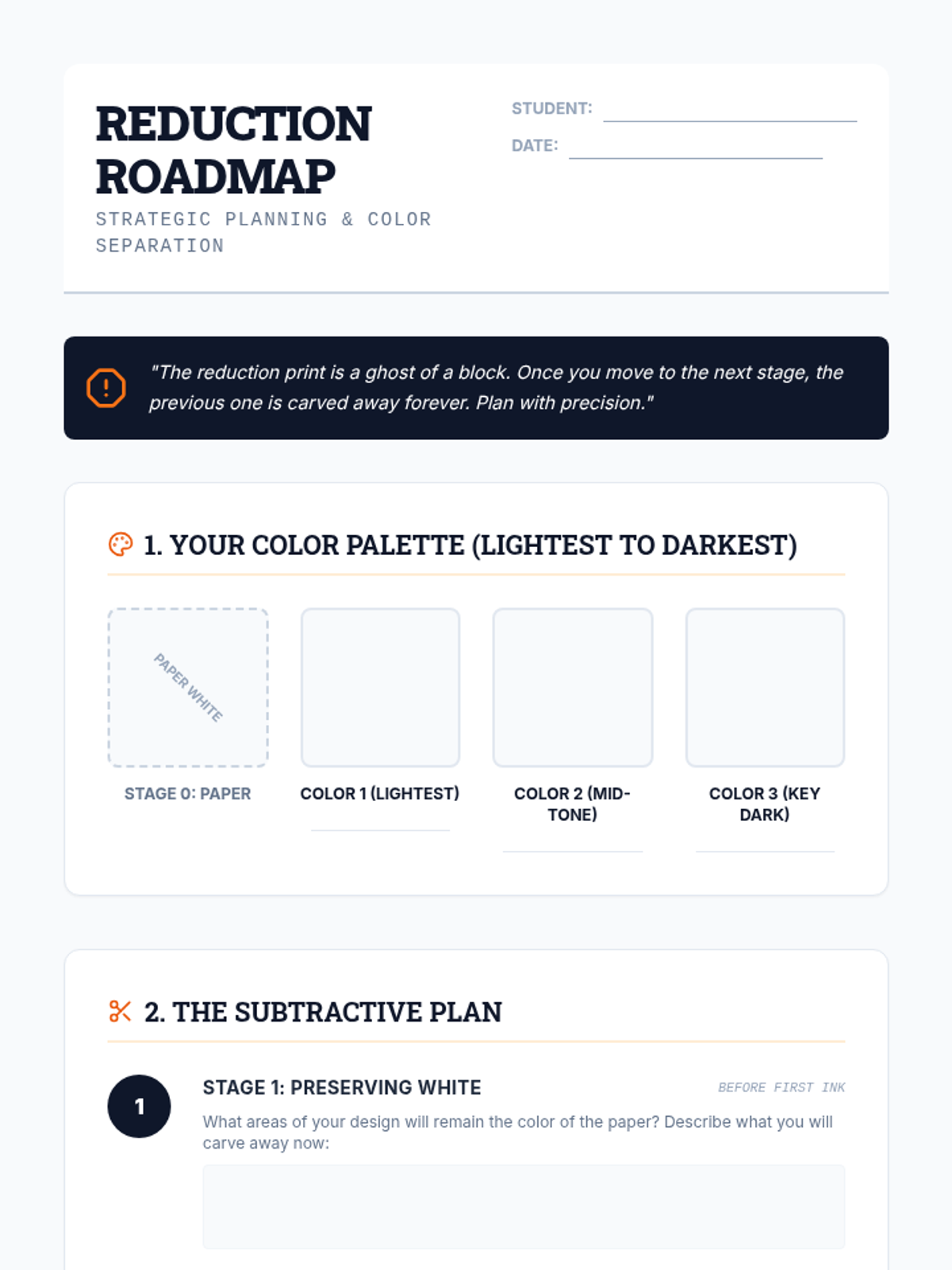
Students analyze the social and political power of relief prints and learn the strategic logic of reduction planning through color separation maps.
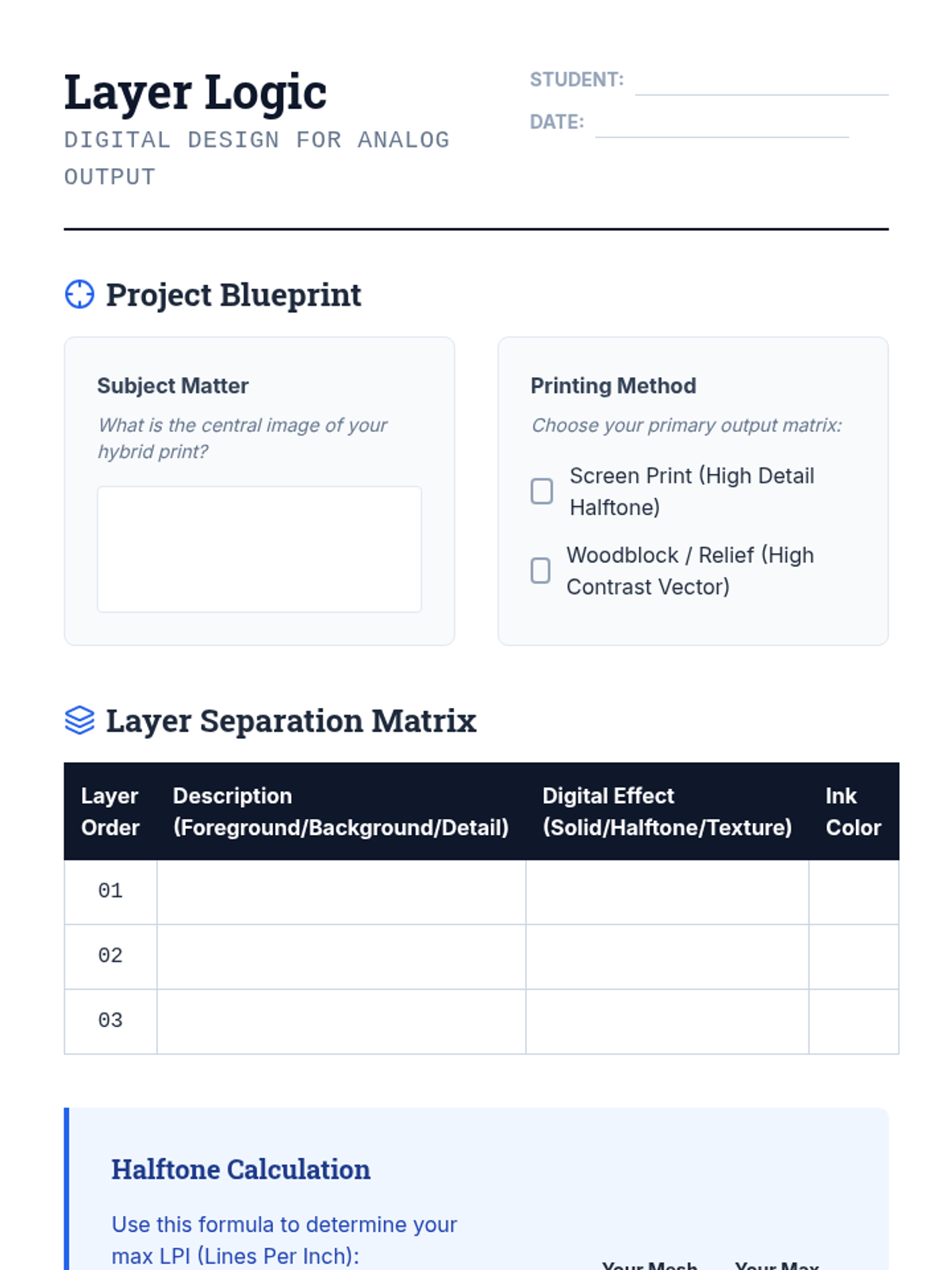
Students design high-contrast imagery and learn about layer separation, halftones, and bitmap conversions for analog output.
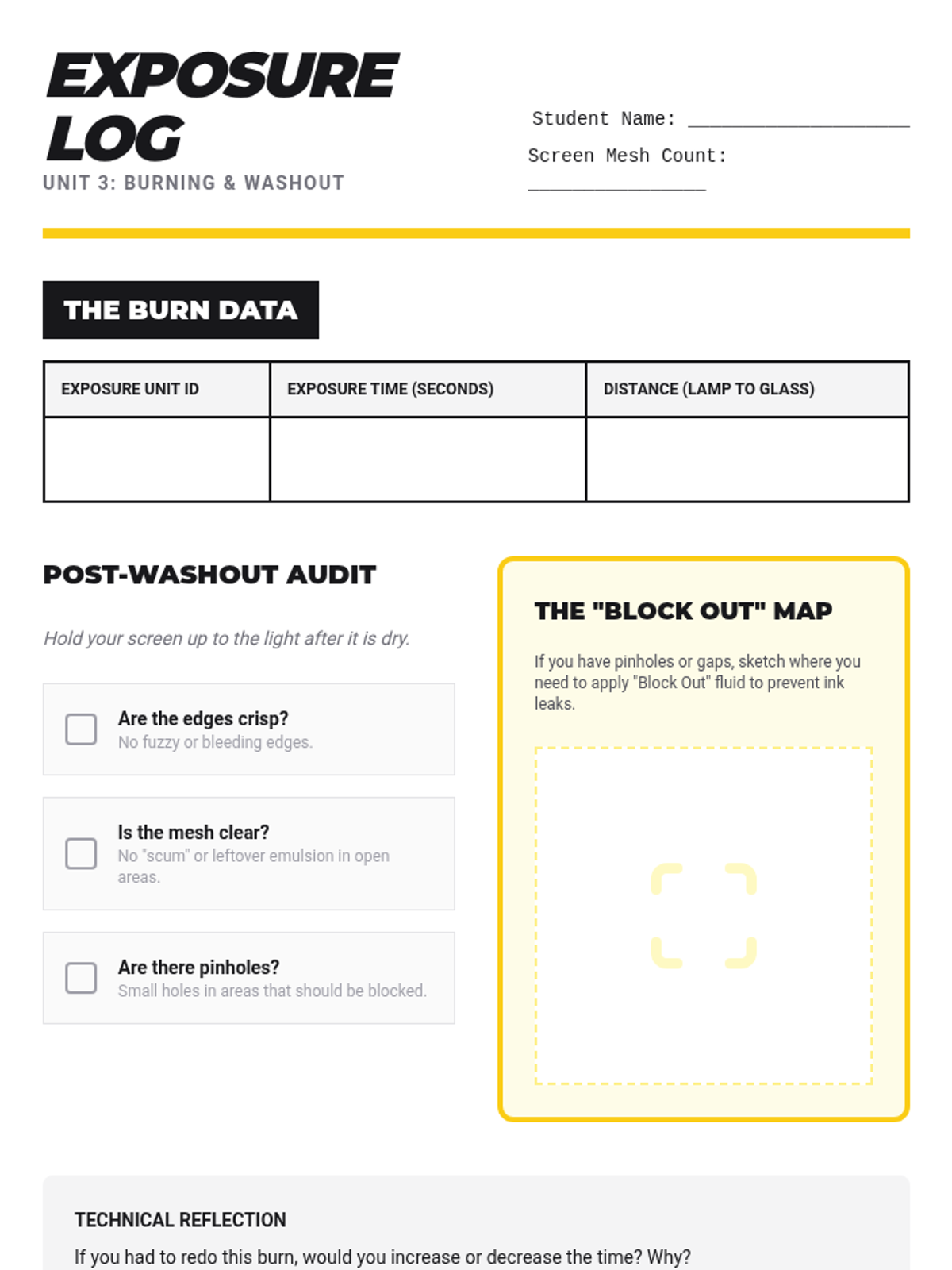
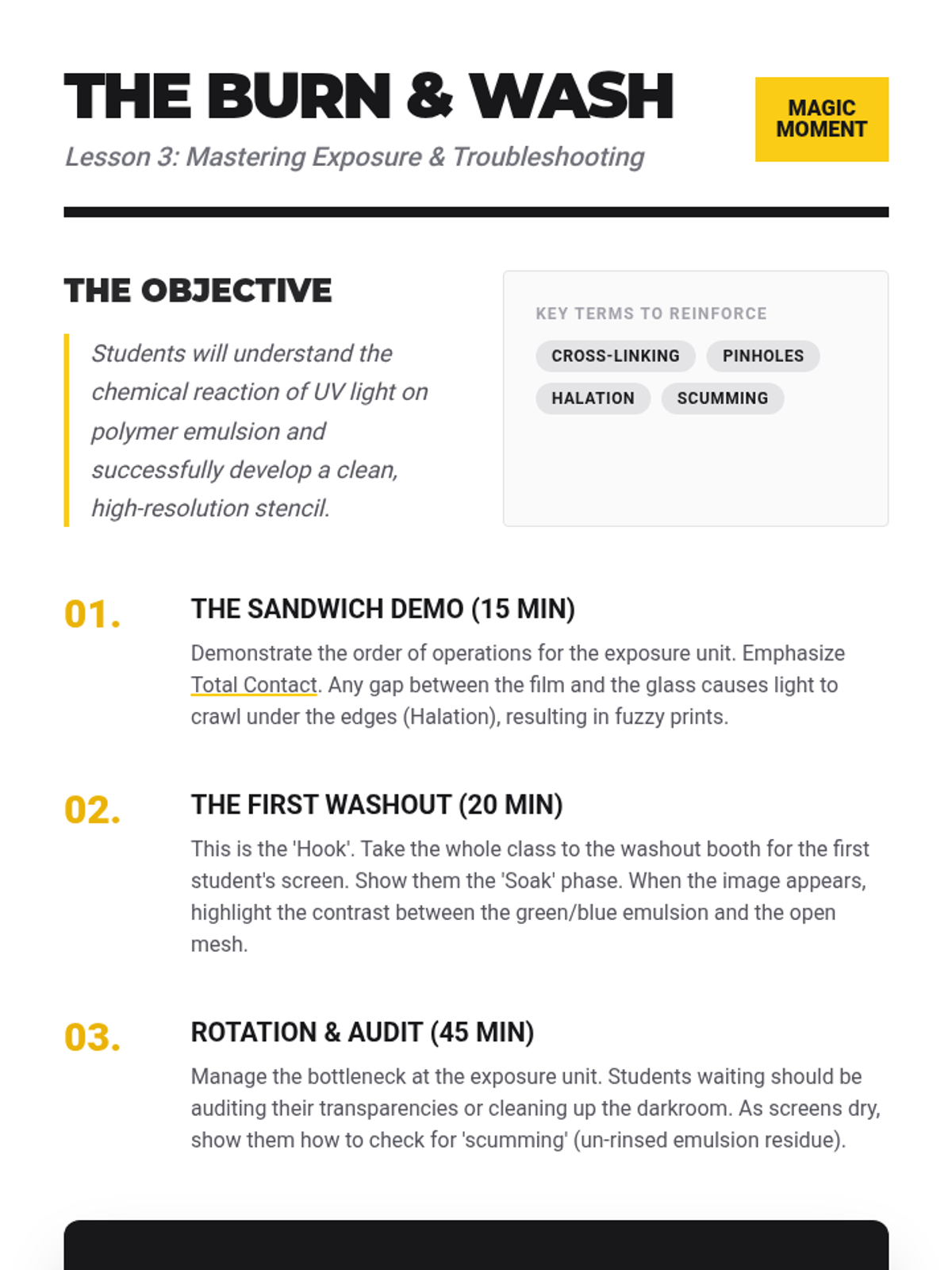
Using exposure units, students burn their images onto the screens and wash out the unexposed emulsion. Troubleshooting pinholes and 'breakdown' is a key component of this technical lesson.
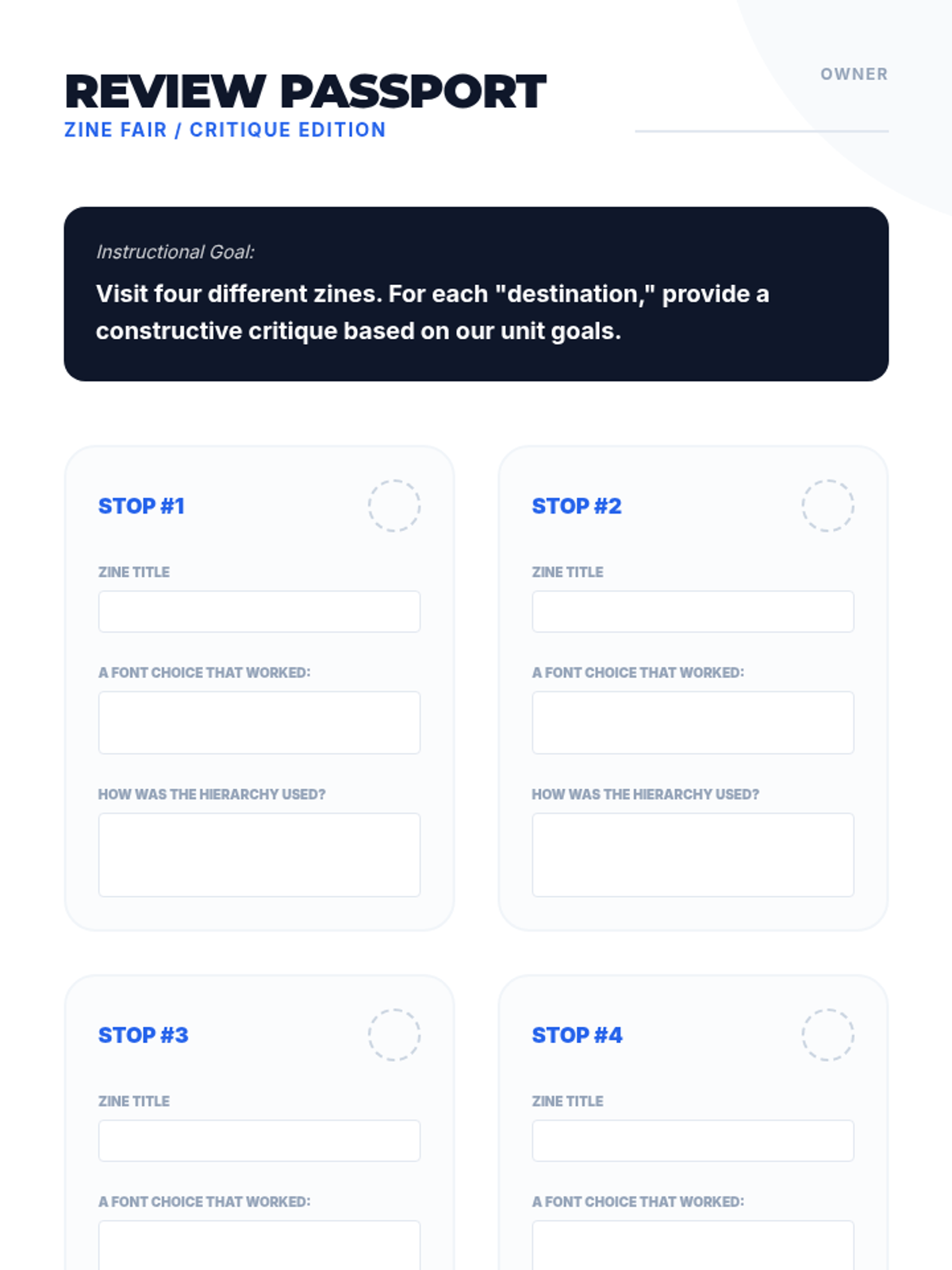
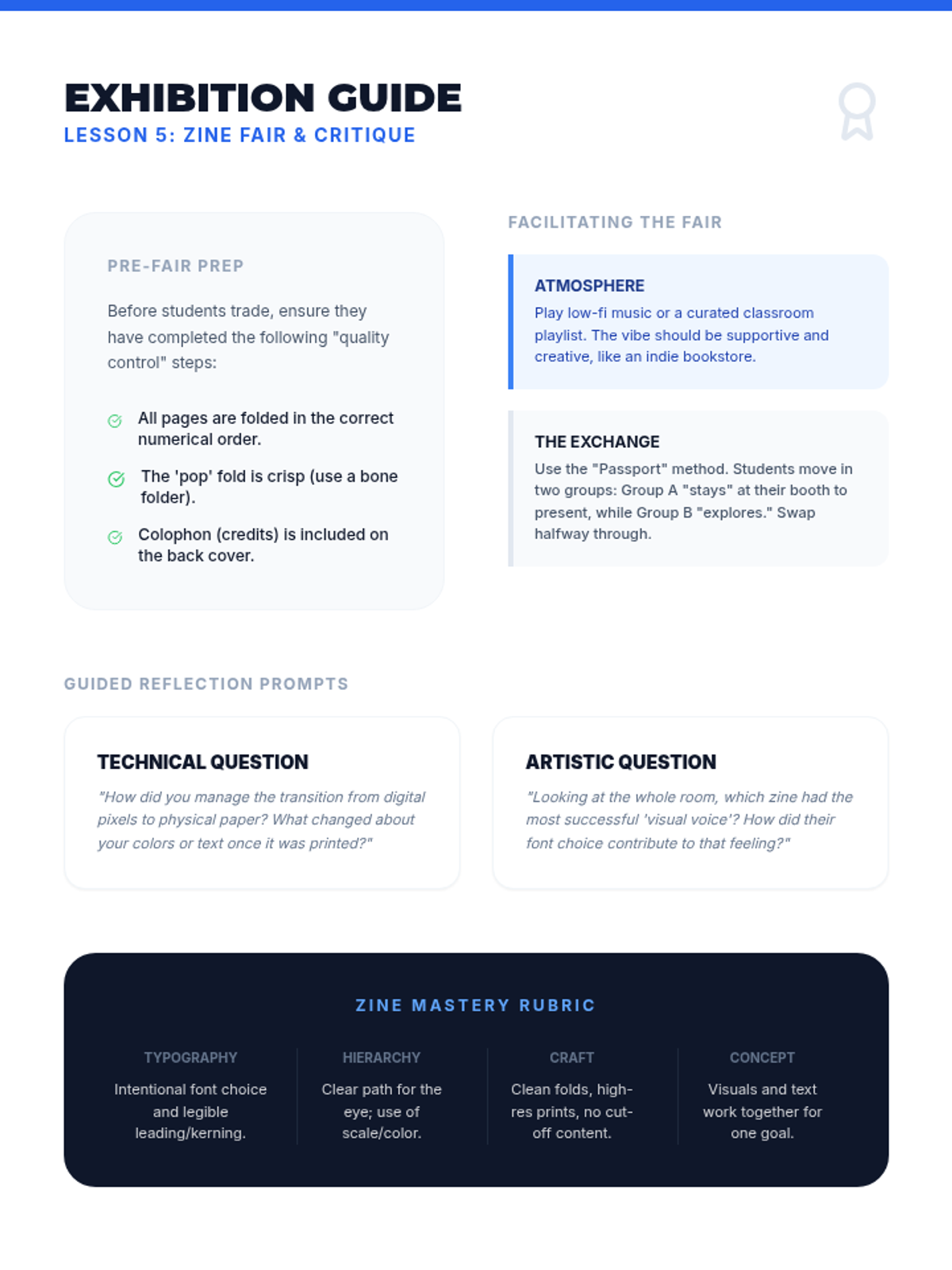
The culmination of the unit where students assemble their final Zines and participate in a classroom 'Zine Fair' for critique and exchange.
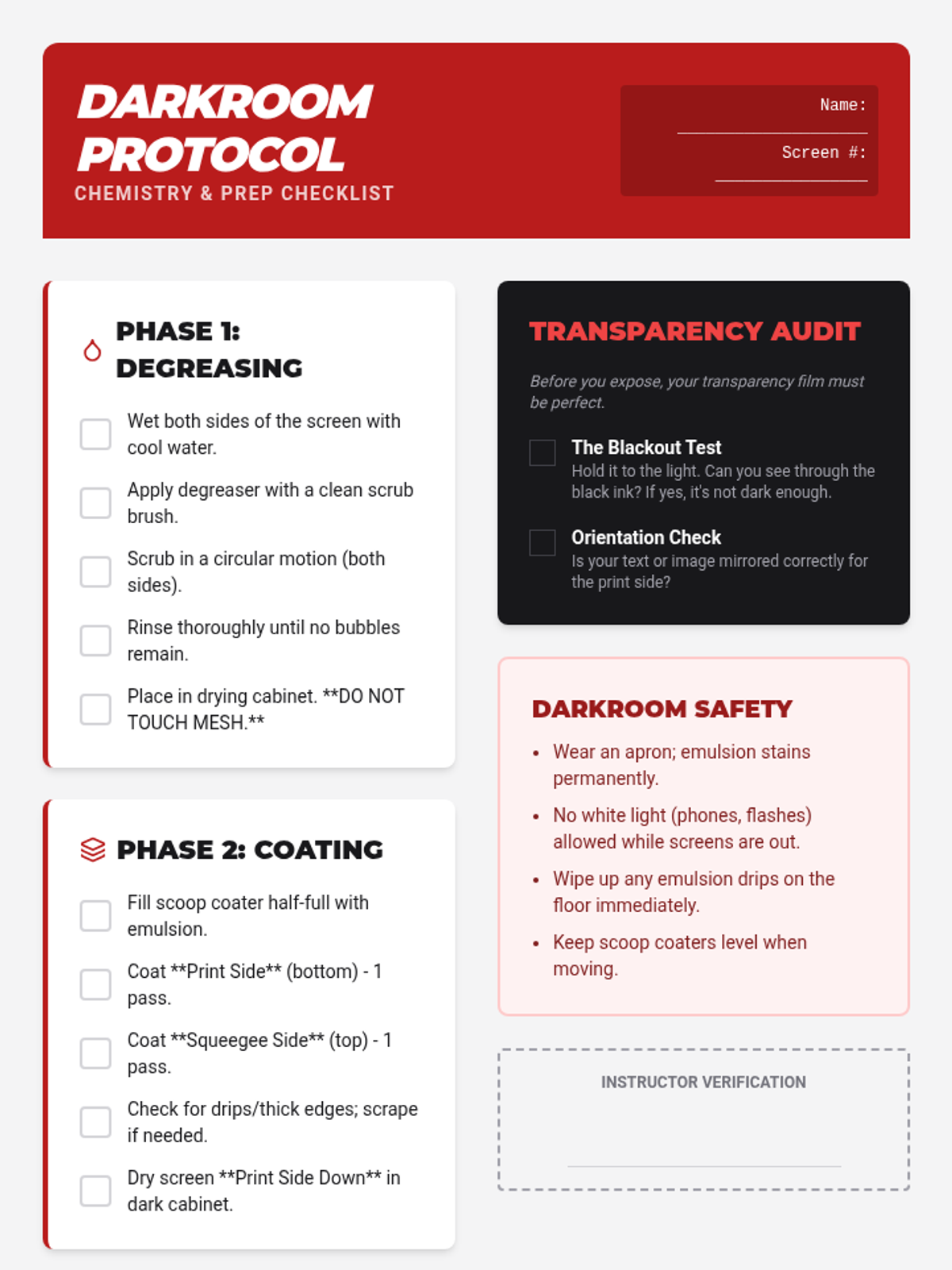
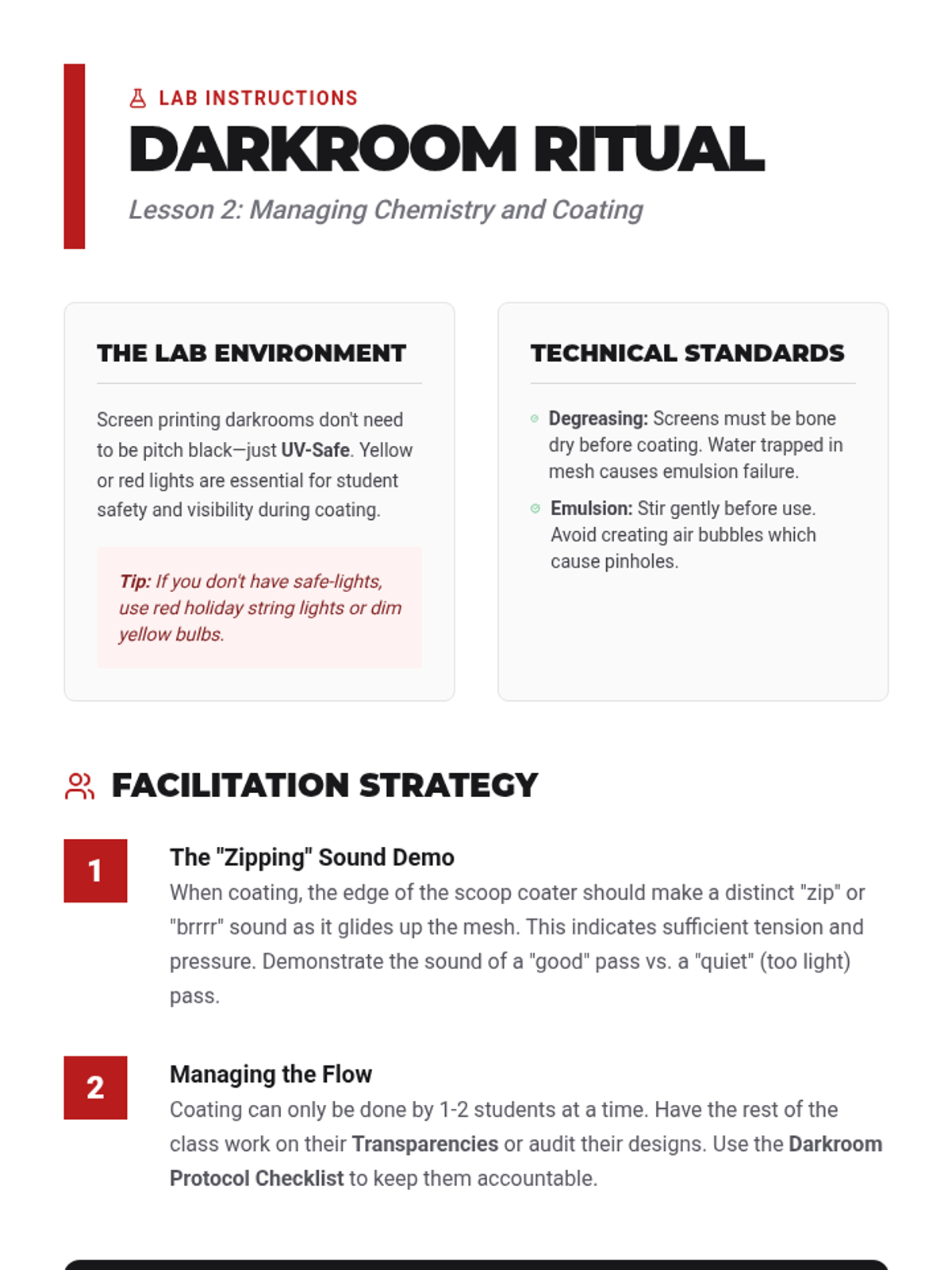
Students learn the chemical side of the process: degreasing screens and applying photo-sensitive emulsion in a darkroom environment. They prepare their transparencies for exposure.
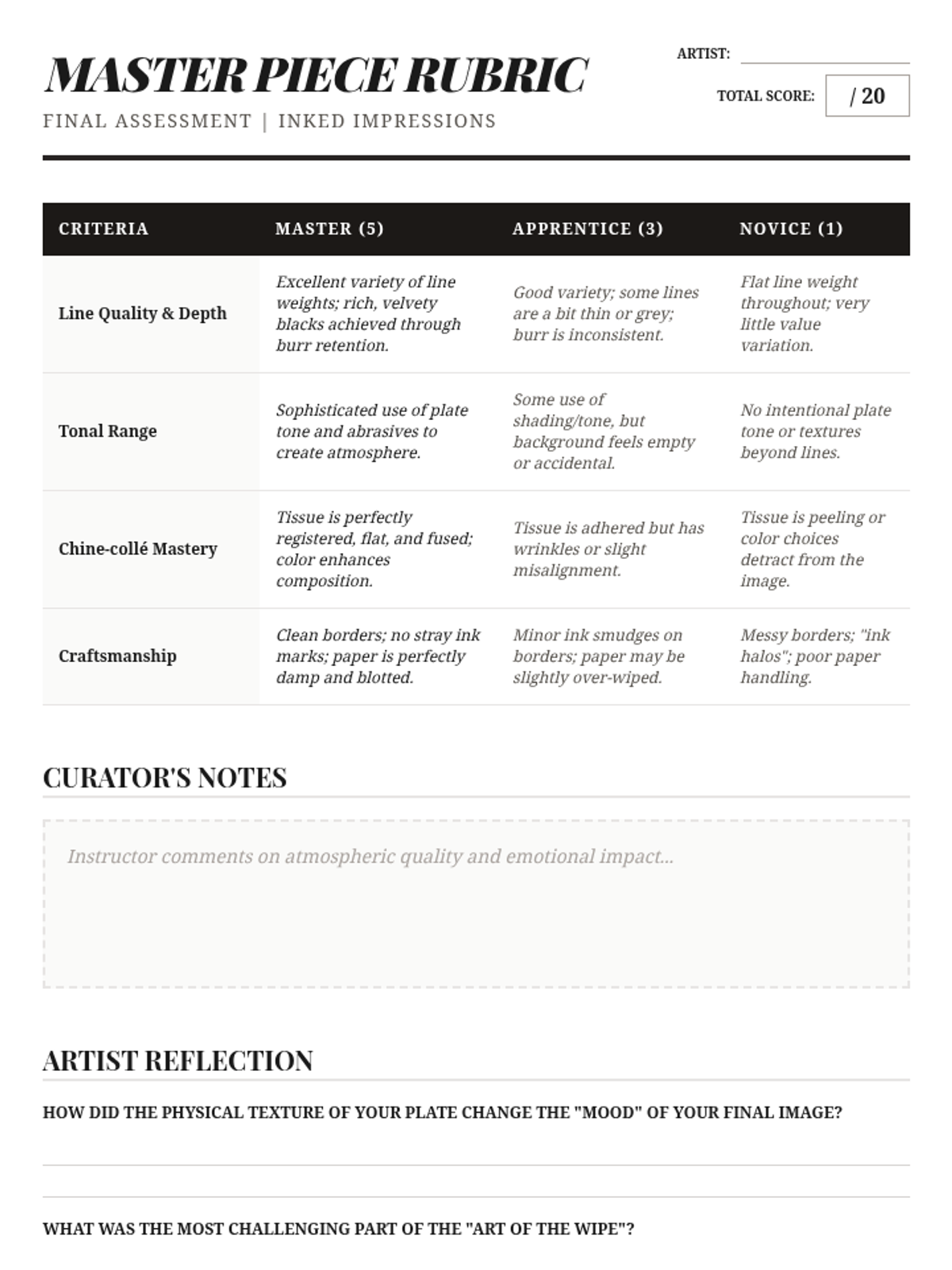
The final stage where students incorporate color through chine-collé and refine their compositions for a final edition.
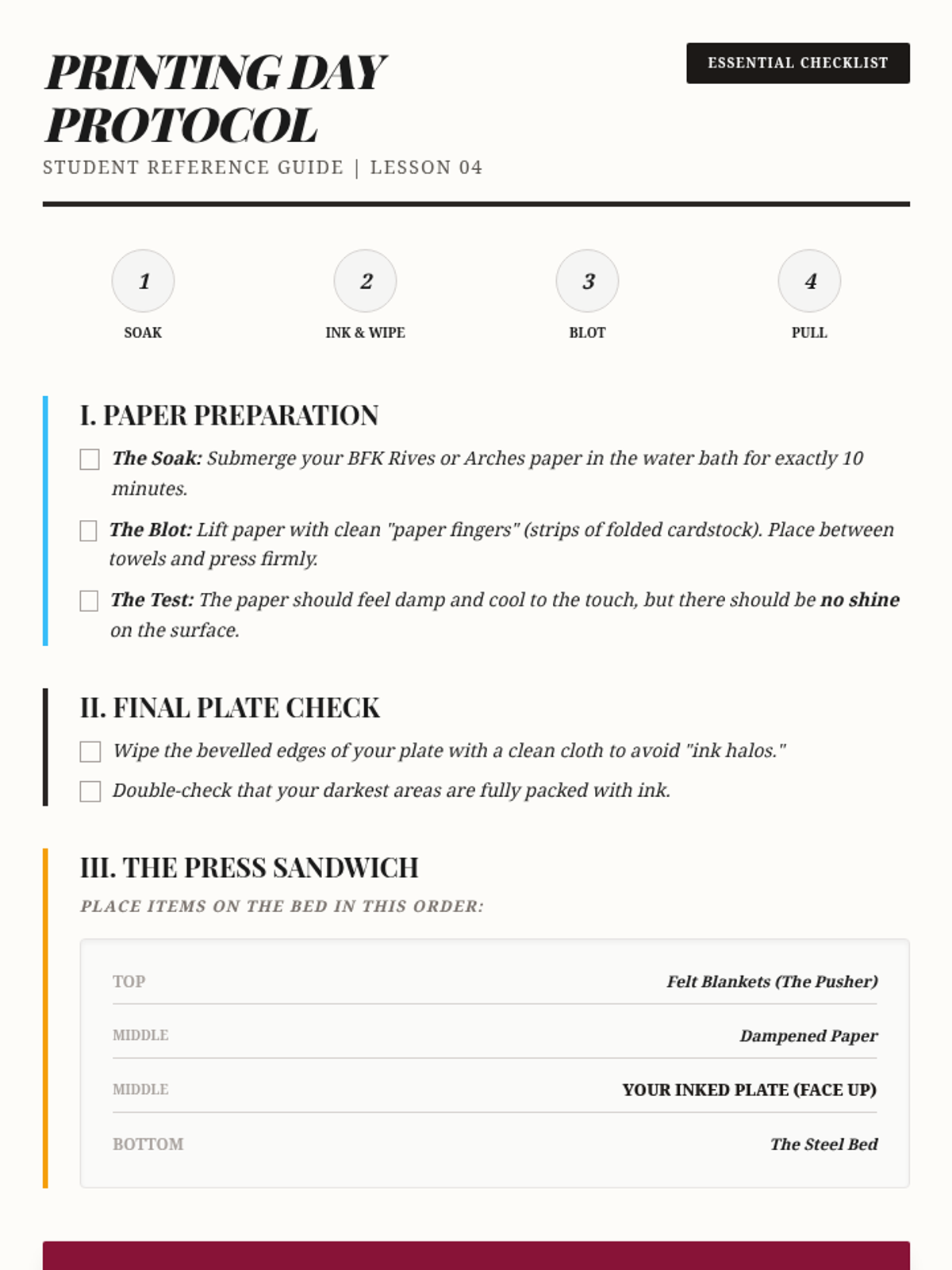
Students master the preparation of damp paper and the operation of the etching press to transfer their images.
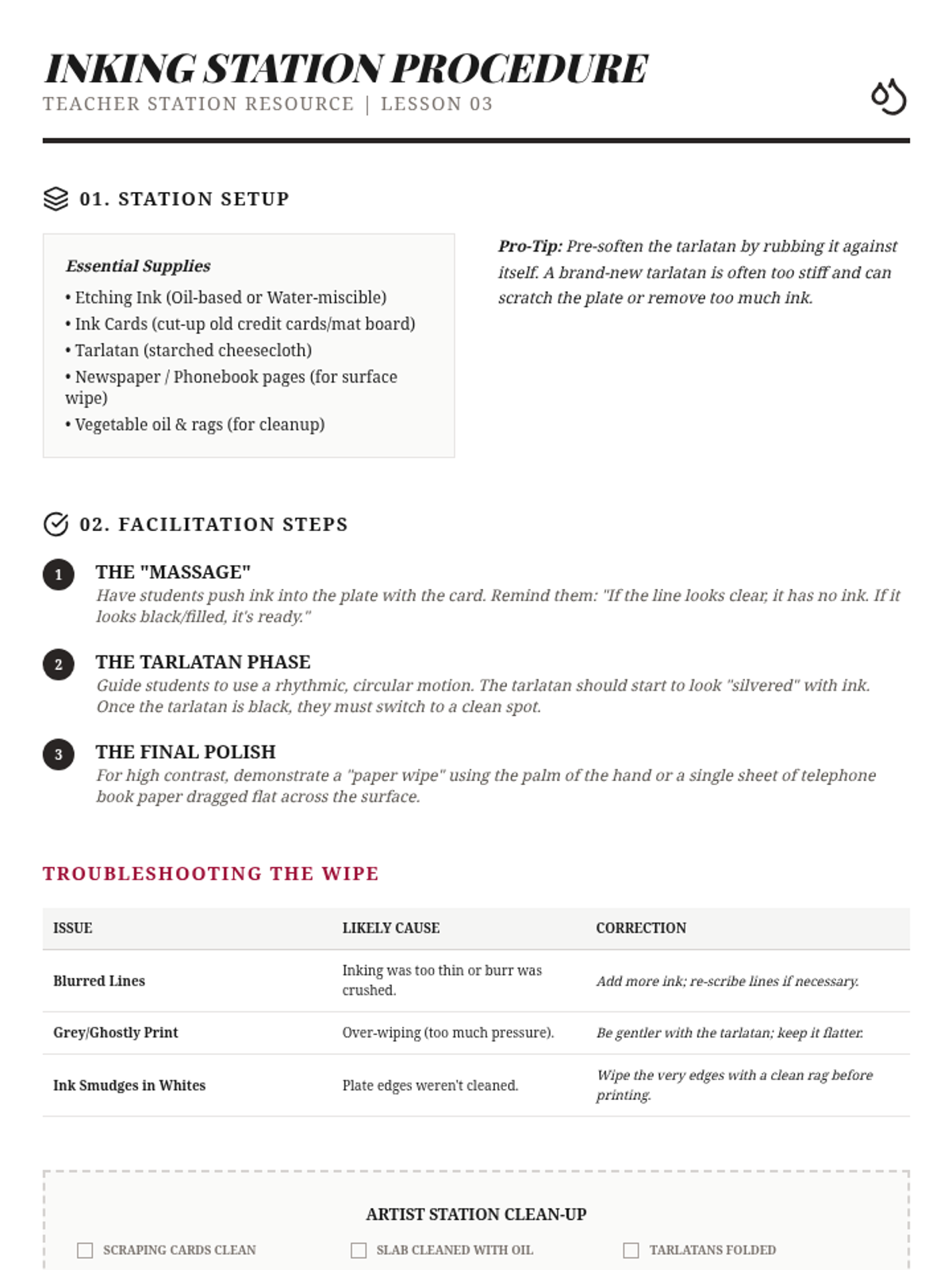
A technical dive into the physical process of inking a plate and the delicate art of wiping with tarlatan.
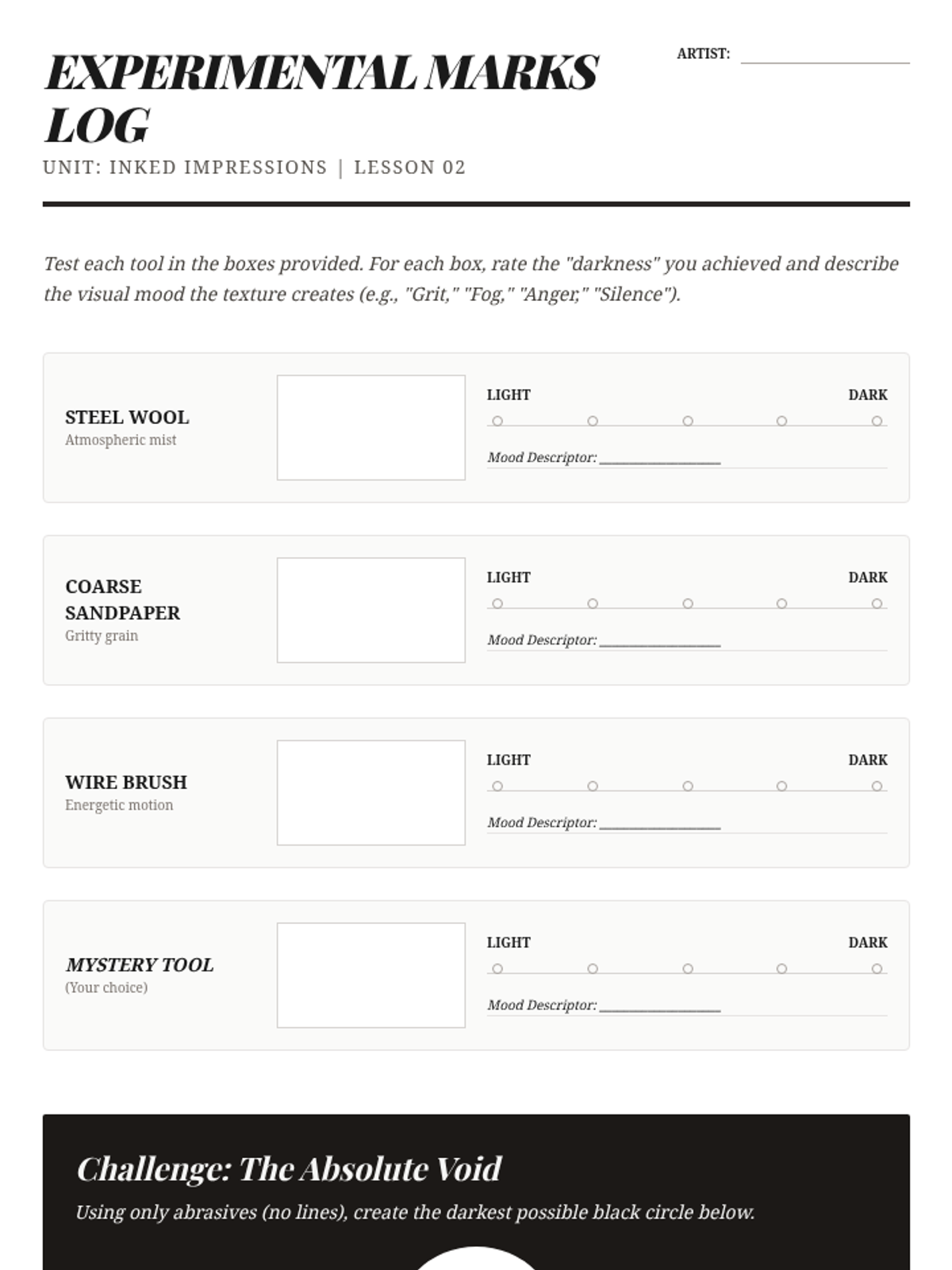
Focuses on creating value and atmosphere using abrasive tools and hatching techniques to hold plate tone.
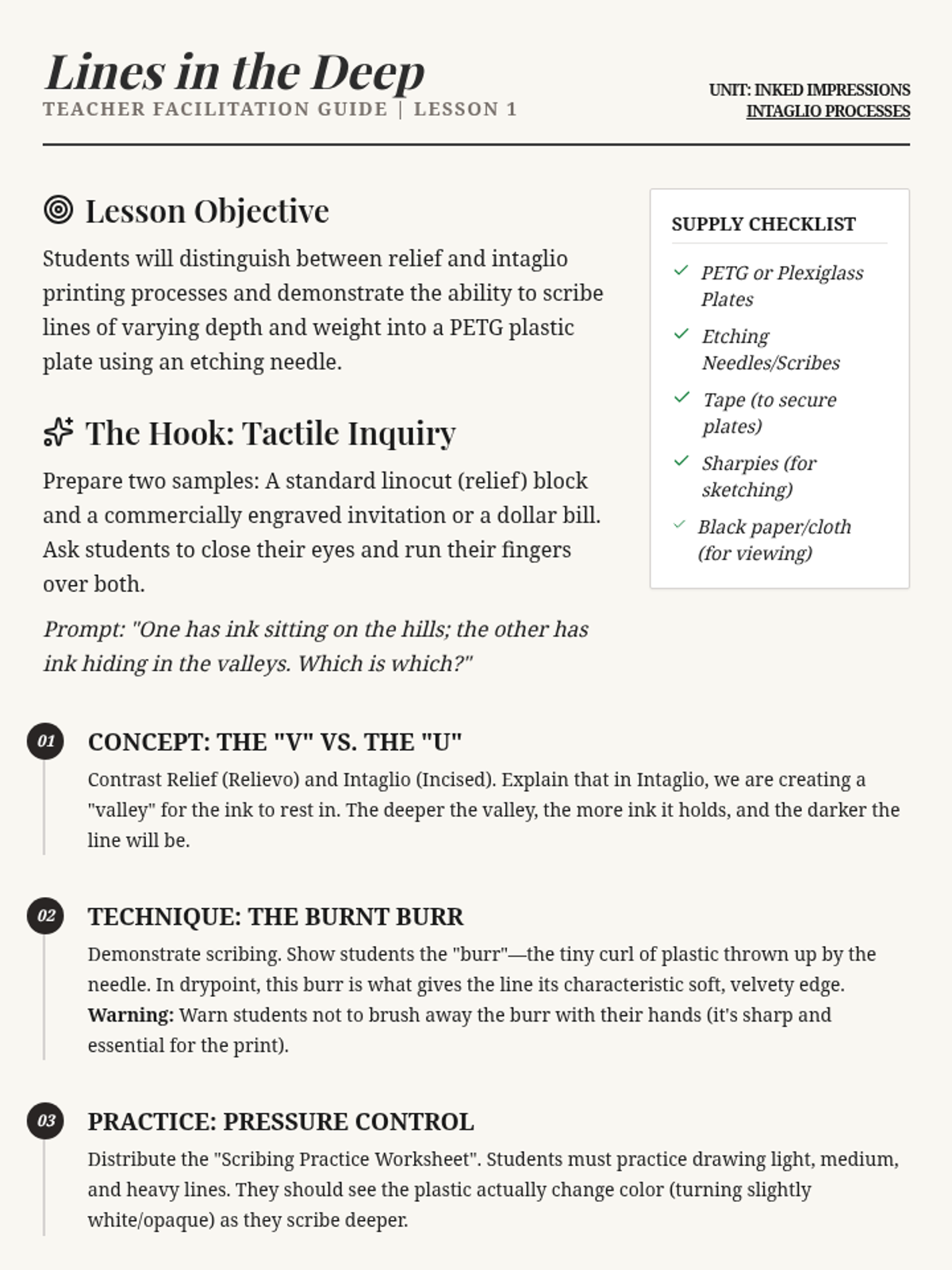
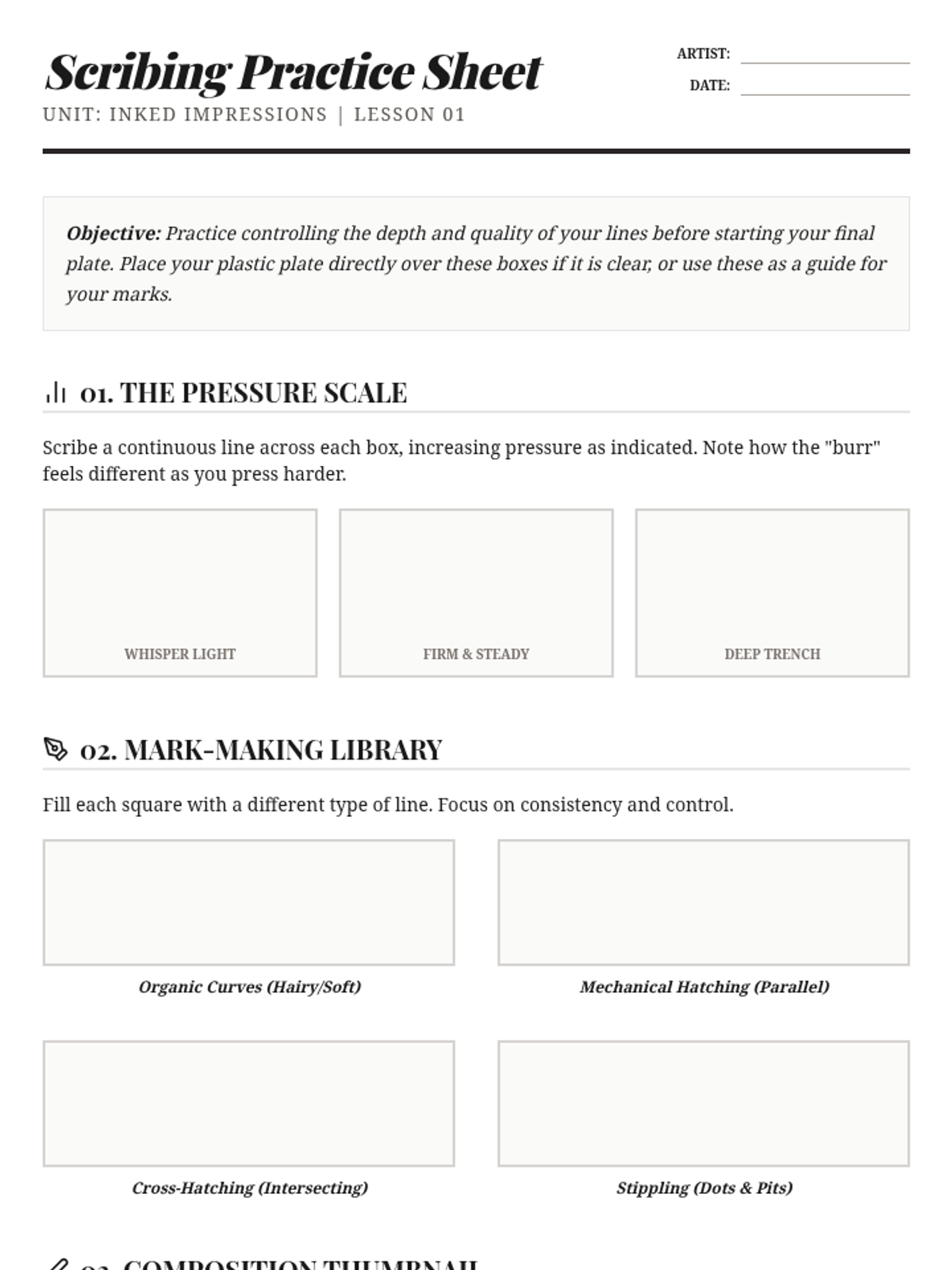
Students learn the fundamental difference between relief and intaglio printing and practice scribing lines into plastic plates with varying pressure.
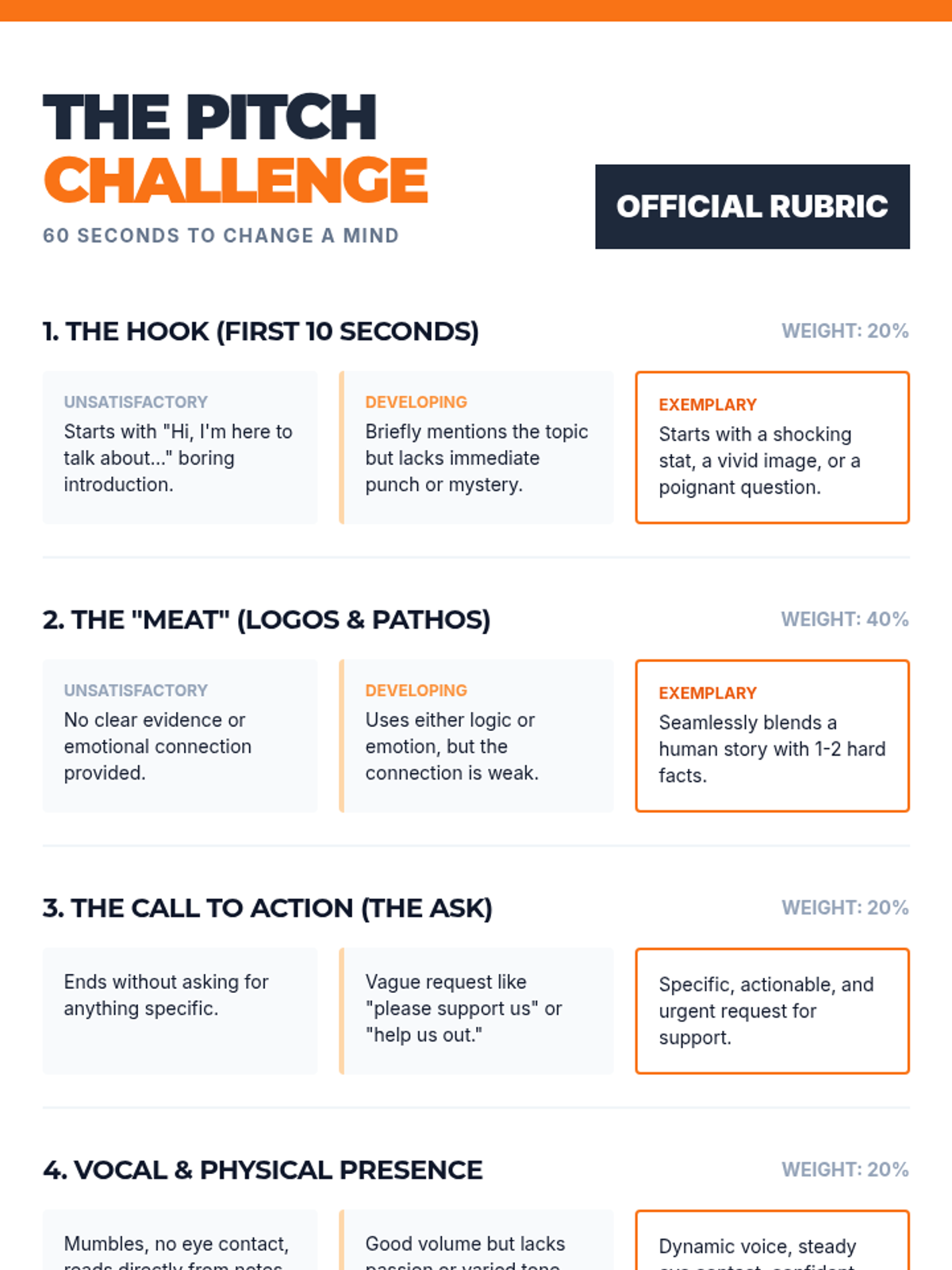
Students present their comprehensive campaigns to a mock panel and practice high-stakes elevator pitches.
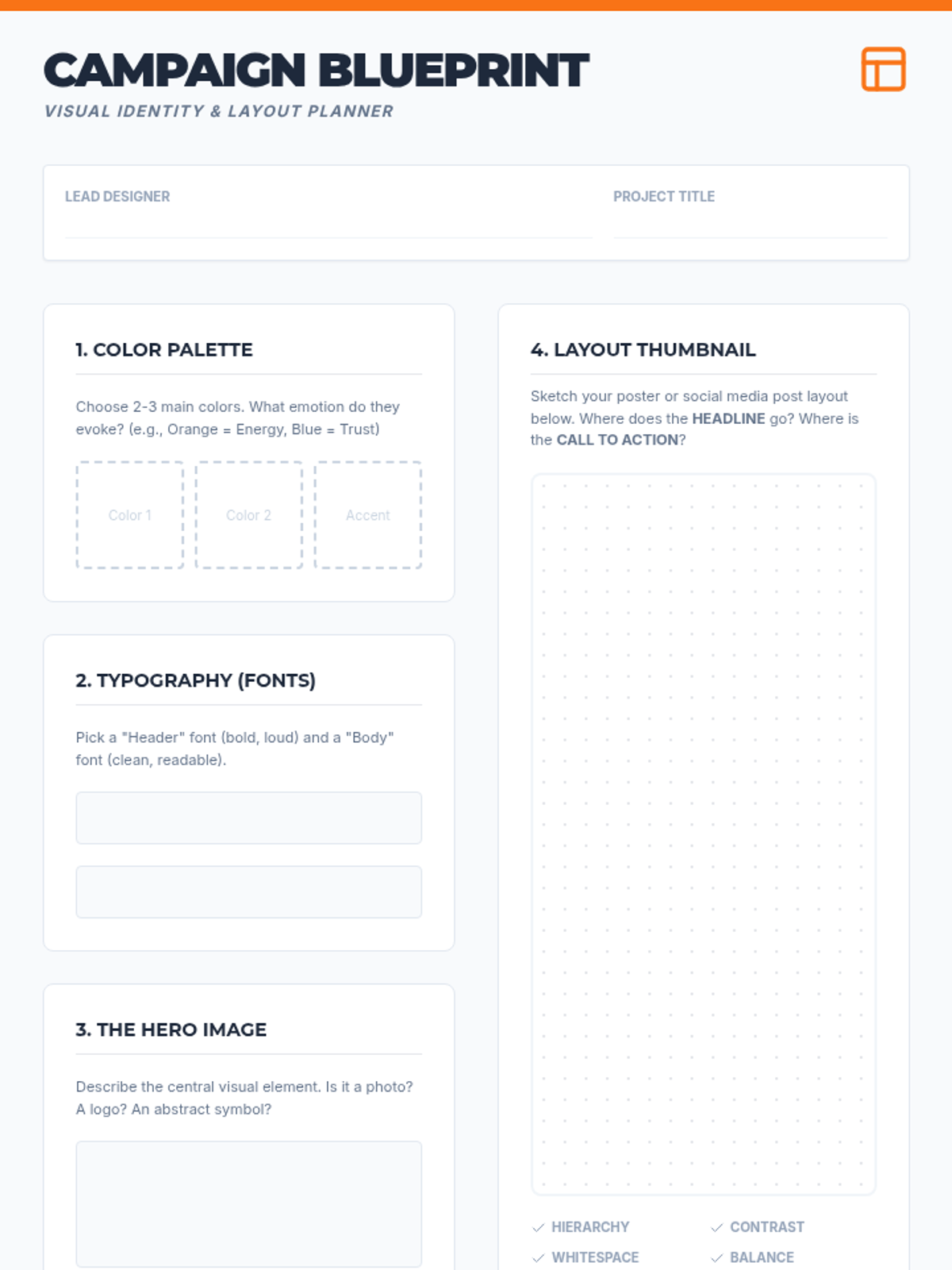
Students design visual advocacy materials, focusing on branding and media literacy to capture public attention.
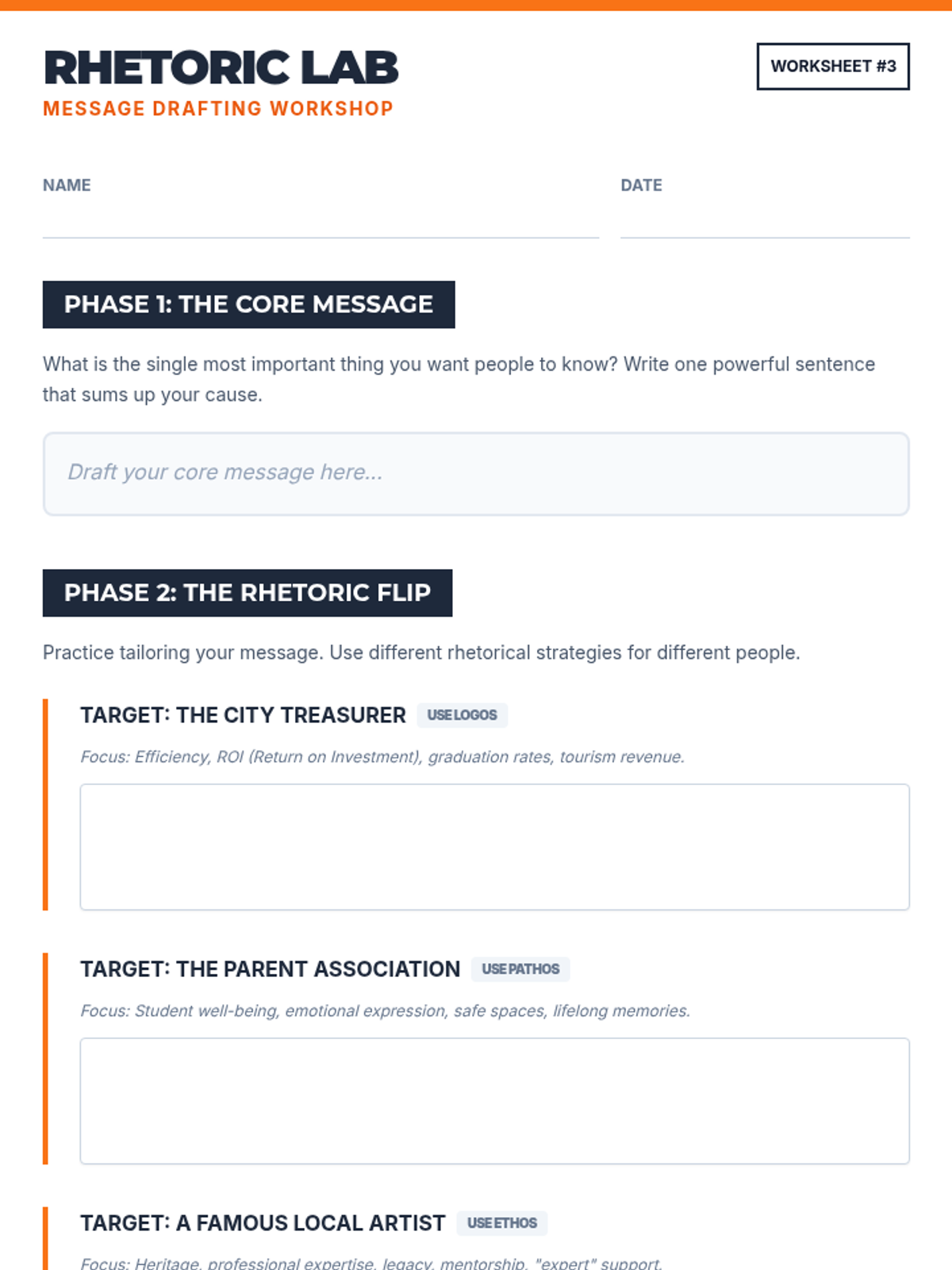
Students learn to blend emotional appeals and factual evidence to craft a compelling persuasive narrative for their arts cause.
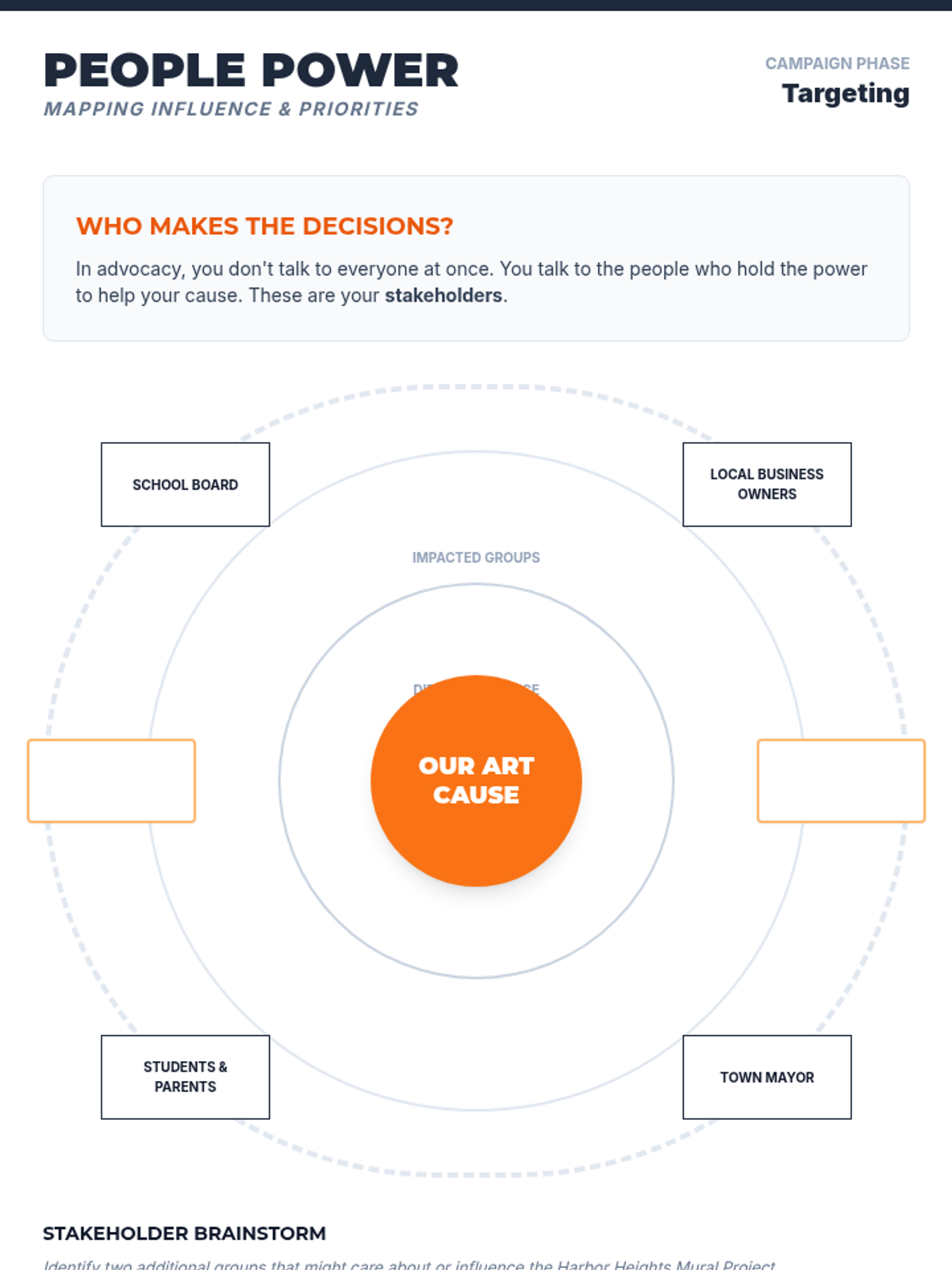
Learners map out stakeholders and use empathy mapping to understand the values and priorities of different audience groups.
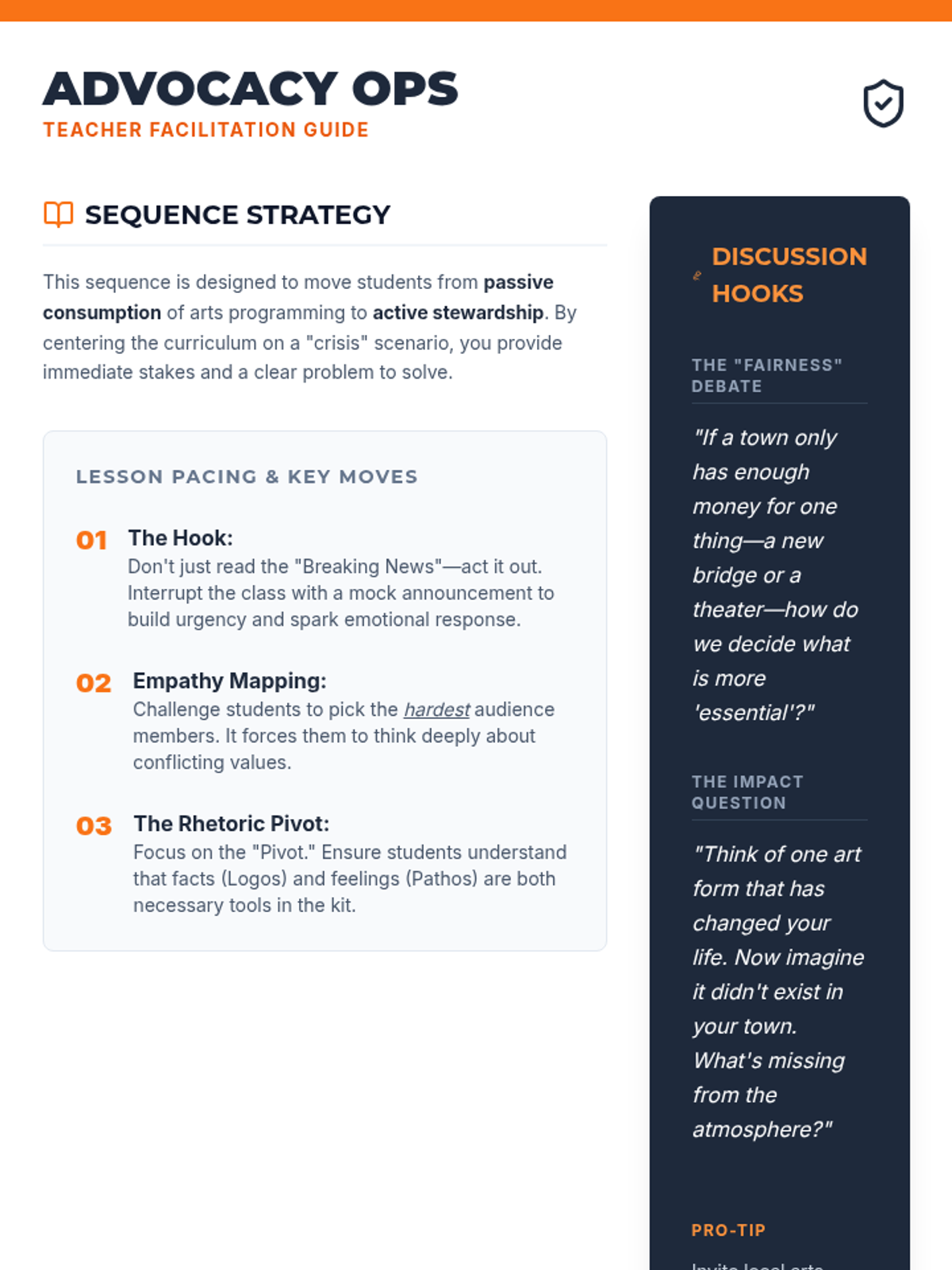
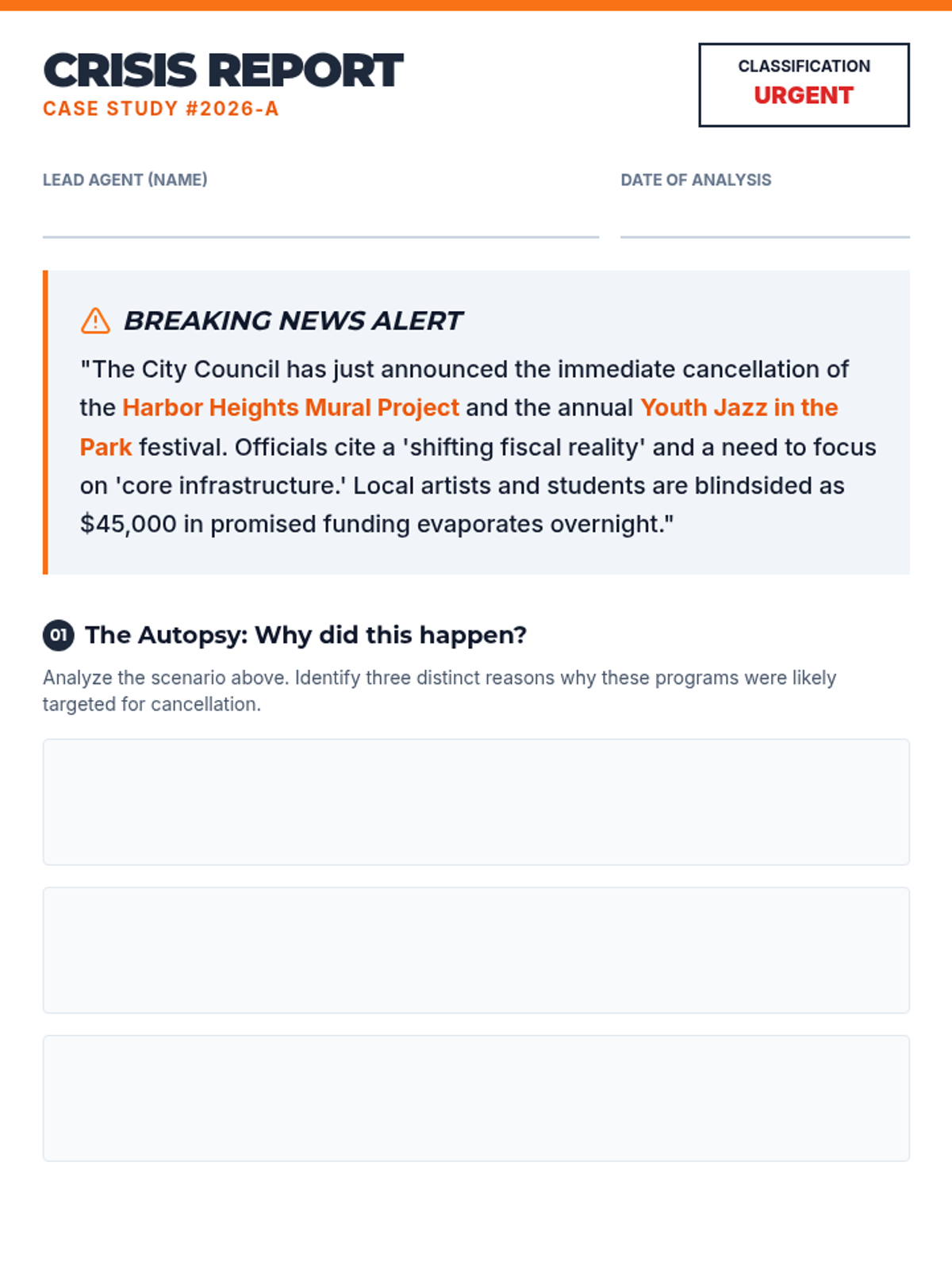
Students analyze hypothetical scenarios where arts programs face budget cuts or closure to identify root causes and specific advocacy needs.
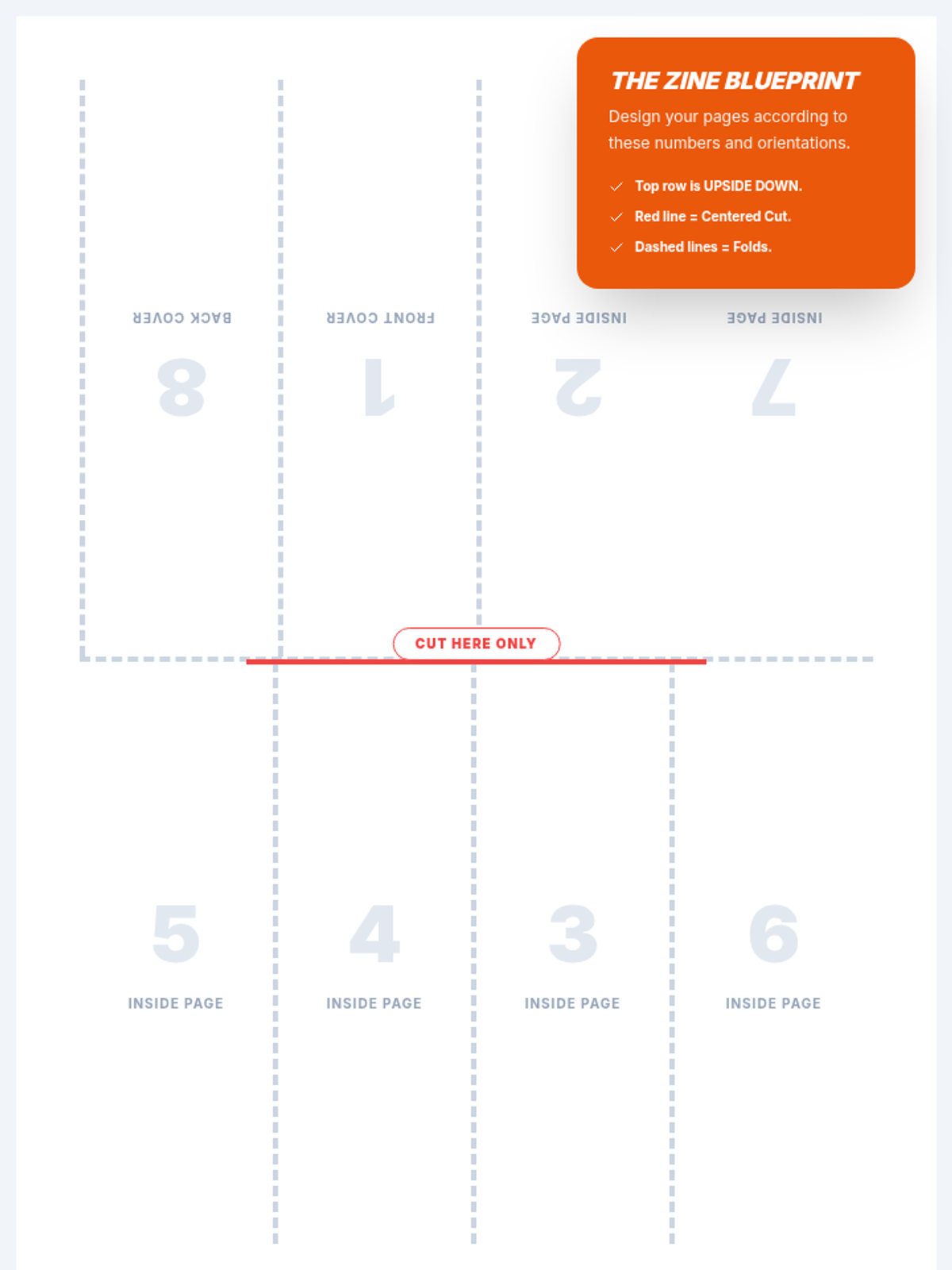
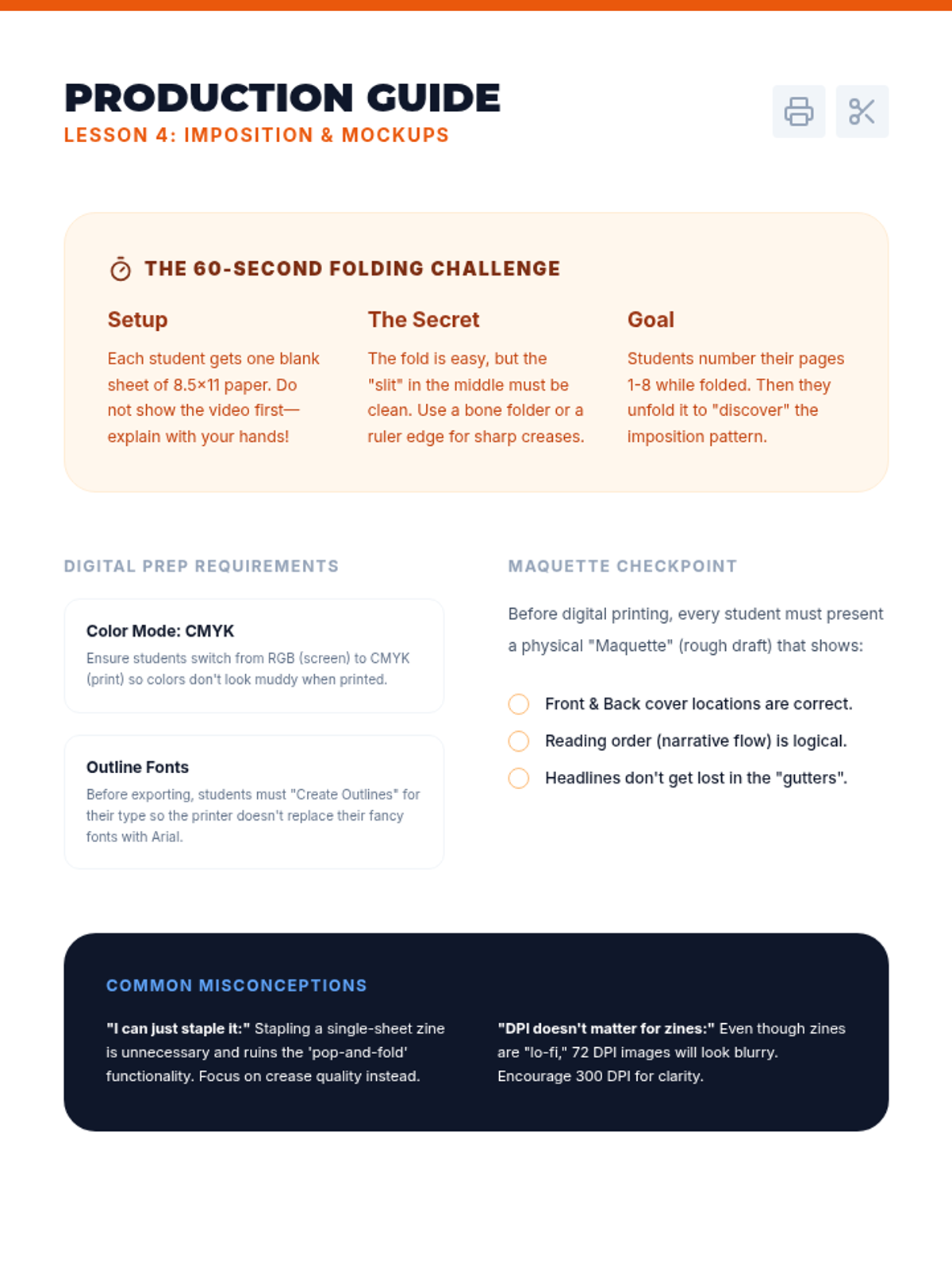
Students learn the technical side of print production, focusing on page imposition for an 8-page booklet. Includes a physical mock-up workshop to master the 'one-sheet zine' fold.
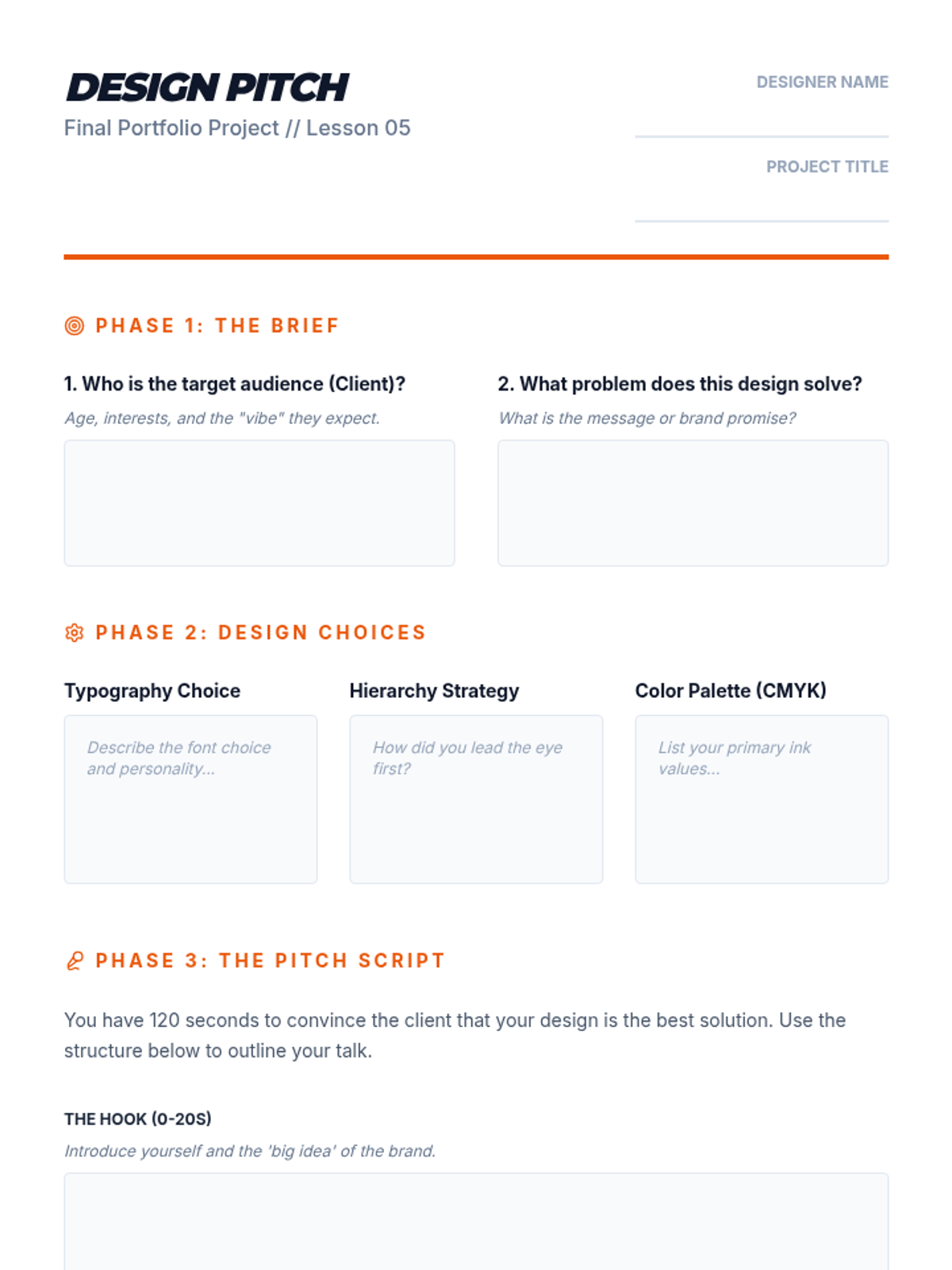
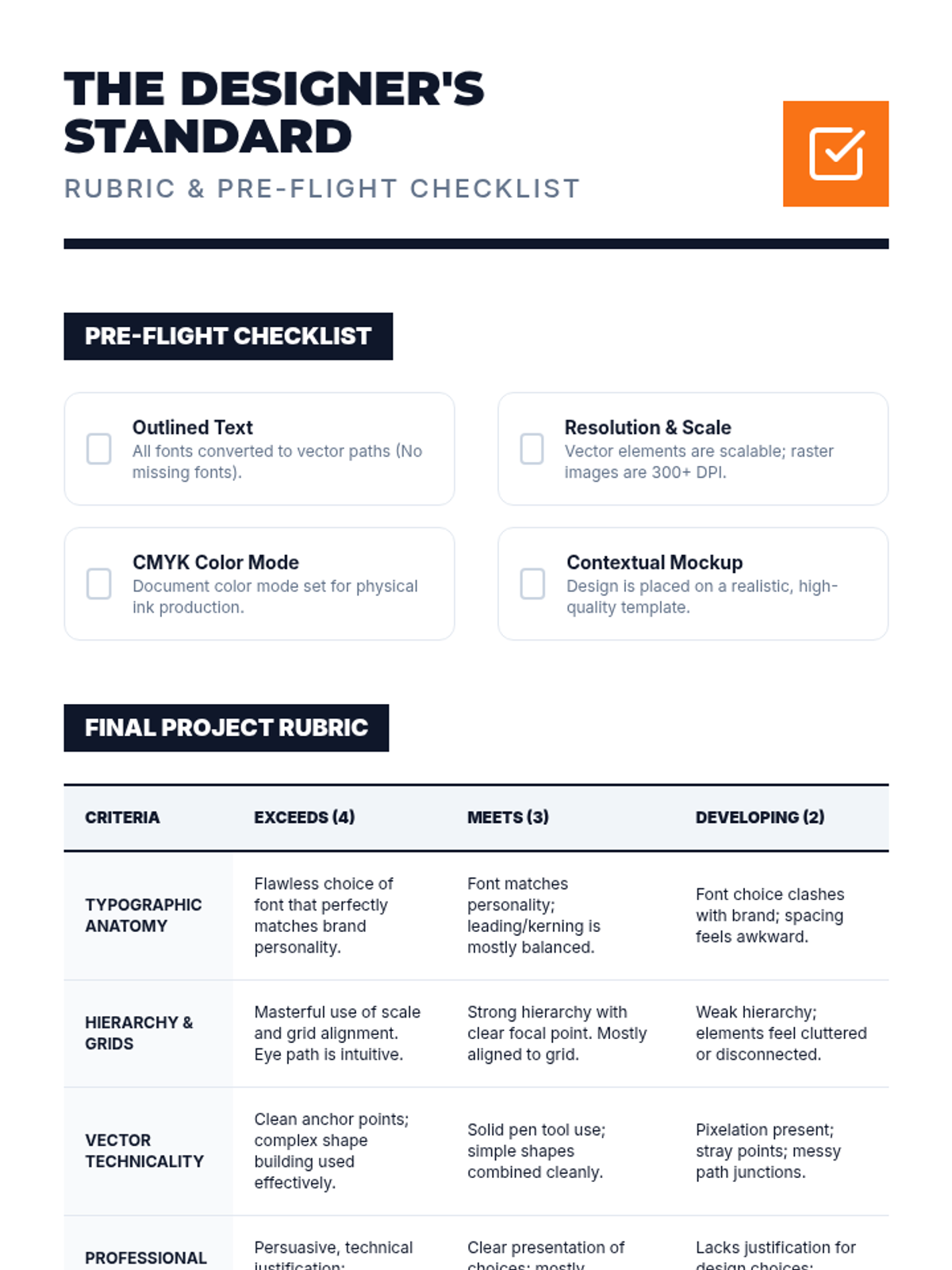
Students finalize their designs and use mockup templates to visualize real-world applications. The lesson culminates in a professional design pitch.
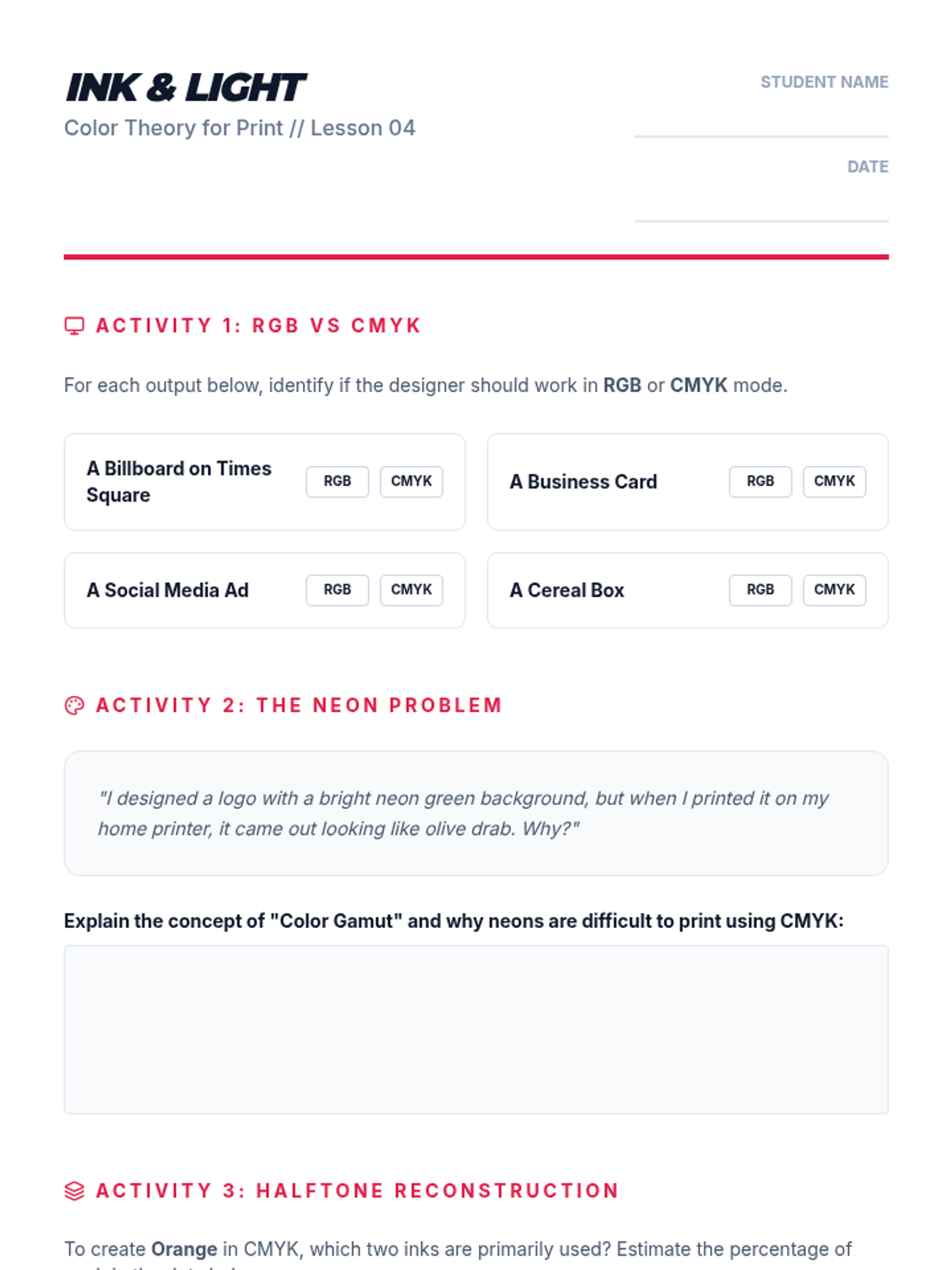
A technical exploration of color modes (RGB vs. CMYK) and preparing digital files for physical print production.
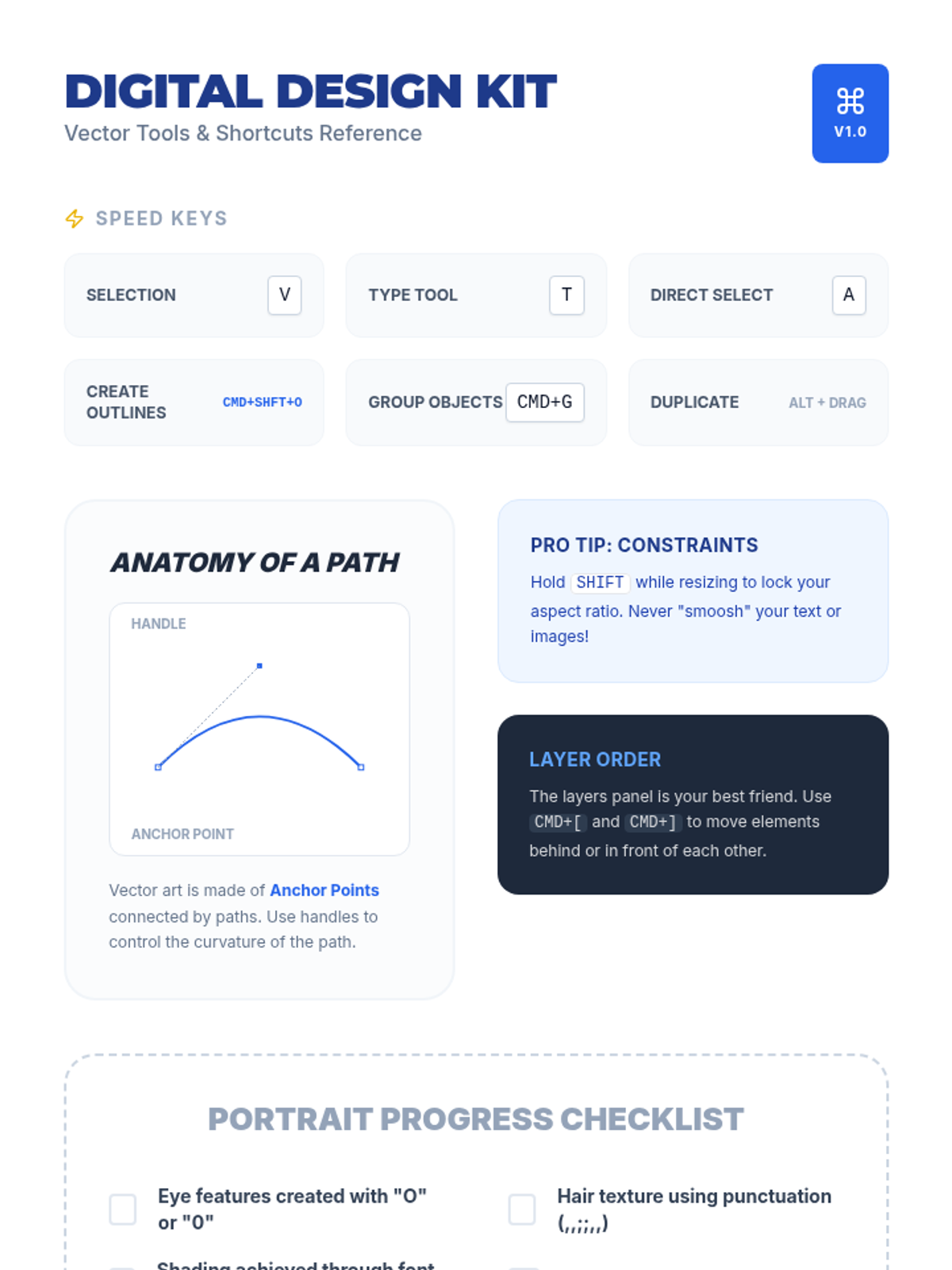
Students transition to design software, learning to manipulate vector shapes and treat text as a visual object. Includes a creative challenge to build a portrait using type.
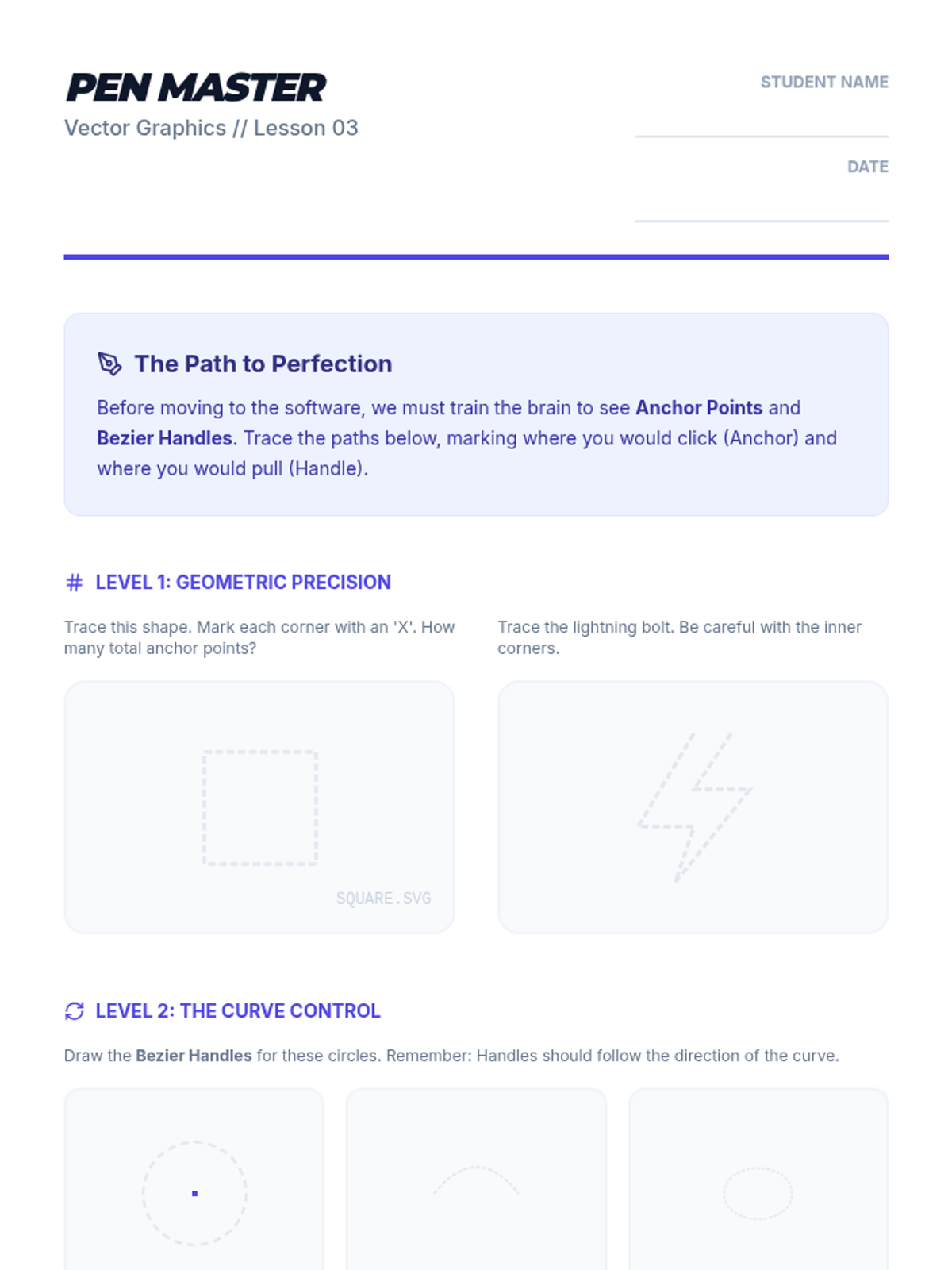
Students learn the fundamentals of vector graphics, focusing on the pen tool and shape builders. They design a personal logo or monogram that combines text and image.
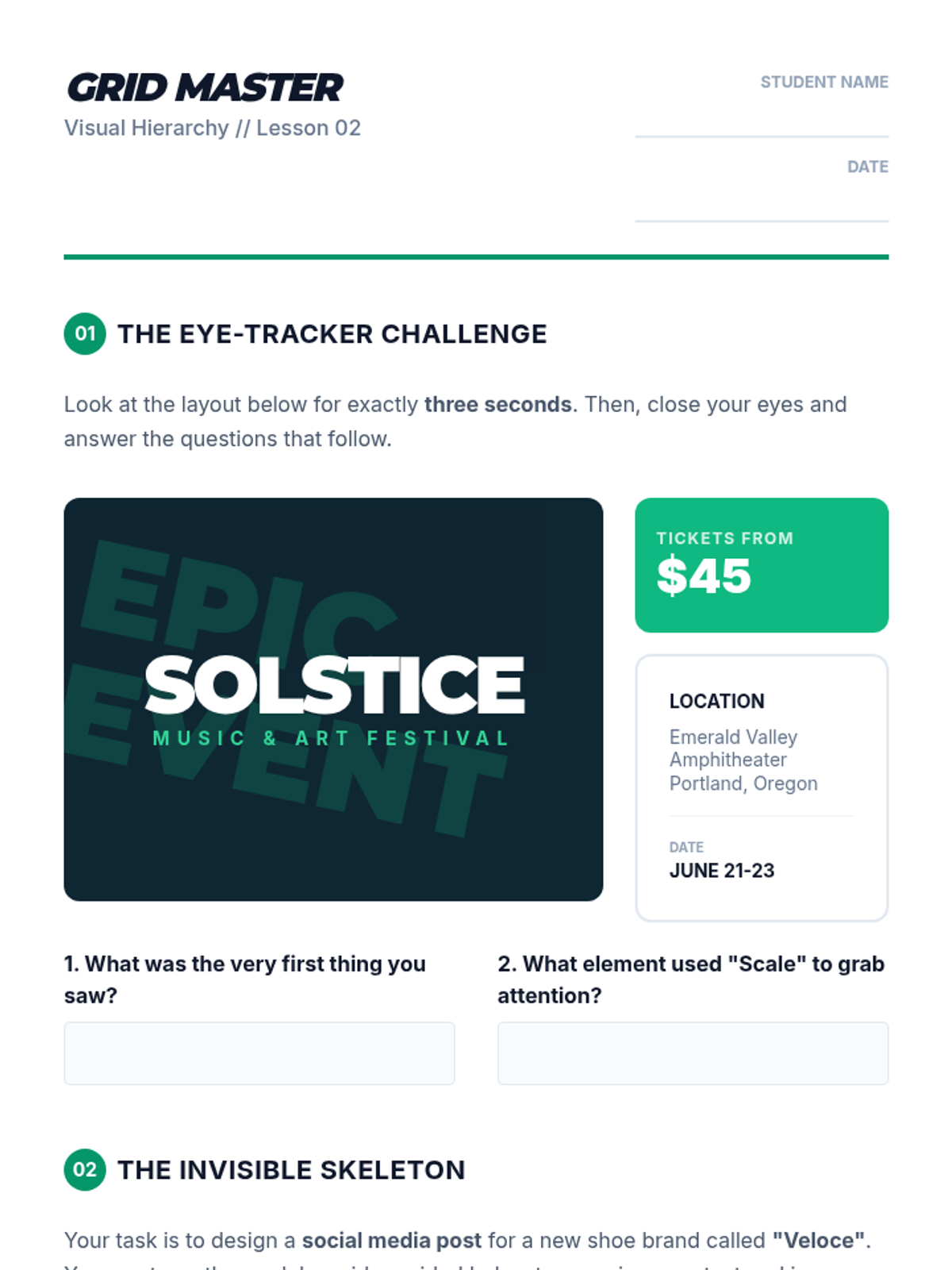
Using digital layout software, students arrange text and shapes using grids. They learn to guide the viewer's eye using scale, color, and placement to create balanced compositions.
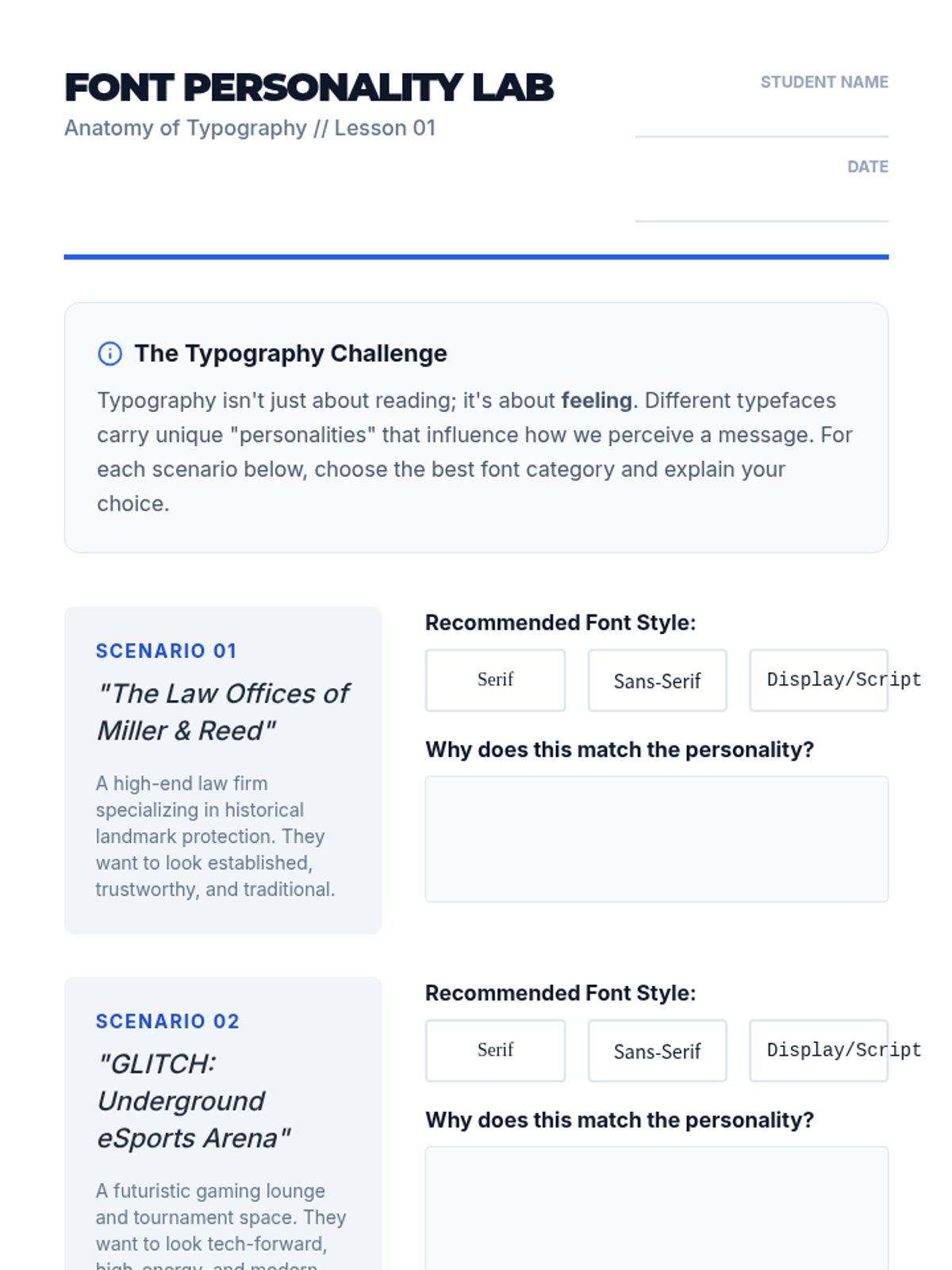
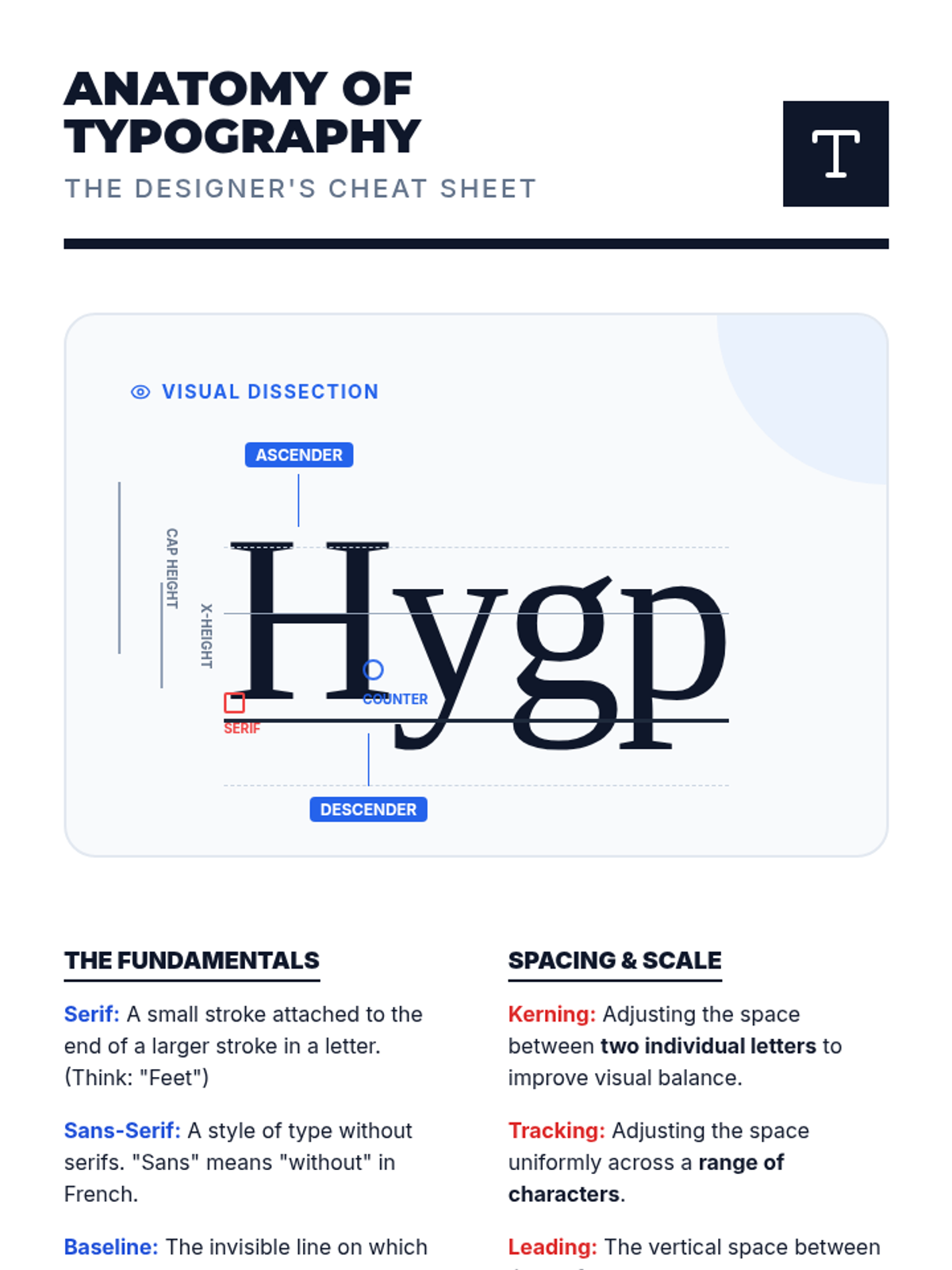
Students dissect typefaces, learning essential terms like serif, sans-serif, kerning, and leading. They explore the emotional impact of font choices through 'font personality' exercises.
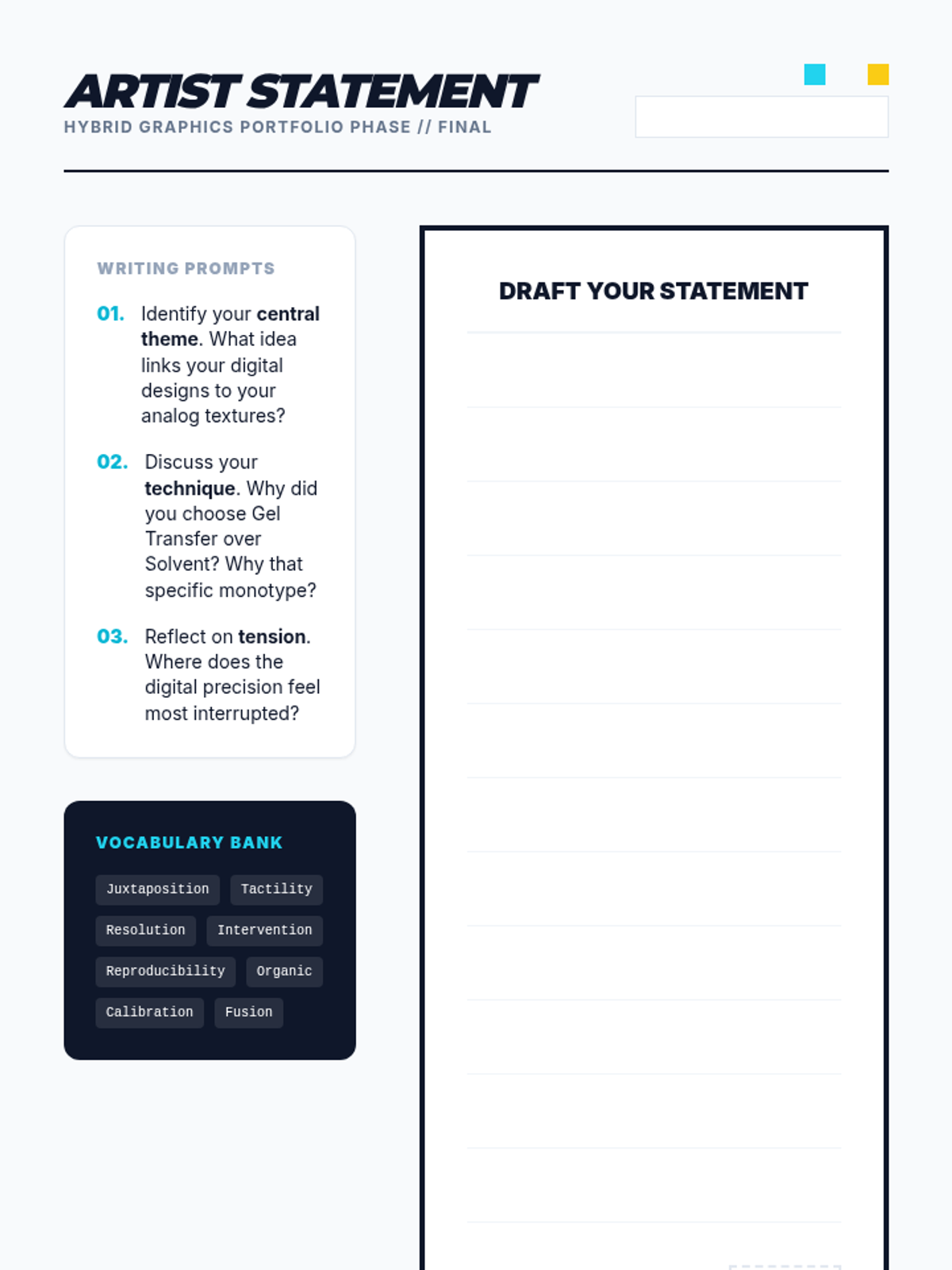
Students curate their work and write professional artist statements to reflect on their hybrid workflow.
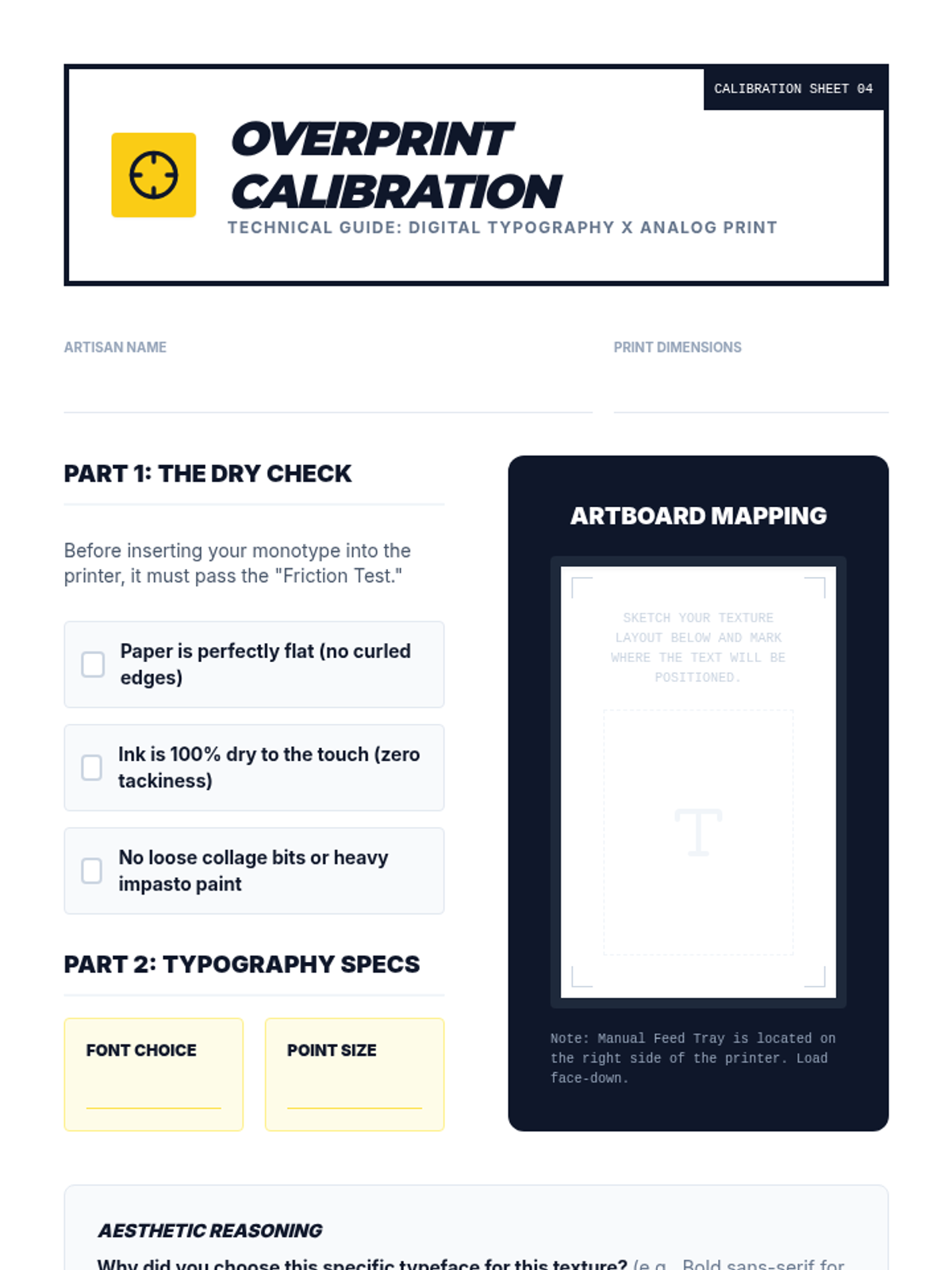
A technical workshop on overprinting digital typography onto analog monotypes, focusing on alignment and legibility.
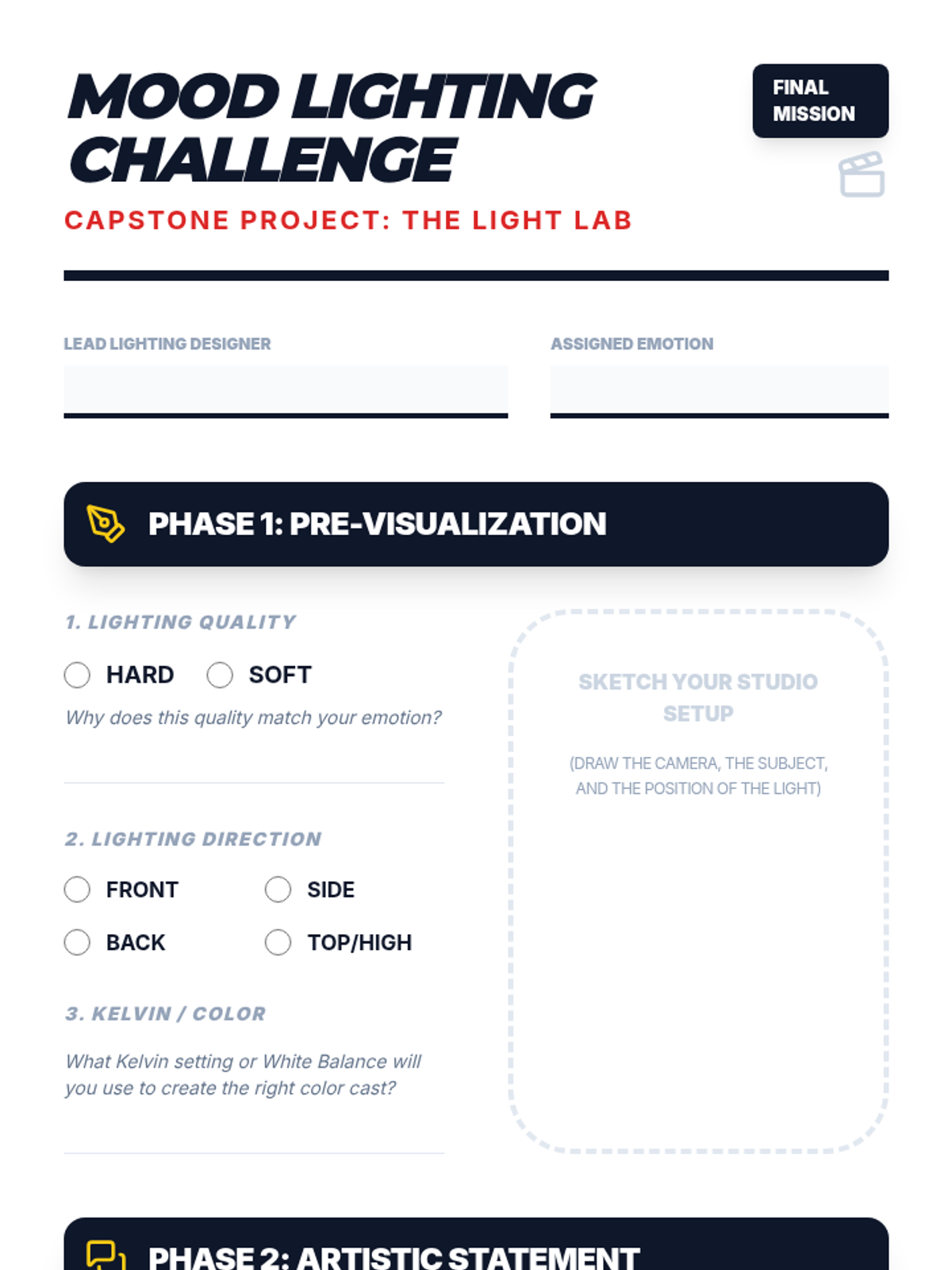
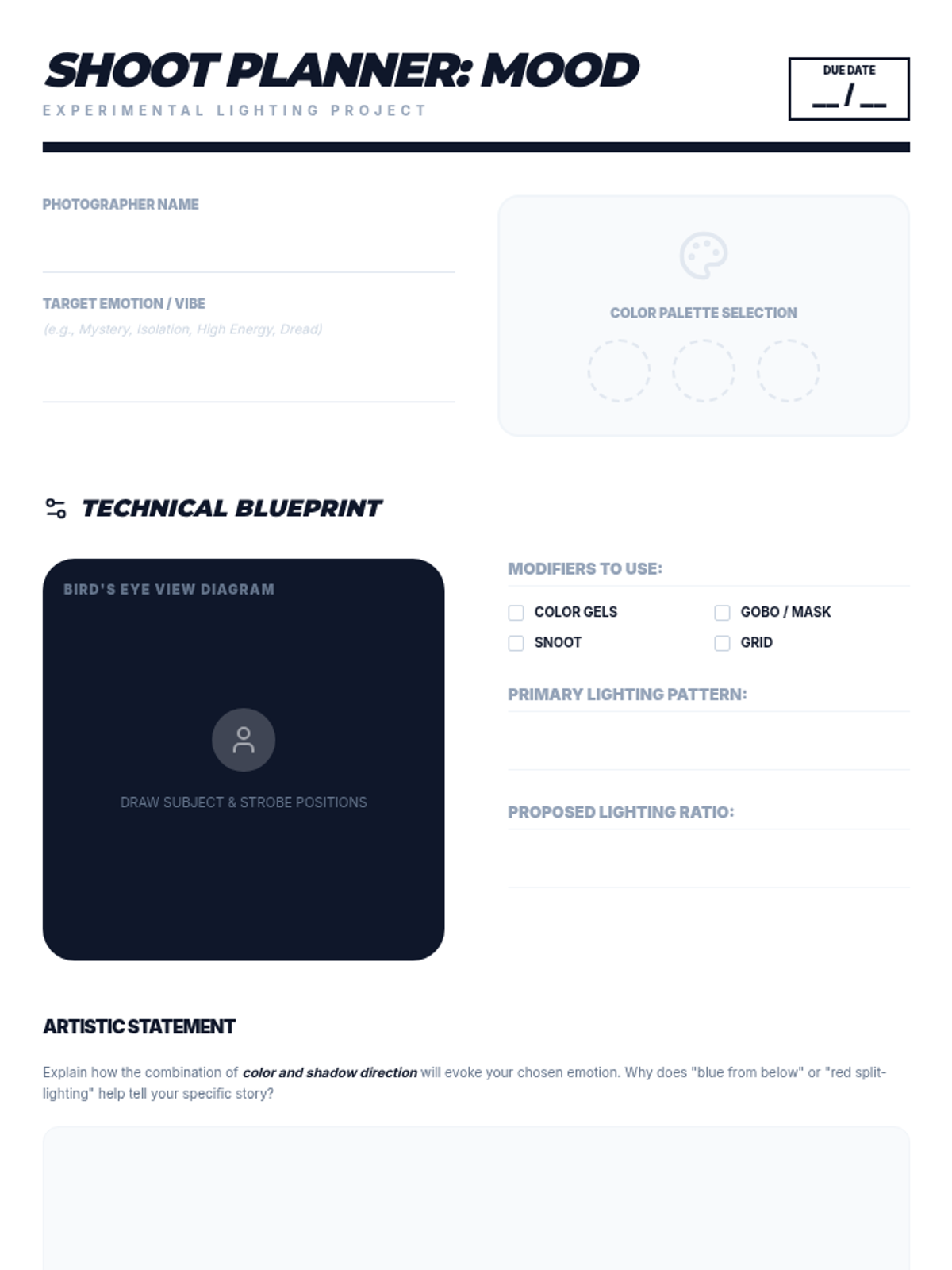
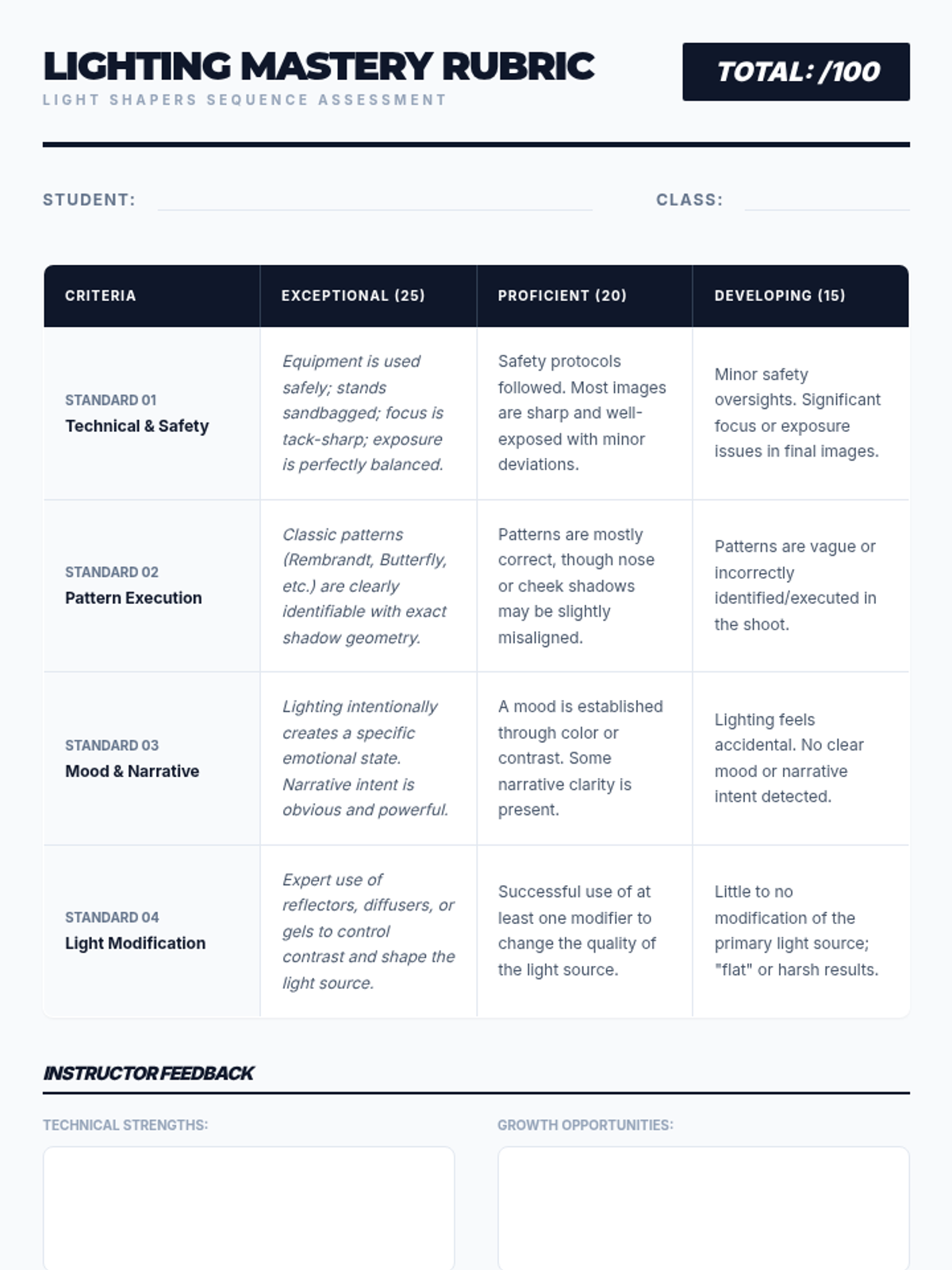
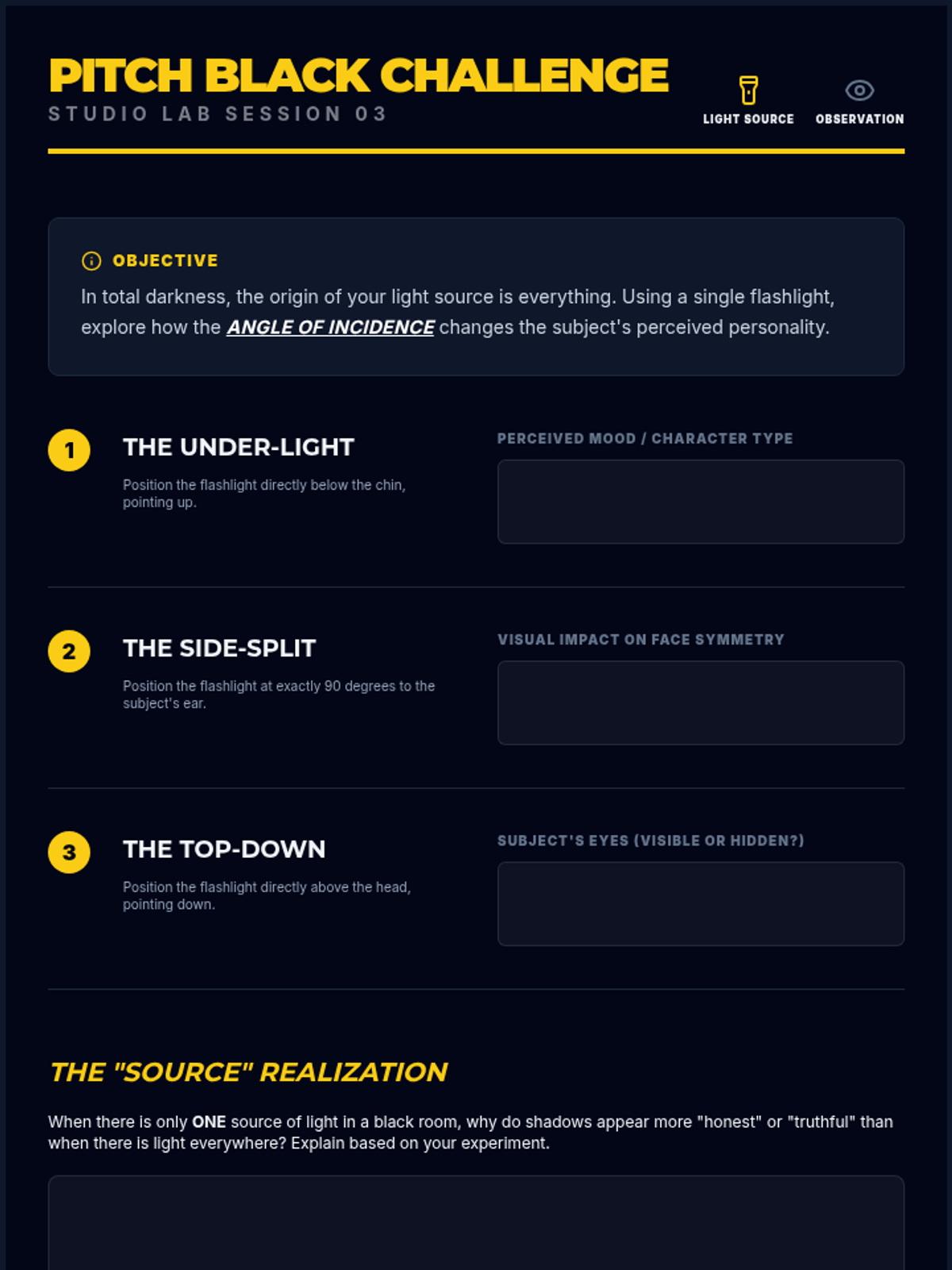
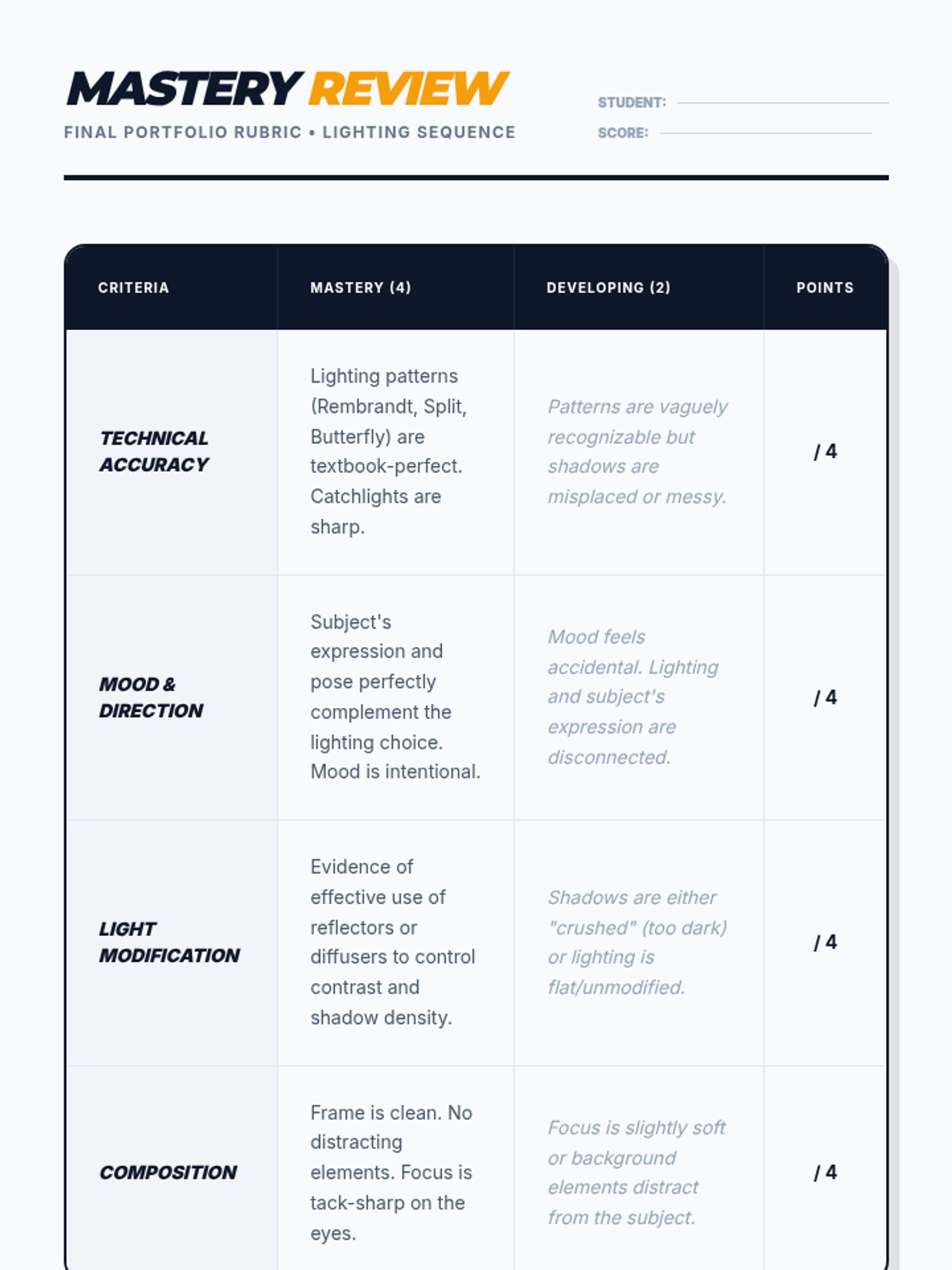
A cumulative project where students design lighting setups to convey specific emotions without relying on facial expressions.
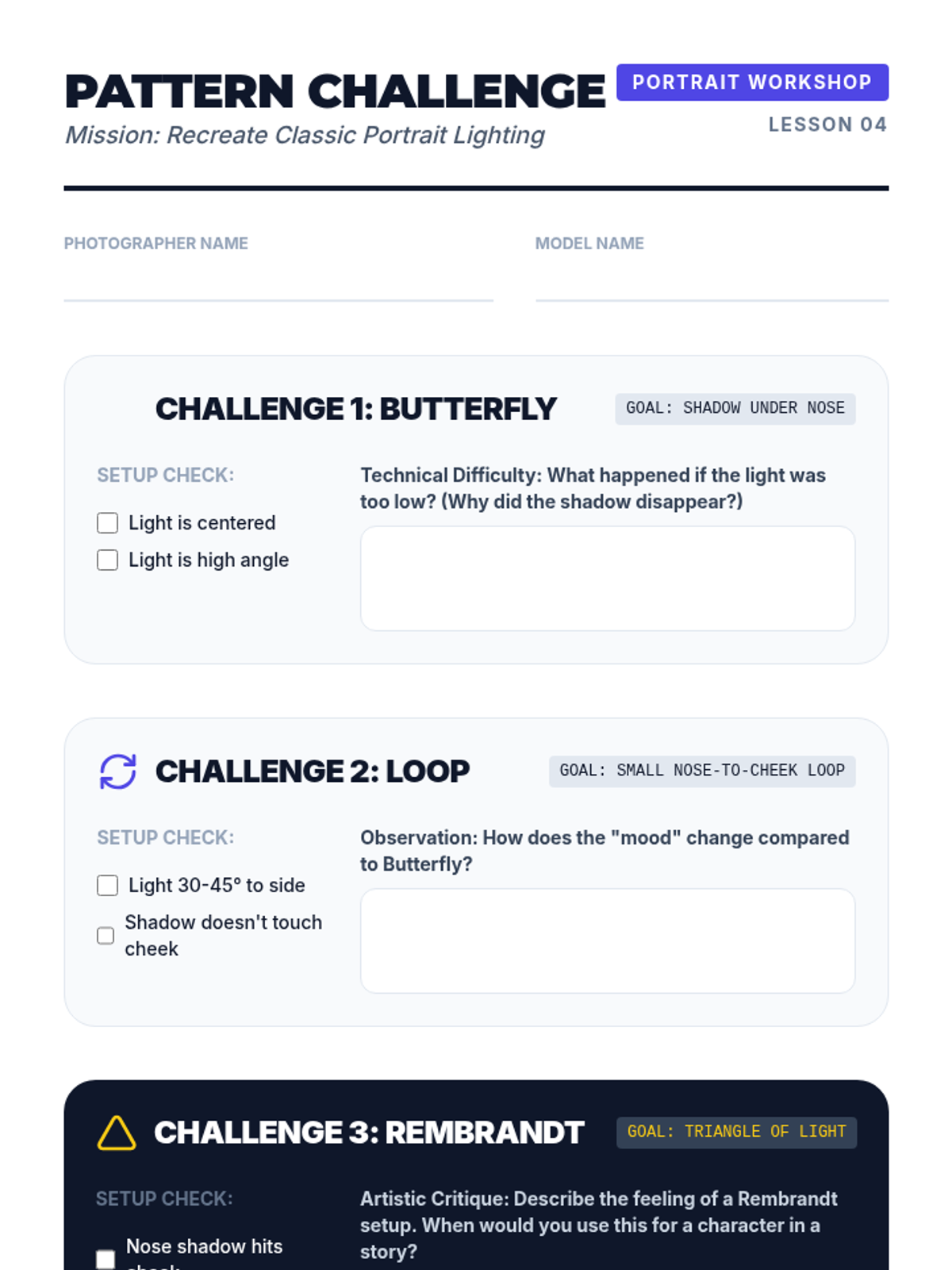
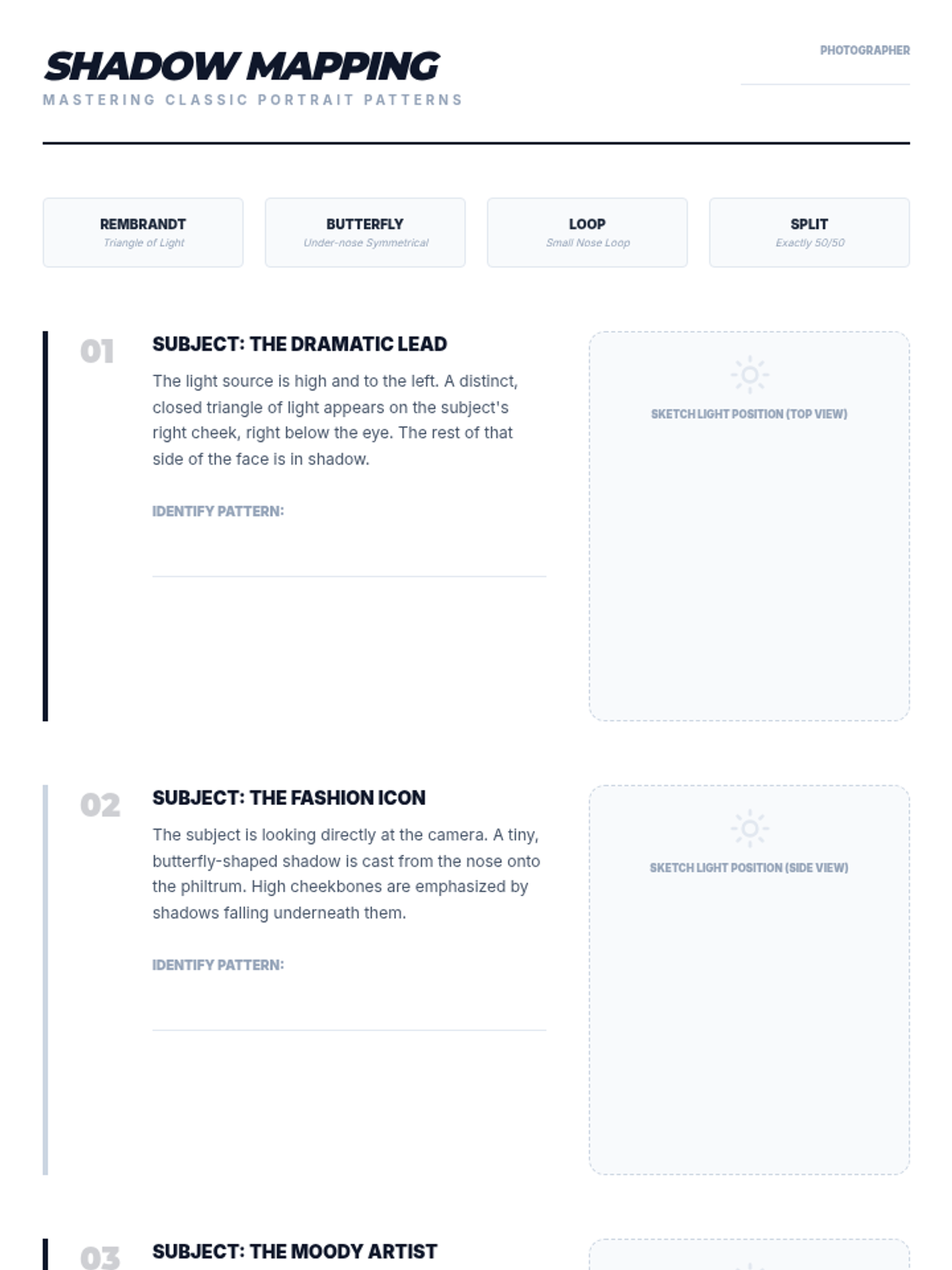
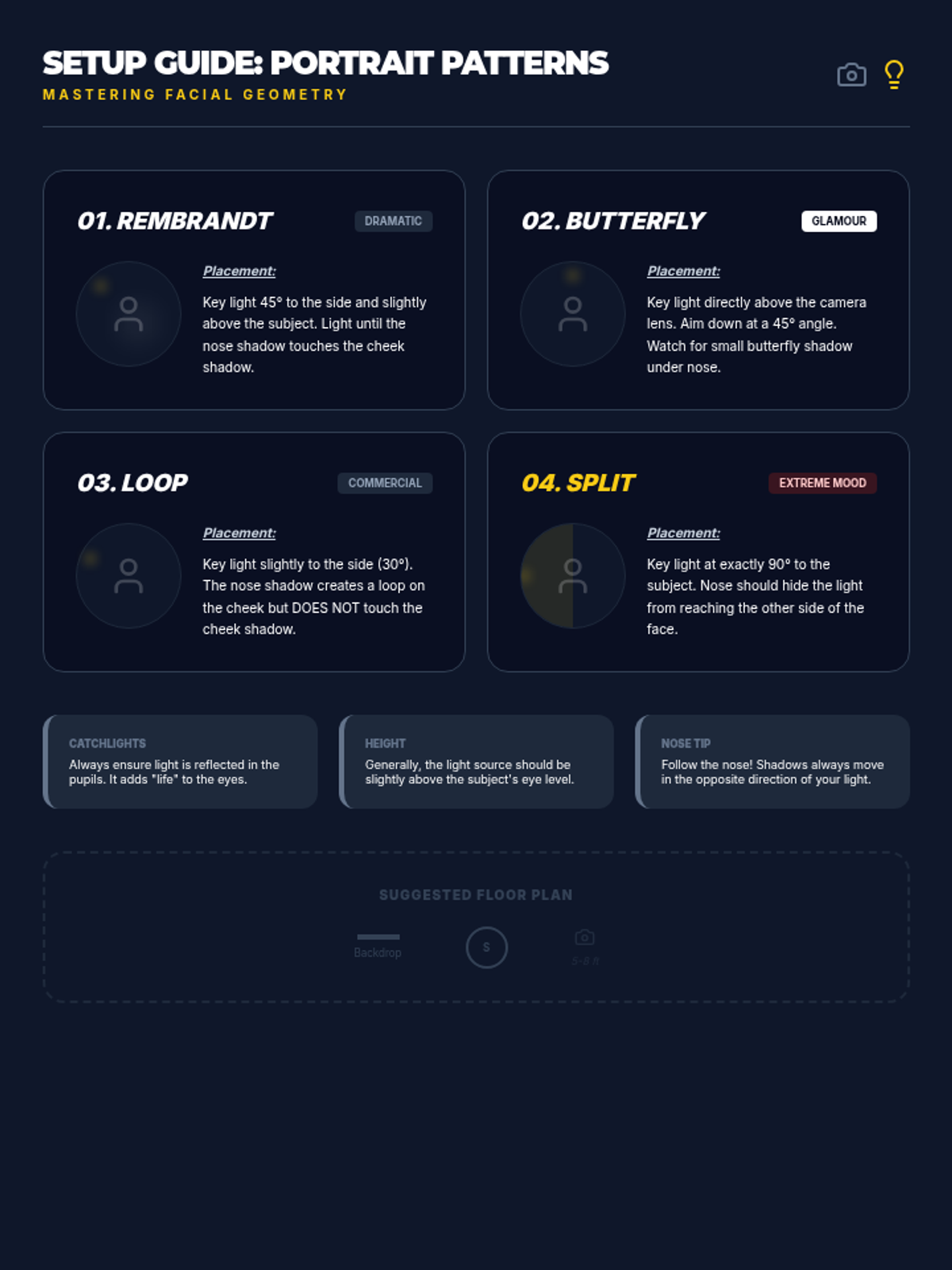
Introduction to classic studio lighting patterns (Rembrandt, Loop, Butterfly) using simple equipment to create professional portraits.
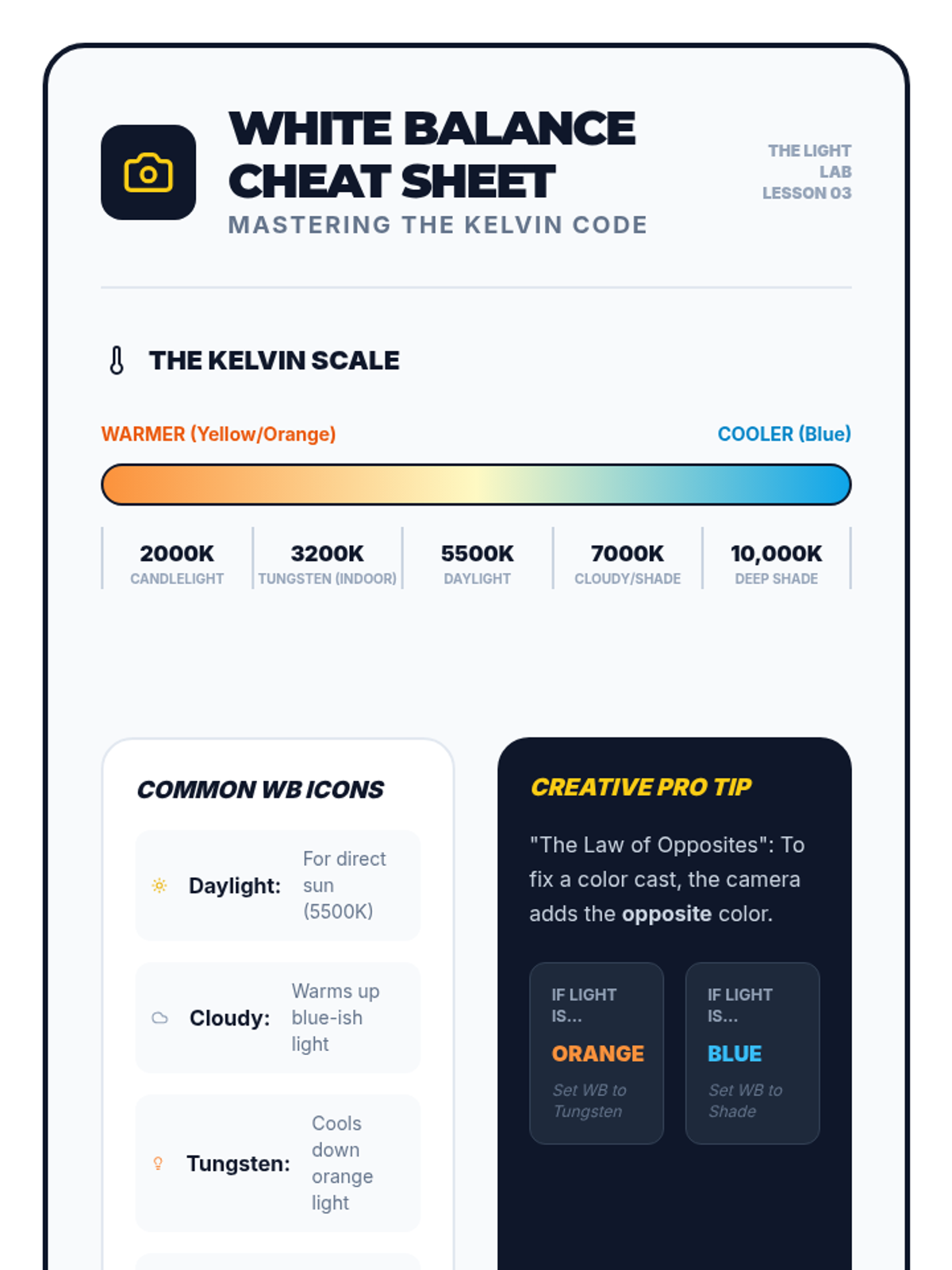
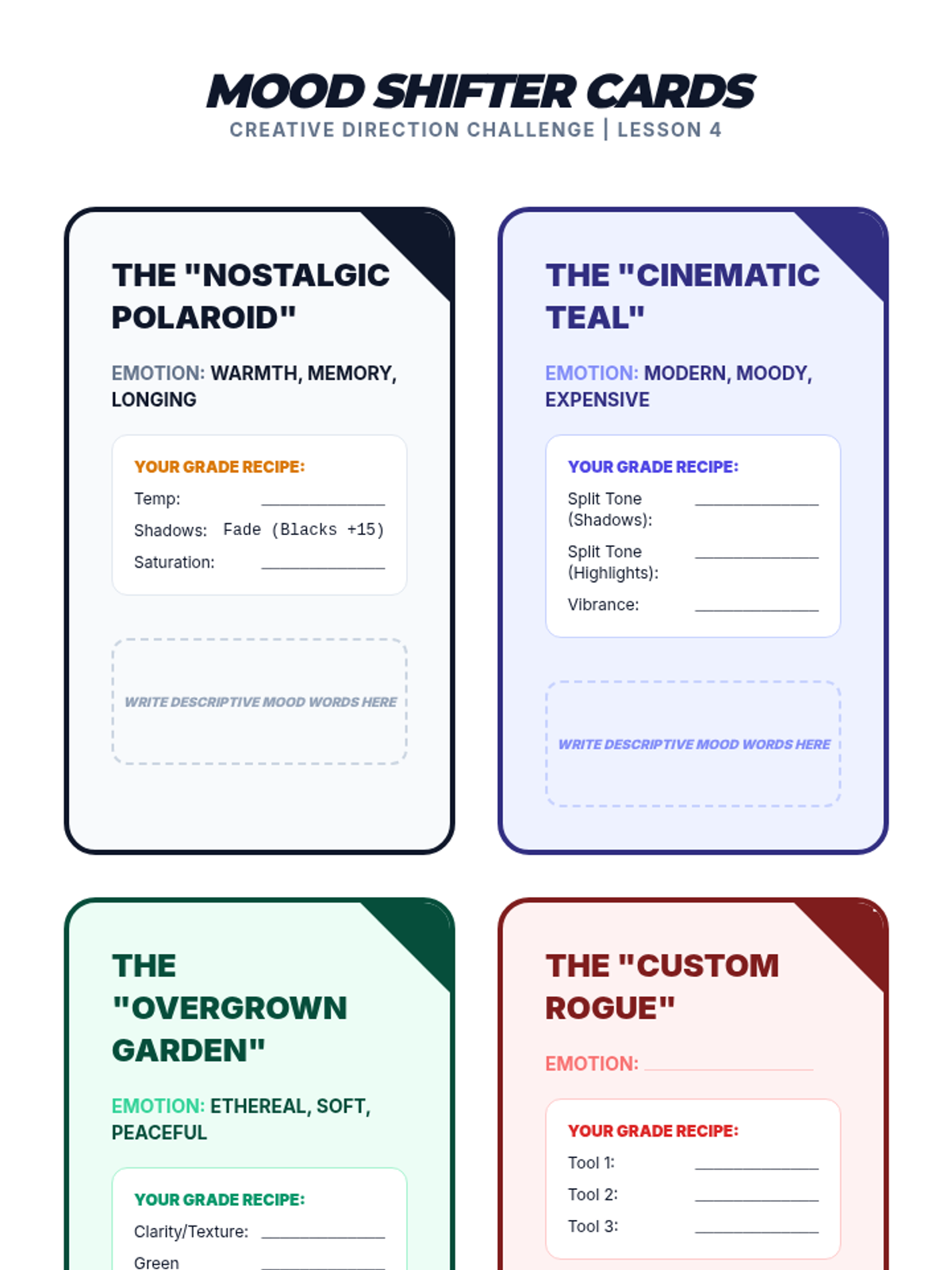
An exploration of the Kelvin scale and White Balance settings, teaching students how to manage color casts and use temperature for emotional impact.
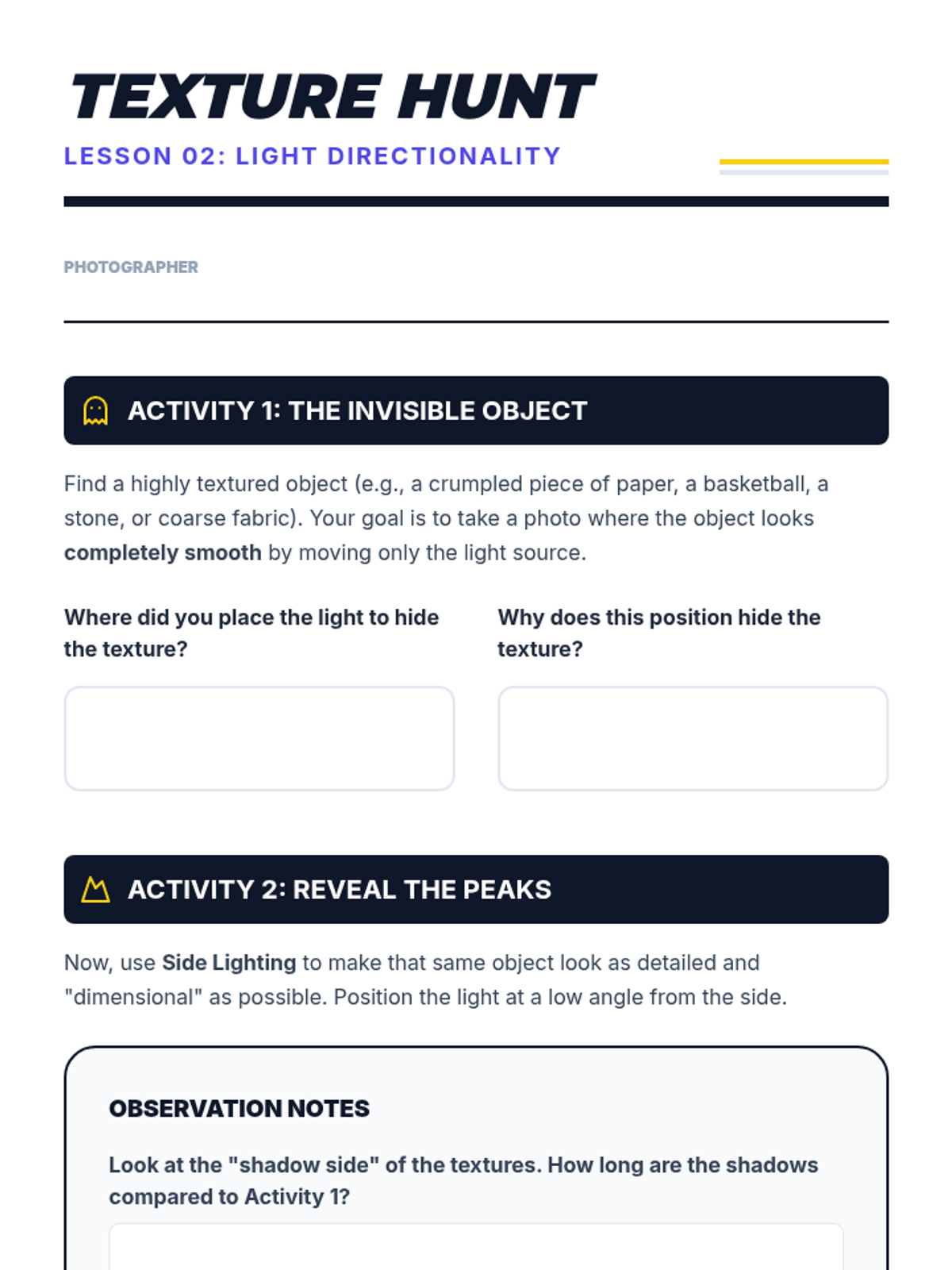
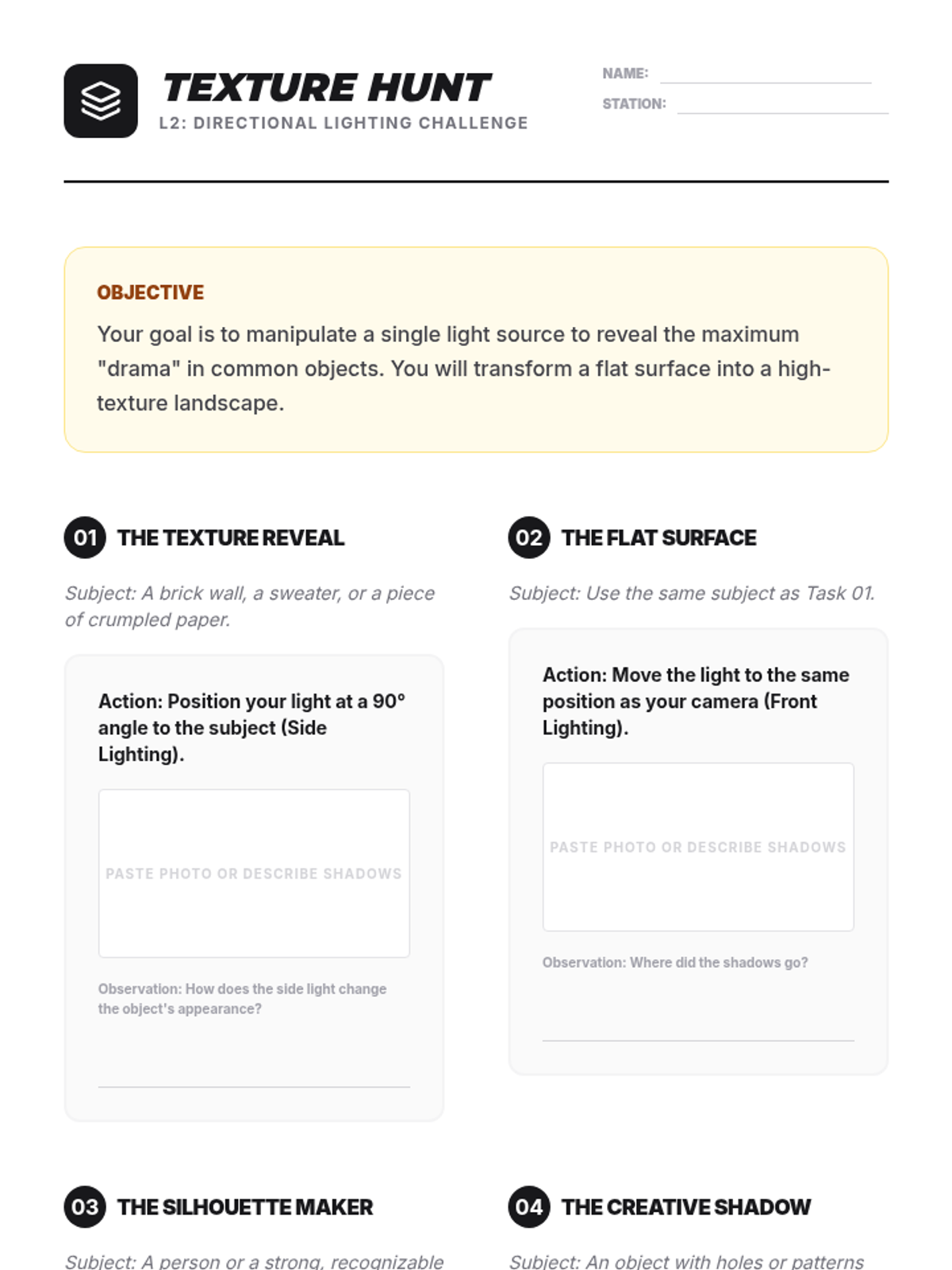
Focusing on light direction (front, side, back), students learn to emphasize texture and create silhouettes while understanding how lighting placement affects depth.
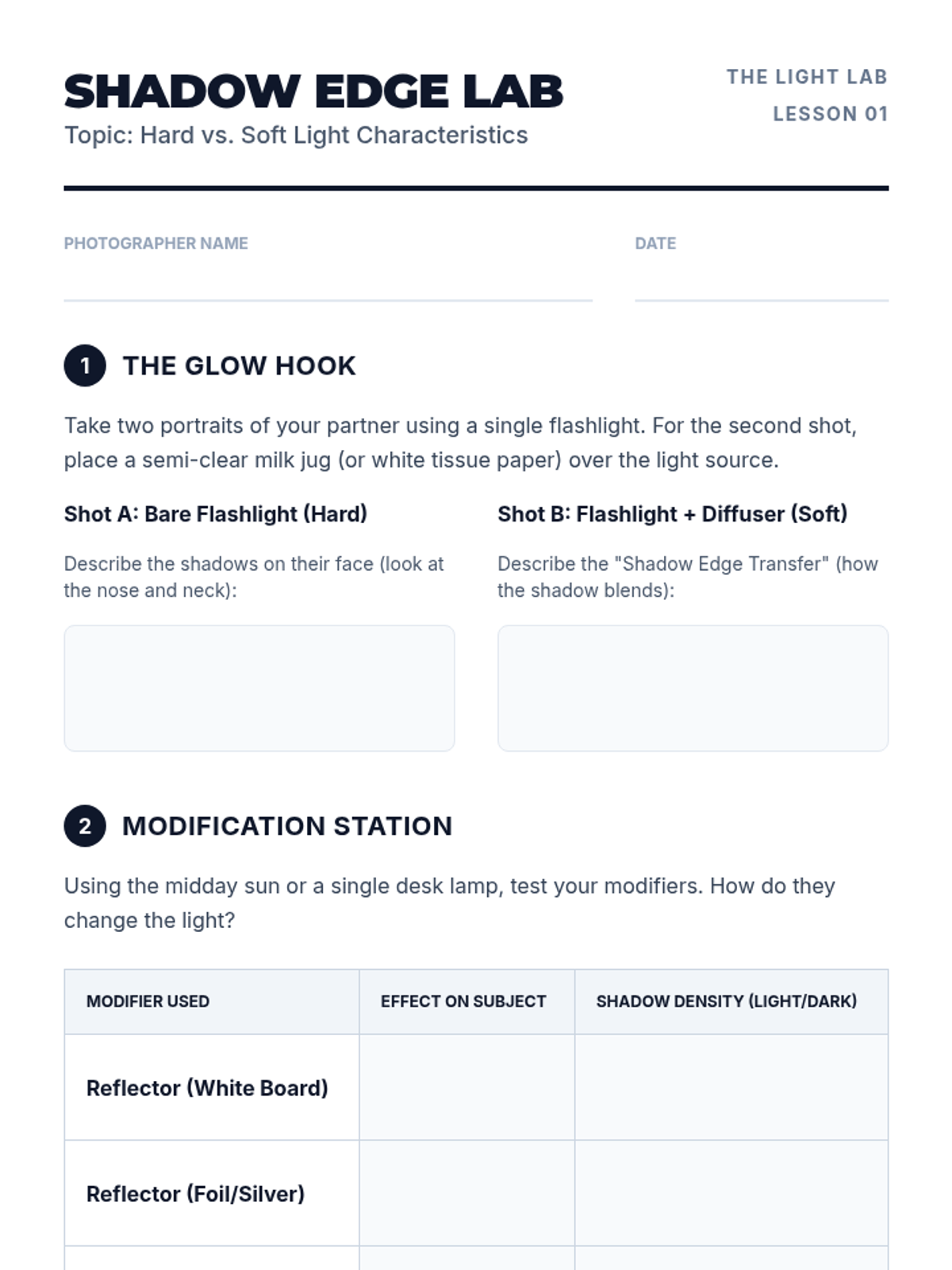
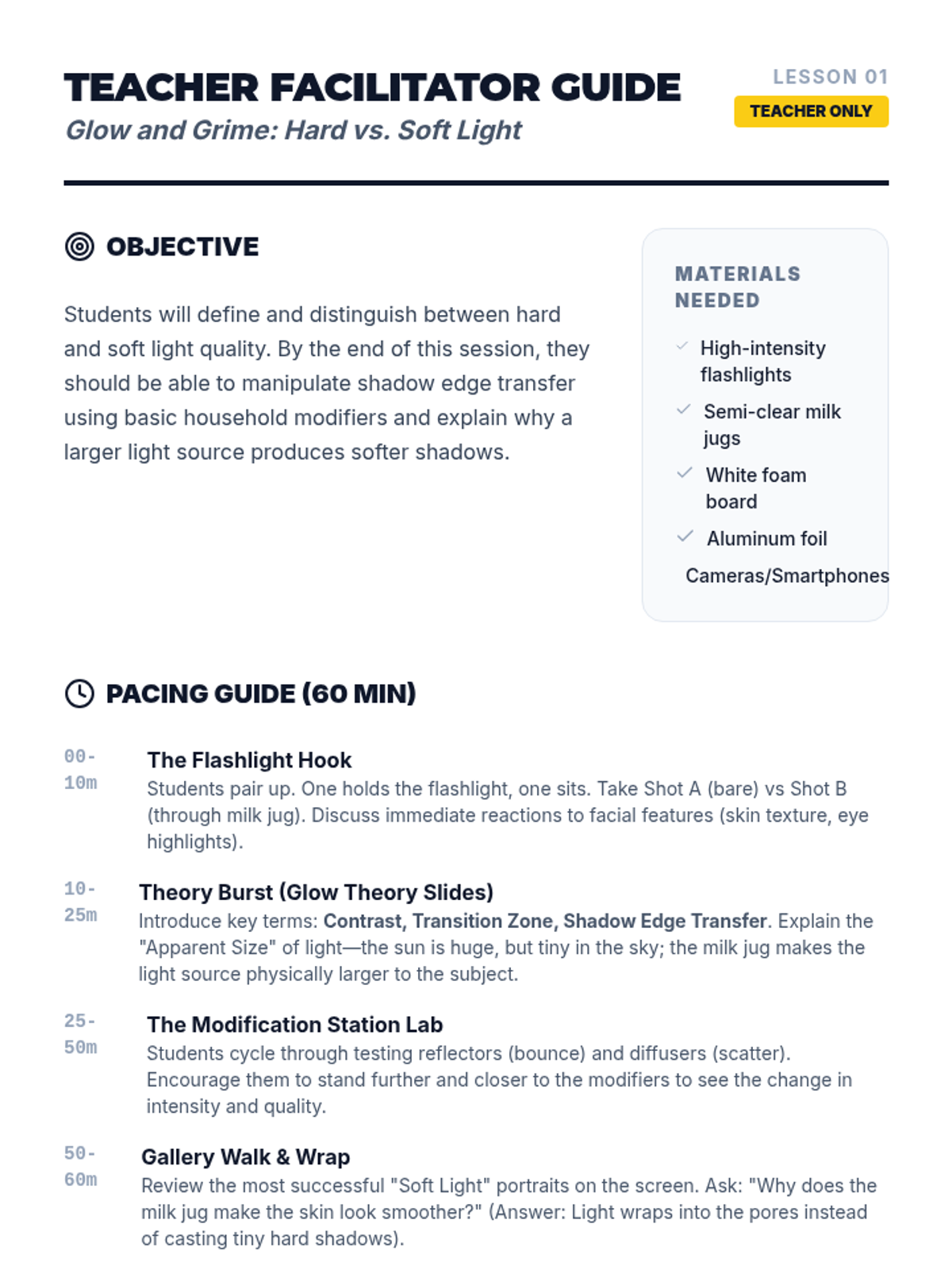
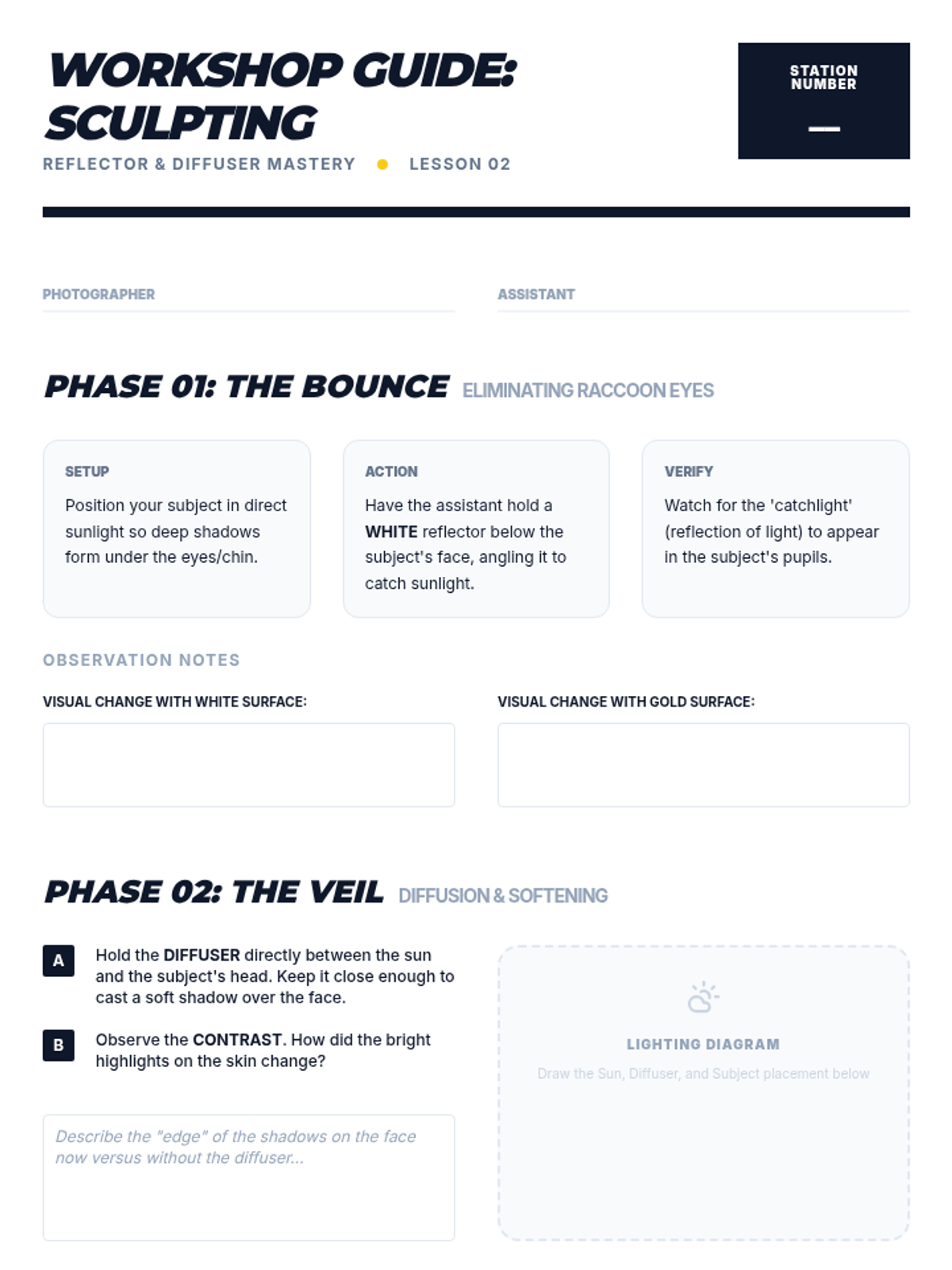
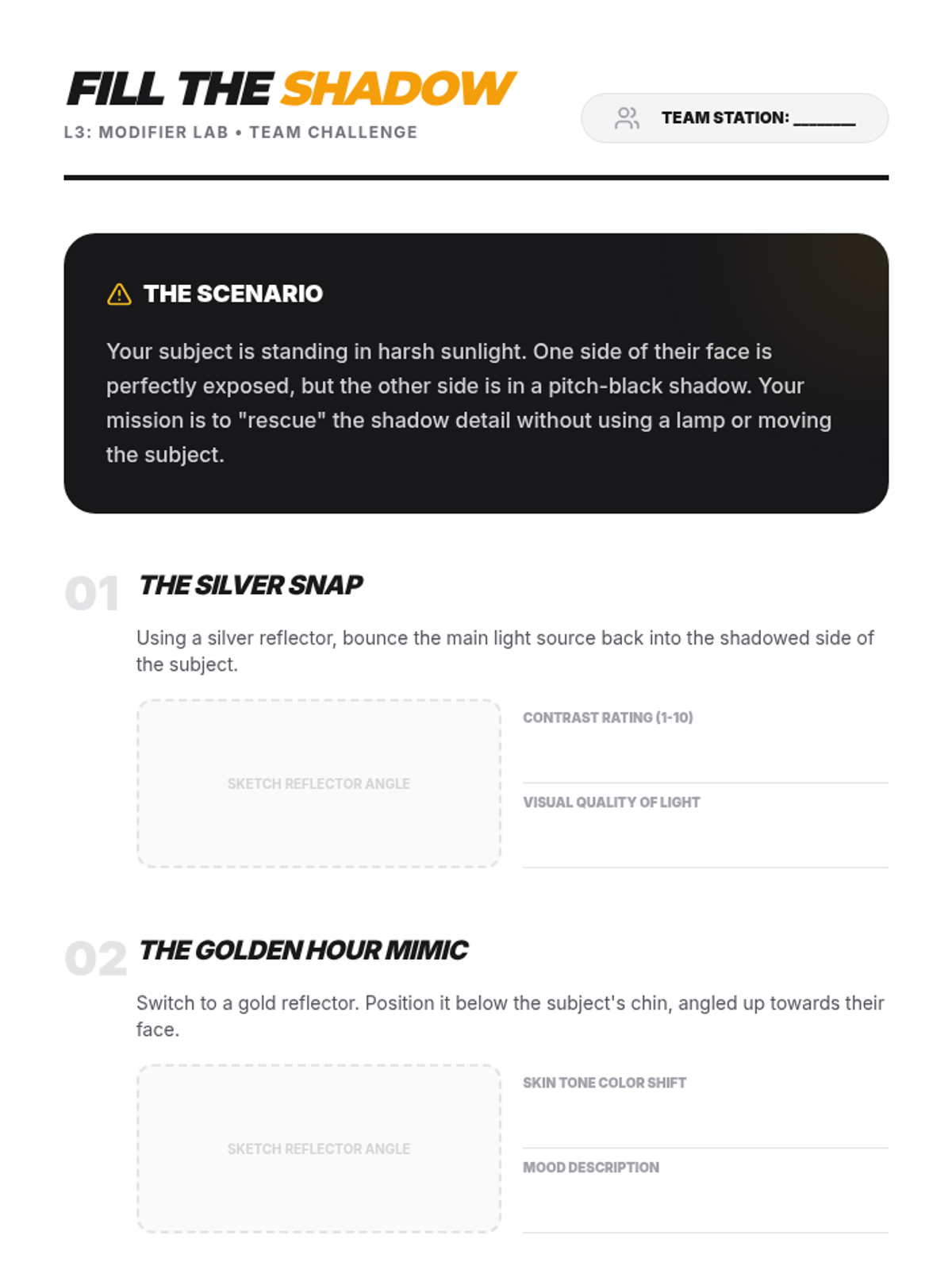
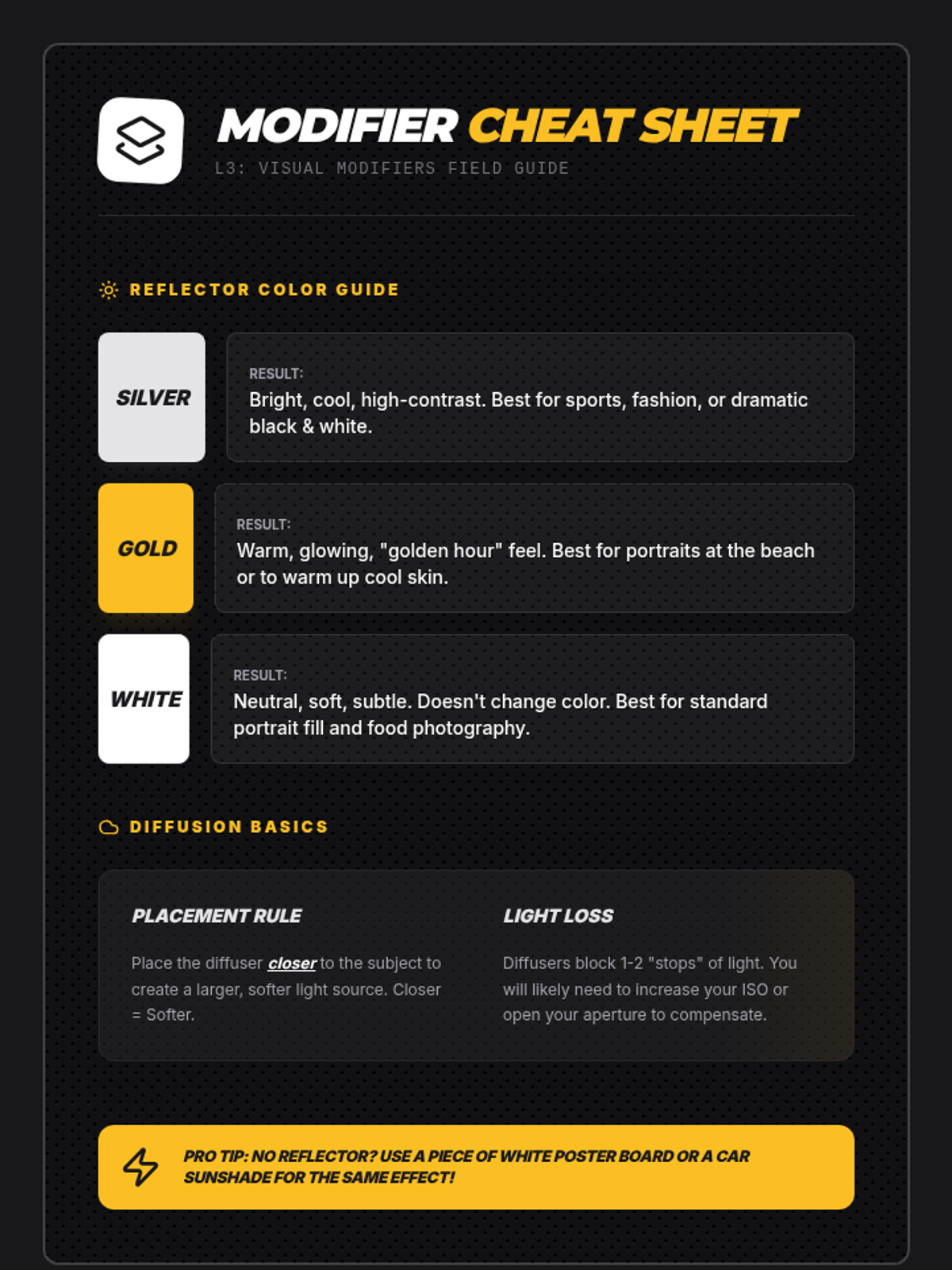
Students compare direct sunlight (hard) and overcast sky (soft) light, using modifiers like reflectors and diffusers to manipulate shadow edge transfer and contrast.
An exploration of experimental techniques using color gels and modifiers to convey specific emotional states through light.
Students master historical lighting patterns like Rembrandt and Butterfly to understand how shadow placement defines facial structure.
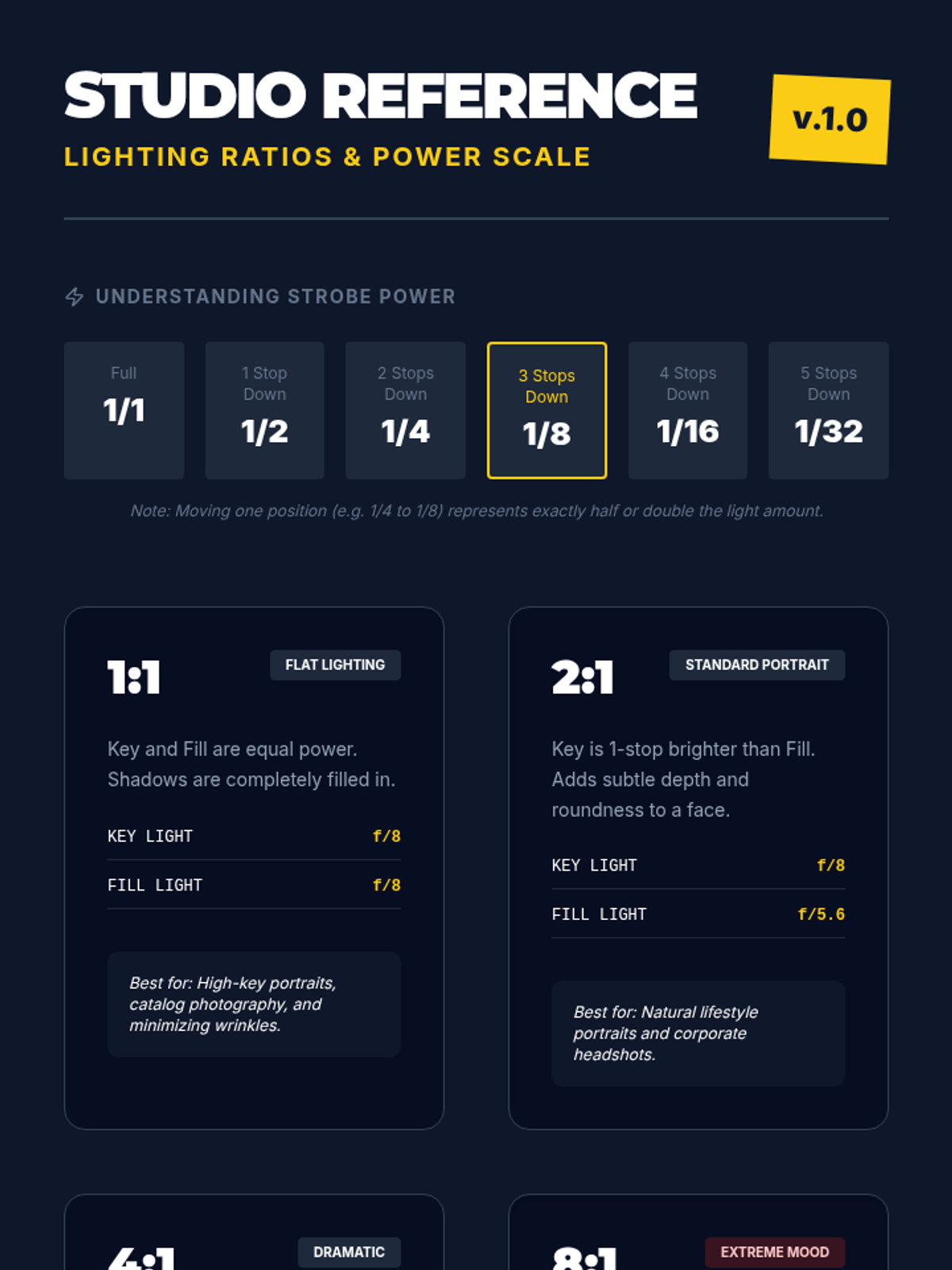
An introduction to artificial lighting basics, focusing on equipment safety and the fundamental relationship between Key and Fill lights.
This workshop introduces tools like reflectors and diffusers to control and soften harsh natural light for outdoor portraits.
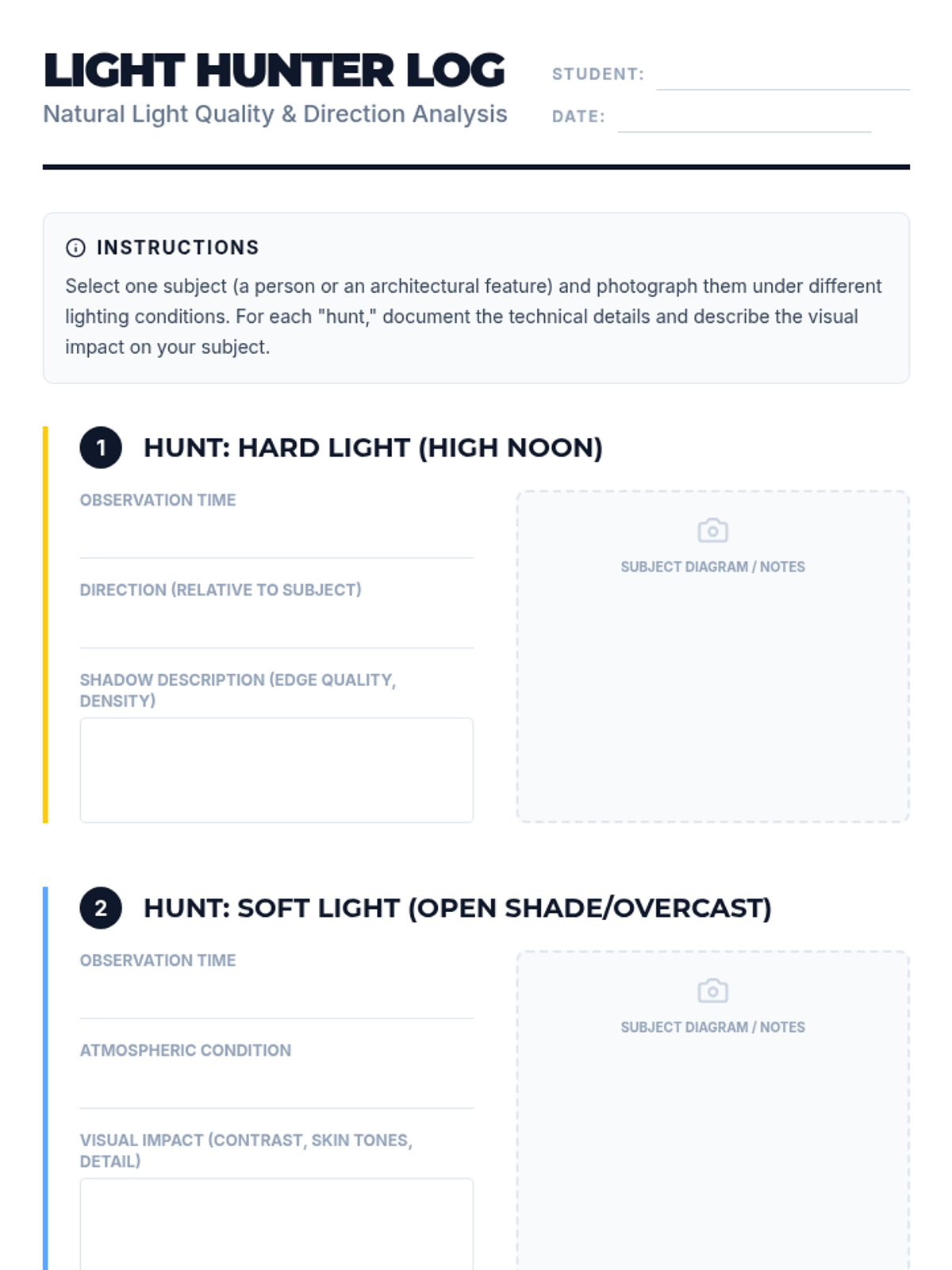
Students observe and photograph subjects at different times of day to distinguish between hard and soft light and understand how direction affects form.
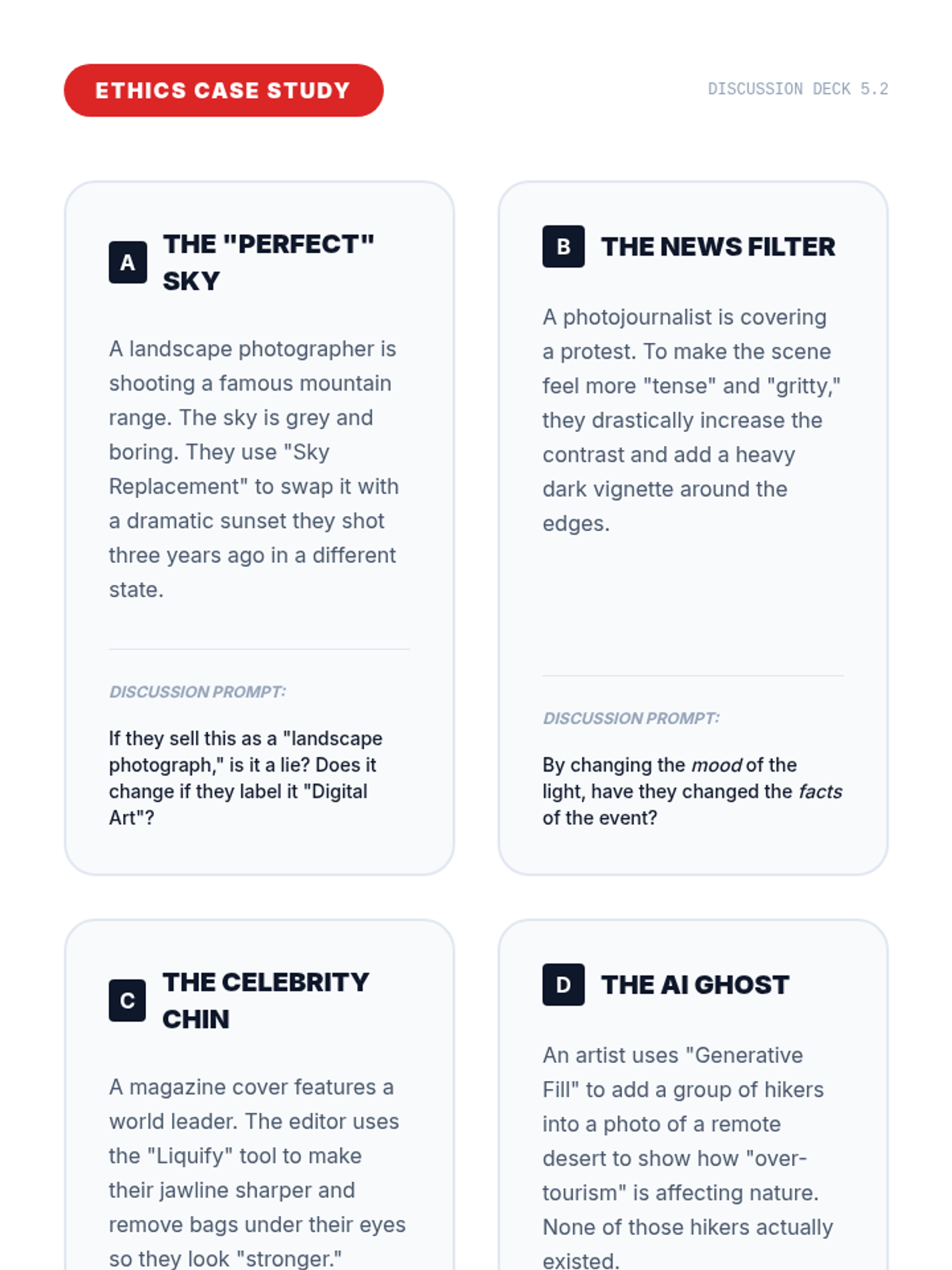
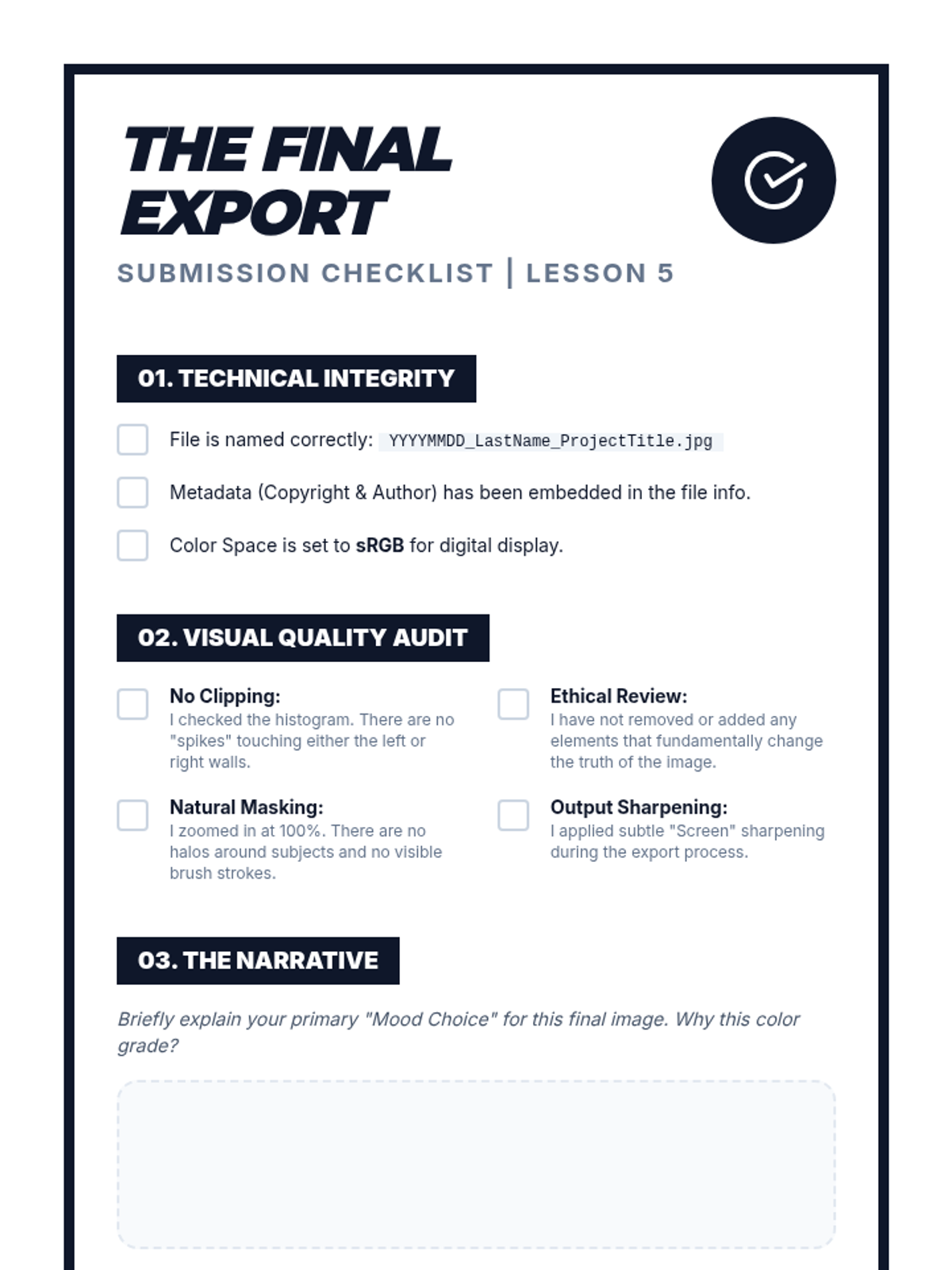
The culmination of the unit, tackling the ethics of manipulation and the technical requirements for final export and portfolio presentation.
An exploration of color theory and mood. Students learn to use color grading to evoke specific emotions and create consistent visual styles.
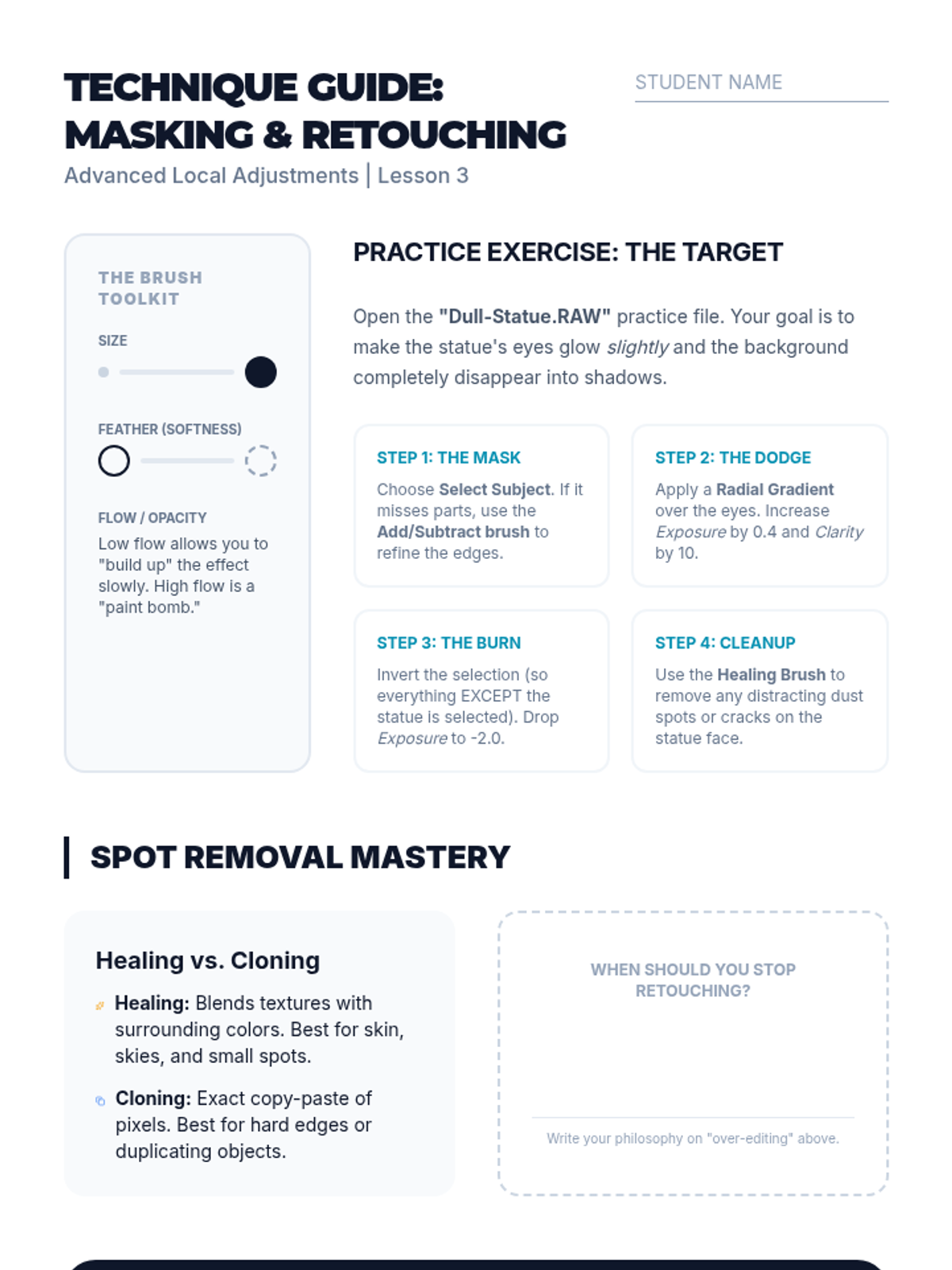
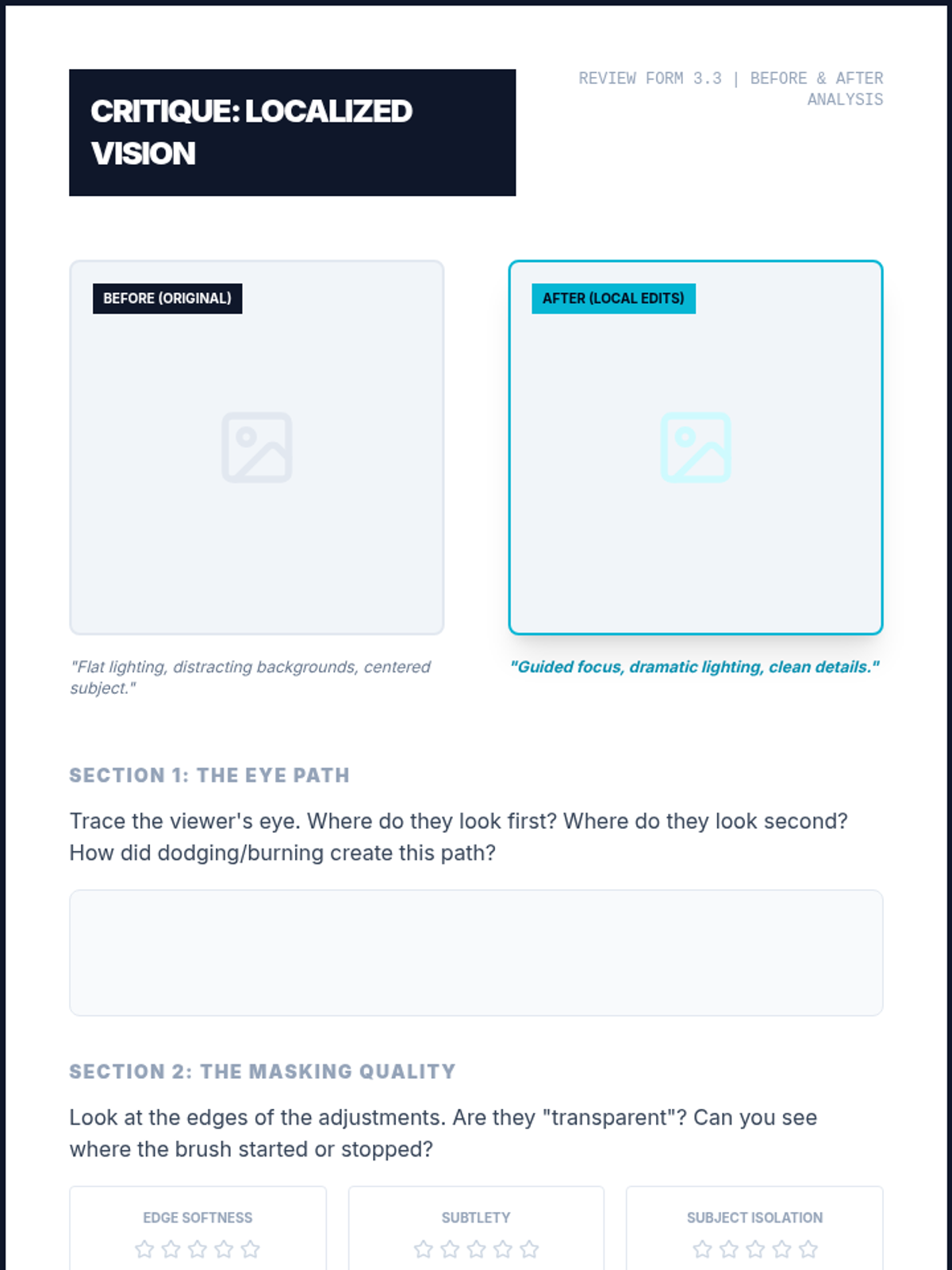
Moving from the big picture to details, students learn dodging, burning, and masking to guide the viewer's eye and retouch distractions.
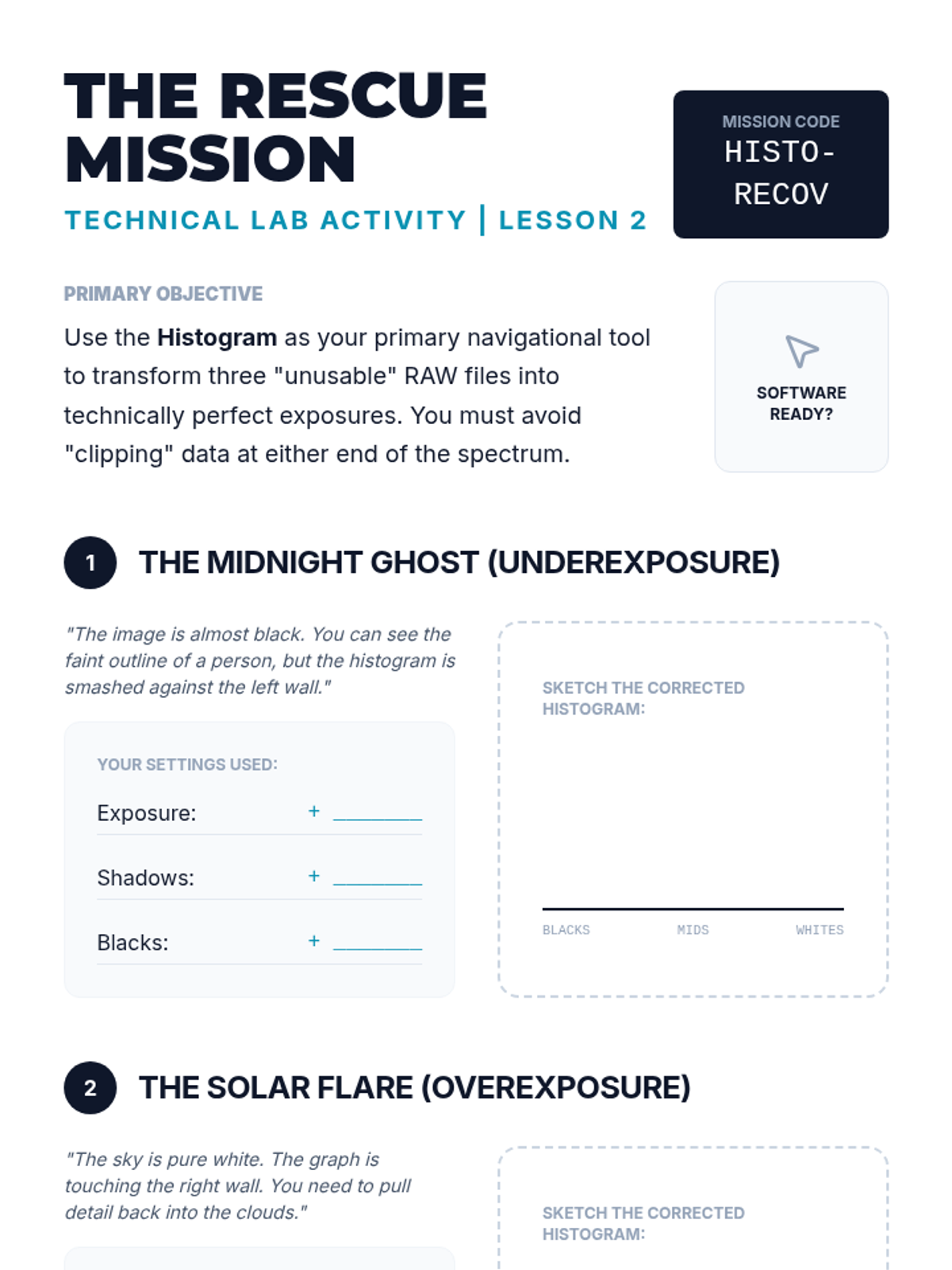
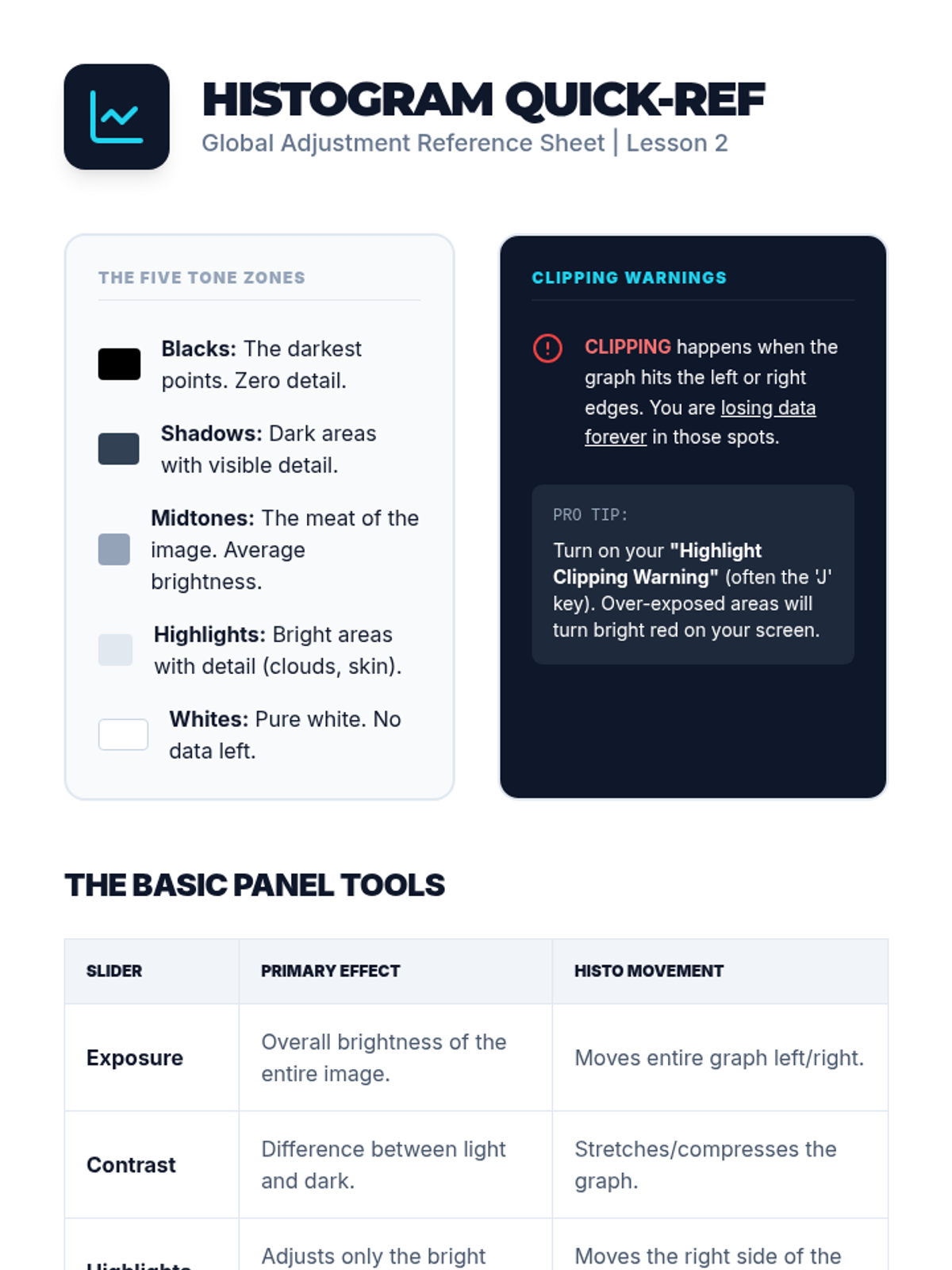
Focuses on global adjustments and the histogram. Students learn to read light data and 'rescue' images through exposure, contrast, and white balance corrections.
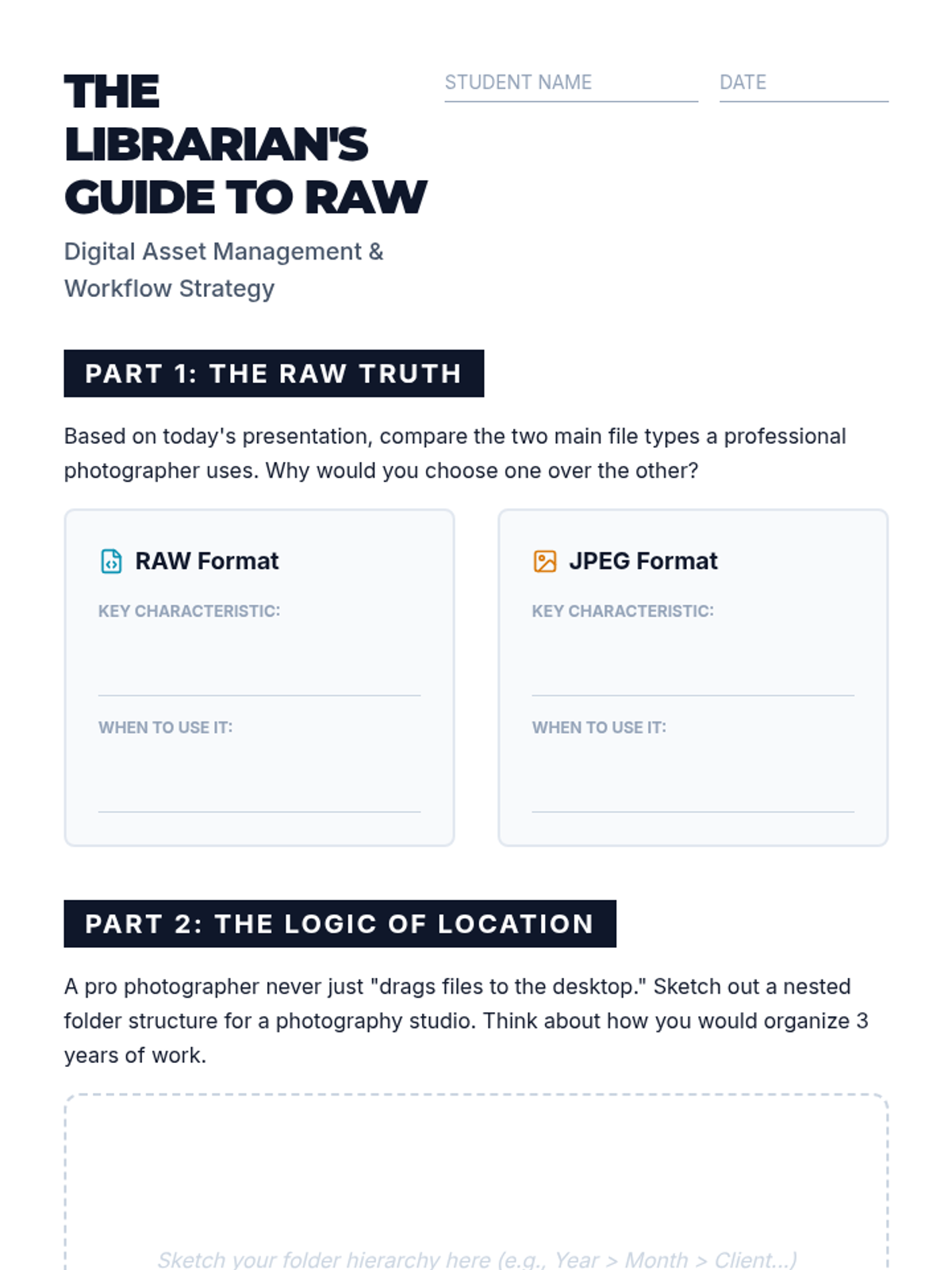
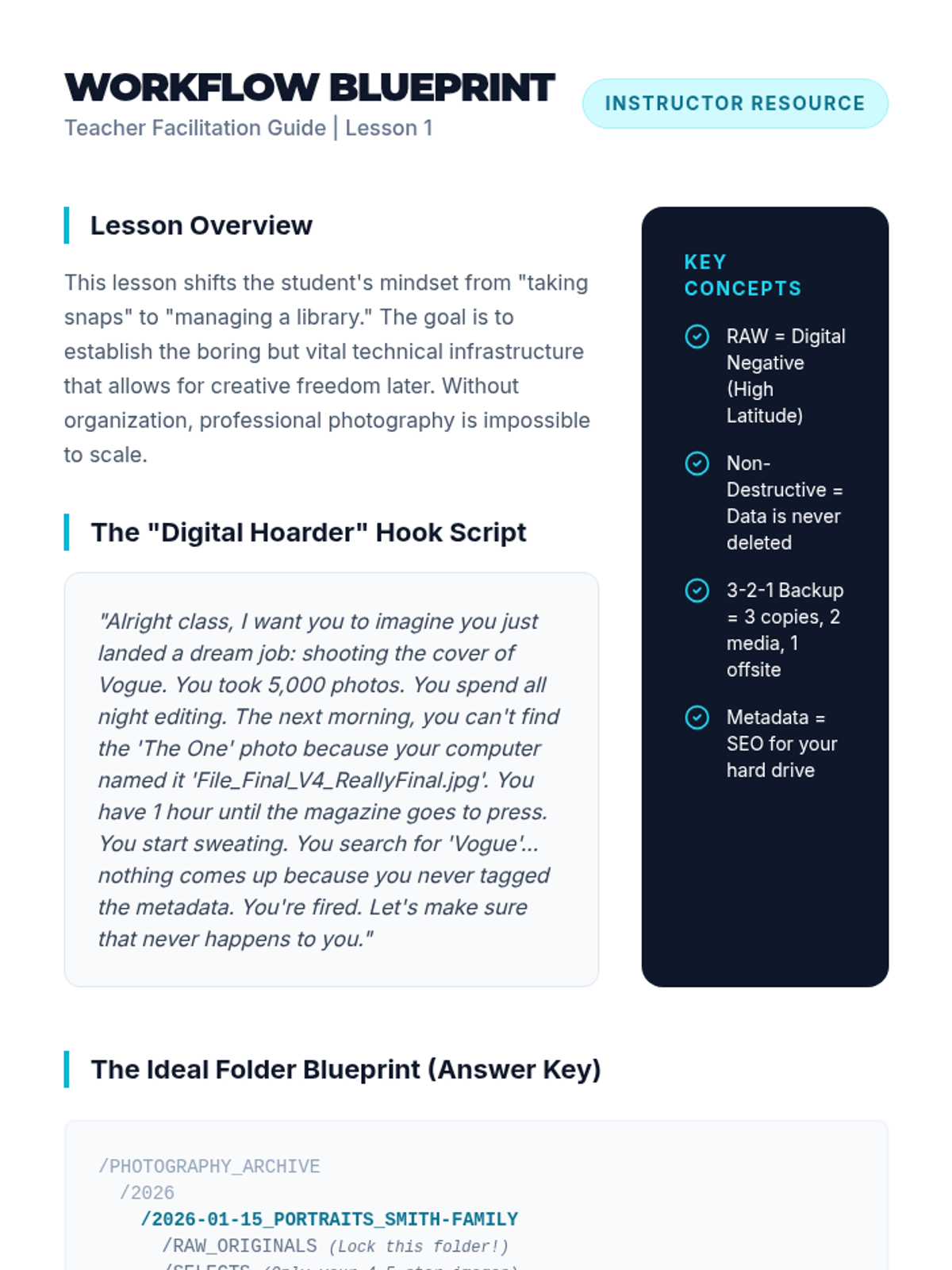
Students learn the technical foundations of photography workflow: distinguishing RAW from JPEG and establishing a professional file management system to avoid the 'Digital Hoarder' trap.
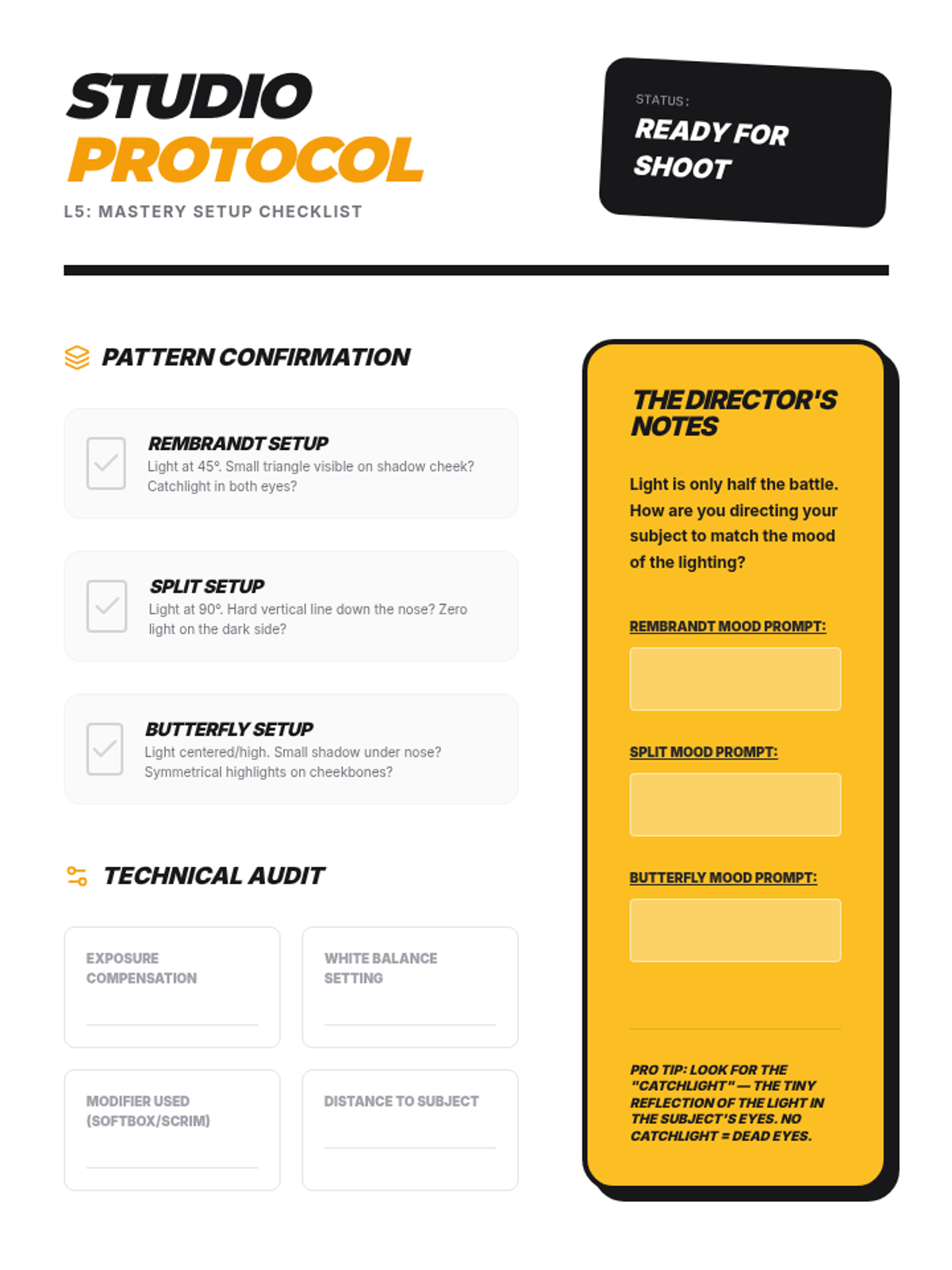
Students apply lighting knowledge to human subjects, recreating classic portrait patterns like Rembrandt, Split, and Butterfly lighting.
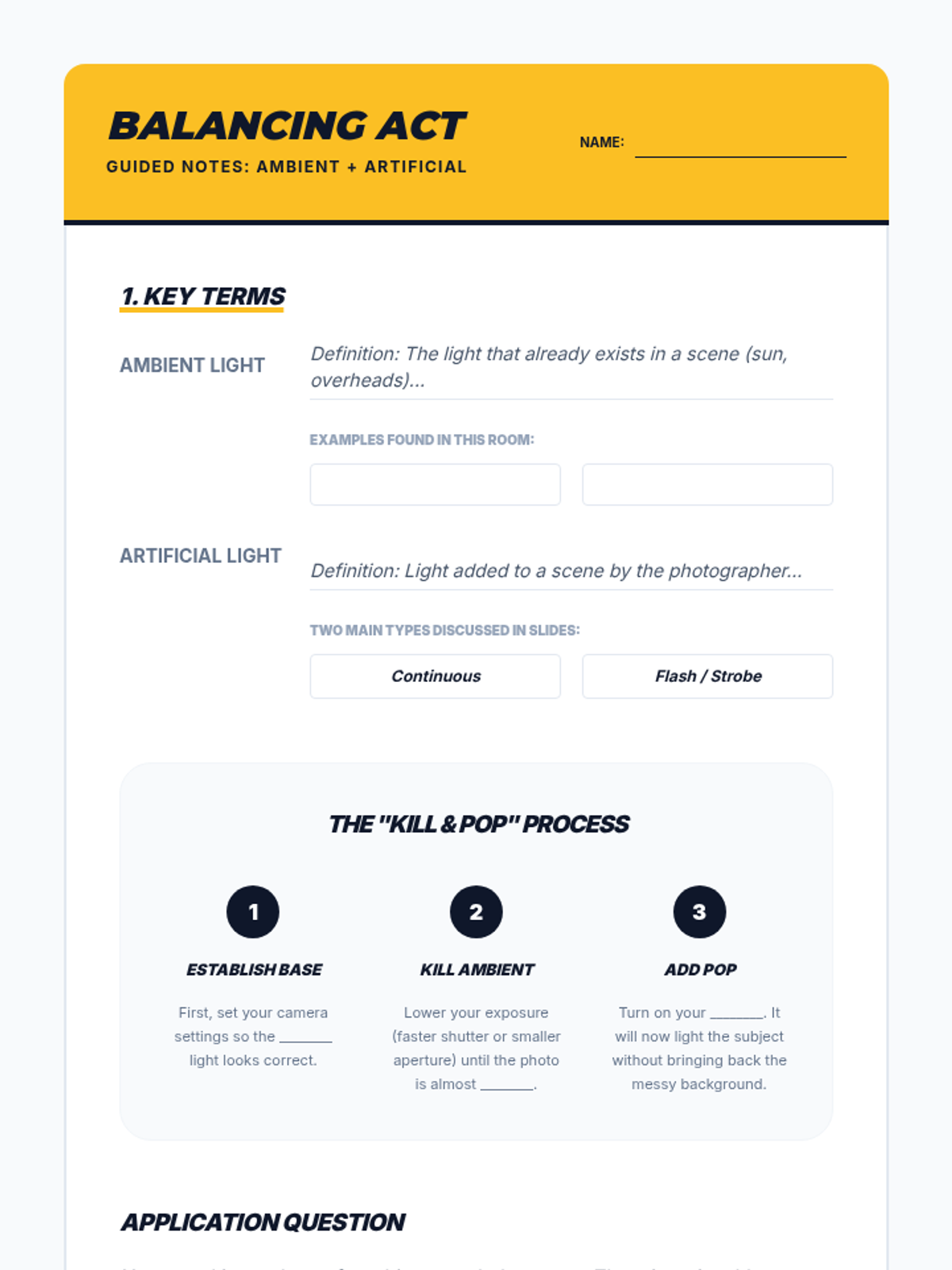
Introduction to continuous lighting and basic flash photography, focusing on balancing ambient and artificial sources.
Students learn to manipulate available light using reflectors and diffusers to balance shadows and soften harsh highlights.
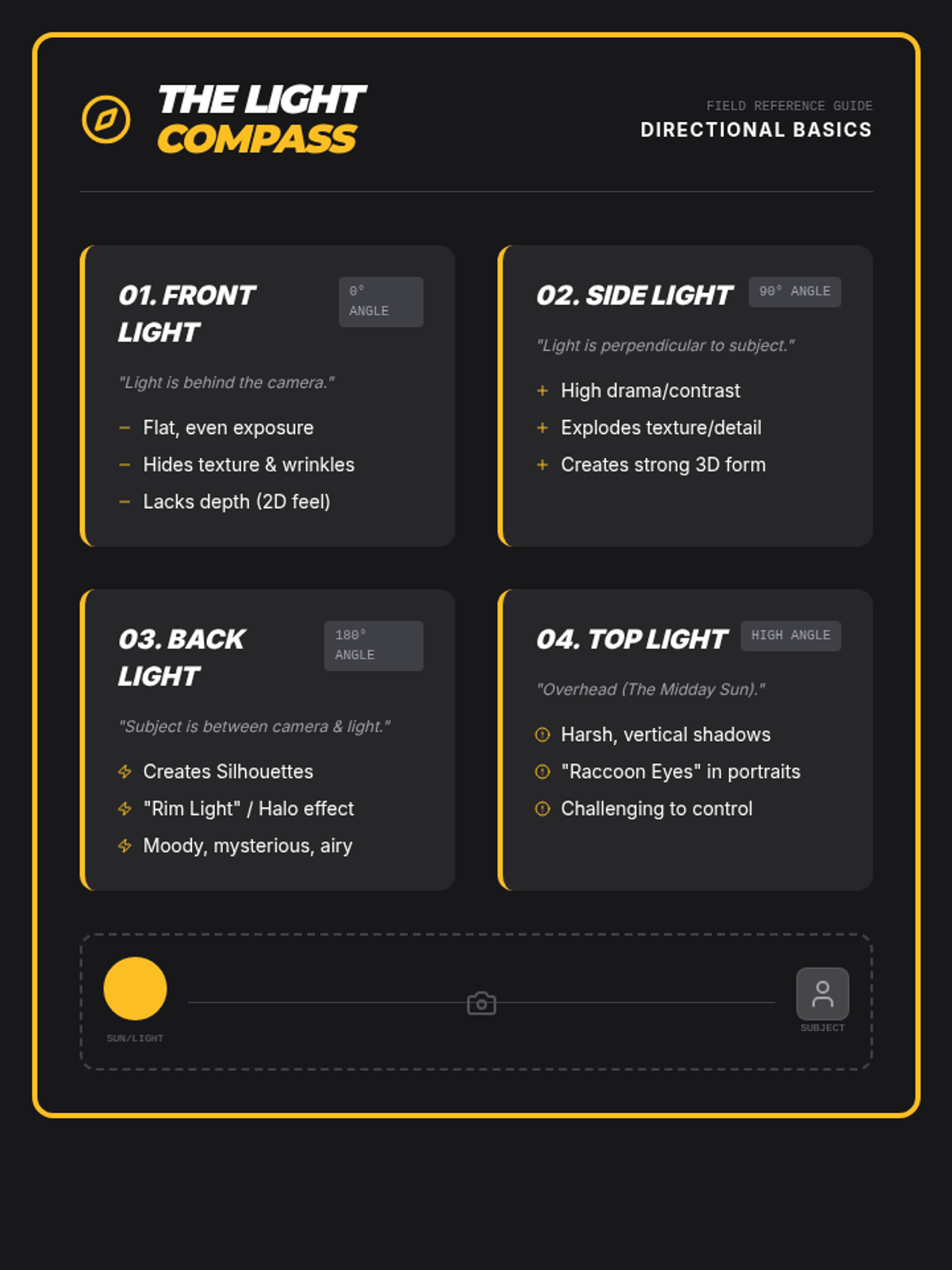
This lesson isolates the direction of the light source relative to the subject, focusing on silhouettes, texture enhancement, and flat lighting.
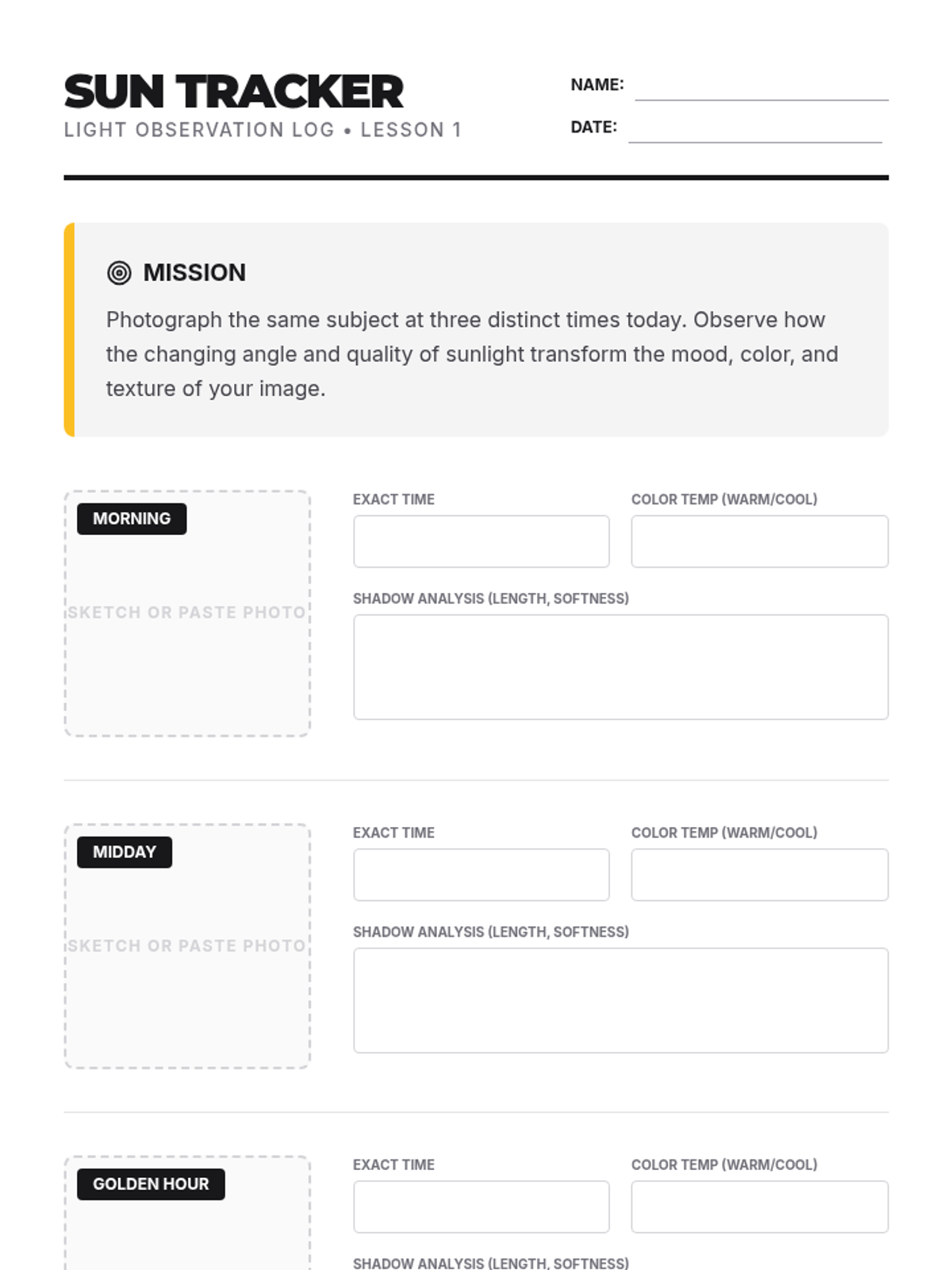
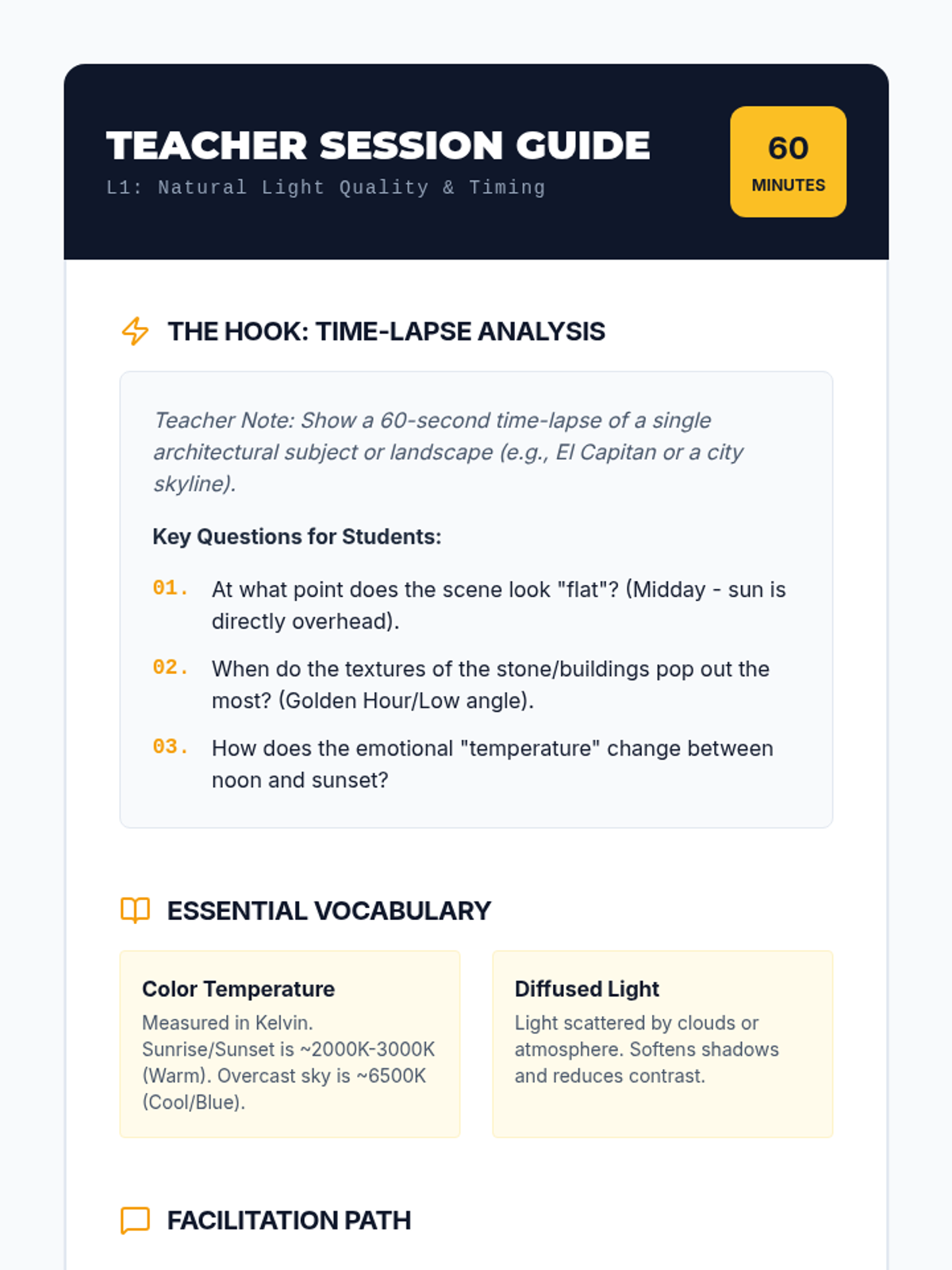
Students observe and document how sunlight changes throughout the day, comparing the 'Golden Hour' with harsh midday sun to understand color temperature and shadow length.
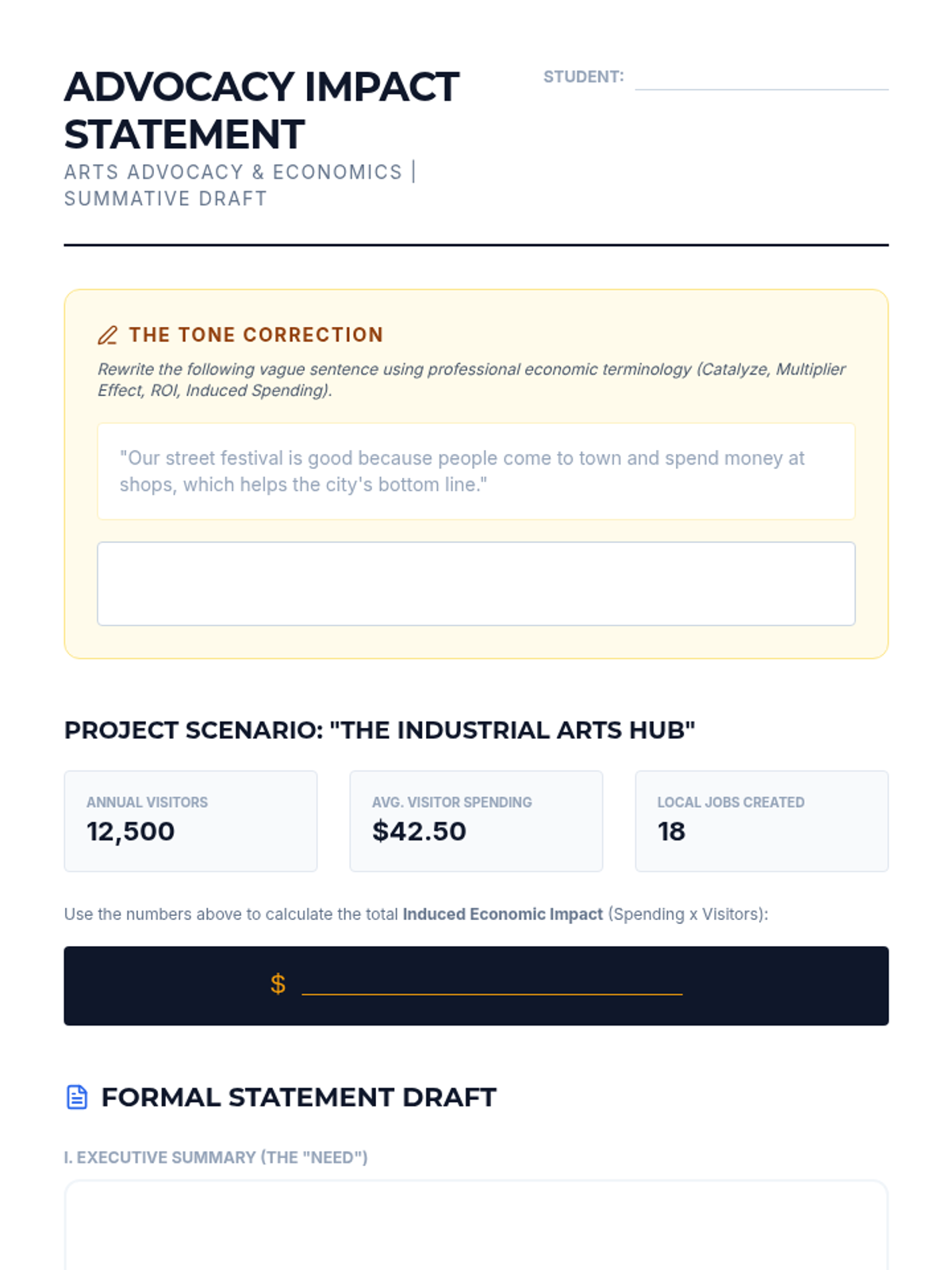
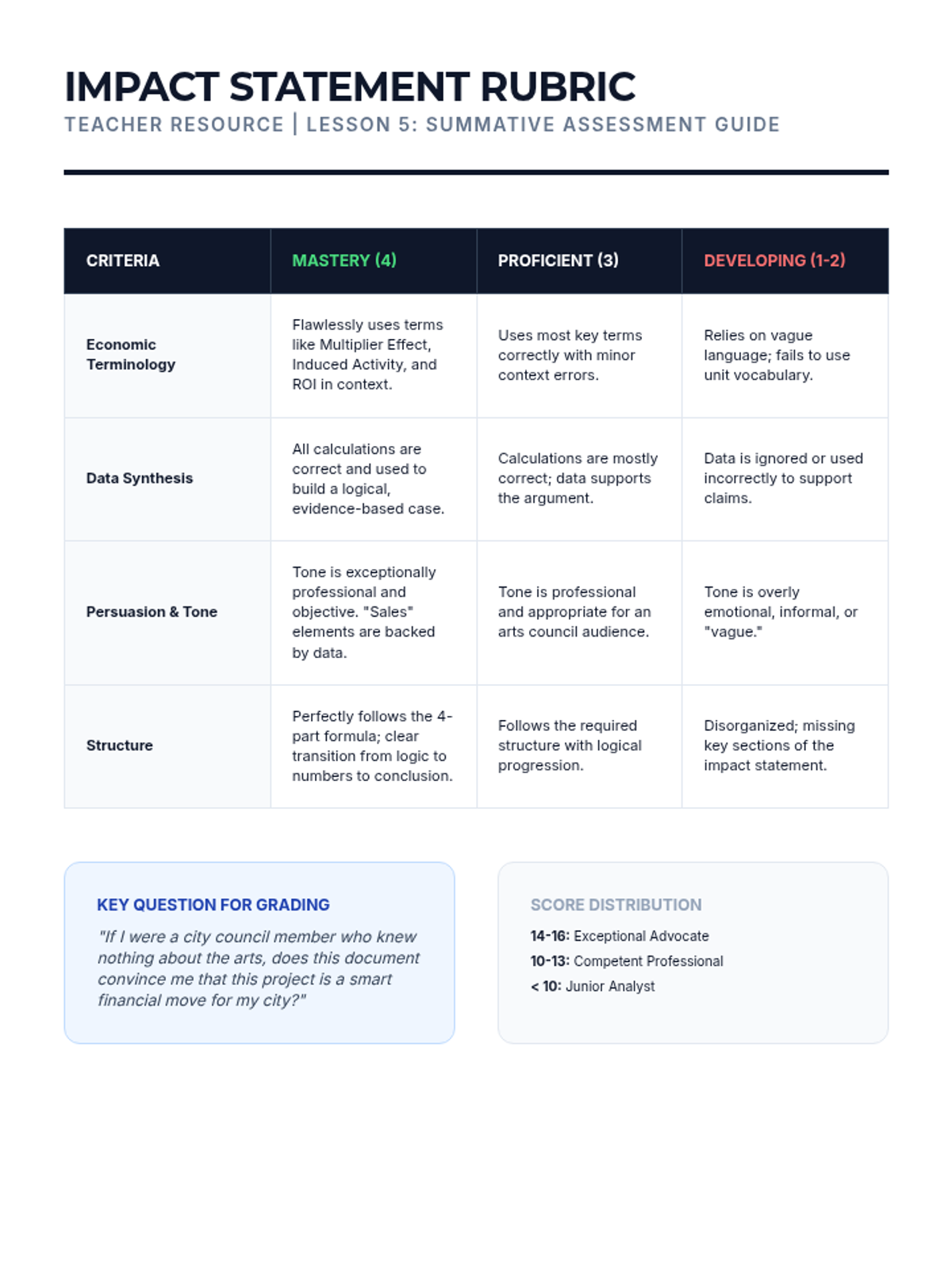
The summative assessment for the unit where students synthesize data and terminology to draft a formal economic impact statement for a hypothetical arts organization.
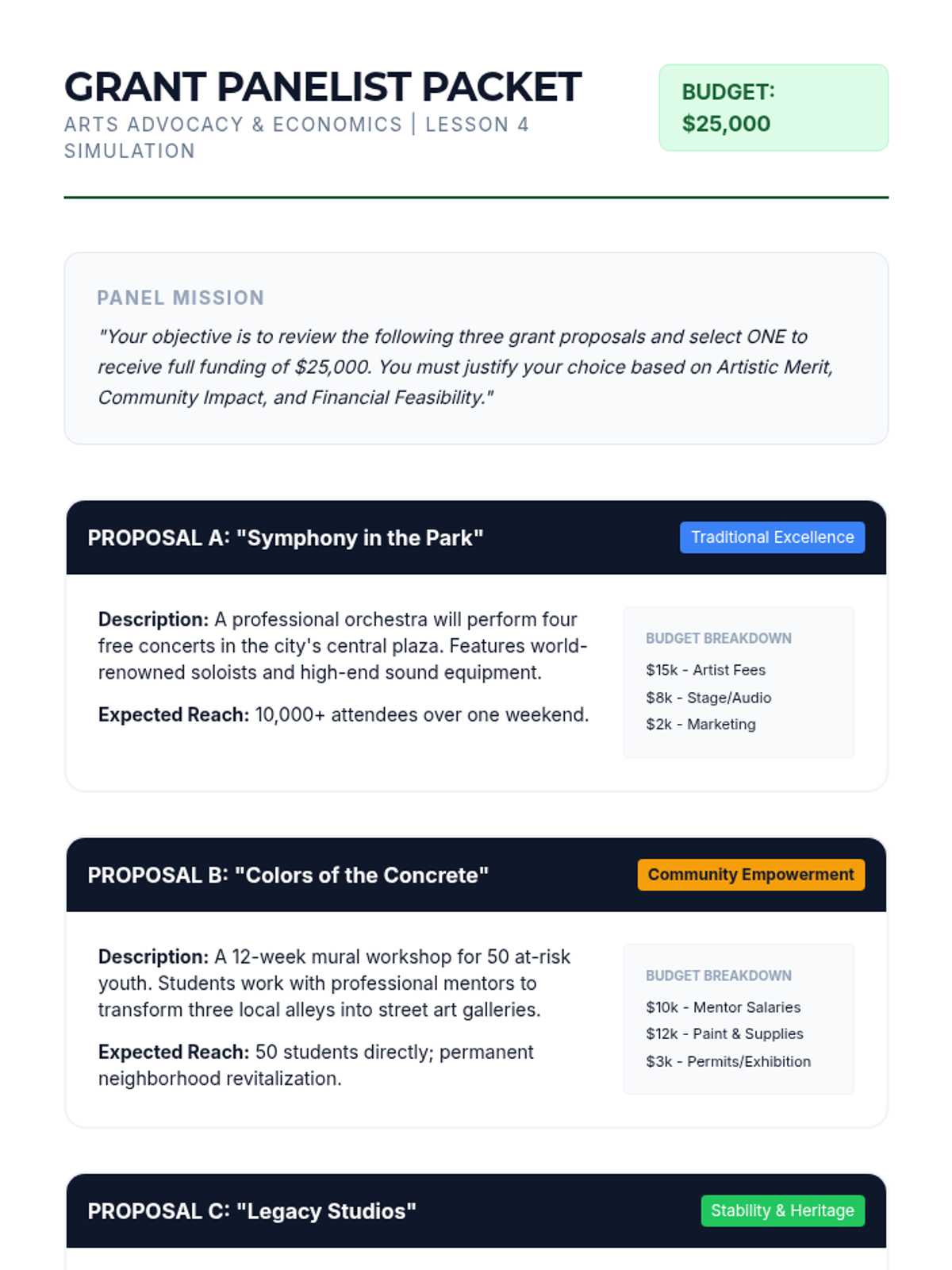
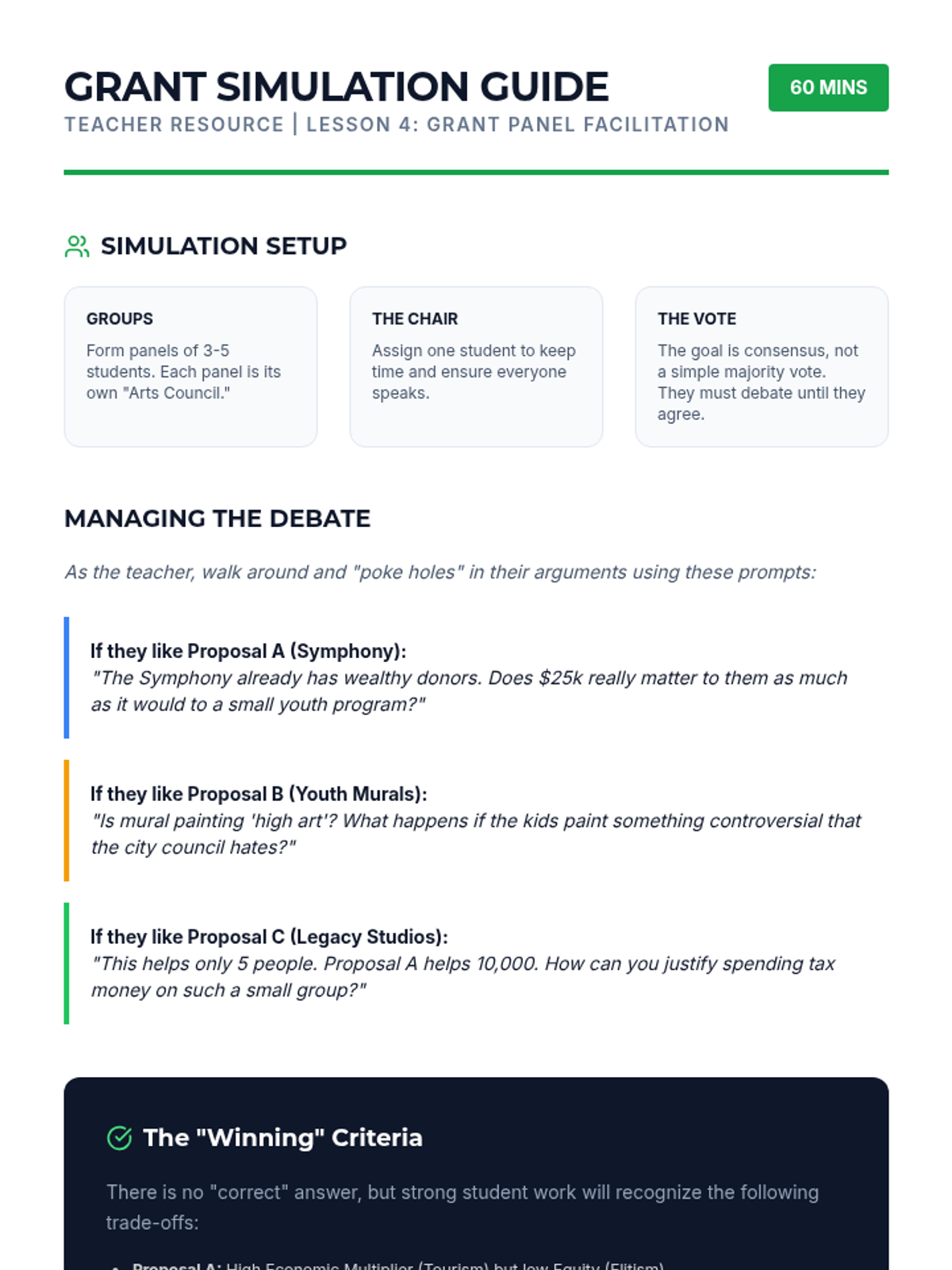
Students step into the role of grant panelists, reviewing real-world project proposals and applying rigorous criteria to allocate limited funding.
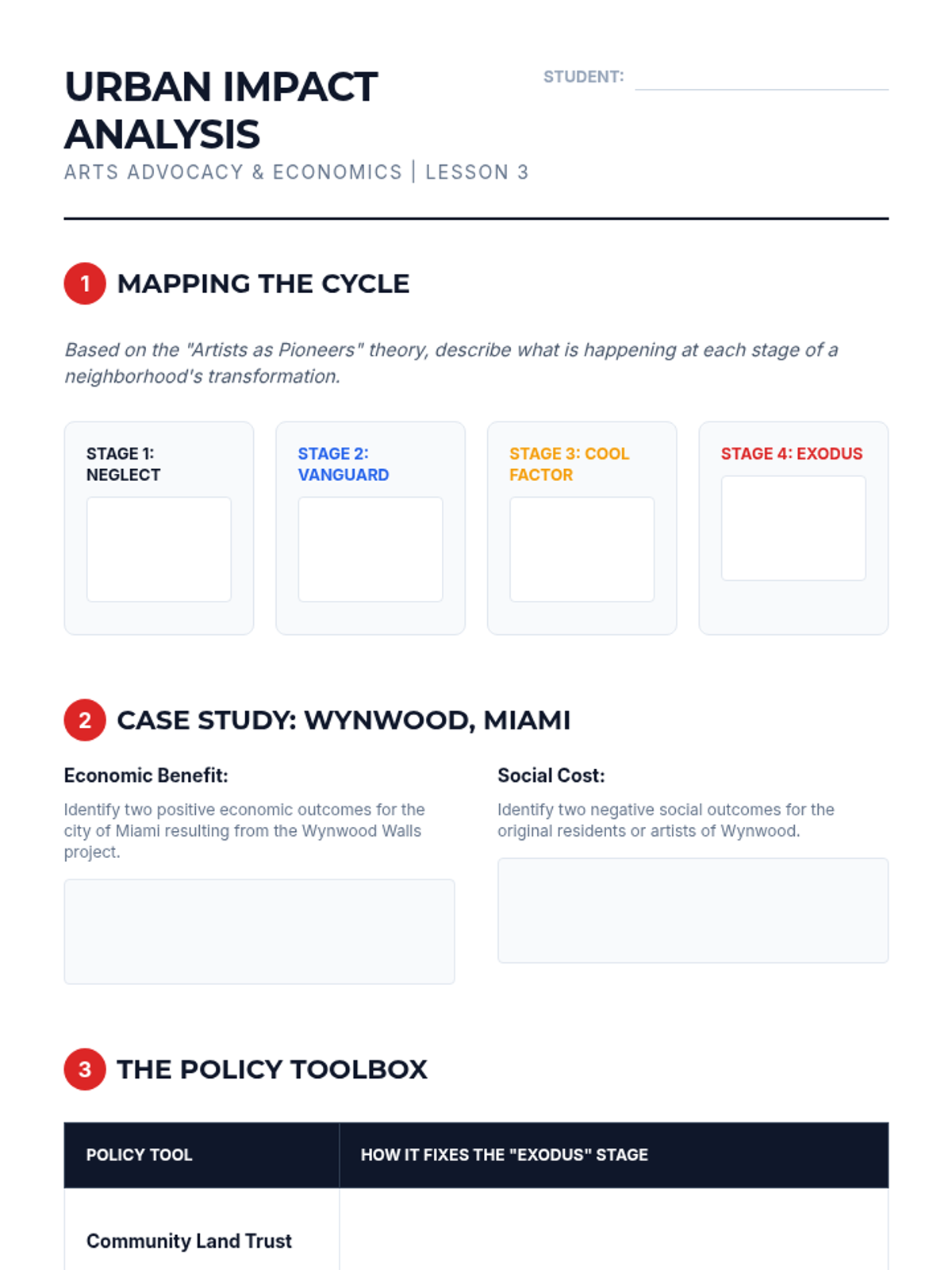
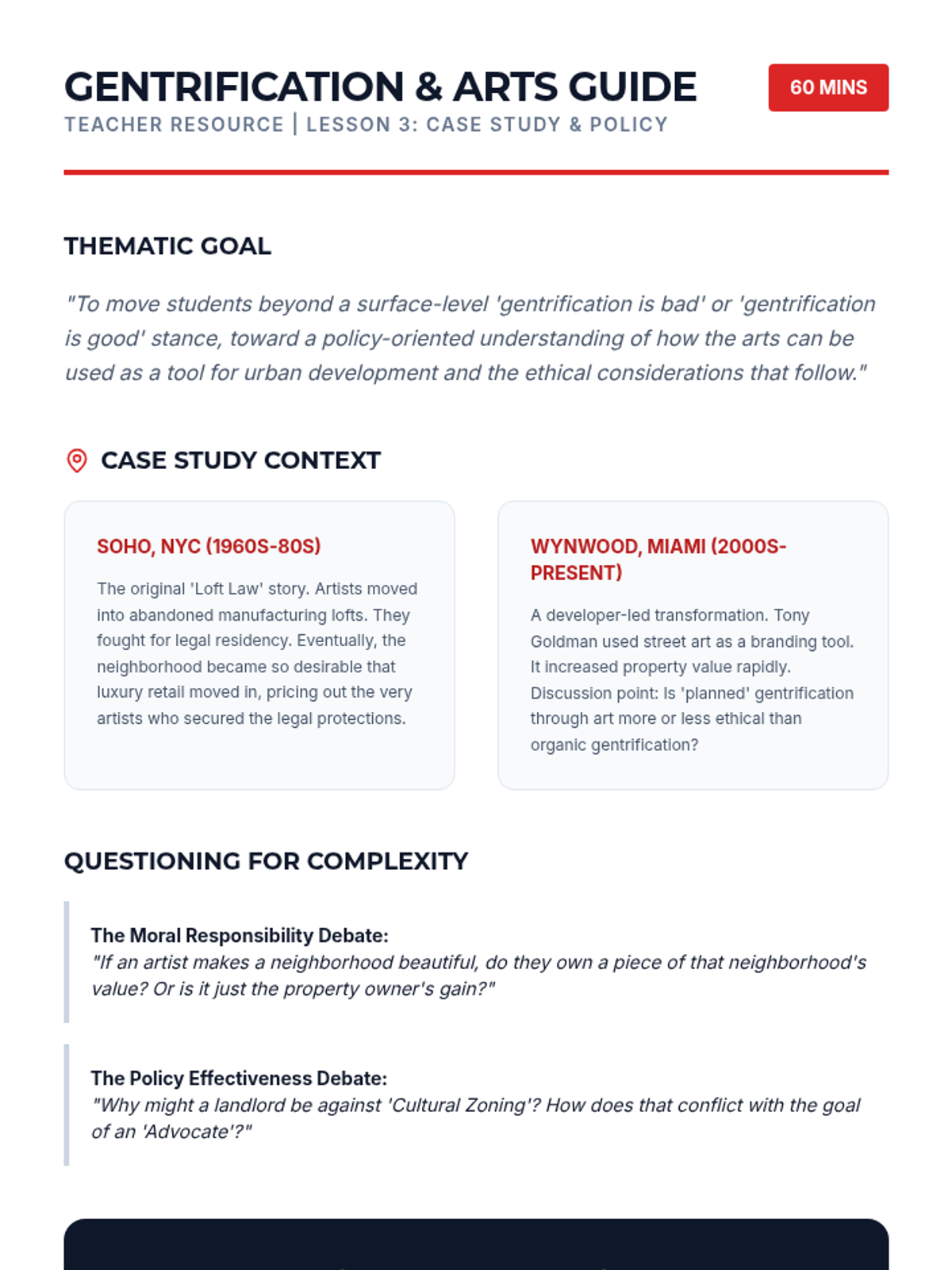
An investigation into the relationship between arts districts and gentrification. Students evaluate policy tools used to maintain cultural vibrancy without displacing residents.
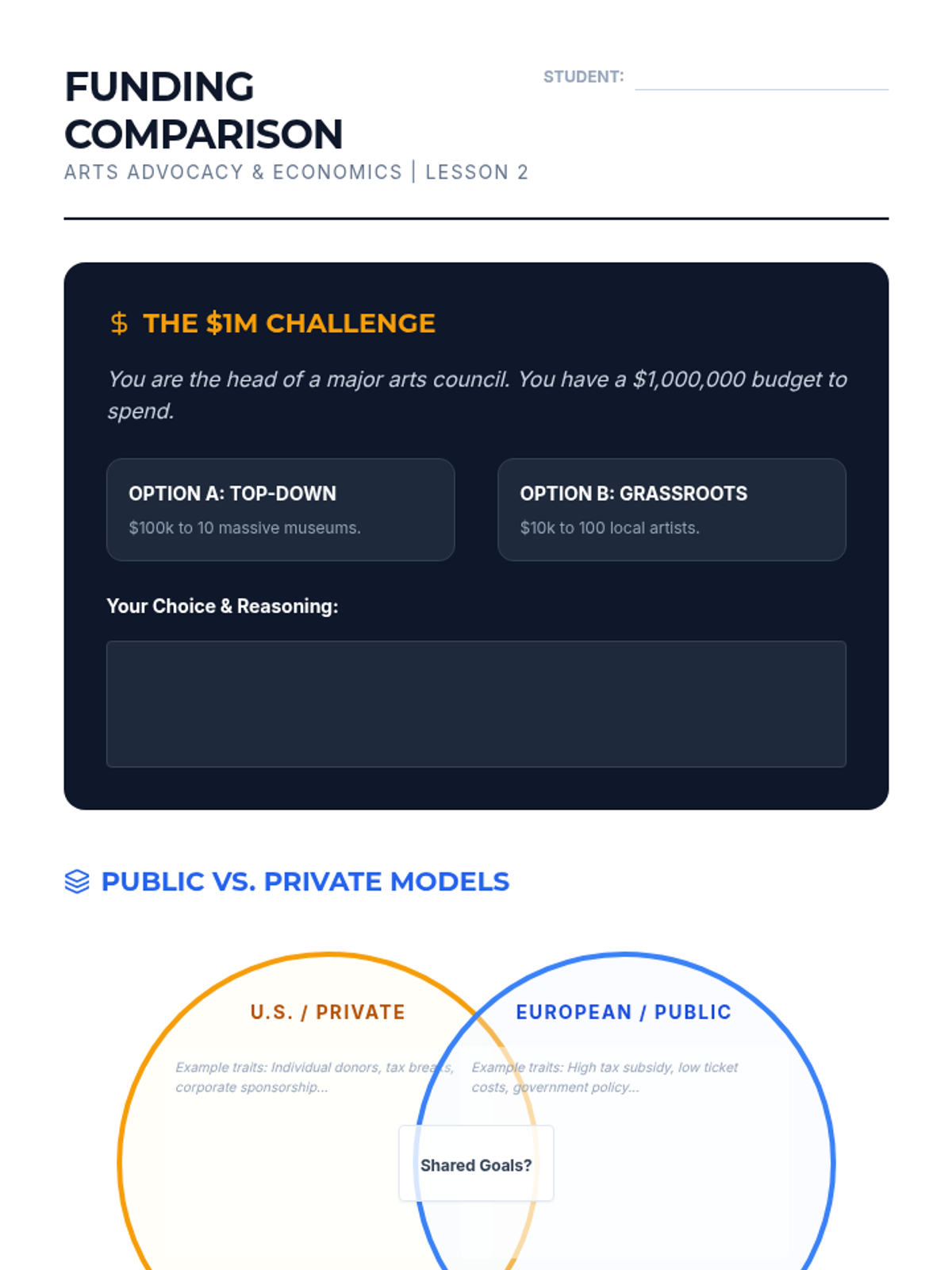
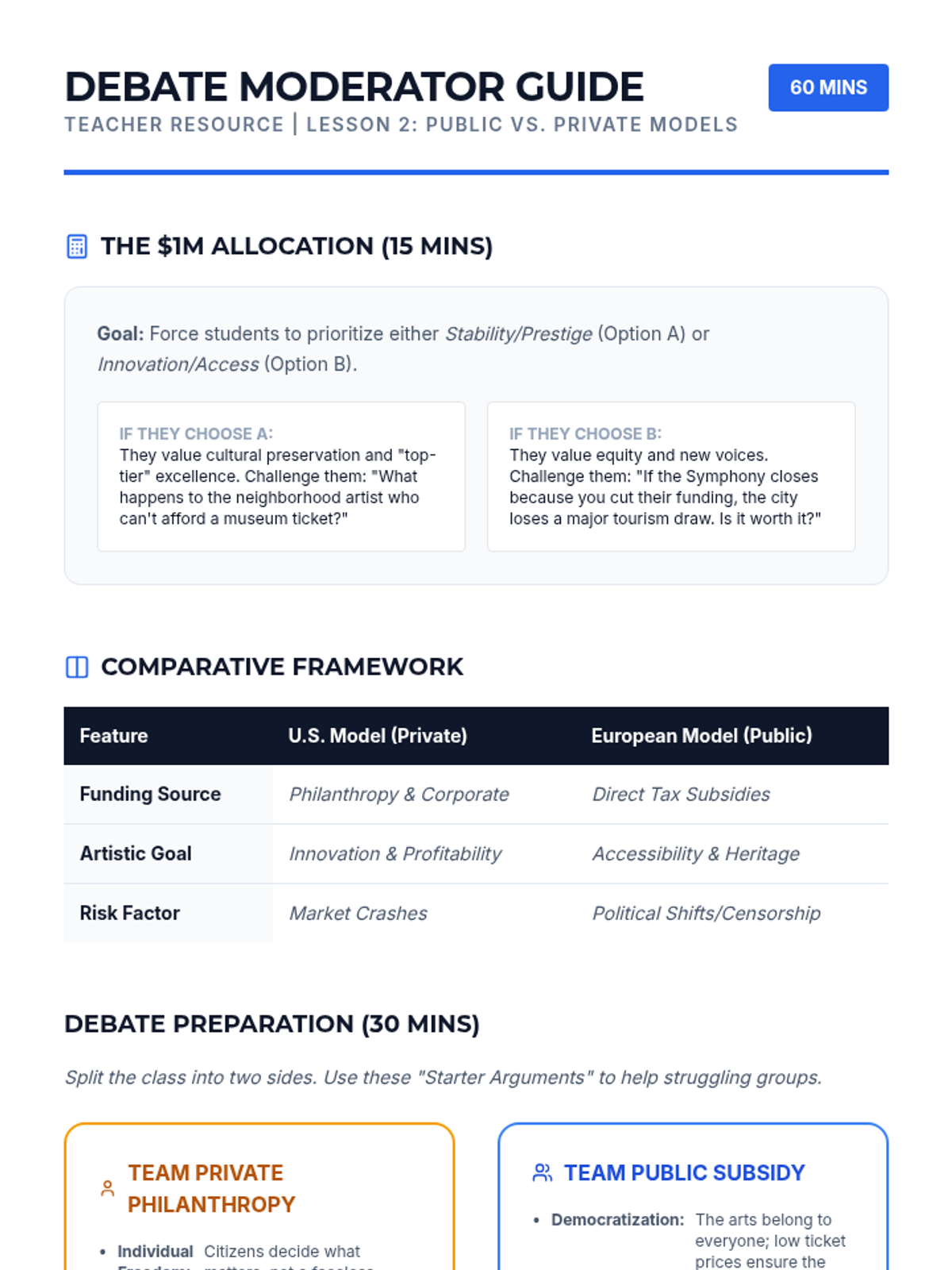
A comparative study of the United States' private philanthropy model versus European state-subsidized arts funding. Students analyze the impact of these models on artistic freedom and public access.
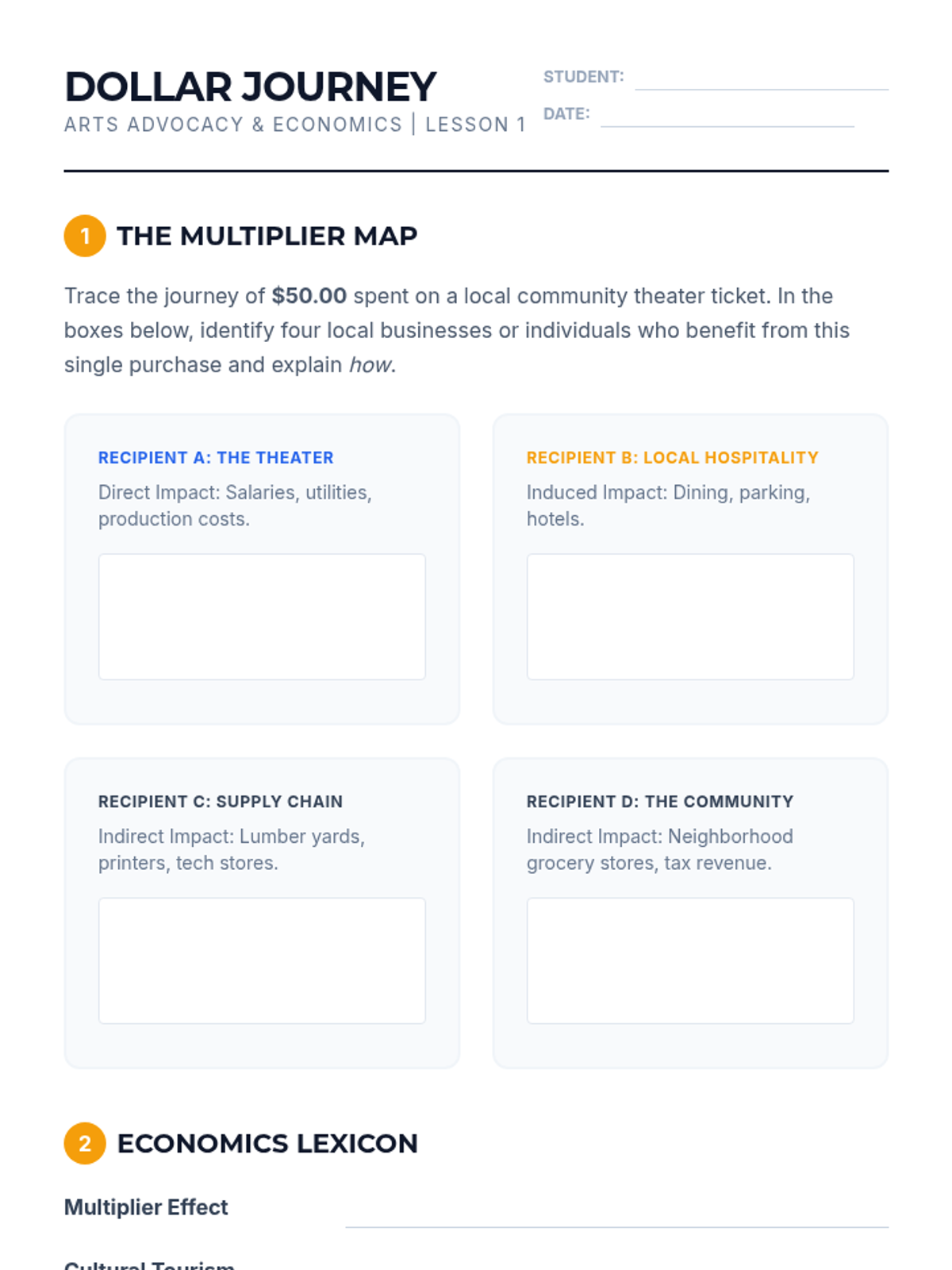
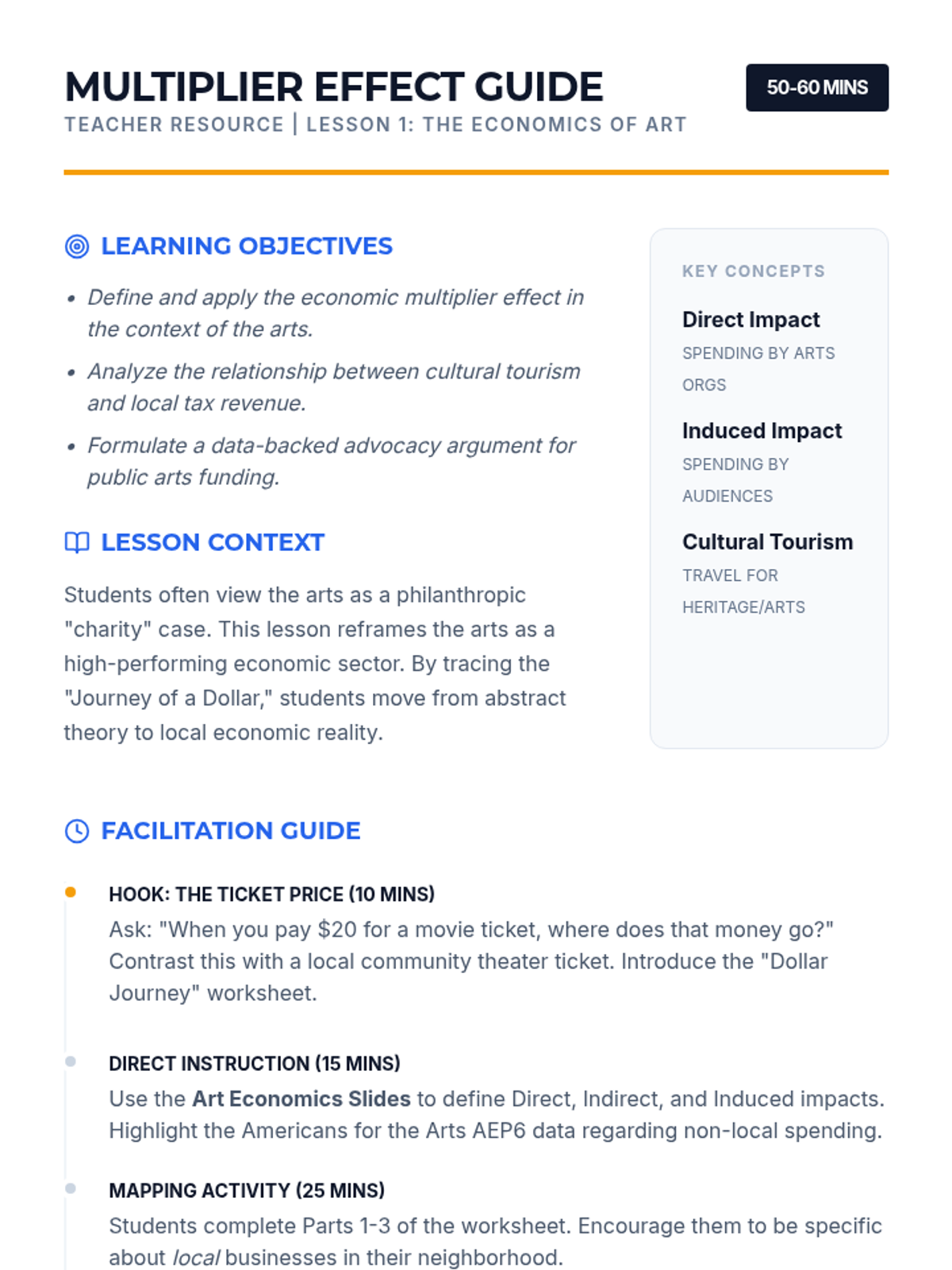
Students are introduced to key economic concepts like the multiplier effect and cultural tourism. They trace the journey of a dollar spent in the arts to understand its broader community impact.
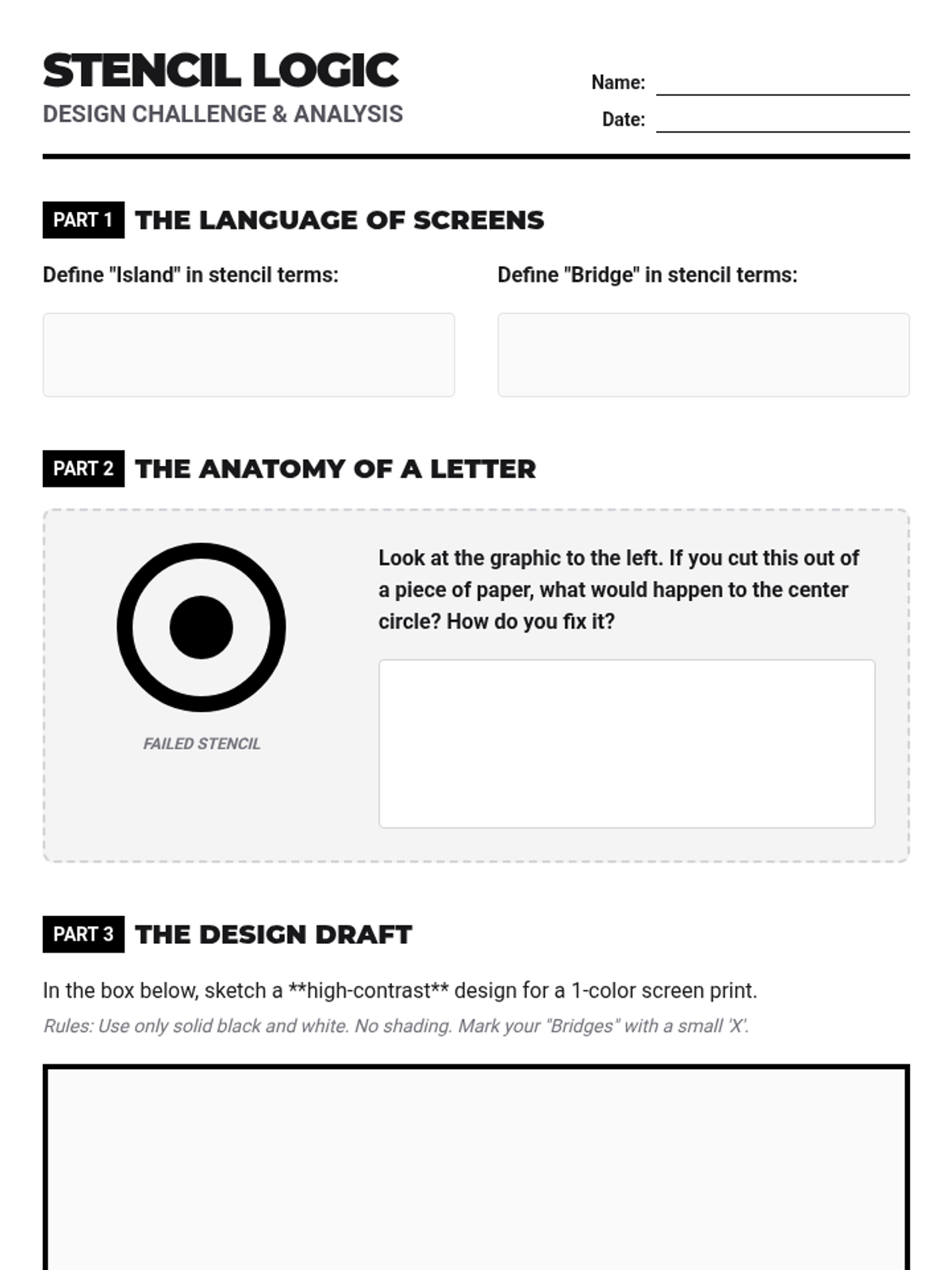
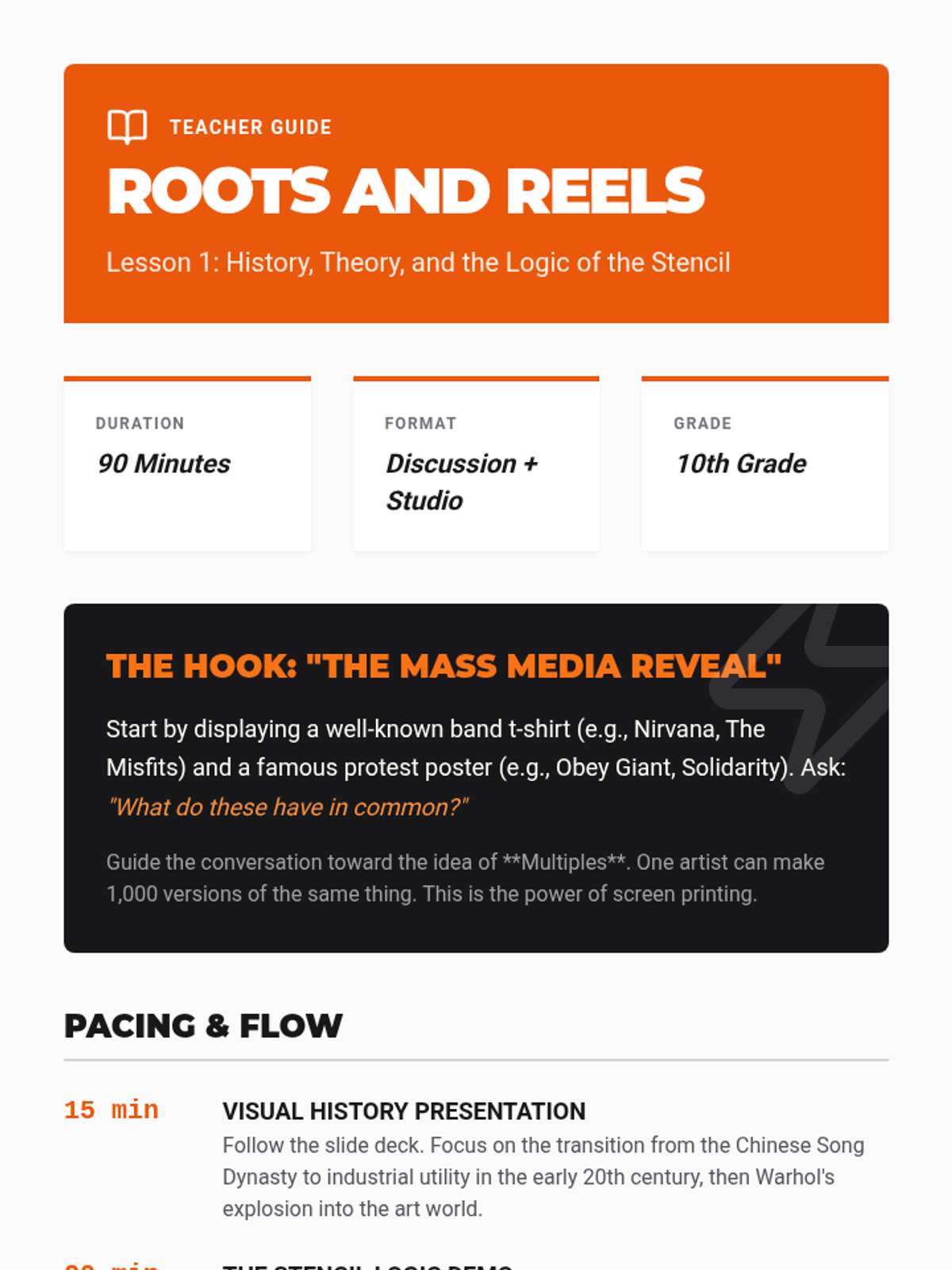
Explores the historical shift of screen printing from industrial utility to Pop Art and political protest. Students learn 'stencil logic'—designing high-contrast images while managing islands and bridges.