Fundamental techniques for racket sports, track and field, and gymnastics maneuvers. Develops physical literacy through martial arts disciplines and self-defense strategies.
A high-energy visual slide deck designed for 9th-grade health class instruction on the benefits of yoga. It covers the physical, mental, and social "pillars" of yoga using modern terminology like "Bio-Hacking" and "System Optimization" to engage high schoolers.
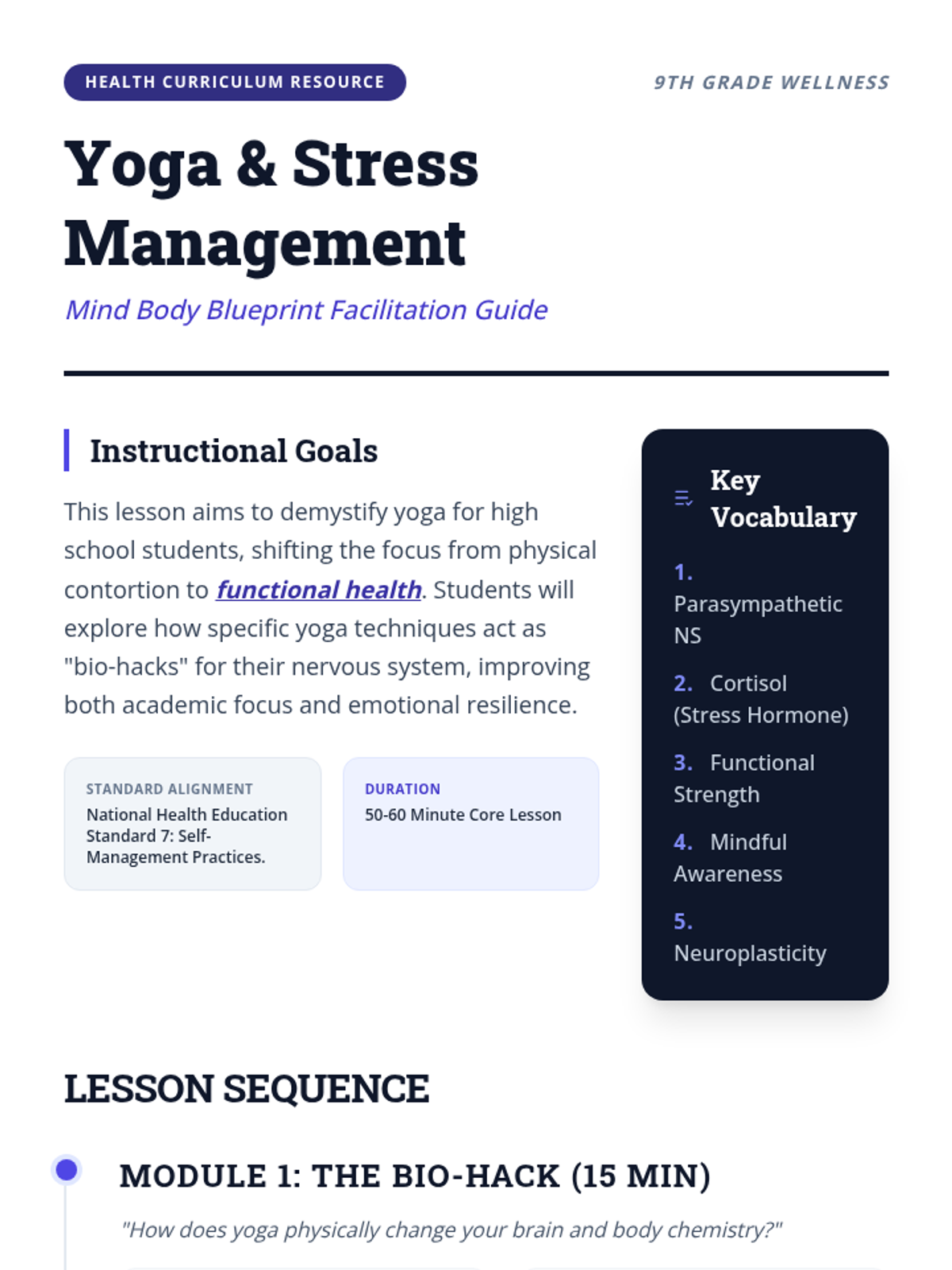
A teacher-facing facilitation guide for 9th-grade health class focusing on yoga for stress management and physical health. It includes lesson objectives, vocabulary, discussion prompts, and a practical classroom "stress reset" activity.
A modern, high-school-focused infographic outlining the physical, mental, and social benefits of yoga. It uses "Performance," "Resilience," and "Connection" as the three primary pillars for 9th-grade health students.
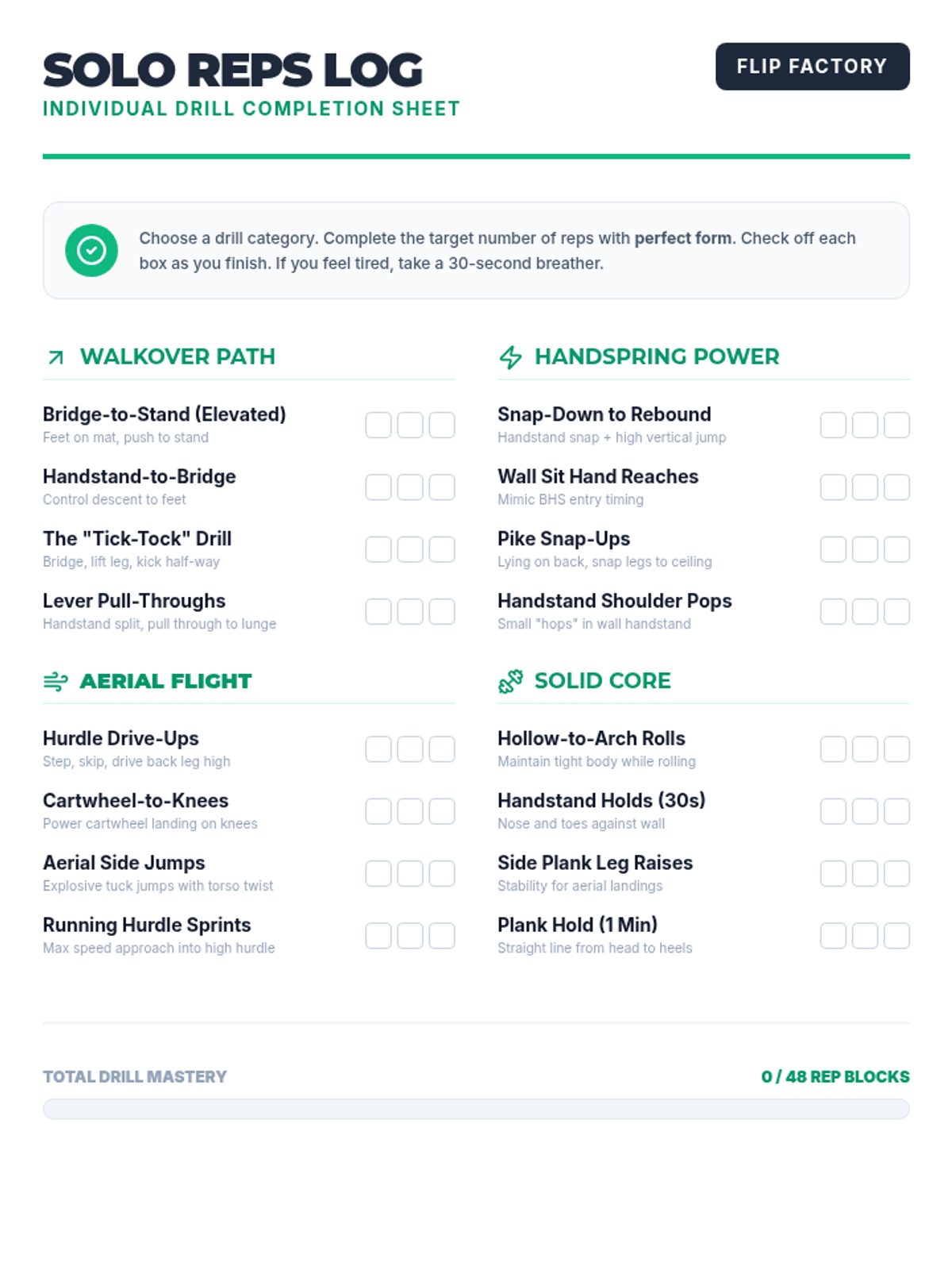
A student-facing "Solo Reps Log" worksheet designed for tracking completion of 16 different individual drills. Includes categories for walkovers, handsprings, aerials, and core strength with checkbox tracking for multiple sets.
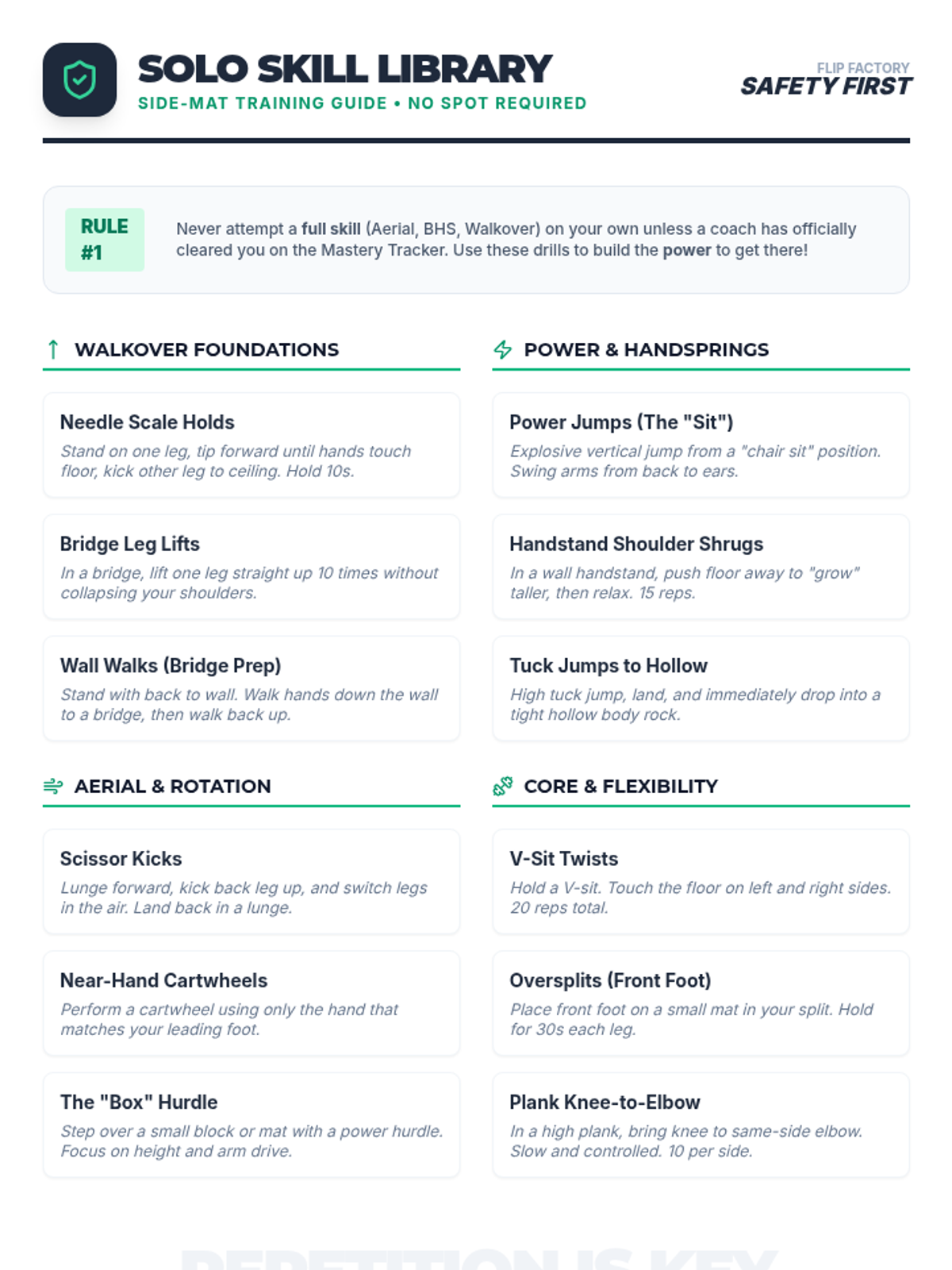
A comprehensive 1-page reference guide for students containing 12 individual drills they can perform on side-mats without a spotter. Drills are categorized by skill focus: Walkovers, Power/Handsprings, Aerials, and Core.
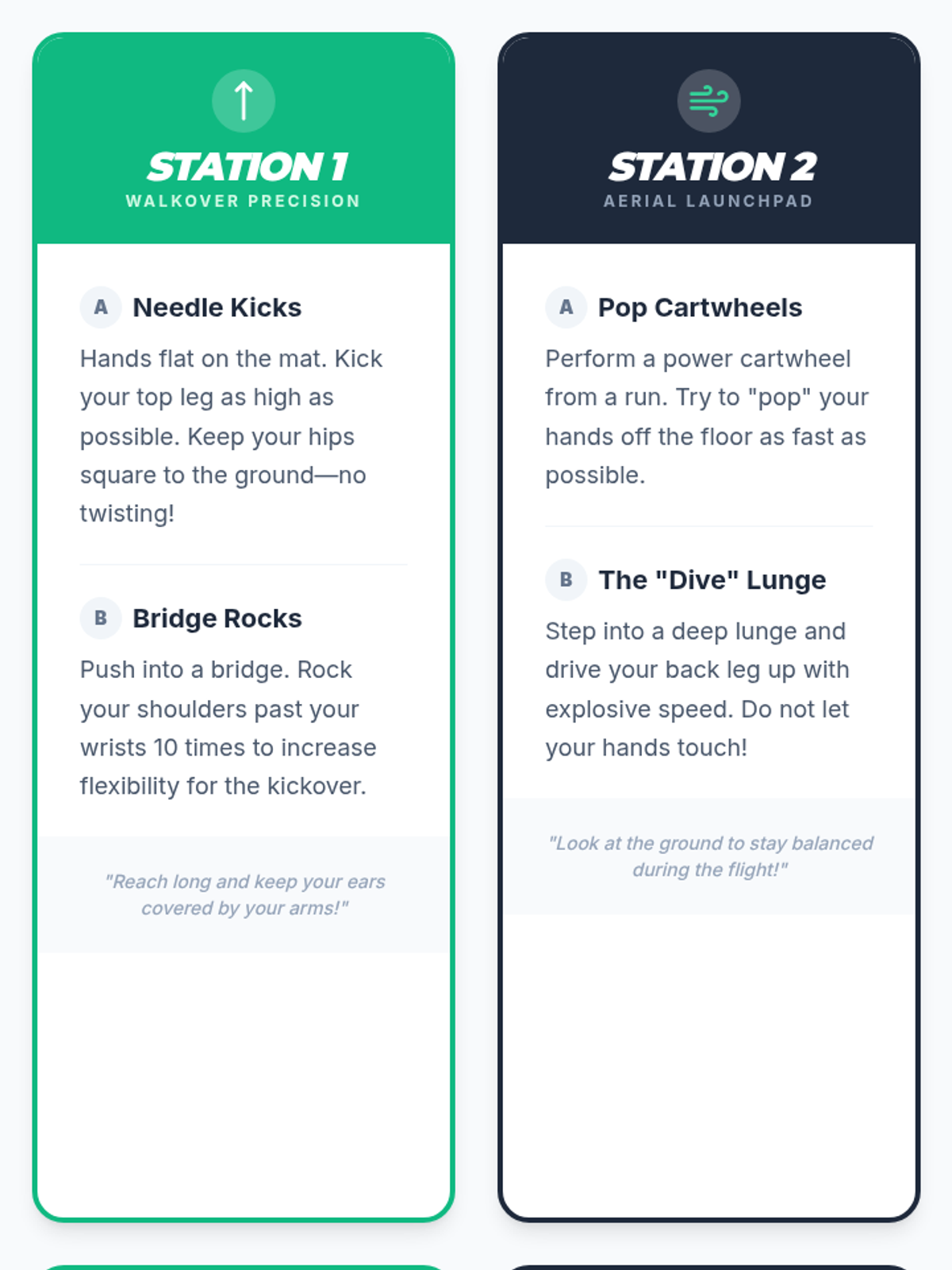
An expanded set of 6 visual station cards designed to be printed and placed at different areas of the gym. Includes dedicated stations for individual solo drills like handstand snap-downs and hurdle skips that don't require spotting.
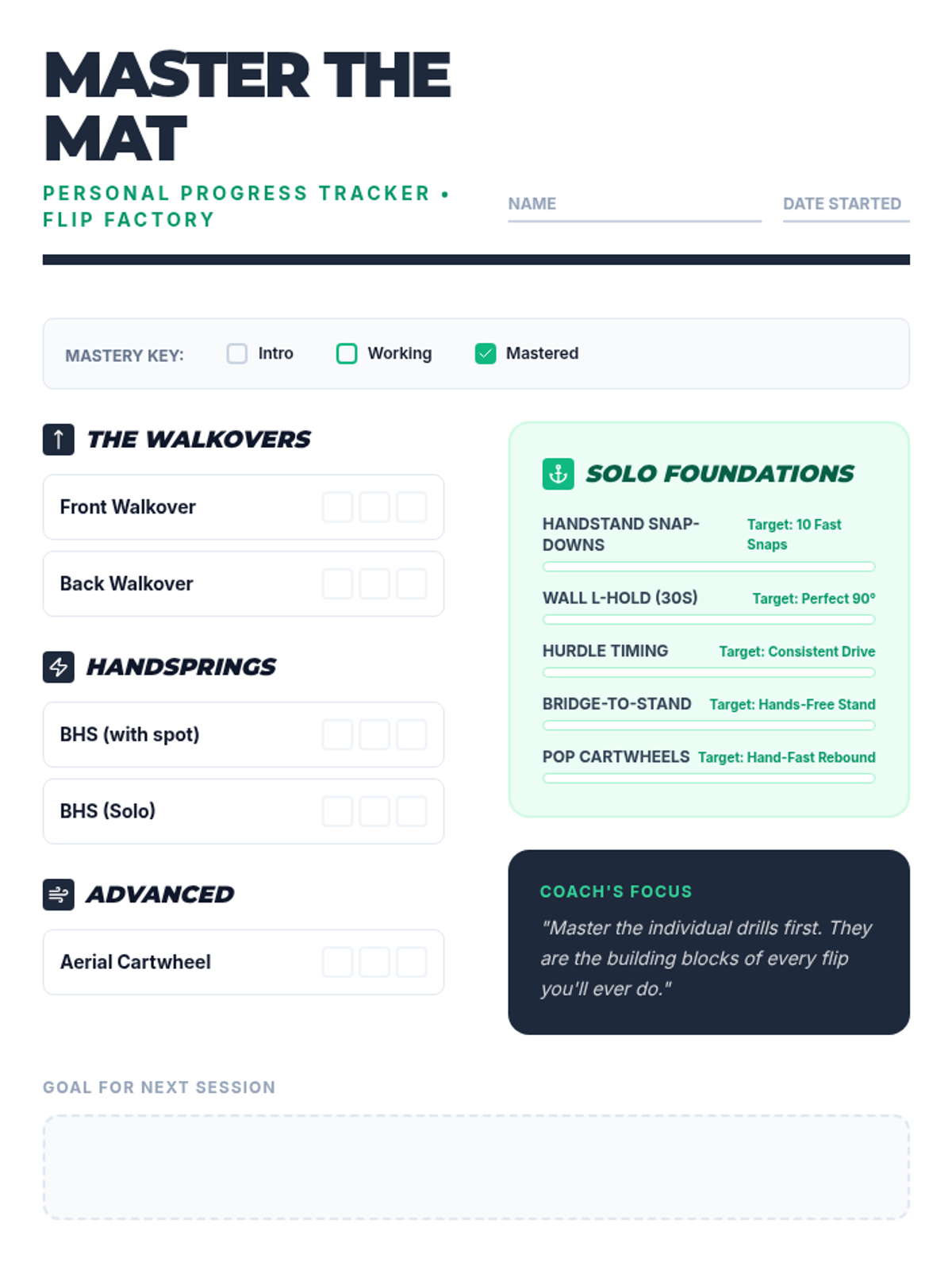
An updated student-facing skills tracker for tumbling, now including a dedicated "Solo Foundations" section for tracking progress on individual drills like snap-downs, wall holds, and hurdle timing.
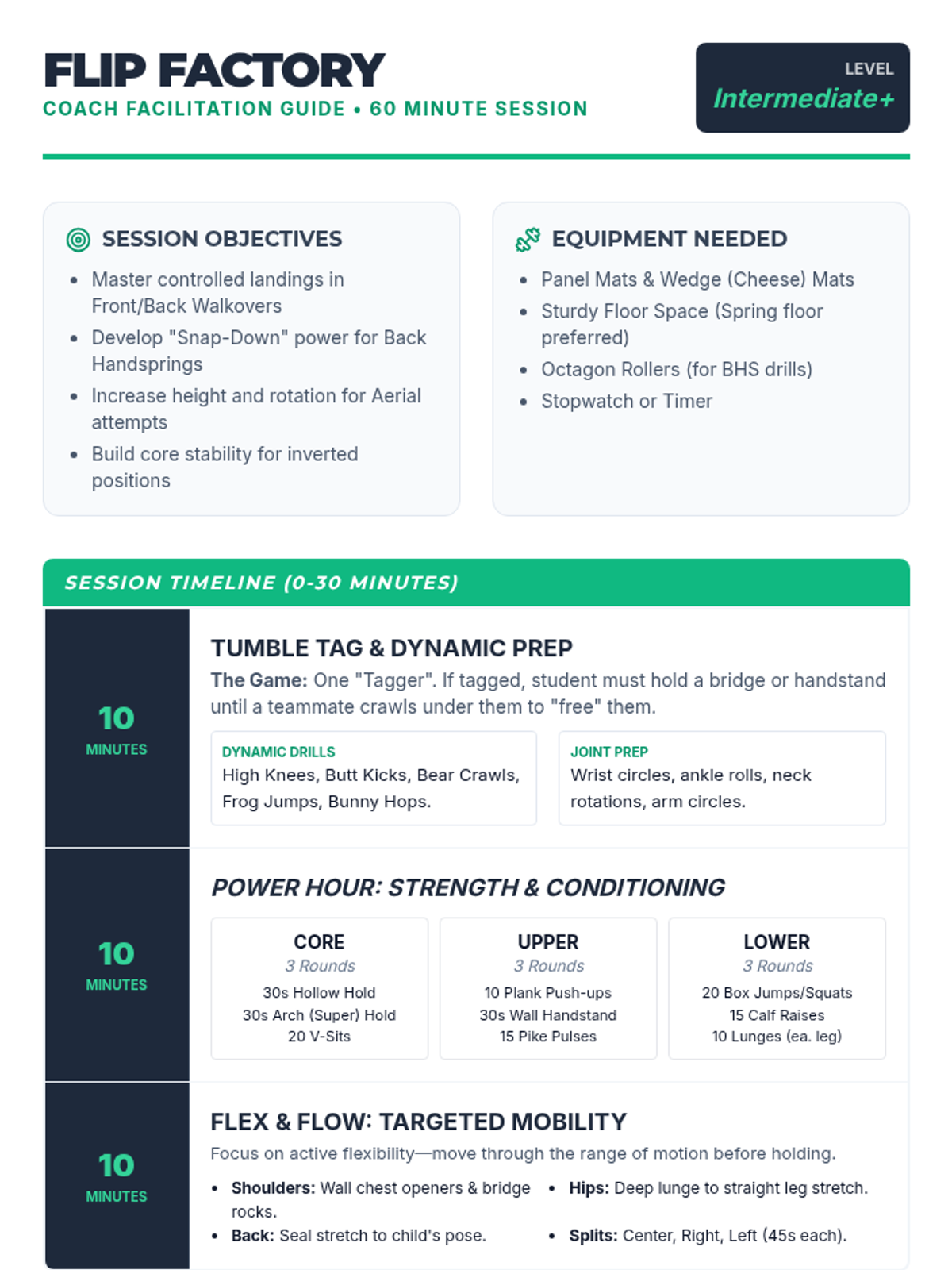
A revised 2-page coaching guide for the tumbling session, now featuring a management strategy for balancing spotted skills with new solo/individual drill stations. Includes updated timeline and coaching tips for solo skill acquisition.
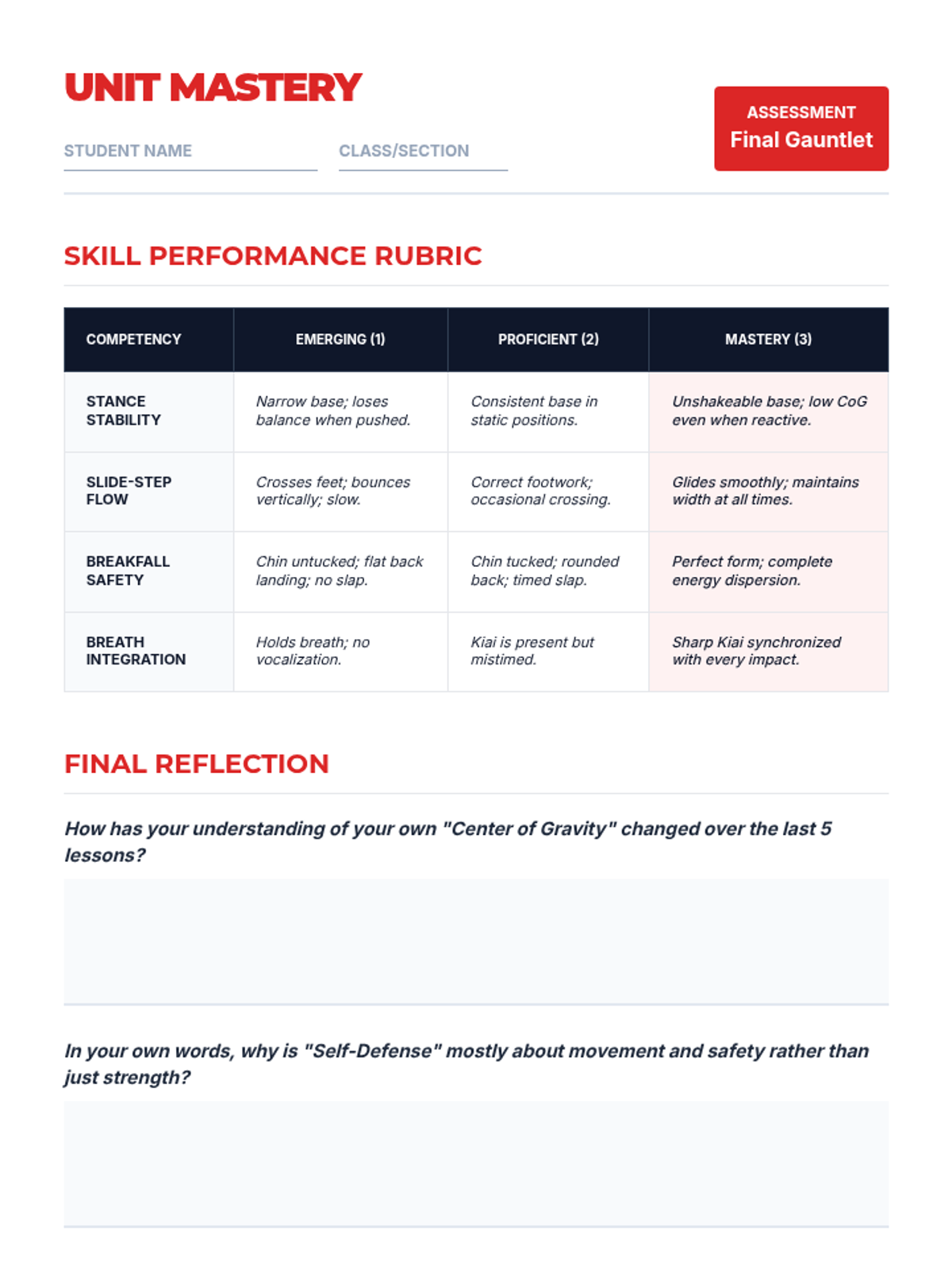
A student performance assessment and rubric for Lesson 5. It allows for peer or teacher evaluation of stances, footwork, breakfalls, and breath integration, while providing space for a final unit reflection.
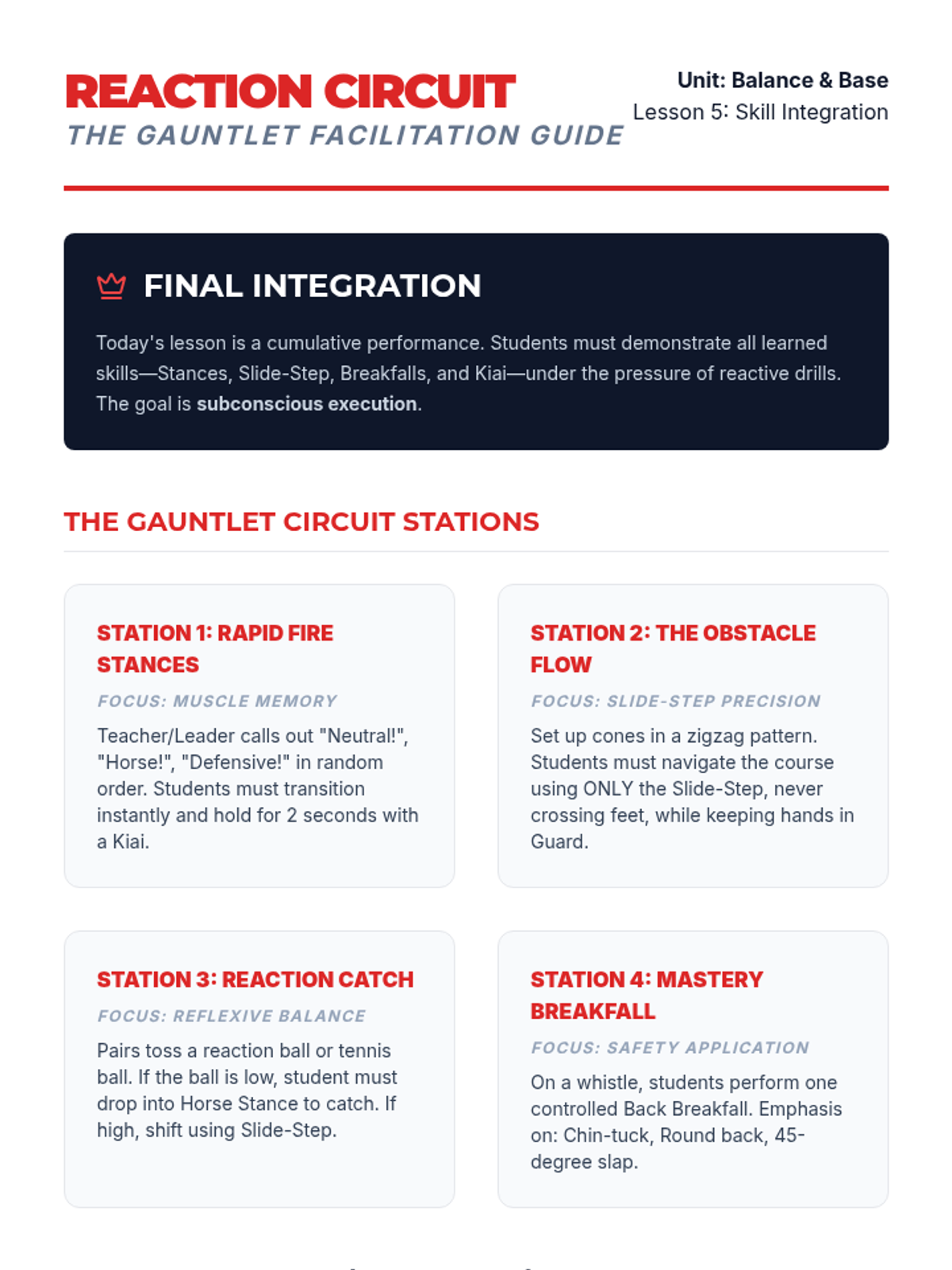
A teacher's facilitation guide for Lesson 5, providing instructions for the final agility circuit and reaction drills. Includes a mastery observation checklist to help teachers assess student progress across all unit skills.
A visual presentation for Lesson 5, culminating the unit by explaining how stances, footwork, and breath integration lead to improved reaction time. Includes instructions for the Mirror Drill, Reaction Ball Toss, and the Final Gauntlet circuit.
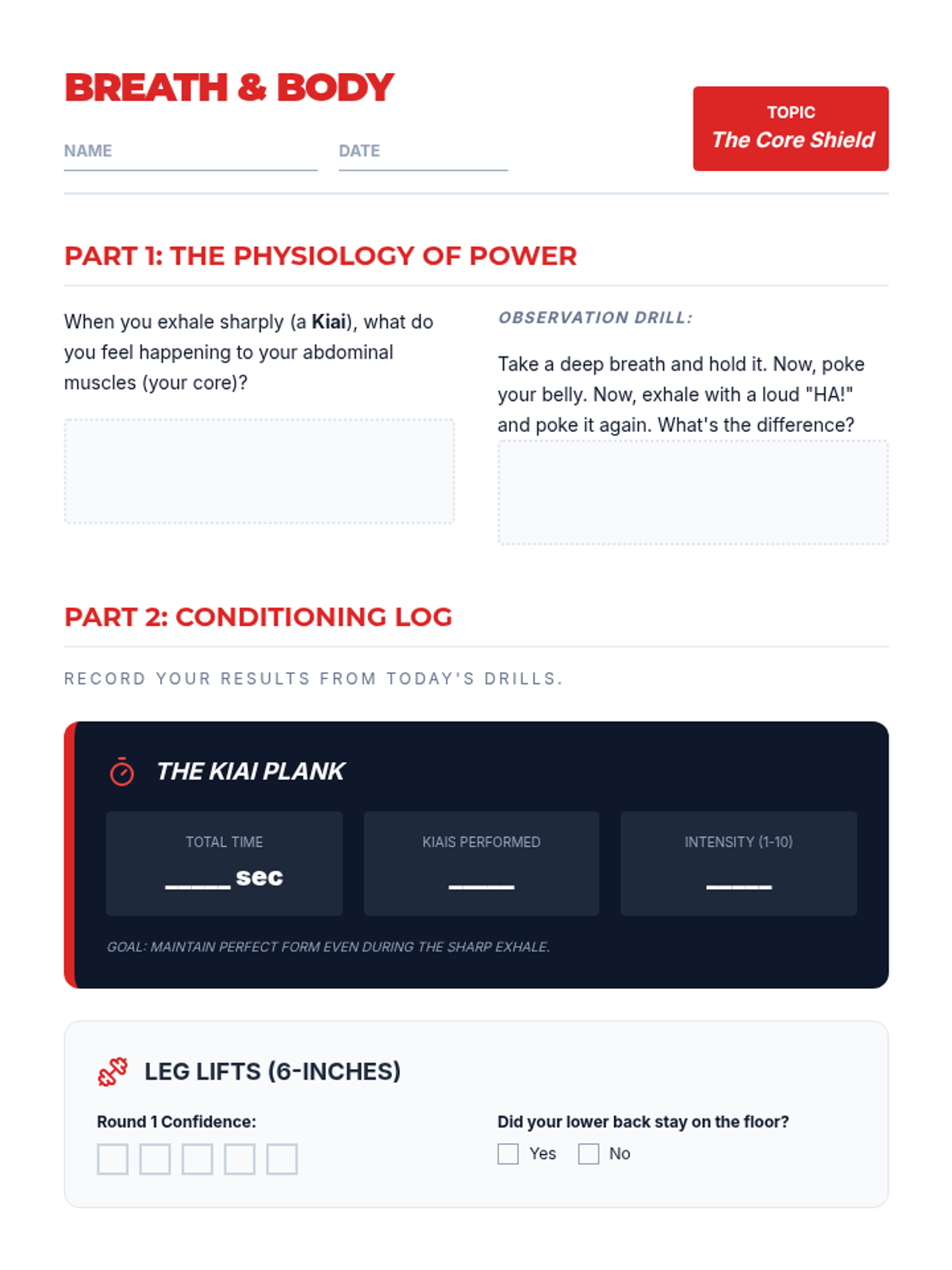
A student worksheet for Lesson 4 that provides space for recording core exercise performance (planks, leg lifts) and includes reflection questions on the physiological and psychological impact of breathing techniques (Kiai).
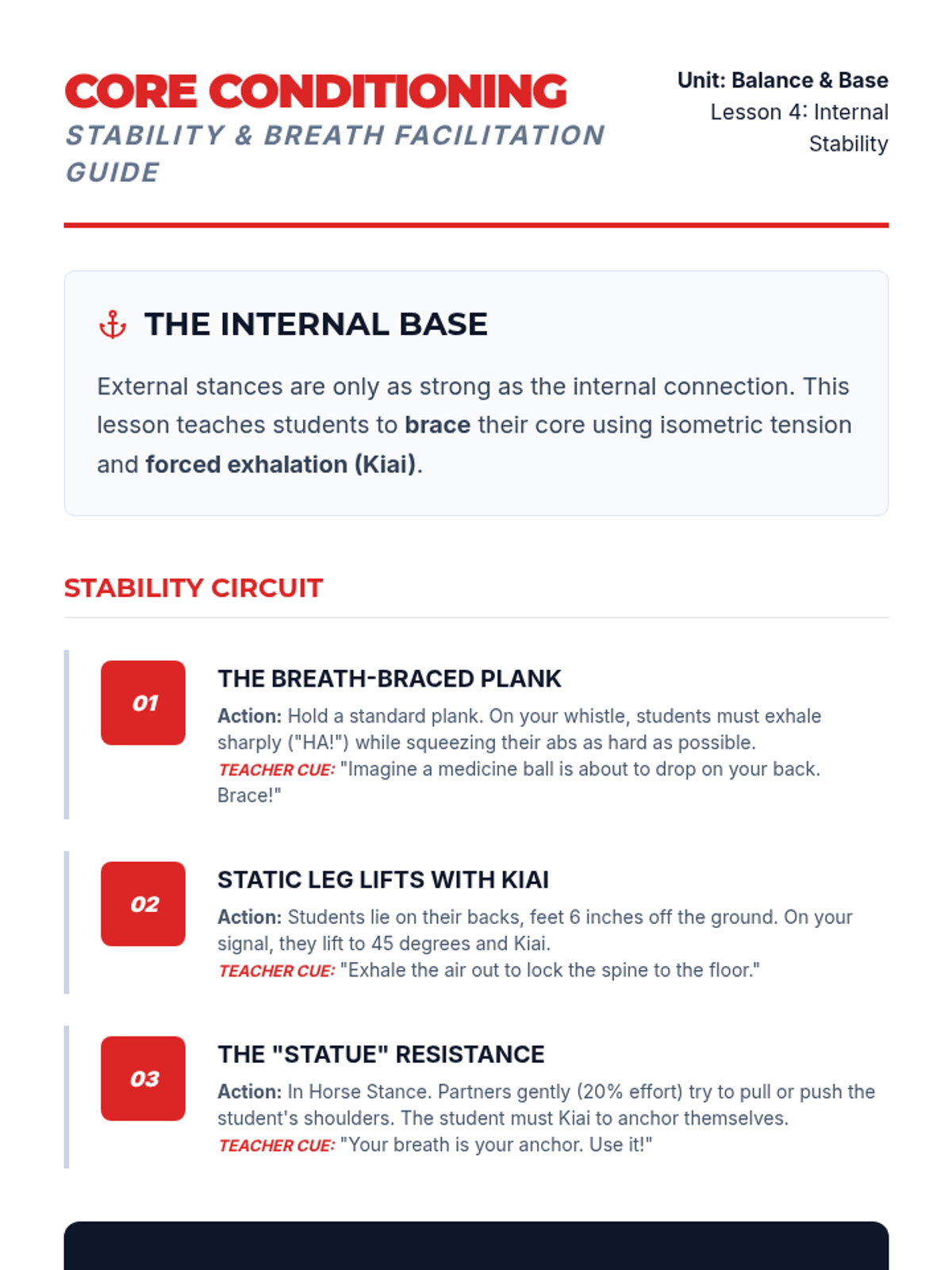
A teacher's facilitation guide for Lesson 4, providing instructions for core exercises, breath-synchronization drills, and the physiological explanation of the 'Kiai'. Includes safety tips for preventing overexertion.
A visual presentation for Lesson 4 focusing on the integration of core stability and breathing techniques (Kiai). It explains the physiological benefits of sharp exhalations for core bracing and provides instructions for synchronization drills.
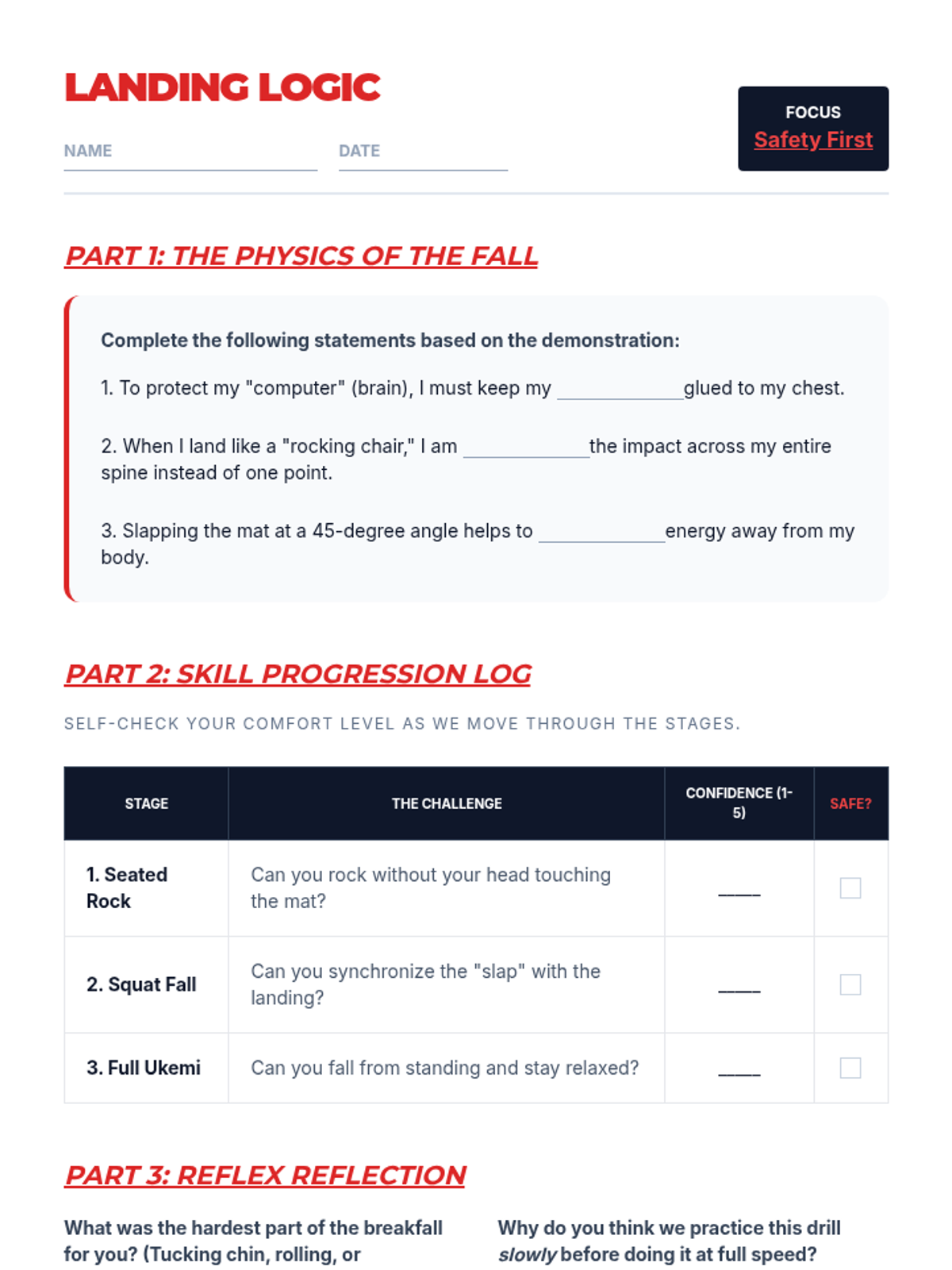
A student worksheet for Lesson 3 that helps students track their progression through breakfall techniques, reinforces the physics of impact through fill-in-the-blank questions, and provides a self-assessment tool for confidence and safety.
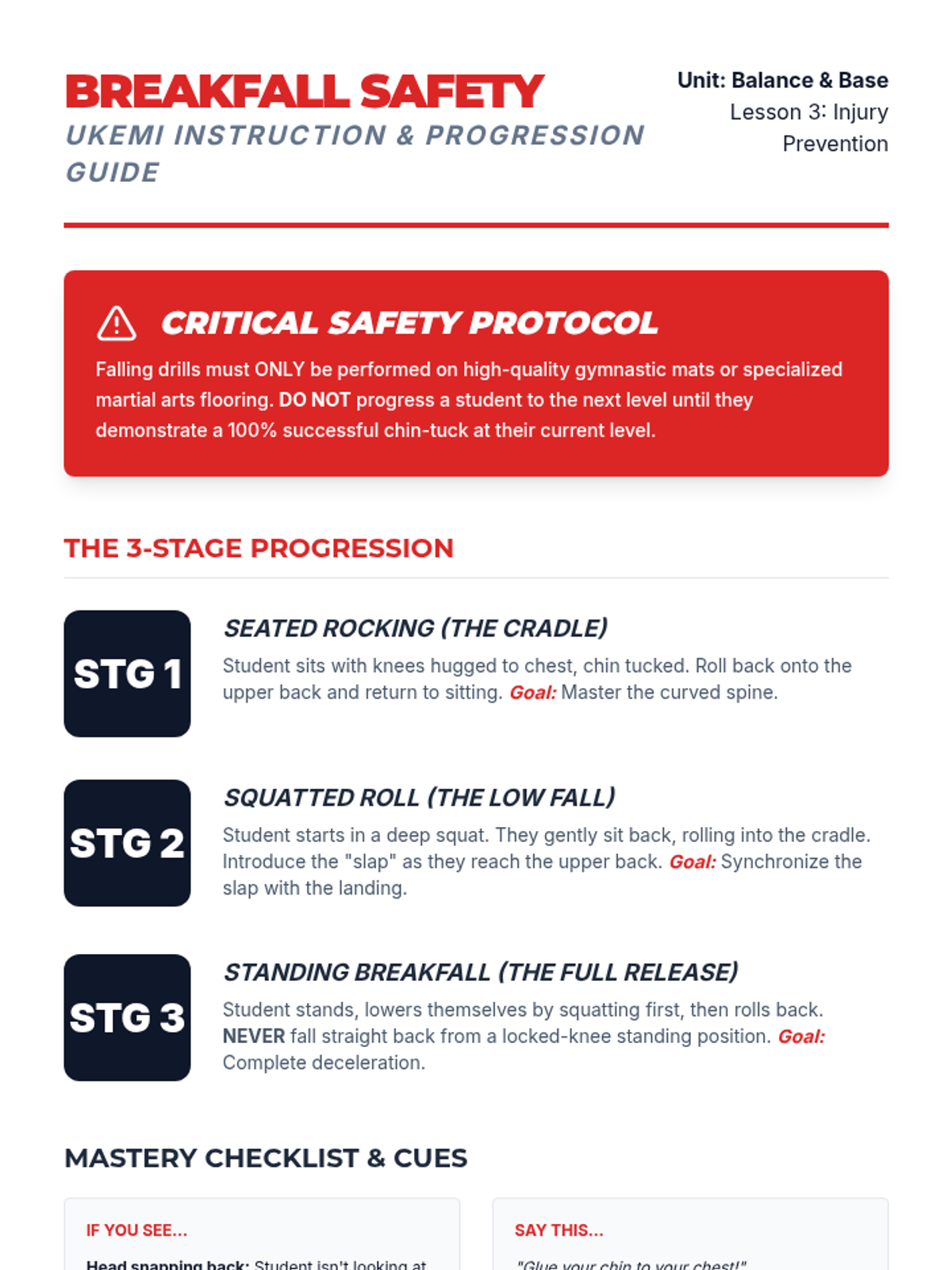
A teacher's facilitation guide for Lesson 3, providing a detailed 3-stage progression for teaching back breakfalls (Ukemi), safety protocols, and feedback cues to correct common student errors.
A visual presentation for Lesson 3 focusing on the physics of impact, the importance of chin-tucking for head protection, and the step-by-step breakdown of the back breakfall (Ushiro Ukemi) technique.
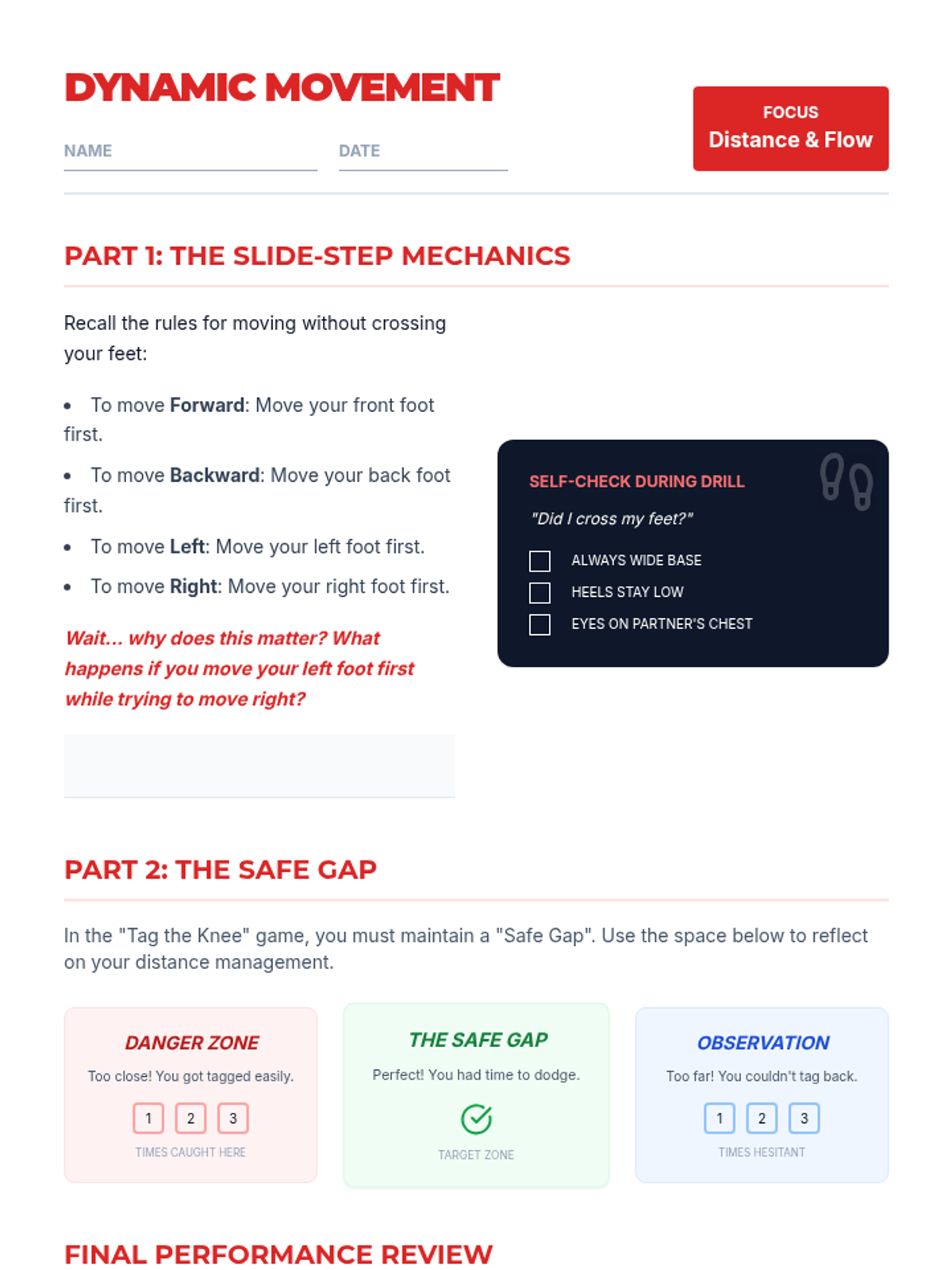
A student-facing handout for Lesson 2 that guides students through the mechanics of the slide-step, provides a self-assessment tool for distance management during the 'Tag the Knee' game, and includes reflection questions on movement control.
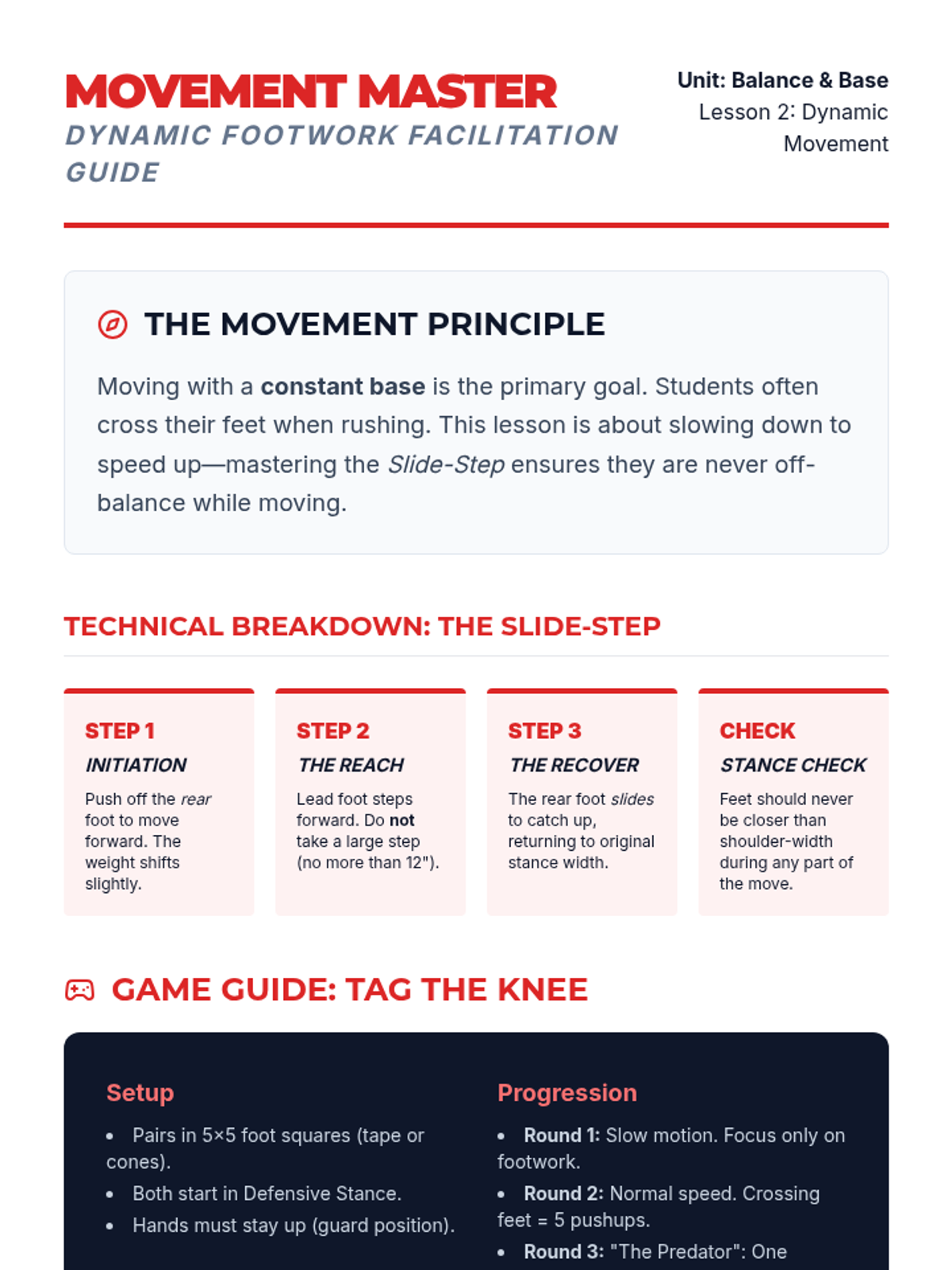
A teacher's facilitation guide for Lesson 2, providing detailed instructions on the slide-step technique, game rules for 'Tag the Knee', and a troubleshooting table for common student movement errors.
A visual presentation for Lesson 2 focusing on dynamic footwork, the slide-step technique, and distance management. It includes diagrams of the slide-step and rules for the 'Tag the Knee' game.
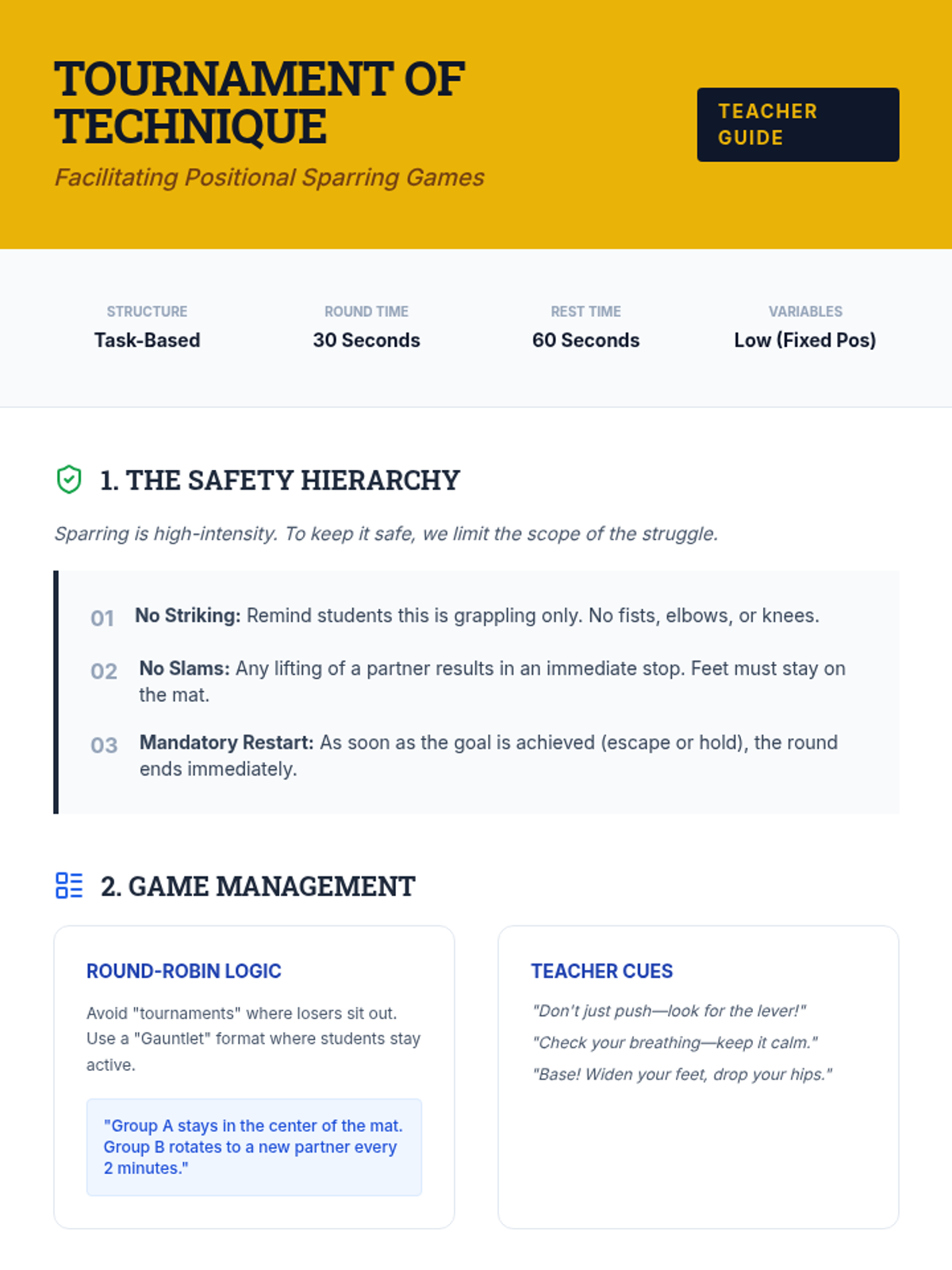
A teacher guide for organizing and facilitating positional sparring games, including safety rules and intensity management.
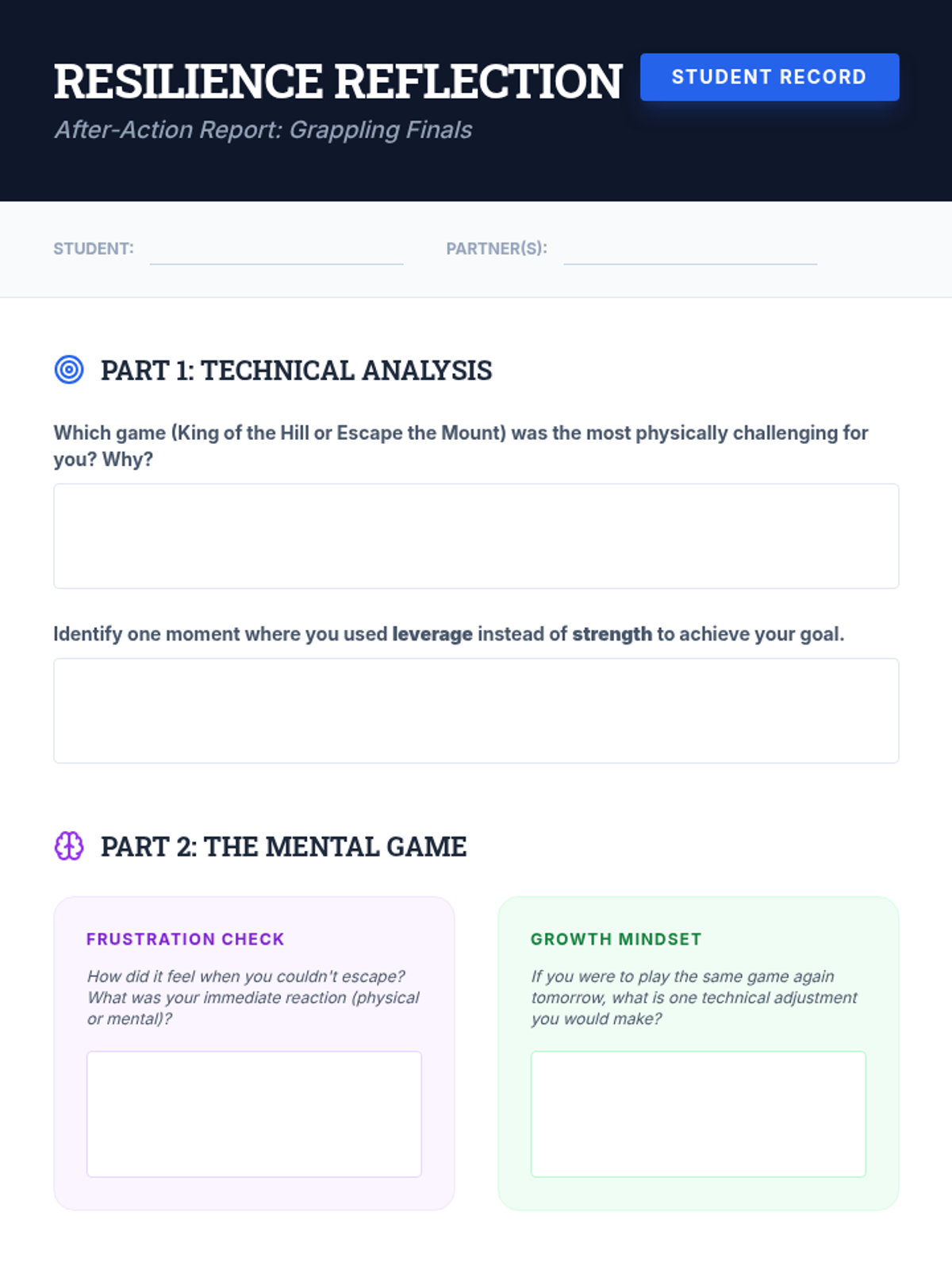
A student reflection sheet for post-sparring analysis, focusing on technical application and emotional regulation/resilience.
Slides outlining the rules and win conditions for task-based grappling games like King of the Hill and Escape the Mount.
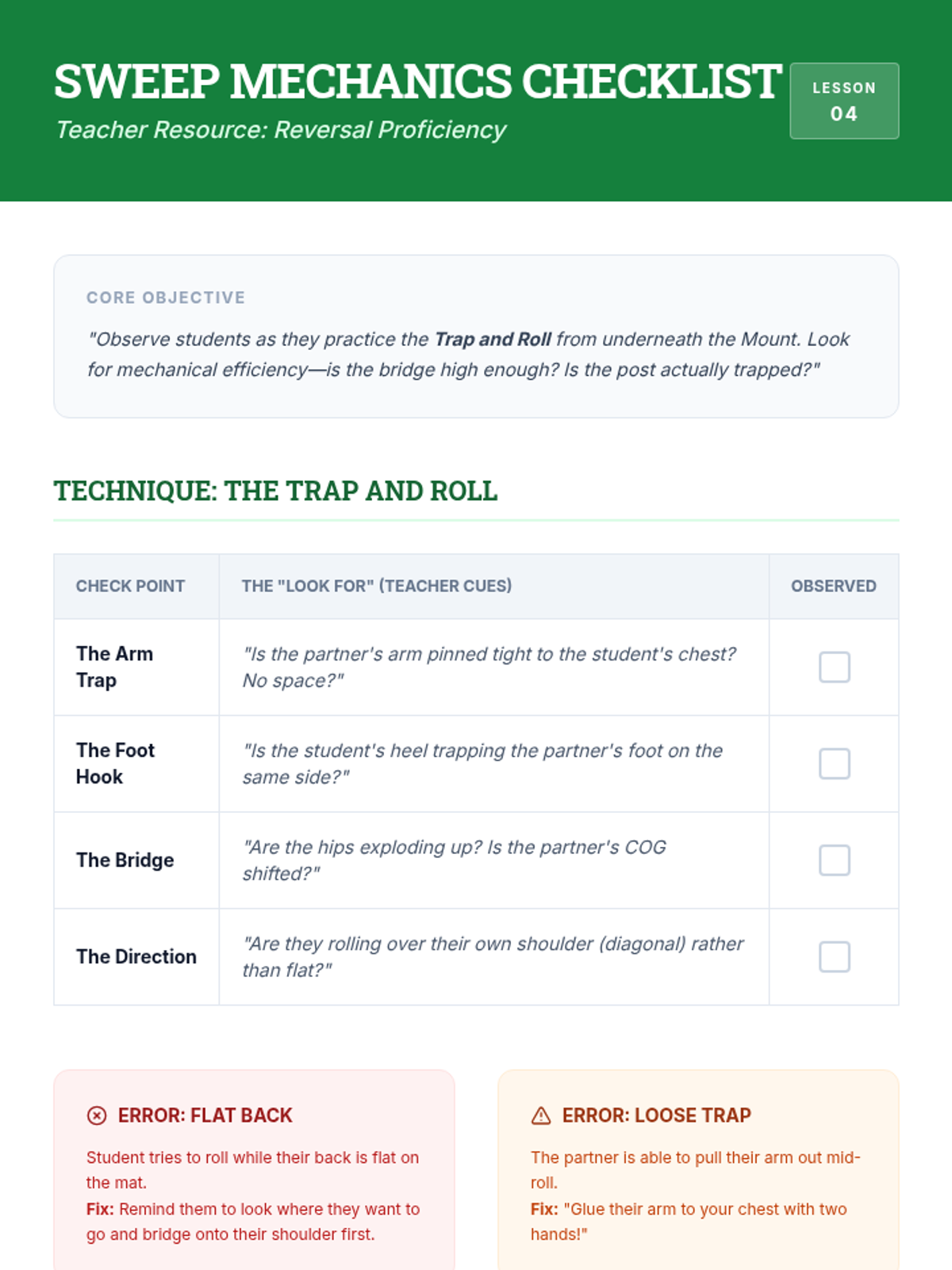
A teacher guide and checklist for observing and correcting student technique during sweep and reversal drills.
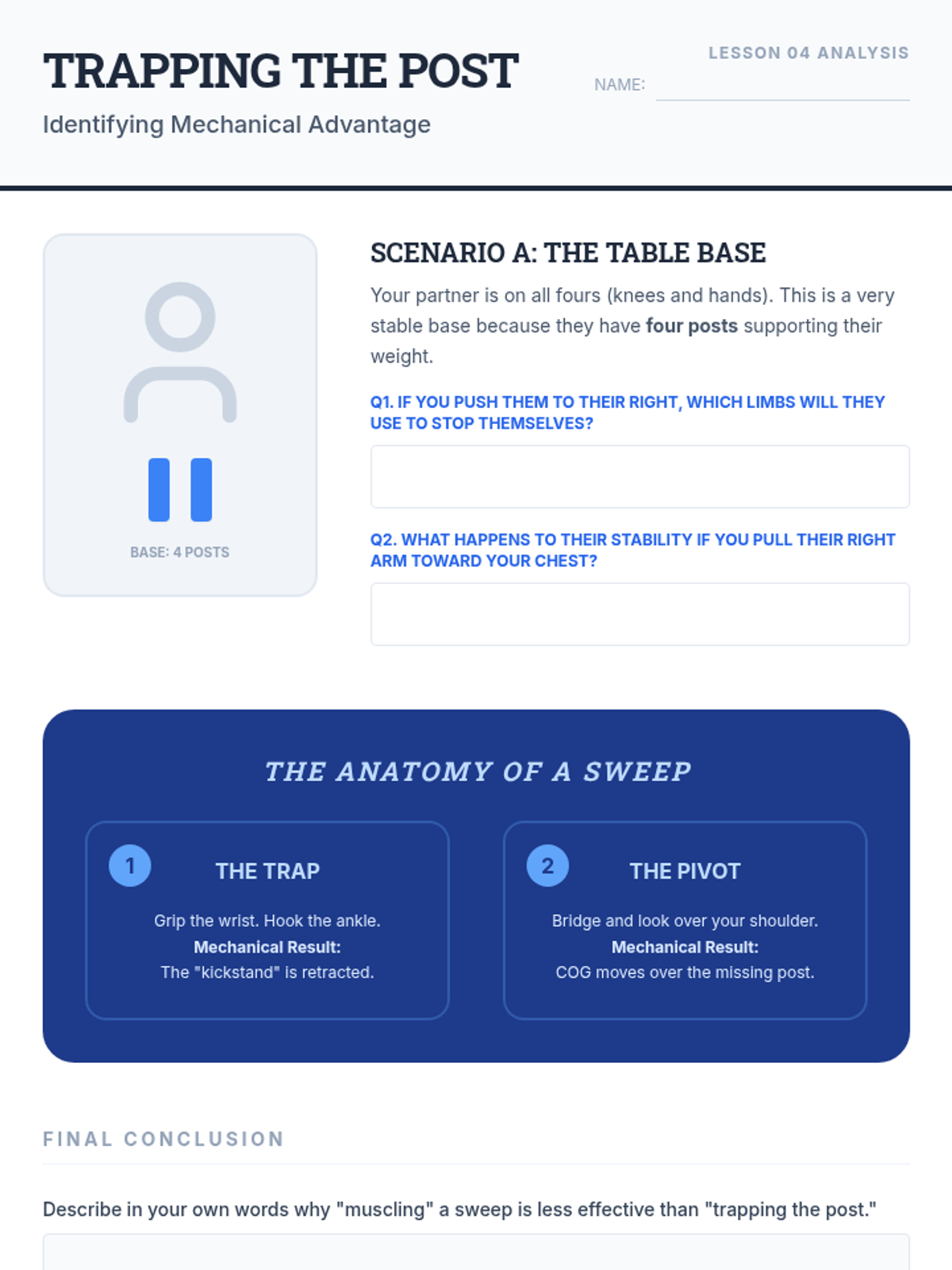
A worksheet for students to identify posts and analyze the mechanics of leverage used in grappling sweeps.
Slides explaining the physics of sweeps, the concept of "trapping a post," and the use of leverage to reverse positions.
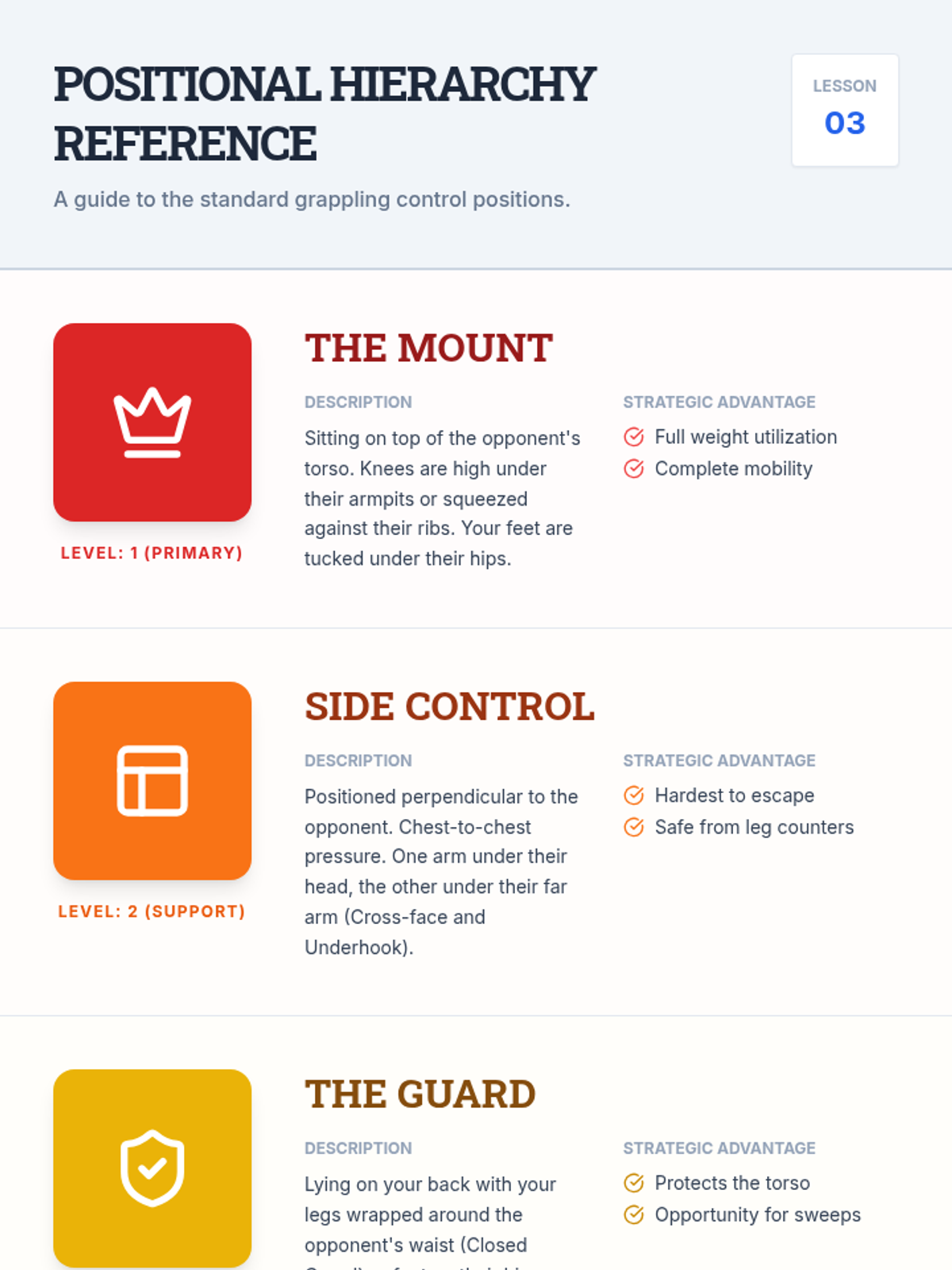
A visual reference guide for students to understand the primary grappling positions: Mount, Side Control, and Guard.
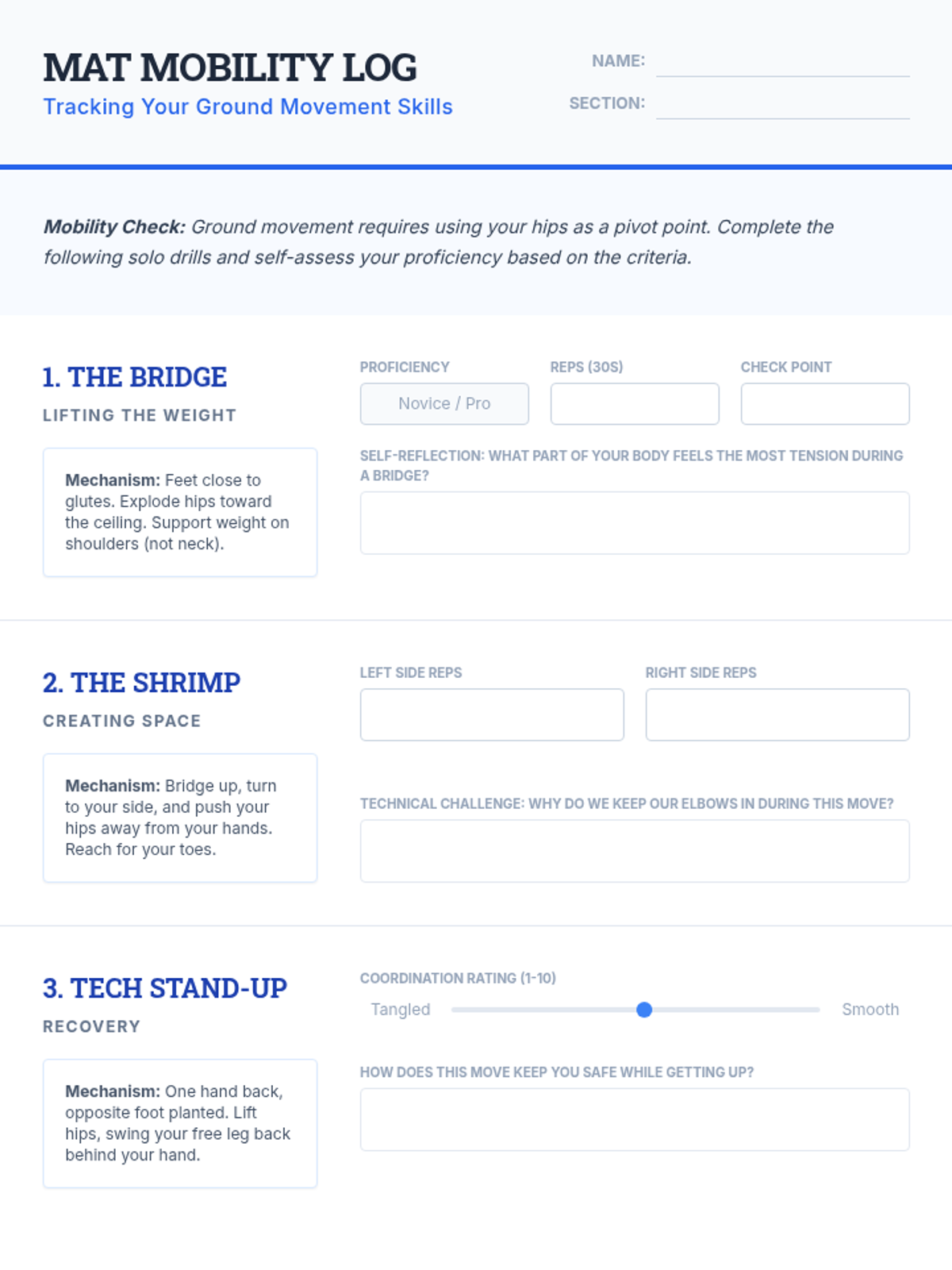
A student movement log for tracking progress in essential solo grappling drills: the bridge, the shrimp, and the technical stand-up.
Slides covering the standard grappling positions (Mount, Side Control, Guard) and the concept of positional hierarchy.
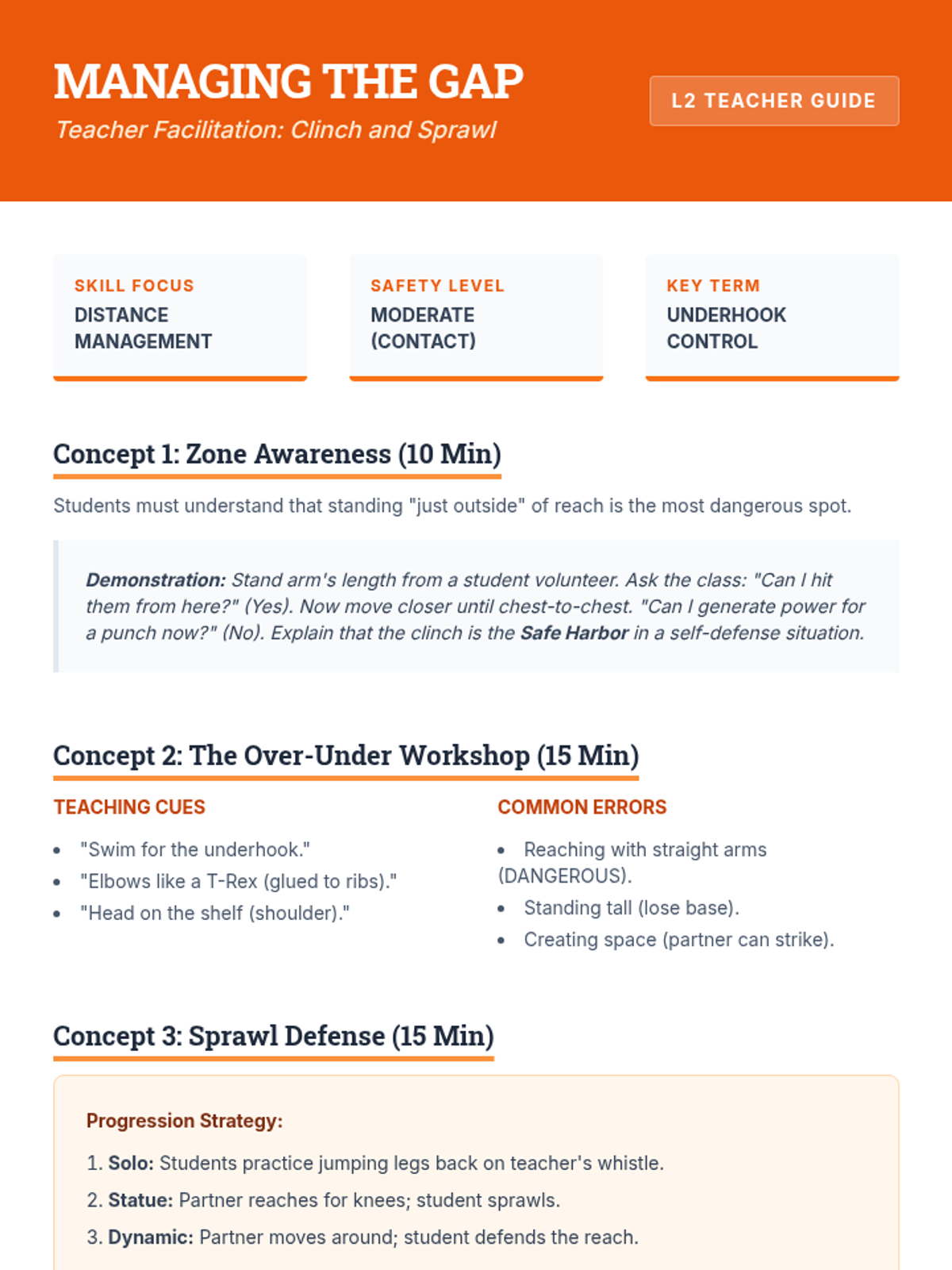
A teacher guide for Lesson 2 focusing on teaching distance management, clinch mechanics, and safely facilitating contact drills.
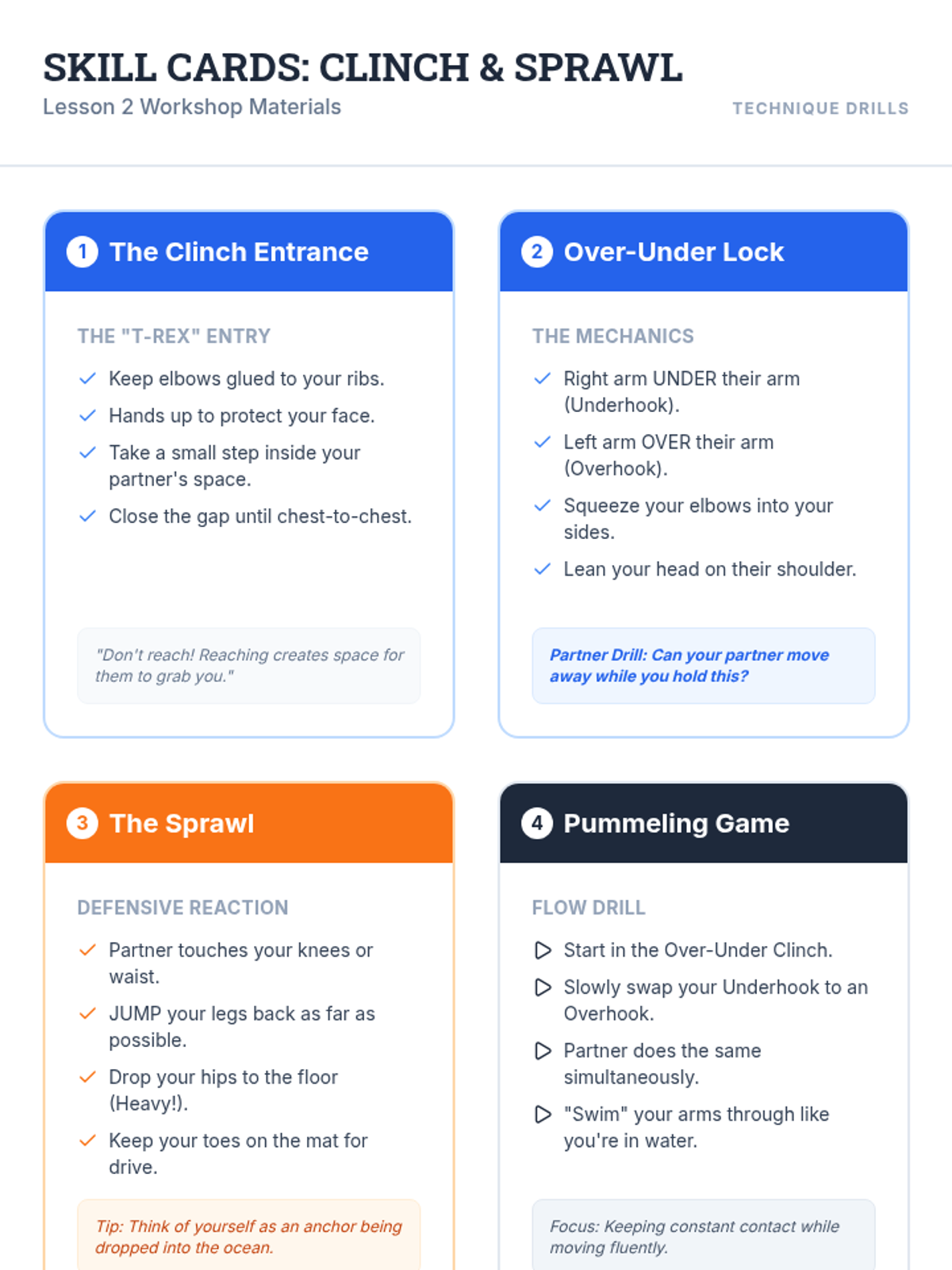
Visual activity cards for students to use during mat workshops to guide clinch and sprawl drills.
Slides covering distance management, the over-under clinch, and the mechanics of the sprawl defense.
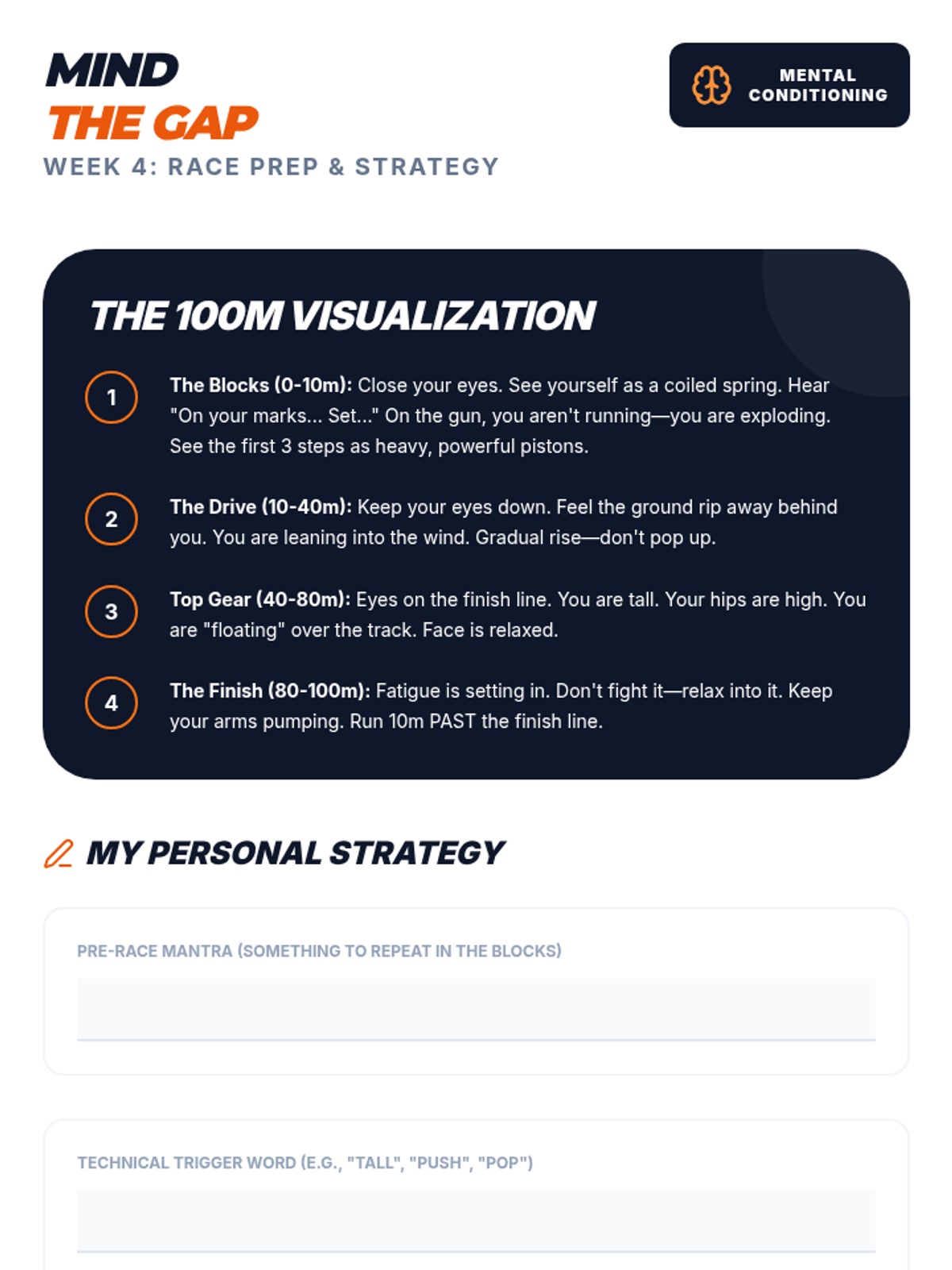
A mental preparation and strategy guide for students to prepare for race day in Week 4.
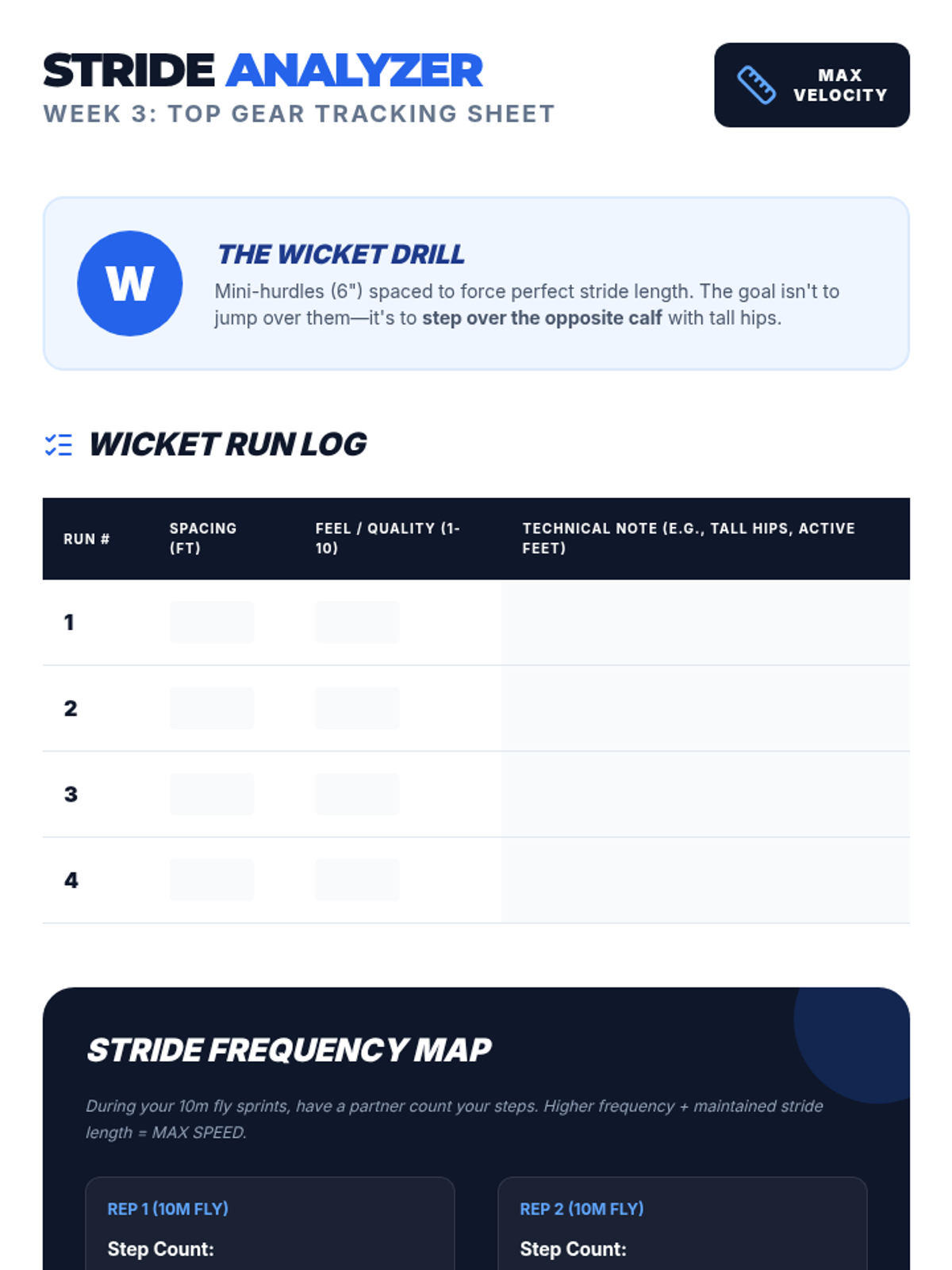
A specialized tracking sheet for wicket drills and stride frequency analysis during Week 3 max velocity training.
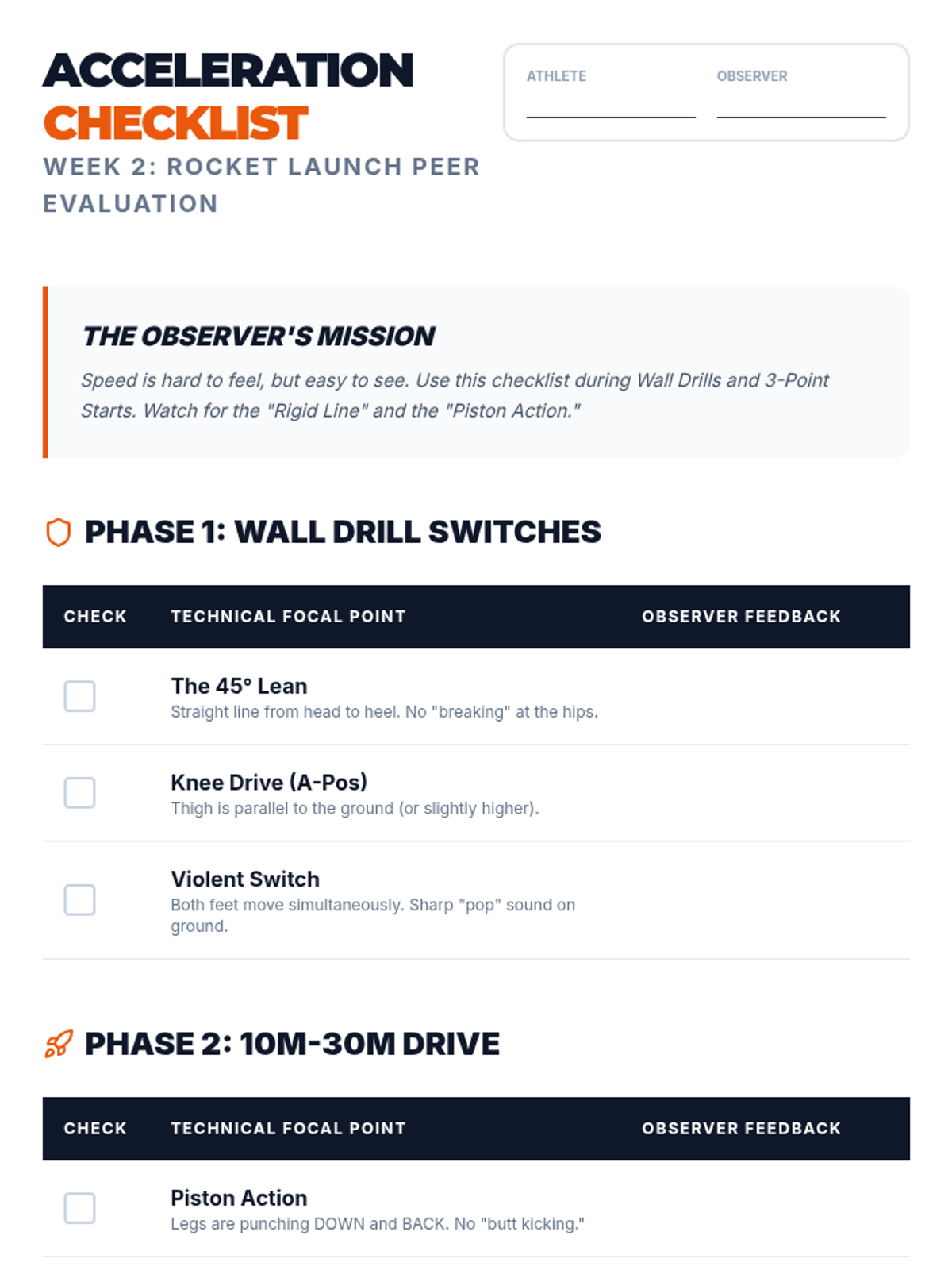
A peer-evaluation checklist for students to use during Week 2 acceleration drills, focusing on posture and drive mechanics.
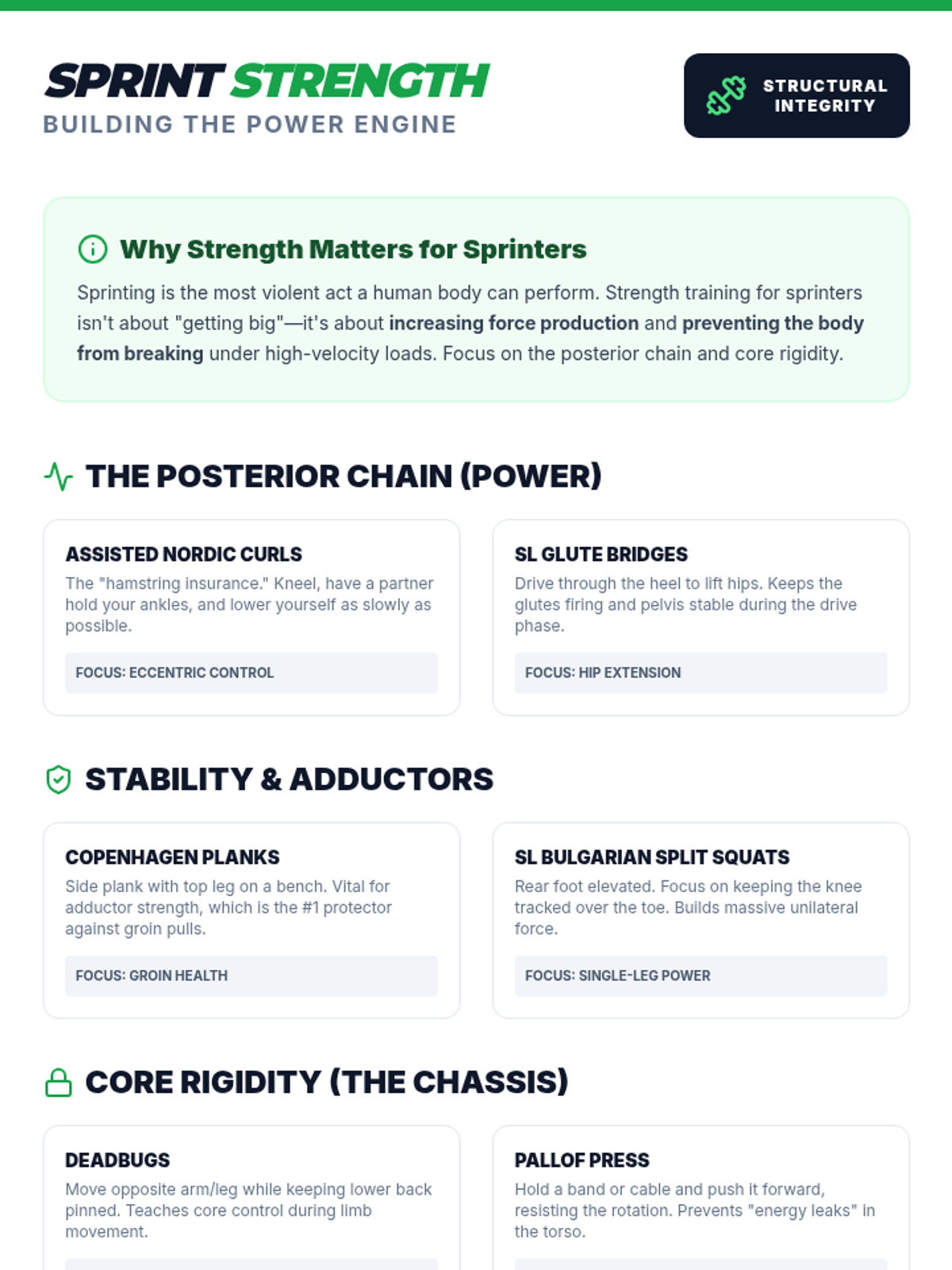
A specialized strength and stability guide for sprinters focusing on posterior chain power, core rigidity, and injury prevention exercises.
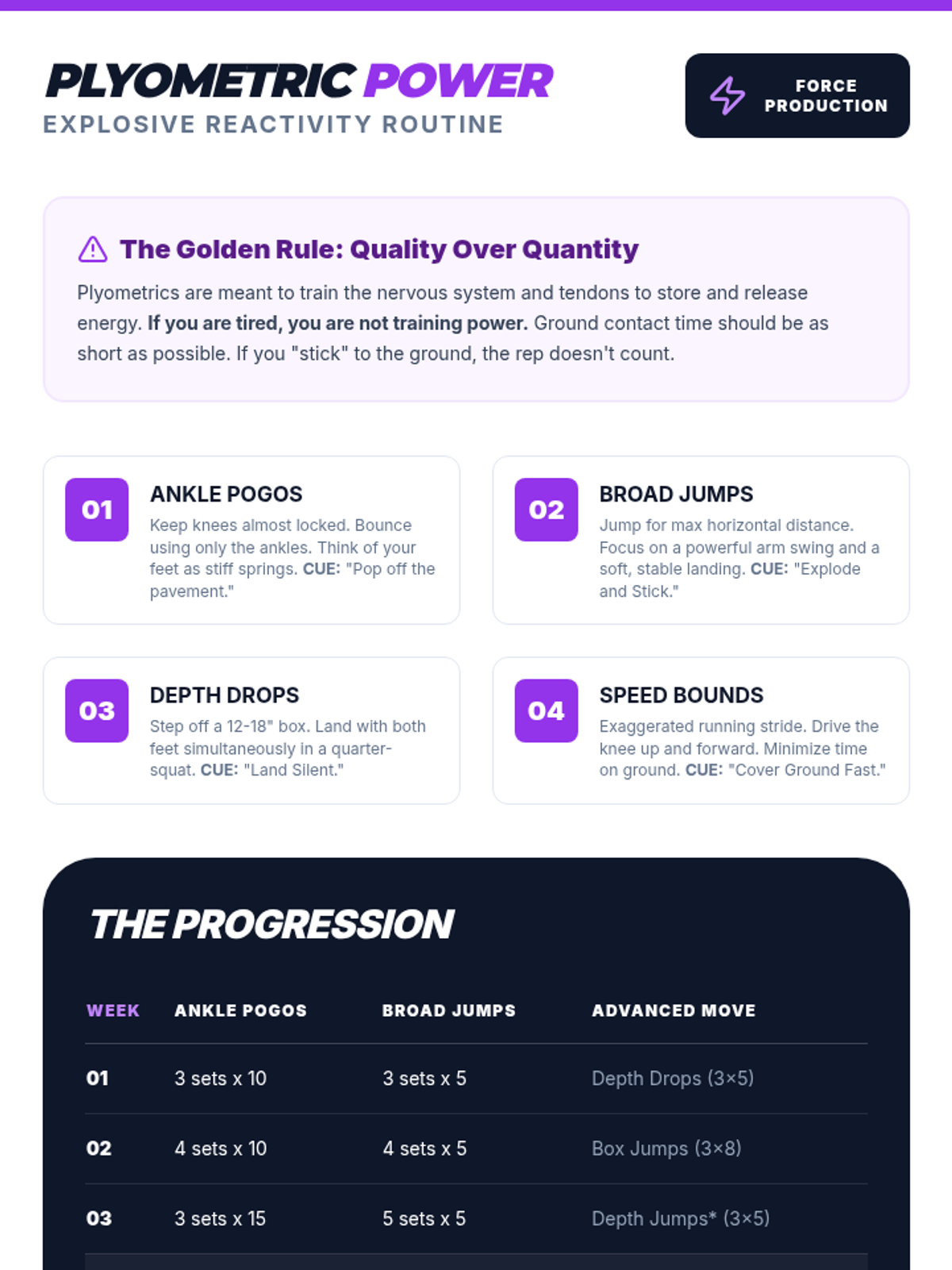
An explosive power routine featuring 4 weeks of plyometric progressions, landing mechanics, and reactive jumping exercises.
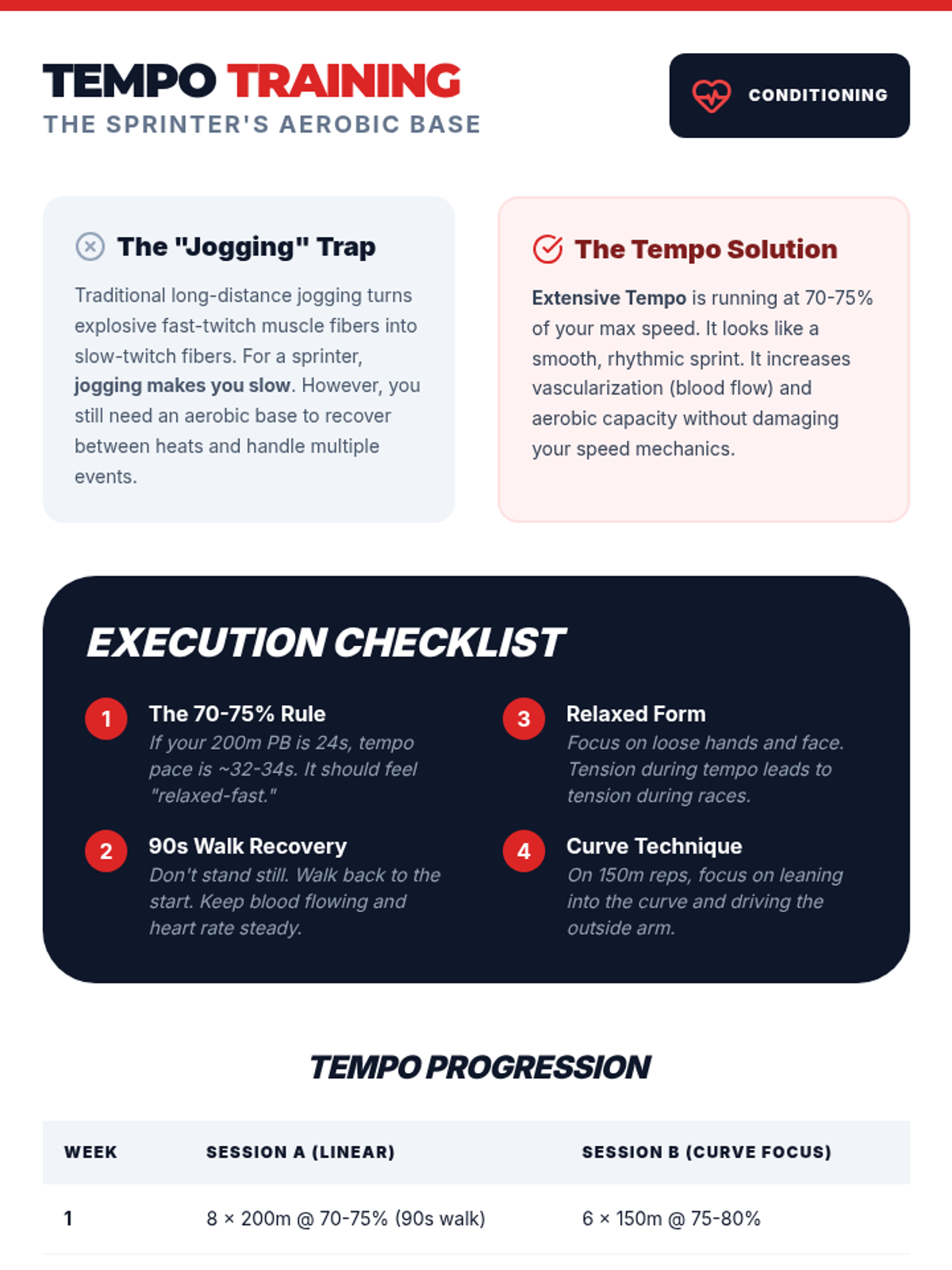
A guide to "Extensive Tempo" training, explaining how sprinters build aerobic capacity and recovery speed without sacrificing fast-twitch explosive power.
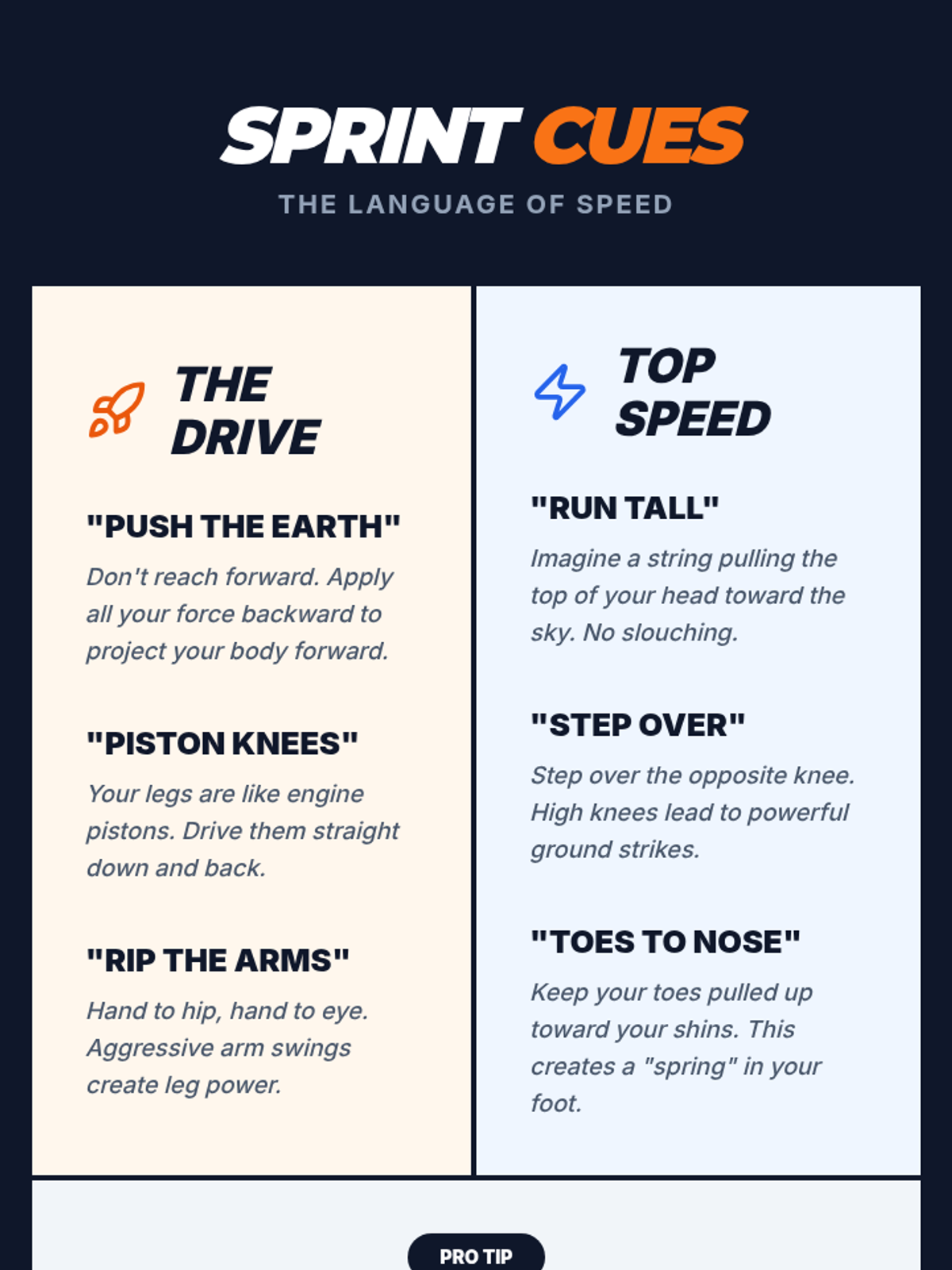
An instructional anchor chart featuring key verbal cues and technical focuses for sprinting mechanics.
A visual presentation for students to introduce the core mechanics of speed, acceleration, and injury prevention.
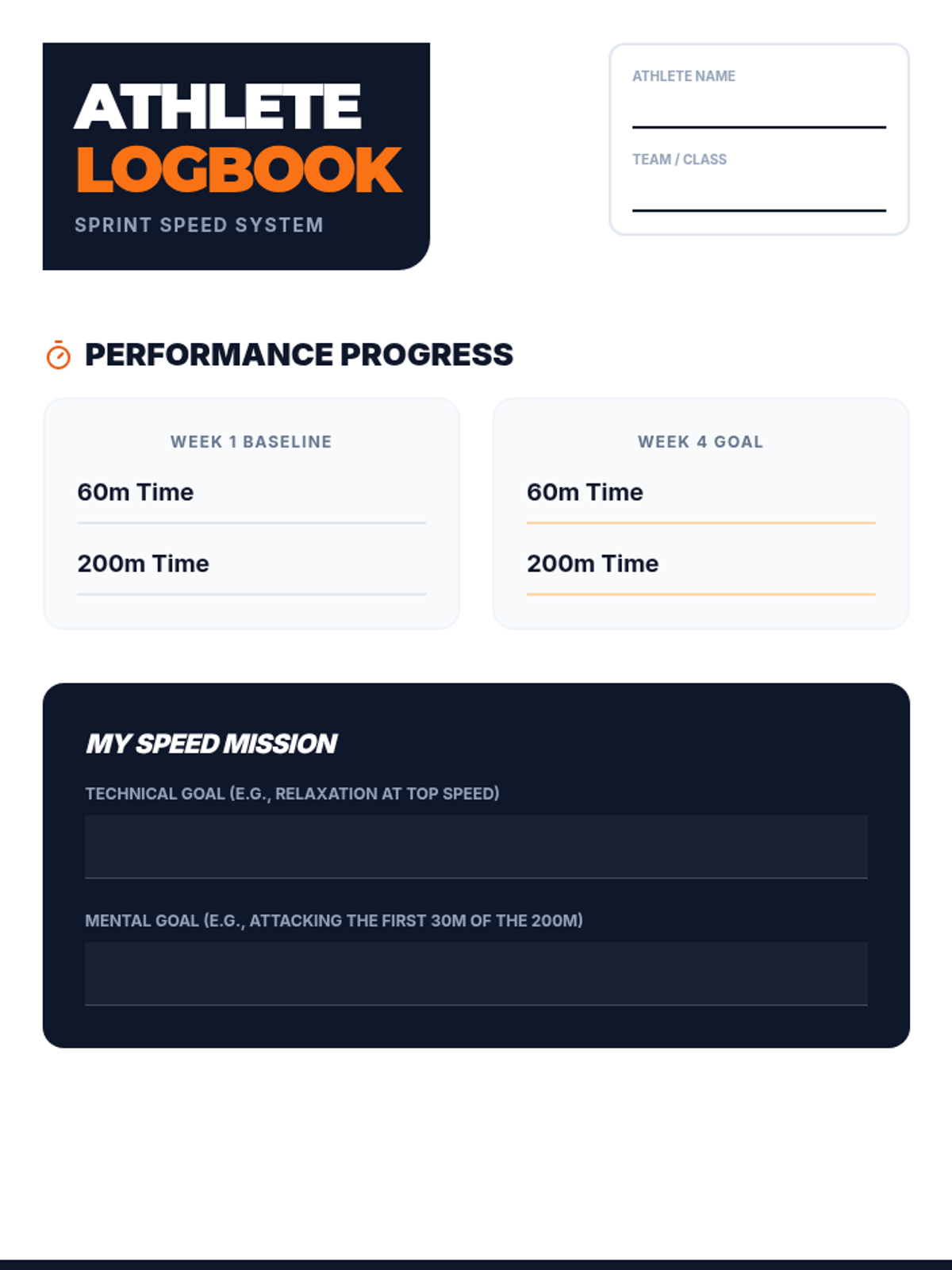
A student tracking document for athletes to record times, RPE, and weekly reflections throughout the 4-week high-intensity program.
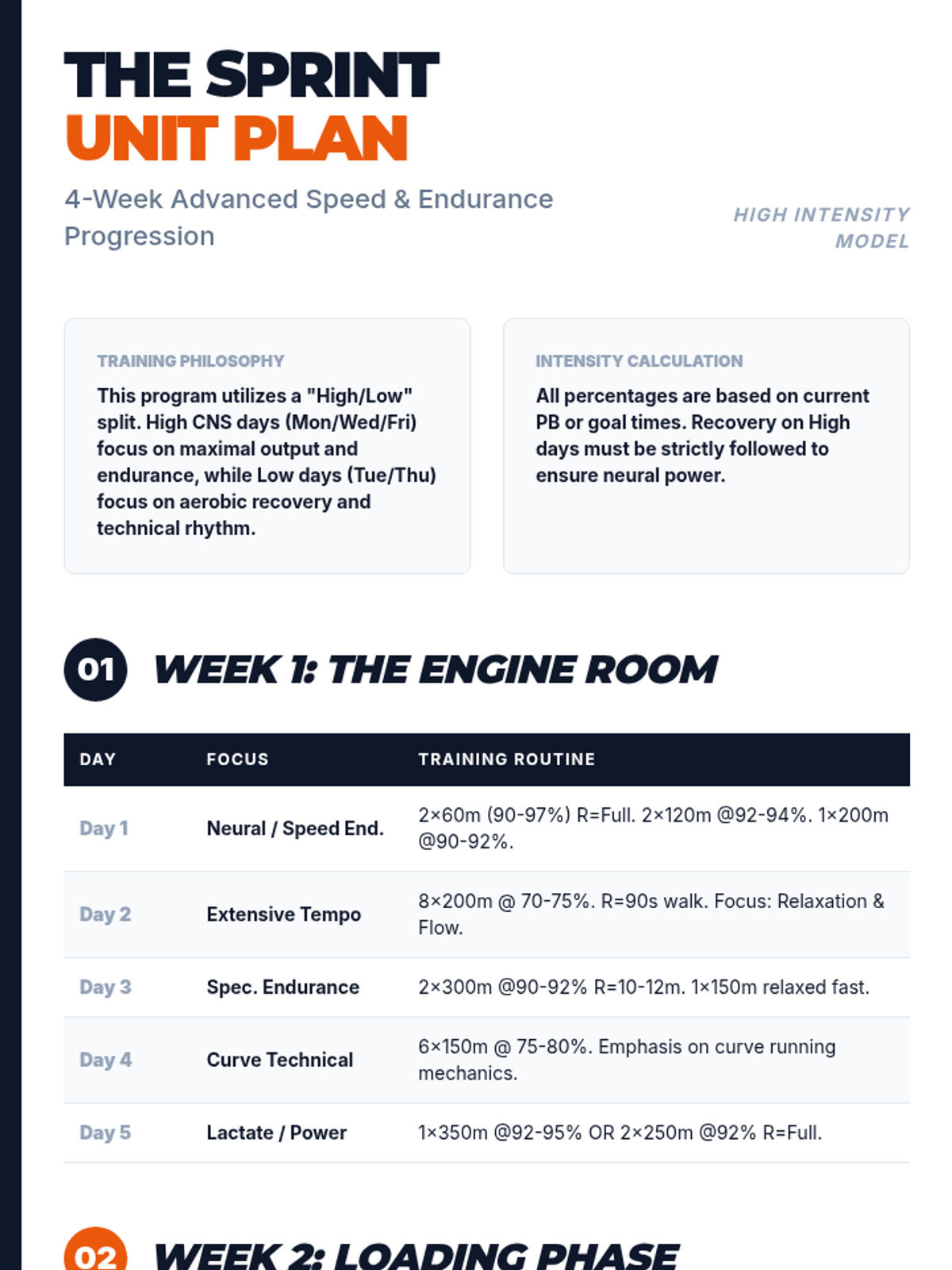
A comprehensive 4-week unit plan for coaches, providing a day-by-day breakdown of drills, conditioning, and speed sessions based on a high-intensity interval model.
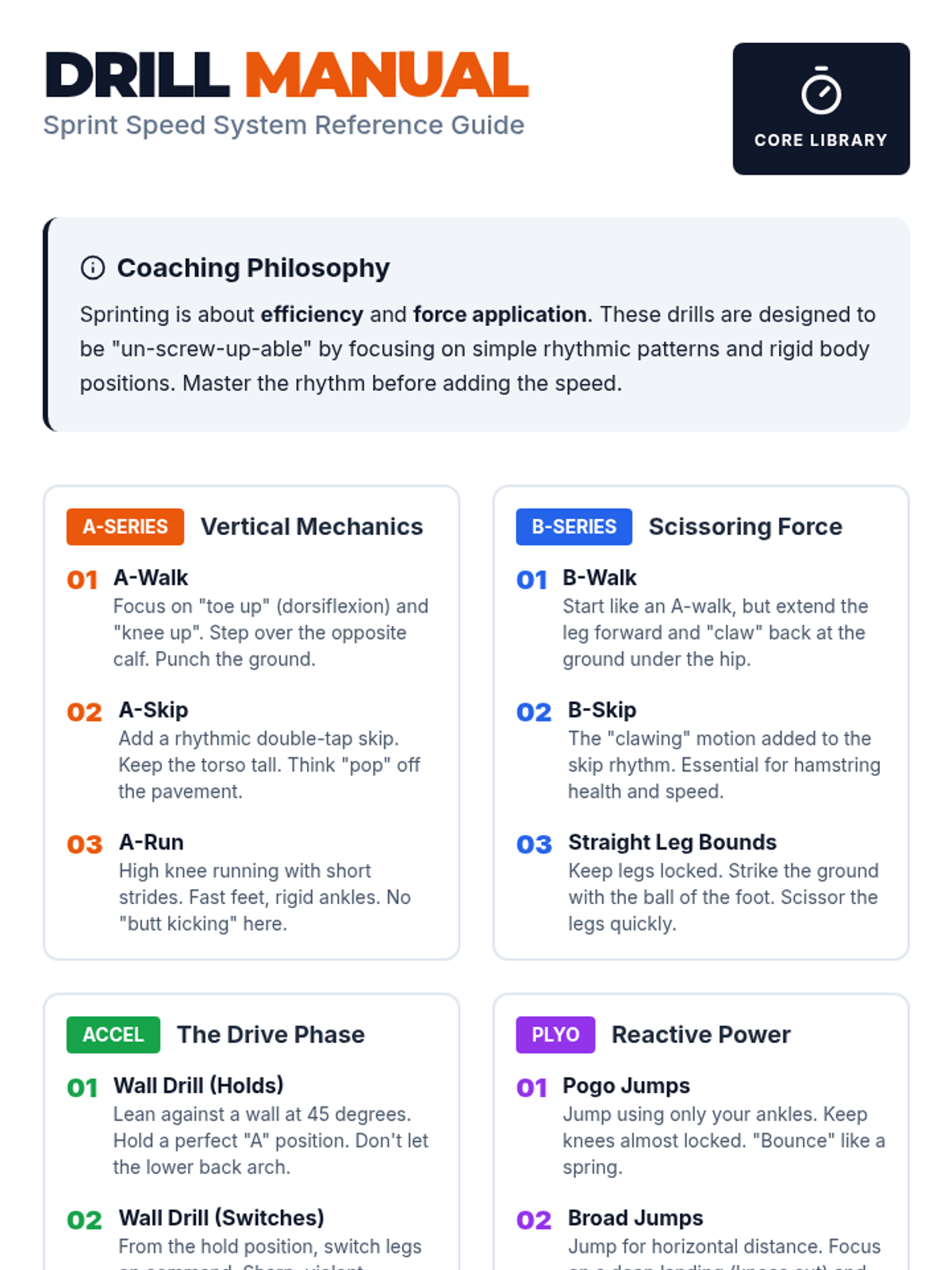
A visual reference guide for athletes featuring the core sprint drills (A/B series, acceleration, plyometrics) and an injury prevention routine.
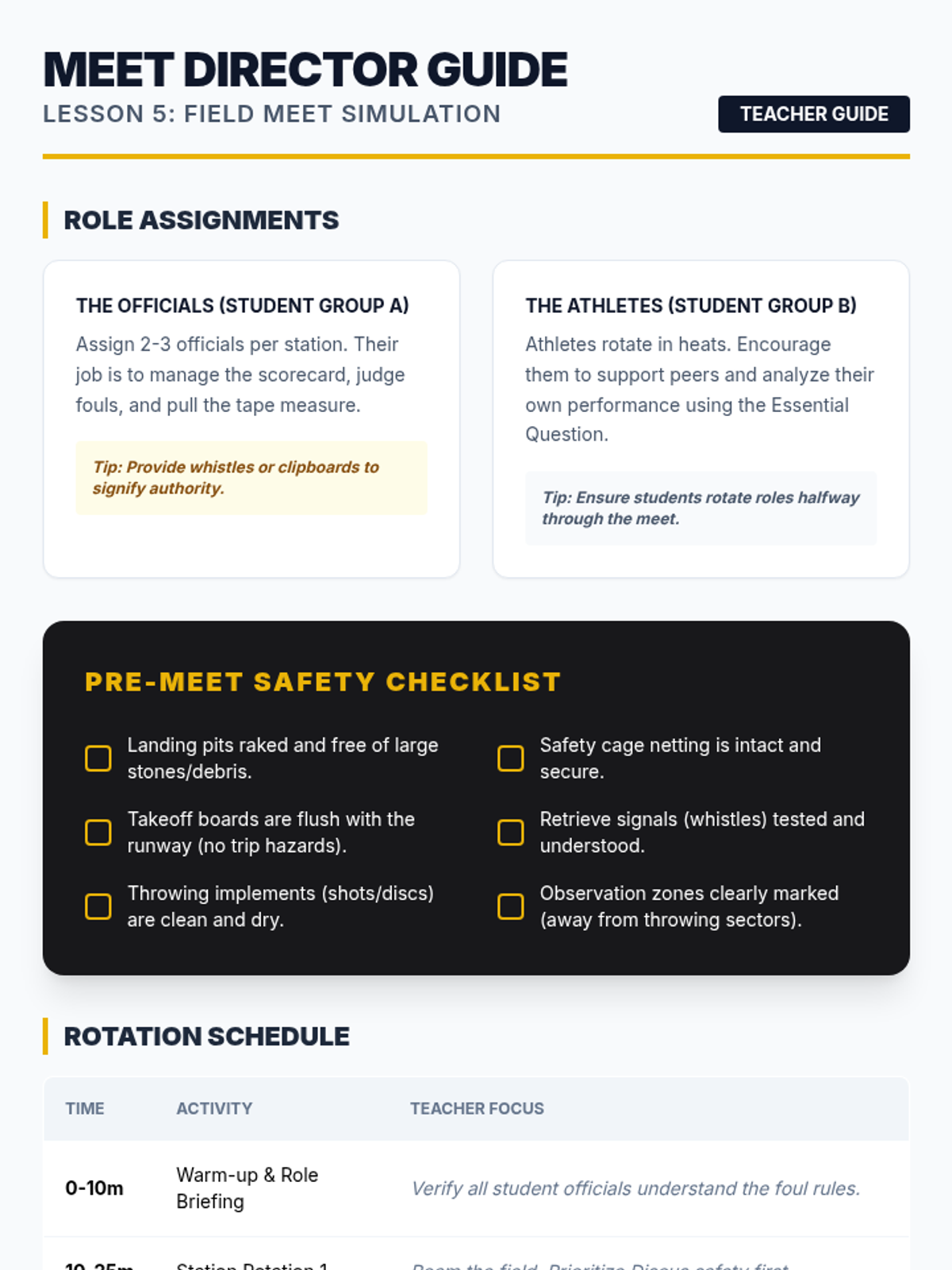
A comprehensive teacher facilitation guide for managing the mock track meet, including role assignments, safety checklists, and a rotation schedule.
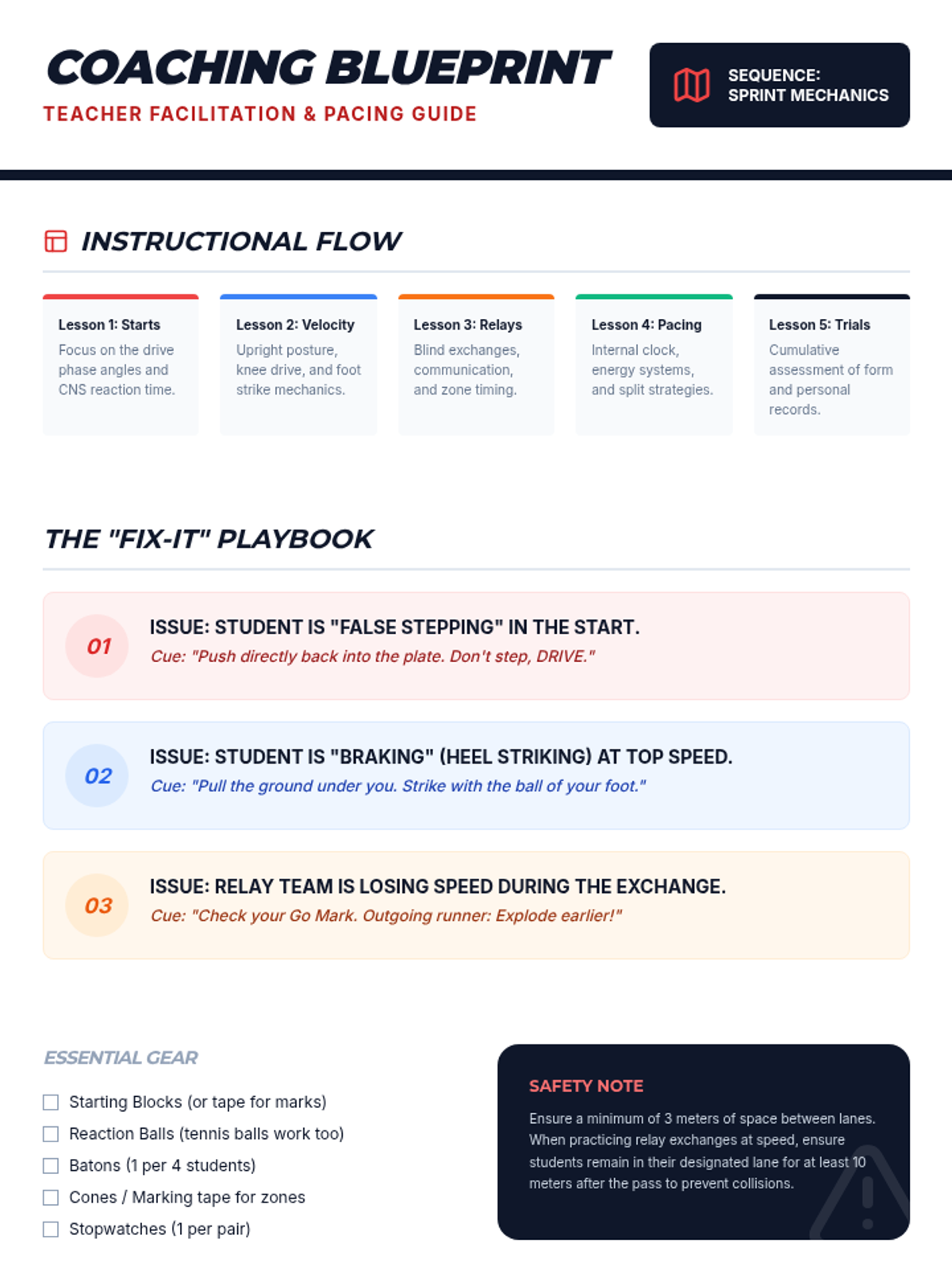
A teacher guide for the entire Track and Field sequence, providing a facilitation guide, a "fix-it" playbook of coaching cues, equipment lists, and differentiation strategies for varied skill levels.
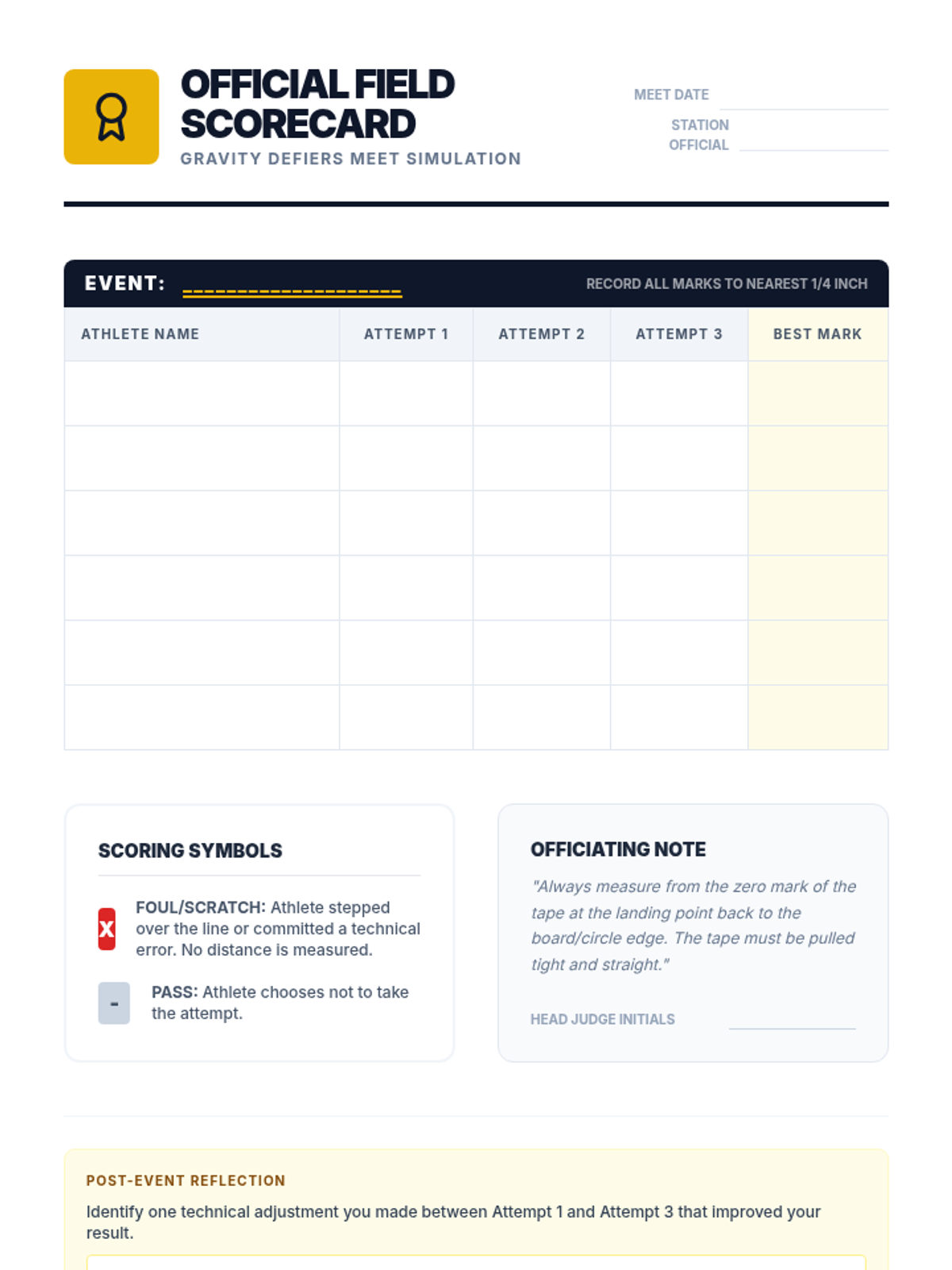
A score-tracking sheet for students to use during the mock field meet, featuring areas for recording attempts, fouls, and best marks.
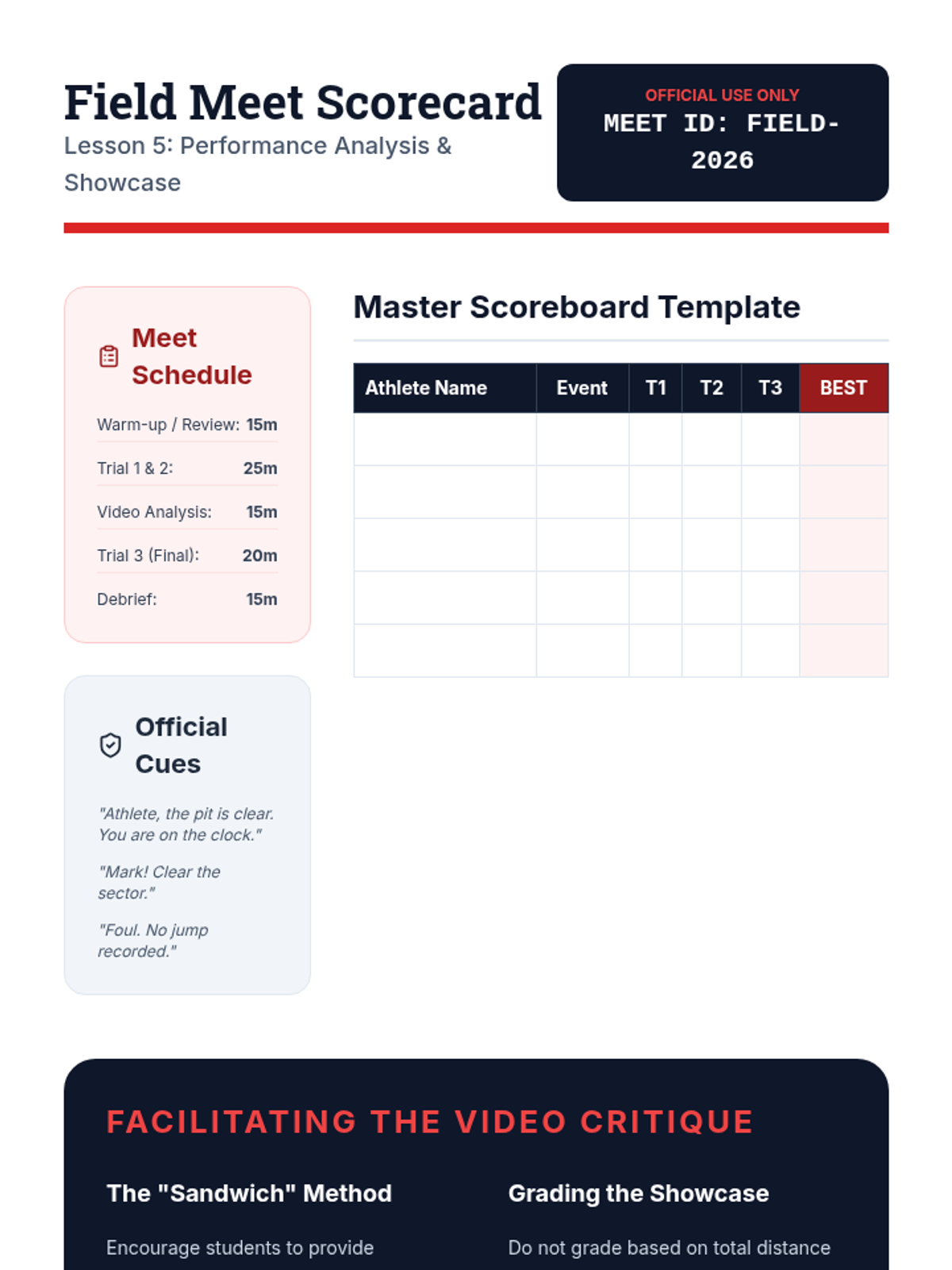
Teacher resource for the final lesson, providing a structured scorecard for the meet and guidelines for facilitating peer video feedback and grading.
Visual slides for the final track meet simulation, covering officiating roles, safety logistics, and event protocols.
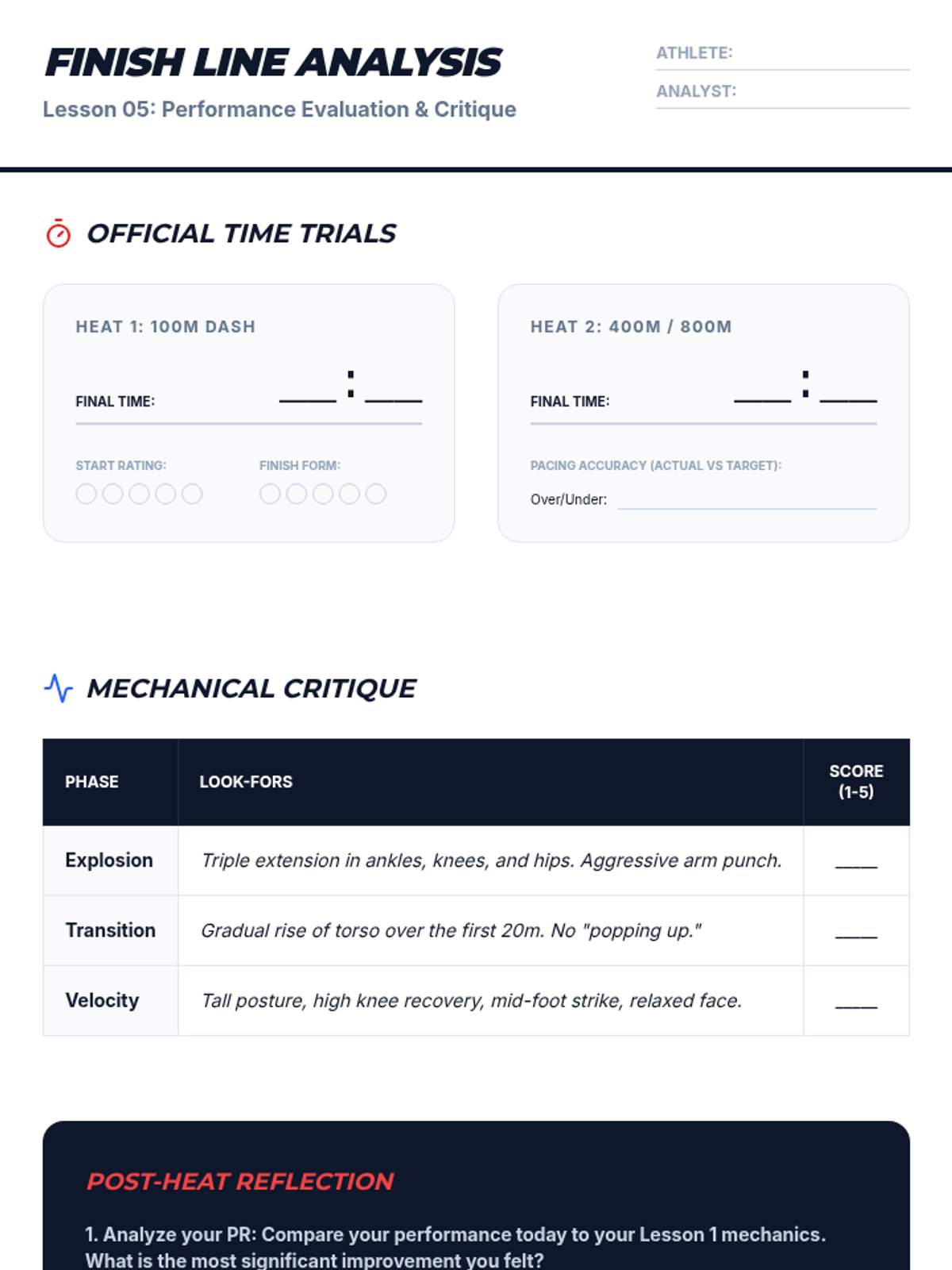
A comprehensive final assessment worksheet for the track and field sequence, including sections for heat results, a biomechanical rubric for peer evaluation, and a deep reflection on personal records and mechanical growth.
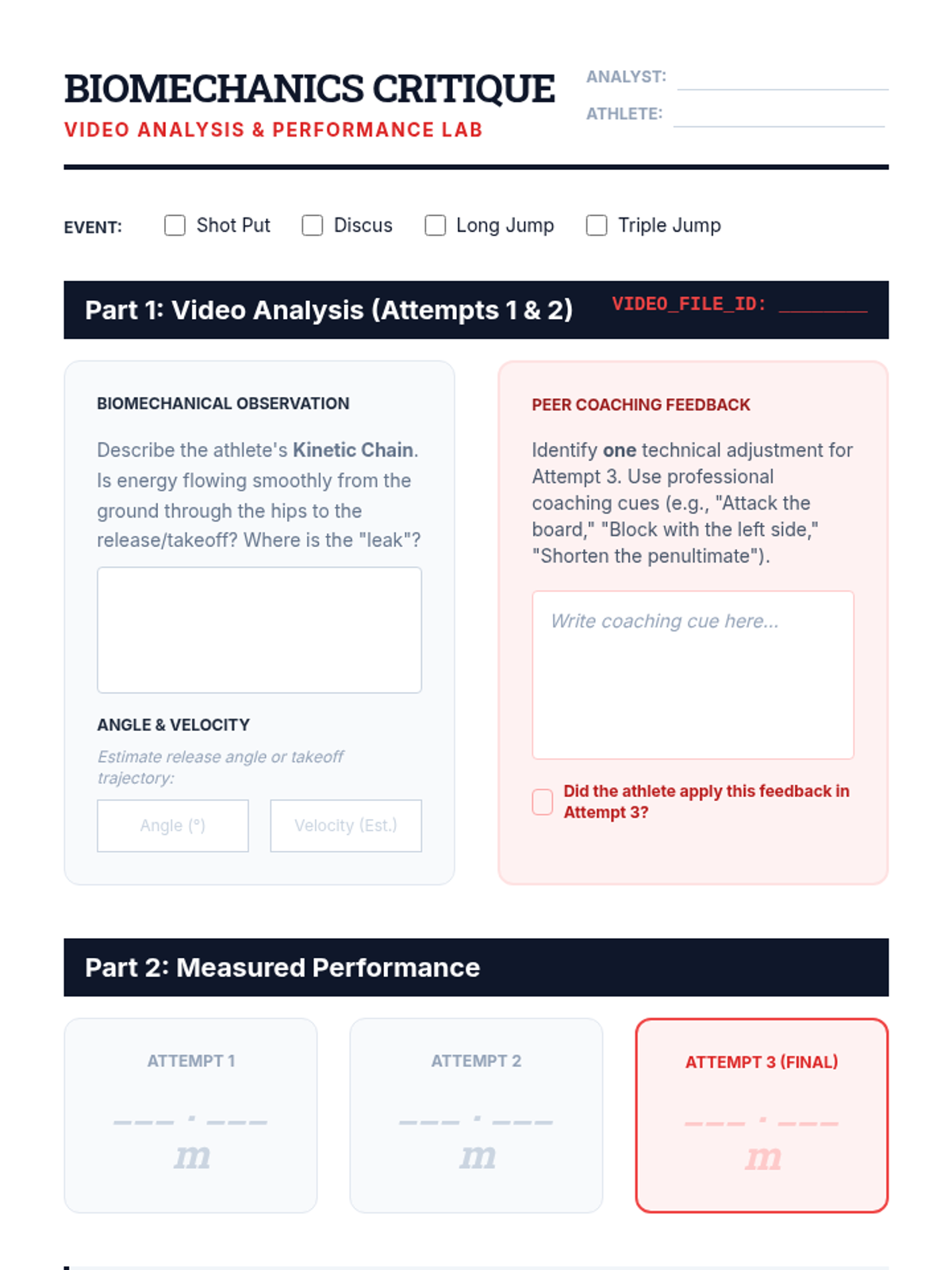
Final assessment document for Lesson 5 where students record performance data, conduct video analysis of peers, and reflect on their application of biomechanical principles.
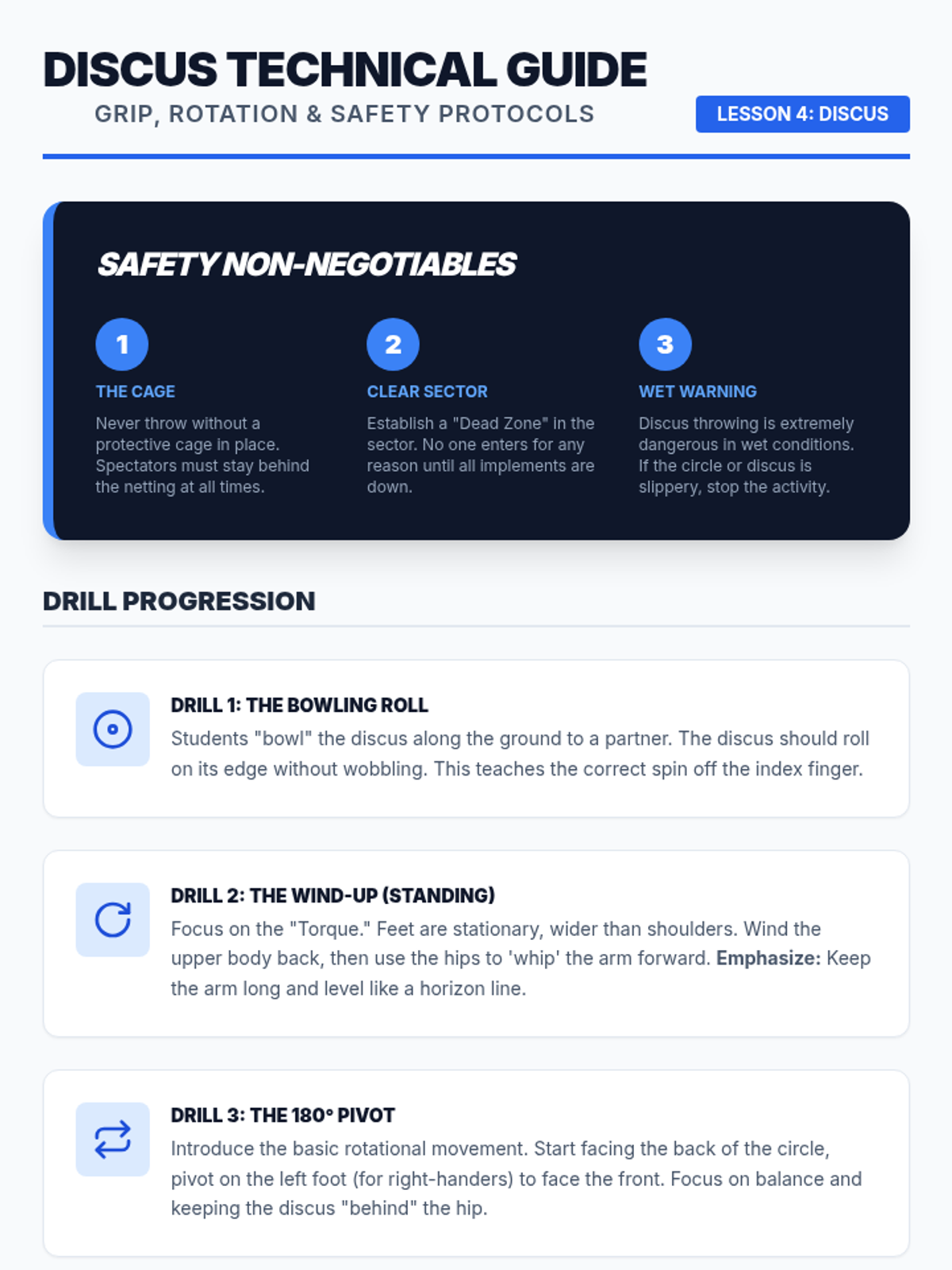
A technical guide for teachers outlining discus safety protocols and a 3-step drill progression for mastering rotational mechanics.
This slide deck facilitates the final performance analysis and time trials for the sequence. It outlines grading criteria based on form, explains the peer critique protocol, and includes mental preparation strategies for setting personal records.
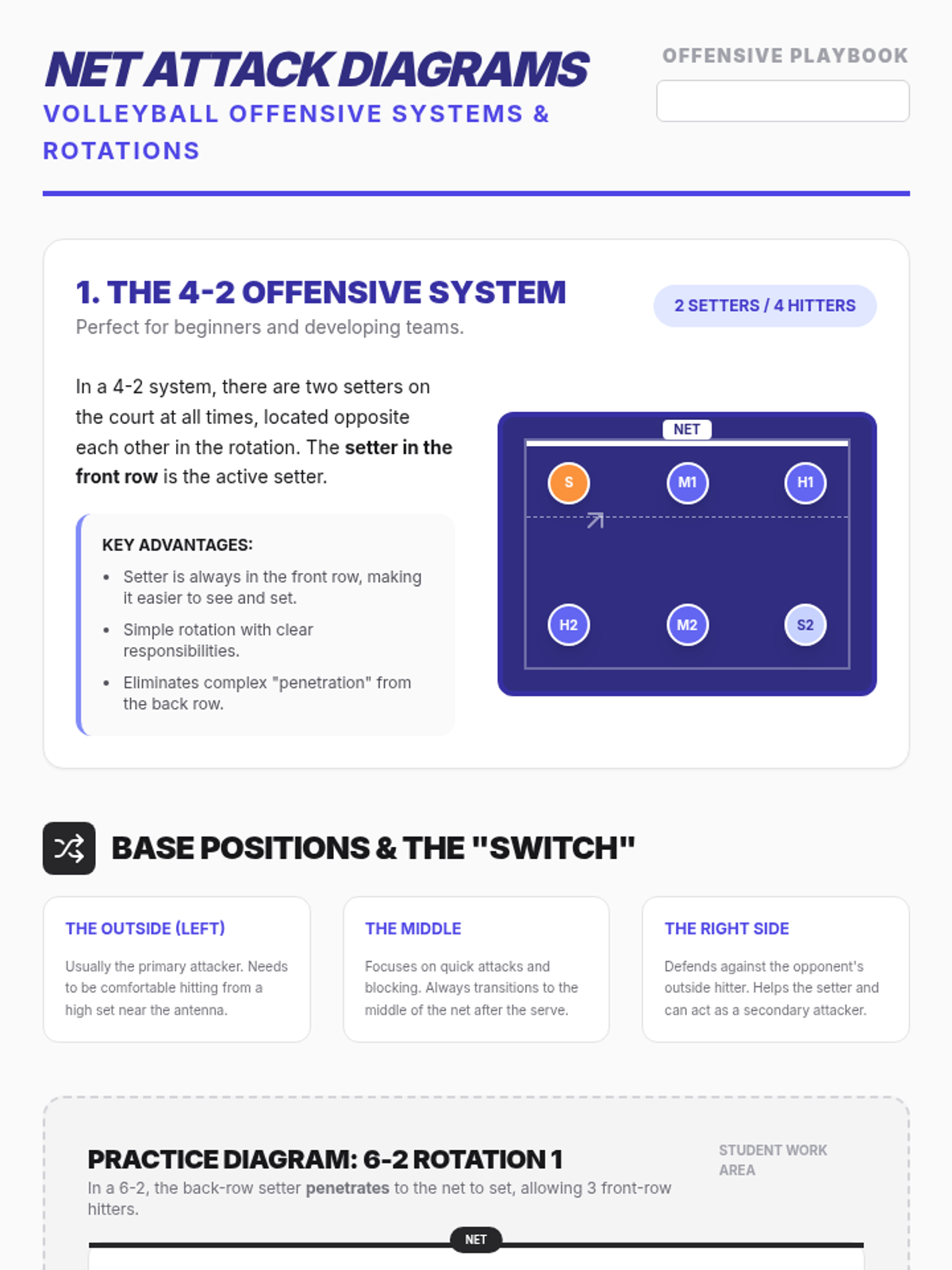
A visual guide and worksheet for volleyball offensive strategies, specifically focusing on the 4-2 and 6-2 systems with court diagrams and student practice areas.
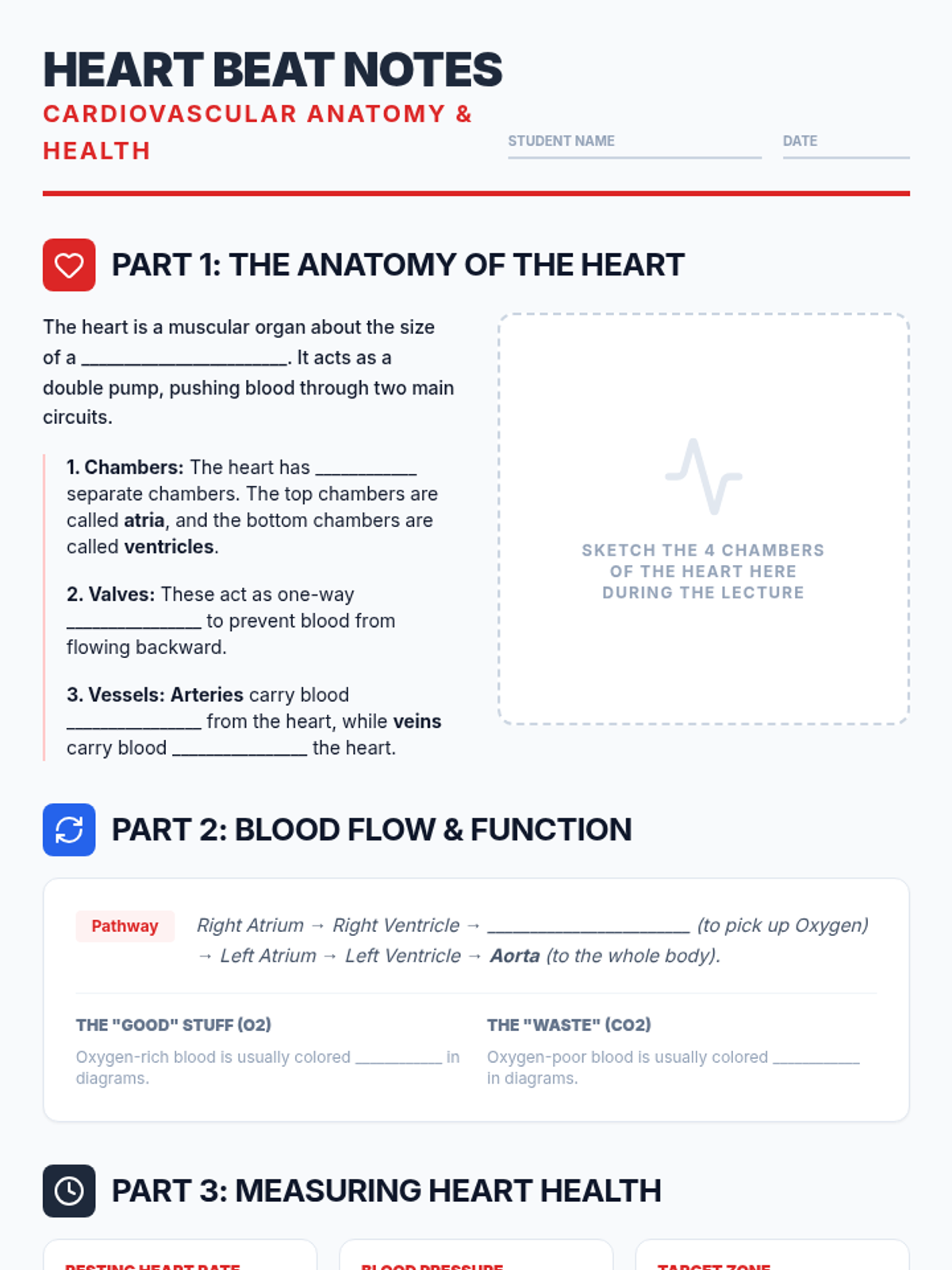
Guided lecture notes outline for students to learn about heart anatomy, circulation pathways, heart rate measurements, and cardiovascular health habits.
A presentation deck covering the basic rules, double bounce rule, non-volley zone (the kitchen), scoring, and terminology of pickleball.
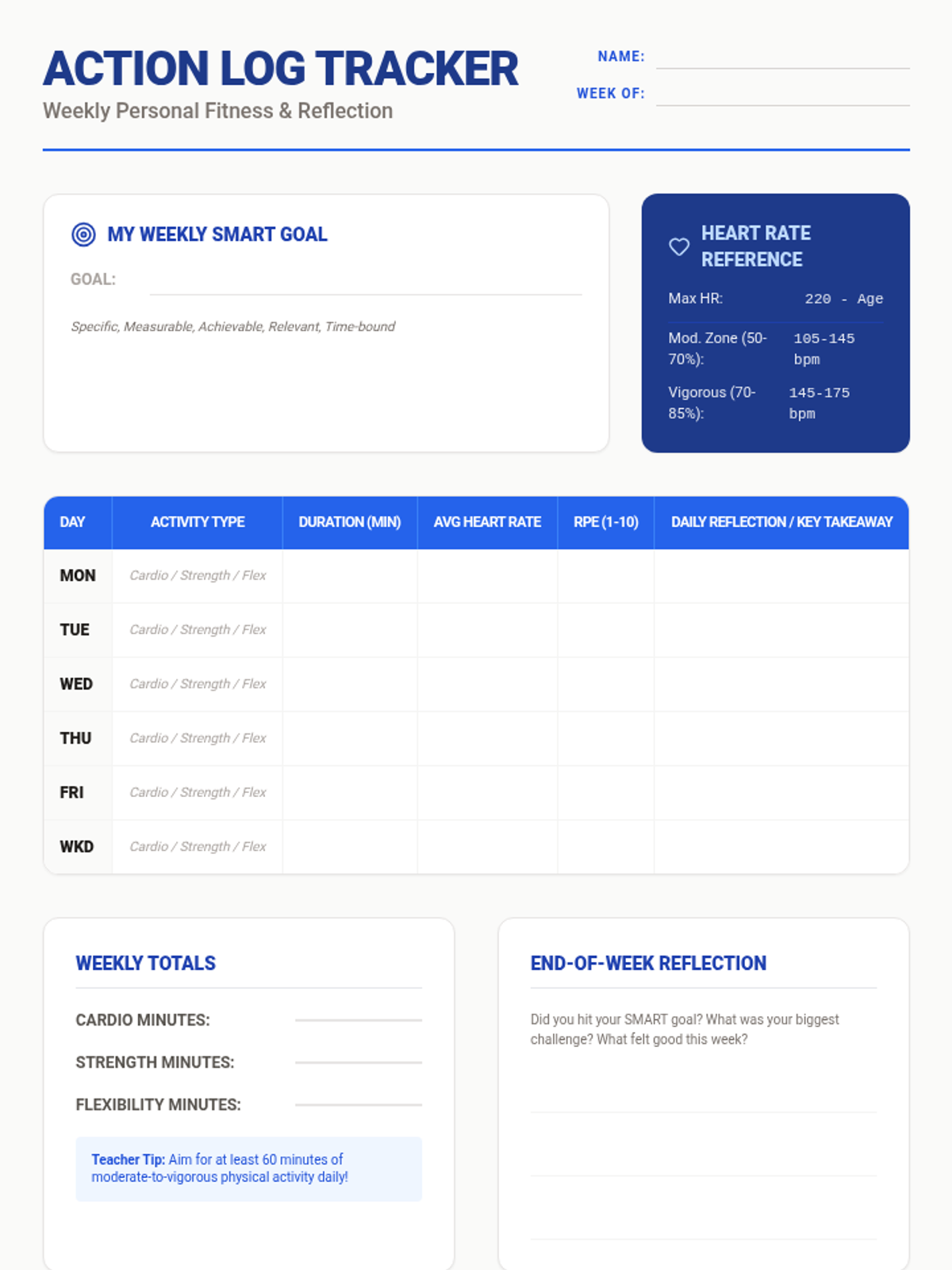
A weekly fitness tracker for freshmen to record activity minutes (cardio, strength, flexibility), heart rate, perceived exertion, and reflect on SMART goals.
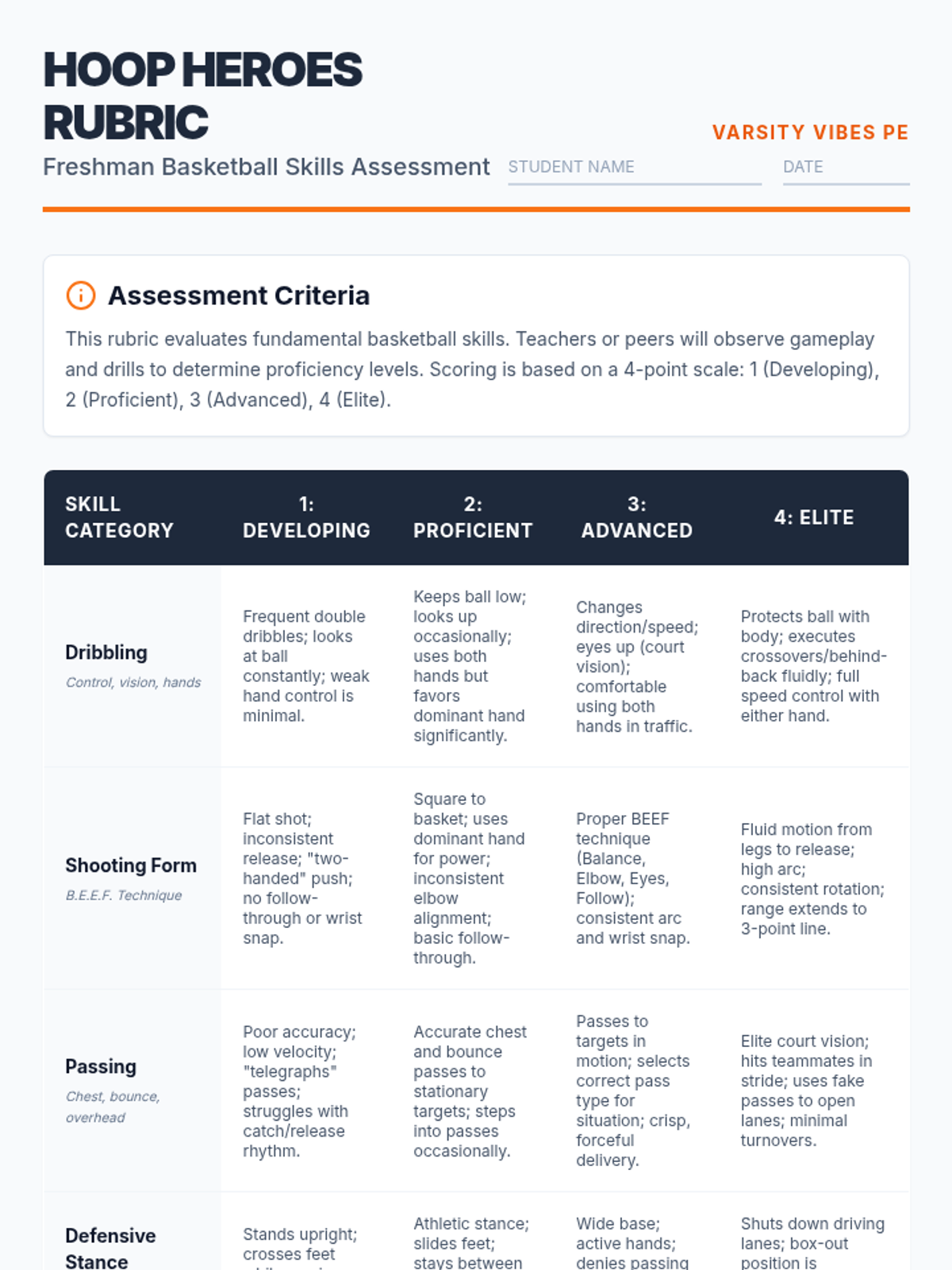
A comprehensive basketball skills assessment rubric for 9th-grade students, evaluating dribbling, shooting, passing, defense, rebounding, and footwork on a 4-point scale.
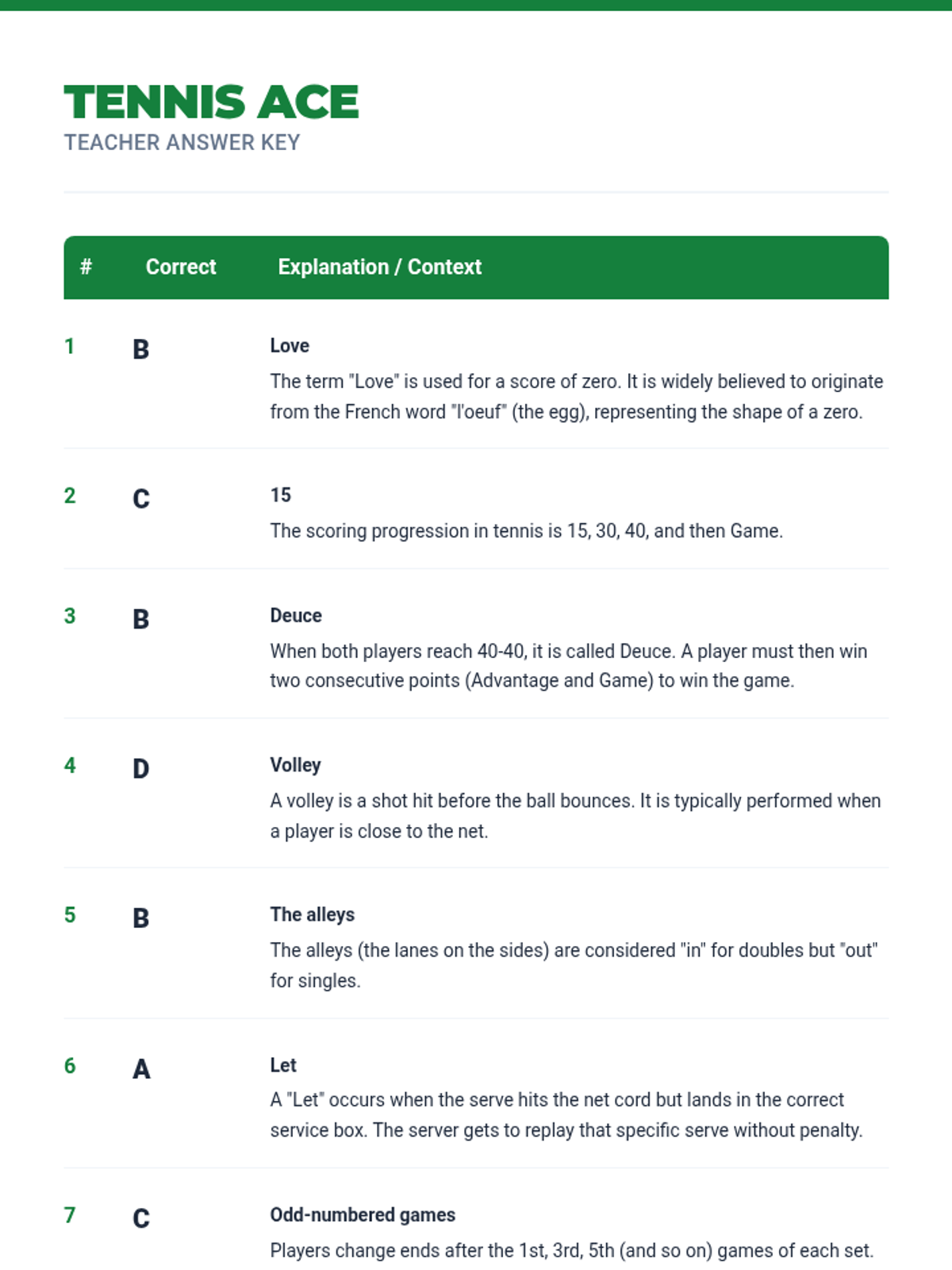
Teacher answer key for the Tennis Ace Assessment, including correct choices and brief explanations for each concept.
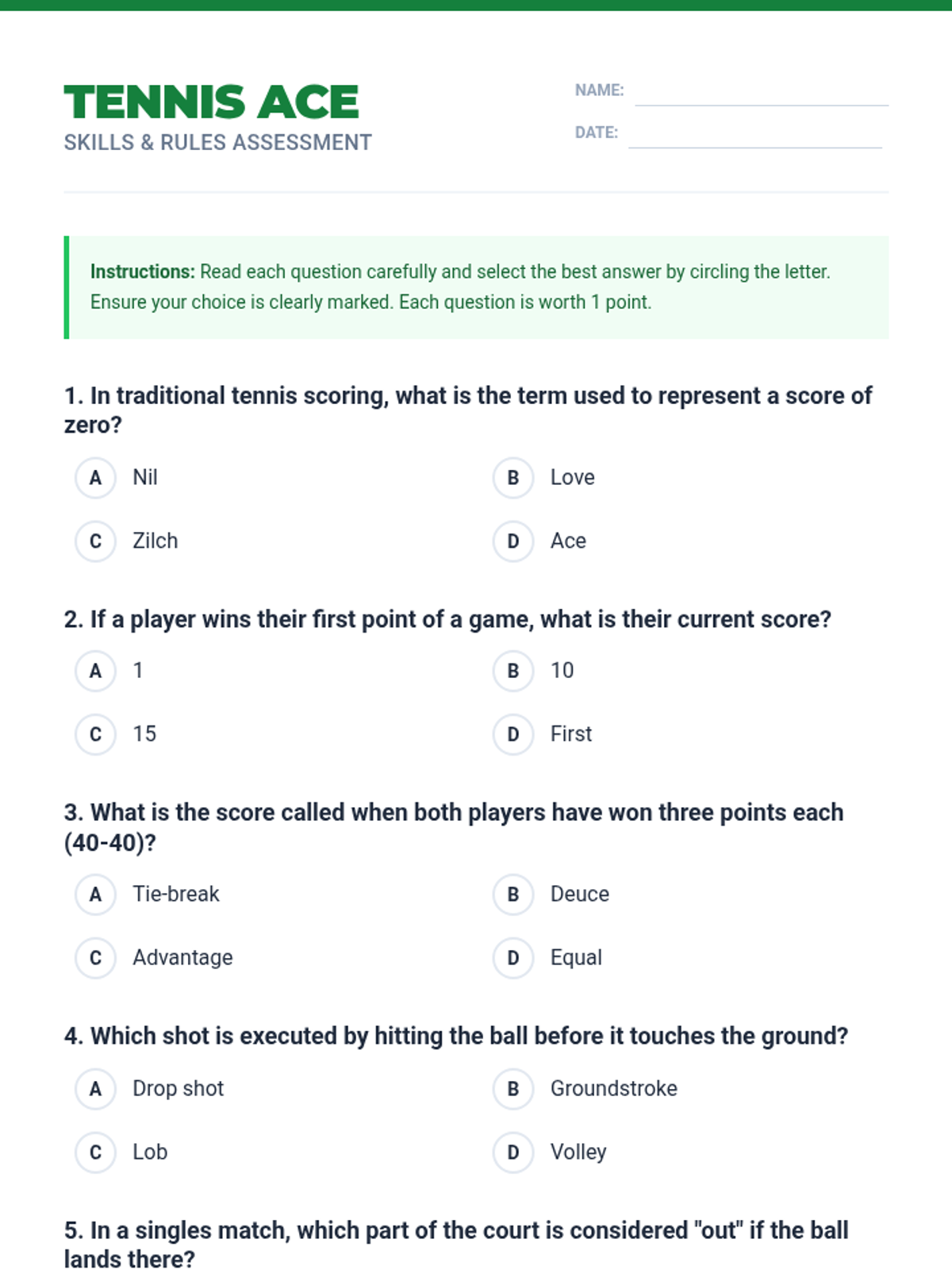
A comprehensive 10-question multiple choice assessment for tennis, covering scoring, rules, terminology, and court positions.
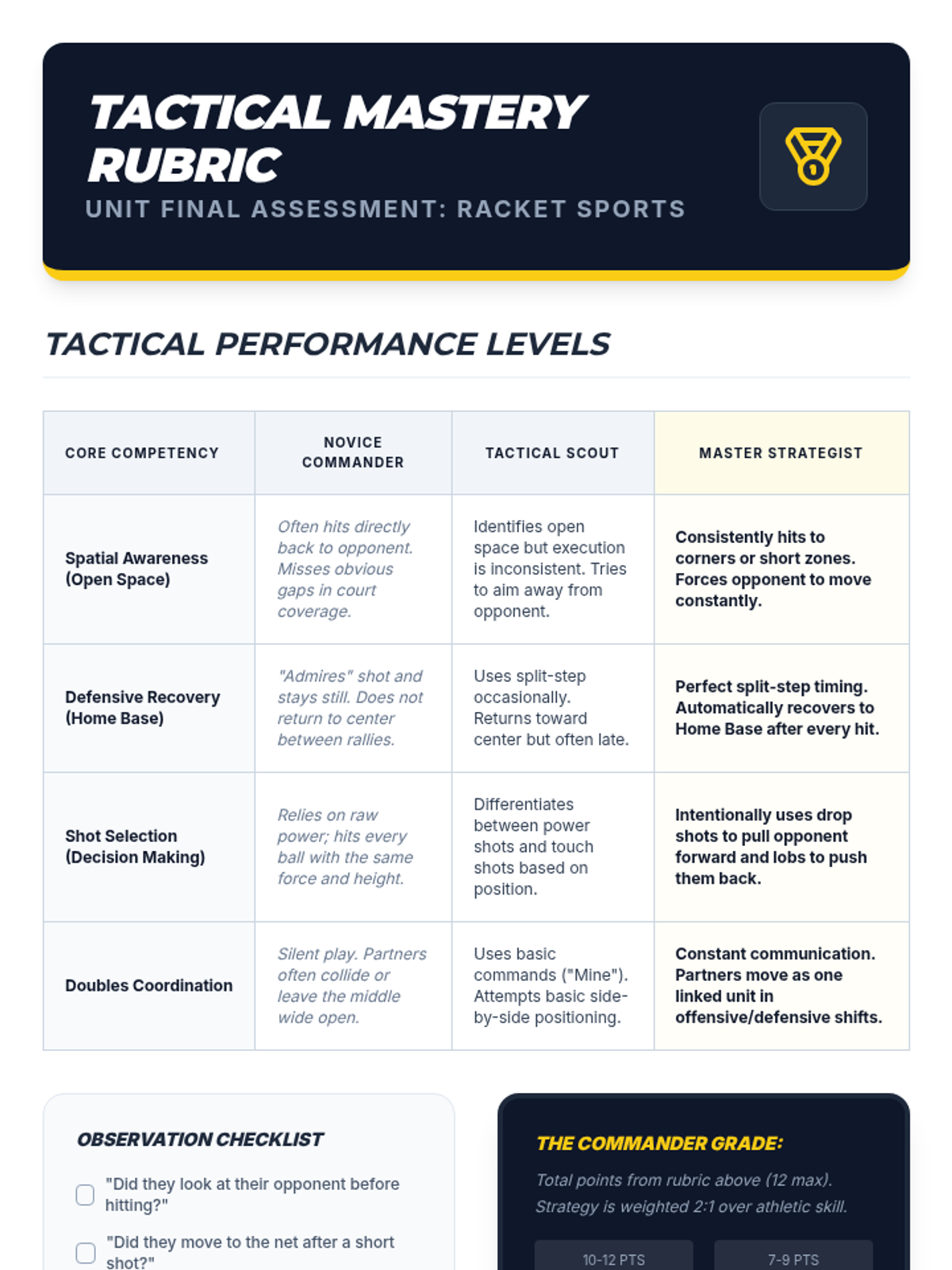
Comprehensive final assessment rubric for the Racket Sports sequence, evaluating spatial awareness, recovery, decision making, and coordination.
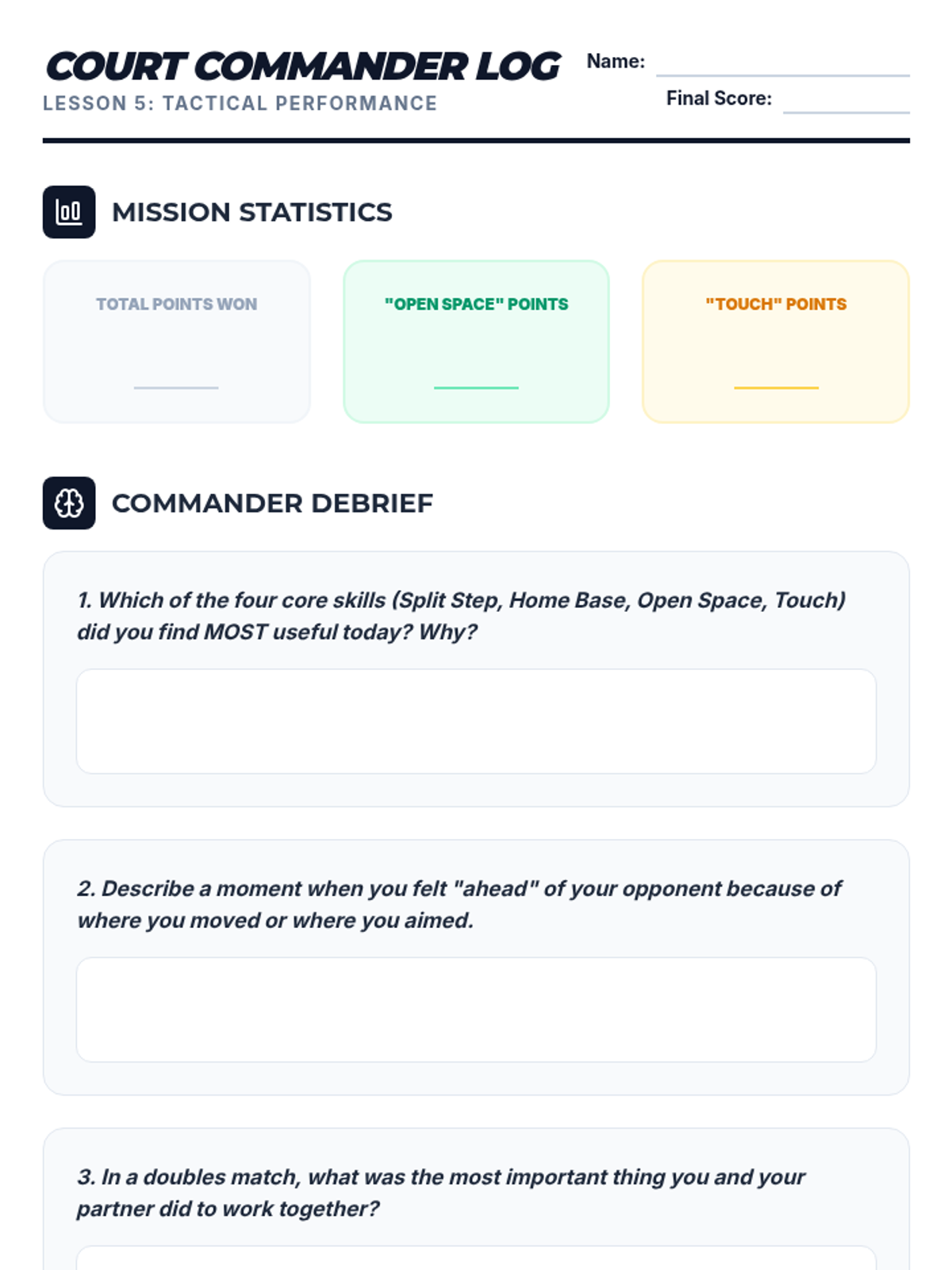
End-of-unit student reflection log and match analysis for the final gameplay session.
Final visual presentation for Lesson 5, reviewing tactical concepts and introducing the King of the Court tournament rules.
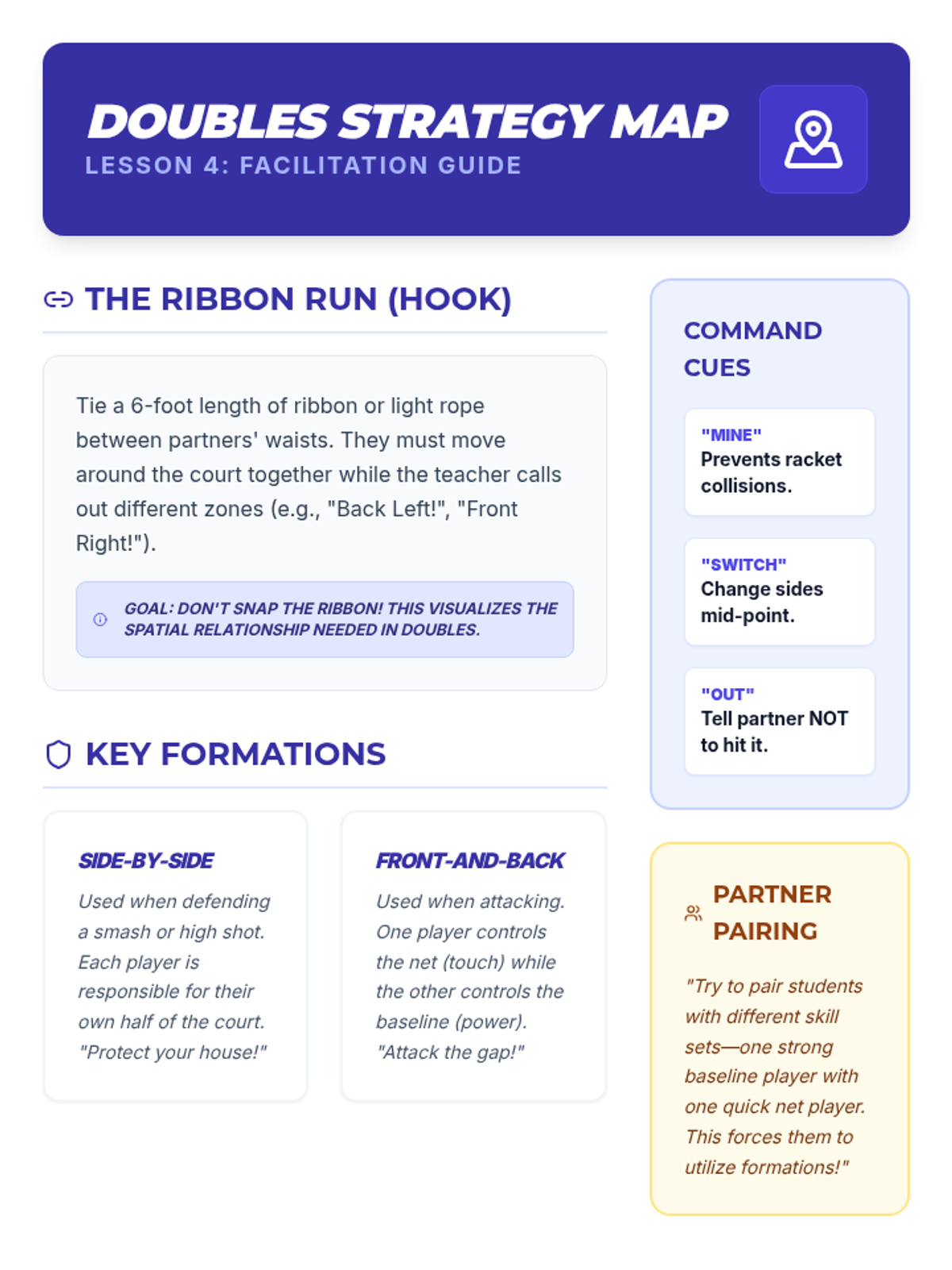
Teacher facilitation guide for Lesson 4, focusing on doubles formations, the Ribbon Run activity, and partner communication.
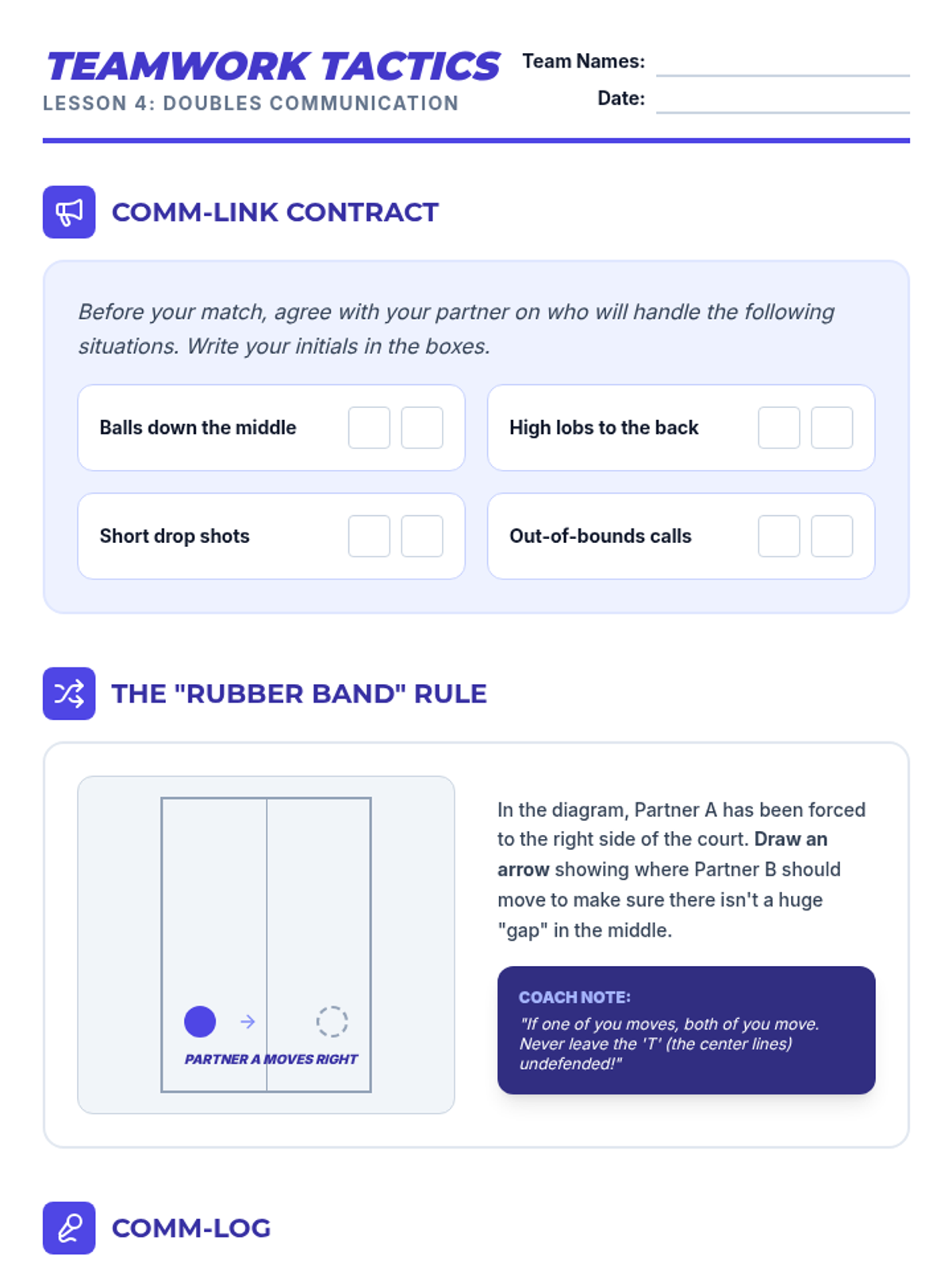
Student teamwork and communication tracker for doubles play, focusing on shared responsibilities and linked movement.
Visual presentation for Lesson 4, teaching doubles positioning (side-by-side vs front-back) and the importance of verbal communication.
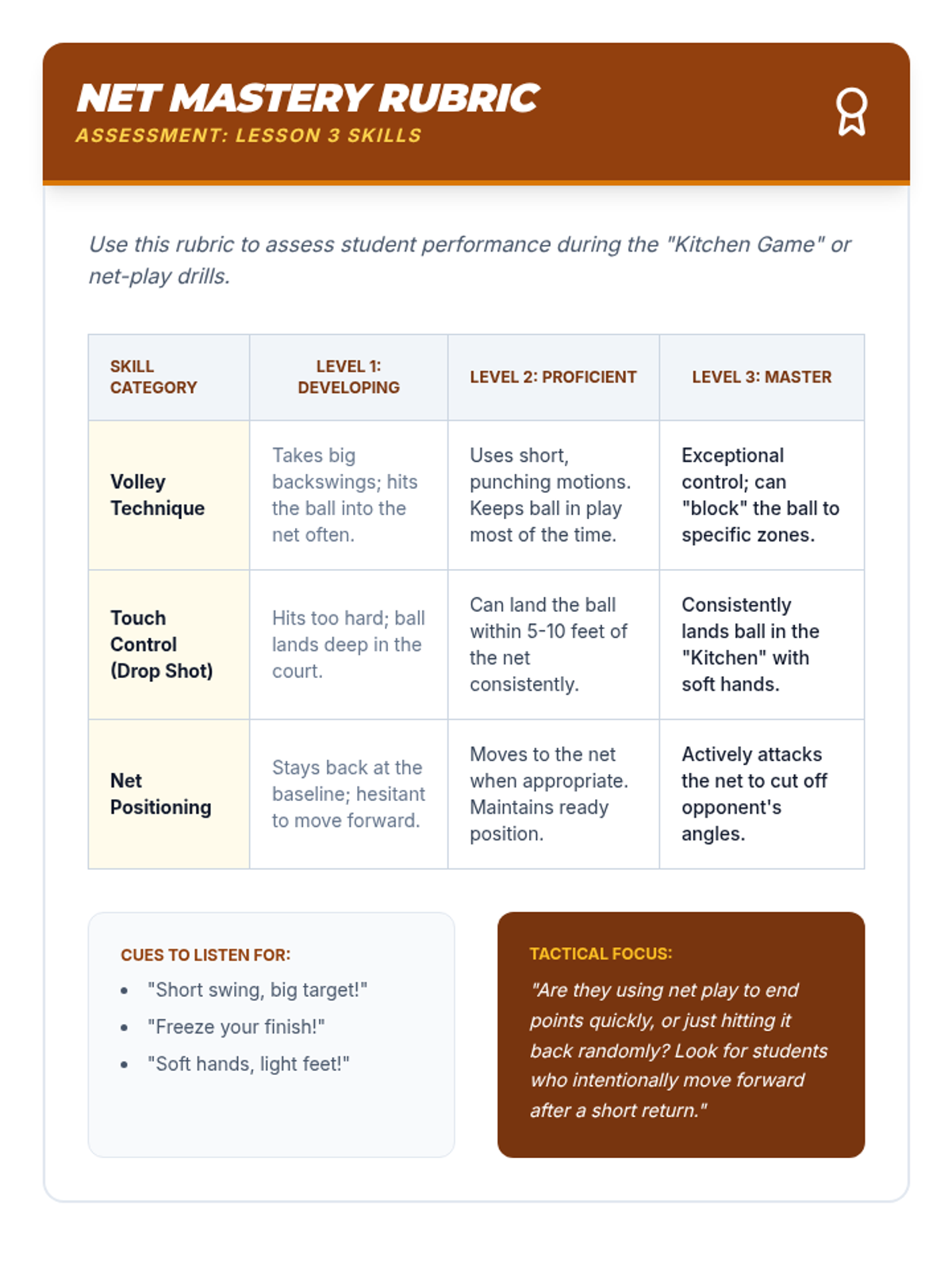
Teacher rubric for assessing net play skills, including volleys, drop shots, and positioning.
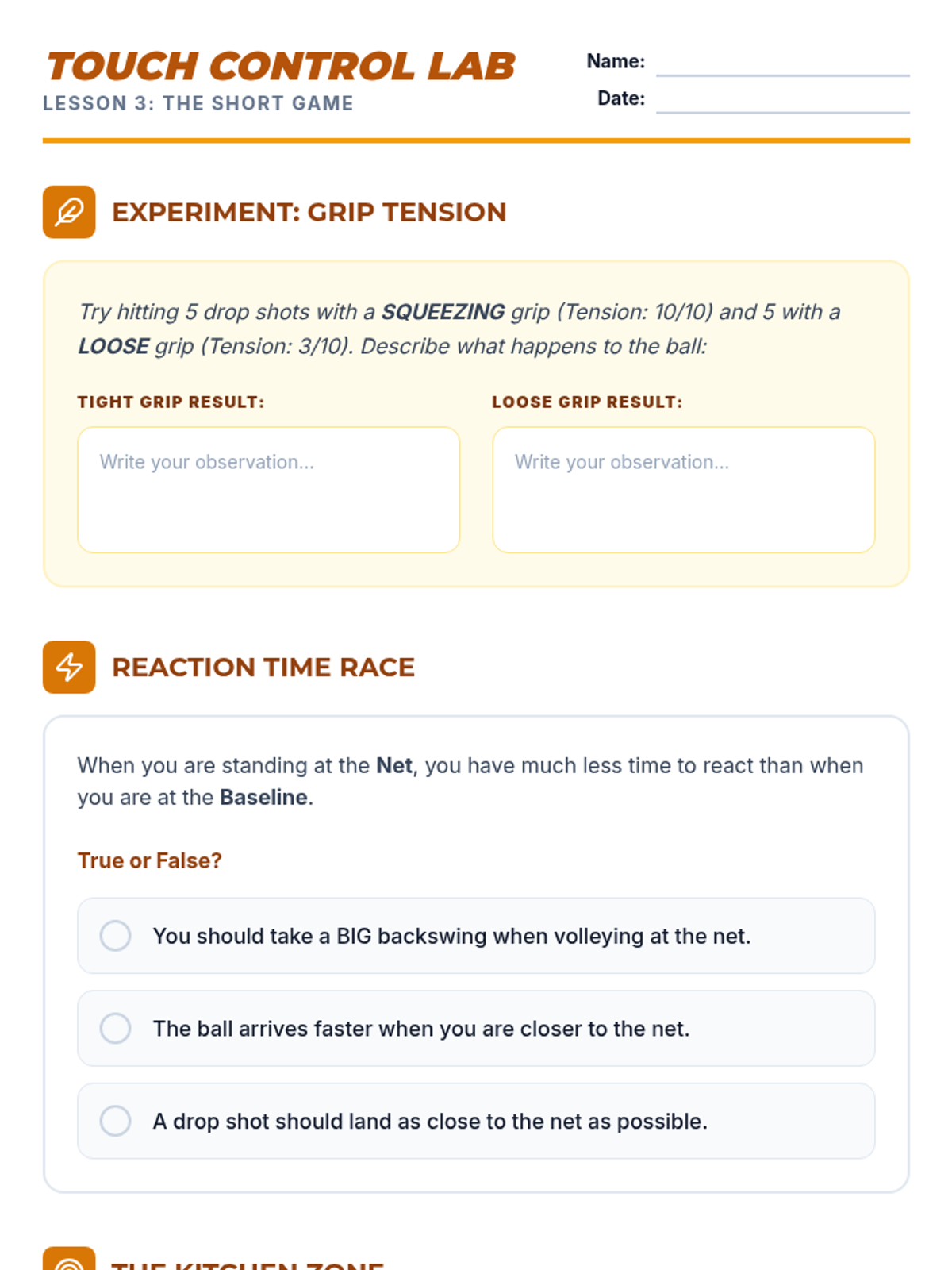
Student activity sheet for Lesson 3, exploring grip tension and the mechanics of net play.
Visual presentation for Lesson 3, teaching students net play tactics, volleys, and the importance of touch control.
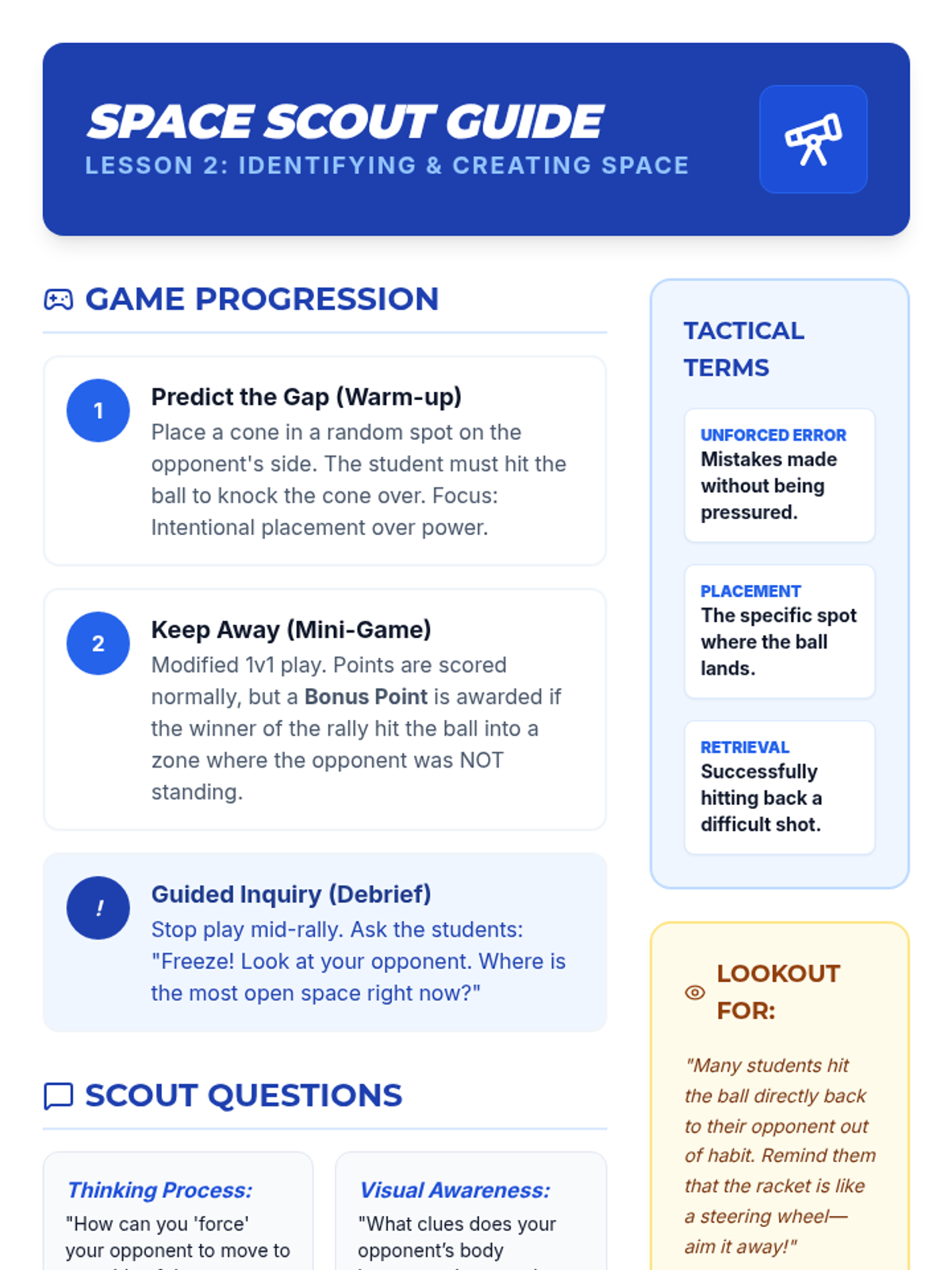
Teacher facilitation guide for Lesson 2, focusing on guiding students to identify and create open space through inquiry and modified games.
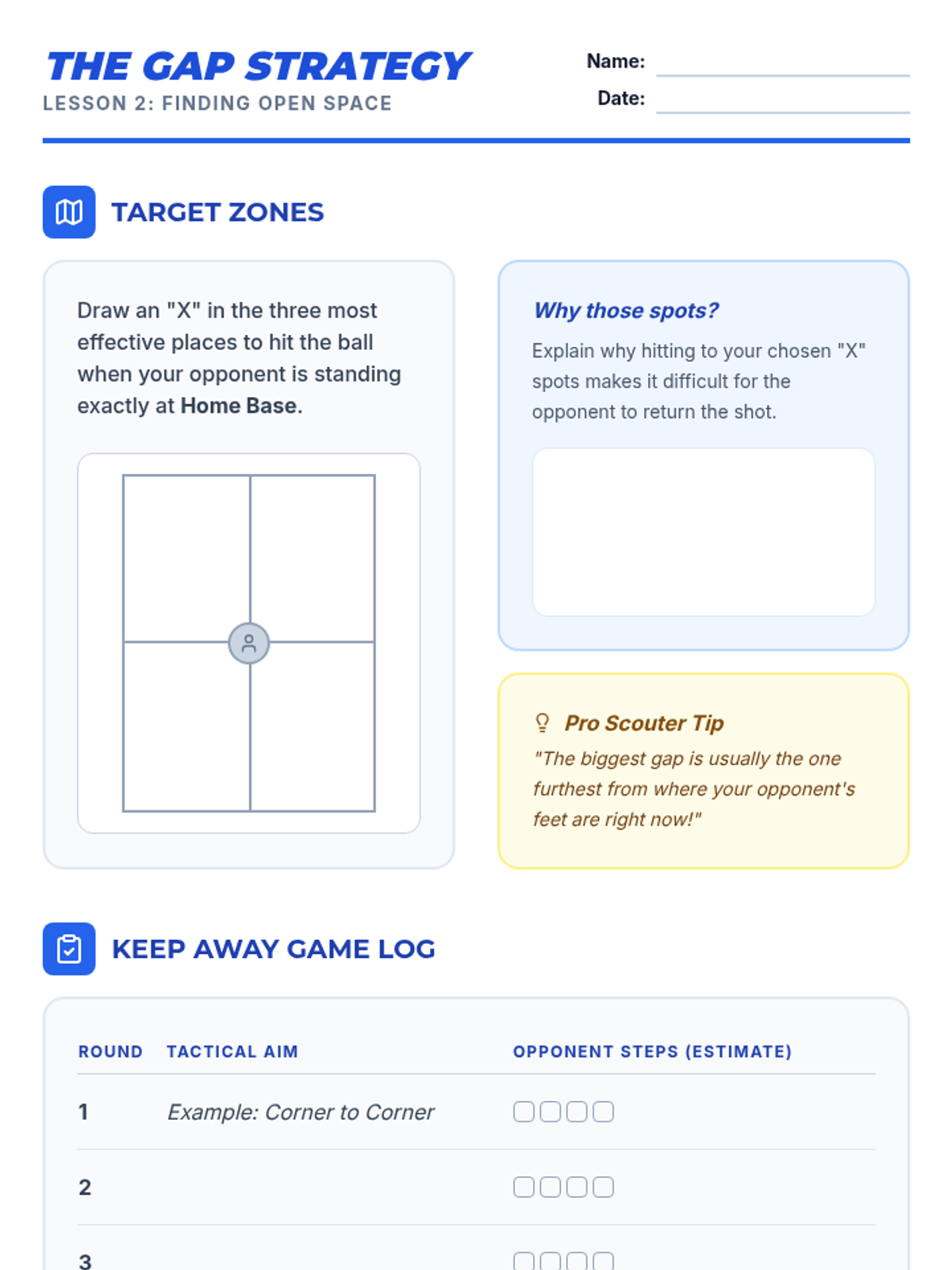
Student strategy sheet for Lesson 2, focusing on identifying target zones and tracking opponent movement.
Visual presentation for Lesson 2, teaching students how to identify and exploit open space on the court.
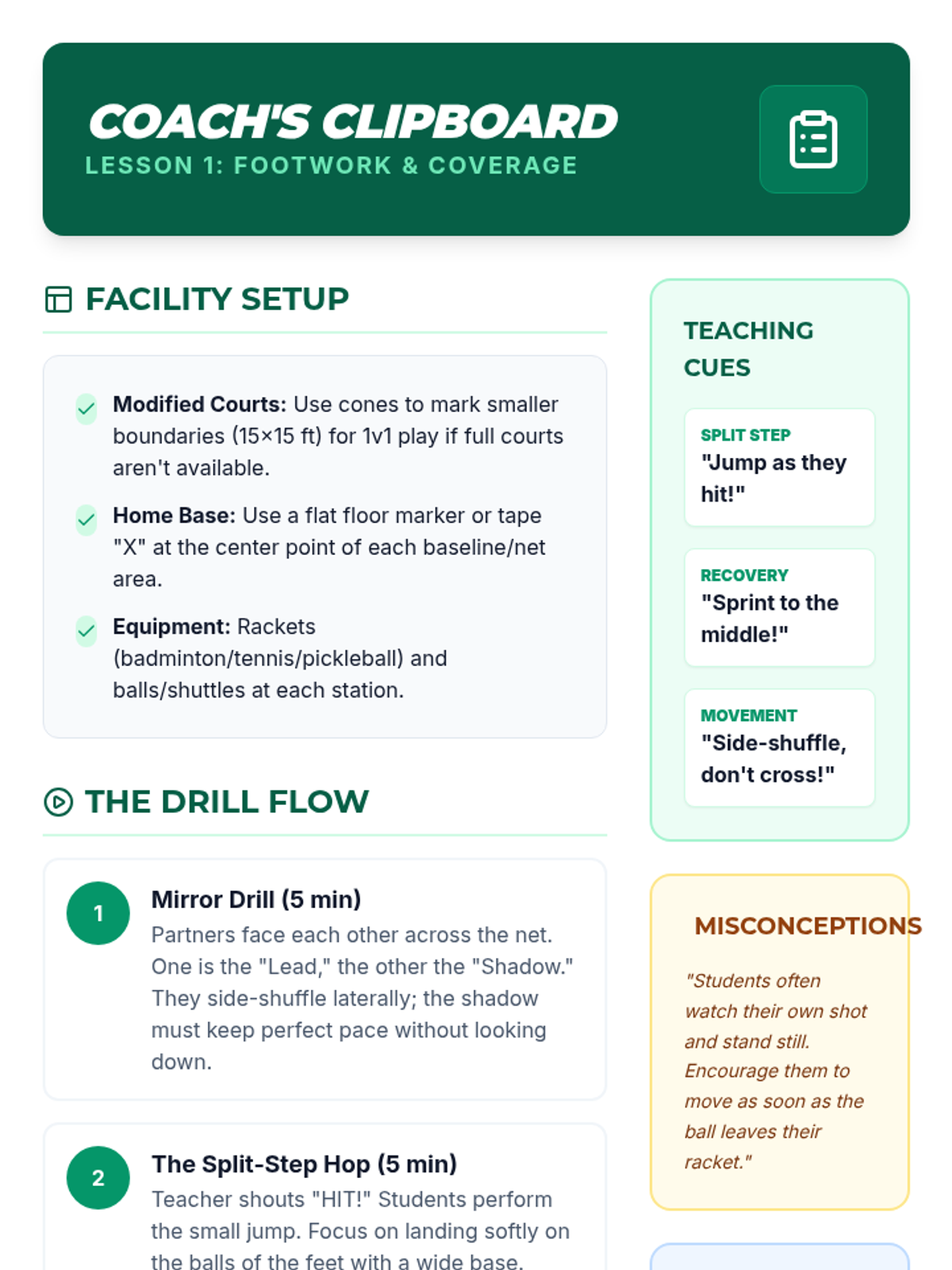
Teacher facilitation guide for Lesson 1, including facility setup, teaching cues, and differentiation strategies.